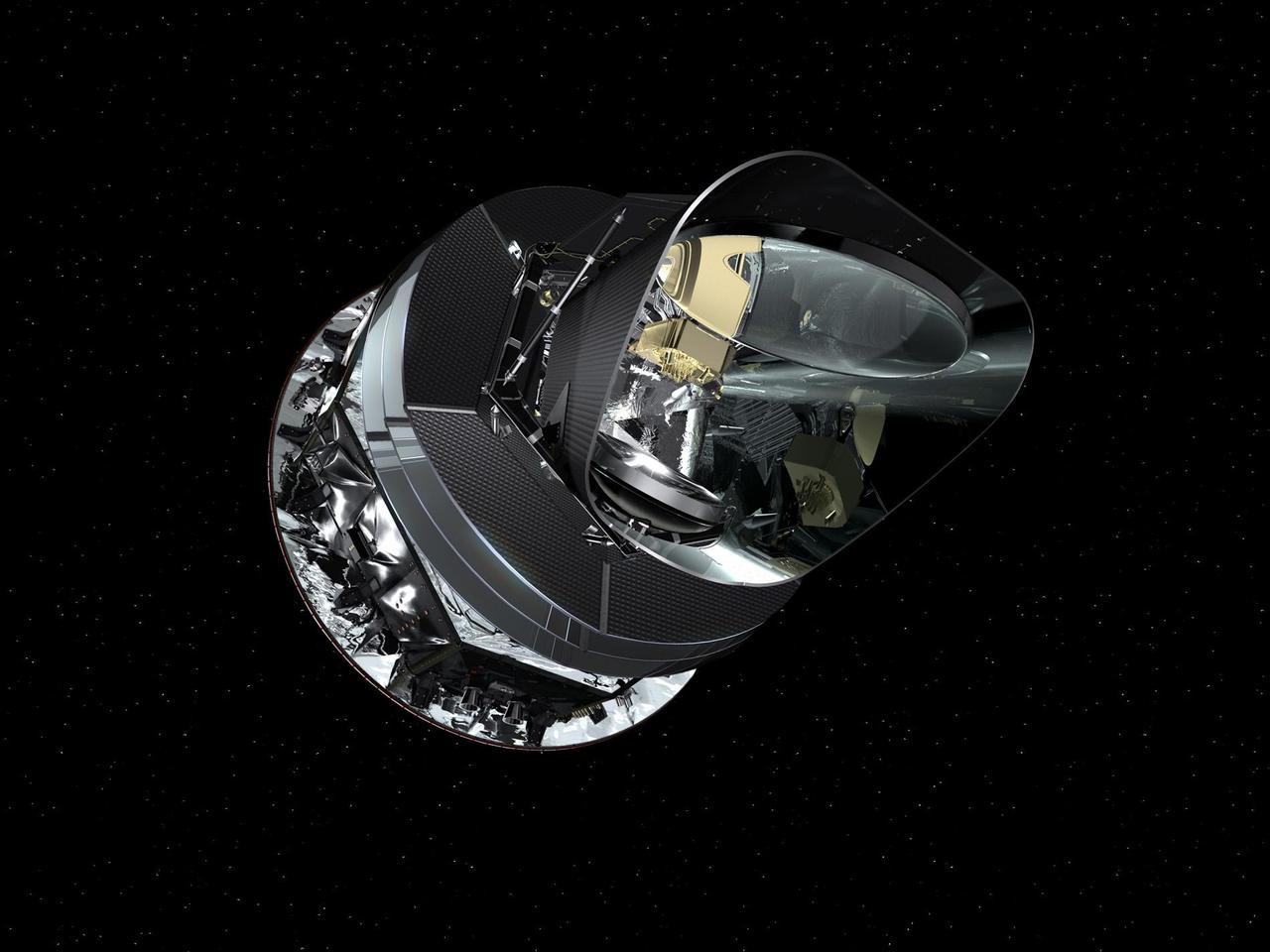
This is an artist concept of the Planck spacecraft. Planck was launched with the Herschel spacecraft, though the two missions separated shortly after launch and operate independently from each other.

The oldest light in the universe, called the cosmic microwave background, as observed by the Planck space telescope is shown in the oval sky map. An artist concept of Planck is next to the map.
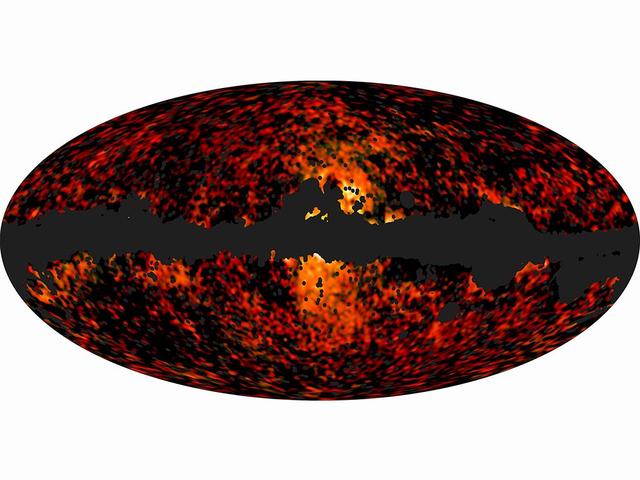
This all-sky image shows the spatial distribution over the whole sky of the galactic haze at 30 and 44 GHz, extracted from the Planck observations.
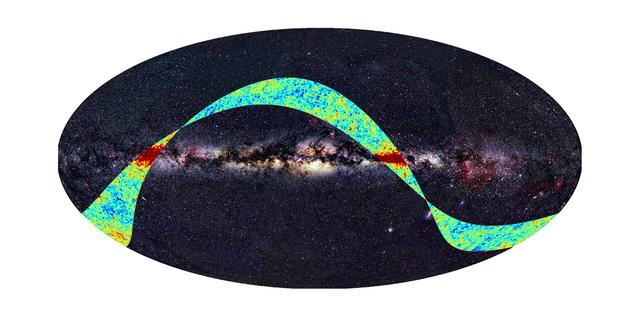
One of Planck first images is shown as a strip superimposed over a two dimensional projection of the whole sky as seen in visible light.
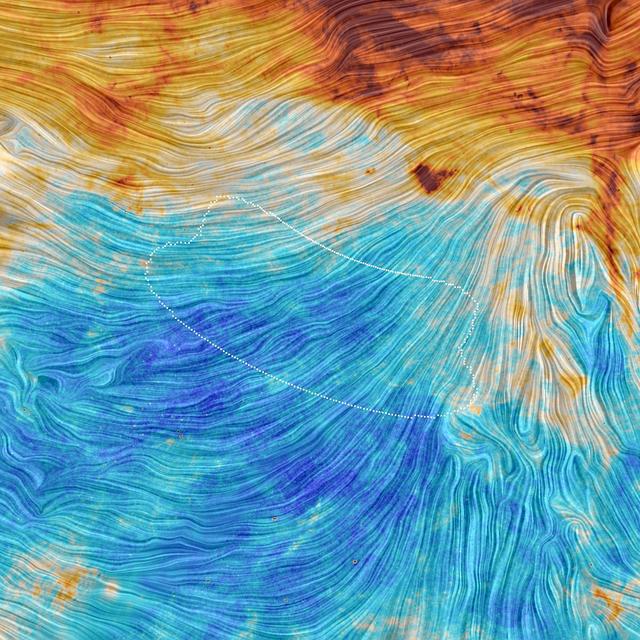
The color scale in this image from the Planck mission represents the emission from dust, a minor but crucial component that pervades our Milky Way galaxy. The texture indicates the orientation of the galactic magnetic field.
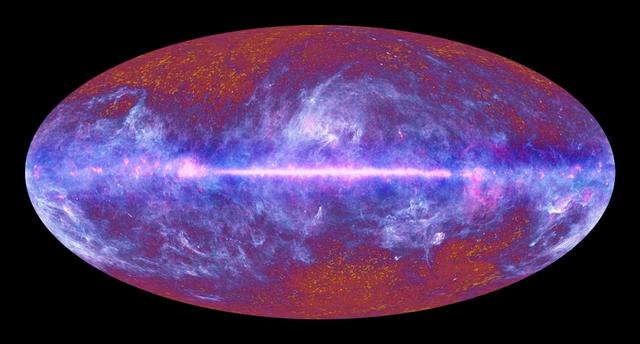
This image of the microwave sky was synthesized using data spanning the range of light frequencies detected by ESA Planck. A vast portion of the sky is dominated by the diffuse emission from gas and dust in our Milky Way galaxy.
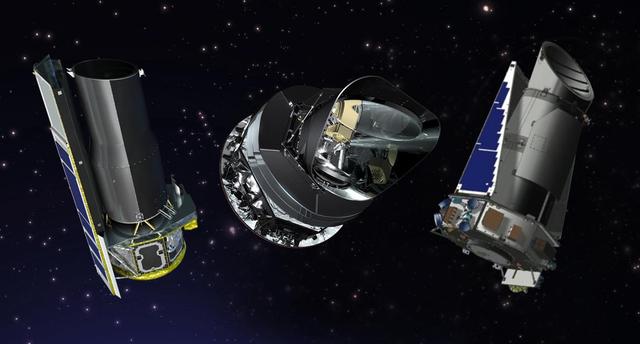
From left to right, artist concepts of the Spitzer, Planck and Kepler space telescopes. NASA extended Spitzer and Kepler for two additional years; and the U.S. portion of Planck, a European Space Agency mission, for one year.
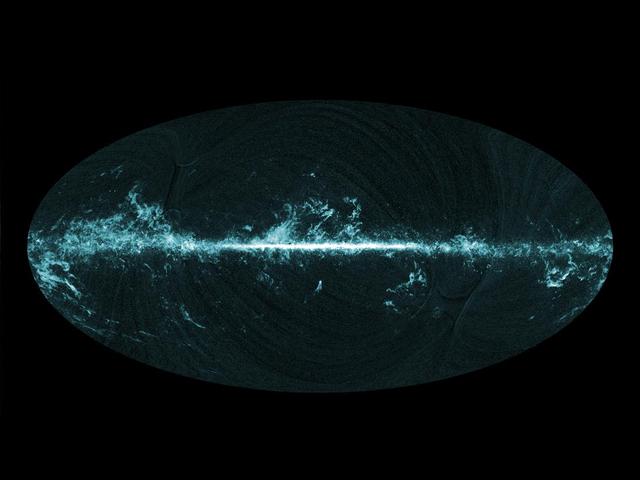
This all-sky image shows the distribution of carbon monoxide CO, a molecule used by astronomers to trace molecular clouds across the sky, as seen by Planck.
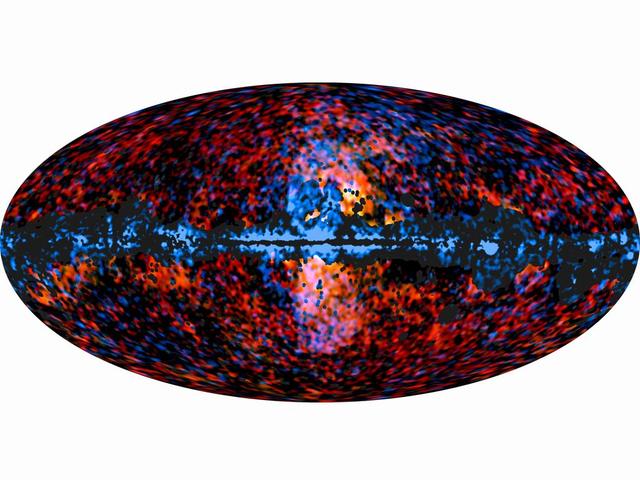
This all-sky image shows the distribution of the galactic haze seen by ESA Planck mission at microwave frequencies superimposed over the high-energy sky, as seen by NASA Fermi Gamma-ray Space Telescope.
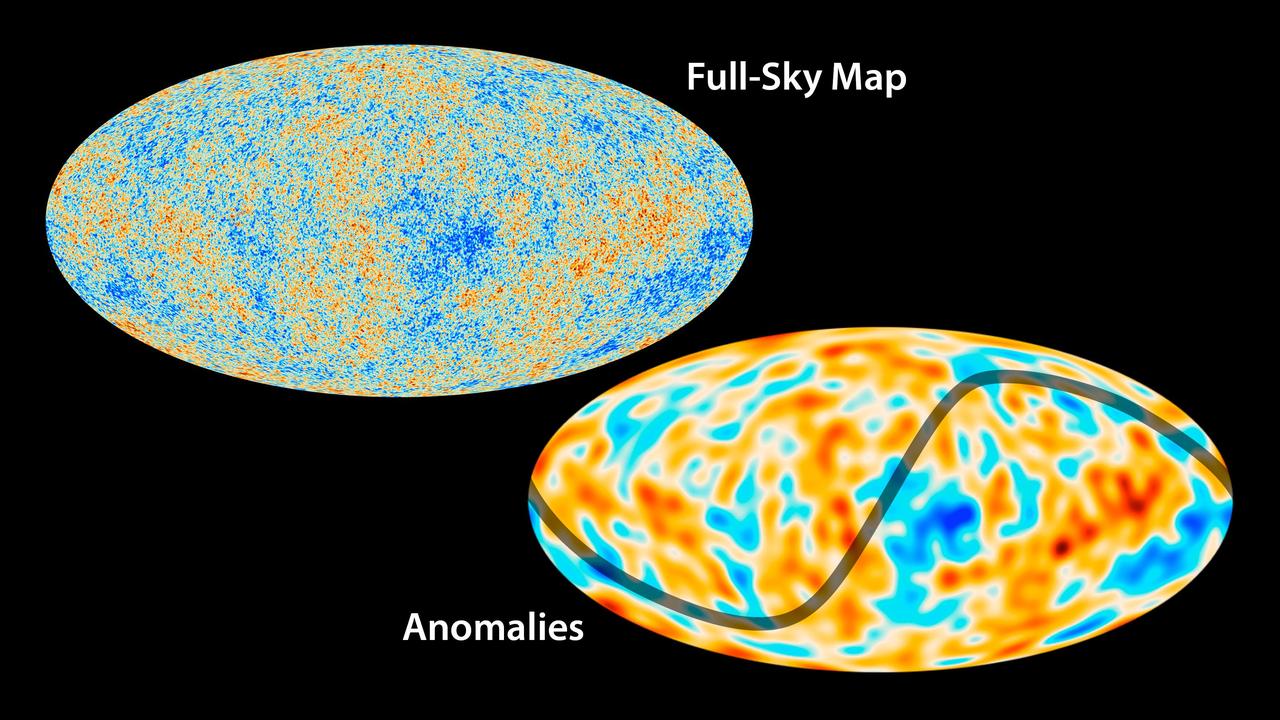
ESA Planck mission has imaged the oldest light in our universe. The top map shows Planck all-sky map of the cosmic microwave background, whereas the bottom map shows the largest-scale features of the map.

A visualization of the polarization of the Cosmic Microwave Background, or CMB, as detected by ESA Planck satellite over the entire sky.

ESA Planck has imaged the most distant light we can observe, called the cosmic microwave background, with unprecedented precision.

This graph shows the temperature differences in the oldest light in the universe, called the cosmic microwave background, detected by ESA Planck at different distances apart on the sky.
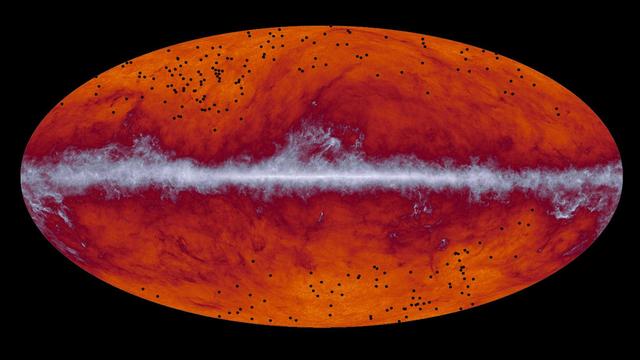
This map of the entire sky was captured by the European Space Agency's Planck mission. The band running through the middle corresponds to dust in our Milky Way galaxy. The black dots indicate the location of galaxy cluster candidates identified by Planck and subsequently observed by the European Space Agency's Herschel mission. http://photojournal.jpl.nasa.gov/catalog/PIA19330
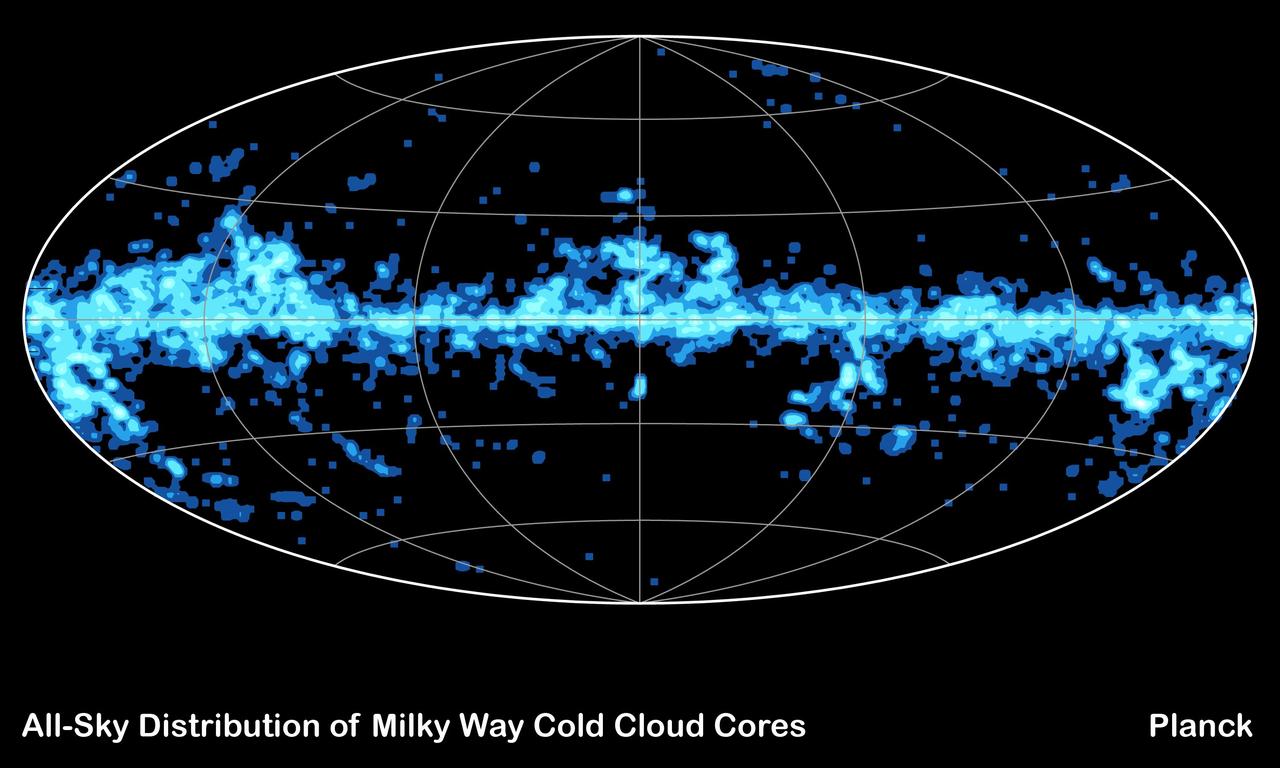
This map illustrates the numerous star-forming clouds, called cold cores, that European Space Agency Planck observed throughout our Milky Way galaxy. Planck detected around 10,000 of these cores, thousands of which had never been seen before.
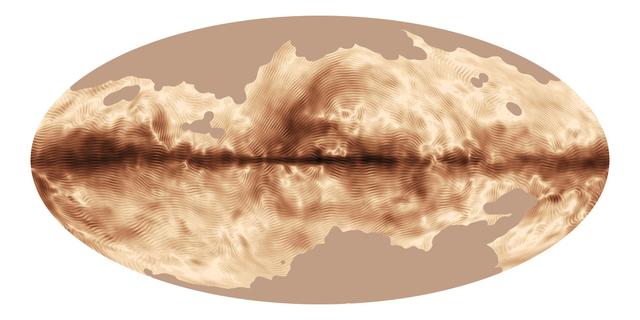
The magnetic field of our Milky Way galaxy as seen by ESA Planck satellite. This image was compiled from the first all-sky observations of polarized light emitted by interstellar dust in the Milky Way.

This map shows the oldest light in our universe, as detected with the greatest precision yet by ESA Planck mission. The ancient light, called the cosmic microwave background, was imprinted on the sky when the universe was 370,000 years old.
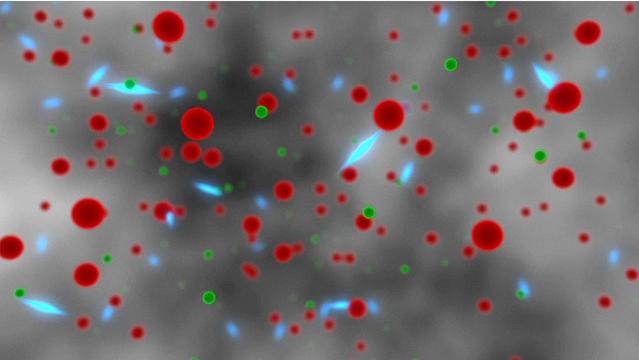
This frame from an artist animation depicts the life of a photon, or particle of light, as it travels across space and time, from the very early universe ESA Planck satellite.

Matter lying between Earth and the edge of the observable universe is shown in this all-sky map from Planck, a European Space Agency mission with important NASA contributions.
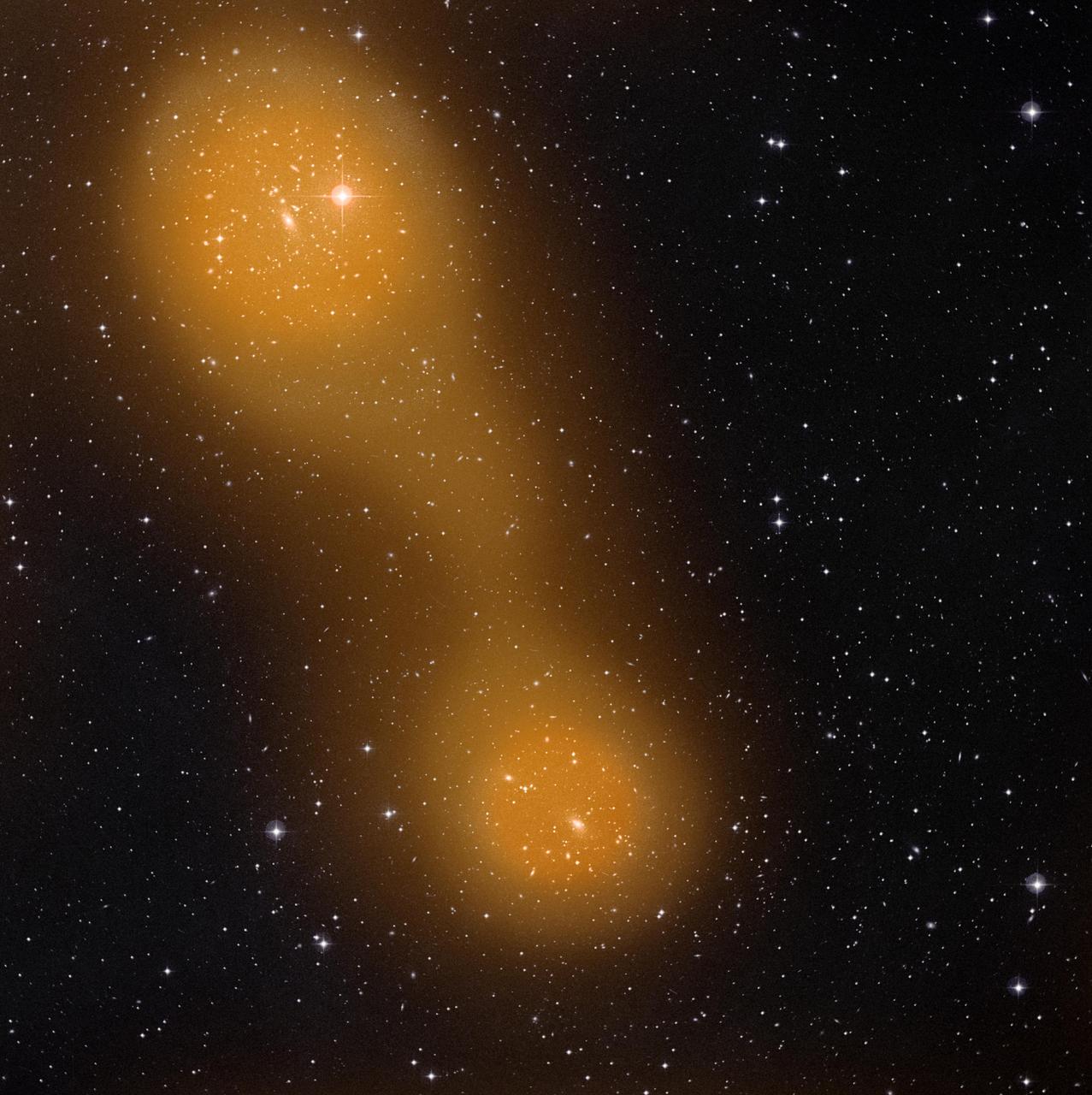
Planck has discovered a bridge of hot gas that connects galaxy clusters Abell 399 lower center and Abell 401 top left. The galaxy pair is located about a billion light-years from Earth.

Tones represents sound waves that traveled through the early universe, and were later heard by ESA Planck space telescope. The primordial sound waves have been translated into frequencies we can hear.

This full-sky map from ESA Planck mission shows matter between Earth and the edge of the observable universe. Regions with less mass show up as lighter areas while regions with more mass are darker.
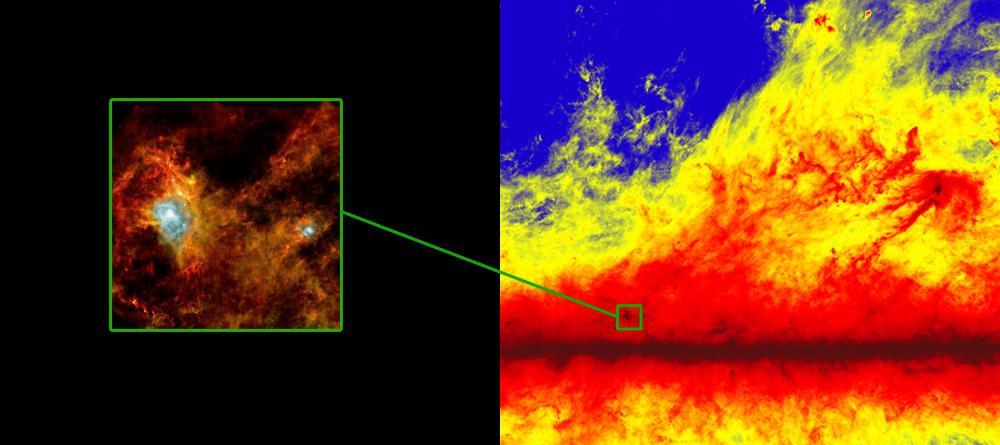
Filamentary structures in our Milky Way galaxy are apparent at large scales, as shown in this ESA image from Planck image, on the right, and small scales as seen the Herschel image on the left.

This graphic illustrates the evolution of satellites designed to measure ancient light leftover from the big bang that created our universe 13.8 billion years ago; NASA COBE Explorer left and WMAP middle, and ESA Planck right.

This three-color combination constructed from ESA Planck two highest frequency channels and an image obtained with the NASA Infrared Astronomical Satellite shows local dust structures within 500 light-years of the sun.

A new, dynamic portrait of our Milky Way galaxy shows a frenzy of gas, charged particles and dust as seen by the European Space Agency Planck mission.

This composite image comes from the ESA Planck shows a festive portrait of our Milky Way galaxy shows a mishmash of gas, charged particles and several types of dust.

Our Milky Way galaxy is ablaze with dust in this new all-sky map from Planck, a European Space Agency mission with important NASA contributions. The towers of fiery colors are actually dust in the galaxy and beyond that has been polarized.

This image of the Andromeda galaxy, or M31, includes data from the ESA (European Space Agency) Herschel mission, supplemented with data from ESA's retired Planck observatory and two retired NASA missions: the Infrared Astronomical Satellite (IRAS) and Cosmic Background Explorer (COBE). Operated from 2009 to 2013, Herschel detected wavelengths of light in the far-infrared and microwave ranges, and was ideal for studying dust in nearby galaxies because it could capture small-scale structures in the dust clouds in high resolution. However, Herschel often couldn't detect light from diffuse dust clouds – especially in the outer regions of galaxies, where the gas and dust become sparse and thus fainter. As a result, the mission missed up to 30% of all the light given off by dust. Combining the Herschel observations with data from other observatories creates a more complete picture of the dust in the galaxy. In the image, red indicates hydrogen gas; green indicates cold dust; and warmer dust is shown in blue. Launched in 1983, IRAS was the first space telescope to detect infrared light, setting the stage for future observatories like NASA's Spitzer Space Telescope and James Webb Space Telescope. The Planck observatory, launched in 2009, and COBE, launched in 1989, both studied the cosmic microwave background, or light left over from the big bang. Red indicates hydrogen gas detected using the Green Bank Telescope in West Virginia, the Westerbork Synthesis Radio Telescope in the Netherlands, and the Institute for Radio Astronomy in the Millimeter Range 30-meter telescope in Spain. https://photojournal.jpl.nasa.gov/catalog/PIA25163
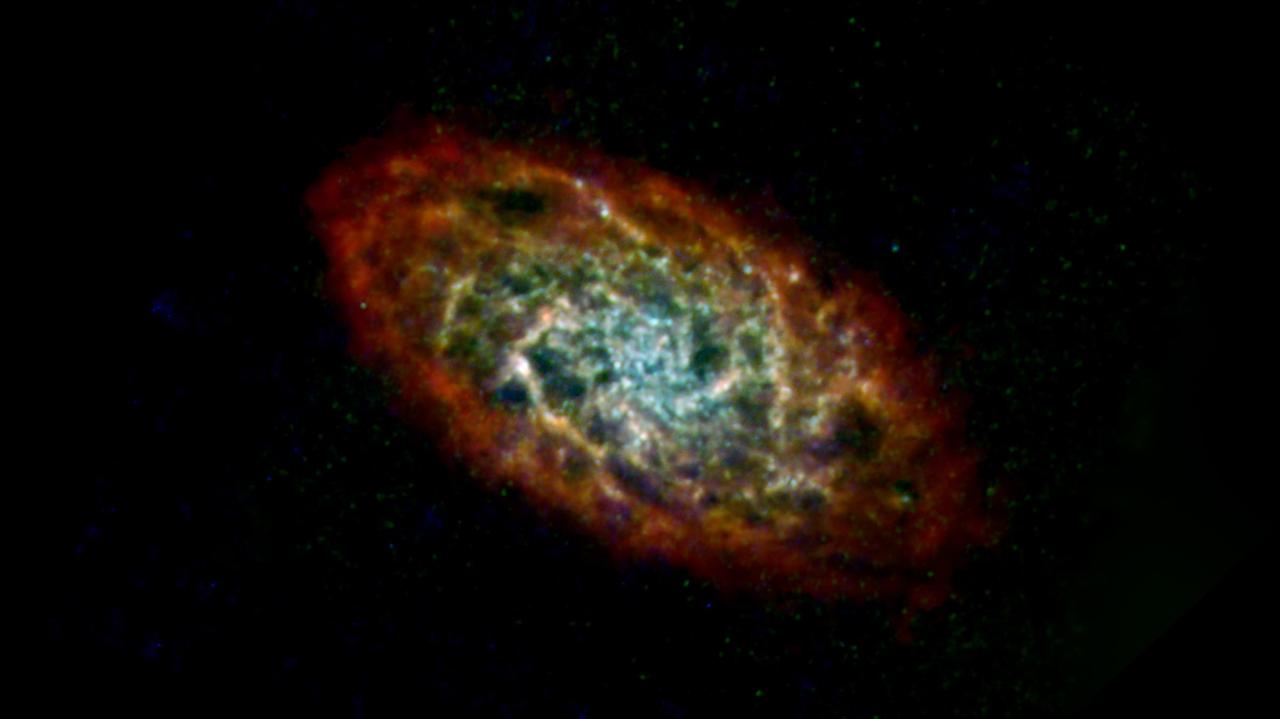
This image of the Triangulum galaxy, or M33, includes data from the ESA (European Space Agency) Herschel mission, supplemented with data from ESA's retired Planck observatory and two retired NASA missions: the Infrared Astronomical Satellite (IRAS) and Cosmic Background Explorer (COBE). Operated from 2009 to 2013, Herschel detected wavelengths of light in the far-infrared and microwave ranges, and was ideal for studying dust in nearby galaxies because it could capture small-scale structures in the dust clouds in high resolution. However, Herschel often couldn't detect light from diffuse dust clouds – especially in the outer regions of galaxies, where the gas and dust become sparse and thus fainter. As a result, the mission missed up to 30% of all the light given off by dust. Combining the Herschel observations with data from other observatories creates a more complete picture of the dust in the galaxy. In the image, red indicates hydrogen gas; green indicates cold dust; and warmer dust is shown in blue. Launched in 1983, IRAS was the first space telescope to detect infrared light, setting the stage for future observatories like NASA's Spitzer Space Telescope and James Webb Space Telescope. The Planck observatory, launched in 2009, and COBE, launched in 1989, both studied the cosmic microwave background, or light left over from the big bang. The hydrogen gas was detected using the Green Bank Telescope in West Virginia, the Karl G. Jansky Very Large Array in New Mexico, and the Institute for Radio Astronomy in the Millimeter Range 30-meter telescope in Spain. https://photojournal.jpl.nasa.gov/catalog/PIA25165

This detailed map of the oldest light in our universe allowed scientists to take the most precise inventory of the universe ingredients to date.

This illustration summarizes the almost 14-billion-year-long history of our universe. It shows the main events that occurred between the initial phase of the cosmos.
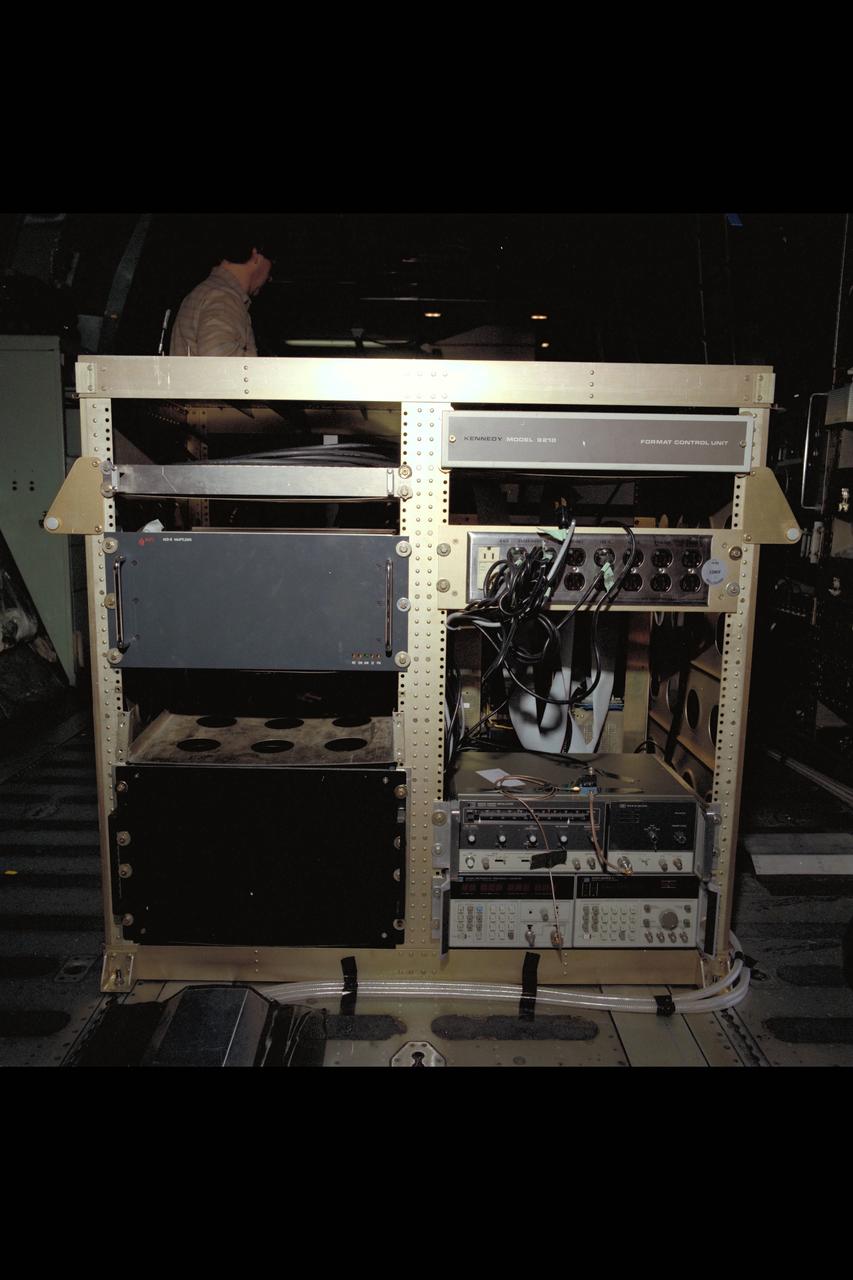
C-141 KAO: Planck Institute Heterdyne Spectrometer
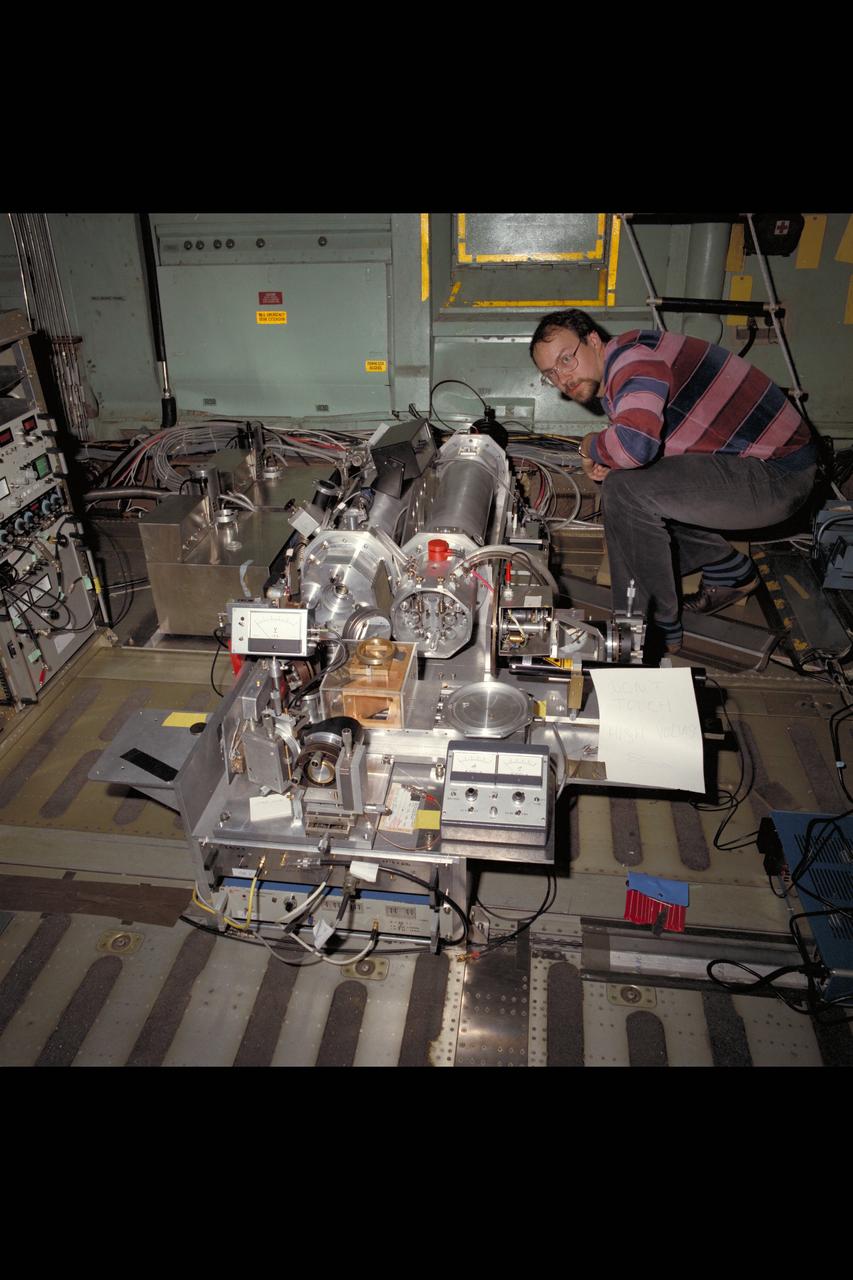
C-141 KAO: Planck Institute Heterdyne Spectrometer
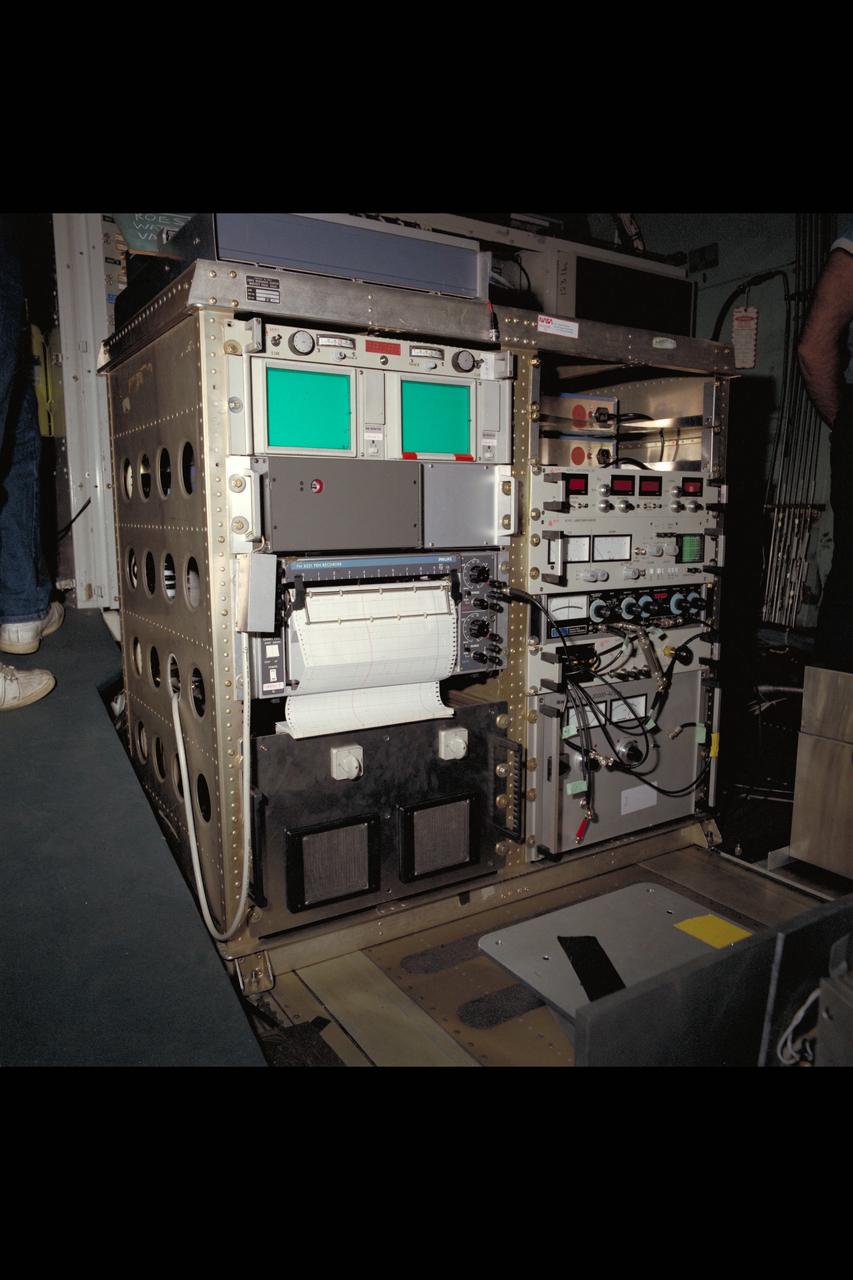
C-141 KAO: Planck Institute Heterdyne Spectrometer
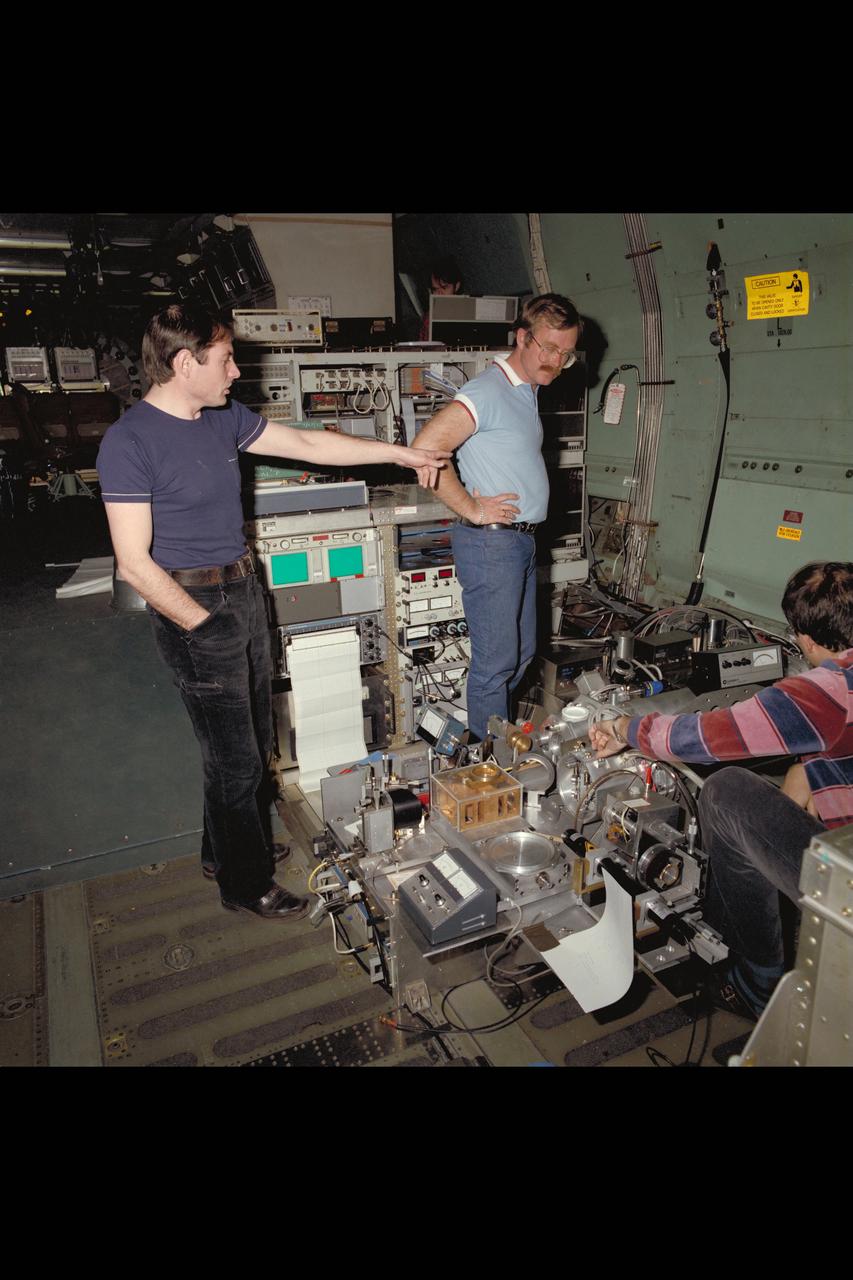
C-141 KAO: Planck Institute Heterdyne Spectrometer
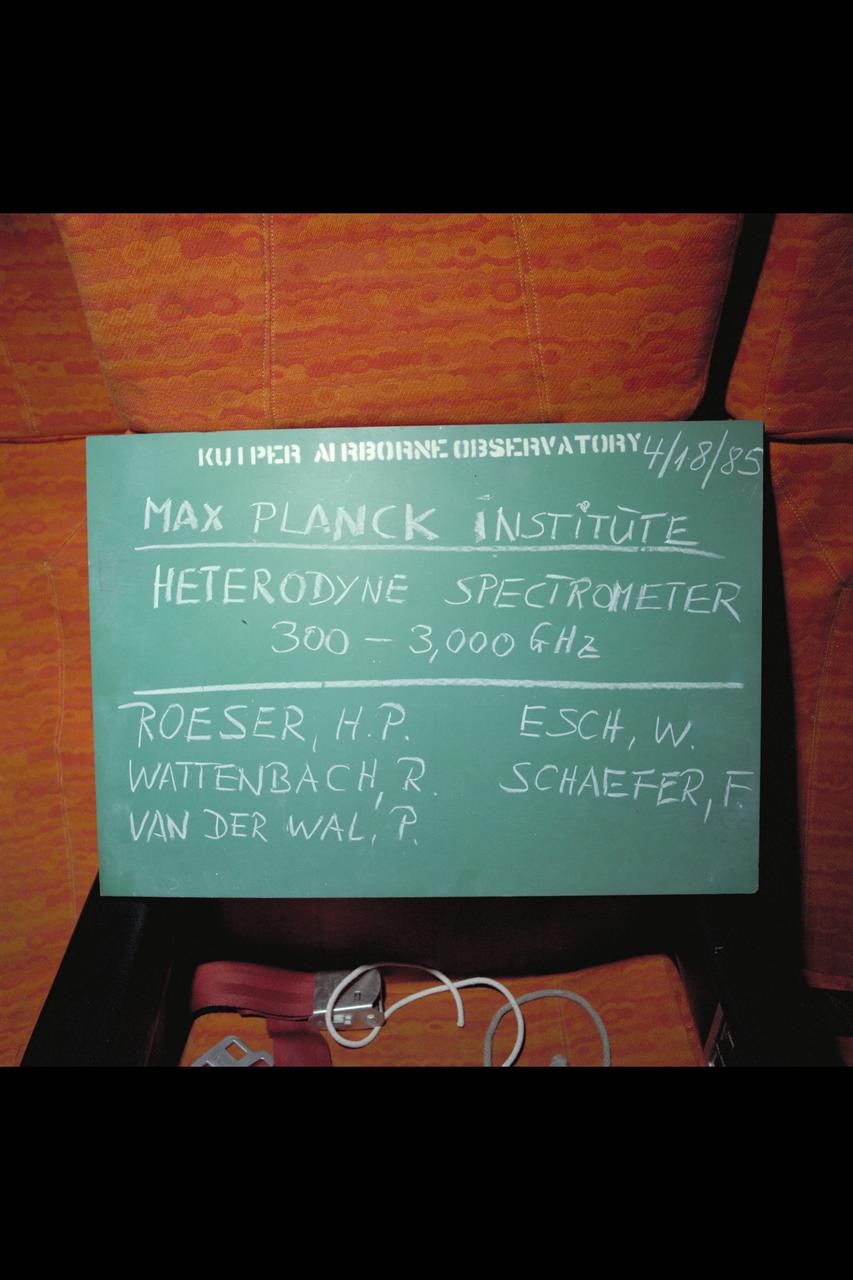
C-141 KAO: Planck Institute Heterdyne Spectrometer
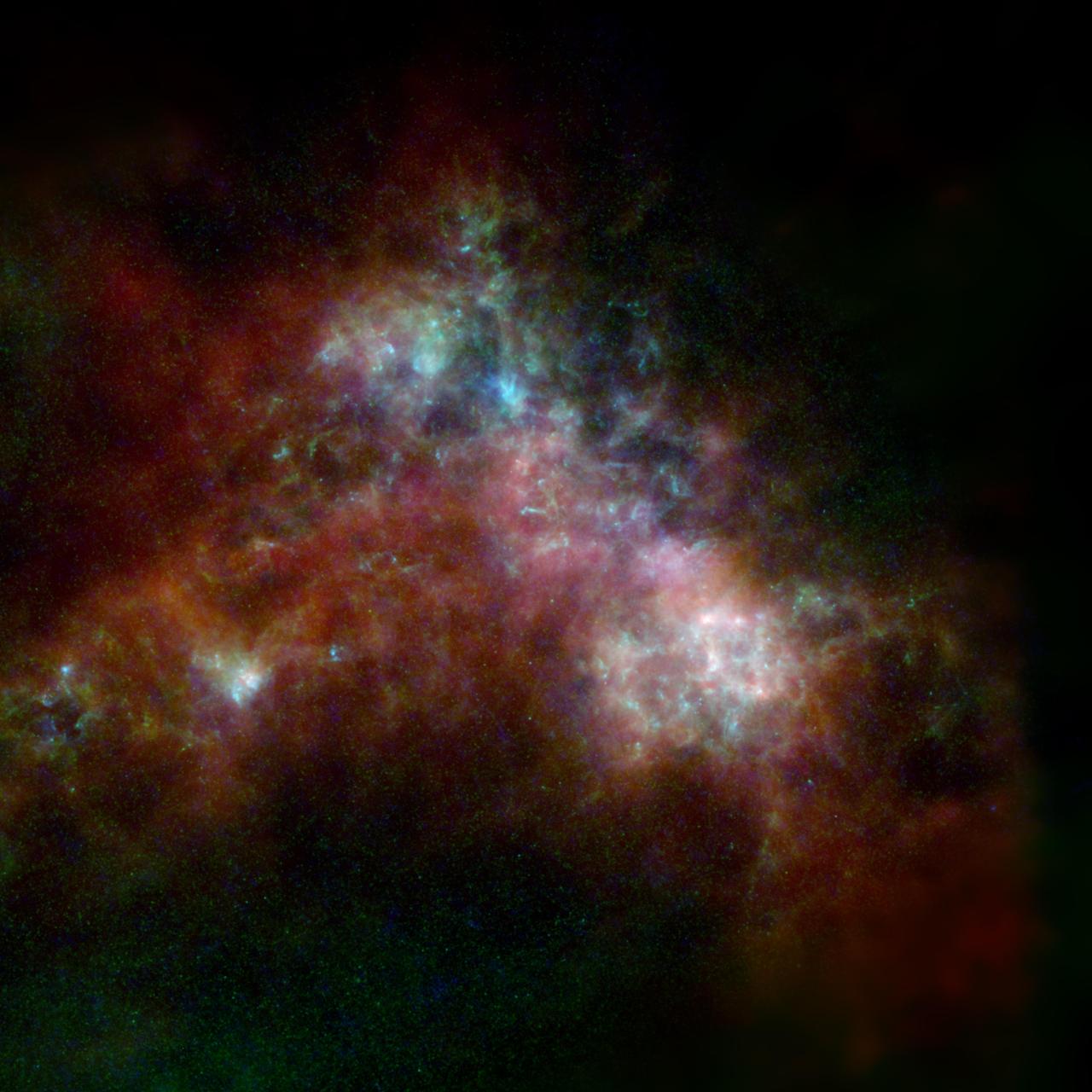
The Small Magellanic Cloud, shown here, is a dwarf galaxy orbiting the Milky Way. The image includes data from the ESA (European Space Agency) Herschel mission, supplemented with data from ESA's retired Planck observatory and two retired NASA missions: the Infrared Astronomical Satellite (IRAS) and Cosmic Background Explorer (COBE). Operated from 2009 to 2013, Herschel detected wavelengths of light in the far-infrared and microwave ranges, and was ideal for studying dust in nearby galaxies because it could capture small-scale structures in the dust clouds in high resolution. However, Herschel often couldn't detect light from diffuse dust clouds – especially in the outer regions of galaxies, where the gas and dust become sparse and thus fainter. As a result, the mission missed up to 30% of all the light given off by dust. Combining the Herschel observations with data from other observatories creates a more complete picture of the dust in the galaxy. In the image, red indicates hydrogen gas; green indicates cold dust; and warmer dust is shown in blue. Launched in 1983, IRAS was the first space telescope to detect infrared light, setting the stage for future observatories like NASA's Spitzer Space Telescope and James Webb Space Telescope. The Planck observatory, launched in 2009, and COBE, launched in 1989, both studied the cosmic microwave background, or light left over from the big bang. The hydrogen gas was detected using the Parkes Radio Telescope and the Australia Compact Telescope Array, located in Australia and managed by the Commonwealth Scientific and Industrial Research Organisation (CSIRO); and the NANTEN2 Observatory in the Atacama Desert in Chile. https://photojournal.jpl.nasa.gov/catalog/PIA25164
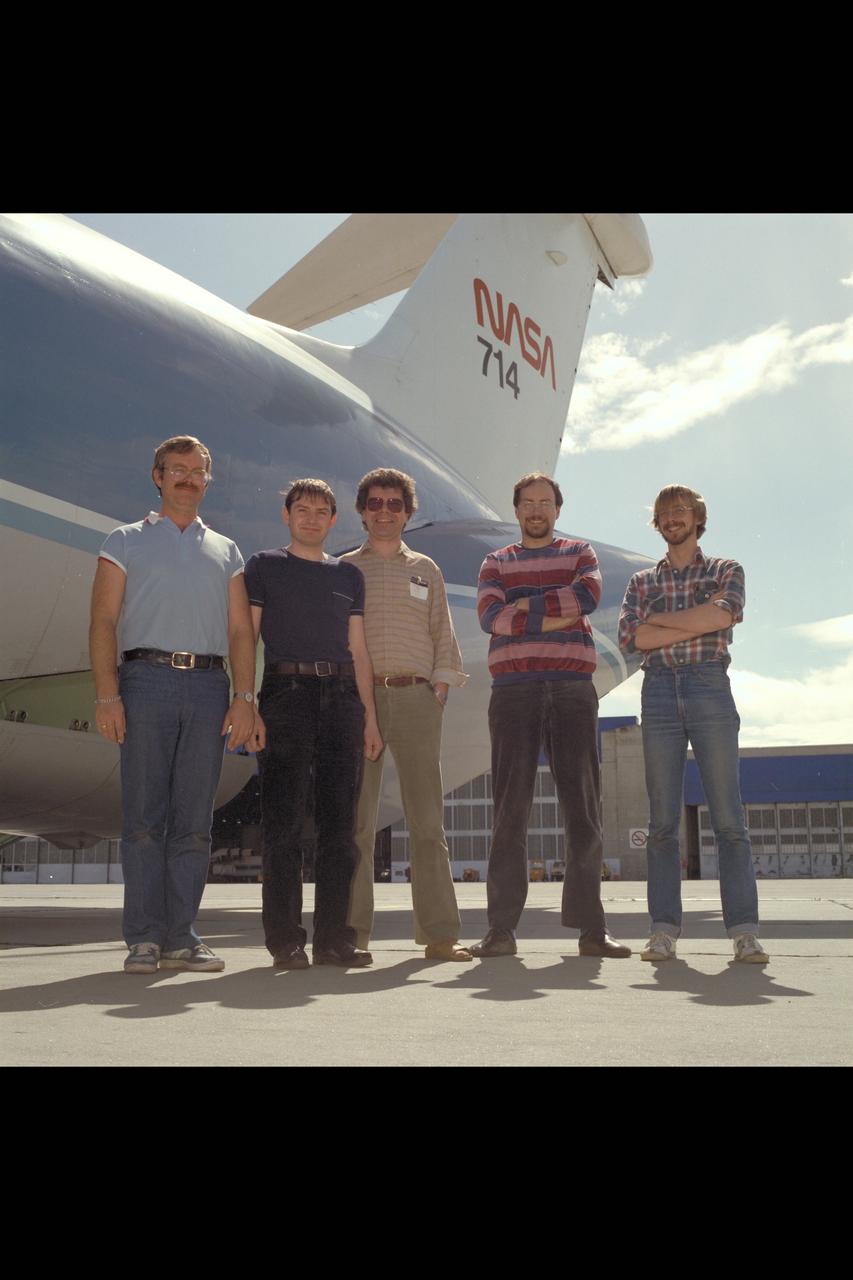
C-141 KAO: Planck Institute Heterdyne Spectrometer (Team Photo)
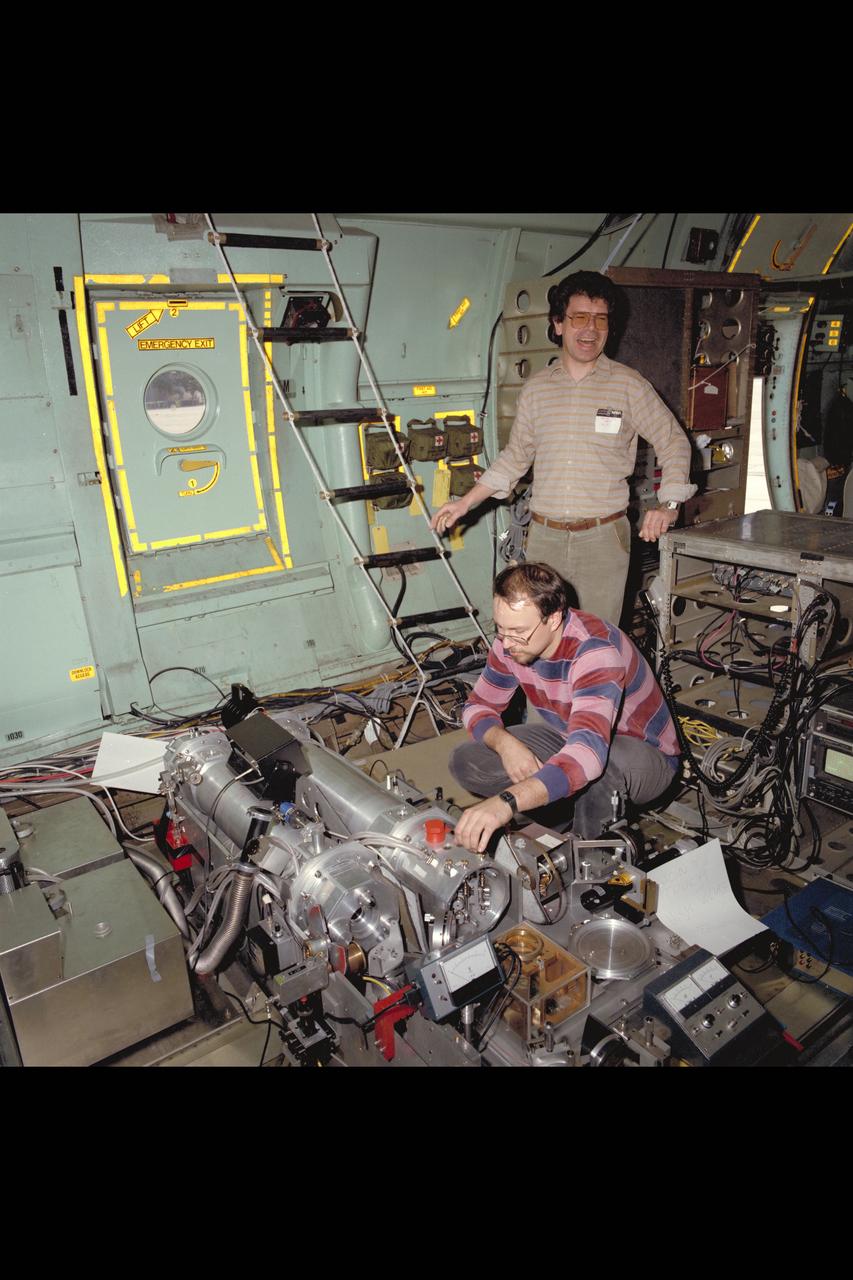
C-141 KAO: Planck Institute Heterdyne Spectrometer (MPI Bonn ??)
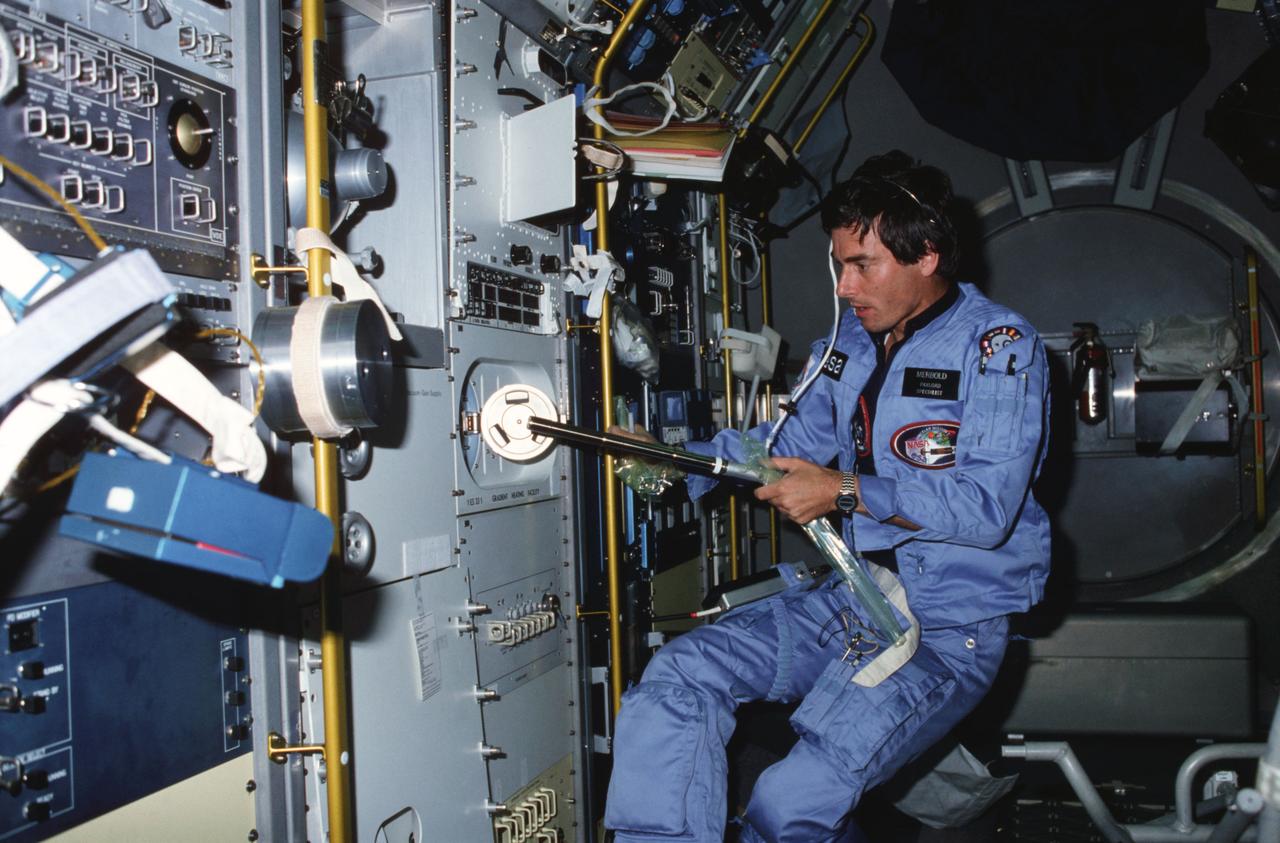
STS009-13-699 (28 Nov - 8 Dec 1983) --? Ulf Merbold, Spacelab 1 payload specialist, carries out one of the experiments using the gradient heating facility on the materials science double rack facility in the busy science module aboard the Earth-orbiting Space Shuttle Columbia. Representing the European Space Agency, Dr. Merbold comes from Max-Planck Institute in Stuttgart, the Federal Republic of Germany. He is a specialist in crystal lattice defects and low temperature physics. The photograph was made with a 35mm camera.
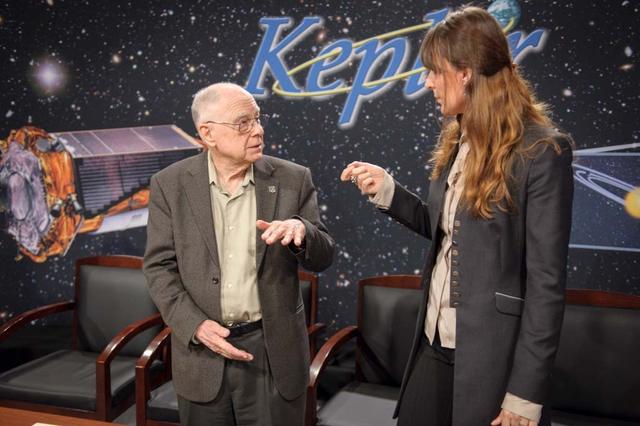
Kepler News Briefing, held in the Syvertson auditorium at the NASA Ames Research Center. The briefing presented discoveries from the continuing Kepler mission (K2). The team discovered some of the smallest planets found in the habitable zone of two newly discovered planetary systems. Bill Borucki (left), Kepler Scientist, Principal Investigator, NASA Ames Lisa Kaltengger (right), Research Group Leader, Max Planck Institute for Astronomy, Heidelberg Germany and Research Associate, Harvard-Smithsonian Center for Astrophysics, Cambridge Massachusetts.
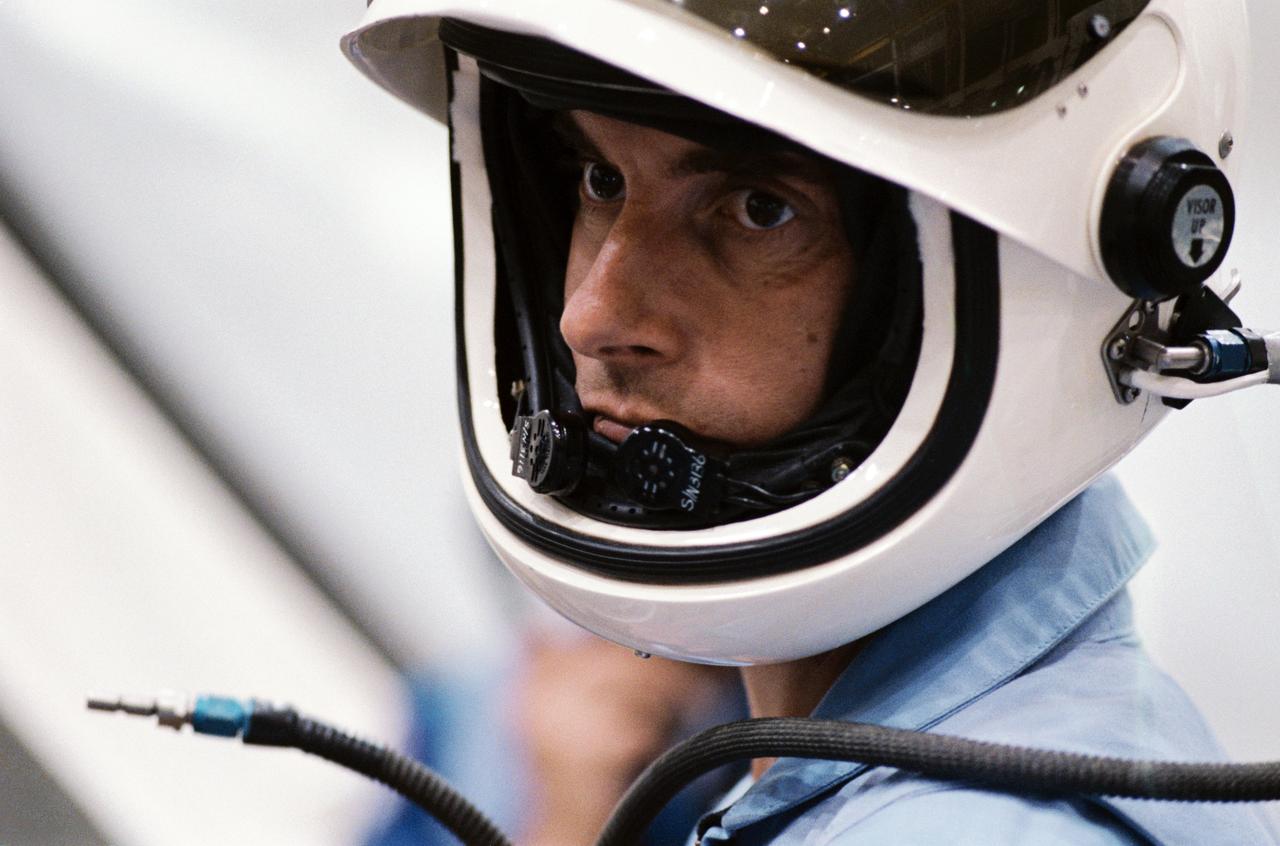
S83-41190 (9 September 1983) --- A close-up view of the serious countenance of West German Physicist Ulf Merbold was captured during a training session with all six STS-9 crewmembers in the Johnson Space Center’s (JSC) Shuttle Mockup and Integration Laboratory. Dr. Merbold is SL-1 payload specialist representing the European Space Agency (ESA). Dr. Merbold, from Max-Planck Institute in Stuttgart, is a specialist in crystal lattice defects and low-temperature physics. The photograph was taken by Otis Imboden.
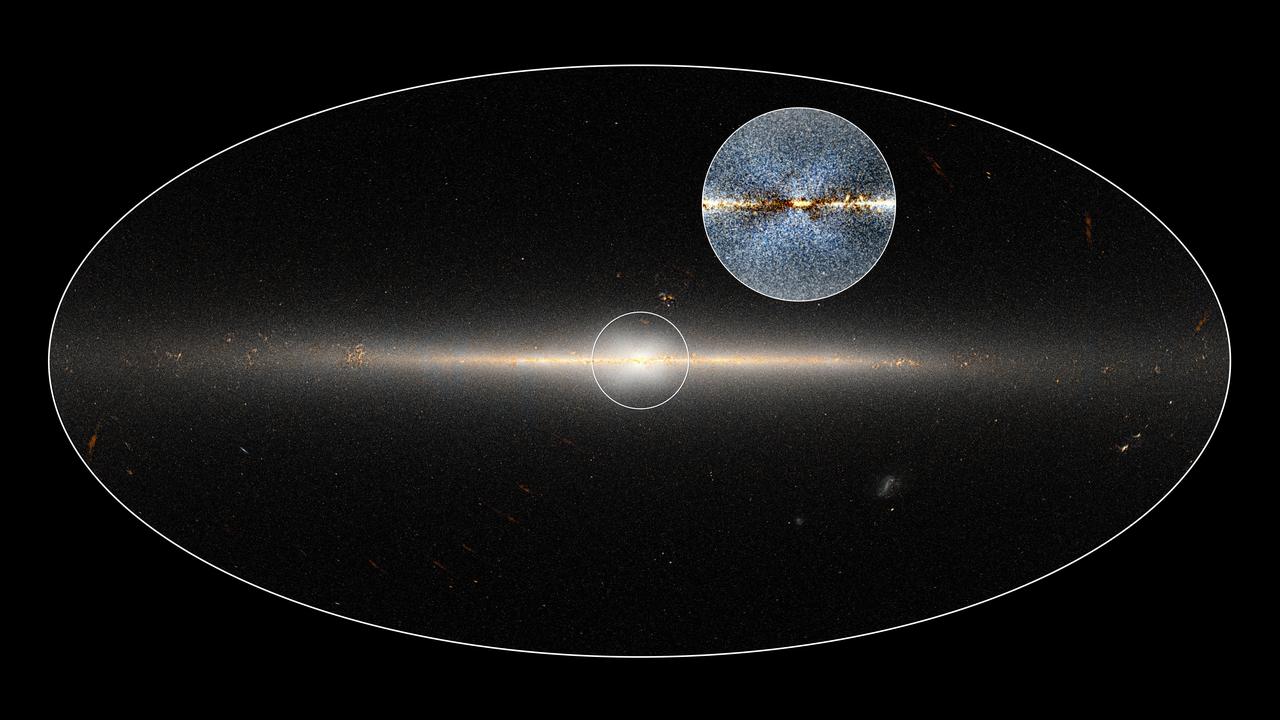
In 2010, NASA's Wide-field Infrared Survey Explorer (WISE) mission observed the entire sky twice. Astronomers used these data to point out the X-shaped structure in the bulge of the Milky Way, contained in the small circle at center, as well as the inset image. The circled central portion covers roughly the area of sky that would be blocked by a basketball when held out at arm's length. Dustin Lang, an astronomer at the Dunlap Institute of the University of Toronto, used these data to make this map, which shows the full 360-degree panorama of the sky as seen by WISE. Lang collaborated with Melissa Ness, postdoctoral researcher at the Max Planck Institute for Astronomy in Germany, http://photojournal.jpl.nasa.gov/catalog/PIA20699
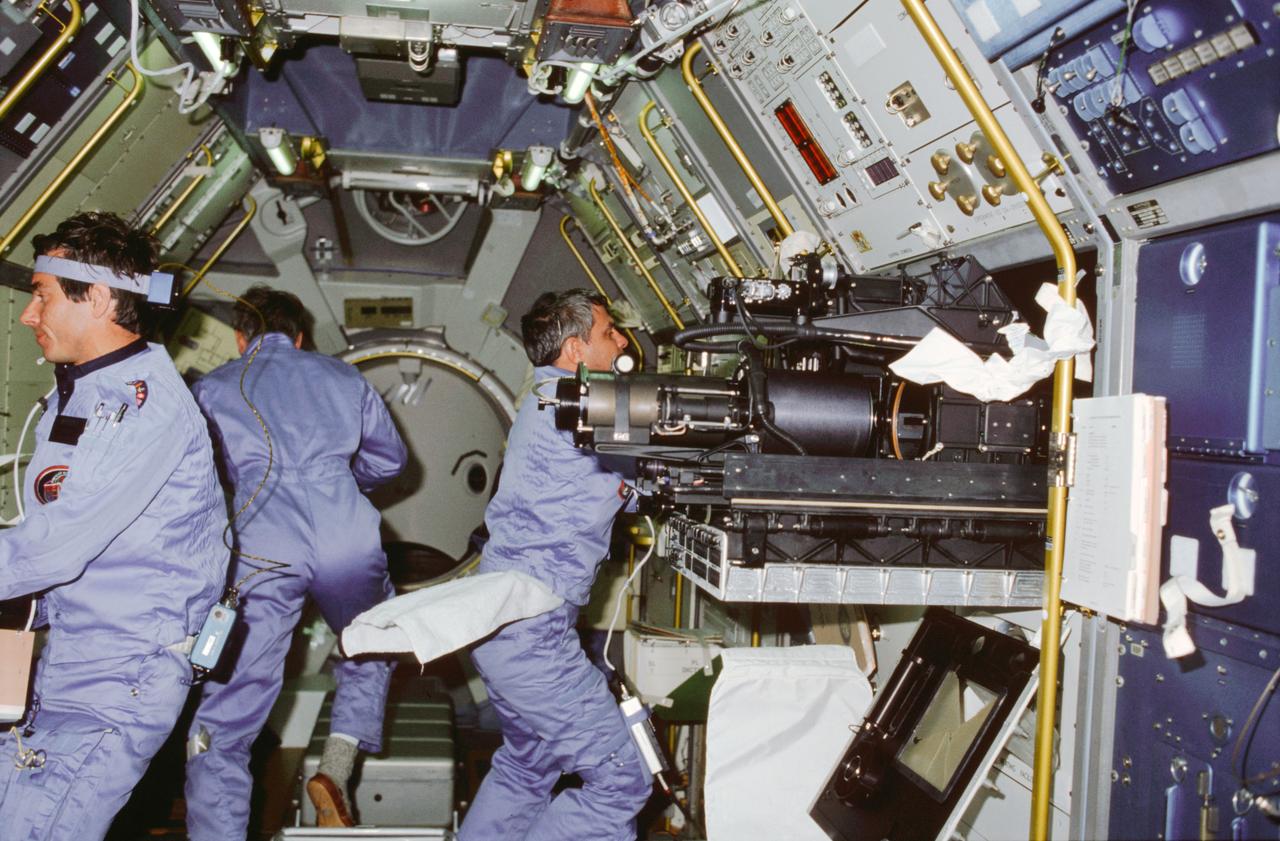
STS009-03-093 (28 Nov-8 Dec 1983) --- A mission specialist and two payload specialists busy themselves in the Spacelab 1 module aboard the Earth orbiting Space Shuttle Columbia. Left to right are Payload Specialist Robert A. R. Parker. Parker is partially obscured by a deployed instrument of the fluid physics module at the materials sciences double rack. Merbold, a physicist from Max-Planck Institute in the Federal Republic of Germany, wears a head band-like device and a recorder as part of an overall effort to learn more about space adaptation. Both Space lab 1 payload specialists wore the devices during most of their waking hours on this 10-day flight. The frame was exposed with a 35mm camera.

A Trail of Salts
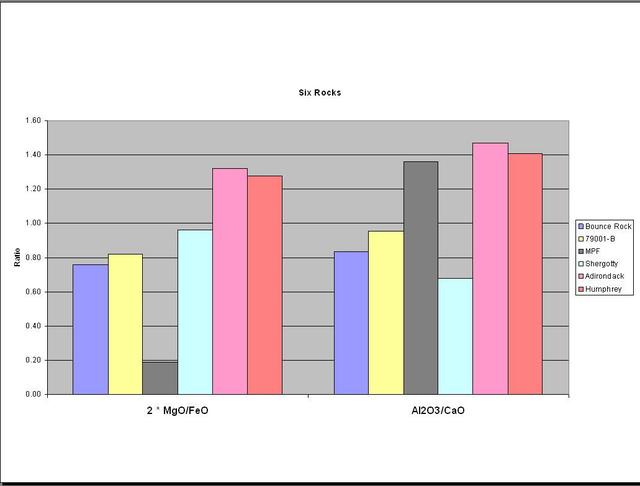
Bounce and Martian Meteorite of the Same Mold
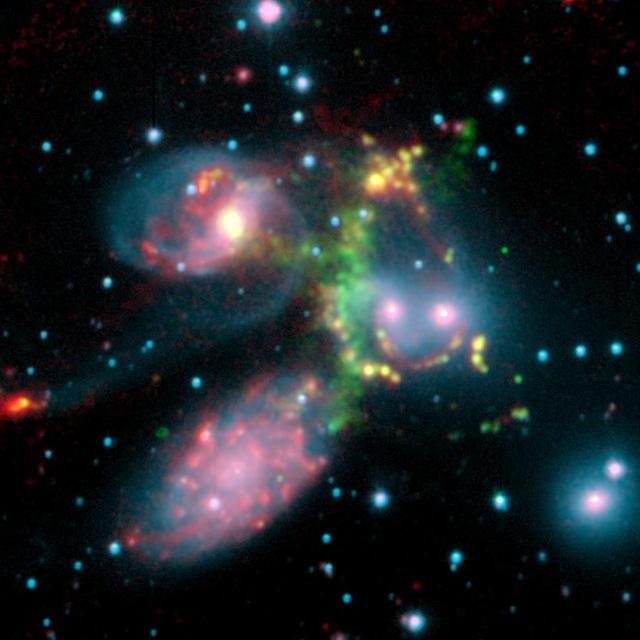
The false-color composite image of the Stephan’s Quintet galaxy cluster is made up of data from NASA Spitzer Space Telescope and a ground-based telescope in Spain.
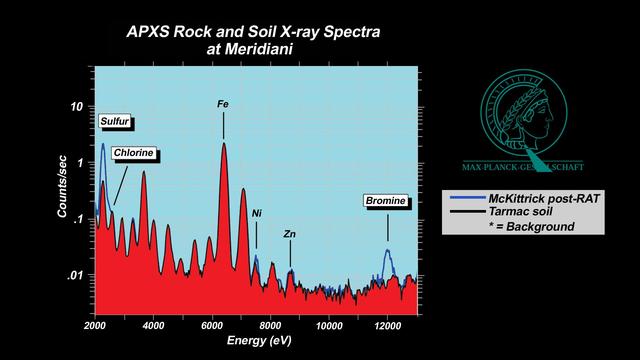
History Leaves Salts Behind
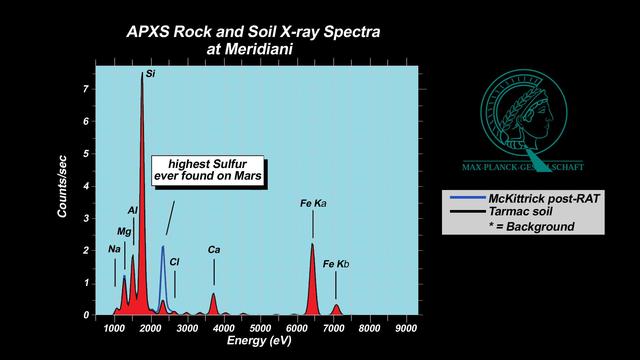
McKittrick Rich in Sulfur
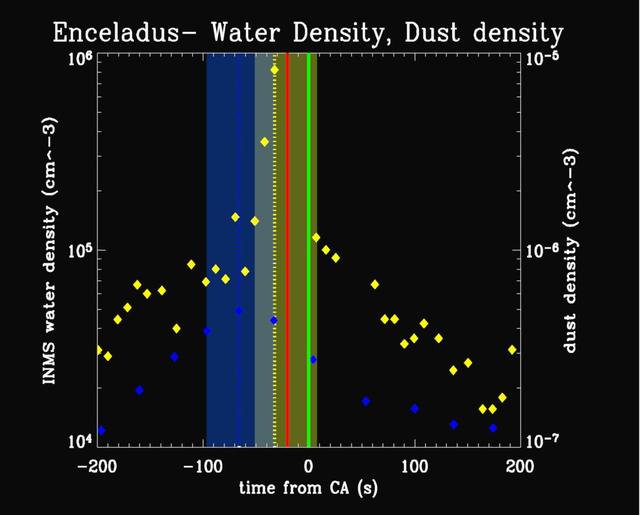
Water Vapor & Particles Over Enceladus
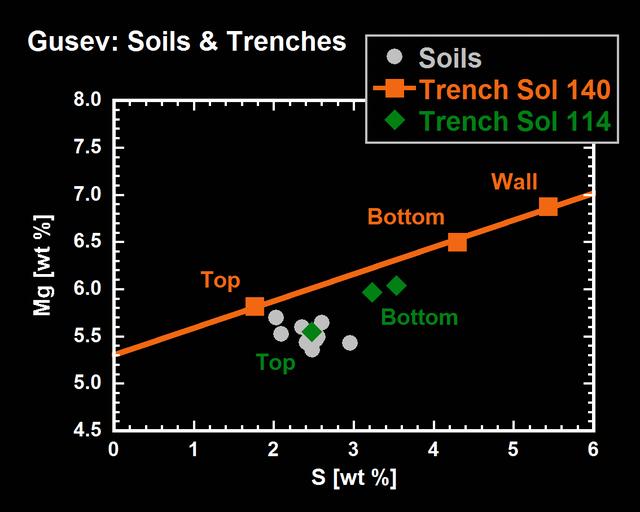
Spirit Sees Salty Soil
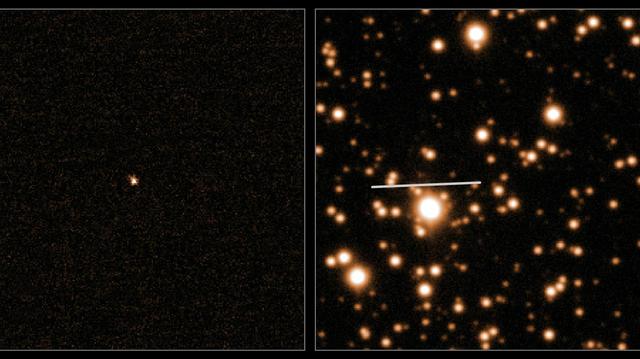
This image shows the most recent observations of the 2-mile-wide 4-kilometer-wide comet 67P/Churyumov-Gerasimenko, which is the upcoming target of the European Space Agency Rosetta mission.
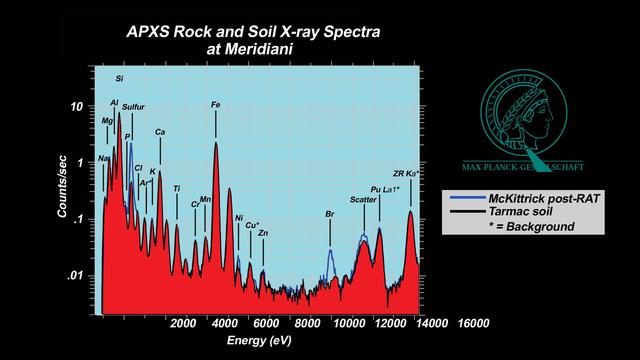
Salty Martian Rock
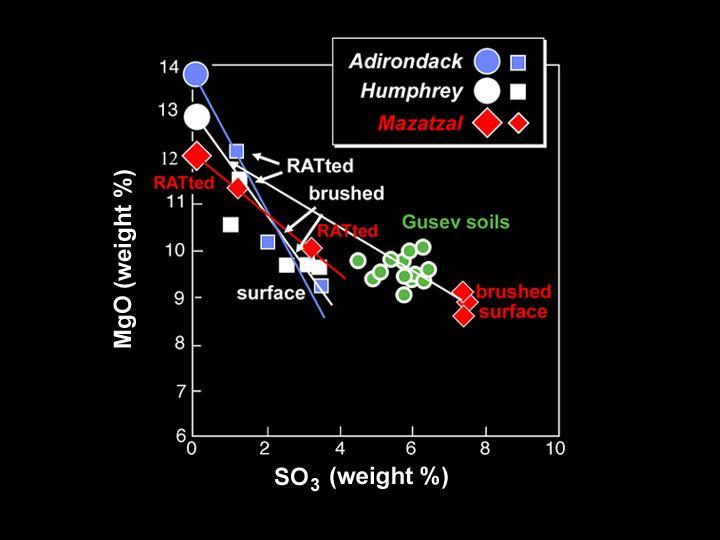
What on the Inside Counts
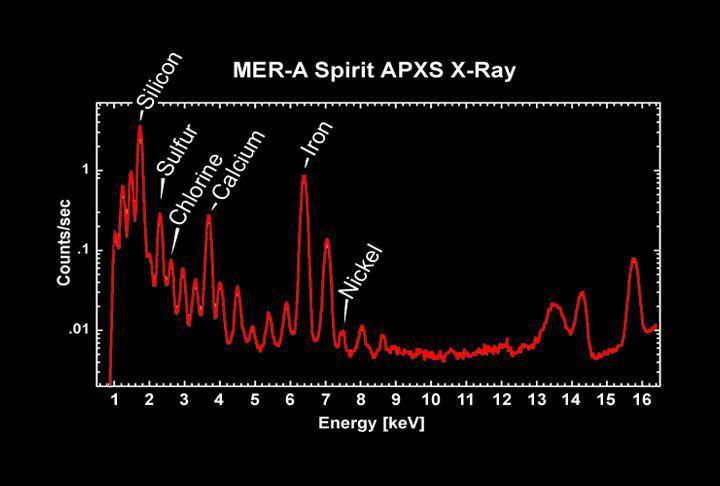
A Rainbow of Martian Elements
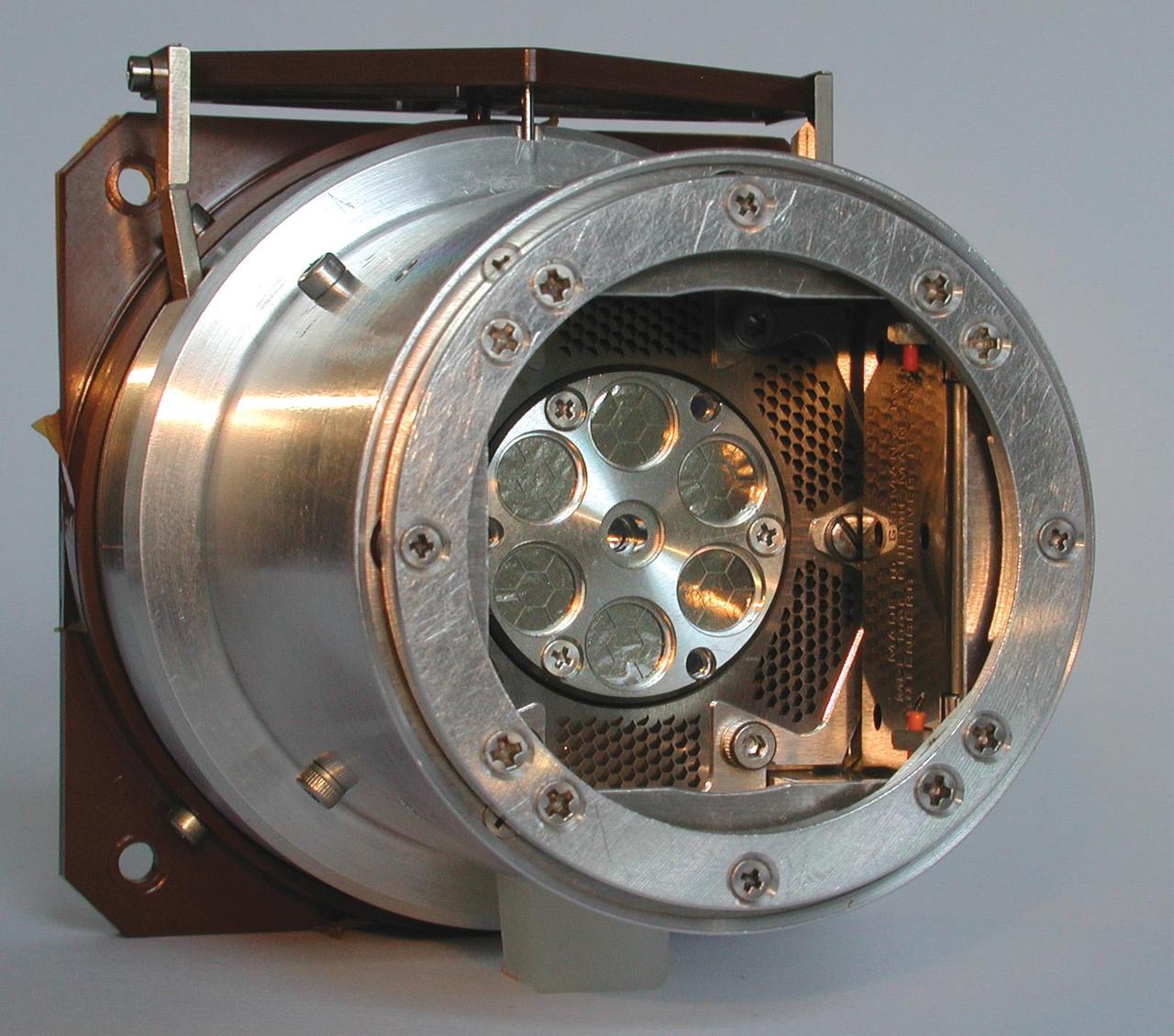
Located on the arm of NASA Mars Exploration Rover Spirit, the alpha particle X-ray spectrometer uses alpha particles and X-rays to determine the chemical make up of martian rocks and soils.
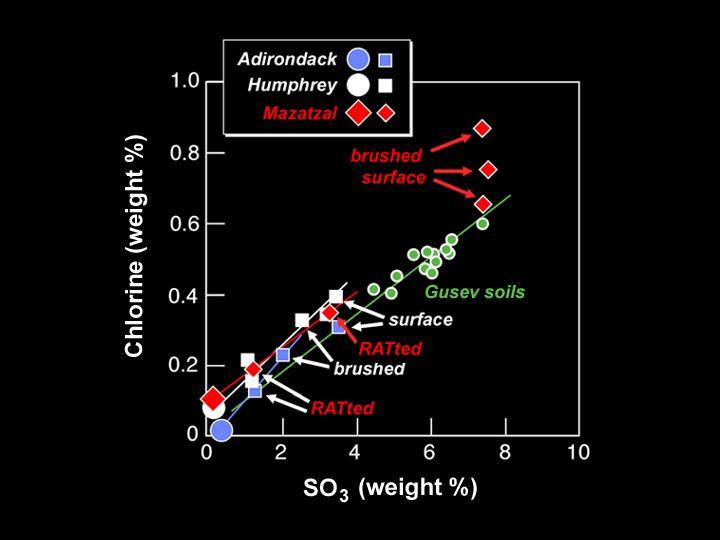
Outer Appearances Can Be Deceiving
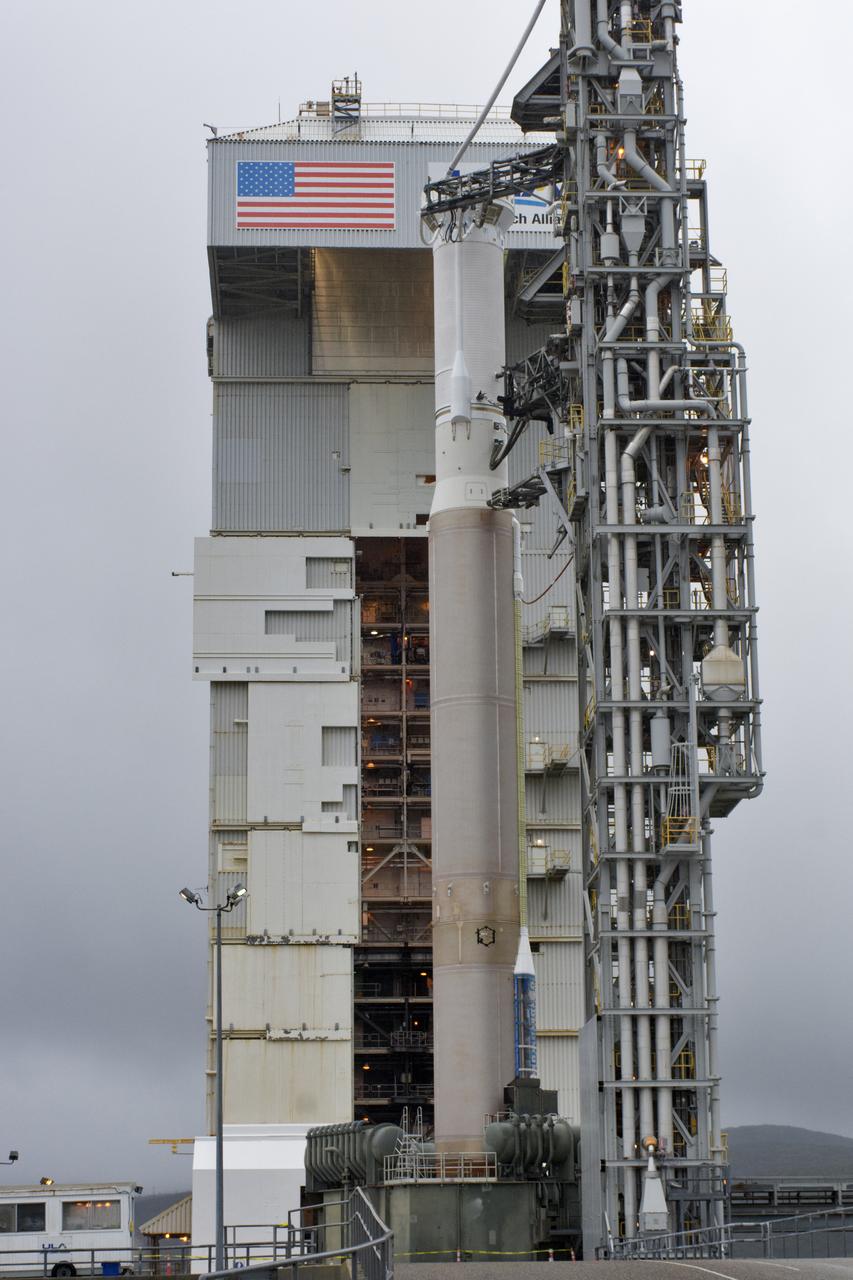
At Space Launch Complex 3 at Vandenberg Air Force Base in California, the gantry is rolled back on the United Launch Alliance (ULA) Atlas V to a Centaur upper stage aft stub adapter (ASA) and interstage adapter (ISA) for NASA's Interior Exploration using Seismic Investigations, Geodesy and Heat Transport, or InSight, spacecraft to land on Mars. The next step will be arrival of InSight encapsulated in its payload faring for mating atop the rocket. InSight is the first mission to explore the Red Planet's deep interior. InSight is scheduled for liftoff May 5, 2018. InSight will be the first mission to look deep beneath the Martian surface. It will study the planet's interior by measuring its heat output and listen for marsquakes. InSight will use the seismic waves generated by marsquakes to develop a map of the planet’s deep interior. The resulting insight into Mars’ formation will provide a better understanding of how other rocky planets, including Earth, were created. NASA’s Jet Propulsion Laboratory in Pasadena, California, manages the InSight mission for the agency’s Science Mission Directorate. InSight is part of NASA's Discovery Program, managed by its Marshall Space Flight Center in Huntsville, Alabama. The spacecraft, including cruise stage and lander, was built and tested by Lockheed Martin Space in Denver. Several European partners, including France's space agency, the Centre National d'Étude Spatiales, and the German Aerospace Center, are supporting the mission. United Launch Alliance of Centennial, Colorado, is providing the Atlas V launch service. NASA’s Launch Services Program, based at its Kennedy Space Center in Florida, is responsible for launch management.
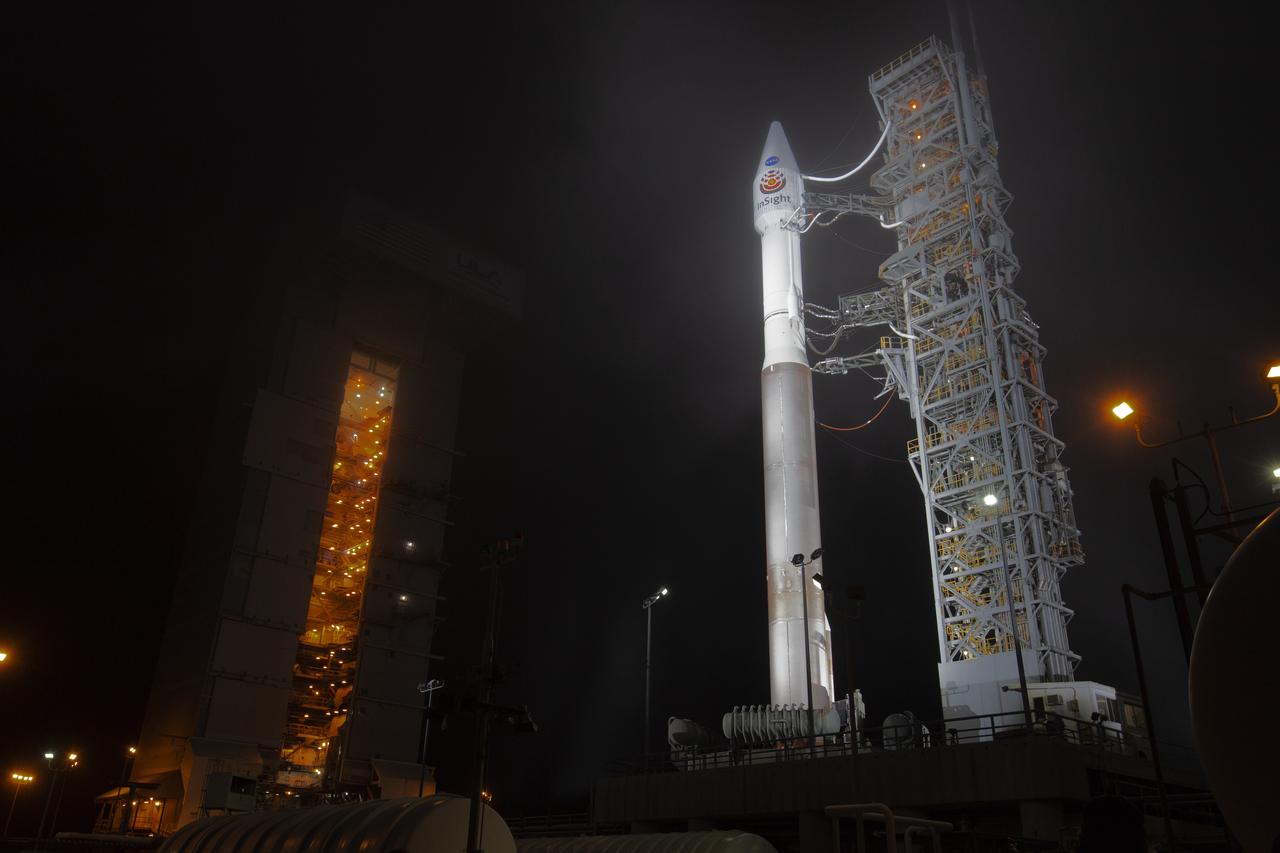
At Vandenberg Air Force Base in California, the gantry rolls back at Space Launch Complex 3 in preparation for the liftoff of NASA's Interior Exploration using Seismic Investigations, Geodesy and Heat Transport, or InSight, Mars lander. The United Launch Alliance Atlas V rocket now is poised to boost the spacecraft with liftoff scheduled for 4:05 a.m. PDT (7:05 a.m. EDT). InSight will be the first mission to look deep beneath the Martian surface. It will study the planet's interior by measuring its heat output and listen for marsquakes. InSight will use the seismic waves generated by marsquakes to develop a map of the planet’s deep interior. The resulting insight into Mars’ formation will provide a better understanding of how other rocky planets, including Earth, were created.
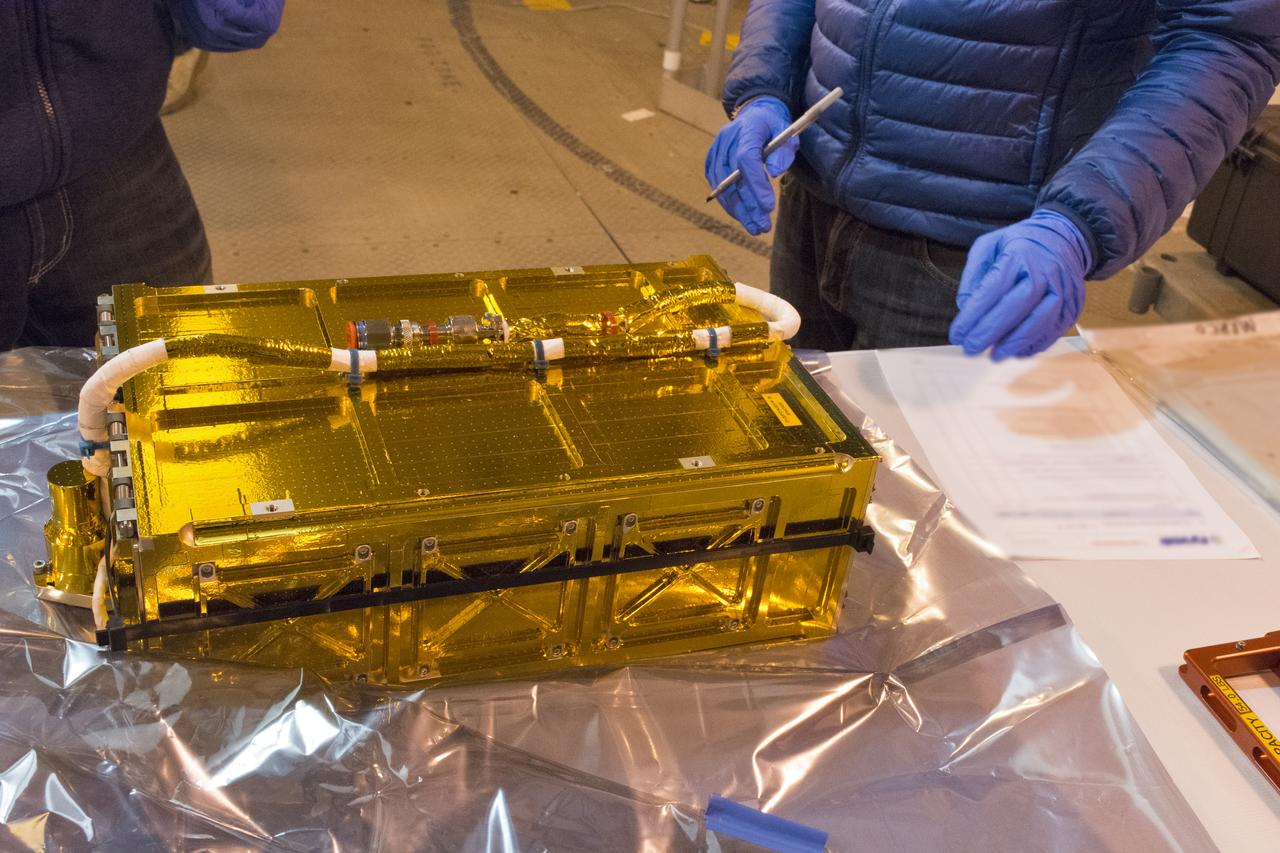
At Vandenberg Air Force Base in California, twin communications-relay CubeSats, called Mars Cube One (MarCO) are prepared for installation on an Atlas V rocket. MarCO constitutes a technology demonstration being built by NASA's Jet Propulsion Laboratory, Pasadena in California. They will launch in on the same United Launch Alliance Atlas V rocket as NASA's Interior Exploration using Seismic Investigations, Geodesy and Heat Transport, or InSight, spacecraft to land on Mars. CubeSats are a class of spacecraft based on a standardized small size and modular use of off-the-shelf technologies. Many have been made by university students, and dozens have been launched into Earth orbit using extra payload mass available on launches of larger spacecraft. InSight is the first mission to explore the Red Planet's deep interior. InSight is scheduled for liftoff May 5, 2018. InSight will be the first mission to look deep beneath the Martian surface. It will study the planet's interior by measuring its heat output and listen for marsquakes. InSight will use the seismic waves generated by marsquakes to develop a map of the planet’s deep interior. The resulting insight into Mars’ formation will provide a better understanding of how other rocky planets, including Earth, were created. NASA’s Jet Propulsion Laboratory in Pasadena, California, manages the InSight mission for the agency’s Science Mission Directorate. InSight is part of NASA's Discovery Program, managed by its Marshall Space Flight Center in Huntsville, Alabama. The spacecraft, including cruise stage and lander, was built and tested by Lockheed Martin Space in Denver. Several European partners, including France's space agency, the Centre National d'Étude Spatiales, and the German Aerospace Center, are supporting the mission. United Launch Alliance of Centennial, Colorado, is providing the Atlas V launch service. NASA’s Launch Services Program, based at its Kennedy Space Center in Florida, is responsible for laun
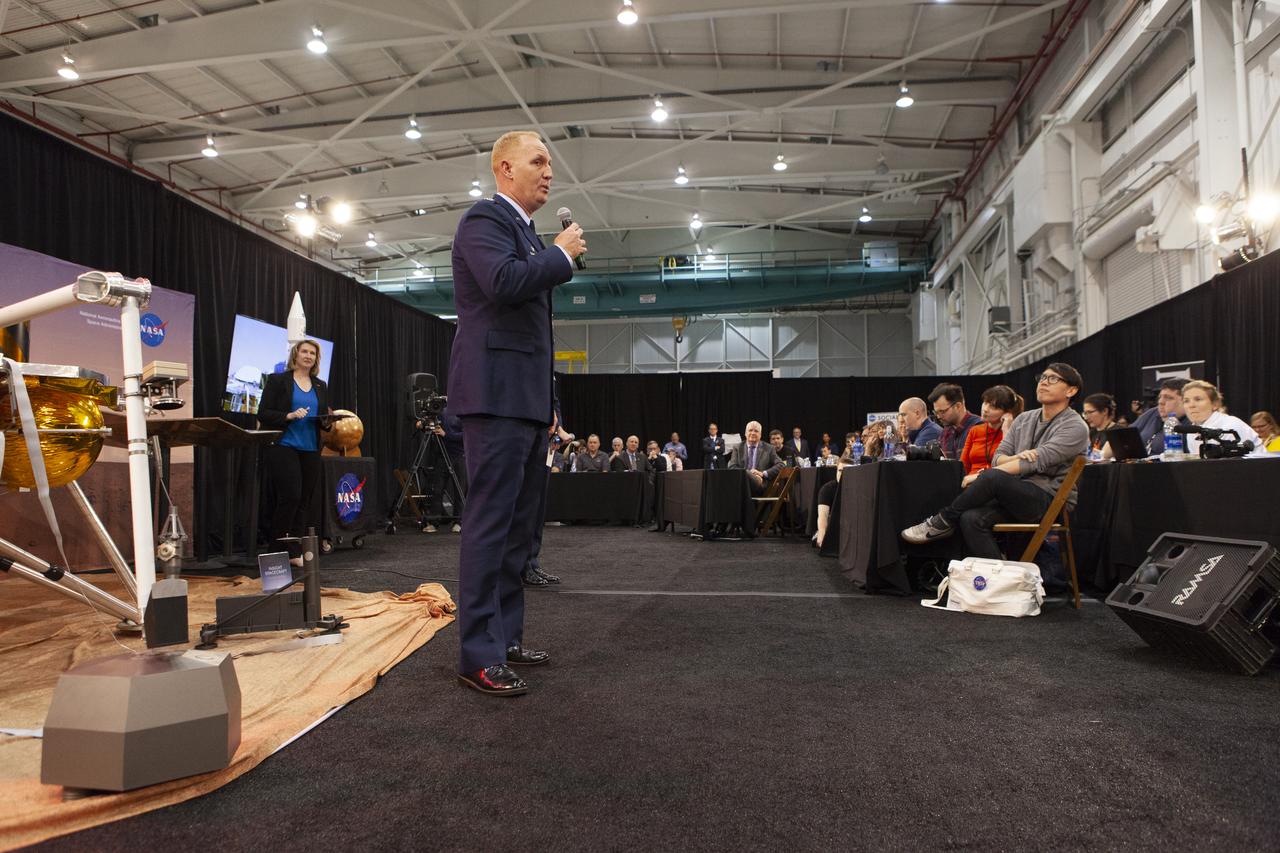
During a prelaunch briefing at Vandenberg Air Force Base in California, Col. Michael Hough, Commander 30th Space Wing, speaks to members of the media. The presentation focused on NASA's Interior Exploration using Seismic Investigations, Geodesy and Heat Transport, or InSight, Mars lander. InSight is scheduled for liftoff May 5, 2018, atop a United Launch Alliance (ULA) Atlas V rocket from Space Launch Complex 3 at Vandenberg. The spacecraft will be the first mission to look deep beneath the Martian surface studying the planet's interior by measuring its heat output and listen for marsquakes.
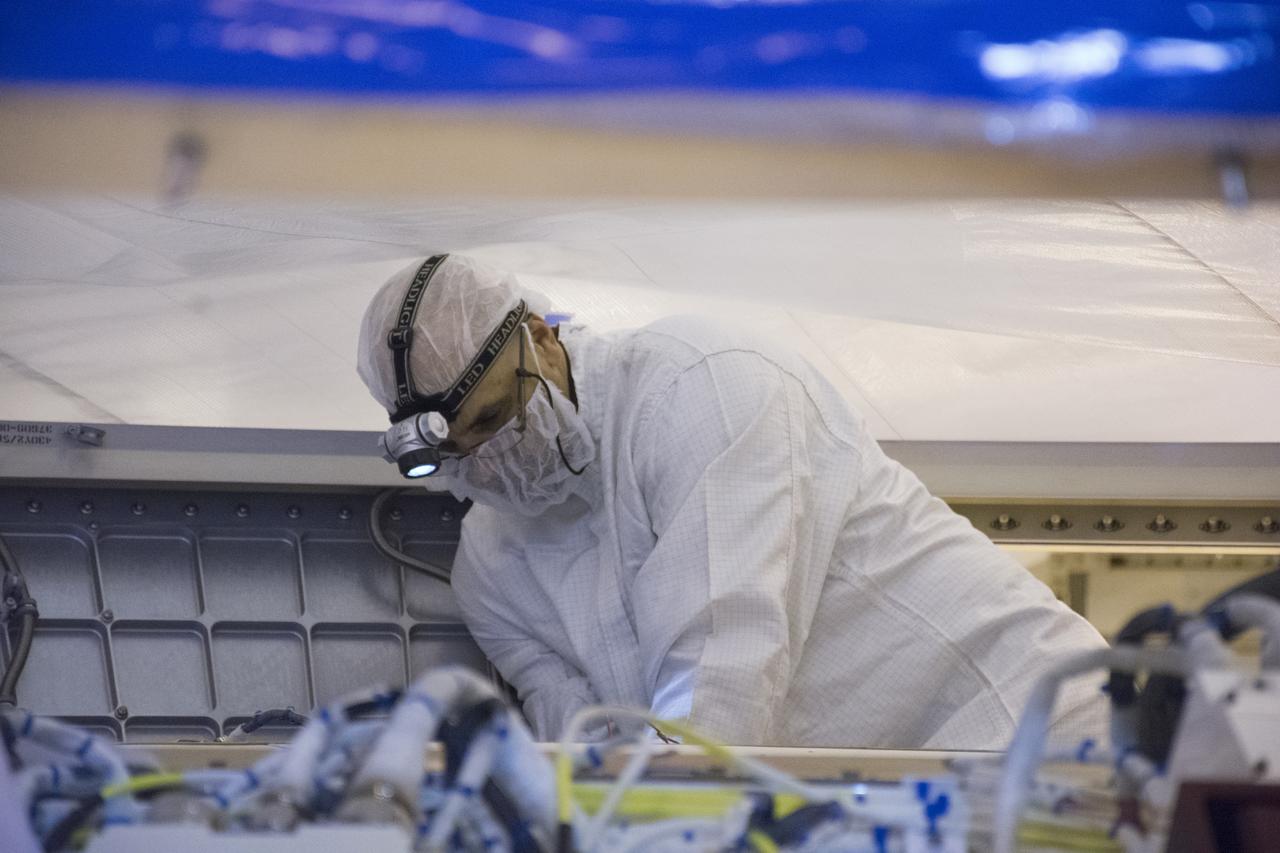
In the gantry at Space Launch Complex 3 at Vandenberg Air Force Base in California, a technician prepares batteries for installation in NASA's Interior Exploration using Seismic Investigations, Geodesy and Heat Transport, or InSight, Mars lander. InSight will be the first mission to look deep beneath the Martian surface. It will study the planet's interior by measuring its heat output and listen for marsquakes. The spacecraft will use the seismic waves generated by marsquakes to develop a map of the planet’s deep interior. The resulting insight into Mars’ formation will provide a better understanding of how other rocky planets, including Earth, were created. InSight is scheduled for liftoff May 5, 2018.

During a prelaunch briefing at Vandenberg Air Force Base in California, Jim Green, NASA Chief Scientist, speaks to members of the media. The presentation focused on NASA's Interior Exploration using Seismic Investigations, Geodesy and Heat Transport, or InSight, Mars lander. InSight is scheduled for liftoff May 5, 2018, atop a United Launch Alliance (ULA) Atlas V rocket from Space Launch Complex 3 at Vandenberg. The spacecraft will be the first mission to look deep beneath the Martian surface studying the planet's interior by measuring its heat output and listen for marsquakes.
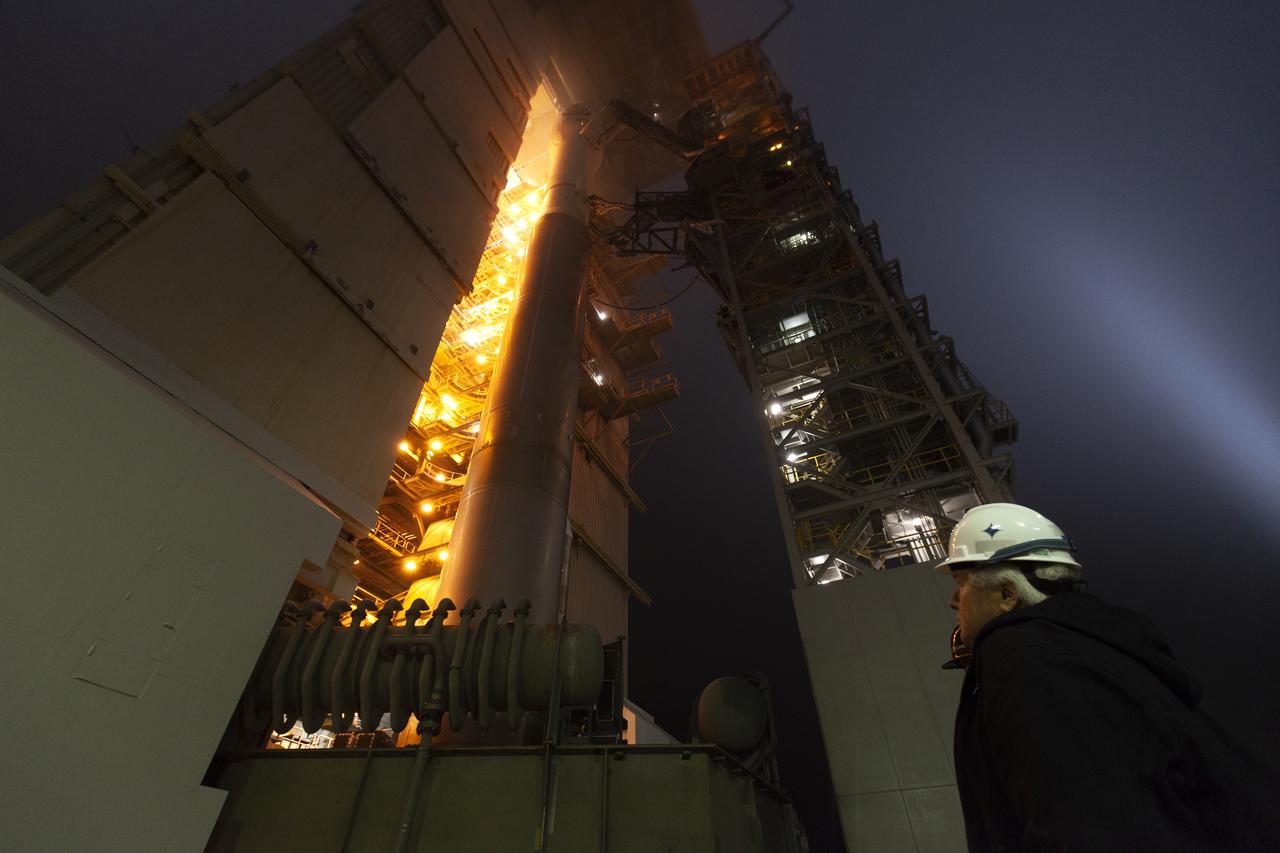
At Vandenberg Air Force Base in California, the gantry rolls back at Space Launch Complex 3 in preparation for the liftoff of NASA's Interior Exploration using Seismic Investigations, Geodesy and Heat Transport, or InSight, Mars lander. The United Launch Alliance Atlas V rocket now is poised to boost the spacecraft with liftoff scheduled for 4:05 a.m. PDT (7:05 a.m. EDT). InSight will be the first mission to look deep beneath the Martian surface. It will study the planet's interior by measuring its heat output and listen for marsquakes. InSight will use the seismic waves generated by marsquakes to develop a map of the planet’s deep interior. The resulting insight into Mars’ formation will provide a better understanding of how other rocky planets, including Earth, were created.
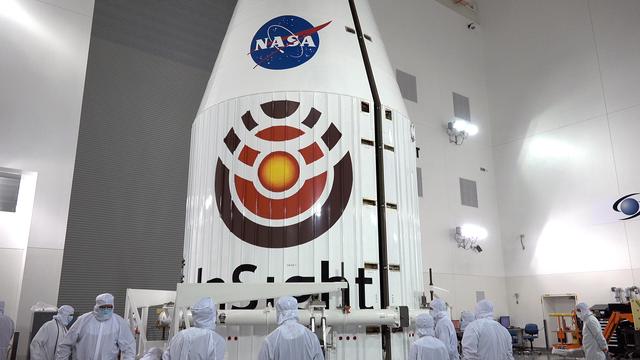
In the Astrotech facility at Vandenberg Air Force Base in California, technicians and engineers encapsulate NASA's Interior Exploration using Seismic Investigations, Geodesy and Heat Transport, or InSight, Mars lander in its payload fairing. InSight will be the first mission to look deep beneath the Martian surface. It will study the planet's interior by measuring its heat output and listen for marsquakes. The spacecraft will use the seismic waves generated by marsquakes to develop a map of the planet’s deep interior. The resulting insight into Mars’ formation will provide a better understanding of how other rocky planets, including Earth, were created. InSight is scheduled for liftoff May 5, 2018.

Members of the media and social media participants attended the NASA's Interior Exploration using Seismic Investigations, Geodesy and Heat Transport, or InSight, prelaunch briefing at Vandenberg Air Force Base in California. The presentation focused on InSight Mars lander. InSight is scheduled for liftoff May 5, 2018, atop a United Launch Alliance (ULA) Atlas V rocket from Space Launch Complex 3 at Vandenberg. The spacecraft will be the first mission to look deep beneath the Martian surface studying the planet's interior by measuring its heat output and listen for marsquakes.
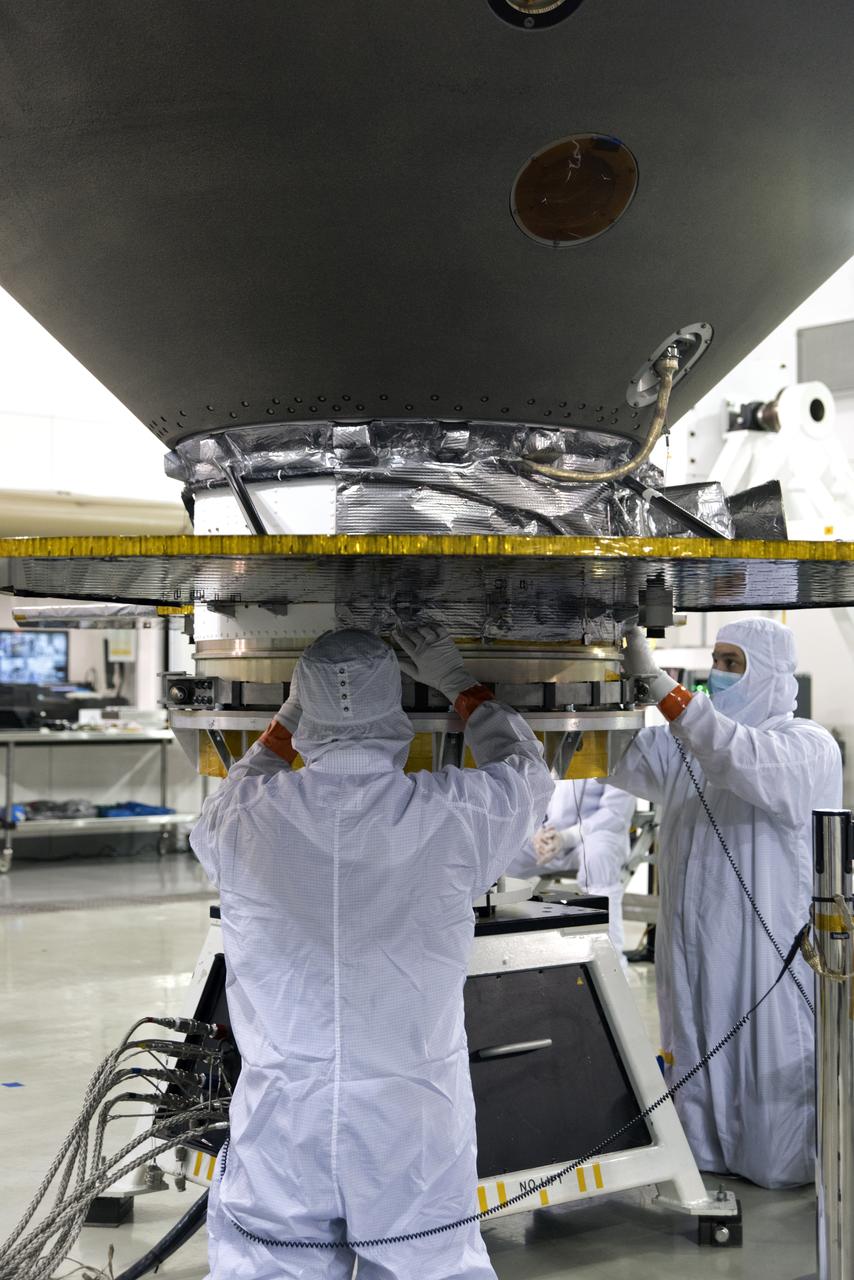
In the Astrotech facility at Vandenberg Air Force Base in California, NASA's Interior Exploration using Seismic Investigations, Geodesy and Heat Transport, or InSight, spacecraft is placed on a spin table during preflight processing. InSight will be the first mission to look deep beneath the Martian surface. It will study the planet's interior by measuring its heat output and listen for marsquakes. The spacecraft will use the seismic waves generated by marsquakes to develop a map of the planet’s deep interior. The resulting insight into Mars’ formation will provide a better understanding of how other rocky planets, including Earth, were created. InSight is scheduled for liftoff May 5, 2018.
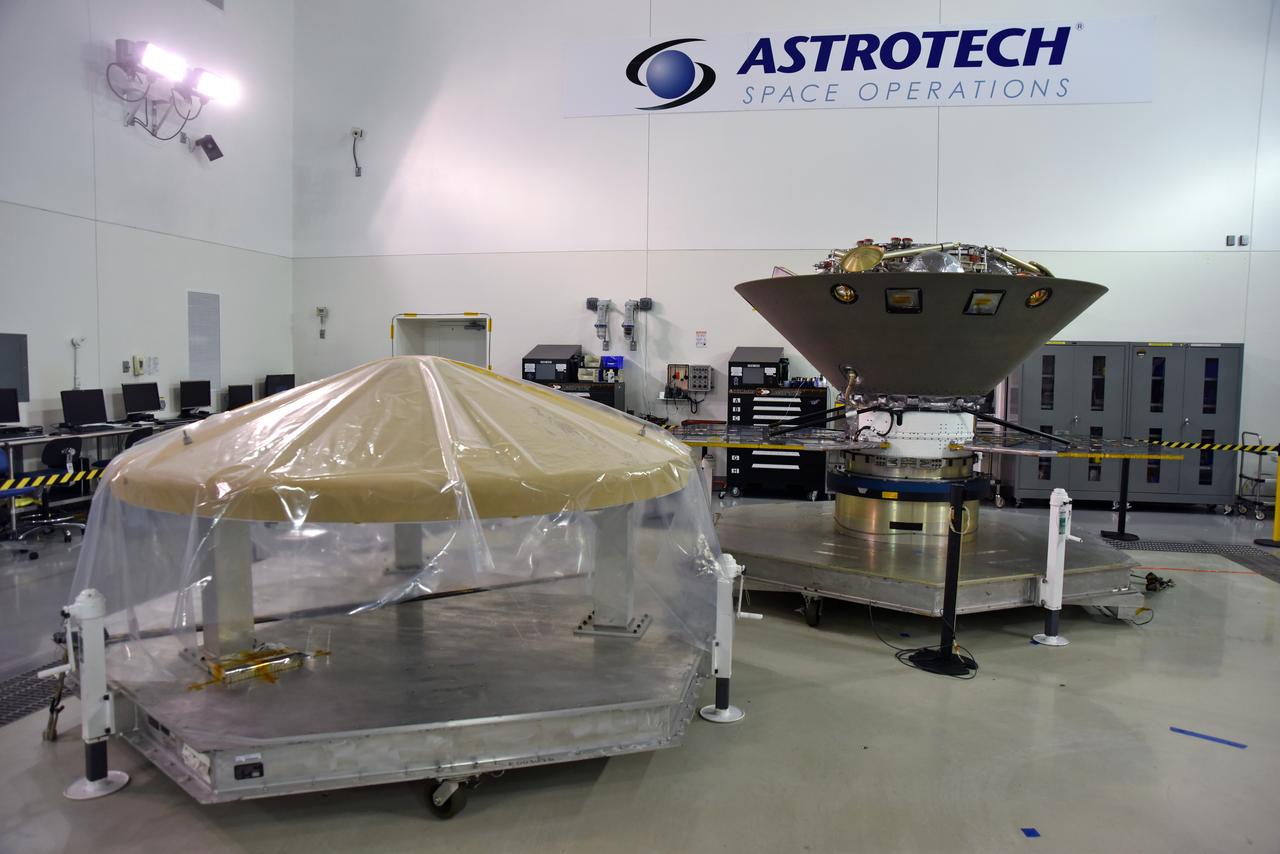
NASA's Interior Exploration using Seismic Investigations, Geodesy and Heat Transport, or InSight, is in a clean room inside the Astrotech processing facility at Vandenberg Air Force Base in California. The spacecraft's protective heat shield is in view at left. InSight is scheduled for liftoff on a United Launch Alliance Atlas V rocket May 5, 2018. InSight will be the first mission to look deep beneath the Martian surface. It will study the planet's interior by measuring its heat output and listen for marsquakes. InSight will use the seismic waves generated by marsquakes to develop a map of the planet’s deep interior. The resulting insight into Mars’ formation will provide a better understanding of how other rocky planets, including Earth, were created. NASA’s Jet Propulsion Laboratory in Pasadena, California, manages the InSight mission for the agency’s Science Mission Directorate. InSight is part of NASA's Discovery Program, managed by its Marshall Space Flight Center in Huntsville, Alabama. The spacecraft, including cruise stage and lander, was built and tested by Lockheed Martin Space in Denver. Several European partners, including France's space agency, the Centre National d'Étude Spatiales, and the German Aerospace Center, are supporting the mission. United Launch Alliance of Centennial, Colorado, is providing the Atlas V launch service. NASA’s Launch Services Program, based at its Kennedy Space Center in Florida, is responsible for launch management.
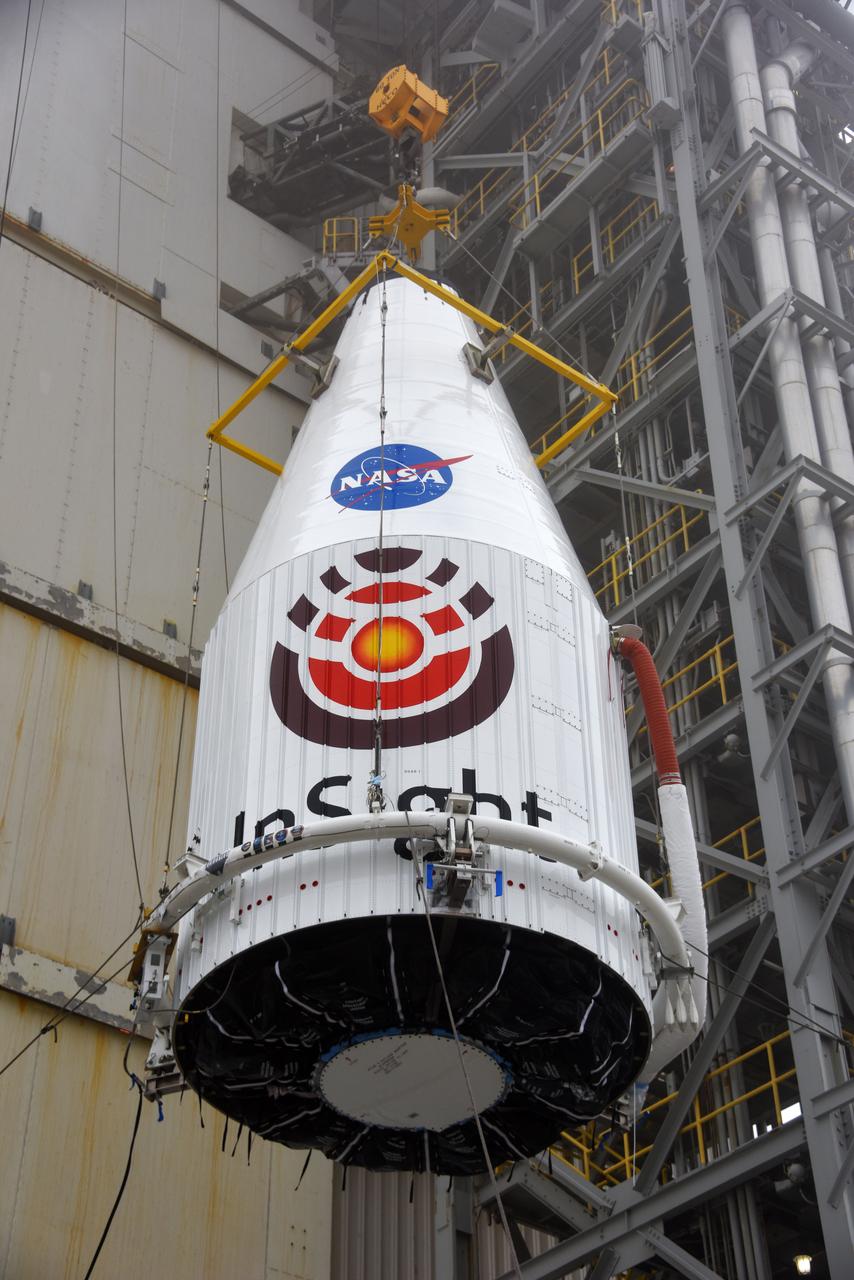
At Space Launch Complex 3 at Vandenberg Air Force Base in California, a crane is used to lift NASA's Interior Exploration using Seismic Investigations, Geodesy and Heat Transport, or InSight, Mars lander for mating atop a United Launch Alliance Atlas V rocket. InSight will be the first mission to look deep beneath the Martian surface. It will study the planet's interior by measuring its heat output and listen for marsquakes. The spacecraft will use the seismic waves generated by marsquakes to develop a map of the planet’s deep interior. The resulting insight into Mars’ formation will provide a better understanding of how other rocky planets, including Earth, were created. InSight is scheduled for liftoff May 5, 2018.
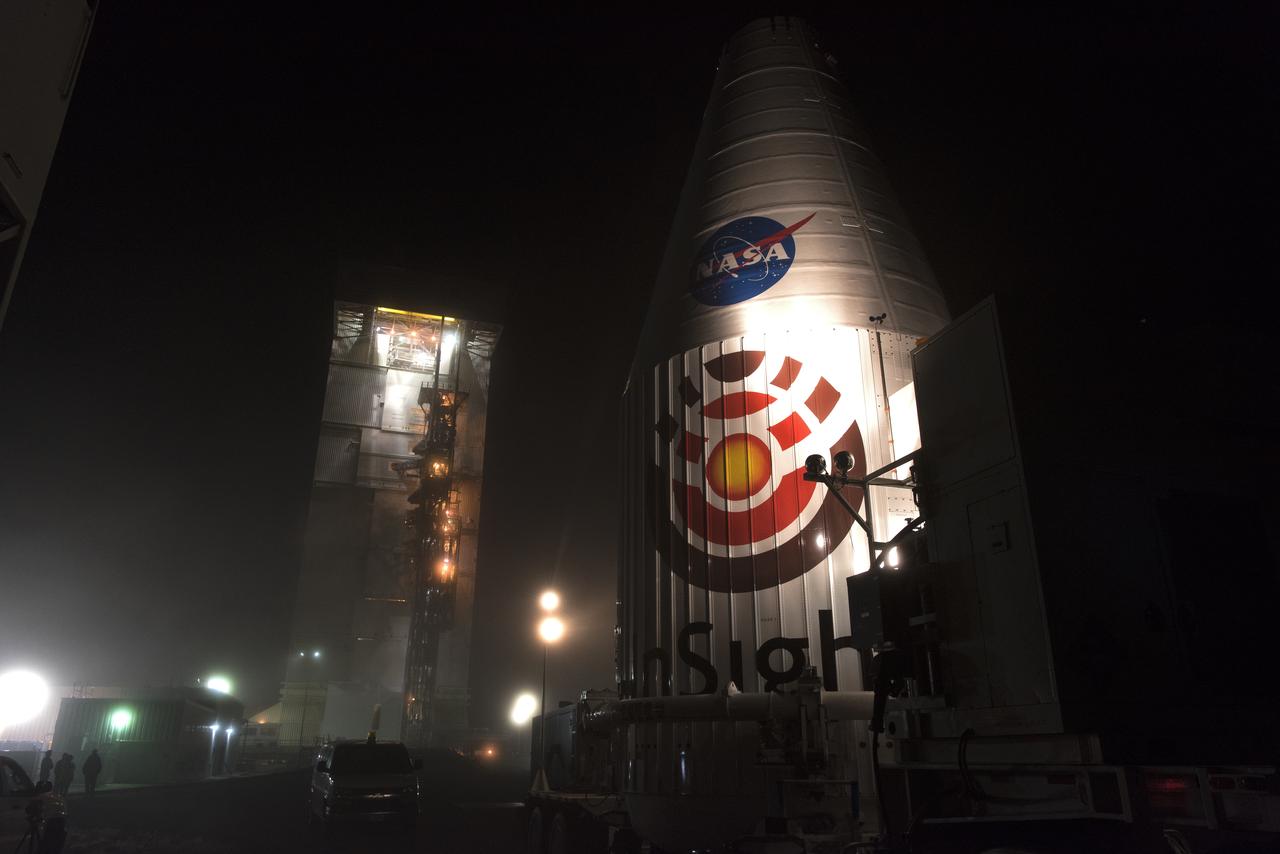
Encapsulated in its payload fairing, NASA's Interior Exploration using Seismic Investigations, Geodesy and Heat Transport, or InSight, Mars lander is transported to Space Launch Complex 3 at Vandenberg Air Force Base in California. InSight will be the first mission to look deep beneath the Martian surface. It will study the planet's interior by measuring its heat output and listen for marsquakes. The spacecraft will use the seismic waves generated by marsquakes to develop a map of the planet’s deep interior. The resulting insight into Mars’ formation will provide a better understanding of how other rocky planets, including Earth, were created. InSight is scheduled for liftoff May 5, 2018.
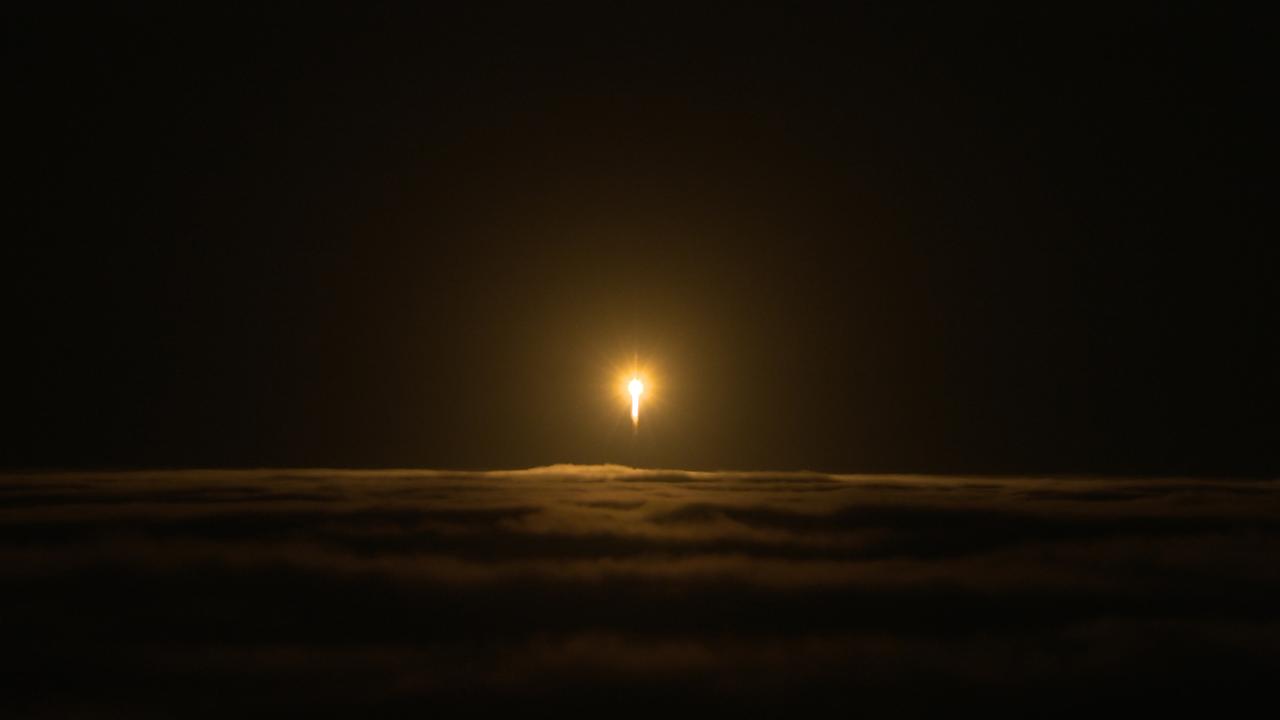
A United Launch Alliance Atlas V rocket lifts off from Space Launch Complex 3 at Vandenberg Air Force Base, California, carrying NASA's Interior Exploration using Seismic Investigations, Geodesy and Heat Transport, or InSight, Mars lander. Liftoff was at 4:05 a.m. PDT (7:05 a.m. EDT). The spacecraft will be the first mission to look deep beneath the Martian surface. It will study the planet's interior by measuring its heat output and listen for marsquakes. InSight will use the seismic waves generated by marsquakes to develop a map of the planet’s deep interior. The resulting insight into Mars’ formation will provide a better understanding of how other rocky planets, including Earth, were created.
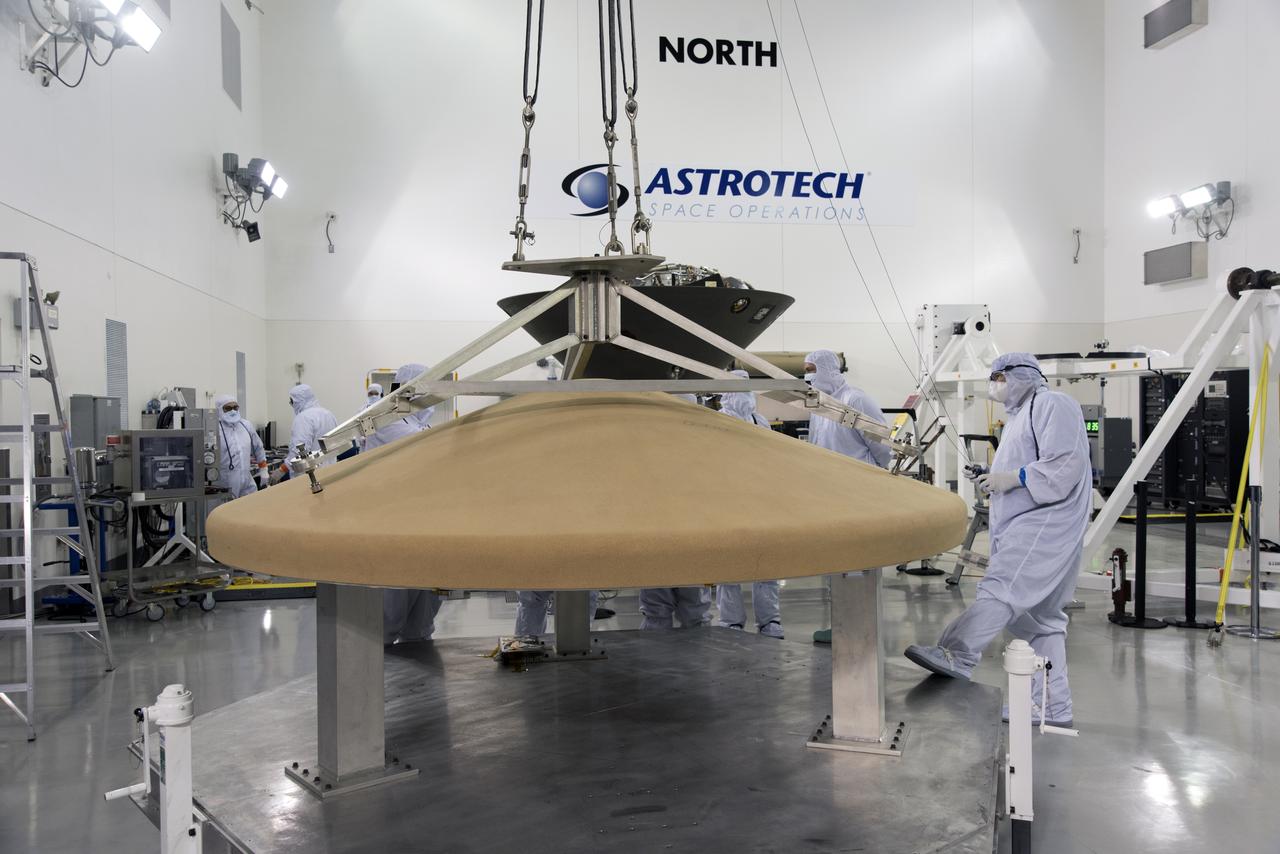
In the Astrotech facility at Vandenberg Air Force Base in California, the heatshield is lifted for placement on NASA's Interior Exploration using Seismic Investigations, Geodesy and Heat Transport, or InSight, Mars lander. InSight will be the first mission to look deep beneath the Martian surface. It will study the planet's interior by measuring its heat output and listen for marsquakes. The spacecraft will use the seismic waves generated by marsquakes to develop a map of the planet’s deep interior. The resulting insight into Mars’ formation will provide a better understanding of how other rocky planets, including Earth, were created. InSight is scheduled for liftoff May 5, 2018.
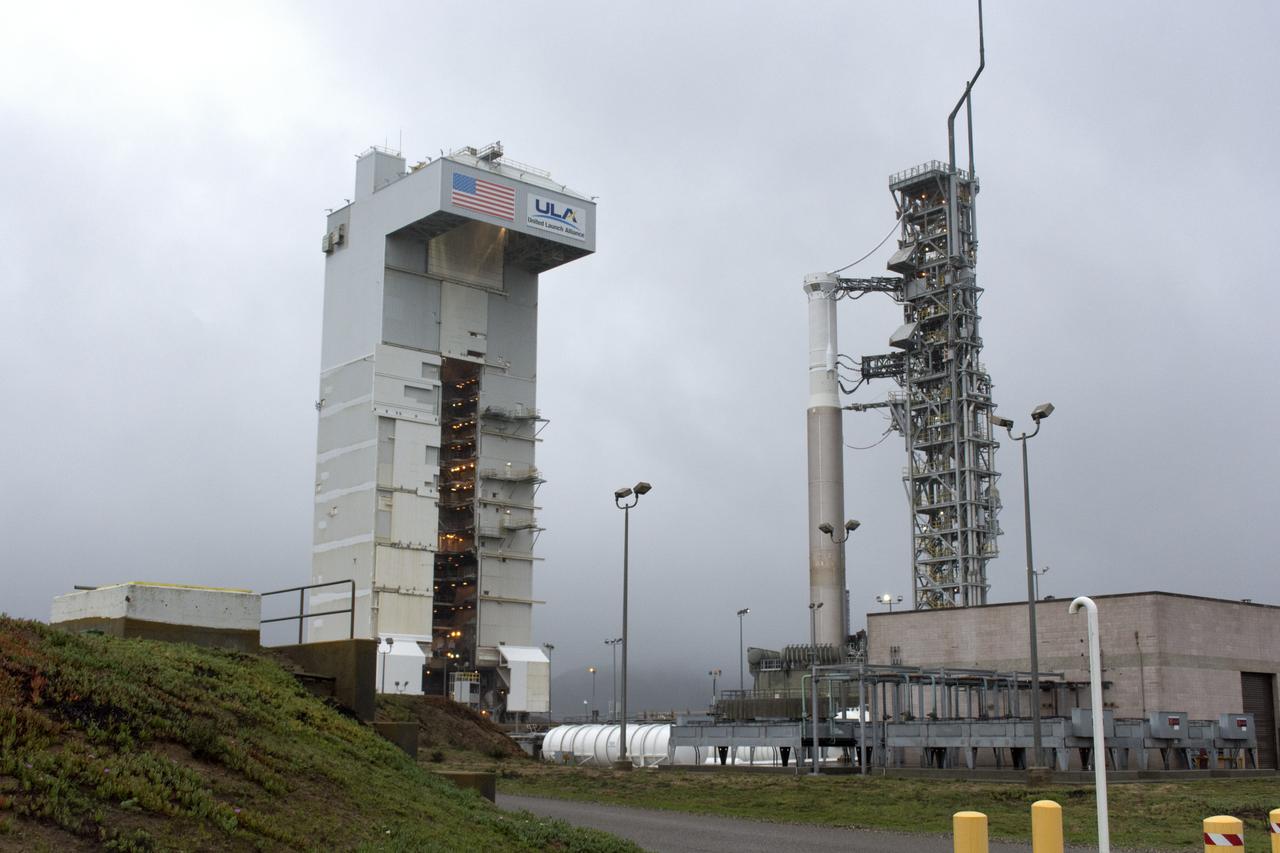
At Space Launch Complex 3 at Vandenberg Air Force Base in California, the gantry is rolled back on the United Launch Alliance (ULA) Atlas V to a Centaur upper stage aft stub adapter (ASA) and interstage adapter (ISA) for NASA's Interior Exploration using Seismic Investigations, Geodesy and Heat Transport, or InSight, spacecraft to land on Mars. The next step will be arrival of InSight encapsulated in its payload faring for mating atop the rocket. InSight is the first mission to explore the Red Planet's deep interior. InSight is scheduled for liftoff May 5, 2018. InSight will be the first mission to look deep beneath the Martian surface. It will study the planet's interior by measuring its heat output and listen for marsquakes. InSight will use the seismic waves generated by marsquakes to develop a map of the planet’s deep interior. The resulting insight into Mars’ formation will provide a better understanding of how other rocky planets, including Earth, were created. NASA’s Jet Propulsion Laboratory in Pasadena, California, manages the InSight mission for the agency’s Science Mission Directorate. InSight is part of NASA's Discovery Program, managed by its Marshall Space Flight Center in Huntsville, Alabama. The spacecraft, including cruise stage and lander, was built and tested by Lockheed Martin Space in Denver. Several European partners, including France's space agency, the Centre National d'Étude Spatiales, and the German Aerospace Center, are supporting the mission. United Launch Alliance of Centennial, Colorado, is providing the Atlas V launch service. NASA’s Launch Services Program, based at its Kennedy Space Center in Florida, is responsible for launch management.
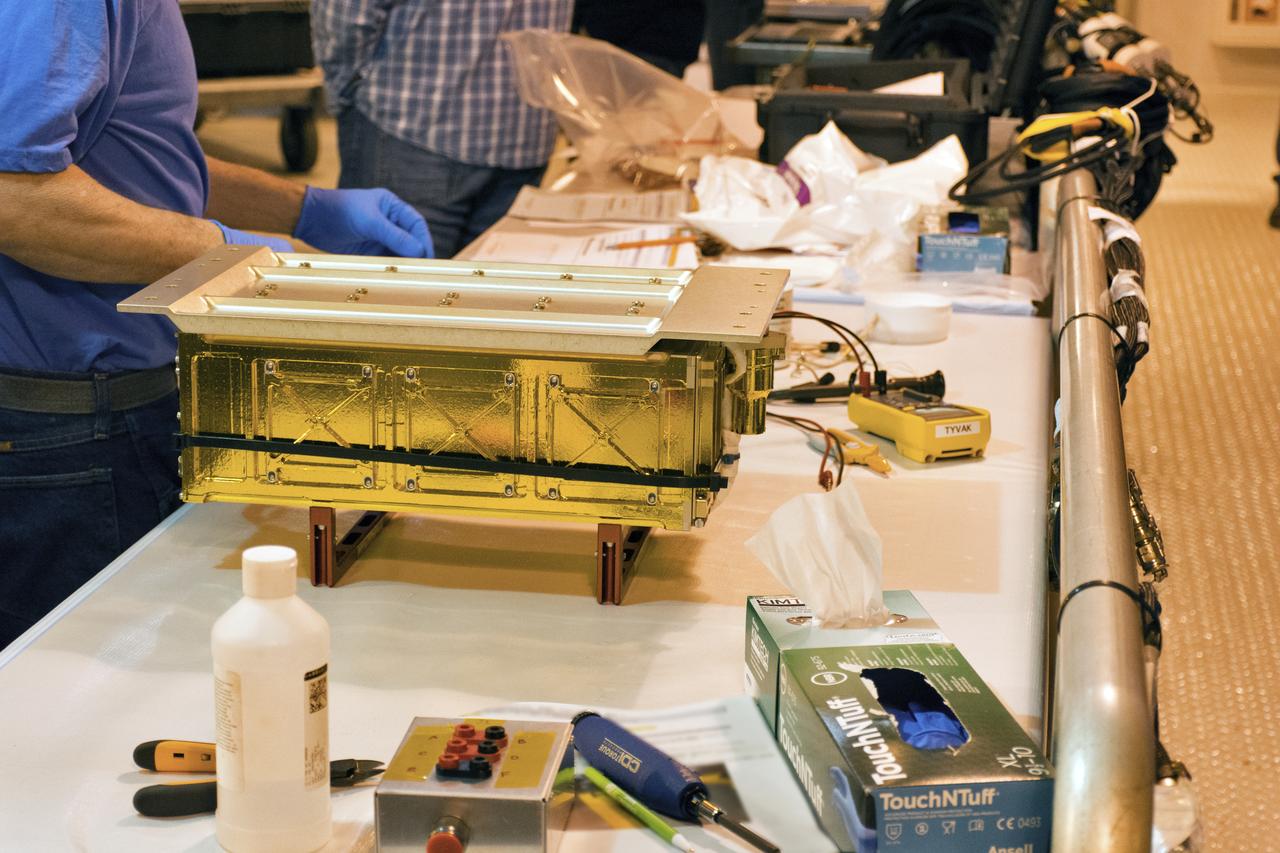
At Vandenberg Air Force Base in California, twin communications-relay CubeSats, called Mars Cube One (MarCO) are prepared for installation on an Atlas V rocket. MarCO constitutes a technology demonstration being built by NASA's Jet Propulsion Laboratory, Pasadena in California. They will launch in on the same United Launch Alliance Atlas V rocket as NASA's Interior Exploration using Seismic Investigations, Geodesy and Heat Transport, or InSight, spacecraft to land on Mars. CubeSats are a class of spacecraft based on a standardized small size and modular use of off-the-shelf technologies. Many have been made by university students, and dozens have been launched into Earth orbit using extra payload mass available on launches of larger spacecraft. InSight is the first mission to explore the Red Planet's deep interior. InSight is scheduled for liftoff May 5, 2018. InSight will be the first mission to look deep beneath the Martian surface. It will study the planet's interior by measuring its heat output and listen for marsquakes. InSight will use the seismic waves generated by marsquakes to develop a map of the planet’s deep interior. The resulting insight into Mars’ formation will provide a better understanding of how other rocky planets, including Earth, were created. NASA’s Jet Propulsion Laboratory in Pasadena, California, manages the InSight mission for the agency’s Science Mission Directorate. InSight is part of NASA's Discovery Program, managed by its Marshall Space Flight Center in Huntsville, Alabama. The spacecraft, including cruise stage and lander, was built and tested by Lockheed Martin Space in Denver. Several European partners, including France's space agency, the Centre National d'Étude Spatiales, and the German Aerospace Center, are supporting the mission. United Launch Alliance of Centennial, Colorado, is providing the Atlas V launch service. NASA’s Launch Services Program, based at its Kennedy Space Center in Florida, is responsible for laun
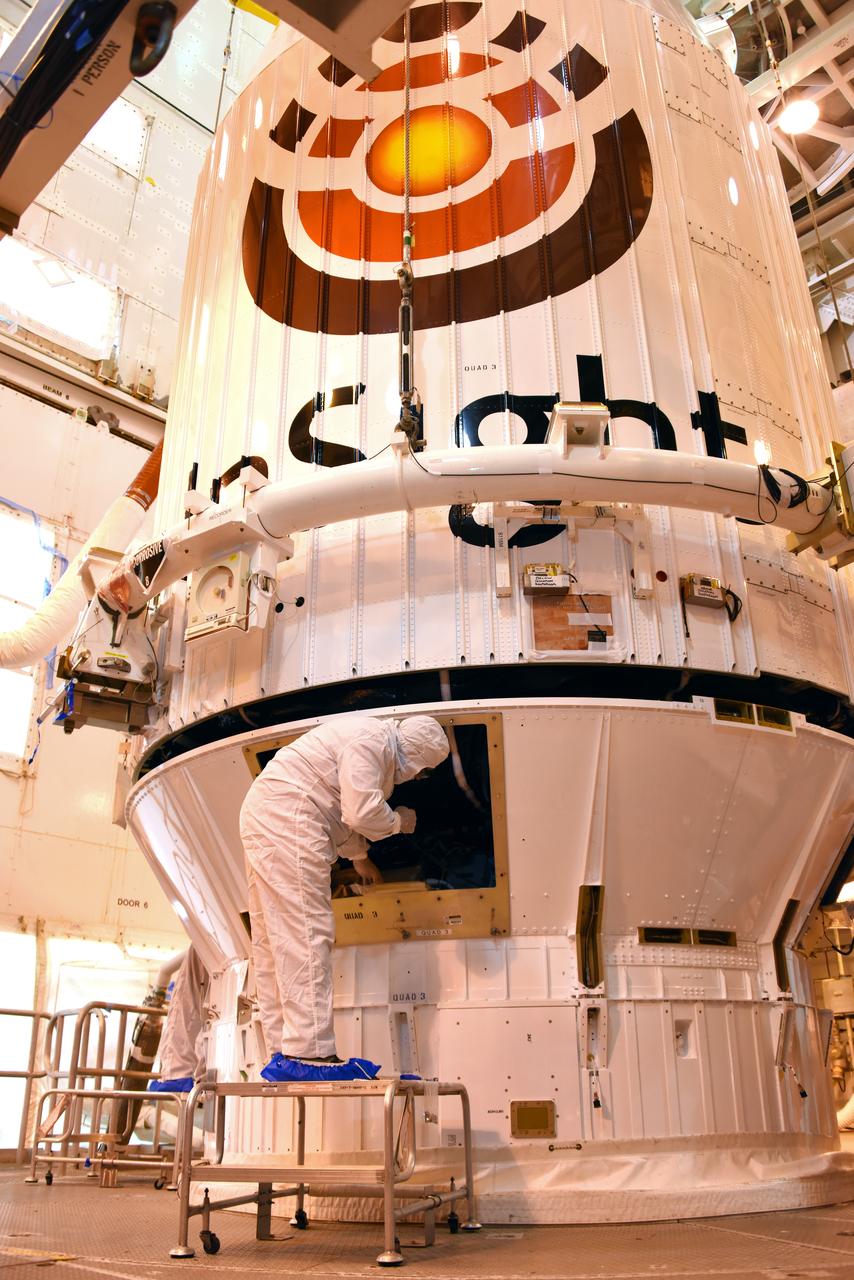
At Space Launch Complex 3 at Vandenberg Air Force Base in California, technicians and engineers position NASA's Interior Exploration using Seismic Investigations, Geodesy and Heat Transport, or InSight, Mars lander atop a United Launch Alliance Atlas V rocket. InSight will be the first mission to look deep beneath the Martian surface. It will study the planet's interior by measuring its heat output and listen for marsquakes. The spacecraft will use the seismic waves generated by marsquakes to develop a map of the planet’s deep interior. The resulting insight into Mars’ formation will provide a better understanding of how other rocky planets, including Earth, were created. InSight is scheduled for liftoff May 5, 2018.
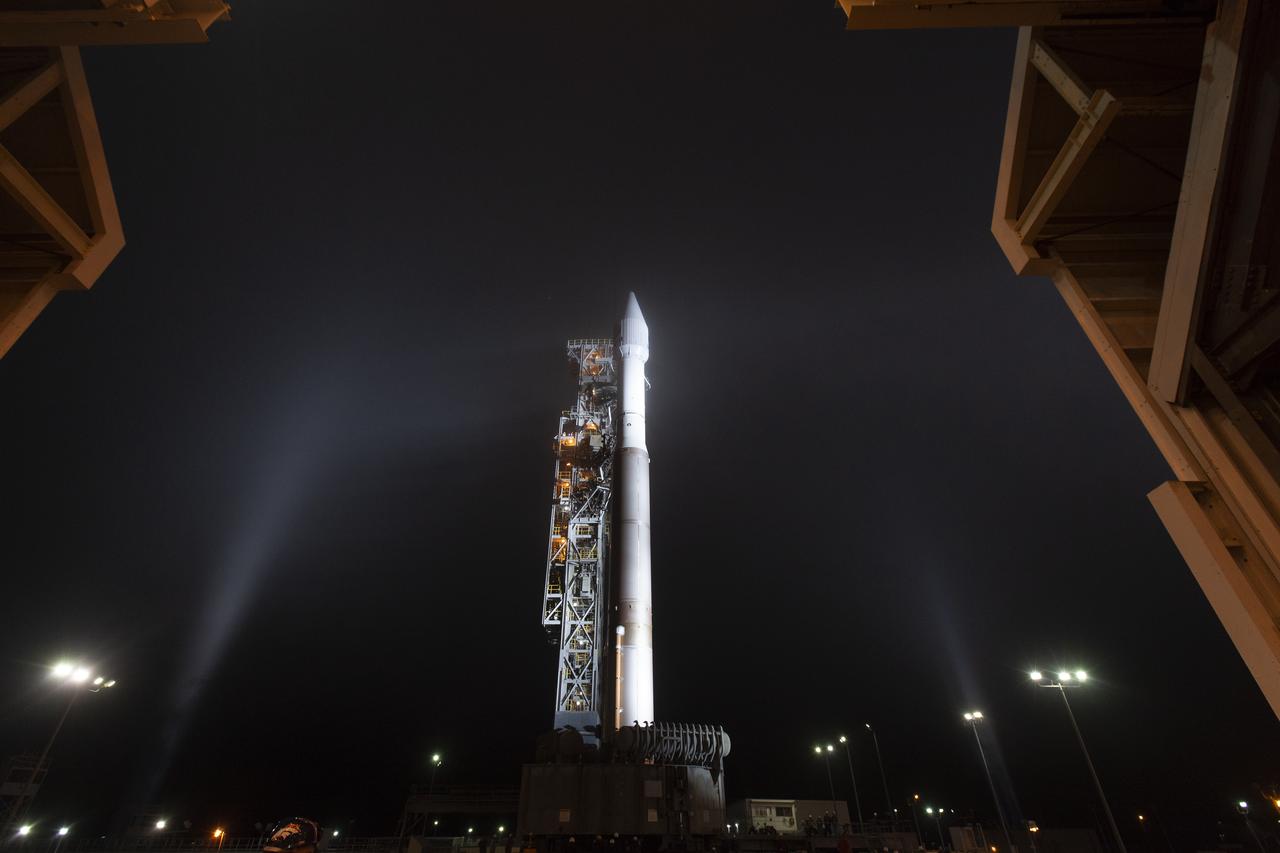
At Vandenberg Air Force Base in California, the gantry rolls back at Space Launch Complex 3 in preparation for the liftoff of NASA's Interior Exploration using Seismic Investigations, Geodesy and Heat Transport, or InSight, Mars lander. The United Launch Alliance Atlas V rocket now is poised to boost the spacecraft with liftoff scheduled for 4:05 a.m. PDT (7:05 a.m. EDT). InSight will be the first mission to look deep beneath the Martian surface. It will study the planet's interior by measuring its heat output and listen for marsquakes. InSight will use the seismic waves generated by marsquakes to develop a map of the planet’s deep interior. The resulting insight into Mars’ formation will provide a better understanding of how other rocky planets, including Earth, were created.
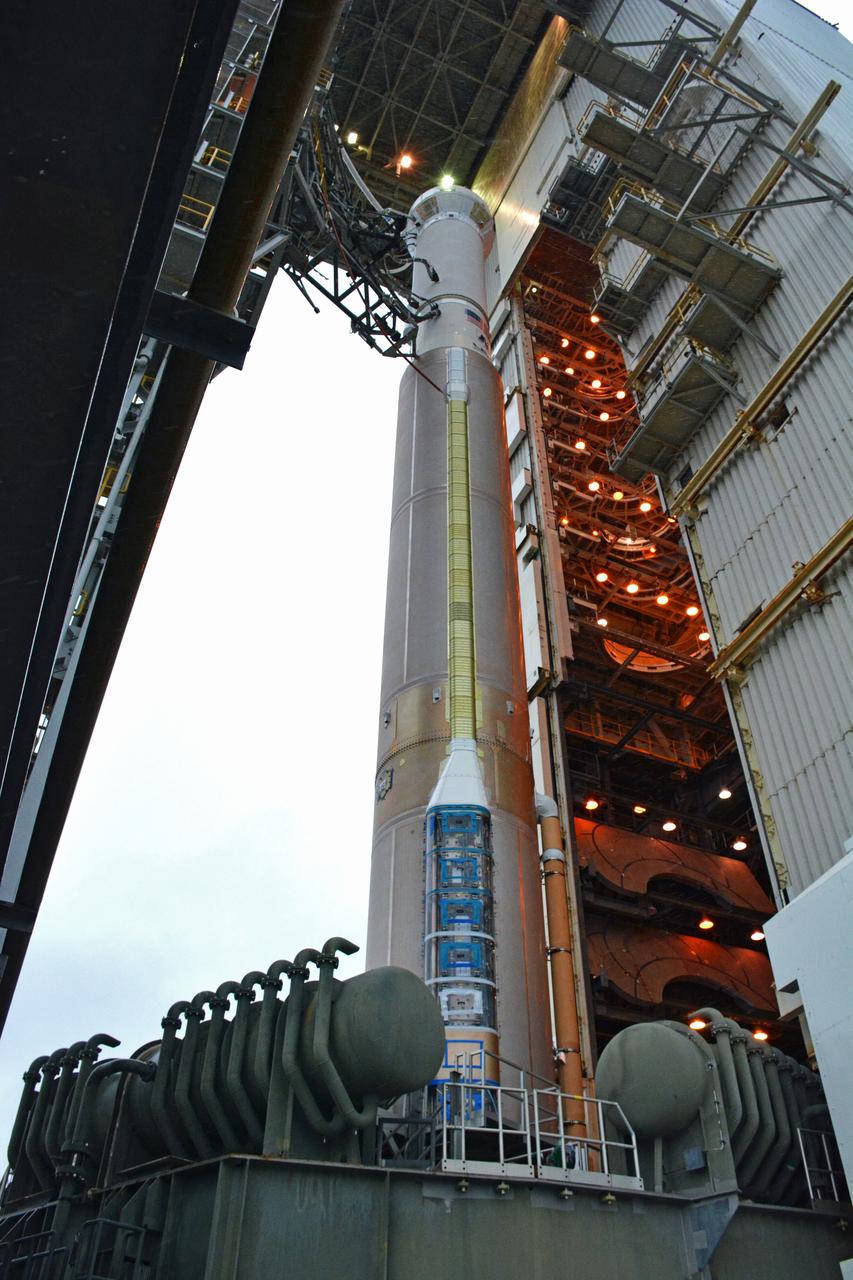
At Space Launch Complex 3 at Vandenberg Air Force Base in California, the gantry is rolled back on the United Launch Alliance (ULA) Atlas V to a Centaur upper stage aft stub adapter (ASA) and interstage adapter (ISA) for NASA's Interior Exploration using Seismic Investigations, Geodesy and Heat Transport, or InSight, spacecraft to land on Mars. The next step will be arrival of InSight encapsulated in its payload faring for mating atop the rocket. InSight is the first mission to explore the Red Planet's deep interior. InSight is scheduled for liftoff May 5, 2018. InSight will be the first mission to look deep beneath the Martian surface. It will study the planet's interior by measuring its heat output and listen for marsquakes. InSight will use the seismic waves generated by marsquakes to develop a map of the planet’s deep interior. The resulting insight into Mars’ formation will provide a better understanding of how other rocky planets, including Earth, were created. NASA’s Jet Propulsion Laboratory in Pasadena, California, manages the InSight mission for the agency’s Science Mission Directorate. InSight is part of NASA's Discovery Program, managed by its Marshall Space Flight Center in Huntsville, Alabama. The spacecraft, including cruise stage and lander, was built and tested by Lockheed Martin Space in Denver. Several European partners, including France's space agency, the Centre National d'Étude Spatiales, and the German Aerospace Center, are supporting the mission. United Launch Alliance of Centennial, Colorado, is providing the Atlas V launch service. NASA’s Launch Services Program, based at its Kennedy Space Center in Florida, is responsible for launch management.
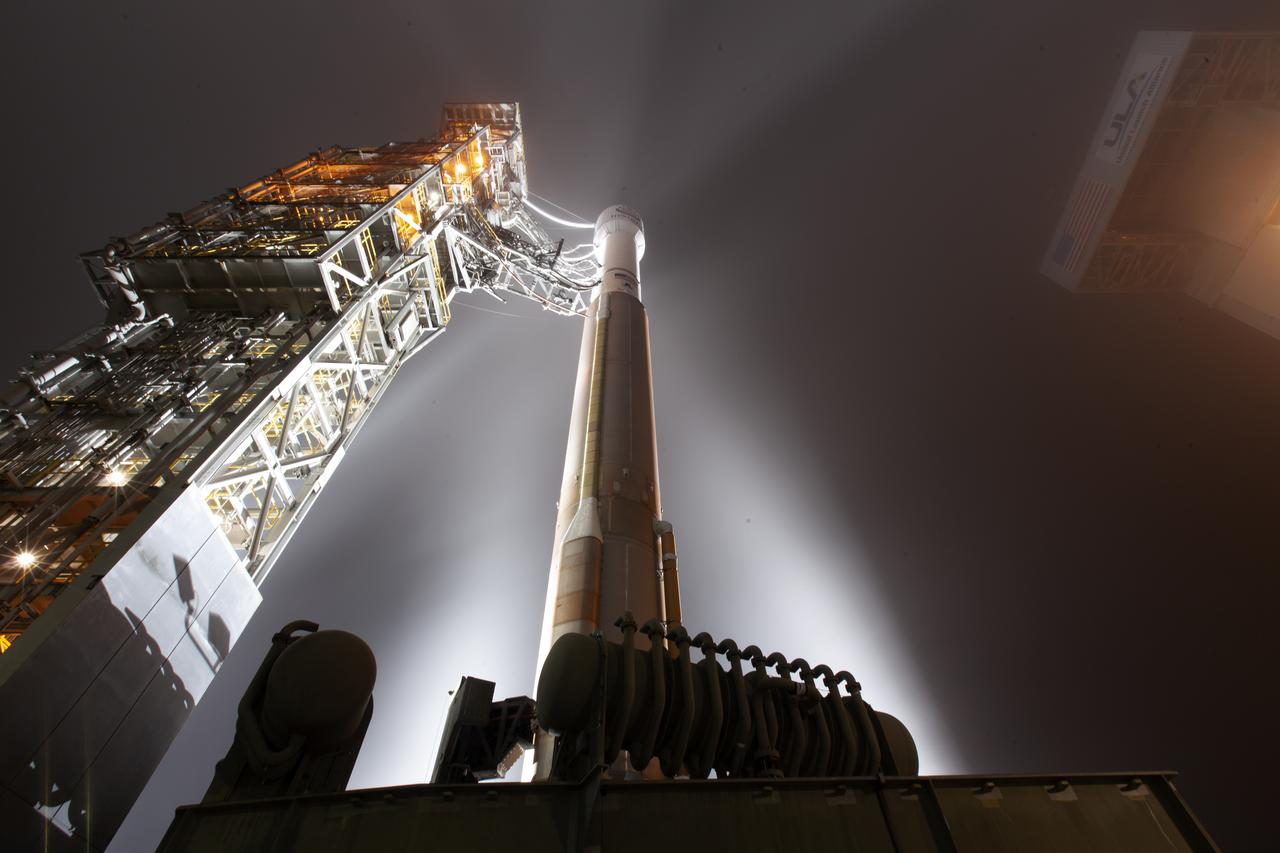
At Vandenberg Air Force Base in California, the gantry rolls back at Space Launch Complex 3 in preparation for the liftoff of NASA's Interior Exploration using Seismic Investigations, Geodesy and Heat Transport, or InSight, Mars lander. The United Launch Alliance Atlas V rocket now is poised to boost the spacecraft with liftoff scheduled for 4:05 a.m. PDT (7:05 a.m. EDT). InSight will be the first mission to look deep beneath the Martian surface. It will study the planet's interior by measuring its heat output and listen for marsquakes. InSight will use the seismic waves generated by marsquakes to develop a map of the planet’s deep interior. The resulting insight into Mars’ formation will provide a better understanding of how other rocky planets, including Earth, were created.
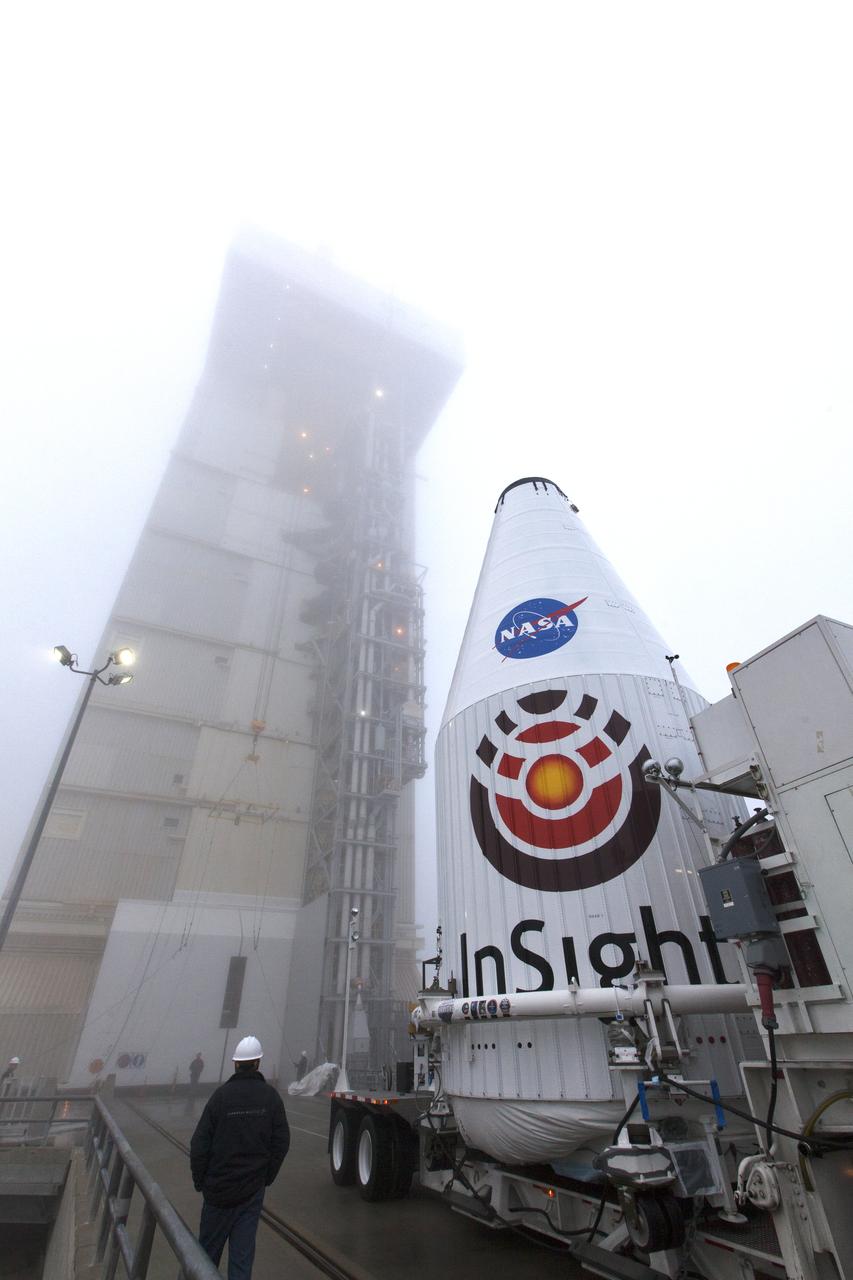
Encapsulated in its payload fairing NASA's Interior Exploration using Seismic Investigations, Geodesy and Heat Transport, or InSight, Mars lander arrives at Space Launch Complex 3 at Vandenberg Air Force Base in California. InSight will be the first mission to look deep beneath the Martian surface. It will study the planet's interior by measuring its heat output and listen for marsquakes. The spacecraft will use the seismic waves generated by marsquakes to develop a map of the planet’s deep interior. The resulting insight into Mars’ formation will provide a better understanding of how other rocky planets, including Earth, were created. InSight is scheduled for liftoff May 5, 2018.
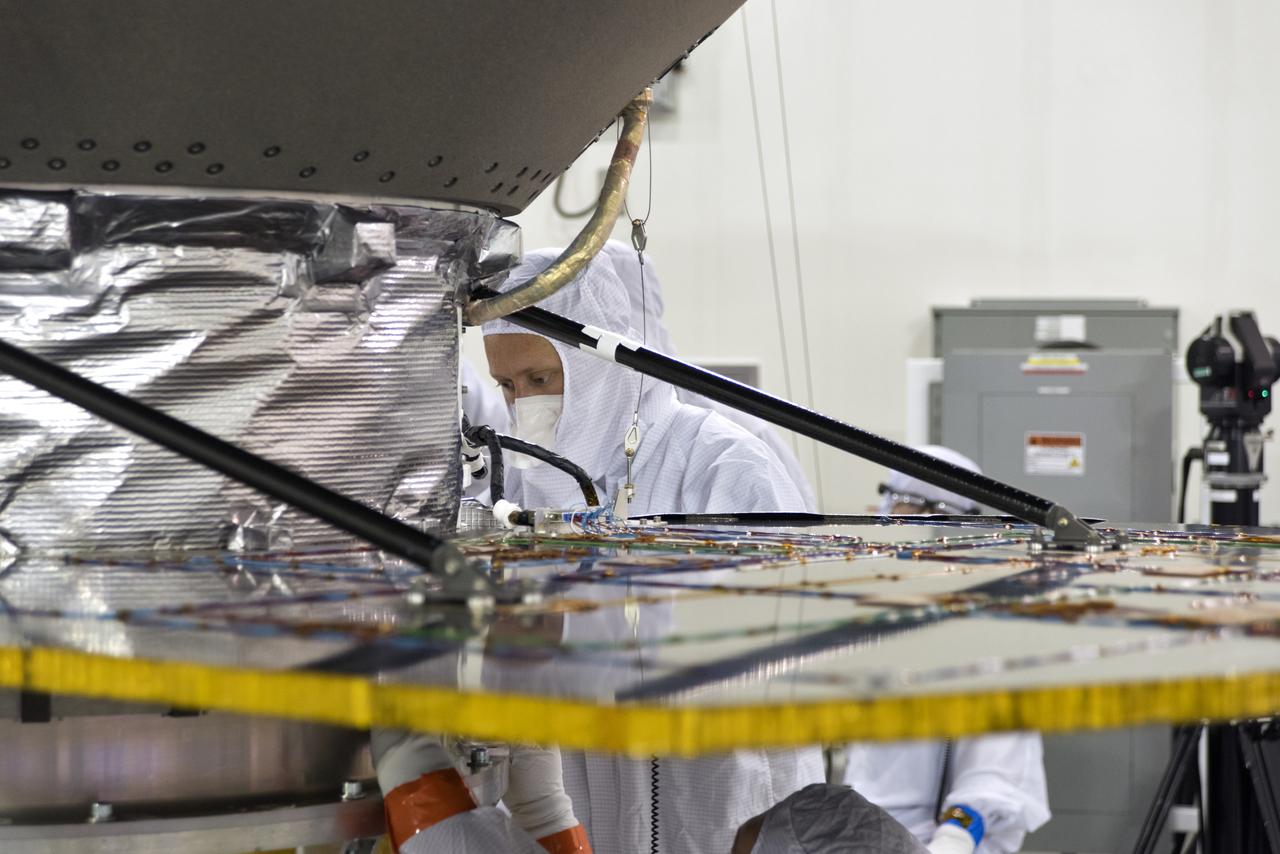
In the Astrotech facility at Vandenberg Air Force Base in California, NASA's Interior Exploration using Seismic Investigations, Geodesy and Heat Transport, or InSight, spacecraft is placed on a spin table during preflight processing. InSight will be the first mission to look deep beneath the Martian surface. It will study the planet's interior by measuring its heat output and listen for marsquakes. The spacecraft will use the seismic waves generated by marsquakes to develop a map of the planet’s deep interior. The resulting insight into Mars’ formation will provide a better understanding of how other rocky planets, including Earth, were created. InSight is scheduled for liftoff May 5, 2018.
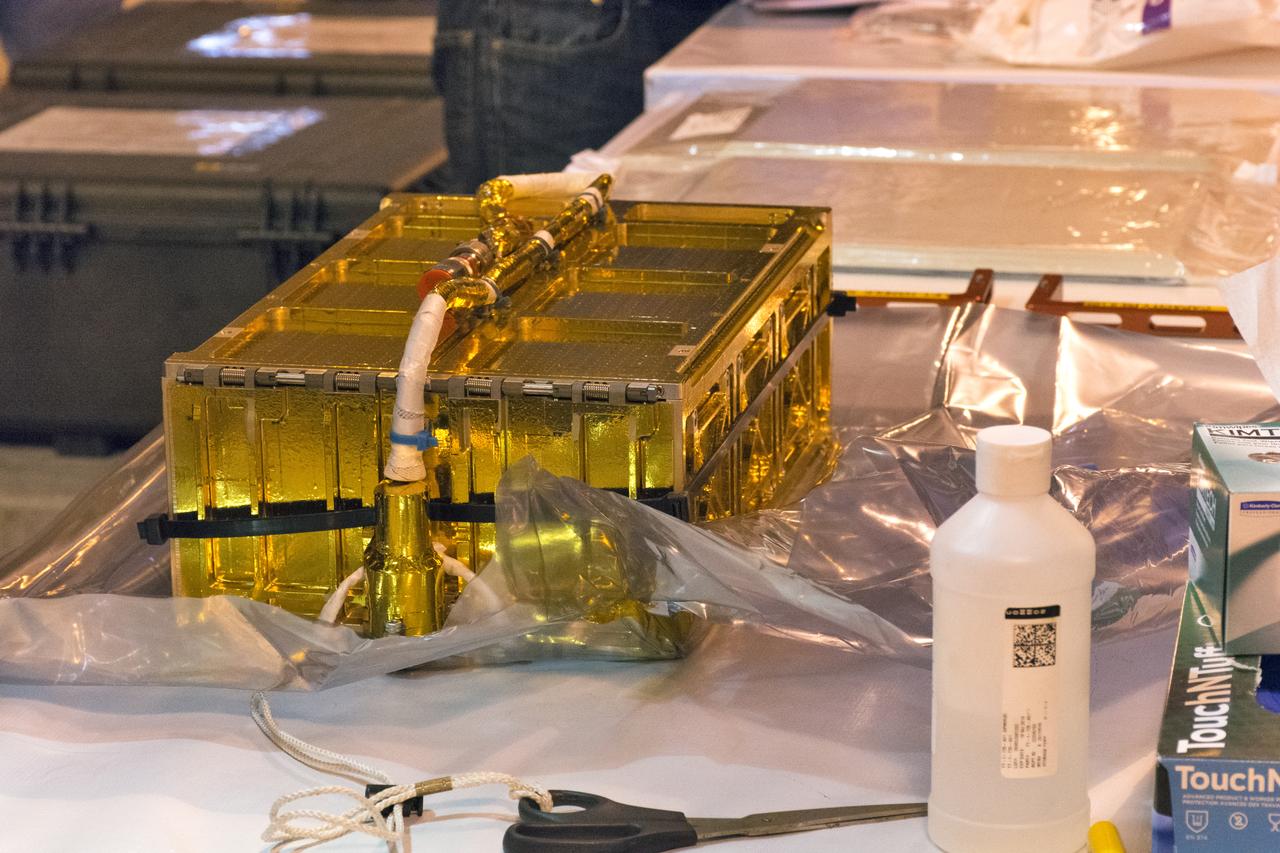
At Vandenberg Air Force Base in California, twin communications-relay CubeSats, called Mars Cube One (MarCO) are prepared for installation on an Atlas V rocket. MarCO constitutes a technology demonstration being built by NASA's Jet Propulsion Laboratory, Pasadena in California. They will launch in on the same United Launch Alliance Atlas V rocket as NASA's Interior Exploration using Seismic Investigations, Geodesy and Heat Transport, or InSight, spacecraft to land on Mars. CubeSats are a class of spacecraft based on a standardized small size and modular use of off-the-shelf technologies. Many have been made by university students, and dozens have been launched into Earth orbit using extra payload mass available on launches of larger spacecraft. InSight is the first mission to explore the Red Planet's deep interior. InSight is scheduled for liftoff May 5, 2018. InSight will be the first mission to look deep beneath the Martian surface. It will study the planet's interior by measuring its heat output and listen for marsquakes. InSight will use the seismic waves generated by marsquakes to develop a map of the planet’s deep interior. The resulting insight into Mars’ formation will provide a better understanding of how other rocky planets, including Earth, were created. NASA’s Jet Propulsion Laboratory in Pasadena, California, manages the InSight mission for the agency’s Science Mission Directorate. InSight is part of NASA's Discovery Program, managed by its Marshall Space Flight Center in Huntsville, Alabama. The spacecraft, including cruise stage and lander, was built and tested by Lockheed Martin Space in Denver. Several European partners, including France's space agency, the Centre National d'Étude Spatiales, and the German Aerospace Center, are supporting the mission. United Launch Alliance of Centennial, Colorado, is providing the Atlas V launch service. NASA’s Launch Services Program, based at its Kennedy Space Center in Florida, is responsible for laun
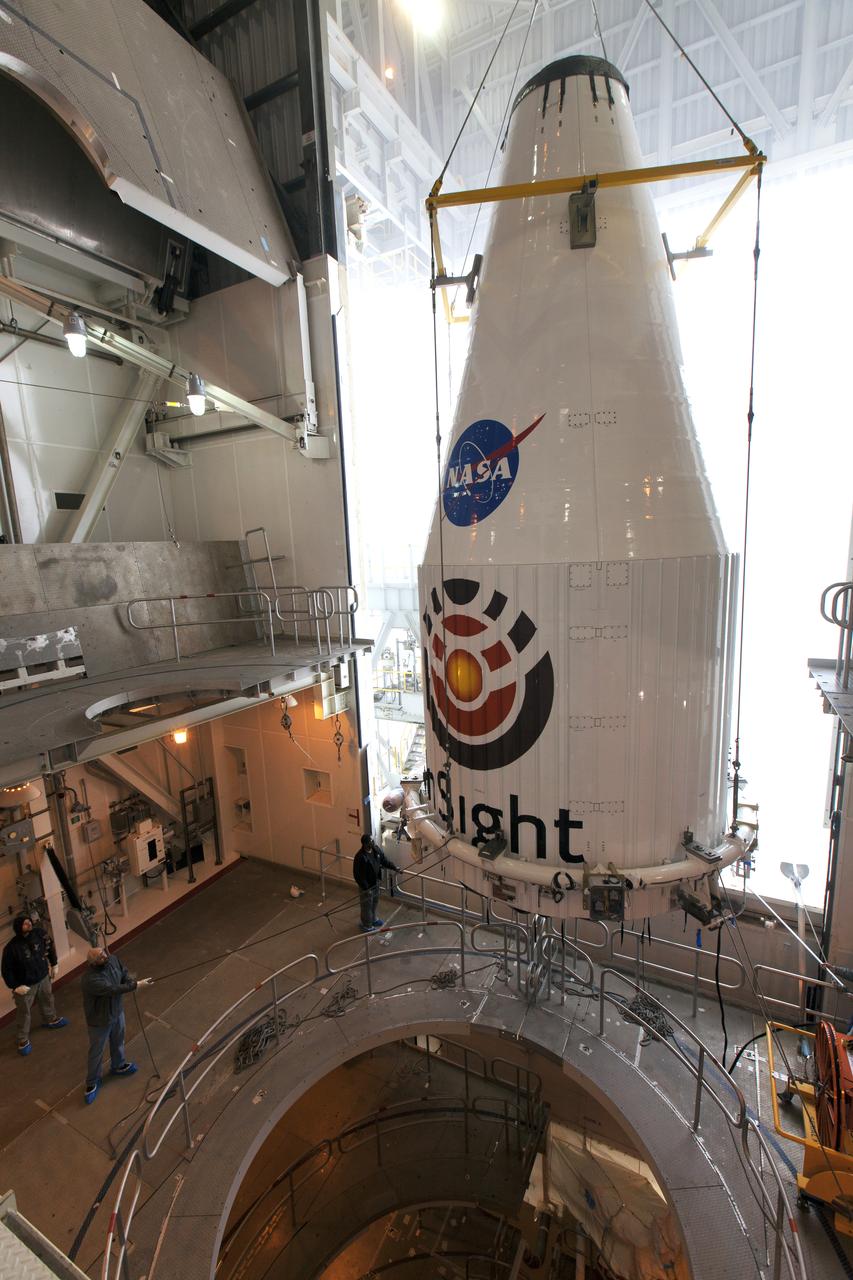
At Space Launch Complex 3 at Vandenberg Air Force Base in California, a crane is used to lift NASA's Interior Exploration using Seismic Investigations, Geodesy and Heat Transport, or InSight, Mars lander for mating atop a United Launch Alliance Atlas V rocket. InSight will be the first mission to look deep beneath the Martian surface. It will study the planet's interior by measuring its heat output and listen for marsquakes. The spacecraft will use the seismic waves generated by marsquakes to develop a map of the planet’s deep interior. The resulting insight into Mars’ formation will provide a better understanding of how other rocky planets, including Earth, were created. InSight is scheduled for liftoff May 5, 2018.

Members of the media and social media participants attended the NASA's Interior Exploration using Seismic Investigations, Geodesy and Heat Transport, or InSight, prelaunch briefing at Vandenberg Air Force Base in California. The presentation focused on InSight Mars lander. InSight is scheduled for liftoff May 5, 2018, atop a United Launch Alliance (ULA) Atlas V rocket from Space Launch Complex 3 at Vandenberg. The spacecraft will be the first mission to look deep beneath the Martian surface studying the planet's interior by measuring its heat output and listen for marsquakes.
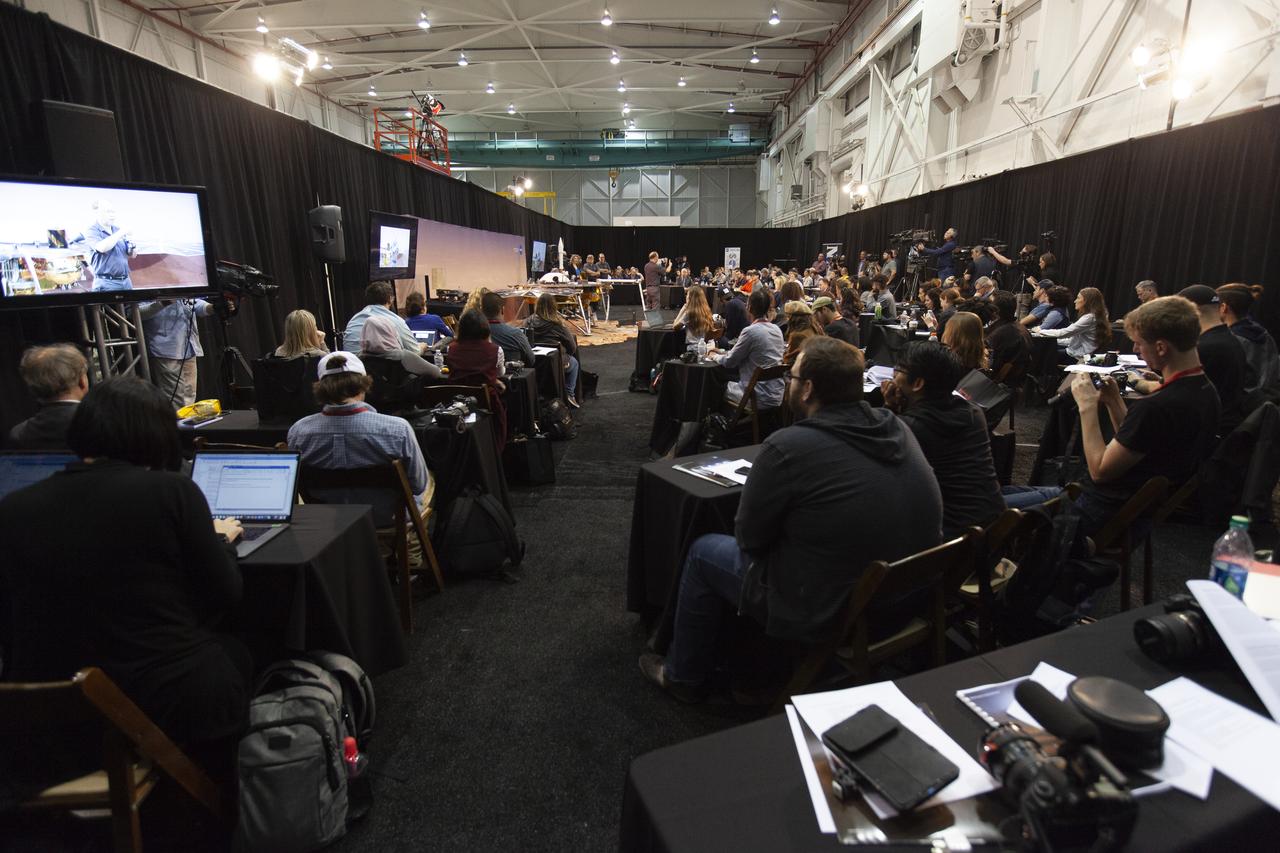
Members of the media and social media participants attended the NASA's Interior Exploration using Seismic Investigations, Geodesy and Heat Transport, or InSight, prelaunch briefing at Vandenberg Air Force Base in California. The presentation focused on InSight Mars lander. InSight is scheduled for liftoff May 5, 2018, atop a United Launch Alliance (ULA) Atlas V rocket from Space Launch Complex 3 at Vandenberg. The spacecraft will be the first mission to look deep beneath the Martian surface studying the planet's interior by measuring its heat output and listen for marsquakes.

At Space Launch Complex 3 at Vandenberg Air Force Base in California, a technician assists as the aft stub adapter (ASA) and interstage adapter (ISA) for a United Launch Alliance (ULA) Atlas V is lifted by crane for mating atop a Centaur upper stage. The launch vehicle will send NASA's Interior Exploration using Seismic Investigations, Geodesy and Heat Transport, or InSight, spacecraft to land on Mars. InSight is the first mission to explore the Red Planet's deep interior. InSight is scheduled for liftoff May 5, 2018. InSight will be the first mission to look deep beneath the Martian surface. It will study the planet's interior by measuring its heat output and listen for marsquakes. InSight will use the seismic waves generated by marsquakes to develop a map of the planet’s deep interior. The resulting insight into Mars’ formation will provide a better understanding of how other rocky planets, including Earth, were created. NASA’s Jet Propulsion Laboratory in Pasadena, California, manages the InSight mission for the agency’s Science Mission Directorate. InSight is part of NASA's Discovery Program, managed by its Marshall Space Flight Center in Huntsville, Alabama. The spacecraft, including cruise stage and lander, was built and tested by Lockheed Martin Space in Denver. Several European partners, including France's space agency, the Centre National d'Étude Spatiales, and the German Aerospace Center, are supporting the mission. United Launch Alliance of Centennial, Colorado, is providing the Atlas V launch service. NASA’s Launch Services Program, based at its Kennedy Space Center in Florida, is responsible for launch management.
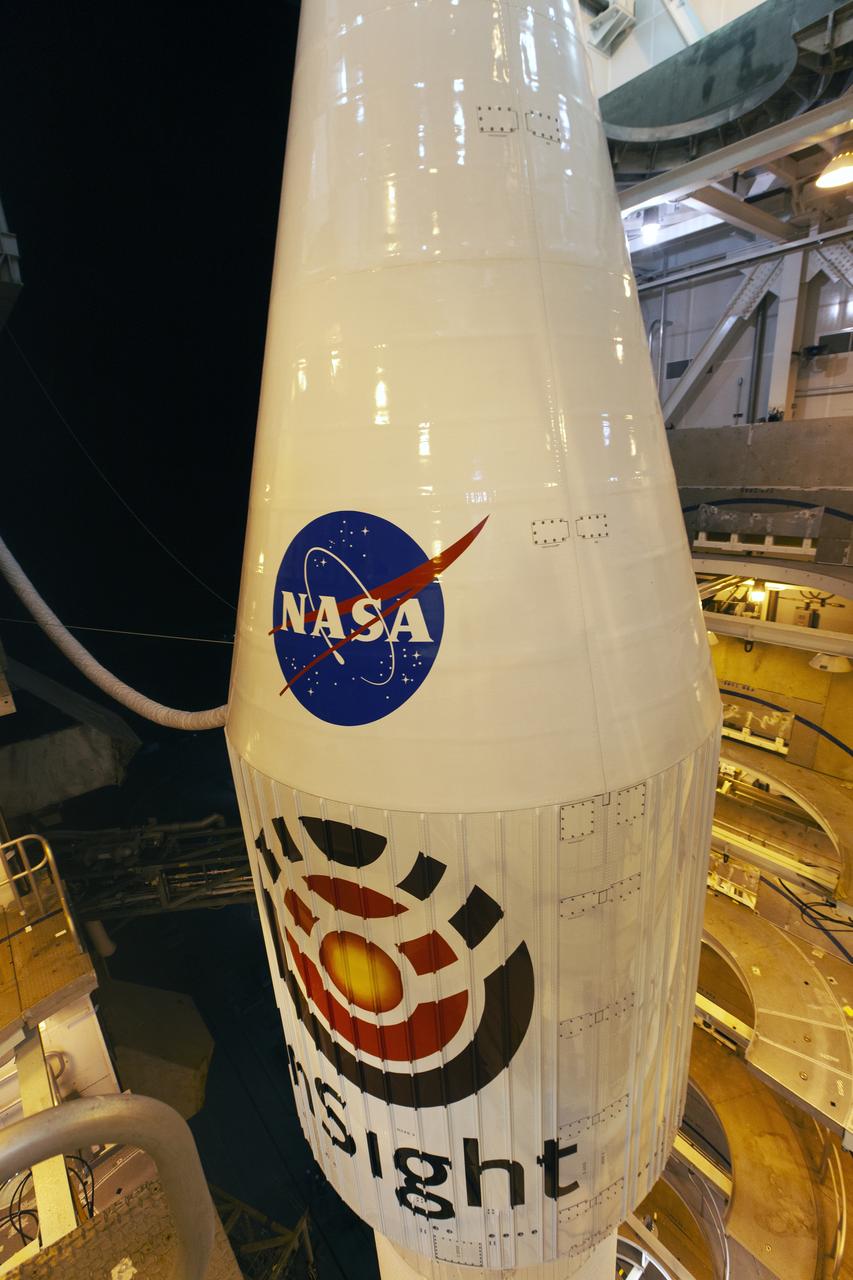
At Vandenberg Air Force Base in California, the gantry rolls back at Space Launch Complex 3 in preparation for the liftoff of NASA's Interior Exploration using Seismic Investigations, Geodesy and Heat Transport, or InSight, Mars lander. The United Launch Alliance Atlas V rocket now is poised to boost the spacecraft with liftoff scheduled for 4:05 a.m. PDT (7:05 a.m. EDT). InSight will be the first mission to look deep beneath the Martian surface. It will study the planet's interior by measuring its heat output and listen for marsquakes. InSight will use the seismic waves generated by marsquakes to develop a map of the planet’s deep interior. The resulting insight into Mars’ formation will provide a better understanding of how other rocky planets, including Earth, were created.
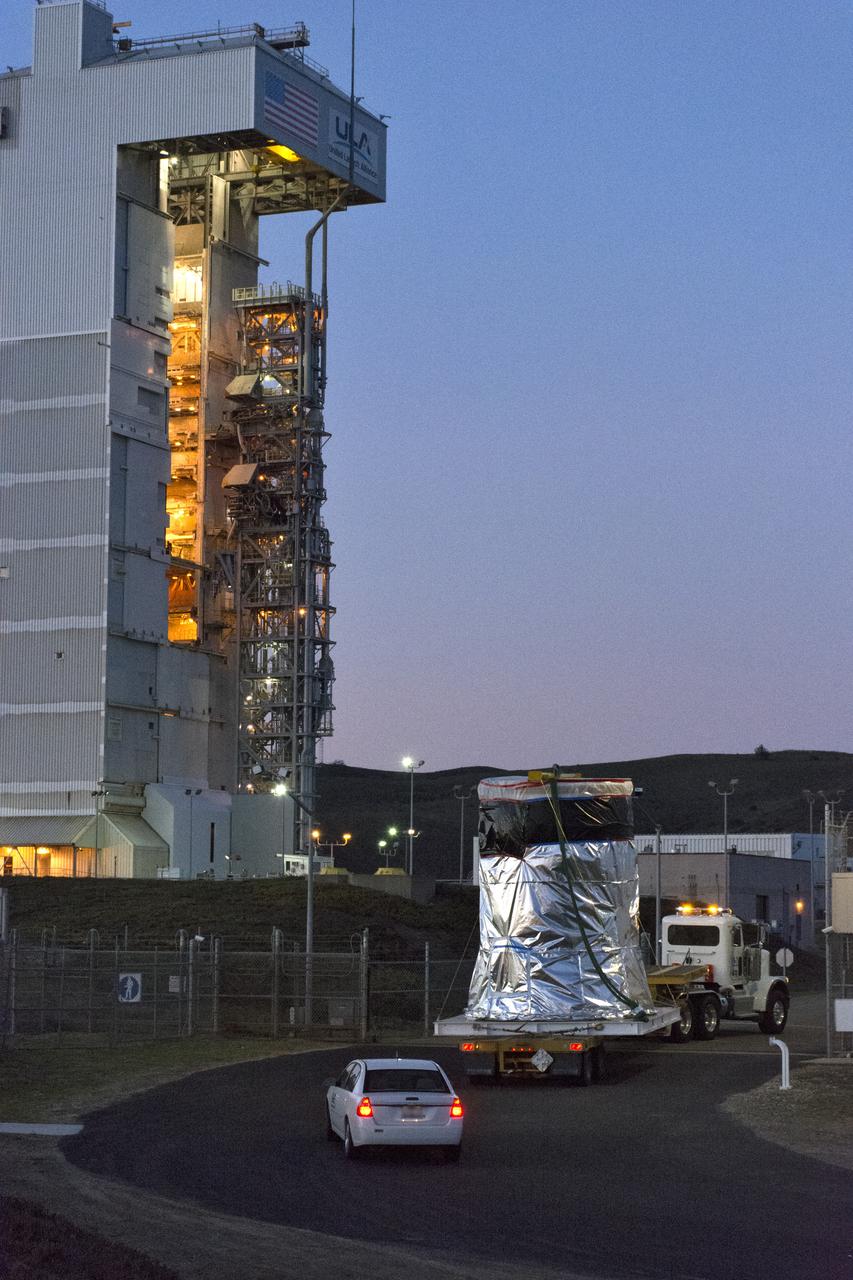
At Vandenberg Air Force Base in California, the aft stub adapter (ASA) and interstage adapter (ISA) for a United Launch Alliance (ULA) Atlas V rocket are transported to Space Launch Complex 3. The launch vehicle will send NASA's Interior Exploration using Seismic Investigations, Geodesy and Heat Transport, or InSight, spacecraft to land on Mars. InSight is the first mission to explore the Red Planet's deep interior. InSight is scheduled for liftoff May 5, 2018. InSight will be the first mission to look deep beneath the Martian surface. It will study the planet's interior by measuring its heat output and listen for marsquakes. InSight will use the seismic waves generated by marsquakes to develop a map of the planet’s deep interior. The resulting insight into Mars’ formation will provide a better understanding of how other rocky planets, including Earth, were created. NASA’s Jet Propulsion Laboratory in Pasadena, California, manages the InSight mission for the agency’s Science Mission Directorate. InSight is part of NASA's Discovery Program, managed by its Marshall Space Flight Center in Huntsville, Alabama. The spacecraft, including cruise stage and lander, was built and tested by Lockheed Martin Space in Denver. Several European partners, including France's space agency, the Centre National d'Étude Spatiales, and the German Aerospace Center, are supporting the mission. United Launch Alliance of Centennial, Colorado, is providing the Atlas V launch service. NASA’s Launch Services Program, based at its Kennedy Space Center in Florida, is responsible for launch management.
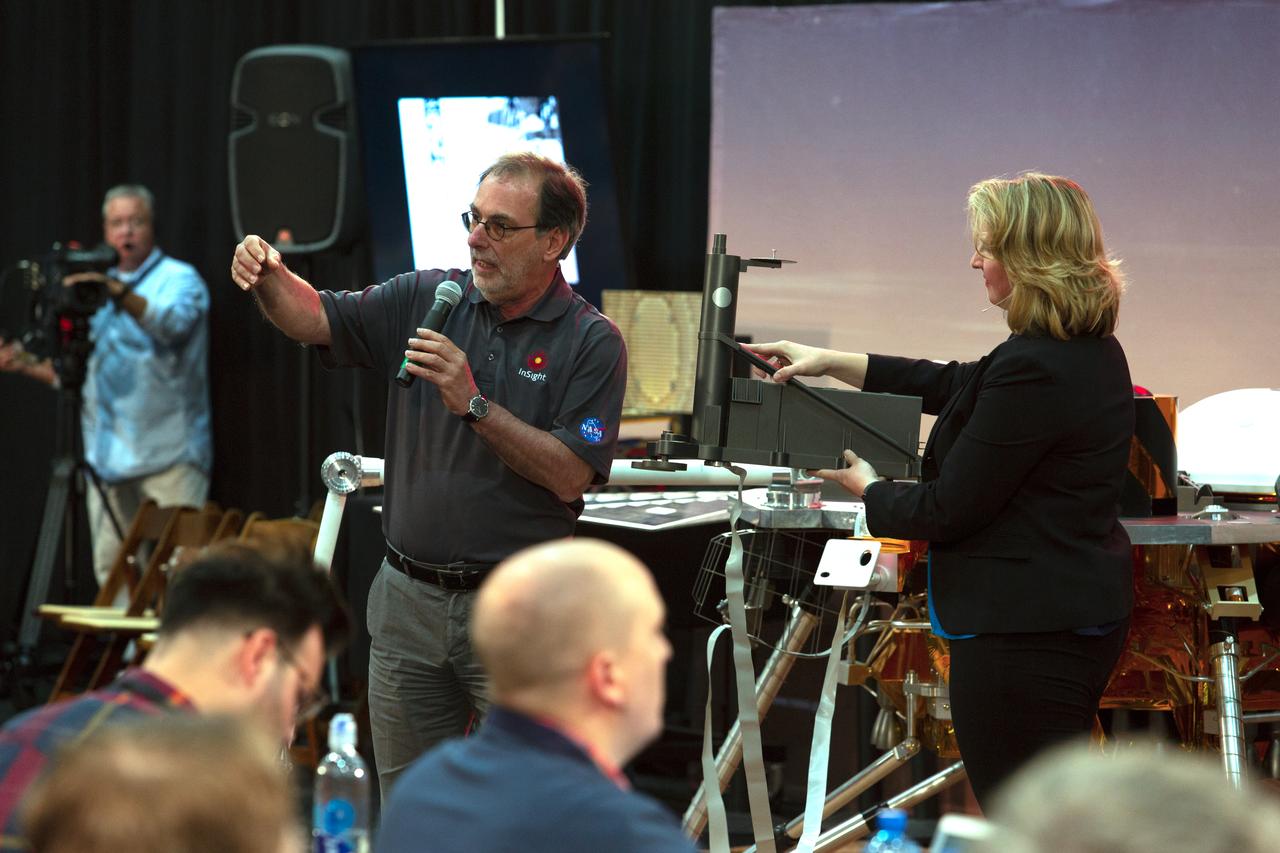
During a prelaunch briefing at Vandenberg Air Force Base in California, Tilman Spohn, HP3 Investigation Lead with the Institute of Planetary Research at the German Aerospace Center, speaks to members of the media. The presentation focused on NASA's Interior Exploration using Seismic Investigations, Geodesy and Heat Transport, or InSight, Mars lander. InSight is scheduled for liftoff May 5, 2018, atop a United Launch Alliance (ULA) Atlas V rocket from Space Launch Complex 3 at Vandenberg. The spacecraft will be the first mission to look deep beneath the Martian surface studying the planet's interior by measuring its heat output and listen for marsquakes.
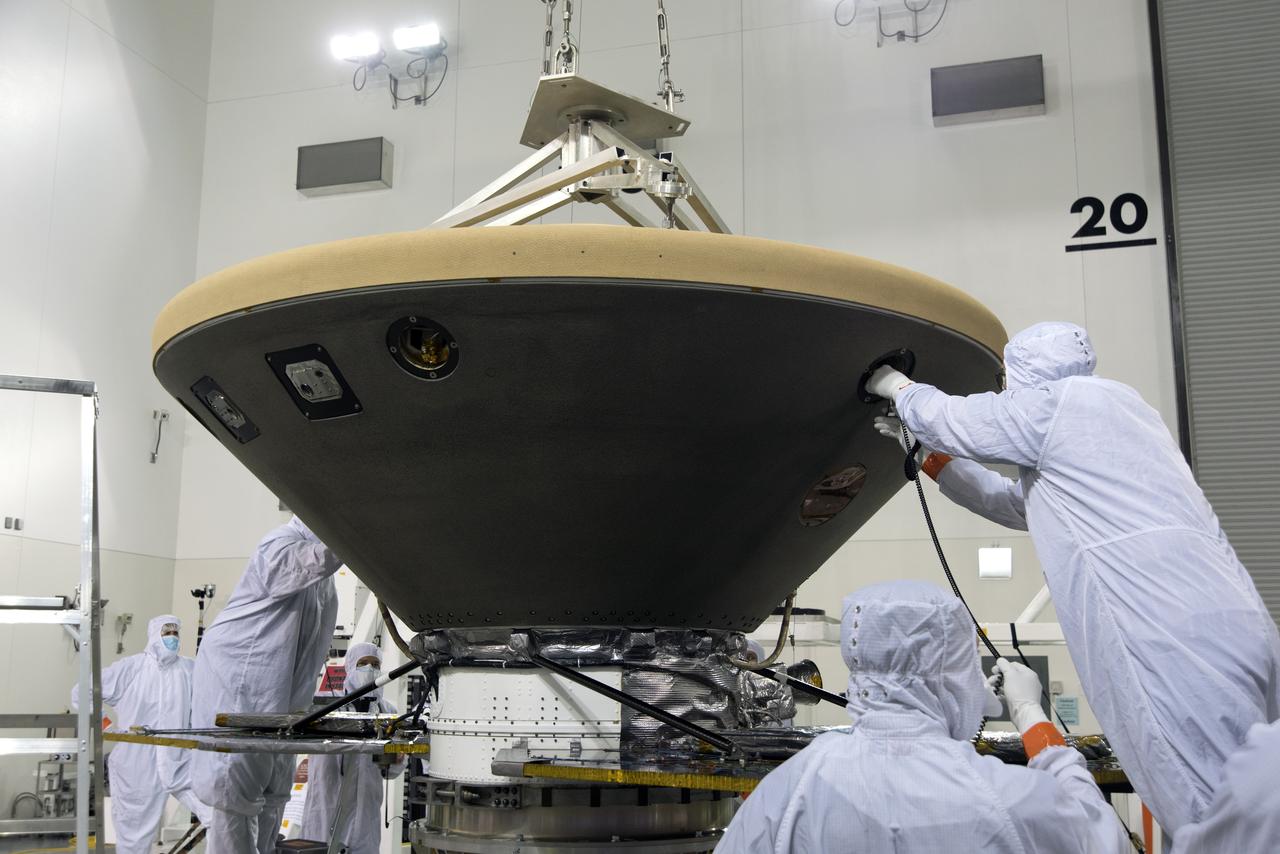
In the Astrotech facility at Vandenberg Air Force Base in California, the heatshield is placed on NASA's Interior Exploration using Seismic Investigations, Geodesy and Heat Transport, or InSight, Mars lander. InSight will be the first mission to look deep beneath the Martian surface. It will study the planet's interior by measuring its heat output and listen for marsquakes. The spacecraft will use the seismic waves generated by marsquakes to develop a map of the planet’s deep interior. The resulting insight into Mars’ formation will provide a better understanding of how other rocky planets, including Earth, were created. InSight is scheduled for liftoff May 5, 2018.
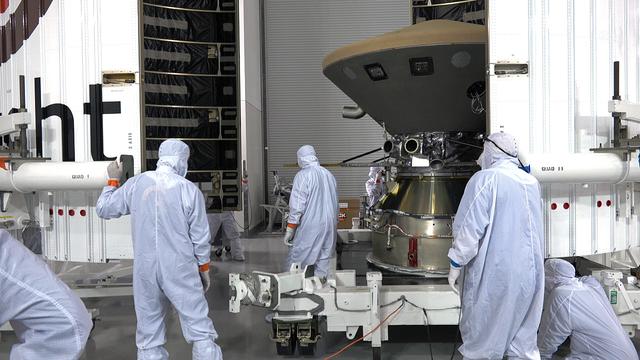
In the Astrotech facility at Vandenberg Air Force Base in California, technicians and engineers encapsulate NASA's Interior Exploration using Seismic Investigations, Geodesy and Heat Transport, or InSight, Mars lander in its payload fairing. InSight will be the first mission to look deep beneath the Martian surface. It will study the planet's interior by measuring its heat output and listen for marsquakes. The spacecraft will use the seismic waves generated by marsquakes to develop a map of the planet’s deep interior. The resulting insight into Mars’ formation will provide a better understanding of how other rocky planets, including Earth, were created. InSight is scheduled for liftoff May 5, 2018.
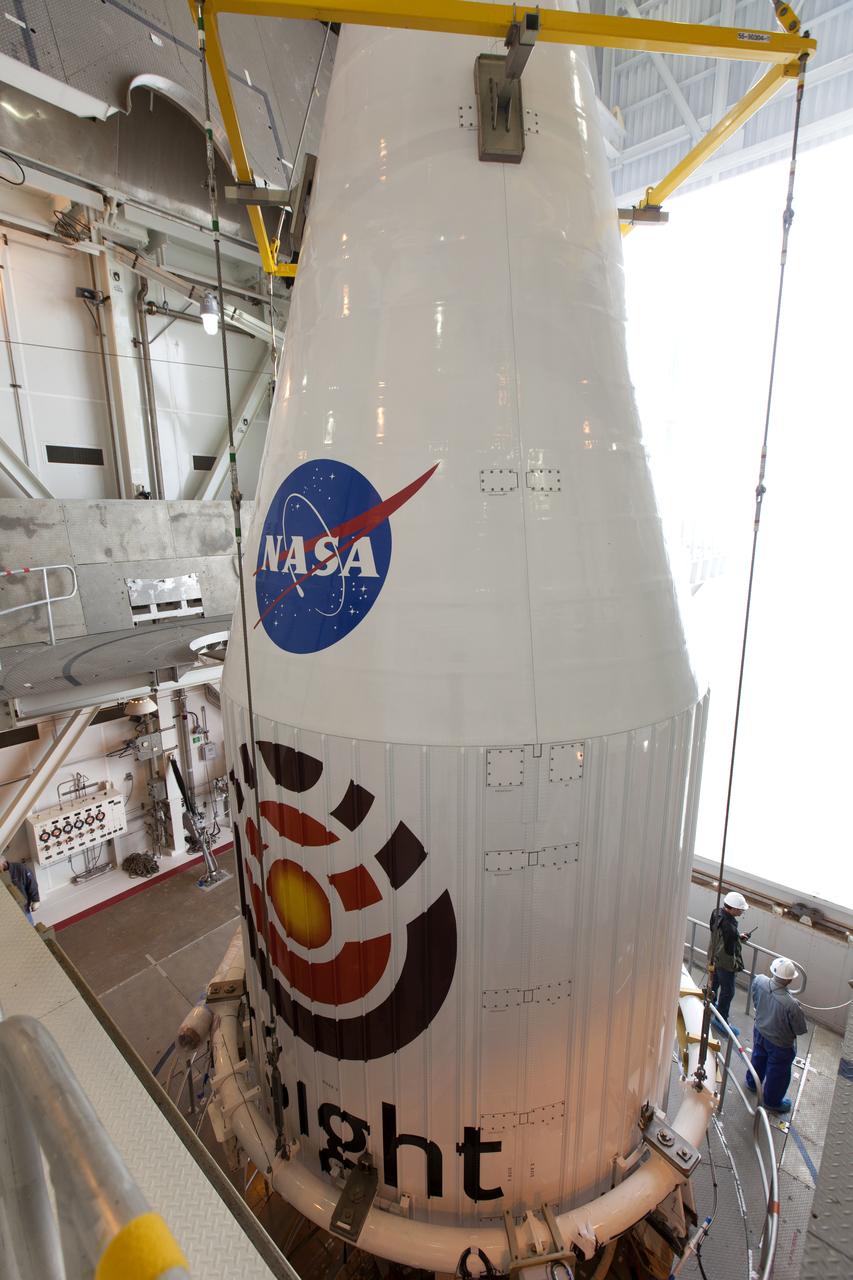
At Space Launch Complex 3 at Vandenberg Air Force Base in California, NASA's Interior Exploration using Seismic Investigations, Geodesy and Heat Transport, or InSight, Mars lander is positioned atop a United Launch Alliance Atlas V rocket. InSight will be the first mission to look deep beneath the Martian surface. It will study the planet's interior by measuring its heat output and listen for marsquakes. The spacecraft will use the seismic waves generated by marsquakes to develop a map of the planet’s deep interior. The resulting insight into Mars’ formation will provide a better understanding of how other rocky planets, including Earth, were created. InSight is scheduled for liftoff May 5, 2018.
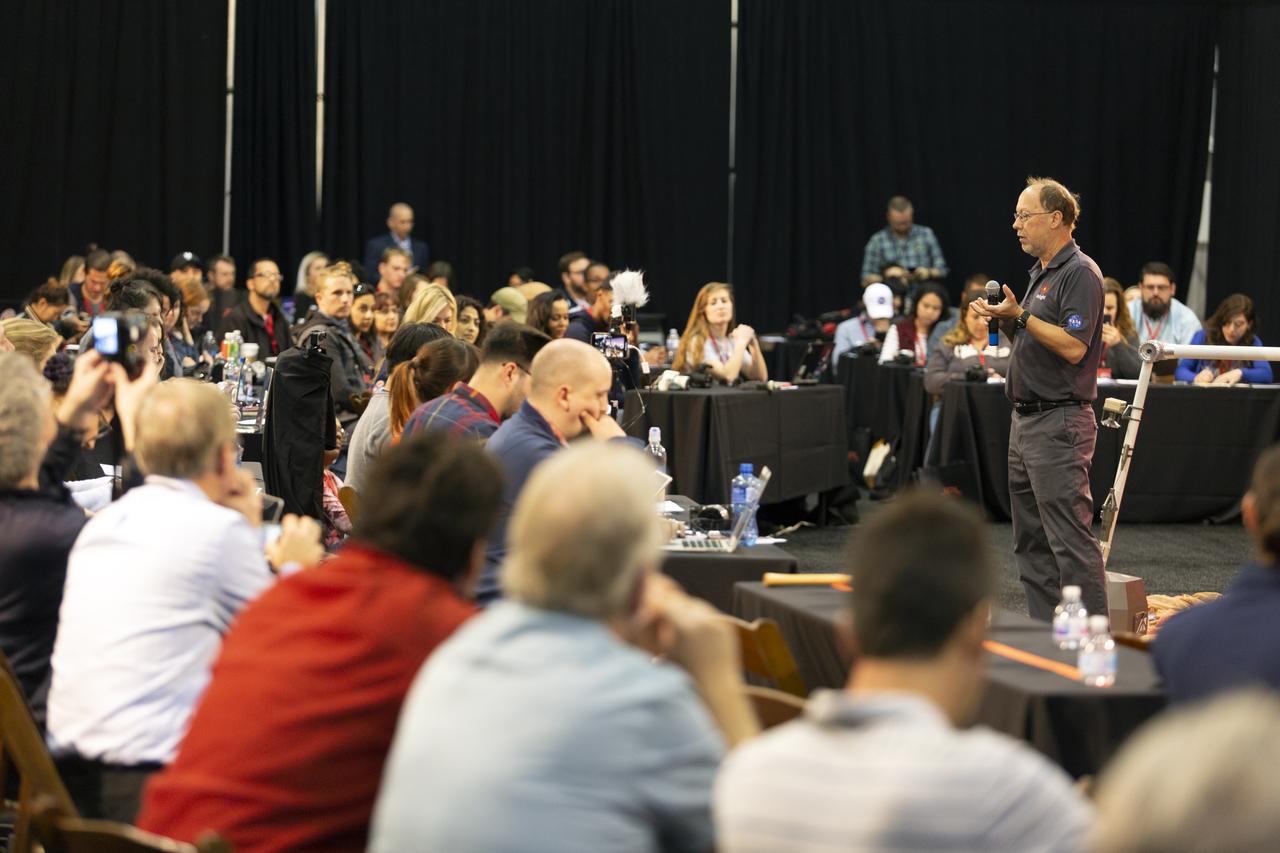
During a prelaunch briefing at Vandenberg Air Force Base in California, Bruce Banerdt, InSight Principal Investigator at NASA's Jet Propulsion Laboratory, speaks to members of the media. The presentation focused on NASA's Interior Exploration using Seismic Investigations, Geodesy and Heat Transport, or InSight, Mars lander. InSight is scheduled for liftoff May 5, 2018, atop a United Launch Alliance (ULA) Atlas V rocket from Space Launch Complex 3 at Vandenberg. The spacecraft will be the first mission to look deep beneath the Martian surface studying the planet's interior by measuring its heat output and listen for marsquakes.
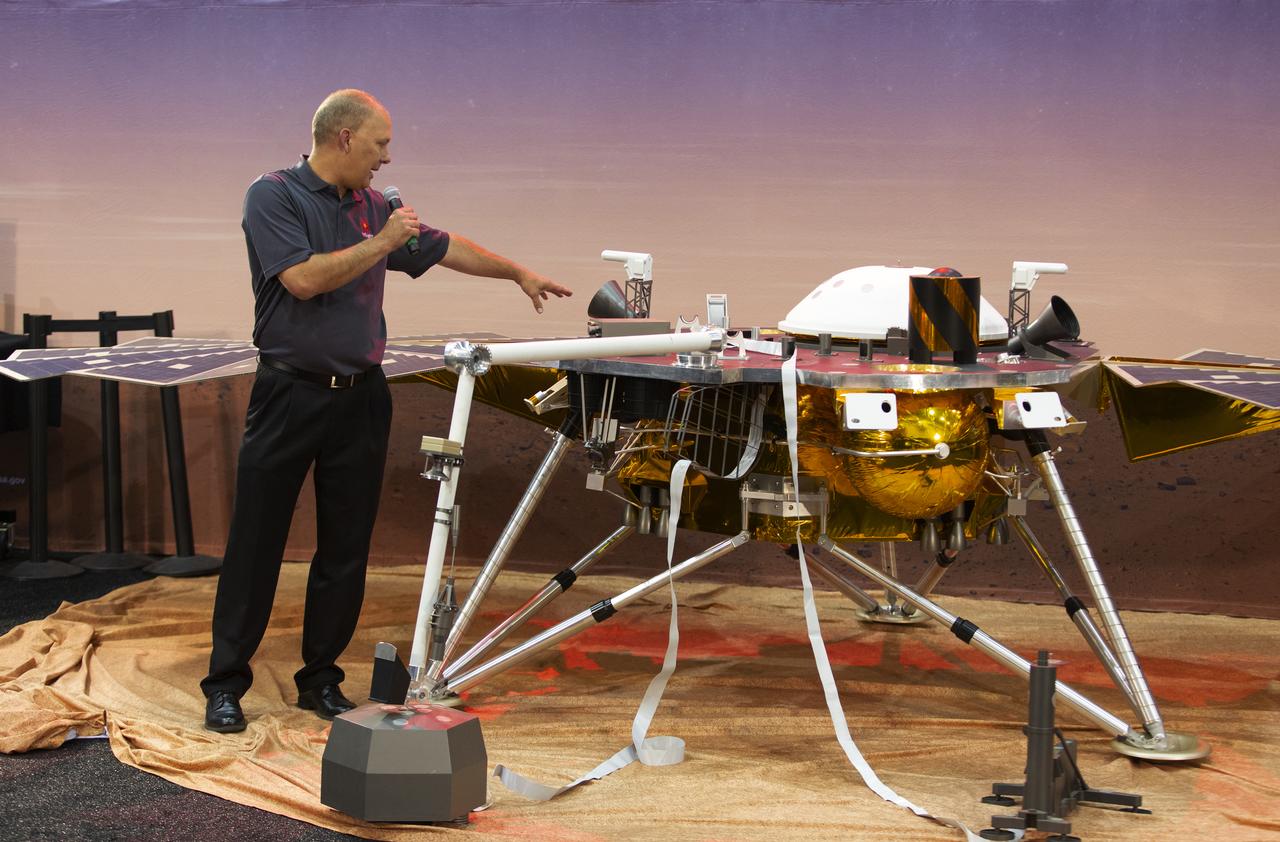
During a prelaunch briefing at Vandenberg Air Force Base in California, Stu Spath, InSight Program Manager with Lockheed Martin Space, speaks to members of the media. The presentation focused on NASA's Interior Exploration using Seismic Investigations, Geodesy and Heat Transport, or InSight, Mars lander. InSight is scheduled for liftoff May 5, 2018, atop a United Launch Alliance (ULA) Atlas V rocket from Space Launch Complex 3 at Vandenberg. The spacecraft will be the first mission to look deep beneath the Martian surface studying the planet's interior by measuring its heat output and listen for marsquakes.
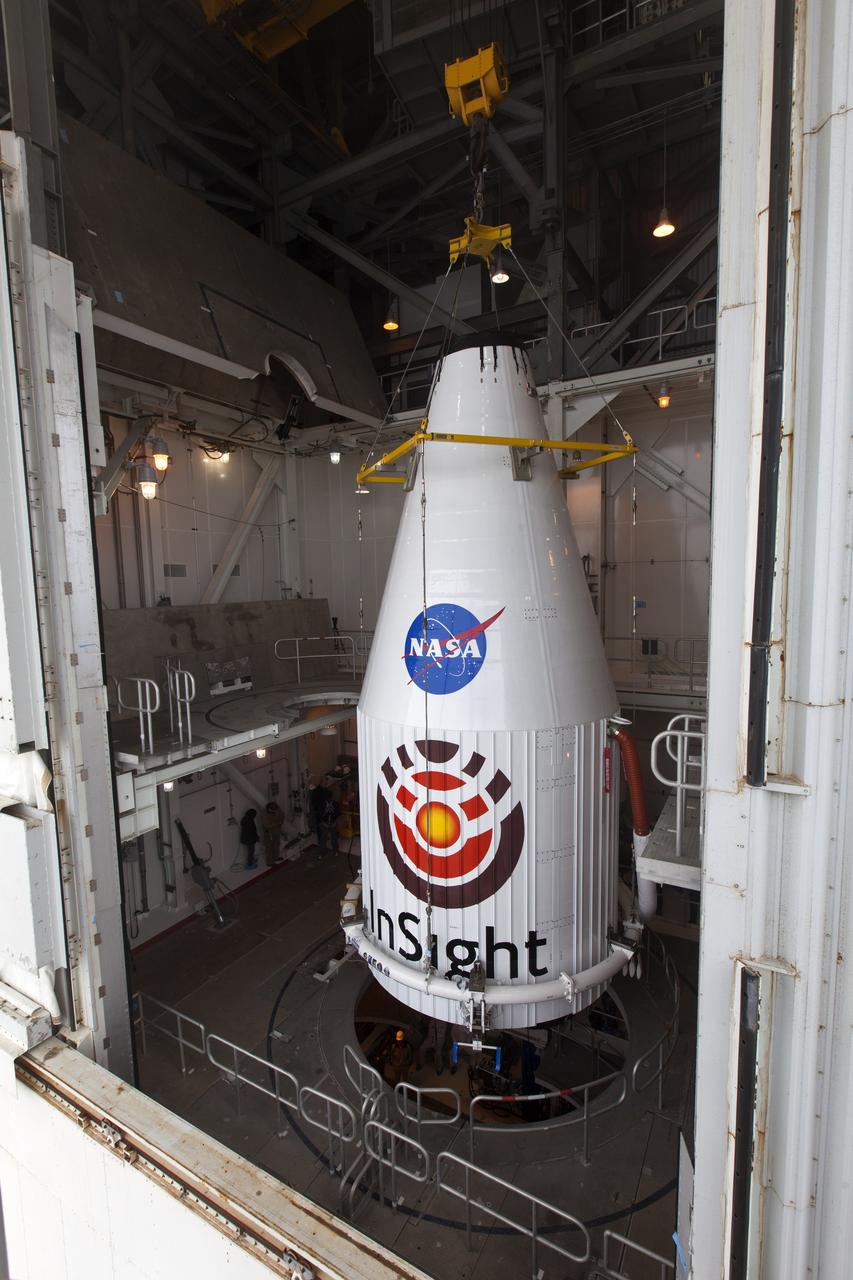
At Space Launch Complex 3 at Vandenberg Air Force Base in California, NASA's Interior Exploration using Seismic Investigations, Geodesy and Heat Transport, or InSight, Mars lander is positioned atop a United Launch Alliance Atlas V rocket. InSight will be the first mission to look deep beneath the Martian surface. It will study the planet's interior by measuring its heat output and listen for marsquakes. The spacecraft will use the seismic waves generated by marsquakes to develop a map of the planet’s deep interior. The resulting insight into Mars’ formation will provide a better understanding of how other rocky planets, including Earth, were created. InSight is scheduled for liftoff May 5, 2018.
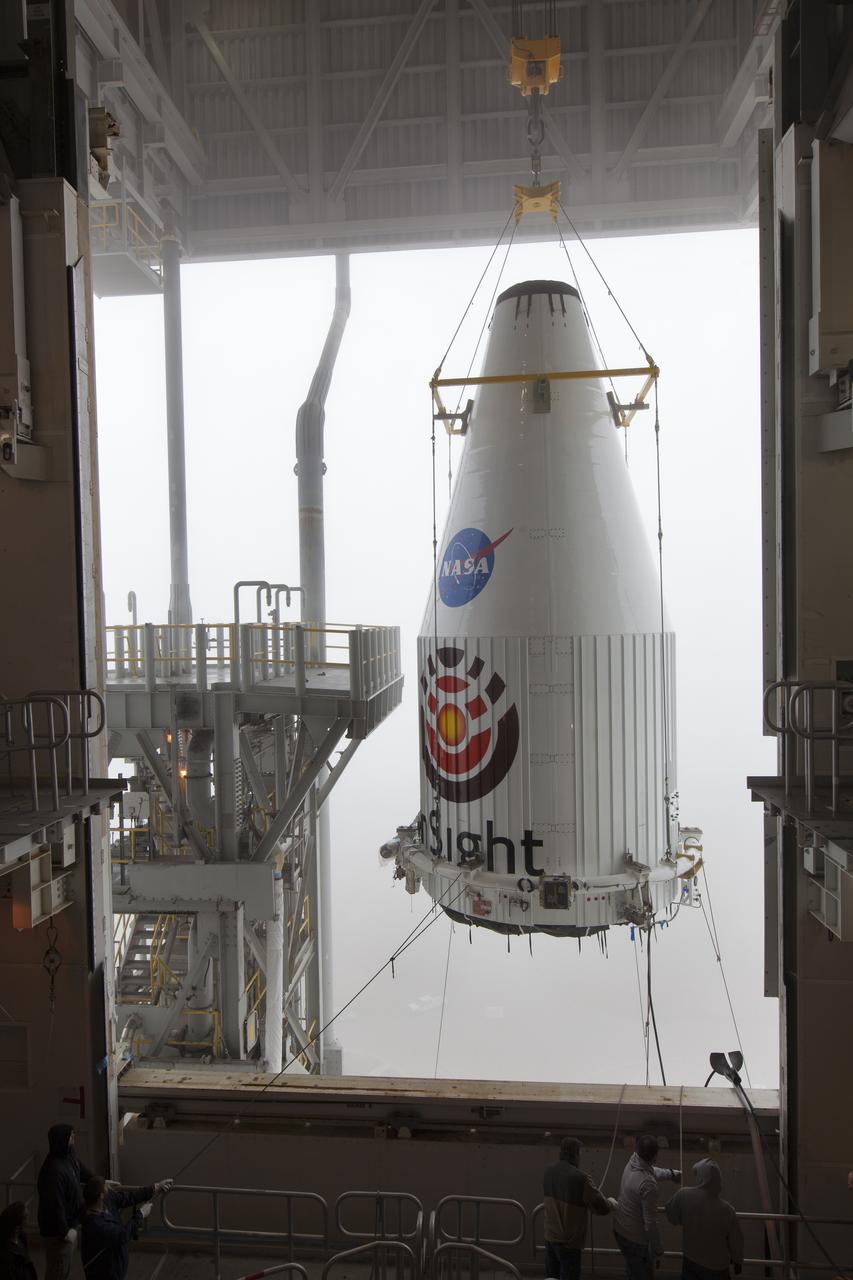
At Space l Launch Complex 3 at Vandenberg Air Force Base in California, a crane is used to lift NASA's Interior Exploration using Seismic Investigations, Geodesy and Heat Transport, or InSight, Mars lander for mating atop a United Launch Alliance Atlas V rocket. InSight will be the first mission to look deep beneath the Martian surface. It will study the planet's interior by measuring its heat output and listen for marsquakes. The spacecraft will use the seismic waves generated by marsquakes to develop a map of the planet’s deep interior. The resulting insight into Mars’ formation will provide a better understanding of how other rocky planets, including Earth, were created. InSight is scheduled for liftoff May 5, 2018.
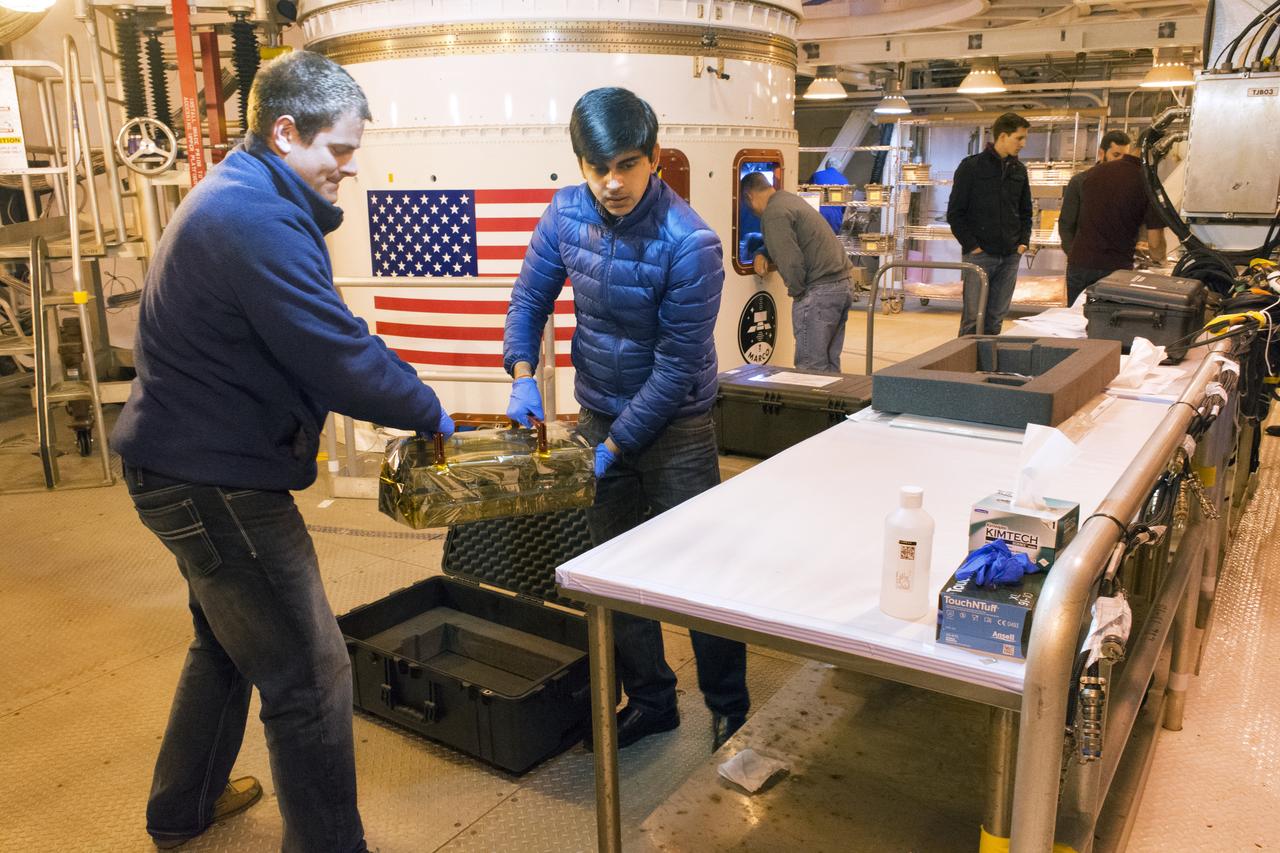
At Vandenberg Air Force Base in California, twin communications-relay CubeSats, called Mars Cube One (MarCO) are prepared for installation on an Atlas V rocket. MarCO constitutes a technology demonstration being built by NASA's Jet Propulsion Laboratory, Pasadena in California. They will launch in on the same United Launch Alliance Atlas V rocket as NASA's Interior Exploration using Seismic Investigations, Geodesy and Heat Transport, or InSight, spacecraft to land on Mars. CubeSats are a class of spacecraft based on a standardized small size and modular use of off-the-shelf technologies. Many have been made by university students, and dozens have been launched into Earth orbit using extra payload mass available on launches of larger spacecraft. InSight is the first mission to explore the Red Planet's deep interior. InSight is scheduled for liftoff May 5, 2018. InSight will be the first mission to look deep beneath the Martian surface. It will study the planet's interior by measuring its heat output and listen for marsquakes. InSight will use the seismic waves generated by marsquakes to develop a map of the planet’s deep interior. The resulting insight into Mars’ formation will provide a better understanding of how other rocky planets, including Earth, were created. NASA’s Jet Propulsion Laboratory in Pasadena, California, manages the InSight mission for the agency’s Science Mission Directorate. InSight is part of NASA's Discovery Program, managed by its Marshall Space Flight Center in Huntsville, Alabama. The spacecraft, including cruise stage and lander, was built and tested by Lockheed Martin Space in Denver. Several European partners, including France's space agency, the Centre National d'Étude Spatiales, and the German Aerospace Center, are supporting the mission. United Launch Alliance of Centennial, Colorado, is providing the Atlas V launch service. NASA’s Launch Services Program, based at its Kennedy Space Center in Florida, is responsible for laun
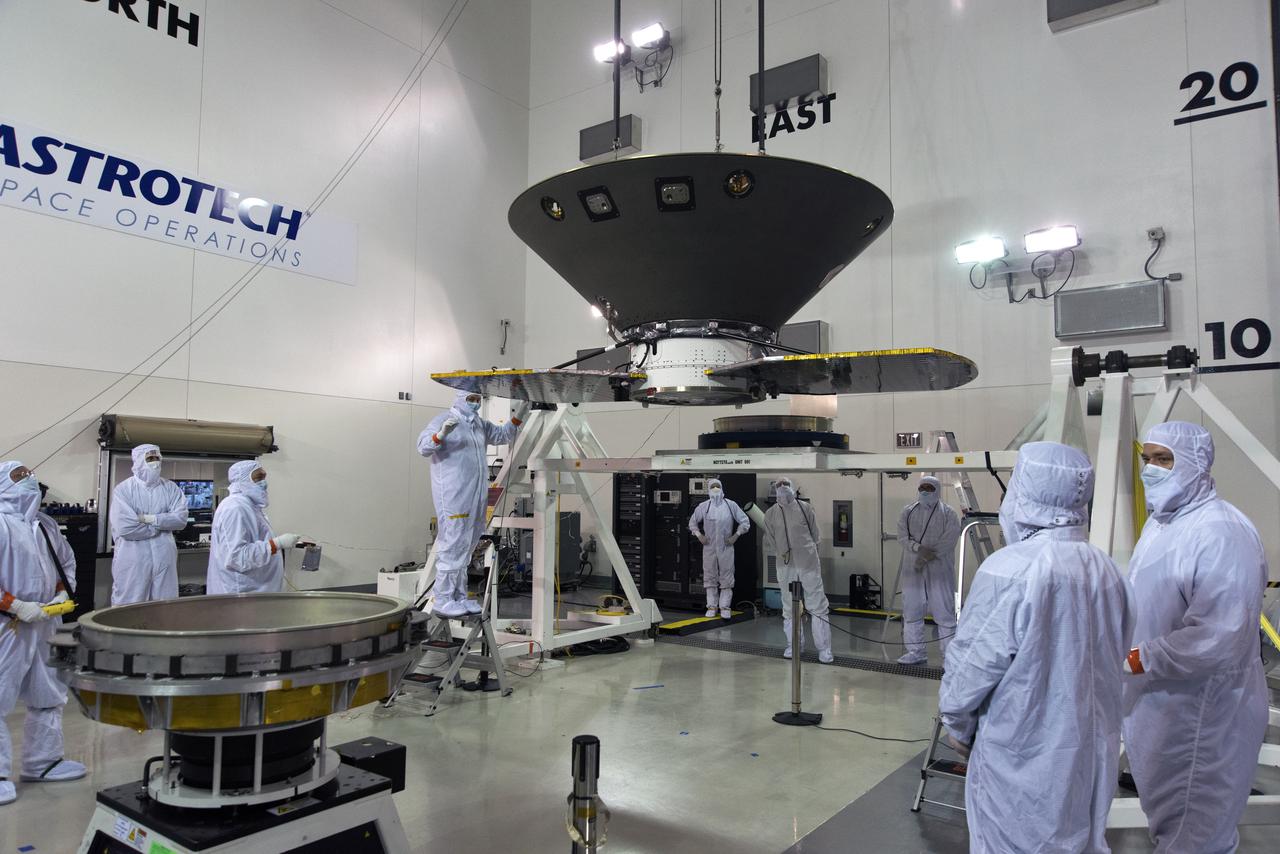
In the Astrotech facility at Vandenberg Air Force Base in California, NASA's Interior Exploration using Seismic Investigations, Geodesy and Heat Transport, or InSight, spacecraft is lifted for placement on a spin table during preflight processing. InSight will be the first mission to look deep beneath the Martian surface. It will study the planet's interior by measuring its heat output and listen for marsquakes. The spacecraft will use the seismic waves generated by marsquakes to develop a map of the planet’s deep interior. The resulting insight into Mars’ formation will provide a better understanding of how other rocky planets, including Earth, were created. InSight is scheduled for liftoff May 5, 2018.
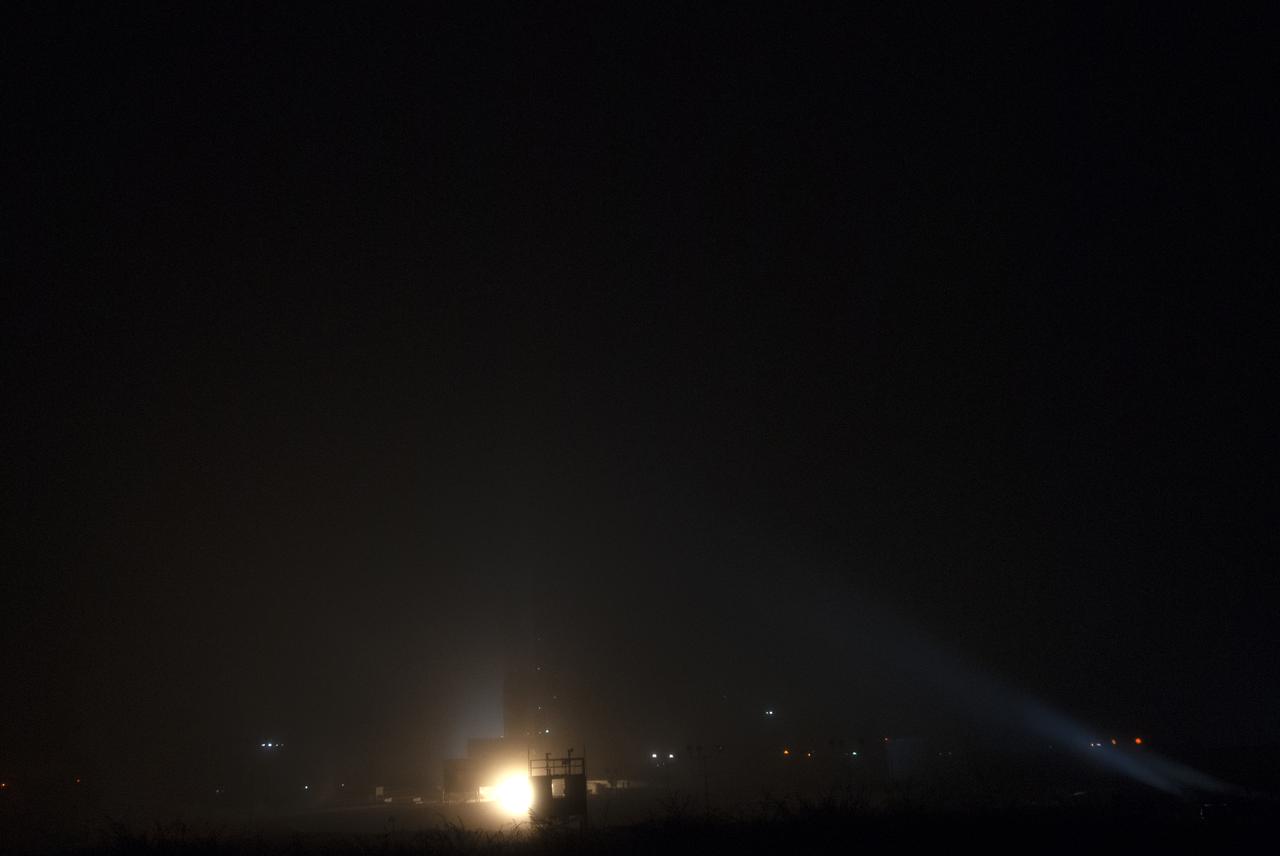
A United Launch Alliance Atlas V rocket lifts off from Space Launch Complex 3 at Vandenberg Air Force Base, California, carrying NASA's Interior Exploration using Seismic Investigations, Geodesy and Heat Transport, or InSight, Mars lander. Liftoff was at 4:05 a.m. PDT (7:05 a.m. EDT). The spacecraft will be the first mission to look deep beneath the Martian surface. It will study the planet's interior by measuring its heat output and listen for marsquakes. InSight will use the seismic waves generated by marsquakes to develop a map of the planet’s deep interior. The resulting insight into Mars’ formation will provide a better understanding of how other rocky planets, including Earth, were created.
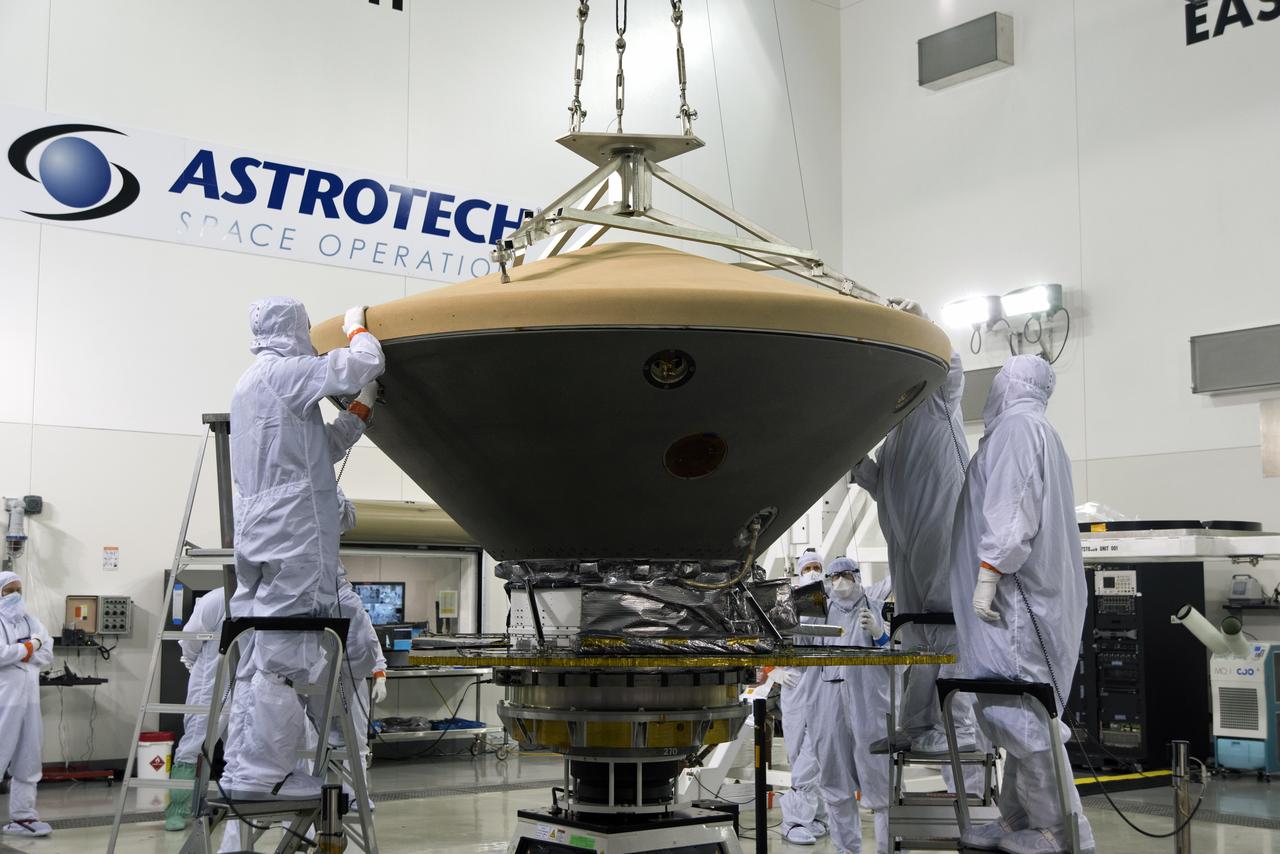
In the Astrotech facility at Vandenberg Air Force Base in California, the heatshield is placed on NASA's Interior Exploration using Seismic Investigations, Geodesy and Heat Transport, or InSight, Mars lander. InSight will be the first mission to look deep beneath the Martian surface. It will study the planet's interior by measuring its heat output and listen for marsquakes. The spacecraft will use the seismic waves generated by marsquakes to develop a map of the planet’s deep interior. The resulting insight into Mars’ formation will provide a better understanding of how other rocky planets, including Earth, were created. InSight is scheduled for liftoff May 5, 2018.