
The greens and blues of the ocean color from NASA satellite data have provided new insights into how climate and ecosystem processes affect the growth cycles of phytoplankton—microscopic aquatic plants important for fish populations and Earth’s carbon cycle. At the bottom of the ocean’s food chain, phytoplankton account for roughly half of the net photosynthesis on Earth. Their photosynthesis consumes carbon dioxide and plays a key role in transferring carbon from the atmosphere to the ocean. Unlike the plant ecosystems on land, the amount of phytoplankton in the ocean is always followed closely by the abundance of organisms that eat phytoplankton, creating a perpetual dance between predators and prey. This new analysis shows how tiny imbalances in this predator-prey relationship, caused by environmental variability, give rise to massive phytoplankton blooms, having huge impacts on ocean productivity, fisheries and carbon cycling. The study was released Thursday, Sept. 25, in the journal Nature Climate Change. “The continuous year-in and year-out measurements provided by NASA’s ocean color satellites have dramatically changed our understanding of phytoplankton dynamics on the Earth,” said Mike Behrenfeld, author of the study and phytoplankton ecologist at Oregon State University, Corvallis, Oregon. “What we now see is a closely linked system of phytoplankton cell division and consumption lying at the heart of the plant’s annual cycle.” Behrenfeld calls this close predator-prey relationship the “Dance of the Plankton.” This view is different from previous perspectives that have simply focused on environmental resources used by phytoplankton to grow, such as nutrients and light. The new view is important because it reveals that tiny imbalances can greatly impact Earth’s ecology. Read more: <a href="http://1.usa.gov/ZkVMHG" rel="nofollow">1.usa.gov/ZkVMHG</a> Credit: NASA's Goddard Space Flight Center, Norman Kuring; USGS <b><a href="http://www.nasa.gov/audience/formedia/features/MP_Photo_Guidelines.html" rel="nofollow">NASA image use policy.</a></b> <b><a href="http://www.nasa.gov/centers/goddard/home/index.html" rel="nofollow">NASA Goddard Space Flight Center</a></b> enables NASA’s mission through four scientific endeavors: Earth Science, Heliophysics, Solar System Exploration, and Astrophysics. Goddard plays a leading role in NASA’s accomplishments by contributing compelling scientific knowledge to advance the Agency’s mission. <b>Follow us on <a href="http://twitter.com/NASAGoddardPix" rel="nofollow">Twitter</a></b> <b>Like us on <a href="http://www.facebook.com/pages/Greenbelt-MD/NASA-Goddard/395013845897?ref=tsd" rel="nofollow">Facebook</a></b> <b>Find us on <a href="http://instagram.com/nasagoddard?vm=grid" rel="nofollow">Instagram</a></b>
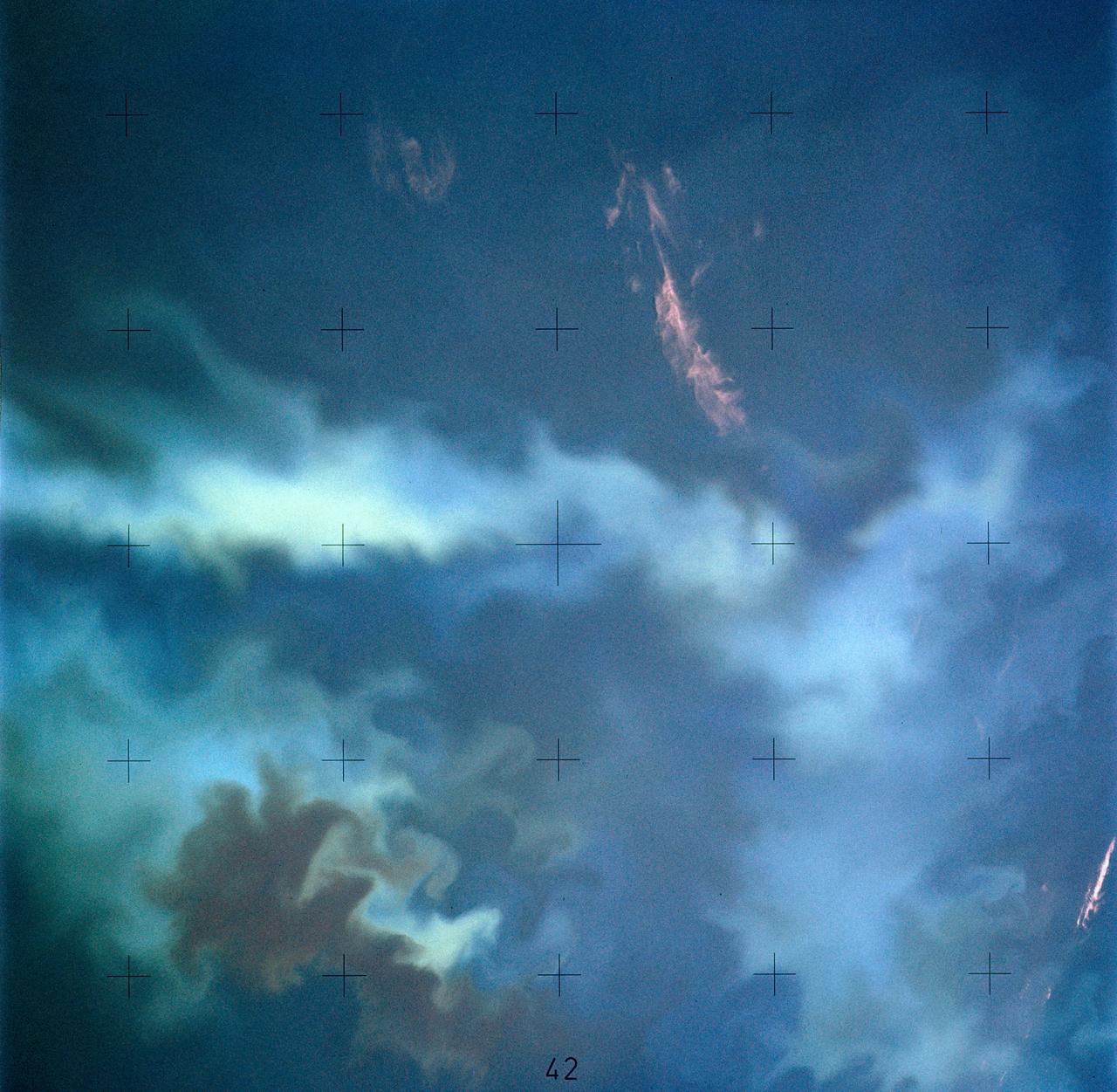
SL4-137-3721 (February 1974) --- Plankton blooms and color variations in the Falkland Current east of the Argentina coast in the South Atlantic Ocean as seen from the Skylab space station in Earth orbit. This picture was taken by one of the Skylab 4 crewmen using a hand-held 70mm Hasselblad camera. The Skylab 4 crew made many observations of the Falkland Current and related phenomena. This current flows north and northeastward along the Argentine coast near 40 degree south latitude where it meets the Brazil Current and the two swing eastward. The study of such photographs as this one can add significantly to our knowledge and understanding of the oceans. Photo credit: NASA
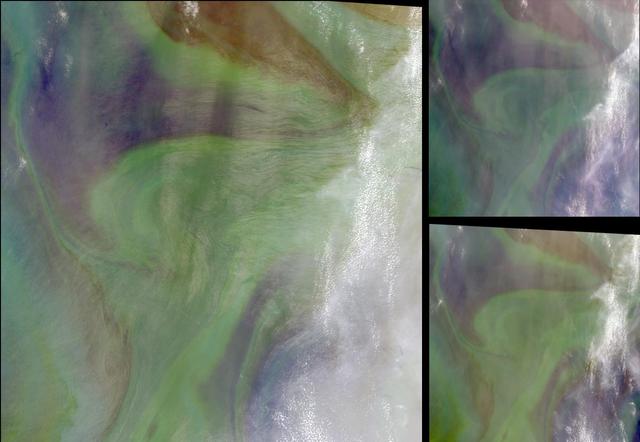
In the Arabian Sea, sunlight and nutrients has fueled a startling occurrence of colorful phytoplankton and bacterial assemblages, which is captured in these natural color images from NASA Terra spacecraft October 2, 2004.

Technicians work to process the NASA’s Plankton, Aerosol, Cloud, ocean Ecosystem (PACE) observatory on a spacecraft dolly in a high bay at the Astrotech Space Operations Facility near the agency’s Kennedy Space Center in Florida on Monday, Dec. 4, 2023. PACE will extend and improve upon NASA’s 20-plus years of global satellite observations of our living ocean, atmospheric aerosols, and clouds. It will also continue key measurements related to air quality and initiate an advanced set of climate-relevant data records. PACE will be encapsulated for launch aboard a SpaceX Falcon 9 rocket in early 2024 from Space Launch Complex 40 at Cape Canaveral Space Force Station in Florida.
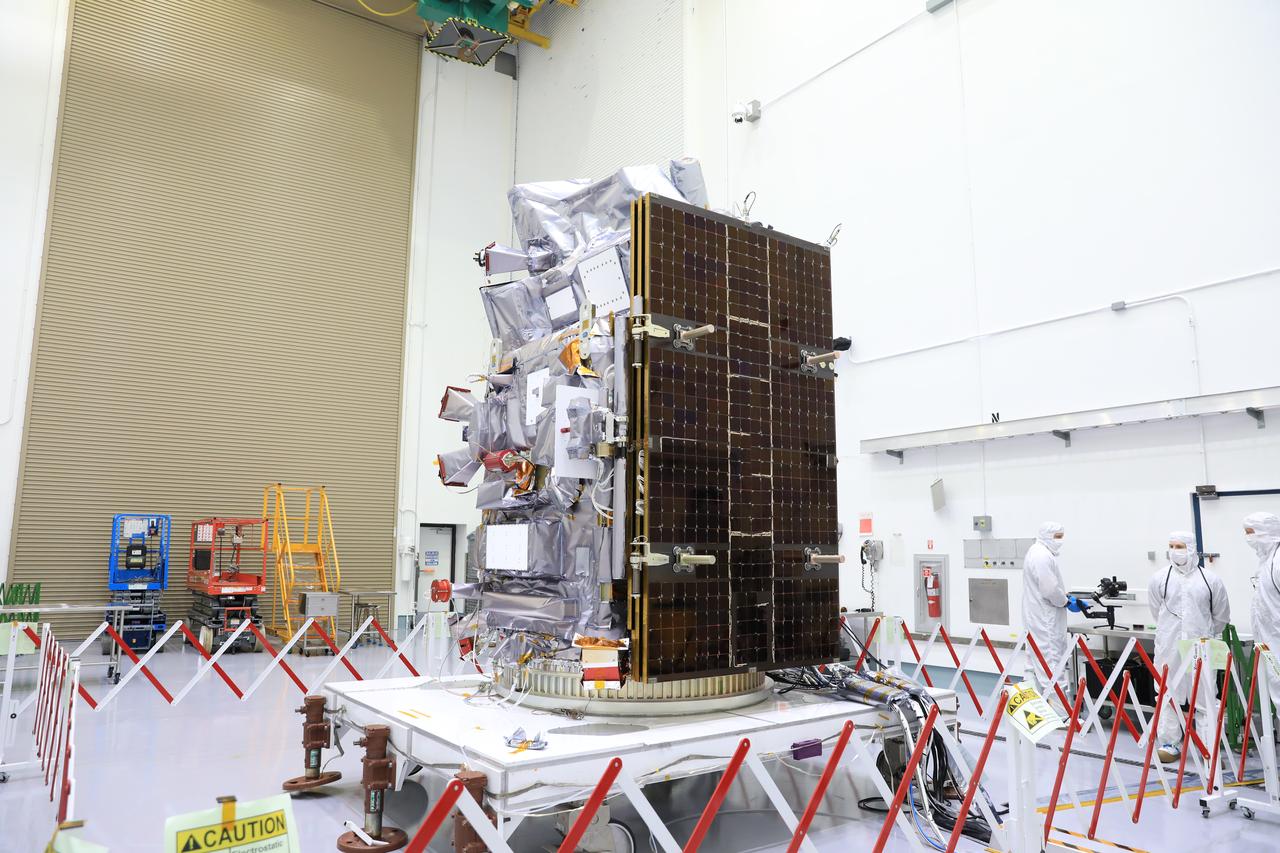
Technicians work to process the NASA’s Plankton, Aerosol, Cloud, ocean Ecosystem (PACE) observatory on a spacecraft dolly in a high bay at the Astrotech Space Operations Facility near the agency’s Kennedy Space Center in Florida on Monday, Dec. 4, 2023. PACE will extend and improve upon NASA’s 20-plus years of global satellite observations of our living ocean, atmospheric aerosols, and clouds. It will also continue key measurements related to air quality and initiate an advanced set of climate-relevant data records. PACE will be encapsulated for launch aboard a SpaceX Falcon 9 rocket in early 2024 from Space Launch Complex 40 at Cape Canaveral Space Force Station in Florida.
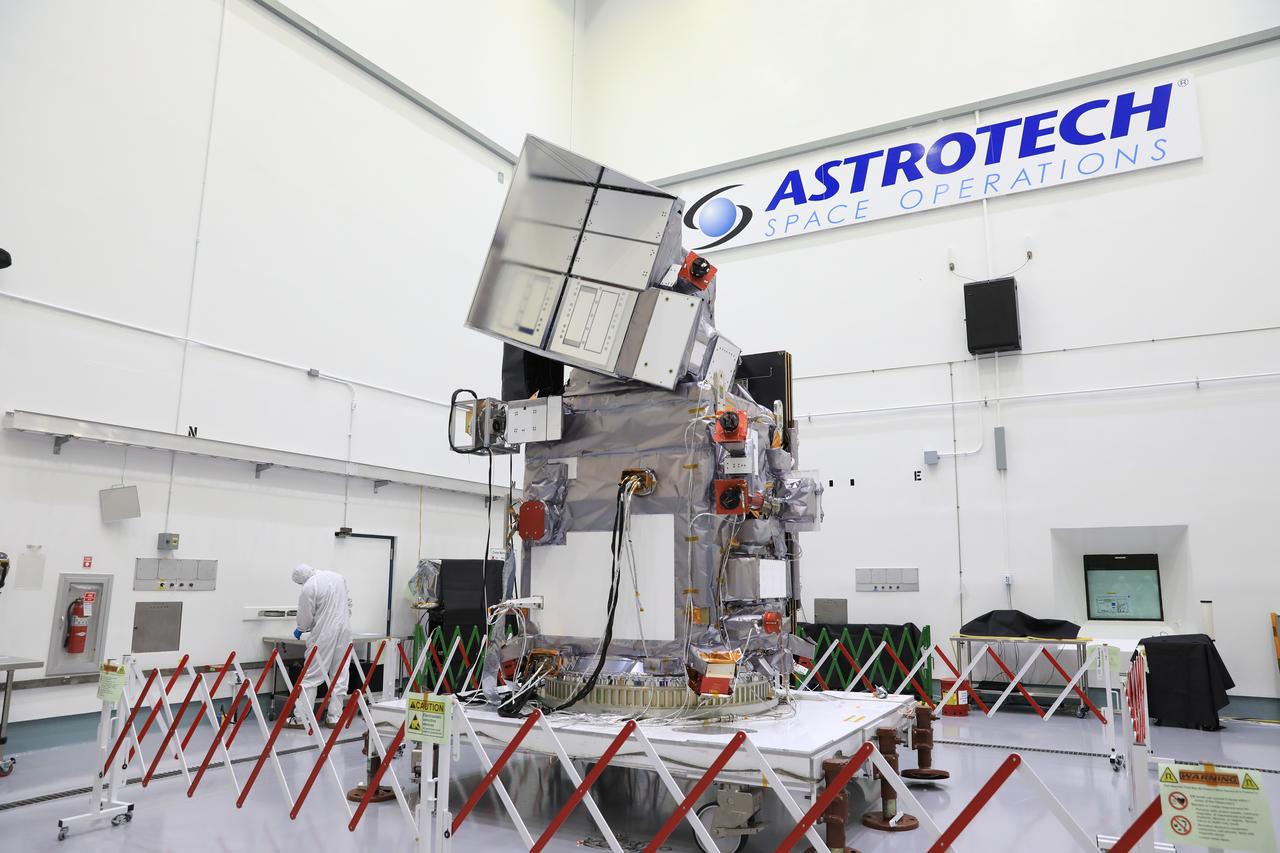
Technicians work to process the NASA’s Plankton, Aerosol, Cloud, ocean Ecosystem (PACE) observatory on a spacecraft dolly in a high bay at the Astrotech Space Operations Facility near the agency’s Kennedy Space Center in Florida on Monday, Dec. 4, 2023. PACE will extend and improve upon NASA’s 20-plus years of global satellite observations of our living ocean, atmospheric aerosols, and clouds. It will also continue key measurements related to air quality and initiate an advanced set of climate-relevant data records. PACE will be encapsulated for launch aboard a SpaceX Falcon 9 rocket in early 2024 from Space Launch Complex 40 at Cape Canaveral Space Force Station in Florida.
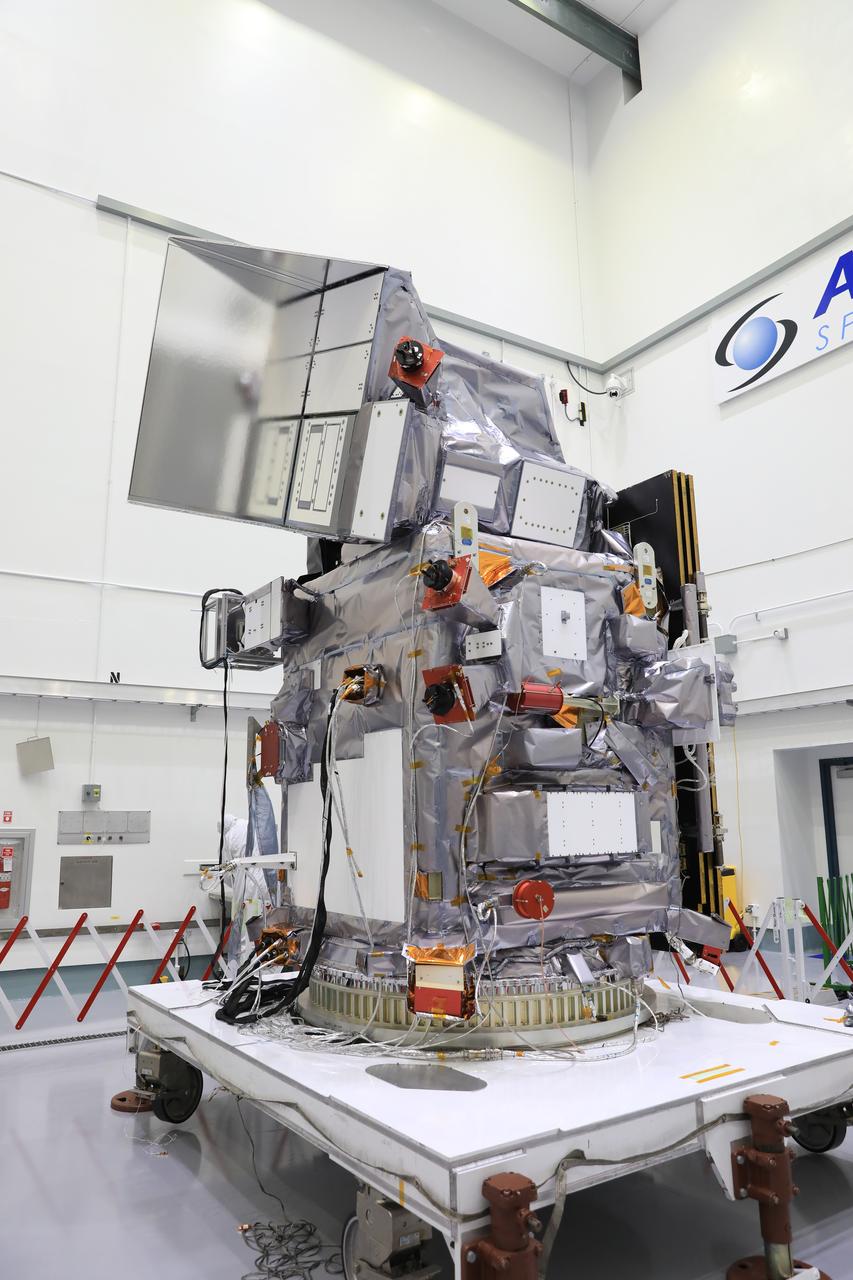
NASA’s Plankton, Aerosol, Cloud, ocean Ecosystem (PACE) observatory is inspected and processed on a spacecraft dolly in a high bay at the Astrotech Space Operations Facility near the agency’s Kennedy Space Center in Florida on Monday, Dec. 4, 2023. PACE will extend and improve upon NASA’s 20-plus years of global satellite observations of our living ocean, atmospheric aerosols, and clouds. It will also continue key measurements related to air quality and initiate an advanced set of climate-relevant data records. PACE will be encapsulated for launch aboard a SpaceX Falcon 9 rocket in early 2024 from Space Launch Complex 40 at Cape Canaveral Space Force Station in Florida.
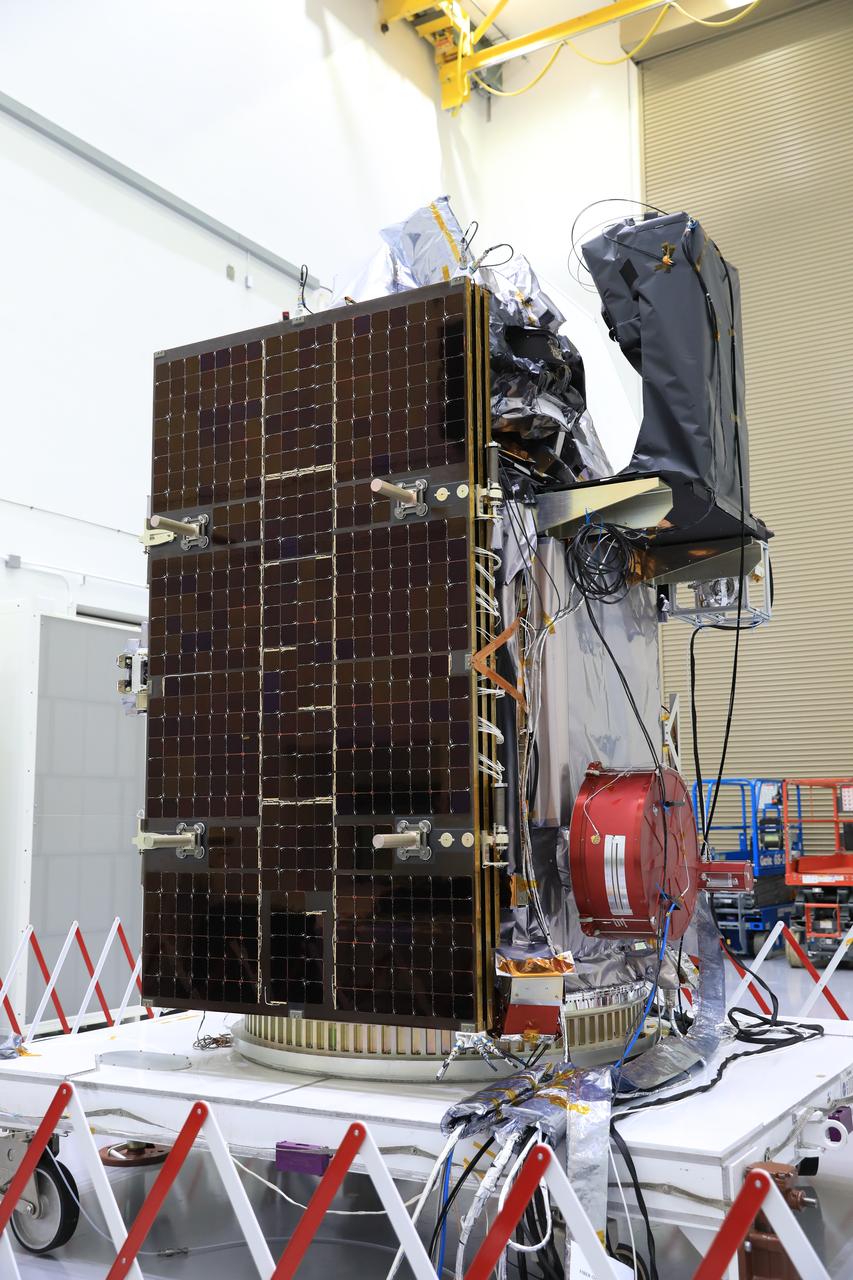
NASA’s Plankton, Aerosol, Cloud, ocean Ecosystem (PACE) observatory is inspected and processed on a spacecraft dolly in a high bay at the Astrotech Space Operations Facility near the agency’s Kennedy Space Center in Florida on Monday, Dec. 4, 2023. PACE will extend and improve upon NASA’s 20-plus years of global satellite observations of our living ocean, atmospheric aerosols, and clouds. It will also continue key measurements related to air quality and initiate an advanced set of climate-relevant data records. PACE will be encapsulated for launch aboard a SpaceX Falcon 9 rocket in early 2024 from Space Launch Complex 40 at Cape Canaveral Space Force Station in Florida.
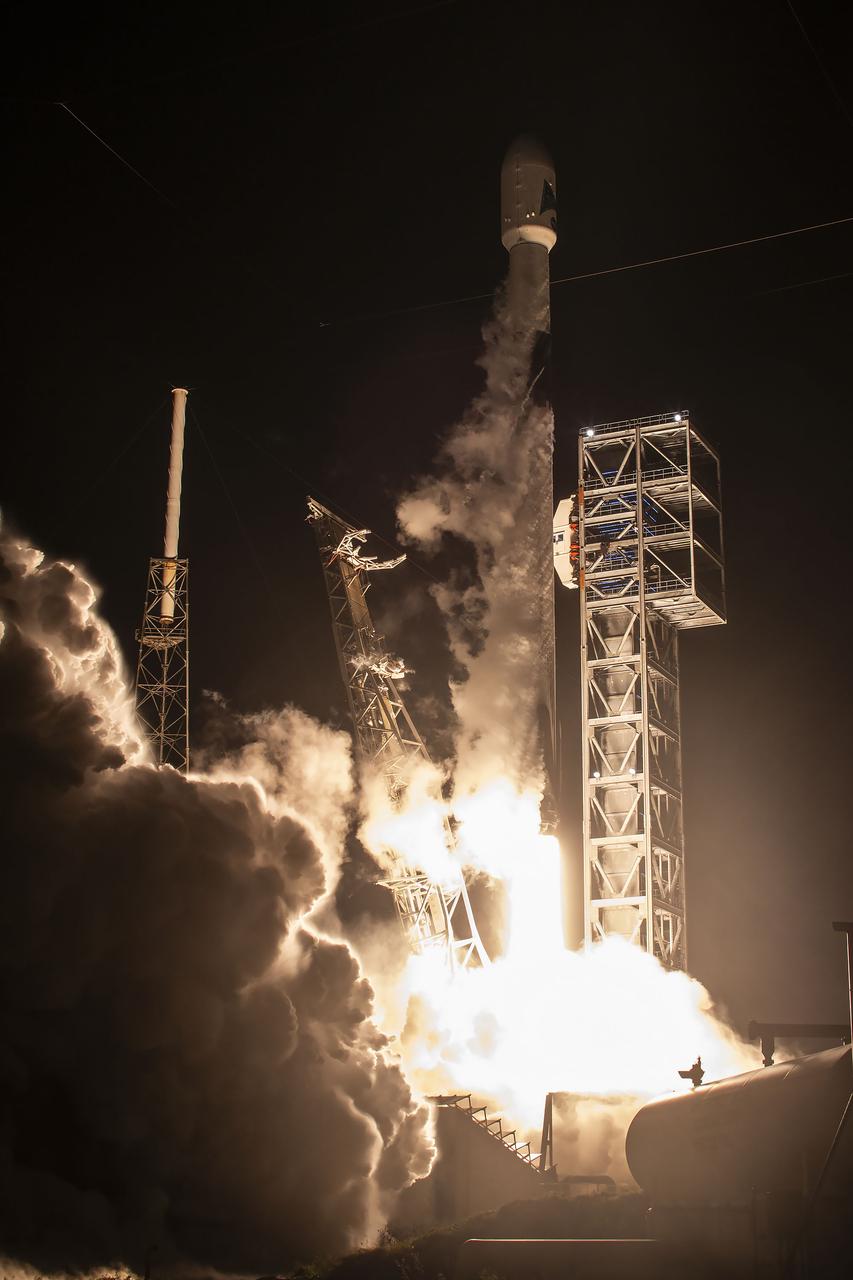
NASA’s PACE (Plankton, Aerosol, Cloud, ocean Ecosystem) spacecraft, atop a SpaceX Falcon 9 rocket, successfully lifts off from Space Launch Complex 40 at Cape Canaveral Space Force Station in Florida at 1:33 a.m. EST Thursday, Feb. 8. PACE is NASA’s newest earth-observing satellite that will help increase our understanding of Earth’s oceans, atmosphere, and climate by delivering hyperspectral observations of microscopic marine organisms called phytoplankton, as well new data on clouds and aerosols.

NASA’s PACE (Plankton, Aerosol, Cloud, ocean Ecosystem) spacecraft, atop a SpaceX Falcon 9 rocket, successfully lifts off from Space Launch Complex 40 at Cape Canaveral Space Force Station in Florida at 1:33 a.m. EST Thursday, Feb. 8. PACE is NASA’s newest earth-observing satellite that will help increase our understanding of Earth’s oceans, atmosphere, and climate by delivering hyperspectral observations of microscopic marine organisms called phytoplankton, as well new data on clouds and aerosols.
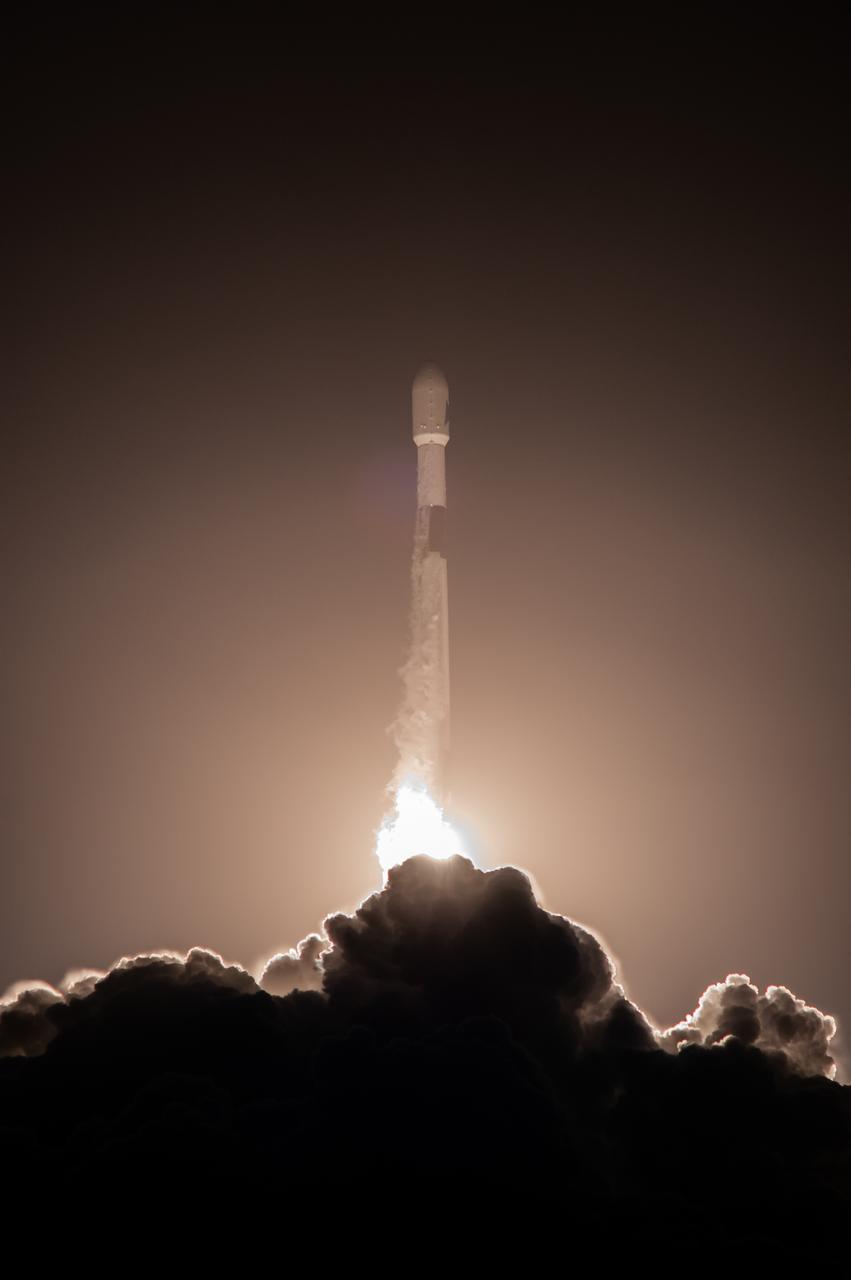
NASA’s PACE (Plankton, Aerosol, Cloud, ocean Ecosystem) spacecraft, atop a SpaceX Falcon 9 rocket, successfully lifts off from Space Launch Complex 40 at Cape Canaveral Space Force Station in Florida at 1:33 a.m. EST Thursday, Feb. 8. PACE is NASA’s newest earth-observing satellite that will help increase our understanding of Earth’s oceans, atmosphere, and climate by delivering hyperspectral observations of microscopic marine organisms called phytoplankton, as well new data on clouds and aerosols.
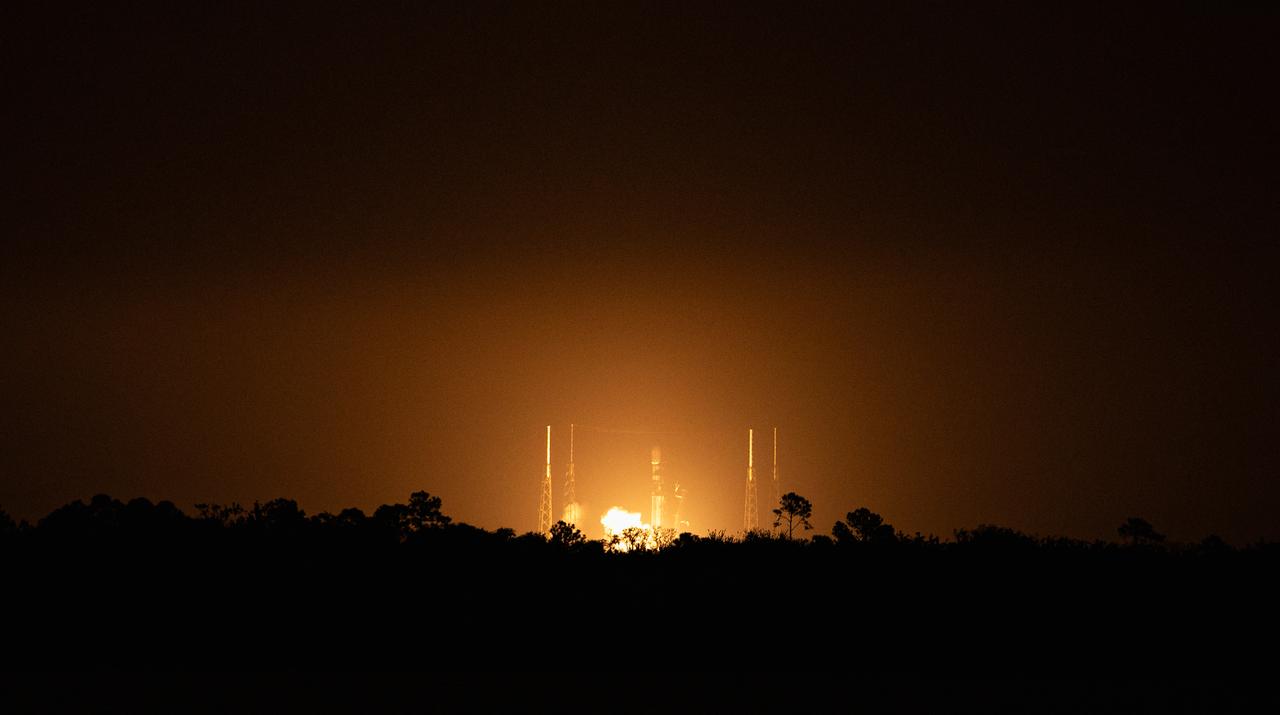
NASA’s PACE (Plankton, Aerosol, Cloud, ocean Ecosystem) spacecraft, atop a SpaceX Falcon 9 rocket, successfully lifts off from Space Launch Complex 40 at Cape Canaveral Space Force Station in Florida at 1:33 a.m. EST Thursday, Feb. 8. PACE is NASA’s newest earth-observing satellite that will help increase our understanding of Earth’s oceans, atmosphere, and climate by delivering hyperspectral observations of microscopic marine organisms called phytoplankton, as well new data on clouds and aerosols.
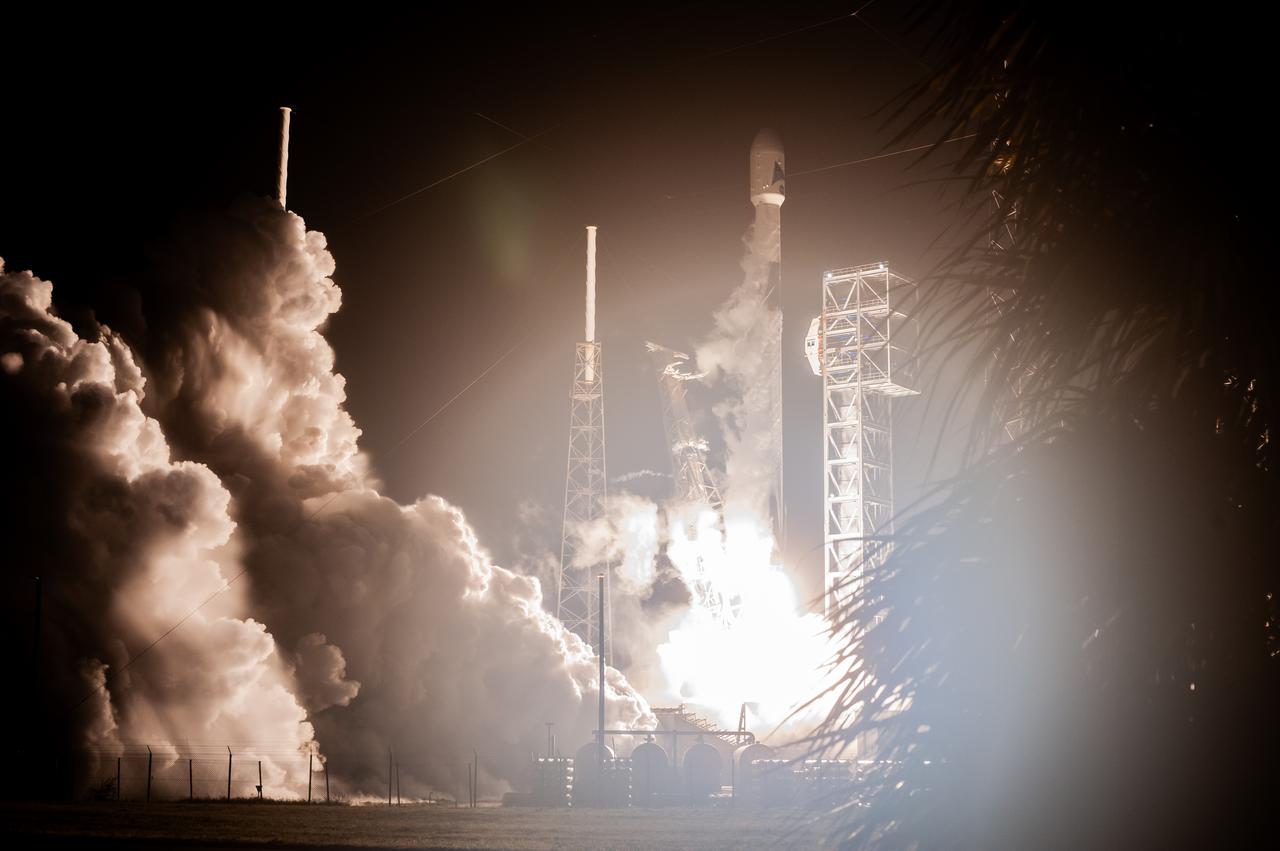
NASA’s PACE (Plankton, Aerosol, Cloud, ocean Ecosystem) spacecraft, atop a SpaceX Falcon 9 rocket, successfully lifts off from Space Launch Complex 40 at Cape Canaveral Space Force Station in Florida at 1:33 a.m. EST Thursday, Feb. 8. PACE is NASA’s newest earth-observing satellite that will help increase our understanding of Earth’s oceans, atmosphere, and climate by delivering hyperspectral observations of microscopic marine organisms called phytoplankton, as well new data on clouds and aerosols.
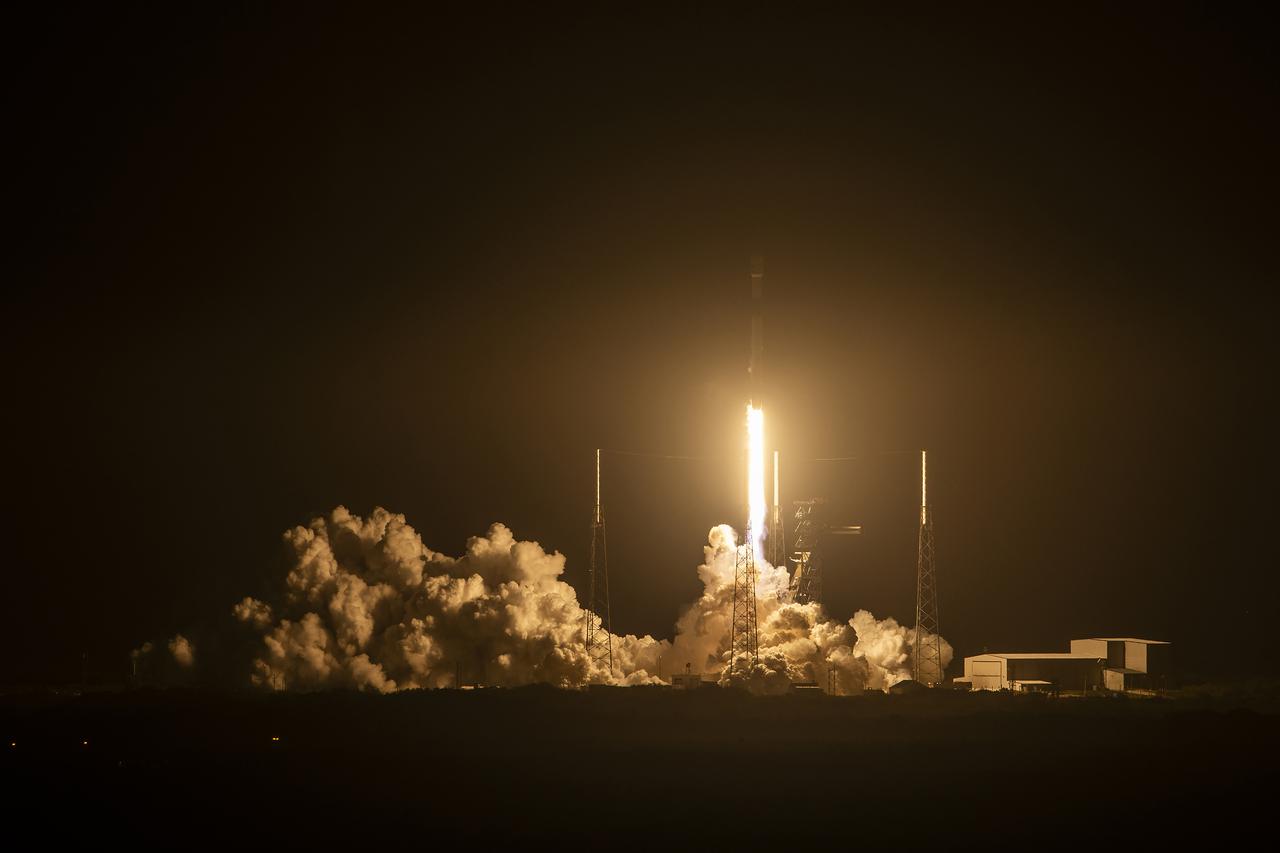
NASA’s PACE (Plankton, Aerosol, Cloud, ocean Ecosystem) spacecraft, atop a SpaceX Falcon 9 rocket, successfully lifts off from Space Launch Complex 40 at Cape Canaveral Space Force Station in Florida at 1:33 a.m. EST Thursday, Feb. 8. PACE is NASA’s newest earth-observing satellite that will help increase our understanding of Earth’s oceans, atmosphere, and climate by delivering hyperspectral observations of microscopic marine organisms called phytoplankton, as well new data on clouds and aerosols.
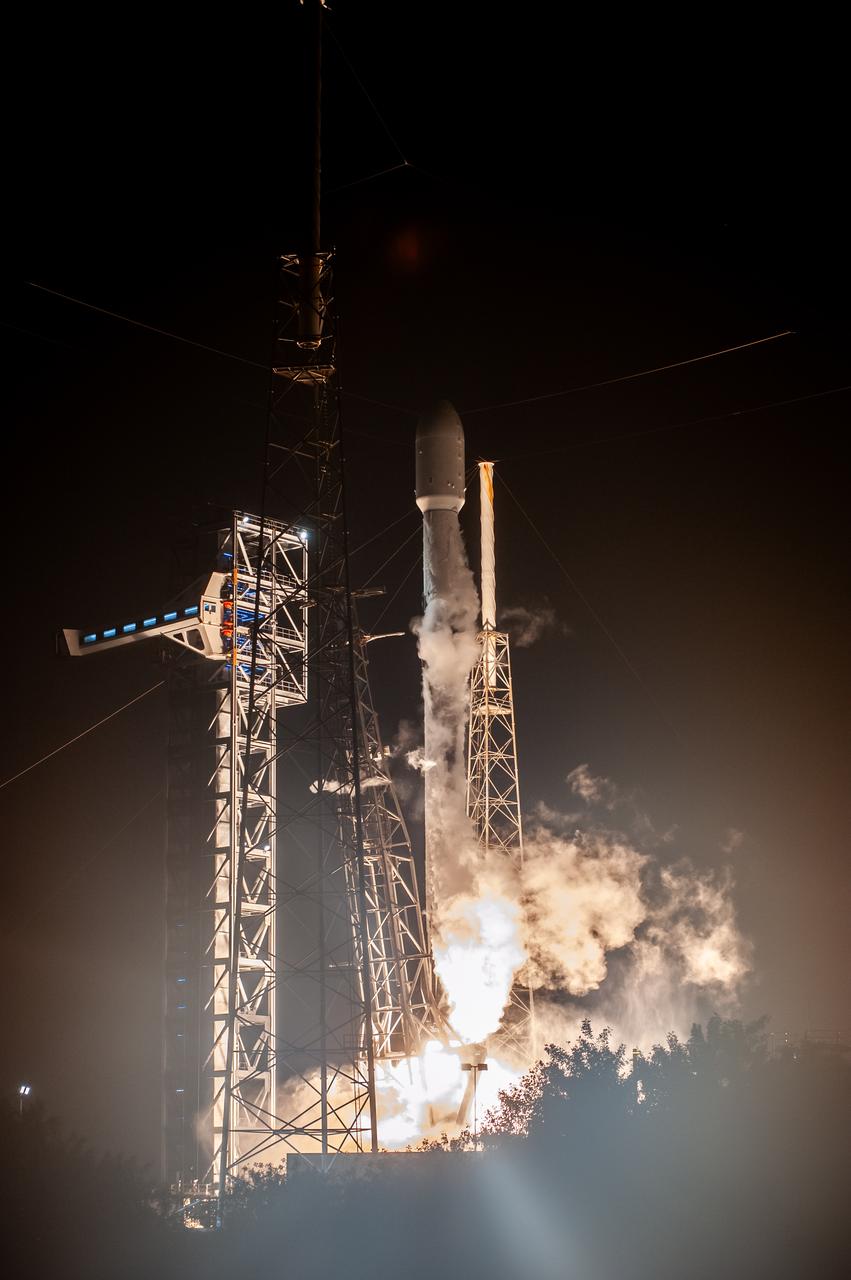
NASA’s PACE (Plankton, Aerosol, Cloud, ocean Ecosystem) spacecraft, atop a SpaceX Falcon 9 rocket, successfully lifts off from Space Launch Complex 40 at Cape Canaveral Space Force Station in Florida at 1:33 a.m. EST Thursday, Feb. 8. PACE is NASA’s newest earth-observing satellite that will help increase our understanding of Earth’s oceans, atmosphere, and climate by delivering hyperspectral observations of microscopic marine organisms called phytoplankton, as well new data on clouds and aerosols.
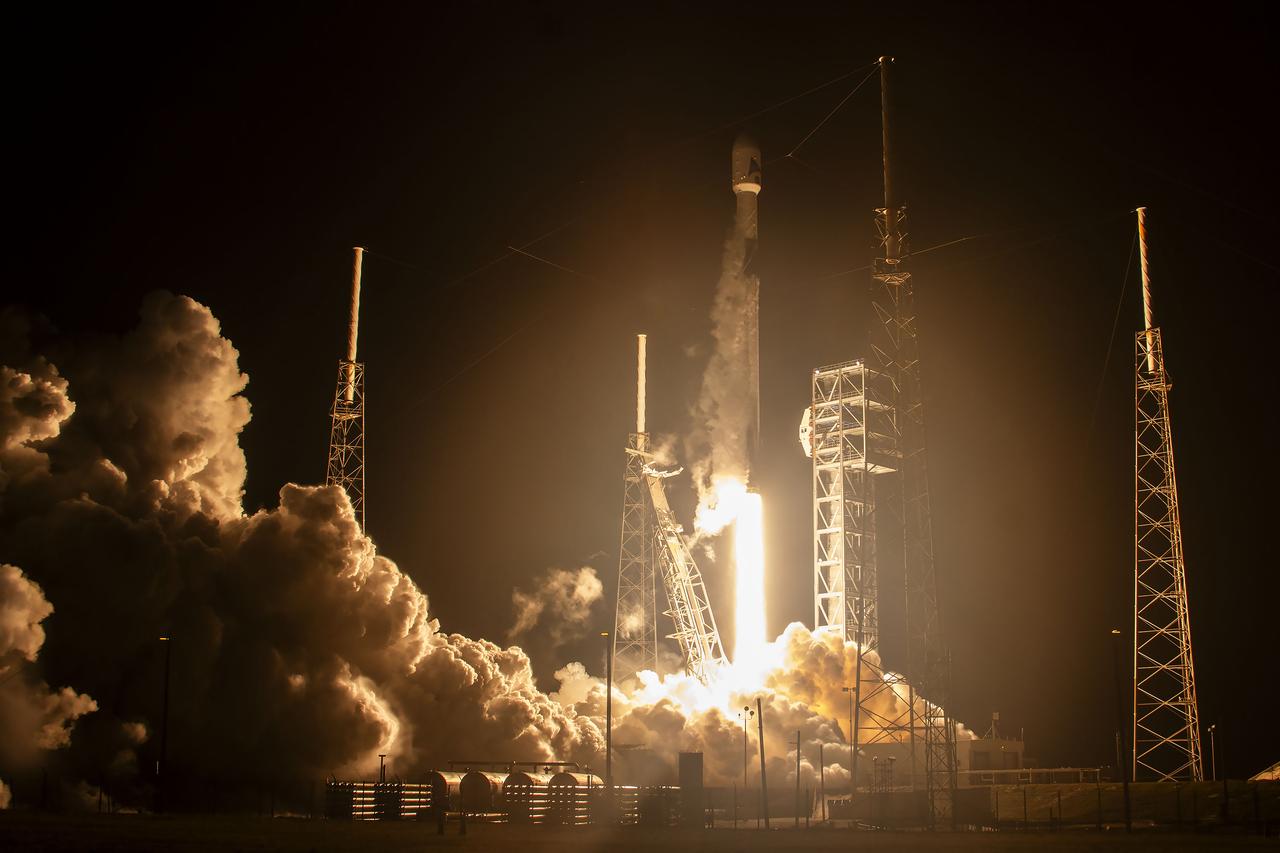
NASA’s PACE (Plankton, Aerosol, Cloud, ocean Ecosystem) spacecraft, atop a SpaceX Falcon 9 rocket, successfully lifts off from Space Launch Complex 40 at Cape Canaveral Space Force Station in Florida at 1:33 a.m. EST Thursday, Feb. 8. PACE is NASA’s newest earth-observing satellite that will help increase our understanding of Earth’s oceans, atmosphere, and climate by delivering hyperspectral observations of microscopic marine organisms called phytoplankton, as well new data on clouds and aerosols.
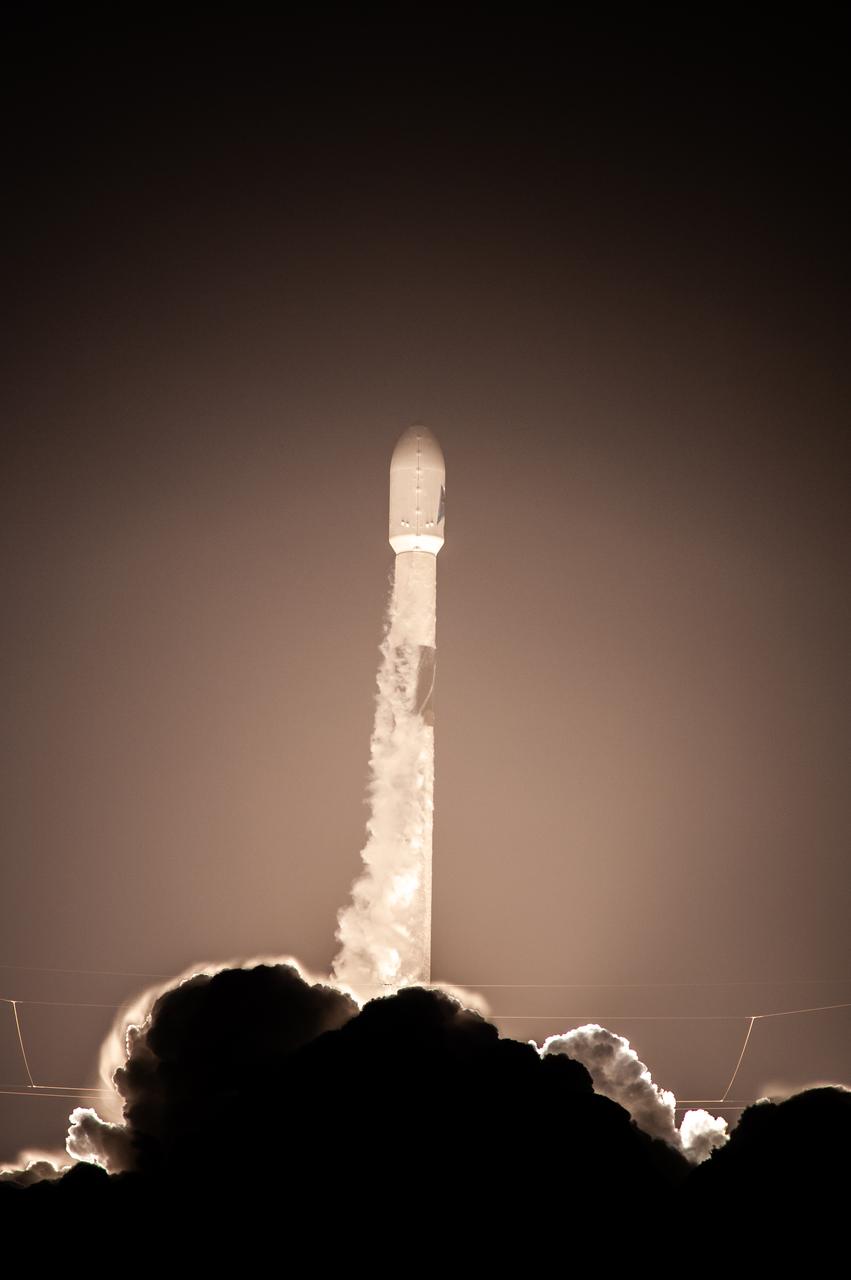
NASA’s PACE (Plankton, Aerosol, Cloud, ocean Ecosystem) spacecraft, atop a SpaceX Falcon 9 rocket, successfully lifts off from Space Launch Complex 40 at Cape Canaveral Space Force Station in Florida at 1:33 a.m. EST Thursday, Feb. 8. PACE is NASA’s newest earth-observing satellite that will help increase our understanding of Earth’s oceans, atmosphere, and climate by delivering hyperspectral observations of microscopic marine organisms called phytoplankton, as well new data on clouds and aerosols.
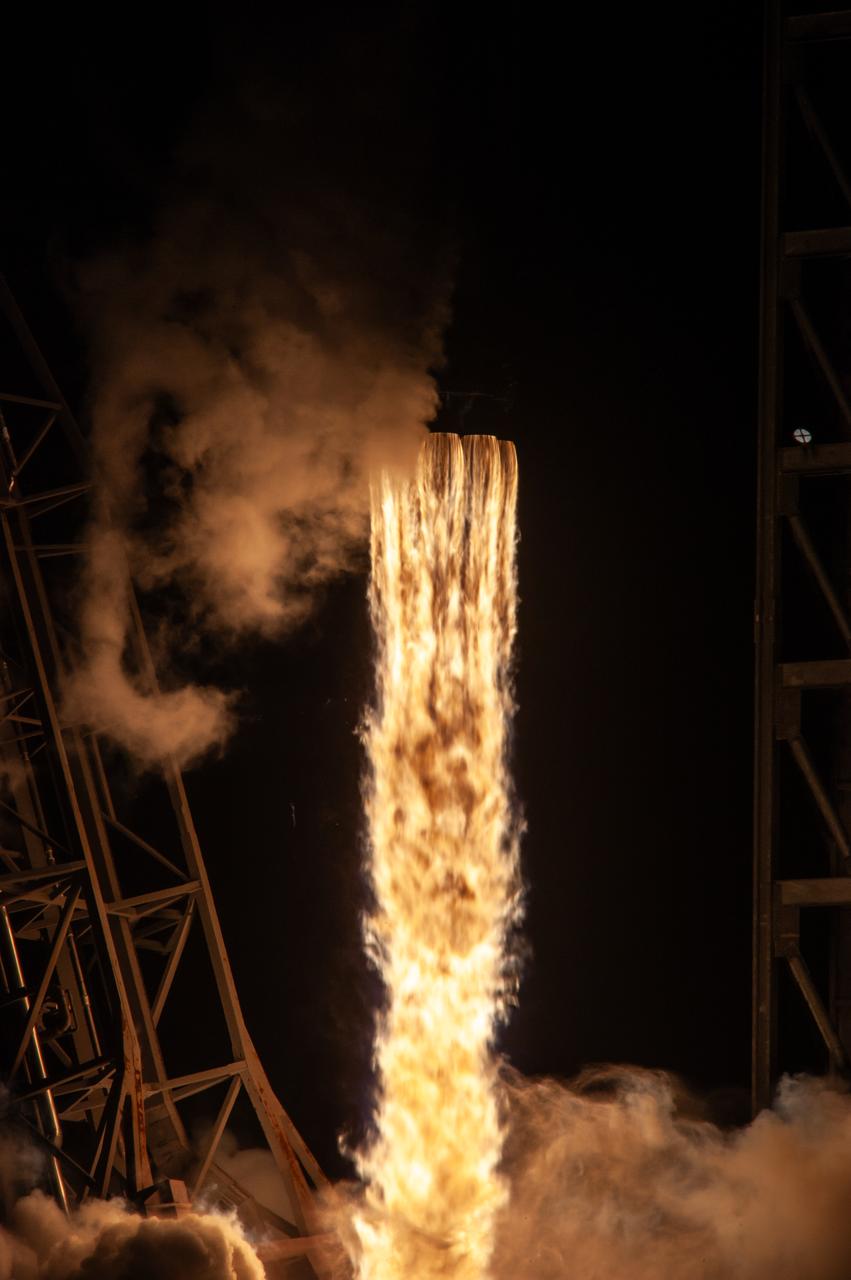
NASA’s PACE (Plankton, Aerosol, Cloud, ocean Ecosystem) spacecraft, atop a SpaceX Falcon 9 rocket, successfully lifts off from Space Launch Complex 40 at Cape Canaveral Space Force Station in Florida at 1:33 a.m. EST Thursday, Feb. 8. PACE is NASA’s newest earth-observing satellite that will help increase our understanding of Earth’s oceans, atmosphere, and climate by delivering hyperspectral observations of microscopic marine organisms called phytoplankton, as well new data on clouds and aerosols.
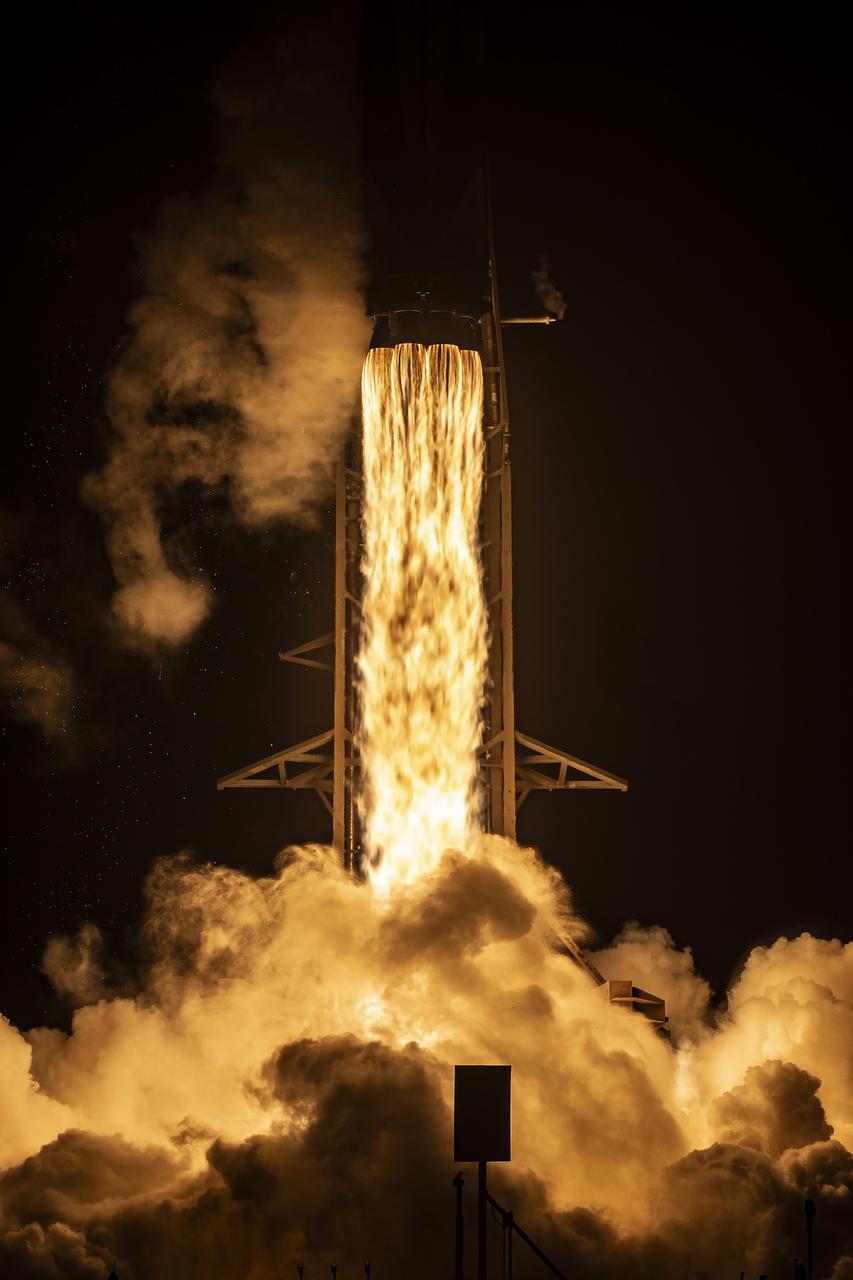
NASA’s PACE (Plankton, Aerosol, Cloud, ocean Ecosystem) spacecraft, atop a SpaceX Falcon 9 rocket, successfully lifts off from Space Launch Complex 40 at Cape Canaveral Space Force Station in Florida at 1:33 a.m. EST Thursday, Feb. 8. PACE is NASA’s newest earth-observing satellite that will help increase our understanding of Earth’s oceans, atmosphere, and climate by delivering hyperspectral observations of microscopic marine organisms called phytoplankton, as well new data on clouds and aerosols.
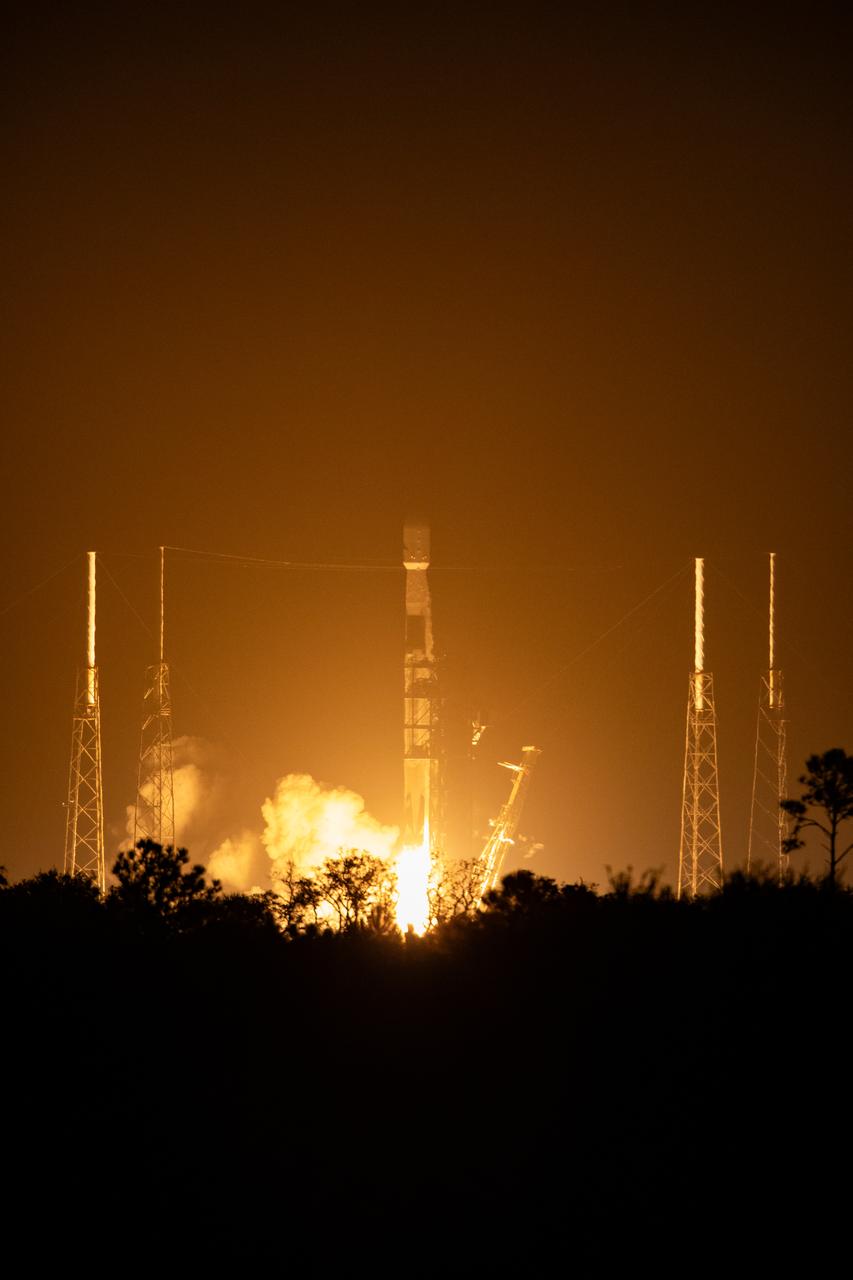
NASA’s PACE (Plankton, Aerosol, Cloud, ocean Ecosystem) spacecraft, atop a SpaceX Falcon 9 rocket, successfully lifts off from Space Launch Complex 40 at Cape Canaveral Space Force Station in Florida at 1:33 a.m. EST Thursday, Feb. 8. PACE is NASA’s newest earth-observing satellite that will help increase our understanding of Earth’s oceans, atmosphere, and climate by delivering hyperspectral observations of microscopic marine organisms called phytoplankton, as well new data on clouds and aerosols.
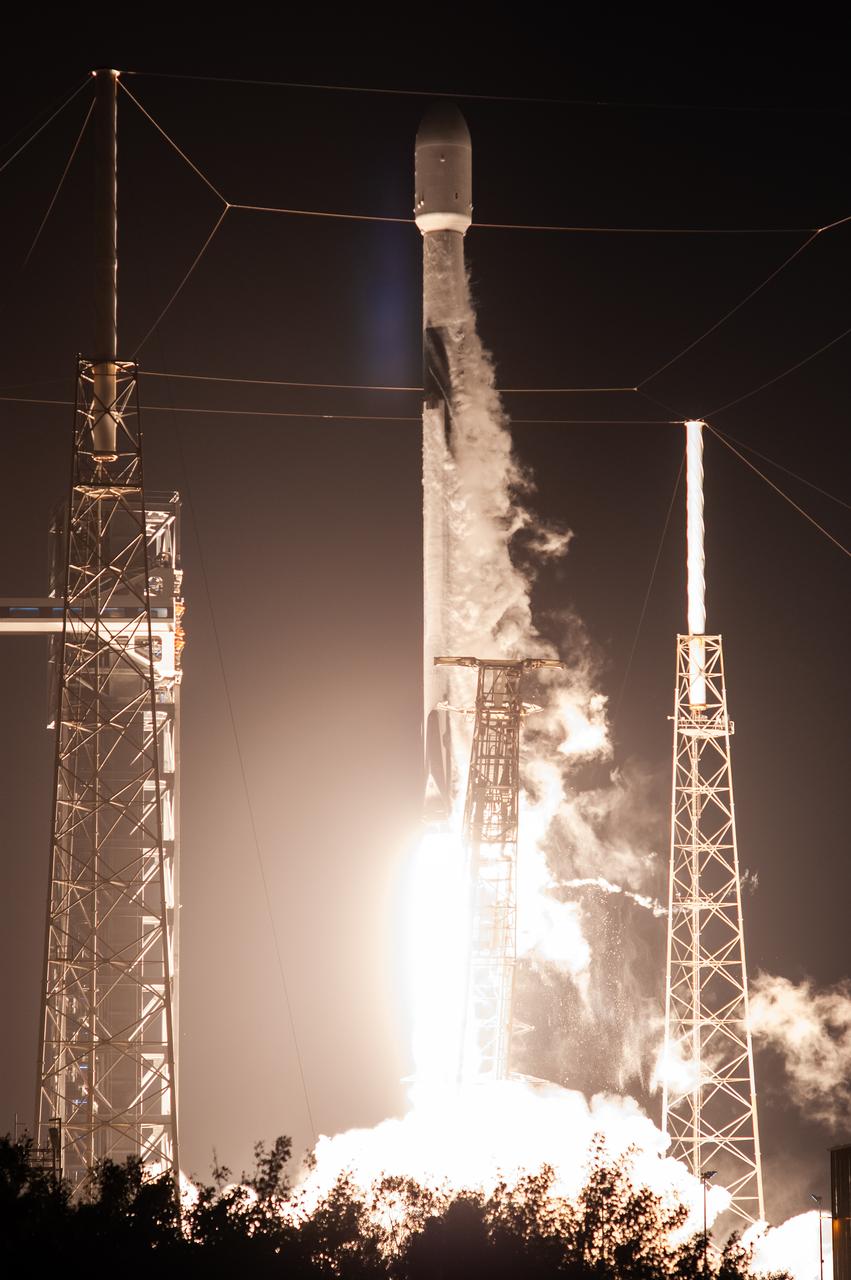
NASA’s PACE (Plankton, Aerosol, Cloud, ocean Ecosystem) spacecraft, atop a SpaceX Falcon 9 rocket, successfully lifts off from Space Launch Complex 40 at Cape Canaveral Space Force Station in Florida at 1:33 a.m. EST Thursday, Feb. 8. PACE is NASA’s newest earth-observing satellite that will help increase our understanding of Earth’s oceans, atmosphere, and climate by delivering hyperspectral observations of microscopic marine organisms called phytoplankton, as well new data on clouds and aerosols.
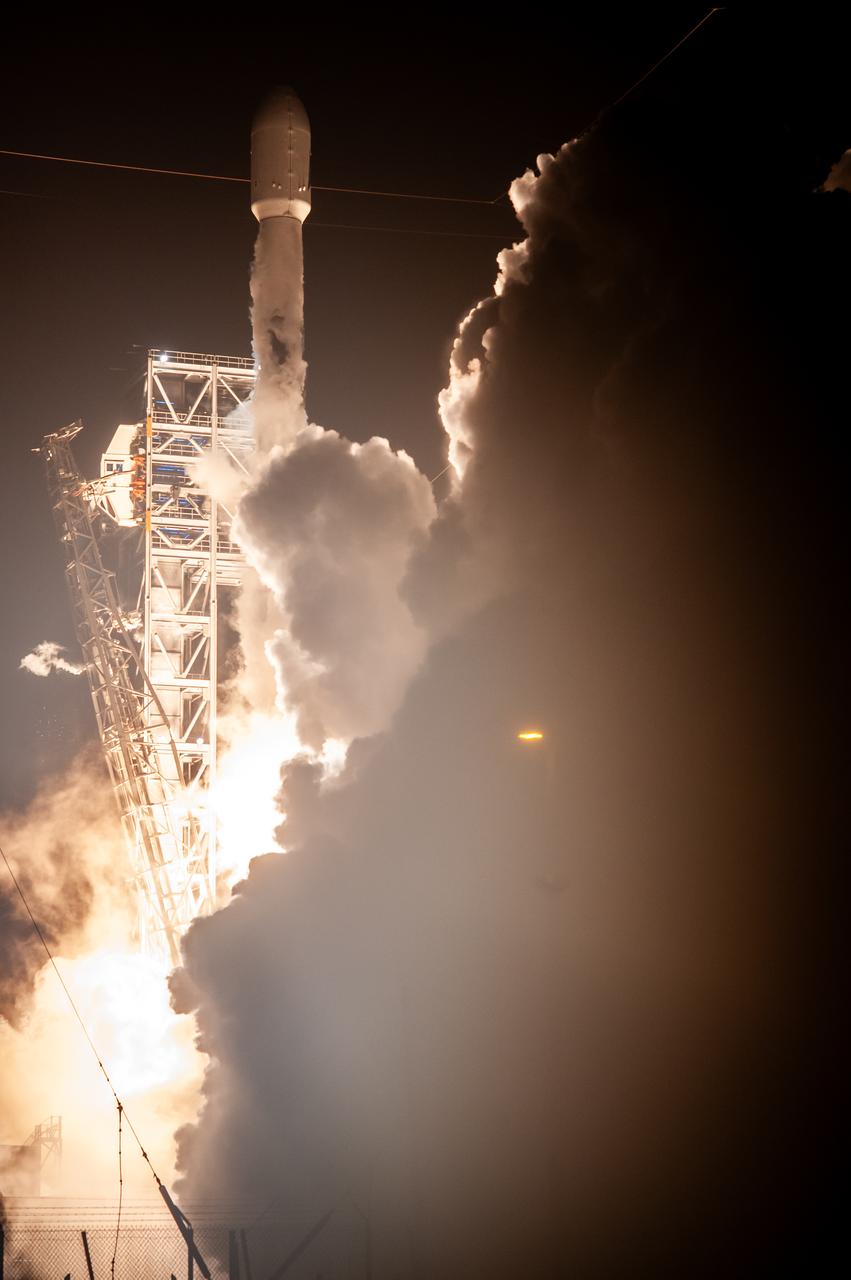
NASA’s PACE (Plankton, Aerosol, Cloud, ocean Ecosystem) spacecraft, atop a SpaceX Falcon 9 rocket, successfully lifts off from Space Launch Complex 40 at Cape Canaveral Space Force Station in Florida at 1:33 a.m. EST Thursday, Feb. 8. PACE is NASA’s newest earth-observing satellite that will help increase our understanding of Earth’s oceans, atmosphere, and climate by delivering hyperspectral observations of microscopic marine organisms called phytoplankton, as well new data on clouds and aerosols.
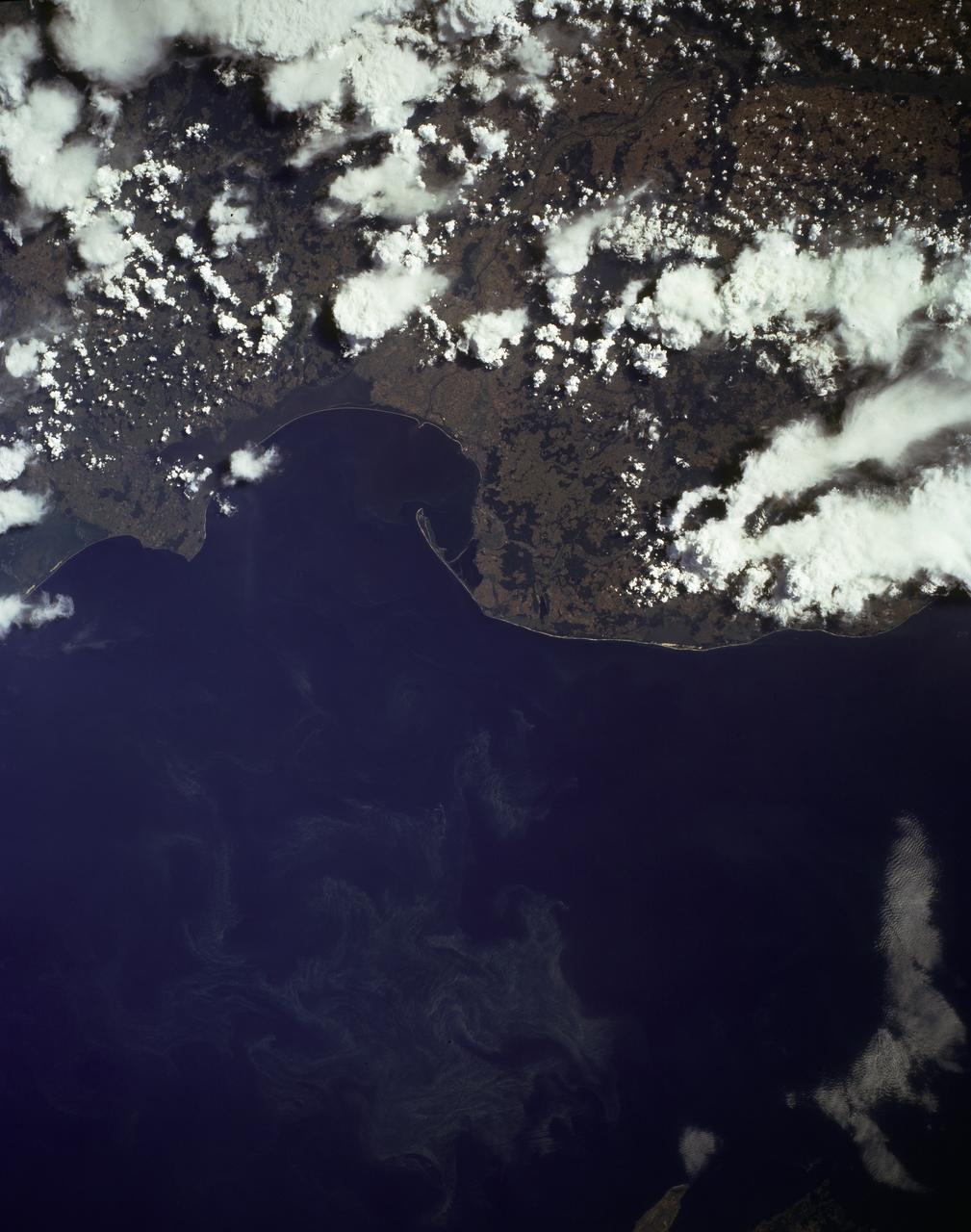
STS085-502-104 (7 - 19 August 1997) --- The abundant plankton, microscopic organisms, are taking the shape of the currents in the Baltic Sea offshore from Gdansk, Poland. Plankton blooms occur when there is enough nutrient in the water to support rapid growth and reproduction of the microorganisms. Gdansk is situated at the mouth of the Vistula River on the north coast of Poland. It is a major industrial center for shipyards, metallurgical and chemical plants, timber mills, food-processing facilities and more recently (since 1975) for coal exports and petroleum imports.
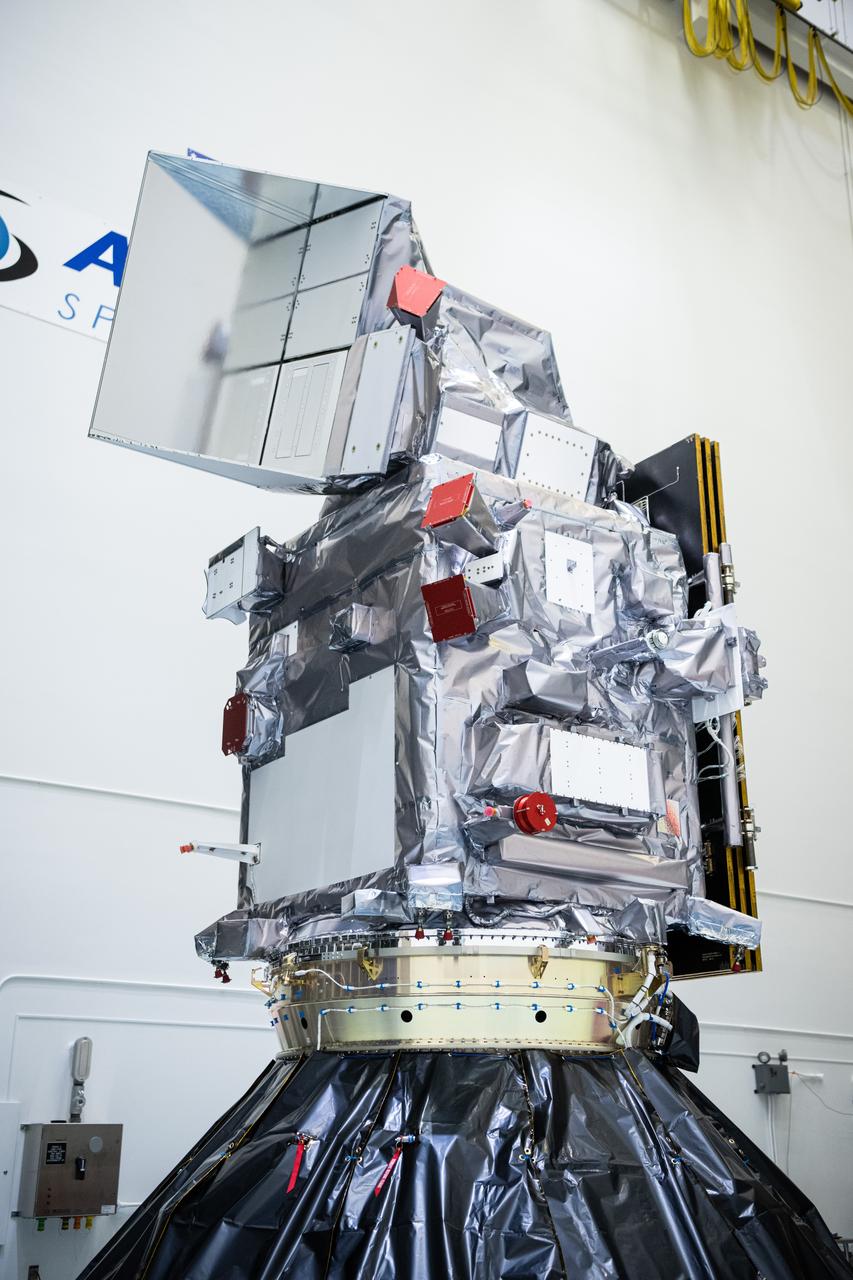
NASA and SpaceX technicians connect NASA’s PACE (Plankton, Aerosol, Cloud, ocean Ecosystem) spacecraft to the payload adapter on Friday, Jan. 26, 2024, at the Astrotech Space Operations Facility near the agency’s Kennedy Space Center in Florida. PACE is NASA’s newest earth-observing satellite that will help increase our understanding of Earth’s oceans, atmosphere, and climate by delivering hyperspectral observations of microscopic marine organisms called phytoplankton as well new data on clouds and aerosols. PACE is set to launch from Space Launch Complex 40 at Cape Canaveral Space Force Station in Florida at 1:33 a.m. EST on Tuesday, Feb. 6.
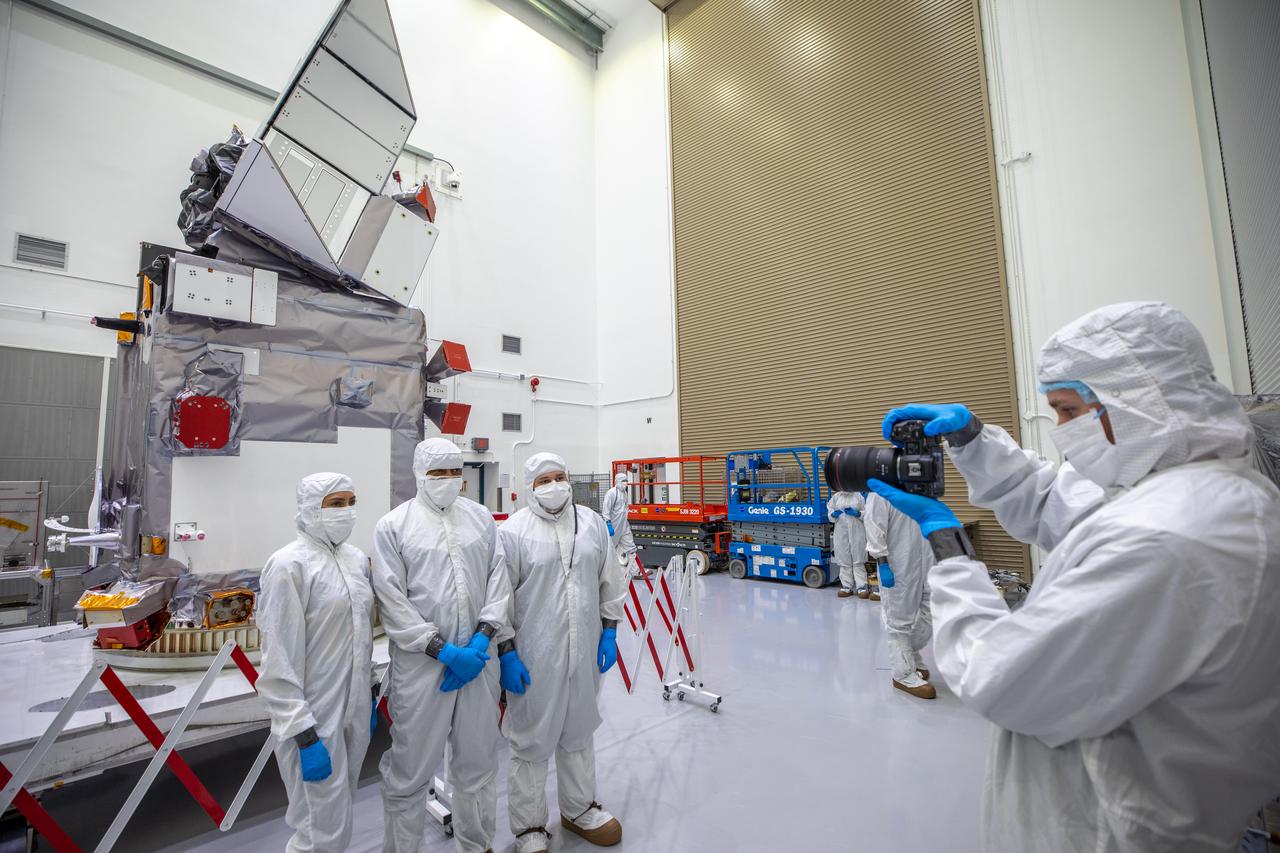
Members of NASA’s PACE (Plankton, Aerosol, Cloud, ocean Ecosystem) team are photographed with the spacecraft on Wednesday, Jan. 3, 2024, during a NASA-hosted media day inside a cleanroom at the Astrotech Space Operations Facility near NASA’s Kennedy Space Center in Florida. PACE will collect data on how the ocean and atmosphere exchange carbon dioxide, measure key atmospheric variables associated with air quality and Earth's climate, and monitor ocean health. PACE is set to launch aboard a SpaceX Falcon 9 rocket no earlier than Tuesday, Feb. 6, 2024, from Space Launch Complex 40 at Cape Canaveral Space Force Station in Florida.

A SpaceX Falcon 9 rocket with NASA’s PACE (Plankton, Aerosol, Cloud, ocean Ecosystem) spacecraft encapsulated atop is raised to a vertical position at Space Launch Complex 40 at Cape Canaveral Space Force Station in Florida on Monday, Feb. 5, 2024. PACE is NASA’s newest earth-observing satellite that will help increase our understanding of Earth’s oceans, atmosphere, and climate by delivering hyperspectral observations of microscopic marine organisms called phytoplankton as well new data on clouds and aerosols. Liftoff of the PACE mission is set for no earlier than 1:33 a.m. EST on Tuesday, Feb. 6, 2024.

A SpaceX Falcon 9 rocket with NASA’s PACE (Plankton, Aerosol, Cloud, ocean Ecosystem) spacecraft stands vertical at Space Launch Complex 40 at Cape Canaveral Space Force Station in Florida on Monday, Feb. 5, 2024. PACE is NASA’s newest earth-observing satellite that will help increase our understanding of Earth’s oceans, atmosphere, and climate by delivering hyperspectral observations of microscopic marine organisms called phytoplankton as well new data on clouds and aerosols. Liftoff of the PACE mission is set for no earlier than 1:33 a.m. EST on Wednesday, Feb. 7, 2024.
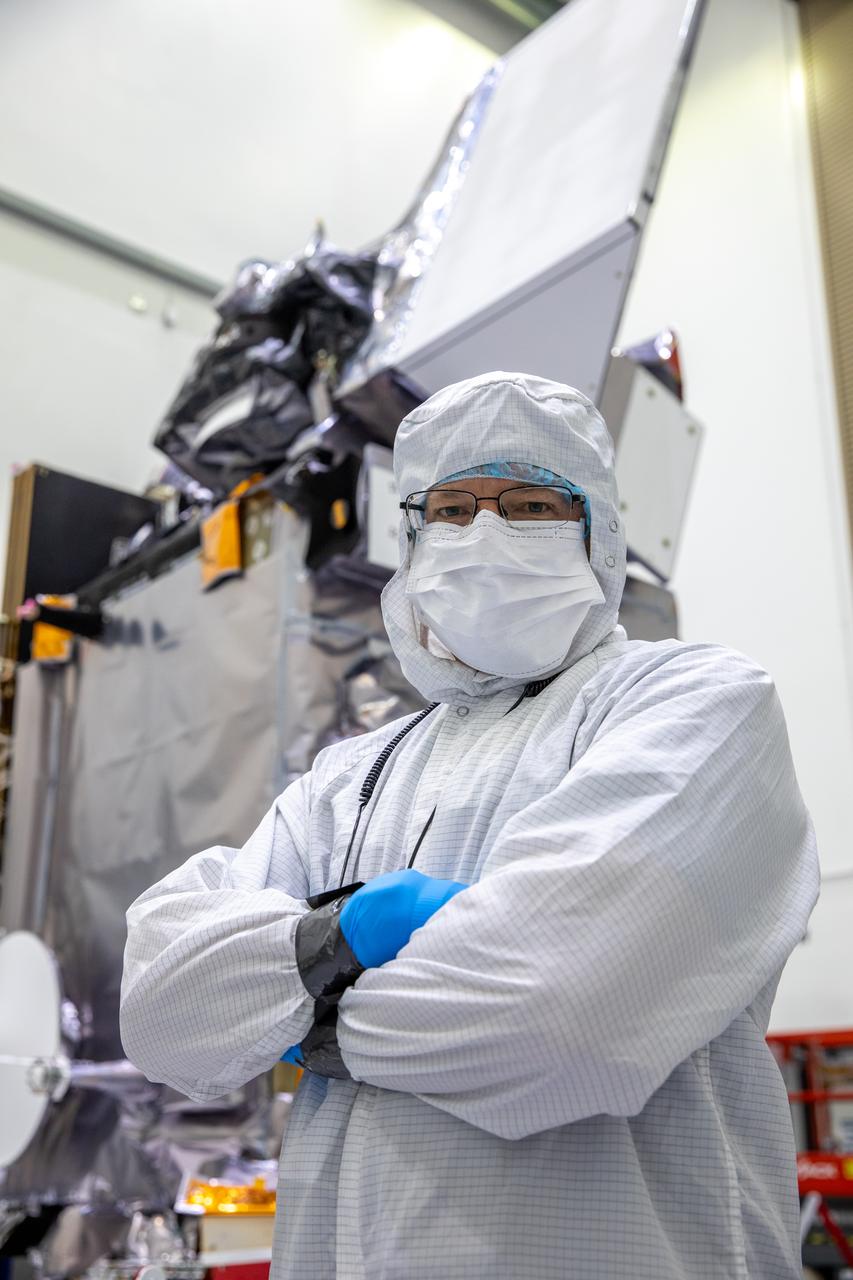
Gary Davis, PACE Mission Systems Engineer, participated in a NASA-hosted media day for the agency’s PACE (Plankton, Aerosol, Cloud, ocean Ecosystem) spacecraft on Wednesday, Jan. 3, 2024, inside a cleanroom at the Astrotech Space Operations Facility near NASA’s Kennedy Space Center in Florida. PACE will collect data on how the ocean and atmosphere exchange carbon dioxide, measure key atmospheric variables associated with air quality and Earth's climate, and monitor ocean health. PACE is set to launch aboard a SpaceX Falcon 9 rocket no earlier than Tuesday, Feb. 6, 2024, from Space Launch Complex 40 at Cape Canaveral Space Force Station in Florida.
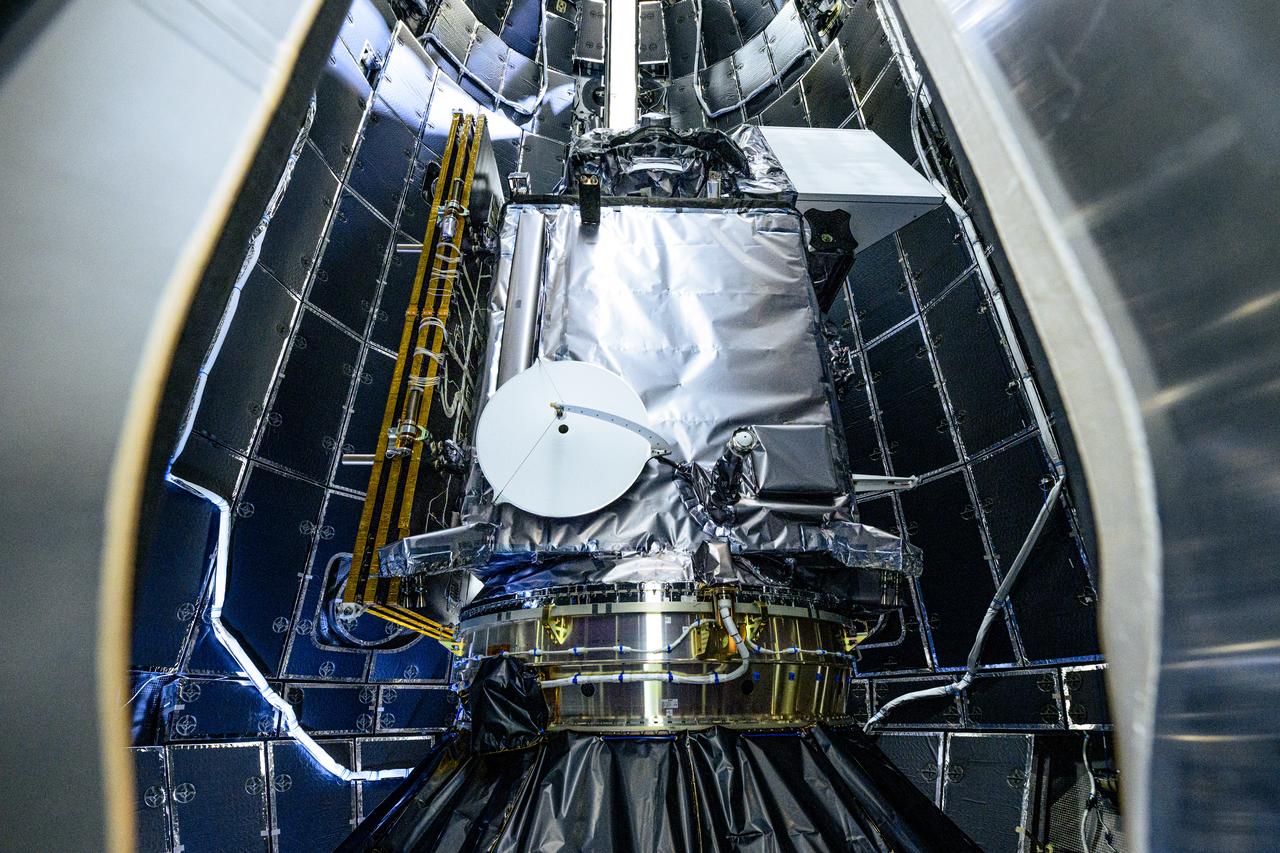
NASA and SpaceX technicians safely encapsulate NASA’s PACE (Plankton, Aerosol, Cloud, ocean Ecosystem) spacecraft in SpaceX’s Falcon 9 payload fairings on Tuesday, Jan. 30, 2024, at the Astrotech Space Operations Facility near the agency’s Kennedy Space Center in Florida. The fairing halves protect the spacecraft from aerodynamic pressure and heating during the ascent phase of launch. PACE is set to launch from Space Launch Complex 40 at Cape Canaveral Space Force Station in Florida no earlier than 1:33 a.m. EST on Tuesday, Feb. 6, 2024.
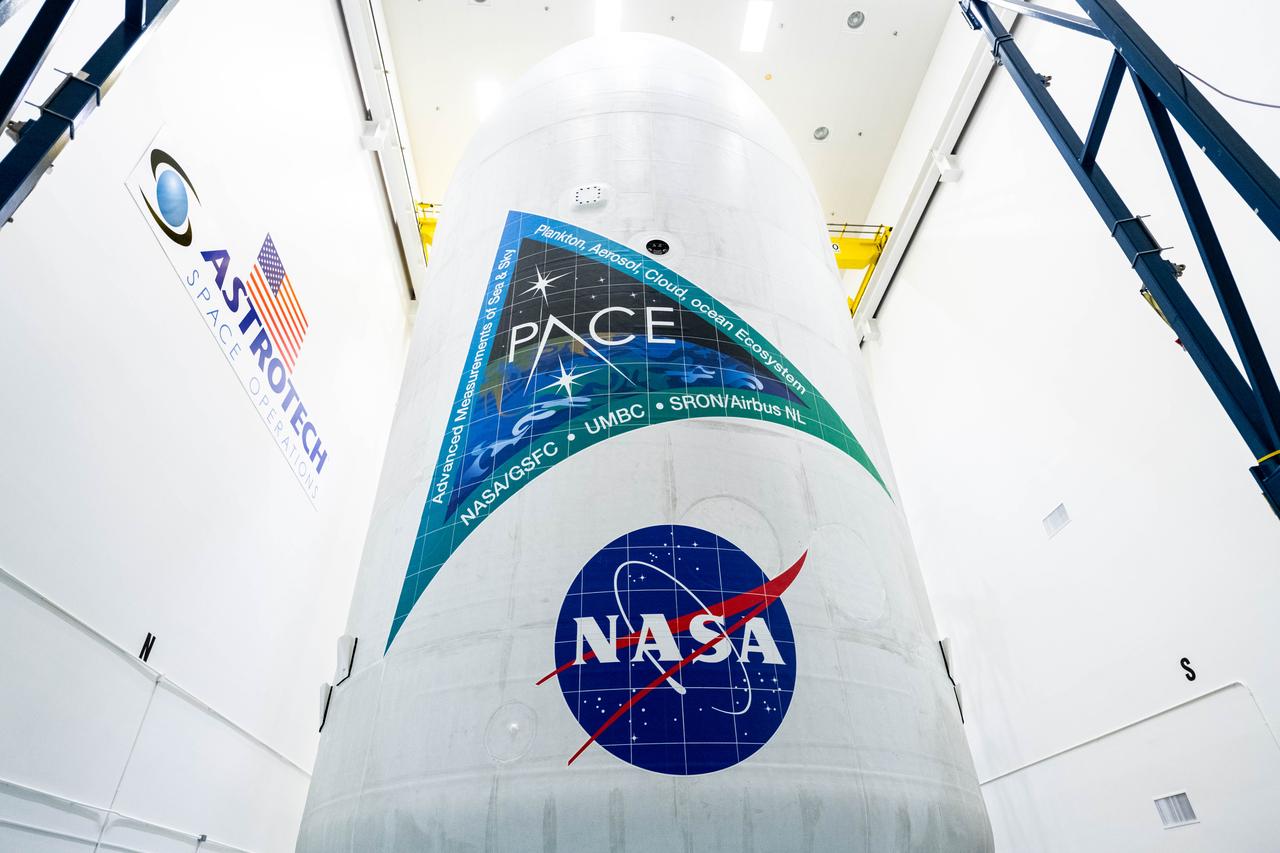
NASA and SpaceX technicians safely encapsulate NASA’s PACE (Plankton, Aerosol, Cloud, ocean Ecosystem) spacecraft in SpaceX’s Falcon 9 payload fairings on Wednesday, Jan. 30, 2024, at the Astrotech Space Operations Facility near the agency’s Kennedy Space Center in Florida. The fairing halves protect the spacecraft from aerodynamic pressure and heating during the ascent phase of launch. PACE is set to launch from Space Launch Complex 40 at Cape Canaveral Space Force Station in Florida no earlier than 1:33 a.m. EST on Tuesday, Feb. 6, 2024.
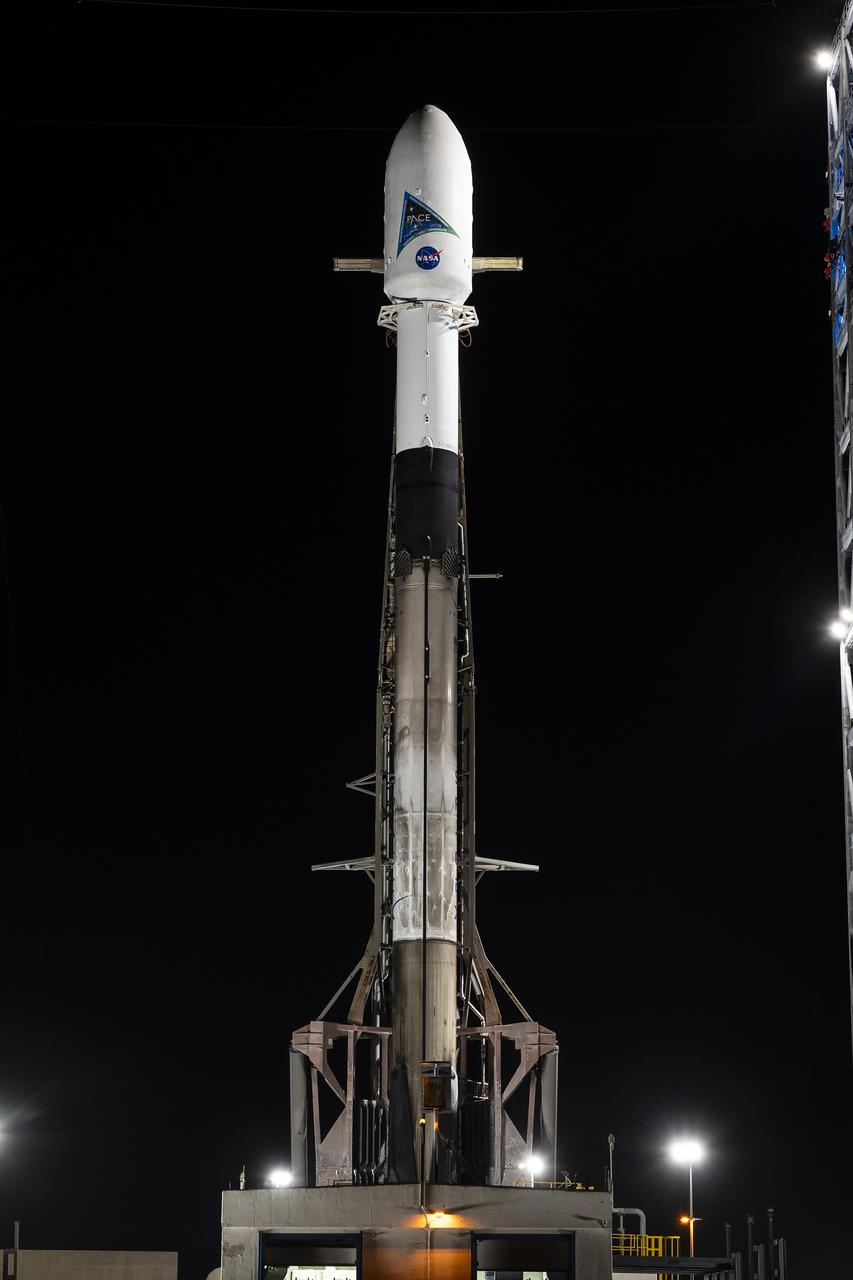
A SpaceX Falcon 9 rocket with NASA’s PACE (Plankton, Aerosol, Cloud, ocean Ecosystem) spacecraft encapsulated atop is raised to a vertical position at Space Launch Complex 40 at Cape Canaveral Space Force Station in Florida on Monday, Feb. 5, 2024. PACE is NASA’s newest earth-observing satellite that will help increase our understanding of Earth’s oceans, atmosphere, and climate by delivering hyperspectral observations of microscopic marine organisms called phytoplankton as well new data on clouds and aerosols. Liftoff of the PACE mission is set for no earlier than 1:33 a.m. EST on Tuesday, Feb. 6, 2024.

A SpaceX Falcon 9 rocket with NASA’s PACE (Plankton, Aerosol, Cloud, ocean Ecosystem) spacecraft stands vertical at Space Launch Complex 40 at Cape Canaveral Space Force Station in Florida on Monday, Feb. 5, 2024. PACE is NASA’s newest earth-observing satellite that will help increase our understanding of Earth’s oceans, atmosphere, and climate by delivering hyperspectral observations of microscopic marine organisms called phytoplankton as well new data on clouds and aerosols. Liftoff of the PACE mission is set for no earlier than 1:33 a.m. EST on Wednesday, Feb. 7, 2024.
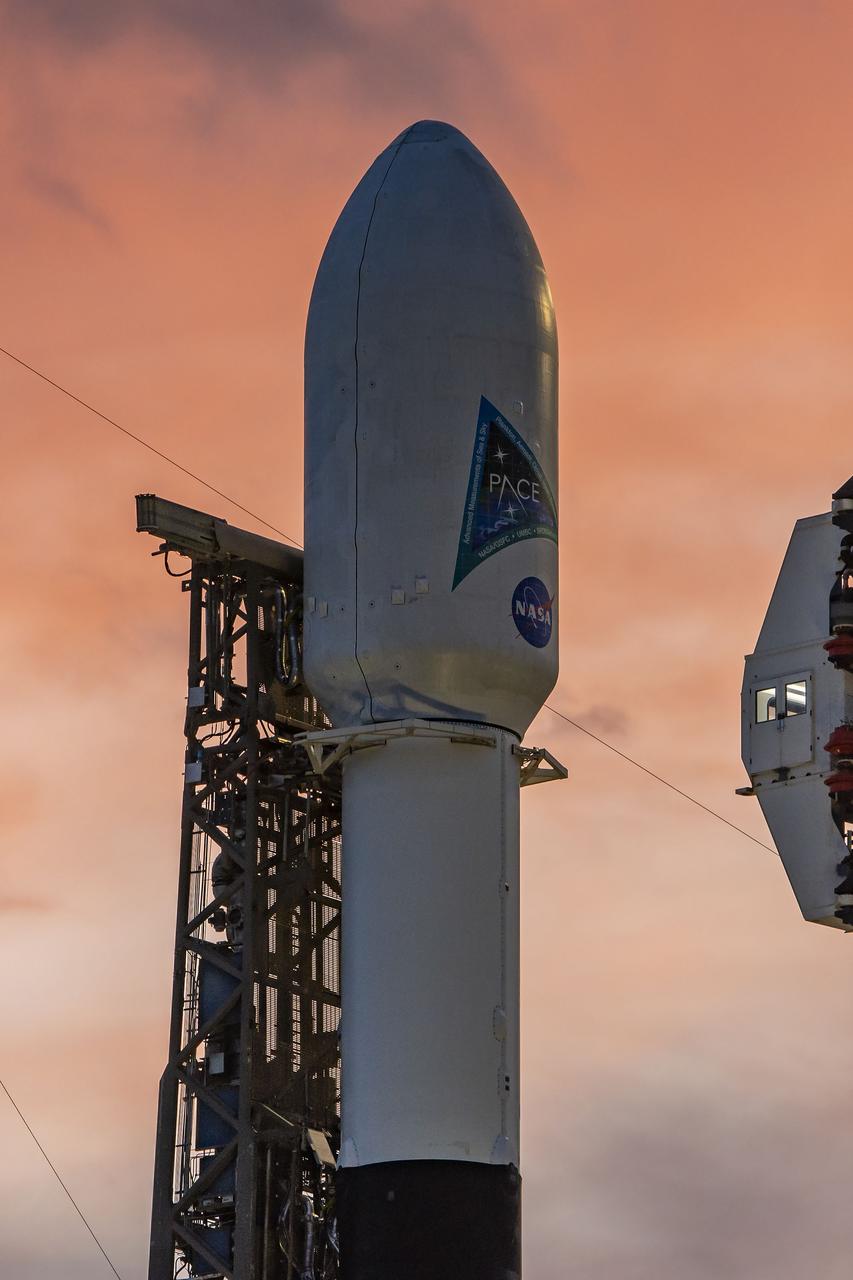
A SpaceX Falcon 9 rocket with NASA’s PACE (Plankton, Aerosol, Cloud, ocean Ecosystem) spacecraft stands vertical at Space Launch Complex 40 at Cape Canaveral Space Force Station in Florida on Monday, Feb. 5, 2024. PACE is NASA’s newest earth-observing satellite that will help increase our understanding of Earth’s oceans, atmosphere, and climate by delivering hyperspectral observations of microscopic marine organisms called phytoplankton as well new data on clouds and aerosols. Liftoff of the PACE mission is set for no earlier than 1:33 a.m. EST on Wednesday, Feb. 7, 2024.
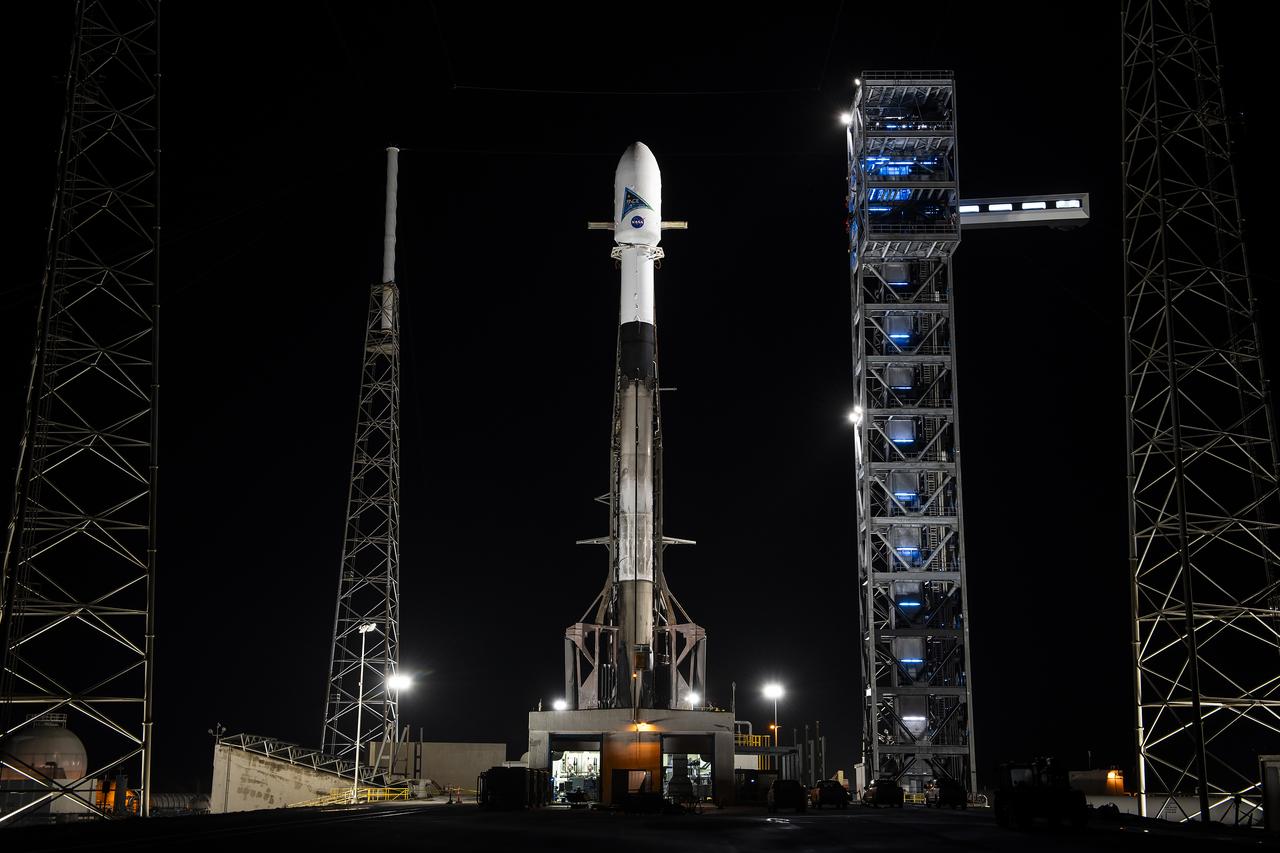
A SpaceX Falcon 9 rocket with NASA’s PACE (Plankton, Aerosol, Cloud, ocean Ecosystem) spacecraft encapsulated atop is raised to a vertical position at Space Launch Complex 40 at Cape Canaveral Space Force Station in Florida on Monday, Feb. 5, 2024. PACE is NASA’s newest earth-observing satellite that will help increase our understanding of Earth’s oceans, atmosphere, and climate by delivering hyperspectral observations of microscopic marine organisms called phytoplankton as well new data on clouds and aerosols. Liftoff of the PACE mission is set for no earlier than 1:33 a.m. EST on Tuesday, Feb. 6, 2024.
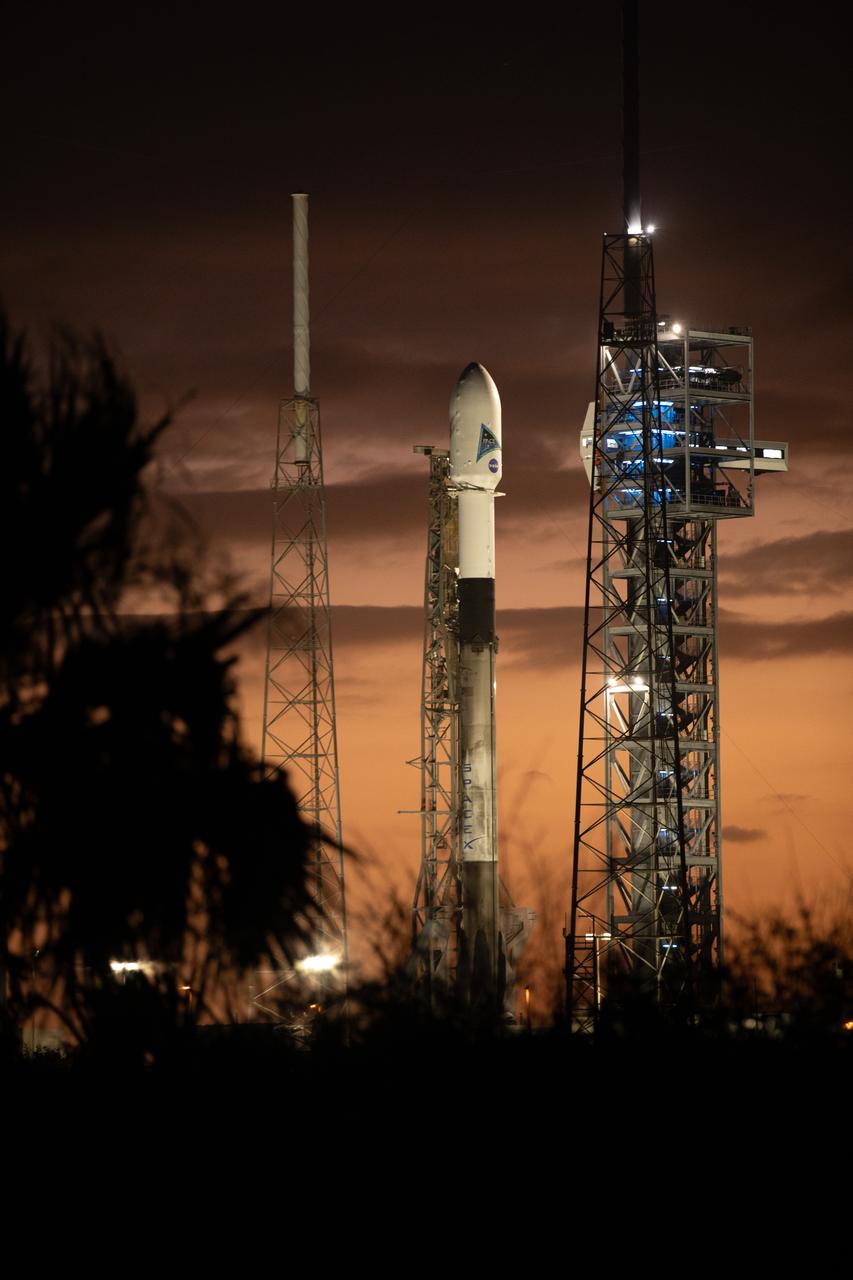
A SpaceX Falcon 9 rocket with NASA’s PACE (Plankton, Aerosol, Cloud, ocean Ecosystem) spacecraft stands vertical at Space Launch Complex 40 at Cape Canaveral Space Force Station in Florida on Tuesday, Feb. 6, 2024. PACE is NASA’s newest earth-observing satellite that will help increase our understanding of Earth’s oceans, atmosphere, and climate by delivering hyperspectral observations of microscopic marine organisms called phytoplankton as well new data on clouds and aerosols. The successful liftoff took place 1:33 a.m. EST Thursday, Feb. 8, 2024.
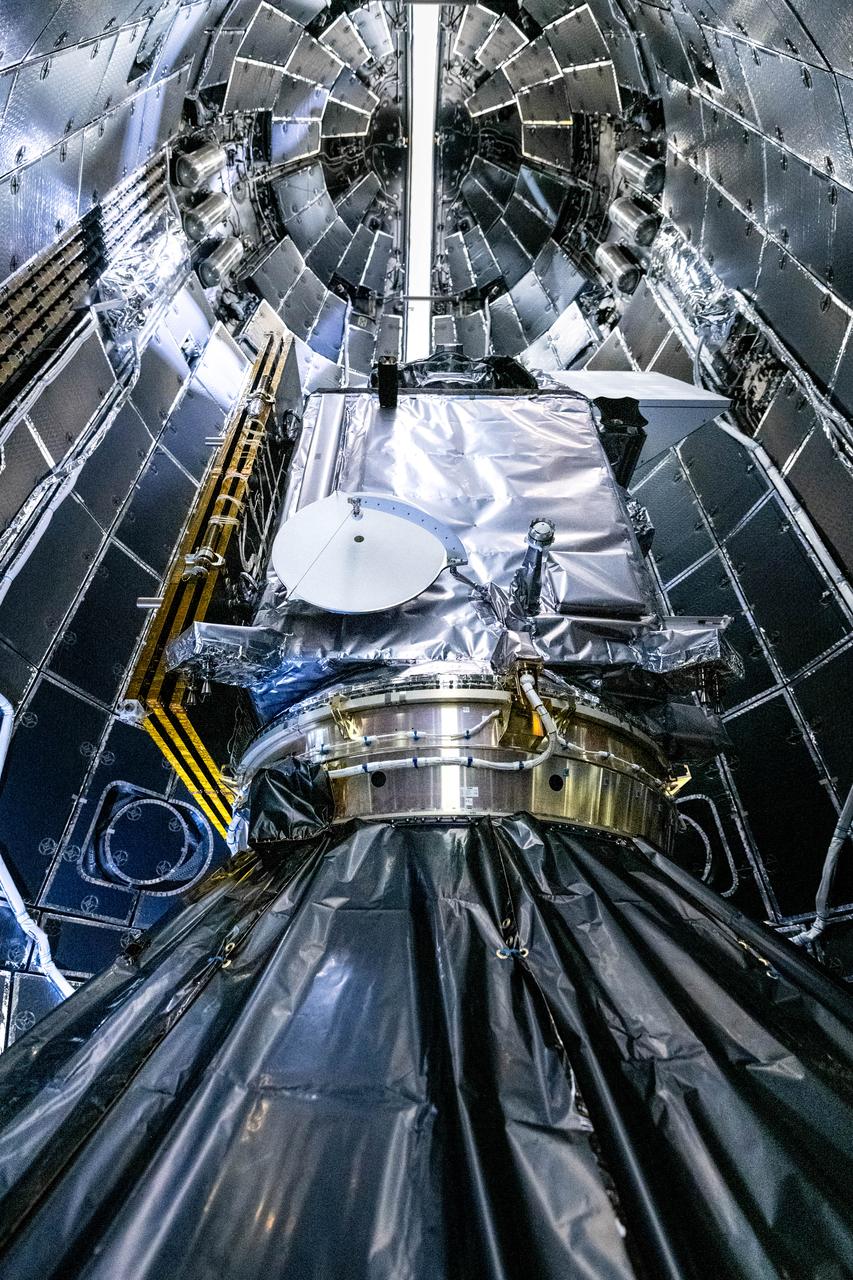
NASA and SpaceX technicians safely encapsulate NASA’s PACE (Plankton, Aerosol, Cloud, ocean Ecosystem) spacecraft in SpaceX’s Falcon 9 payload fairings on Tuesday, Jan. 30, 2024, at the Astrotech Space Operations Facility near the agency’s Kennedy Space Center in Florida. The fairing halves protect the spacecraft from aerodynamic pressure and heating during the ascent phase of launch. PACE is set to launch from Space Launch Complex 40 at Cape Canaveral Space Force Station in Florida no earlier than 1:33 a.m. EST on Tuesday, Feb. 6, 2024.
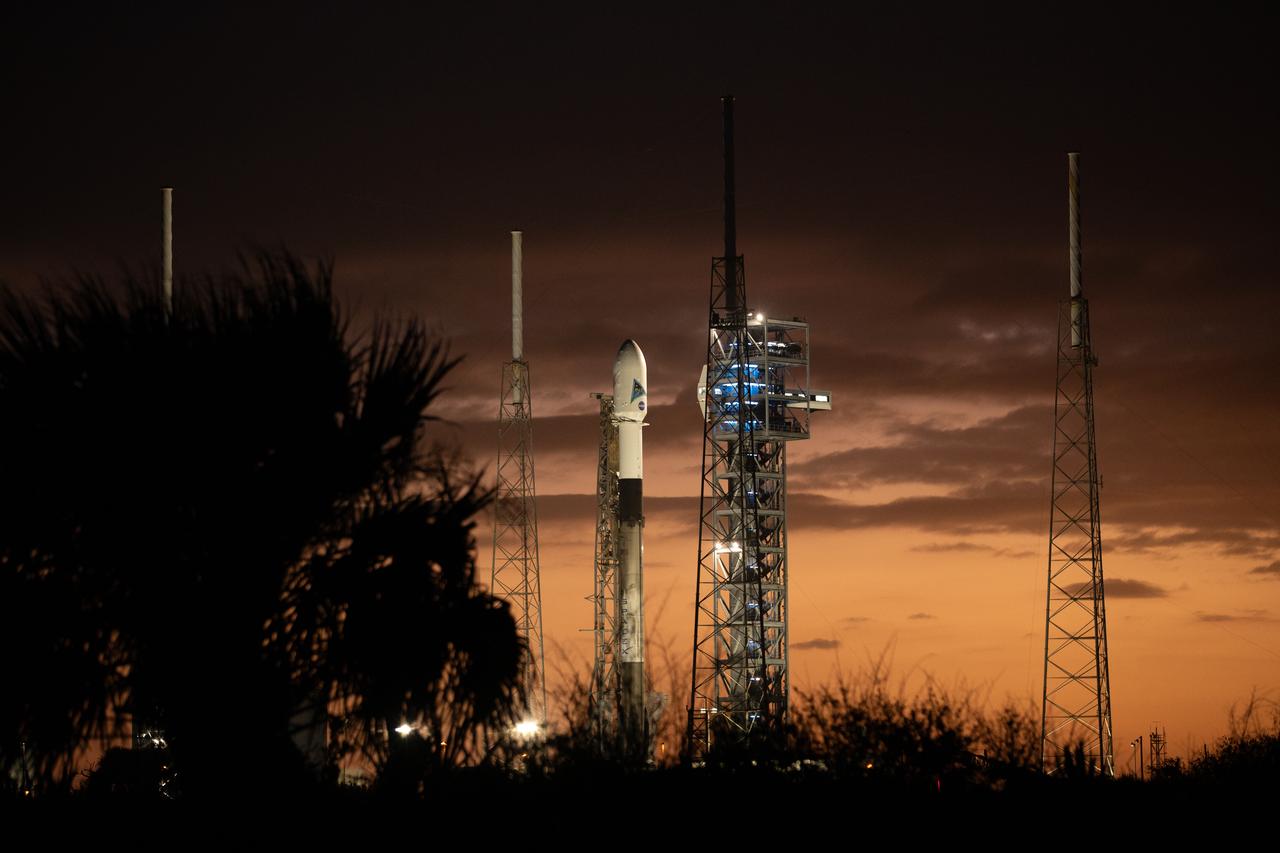
A SpaceX Falcon 9 rocket with NASA’s PACE (Plankton, Aerosol, Cloud, ocean Ecosystem) spacecraft stands vertical at Space Launch Complex 40 at Cape Canaveral Space Force Station in Florida on Tuesday, Feb. 6, 2024. PACE is NASA’s newest earth-observing satellite that will help increase our understanding of Earth’s oceans, atmosphere, and climate by delivering hyperspectral observations of microscopic marine organisms called phytoplankton as well new data on clouds and aerosols. The successful liftoff took place 1:33 a.m. EST Thursday, Feb. 8, 2024.
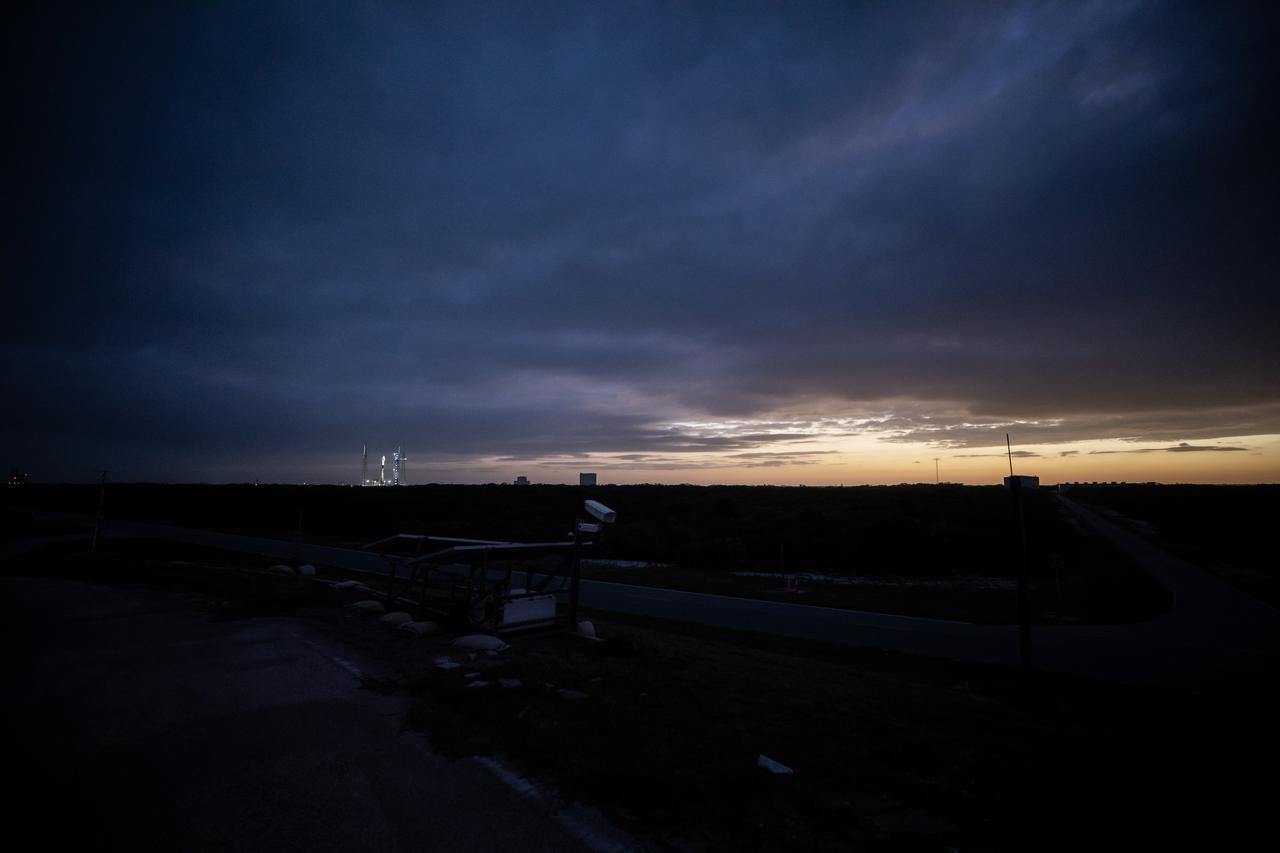
A SpaceX Falcon 9 rocket with NASA’s PACE (Plankton, Aerosol, Cloud, ocean Ecosystem) spacecraft stands vertical at Space Launch Complex 40 at Cape Canaveral Space Force Station in Florida on Tuesday, Feb. 6, 2024. PACE is NASA’s newest earth-observing satellite that will help increase our understanding of Earth’s oceans, atmosphere, and climate by delivering hyperspectral observations of microscopic marine organisms called phytoplankton as well new data on clouds and aerosols. The successful liftoff took place 1:33 a.m. EST Thursday, Feb. 8, 2024.
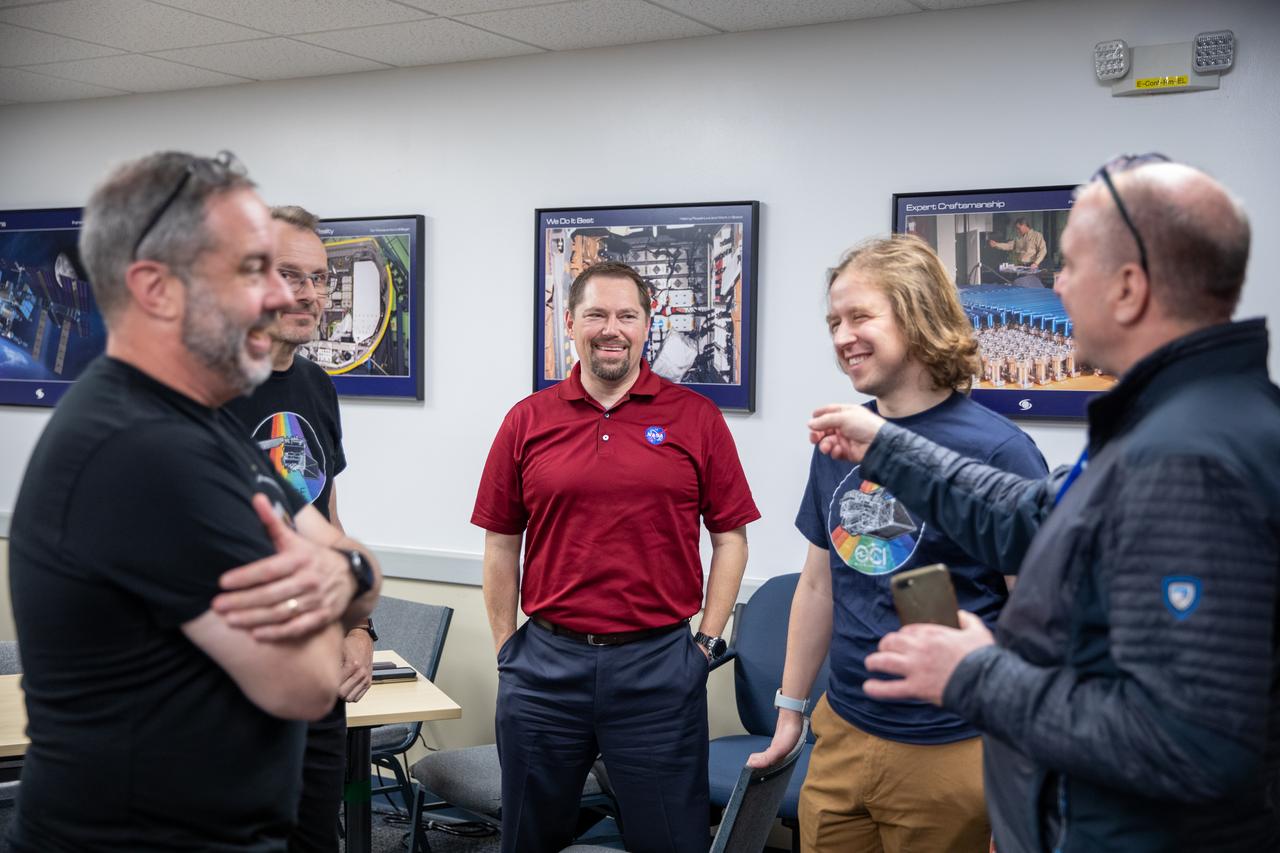
Media interviewed members of NASA’s PACE (Plankton, Aerosol, Cloud, ocean Ecosystem) team on Wednesday, Jan. 3, 2024, during a NASA-hosted media day at the Astrotech Space Operations Facility near NASA’s Kennedy Space Center in Florida. PACE will collect data on how the ocean and atmosphere exchange carbon dioxide, measure key atmospheric variables associated with air quality and Earth's climate, and monitor ocean health. PACE is set to launch aboard a SpaceX Falcon 9 rocket no earlier than Tuesday, Feb. 6, 2024, from Space Launch Complex 40 at Cape Canaveral Space Force Station in Florida.

Members of NASA’s PACE (Plankton, Aerosol, Cloud, ocean Ecosystem) team are photographed with the spacecraft on Wednesday, Jan. 3, 2024, during a NASA-hosted media day inside a cleanroom at the Astrotech Space Operations Facility near NASA’s Kennedy Space Center in Florida. PACE will collect data on how the ocean and atmosphere exchange carbon dioxide, measure key atmospheric variables associated with air quality and Earth's climate, and monitor ocean health. PACE is set to launch aboard a SpaceX Falcon 9 rocket no earlier than Tuesday, Feb. 6, 2024, from Space Launch Complex 40 at Cape Canaveral Space Force Station in Florida.
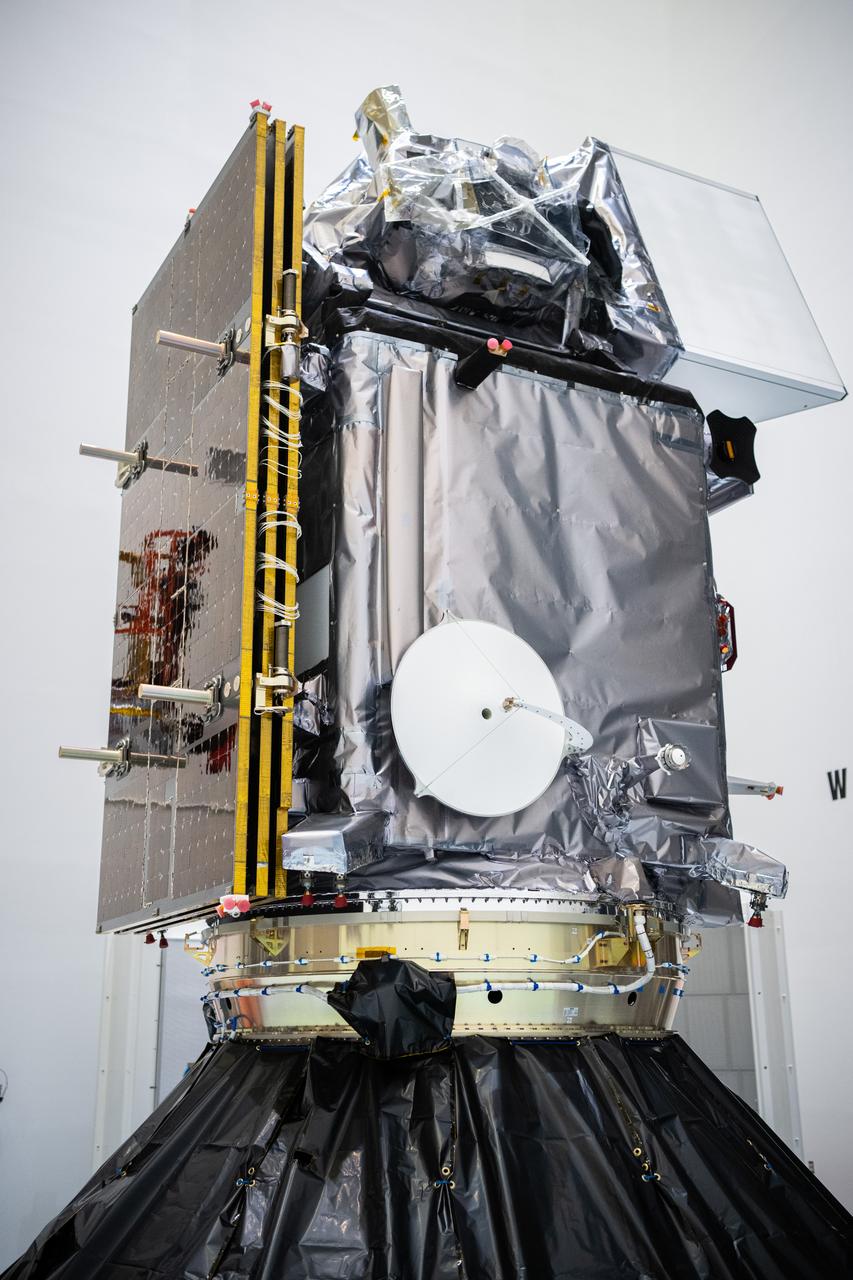
NASA and SpaceX technicians connect NASA’s PACE (Plankton, Aerosol, Cloud, ocean Ecosystem) spacecraft to the payload adapter on Friday, Jan. 26, 2024, at the Astrotech Space Operations Facility near the agency’s Kennedy Space Center in Florida. PACE is NASA’s newest earth-observing satellite that will help increase our understanding of Earth’s oceans, atmosphere, and climate by delivering hyperspectral observations of microscopic marine organisms called phytoplankton as well new data on clouds and aerosols. PACE is set to launch from Space Launch Complex 40 at Cape Canaveral Space Force Station in Florida at 1:33 a.m. EST on Tuesday, Feb. 6.
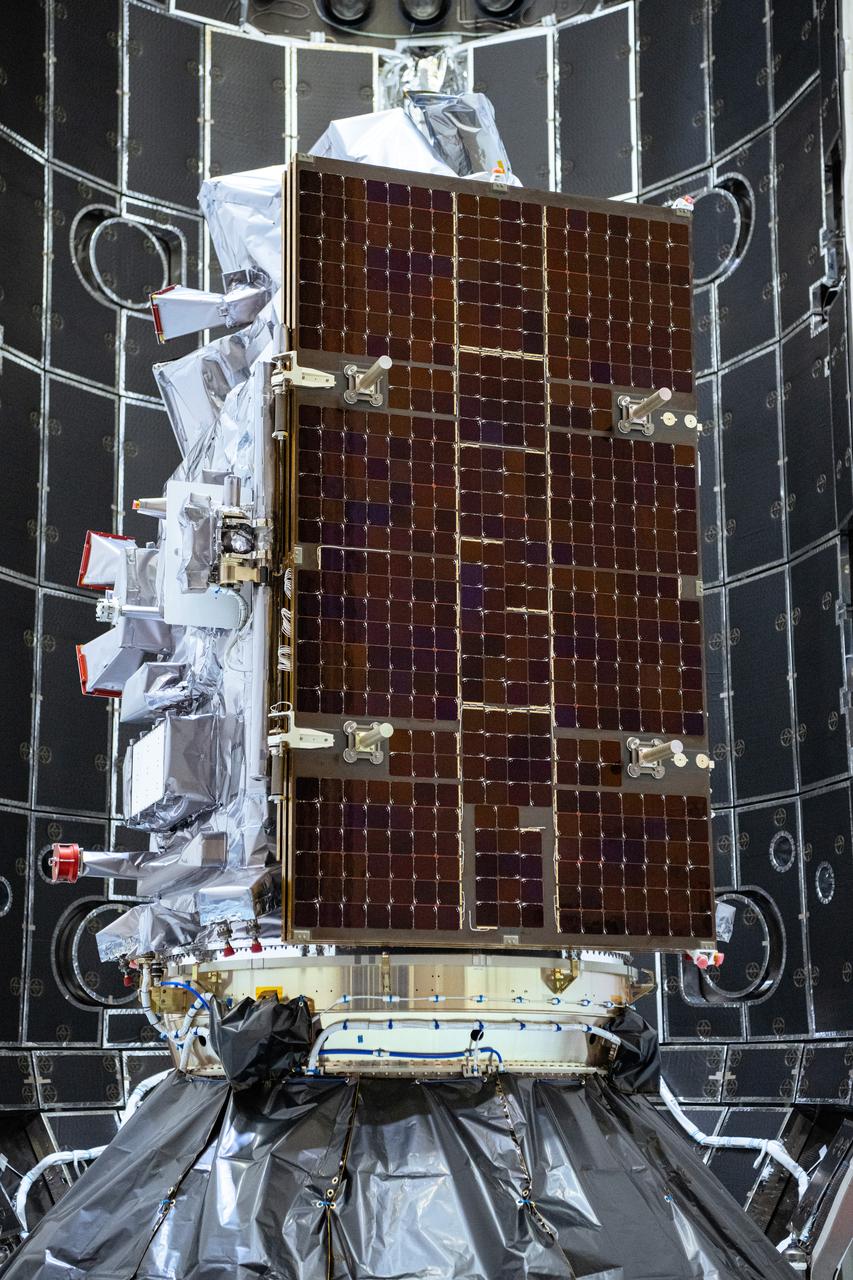
NASA and SpaceX technicians connect NASA’s PACE (Plankton, Aerosol, Cloud, ocean Ecosystem) spacecraft to the payload adapter on Friday, Jan. 26, 2024, at the Astrotech Space Operations Facility near the agency’s Kennedy Space Center in Florida. PACE is NASA’s newest earth-observing satellite that will help increase our understanding of Earth’s oceans, atmosphere, and climate by delivering hyperspectral observations of microscopic marine organisms called phytoplankton as well new data on clouds and aerosols. PACE is set to launch from Space Launch Complex 40 at Cape Canaveral Space Force Station in Florida at 1:33 a.m. EST on Tuesday, Feb. 6.
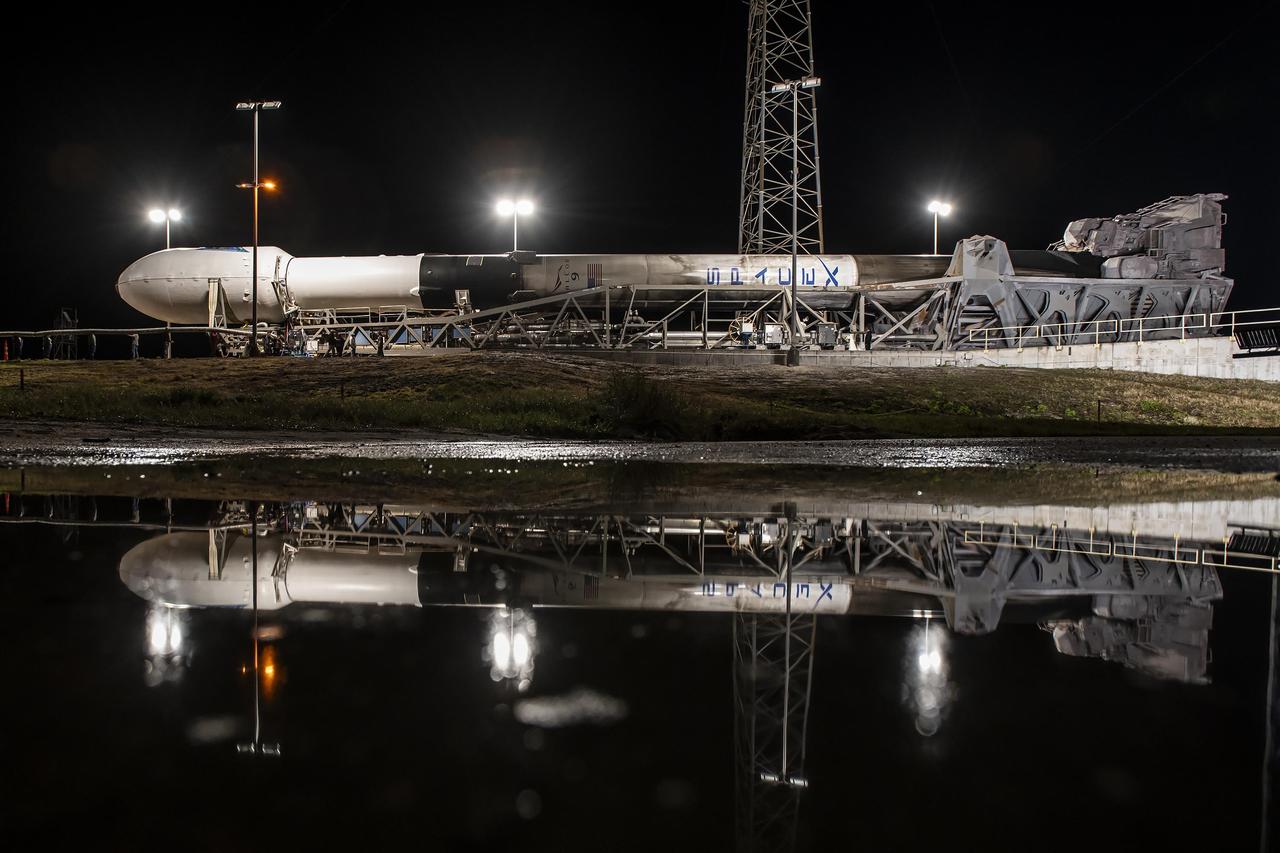
A SpaceX Falcon 9 rocket with NASA’s PACE (Plankton, Aerosol, Cloud, ocean Ecosystem) spacecraft encapsulated atop is rolled to the launch pad at Space Launch Complex 40 at Cape Canaveral Space Force Station in Florida on Monday, Feb. 5, 2024. PACE is NASA’s newest earth-observing satellite that will help increase our understanding of Earth’s oceans, atmosphere, and climate by delivering hyperspectral observations of microscopic marine organisms called phytoplankton as well new data on clouds and aerosols. Liftoff of the PACE mission is set for no earlier than 1:33 a.m. EST on Tuesday, Feb. 6, 2024.
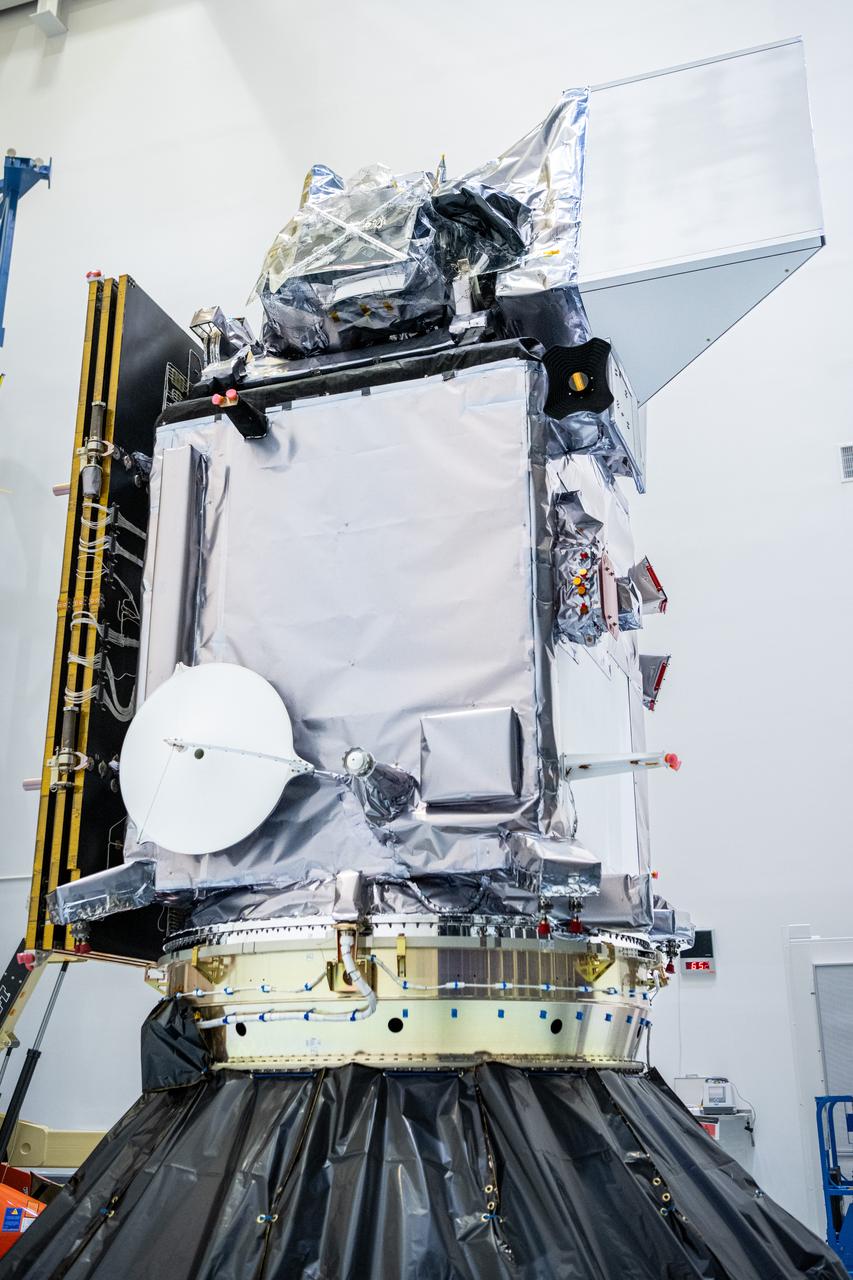
NASA and SpaceX technicians connect NASA’s PACE (Plankton, Aerosol, Cloud, ocean Ecosystem) spacecraft to the payload adapter on Friday, Jan. 26, 2024, at the Astrotech Space Operations Facility near the agency’s Kennedy Space Center in Florida. PACE is NASA’s newest earth-observing satellite that will help increase our understanding of Earth’s oceans, atmosphere, and climate by delivering hyperspectral observations of microscopic marine organisms called phytoplankton as well new data on clouds and aerosols. PACE is set to launch from Space Launch Complex 40 at Cape Canaveral Space Force Station in Florida at 1:33 a.m. EST on Tuesday, Feb. 6.
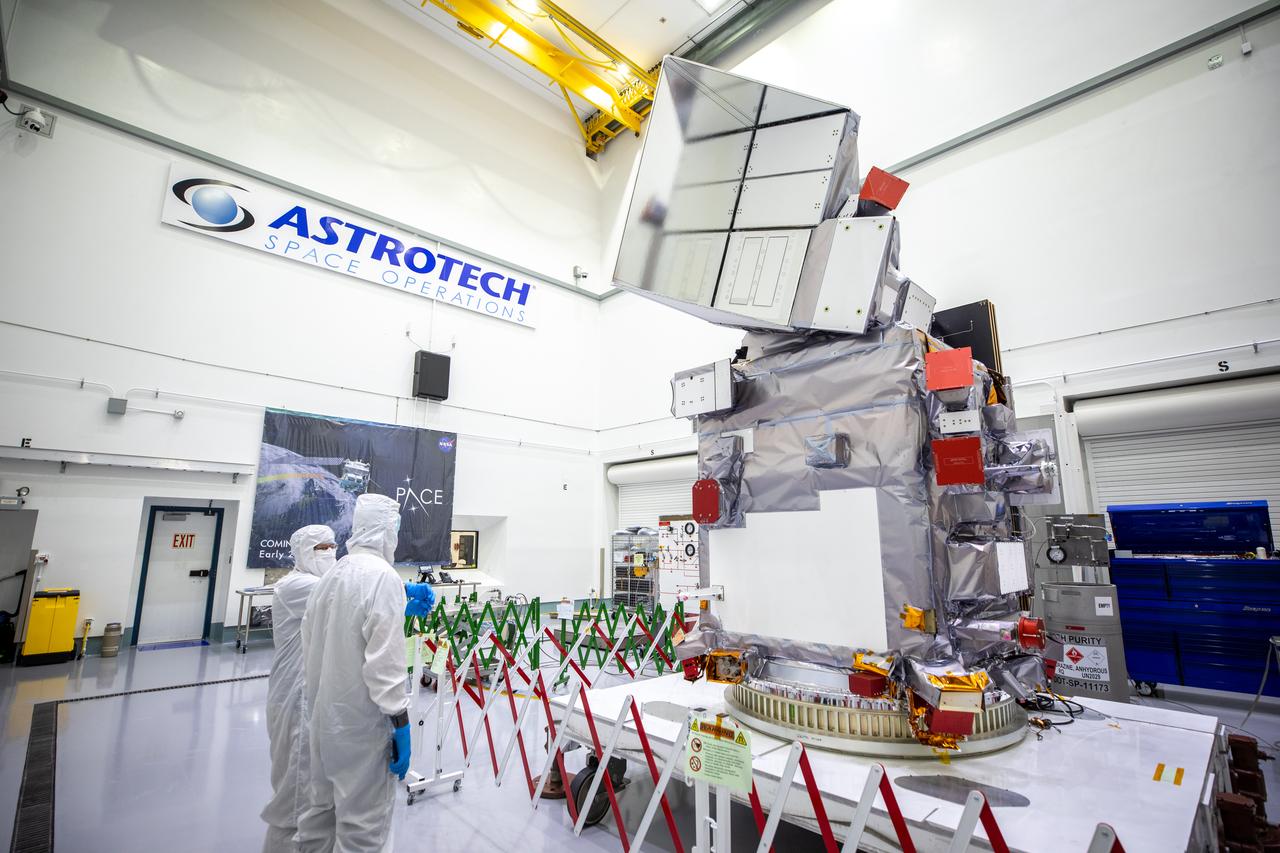
NASA invited members of the media to view NASA’s PACE (Plankton, Aerosol, Cloud, ocean Ecosystem) spacecraft inside a cleanroom at the Astrotech Space Operations Facility near the agency’s Kennedy Space Center in Florida on Wednesday, Jan. 3, 2024. PACE will collect data on how the ocean and atmosphere exchange carbon dioxide, measure key atmospheric variables associated with air quality and Earth's climate, and monitor ocean health. The spacecraft is scheduled to launch aboard a SpaceX Falcon 9 rocket no earlier than Tuesday, Feb. 6, 2024, from Space Launch Complex 40 at Cape Canaveral Space Force Station in Florida.
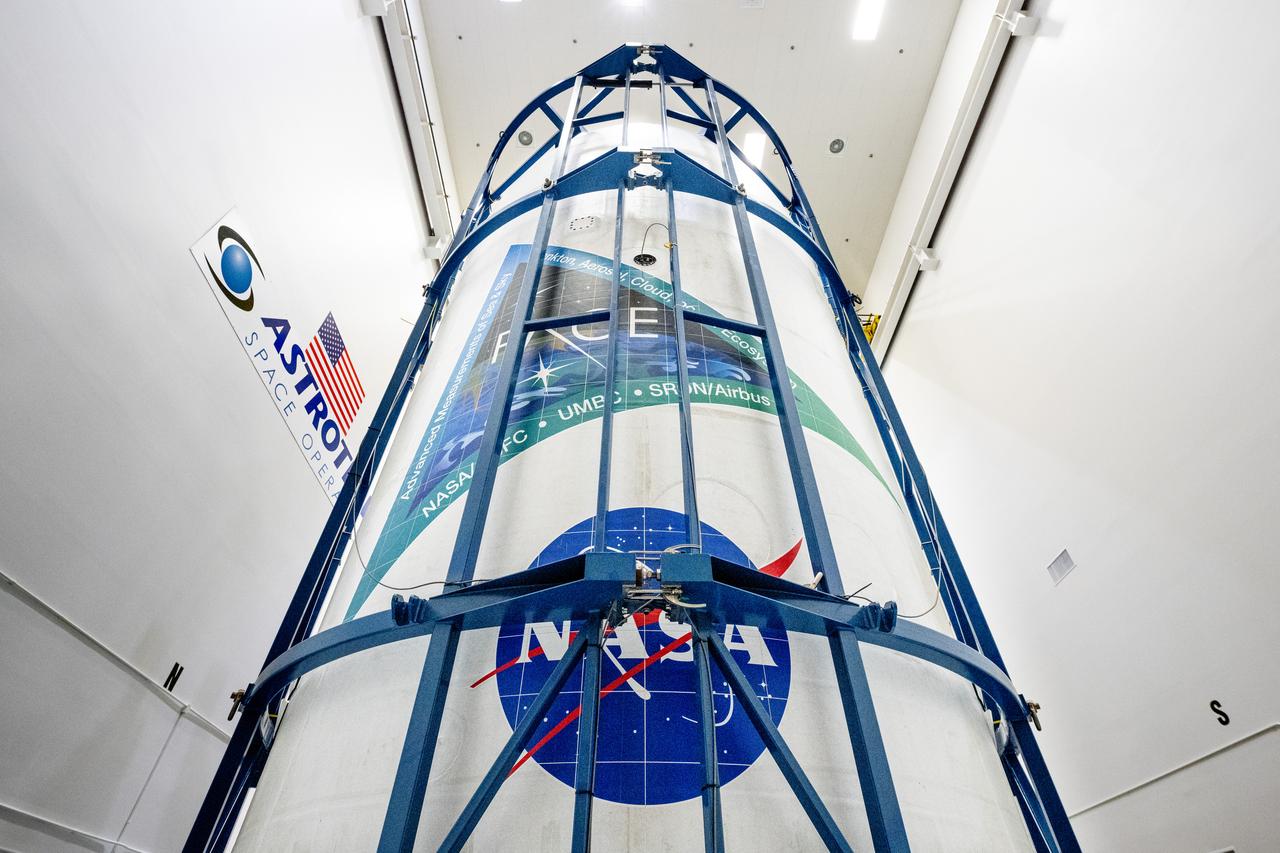
NASA and SpaceX technicians safely encapsulate NASA’s PACE (Plankton, Aerosol, Cloud, ocean Ecosystem) spacecraft in SpaceX’s Falcon 9 payload fairings on Monday, Jan. 29, 2024, at the Astrotech Space Operations Facility near the agency’s Kennedy Space Center in Florida. The fairing halves protect the spacecraft from aerodynamic pressure and heating during the ascent phase of launch. PACE is set to launch from Space Launch Complex 40 at Cape Canaveral Space Force Station in Florida no earlier than 1:33 a.m. EST on Tuesday, Feb. 6, 2024.
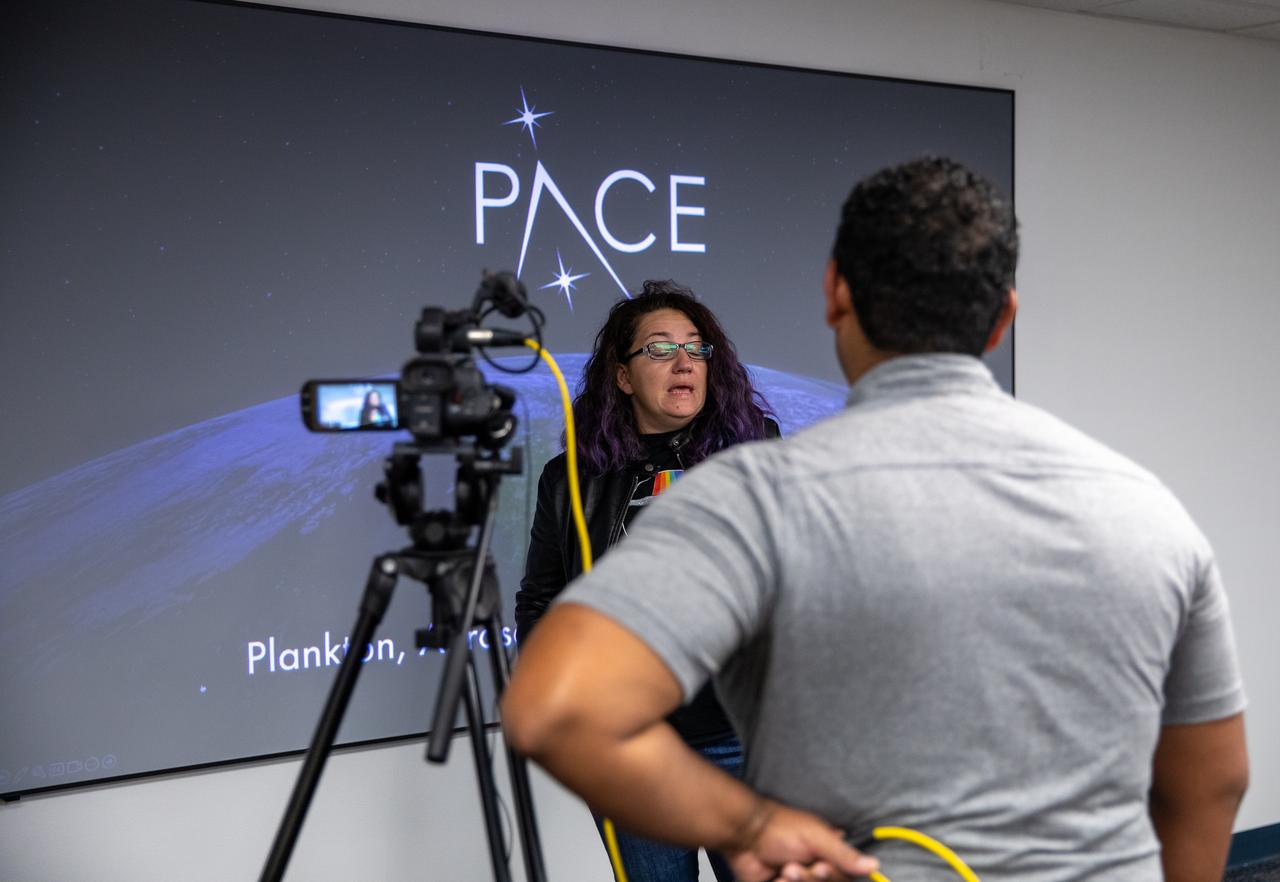
Ivona Cetinić, PACE Project Science Lead for Aquatic Biogeochemistry, is photographed speaking with a member of the media about NASA’s PACE (Plankton, Aerosol, Cloud, ocean Ecosystem) spacecraft on Wednesday, Jan. 3, 2024, during a NASA-hosted media day at the Astrotech Space Operations Facility near NASA’s Kennedy Space Center in Florida. NASA invited journalists for the opportunity to speak with mission subject matter experts and view the spacecraft before it is encapsulated into its payload fairing for its launch aboard a SpaceX Falcon 9 rocket no earlier than Tuesday, Feb. 6, 2024, from Space Launch Complex 40 at Cape Canaveral Space Force Station in Florida.
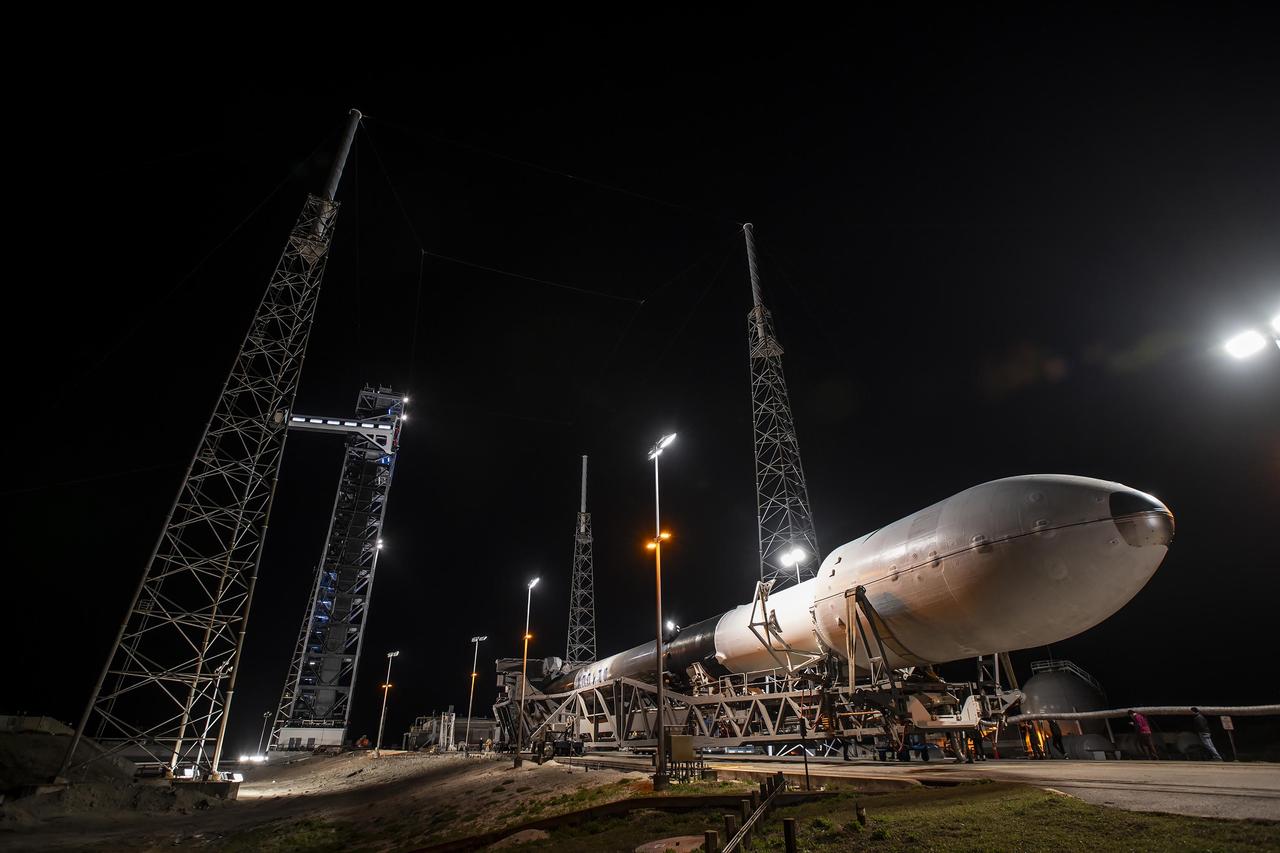
A SpaceX Falcon 9 rocket with NASA’s PACE (Plankton, Aerosol, Cloud, ocean Ecosystem) spacecraft encapsulated atop is rolled to the launch pad at Space Launch Complex 40 at Cape Canaveral Space Force Station in Florida on Monday, Feb. 5, 2024. PACE is NASA’s newest earth-observing satellite that will help increase our understanding of Earth’s oceans, atmosphere, and climate by delivering hyperspectral observations of microscopic marine organisms called phytoplankton as well new data on clouds and aerosols. Liftoff of the PACE mission is set for no earlier than 1:33 a.m. EST on Tuesday, Feb. 6, 2024.
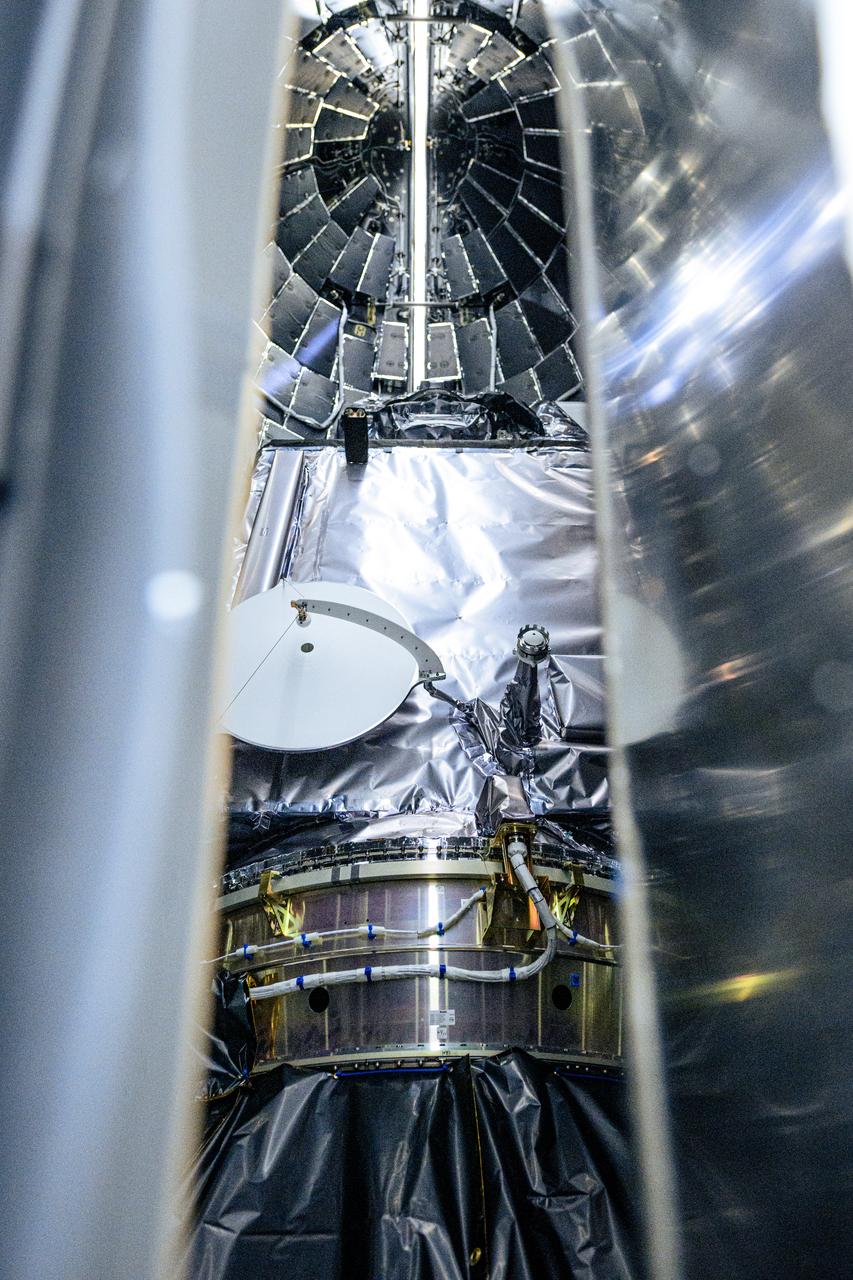
NASA and SpaceX technicians safely encapsulate NASA’s PACE (Plankton, Aerosol, Cloud, ocean Ecosystem) spacecraft in SpaceX’s Falcon 9 payload fairings on Monday, Jan. 29, 2024, at the Astrotech Space Operations Facility near the agency’s Kennedy Space Center in Florida. The fairing halves protect the spacecraft from aerodynamic pressure and heating during the ascent phase of launch. PACE is set to launch from Space Launch Complex 40 at Cape Canaveral Space Force Station in Florida no earlier than 1:33 a.m. EST on Tuesday, Feb. 6, 2024.

A SpaceX Falcon 9 rocket with NASA’s PACE (Plankton, Aerosol, Cloud, ocean Ecosystem) spacecraft stands vertical at Space Launch Complex 40 at Cape Canaveral Space Force Station in Florida on Monday, Feb. 5, 2024. PACE is NASA’s newest earth-observing satellite that will help increase our understanding of Earth’s oceans, atmosphere, and climate by delivering hyperspectral observations of microscopic marine organisms called phytoplankton as well new data on clouds and aerosols. Liftoff of the PACE mission is set for no earlier than 1:33 a.m. EST on Wednesday, Feb. 7, 2024.
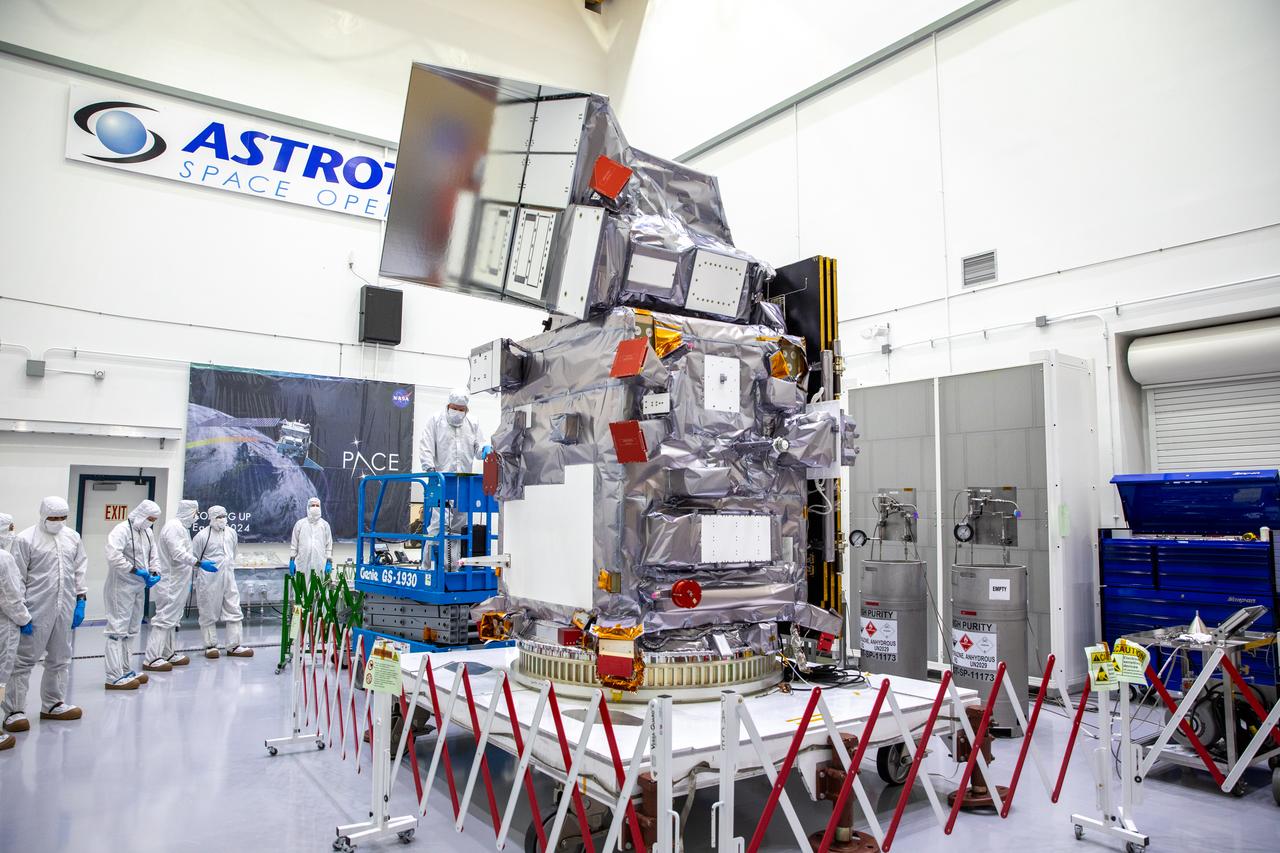
NASA invited members of the media to view NASA’s PACE (Plankton, Aerosol, Cloud, ocean Ecosystem) spacecraft inside a cleanroom at the Astrotech Space Operations Facility near the agency’s Kennedy Space Center in Florida on Wednesday, Jan. 3, 2024. PACE will collect data on how the ocean and atmosphere exchange carbon dioxide, measure key atmospheric variables associated with air quality and Earth's climate, and monitor ocean health. The spacecraft is scheduled to launch aboard a SpaceX Falcon 9 rocket no earlier than Tuesday, Feb. 6, 2024, from Space Launch Complex 40 at Cape Canaveral Space Force Station in Florida.
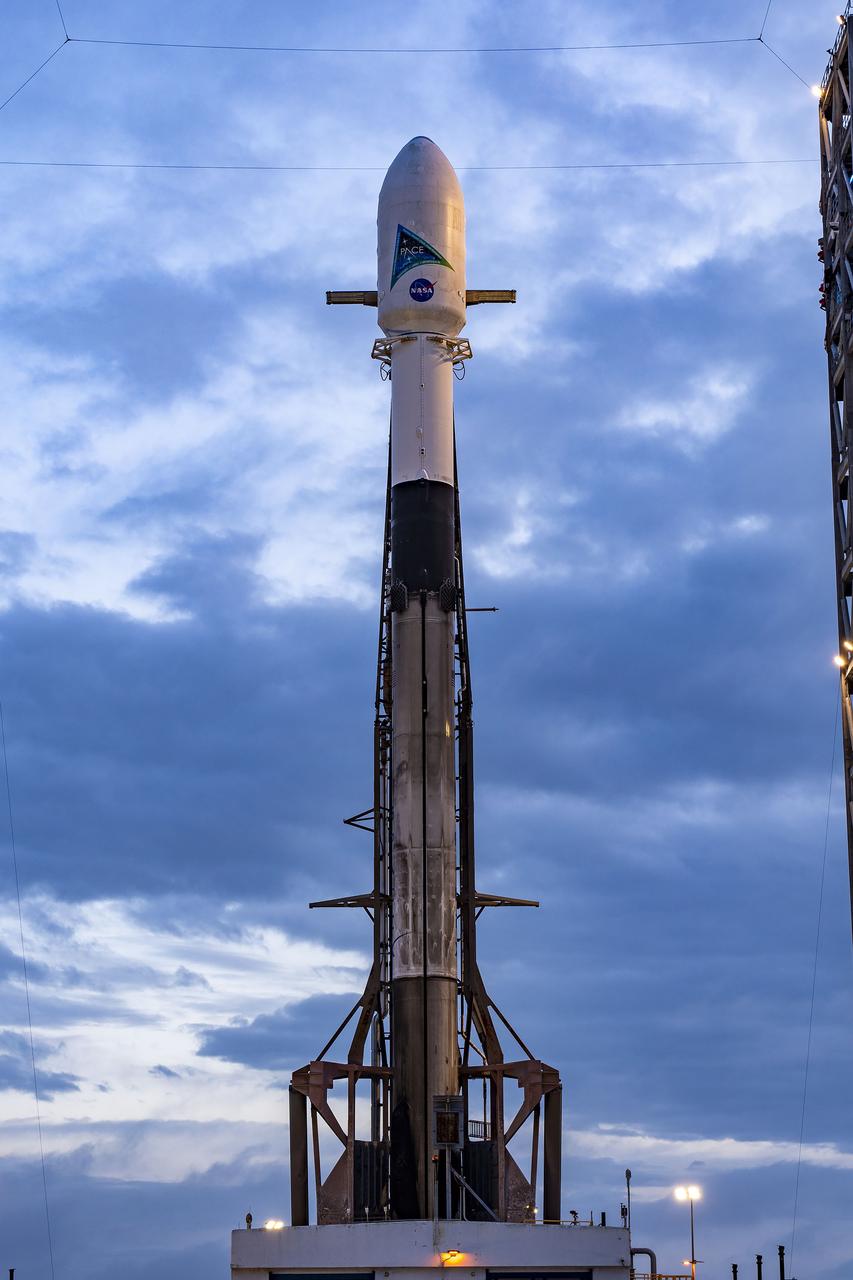
A SpaceX Falcon 9 rocket with NASA’s PACE (Plankton, Aerosol, Cloud, ocean Ecosystem) spacecraft stands vertical at Space Launch Complex 40 at Cape Canaveral Space Force Station in Florida on Monday, Feb. 5, 2024. PACE is NASA’s newest earth-observing satellite that will help increase our understanding of Earth’s oceans, atmosphere, and climate by delivering hyperspectral observations of microscopic marine organisms called phytoplankton as well new data on clouds and aerosols. Liftoff of the PACE mission is set for no earlier than 1:33 a.m. EST on Wednesday, Feb. 7, 2024.
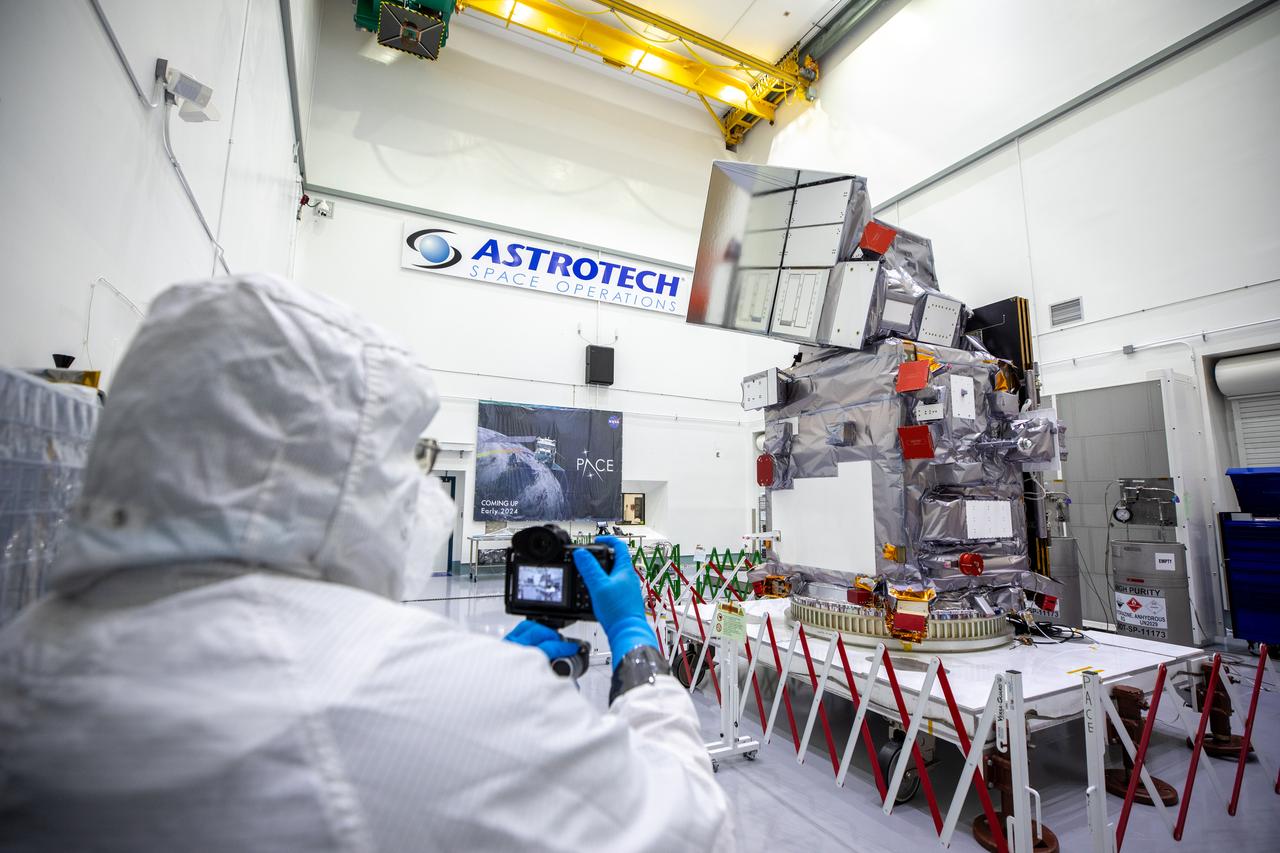
Members of the media photographed NASA’s PACE (Plankton, Aerosol, Cloud, ocean Ecosystem) spacecraft on Wednesday, Jan. 3, 2024, inside a cleanroom at the Astrotech Space Operations Facility near NASA’s Kennedy Space Center in Florida. NASA invited journalists for the opportunity to speak with mission subject matter experts and view the spacecraft before it is encapsulated into its payload fairing for its launch aboard a SpaceX Falcon 9 rocket no earlier than Tuesday, Feb. 6, 2024, from Space Launch Complex 40 at Cape Canaveral Space Force Station in Florida.
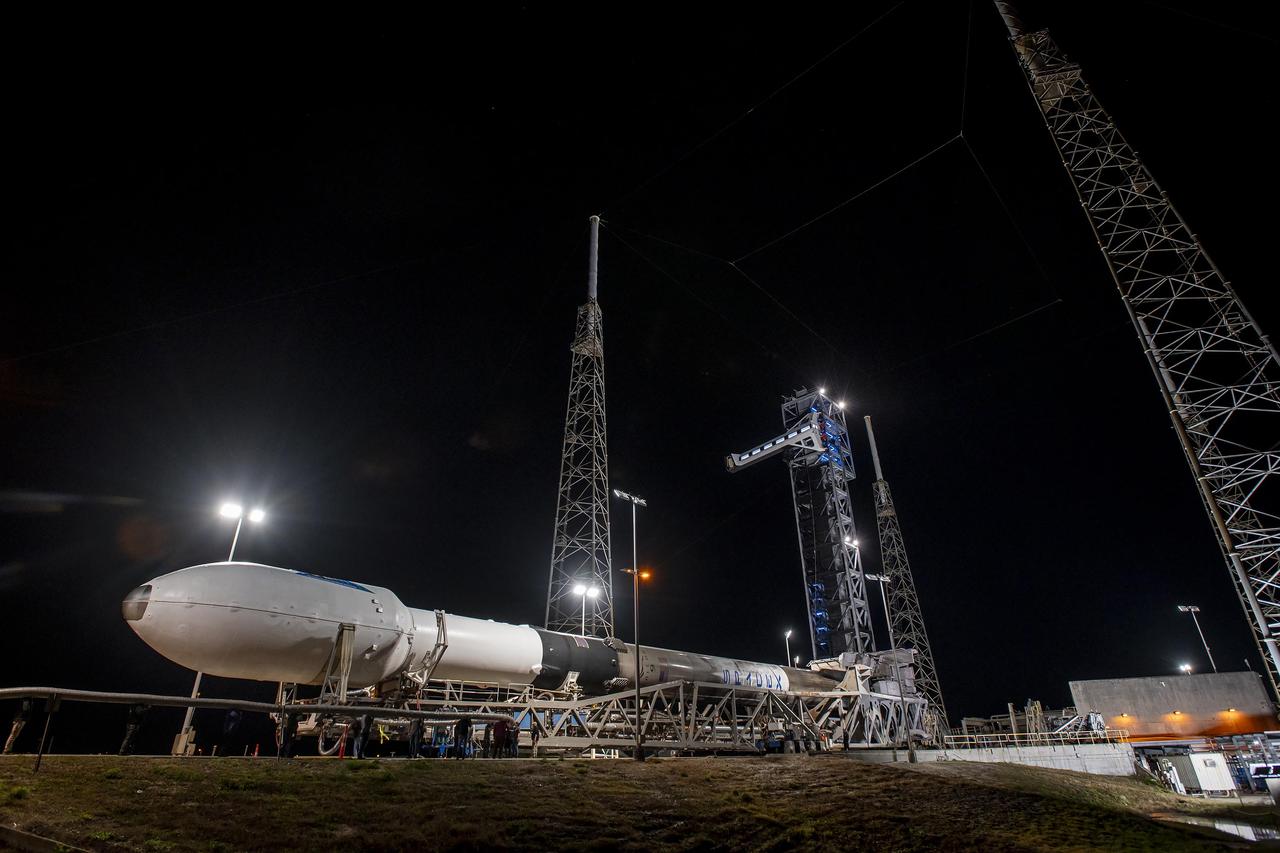
A SpaceX Falcon 9 rocket with NASA’s PACE (Plankton, Aerosol, Cloud, ocean Ecosystem) spacecraft encapsulated atop is rolled to the launch pad at Space Launch Complex 40 at Cape Canaveral Space Force Station in Florida on Monday, Feb. 5, 2024. PACE is NASA’s newest earth-observing satellite that will help increase our understanding of Earth’s oceans, atmosphere, and climate by delivering hyperspectral observations of microscopic marine organisms called phytoplankton as well new data on clouds and aerosols. Liftoff of the PACE mission is set for no earlier than 1:33 a.m. EST on Tuesday, Feb. 6, 2024.
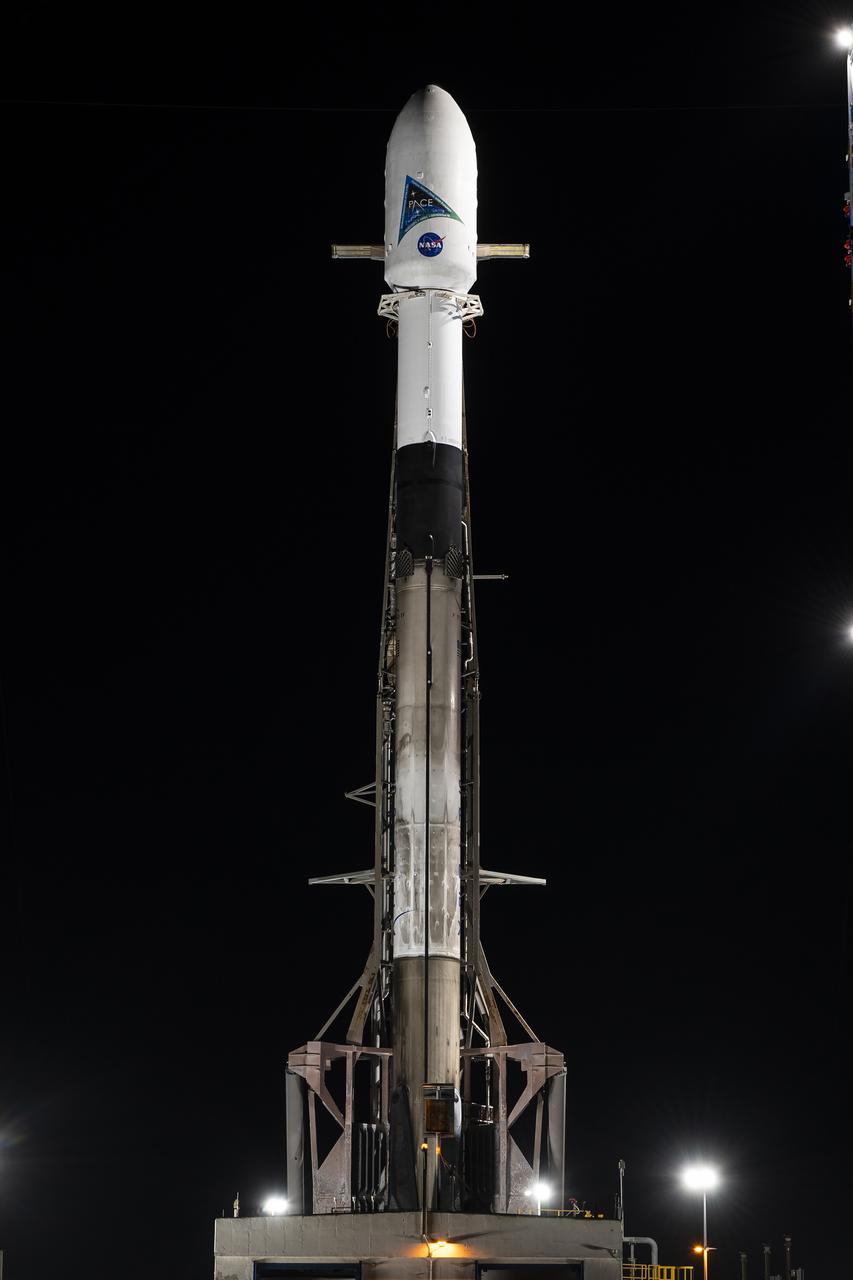
A SpaceX Falcon 9 rocket with NASA’s PACE (Plankton, Aerosol, Cloud, ocean Ecosystem) spacecraft encapsulated atop is raised to a vertical position at Space Launch Complex 40 at Cape Canaveral Space Force Station in Florida on Monday, Feb. 5, 2024. PACE is NASA’s newest earth-observing satellite that will help increase our understanding of Earth’s oceans, atmosphere, and climate by delivering hyperspectral observations of microscopic marine organisms called phytoplankton as well new data on clouds and aerosols. Liftoff of the PACE mission is set for no earlier than 1:33 a.m. EST on Tuesday, Feb. 6, 2024.
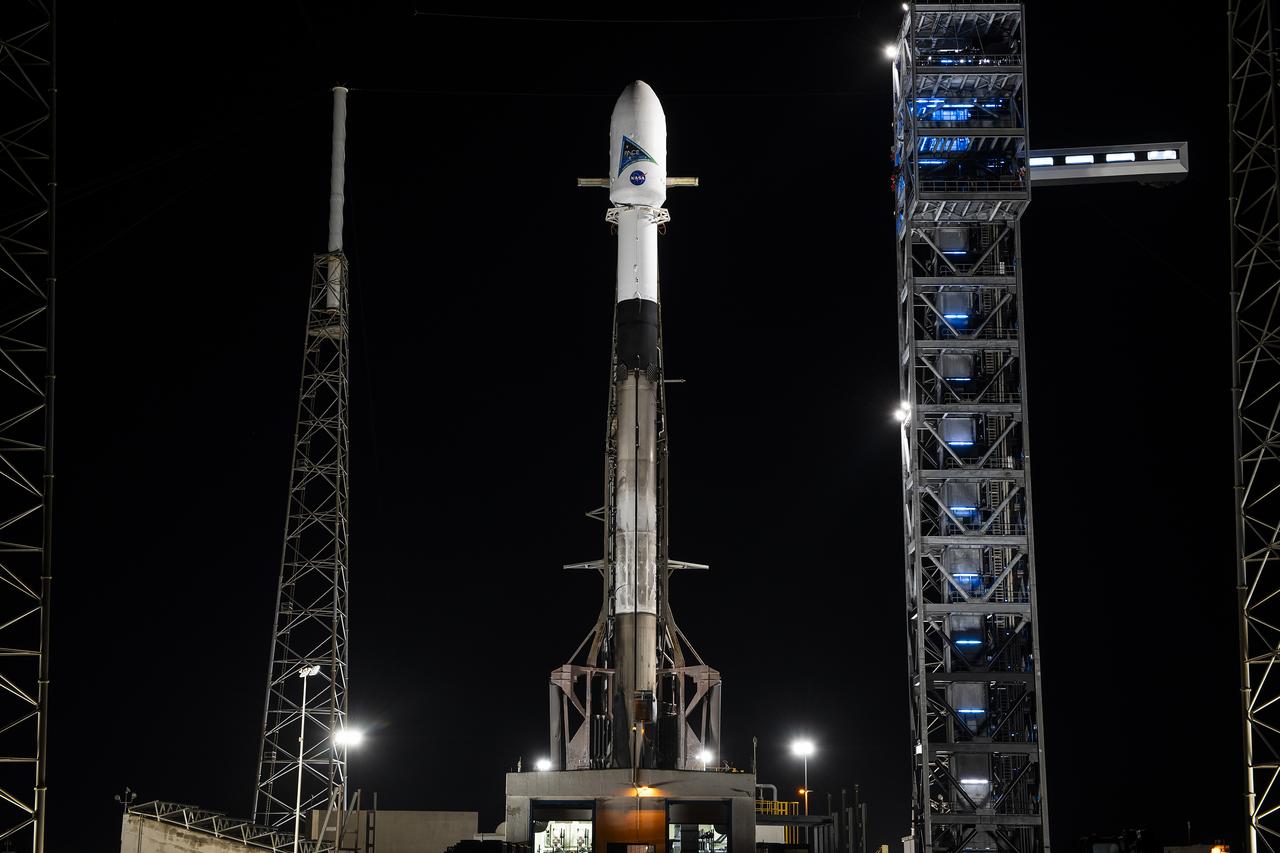
A SpaceX Falcon 9 rocket with NASA’s PACE (Plankton, Aerosol, Cloud, ocean Ecosystem) spacecraft encapsulated atop is raised to a vertical position at Space Launch Complex 40 at Cape Canaveral Space Force Station in Florida on Monday, Feb. 5, 2024. PACE is NASA’s newest earth-observing satellite that will help increase our understanding of Earth’s oceans, atmosphere, and climate by delivering hyperspectral observations of microscopic marine organisms called phytoplankton as well new data on clouds and aerosols. Liftoff of the PACE mission is set for no earlier than 1:33 a.m. EST on Tuesday, Feb. 6, 2024.
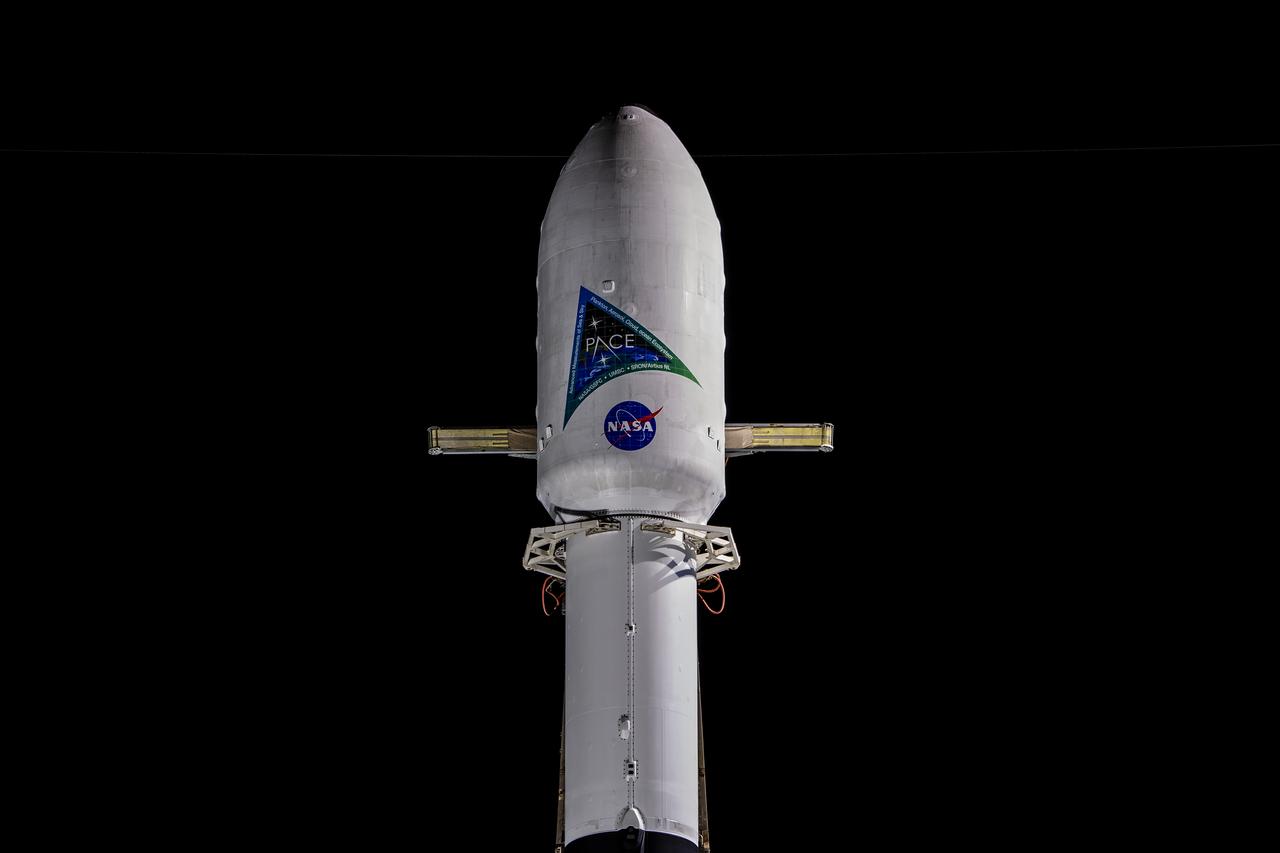
A SpaceX Falcon 9 rocket with NASA’s PACE (Plankton, Aerosol, Cloud, ocean Ecosystem) spacecraft encapsulated atop is raised to a vertical position at Space Launch Complex 40 at Cape Canaveral Space Force Station in Florida on Monday, Feb. 5, 2024. PACE is NASA’s newest earth-observing satellite that will help increase our understanding of Earth’s oceans, atmosphere, and climate by delivering hyperspectral observations of microscopic marine organisms called phytoplankton as well new data on clouds and aerosols. Liftoff of the PACE mission is set for no earlier than 1:33 a.m. EST on Tuesday, Feb. 6, 2024.
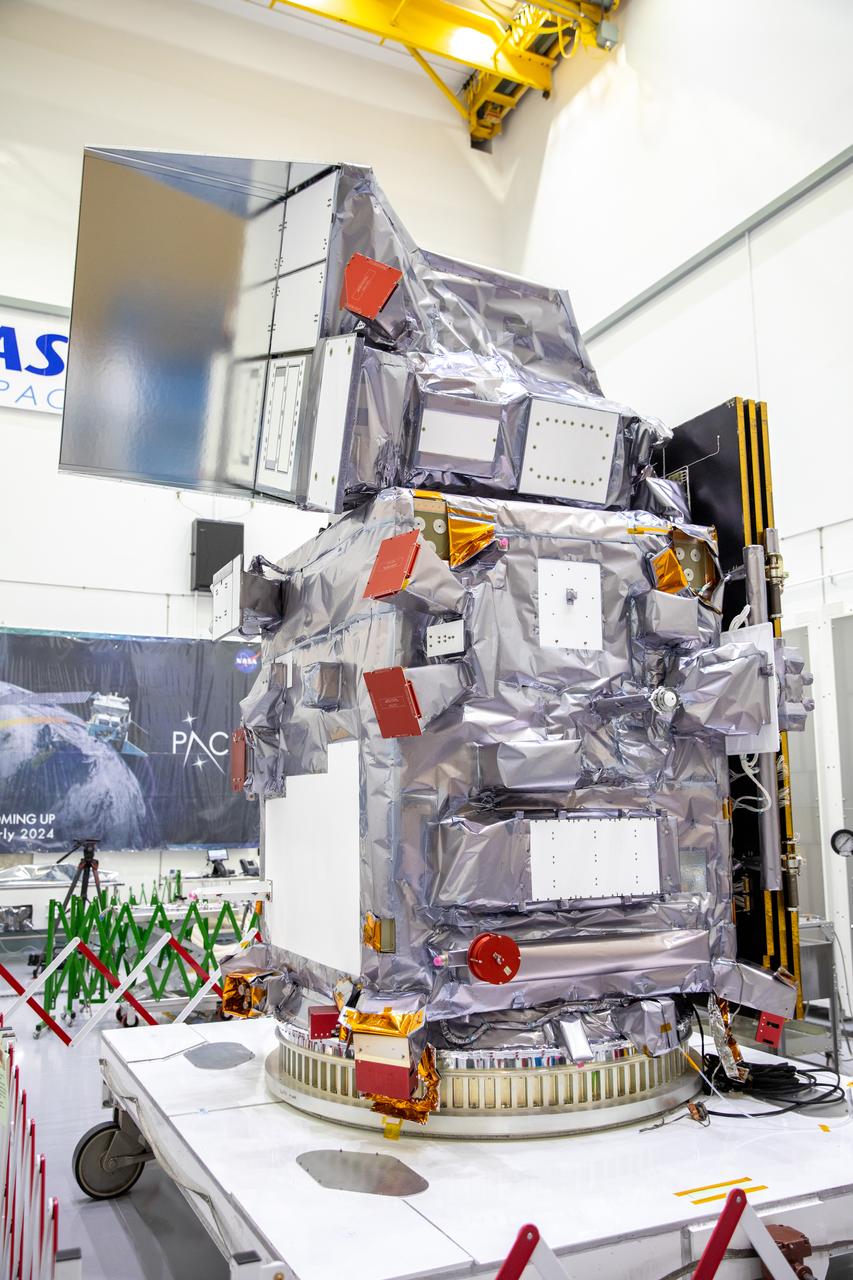
NASA’s PACE (Plankton, Aerosol, Cloud, ocean Ecosystem) spacecraft is pictured during pre-launch processing on Wednesday, Jan. 3, 2024, inside a cleanroom at the Astrotech Space Operations Facility near the agency’s Kennedy Space Center in Florida. NASA invited members of the media to speak with mission subject matter experts and view the spacecraft before it is encapsulated into its payload fairing for its launch aboard a SpaceX Falcon 9 rocket no earlier than Tuesday, Feb. 6, 2024, from Space Launch Complex 40 at Cape Canaveral Space Force Station in Florida.

A SpaceX Falcon 9 rocket with NASA’s PACE (Plankton, Aerosol, Cloud, ocean Ecosystem) spacecraft encapsulated atop is raised to a vertical position at Space Launch Complex 40 at Cape Canaveral Space Force Station in Florida on Monday, Feb. 5, 2024. PACE is NASA’s newest earth-observing satellite that will help increase our understanding of Earth’s oceans, atmosphere, and climate by delivering hyperspectral observations of microscopic marine organisms called phytoplankton as well new data on clouds and aerosols. Liftoff of the PACE mission is set for no earlier than 1:33 a.m. EST on Tuesday, Feb. 6, 2024.
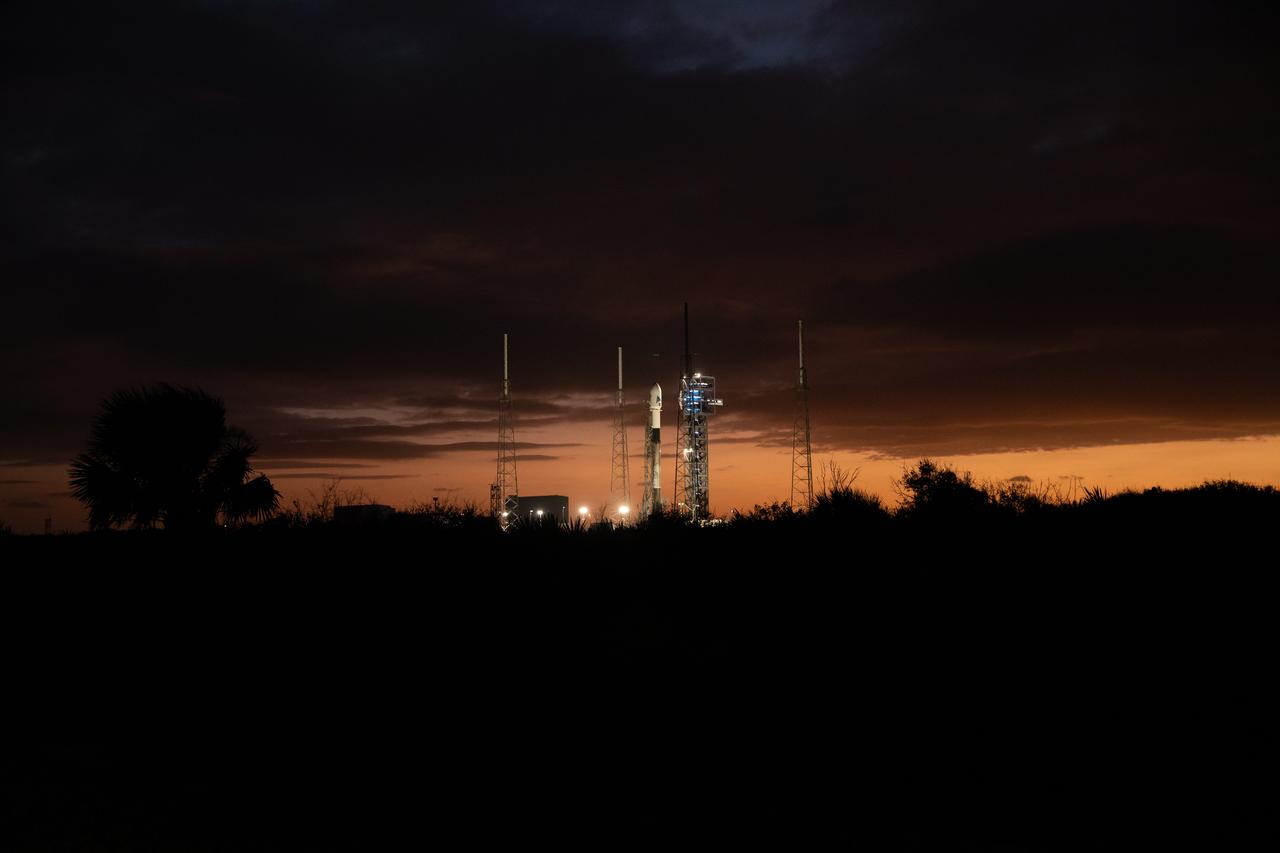
A SpaceX Falcon 9 rocket with NASA’s PACE (Plankton, Aerosol, Cloud, ocean Ecosystem) spacecraft stands vertical at Space Launch Complex 40 at Cape Canaveral Space Force Station in Florida on Tuesday, Feb. 6, 2024. PACE is NASA’s newest earth-observing satellite that will help increase our understanding of Earth’s oceans, atmosphere, and climate by delivering hyperspectral observations of microscopic marine organisms called phytoplankton as well new data on clouds and aerosols. The successful liftoff took place 1:33 a.m. EST Thursday, Feb. 8, 2024.

A SpaceX Falcon 9 rocket with NASA’s PACE (Plankton, Aerosol, Cloud, ocean Ecosystem) spacecraft encapsulated atop is raised to a vertical position at Space Launch Complex 40 at Cape Canaveral Space Force Station in Florida on Monday, Feb. 5, 2024. PACE is NASA’s newest earth-observing satellite that will help increase our understanding of Earth’s oceans, atmosphere, and climate by delivering hyperspectral observations of microscopic marine organisms called phytoplankton as well new data on clouds and aerosols. Liftoff of the PACE mission is set for no earlier than 1:33 a.m. EST on Tuesday, Feb. 6, 2024.
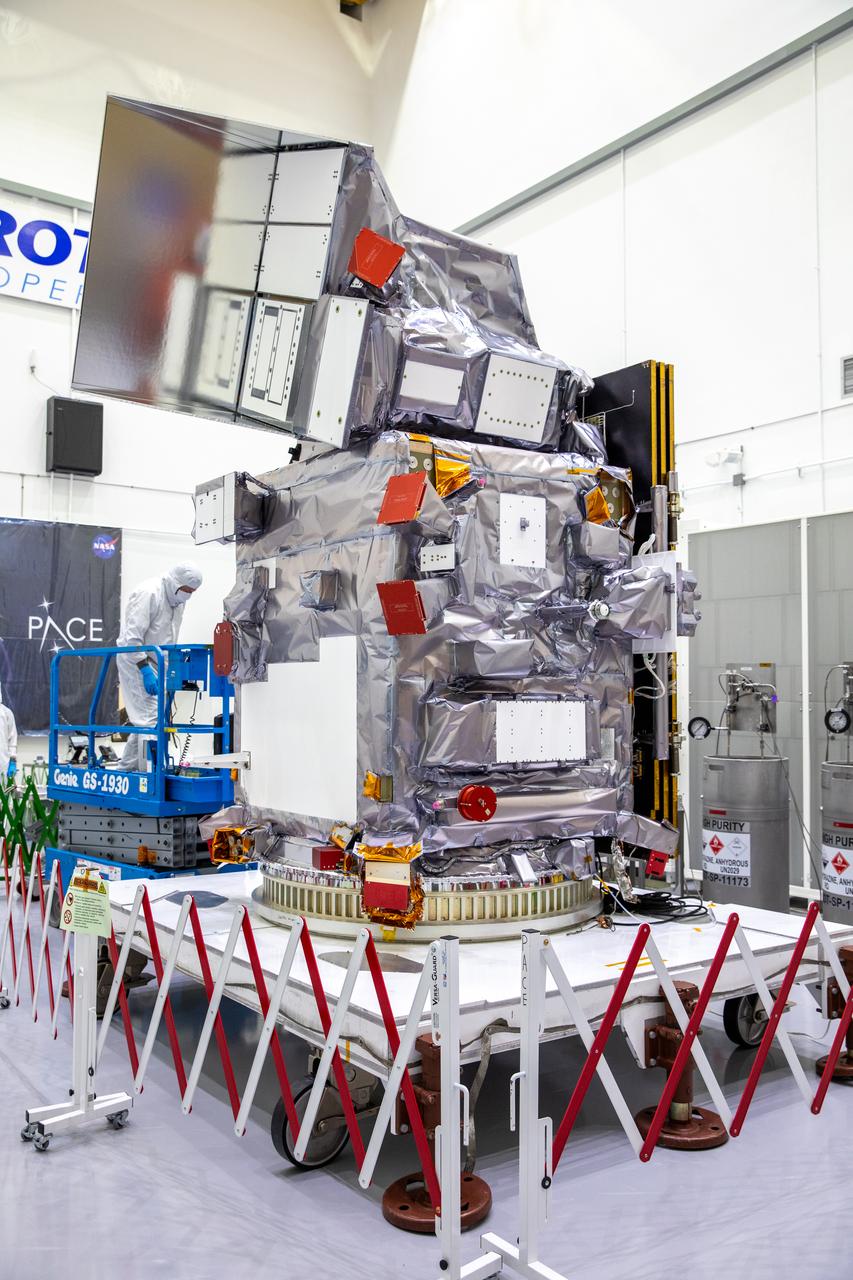
NASA’s PACE (Plankton, Aerosol, Cloud, ocean Ecosystem) spacecraft is pictured during pre-launch processing on Wednesday, Jan. 3, 2024, inside a cleanroom at the Astrotech Space Operations Facility near the agency’s Kennedy Space Center in Florida. NASA invited members of the media to speak with mission subject matter experts and view the spacecraft before it is encapsulated into its payload fairing for its launch aboard a SpaceX Falcon 9 rocket no earlier than Tuesday, Feb. 6, 2024, from Space Launch Complex 40 at Cape Canaveral Space Force Station in Florida.

A SpaceX Falcon 9 rocket with NASA’s PACE (Plankton, Aerosol, Cloud, ocean Ecosystem) spacecraft stands vertical at Space Launch Complex 40 at Cape Canaveral Space Force Station in Florida on Monday, Feb. 5, 2024. PACE is NASA’s newest earth-observing satellite that will help increase our understanding of Earth’s oceans, atmosphere, and climate by delivering hyperspectral observations of microscopic marine organisms called phytoplankton as well new data on clouds and aerosols. Liftoff of the PACE mission is set for no earlier than 1:33 a.m. EST on Wednesday, Feb. 7, 2024.
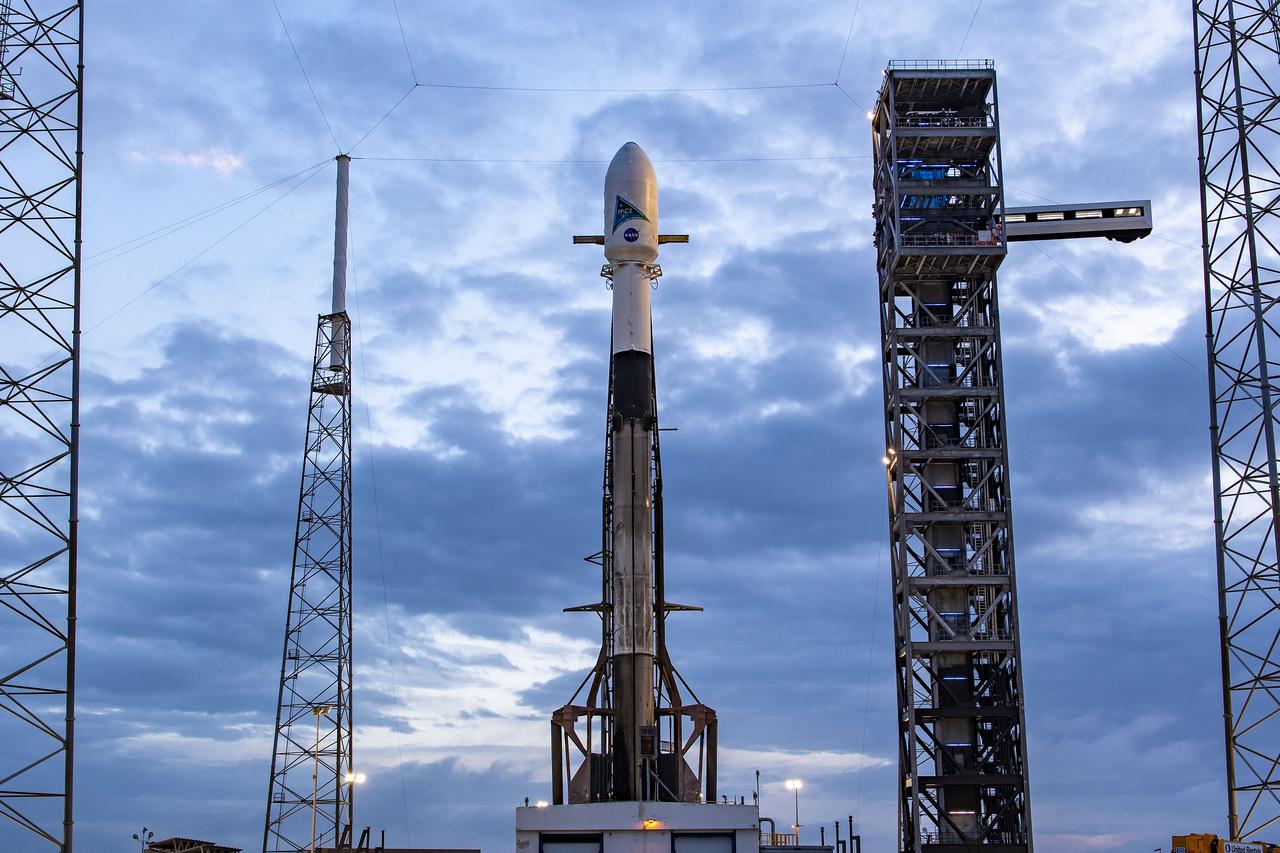
A SpaceX Falcon 9 rocket with NASA’s PACE (Plankton, Aerosol, Cloud, ocean Ecosystem) spacecraft stands vertical at Space Launch Complex 40 at Cape Canaveral Space Force Station in Florida on Monday, Feb. 5, 2024. PACE is NASA’s newest earth-observing satellite that will help increase our understanding of Earth’s oceans, atmosphere, and climate by delivering hyperspectral observations of microscopic marine organisms called phytoplankton as well new data on clouds and aerosols. Liftoff of the PACE mission is set for no earlier than 1:33 a.m. EST on Wednesday, Feb. 7, 2024.

A SpaceX Falcon 9 rocket with NASA’s PACE (Plankton, Aerosol, Cloud, ocean Ecosystem) spacecraft encapsulated atop is raised to a vertical position at Space Launch Complex 40 at Cape Canaveral Space Force Station in Florida on Monday, Feb. 5, 2024. PACE is NASA’s newest earth-observing satellite that will help increase our understanding of Earth’s oceans, atmosphere, and climate by delivering hyperspectral observations of microscopic marine organisms called phytoplankton as well new data on clouds and aerosols. Liftoff of the PACE mission is set for no earlier than 1:33 a.m. EST on Tuesday, Feb. 6, 2024.

Media interview a member of NASA’s PACE (Plankton, Aerosol, Cloud, ocean Ecosystem) team beside the spacecraft on Wednesday, Jan. 3, 2024, during a NASA-hosted media day inside a cleanroom at the Astrotech Space Operations Facility near NASA’s Kennedy Space Center in Florida. PACE will collect data on how the ocean and atmosphere exchange carbon dioxide, measure key atmospheric variables associated with air quality and Earth's climate, and monitor ocean health. PACE is set to launch aboard a SpaceX Falcon 9 rocket no earlier than Tuesday, Feb. 6, 2024, from Space Launch Complex 40 at Cape Canaveral Space Force Station in Florida.
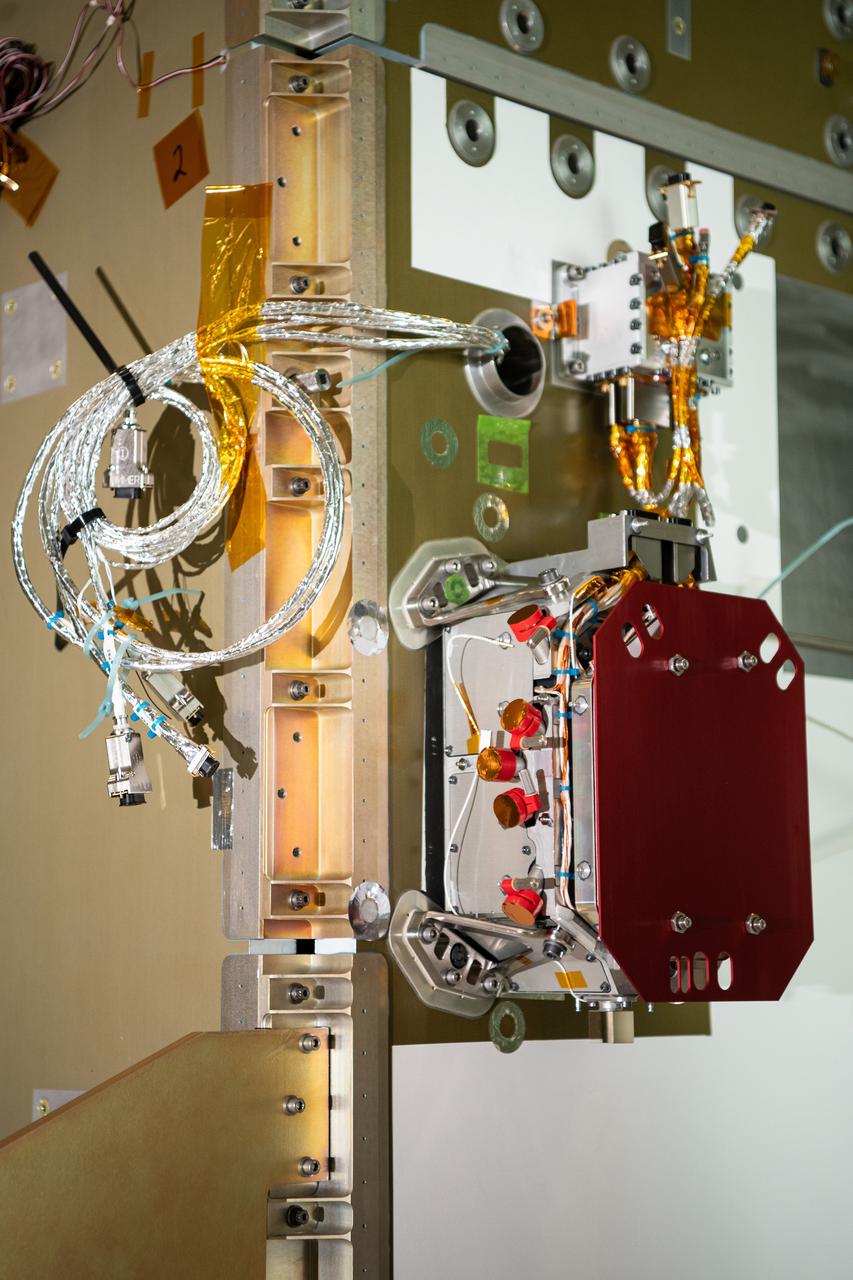
The SPEXone instrument after integration to the Plankton, Aerosol, Cloud, ocean Ecosystem (PACE) Observatory. SPEXone is one of three instruments on NASA's Plankton, Aerosol, Cloud, ocean Ecosystem (PACE) observatory and has been developed by a Dutch consortium consisting of SRON Netherlands Institute for Space Research and Airbus Defence and Space Netherlands, supported by opto-mechanical expertise from TNO. SRON and Airbus DS NL are responsible for the design, manufacturing and testing of the instrument. The scientific lead is in the hands of SRON. SPEXone is a public-private initiative, funded by the Netherlands Space Office (NSO), the Netherlands Organization of Scientific Research (NWO), SRON and Airbus DS NL.
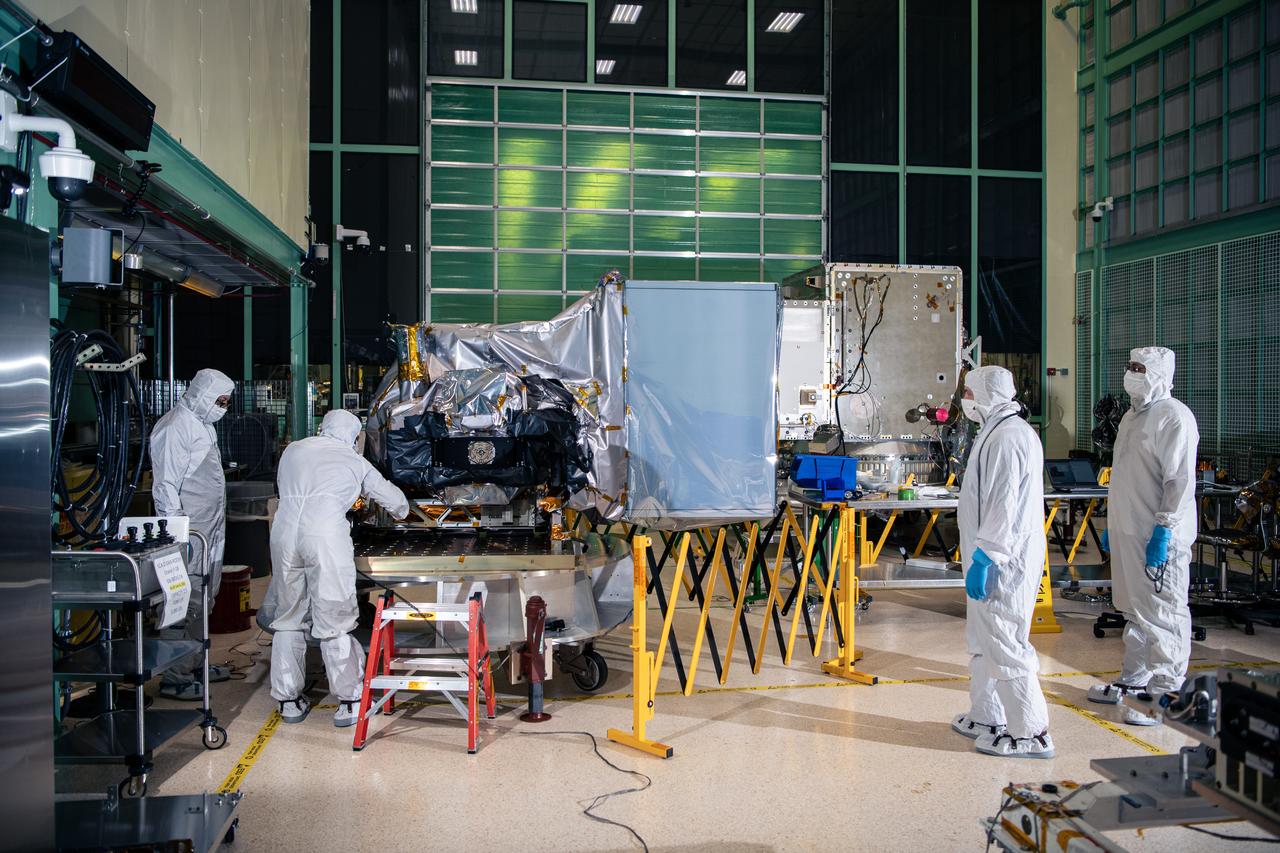
Engineers and technicians prepare for a crane lift to deintegrate the Ocean Color Instrument (OCI) from the Tilt Mechanism after successful environmental testing. The PACE (Plankton, Aerosol, Cloud, ocean Ecosystem) spacecraft is seen in the background in the Spacecraft Checkout Area (SCA) cleanroom. OCI is a highly advanced optical spectrometer that will be used to measure properties of light over portions of the electromagnetic spectrum. It will enable continuous measurement of light at finer wavelength resolution than previous NASA satellite sensors, extending key system ocean color data records for climate studies. OCI is PACE's (Plankton, Aerosol, Cloud, ocean Ecosystem) primary sensor built at Goddard Space Flight Center in Greenbelt, MD.
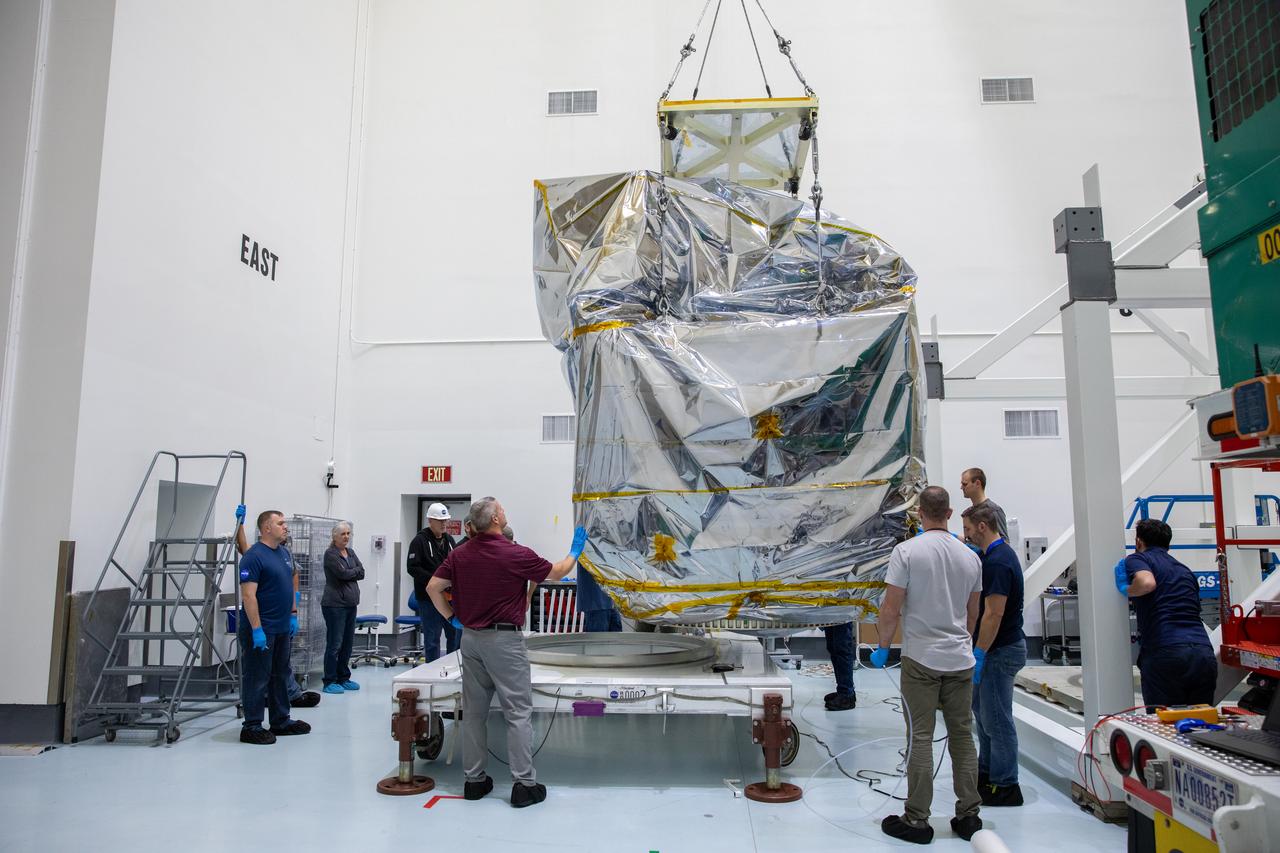
NASA’s Plankton, Aerosol, Cloud, ocean Ecosystem (PACE) observatory spacecraft is uncrated for prelaunch processing at the Astrotech Space Operations Facility near the agency’s Kennedy Space Center in Florida on Wednesday, Nov. 15, 2023. The PACE observatory will help us better understand how the ocean and atmosphere exchange carbon dioxide, measure key atmospheric variables associated with air quality and Earth's climate, and monitor ocean health, in part by studying phytoplankton, tiny plants and algae that sustain the marine food web. PACE will be encapsulated for launch aboard a SpaceX Falcon 9 rocket from Space Launch Complex 40 at Cape Canaveral Space Force Station in Florida.
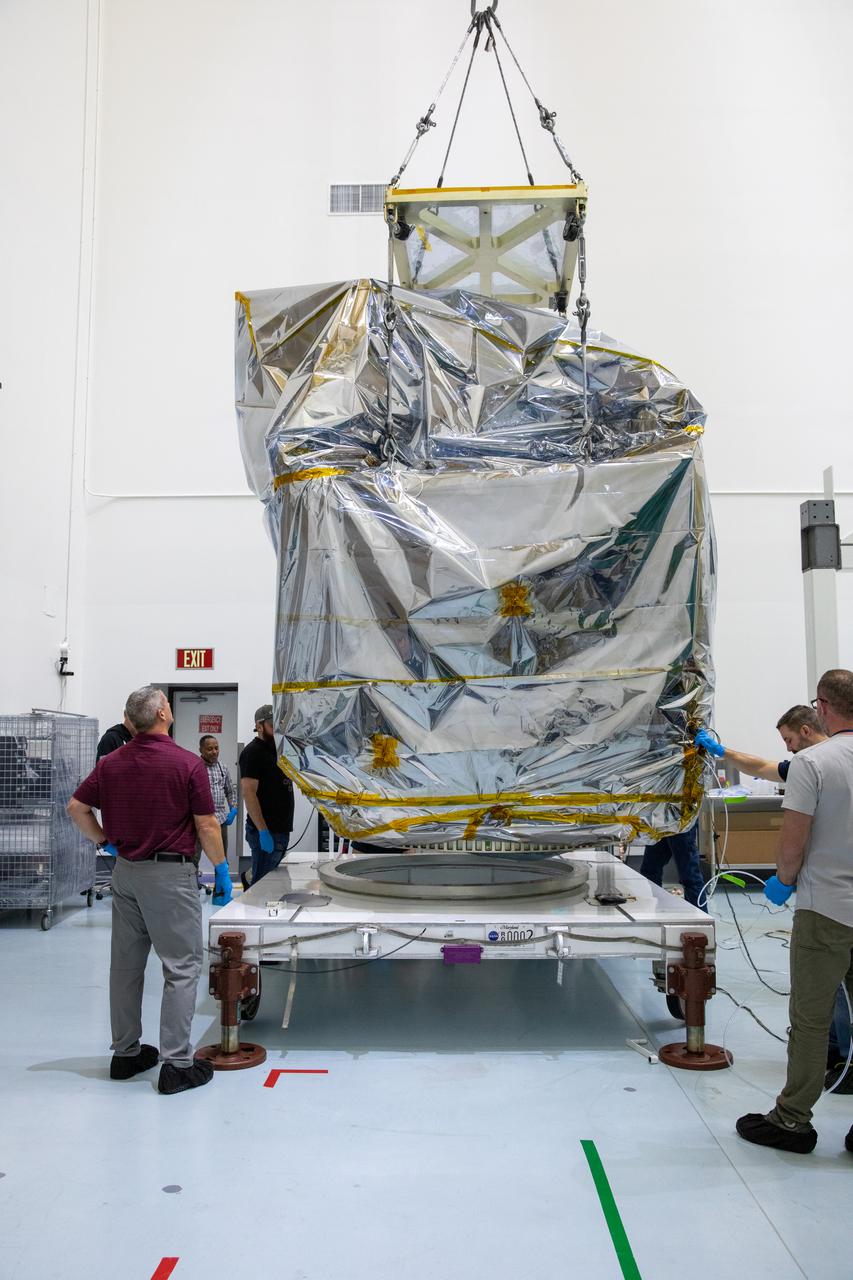
NASA’s Plankton, Aerosol, Cloud, ocean Ecosystem (PACE) observatory spacecraft is uncrated for prelaunch processing at the Astrotech Space Operations Facility near the agency’s Kennedy Space Center in Florida on Wednesday, Nov. 15, 2023. The PACE observatory will help us better understand how the ocean and atmosphere exchange carbon dioxide, measure key atmospheric variables associated with air quality and Earth's climate, and monitor ocean health, in part by studying phytoplankton, tiny plants and algae that sustain the marine food web. PACE will be encapsulated for launch aboard a SpaceX Falcon 9 rocket from Space Launch Complex 40 at Cape Canaveral Space Force Station in Florida.
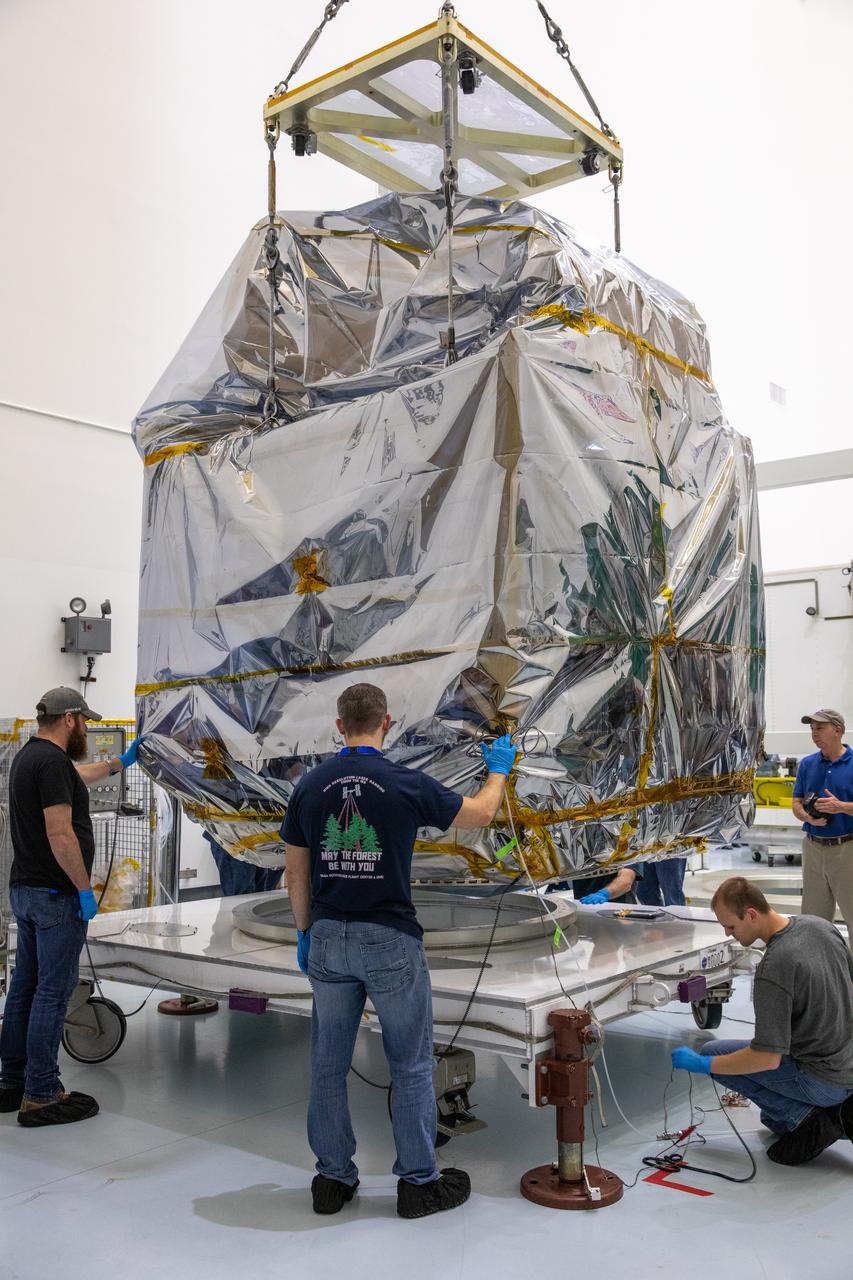
NASA’s Plankton, Aerosol, Cloud, ocean Ecosystem (PACE) observatory spacecraft is uncrated for prelaunch processing at the Astrotech Space Operations Facility near the agency’s Kennedy Space Center in Florida on Wednesday, Nov. 15, 2023. The PACE observatory will help us better understand how the ocean and atmosphere exchange carbon dioxide, measure key atmospheric variables associated with air quality and Earth's climate, and monitor ocean health, in part by studying phytoplankton, tiny plants and algae that sustain the marine food web. PACE will be encapsulated for launch aboard a SpaceX Falcon 9 rocket from Space Launch Complex 40 at Cape Canaveral Space Force Station in Florida.
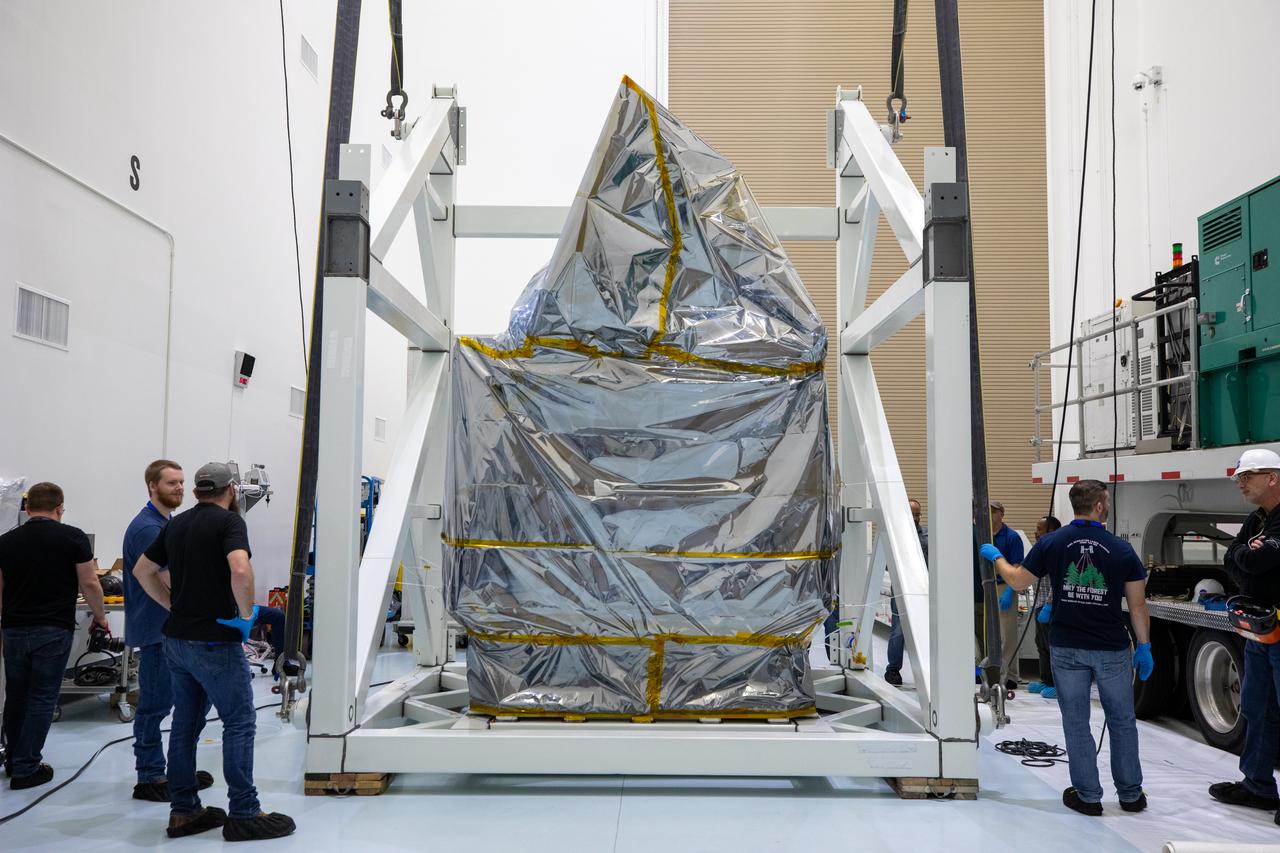
NASA’s Plankton, Aerosol, Cloud, ocean Ecosystem (PACE) observatory spacecraft is uncrated for prelaunch processing at the Astrotech Space Operations Facility near the agency’s Kennedy Space Center in Florida on Wednesday, Nov. 15, 2023. The PACE observatory will help us better understand how the ocean and atmosphere exchange carbon dioxide, measure key atmospheric variables associated with air quality and Earth's climate, and monitor ocean health, in part by studying phytoplankton, tiny plants and algae that sustain the marine food web. PACE will be encapsulated for launch aboard a SpaceX Falcon 9 rocket from Space Launch Complex 40 at Cape Canaveral Space Force Station in Florida.
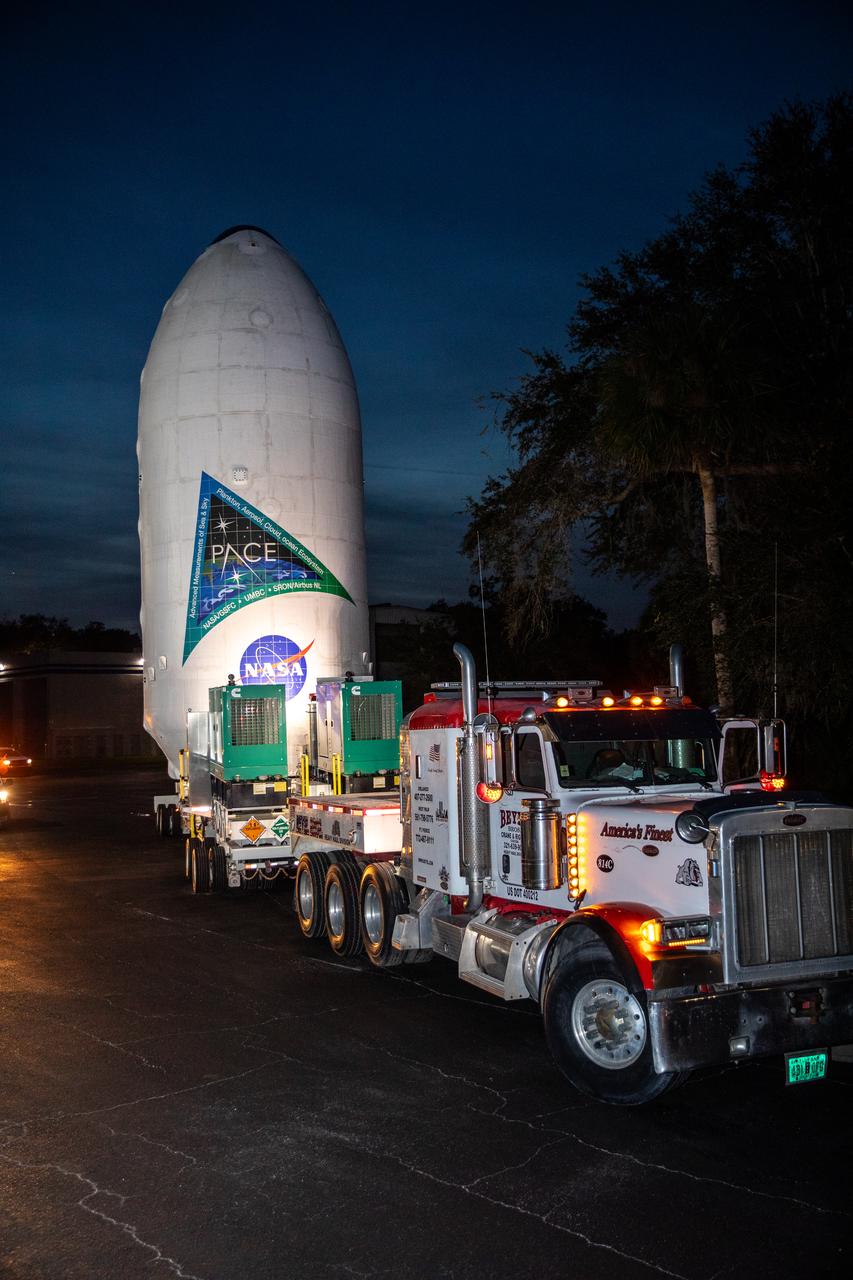
NASA’s PACE (Plankton, Aerosol, Cloud, ocean Ecosystem) spacecraft encapsulated inside SpaceX’s Falcon 9 payload fairings is transported from the Astrotech Space Operations Facility near the agency’s Kennedy Space Center in Florida to Space Launch Complex 40 at Cape Canaveral Space Force Station on Thursday, Feb. 1, 2024, to be mated with a SpaceX Falcon 9 in preparation for liftoff set for no earlier than 1:33 a.m. EST on Tuesday, Feb. 6, 2024. PACE is NASA’s newest earth-observing satellite that will help increase our understanding of Earth’s oceans, atmosphere, and climate by delivering hyperspectral observations of microscopic marine organisms called phytoplankton as well new data on clouds and aerosols.
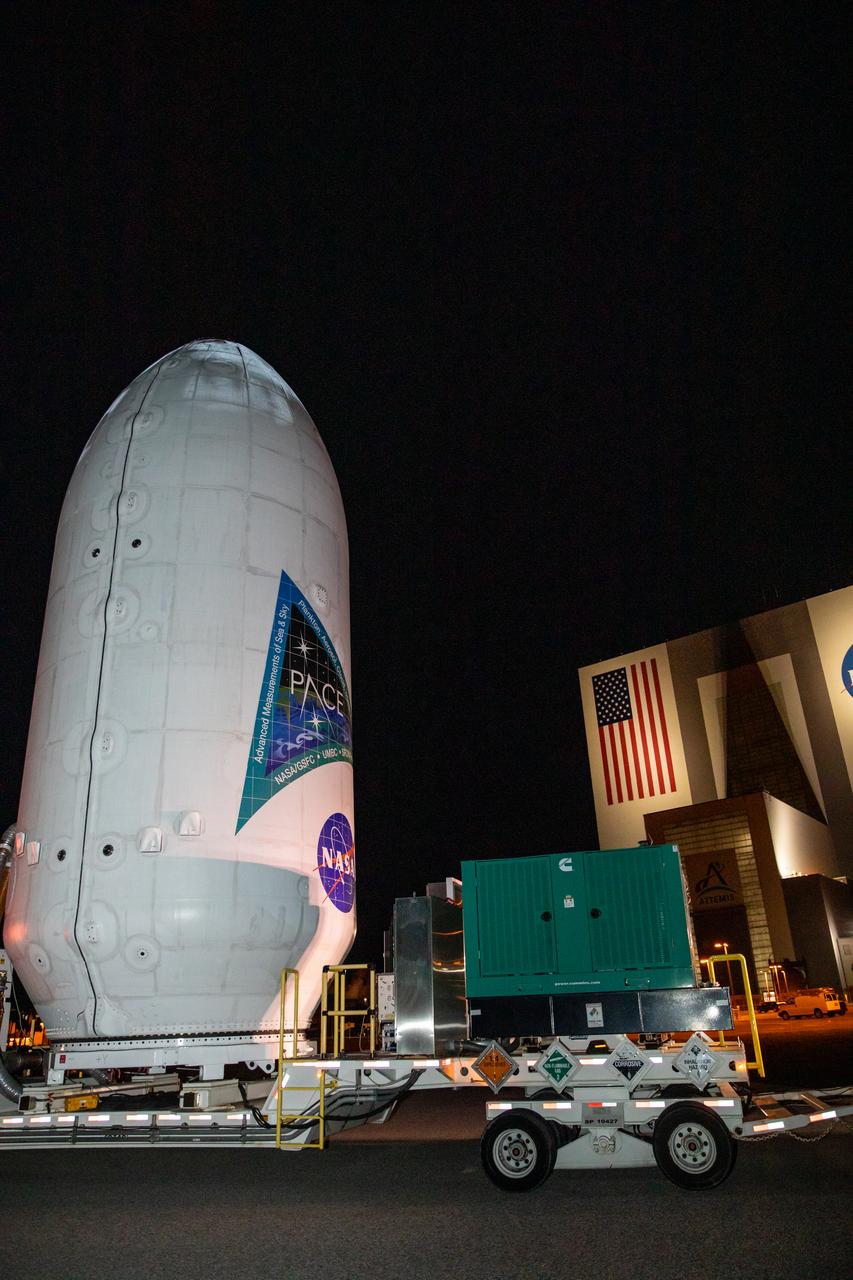
NASA’s PACE (Plankton, Aerosol, Cloud, ocean Ecosystem) spacecraft encapsulated inside SpaceX’s Falcon 9 payload fairings is transported from the Astrotech Space Operations Facility near the agency’s Kennedy Space Center in Florida to Space Launch Complex 40 at Cape Canaveral Space Force Station on Thursday, Feb. 1, 2024, to be mated with a SpaceX Falcon 9 in preparation for liftoff set for no earlier than 1:33 a.m. EST on Tuesday, Feb. 6, 2024. PACE is NASA’s newest earth-observing satellite that will help increase our understanding of Earth’s oceans, atmosphere, and climate by delivering hyperspectral observations of microscopic marine organisms called phytoplankton as well new data on clouds and aerosols.
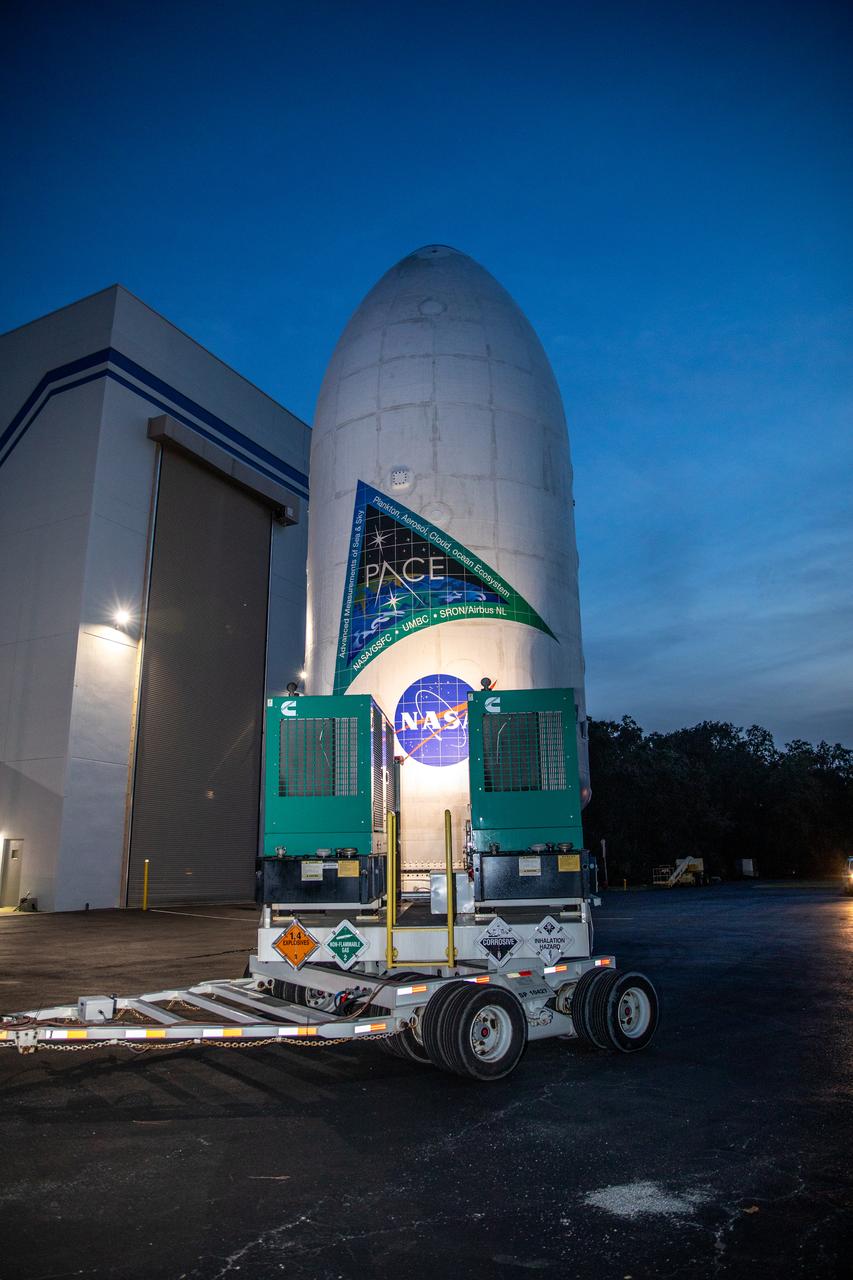
NASA’s PACE (Plankton, Aerosol, Cloud, ocean Ecosystem) spacecraft encapsulated inside SpaceX’s Falcon 9 payload fairings is transported from the Astrotech Space Operations Facility near the agency’s Kennedy Space Center in Florida to Space Launch Complex 40 at Cape Canaveral Space Force Station on Thursday, Feb. 1, 2024, to be mated with a SpaceX Falcon 9 in preparation for liftoff set for no earlier than 1:33 a.m. EST on Tuesday, Feb. 6, 2024. PACE is NASA’s newest earth-observing satellite that will help increase our understanding of Earth’s oceans, atmosphere, and climate by delivering hyperspectral observations of microscopic marine organisms called phytoplankton as well new data on clouds and aerosols.
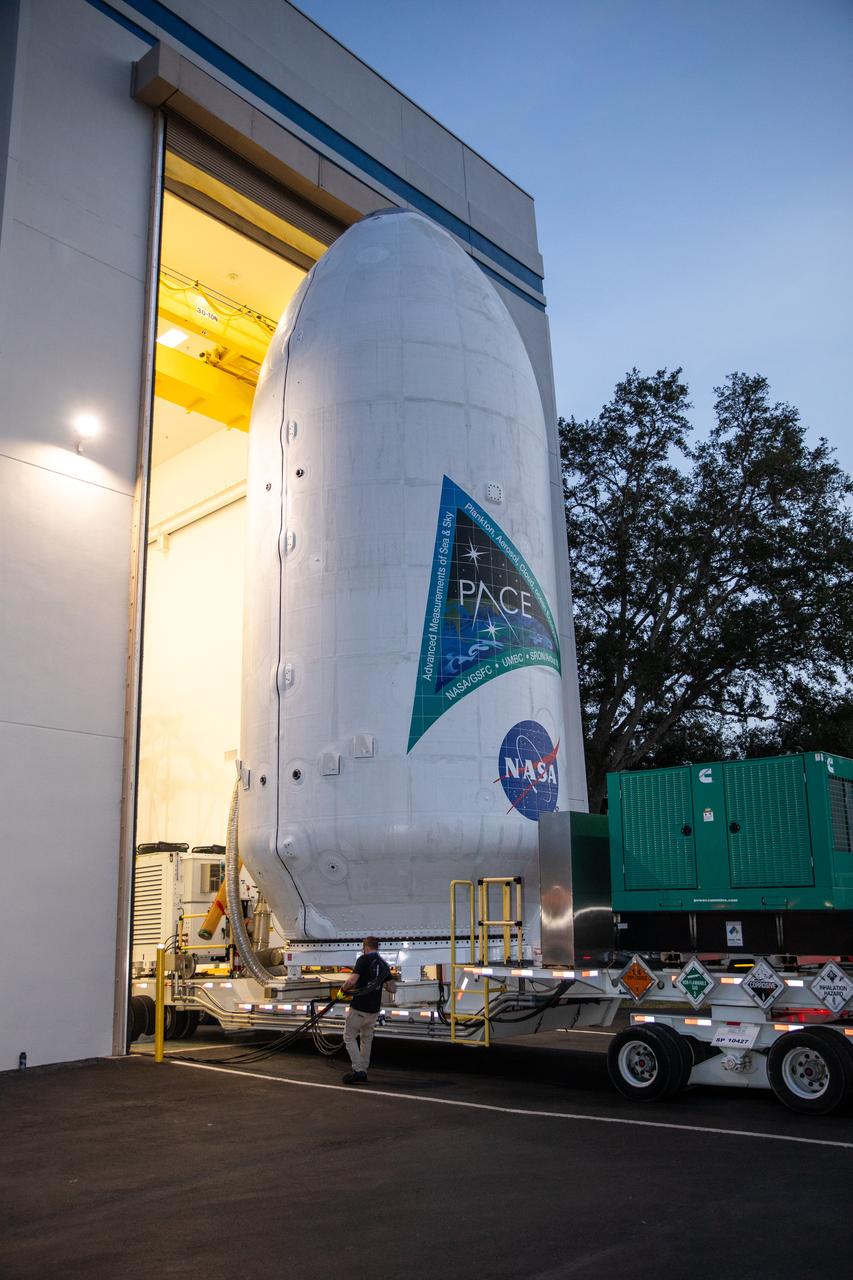
NASA’s PACE (Plankton, Aerosol, Cloud, ocean Ecosystem) spacecraft encapsulated inside SpaceX’s Falcon 9 payload fairings is transported from the Astrotech Space Operations Facility near the agency’s Kennedy Space Center in Florida to Space Launch Complex 40 at Cape Canaveral Space Force Station on Thursday, Feb. 1, 2024, to be mated with a SpaceX Falcon 9 in preparation for liftoff set for no earlier than 1:33 a.m. EST on Tuesday, Feb. 6, 2024. PACE is NASA’s newest earth-observing satellite that will help increase our understanding of Earth’s oceans, atmosphere, and climate by delivering hyperspectral observations of microscopic marine organisms called phytoplankton as well new data on clouds and aerosols.

NASA’s PACE (Plankton, Aerosol, Cloud, ocean Ecosystem) spacecraft encapsulated inside SpaceX’s Falcon 9 payload fairings is transported from the Astrotech Space Operations Facility near the agency’s Kennedy Space Center in Florida to Space Launch Complex 40 at Cape Canaveral Space Force Station on Thursday, Feb. 1, 2024, to be mated with a SpaceX Falcon 9 in preparation for liftoff set for no earlier than 1:33 a.m. EST on Tuesday, Feb. 6, 2024. PACE is NASA’s newest earth-observing satellite that will help increase our understanding of Earth’s oceans, atmosphere, and climate by delivering hyperspectral observations of microscopic marine organisms called phytoplankton as well new data on clouds and aerosols.
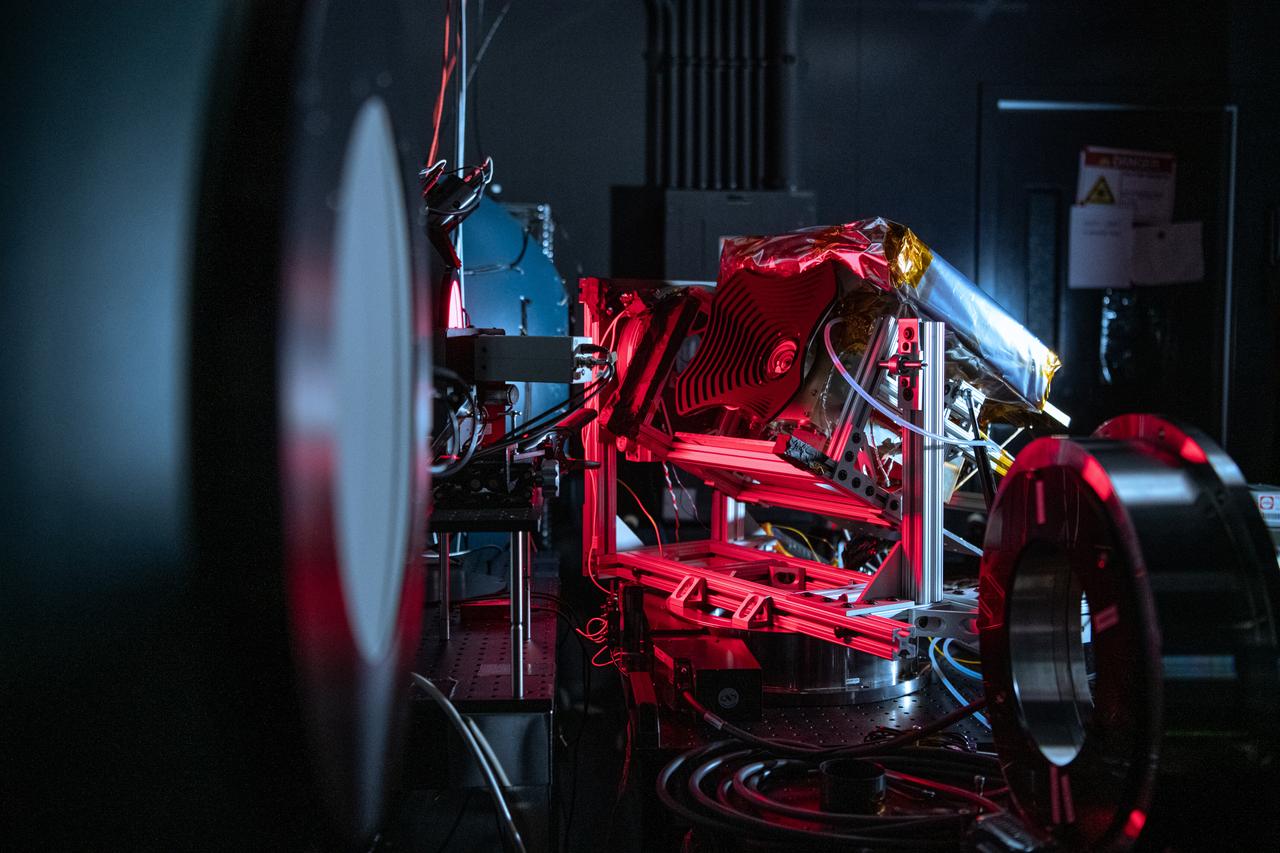
The Hyper-Angular Rainbow Polarimeter #2 (HARP2) instrument undergoes calibration testing after at NASA's Goddard Space Flight Center in Greenbelt Maryland on October 4th, 2022. HARP2 is one of three instruments on NASA's Plankton, Aerosol, Cloud, ocean Ecosystem (PACE) observatory, it was designed and built by UMBC's Earth and Space Institute.
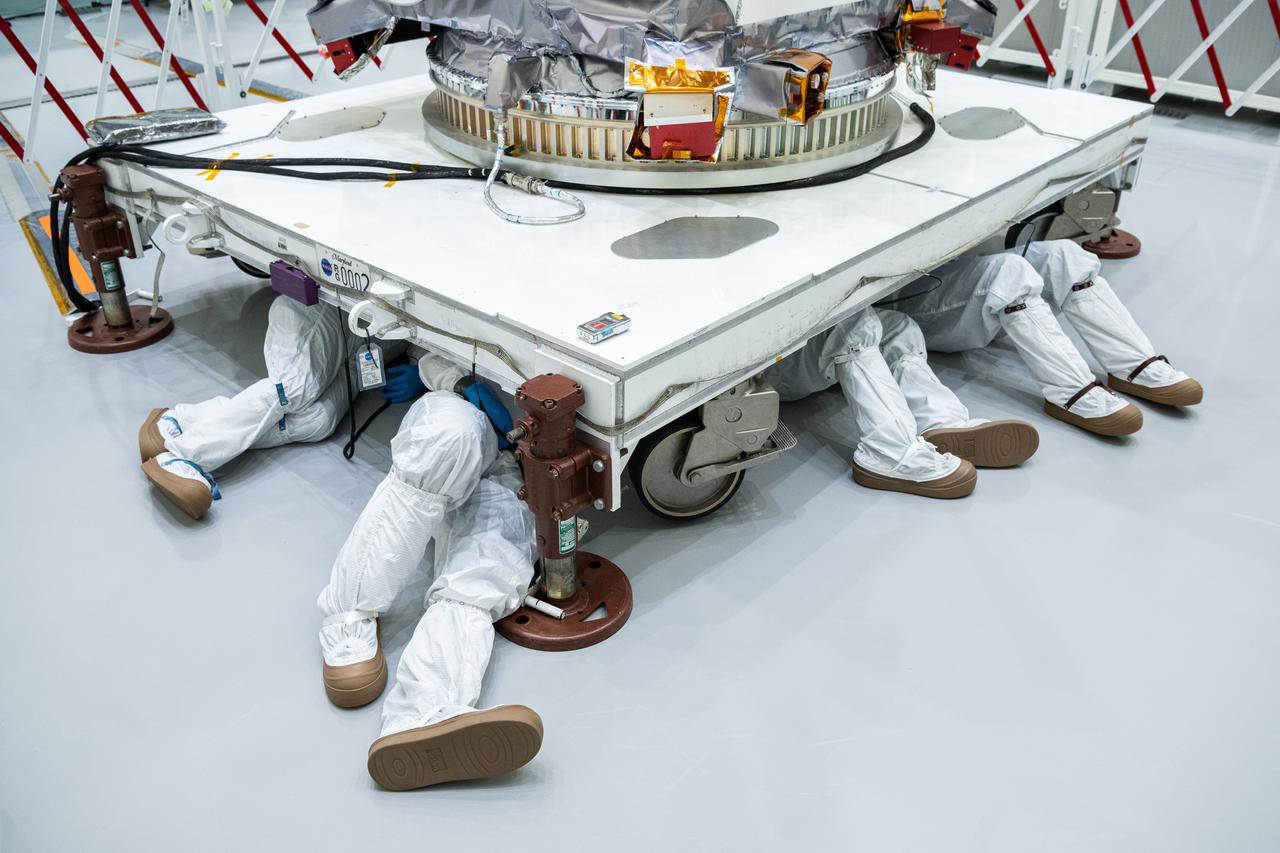
Engineers and Technicians from NASA’s Goddard Space Flight Center crawl under the PACE (Plankton, Aerosol, Cloud, ocean Ecosystem) spacecraft to inspect the +X side during payload processing at Astrotech Space Operations in Titusville, FL on January 27th, 2024.
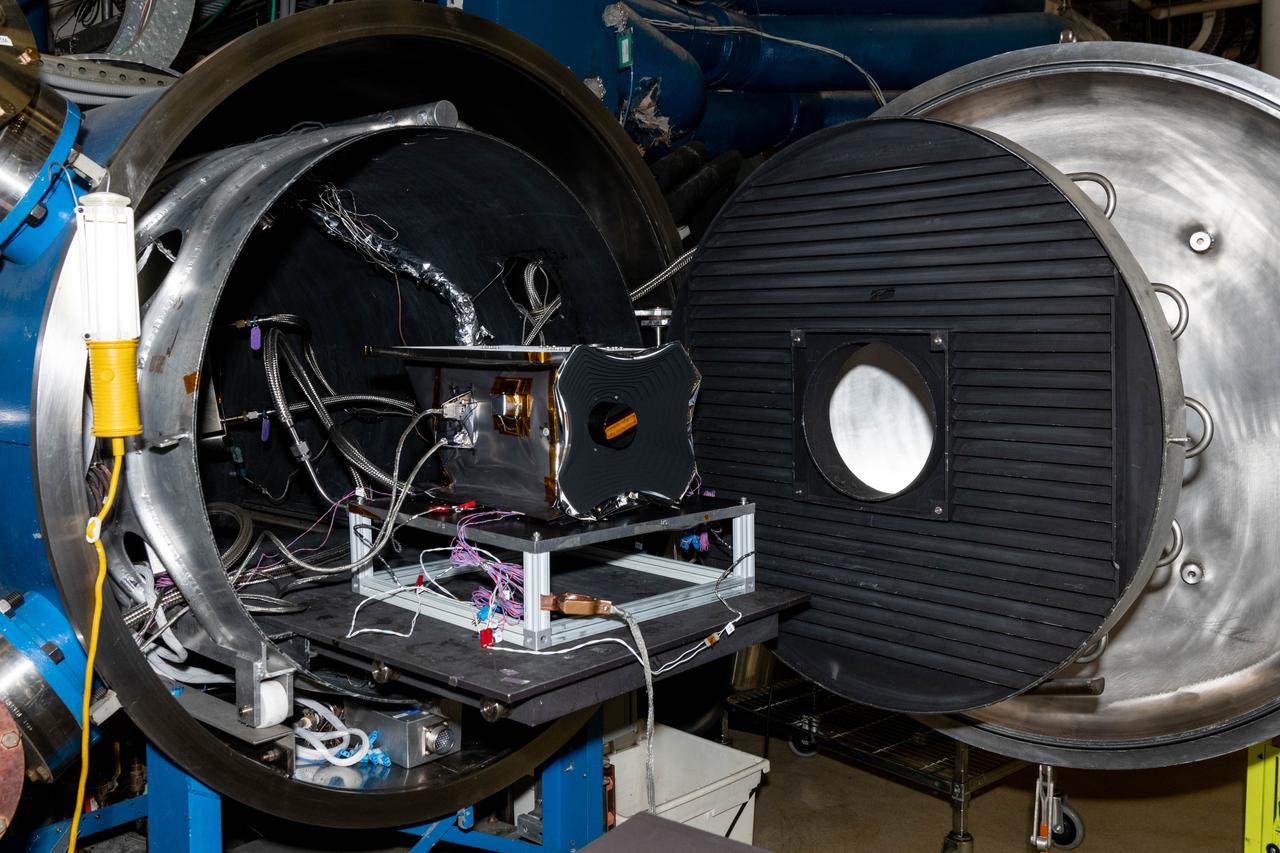
The Hyper-Angular Rainbow Polarimeter #2 (HARP2) instrument prior to thermal vacuum testing at NASA's Goddard Space Flight Center in Greenbelt Maryland on August 8th, 2022. HARP2 is one of three instruments on NASA's Plankton, Aerosol, Cloud, ocean Ecosystem (PACE) observatory, it was designed and built by UMBC's Earth and Space Institute.
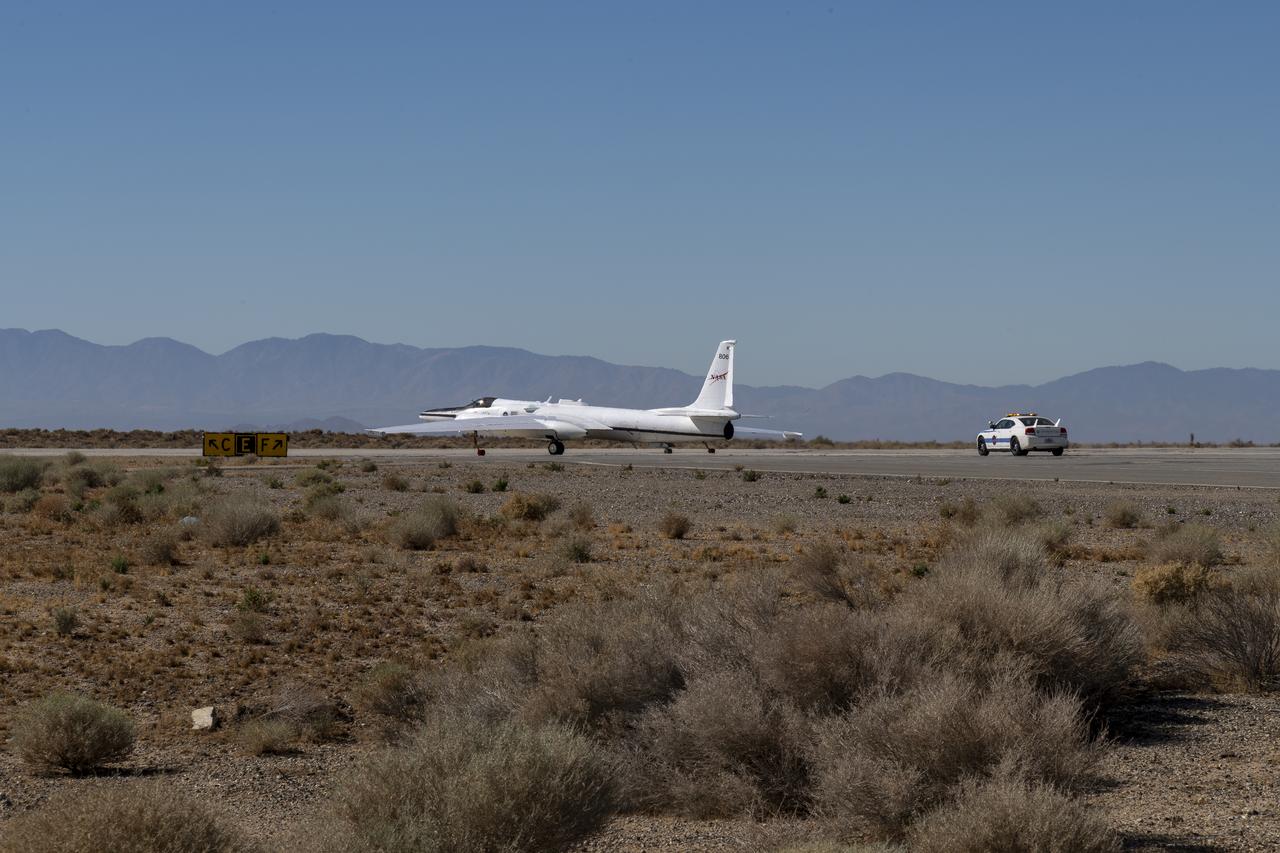
The ER-2 conducted over 80 flight hours in service of the Plankton, Aerosol, Cloud, ocean Ecosystem Postlaunch Airborne eXperiment (PACE-PAX) mission. The ER-2 is uniquely qualified to conduct the high-altitude scientific flights that this project required, and is based at NASA’s Armstrong Flight Research Center in Edwards, California.
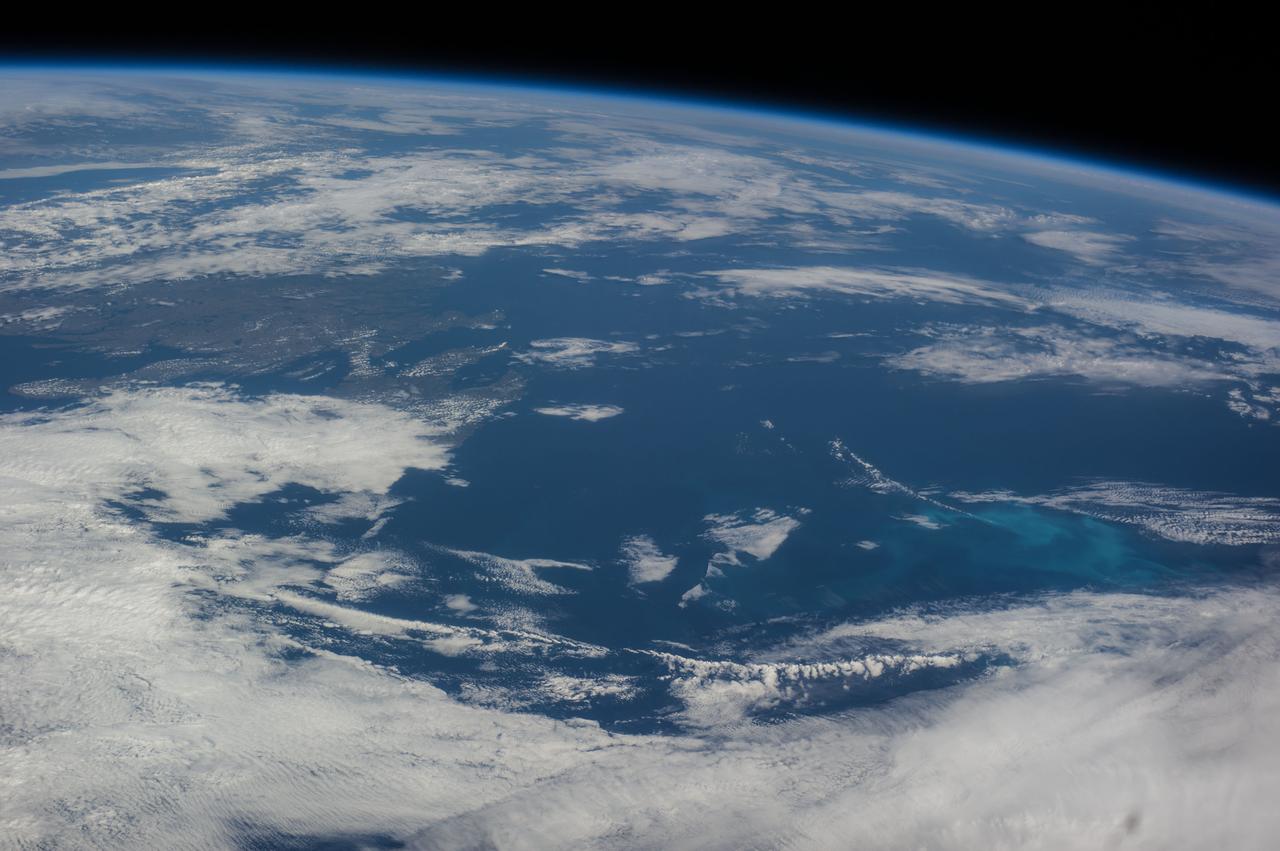
ISS041-E-016679 (17 Sept. 2014) --- One of the Expedition 41 crew members aboard the Earth-orbiting International Space Station,flying 221 nautical miles above the North Atlantic Ocean, photographed this oblique scene showing a plankton bloom at the lower right edge of the frame. Newfoundland is in upper left.
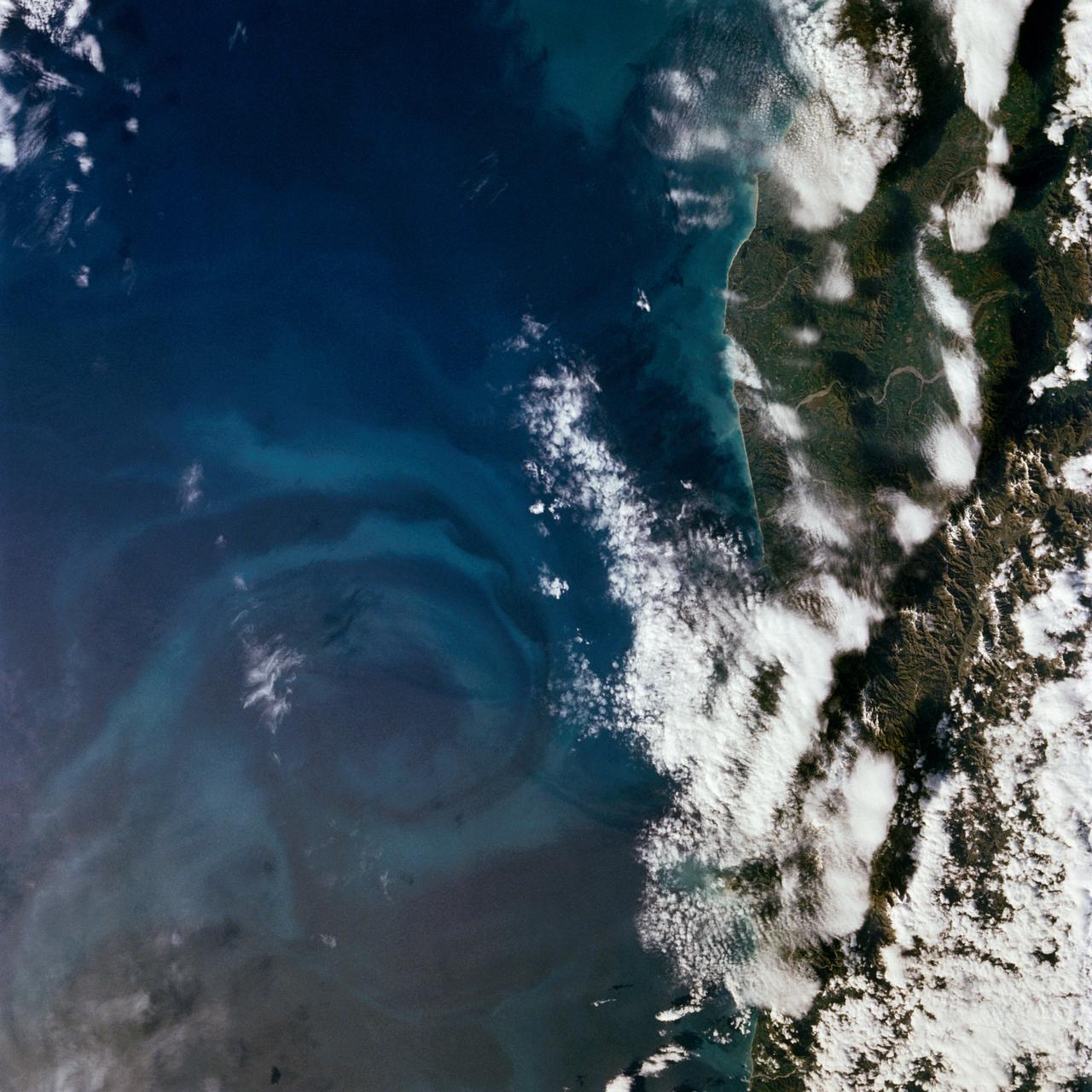
61A-50-020 (30 Oct-6 Nov 1985) --- Large photo plankton vortex along the coast of New Zealand's South Island, about 100 kilometers to the north by northeast of Christchurch. Southern hemisphere vortices are clearly clockwise as opposed to counter-clockwise in the northern hemisphere.
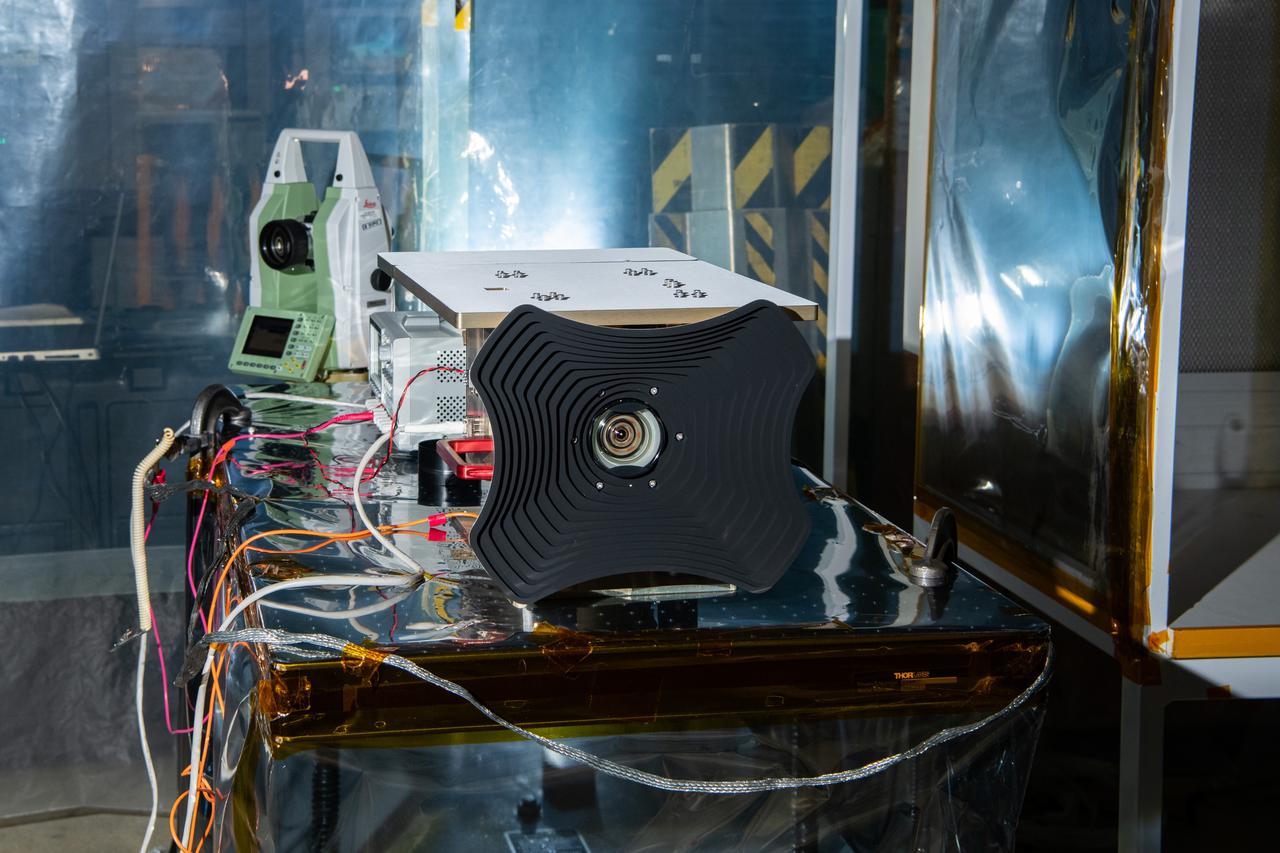
The Hyper-Angular Rainbow Polarimeter #2 (HARP2) instrument undergoes Boresight alignment at NASA's Goddard Space Flight Center in Greenbelt, Maryland. HARP2 is one of three instruments on NASA's Plankton, Aerosol, Cloud, ocean Ecosystem (PACE) observatory, it was designed and built by UMBC's Earth and Space Institute.
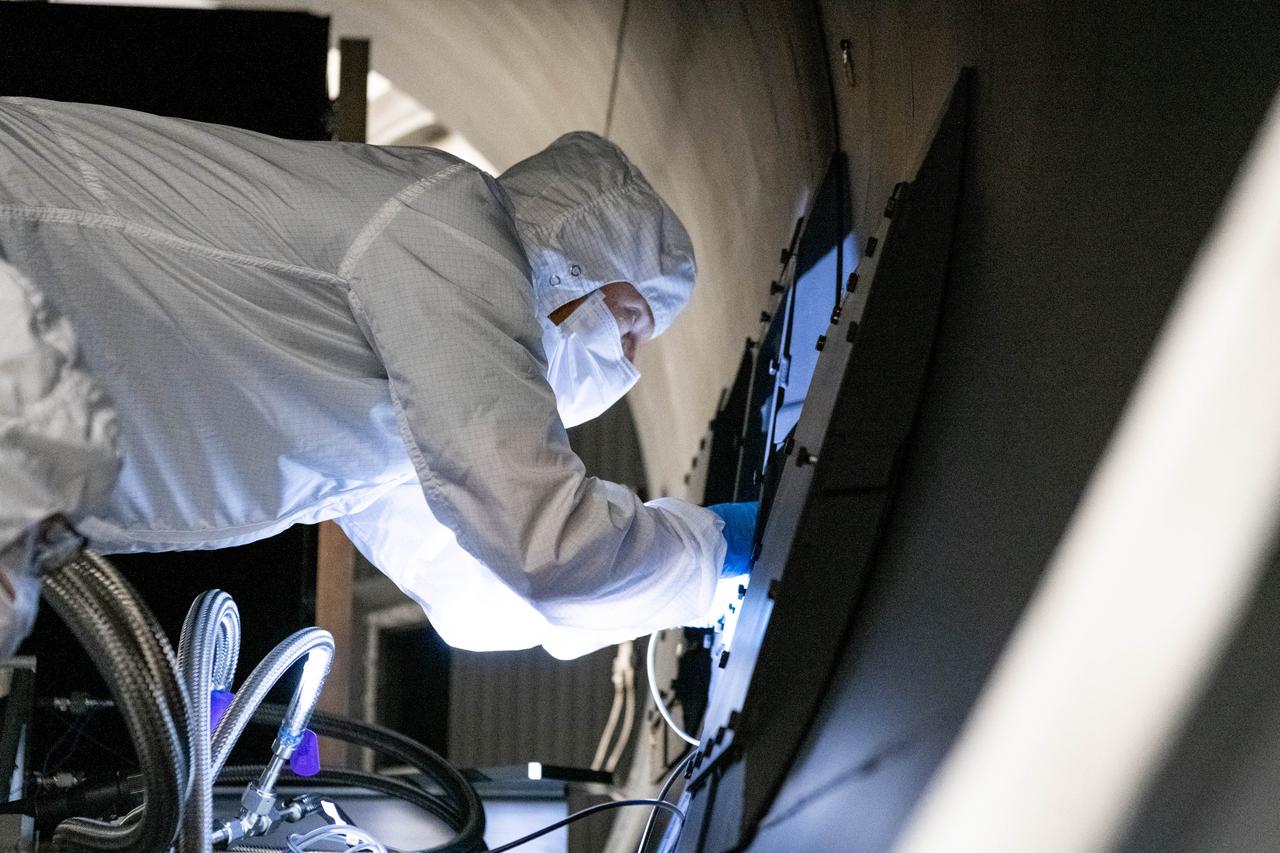
Optical engineer, Brendan McAndrew, installs radiometers inside the Ocean Color Instrument (OCI) thermal vacuum chamber in preparation for window calibration testing. The testing will help scientists and engineers know if the optical components of OCI are aligned correctly before it gets integrated to the PACE (Plankton, Aerosol, Cloud, ocean Ecosystem) spacecraft. OCI is a highly advanced optical spectrometer that will be used to measure properties of light over portions of the electromagnetic spectrum. It will enable continuous measurement of light at finer wavelength resolution than previous NASA satellite sensors, extending key system ocean color data records for climate studies. OCI is PACE's (Plankton, Aerosol, Cloud, ocean Ecosystem) primary sensor built at Goddard Space Flight Center in Greenbelt, MD.
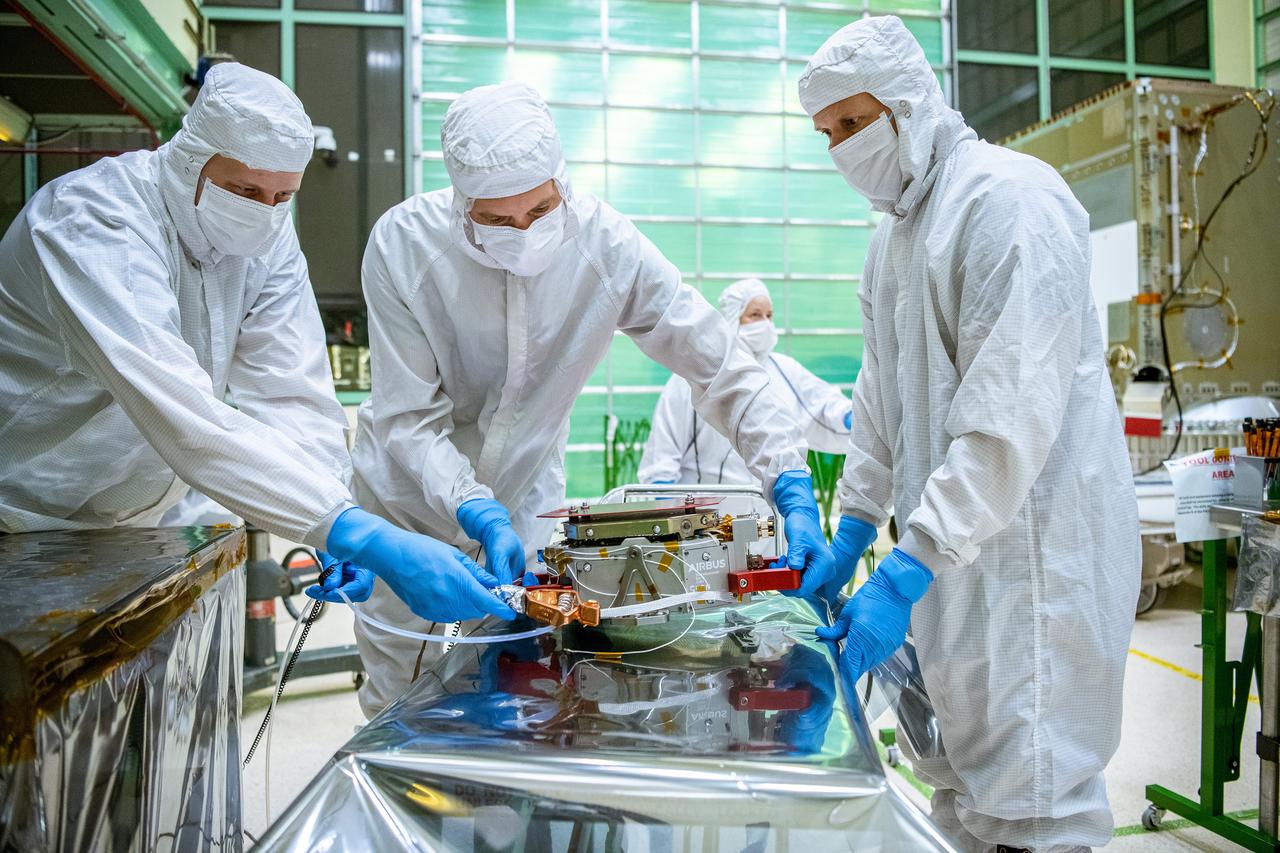
Engineers from SRON, the Netherlands Institute for Space Research, move the SPEXone instrument before it is integrated onto the Plankton, Aerosol, Cloud, ocean Ecosystem (PACE) Spacecraft at NASA Goddard Space Flight Center in Greenbelt, Maryland on June 13th, 2022. SPEXone is a compact, optical satellite instrument that will characterize aerosols from low Earth orbit as part of the NASA PACE mission. SPEXone is one of three instruments on NASA's Plankton, Aerosol, Cloud, ocean Ecosystem (PACE) observatory and has been developed by a Dutch consortium consisting of SRON Netherlands Institute for Space Research and Airbus Defence and Space Netherlands, supported by opto-mechanical expertise from TNO. SRON and Airbus DS NL are responsible for the design, manufacturing and testing of the instrument. The scientific lead is in the hands of SRON. SPEXone is a public-private initiative, funded by the Netherlands Space Office (NSO), the Netherlands Organization of Scientific Research (NWO), SRON and Airbus DS NL.
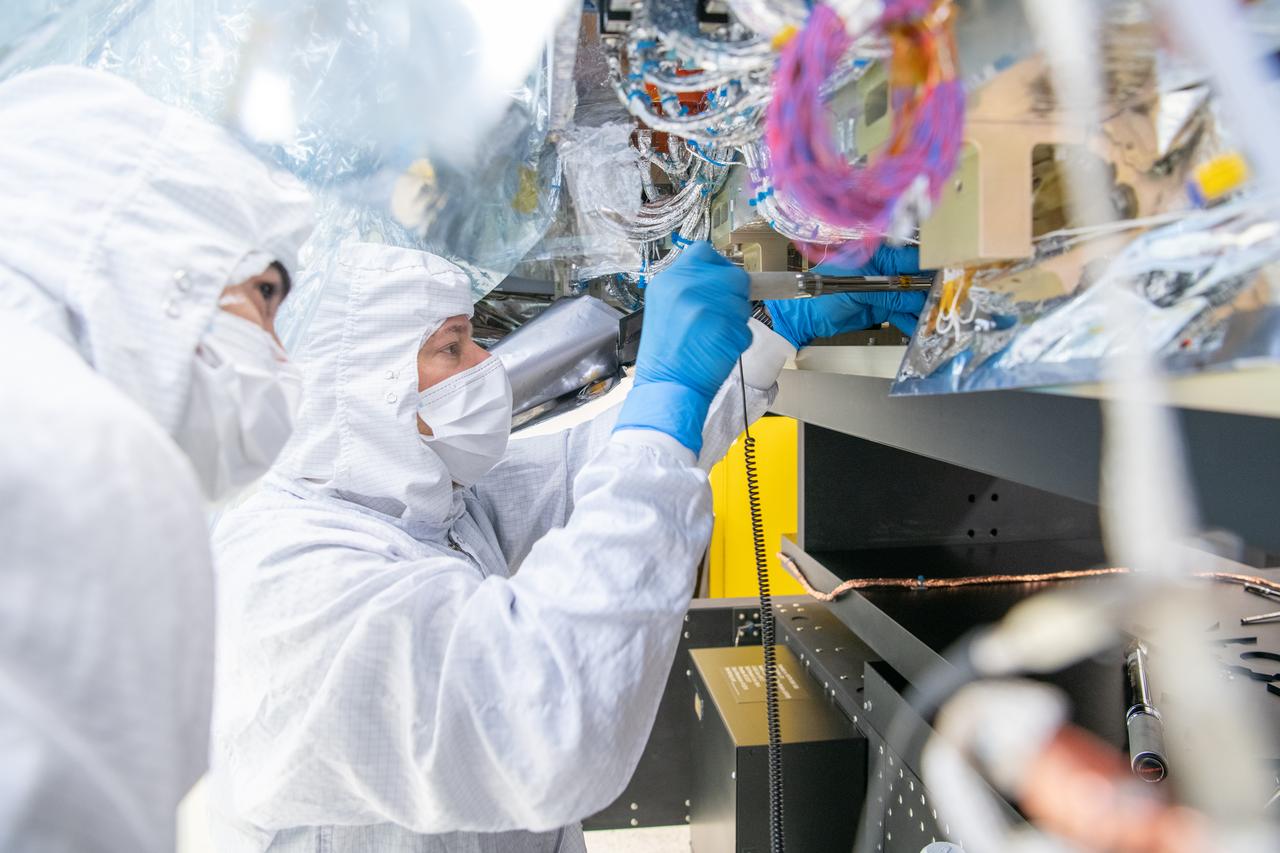
Mechanical technician, Thomas Huber, tightens bolts on the Ocean Color Instrument (OCI) is installed onto the Ground Support Equipment Application for Tilt or Rotation (GAToR) made by Newton Engineering. GAToR will allow engineers to tilt and rotate OCI in different orientations for further testing prior to integration onto the PACE (Plankton, Aerosol, Cloud, ocean Ecosystem) spacecraft. OCI is a highly advanced optical spectrometer that will be used to measure properties of light over portions of the electromagnetic spectrum. It will enable continuous measurement of light at finer wavelength resolution than previous NASA satellite sensors, extending key system ocean color data records for climate studies. OCI is PACE's (Plankton, Aerosol, Cloud, ocean Ecosystem) primary sensor built at Goddard Space Flight Center in Greenbelt, MD.
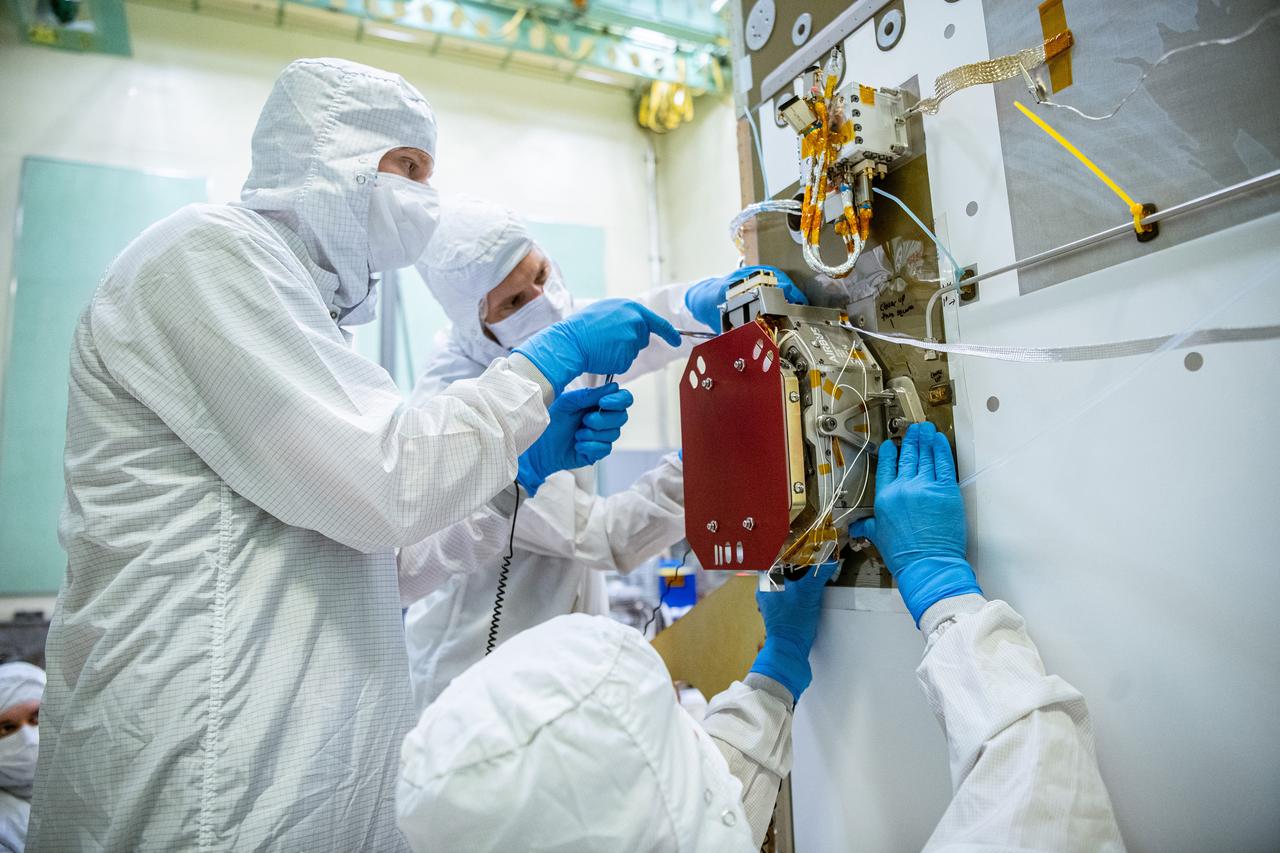
NASA technicians and Engineers from SRON, the Netherlands Institute for Space Research, integrate the SPEXone instrument to the Plankton, Aerosol, Cloud, ocean Ecosystem (PACE) Spacecraft at NASA Goddard Space Flight Center in Greenbelt, Maryland on June 13th, 2022. SPEXone is a compact, optical satellite instrument that will characterize aerosols from low Earth orbit as part of the NASA PACE mission. SPEXone is one of three instruments on NASA's Plankton, Aerosol, Cloud, ocean Ecosystem (PACE) observatory and has been developed by a Dutch consortium consisting of SRON Netherlands Institute for Space Research and Airbus Defence and Space Netherlands, supported by opto-mechanical expertise from TNO. SRON and Airbus DS NL are responsible for the design, manufacturing and testing of the instrument. The scientific lead is in the hands of SRON. SPEXone is a public-private initiative, funded by the Netherlands Space Office (NSO), the Netherlands Organization of Scientific Research (NWO), SRON and Airbus DS NL.
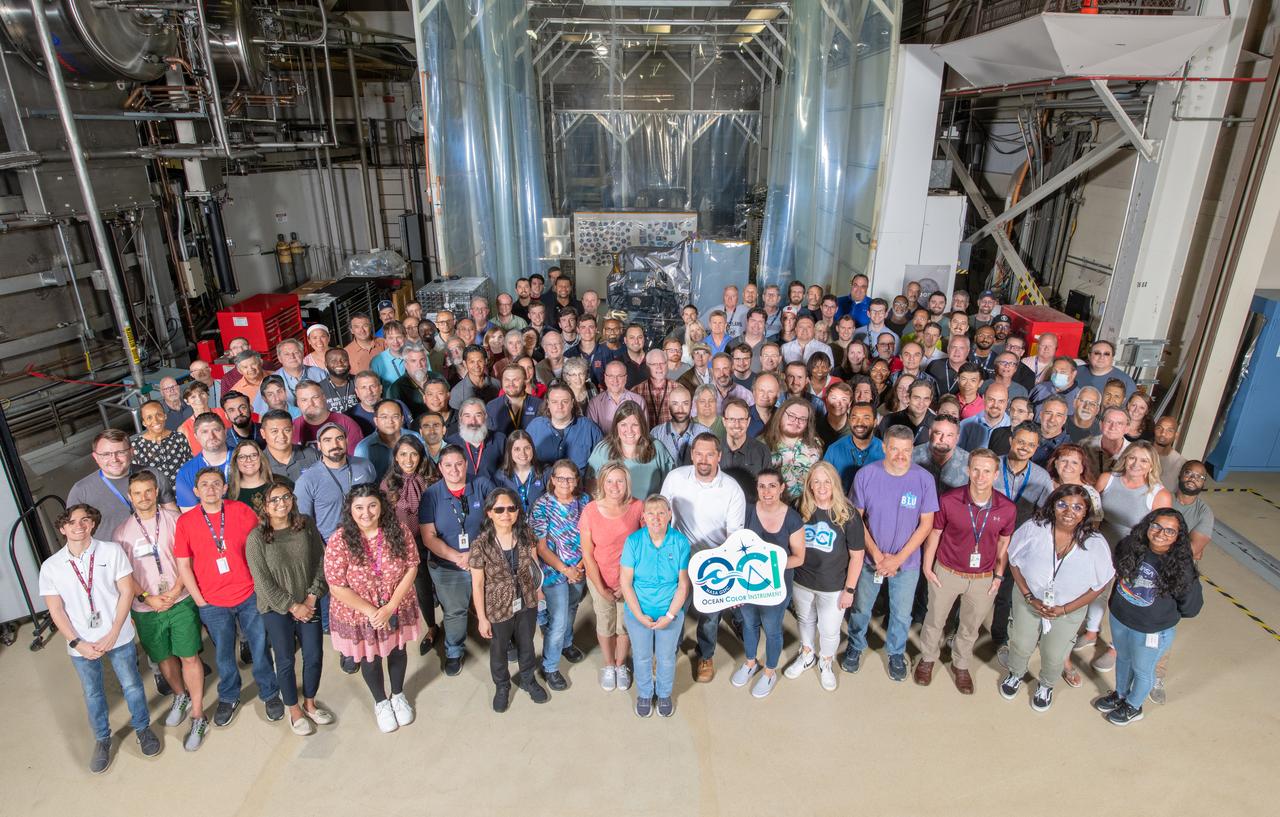
The Ocean Color Instrument (OCI) team pose with OCI and its integrated Earth Shade behind a clean tent curtain. This composite image made of two frames shows the Ocean Color Instrument team standing in front of the flight hardware before the instrument is integrated to the Plankton, Aerosol, Cloud, ocean Ecosystem spacecraft in summer, 2022. OCI is a highly advanced optical spectrometer that will be used to measure properties of light over portions of the electromagnetic spectrum. It will enable continuous measurement of light at finer wavelength resolution than previous NASA satellite sensors, extending key system ocean color data records for climate studies. OCI is PACE's (Plankton, Aerosol, Cloud, ocean Ecosystem) primary sensor built at Goddard Space Flight Center in Greenbelt, MD.
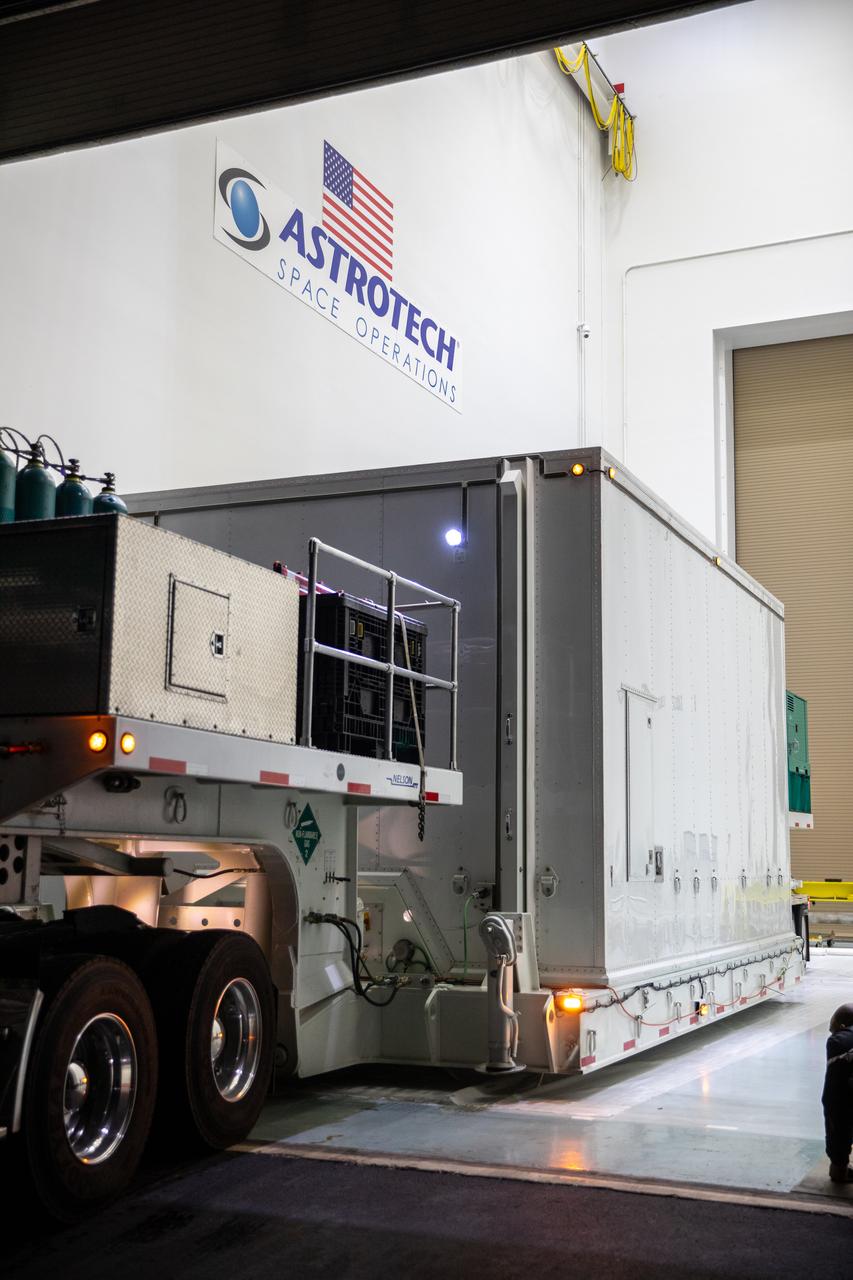
The transport carrier containing NASA’s Plankton, Aerosol, Cloud, ocean Ecosystem (PACE) observatory spacecraft is offloaded at the Astrotech Space Operations Facility near the agency’s Kennedy Space Center in Florida on Tuesday, Nov. 14, 2023. PACE was shipped from the agency’s Goddard Space Flight Center in Greenbelt, Maryland, and is targeted to launch on January 30, 2024, on a SpaceX Falcon 9 rocket lifting off from Space Launch Complex 40 at Cape Canaveral Space Force Station. The PACE observatory will help us better understand how the ocean and atmosphere exchange carbon dioxide, measure key atmospheric variables associated with air quality and Earth's climate, and monitor ocean health, in part by studying phytoplankton, tiny plants and algae that sustain the marine food web.
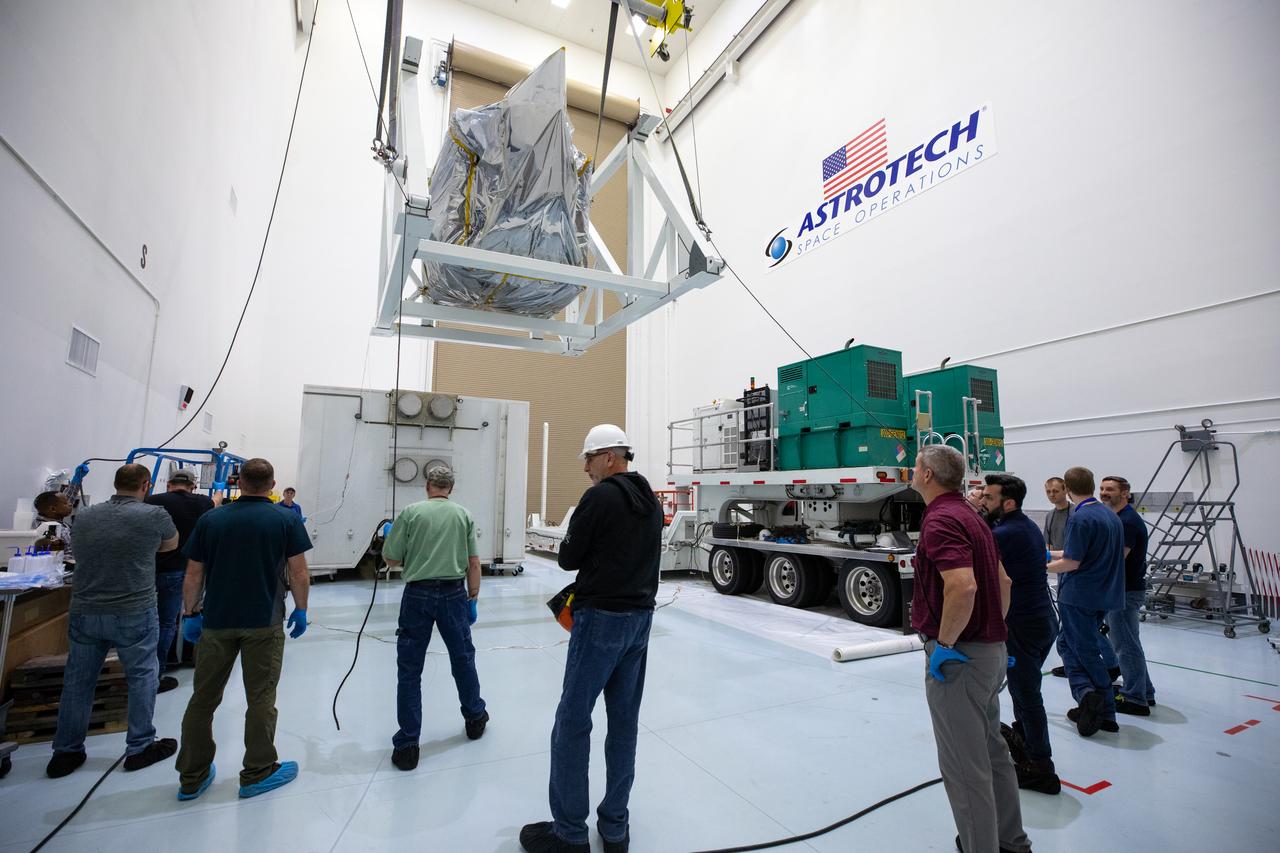
Technicians monitor movement as a crane hoists NASA’s Plankton, Aerosol, Cloud, ocean Ecosystem (PACE) observatory spacecraft after being uncrated on Wednesday, Nov. 15, 2023, at the Astrotech Space Operations Facility near the agency’s Kennedy Space Center in Florida. The PACE observatory will help us better understand how the ocean and atmosphere exchange carbon dioxide, measure key atmospheric variables associated with air quality and Earth's climate, and monitor ocean health, in part by studying phytoplankton, tiny plants and algae that sustain the marine food web. PACE will be encapsulated for launch aboard a SpaceX Falcon 9 rocket from Space Launch Complex 40 at Cape Canaveral Space Force Station in Florida.

The transport carrier containing NASA’s Plankton, Aerosol, Cloud, ocean Ecosystem (PACE) observatory spacecraft arrives at the Astrotech Space Operations Facility near the agency’s Kennedy Space Center in Florida on Tuesday, Nov. 14, 2023. PACE was shipped from the agency’s Goddard Space Flight Center in Greenbelt, Maryland, and is targeted to launch on January 30, 2024, on a SpaceX Falcon 9 rocket lifting off from Space Launch Complex 40 at Cape Canaveral Space Force Station. The PACE observatory will help us better understand how the ocean and atmosphere exchange carbon dioxide, measure key atmospheric variables associated with air quality and Earth's climate, and monitor ocean health, in part by studying phytoplankton, tiny plants and algae that sustain the marine food web.
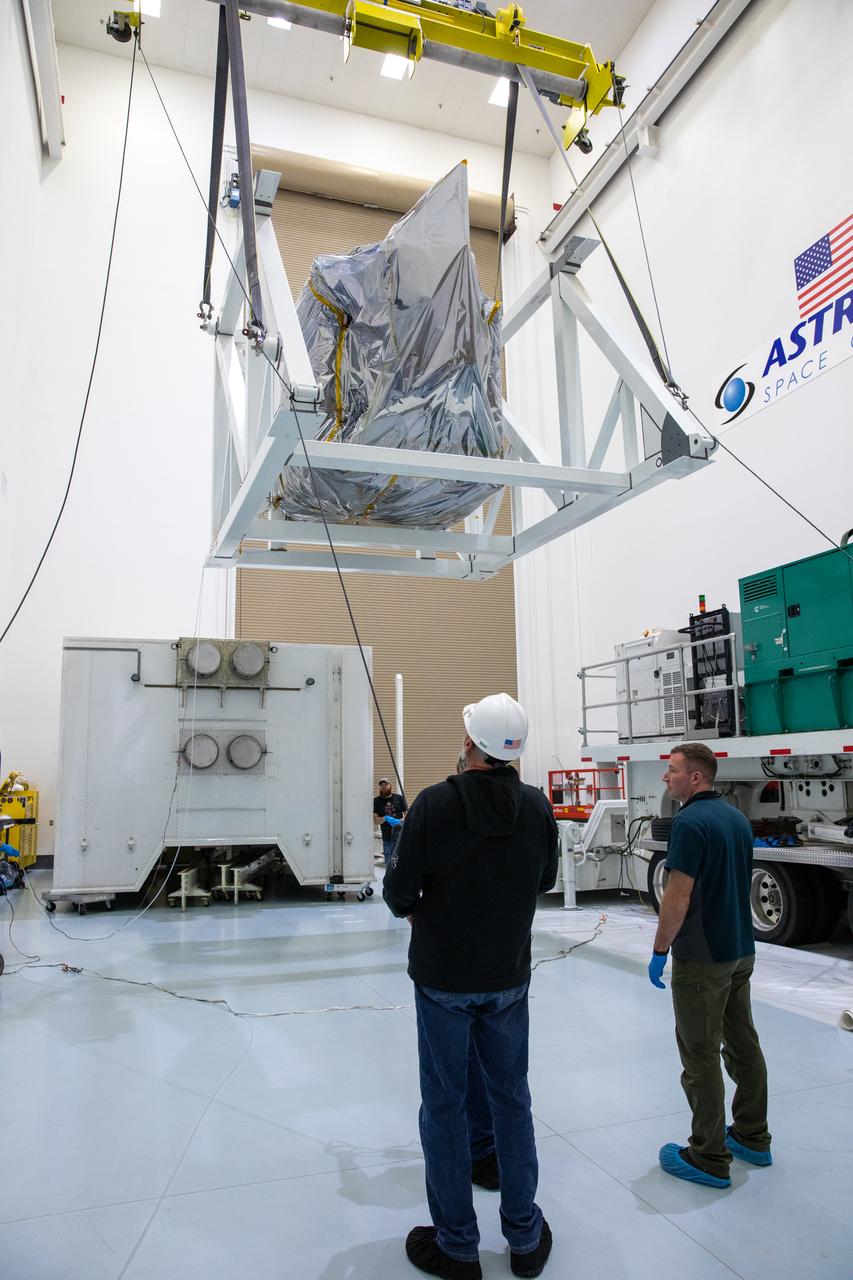
Technicians monitor movement as a crane hoists NASA’s Plankton, Aerosol, Cloud, ocean Ecosystem (PACE) observatory spacecraft after being uncrated on Wednesday, Nov. 15, 2023, at the Astrotech Space Operations Facility near the agency’s Kennedy Space Center in Florida. The PACE observatory will help us better understand how the ocean and atmosphere exchange carbon dioxide, measure key atmospheric variables associated with air quality and Earth's climate, and monitor ocean health, in part by studying phytoplankton, tiny plants and algae that sustain the marine food web. PACE will be encapsulated for launch aboard a SpaceX Falcon 9 rocket from Space Launch Complex 40 at Cape Canaveral Space Force Station in Florida.
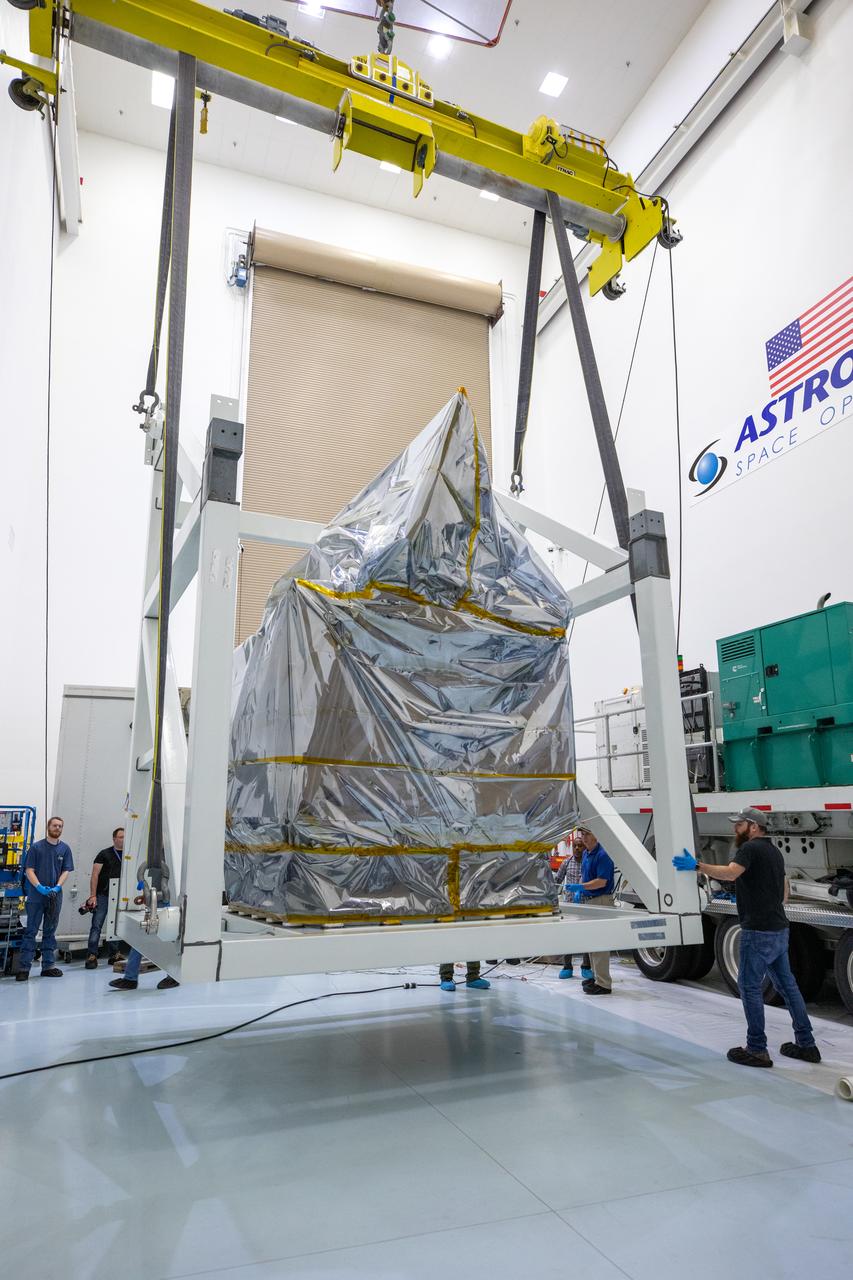
Technicians monitor movement as a crane hoists NASA’s Plankton, Aerosol, Cloud, ocean Ecosystem (PACE) observatory spacecraft after being uncrated on Wednesday, Nov. 15, 2023, at the Astrotech Space Operations Facility near the agency’s Kennedy Space Center in Florida. The PACE observatory will help us better understand how the ocean and atmosphere exchange carbon dioxide, measure key atmospheric variables associated with air quality and Earth's climate, and monitor ocean health, in part by studying phytoplankton, tiny plants and algae that sustain the marine food web. PACE will be encapsulated for launch aboard a SpaceX Falcon 9 rocket from Space Launch Complex 40 at Cape Canaveral Space Force Station in Florida.
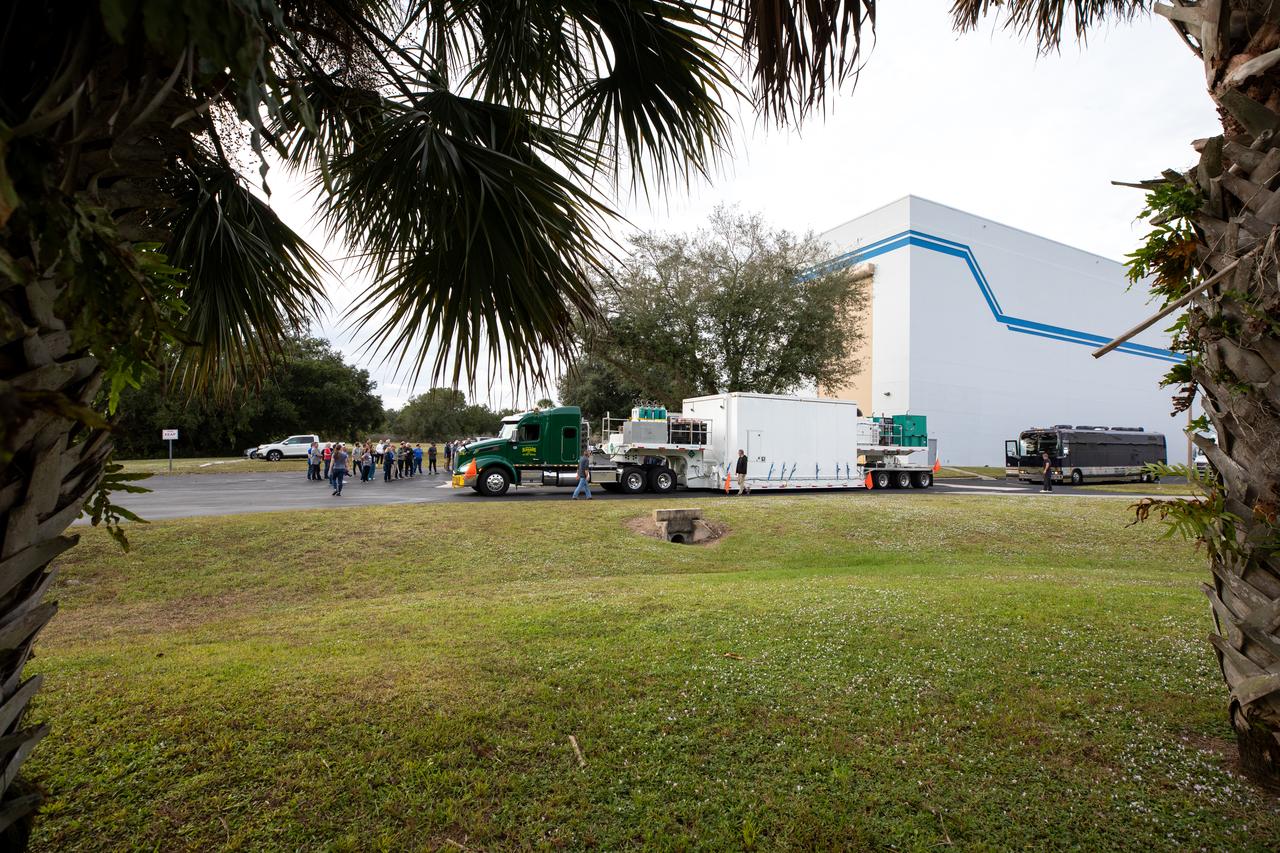
The transport carrier containing NASA’s Plankton, Aerosol, Cloud, ocean Ecosystem (PACE) observatory spacecraft arrives at the Astrotech Space Operations Facility near the agency’s Kennedy Space Center in Florida on Tuesday, Nov. 14, 2023. PACE was shipped from the agency’s Goddard Space Flight Center in Greenbelt, Maryland, and is targeted to launch on January 30, 2024, on a SpaceX Falcon 9 rocket lifting off from Space Launch Complex 40 at Cape Canaveral Space Force Station. The PACE observatory will help us better understand how the ocean and atmosphere exchange carbon dioxide, measure key atmospheric variables associated with air quality and Earth's climate, and monitor ocean health, in part by studying phytoplankton, tiny plants and algae that sustain the marine food web.
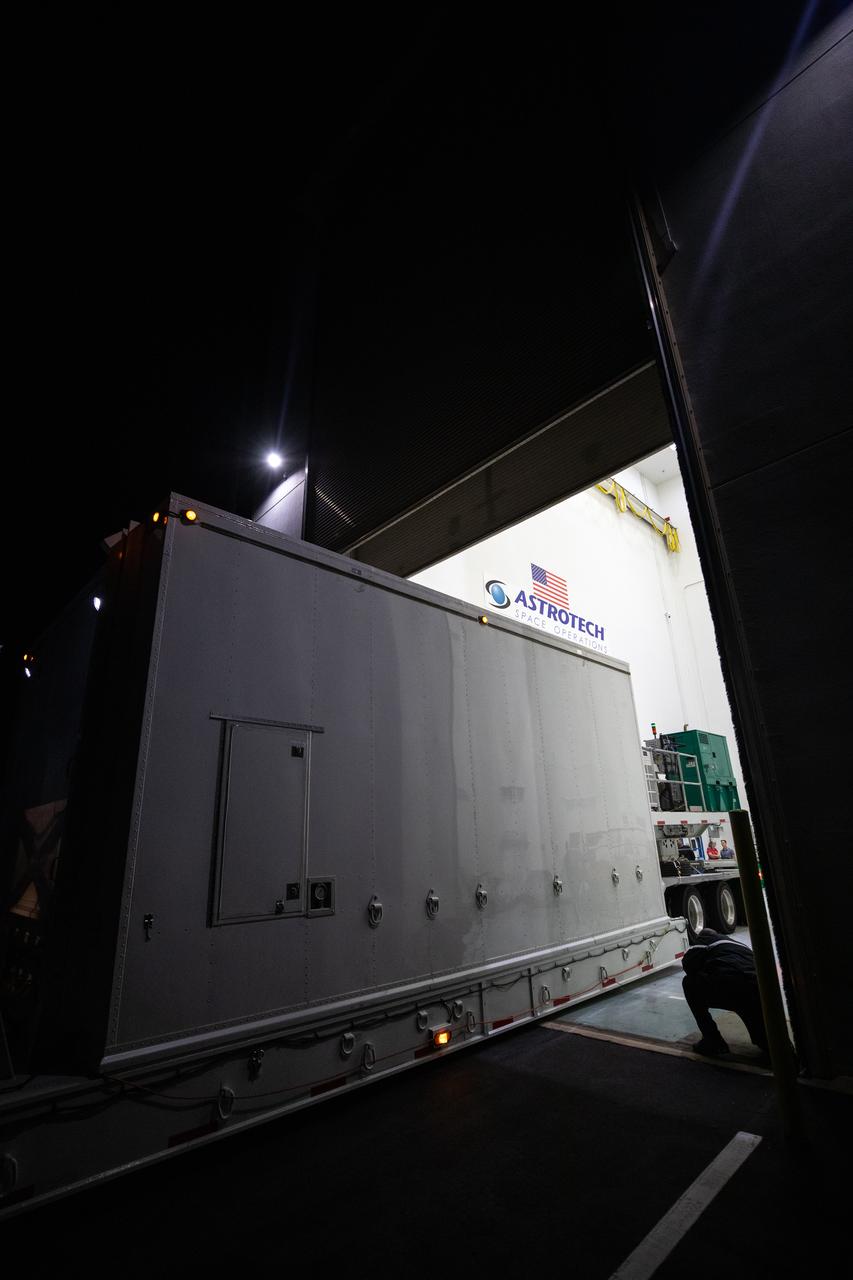
The transport carrier containing NASA’s Plankton, Aerosol, Cloud, ocean Ecosystem (PACE) observatory spacecraft is offloaded at the Astrotech Space Operations Facility near the agency’s Kennedy Space Center in Florida on Tuesday, Nov. 14, 2023. PACE was shipped from the agency’s Goddard Space Flight Center in Greenbelt, Maryland, and is targeted to launch on January 30, 2024, on a SpaceX Falcon 9 rocket lifting off from Space Launch Complex 40 at Cape Canaveral Space Force Station. The PACE observatory will help us better understand how the ocean and atmosphere exchange carbon dioxide, measure key atmospheric variables associated with air quality and Earth's climate, and monitor ocean health, in part by studying phytoplankton, tiny plants and algae that sustain the marine food web.
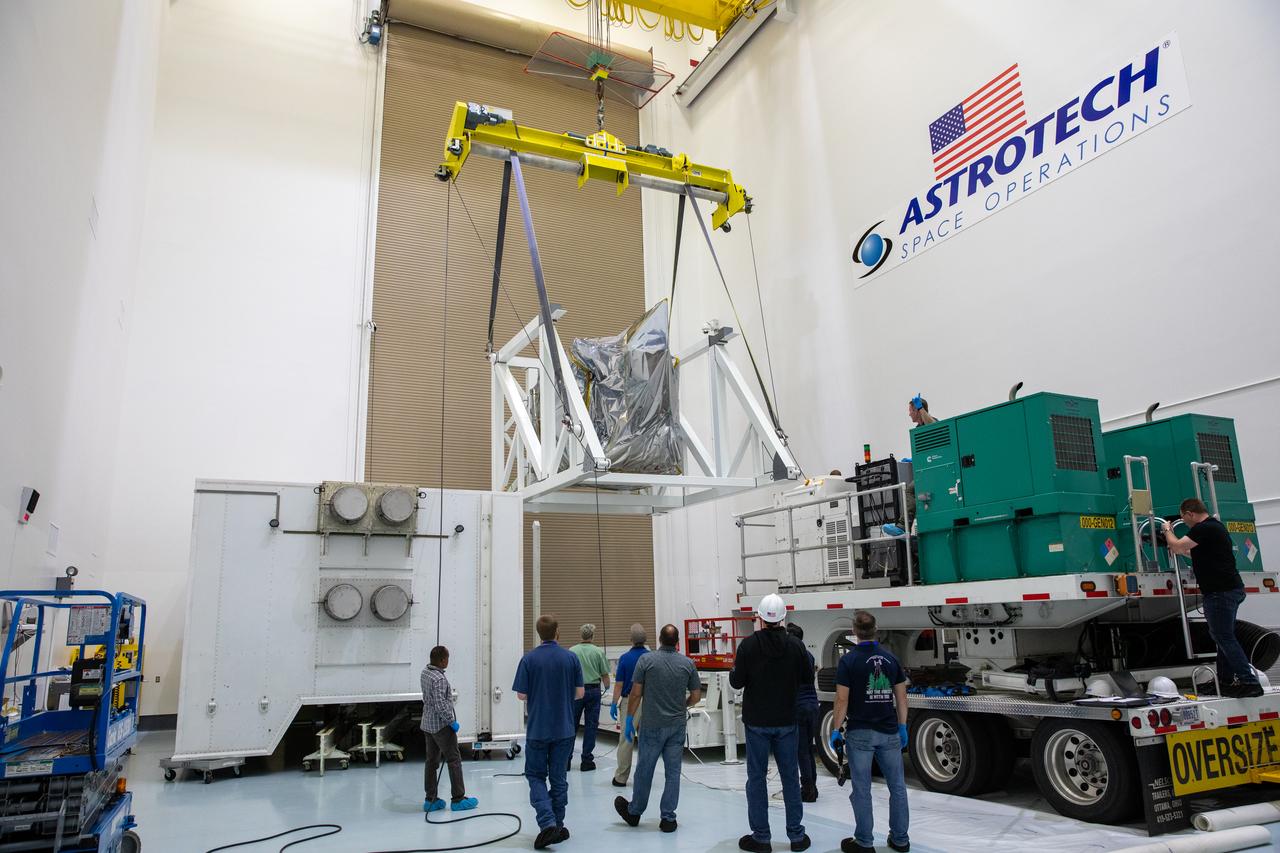
Technicians monitor movement as a crane hoists NASA’s Plankton, Aerosol, Cloud, ocean Ecosystem (PACE) observatory spacecraft after being uncrated on Wednesday, Nov. 15, 2023, at the Astrotech Space Operations Facility near the agency’s Kennedy Space Center in Florida. The PACE observatory will help us better understand how the ocean and atmosphere exchange carbon dioxide, measure key atmospheric variables associated with air quality and Earth's climate, and monitor ocean health, in part by studying phytoplankton, tiny plants and algae that sustain the marine food web. PACE will be encapsulated for launch aboard a SpaceX Falcon 9 rocket from Space Launch Complex 40 at Cape Canaveral Space Force Station in Florida.
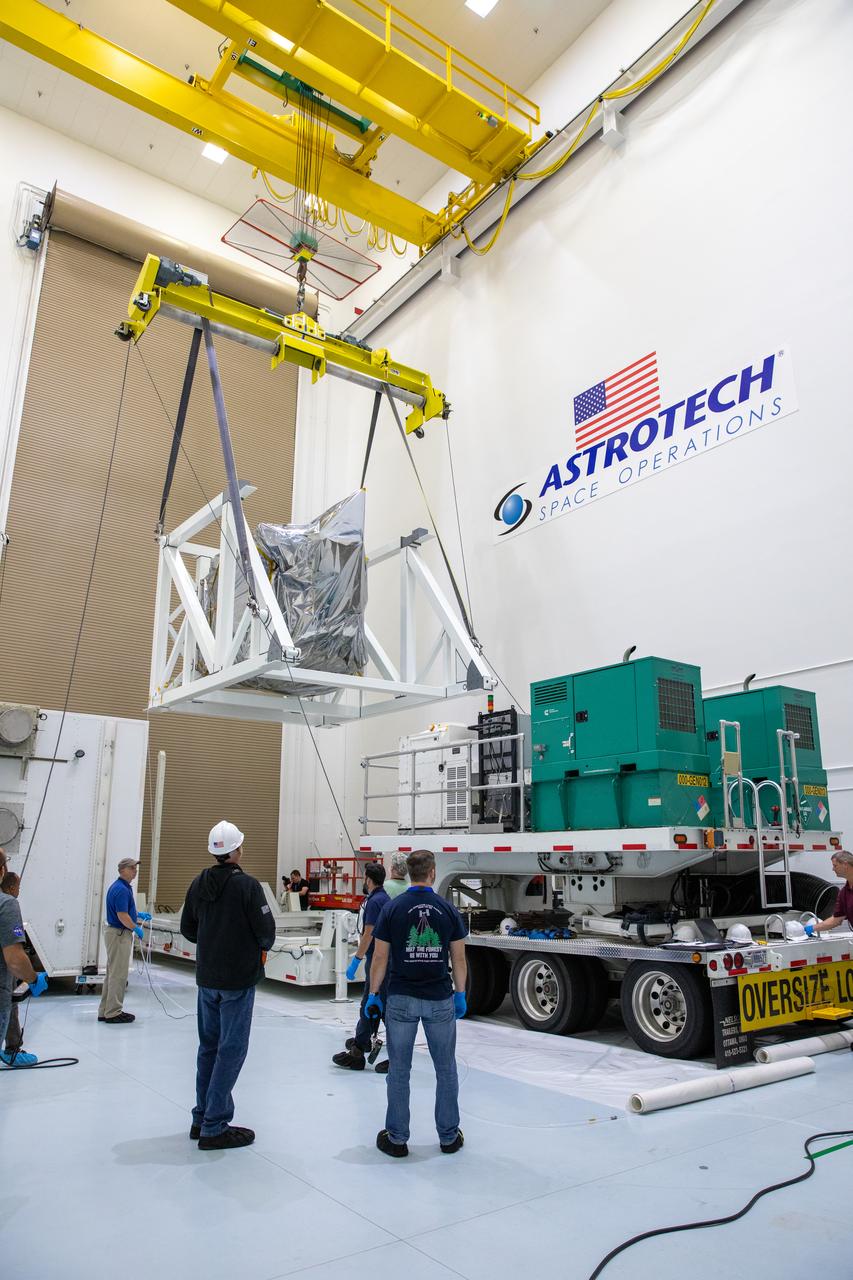
Technicians monitor movement as a crane hoists NASA’s Plankton, Aerosol, Cloud, ocean Ecosystem (PACE) observatory spacecraft after being uncrated on Wednesday, Nov. 15, 2023, at the Astrotech Space Operations Facility near the agency’s Kennedy Space Center in Florida. The PACE observatory will help us better understand how the ocean and atmosphere exchange carbon dioxide, measure key atmospheric variables associated with air quality and Earth's climate, and monitor ocean health, in part by studying phytoplankton, tiny plants and algae that sustain the marine food web. PACE will be encapsulated for launch aboard a SpaceX Falcon 9 rocket from Space Launch Complex 40 at Cape Canaveral Space Force Station in Florida.
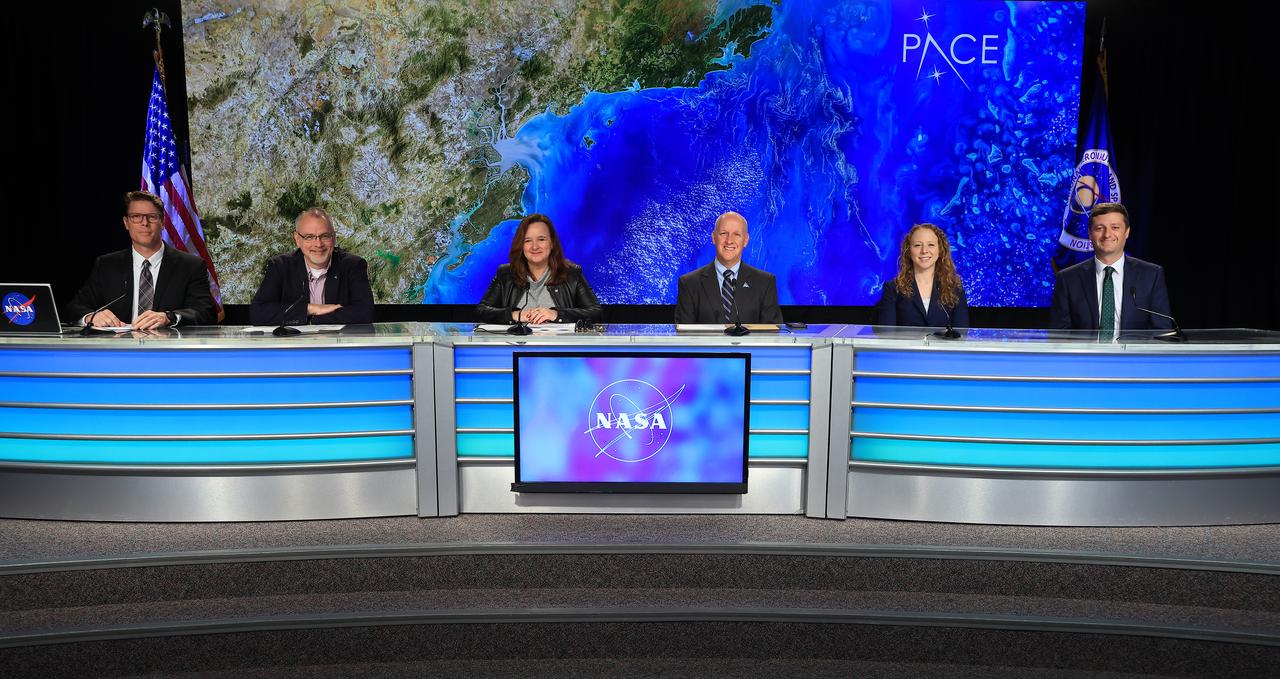
A PACE (Plankton, Aerosol, Cloud, ocean Ecosystem) mission and prelaunch news conference takes place at NASA’s Kennedy Space Center in Florida on Monday, Feb. 5, 2024. Participants, from left to right are: Derrol Nail, NASA Communications; Jim Free, NASA associate administrator; Karen St. Germain, Earth Science Division director, NASA Headquarters; Tim Dunn, senior launch director, Launch Services Program, NASA’s Kennedy; Julianna Scheiman, director Civil Satellite Missions, SpaceX; and Brian Cizek, launch weather officer, 45th Weather Squadron, U.S. Space Force. PACE is NASA’s newest earth-observing satellite that will help increase our understanding of Earth’s oceans, atmosphere, and climate by delivering hyperspectral observations of microscopic marine organisms called phytoplankton, as well new data on clouds and aerosols. Liftoff aboard a SpaceX Falcon 9 rocket from Space Launch Complex 40 at Cape Canaveral Space Force Station in Florida is set for no earlier than 1:33 a.m. EST on Tuesday, Feb 6, 2024.

A PACE (Plankton, Aerosol, Cloud, ocean Ecosystem) mission and social media panel discussion takes place at NASA’s Kennedy Space Center in Florida on Sunday, Feb. 4, 2024. Participants, from left to right are: Megan Cruz, NASA Communications; Karen St. Germain, Earth Science division director, NASA Headquarters; Marjorie Haskell, PACE program executive, NASA Headquarters; Laura Lorenzoni, PACE program scientist, NASA Headquarters; Juli Lander, PACE deputy project manager, NASA’s Goddard Space Flight Center; and Ivona Cetinic, PACE Ocean scientist, NASA’s Goddard Space Flight Center. PACE is NASA’s newest earth-observing satellite that will help increase our understanding of Earth’s oceans, atmosphere, and climate by delivering hyperspectral observations of microscopic marine organisms called phytoplankton, as well new data on clouds and aerosols. Liftoff aboard a SpaceX Falcon 9 rocket from Space Launch Complex 40 at Cape Canaveral Space Force Station in Florida is set for no earlier than 1:33 a.m. EST on Tuesday, Feb 6, 2024.