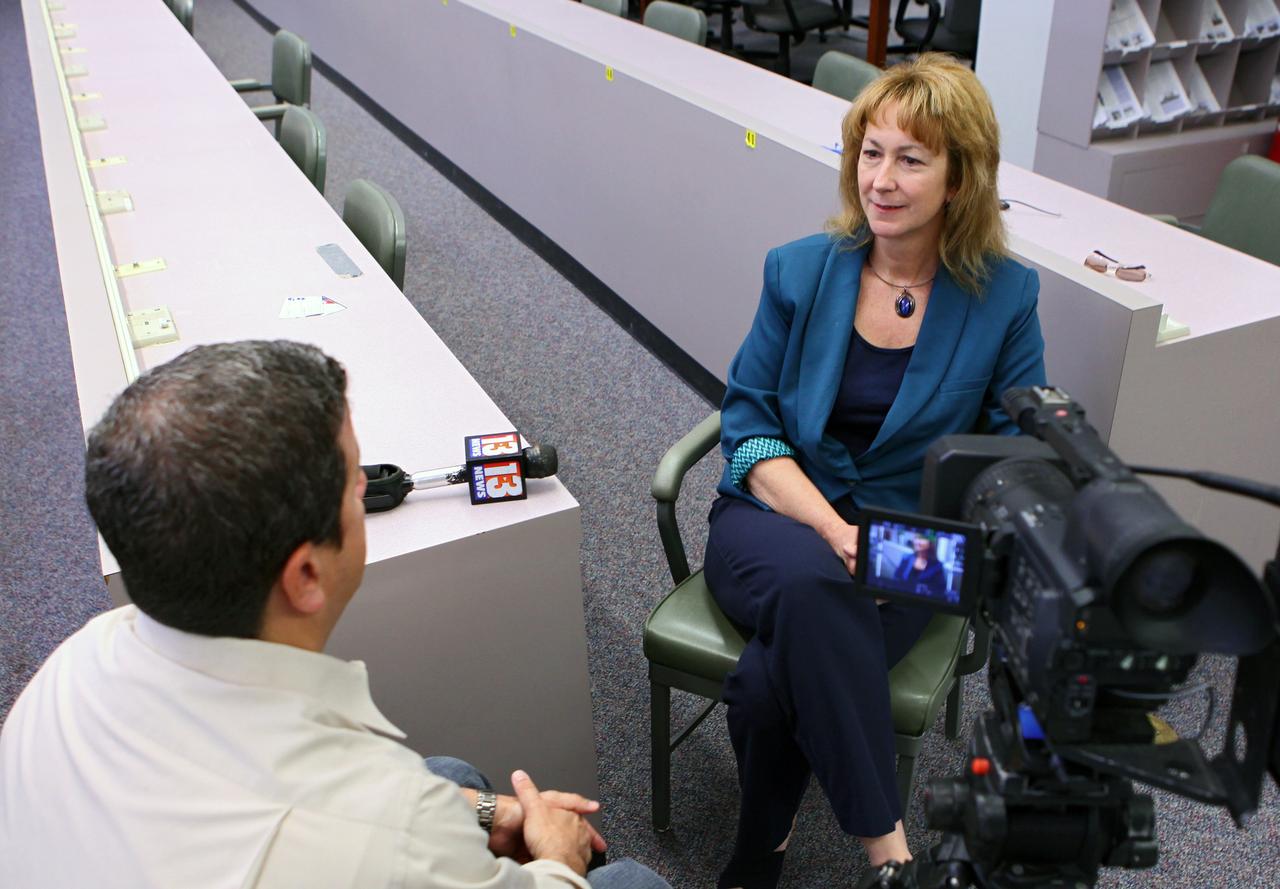
CAPE CANAVERAL, Fla. -- To start the new year, Joyce M. Riquelme from Kennedy's Center Planning and Development Office discusses the space center's direction with TV news reporter Greg Pallone of Channel 13 in Orlando.The office's purpose is to develop the world’s premier spaceport, meeting government and commercial space industry needs through comprehensive resource planning and the formation of partnerships to ensure the economic vitality of Kennedy Space Center. Photo credit: NASA/Kim Shiflett
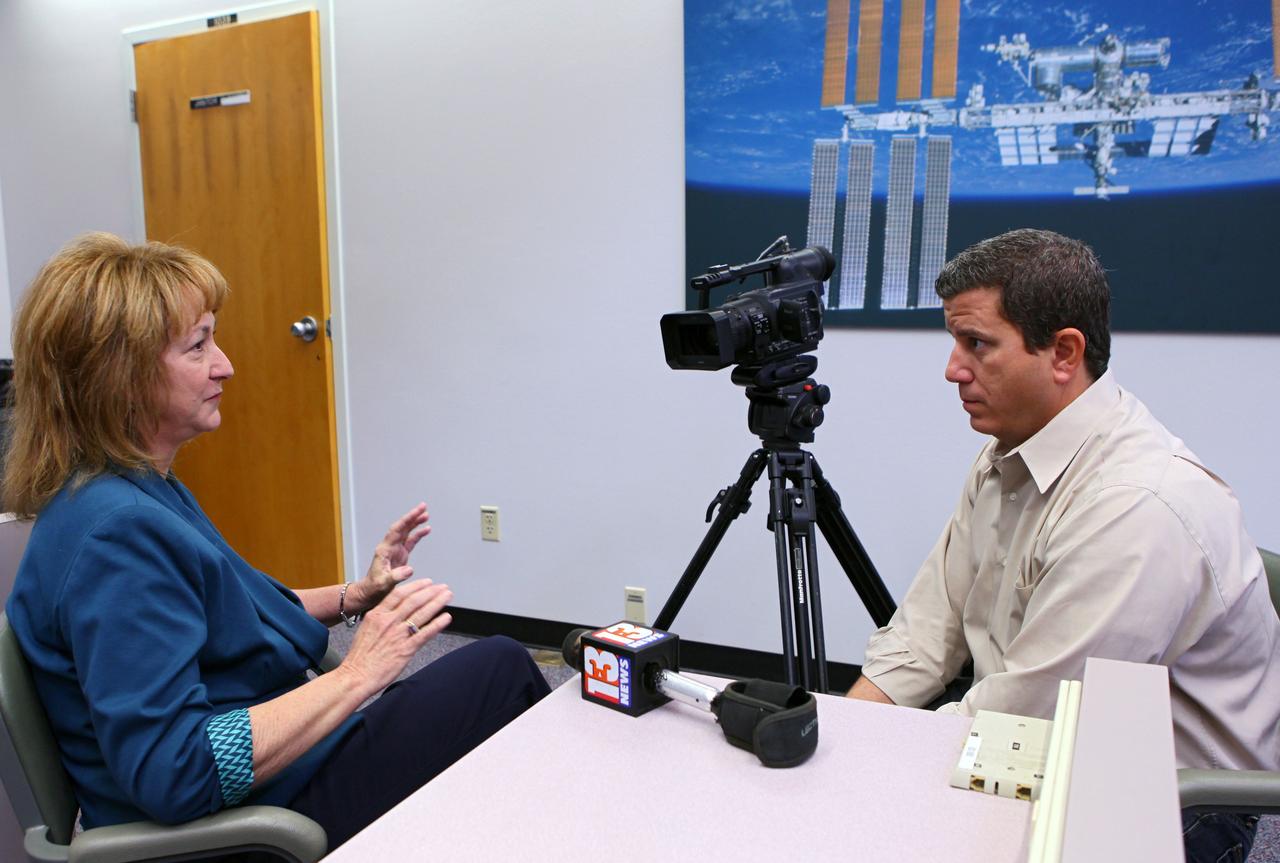
CAPE CANAVERAL, Fla. -- To start the new year, Joyce M. Riquelme from Kennedy's Center Planning and Development Office discusses the space center's direction with TV news reporter Greg Pallone of Channel 13 in Orlando.The office's purpose is to develop the world’s premier spaceport, meeting government and commercial space industry needs through comprehensive resource planning and the formation of partnerships to ensure the economic vitality of Kennedy Space Center. Photo credit: NASA/Kim Shiflett
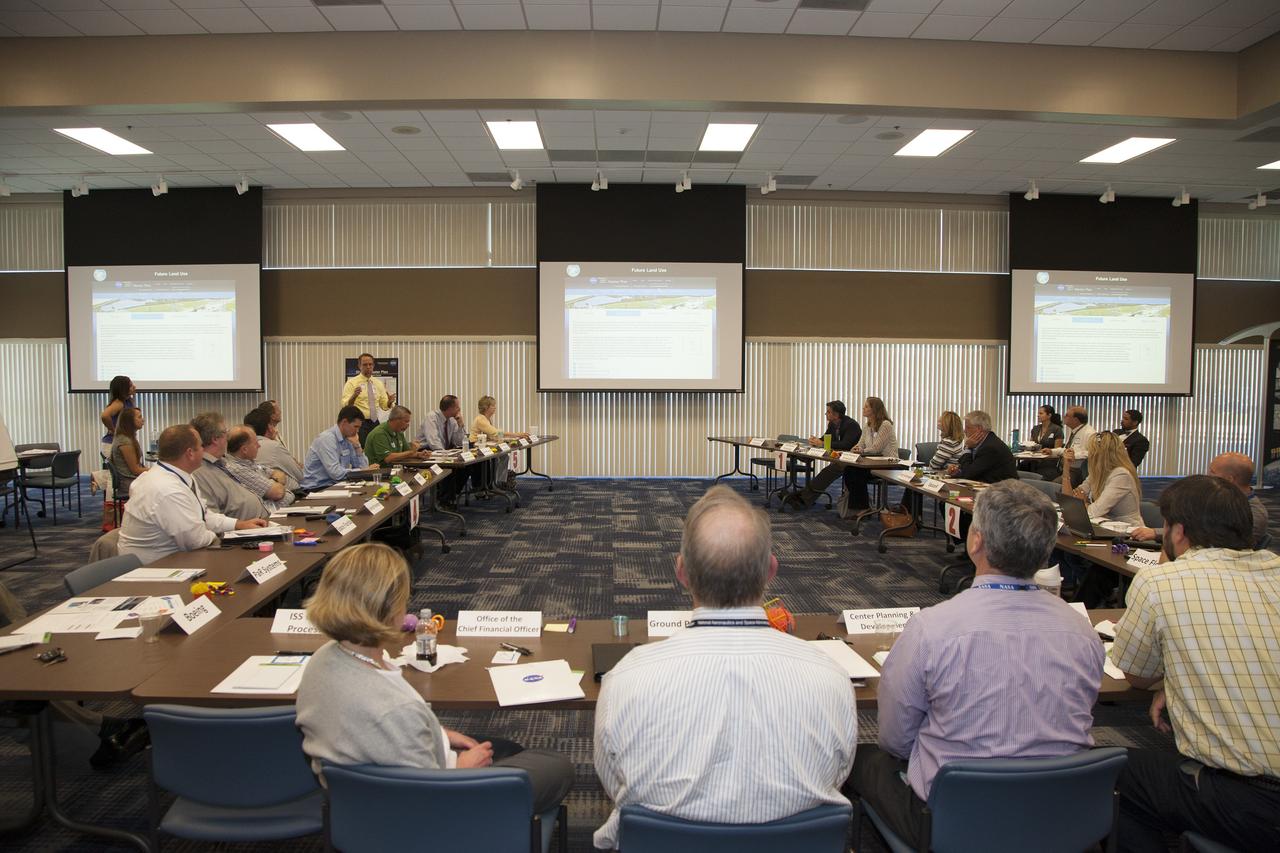
CAPE CANAVERAL, Fla. -- At the Kennedy Space Center in Florida, Trey Carlson, the spaceport's master planner, describes how the Center Planning and Development Directorate CPD is working to help transform Kennedy into a multi-user spaceport through partnerships and resource planning. The event was first of what is planned to be quarterly meetings between NASA's industry partners and representatives of Kennedy's CPD, Safety and Mission Assurance, International Space Station Ground Processing, Chief Financial officer and Ground Processing and Ground Systems Development and Operations directorates. Center Planning and Development is the “front door” for partnerships with NASA’s Kennedy Space Center. Kennedy is now developing the world’s premier spaceport for government and commercial space industries using comprehensive resource planning and partnerships. Photo credit: NASA/Daniel Casper
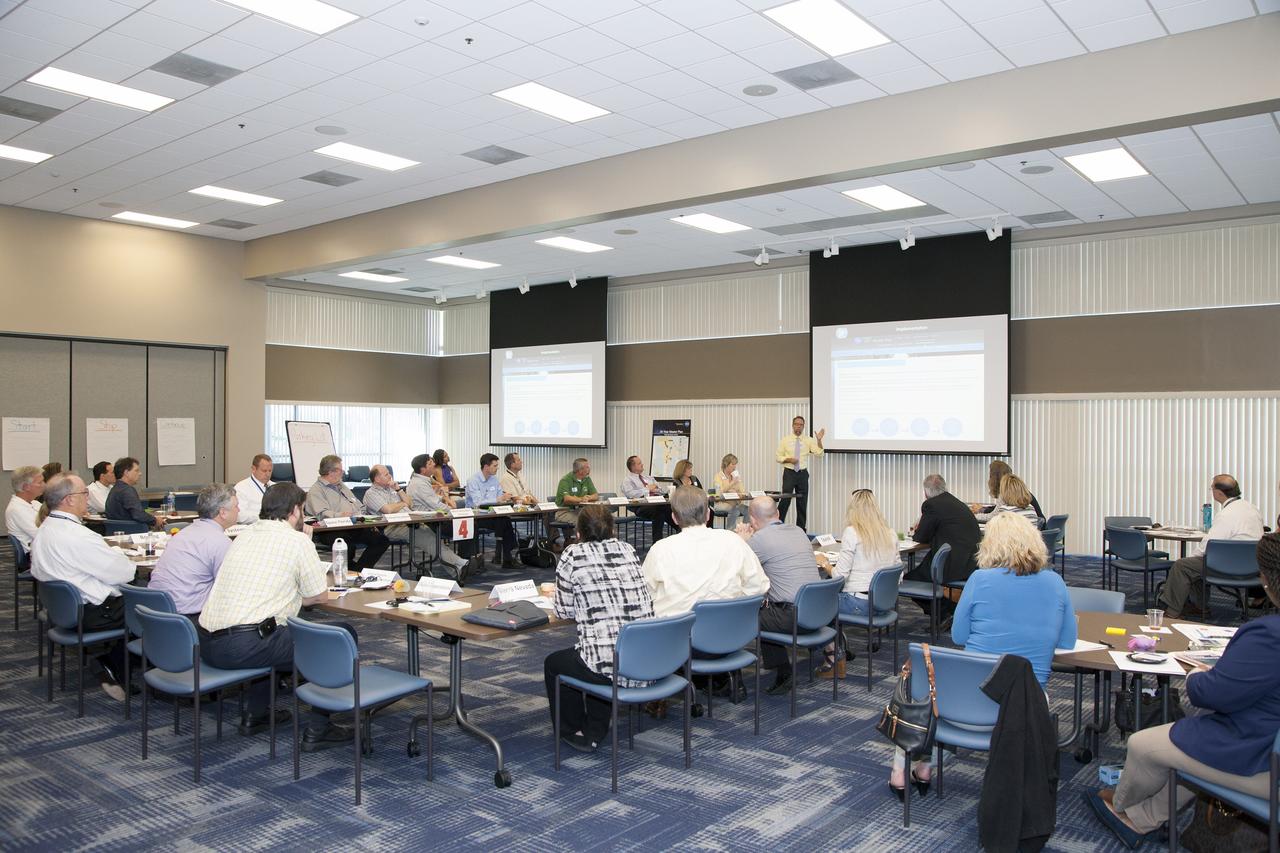
CAPE CANAVERAL, Fla. -- At the Kennedy Space Center in Florida, Trey Carlson, the spaceport's master planner, describes how the Center Planning and Development Directorate CPD is working to help transform Kennedy into a multi-user spaceport through partnerships and resource planning. The event was first of what is planned to be quarterly meetings between NASA's industry partners and representatives of Kennedy's CPD, Safety and Mission Assurance, International Space Station Ground Processing, Chief Financial officer and Ground Processing and Ground Systems Development and Operations directorates. Center Planning and Development is the “front door” for partnerships with NASA’s Kennedy Space Center. Kennedy is now developing the world’s premier spaceport for government and commercial space industries using comprehensive resource planning and partnerships. Photo credit: NASA/Daniel Casper
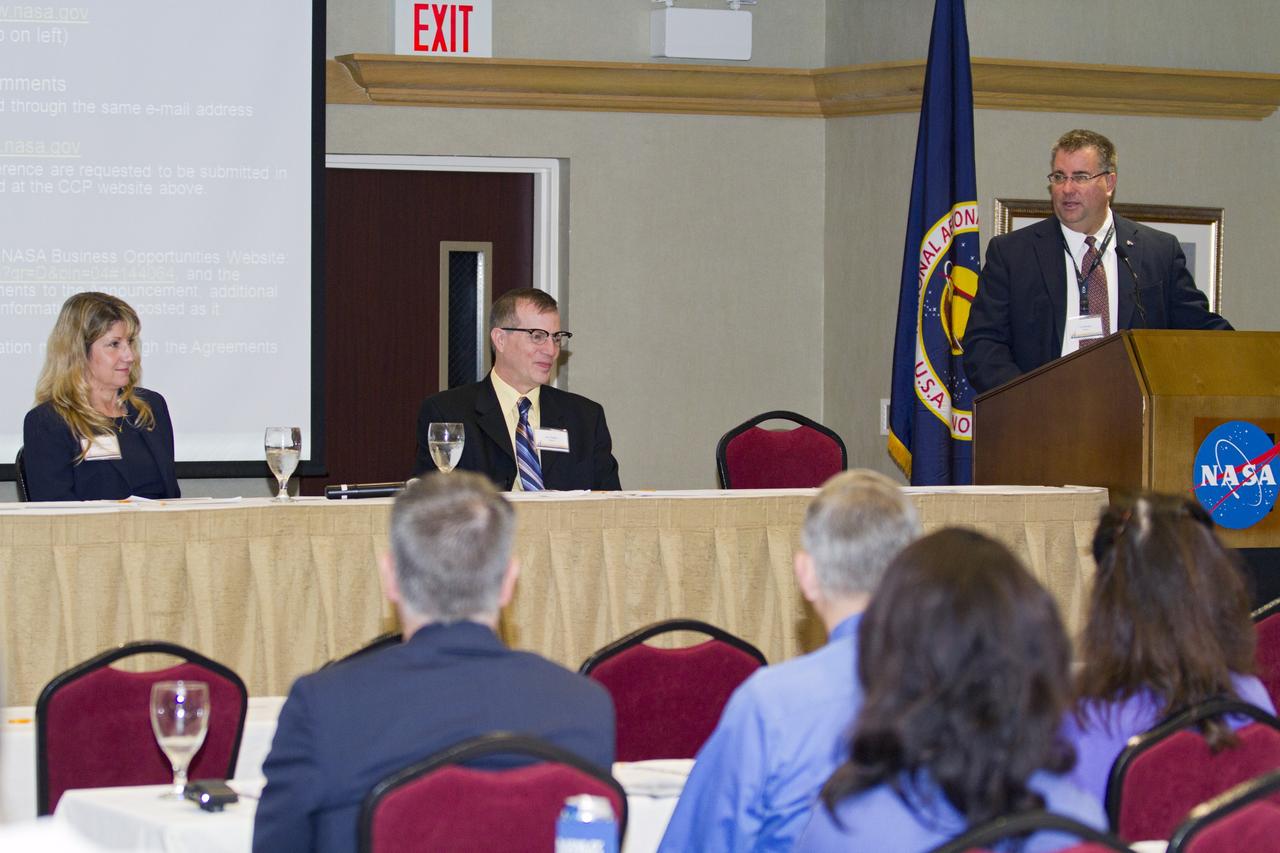
COCOA BEACH, Fla. -- Ed Mango, program manager for NASA's Commercial Crew Program CCP, talks to industry partners and stakeholders during a preproposal conference at the Courtyard Marriott in Cocoa Beach, Fla. At left, are Cheryl McPhillips, the NASA Participant Evaluation Panel PEP chair for the Commercial Crew Program CCP, and Lee Pagel, the NASA PEP deputy. The meeting focused on information related to NASA's release of the Commercial Crew Integrated Capability CCiCap Announcement for Proposals on Feb. 7. More than 50 people from 25 aerospace companies attended the conference to find out what the space agency would be looking for in terms of milestones, funding, schedules, strategies, safety cultures, business modules and eventual flight certification standards of integrated crew space transportation systems. The goal of the CCiCap is to develop an indigenous U.S. transportation system that can safely, affordably and routinely fly to low Earth orbit destinations, including the International Space Station. Proposals are due March 23 and NASA plans to award multiple Space Act Agreements, valued from $300 million to $500 million each, toward the development of fully integrated commercial crew transportation systems in the summer of 2012. For more information, visit www.nasa.gov/commercialcrew Photo credit: Kim Shiflett The Ground Systems Development and Operations Program is developing the necessary ground systems, infrastructure and operational approaches required to safely process, assemble, transport and launch the next generation of rockets and spacecraft in support of NASA’s exploration objectives. Future work also will replace the antiquated communications, power and vehicle access resources with modern efficient systems. Some of the utilities and systems slated for replacement have been used since the VAB opened in 1965. For more information, visit http://www.nasa.gov/exploration/systems/ground/index.html Photo credit: NASA/Kim Shiflett
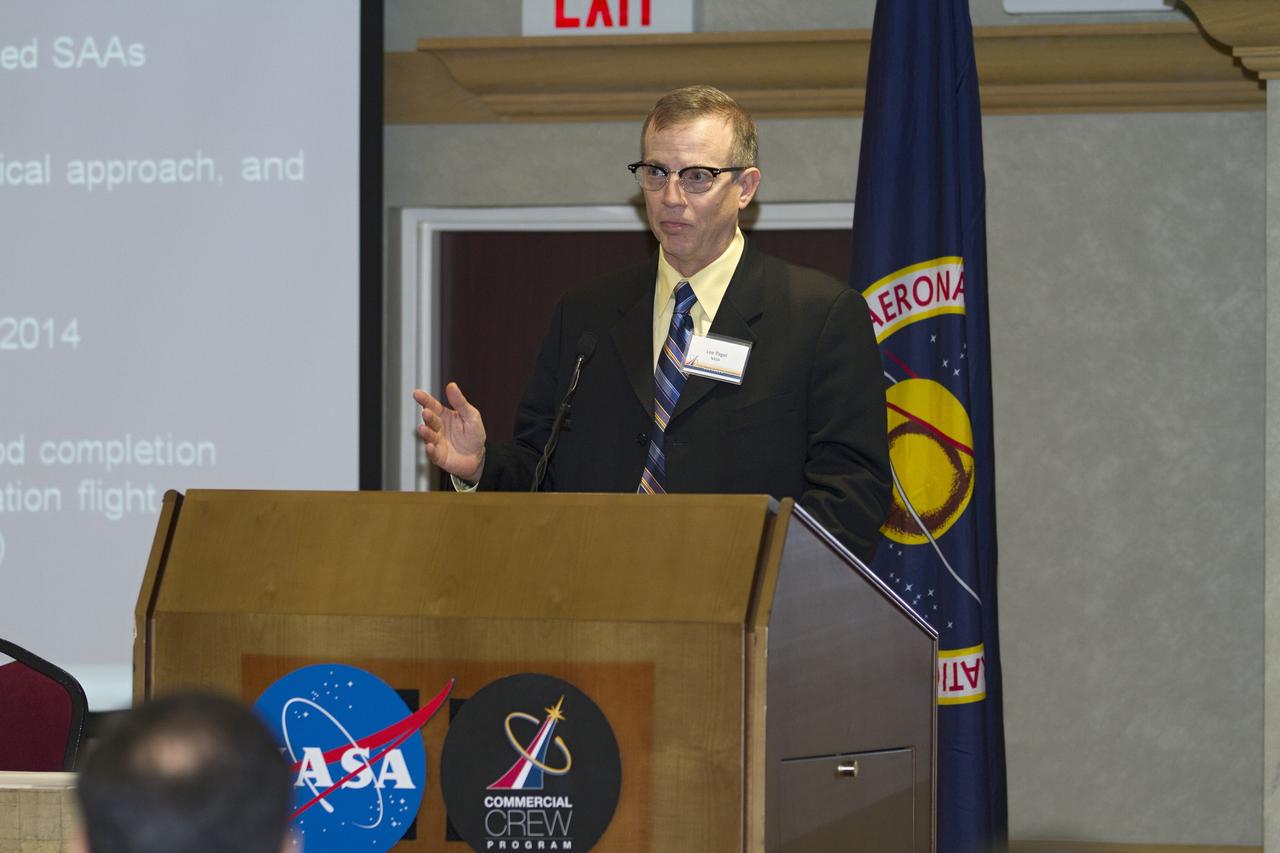
COCOA BEACH, Fla. -- Lee Pagel, the NASA Participant Evaluation Panel PEP deputy for the Commercial Crew Program CCP, talks to industry partners and stakeholders during a preproposal conference at the Courtyard Marriott in Cocoa Beach, Fla. The meeting focused on information related to NASA's release of the Commercial Crew Integrated Capability CCiCap Announcement for Proposals on Feb. 7. More than 50 people from 25 aerospace companies attended the conference to find out what the space agency would be looking for in terms of milestones, funding, schedules, strategies, safety cultures, business modules and eventual flight certification standards of integrated crew space transportation systems. The goal of the CCiCap is to develop an indigenous U.S. transportation system that can safely, affordably and routinely fly to low Earth orbit destinations, including the International Space Station. Proposals are due March 23 and NASA plans to award multiple Space Act Agreements, valued from $300 million to $500 million each, toward the development of fully integrated commercial crew transportation systems in the summer of 2012. For more information, visit www.nasa.gov/commercialcrew Photo credit: Kim Shiflett The Ground Systems Development and Operations Program is developing the necessary ground systems, infrastructure and operational approaches required to safely process, assemble, transport and launch the next generation of rockets and spacecraft in support of NASA’s exploration objectives. Future work also will replace the antiquated communications, power and vehicle access resources with modern efficient systems. Some of the utilities and systems slated for replacement have been used since the VAB opened in 1965. For more information, visit http://www.nasa.gov/exploration/systems/ground/index.html Photo credit: NASA/Kim Shiflett
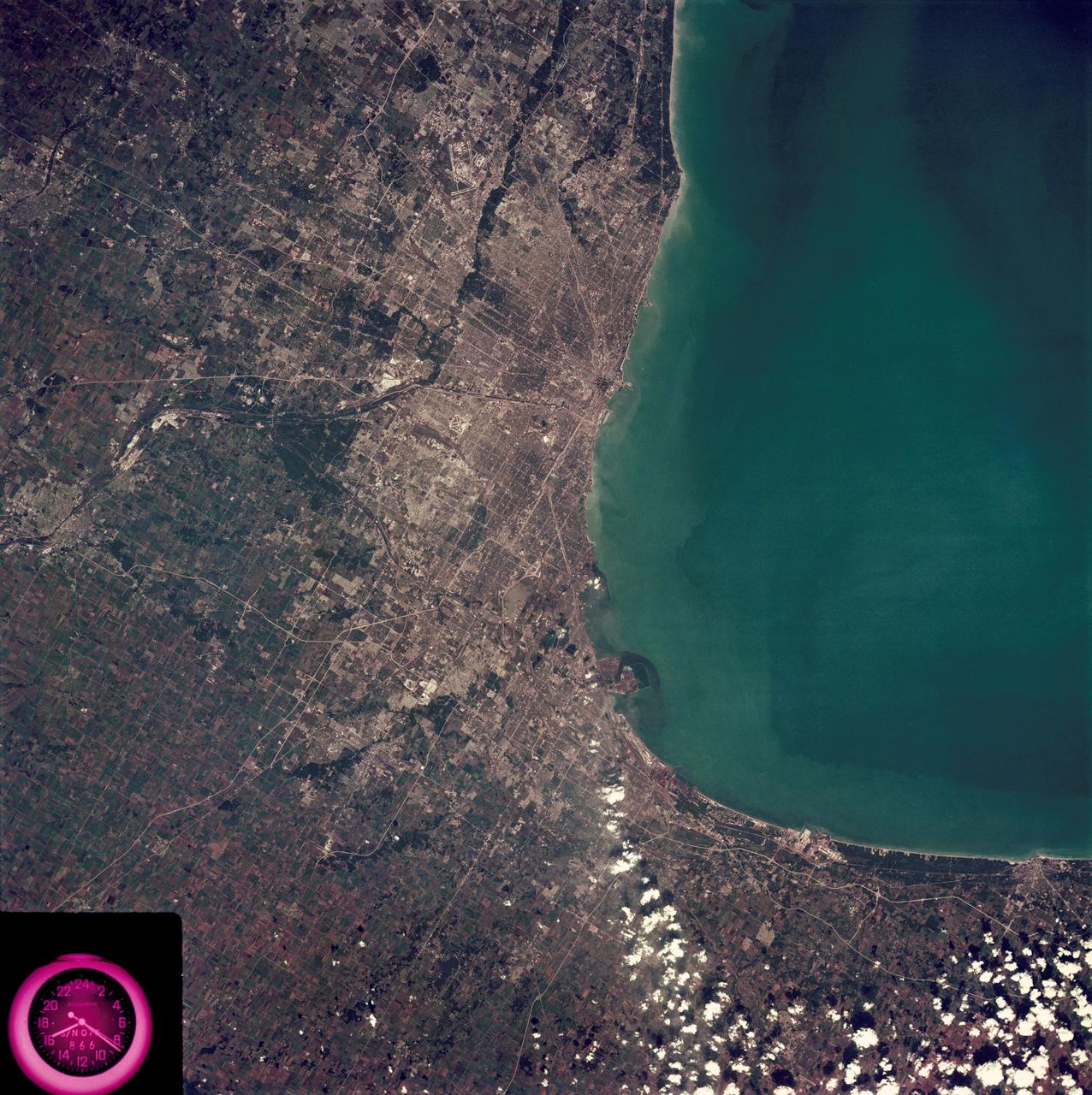
SL3-88-222 (18 Sept. 1973) --- The metropolitan area of Chicago is encompassed in this Skylab 3 Earth Resources Experiments Package (EREP) S190-B photograph taken on Sept. 18, 1973 from the Skylab space station cluster in Earth orbit. The surrounding major cities of Aurora and Joliet, Illinois; Hammond, Gary and East Chicago, Indiana, are easily delineated. The photograph reveals the following: (1) Cultural differentiation of commercial, industrial and residential areas for use in population and social studies in micro-macro community planning and in cultural pattern studies in the improvement of urban areas. (Aurora is one of 27 census cities of interest to Robert Alexander, a principal investigator. Alexander is with the U.S. Geological Survey). (2) The transportation network with major corridors and their interchanges, primary and feeder streets for use in network analysis and in the development of models for population movement and land use projection. (3) The agricultural lands for land use identification on crop inventory analysis; airports for use in delineation of service and infringement of major man-made features that affect ecosystem balance (support to environmental impact studies). (4) Air and water plumes for use in case studies, natural and man-made differentiation of pollution sources, in support of model development and in ecosystem research studies on the effects of pollution. (5) Recreational centers for use in relating recreational centers to population centers, establishing possible demands and in development of possible future recreational centers to support the demand. All EREP photography is available to the public through the Department of Interior?s Earth Resources Observations Systems Data Center, Sioux Falls, South Dakota, 57198. Photo credit: NASA