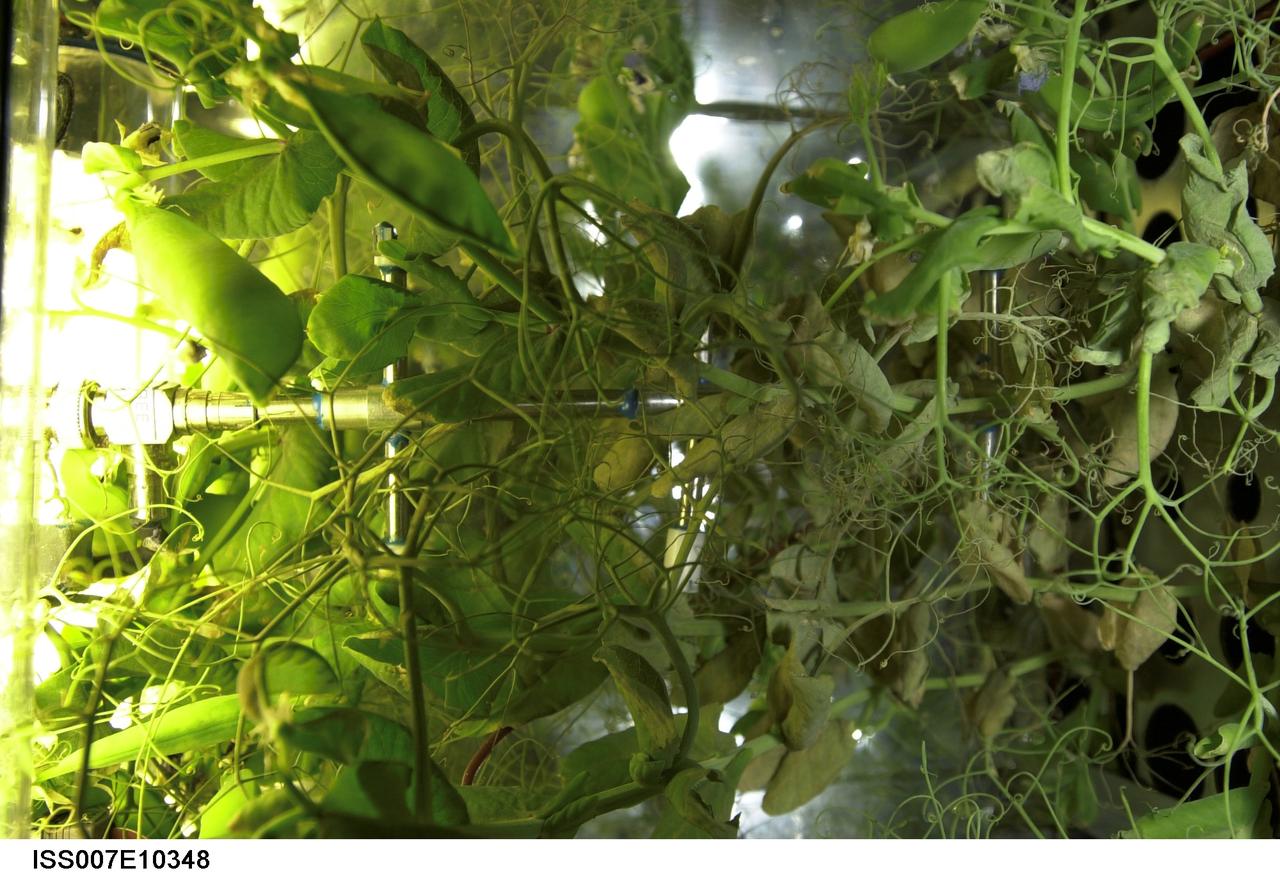
ISS007-E-10348 (July 2003) --- This view of a plant growth experiment inside the Russian Lada greenhouse, located in the Zvezda Service Module, was taken by an Expedition 7 crewmember onboard the International Space Station (ISS).
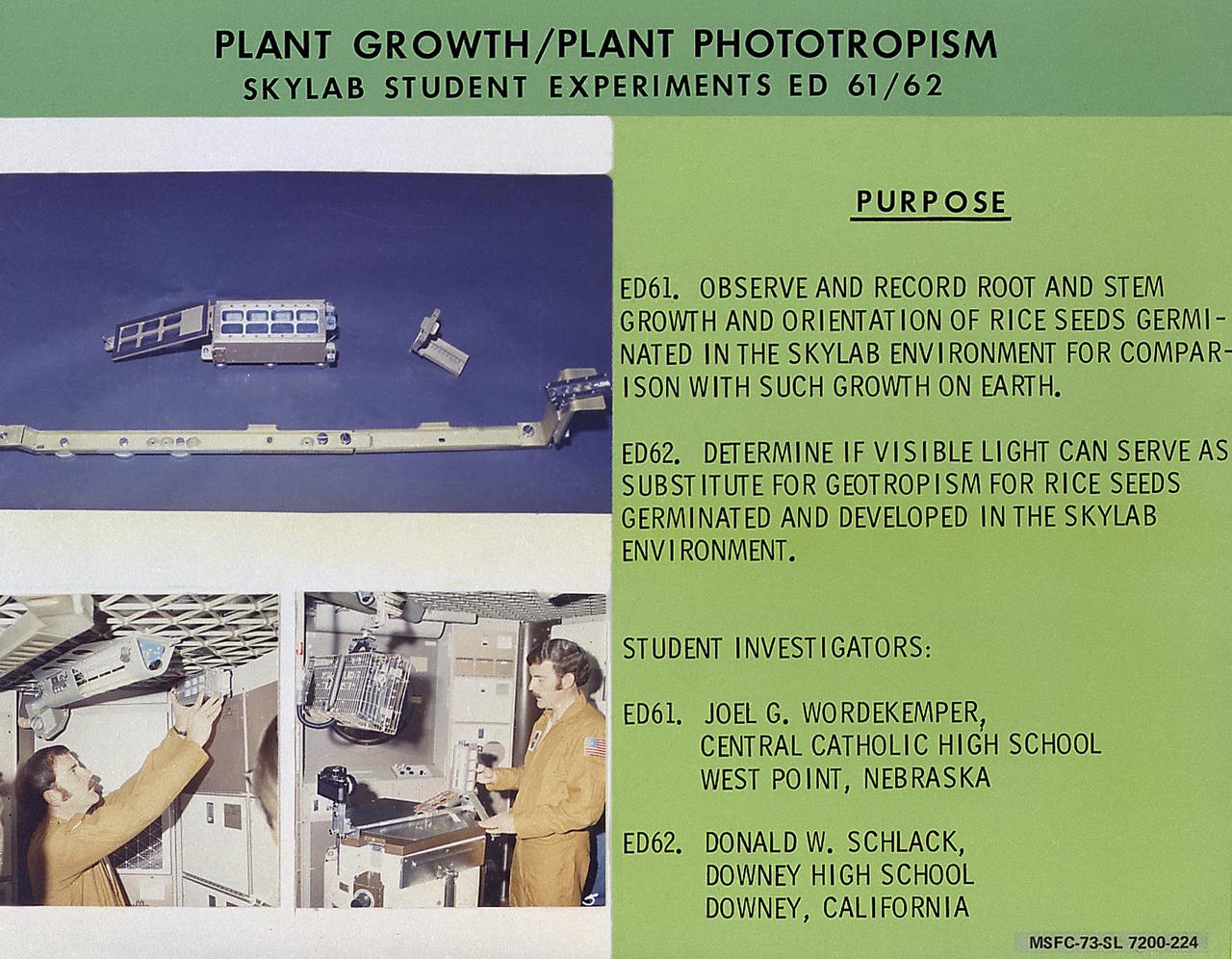
This chart describes the Skylab student experiment ED-61, Plant Growth, and experiment ED-62, Plant Phototropism. Two similar proposals were submitted by Joel G. Wordekemper of West Point, Nebraska, and Donald W. Schlack of Downey, California. Wordekemper's experiment (ED-61) was to see how the lack of gravity would affect the growth of roots and stems of plants. Schlack's experiment (ED-62) was to study the effect of light on a seed developing in zero gravity. The growth container of the rice seeds for their experiment consisted of eight compartments arranged in two parallel rows of four. Each had two windowed surfaces to allow periodic photography of the developing seedlings. In March 1972, NASA and the National Science Teachers Association selected 25 experiment proposals for flight on Skylab. Science advisors from the Marshall Space Flight Center aided and assisted the students in developing the proposals for flight on Skylab.
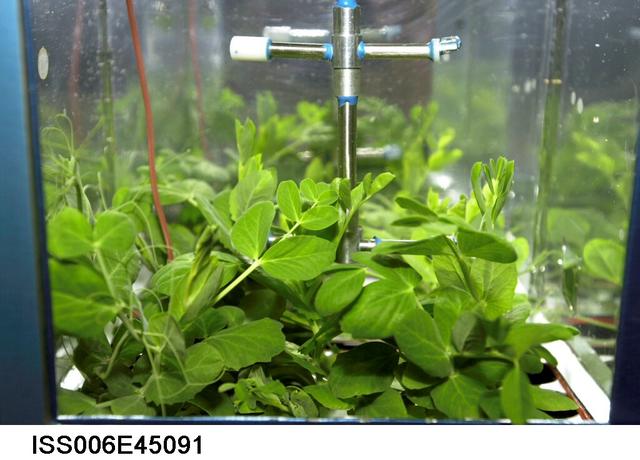
ISS006-E-45091 (25 March 2003) --- A view of the Russian BIO-5 Rasteniya-2/Lada-2 (Plants-2) plant growth experiment located in the Zvezda Service Module on the International Space Station (ISS).
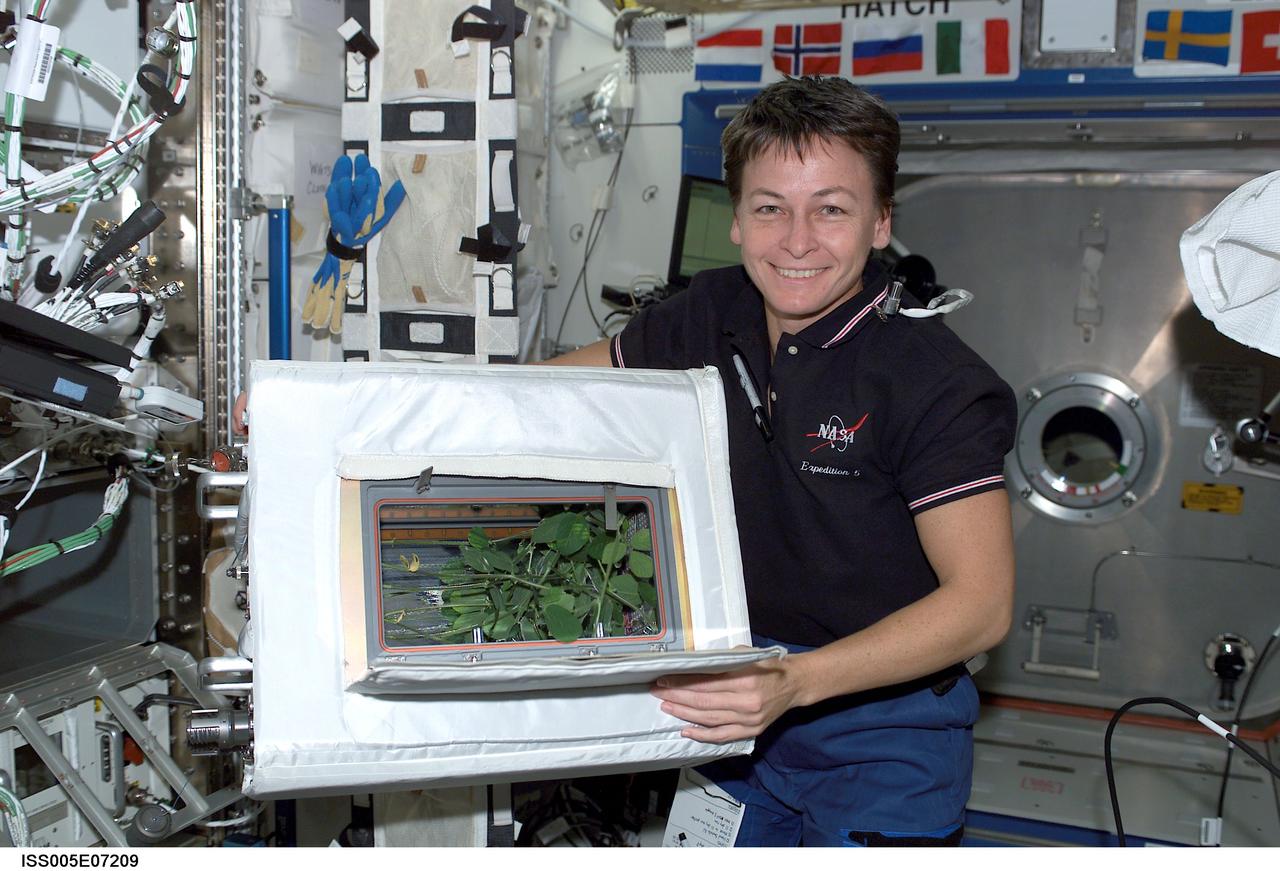
ISS005-E-07209 (10 July 2002) --- Astronaut Peggy A. Whitson, Expedition Five NASA ISS science officer, holds the Advanced Astroculture soybean plant growth experiment in the Destiny laboratory on the International Space Station (ISS).
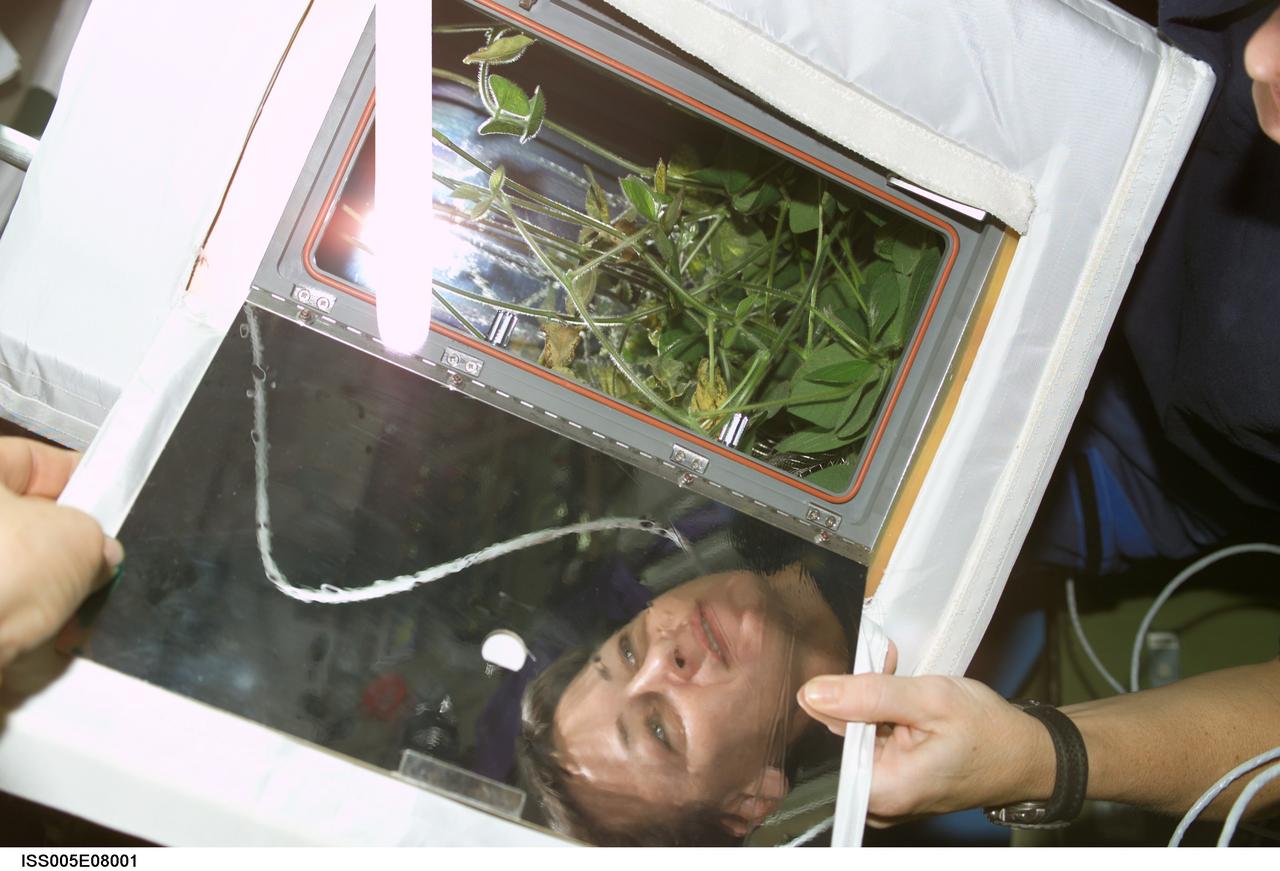
ISS005-E-08001 (18 July 2002) --- Astronaut Peggy A. Whitson, Expedition Five flight engineer, works with the Advanced Astroculture soybean plant growth experiment in the Destiny laboratory on the International Space Station (ISS).
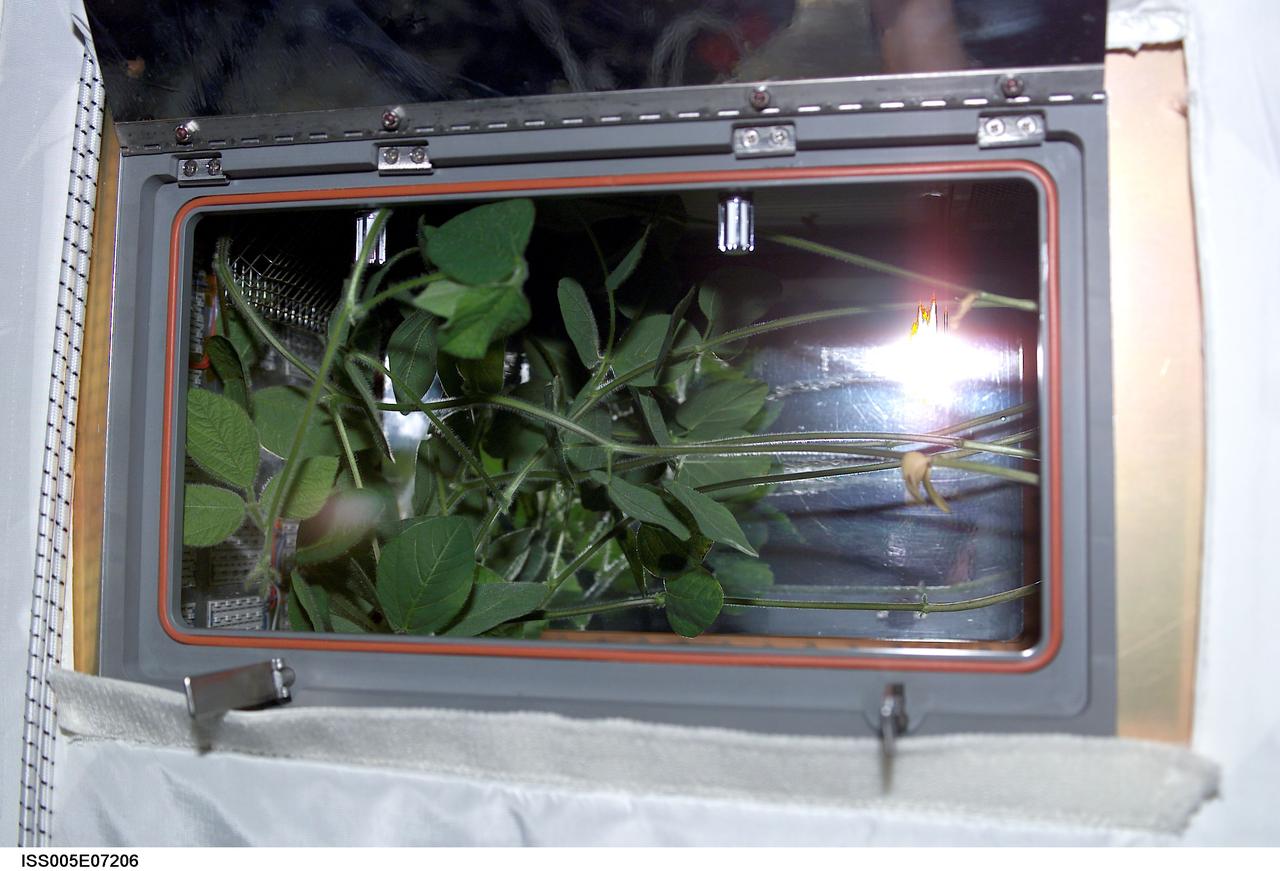
ISS005-E-07206 (10 July 2002) --- A close-up view of the Advanced Astroculture soybean plant growth experiment in the Destiny laboratory on the International Space Station (ISS).
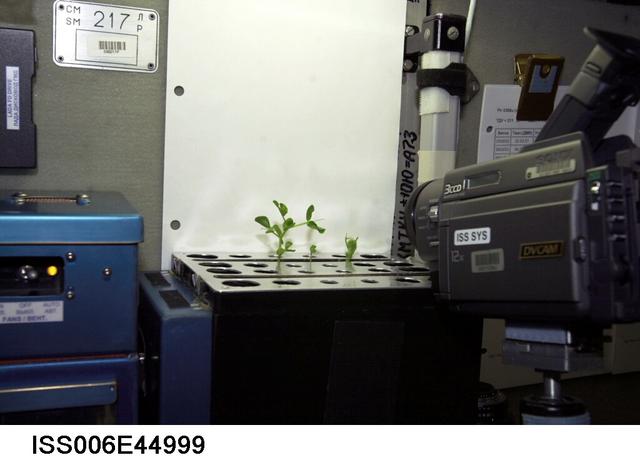
ISS006-E-44999 (12 March 2003) --- A view of the Russian BIO-5 Rasteniya-2/Lada-2 (Plants-2) plant growth experiment located in the Zvezda Service Module on the International Space Station (ISS). A camera used for recording progress of the experiment is visible on the right.
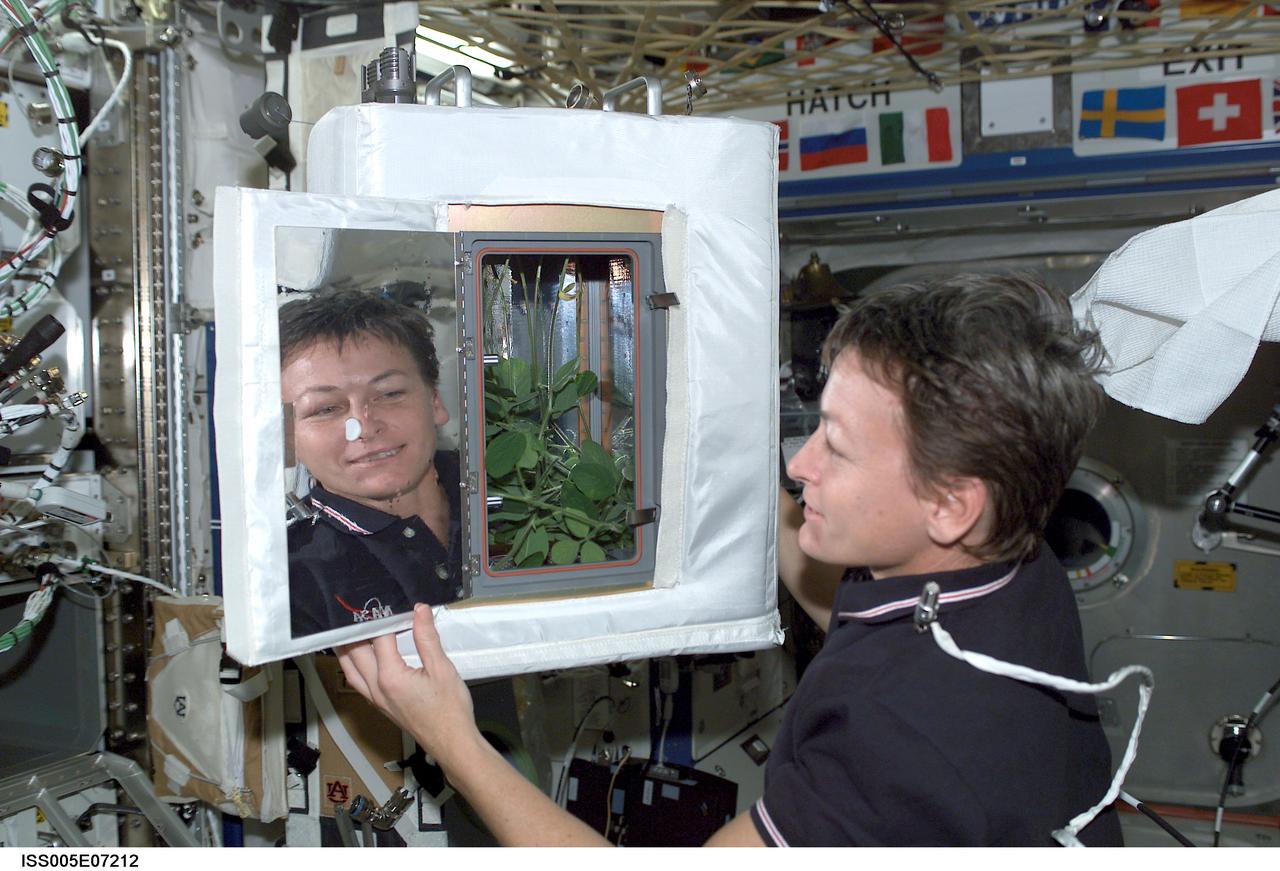
ISS005-E-07212 (10 July 2002) --- NASA Astronaut Peggy Whitson, Expedition 5 International Space Station (ISS) science officer, looks at the Advanced Astroculture (ADVASC) Soybean plant growth experiment as part of Expediting the Process of Experiments to the Space Station (EXPRESS) Rack 4 located in the U.S. Laboratory Destiny.
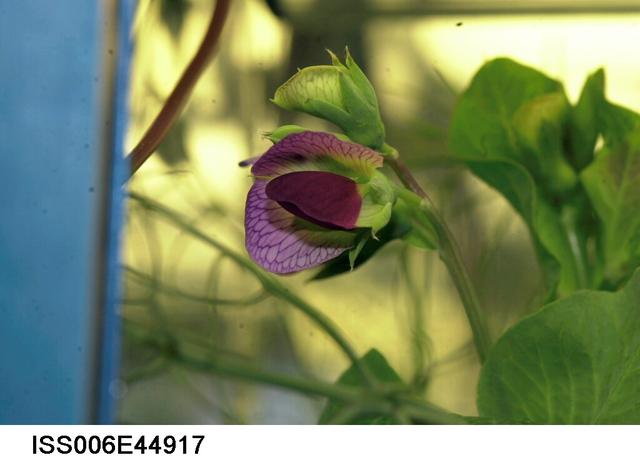
ISS006-E-44917 (5 April 2003) --- A close up view of a bloom on the Russian BIO-5 Rasteniya-2/Lada-2 (Plants-2) plant growth experiment, which is located in the Zvezda Service Module on the International Space Station (ISS).
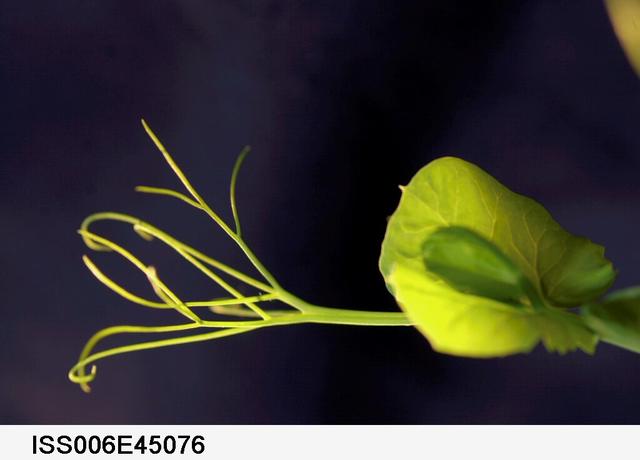
ISS006-E-45076 (17 March 2003) --- A close up view of sprouts on the Russian BIO-5 Rasteniya-2/Lada-2 (Plants-2) plant growth experiment, which is located in the Zvezda Service Module on the International Space Station (ISS).
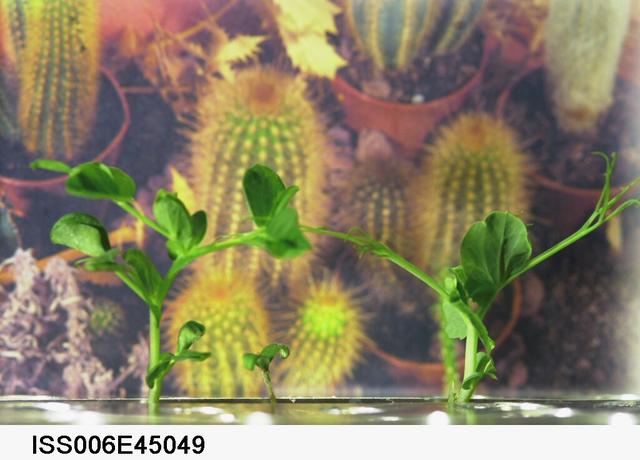
ISS006-E-45049 (14 March 2003) --- A close up view of sprouts on the Russian BIO-5 Rasteniya-2/Lada-2 (Plants-2) plant growth experiment, which is located in the Zvezda Service Module on the International Space Station (ISS).
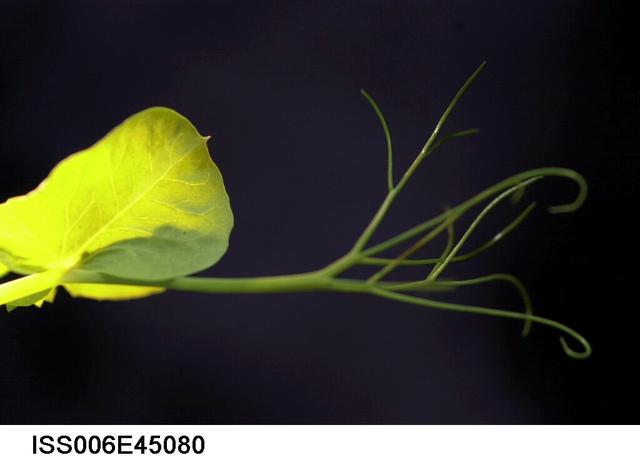
ISS006-E-45080 (17 March 2003) --- A close up view of sprouts on the Russian BIO-5 Rasteniya-2/Lada-2 (Plants-2) plant growth experiment, which is located in the Zvezda Service Module on the International Space Station (ISS).
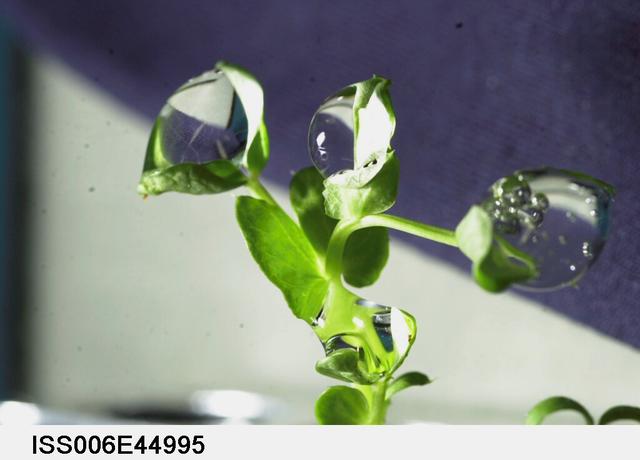
ISS006-E-44995 (10 March 2003) --- A close up view of water droplets on leaves on the Russian BIO-5 Rasteniya-2/Lada-2 (Plants-2) plant growth experiment, which is located in the Zvezda Service Module on the International Space Station (ISS).
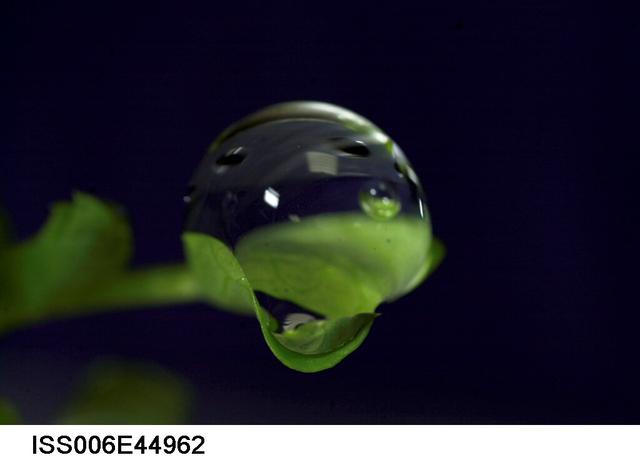
ISS006-E-44962 (9 March 2003) --- A close up view of a water droplet on a leaf on the Russian BIO-5 Rasteniya-2/Lada-2 (Plants-2) plant growth experiment, which is located in the Zvezda Service Module on the International Space Station (ISS).
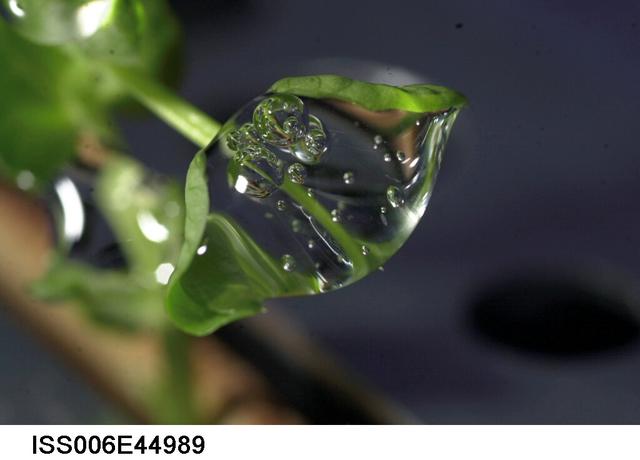
ISS006-E-44989 (10 March 2003) --- A close up view of a water droplet on a leaf on the Russian BIO-5 Rasteniya-2/Lada-2 (Plants-2) plant growth experiment, which is located in the Zvezda Service Module on the International Space Station (ISS).
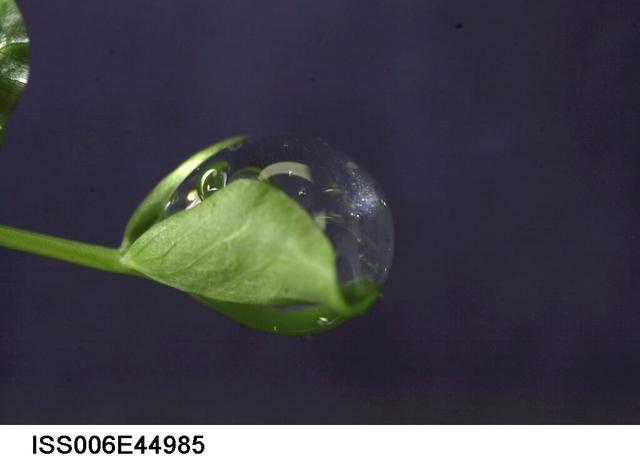
ISS006-E-44985 (10 March 2003) --- A close up view of a water droplet on a leaf on the Russian BIO-5 Rasteniya-2/Lada-2 (Plants-2) plant growth experiment, which is located in the Zvezda Service Module on the International Space Station (ISS).
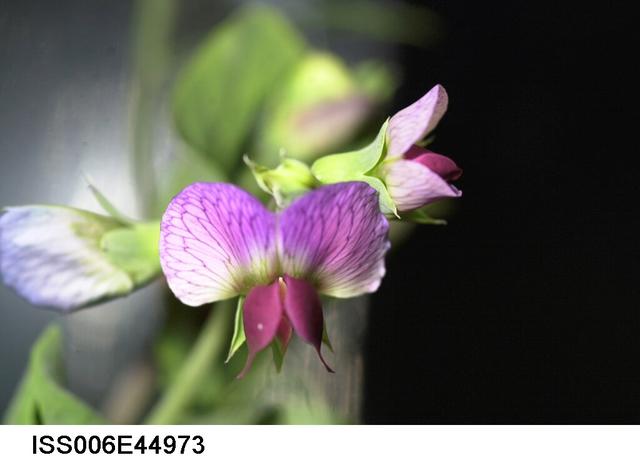
ISS006-E-44973 (6 April 2003) --- A close up view of a bloom on the Russian BIO-5 Rasteniya-2/Lada-2 (Plants-2) plant growth experiment, which is located in the Zvezda Service Module on the International Space Station (ISS).
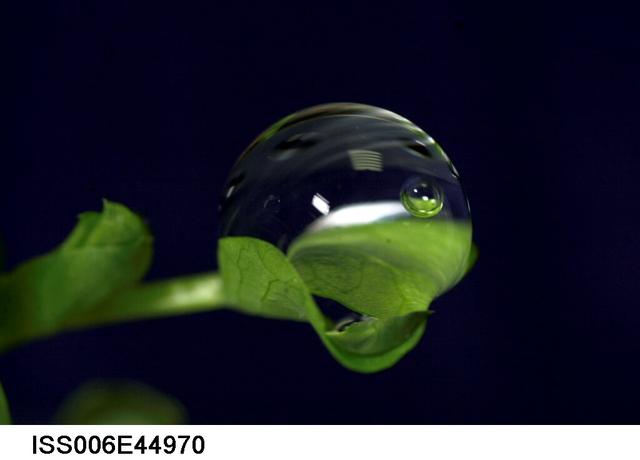
ISS006-E-44970 (9 March 2003) --- A close up view of a water droplet on a leaf on the Russian BIO-5 Rasteniya-2/Lada-2 (Plants-2) plant growth experiment, which is located in the Zvezda Service Module on the International Space Station (ISS).
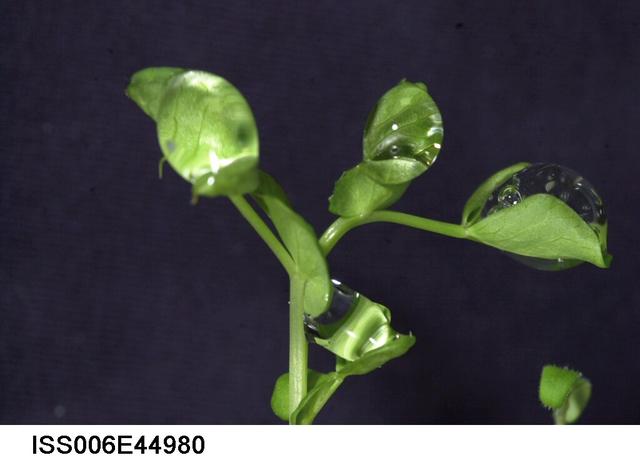
ISS006-E-44980 (10 March 2003) --- A close up view of water droplets on leaves on the Russian BIO-5 Rasteniya-2/Lada-2 (Plants-2) plant growth experiment, which is located in the Zvezda Service Module on the International Space Station (ISS).
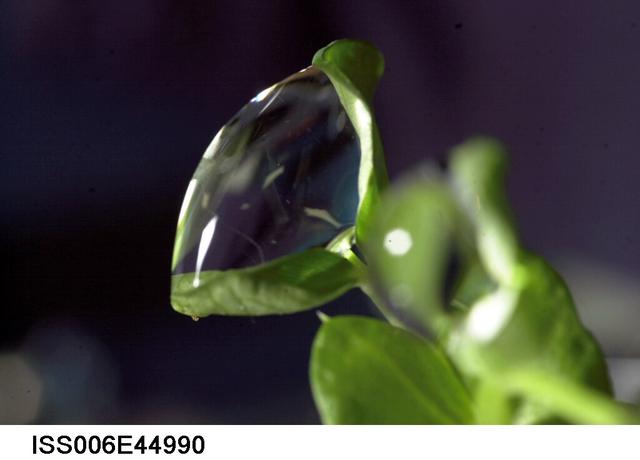
ISS006-E-44990 (10 March 2003) --- A close up view of a water droplet on a leaf on the Russian BIO-5 Rasteniya-2/Lada-2 (Plants-2) plant growth experiment, which is located in the Zvezda Service Module on the International Space Station (ISS).

ISS006-E-44929 (9 March 2003) --- A close up view of water droplets on leaves on the Russian BIO-5 Rasteniya-2/Lada-2 (Plants-2) plant growth experiment, which is located in the Zvezda Service Module on the International Space Station (ISS).
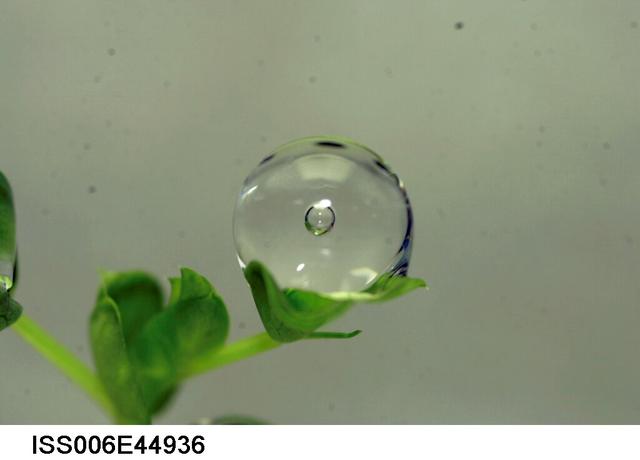
ISS006-E-44936 (9 March 2003) --- A close up view of a water droplet on a leaf on the Russian BIO-5 Rasteniya-2/Lada-2 (Plants-2) plant growth experiment, which is located in the Zvezda Service Module on the International Space Station (ISS).
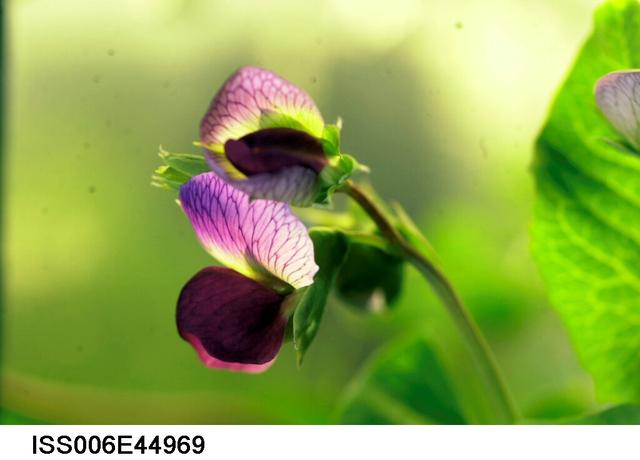
ISS006-E-44969 (6 April 2003) --- A close up view of a bloom on the Russian BIO-5 Rasteniya-2/Lada-2 (Plants-2) plant growth experiment, which is located in the Zvezda Service Module on the International Space Station (ISS).
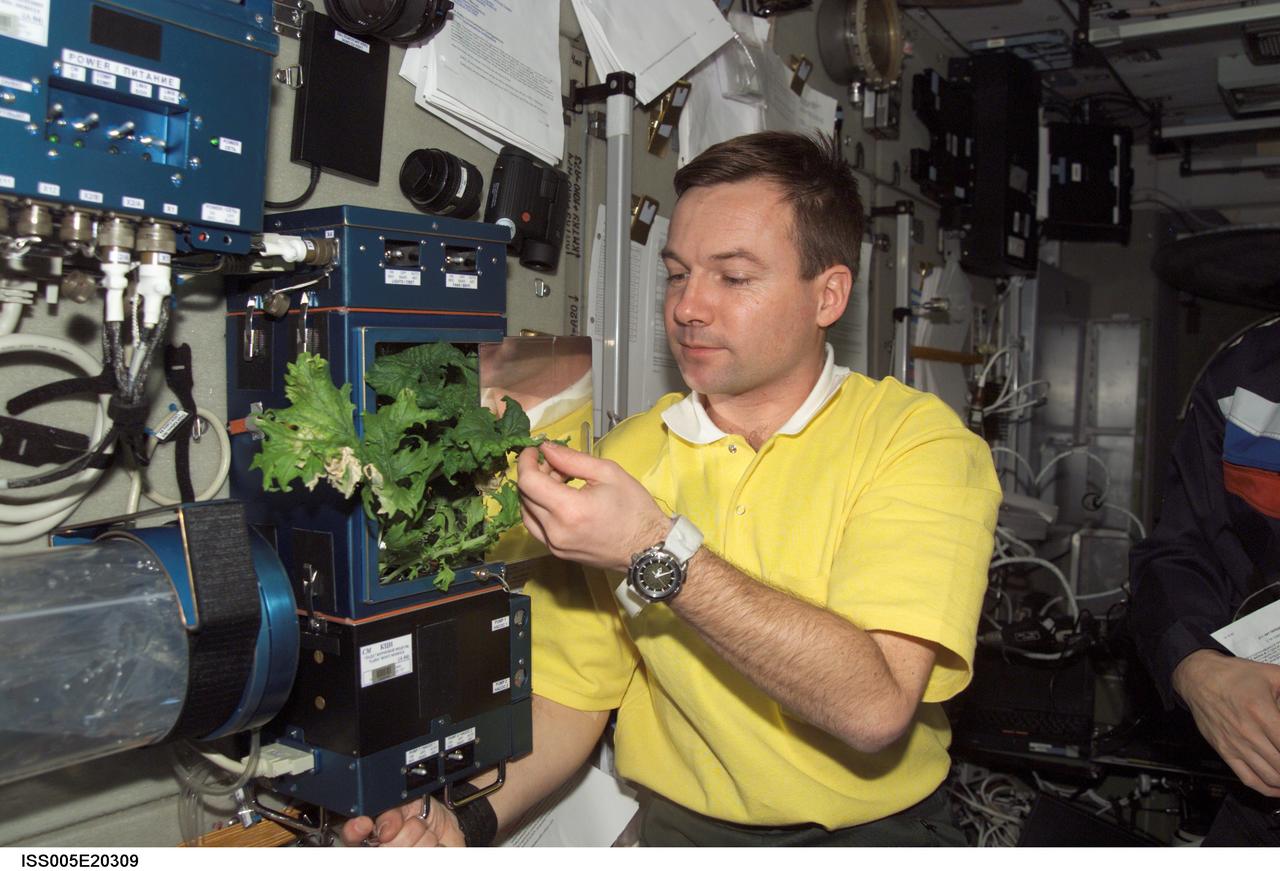
ISS005-E-20309 (8 November 2002) --- Soyuz 5 Flight Engineer Yuri V. Lonchakov looks at a plant growth experiment in the Zvezda Service Module on the International Space Station (ISS). Lonchakov represents Rosaviakosmos.
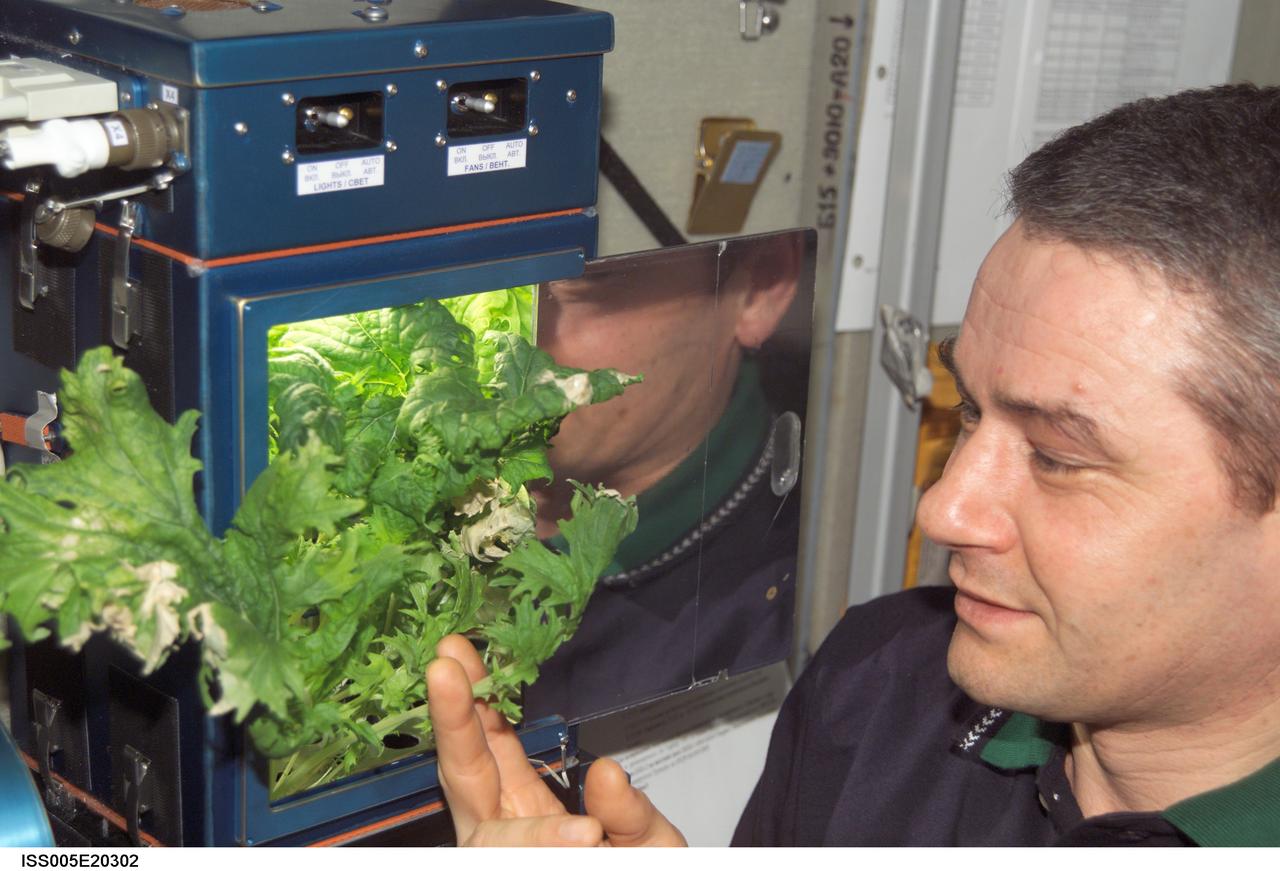
ISS005-E-20302 (8 November 2002) --- Cosmonaut Valery G. Korzun, Expedition Five mission commander, checks a plant growth experiment in the Zvezda Service Module on the International Space Station (ISS). Korzun represents Rosaviakosmos.
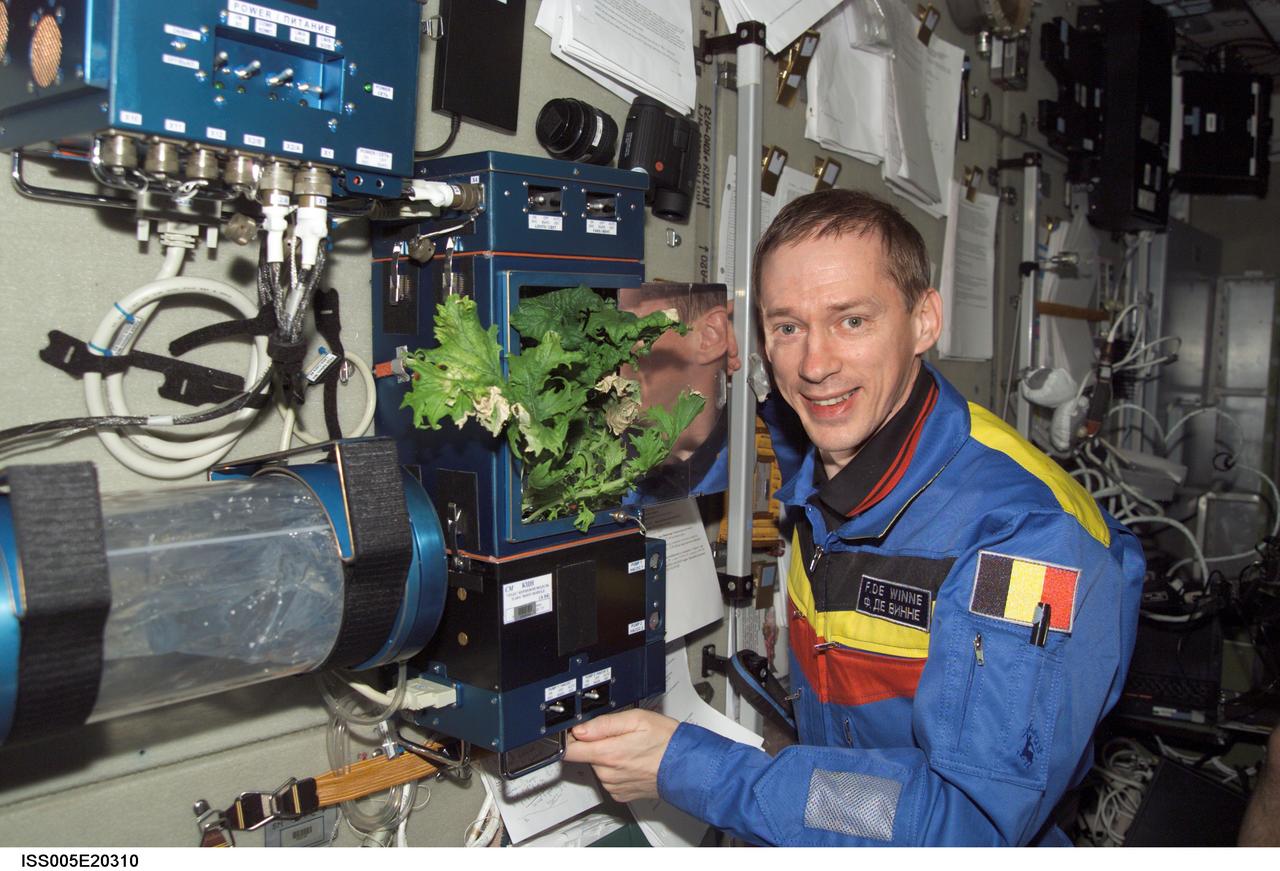
ISS005-E-20310 (8 November 2002) --- Belgian Soyuz 5 Flight Engineer Frank DeWinne is pictured near a plant growth experiment in the Zvezda Service Module on the International Space Station (ISS). DeWinne represents the European Space Agency (ESA).

Water and nutrients are being added to plants in the Veggie hardware in NASA Kennedy Space Center's ISS environment simulator chamber. Mizuna mustard, Outredgeous lettuce and Waldmann's green lettuce are growing in Veggie. Growth in the chamber mimics the growth of plant experiments in the Veggie plant growth system on the International Space Station.
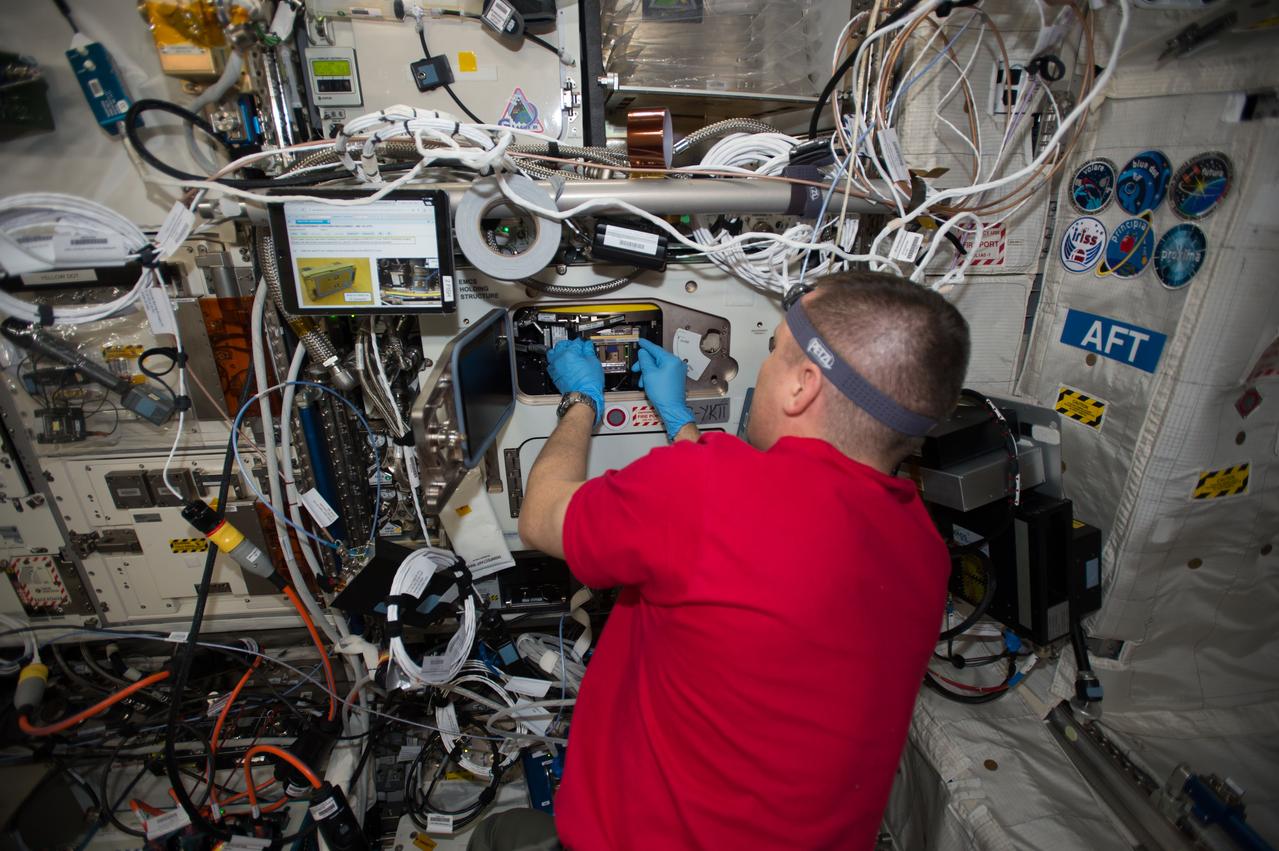
iss052e002352 (6/12/2017) --- A view of NASA astronaut Jack Fischer replacing the European Modular Cultivation System (EMCS) Experiment Containers (ECs) with new ECs prepared for the Seedling Growth 3 experiment. Seedling Growth-3 is the third part of the Seedling Growth Experiment series, using the plant Arabidopsis thaliana to investigate the effects of gravity on the cellular signaling mechanisms of light sensing in plants (phototropism), and to investigate cell growth and proliferation responses to light stimulation under microgravity conditions.
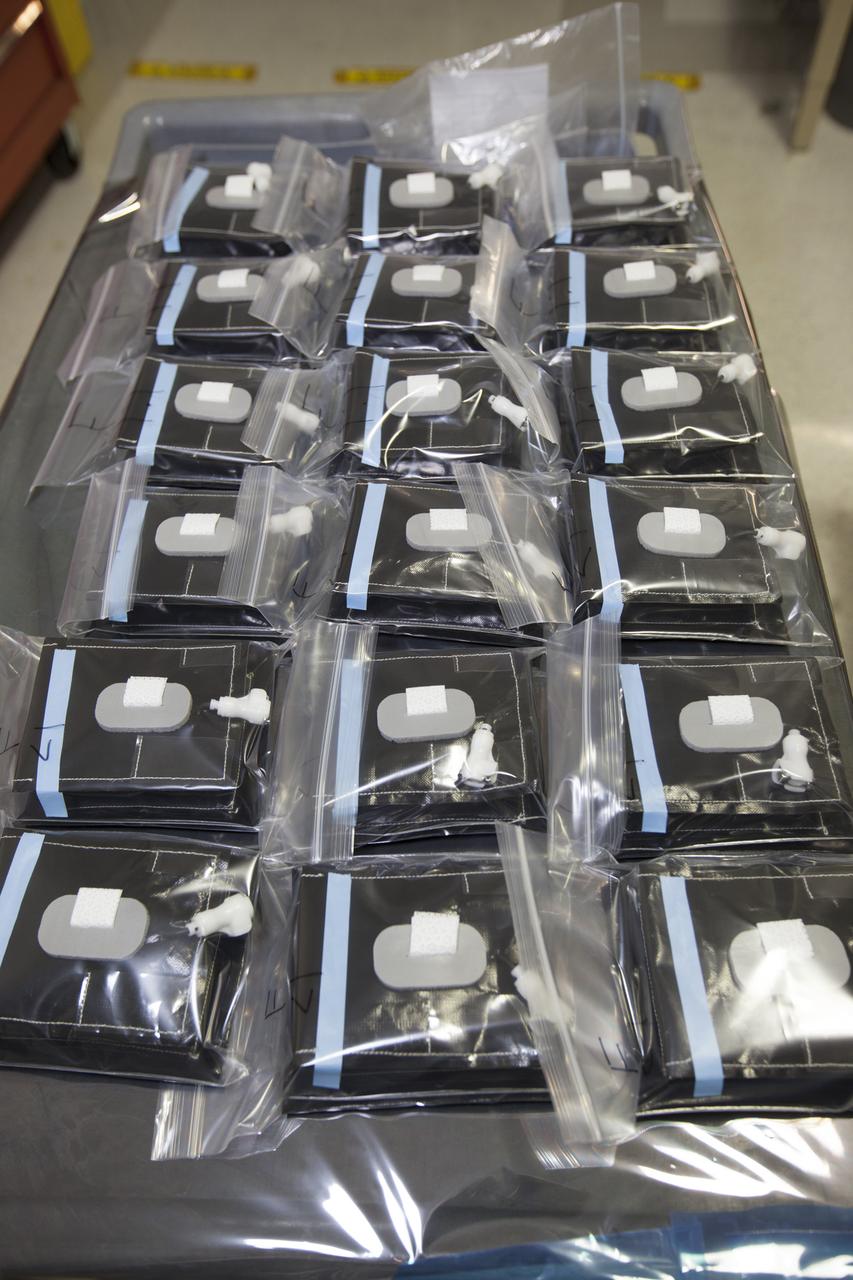
Inside a laboratory in the Space Station Processing Facility at NASA’s Kennedy Space Center in Florida, 18 plant pillows for the Veg-03 experiment have been prepared for delivery to the International Space Station aboard the eighth SpaceX Dragon commercial resupply mission. The Veg-03 plant pillows will contain ‘Tokyo Bekana’ cabbage seeds and lettuce seeds for NASA’s third Veggie plant growth system experiment. The experiment will continue NASA’s deep space plant growth research to benefit the Earth and the agency’s journey to Mars.
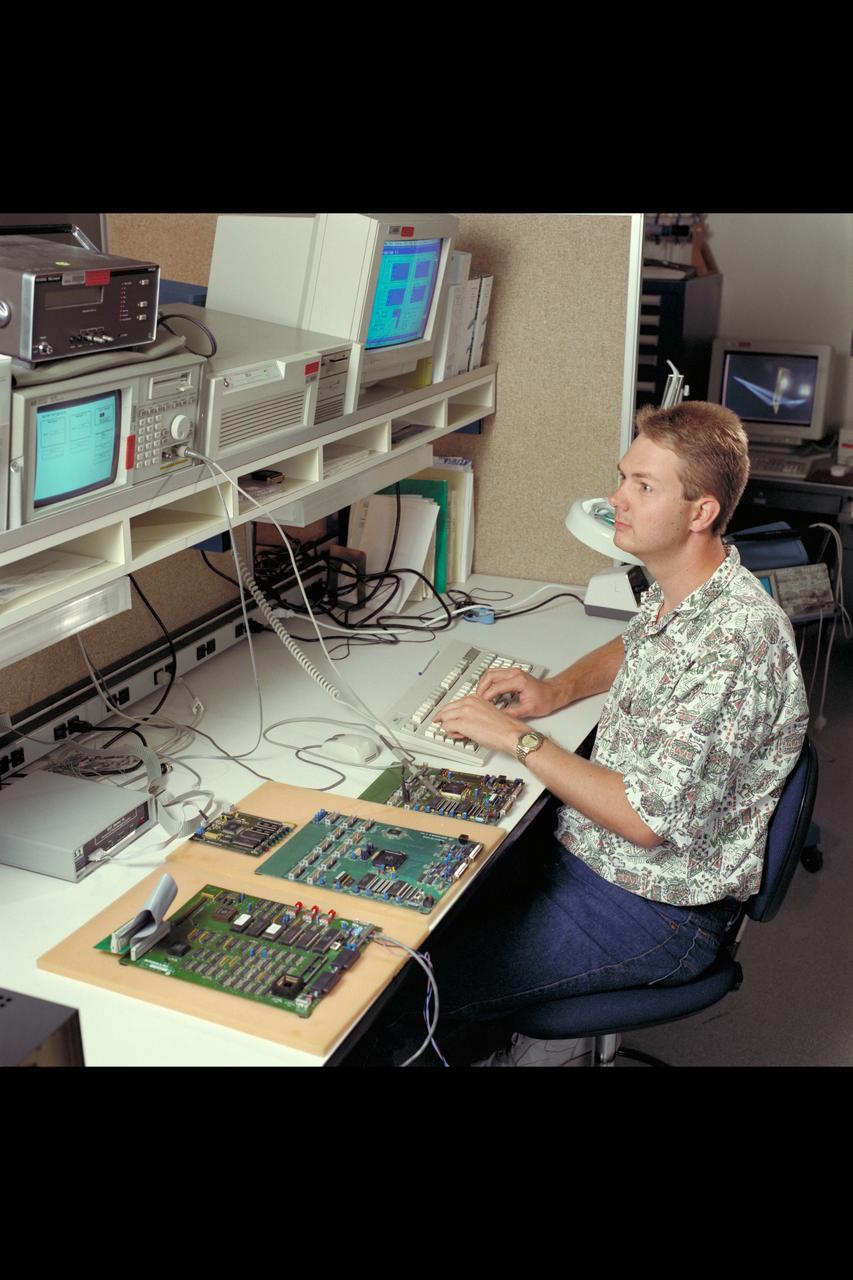
Ames Life Sciences Experiments: Craig VonWaaden, plant growth lab

Outredgeous red leaf lettuce, Mizuna mustard and Waldmann's green lettuce are growing in the Veggie control system in the ISS environment simulator chamber in the Space Station Processing Facility at NASA's Kennedy Space Center in Florida. Growth in the chamber mimics the growth of plant experiments in the Veggie plant growth system on the International Space Station.
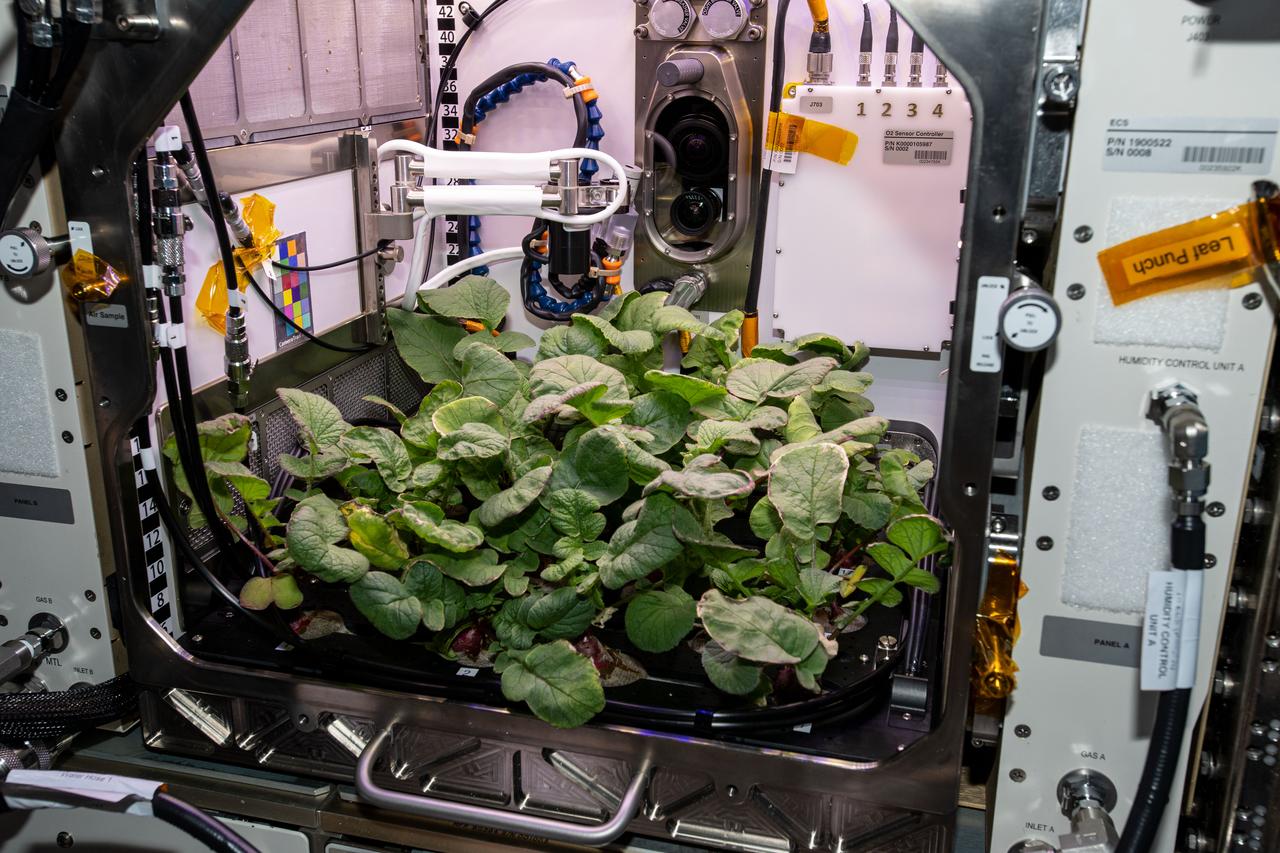
iss064e006453 (Nov. 27, 2020) --- Radish plants are pictured growing for the Plant Habitat-02 experiment that could help optimize plant growth in the unique environment of space and evaluate nutrition and taste of the plants.
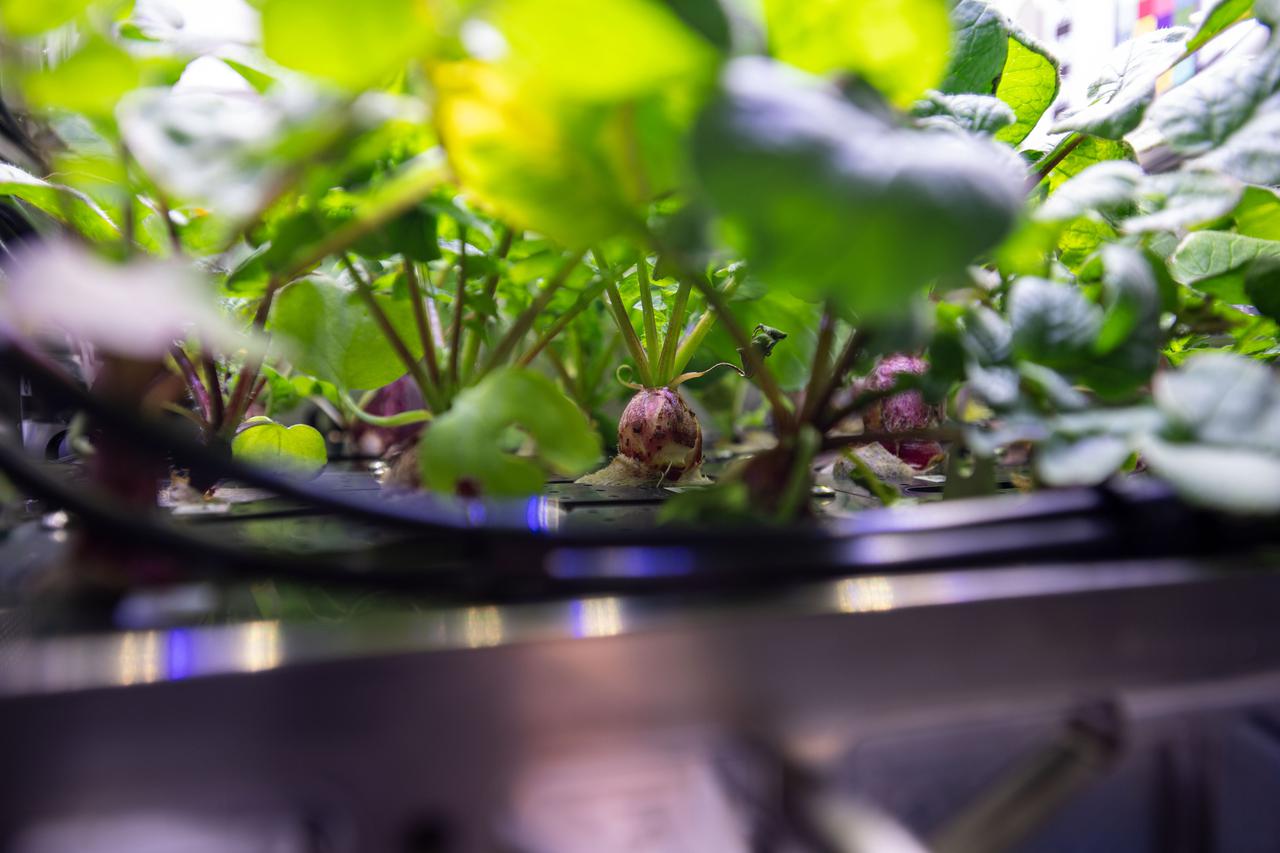
iss064e006479 (November 27, 2020) --- Documentation of radish plants growing in the Advanced Plant Habitat Science Carrier prior to leaf sampling operations (OPS) for the Assessment of Nutritional Value and Growth Parameters of Space-grown Plants (Plant Habitat-02) experiment. Photo was taken in the Kibo Japanese Experiment Module (JEM).
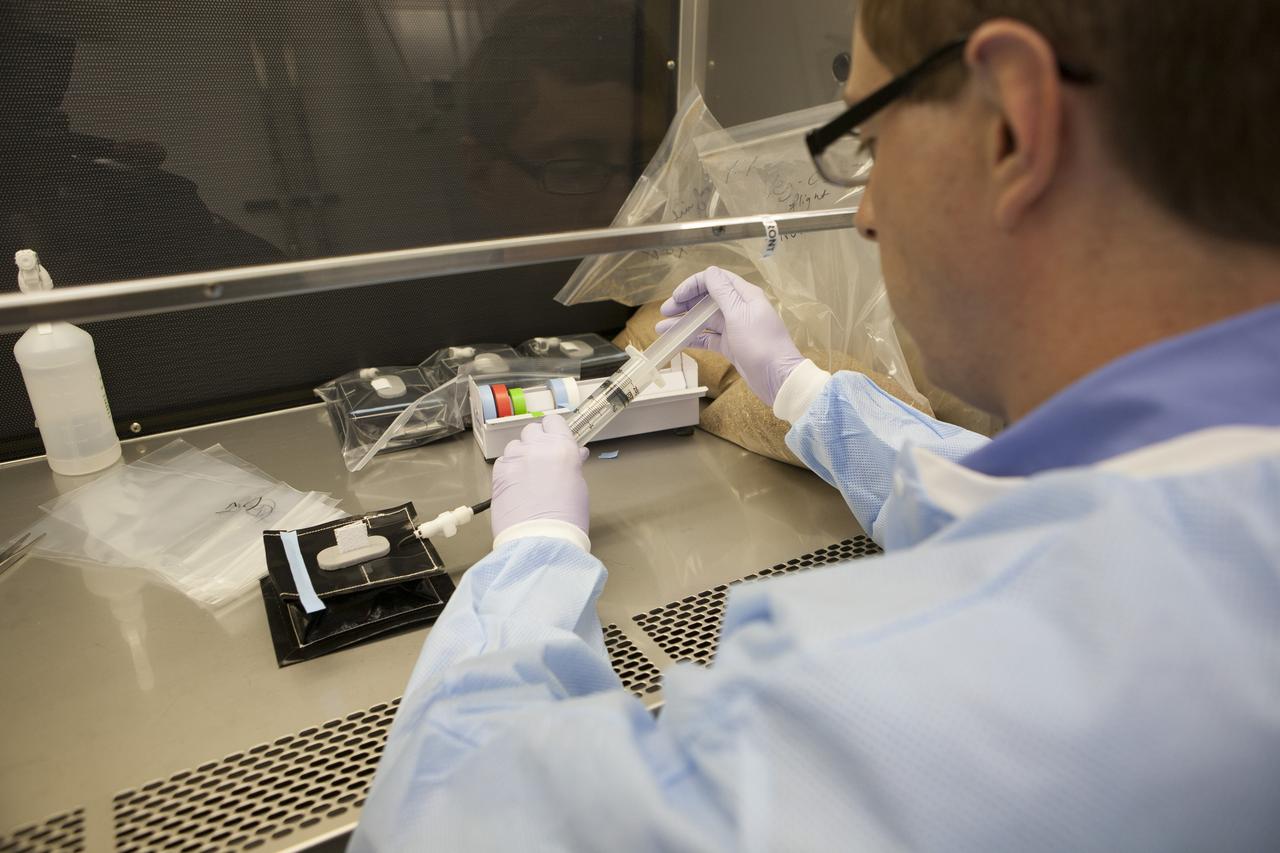
Inside a laboratory in the Space Station Processing Facility at NASA’s Kennedy Space Center in Florida, research scientists prepare the plant pillows for the Veg-03 experiment that will be delivered to the International Space Station aboard the eighth SpaceX Dragon commercial resupply mission. Dr. Mathew Mickens, a post-doctoral researcher, inserts a bonding agent into one of the Veg-03 plant pillows. The Veg-03 plant pillows will contain ‘Tokyo Bekana’ cabbage seeds and lettuce seeds for NASA’s third Veggie plant growth system experiment. The experiment will continue NASA’s deep space plant growth research to benefit the Earth and the agency’s journey to Mars.
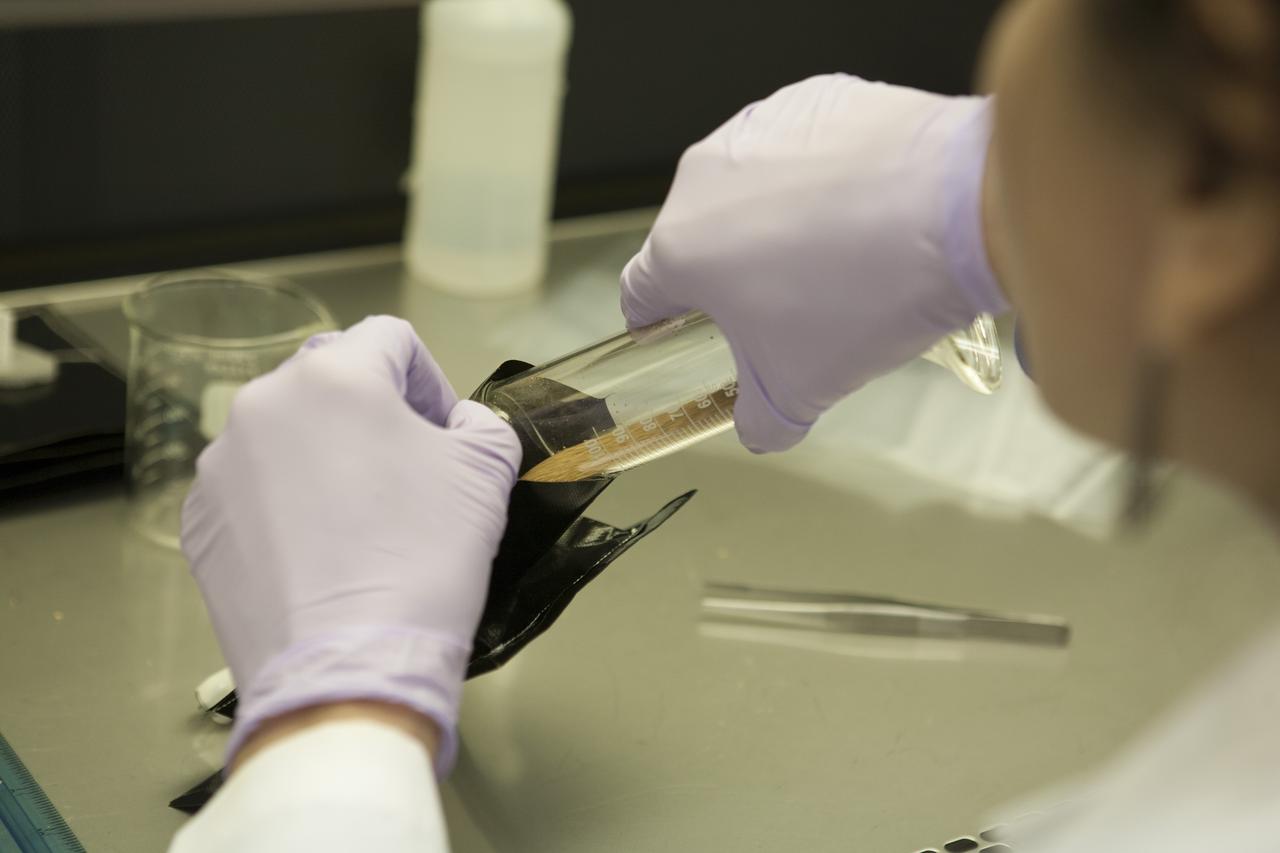
Inside a laboratory in the Space Station Processing Facility at NASA’s Kennedy Space Center in Florida, research scientists prepare the plant pillows for the Veg-03 experiment that will be delivered to the International Space Station aboard the eighth SpaceX Dragon commercial resupply mission. Matt Romeyn, a NASA pathways intern, inserts a measured amount of calcined clay, or space dirt, into one of the plant pillows. The Veg-03 plant pillows will contain ‘Tokyo Bekana’ cabbage seeds and lettuce seeds for NASA’s third Veggie plant growth system experiment. The experiment will continue NASA’s deep space plant growth research to benefit the Earth and the agency’s journey to Mars.
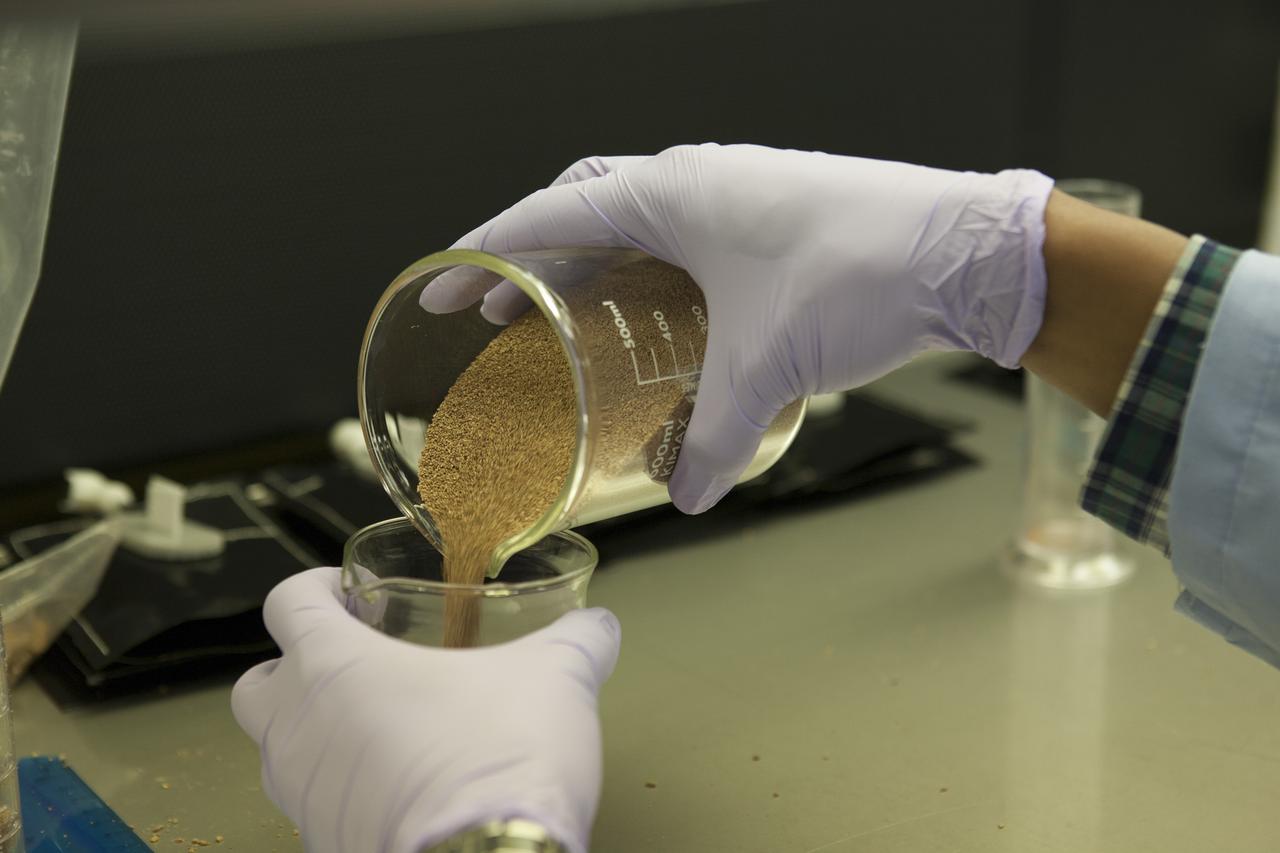
Inside a laboratory in the Space Station Processing Facility at NASA’s Kennedy Space Center in Florida, research scientists prepare the plant pillows for the Veg-03 experiment that will be delivered to the International Space Station aboard the eighth SpaceX Dragon commercial resupply mission. Matt Romeyn, a NASA pathways intern, measures out the calcined clay, or space dirt, for one of the plant pillows. The Veg-03 plant pillows will contain ‘Tokyo Bekana’ cabbage seeds and lettuce seeds for NASA’s third Veggie plant growth system experiment. The experiment will continue NASA’s deep space plant growth research to benefit the Earth and the agency’s journey to Mars.
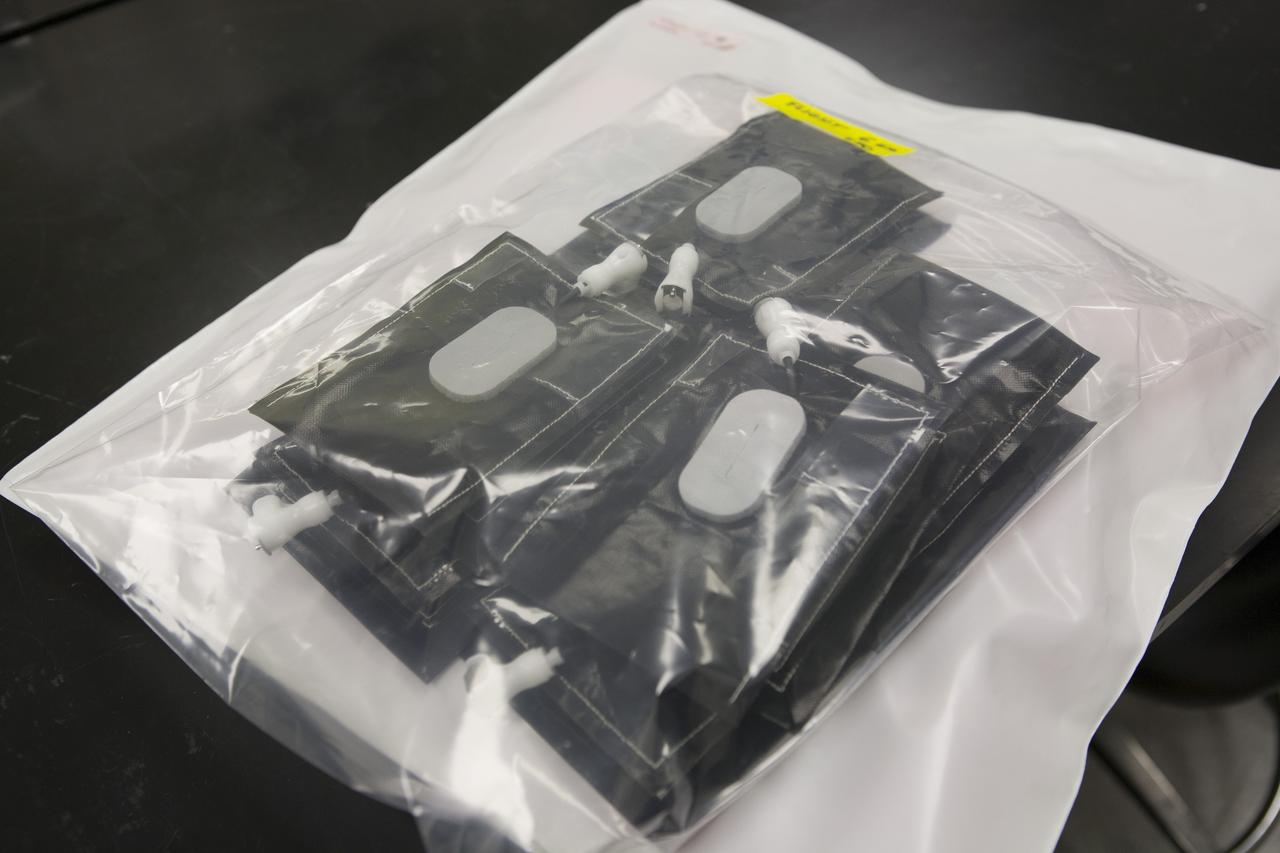
Inside a laboratory in the Space Station Processing Facility at NASA’s Kennedy Space Center in Florida, plant pillows for the Veg-03 experiment are prepared for delivery to the International Space Station aboard the eighth SpaceX Dragon commercial resupply mission. Dr. Mathew Mickens, a post-doctoral researcher, inserts a bonding agent into one of the Veg-03 plant pillows. The Veg-03 plant pillows will contain ‘Tokyo Bekana’ cabbage seeds and lettuce seeds for NASA’s third Veggie plant growth system experiment. The experiment will continue NASA’s deep space plant growth research to benefit the Earth and the agency’s journey to Mars.
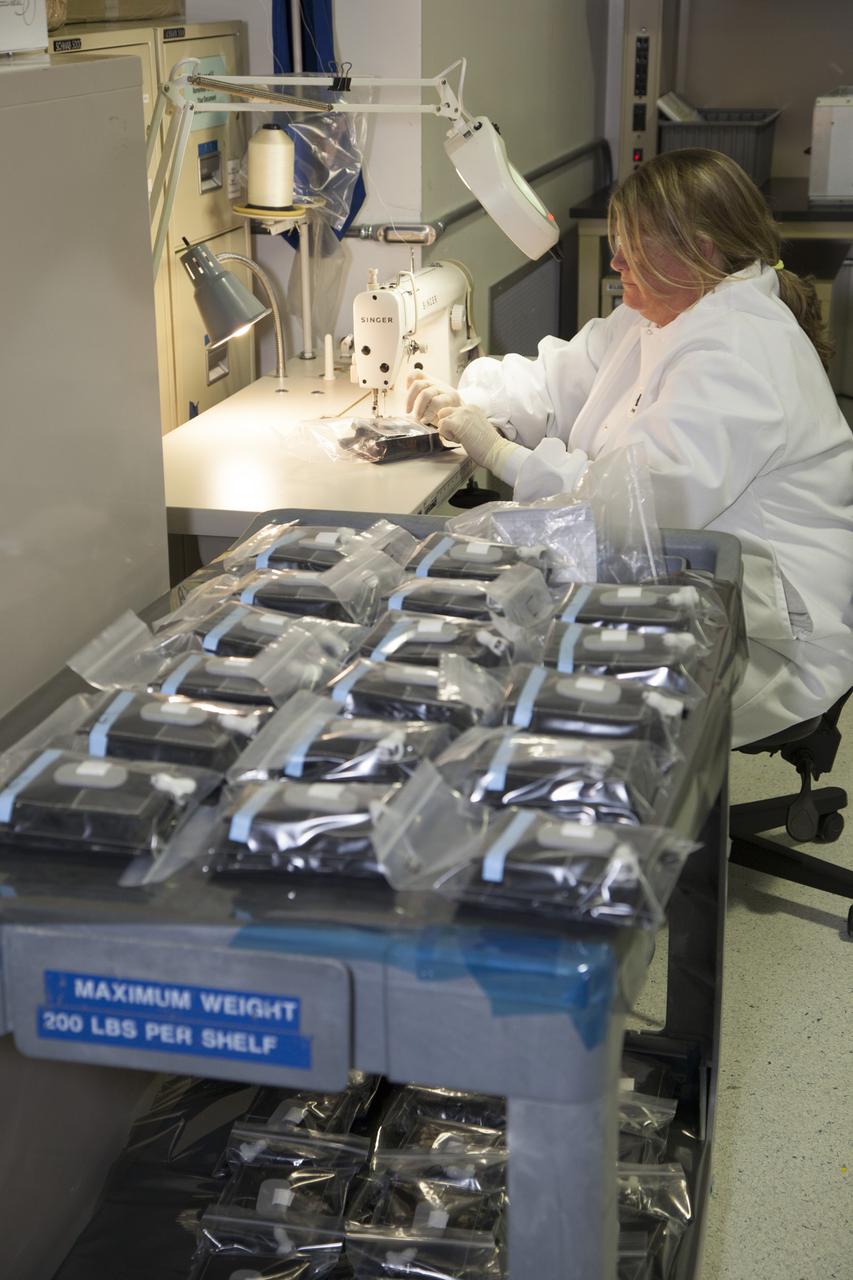
Inside a laboratory in the Space Station Processing Facility at NASA’s Kennedy Space Center in Florida, Michele Koralewicz, a mechanical technician with EASI on the Engineering Services Contract, prepares to sew up the end of a bag that contains one of the Veg-03 plant pillows. In the foreground are all of the other plant pillows that need to be sealed. The Veg-03 experiment will be delivered to the International Space Station aboard the eighth SpaceX Dragon commercial resupply mission. The Veg-03 plant pillows will contain ‘Tokyo Bekana’ cabbage seeds and lettuce seeds for NASA’s third Veggie plant growth system experiment. The experiment will continue NASA’s deep space plant growth research to benefit the Earth and the agency’s journey to Mars.
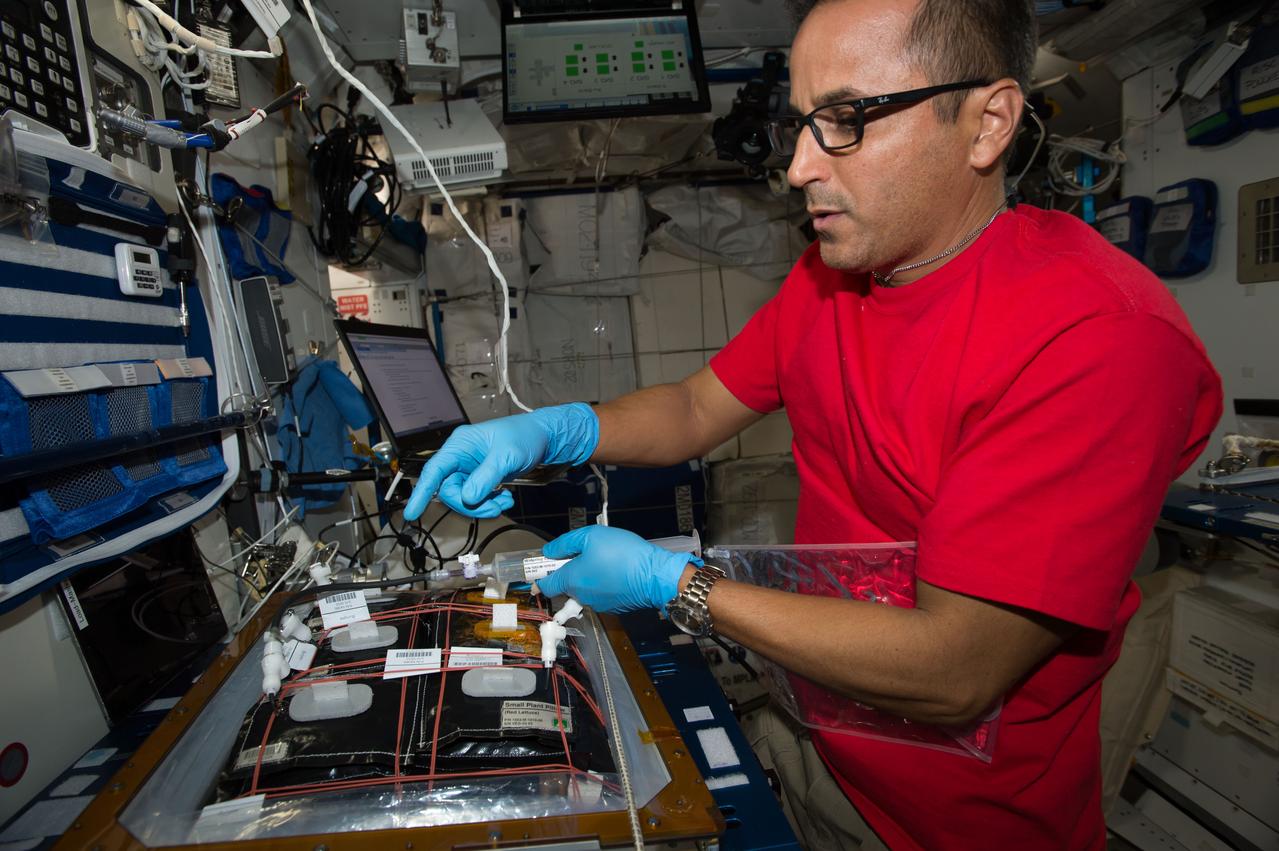
iss053e047057 (Sept. 26, 2017) --- Flight Engineer Joe Acaba installs botany gear for the Veggie facility to demonstrate plant growth in space for the Veg-03 experiment. The botany study uses the Veggie plant growth facility to cultivate cabbage, lettuce and mizuna, which are harvested on-orbit with samples returned to Earth for testing.
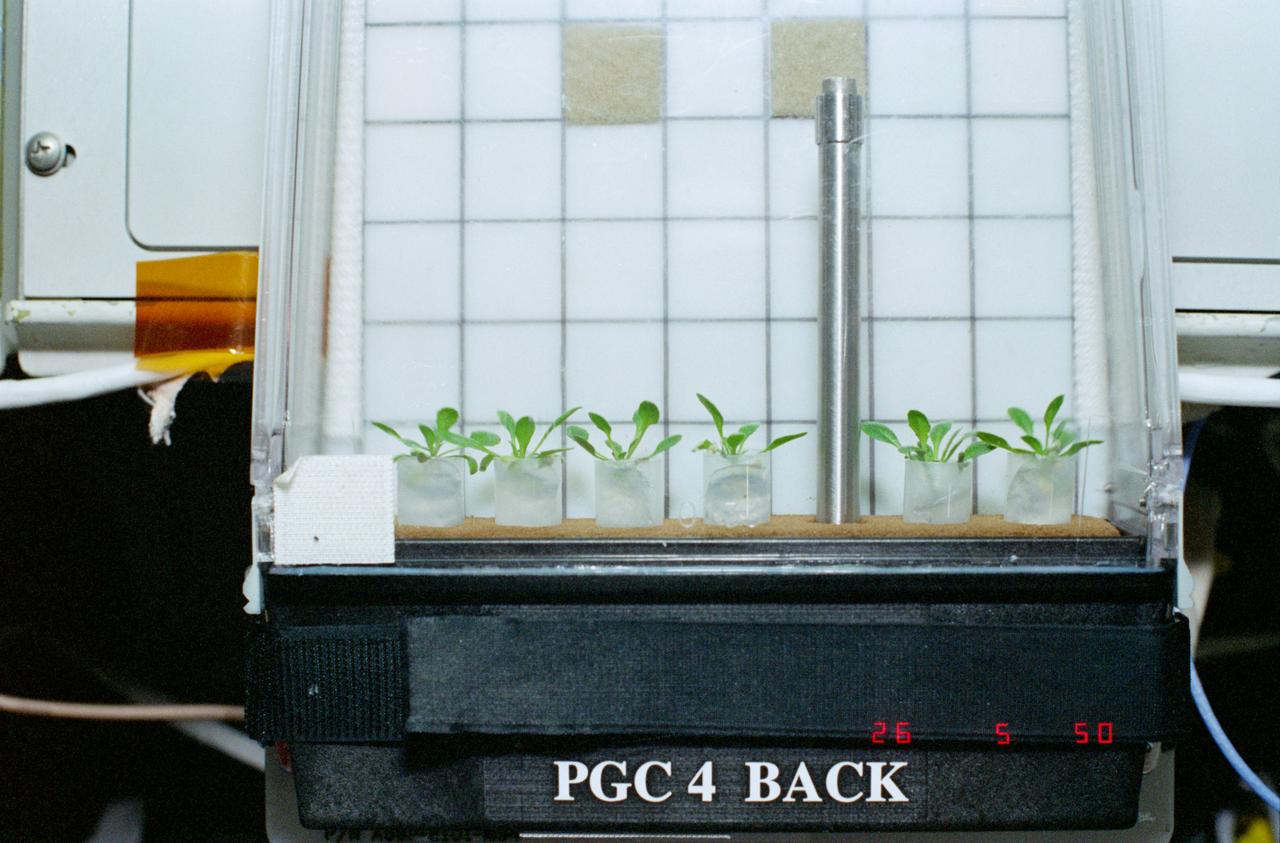
STS093-345-008 (22-27 July 1999) --- Close-up view of the Plant Growth Investigations in Microgravity (PGIM-1) payload experiment onboard the Earth-orbiting Space Shuttle Columbia. The PGIM-1 monitors the space flight environment for stressful conditions that affect plant growth.
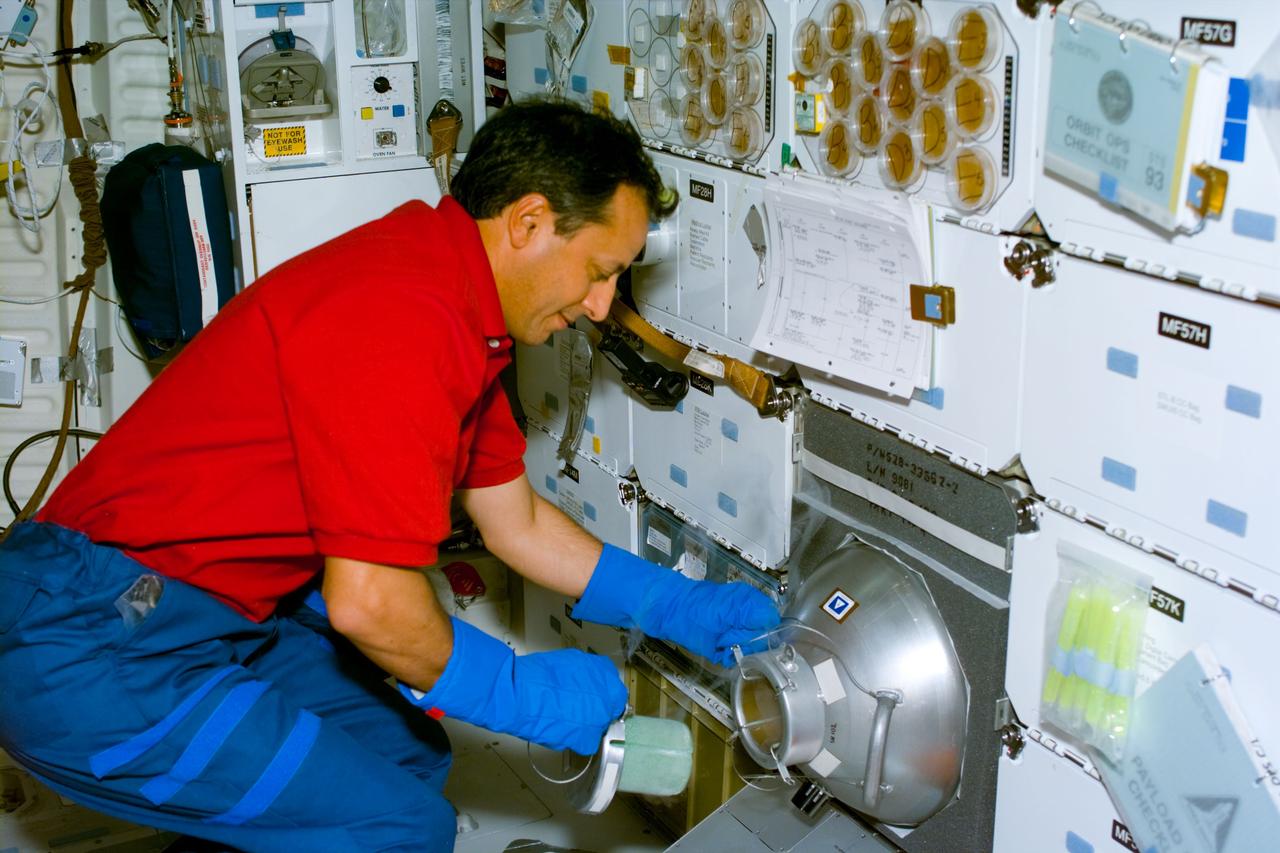
S93-E-5006 (23 July 1999) --- Astronaut Michel Tognini, mission specialist representing the French space agency (CNES), opens the gaseous nitorgen (GN2) freezer on Columbia's middeck. The freezer is flown in support of two plant growth experiments--Plant Growth Investigations in Microgravity (PGIM) and Biological Research in Canisters (BRIC). Throughout the mission Tognini periodically freezes samples from the experiments to provide glimpses of the plants in various stages of development. The photo was recorded with an electronic still camera (ESC) on Flight Day 1.

NASA interns Jessica Scotten, left, and Ayla Grandpre water plants in the Veggie hardware in NASA Kennedy Space Center's ISS environment simulator chamber. Mizuna mustard, Outredgeous lettuce and Waldmann's green lettuce are growing in Veggie. Growth in the chamber mimics the growth of plant experiments in the Veggie plant growth system on the International Space Station.
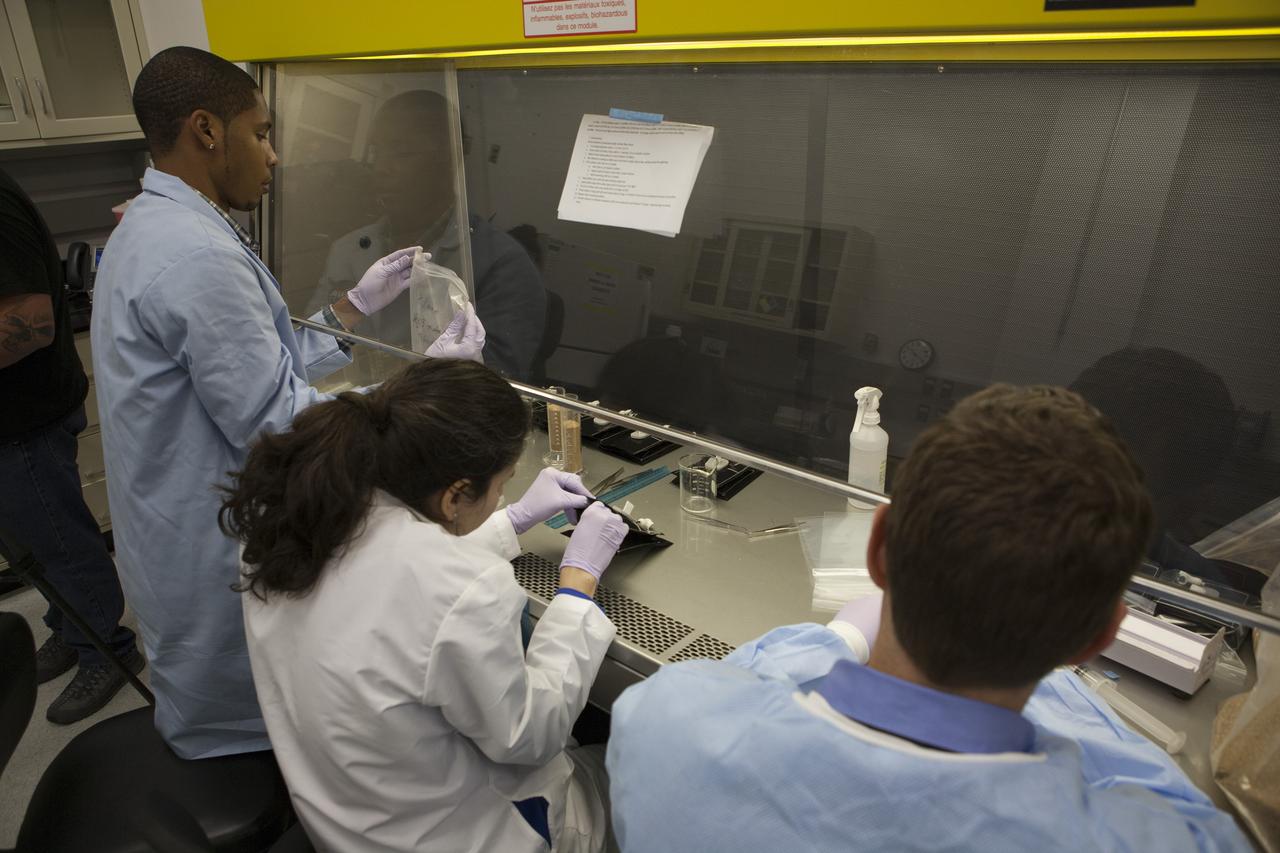
Inside a laboratory in the Space Station Processing Facility at NASA’s Kennedy Space Center in Florida, research scientists prepare the plant pillows for the Veg-03 experiment that will be delivered to the International Space Station aboard the eighth SpaceX Dragon commercial resupply mission. From left, are Matt Romeyn, NASA pathways intern; Dr. Gioia Massa, NASA payload scientist for Veggie; and Dr. Mathew Mickens, a post-doctoral researcher. The Veg-03 plant pillows will contain ‘Tokyo Bekana’ cabbage seeds and lettuce seeds for NASA’s third Veggie plant growth system experiment. The experiment will continue NASA’s deep space plant growth research to benefit the Earth and the agency’s journey to Mars.
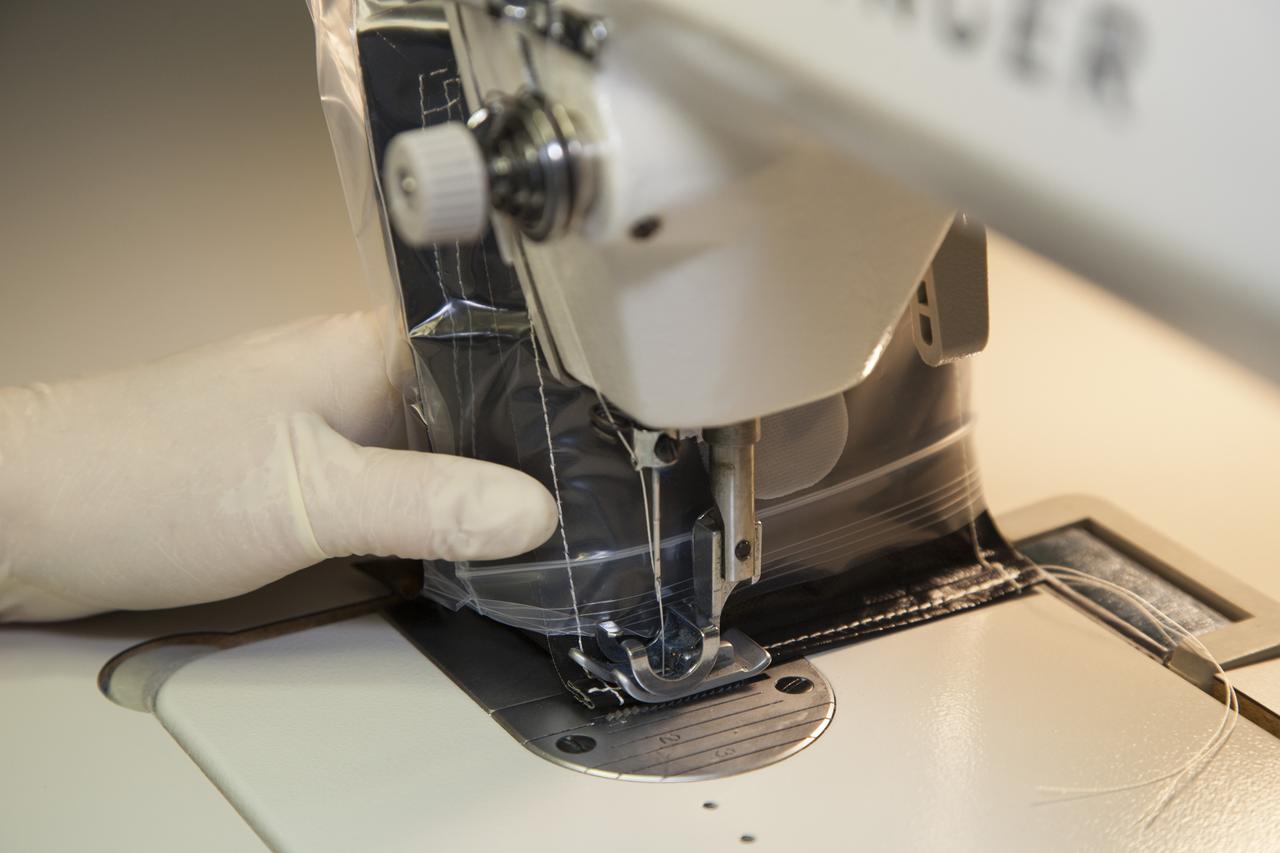
Inside a laboratory in the Space Station Processing Facility at NASA’s Kennedy Space Center in Florida, Michele Koralewicz, a mechanical technician with EASI on the Engineering Services Contract, precisely sews up the end of a bag that contains one of the Veg-03 plant pillows. The Veg-03 experiment will be delivered to the International Space Station aboard the eighth SpaceX Dragon commercial resupply mission. The Veg-03 plant pillows will contain ‘Tokyo Bekana’ cabbage seeds and lettuce seeds for NASA’s third Veggie plant growth system experiment. The experiment will continue NASA’s deep space plant growth research to benefit the Earth and the agency’s journey to Mars.
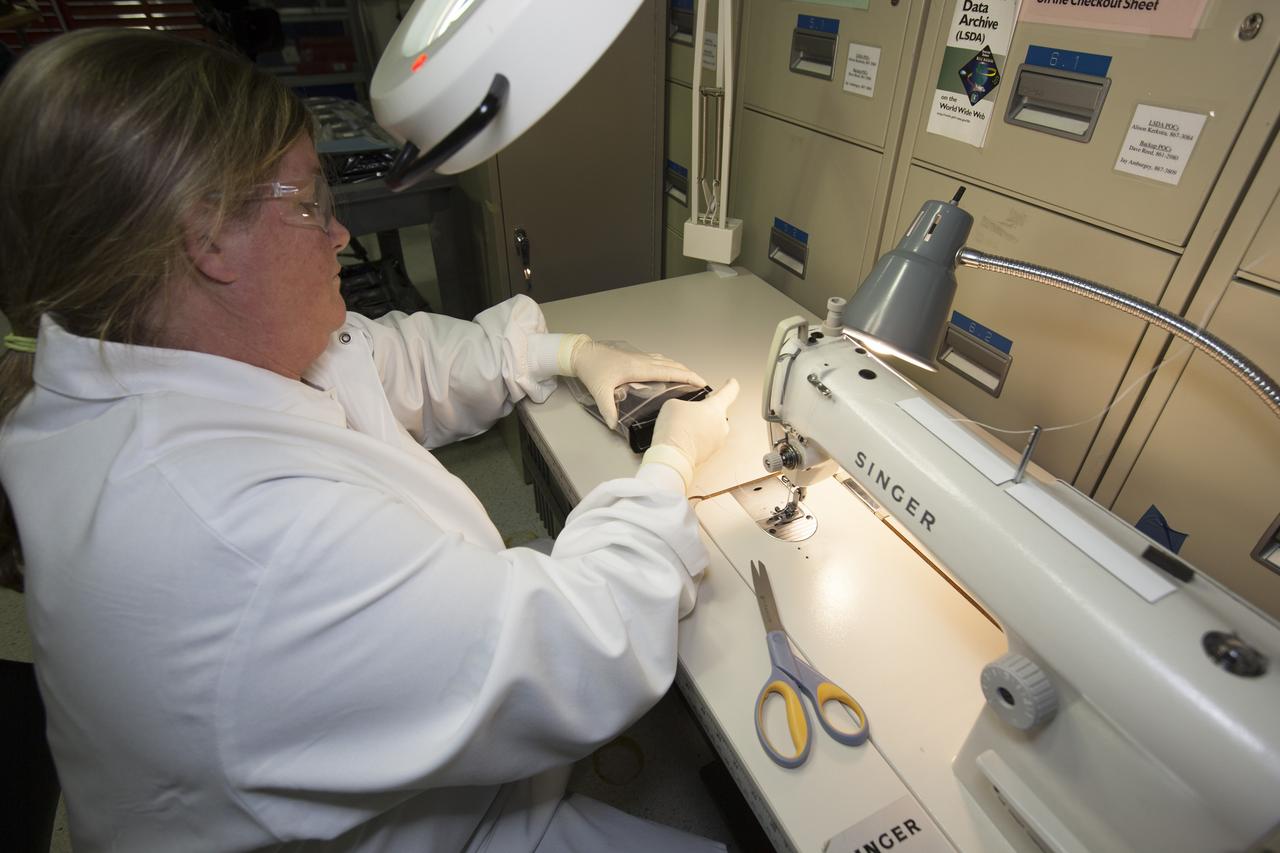
Inside a laboratory in the Space Station Processing Facility at NASA’s Kennedy Space Center in Florida, Michele Koralewicz, a mechanical technician with EASI on the Engineering Services Contract, sews up the end of a bag that contains one of the Veg-03 plant pillows. The Veg-03 experiment will be delivered to the International Space Station aboard the eighth SpaceX Dragon commercial resupply mission. The Veg-03 plant pillows will contain ‘Tokyo Bekana’ cabbage seeds and lettuce seeds for NASA’s third Veggie plant growth system experiment. The experiment will continue NASA’s deep space plant growth research to benefit the Earth and the agency’s journey to Mars.
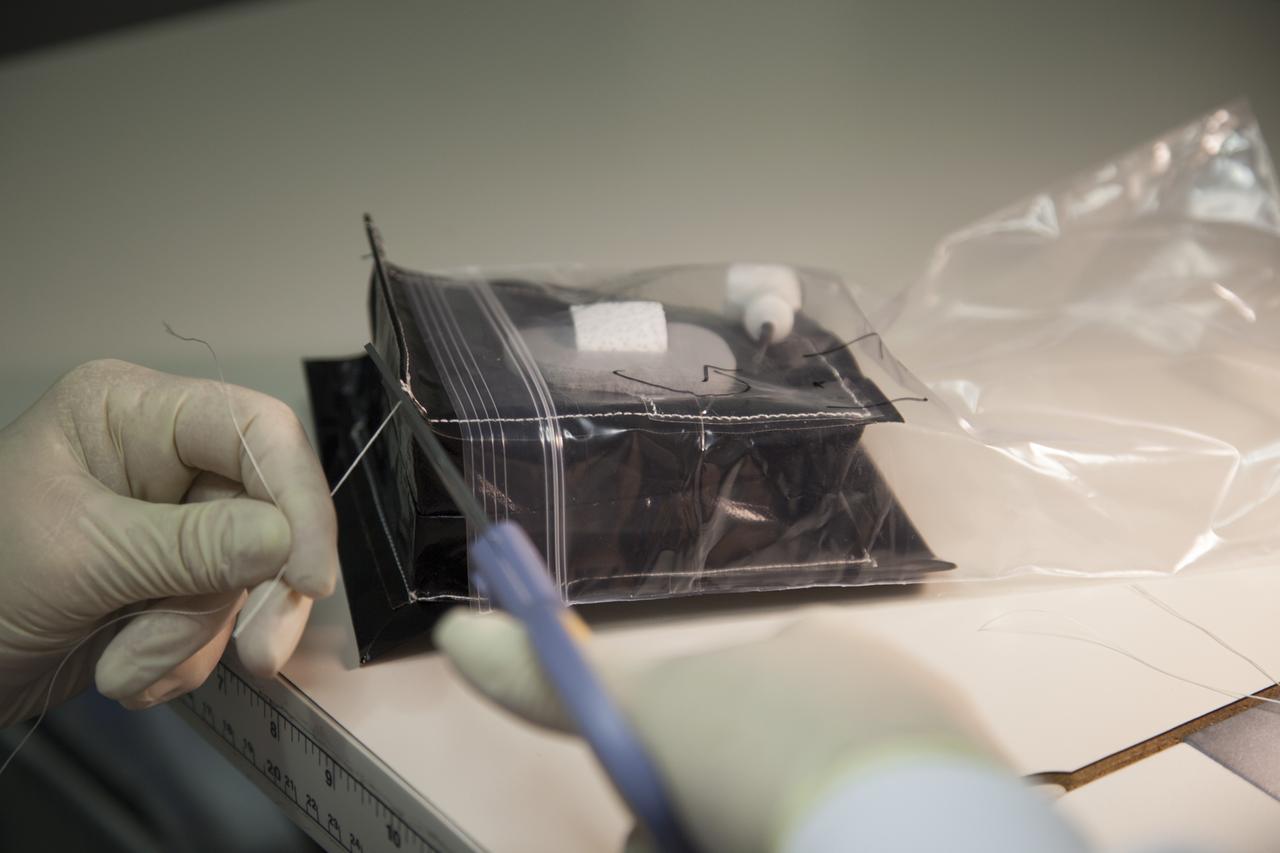
Inside a laboratory in the Space Station Processing Facility at NASA’s Kennedy Space Center in Florida, Michele Koralewicz, a mechanical technician with EASI on the Engineering Services Contract, sews up the end of a bag that contains one of the Veg-03 plant pillows. The Veg-03 experiment will be delivered to the International Space Station aboard the eighth SpaceX Dragon commercial resupply mission. The Veg-03 plant pillows will contain ‘Tokyo Bekana’ cabbage seeds and lettuce seeds for NASA’s third Veggie plant growth system experiment. The experiment will continue NASA’s deep space plant growth research to benefit the Earth and the agency’s journey to Mars.
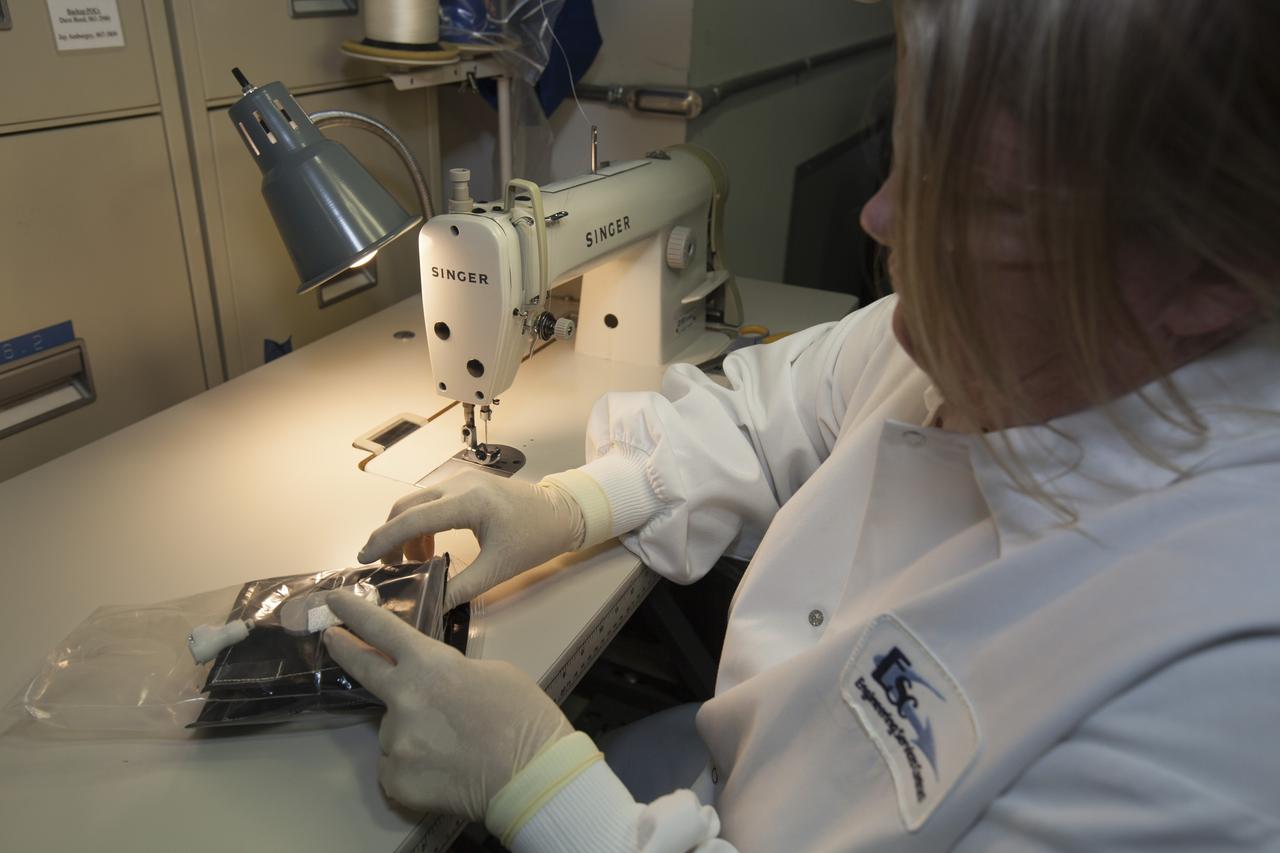
Inside a laboratory in the Space Station Processing Facility at NASA’s Kennedy Space Center in Florida, Michele Koralewicz, a mechanical technician with EASI on the Engineering Services Contract, prepares to sew the end of a bag that contains one of the Veg-03 plant pillows. The Veg-03 experiment will be delivered to the International Space Station aboard the eighth SpaceX Dragon commercial resupply mission. The Veg-03 plant pillows will contain ‘Tokyo Bekana’ cabbage seeds and lettuce seeds for NASA’s third Veggie plant growth system experiment. The experiment will continue NASA’s deep space plant growth research to benefit the Earth and the agency’s journey to Mars.
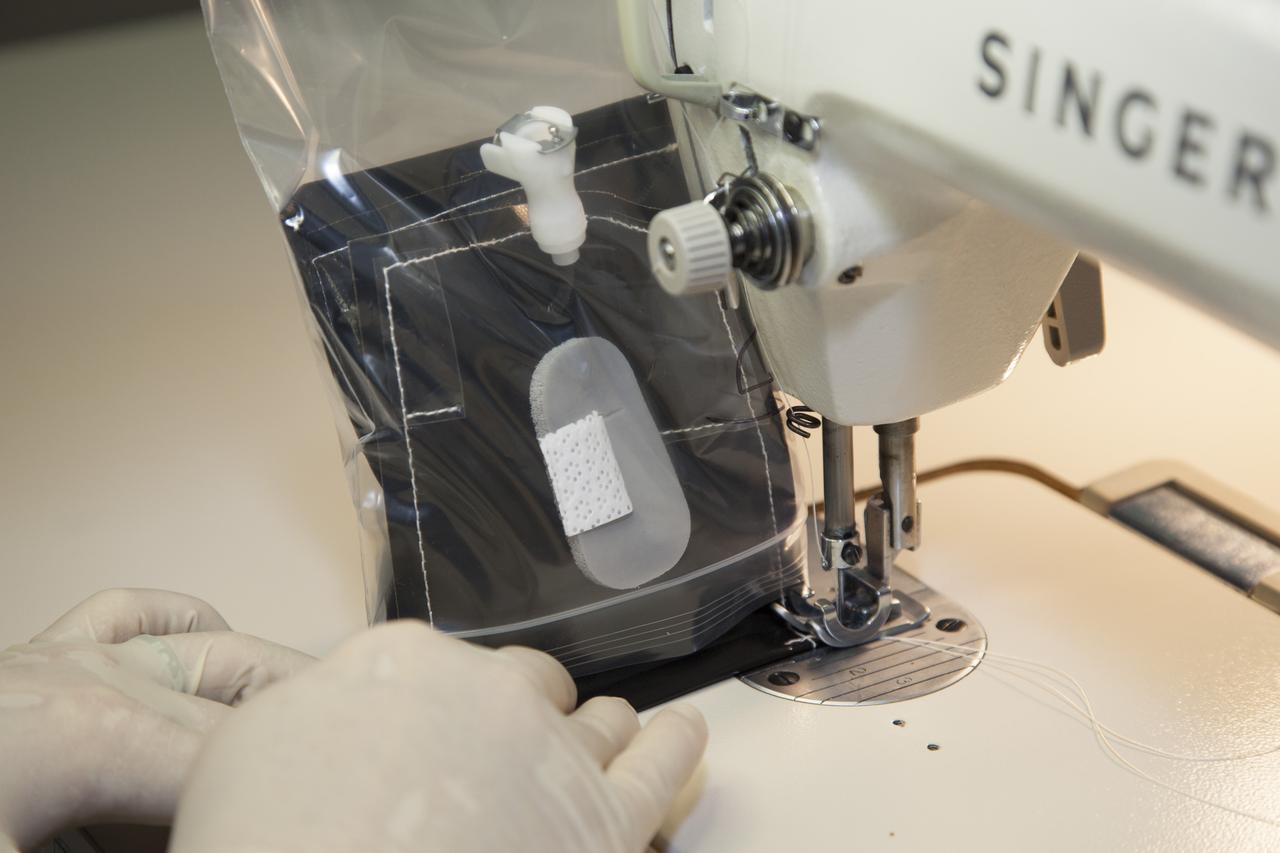
Inside a laboratory in the Space Station Processing Facility at NASA’s Kennedy Space Center in Florida, Michele Koralewicz, a mechanical technician with EASI on the Engineering Services Contract, sews up the end of a bag that contains one of the Veg-03 plant pillows. The Veg-03 experiment will be delivered to the International Space Station aboard the eighth SpaceX Dragon commercial resupply mission. The Veg-03 plant pillows will contain ‘Tokyo Bekana’ cabbage seeds and lettuce seeds for NASA’s third Veggie plant growth system experiment. The experiment will continue NASA’s deep space plant growth research to benefit the Earth and the agency’s journey to Mars.
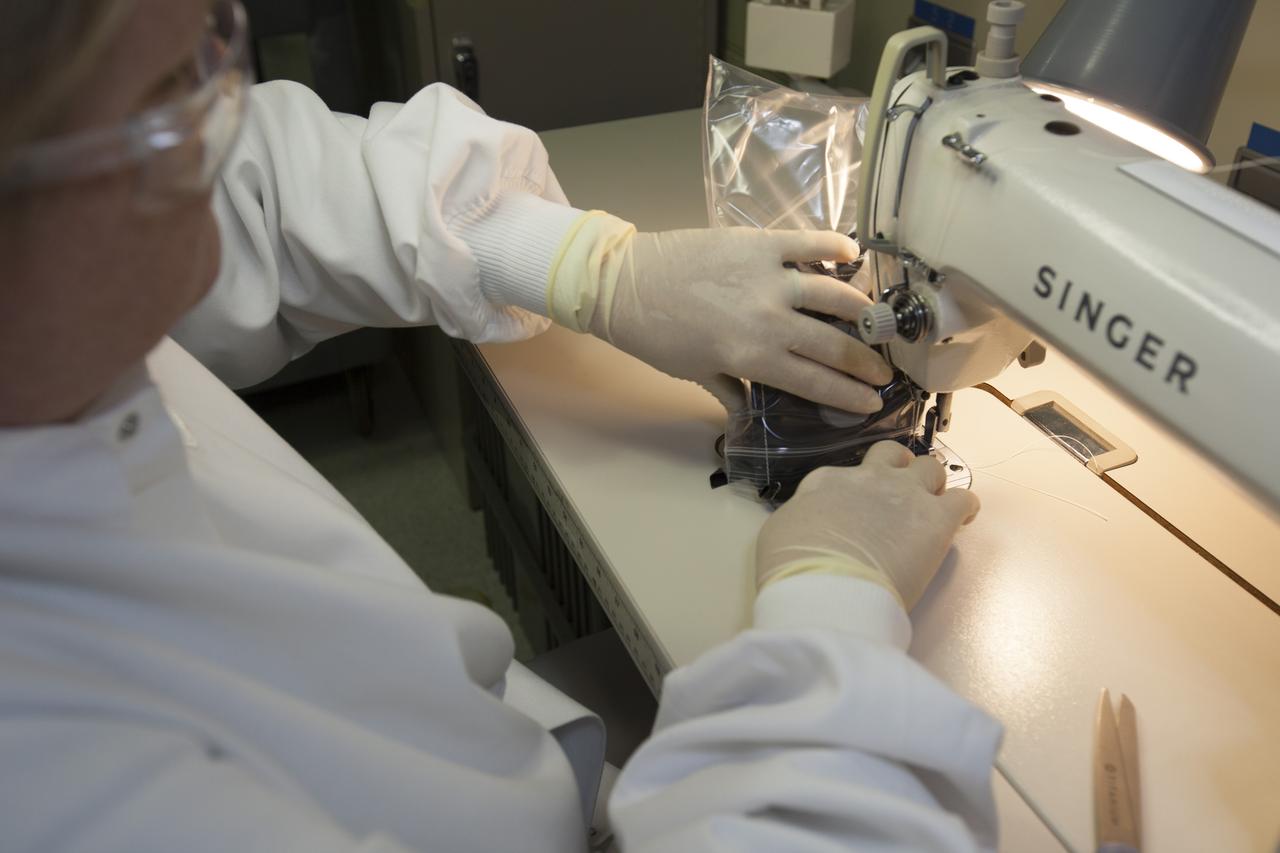
Inside a laboratory in the Space Station Processing Facility at NASA’s Kennedy Space Center in Florida, Michele Koralewicz, a mechanical technician with EASI on the Engineering Services Contract, sews up the end of a bag that contains one of the Veg-03 plant pillows. The Veg-03 experiment will be delivered to the International Space Station aboard the eighth SpaceX Dragon commercial resupply mission. The Veg-03 plant pillows will contain ‘Tokyo Bekana’ cabbage seeds and lettuce seeds for NASA’s third Veggie plant growth system experiment. The experiment will continue NASA’s deep space plant growth research to benefit the Earth and the agency’s journey to Mars.
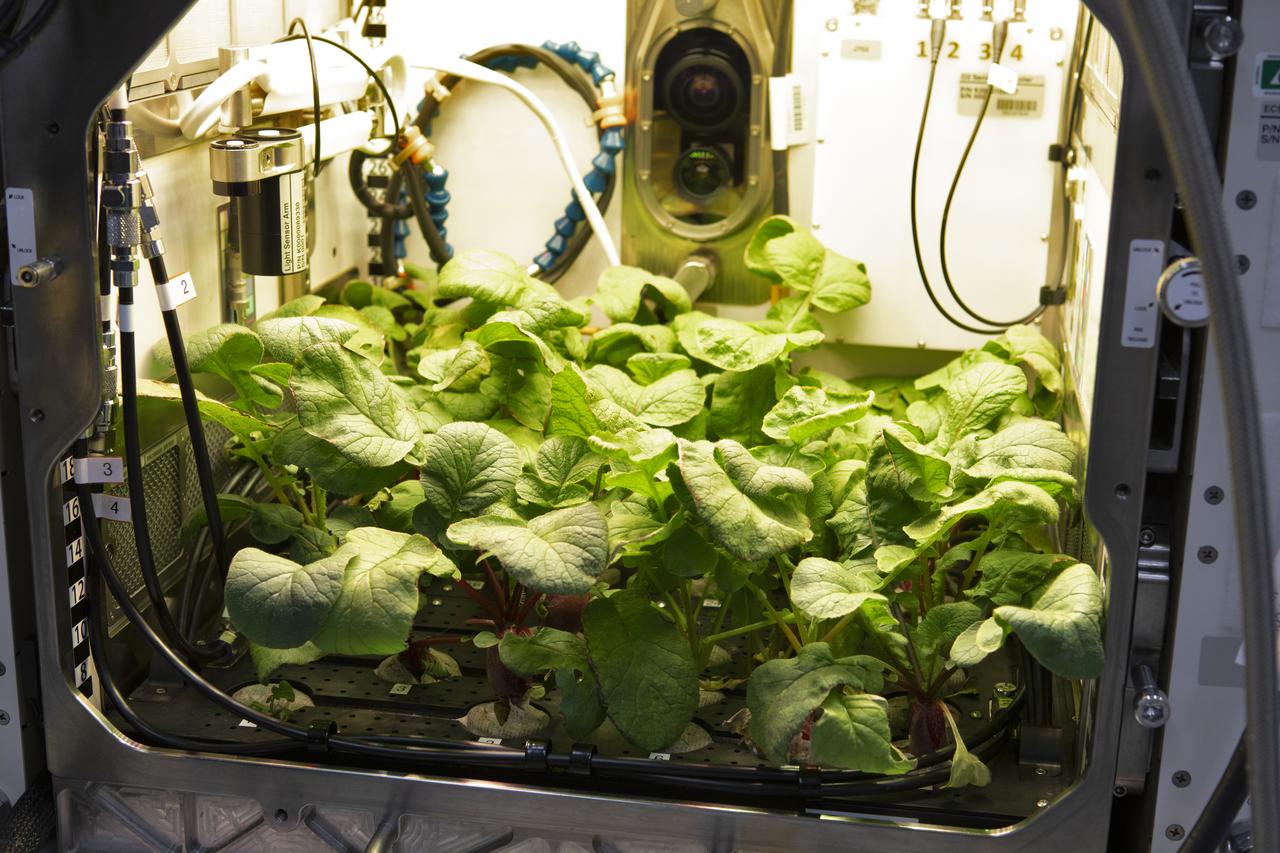
Radish plants are growing inside the Advanced Plant Habitat (APH) ground unit inside a laboratory in the Space Station Processing Facility at NASA's Kennedy Space Center in Florida on June 13, 2019. The plants are being grown as part of a science verification test for PH-02, a Space Life and Physical Sciences Research and Applications-funded experiment which seeks to determine the effects of spaceflight on radishes. The APH is a highly automated plant growth chamber with 180 sensors and is able to closely regulate variables related to plant growth.
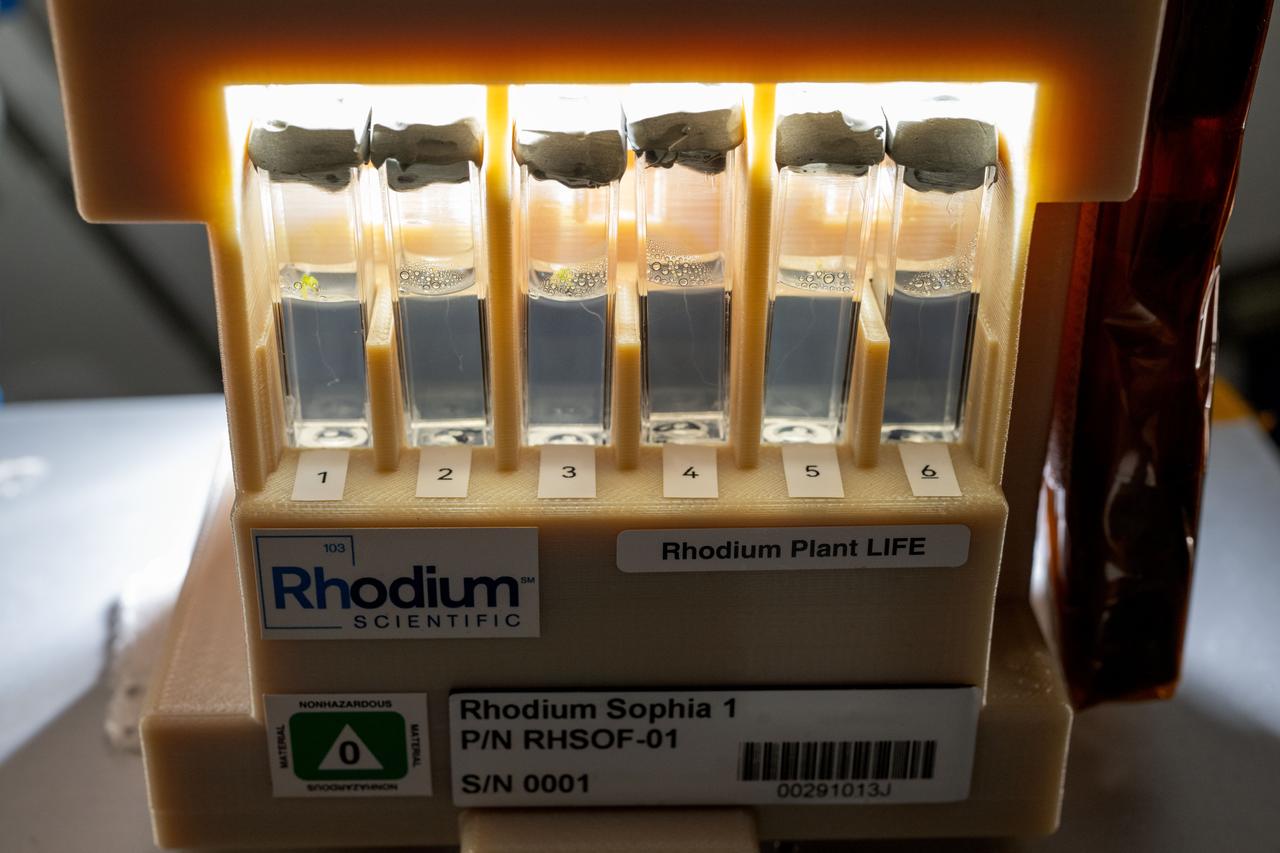
ISS072E034796 (10/10/2024) --- The LEO Integrated Flori-culture Experiment (LIFE) 01 (Rhodium Plant LIFE) hardware seen aboard the International Space Station. Rhodium Plant LIFE studies how radiation and gravitational forces at different orbital altitudes affect plant growth. Results could provide a better understanding of plant growth in space and reveal how changes in gene expression influence root development, contributing to improved production of plants in space and on Earth.
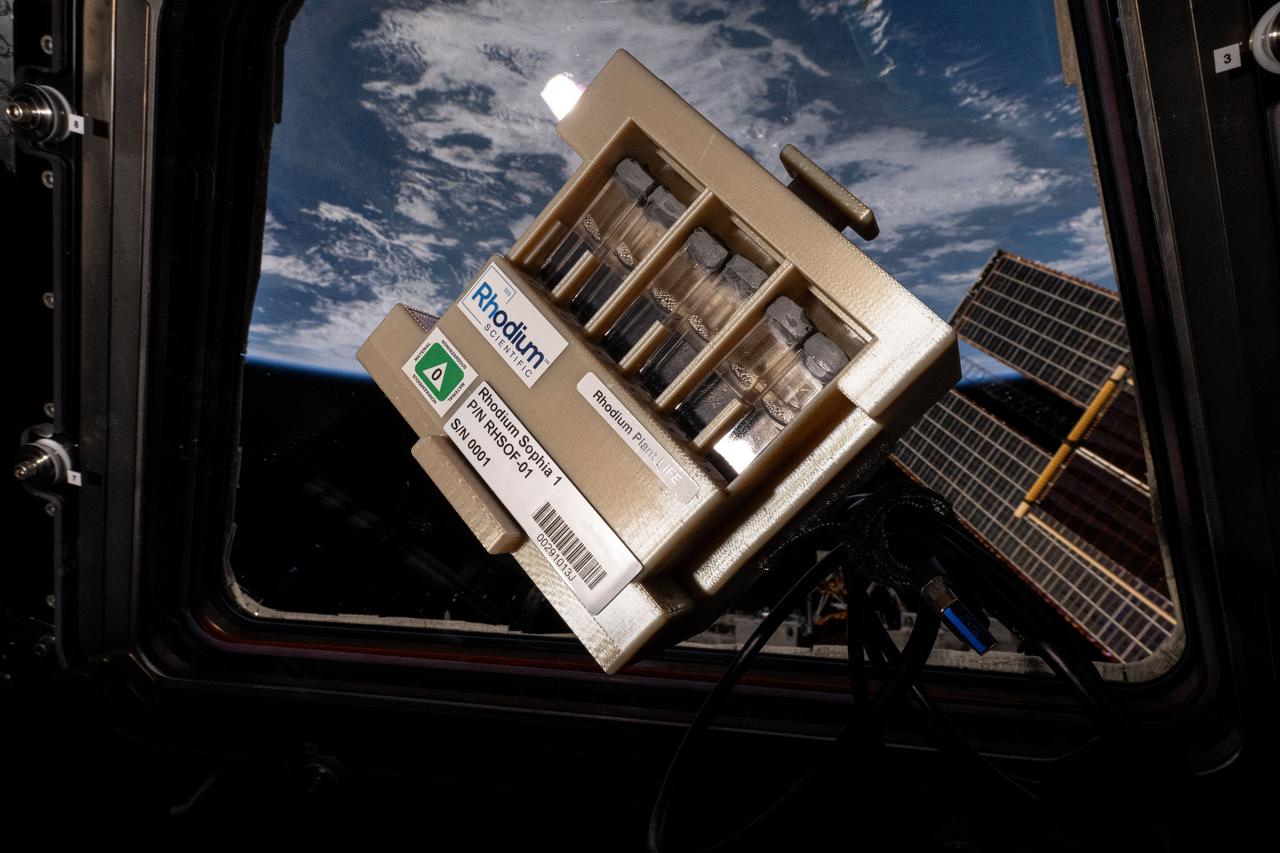
iss072e034773 (10/11/2024) --- The LEO Integrated Flori-culture Experiment (LIFE) 01 (Rhodium Plant LIFE) hardware seen aboard the International Space Station. Rhodium Plant LIFE studies how radiation and gravitational forces at different orbital altitudes affect plant growth. Results could provide a better understanding of plant growth in space and reveal how changes in gene expression influence root development, contributing to improved production of plants in space and on Earth.
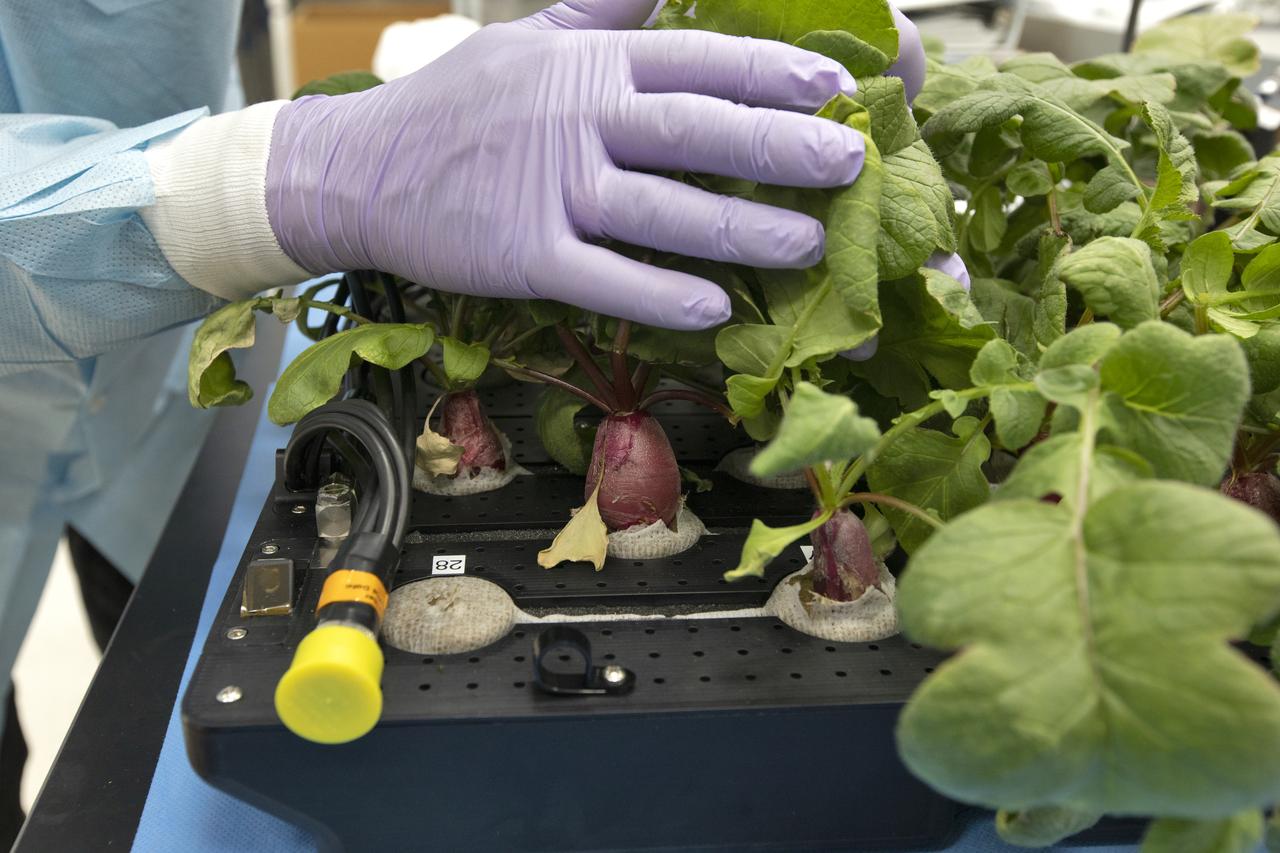
Radish plants are growing inside the Advanced Plant Habitat (APH) ground unit inside a laboratory in the Space Station Processing Facility at NASA's Kennedy Space Center in Florida on June 13, 2019. The plants are being grown as part of a science verification test for PH-02, a Space Life and Physical Sciences Research and Applications-funded experiment which seeks to determine the effects of spaceflight on radishes. The APH is a highly automated plant growth chamber with 180 sensors and is able to closely regulate variables related to plant growth.
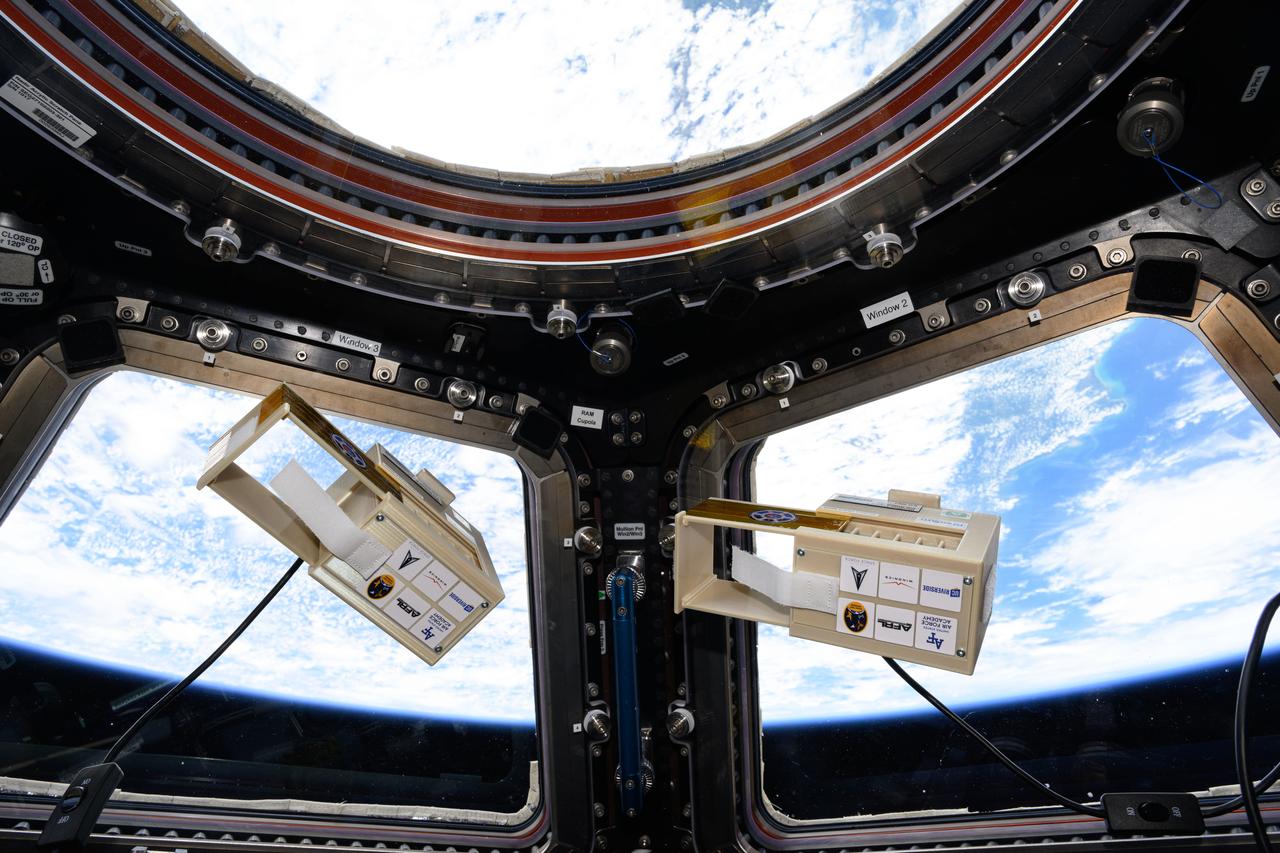
iss073e0076872 (5/21/2025) --- The LEO Integrated Flori-culture Experiment (LIFE) 01 (Rhodium Plant LIFE) hardware seen aboard the International Space Station. Rhodium Plant LIFE studies how radiation and gravitational forces at different orbital altitudes affect plant growth. Results could provide a better understanding of plant growth in space and reveal how changes in gene expression influence root development, contributing to improved production of plants in space and on Earth.
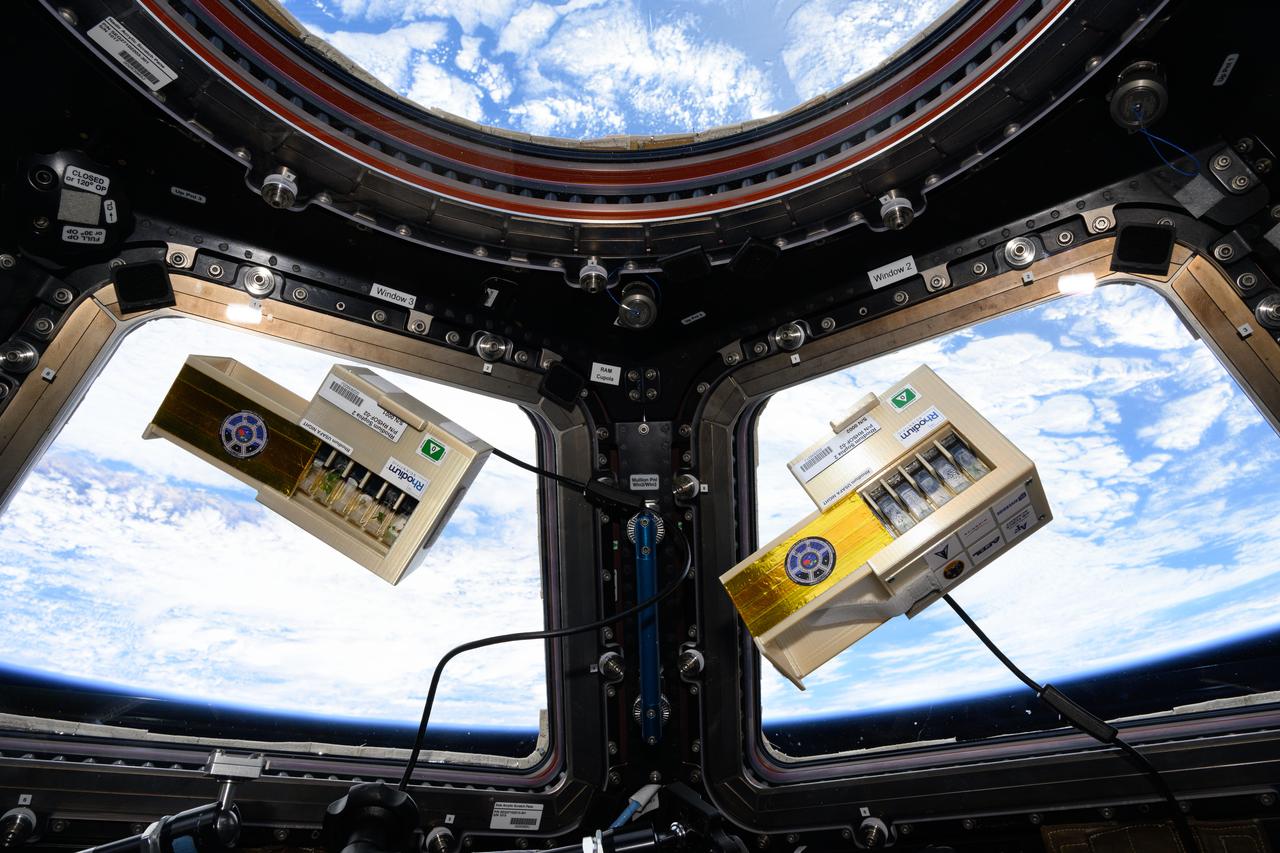
iss073e0076866 (5/21/2025) --- The LEO Integrated Flori-culture Experiment (LIFE) 01 (Rhodium Plant LIFE) hardware seen aboard the International Space Station. Rhodium Plant LIFE studies how radiation and gravitational forces at different orbital altitudes affect plant growth. Results could provide a better understanding of plant growth in space and reveal how changes in gene expression influence root development, contributing to improved production of plants in space and on Earth.
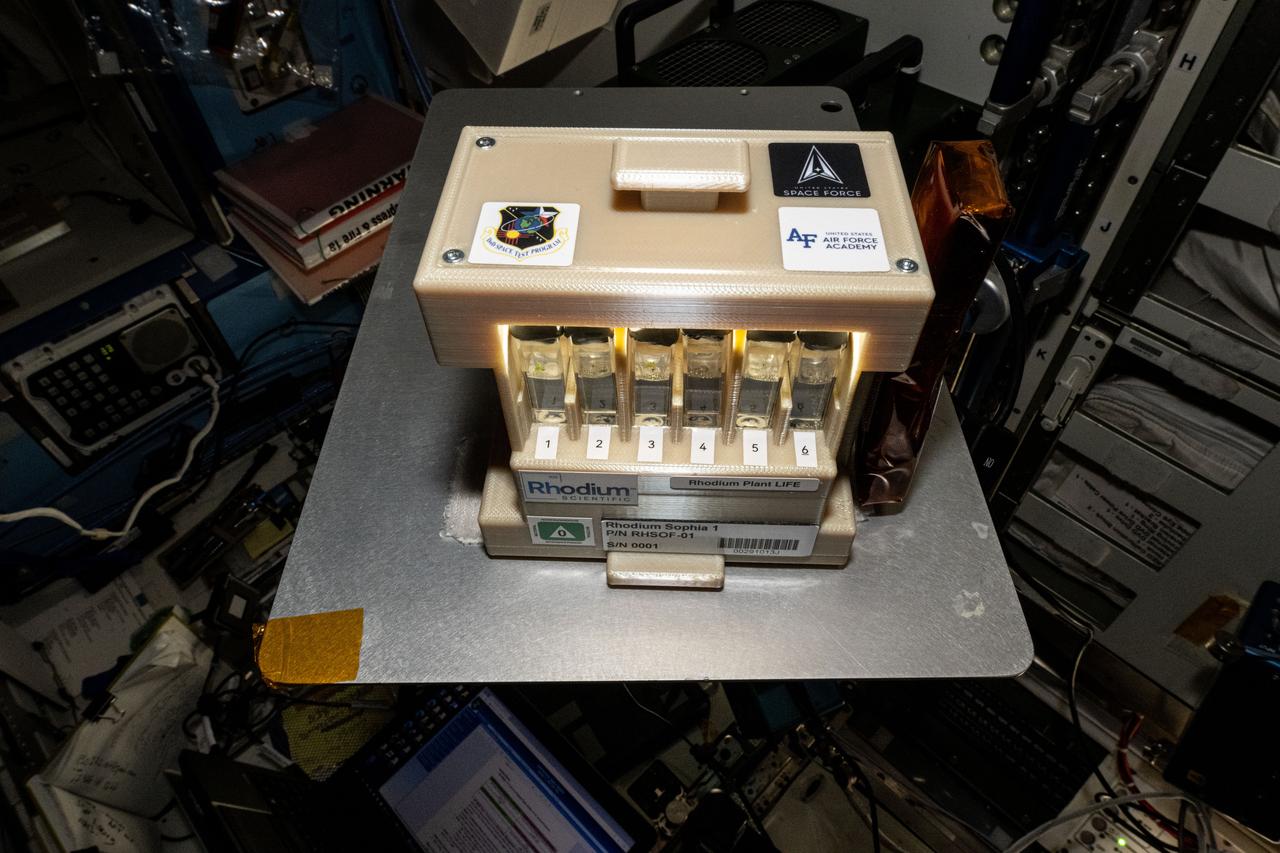
ISS072E034769 (10/11/2024) --- The LEO Integrated Flori-culture Experiment (LIFE) 01 (Rhodium Plant LIFE) hardware seen aboard the International Space Station. Rhodium Plant LIFE studies how radiation and gravitational forces at different orbital altitudes affect plant growth. Results could provide a better understanding of plant growth in space and reveal how changes in gene expression influence root development, contributing to improved production of plants in space and on Earth.

Radish plants are growing inside the Advanced Plant Habitat (APH) ground unit inside a laboratory in the Space Station Processing Facility at NASA's Kennedy Space Center in Florida on June 13, 2019. The plants are being grown as part of a science verification test for PH-02, a Space Life and Physical Sciences Research and Applications-funded experiment which seeks to determine the effects of spaceflight on radishes. The APH is a highly automated plant growth chamber with 180 sensors and is able to closely regulate variables related to plant growth.

A researcher from NASA’s Kennedy Space Center in Florida prepares pepper seeds for planting inside science carriers on April 8, 2021, inside the Space Life Sciences Lab for the Plant Habitat-04 (PH-04) experiment. The seeds will fly to the International Space Station on SpaceX’s 22nd Commercial Resupply Services (CRS-22) mission. When the experiment starts, astronauts will grow the pepper seeds in the Advanced Plant Habitat (APH) growth chamber, which will monitor the experiment with more than 180 sensors. The astronauts will observe plant growth for about four months and conduct two harvests to study whether microgravity affects growth, flavor, or texture. Since peppers take longer to germinate, grow, and develop than previous crops grown in space, the PH-04 experiment also will test the durability and reliability of the various systems within the APH.

A researcher from NASA’s Kennedy Space Center in Florida prepares pepper seeds for planting inside science carriers on April 8, 2021, inside the Space Life Sciences Lab for the Plant Habitat-04 (PH-04) experiment. The seeds will fly to the International Space Station on SpaceX’s 22nd Commercial Resupply Services (CRS-22) mission. When the experiment starts, astronauts will grow the pepper seeds in the Advanced Plant Habitat (APH) growth chamber, which will monitor the experiment with more than 180 sensors. The astronauts will observe plant growth for about four months and conduct two harvests to study whether microgravity affects growth, flavor, or texture. Since peppers take longer to germinate, grow, and develop than previous crops grown in space, the PH-04 experiment also will test the durability and reliability of the various systems within the APH.

Inside the Space Life Sciences Lab at NASA’s Kennedy Space Center in Florida, researchers plant pepper seeds in a science carrier on April 8, 2021, in preparation for the Plant Habitat-04 (PH-04) experiment. The seeds will fly to the International Space Station on SpaceX’s 22nd Commercial Resupply Services (CRS-22) mission. When the experiment starts, astronauts will grow the pepper seeds in the Advanced Plant Habitat (APH) growth chamber, which will monitor the experiment with more than 180 sensors. The astronauts will observe plant growth for about four months and conduct two harvests to study whether microgravity affects growth, flavor, or texture. Since peppers take longer to germinate, grow, and develop than previous crops grown in space, the PH-04 experiment also will test the durability and reliability of the various systems within the APH.

A researcher from NASA’s Kennedy Space Center in Florida prepares pepper seeds for planting inside science carriers on April 8, 2021, inside the Space Life Sciences Lab for the Plant Habitat-04 (PH-04) experiment. The seeds will fly to the International Space Station on SpaceX’s 22nd Commercial Resupply Services (CRS-22) mission. When the experiment starts, astronauts will grow the pepper seeds in the Advanced Plant Habitat (APH) growth chamber, which will monitor the experiment with more than 180 sensors. The astronauts will observe plant growth for about four months and conduct two harvests to study whether microgravity affects growth, flavor, or texture. Since peppers take longer to germinate, grow, and develop than previous crops grown in space, the PH-04 experiment also will test the durability and reliability of the various systems within the APH.

A close-up photo of a pepper seed prepared by researchers at NASA’s Kennedy Space Center in Florida is shown before it’s planted inside a science carrier on April 8, 2021, inside the Space Life Sciences Lab for the Plant Habitat-04 (PH-04) experiment. The seeds will fly to the International Space Station on SpaceX’s 22nd Commercial Resupply Services (CRS-22) mission. When the experiment starts, astronauts will grow the pepper seeds in the Advanced Plant Habitat (APH) growth chamber, which will monitor the experiment with more than 180 sensors. The astronauts will observe plant growth for about four months and conduct two harvests to study whether microgravity affects growth, flavor, or texture. Since peppers take longer to germinate, grow, and develop than previous crops grown in space, the PH-04 experiment also will test the durability and reliability of the various systems within the APH.

Inside the Space Life Sciences Lab at NASA’s Kennedy Space Center in Florida, a researcher plants pepper seeds in science carriers on April 8, 2021, in preparation for the Plant Habitat-04 (PH-04) experiment. The seeds will fly to the International Space Station on SpaceX’s 22nd Commercial Resupply Services (CRS-22) mission. When the experiment starts, astronauts will grow the pepper seeds in the Advanced Plant Habitat (APH) growth chamber, which will monitor the experiment with more than 180 sensors. The astronauts will observe plant growth for about four months and conduct two harvests to study whether microgravity affects growth, flavor, or texture. Since peppers take longer to germinate, grow, and develop than previous crops grown in space, the PH-04 experiment also will test the durability and reliability of the various systems within the APH.
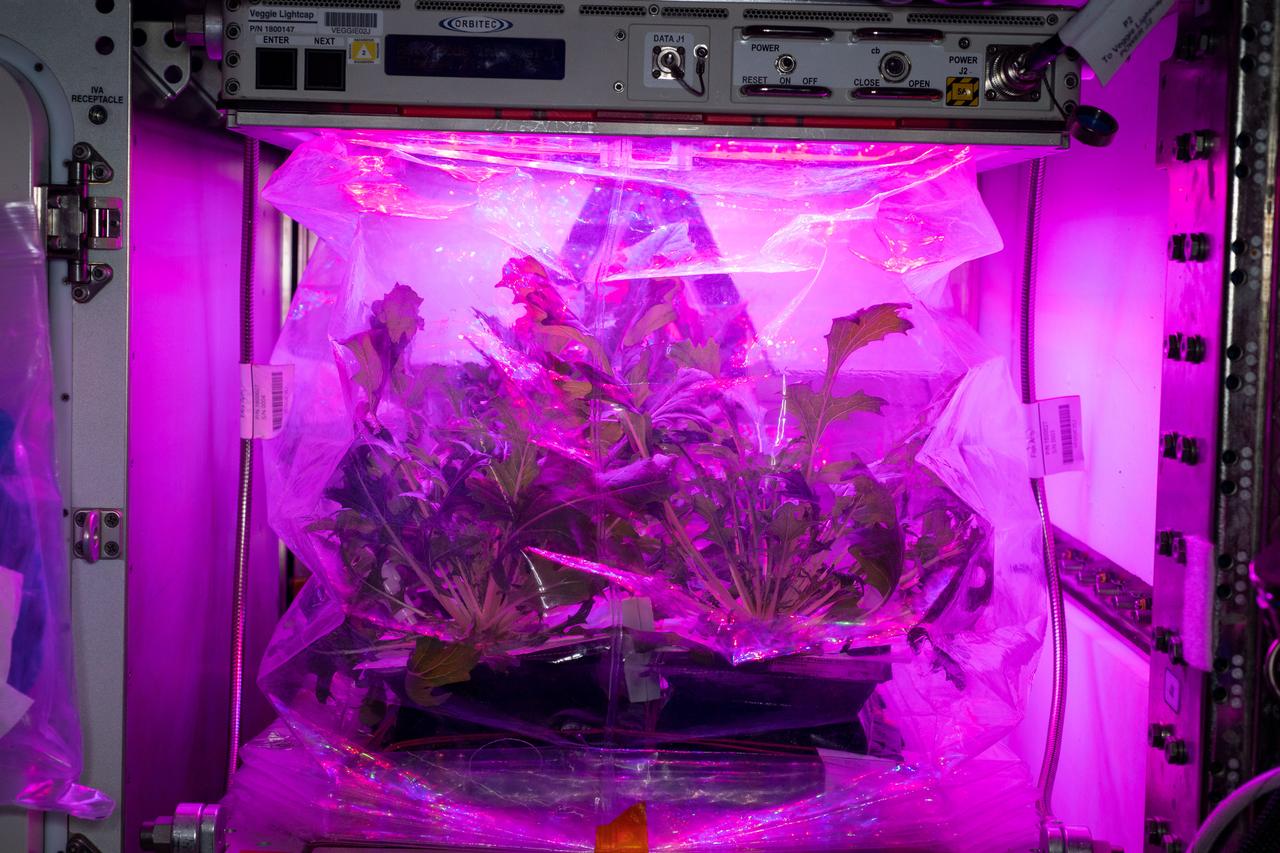
Mizuna Mustard mustard greens, part of the Veg-04A experiment, are shown growing in a Veggie plant growth chamber aboard the International Space Station on July 9, 2019. The Veg-04A experiment tested the greens, grown in blue-rich lighting and red-rich lighting, to determine the effects of different light ratios on plants grown in space on the station. The plants arrived aboard the SpaceX Commercial Resupply Services-16 mission. Astronaut Christina Koch initiated the on-orbit experiment on June 4, 2019, in the station’s two Veggie plant growth chambers, with six plant pillows per chamber. On June 11, 2019, Koch thinned the Mizuna plants to one plant per pillow. The on-orbit harvest took place July 9, 2019, with astronaut Nick Hague harvesting the plants grown under blue-rich light and Koch harvesting the plants grown under red-rich lights.
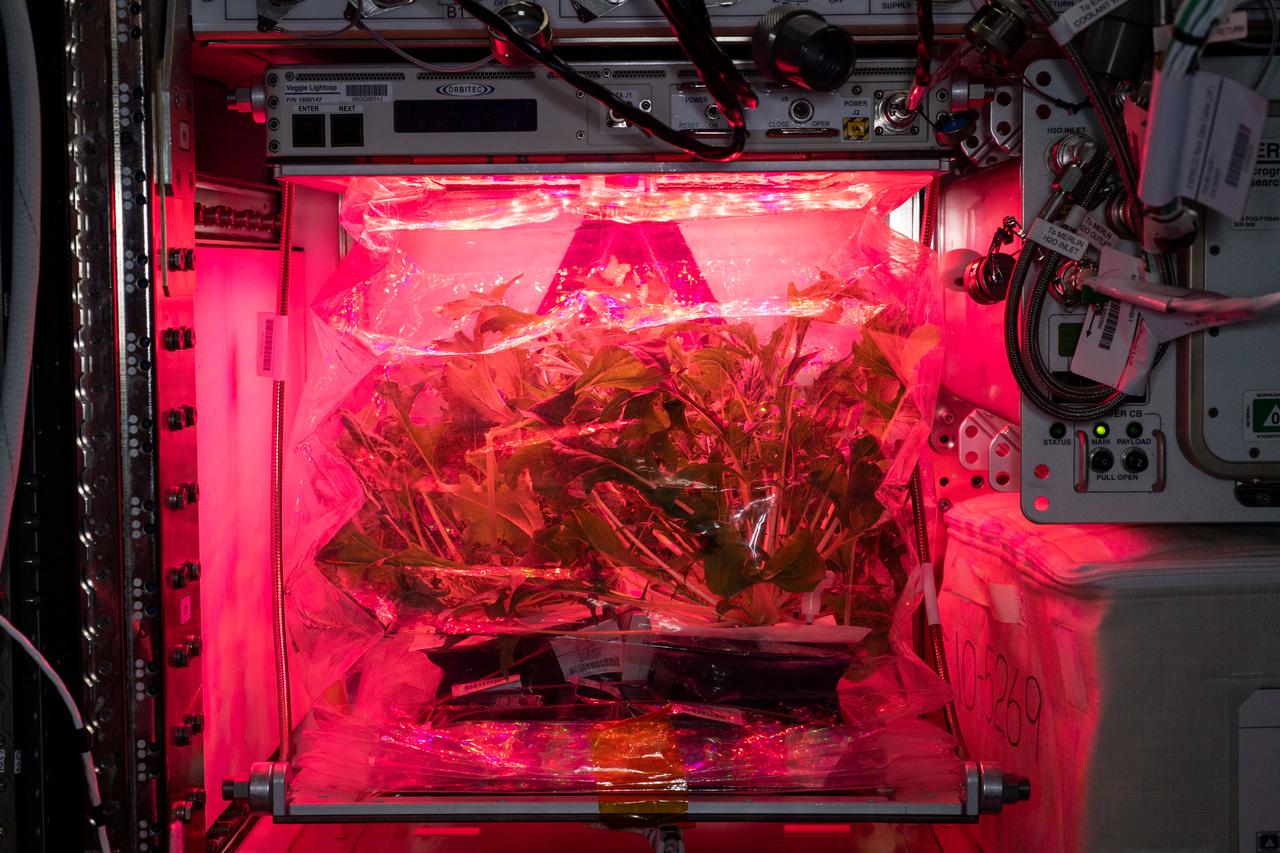
Mizuna Mustard mustard greens, part of the Veg-04A experiment, are shown growing in a Veggie plant growth chamber aboard the International Space Station on July 9, 2019. The Veg-04A experiment tested the greens, grown in blue-rich lighting and red-rich lighting, to determine the effects of different light ratios on plants grown in space on the station. The plants arrived aboard the SpaceX Commercial Resupply Services-16 mission. Astronaut Christina Koch initiated the on-orbit experiment on June 4, 2019, in the station’s two Veggie plant growth chambers, with six plant pillows per chamber. On June 11, 2019, Koch thinned the Mizuna plants to one plant per pillow. The on-orbit harvest took place July 9, 2019, with astronaut Nick Hague harvesting the plants grown under blue-rich light and Koch harvesting the plants grown under red-rich lights.
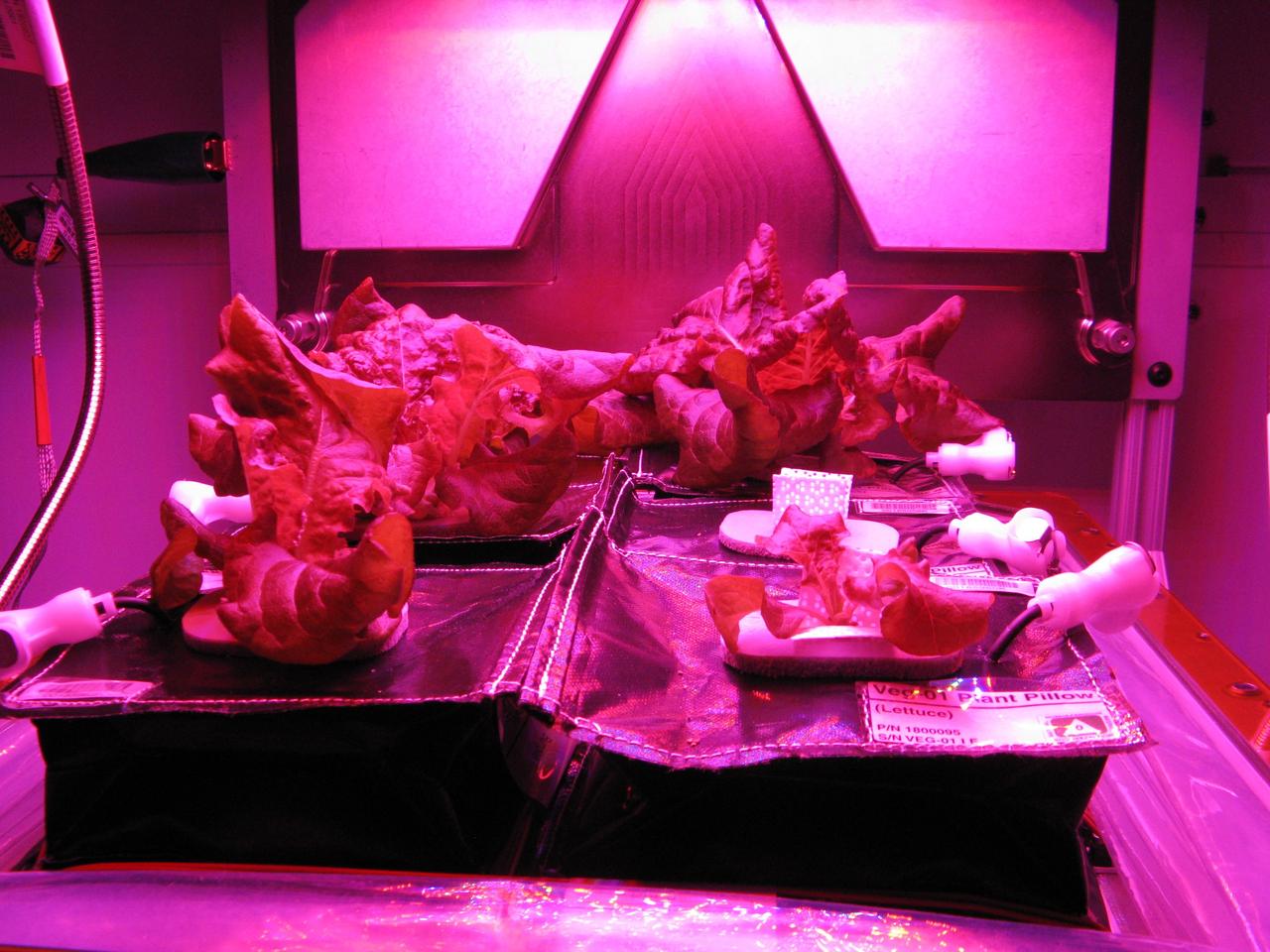
CAPE CANAVERAL, Fla. -- Researchers document the growth of the ground control plants in the Veggie plant growth system inside a control chamber at the Space Station Processing Facility at NASA's Kennedy Space Center in Florida prior to thinning them to one plant each. The growth chamber is being used as a control unit and procedures are being followed identical to those being performed on Veggie and the Veg-01 experiment on the International Space Station. Veggie and Veg-01 were delivered to the space station aboard the SpaceX-3 mission. Veggie is the first fresh food production system delivered to the station. Six plant pillows, each containing outredgeous red romaine lettuce seeds and a root mat were inserted into Veggie. The plant chamber's red, blue and green LED lights were activated. The plant growth was monitored for 28 days. At the end of the cycle, the plants will be carefully harvested, frozen and stored for return to Earth. Photo credit: NASA/Charles Spern

ISS040-E-009116 (10 June 2014) --- In the International Space Station?s Harmony node, NASA astronaut Steve Swanson, Expedition 40 commander, harvests a crop of red romaine lettuce plants that were grown from seed inside the station?s Veggie facility, a low-cost plant growth chamber that uses a flat-panel light bank for plant growth and crew observation. For the Veg-01 experiment, researchers are testing and validating the Veggie hardware, and the plants will be returned to Earth to determine food safety.
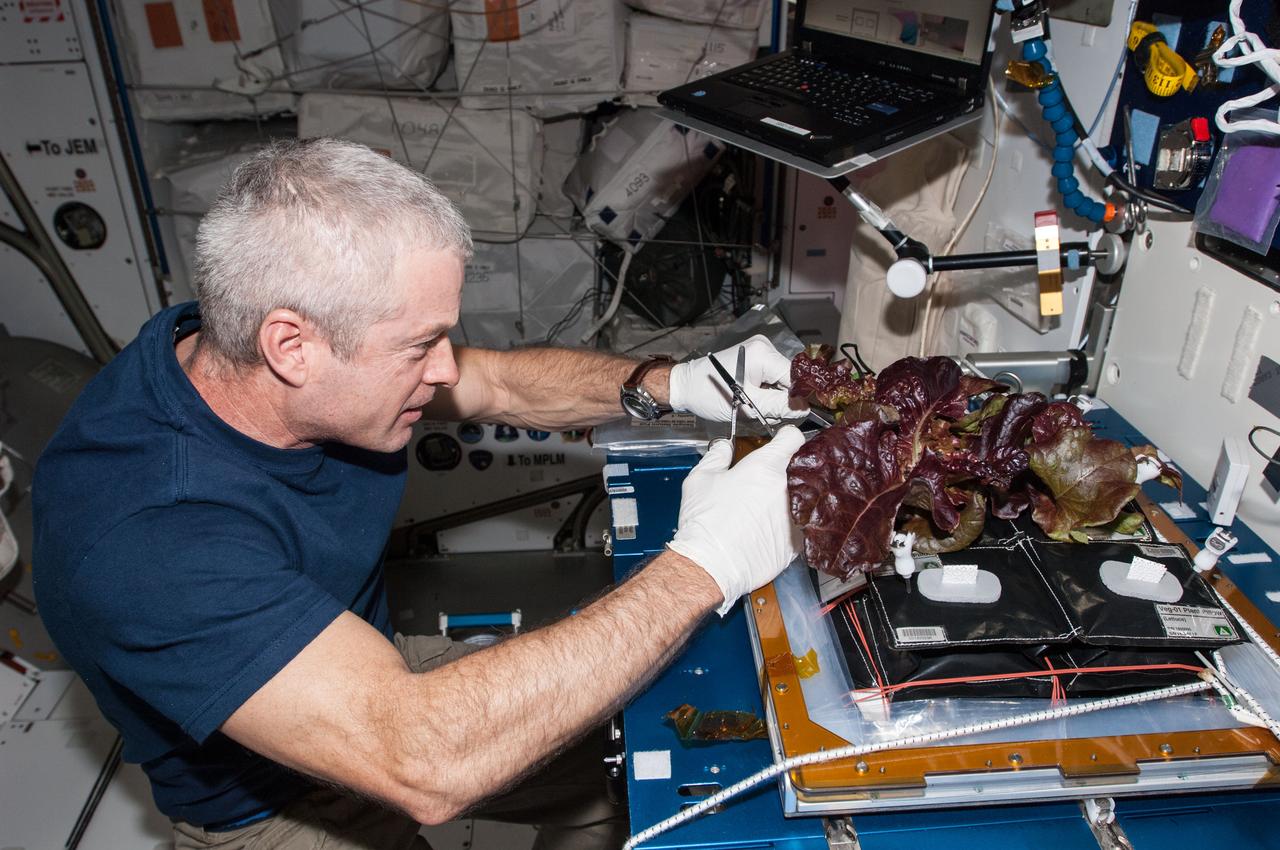
ISS040-E-009125 (10 June 2014) --- In the International Space Station?s Harmony node, NASA astronaut Steve Swanson, Expedition 40 commander, harvests a crop of red romaine lettuce plants that were grown from seed inside the station?s Veggie facility, a low-cost plant growth chamber that uses a flat-panel light bank for plant growth and crew observation. For the Veg-01 experiment, researchers are testing and validating the Veggie hardware, and the plants will be returned to Earth to determine food safety.
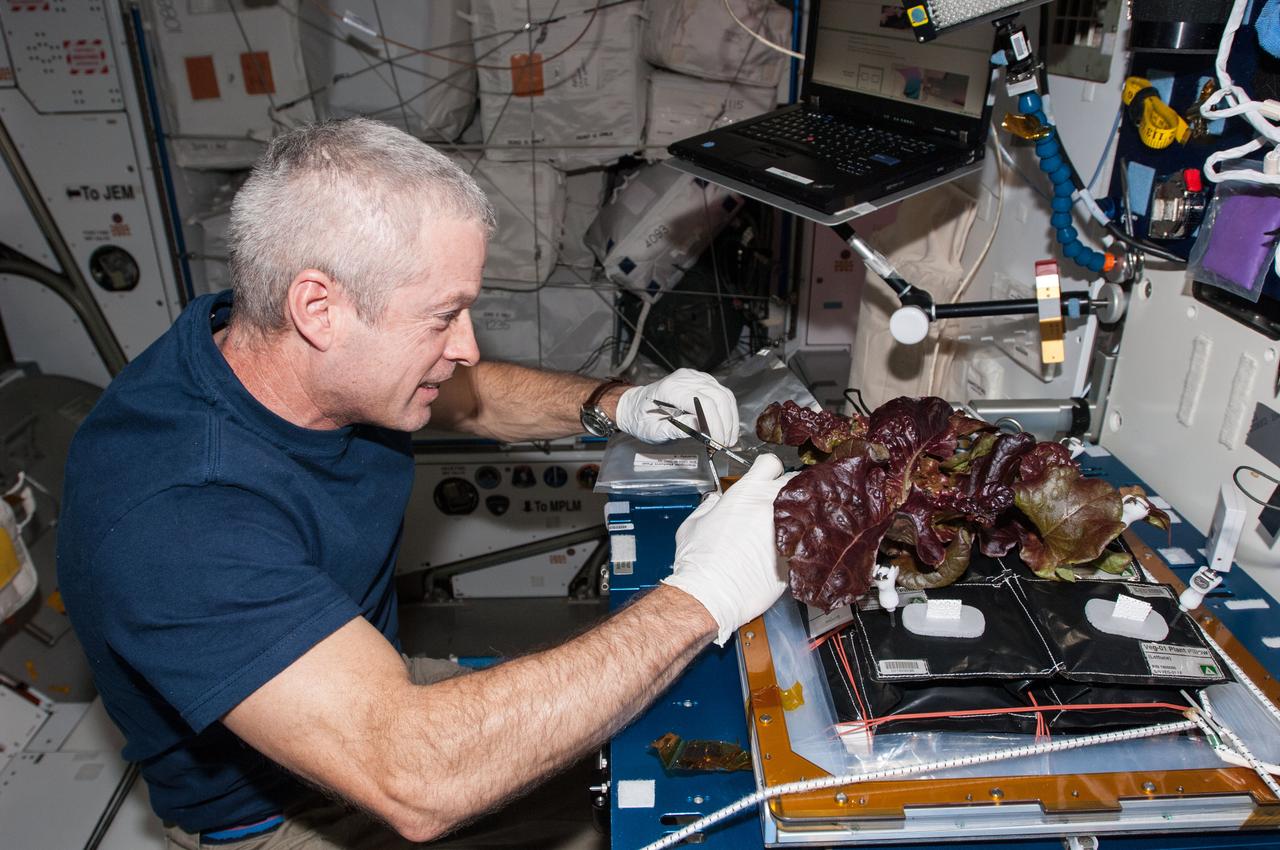
ISS040-E-009124 (10 June 2014) --- In the International Space Station?s Harmony node, NASA astronaut Steve Swanson, Expedition 40 commander, harvests a crop of red romaine lettuce plants that were grown from seed inside the station?s Veggie facility, a low-cost plant growth chamber that uses a flat-panel light bank for plant growth and crew observation. For the Veg-01 experiment, researchers are testing and validating the Veggie hardware, and the plants will be returned to Earth to determine food safety.
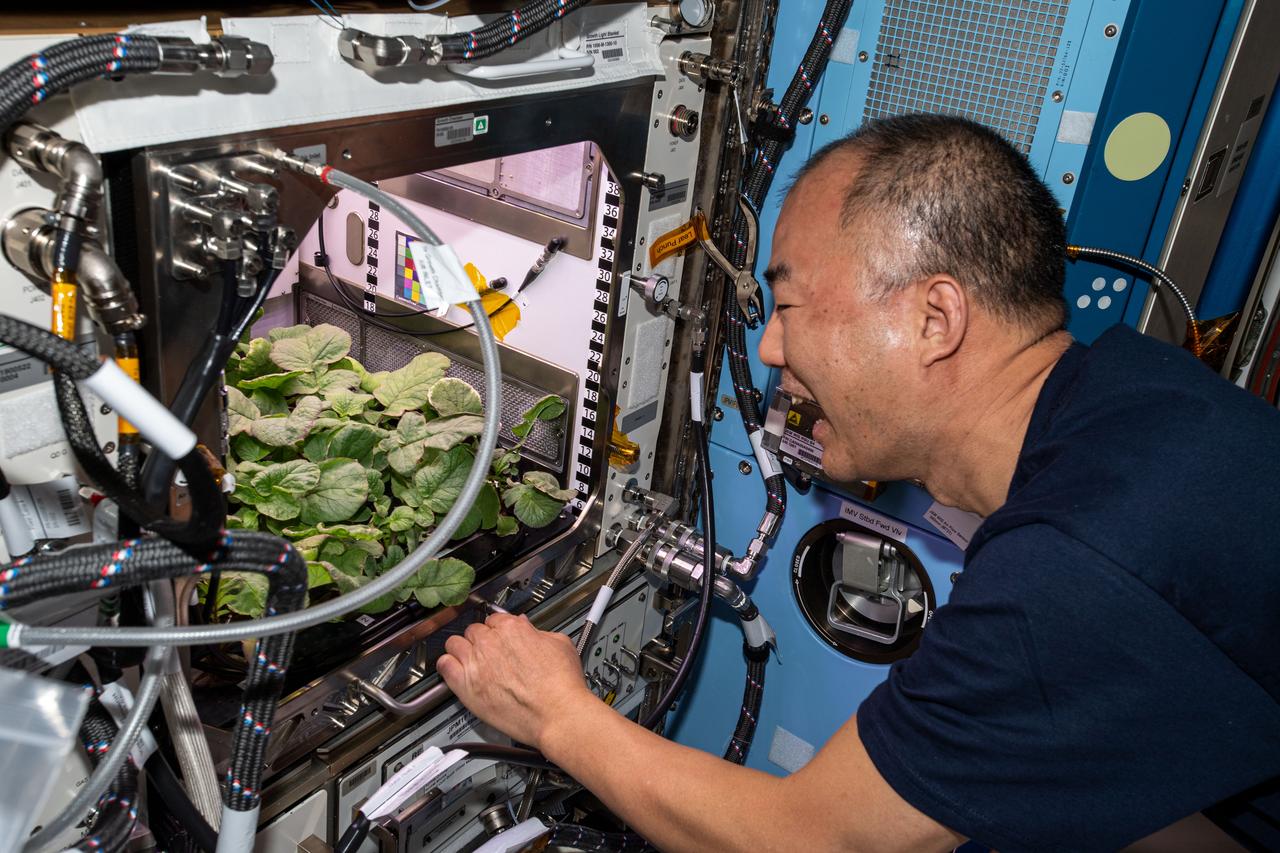
iss064e006454 (Nov. 27, 2020) --- JAXA (Japan Aerospace Exploration Astronaut) astronaut and Expedition 64 Flight Engineer Soichi Noguchi checks out radish plants growing for the Plant Habitat-02 experiment that seeks to optimize plant growth in the unique environment of space and evaluate nutrition and taste of the plants.
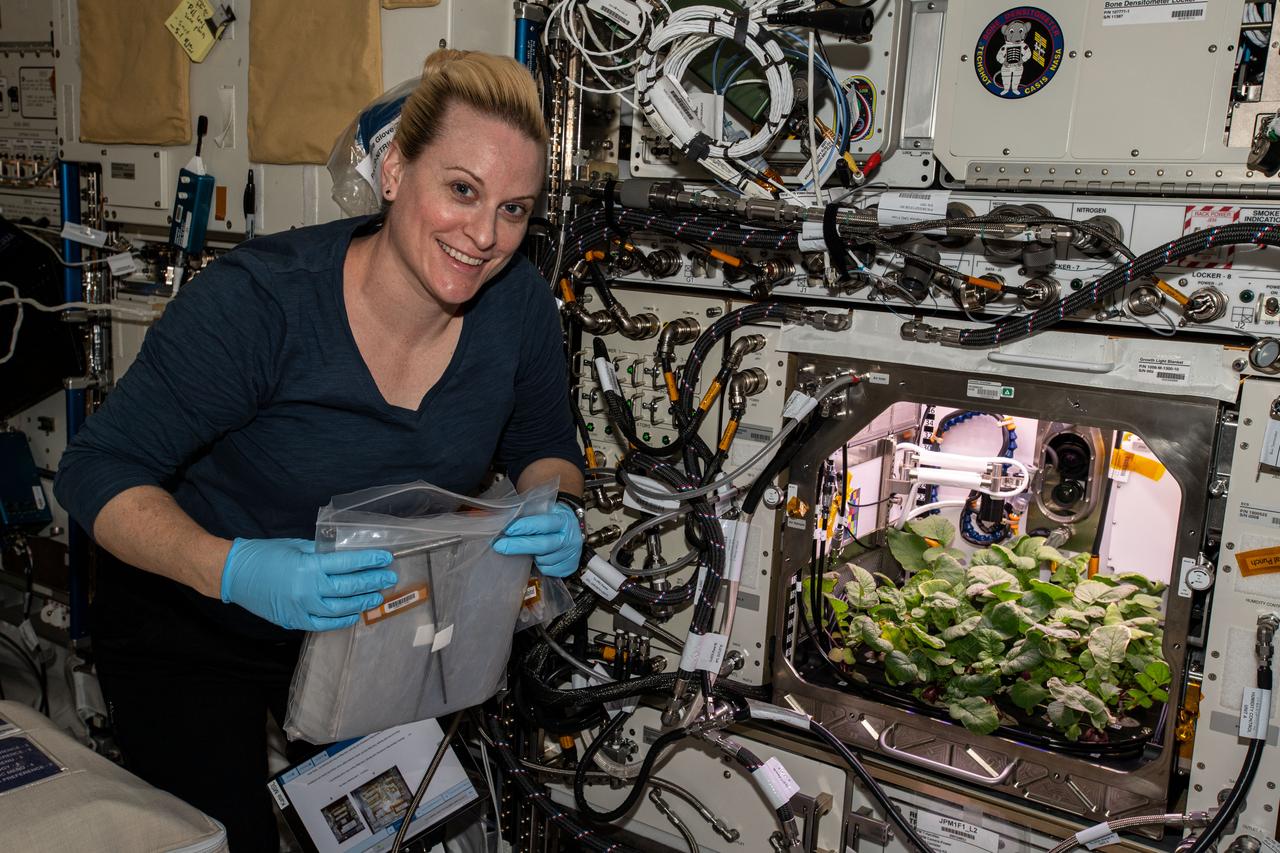
iss064e006452 (Nov. 27, 2020) --- NASA astronaut and Expedition 64 Flight Engineer Kate Rubins checks out radish plants growing for the Plant Habitat-02 experiment that seeks to optimize plant growth in the unique environment of space and evaluate nutrition and taste of the plants.
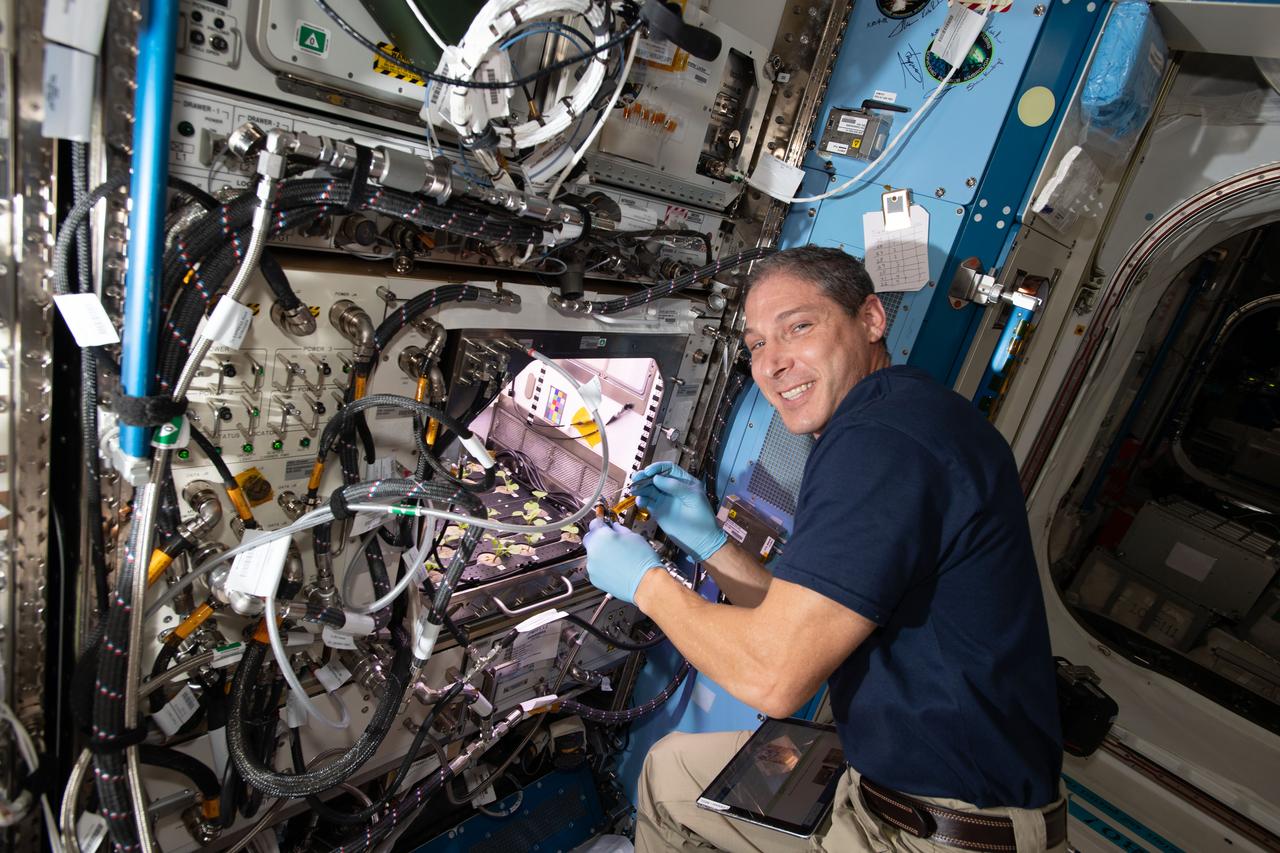
iss064e011997 (Dec. 13, 2020) --- NASA astronaut and Expedition 64 Flight Engineer Michael Hopkins checks on radish plants growing for the Plant Habitat-02 experiment that seeks to optimize plant growth in the unique environment of space and evaluate nutrition and taste of the plants.
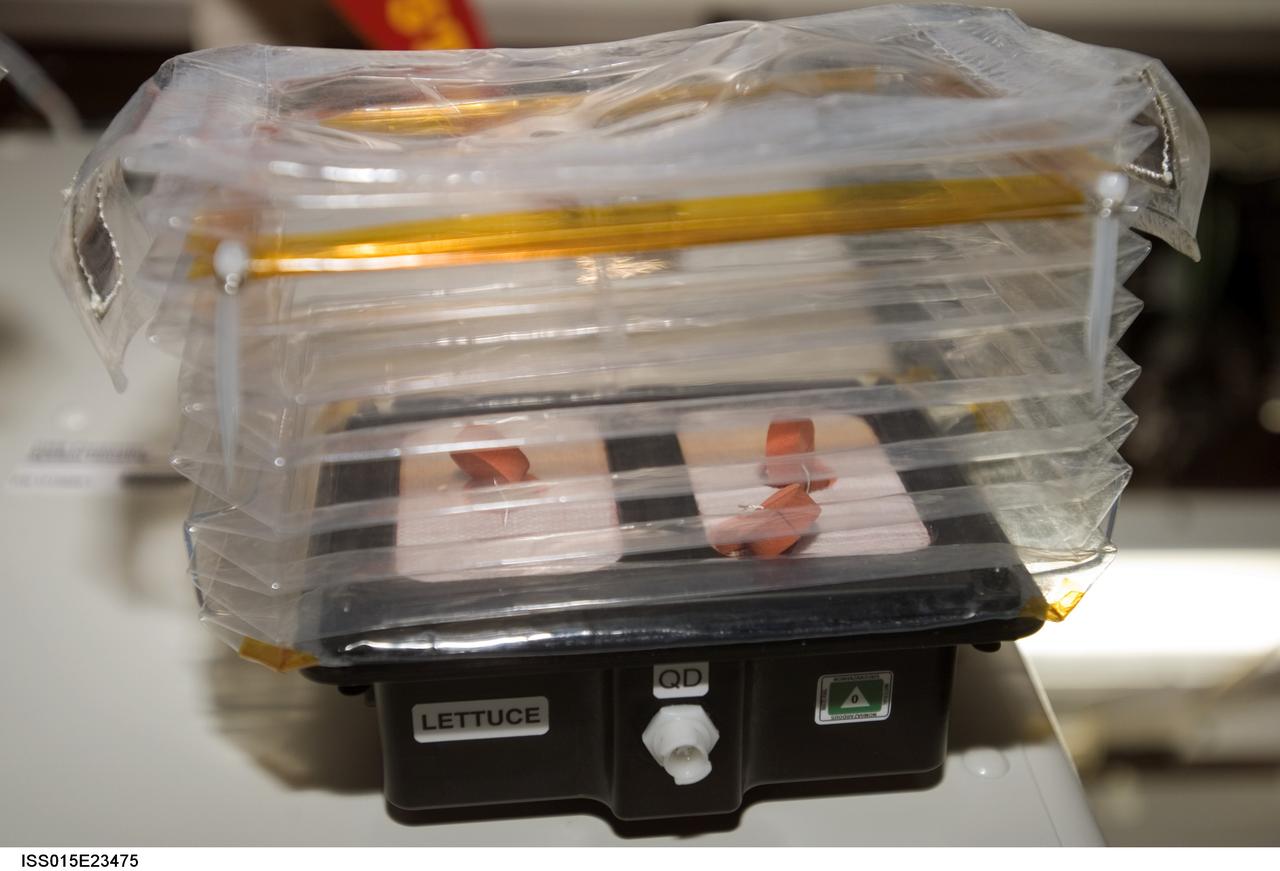
ISS015-E-23475 (20 Aug. 2007) --- Close-up view of a plant growth experiment in an Education Payload Operations experiment collapsible growth chamber (labeled "Lettuce") photographed in the U.S. Laboratory or Destiny module aboard the International Space Station during Expedition 15.
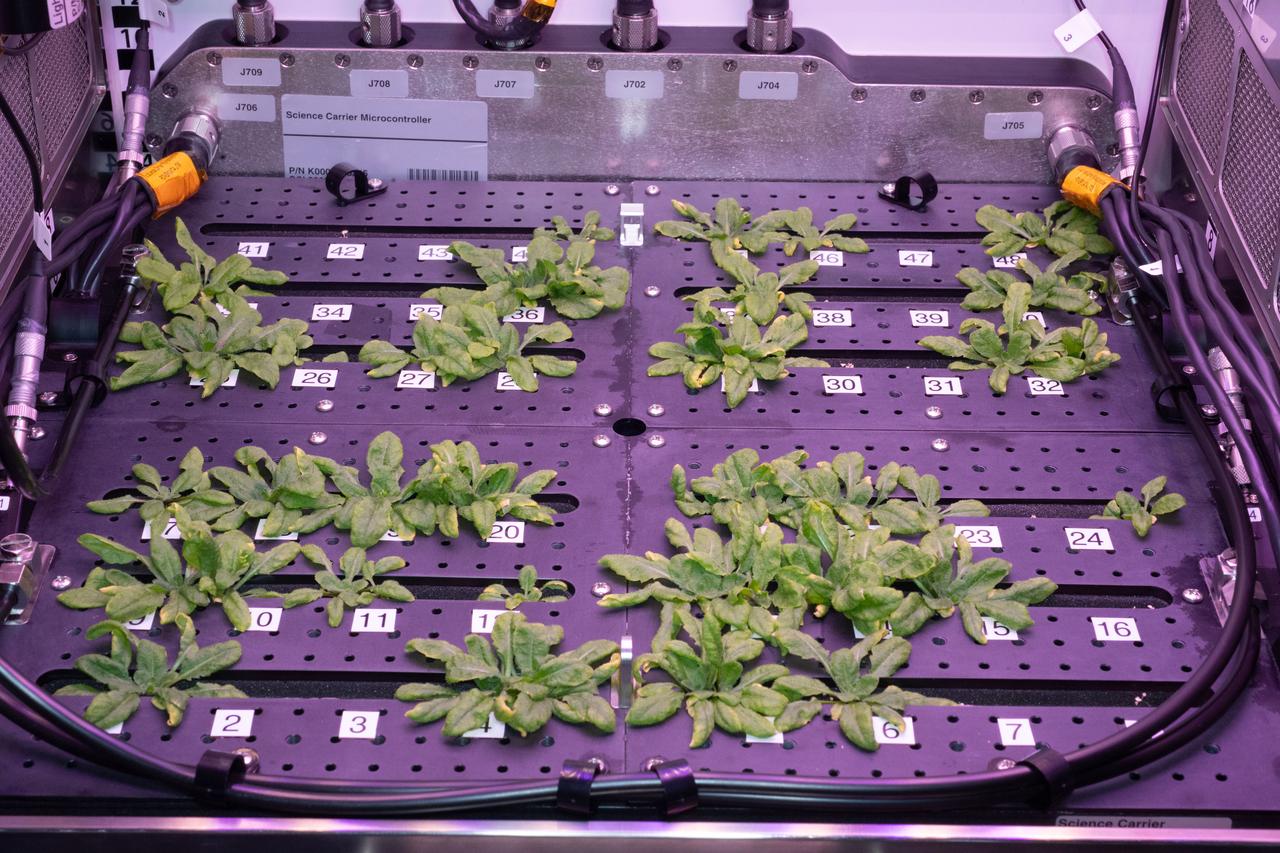
iss056e094286 (July 9, 2018) --- Arabidopsis plants are pictured inside the Plant Habitat experiment's Growth Chamber located in the Columbus laboratory module's EXPRESS Rack 5. The plants were harvested for the Plant Habitat experiment which is researching differences in genetics, metabolism, photosynthesis, and gravity sensing between plants grown in space and on Earth. Results may help crews on future missions successfully grow plants for food and oxygen generation.
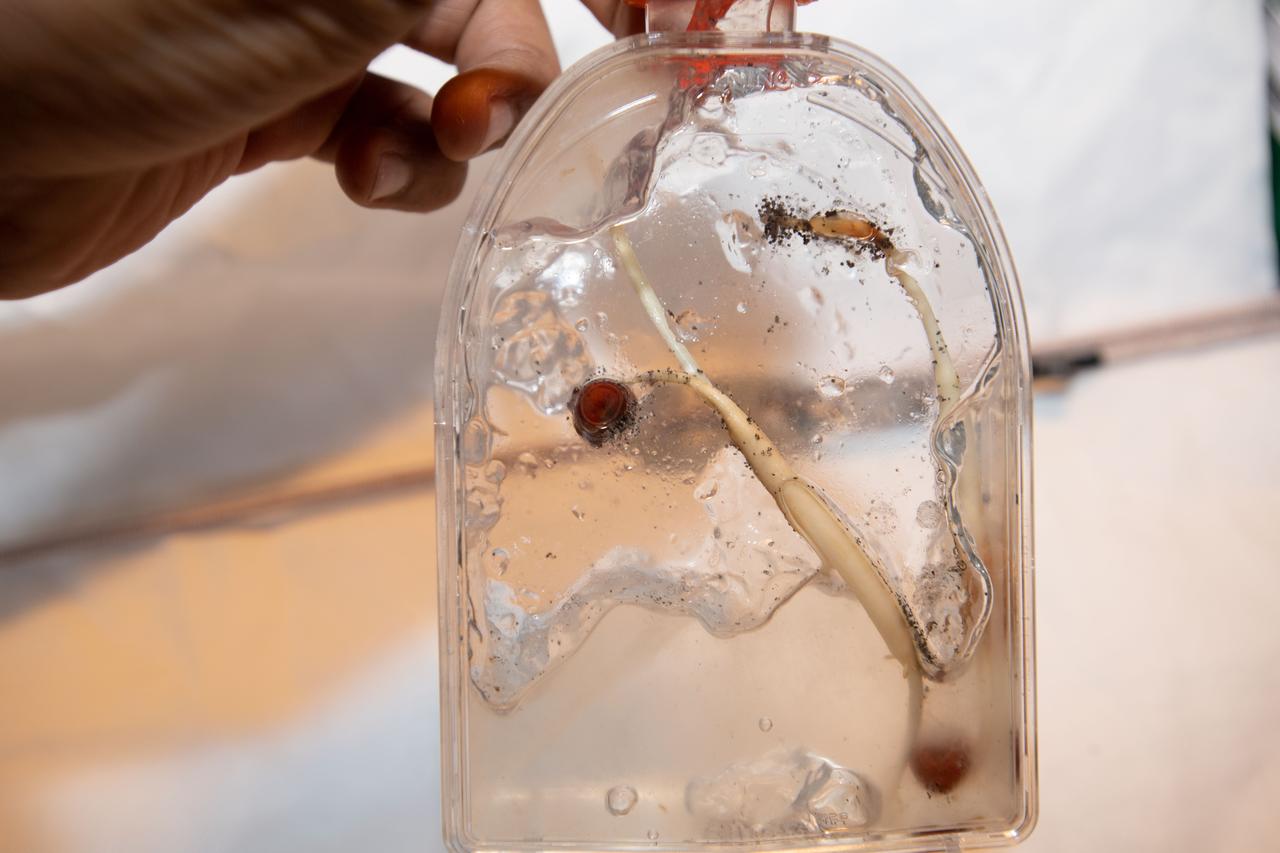
iss060e081486 (9/28/2019) --- A view of the United Arab Emirates (UAE) Palm Tree Growth Experiment (Palm Tree Growth) investigation which examines germination of palm tree seeds in order to determine the best conditions for generating tissue samples for research. A process for growing healthy plant tissue in microgravity could be adapted for testing other indigenous plants of scientific, commercial or educational interest in the UAE. The investigation also observes and documents root growth in microgravity for educational purposes.
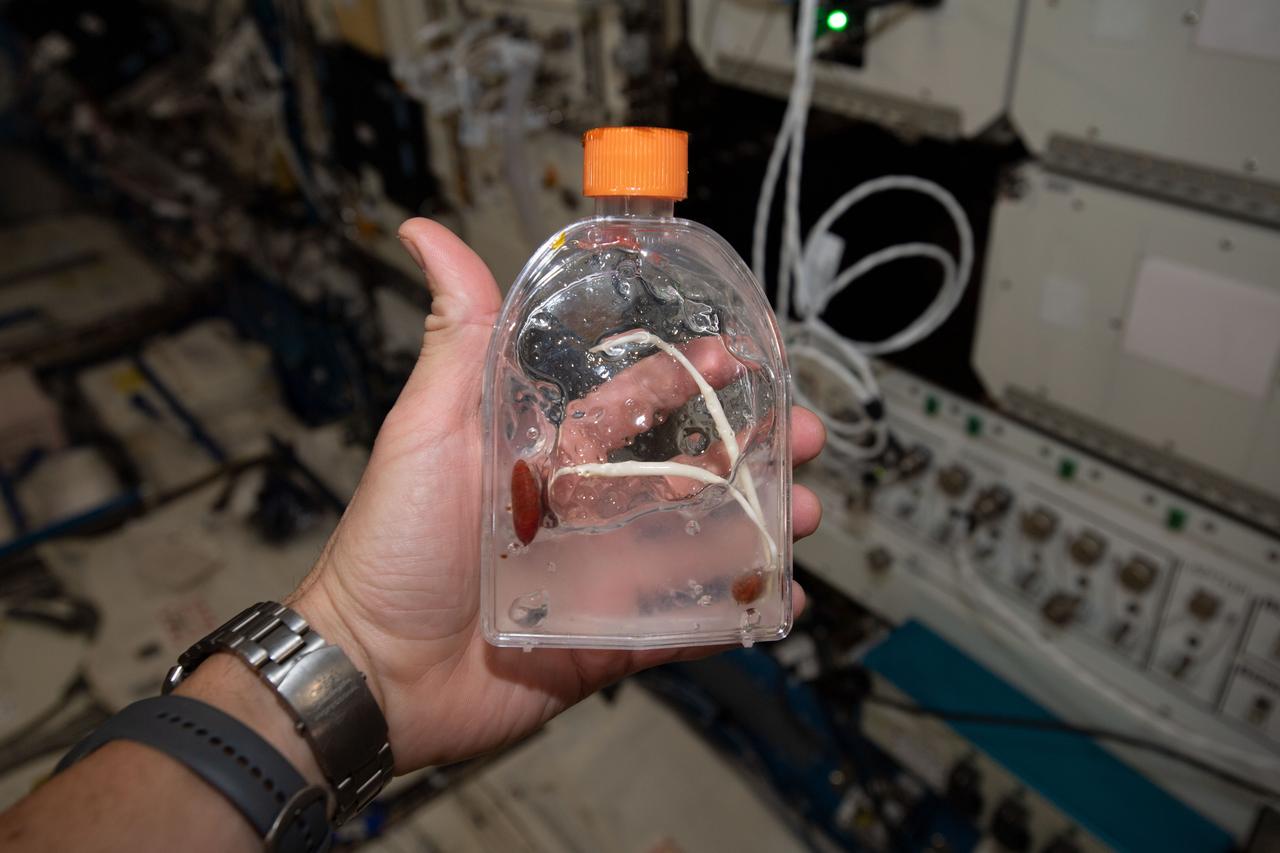
iss060e015472 --- (7/29/2019) Photo documentation aboard the International space Station (ISS) of the The United Arab Emirates (UAE) Palm Tree Growth Experiment (Palm Tree Growth). The investigation examines germination of palm tree seeds in order to determine the best conditions for generating tissue samples for research. A process for growing healthy plant tissue in microgravity could be adapted for testing other indigenous plants of scientific, commercial or educational interest in the UAE. The investigation also observes and documents root growth in microgravity for educational purposes.
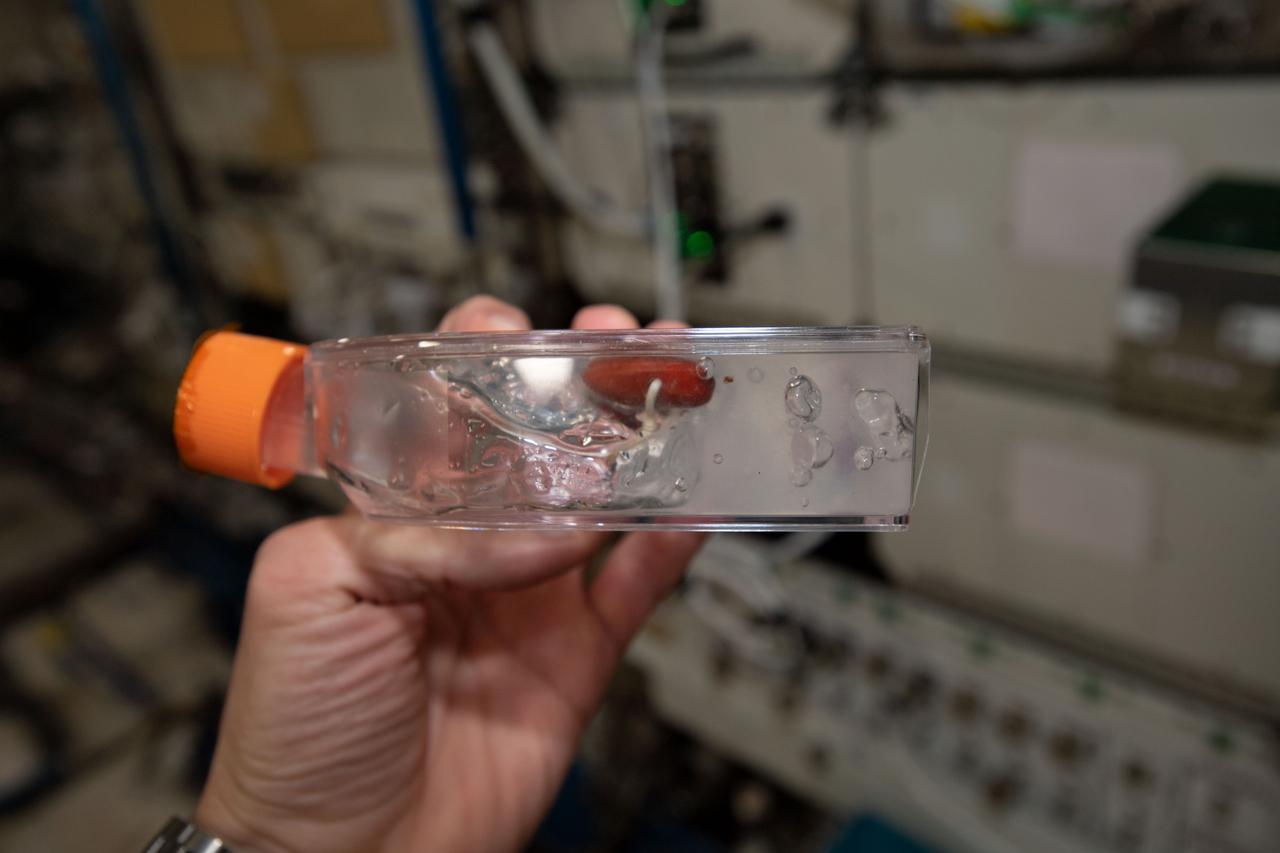
iss060e015476 --- (7/29/2019) Photo documentation aboard the International space Station (ISS) of the The United Arab Emirates (UAE) Palm Tree Growth Experiment (Palm Tree Growth). The investigation examines germination of palm tree seeds in order to determine the best conditions for generating tissue samples for research. A process for growing healthy plant tissue in microgravity could be adapted for testing other indigenous plants of scientific, commercial or educational interest in the UAE. The investigation also observes and documents root growth in microgravity for educational purposes.

ISS020-E-014558 (22 June 2009) --- Cosmonaut Gennady Padalka, Expedition 20 commander, works with plants growing in the Lada greenhouse as a part of the Russian BIO-5 Rasteniya-2/Lada-2 (Plants-2) plant growth experiment located in the Zvezda Service Module of the International Space Station.
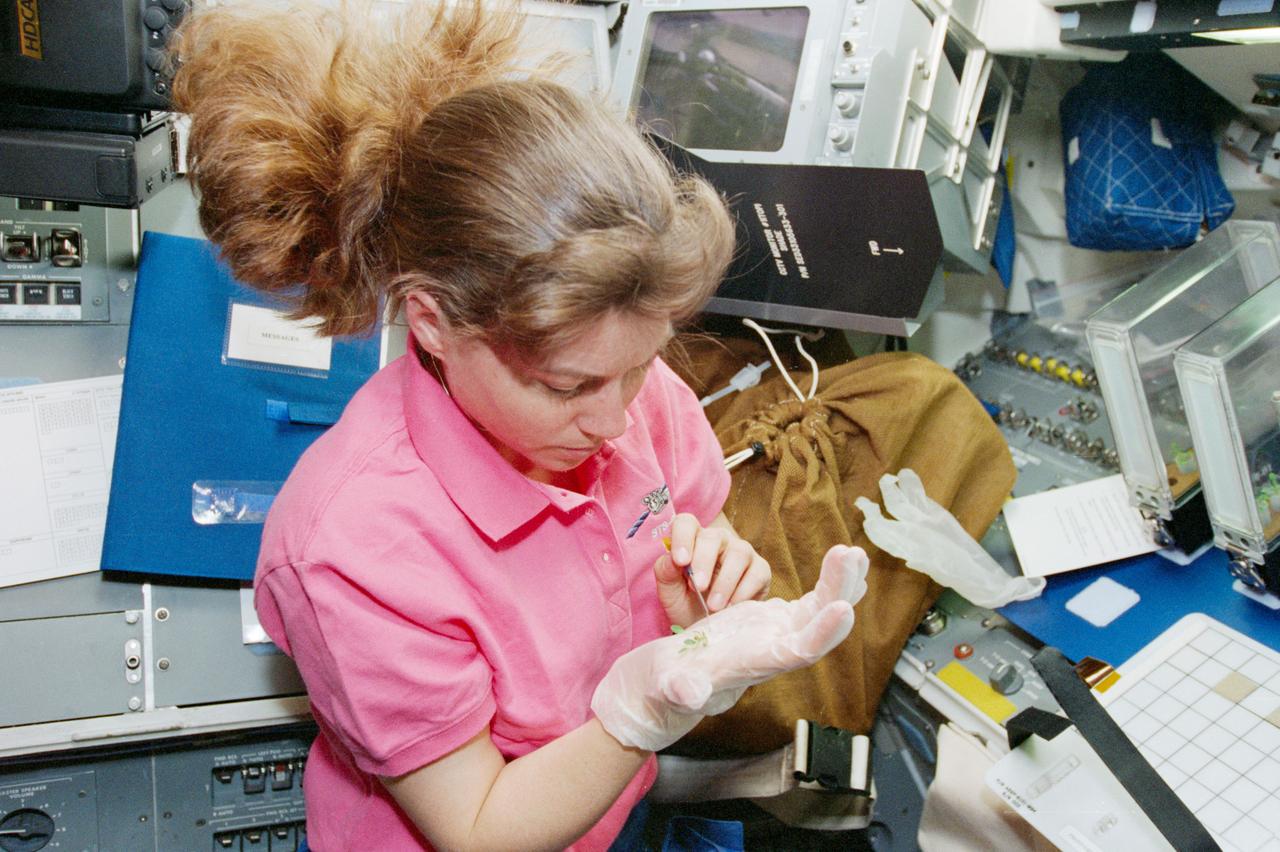
STS093-319-003 (23-27 July 1999) --- Astronaut Catherine G. (Cady) Coleman, mission specialist, handles a tiny mouse ear plant on Columbia's flight deck. The plant experiment is part of the Plant Growth Investigations in Microgravity (PGIM).

ISS012-E-15387 (24 Jan. 2006) --- A view of pea plants growing in the Lada greenhouse as a part of the Russian BIO-5 Rasteniya-2/Lada-2 (Plants-2) plant growth experiment located in the Zvezda Service Module photographed by an Expedition 12 crewmember on the International Space Station.
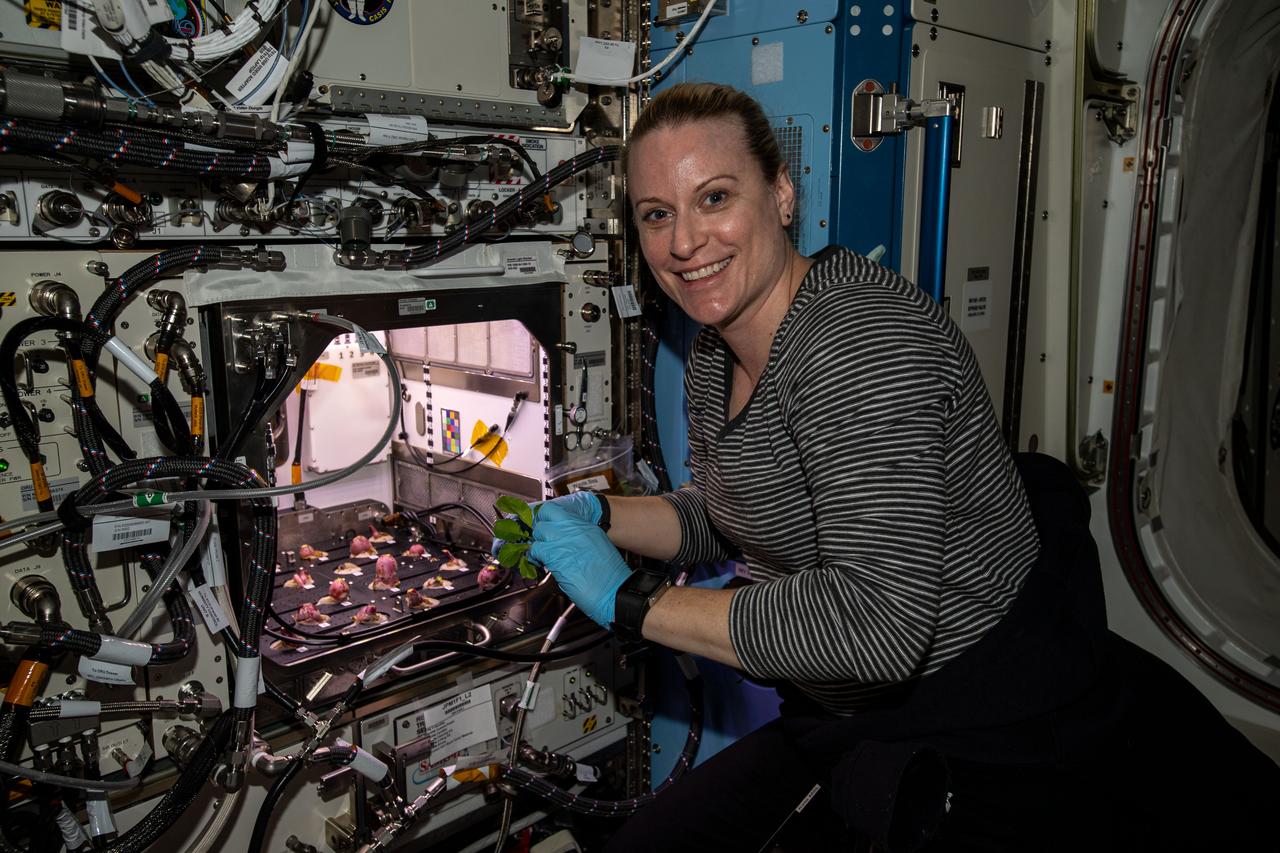
iss064e008380 (Nov. 30, 2020) --- NASA astronaut and Expedition 64 Flight Engineer Kate Rubins is pictured with radish bulbs after harvesting operations for the Plant Habitat-02 experiment. The space botany investigation seeks to optimize plant growth in the unique environment of space and evaluate nutrition and taste of the plants.
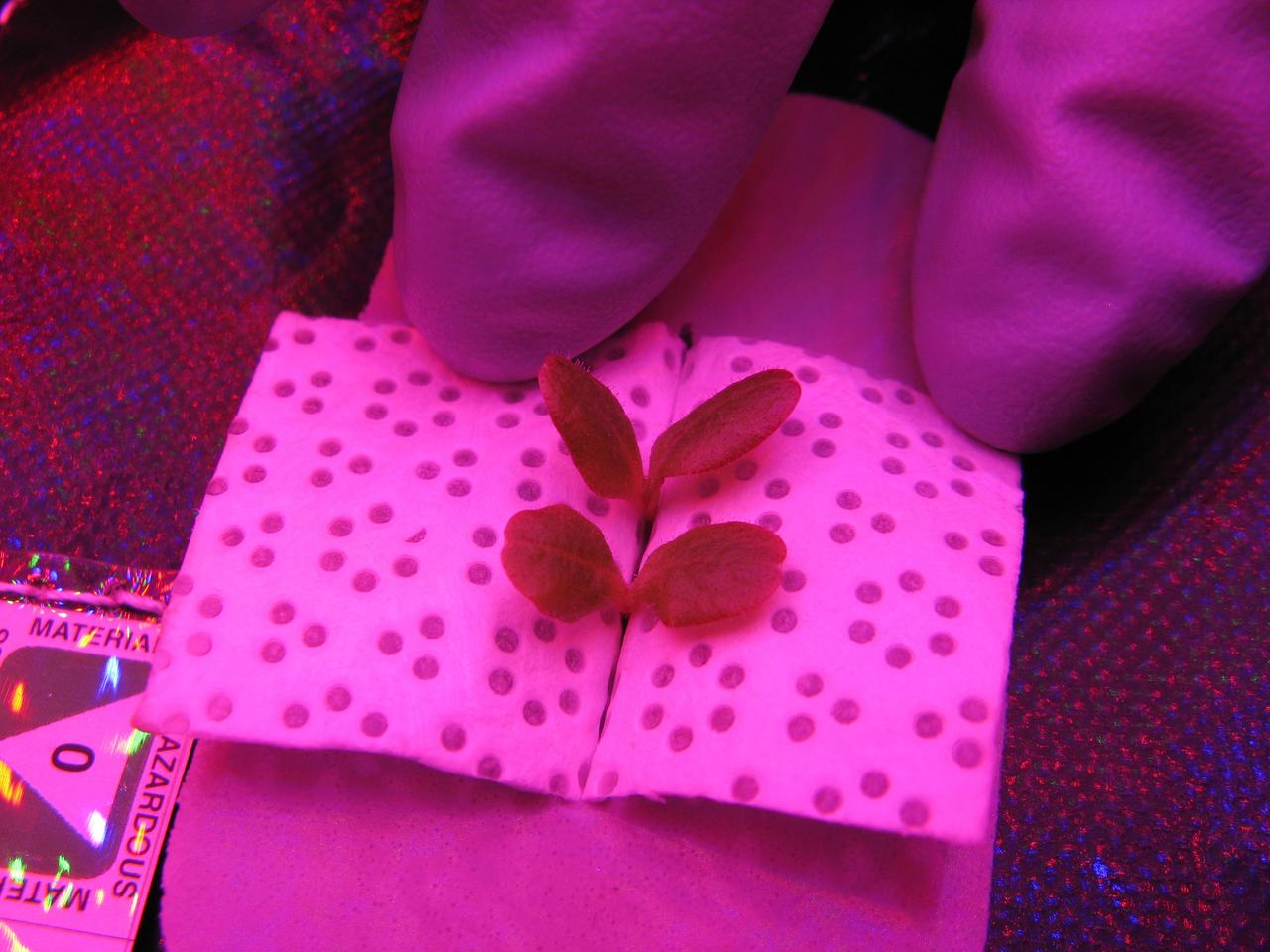
CAPE CANAVERAL, Fla. -- Researchers document the ground control plant pillows in the Veggie plant growth system inside a control chamber at the Space Station Processing Facility at NASA's Kennedy Space Center in Florida prior to thinning them to one plant each. The growth chamber is being used as a control unit and procedures are being followed identical to those being performed on Veggie and the Veg-01 experiment on the International Space Station. Veggie and Veg-01 were delivered to the space station aboard the SpaceX-3 mission. Veggie is the first fresh food production system delivered to the station. Six plant pillows, each containing outredgeous red romaine lettuce seeds and a root mat were inserted into Veggie. The plant chamber's red, blue and green LED lights were activated. The plant growth was monitored for 28 days. At the end of the cycle, the plants will be carefully harvested, frozen and stored for return to Earth. Photo credit: NASA/Charles Spern
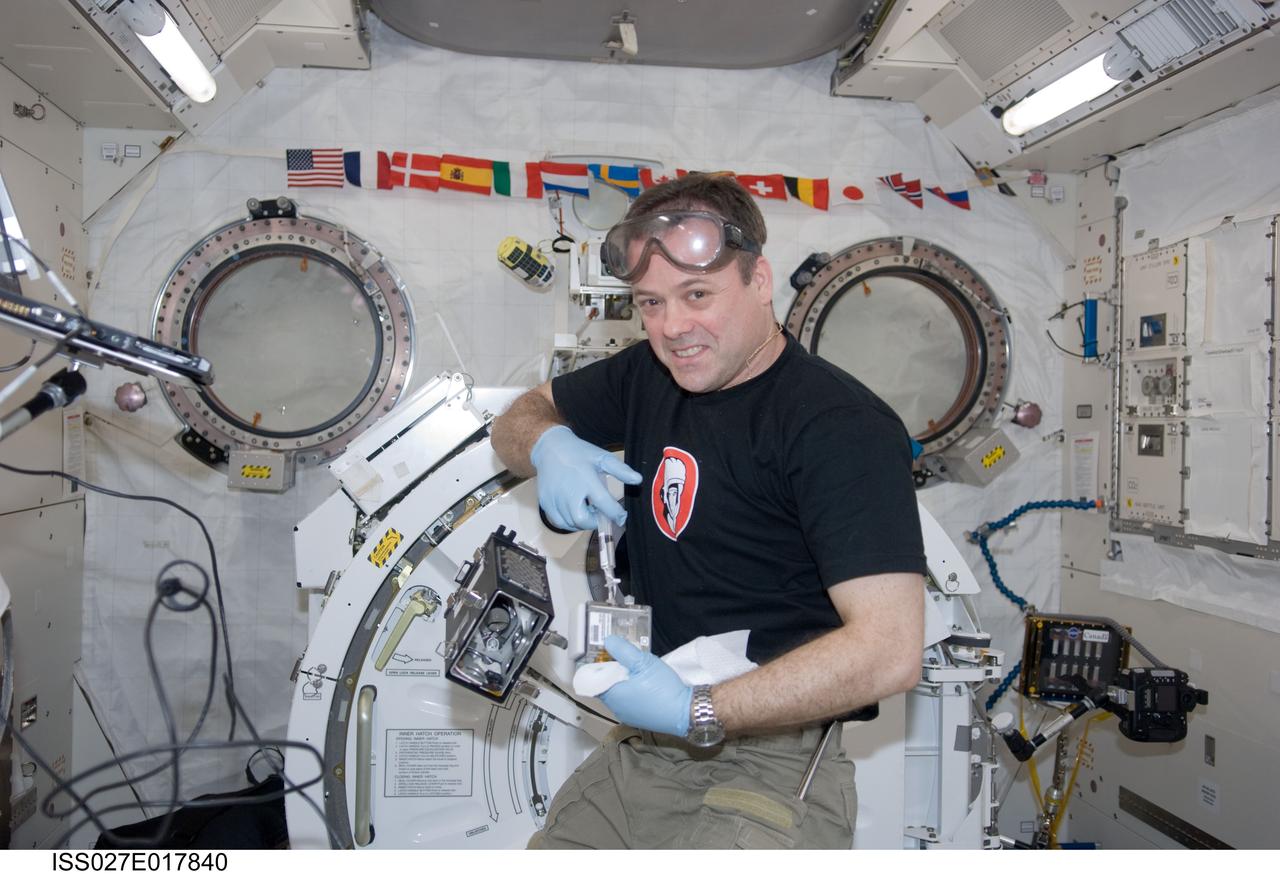
ISS027-E-017840 (28 April 2011) --- NASA astronaut Ron Garan, Expedition 27 flight engineer, supports the Dynamism of Auxin Efflux Facilitators responsible for Gravity-regulated Growth and Development in Cucumber (CsPINs) experiment in the Kibo laboratory of the International Space Station. CsPINs studies the phenomenon of tropism, i.e., the growth or turning movement of a biological organism, usually a plant, in response to an environmental stimulus. Specifically focusing on gravity, the new JAXA life science experiment investigates how plants sense gravity as an environmental signal and use it for governing their morphology and growth orientation.
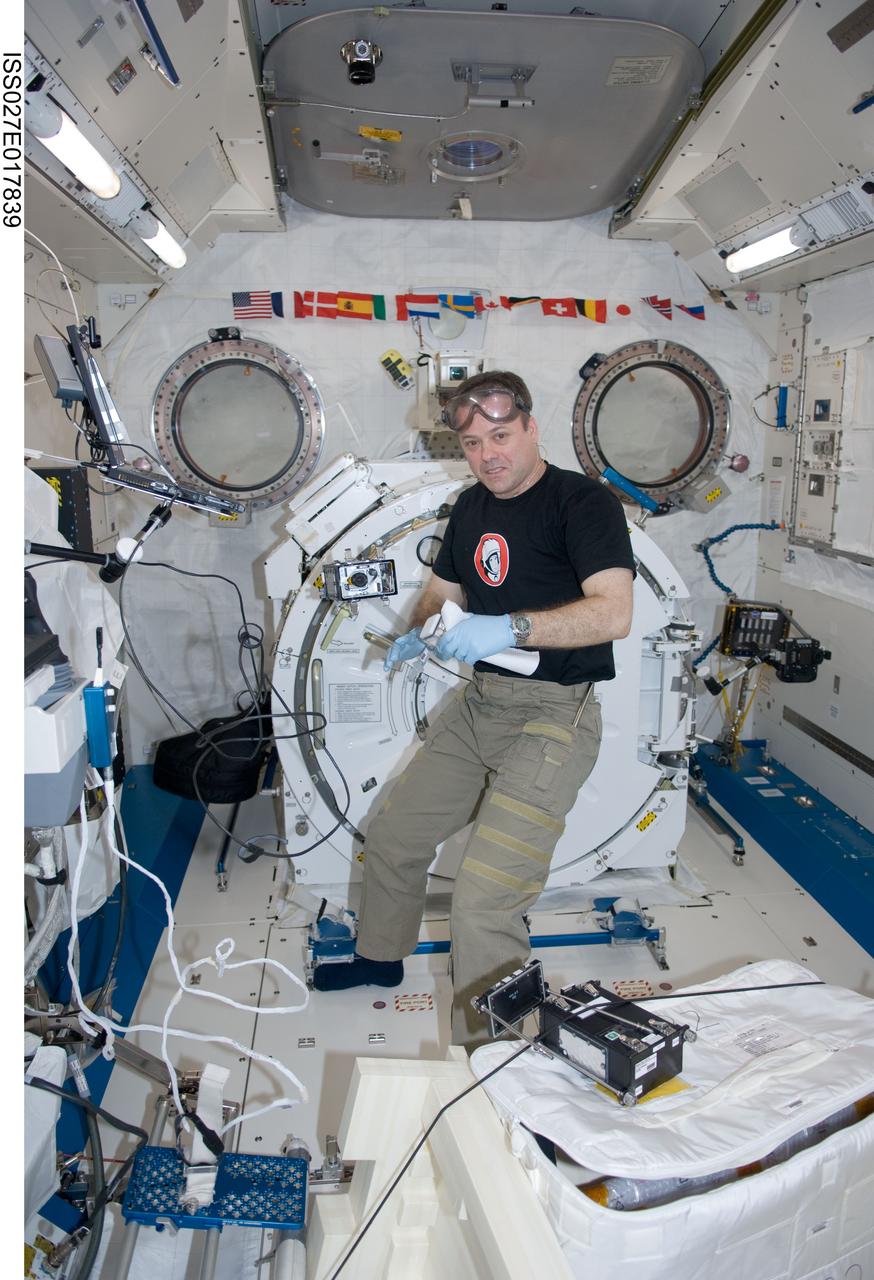
ISS027-E-017839 (28 April 2011) --- NASA astronaut Ron Garan, Expedition 27 flight engineer, supports the Dynamism of Auxin Efflux Facilitators responsible for Gravity-regulated Growth and Development in Cucumber (CsPINs) experiment in the Kibo laboratory of the International Space Station. CsPINs studies the phenomenon of tropism, i.e., the growth or turning movement of a biological organism, usually a plant, in response to an environmental stimulus. Specifically focusing on gravity, the new JAXA life science experiment investigates how plants sense gravity as an environmental signal and use it for governing their morphology and growth orientation.
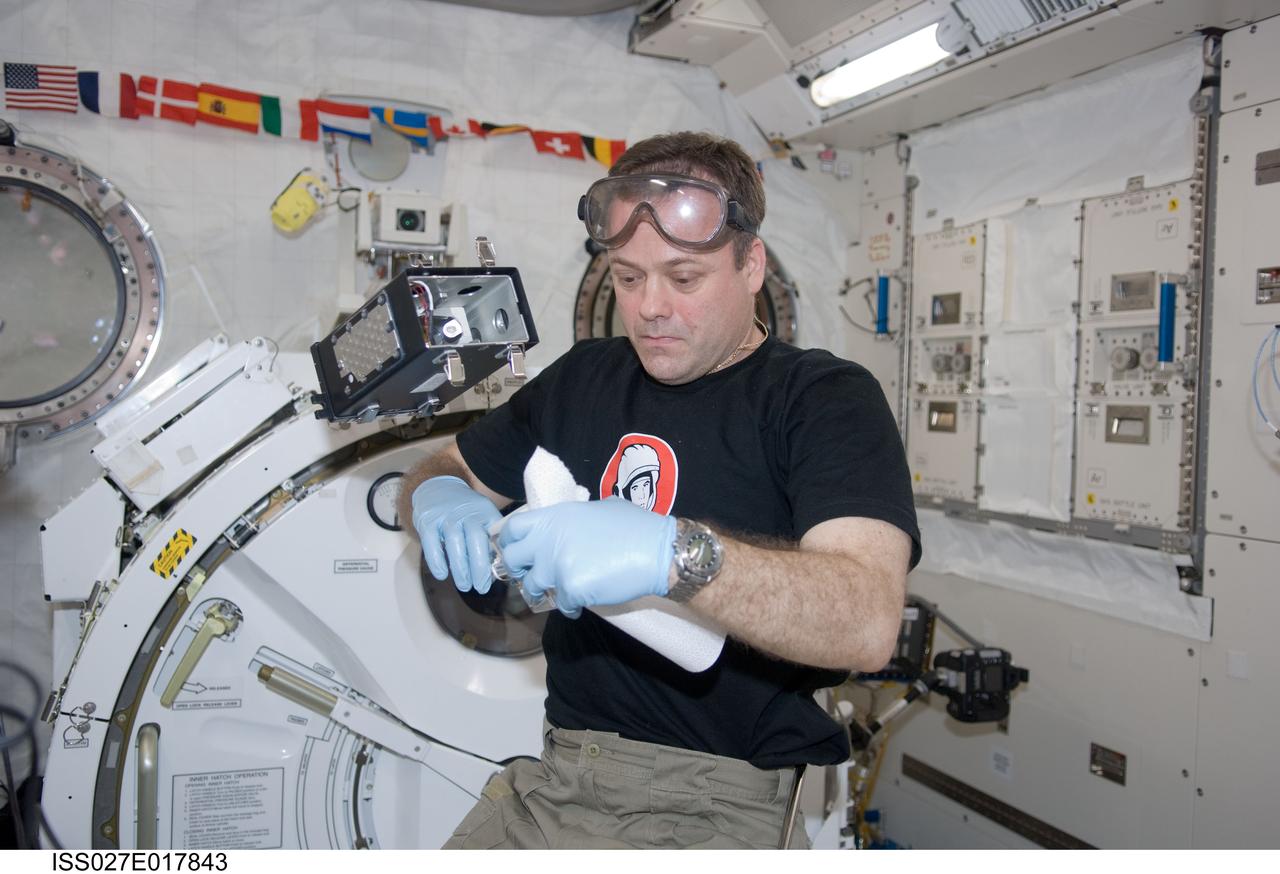
ISS027-E-017843 (28 April 2011) --- NASA astronaut Ron Garan, Expedition 27 flight engineer, supports the Dynamism of Auxin Efflux Facilitators responsible for Gravity-regulated Growth and Development in Cucumber (CsPINs) experiment in the Kibo laboratory of the International Space Station. CsPINs studies the phenomenon of tropism, i.e., the growth or turning movement of a biological organism, usually a plant, in response to an environmental stimulus. Specifically focusing on gravity, the new JAXA life science experiment investigates how plants sense gravity as an environmental signal and use it for governing their morphology and growth orientation.
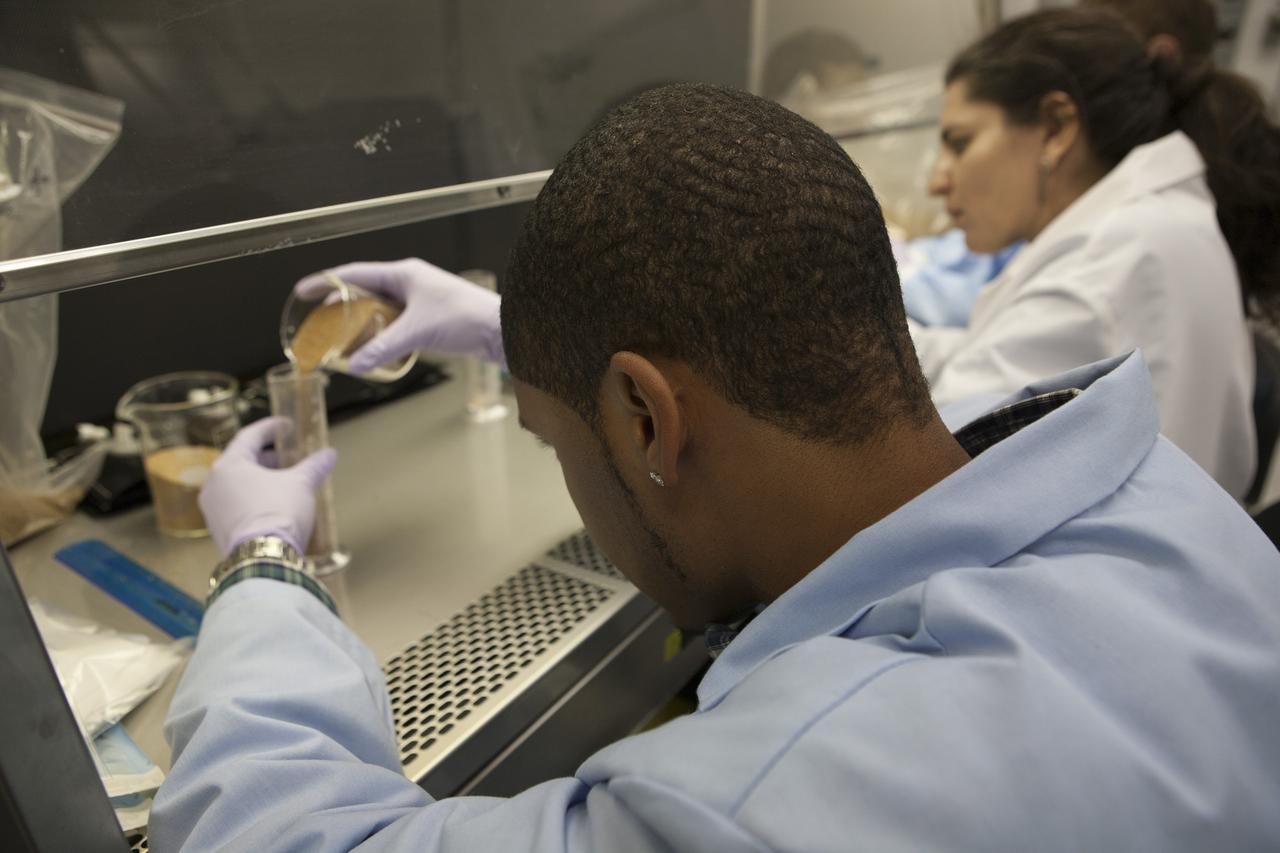
Inside a laboratory in the Space Station Processing Facility at NASA’s Kennedy Space Center in Florida, research scientists prepare the plant pillows for the Veg-03 experiment that will be delivered to the International Space Station aboard the eighth SpaceX Dragon commercial resupply mission. Matt Romeyn, a NASA pathways intern, measures out the calcined clay, or space dirt, for one of the plant pillows. To his right is Dr. Gioia Massa, NASA payload scientist for Veggie. The Veg-03 plant pillows will contain ‘Tokyo Bekana’ cabbage seeds and lettuce seeds for NASA’s third Veggie plant growth system experiment. The experiment will continue NASA’s deep space plant growth research to benefit the Earth and the agency’s journey to Mars.
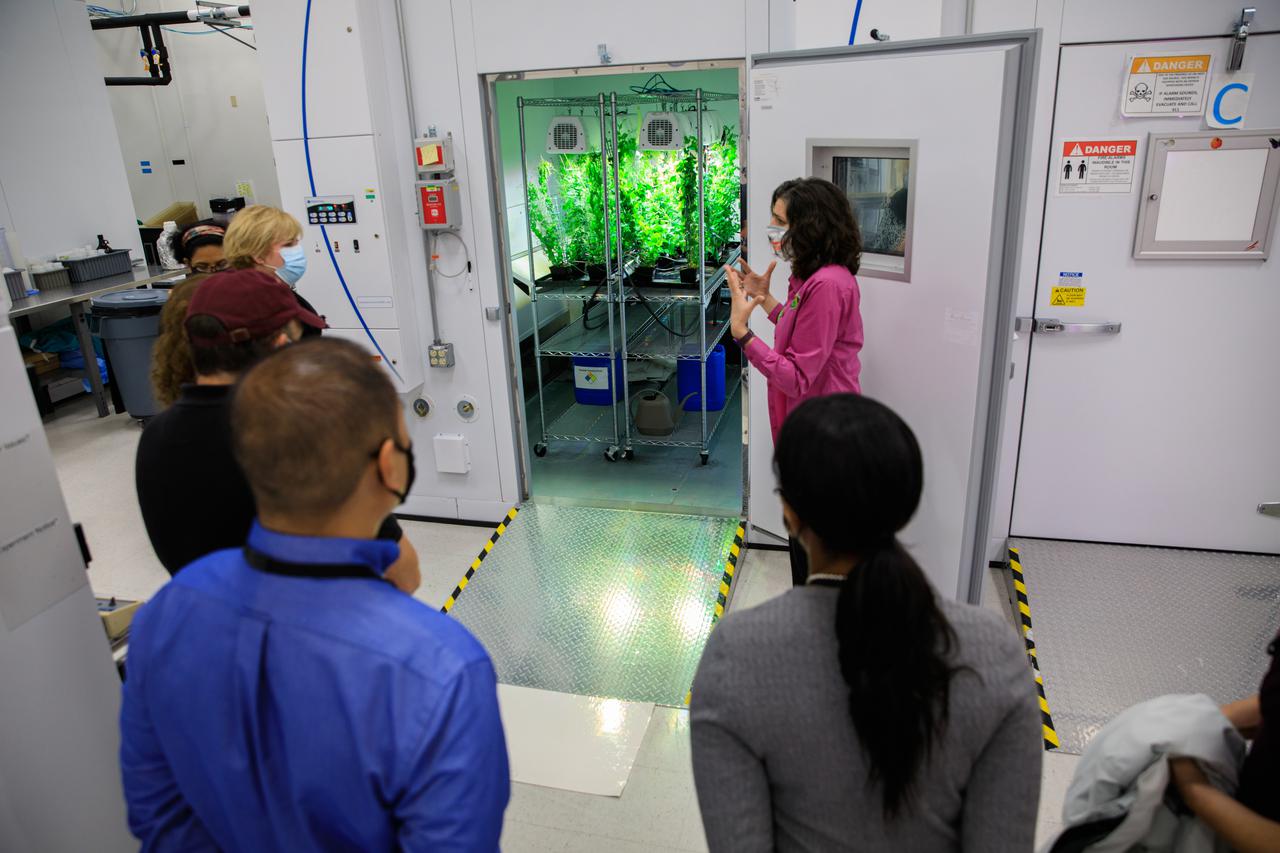
Senior leaders with Kennedy Space Center in Florida, familiarize newly appointed officials from NASA Headquarters with the center’s facilities during a tour on April 19, 2021. The group views plant experiments inside a growth chamber in the Space Station Processing Facility. Plant experiments at Kennedy supports research enabling deep space exploration including experiments in the Veggie and Advanced Plant Habitat systems aboard the International Space Station.
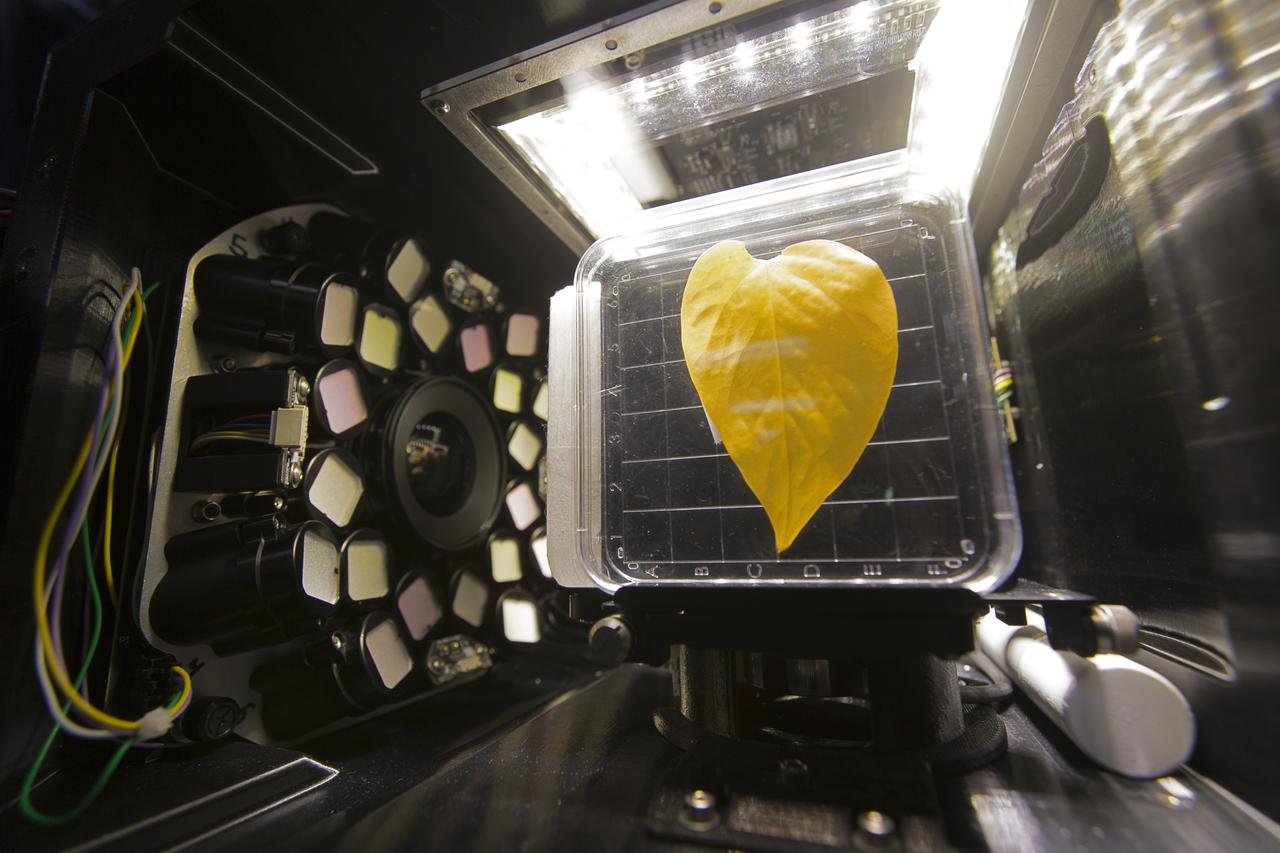
Inside the Spectrum prototype unit, organisms in a Petri plate are exposed to different colors of lighting. The device works by exposing organisms to different colors of fluorescent light while a camera records what's happening with time-lapse photography. Results from the Spectrum project will shed light on which living things are best suited for long-duration flights into deep space.

Inside the Spectrum prototype unit, organisms in a Petri plate are exposed to different colors of lighting. The device works by exposing organisms to different colors of fluorescent light while a camera records what's happening with time-lapse photography. Results from the Spectrum project will shed light on which living things are best suited for long-duration flights into deep space.
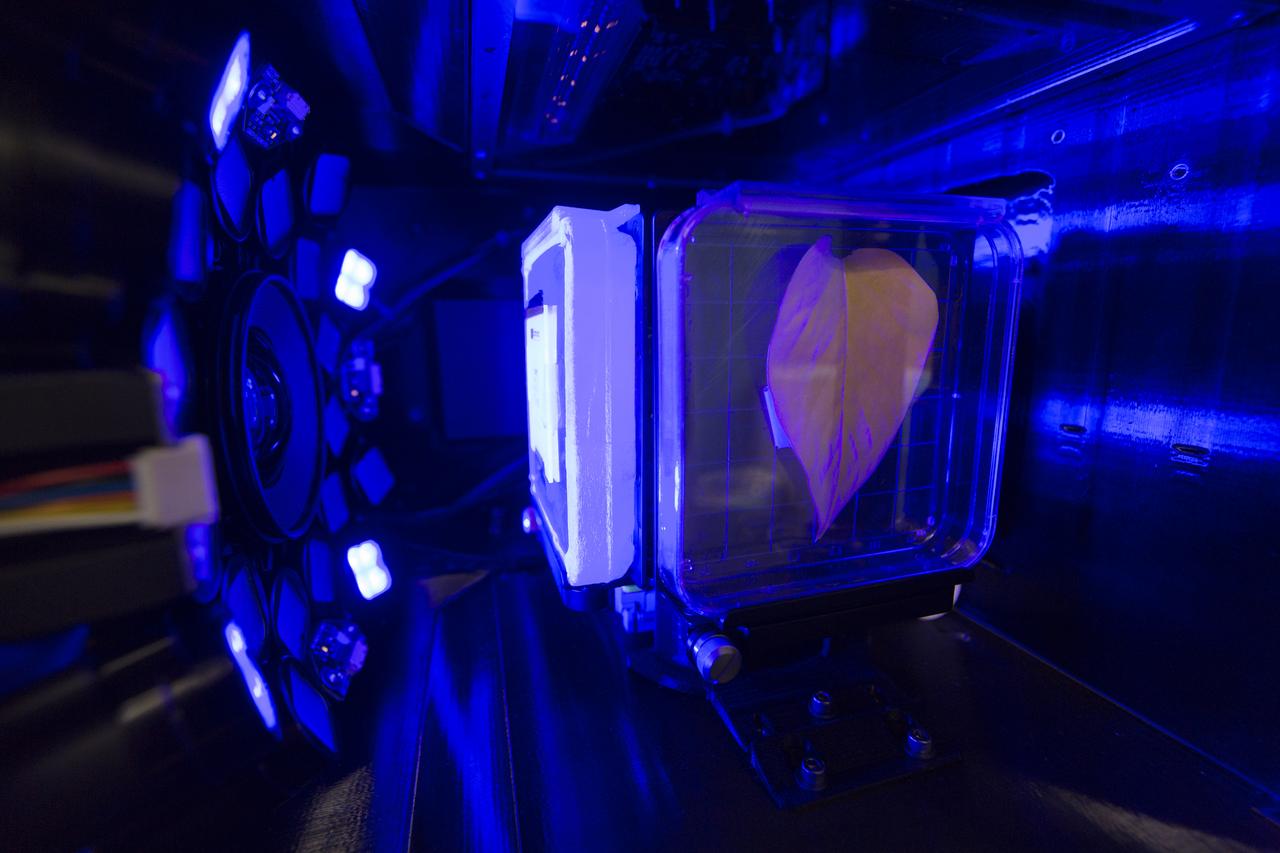
Inside the Spectrum prototype unit, organisms in a Petri plate are exposed to blue excitation lighting. The device works by exposing organisms to different colors of fluorescent light while a camera records what's happening with time-lapse photography. Results from the Spectrum project will shed light on which living things are best suited for long-duration flights into deep space.

Dr. Scott Shipley of Ascentech Enterprises makes an adjustment to the Spectrum unit. He is the project engineer for the effort working under the Engineering Services Contract at NASA's Kennedy Space Center. The device is being built for use aboard the International Space Station and is designed to expose different organisms to different color of fluorescent light while a camera records what's happening with time-laps imagery. Results from the Spectrum project will shed light on which living things are best suited for long-duration flights into deep space.
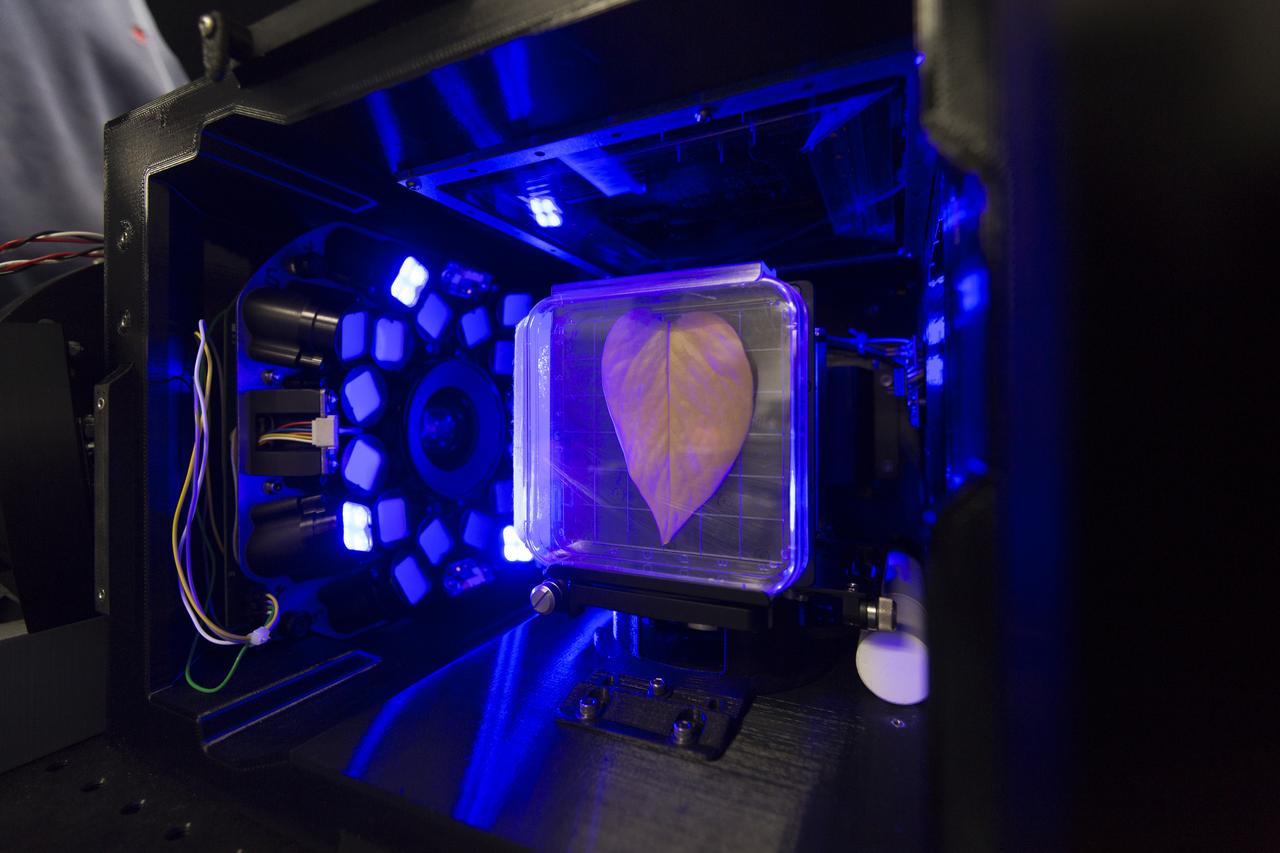
Inside the Spectrum prototype unit, organisms in a Petri plate are exposed to blue excitation lighting. The device works by exposing organisms to different colors of fluorescent light while a camera records what's happening with time-lapse photography. Results from the Spectrum project will shed light on which living things are best suited for long-duration flights into deep space.
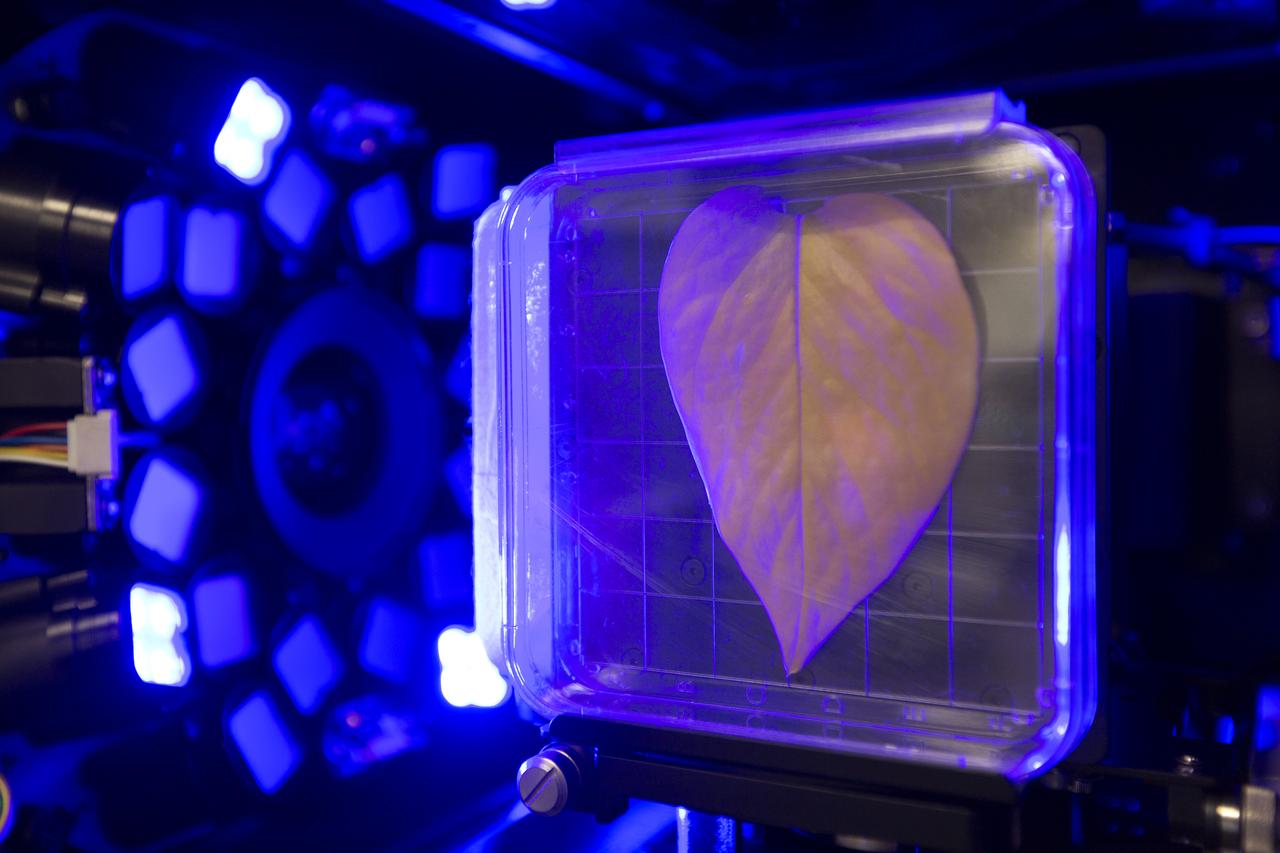
Inside the Spectrum prototype unit, organisms in a Petri plate are exposed to blue excitation lighting. The device works by exposing organisms to different colors of fluorescent light while a camera records what's happening with time-lapse photography. Results from the Spectrum project will shed light on which living things are best suited for long-duration flights into deep space.
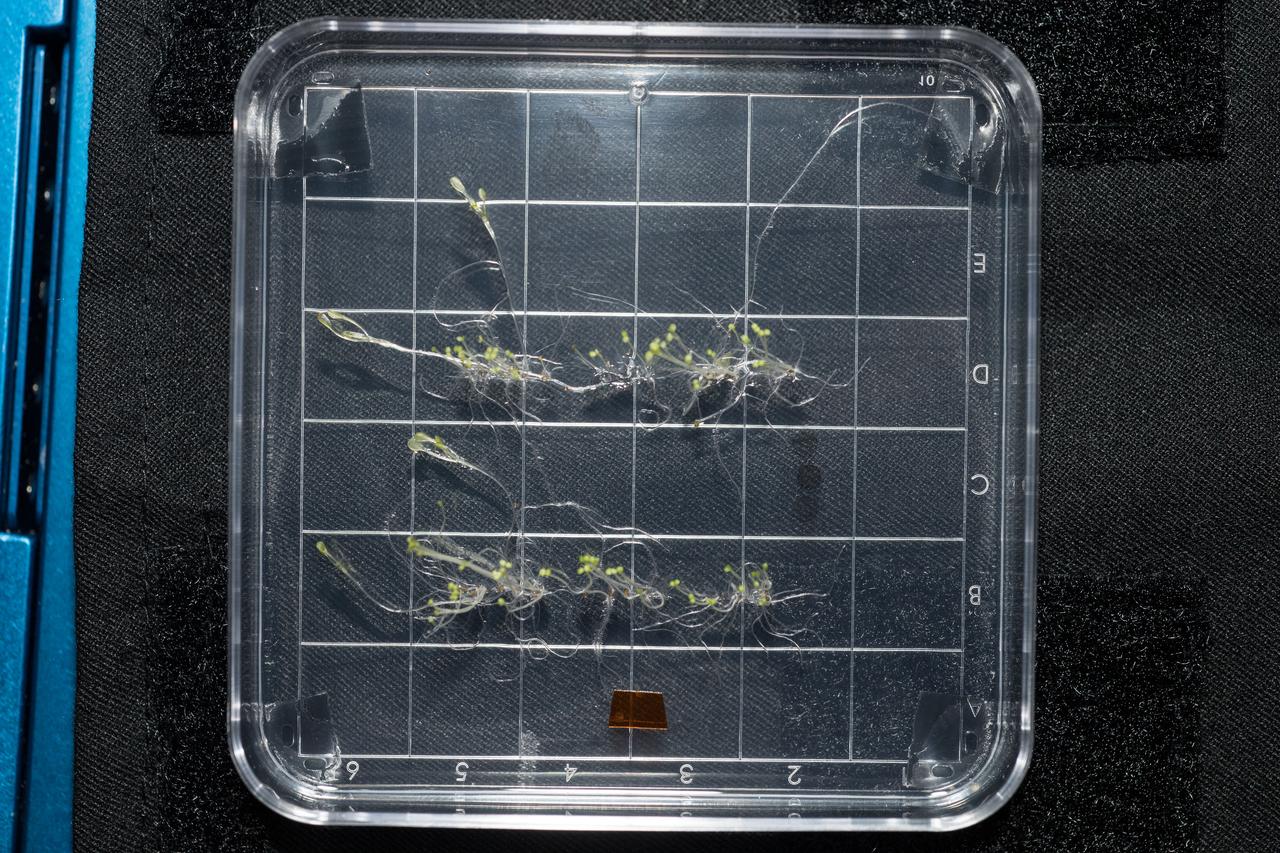
iss054e022372 (1/20/2018) --- Photo documentation of Arabidopsis seedlings from the Petri Plants-2 experiment in the Destiny U.S. Laboratory aboard the International Space Station (ISS). The Characterizing Arabidopsis Root Attractions-2 (CARA-2) investigation explores the molecular biology guiding the altered growth of plants, specifically roots, in spaceflight.
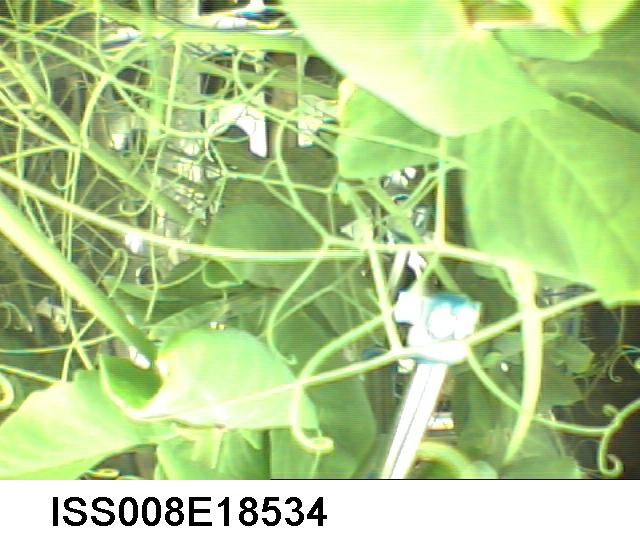
ISS008-E-18534 (March 2004) --- A close-up view, taken by an Expedition 8 crewmember, shows the Russian BIO-5 Rasteniya-2/Lada-2 (Plants-2) plant growth experiment located in the Zvezda Service Module on the International Space Station (ISS).
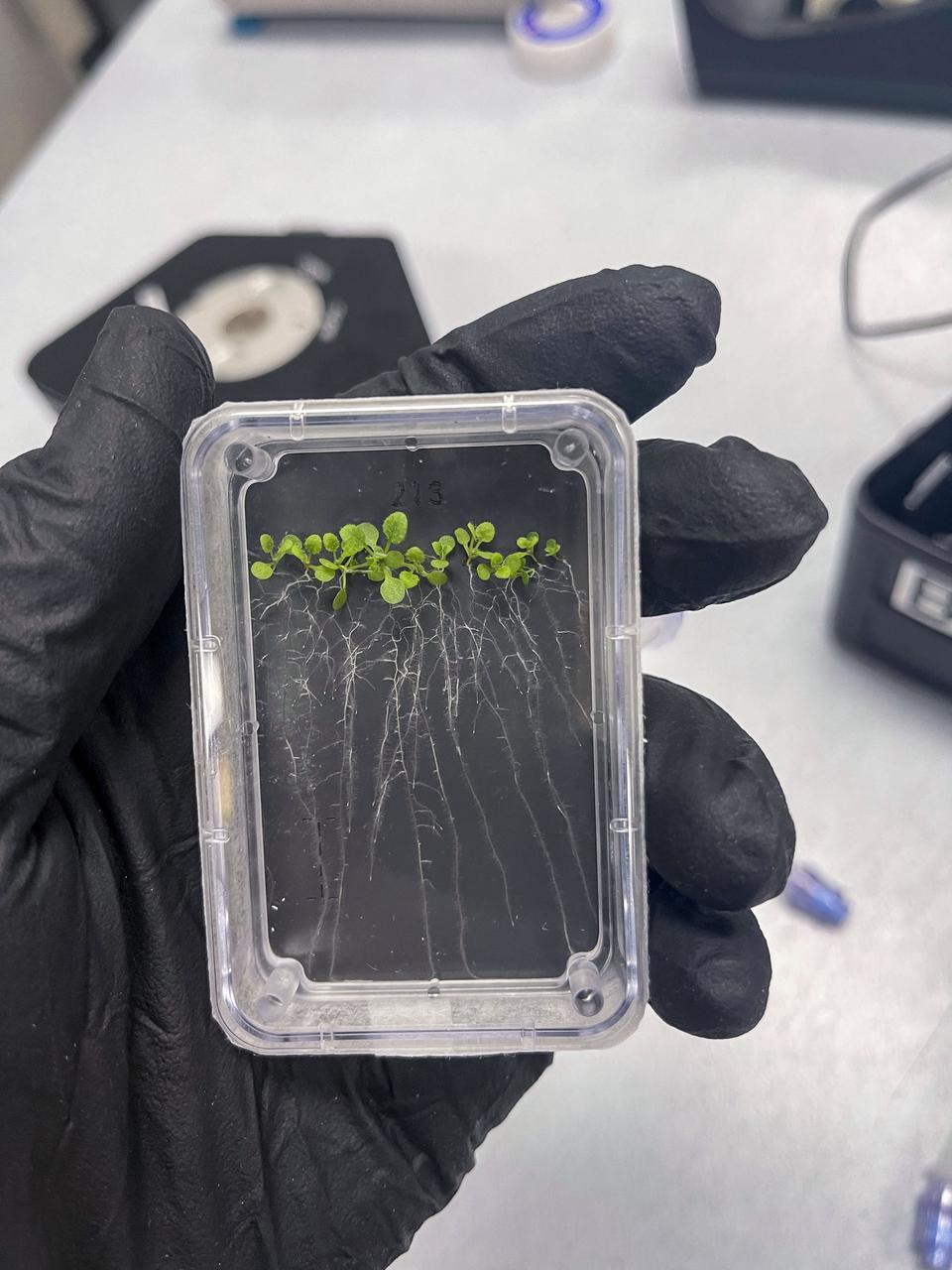
jsc2021e063283--Representative image of plate with Arabidopsis seedlings after 10 days of growth for the Plant RNA Regulation Redux in Multi Variable Platform (MVP) (MVP-Plant-01) investigation. Taken after the experiment verification test. Image courtesy of Grant Vellinger (Techshot/Redwire).
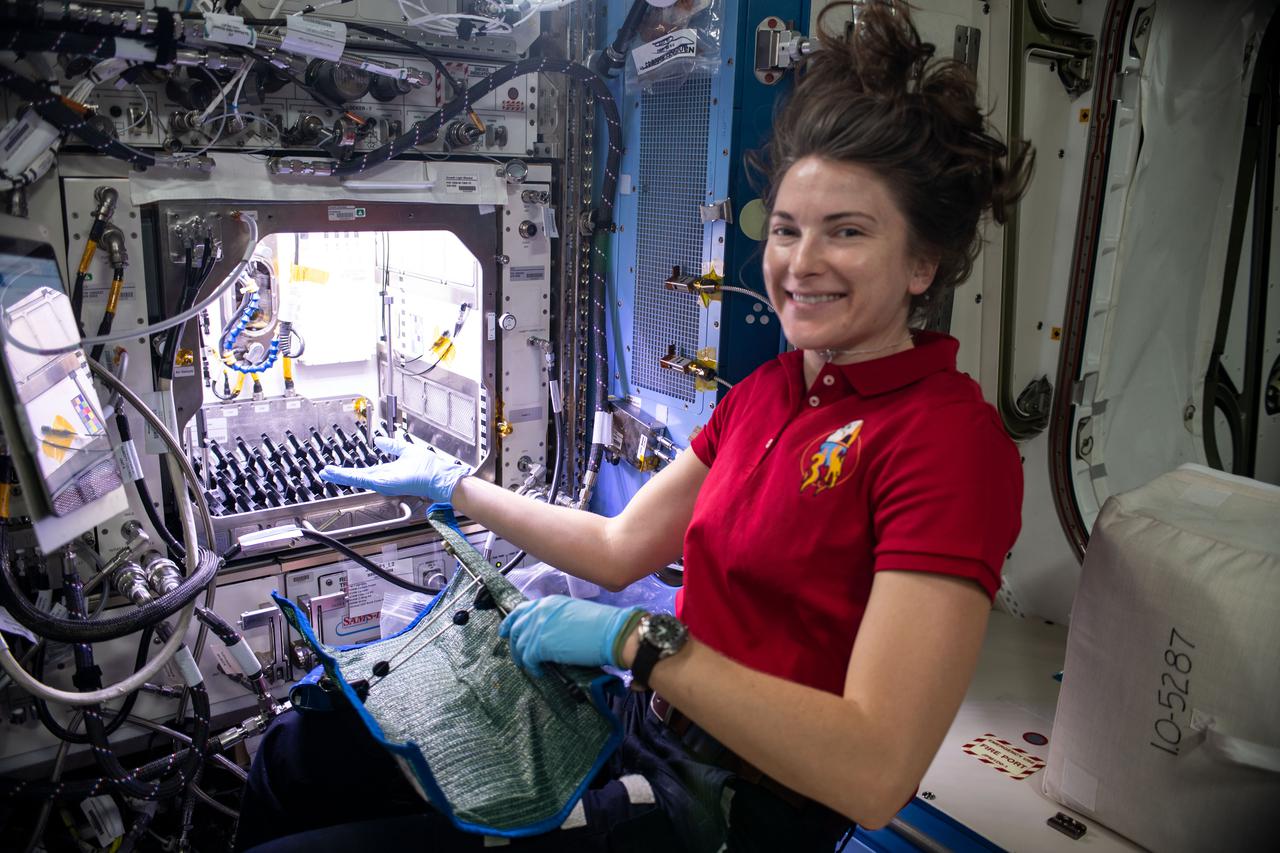
iss066e096821 (Dec. 27, 2021) --- NASA astronaut and Expedition 66 Flight Engineer Kayla Barron sets up the Plant Habitat-05 Growth experiment that is studying cotton genetics in microgravity.
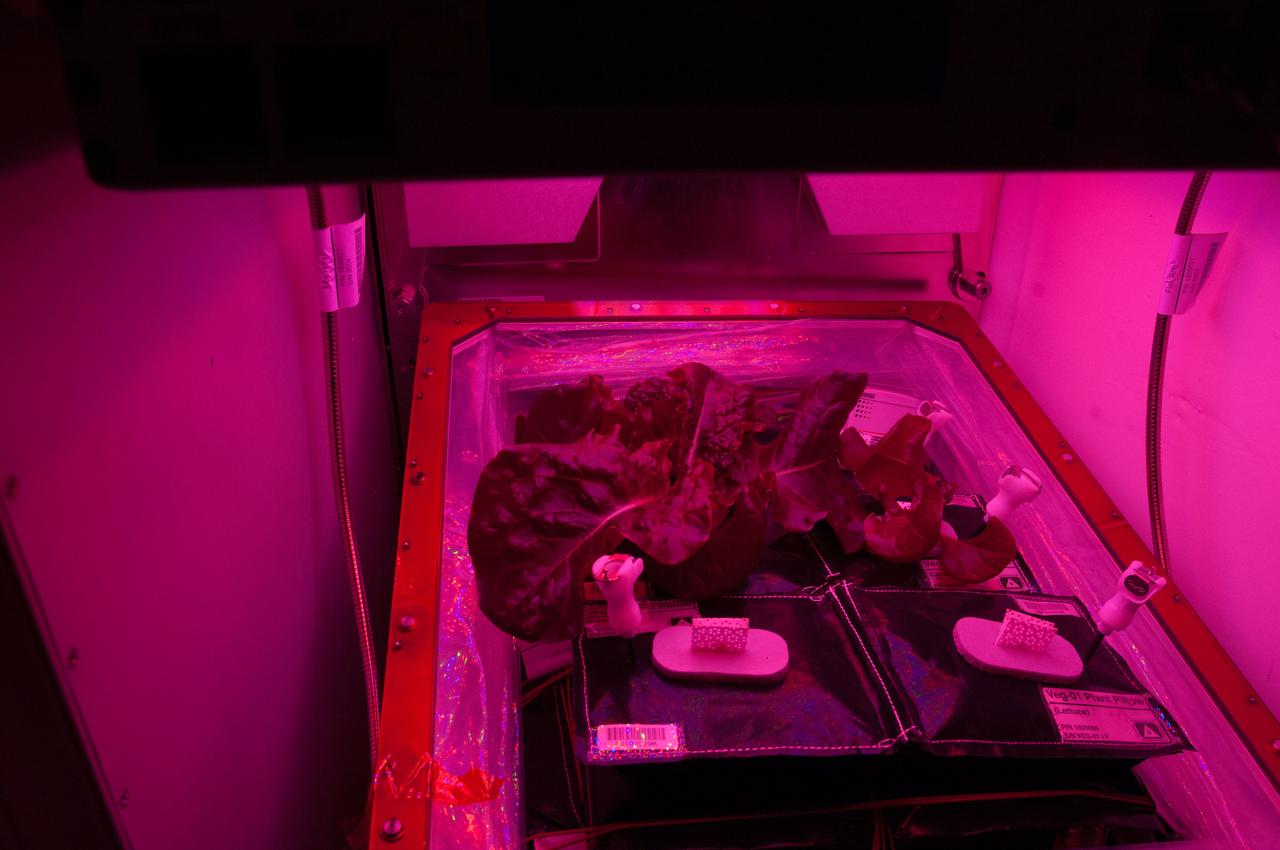
ISS040-E-007676 (5 June 2014) --- One of the Expedition 40 crew members on the International Space Station took a series of photos of the Vegetable Production System (Veggie) recently added to the orbital outpost. The experiment deals with the growth and development of ‘Outredgeous’ Lettuce (Lactuca sativa) seedlings in the spaceflight environment and the effects of the spaceflight environment on composition of microbial flora on the Veggie-grown plants and the Veggie facility. The purple light is the wavelength that is supposed to best promote photosynthesis and growth for the plants.
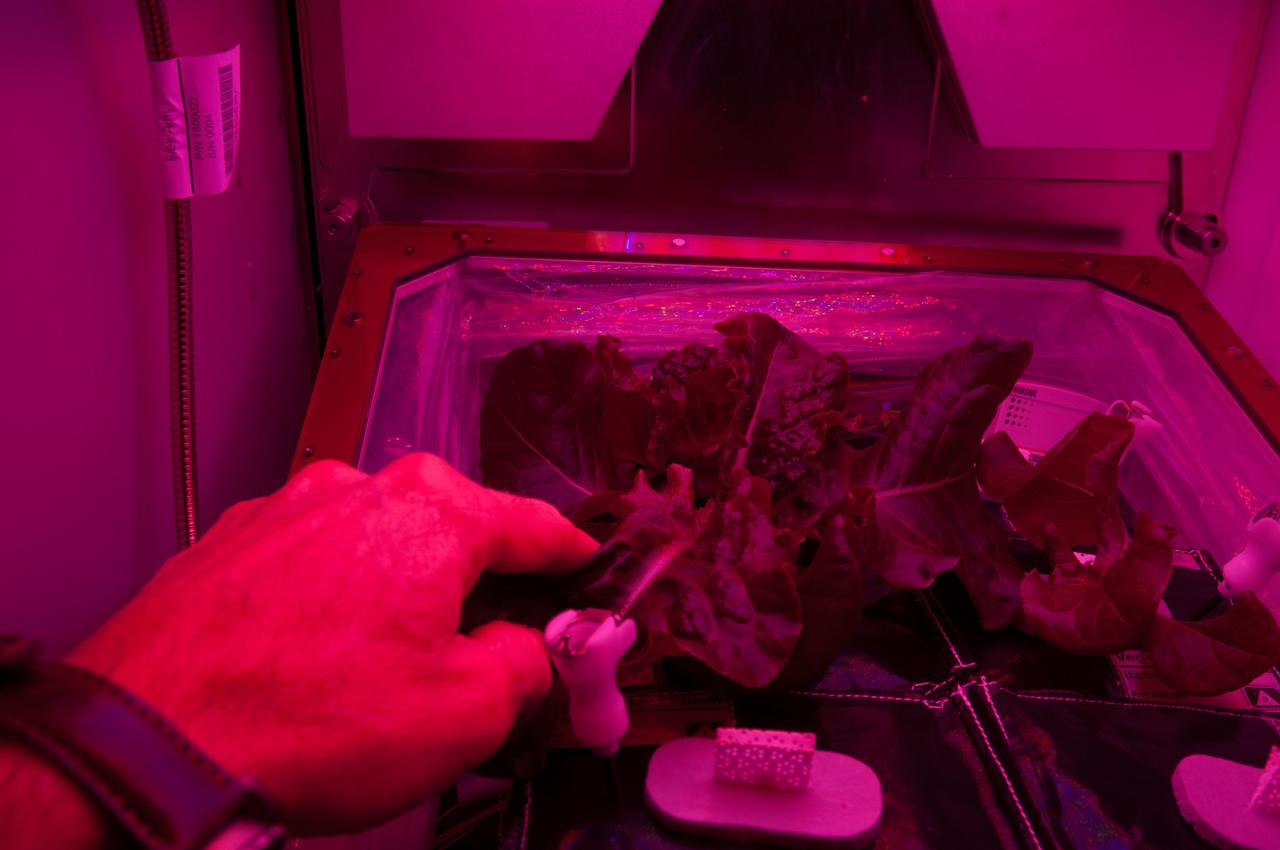
ISS040-E-007672 (5 June 2014) --- One of the Expedition 40 crew members on the International Space Station photographed his hand working with the Vegetable Production System (Veggie) recently added to the orbital outpost. The experiment deals with the growth and development of ‘Outredgeous’ Lettuce (Lactuca sativa) seedlings in the spaceflight environment and the effects of the spaceflight environment on composition of microbial flora on the Veggie-grown plants and the Veggie facility. The purple light is the wavelength that is supposed to best promote photosynthesis and growth for the plants.
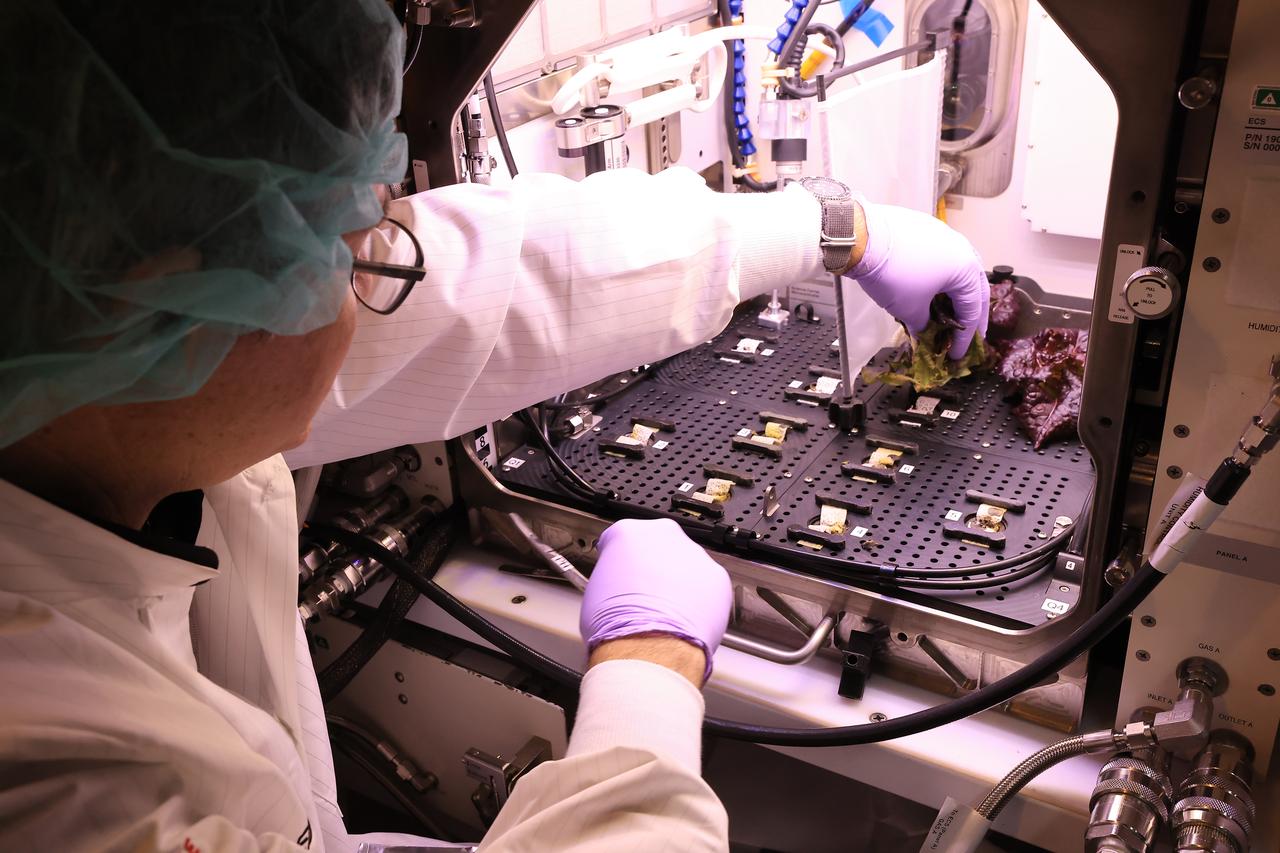
Inside a laboratory in the Space Systems Processing Facility at NASA’s Kennedy Space Center in Florida, a plant biologist harvests Outredgeous romaine lettuce growing in the Advanced Plant Habitat ground unit as the ground control portion of the Plant Habitat-07 (PH-07) experiment on Thursday, April 24, 2025. PH-07 was sent to the International Space Station on NASA’s SpaceX 31st commercial resupply services mission to study how optimal and suboptimal moisture conditions impact plant growth, nutrient content, and the plant microbiome.