
Advanced Plant Experiment, APEX-4, support in the Telescience Support Center at NASA Glenn. APEX-4 continues a highly successful investigation into the effects of microgravity on the development of roots and cells on plant seedlings. After four days of growth, the petri plate will be inserted into the Fluids Integrated Rack (FIR) Light Microscopy Module (LMM) facility for detailed imaging.
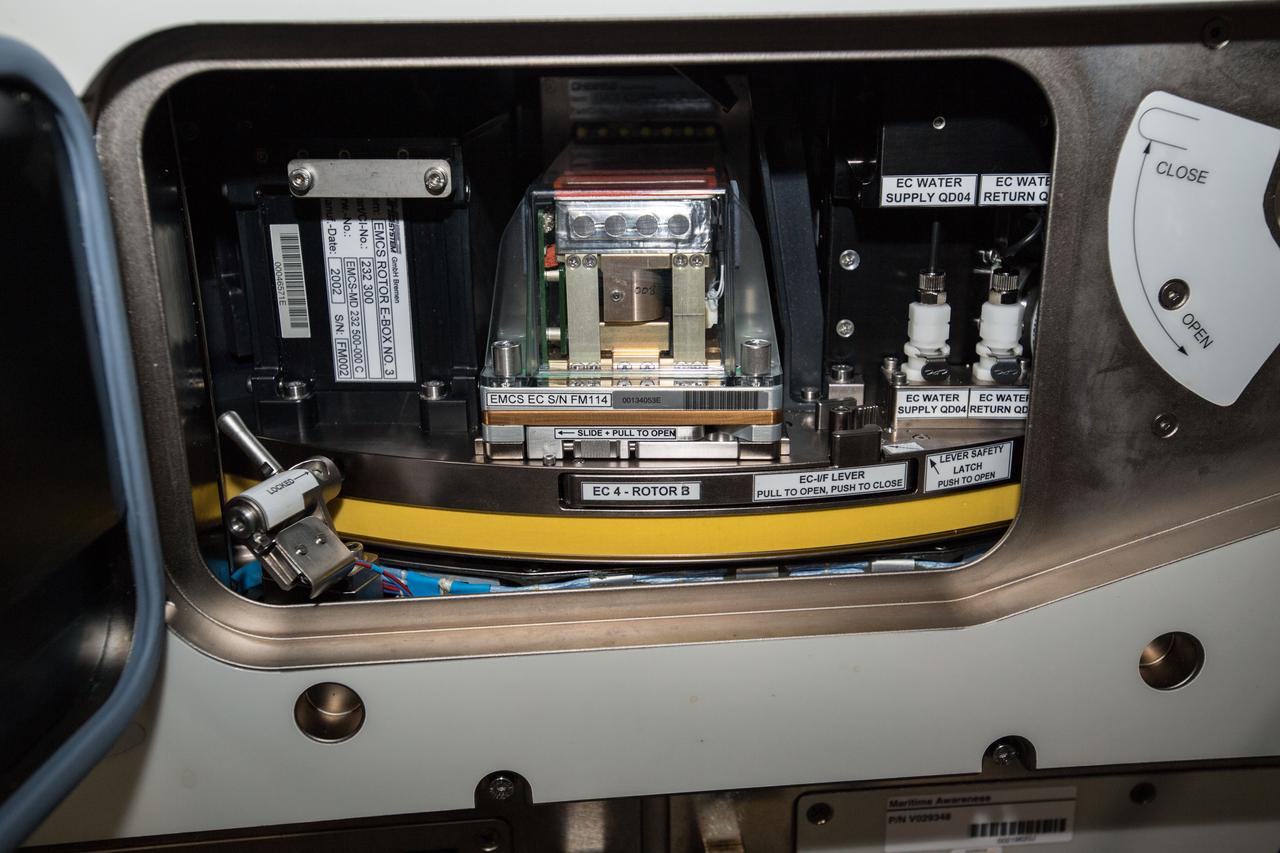
iss054e037079 (Feb. 8, 2018) --- Plant Gravity Perception experiment in a centrifuge on a European Modular Cultivation System (EMCS) Experiment Container (EC) to test the gravity-sensing ability of plants in microgravity.
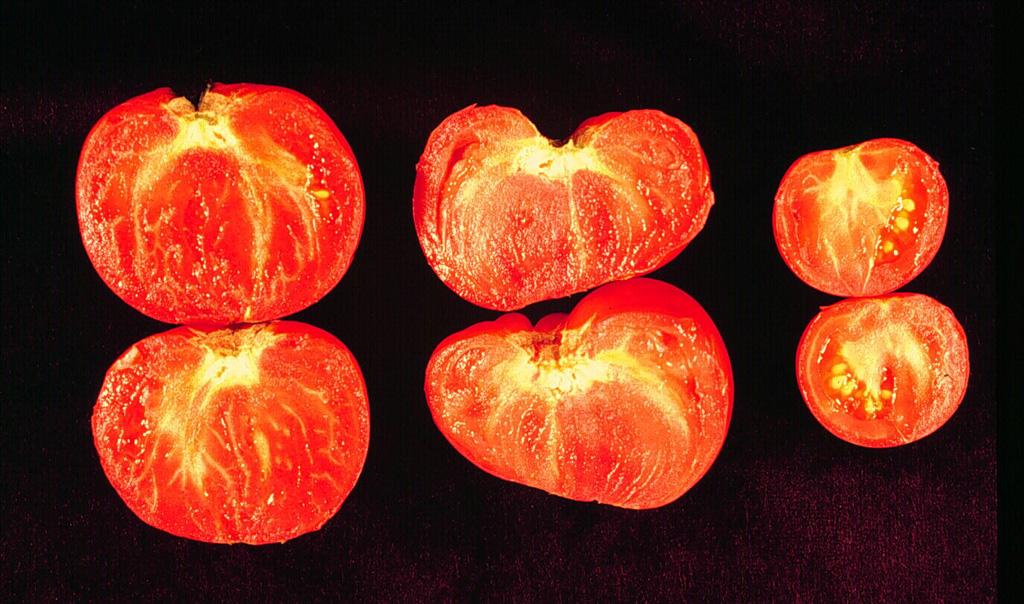
BioServe researcher Dr. Yi Li first flew plant experiments on board STS-63. Li discovered that exposure to microgravity increased a particular hormone concentration in plants. Since that time, Li has been able to manipulate this phenomenon and grow fruits, such as tomatoes, that overproduce the hormone, and these plants bear larger seedless fruit in the absence of pollination.
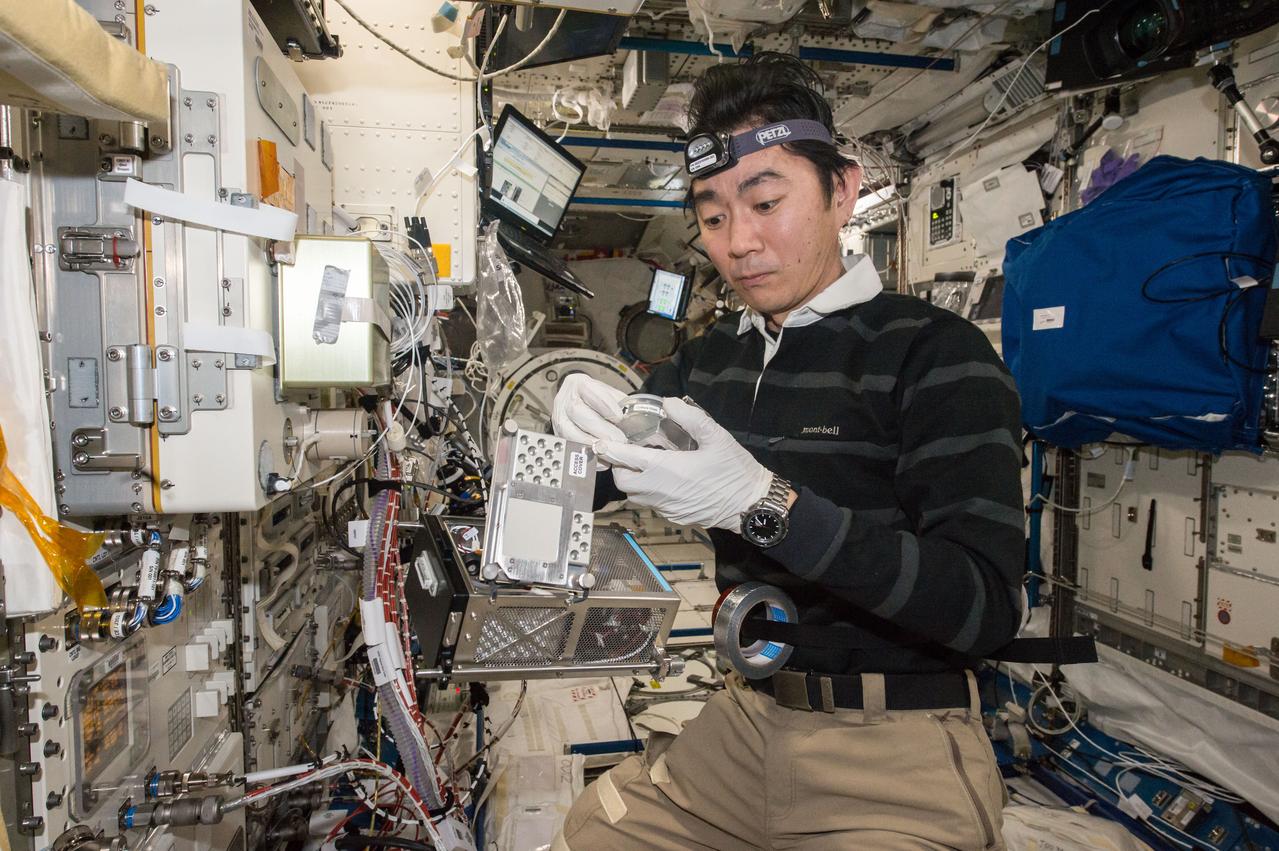
iss045e084268 (10/30/2015) --- Japan Aerospace Exploration Agency (JAXA) astronaut Kimiya Yui works to attach a Plant Experiment Unit to the Cell Biology Experiment Facility (CBEF) prior to Run 1 of the Plant Gravity Sensing 2 experiment.
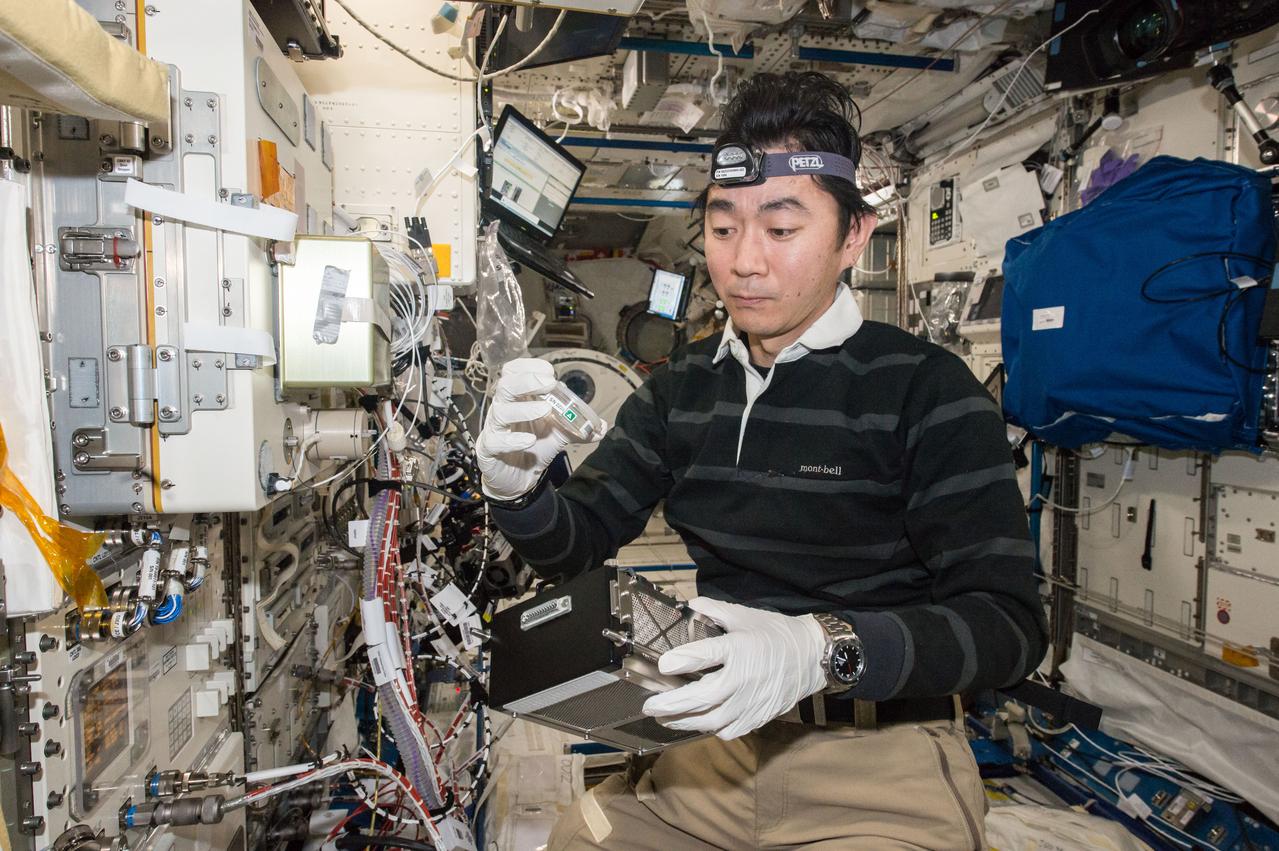
iss045e084267 (10/30/2015) --- Japan Aerospace Exploration Agency (JAXA) astronaut Kimiya Yui works to attach a Plant Experiment Unit to the Cell Biology Experiment Facility (CBEF) prior to Run 1 of the Plant Gravity Sensing 2 experiment.
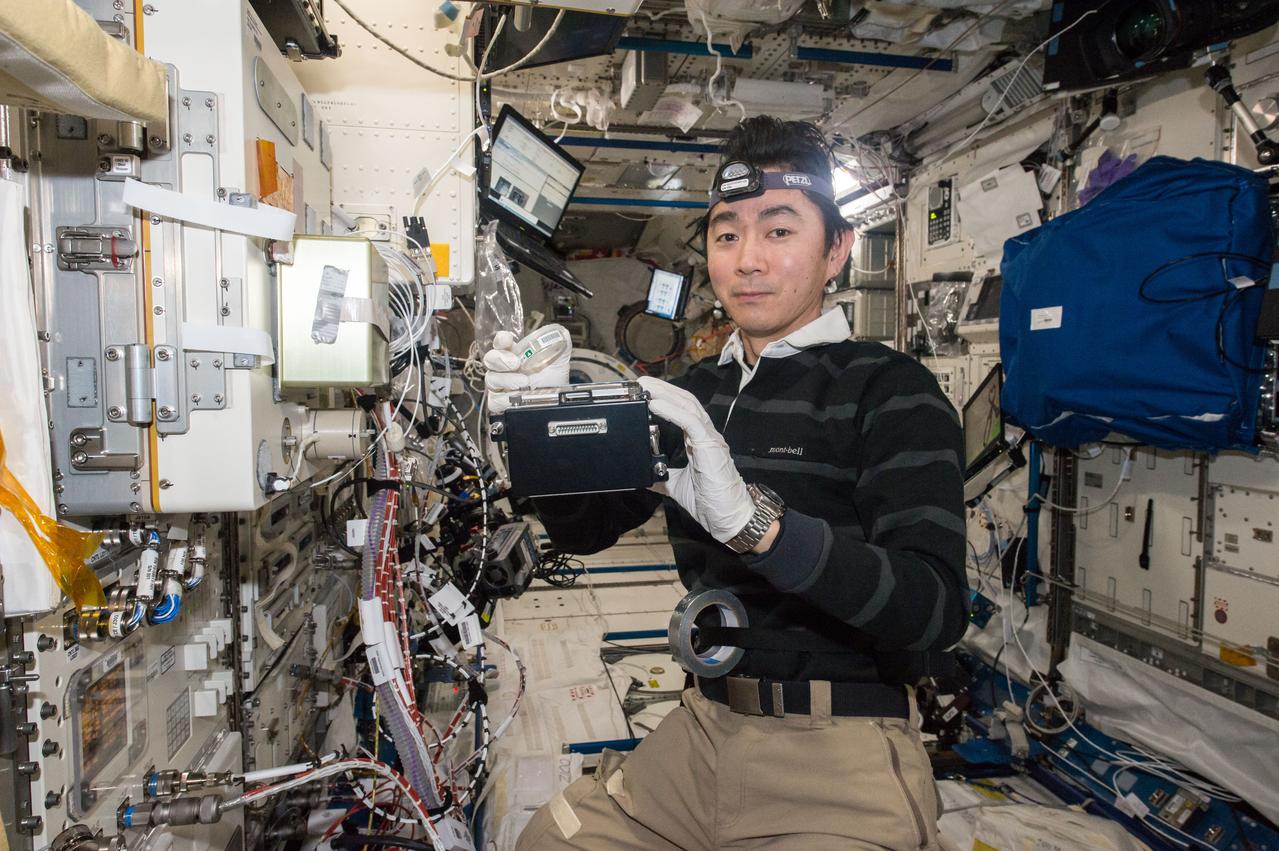
iss045e084264(10/30/2015) --- Japan Aerospace Exploration Agency (JAXA) astronaut Kimiya Yui works to attach a Plant Experiment Unit to the Cell Biology Experiment Facility (CBEF) prior to Run 1 of the Plant Gravity Sensing 2 experiment.
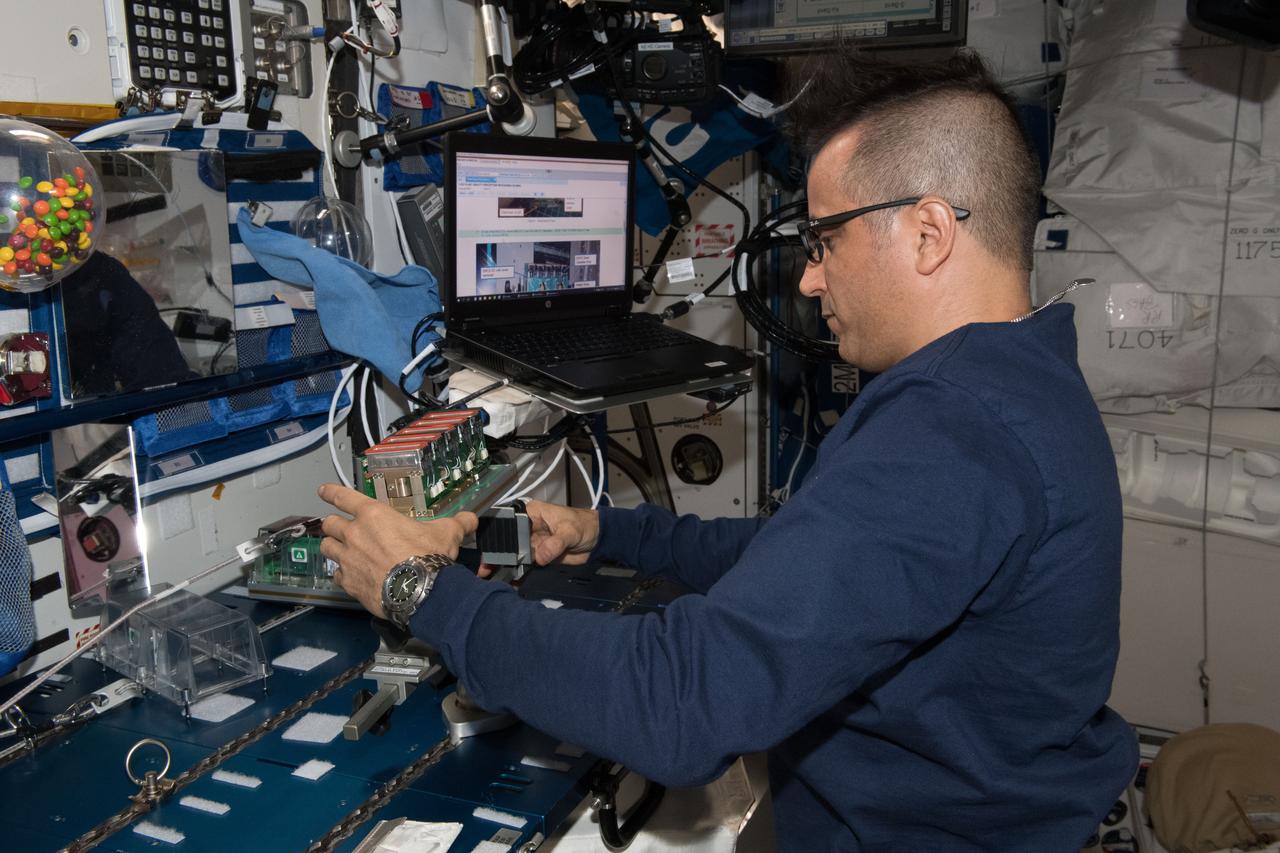
iss054e052250 (Feb. 20, 2018) --- NASA astronaut Joe Acaba removes Seed Cassettes for the Plant Gravity Perception experiment, which tests the gravity sensing ability of plants in microgravity.
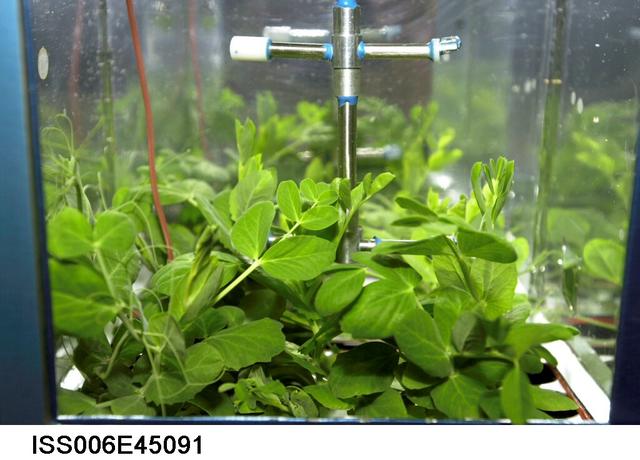
ISS006-E-45091 (25 March 2003) --- A view of the Russian BIO-5 Rasteniya-2/Lada-2 (Plants-2) plant growth experiment located in the Zvezda Service Module on the International Space Station (ISS).
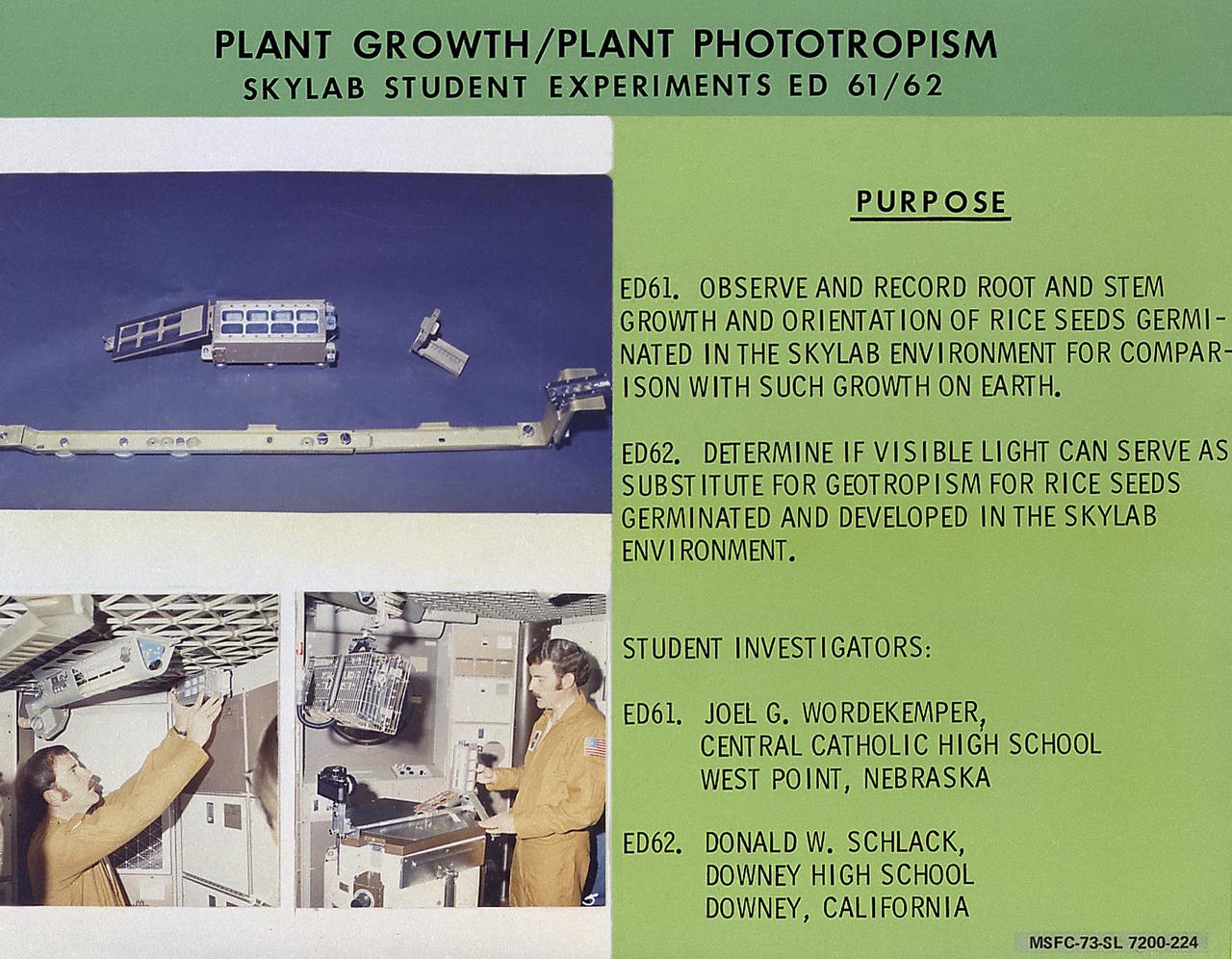
This chart describes the Skylab student experiment ED-61, Plant Growth, and experiment ED-62, Plant Phototropism. Two similar proposals were submitted by Joel G. Wordekemper of West Point, Nebraska, and Donald W. Schlack of Downey, California. Wordekemper's experiment (ED-61) was to see how the lack of gravity would affect the growth of roots and stems of plants. Schlack's experiment (ED-62) was to study the effect of light on a seed developing in zero gravity. The growth container of the rice seeds for their experiment consisted of eight compartments arranged in two parallel rows of four. Each had two windowed surfaces to allow periodic photography of the developing seedlings. In March 1972, NASA and the National Science Teachers Association selected 25 experiment proposals for flight on Skylab. Science advisors from the Marshall Space Flight Center aided and assisted the students in developing the proposals for flight on Skylab.

ISS040-E-009116 (10 June 2014) --- In the International Space Station?s Harmony node, NASA astronaut Steve Swanson, Expedition 40 commander, harvests a crop of red romaine lettuce plants that were grown from seed inside the station?s Veggie facility, a low-cost plant growth chamber that uses a flat-panel light bank for plant growth and crew observation. For the Veg-01 experiment, researchers are testing and validating the Veggie hardware, and the plants will be returned to Earth to determine food safety.
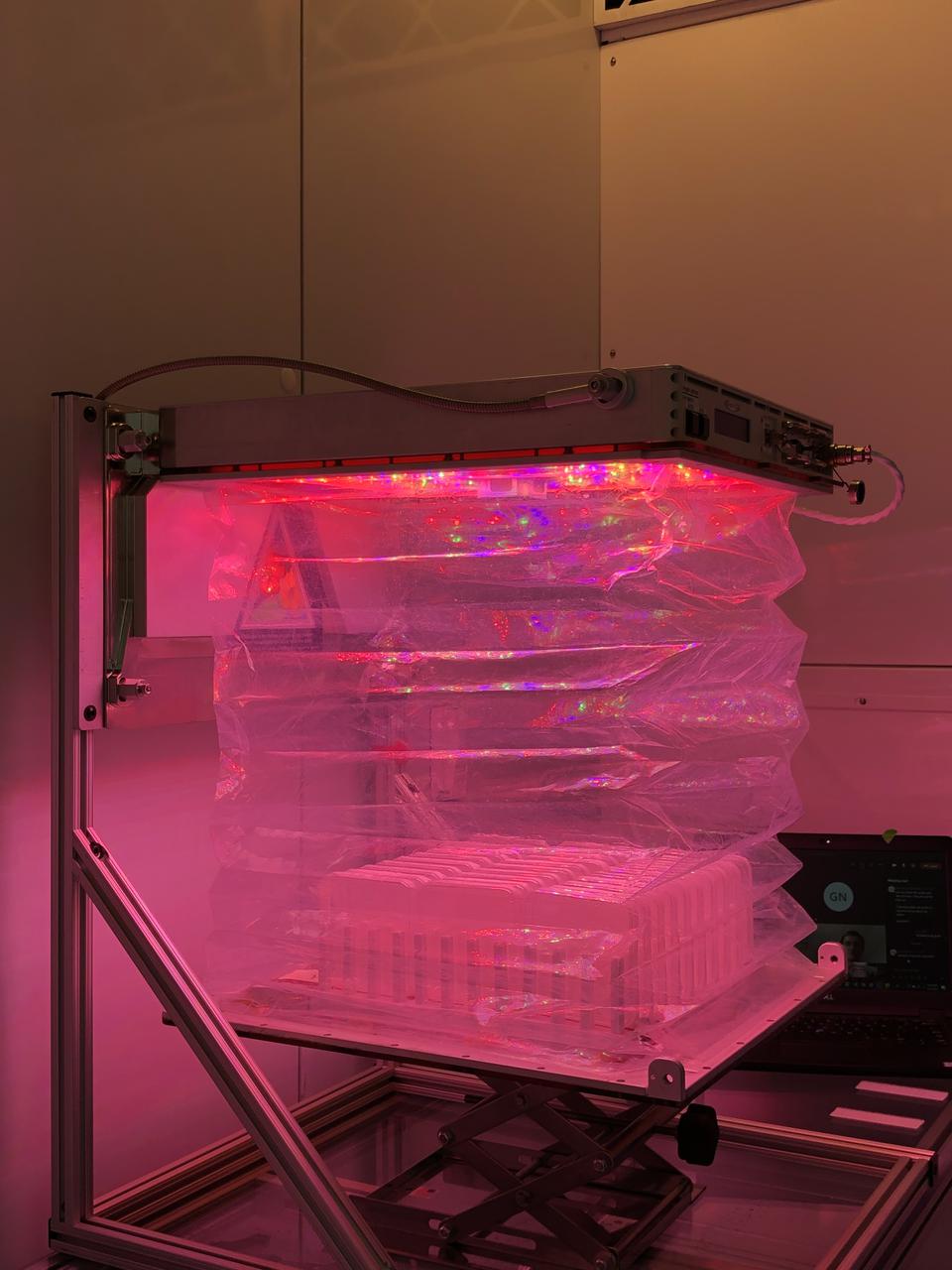
The Science Verification Test for NASA’s Advanced Plant Experiment-08 (APEX-08) testing Arabidopsis thaliana, a plant scientists routinely use for research, takes place inside the Veggie growth chamber at NASA’s Kennedy Space Center in Florida on Nov. 6, 2020. The test is part of the process for demonstrating readiness for space research ahead of its flight on SpaceX’s 23rd Commercial Resupply Services mission to the International Space Station. The APEX-08 study includes making genetic alterations that elicit a response in a group of organic compounds that modulate plant responses to environmental stress.
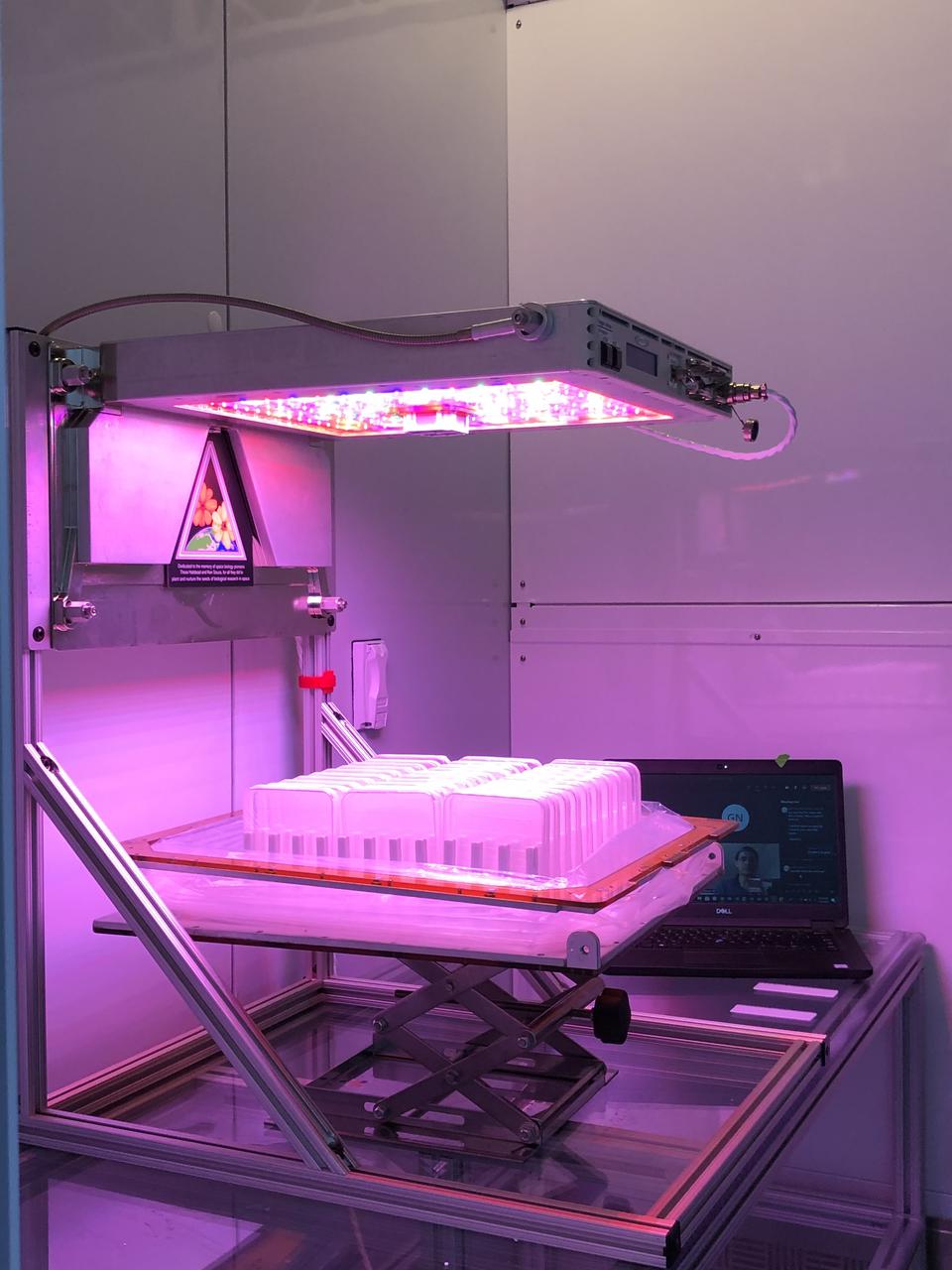
The Science Verification Test for NASA’s Advanced Plant Experiment-08 (APEX-08) testing Arabidopsis thaliana, a plant scientists routinely use for research, takes place inside the Veggie growth chamber at NASA’s Kennedy Space Center in Florida on Nov. 6, 2020. The test is part of the process for demonstrating readiness for space research ahead of its flight on SpaceX’s 23rd Commercial Resupply Services mission to the International Space Station. The APEX-08 study includes making genetic alterations that elicit a response in a group of organic compounds that modulate plant responses to environmental stress.
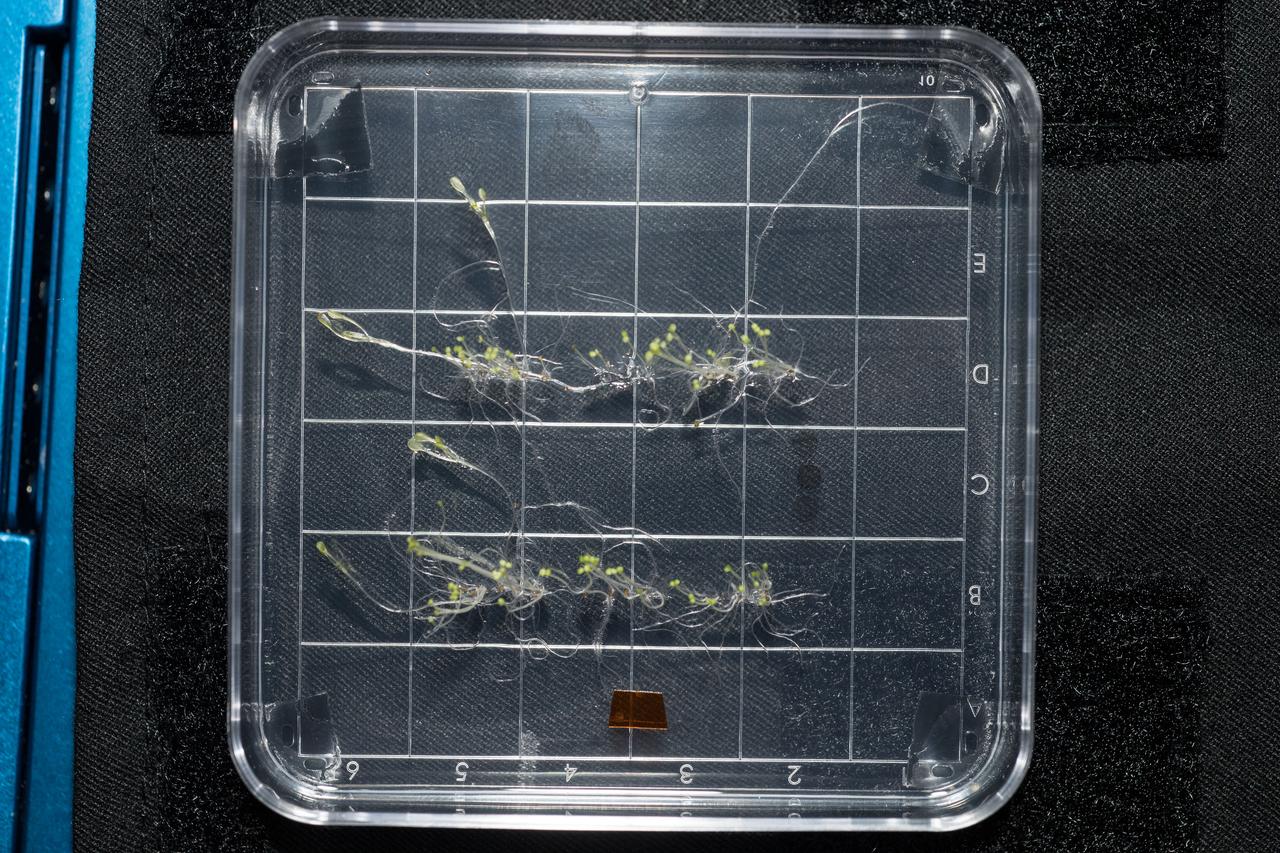
iss054e022372 (1/20/2018) --- Photo documentation of Arabidopsis seedlings from the Petri Plants-2 experiment in the Destiny U.S. Laboratory aboard the International Space Station (ISS). The Characterizing Arabidopsis Root Attractions-2 (CARA-2) investigation explores the molecular biology guiding the altered growth of plants, specifically roots, in spaceflight.
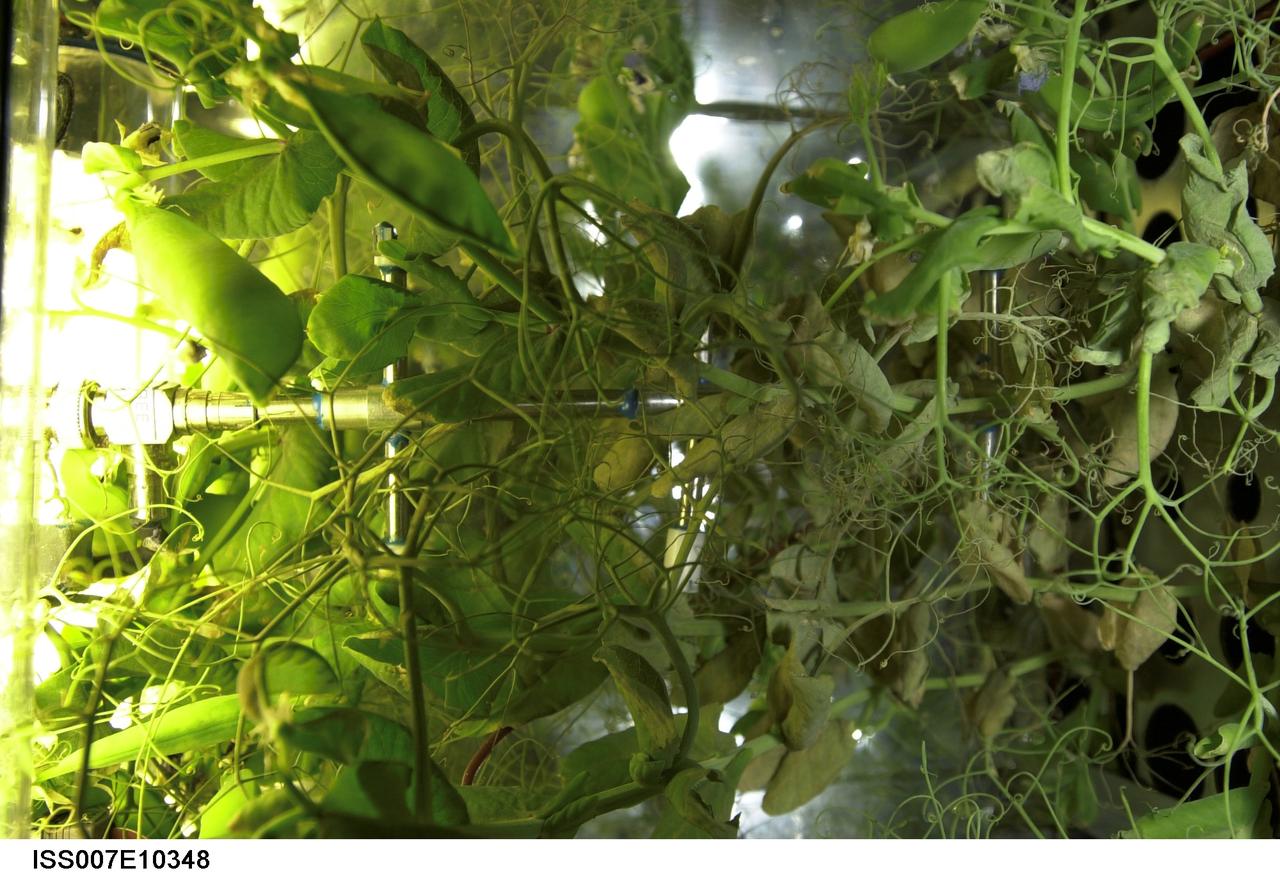
ISS007-E-10348 (July 2003) --- This view of a plant growth experiment inside the Russian Lada greenhouse, located in the Zvezda Service Module, was taken by an Expedition 7 crewmember onboard the International Space Station (ISS).
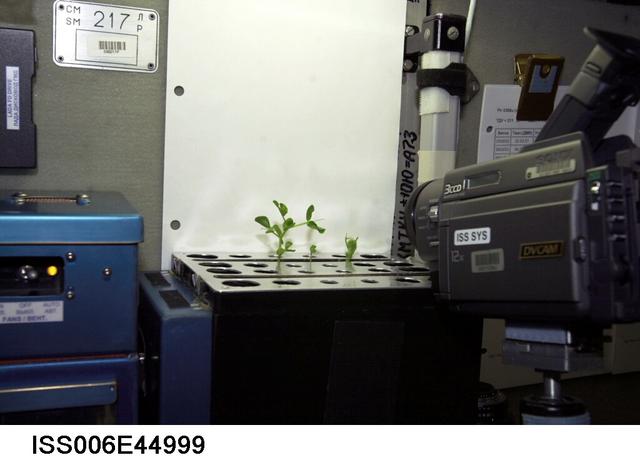
ISS006-E-44999 (12 March 2003) --- A view of the Russian BIO-5 Rasteniya-2/Lada-2 (Plants-2) plant growth experiment located in the Zvezda Service Module on the International Space Station (ISS). A camera used for recording progress of the experiment is visible on the right.
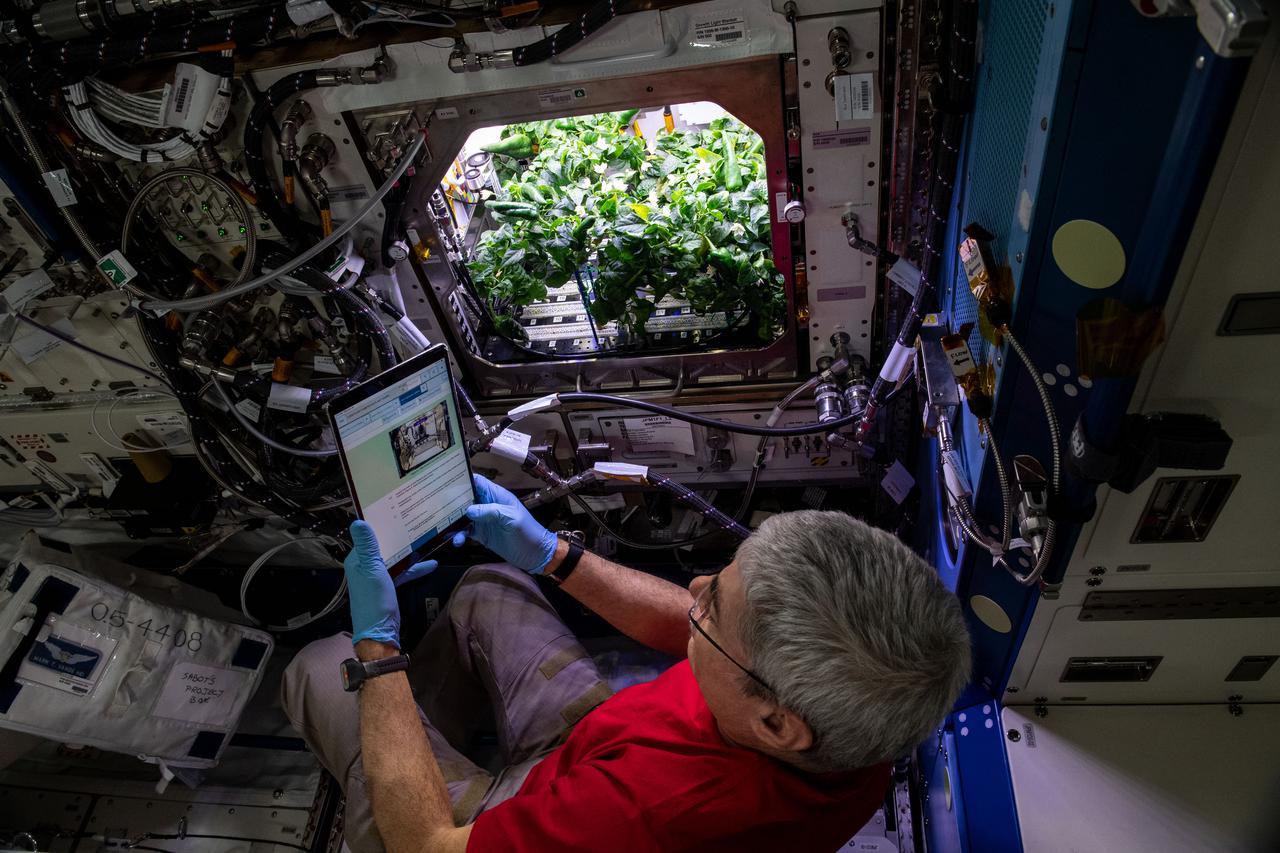
iss066e008125 (October 20, 2021) -- NASA astronaut and Expedition 65 Flight Engineer Mark Vande Hei prepares for the routine debris removal procedure for chile peppers growing in the Advanced Plant Habitat as part of the Plant Habit-04 experiment being conducted aboard the International Space Station. The chile pepper seeds started growing on July 12, 2021, and represent one of the longest and most challenging plant experiments attempted aboard the orbiting laboratory. They will be harvested twice, once in late October and again in late November. Astronauts will sanitize the peppers, eat part of their harvest, and return the rest to Earth for analysis. What we learn will inform future crop growth and food supplementation activities for deep space exploration.

Aboard the International Space Station (ISS), the Russian Lada greenhouse provides home to an experiment that investigates plant development and genetics. Space grown peas have dried and "gone to seed." The crew of the ISS will soon harvest the seeds. Eventually some will be replanted onboard the ISS, and some will be returned to Earth for further study.

Aboard the International Space Station (ISS), the Russian Lada greenhouse provides home to an experiment that investigates plant development and genetics. Space grown peas have dried and "gone to seed." The crew of the ISS will soon harvest the seeds. Eventually some will be replanted onboard the ISS, and some will be returned to Earth for further study.
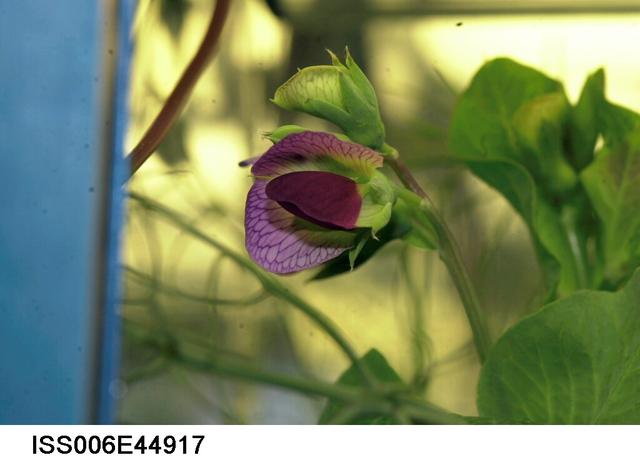
ISS006-E-44917 (5 April 2003) --- A close up view of a bloom on the Russian BIO-5 Rasteniya-2/Lada-2 (Plants-2) plant growth experiment, which is located in the Zvezda Service Module on the International Space Station (ISS).
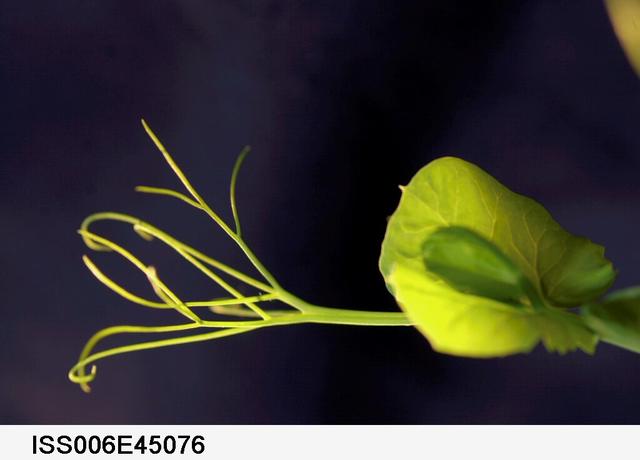
ISS006-E-45076 (17 March 2003) --- A close up view of sprouts on the Russian BIO-5 Rasteniya-2/Lada-2 (Plants-2) plant growth experiment, which is located in the Zvezda Service Module on the International Space Station (ISS).
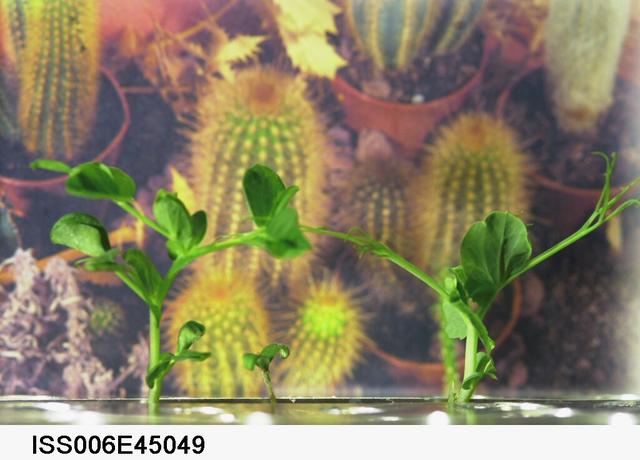
ISS006-E-45049 (14 March 2003) --- A close up view of sprouts on the Russian BIO-5 Rasteniya-2/Lada-2 (Plants-2) plant growth experiment, which is located in the Zvezda Service Module on the International Space Station (ISS).
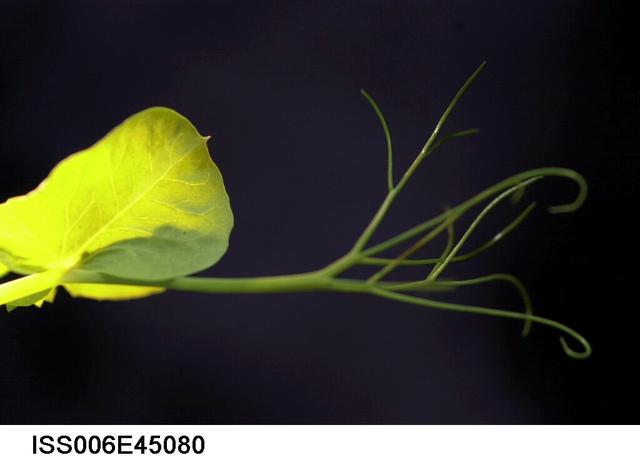
ISS006-E-45080 (17 March 2003) --- A close up view of sprouts on the Russian BIO-5 Rasteniya-2/Lada-2 (Plants-2) plant growth experiment, which is located in the Zvezda Service Module on the International Space Station (ISS).
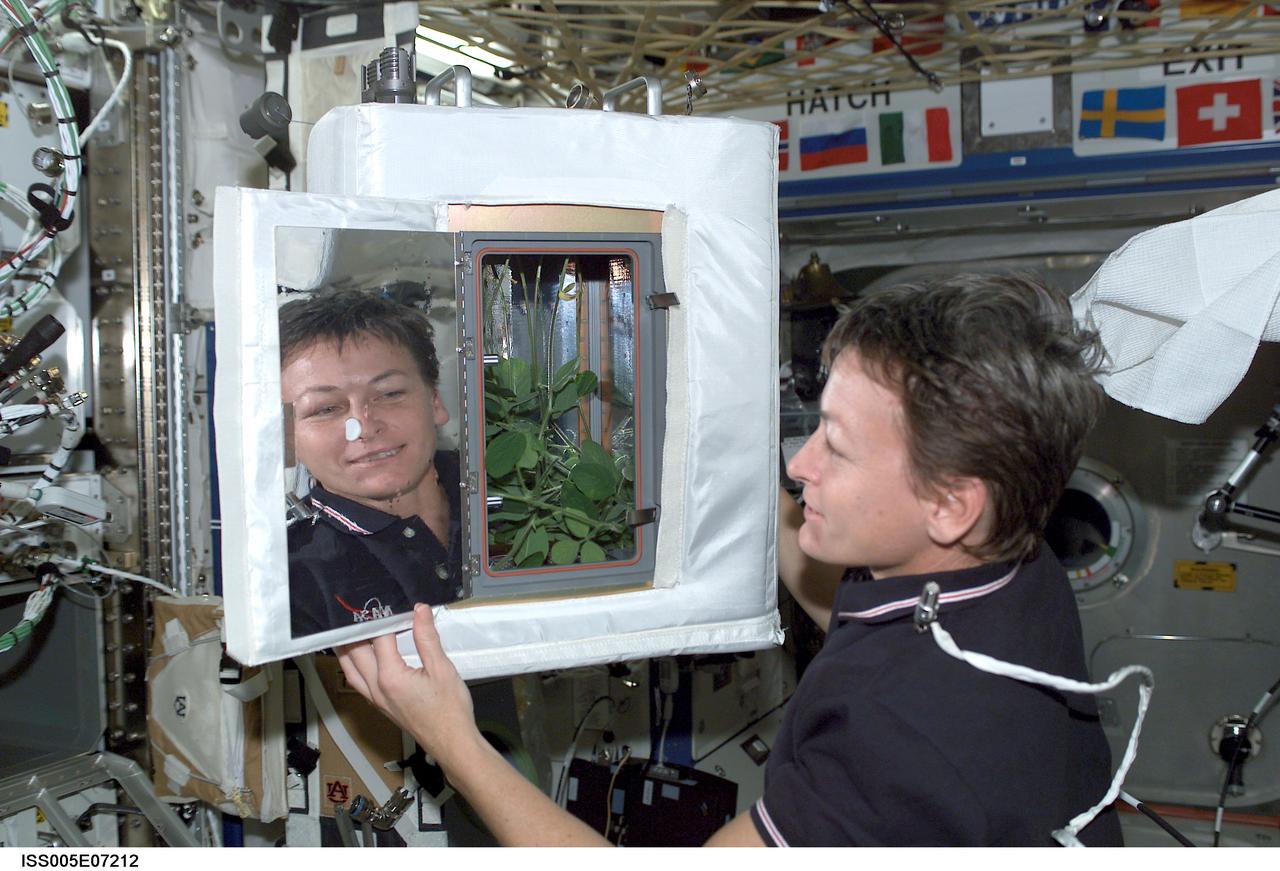
ISS005-E-07212 (10 July 2002) --- NASA Astronaut Peggy Whitson, Expedition 5 International Space Station (ISS) science officer, looks at the Advanced Astroculture (ADVASC) Soybean plant growth experiment as part of Expediting the Process of Experiments to the Space Station (EXPRESS) Rack 4 located in the U.S. Laboratory Destiny.
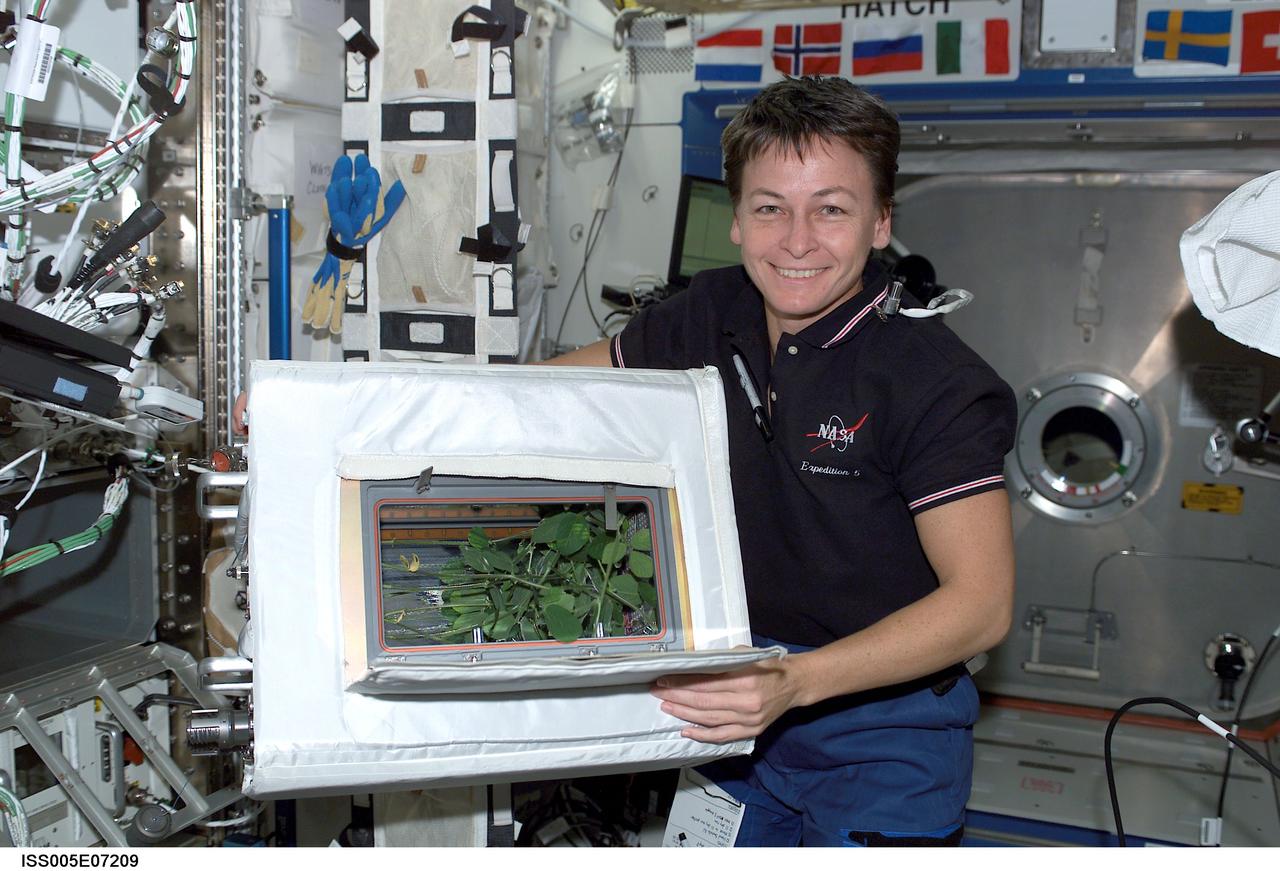
ISS005-E-07209 (10 July 2002) --- Astronaut Peggy A. Whitson, Expedition Five NASA ISS science officer, holds the Advanced Astroculture soybean plant growth experiment in the Destiny laboratory on the International Space Station (ISS).
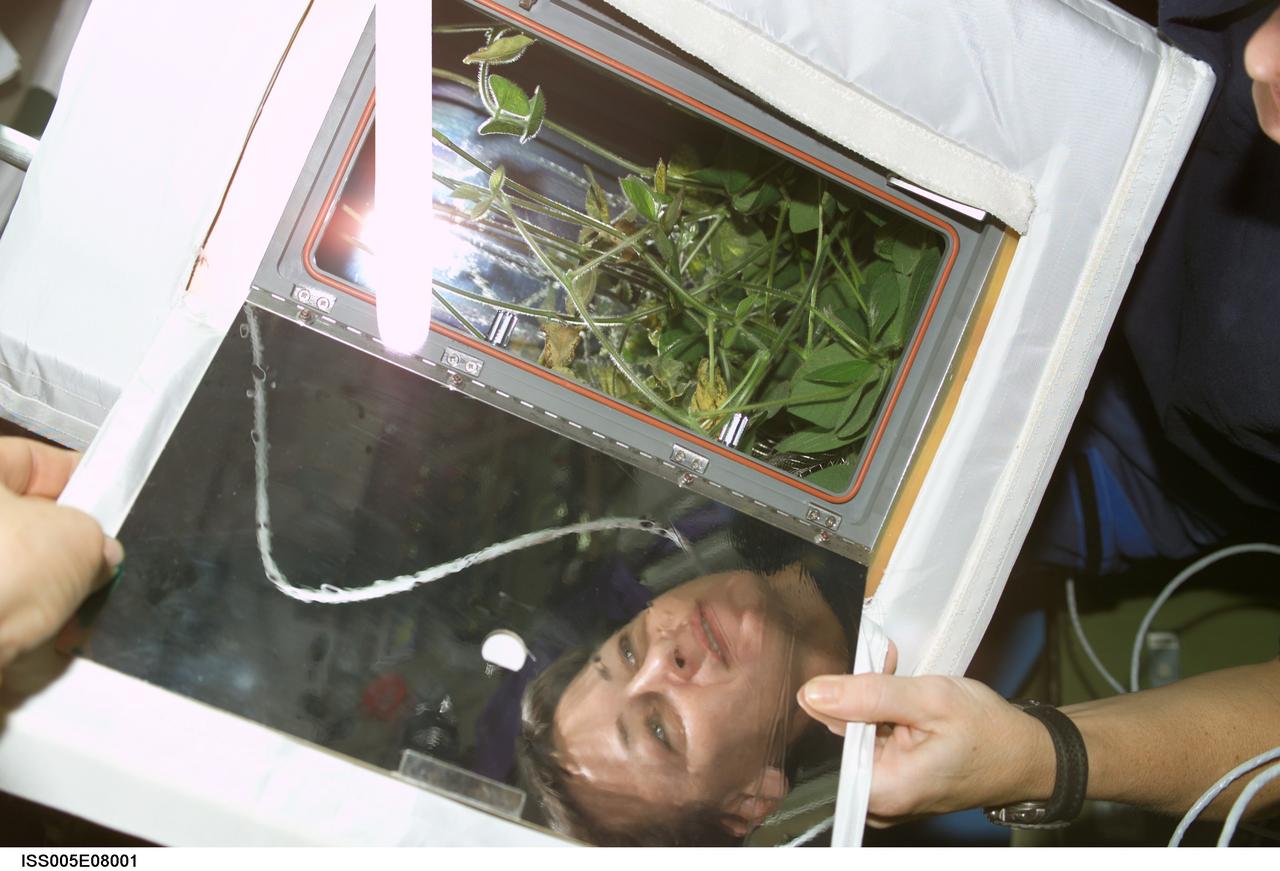
ISS005-E-08001 (18 July 2002) --- Astronaut Peggy A. Whitson, Expedition Five flight engineer, works with the Advanced Astroculture soybean plant growth experiment in the Destiny laboratory on the International Space Station (ISS).
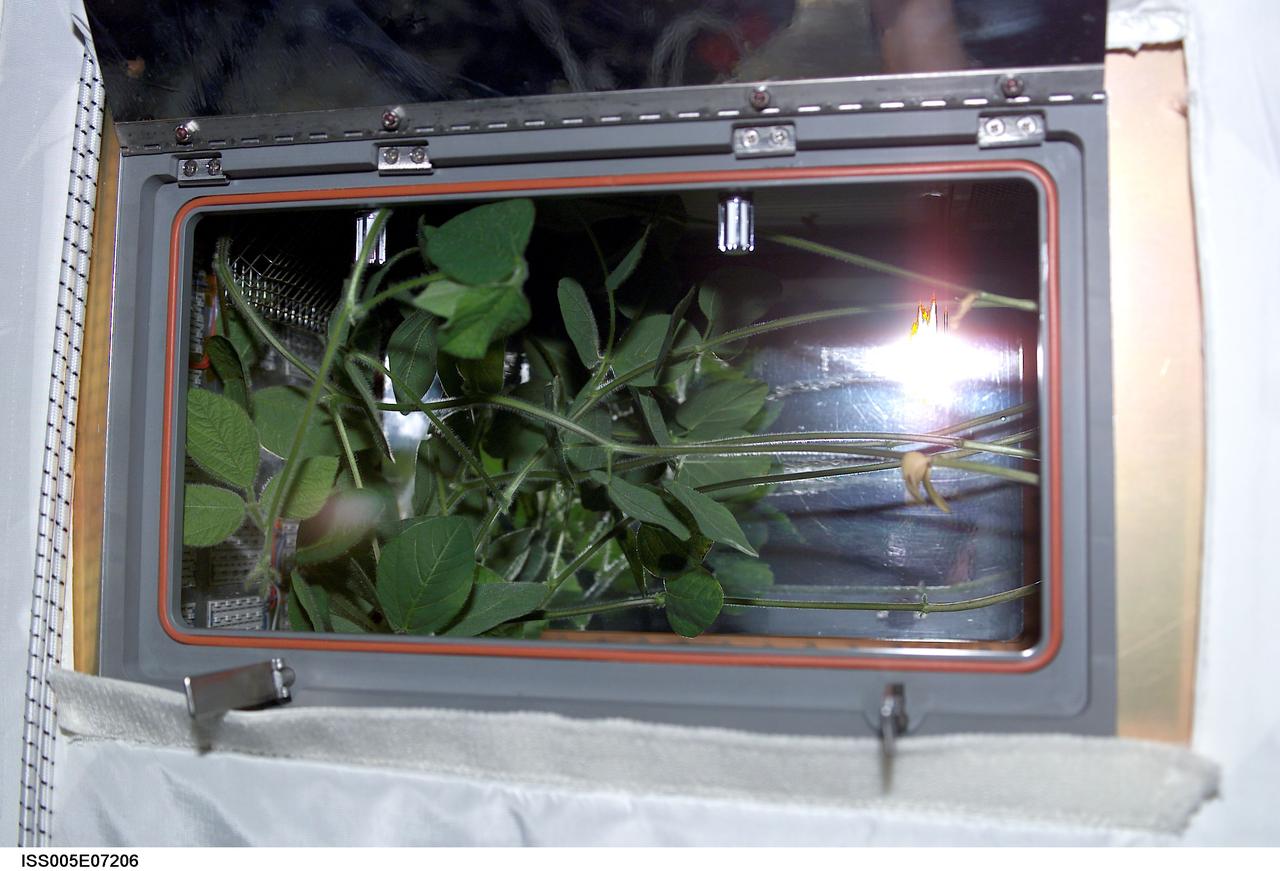
ISS005-E-07206 (10 July 2002) --- A close-up view of the Advanced Astroculture soybean plant growth experiment in the Destiny laboratory on the International Space Station (ISS).
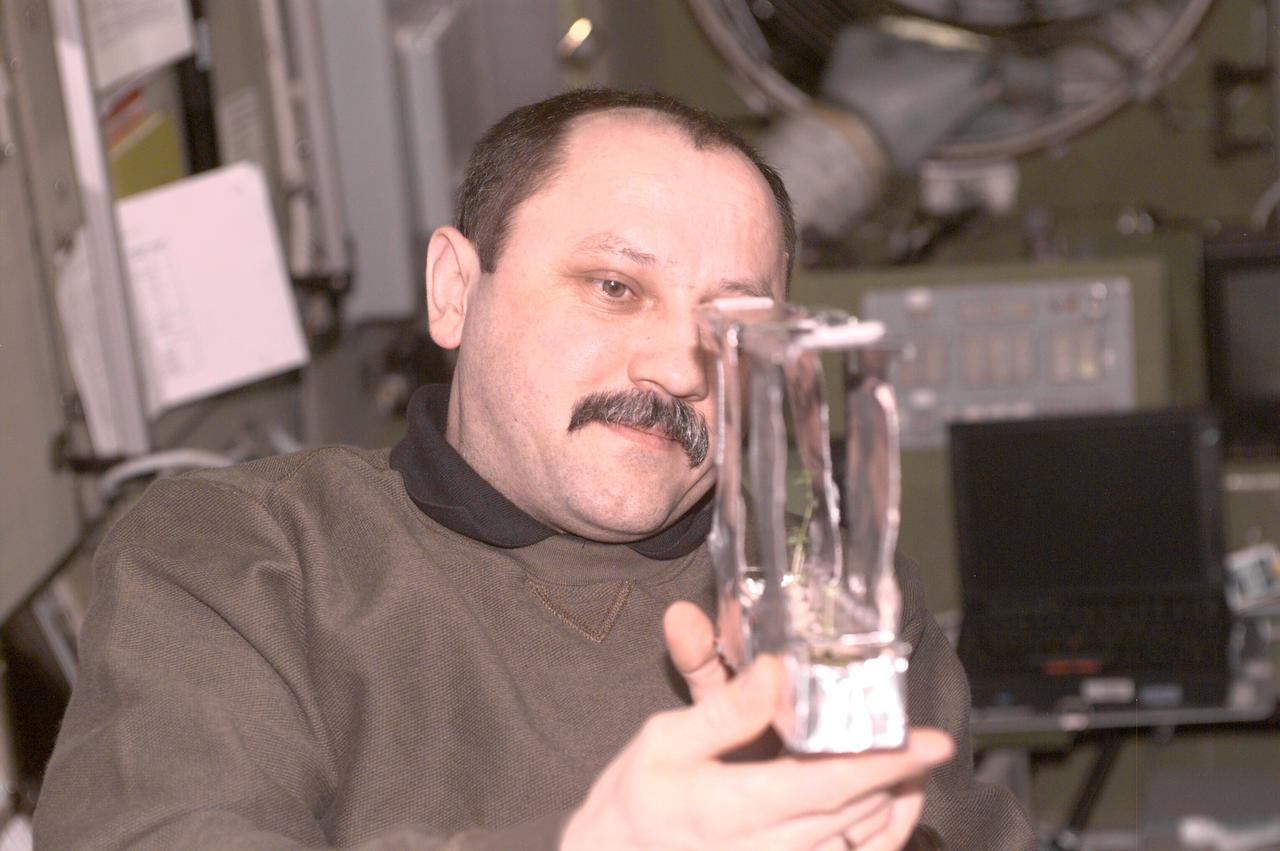
ISS003-E-5048 (August 2001) --- Yury V. Usachev of Rosaviakosmos, Expedition Two mission commander, examines a plant experiment in the Zvezda Service Module. This image was taken with a digital still camera.

ISS020-E-014558 (22 June 2009) --- Cosmonaut Gennady Padalka, Expedition 20 commander, works with plants growing in the Lada greenhouse as a part of the Russian BIO-5 Rasteniya-2/Lada-2 (Plants-2) plant growth experiment located in the Zvezda Service Module of the International Space Station.
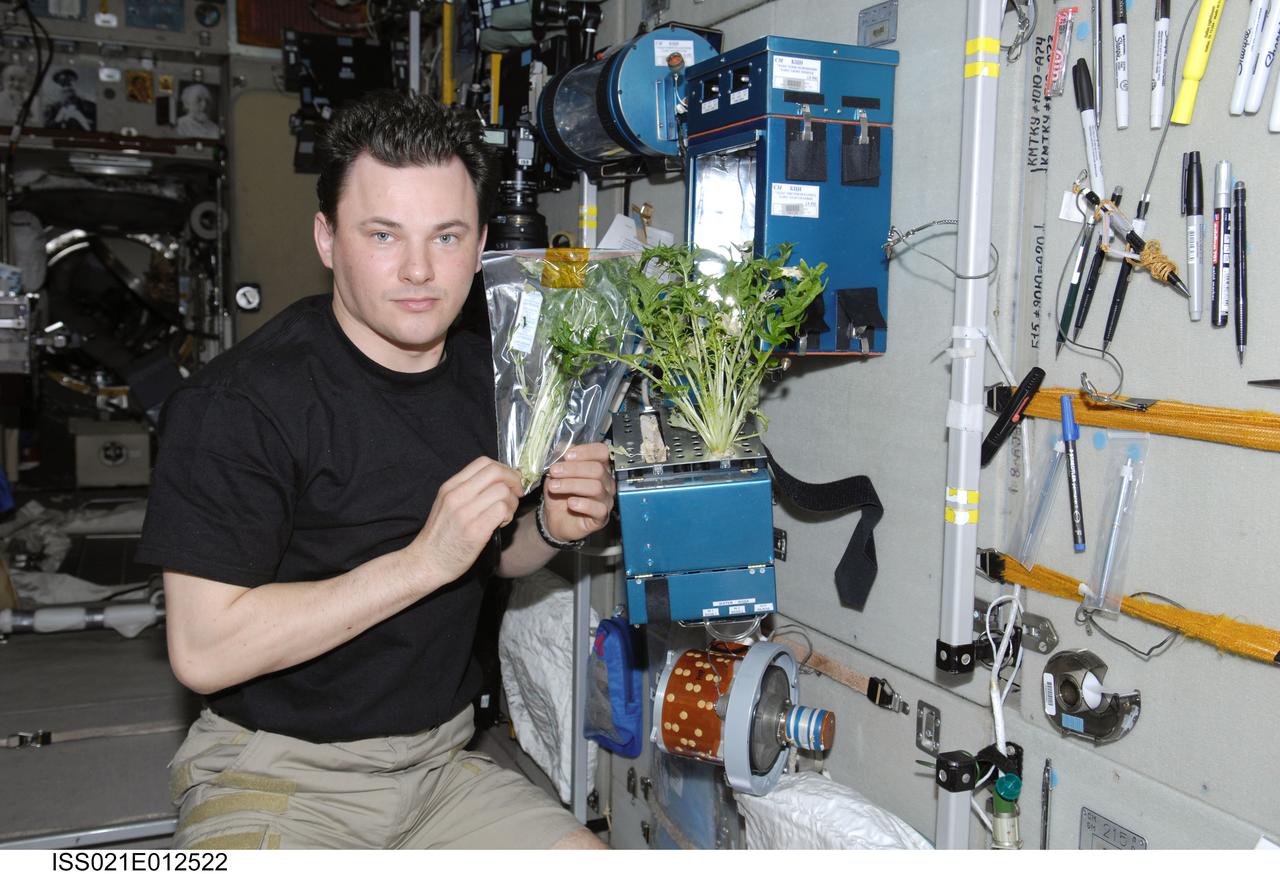
ISS021-E-012522 (26 Oct. 2009) --- Russian cosmonaut Roman Romanenko, Expedition 21 flight engineer, poses for a photo with the current growth experiment on the BIO-5 Rasteniya-2 (Plants-2) payload in the Zvezda Service Module of the International Space Station.
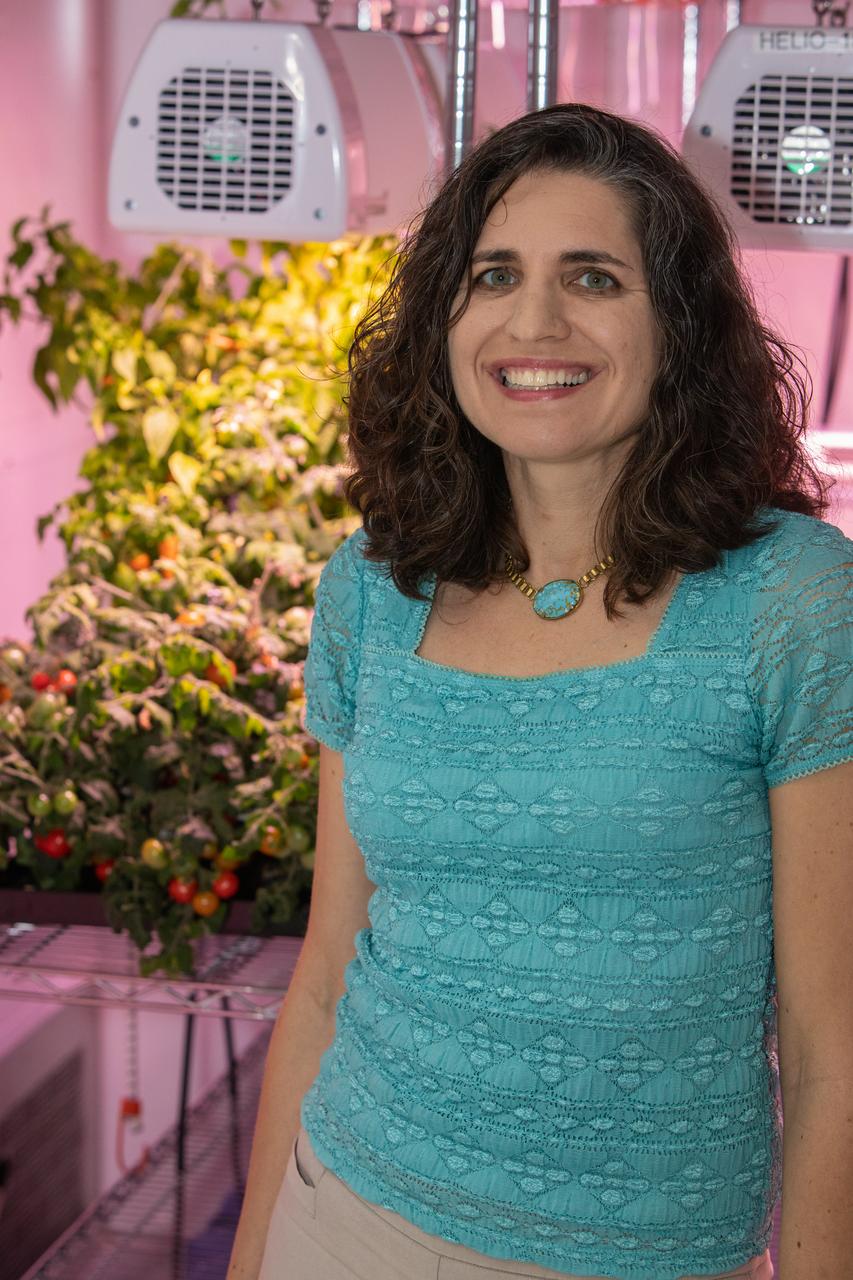
Gioia Massa, a NASA project scientist, poses inside a lab at the Space Station Processing Facility located at the agency’s Kennedy Space Center in Florida. Massa’s responsibilities include studying the effects of a microgravity environment on plant growth, discovering the perfect conditions for growing plants in space and determining what plant species grow the most effectively under those conditions. Massa and her team are currently experimenting with growing plants aboard the International Space Station to develop the knowhow to supplement astronauts’ packaged diets with freshly grown crops, which should facilitate long-duration exploration missions into deep space.
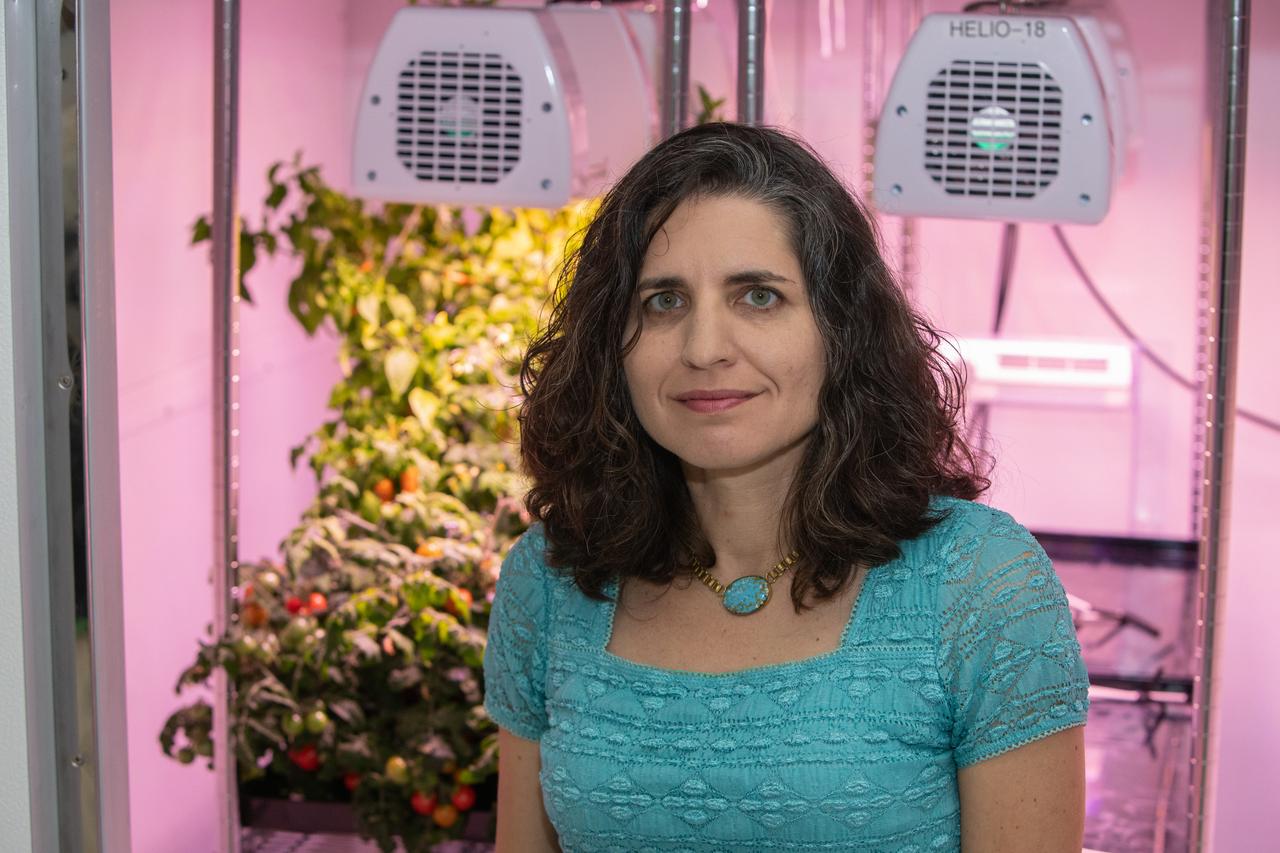
Gioia Massa, a NASA project scientist, poses inside a lab at the Space Station Processing Facility located at the agency’s Kennedy Space Center in Florida. Massa’s responsibilities include studying the effects of a microgravity environment on plant growth, discovering the perfect conditions for growing plants in space and determining what plant species grow the most effectively under those conditions. Massa and her team are currently experimenting with growing plants aboard the International Space Station to develop the knowhow to supplement astronauts’ packaged diets with freshly grown crops, which should facilitate long-duration exploration missions into deep space.
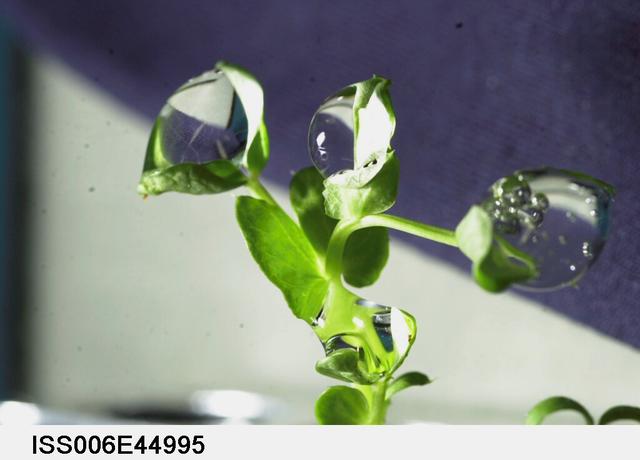
ISS006-E-44995 (10 March 2003) --- A close up view of water droplets on leaves on the Russian BIO-5 Rasteniya-2/Lada-2 (Plants-2) plant growth experiment, which is located in the Zvezda Service Module on the International Space Station (ISS).
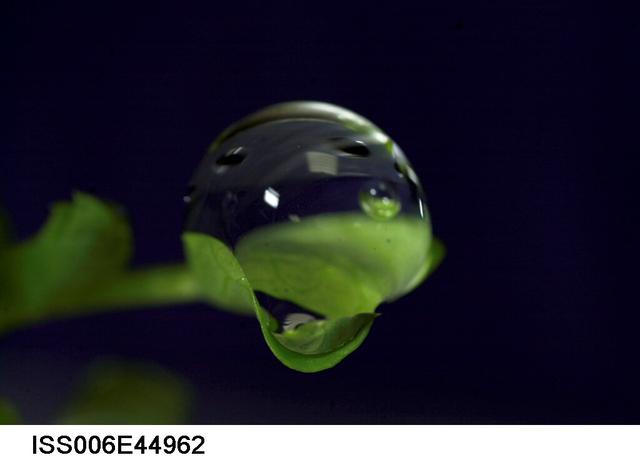
ISS006-E-44962 (9 March 2003) --- A close up view of a water droplet on a leaf on the Russian BIO-5 Rasteniya-2/Lada-2 (Plants-2) plant growth experiment, which is located in the Zvezda Service Module on the International Space Station (ISS).
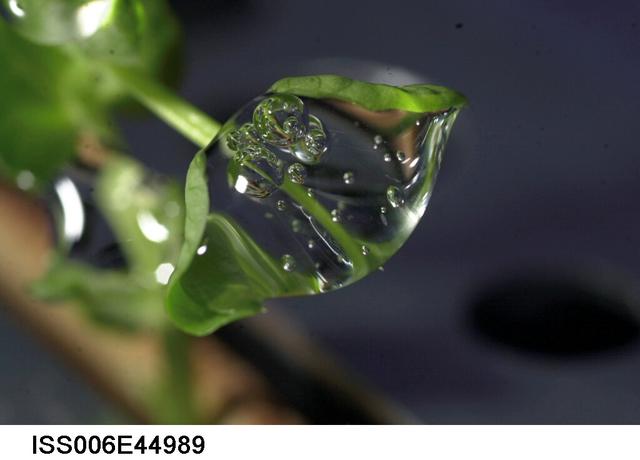
ISS006-E-44989 (10 March 2003) --- A close up view of a water droplet on a leaf on the Russian BIO-5 Rasteniya-2/Lada-2 (Plants-2) plant growth experiment, which is located in the Zvezda Service Module on the International Space Station (ISS).
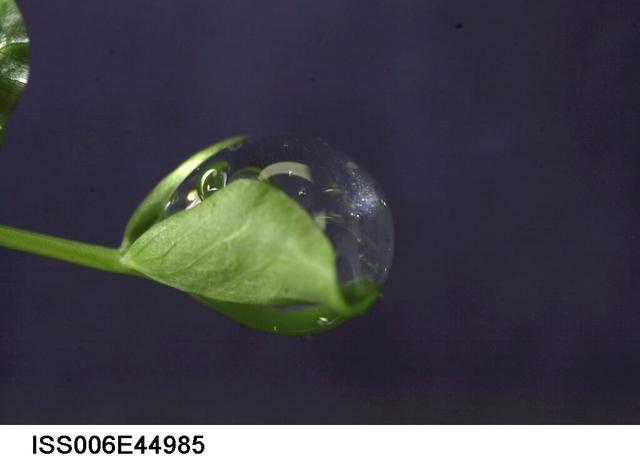
ISS006-E-44985 (10 March 2003) --- A close up view of a water droplet on a leaf on the Russian BIO-5 Rasteniya-2/Lada-2 (Plants-2) plant growth experiment, which is located in the Zvezda Service Module on the International Space Station (ISS).
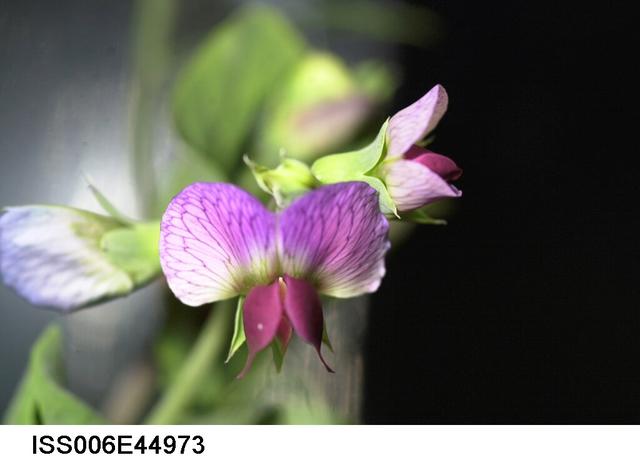
ISS006-E-44973 (6 April 2003) --- A close up view of a bloom on the Russian BIO-5 Rasteniya-2/Lada-2 (Plants-2) plant growth experiment, which is located in the Zvezda Service Module on the International Space Station (ISS).
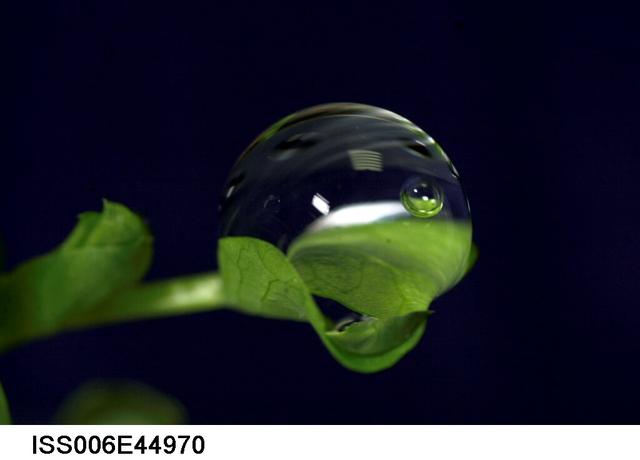
ISS006-E-44970 (9 March 2003) --- A close up view of a water droplet on a leaf on the Russian BIO-5 Rasteniya-2/Lada-2 (Plants-2) plant growth experiment, which is located in the Zvezda Service Module on the International Space Station (ISS).
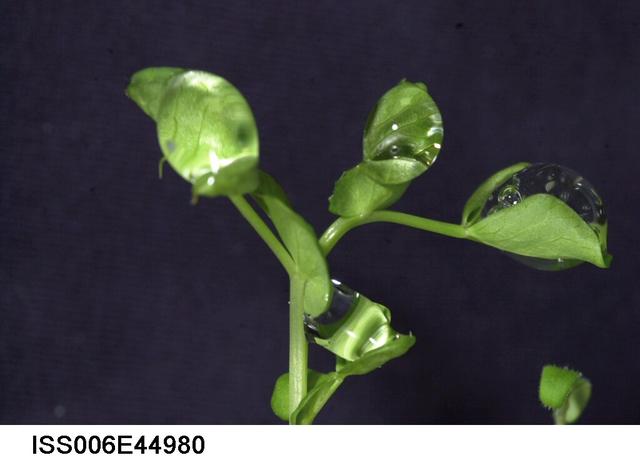
ISS006-E-44980 (10 March 2003) --- A close up view of water droplets on leaves on the Russian BIO-5 Rasteniya-2/Lada-2 (Plants-2) plant growth experiment, which is located in the Zvezda Service Module on the International Space Station (ISS).
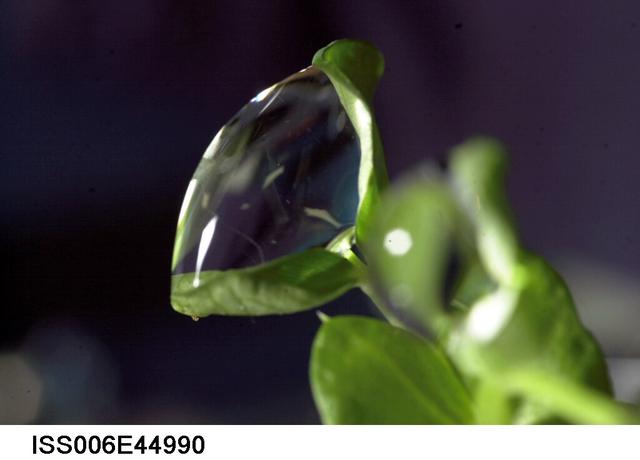
ISS006-E-44990 (10 March 2003) --- A close up view of a water droplet on a leaf on the Russian BIO-5 Rasteniya-2/Lada-2 (Plants-2) plant growth experiment, which is located in the Zvezda Service Module on the International Space Station (ISS).

ISS006-E-44929 (9 March 2003) --- A close up view of water droplets on leaves on the Russian BIO-5 Rasteniya-2/Lada-2 (Plants-2) plant growth experiment, which is located in the Zvezda Service Module on the International Space Station (ISS).
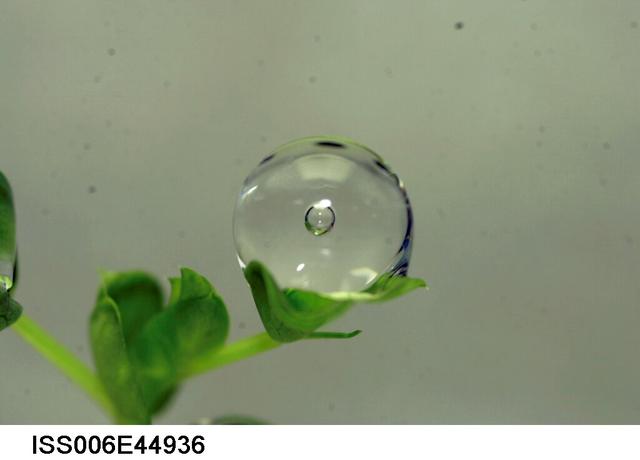
ISS006-E-44936 (9 March 2003) --- A close up view of a water droplet on a leaf on the Russian BIO-5 Rasteniya-2/Lada-2 (Plants-2) plant growth experiment, which is located in the Zvezda Service Module on the International Space Station (ISS).
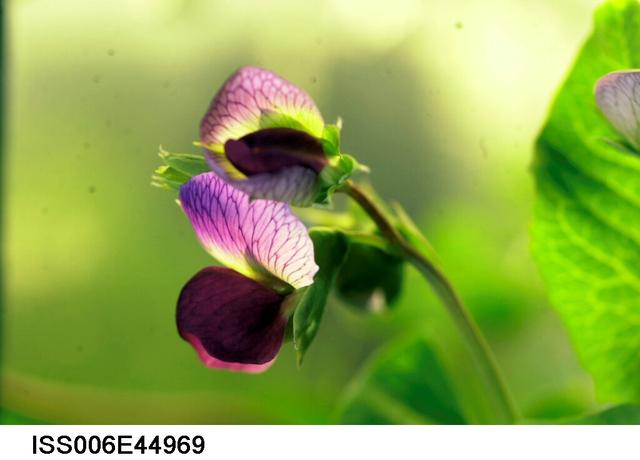
ISS006-E-44969 (6 April 2003) --- A close up view of a bloom on the Russian BIO-5 Rasteniya-2/Lada-2 (Plants-2) plant growth experiment, which is located in the Zvezda Service Module on the International Space Station (ISS).
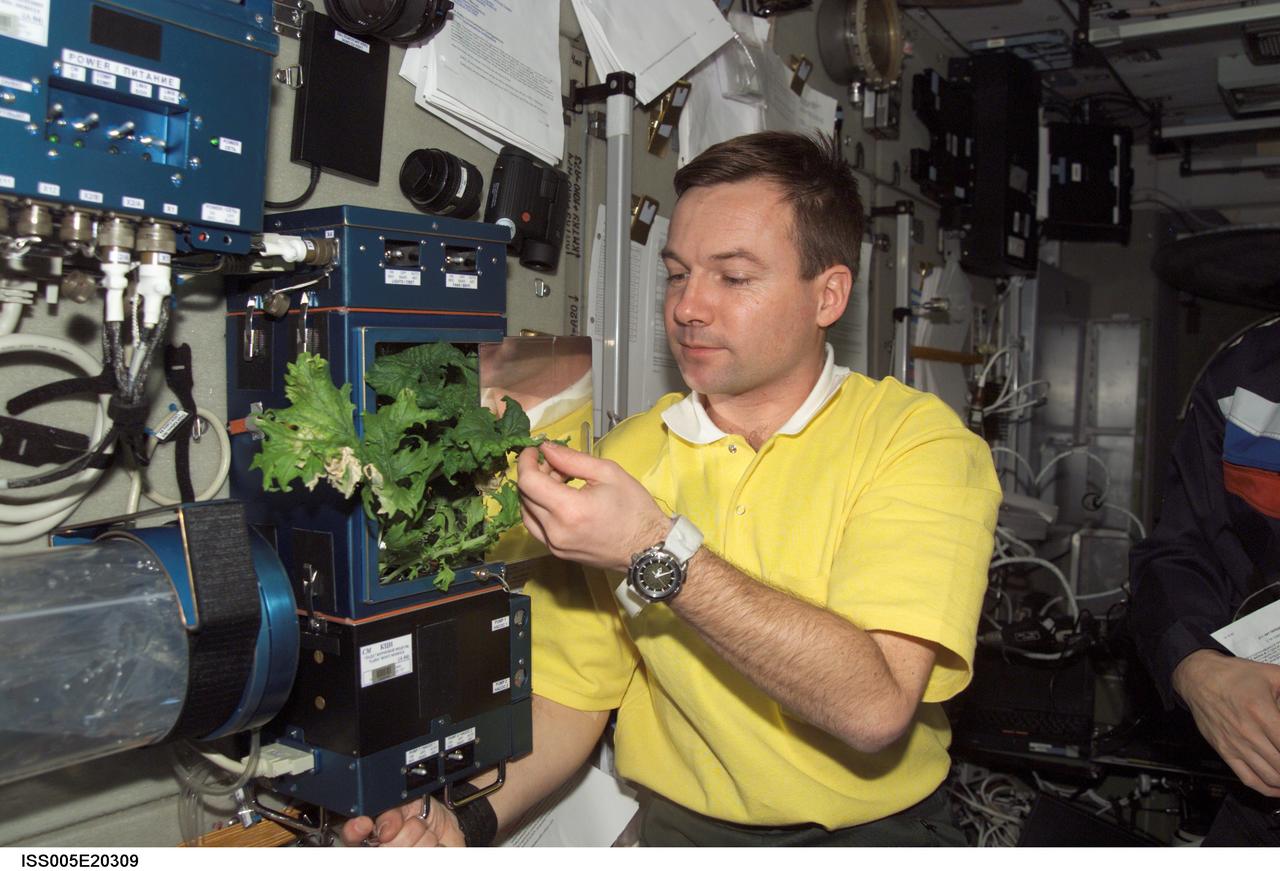
ISS005-E-20309 (8 November 2002) --- Soyuz 5 Flight Engineer Yuri V. Lonchakov looks at a plant growth experiment in the Zvezda Service Module on the International Space Station (ISS). Lonchakov represents Rosaviakosmos.
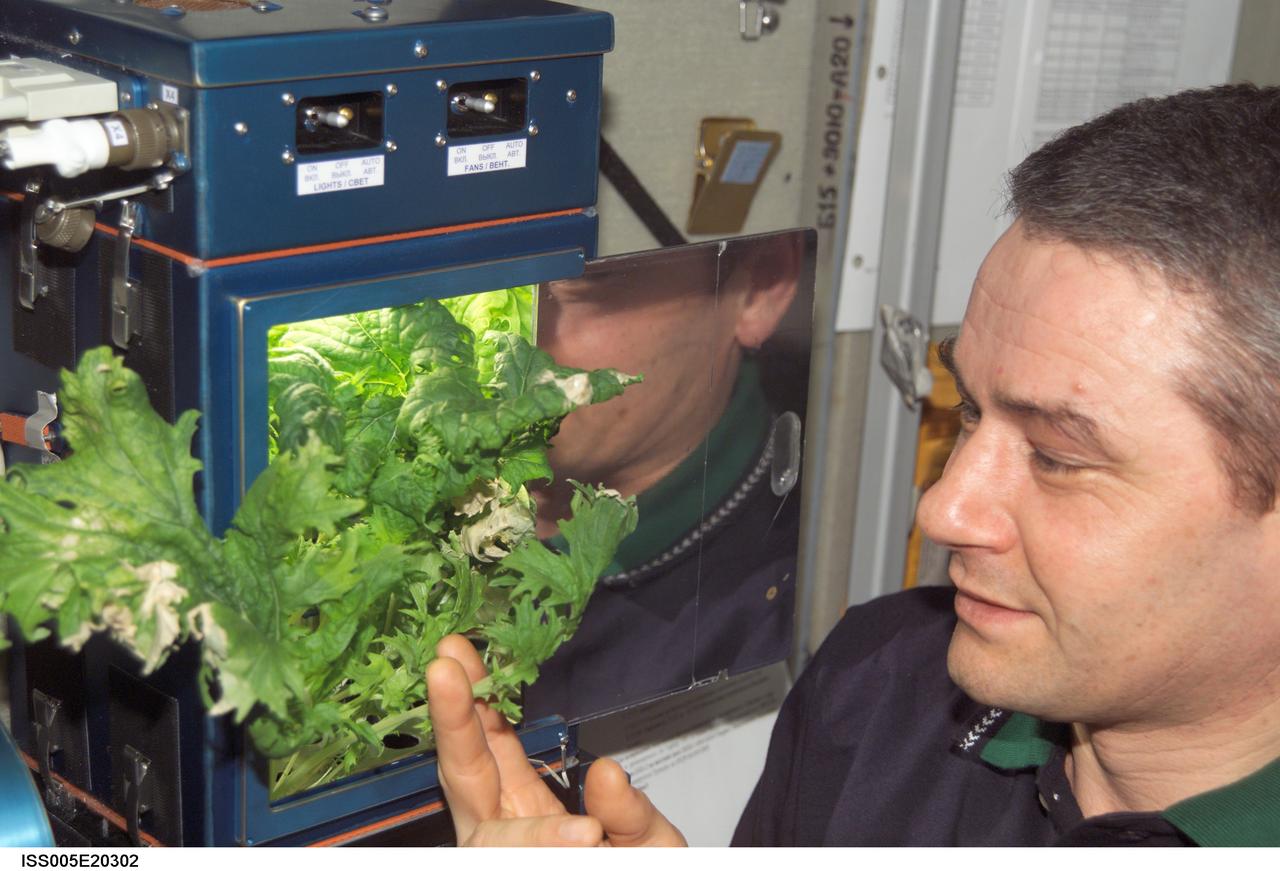
ISS005-E-20302 (8 November 2002) --- Cosmonaut Valery G. Korzun, Expedition Five mission commander, checks a plant growth experiment in the Zvezda Service Module on the International Space Station (ISS). Korzun represents Rosaviakosmos.
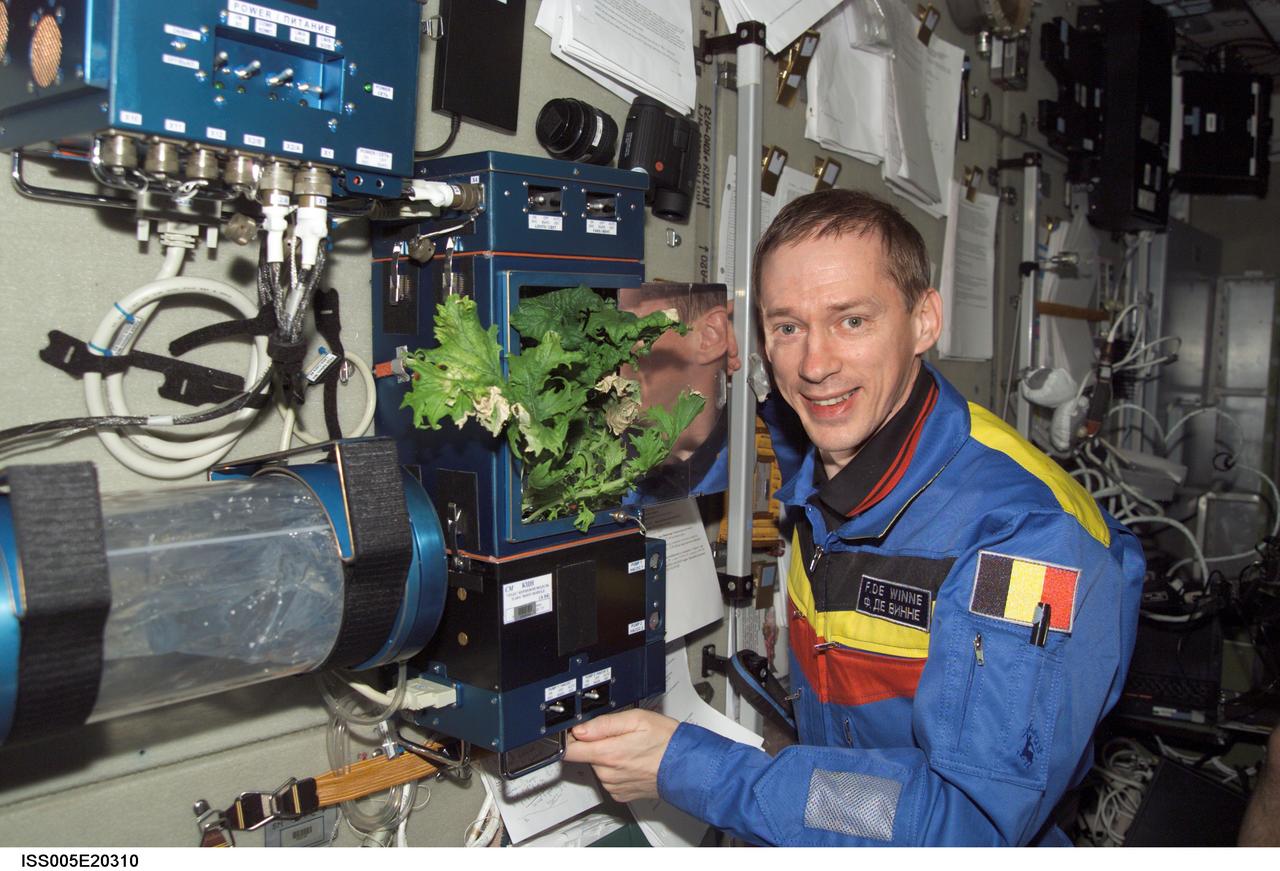
ISS005-E-20310 (8 November 2002) --- Belgian Soyuz 5 Flight Engineer Frank DeWinne is pictured near a plant growth experiment in the Zvezda Service Module on the International Space Station (ISS). DeWinne represents the European Space Agency (ESA).
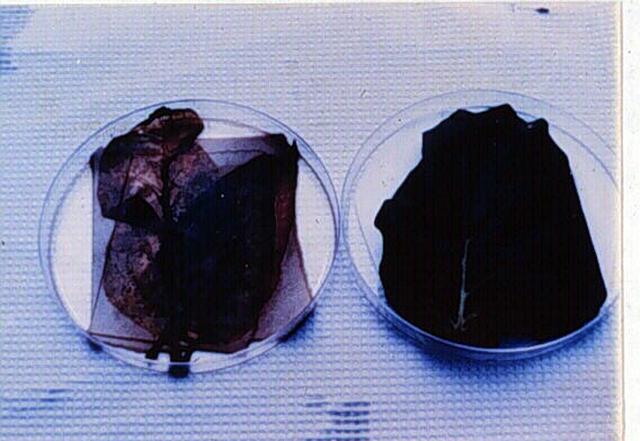
Researcher Dr. Yi Li developed a technique to manipulate certain characteristics of plant growth such as anit-senescence. For example, the tobacco leaf was clipped from a transgenic plant (right), and a wildtype plant (left). During ground-based laboratory studies, both leaves were left in a darkened area for 4 months. When retrieved, the wildtype plant leaf was dried-out and the transgenic leaf remained fresh and green. A variation of this technology that involves manipulating plant hormones has been conducted in space-based studies on tomato plants through BioServe Space Technologies. The transport and distribution of auxin, an important plant hormone has shown to be influenced by microgravity, which could lead to improving the quality of fruits and vegetables grown on Earth.
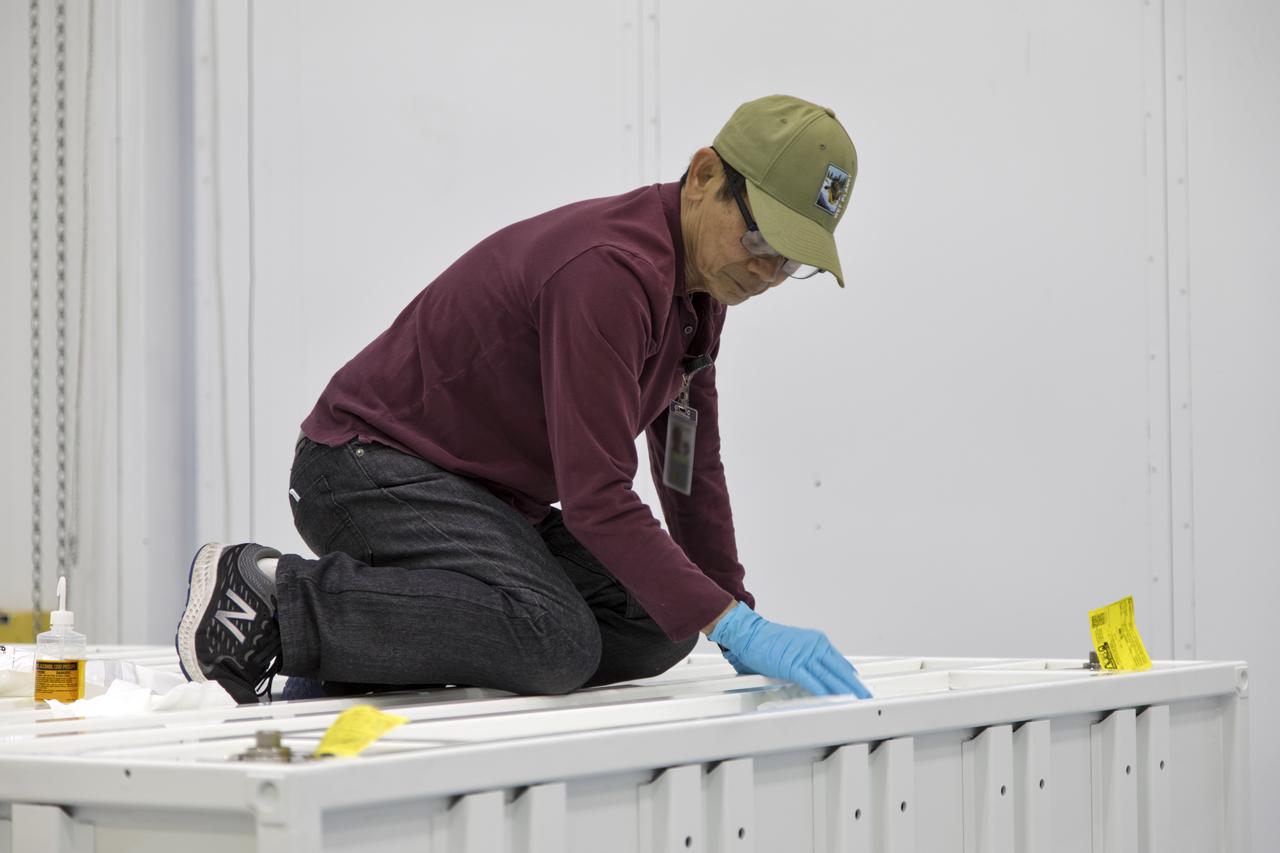
In the Space Station Processing Facility at NASA's Kennedy Space Center in Florida, the ECOsystem Spaceborne Thermal Radiometer Experiment on Space Station (ECOSTRESS) has arrived in its shipping container. The container is being inspected and thoroughly cleaned prior to opening. ECOSTRESS is designed to monitor one of the most basic processes in living plants: the loss of water through the tiny pores in leaves. ECOSTRESS will launch to the International Space Station aboard a Dragon spacecraft launched by a Falcon 9 rocket on the SpaceX CRS-15 mission in June 2018.
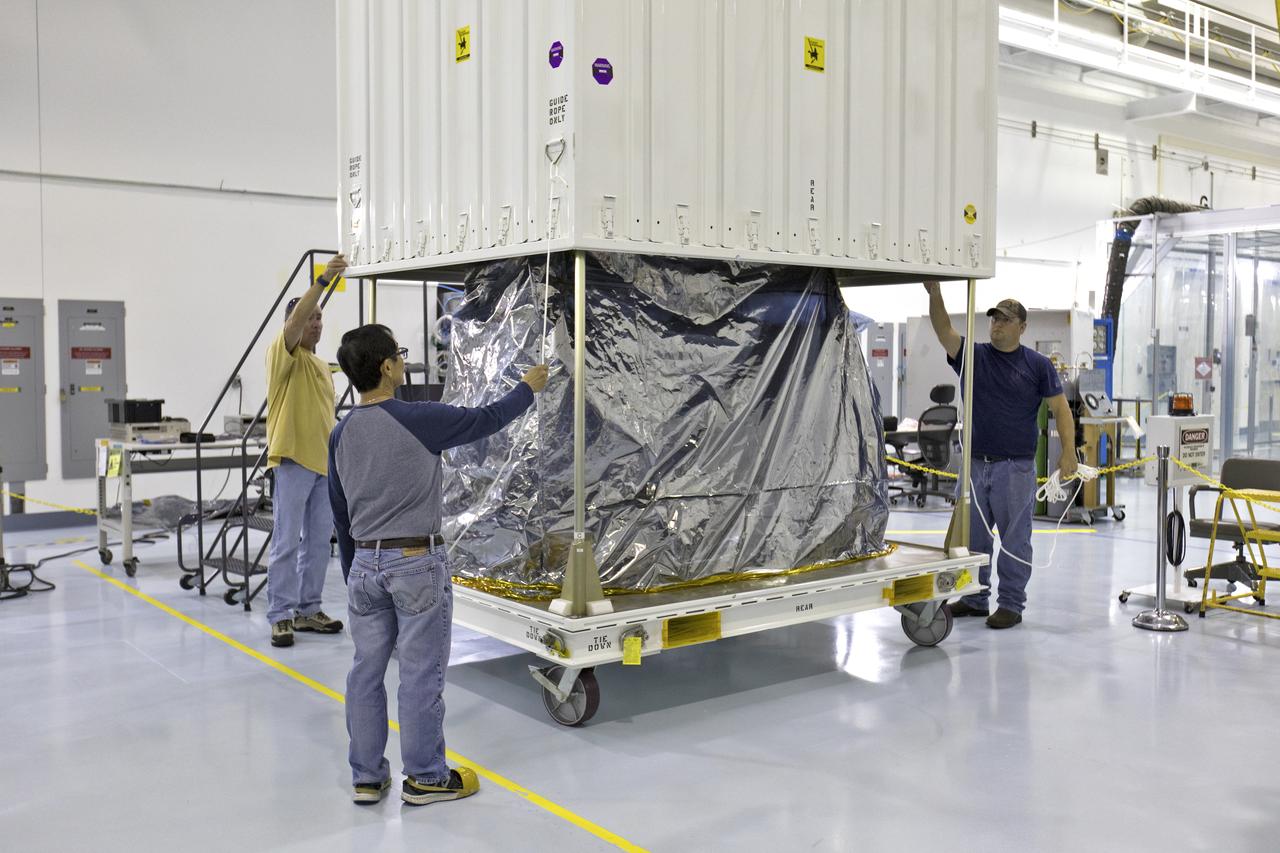
In the Space Station Processing Facility at NASA's Kennedy Space Center in Florida, the ECOsystem Spaceborne Thermal Radiometer Experiment on Space Station (ECOSTRESS) is removed from its shipping container. ECOSTRESS is designed to monitor one of the most basic processes in living plants: the loss of water through the tiny pores in leaves. ECOSTRESS will launch to the International Space Station aboard a Dragon spacecraft launched by a Falcon 9 rocket on the SpaceX CRS-15 mission in June 2018.
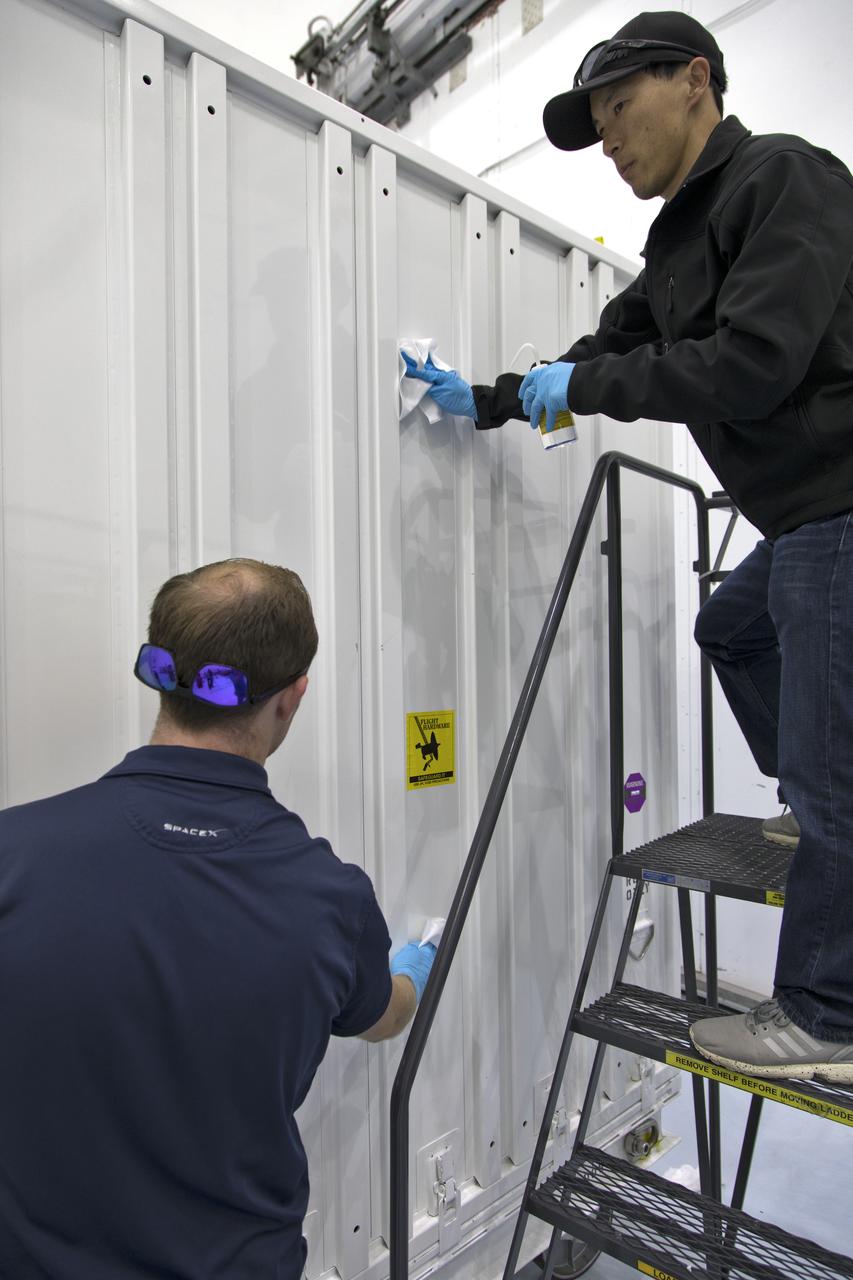
In the Space Station Processing Facility at NASA's Kennedy Space Center in Florida, the ECOsystem Spaceborne Thermal Radiometer Experiment on Space Station (ECOSTRESS) has arrived in its shipping container. The container is being inspected and thoroughly cleaned prior to opening. ECOSTRESS is designed to monitor one of the most basic processes in living plants: the loss of water through the tiny pores in leaves. ECOSTRESS will launch to the International Space Station aboard a Dragon spacecraft launched by a Falcon 9 rocket on the SpaceX CRS-15 mission in June 2018.
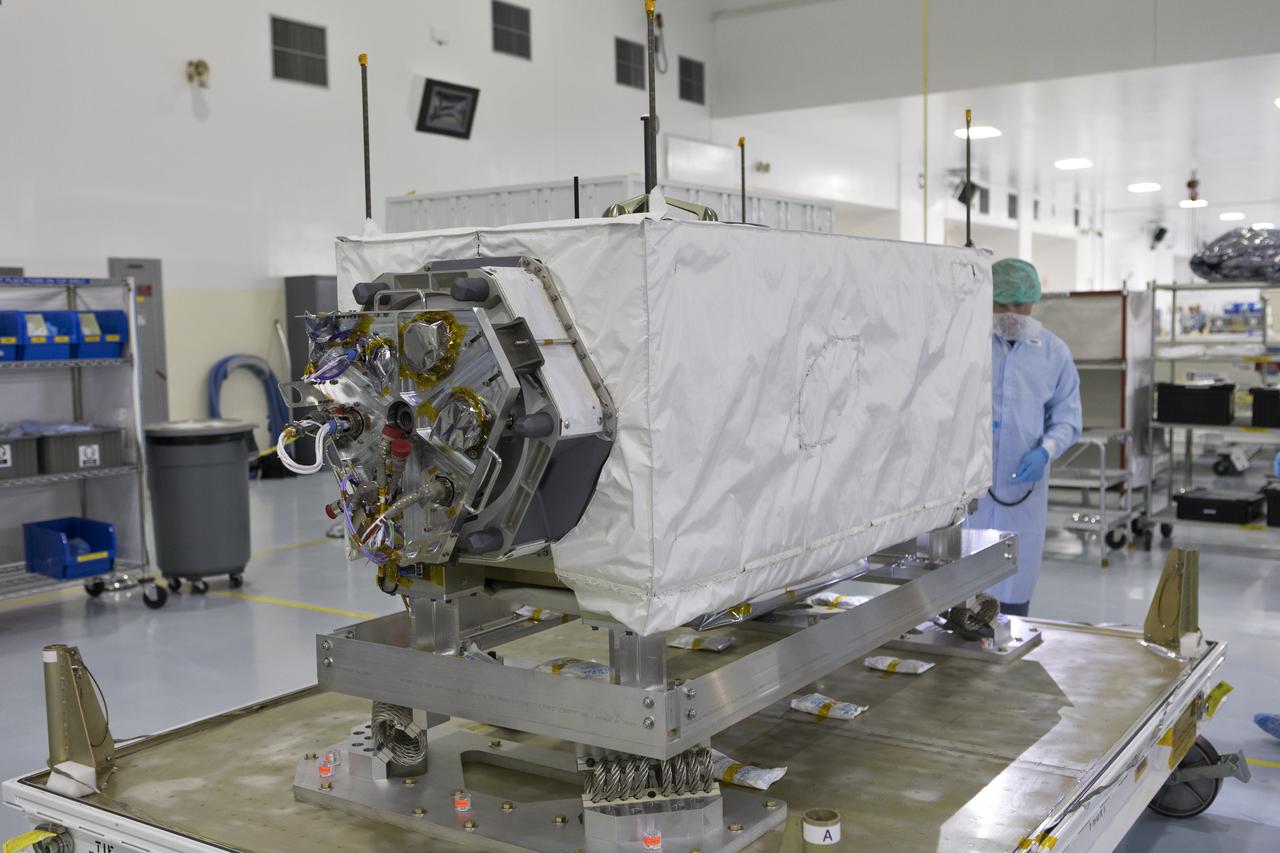
In the Space Station Processing Facility at NASA's Kennedy Space Center in Florida, the ECOsystem Spaceborne Thermal Radiometer Experiment on Space Station (ECOSTRESS) is inspected shortly after arrival. ECOSTRESS is designed to monitor one of the most basic processes in living plants: the loss of water through the tiny pores in leaves. ECOSTRESS will launch to the International Space Station aboard a Dragon spacecraft launched by a Falcon 9 rocket on the SpaceX CRS-15 mission in June 2018.
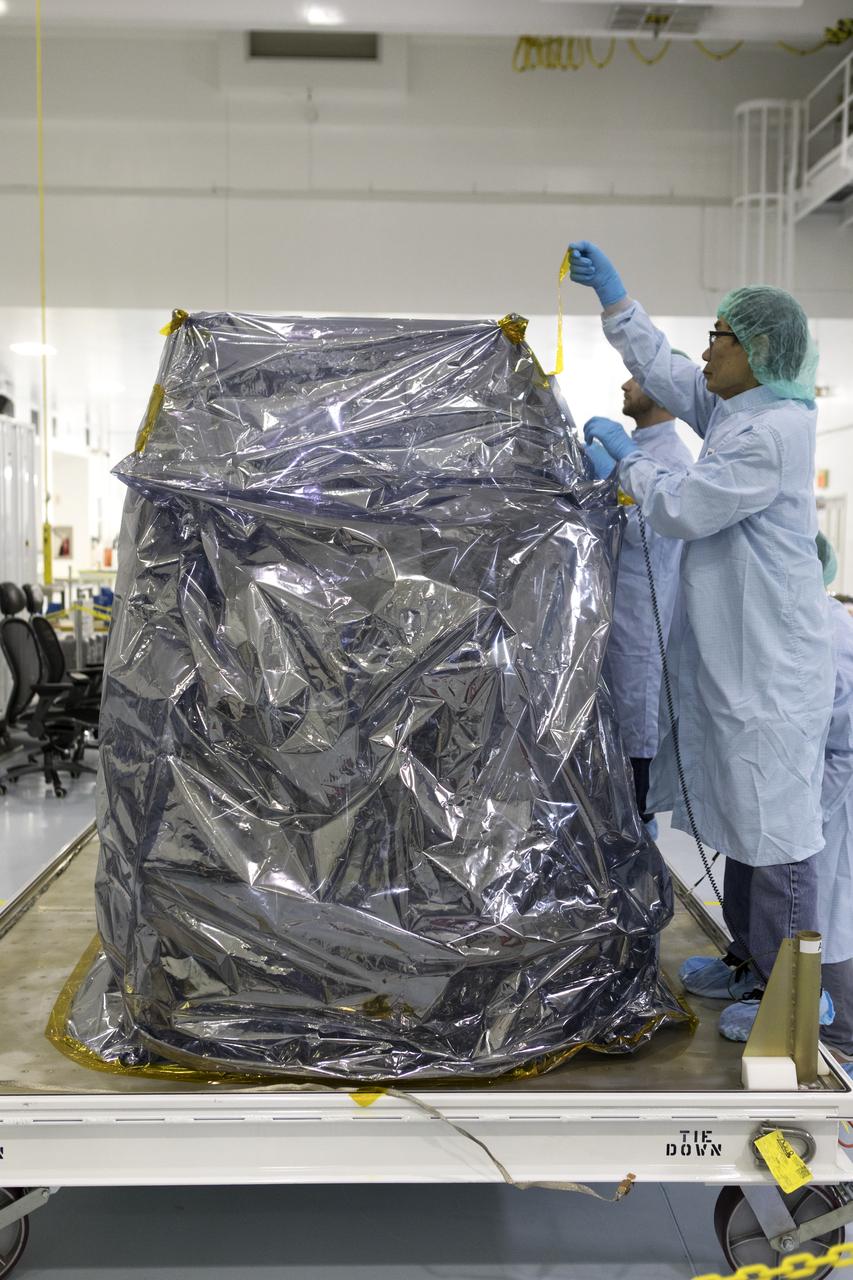
In the Space Station Processing Facility at NASA's Kennedy Space Center in Florida, the ECOsystem Spaceborne Thermal Radiometer Experiment on Space Station (ECOSTRESS) is removed from its shipping container. ECOSTRESS is designed to monitor one of the most basic processes in living plants: the loss of water through the tiny pores in leaves. ECOSTRESS will launch to the International Space Station aboard a Dragon spacecraft launched by a Falcon 9 rocket on the SpaceX CRS-15 mission in June 2018.
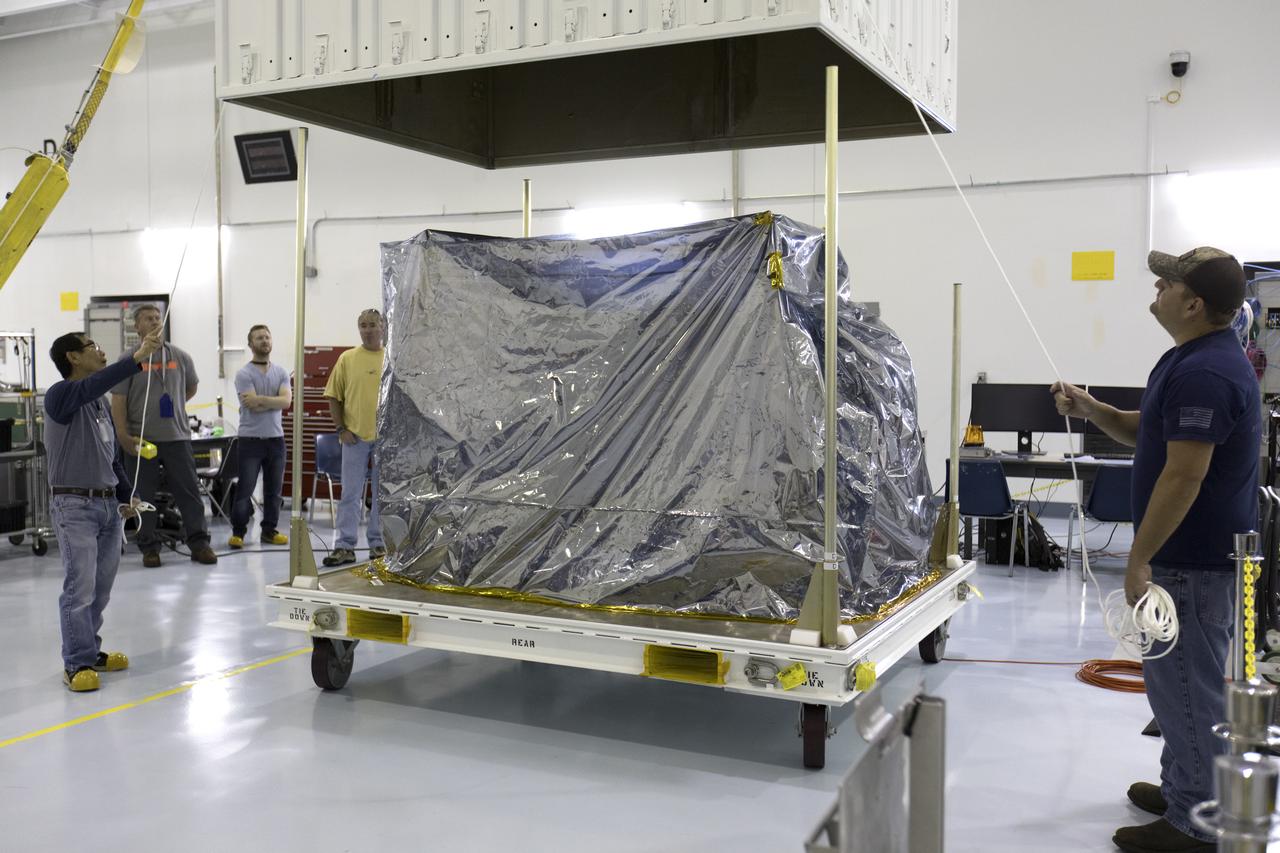
In the Space Station Processing Facility at NASA's Kennedy Space Center in Florida, the ECOsystem Spaceborne Thermal Radiometer Experiment on Space Station (ECOSTRESS) is removed from its shipping container. ECOSTRESS is designed to monitor one of the most basic processes in living plants: the loss of water through the tiny pores in leaves. ECOSTRESS will launch to the International Space Station aboard a Dragon spacecraft launched by a Falcon 9 rocket on the SpaceX CRS-15 mission in June 2018.
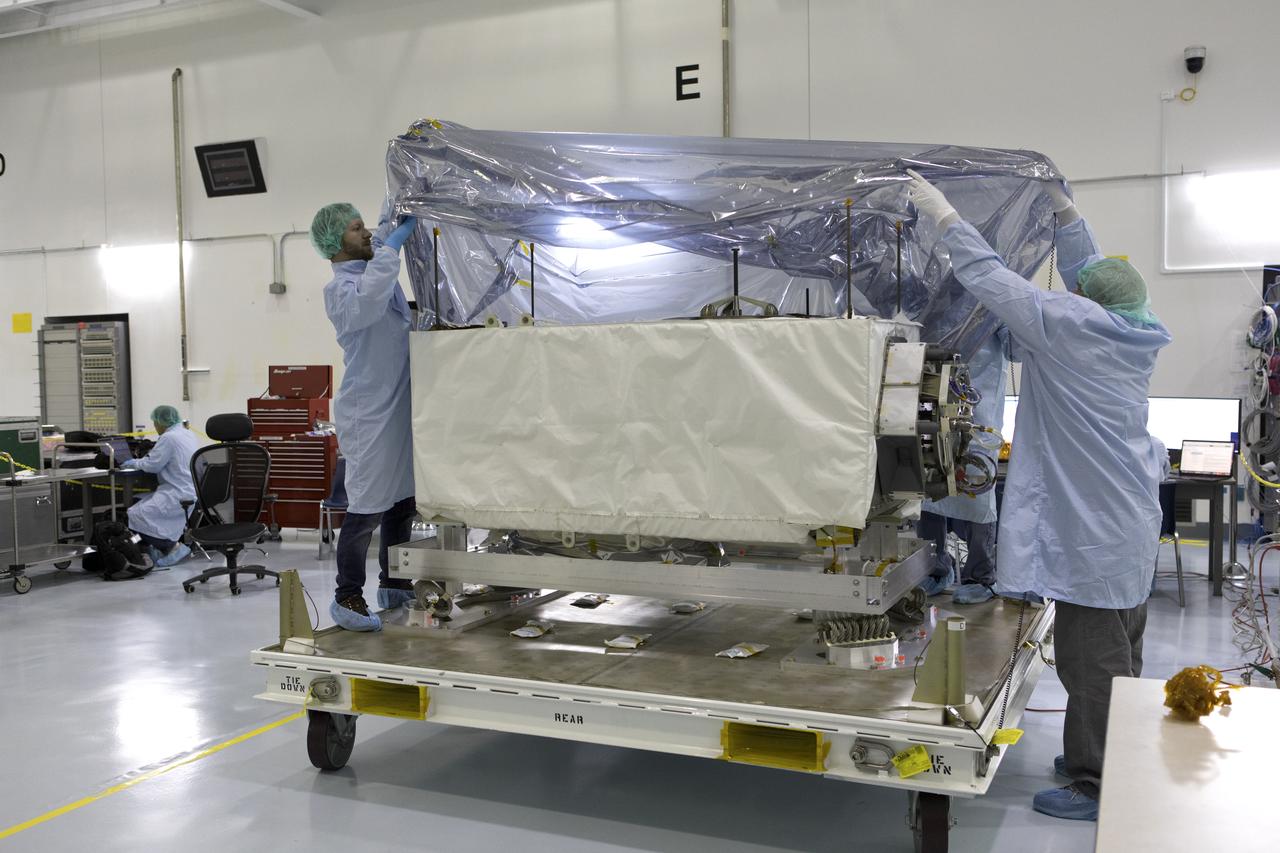
In the Space Station Processing Facility at NASA's Kennedy Space Center in Florida, technicians and engineers removed protective wrapping from the ECOsystem Spaceborne Thermal Radiometer Experiment on Space Station (ECOSTRESS). ECOSTRESS is designed to monitor one of the most basic processes in living plants: the loss of water through the tiny pores in leaves. ECOSTRESS will launch to the International Space Station aboard a Dragon spacecraft launched by a Falcon 9 rocket on the SpaceX CRS-15 mission in June 2018.
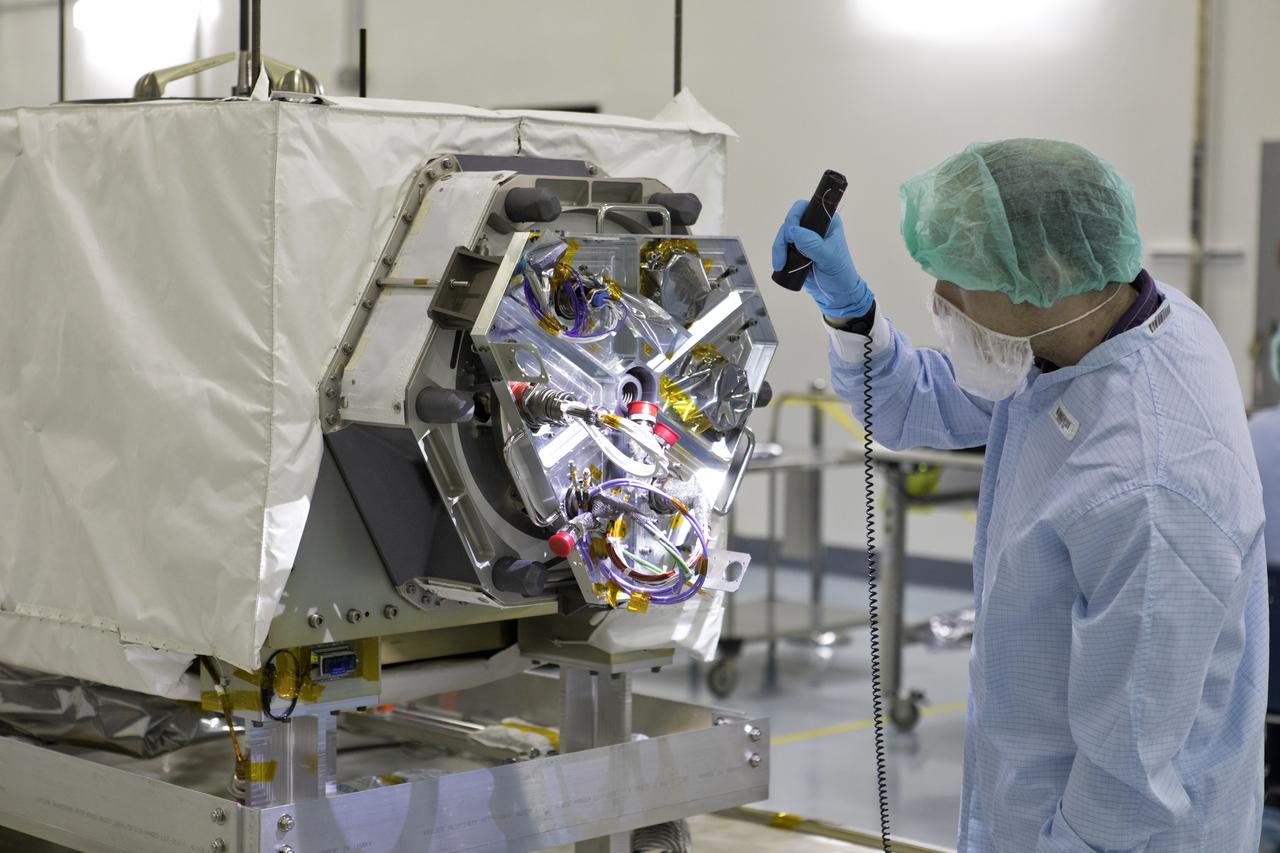
In the Space Station Processing Facility at NASA's Kennedy Space Center in Florida, the ECOsystem Spaceborne Thermal Radiometer Experiment on Space Station (ECOSTRESS) is inspected shortly after arrival. ECOSTRESS is designed to monitor one of the most basic processes in living plants: the loss of water through the tiny pores in leaves. ECOSTRESS will launch to the International Space Station aboard a Dragon spacecraft launched by a Falcon 9 rocket on the SpaceX CRS-15 mission in June 2018.
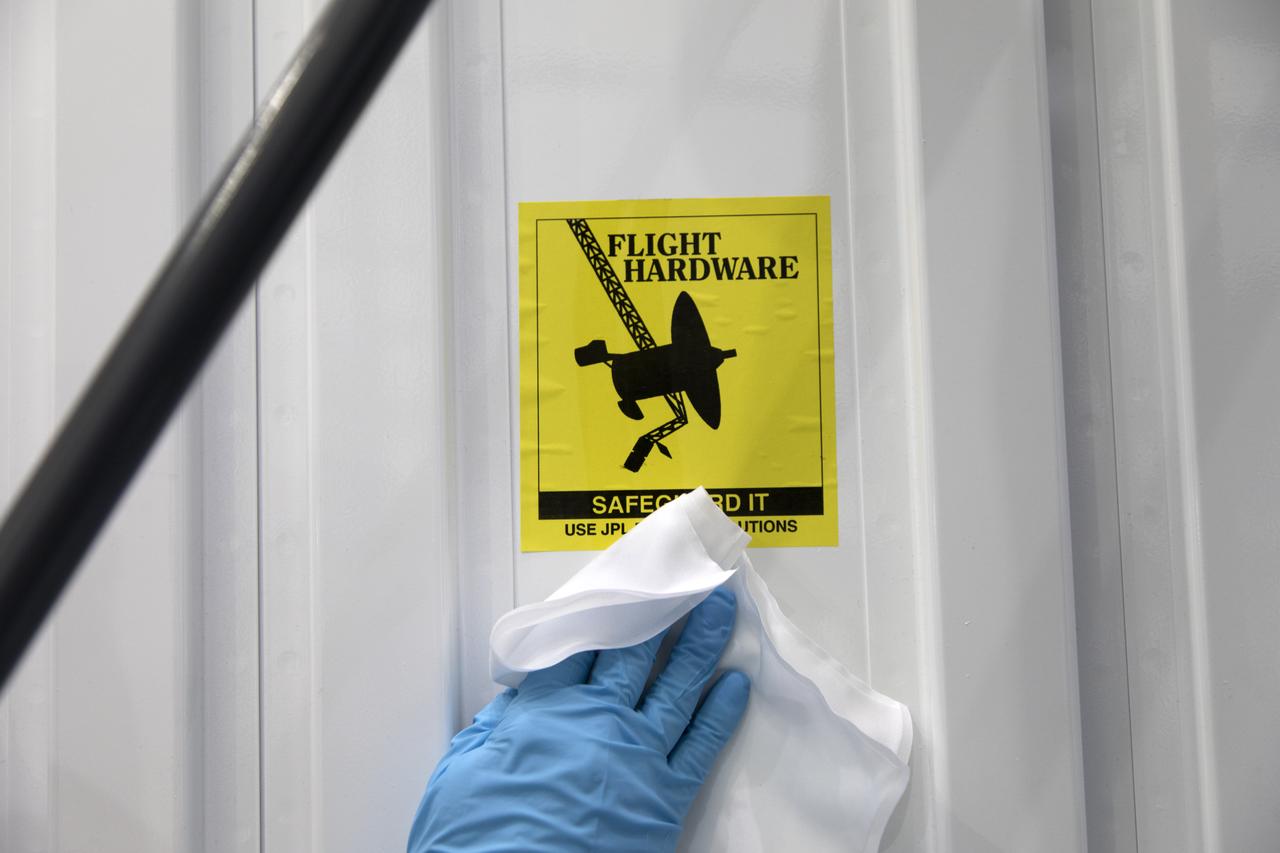
In the Space Station Processing Facility at NASA's Kennedy Space Center in Florida, the ECOsystem Spaceborne Thermal Radiometer Experiment on Space Station (ECOSTRESS) has arrived in its shipping container. The container is being inspected and thoroughly cleaned prior to opening. ECOSTRESS is designed to monitor one of the most basic processes in living plants: the loss of water through the tiny pores in leaves. ECOSTRESS will launch to the International Space Station aboard a Dragon spacecraft launched by a Falcon 9 rocket on the SpaceX CRS-15 mission in June 2018.
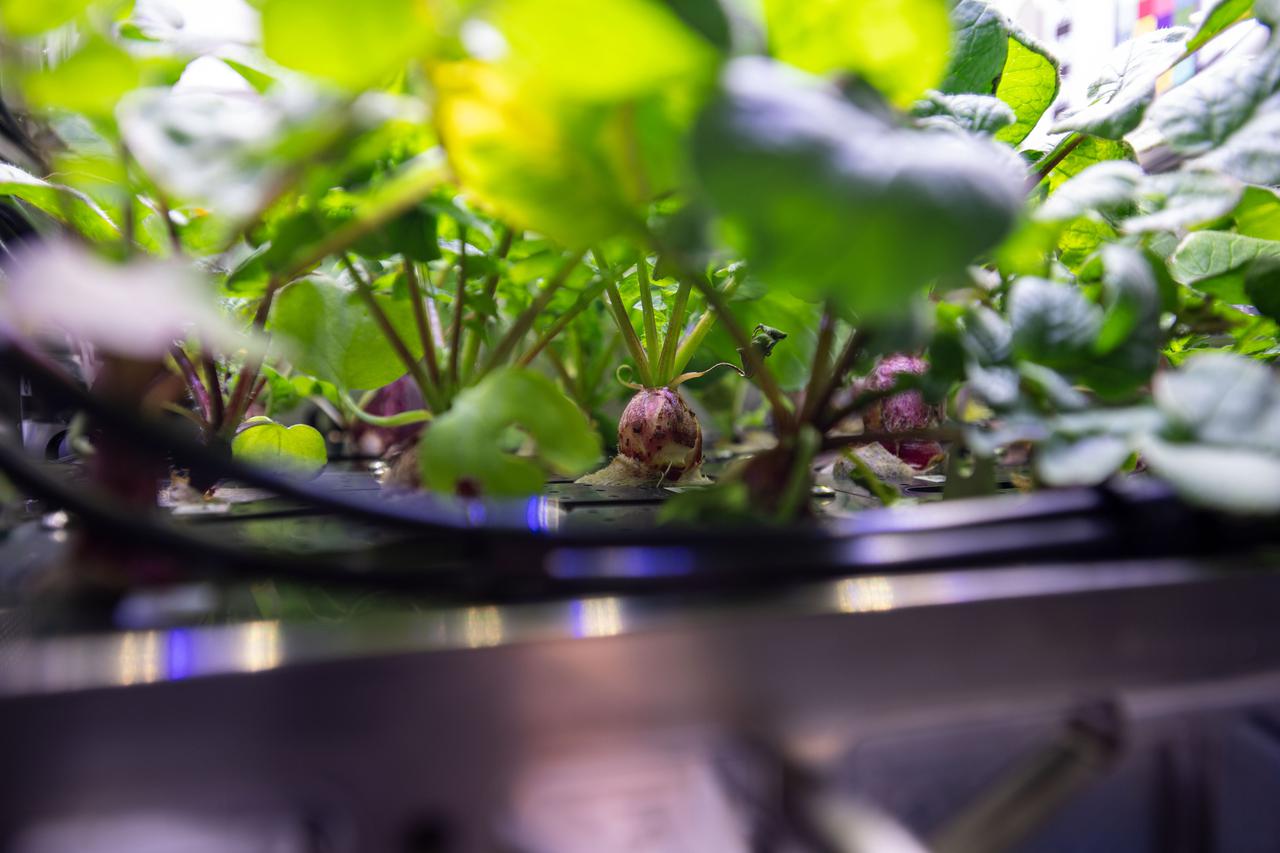
iss064e006479 (November 27, 2020) --- Documentation of radish plants growing in the Advanced Plant Habitat Science Carrier prior to leaf sampling operations (OPS) for the Assessment of Nutritional Value and Growth Parameters of Space-grown Plants (Plant Habitat-02) experiment. Photo was taken in the Kibo Japanese Experiment Module (JEM).
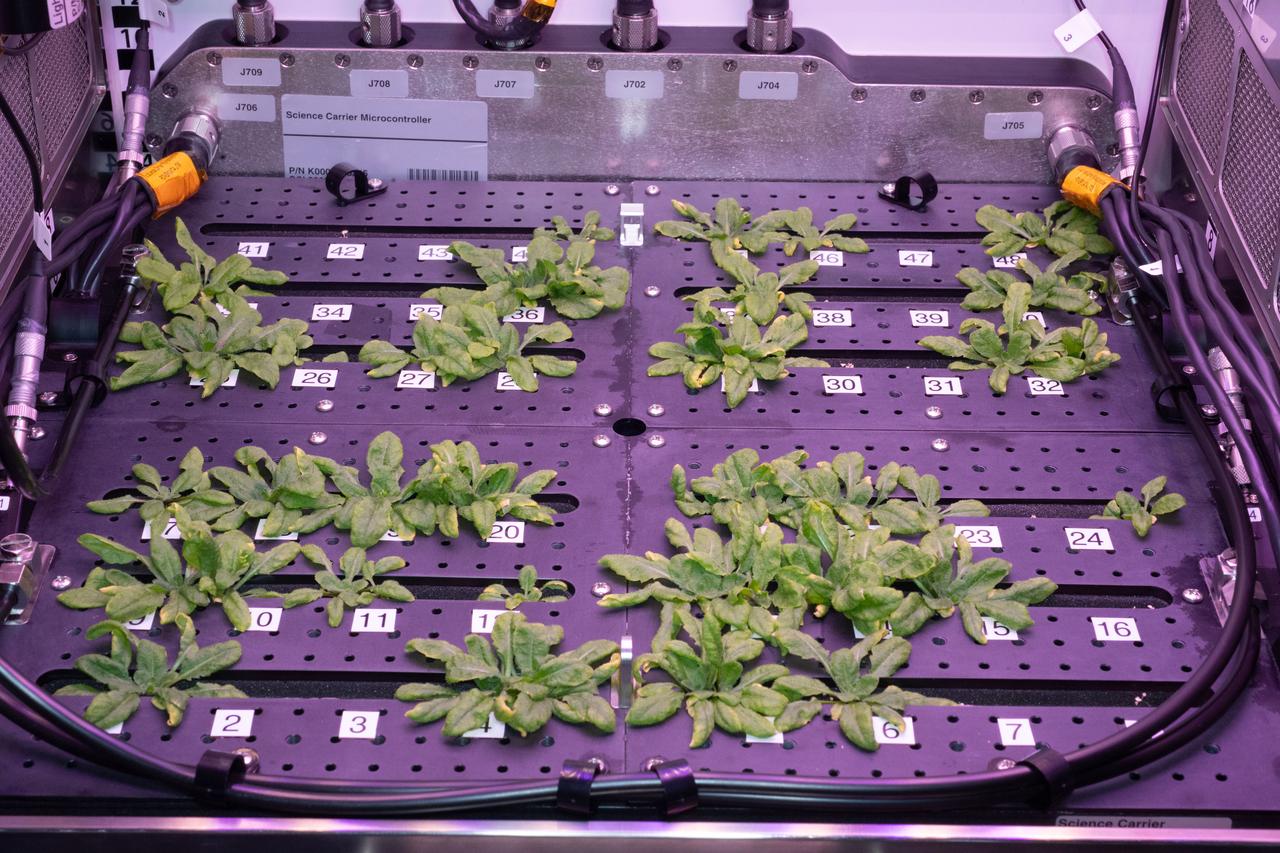
iss056e094286 (July 9, 2018) --- Arabidopsis plants are pictured inside the Plant Habitat experiment's Growth Chamber located in the Columbus laboratory module's EXPRESS Rack 5. The plants were harvested for the Plant Habitat experiment which is researching differences in genetics, metabolism, photosynthesis, and gravity sensing between plants grown in space and on Earth. Results may help crews on future missions successfully grow plants for food and oxygen generation.
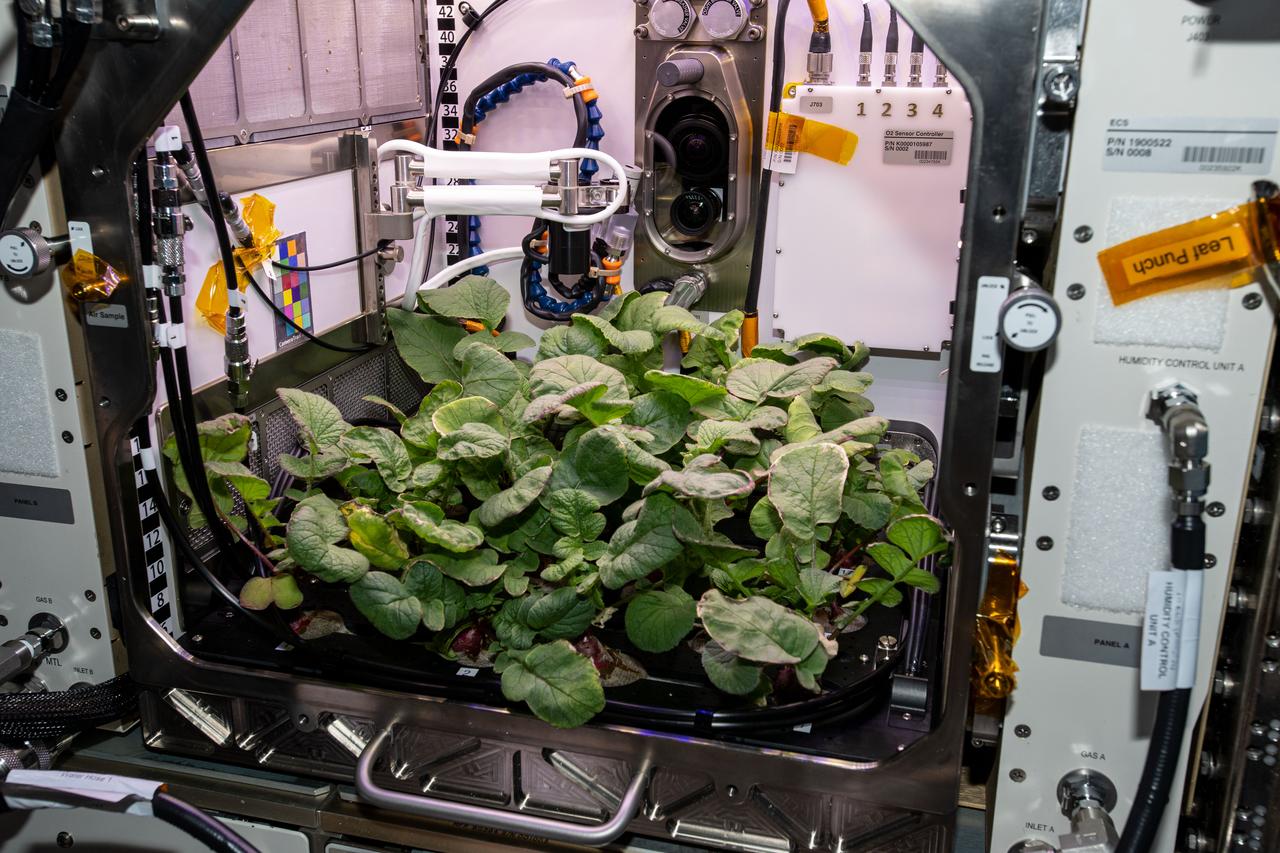
iss064e006453 (Nov. 27, 2020) --- Radish plants are pictured growing for the Plant Habitat-02 experiment that could help optimize plant growth in the unique environment of space and evaluate nutrition and taste of the plants.
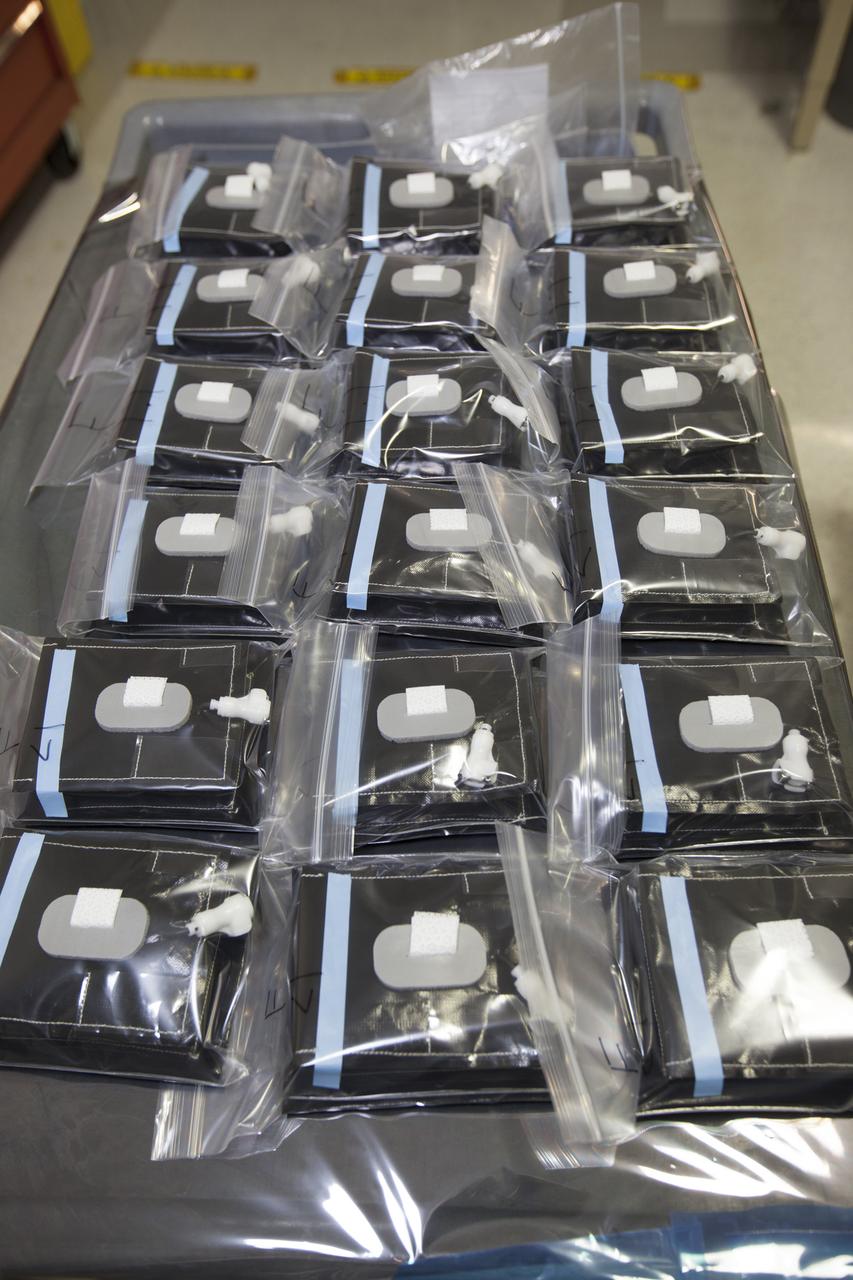
Inside a laboratory in the Space Station Processing Facility at NASA’s Kennedy Space Center in Florida, 18 plant pillows for the Veg-03 experiment have been prepared for delivery to the International Space Station aboard the eighth SpaceX Dragon commercial resupply mission. The Veg-03 plant pillows will contain ‘Tokyo Bekana’ cabbage seeds and lettuce seeds for NASA’s third Veggie plant growth system experiment. The experiment will continue NASA’s deep space plant growth research to benefit the Earth and the agency’s journey to Mars.
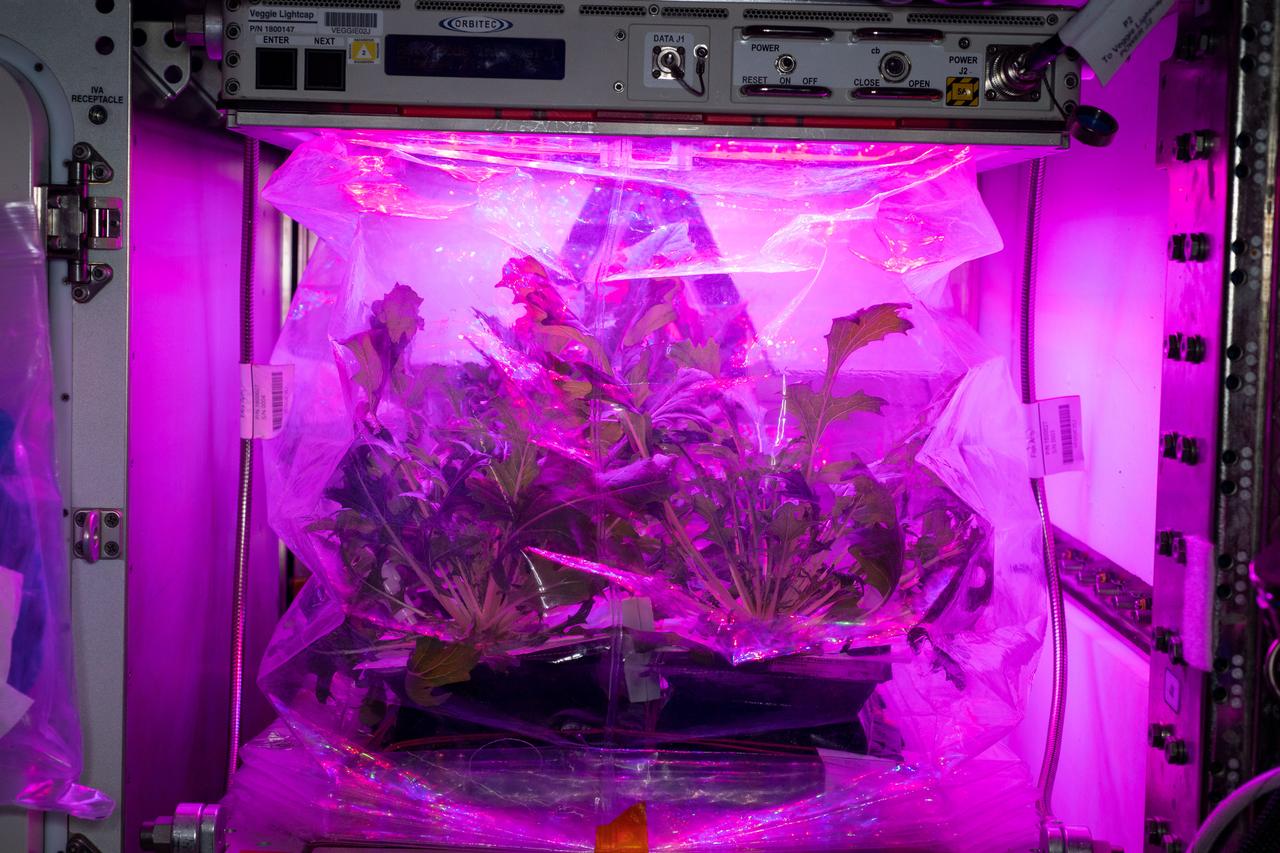
Mizuna Mustard mustard greens, part of the Veg-04A experiment, are shown growing in a Veggie plant growth chamber aboard the International Space Station on July 9, 2019. The Veg-04A experiment tested the greens, grown in blue-rich lighting and red-rich lighting, to determine the effects of different light ratios on plants grown in space on the station. The plants arrived aboard the SpaceX Commercial Resupply Services-16 mission. Astronaut Christina Koch initiated the on-orbit experiment on June 4, 2019, in the station’s two Veggie plant growth chambers, with six plant pillows per chamber. On June 11, 2019, Koch thinned the Mizuna plants to one plant per pillow. The on-orbit harvest took place July 9, 2019, with astronaut Nick Hague harvesting the plants grown under blue-rich light and Koch harvesting the plants grown under red-rich lights.
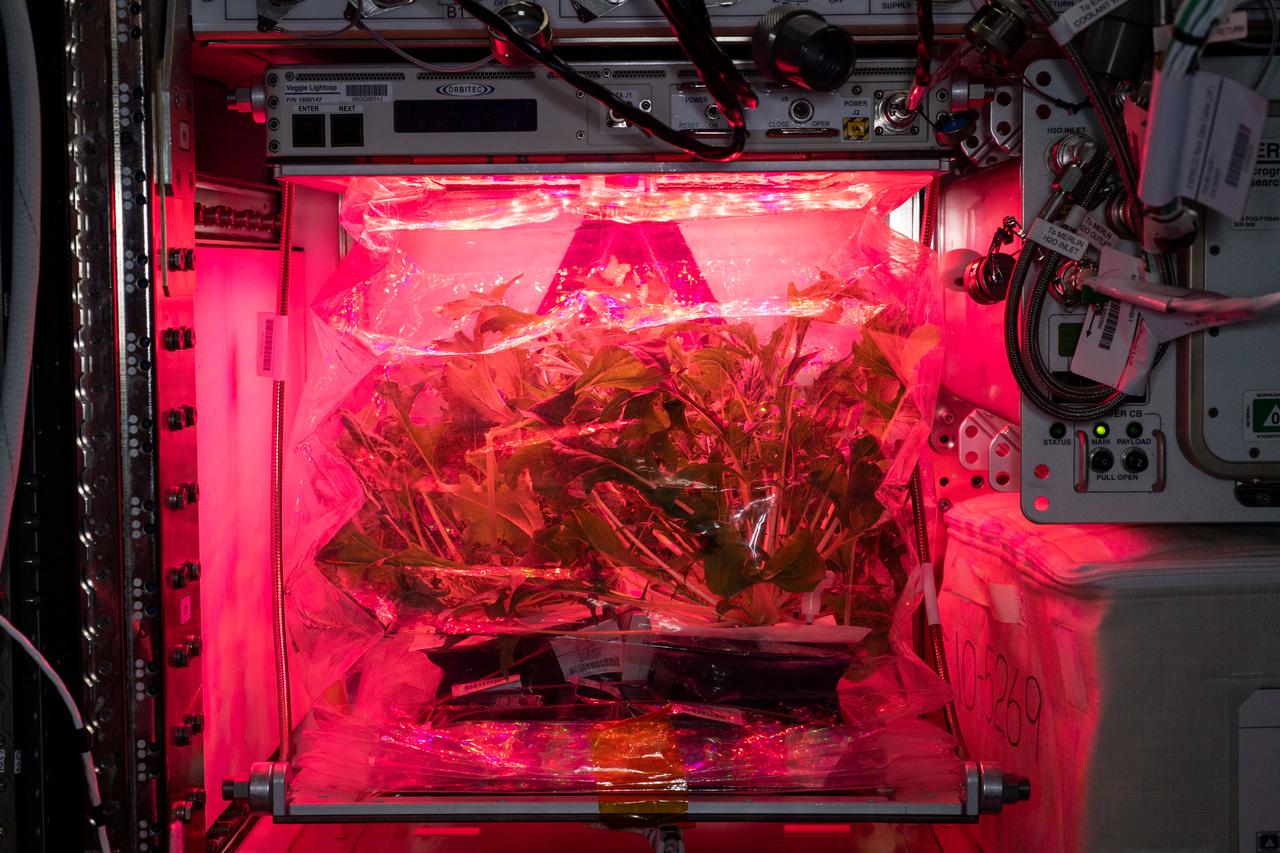
Mizuna Mustard mustard greens, part of the Veg-04A experiment, are shown growing in a Veggie plant growth chamber aboard the International Space Station on July 9, 2019. The Veg-04A experiment tested the greens, grown in blue-rich lighting and red-rich lighting, to determine the effects of different light ratios on plants grown in space on the station. The plants arrived aboard the SpaceX Commercial Resupply Services-16 mission. Astronaut Christina Koch initiated the on-orbit experiment on June 4, 2019, in the station’s two Veggie plant growth chambers, with six plant pillows per chamber. On June 11, 2019, Koch thinned the Mizuna plants to one plant per pillow. The on-orbit harvest took place July 9, 2019, with astronaut Nick Hague harvesting the plants grown under blue-rich light and Koch harvesting the plants grown under red-rich lights.
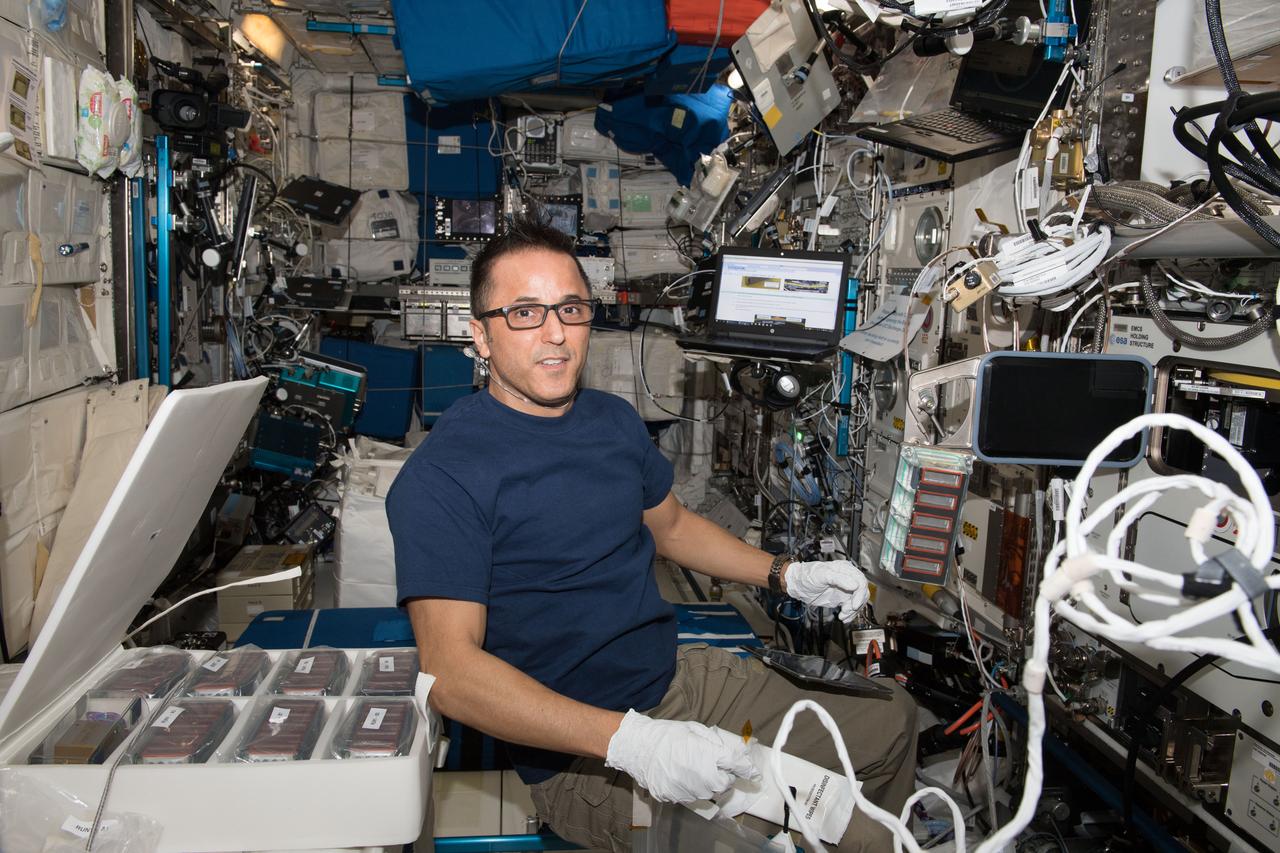
iss054e023797 (Jan. 26, 2018) --- NASA astronaut Joe Acaba with an Experiment Container (EC) to begin the Plant Gravity Perception experiment, testing the gravity-sensing ability of plants in microgravity.
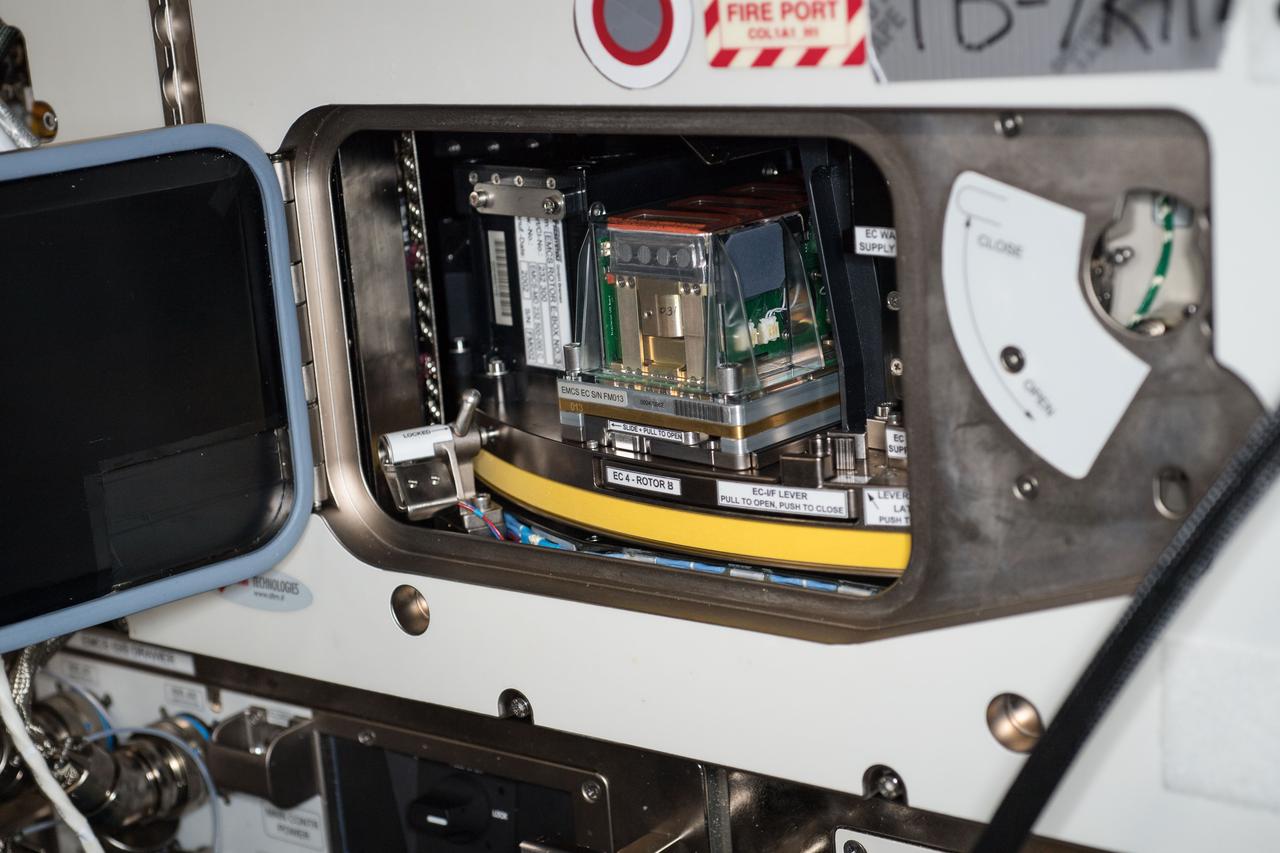
iss054e026863 (Feb. 2, 2018) --- The Plant Gravity Perception experiment in a centrifuge before its second run on the European Modular Cultivation System (EMCS) Experiment Container (EC) to test the gravity-sensing ability of plants in microgravity.
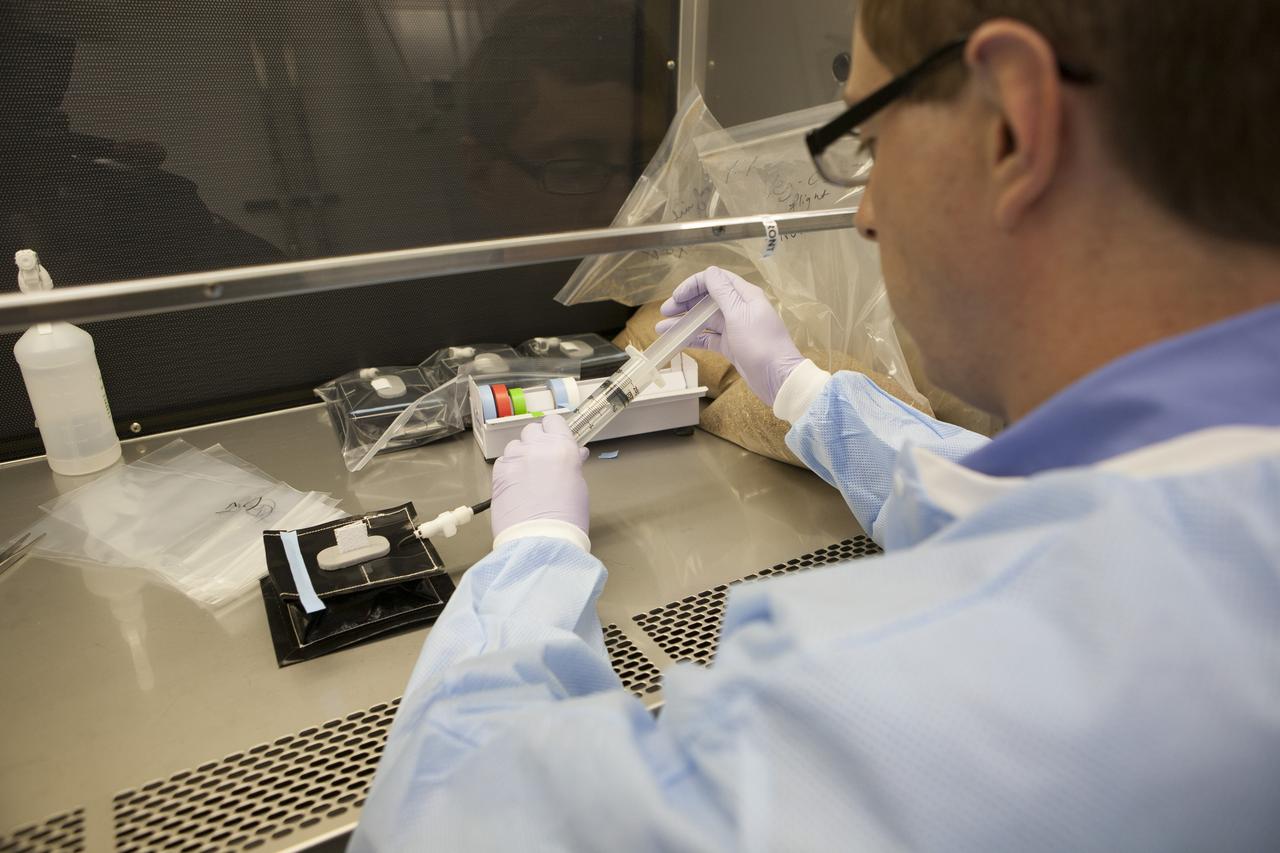
Inside a laboratory in the Space Station Processing Facility at NASA’s Kennedy Space Center in Florida, research scientists prepare the plant pillows for the Veg-03 experiment that will be delivered to the International Space Station aboard the eighth SpaceX Dragon commercial resupply mission. Dr. Mathew Mickens, a post-doctoral researcher, inserts a bonding agent into one of the Veg-03 plant pillows. The Veg-03 plant pillows will contain ‘Tokyo Bekana’ cabbage seeds and lettuce seeds for NASA’s third Veggie plant growth system experiment. The experiment will continue NASA’s deep space plant growth research to benefit the Earth and the agency’s journey to Mars.
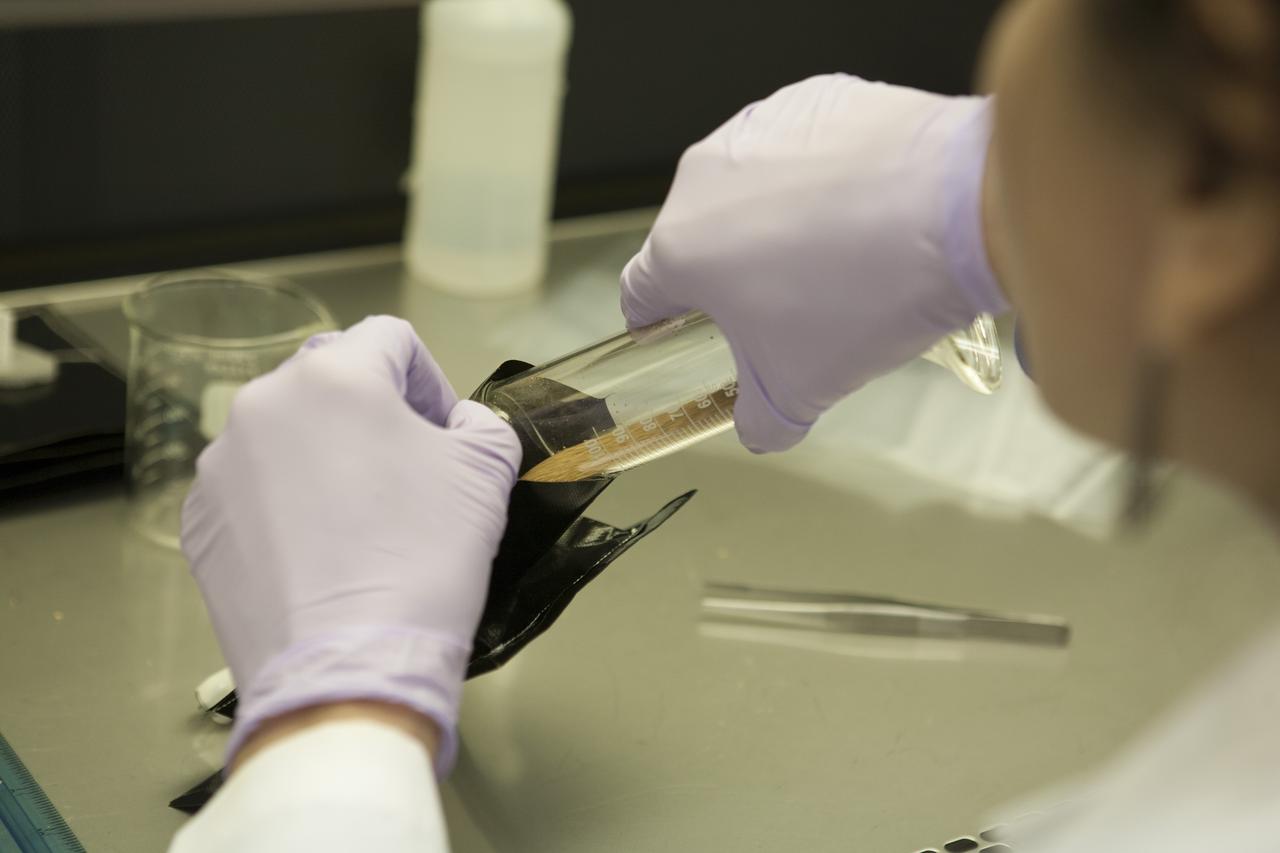
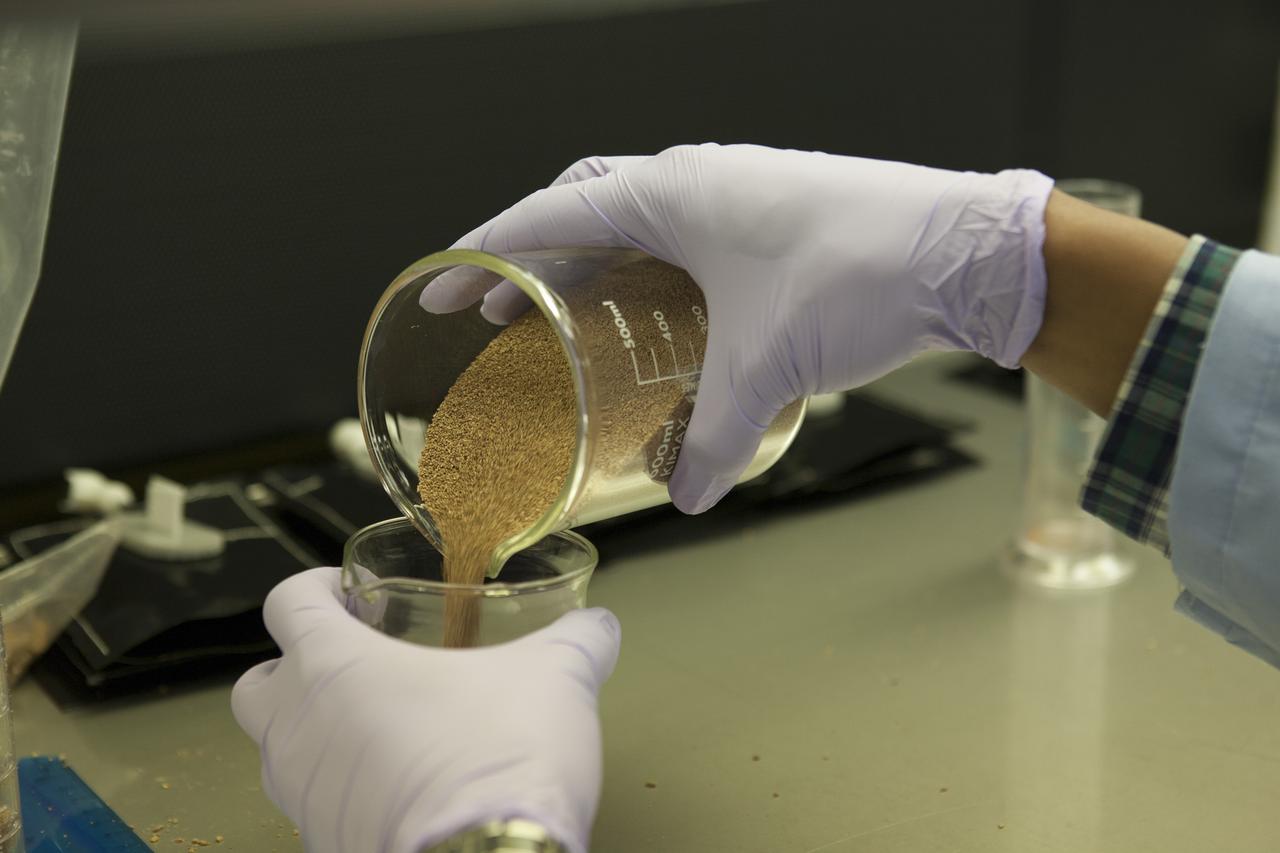
Inside a laboratory in the Space Station Processing Facility at NASA’s Kennedy Space Center in Florida, research scientists prepare the plant pillows for the Veg-03 experiment that will be delivered to the International Space Station aboard the eighth SpaceX Dragon commercial resupply mission. Matt Romeyn, a NASA pathways intern, inserts a measured amount of calcined clay, or space dirt, into one of the plant pillows. The Veg-03 plant pillows will contain ‘Tokyo Bekana’ cabbage seeds and lettuce seeds for NASA’s third Veggie plant growth system experiment. The experiment will continue NASA’s deep space plant growth research to benefit the Earth and the agency’s journey to Mars.
Inside a laboratory in the Space Station Processing Facility at NASA’s Kennedy Space Center in Florida, research scientists prepare the plant pillows for the Veg-03 experiment that will be delivered to the International Space Station aboard the eighth SpaceX Dragon commercial resupply mission. Matt Romeyn, a NASA pathways intern, measures out the calcined clay, or space dirt, for one of the plant pillows. The Veg-03 plant pillows will contain ‘Tokyo Bekana’ cabbage seeds and lettuce seeds for NASA’s third Veggie plant growth system experiment. The experiment will continue NASA’s deep space plant growth research to benefit the Earth and the agency’s journey to Mars.
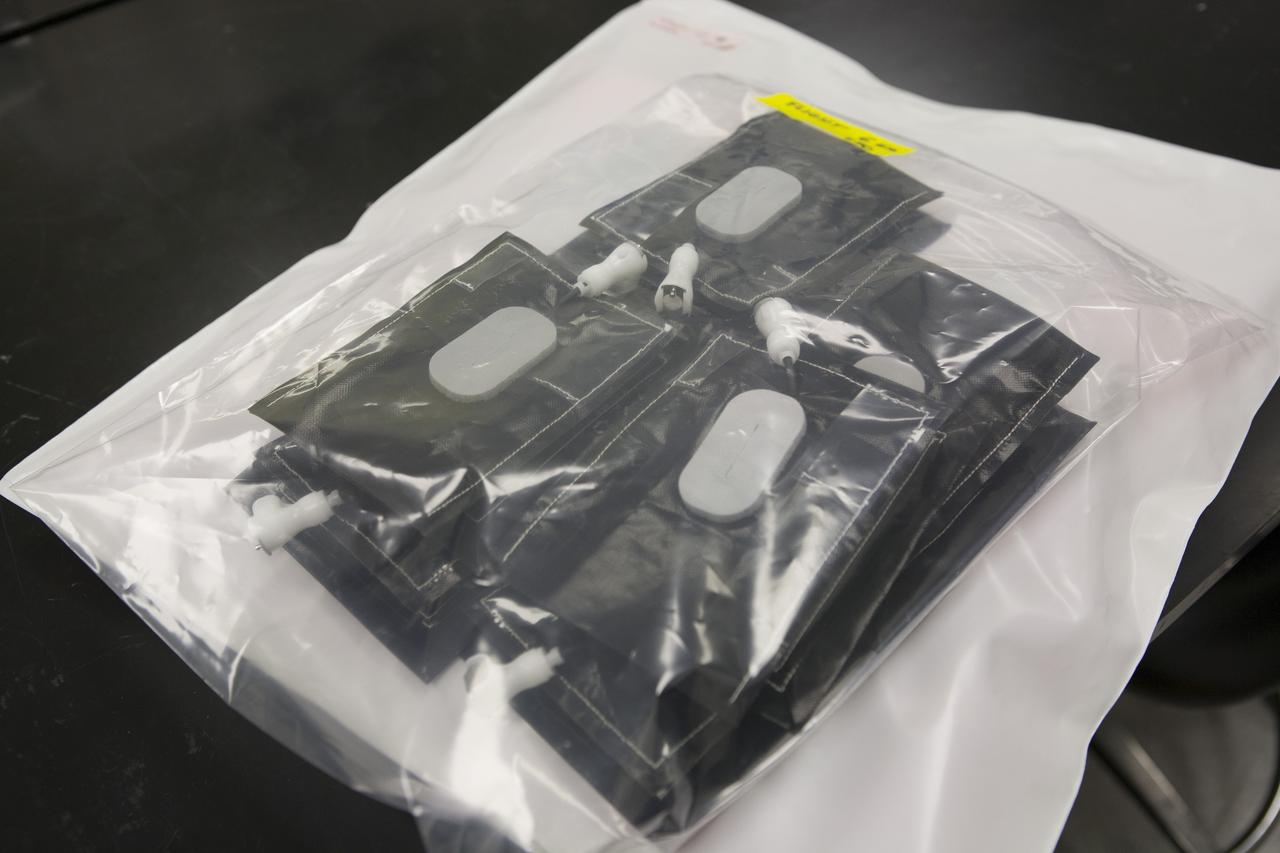
Inside a laboratory in the Space Station Processing Facility at NASA’s Kennedy Space Center in Florida, plant pillows for the Veg-03 experiment are prepared for delivery to the International Space Station aboard the eighth SpaceX Dragon commercial resupply mission. Dr. Mathew Mickens, a post-doctoral researcher, inserts a bonding agent into one of the Veg-03 plant pillows. The Veg-03 plant pillows will contain ‘Tokyo Bekana’ cabbage seeds and lettuce seeds for NASA’s third Veggie plant growth system experiment. The experiment will continue NASA’s deep space plant growth research to benefit the Earth and the agency’s journey to Mars.
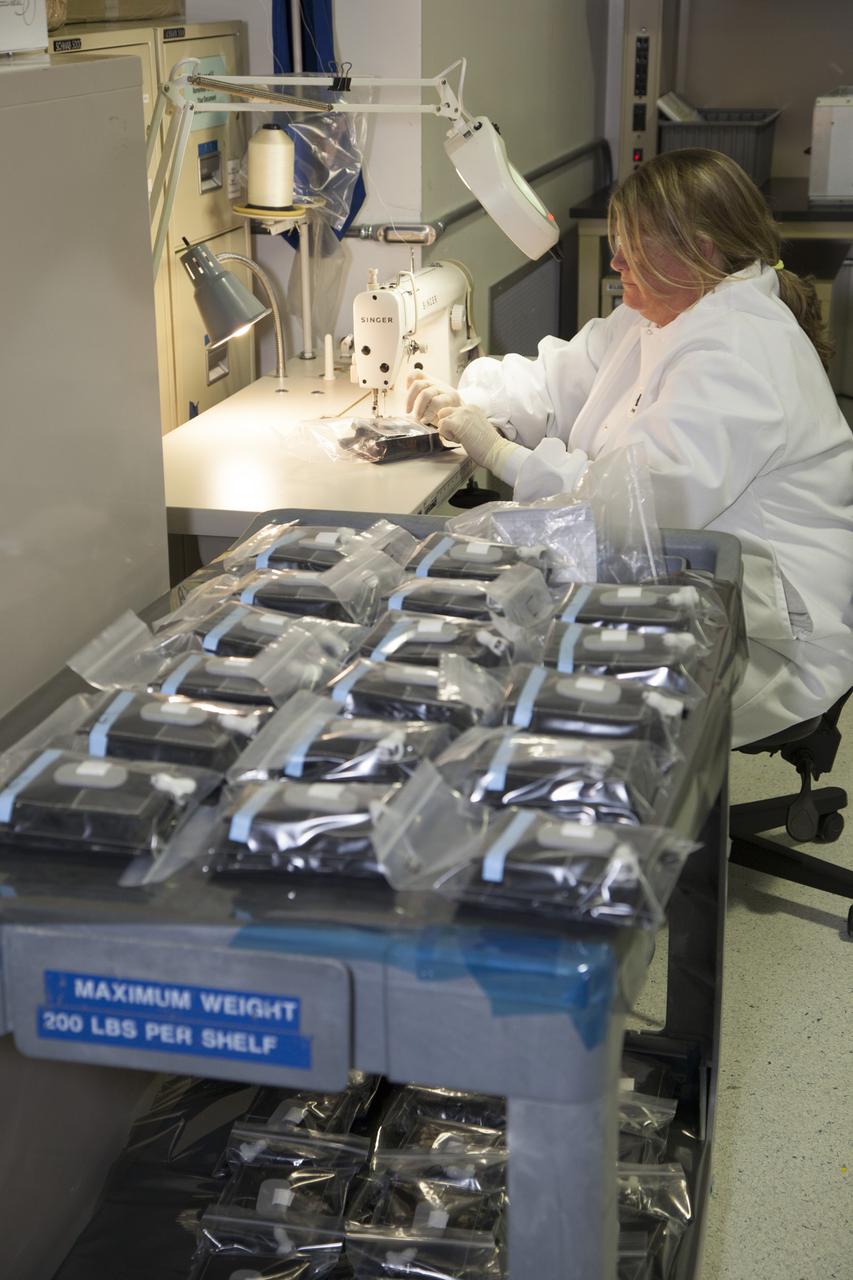
Inside a laboratory in the Space Station Processing Facility at NASA’s Kennedy Space Center in Florida, Michele Koralewicz, a mechanical technician with EASI on the Engineering Services Contract, prepares to sew up the end of a bag that contains one of the Veg-03 plant pillows. In the foreground are all of the other plant pillows that need to be sealed. The Veg-03 experiment will be delivered to the International Space Station aboard the eighth SpaceX Dragon commercial resupply mission. The Veg-03 plant pillows will contain ‘Tokyo Bekana’ cabbage seeds and lettuce seeds for NASA’s third Veggie plant growth system experiment. The experiment will continue NASA’s deep space plant growth research to benefit the Earth and the agency’s journey to Mars.
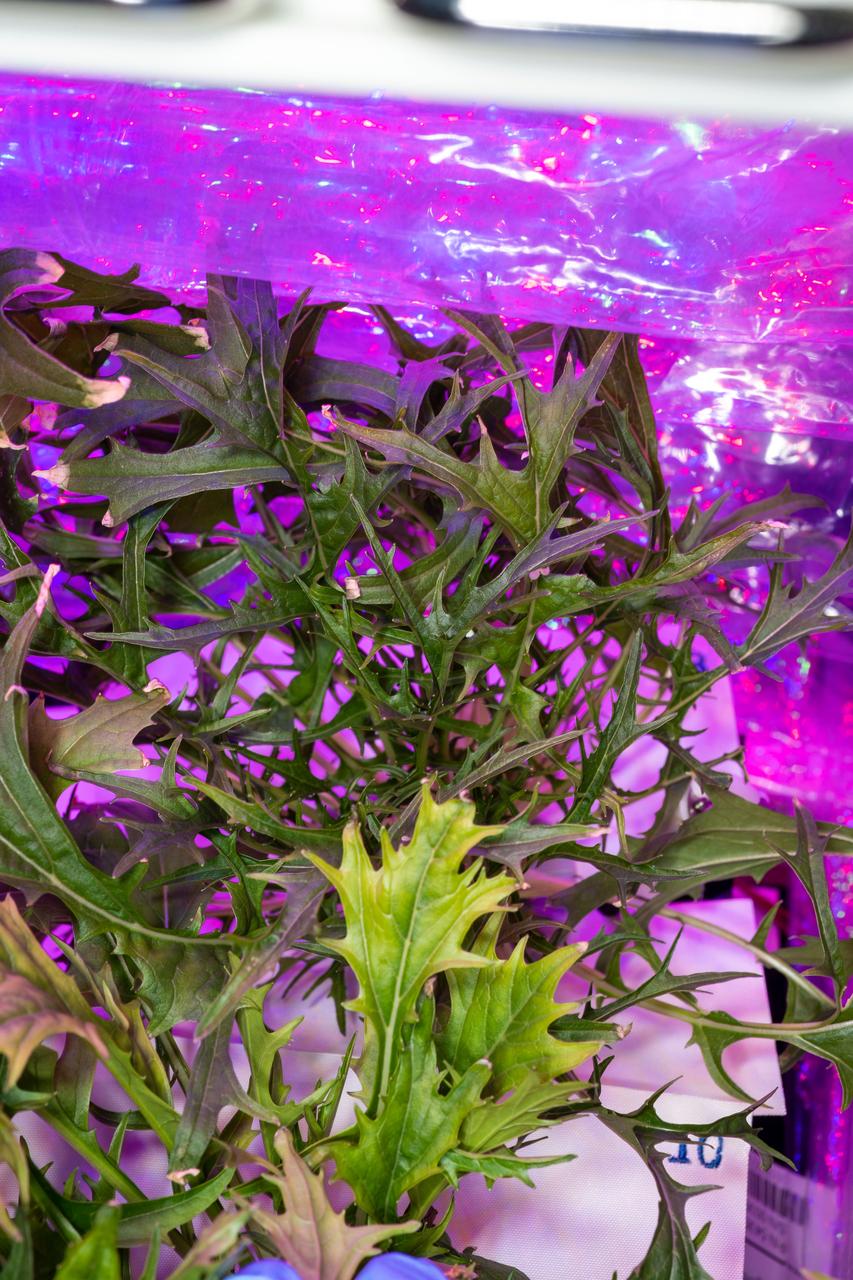
Documentation of a Mizuna mustard plant growing in Plant Pillow 8 in the Vegetable Production System (Veggie). Photo was taken prior to plant harvesting operations (OPS) for the Veg-04B experiment.
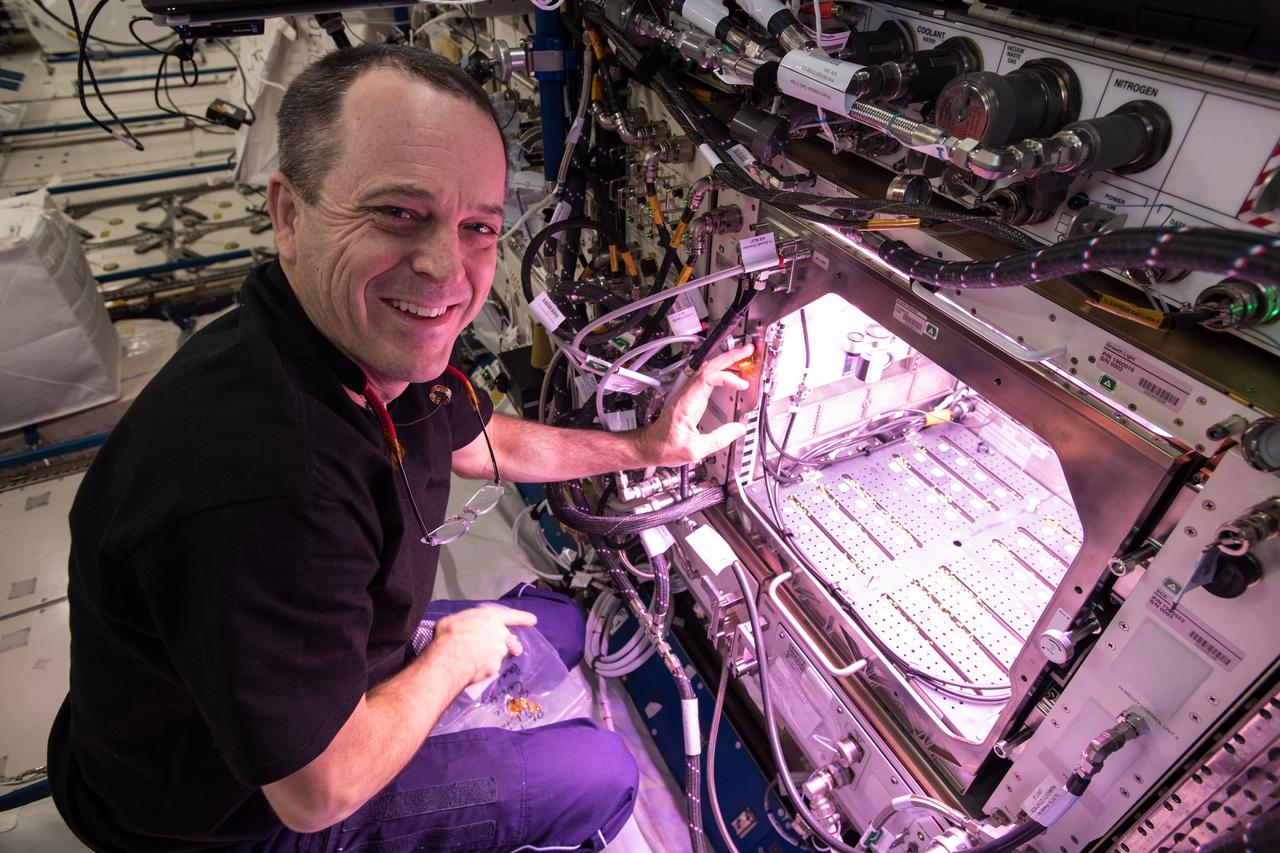
iss056e032034 (June 22, 2018) --- NASA astronaut Ricky Arnold is inside the Columbus laboratory module thinning plants for the Plant Habitat-1 experiment that is comparing plants grown in microgravity to those grown on Earth.
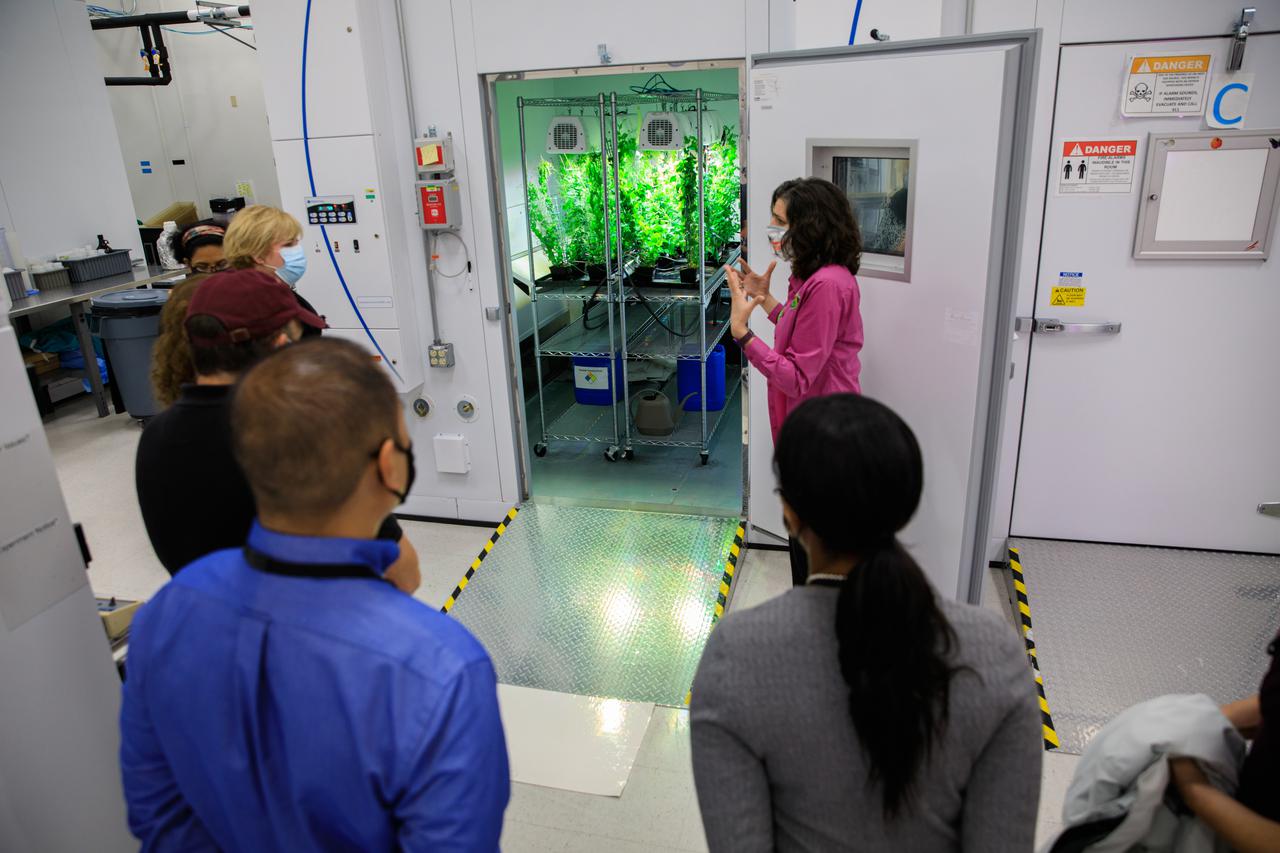
Senior leaders with Kennedy Space Center in Florida, familiarize newly appointed officials from NASA Headquarters with the center’s facilities during a tour on April 19, 2021. The group views plant experiments inside a growth chamber in the Space Station Processing Facility. Plant experiments at Kennedy supports research enabling deep space exploration including experiments in the Veggie and Advanced Plant Habitat systems aboard the International Space Station.
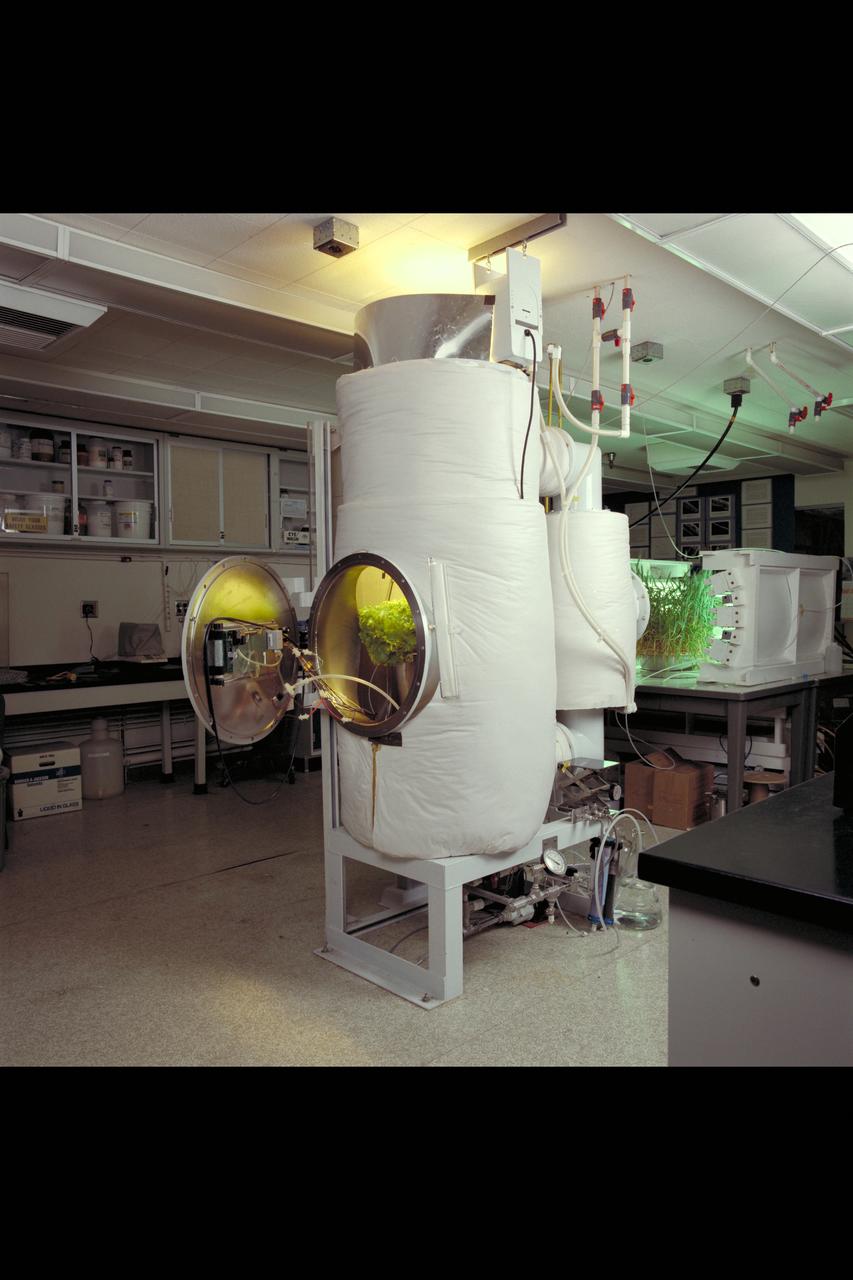
Ames Life Sciences Experiments: Plant Volatile Chamber
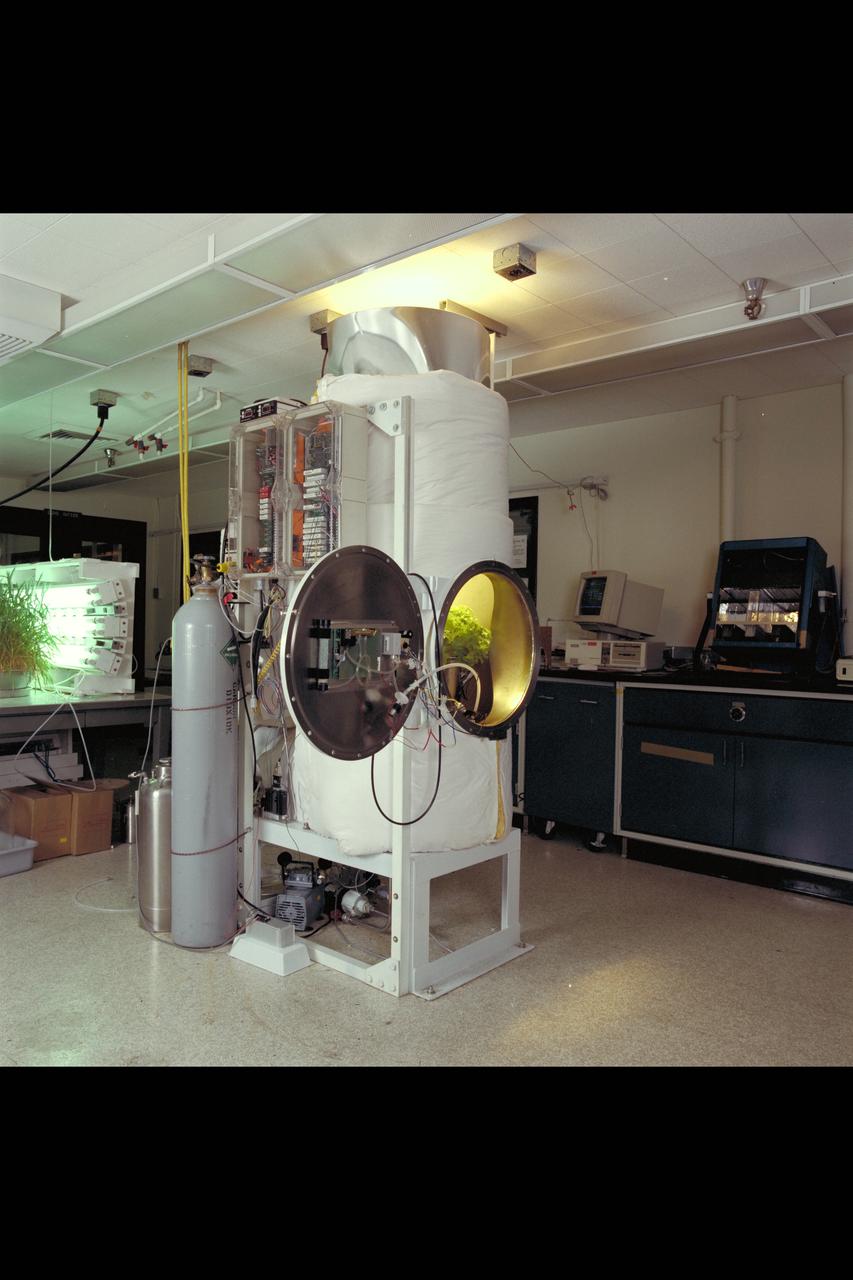
Ames Life Sciences Experiments: plant volatile chamber
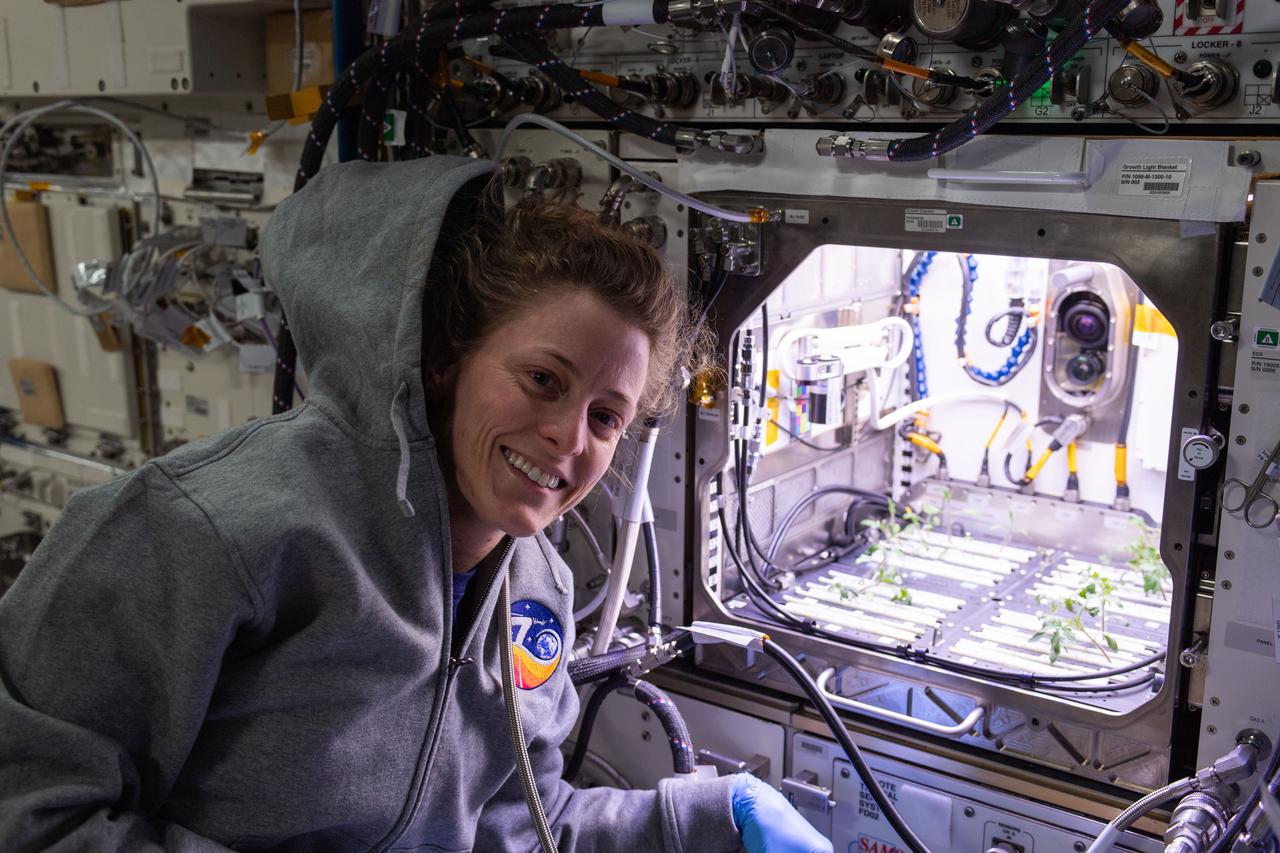
iss070e074692 (Jan. 18, 2024) --- NASA astronaut and Expedition 70 Flight Engineer Loral O'Hara poses in front of the Kibo laboratory module's Advanced Plant Habitat housing tomato plants for an experiment investigating how the plant immune system adapts to spaceflight and how spaceflight affects plant production.
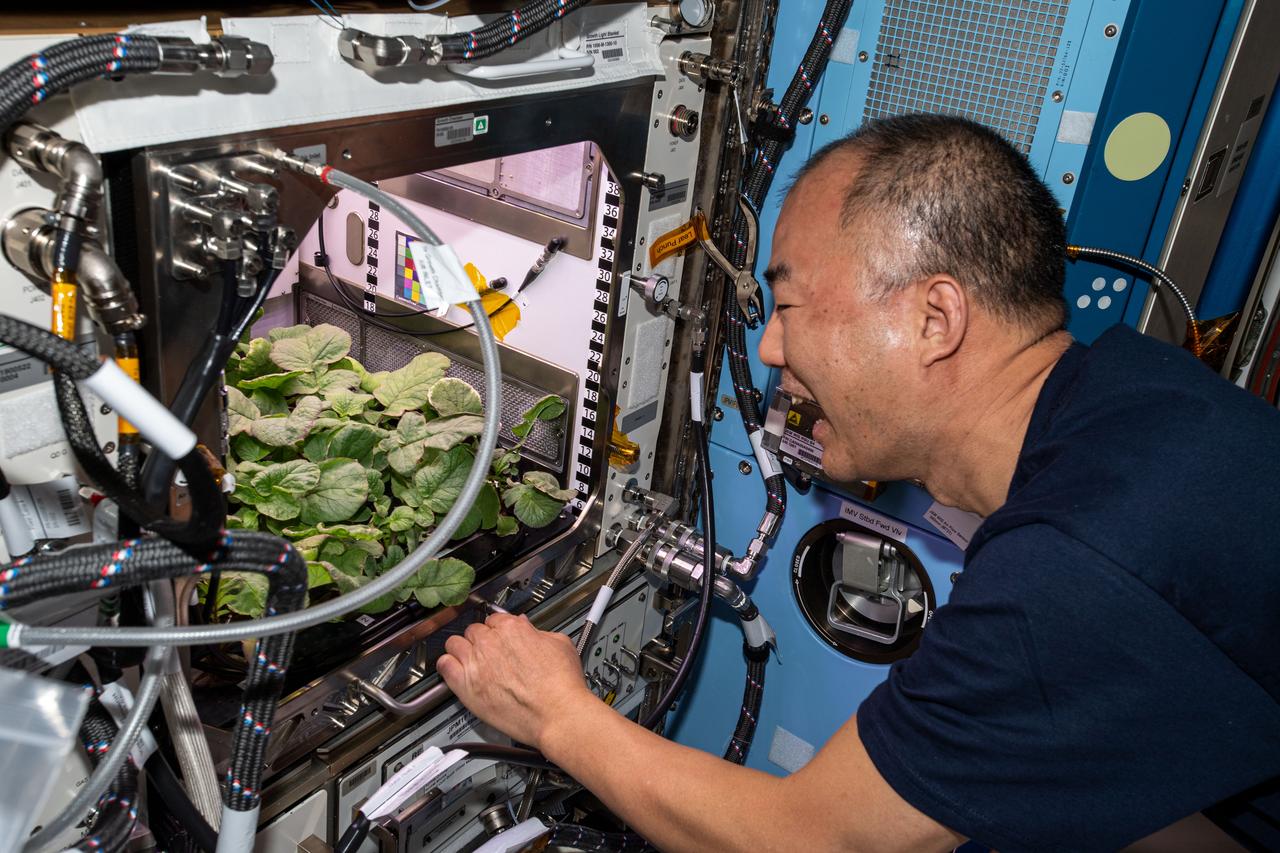
iss064e006454 (Nov. 27, 2020) --- JAXA (Japan Aerospace Exploration Astronaut) astronaut and Expedition 64 Flight Engineer Soichi Noguchi checks out radish plants growing for the Plant Habitat-02 experiment that seeks to optimize plant growth in the unique environment of space and evaluate nutrition and taste of the plants.
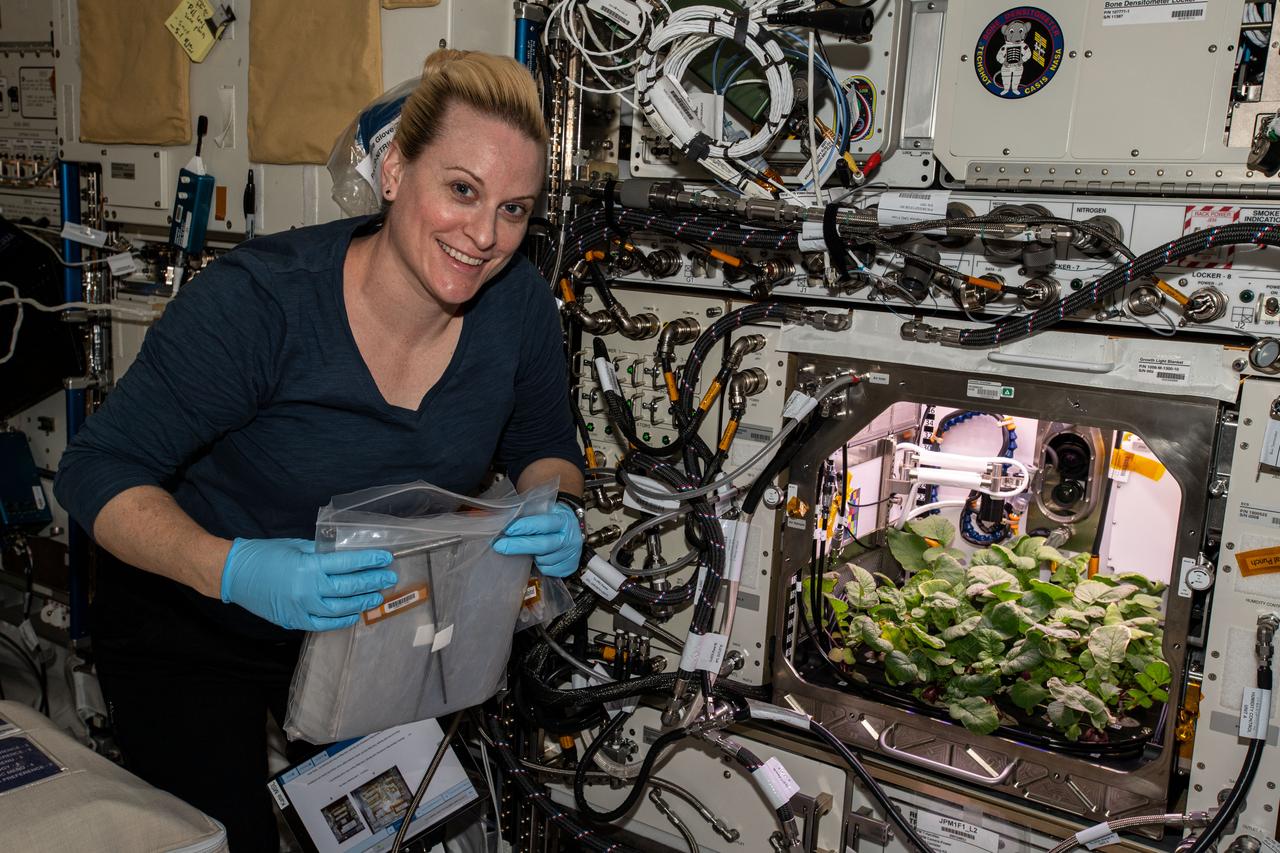
iss064e006452 (Nov. 27, 2020) --- NASA astronaut and Expedition 64 Flight Engineer Kate Rubins checks out radish plants growing for the Plant Habitat-02 experiment that seeks to optimize plant growth in the unique environment of space and evaluate nutrition and taste of the plants.
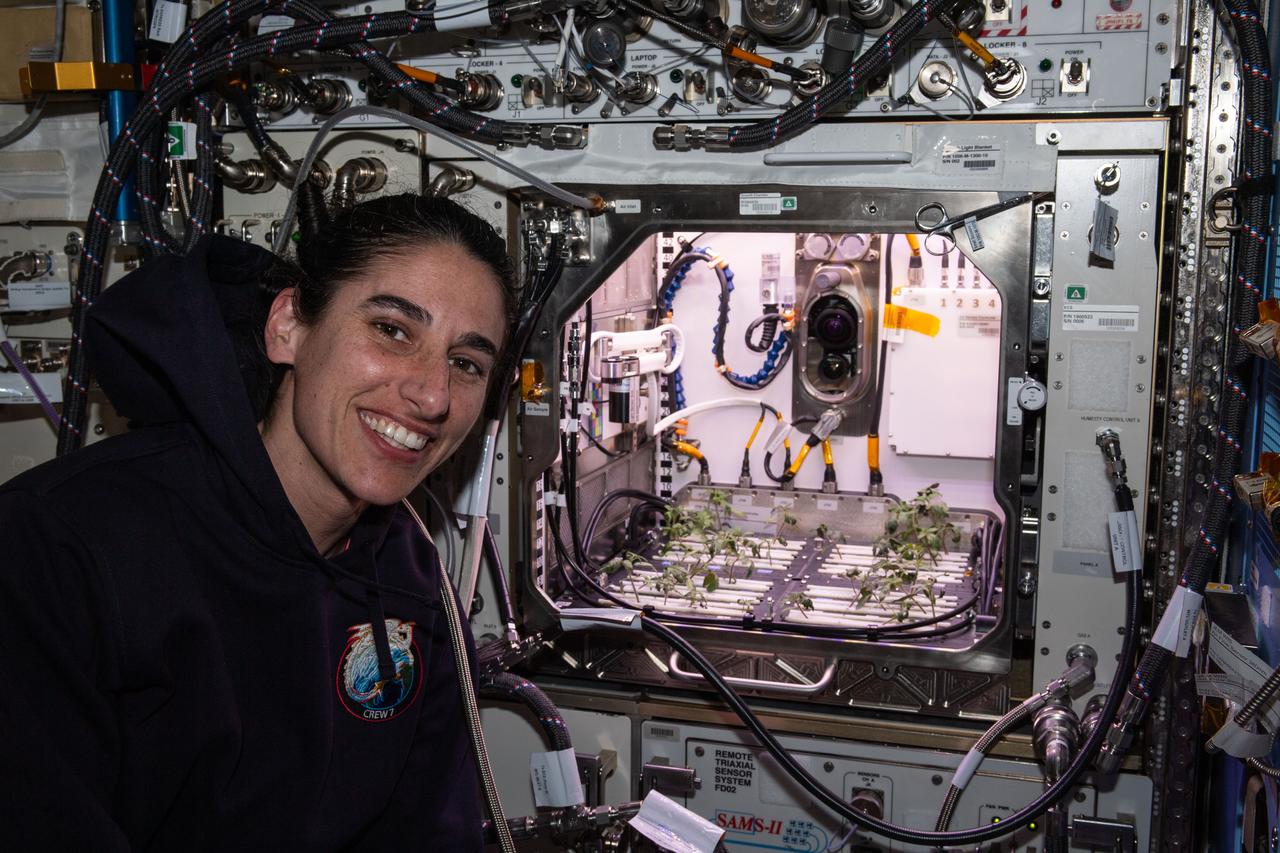
iss070e073612 (Jan. 18, 2024) --- NASA astronaut and Expedition 70 Flight Engineer Jasmin Moghbeli poses in front of the Kibo laboratory module's Advanced Plant Habitat housing tomato plants for an experiment investigating how the plant immune system adapts to spaceflight and how spaceflight affects plant production.
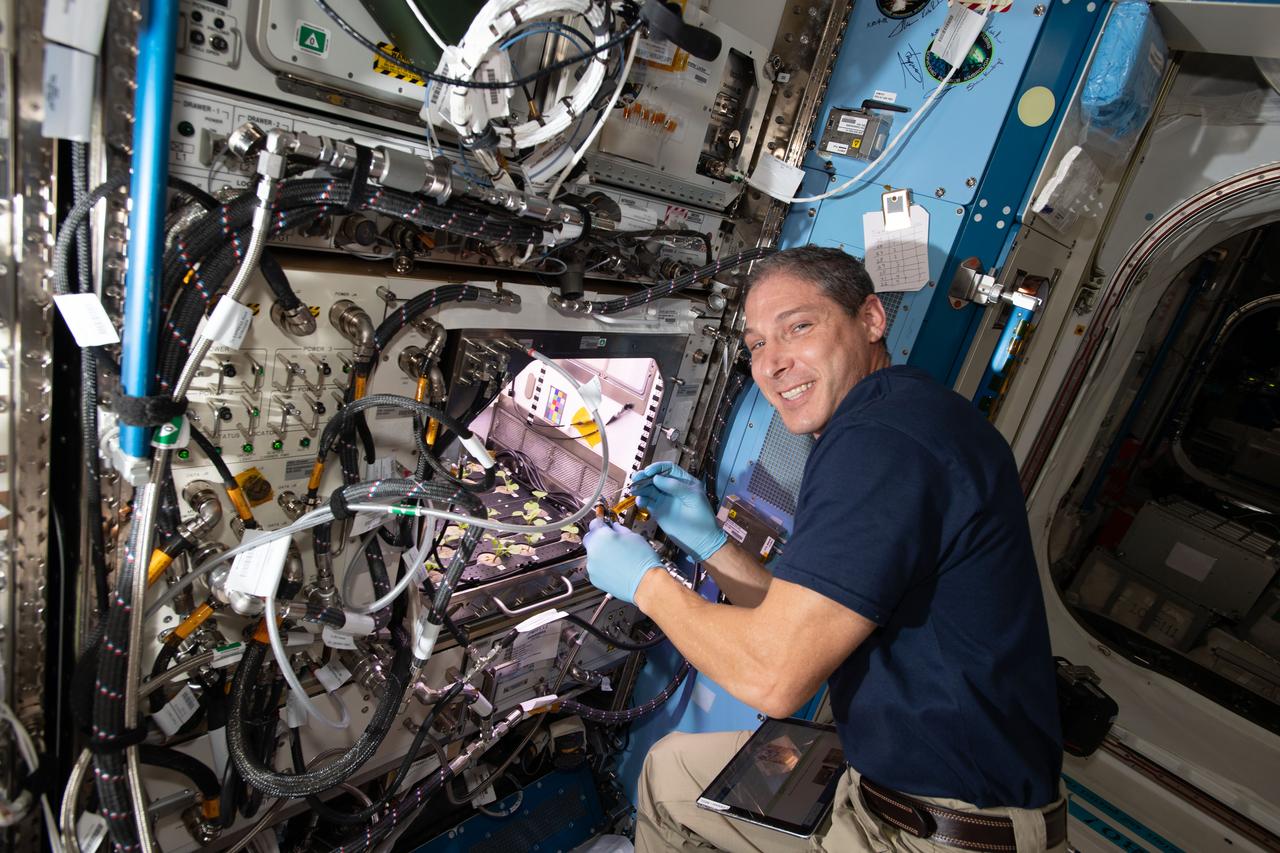
iss064e011997 (Dec. 13, 2020) --- NASA astronaut and Expedition 64 Flight Engineer Michael Hopkins checks on radish plants growing for the Plant Habitat-02 experiment that seeks to optimize plant growth in the unique environment of space and evaluate nutrition and taste of the plants.
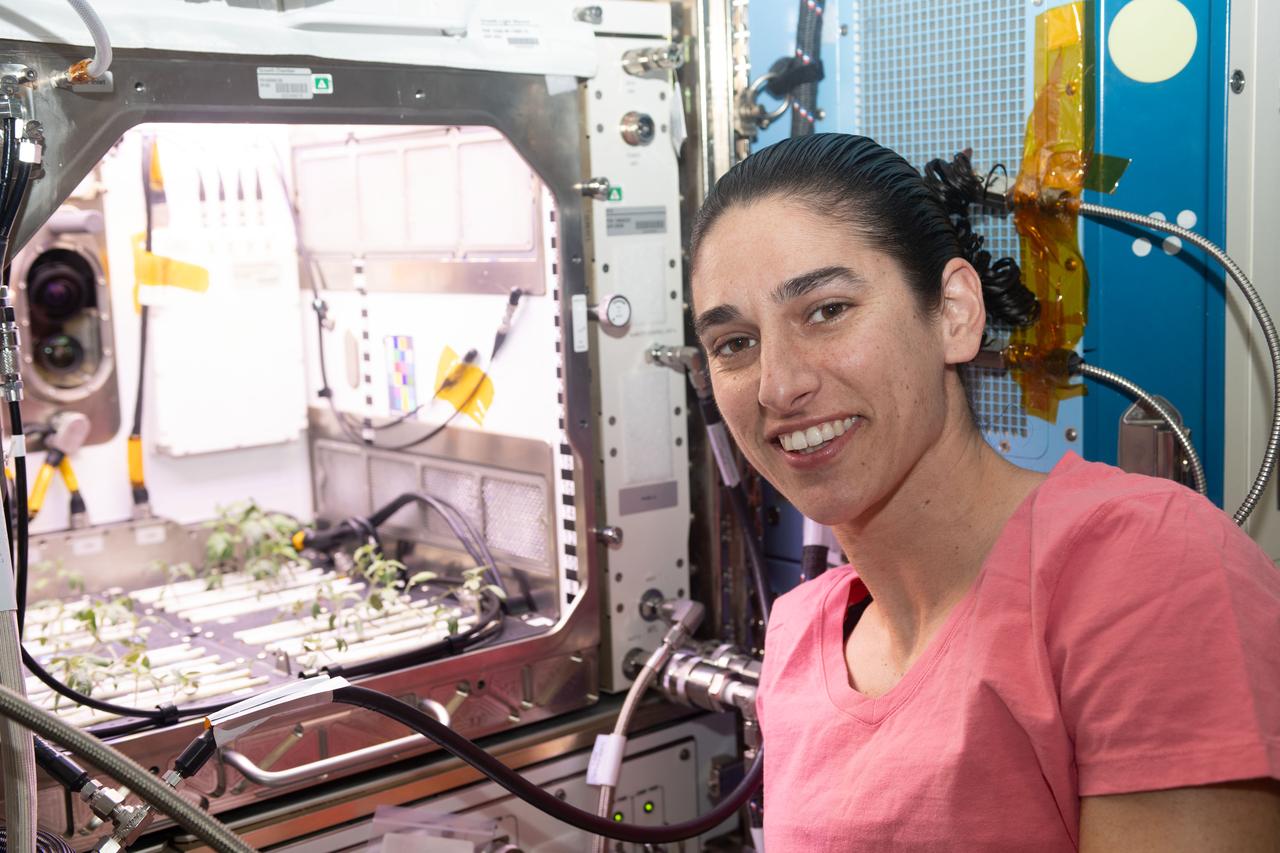
iss070e068950 (Jan. 18, 2024) --- NASA astronaut and Expedition 70 Flight Engineer Jasmin Moghbeli poses in front of the Kibo laboratory module's Advanced Plant Habitat housing tomato plants for an experiment investigating how the plant immune system adapts to spaceflight and how spaceflight affects plant production.
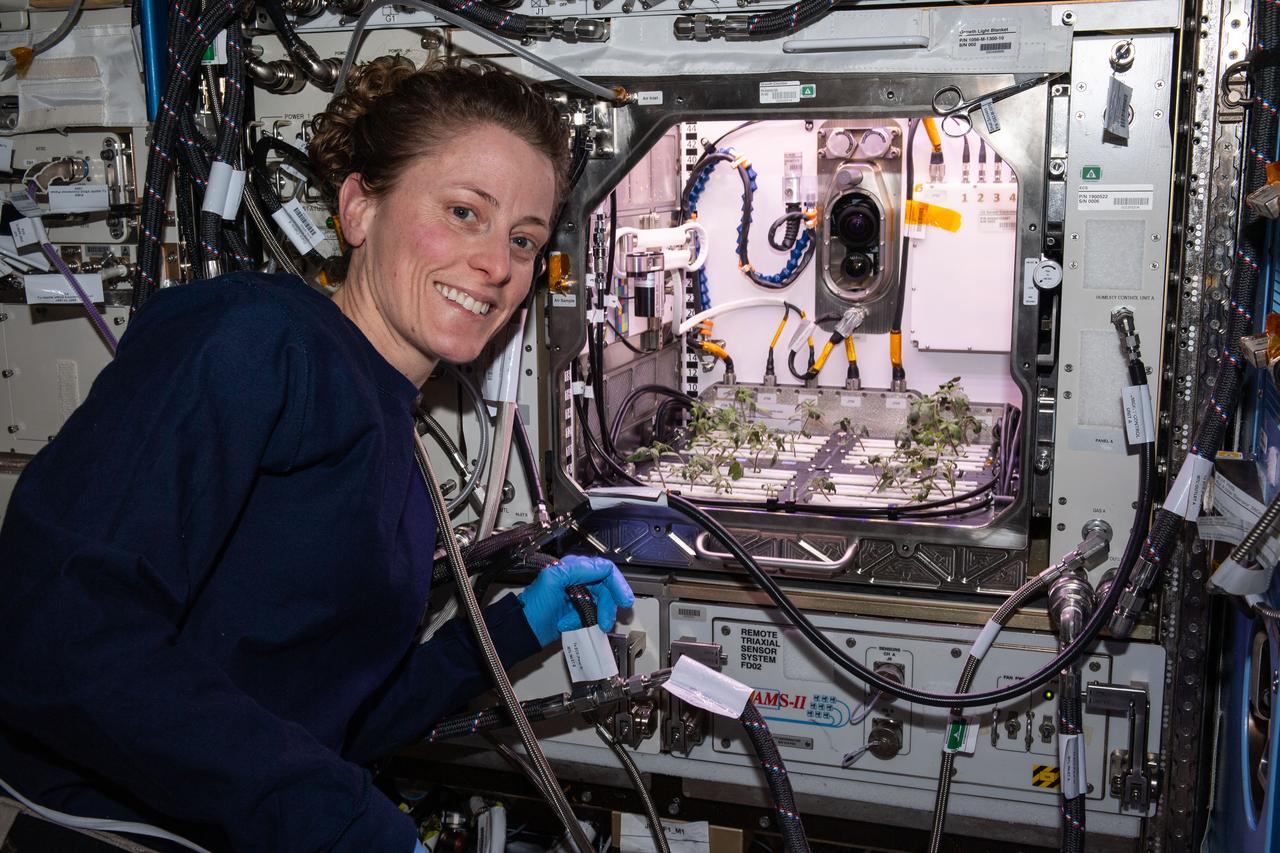
iss070e073610 (Jan. 18, 2024) --- NASA astronaut and Expedition 70 Flight Engineer Loral O'Hara poses in front of the Kibo laboratory module's Advanced Plant Habitat housing tomato plants for an experiment investigating how the plant immune system adapts to spaceflight and how spaceflight affects plant production.
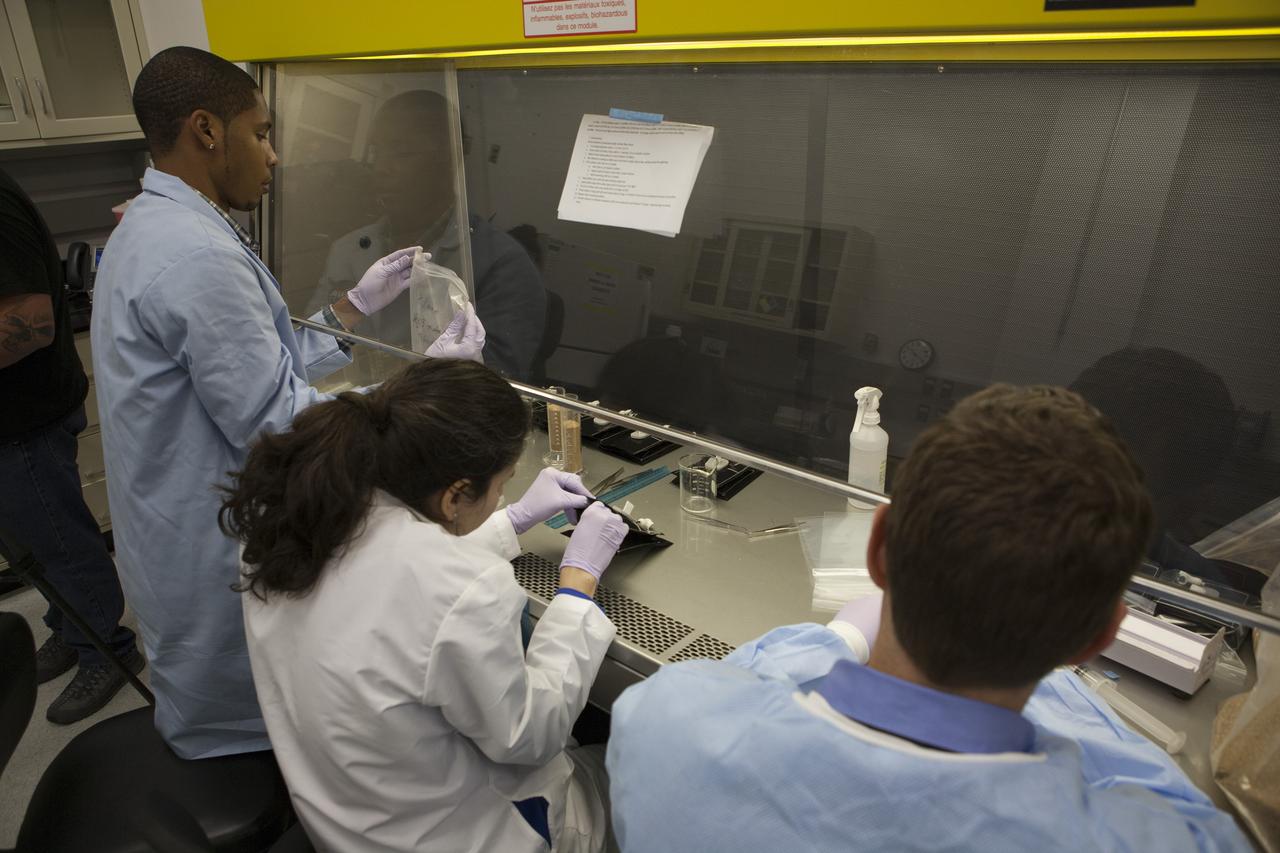
Inside a laboratory in the Space Station Processing Facility at NASA’s Kennedy Space Center in Florida, research scientists prepare the plant pillows for the Veg-03 experiment that will be delivered to the International Space Station aboard the eighth SpaceX Dragon commercial resupply mission. From left, are Matt Romeyn, NASA pathways intern; Dr. Gioia Massa, NASA payload scientist for Veggie; and Dr. Mathew Mickens, a post-doctoral researcher. The Veg-03 plant pillows will contain ‘Tokyo Bekana’ cabbage seeds and lettuce seeds for NASA’s third Veggie plant growth system experiment. The experiment will continue NASA’s deep space plant growth research to benefit the Earth and the agency’s journey to Mars.
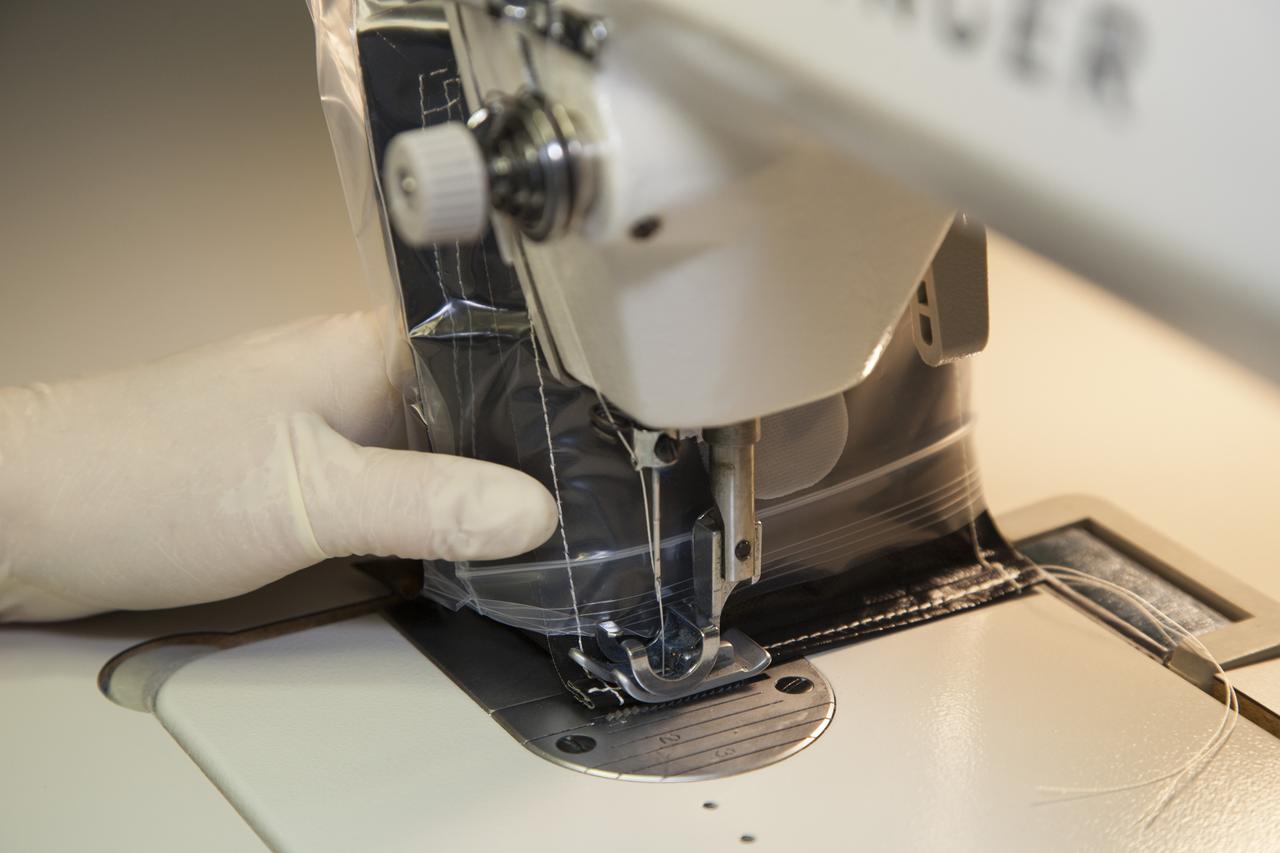
Inside a laboratory in the Space Station Processing Facility at NASA’s Kennedy Space Center in Florida, Michele Koralewicz, a mechanical technician with EASI on the Engineering Services Contract, precisely sews up the end of a bag that contains one of the Veg-03 plant pillows. The Veg-03 experiment will be delivered to the International Space Station aboard the eighth SpaceX Dragon commercial resupply mission. The Veg-03 plant pillows will contain ‘Tokyo Bekana’ cabbage seeds and lettuce seeds for NASA’s third Veggie plant growth system experiment. The experiment will continue NASA’s deep space plant growth research to benefit the Earth and the agency’s journey to Mars.
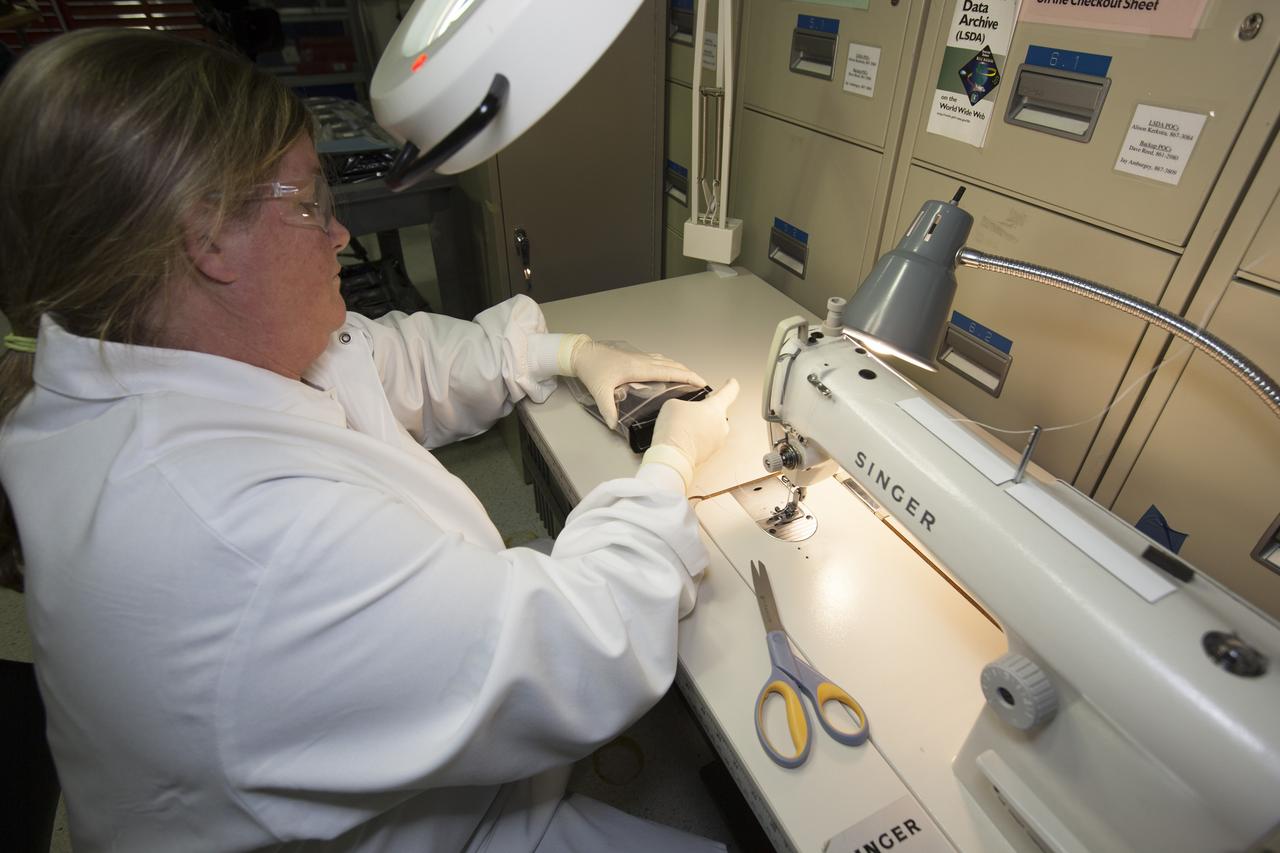
Inside a laboratory in the Space Station Processing Facility at NASA’s Kennedy Space Center in Florida, Michele Koralewicz, a mechanical technician with EASI on the Engineering Services Contract, sews up the end of a bag that contains one of the Veg-03 plant pillows. The Veg-03 experiment will be delivered to the International Space Station aboard the eighth SpaceX Dragon commercial resupply mission. The Veg-03 plant pillows will contain ‘Tokyo Bekana’ cabbage seeds and lettuce seeds for NASA’s third Veggie plant growth system experiment. The experiment will continue NASA’s deep space plant growth research to benefit the Earth and the agency’s journey to Mars.
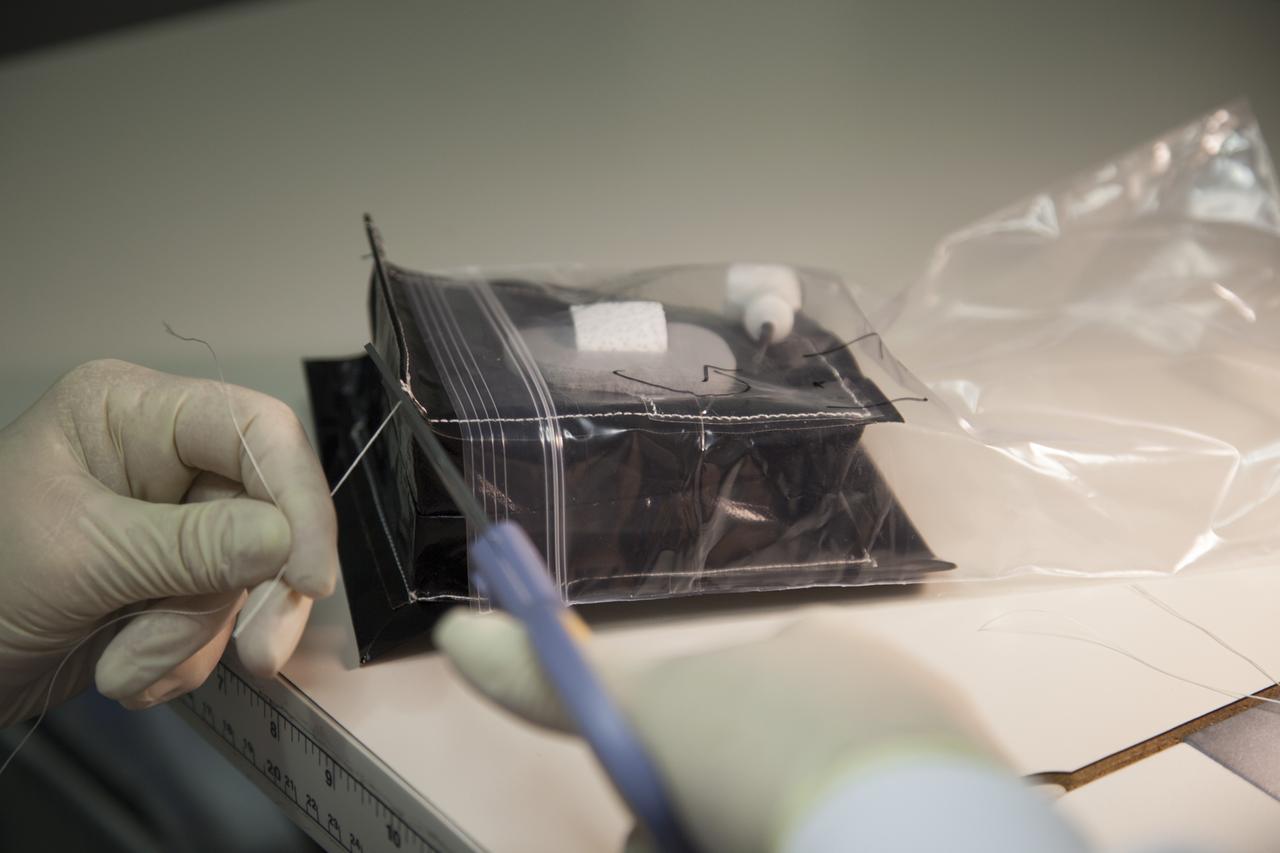
Inside a laboratory in the Space Station Processing Facility at NASA’s Kennedy Space Center in Florida, Michele Koralewicz, a mechanical technician with EASI on the Engineering Services Contract, sews up the end of a bag that contains one of the Veg-03 plant pillows. The Veg-03 experiment will be delivered to the International Space Station aboard the eighth SpaceX Dragon commercial resupply mission. The Veg-03 plant pillows will contain ‘Tokyo Bekana’ cabbage seeds and lettuce seeds for NASA’s third Veggie plant growth system experiment. The experiment will continue NASA’s deep space plant growth research to benefit the Earth and the agency’s journey to Mars.
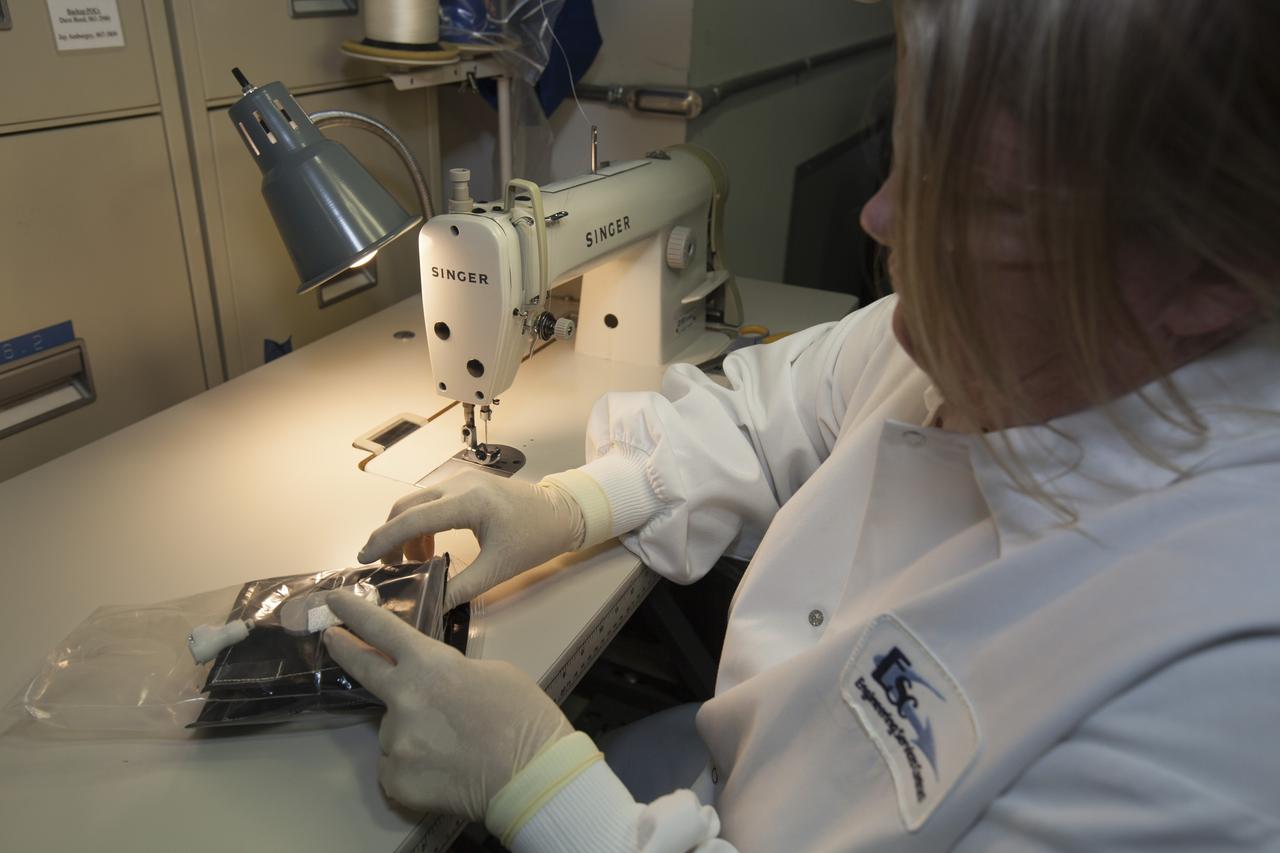
Inside a laboratory in the Space Station Processing Facility at NASA’s Kennedy Space Center in Florida, Michele Koralewicz, a mechanical technician with EASI on the Engineering Services Contract, prepares to sew the end of a bag that contains one of the Veg-03 plant pillows. The Veg-03 experiment will be delivered to the International Space Station aboard the eighth SpaceX Dragon commercial resupply mission. The Veg-03 plant pillows will contain ‘Tokyo Bekana’ cabbage seeds and lettuce seeds for NASA’s third Veggie plant growth system experiment. The experiment will continue NASA’s deep space plant growth research to benefit the Earth and the agency’s journey to Mars.
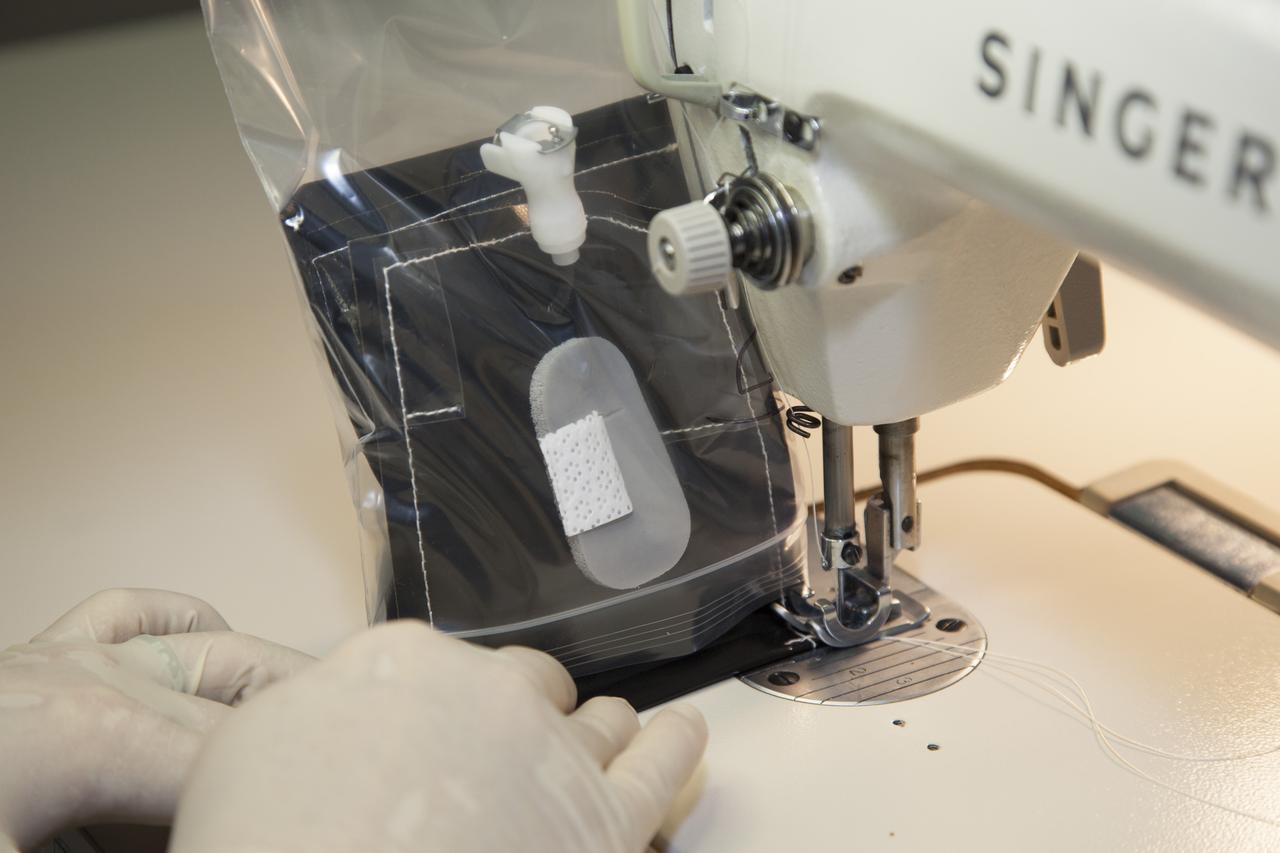
Inside a laboratory in the Space Station Processing Facility at NASA’s Kennedy Space Center in Florida, Michele Koralewicz, a mechanical technician with EASI on the Engineering Services Contract, sews up the end of a bag that contains one of the Veg-03 plant pillows. The Veg-03 experiment will be delivered to the International Space Station aboard the eighth SpaceX Dragon commercial resupply mission. The Veg-03 plant pillows will contain ‘Tokyo Bekana’ cabbage seeds and lettuce seeds for NASA’s third Veggie plant growth system experiment. The experiment will continue NASA’s deep space plant growth research to benefit the Earth and the agency’s journey to Mars.
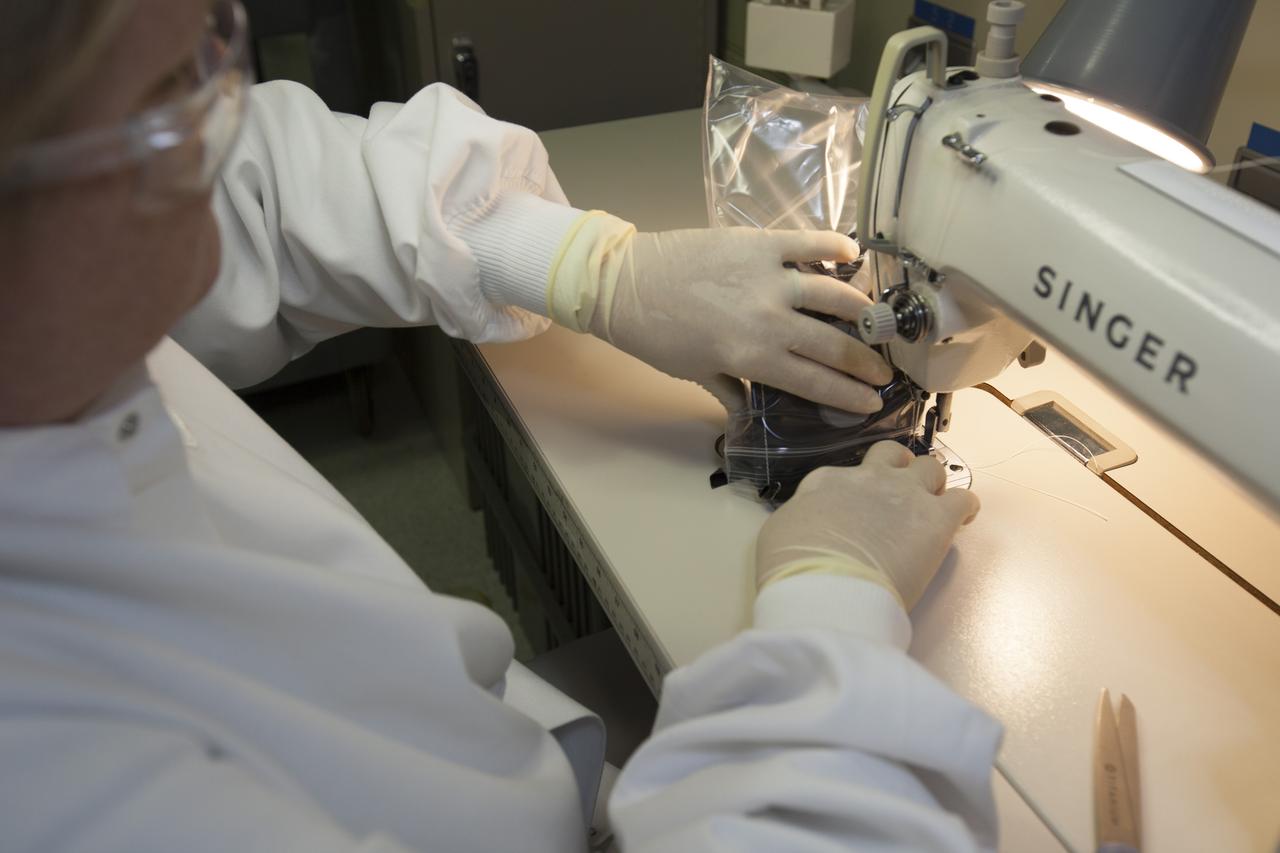
Inside a laboratory in the Space Station Processing Facility at NASA’s Kennedy Space Center in Florida, Michele Koralewicz, a mechanical technician with EASI on the Engineering Services Contract, sews up the end of a bag that contains one of the Veg-03 plant pillows. The Veg-03 experiment will be delivered to the International Space Station aboard the eighth SpaceX Dragon commercial resupply mission. The Veg-03 plant pillows will contain ‘Tokyo Bekana’ cabbage seeds and lettuce seeds for NASA’s third Veggie plant growth system experiment. The experiment will continue NASA’s deep space plant growth research to benefit the Earth and the agency’s journey to Mars.
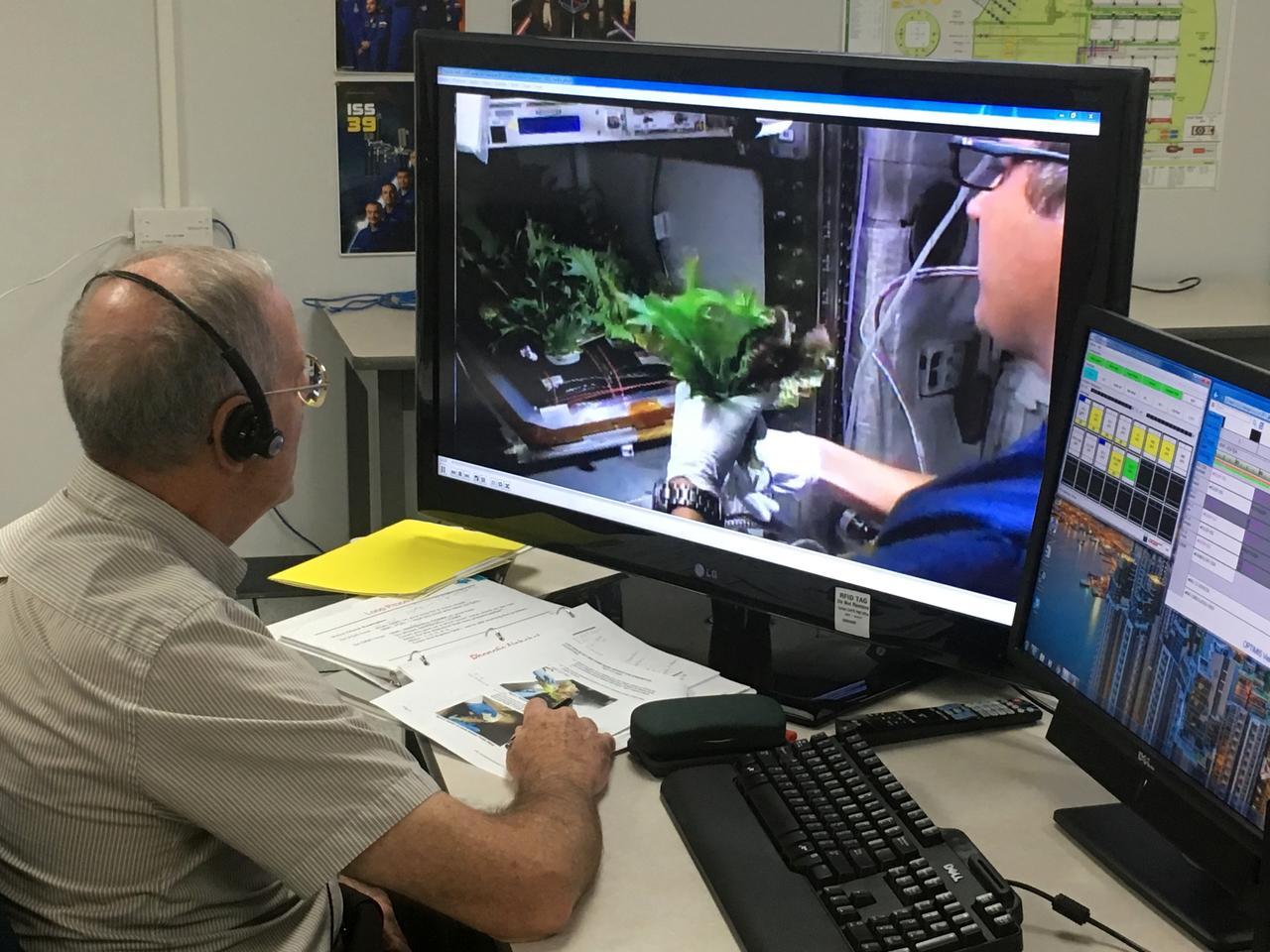
Charles Spern, project manager on the Engineering Services Contract, communicates instructions for the Veggie system to astronaut Joe Acaba on the International Space Station. Spern is in the Experiment Monitoring Room in the Space Station Processing Facility at Kennedy Space Center in Florida. Three different varieties of plants from the Veg-03D plant experiment were harvested.
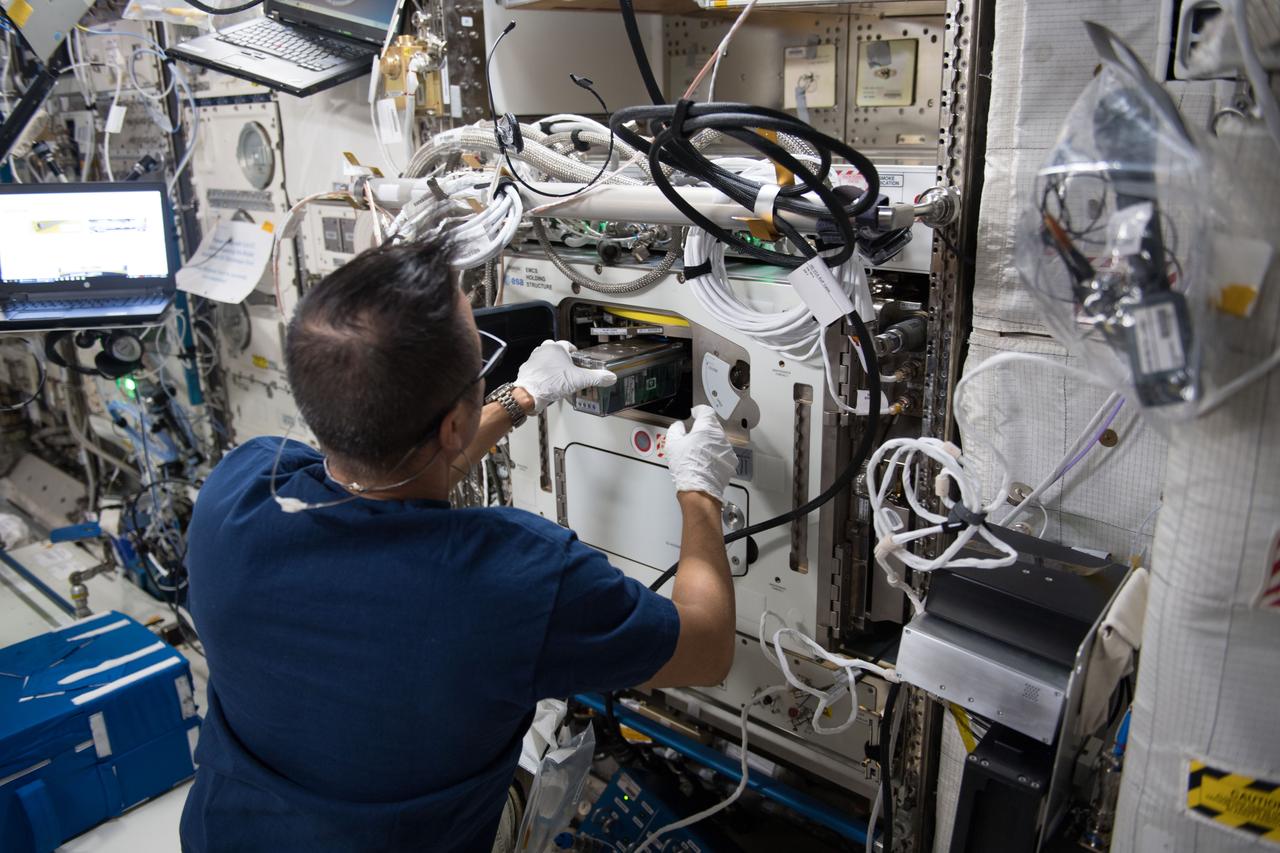
iss054e023800 (Jan. 26, 2018) --- NASA astronaut Joe Acaba placing an Experiment Container (EC) on the European Modular Cultivation System (EMCS) for the the first run of the Plant Gravity Perception experiment to test the gravity-sensing ability of plants in microgravity.
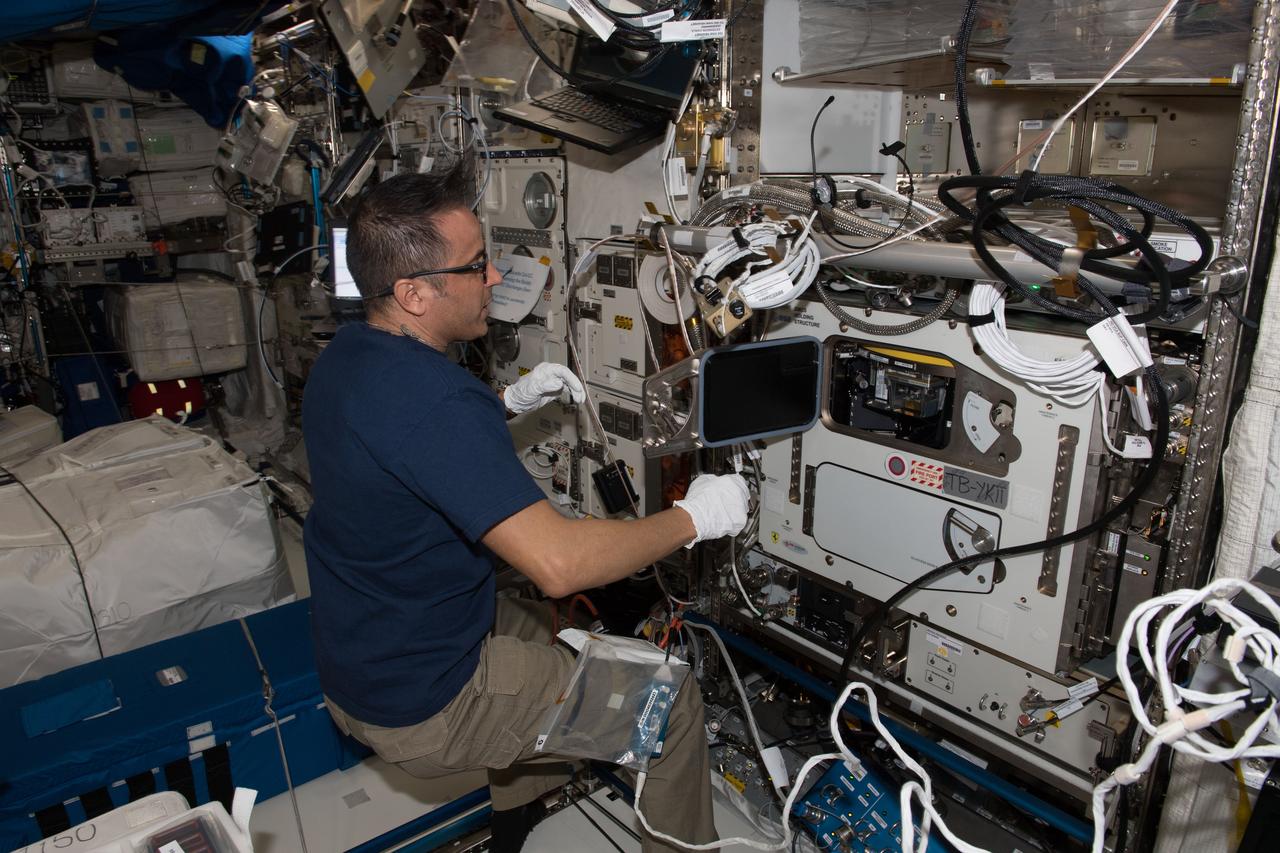
iss054e023776 (Jan. 26, 2018) --- NASA astronaut Joe Acaba removing an Experiment Container (EC) on the European Modular Cultivation System (EMCS) for the the first run of the Plant Gravity Perception experiment to test the gravity-sensing ability of plants in microgravity.
Ames Life Sciences Experiments: Craig VonWaaden, plant growth lab
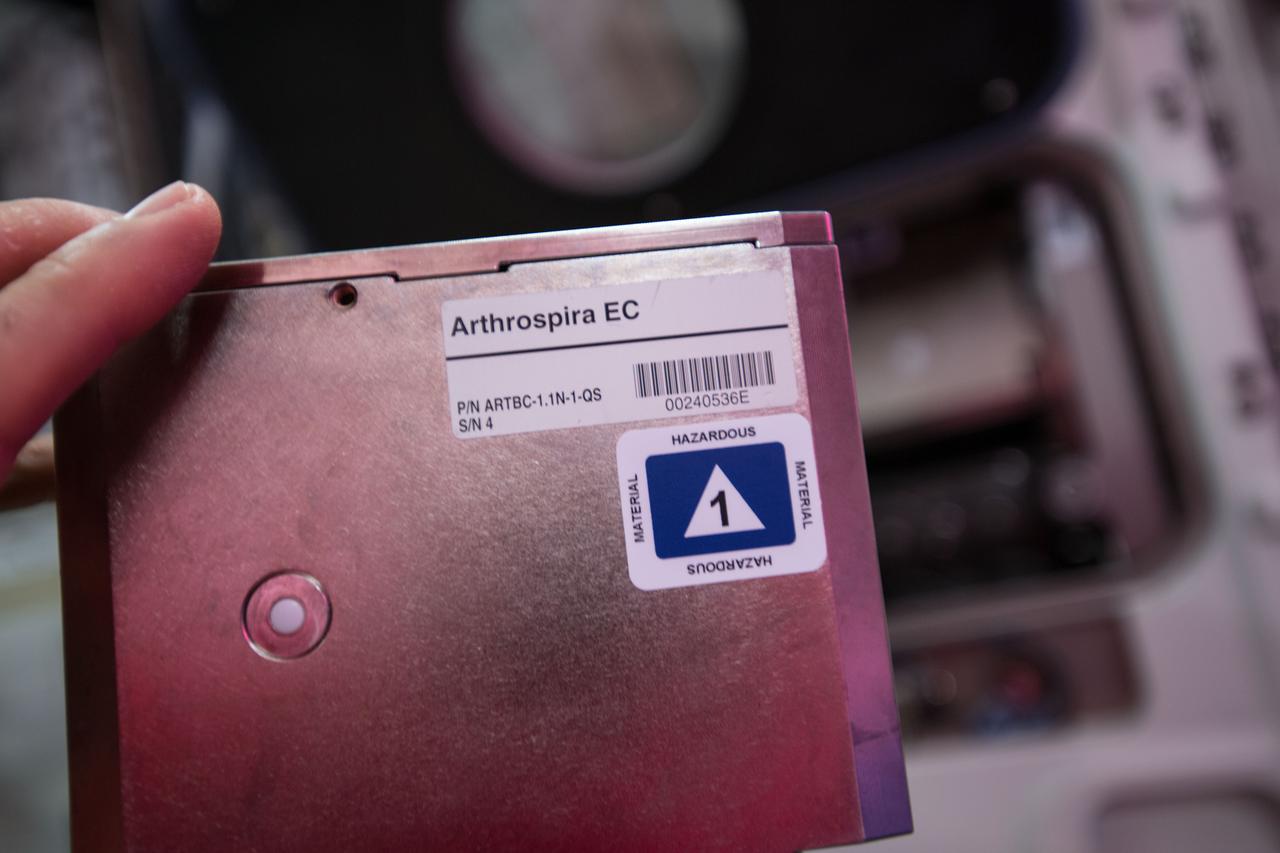
iss054e005642 (Dec. 27, 2017) --- Experiment Container (EC) for the Arthrospira B experiment to test the oxygen production of plants in space for a closed regenerative life support system.
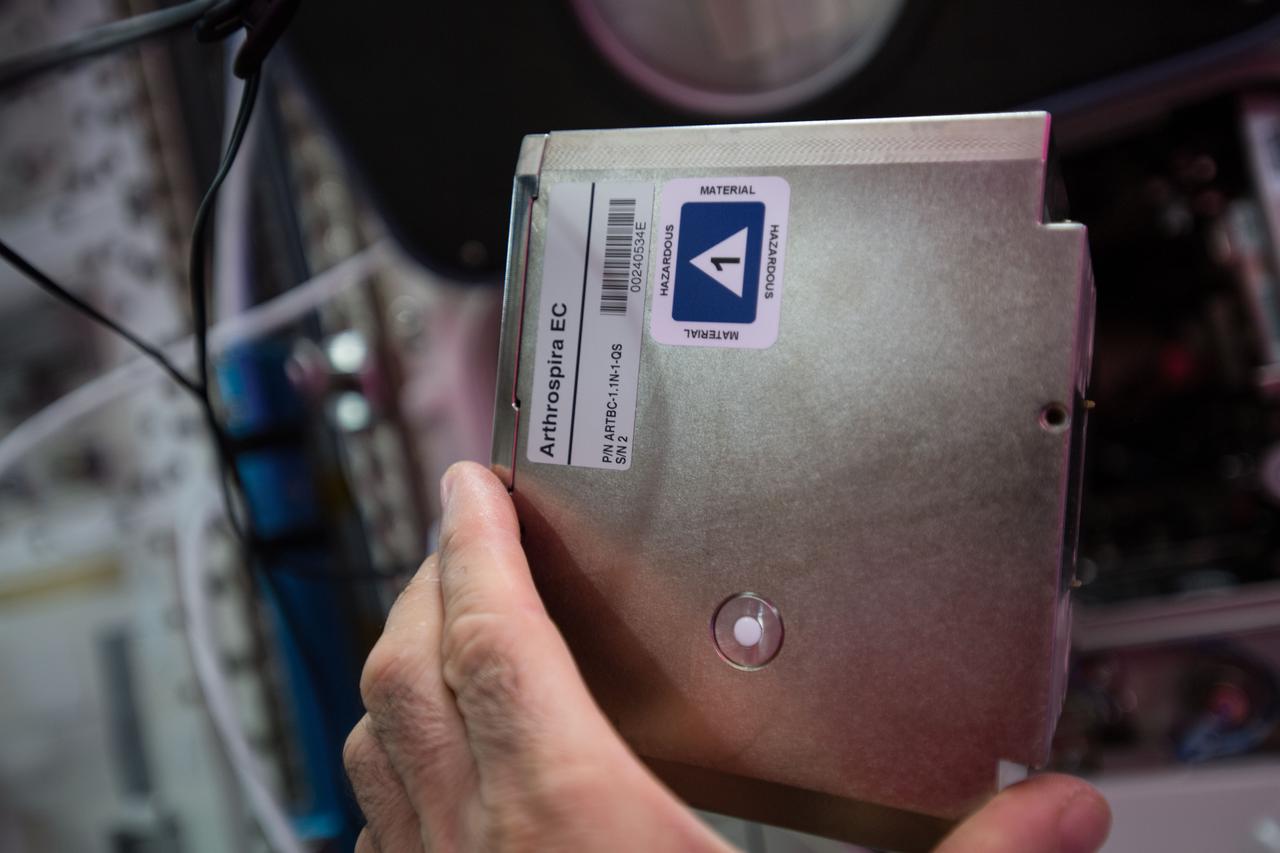
iss054e005663 (Dec. 27, 2017) --- Experiment Container (EC) for the Arthrospira B experiment to test the oxygen production of plants in space for a closed regenerative life support system.
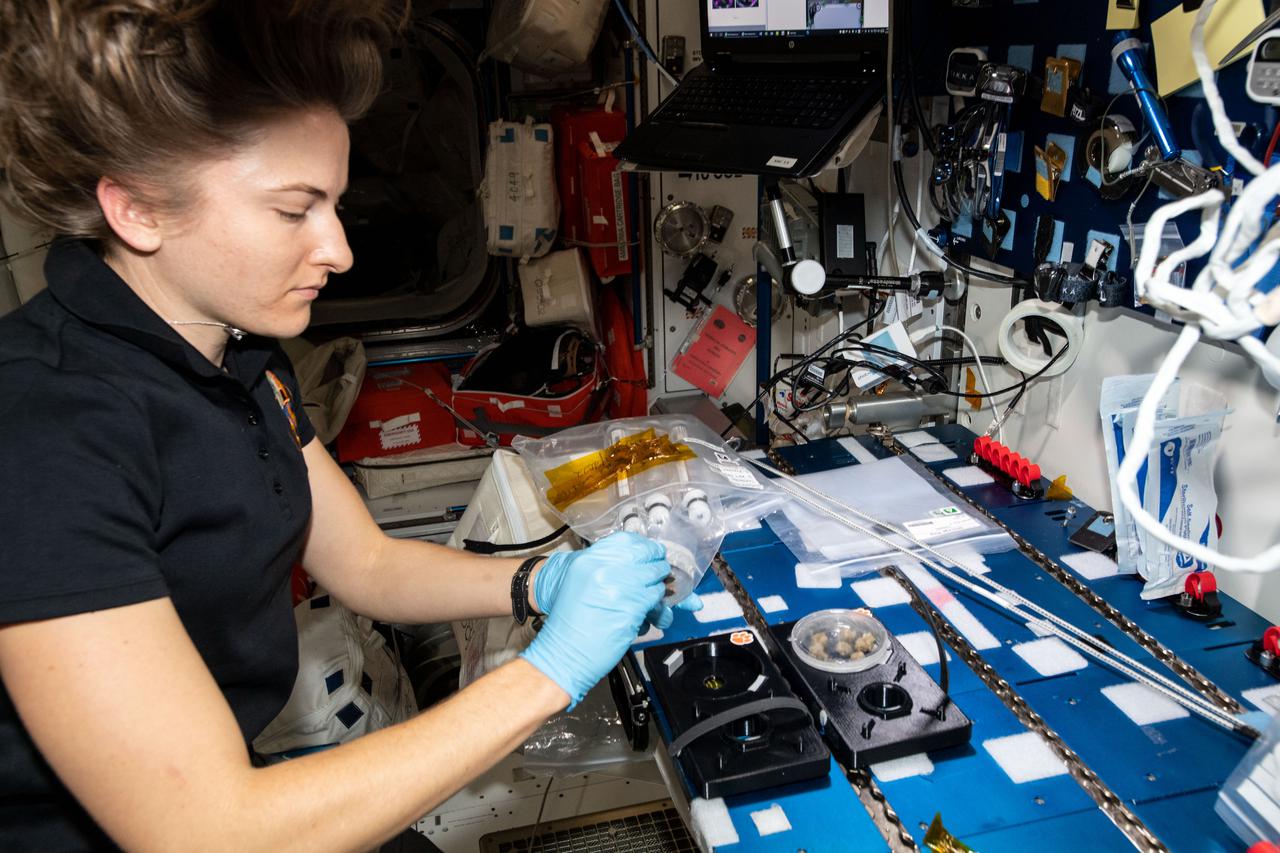
iss066e139750 (Feb. 10, 2022) --- NASA astronaut and Expedition 66 Flight Engineer Kayla Barron harvests cotton cell samples grown for the Plant Habitat-05 space agriculture experiment that is exploring the genetic architecture of plant regeneration.
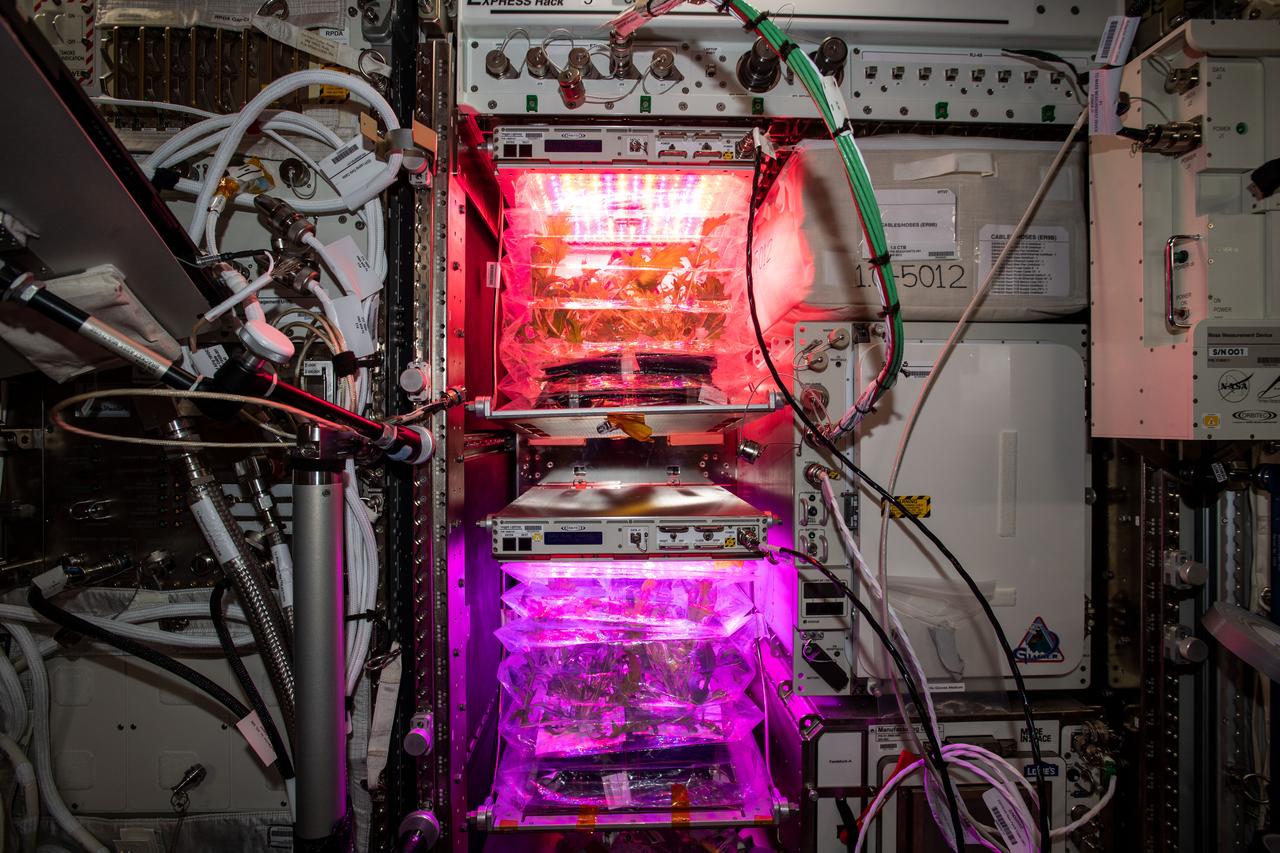
Documentation (overall view) of the Vegetable Production System (Veggie) taken during Pillow watering operations (OPS) for the Veg-04B experiment. Plant Pillows contain Mizuna mustard plants.
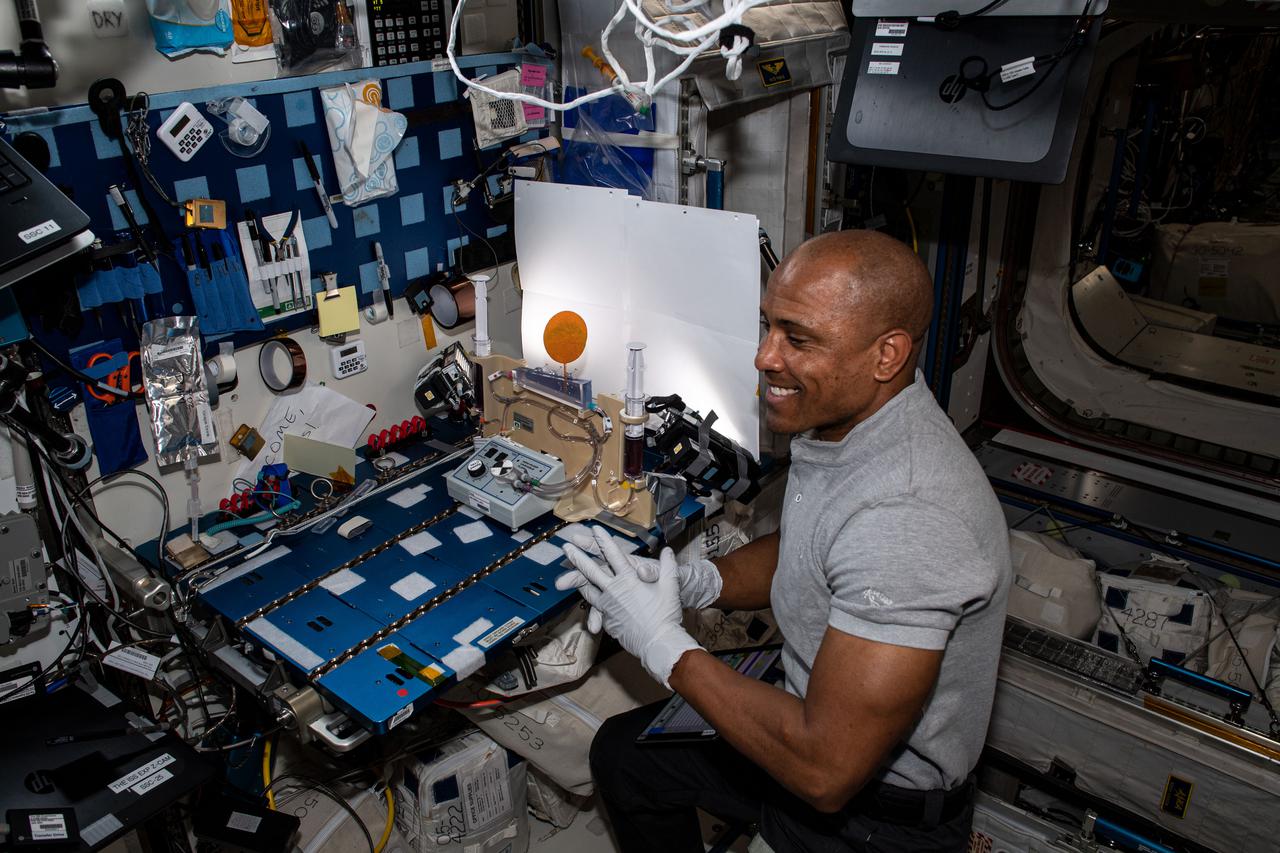
iss064e031991 (Feb. 12, 2021) --- NASA astronaut and Expedition 64 Flight Engineer Victor Glover works on the Plant Water Management experiment that is exploring hydroponics as a way to sustain plants in microgravity from germination through harvest.
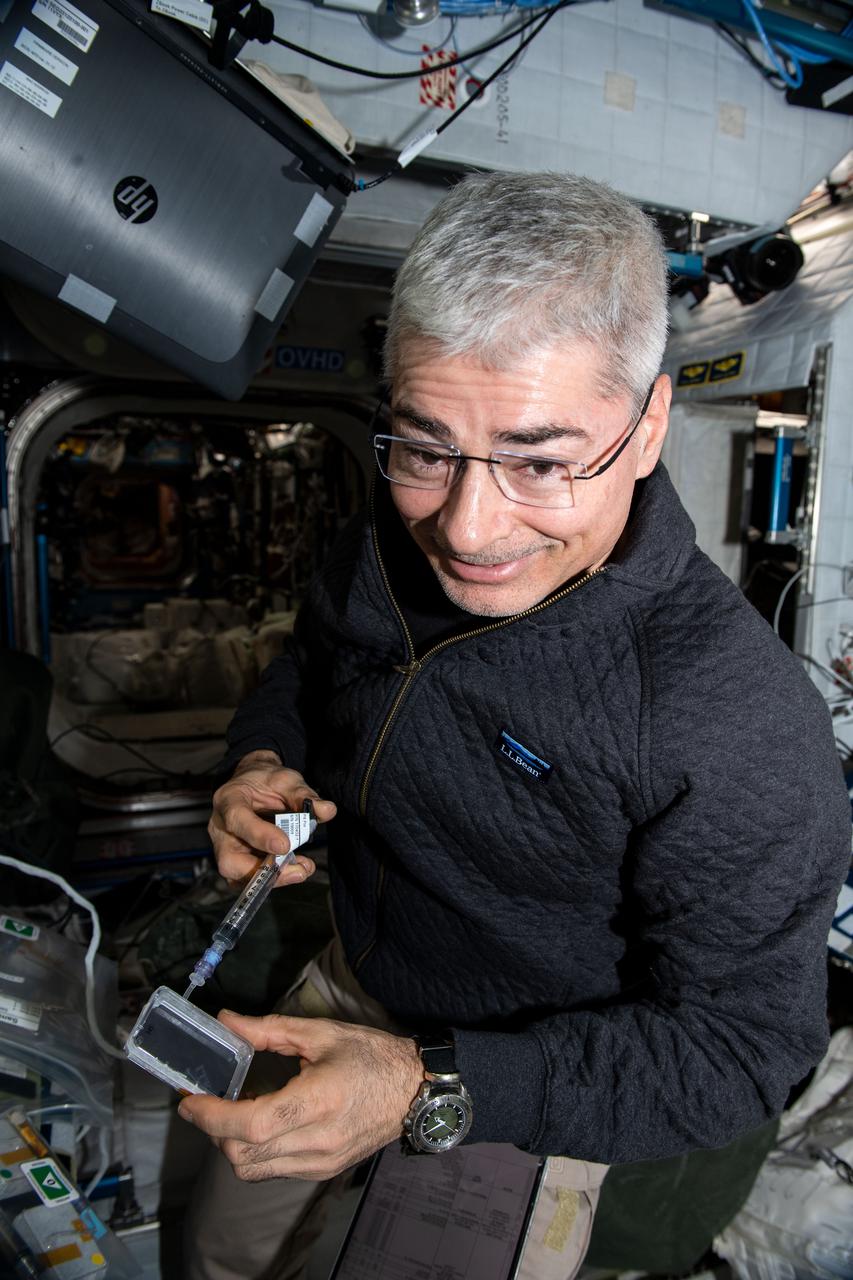
iss066e097028 (Dec. 27, 2021) --- NASA astronaut and Expedition 66 Flight Engineer Mark Vande Hei conducts research operations for the MVP-Plant-01, or Plant RNA Regulation Redux in Multi Variable Platform, space botany study. The experiment seeks to develop plants that adapt to growing in the microgravity environment.

iss053e234714 (Nov. 21, 2017) --- Advanced Plant Habitat (APH) Facility in the Japanese Experiment Module (JEM) Pressurized Module (JPM). The Plant Habitat is a fully automated facility that provides a large, enclosed, environmentally-controlled chamber for plant bioscience research.
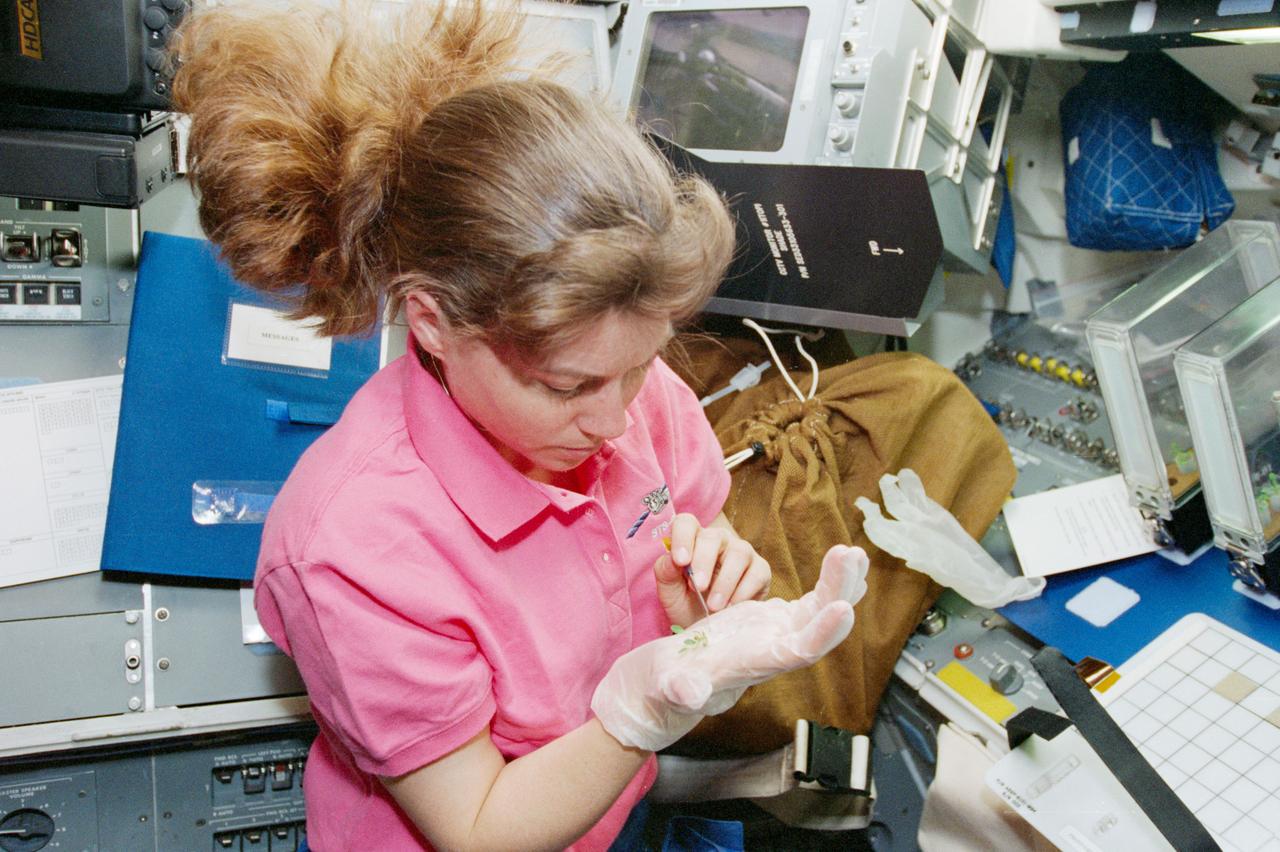
STS093-319-003 (23-27 July 1999) --- Astronaut Catherine G. (Cady) Coleman, mission specialist, handles a tiny mouse ear plant on Columbia's flight deck. The plant experiment is part of the Plant Growth Investigations in Microgravity (PGIM).
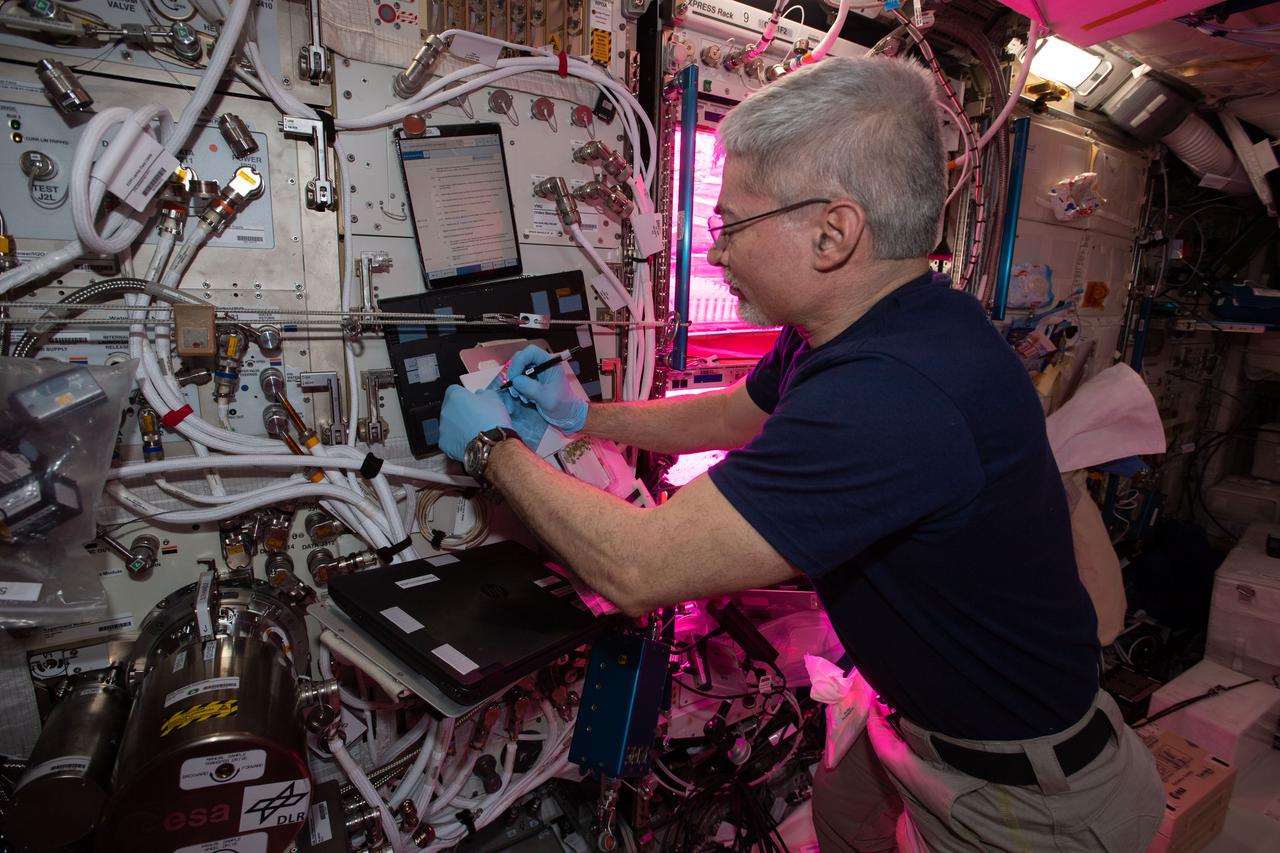
iss066e110211 (Jan. 10, 2022) --- NASA astronaut and Expedition 66 Flight Engineer Mark Vande Hei harvests plants grown on petri plates for the APEX-07 (Advanced Plant Experiments) space botany study that is exploring how microgravity affects genetic expression in plants.