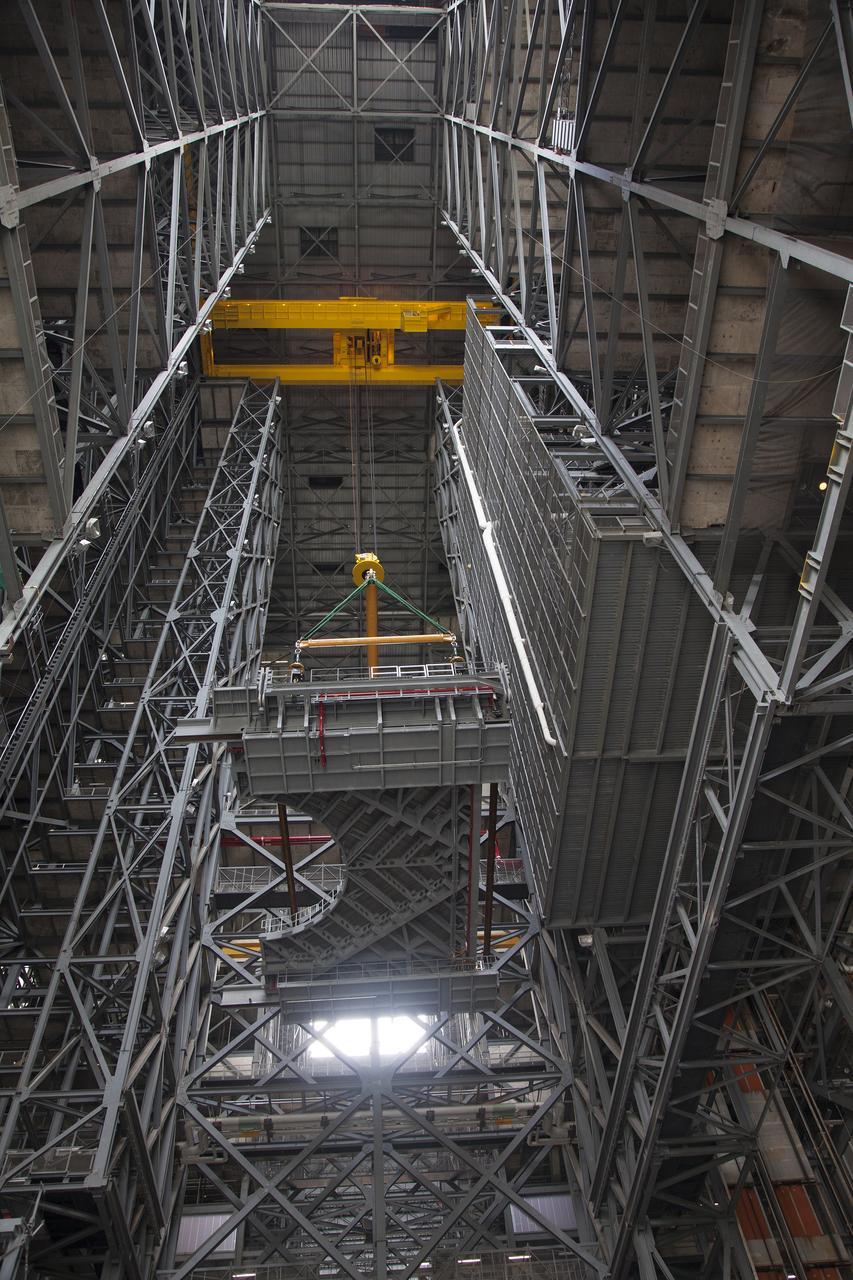
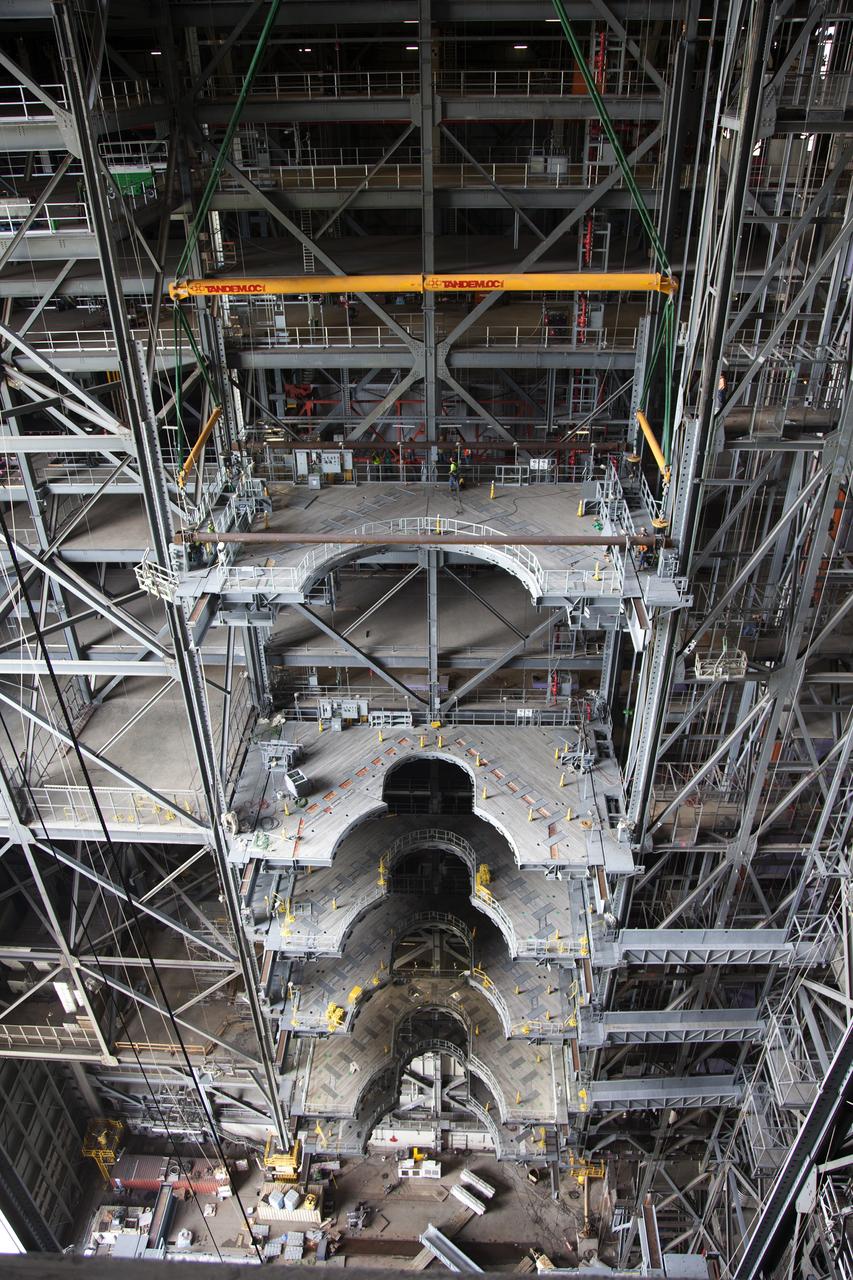
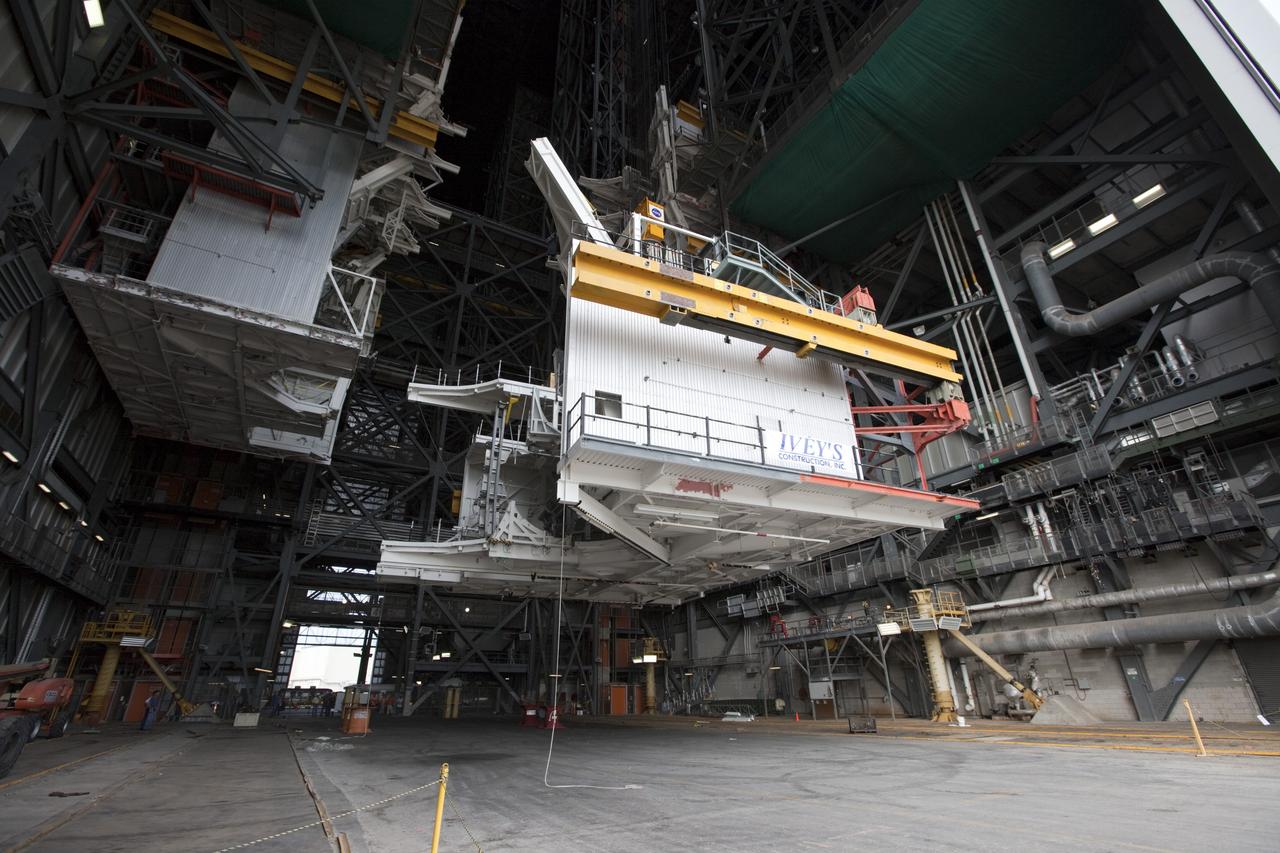
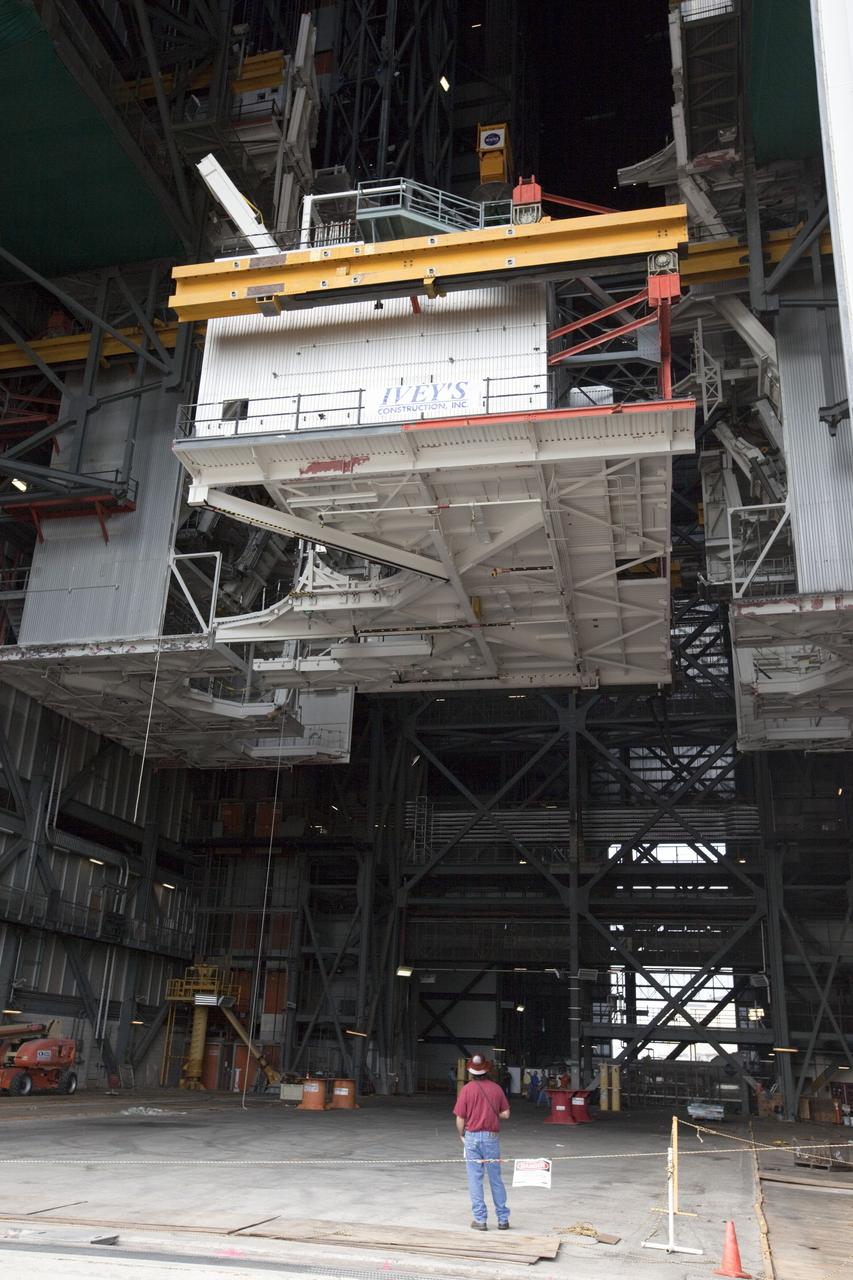
A heavy-lift crane lifts the first half of the E-level work platforms, E south, for NASA’s Space Launch System (SLS) rocket, high above the floor of the transfer aisle in the Vehicle Assembly Building (VAB) at NASA’s Kennedy Space Center in Florida. The E platform will be installed on the south side of High Bay 3, about 246 feet above the floor. The E platforms are the sixth of 10 levels of work platforms that will surround and provide access to the SLS rocket and Orion spacecraft for Exploration Mission 1. The Ground Systems Development and Operations Program is overseeing upgrades and modifications to VAB High Bay 3, including installation of the new work platforms, to prepare for NASA’s journey to Mars.
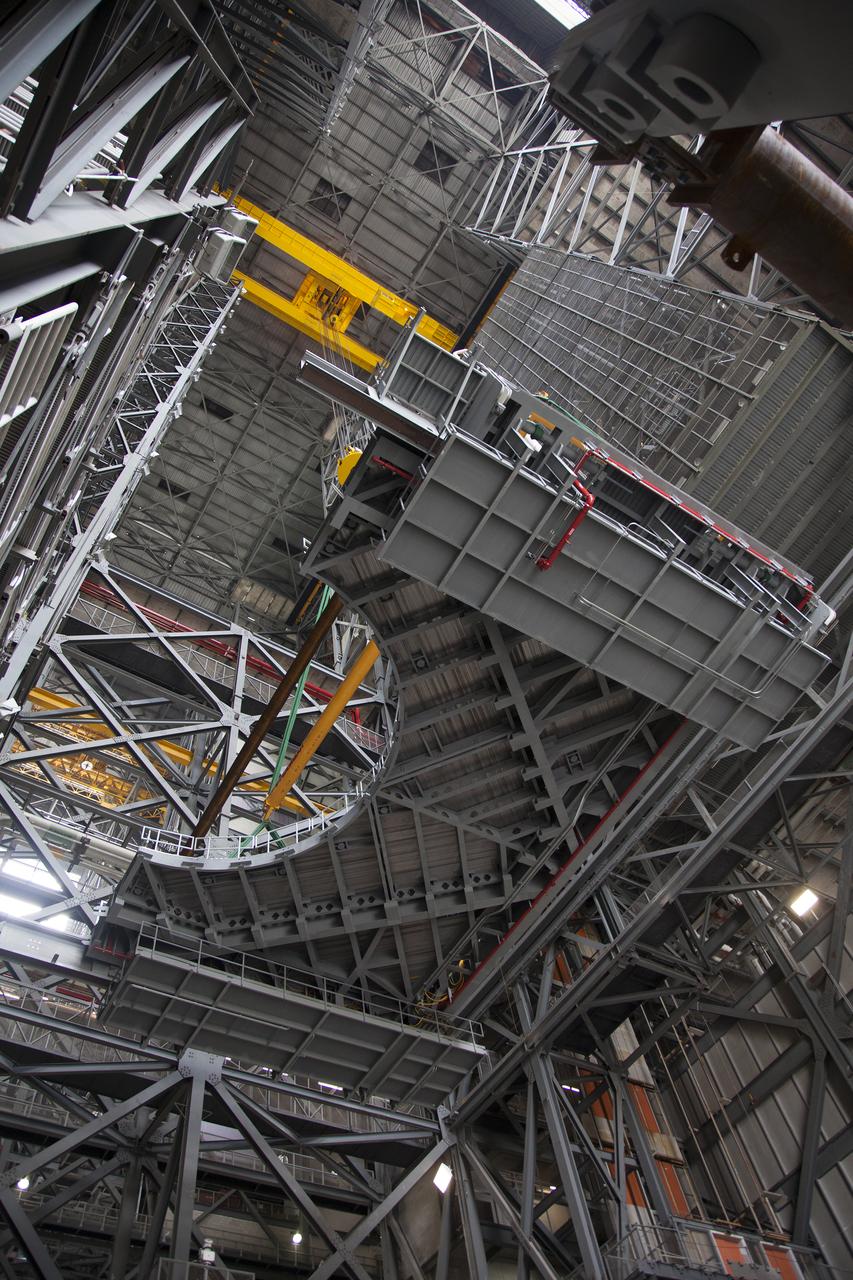
A heavy-lift crane lifts the first half of the E-level work platforms, E south, for NASA’s Space Launch System (SLS) rocket, up from the floor of the Vehicle Assembly Building (VAB) at NASA’s Kennedy Space Center in Florida. The E platform will be installed on the south side of High Bay 3, about 246 feet above the floor. The E platforms are the sixth of 10 levels of work platforms that will surround and provide access to the SLS rocket and Orion spacecraft for Exploration Mission 1. The Ground Systems Development and Operations Program is overseeing upgrades and modifications to VAB High Bay 3, including installation of the new work platforms, to prepare for NASA’s journey to Mars.
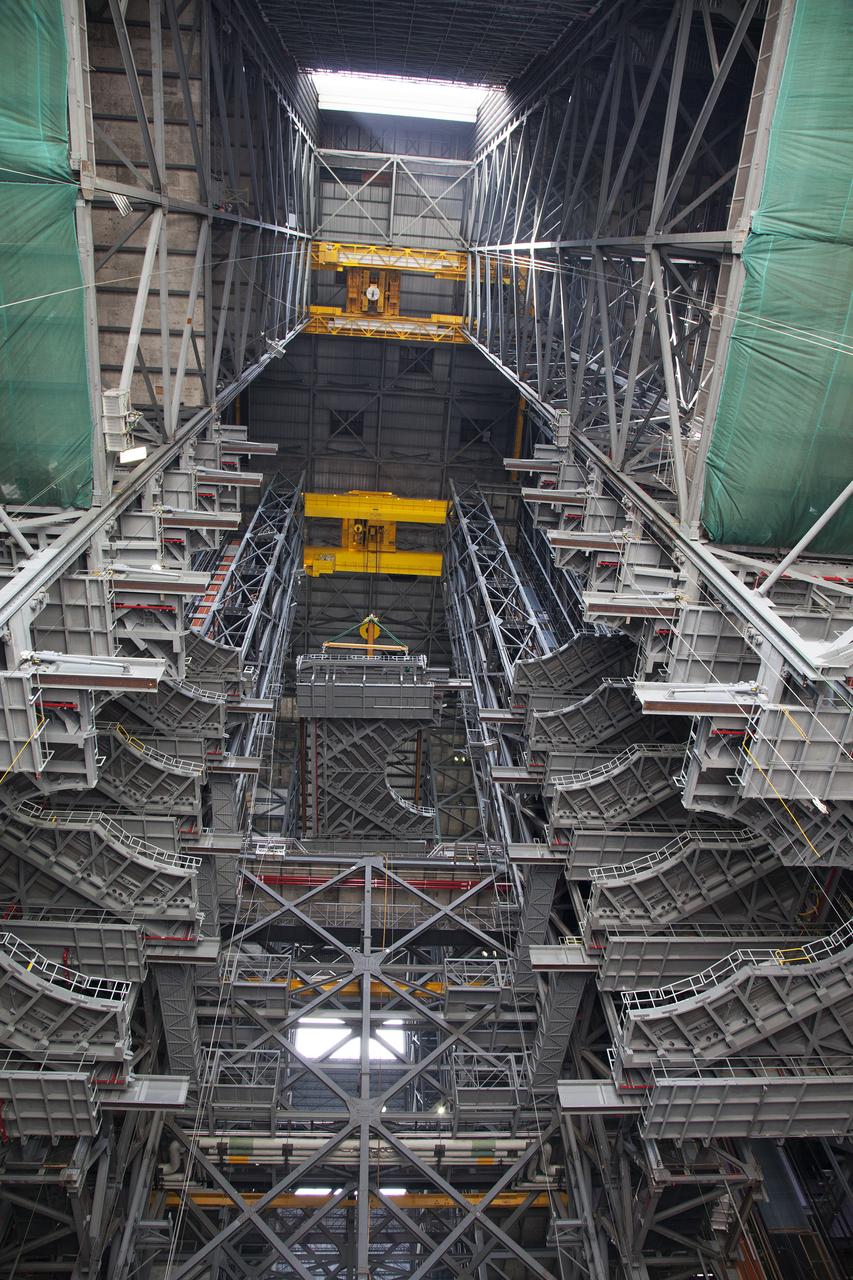
A heavy-lift crane lowers the first half of the E-level work platforms, E south, for NASA’s Space Launch System (SLS) rocket, into High Bay 3 in the Vehicle Assembly Building (VAB) at NASA’s Kennedy Space Center in Florida. The E platform will be installed on the south side of High Bay 3, about 246 feet above the floor. The E platforms are the sixth of 10 levels of work platforms that will surround and provide access to the SLS rocket and Orion spacecraft for Exploration Mission 1. The Ground Systems Development and Operations Program is overseeing upgrades and modifications to VAB High Bay 3, including installation of the new work platforms, to prepare for NASA’s journey to Mars.
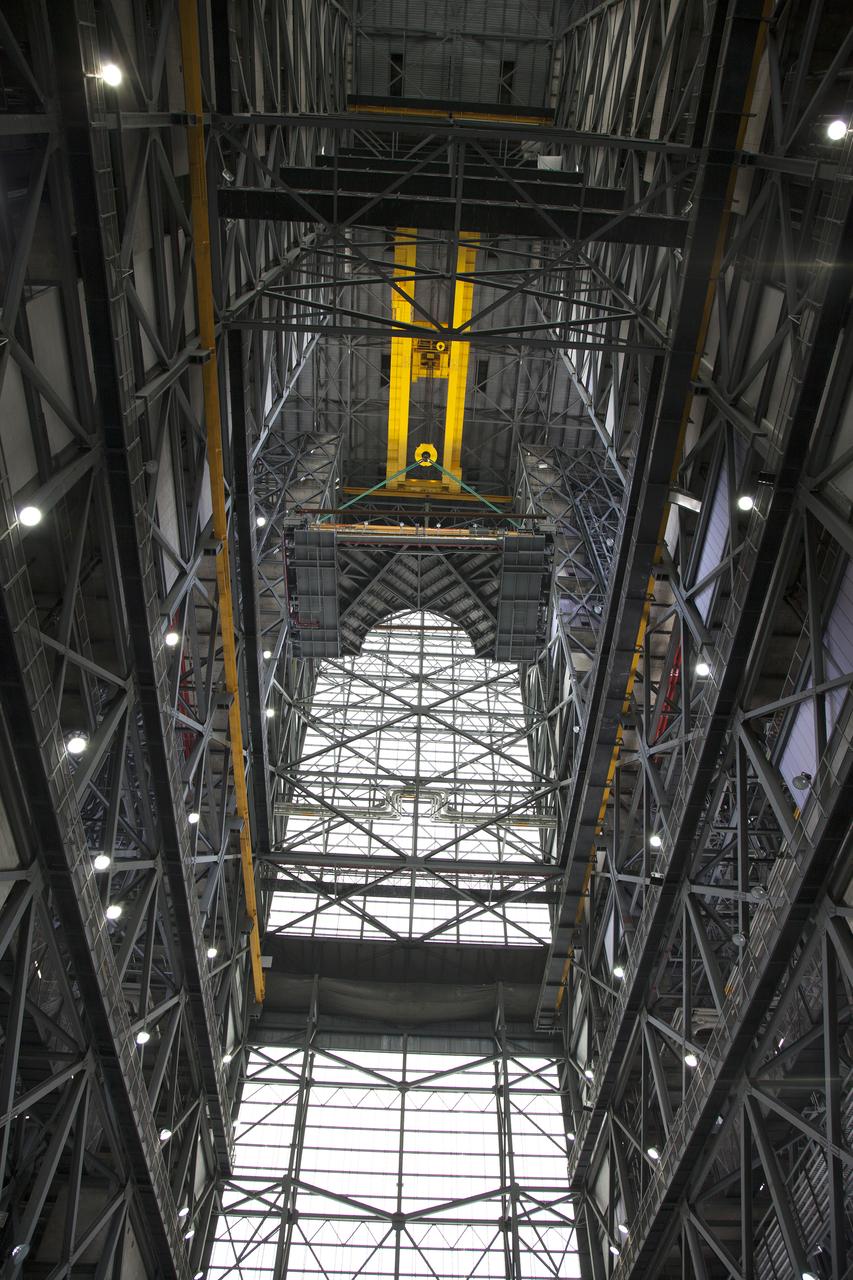
A heavy-lift crane lifts the first half of the E-level work platforms, E south, for NASA’s Space Launch System (SLS) rocket, high above the floor of the transfer aisle in the Vehicle Assembly Building (VAB) at NASA’s Kennedy Space Center in Florida. The E platform will be installed on the south side of High Bay 3, about 246 feet above the floor. The E platforms are the sixth of 10 levels of work platforms that will surround and provide access to the SLS rocket and Orion spacecraft for Exploration Mission 1. The Ground Systems Development and Operations Program is overseeing upgrades and modifications to VAB High Bay 3, including installation of the new work platforms, to prepare for NASA’s journey to Mars.
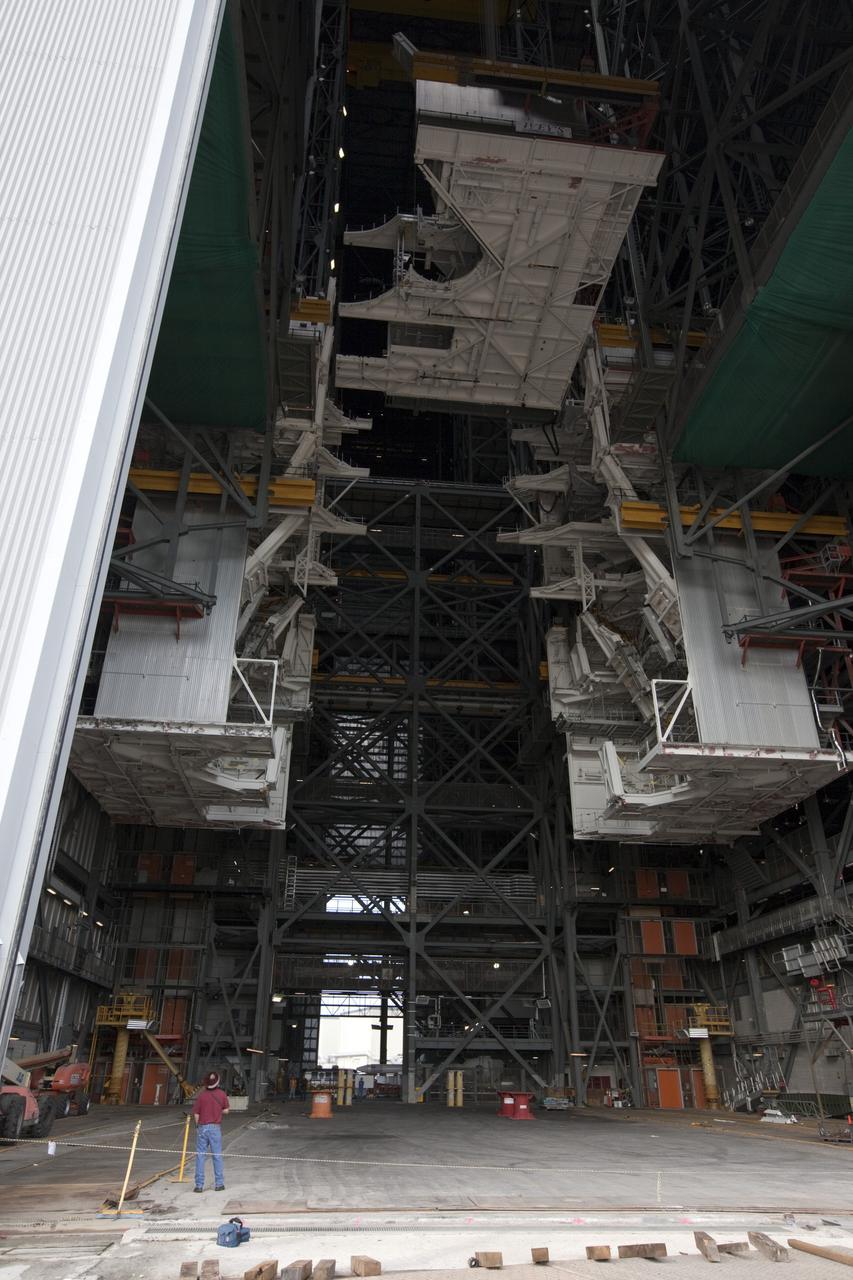
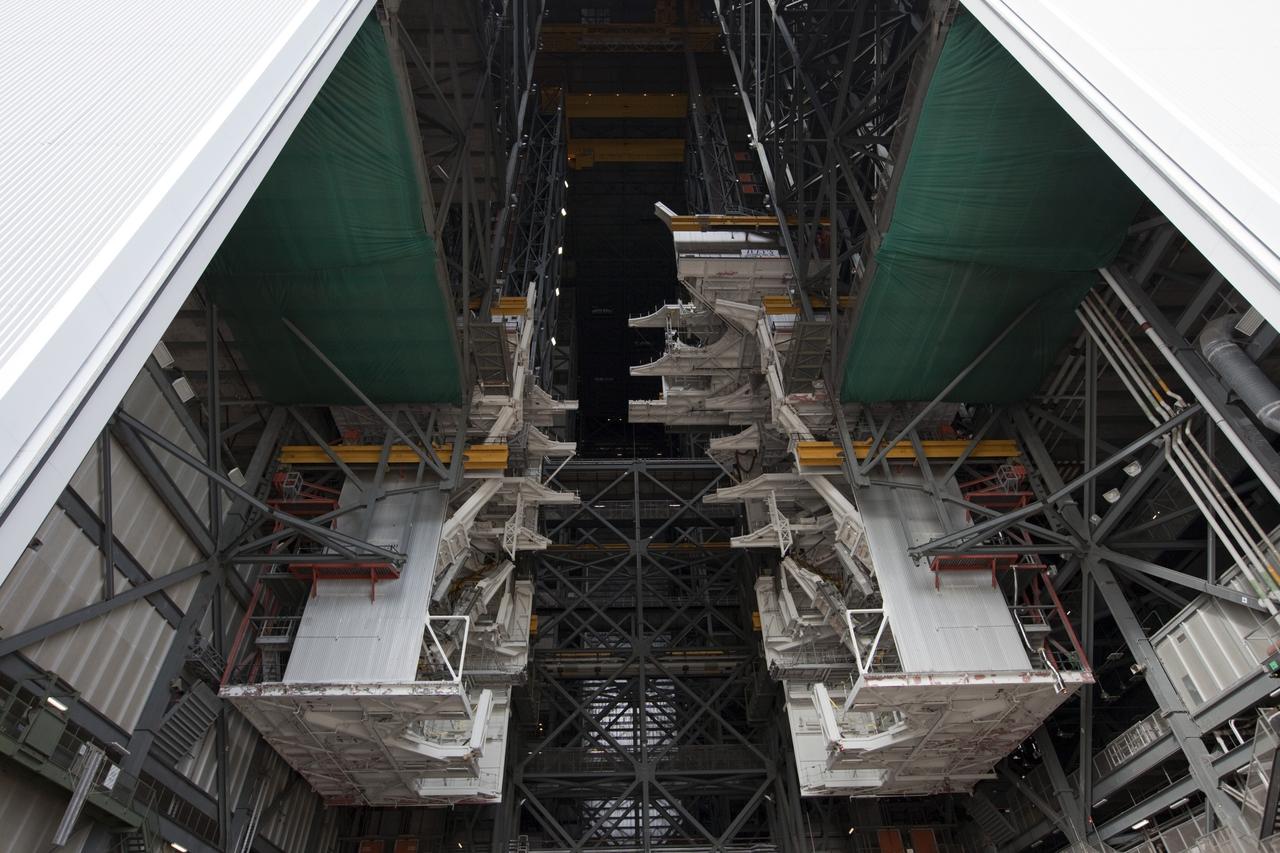
A heavy-lift crane lowers the first half of the E-level work platforms, E south, for NASA’s Space Launch System (SLS) rocket, into position for installation in High Bay 3 in the Vehicle Assembly Building (VAB) at NASA’s Kennedy Space Center in Florida. Large Tandemloc bars have been attached to the platform to keep it level during lifting and installation. In view are five levels of platforms previously installed. The E platform will be installed on the south side of High Bay 3, about 246 feet above the floor. The E platforms are the sixth of 10 levels of work platforms that will surround and provide access to the SLS rocket and Orion spacecraft for Exploration Mission 1. The Ground Systems Development and Operations Program is overseeing upgrades and modifications to VAB High Bay 3, including installation of the new work platforms, to prepare for NASA’s journey to Mars.
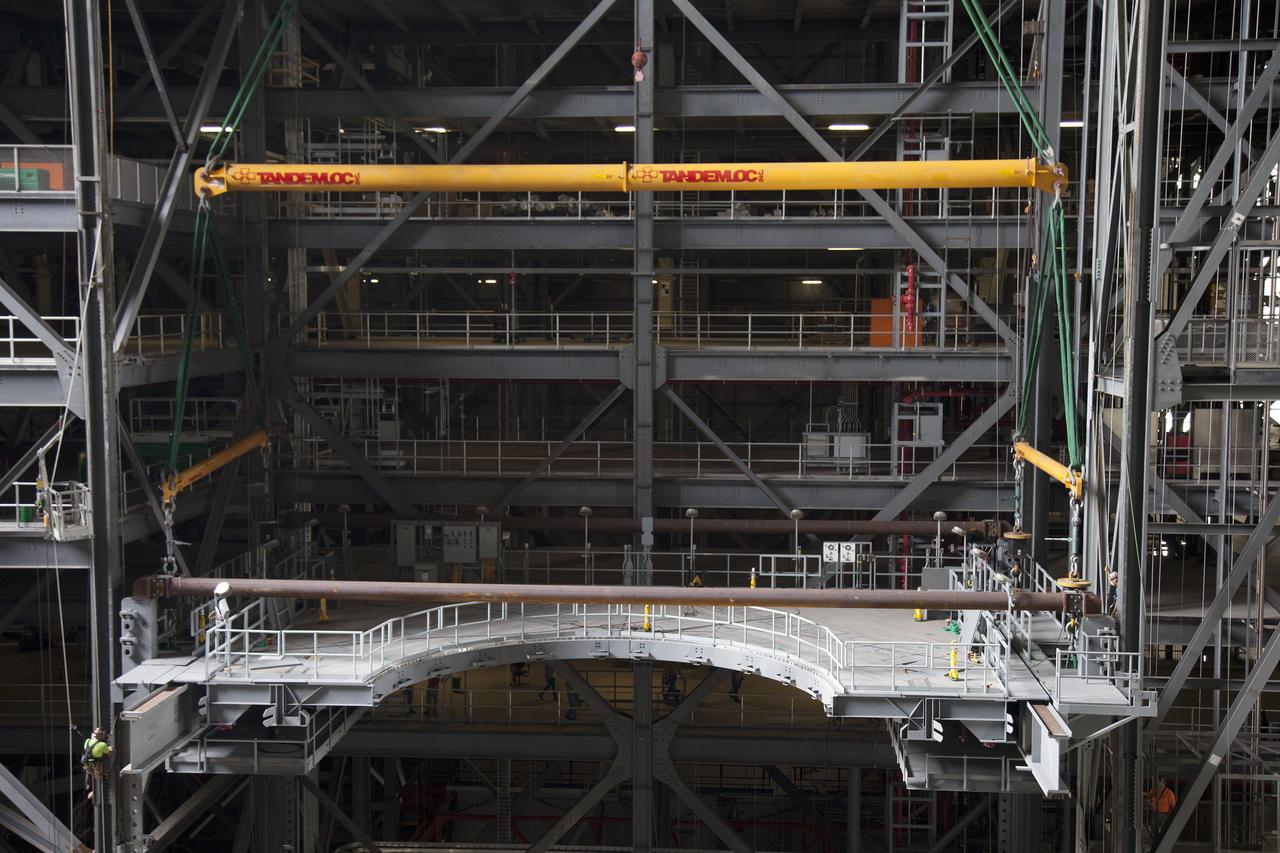
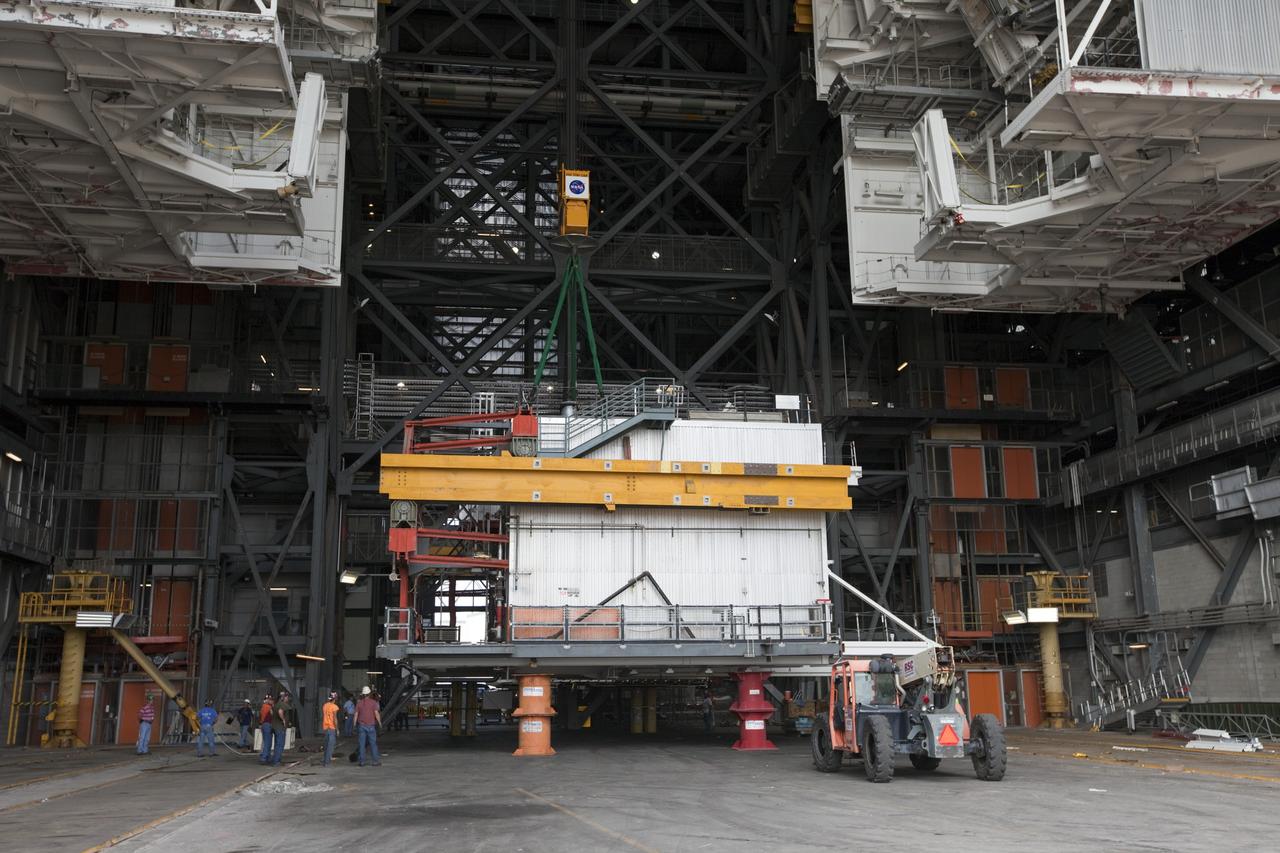
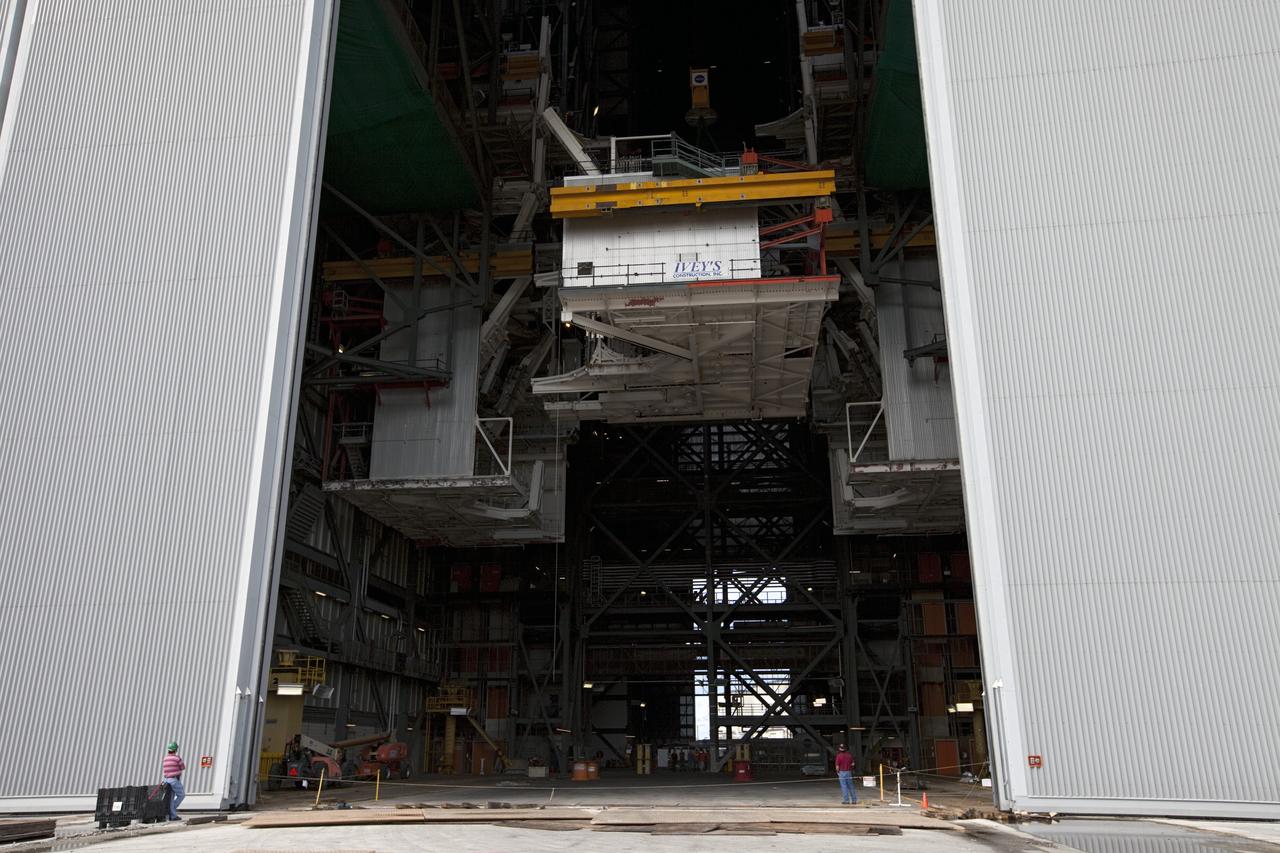
A heavy-lift crane lowers the first half of the E-level work platforms, E south, for NASA’s Space Launch System (SLS) rocket, into position for installation in High Bay 3 in the Vehicle Assembly Building (VAB) at NASA’s Kennedy Space Center in Florida. Large Tandemloc bars have been attached to the platform to keep it level during lifting and installation. The E platform will be installed on the south side of High Bay 3, about 246 feet above the floor. The E platforms are the sixth of 10 levels of work platforms that will surround and provide access to the SLS rocket and Orion spacecraft for Exploration Mission 1. The Ground Systems Development and Operations Program is overseeing upgrades and modifications to VAB High Bay 3, including installation of the new work platforms, to prepare for NASA’s journey to Mars.
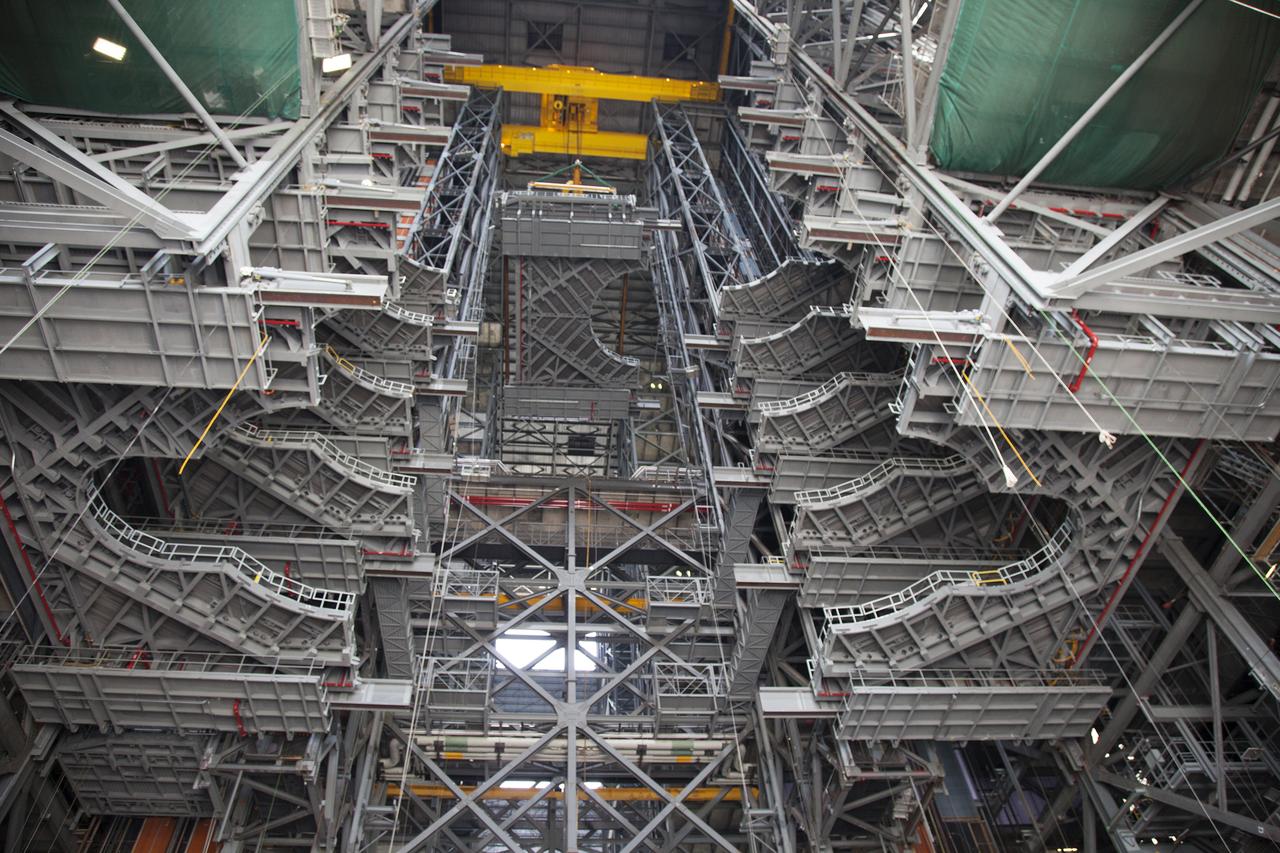
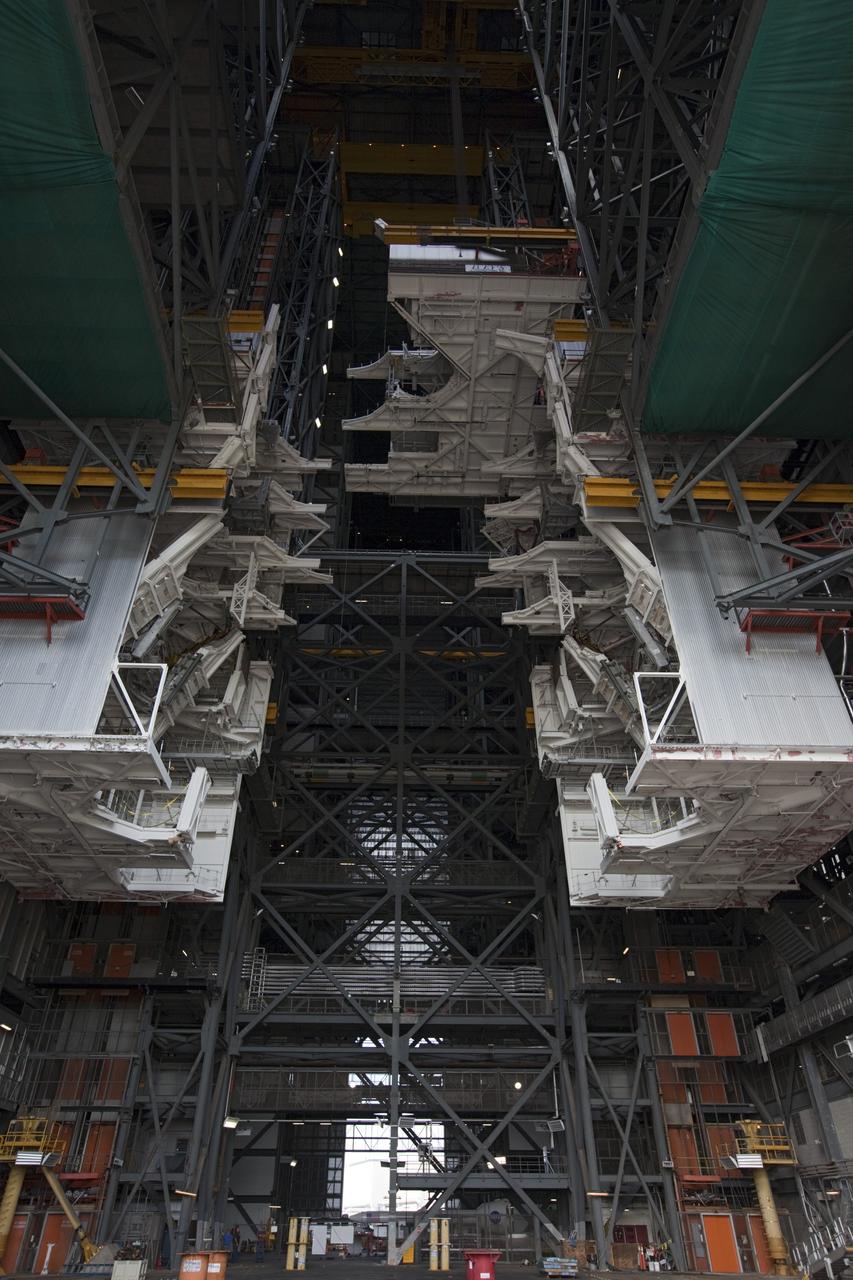
A heavy-lift crane lowers the first half of the E-level work platforms, E south, for NASA’s Space Launch System (SLS) rocket, into High Bay 3 in the Vehicle Assembly Building (VAB) at NASA’s Kennedy Space Center in Florida. In view are five levels of platforms previously installed. The E platform will be installed on the south side of High Bay 3, about 246 feet above the floor. The E platforms are the sixth of 10 levels of work platforms that will surround and provide access to the SLS rocket and Orion spacecraft for Exploration Mission 1. The Ground Systems Development and Operations Program is overseeing upgrades and modifications to VAB High Bay 3, including installation of the new work platforms, to prepare for NASA’s journey to Mars.
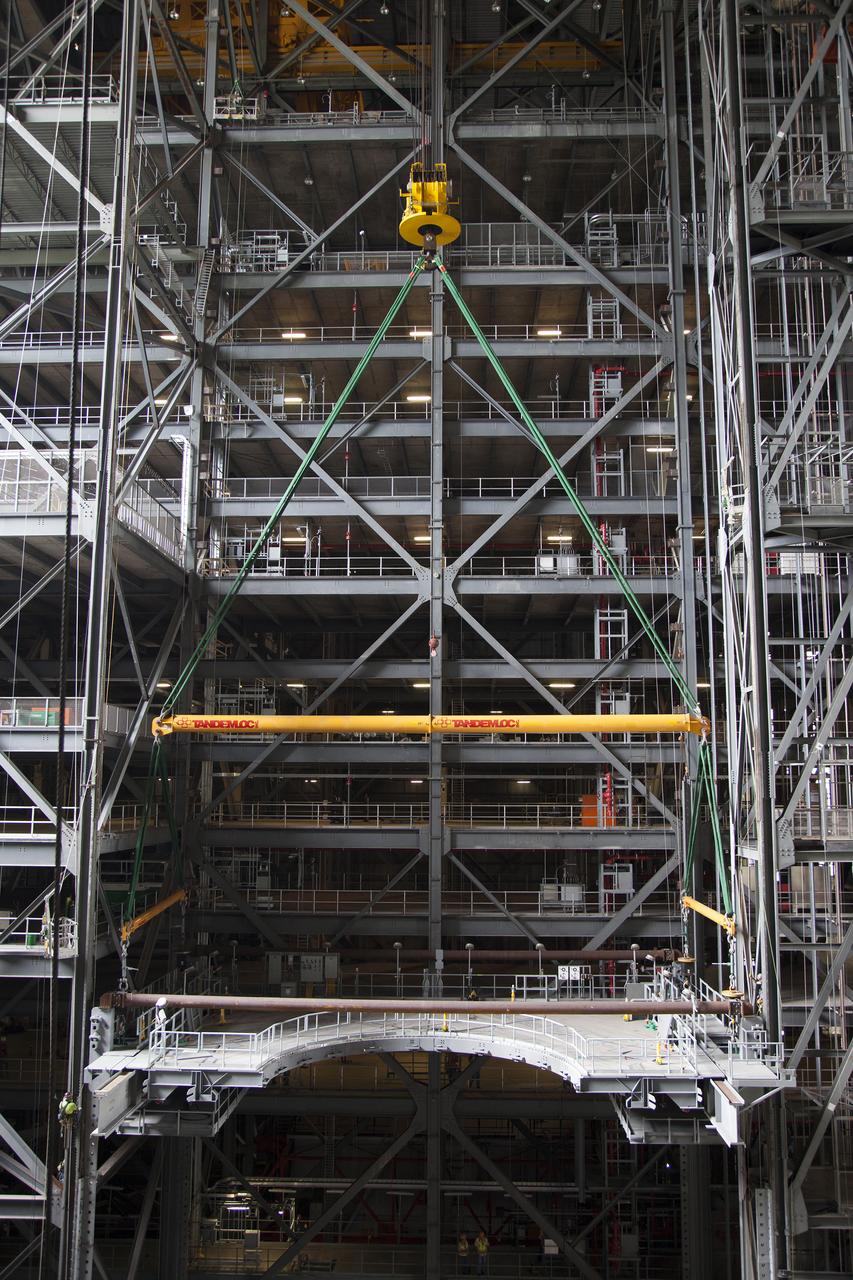
A heavy-lift crane lowers the first half of the E-level work platforms, E south, for NASA’s Space Launch System (SLS) rocket, into position for installation in High Bay 3 in the Vehicle Assembly Building (VAB) at NASA’s Kennedy Space Center in Florida. Large Tandemloc bars have been attached to the platform to keep it level during lifting and installation. The E platform will be installed on the south side of High Bay 3, about 246 feet above the floor. The E platforms are the sixth of 10 levels of work platforms that will surround and provide access to the SLS rocket and Orion spacecraft for Exploration Mission 1. The Ground Systems Development and Operations Program is overseeing upgrades and modifications to VAB High Bay 3, including installation of the new work platforms, to prepare for NASA’s journey to Mars.
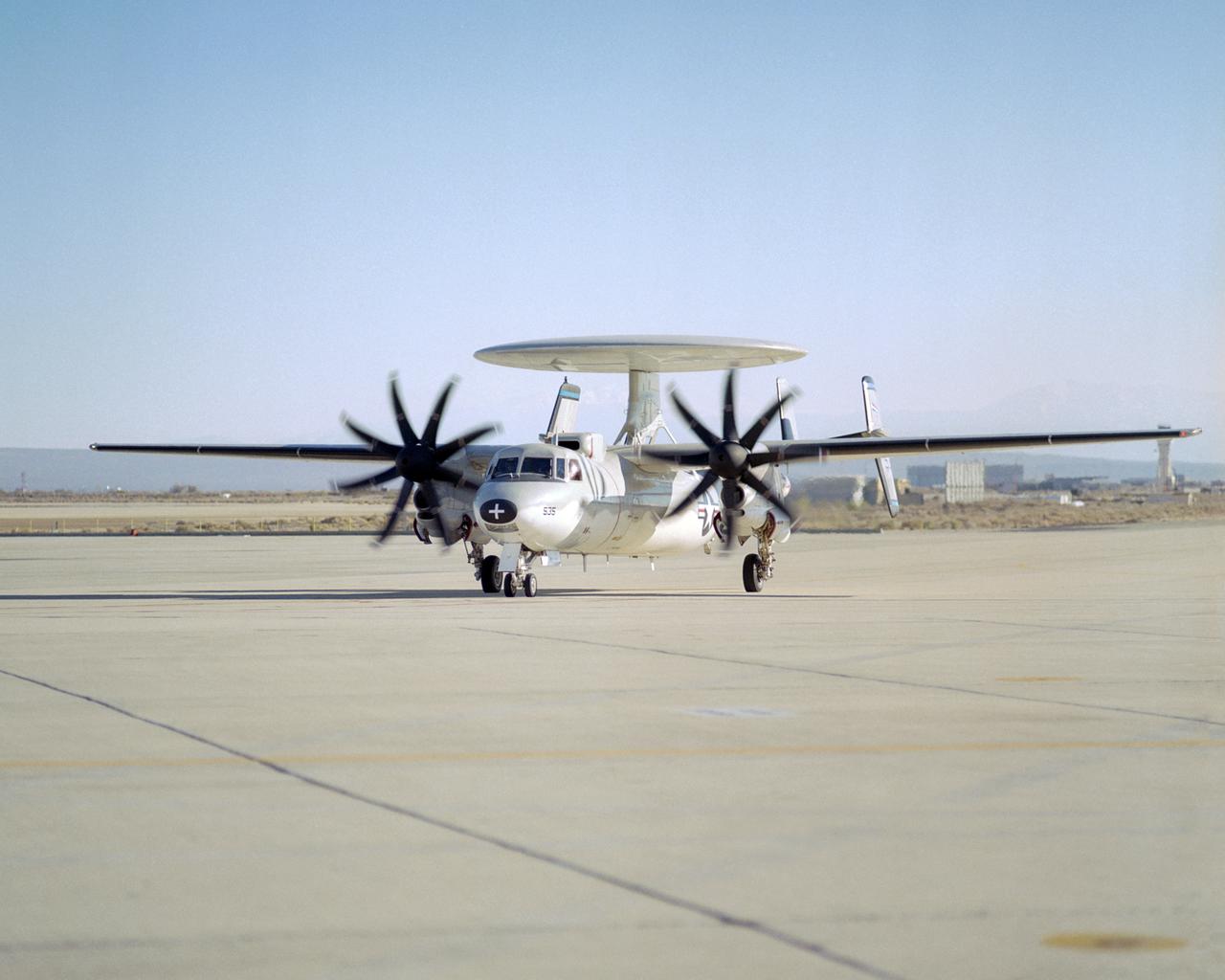
A Navy E-2C Hawkeye early-warning aircraft arrives at NASA's Dryden Flight Research Center for extensive structural loads tests in Dryden's flight loads lab.

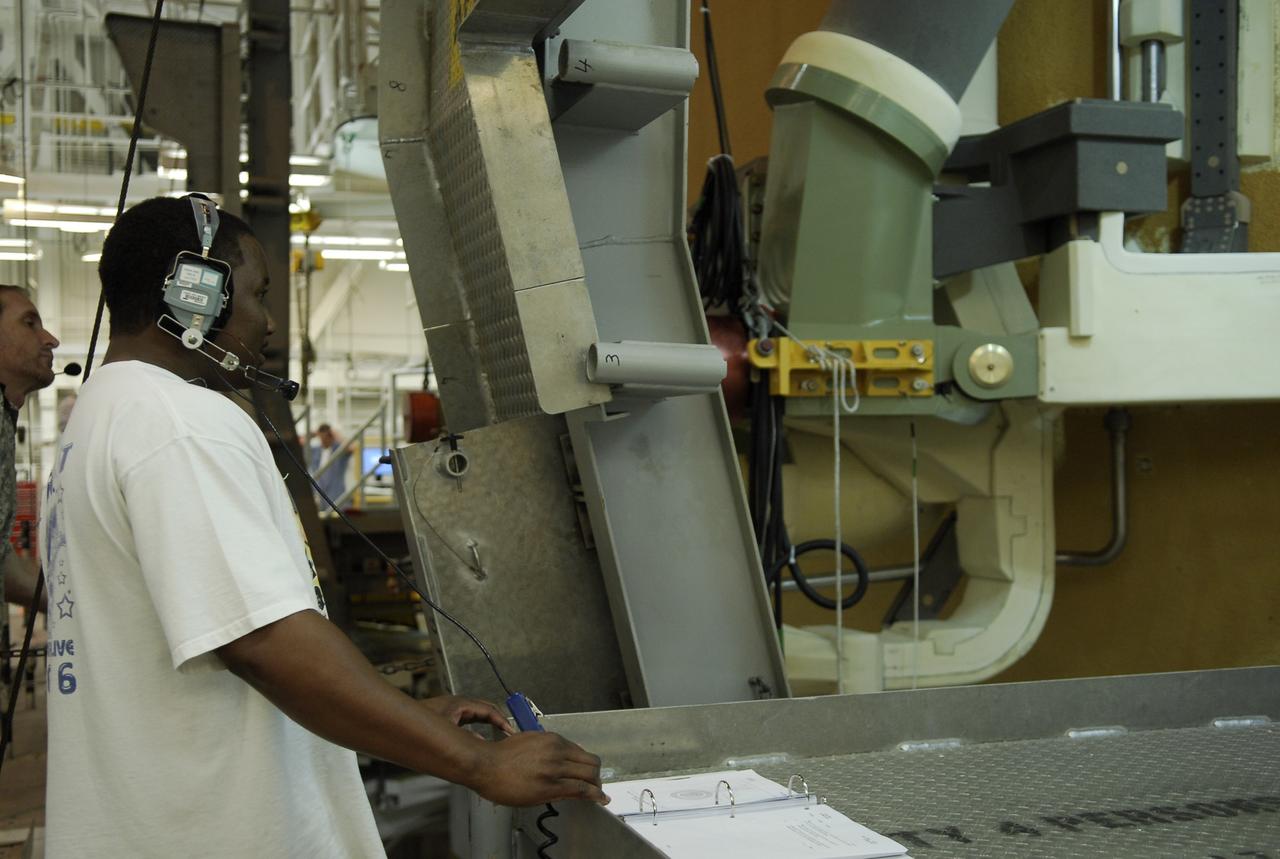
Engineers Paul Lundstrom and Larry Reardon monitor forces applied by structural loads equipment during tests on a Navy E-2C in NASA Dryden's flight loads lab.
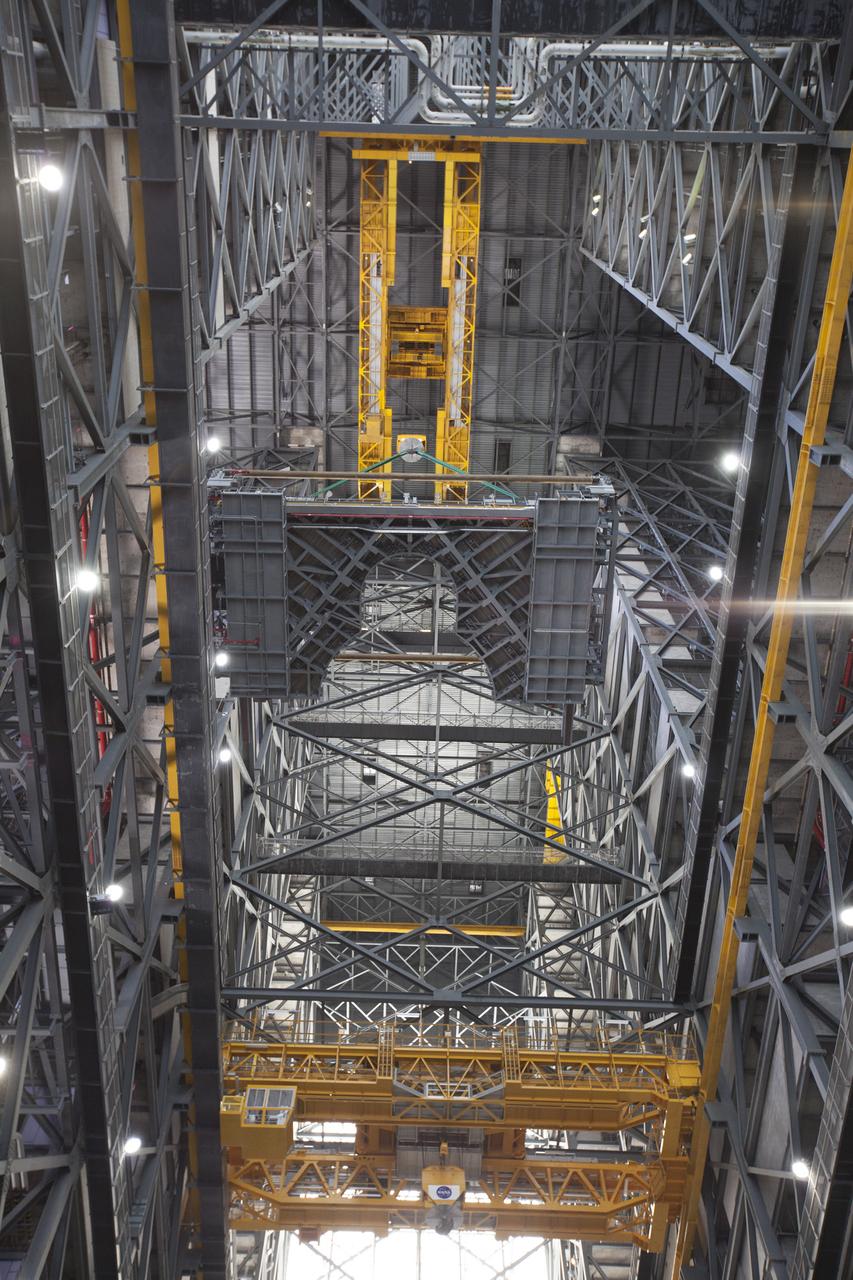
A 250-ton crane is used to lift the second half of the K-level work platforms for NASA’s Space Launch System (SLS) rocket high above the transfer aisle inside the Vehicle Assembly Building at NASA's Kennedy Space Center in Florida. The platform is being lifted up for transfer into High Bay 3 for installation. The platform will be secured about 86 feet above the VAB floor, on tower E of the high bay. The K work platforms will provide access to the SLS core stage and solid rocket boosters during processing and stacking operations on the mobile launcher. The Ground Systems Development and Operations Program is overseeing upgrades and modifications to High Bay 3 to support processing of the SLS and Orion spacecraft. A total of 10 levels of new platforms, 20 platform halves altogether, will surround the SLS rocket and Orion spacecraft.
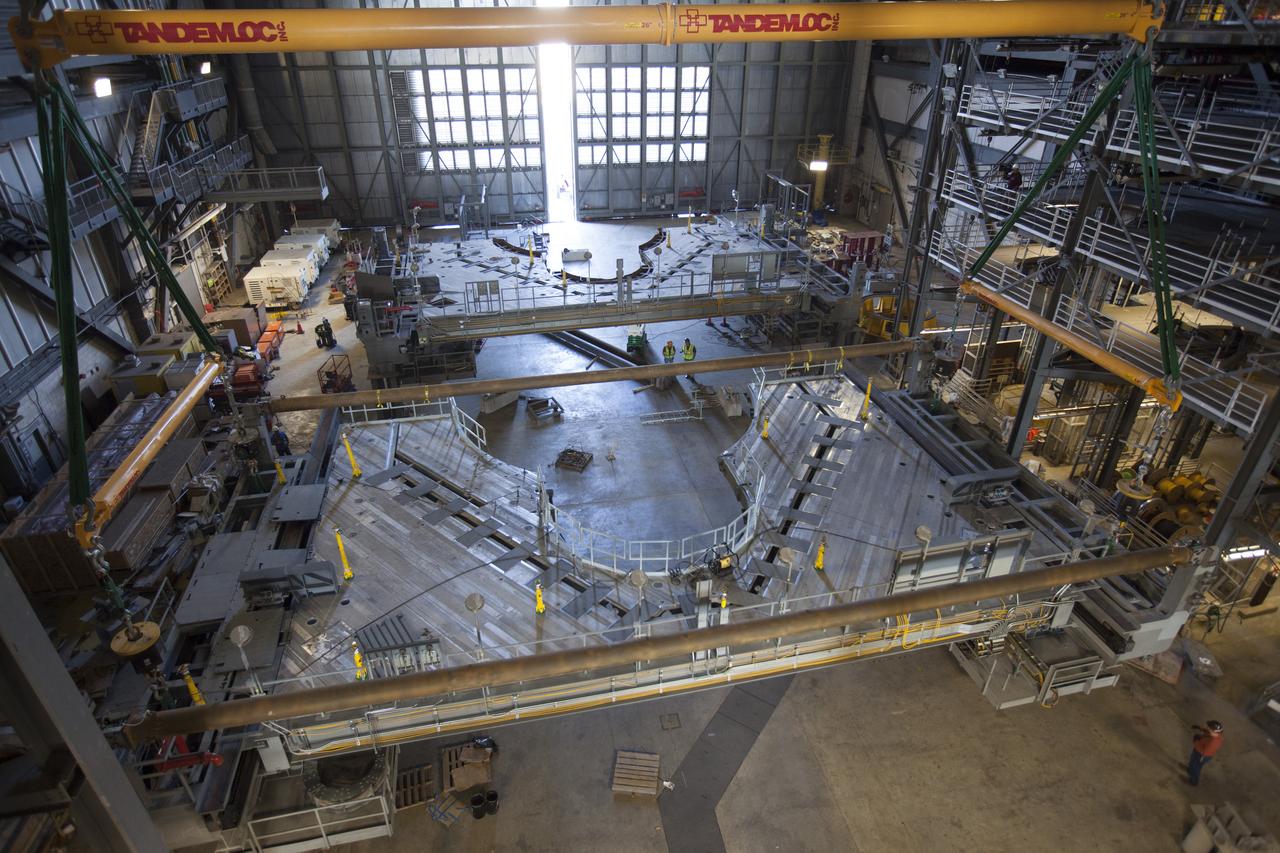
A 250-ton crane is used to lower the second half of the K-level work platforms for NASA’s Space Launch System (SLS) rocket into High Bay 3 inside the Vehicle Assembly Building at NASA's Kennedy Space Center in Florida. The platform will be secured about 86 feet above the VAB floor, on tower E of the high bay. The K work platforms will provide access to the SLS core stage and solid rocket boosters during processing and stacking operations on the mobile launcher. The Ground Systems Development and Operations Program is overseeing upgrades and modifications to High Bay 3 to support processing of the SLS and Orion spacecraft. A total of 10 levels of new platforms, 20 platform halves altogether, will surround the SLS rocket and Orion spacecraft.
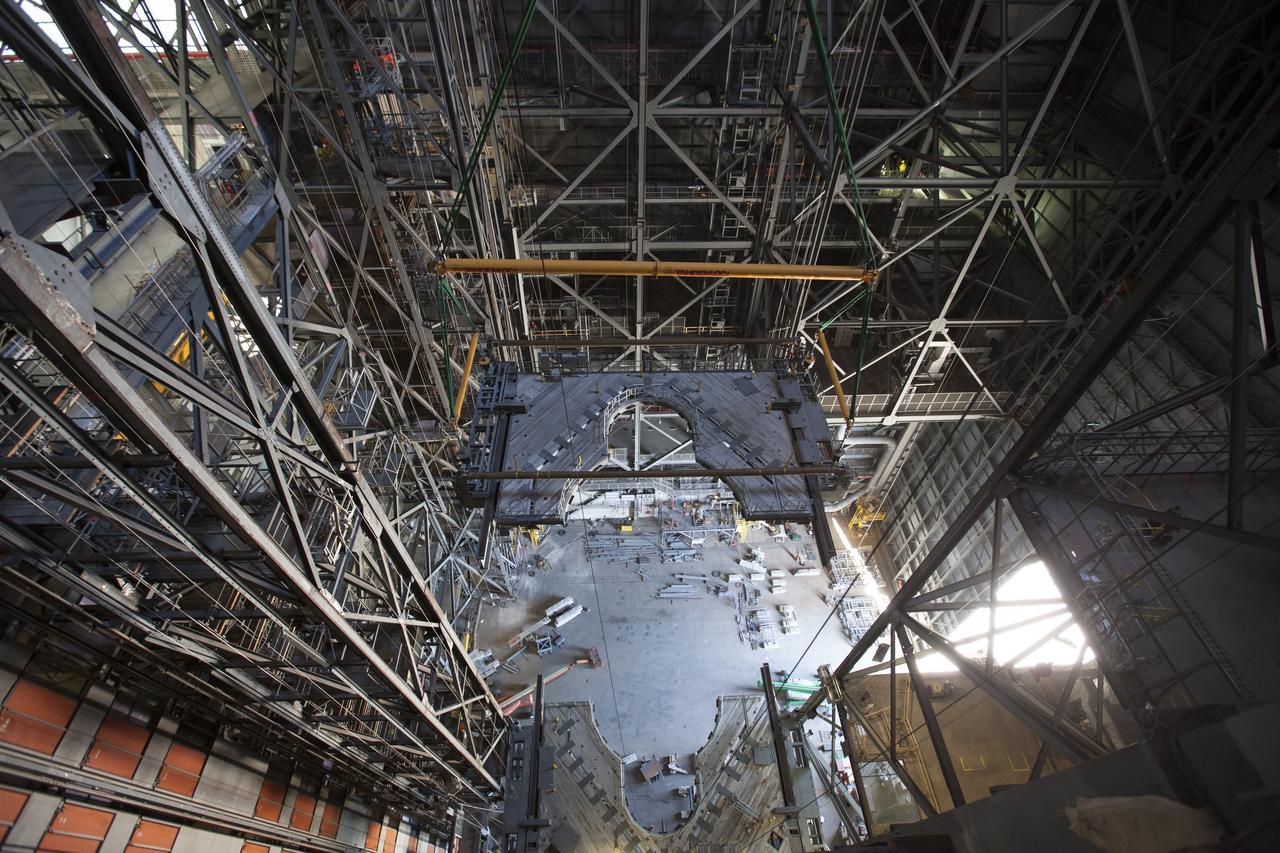
Preparations are underway to lift the second half of the K-level work platforms for NASA’s Space Launch System (SLS) rocket up from High Bay 4 inside the Vehicle Assembly Building at NASA's Kennedy Space Center in Florida. The platform will be lifted up and over the transfer aisle and then lowered into High Bay 3 for installation. It will be secured about 86 feet above the VAB floor, on tower E of the high bay. The K work platforms will provide access to the SLS core stage and solid rocket boosters during processing and stacking operations on the mobile launcher. The Ground Systems Development and Operations Program is overseeing upgrades and modifications to High Bay 3 to support processing of the SLS and Orion spacecraft. A total of 10 levels of new platforms, 20 platform halves altogether, will surround the SLS rocket and Orion spacecraft.
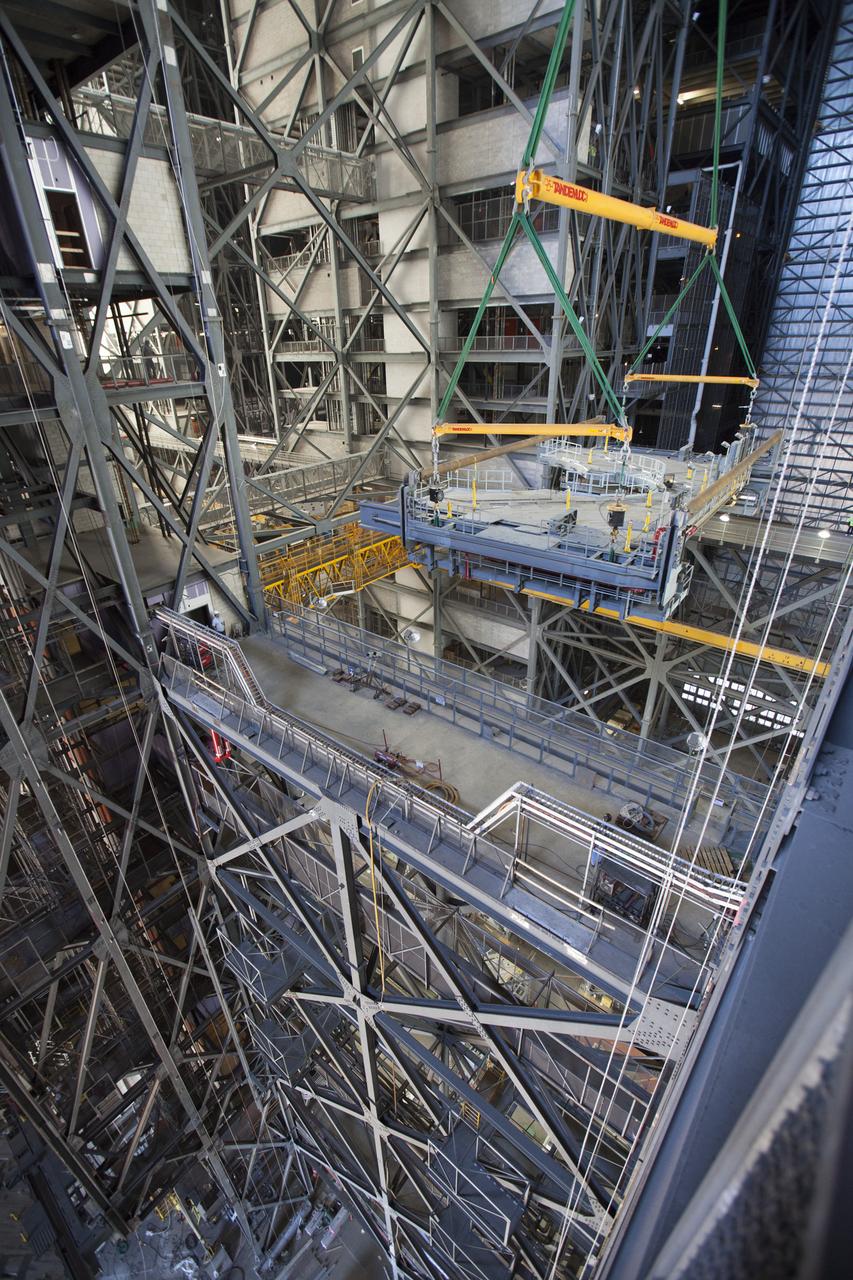
A 250-ton crane is used to lift the second half of the K-level work platforms for NASA’s Space Launch System (SLS) rocket up from High Bay 4 inside the Vehicle Assembly Building at NASA's Kennedy Space Center in Florida. The platform is being lifted up and over the transfer aisle and will be lowered into High Bay 3 for installation. It will be secured about 86 feet above the VAB floor, on tower E of the high bay. The K work platforms will provide access to the SLS core stage and solid rocket boosters during processing and stacking operations on the mobile launcher. The Ground Systems Development and Operations Program is overseeing upgrades and modifications to High Bay 3 to support processing of the SLS and Orion spacecraft. A total of 10 levels of new platforms, 20 platform halves altogether, will surround the SLS rocket and Orion spacecraft.
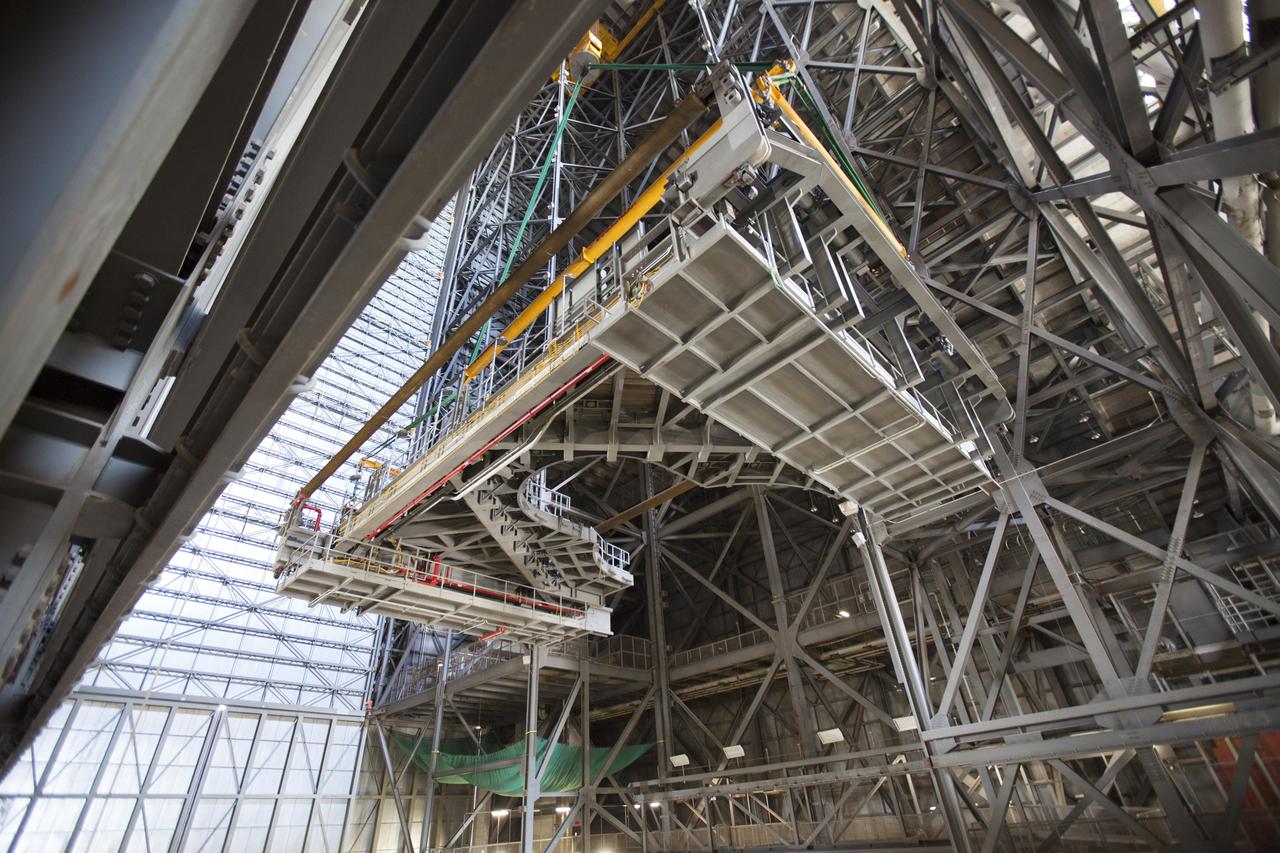
A 250-ton crane is used to lift the second half of the K-level work platforms for NASA’s Space Launch System (SLS) rocket up from High Bay 4 inside the Vehicle Assembly Building at NASA's Kennedy Space Center in Florida. The platform will be lifted up and over the transfer aisle and then lowered into High Bay 3 for installation. It will be secured about 86 feet above the VAB floor, on tower E of the high bay. The K work platforms will provide access to the SLS core stage and solid rocket boosters during processing and stacking operations on the mobile launcher. The Ground Systems Development and Operations Program is overseeing upgrades and modifications to High Bay 3 to support processing of the SLS and Orion spacecraft. A total of 10 levels of new platforms, 20 platform halves altogether, will surround the SLS rocket and Orion spacecraft.
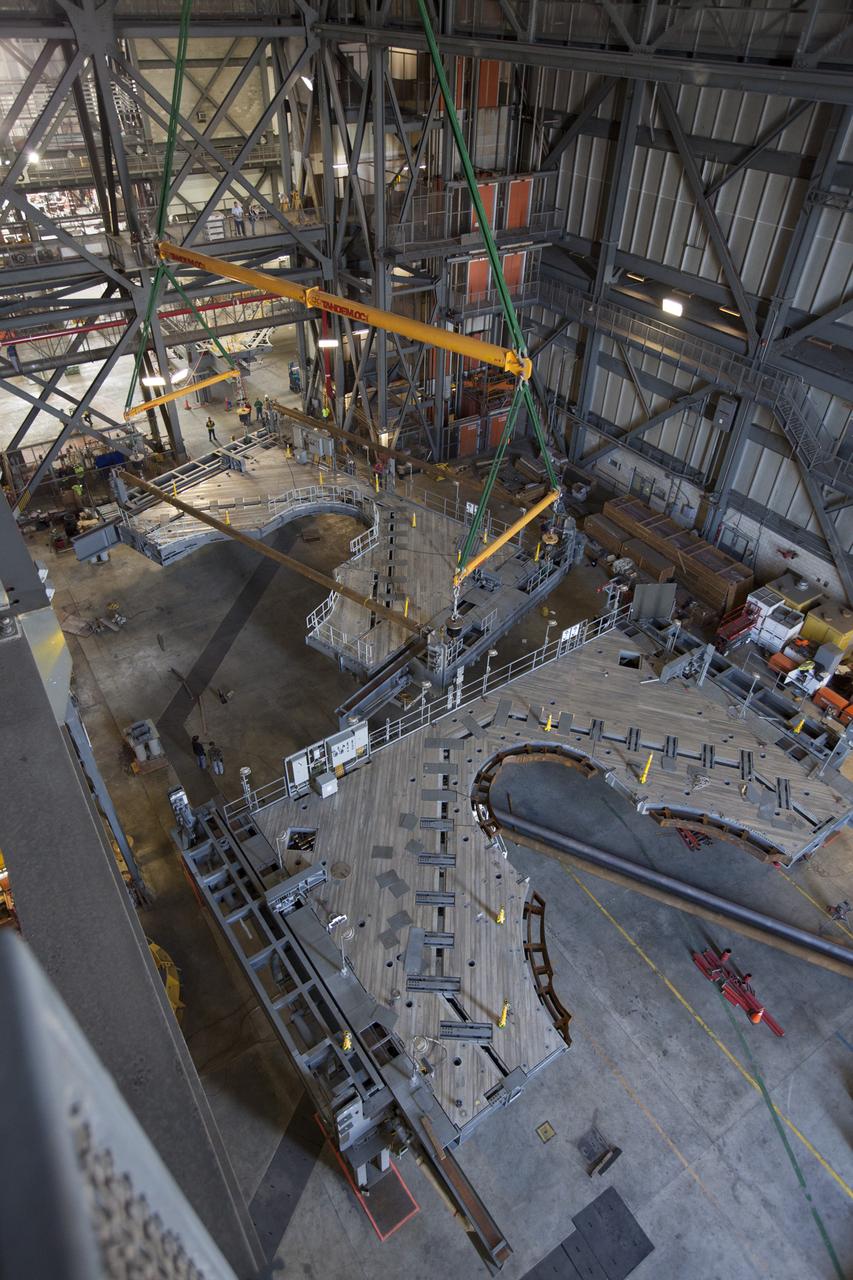
Preparations are underway to lift the second half of the K-level work platforms for NASA’s Space Launch System (SLS) rocket up from High Bay 4 inside the Vehicle Assembly Building at NASA's Kennedy Space Center in Florida. The platform will be lifted up and over the transfer aisle and then lowered into High Bay 3 for installation. It will be secured about 86 feet above the VAB floor, on tower E of the high bay. The K work platforms will provide access to the SLS core stage and solid rocket boosters during processing and stacking operations on the mobile launcher. The Ground Systems Development and Operations Program is overseeing upgrades and modifications to High Bay 3 to support processing of the SLS and Orion spacecraft. A total of 10 levels of new platforms, 20 platform halves altogether, will surround the SLS rocket and Orion spacecraft.
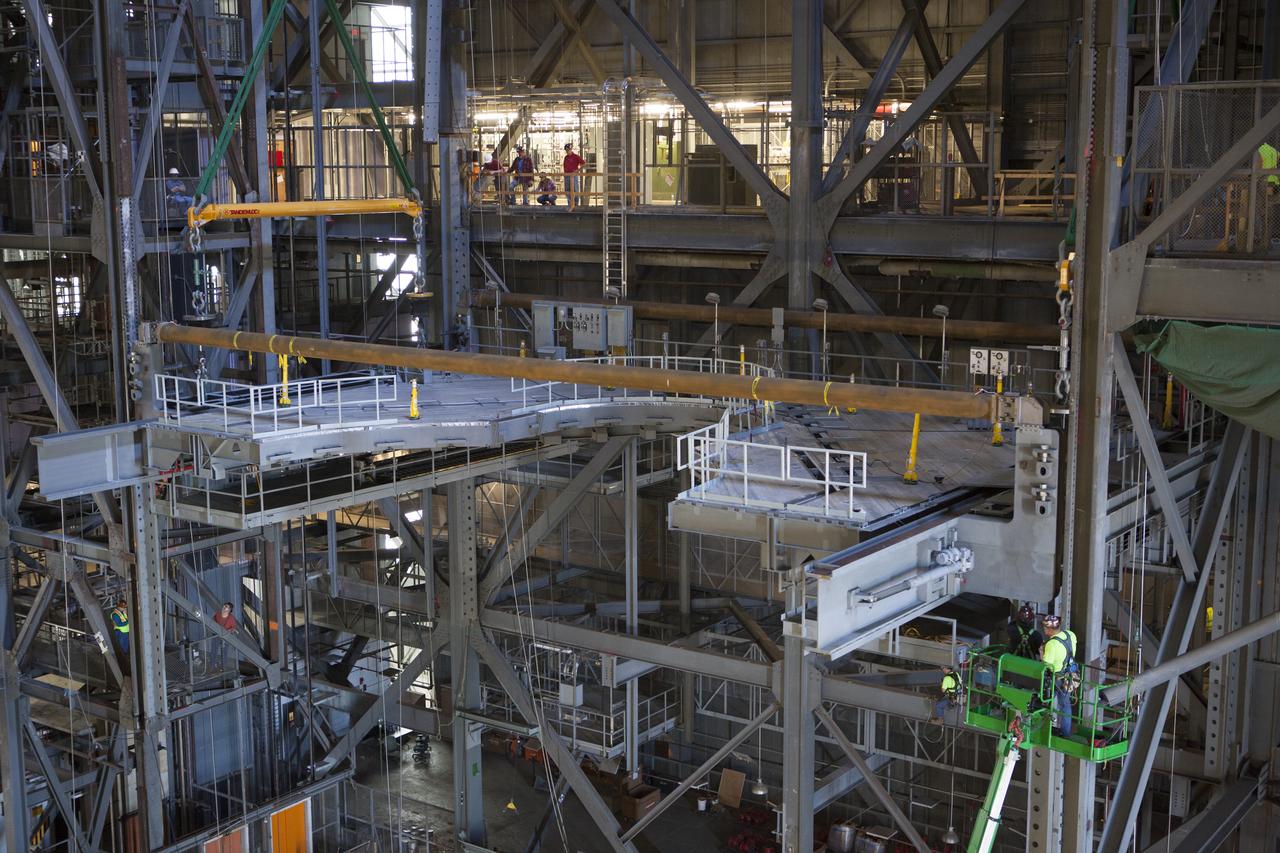
Work is underway to secure the second half of the K-level work platforms for NASA’s Space Launch System (SLS) rocket in High Bay 3 inside the Vehicle Assembly Building at NASA's Kennedy Space Center in Florida. The platform is being secured into position on tower E, about 86 feet above the floor. The K work platforms will provide access to NASA's Space Launch System (SLS) core stage and solid rocket boosters during processing and stacking operations on the mobile launcher. The Ground Systems Development and Operations Program is overseeing upgrades and modifications to High Bay 3 to support processing of the SLS and Orion spacecraft. A total of 10 levels of new platforms, 20 platform halves altogether, will surround the SLS rocket and Orion spacecraft.
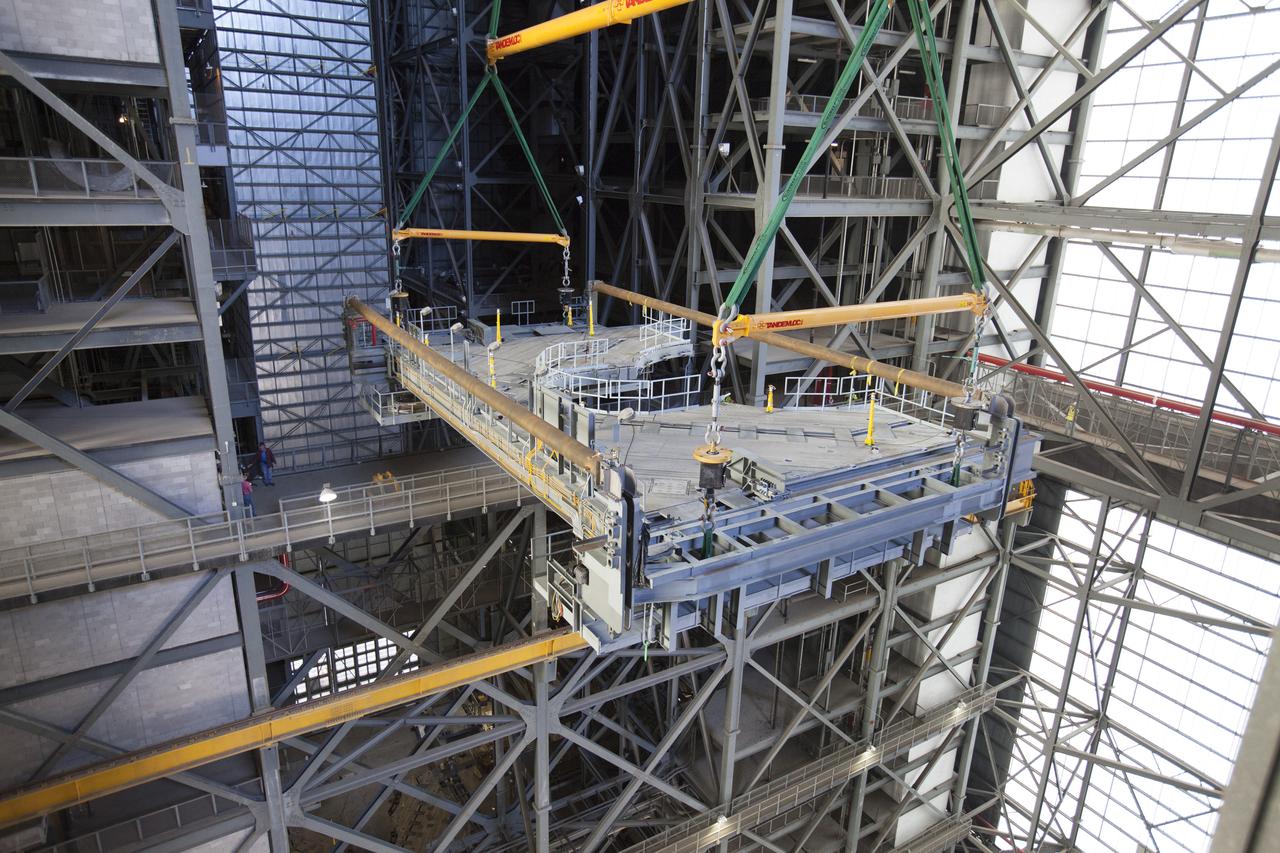
A 250-ton crane is used to lift the second half of the K-level work platforms for NASA’s Space Launch System (SLS) rocket up from High Bay 4 inside the Vehicle Assembly Building at NASA's Kennedy Space Center in Florida. The platform is being lifted up and over the transfer aisle and will be lowered into High Bay 3 for installation. It will be secured about 86 feet above the VAB floor, on tower E of the high bay. The K work platforms will provide access to the SLS core stage and solid rocket boosters during processing and stacking operations on the mobile launcher. The Ground Systems Development and Operations Program is overseeing upgrades and modifications to High Bay 3 to support processing of the SLS and Orion spacecraft. A total of 10 levels of new platforms, 20 platform halves altogether, will surround the SLS rocket and Orion spacecraft.
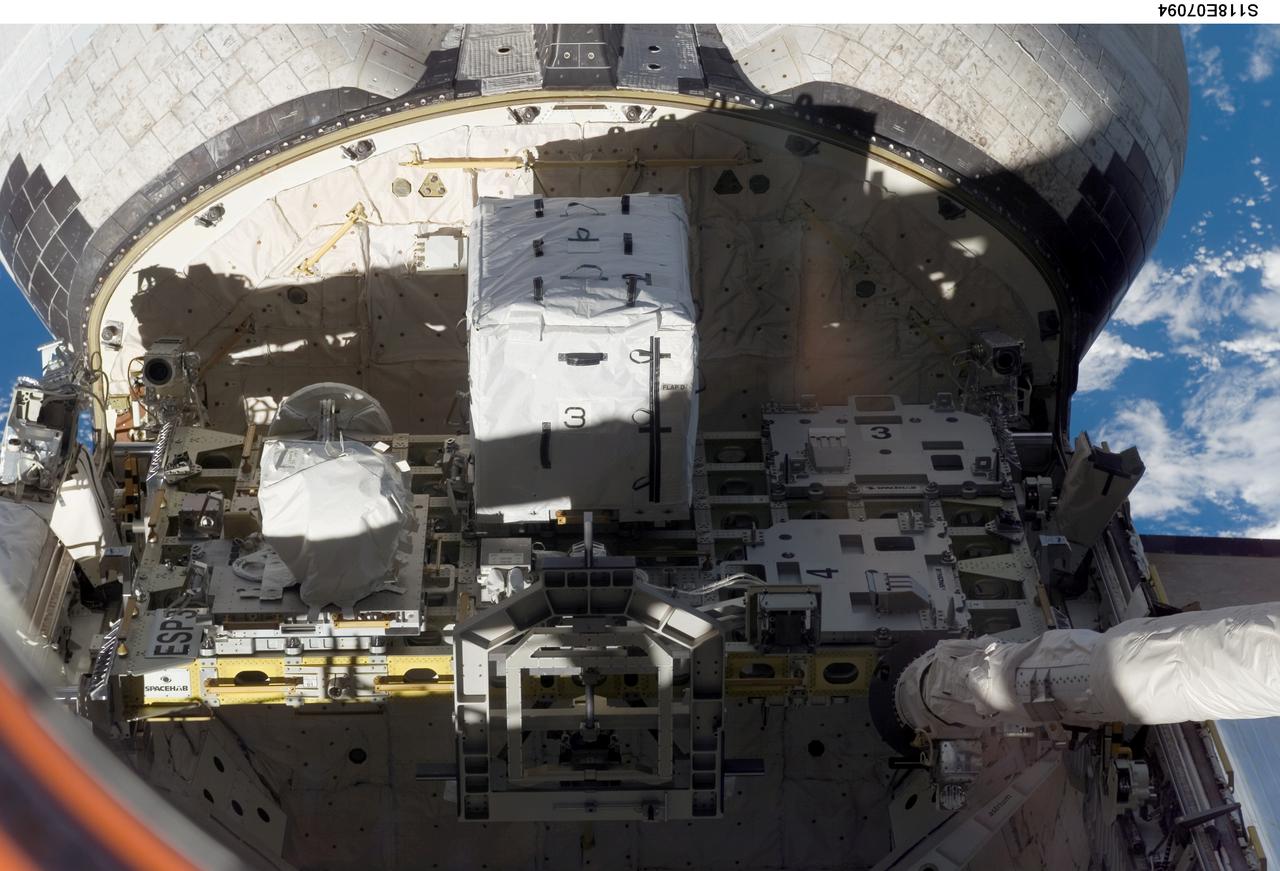
S118-E-07094 (14 Aug. 2007) --- An external stowage platform (ESP-3) is photographed in the payload bay of Space Shuttle Endeavour while docked with the International Space Station. Astronauts Tracy Caldwell and Barbara R. Morgan, both STS-118 mission specialists, were inside at Endeavour's controls as the shuttle's robotic arm (lower right) lifted the storage platform from the cargo bay to hand it over to the station's robotic arm, also known as Canadarm2. Astronauts Charlie Hobaugh, pilot, and Clay Anderson, Expedition 15 flight engineer, then used Canadarm2 to attach the 13-by-7-foot platform to the station's Port 3 truss.
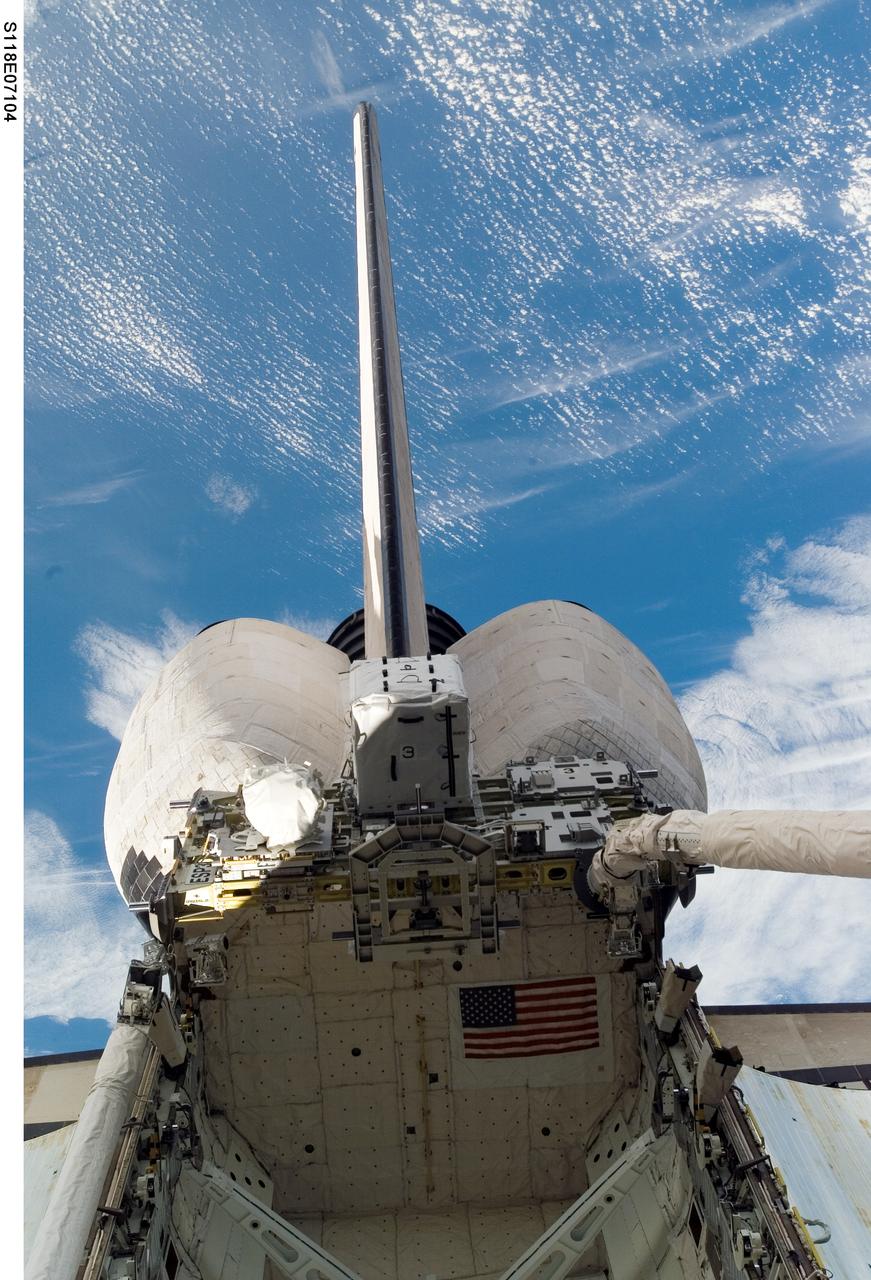
S118-E-07104 (14 Aug. 2007) --- An external stowage platform (ESP-3) is photographed in the payload bay of Space Shuttle Endeavour while docked with the International Space Station. Astronauts Tracy Caldwell and Barbara R. Morgan, both STS-118 mission specialists, were inside at Endeavour's controls as the shuttle's robotic arm (lower right) lifted the storage platform from the cargo bay to hand it over to the station's robotic arm, also known as Canadarm2. Astronauts Charlie Hobaugh, pilot, and Clay Anderson, Expedition 15 flight engineer, then used Canadarm2 to attach the 13-by-7-foot platform to the station's Port 3 truss.
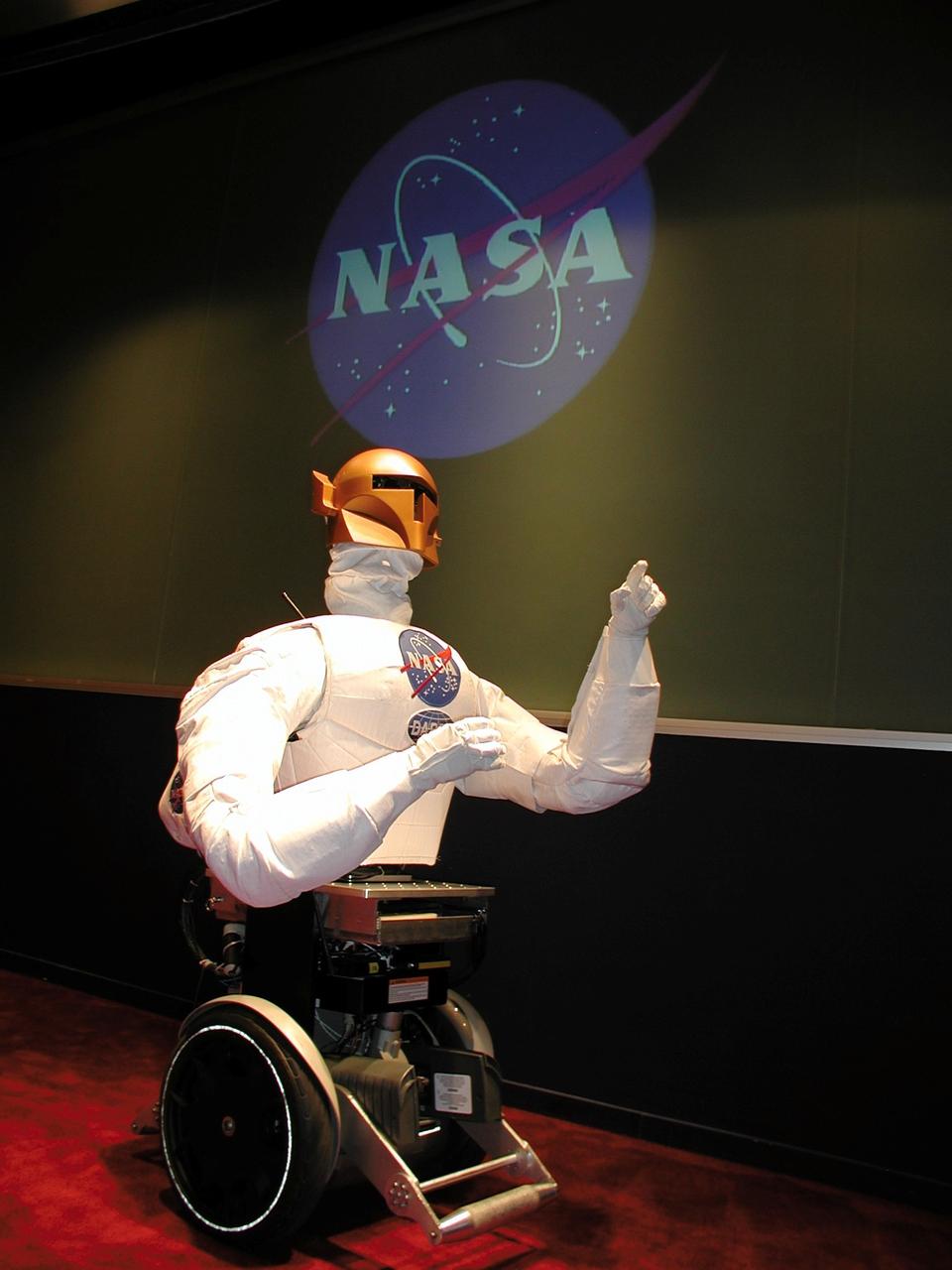
JSC2005-E-11678 (December 2003) --- This is Robonaut B, the newer of two NASA robots used in recent hand-in-hand testing at the Johnson Space Center with human beings to evaluate their shared ability to perform certain types of extravehicular activity. In late 2003 Robonaut Unit B was retrofitted with a mobile platform. This new base, called the Robonaut Mobility Platform (RMP), adds an entirely new capability to the functionality of Unit B.
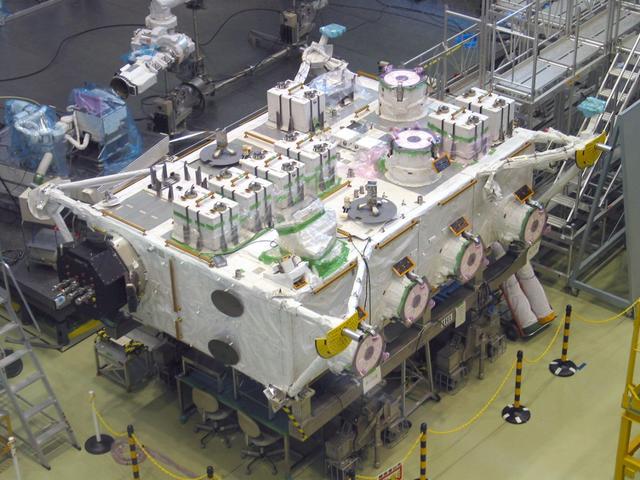
JSC2003-E-42544 (June 2003 ) --- The Exposed Facility (EF) of the Japanese Experiment Module (JEM), Japan's primary contribution to the International Space Station (ISS), is shown in a processing facility. The EF is a unique platform on the ISS that is located outside of the Pressurized Module and is continuously exposed to the space environment. Items positioned on the exterior platform focus on Earth observation as well as communication, scientific, engineering and materials science experiments. Photo Credit: NASA
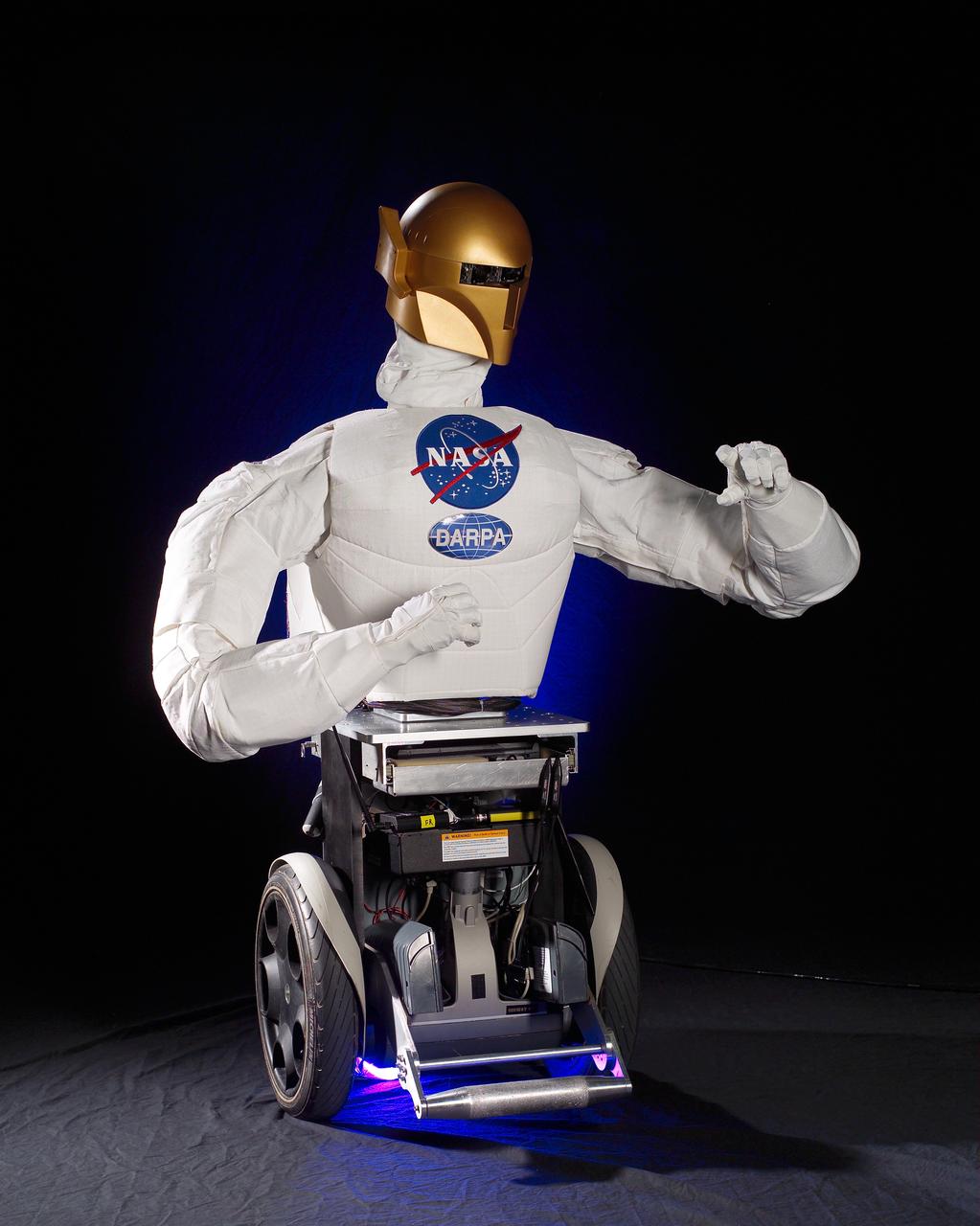
JSC2003-E-62444 (December 2003) --- This is Robonaut B, the newer of two NASA robots used in recent hand-in-hand testing at the Johnson Space Center with human beings to evaluate their shared ability to perform certain types of extravehicular activity. In late 2003 Robonaut Unit B was retrofitted with a mobile platform. This new base, called the Robonaut Mobility Platform (RMP), adds an entirely new capability to the functionality of Unit B.
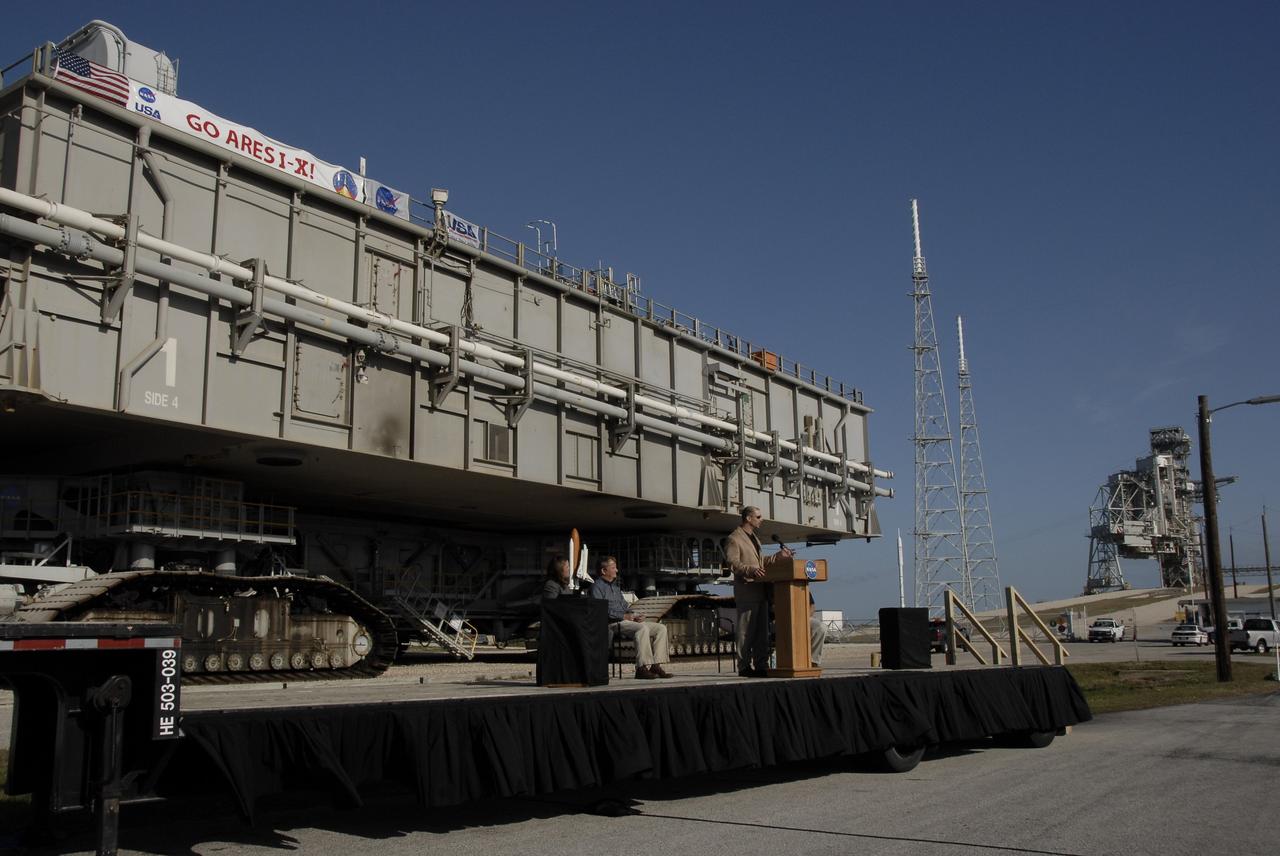
CAPE CANAVERAL, Fla. – Near Launch Pad 39B at NASA's Kennedy Space Center in Florida, Director of the Constellation Project Office Pepper E. Phillips speaks to employees and media during the handover ceremony for Mobile Launcher Platform-1. Marking the handover is the change of banner on the platform behind him. On the stage and also participating in the ceremony are Director of Launch Vehicle Processing Rita Willcoxon , Shuttle Launch Director Mike Leinbach, and Manager of MLP Operations with United Space Alliance Brett Raulerson. The platform is being transferred from NASA's Space Shuttle Program to the Constellation Program for the Ares I-X flight test targeted for this summer. Constructed in 1964, the mobile launchers used in Apollo/Saturn operations were modified for use in shuttle operations. With cranes, umbilical towers and swing arms removed, the mobile launchers were renamed Mobile Launcher Platforms, or MLPs. Photo credit: NASA/Kim Shiflett
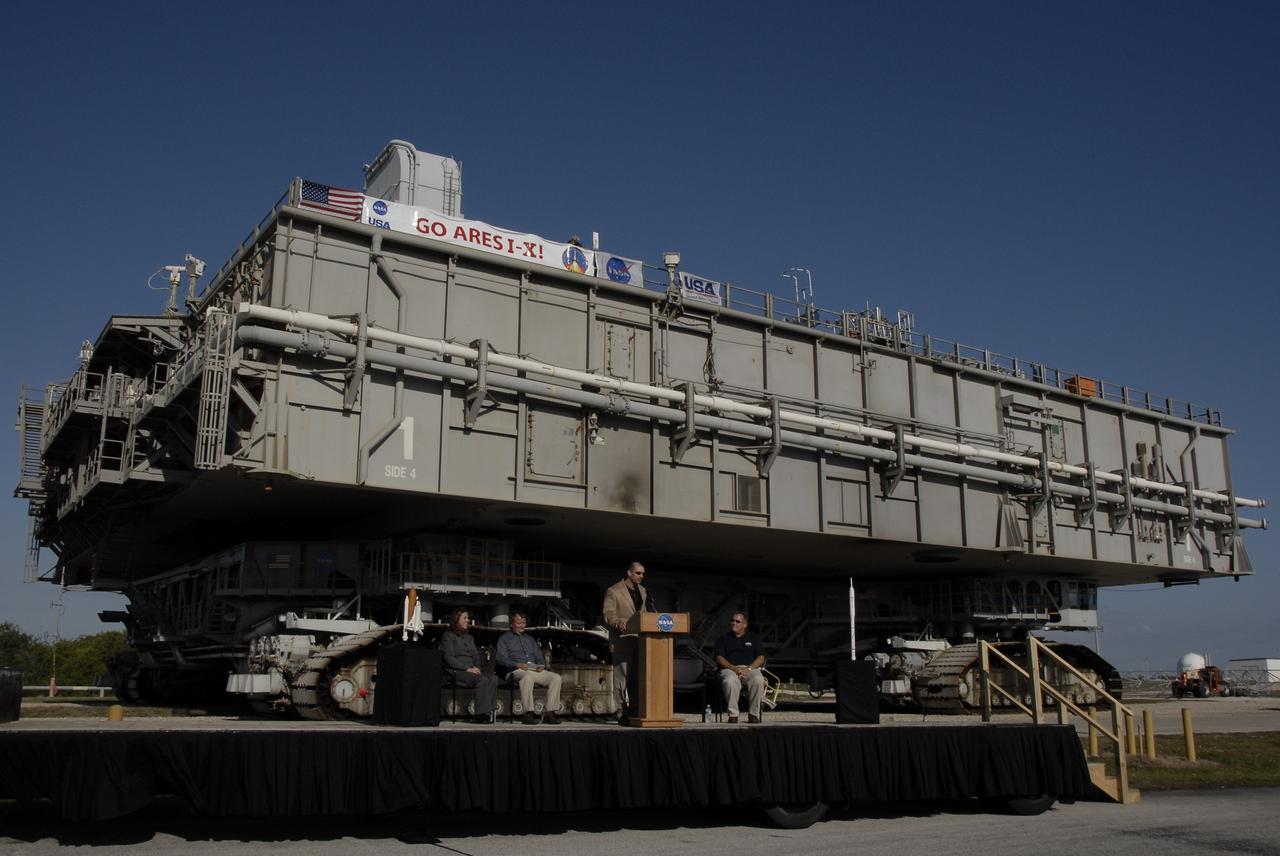
CAPE CANAVERAL, Fla. – Near Launch Pad 39B at NASA's Kennedy Space Center in Florida, Director of the Constellation Project Office Pepper E. Phillips speaks to employees and media during the handover ceremony for Mobile Launcher Platform-1. Marking the handover is the change of banner on the platform behind him. On the stage and also participating in the ceremony are Director of Launch Vehicle Processing Rita Willcoxon , Shuttle Launch Director Mike Leinbach, and Manager of MLP Operations with United Space Alliance Brett Raulerson. The platform is being transferred from NASA's Space Shuttle Program to the Constellation Program for the Ares I-X flight test targeted for this summer. Constructed in 1964, the mobile launchers used in Apollo/Saturn operations were modified for use in shuttle operations. With cranes, umbilical towers and swing arms removed, the mobile launchers were renamed Mobile Launcher Platforms, or MLPs. Photo credit: NASA/Kim Shiflett
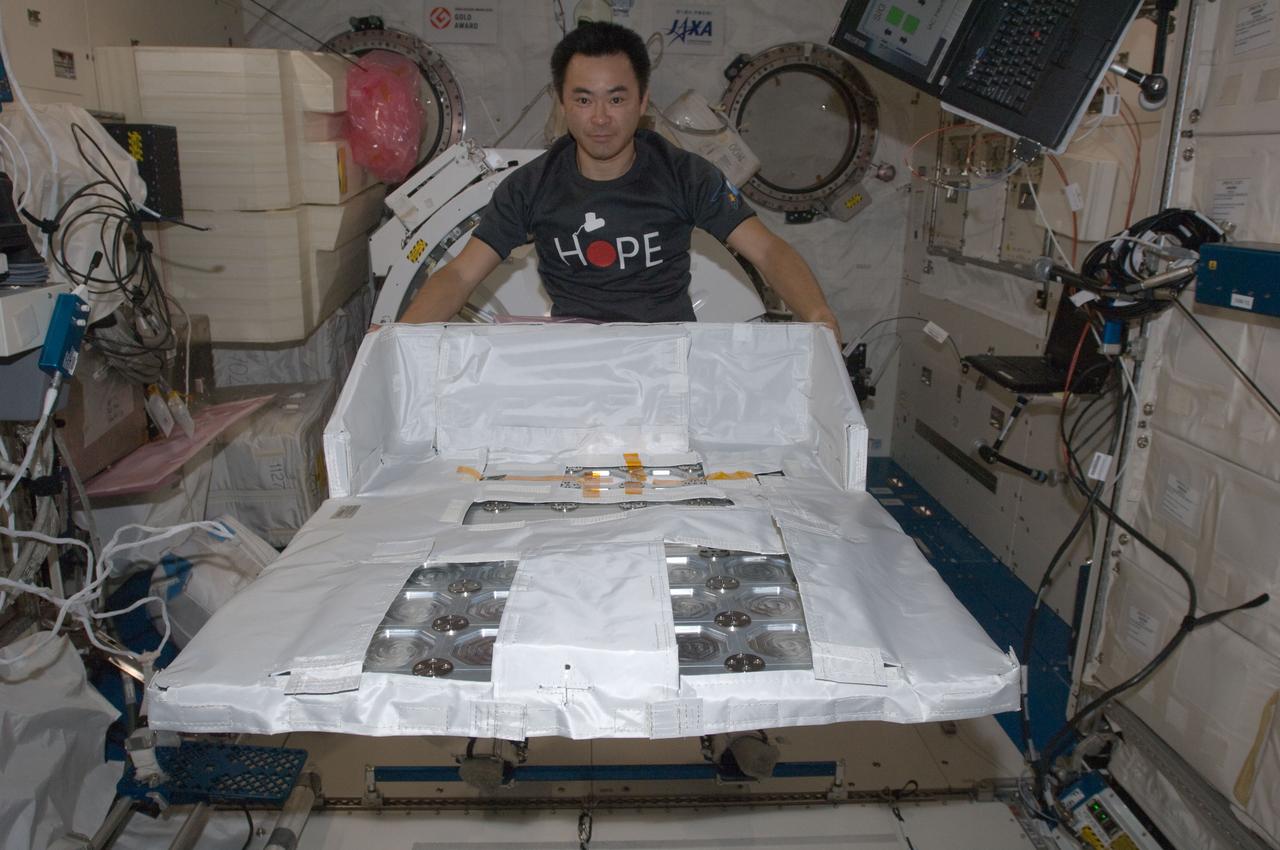
ISS032-E-022180 (21 Aug. 2012) --- Japan Aerospace Exploration Agency astronaut Aki Hoshide, Expedition 32 flight engineer, assembles the JEM Robotic Maneuvering System Multi-Purpose Experiment Platform (JEMRMS MPEP) in the Kibo laboratory of the International Space Station.
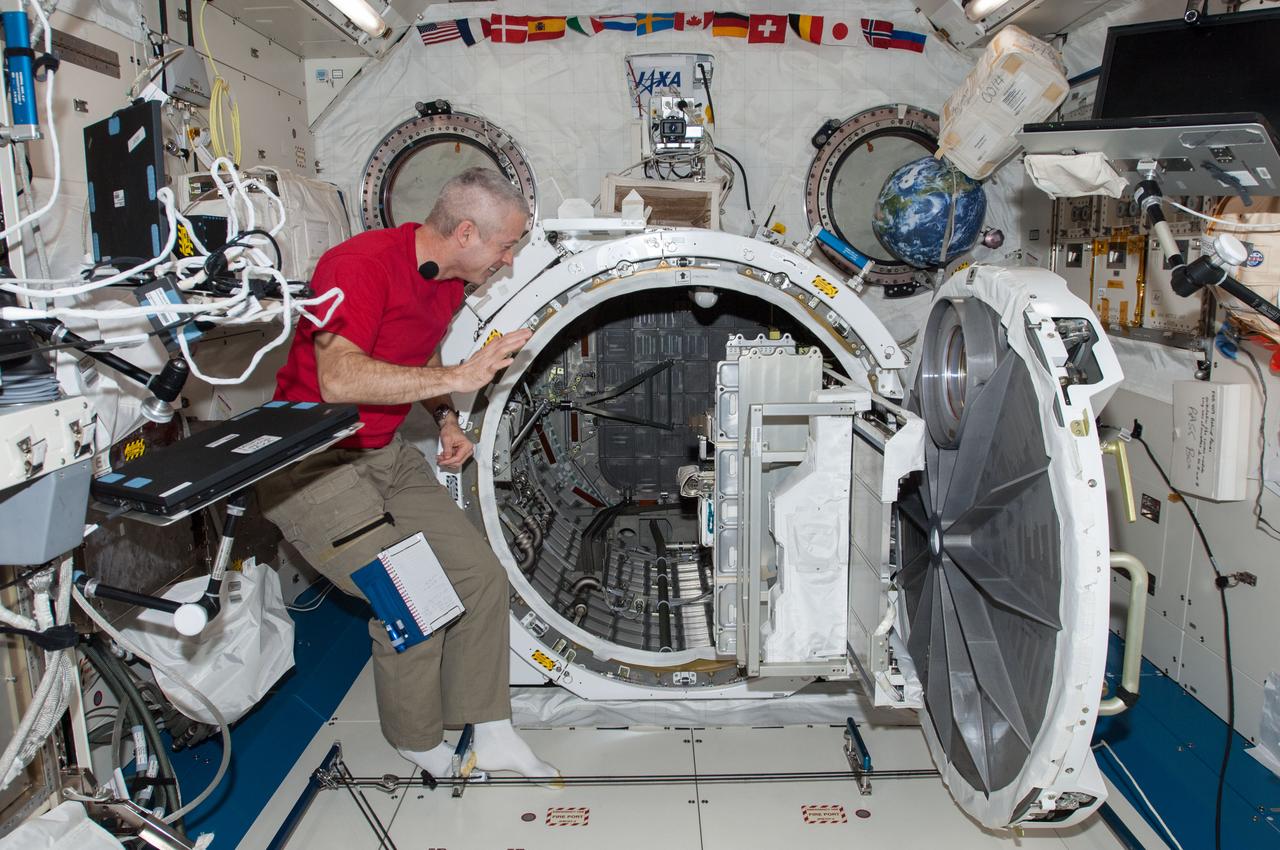
ISS040-E-001052 (26 May 2014) --- NASA astronaut Steve Swanson, Expedition 40 commander, works with equipment in the airlock in the Kibo laboratory of the International Space Station. The JEM Robotic Maneuvering System Multi-Purpose Experiment Platform (JEMRMS MPEP) is visible in the airlock.
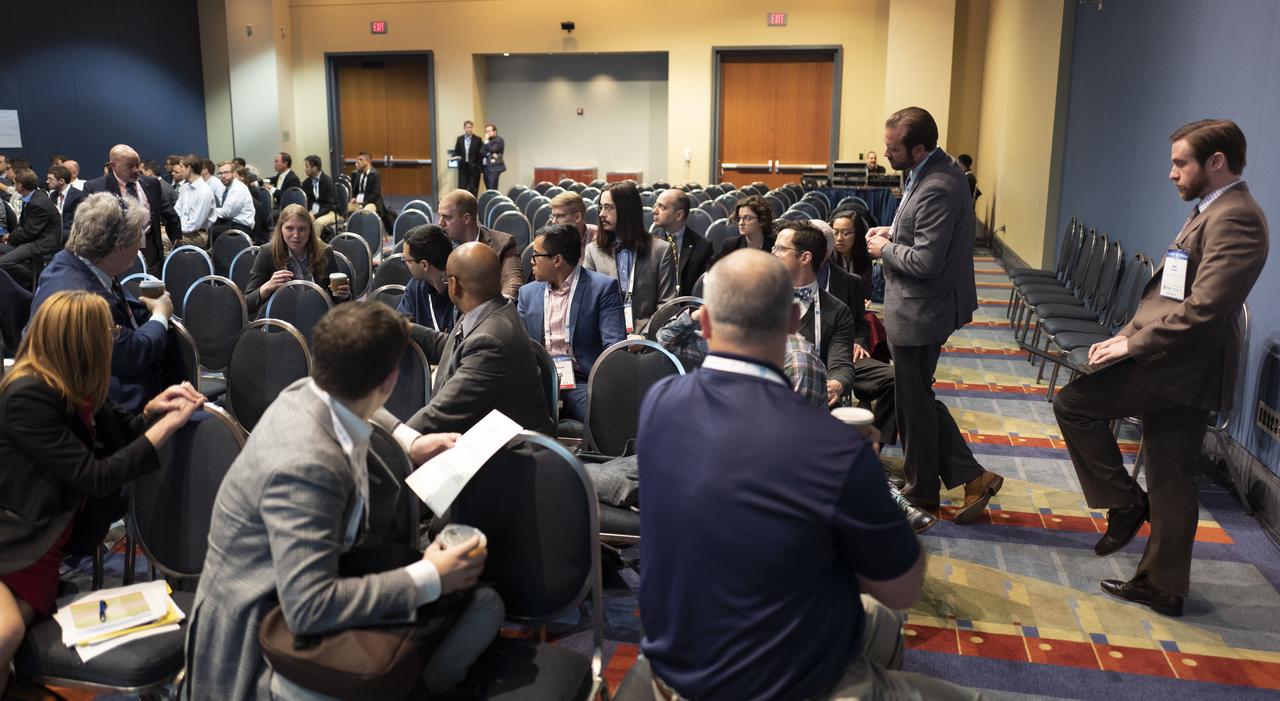
Audience members participate in a special session titled ”The Immortal Spaceship: A Discussion on the Use Cases and Value of Persistent Platforms” at the 70th International Astronautical Congress, Thursday, Oct. 24, 2019, at the Walter E. Washington Convention Center in Washington. Photo Credit: (NASA/Joel Kowsky)
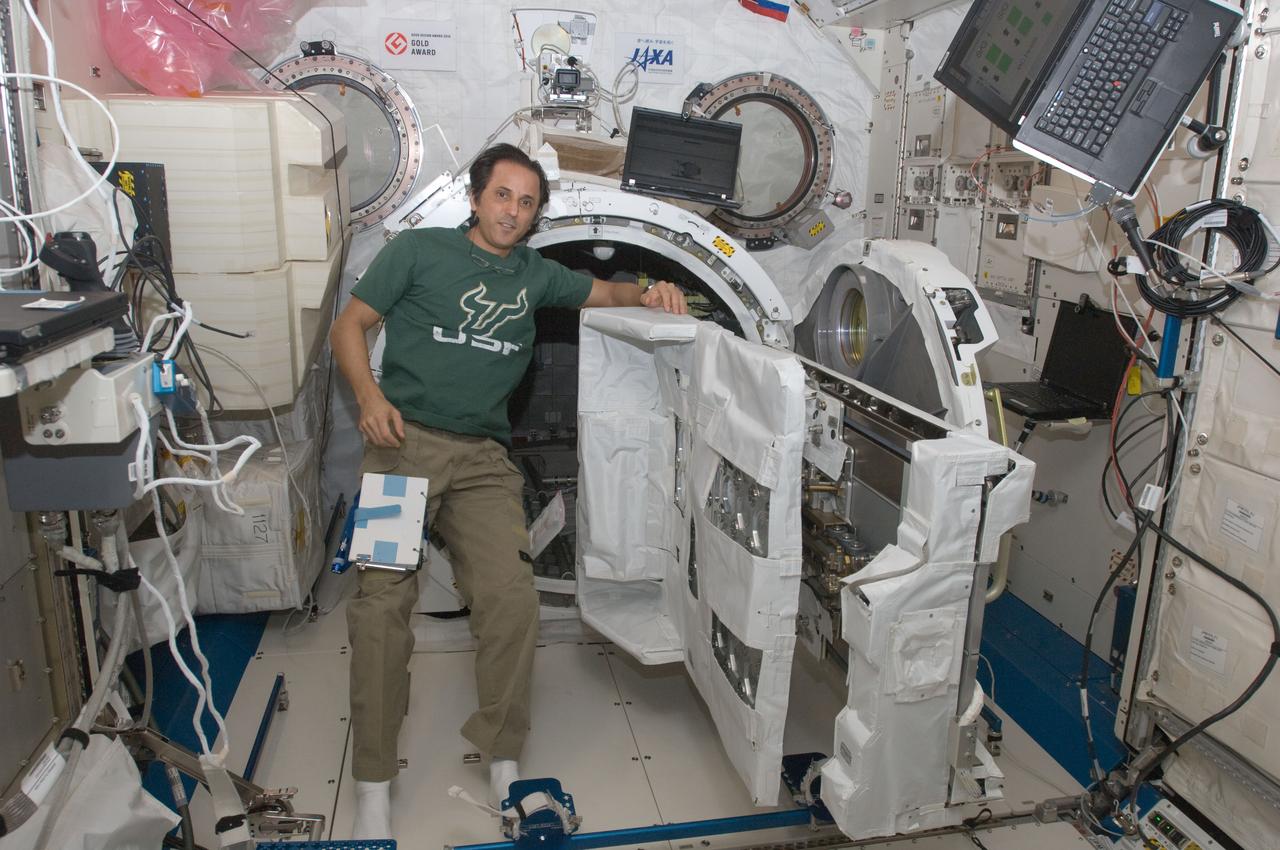
ISS032-E-022211 (21 Aug. 2012) --- NASA astronaut Joe Acaba, Expedition 32 flight engineer, is pictured near the newly assembled JEM Robotic Maneuvering System Multi-Purpose Experiment Platform (JEMRMS MPEP) in the Kibo laboratory of the International Space Station.
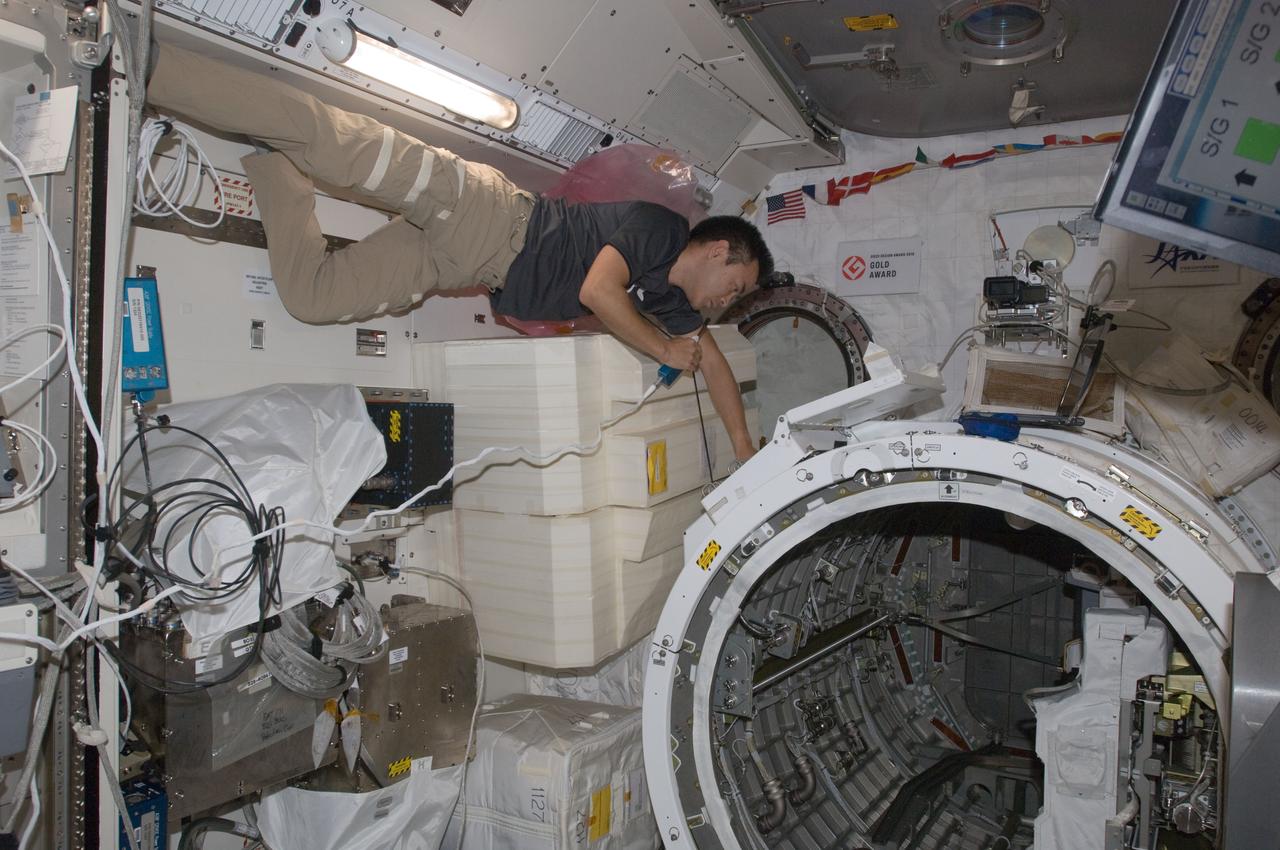
ISS032-E-022196 (21 Aug. 2012) --- Japan Aerospace Exploration Agency astronaut Aki Hoshide, Expedition 32 flight engineer, talks on a microphone while working near the airlock in the Kibo laboratory of the International Space Station. The JEM Robotic Maneuvering System Multi-Purpose Experiment Platform (JEMRMS MPEP) is visible in the airlock.
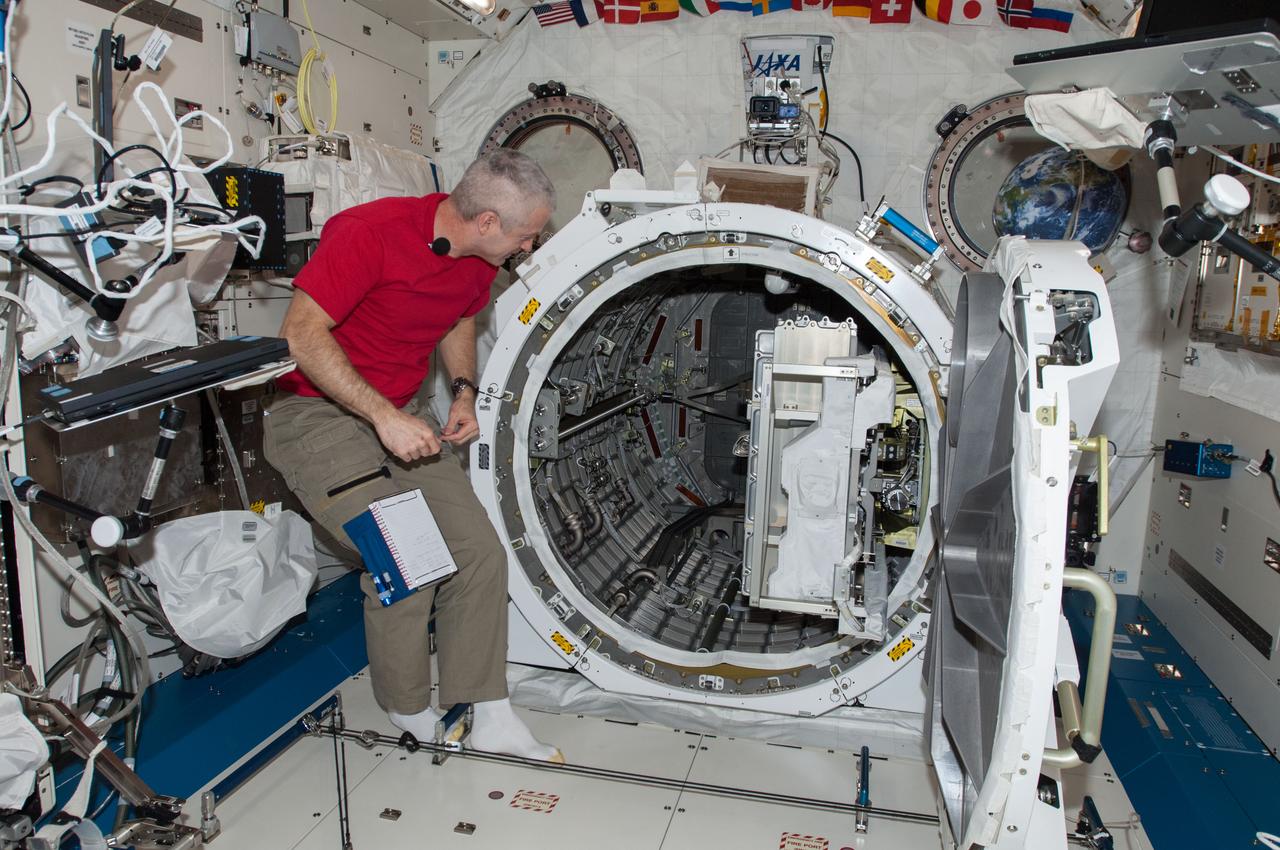
ISS040-E-001053 (26 May 2014) --- NASA astronaut Steve Swanson, Expedition 40 commander, works with equipment in the airlock in the Kibo laboratory of the International Space Station. The JEM Robotic Maneuvering System Multi-Purpose Experiment Platform (JEMRMS MPEP) is visible in the airlock.
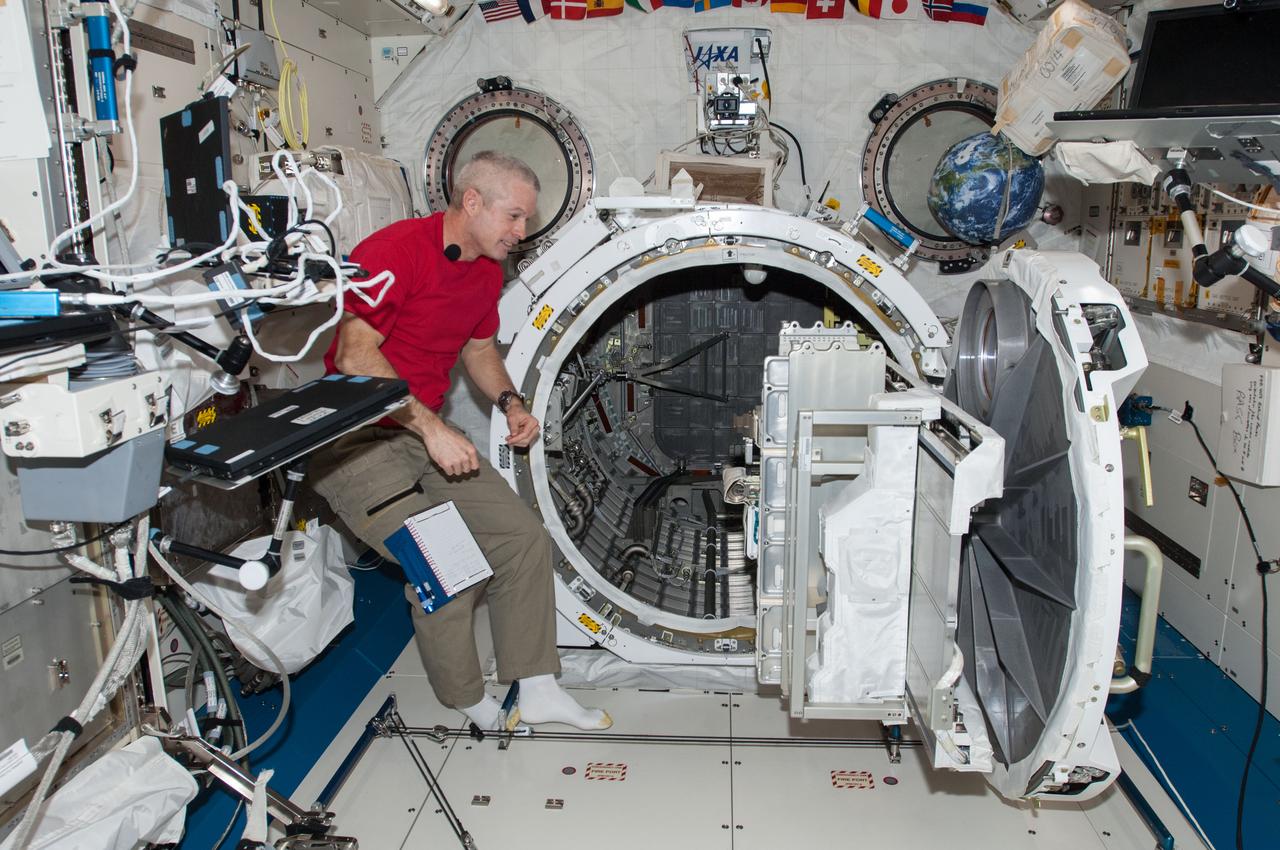
ISS040-E-001051 (26 May 2014) --- NASA astronaut Steve Swanson, Expedition 40 commander, works with equipment in the airlock in the Kibo laboratory of the International Space Station. The JEM Robotic Maneuvering System Multi-Purpose Experiment Platform (JEMRMS MPEP) is visible at right.
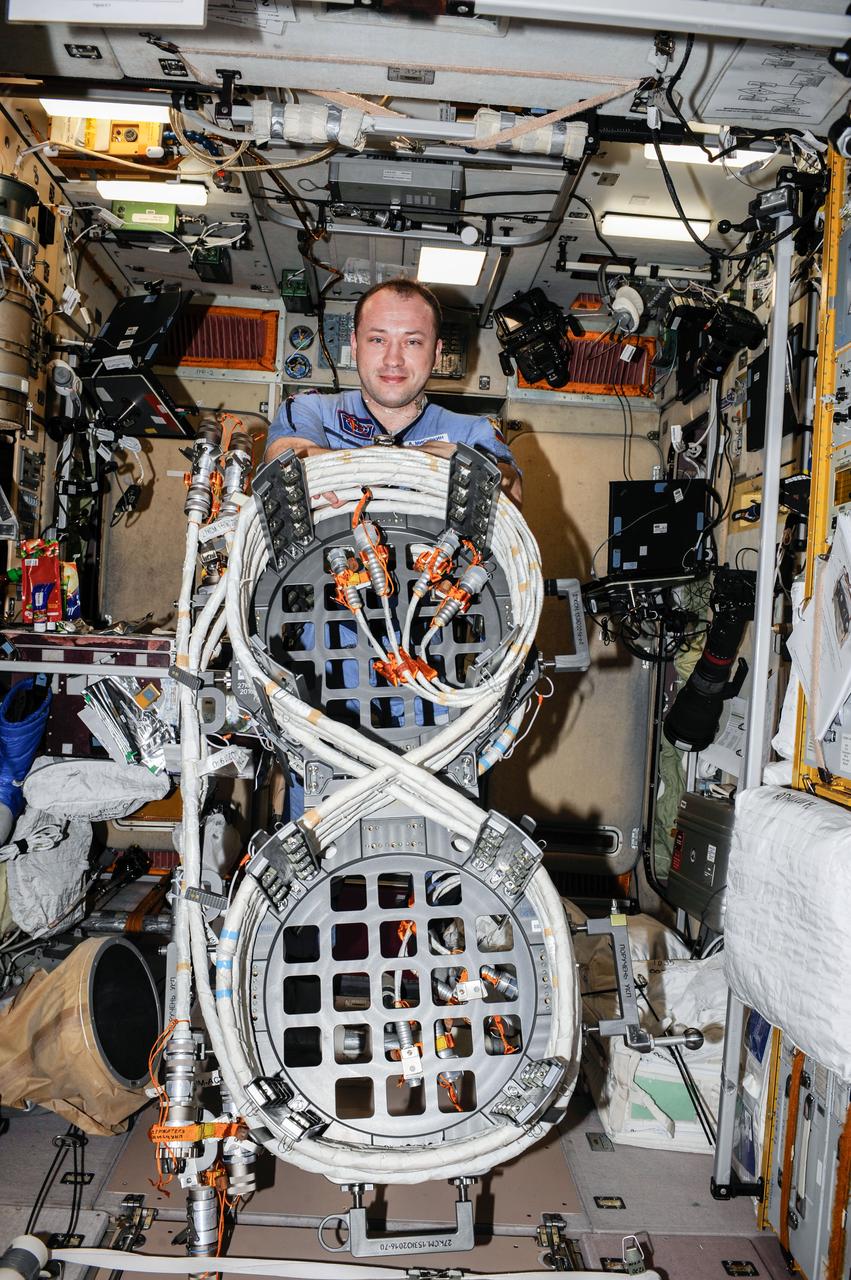
ISS036-E-029455 (6 Aug. 2013) --- In the International Space Station’s Zvezda Service Module, Russian cosmonaut Alexander Misurkin, Expedition 36 flight engineer, holds an EVA multi-purpose cable platform which will be used in an upcoming spacewalk.
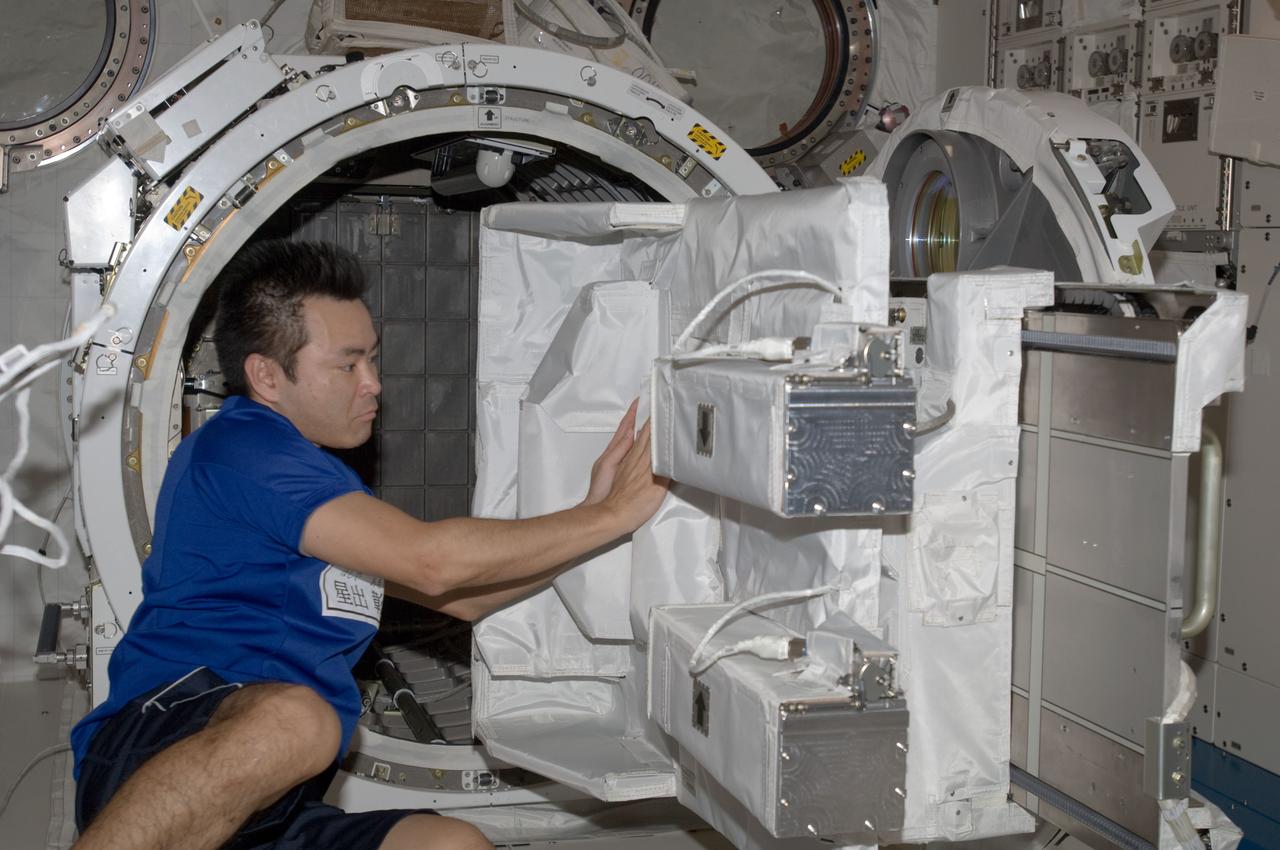
ISS033-E-006447 (21 Sept. 2012) --- In the International Space Station’s Kibo laboratory, Japan Aerospace Exploration Agency astronaut Aki Hoshide, Expedition 33 flight engineer, works with the Small Satellite Orbital Deployer (SSOD) installed on the Multi-Purpose Experiment Platform (MPEP) of the extended slide table of the Kibo airlock.
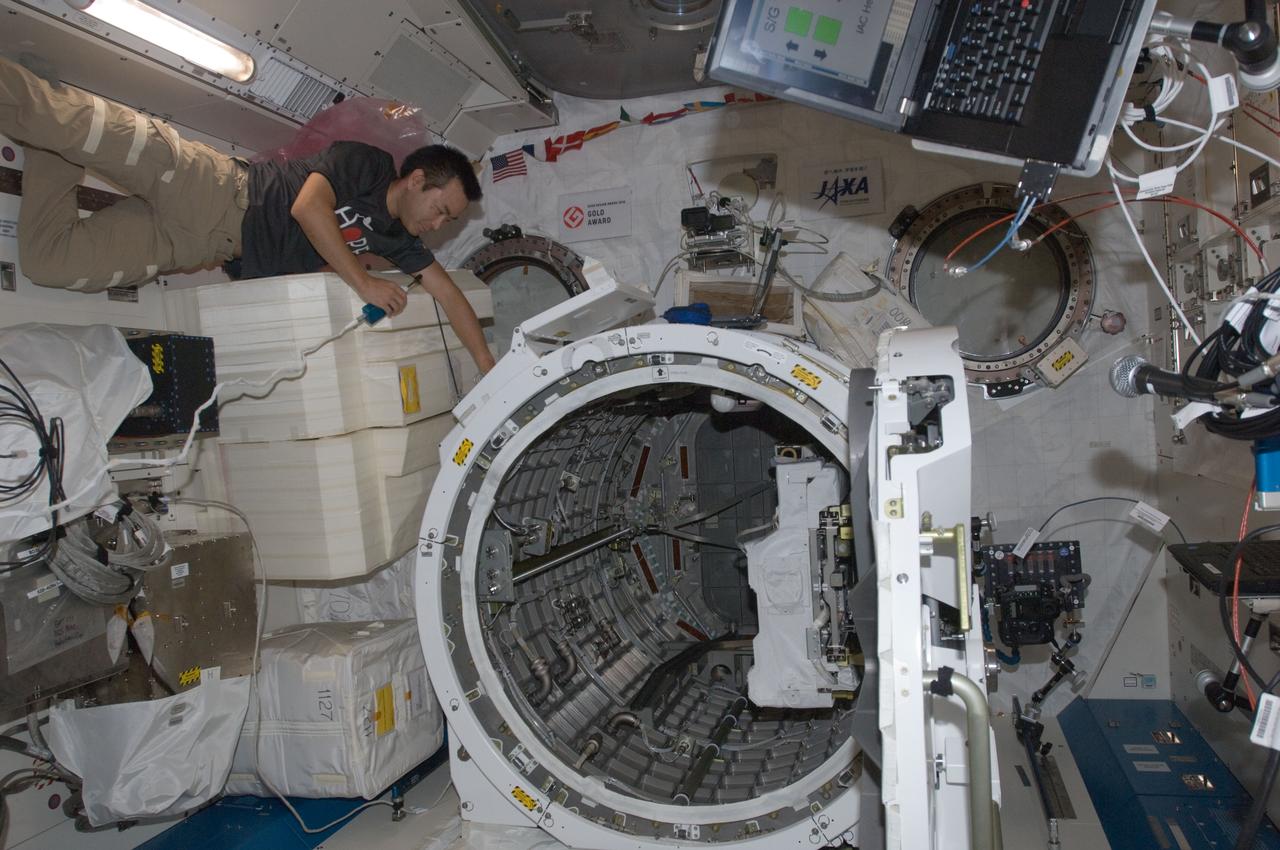
ISS032-E-022200 (21 Aug. 2012) --- Japan Aerospace Exploration Agency astronaut Aki Hoshide, Expedition 32 flight engineer, talks on a microphone while working near the airlock in the Kibo laboratory of the International Space Station. The JEM Robotic Maneuvering System Multi-Purpose Experiment Platform (JEMRMS MPEP) is visible in the airlock.
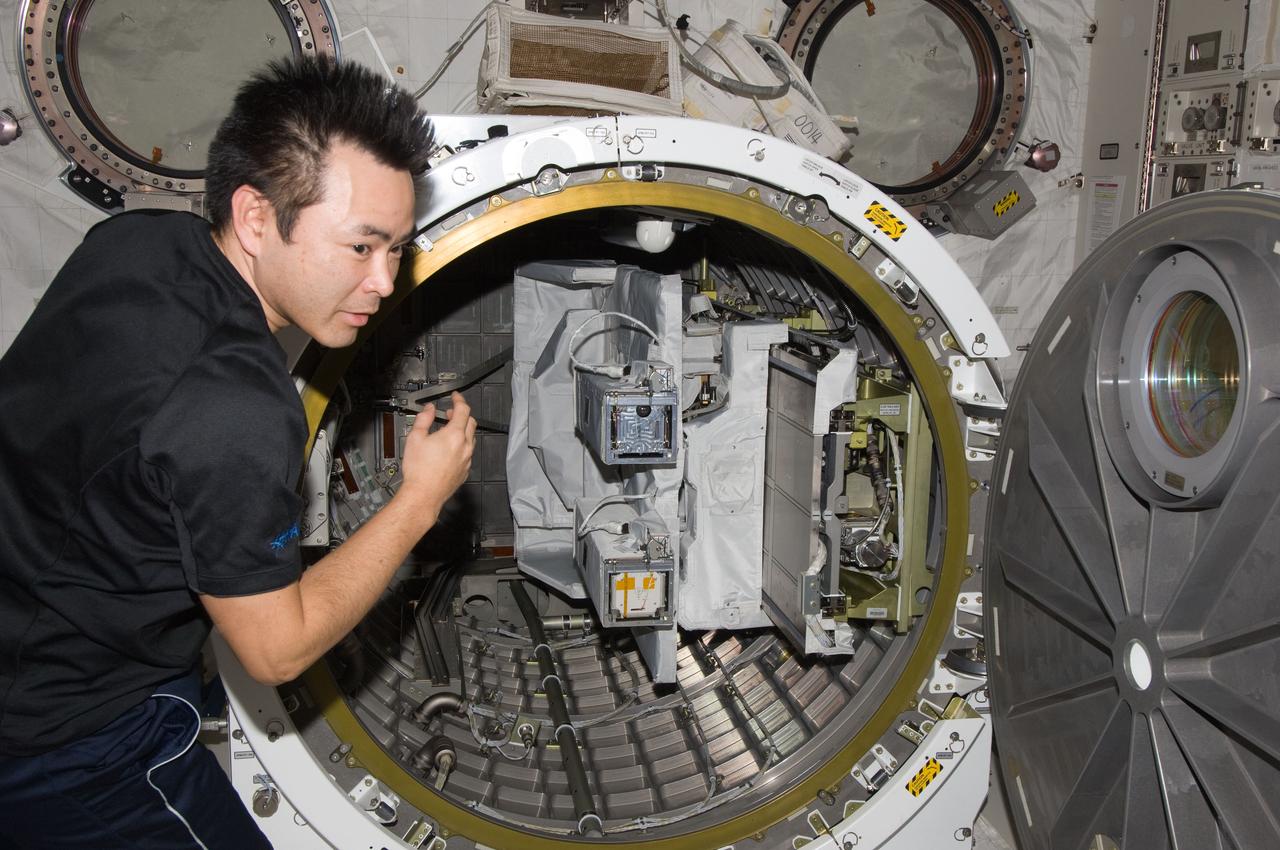
ISS033-E-007429 (26 Sept. 2012) --- Japan Aerospace Exploration Agency astronaut Aki Hoshide, Expedition 33 flight engineer, works near the airlock in the Kibo laboratory of the International Space Station. The Small Satellite Orbital Deployer (SSOD) previously installed on the Multi-Purpose Experiment Platform (MPEP) is visible in the airlock.
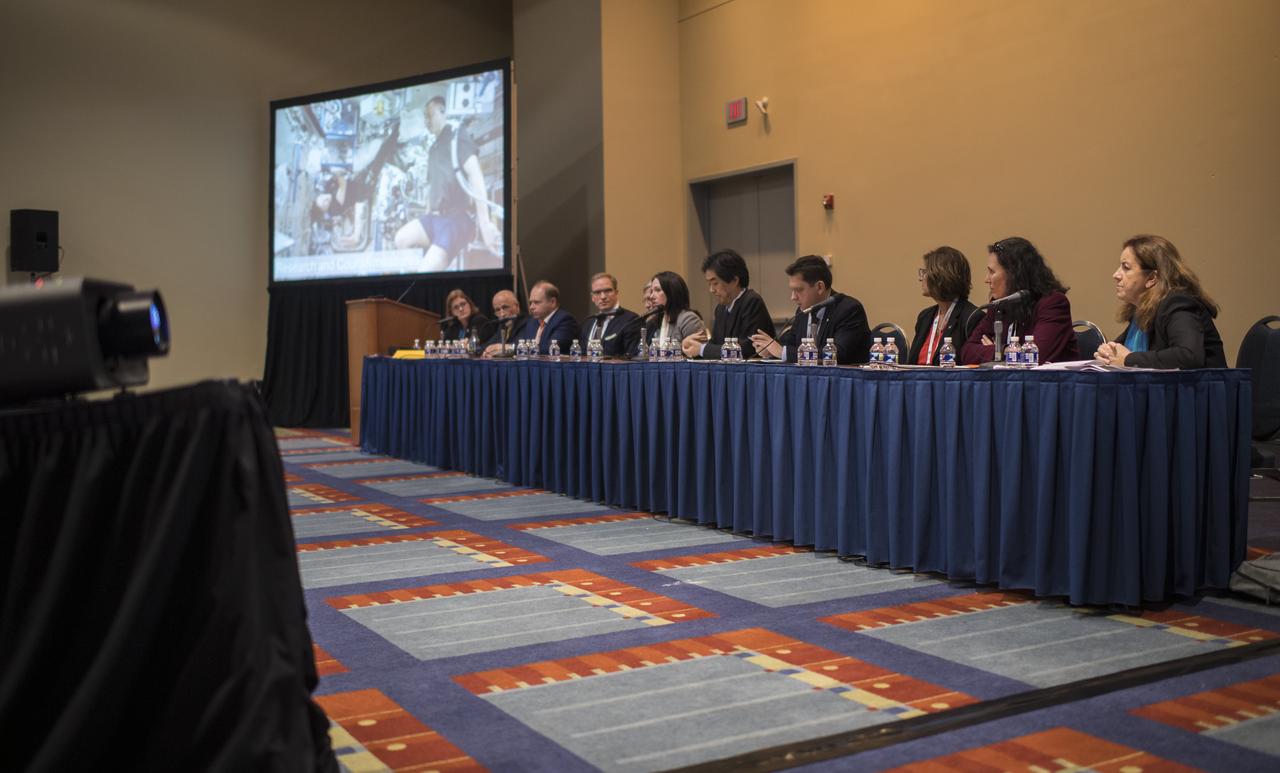
Panelists are seen during a discussion titled “ISS-Moon-Mars: Using Spaceflight Platforms to Study and Simulate Future Missions” during the the 70th International Astronautical Congress, Monday, Oct. 21, 2019 at the Walter E. Washington Convention Center in Washington. Photo Credit: (NASA/Joel Kowsky)
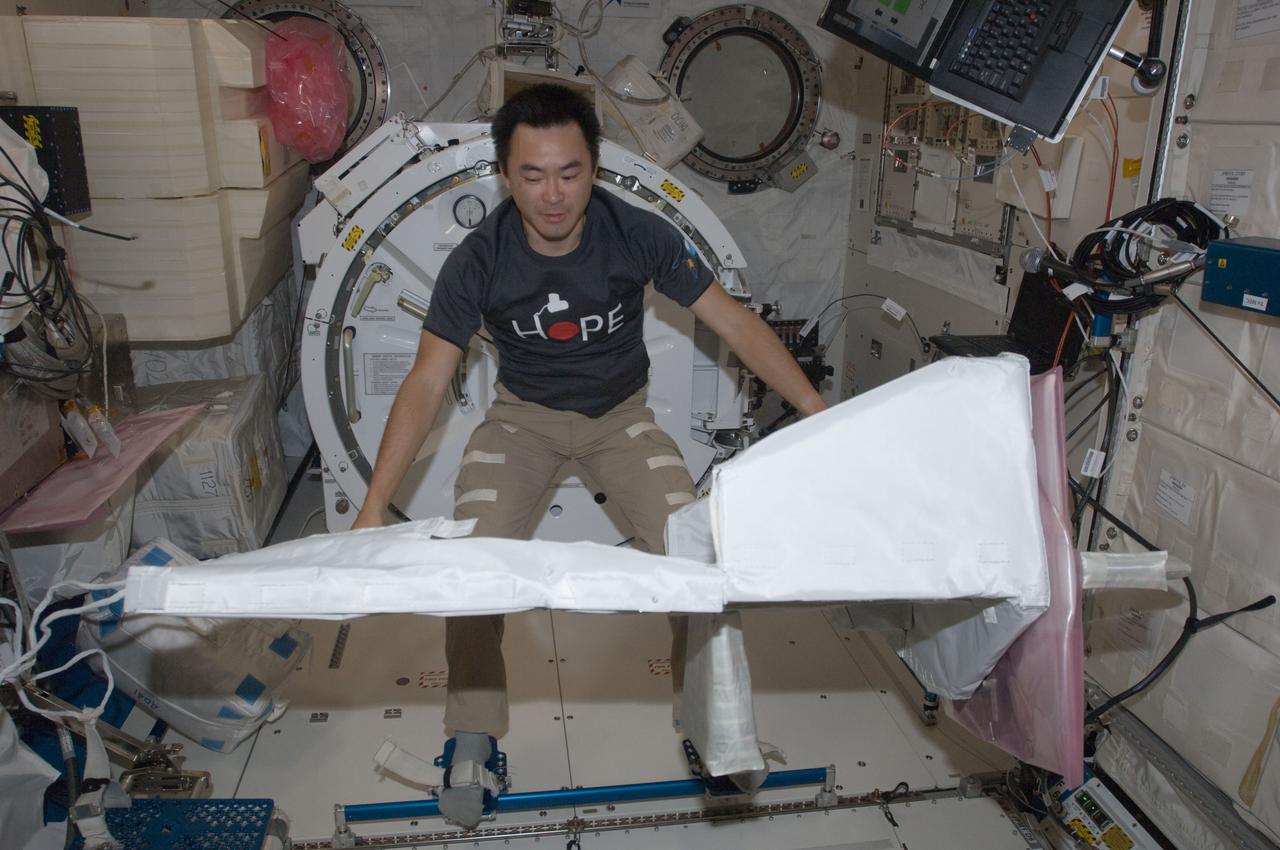
ISS032-E-022175 (21 Aug. 2012) --- Japan Aerospace Exploration Agency astronaut Aki Hoshide, Expedition 32 flight engineer, assembles the JEM Robotic Maneuvering System Multi-Purpose Experiment Platform (JEMRMS MPEP) in the Kibo laboratory of the International Space Station.
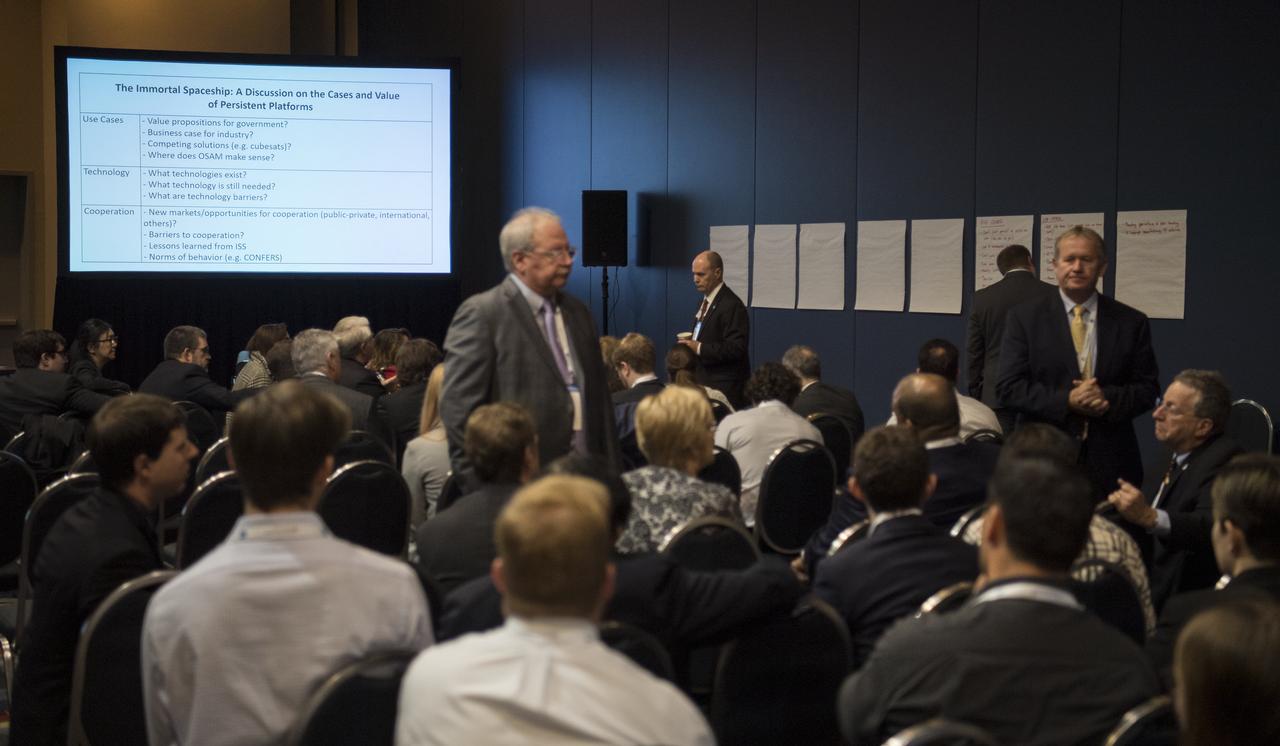
Audience members participate in a special session titled ”The Immortal Spaceship: A Discussion on the Use Cases and Value of Persistent Platforms” at the 70th International Astronautical Congress, Thursday, Oct. 24, 2019, at the Walter E. Washington Convention Center in Washington. Photo Credit: (NASA/Joel Kowsky)
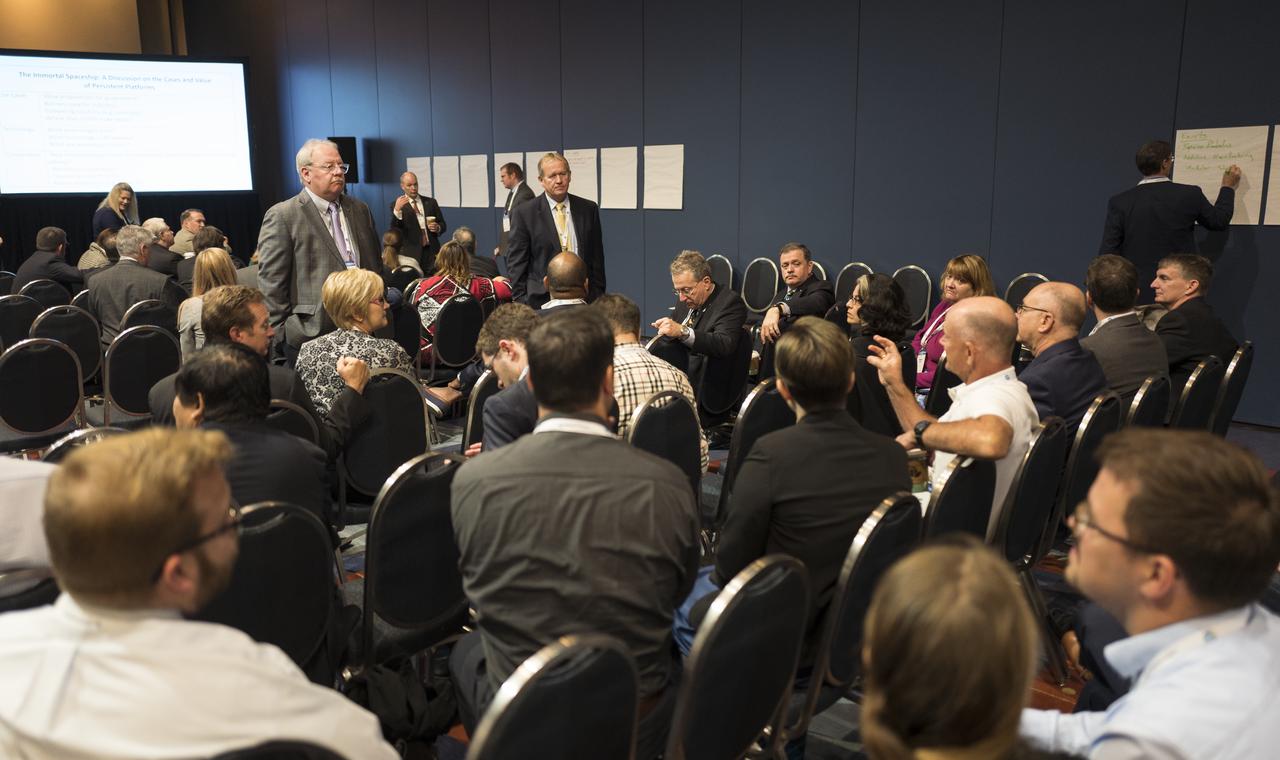
Audience members participate in a special session titled ”The Immortal Spaceship: A Discussion on the Use Cases and Value of Persistent Platforms” at the 70th International Astronautical Congress, Thursday, Oct. 24, 2019, at the Walter E. Washington Convention Center in Washington. Photo Credit: (NASA/Joel Kowsky)
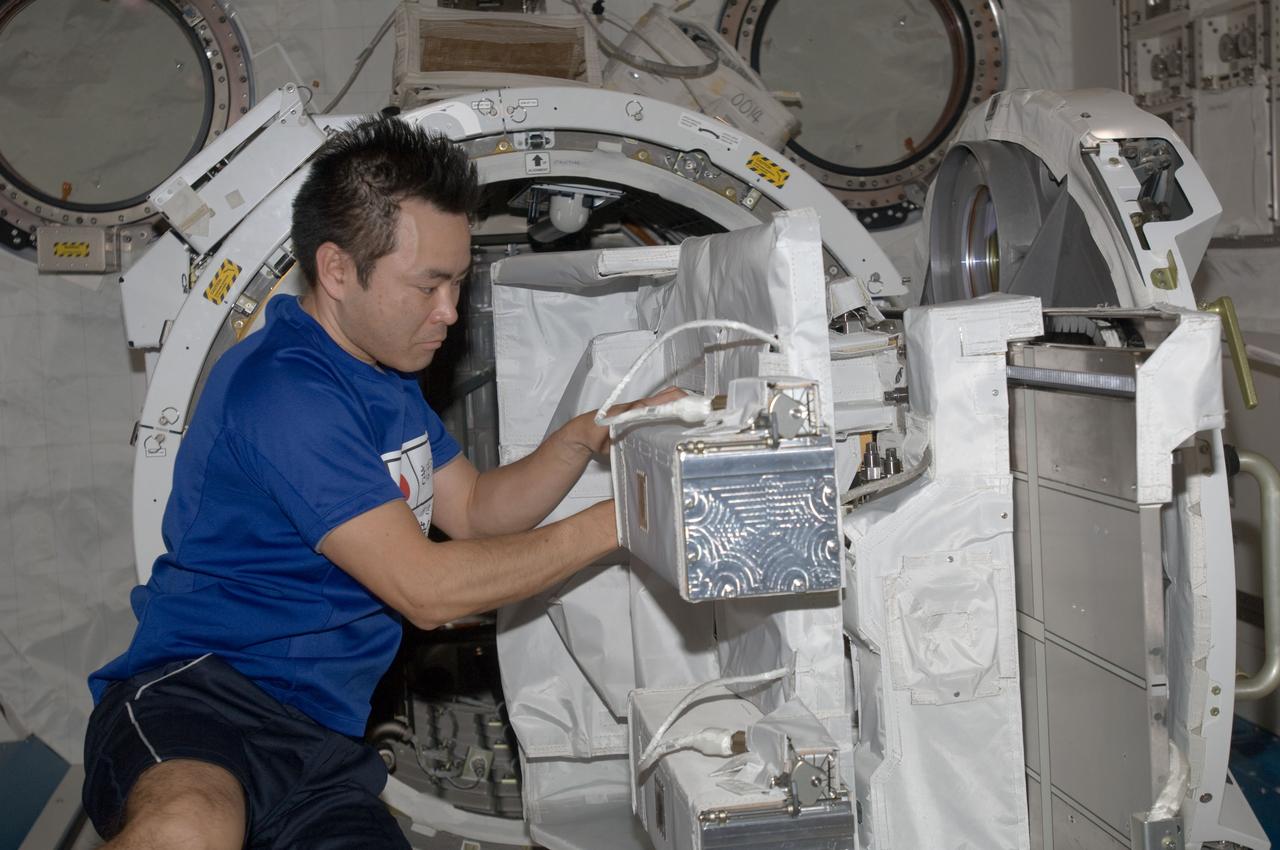
ISS033-E-006446 (21 Sept. 2012) --- In the International Space Station’s Kibo laboratory, Japan Aerospace Exploration Agency astronaut Aki Hoshide, Expedition 33 flight engineer, works with the Small Satellite Orbital Deployer (SSOD) installed on the Multi-Purpose Experiment Platform (MPEP) of the extended slide table of the Kibo airlock.
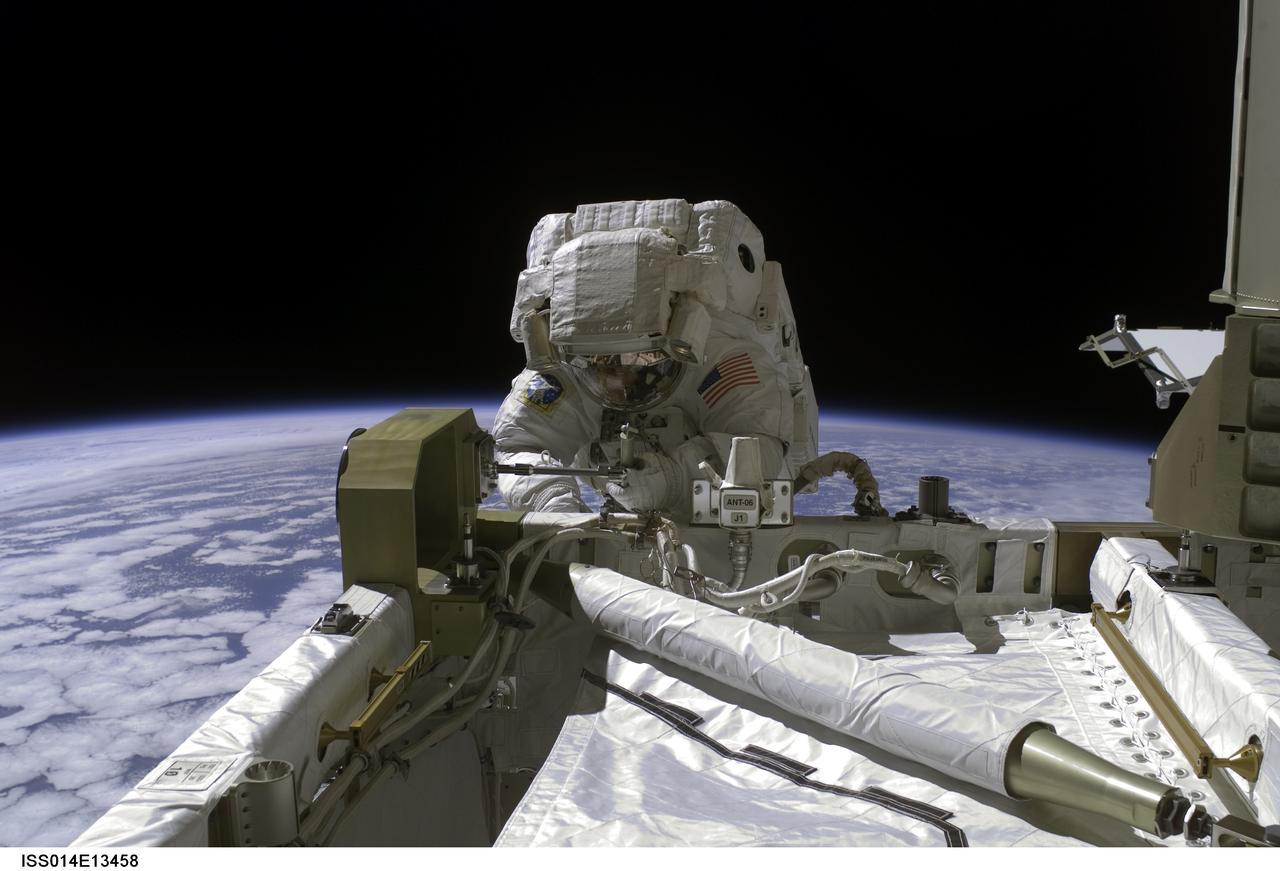
ISS014-E-13458 (8 Feb. 2007) --- Astronaut Sunita L. Williams, Expedition 14 flight engineer, participates in the final of three sessions of extravehicular activity (EVA) in nine days, as construction continues on the International Space Station. During the 6-hour, 40-minute spacewalk, Williams and Michael E. Lopez-Alegria (out of frame), commander, completed tasks that will allow for the attachment of a cargo platform during the STS-118 mission this summer and relocation of the P6 truss during STS-120 later this year.
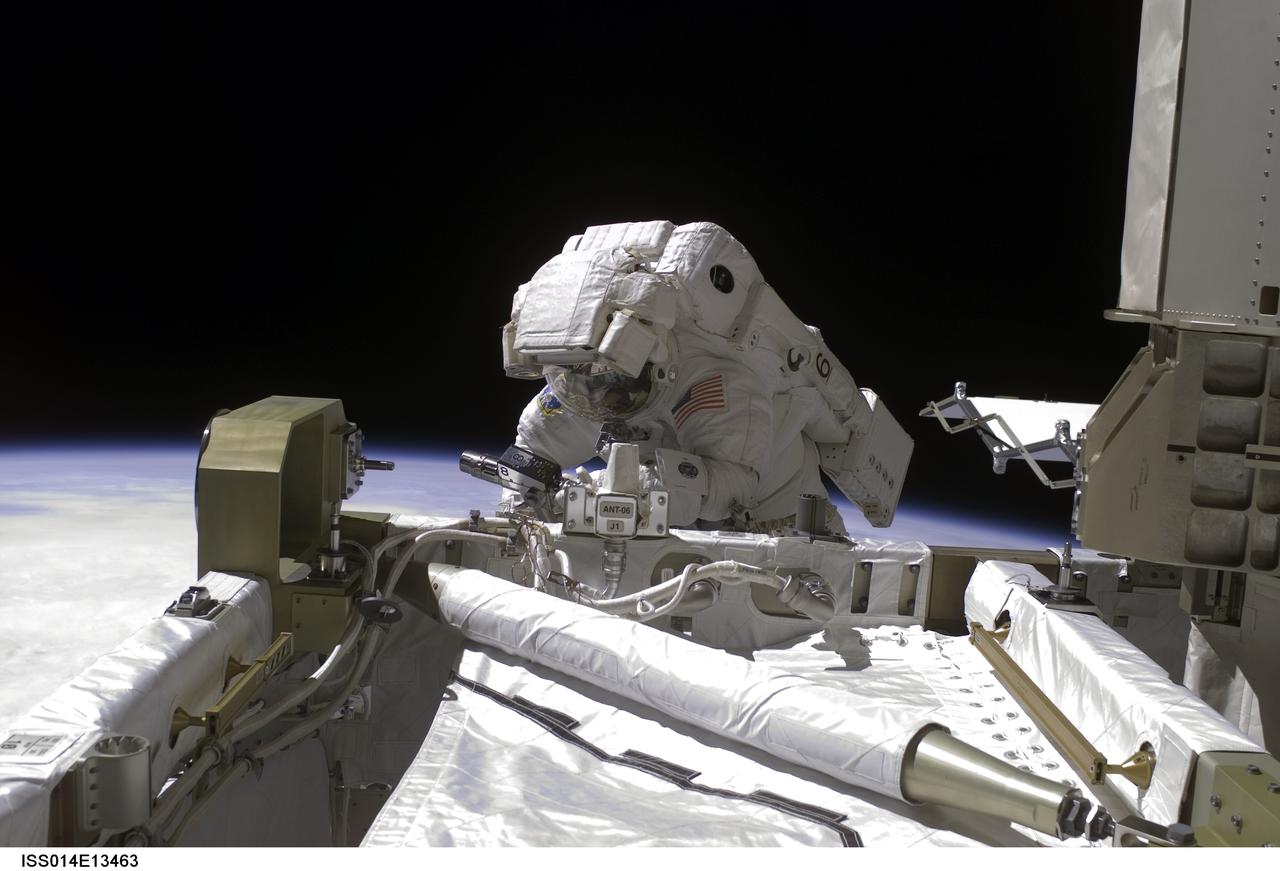
ISS014-E-13463 (8 Feb. 2007) --- Astronaut Sunita L. Williams, Expedition 14 flight engineer, participates in the final of three sessions of extravehicular activity (EVA) in nine days, as construction continues on the International Space Station. During the 6-hour, 40-minute spacewalk, Williams and Michael E. Lopez-Alegria (out of frame), commander, completed tasks that will allow for the attachment of a cargo platform during the STS-118 mission this summer and relocation of the P6 truss during STS-120 later this year.
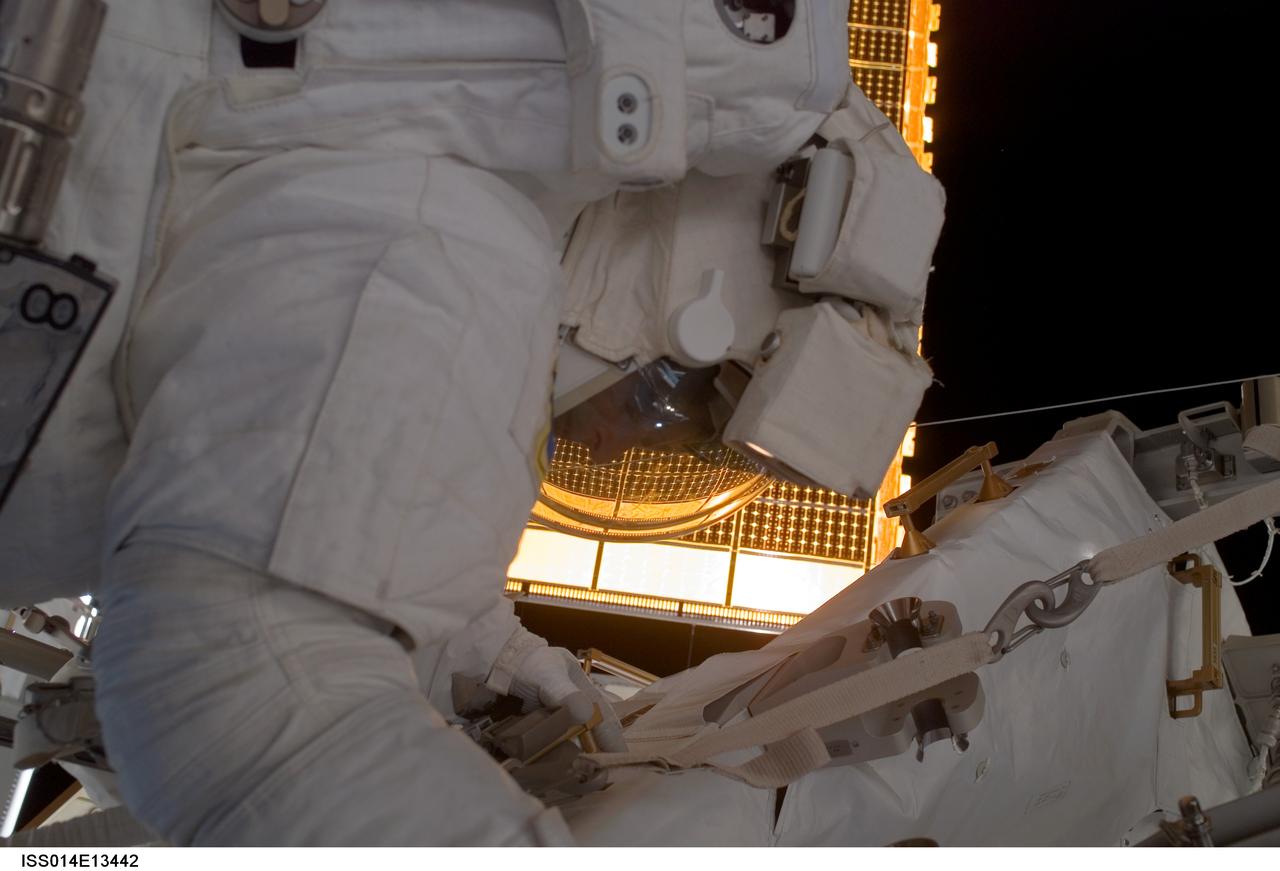
ISS014-E-13442 (8 Feb. 2007) --- Astronaut Sunita L. Williams, Expedition 14 flight engineer, participates in the final of three sessions of extravehicular activity (EVA) in nine days, as construction continues on the International Space Station. During the 6-hour, 40-minute spacewalk, Williams and Michael E. Lopez-Alegria (out of frame), commander, completed tasks that will allow for the attachment of a cargo platform during the STS-118 mission this summer and relocation of the P6 truss during STS-120 later this year.
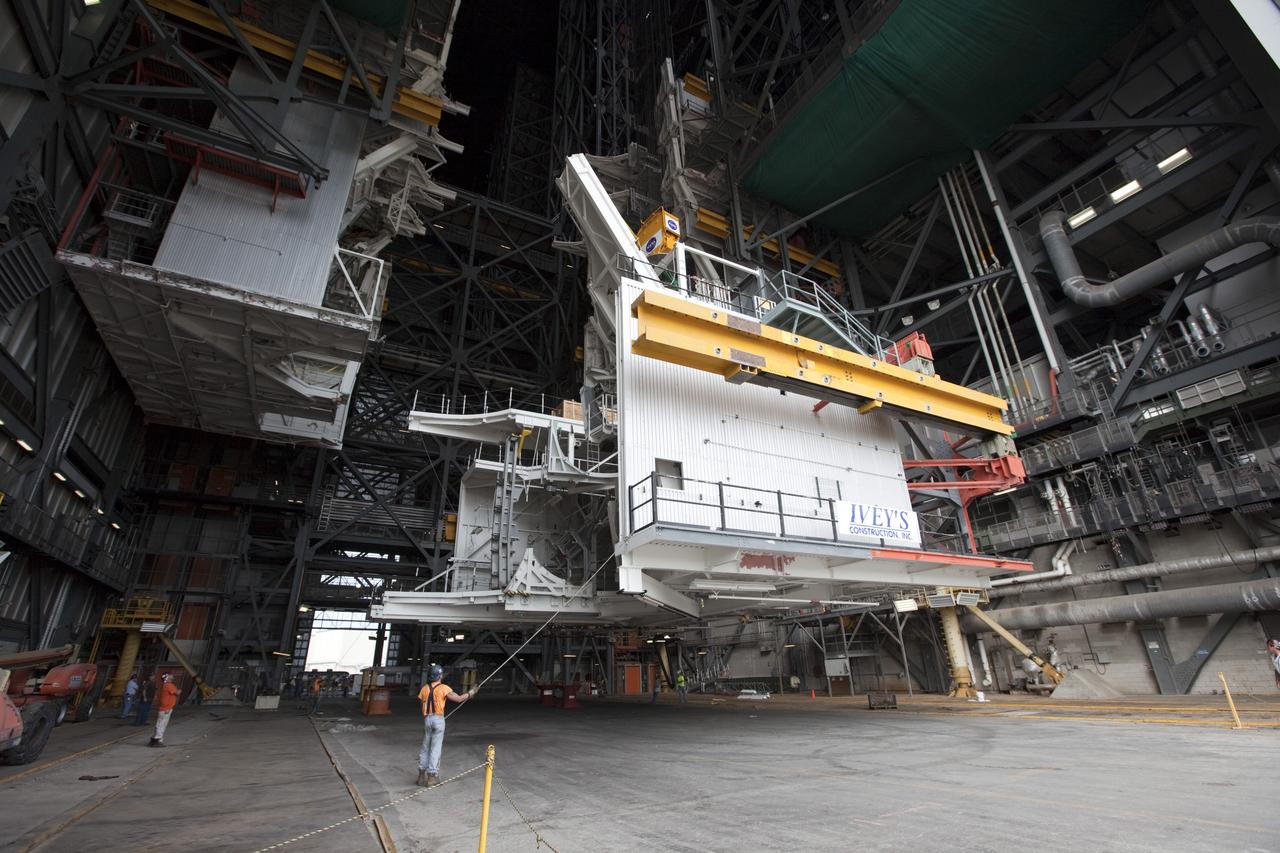
CAPE CANAVERAL, Fla. -- At NASA’s Kennedy Space Center in Florida, construction workers lower the large space shuttle-era Level E north work platform from high bay 3 inside the Vehicle Assembly Building, or VAB. The platform will be moved to the VAB north parking area for temporary storage. The work is part of a center-wide refurbishment initiative under the Ground Systems Development and Operations, or GSDO, Program. High bay 3 is being refurbished to accommodate NASA’s Space Launch System and a variety of other spacecraft. For more information, visit http://www.nasa.gov/exploration/systems/ground/index.html. Photo credit: NASA/Kim Shiflett
CAPE CANAVERAL, Fla. -- At NASA’s Kennedy Space Center in Florida, construction workers lower the large space shuttle-era Level E north work platform from high bay 3 inside the Vehicle Assembly Building, or VAB. The platform will be moved to the VAB north parking area for temporary storage. The work is part of a center-wide refurbishment initiative under the Ground Systems Development and Operations, or GSDO, Program. High bay 3 is being refurbished to accommodate NASA’s Space Launch System and a variety of other spacecraft. For more information, visit http://www.nasa.gov/exploration/systems/ground/index.html. Photo credit: NASA/Kim Shiflett
CAPE CANAVERAL, Fla. -- At NASA’s Kennedy Space Center in Florida, construction workers lower the large space shuttle-era Level E north work platform from high bay 3 inside the Vehicle Assembly Building, or VAB. The platform will be moved to the VAB north parking area for temporary storage. The work is part of a center-wide refurbishment initiative under the Ground Systems Development and Operations, or GSDO, Program. High bay 3 is being refurbished to accommodate NASA’s Space Launch System and a variety of other spacecraft. For more information, visit http://www.nasa.gov/exploration/systems/ground/index.html. Photo credit: NASA/Kim Shiflett
CAPE CANAVERAL, Fla. -- At NASA’s Kennedy Space Center in Florida, construction workers lower the large space shuttle-era Level E north work platform from high bay 3 inside the Vehicle Assembly Building, or VAB. The platform will be moved to the VAB north parking area for temporary storage. The work is part of a center-wide refurbishment initiative under the Ground Systems Development and Operations, or GSDO, Program. High bay 3 is being refurbished to accommodate NASA’s Space Launch System and a variety of other spacecraft. For more information, visit http://www.nasa.gov/exploration/systems/ground/index.html. Photo credit: NASA/Kim Shiflett
CAPE CANAVERAL, Fla. -- At NASA’s Kennedy Space Center in Florida, construction workers begin to remove the large space shuttle-era Level E north work platform from high bay 3 inside the Vehicle Assembly Building, or VAB. The platform will be moved to the VAB north parking area for temporary storage. The work is part of a center-wide refurbishment initiative under the Ground Systems Development and Operations, or GSDO, Program. High bay 3 is being refurbished to accommodate NASA’s Space Launch System and a variety of other spacecraft. For more information, visit http://www.nasa.gov/exploration/systems/ground/index.html. Photo credit: NASA/Kim Shiflett
CAPE CANAVERAL, Fla. -- At NASA’s Kennedy Space Center in Florida, construction workers lower the large space shuttle-era Level E north work platform from high bay 3 inside the Vehicle Assembly Building, or VAB. The platform will be moved to the VAB north parking area for temporary storage. The work is part of a center-wide refurbishment initiative under the Ground Systems Development and Operations, or GSDO, Program. High bay 3 is being refurbished to accommodate NASA’s Space Launch System and a variety of other spacecraft. For more information, visit http://www.nasa.gov/exploration/systems/ground/index.html. Photo credit: NASA/Kim Shiflett
CAPE CANAVERAL, Fla. -- At NASA’s Kennedy Space Center in Florida, construction workers begin to remove the large space shuttle-era Level E north work platform from high bay 3 inside the Vehicle Assembly Building, or VAB. The platform will be moved to the VAB north parking area for temporary storage. The work is part of a center-wide refurbishment initiative under the Ground Systems Development and Operations, or GSDO, Program. High bay 3 is being refurbished to accommodate NASA’s Space Launch System and a variety of other spacecraft. For more information, visit http://www.nasa.gov/exploration/systems/ground/index.html. Photo credit: NASA/Kim Shiflett

CAPE CANAVERAL, Fla. -- At NASA’s Kennedy Space Center in Florida, construction workers lower the large space shuttle-era Level E north work platform from high bay 3 inside the Vehicle Assembly Building, or VAB. The platform will be moved to the VAB north parking area for temporary storage. The work is part of a center-wide refurbishment initiative under the Ground Systems Development and Operations, or GSDO, Program. High bay 3 is being refurbished to accommodate NASA’s Space Launch System and a variety of other spacecraft. For more information, visit http://www.nasa.gov/exploration/systems/ground/index.html. Photo credit: NASA/Kim Shiflett
CAPE CANAVERAL, Fla. -- At NASA’s Kennedy Space Center in Florida, construction workers lower the large space shuttle-era Level E north work platform from high bay 3 inside the Vehicle Assembly Building, or VAB. The platform will be moved to the VAB north parking area for temporary storage. The work is part of a center-wide refurbishment initiative under the Ground Systems Development and Operations, or GSDO, Program. High bay 3 is being refurbished to accommodate NASA’s Space Launch System and a variety of other spacecraft. For more information, visit http://www.nasa.gov/exploration/systems/ground/index.html. Photo credit: NASA/Kim Shiflett
CAPE CANAVERAL, Fla. -- In the Vehicle Assembly Building at NASA's Kennedy Space Center, Payton Jones, an aerospace senior technician with United Space Alliance, stands on E platform on the 14th floor of high bay 3 as he monitors the external tank being lowered and leveled between the solid rocket boosters and platforms. The tank and rockets will be mated for the launch of Discovery on the STS-124 mission to the International Space Station, targeted for May 31. On the mission, Discovery will transport the Kibo Japanese Experiment Module - Pressurized Module (JEM-PM) and the Japanese Remote Manipulator System (JEM-RMS) to the space station to add to the Kibo laboratory. Photo credit: NASA/Kim Shiflett
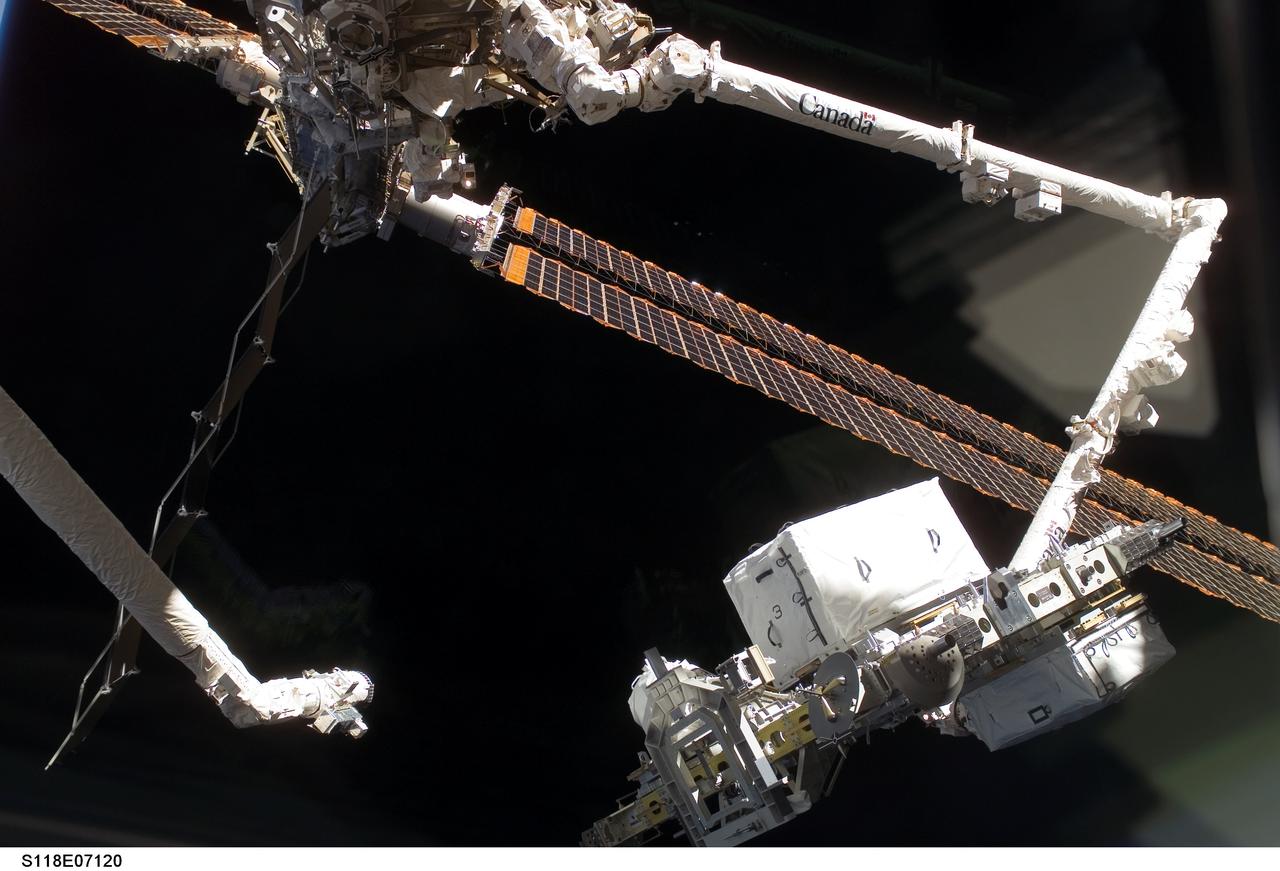
S118-E-07120 (14 Aug. 2007) --- The Space Shuttle Endeavour's Remote Manipulator System (RMS) robotic arm (left) moves away following the hand-off of an external stowage platform (ESP-3) to the station's robotic arm while docked with the International Space Station. Astronauts Tracy Caldwell and Barbara R. Morgan, both STS-118 mission specialists, were at inside at Endeavour's controls as the shuttle's robotic arm lifted the storage platform from the cargo bay to hand it over to the station's robotic arm, also known as Canadarm2. Astronauts Charlie Hobaugh, pilot, and Clay Anderson, Expedition 15 flight engineer, then used the Canadarm2 to attach the 13-by-7-foot platform to the station's Port 3 truss.
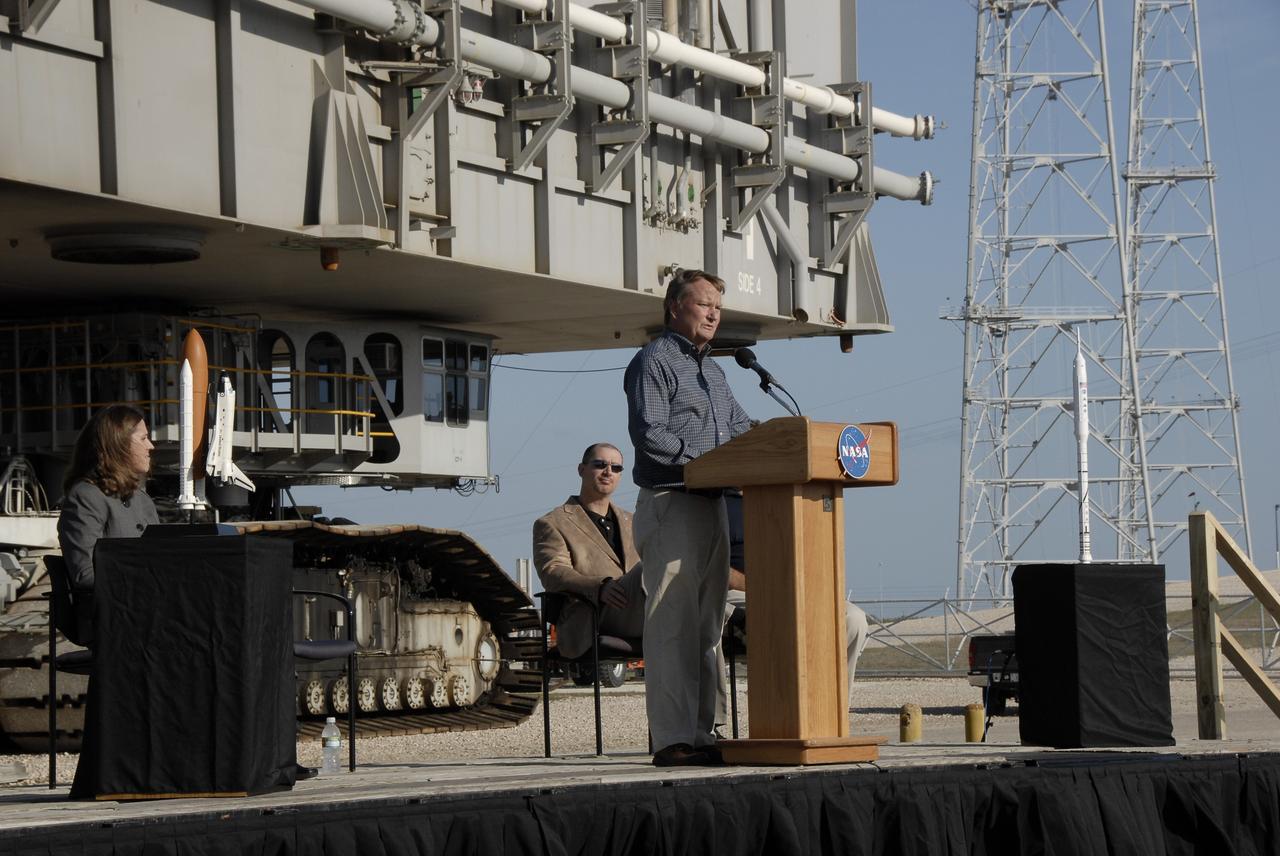
CAPE CANAVERAL, Fla. – Near Launch Pad 39B at NASA's Kennedy Space Center in Florida, Shuttle Launch Director Mike Leinbach speaks to the employees and media during the handover ceremony for Mobile Launcher Platform-1. The platform is being transferred from NASA's Space Shuttle Program to the Constellation Program for the Ares I-X flight test targeted for this summer. Also participating in the ceremony are (left) Rita Willcoxon, director of Launch Vehicle Processing at Kennedy, (right) Pepper E. Phillips, director of the Constellation Project Office, and (not visible) Brett Raulerson, manager of MLP Operations with United Space Alliance. Constructed in 1964, the mobile launchers used in Apollo/Saturn operations were modified for use in shuttle operations. With cranes, umbilical towers and swing arms removed, the mobile launchers were renamed Mobile Launcher Platforms, or MLPs. Photo credit: NASA/Kim Shiflett
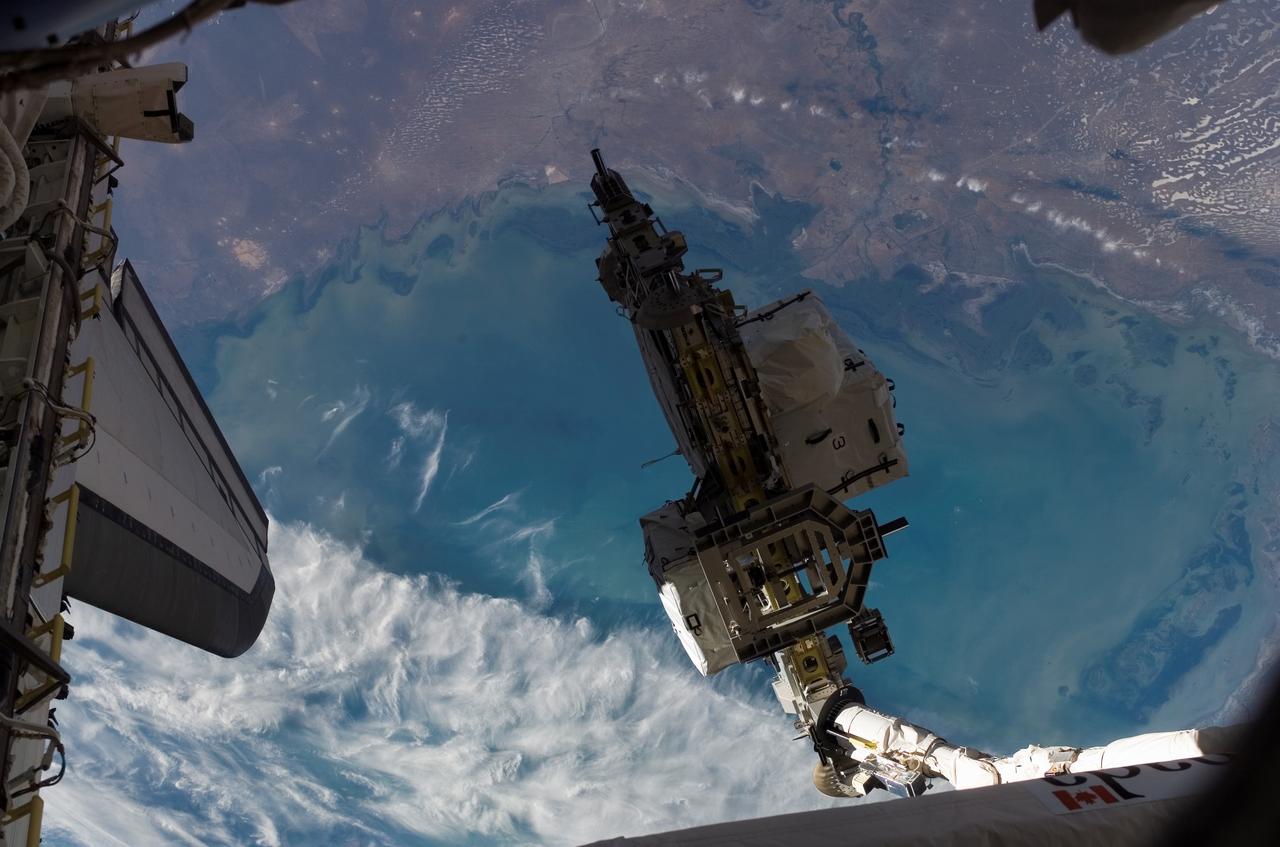
S118-E-07111 (14 Aug. 2007) --- Backdropped by a colorful Earth, the Space Shuttle Endeavour's Remote Manipulator System (RMS) robotic arm moves an external stowage platform (ESP-3) for a hand-off to the station's robotic arm (out of frame) while docked with the International Space Station. Astronauts Tracy Caldwell and Barbara R. Morgan, both STS-118 mission specialists, were inside at Endeavour's controls as the shuttle's robotic arm lifted the storage platform from the cargo bay to hand it over to the station's robotic arm, also known as Canadarm2. Astronauts Charlie Hobaugh, pilot, and Clay Anderson, Expedition 15 flight engineer, then used Canadarm2 to attach the 13-by-7-foot platform to the station's Port 3 truss.
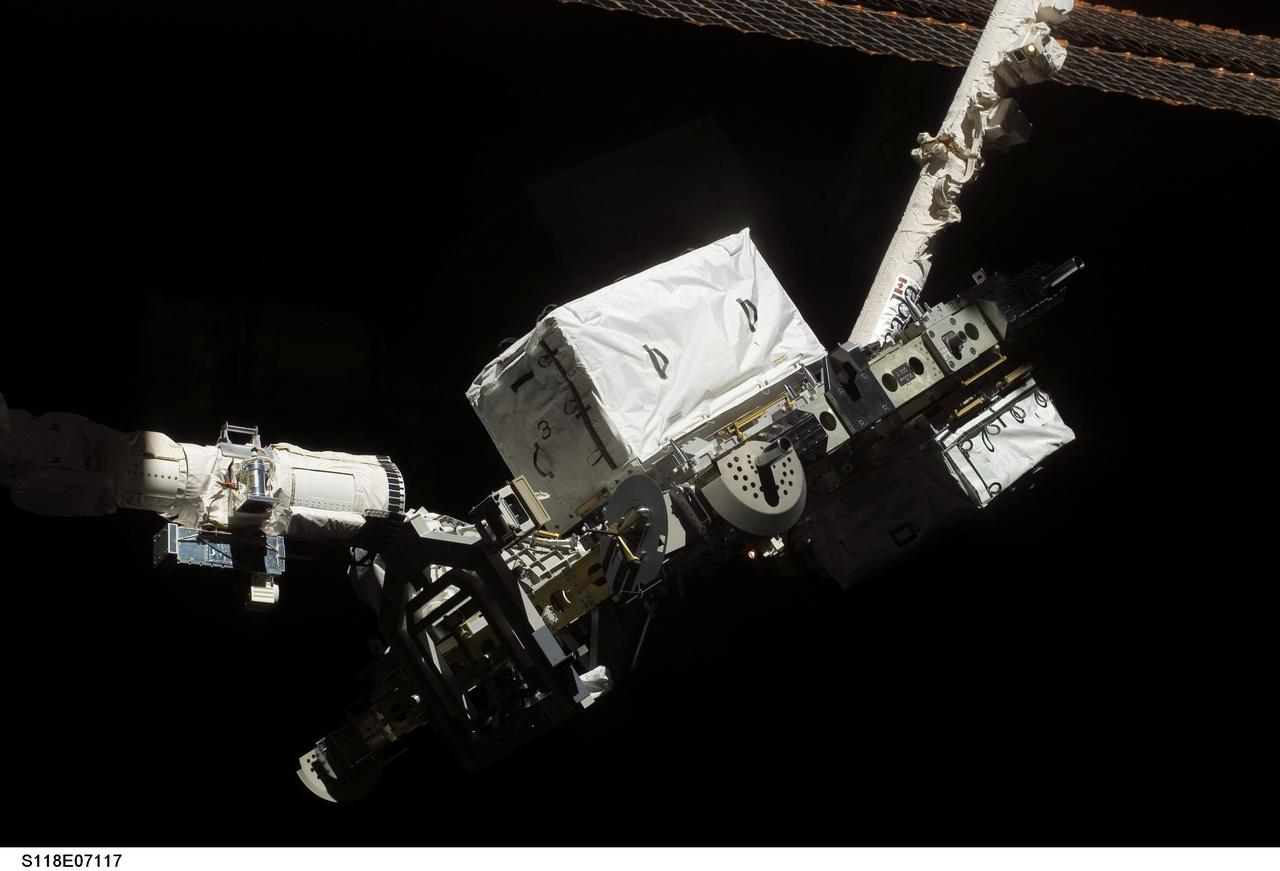
S118-E-07117 (14 Aug. 2007) --- The Space Shuttle Endeavour's Remote Manipulator System (RMS) robotic arm (left) moves away following the hand-off of an external stowage platform (ESP-3) to the station's robotic arm while docked with the International Space Station. Astronauts Tracy Caldwell and Barbara R. Morgan, both STS-118 mission specialists, were inside at Endeavour's controls as the shuttle's robotic arm lifted the storage platform from the cargo bay to hand it over to the station's robotic arm, also known as Canadarm2. Astronauts Charlie Hobaugh, pilot, and Clay Anderson, Expedition 15 flight engineer, then used the Canadarm2 to attach the 13-by-7-foot platform to the station's Port 3 truss.
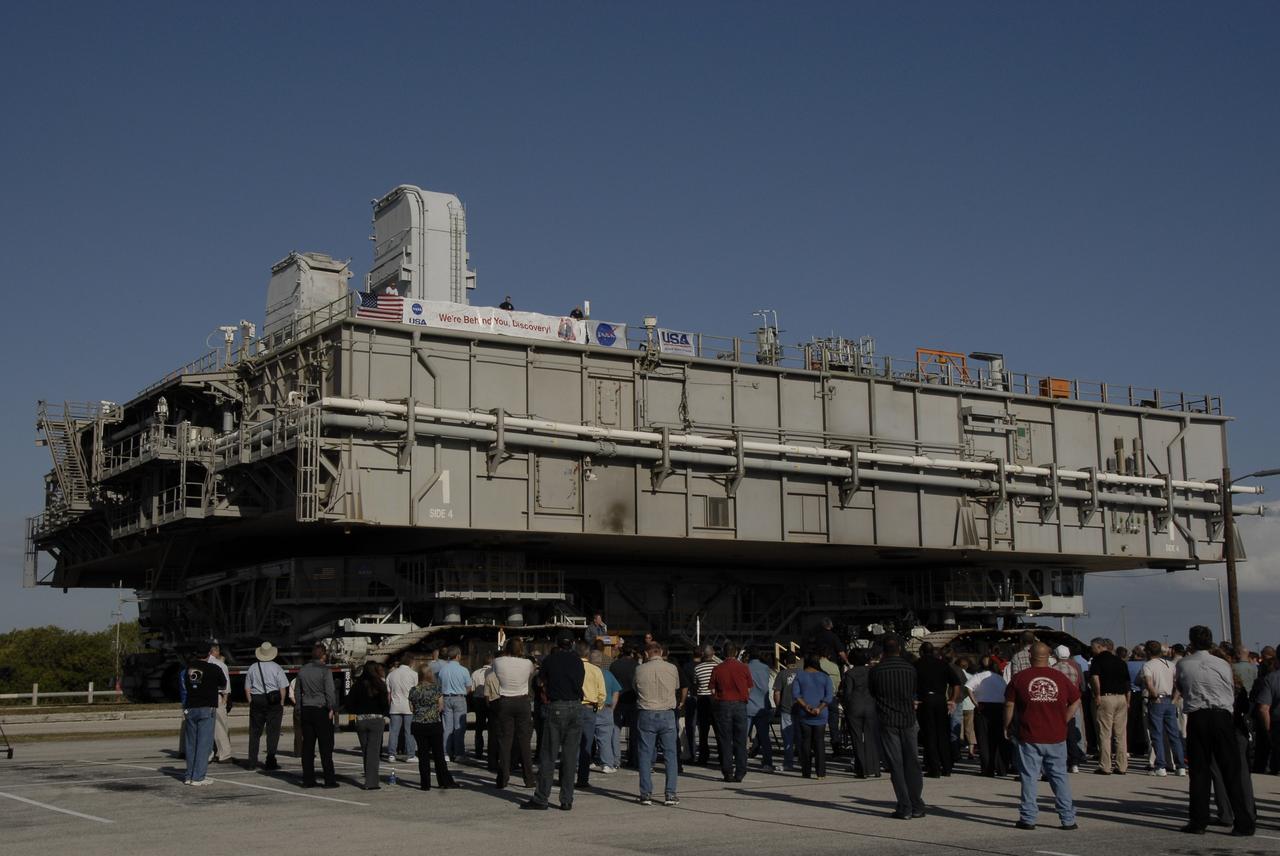
CAPE CANAVERAL, Fla. – Near Launch Pad 39B at NASA's Kennedy Space Center in Florida, employees and media gather listen to Shuttle Launch Director Mike Leinbach during the handover ceremony for Mobile Launcher Platform-1. The platform is being transferred from NASA's Space Shuttle Program to the Constellation Program for the Ares I-X flight test targeted for this summer. Also participating in the ceremony are Rita Willcoxon, director of Launch Vehicle Processing at Kennedy, Pepper E. Phillips, director of the Constellation Project Office, and Brett Raulerson, manager of MLP Operations with United Space Alliance. Constructed in 1964, the mobile launchers used in Apollo/Saturn operations were modified for use in shuttle operations. With cranes, umbilical towers and swing arms removed, the mobile launchers were renamed Mobile Launcher Platforms, or MLPs. Photo credit: NASA/Kim Shiflett
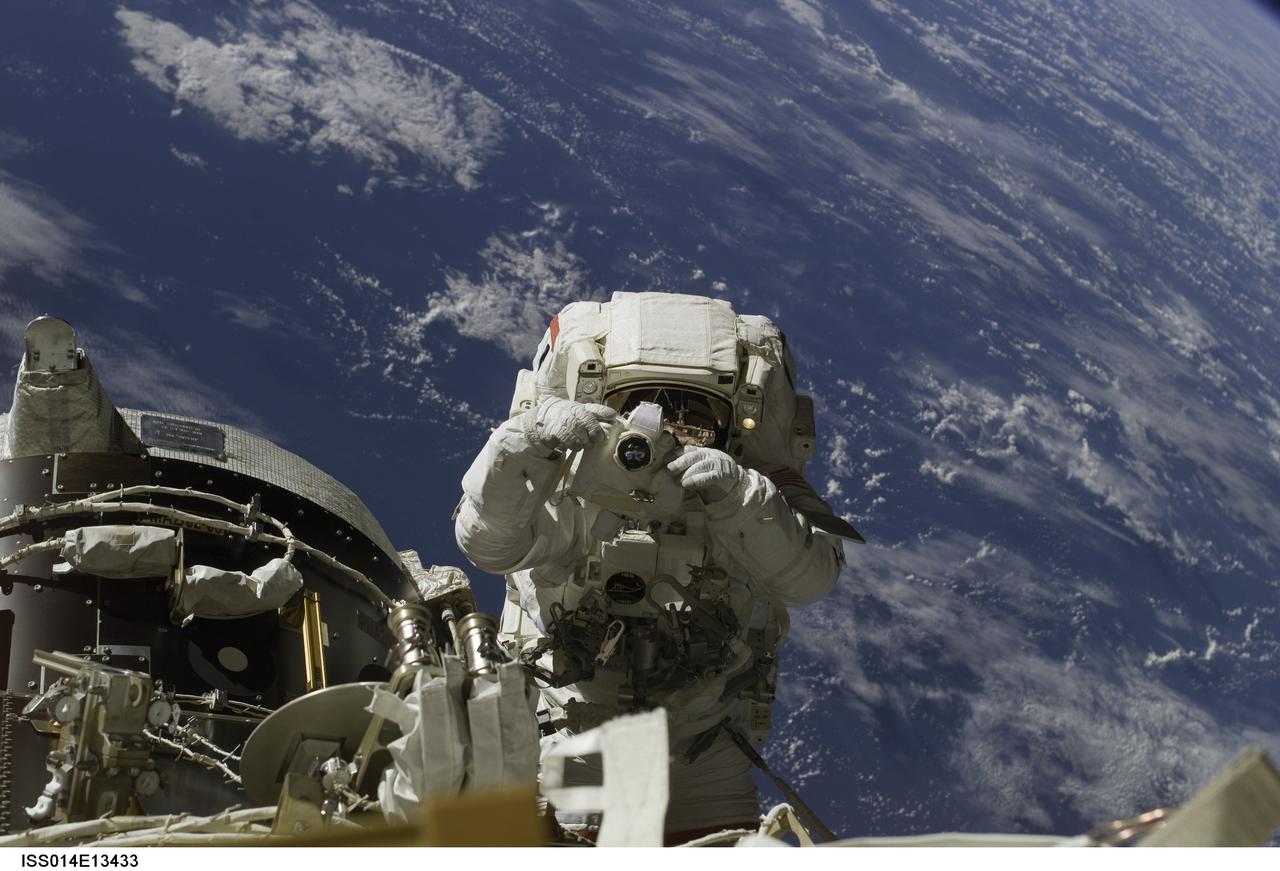
ISS014-E-13433 (8 Feb. 2007) --- Astronaut Michael E. Lopez-Alegria, Expedition 14 commander and NASA space station science officer, uses a digital still camera during the final of three sessions of extravehicular activity (EVA) in nine days, as construction continues on the International Space Station. During the 6-hour, 40-minute spacewalk, Lopez-Alegria and Sunita L. Williams (out of frame), flight engineer, completed tasks that will allow for the attachment of a cargo platform during the STS-118 mission this summer and relocation of the P6 truss during STS-120 later this year. A blue and white Earth provides the backdrop for the image.
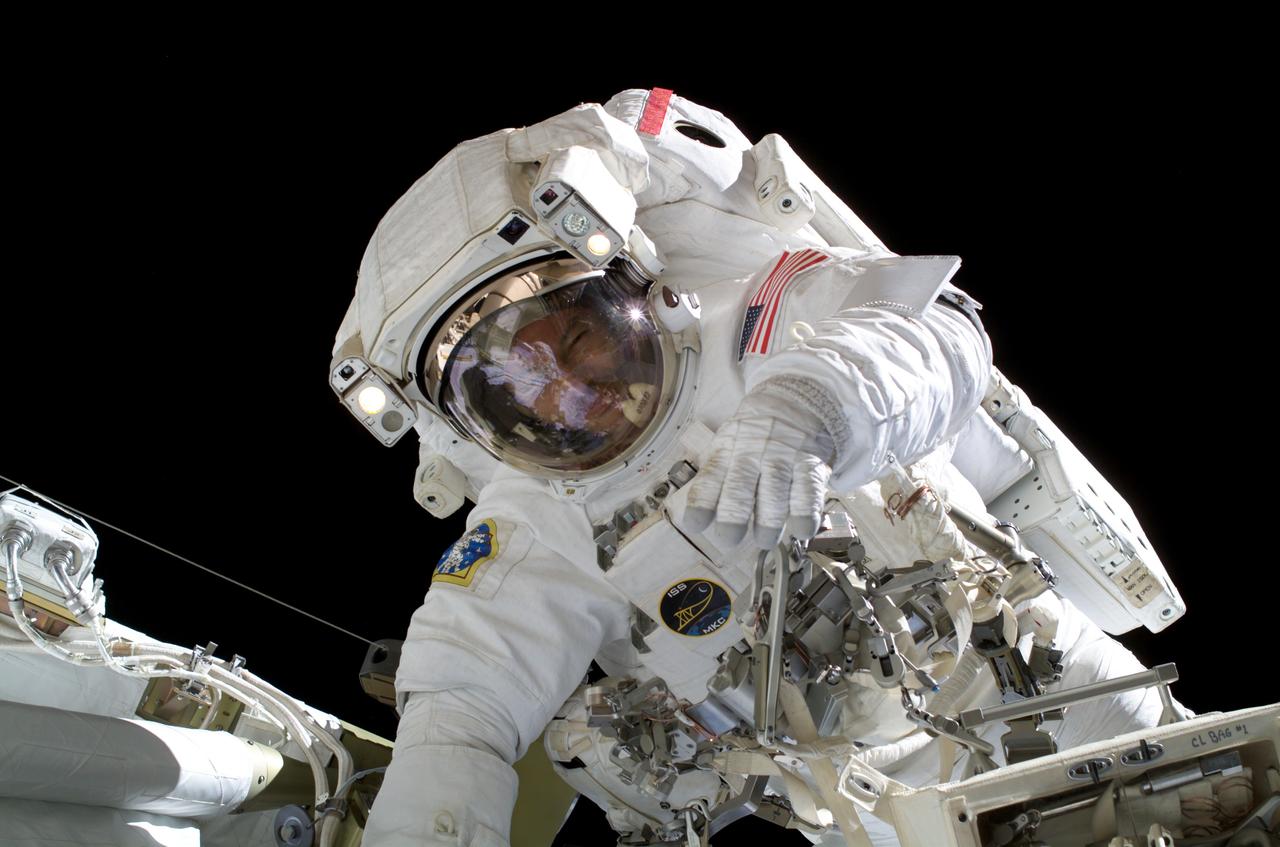
ISS014-E-13416 (8 Feb. 2007) --- Astronaut Michael E. Lopez-Alegria, Expedition 14 commander and NASA space station science officer, participates in the final of three sessions of extravehicular activity (EVA) in nine days, as construction continues on the International Space Station. During the 6-hour, 40-minute spacewalk, Lopez-Alegria and Sunita L. Williams (out of frame), flight engineer, completed tasks that will allow for the attachment of a cargo platform during the STS-118 mission this summer and relocation of the P6 truss during STS-120 later this year.
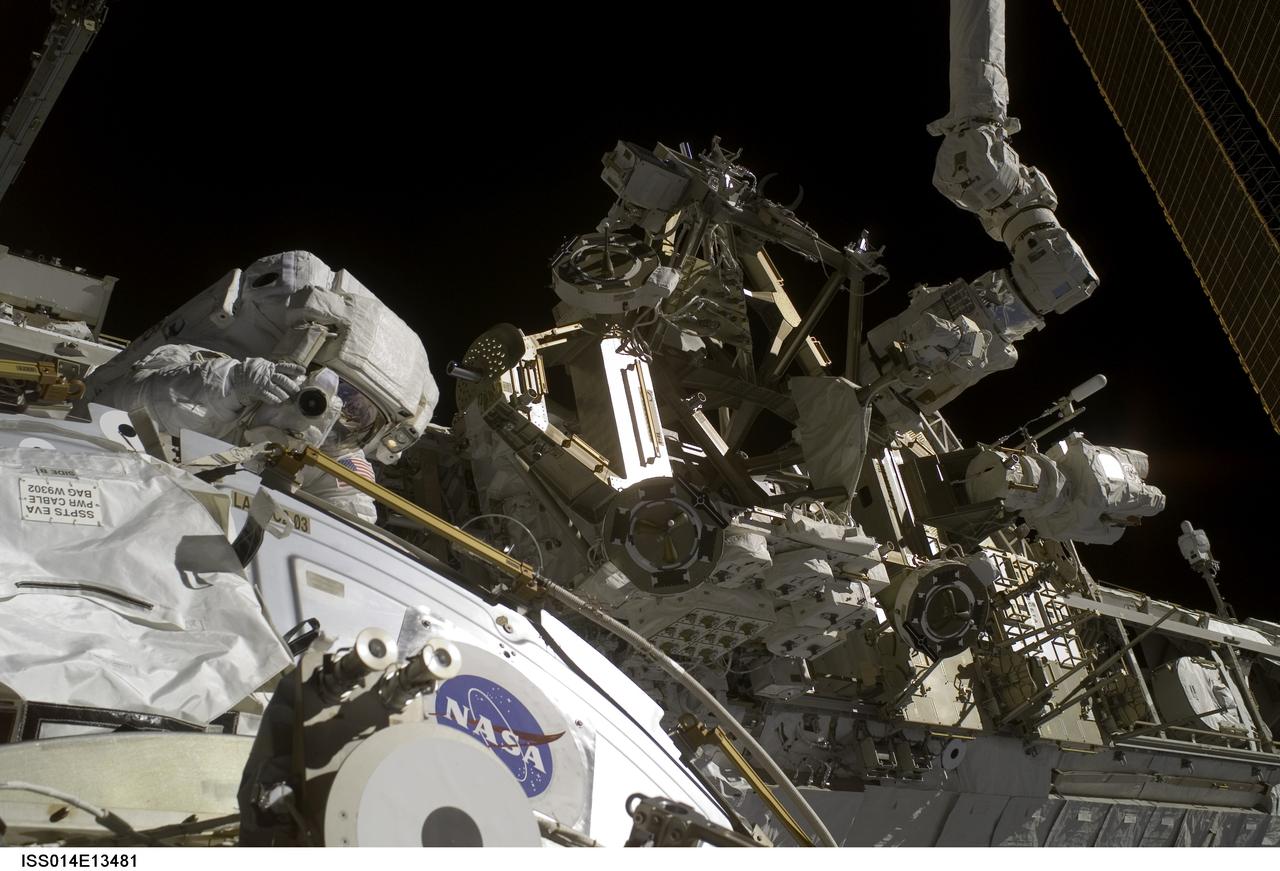
ISS014-E-13481 (8 Feb. 2007) --- Astronaut Sunita L. Williams, Expedition 14 flight engineer, uses a digital still camera during the final of three sessions of extravehicular activity (EVA) in nine days, as construction continues on the International Space Station. During the 6-hour, 40-minute spacewalk, Williams and Michael E. Lopez-Alegria (out of frame), commander and NASA space station science officer, completed tasks that will allow for the attachment of a cargo platform during the STS-118 mission this summer and relocation of the P6 truss during STS-120 later this year.
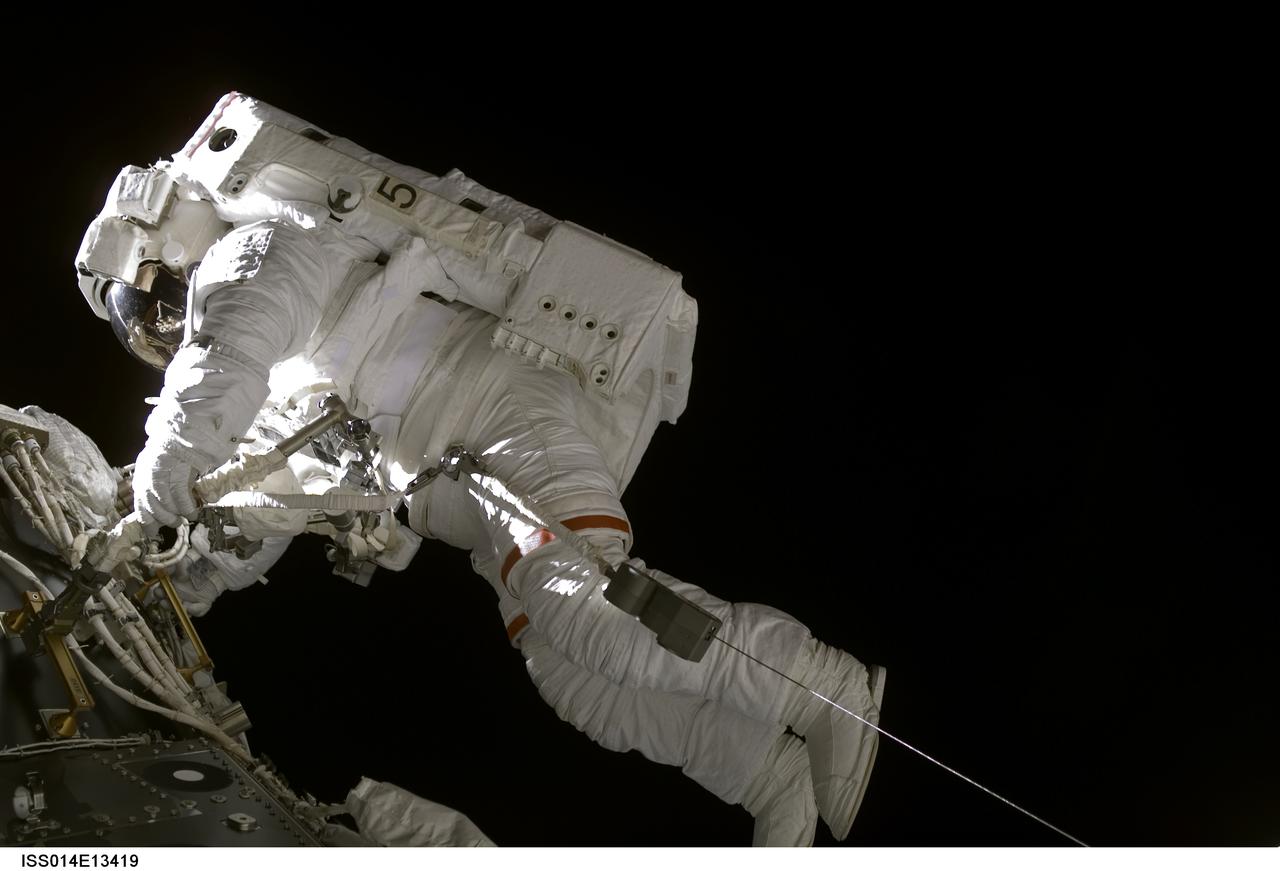
ISS014-E-13419 (8 Feb. 2007) --- Astronaut Michael E. Lopez-Alegria, Expedition 14 commander and NASA space station science officer, participates in the final of three sessions of extravehicular activity (EVA) in nine days, as construction continues on the International Space Station. During the 6-hour, 40-minute spacewalk, Lopez-Alegria and Sunita L. Williams (out of frame), flight engineer, completed tasks that will allow for the attachment of a cargo platform during the STS-118 mission this summer and relocation of the P6 truss during STS-120 later this year.
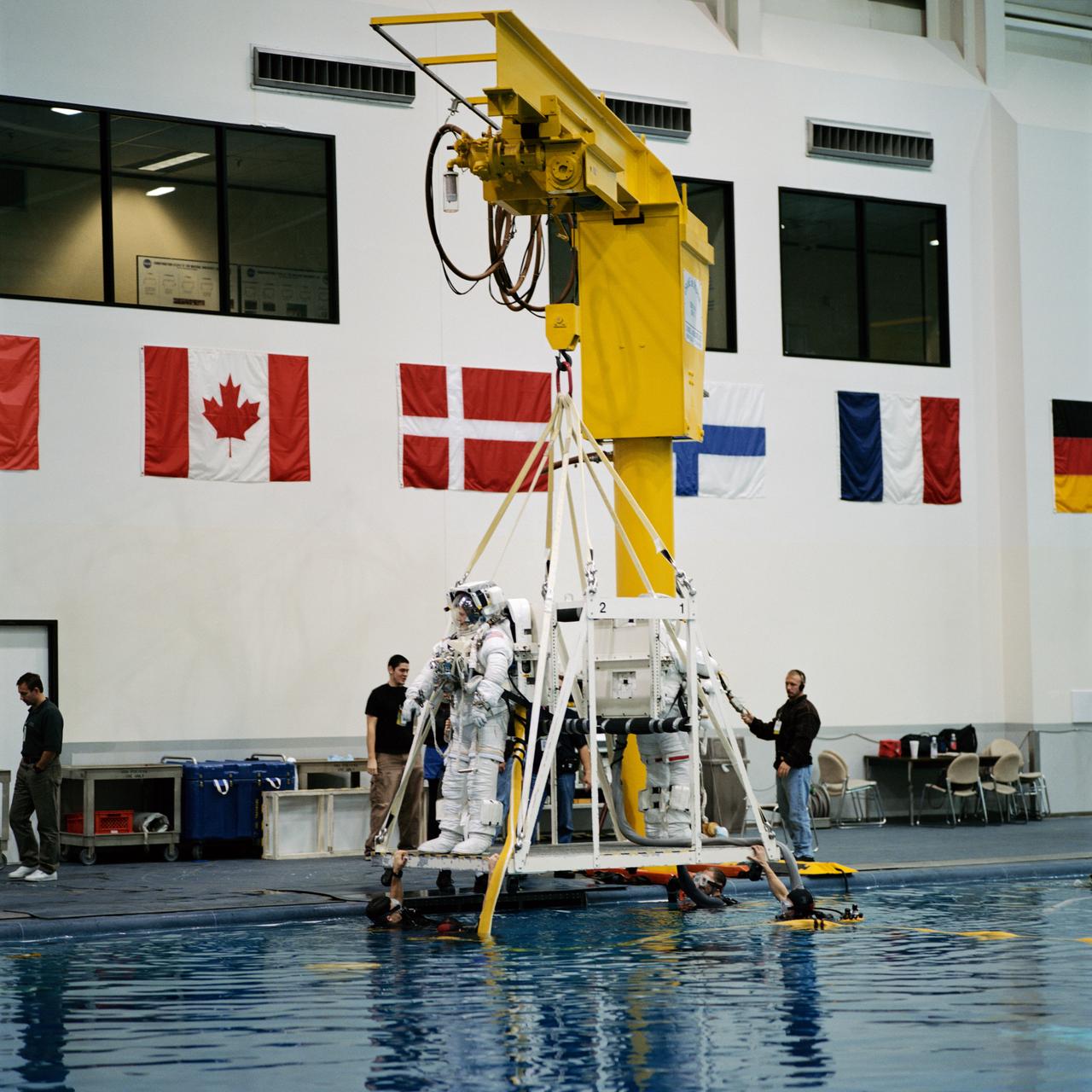
JSC2000-07400 (1 Dec. 2000) --- Both attired in training versions of the Extravehicular Mobility Unit (EMU) spacesuit, astronauts Scott E. Parazynski (left) and Chris A. Hadfield stand on a platform that will ease the two STS-100 mission specialists into a giant pool of water at the Neutral Buoyancy Laboratory (NBL). Minutes later, the two were in a neutrally buoyant state beneath the surface rehearsing spacewalk duties scheduled for next year's visit to the International Space Station (ISS). Hadfield represents the Canadian Space Agency (CSA).
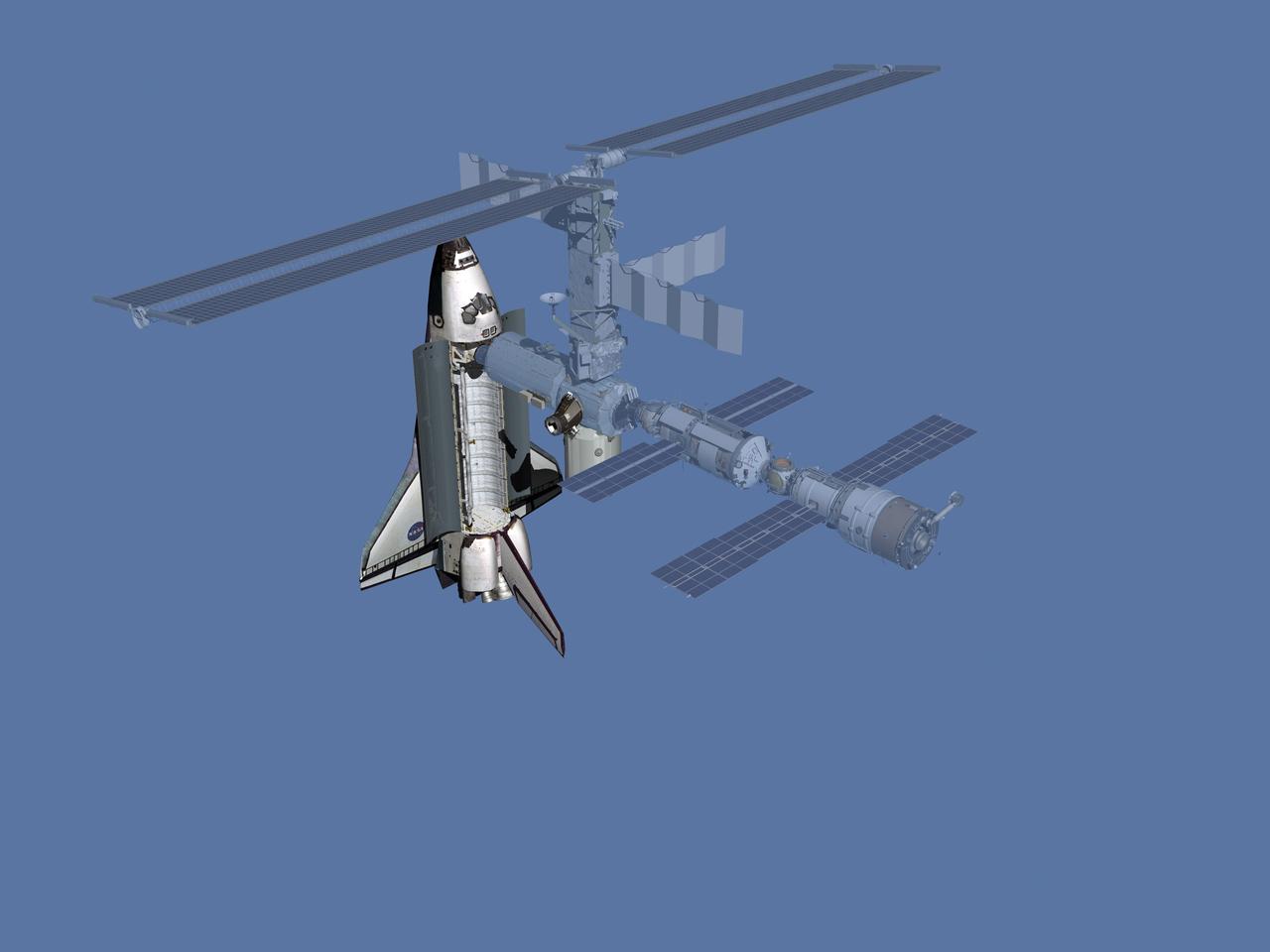
JSC2006-E-43486 (March 2001) --- Computer-generated artist's rendering of the International Space Station after flight STS-102/5A.1. Space Shuttle Discovery re-supplied the station with cargo from the Italian-built Leonardo Multi-Purpose Logistics Module (MPLM). The shuttle also arrived with the Expedition Two crew and returned with the Expedition One crew. The Pressurized Mating Adapter-3 (PMA-3) was relocated to the port side of the Unity node and the External Stowage Platform-1 was installed on the Destiny laboratory.
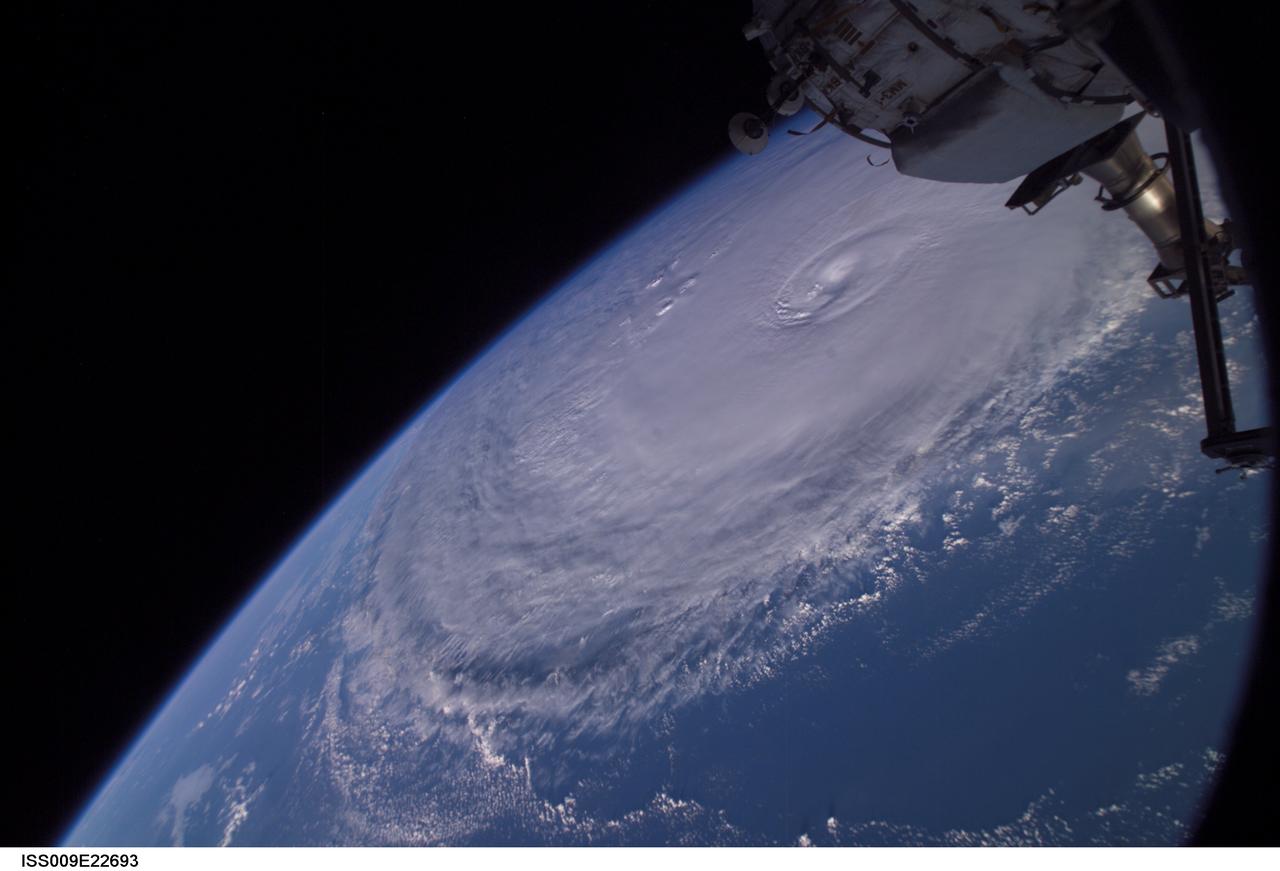
ISS009-E-22693 (14 September 2004) --- Hurricane Ivan was photographed as it churned in the Gulf of Mexico late Tuesday (23:06:23 GMT, Sept. 14) by astronaut Edward M. (Mike) Fincke aboard the International Space Station, 230 miles above Earth. At the time, Ivan was a category 4 hurricane with winds of 140 mph. Fincke, the NASA Station Science Officer, and Station Commander Gennady Padalka are in the final month of a six-month mission aboard the research platform.
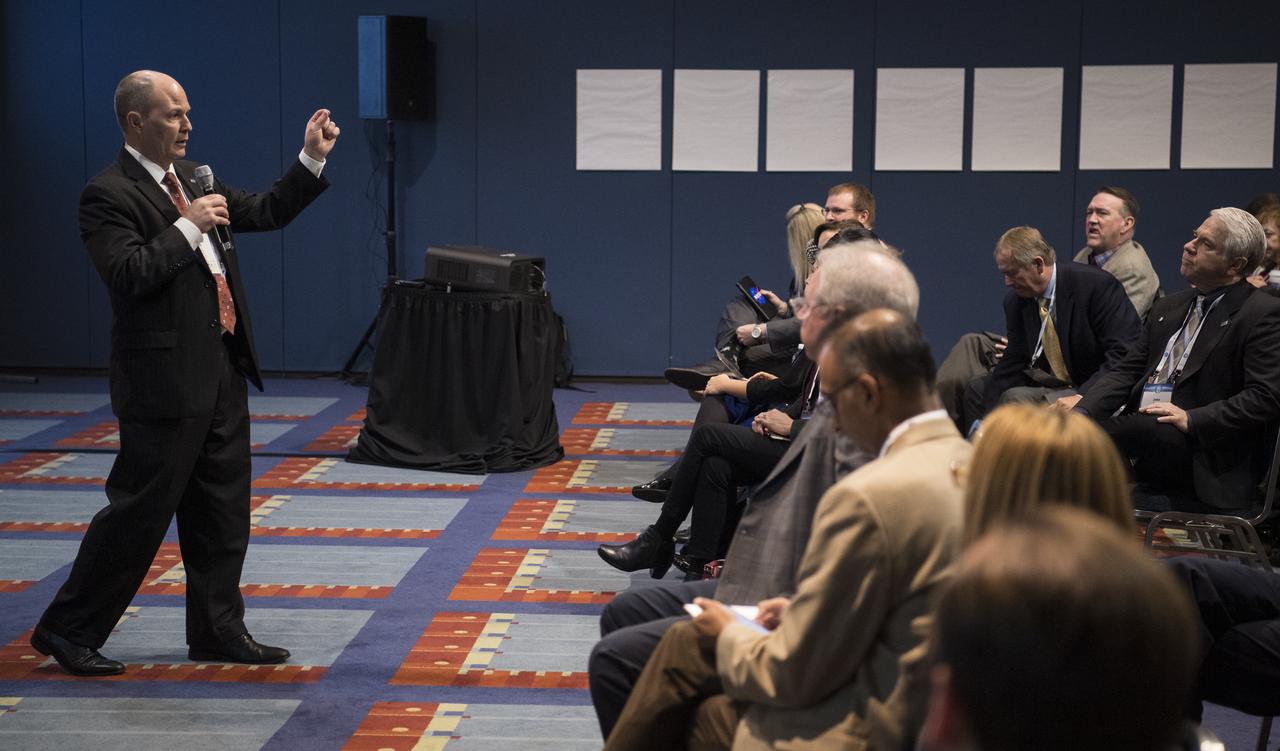
Ben Reed, Deputy Division Director of the Satellite Servicing Project Division at NASA's Goddard Space Flight Center speaks during a special session titled ”The Immortal Spaceship: A Discussion on the Use Cases and Value of Persistent Platforms” at the 70th International Astronautical Congress, Thursday, Oct. 24, 2019, at the Walter E. Washington Convention Center in Washington. Photo Credit: (NASA/Joel Kowsky)
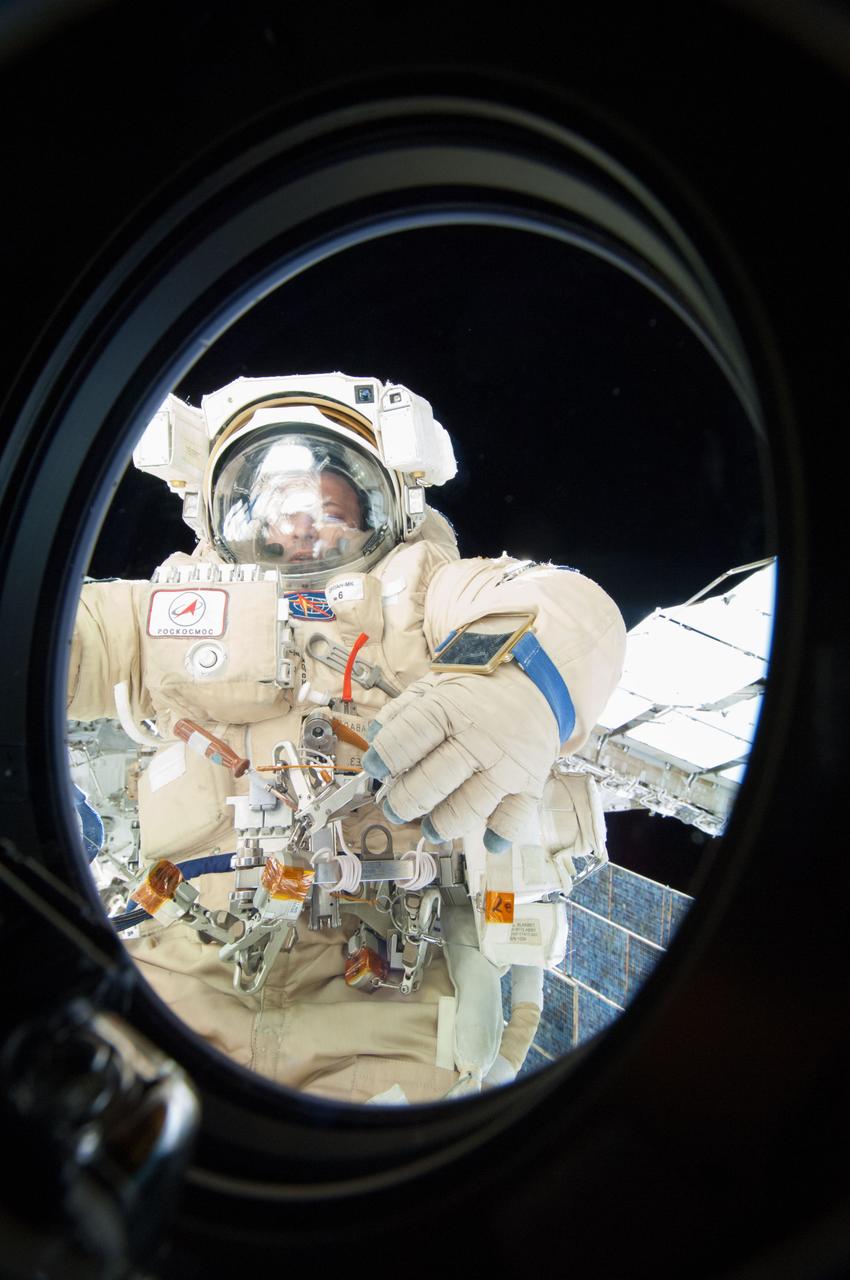
ISS036-E-035205 (22 Aug. 2013) --- Russian cosmonaut Alexander Misurkin, Expedition 36 flight engineer, attired in a Russian Orlan spacesuit, participates in a session of extravehicular activity (EVA) to continue outfitting the International Space Station. During the five-hour, 58-minute spacewalk, Misurkin and Russian cosmonaut Fyodor Yurchikhin (out of frame) completed the replacement of a laser communications experiment with a new platform for a small optical camera system, the installation of new spacewalk aids and an inspection of antenna covers.
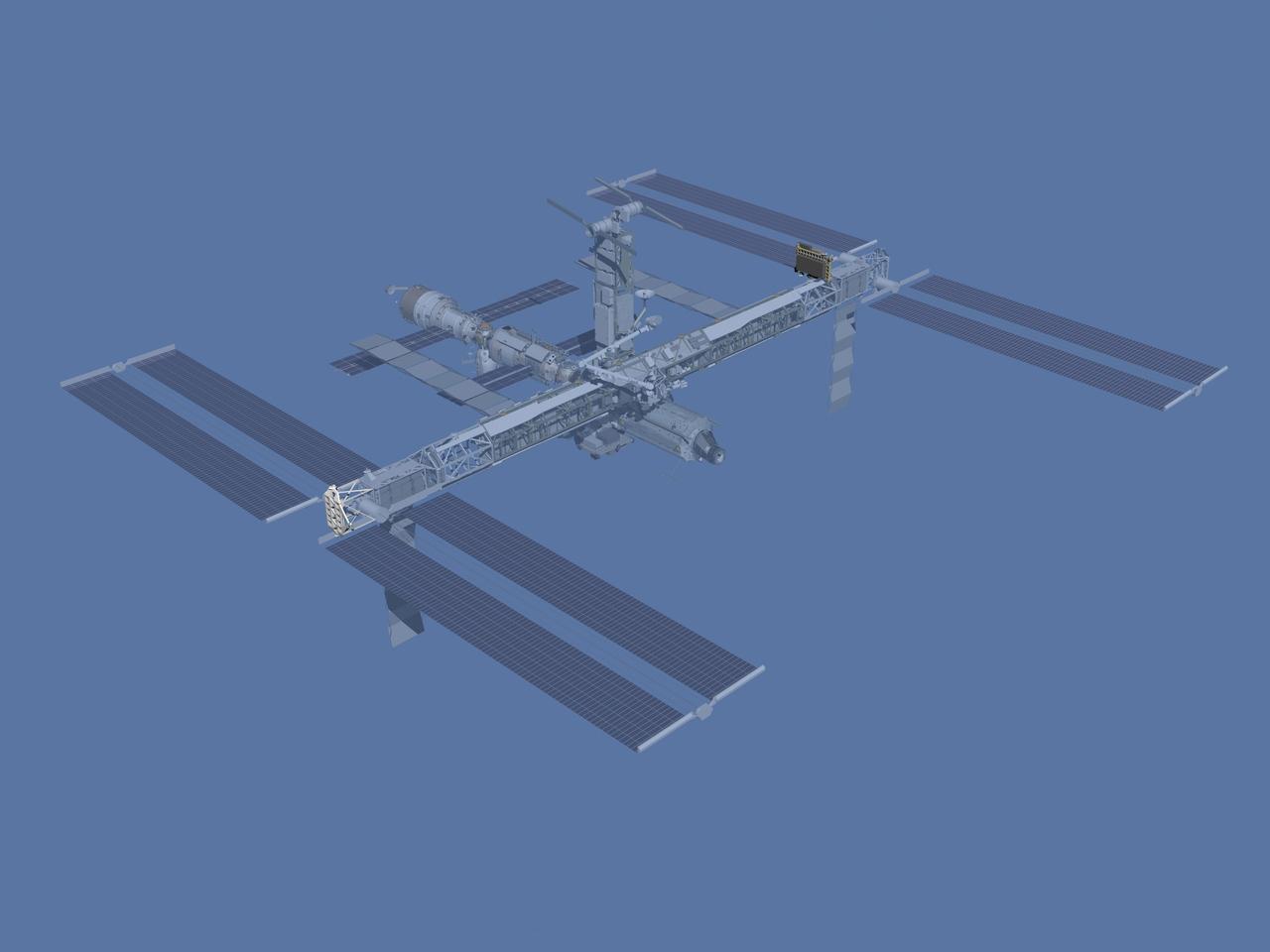
JSC2006-E-43502 (October 2006) --- Computer-generated artist's rendering of the International Space Station after flight STS-118/13A.1. Third starboard truss segment (S5) is delivered and installed. External Stowage Platform 3 (ESP3) is installed on top of the P3 truss segment. Pressurized Mating Adapter-3 (PMA-3) moves to Unity node nadir port.
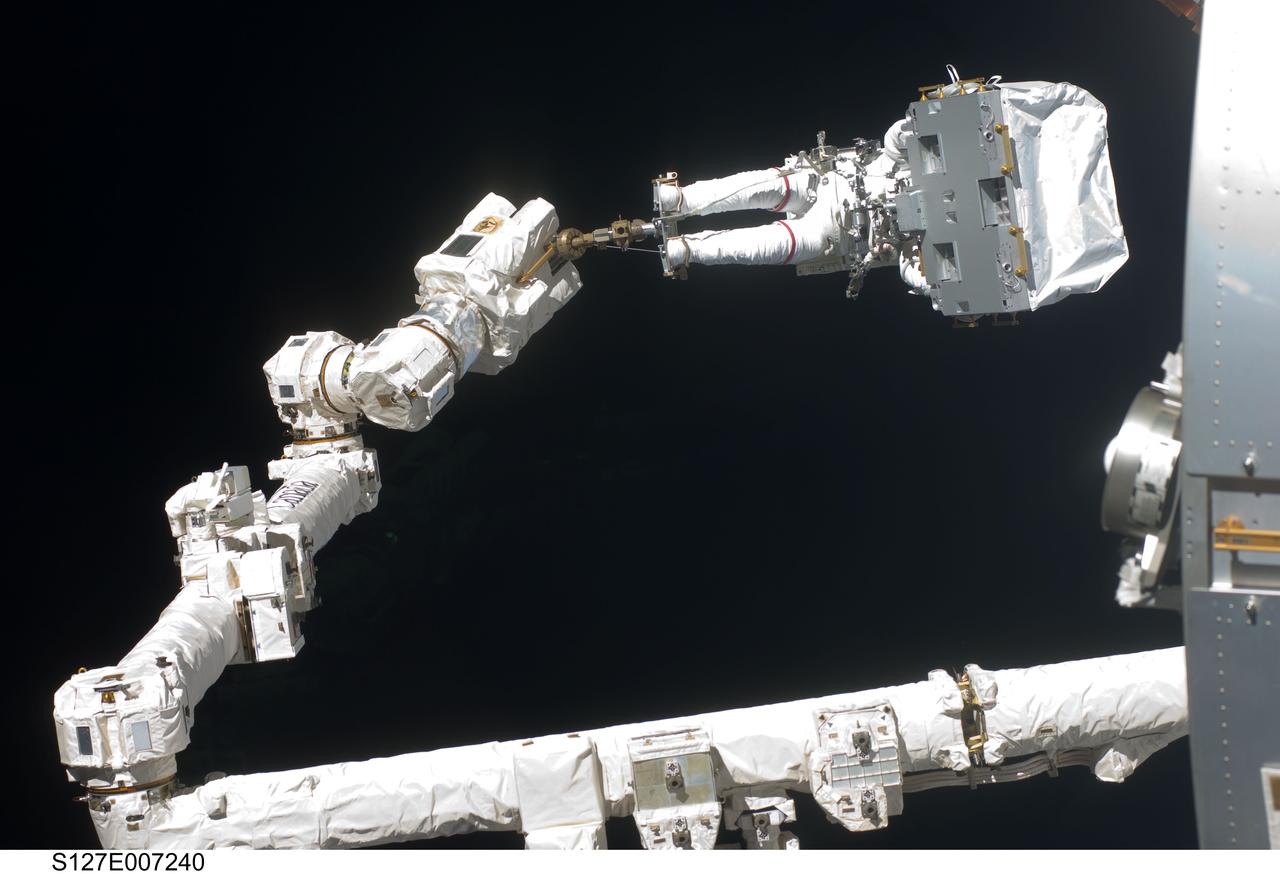
S127-E-007240 (20 July 2009) --- During the second STS-127 spacewalk, astronauts Dave Wolf and Tom Marshburn (out of frame), with help from their crewmates inside the International Space Station and the Space Shuttle Endeavour, transported the Linear Drive Unit (LDU) and two other parts to the station's External Stowage Platform 3 for long-term storage. Wolf is standing on the end of Canadarm2, which is anchored on the orbital outpost.
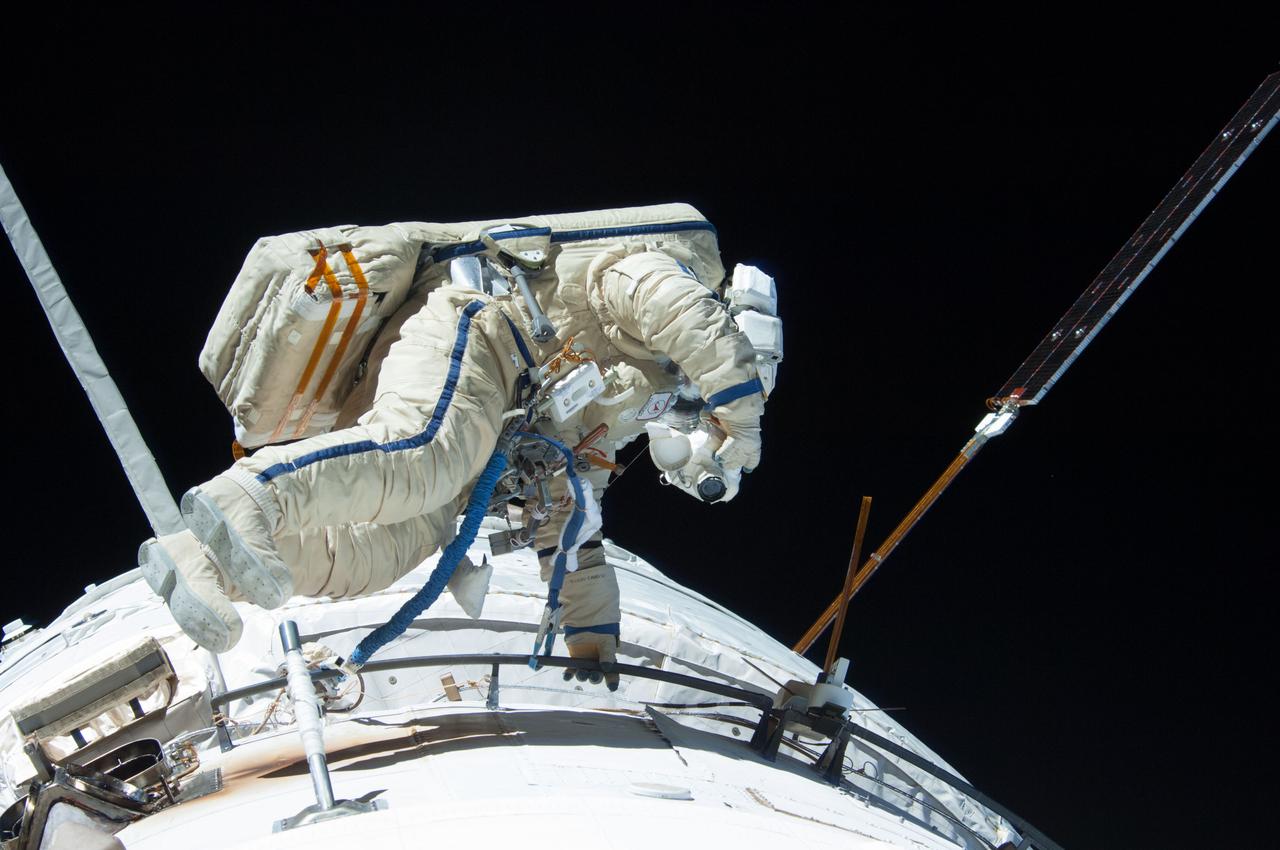
ISS036-E-035124 (22 Aug. 2013) --- Russian cosmonaut Alexander Misurkin, Expedition 36 flight engineer, attired in a Russian Orlan spacesuit, participates in a session of extravehicular activity (EVA) to continue outfitting the International Space Station. During the five-hour, 58-minute spacewalk, Misurkin and Russian cosmonaut Fyodor Yurchikhin (out of frame) completed the replacement of a laser communications experiment with a new platform for a small optical camera system, the installation of new spacewalk aids and an inspection of antenna covers.
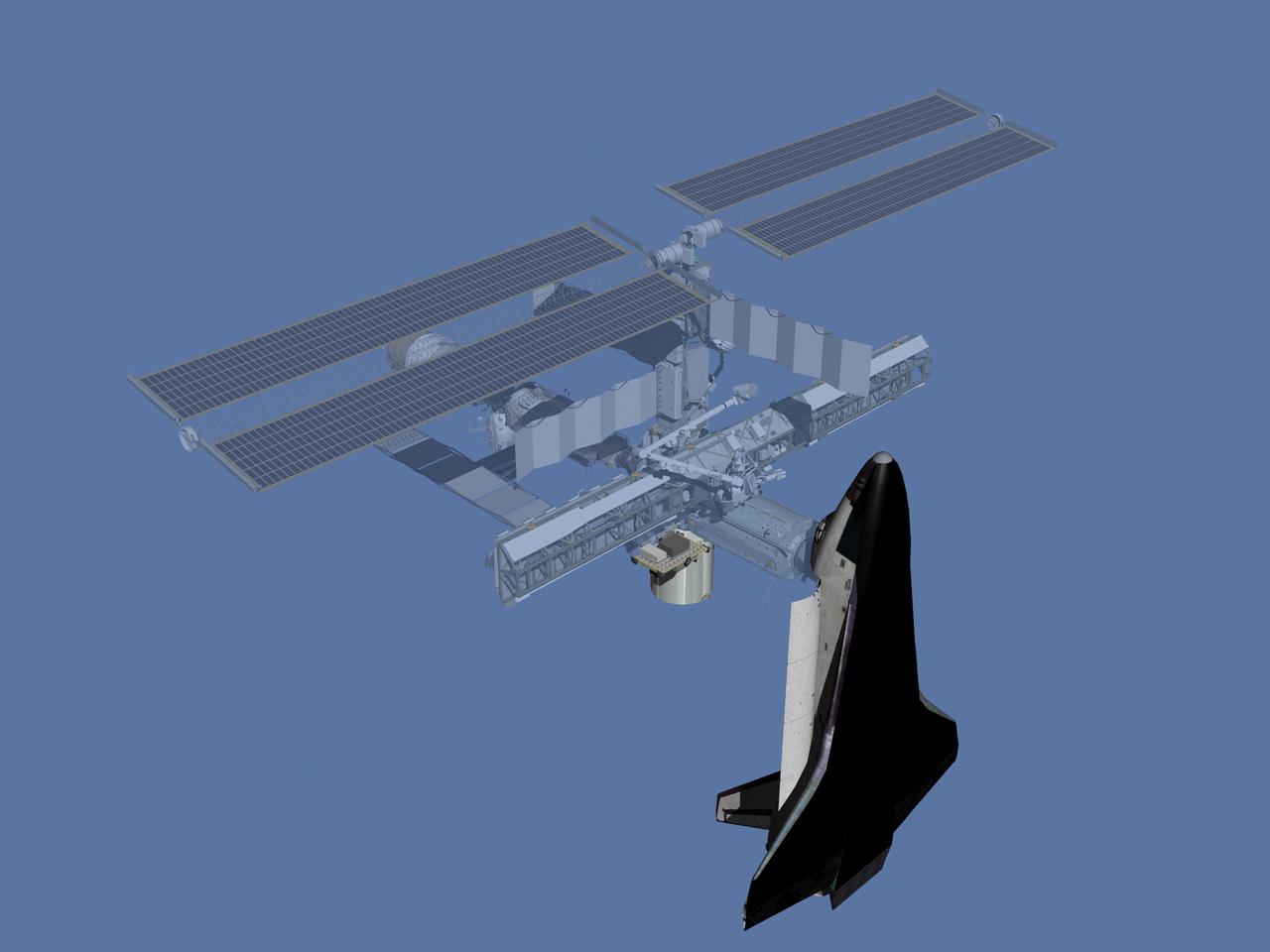
JSC2006-E-43496 (July 2005) --- Computer-generated artist's rendering of the International Space Station after flight STS-114/LF1. The Space Shuttle Discovery Return to Flight mission carried supplies and equipment inside the Italian-built Raffaello Multi-Purpose Logistics Module (MPLM) to the station. A faulty Control Moment Gyro was removed and replaced and External Stowage Platform-2 (ESP2) was installed.
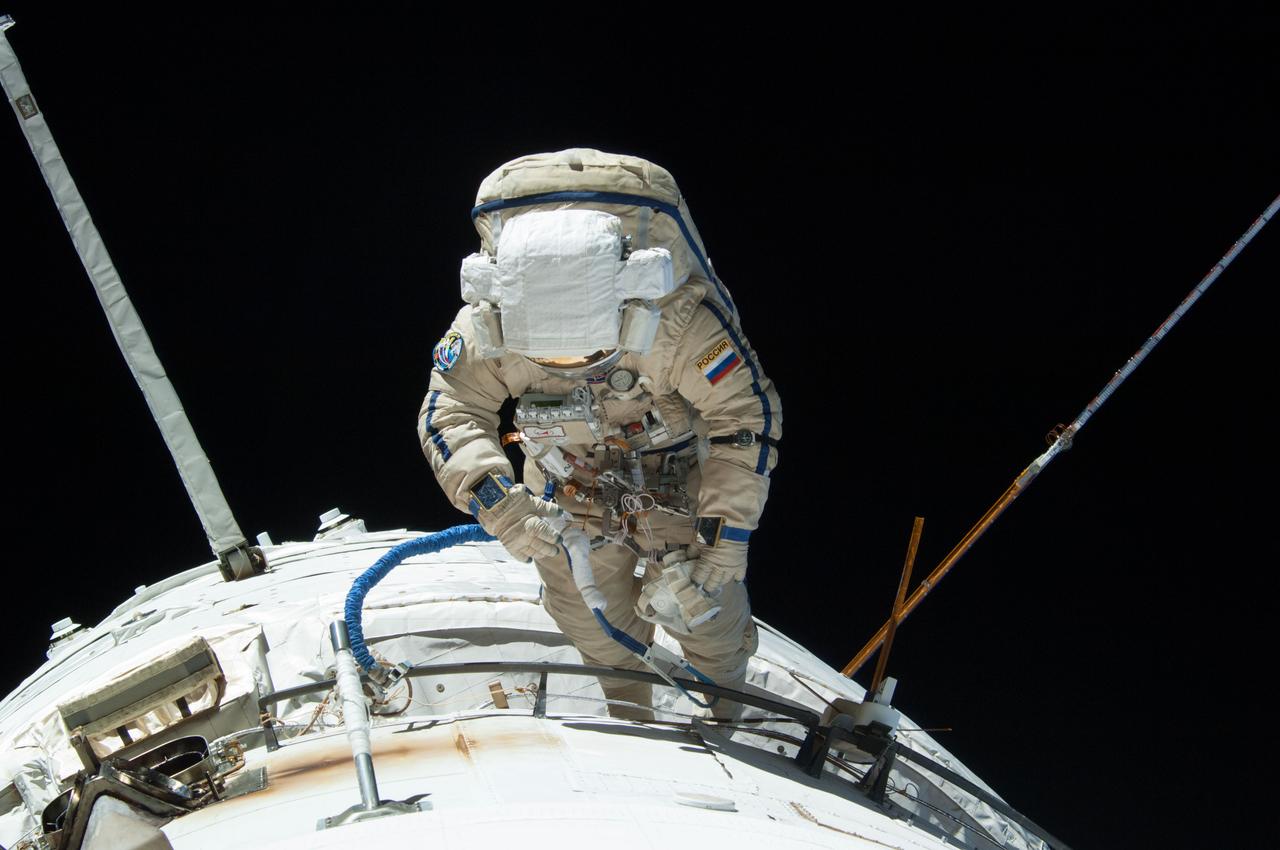
ISS036-E-035129 (22 Aug. 2013) --- Russian cosmonaut Alexander Misurkin, Expedition 36 flight engineer, attired in a Russian Orlan spacesuit, participates in a session of extravehicular activity (EVA) to continue outfitting the International Space Station. During the five-hour, 58-minute spacewalk, Misurkin and Russian cosmonaut Fyodor Yurchikhin (out of frame) completed the replacement of a laser communications experiment with a new platform for a small optical camera system, the installation of new spacewalk aids and an inspection of antenna covers.
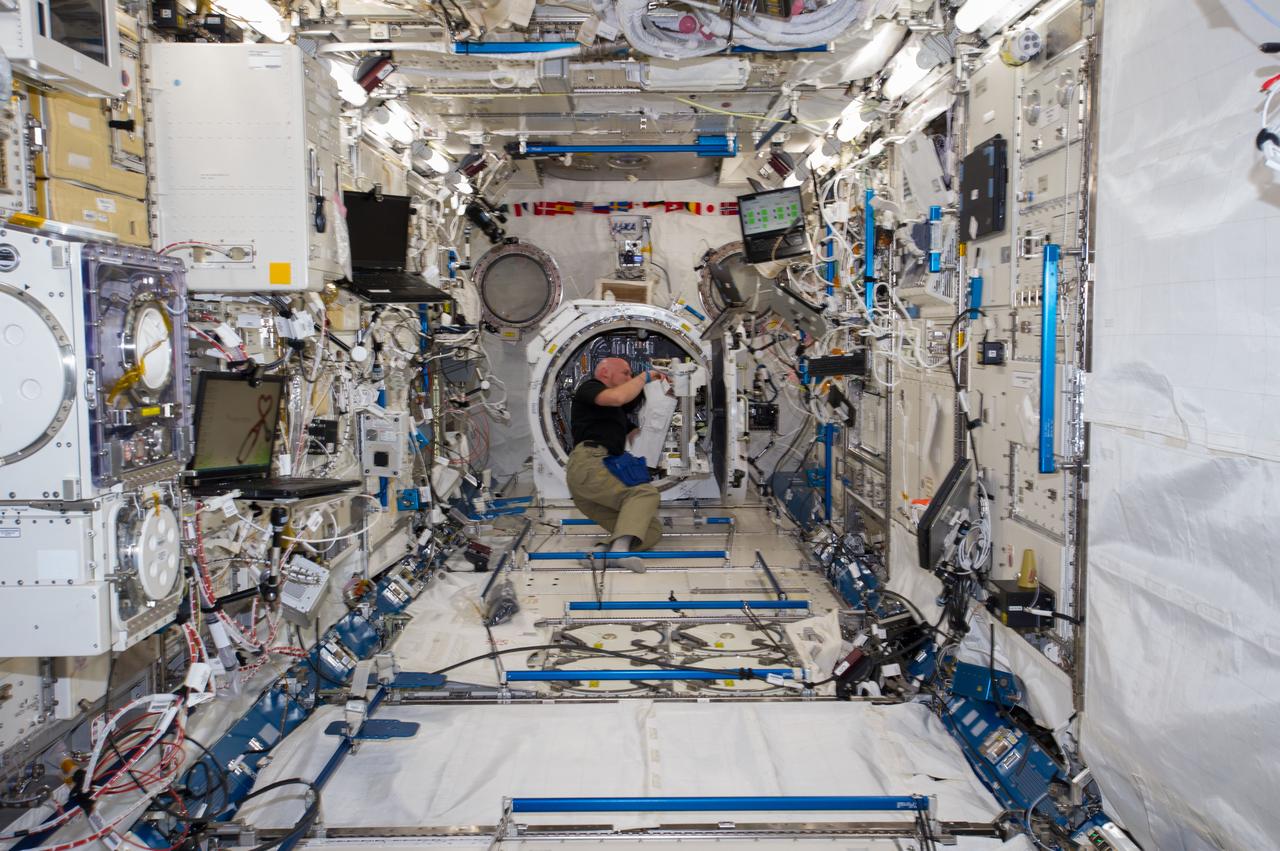
ISS040-E-019300 (25 June 2014) --- In the International Space Station?s Kibo laboratory, European Space Agency astronaut Alexander Gerst, Expedition 40 flight engineer, prepares to transfer a multi-purpose experiment platform and a robotic arm known as the Small Fine Arm through the Kibo module?s scientific airlock. The Small Fine Arm, which attaches to the Kibo?s larger main arm, handles delicate operations involved in exchanging experiments and payloads located on the Exposed Facility.
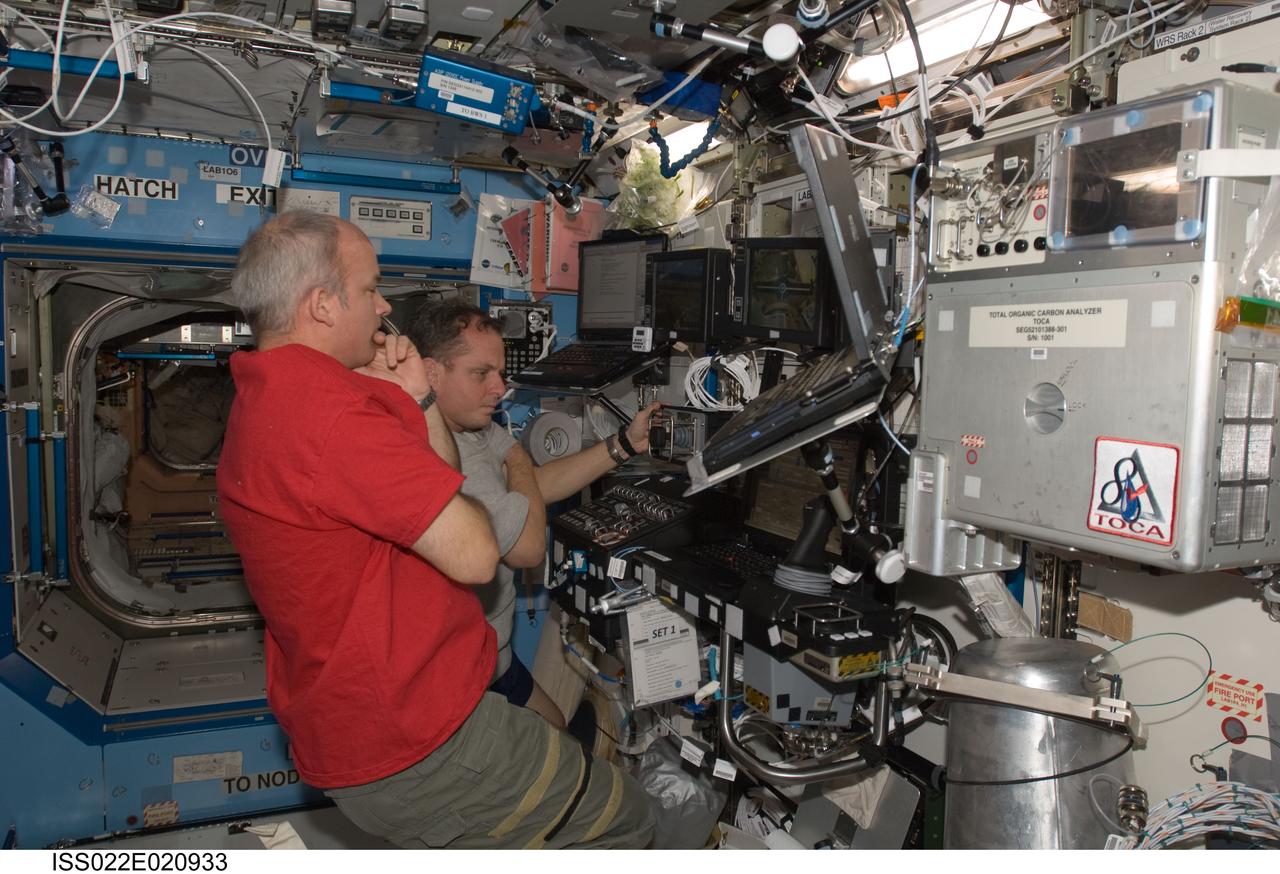
ISS022-E-020933 (8 Jan. 2010) --- NASA astronauts Jeffrey Williams (foreground), Expedition 22 commander; and T.J. Creamer, flight engineer, work the controls of the Space Station Remote Manipulator System (SSRMS) in the Destiny laboratory of the International Space Station during a checkout/training run on the SSRMS for the upcoming External Storage Platform 3 (ESP-3) relocation.
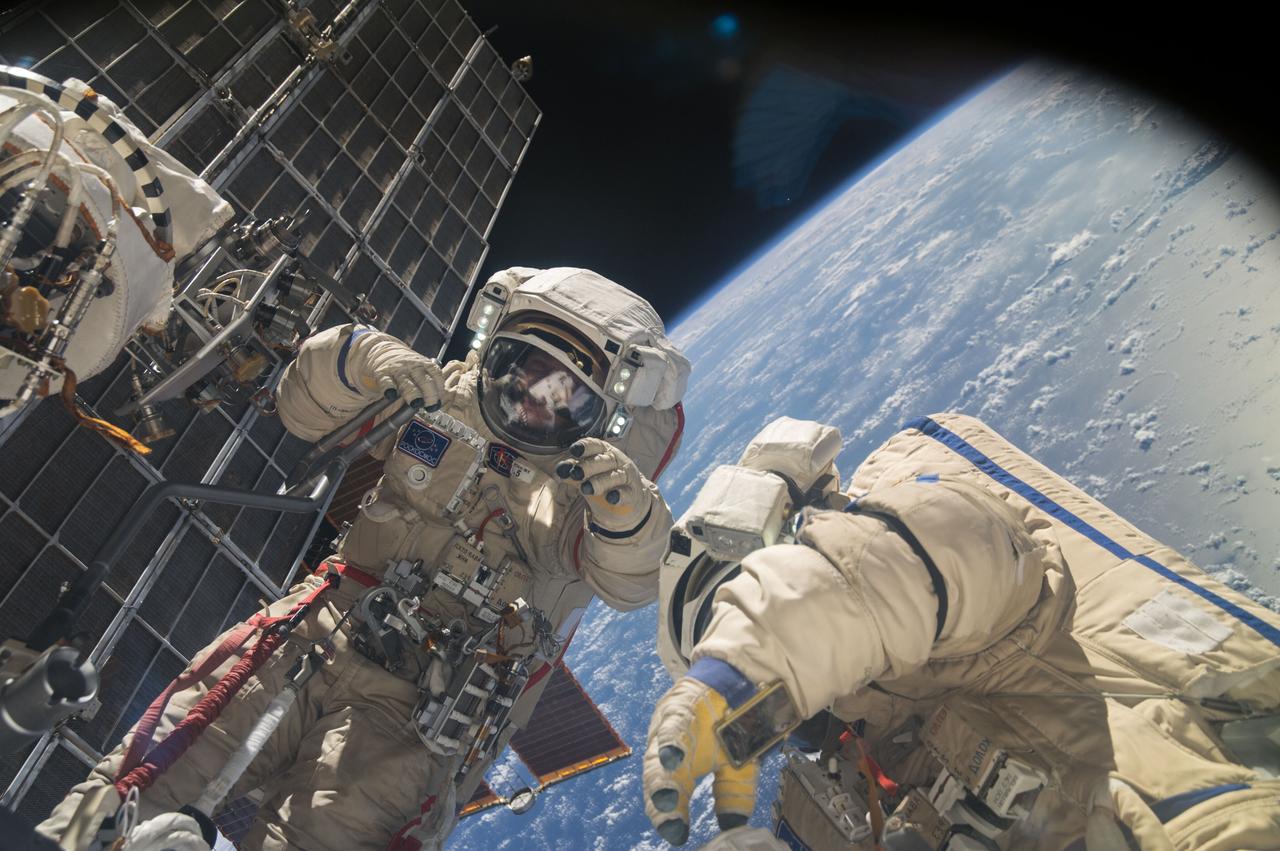
ISS037-E-028787 (9 Nov. 2013) --- Russian cosmonauts Oleg Kotov (left) and Sergey Ryazanskiy, both Expedition 37 flight engineers, attired in Russian Orlan spacesuits, participate in a session of extravehicular activity (EVA) in support of assembly and maintenance on the International Space Station. During the five-hour, 50-minute spacewalk, Kotov and Ryazanskiy continued the setup of a combination EVA workstation and biaxial pointing platform that was installed during an Expedition 36 spacewalk on Aug. 22. Earth’s horizon and the blackness of space provide the backdrop for the scene.
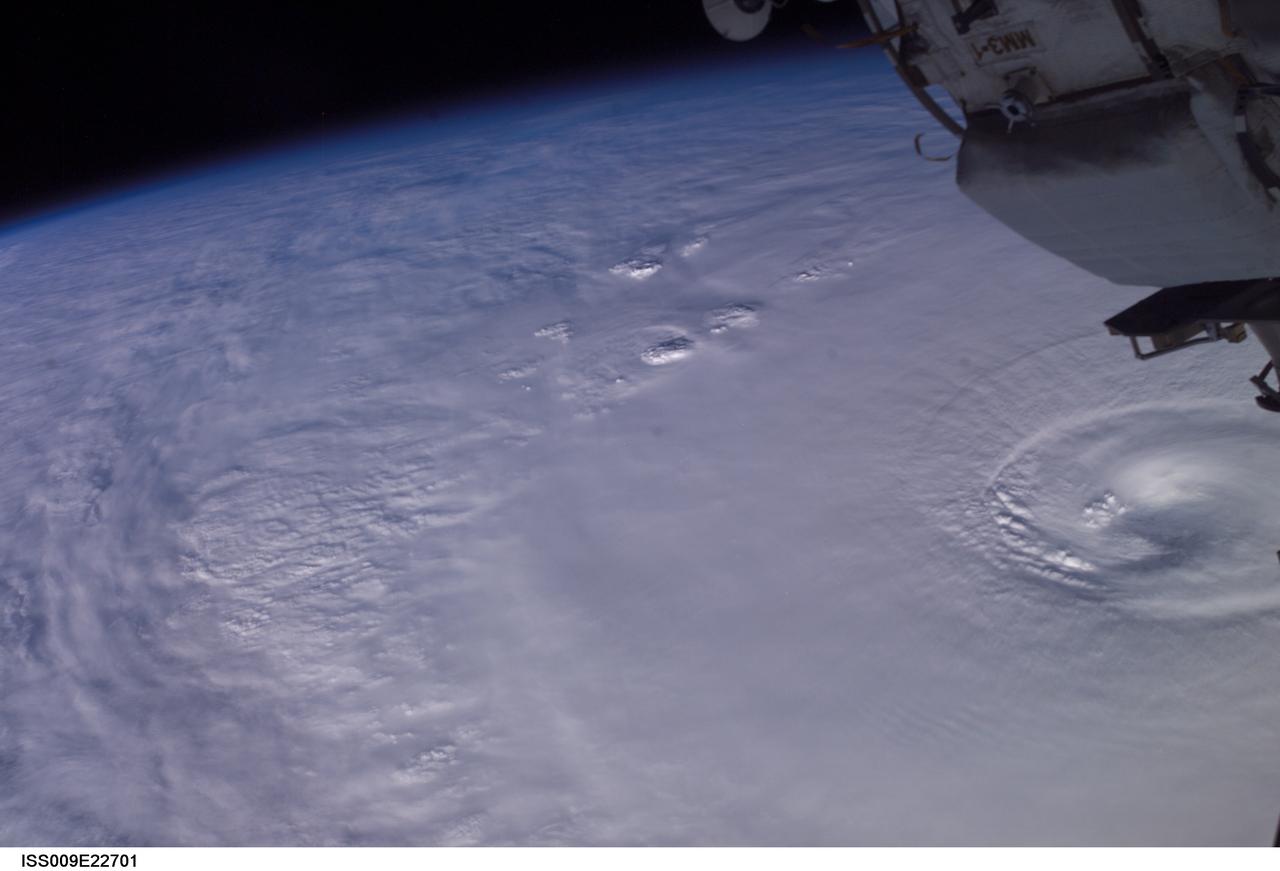
ISS009-E-22701 (14 September 2004) --- Hurricane Ivan was photographed as it churned in the Gulf of Mexico late Tuesday (23:06:56 GMT, Sept. 14) by astronaut Edward M. (Mike) Fincke aboard the International Space Station, 230 miles above Earth. At the time, Ivan was a category 4 hurricane with winds of 140 mph. Fincke, the NASA Station Science Officer, and Station Commander Gennady Padalka are in the final month of a six-month mission aboard the research platform.
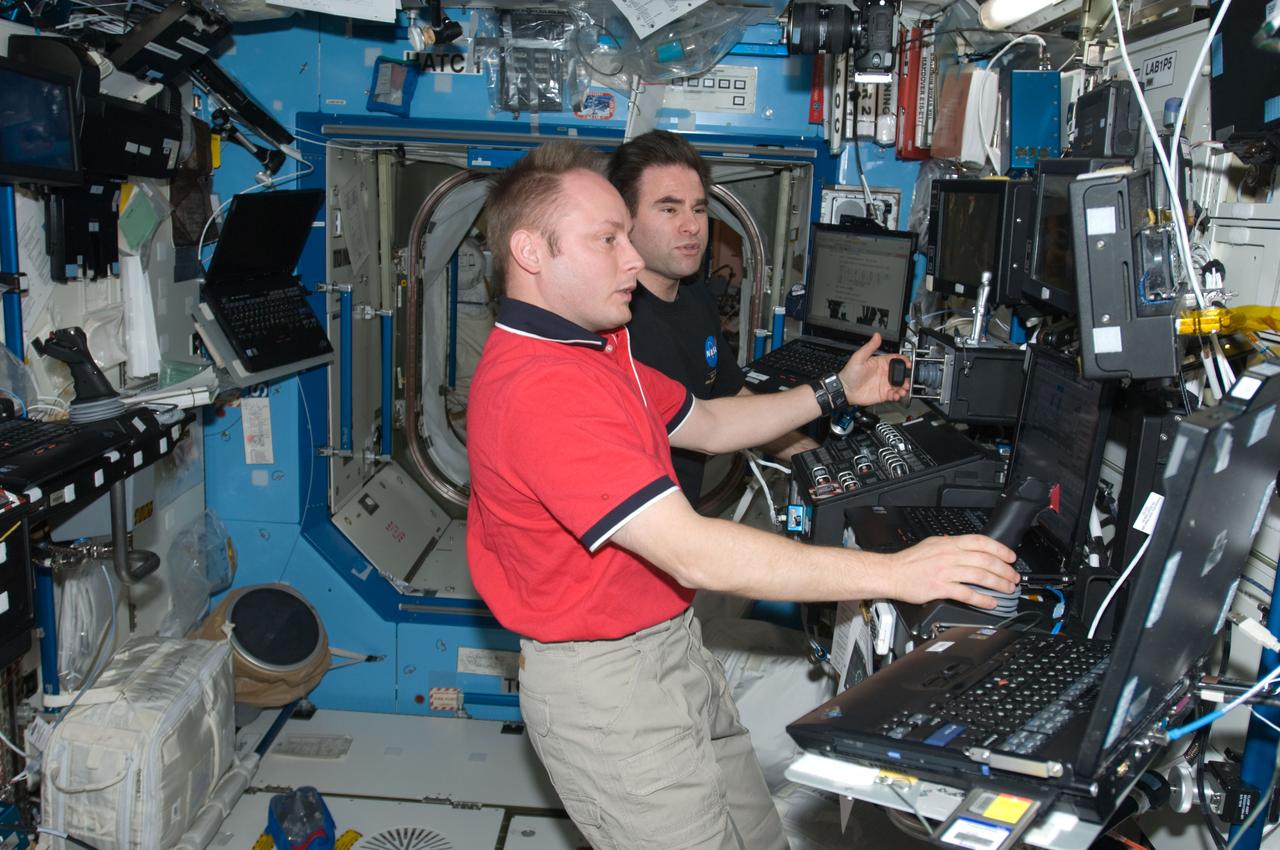
ISS018-E-007817 (5 Nov. 2008) --- Astronauts Michael Fincke (foreground) and Greg Chamitoff, Expedition 18 commander and flight engineer, respectively, work the controls of the Canadarm2 robotic work station in the Destiny laboratory of the International Space Station. Fincke and Chamitoff grappled the External Stowage Platform-3 on the P3 truss and relocated it to a capture attachment mechanism on the Mobile Base System.
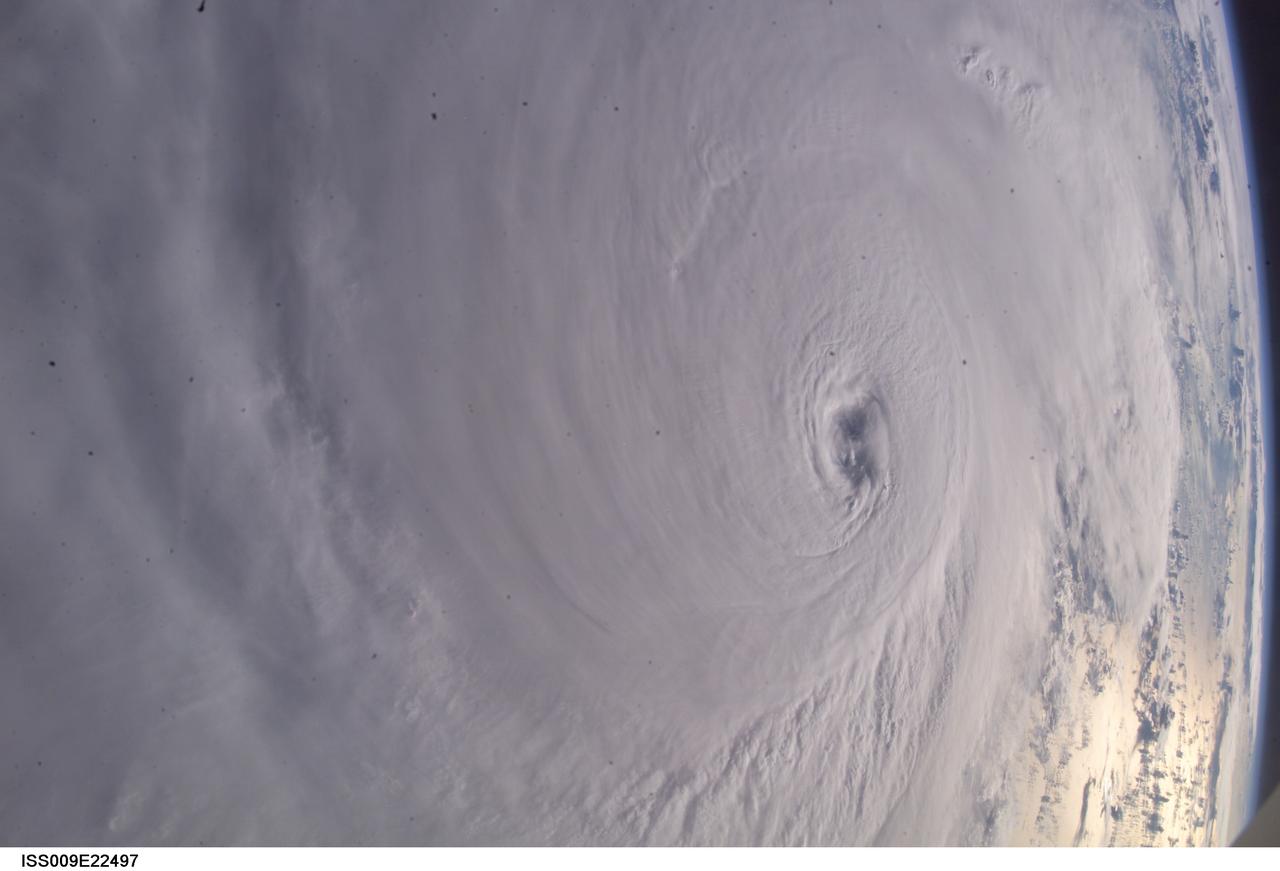
ISS009-E-22497 (13 September 2004) --- Hurricane Ivan was photographed as it entered the Gulf of Mexico late Monday (22:39:23 GMT, Sept. 13) by astronaut Edward M. (Mike) Fincke aboard the International Space Station, 230 miles above Earth. At the time, Ivan was a category 5 hurricane with winds of 160 mph. Fincke, the NASA Station Science Officer, and Station Commander Gennady Padalka are in the final month of a six-month mission aboard the research platform.
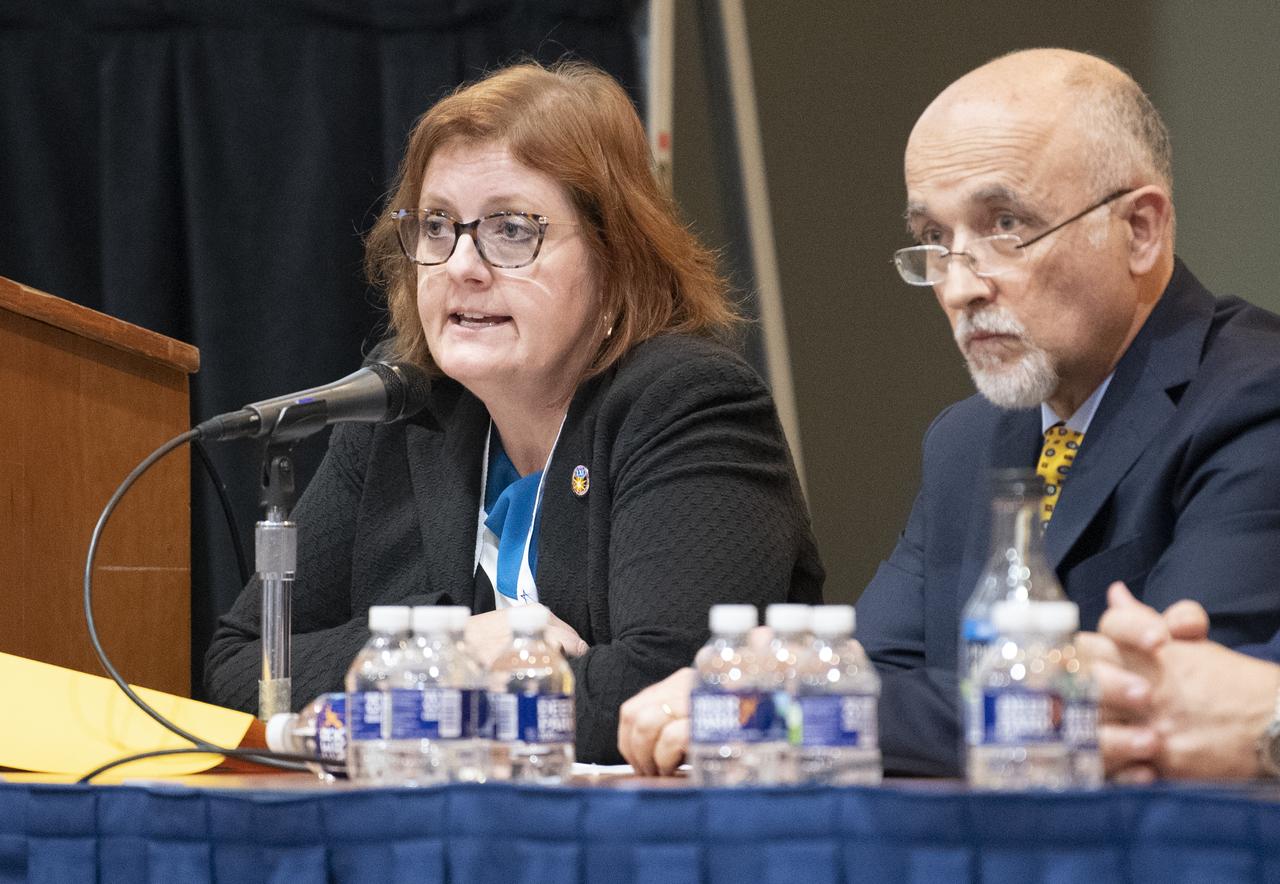
Julie Robinson, Chief Scientist for NASA's International Space Station Division, left, and Livio Narici, Professor of Applied Physics at the Università di Roma "Tor Vergata" and ASI, lead a discussion titled “ISS-Moon-Mars: Using Spaceflight Platforms to Study and Simulate Future Missions” during the the 70th International Astronautical Congress, Monday, Oct. 21, 2019 at the Walter E. Washington Convention Center in Washington. Photo Credit: (NASA/Joel Kowsky)
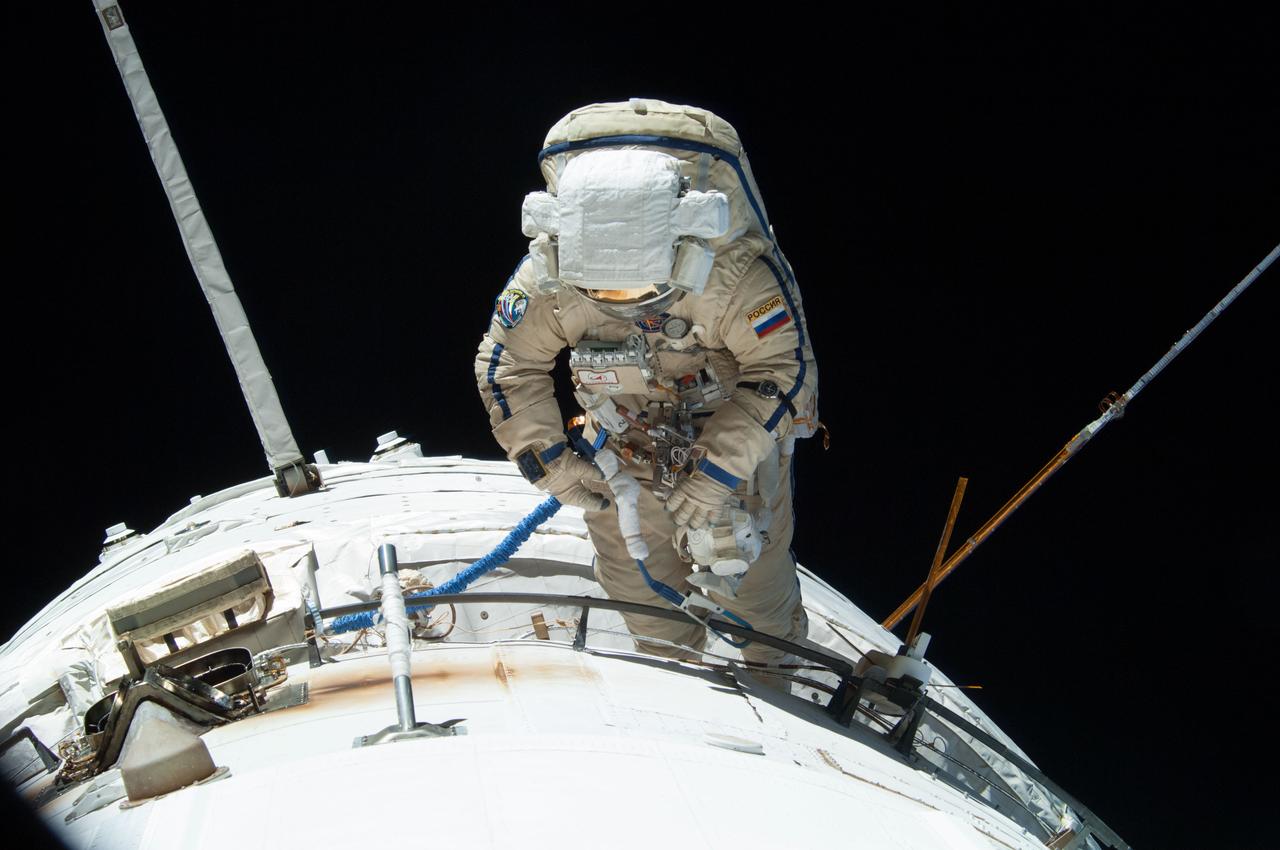
ISS036-E-035130 (22 Aug. 2013) --- Russian cosmonaut Alexander Misurkin, Expedition 36 flight engineer, attired in a Russian Orlan spacesuit, participates in a session of extravehicular activity (EVA) to continue outfitting the International Space Station. During the five-hour, 58-minute spacewalk, Misurkin and Russian cosmonaut Fyodor Yurchikhin (out of frame) completed the replacement of a laser communications experiment with a new platform for a small optical camera system, the installation of new spacewalk aids and an inspection of antenna covers.
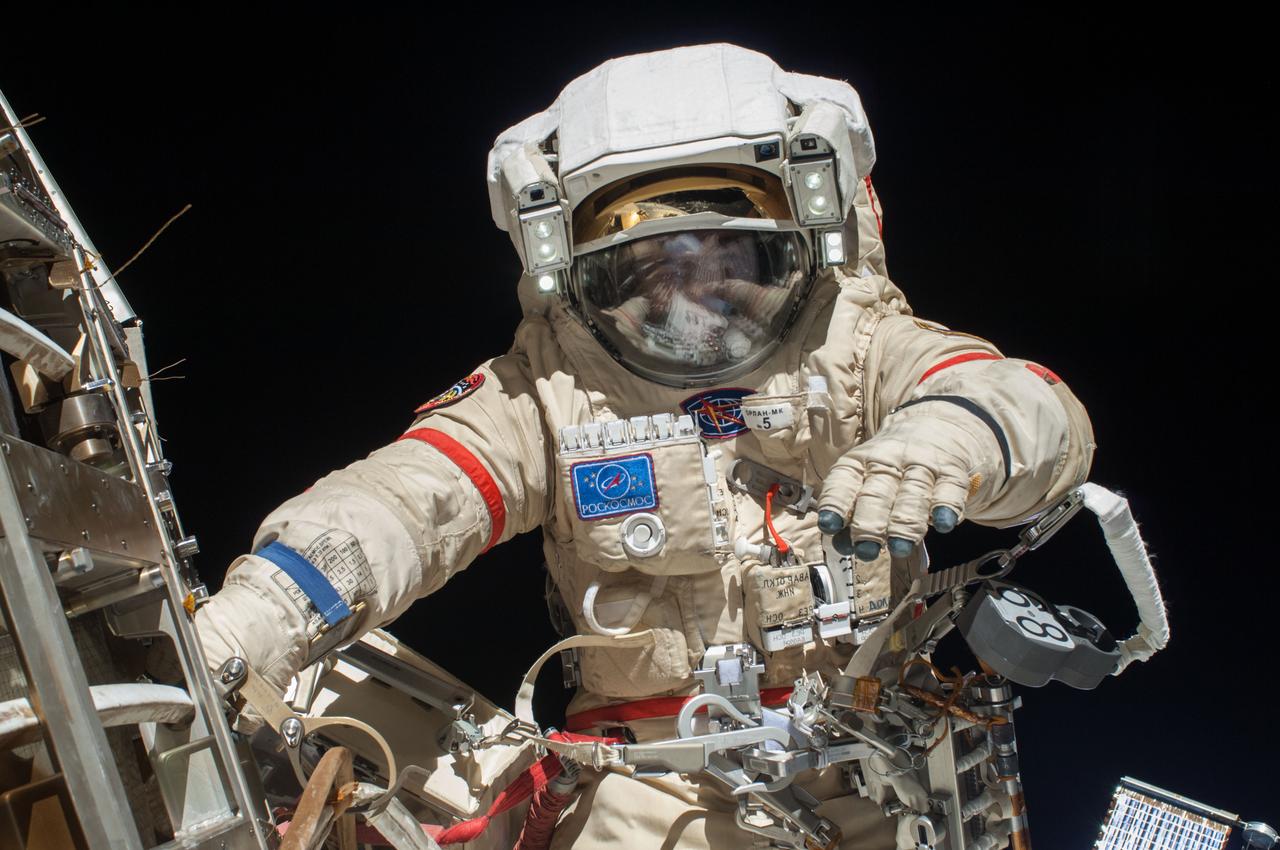
ISS037-E-028101 (9 Nov. 2013) --- Russian cosmonaut Oleg Kotov, Expedition 37 flight engineer, attired in a Russian Orlan spacesuit, participates in a session of extravehicular activity (EVA) in support of assembly and maintenance on the International Space Station. During the five-hour, 50-minute spacewalk, Kotov and Russian cosmonaut Sergey Ryazanskiy (out of frame) continued the setup of a combination EVA workstation and biaxial pointing platform that was installed during an Expedition 36 spacewalk on Aug. 22.

ISS036-E-035163 (22 Aug. 2013) --- Russian cosmonaut Alexander Misurkin, Expedition 36 flight engineer, attired in a Russian Orlan spacesuit, participates in a session of extravehicular activity (EVA) to continue outfitting the International Space Station. During the five-hour, 58-minute spacewalk, Misurkin and Russian cosmonaut Fyodor Yurchikhin (out of frame) completed the replacement of a laser communications experiment with a new platform for a small optical camera system, the installation of new spacewalk aids and an inspection of antenna covers.
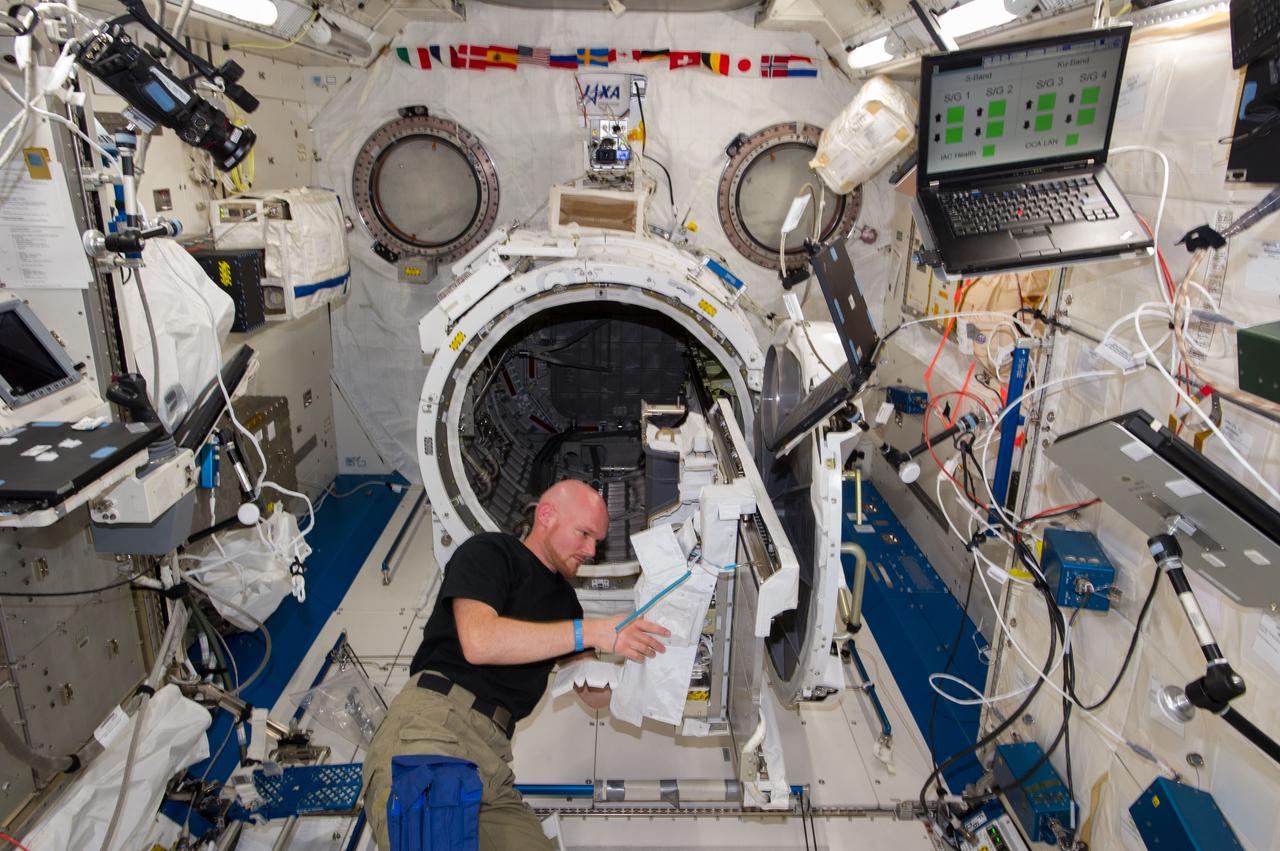
ISS040-E-019318 (25 June 2014) --- In the International Space Station?s Kibo laboratory, European Space Agency astronaut Alexander Gerst, Expedition 40 flight engineer, prepares to transfer a multi-purpose experiment platform and a robotic arm known as the Small Fine Arm through the Kibo module?s scientific airlock. The Small Fine Arm, which attaches to the Kibo?s larger main arm, handles delicate operations involved in exchanging experiments and payloads located on the Exposed Facility.
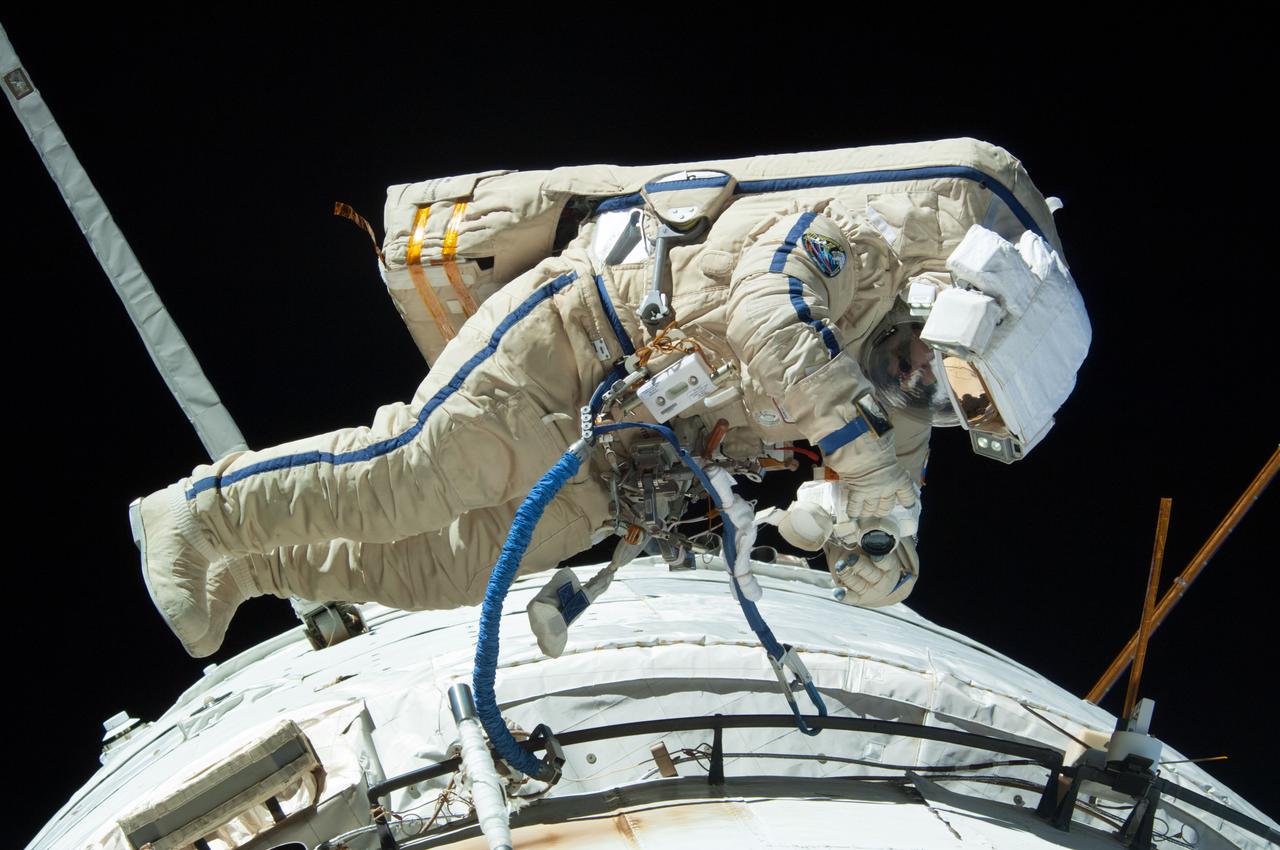
ISS036-E-035126 (22 Aug. 2013) --- Russian cosmonaut Alexander Misurkin, Expedition 36 flight engineer, attired in a Russian Orlan spacesuit, participates in a session of extravehicular activity (EVA) to continue outfitting the International Space Station. During the five-hour, 58-minute spacewalk, Misurkin and Russian cosmonaut Fyodor Yurchikhin (out of frame) completed the replacement of a laser communications experiment with a new platform for a small optical camera system, the installation of new spacewalk aids and an inspection of antenna covers.
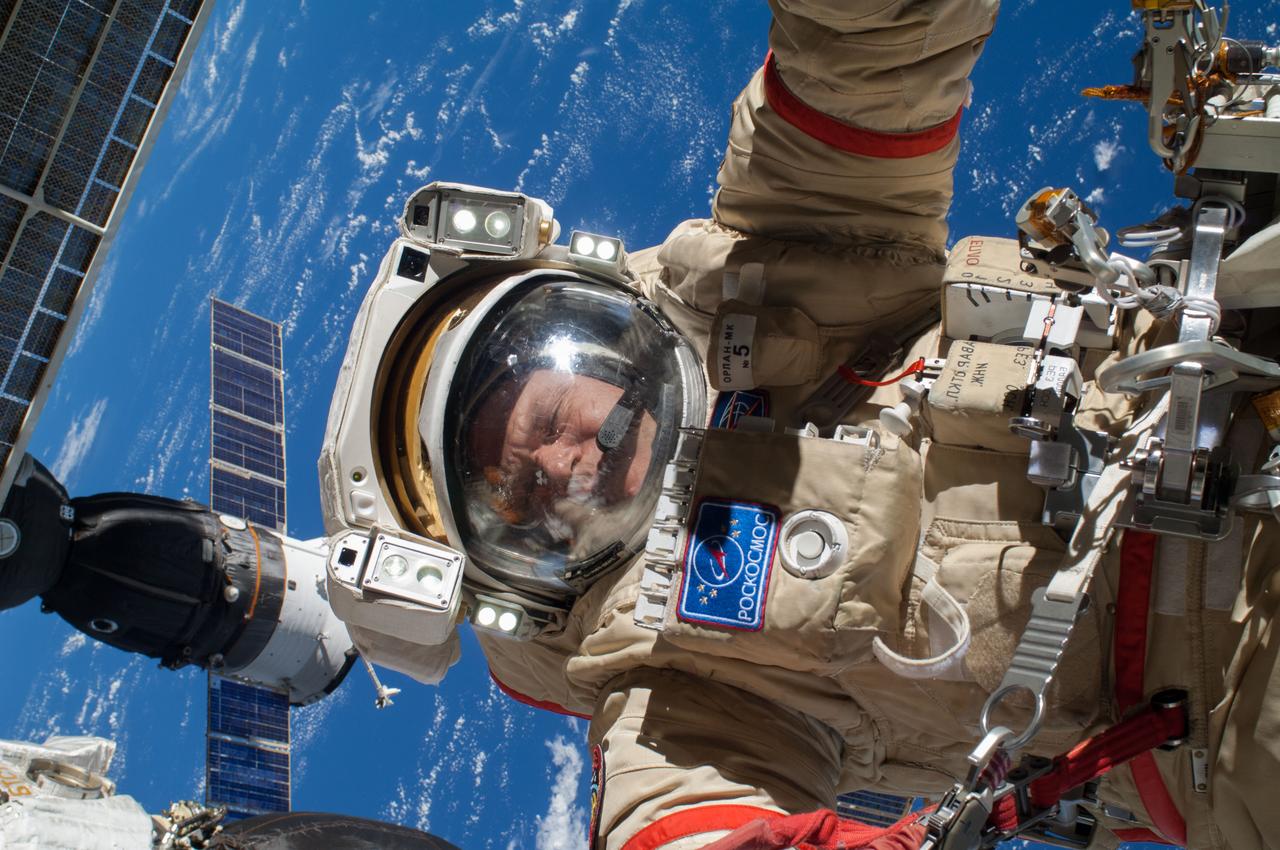
ISS037-E-028094 (9 Nov. 2013) --- Russian cosmonaut Oleg Kotov, Expedition 37 flight engineer, attired in a Russian Orlan spacesuit, participates in a session of extravehicular activity (EVA) in support of assembly and maintenance on the International Space Station. During the five-hour, 50-minute spacewalk, Kotov and Russian cosmonaut Sergey Ryazanskiy (out of frame) continued the setup of a combination EVA workstation and biaxial pointing platform that was installed during an Expedition 36 spacewalk on Aug. 22.
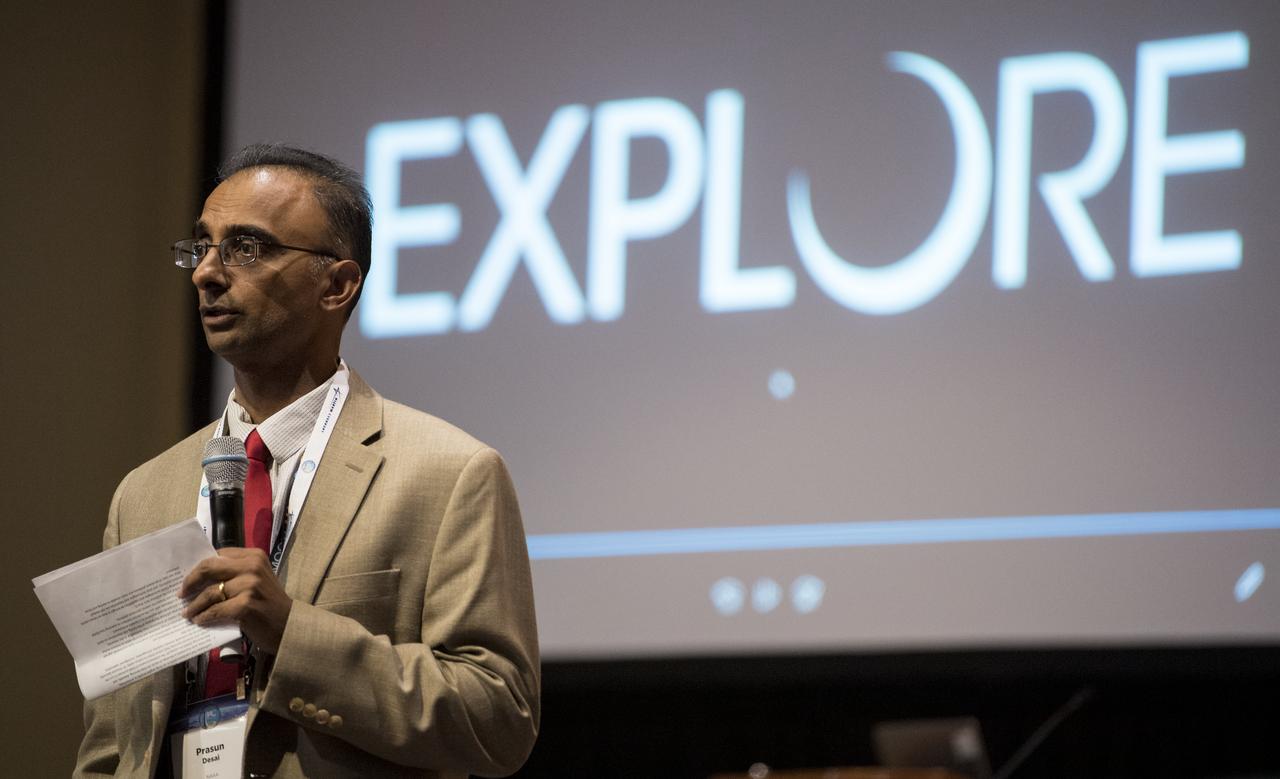
Prasun Desai, Deputy Associate Administrator for Management in NASA’s Space Technology Mission Directorate speaks during a special session titled ”The Immortal Spaceship: A Discussion on the Use Cases and Value of Persistent Platforms” at the 70th International Astronautical Congress, Thursday, Oct. 24, 2019, at the Walter E. Washington Convention Center in Washington. Photo Credit: (NASA/Joel Kowsky)
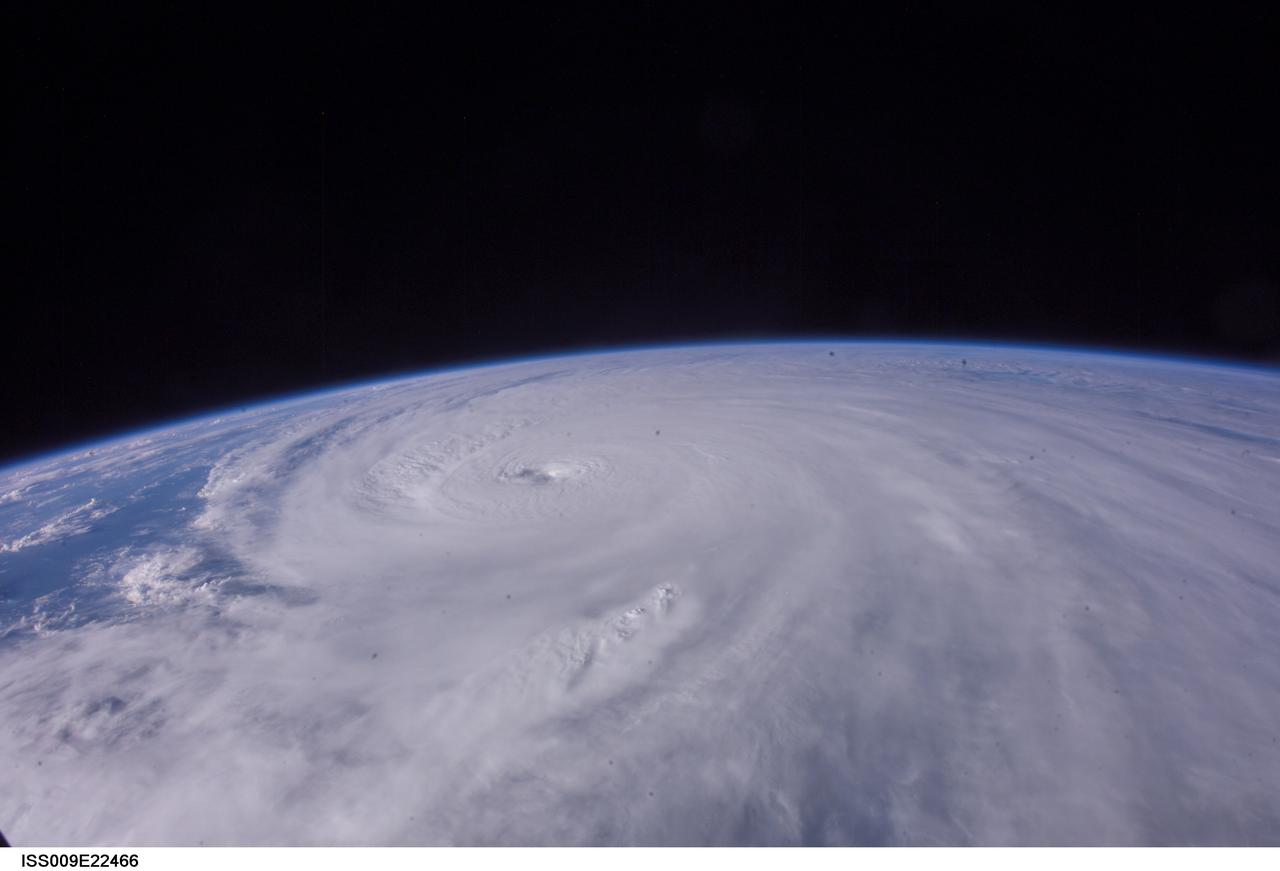
ISS009-E-22466 (13 September 2004) --- Hurricane Ivan was photographed as it entered the Gulf of Mexico late Monday (22:36:31 GMT, Sept. 13) by astronaut Edward M. (Mike) Fincke aboard the International Space Station, 230 miles above Earth. At the time, Ivan was a category 5 hurricane with winds of 160 mph. Fincke, the NASA Station Science Officer, and Station Commander Gennady Padalka are in the final month of a six-month mission aboard the research platform.
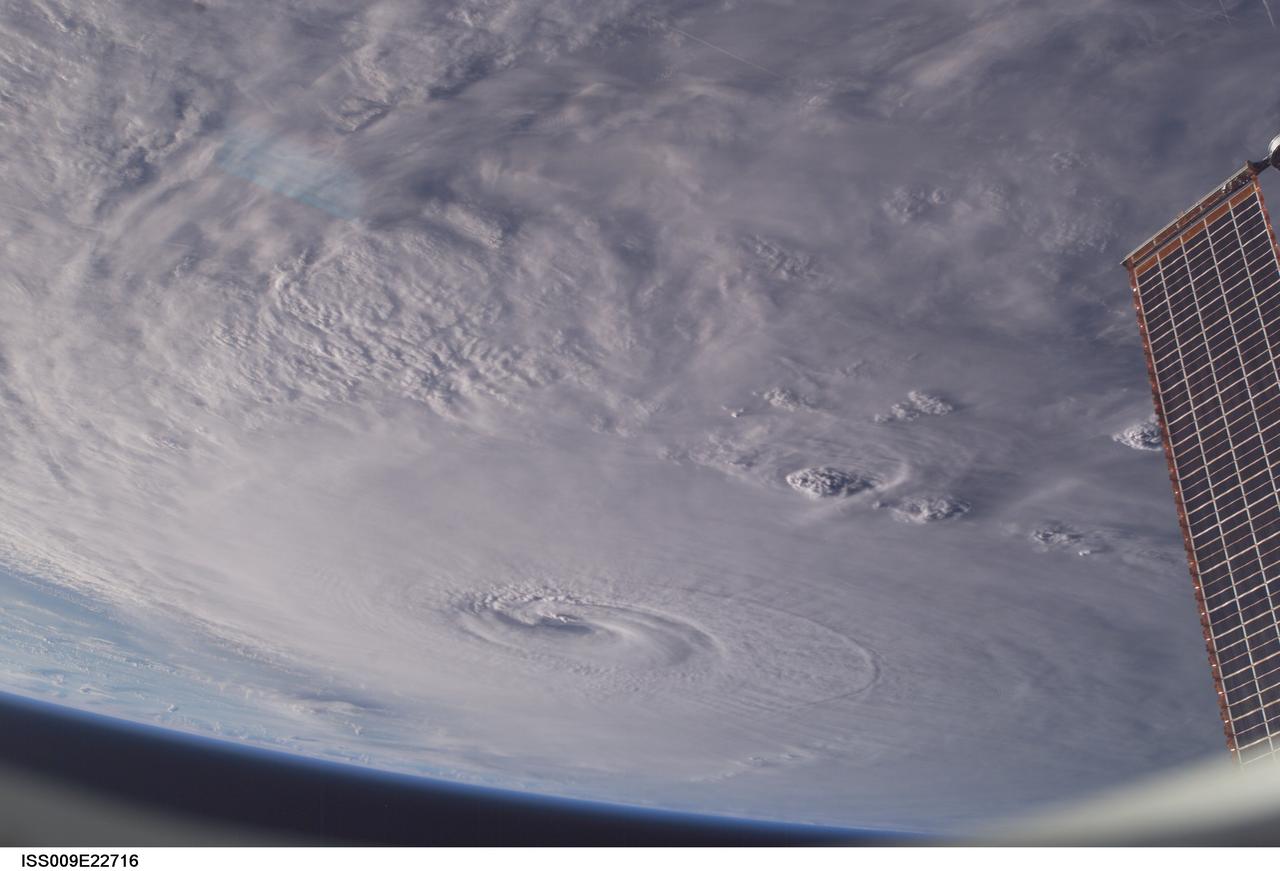
ISS009-E-22716 (14 September 2004) --- Hurricane Ivan was photographed as it churned in the Gulf of Mexico late Tuesday (23:09:41 GMT, Sept. 14) by astronaut Edward M. (Mike) Fincke aboard the International Space Station, 230 miles above Earth. At the time, Ivan was a category 4 hurricane with winds of 140 mph. Fincke, the NASA Station Science Officer, and Station Commander Gennady Padalka are in the final month of a six-month mission aboard the research platform.
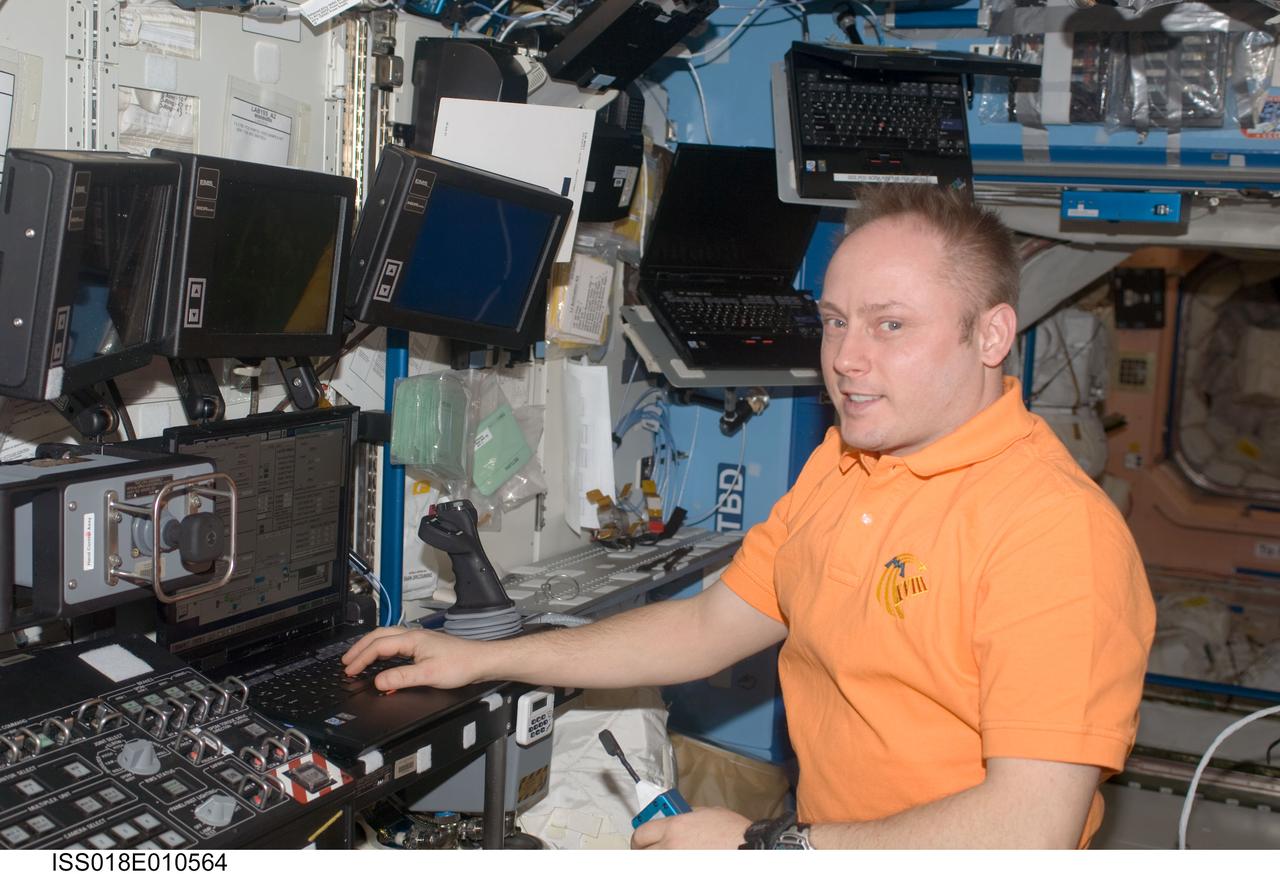
ISS018-E-010564 (5 Dec. 2008) --- Astronaut Michael Fincke, Expedition 18 commander, uses a computer at the robotics work station in the Destiny laboratory of the International Space Station. Using the station's robotic arm, Fincke and astronaut Sandra Magnus (out of frame), flight engineer, relocated the ESP-3 from the Mobile Base System back to the Cargo Carrier Attachment System on the P3 truss. The ESP-3 spare parts platform was temporarily parked on the MBS to clear the path for the spacewalks during STS-126.
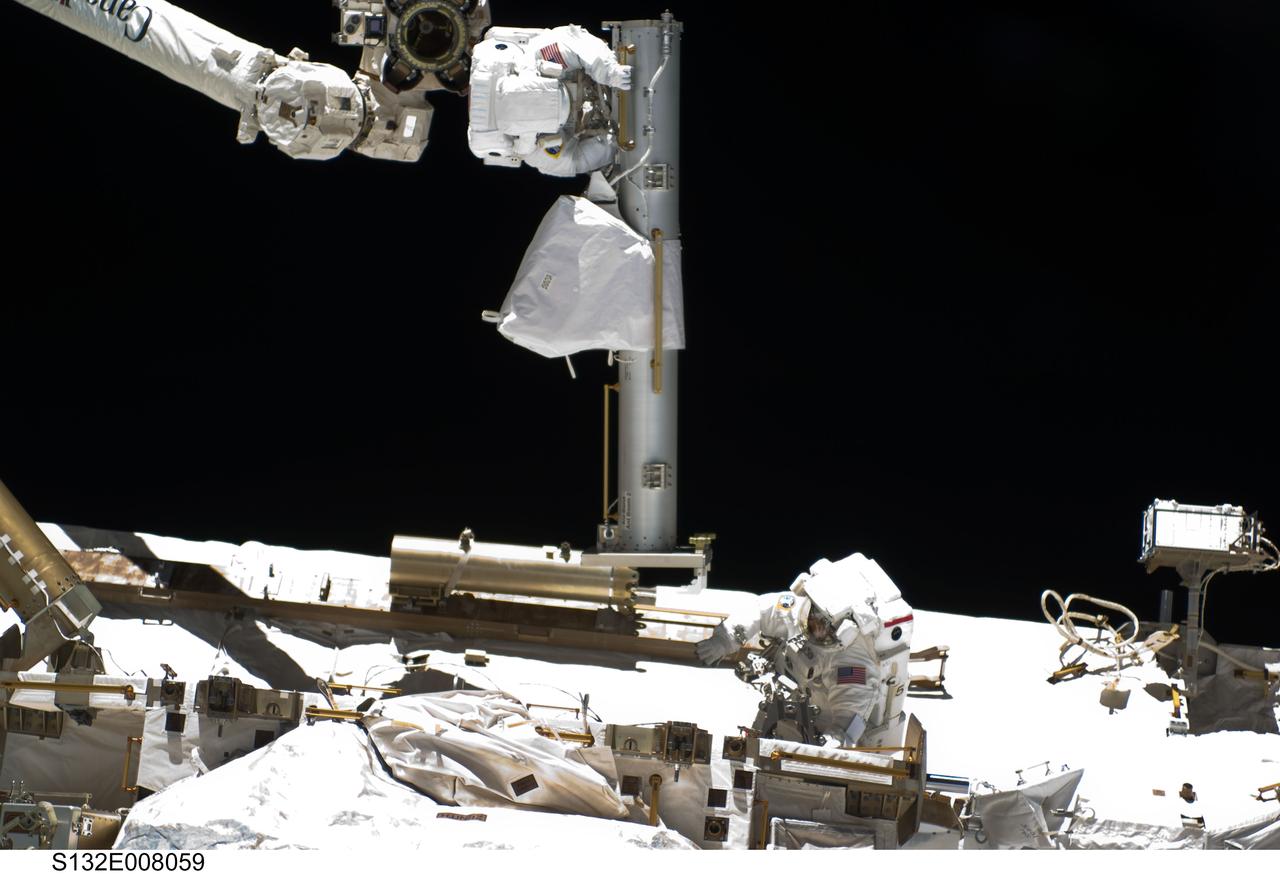
S132-E-008059 (17 May 2010) --- NASA astronauts Steve Bowen (bottom) and Garrett Reisman, both STS-132 mission specialists, participate in the mission's first session of extravehicular activity (EVA) as construction and maintenance continue on the International Space Station. During the seven-hour, 25-minute spacewalk, Bowen and Reisman loosened bolts holding six replacement batteries, installed a second antenna for high-speed Ku-band transmissions and adding a spare parts platform to Dextre, a two-armed extension for the station’s robotic arm.
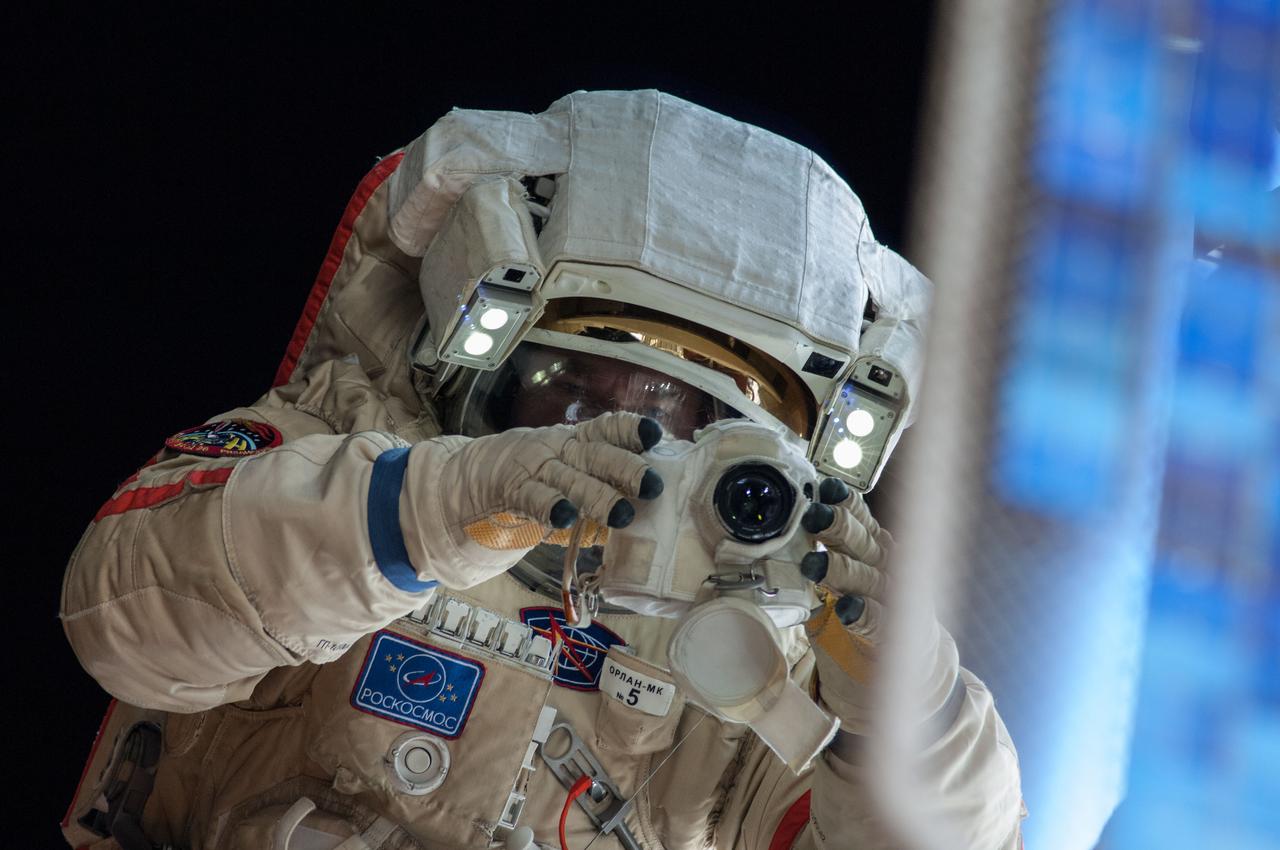
ISS037-E-028569 (9 Nov. 2013) --- Russian cosmonaut Oleg Kotov, Expedition 37 flight engineer, attired in a Russian Orlan spacesuit, uses a still camera during a session of extravehicular activity (EVA) in support of assembly and maintenance on the International Space Station. During the five-hour, 50-minute spacewalk, Kotov and Russian cosmonaut Sergey Ryazanskiy (out of frame) continued the setup of a combination EVA workstation and biaxial pointing platform that was installed during an Expedition 36 spacewalk on Aug. 22.
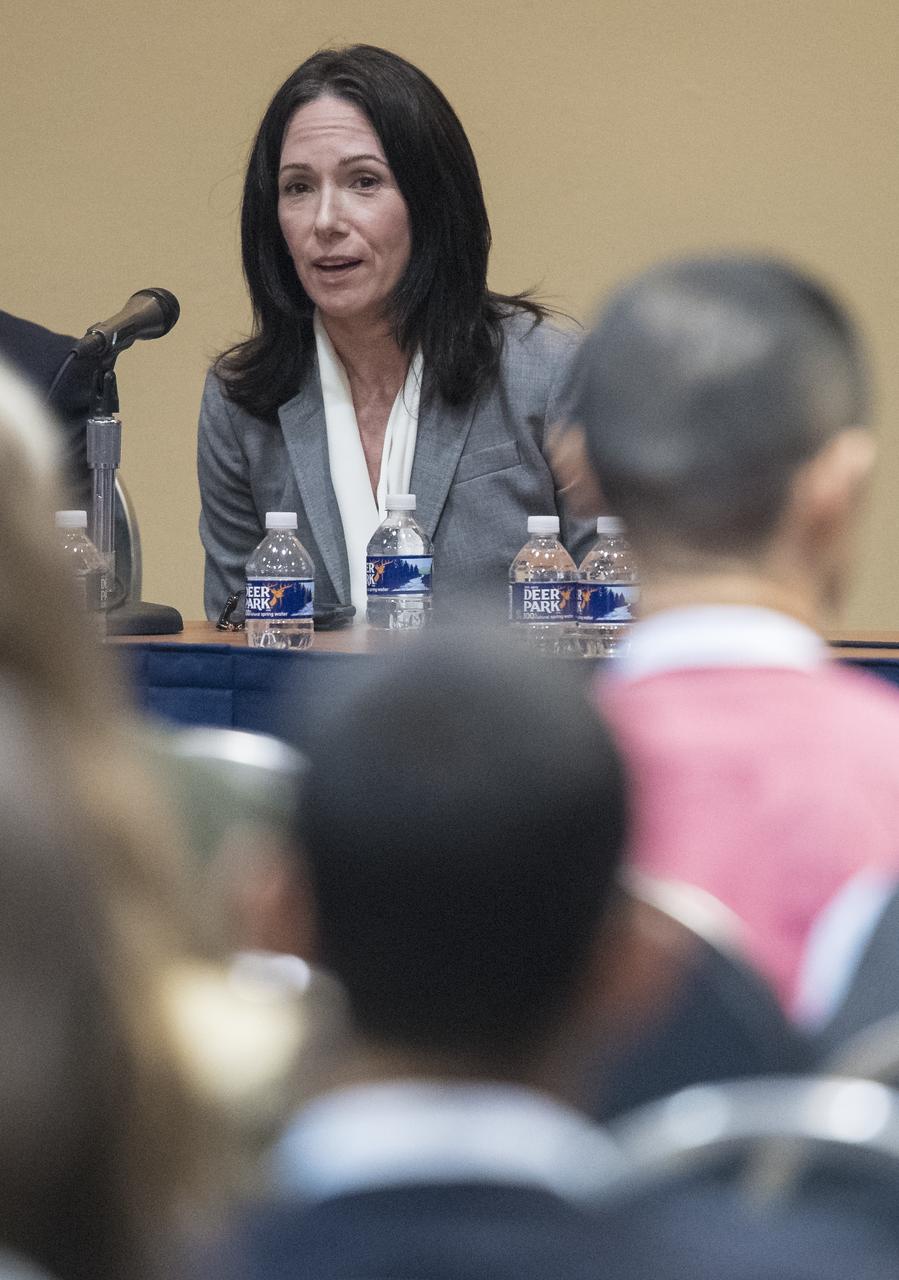
Jennifer Fogarty, Chief Scientist for NASA’s Human Research Program, is seen during a discussion titled “ISS-Moon-Mars: Using Spaceflight Platforms to Study and Simulate Future Missions” during the the 70th International Astronautical Congress, Monday, Oct. 21, 2019 at the Walter E. Washington Convention Center in Washington. Photo Credit: (NASA/Joel Kowsky)
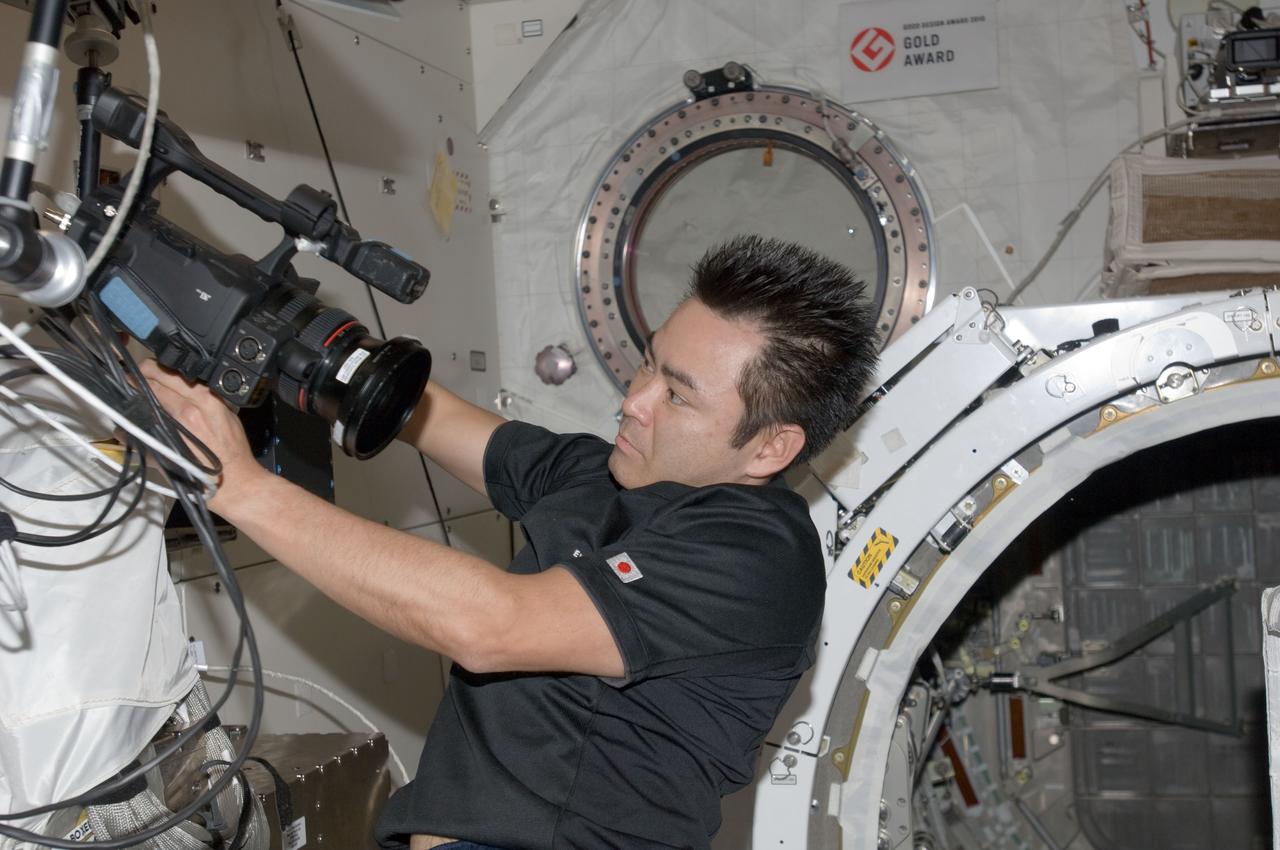
ISS033-E-006439 (21 Sept. 2012) --- In the International Space Station’s Kibo laboratory, Japan Aerospace Exploration Agency astronaut Aki Hoshide, Expedition 33 flight engineer, sets up a video camcorder in support of a ground checkout of the Small Satellite Orbital Deployer (SSOD) installed on the Multi-Purpose Experiment Platform (MPEP) of the extended slide table of the Kibo airlock.
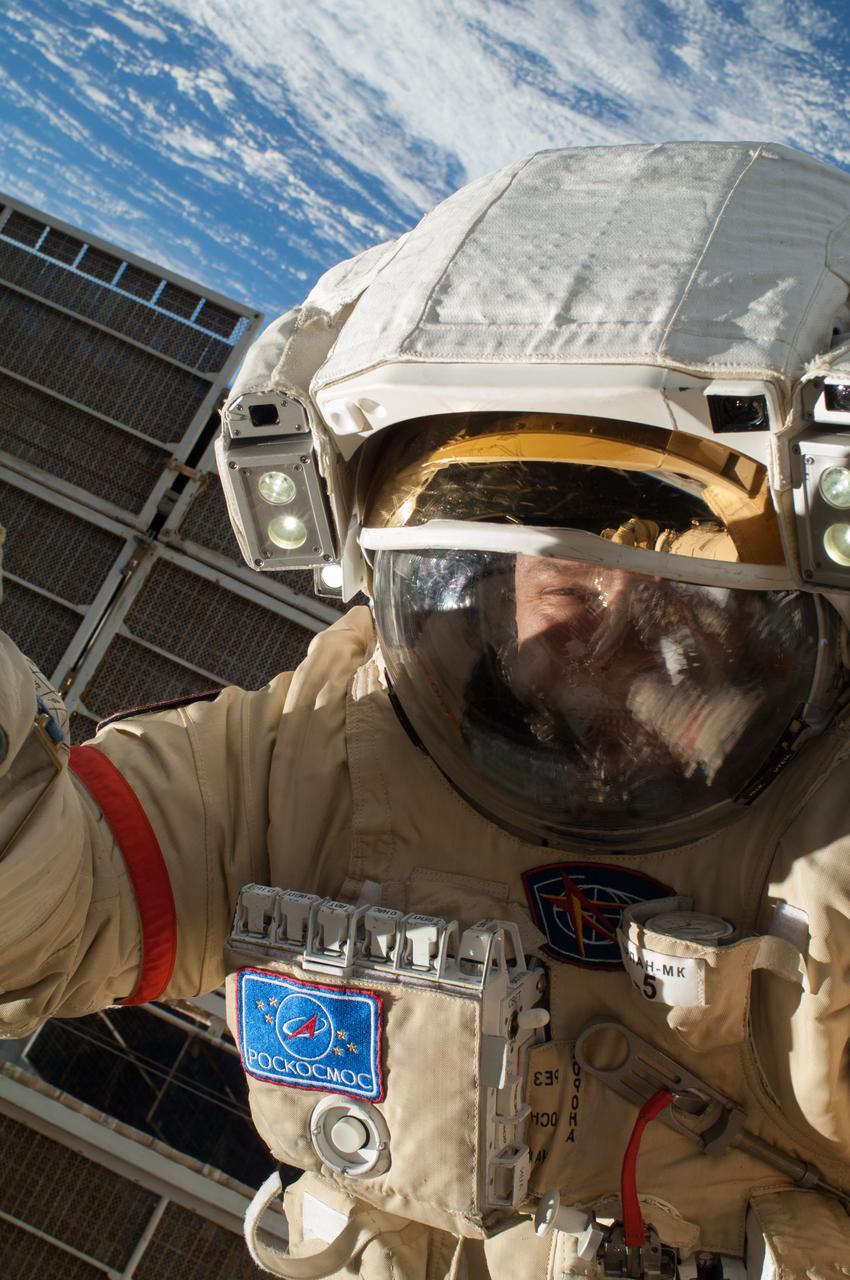
ISS037-E-028067 (9 Nov. 2013) --- Russian cosmonaut Oleg Kotov, Expedition 37 flight engineer, attired in a Russian Orlan spacesuit, participates in a session of extravehicular activity (EVA) in support of assembly and maintenance on the International Space Station. During the five-hour, 50-minute spacewalk, Kotov and Russian cosmonaut Sergey Ryazanskiy (out of frame) continued the setup of a combination EVA workstation and biaxial pointing platform that was installed during an Expedition 36 spacewalk on Aug. 22.
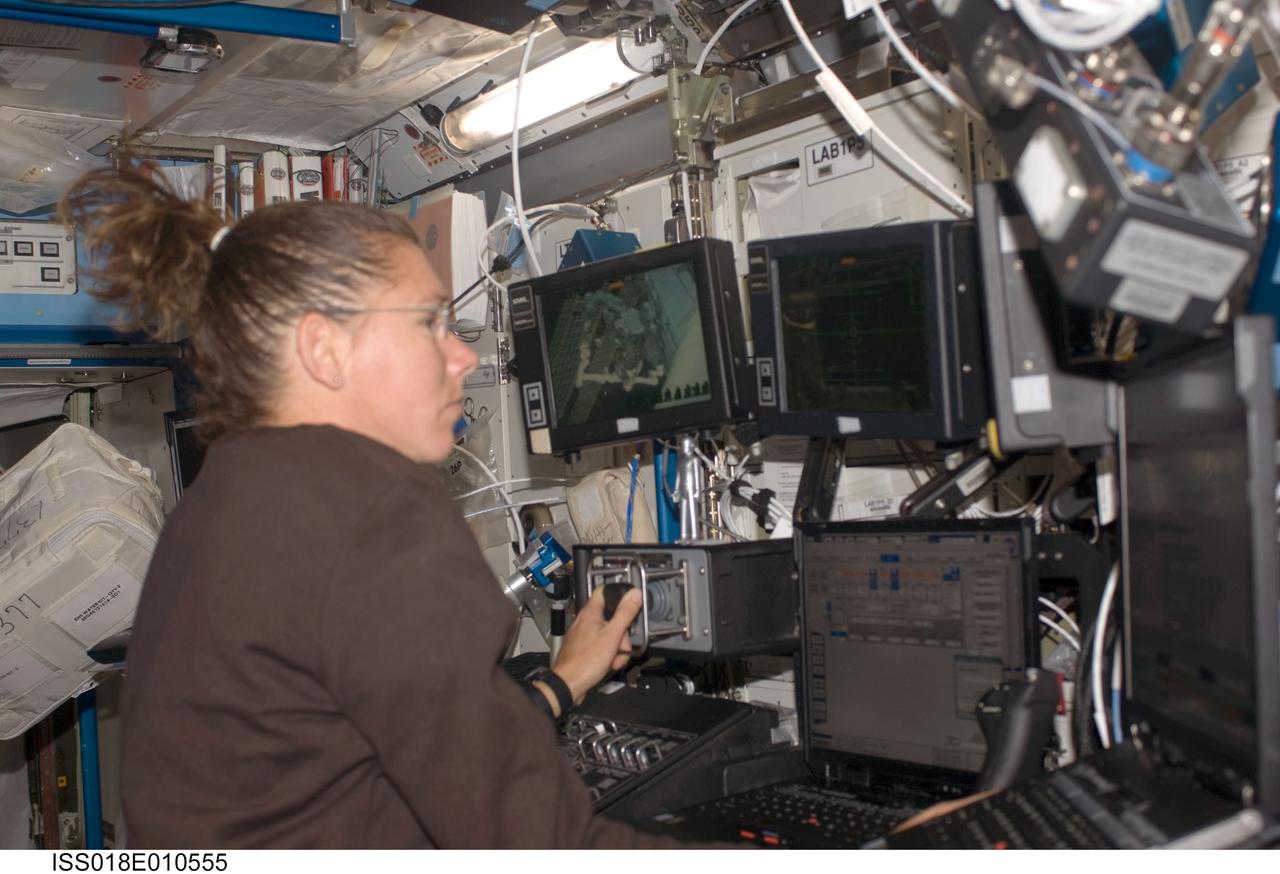
ISS018-E-010555 (5 Dec. 2008) --- Astronaut Sandra Magnus, Expedition 18 flight engineer, operates the Canadarm2 from the robotics work station in the Destiny laboratory of the International Space Station. Using the station's robotic arm, Magnus and astronaut Michael Fincke (out of frame), commander, relocated the ESP-3 from the Mobile Base System back to the Cargo Carrier Attachment System on the P3 truss. The ESP-3 spare parts platform was temporarily parked on the MBS to clear the path for the spacewalks during STS-126.
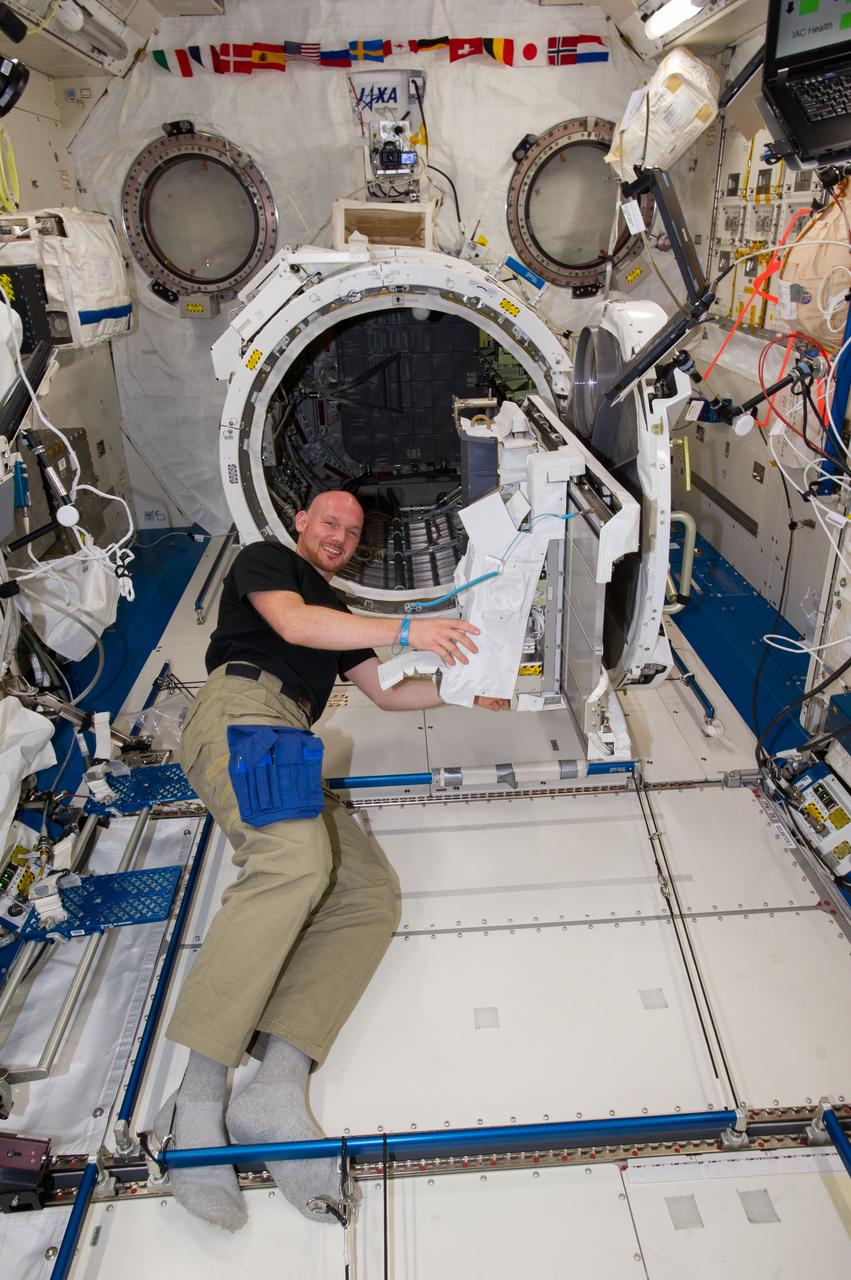
ISS040-E-019312 (25 June 2014) --- In the International Space Station?s Kibo laboratory, European Space Agency astronaut Alexander Gerst, Expedition 40 flight engineer, prepares to transfer a multi-purpose experiment platform and a robotic arm known as the Small Fine Arm through the Kibo module?s scientific airlock. The Small Fine Arm, which attaches to the Kibo?s larger main arm, handles delicate operations involved in exchanging experiments and payloads located on the Exposed Facility.
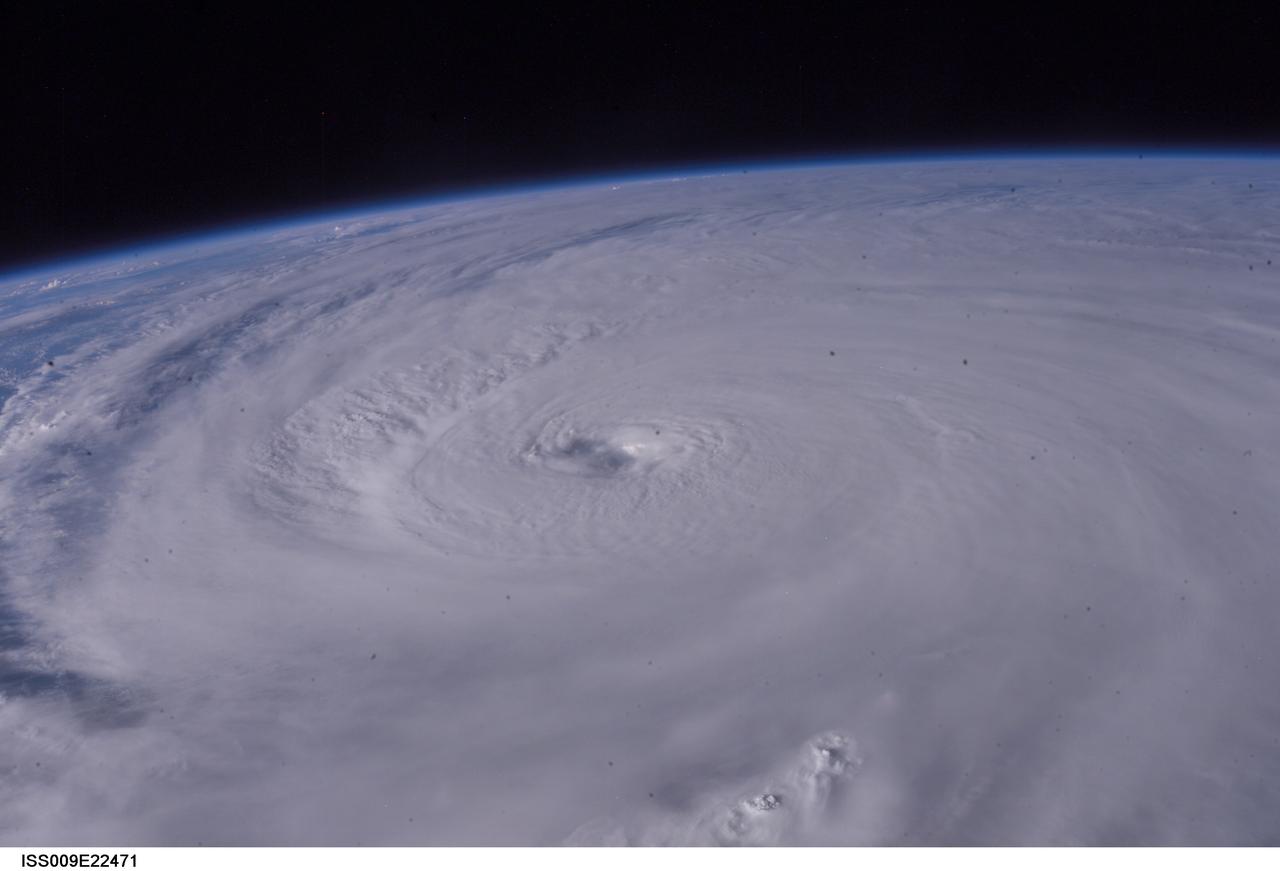
ISS009-E-22471 (13 September 2004) --- Hurricane Ivan was photographed as it entered the Gulf of Mexico late Monday (22:36:49 GMT, Sept. 13) by astronaut Edward M. (Mike) Fincke aboard the International Space Station, 230 miles above Earth. At the time, Ivan was a category 5 hurricane with winds of 160 mph. Fincke, the NASA Station Science Officer, and Station Commander Gennady Padalka are in the final month of a six-month mission aboard the research platform.
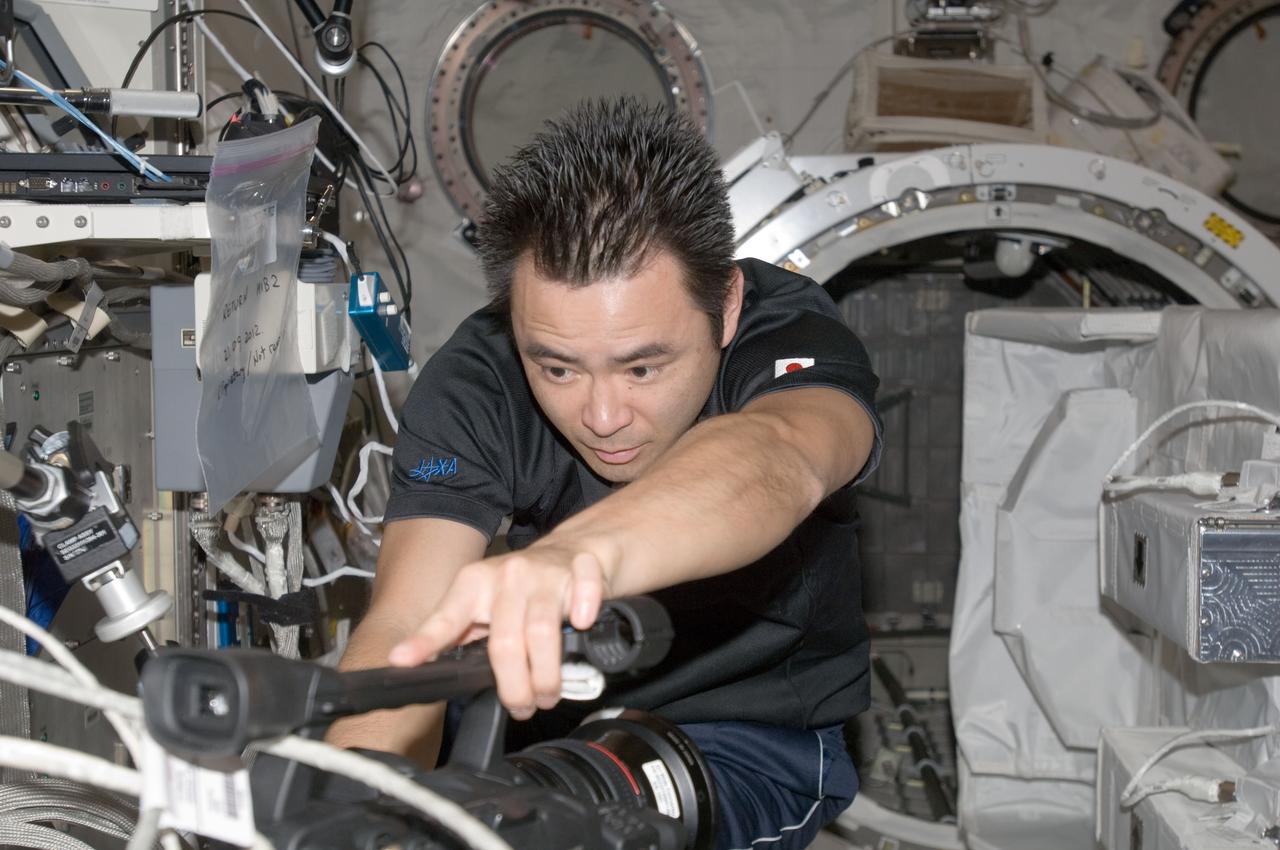
ISS033-E-006438 (21 Sept. 2012) --- In the International Space Station’s Kibo laboratory, Japan Aerospace Exploration Agency astronaut Aki Hoshide, Expedition 33 flight engineer, sets up a video camcorder in support of a ground checkout of the Small Satellite Orbital Deployer (SSOD) installed on the Multi-Purpose Experiment Platform (MPEP) of the extended slide table of the Kibo airlock.
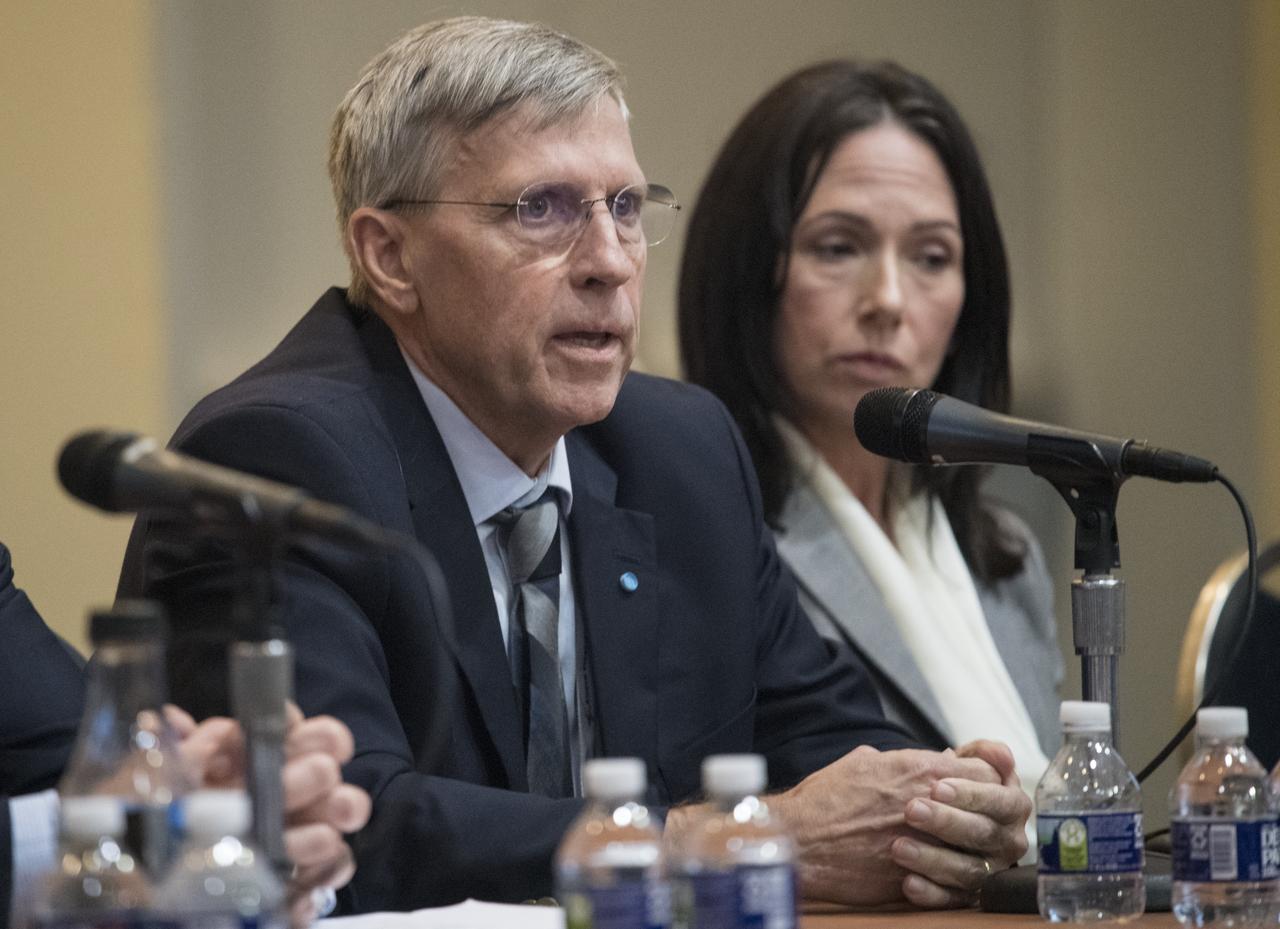
William Paloski, Director of NASA’s Human Research Program, is seen during a discussion titled “ISS-Moon-Mars: Using Spaceflight Platforms to Study and Simulate Future Missions” during the the 70th International Astronautical Congress, Monday, Oct. 21, 2019 at the Walter E. Washington Convention Center in Washington. Photo Credit: (NASA/Joel Kowsky)