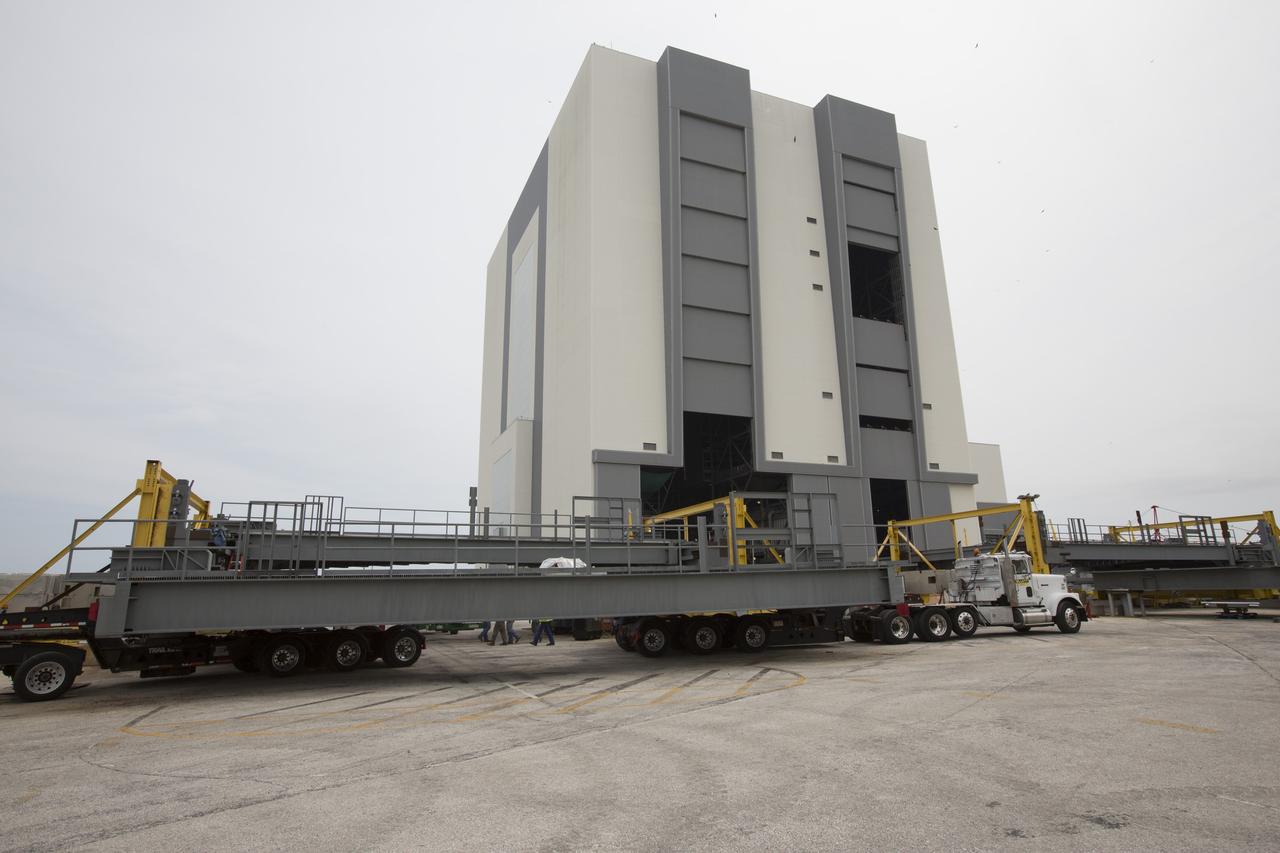
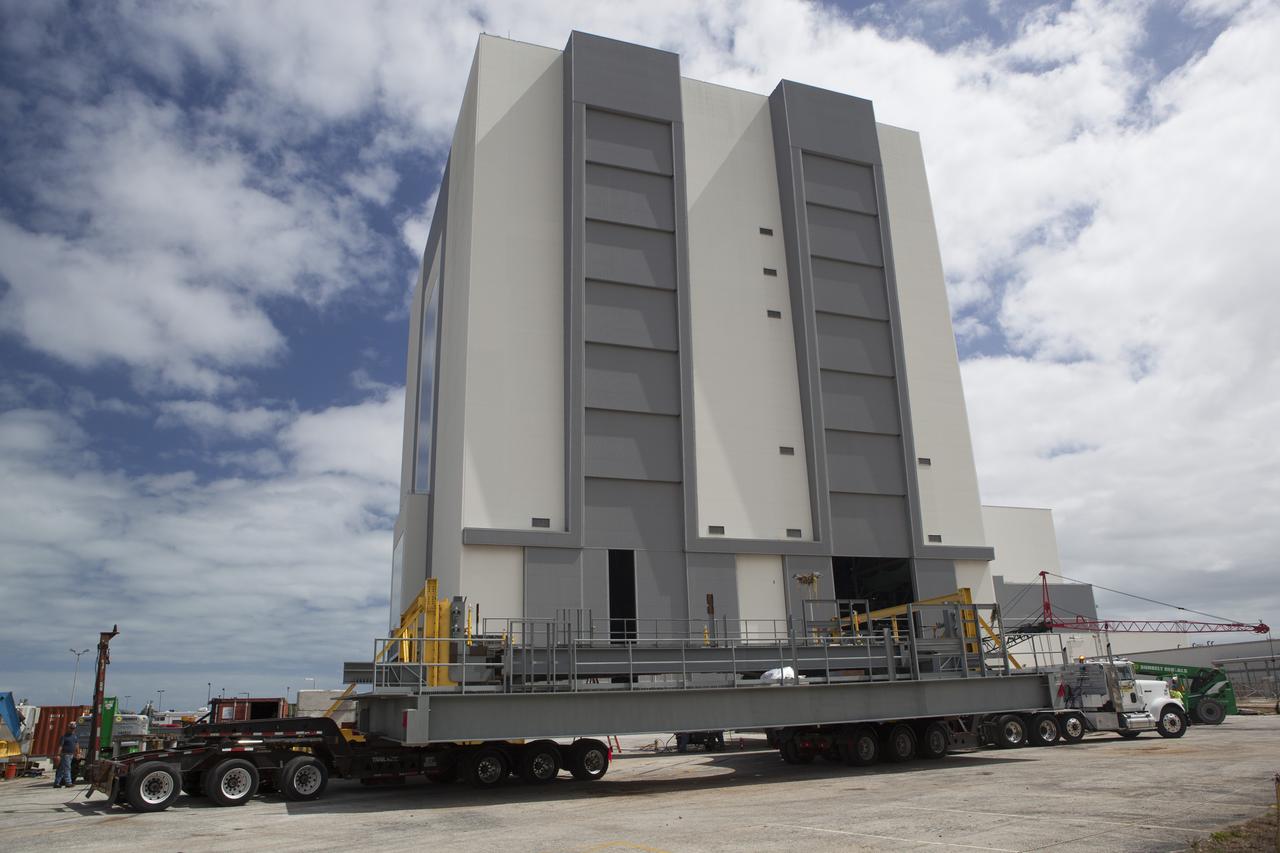
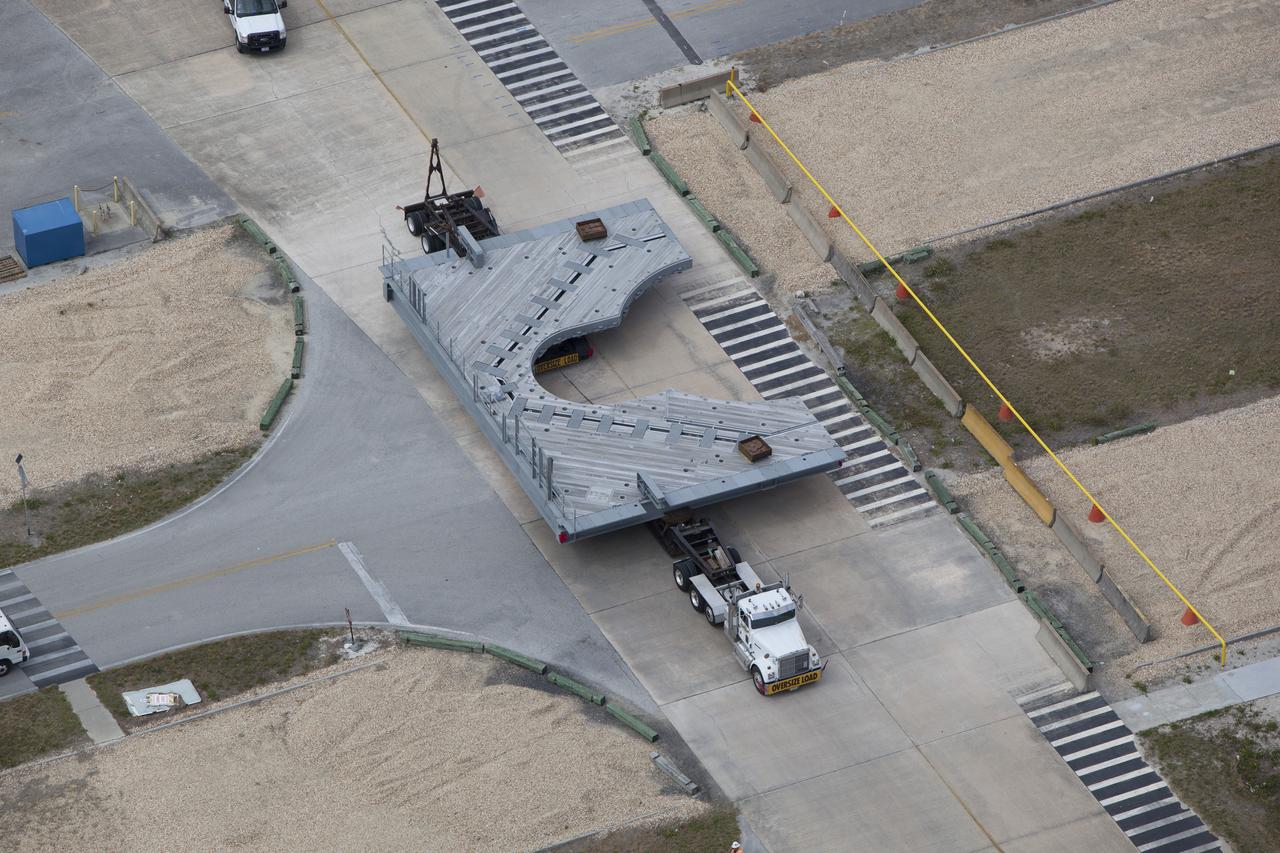
A heavy load transport truck has arrived at the Vehicle Assembly Building (VAB) at NASA’s Kennedy Space Center in Florida, carrying the second half of the F-level work platforms for the agency’s Space Launch System (SLS) rocket. The platform will be delivered to the VAB staging area in the west parking lot. The Ground Systems Development and Operations Program is overseeing upgrades and modifications to VAB High Bay 3 to support processing of the SLS and Orion spacecraft. A total of 10 levels of new platforms, 20 platform halves altogether, will surround the SLS rocket and Orion spacecraft and provide access for testing and processing. Delivery of this platform brings the total to 10 platforms, or half of the work platforms delivered to Kennedy,
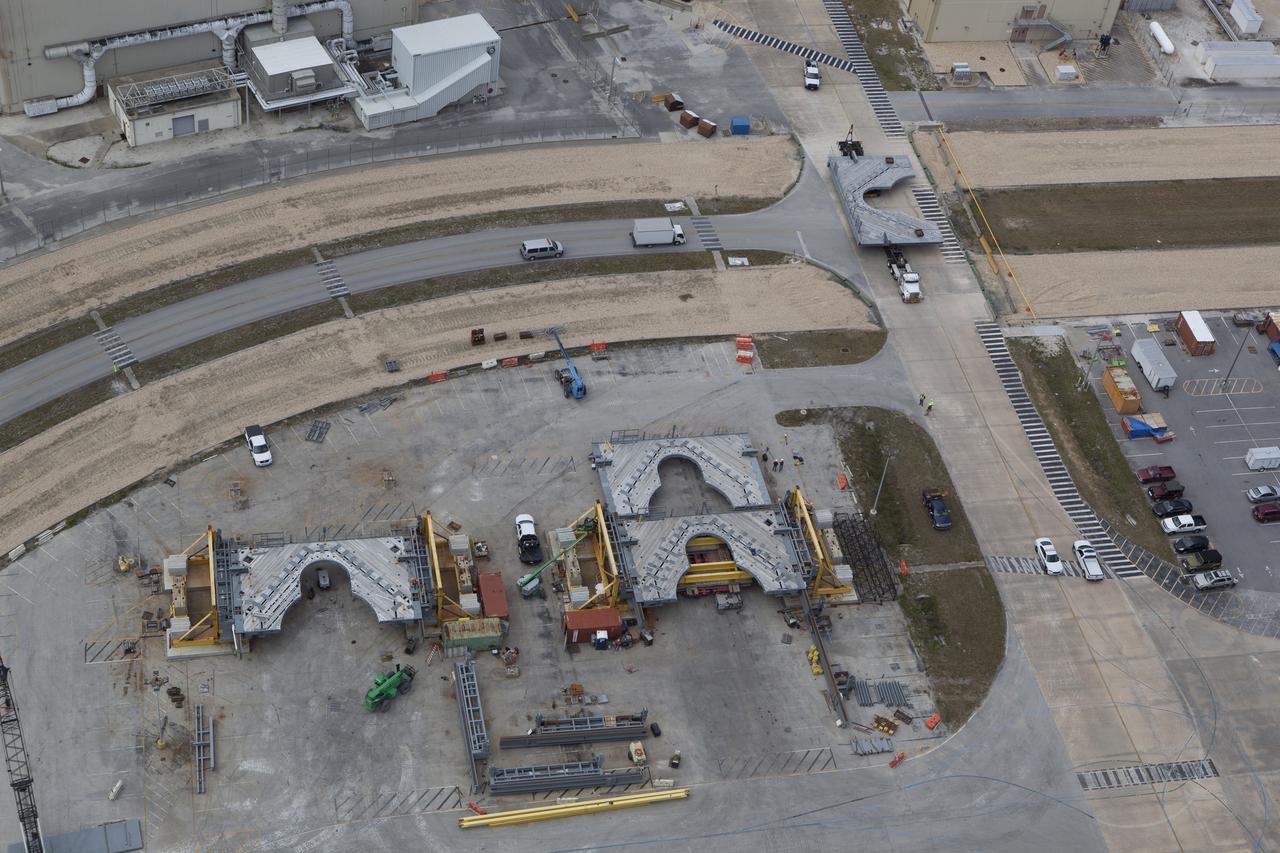
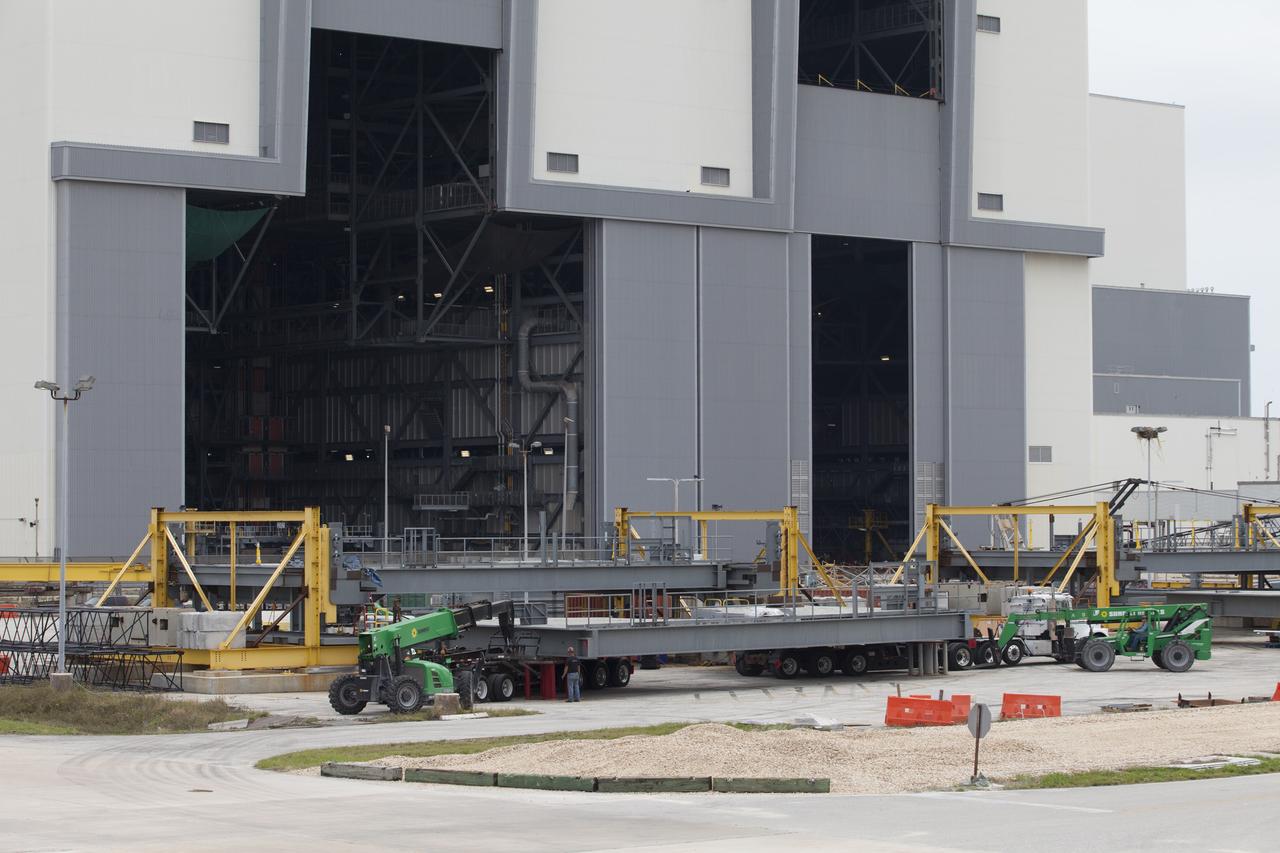
At right, the first half of the F-level work platforms for NASA’s Space Launch System rocket has arrived at the Vehicle Assembly Building at the agency’s Kennedy Space Center in Florida. At left, several other work platforms are being readied for future installation in VAB High Bay 3. The Ground Systems Development and Operations Program is overseeing upgrades and modifications to High Bay 3 to support processing of the SLS and Orion spacecraft. A total of 10 levels of new platforms, 20 platform halves altogether, will surround the SLS rocket and Orion spacecraft and provide access for testing and processing. The first three sets of platforms, H, J and K, were delivered to the center last year.
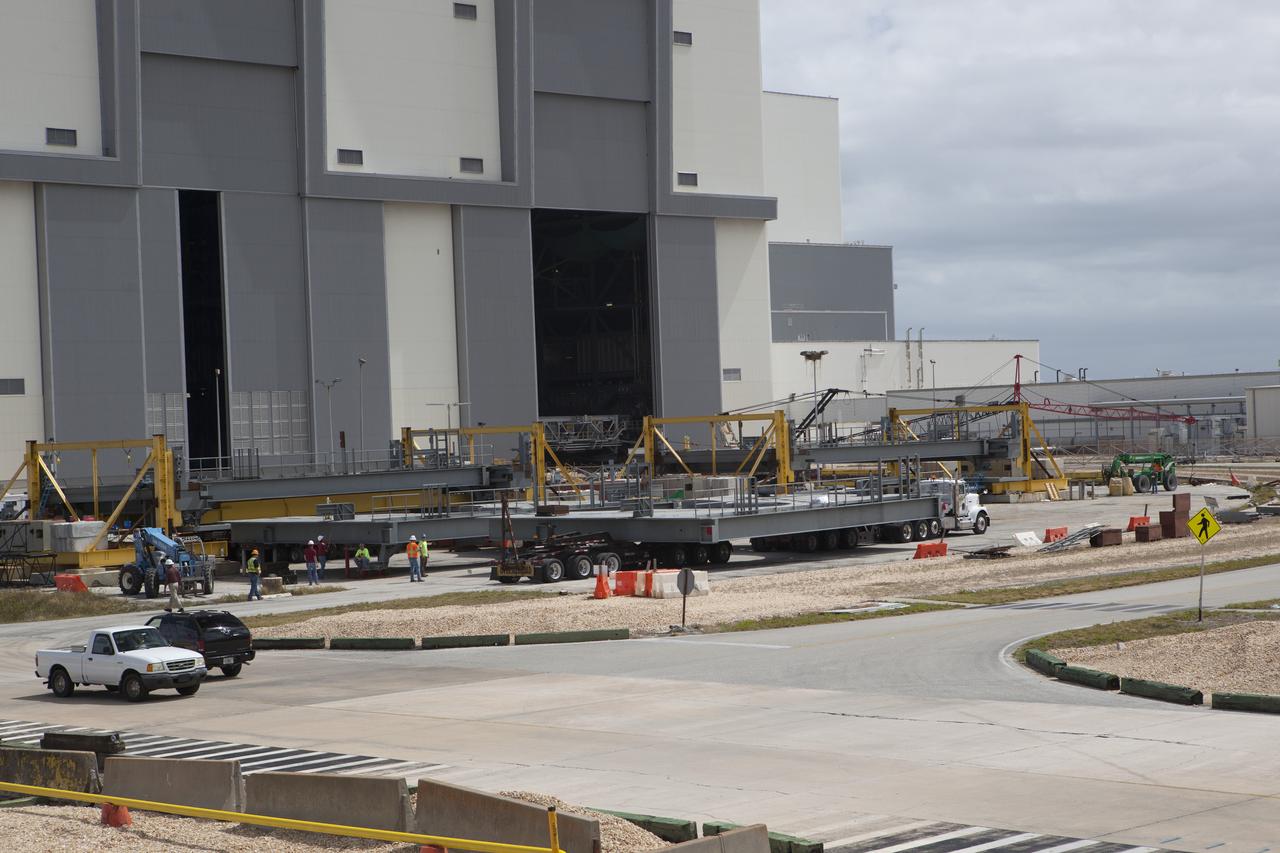
The first half of the F-level work platforms for NASA’s Space Launch System rocket has arrived at the Vehicle Assembly Building at the agency’s Kennedy Space Center in Florida. The Ground Systems Development and Operations Program is overseeing upgrades and modifications to High Bay 3 to support processing of the SLS and Orion spacecraft. A total of 10 levels of new platforms, 20 platform halves altogether, will surround the SLS rocket and Orion spacecraft and provide access for testing and processing. The first three sets of platforms, H, J and K, were delivered to the center last year.
The first half of the F-level work platforms for NASA’s Space Launch System rocket has arrived at the Vehicle Assembly Building at the agency’s Kennedy Space Center in Florida. The Ground Systems Development and Operations Program is overseeing upgrades and modifications to High Bay 3 to support processing of the SLS and Orion spacecraft. A total of 10 levels of new platforms, 20 platform halves altogether, will surround the SLS rocket and Orion spacecraft and provide access for testing and processing. The first three sets of platforms, H, J and K, were delivered to the center last year.
The first half of the F-level work platforms for NASA’s Space Launch System rocket has arrived at the Vehicle Assembly Building at the agency’s Kennedy Space Center in Florida. The Ground Systems Development and Operations Program is overseeing upgrades and modifications to High Bay 3 to support processing of the SLS and Orion spacecraft. A total of 10 levels of new platforms, 20 platform halves altogether, will surround the SLS rocket and Orion spacecraft and provide access for testing and processing. The first three sets of platforms, H, J and K, were delivered to the center last year.
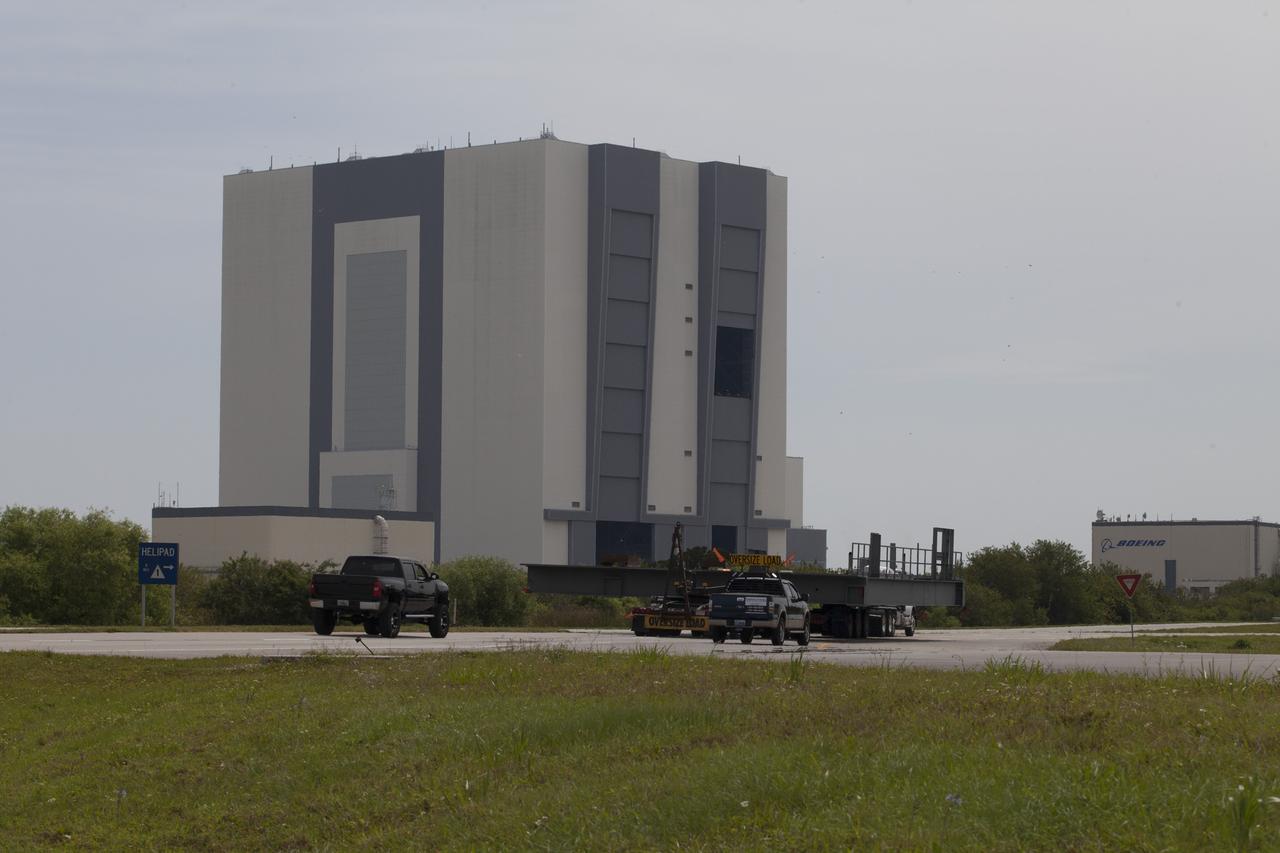
A heavy load transport truck proceeds along the road toward the Vehicle Assembly Building (VAB) at NASA’s Kennedy Space Center in Florida, carrying the second half of the F-level work platforms for the agency’s Space Launch System (SLS) rocket. The platform will be delivered to the VAB staging area in the west parking lot. The Ground Systems Development and Operations Program is overseeing upgrades and modifications to VAB High Bay 3 to support processing of the SLS and Orion spacecraft. A total of 10 levels of new platforms, 20 platform halves altogether, will surround the SLS rocket and Orion spacecraft and provide access for testing and processing. Delivery of this platform brings the total to 10 platforms, or half of the work platforms delivered to Kennedy.
A heavy load transport truck arrives at the Vehicle Assembly Building (VAB) at NASA’s Kennedy Space Center in Florida, carrying the second half of the F-level work platforms for the agency’s Space Launch System (SLS) rocket. The platform will be delivered to the VAB staging area in the west parking lot. The Ground Systems Development and Operations Program is overseeing upgrades and modifications to VAB High Bay 3 to support processing of the SLS and Orion spacecraft. A total of 10 levels of new platforms, 20 platform halves altogether, will surround the SLS rocket and Orion spacecraft and provide access for testing and processing. Delivery of this platform brings the total to 10 platforms, or half of the work platforms delivered to Kennedy.
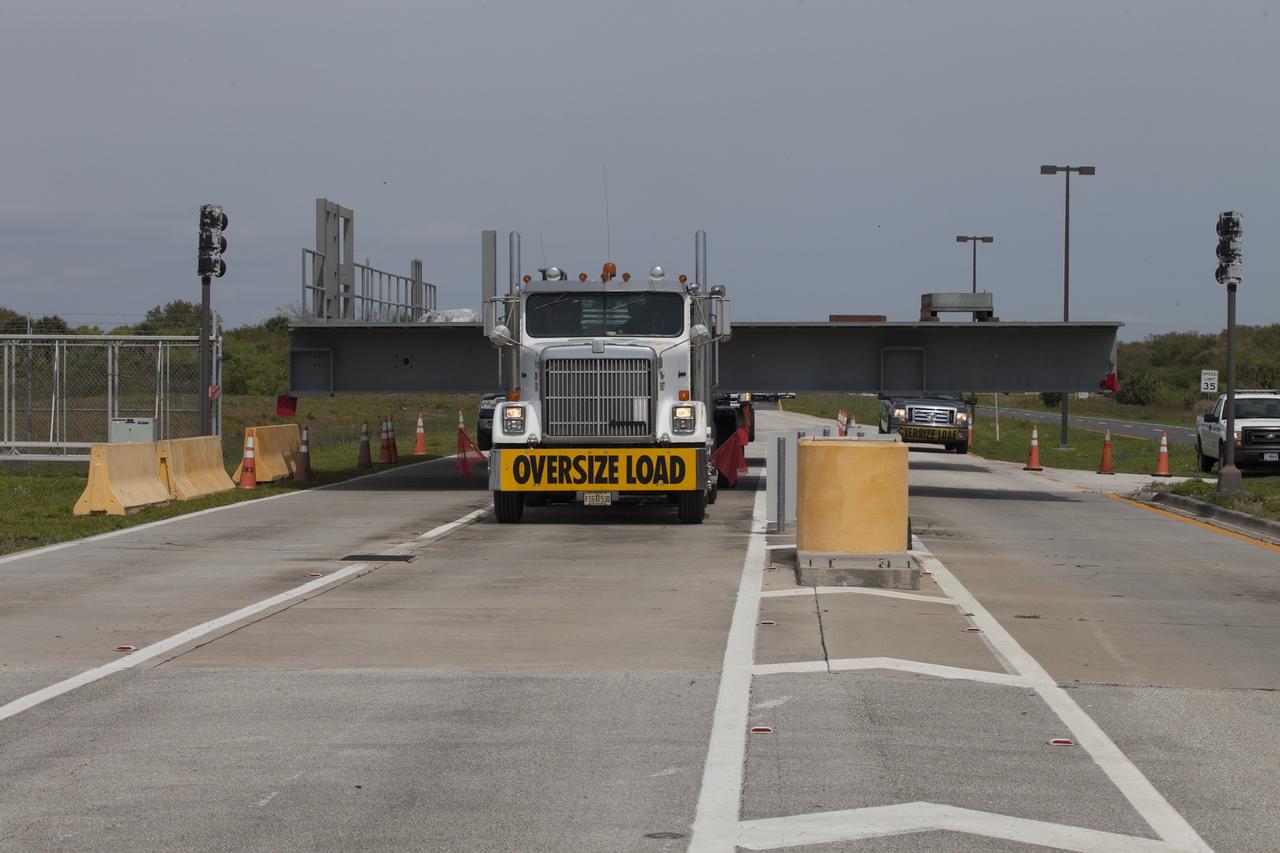
A heavy load transport truck arrives at the north entrance gate at NASA’s Kennedy Space Center in Florida, carrying the second half of the F-level work platforms for the agency’s Space Launch System (SLS) rocket. The platform will be delivered to the Vehicle Assembly Building (VAB) staging area in the west parking lot. The Ground Systems Development and Operations Program is overseeing upgrades and modifications to VAB High Bay 3 to support processing of the SLS and Orion spacecraft. A total of 10 levels of new platforms, 20 platform halves altogether, will surround the SLS rocket and Orion spacecraft and provide access for testing and processing. Delivery of this platform brings the total to 10 platforms, or half of the work platforms delivered to Kennedy.
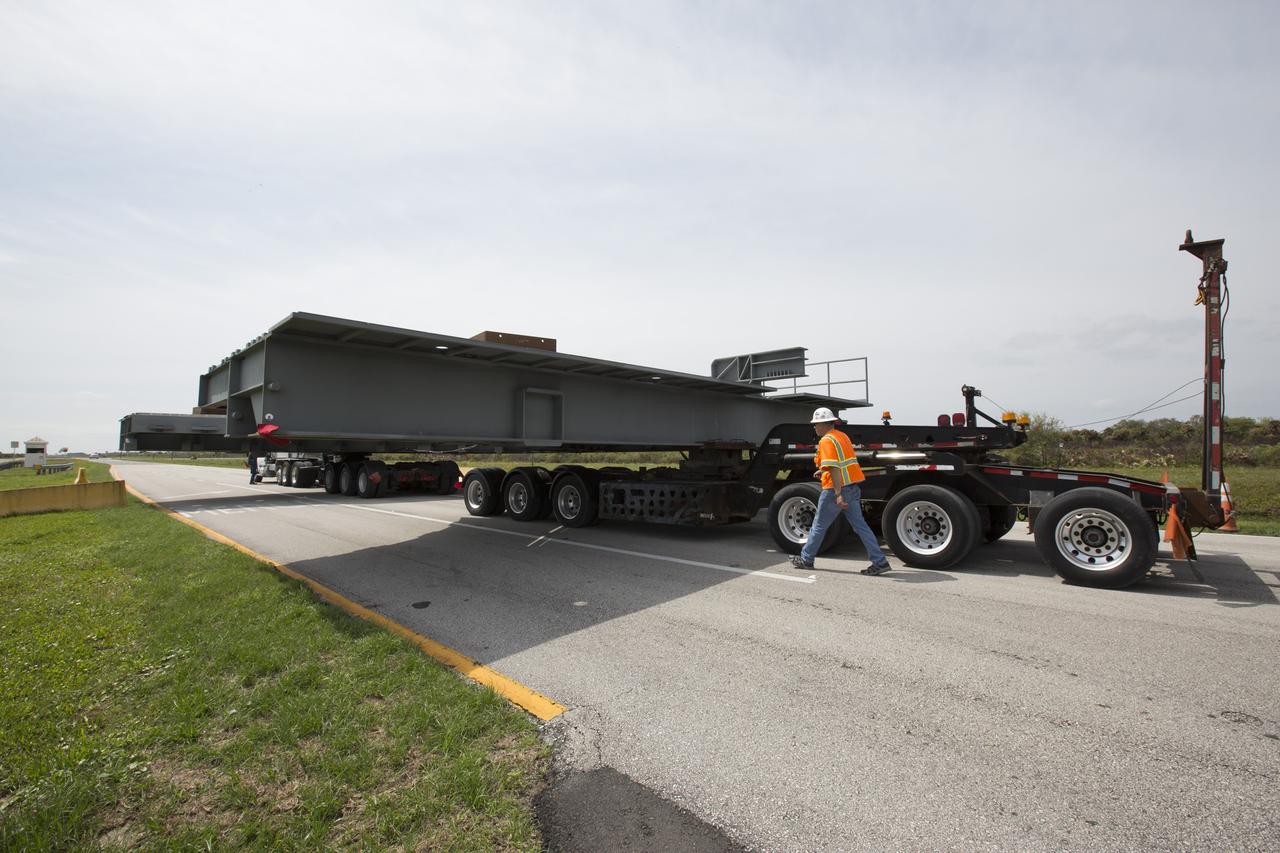
A heavy load transport truck proceeds along the road to the Vehicle Assembly Building (VAB) at NASA’s Kennedy Space Center in Florida, carrying the second half of the F-level work platforms for the agency’s Space Launch System (SLS) rocket. The platform will be delivered to the VAB staging area in the west parking lot. The Ground Systems Development and Operations Program is overseeing upgrades and modifications to VAB High Bay 3 to support processing of the SLS and Orion spacecraft. A total of 10 levels of new platforms, 20 platform halves altogether, will surround the SLS rocket and Orion spacecraft and provide access for testing and processing. Delivery of this platform brings the total to 10 platforms, or half of the work platforms delivered to Kennedy.
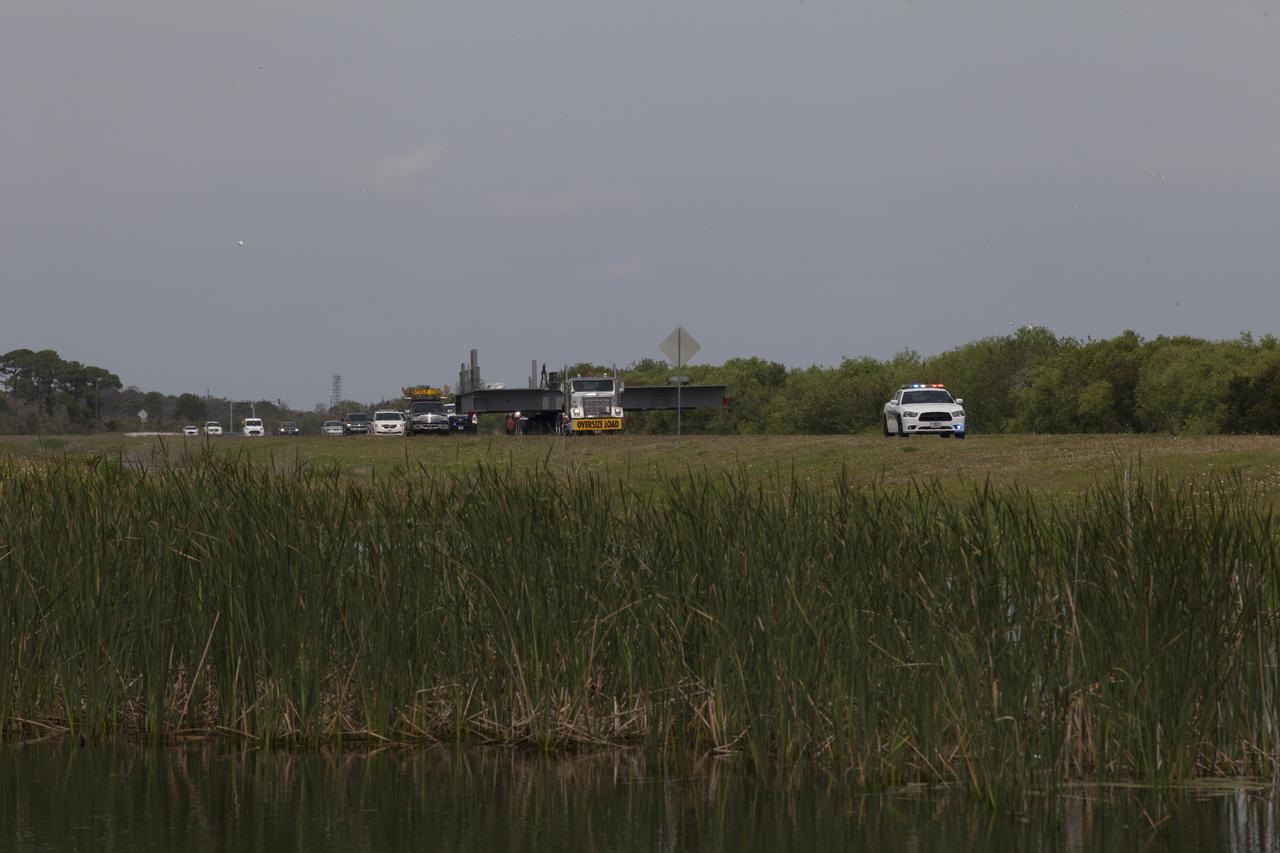
A heavy load transport truck passes through the north entrance gate at NASA’s Kennedy Space Center in Florida, carrying the second half of the F-level work platforms for the agency’s Space Launch System (SLS) rocket. The platform will be delivered to the Vehicle Assembly Building (VAB) staging area in the west parking lot. The Ground Systems Development and Operations Program is overseeing upgrades and modifications to VAB High Bay 3 to support processing of the SLS and Orion spacecraft. A total of 10 levels of new platforms, 20 platform halves altogether, will surround the SLS rocket and Orion spacecraft and provide access for testing and processing. Delivery of this platform brings the total to 10 platforms, or half of the work platforms delivered to Kennedy.
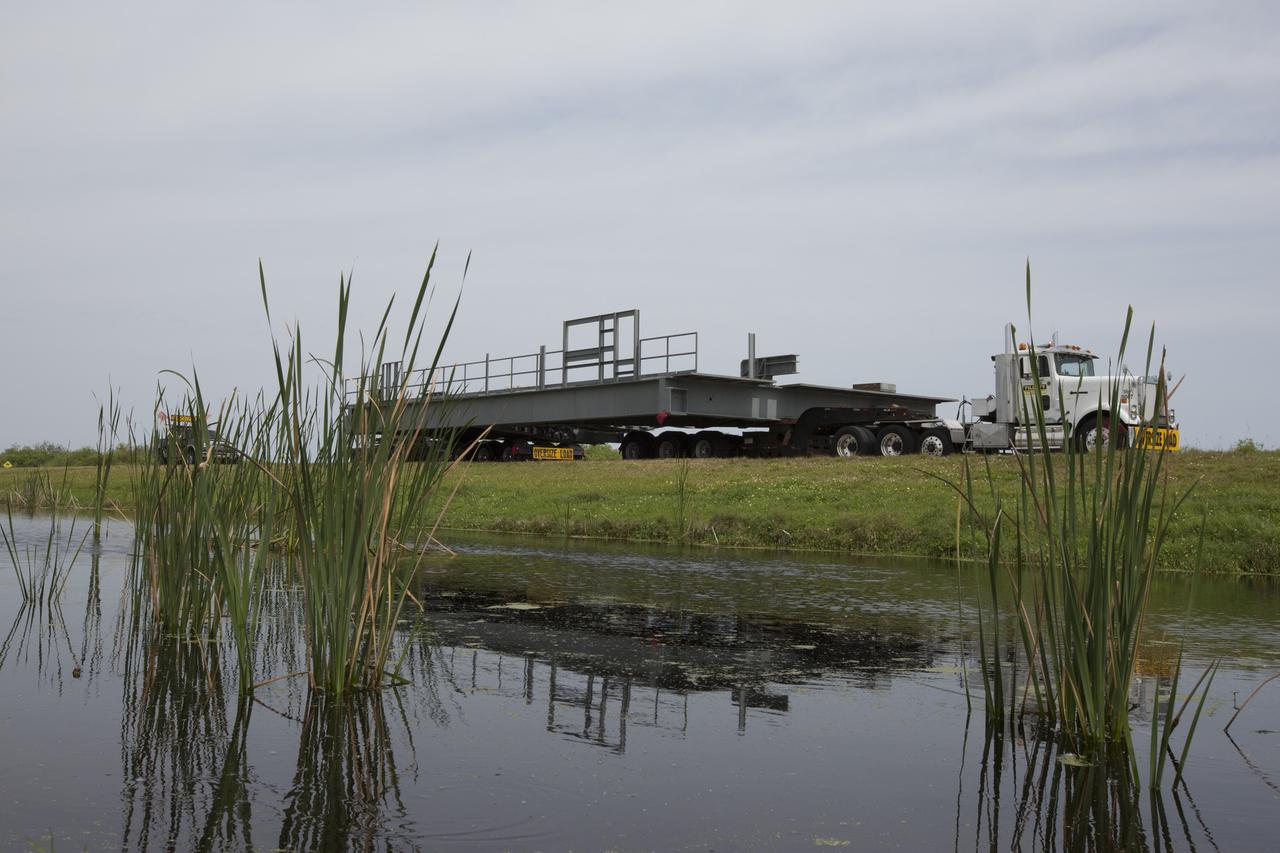
With its image reflected in the water, a heavy load transport truck proceeds along the road to the Vehicle Assembly Building (VAB) at NASA’s Kennedy Space Center in Florida, carrying the second half of the F-level work platforms for the agency’s Space Launch System (SLS) rocket. The platform will be delivered to the VAB staging area in the west parking lot. The Ground Systems Development and Operations Program is overseeing upgrades and modifications to VAB High Bay 3 to support processing of the SLS and Orion spacecraft. A total of 10 levels of new platforms, 20 platform halves altogether, will surround the SLS rocket and Orion spacecraft and provide access for testing and processing. Delivery of this platform brings the total to 10 platforms, or half of the work platforms delivered to Kennedy,
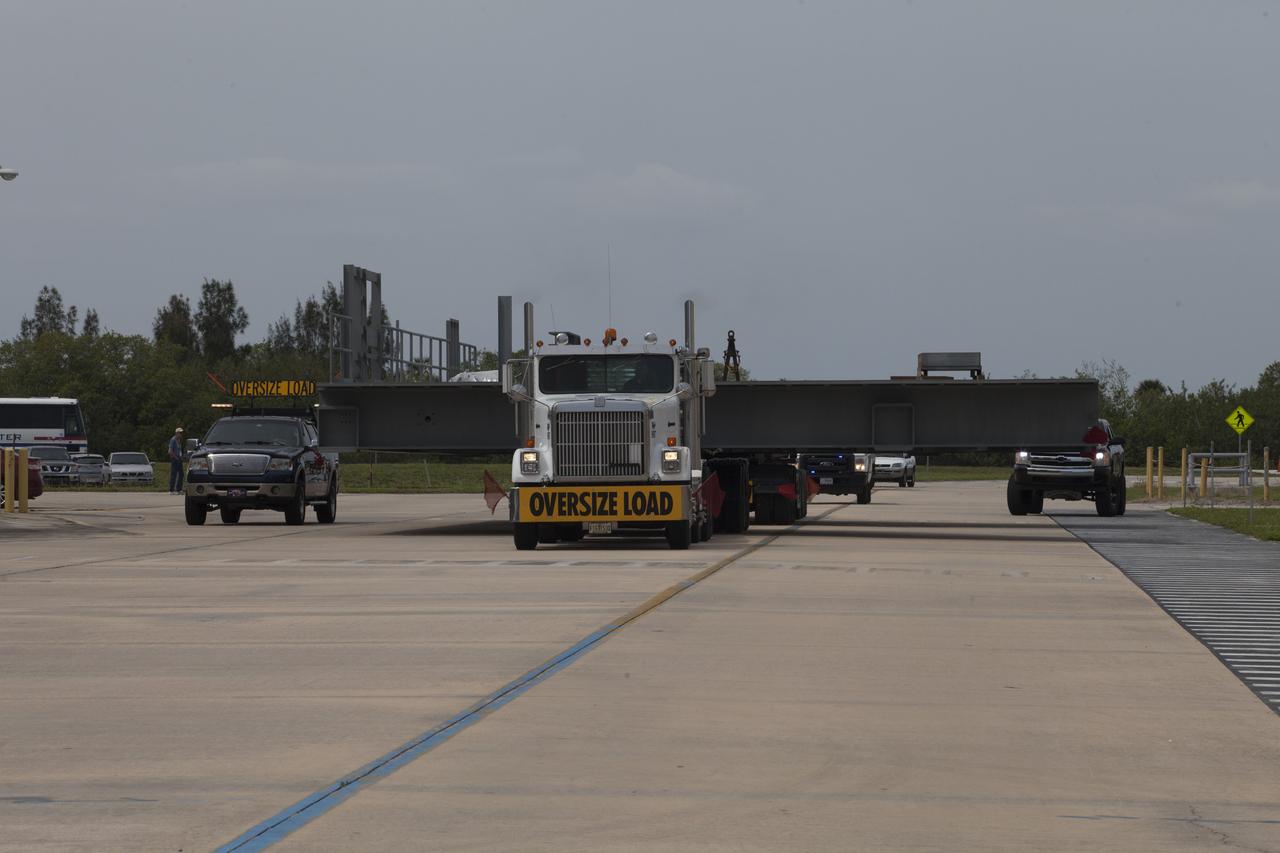
A heavy load transport truck proceeds along the road toward the Vehicle Assembly Building (VAB) at NASA’s Kennedy Space Center in Florida, carrying the second half of the F-level work platforms for the agency’s Space Launch System (SLS) rocket. The platform will be delivered to the VAB staging area in the west parking lot. The Ground Systems Development and Operations Program is overseeing upgrades and modifications to VAB High Bay 3 to support processing of the SLS and Orion spacecraft. A total of 10 levels of new platforms, 20 platform halves altogether, will surround the SLS rocket and Orion spacecraft and provide access for testing and processing. Delivery of this platform brings the total to 10 platforms, or half of the work platforms delivered to Kennedy.
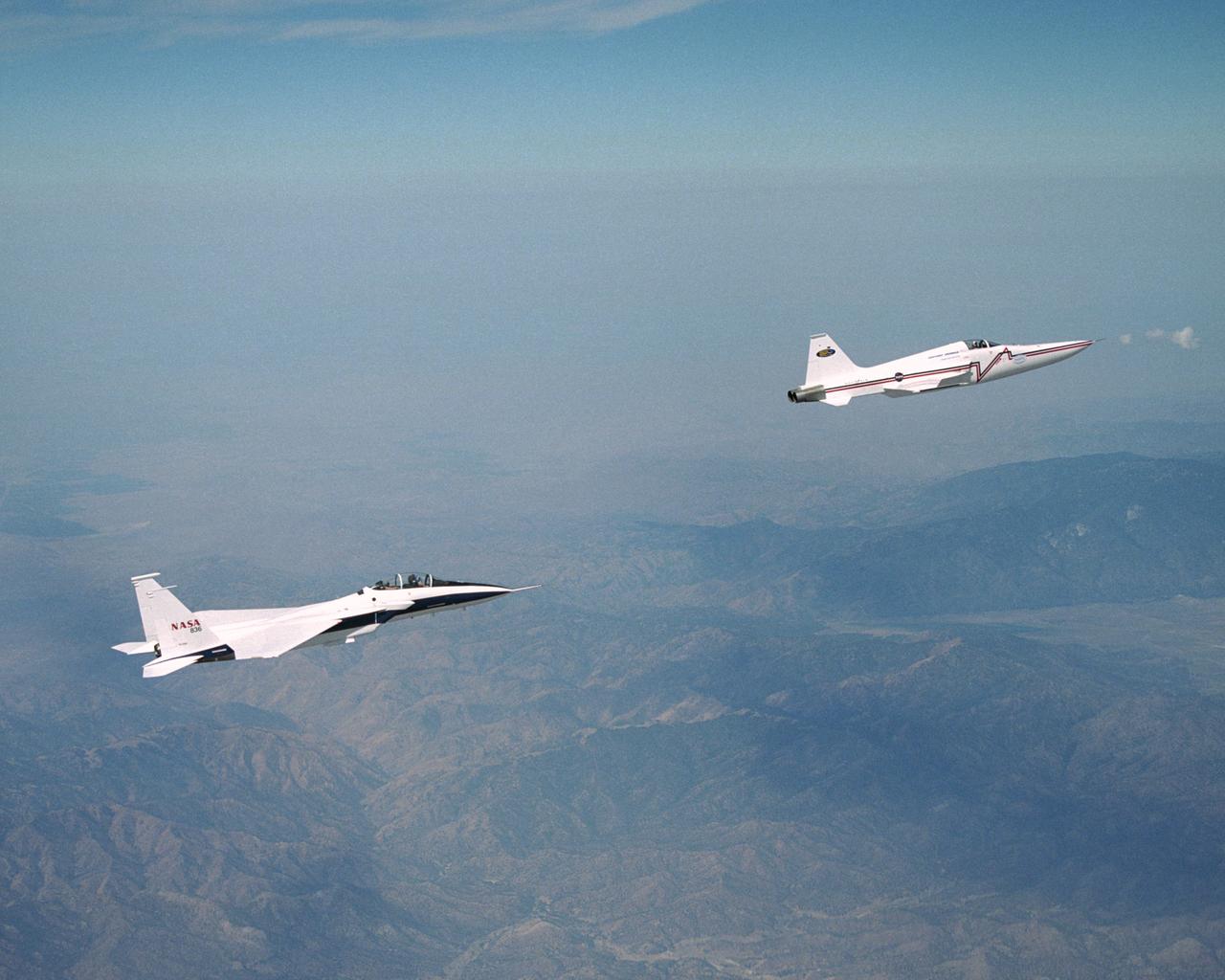
NASA's F-15B research testbed jet from the NASA Dryden Flight Research Center flew in the supersonic shockwave of a Northrop Grumman Corp. modified F-5E in support of the Shaped Sonic Boom Demonstration (SSBD) project, which is part of the DARPA's Quiet Supersonic Platform (QSP) program.
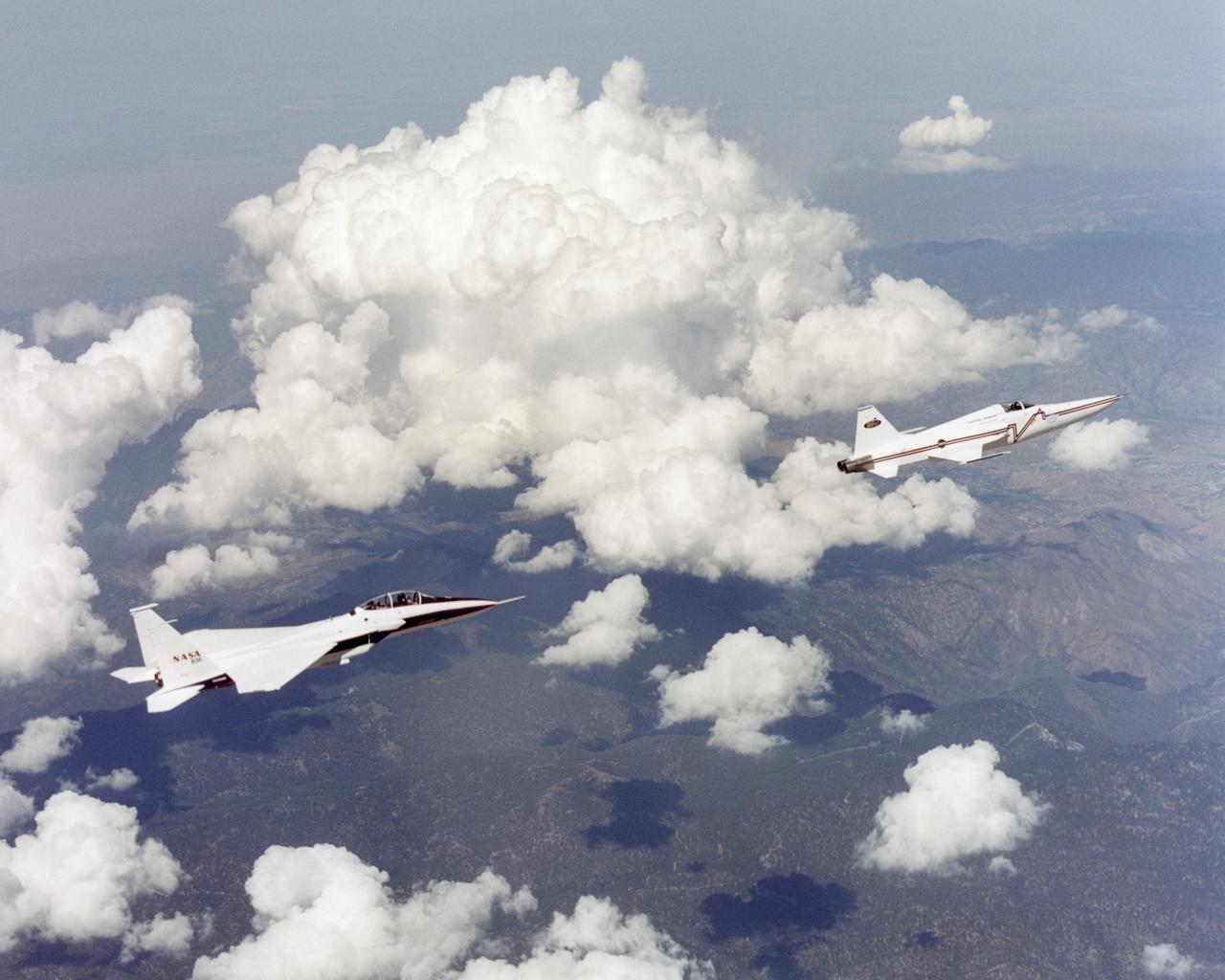
NASA's F-15B research testbed jet from NASA's Dryden Flight Research Center flew in the supersonic shockwave of a Northrop Grumman Corp. modified U.S. Navy F-5E jet in support of the Shaped Sonic Boom Demonstration (SSBD) project, which is part of the DARPA's Quiet Supersonic Platform (QSP) program. On Aug. 27, 2003, the F-5 SSBD aircraft demonstrated a method to reduce the intensity of sonic booms.
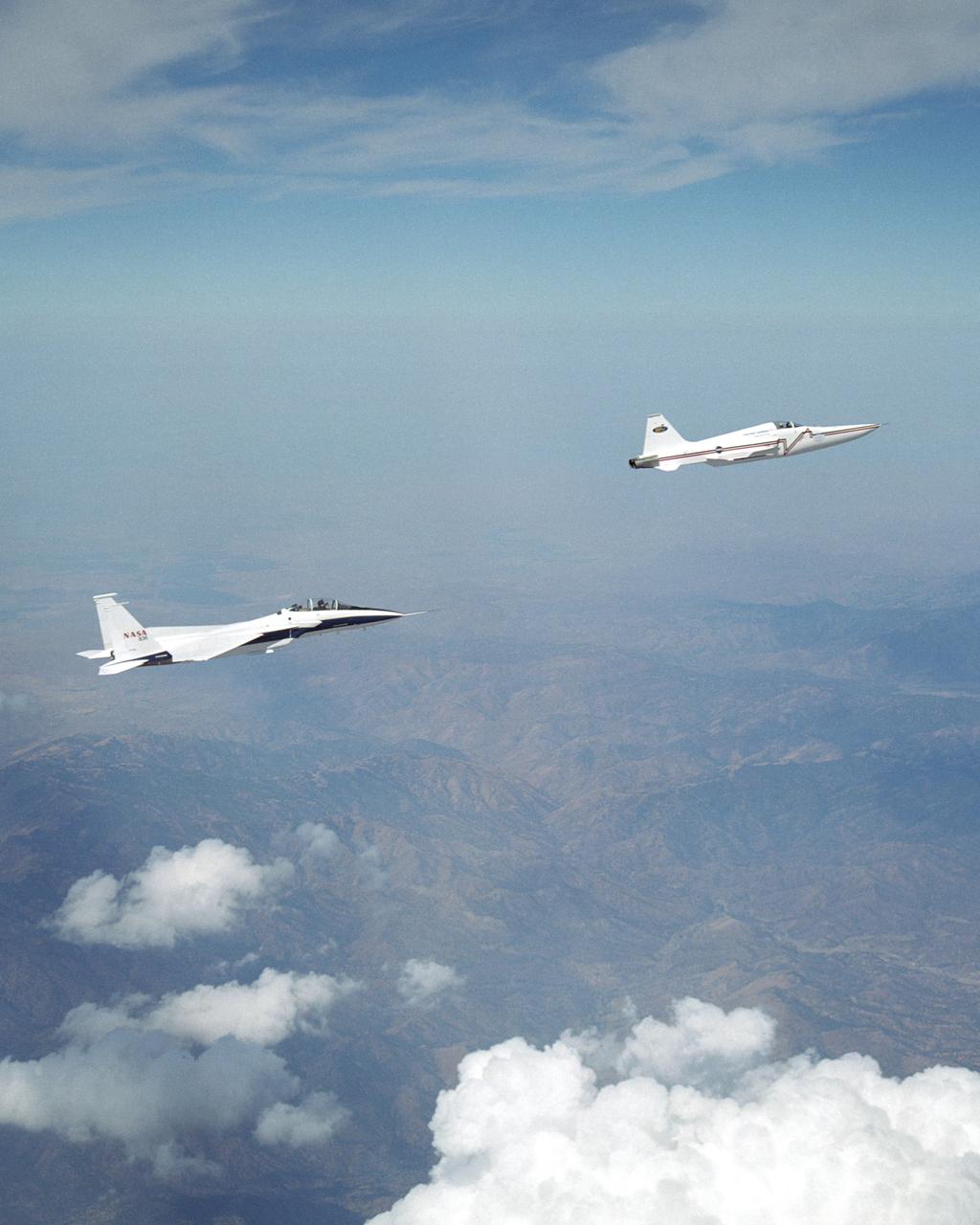
NASA's F-15B research testbed jet from NASA's Dryden Flight Research Center flew in the supersonic shockwave of a Northrop Grumman Corp. modified U.S. Navy F-5E jet in support of the Shaped Sonic Boom Demonstration (SSBD) project, which is part of the DARPA's Quiet Supersonic Platform (QSP) program. The project is an effort to lessen sonic booms. During the recent demonstration, the F-15B flew behind the modified F-5E sonic boom demonstrator aircraft in order to measure the aircraft's sonic boom characteristics. Flying behind and below the F-5E, and using its specially-instrumented nose boom, the F-15B recorded many shockwave patterns from the F-5E at various distances and orientations from the aircraft.
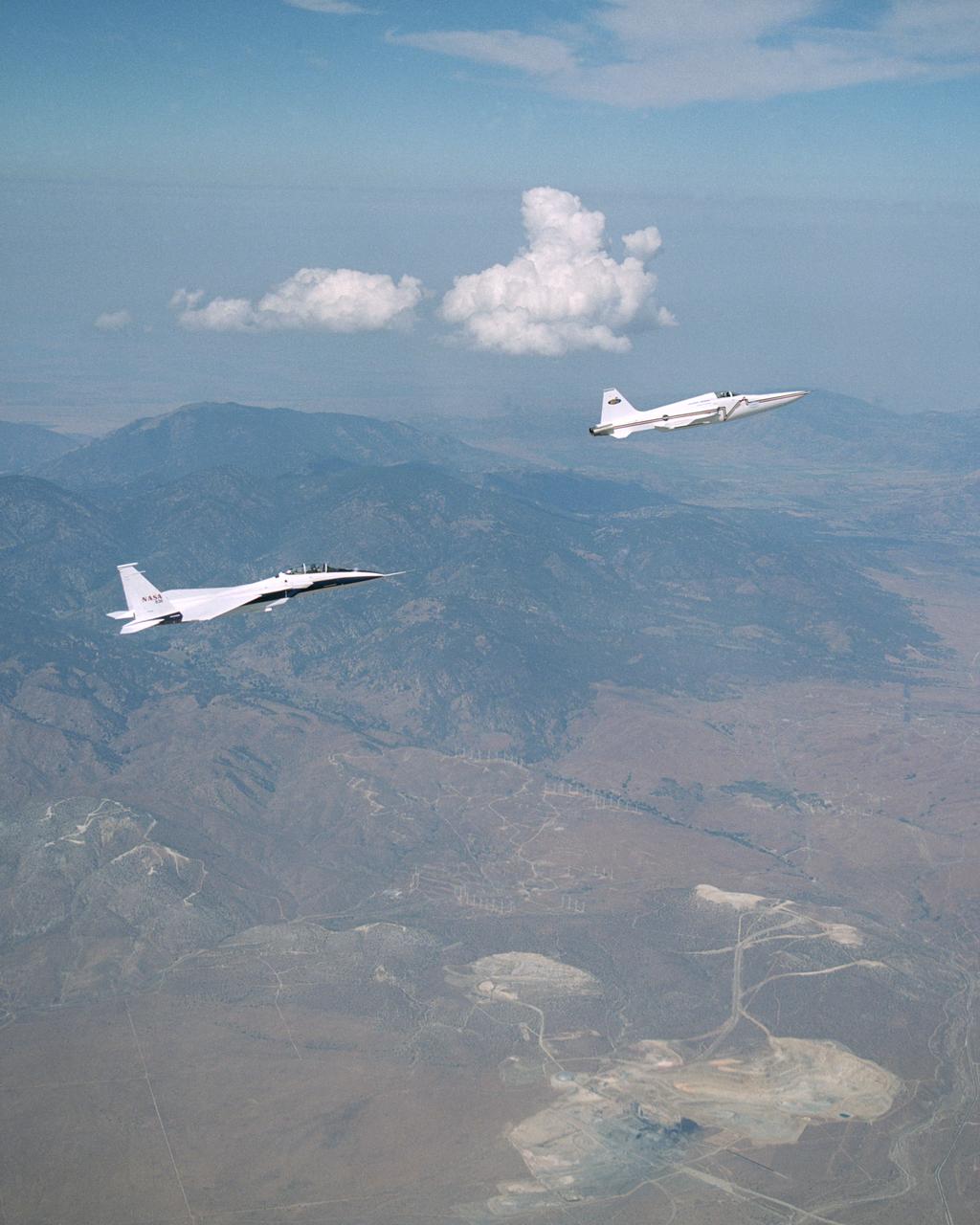
NASA's F-15B research testbed jet from NASA's Dryden Flight Research Center flew in the supersonic shockwave of a Northrop Grumman Corp. modified U.S. Navy F-5E jet in support of the Shaped Sonic Boom Demonstration (SSBD) project, which is part of the DARPA's Quiet Supersonic Platform (QSP) program. The project is an effort to lessen sonic booms. During the recent demonstration, the F-15B flew behind the modified F-5E sonic boom demonstrator aircraft in order to measure the aircraft's sonic boom characteristics. Flying behind and below the F-5E, and using its specially-instrumented nose boom, the F-15B recorded many shockwave patterns from the F-5E at various distances and orientations from the aircraft.
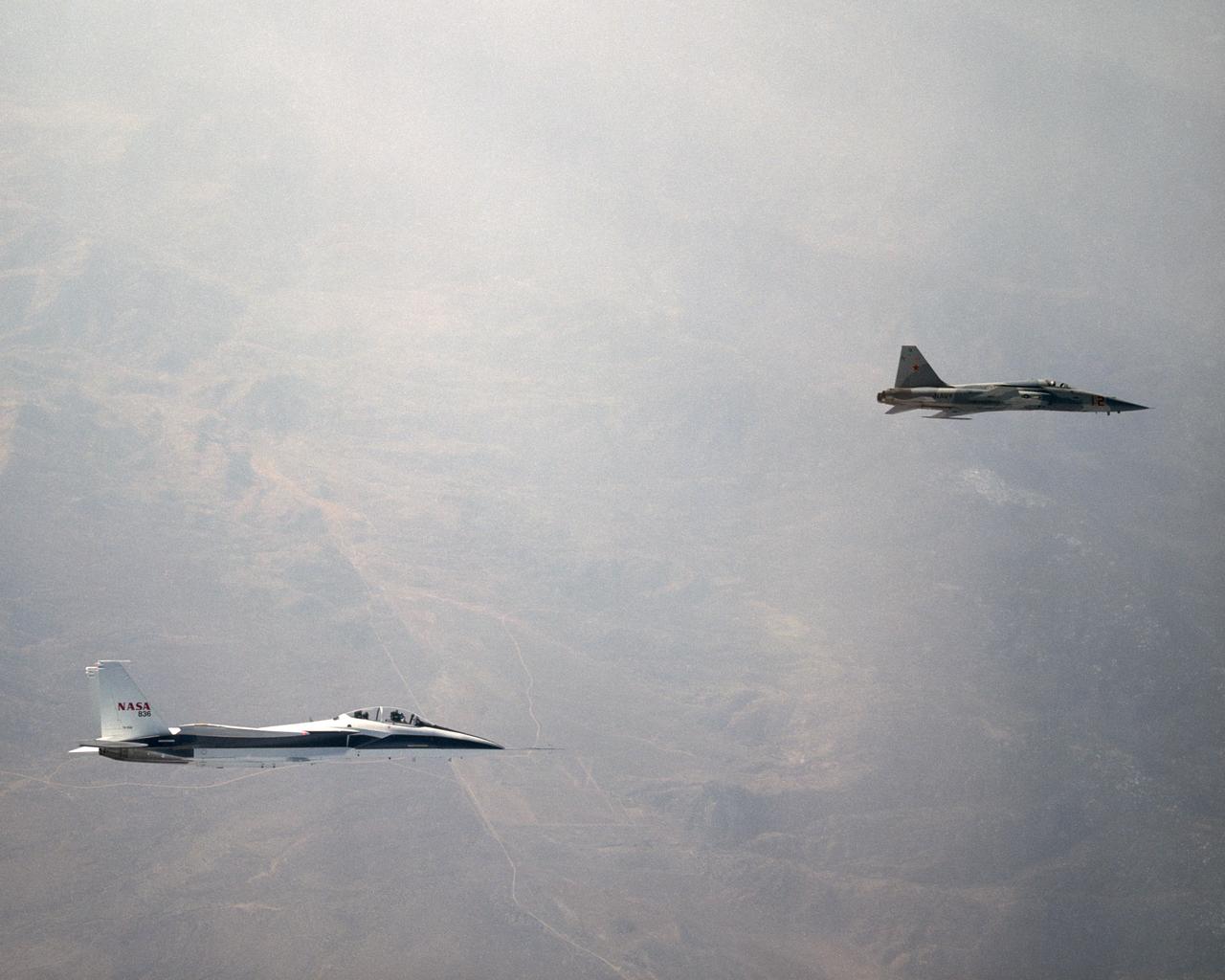
NASA's F-15B Research Testbed aircraft recently flew in the supersonic shock wave of a U.S. Navy F-5E in support of the F-5 Shaped Sonic Boom Demonstration (SSBD) project, part of the Defense Advanced Research Projects Agency's (DARPA) Quiet Supersonic Platform (QSP) program. The flights originated from the NASA Dryden Flight Research Center at Edwards, California. Four flights were flown in order to measure the F-5E's near-field (close-up) sonic boom signature at Mach 1.4, during which more than 50 shockwave patterns were measured at distances as close as 100 feet below the F-5E.
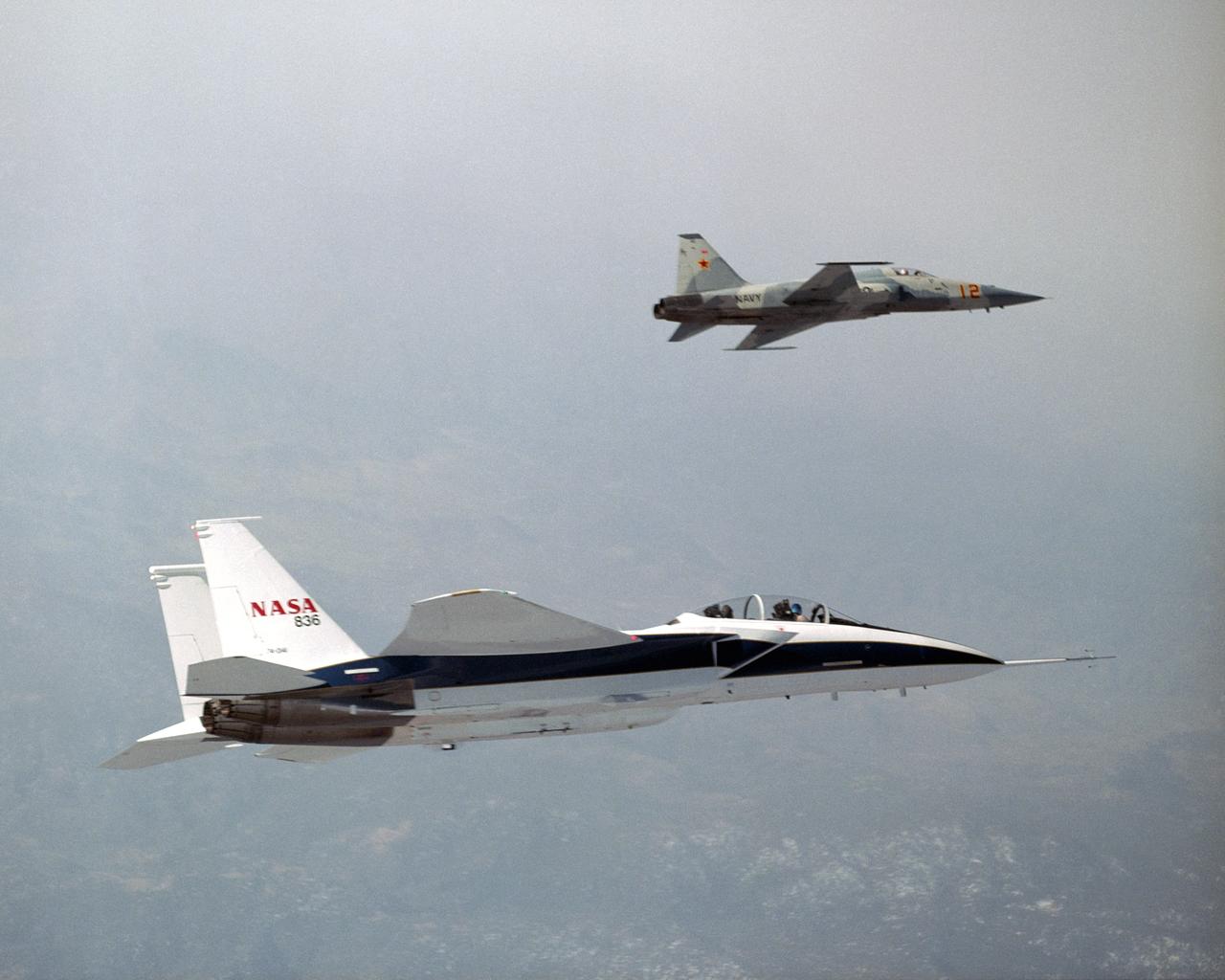
NASA's F-15B Research Testbed aircraft recently flew in the supersonic shock wave of a U.S. Navy F-5E in support of the F-5 Shaped Sonic Boom Demonstration (SSBD) project, part of the Defense Advanced Research Projects Agency's (DARPA) Quiet Supersonic Platform (QSP) program. The flights originated from the NASA Dryden Flight Research Center at Edwards, California. Four flights were flown in order to measure the F-5E's near-field (close-up) sonic boom signature at Mach 1.4, during which more than 50 shockwave patterns were measured at distances as close as 100 feet below the F-5E.
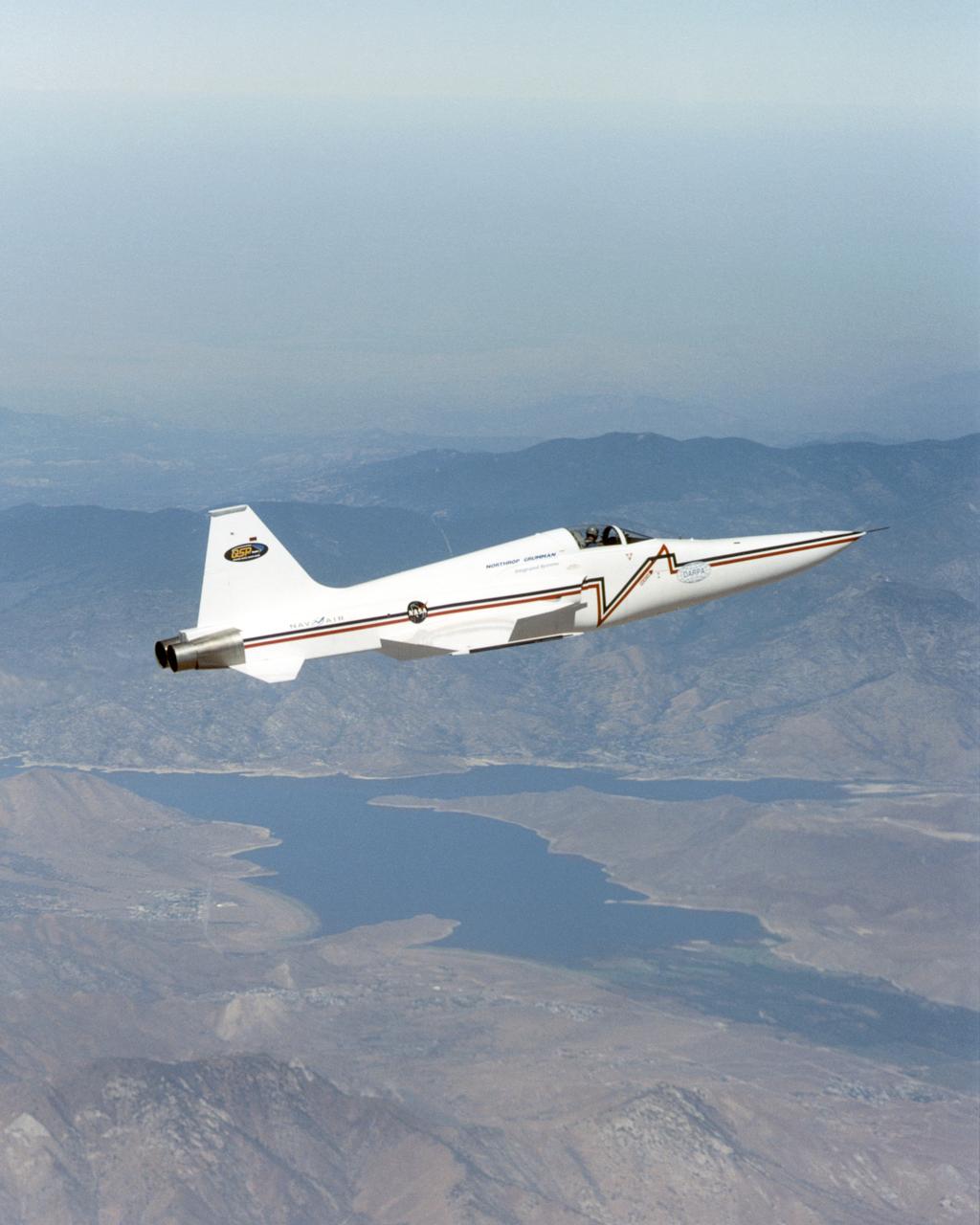
Northrop Grumman Corporation's modified U.S. Navy F-5E Shaped Sonic Boom Demonstration (SSBD) aircraft flies over Lake Isabella, California on Aug. 4, 2003. NASA Dryden provided range, air and ground data-gathering support for the SSBD project, which is part of DARPA's Quiet Supersonic Platform (QSP) program.
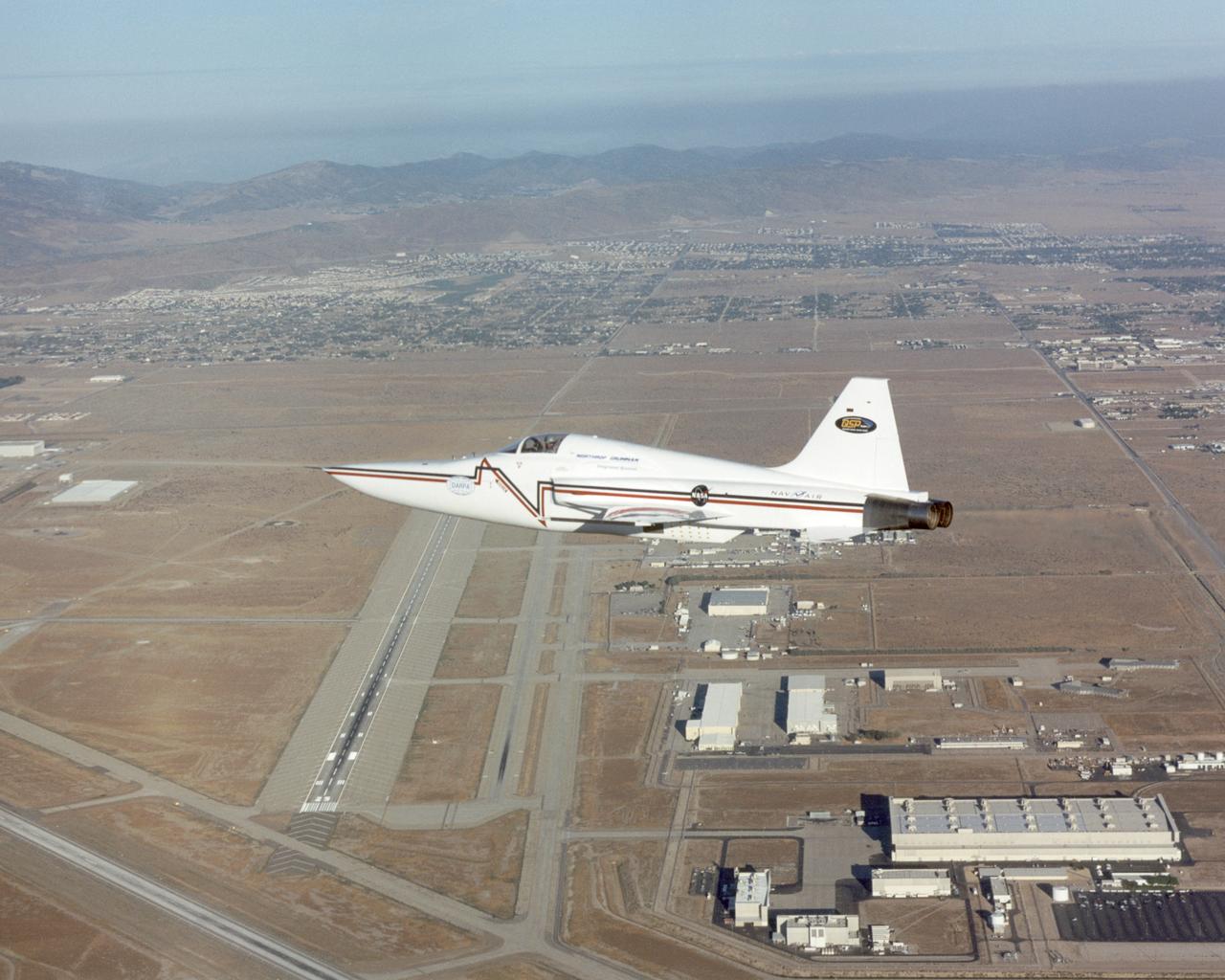
Northrop Grumman Corporation's modified U.S. Navy F-5E Shaped Sonic Boom Demonstration (SSBD) aircraft flies over the company's Palmdale, California facilities on Aug. 2, 2003. NASA Dryden provided range, air and ground data-gathering support for the SSBD project, which is part of DARPA's Quiet Supersonic Platform (QSP) program.
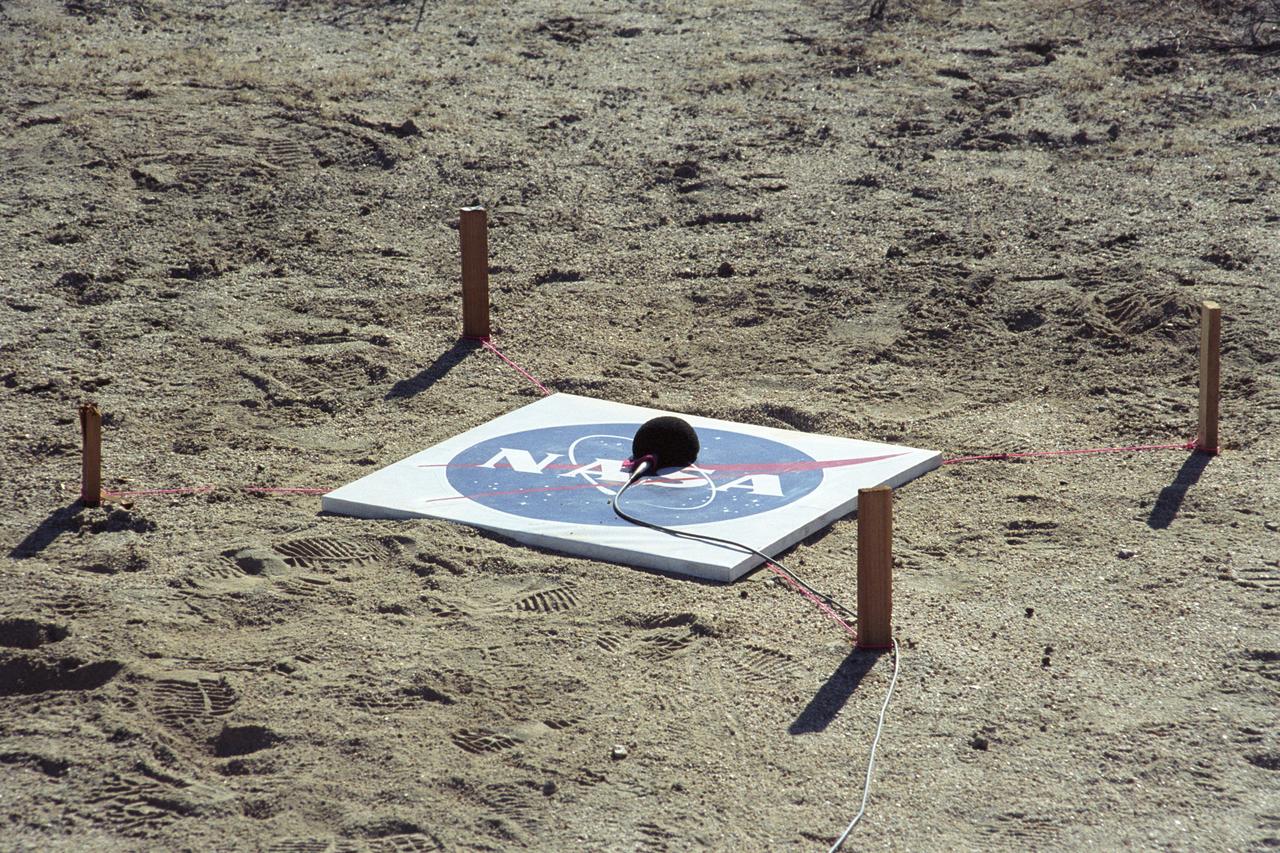
One of many microphones arrayed under the path of the F-5E SSBE (Shaped Sonic Boom Experiment) aircraft to record sonic booms. The SSBE (Shaped Sonic Boom Experiment) was formerly known as the Shaped Sonic Boom Demonstration, or SSBD, and is part of DARPA's Quiet Supersonic Platform (QSP) program. On August 27, 2003, the F-5E SSBD aircraft demonstrated a method to reduce the intensity of sonic booms.
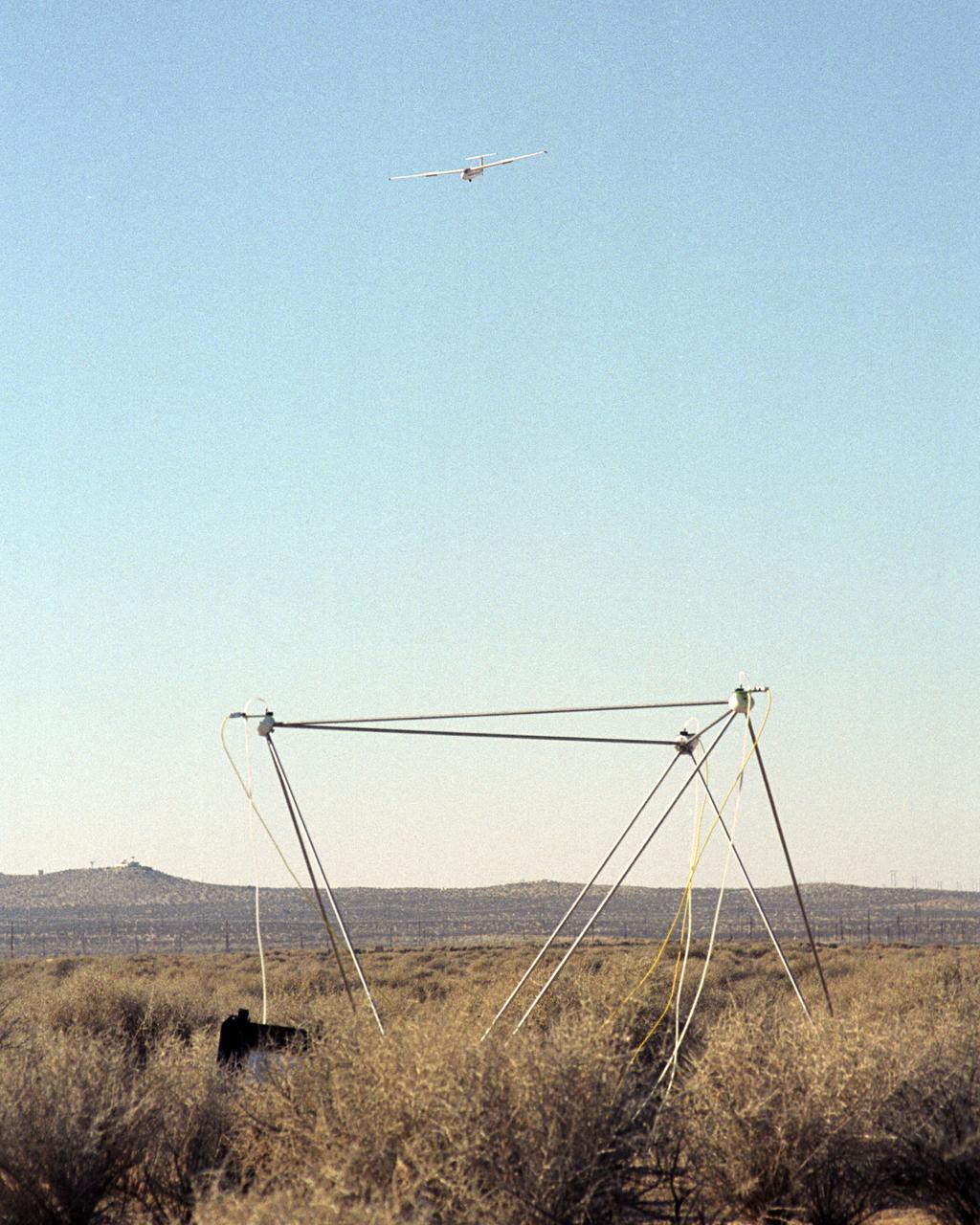
A United States Air Force Test Pilot School Blanik L-23 glider carrying a microphone and a pressure transducer flies near a BADS (Boom Amplitudes Direction System) sensor following flight at an altitude of 10 thousand feet under the path of the F-5E SSBE aircraft. The SSBE (Shaped Sonic Boom Experiment) was formerly known as the Shaped Sonic Boom Demonstration, or SSBD, and is part of DARPA's Quiet Supersonic Platform (QSP) program. On August 27, 2003, the F-5E SSBD aircraft demonstrated a method to reduce the intensity of sonic booms.

S96-12924 (14 February 1996) --- astronaut Stephen K. Robinson stands on a platform connected to a hoist that will lower him and astronaut Robert L. Curbeam, Jr. (view obscured, other side of platform) into Johnson Space Center's (JSC) Weightless Environment Test Facility (WET-F) pool. The two were about to participate in an underwater simulation of contingency Extravehicular Activity (EVA) that might be needed to support the scheduled 11-day August 1997 STS-85 mission.

STS-48 Mission Specialist (MS) James F. Buchli, wearing an extravehicular mobility unit (EMU), is watched by SCUBA-equipped divers as the platform he is standing on is lowered into JSC's Weightless Environment Training Facility (WETF) Bldg 29 pool. When completely underwater, Buchli will be released from the platform and will perform contingency extravehicular activity (EVA) operations. This underwater simulation of a spacewalk is part of the training required for Buchli's upcoming mission aboard Discovery, Orbiter Vehicle (OV) 103.
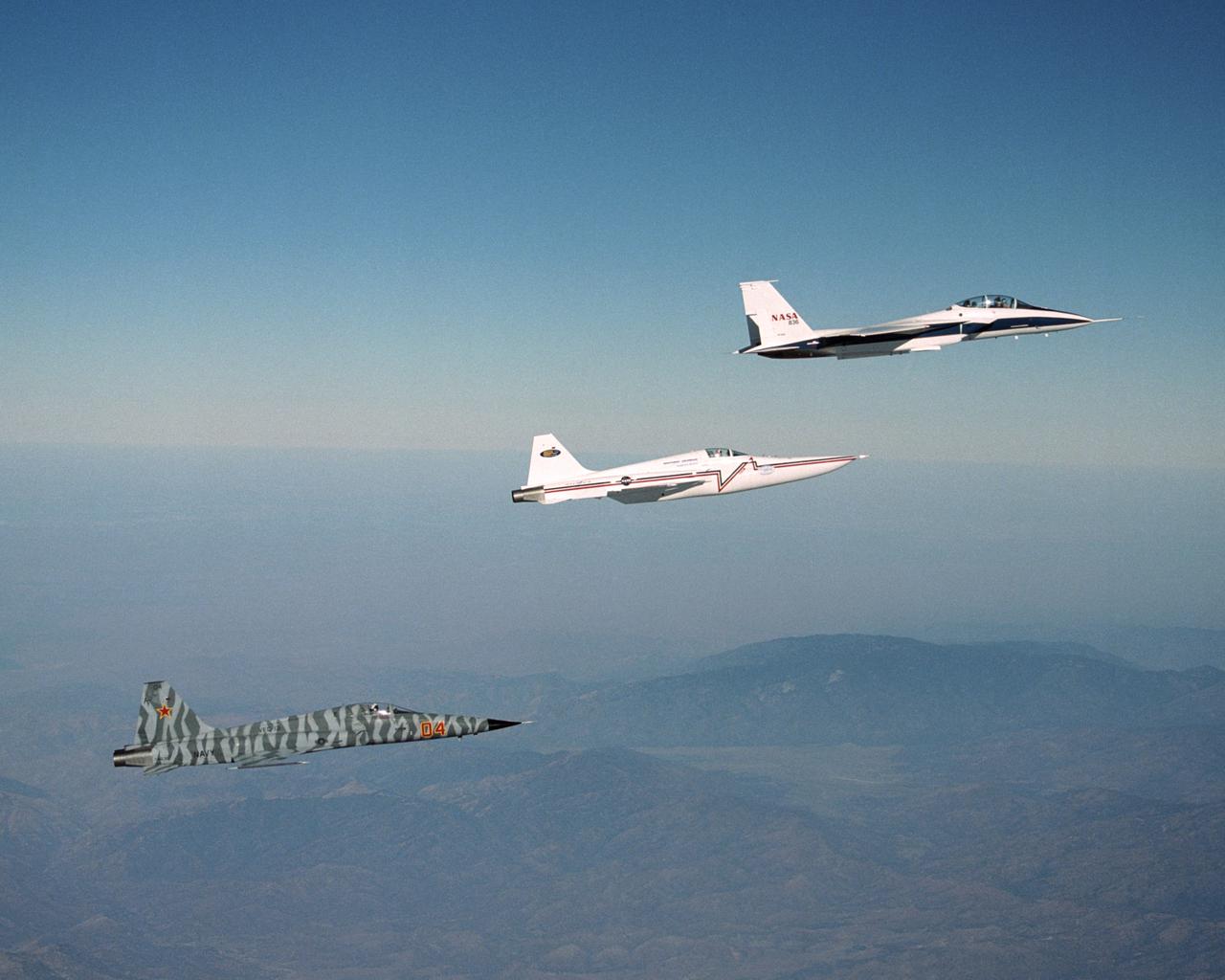
In a role-reversal, Northrop Grumman Corp.'s modified F-5E Shaped Sonic Boom Demonstration (SSBD) aircraft flies off the wing of NASA's F-15B Research testbed aircraft. The F-15B, from NASA's Dryden Flight Research Center, flew in the supersonic shockwave of the F-5E as part of the SSBD project. Following the two aircraft is an unmodified U.S. Navy F-5E used for baseline sonic boom measurements.
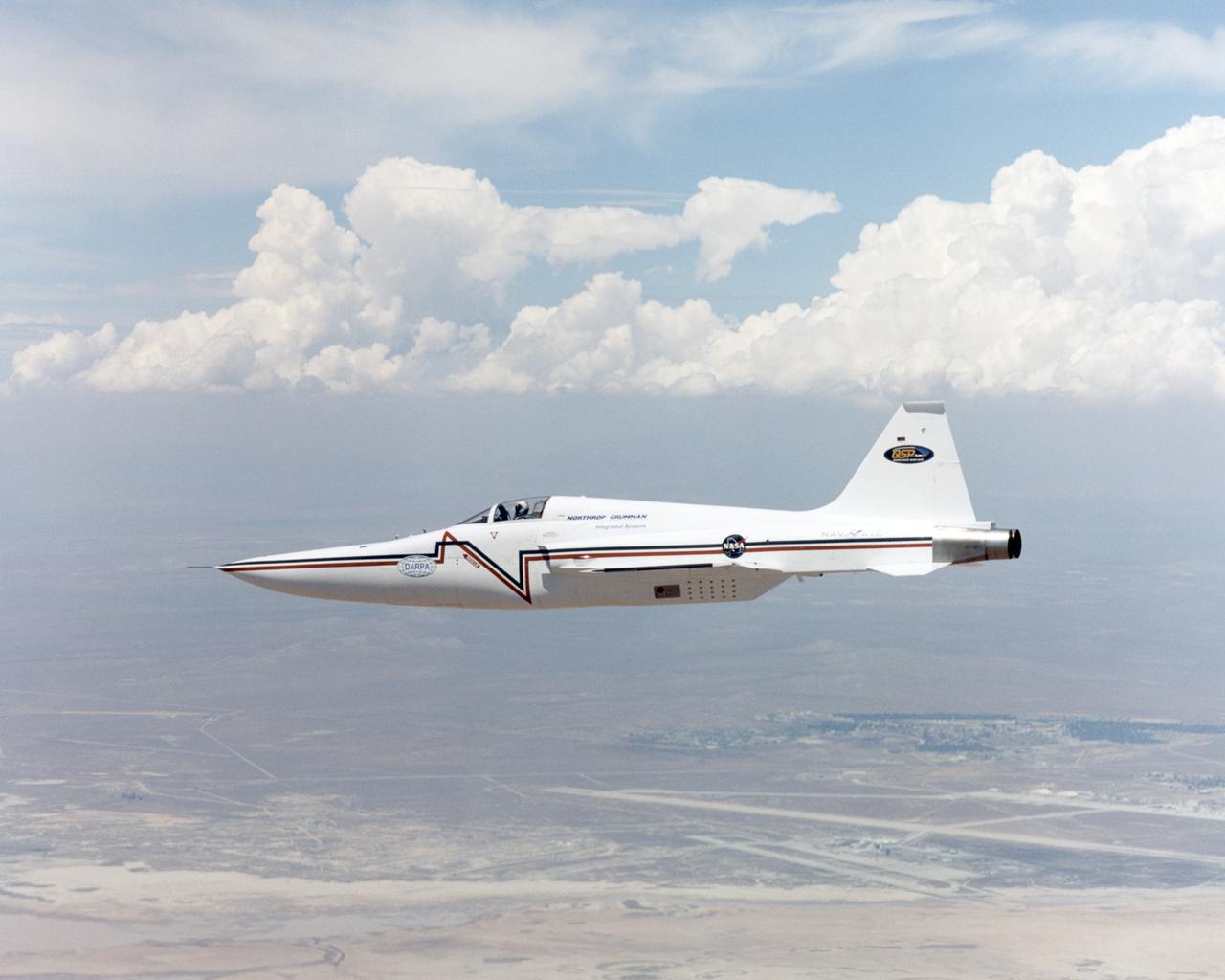
Northrop-Grumman Corporation's modified U.S. Navy F-5E Shaped Sonic Boom Demonstration (SSBD) aircraft.
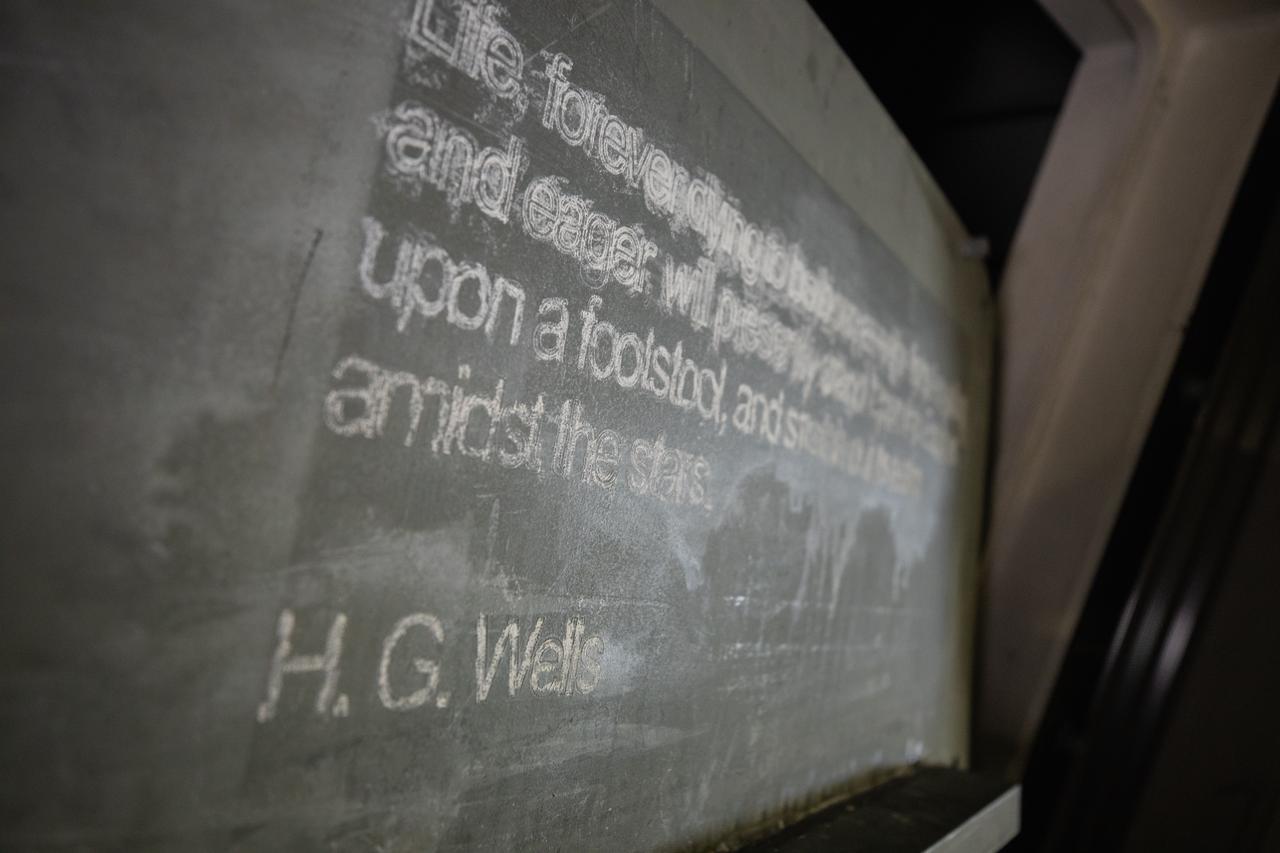
Each of the eight haunch access doors located in the mobile launcher platform contains an inspirational quote related to space travel. The quotes are from John F. Kennedy, H.G. Wells and Werner Von Braun, among others. The heavy metal doors will be bolted in place to protect electrical and support systems during liftoff of the Space Launch System rocket and Orion spacecraft.
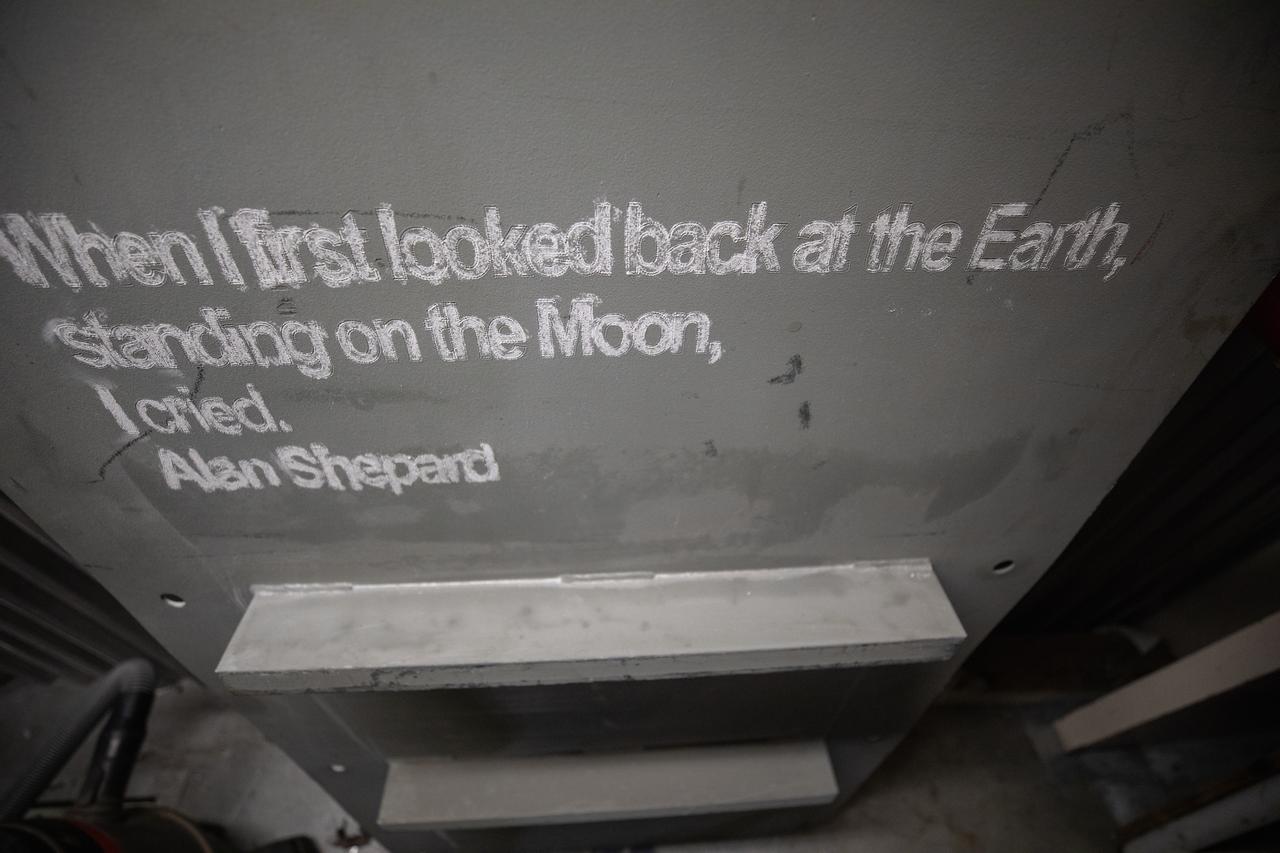
Each of the eight haunch access doors located in the mobile launcher platform contains an inspirational quote related to space travel. The quotes are from John F. Kennedy, H.G. Wells and Werner Von Braun, among others. The heavy metal doors will be bolted in place to protect electrical and support systems during liftoff of the Space Launch System rocket and Orion spacecraft.
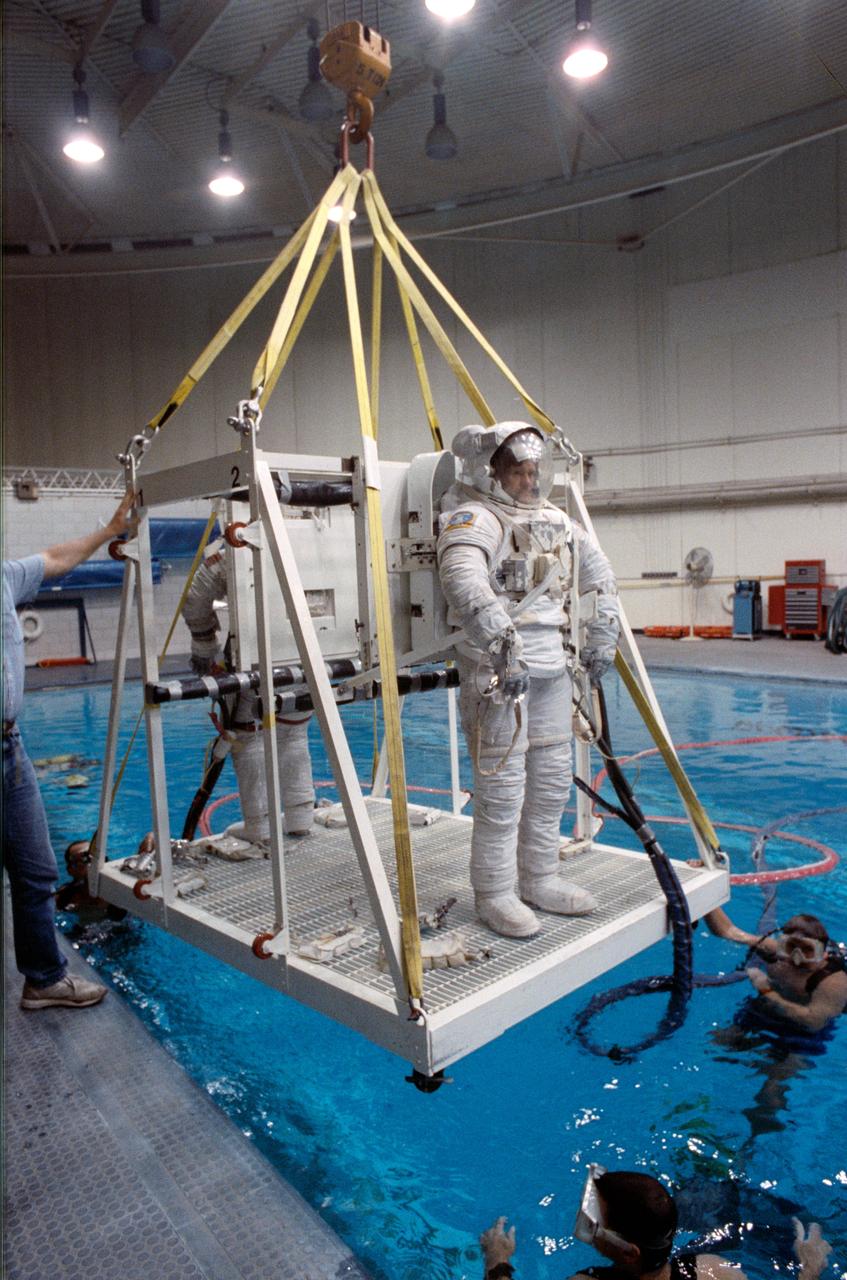
S90-46030 (Aug 1990) --- Astronaut Donald R. McMonagle (foreground) wears an extravehicular mobility unit (EMU) spacesuit as he prepares to be lowered into a 25-ft. deep pool at the Johnson Space Center's weightless environment training facility (WET-F). Astronaut Gregory J. Harbaugh, a fellow STS 39 mission specialist, shares the moveable platform with McMonagle and prepares to join him in the simulation of a contingency extravehicular activity (EVA) for the mission, scheduled for Discovery in the spring of 1991. A number of SCUBA-equipped divers assist in the training session.

S96-12948 (14 February 1996) --- Astronaut Robert L. Curbeam, Jr. stands on a platform connected to a hoist that will lower him and astronaut Stephen L. Robinson (out of frame) into Johnson Space Center's (JSC) Weightless Environment Test Facility (WET-F) pool. The two, attired in training versions of the Extravehicular Mobility Unit (EMU), were about to participate in an underwater simulation of contingency Extravehicular Activity (EVA) for the scheduled 11-day August 1997 STS-85 mission.
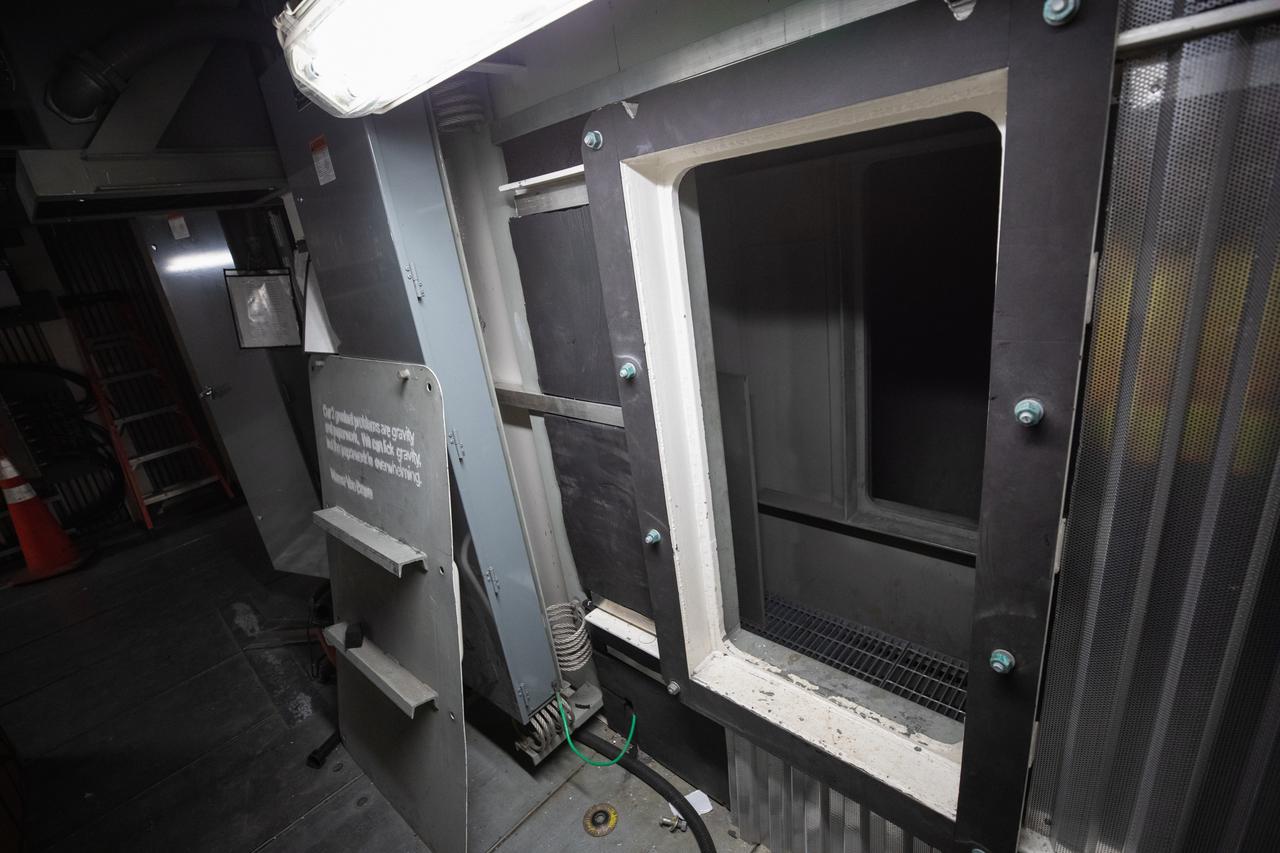
Each of the eight haunch access doors located in the mobile launcher platform contains an inspirational quote related to space travel. The quotes are from John F. Kennedy, H.G. Wells and Werner Von Braun, among others. The heavy metal doors will be bolted in place to protect electrical and support systems during liftoff of the Space Launch System rocket and Orion spacecraft.
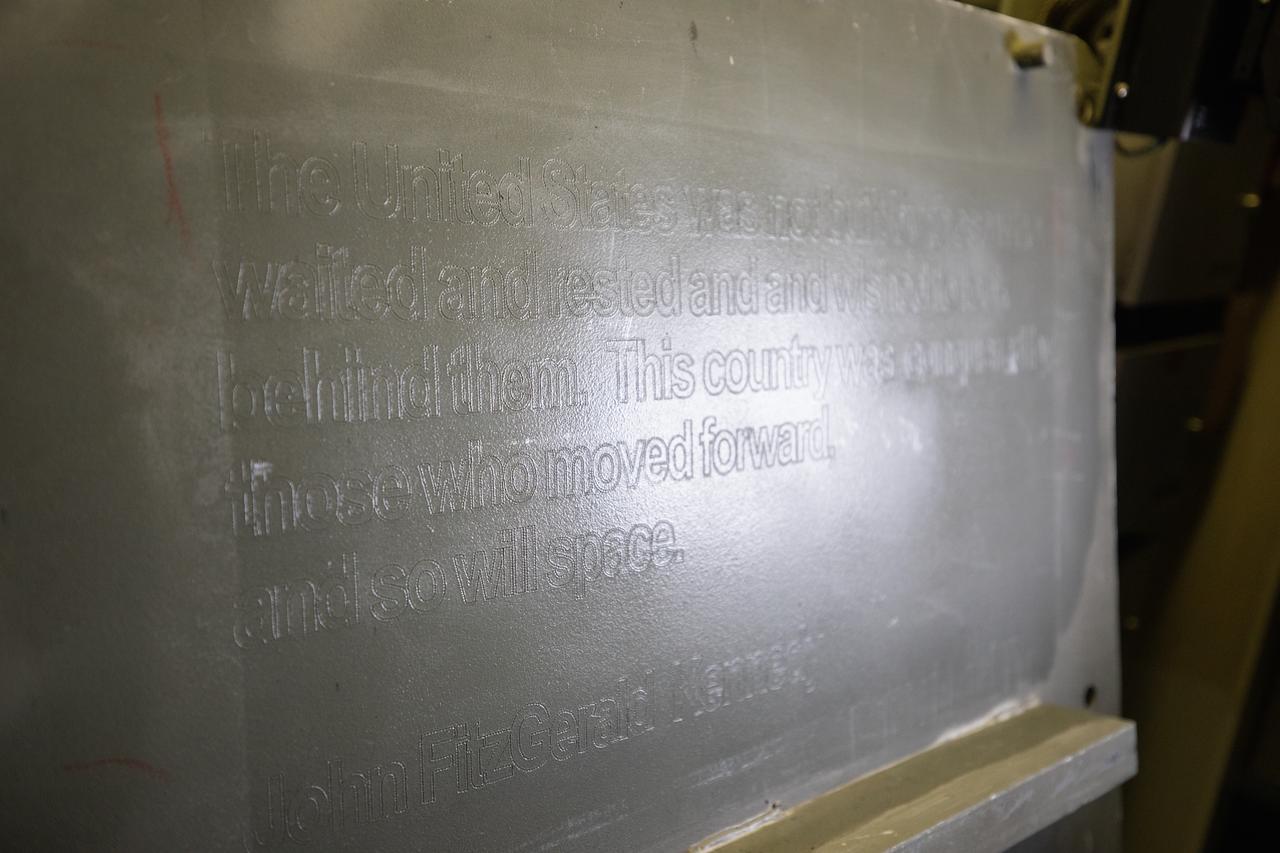
Each of the eight haunch access doors located in the mobile launcher platform contains an inspirational quote related to space travel. The quotes are from John F. Kennedy, H.G. Wells and Werner Von Braun, among others. The heavy metal doors will be bolted in place to protect electrical and support systems during liftoff of the Space Launch System rocket and Orion spacecraft.
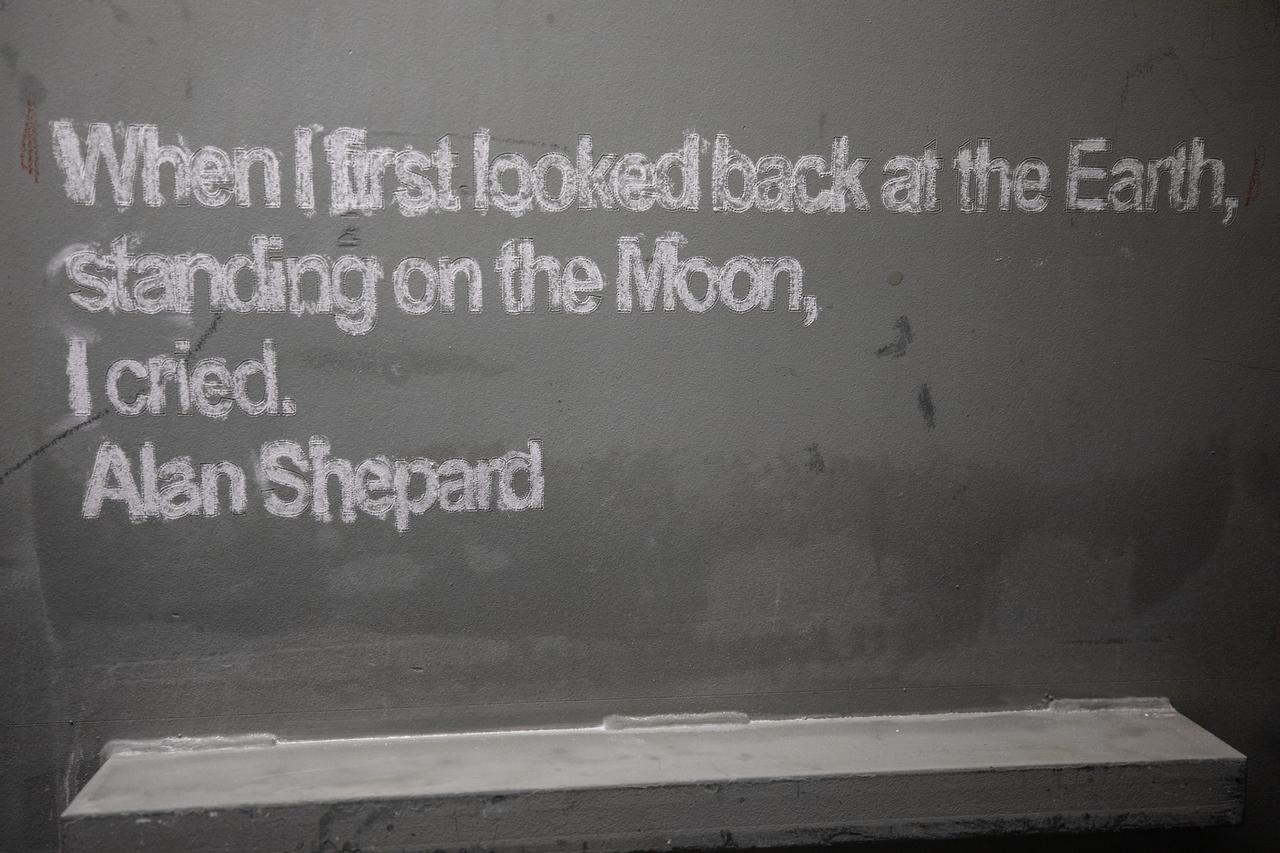
Each of the eight haunch access doors located in the mobile launcher platform contains an inspirational quote related to space travel. The quotes are from John F. Kennedy, H.G. Wells and Werner Von Braun, among others. The heavy metal doors will be bolted in place to protect electrical and support systems during liftoff of the Space Launch System rocket and Orion spacecraft.
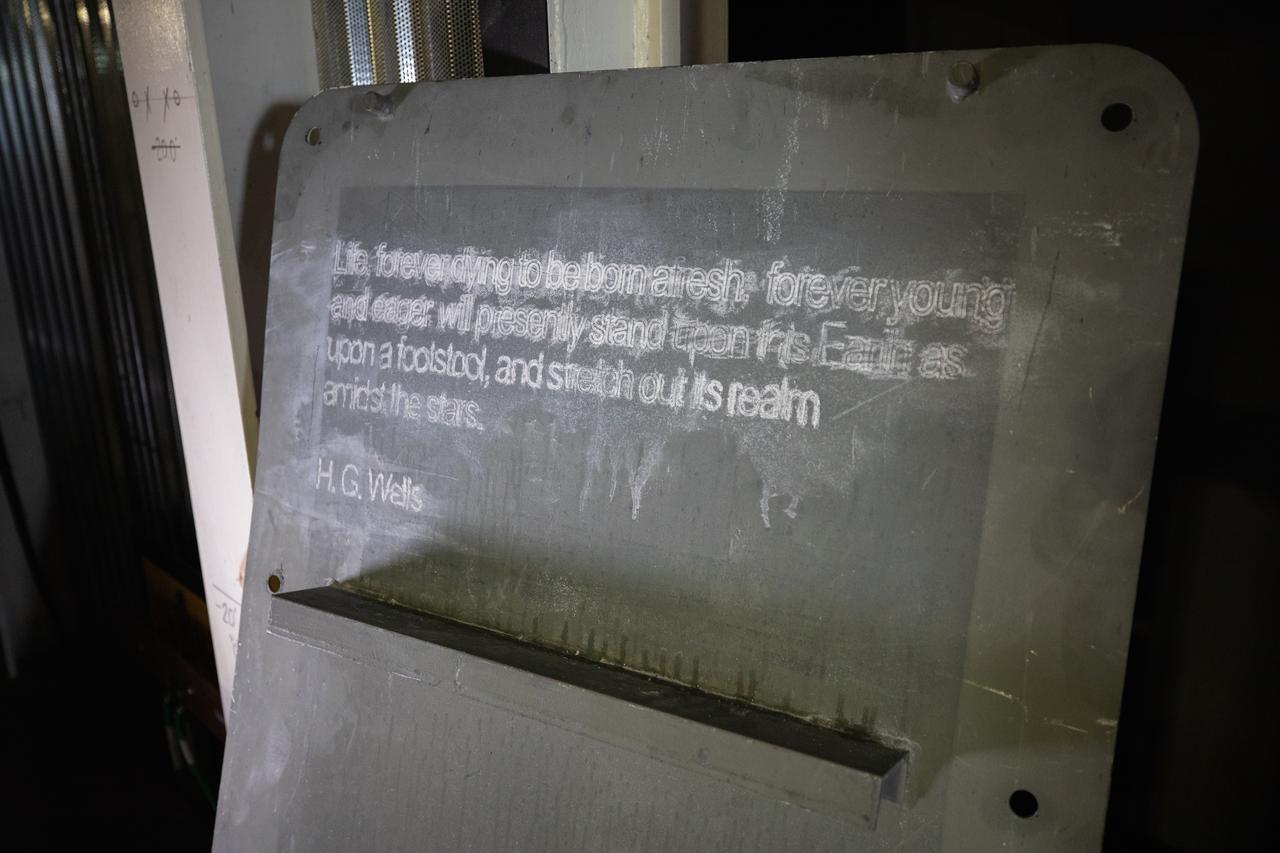
Each of the eight haunch access doors located in the mobile launcher platform contains an inspirational quote related to space travel. The quotes are from John F. Kennedy, H.G. Wells and Werner Von Braun, among others. The heavy metal doors will be bolted in place to protect electrical and support systems during liftoff of the Space Launch System rocket and Orion spacecraft.
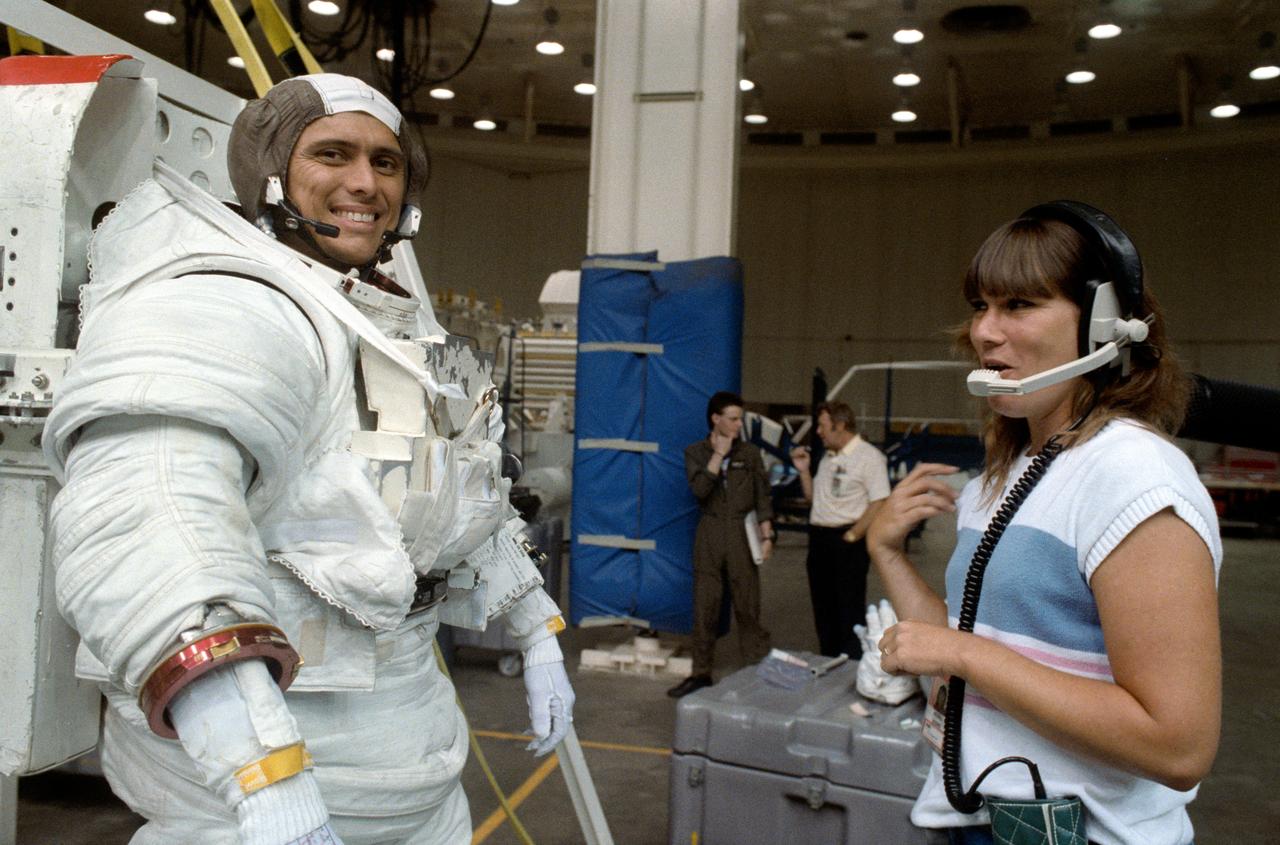
S89-42667 (24 Aug 1989) --- Astronaut Franklin R. Chang-Diaz tests his communications gear with Pam S. Peters of RSO, prior to participating in an underwater simulation of a contingency extravehicular activity (EVA) for his mission specialist assignment on NASA's STS-34 mission. He stands on a platform that will lower him into a 25-ft. deep pool, part of JSC's weightless environmental test facility (WET-F). Also participating in the contingency EVA rehearsal was astronaut Ellen S. Baker (out of frame).
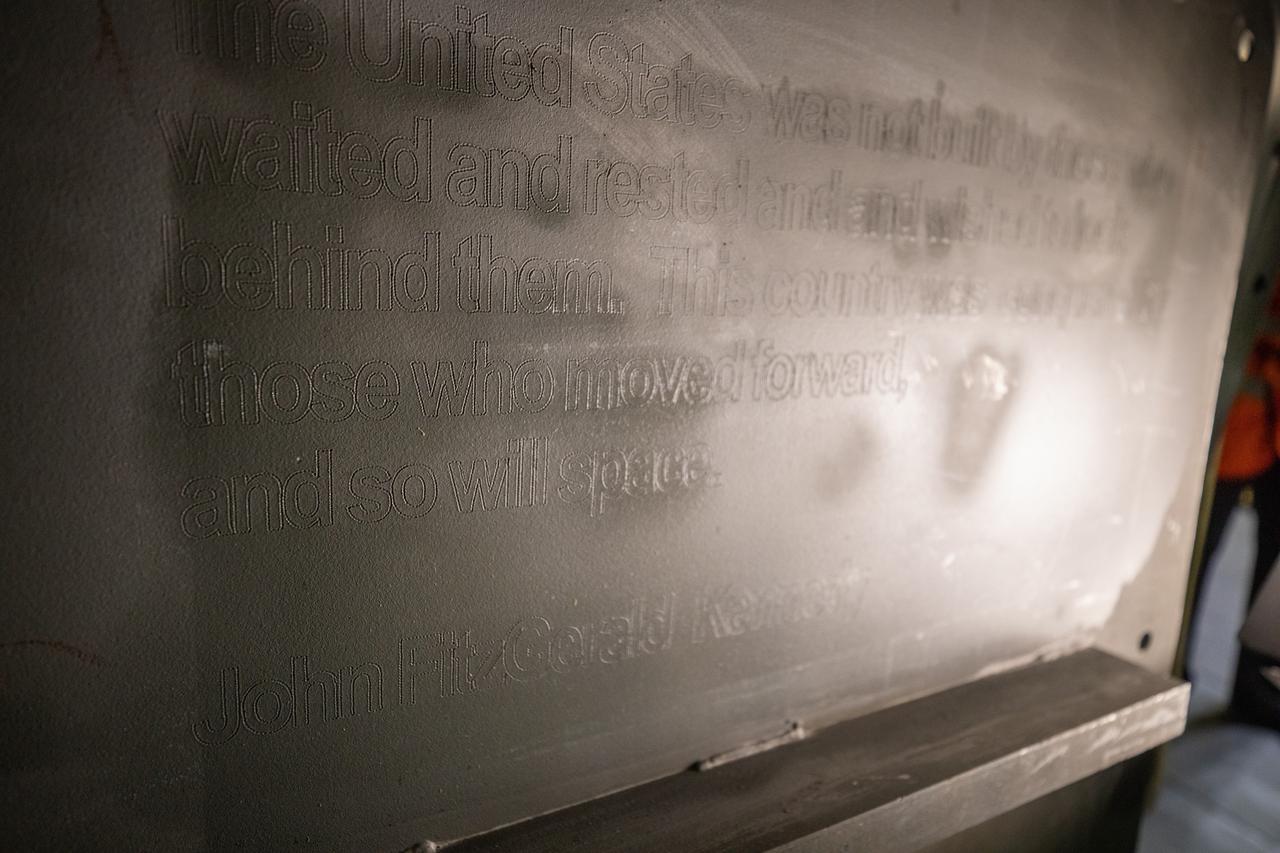
Each of the eight haunch access doors located in the mobile launcher platform contains an inspirational quote related to space travel. The quotes are from John F. Kennedy, H.G. Wells and Werner Von Braun, among others. The heavy metal doors will be bolted in place to protect electrical and support systems during liftoff of the Space Launch System rocket and Orion spacecraft.
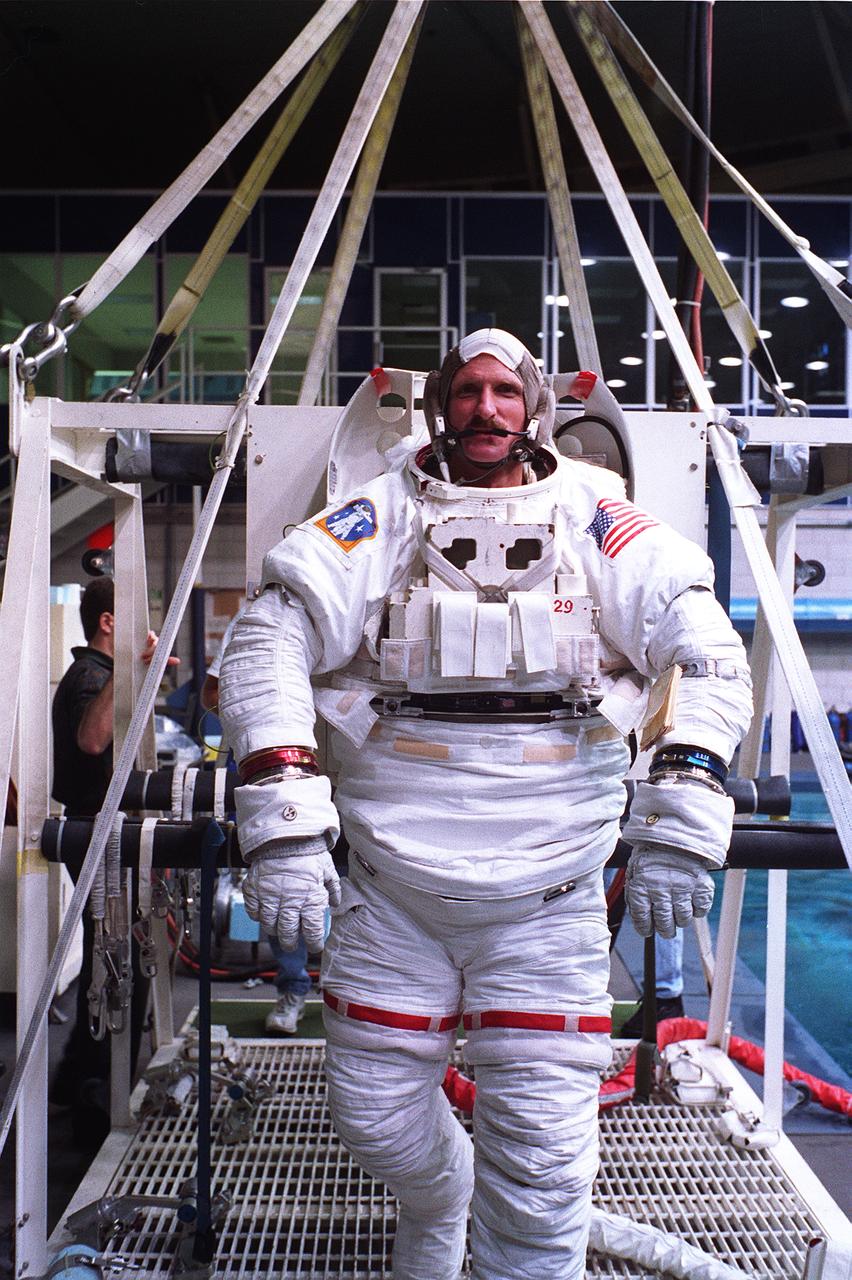
S96-12829 (10 June 1996) --- Awaiting his helmet, astronaut Joseph R. Tanner, STS-82 mission specialist assigned to extravehicular activity (EVA) involved with the servicing of the Hubble Space Telescope (HST), is about to be submerged in a 25-ft. deep pool at the Johnson Space Center's weightless environment training facility (WET-F). Obscured in this frame, astronaut Gregory J. Harbaugh was on the other side of the platform, waiting to join Tanner in the spacewalk rehearsal.
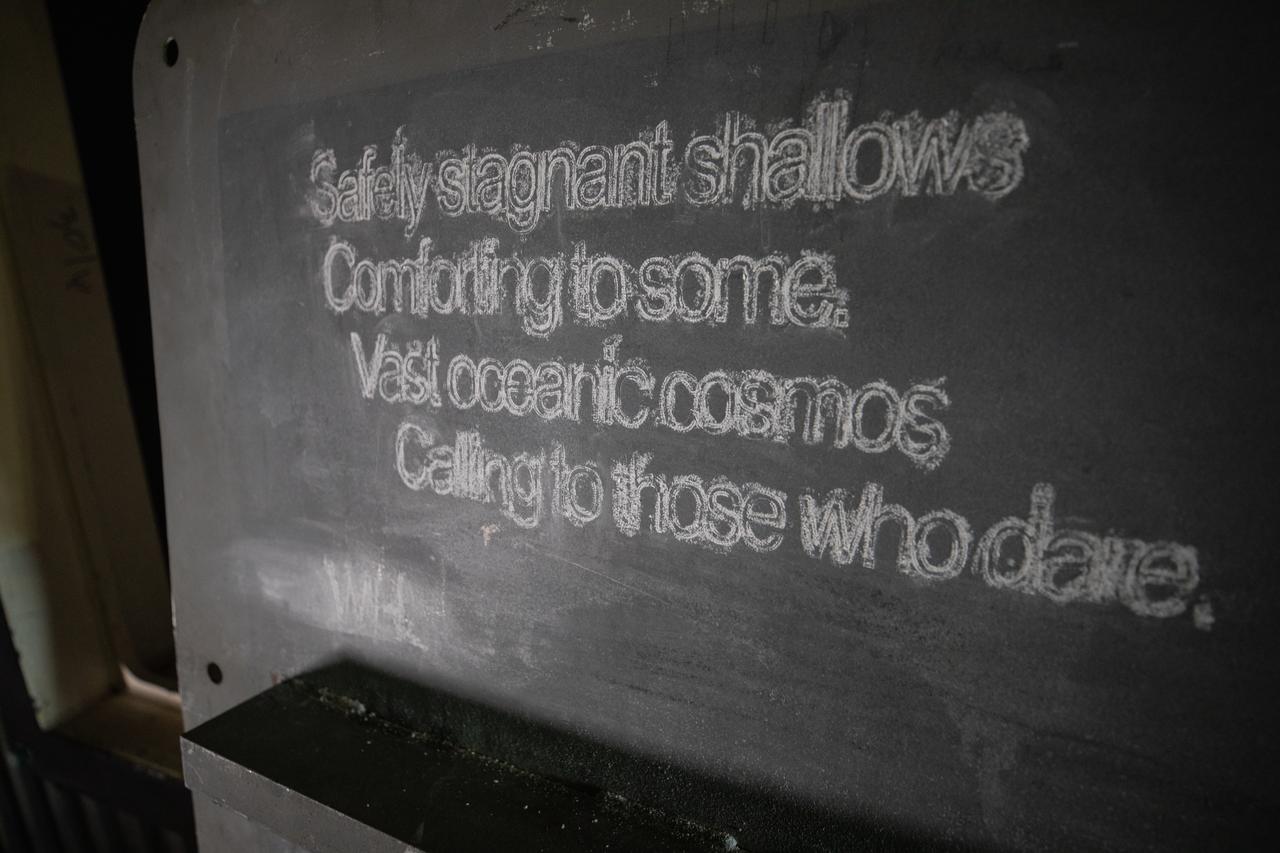
Each of the eight haunch access doors located in the mobile launcher platform contains an inspirational quote related to space travel. The quotes are from John F. Kennedy, H.G. Wells and Werner Von Braun, among others. The heavy metal doors will be bolted in place to protect electrical and support systems during liftoff of the Space Launch System rocket and Orion spacecraft.
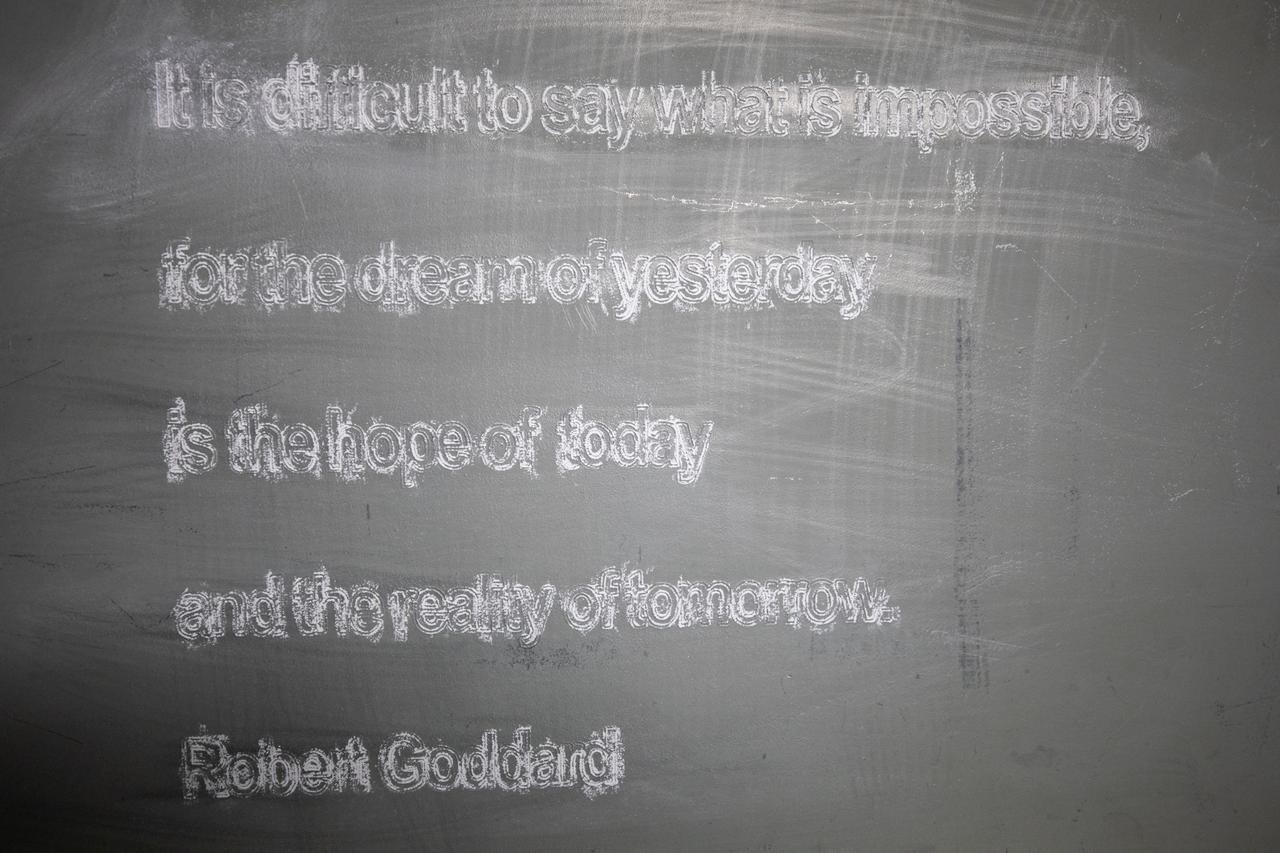
Each of the eight haunch access doors located in the mobile launcher platform contains an inspirational quote related to space travel. The quotes are from John F. Kennedy, H.G. Wells and Werner Von Braun, among others. The heavy metal doors will be bolted in place to protect electrical and support systems during liftoff of the Space Launch System rocket and Orion spacecraft.
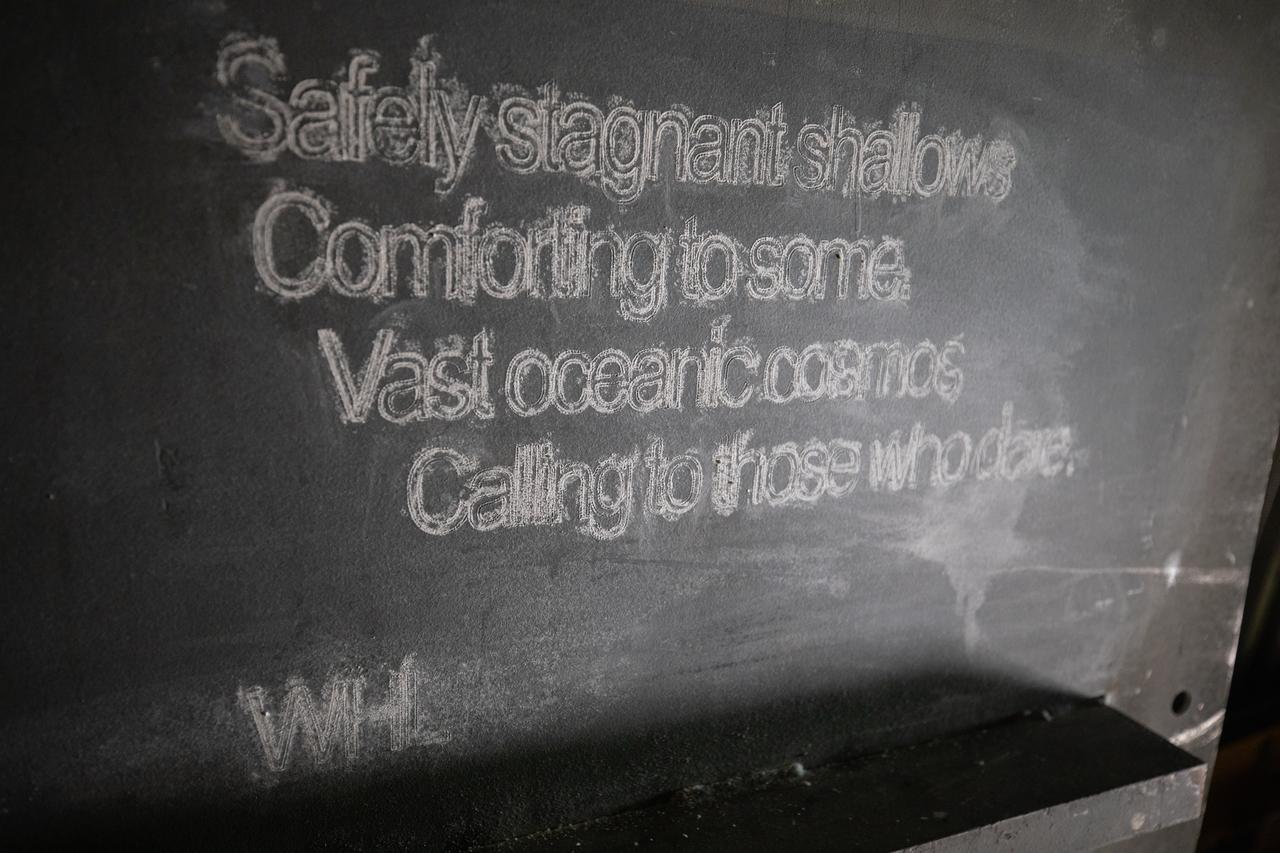
Each of the eight haunch access doors located in the mobile launcher platform contains an inspirational quote related to space travel. The quotes are from John F. Kennedy, H.G. Wells and Werner Von Braun, among others. The heavy metal doors will be bolted in place to protect electrical and support systems during liftoff of the Space Launch System rocket and Orion spacecraft.
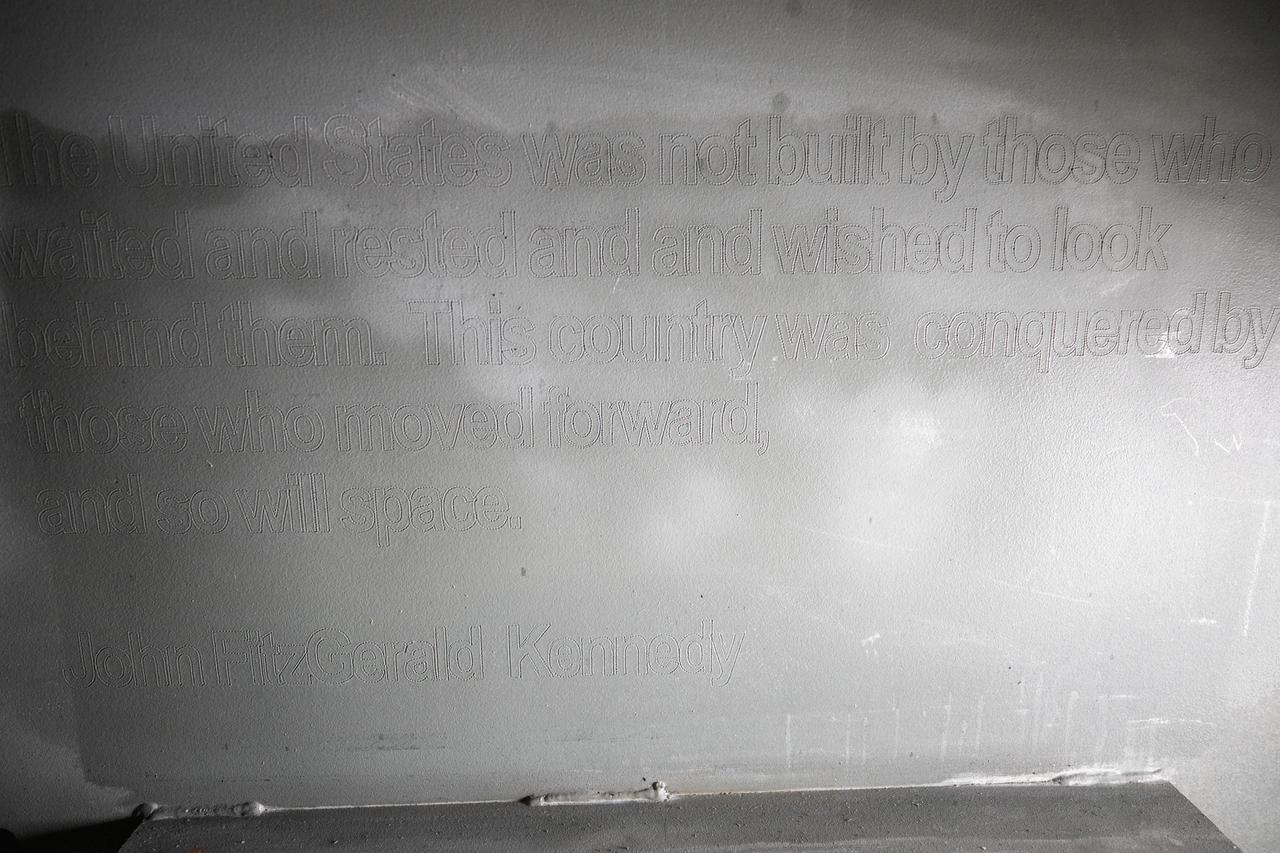
Each of the eight haunch access doors located in the mobile launcher platform contains an inspirational quote related to space travel. The quotes are from John F. Kennedy, H.G. Wells and Werner Von Braun, among others. The heavy metal doors will be bolted in place to protect electrical and support systems during liftoff of the Space Launch System rocket and Orion spacecraft.
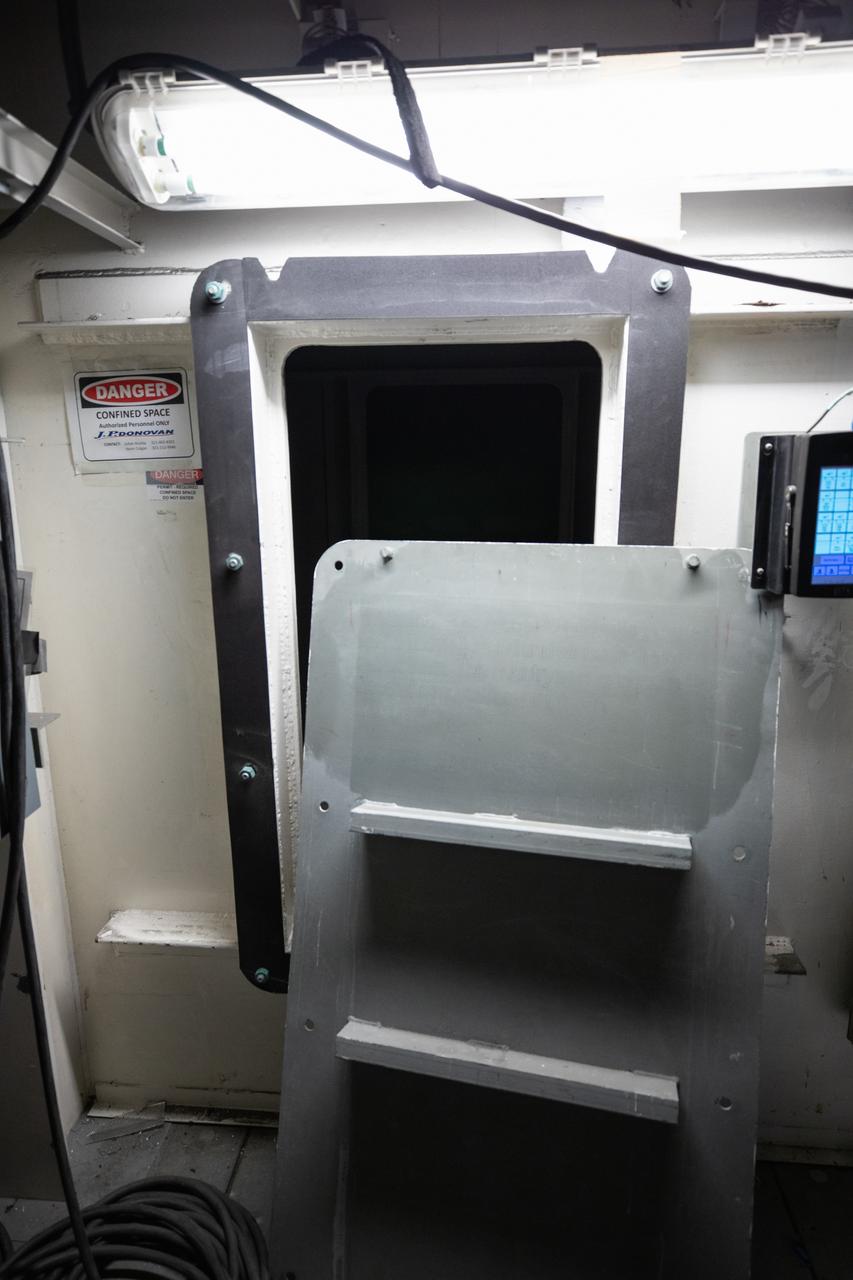
Each of the eight haunch access doors located in the mobile launcher platform contains an inspirational quote related to space travel. The quotes are from John F. Kennedy, H.G. Wells and Werner Von Braun, among others. The heavy metal doors will be bolted in place to protect electrical and support systems during liftoff of the Space Launch System rocket and Orion spacecraft.
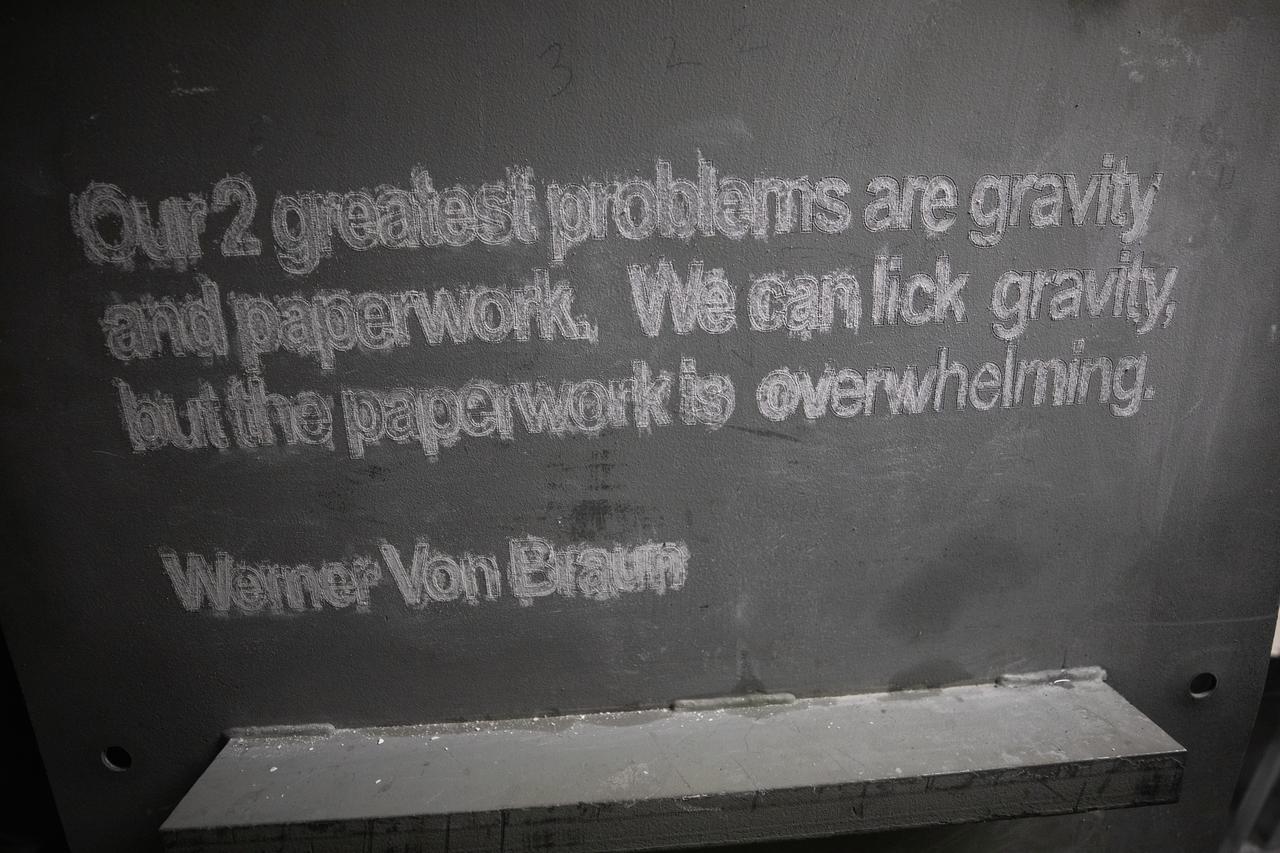
Each of the eight haunch access doors located in the mobile launcher platform contains an inspirational quote related to space travel. The quotes are from John F. Kennedy, H.G. Wells and Werner Von Braun, among others. The heavy metal doors will be bolted in place to protect electrical and support systems during liftoff of the Space Launch System rocket and Orion spacecraft.
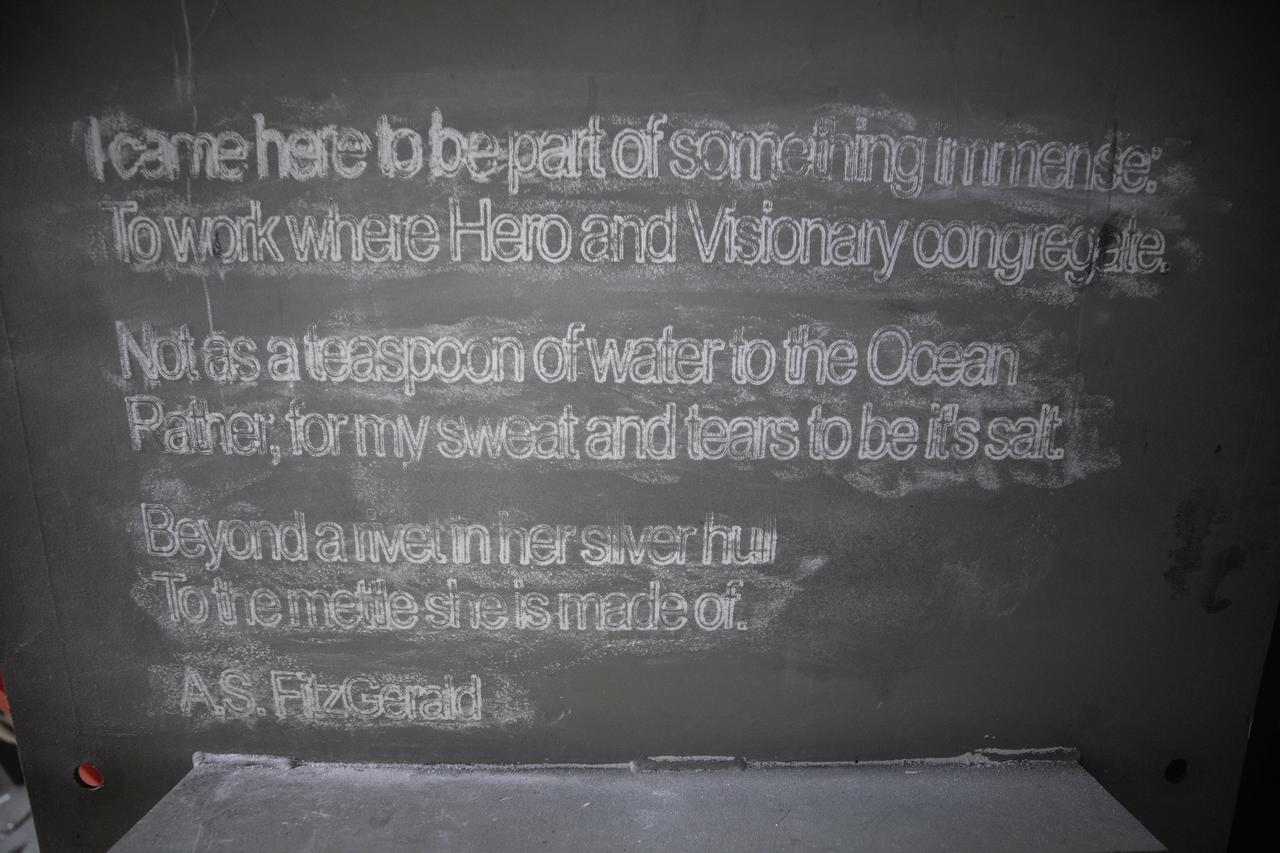
Each of the eight haunch access doors located in the mobile launcher platform contains an inspirational quote related to space travel. The quotes are from John F. Kennedy, H.G. Wells and Werner Von Braun, among others. The heavy metal doors will be bolted in place to protect electrical and support systems during liftoff of the Space Launch System rocket and Orion spacecraft.
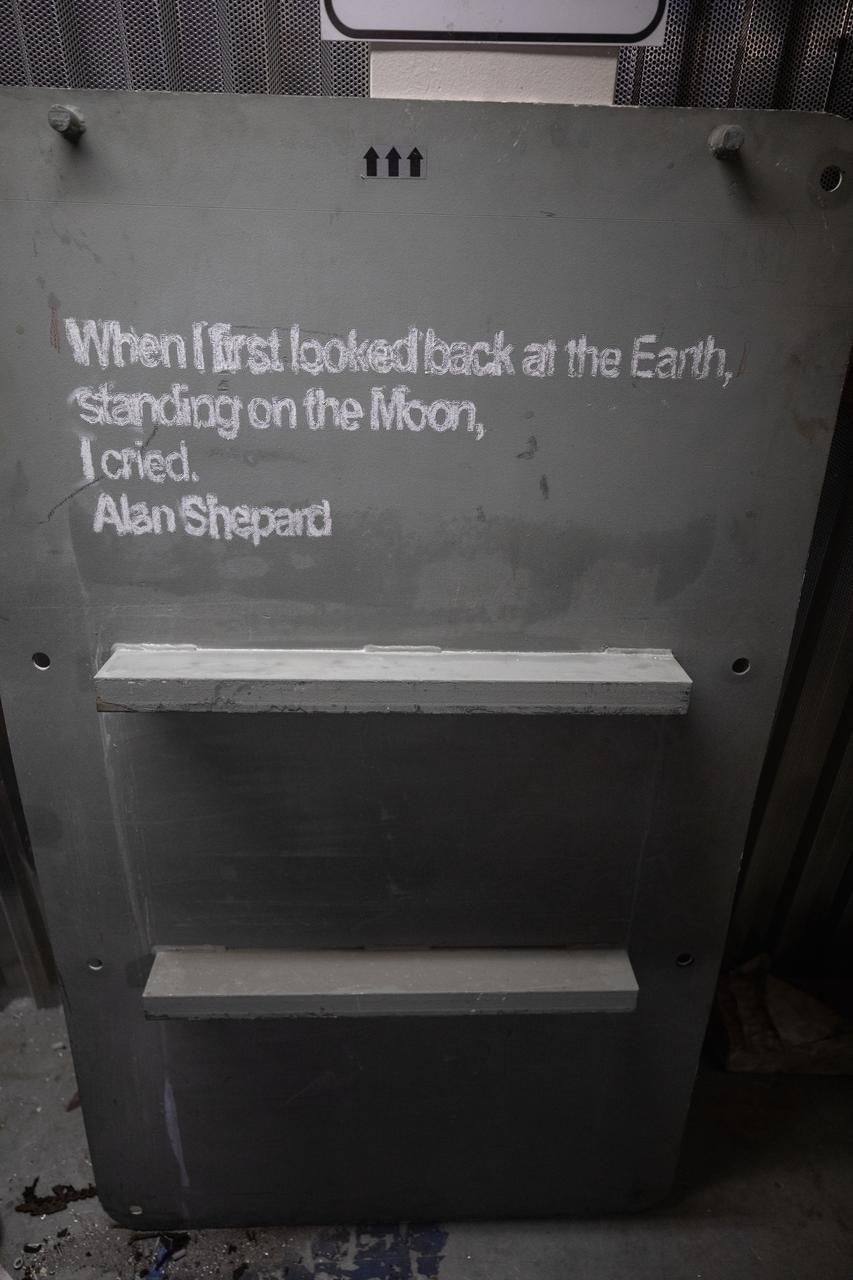
Each of the eight haunch access doors located in the mobile launcher platform contains an inspirational quote related to space travel. The quotes are from John F. Kennedy, H.G. Wells and Werner Von Braun, among others. The heavy metal doors will be bolted in place to protect electrical and support systems during liftoff of the Space Launch System rocket and Orion spacecraft.
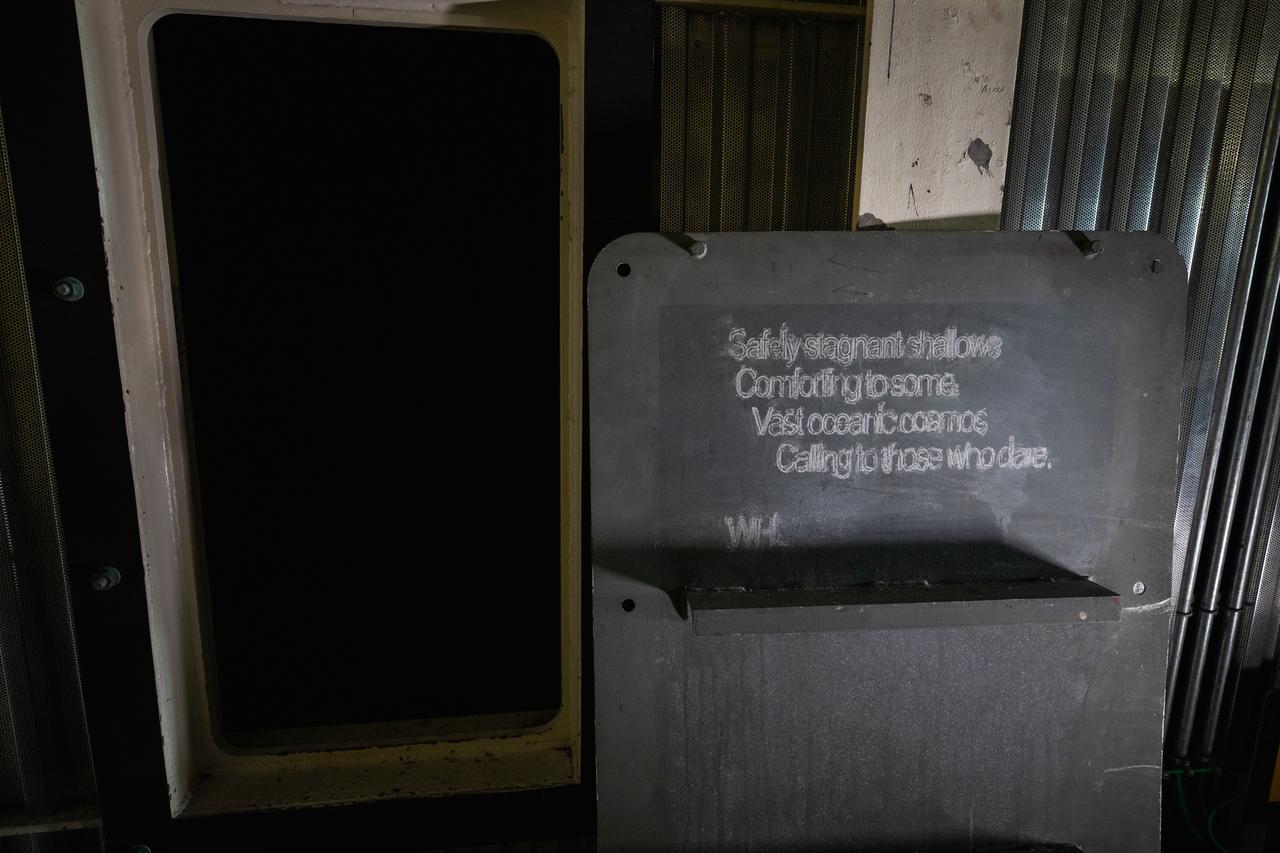
Each of the eight haunch access doors located in the mobile launcher platform contains an inspirational quote related to space travel. The quotes are from John F. Kennedy, H.G. Wells and Werner Von Braun, among others. The heavy metal doors will be bolted in place to protect electrical and support systems during liftoff of the Space Launch System rocket and Orion spacecraft.
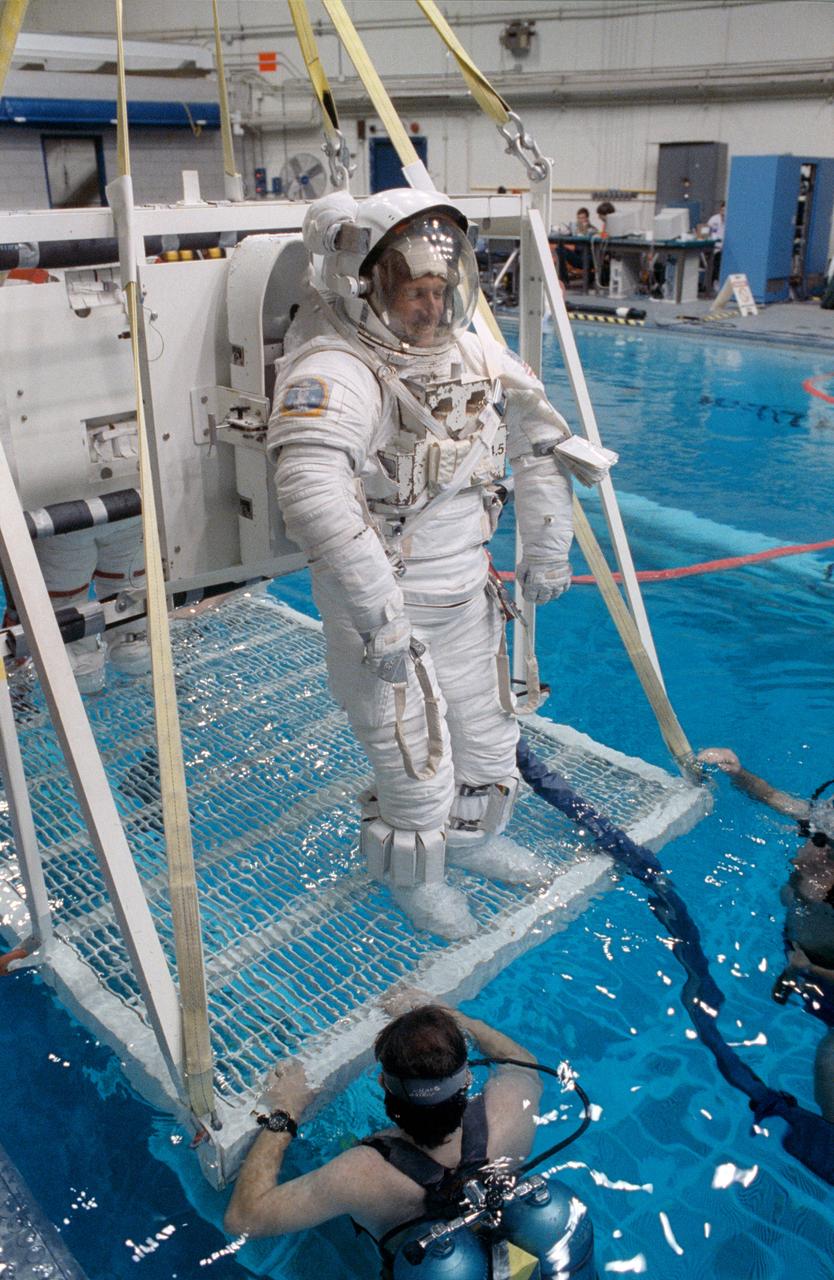
S91-30197 (1 March 1991) --- A wider shot of astronaut C. Michael Foale, mission specialist, standing on a platform which is part of a system that will lower him into a 25-ft. deep pool. Foale used the pool in the weightless environment training facility (WET-F) to rehearse a contingency extravehicular activity (EVA). Two SCUBA-equipped swimmers assist. Astronauts wear pressurized spacesuits configured for achieving a neutrally buoyant condition in the water to simulate both planned and contingency EVAs.
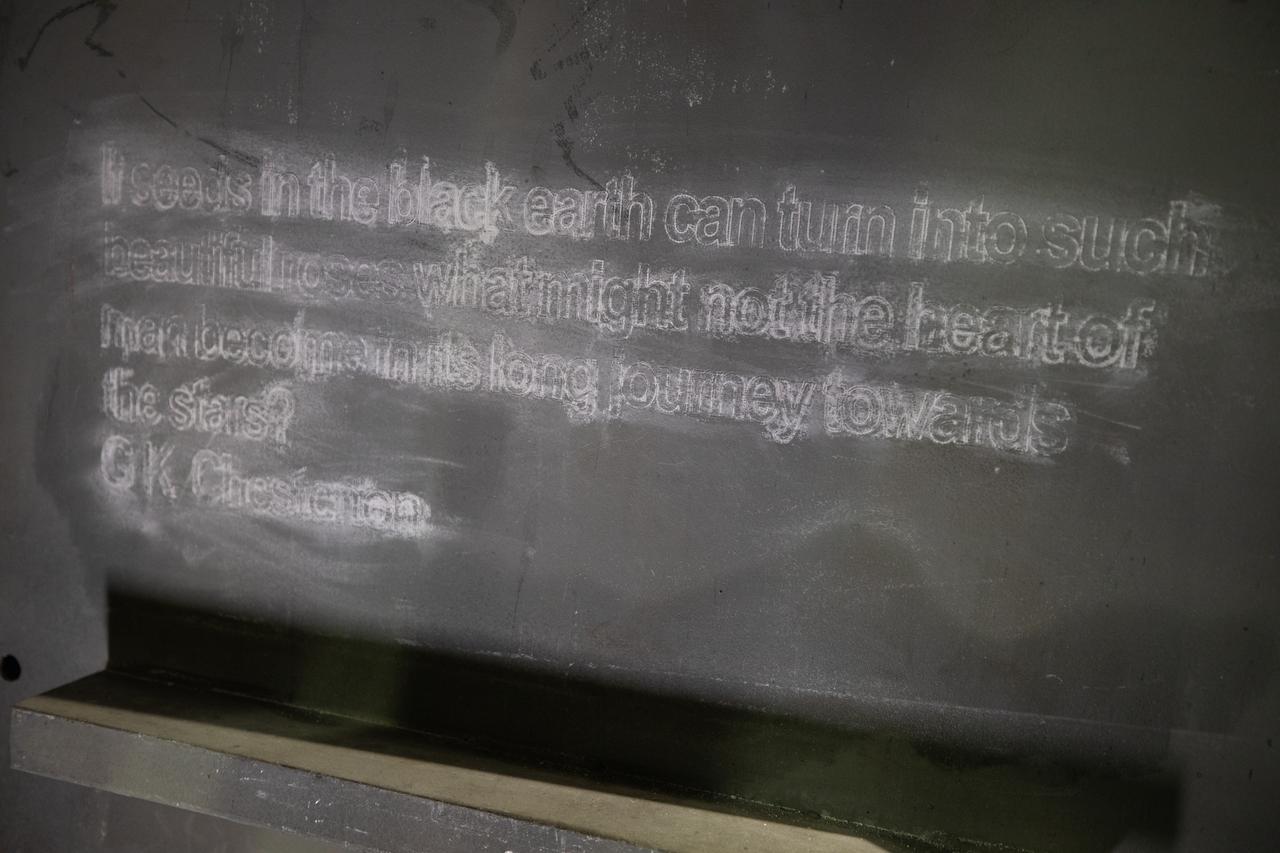
Each of the eight haunch access doors located in the mobile launcher platform contains an inspirational quote related to space travel. The quotes are from John F. Kennedy, H.G. Wells and Werner Von Braun, among others. The heavy metal doors will be bolted in place to protect electrical and support systems during liftoff of the Space Launch System rocket and Orion spacecraft.
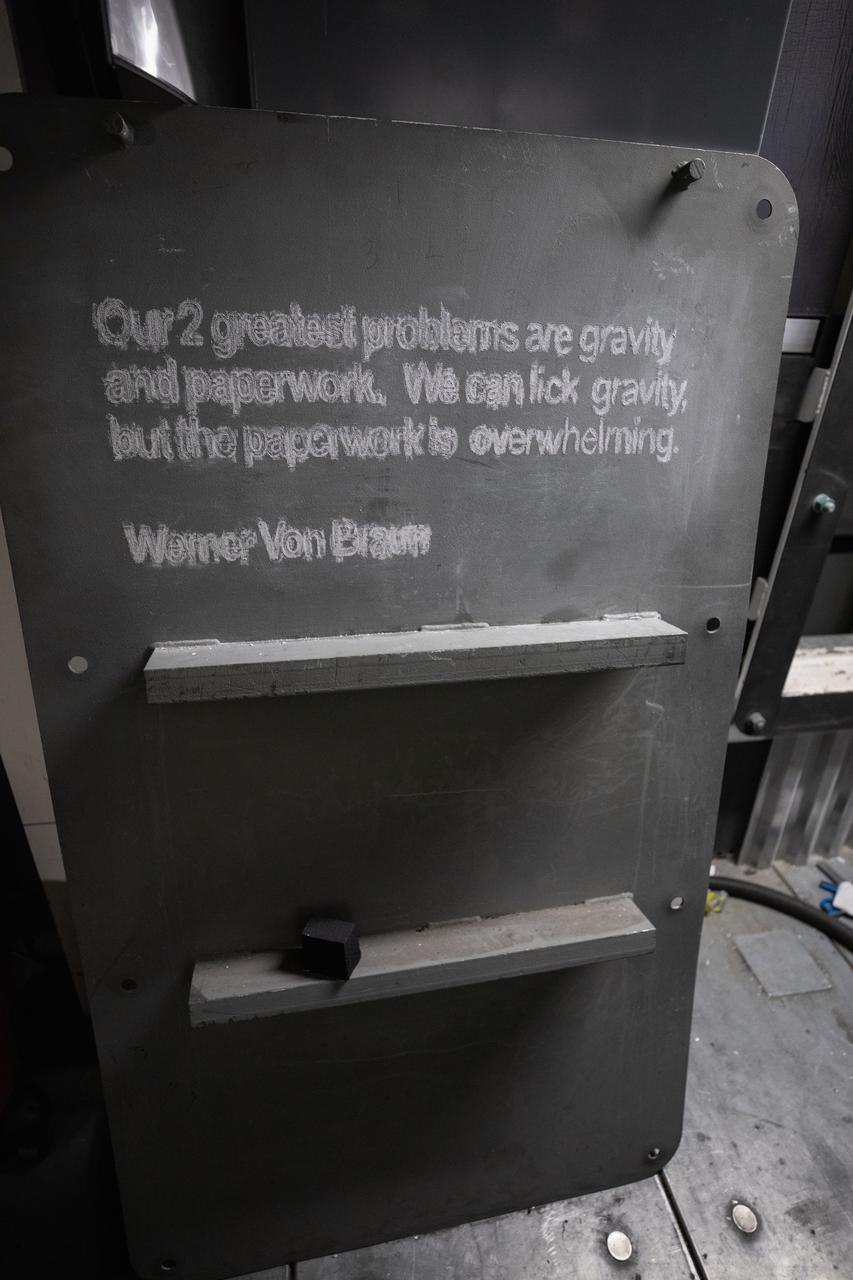
Each of the eight haunch access doors located in the mobile launcher platform contains an inspirational quote related to space travel. The quotes are from John F. Kennedy, H.G. Wells and Werner Von Braun, among others. The heavy metal doors will be bolted in place to protect electrical and support systems during liftoff of the Space Launch System rocket and Orion spacecraft.
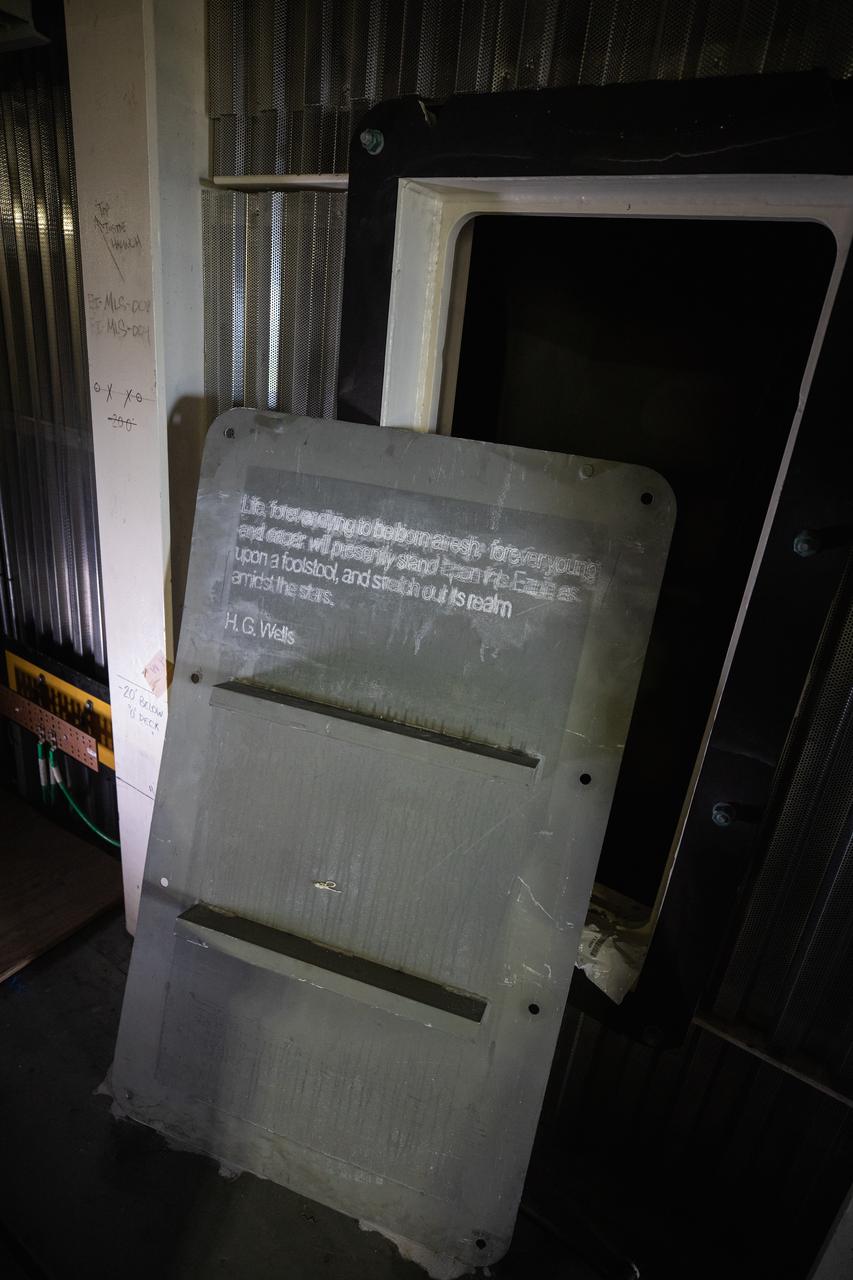
Each of the eight haunch access doors located in the mobile launcher platform contains an inspirational quote related to space travel. The quotes are from John F. Kennedy, H.G. Wells and Werner Von Braun, among others. The heavy metal doors will be bolted in place to protect electrical and support systems during liftoff of the Space Launch System rocket and Orion spacecraft.
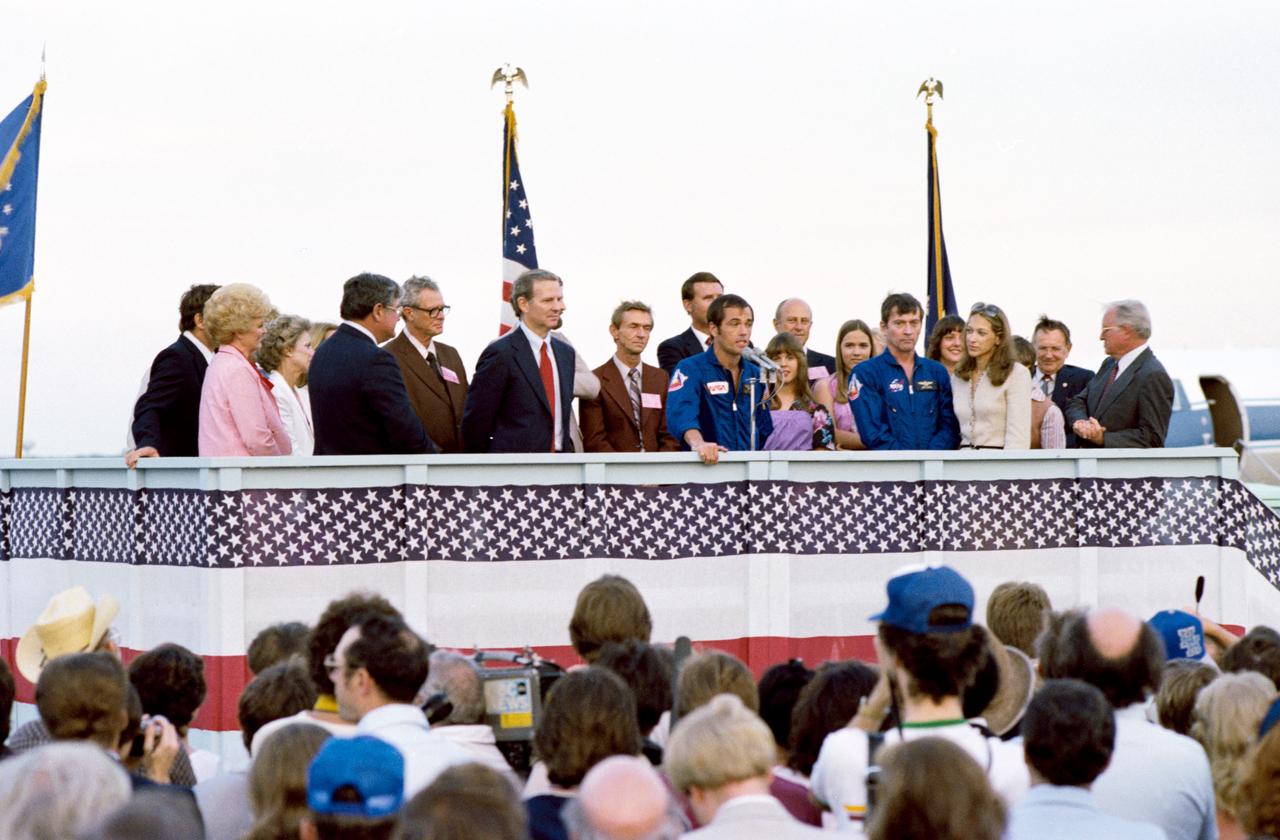
S81-30985 (14 April 1981) --- Astronaut Robert L. Crippen (center), STS-1 pilot, addresses a large turnout of greeters at Ellington Air Force Base following the return of the Columbia's crew from the Dryden Flight Research Center and their Edwards Air Force Base landing site. Astronaut John W. Young, crew commander, stands near his wife Susy at right center. Crippen's wife Virginia and children are standing behind the Youngs on the platform. Others seen include Presidential aide Jim Baker, Houston mayor Jim McConn, NASA Administrator (acting) Alan M. Lovelace, John F. Yardley, associate administrator for space transportation systems; Dr. Christopher C. Kraft Jr., JSC director; flight directors Neil B. Hutchinson, Charles L. Lewis and Donald R. Puddy; Robert F. Thompson, manager of Space Shuttle Program office. Photo credit: NASA

Jeff Greulich, DynCorp life support technician, adjusts a prototype helmet on pilot Craig Bomben at NASA Dryden Flight Research Center, Edwards, Calif. Built by Gentex Corp., Carbondale, Pa., the helmet was evaluated by five NASA pilots during the summer and fall of 2002. The objective was to obtain data on helmet fit, comfort and functionality. The inner helmet of the modular system is fitted to the individual crewmember. The outer helmet features a fully integrated spectral mounted helmet display and a binocular helmet mounted display. The helmet will be adaptable to all flying platforms. The Dryden evaluation was overseen by the Center's Life Support office. Assessments have taken place during normal proficiency flights and some air-to-air combat maneuvering. Evaluation platforms included the F-18, B-52 and C-12. The prototype helmet is being developed by the Naval Air Science and Technology Office and the Aircrew Systems Program Office, Patuxent River, Md.
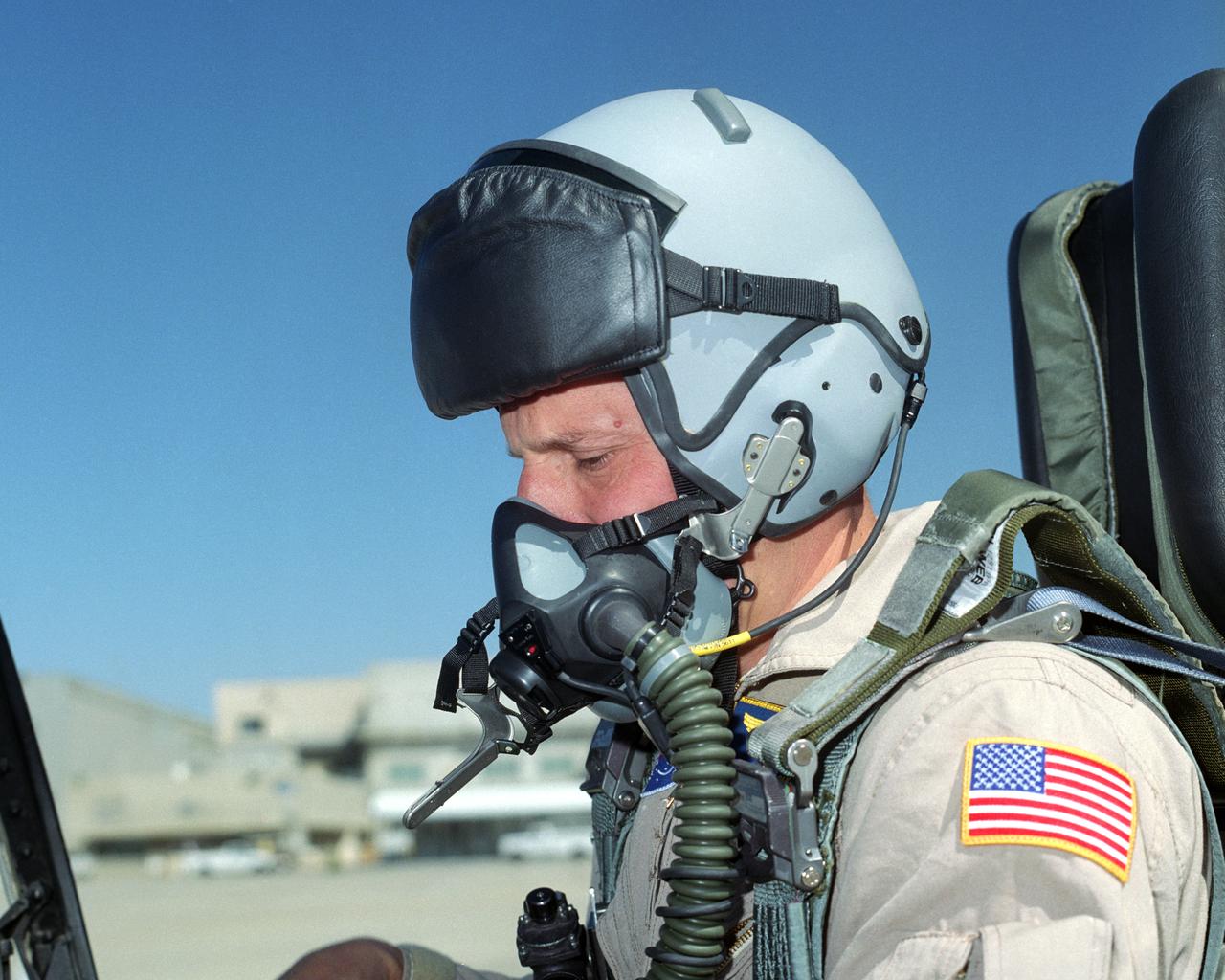
Research pilots from the NASA Dryden Flight Research Center, Edwards, Calif., tested a prototype two-part helmet. Built by Gentex Corp., Carbondale, Pa., the helmet was evaluated by five NASA pilots during the summer and fall of 2002. The objective was to obtain data on helmet fit, comfort and functionality. The inner helmet of the modular system is fitted to the individual crewmember. The outer helmet features a fully integrated spectral mounted helmet display and a binocular helmet mounted display. The helmet will be adaptable to all flying platforms. The Dryden evaluation was overseen by the Center's Life Support office. Assessments have taken place during normal proficiency flights and some air-to-air combat maneuvering. Evaluation platforms included the F-18, B-52 and C-12. The prototype helmet is being developed by the Naval Air Science and Technology Office and the Aircrew Systems Program Office, Patuxent River, Md.
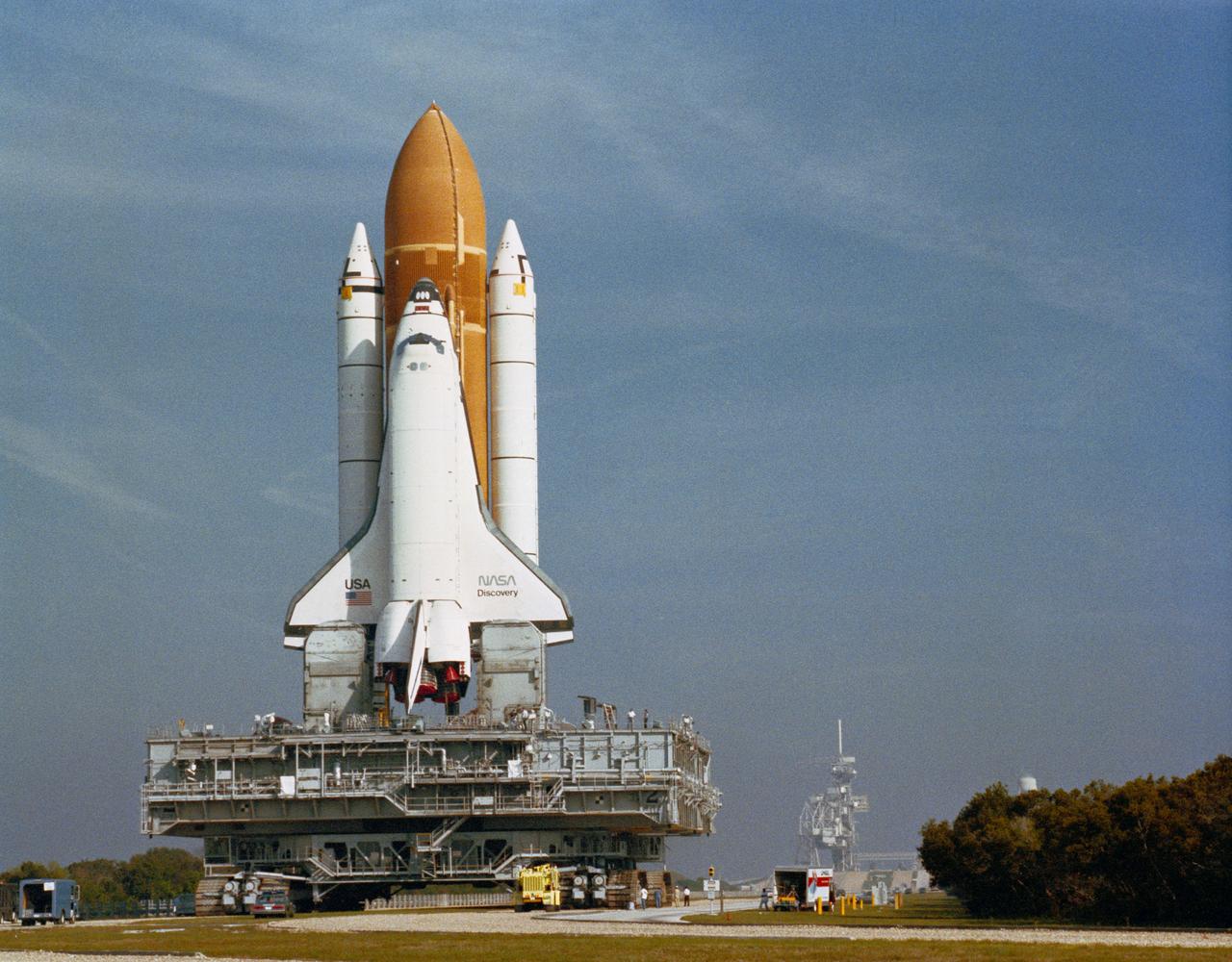
S89-28110 (3 Feb 1989) ---The Space Shuttle Discovery, atop a mobile launch platform, is rolled toward Kennedy Space Center's Launch Pad 39-B on Feb. 3, l989. It rolled through the doors of the huge vehicle assembly building (VAB) at 6 a.m.,several hours ago. The Launch Complex is in view here. The trip to the pad takes approximately 5 and 1/2 hours. Onboard the spacecraft in mid-March for a five-day mission, on which will be deployed a third tracking and data relay satellite (TDRS-D), will be Astronauts Michael L. Coats, John E. Blaha, James F. Buchli, James P. Bagian and Robert C. Springer.
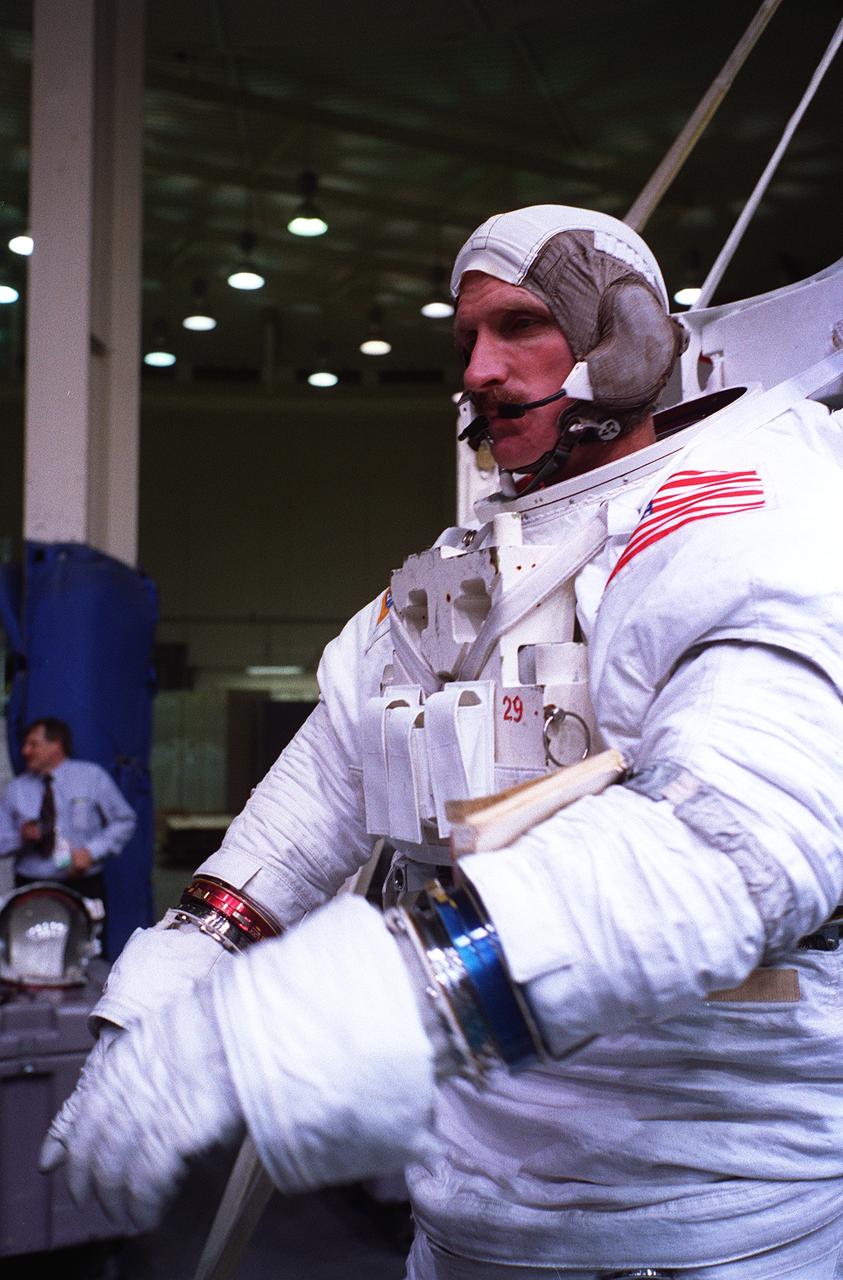
S96-12830 (10 June 1996) --- Astronaut Joseph R. Tanner, STS-82 mission specialist assigned to extravehicular activity (EVA) involved with the servicing of the Hubble Space Telescope (HST), dons the gloves for his extravehicular mobility unit (EMU) space suit. He is about to be submerged in a 25-ft. deep pool at the Johnson Space Center's weightless environment training facility (WET-F) to participate in simulations for some of the EVA work. Out of frame, astronaut Gregory J. Harbaugh was on the other side of the platform, waiting to join Tanner in the spacewalk rehearsal.
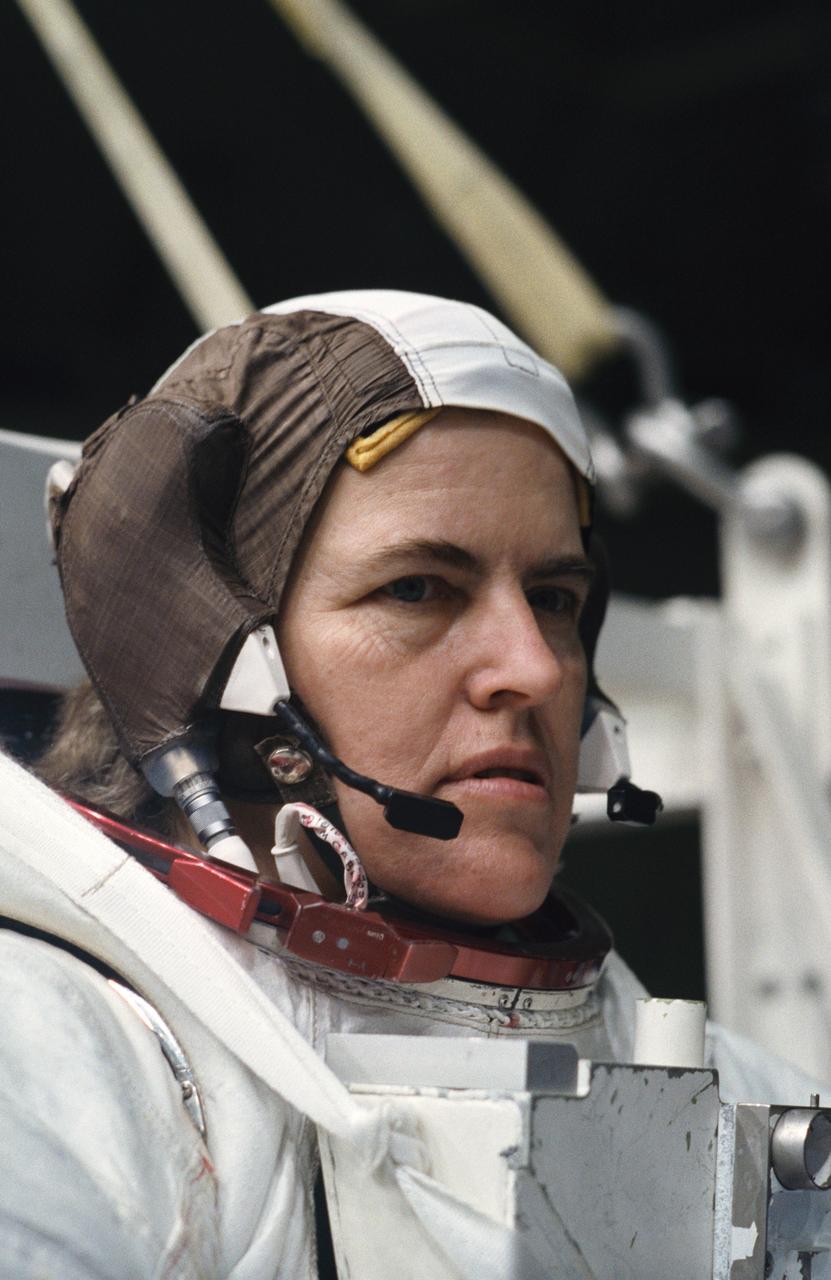
S93-31697 (3 April 1993) --- Astronaut Shannon W. Lucid participates in training for contingency Extravehicular Activity (EVA) for the STS-58 mission. Behind Lucid, sharing a moveable platform with her, is astronaut David A. Wolf (out of frame). For simulation purposes, the two mission specialists were about to be submerged to a point of neutral buoyancy in the Johnson Space Center's (JSC) Weightless Environment Training Facility (WET-F). Though the Spacelab Life Sciences (SLS-2) mission does not include a planned EVA, all crews designate members to learn proper procedures to perform outside the spacecraft in the event of failure of remote means to accomplish those tasks.
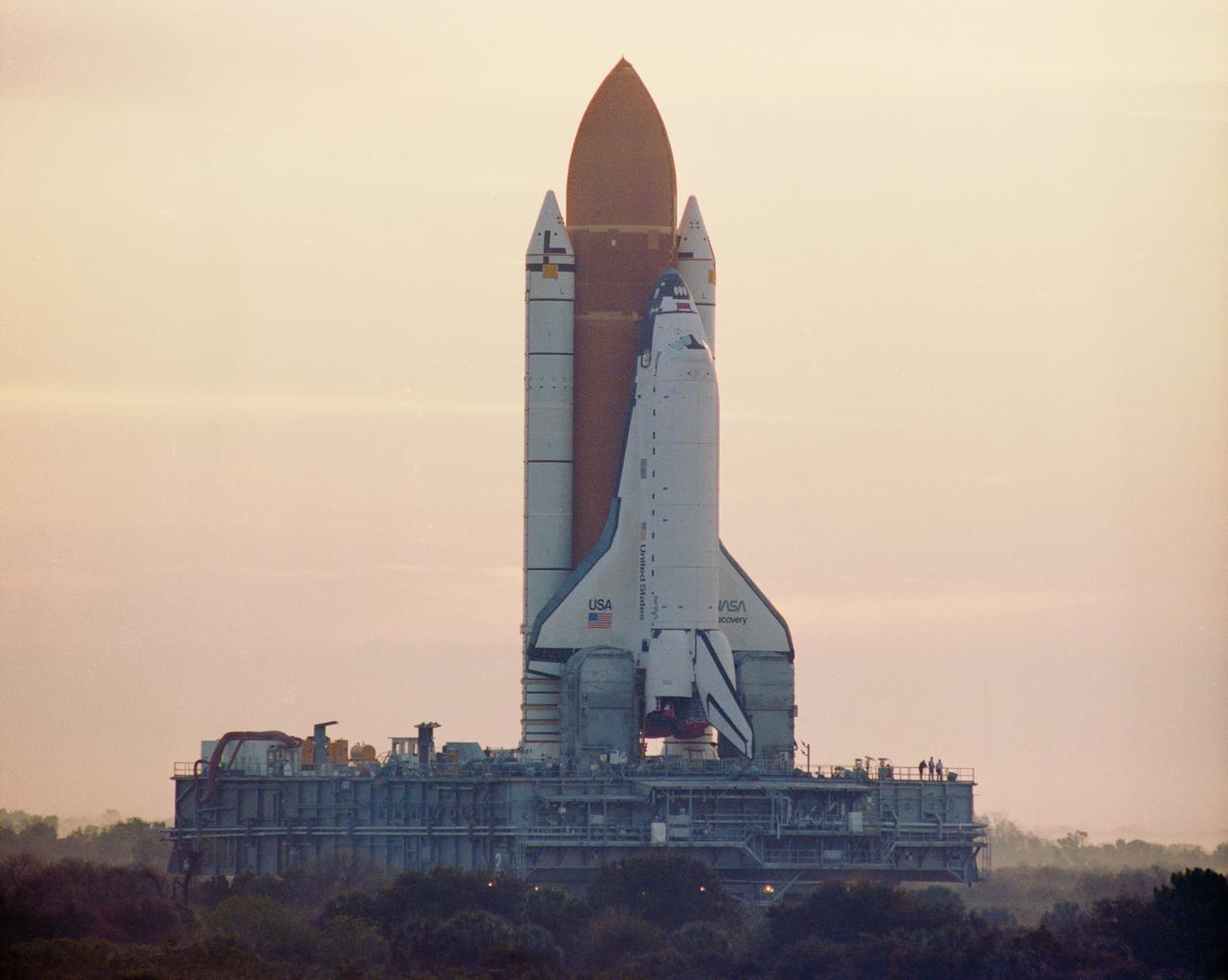
S89-28112 (3 Feb 1989) --- The Space Shuttle Discovery, atop a mobile launch platform, is rolled toward Kennedy Space Center's Launch Pad 39-B in the early morning hours of Feb. 3, l989. It rolled through the doors of the huge vehicle assembly building (VAB) at 6 a.m. The trip to the pad takes approximately 5 and 1/2 hours. Onboard the spacecraft in mid-March for a five-day mission, on which will be deployed a third tracking and data relay satellite (TDRS-D), will be Astronauts Michael L. Coats, John E. Blaha, James F. Buchli, James P. Bagian and Robert C. Springer.
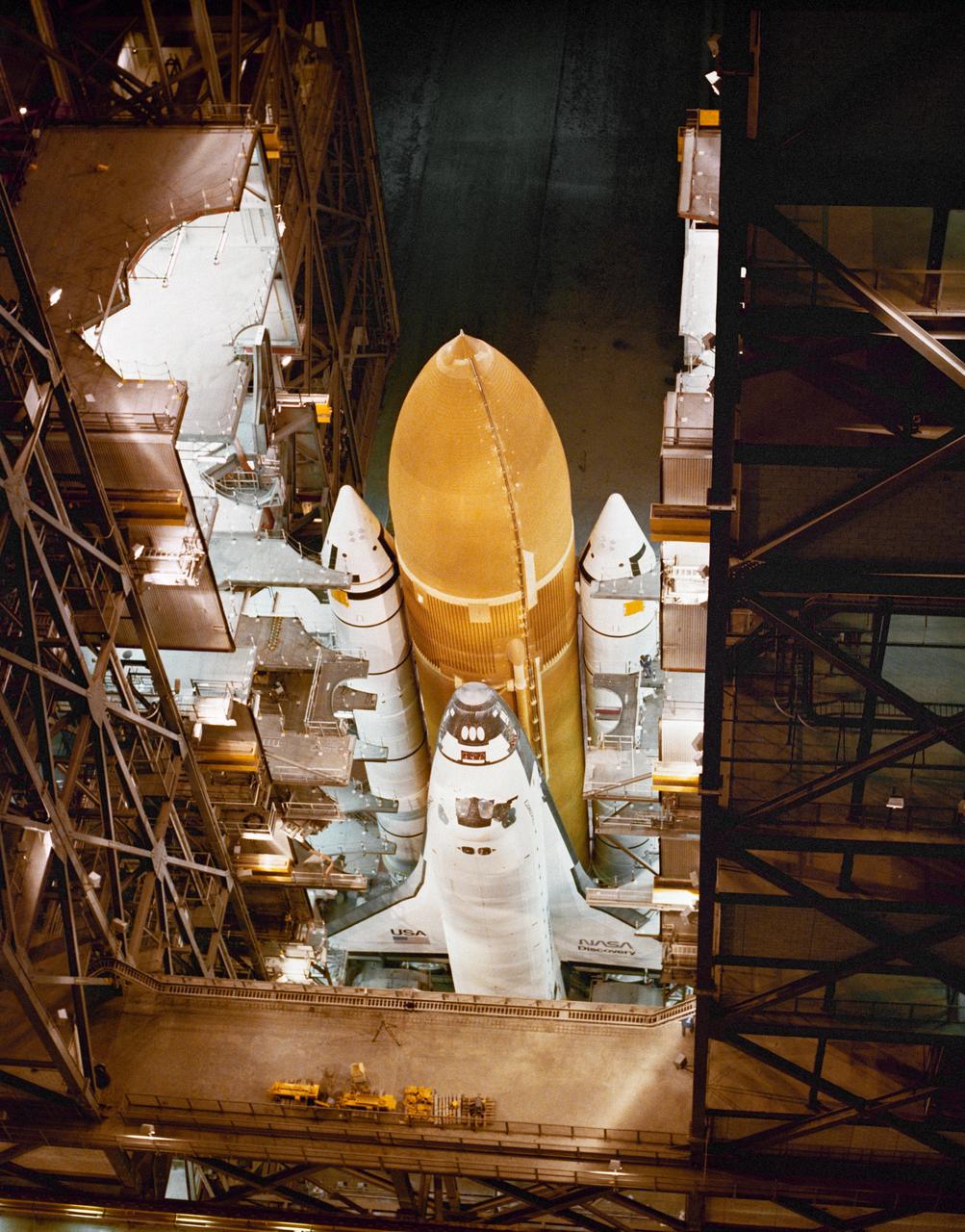
S89-28111 (3 Feb 1989) --- The Space Shuttle Discovery, atop a mobile launch platform, is rolled through the doors of the huge vehicle assembly building (VAB) at 6 a.m., Feb. 3, 1989 on its way to Launch Complex 39. The trip to the pad takes approximately 5 and 1/2 hours. Onboard the spacecraft in mid-March for a five-day mission, on which will be deployed a third tracking and data relay satellite (TDRS-D), will be Astronauts Michael L. Coats, John E. Blaha, James F. Buchli, James P. Bagian and Robert C. Springer.
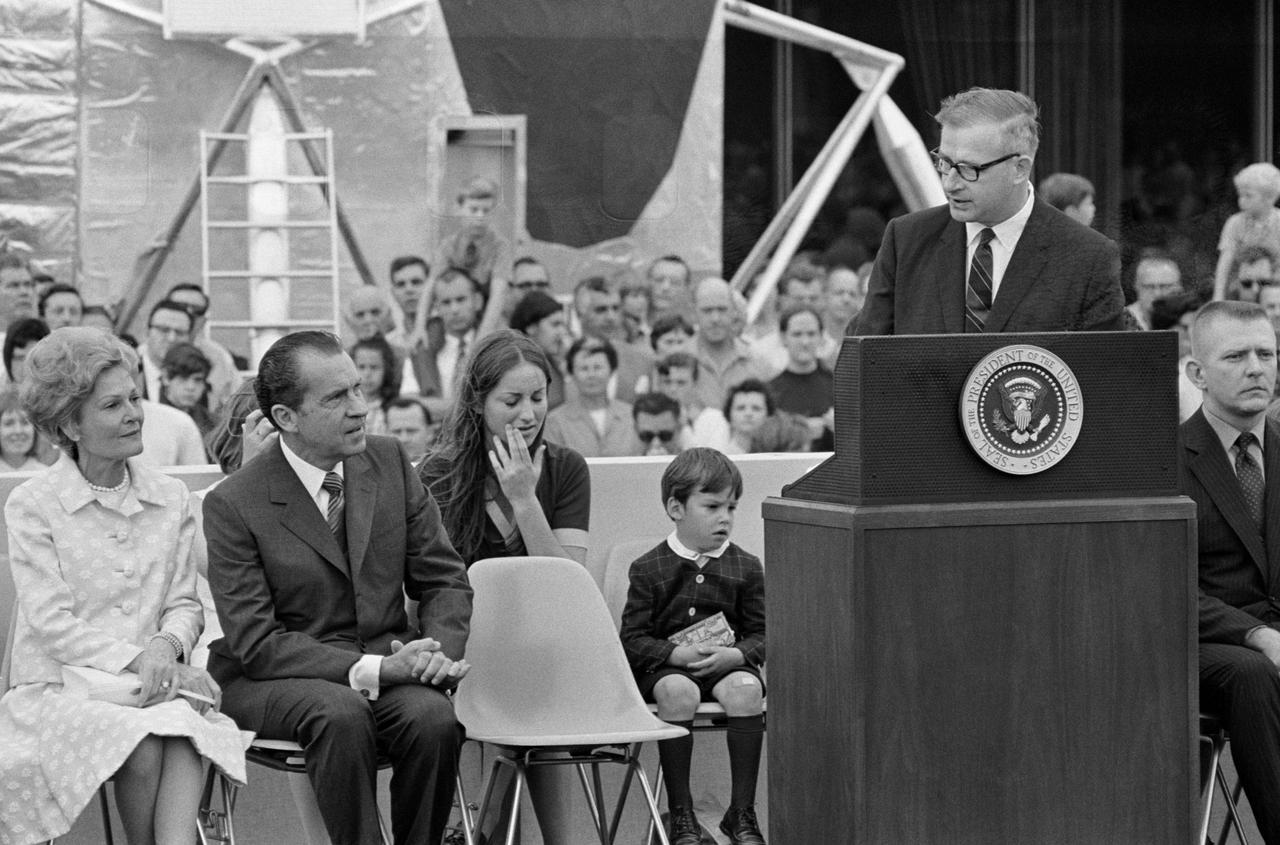
S70-35595 (18 April 1970) --- President Richard M. Nixon is welcomed to Manned Spacecraft Center (MSC) and introduced by Dr. Thomas O. Paine, Administrator, National Aeronautics and Space Administration (NASA). The First Lady is at extreme left. Others on the speakers platform in this view are Barbara and Jeffrey C. Lovell, children of astronaut James A. Lovell Jr., commander; and Eugene F. Kranz (extreme right), one of four flight directors on duty around the clock during the mission. President Nixon was on the site to present the Presidential Medal of Freedom to the Apollo 13 Mission Operations Team.
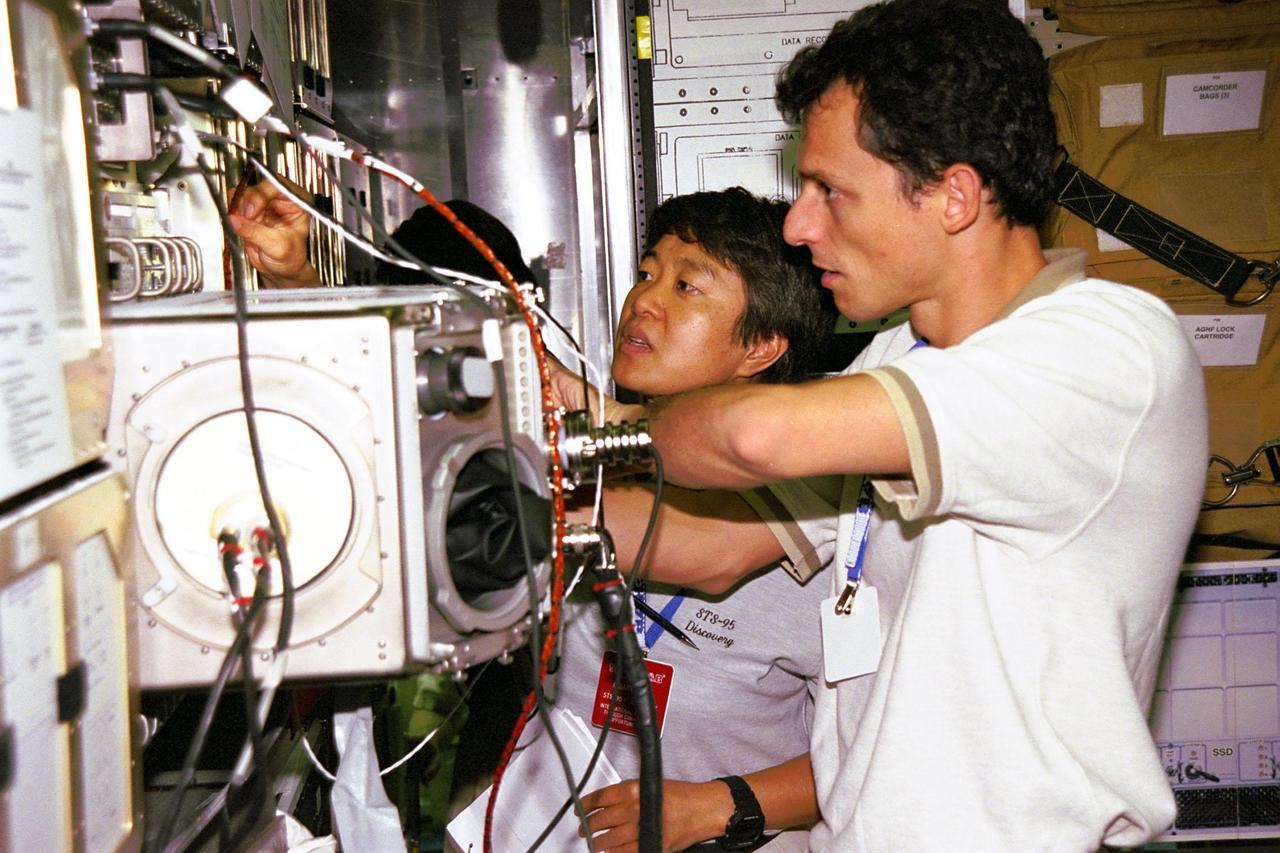
KENNEDY SPACE CENTER, F LA. -- STS-95 Payload Specialists Chiaki Mukai, at left, representing the National Space Development Agency of Japan (NASDA), and Mission Specialist Pedro Duque of Spain, representing the European Space Agency (ESA), practice using equipment in the SPACEHAB trainer at the SPACEHAB Payload Processing Facility in Cape Canaveral. STS-95 will feature a variety of research payloads, including the Spartan solar-observing deployable spacecraft, the Hubble Space Telescope Orbital Systems Platform, the International Extreme Ultraviolet Hitchhiker, and experiments on space flight and the aging process. STS-95 is targeted for an Oct. 29 launch aboard the Space Shuttle Discovery.
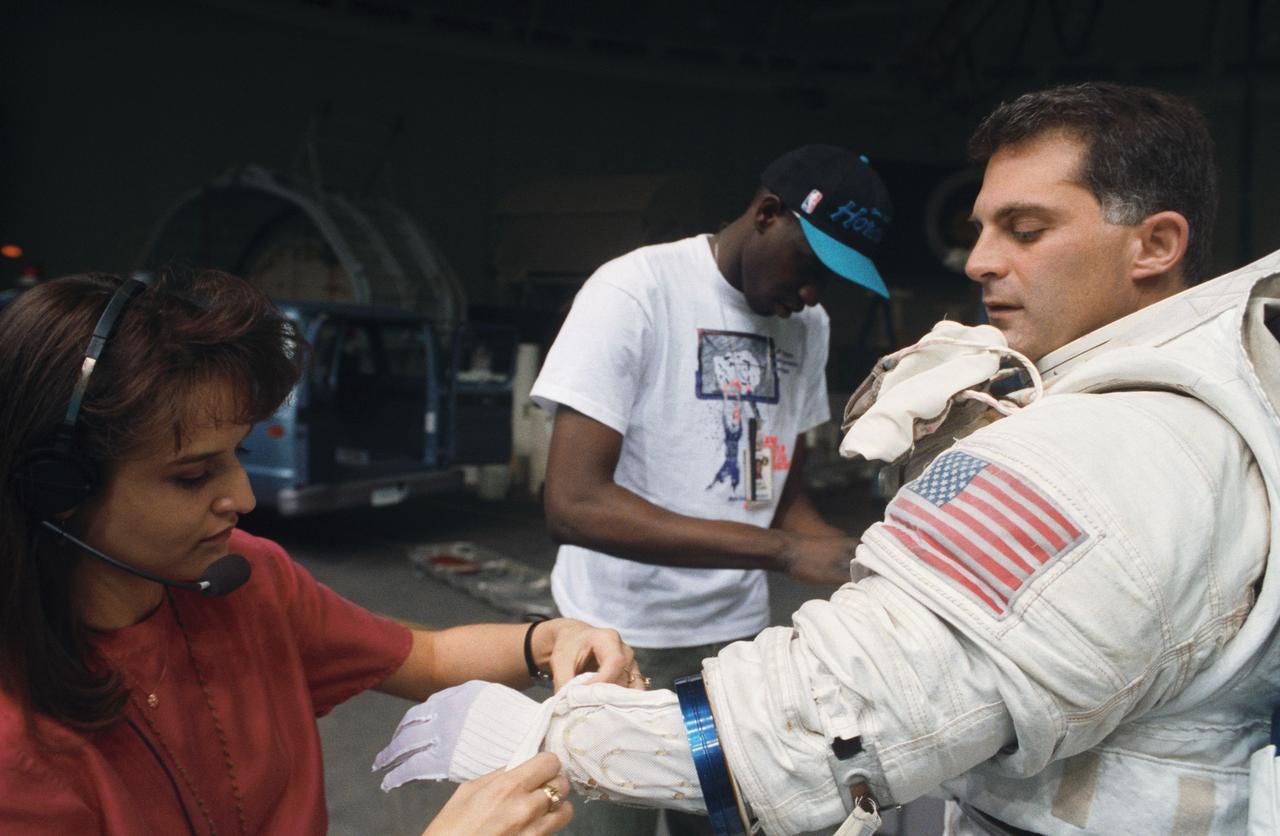
S93-31706 (3 April 1993) --- With the aid of technicians and training staffers astronaut David A. Wolf prepares to participate in training for contingency Extravehicular Activity (EVA) for the STS-58 mission. Sharing a moveable platform with Wolf was astronaut Shannon W. Lucid (out of frame). For simulation purposes, the two mission specialists were about to be submerged to a point of neutral buoyancy in the Johnson Space Center's (JSC) Weightless Environment Training Facility (WET-F). Though the Spacelab Life Sciences (SLS-2) mission does not include a planned EVA, all crews designate members to learn proper procedures to perform outside the spacecraft in the event of failure of remote means to accomplish those tasks.
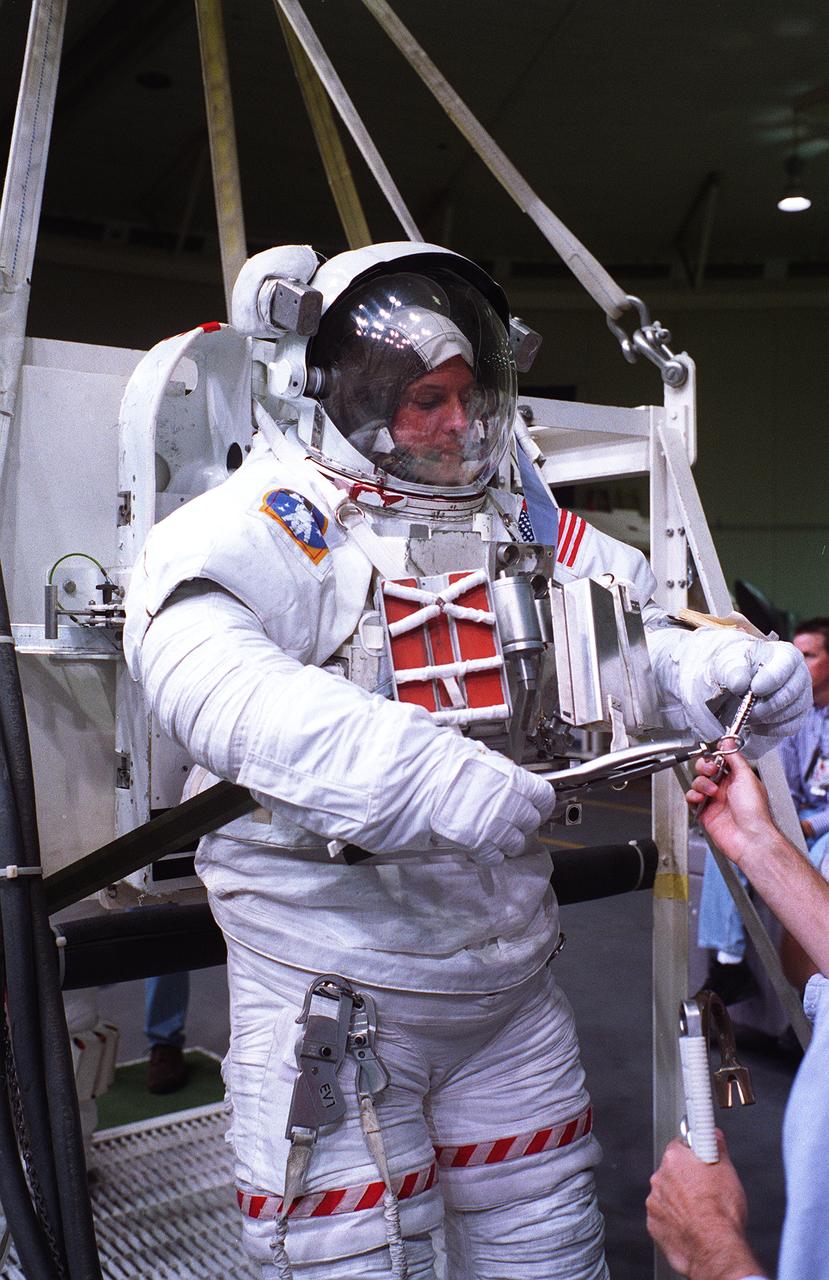
S96-12819 (10 June 1996) --- Astronaut Gregory J. Harbaugh, STS-82 mission specialist assigned to extravehicular activity (EVA) involved with the servicing of the Hubble Space Telescope (HST), dons the gloves for his extravehicular mobility unit (EMU) space suit. He is about to be submerged in a 25-ft. deep pool at the Johnson Space Center's weightless environment training facility (WET-F) to participate in simulations for some of the EVA work. Out of frame, astronaut Joseph Tanner was on the other side of the platform, waiting to join Harbaugh in the spacewalk rehearsal.
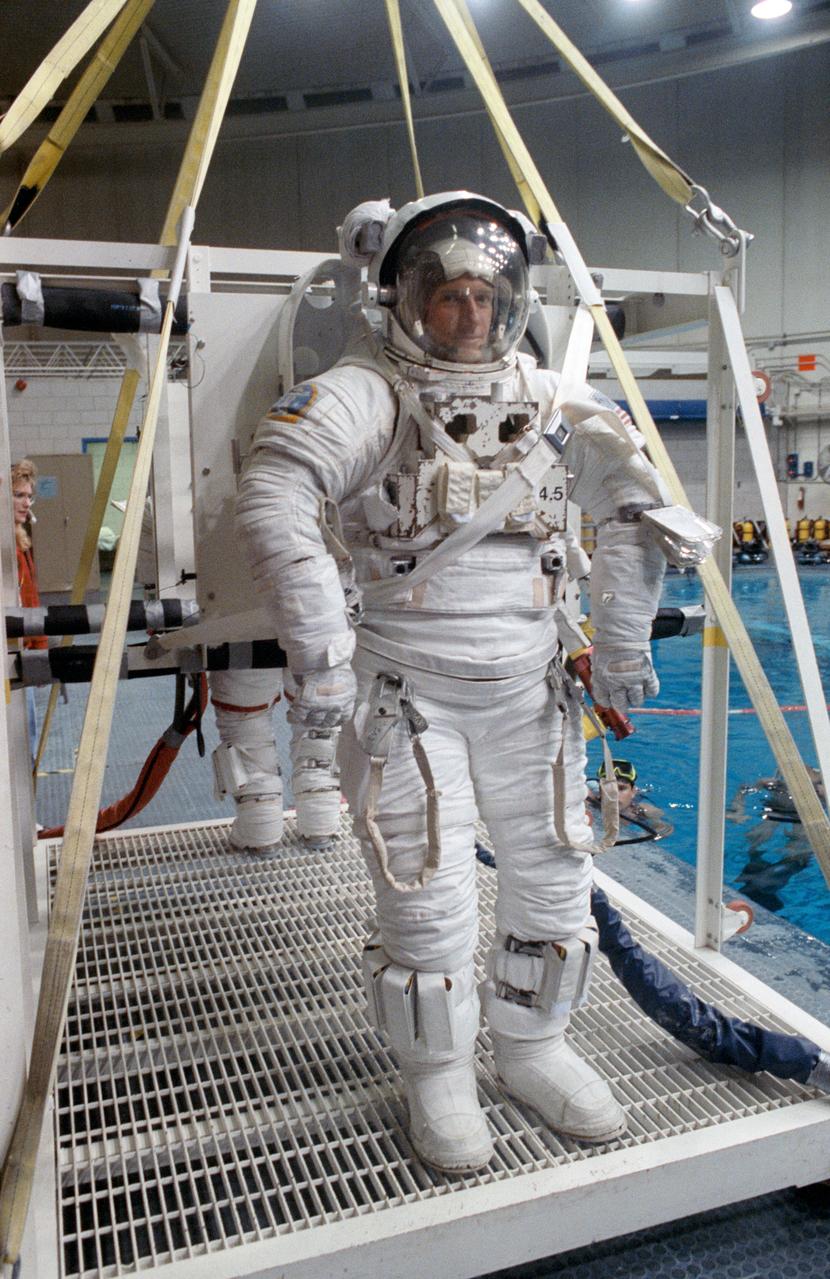
S91-30196 (1 March 1991) --- Astronaut C. Michael Foale, mission specialist, and Kathryn D. Sullivan, payload commander (barely visible in background), stand on a platform (out of frame) which is part of a system that will lower them into a 25-ft. deep pool. The payload commander and mission specialist used the pool in the weightless environment training facility (WET-F) to rehearse a contingency extravehicular activity (EVA). Astronauts wear pressurized spacesuits configured for achieving a neutrally buoyant condition in the water to simulate both planned and contingency EVAs. Two SCUBA-equipped swimmers assisting the training are seen in the background.
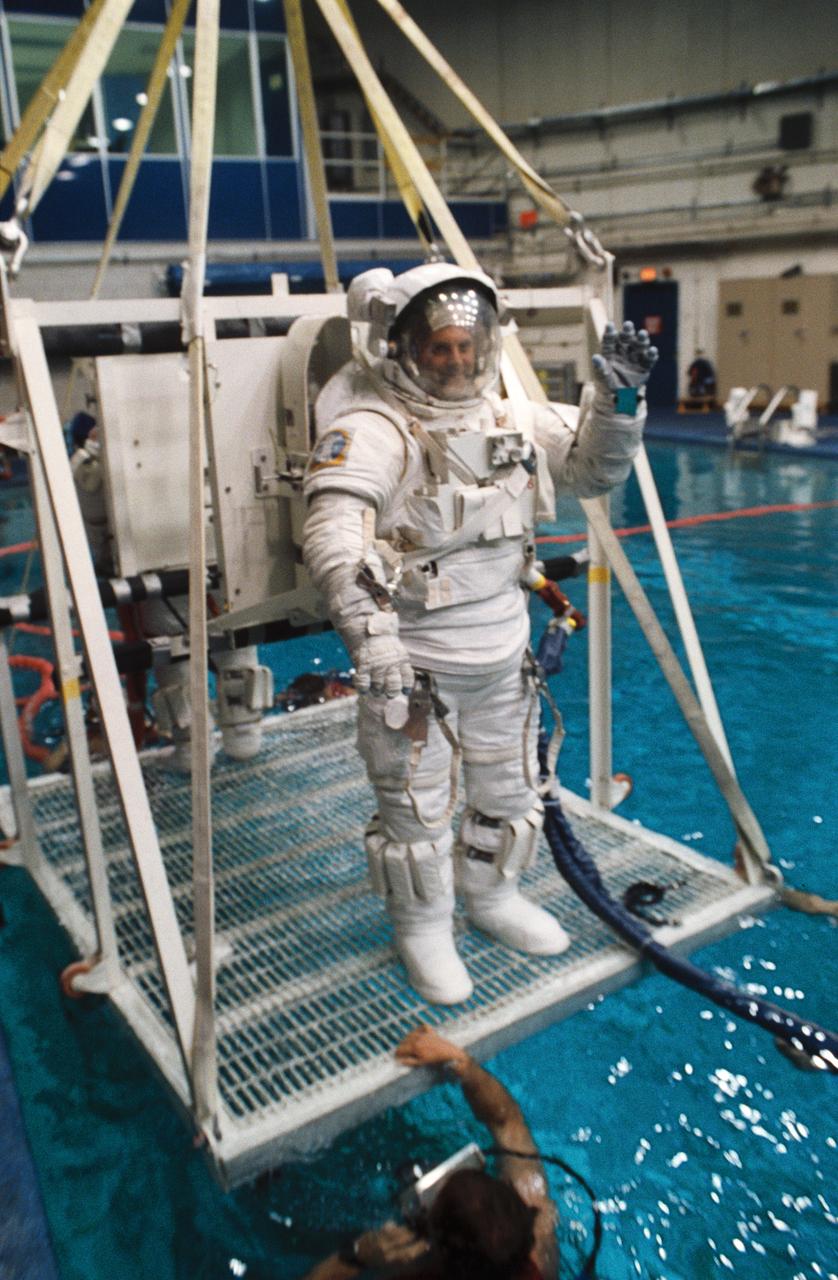
S93-31702 (3 April 1993) --- Astronaut David A. Wolf participates in training for contingency extravehicular activity (EVA) for the STS-58 mission. Behind Wolf, sharing the platform with him is astronaut Shannon W. Lucid. For simulation purposes, the two mission specialists were about to be submerged to a point of neutral buoyancy in the Johnson Space Center's (JSC) Weightless Environment Training Facility (WET-F). Though the Spacelab Life Sciences (SLS-2) mission does not include a planned EVA, all crews designate members to learn proper procedures to perform outside the spacecraft in the event of failure of remote means to accomplish those tasks.
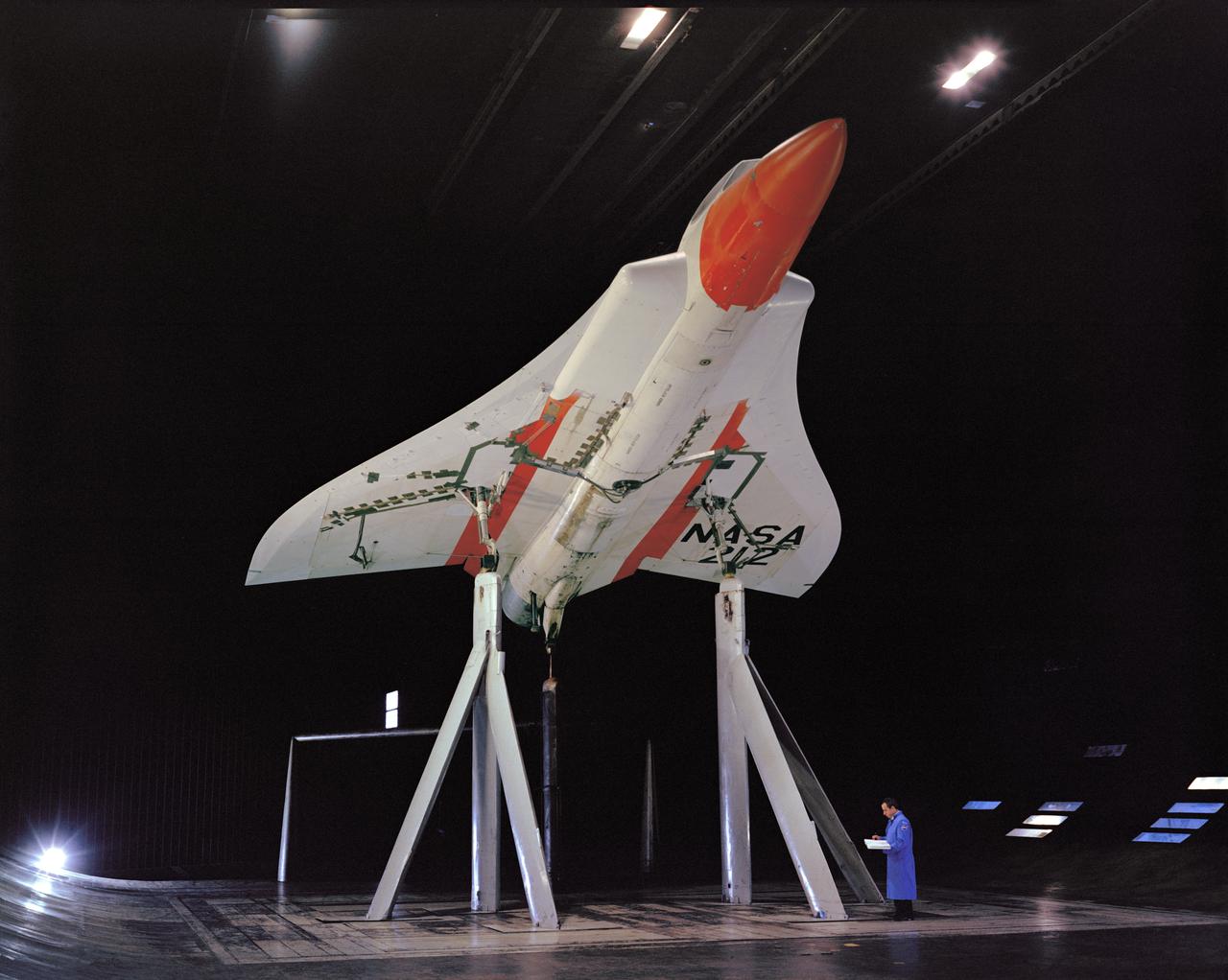
3/4 front view of Douglas F5D Skylancer modified to "ogee" platform inlet plug installed in Ames 40x80 foot wind tunnel.
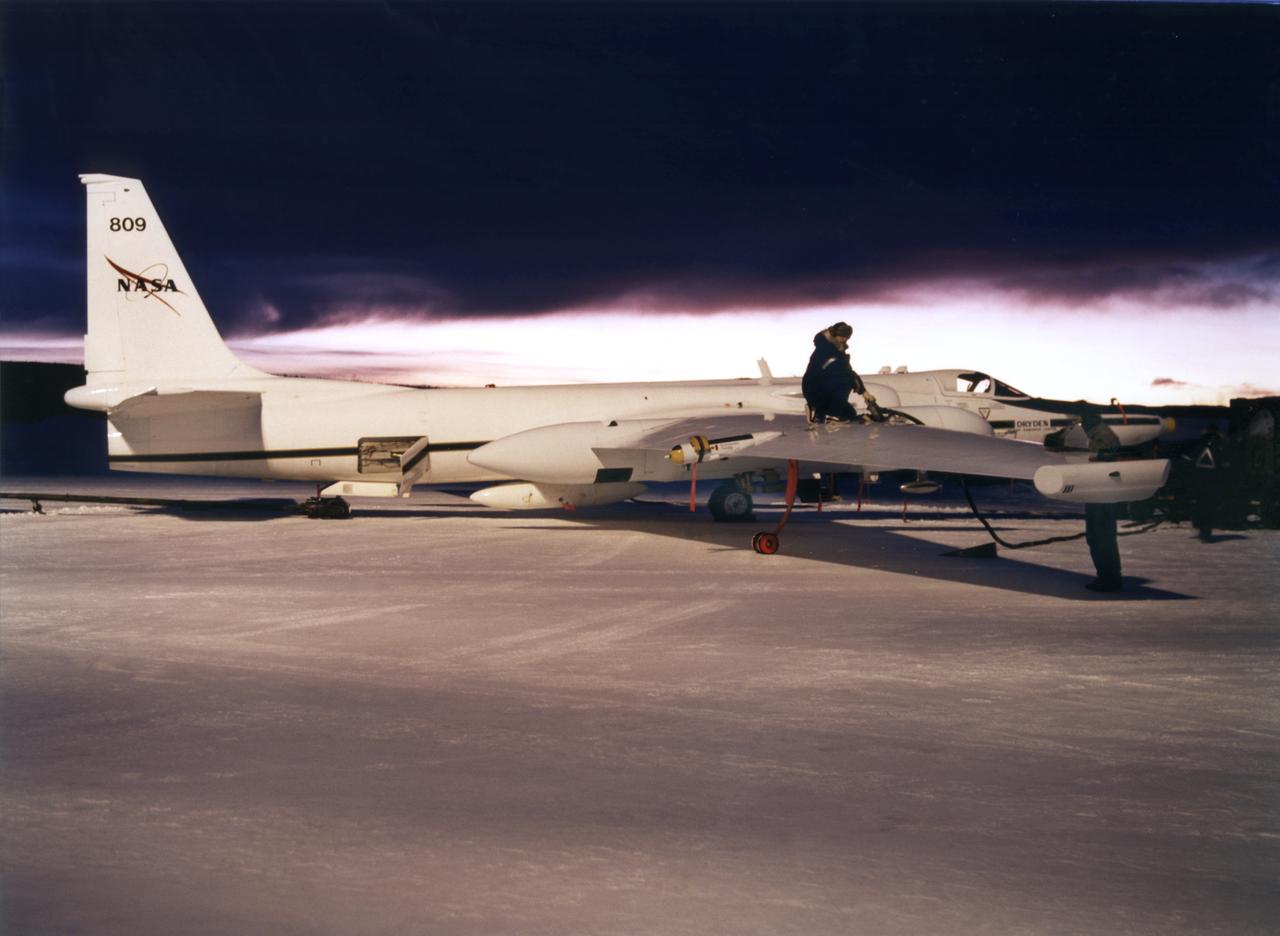
ER-2s bearing tail numbers 806 and 809 are used as airborne science platforms by NASA's Dryden Flight Research Center. The aircraft are platforms for a variety of high-altitude science missions flown over various parts of the world. They are also used for earth science and atmospheric sensor research and development, satellite calibration and data validation. The ER-2s are capable of carrying a maximum payload of 2,600 pounds of experiments in a nose bay, the main equipment bay behind the cockpit, two wing-mounted superpods and small underbody and trailing edges. Most ER-2 missions last about six hours with ranges of about 2,200 nautical miles. The aircraft typically fly at altitudes above 65,000 feet. On November 19, 1998, an ER-2 set a world record for medium weight aircraft reaching an altitude of 68,700 feet. The aircraft is 63 feet long, with a wingspan of 104 feet. The top of the vertical tail is 16 feet above ground when the aircraft is on the bicycle-type landing gear. Cruising speeds are 410 knots, or 467 miles per hour, at altitude. A single General Electric F-118 turbofan engine rated at 17,000 pounds thrust powers the ER-2.

ER-2 tail number 806, is one of two Airborne Science ER-2s used as science platforms by Dryden. The aircraft are platforms for a variety of high-altitude science missions flown over various parts of the world. They are also used for earth science and atmospheric sensor research and development, satellite calibration and data validation. The ER-2s are capable of carrying a maximum payload of 2,600 pounds of experiments in a nose bay, the main equipment bay behind the cockpit, two wing-mounted superpods and small underbody and trailing edges. Most ER-2 missions last about six hours with ranges of about 2,200 nautical miles. The aircraft typically fly at altitudes above 65,000 feet. On November 19, 1998, the ER-2 set a world record for medium weight aircraft reaching an altitude of 68,700 feet. The aircraft is 63 feet long, with a wingspan of 104 feet. The top of the vertical tail is 16 feet above ground when the aircraft is on the bicycle-type landing gear. Cruising speeds are 410 knots, or 467 miles per hour, at altitude. A single General Electric F-118 turbofan engine rated at 17,000 pounds thrust powers the ER-2.

ER-2 tail number 806, is one of two Airborne Science ER-2s used as science platforms by Dryden. The aircraft are platforms for a variety of high-altitude science missions flown over various parts of the world. They are also used for earth science and atmospheric sensor research and development, satellite calibration and data validation. The ER-2s are capable of carrying a maximum payload of 2,600 pounds of experiments in a nose bay, the main equipment bay behind the cockpit, two wing-mounted superpods and small underbody and trailing edges. Most ER-2 missions last about six hours with ranges of about 2,200 nautical miles. The aircraft typically fly at altitudes above 65,000 feet. On November 19, 1998, the ER-2 set a world record for medium weight aircraft reaching an altitude of 68,700 feet. The aircraft is 63 feet long, with a wingspan of 104 feet. The top of the vertical tail is 16 feet above ground when the aircraft is on the bicycle-type landing gear. Cruising speeds are 410 knots, or 467 miles per hour, at altitude. A single General Electric F-118 turbofan engine rated at 17,000 pounds thrust powers the ER-2.
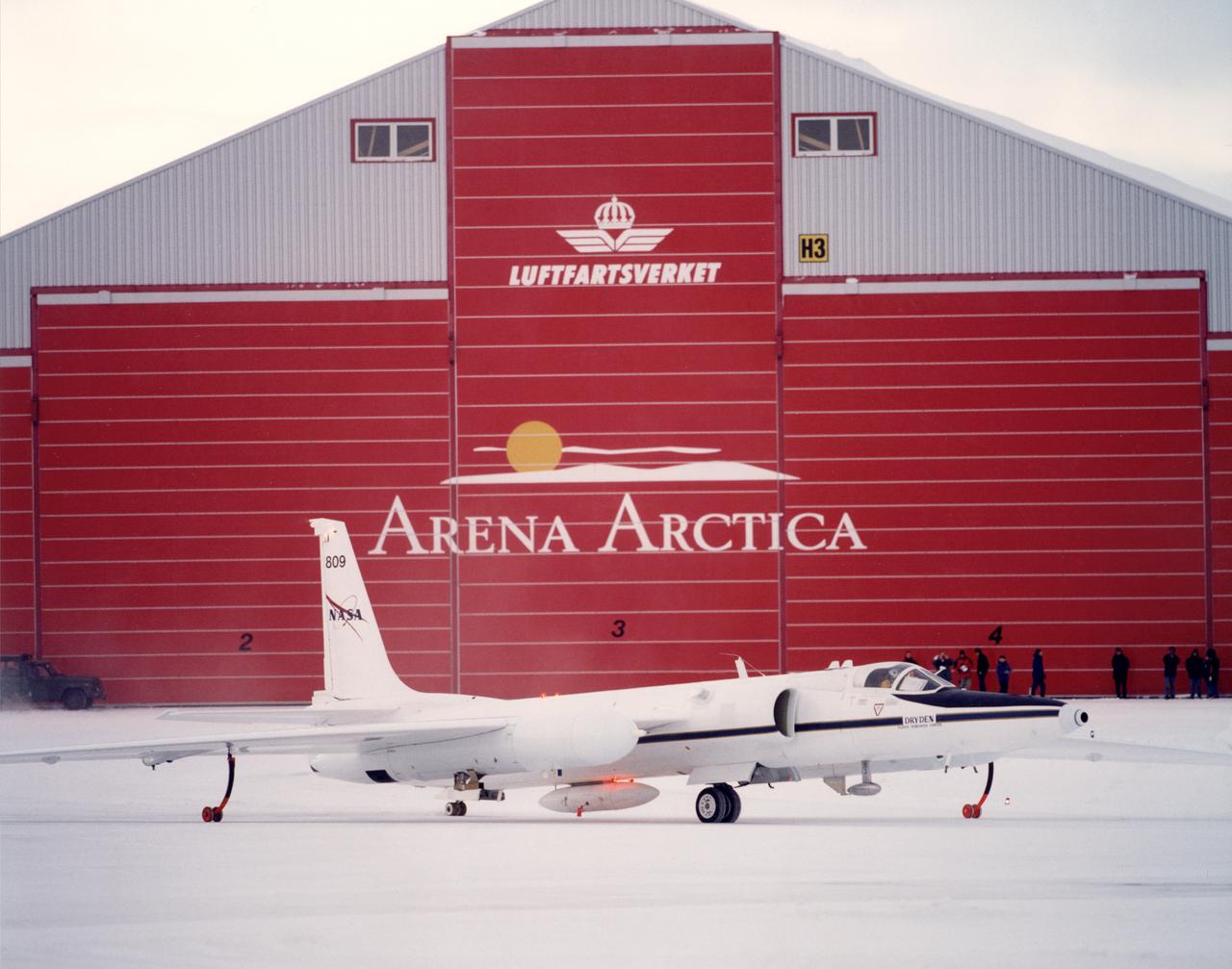
ER-2s bearing tail numbers 806 and 809 are used as airborne science platforms by NASA's Dryden Flight Research Center. The aircraft are platforms for a variety of high-altitude science missions flown over various parts of the world. They are also used for earth science and atmospheric sensor research and development, satellite calibration and data validation. The ER-2s are capable of carrying a maximum payload of 2,600 pounds of experiments in a nose bay, the main equipment bay behind the cockpit, two wing-mounted superpods and small underbody and trailing edges. Most ER-2 missions last about six hours with ranges of about 2,200 nautical miles. The aircraft typically fly at altitudes above 65,000 feet. On November 19, 1998, an ER-2 set a world record for medium weight aircraft reaching an altitude of 68,700 feet. The aircraft is 63 feet long, with a wingspan of 104 feet. The top of the vertical tail is 16 feet above ground when the aircraft is on the bicycle-type landing gear. Cruising speeds are 410 knots, or 467 miles per hour, at altitude. A single General Electric F-118 turbofan engine rated at 17,000 pounds thrust powers the ER-2.

ER-2s bearing tail numbers 806 and 809 are used as airborne science platforms by NASA's Dryden Flight Research Center. The aircraft are platforms for a variety of high-altitude science missions flown over various parts of the world. They are also used for earth science and atmospheric sensor research and development, satellite calibration and data validation. The ER-2s are capable of carrying a maximum payload of 2,600 pounds of experiments in a nose bay, the main equipment bay behind the cockpit, two wing-mounted superpods and small underbody and trailing edges. Most ER-2 missions last about six hours with ranges of about 2,200 nautical miles. The aircraft typically fly at altitudes above 65,000 feet. On November 19, 1998, an ER-2 set a world record for medium weight aircraft reaching an altitude of 68,700 feet. The aircraft is 63 feet long, with a wingspan of 104 feet. The top of the vertical tail is 16 feet above ground when the aircraft is on the bicycle-type landing gear. Cruising speeds are 410 knots, or 467 miles per hour, at altitude. A single General Electric F-118 turbofan engine rated at 17,000 pounds thrust powers the ER-2.
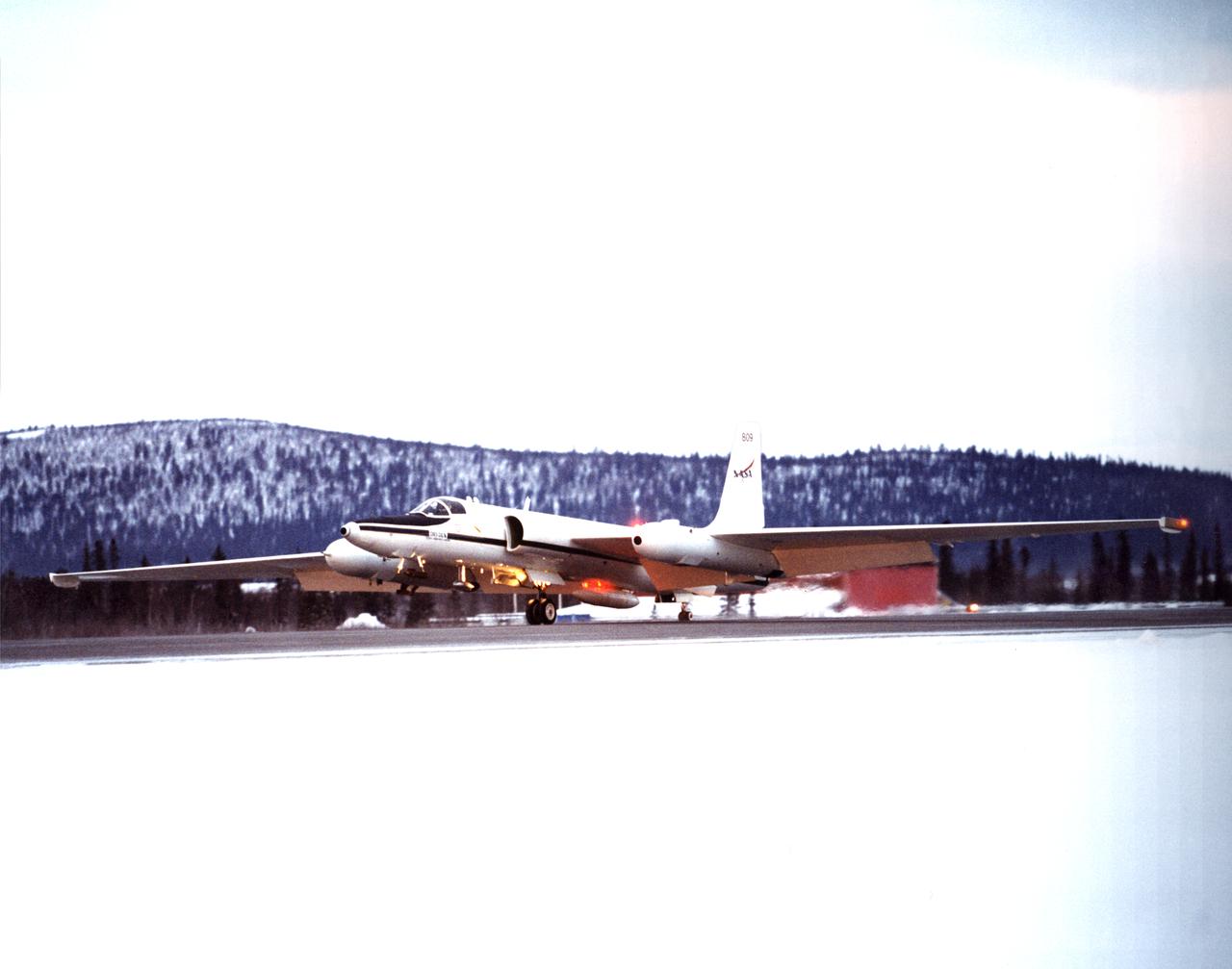
ER-2s bearing tail numbers 806 and 809 are used as airborne science platforms by NASA's Dryden Flight Research Center. The aircraft are platforms for a variety of high-altitude science missions flown over various parts of the world. They are also used for earth science and atmospheric sensor research and development, satellite calibration and data validation. The ER-2s are capable of carrying a maximum payload of 2,600 pounds of experiments in a nose bay, the main equipment bay behind the cockpit, two wing-mounted superpods and small underbody and trailing edges. Most ER-2 missions last about six hours with ranges of about 2,200 nautical miles. The aircraft typically fly at altitudes above 65,000 feet. On November 19, 1998, an ER-2 set a world record for medium weight aircraft reaching an altitude of 68,700 feet. The aircraft is 63 feet long, with a wingspan of 104 feet. The top of the vertical tail is 16 feet above ground when the aircraft is on the bicycle-type landing gear. Cruising speeds are 410 knots, or 467 miles per hour, at altitude. A single General Electric F-118 turbofan engine rated at 17,000 pounds thrust powers the ER-2.
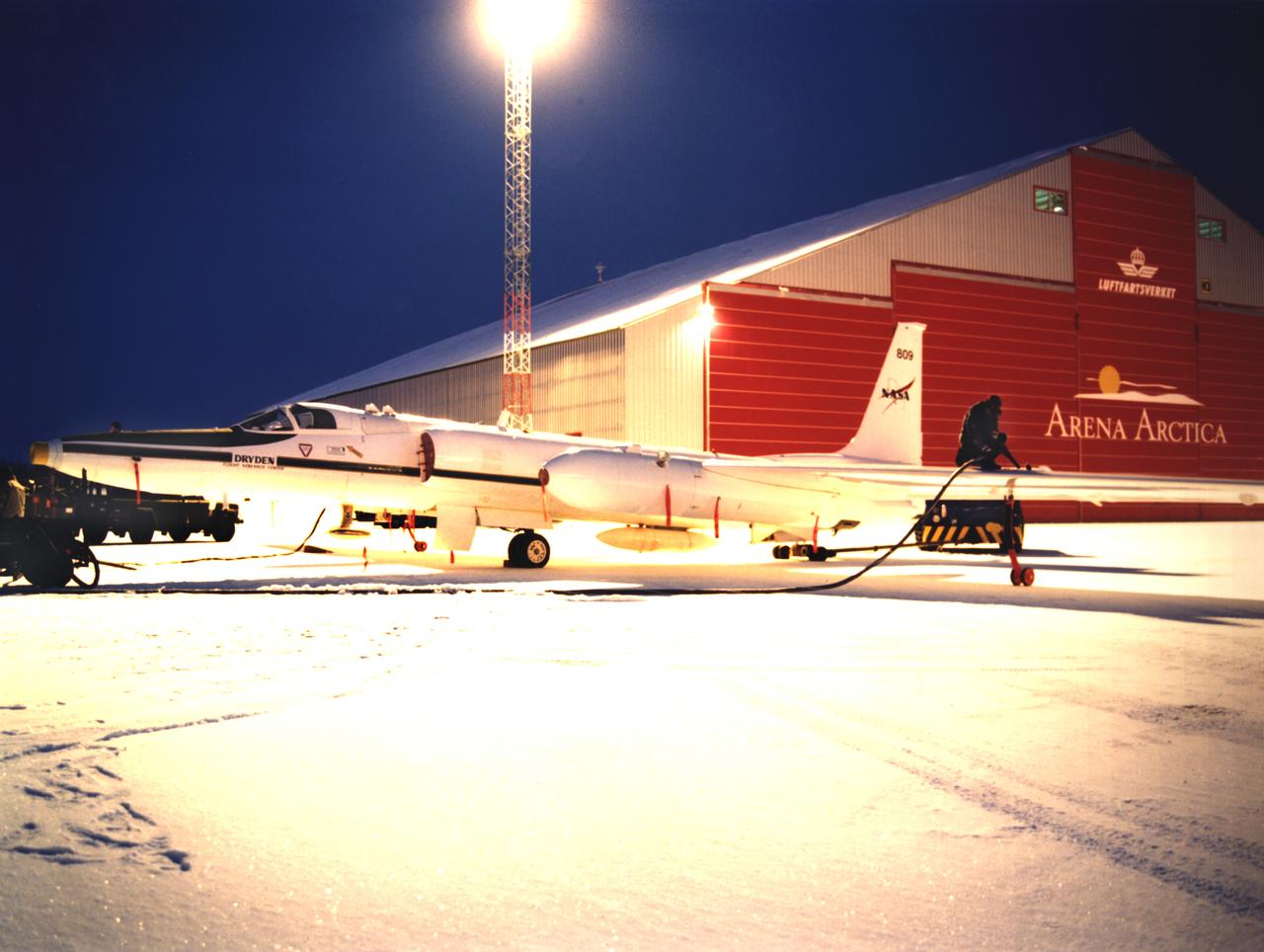
ER-2s bearing tail numbers 806 and 809 are used as airborne science platforms by NASA's Dryden Flight Research Center. The aircraft are platforms for a variety of high-altitude science missions flown over various parts of the world. They are also used for earth science and atmospheric sensor research and development, satellite calibration and data validation. The ER-2s are capable of carrying a maximum payload of 2,600 pounds of experiments in a nose bay, the main equipment bay behind the cockpit, two wing-mounted superpods and small underbody and trailing edges. Most ER-2 missions last about six hours with ranges of about 2,200 nautical miles. The aircraft typically fly at altitudes above 65,000 feet. On November 19, 1998, an ER-2 set a world record for medium weight aircraft reaching an altitude of 68,700 feet. The aircraft is 63 feet long, with a wingspan of 104 feet. The top of the vertical tail is 16 feet above ground when the aircraft is on the bicycle-type landing gear. Cruising speeds are 410 knots, or 467 miles per hour, at altitude. A single General Electric F-118 turbofan engine rated at 17,000 pounds thrust powers the ER-2.
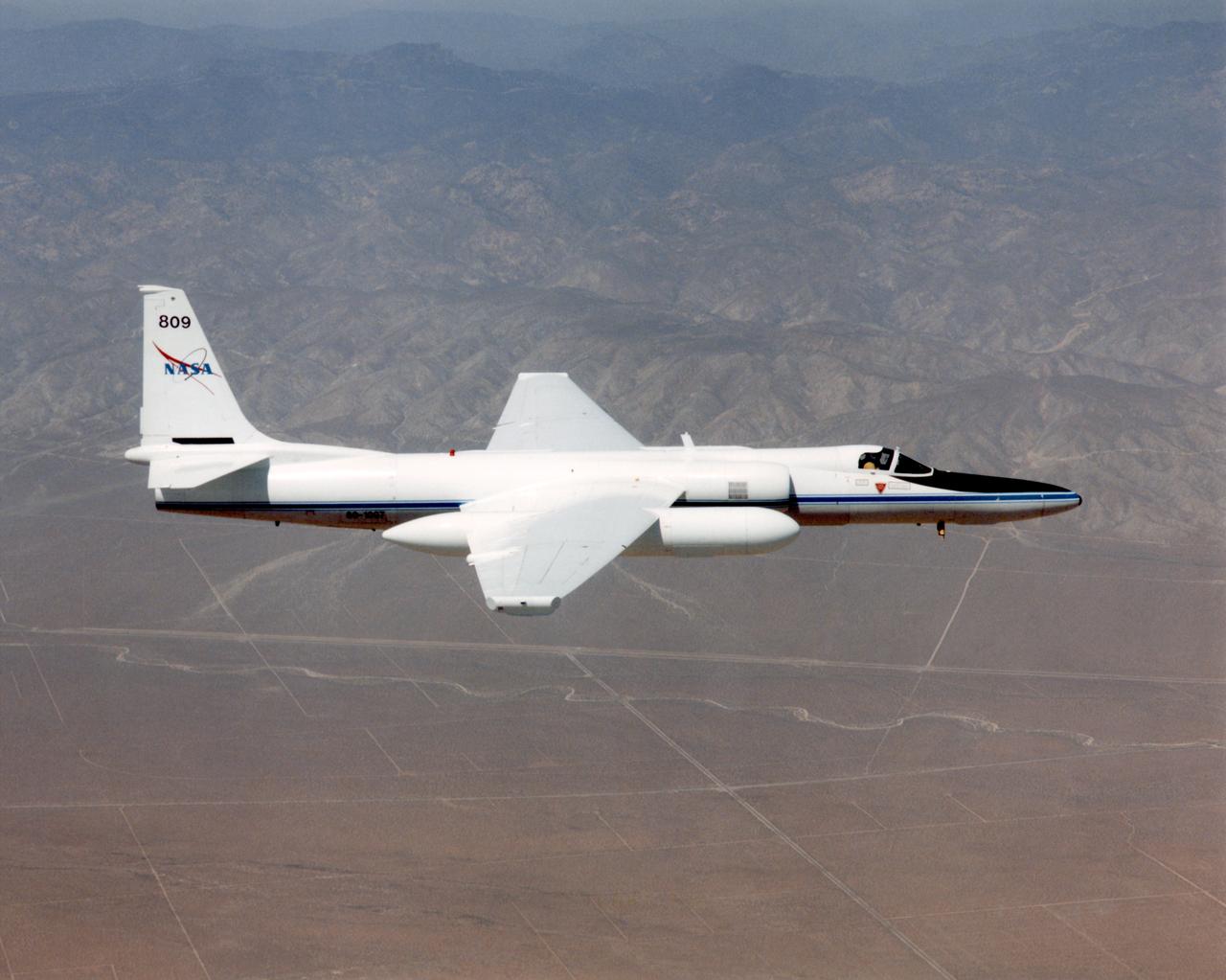
ER-2C tail number 809, was one of two Airborne Science ER-2Cs used as science platforms by Dryden. The aircraft were platforms for a variety of high-altitude science missions flown over various parts of the world. They were also used for earth science and atmospheric sensor research and development, satellite calibration and data validation. The ER-2Cs were capable of carrying a maximum payload of 2,600 pounds of experiments in a nose bay, the main equipment bay behind the cockpit, two wing-mounted superpods and small underbody and trailing edges. Most ER-2C missions lasted about six hours with ranges of about 2,200 nautical miles. The aircraft typically flew at altitudes above 65,000 feet. On November 19, 1998, the ER-2C set a world record for medium weight aircraft reaching an altitude of 68,700 feet. The aircraft was 63 feet long, with a wingspan of 104 feet. The top of the vertical tail was 16 feet above ground when the aircraft was on the bicycle-type landing gear. Cruising speeds were 410 knots, or 467 miles per hour, at altitude. A single General Electric F-118 turbofan engine rated at 17,000 pounds thrust powers the ER-2C.

ER-2 tail number 806, is one of two Airborne Science ER-2s used as science platforms by Dryden. The aircraft are platforms for a variety of high-altitude science missions flown over various parts of the world. They are also used for earth science and atmospheric sensor research and development, satellite calibration and data validation. The ER-2s are capable of carrying a maximum payload of 2,600 pounds of experiments in a nose bay, the main equipment bay behind the cockpit, two wing-mounted superpods and small underbody and trailing edges. Most ER-2 missions last about six hours with ranges of about 2,200 nautical miles. The aircraft typically fly at altitudes above 65,000 feet. On November 19, 1998, the ER-2 set a world record for medium weight aircraft reaching an altitude of 68,700 feet. The aircraft is 63 feet long, with a wingspan of 104 feet. The top of the vertical tail is 16 feet above ground when the aircraft is on the bicycle-type landing gear. Cruising speeds are 410 knots, or 467 miles per hour, at altitude. A single General Electric F-118 turbofan engine rated at 17,000 pounds thrust powers the ER-2.
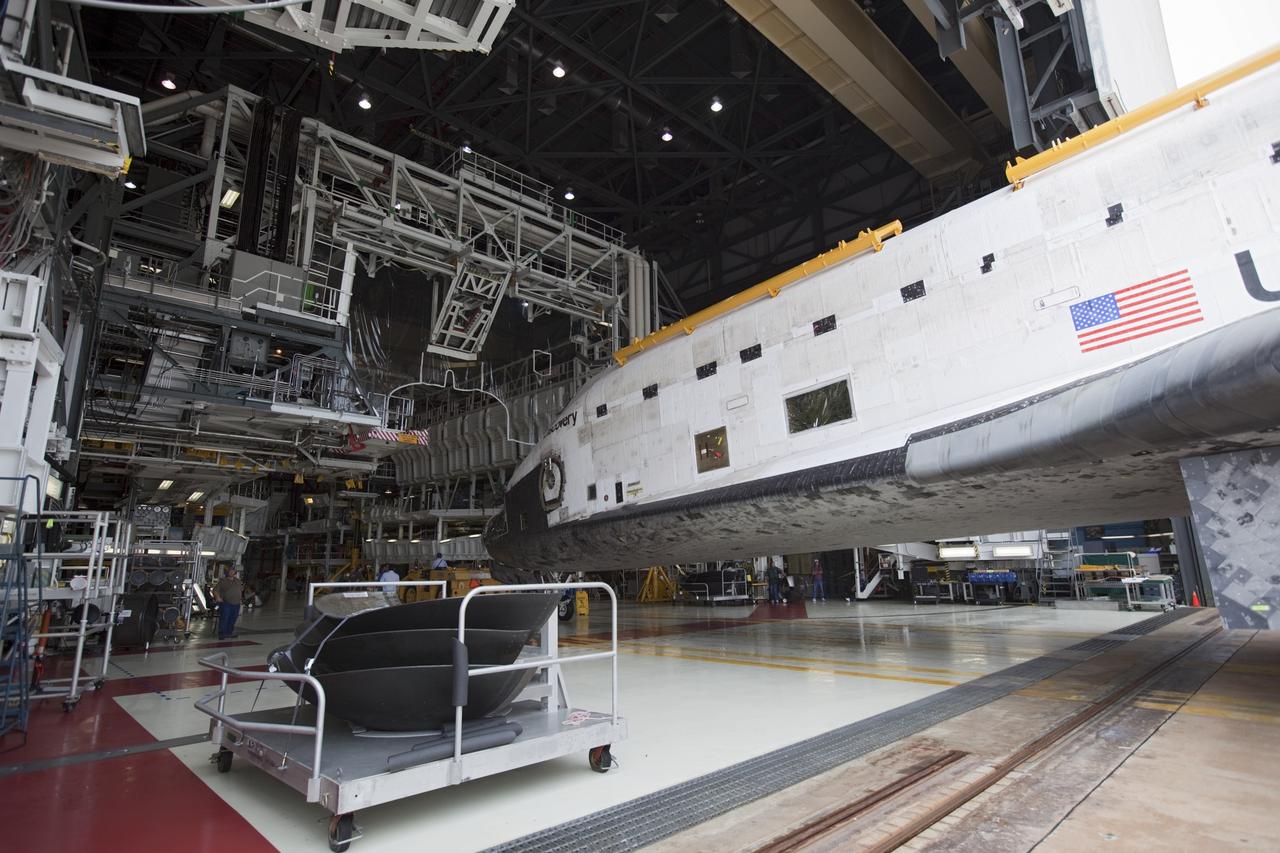
CAPE CANAVERAL, Fla. -- At NASA's Kennedy Space Center in Florida, space shuttle Discovery is towed toward the work platforms in Orbiter Processing Facility-1 (OPF-1) after participating in a unique "nose-to-nose" photo opportunity outside OPF-3 with shuttle Endeavour. Discovery is switching places with Endeavour which temporarily is being placed in storage in the Vehicle Assembly Building (VAB). In OPF-1, Discovery will undergo further preparations for public display at the Smithsonian's National Air and Space Museum Steven F. Udvar-Hazy Center in Virginia. Endeavour will be stored in the VAB until October when it will be moved into OPF-2 for further work to get it ready for public display at the California Science Center in Los Angeles. For more information, visit http://www.nasa.gov/shuttle. Photo credit: NASA/Dimitri Gerondidakis
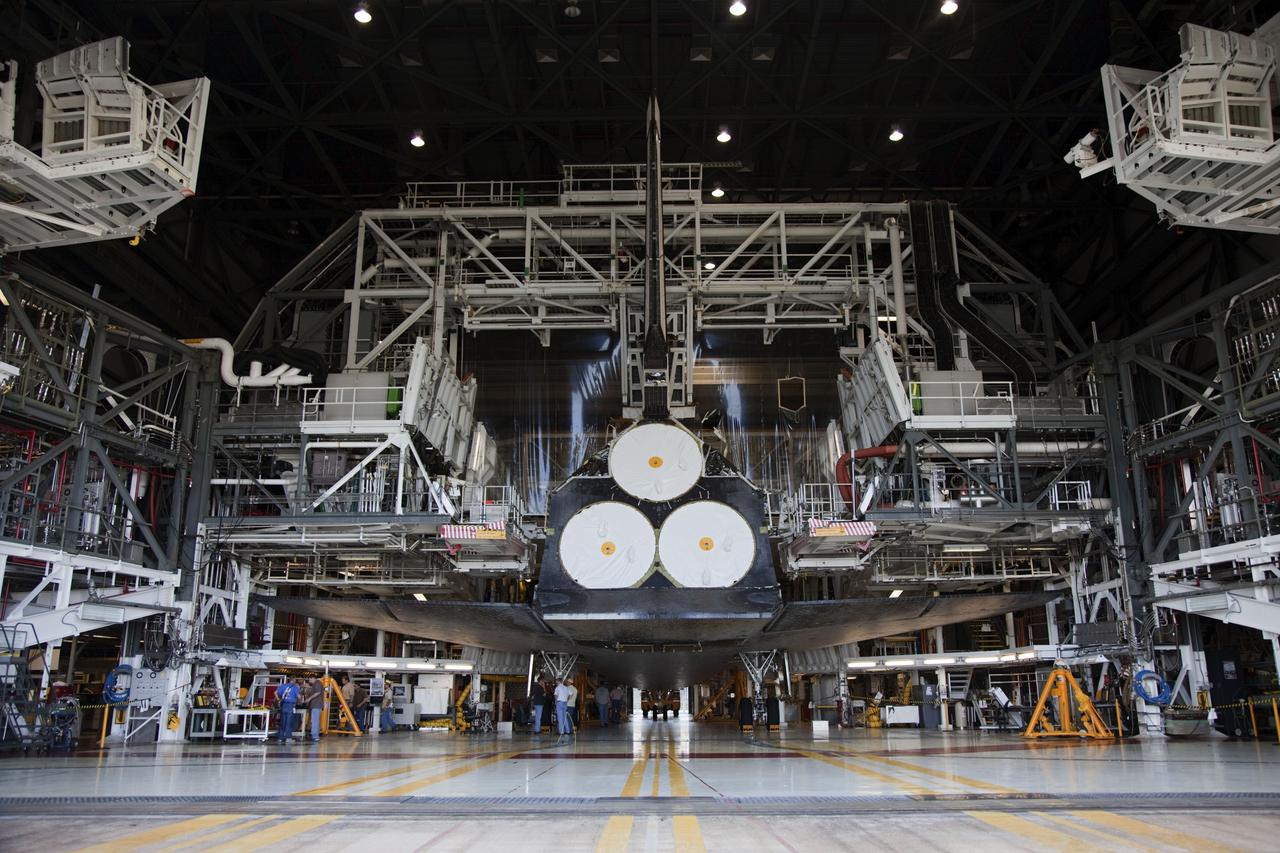
CAPE CANAVERAL, Fla. -- In Orbiter Processing Facility-2, or OPF-2, at NASA's Kennedy Space Center in Florida, work platforms fold away from space shuttle Discovery for its move to the Vehicle Assembly Building, or VAB. Discovery will be stored inside the VAB for approximately one month while shuttle Atlantis undergoes processing in OPF-2 following its final mission, STS-135. Discovery flew its 39th and final mission, STS-133, in February and March 2011, and currently is being prepared for public display at the Smithsonian's National Air and Space Museum Steven F. Udvar-Hazy Center in Virginia. For more information about Discovery's Transition and Retirement, visit www.nasa.gov/mission_pages/shuttle/launch/discovery_rss_collection_archive_1.html. Photo credit: NASA/Frankie Martin
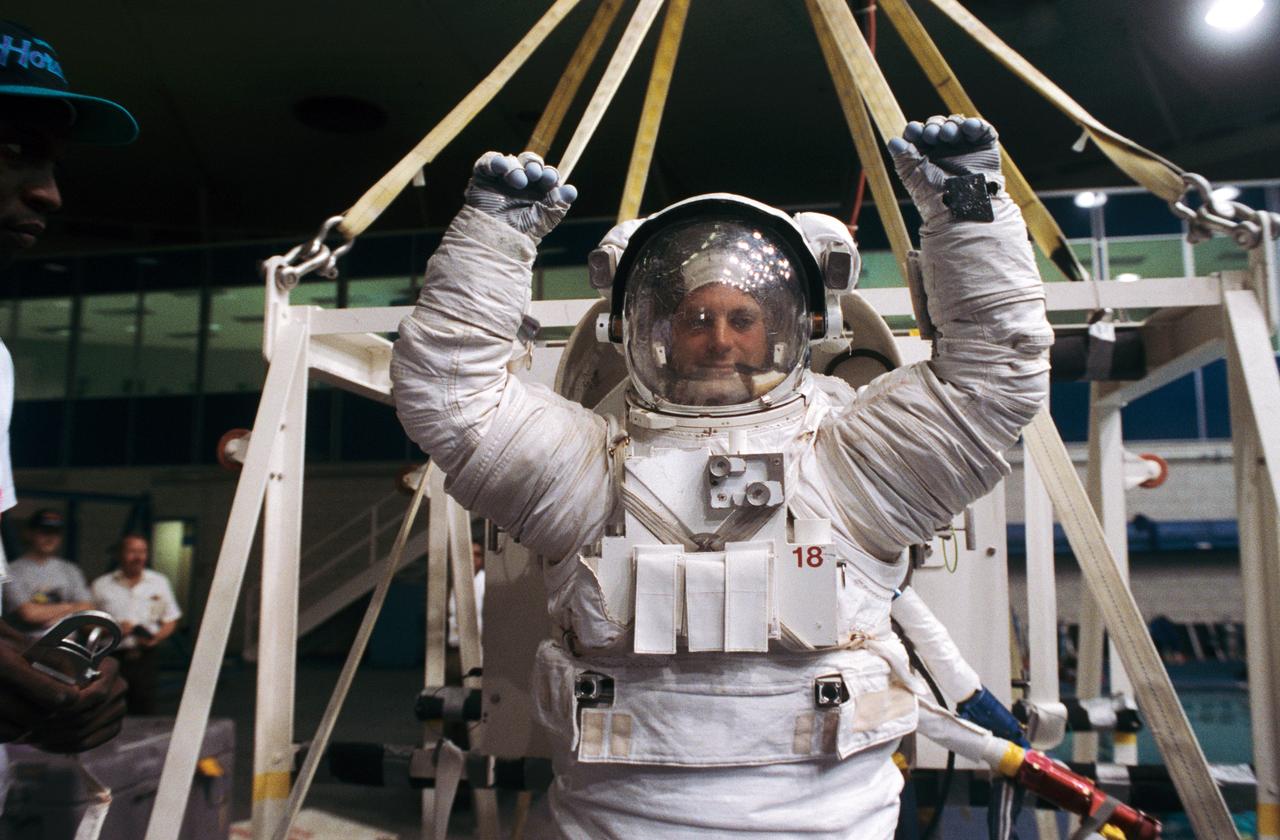
S93-31701 (3 April 1993) --- Displaying the flexibility of his training version of the Shuttle Extravehicular Mobility Unit (EMU) space suit, astronaut David A. Wolf participates in training for contingency Extravehicular Activity (EVA) for the STS-58 mission. Behind Wolf, sharing the platform with him was astronaut Shannon W. Lucid. For simulation purposes, the two mission specialists were about to be submerged to a point of neutral buoyancy in the Johnson Space Center's (JSC) Weightless Environment Training Facility (WET-F). Though the Spacelab Life Sciences (SLS-2) mission does not include a planned EVA, all crews designate members to learn proper procedures to perform outside the spacecraft in the event of failure of remote means to accomplish those tasks.
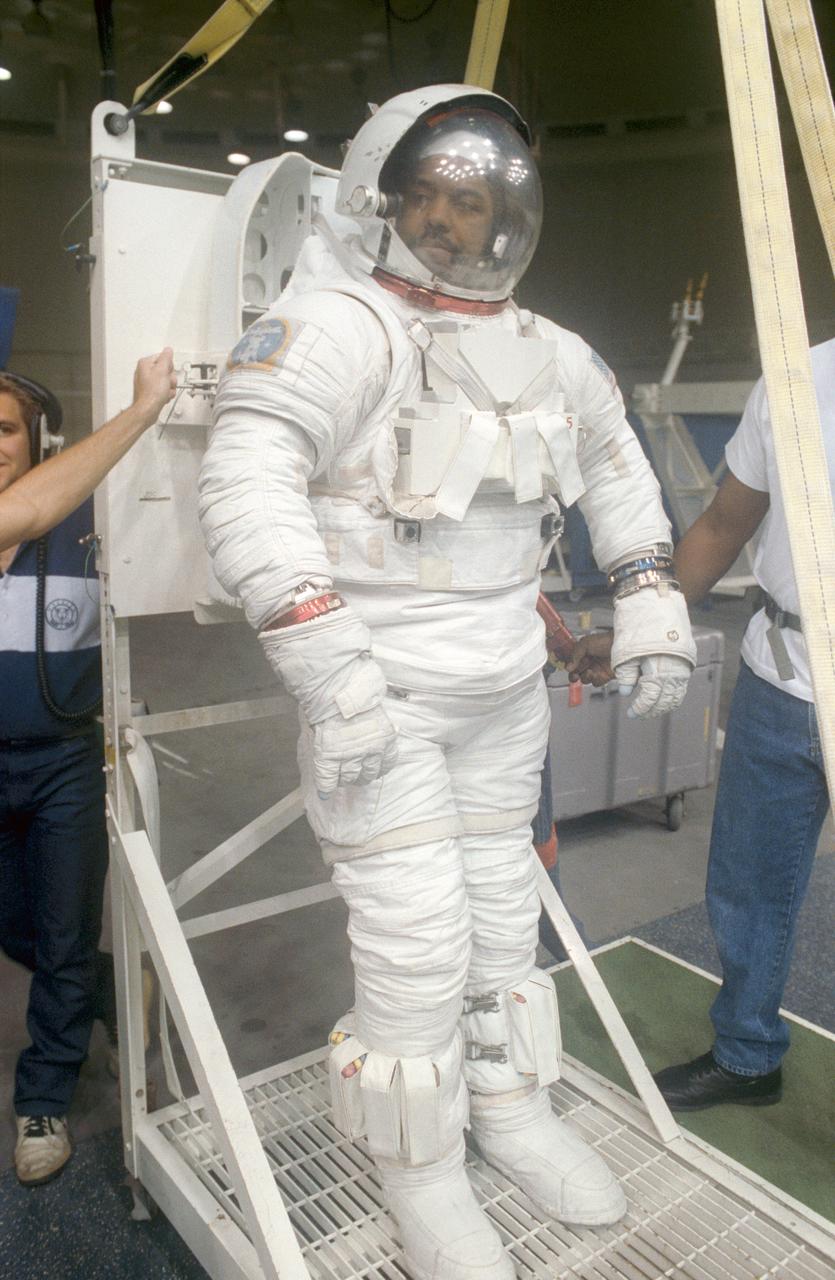
S91-51058 (Dec 1991) --- Partially attired in a special training version of the Extravehicular Mobility Unit (EMU) space suit, astronaut Bernard A. Harris Jr. is pictured before a training session at the Johnson Space Center's (JSC) Weightless Environment Training Facility (WET-F). Minutes later the STS-55 mission specialist was in a 25-feet deep pool simulating a contingency extravehicular activity (EVA). The platform on which he is standing was used to lower him into the water where, with the aid of weights on his environmentally-controlled pressurized suit, he was able to achieve neutral buoyancy. There is no scheduled EVA for the 1993 flight but each space flight crew includes astronauts trained for a variety of contingency tasks that could require exiting the shirt-sleeve environment of a Shuttle's cabin.
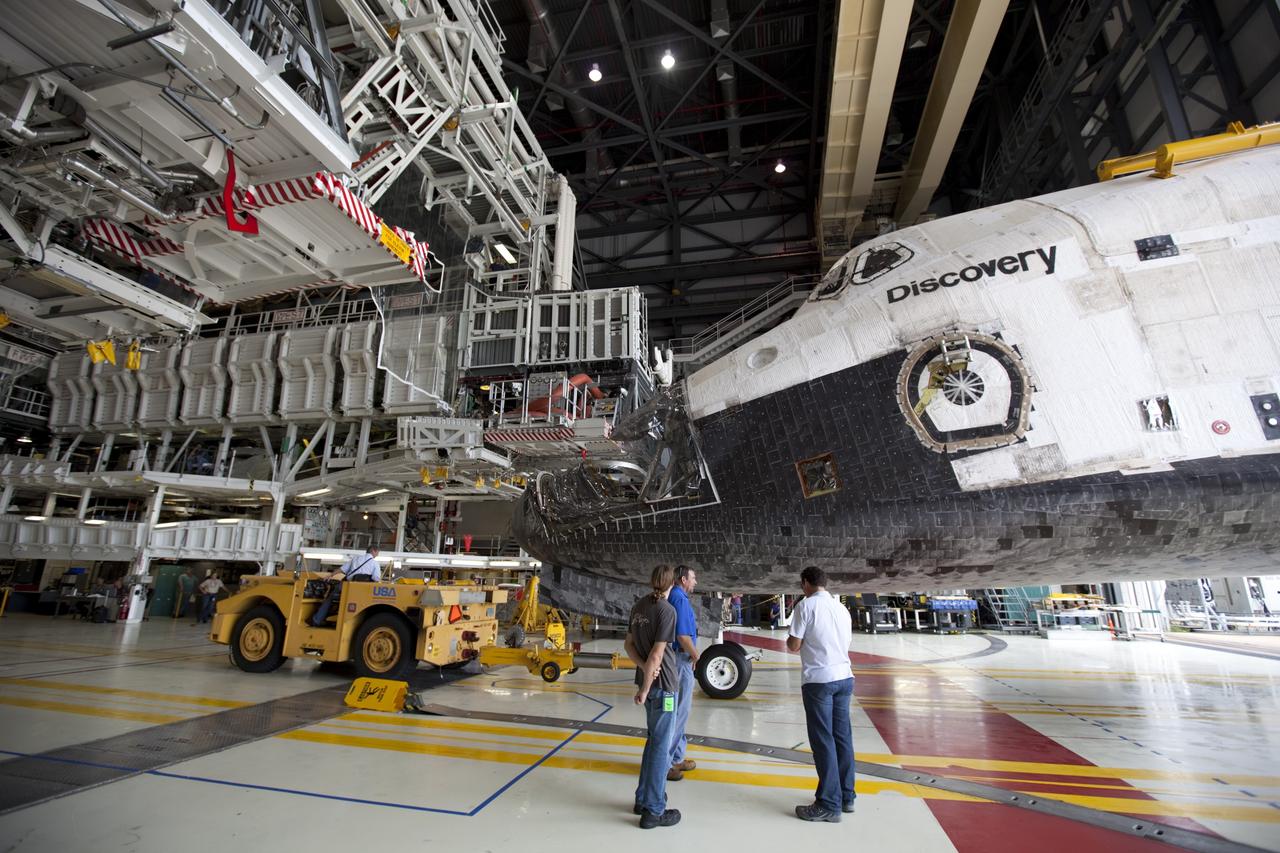
CAPE CANAVERAL, Fla. -- At NASA's Kennedy Space Center in Florida, space shuttle Discovery is towed toward the work platforms in Orbiter Processing Facility-1 (OPF-1) after participating in a unique "nose-to-nose" photo opportunity outside OPF-3 with shuttle Endeavour. Discovery is switching places with Endeavour which temporarily is being placed in storage in the Vehicle Assembly Building (VAB). In OPF-1, Discovery will undergo further preparations for public display at the Smithsonian's National Air and Space Museum Steven F. Udvar-Hazy Center in Virginia. Endeavour will be stored in the VAB until October when it will be moved into OPF-2 for further work to get it ready for public display at the California Science Center in Los Angeles. For more information, visit http://www.nasa.gov/shuttle. Photo credit: NASA/Dimitri Gerondidakis
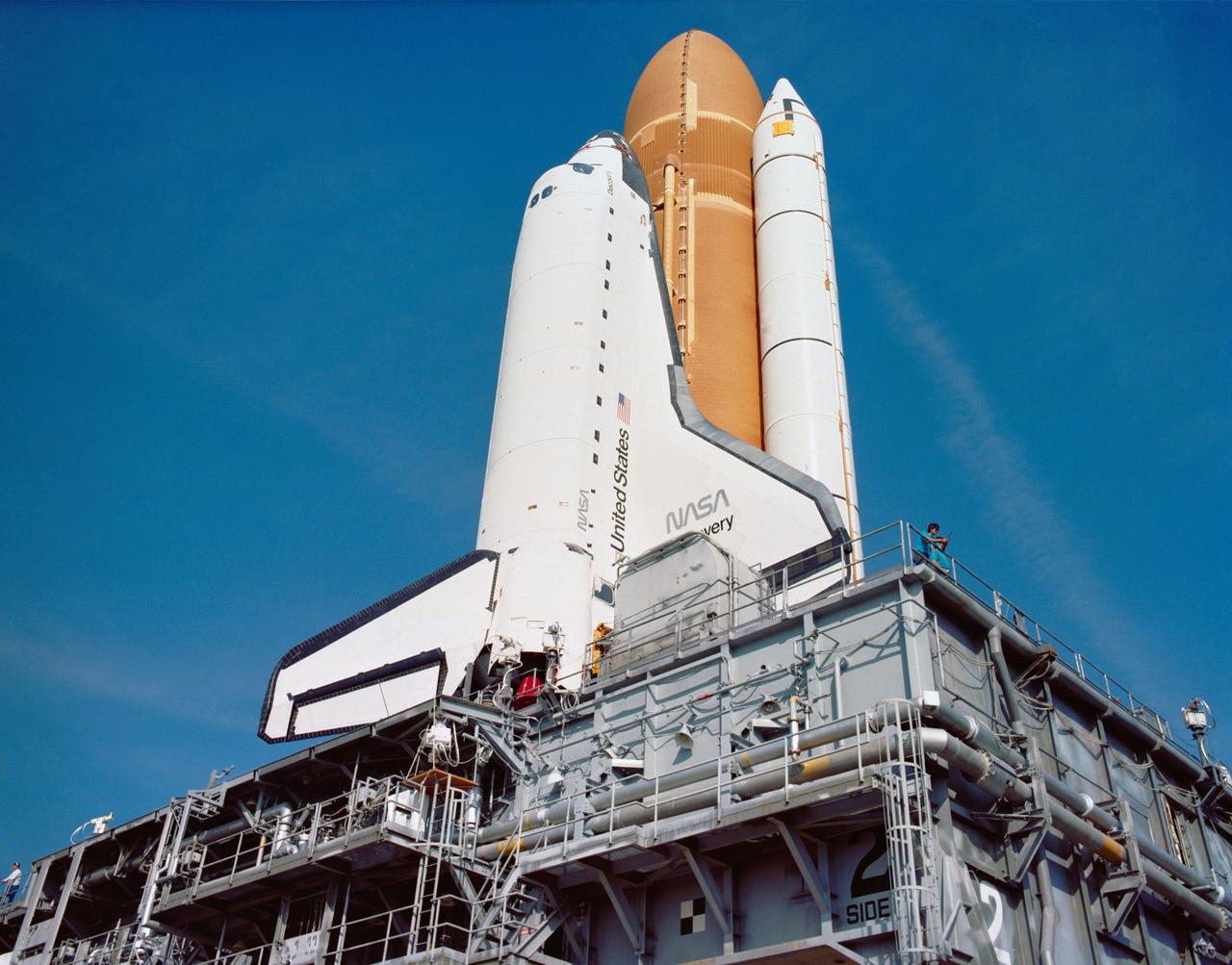
S89-28107 (3 Feb 1989) --- A low angle view of the Space Shuttle Discovery, atop a mobile launch platform, during its slow move to Kennedy Space Center's Launch Pad 39-B on Feb. 3, l989. It rolled through the doors of the huge vehicle assembly building (VAB) at 6 a.m., hours ago as the blue sky testifies. The trip to the pad takes approximately 5 and 1/2 hours. Onboard the spacecraft in mid-March for a five-day mission, on which will be deployed a third tracking and data relay satellite (TDRS-D), will be Astronauts Michael L. Coats, John E. Blaha, James F. Buchli, James P. Bagian and Robert C. Springer.
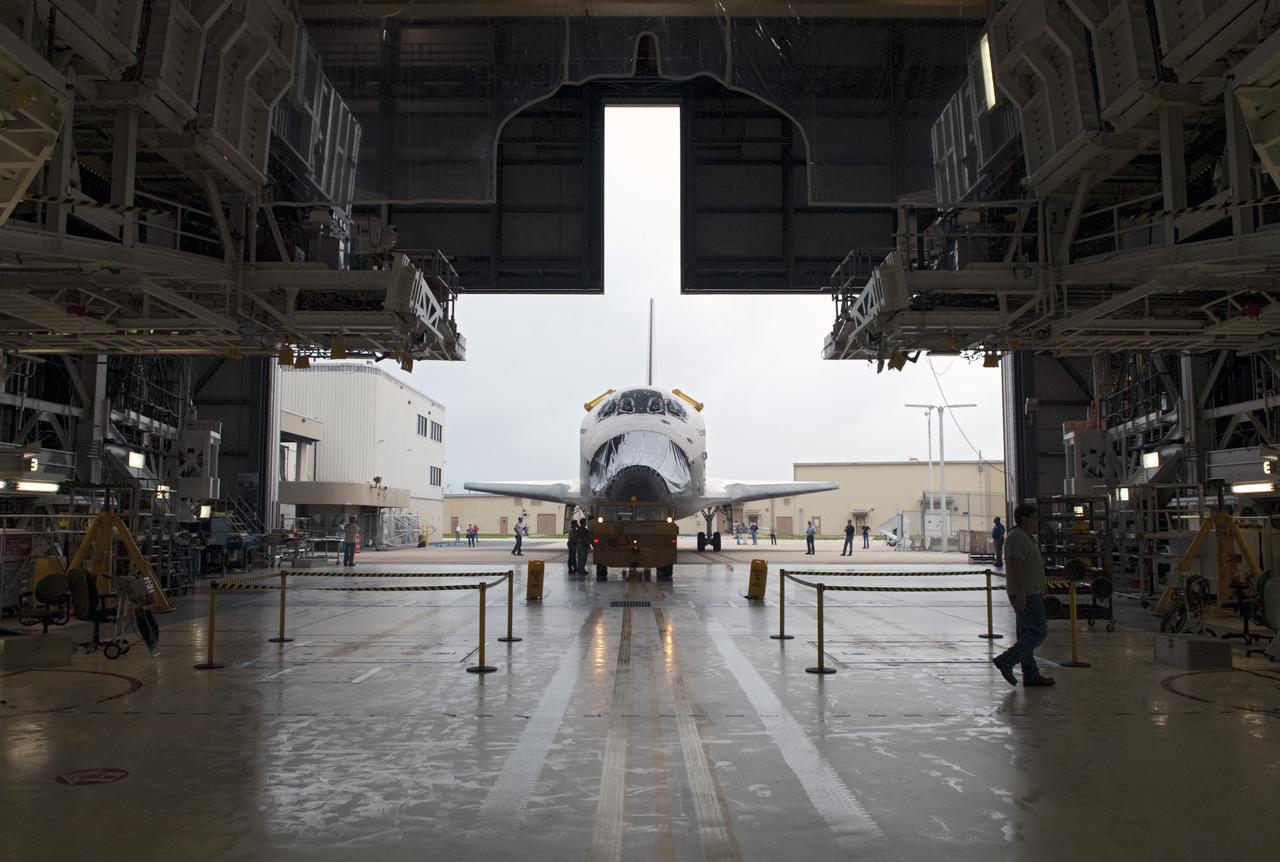
CAPE CANAVERAL, Fla. -- At NASA's Kennedy Space Center in Florida, space shuttle Endeavour vacates the work platforms of Orbiter Processing Facility-1 (OPF-1) to make way for shuttle Discovery. Endeavour is switching places with Discovery which temporarily has been stored in the Vehicle Assembly Building (VAB). Both shuttles will stop briefly outside OPF-3 for a "nose-to-nose" photo opportunity. Discovery then will be rolled into OPF-1 and Endeavour into the VAB. In OPF-1, Discovery will undergo further preparations for public display at the Smithsonian's National Air and Space Museum Steven F. Udvar-Hazy Center in Virginia. Endeavour will be stored in the VAB until October when it will be moved into OPF-2 for further work to get it ready for public display at the California Science Center in Los Angeles. For more information, visit http://www.nasa.gov/shuttle. Photo credit: NASA/Jim Grossmann
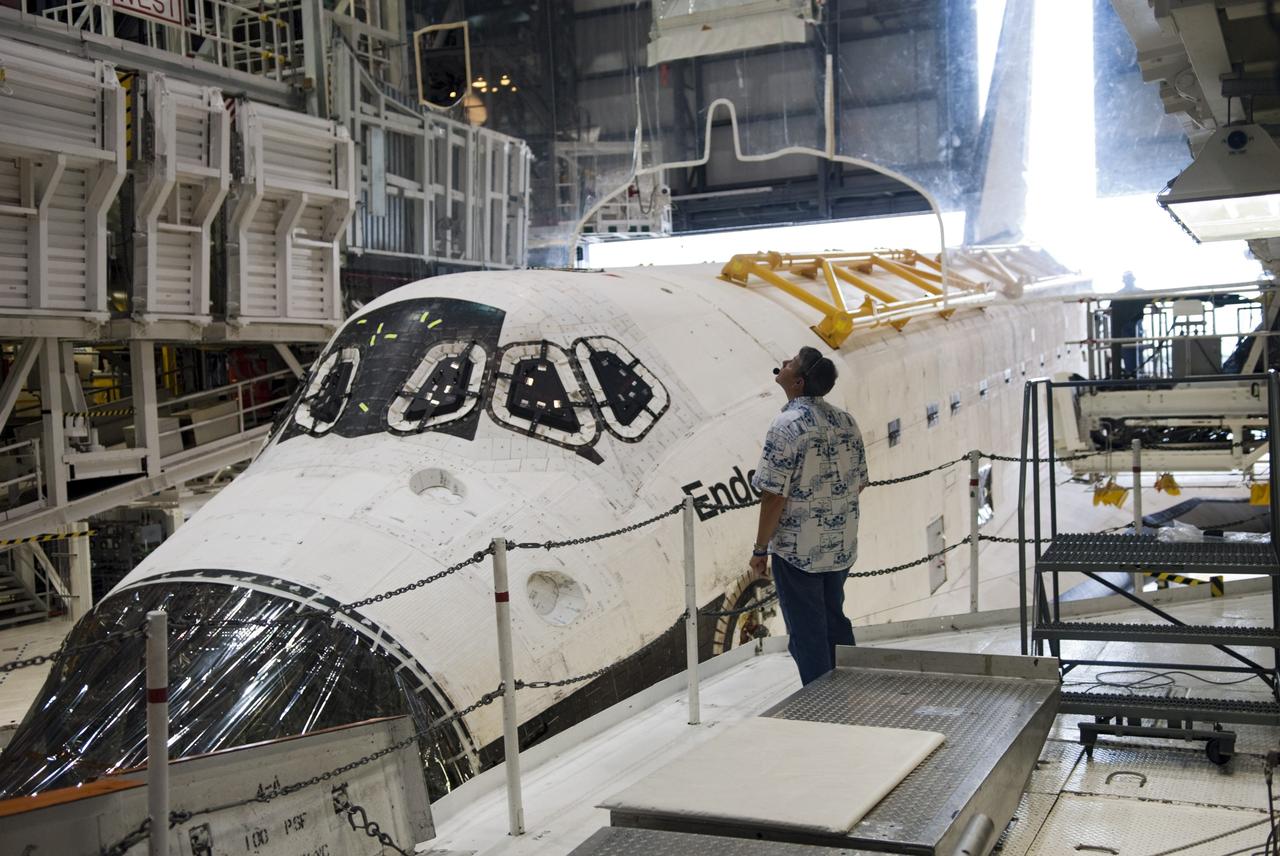
CAPE CANAVERAL, Fla. -- At NASA's Kennedy Space Center in Florida, a spacecraft technician, standing on a work platform next to space shuttle Endeavour, monitors the shuttle as it rolls toward the open door of Orbiter Processing Facility-1 (OPF-1), beginning its move to the Vehicle Assembly Building (VAB). Endeavour is switching places with shuttle Discovery which temporarily has been stored in the VAB. Both shuttles will stop briefly outside OPF-3 for a "nose-to-nose" photo opportunity. Discovery then will be rolled into OPF-1 and Endeavour into the VAB. In OPF-1, Discovery will undergo further preparations for public display at the Smithsonian's National Air and Space Museum Steven F. Udvar-Hazy Center in Virginia. Endeavour will be stored in the VAB until October when it will be moved into OPF-2 for further work to get it ready for public display at the California Science Center in Los Angeles. For more information, visit http://www.nasa.gov/shuttle. Photo credit: NASA/Jim Grossmann
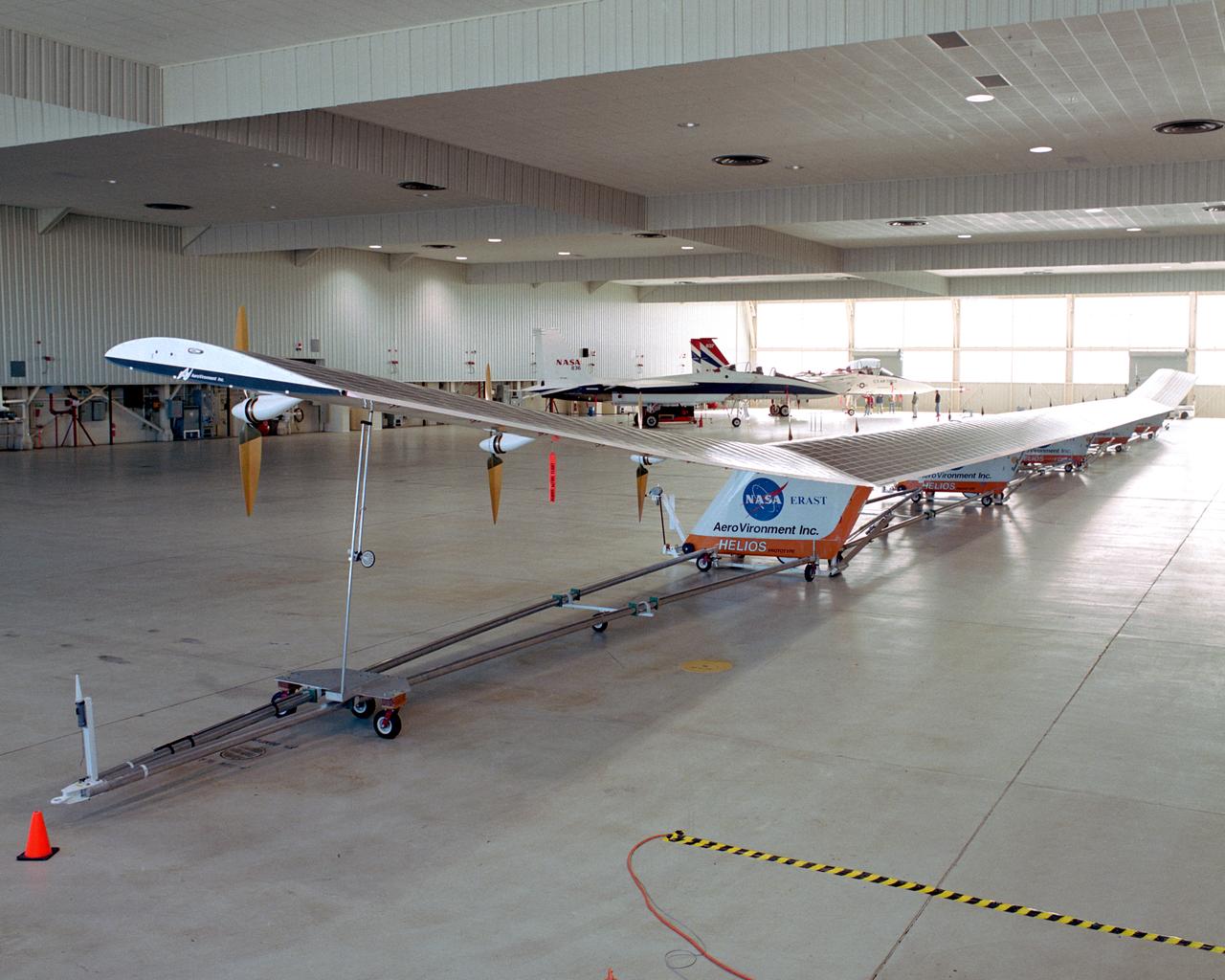
The solar-powered Helios Prototype flying wing frames two modified F-15 research aircraft in a hangar at NASA's Dryden Flight Research Center, Edwards, California. The elongated 247-foot span lightweight aircraft, resting on its ground maneuvering dolly, stretched almost the full length of the 300-foot long hangar while on display during a visit of NASA Administrator Sean O'Keefe and other NASA officials on Jan. 31, 2002. The unique solar-electric flying wing reached an altitude of 96,863 feet during an almost 17-hour flight near Hawaii on Aug. 13, 2001, a world record for sustained horizontal flight by a non-rocket powered aircraft. Developed by AeroVironment, Inc., under NASA's Environmental Research Aircraft and Sensor Technology (ERAST) project, the Helios Prototype is the forerunner of a planned fleet of slow-flying, long duration, high-altitude uninhabited aerial vehicles (UAV) which can serve as "atmospheric satellites," performing Earth science missions or functioning as telecommunications relay platforms in the stratosphere.
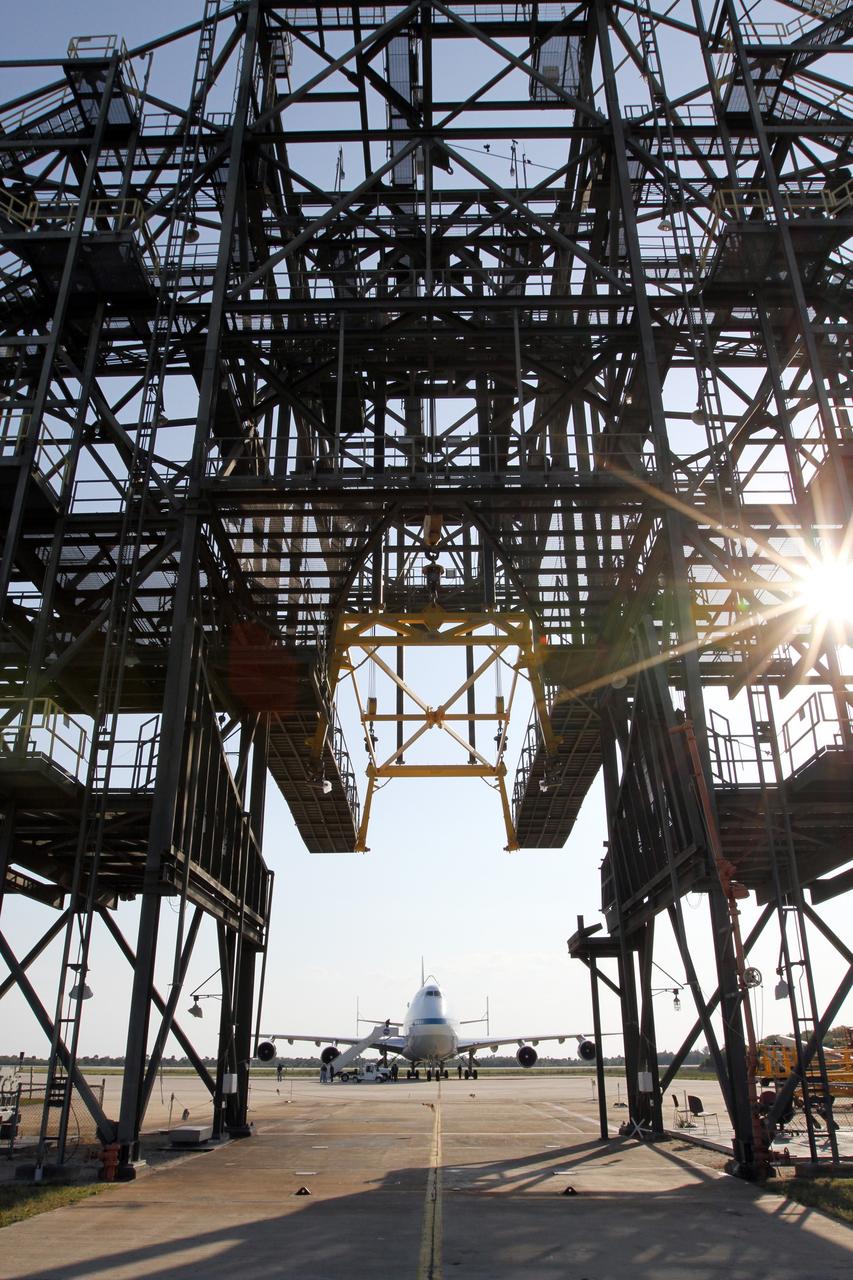
CAPE CANAVERAL, Fla. – The newly arrived Shuttle Carrier Aircraft is seen through the platforms of the mate-demate device at the Shuttle Landing Facility at NASA’s Kennedy Space Center in Florida. The aircraft, known as an SCA, arrived at 5:35 p.m. EDT to prepare for shuttle Discovery’s ferry flight to the Washington Dulles International Airport in Sterling, Va., on April 17. This SCA, designated NASA 905, is a modified Boeing 747 jet airliner, originally manufactured for commercial use. One of two SCAs employed over the course of the Space Shuttle Program, NASA 905 is assigned to the remaining ferry missions, delivering the shuttles to their permanent public display sites. NASA 911 was decommissioned at the NASA Dryden Flight Research Center in California in February. Discovery will be placed on permanent public display in the Smithsonian's National Air and Space Museum Steven F. Udvar-Hazy Center in Chantilly, Va. For more information on the SCA, visit http://www.nasa.gov/centers/dryden/news/FactSheets/FS-013-DFRC.html. For more information on shuttle transition and retirement activities, visit http://www.nasa.gov/shuttle. Photo credit: NASA/Kim Shiflett