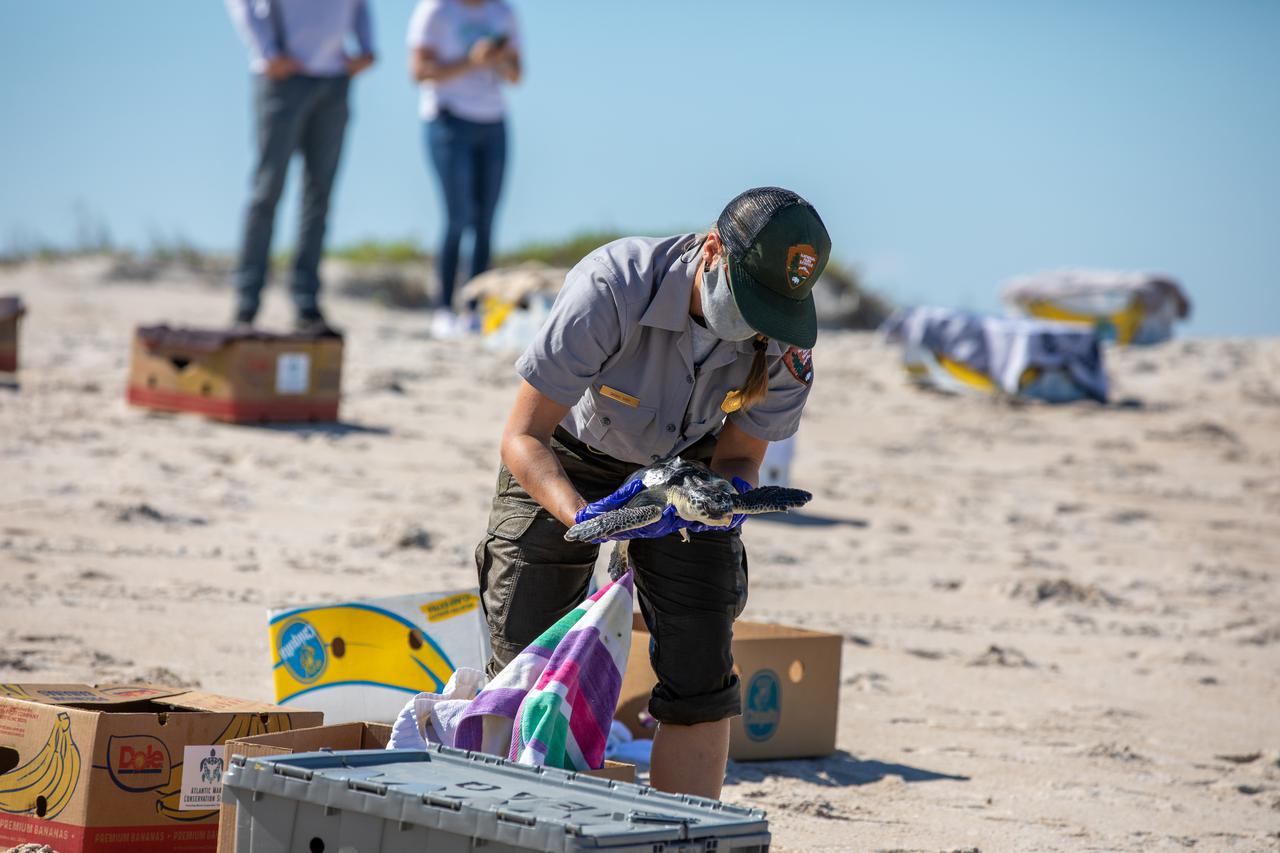
Staff with NASA, the National Park Service, Herndon Solutions Group, the center’s environmental services contractor, and others, prepare to release Kemp’s ridley sea turtles into the Atlantic Ocean at the Canaveral National Seashore near Kennedy Space Center on Feb. 26, 2021. The rescued and rehabilitated turtles were flown from aquatic centers in Massachusetts and New York to the Launch and Landing Facility, managed by Space Florida. NASA, U.S. Fish and Wildlife Service, NOAA Fisheries, Space Florida, and Herndon Solutions Group provided support. The Turtles Fly Too organization provided the flight to Kennedy. All marine turtle footage/images was obtained with the approval of the Florida Fish and Wildlife Conservation Commission (FWC) under conditions not harmful to marine turtles. Footage was acquired while conducting authorized conservation activities pursuant to: FWC 2021 Consent Permit, MTP-21-005 and MTP-21-114.
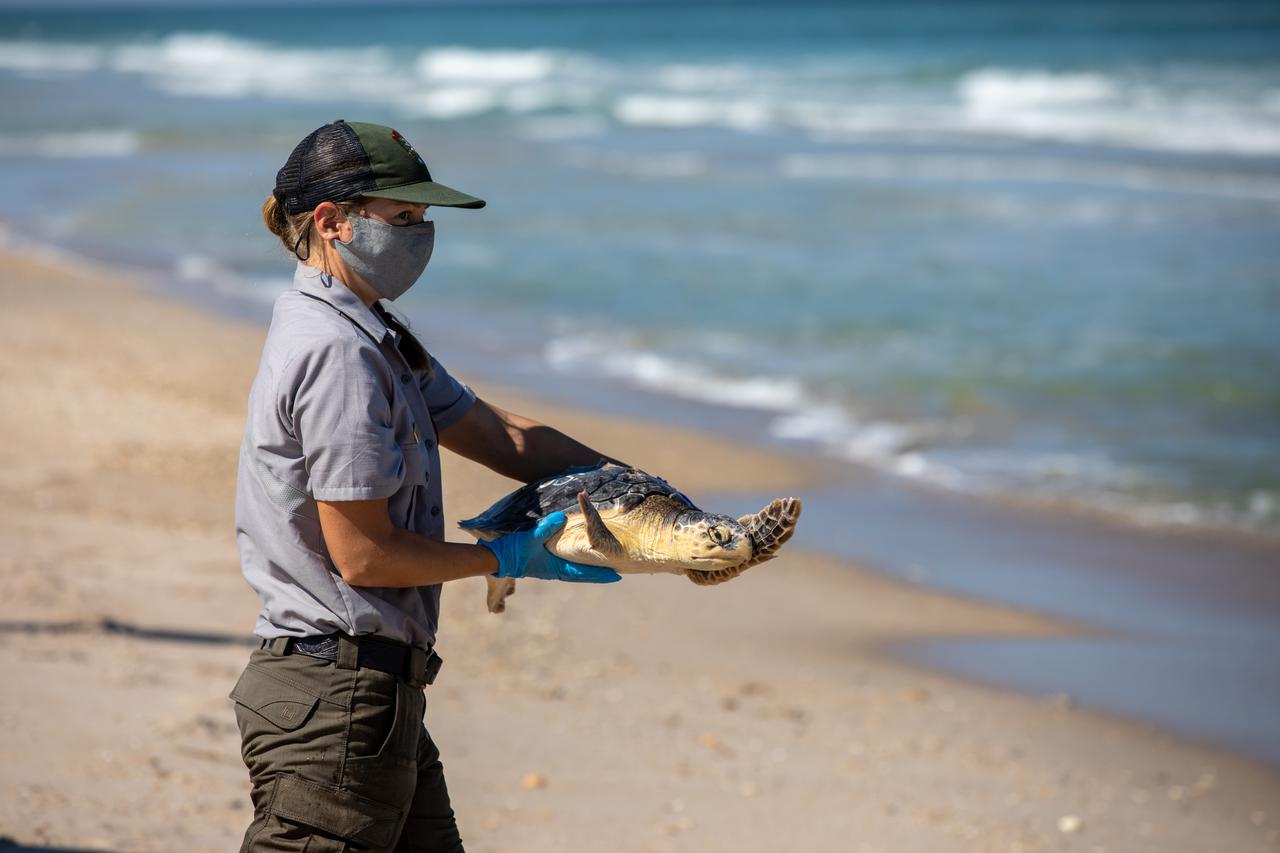
A National Park Service staff member prepares to release a Kemp’s ridley sea turtle into the Atlantic Ocean at the Canaveral National Seashore near Kennedy Space Center on Feb. 26, 2021. The rescued and rehabilitated turtles were flown from aquatic centers in Massachusetts and New York to the Launch and Landing Facility, managed by Space Florida. NASA, U.S. Fish and Wildlife Service, NOAA Fisheries, Space Florida, and Herndon Solutions Group provided support. The Turtles Fly Too organization provided the flight to Kennedy. All marine turtle footage/images was obtained with the approval of the Florida Fish and Wildlife Conservation Commission (FWC) under conditions not harmful to marine turtles. Footage was acquired while conducting authorized conservation activities pursuant to: FWC 2021 Consent Permit, MTP-21-005 and MTP-21-114.
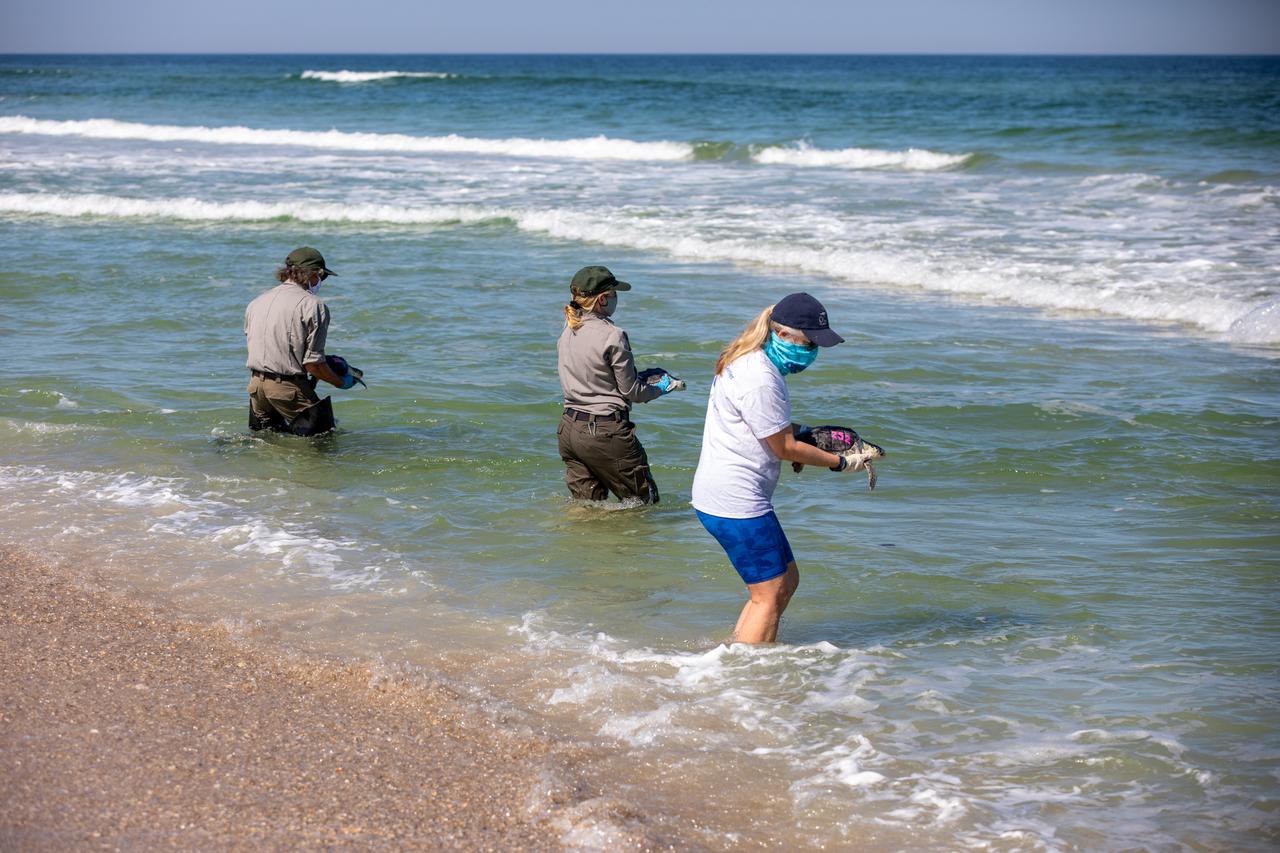
Staff with NASA, the National Park Service, Herndon Solutions Group, the center’s environmental services contractor, and others, prepare to release Kemp’s ridley sea turtles into the Atlantic Ocean at the Canaveral National Seashore near Kennedy Space Center on Feb. 26, 2021. The rescued and rehabilitated turtles were flown from aquatic centers in Massachusetts and New York to the Launch and Landing Facility, managed by Space Florida. NASA, U.S. Fish and Wildlife Service, NOAA Fisheries, Space Florida, and Herndon Solutions Group provided support. The Turtles Fly Too organization provided the flight to Kennedy. All marine turtle footage/images was obtained with the approval of the Florida Fish and Wildlife Conservation Commission (FWC) under conditions not harmful to marine turtles. Footage was acquired while conducting authorized conservation activities pursuant to: FWC 2021 Consent Permit, MTP-21-005 and MTP-21-114.
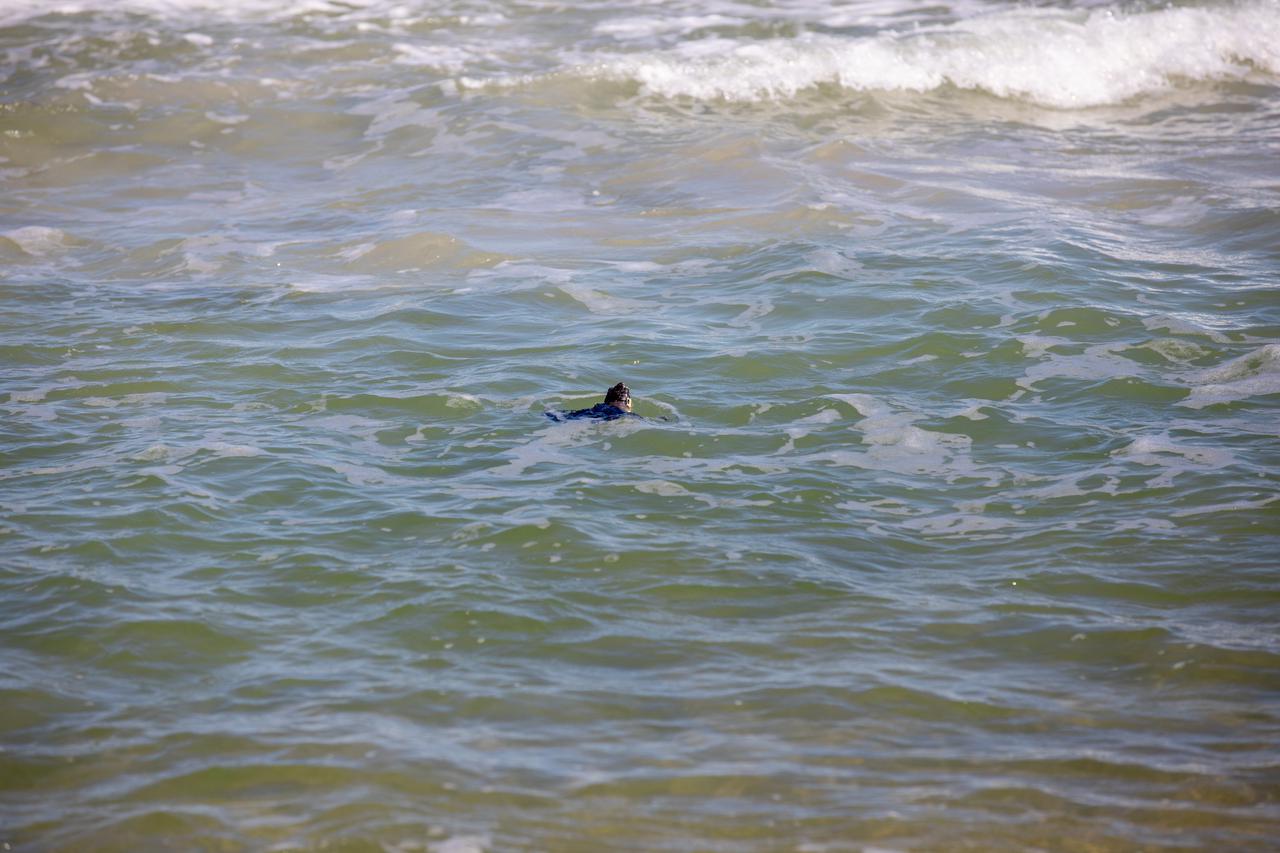
A Kemp’s ridley sea turtle swims in the surf after it is released into the Atlantic Ocean at the Canaveral National Seashore near Kennedy Space Center on Feb. 26, 2021. The rescued and rehabilitated turtles were flown from aquatic centers in Massachusetts and New York to the Launch and Landing Facility, managed by Space Florida. NASA, U.S. Fish and Wildlife Service, NOAA Fisheries, Space Florida, and Herndon Solutions Group provided support. The Turtles Fly Too organization provided the flight to Kennedy. All marine turtle footage/images was obtained with the approval of the Florida Fish and Wildlife Conservation Commission (FWC) under conditions not harmful to marine turtles. Footage was acquired while conducting authorized conservation activities pursuant to: FWC 2021 Consent Permit, MTP-21-005 and MTP-21-114.
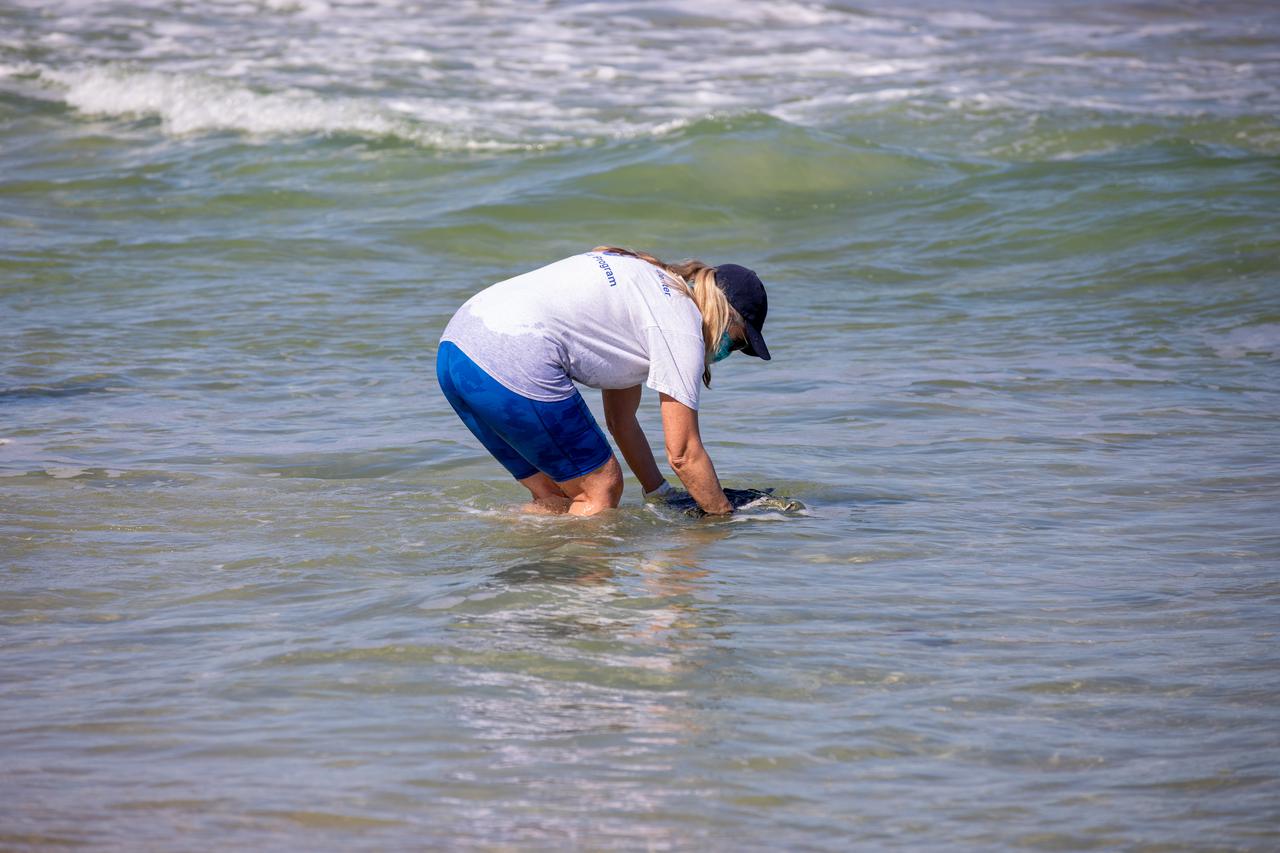
A biologist with Herndon Solutions Group, the center’s environmental services contractor, releases a Kemp’s ridley sea turtle into the Atlantic Ocean at the Canaveral National Seashore near Kennedy Space Center on Feb. 26, 2021. The rescued and rehabilitated turtles were flown from aquatic centers in Massachusetts and New York to the Launch and Landing Facility, managed by Space Florida. NASA, U.S. Fish and Wildlife Service, NOAA Fisheries, Space Florida, and Herndon Solutions Group provided support. The Turtles Fly Too organization provided the flight to Kennedy. All marine turtle footage/images was obtained with the approval of the Florida Fish and Wildlife Conservation Commission (FWC) under conditions not harmful to marine turtles. Footage was acquired while conducting authorized conservation activities pursuant to: FWC 2021 Consent Permit, MTP-21-005 and MTP-21-114.
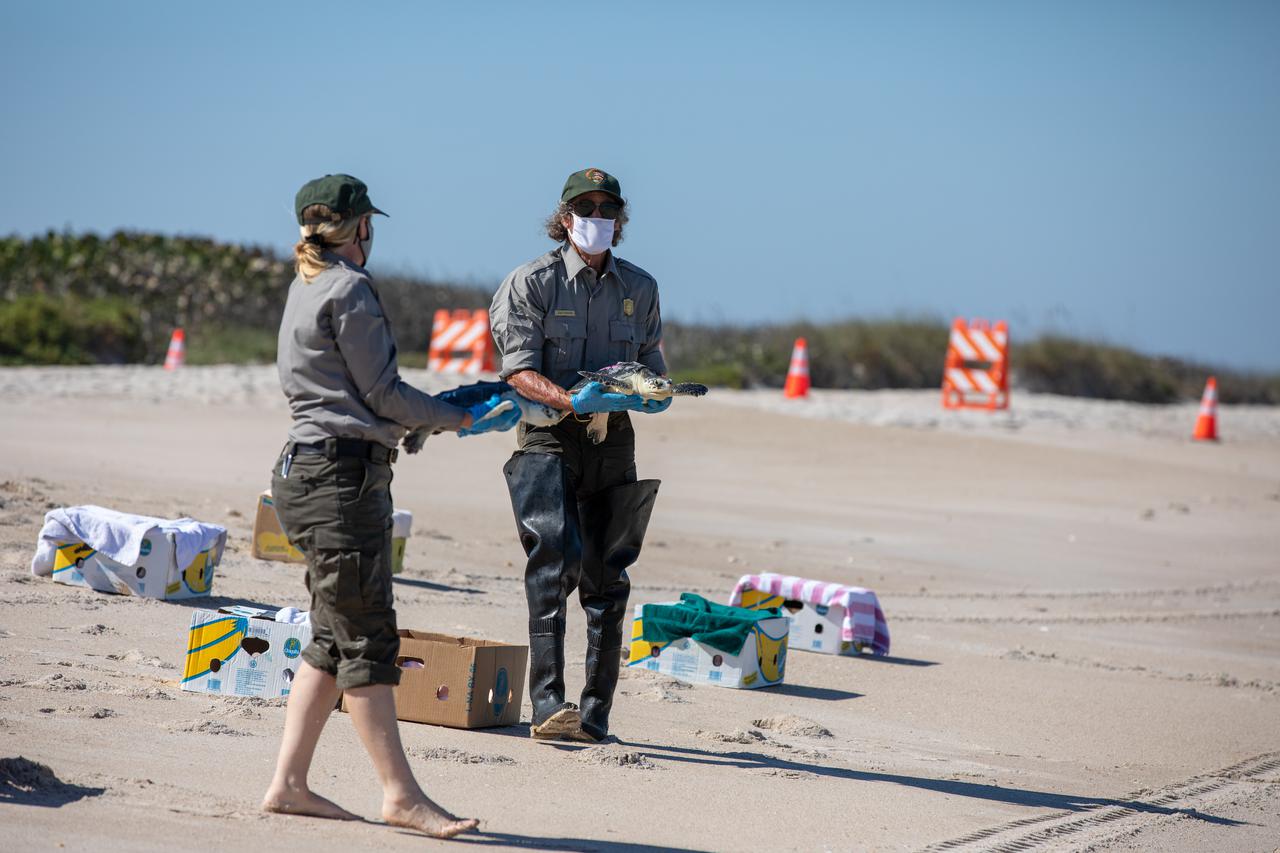
Staff with NASA, the National Park Service, Herndon Solutions Group, the center’s environmental services contractor, and others, prepare to release Kemp’s ridley sea turtles into the Atlantic Ocean at the Canaveral National Seashore near Kennedy Space Center on Feb. 26, 2021. The rescued and rehabilitated turtles were flown from aquatic centers in Massachusetts and New York to the Launch and Landing Facility, managed by Space Florida. NASA, U.S. Fish and Wildlife Service, NOAA Fisheries, Space Florida, and Herndon Solutions Group provided support. The Turtles Fly Too organization provided the flight to Kennedy. All marine turtle footage/images was obtained with the approval of the Florida Fish and Wildlife Conservation Commission (FWC) under conditions not harmful to marine turtles. Footage was acquired while conducting authorized conservation activities pursuant to: FWC 2021 Consent Permit, MTP-21-005 and MTP-21-114.
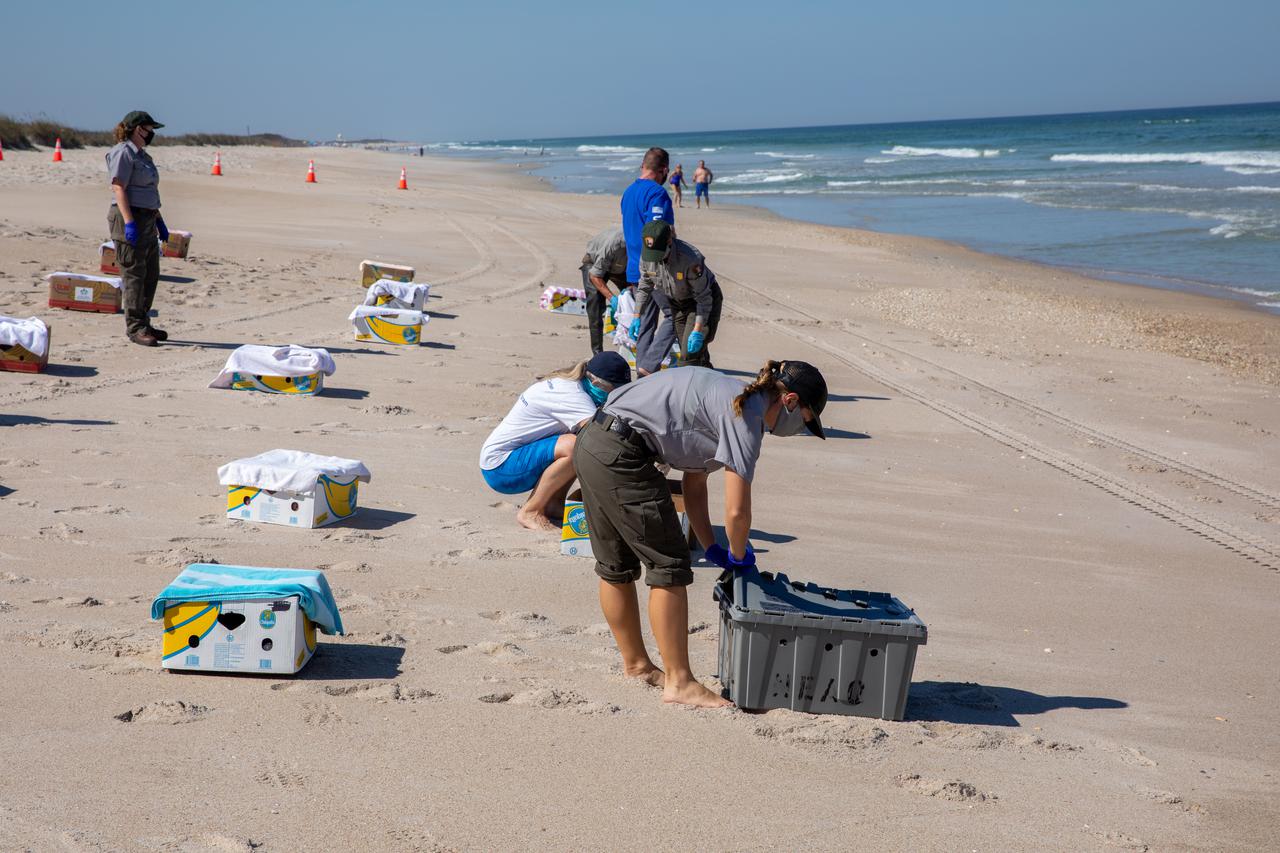
Staff with NASA, the National Park Service, Herndon Solutions Group, the center’s environmental services contractor, and others, prepare to release Kemp’s ridley sea turtles into the Atlantic Ocean at the Canaveral National Seashore near Kennedy Space Center on Feb. 26, 2021. The rescued and rehabilitated turtles were flown from aquatic centers in Massachusetts and New York to the Launch and Landing Facility, managed by Space Florida. NASA, U.S. Fish and Wildlife Service, NOAA Fisheries, Space Florida, and Herndon Solutions Group provided support. The Turtles Fly Too organization provided the flight to Kennedy. All marine turtle footage/images was obtained with the approval of the Florida Fish and Wildlife Conservation Commission (FWC) under conditions not harmful to marine turtles. Footage was acquired while conducting authorized conservation activities pursuant to: FWC 2021 Consent Permit, MTP-21-005 and MTP-21-114.
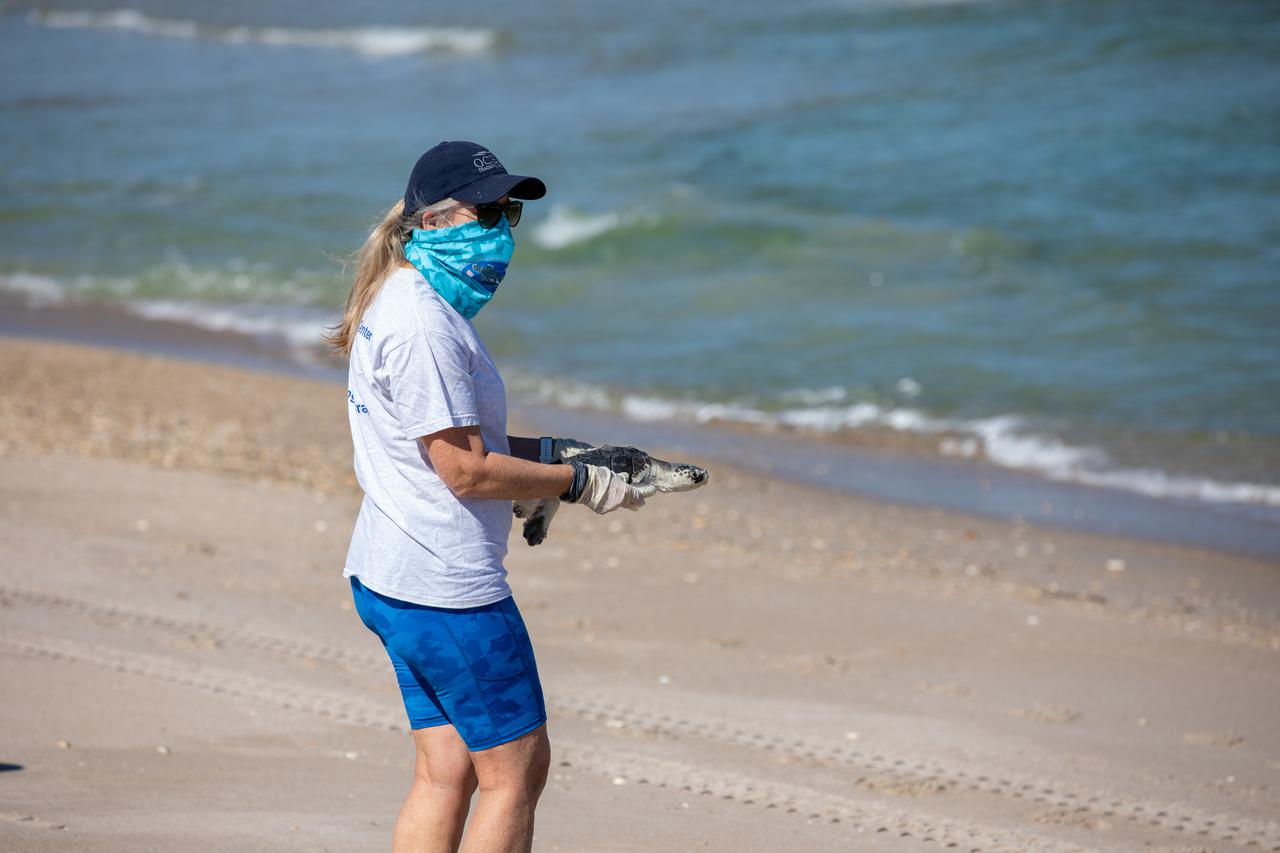
A biologist with Herndon Solutions Group, the center’s environmental services contractor, prepares to release Kemp’s ridley sea turtles into the Atlantic Ocean at the Canaveral National Seashore near Kennedy Space Center on Feb. 26, 2021. The rescued and rehabilitated turtles were flown from aquatic centers in Massachusetts and New York to the Launch and Landing Facility, managed by Space Florida. NASA, U.S. Fish and Wildlife Service, NOAA Fisheries, Space Florida, and Herndon Solutions Group provided support. The Turtles Fly Too organization provided the flight to Kennedy. All marine turtle footage/images was obtained with the approval of the Florida Fish and Wildlife Conservation Commission (FWC) under conditions not harmful to marine turtles. Footage was acquired while conducting authorized conservation activities pursuant to: FWC 2021 Consent Permit, MTP-21-005 and MTP-21-114.
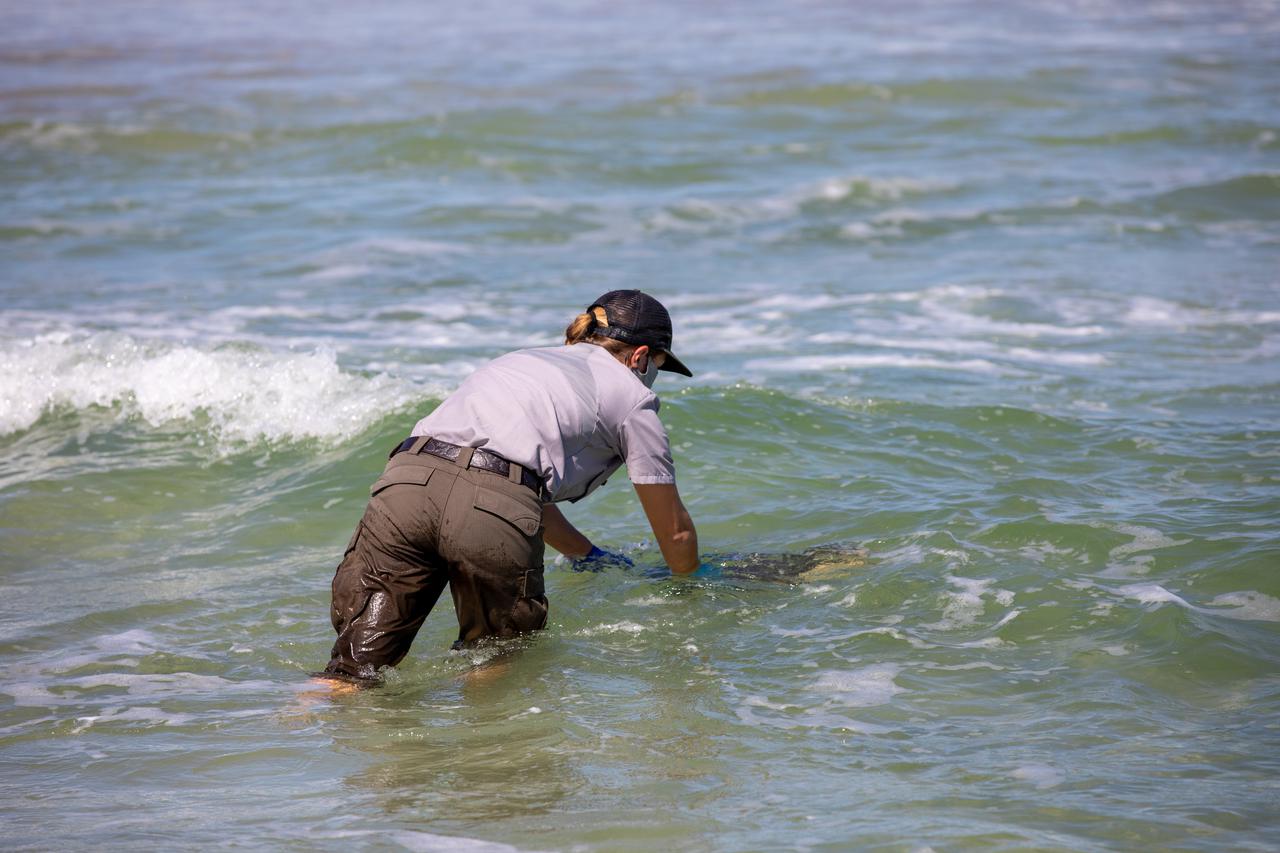
A National Park Service staff member releases a Kemp’s ridley sea turtle into the Atlantic Ocean at the Canaveral National Seashore near Kennedy Space Center on Feb. 26, 2021. The rescued and rehabilitated turtles were flown from aquatic centers in Massachusetts and New York to the Launch and Landing Facility, managed by Space Florida. NASA, U.S. Fish and Wildlife Service, NOAA Fisheries, Space Florida, and Herndon Solutions Group provided support. The Turtles Fly Too organization provided the flight to Kennedy. All marine turtle footage/images was obtained with the approval of the Florida Fish and Wildlife Conservation Commission (FWC) under conditions not harmful to marine turtles. Footage was acquired while conducting authorized conservation activities pursuant to: FWC 2021 Consent Permit, MTP-21-005 and MTP-21-114.
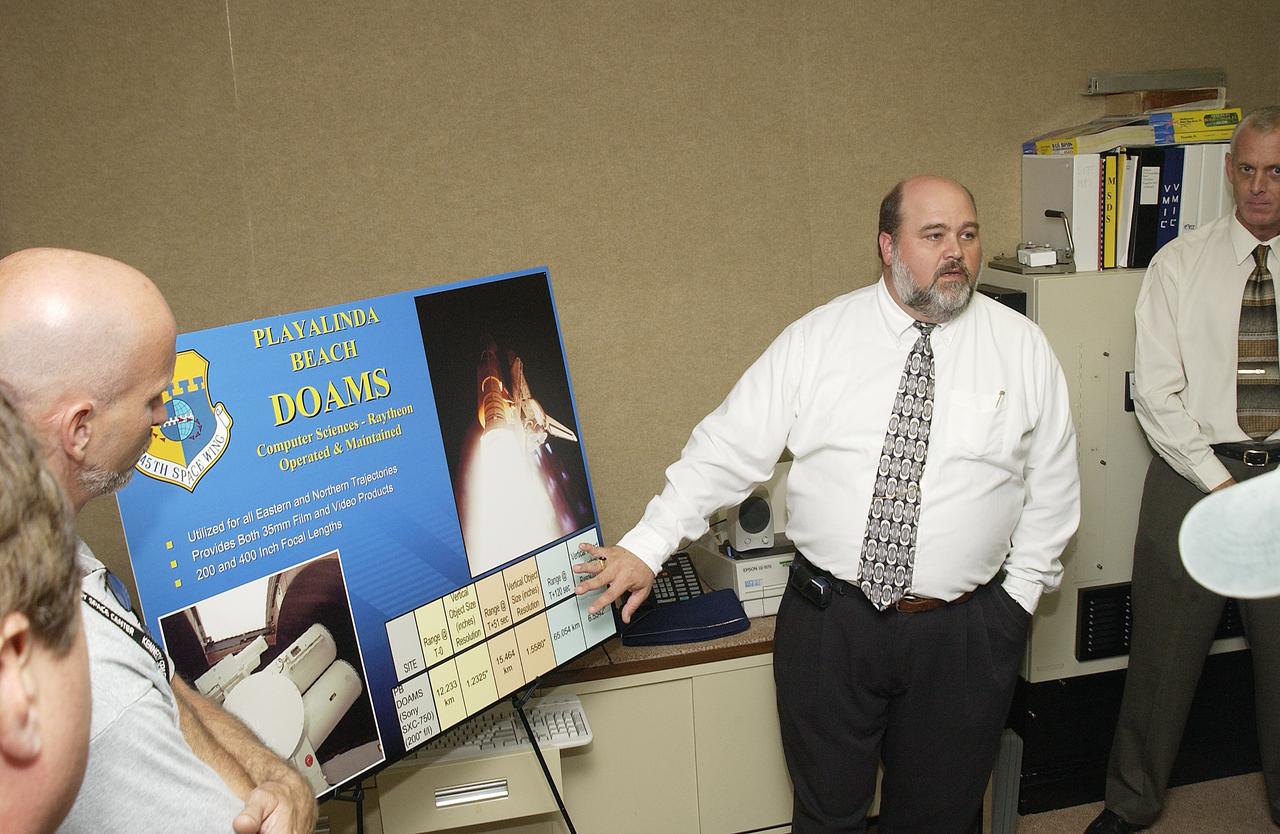
Inside the dome building at Playalinda Beach, Mike Litscher talks to media about the Distant Object Attitude Measurement System (DOAMS), part of the improved tracking cameras and long-range optical tracking systems that will be used to capture ascent imagery during the return to flight of the Space Shuttle. The press opportunity also includes tours of the launch pad perimeter camera site at Launch Complex 39B and the other optical tracking site at the Merritt Island National Refuge.
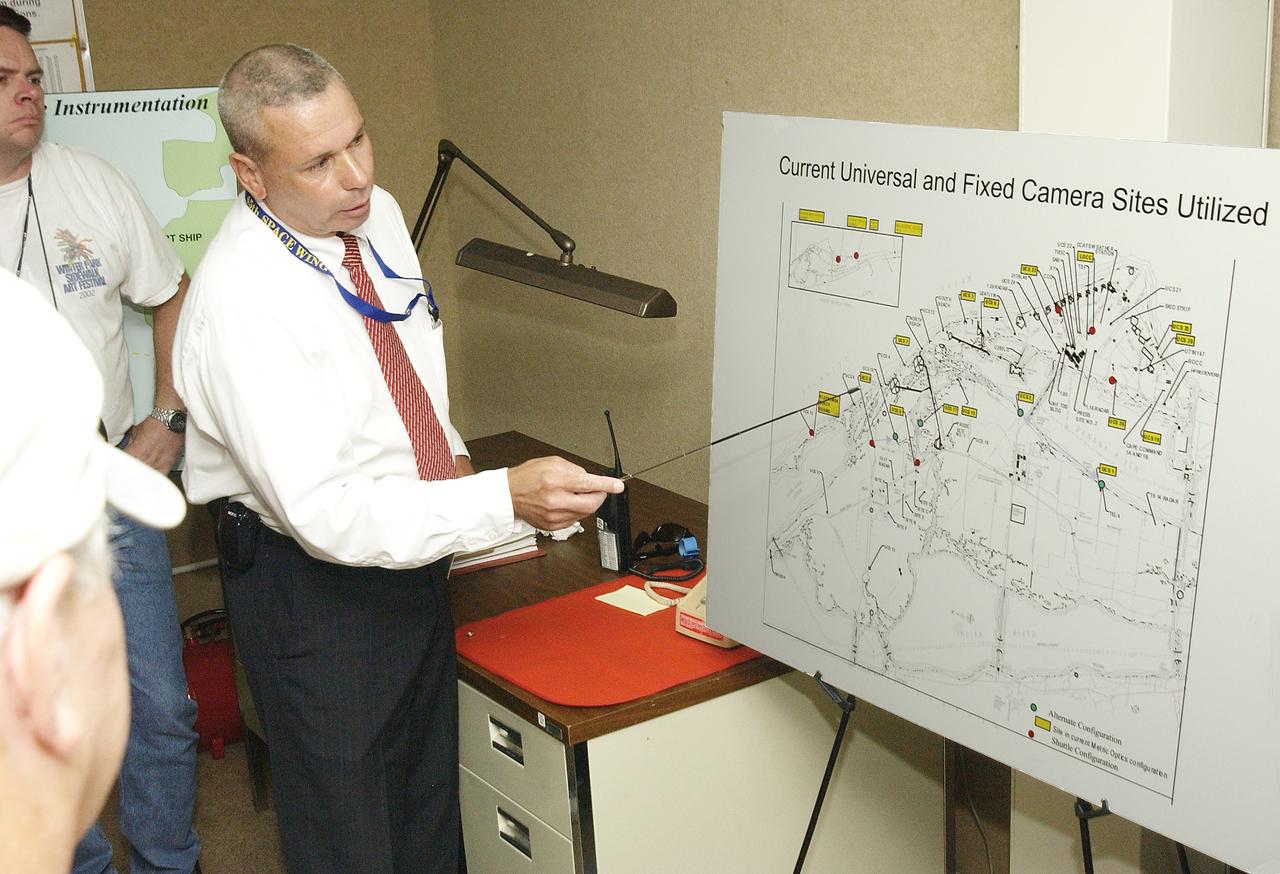
Inside the dome building at Playalinda Beach, Bob Fore points to a map of camera sites during a presentation to the media on the improved tracking cameras and long-range optical tracking systems that will be used to capture ascent imagery during the return to flight of the Space Shuttle. The press opportunity also includes tours of the launch pad perimeter camera site at Launch Complex 39B and the other optical tracking site at the Merritt Island National Refuge.
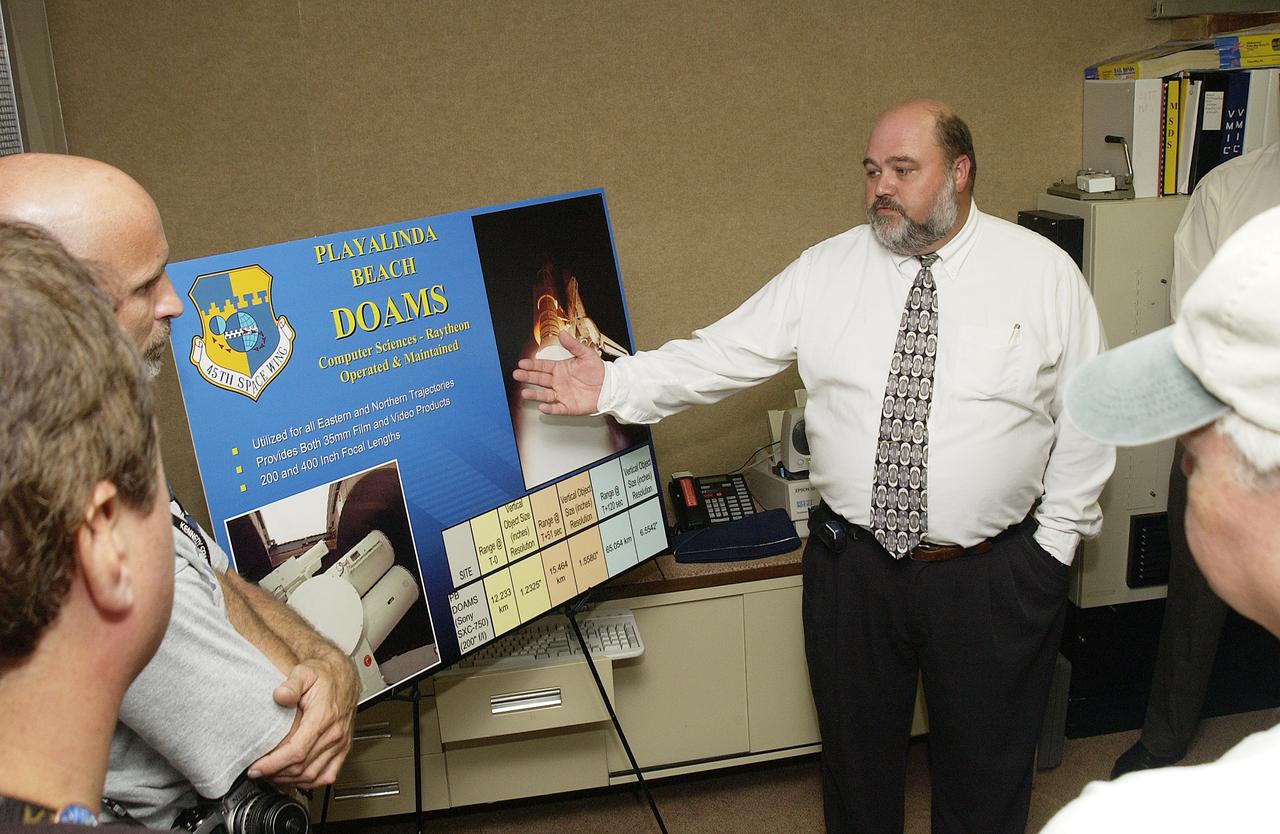
Inside the dome building at Playalinda Beach, Mike Litscher talks to media about the Distant Object Attitude Measurement System (DOAMS), part of the improved tracking cameras and long-range optical tracking systems that will be used to capture ascent imagery during the return to flight of the Space Shuttle. The press opportunity also includes tours of the launch pad perimeter camera site at Launch Complex 39B and the other optical tracking site at the Merritt Island National Refuge.
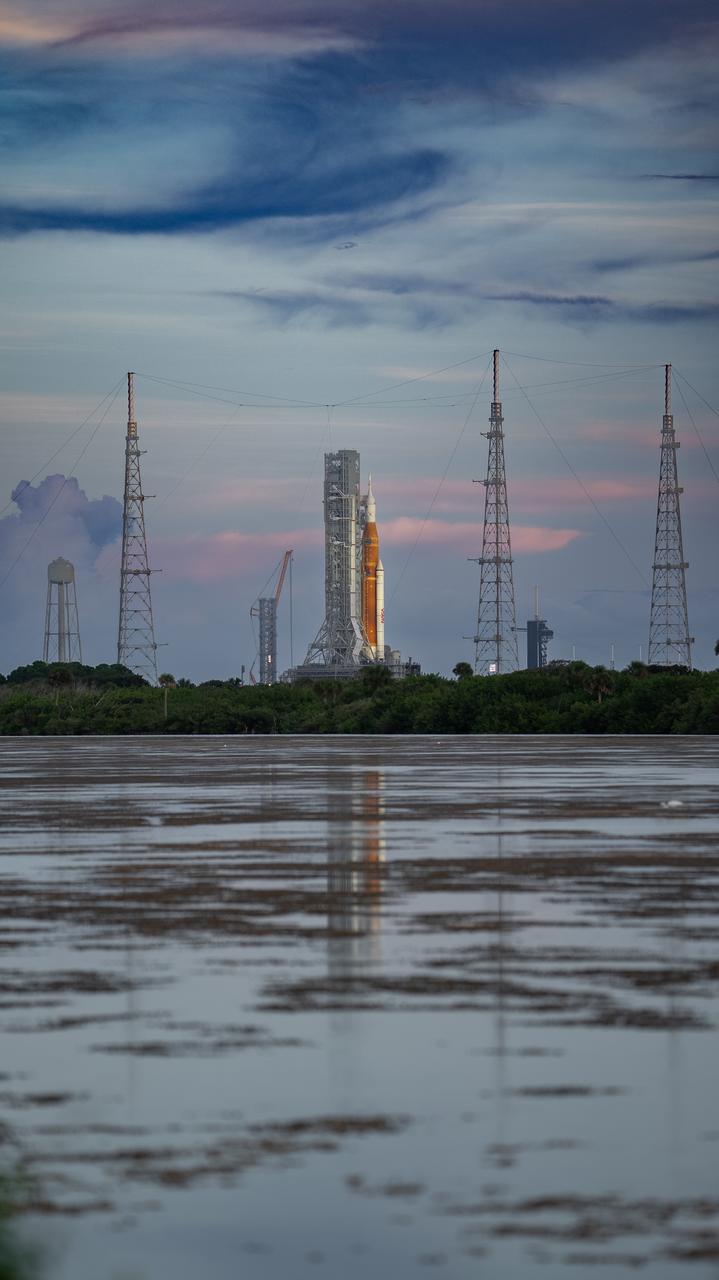
NASA’s Space Launch System (SLS) rocket with the Orion spacecraft aboard is seen atop the mobile launcher at Launch Pad 39B at NASA’s Kennedy Space Center in Florida. Artemis I mission is the first integrated test of the agency’s deep space exploration systems: the Space Launch System rocket, Orion spacecraft, and supporting ground systems. The mission is the first in a series of increasingly complex missions to the Moon. Launch of the uncrewed flight test is targeted for no earlier than Sept. 3 at 2:17 p.m. ET. With Artemis missions, NASA will land the first woman and first person of color on the Moon, using innovative technologies to explore more of the lunar surface than ever before.
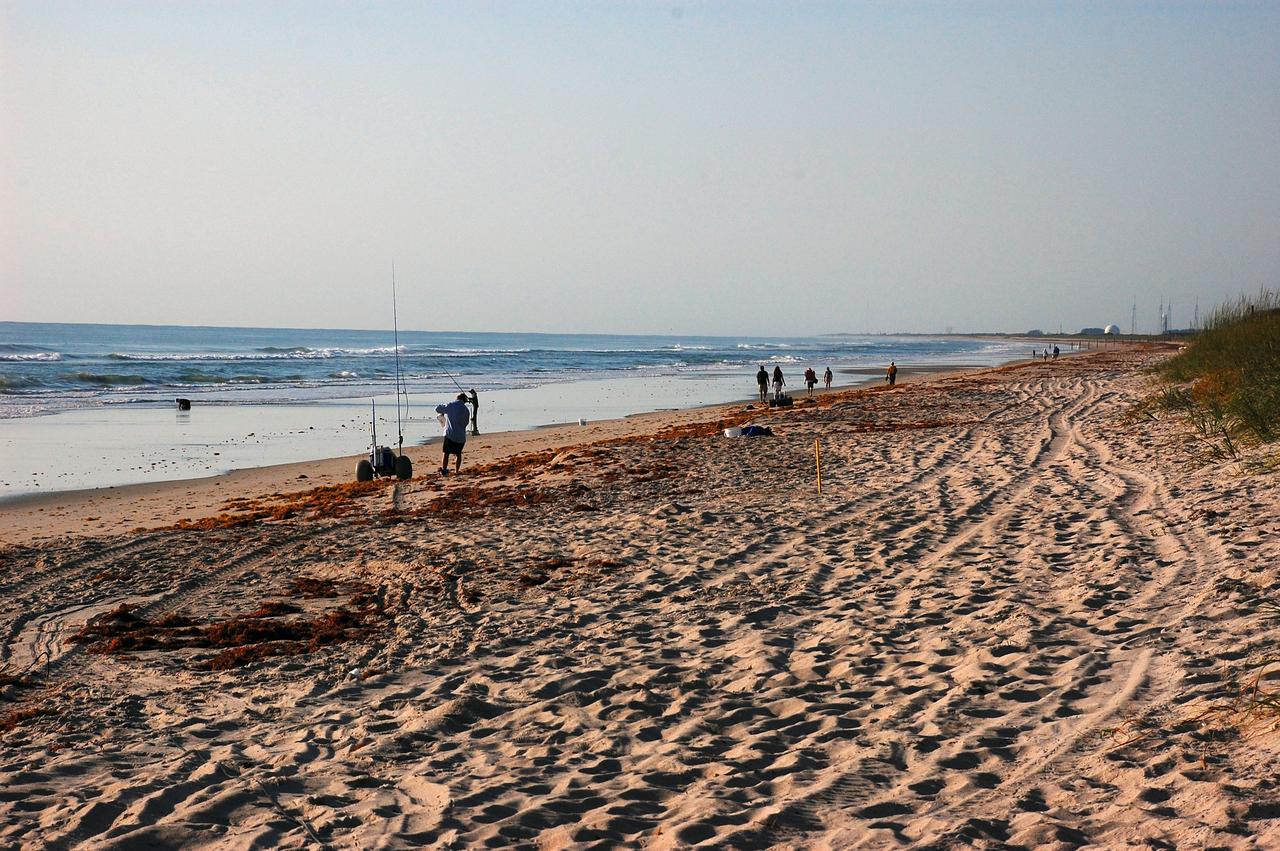
CAPE CANAVERAL, Fla. -- A balmy May morning finds visitors to Playalinda Beach in Florida enjoying the water, fishing and walking along the shore. The beach borders NASA's Kennedy Space Center to the north. On this particular morning, preparations are underway for a launch from Space Launch Complex-41 on Cape Canaveral Air Force Station, a part of the spaceport which neighbors Kennedy Space Center. For more information, visit http://www.nasa.gov/centers/kennedy. Photo credit: NASA/Ben Smegelsky
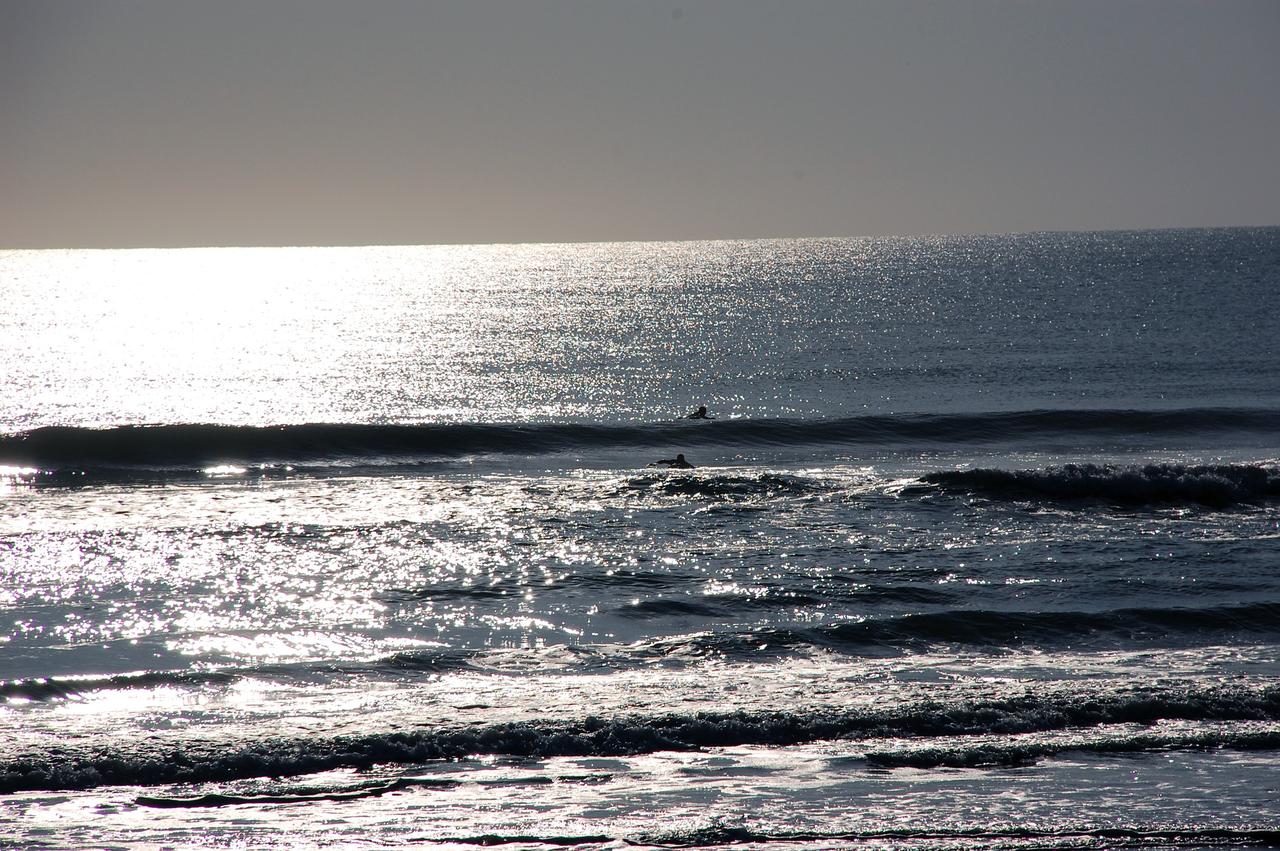
CAPE CANAVERAL, Fla. -- A balmy May morning finds surfers out to catch the waves at Playalinda Beach in Florida. The beach borders NASA's Kennedy Space Center to the north. On this particular morning, preparations are underway for a launch from Space Launch Complex-41 on Cape Canaveral Air Force Station, a part of the spaceport which neighbors Kennedy Space Center. For more information, visit http://www.nasa.gov/centers/kennedy. Photo credit: NASA/Ben Smegelsky
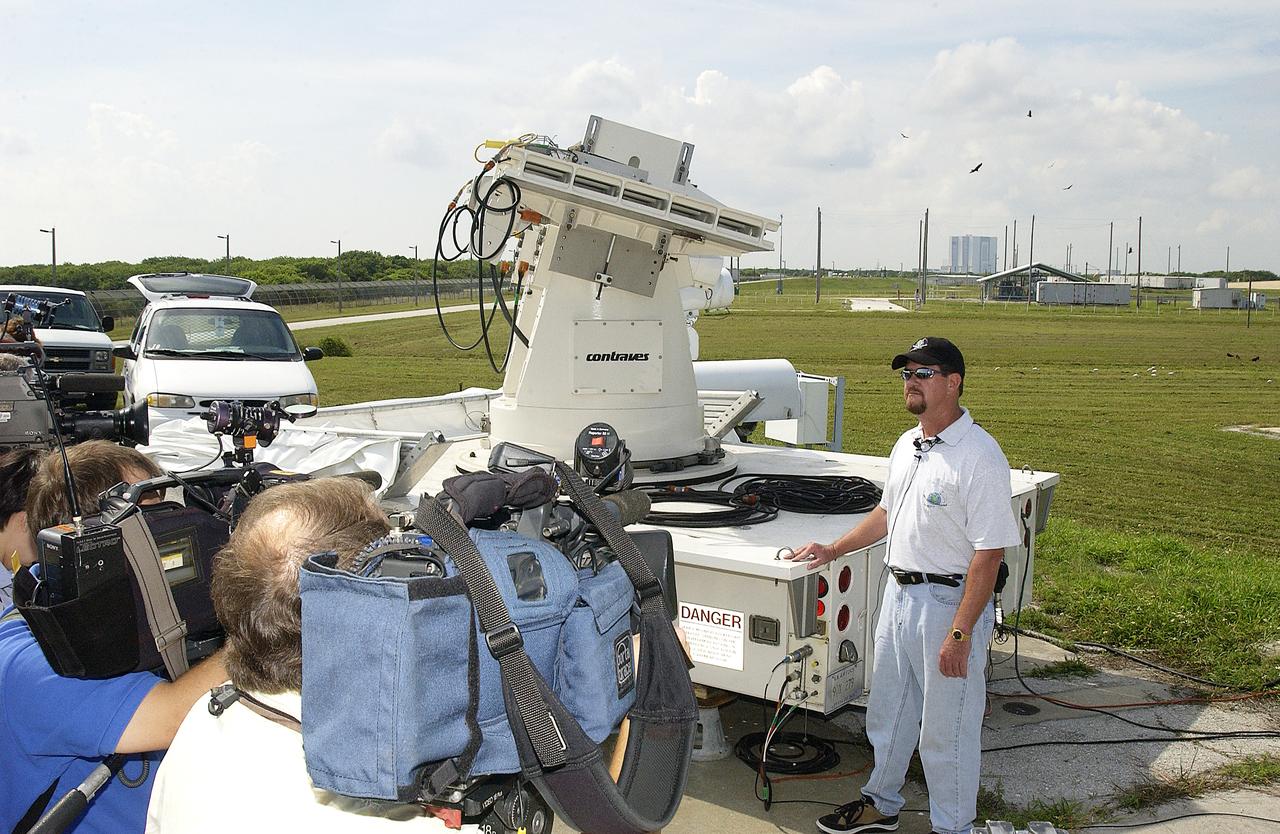
At the launch pad perimeter camera site at Launch Complex 39B, news media representatives are briefed on the improved tracking cameras that will be used to capture ascent imagery during the return to flight of the Space Shuttle. The press opportunity also includes tours of the Image Analysis Facility in the Vehicle Assembly Building and two Playalinda Beach optical tracking sites at the Cape Canaveral National Seashore and the Merritt Island National Refuge.
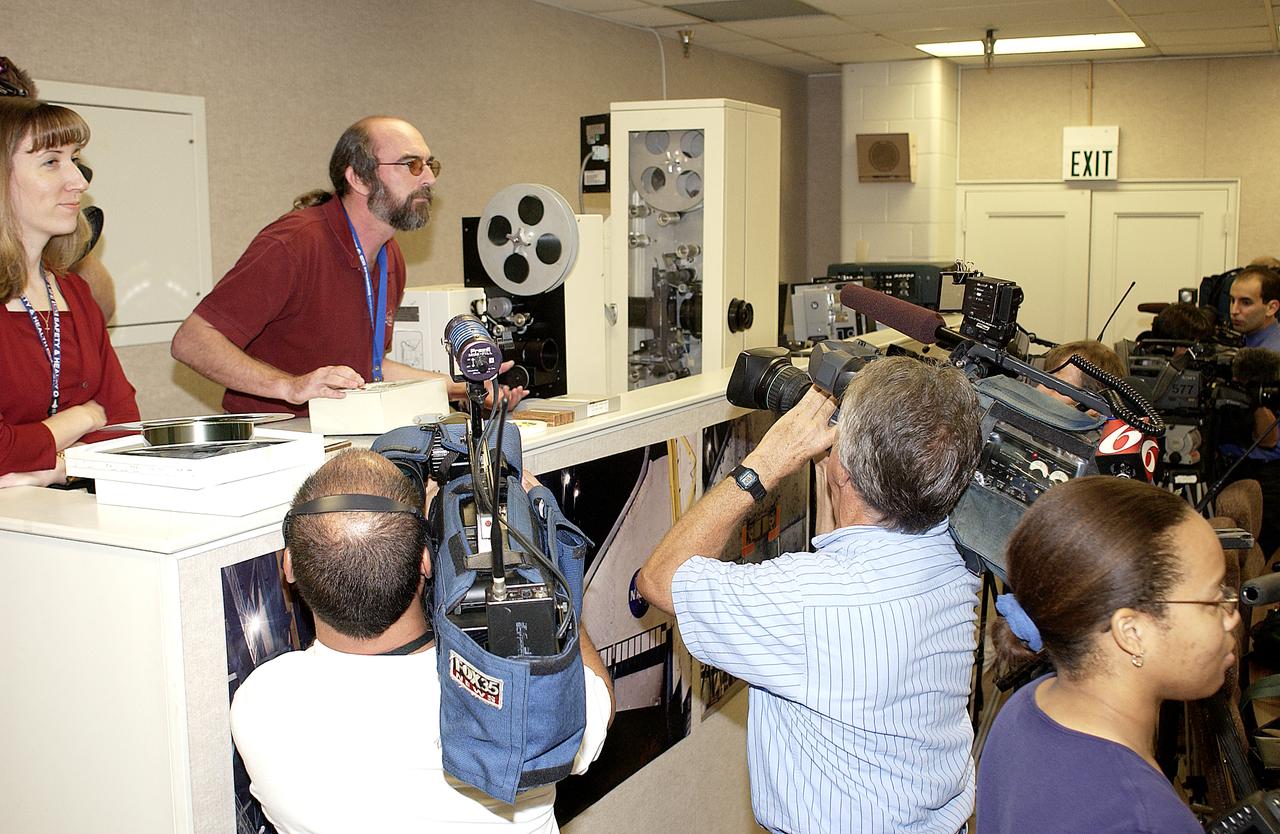
In the Image Analysis Facility in the Vehicle Assembly Building, Brad Lawrence (second from left, standing) participates in a presentation to news media representatives on the improved tracking cameras and long-range optical tracking systems that will be used to capture ascent imagery during the return to flight of the Space Shuttle. The press opportunity also includes tours of the launch pad perimeter camera site at Launch Complex 39B and two Playalinda Beach optical tracking sites at the Cape Canaveral National Seashore and the Merritt Island National Refuge.
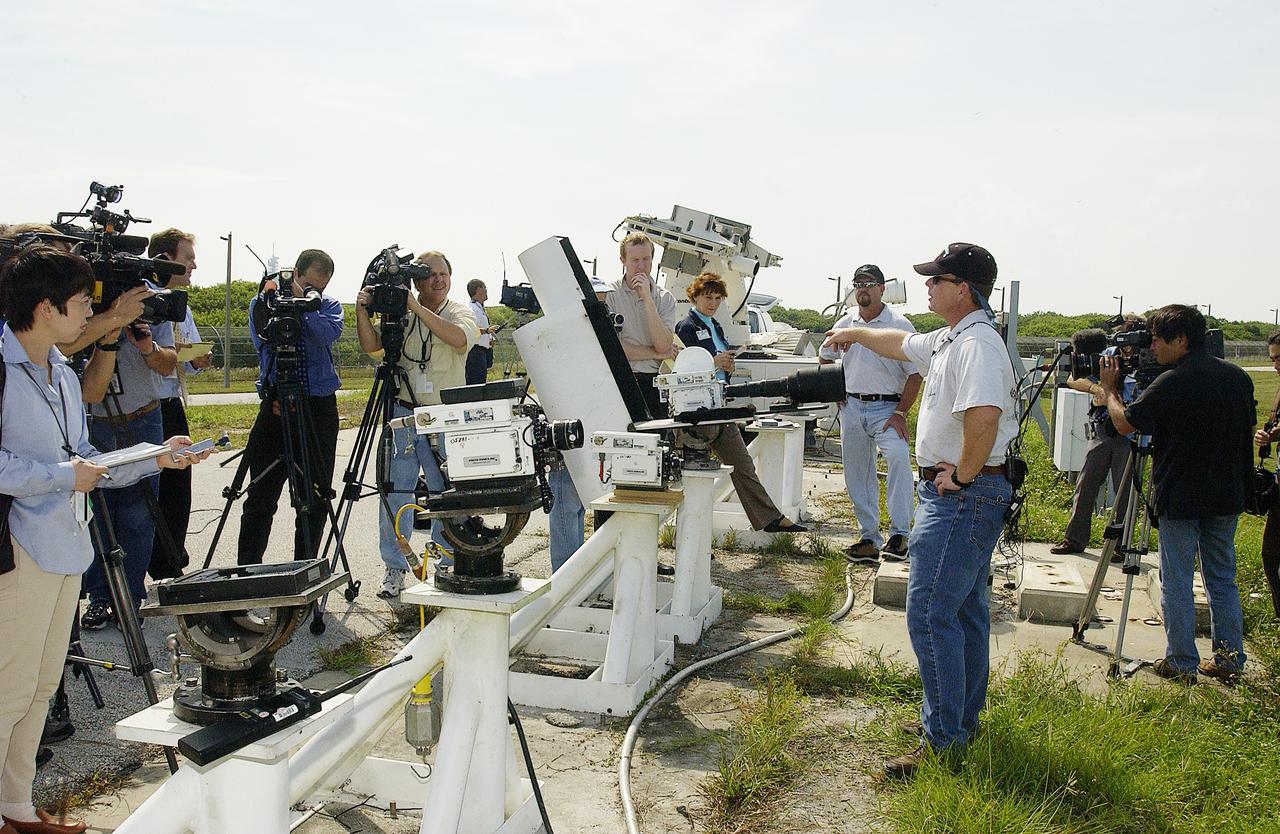
At the launch pad perimeter camera site at Launch Complex 39B, news media representatives are briefed on the improved tracking cameras that will be used to capture ascent imagery during the return to flight of the Space Shuttle. The press opportunity also includes tours of the Image Analysis Facility in the Vehicle Assembly Building and two Playalinda Beach optical tracking sites at the Cape Canaveral National Seashore and the Merritt Island National Refuge.
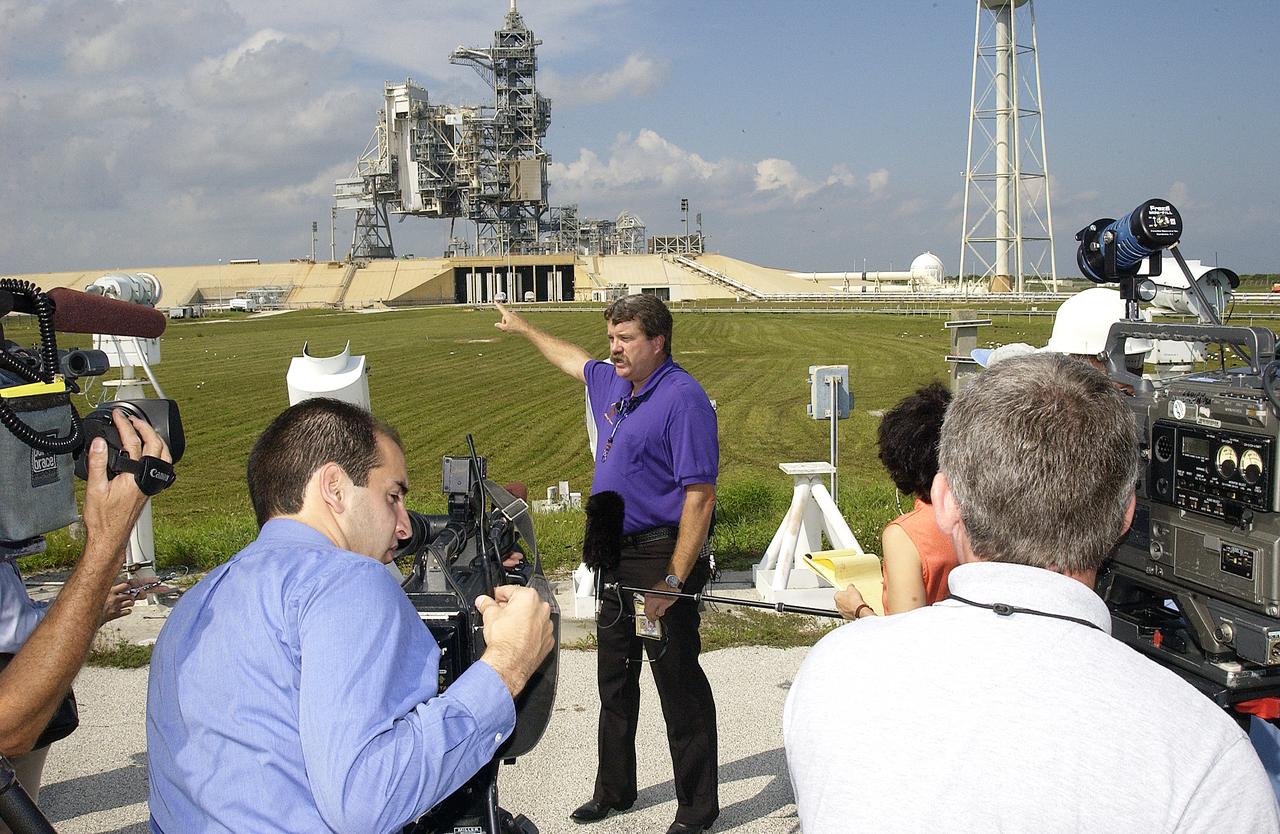
At the launch pad perimeter camera site at Launch Complex 39B, Robert Page (pointing), chair of the NASA Intercenter Photo Working Group, briefs news media representatives on the improved tracking cameras that will be used to capture ascent imagery during the return to flight of the Space Shuttle. The press opportunity also includes tours of the Image Analysis Facility in the Vehicle Assembly Building and two Playalinda Beach optical tracking sites at the Cape Canaveral National Seashore and the Merritt Island National Refuge.
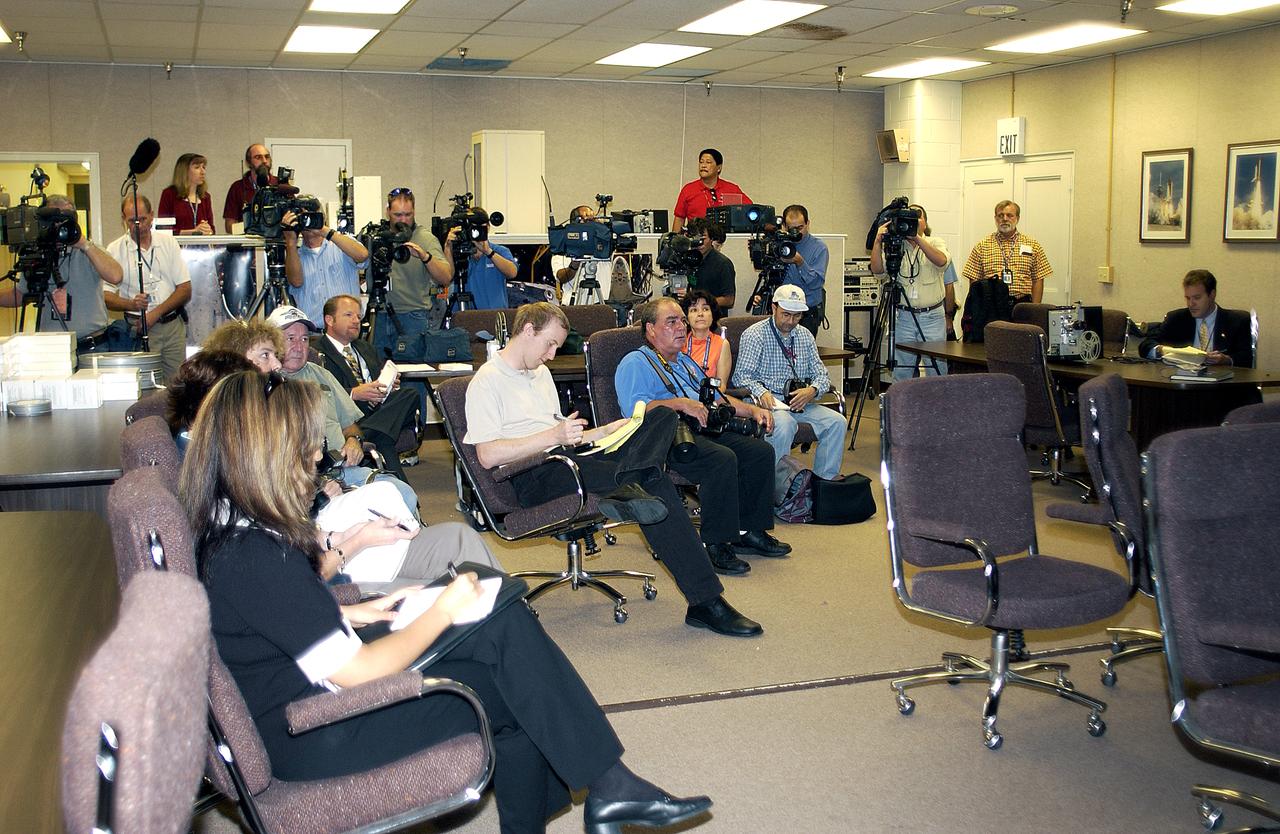
In the Image Analysis Facility in the Vehicle Assembly Building, news media representatives are briefed on the improved tracking cameras and long-range optical tracking systems that will be used to capture ascent imagery during the return to flight of the Space Shuttle. The press opportunity also includes tours of the launch pad perimeter camera site at Launch Complex 39B and two Playalinda Beach optical tracking sites at the Cape Canaveral National Seashore and the Merritt Island National Refuge.
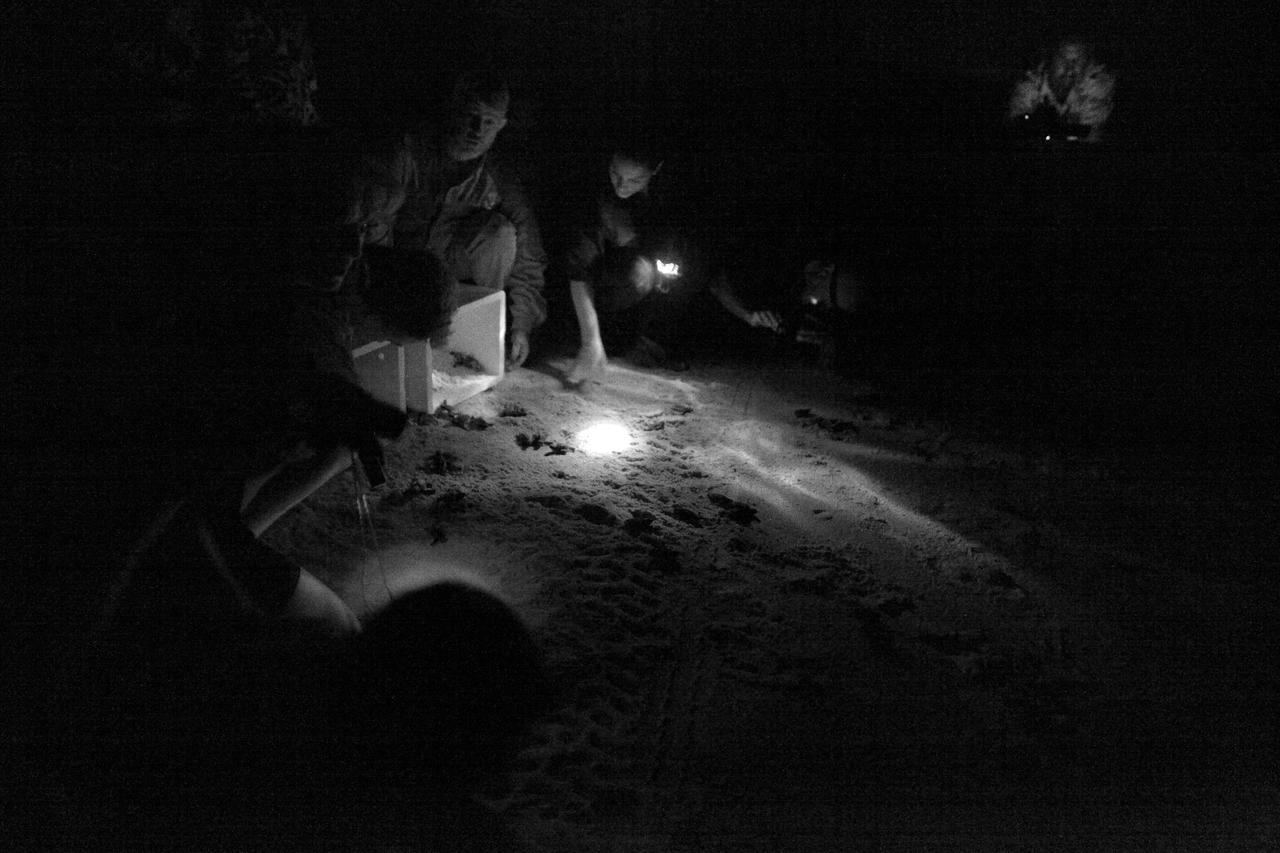
CAPE CANAVERAL, Fla. -- Hatchlings from endangered loggerhead turtle eggs, brought from beaches along the northern U.S. Gulf Coast, are being released into the Atlantic Ocean at Playalinda Beach, adjacent to the Merritt Island National Wildlife Refuge within NASA's Kennedy Space Center in Florida. The release and relocation work is part of an effort by the U.S. Fish and Wildlife Service, the Florida Fish and Wildlife Conservation Commission, the National Park Service, NOAA, FedEx and conservationists to help minimize the risk to this year's sea turtle hatchlings from impacts of the BP Deepwater Horizon oil spill in the Gulf of Mexico. This plan involves carefully moving an anticipated 700 nests deposited on Florida Panhandle and Alabama beaches during the next several months. Note: The photos were shot using an infrared filter to protect the hatchlings. Photo credit: NASA_Dimitri Gerondidakis
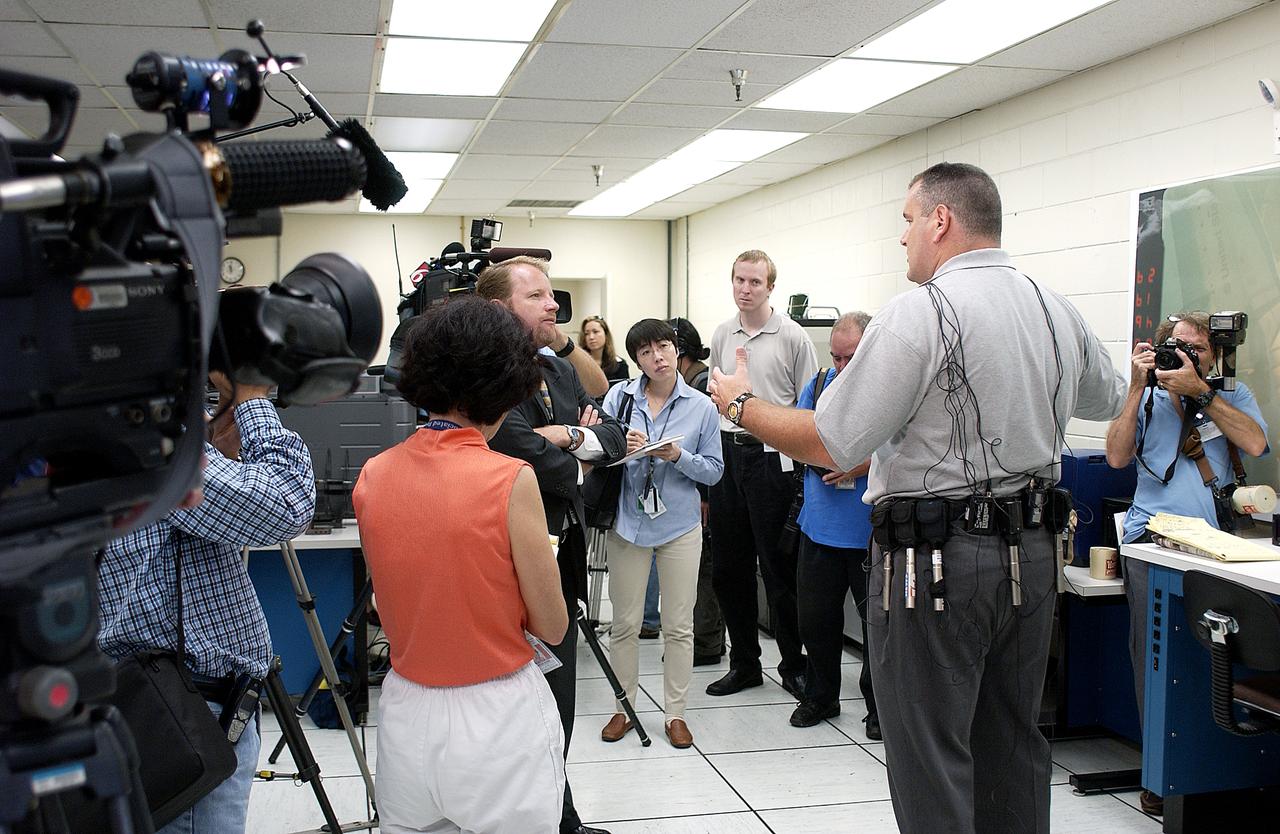
In the Image Analysis Facility in the Vehicle Assembly Building, Armando Oliu (second from right), lead of the KSC Ice and Debris Team, answers questions from news media representatives on the improved tracking cameras and long-range optical tracking systems that will be used to capture ascent imagery during the return to flight of the Space Shuttle. The press opportunity also includes tours of the launch pad perimeter camera site at Launch Complex 39B and two Playalinda Beach optical tracking sites at the Cape Canaveral National Seashore and the Merritt Island National Refuge.
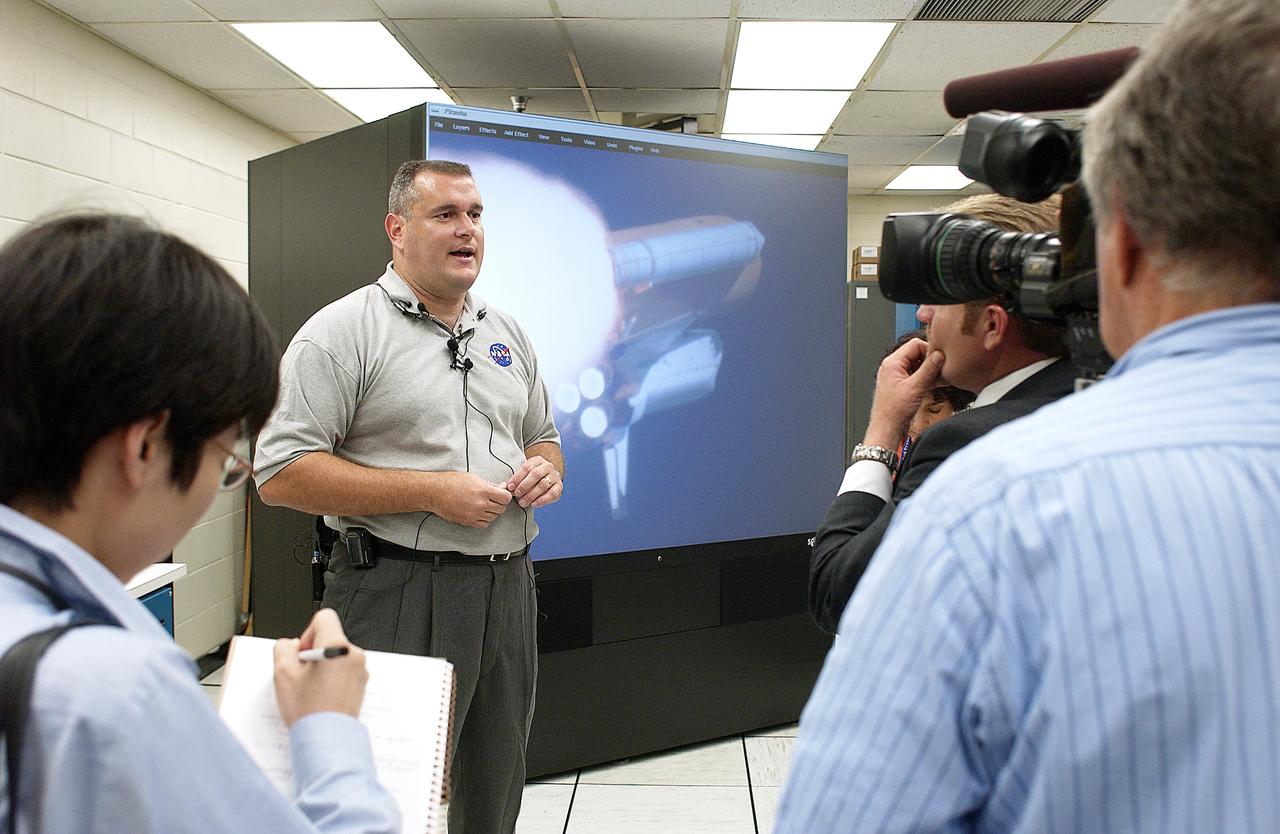
In the Image Analysis Facility in the Vehicle Assembly Building, Armando Oliu (second from left), lead of the KSC Ice and Debris Team, answers questions from news media representatives on the improved tracking cameras and long-range optical tracking systems that will be used to capture ascent imagery during the return to flight of the Space Shuttle. The press opportunity also includes tours of the launch pad perimeter camera site at Launch Complex 39B and two Playalinda Beach optical tracking sites at the Cape Canaveral National Seashore and the Merritt Island National Refuge.
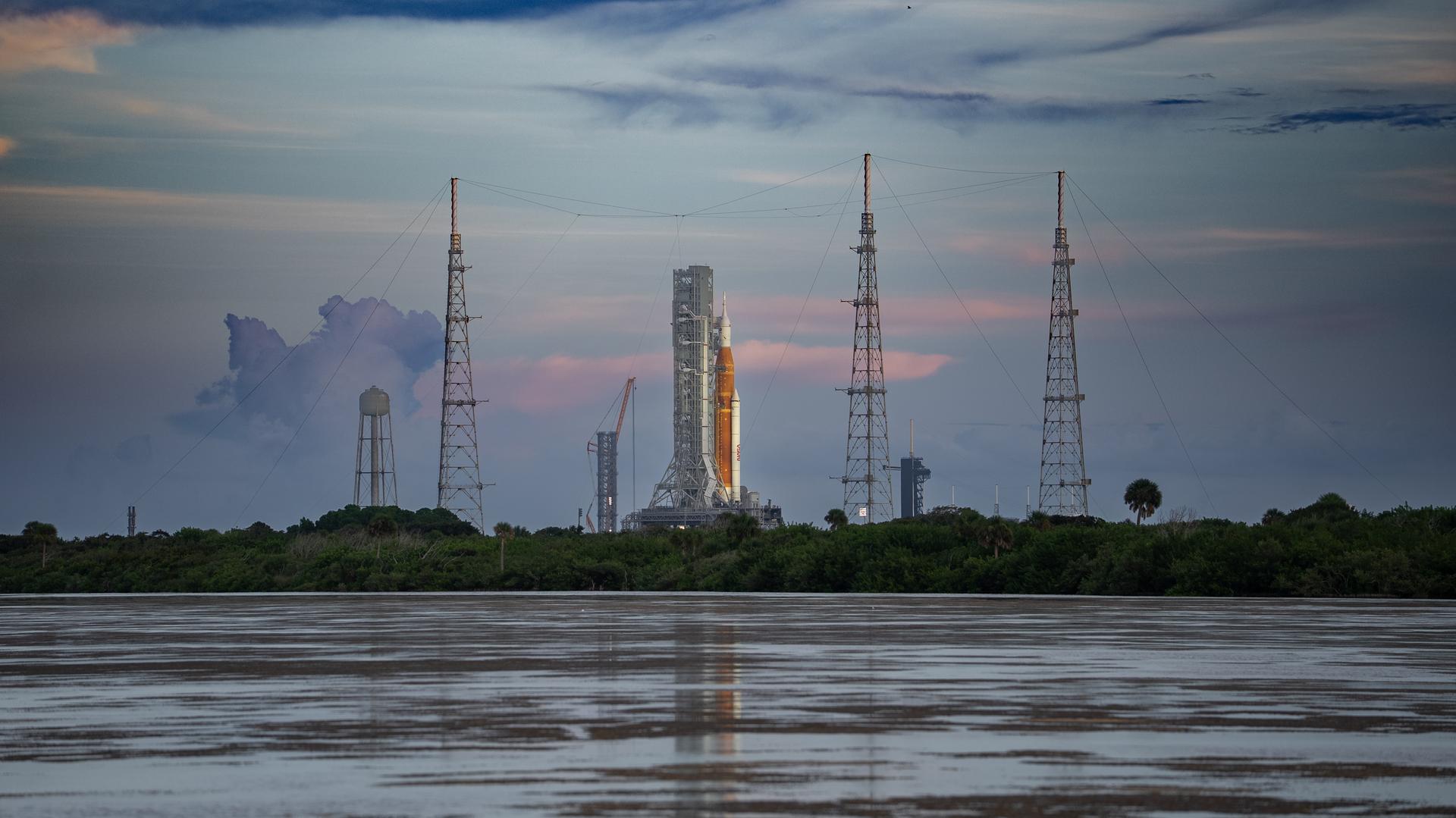
NASA’s Space Launch System (SLS) rocket with the Orion spacecraft aboard is seen atop the mobile launcher at Launch Pad 39B at NASA’s Kennedy Space Center in Florida. Artemis I mission is the first integrated test of the agency’s deep space exploration systems: the Space Launch System rocket, Orion spacecraft, and supporting ground systems. The mission is the first in a series of increasingly complex missions to the Moon. Launch of the uncrewed flight test is targeted for no earlier than Sept. 3 at 2:17 p.m. ET. With Artemis missions, NASA will land the first woman and first person of color on the Moon, using innovative technologies to explore more of the lunar surface than ever before.
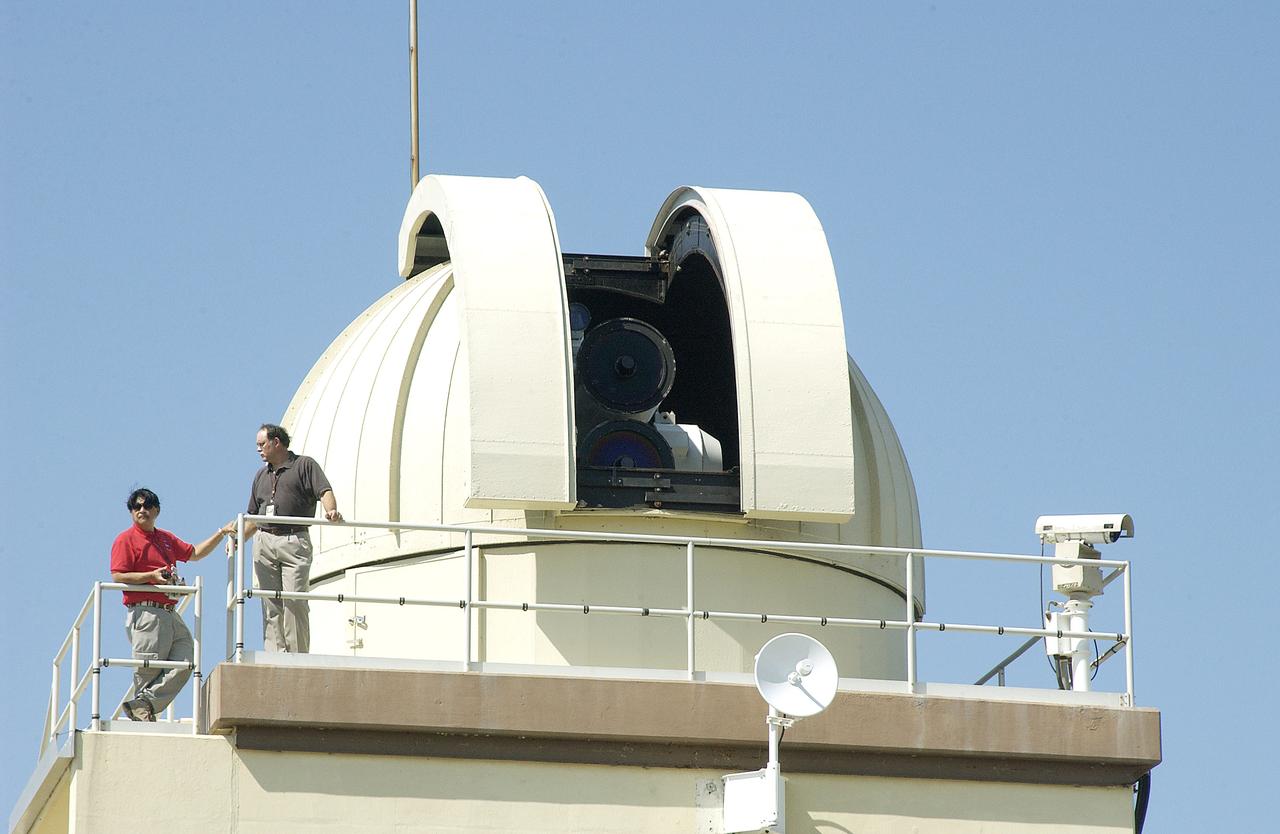
Inside the dome seen here is a tracking telescope that provides optical support for launches from KSC and Cape Canaveral. The telescope is part of the Distant Object Attitude Measurement System (DOAMS), which includes improved tracking cameras and long-range optical tracking systems that will be used to capture ascent imagery during the return to flight of the Space Shuttle.

A photographer focuses on part of the tracking telescope that provides optical support for launches from KSC and Cape Canaveral. The telescope is part of the Distant Object Attitude Measurement System (DOAMS), which includes improved tracking cameras and long-range optical tracking systems that will be used to capture ascent imagery during the return to flight of the Space Shuttle.