
A SpaceX Falcon 9 rocket carrying a batch of the company's Starlink internet satellites lifts off from Launch Complex 40 at Cape Canaveral Space Force Station in Florida, on April 21, 2022. On the right, NASA’s Space Launch System rocket with the Orion spacecraft aboard sits atop a mobile launcher at Launch Complex 39B at Kennedy Space Center, while on the left at Kennedy’s Launch Complex 39A is a SpaceX Falcon 9 rocket with the company's Crew Dragon spacecraft, as preparations continue for the agency’s Crew-4 mission to the International Space Station.

A SpaceX Falcon 9 rocket carrying a batch of the company's Starlink internet satellites lifts off from Launch Complex 40 at Cape Canaveral Space Force Station in Florida, on April 21, 2022. On the right, NASA’s Space Launch System rocket with the Orion spacecraft aboard sits atop a mobile launcher at Launch Complex 39B at Kennedy Space Center, while on the left at Kennedy’s Launch Complex 39A is a SpaceX Falcon 9 rocket with the company's Crew Dragon spacecraft, as preparations continue for the agency’s Crew-4 mission to the International Space Station.
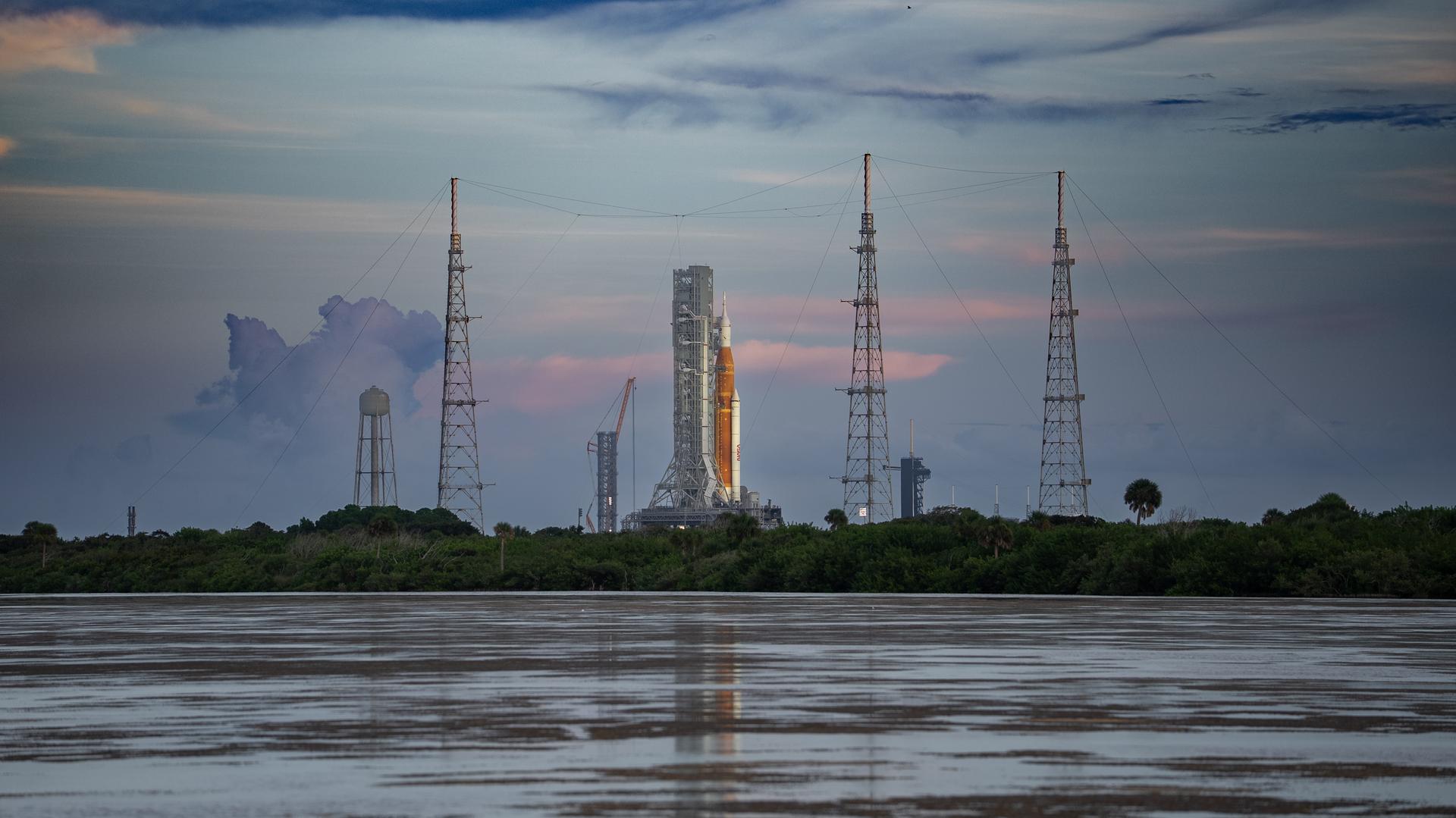
NASA’s Space Launch System (SLS) rocket with the Orion spacecraft aboard is seen atop the mobile launcher at Launch Pad 39B at NASA’s Kennedy Space Center in Florida. Artemis I mission is the first integrated test of the agency’s deep space exploration systems: the Space Launch System rocket, Orion spacecraft, and supporting ground systems. The mission is the first in a series of increasingly complex missions to the Moon. Launch of the uncrewed flight test is targeted for no earlier than Sept. 3 at 2:17 p.m. ET. With Artemis missions, NASA will land the first woman and first person of color on the Moon, using innovative technologies to explore more of the lunar surface than ever before.