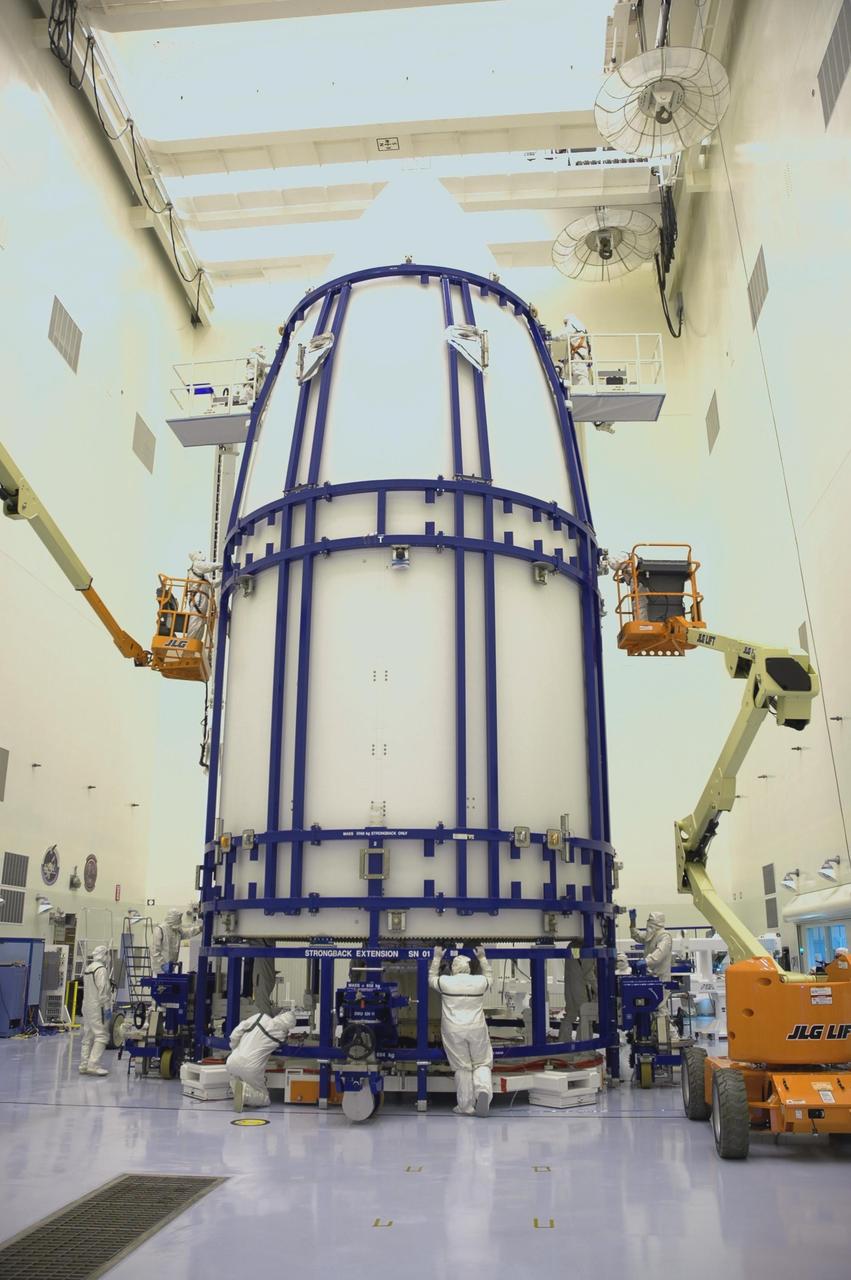
KENNEDY SPACE CENTER, FLA. - In the Payload Hazardous Servicing Facility, clean-suit garbed workers secure the fairing sections around the New Horizons spacecraft for encapsulation. The fairing protects the spacecraft during launch and flight through the atmosphere. Once out of the atmosphere, the fairing is jettisoned. The compact 1,060-pound New Horizons probe carries seven scientific instruments that will characterize the global geology and geomorphology of Pluto and its moon Charon, map their surface compositions and temperatures, and examine Pluto's complex atmosphere. After that, flybys of Kuiper Belt objects from even farther in the solar system may be undertaken in an extended mission. New Horizons is the first mission in NASA's New Frontiers program of medium-class planetary missions. The spacecraft, designed for NASA by the Johns Hopkins University Applied Physics Laboratory in Laurel, Md., will fly by Pluto and Charon as early as summer 2015.
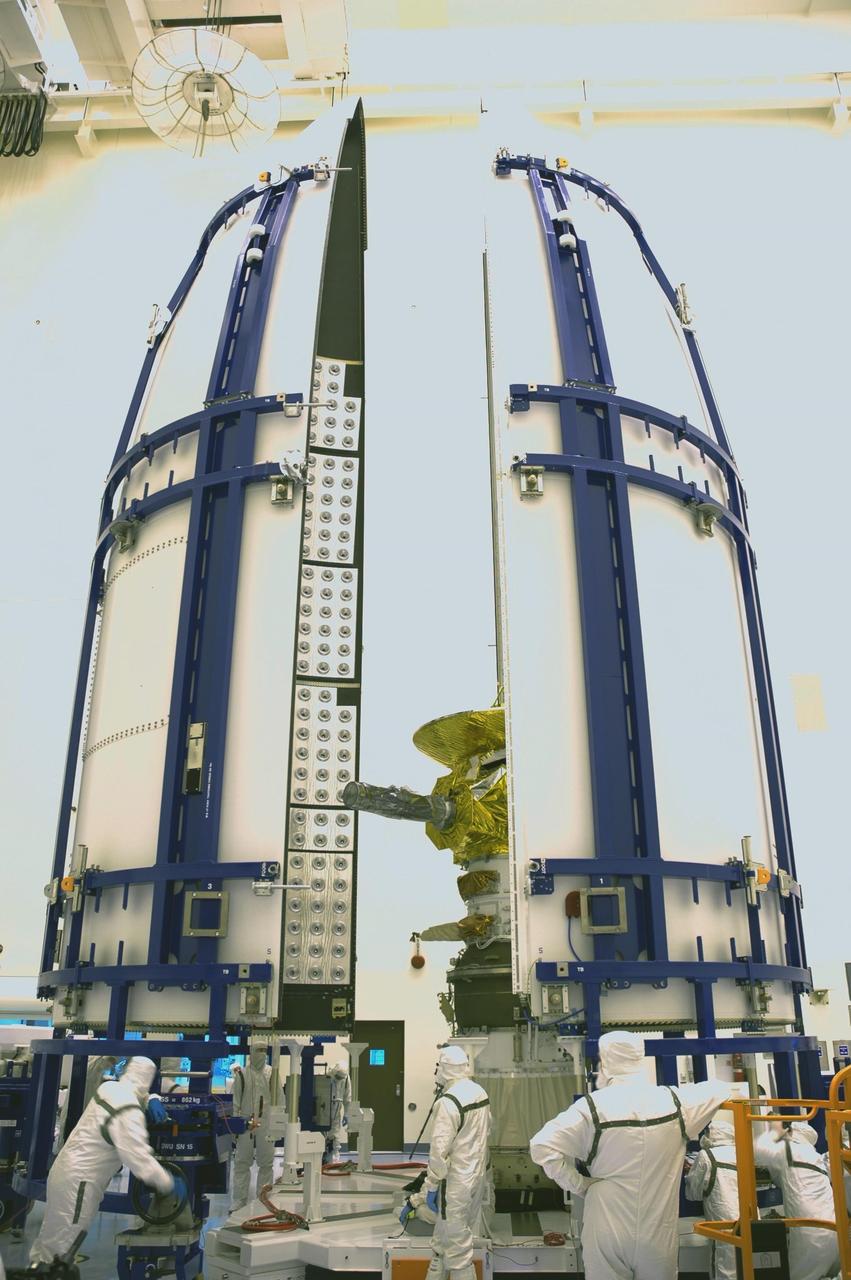
KENNEDY SPACE CENTER, FLA. - In the Payload Hazardous Servicing Facility, the two fairing sections close in around the New Horizons spacecraft to encapsulate it. The fairing protects the spacecraft during launch and flight through the atmosphere. Once out of the atmosphere, the fairing is jettisoned. The compact 1,060-pound New Horizons probe carries seven scientific instruments that will characterize the global geology and geomorphology of Pluto and its moon Charon, map their surface compositions and temperatures, and examine Pluto's complex atmosphere. After that, flybys of Kuiper Belt objects from even farther in the solar system may be undertaken in an extended mission. New Horizons is the first mission in NASA's New Frontiers program of medium-class planetary missions. The spacecraft, designed for NASA by the Johns Hopkins University Applied Physics Laboratory in Laurel, Md., will fly by Pluto and Charon as early as summer 2015.
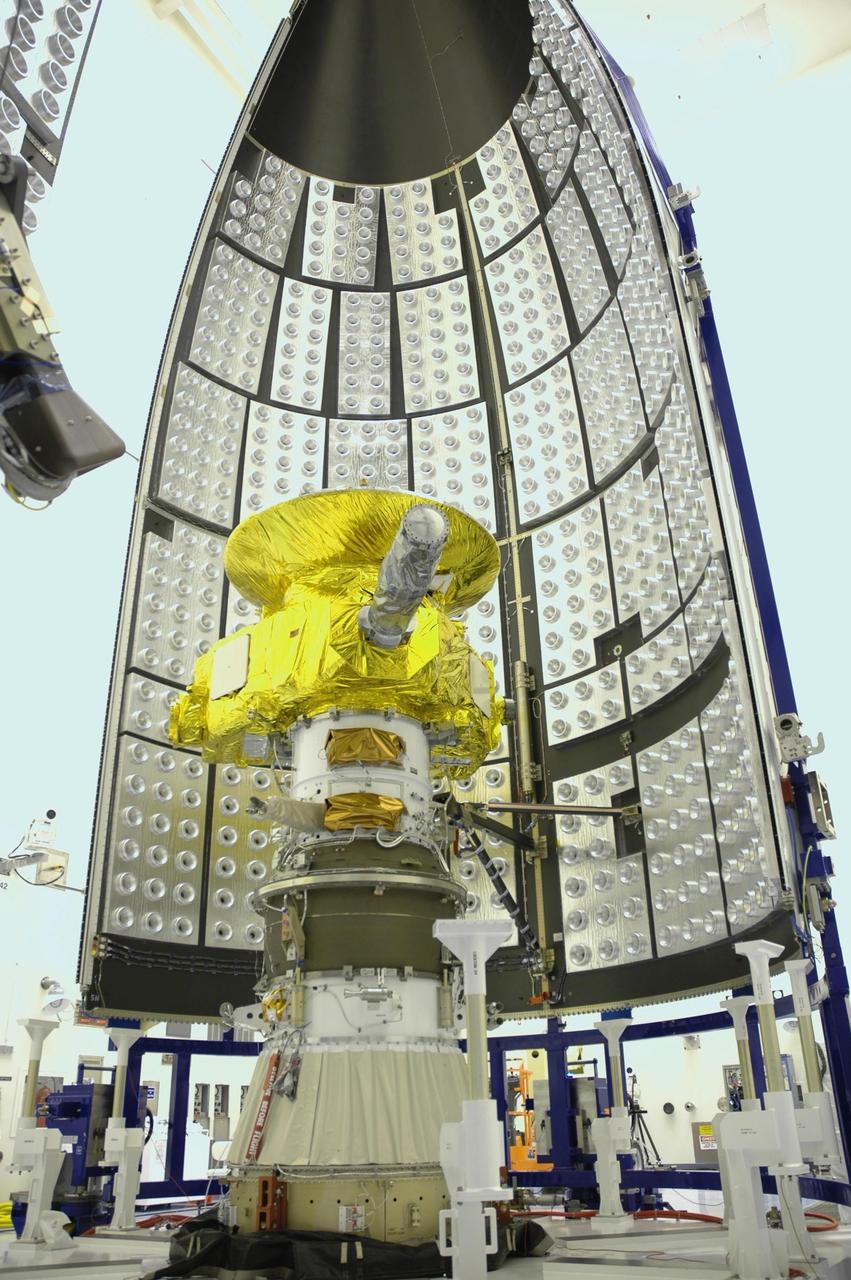
KENNEDY SPACE CENTER, FLA. - In the Payload Hazardous Servicing Facility, the New Horizons spacecraft waits for encapsulation within the fairing sections waiting nearby. The fairing protects the spacecraft during launch and flight through the atmosphere. Once out of the atmosphere, the fairing is jettisoned. The compact 1,060-pound New Horizons probe carries seven scientific instruments that will characterize the global geology and geomorphology of Pluto and its moon Charon, map their surface compositions and temperatures, and examine Pluto's complex atmosphere. After that, flybys of Kuiper Belt objects from even farther in the solar system may be undertaken in an extended mission. New Horizons is the first mission in NASA's New Frontiers program of medium-class planetary missions. The spacecraft, designed for NASA by the Johns Hopkins University Applied Physics Laboratory in Laurel, Md., will fly by Pluto and Charon as early as summer 2015.
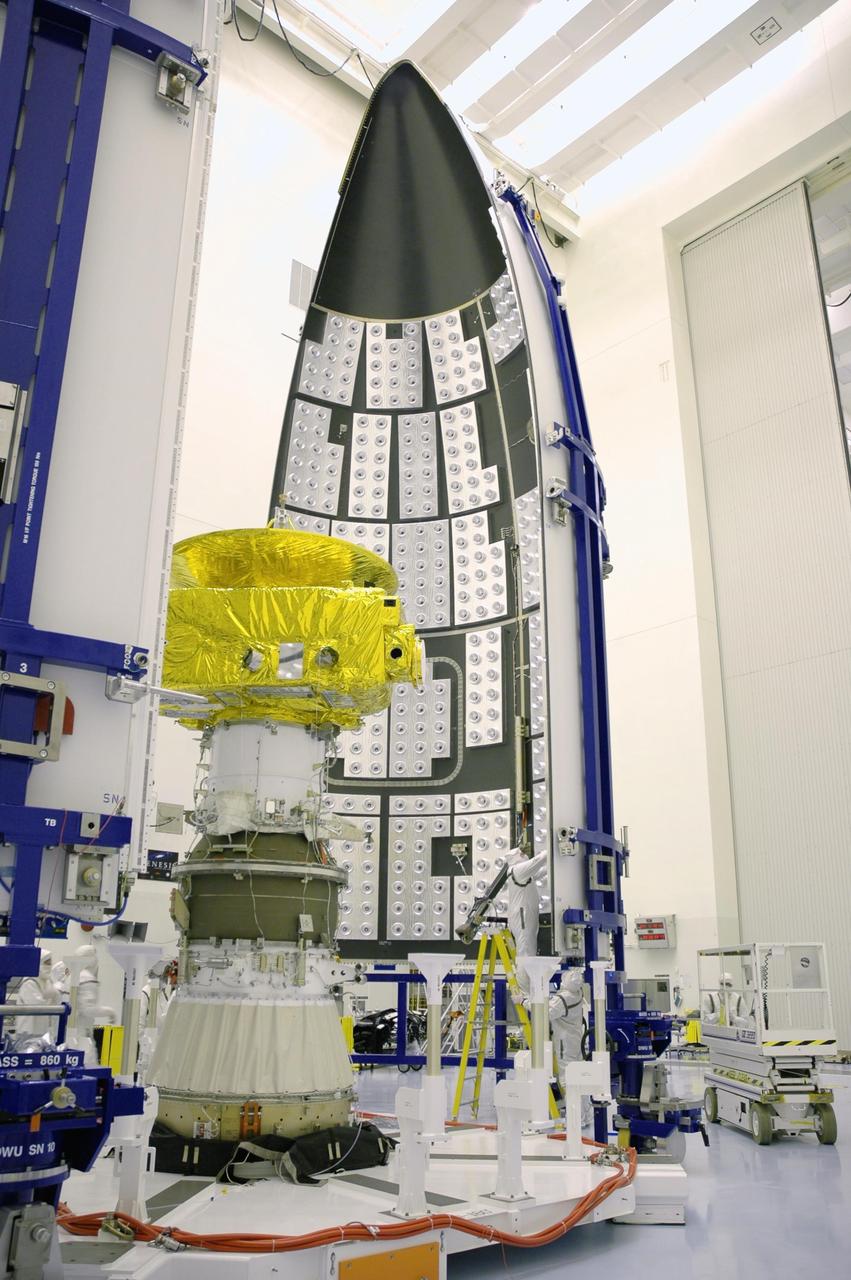
KENNEDY SPACE CENTER, FLA. - In the Payload Hazardous Servicing Facility, clean-suit garbed workers prepare the first fairing section (in the background) that will encapsulate the New Horizons spacecraft at left for flight. The fairing protects the spacecraft during launch and flight through the atmosphere. Once out of the atmosphere, the fairing is jettisoned. The compact 1,060-pound New Horizons probe carries seven scientific instruments that will characterize the global geology and geomorphology of Pluto and its moon Charon, map their surface compositions and temperatures, and examine Pluto's complex atmosphere. After that, flybys of Kuiper Belt objects from even farther in the solar system may be undertaken in an extended mission. New Horizons is the first mission in NASA's New Frontiers program of medium-class planetary missions. The spacecraft, designed for NASA by the Johns Hopkins University Applied Physics Laboratory in Laurel, Md., will fly by Pluto and Charon as early as summer 2015.
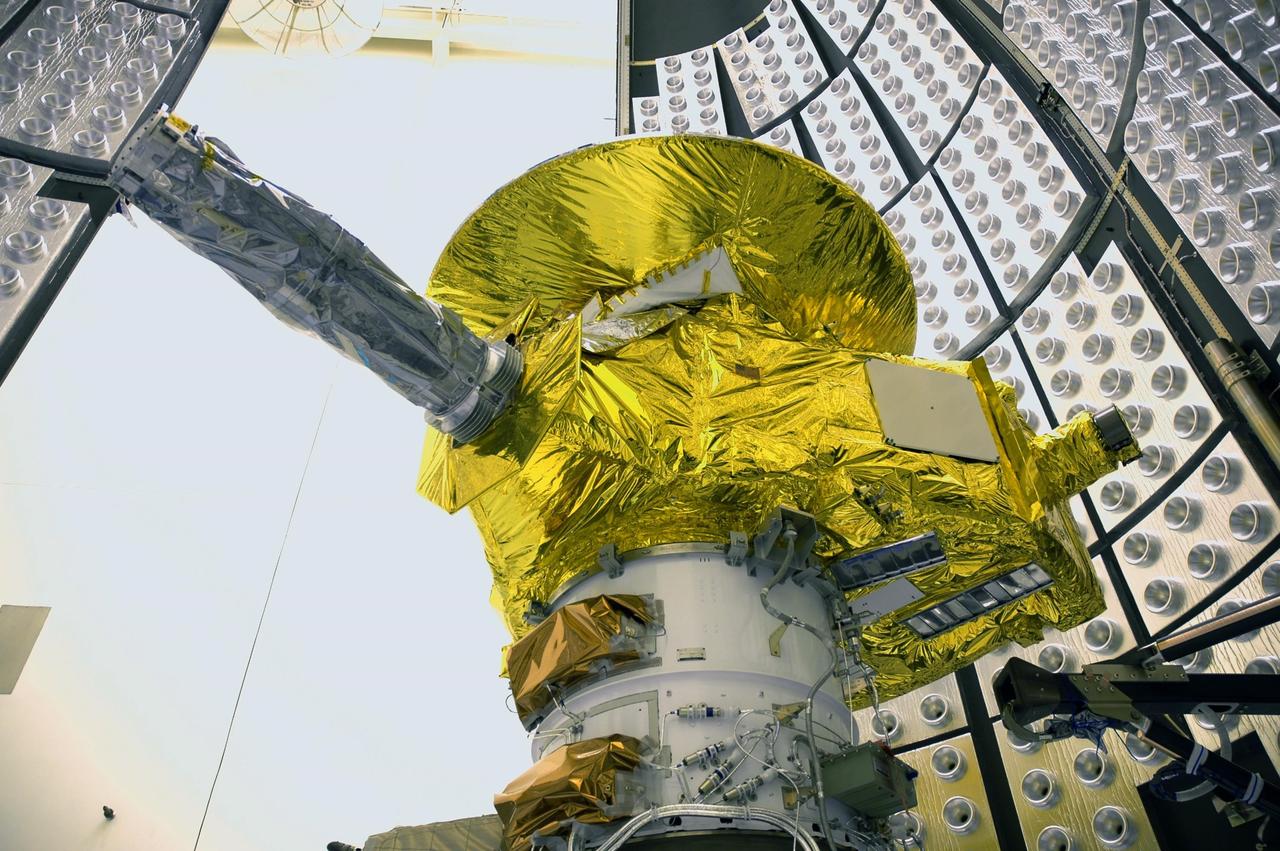
KENNEDY SPACE CENTER, FLA. - In the Payload Hazardous Servicing Facility, the two fairing sections move into place around the New Horizons spacecraft for encapsulation. The fairing protects the spacecraft during launch and flight through the atmosphere. Once out of the atmosphere, the fairing is jettisoned. The compact 1,060-pound New Horizons probe carries seven scientific instruments that will characterize the global geology and geomorphology of Pluto and its moon Charon, map their surface compositions and temperatures, and examine Pluto's complex atmosphere. After that, flybys of Kuiper Belt objects from even farther in the solar system may be undertaken in an extended mission. New Horizons is the first mission in NASA's New Frontiers program of medium-class planetary missions. The spacecraft, designed for NASA by the Johns Hopkins University Applied Physics Laboratory in Laurel, Md., will fly by Pluto and Charon as early as summer 2015.
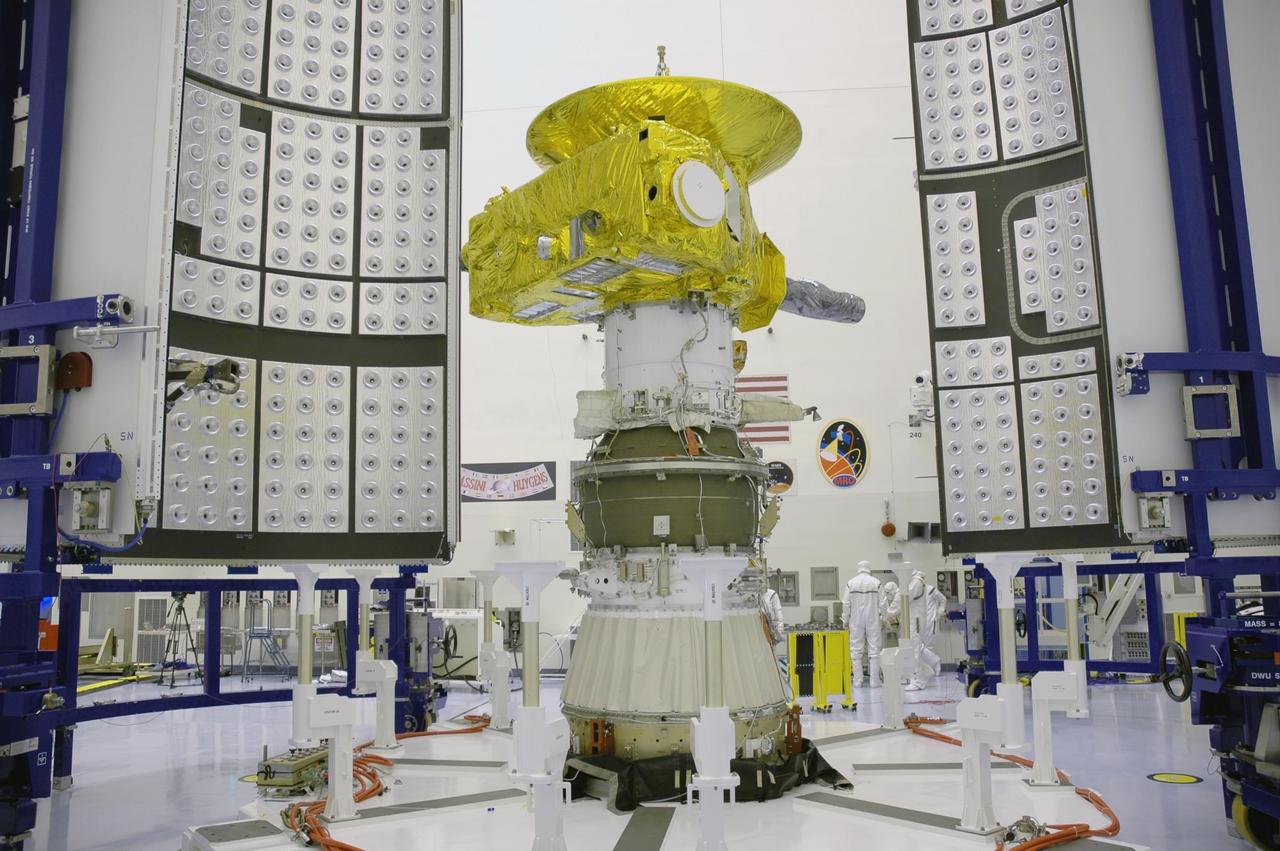
KENNEDY SPACE CENTER, FLA. - In the Payload Hazardous Servicing Facility, the two fairing sections are ready to be moved in place around the New Horizons spacecraft (in center) for encapsulation. The fairing protects the spacecraft during launch and flight through the atmosphere. Once out of the atmosphere, the fairing is jettisoned. The compact 1,060-pound New Horizons probe carries seven scientific instruments that will characterize the global geology and geomorphology of Pluto and its moon Charon, map their surface compositions and temperatures, and examine Pluto's complex atmosphere. After that, flybys of Kuiper Belt objects from even farther in the solar system may be undertaken in an extended mission. New Horizons is the first mission in NASA's New Frontiers program of medium-class planetary missions. The spacecraft, designed for NASA by the Johns Hopkins University Applied Physics Laboratory in Laurel, Md., will fly by Pluto and Charon as early as summer 2015.
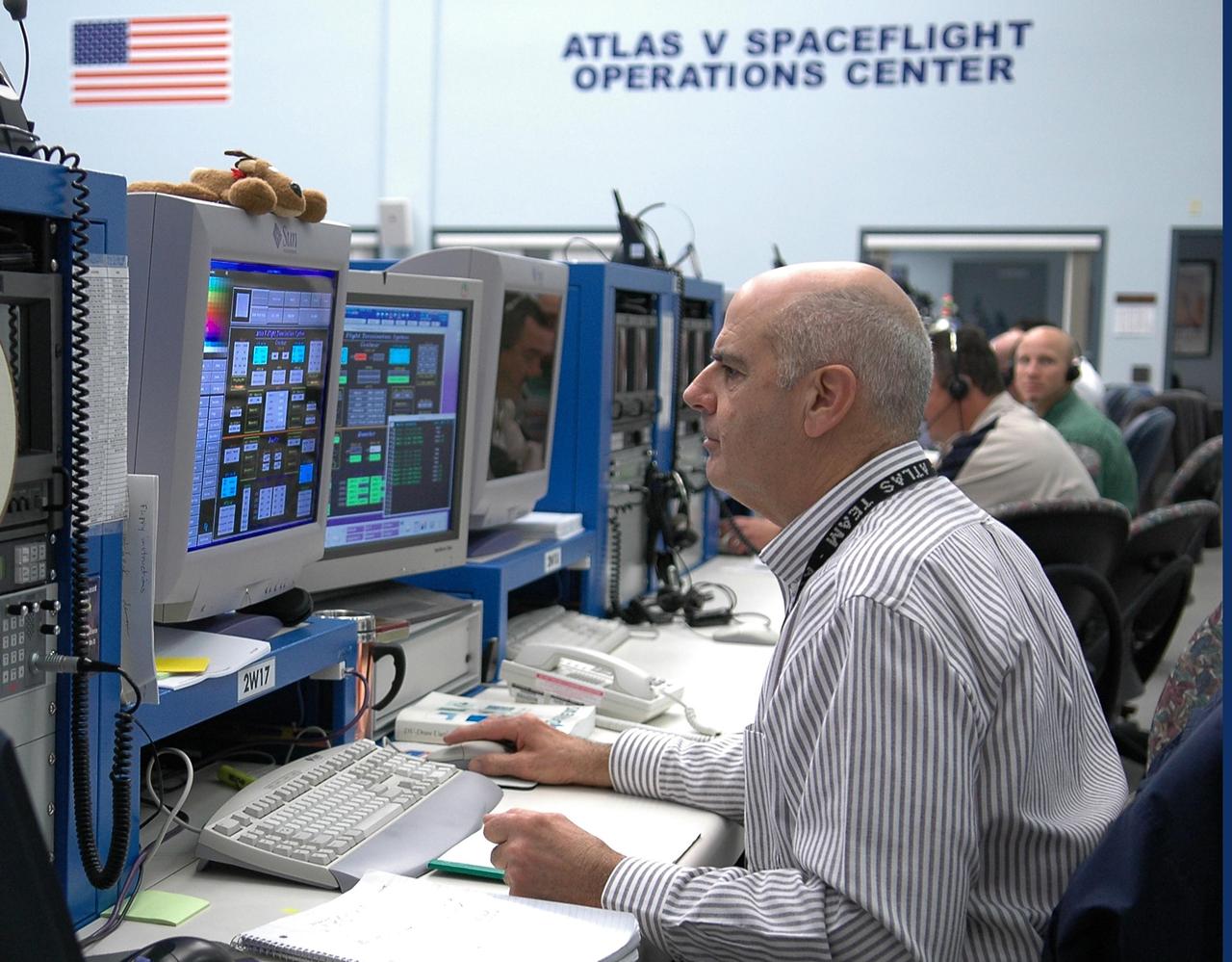
KENNEDY SPACE CENTER, FLA. - In the Atlas V Spaceflight Operations Center on Cape Canaveral Air Force Station, Ed Biggs (foreground), a fluids software engineer for Lockheed Martin, and other members of the New Horizons team take part in a dress rehearsal for the launch scheduled in mid-January. New Horizons carries seven scientific instruments that will characterize the global geology and geomorphology of Pluto and its moon Charon, map their surface compositions and temperatures, and examine Pluto's complex atmosphere. After that, flybys of Kuiper Belt objects from even farther in the solar system may be undertaken in an extended mission. New Horizons is the first mission in NASA's New Frontiers program of medium-class planetary missions. The spacecraft, designed for NASA by the Johns Hopkins University Applied Physics Laboratory in Laurel, Md., will launch aboard a Lockheed Martin Atlas V rocket and fly by Pluto and Charon as early as summer 2015.
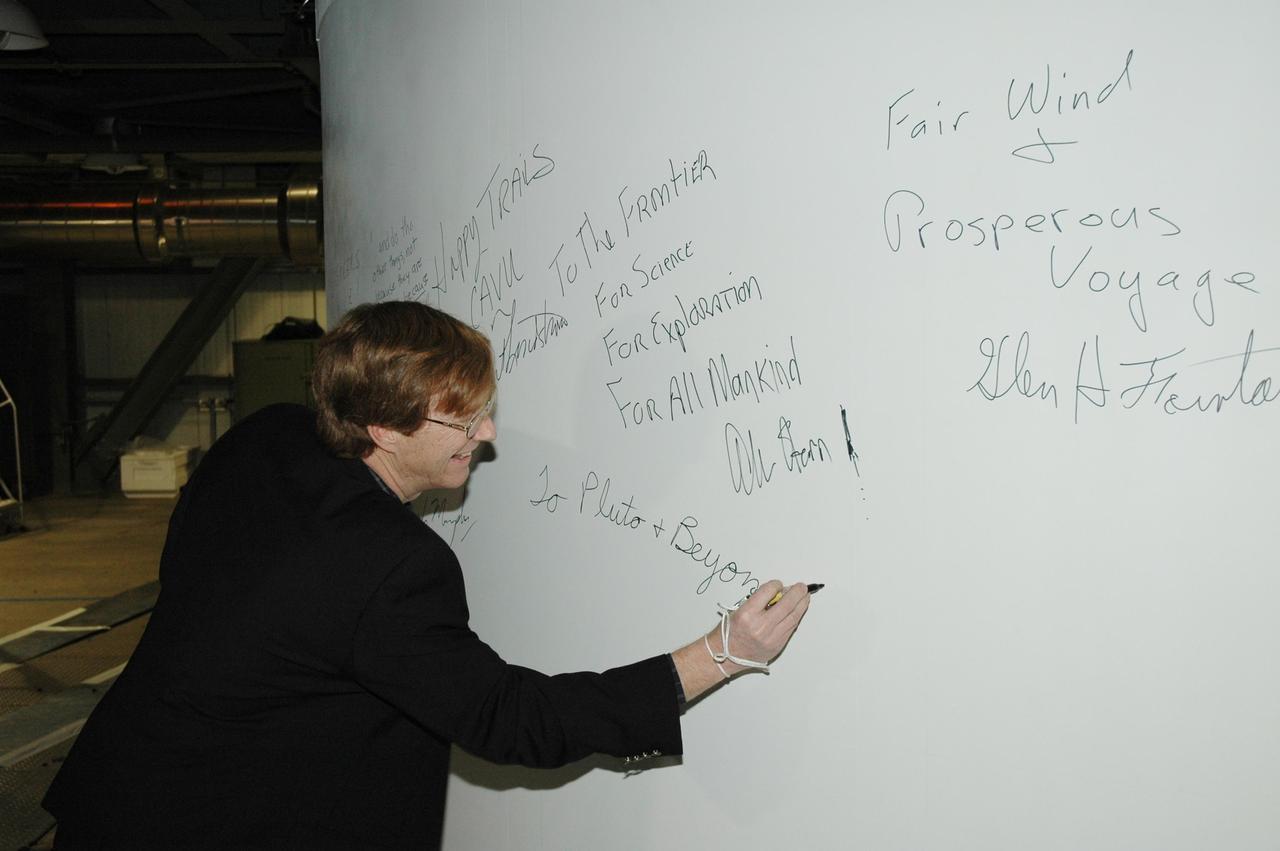
KENNEDY SPACE CENTER, FLA. - In the Vertical Integration Facility on Launch Complex 41, Cape Canaveral Air Force Station, Hal Weaver, New Horizons project scientist with the Johns Hopkins University Applied Physics Laboratory, signs the fairing enclosing the New Horizons spacecraft. The fairing protects the spacecraft during launch and flight through the atmosphere. Once out of the atmosphere, the fairing is jettisoned. The compact 1,060-pound New Horizons probe carries seven scientific instruments that will characterize the global geology and geomorphology of Pluto and its moon Charon, map their surface compositions and temperatures, and examine Pluto's complex atmosphere. New Horizons is the first mission in NASA's New Frontiers program of medium-class planetary missions. The spacecraft, designed for NASA by the Johns Hopkins University Applied Physics Laboratory in Laurel, Md., will fly by Pluto and Charon as early as summer 2015.
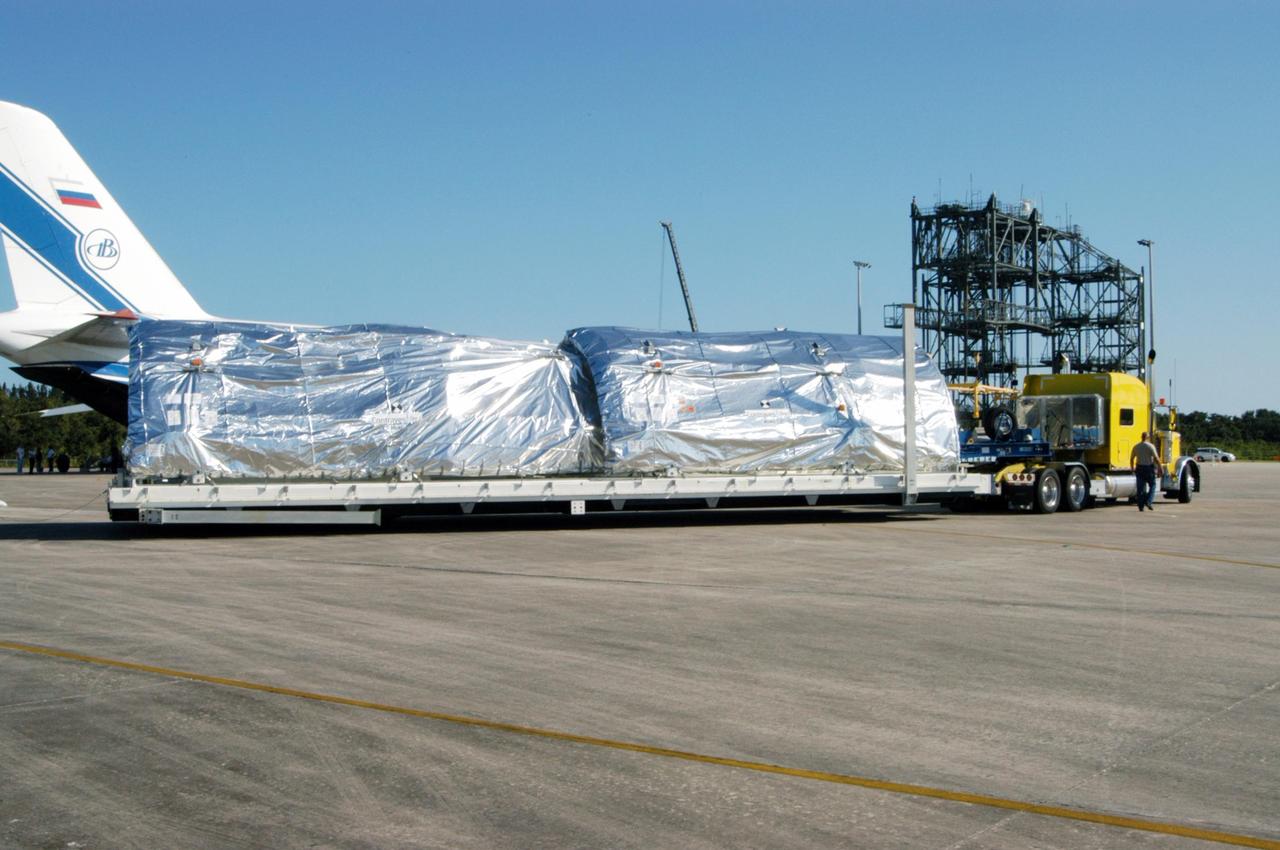
KENNEDY SPACE CENTER, FLA. - On the Shuttle Landing Facility at NASA Kennedy Space Center, the Atlas V fairing halves for the New Horizons spacecraft have been offloaded from the Russian cargo plane (background). The fairing halves will be transported to Astrotech Space Operations in Titusville. The fairing later will be placed around the New Horizons spacecraft in the Payload Hazardous Service Facility. A fairing protects a spacecraft during launch and flight through the atmosphere. Once in space, it is jettisoned. The Lockheed Martin Atlas V is the launch vehicle for the New Horizons spacecraft, which is designed to make the first reconnaissance of Pluto and Charon - a "double planet" and the last planet in our solar system to be visited by spacecraft. The mission will then visit one or more objects in the Kuiper Belt region beyond Neptune. New Horizons is scheduled to launch in January 2006, swing past Jupiter for a gravity boost and scientific studies in February or March 2007, and reach Pluto and its moon, Charon, in July 2015.
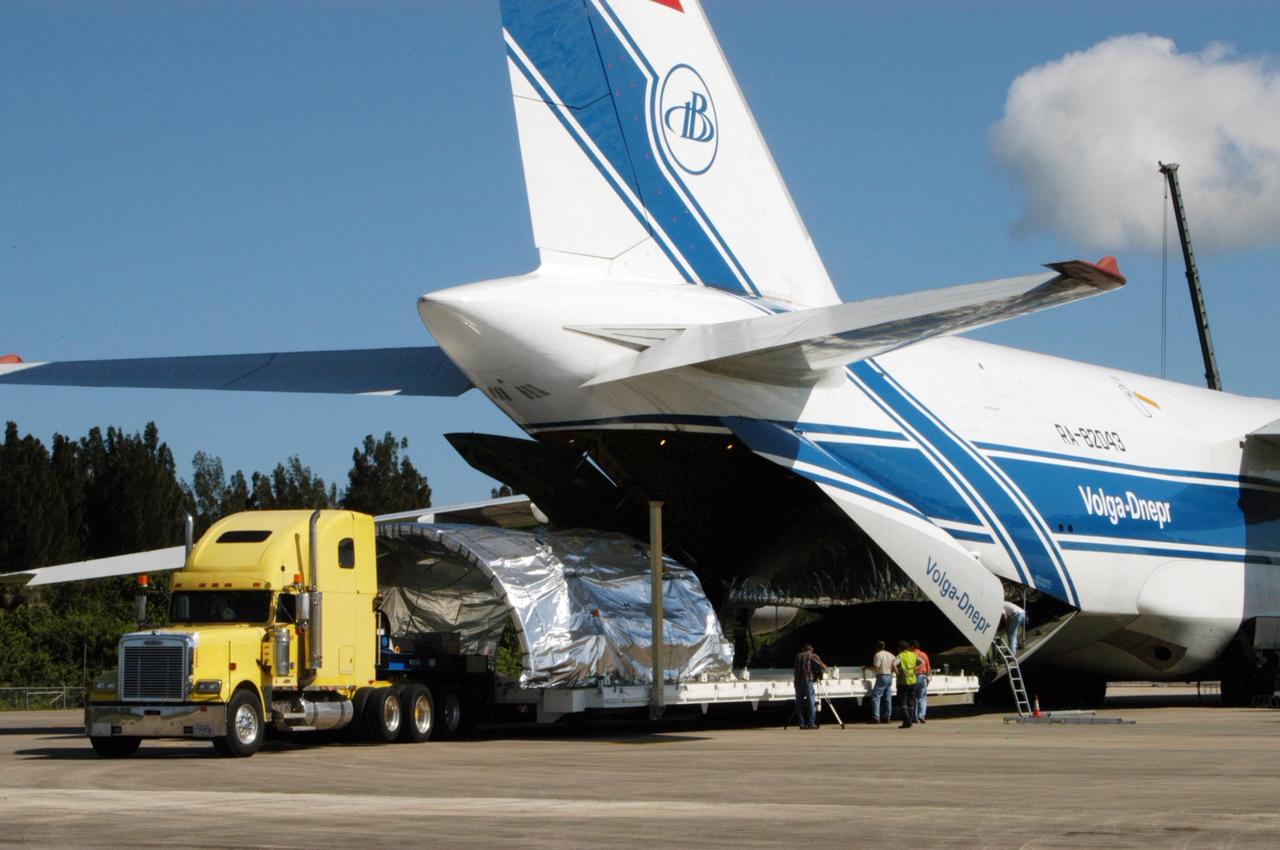
KENNEDY SPACE CENTER, FLA. - On the Shuttle Landing Facility at NASA Kennedy Space Center, one of the Atlas V fairing halves for the New Horizons spacecraft is offloaded from the Russian cargo plane. The fairing halves will be transported to Astrotech Space Operations in Titusville. The fairing later will be placed around the New Horizons spacecraft in the Payload Hazardous Service Facility. A fairing protects a spacecraft during launch and flight through the atmosphere. Once in space, it is jettisoned. The Lockheed Martin Atlas V is the launch vehicle for the New Horizons spacecraft, which is designed to make the first reconnaissance of Pluto and Charon - a "double planet" and the last planet in our solar system to be visited by spacecraft. The mission will then visit one or more objects in the Kuiper Belt region beyond Neptune. New Horizons is scheduled to launch in January 2006, swing past Jupiter for a gravity boost and scientific studies in February or March 2007, and reach Pluto and its moon, Charon, in July 2015.
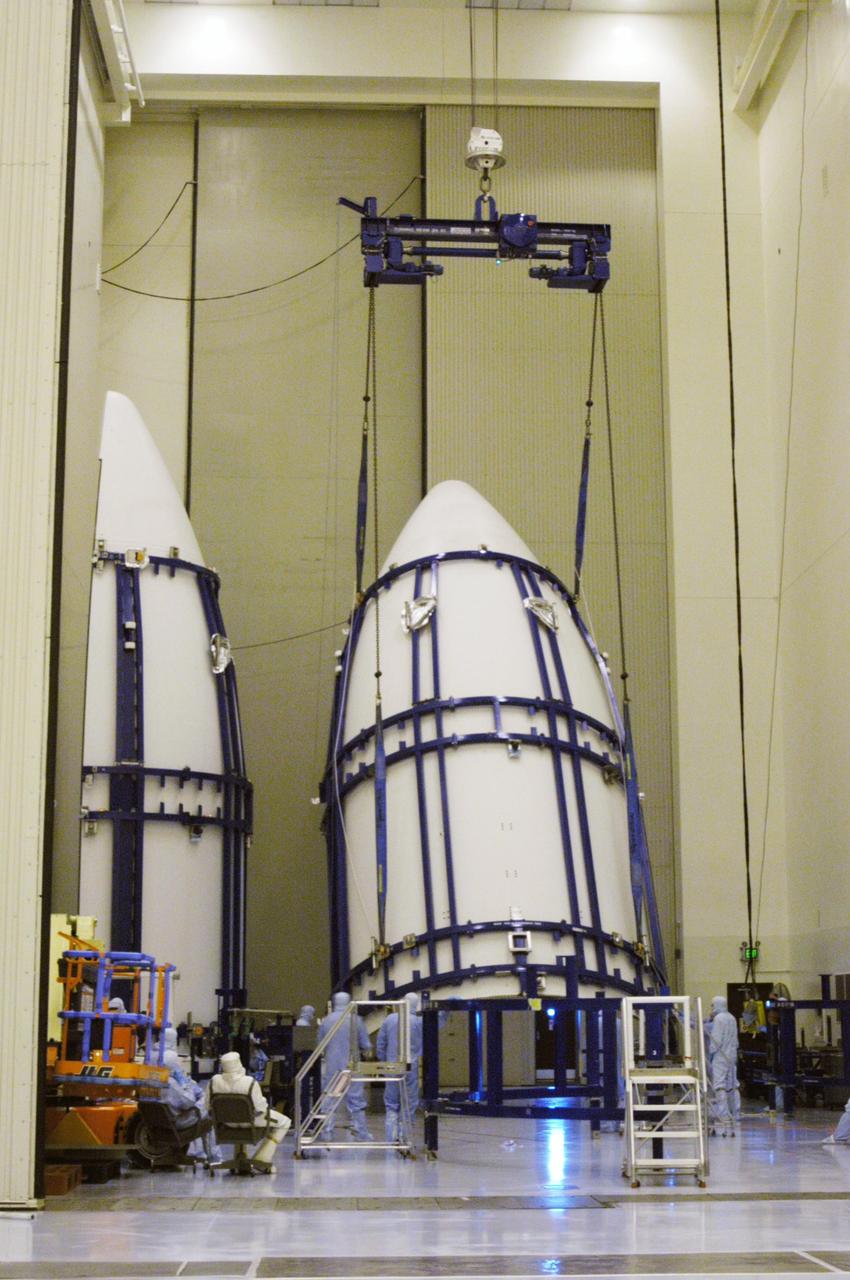
KENNEDY SPACE CENTER, FLA. - In the NASA Kennedy Space Center’s Payload Hazardous Servicing Facility, one part of the fairing to be placed around the New Horizons spacecraft is lifted from a stand. The fairing encapsulates the spacecraft to protect it during launch and flight through the atmosphere. Once out of the atmosphere, the fairing is jettisoned. New Horizons will make the first reconnaissance of Pluto and Charon - a "double planet" and the last planet in our solar system to be visited by spacecraft. The mission will then visit one or more objects in the Kuiper Belt region beyond Neptune. SWAP is a solar wind and plasma spectrometer that measures atmospheric “escape rate” and will observe Pluto’s interaction with the solar wind. New Horizons is scheduled to launch in January 2006, swing past Jupiter for a gravity boost and scientific studies in February or March 2007, and reach Pluto and its moon, Charon, in July 2015.

KENNEDY SPACE CENTER, FLA. - In the NASA Kennedy Space Center’s Payload Hazardous Servicing Facility, both parts of the Lockheed Martin Atlas V rocket fairing to be placed around the New Horizons spacecraft are moved into place for encapsulation. The fairing encloses the spacecraft to protect it during launch and flight through the atmosphere. Once out of the atmosphere, the fairing is jettisoned. New Horizons will make the first reconnaissance of Pluto and Charon - a "double planet" and the last planet in our solar system to be visited by spacecraft. The mission will then visit one or more objects in the Kuiper Belt region beyond Neptune. SWAP is a solar wind and plasma spectrometer that measures atmospheric “escape rate” and will observe Pluto’s interaction with the solar wind. New Horizons is scheduled to launch in January 2006, swing past Jupiter for a gravity boost and scientific studies in February or March 2007, and reach Pluto and its moon, Charon, in July 2015.
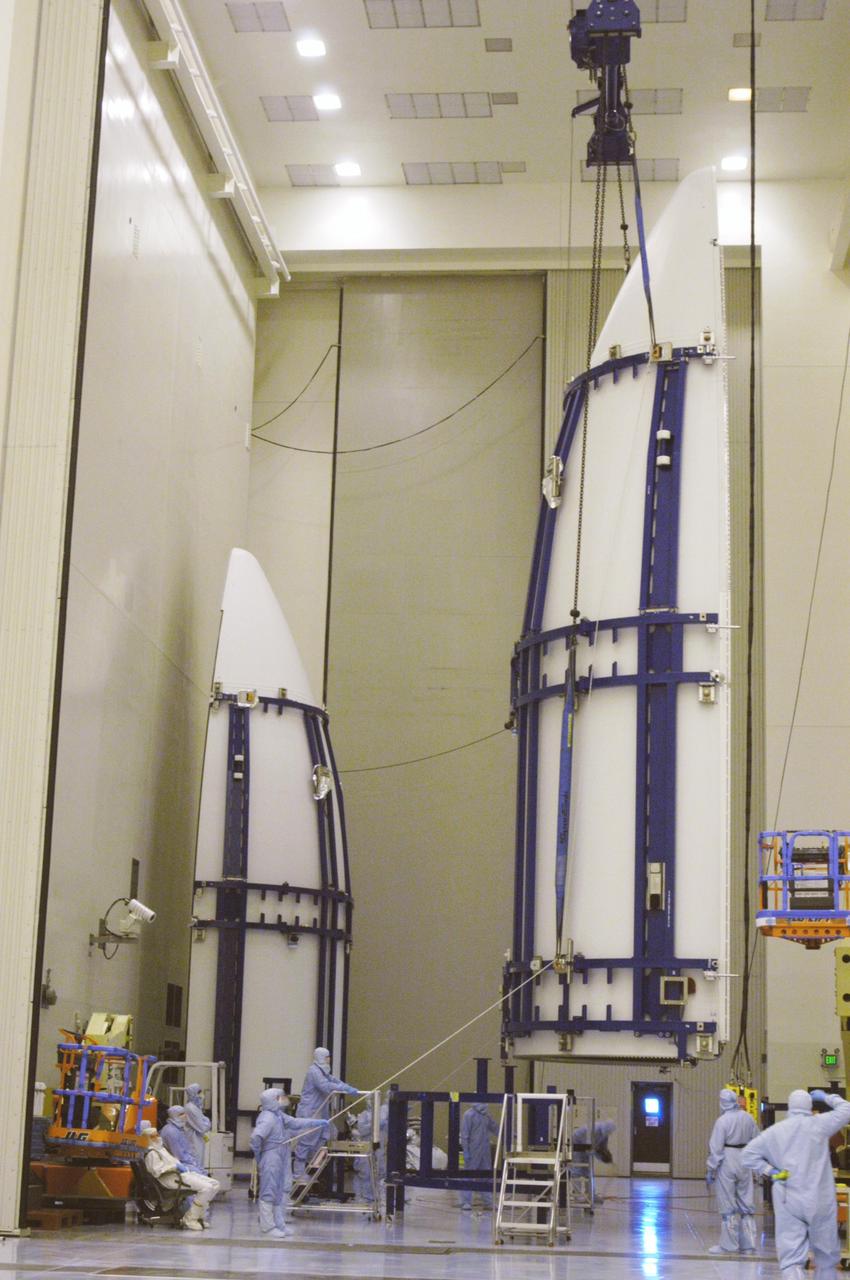
KENNEDY SPACE CENTER, FLA. - In the NASA Kennedy Space Center’s Payload Hazardous Servicing Facility, one part of the Lockheed Martin Atlas V rocket fairing to be placed around the New Horizons spacecraft is moved after being lifted from a stand. The fairing encapsulates the spacecraft to protect it during launch and flight through the atmosphere. Once out of the atmosphere, the fairing is jettisoned. New Horizons will make the first reconnaissance of Pluto and Charon - a "double planet" and the last planet in our solar system to be visited by spacecraft. The mission will then visit one or more objects in the Kuiper Belt region beyond Neptune. SWAP is a solar wind and plasma spectrometer that measures atmospheric “escape rate” and will observe Pluto’s interaction with the solar wind. New Horizons is scheduled to launch in January 2006, swing past Jupiter for a gravity boost and scientific studies in February or March 2007, and reach Pluto and its moon, Charon, in July 2015.
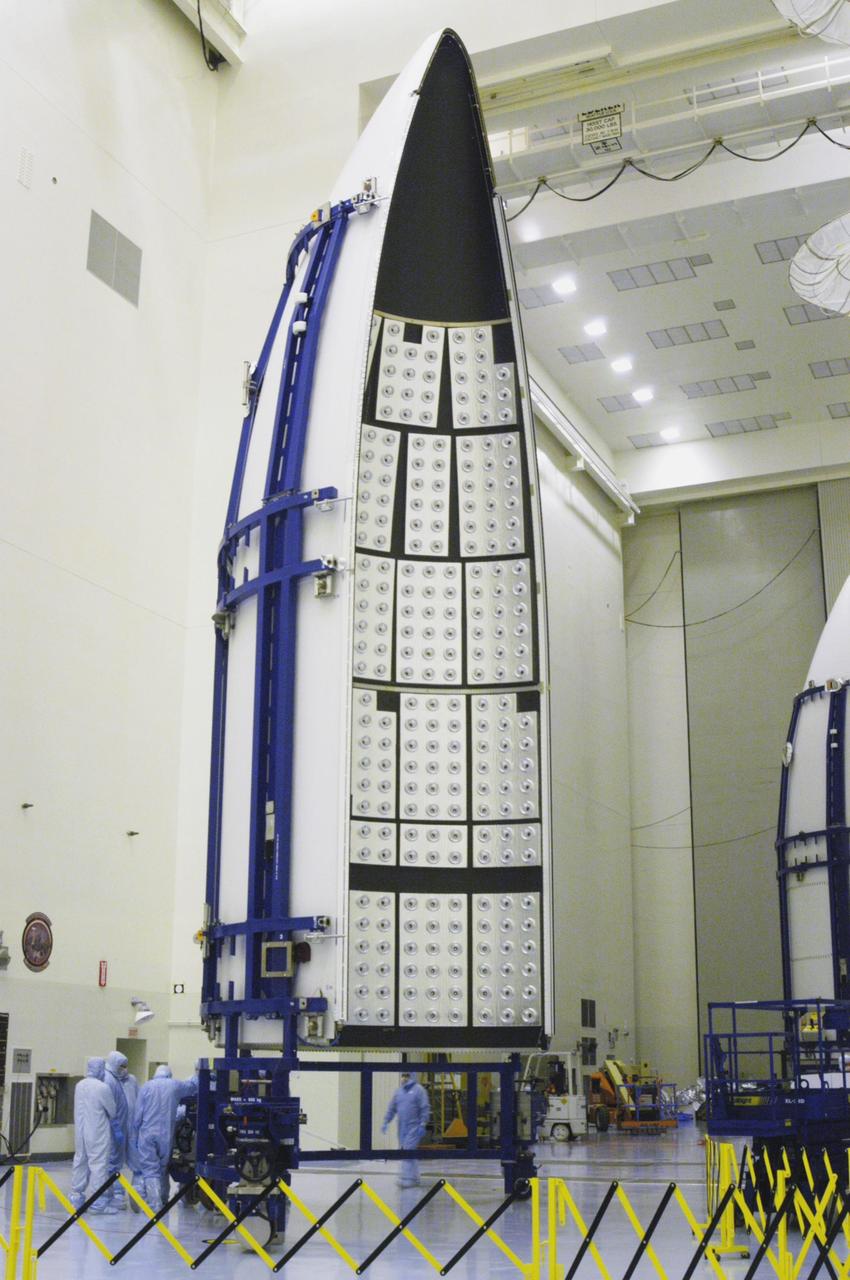
KENNEDY SPACE CENTER, FLA. - In the NASA Kennedy Space Center’s Payload Hazardous Servicing Facility, one part of the Lockheed Martin Atlas V rocket fairing to be placed around the New Horizons spacecraft is moved into place for encapsulation. The fairing encloses the spacecraft to protect it during launch and flight through the atmosphere. Once out of the atmosphere, the fairing is jettisoned. New Horizons will make the first reconnaissance of Pluto and Charon - a "double planet" and the last planet in our solar system to be visited by spacecraft. The mission will then visit one or more objects in the Kuiper Belt region beyond Neptune. SWAP is a solar wind and plasma spectrometer that measures atmospheric “escape rate” and will observe Pluto’s interaction with the solar wind. New Horizons is scheduled to launch in January 2006, swing past Jupiter for a gravity boost and scientific studies in February or March 2007, and reach Pluto and its moon, Charon, in July 2015.
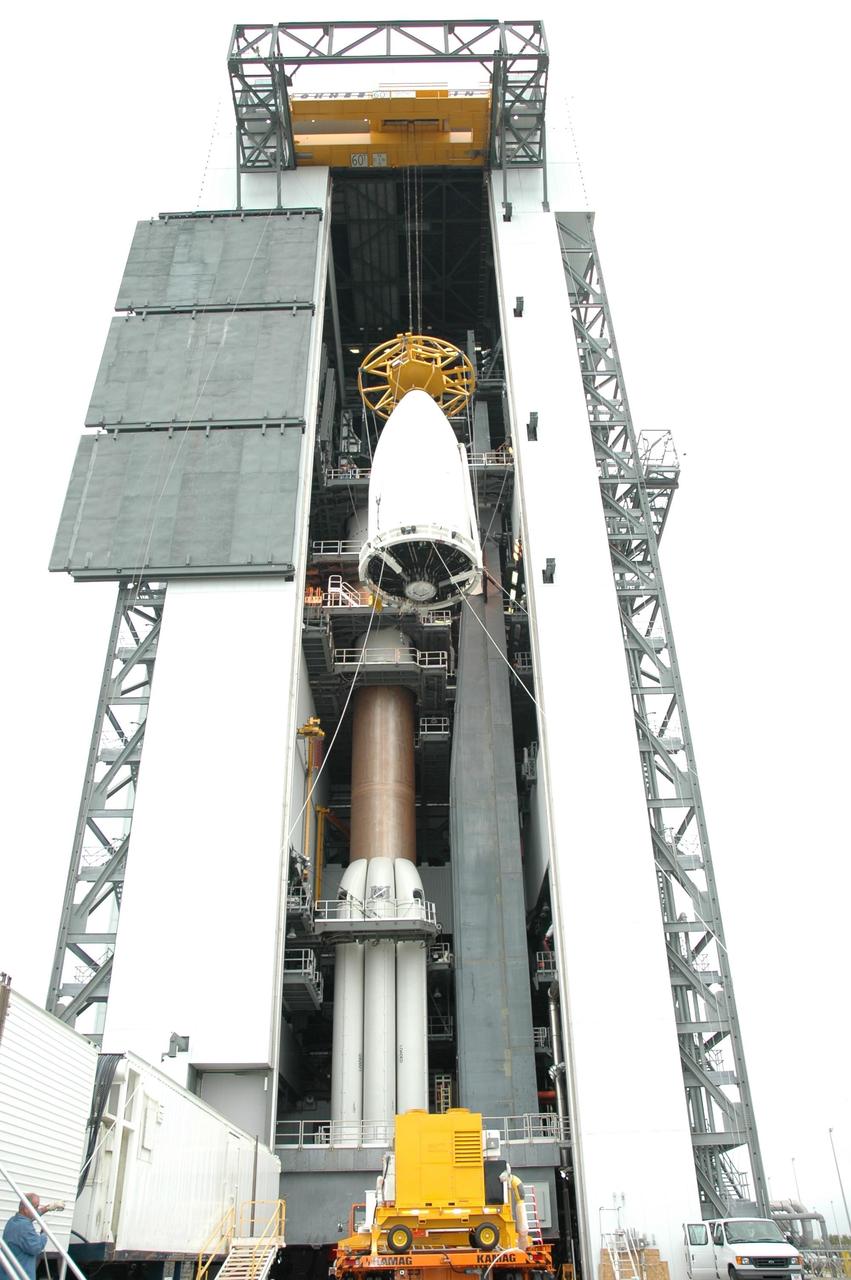
KENNEDY SPACE CENTER, FLA. - The fairing lifting fixture raises the fairing enclosing New Horizons to the top of a Lockheed Martin Atlas V launch vehicle in the Vertical Integration Facility at Complex 41 on Cape Canaveral Air Force Station. New Horizons carries seven scientific instruments that will characterize the global geology and geomorphology of Pluto and its moon Charon, map their surface compositions and temperatures, and examine Pluto's complex atmosphere. After that, flybys of Kuiper Belt objects from even farther in the solar system may be undertaken in an extended mission. New Horizons is the first mission in NASA's New Frontiers program of medium-class planetary missions. The spacecraft, designed for NASA by the Johns Hopkins University Applied Physics Laboratory in Laurel, Md., will launch aboard a Lockheed Martin Atlas V rocket and fly by Pluto and Charon as early as summer 2015.
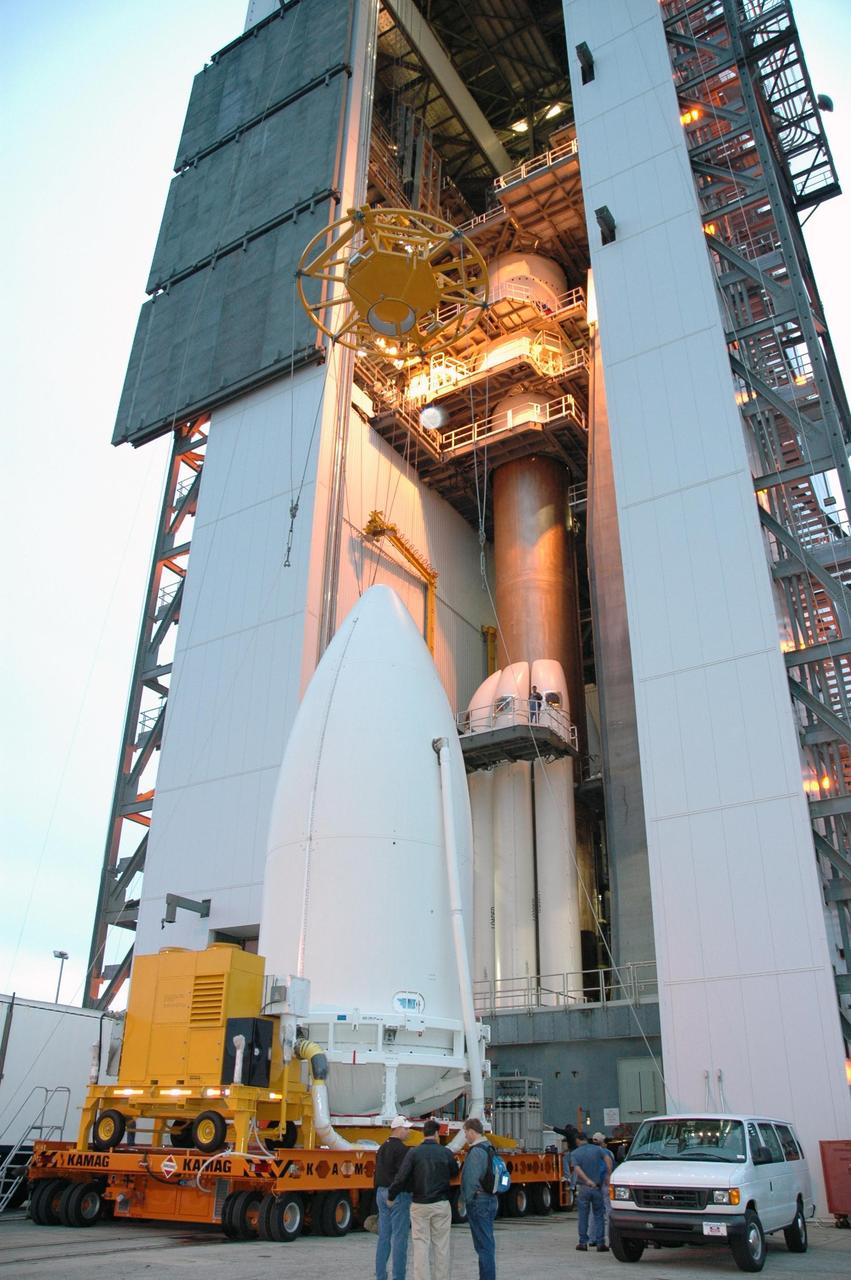
KENNEDY SPACE CENTER, FLA. - The fairing lifting fixture is lowered toward the nose of the fairing enclosing New Horizons upon its arrival at the Vertical Integration Facility at Complex 41 on Cape Canaveral Air Force Station. A Lockheed Martin Atlas V launch vehicle stands ready to receive it in the background. New Horizons carries seven scientific instruments that will characterize the global geology and geomorphology of Pluto and its moon Charon, map their surface compositions and temperatures, and examine Pluto's complex atmosphere. After that, flybys of Kuiper Belt objects from even farther in the solar system may be undertaken in an extended mission. New Horizons is the first mission in NASA's New Frontiers program of medium-class planetary missions. The spacecraft, designed for NASA by the Johns Hopkins University Applied Physics Laboratory in Laurel, Md., will launch aboard a Lockheed Martin Atlas V rocket and fly by Pluto and Charon as early as summer 2015.
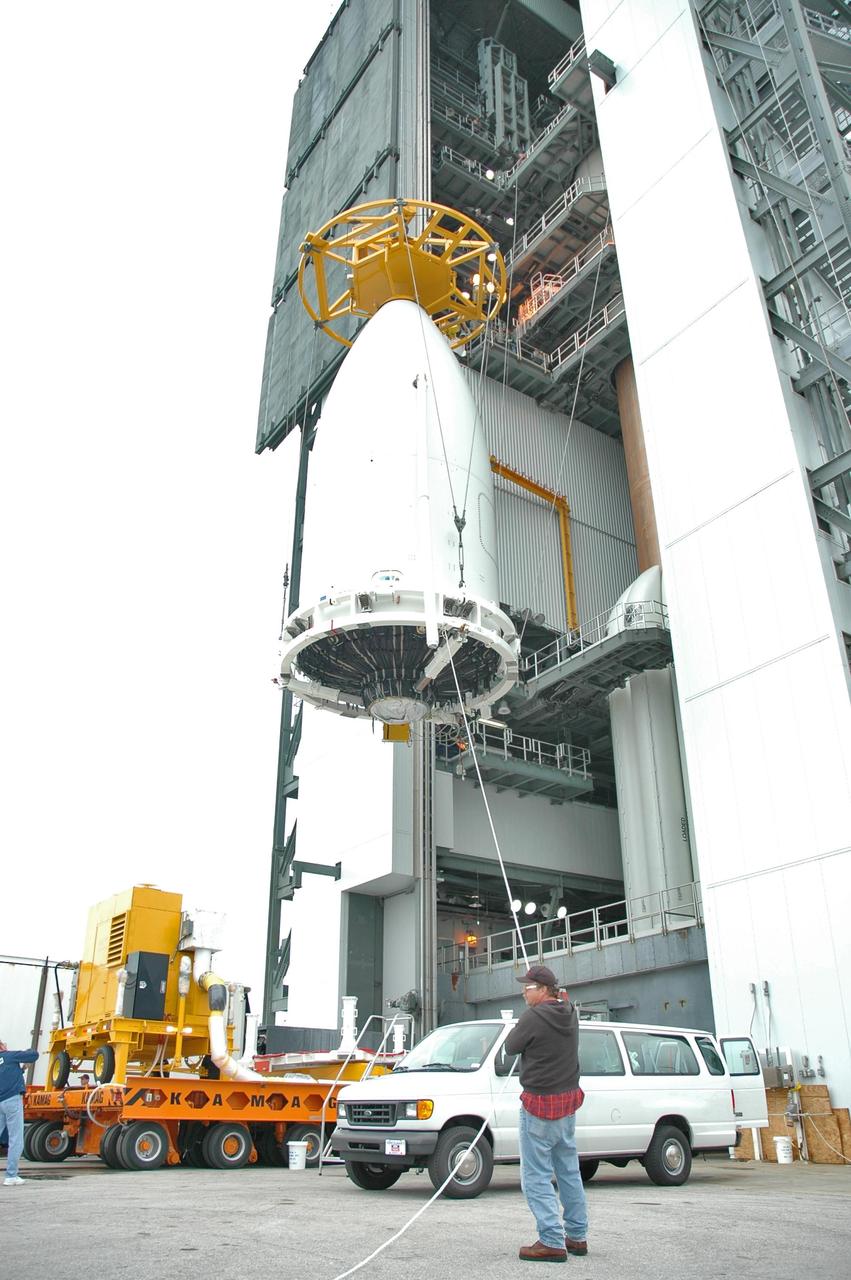
KENNEDY SPACE CENTER, FLA. - The fairing lifting fixture lifts the fairing enclosing New Horizons to the top of a Lockheed Martin Atlas V launch vehicle at the Vertical Integration Facility at Complex 41 on Cape Canaveral Air Force Station. New Horizons carries seven scientific instruments that will characterize the global geology and geomorphology of Pluto and its moon Charon, map their surface compositions and temperatures, and examine Pluto's complex atmosphere. After that, flybys of Kuiper Belt objects from even farther in the solar system may be undertaken in an extended mission. New Horizons is the first mission in NASA's New Frontiers program of medium-class planetary missions. The spacecraft, designed for NASA by the Johns Hopkins University Applied Physics Laboratory in Laurel, Md., will launch aboard a Lockheed Martin Atlas V rocket and fly by Pluto and Charon as early as summer 2015.
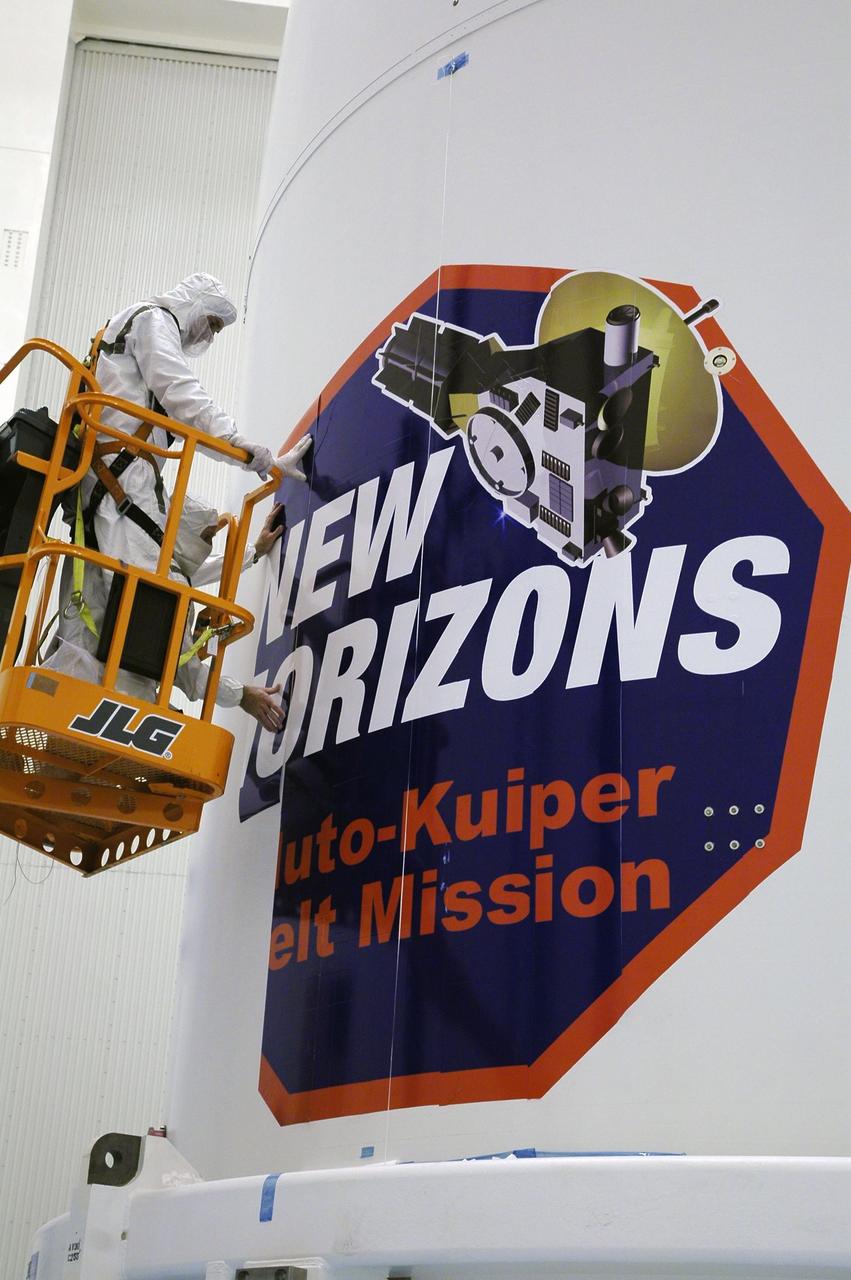
KENNEDY SPACE CENTER, FLA. - Technicians install strips of the New Horizons mission decal on the spacecraft fairing in the Payload Hazardous Servicing Facility. The last strip will be installed on the fairing after the spacecraft is delivered to Pad 41 on Dec. 17. New Horizons carries seven scientific instruments that will characterize the global geology and geomorphology of Pluto and its moon Charon, map their surface compositions and temperatures, and examine Pluto's complex atmosphere. After that, flybys of Kuiper Belt objects from even farther in the solar system may be undertaken in an extended mission. New Horizons is the first mission in NASA's New Frontiers program of medium-class planetary missions. The spacecraft, designed for NASA by the Johns Hopkins University Applied Physics Laboratory in Laurel, Md., will launch aboard a Lockheed Martin Atlas V rocket and fly by Pluto and Charon as early as summer 2015.
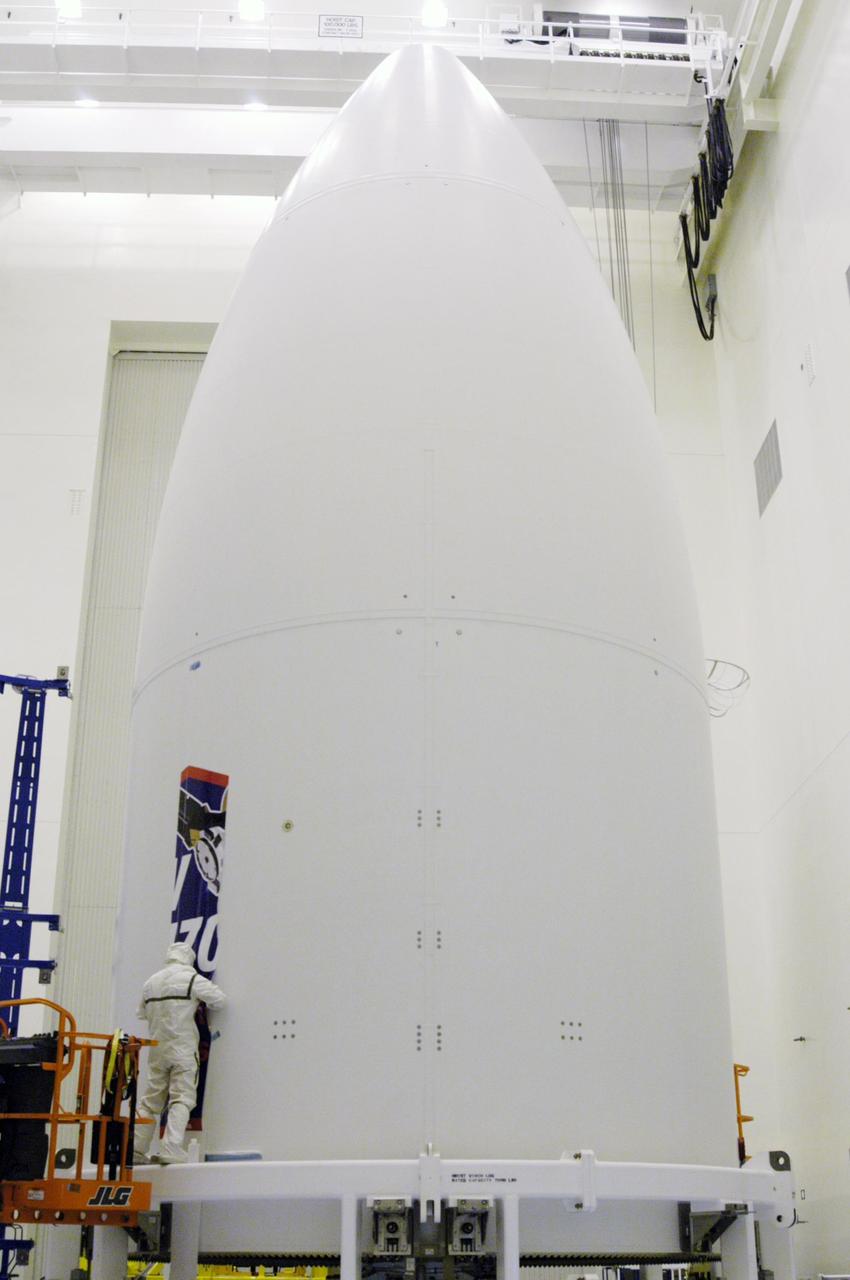
KENNEDY SPACE CENTER, FLA. - A technician installs the first strip of the New Horizons mission decal on the spacecraft fairing in the Payload Hazardous Servicing Facility. The last strip will be installed on the fairing after the spacecraft is delivered to Pad 41 on Dec. 17. New Horizons carries seven scientific instruments that will characterize the global geology and geomorphology of Pluto and its moon Charon, map their surface compositions and temperatures, and examine Pluto's complex atmosphere. After that, flybys of Kuiper Belt objects from even farther in the solar system may be undertaken in an extended mission. New Horizons is the first mission in NASA's New Frontiers program of medium-class planetary missions. The spacecraft, designed for NASA by the Johns Hopkins University Applied Physics Laboratory in Laurel, Md., will launch aboard a Lockheed Martin Atlas V rocket and fly by Pluto and Charon as early as summer 2015.
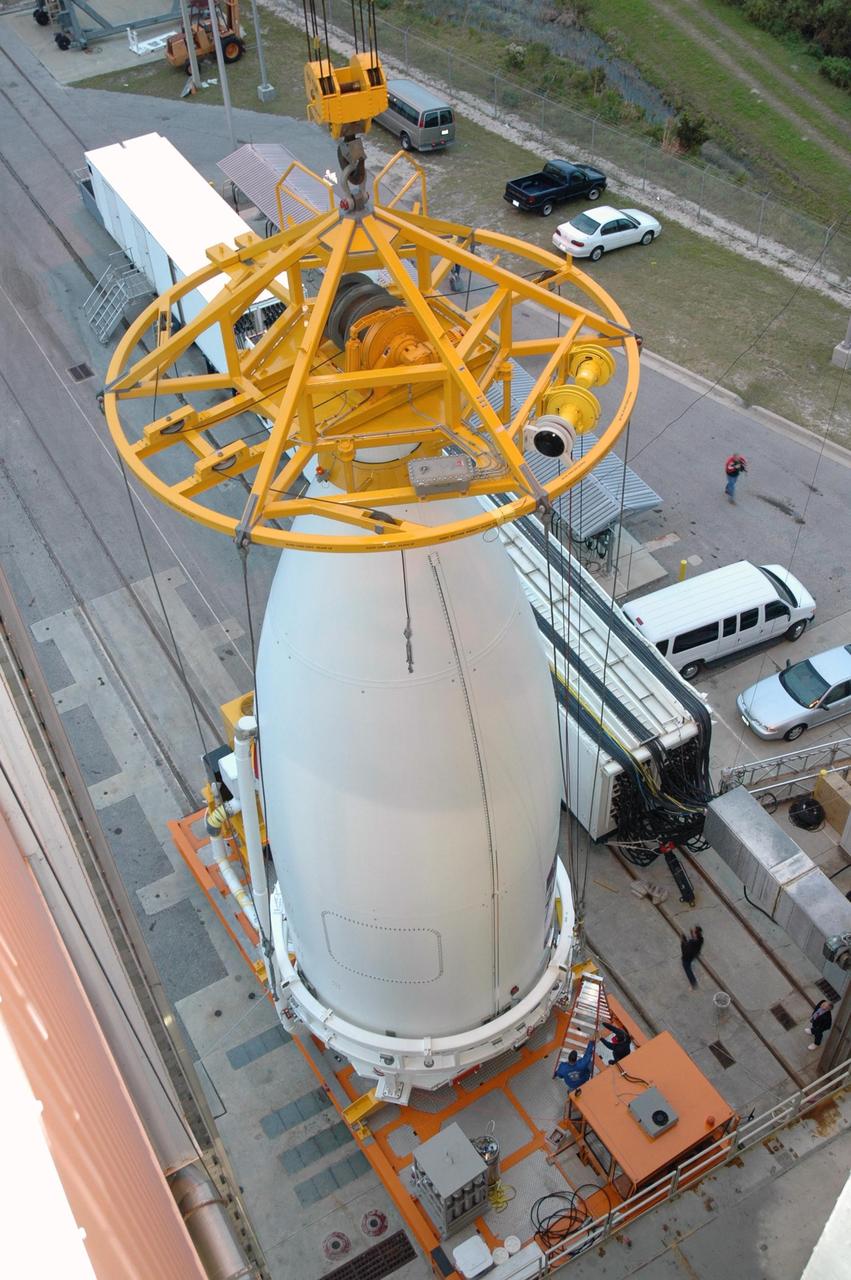
KENNEDY SPACE CENTER, FLA. - The fairing lifting fixture is secured to the nose of the fairing enclosing New Horizons at the Vertical Integration Facility at Complex 41 on Cape Canaveral Air Force Station. New Horizons carries seven scientific instruments that will characterize the global geology and geomorphology of Pluto and its moon Charon, map their surface compositions and temperatures, and examine Pluto's complex atmosphere. After that, flybys of Kuiper Belt objects from even farther in the solar system may be undertaken in an extended mission. New Horizons is the first mission in NASA's New Frontiers program of medium-class planetary missions. The spacecraft, designed for NASA by the Johns Hopkins University Applied Physics Laboratory in Laurel, Md., will launch aboard a Lockheed Martin Atlas V rocket and fly by Pluto and Charon as early as summer 2015.
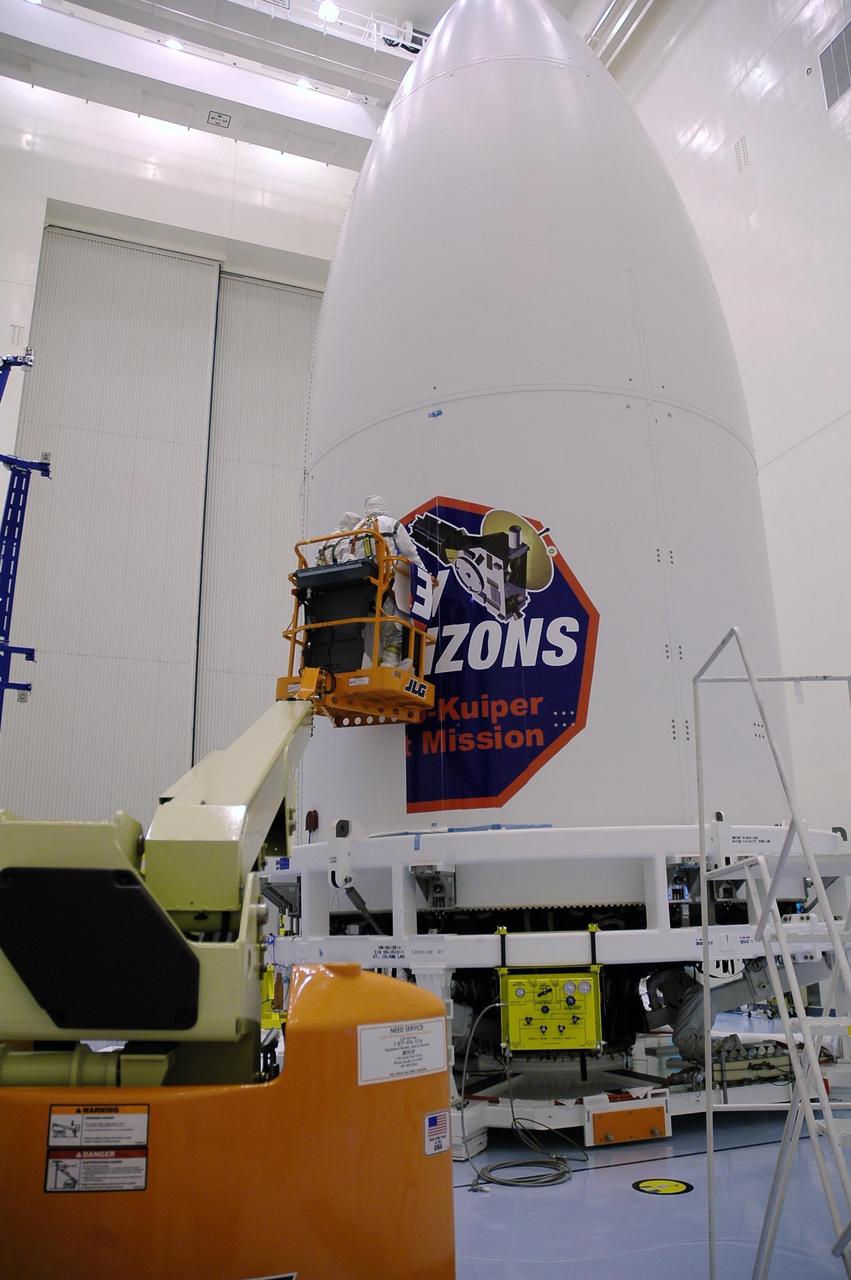
KENNEDY SPACE CENTER, FLA. - Technicians install strips of the New Horizons mission decal on the spacecraft fairing in the Payload Hazardous Servicing Facility. The last strip will be installed on the fairing after the spacecraft is delivered to Pad 41 on Dec. 17. New Horizons carries seven scientific instruments that will characterize the global geology and geomorphology of Pluto and its moon Charon, map their surface compositions and temperatures, and examine Pluto's complex atmosphere. After that, flybys of Kuiper Belt objects from even farther in the solar system may be undertaken in an extended mission. New Horizons is the first mission in NASA's New Frontiers program of medium-class planetary missions. The spacecraft, designed for NASA by the Johns Hopkins University Applied Physics Laboratory in Laurel, Md., will launch aboard a Lockheed Martin Atlas V rocket and fly by Pluto and Charon as early as summer 2015.
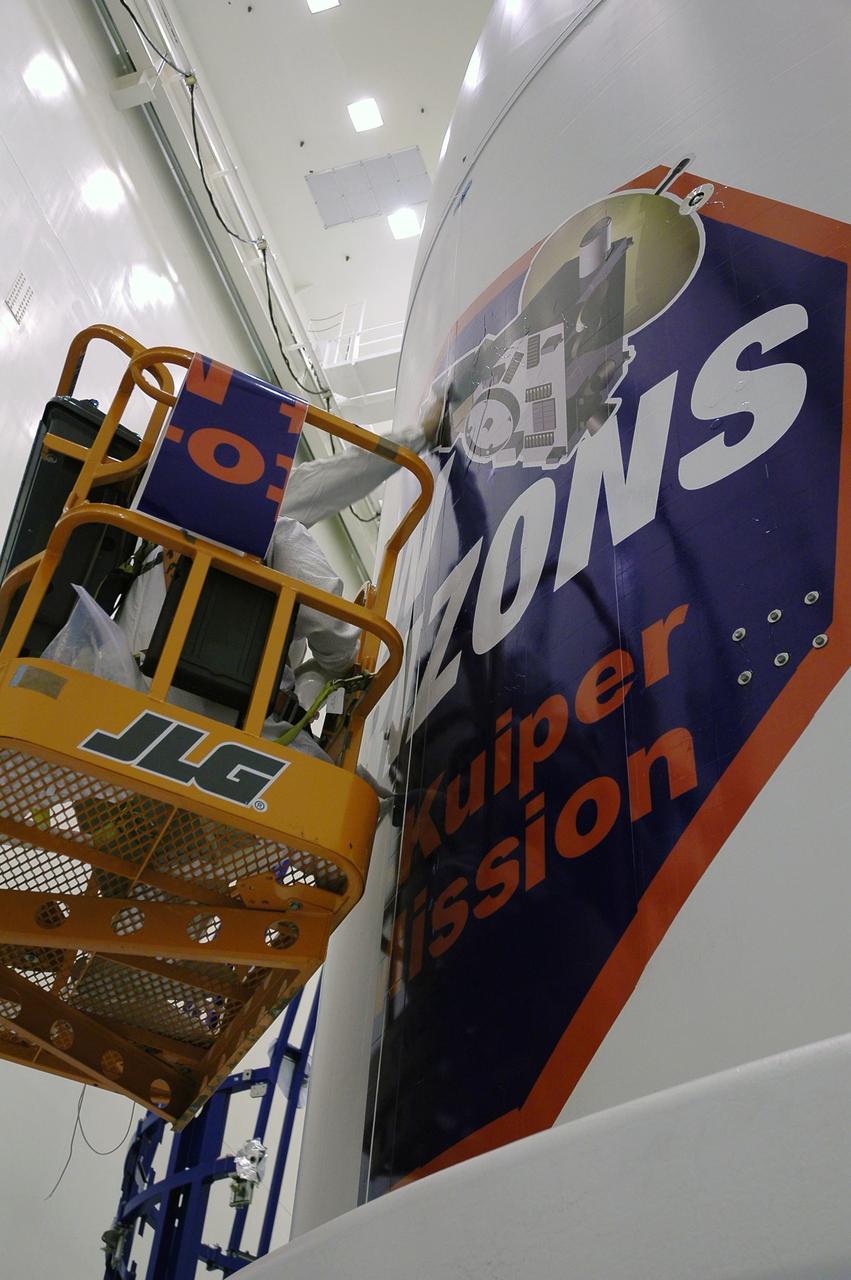
KENNEDY SPACE CENTER, FLA. - Technicians install strips of the New Horizons mission decal on the spacecraft fairing in the Payload Hazardous Servicing Facility. The last strip will be installed on the fairing after the spacecraft is delivered to Pad 41 on Dec. 17. New Horizons carries seven scientific instruments that will characterize the global geology and geomorphology of Pluto and its moon Charon, map their surface compositions and temperatures, and examine Pluto's complex atmosphere. After that, flybys of Kuiper Belt objects from even farther in the solar system may be undertaken in an extended mission. New Horizons is the first mission in NASA's New Frontiers program of medium-class planetary missions. The spacecraft, designed for NASA by the Johns Hopkins University Applied Physics Laboratory in Laurel, Md., will launch aboard a Lockheed Martin Atlas V rocket and fly by Pluto and Charon as early as summer 2015.

KENNEDY SPACE CENTER, FLA. - The fairing halves for the Lockheed Martin Atlas V rocket are driven to the Payload Hazardous Service Facility airlock. The Atlas V is the launch vehicle for the New Horizons spacecraft. The fairing will encapsulate the spacecraft to protect it during launch and flight through the atmosphere. Once out of the atmosphere, the fairing is jettisoned. New Horizons is designed to make the first reconnaissance of Pluto and Charon - a "double planet" and the last planet in our solar system to be visited by spacecraft. The mission will then visit one or more objects in the Kuiper Belt region beyond Neptune. New Horizons is scheduled to launch in January 2006, swing past Jupiter for a gravity boost and scientific studies in February or March 2007, and reach Pluto and its moon, Charon, in July 2015.

KENNEDY SPACE CENTER, FLA. - After arriving at the Payload Hazardous Service Facility airlock, the protective cover is removed from one of the fairing halves for the Lockheed Martin Atlas V rocket. The Atlas V is the launch vehicle for the New Horizons spacecraft. The fairing will encapsulate the spacecraft to protect it during launch and flight through the atmosphere. Once out of the atmosphere, the fairing is jettisoned. New Horizons is designed to make the first reconnaissance of Pluto and Charon - a "double planet" and the last planet in our solar system to be visited by spacecraft. The mission will then visit one or more objects in the Kuiper Belt region beyond Neptune. New Horizons is scheduled to launch in January 2006, swing past Jupiter for a gravity boost and scientific studies in February or March 2007, and reach Pluto and its moon, Charon, in July 2015.

KENNEDY SPACE CENTER, FLA. - One of the fairing halves for the Lockheed Martin Atlas V rocket arrives at the Payload Hazardous Service Facility airlock. The Atlas V is the launch vehicle for the New Horizons spacecraft. The fairing will encapsulate the spacecraft to protect it during launch and flight through the atmosphere. Once out of the atmosphere, the fairing is jettisoned. New Horizons is designed to make the first reconnaissance of Pluto and Charon - a "double planet" and the last planet in our solar system to be visited by spacecraft. The mission will then visit one or more objects in the Kuiper Belt region beyond Neptune. New Horizons is scheduled to launch in January 2006, swing past Jupiter for a gravity boost and scientific studies in February or March 2007, and reach Pluto and its moon, Charon, in July 2015.

KENNEDY SPACE CENTER, FLA. - Inside the Payload Hazardous Service Facility airlock, one of the fairing halves for the Lockheed Martin Atlas V rocket is raised to a vertical position. The Atlas V is the launch vehicle for the New Horizons spacecraft. The fairing will encapsulate the spacecraft to protect it during launch and flight through the atmosphere. Once out of the atmosphere, the fairing is jettisoned. New Horizons is designed to make the first reconnaissance of Pluto and Charon - a "double planet" and the last planet in our solar system to be visited by spacecraft. The mission will then visit one or more objects in the Kuiper Belt region beyond Neptune. New Horizons is scheduled to launch in January 2006, swing past Jupiter for a gravity boost and scientific studies in February or March 2007, and reach Pluto and its moon, Charon, in July 2015.

KENNEDY SPACE CENTER, FLA. - Inside the Payload Hazardous Service Facility airlock, one of the fairing halves for the Lockheed Martin Atlas V rocket is lifted off the transporter. The Atlas V is the launch vehicle for the New Horizons spacecraft. The fairing will encapsulate the spacecraft to protect it during launch and flight through the atmosphere. Once out of the atmosphere, the fairing is jettisoned. New Horizons is designed to make the first reconnaissance of Pluto and Charon - a "double planet" and the last planet in our solar system to be visited by spacecraft. The mission will then visit one or more objects in the Kuiper Belt region beyond Neptune. New Horizons is scheduled to launch in January 2006, swing past Jupiter for a gravity boost and scientific studies in February or March 2007, and reach Pluto and its moon, Charon, in July 2015.
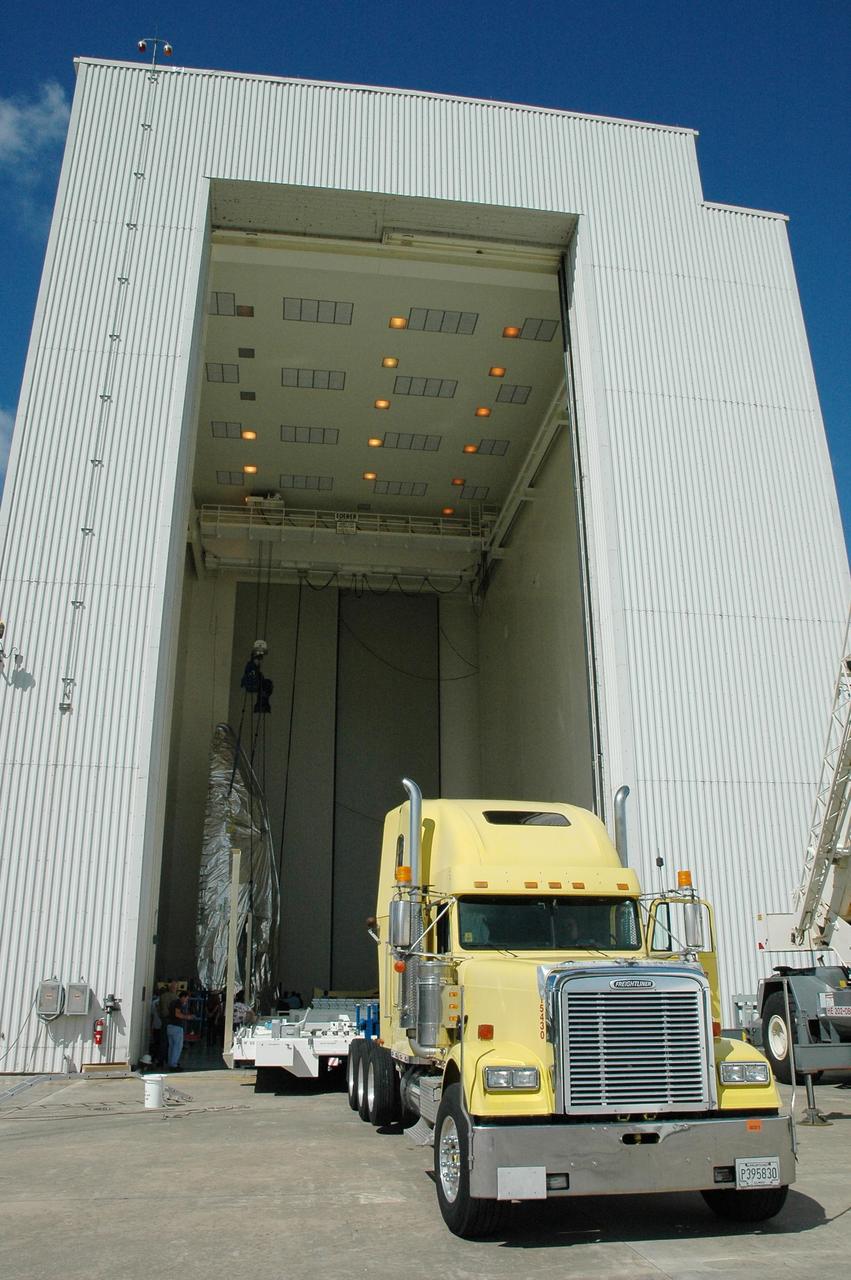
KENNEDY SPACE CENTER, FLA. - Inside the Payload Hazardous Service Facility airlock, one of the fairing halves for the Lockheed Martin Atlas V rocket is suspended vertically. The Atlas V is the launch vehicle for the New Horizons spacecraft. The fairing will encapsulate the spacecraft to protect it during launch and flight through the atmosphere. Once out of the atmosphere, the fairing is jettisoned. New Horizons is designed to make the first reconnaissance of Pluto and Charon - a "double planet" and the last planet in our solar system to be visited by spacecraft. The mission will then visit one or more objects in the Kuiper Belt region beyond Neptune. New Horizons is scheduled to launch in January 2006, swing past Jupiter for a gravity boost and scientific studies in February or March 2007, and reach Pluto and its moon, Charon, in July 2015.
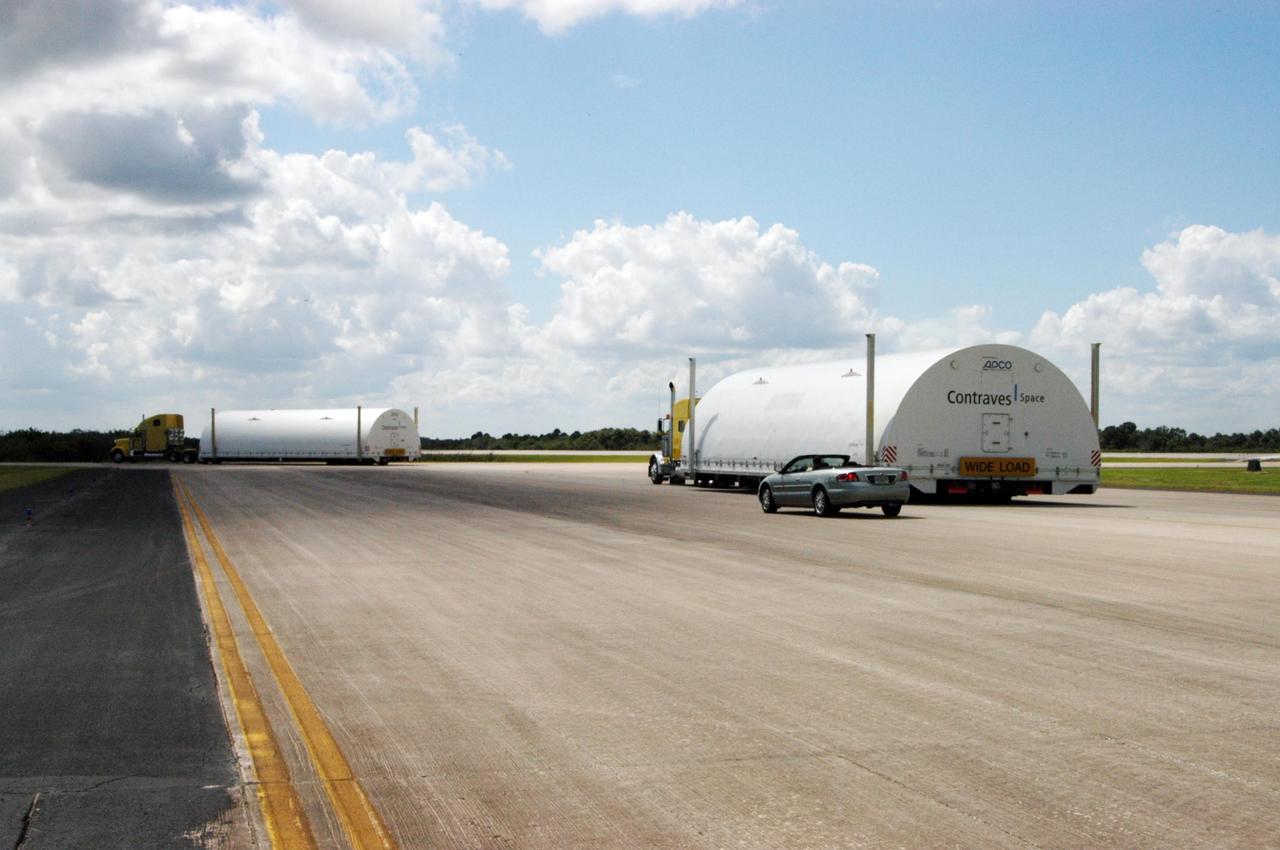
KENNEDY SPACE CENTER, FLA. - The Atlas V fairing halves for the New Horizons spacecraft are driven away from NASA Kennedy Space Center’s Shuttle Landing Facility. They are being transported to Astrotech Space Operations in Titusville. The fairing later will be placed around the New Horizons spacecraft in the Payload Hazardous Service Facility. The fairing later will be placed around the New Horizons spacecraft in the Payload Hazardous Service Facility. A fairing protects a spacecraft during launch and flight through the atmosphere. Once in space, it is jettisoned. The Lockheed Martin Atlas V is the launch vehicle for the New Horizons spacecraft, which is designed to make the first reconnaissance of Pluto and Charon - a "double planet" and the last planet in our solar system to be visited by spacecraft. The mission will then visit one or more objects in the Kuiper Belt region beyond Neptune. New Horizons is scheduled to launch in January 2006, swing past Jupiter for a gravity boost and scientific studies in February or March 2007, and reach Pluto and its moon, Charon, in July 2015.
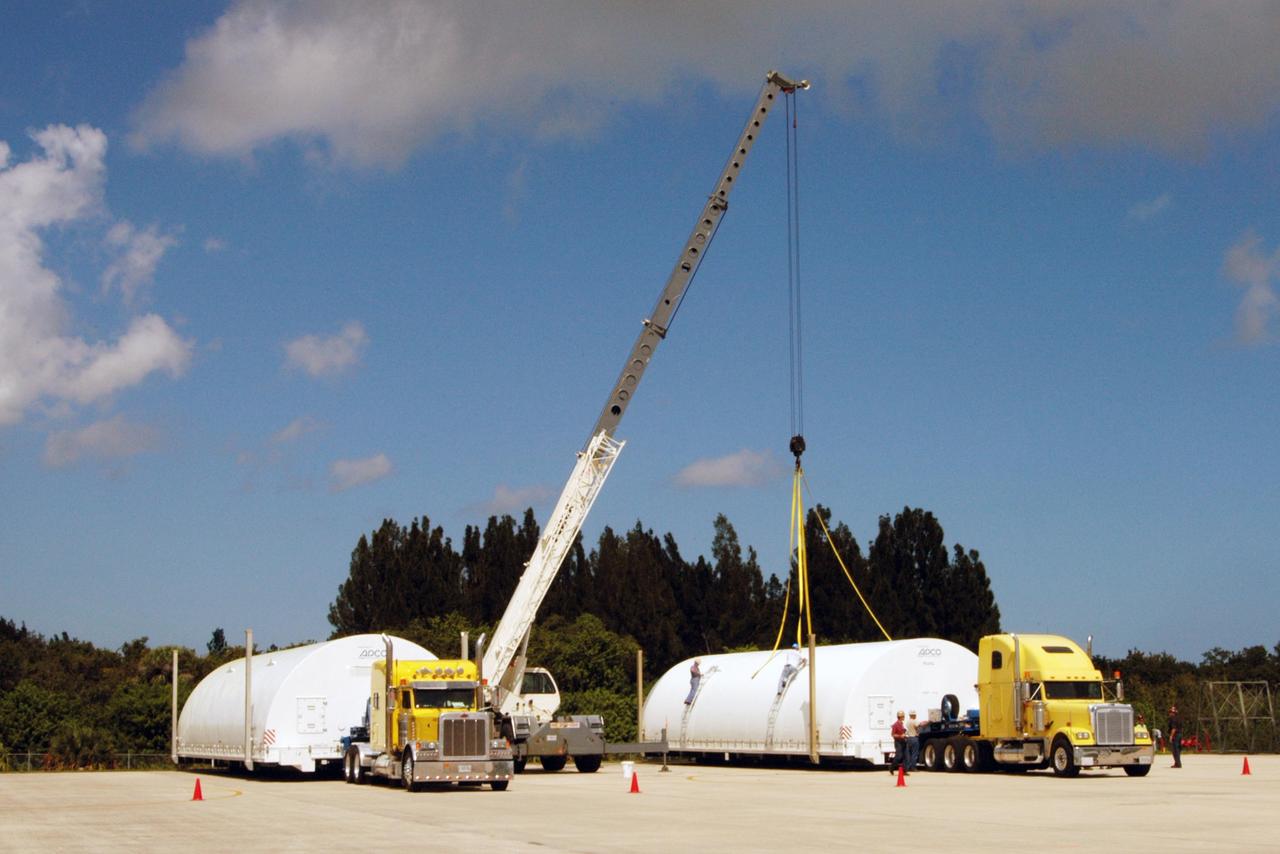
KENNEDY SPACE CENTER, FLA. - On the Shuttle Landing Facility at NASA Kennedy Space Center, the Atlas V fairing halves for the New Horizons spacecraft are being covered by a protective container before their transport to Astrotech Space Operations in Titusville. The fairing later will be placed around the New Horizons spacecraft in the Payload Hazardous Service Facility. The fairing later will be placed around the New Horizons spacecraft in the Payload Hazardous Service Facility. A fairing protects a spacecraft during launch and flight through the atmosphere. Once in space, it is jettisoned. The Lockheed Martin Atlas V is the launch vehicle for the New Horizons spacecraft, which is designed to make the first reconnaissance of Pluto and Charon - a "double planet" and the last planet in our solar system to be visited by spacecraft. The mission will then visit one or more objects in the Kuiper Belt region beyond Neptune. New Horizons is scheduled to launch in January 2006, swing past Jupiter for a gravity boost and scientific studies in February or March 2007, and reach Pluto and its moon, Charon, in July 2015.
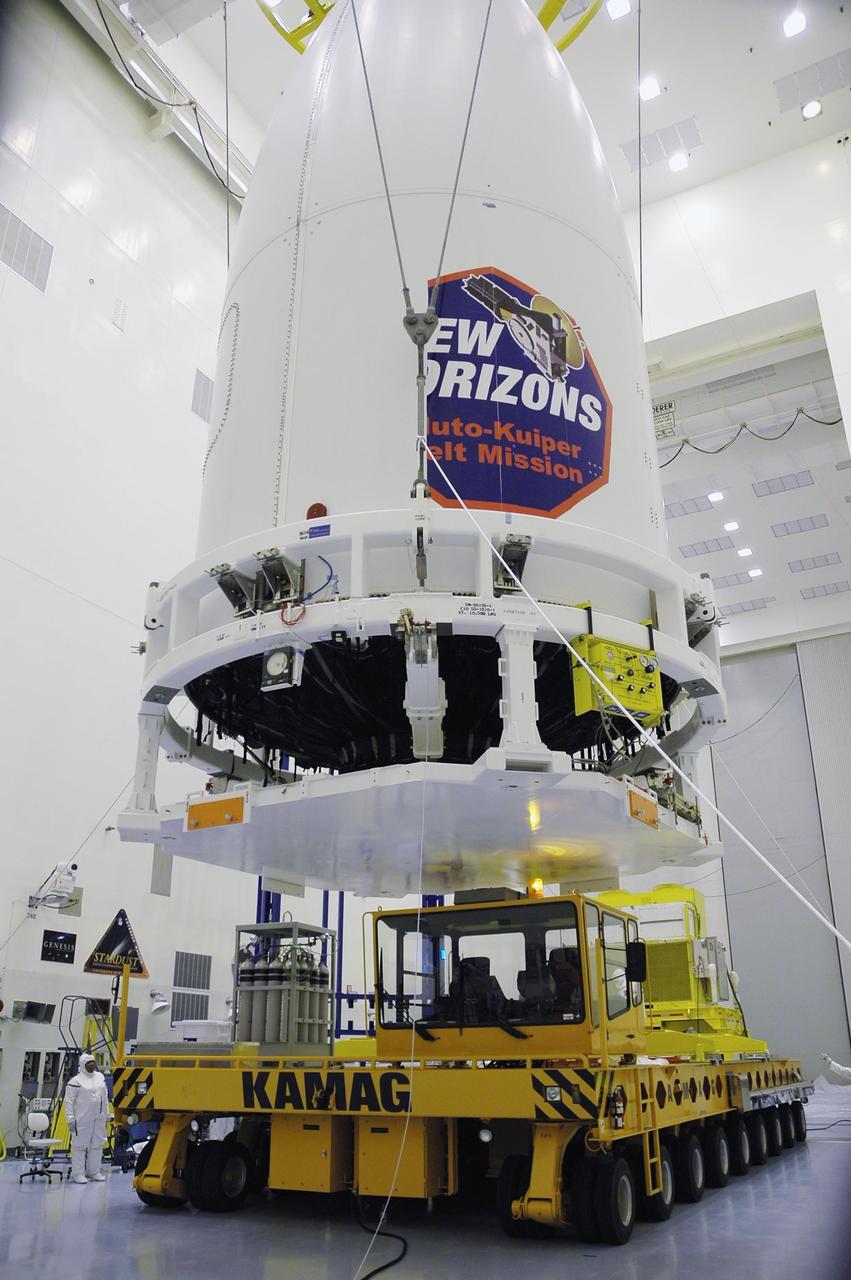
KENNEDY SPACE CENTER, FLA. - In the Payload Hazardous Servicing Facility, technicians lower New Horizons onto a transporter for its move to Complex 41 on Cape Canaveral Air Force Station. The last strip of the mission decal will be installed on the fairing after the spacecraft is delivered to the pad. New Horizons carries seven scientific instruments that will characterize the global geology and geomorphology of Pluto and its moon Charon, map their surface compositions and temperatures, and examine Pluto's complex atmosphere. After that, flybys of Kuiper Belt objects from even farther in the solar system may be undertaken in an extended mission. New Horizons is the first mission in NASA's New Frontiers program of medium-class planetary missions. The spacecraft, designed for NASA by the Johns Hopkins University Applied Physics Laboratory in Laurel, Md., will launch aboard a Lockheed Martin Atlas V rocket and fly by Pluto and Charon as early as summer 2015.
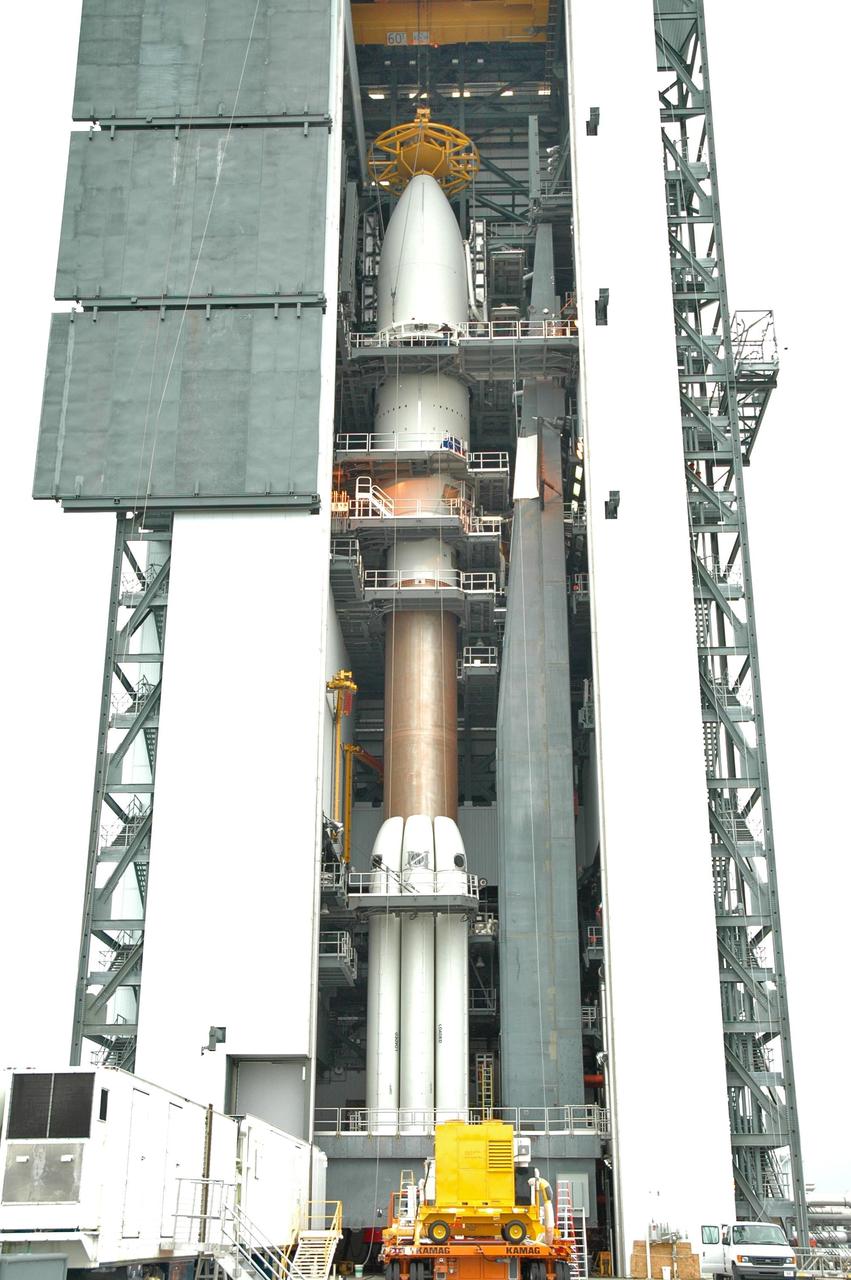
KENNEDY SPACE CENTER, FLA. - The fairing enclosing New Horizons awaits further processing upon its arrival atop a Lockheed Martin Atlas V launch vehicle in the Vertical Integration Facility at Complex 41 on Cape Canaveral Air Force Station. New Horizons carries seven scientific instruments that will characterize the global geology and geomorphology of Pluto and its moon Charon, map their surface compositions and temperatures, and examine Pluto's complex atmosphere. After that, flybys of Kuiper Belt objects from even farther in the solar system may be undertaken in an extended mission. New Horizons is the first mission in NASA's New Frontiers program of medium-class planetary missions. The spacecraft, designed for NASA by the Johns Hopkins University Applied Physics Laboratory in Laurel, Md., will launch aboard a Lockheed Martin Atlas V rocket and fly by Pluto and Charon as early as summer 2015.
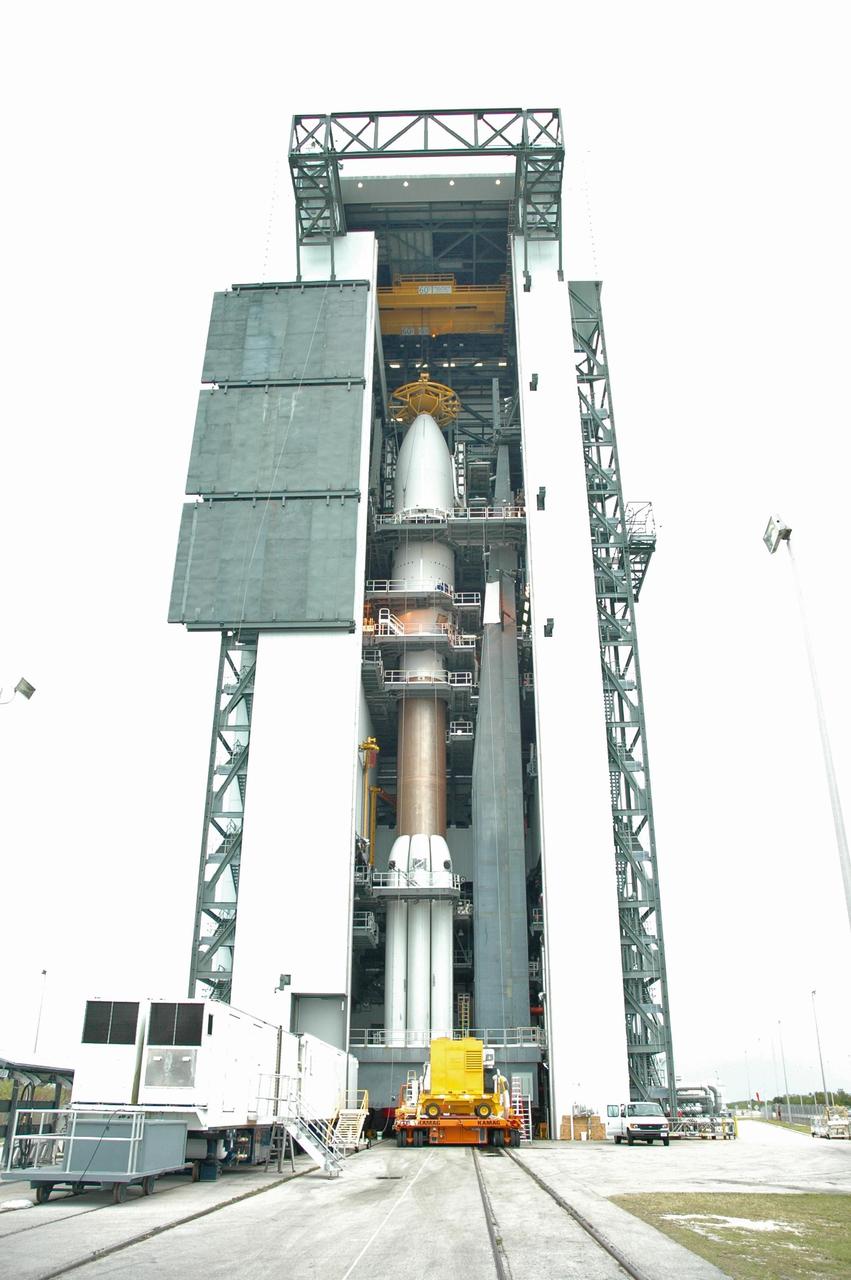
KENNEDY SPACE CENTER, FLA. - The fairing enclosing New Horizons awaits further processing upon its arrival atop a Lockheed Martin Atlas V launch vehicle in the Vertical Integration Facility at Complex 41 on Cape Canaveral Air Force Station. New Horizons carries seven scientific instruments that will characterize the global geology and geomorphology of Pluto and its moon Charon, map their surface compositions and temperatures, and examine Pluto's complex atmosphere. After that, flybys of Kuiper Belt objects from even farther in the solar system may be undertaken in an extended mission. New Horizons is the first mission in NASA's New Frontiers program of medium-class planetary missions. The spacecraft, designed for NASA by the Johns Hopkins University Applied Physics Laboratory in Laurel, Md., will launch aboard a Lockheed Martin Atlas V rocket and fly by Pluto and Charon as early as summer 2015.
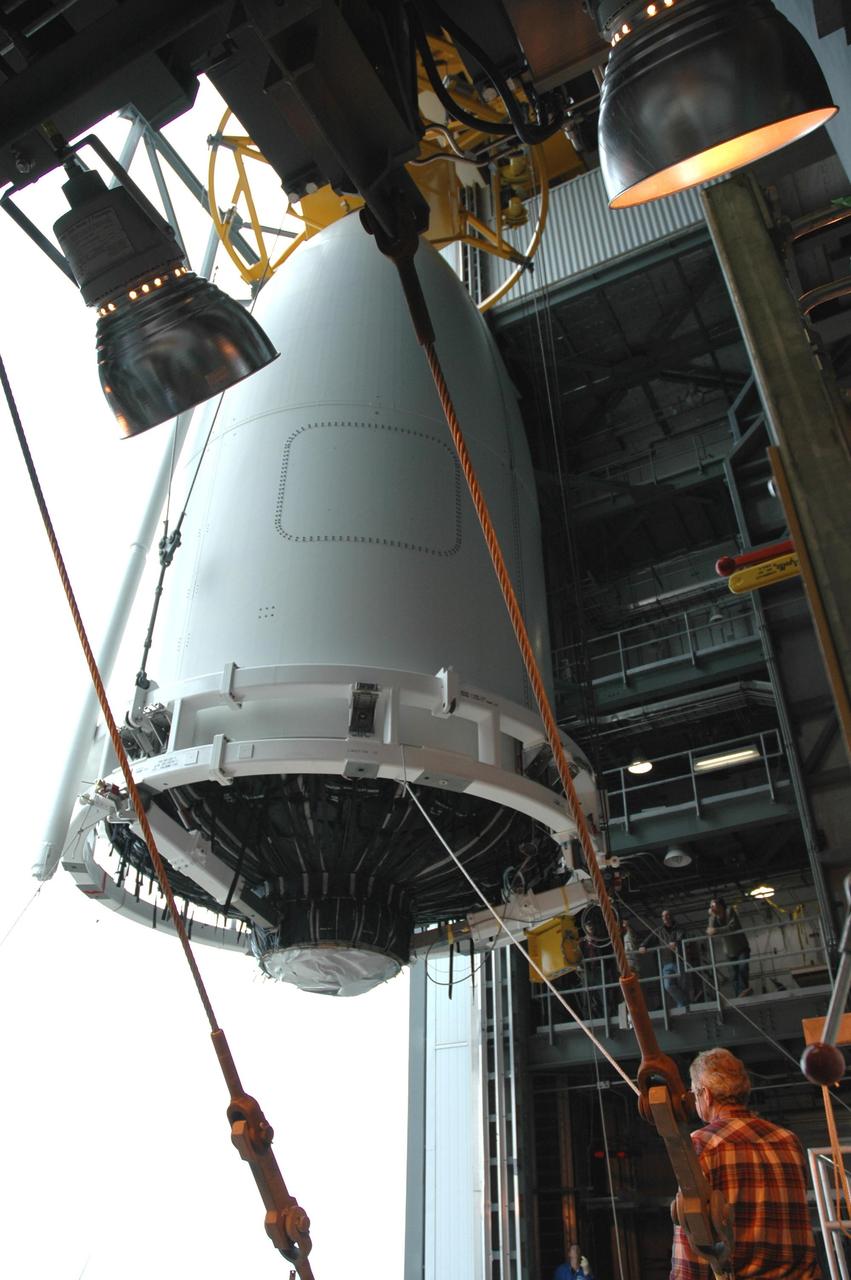
KENNEDY SPACE CENTER, FLA. - The fairing enclosing New Horizons arrives at the top of a Lockheed Martin Atlas V launch vehicle in the Vertical Integration Facility at Complex 41 on Cape Canaveral Air Force Station. New Horizons carries seven scientific instruments that will characterize the global geology and geomorphology of Pluto and its moon Charon, map their surface compositions and temperatures, and examine Pluto's complex atmosphere. After that, flybys of Kuiper Belt objects from even farther in the solar system may be undertaken in an extended mission. New Horizons is the first mission in NASA's New Frontiers program of medium-class planetary missions. The spacecraft, designed for NASA by the Johns Hopkins University Applied Physics Laboratory in Laurel, Md., will launch aboard a Lockheed Martin Atlas V rocket and fly by Pluto and Charon as early as summer 2015.
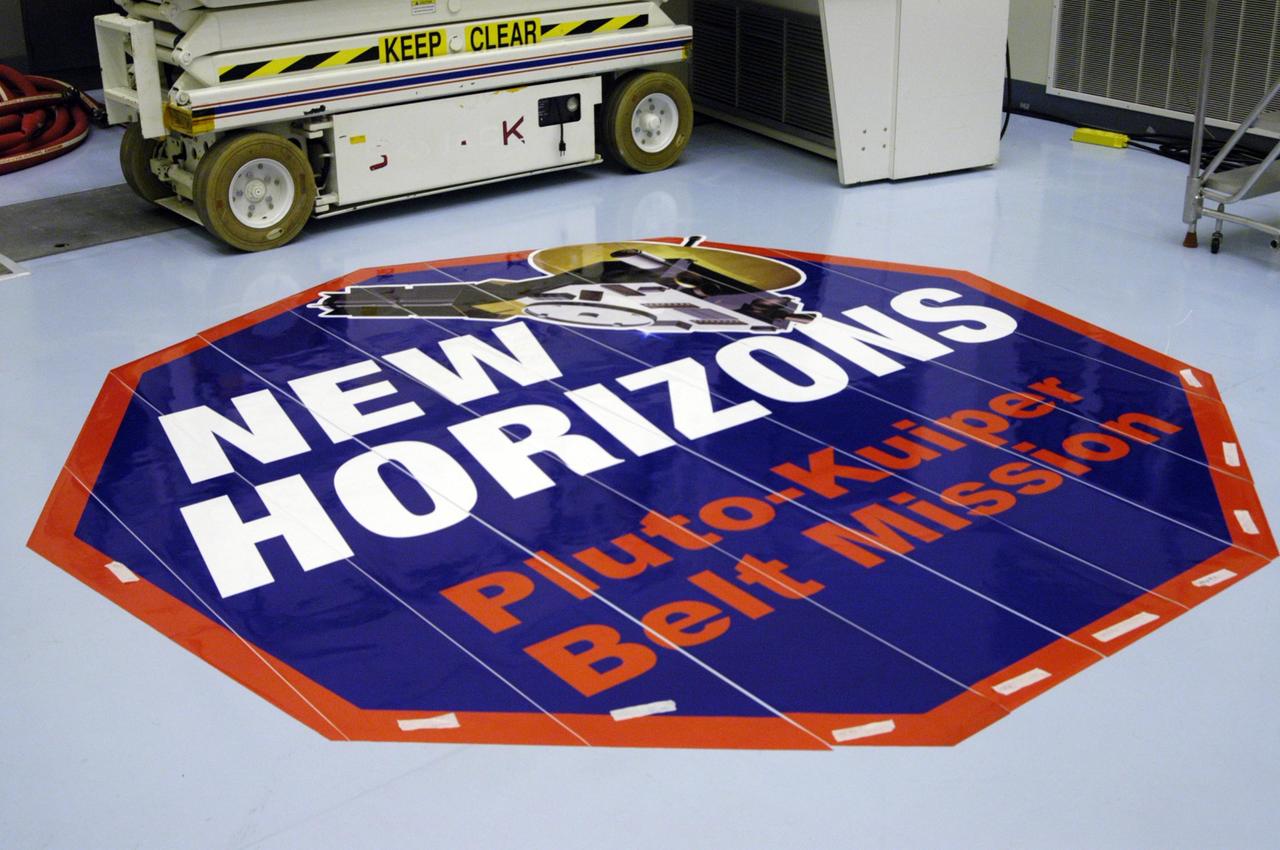
KENNEDY SPACE CENTER, FLA. - The mission decal for New Horizons is laid out in strips on the floor of the Payload Hazardous Servicing Facility before installation onto the spacecraft's fairing. New Horizons carries seven scientific instruments that will characterize the global geology and geomorphology of Pluto and its moon Charon, map their surface compositions and temperatures, and examine Pluto's complex atmosphere. After that, flybys of Kuiper Belt objects from even farther in the solar system may be undertaken in an extended mission. New Horizons is the first mission in NASA's New Frontiers program of medium-class planetary missions. The spacecraft, designed for NASA by the Johns Hopkins University Applied Physics Laboratory in Laurel, Md., will launch aboard a Lockheed Martin Atlas V rocket and fly by Pluto and Charon as early as summer 2015.
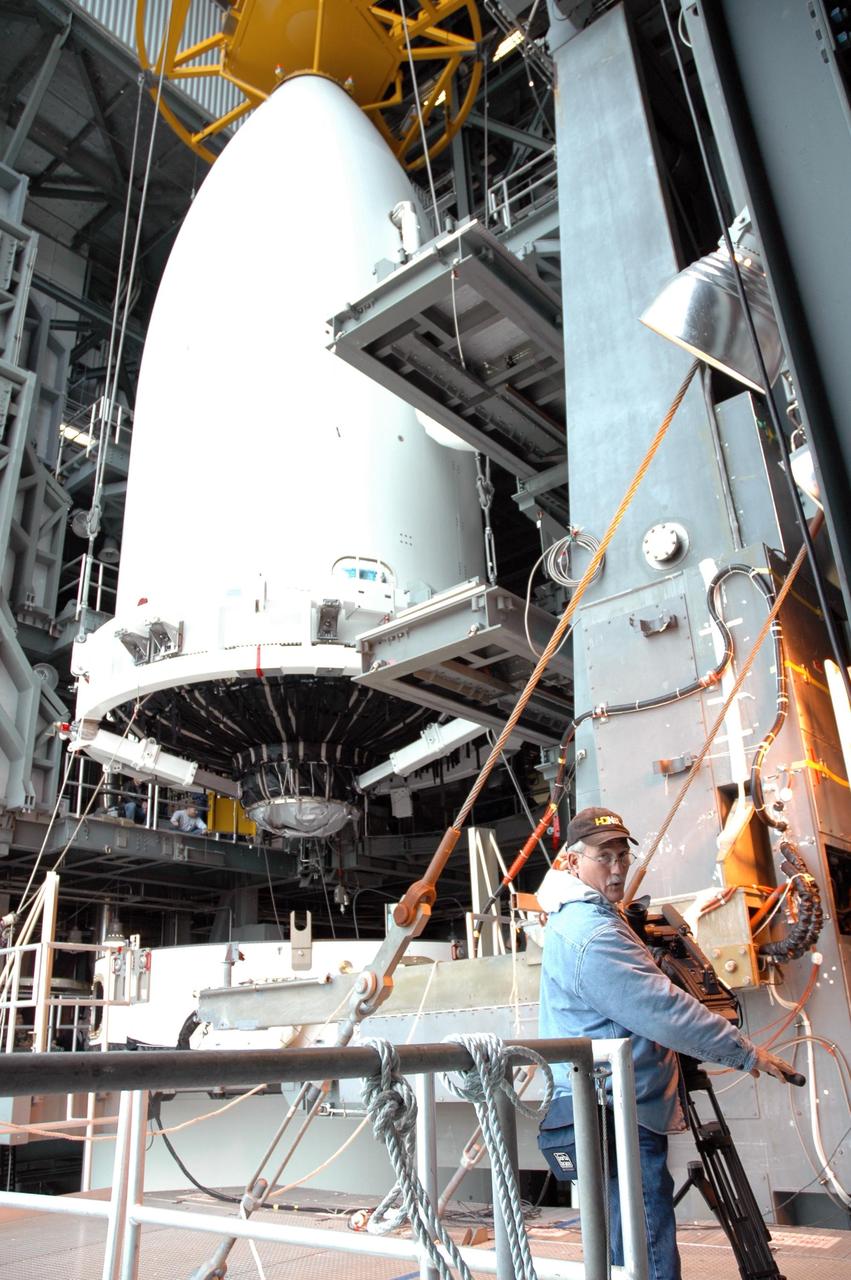
KENNEDY SPACE CENTER, FLA. - InDyne employee Mic Miracle captures on video the arrival of the fairing enclosing New Horizons at the top of a Lockheed Martin Atlas V launch vehicle in the Vertical Integration Facility at Complex 41 on Cape Canaveral Air Force Station. New Horizons carries seven scientific instruments that will characterize the global geology and geomorphology of Pluto and its moon Charon, map their surface compositions and temperatures, and examine Pluto's complex atmosphere. After that, flybys of Kuiper Belt objects from even farther in the solar system may be undertaken in an extended mission. New Horizons is the first mission in NASA's New Frontiers program of medium-class planetary missions. The spacecraft, designed for NASA by the Johns Hopkins University Applied Physics Laboratory in Laurel, Md., will launch aboard a Lockheed Martin Atlas V rocket and fly by Pluto and Charon as early as summer 2015.
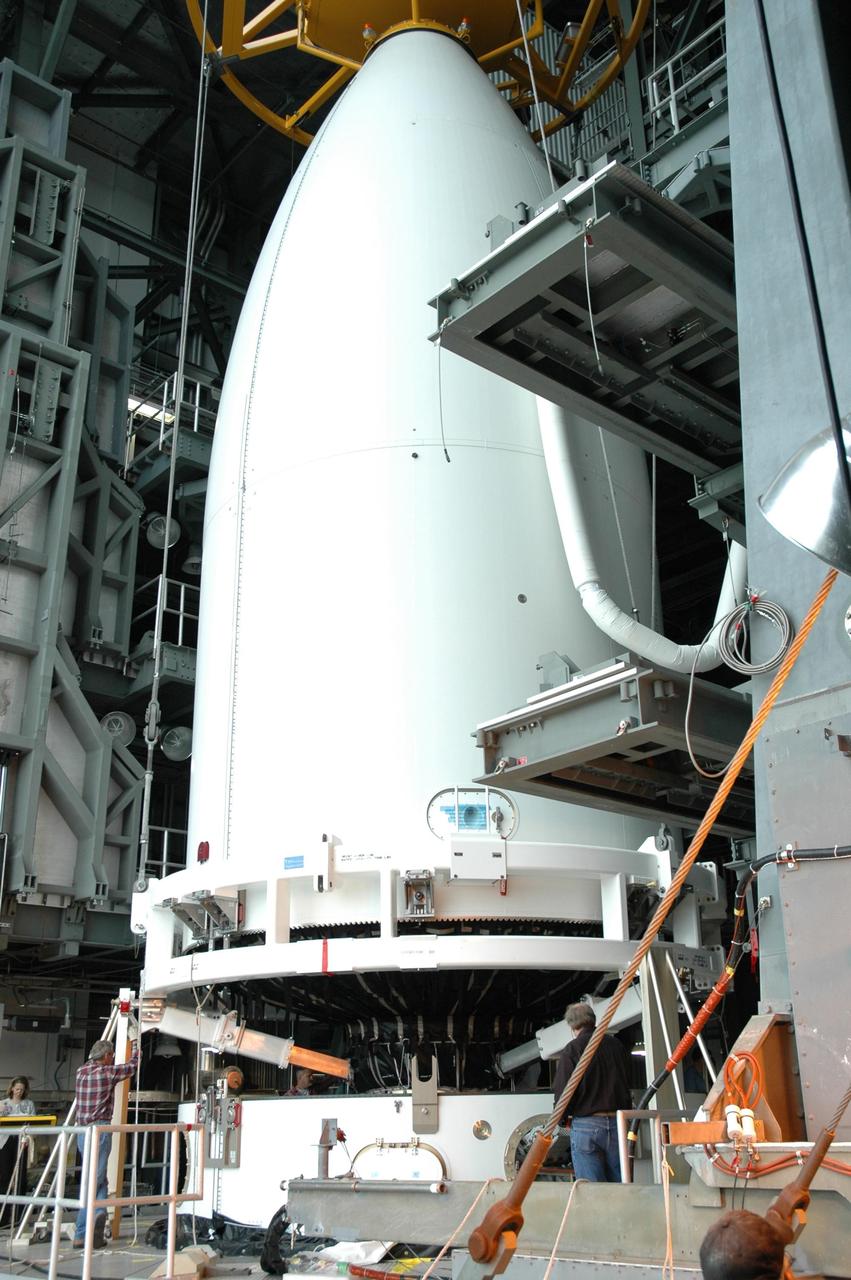
KENNEDY SPACE CENTER, FLA. - Technicians monitor the fairing enclosing New Horizons as it is lowered onto the top of a Lockheed Martin Atlas V launch vehicle in the Vertical Integration Facility at Complex 41 on Cape Canaveral Air Force Station. New Horizons carries seven scientific instruments that will characterize the global geology and geomorphology of Pluto and its moon Charon, map their surface compositions and temperatures, and examine Pluto's complex atmosphere. After that, flybys of Kuiper Belt objects from even farther in the solar system may be undertaken in an extended mission. New Horizons is the first mission in NASA's New Frontiers program of medium-class planetary missions. The spacecraft, designed for NASA by the Johns Hopkins University Applied Physics Laboratory in Laurel, Md., will launch aboard a Lockheed Martin Atlas V rocket and fly by Pluto and Charon as early as summer 2015.

KENNEDY SPACE CENTER, FLA. - Technicians monitor the fairing enclosing New Horizons as it is positioned atop a Lockheed Martin Atlas V launch vehicle in the Vertical Integration Facility at Complex 41 on Cape Canaveral Air Force Station. New Horizons carries seven scientific instruments that will characterize the global geology and geomorphology of Pluto and its moon Charon, map their surface compositions and temperatures, and examine Pluto's complex atmosphere. After that, flybys of Kuiper Belt objects from even farther in the solar system may be undertaken in an extended mission. New Horizons is the first mission in NASA's New Frontiers program of medium-class planetary missions. The spacecraft, designed for NASA by the Johns Hopkins University Applied Physics Laboratory in Laurel, Md., will launch aboard a Lockheed Martin Atlas V rocket and fly by Pluto and Charon as early as summer 2015.
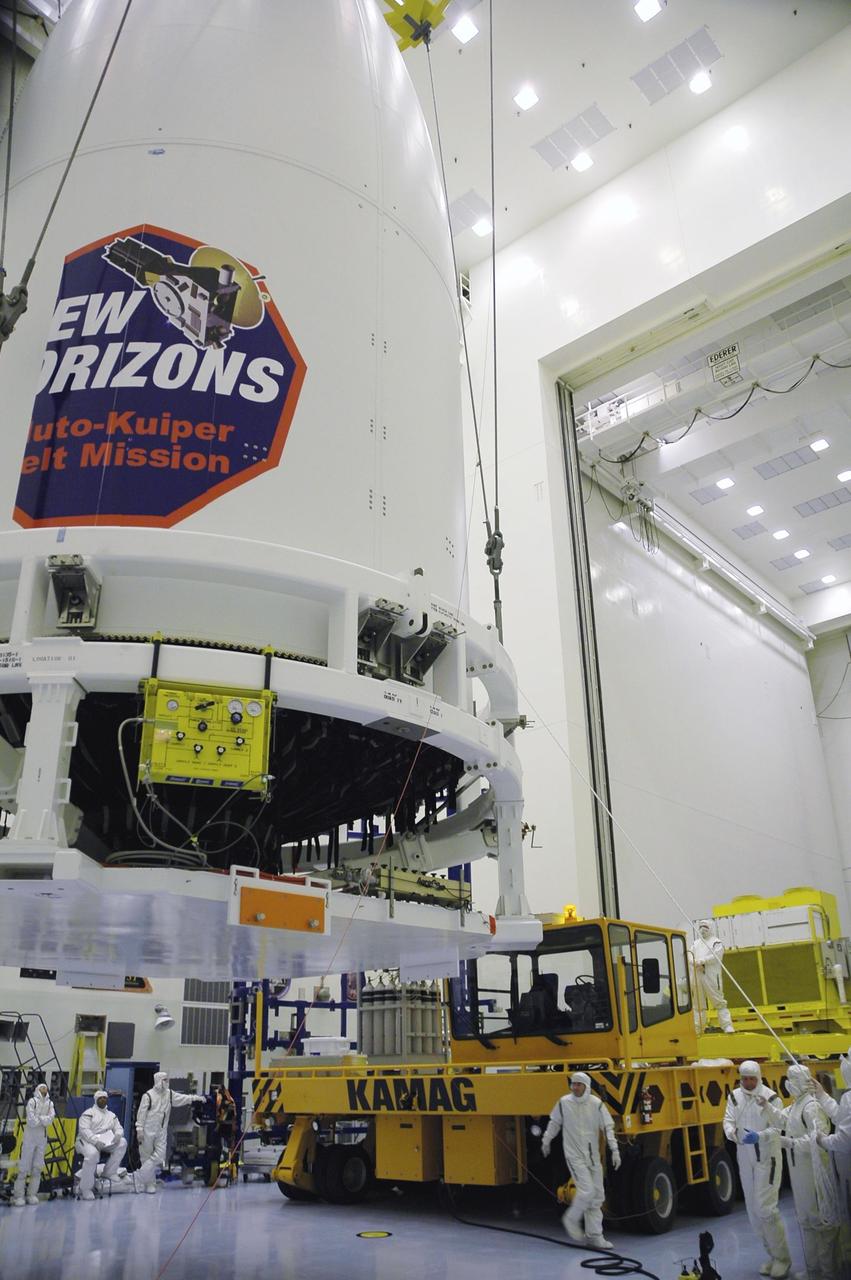
KENNEDY SPACE CENTER, FLA. - In the Payload Hazardous Servicing Facility, technicians lift New Horizons toward a transporter for its move to Complex 41 on Cape Canaveral Air Force Station. The last strip of the mission decal will be installed on the fairing after the spacecraft is delivered to the pad. New Horizons carries seven scientific instruments that will characterize the global geology and geomorphology of Pluto and its moon Charon, map their surface compositions and temperatures, and examine Pluto's complex atmosphere. After that, flybys of Kuiper Belt objects from even farther in the solar system may be undertaken in an extended mission. New Horizons is the first mission in NASA's New Frontiers program of medium-class planetary missions. The spacecraft, designed for NASA by the Johns Hopkins University Applied Physics Laboratory in Laurel, Md., will launch aboard a Lockheed Martin Atlas V rocket and fly by Pluto and Charon as early as summer 2015.
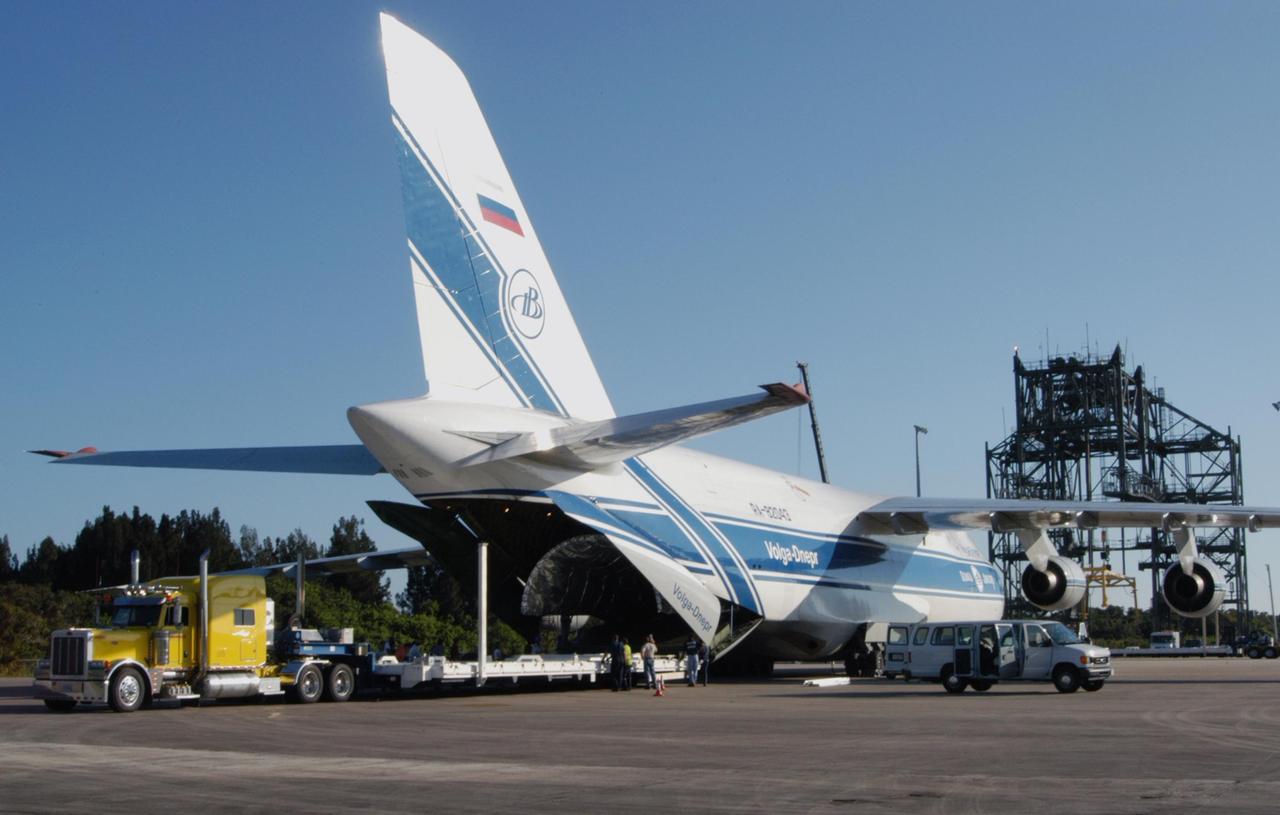
KENNEDY SPACE CENTER, FLA. - A Russian cargo plane sits on the Shuttle Landing Facility at NASA Kennedy Space Center with the Atlas V fairing for the New Horizons spacecraft inside. The two fairing halves will be removed, loaded onto trucks and transported to Astrotech Space Operations in Titusville. The fairing later will be placed around the New Horizons spacecraft in the Payload Hazardous Service Facility. A fairing protects a spacecraft during launch and flight through the atmosphere. Once in space, it is jettisoned. The Lockheed Martin Atlas V is the launch vehicle for the New Horizons spacecraft, which is designed to make the first reconnaissance of Pluto and Charon - a "double planet" and the last planet in our solar system to be visited by spacecraft. The mission will then visit one or more objects in the Kuiper Belt region beyond Neptune. New Horizons is scheduled to launch in January 2006, swing past Jupiter for a gravity boost and scientific studies in February or March 2007, and reach Pluto and its moon, Charon, in July 2015.
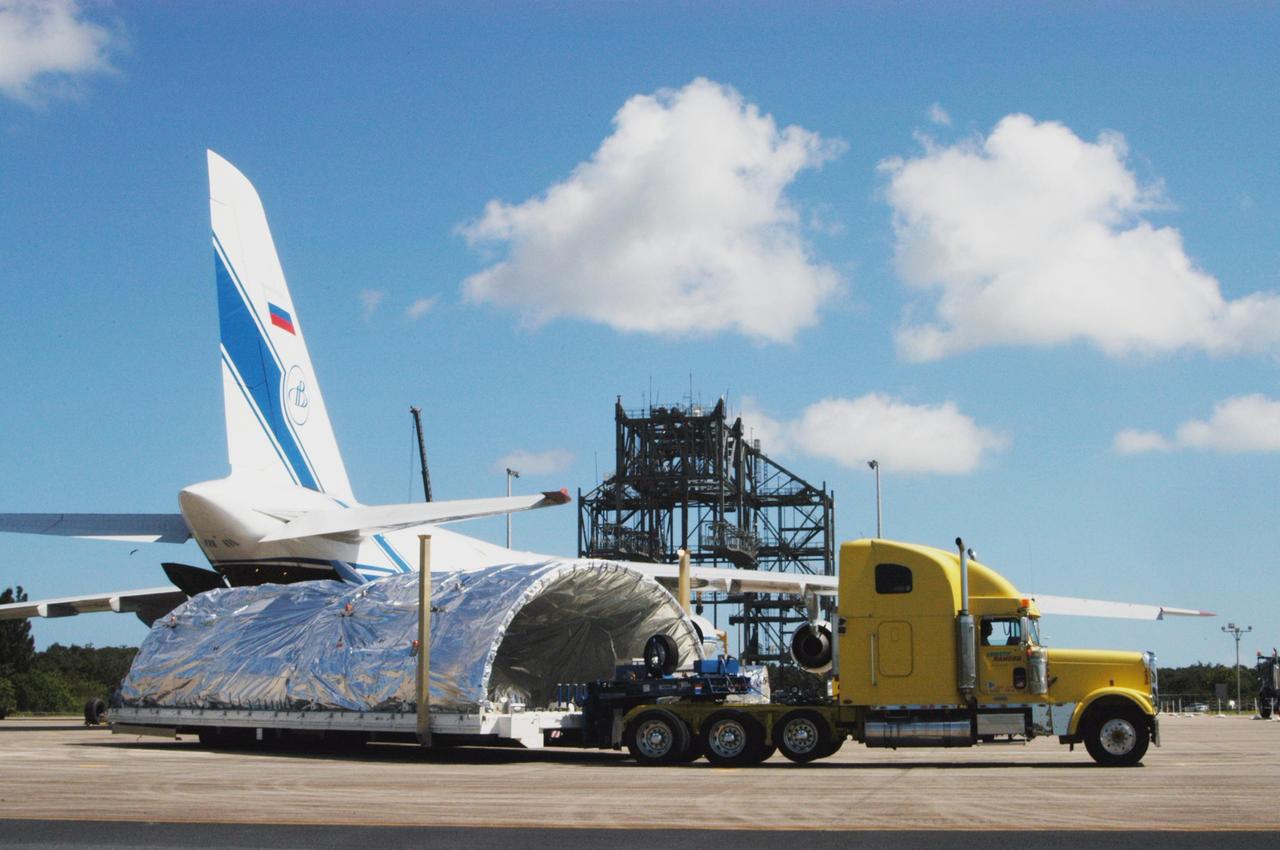
KENNEDY SPACE CENTER, FLA. - On the Shuttle Landing Facility at NASA Kennedy Space Center, one of the Atlas V fairing halves for the New Horizons spacecraft is moved away from the Russian cargo plane that delivered it. Behind the truck is the mate/demate device at the landing facility. The fairing halves will be transported to Astrotech Space Operations in Titusville. The fairing later will be placed around the New Horizons spacecraft in the Payload Hazardous Service Facility. A fairing protects a spacecraft during launch and flight through the atmosphere. Once in space, it is jettisoned. The Lockheed Martin Atlas V is the launch vehicle for the New Horizons spacecraft, which is designed to make the first reconnaissance of Pluto and Charon - a "double planet" and the last planet in our solar system to be visited by spacecraft. The mission will then visit one or more objects in the Kuiper Belt region beyond Neptune. New Horizons is scheduled to launch in January 2006, swing past Jupiter for a gravity boost and scientific studies in February or March 2007, and reach Pluto and its moon, Charon, in July 2015.
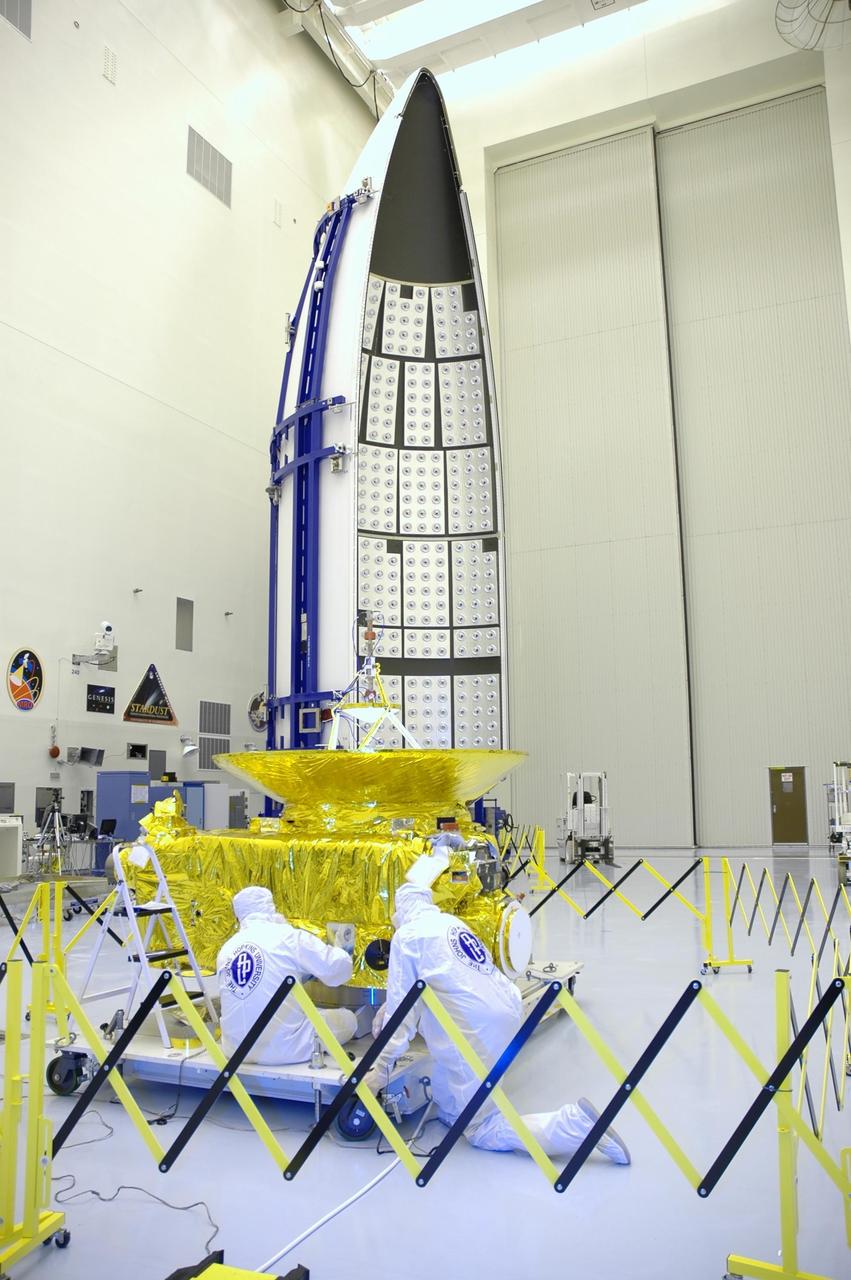
KENNEDY SPACE CENTER, FLA. - In the clean room at KSC’s Payload Hazardous Servicing Facility, technicians prepare the New Horizons spacecraft for a media event. Photographers and reporters will be able to photograph the New Horizons spacecraft and talk with project management and test team members from NASA and the Johns Hopkins University Applied Physics Laboratory. Seen behind the spacecraft is one half of the fairing that will enclose it for launch, scheduled for January 2006. Carrying seven scientific instruments, the compact 1,060-pound New Horizons probe will characterize the global geology and geomorphology of Pluto and its moon Charon, map their surface compositions and temperatures, and examine Pluto's complex atmosphere. After that, flybys of Kuiper Belt objects from even farther in the solar system may be undertaken in an extended mission. New Horizons is the first mission in NASA's New Frontiers program of medium-class planetary missions. The spacecraft, designed for NASA by the Johns Hopkins University Applied Physics Laboratory in Laurel, Md., will fly by Pluto and Charon as early as summer 2015.
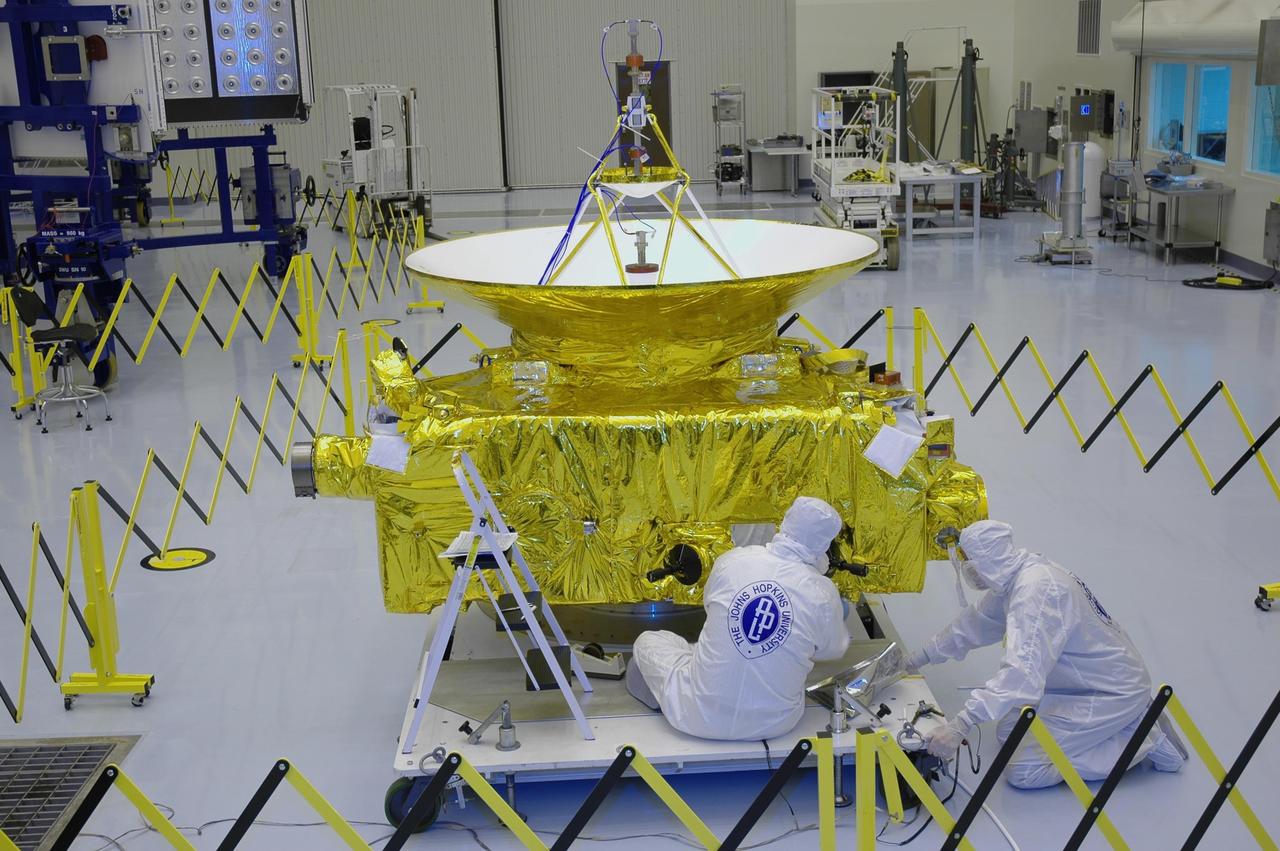
KENNEDY SPACE CENTER, FLA. - In the clean room at KSC’s Payload Hazardous Servicing Facility, the New Horizons spacecraft is being prepared for a media event. Photographers and reporters will be able to photograph the New Horizons spacecraft and talk with project management and test team members from NASA and the Johns Hopkins University Applied Physics Laboratory. Seen behind the spacecraft is one half of the fairing that will enclose it for launch, scheduled for January 2006. Carrying seven scientific instruments, the compact 1,060-pound New Horizons probe will characterize the global geology and geomorphology of Pluto and its moon Charon, map their surface compositions and temperatures, and examine Pluto's complex atmosphere. After that, flybys of Kuiper Belt objects from even farther in the solar system may be undertaken in an extended mission. New Horizons is the first mission in NASA's New Frontiers program of medium-class planetary missions. The spacecraft, designed for NASA by the Johns Hopkins University Applied Physics Laboratory in Laurel, Md., will fly by Pluto and Charon as early as summer 2015.
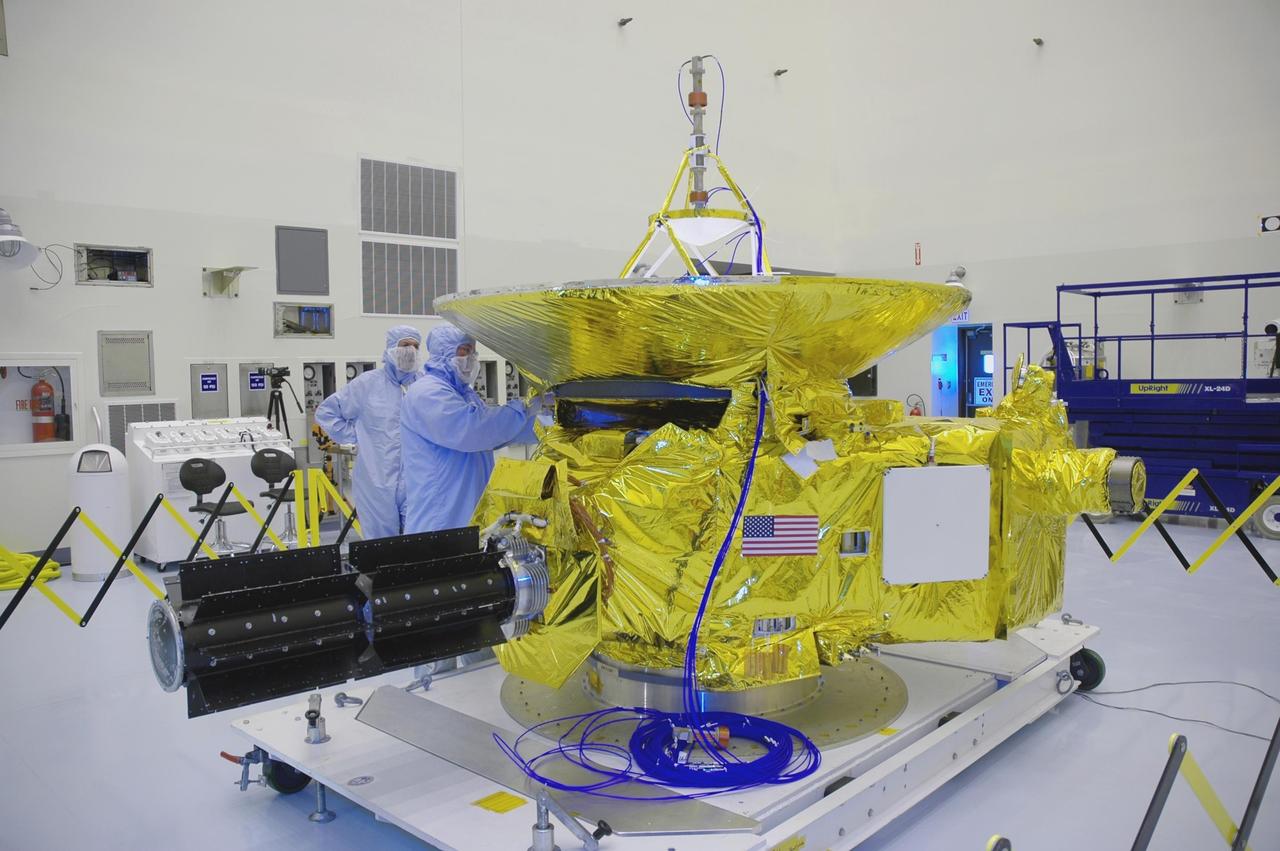
KENNEDY SPACE CENTER, FLA. - In the clean room at KSC’s Payload Hazardous Servicing Facility, technicians prepare the New Horizons spacecraft for a media event. Photographers and reporters will be able to photograph the New Horizons spacecraft and talk with project management and test team members from NASA and the Johns Hopkins University Applied Physics Laboratory. Seen behind the spacecraft is one half of the fairing that will enclose it for launch, scheduled for January 2006. Carrying seven scientific instruments, the compact 1,060-pound New Horizons probe will characterize the global geology and geomorphology of Pluto and its moon Charon, map their surface compositions and temperatures, and examine Pluto's complex atmosphere. After that, flybys of Kuiper Belt objects from even farther in the solar system may be undertaken in an extended mission. New Horizons is the first mission in NASA's New Frontiers program of medium-class planetary missions. The spacecraft, designed for NASA by the Johns Hopkins University Applied Physics Laboratory in Laurel, Md., will fly by Pluto and Charon as early as summer 2015.
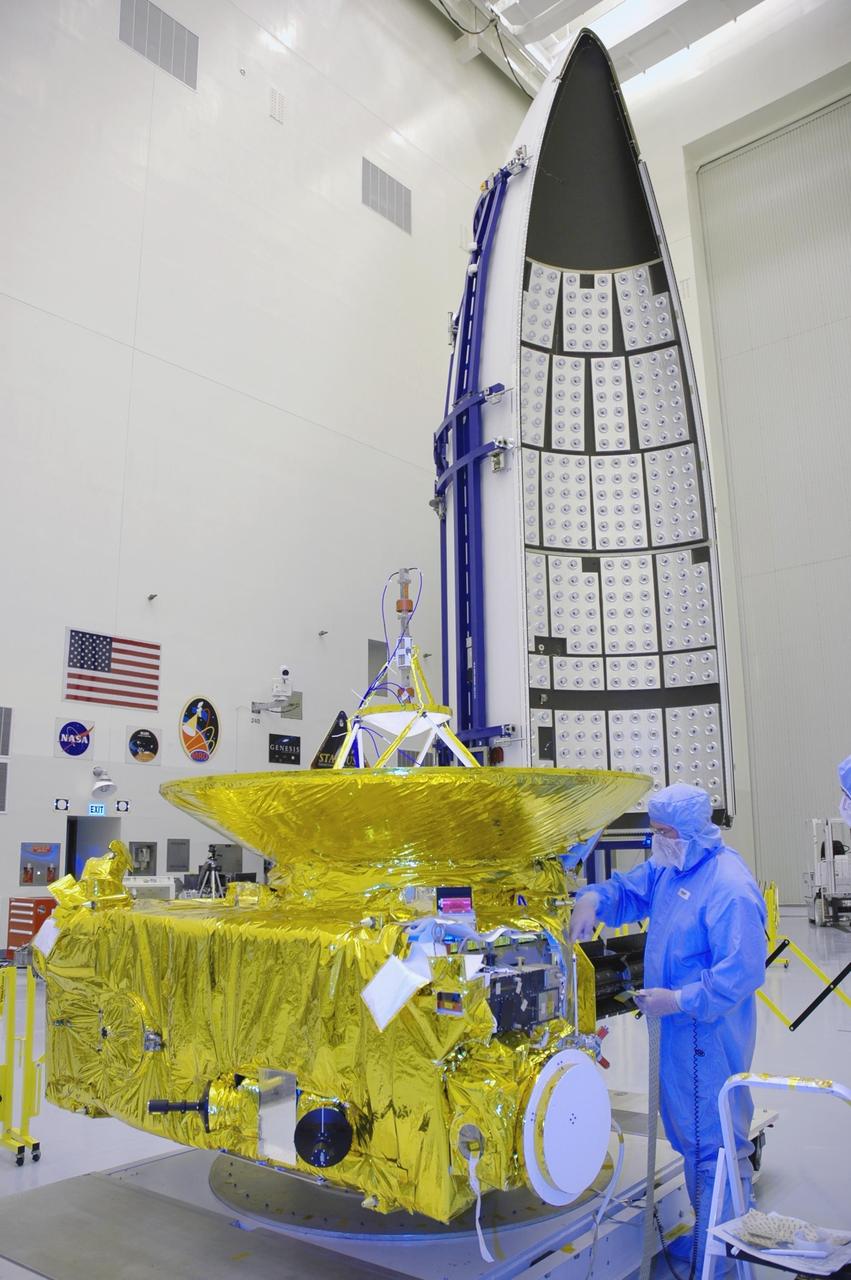
KENNEDY SPACE CENTER, FLA. - In the clean room at KSC’s Payload Hazardous Servicing Facility, the New Horizons spacecraft is prepared for a media event. Photographers and reporters will be able to photograph the New Horizons spacecraft and talk with project management and test team members from NASA and the Johns Hopkins University Applied Physics Laboratory. Seen behind the spacecraft is one half of the fairing that will enclose it for launch, scheduled for January 2006. Carrying seven scientific instruments, the compact 1,060-pound New Horizons probe will characterize the global geology and geomorphology of Pluto and its moon Charon, map their surface compositions and temperatures, and examine Pluto's complex atmosphere. After that, flybys of Kuiper Belt objects from even farther in the solar system may be undertaken in an extended mission. New Horizons is the first mission in NASA's New Frontiers program of medium-class planetary missions. The spacecraft, designed for NASA by the Johns Hopkins University Applied Physics Laboratory in Laurel, Md., will fly by Pluto and Charon as early as summer 2015.
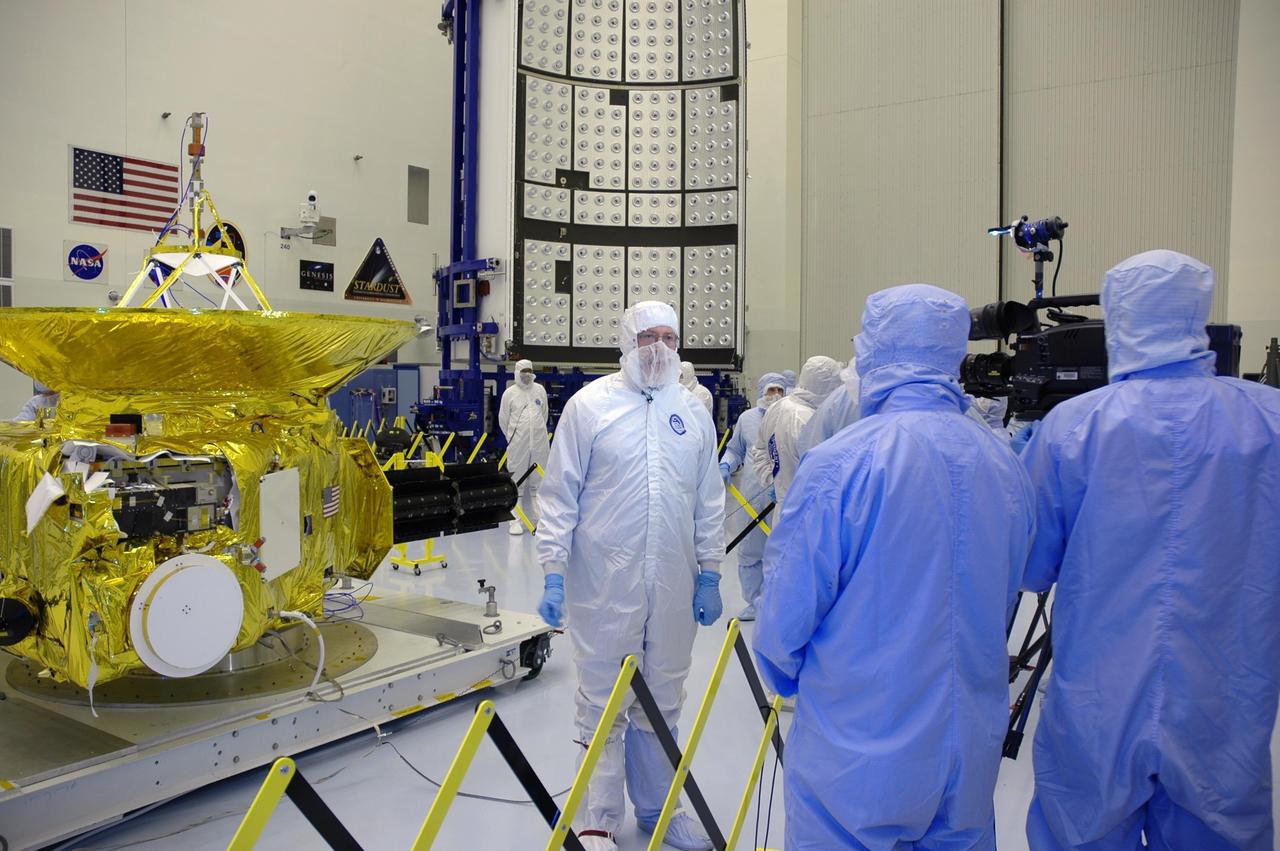
KENNEDY SPACE CENTER, FLA. - In the clean room at KSC’s Payload Hazardous Servicing Facility, the media (also dressed in clean room suits) learn about NASA’s New Horizons spacecraft (at left) from New Horizons Mission Systems Engineer David Kusnierkiewicz, in the center. Behind Kusnierkiewicz is one half of the fairing that will enclose the spacecraft for launch, scheduled for January 2006. The media event brought photographers and reporters to the site to talk with project management and test team members from NASA and the Johns Hopkins University Applied Physics Laboratory. Carrying seven scientific instruments, the compact 1,060-pound New Horizons probe will characterize the global geology and geomorphology of Pluto and its moon Charon, map their surface compositions and temperatures, and examine Pluto's complex atmosphere. After that, flybys of Kuiper Belt objects from even farther in the solar system may be undertaken in an extended mission. New Horizons is the first mission in NASA's New Frontiers program of medium-class planetary missions. The spacecraft, designed for NASA by the Johns Hopkins University Applied Physics Laboratory in Laurel, Md., will fly by Pluto and Charon as early as summer 2015.
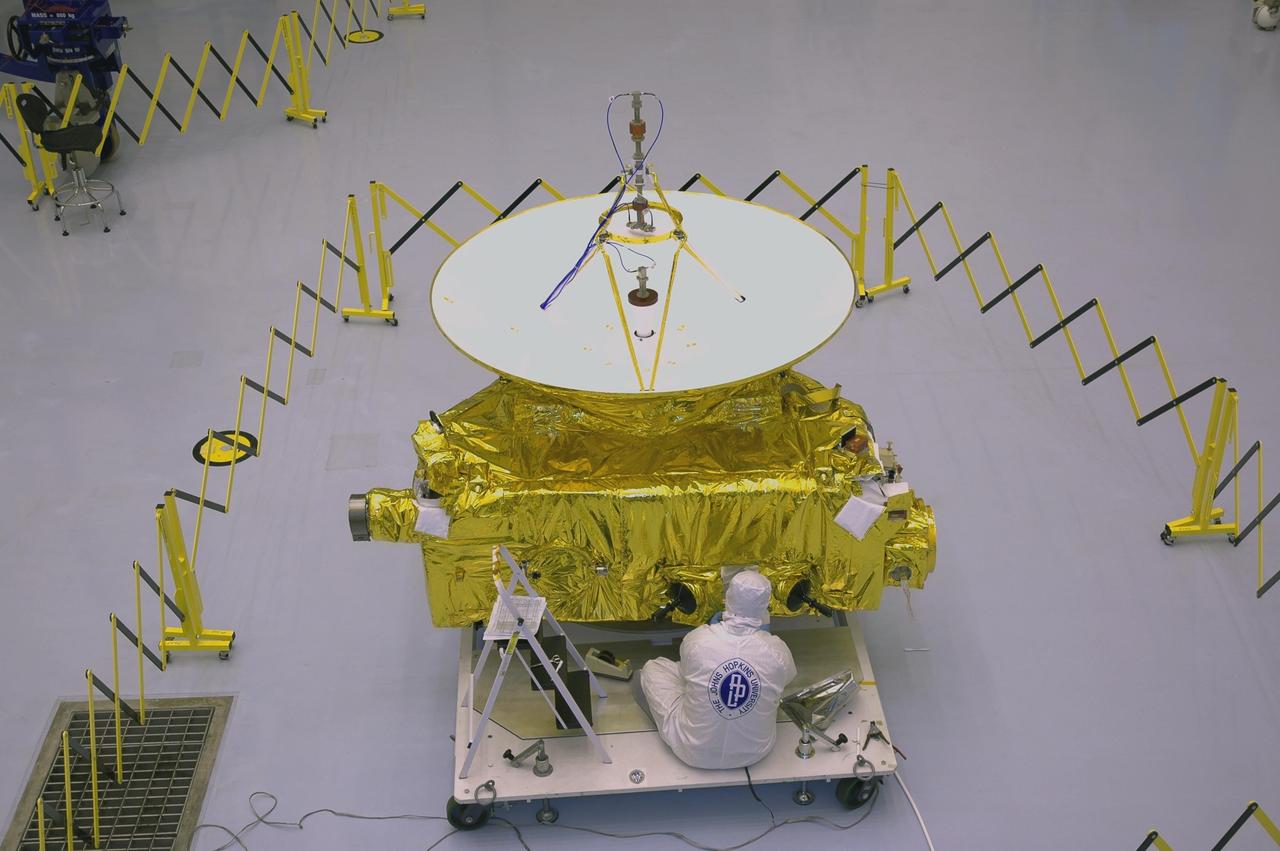
KENNEDY SPACE CENTER, FLA. - In the clean room at KSC’s Payload Hazardous Servicing Facility, the New Horizons spacecraft is ready for a media event. Photographers and reporters will be able to photograph the New Horizons spacecraft and talk with project management and test team members from NASA and the Johns Hopkins University Applied Physics Laboratory. Seen behind the spacecraft is one half of the fairing that will enclose it for launch, scheduled for January 2006. Carrying seven scientific instruments, the compact 1,060-pound New Horizons probe will characterize the global geology and geomorphology of Pluto and its moon Charon, map their surface compositions and temperatures, and examine Pluto's complex atmosphere. After that, flybys of Kuiper Belt objects from even farther in the solar system may be undertaken in an extended mission. New Horizons is the first mission in NASA's New Frontiers program of medium-class planetary missions. The spacecraft, designed for NASA by the Johns Hopkins University Applied Physics Laboratory in Laurel, Md., will fly by Pluto and Charon as early as summer 2015.
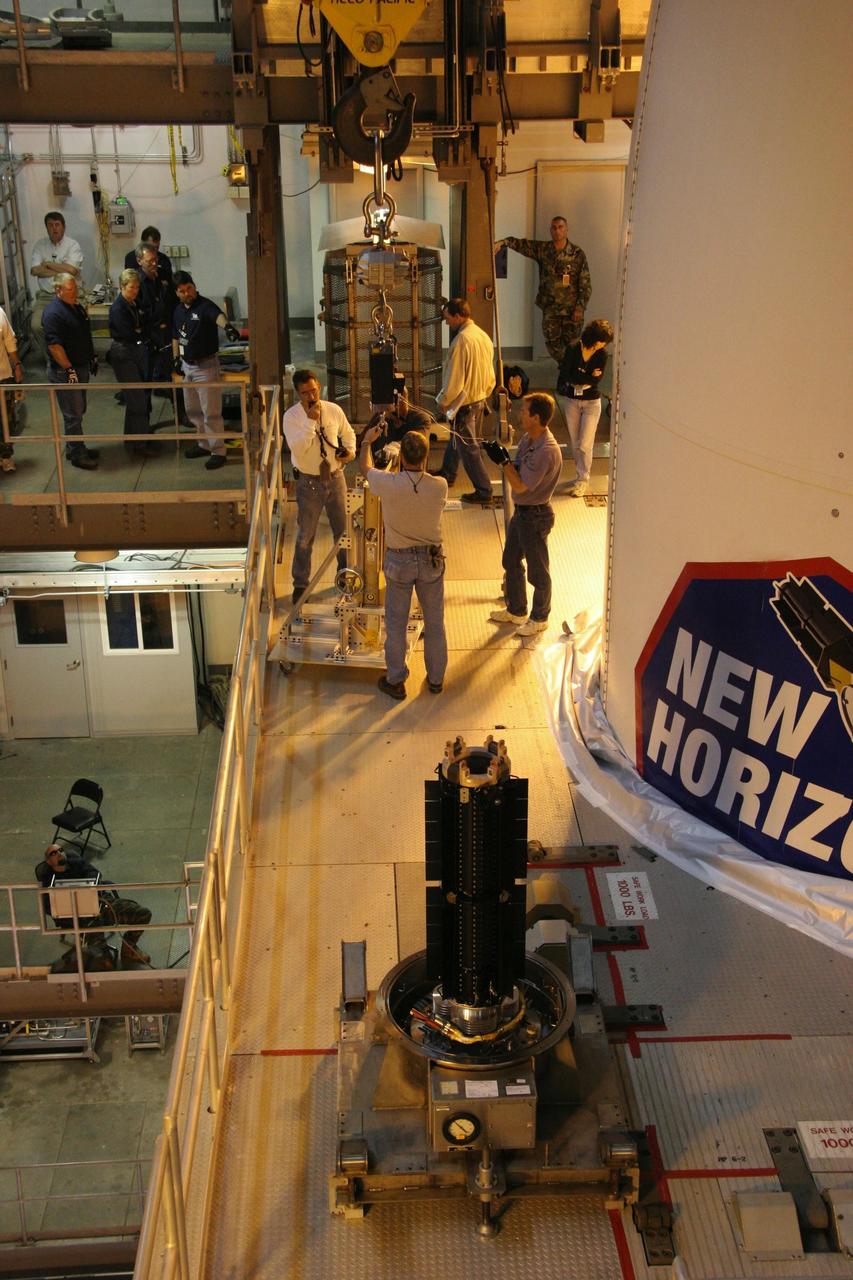
KENNEDY SPACE CENTER, FLA. — On Complex 41 at Cape Canaveral Air Force Station in Florida, the radioisotope thermoelectric generator (RTG) in the foreground has been removed from its caged enclosure. The RTG will be installed on the New Horizons spacecraft encapsulated inside the fairing, at right. Designed and integrated at the Johns Hopkins University Applied Physics Laboratory (APL) in Laurel, Md., New Horizons will launch on a nine-and-a-half-year voyage to Pluto. Typical of RTG-based systems, as on past outer-planet missions, New Horizons does not have a battery for storing power. At the start of the mission, the RTG, which provides power through the natural radioactive decay of plutonium dioxide fuel, will supply approximately 240 watts (at 30 volts of direct current) - the spacecraft’s shunt regulator unit maintains a steady input from the RTG and dissipates power the spacecraft cannot use at a given time. By July 2015 (the earliest Pluto encounter date) that supply decreases to 200 watts at the same voltage, so New Horizons will ease the strain on its limited power source by cycling science instruments during planetary encounters. On Complex 41 at Cape Canaveral Air Force Station in Florida, workers on the ground oversee the radioisotope thermoelectric generator (RTG) being lifted into the Vertical Integration Facility. The RTG will be installed on the New Horizons spacecraft within the fairing at the top of the Atlas V launch vehicle. Designed and integrated at the Johns Hopkins University Applied Physics Laboratory (APL) in Laurel, Md., New Horizons will launch on a nine-and-a-half-year voyage to Pluto. Typical of RTG-based systems, as on past outer-planet missions, New Horizons does not have a battery for storing power. At the start of the mission, the RTG, which provides power through the natural radioactive decay of plutonium dioxide fuel, will supply approximately 240 watts (at 30 volts of direct current) - the spacecraft’s shunt regulato
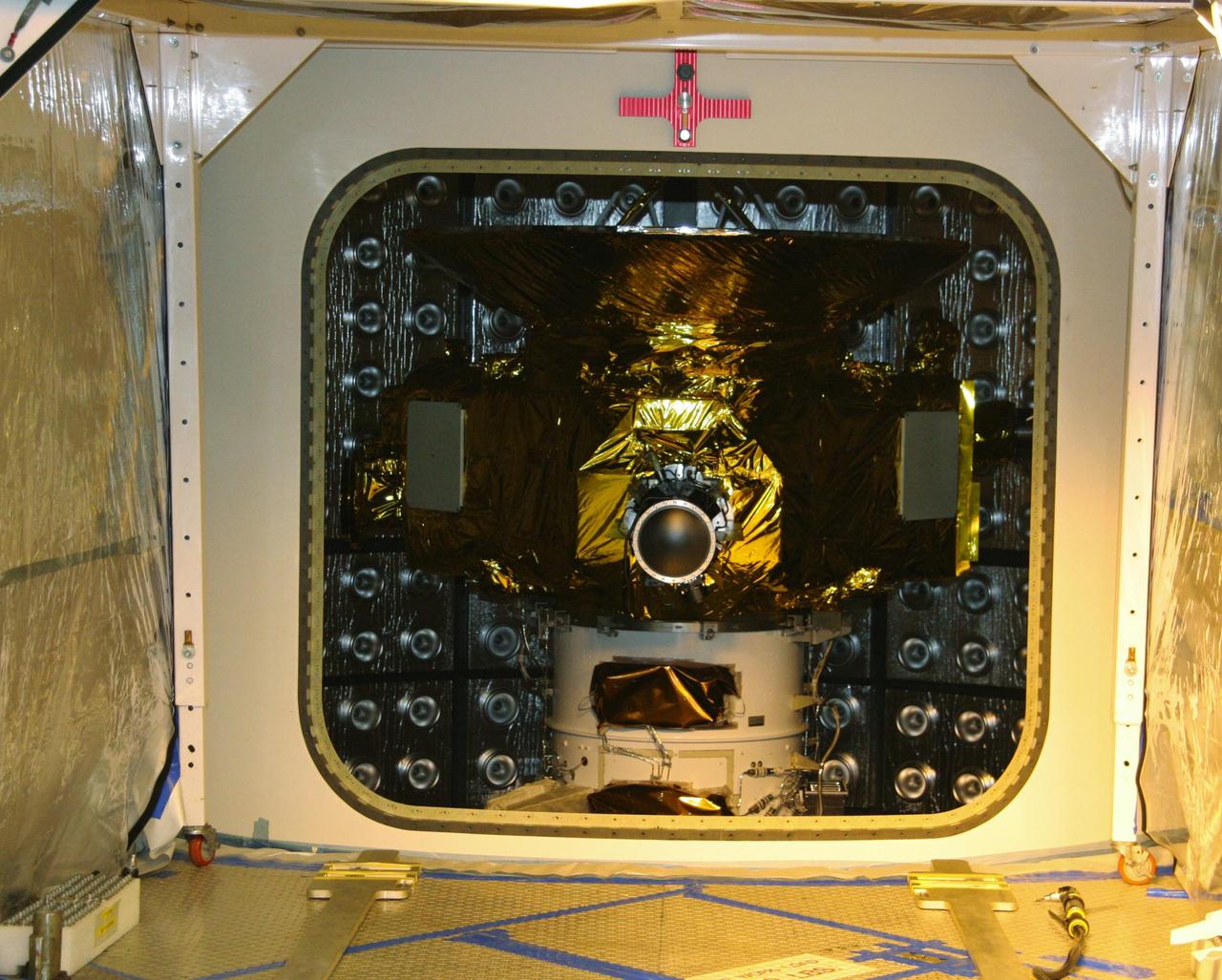
KENNEDY SPACE CENTER, FLA. — On Complex 41 at Cape Canaveral Air Force Station in Florida, the radioisotope thermoelectric generator (RTG) is attached to the New Horizons spacecraft inside the fairing. Designed and integrated at the Johns Hopkins University Applied Physics Laboratory (APL) in Laurel, Md., New Horizons will launch on a nine-and-a-half-year voyage to Pluto. Typical of RTG-based systems, as on past outer-planet missions, New Horizons does not have a battery for storing power. At the start of the mission, the RTG, which provides power through the natural radioactive decay of plutonium dioxide fuel, will supply approximately 240 watts (at 30 volts of direct current) - the spacecraft’s shunt regulator unit maintains a steady input from the RTG and dissipates power the spacecraft cannot use at a given time. By July 2015 (the earliest Pluto encounter date) that supply decreases to 200 watts at the same voltage, so New Horizons will ease the strain on its limited power source by cycling science instruments during planetary encounters. On Complex 41 at Cape Canaveral Air Force Station in Florida, workers on the ground oversee the radioisotope thermoelectric generator (RTG) being lifted into the Vertical Integration Facility. The RTG will be installed on the New Horizons spacecraft within the fairing at the top of the Atlas V launch vehicle. Designed and integrated at the Johns Hopkins University Applied Physics Laboratory (APL) in Laurel, Md., New Horizons will launch on a nine-and-a-half-year voyage to Pluto. Typical of RTG-based systems, as on past outer-planet missions, New Horizons does not have a battery for storing power. At the start of the mission, the RTG, which provides power through the natural radioactive decay of plutonium dioxide fuel, will supply approximately 240 watts (at 30 volts of direct current) - the spacecraft’s shunt regulator unit maintains a steady input from the RTG and dissipates power the spacecraft cannot use at a give
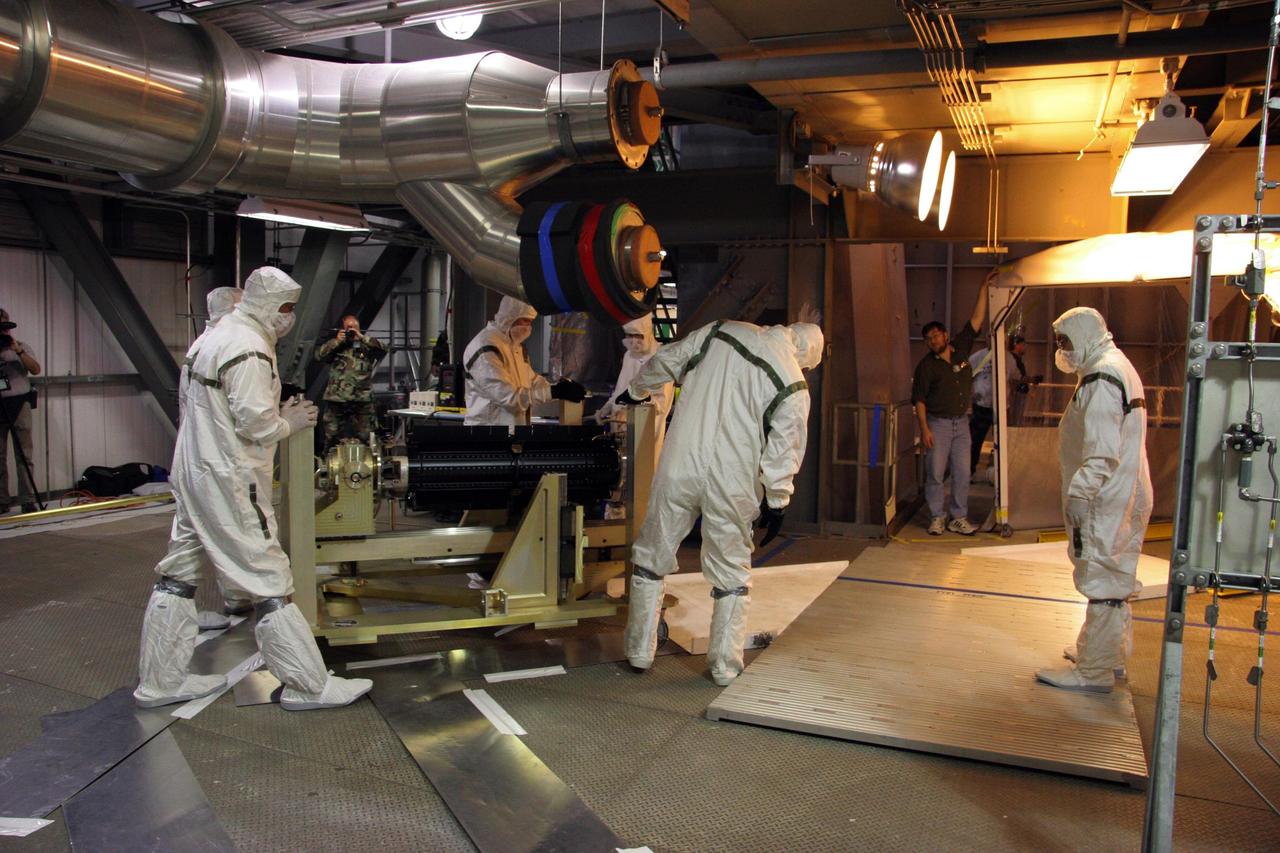
KENNEDY SPACE CENTER, FLA. — On Complex 41 at Cape Canaveral Air Force Station in Florida, workers move the radioisotope thermoelectric generator (RTG). The generator will be installed on the New Horizons spacecraft encapsulated inside the fairing. Designed and integrated at the Johns Hopkins University Applied Physics Laboratory (APL) in Laurel, Md., New Horizons will launch on a nine-and-a-half-year voyage to Pluto. Typical of RTG-based systems, as on past outer-planet missions, New Horizons does not have a battery for storing power. At the start of the mission, the RTG, which provides power through the natural radioactive decay of plutonium dioxide fuel, will supply approximately 240 watts (at 30 volts of direct current) - the spacecraft’s shunt regulator unit maintains a steady input from the RTG and dissipates power the spacecraft cannot use at a given time. By July 2015 (the earliest Pluto encounter date) that supply decreases to 200 watts at the same voltage, so New Horizons will ease the strain on its limited power source by cycling science instruments during planetary encounters. On Complex 41 at Cape Canaveral Air Force Station in Florida, workers on the ground oversee the radioisotope thermoelectric generator (RTG) being lifted into the Vertical Integration Facility. The RTG will be installed on the New Horizons spacecraft within the fairing at the top of the Atlas V launch vehicle. Designed and integrated at the Johns Hopkins University Applied Physics Laboratory (APL) in Laurel, Md., New Horizons will launch on a nine-and-a-half-year voyage to Pluto. Typical of RTG-based systems, as on past outer-planet missions, New Horizons does not have a battery for storing power. At the start of the mission, the RTG, which provides power through the natural radioactive decay of plutonium dioxide fuel, will supply approximately 240 watts (at 30 volts of direct current) - the spacecraft’s shunt regulator unit maintains a steady input from the RTG and diss
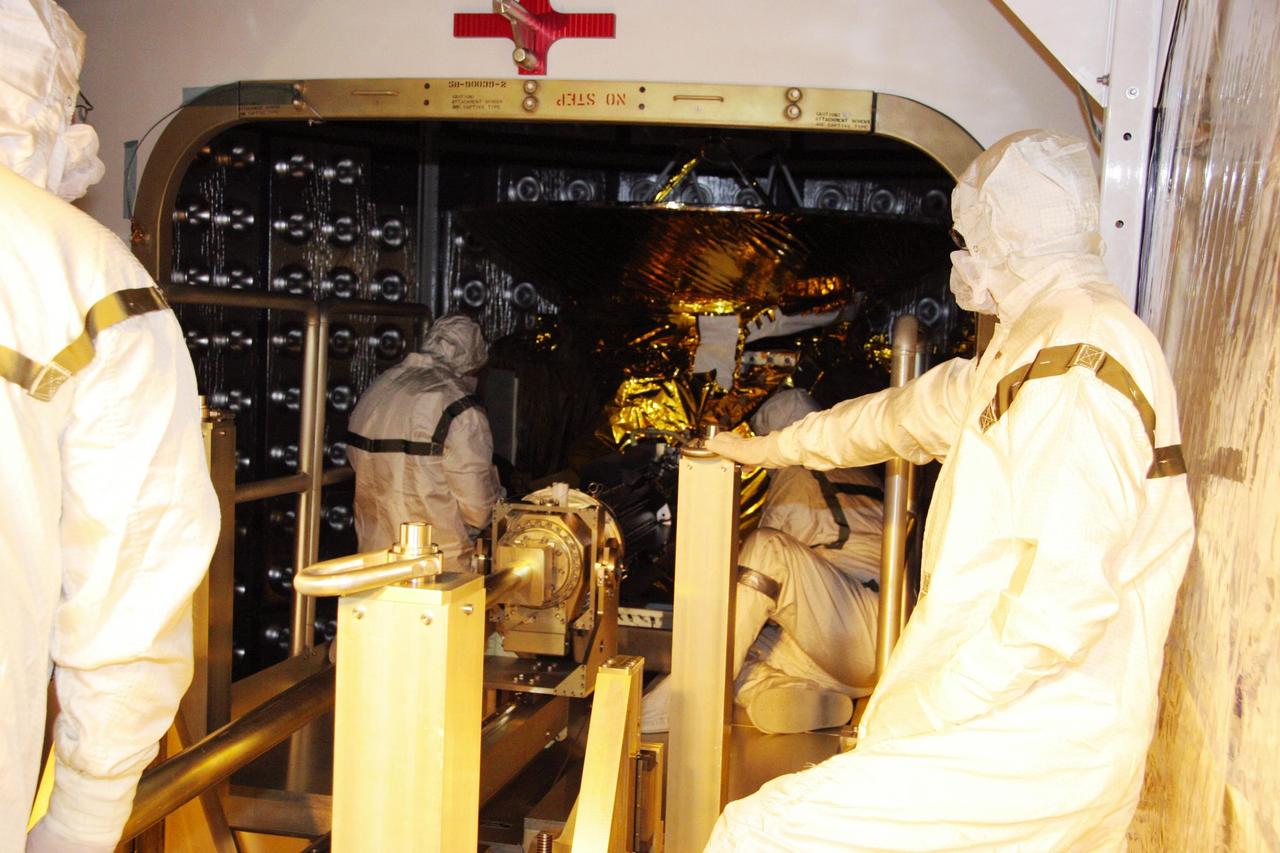
KENNEDY SPACE CENTER, FLA. — On Complex 41 at Cape Canaveral Air Force Station in Florida, workers move the radioisotope thermoelectric generator (RTG) into an area of the fairing containing the New Horizons spacecraft, to which it will be attached. Designed and integrated at the Johns Hopkins University Applied Physics Laboratory (APL) in Laurel, Md., New Horizons will launch on a nine-and-a-half-year voyage to Pluto. Typical of RTG-based systems, as on past outer-planet missions, New Horizons does not have a battery for storing power. At the start of the mission, the RTG, which provides power through the natural radioactive decay of plutonium dioxide fuel, will supply approximately 240 watts (at 30 volts of direct current) - the spacecraft’s shunt regulator unit maintains a steady input from the RTG and dissipates power the spacecraft cannot use at a given time. By July 2015 (the earliest Pluto encounter date) that supply decreases to 200 watts at the same voltage, so New Horizons will ease the strain on its limited power source by cycling science instruments during planetary encounters. On Complex 41 at Cape Canaveral Air Force Station in Florida, workers on the ground oversee the radioisotope thermoelectric generator (RTG) being lifted into the Vertical Integration Facility. The RTG will be installed on the New Horizons spacecraft within the fairing at the top of the Atlas V launch vehicle. Designed and integrated at the Johns Hopkins University Applied Physics Laboratory (APL) in Laurel, Md., New Horizons will launch on a nine-and-a-half-year voyage to Pluto. Typical of RTG-based systems, as on past outer-planet missions, New Horizons does not have a battery for storing power. At the start of the mission, the RTG, which provides power through the natural radioactive decay of plutonium dioxide fuel, will supply approximately 240 watts (at 30 volts of direct current) - the spacecraft’s shunt regulator unit maintains a steady input from the RTG and diss
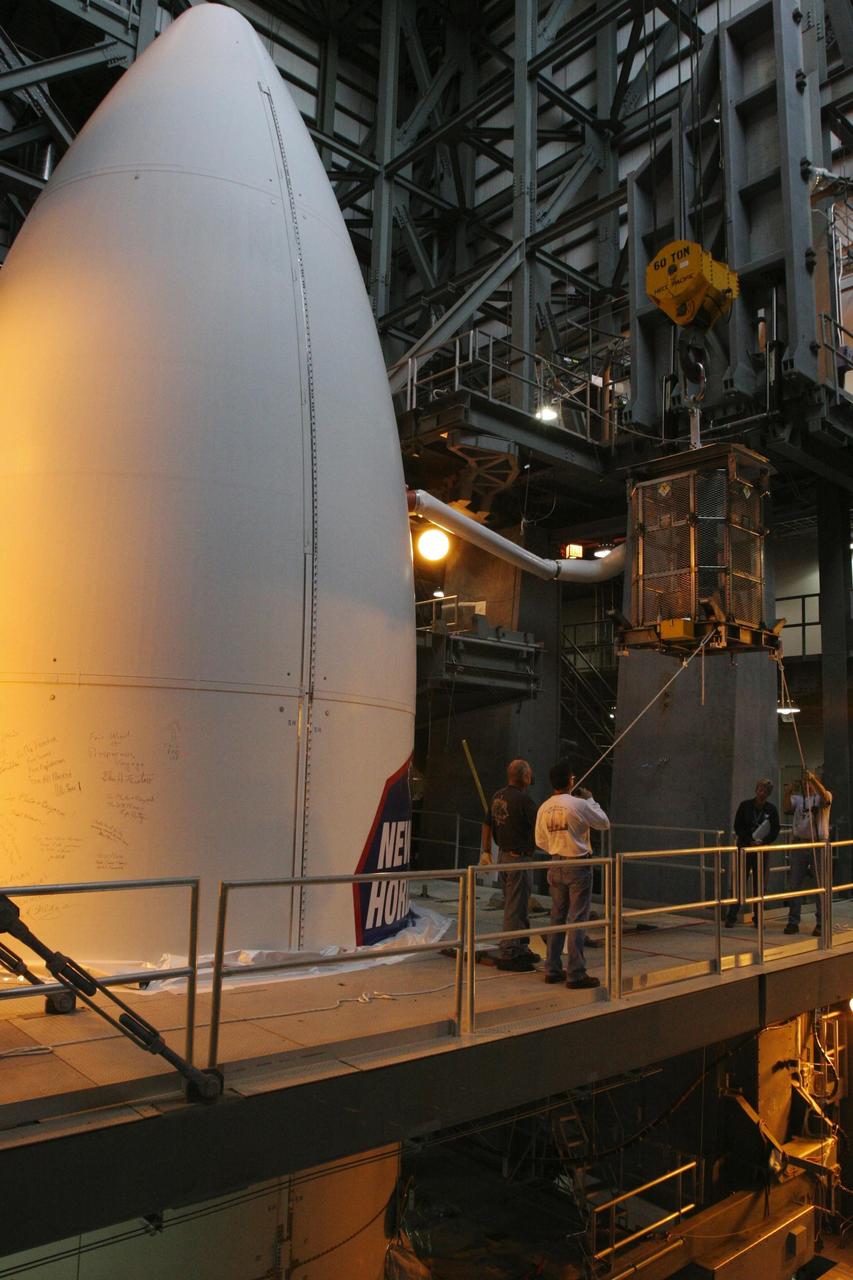
KENNEDY SPACE CENTER, FLA. — On Complex 41 at Cape Canaveral Air Force Station in Florida, the radioisotope thermoelectric generator (RTG) arrives at the upper level of the Vertical Integration Facility. The RTG will be installed on the New Horizons spacecraft encapsulated inside the fairing, at left. Designed and integrated at the Johns Hopkins University Applied Physics Laboratory (APL) in Laurel, Md., New Horizons will launch on a nine-and-a-half-year voyage to Pluto. Typical of RTG-based systems, as on past outer-planet missions, New Horizons does not have a battery for storing power. At the start of the mission, the RTG, which provides power through the natural radioactive decay of plutonium dioxide fuel, will supply approximately 240 watts (at 30 volts of direct current) - the spacecraft’s shunt regulator unit maintains a steady input from the RTG and dissipates power the spacecraft cannot use at a given time. By July 2015 (the earliest Pluto encounter date) that supply decreases to 200 watts at the same voltage, so New Horizons will ease the strain on its limited power source by cycling science instruments during planetary encounters. On Complex 41 at Cape Canaveral Air Force Station in Florida, workers on the ground oversee the radioisotope thermoelectric generator (RTG) being lifted into the Vertical Integration Facility. The RTG will be installed on the New Horizons spacecraft within the fairing at the top of the Atlas V launch vehicle. Designed and integrated at the Johns Hopkins University Applied Physics Laboratory (APL) in Laurel, Md., New Horizons will launch on a nine-and-a-half-year voyage to Pluto. Typical of RTG-based systems, as on past outer-planet missions, New Horizons does not have a battery for storing power. At the start of the mission, the RTG, which provides power through the natural radioactive decay of plutonium dioxide fuel, will supply approximately 240 watts (at 30 volts of direct current) - the spacecraft’s shunt reg
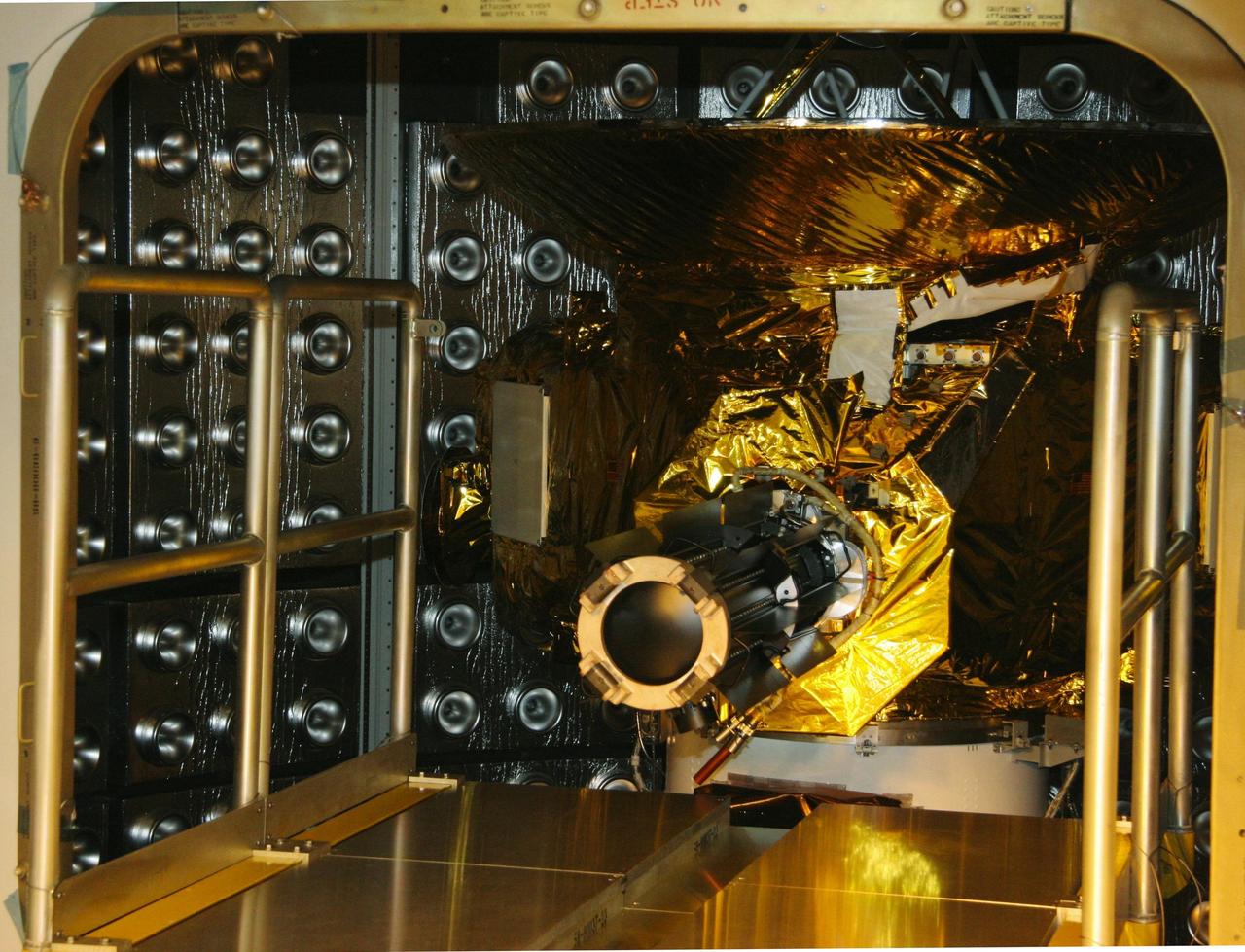
KENNEDY SPACE CENTER, FLA. — On Complex 41 at Cape Canaveral Air Force Station in Florida, the radioisotope thermoelectric generator (RTG) is attached to the New Horizons spacecraft inside the fairing. Designed and integrated at the Johns Hopkins University Applied Physics Laboratory (APL) in Laurel, Md., New Horizons will launch on a nine-and-a-half-year voyage to Pluto. Typical of RTG-based systems, as on past outer-planet missions, New Horizons does not have a battery for storing power. At the start of the mission, the RTG, which provides power through the natural radioactive decay of plutonium dioxide fuel, will supply approximately 240 watts (at 30 volts of direct current) - the spacecraft’s shunt regulator unit maintains a steady input from the RTG and dissipates power the spacecraft cannot use at a given time. By July 2015 (the earliest Pluto encounter date) that supply decreases to 200 watts at the same voltage, so New Horizons will ease the strain on its limited power source by cycling science instruments during planetary encounters. On Complex 41 at Cape Canaveral Air Force Station in Florida, workers on the ground oversee the radioisotope thermoelectric generator (RTG) being lifted into the Vertical Integration Facility. The RTG will be installed on the New Horizons spacecraft within the fairing at the top of the Atlas V launch vehicle. Designed and integrated at the Johns Hopkins University Applied Physics Laboratory (APL) in Laurel, Md., New Horizons will launch on a nine-and-a-half-year voyage to Pluto. Typical of RTG-based systems, as on past outer-planet missions, New Horizons does not have a battery for storing power. At the start of the mission, the RTG, which provides power through the natural radioactive decay of plutonium dioxide fuel, will supply approximately 240 watts (at 30 volts of direct current) - the spacecraft’s shunt regulator unit maintains a steady input from the RTG and dissipates power the spacecraft cannot use at a give
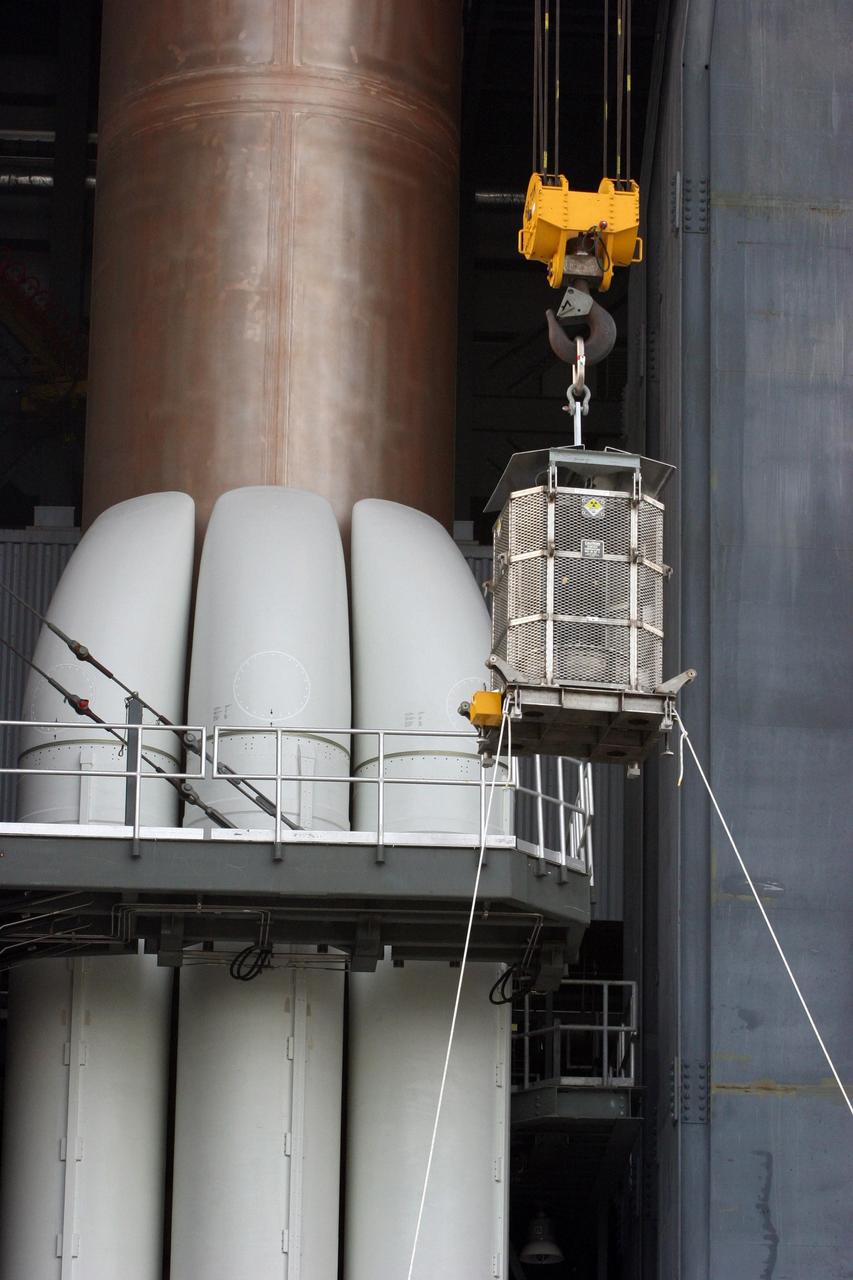
KENNEDY SPACE CENTER, FLA. — On Complex 41 at Cape Canaveral Air Force Station in Florida, the radioisotope thermoelectric generator (RTG) is being lifted into the Vertical Integration Facility. The RTG will be installed on the New Horizons spacecraft within the fairing at the top of the Atlas V launch vehicle. Designed and integrated at the Johns Hopkins University Applied Physics Laboratory (APL) in Laurel, Md., New Horizons will launch on a nine-and-a-half-year voyage to Pluto. Typical of RTG-based systems, as on past outer-planet missions, New Horizons does not have a battery for storing power. At the start of the mission, the RTG, which provides power through the natural radioactive decay of plutonium dioxide fuel, will supply approximately 240 watts (at 30 volts of direct current) - the spacecraft’s shunt regulator unit maintains a steady input from the RTG and dissipates power the spacecraft cannot use at a given time. By July 2015 (the earliest Pluto encounter date) that supply decreases to 200 watts at the same voltage, so New Horizons will ease the strain on its limited power source by cycling science instruments during planetary encounters. On Complex 41 at Cape Canaveral Air Force Station in Florida, workers on the ground oversee the radioisotope thermoelectric generator (RTG) being lifted into the Vertical Integration Facility. The RTG will be installed on the New Horizons spacecraft within the fairing at the top of the Atlas V launch vehicle. Designed and integrated at the Johns Hopkins University Applied Physics Laboratory (APL) in Laurel, Md., New Horizons will launch on a nine-and-a-half-year voyage to Pluto. Typical of RTG-based systems, as on past outer-planet missions, New Horizons does not have a battery for storing power. At the start of the mission, the RTG, which provides power through the natural radioactive decay of plutonium dioxide fuel, will supply approximately 240 watts (at 30 volts of direct current) - the spacecraft’s shu
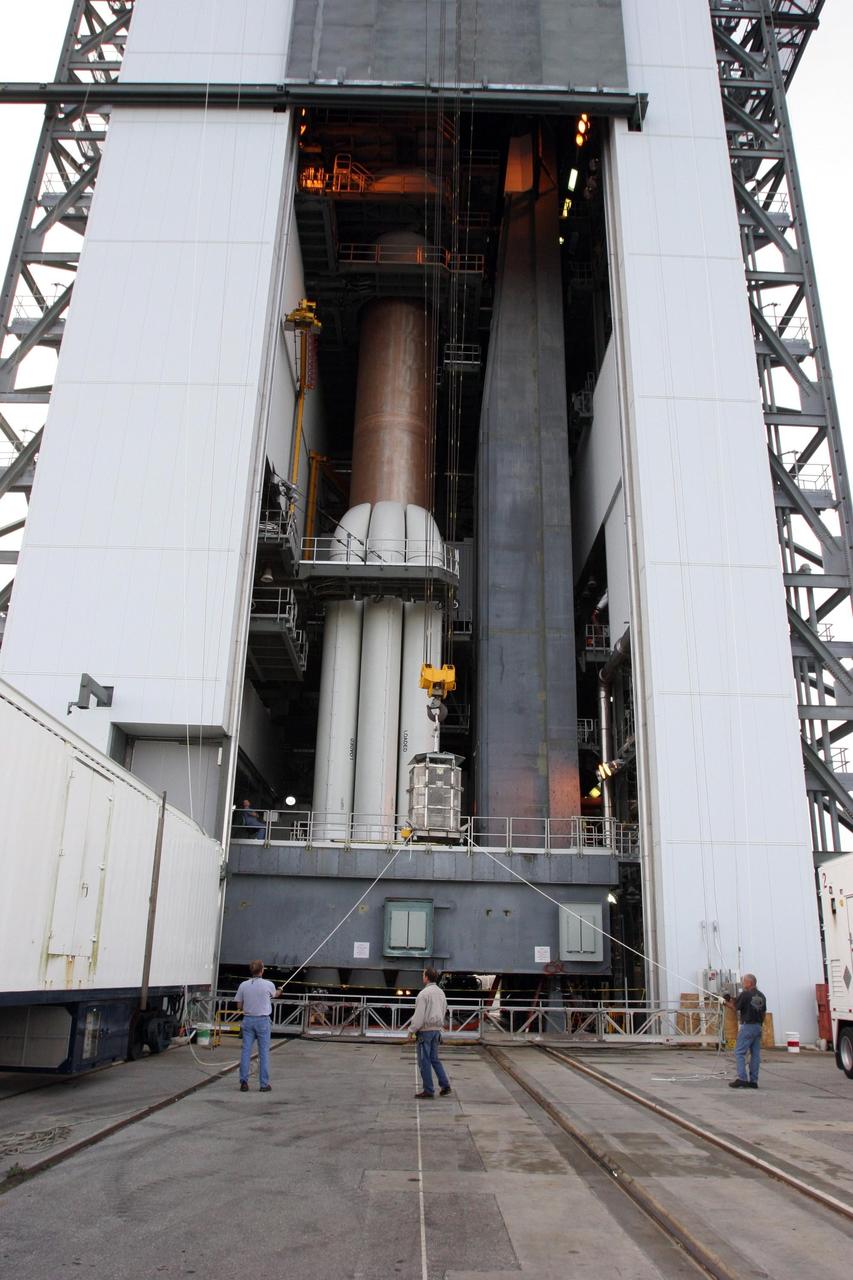
KENNEDY SPACE CENTER, FLA. — On Complex 41 at Cape Canaveral Air Force Station in Florida, workers on the ground oversee the radioisotope thermoelectric generator (RTG) being lifted into the Vertical Integration Facility. The RTG will be installed on the New Horizons spacecraft within the fairing at the top of the Atlas V launch vehicle. Designed and integrated at the Johns Hopkins University Applied Physics Laboratory (APL) in Laurel, Md., New Horizons will launch on a nine-and-a-half-year voyage to Pluto. Typical of RTG-based systems, as on past outer-planet missions, New Horizons does not have a battery for storing power. At the start of the mission, the RTG, which provides power through the natural radioactive decay of plutonium dioxide fuel, will supply approximately 240 watts (at 30 volts of direct current) - the spacecraft’s shunt regulator unit maintains a steady input from the RTG and dissipates power the spacecraft cannot use at a given time. By July 2015 (the earliest Pluto encounter date) that supply decreases to 200 watts at the same voltage, so New Horizons will ease the strain on its limited power source by cycling science instruments during planetary encounters. On Complex 41 at Cape Canaveral Air Force Station in Florida, workers on the ground oversee the radioisotope thermoelectric generator (RTG) being lifted into the Vertical Integration Facility. The RTG will be installed on the New Horizons spacecraft within the fairing at the top of the Atlas V launch vehicle. Designed and integrated at the Johns Hopkins University Applied Physics Laboratory (APL) in Laurel, Md., New Horizons will launch on a nine-and-a-half-year voyage to Pluto. Typical of RTG-based systems, as on past outer-planet missions, New Horizons does not have a battery for storing power. At the start of the mission, the RTG, which provides power through the natural radioactive decay of plutonium dioxide fuel, will supply approximately 240 watts (at 30 volts of direct curren