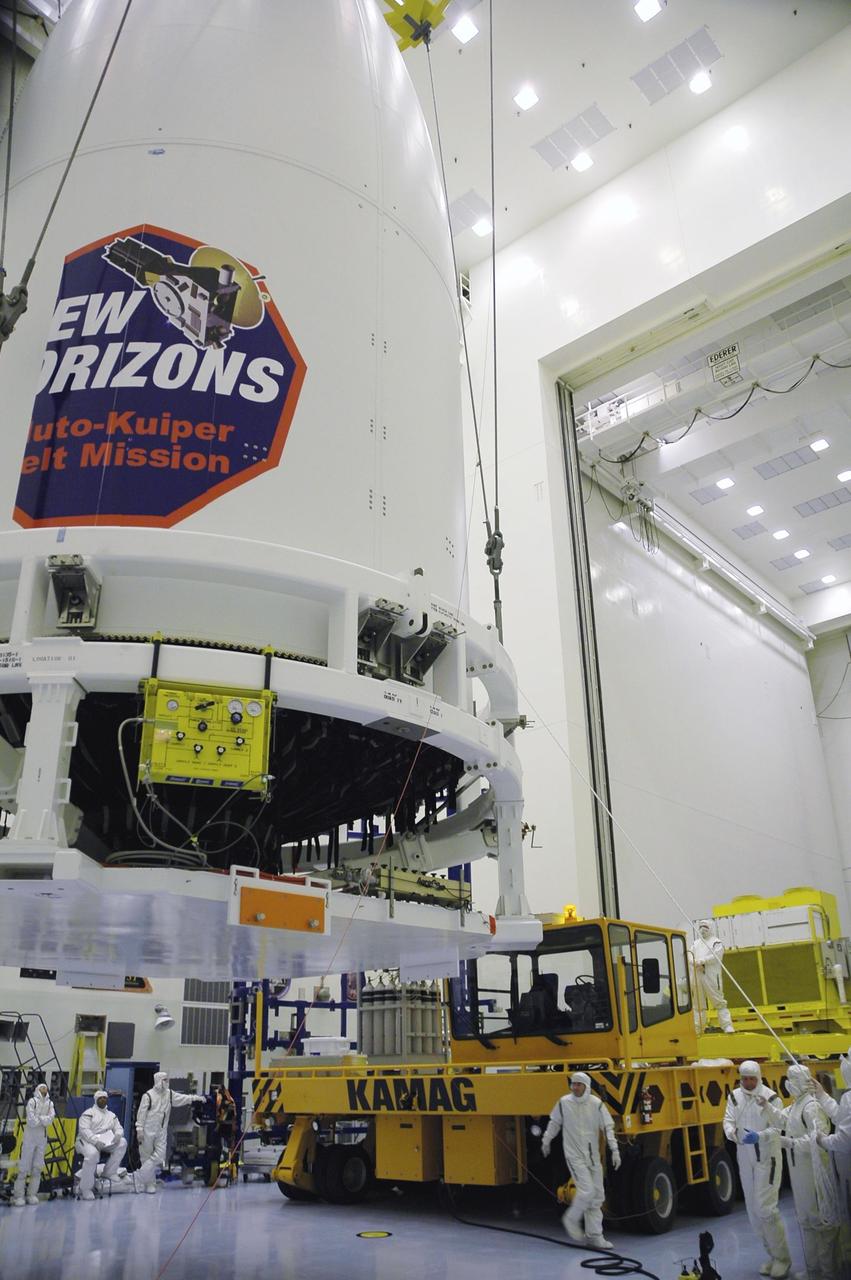
KENNEDY SPACE CENTER, FLA. - In the Payload Hazardous Servicing Facility, technicians lift New Horizons toward a transporter for its move to Complex 41 on Cape Canaveral Air Force Station. The last strip of the mission decal will be installed on the fairing after the spacecraft is delivered to the pad. New Horizons carries seven scientific instruments that will characterize the global geology and geomorphology of Pluto and its moon Charon, map their surface compositions and temperatures, and examine Pluto's complex atmosphere. After that, flybys of Kuiper Belt objects from even farther in the solar system may be undertaken in an extended mission. New Horizons is the first mission in NASA's New Frontiers program of medium-class planetary missions. The spacecraft, designed for NASA by the Johns Hopkins University Applied Physics Laboratory in Laurel, Md., will launch aboard a Lockheed Martin Atlas V rocket and fly by Pluto and Charon as early as summer 2015.
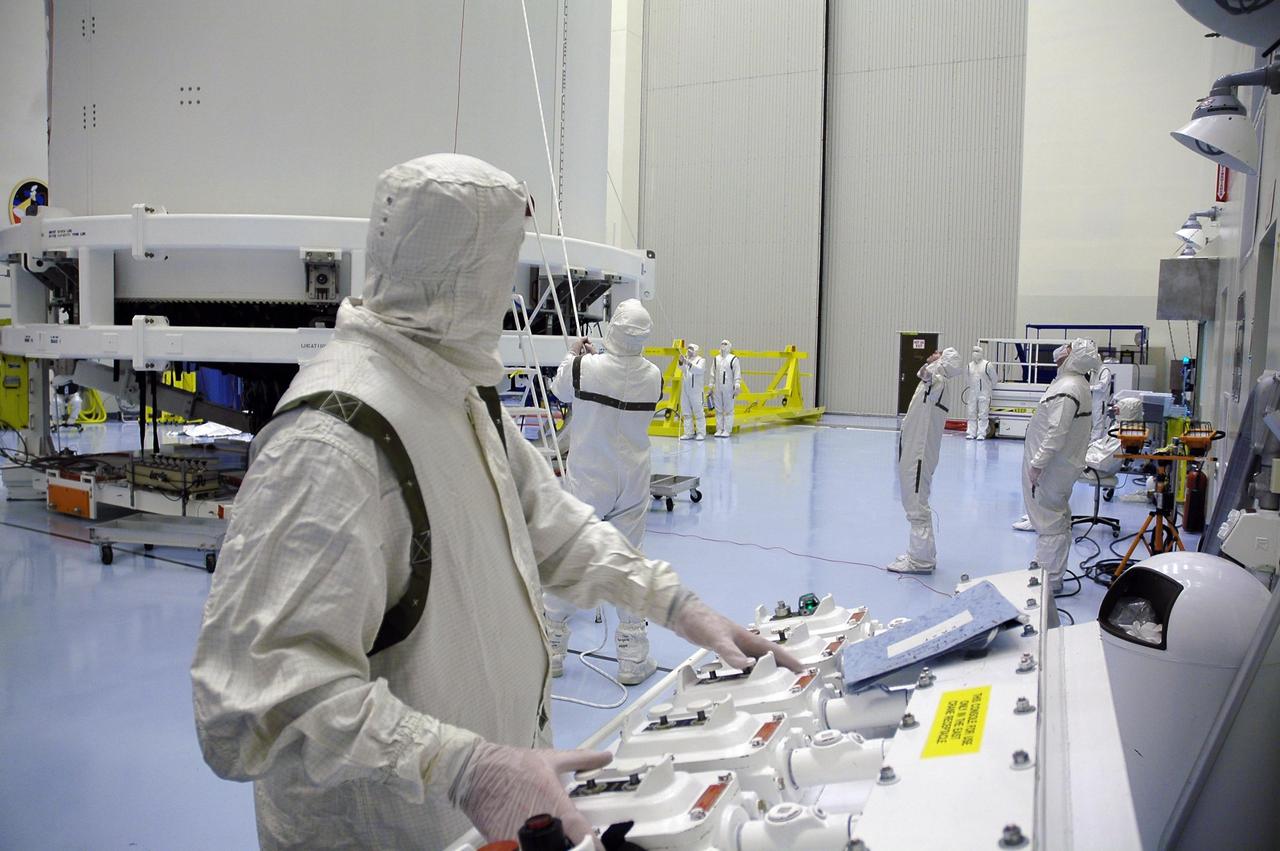
KENNEDY SPACE CENTER, FLA. - In the Payload Hazardous Servicing Facility, technicians prepare to lift New Horizons to a transporter for its move to Complex 41 on Cape Canaveral Air Force Station. New Horizons carries seven scientific instruments that will characterize the global geology and geomorphology of Pluto and its moon Charon, map their surface compositions and temperatures, and examine Pluto's complex atmosphere. After that, flybys of Kuiper Belt objects from even farther in the solar system may be undertaken in an extended mission. New Horizons is the first mission in NASA's New Frontiers program of medium-class planetary missions. The spacecraft, designed for NASA by the Johns Hopkins University Applied Physics Laboratory in Laurel, Md., will launch aboard a Lockheed Martin Atlas V rocket and fly by Pluto and Charon as early as summer 2015.
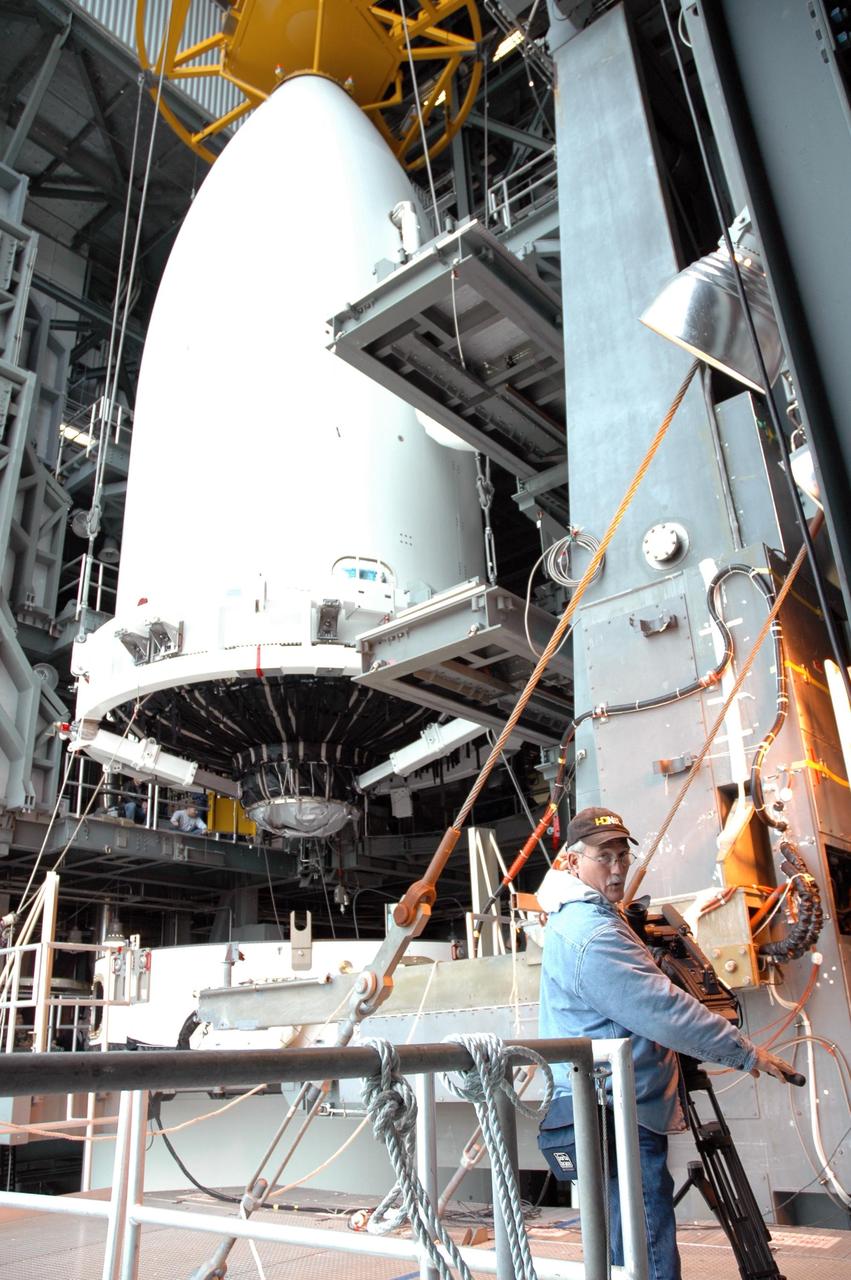
KENNEDY SPACE CENTER, FLA. - InDyne employee Mic Miracle captures on video the arrival of the fairing enclosing New Horizons at the top of a Lockheed Martin Atlas V launch vehicle in the Vertical Integration Facility at Complex 41 on Cape Canaveral Air Force Station. New Horizons carries seven scientific instruments that will characterize the global geology and geomorphology of Pluto and its moon Charon, map their surface compositions and temperatures, and examine Pluto's complex atmosphere. After that, flybys of Kuiper Belt objects from even farther in the solar system may be undertaken in an extended mission. New Horizons is the first mission in NASA's New Frontiers program of medium-class planetary missions. The spacecraft, designed for NASA by the Johns Hopkins University Applied Physics Laboratory in Laurel, Md., will launch aboard a Lockheed Martin Atlas V rocket and fly by Pluto and Charon as early as summer 2015.
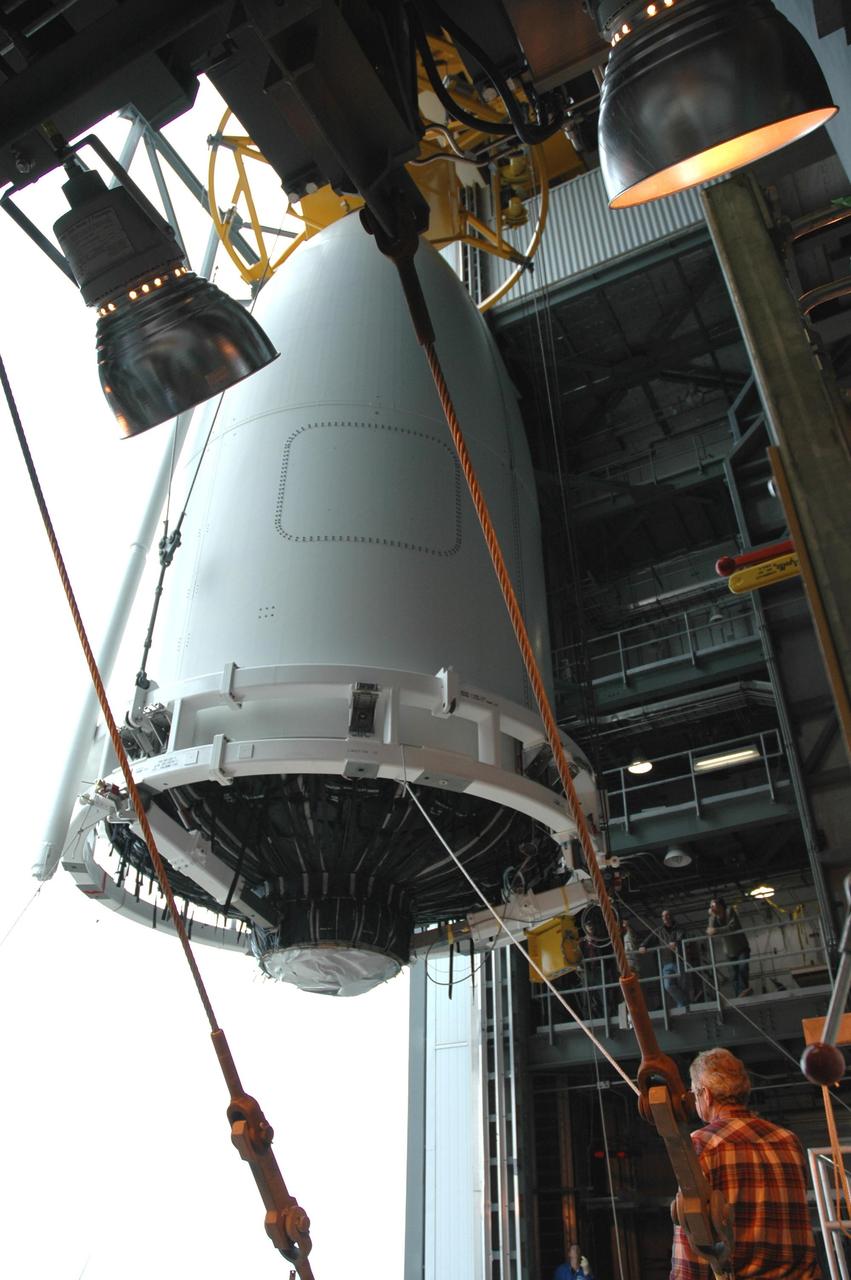
KENNEDY SPACE CENTER, FLA. - The fairing enclosing New Horizons arrives at the top of a Lockheed Martin Atlas V launch vehicle in the Vertical Integration Facility at Complex 41 on Cape Canaveral Air Force Station. New Horizons carries seven scientific instruments that will characterize the global geology and geomorphology of Pluto and its moon Charon, map their surface compositions and temperatures, and examine Pluto's complex atmosphere. After that, flybys of Kuiper Belt objects from even farther in the solar system may be undertaken in an extended mission. New Horizons is the first mission in NASA's New Frontiers program of medium-class planetary missions. The spacecraft, designed for NASA by the Johns Hopkins University Applied Physics Laboratory in Laurel, Md., will launch aboard a Lockheed Martin Atlas V rocket and fly by Pluto and Charon as early as summer 2015.
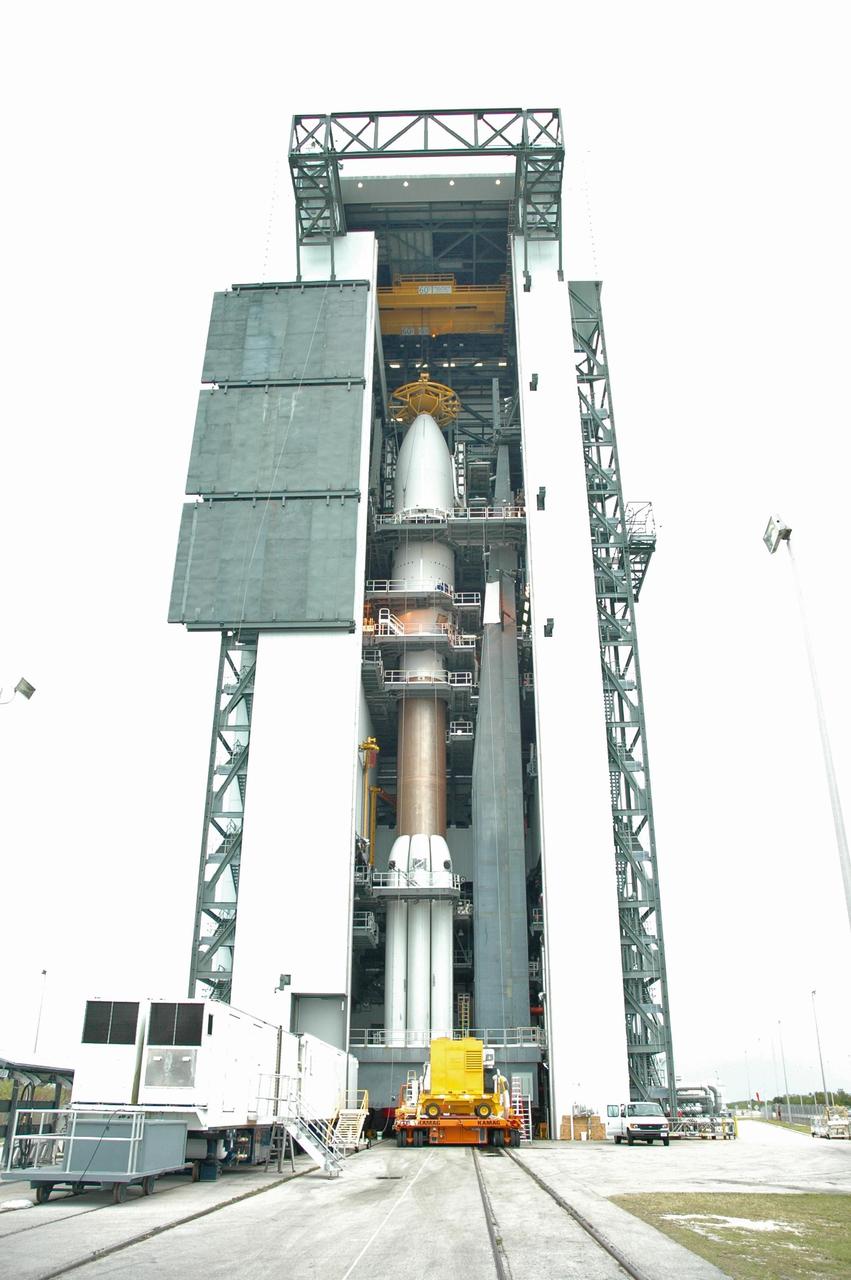
KENNEDY SPACE CENTER, FLA. - The fairing enclosing New Horizons awaits further processing upon its arrival atop a Lockheed Martin Atlas V launch vehicle in the Vertical Integration Facility at Complex 41 on Cape Canaveral Air Force Station. New Horizons carries seven scientific instruments that will characterize the global geology and geomorphology of Pluto and its moon Charon, map their surface compositions and temperatures, and examine Pluto's complex atmosphere. After that, flybys of Kuiper Belt objects from even farther in the solar system may be undertaken in an extended mission. New Horizons is the first mission in NASA's New Frontiers program of medium-class planetary missions. The spacecraft, designed for NASA by the Johns Hopkins University Applied Physics Laboratory in Laurel, Md., will launch aboard a Lockheed Martin Atlas V rocket and fly by Pluto and Charon as early as summer 2015.
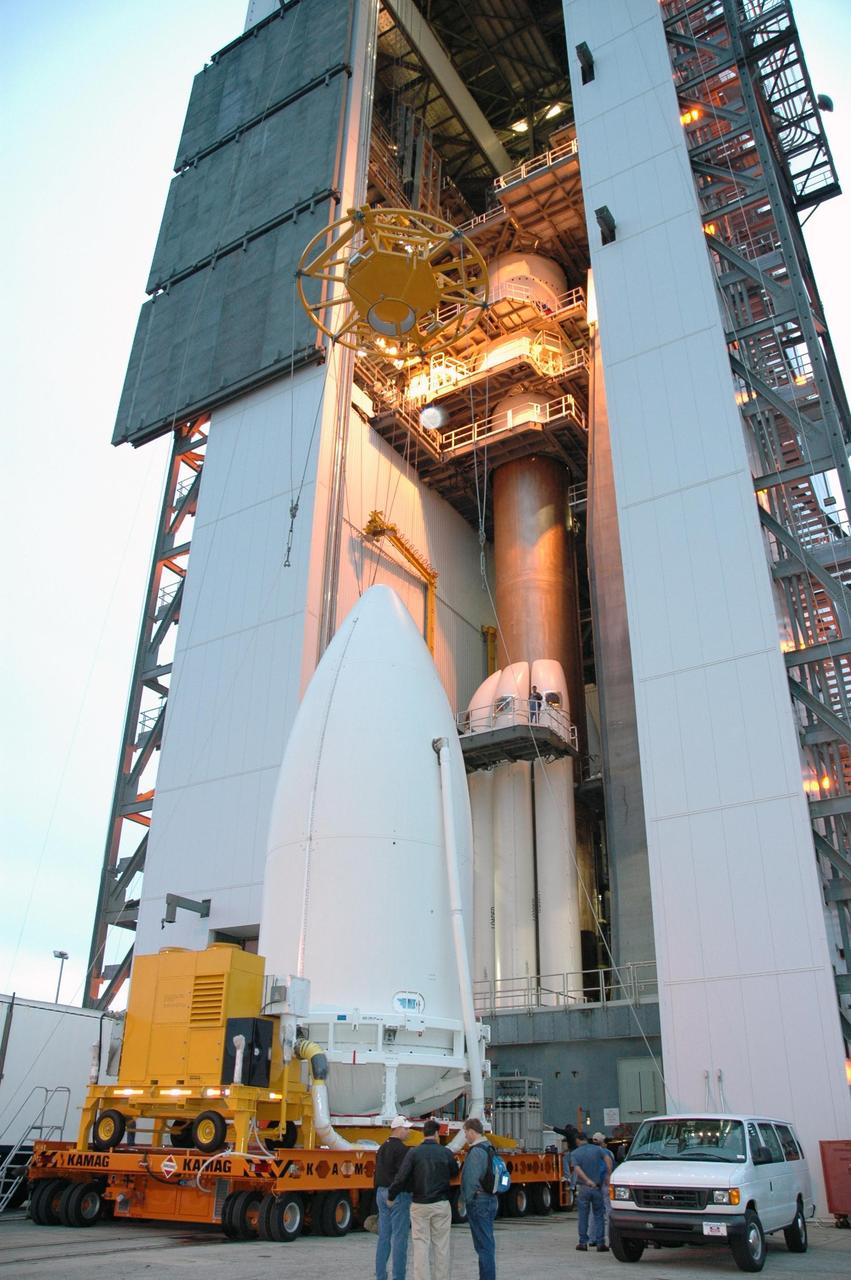
KENNEDY SPACE CENTER, FLA. - The fairing lifting fixture is lowered toward the nose of the fairing enclosing New Horizons upon its arrival at the Vertical Integration Facility at Complex 41 on Cape Canaveral Air Force Station. A Lockheed Martin Atlas V launch vehicle stands ready to receive it in the background. New Horizons carries seven scientific instruments that will characterize the global geology and geomorphology of Pluto and its moon Charon, map their surface compositions and temperatures, and examine Pluto's complex atmosphere. After that, flybys of Kuiper Belt objects from even farther in the solar system may be undertaken in an extended mission. New Horizons is the first mission in NASA's New Frontiers program of medium-class planetary missions. The spacecraft, designed for NASA by the Johns Hopkins University Applied Physics Laboratory in Laurel, Md., will launch aboard a Lockheed Martin Atlas V rocket and fly by Pluto and Charon as early as summer 2015.
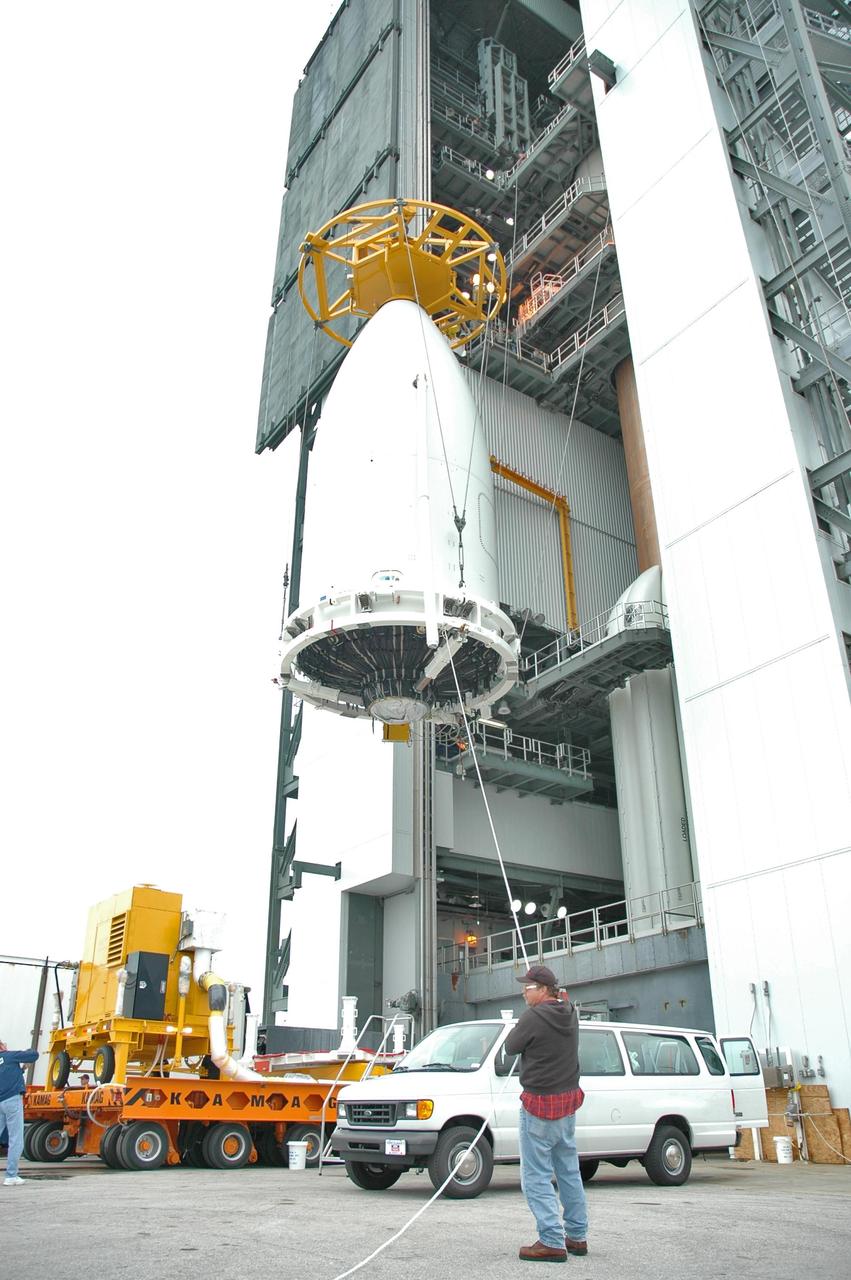
KENNEDY SPACE CENTER, FLA. - The fairing lifting fixture lifts the fairing enclosing New Horizons to the top of a Lockheed Martin Atlas V launch vehicle at the Vertical Integration Facility at Complex 41 on Cape Canaveral Air Force Station. New Horizons carries seven scientific instruments that will characterize the global geology and geomorphology of Pluto and its moon Charon, map their surface compositions and temperatures, and examine Pluto's complex atmosphere. After that, flybys of Kuiper Belt objects from even farther in the solar system may be undertaken in an extended mission. New Horizons is the first mission in NASA's New Frontiers program of medium-class planetary missions. The spacecraft, designed for NASA by the Johns Hopkins University Applied Physics Laboratory in Laurel, Md., will launch aboard a Lockheed Martin Atlas V rocket and fly by Pluto and Charon as early as summer 2015.

KENNEDY SPACE CENTER, FLA. - New Horizons leaves the Payload Hazardous Servicing Facility before dawn for its journey to the Vertical Integration Facility at Complex 41 on Cape Canaveral Air Force Station. New Horizons carries seven scientific instruments that will characterize the global geology and geomorphology of Pluto and its moon Charon, map their surface compositions and temperatures, and examine Pluto's complex atmosphere. After that, flybys of Kuiper Belt objects from even farther in the solar system may be undertaken in an extended mission. New Horizons is the first mission in NASA's New Frontiers program of medium-class planetary missions. The spacecraft, designed for NASA by the Johns Hopkins University Applied Physics Laboratory in Laurel, Md., will launch aboard a Lockheed Martin Atlas V rocket and fly by Pluto and Charon as early as summer 2015.
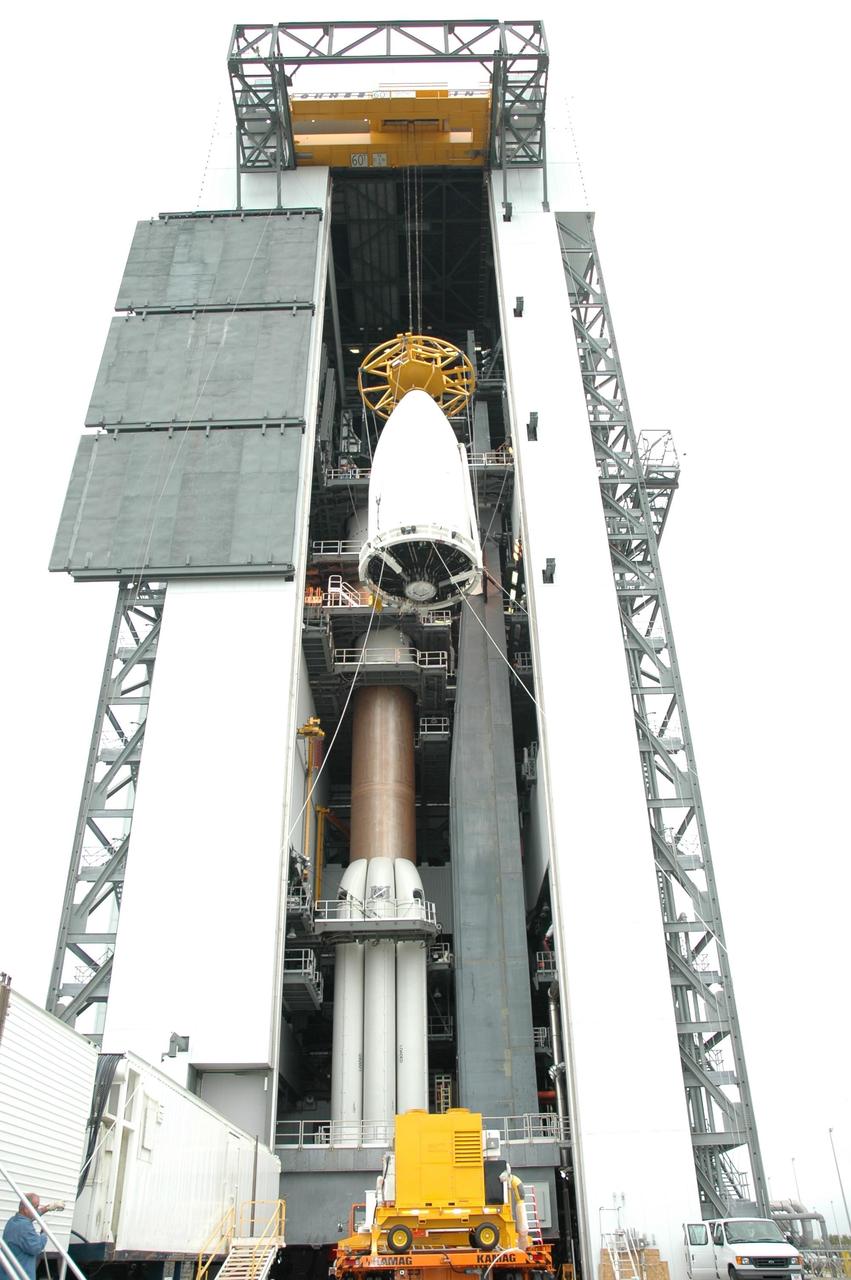
KENNEDY SPACE CENTER, FLA. - The fairing lifting fixture raises the fairing enclosing New Horizons to the top of a Lockheed Martin Atlas V launch vehicle in the Vertical Integration Facility at Complex 41 on Cape Canaveral Air Force Station. New Horizons carries seven scientific instruments that will characterize the global geology and geomorphology of Pluto and its moon Charon, map their surface compositions and temperatures, and examine Pluto's complex atmosphere. After that, flybys of Kuiper Belt objects from even farther in the solar system may be undertaken in an extended mission. New Horizons is the first mission in NASA's New Frontiers program of medium-class planetary missions. The spacecraft, designed for NASA by the Johns Hopkins University Applied Physics Laboratory in Laurel, Md., will launch aboard a Lockheed Martin Atlas V rocket and fly by Pluto and Charon as early as summer 2015.
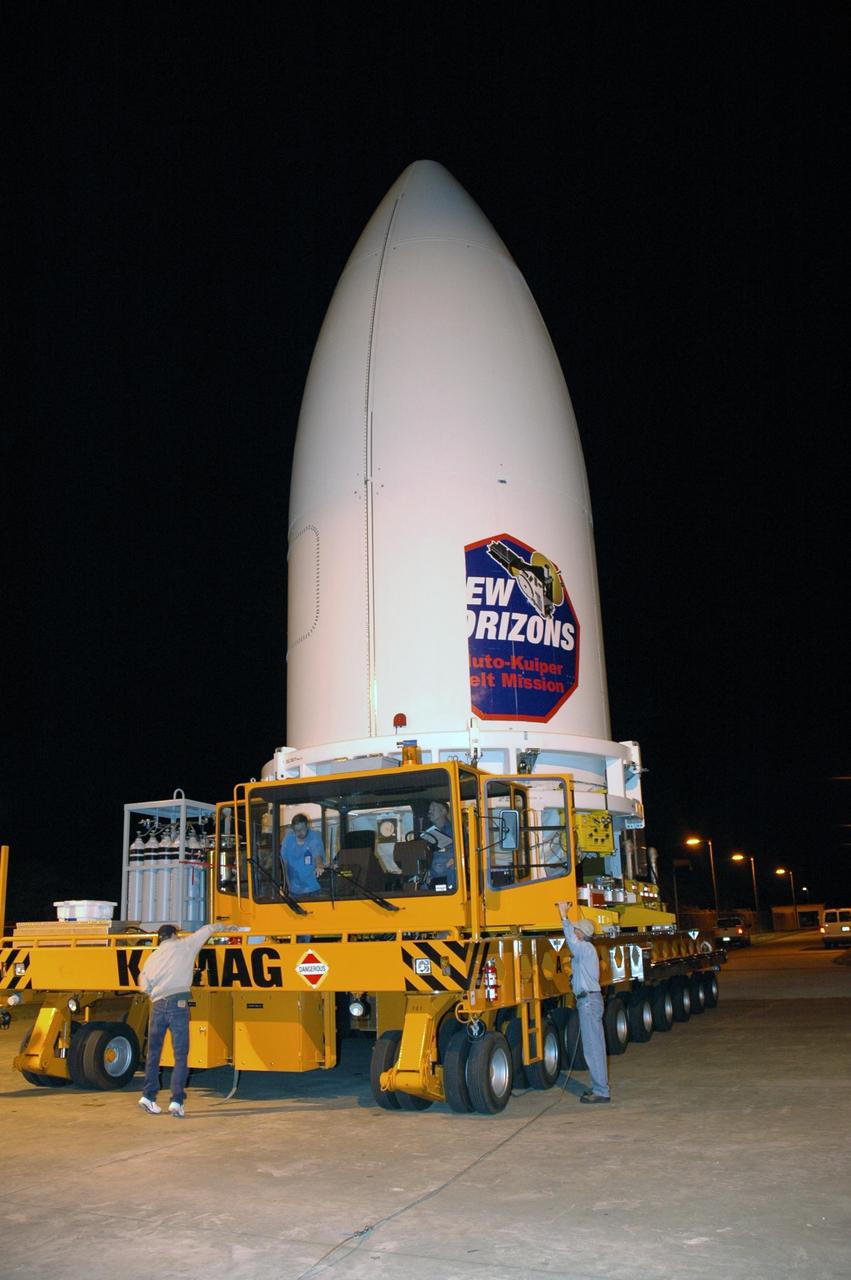
KENNEDY SPACE CENTER, FLA. - Technicians prepare to move New Horizons before dawn from the Payload Hazardous Servicing Facility to the Vertical Integration Facility at Complex 41 on Cape Canaveral Air Force Station. New Horizons carries seven scientific instruments that will characterize the global geology and geomorphology of Pluto and its moon Charon, map their surface compositions and temperatures, and examine Pluto's complex atmosphere. After that, flybys of Kuiper Belt objects from even farther in the solar system may be undertaken in an extended mission. New Horizons is the first mission in NASA's New Frontiers program of medium-class planetary missions. The spacecraft, designed for NASA by the Johns Hopkins University Applied Physics Laboratory in Laurel, Md., will launch aboard a Lockheed Martin Atlas V rocket and fly by Pluto and Charon as early as summer 2015.
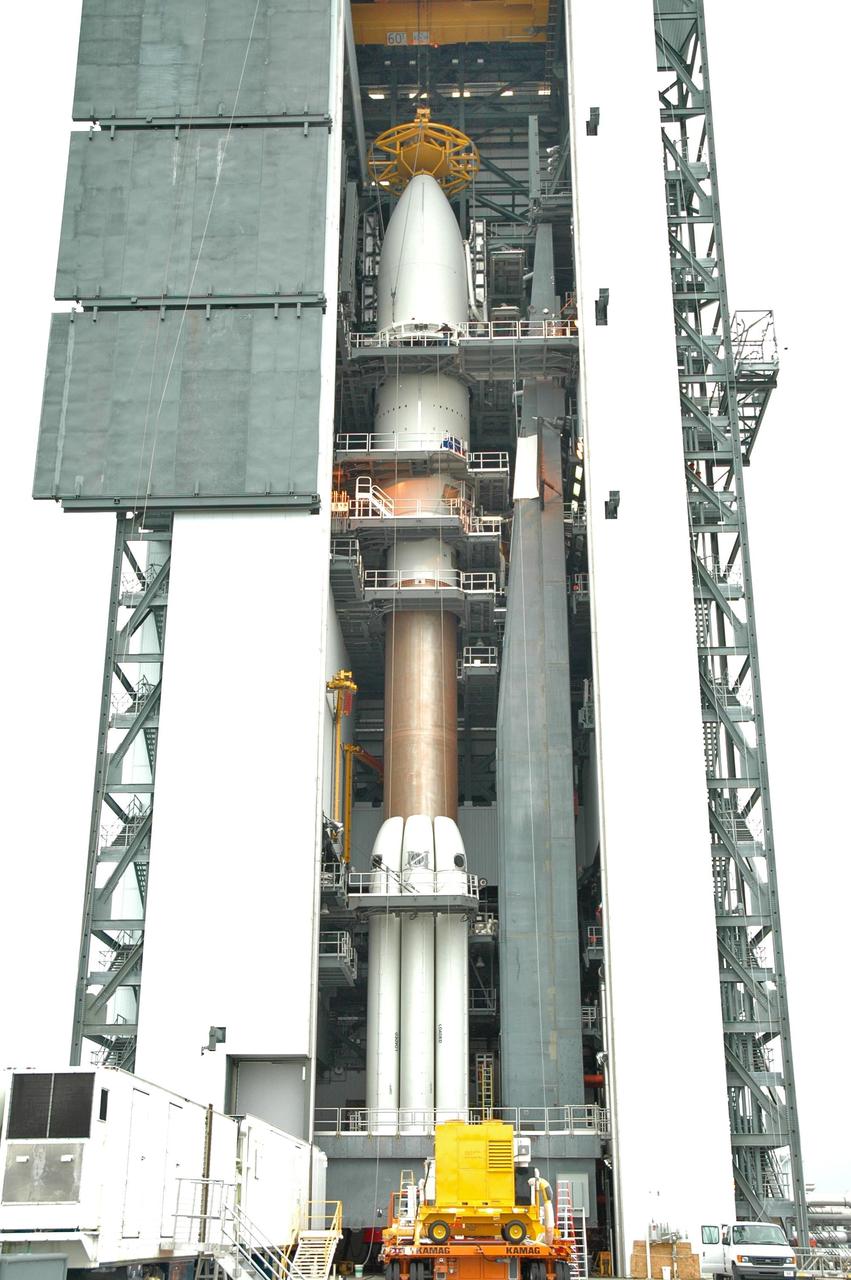
KENNEDY SPACE CENTER, FLA. - The fairing enclosing New Horizons awaits further processing upon its arrival atop a Lockheed Martin Atlas V launch vehicle in the Vertical Integration Facility at Complex 41 on Cape Canaveral Air Force Station. New Horizons carries seven scientific instruments that will characterize the global geology and geomorphology of Pluto and its moon Charon, map their surface compositions and temperatures, and examine Pluto's complex atmosphere. After that, flybys of Kuiper Belt objects from even farther in the solar system may be undertaken in an extended mission. New Horizons is the first mission in NASA's New Frontiers program of medium-class planetary missions. The spacecraft, designed for NASA by the Johns Hopkins University Applied Physics Laboratory in Laurel, Md., will launch aboard a Lockheed Martin Atlas V rocket and fly by Pluto and Charon as early as summer 2015.
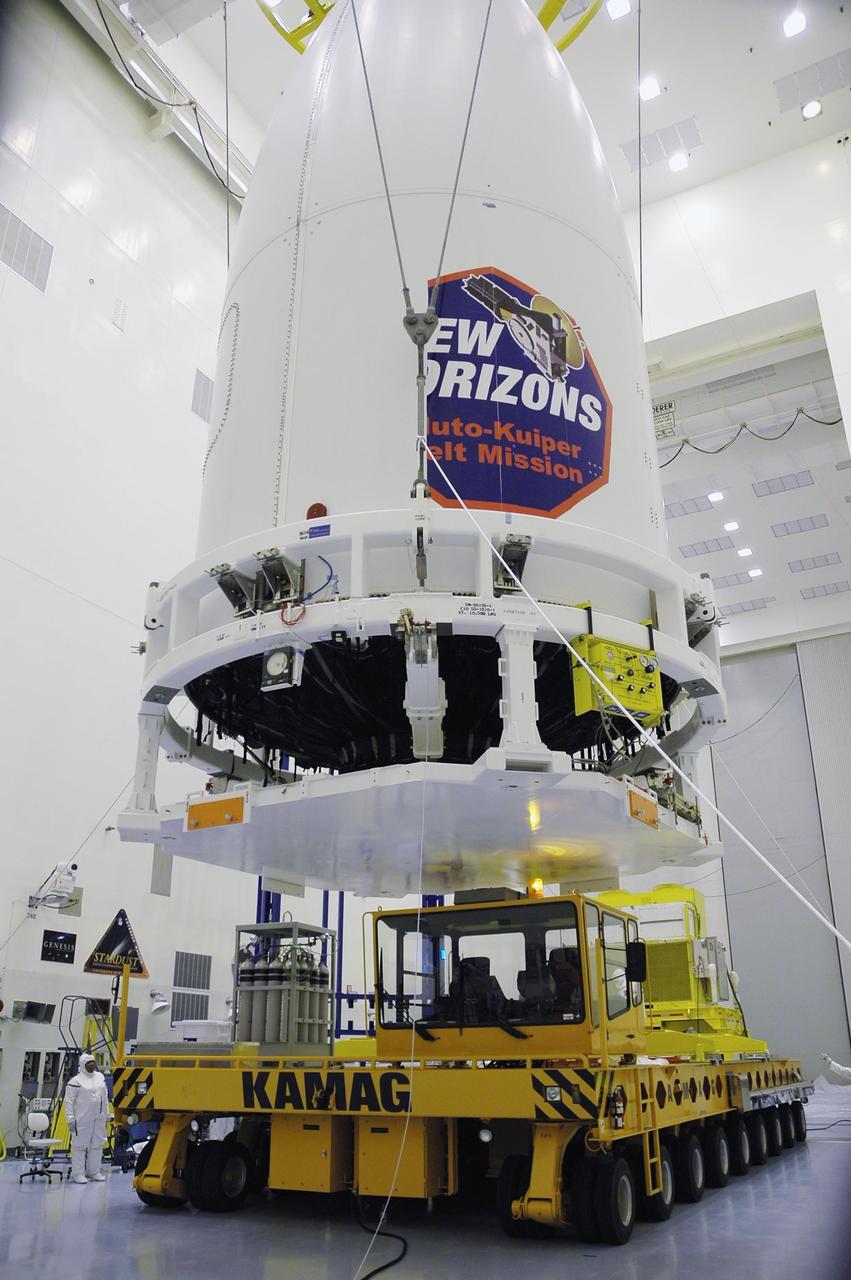
KENNEDY SPACE CENTER, FLA. - In the Payload Hazardous Servicing Facility, technicians lower New Horizons onto a transporter for its move to Complex 41 on Cape Canaveral Air Force Station. The last strip of the mission decal will be installed on the fairing after the spacecraft is delivered to the pad. New Horizons carries seven scientific instruments that will characterize the global geology and geomorphology of Pluto and its moon Charon, map their surface compositions and temperatures, and examine Pluto's complex atmosphere. After that, flybys of Kuiper Belt objects from even farther in the solar system may be undertaken in an extended mission. New Horizons is the first mission in NASA's New Frontiers program of medium-class planetary missions. The spacecraft, designed for NASA by the Johns Hopkins University Applied Physics Laboratory in Laurel, Md., will launch aboard a Lockheed Martin Atlas V rocket and fly by Pluto and Charon as early as summer 2015.
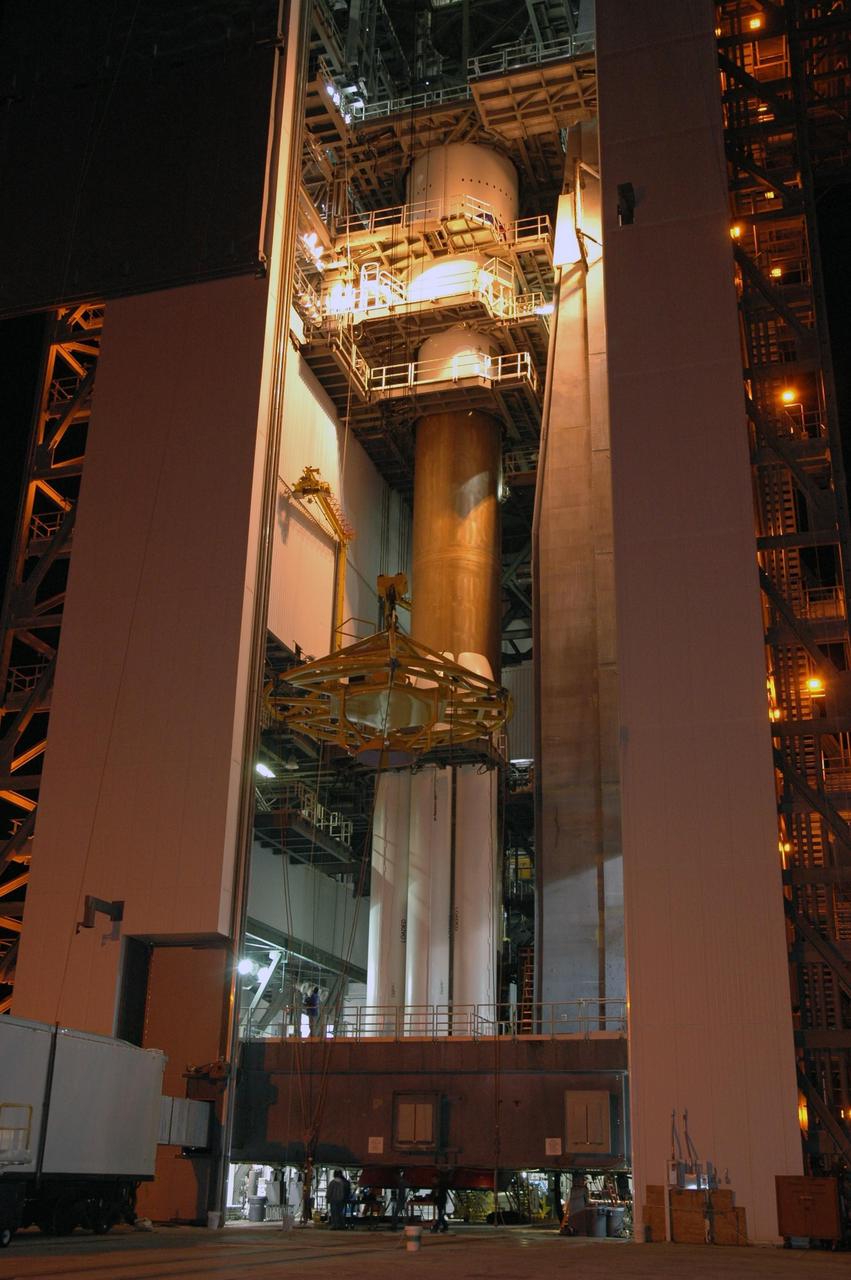
KENNEDY SPACE CENTER, FLA. - A Lockheed Martin Atlas V launch vehicle in the Vertical Integration Facility awaits the arrival of New Horizons at Complex 41 on Cape Canaveral Air Force Station. New Horizons carries seven scientific instruments that will characterize the global geology and geomorphology of Pluto and its moon Charon, map their surface compositions and temperatures, and examine Pluto's complex atmosphere. After that, flybys of Kuiper Belt objects from even farther in the solar system may be undertaken in an extended mission. New Horizons is the first mission in NASA's New Frontiers program of medium-class planetary missions. The spacecraft, designed for NASA by the Johns Hopkins University Applied Physics Laboratory in Laurel, Md., will launch aboard a Lockheed Martin Atlas V rocket and fly by Pluto and Charon as early as summer 2015.

KENNEDY SPACE CENTER, FLA. - New Horizons arrives at the Vertical Integration Facility at Complex 41 on Cape Canaveral Air Force Station where buildup of its Lockheed Martin Atlas V launch vehicle is complete. New Horizons carries seven scientific instruments that will characterize the global geology and geomorphology of Pluto and its moon Charon, map their surface compositions and temperatures, and examine Pluto's complex atmosphere. After that, flybys of Kuiper Belt objects from even farther in the solar system may be undertaken in an extended mission. New Horizons is the first mission in NASA's New Frontiers program of medium-class planetary missions. The spacecraft, designed for NASA by the Johns Hopkins University Applied Physics Laboratory in Laurel, Md., will launch aboard a Lockheed Martin Atlas V rocket and fly by Pluto and Charon as early as summer 2015.
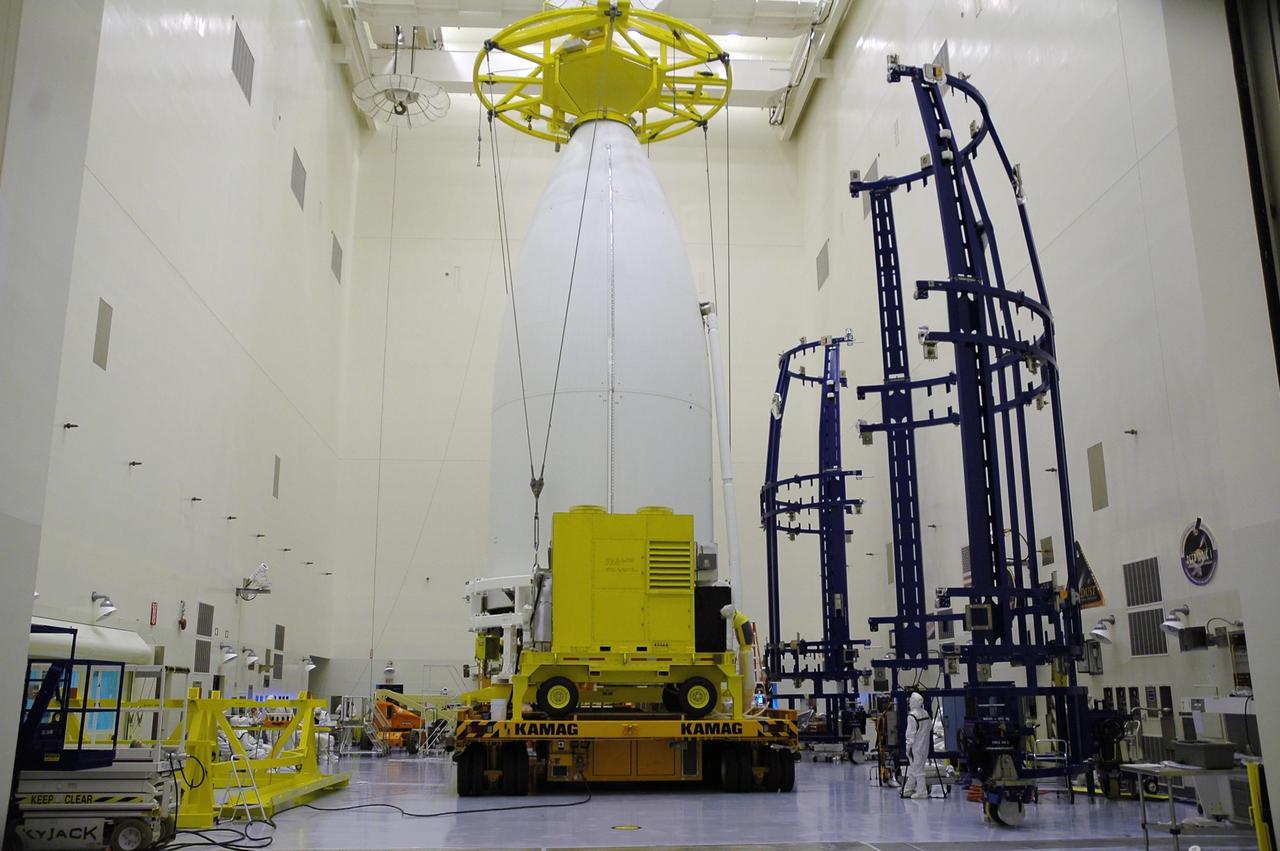
KENNEDY SPACE CENTER, FLA. - In the Payload Hazardous Servicing Facility, New Horizons sits atop a transporter awaiting its move to Complex 41 on Cape Canaveral Air Force Station. New Horizons carries seven scientific instruments that will characterize the global geology and geomorphology of Pluto and its moon Charon, map their surface compositions and temperatures, and examine Pluto's complex atmosphere. After that, flybys of Kuiper Belt objects from even farther in the solar system may be undertaken in an extended mission. New Horizons is the first mission in NASA's New Frontiers program of medium-class planetary missions. The spacecraft, designed for NASA by the Johns Hopkins University Applied Physics Laboratory in Laurel, Md., will launch aboard a Lockheed Martin Atlas V rocket and fly by Pluto and Charon as early as summer 2015.
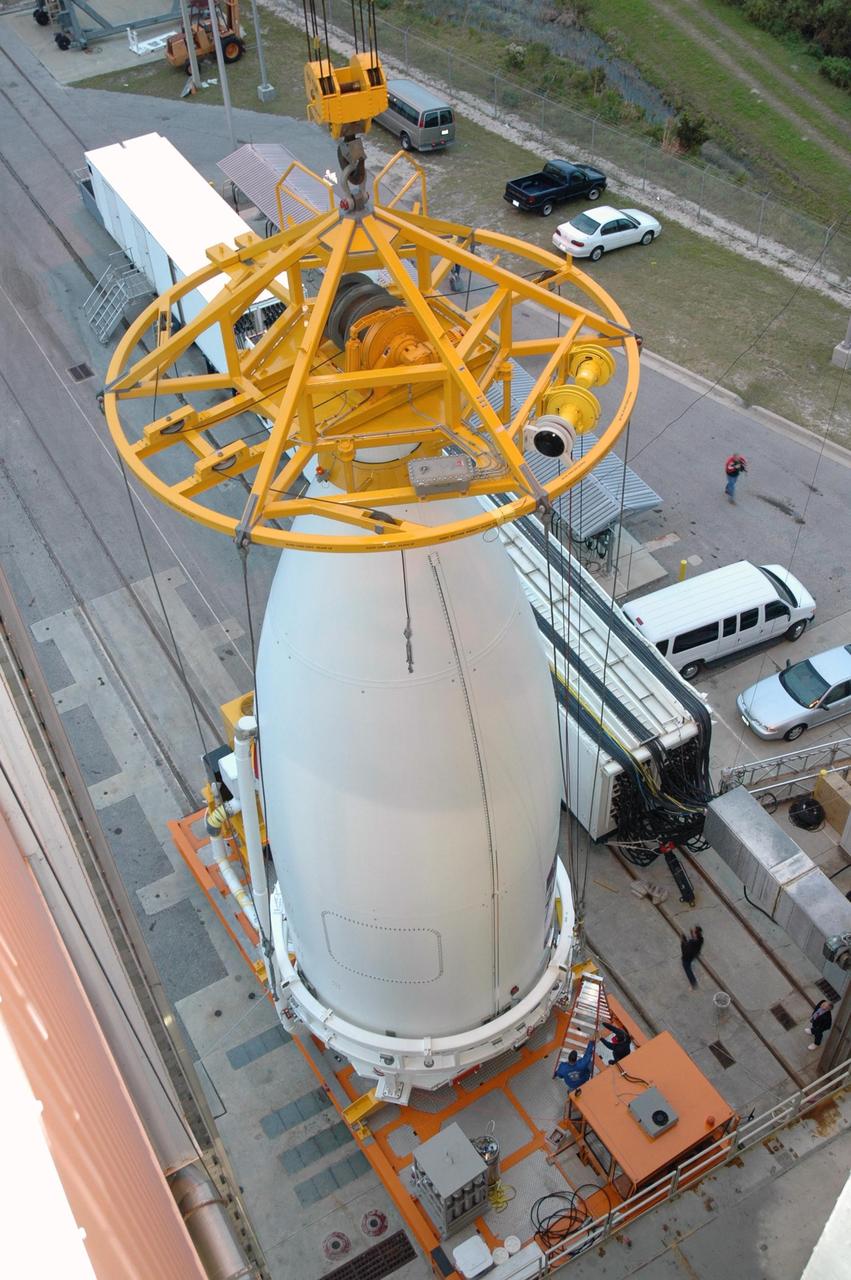
KENNEDY SPACE CENTER, FLA. - The fairing lifting fixture is secured to the nose of the fairing enclosing New Horizons at the Vertical Integration Facility at Complex 41 on Cape Canaveral Air Force Station. New Horizons carries seven scientific instruments that will characterize the global geology and geomorphology of Pluto and its moon Charon, map their surface compositions and temperatures, and examine Pluto's complex atmosphere. After that, flybys of Kuiper Belt objects from even farther in the solar system may be undertaken in an extended mission. New Horizons is the first mission in NASA's New Frontiers program of medium-class planetary missions. The spacecraft, designed for NASA by the Johns Hopkins University Applied Physics Laboratory in Laurel, Md., will launch aboard a Lockheed Martin Atlas V rocket and fly by Pluto and Charon as early as summer 2015.

KENNEDY SPACE CENTER, FLA. - Technicians monitor the fairing enclosing New Horizons as it is positioned atop a Lockheed Martin Atlas V launch vehicle in the Vertical Integration Facility at Complex 41 on Cape Canaveral Air Force Station. New Horizons carries seven scientific instruments that will characterize the global geology and geomorphology of Pluto and its moon Charon, map their surface compositions and temperatures, and examine Pluto's complex atmosphere. After that, flybys of Kuiper Belt objects from even farther in the solar system may be undertaken in an extended mission. New Horizons is the first mission in NASA's New Frontiers program of medium-class planetary missions. The spacecraft, designed for NASA by the Johns Hopkins University Applied Physics Laboratory in Laurel, Md., will launch aboard a Lockheed Martin Atlas V rocket and fly by Pluto and Charon as early as summer 2015.
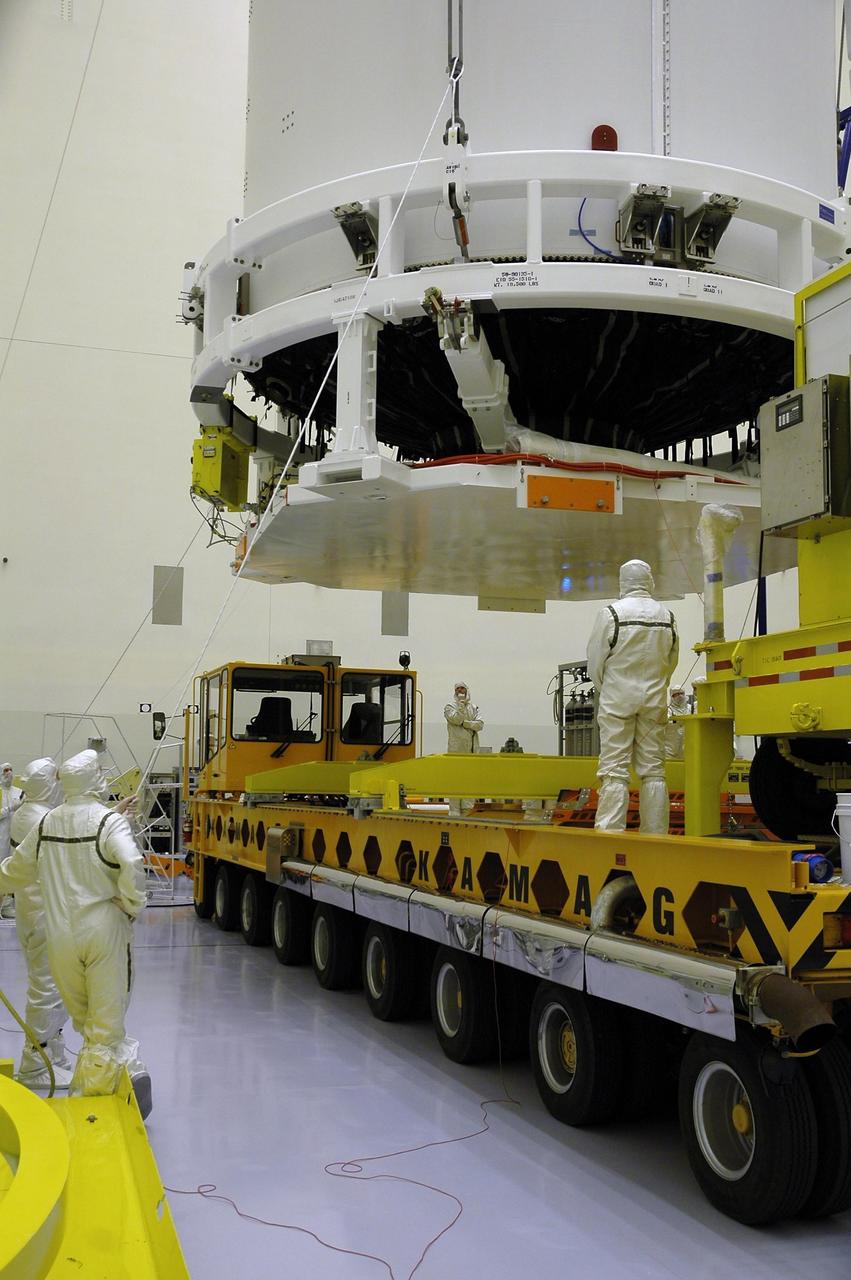
KENNEDY SPACE CENTER, FLA. - In the Payload Hazardous Servicing Facility, technicians monitor New Horizons as it is lowered onto a transporter for its move to Complex 41 on Cape Canaveral Air Force Station. New Horizons carries seven scientific instruments that will characterize the global geology and geomorphology of Pluto and its moon Charon, map their surface compositions and temperatures, and examine Pluto's complex atmosphere. After that, flybys of Kuiper Belt objects from even farther in the solar system may be undertaken in an extended mission. New Horizons is the first mission in NASA's New Frontiers program of medium-class planetary missions. The spacecraft, designed for NASA by the Johns Hopkins University Applied Physics Laboratory in Laurel, Md., will launch aboard a Lockheed Martin Atlas V rocket and fly by Pluto and Charon as early as summer 2015.
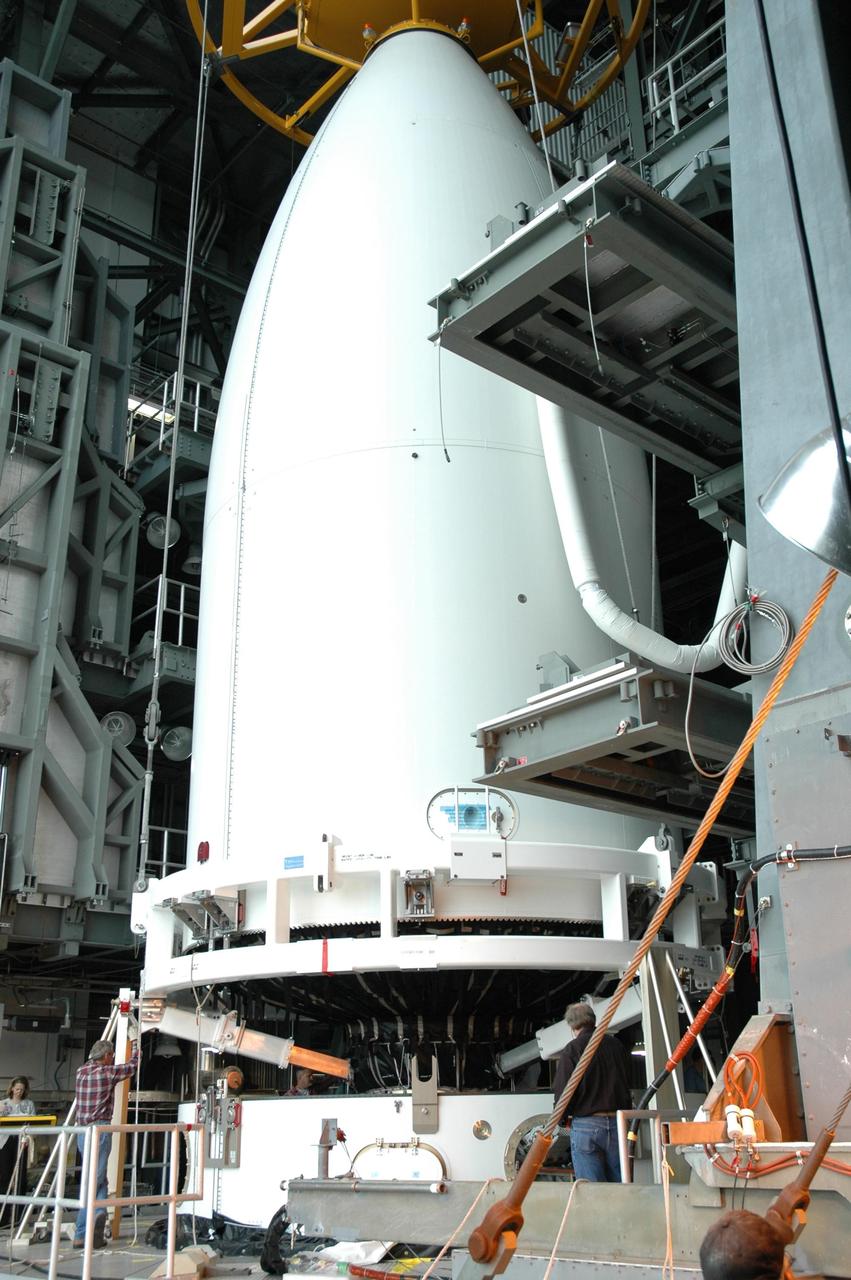
KENNEDY SPACE CENTER, FLA. - Technicians monitor the fairing enclosing New Horizons as it is lowered onto the top of a Lockheed Martin Atlas V launch vehicle in the Vertical Integration Facility at Complex 41 on Cape Canaveral Air Force Station. New Horizons carries seven scientific instruments that will characterize the global geology and geomorphology of Pluto and its moon Charon, map their surface compositions and temperatures, and examine Pluto's complex atmosphere. After that, flybys of Kuiper Belt objects from even farther in the solar system may be undertaken in an extended mission. New Horizons is the first mission in NASA's New Frontiers program of medium-class planetary missions. The spacecraft, designed for NASA by the Johns Hopkins University Applied Physics Laboratory in Laurel, Md., will launch aboard a Lockheed Martin Atlas V rocket and fly by Pluto and Charon as early as summer 2015.
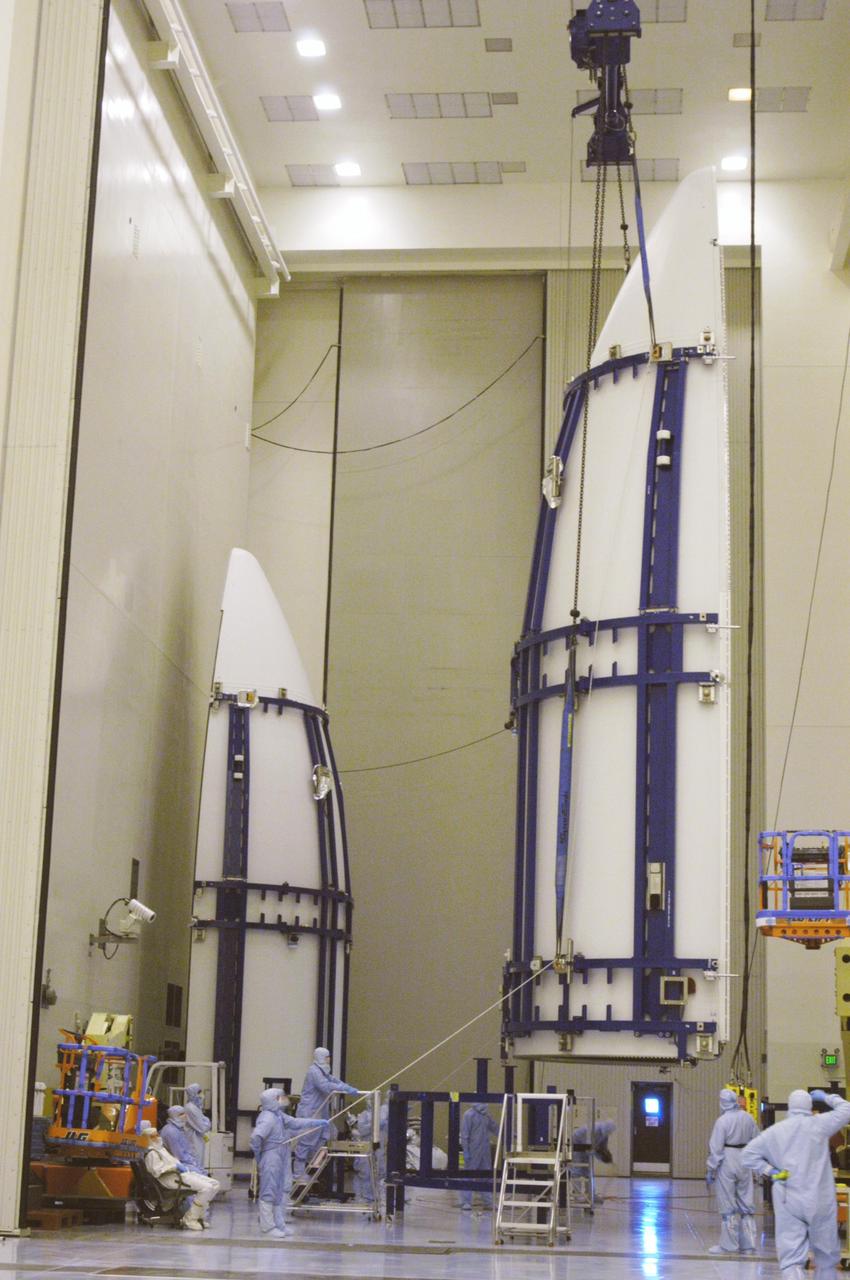
KENNEDY SPACE CENTER, FLA. - In the NASA Kennedy Space Center’s Payload Hazardous Servicing Facility, one part of the Lockheed Martin Atlas V rocket fairing to be placed around the New Horizons spacecraft is moved after being lifted from a stand. The fairing encapsulates the spacecraft to protect it during launch and flight through the atmosphere. Once out of the atmosphere, the fairing is jettisoned. New Horizons will make the first reconnaissance of Pluto and Charon - a "double planet" and the last planet in our solar system to be visited by spacecraft. The mission will then visit one or more objects in the Kuiper Belt region beyond Neptune. SWAP is a solar wind and plasma spectrometer that measures atmospheric “escape rate” and will observe Pluto’s interaction with the solar wind. New Horizons is scheduled to launch in January 2006, swing past Jupiter for a gravity boost and scientific studies in February or March 2007, and reach Pluto and its moon, Charon, in July 2015.
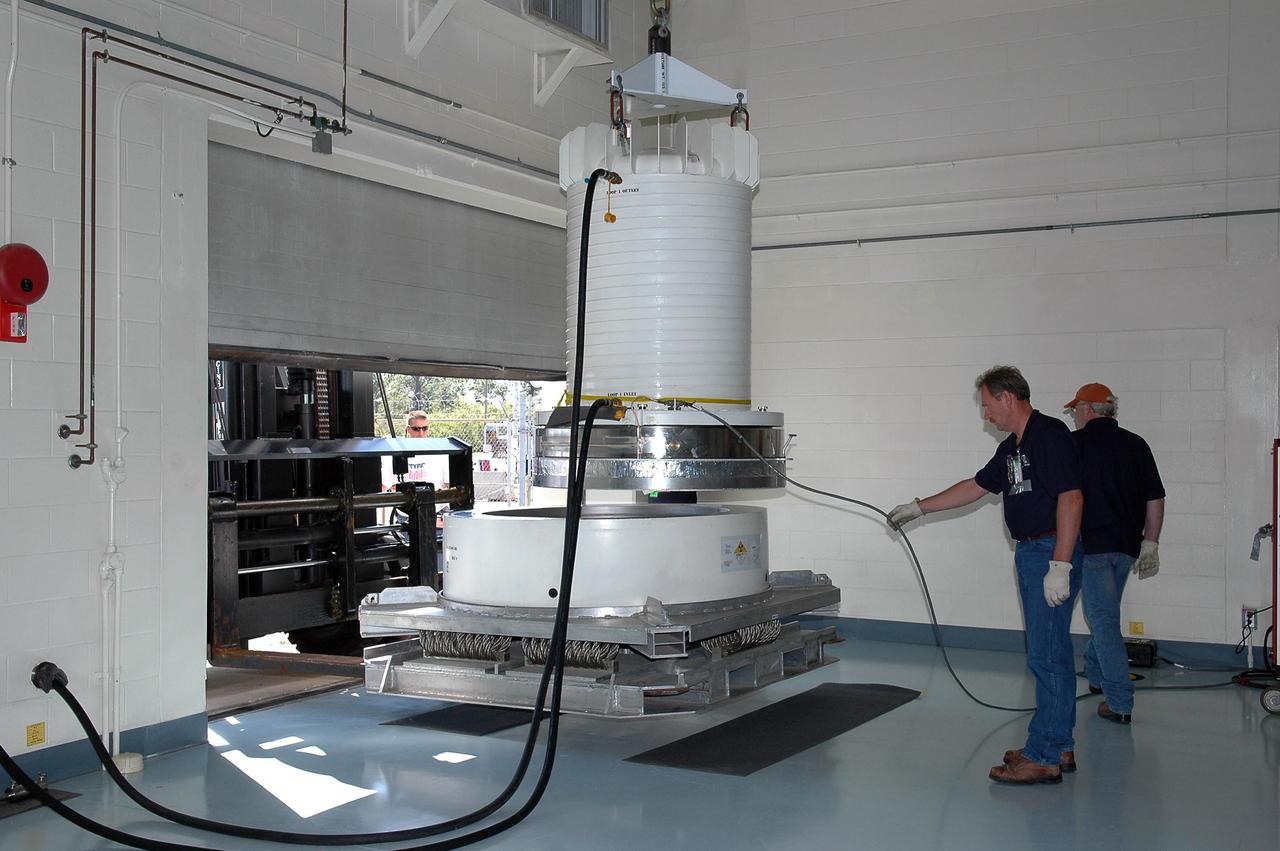
KENNEDY SPACE CENTER, FLA. - Bob Tessmer and Dave Nobles lift the radioisotope thermoelectric generator (RTG) container after its move inside the RTG facility at Kennedy Space Center. The RTG is the baseline power supply for the NASA’s New Horizons spacecraft, scheduled to launch in January 2006 on a journey to Pluto and its moon, Charon. As it approaches Pluto, the spacecraft will look for ultraviolet emission from Pluto's atmosphere and make the best global maps of Pluto and Charon in green, blue, red and a special wavelength that is sensitive to methane frost on the surface. It will also take spectral maps in the near infrared, telling the science team about Pluto's and Charon's surface compositions and locations and temperatures of these materials. When the spacecraft is closest to Pluto or its moon, it will take close-up pictures in both visible and near-infrared wavelengths. It is expected to reach Pluto in July 2015.
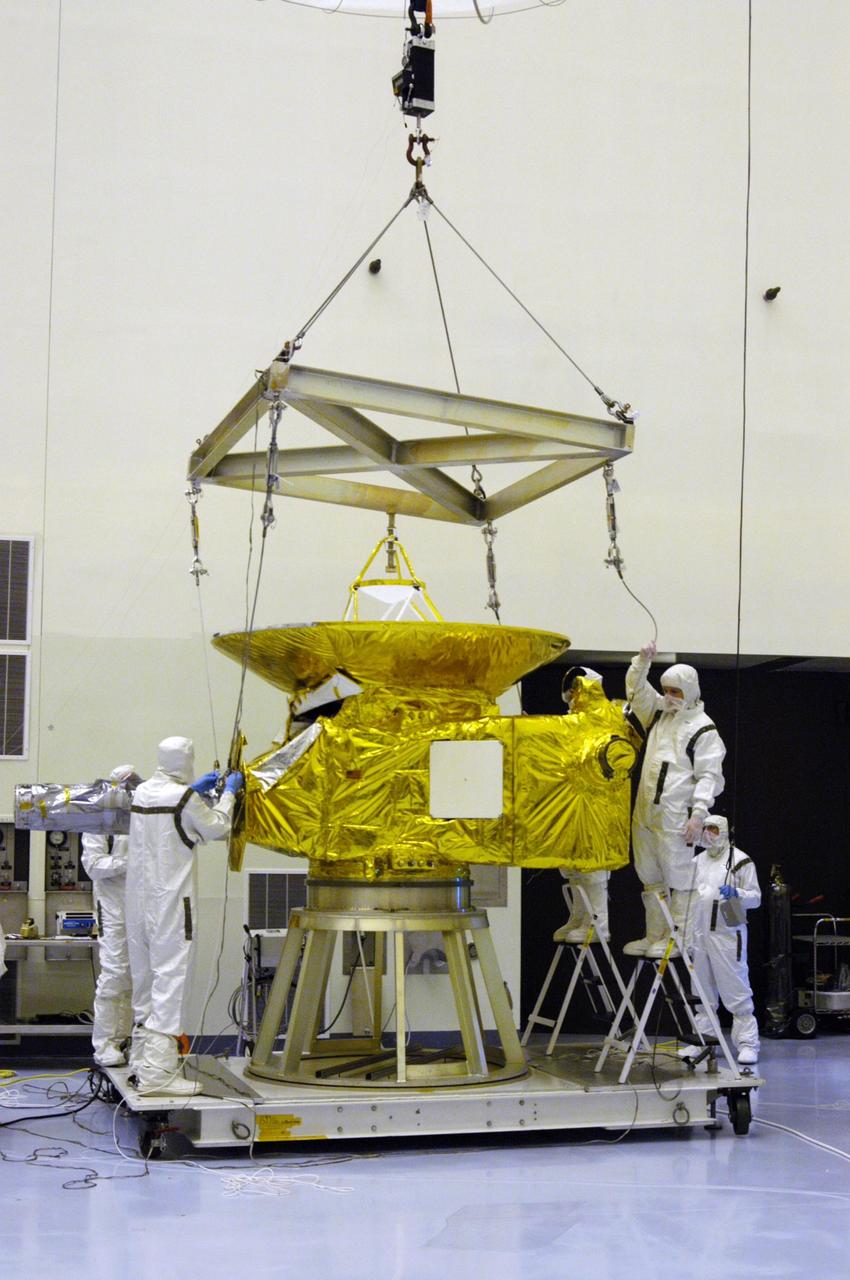
KENNEDY SPACE CENTER, FLA. -- In the Payload Hazardous Servicing Facility at NASA Kennedy Space Center, workers in clean room suits attach an overhead crane to NASA’s New Horizons spacecraft. The spacecraft will be lifted and moved for mating with the third stage, or upper booster, a Boeing STAR 48 solid-propellant kick motor. The launch vehicle for New Horizons is the Atlas V rocket, scheduled to launch from Cape Canaveral Air Force Station, Fla., during a 35-day window that opens Jan. 11, and fly through the Pluto system as early as summer 2015.
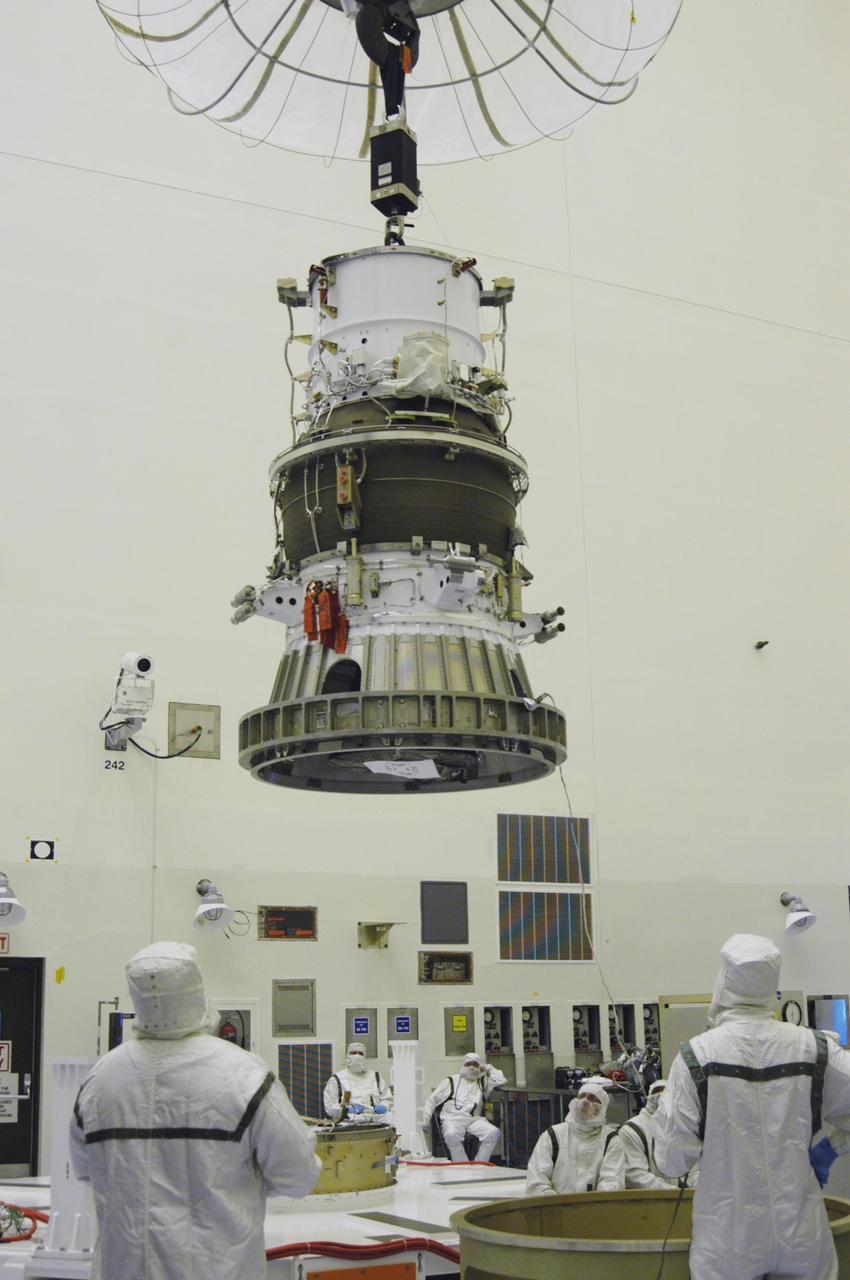
KENNEDY SPACE CENTER, FLA. - In NASA Kennedy Space Center’s Payload Hazardous Servicing Facility, the third stage, or upper stage for the New Horizons spacecraft is lifted from its transporter. The third stage, a Boeing STAR 48 solid-propellant kick motor, is being moved to a work stand, in the foreground at right. The launch vehicle for New Horizons is the Atlas V rocket, scheduled to launch from Cape Canaveral Air Force Station, Fla., during a 35-day window that opens Jan. 11, and fly through the Pluto system as early as summer 2015.
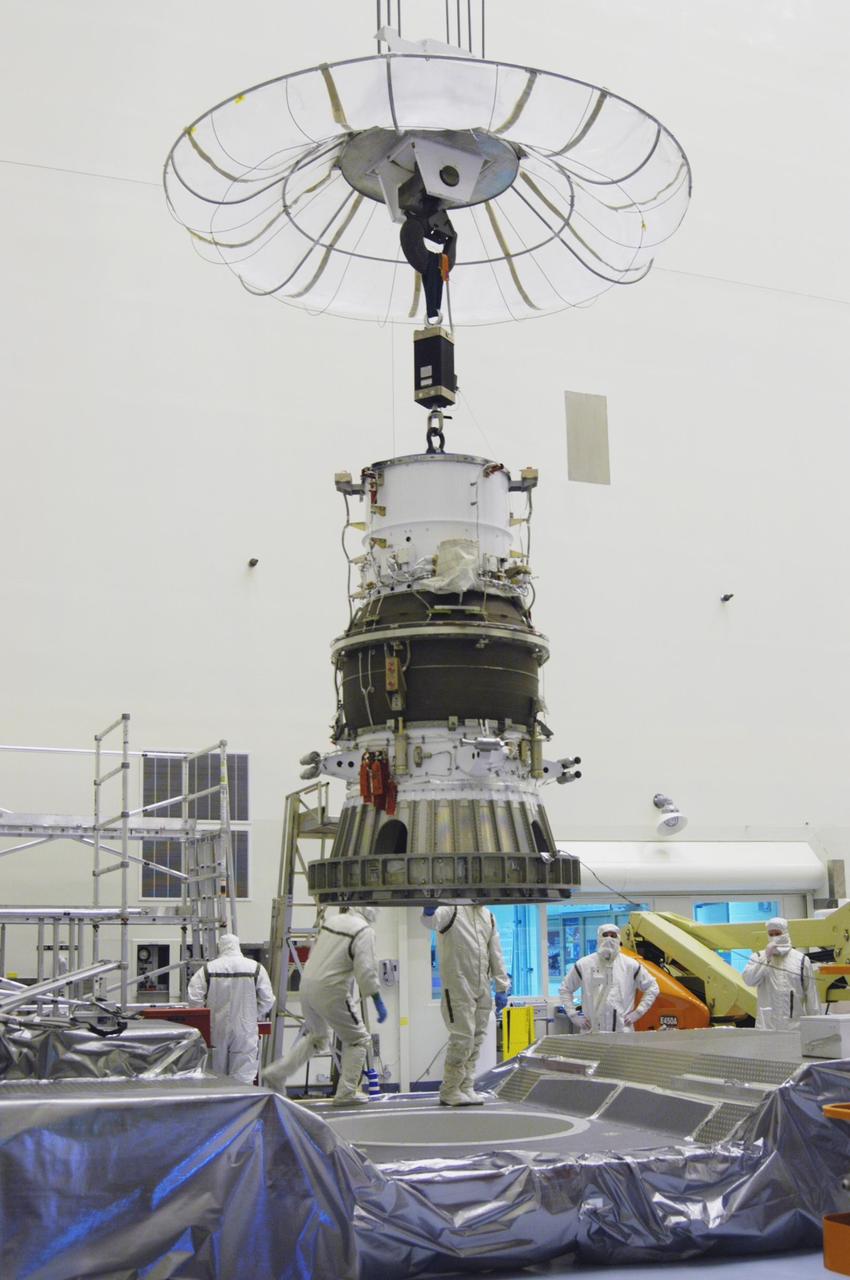
KENNEDY SPACE CENTER, FLA. - In NASA Kennedy Space Center’s Payload Hazardous Servicing Facility, the third stage, or upper stage for the New Horizons spacecraft is lifted from its transporter. The third stage, a Boeing STAR 48 solid-propellant kick motor, is being moved to a work stand. The launch vehicle for New Horizons is the Atlas V rocket, scheduled to launch from Cape Canaveral Air Force Station, Fla., during a 35-day window that opens Jan. 11, and fly through the Pluto system as early as summer 2015.
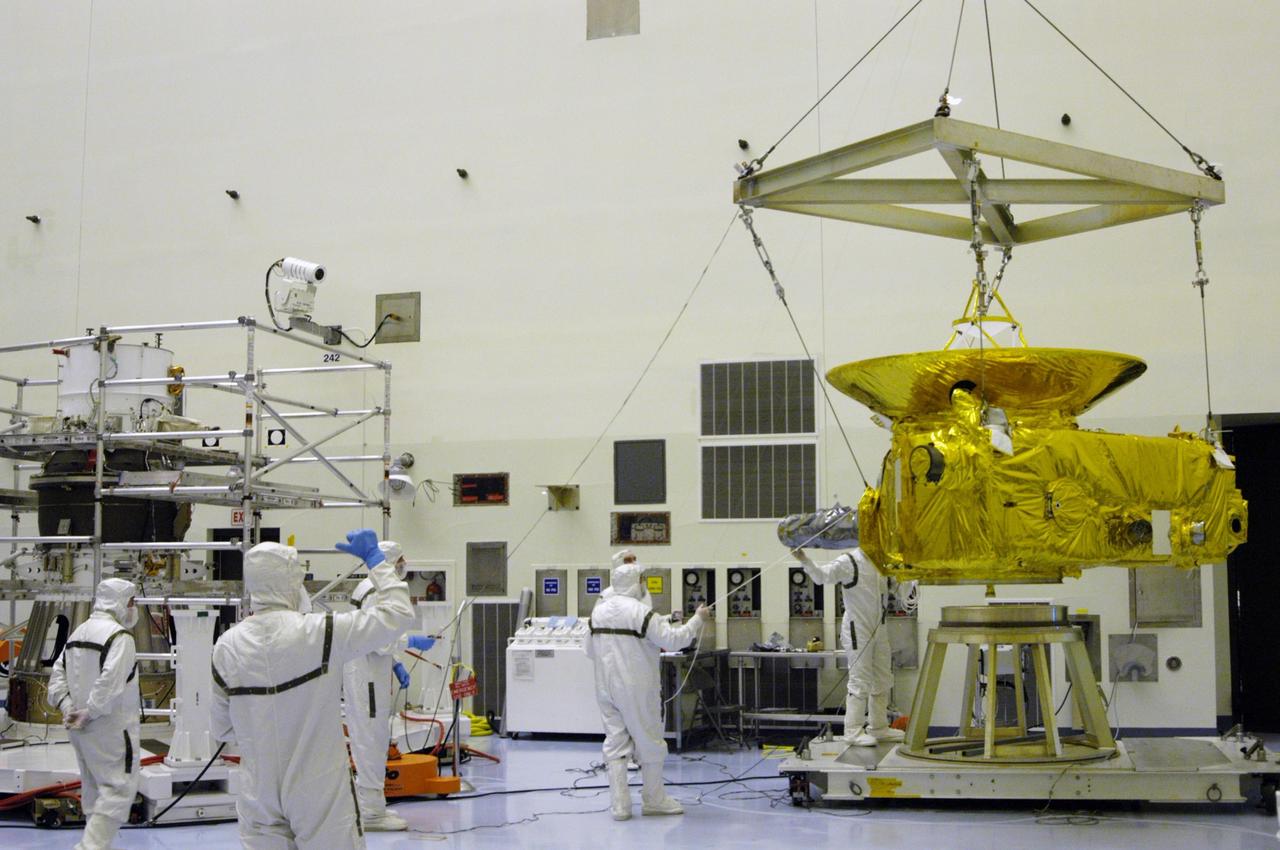
KENNEDY SPACE CENTER, FLA. -- In the Payload Hazardous Servicing Facility at NASA Kennedy Space Center, workers in clean room suits help lift the New Horizons spacecraft from its work stand. It will be moved across the room and mated with the third stage, or upper booster, a Boeing STAR 48 solid-propellant kick motor. The launch vehicle for New Horizons is the Atlas V rocket, scheduled to launch from Cape Canaveral Air Force Station, Fla., during a 35-day window that opens Jan. 11, and fly through the Pluto system as early as summer 2015.
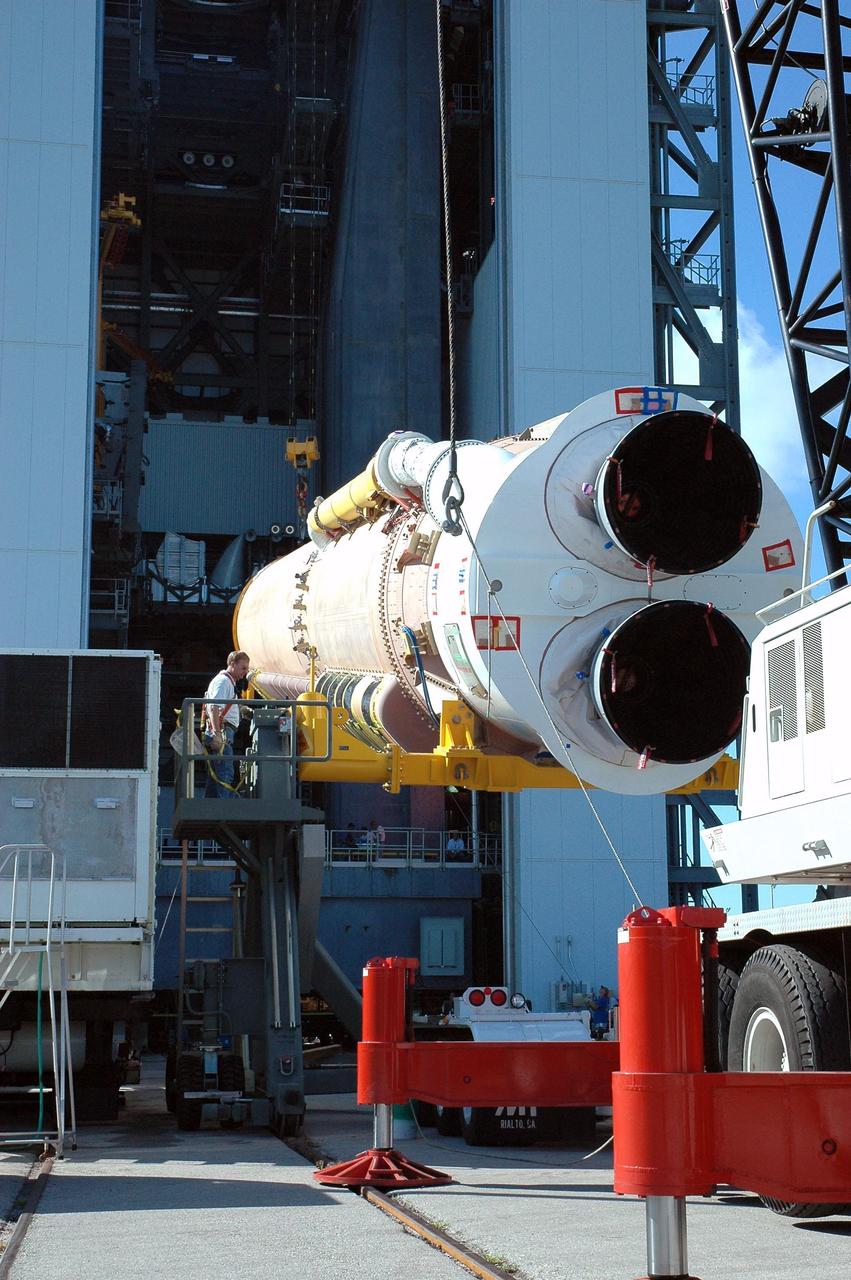
KENNEDY SPACE CENTER, FLA. - On Launch Complex 41 at Cape Canaveral Air Force Station, the first stage of an Atlas V rocket is lifted off the transporter. The rocket will be raised to vertical and then moved into the Vertical Integration Facility to begin preparations for launch. The Lockheed Martin Atlas V is the launch vehicle for the New Horizons spacecraft, which is designed to make the first reconnaissance of Pluto and Charon - a "double planet" and the last planet in our solar system to be visited by spacecraft. The mission will then visit one or more objects in the Kuiper Belt region beyond Neptune. New Horizons is scheduled to launch in January 2006, swing past Jupiter for a gravity boost and scientific studies in February or March 2007, and reach Pluto and its moon, Charon, in July 2015.
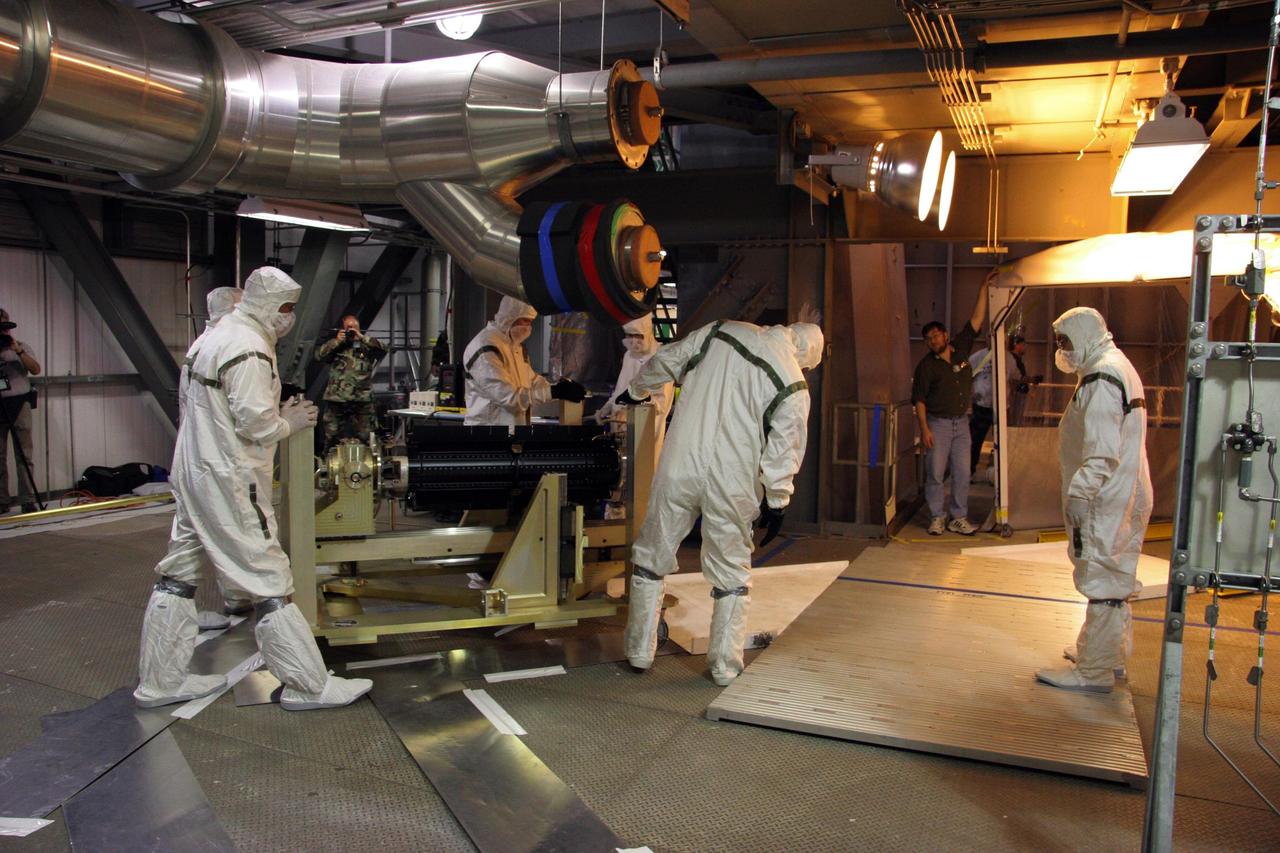
KENNEDY SPACE CENTER, FLA. — On Complex 41 at Cape Canaveral Air Force Station in Florida, workers move the radioisotope thermoelectric generator (RTG). The generator will be installed on the New Horizons spacecraft encapsulated inside the fairing. Designed and integrated at the Johns Hopkins University Applied Physics Laboratory (APL) in Laurel, Md., New Horizons will launch on a nine-and-a-half-year voyage to Pluto. Typical of RTG-based systems, as on past outer-planet missions, New Horizons does not have a battery for storing power. At the start of the mission, the RTG, which provides power through the natural radioactive decay of plutonium dioxide fuel, will supply approximately 240 watts (at 30 volts of direct current) - the spacecraft’s shunt regulator unit maintains a steady input from the RTG and dissipates power the spacecraft cannot use at a given time. By July 2015 (the earliest Pluto encounter date) that supply decreases to 200 watts at the same voltage, so New Horizons will ease the strain on its limited power source by cycling science instruments during planetary encounters. On Complex 41 at Cape Canaveral Air Force Station in Florida, workers on the ground oversee the radioisotope thermoelectric generator (RTG) being lifted into the Vertical Integration Facility. The RTG will be installed on the New Horizons spacecraft within the fairing at the top of the Atlas V launch vehicle. Designed and integrated at the Johns Hopkins University Applied Physics Laboratory (APL) in Laurel, Md., New Horizons will launch on a nine-and-a-half-year voyage to Pluto. Typical of RTG-based systems, as on past outer-planet missions, New Horizons does not have a battery for storing power. At the start of the mission, the RTG, which provides power through the natural radioactive decay of plutonium dioxide fuel, will supply approximately 240 watts (at 30 volts of direct current) - the spacecraft’s shunt regulator unit maintains a steady input from the RTG and diss
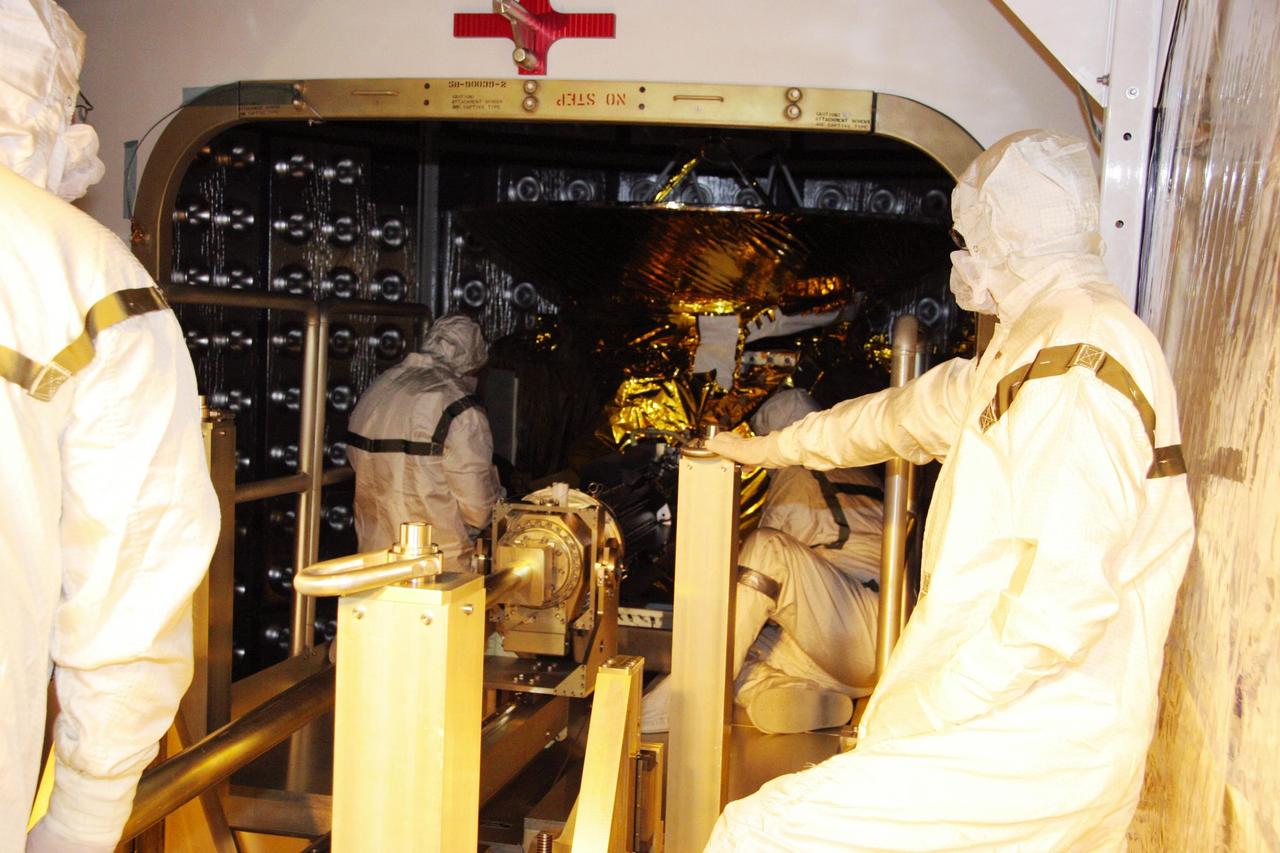
KENNEDY SPACE CENTER, FLA. — On Complex 41 at Cape Canaveral Air Force Station in Florida, workers move the radioisotope thermoelectric generator (RTG) into an area of the fairing containing the New Horizons spacecraft, to which it will be attached. Designed and integrated at the Johns Hopkins University Applied Physics Laboratory (APL) in Laurel, Md., New Horizons will launch on a nine-and-a-half-year voyage to Pluto. Typical of RTG-based systems, as on past outer-planet missions, New Horizons does not have a battery for storing power. At the start of the mission, the RTG, which provides power through the natural radioactive decay of plutonium dioxide fuel, will supply approximately 240 watts (at 30 volts of direct current) - the spacecraft’s shunt regulator unit maintains a steady input from the RTG and dissipates power the spacecraft cannot use at a given time. By July 2015 (the earliest Pluto encounter date) that supply decreases to 200 watts at the same voltage, so New Horizons will ease the strain on its limited power source by cycling science instruments during planetary encounters. On Complex 41 at Cape Canaveral Air Force Station in Florida, workers on the ground oversee the radioisotope thermoelectric generator (RTG) being lifted into the Vertical Integration Facility. The RTG will be installed on the New Horizons spacecraft within the fairing at the top of the Atlas V launch vehicle. Designed and integrated at the Johns Hopkins University Applied Physics Laboratory (APL) in Laurel, Md., New Horizons will launch on a nine-and-a-half-year voyage to Pluto. Typical of RTG-based systems, as on past outer-planet missions, New Horizons does not have a battery for storing power. At the start of the mission, the RTG, which provides power through the natural radioactive decay of plutonium dioxide fuel, will supply approximately 240 watts (at 30 volts of direct current) - the spacecraft’s shunt regulator unit maintains a steady input from the RTG and diss