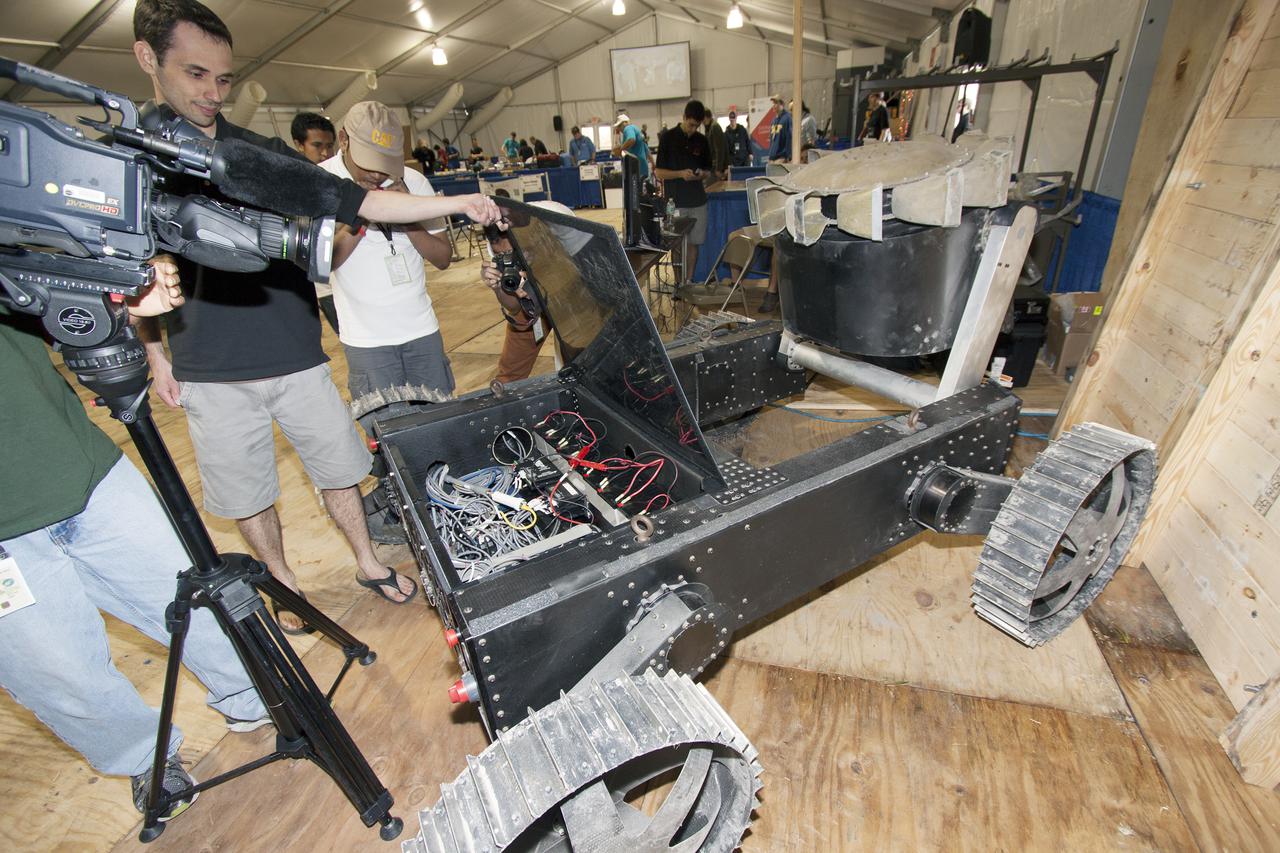
CAPE CANAVERAL, Fla. – A team from Astrobotic Technology, Inc., demonstrates the Polaris rover at a robotics mining competition at NASA's Kennedy Space Center. Astrobotic developed the Polaris to prospect water at the lunar poles. Photo credit: Jim Grossmann
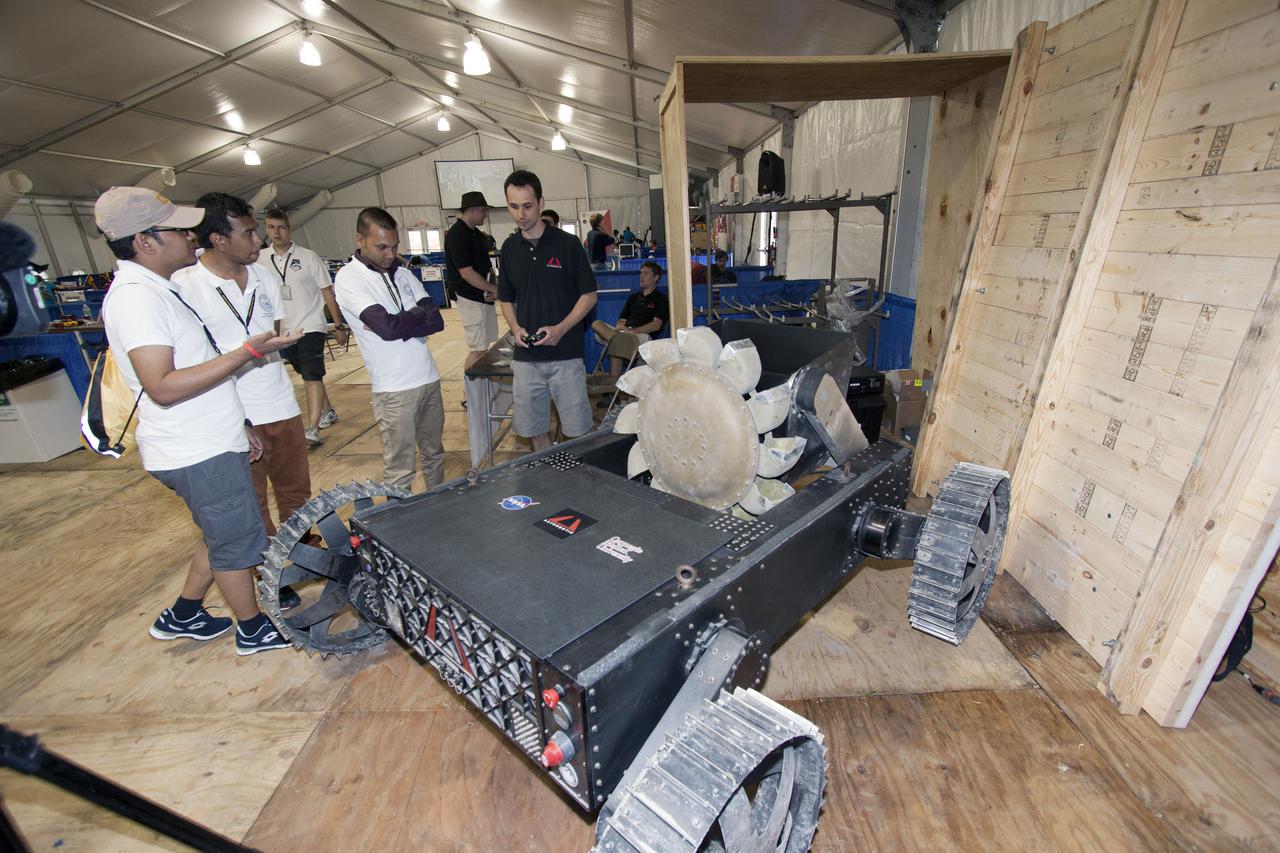
CAPE CANAVERAL, Fla. – A team from Astrobotic Technology, Inc., demonstrates the Polaris rover at a robotics mining competition at NASA's Kennedy Space Center. Astrobotic developed the Polaris to prospect water at the lunar poles. Photo credit: Jim Grossmann
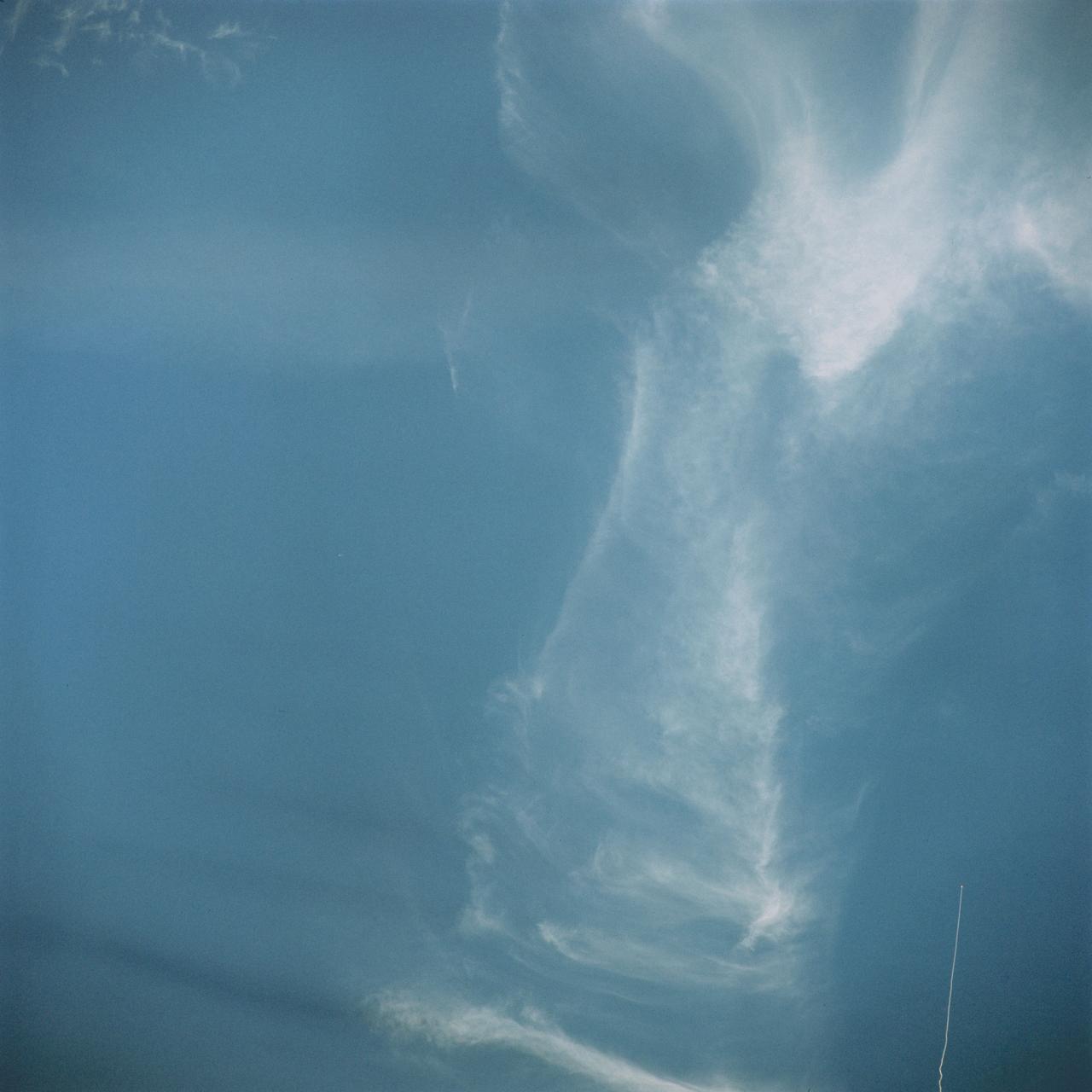
S65-63797 (12 Dec. 1965) --- Polaris, underwater launch, missile and trail, off Florida, as seen from the Gemini-7 spacecraft during its 31st revolution of Earth. Photo credit: NASA
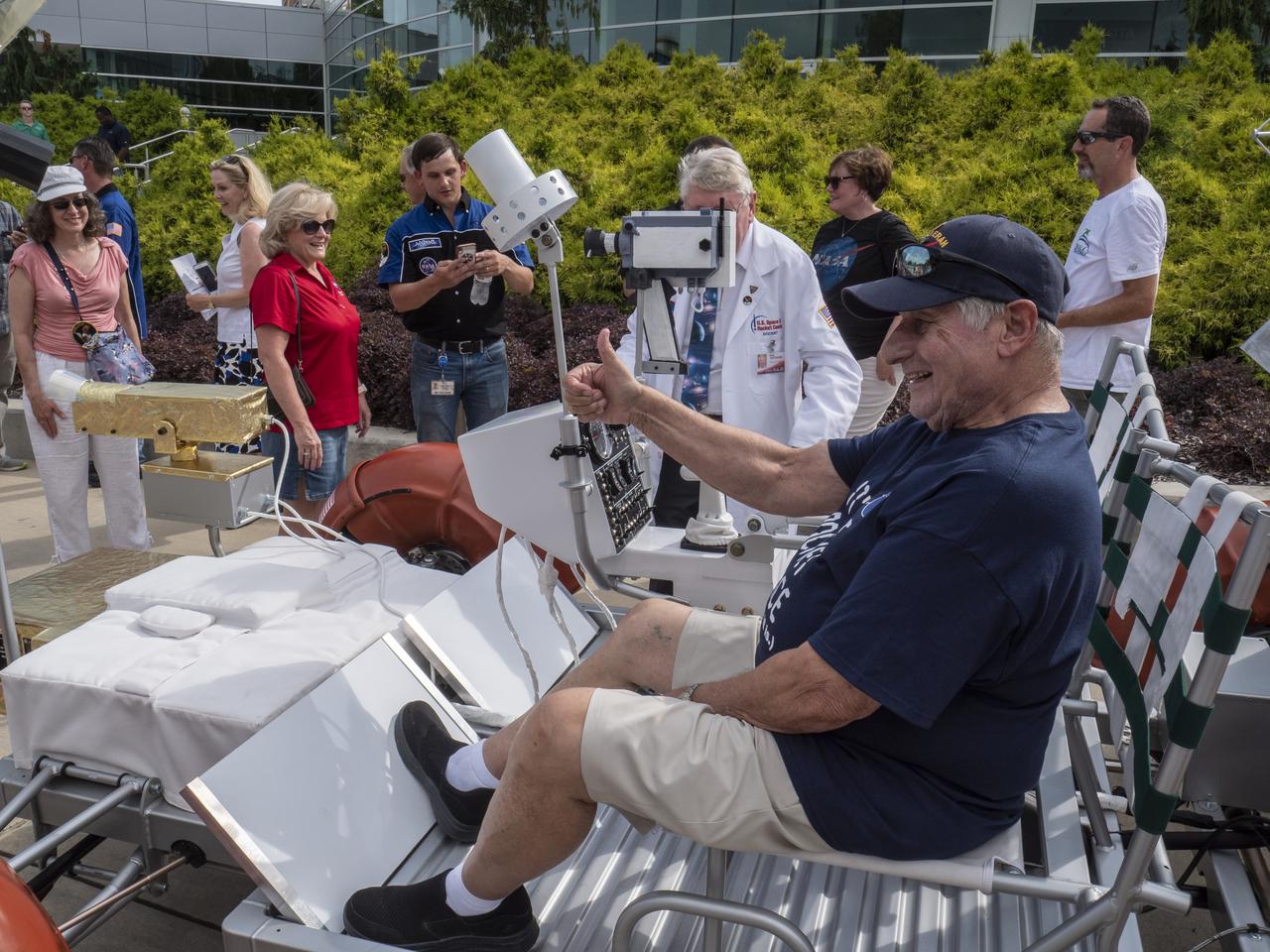
The City of Huntsville hosted a celebration of the Apollo 11 Moon landing with a street party on the downtown square with exhibits from the Marshall Space Flight Center and contributing contractors. The event was kicked off with remarks from Huntsville Mayor Tommy Battle, Marshall Space Flight Center's Director Jody Singer, and U.S. Space and Rocket Center's Director Deborah Barnhart with the Polaris replica of the Lunar Moon Buggy in the foreground. Retired NASA engineer Sonny Morea sits in the Polaris Lunar Rover Replica
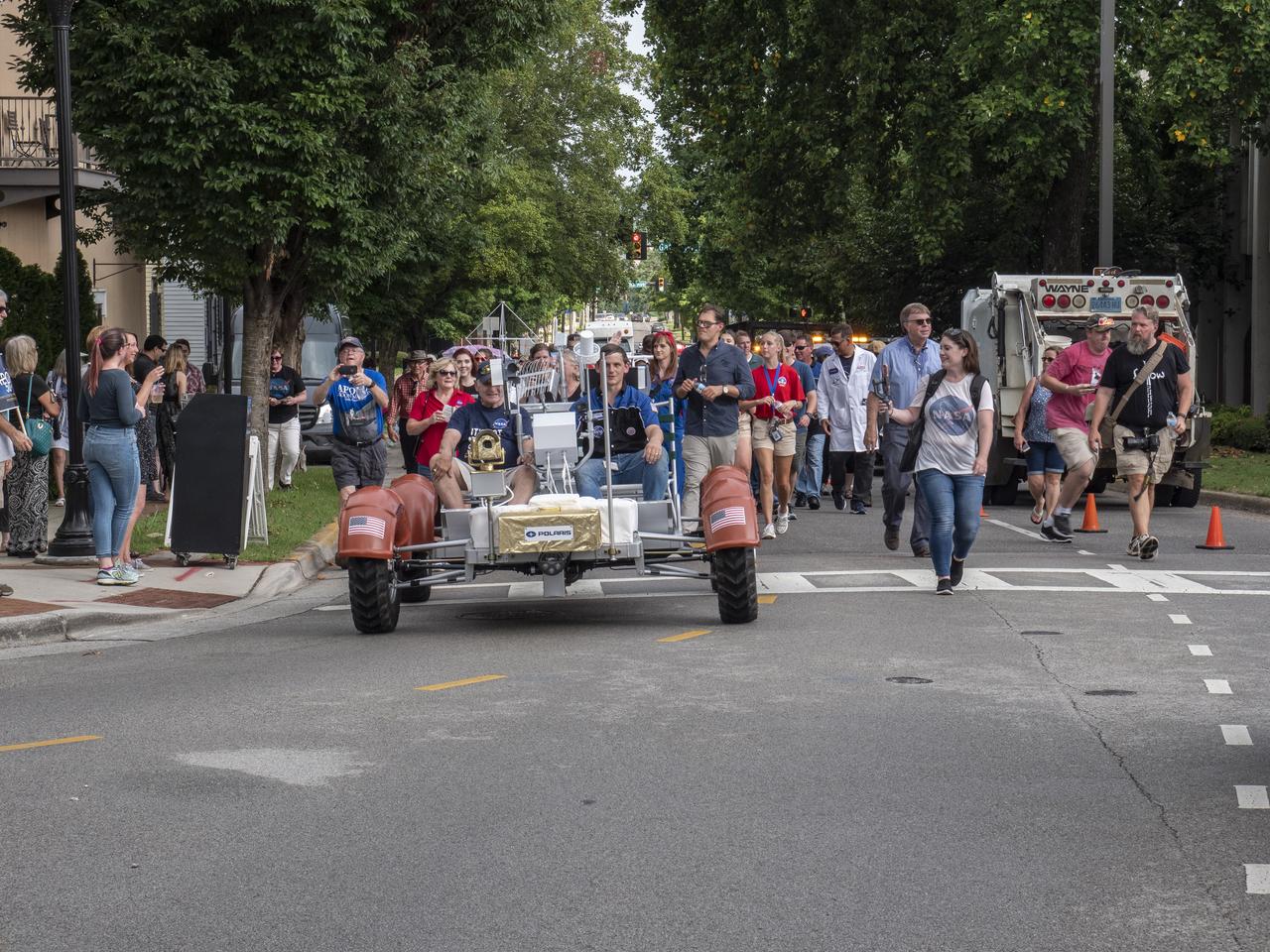
The City of Huntsville hosted a celebration of the Apollo 11 Moon landing with a street party on the downtown square with exhibits from the Marshall Space Flight Center and contributing contractors. The event was kicked off with remarks from Huntsville Mayor Tommy Battle, Marshall Space Flight Center's Director Jody Singer, and U.S. Space and Rocket Center's Director Deborah Barnhart with the Polaris replica of the Lunar Moon Buggy in the foreground. The Polaris Lunar Rover replica leads the parade into the Huntsville Square
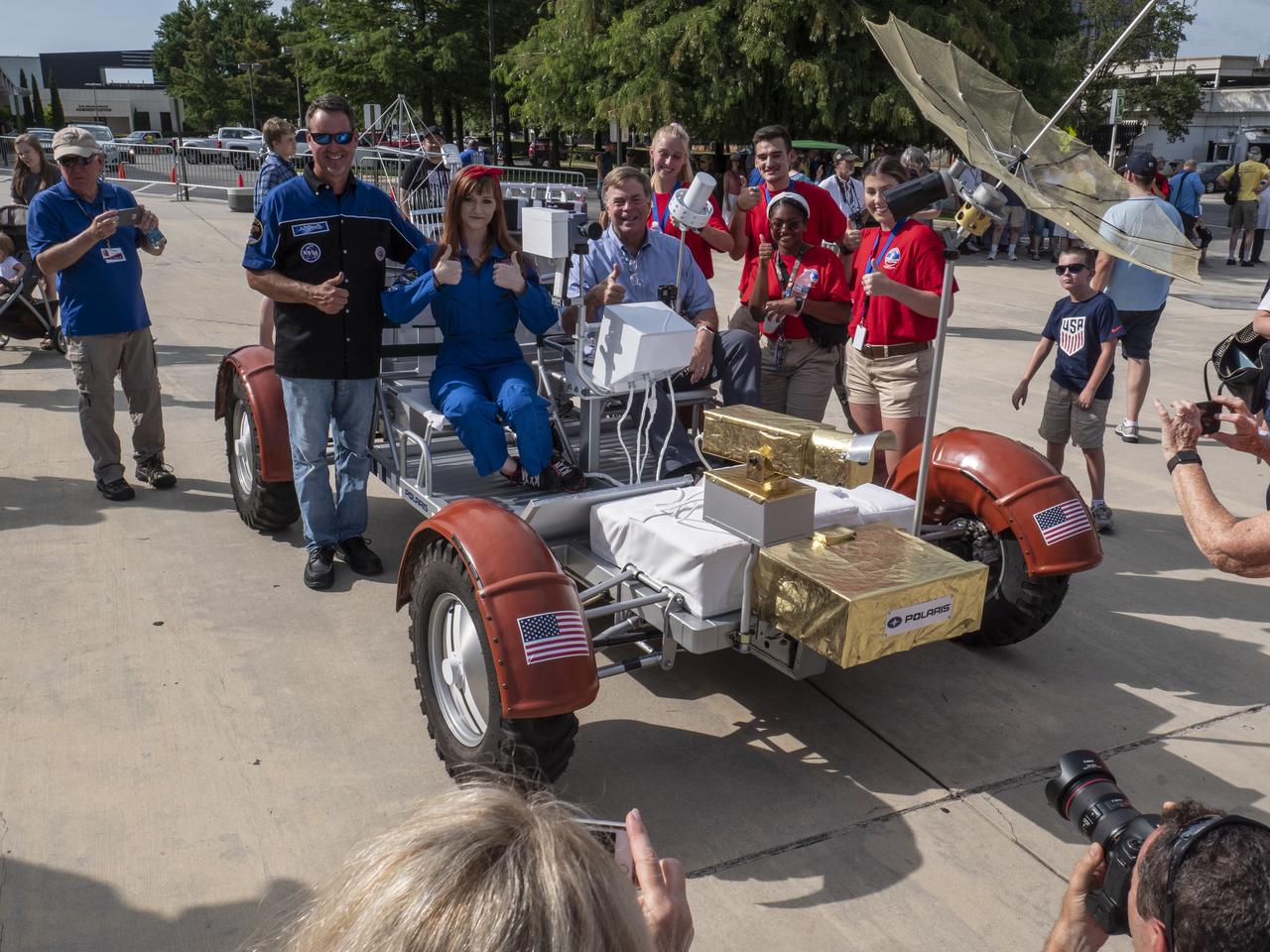
The City of Huntsville hosted a celebration of the Apollo 11 Moon landing with a street party on the downtown square with exhibits from the Marshall Space Flight Center and contributing contractors. The event was kicked off with remarks from Huntsville Mayor Tommy Battle, Marshall Space Flight Center's Director Jody Singer, and U.S. Space and Rocket Center's Director Deborah Barnhart with the Polaris replica of the Lunar Moon Buggy in the foreground. Huntsville Mayor Tommy Battle with the Polaris representative and representatives from the U.S. Space and Rocket Center
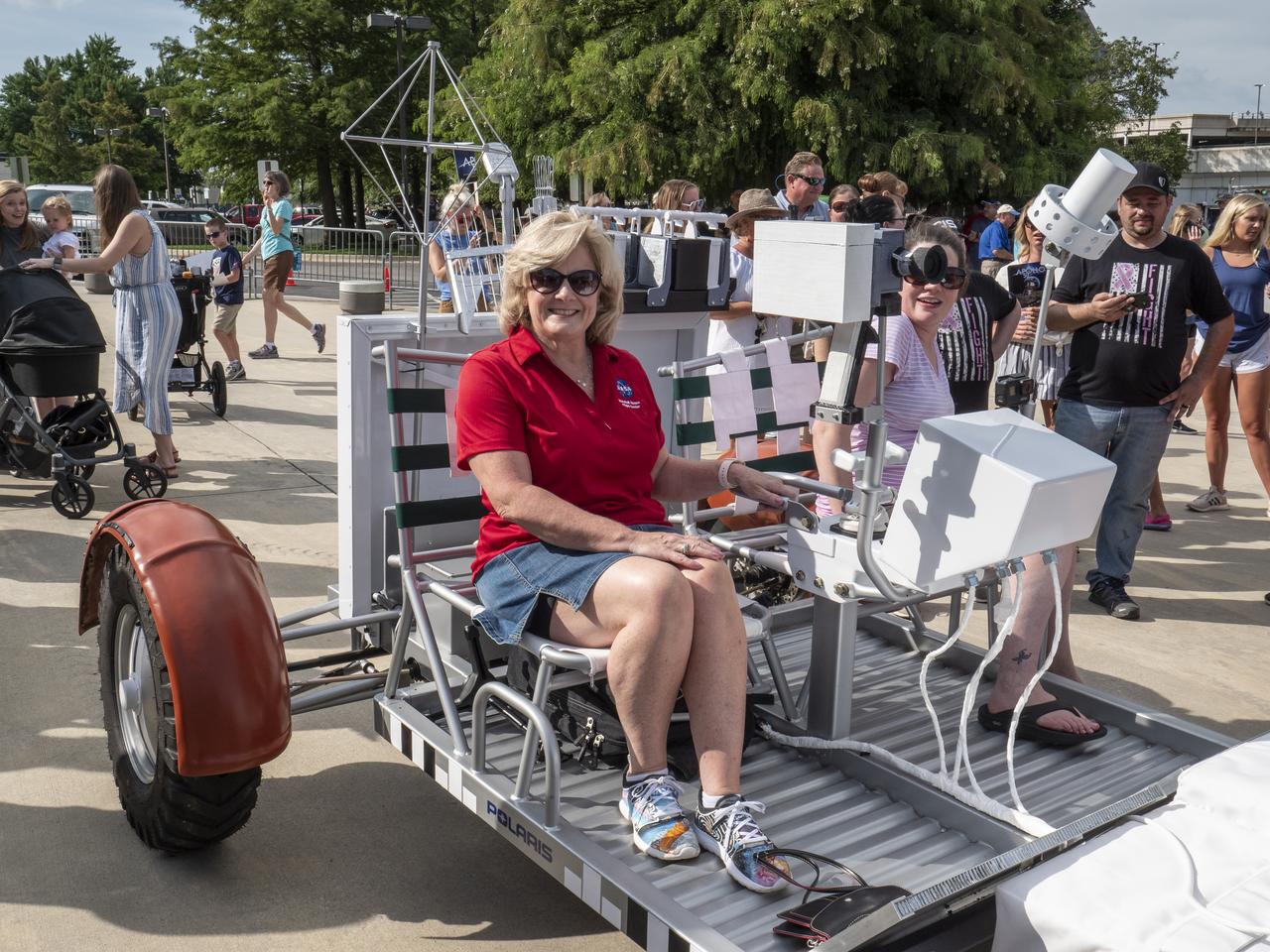
The City of Huntsville hosted a celebration of the Apollo 11 Moon landing with a street party on the downtown square with exhibits from the Marshall Space Flight Center and contributing contractors. The event was kicked off with remarks from Huntsville Mayor Tommy Battle, Marshall Space Flight Center's Director Jody Singer, and U.S. Space and Rocket Center's Director Deborah Barnhart with the Polaris replica of the Lunar Moon Buggy in the foreground. Marshall Center Director Jody Singer sits in the Polaris Lunar Rover replica.
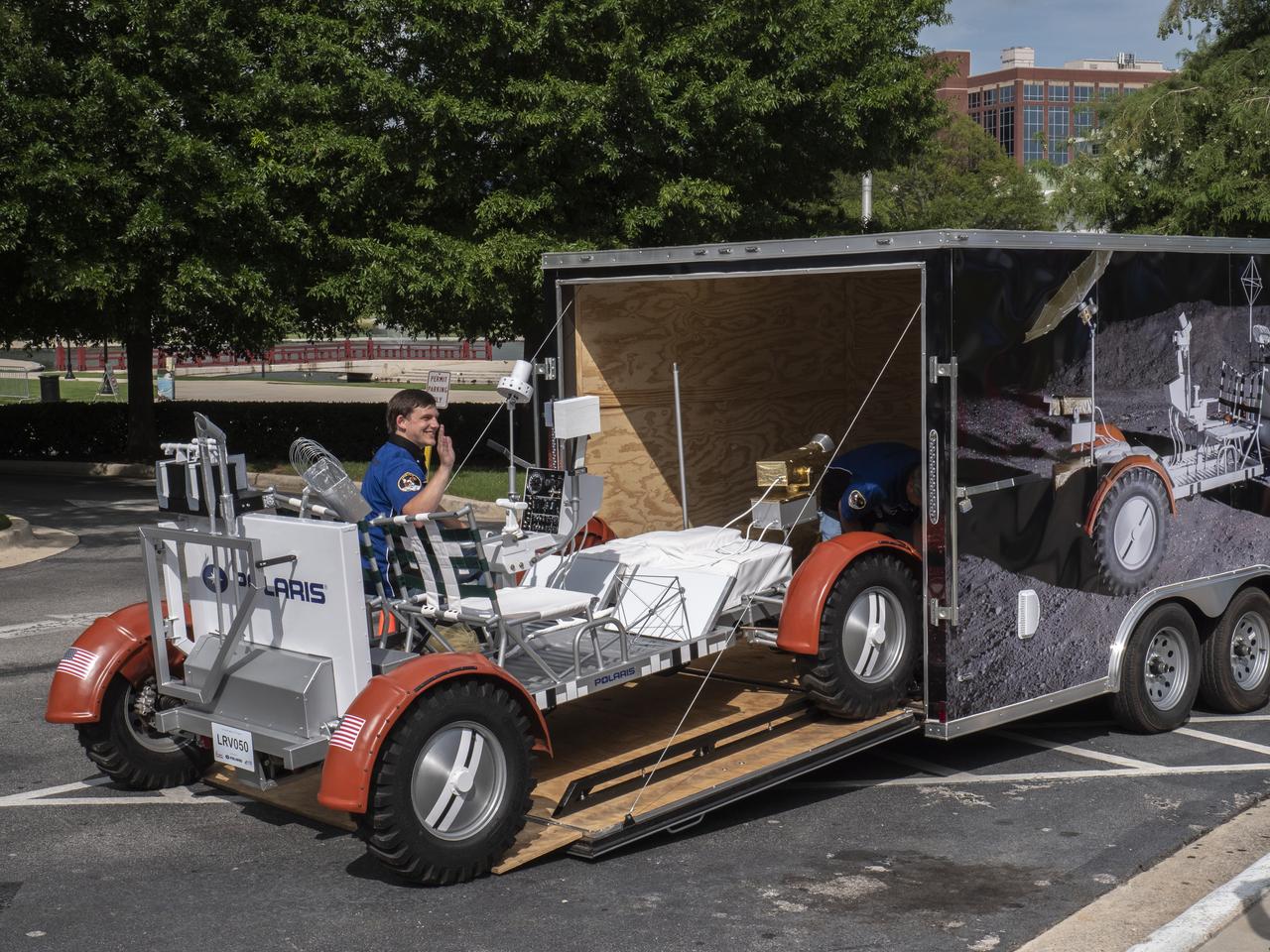
The City of Huntsville hosted a celebration of the Apollo 11 Moon landing with a street party on the downtown square with exhibits from the Marshall Space Flight Center and contributing contractors. The event was kicked off with remarks from Huntsville Mayor Tommy Battle, Marshall Space Flight Center's Director Jody Singer, and U.S. Space and Rocket Center's Director Deborah Barnhart with the Polaris replica of the Lunar Moon Buggy in the foreground. The Polaris Lunar Rover replica is being driven out of its trailer.
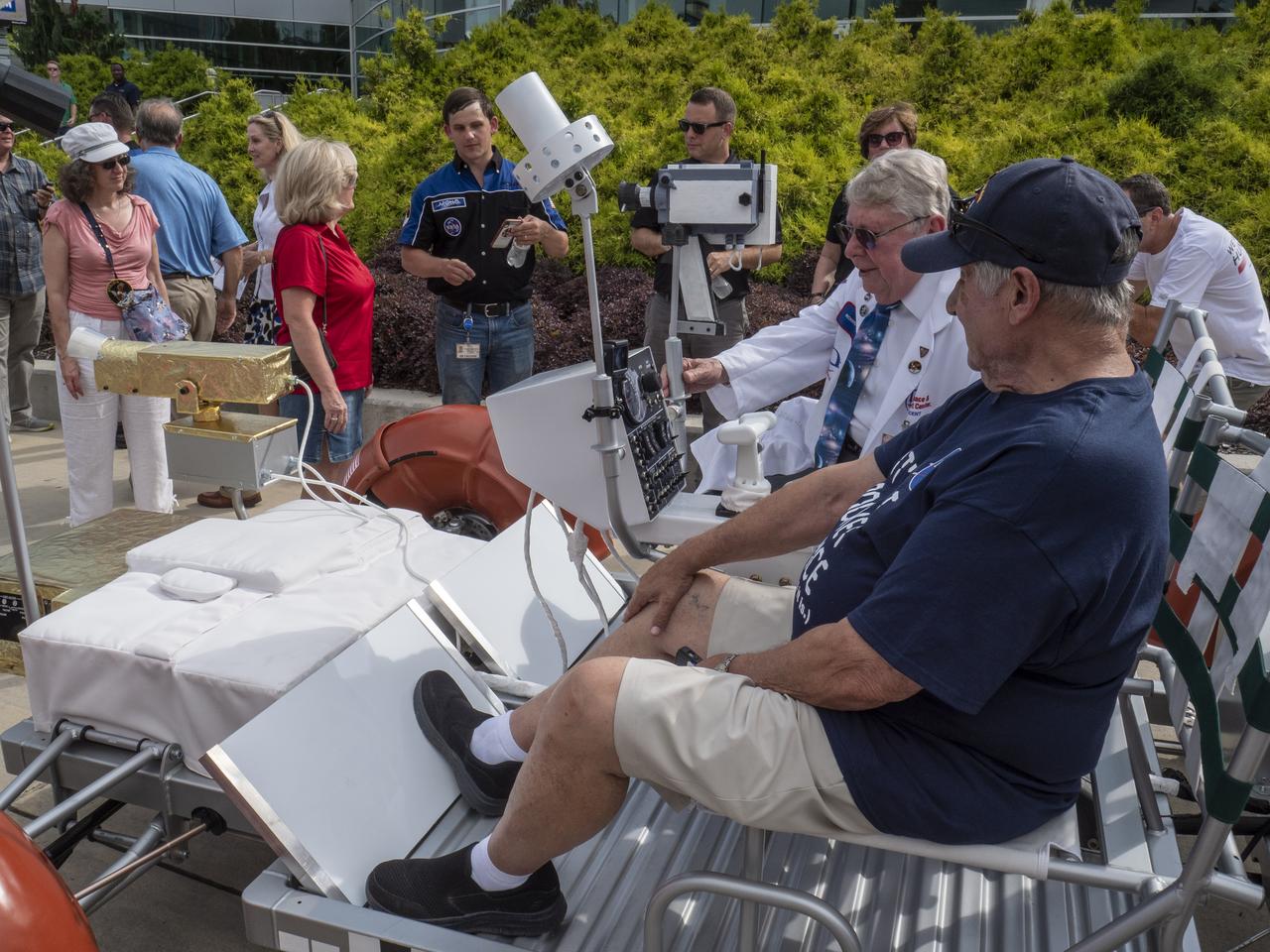
The City of Huntsville hosted a celebration of the Apollo 11 Moon landing with a street party on the downtown square with exhibits from the Marshall Space Flight Center and contributing contractors. The event was kicked off with remarks from Huntsville Mayor Tommy Battle, Marshall Space Flight Center's Director Jody Singer, and U.S. Space and Rocket Center's Director Deborah Barnhart with the Polaris replica of the Lunar Moon Buggy in the foreground. Retired engineers Sonny Morea and Richard Hoover sit in the Polaris Lunar Rover replica.
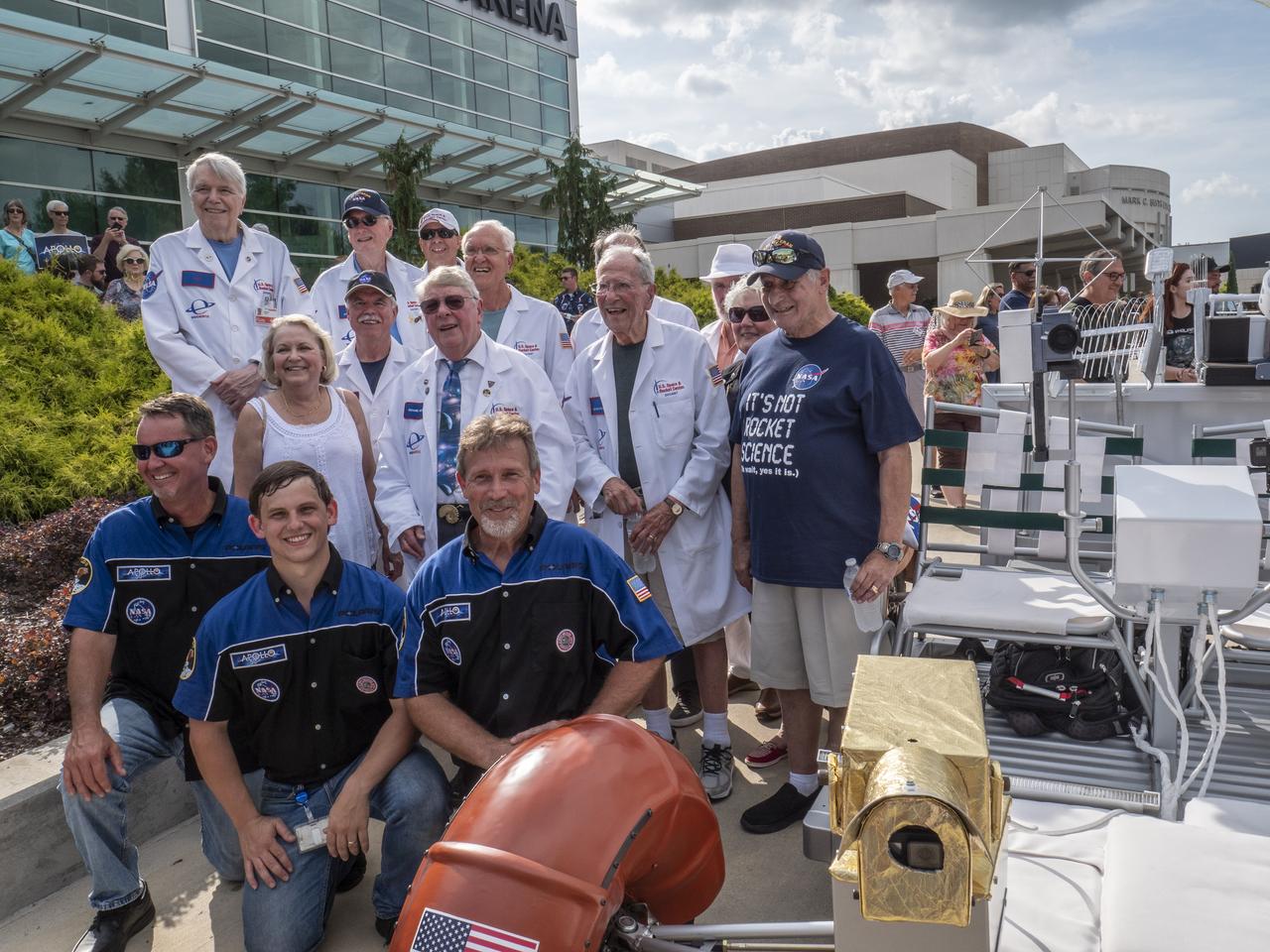
The City of Huntsville hosted a celebration of the Apollo 11 Moon landing with a street party on the downtown square with exhibits from the Marshall Space Flight Center and contributing contractors. The event was kicked off with remarks from Huntsville Mayor Tommy Battle, Marshall Space Flight Center's Director Jody Singer, and U.S. Space and Rocket Center's Director Deborah Barnhart with the Polaris replica of the Lunar Moon Buggy in the foreground. The Polaris Lunar Rover development team poses with retired NASA personnel who also volunteer as docents at the U.S. Space and Rocket Center.

The SOFIA telescope team collected baseline operational measurements during several nights of characterization testing in March 2008 while the SOFIA 747SP aircraft that houses the German-built infrared telescope was parked on an unlit ramp next to its hangar at the NASA Dryden Flight Operations Facility in Palmdale, Calif. The primary celestial target was Polaris, the North Star. The activity provided the team with a working knowledge of how telescope operating systems interact and the experience of tracking celestial targets from the ground.

The City of Huntsville hosted a celebration of the Apollo 11 Moon landing with a street party on the downtown square with exhibits from the Marshall Space Flight Center and contributing contractors. The event was kicked off with remarks from Huntsville Mayor Tommy Battle, Marshall Space Flight Center's Director Jody Singer, and U.S. Space and Rocket Center's Director Deborah Barnhart with the Polaris replica of the Lunar Moon Buggy in the foreground.
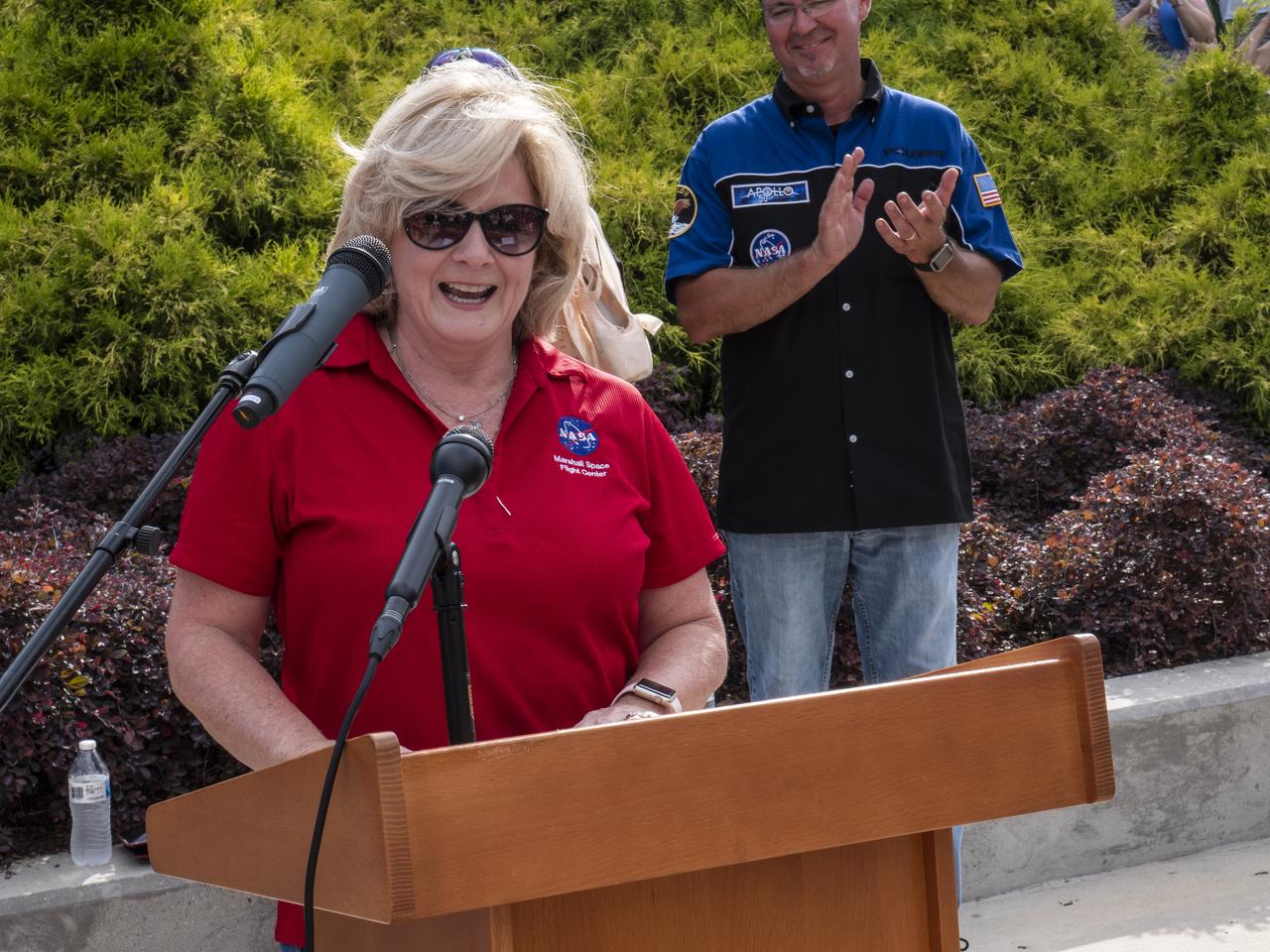
The City of Huntsville hosted a celebration of the Apollo 11 Moon landing with a street party on the downtown square with exhibits from the Marshall Space Flight Center and contributing contractors. The event was kicked off with remarks from Huntsville Mayor Tommy Battle, Marshall Space Flight Center's Director Jody Singer, and U.S. Space and Rocket Center's Director Deborah Barnhart with the Polaris replica of the Lunar Moon Buggy in the foreground. Marshall Center Director Jody Singer addresses the crowd.
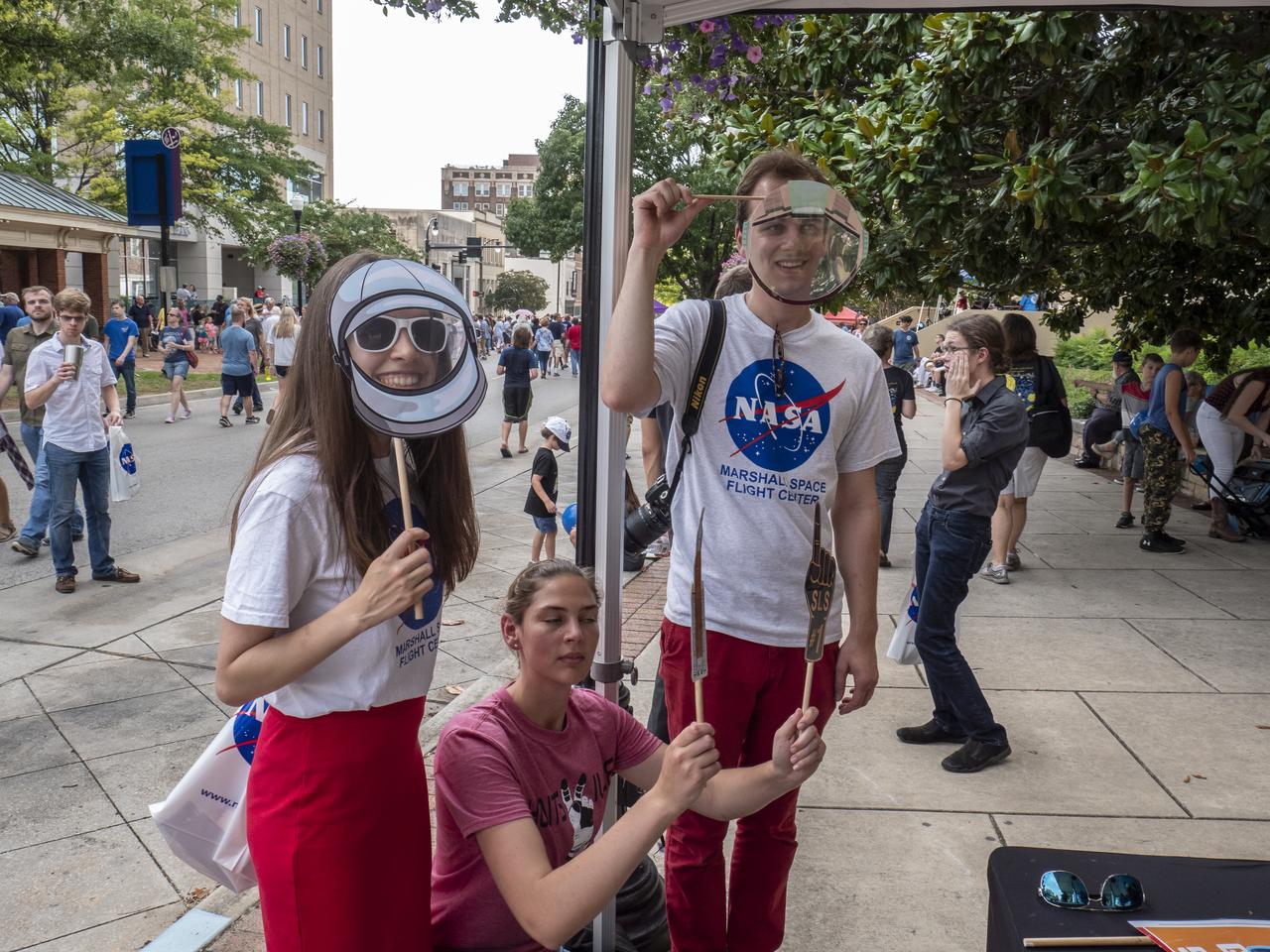
The City of Huntsville hosted a celebration of the Apollo 11 Moon landing with a street party on the downtown square with exhibits from the Marshall Space Flight Center and contributing contractors. The event was kicked off with remarks from Huntsville Mayor Tommy Battle, Marshall Space Flight Center's Director Jody Singer, and U.S. Space and Rocket Center's Director Deborah Barnhart with the Polaris replica of the Lunar Moon Buggy in the foreground.
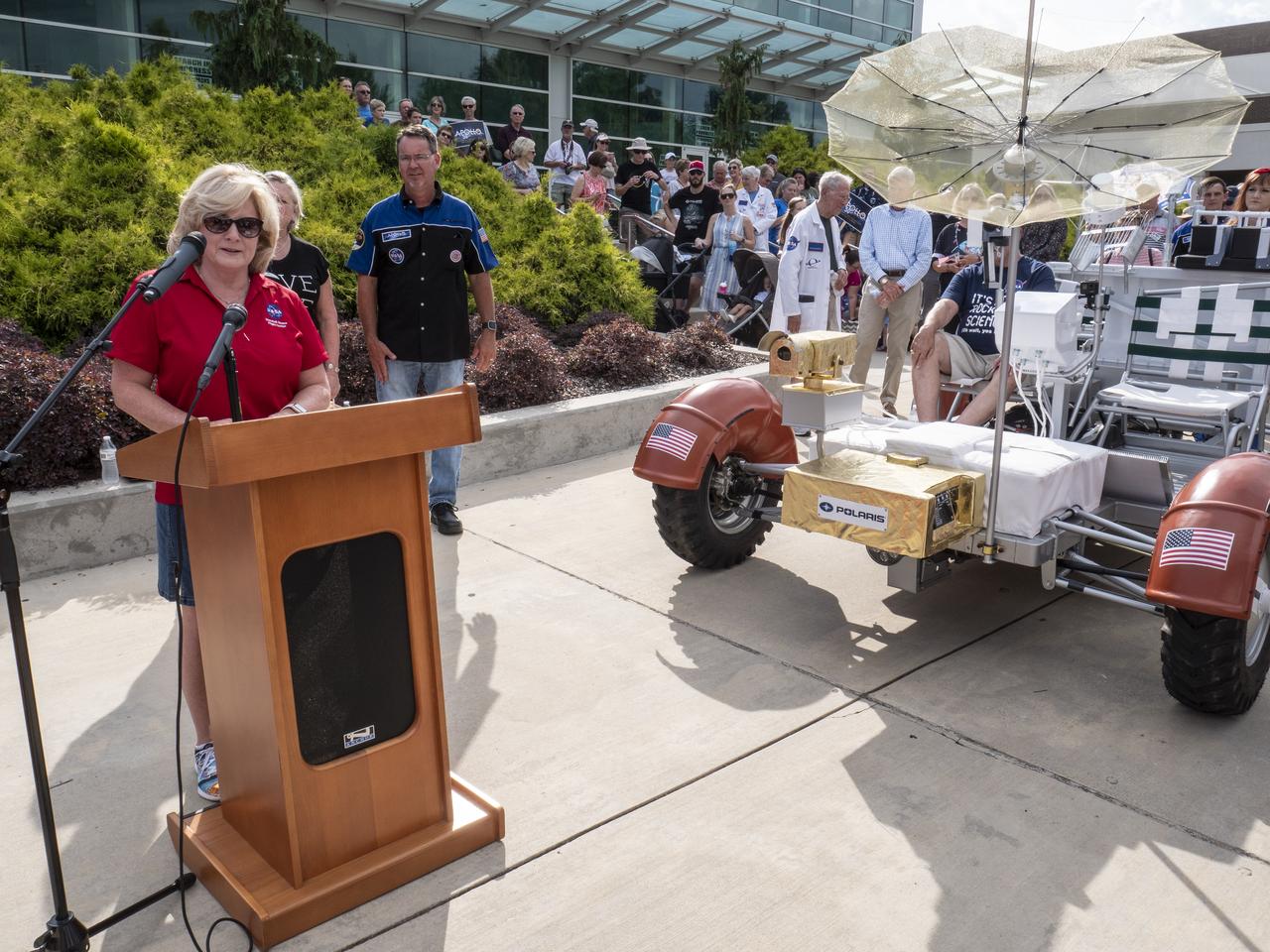
The City of Huntsville hosted a celebration of the Apollo 11 Moon landing with a street party on the downtown square with exhibits from the Marshall Space Flight Center and contributing contractors. The event was kicked off with remarks from Huntsville Mayor Tommy Battle, Marshall Space Flight Center's Director Jody Singer, and U.S. Space and Rocket Center's Director Deborah Barnhart with the Polaris replica of the Lunar Moon Buggy in the foreground. Marshall Center Director Jody Singer addresses the crowd.
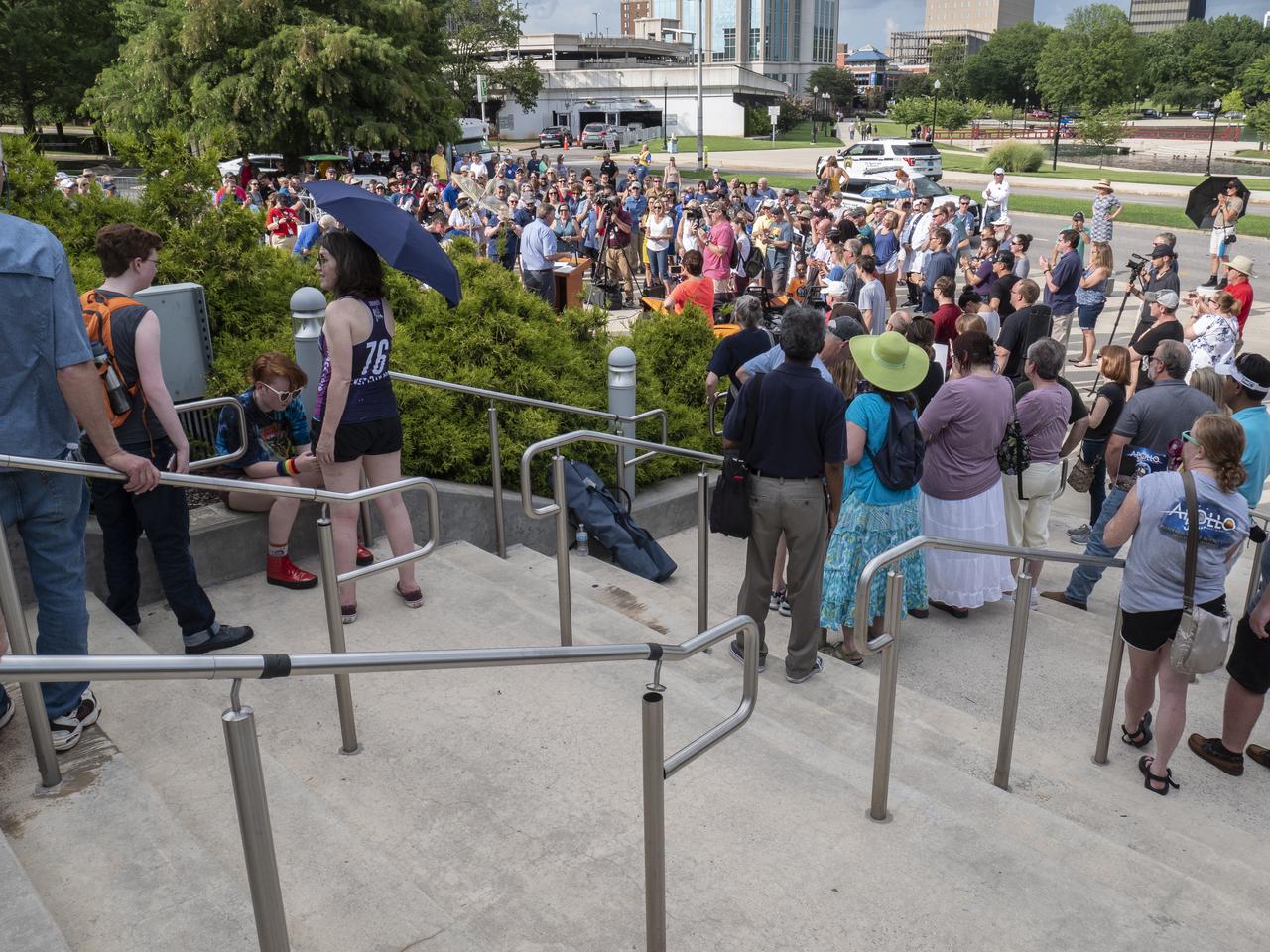
The City of Huntsville hosted a celebration of the Apollo 11 Moon landing with a street party on the downtown square with exhibits from the Marshall Space Flight Center and contributing contractors. The event was kicked off with remarks from Huntsville Mayor Tommy Battle, Marshall Space Flight Center's Director Jody Singer, and U.S. Space and Rocket Center's Director Deborah Barnhart with the Polaris replica of the Lunar Moon Buggy in the foreground.
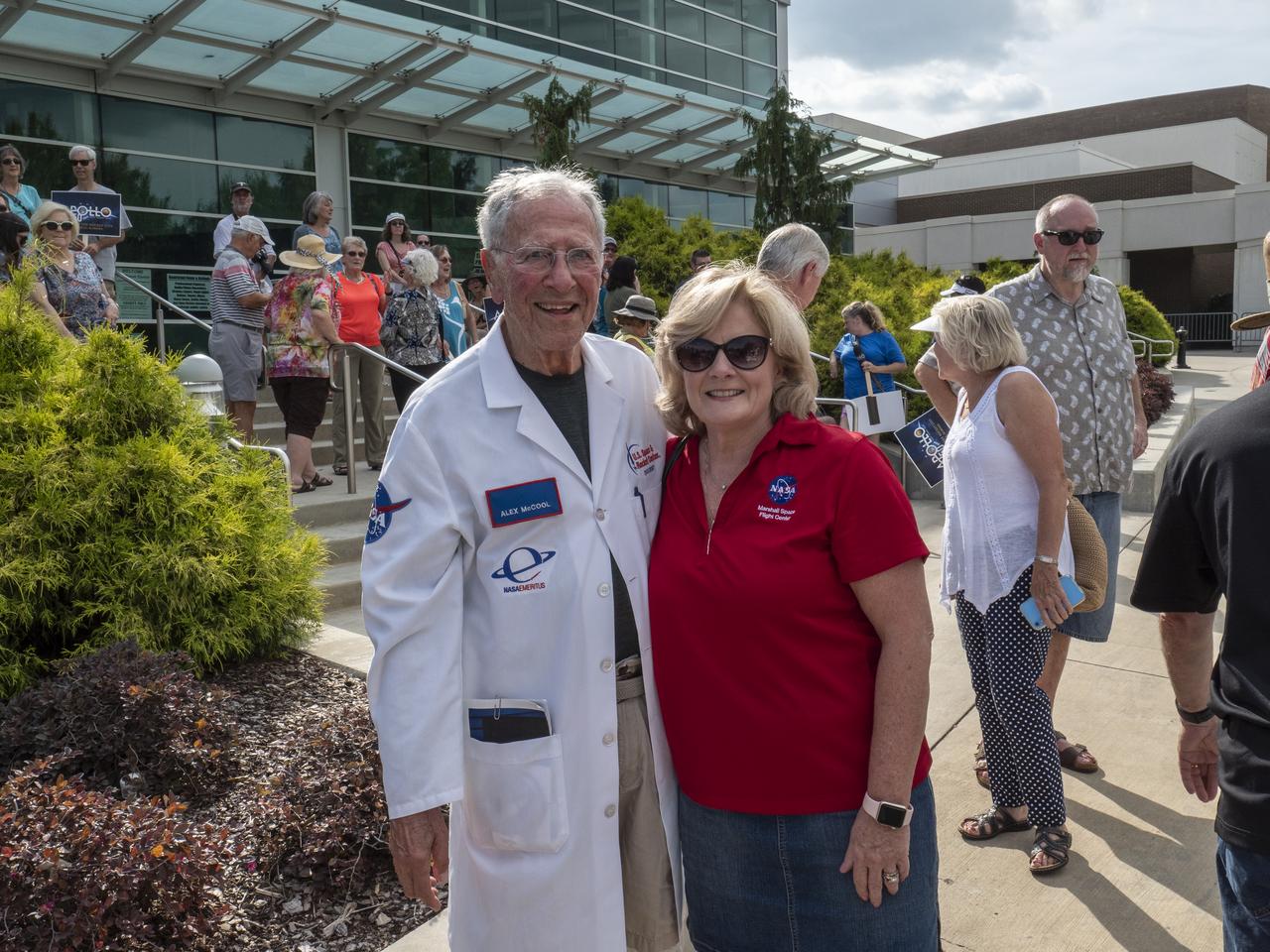
The City of Huntsville hosted a celebration of the Apollo 11 Moon landing with a street party on the downtown square with exhibits from the Marshall Space Flight Center and contributing contractors. The event was kicked off with remarks from Huntsville Mayor Tommy Battle, Marshall Space Flight Center's Director Jody Singer, and U.S. Space and Rocket Center's Director Deborah Barnhart with the Polaris replica of the Lunar Moon Buggy in the foreground. Marshall Center Director Jody Singer with retired engineer Alex McCool.
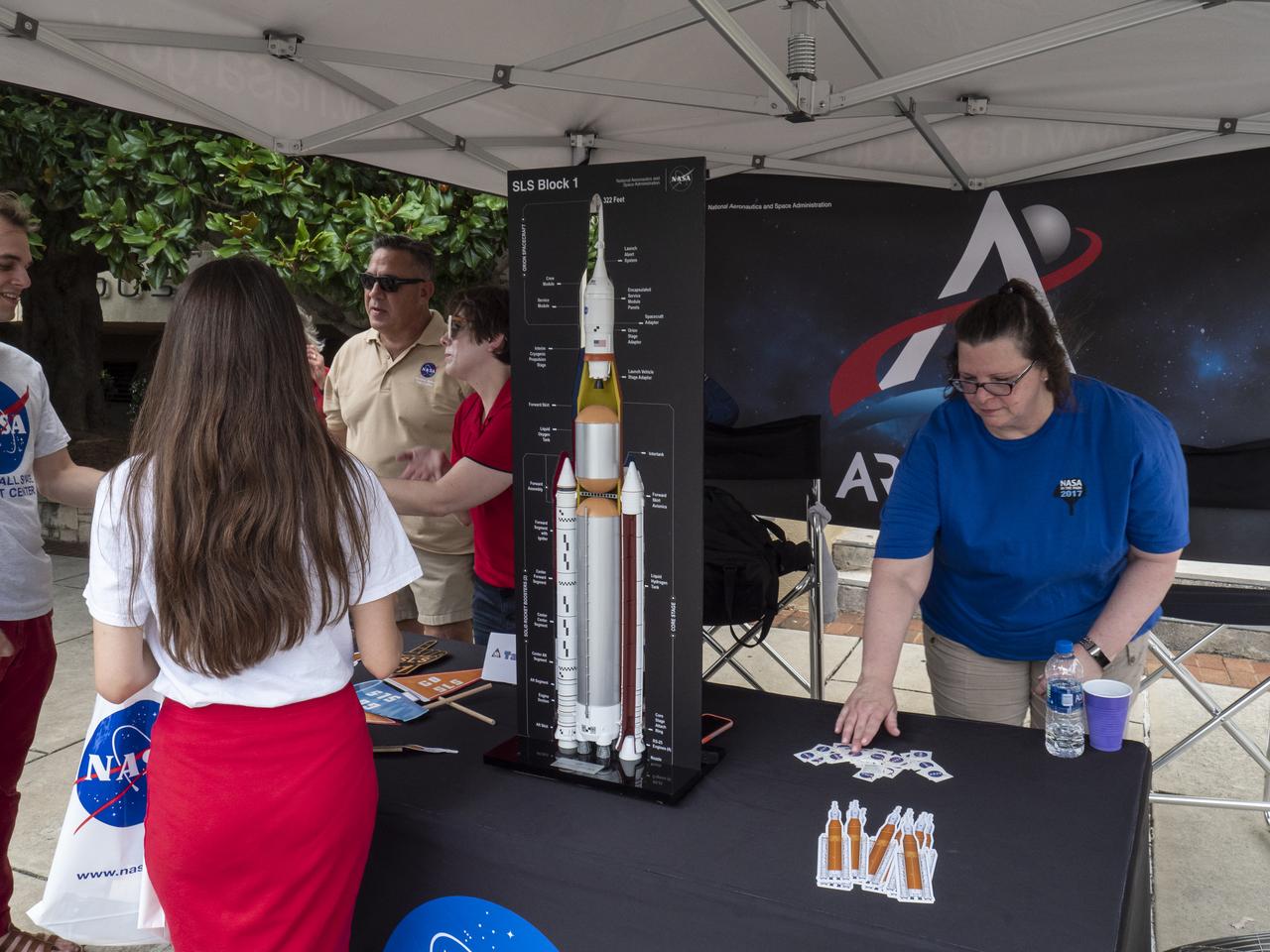
The City of Huntsville hosted a celebration of the Apollo 11 Moon landing with a street party on the downtown square with exhibits from the Marshall Space Flight Center and contributing contractors. The event was kicked off with remarks from Huntsville Mayor Tommy Battle, Marshall Space Flight Center's Director Jody Singer, and U.S. Space and Rocket Center's Director Deborah Barnhart with the Polaris replica of the Lunar Moon Buggy in the foreground.
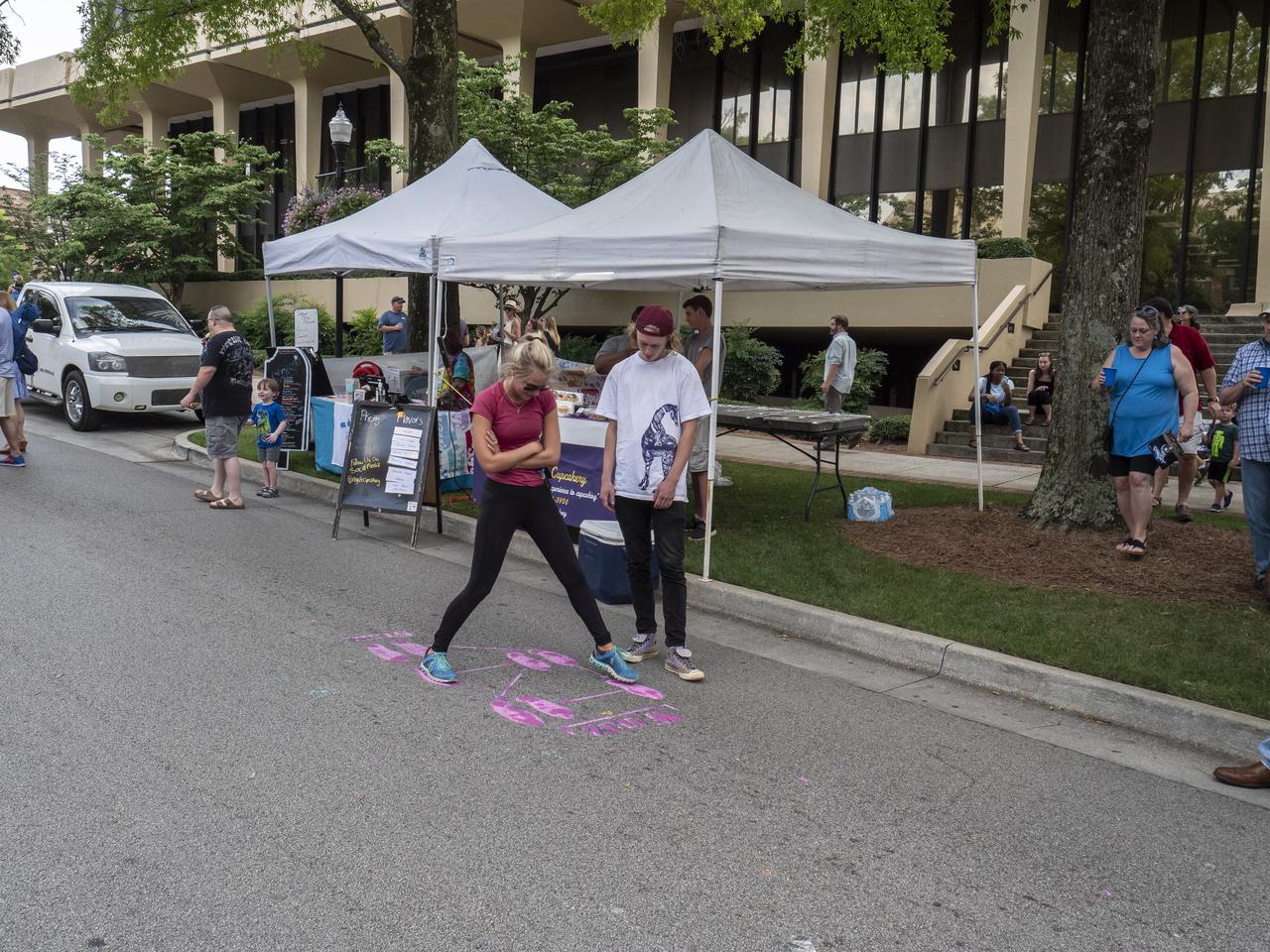
The City of Huntsville hosted a celebration of the Apollo 11 Moon landing with a street party on the downtown square with exhibits from the Marshall Space Flight Center and contributing contractors. The event was kicked off with remarks from Huntsville Mayor Tommy Battle, Marshall Space Flight Center's Director Jody Singer, and U.S. Space and Rocket Center's Director Deborah Barnhart with the Polaris replica of the Lunar Moon Buggy in the foreground.
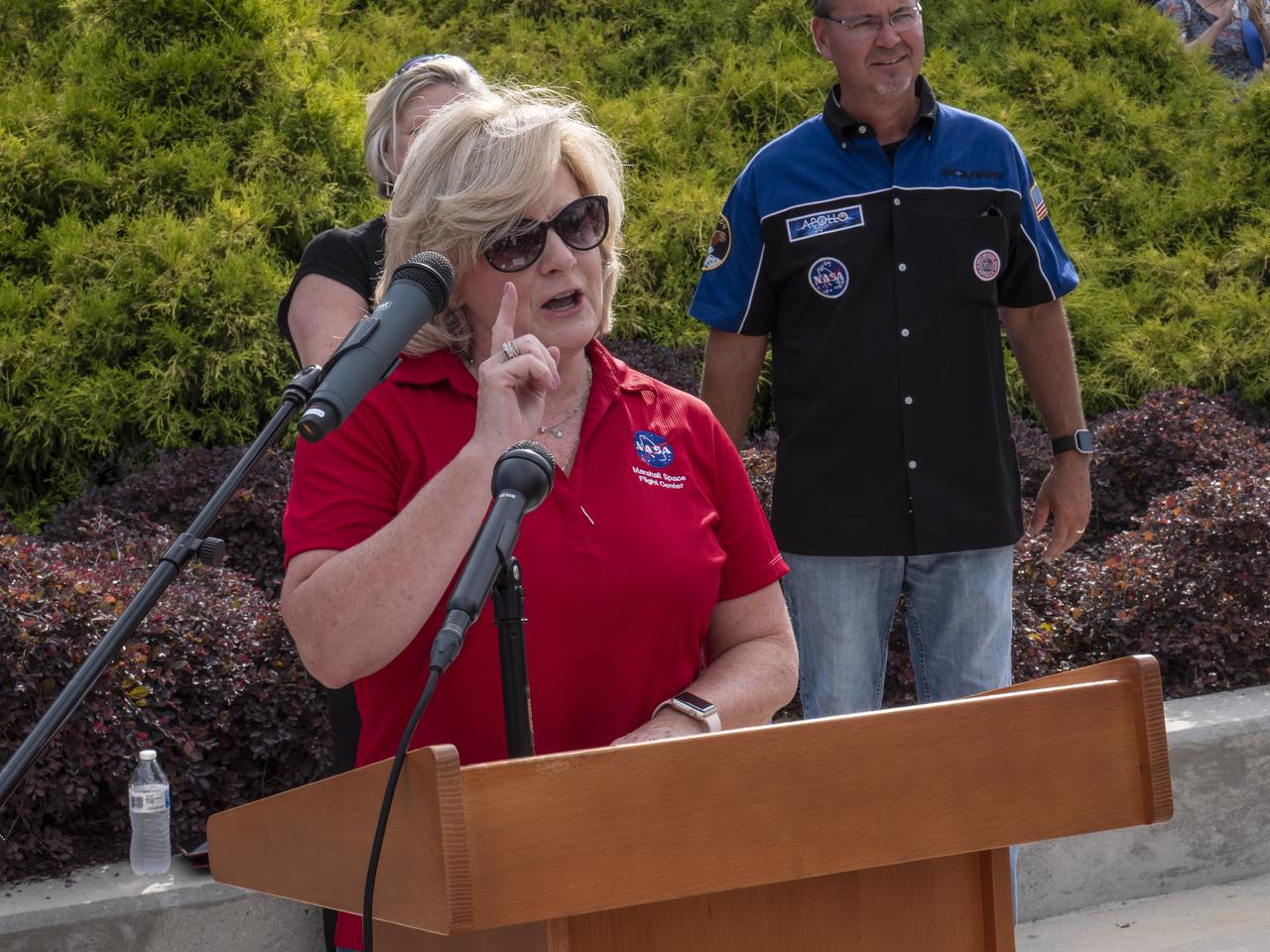
The City of Huntsville hosted a celebration of the Apollo 11 Moon landing with a street party on the downtown square with exhibits from the Marshall Space Flight Center and contributing contractors. The event was kicked off with remarks from Huntsville Mayor Tommy Battle, Marshall Space Flight Center's Director Jody Singer, and U.S. Space and Rocket Center's Director Deborah Barnhart with the Polaris replica of the Lunar Moon Buggy in the foreground. Marshall Center Director Jody Singer addresses the crowd.
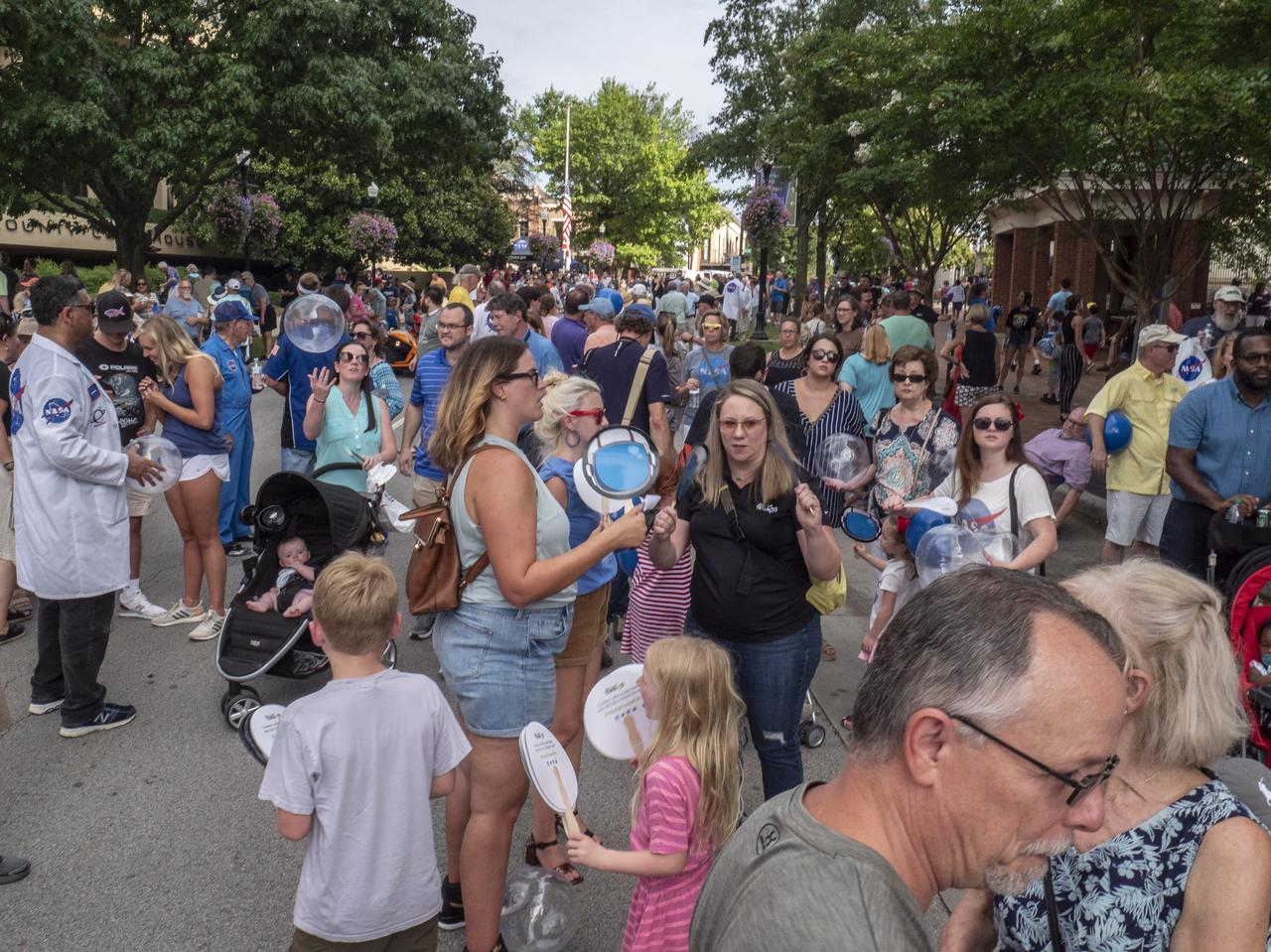
The City of Huntsville hosted a celebration of the Apollo 11 Moon landing with a street party on the downtown square with exhibits from the Marshall Space Flight Center and contributing contractors. The event was kicked off with remarks from Huntsville Mayor Tommy Battle, Marshall Space Flight Center's Director Jody Singer, and U.S. Space and Rocket Center's Director Deborah Barnhart with the Polaris replica of the Lunar Moon Buggy in the foreground.
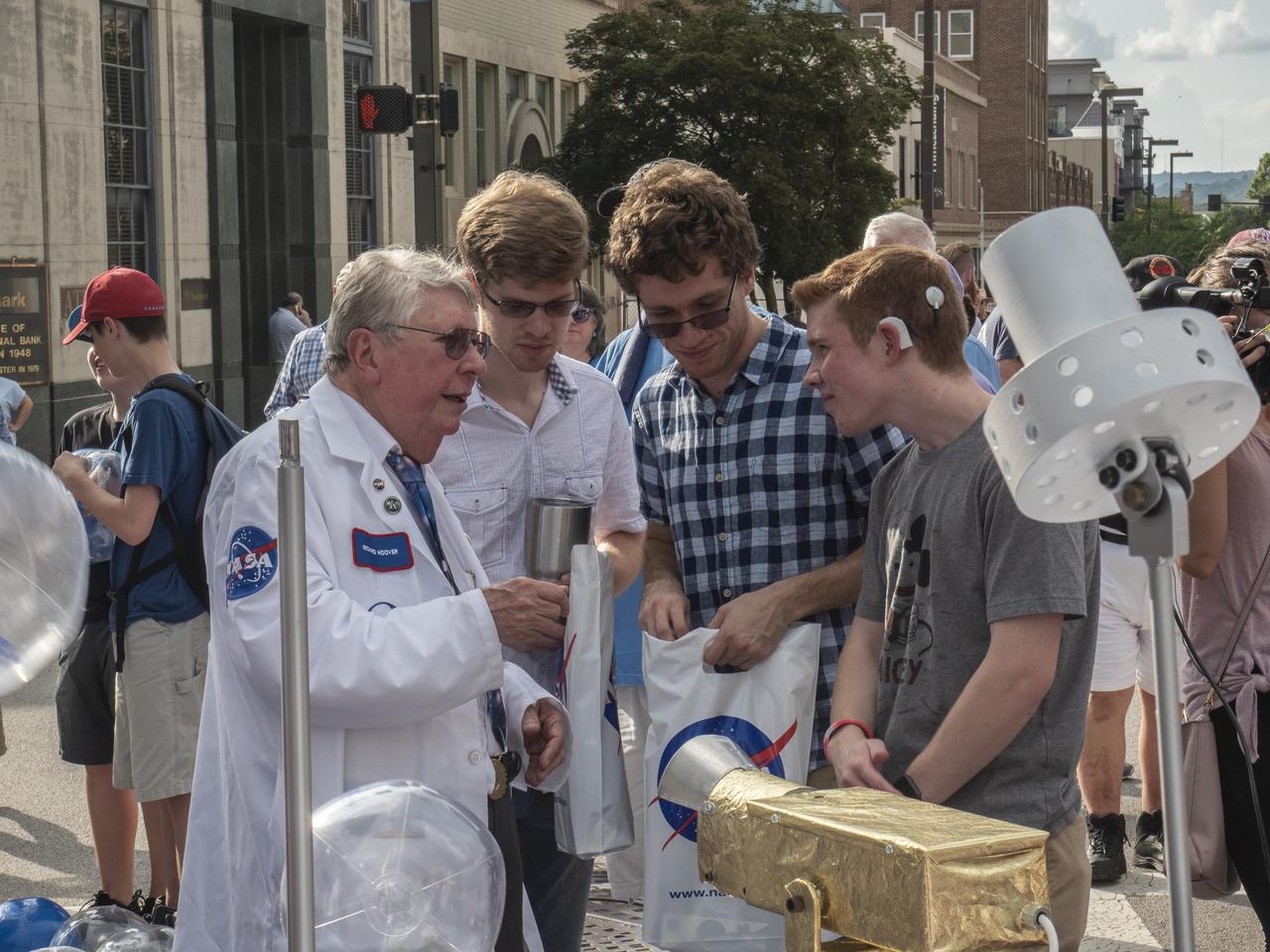
The City of Huntsville hosted a celebration of the Apollo 11 Moon landing with a street party on the downtown square with exhibits from the Marshall Space Flight Center and contributing contractors. The event was kicked off with remarks from Huntsville Mayor Tommy Battle, Marshall Space Flight Center's Director Jody Singer, and U.S. Space and Rocket Center's Director Deborah Barnhart with the Polaris replica of the Lunar Moon Buggy in the foreground. Retired NASA engineer Richard Hoover chats with attendees
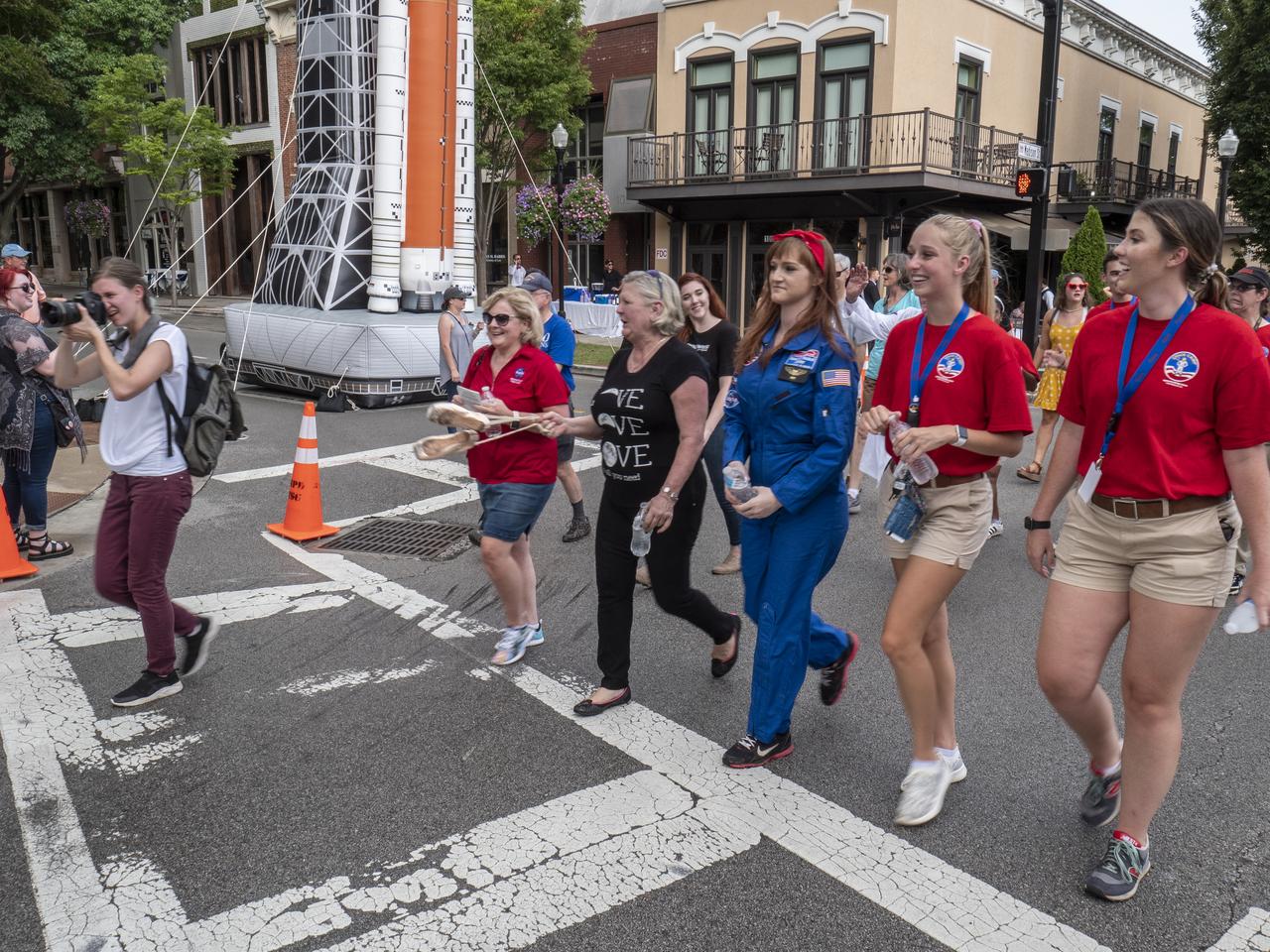
The City of Huntsville hosted a celebration of the Apollo 11 Moon landing with a street party on the downtown square with exhibits from the Marshall Space Flight Center and contributing contractors. The event was kicked off with remarks from Huntsville Mayor Tommy Battle, Marshall Space Flight Center's Director Jody Singer, and U.S. Space and Rocket Center's Director Deborah Barnhart with the Polaris replica of the Lunar Moon Buggy in the foreground. MSFC Director Jody Singer and U.S. Space and Rocket Center Director Deborah Barnhart lead the parade into the Huntsville Square.
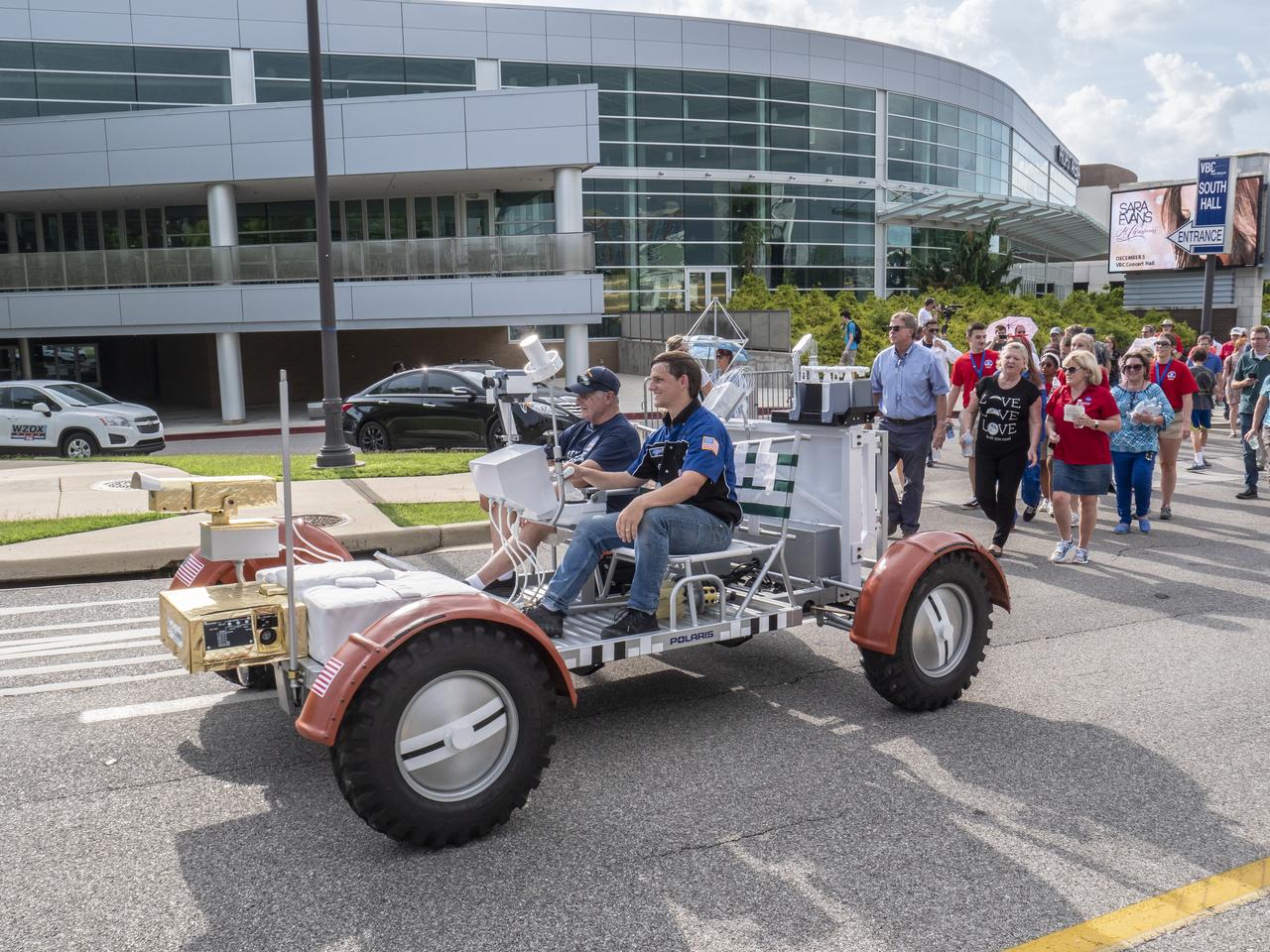
The City of Huntsville hosted a celebration of the Apollo 11 Moon landing with a street party on the downtown square with exhibits from the Marshall Space Flight Center and contributing contractors. The event was kicked off with remarks from Huntsville Mayor Tommy Battle, Marshall Space Flight Center's Director Jody Singer, and U.S. Space and Rocket Center's Director Deborah Barnhart with the Polaris replica of the Lunar Moon Buggy in the foreground. The Lunar Rover replica, followed by MSFC Director Jody Singer, USSRC Director Deborah Barnhart, and May Tommy Battle lead the parade to the Huntsville square.

jsc2025e007253 (2/14/2025) --- The logo for Polaris Bioremediation Science Experiment - Genetic Exchange in Microgravity for Biofilm Bioremediation (GEM-B2).
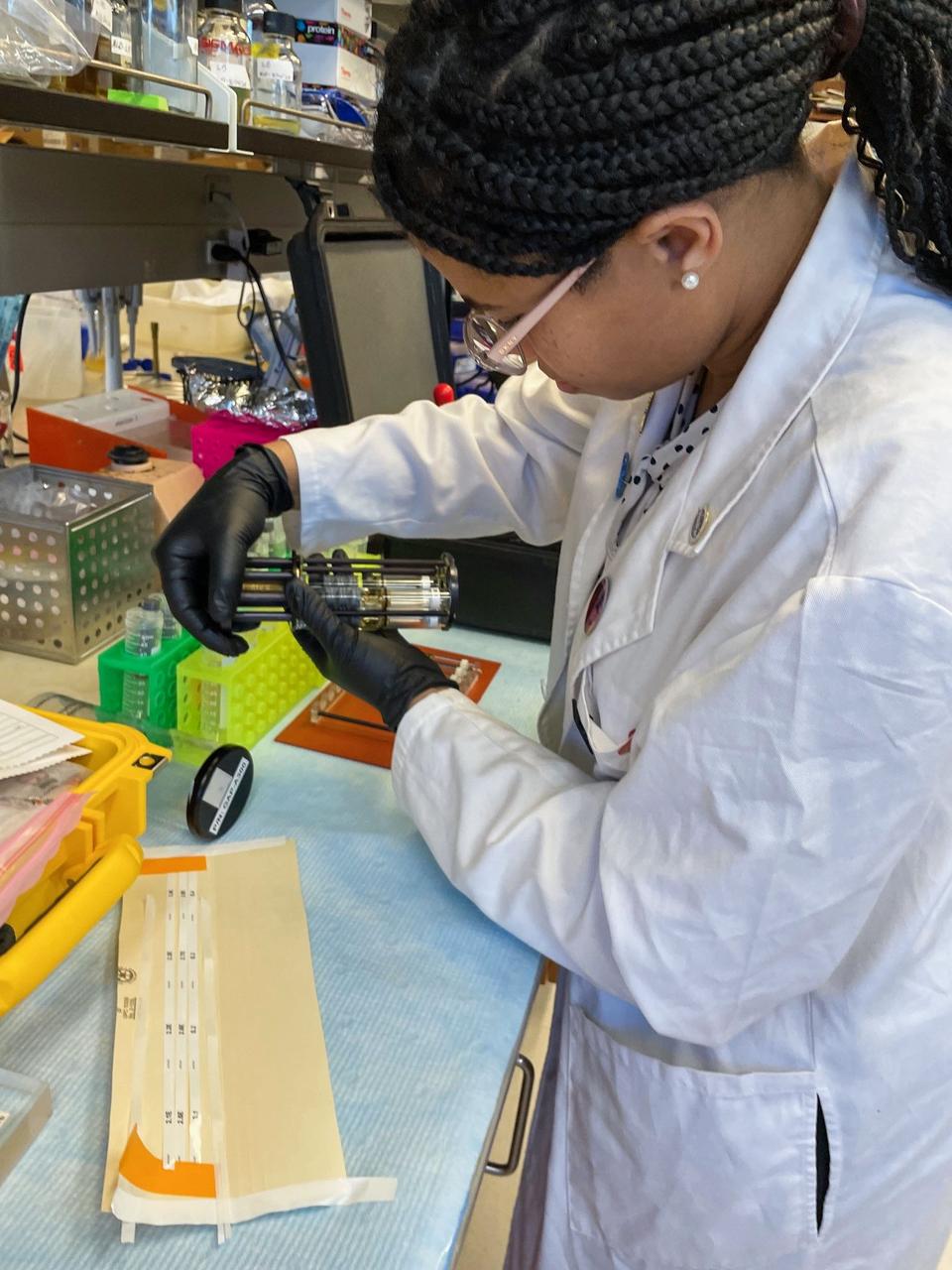
jsc2025e007254 (2/14/2025) --- Graduate student Lanie Briggs loads a Group Activation Pack (GAP) for the Polaris Bioremediation Science Experiment - Genetic Exchange in Microgravity for Biofilm Bioremediation (GEM-B2).
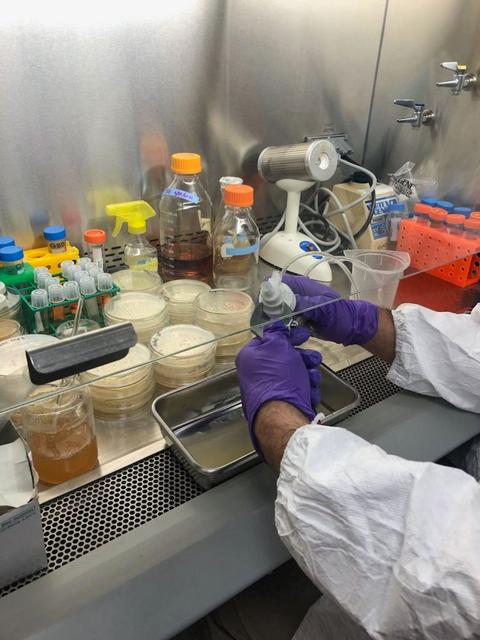
jsc2025e007251 (2/14/2025) --- Biofilm testing is shown in the early stages of the Polaris Bioremediation Science Experiment - Genetic Exchange in Microgravity for Biofilm Bioremediation (GEM-B2) project.
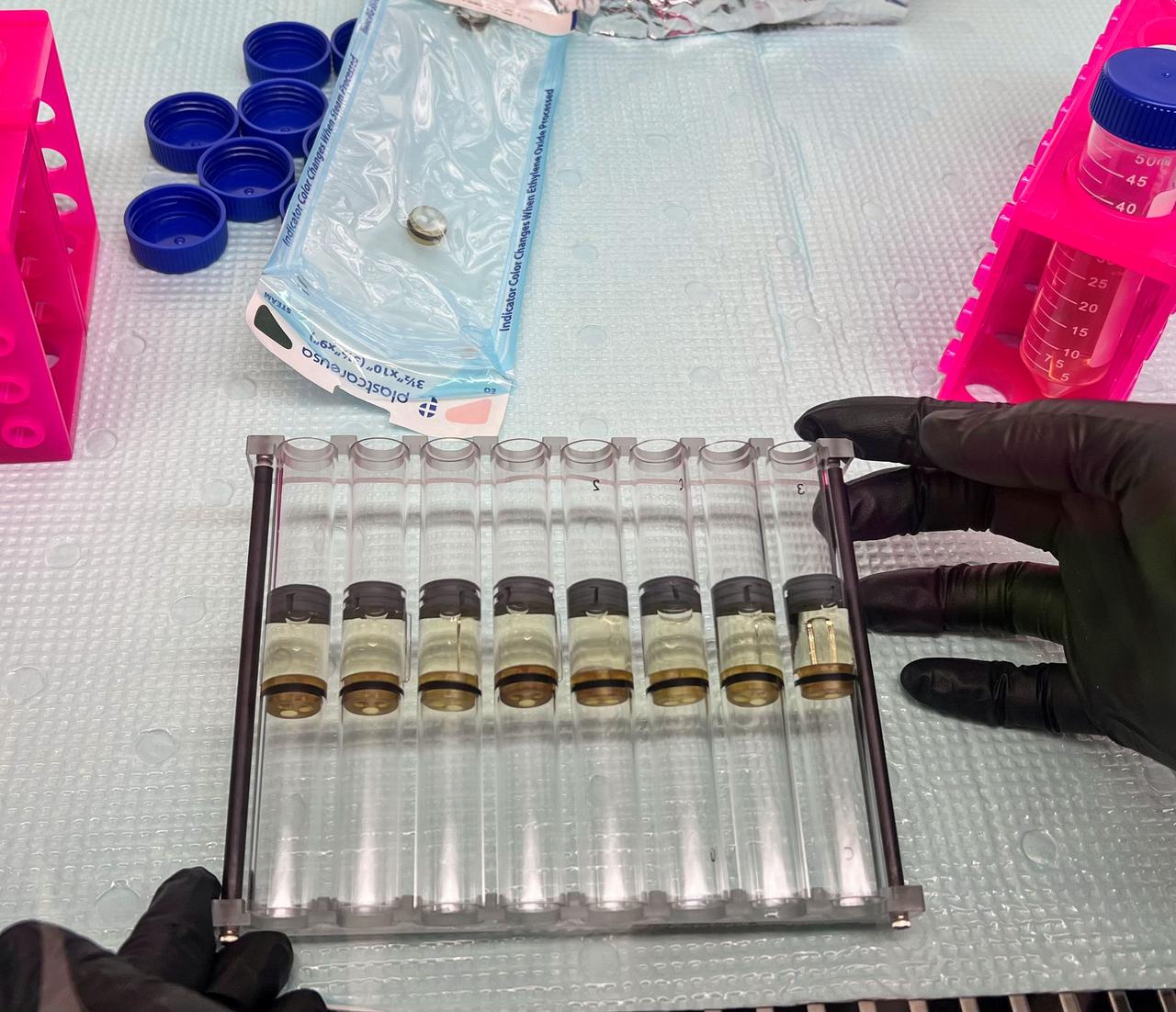
jsc2025e007256 (2/14/2025) --- Another view of the eight Fluid Processing Apparatus (FPAs) used in the Polaris Bioremediation Science Experiment - Genetic Exchange in Microgravity for Biofilm Bioremediation (GEM-B2) investigation. Image courtesy of BioServe.
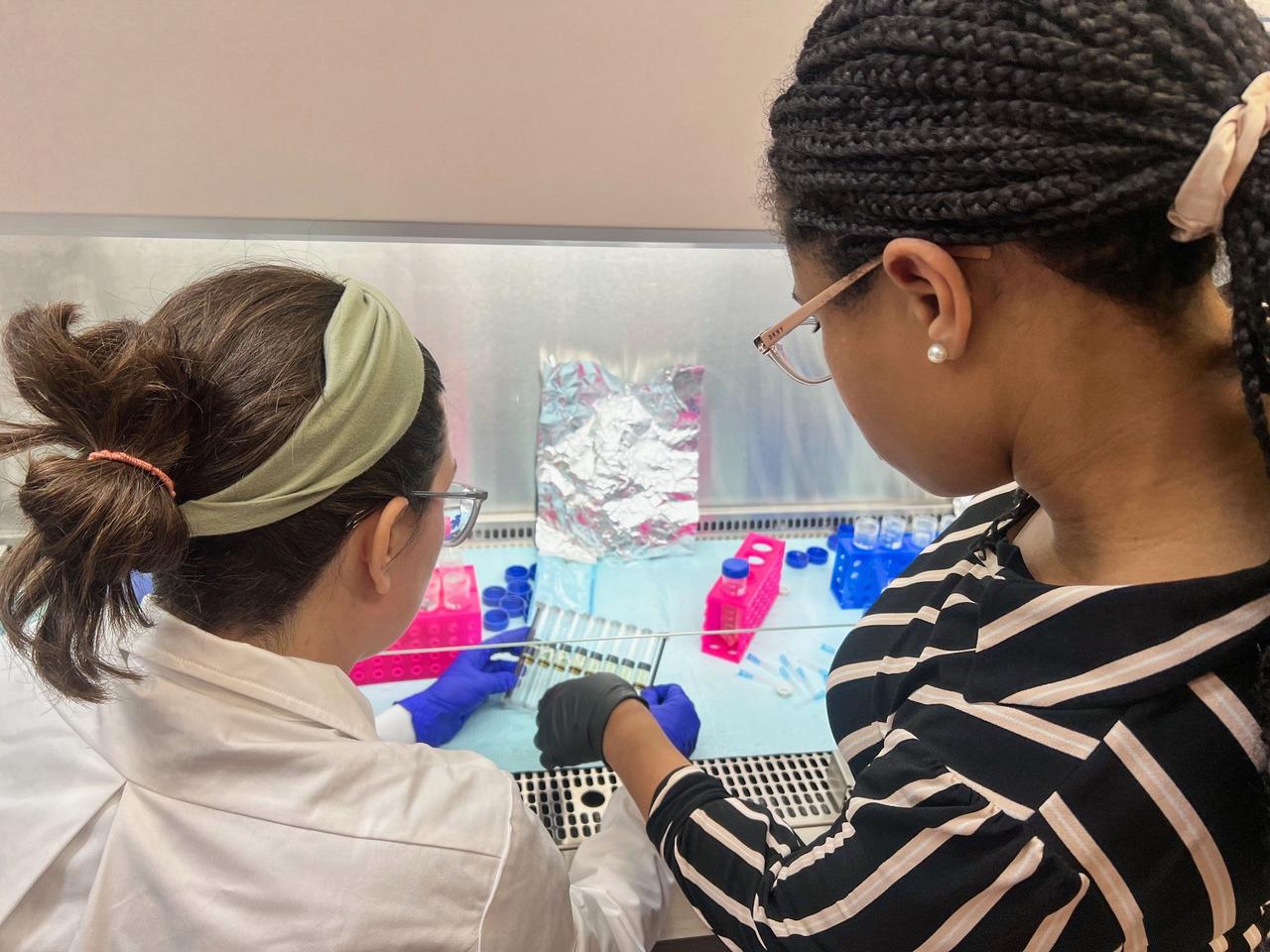
jsc2025e007257 (2/14/2025) --- A view of the Fluid Processing Apparatus (FPAs) used in the Polaris Bioremediation Science Experiment - Genetic Exchange in Microgravity for Biofilm Bioremediation (GEM-B2) investigation. Image courtesy of BioServe.
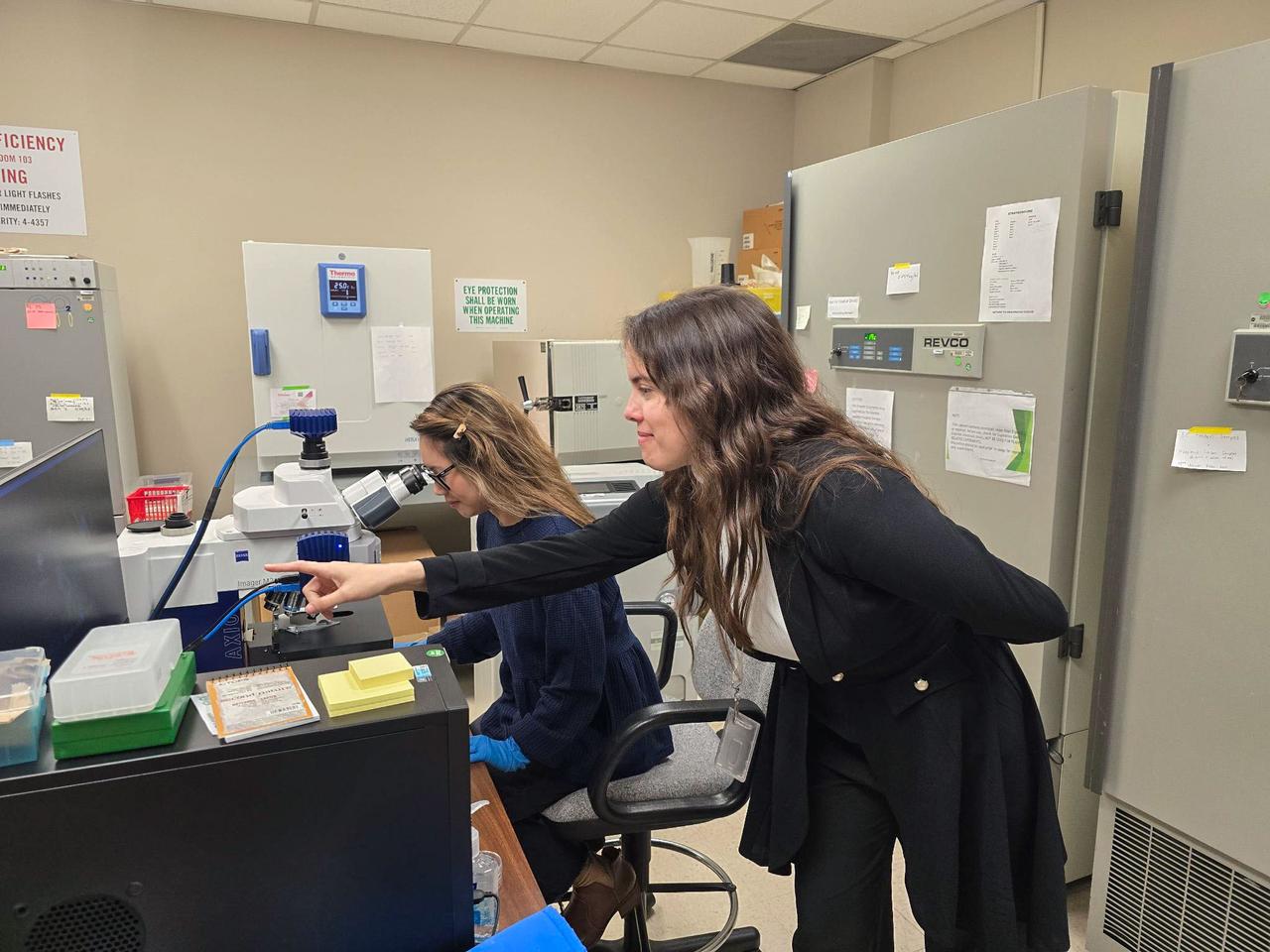
jsc2025e007252 (2/14/2025) --- Dr. Yo-Ann Velez performs microscopy in support of Polaris Bioremediation Science Experiment - Genetic Exchange in Microgravity for Biofilm Bioremediation (GEM-B2).

The SOFIA telescope team collected baseline operational measurements during several nights of characterization testing in March 2008 while the SOFIA 747SP aircraft that houses the German-built infrared telescope was parked on an unlit ramp next to its hangar at the NASA Dryden Flight Operations Facility in Palmdale, Calif. The primary celestial target was Polaris, the North Star. The activity provided the team with a working knowledge of how telescope operating systems interact and the experience of tracking celestial targets from the ground.

The SOFIA telescope team collected baseline operational measurements during several nights of characterization testing in March 2008 while the SOFIA 747SP aircraft that houses the German-built infrared telescope was parked on an unlit ramp next to its hangar at the NASA Dryden Flight Operations Facility in Palmdale, Calif. The primary celestial target was Polaris, the North Star. The activity provided the team with a working knowledge of how telescope operating systems interact and the experience of tracking celestial targets from the ground.
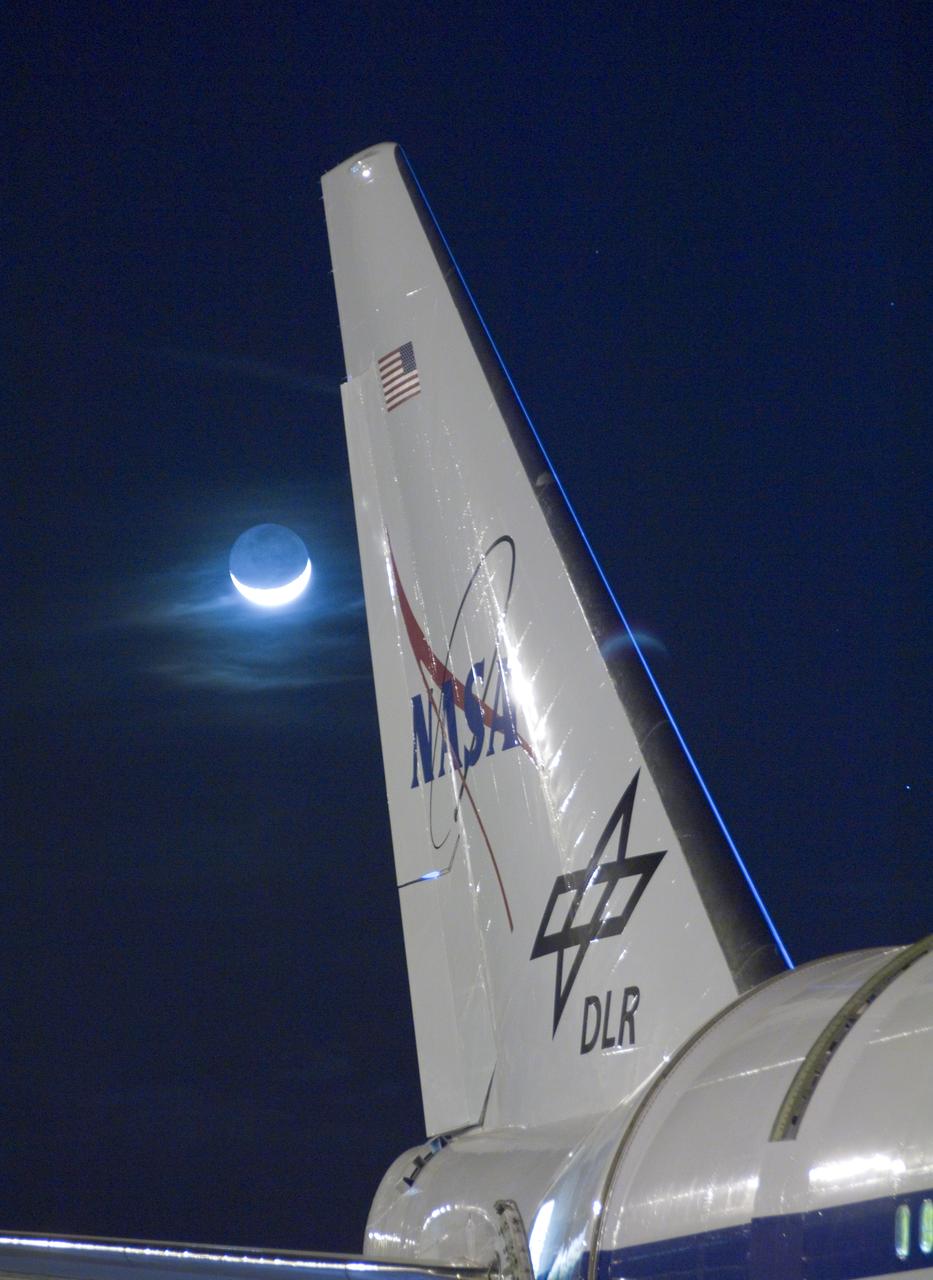
The SOFIA telescope team collected baseline operational measurements during several nights of characterization testing in March 2008 while the SOFIA 747SP aircraft that houses the German-built infrared telescope was parked on an unlit ramp next to its hangar at the NASA Dryden Flight Operations Facility in Palmdale, Calif. The primary celestial target was Polaris, the North Star. The activity provided the team with a working knowledge of how telescope operating systems interact and the experience of tracking celestial targets from the ground.

The SOFIA telescope team collected baseline operational measurements during several nights of characterization testing in March 2008 while the SOFIA 747SP aircraft that houses the German-built infrared telescope was parked on an unlit ramp next to its hangar at the NASA Dryden Flight Operations Facility in Palmdale, Calif. The primary celestial target was Polaris, the North Star. The activity provided the team with a working knowledge of how telescope operating systems interact and the experience of tracking celestial targets from the ground.

The SOFIA telescope team collected baseline operational measurements during several nights of characterization testing in March 2008 while the SOFIA 747SP aircraft that houses the German-built infrared telescope was parked on an unlit ramp next to its hangar at the NASA Dryden Flight Operations Facility in Palmdale, Calif. The primary celestial target was Polaris, the North Star. The activity provided the team with a working knowledge of how telescope operating systems interact and the experience of tracking celestial targets from the ground.
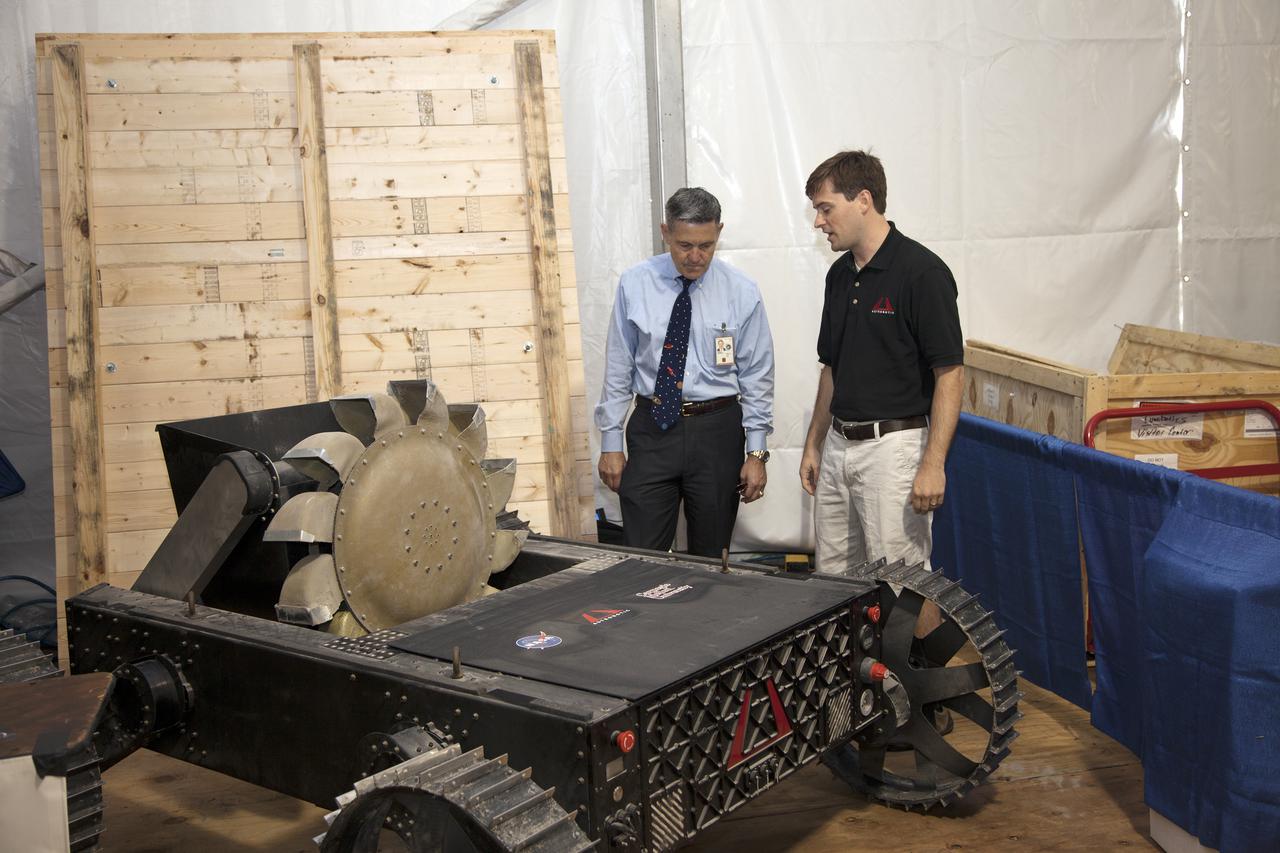
CAPE CANAVERAL, Fla. – At NASA’s Kennedy Space Center Visitor Complex in Florida, Kennedy Center Director Bob Cabana looks at the Polaris rover on display at NASA’s Fourth Annual Robotic Mining Competition. Developed by Astrobotic Technologies Inc. under a Small Business Innovative Research contract, Polaris will be demonstrated during the competition that takes place through May 24. The mining competition is coordinated by Kennedy Space Center’s Education Office for the agency’s Exploration Systems Mission Directorate. Undergraduate and graduate students from 50 universities and colleges in the U.S. and eight countries around the world will use their remote-controlled robots to maneuver and dig in a supersized sandbox filled with a crushed material called regolith that has characteristics similar to asteroids, moons of Mars and Mars itself. Photo credit: NASA_Lorne Mathre
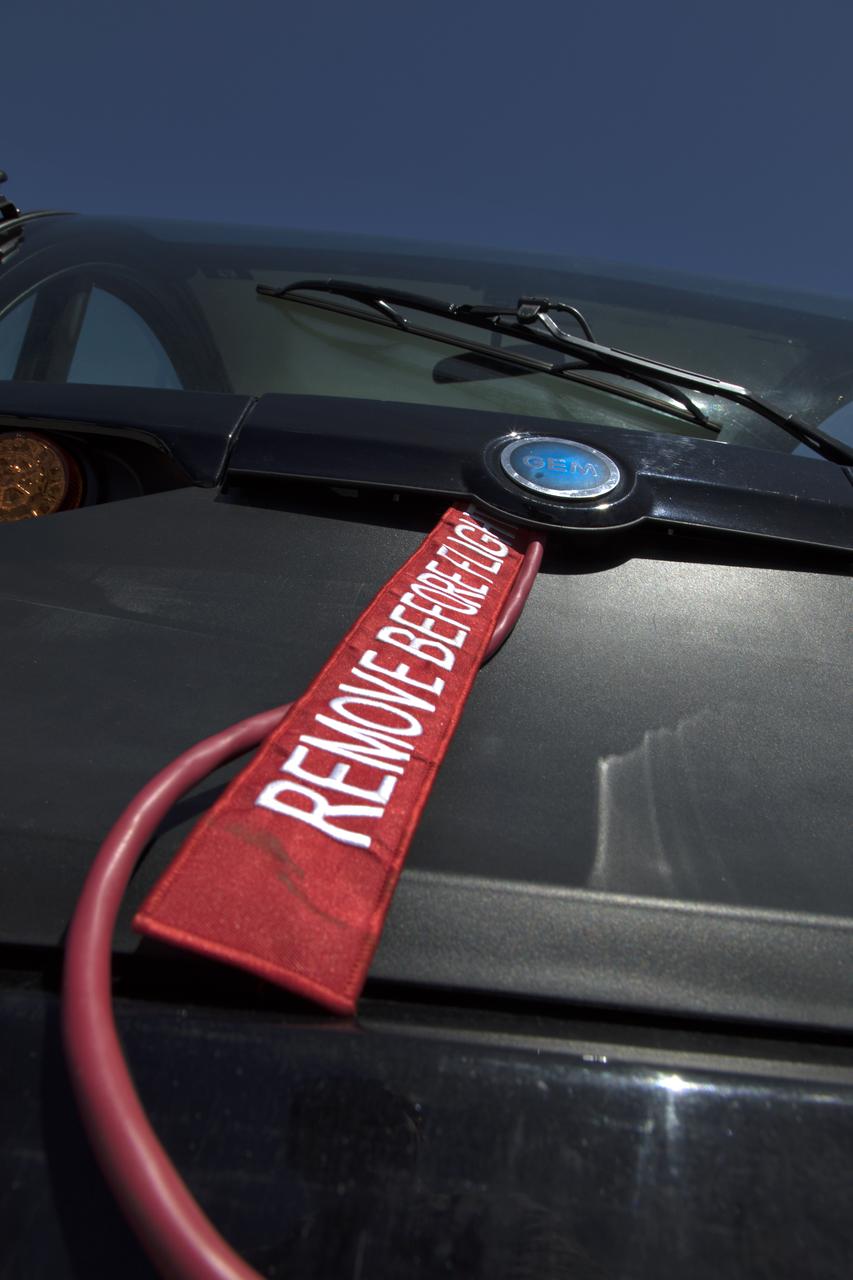
During the annual Earth Day celebration at the Kennedy Space Center Visitor Complex, guests have an opportunity to get an up-close look at experimental electric vehicles. The "Remove Before Flight" tag is on a Polaris GEM electric car. The two-day event featured approximately 50 exhibitors offering information on a variety of topics, including electric vehicles, sustainable lighting, renewable energy, Florida-friendly landscaping tips, Florida’s biking trails and more.
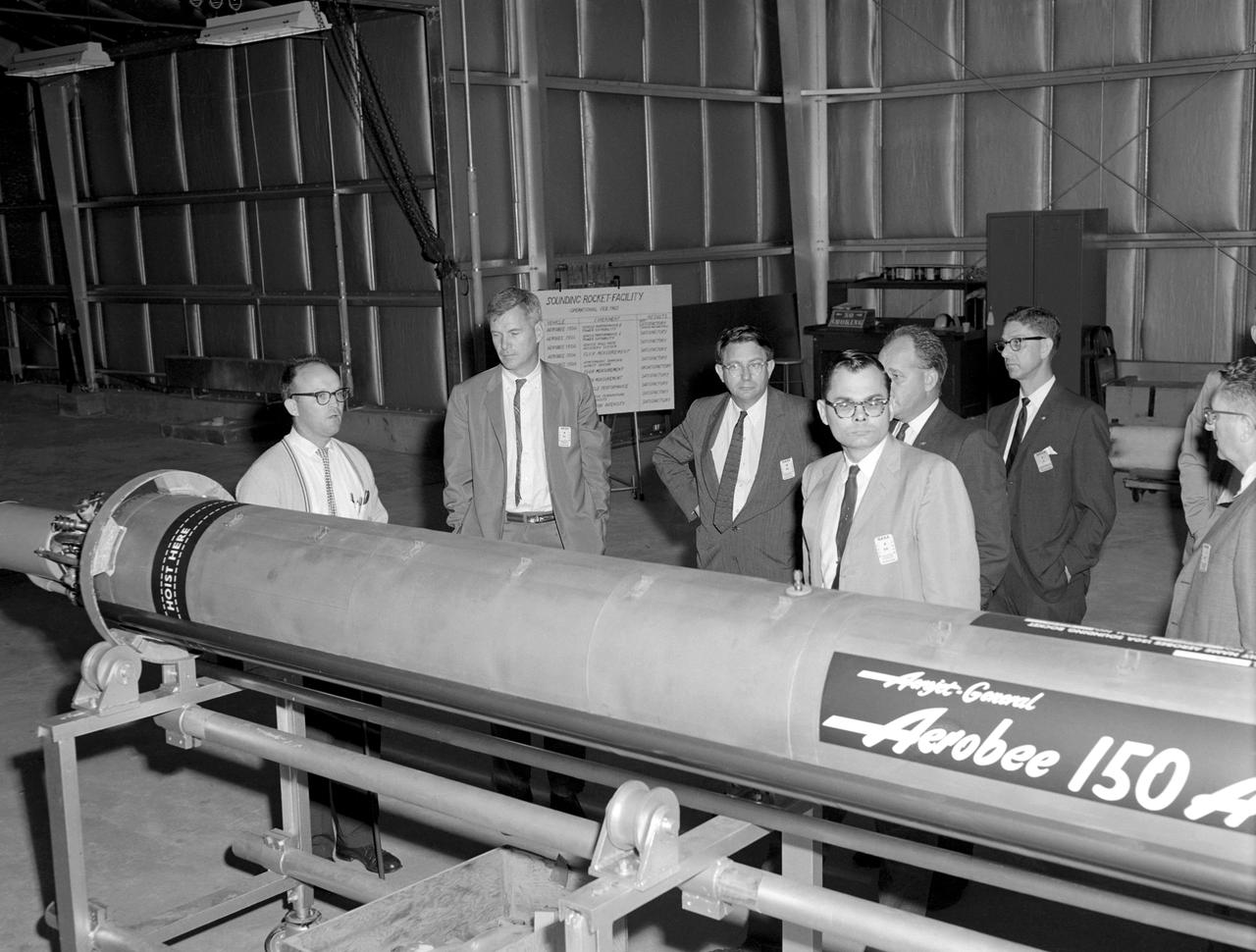
Photographed on 09/22/1960. -- An examination of the Aerojet-General "Aerobee 150A" propulsion system in February 1960. James Hansen described this as follows: "As for the technical definition of the rocket...the Langley engineers tried to keep developmental costs and time to a minimum by selecting components from off-the-shelf hardware. the majority of Scout's components were to come from an inventory of solid-fuel rockets produced for the military, although everyone involved understood that some improved motors would also have to be developed under contract. By early 1959, after intensive technical analysis and reviews, Langley settled on a design and finalized the selection of the major contractors. The rocket's 40-inch-diameter first stage was to be a new "Algol" motor, a combination of the Jupiter Senior and the navy Polaris produced by the Aerojet General Corporation, Sacramento, California. The 31-inch-diameter second stage, "Castor," was derived from the army's Sergeant and was to be manufactured by the Redstone Division of the Thiokol company in Huntsville, Alabama. the motor for the 30-inch-diameter third stage, "Antares," evolved under NASA contract from the ABL X248 design into a new version called the X254 (and subsequently into the X259); it was built under contract to NASA by ABL, a U.S. Navy Bureau of Ordnance facility operated by the Hercules Powder Company, Cumberland, Maryland. the final upper-stage propulsion unit, "Altair," which was 25.7 inches in diameter (34 inches at the heat shield), amounted to an improved edition of the X248 that was also manufactured by ABL." -- Published in James R. Hansen, Spaceflight Revolution: NASA Langley Research Center From Sputnik to Apollo, NASA SP-4308, pp.200-201.
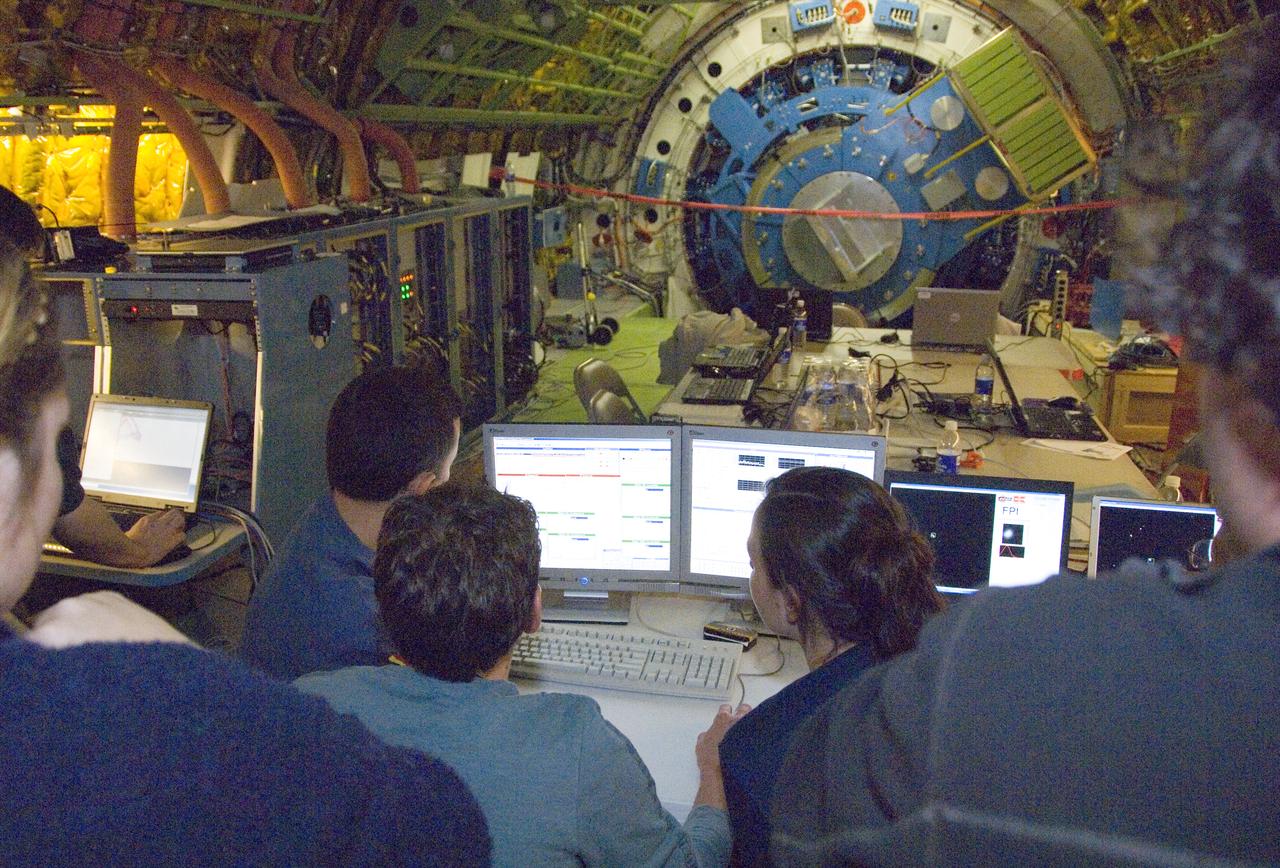
Scientists carefully examine data being received during nighttime line operations testing of the SOFIA airborne observatory's 2.5-meter infrared telescope.
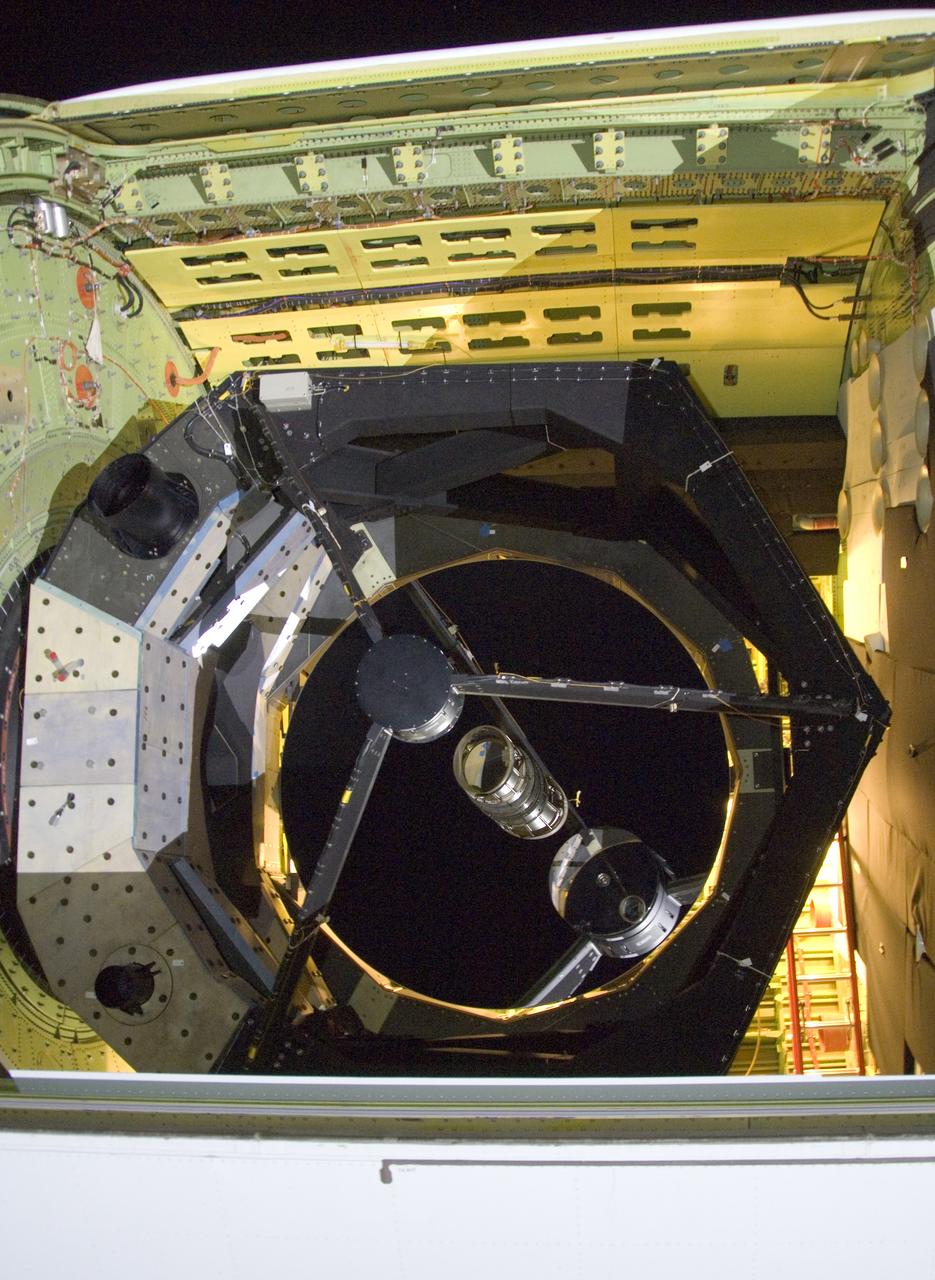
he SOFIA airborne observatory's 2.5-meter infrared telescope peers out from its cavity in the SOFIA rear fuselage during nighttime line operations testing.
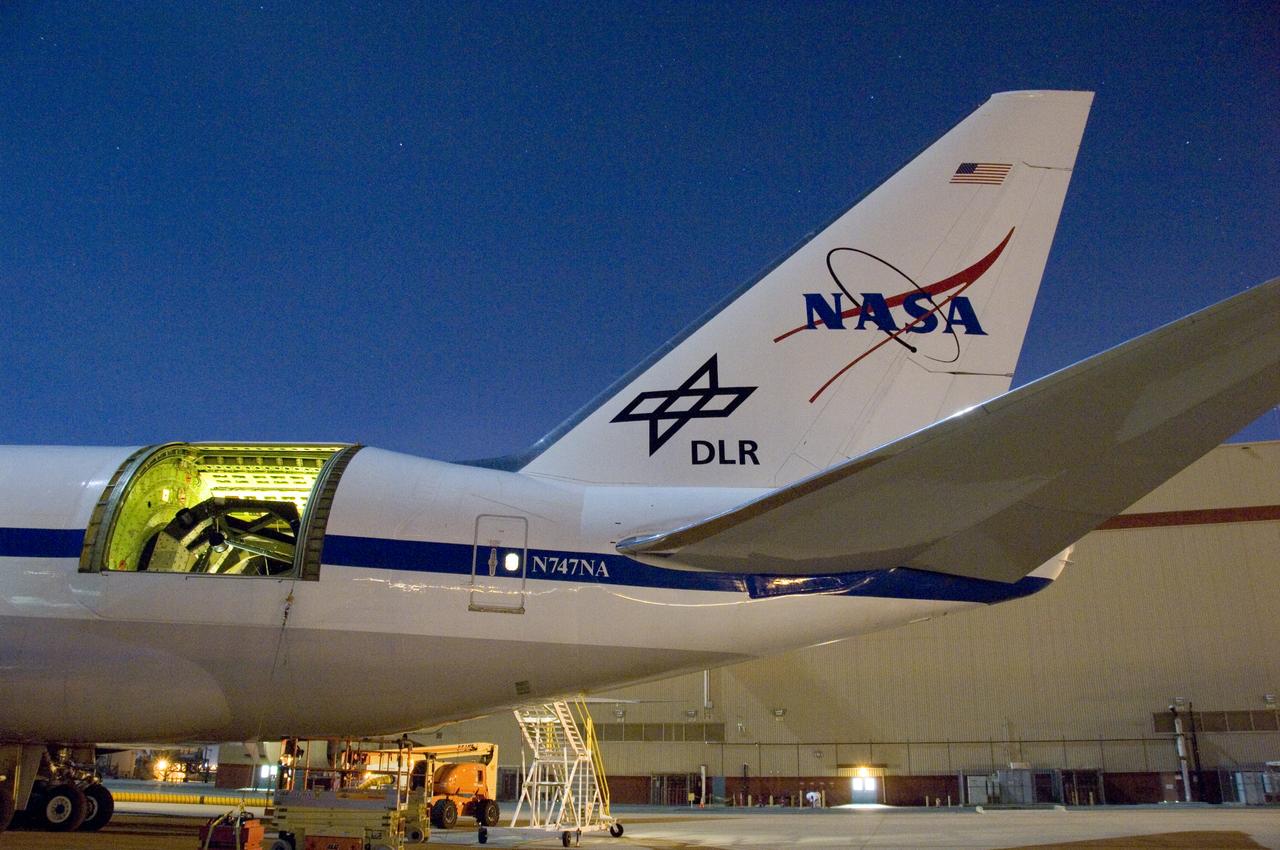
The SOFIA airborne observatory's 2.5-meter infrared telescope peers out from its cavity in the SOFIA rear fuselage during nighttime line operations testing.
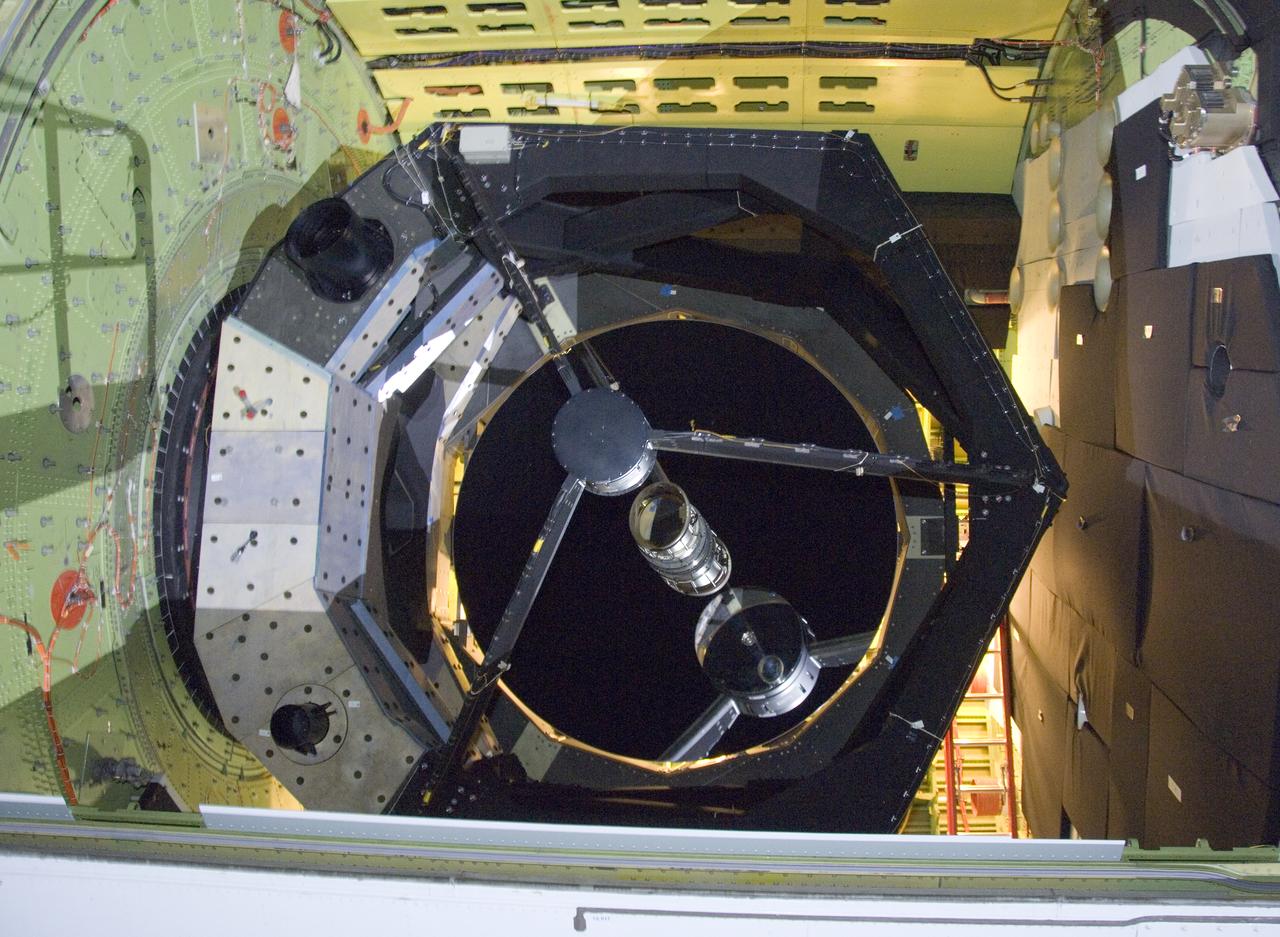
The 2.5-meter infrared telescope peers out from its cavity in the SOFIA airborne observatory during nighttime line operations testing at Palmdale, Calif.
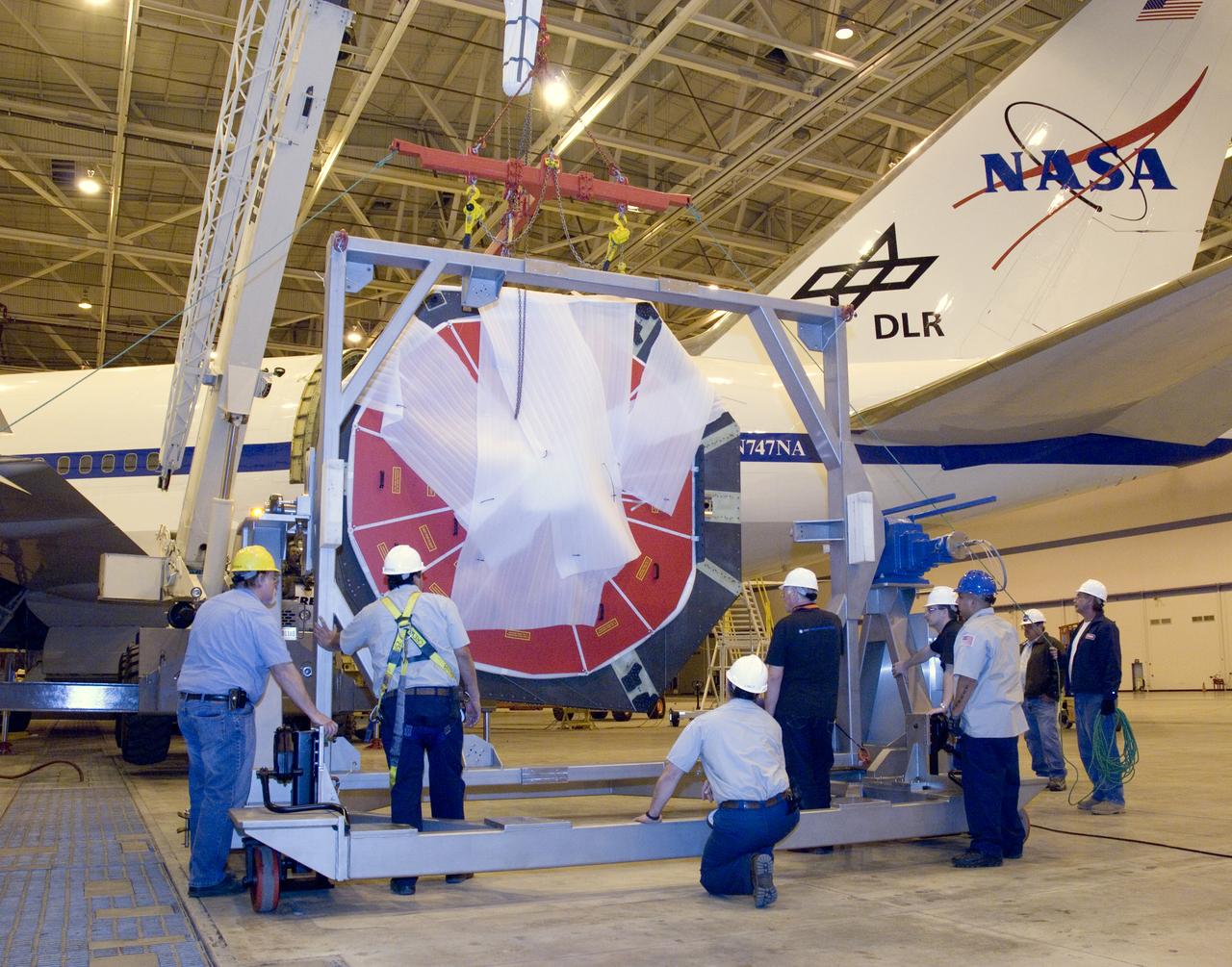
Technicians at the NASA Dryden Aircraft Operations Facility in Palmdale, Calif., removed the German-built primary mirror assembly from the Stratospheric Observatory for Infrared Astronomy, or SOFIA, April 18, 2008 in preparation for the final finish coating of the mirror. A precision crane lifted the more than two-ton mirror assembly from its cavity in the rear fuselage of the highly modified Boeing 747SP. The assembly was then secured in its transport dolly and moved to a clean room where it was prepared for shipment to NASA Ames Research Center at Moffett Field near Mountain View, Calif. where it would receive its aluminized finish coating before being re-installed in the SOFIA aircraft.
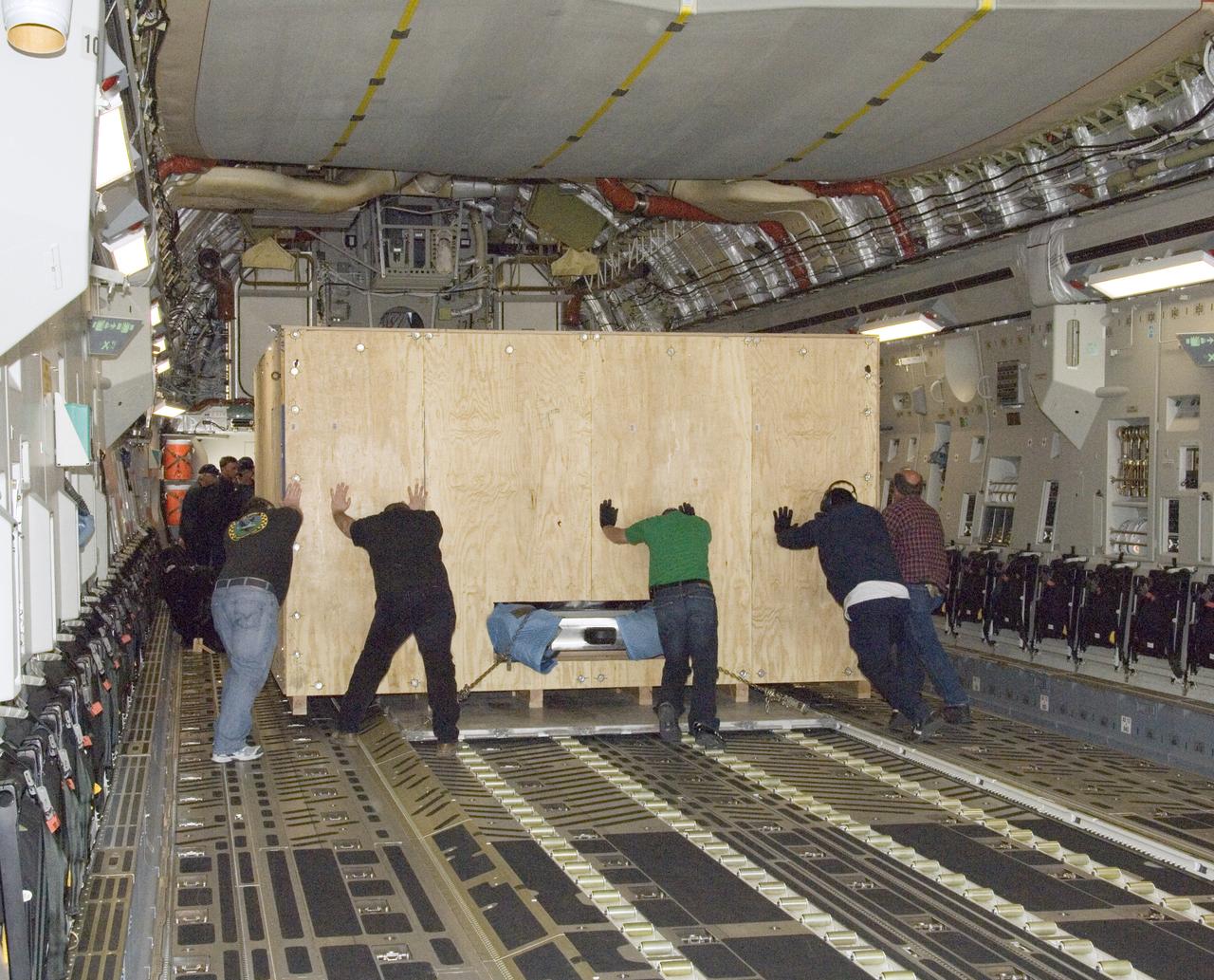
Technicians at NASA's Dryden Aircraft Operations Facility in Palmdale, Calif., loaded the German-built primary mirror assembly of the Stratospheric Observatory for Infrared Astronomy, or SOFIA, onto an Air Force C-17 for shipment to NASA's Ames Research Center on May 1, 2008. In preparation for the final finish coating of the mirror, the more than two-ton mirror assembly had been removed from its cavity in the rear fuselage of the highly modified SOFIA Boeing 747SP two weeks earlier. After arrival at NASA Ames at Moffett Field near Mountain View, Calif., the mirror would receive its aluminized finish coating before being re-installed in the SOFIA aircraft.
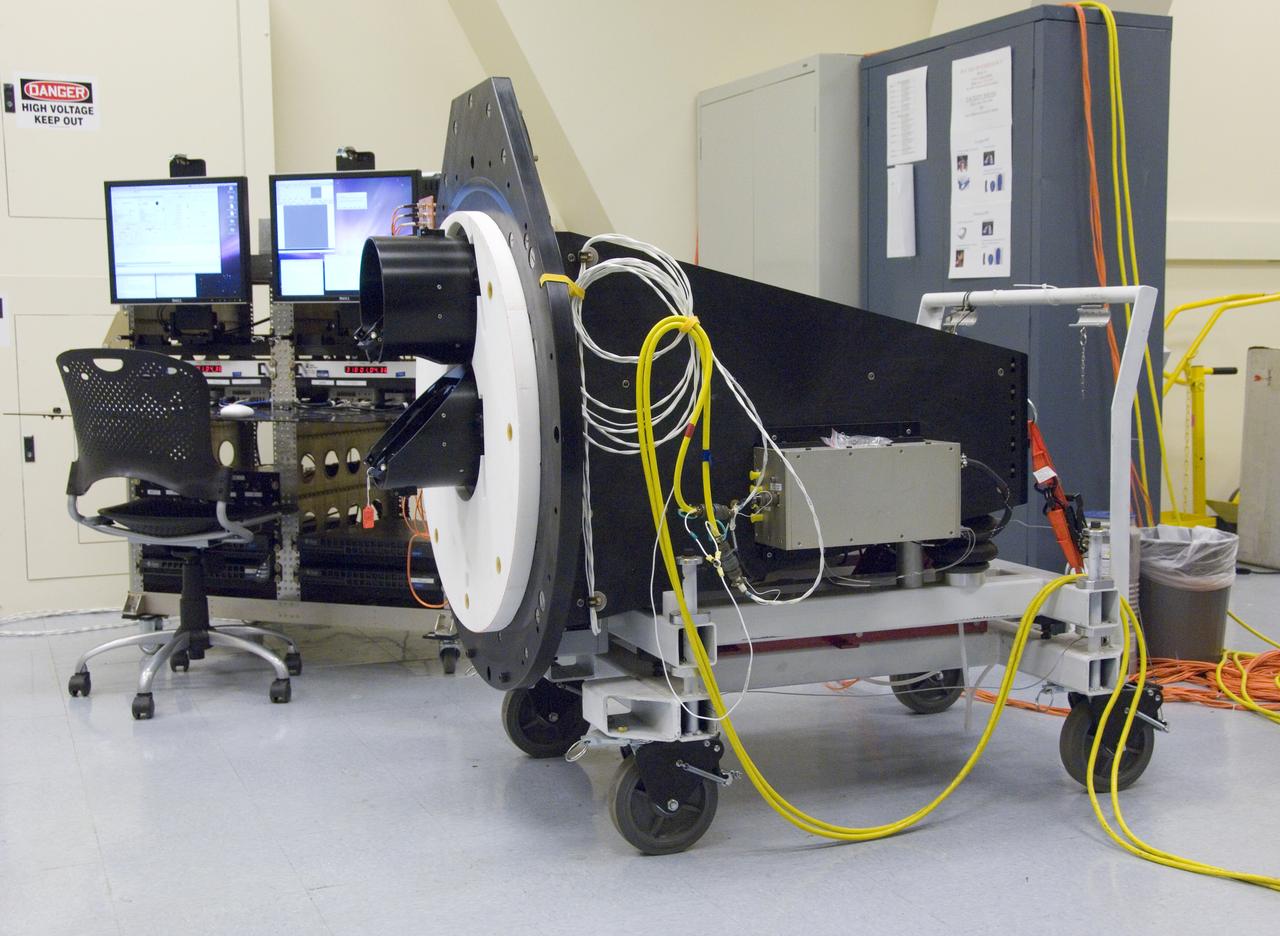
The Lowell Observatory's High-speed Imaging Photometer for Occultation rests on its dolly in the lab prior to installation on the SOFIA airborne observatory.
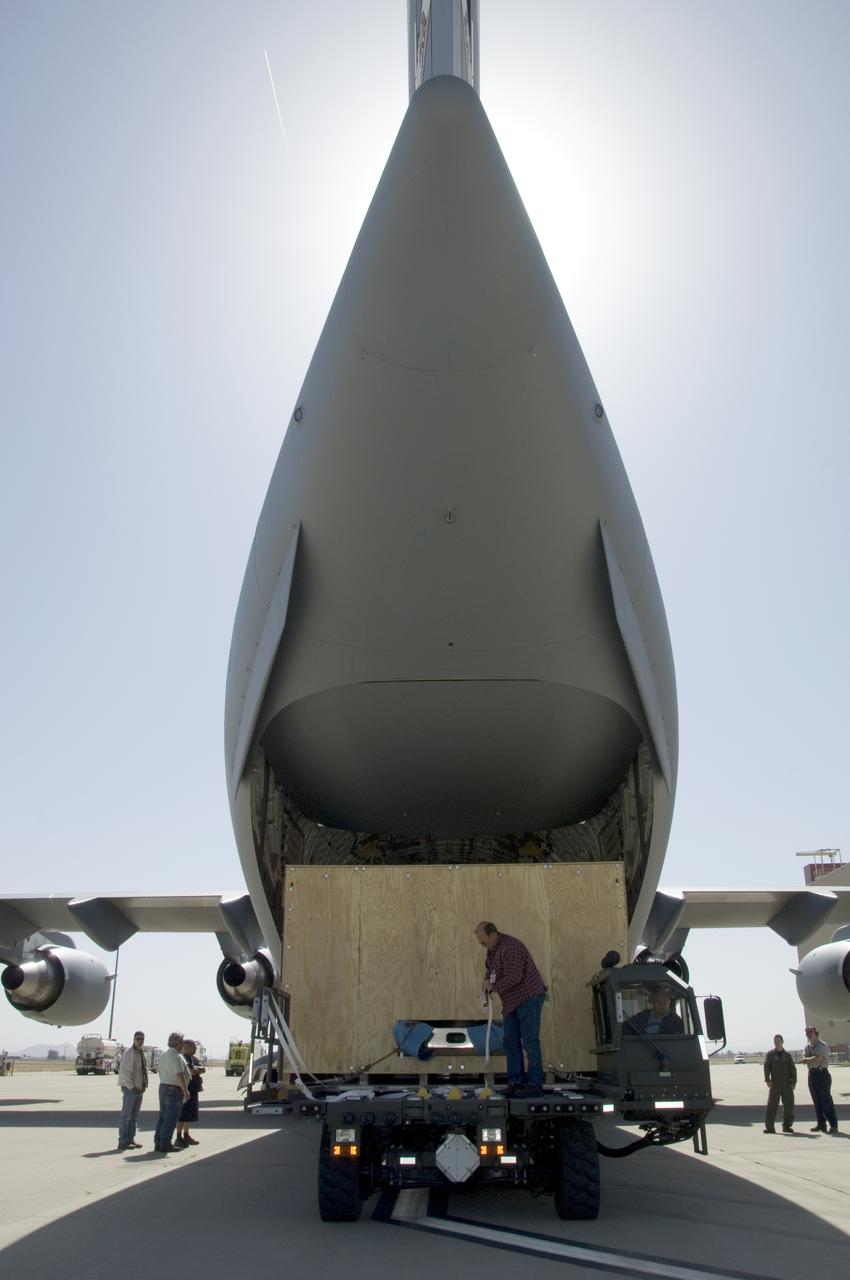
Technicians at NASA's Dryden Aircraft Operations Facility in Palmdale, Calif., loaded the German-built primary mirror assembly of the Stratospheric Observatory for Infrared Astronomy, or SOFIA, onto an Air Force C-17 for shipment to NASA's Ames Research Center on May 1, 2008. In preparation for the final finish coating of the mirror, the more than two-ton mirror assembly had been removed from its cavity in the rear fuselage of the highly modified SOFIA Boeing 747SP two weeks earlier. After arrival at NASA Ames at Moffett Field near Mountain View, Calif., the mirror would receive its aluminized finish coating before being re-installed in the SOFIA aircraft.
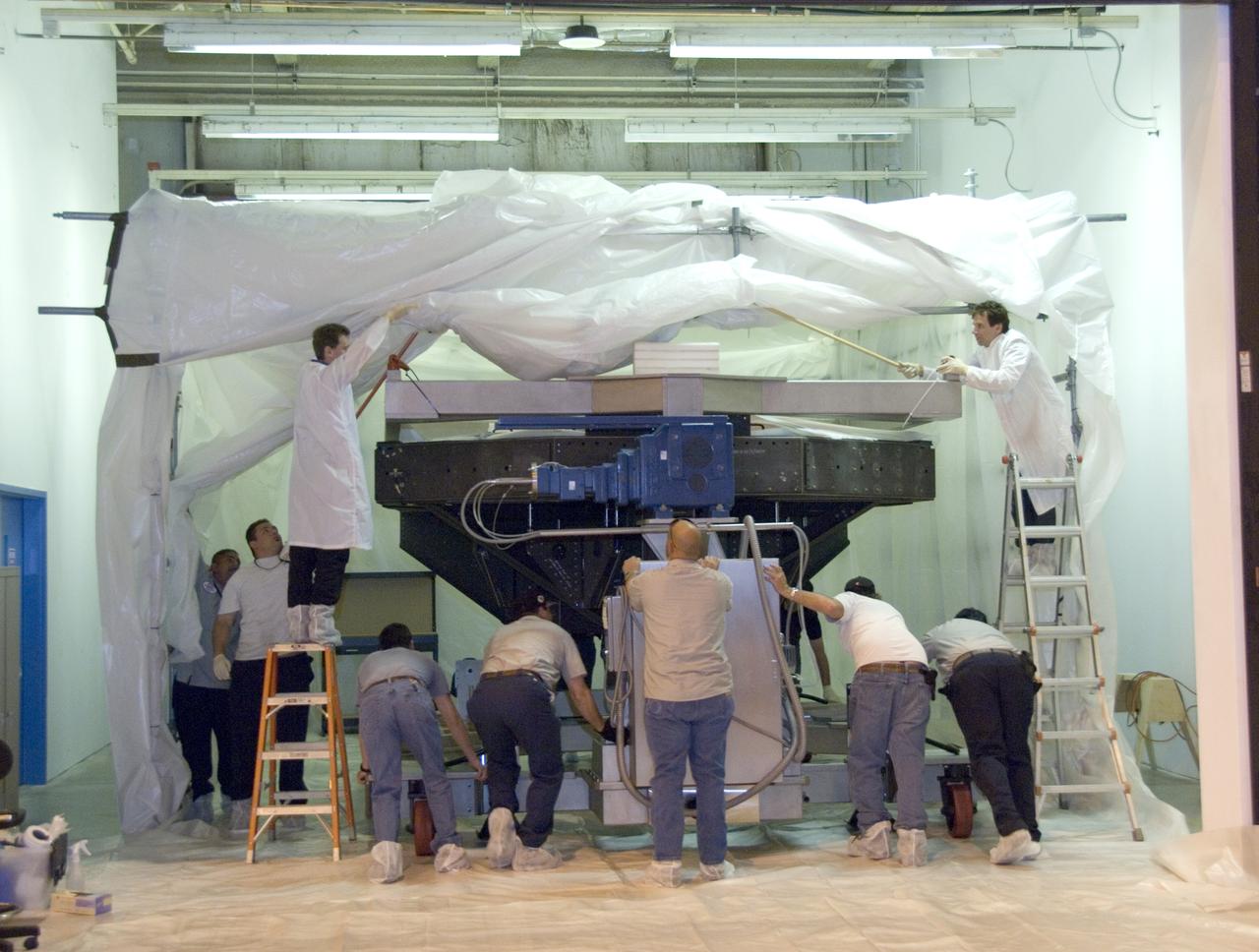
Technicians at the NASA Dryden Aircraft Operations Facility in Palmdale, Calif., removed the German-built primary mirror assembly from the Stratospheric Observatory for Infrared Astronomy, or SOFIA, April 18, 2008 in preparation for the final finish coating of the mirror. A precision crane lifted the more than two-ton mirror assembly from its cavity in the rear fuselage of the highly modified Boeing 747SP. The assembly was then secured in its transport dolly and moved to a clean room where it was prepared for shipment to NASA Ames Research Center at Moffett Field near Mountain View, Calif. where it would receive its aluminized finish coating before being re-installed in the SOFIA aircraft.
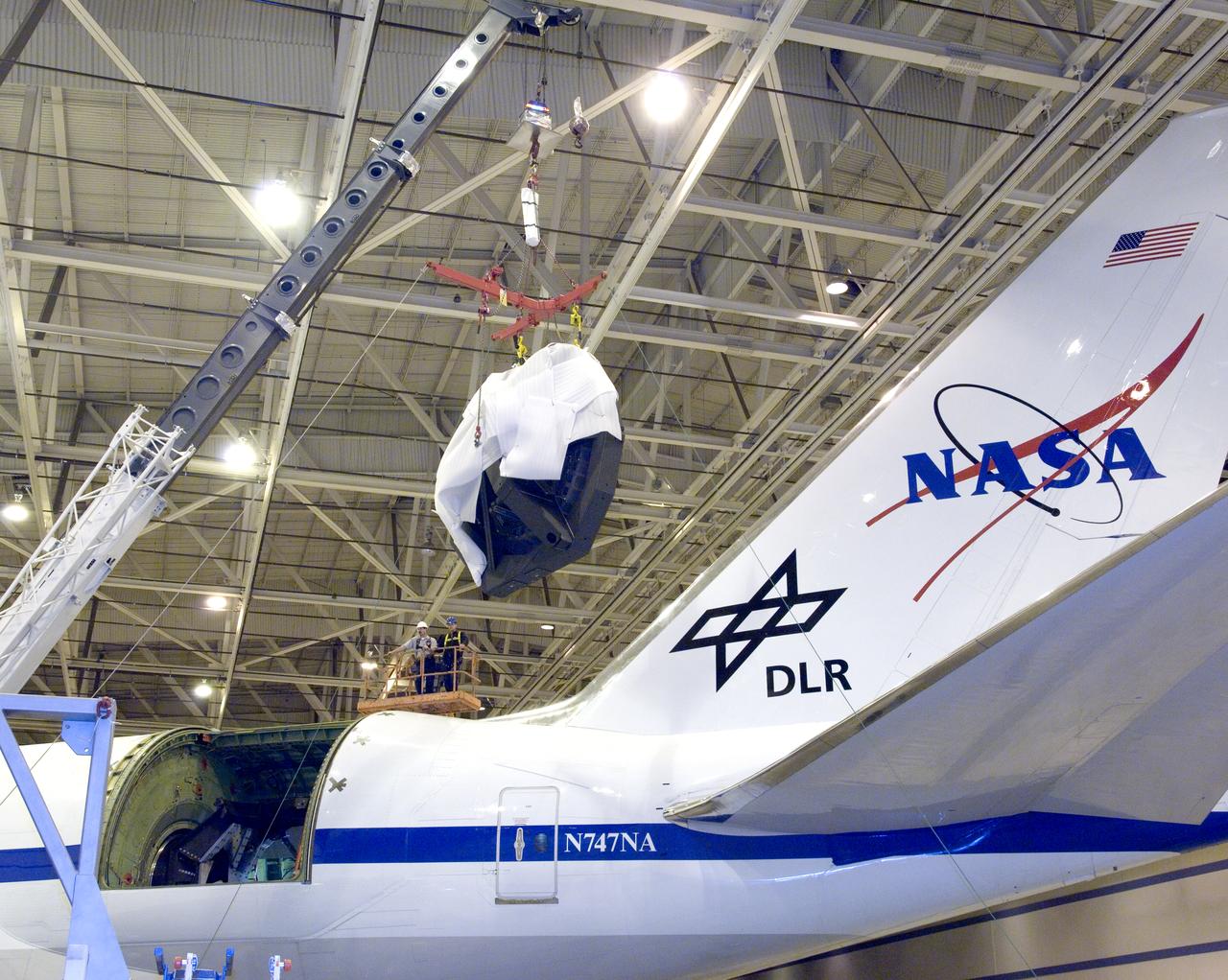
Technicians at the NASA Dryden Aircraft Operations Facility in Palmdale, Calif., removed the German-built primary mirror assembly from the Stratospheric Observatory for Infrared Astronomy, or SOFIA, April 18, 2008 in preparation for the final finish coating of the mirror. A precision crane lifted the more than two-ton mirror assembly from its cavity in the rear fuselage of the highly modified Boeing 747SP. The assembly was then secured in its transport dolly and moved to a clean room where it was prepared for shipment to NASA Ames Research Center at Moffett Field near Mountain View, Calif. where it would receive its aluminized finish coating before being re-installed in the SOFIA aircraft.
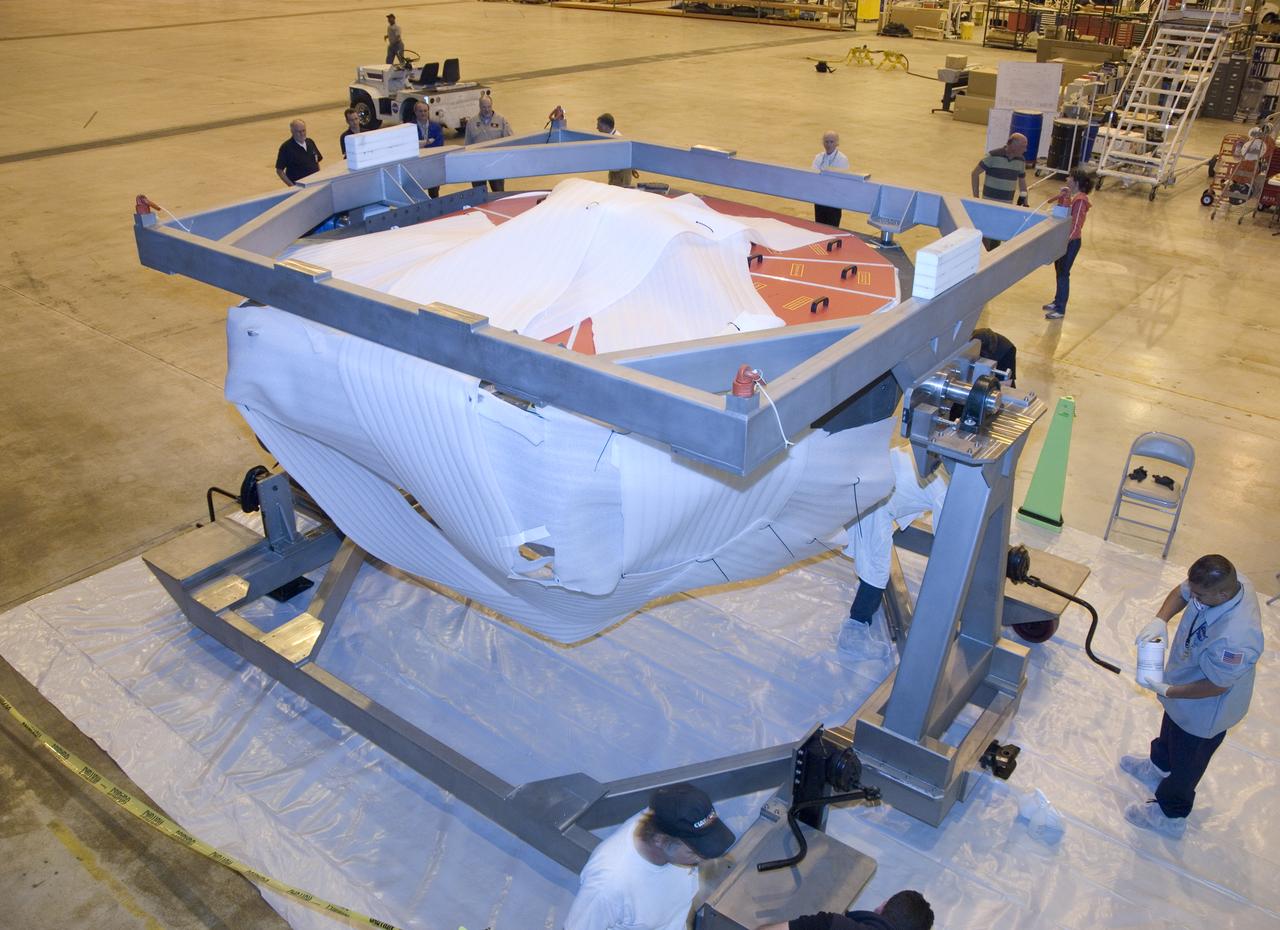
Technicians at the NASA Dryden Aircraft Operations Facility in Palmdale, Calif., removed the German-built primary mirror assembly from the Stratospheric Observatory for Infrared Astronomy, or SOFIA, April 18, 2008 in preparation for the final finish coating of the mirror. A precision crane lifted the more than two-ton mirror assembly from its cavity in the rear fuselage of the highly modified Boeing 747SP. The assembly was then secured in its transport dolly and moved to a clean room where it was prepared for shipment to NASA Ames Research Center at Moffett Field near Mountain View, Calif. where it would receive its aluminized finish coating before being re-installed in the SOFIA aircraft.
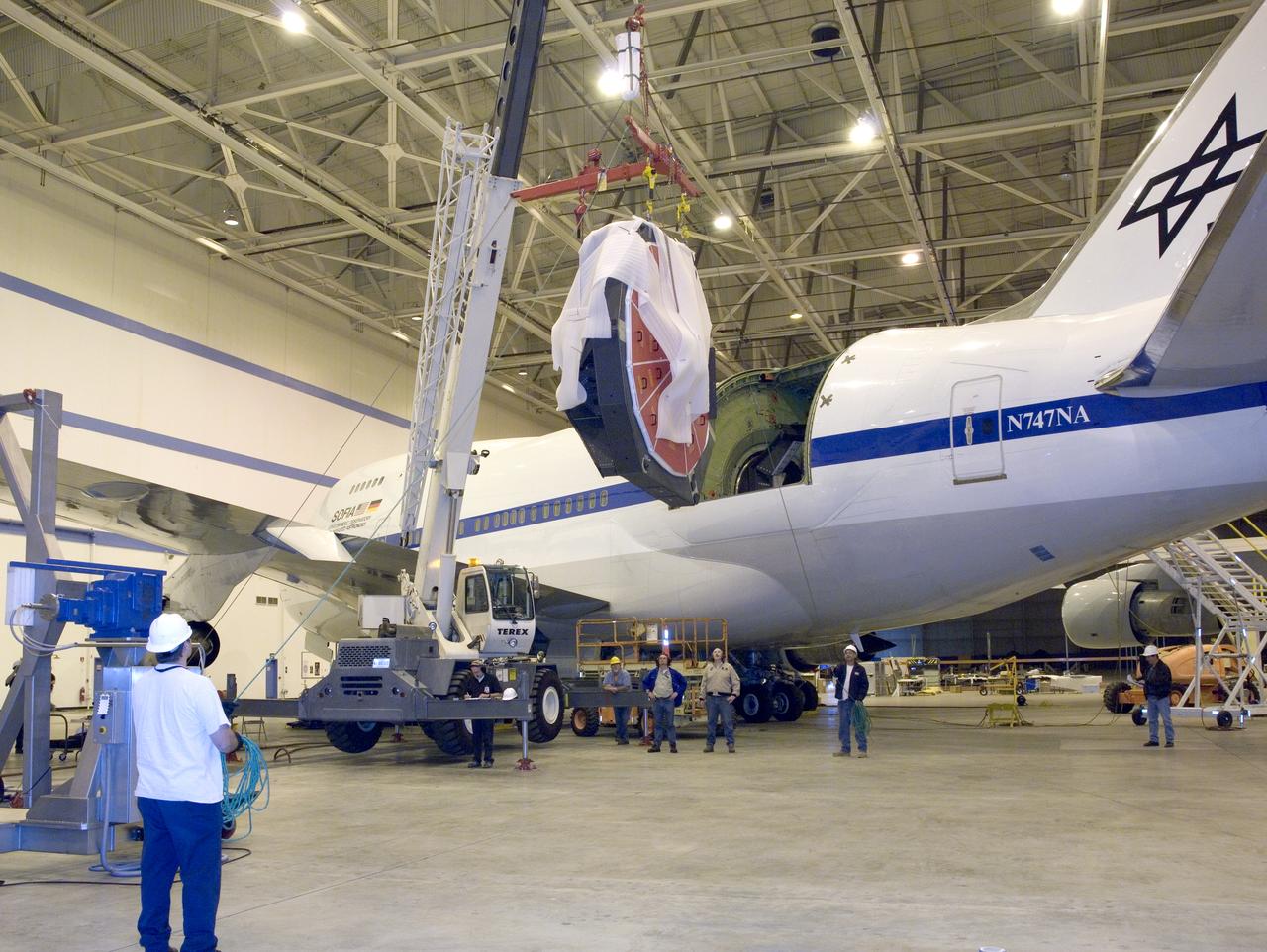
Technicians at the NASA Dryden Aircraft Operations Facility in Palmdale, Calif., removed the German-built primary mirror assembly from the Stratospheric Observatory for Infrared Astronomy, or SOFIA, April 18, 2008 in preparation for the final finish coating of the mirror. A precision crane lifted the more than two-ton mirror assembly from its cavity in the rear fuselage of the highly modified Boeing 747SP. The assembly was then secured in its transport dolly and moved to a clean room where it was prepared for shipment to NASA Ames Research Center at Moffett Field near Mountain View, Calif. where it would receive its aluminized finish coating before being re-installed in the SOFIA aircraft.
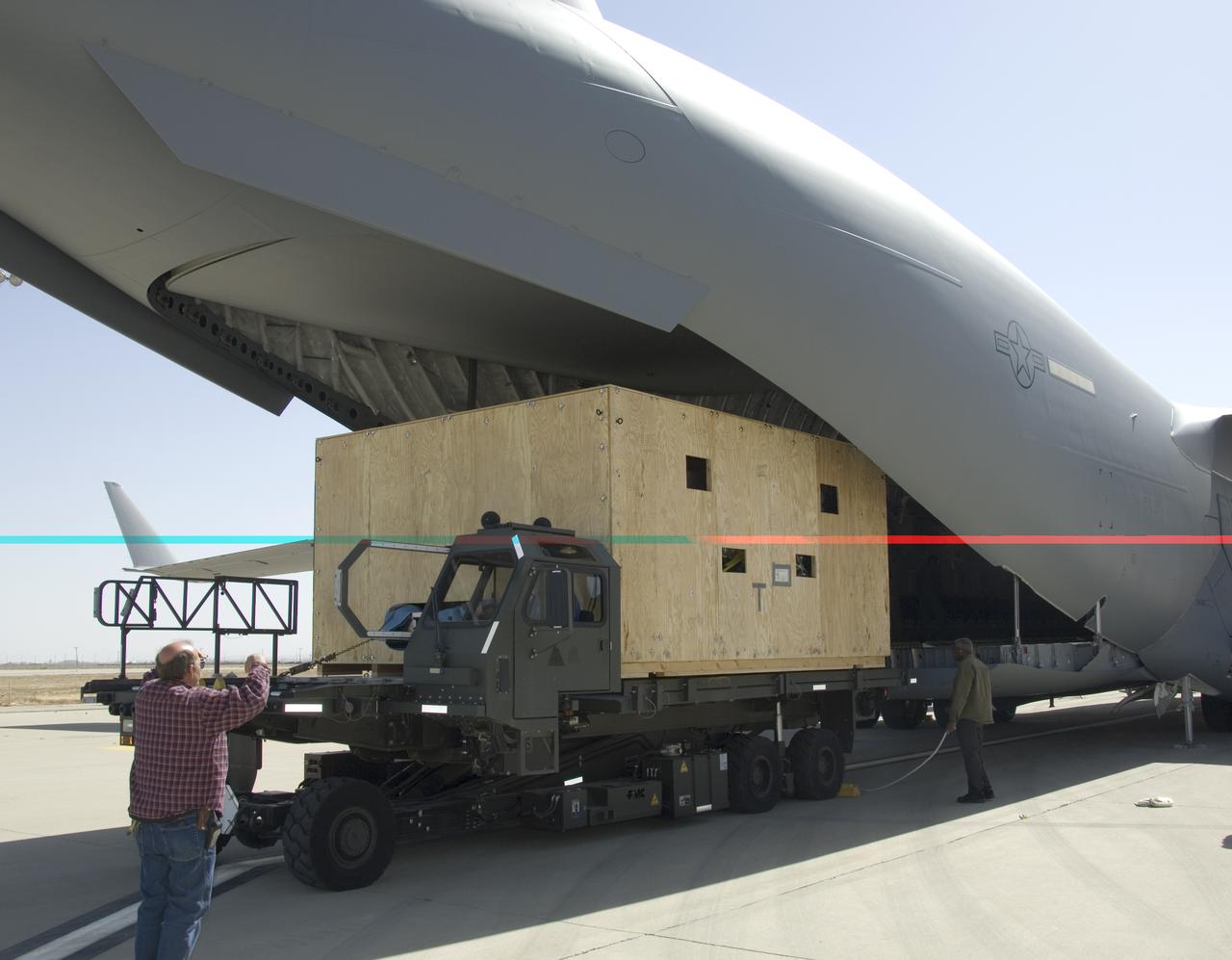
Technicians at NASA's Dryden Aircraft Operations Facility in Palmdale, Calif., loaded the German-built primary mirror assembly of the Stratospheric Observatory for Infrared Astronomy, or SOFIA, onto an Air Force C-17 for shipment to NASA's Ames Research Center on May 1, 2008. In preparation for the final finish coating of the mirror, the more than two-ton mirror assembly had been removed from its cavity in the rear fuselage of the highly modified SOFIA Boeing 747SP two weeks earlier. After arrival at NASA Ames at Moffett Field near Mountain View, Calif., the mirror would receive its aluminized finish coating before being re-installed in the SOFIA aircraft.