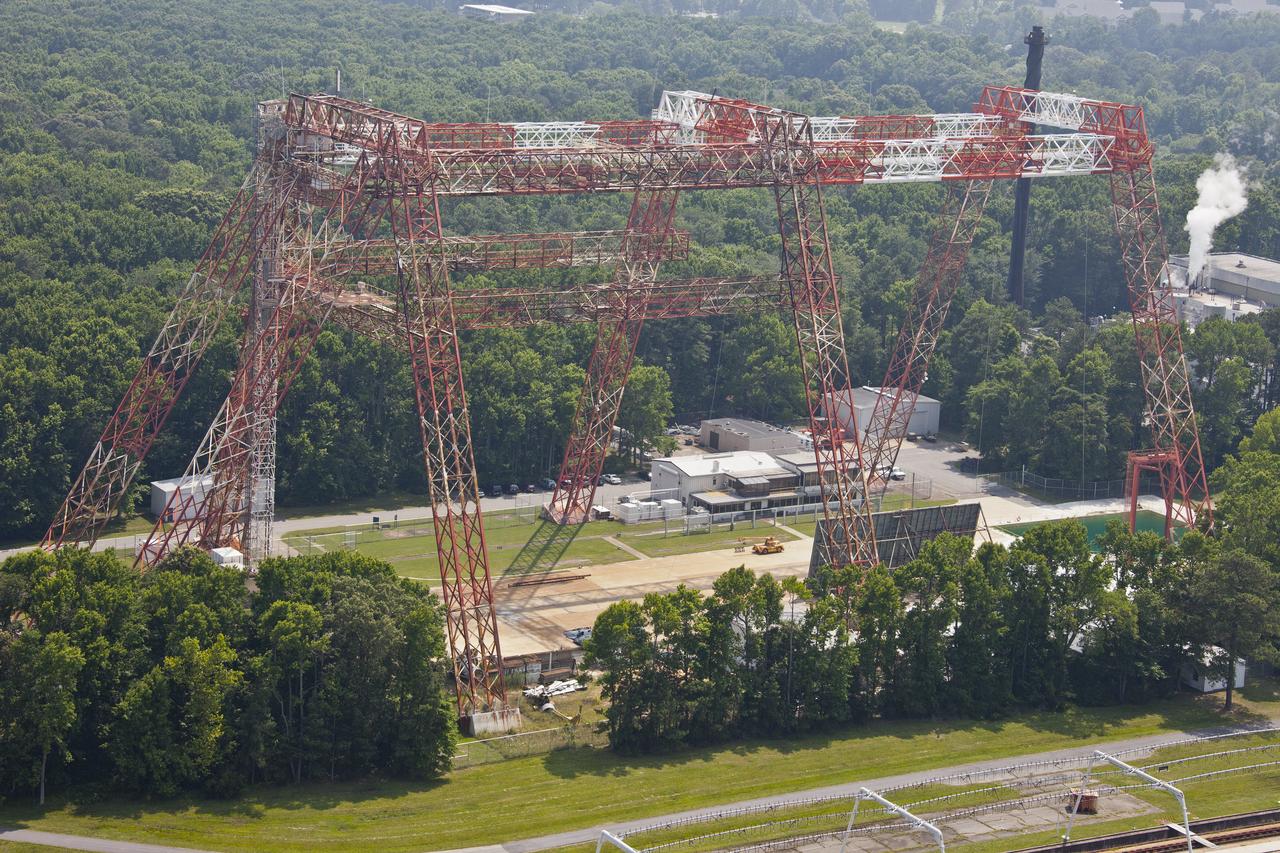
Aerial of NASA Langley's Gantry and slashdown pool also known as Impact Dynamic Faciltiy
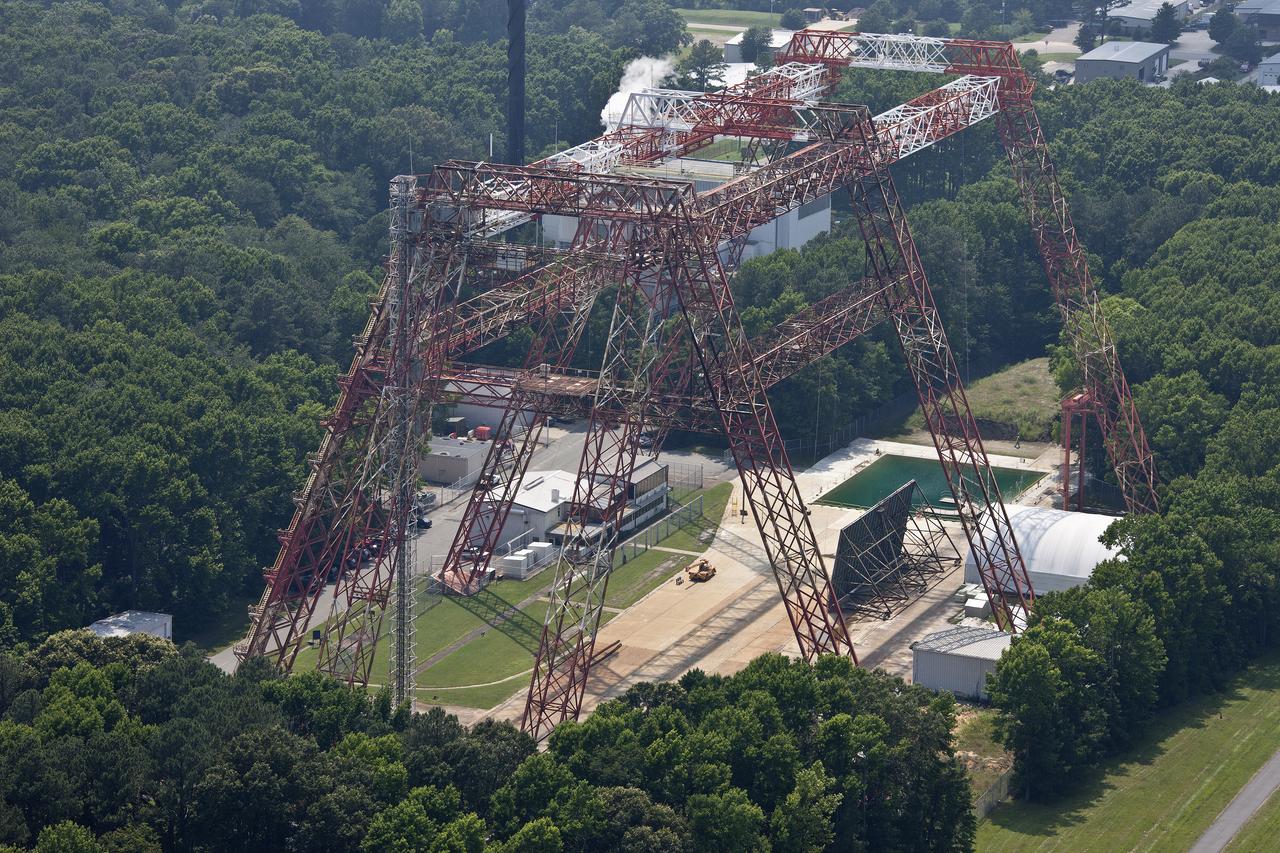
Aerial of NASA Langley's Gantry and slashdown pool also known as Impact Dynamic Faciltiy
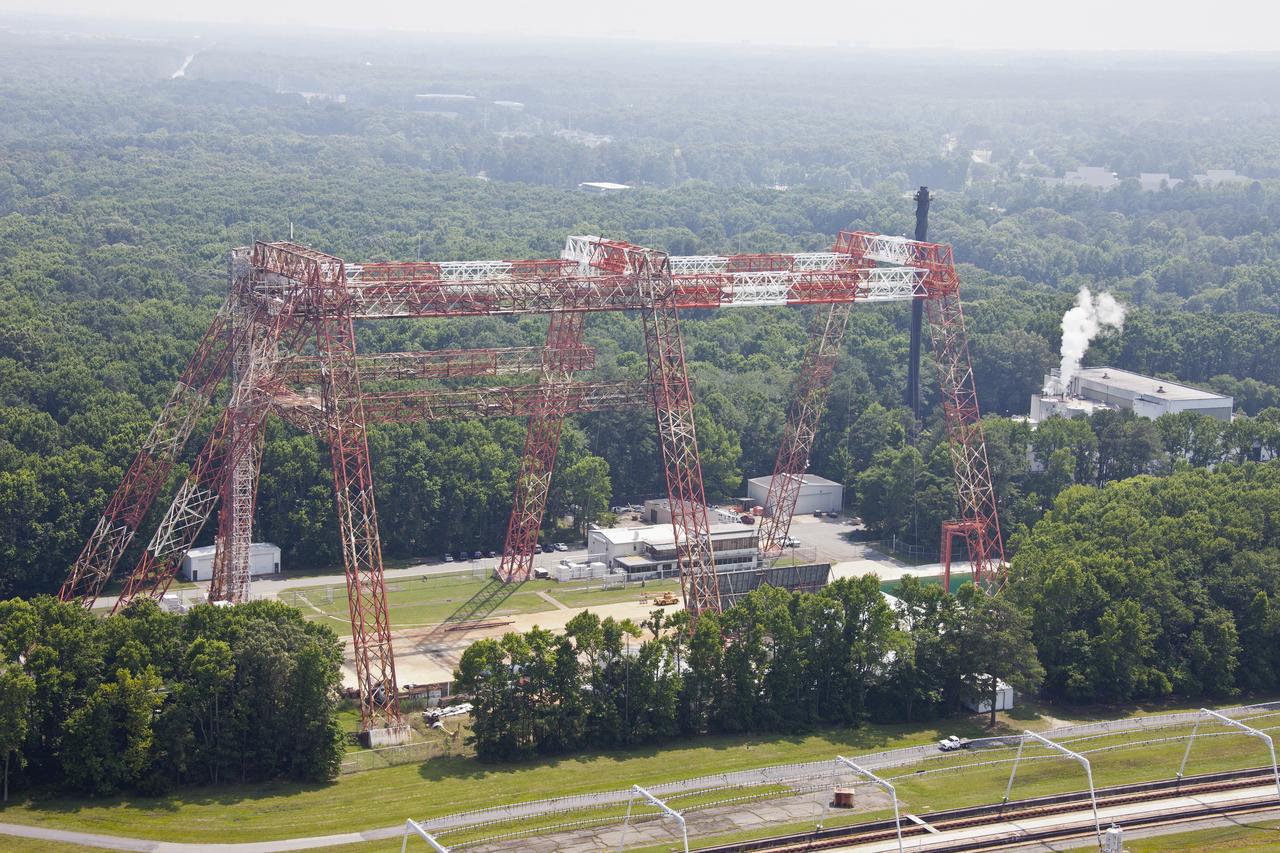
Aerial of NASA Langley's Gantry and slashdown pool also known as Impact Dynamic Faciltiy
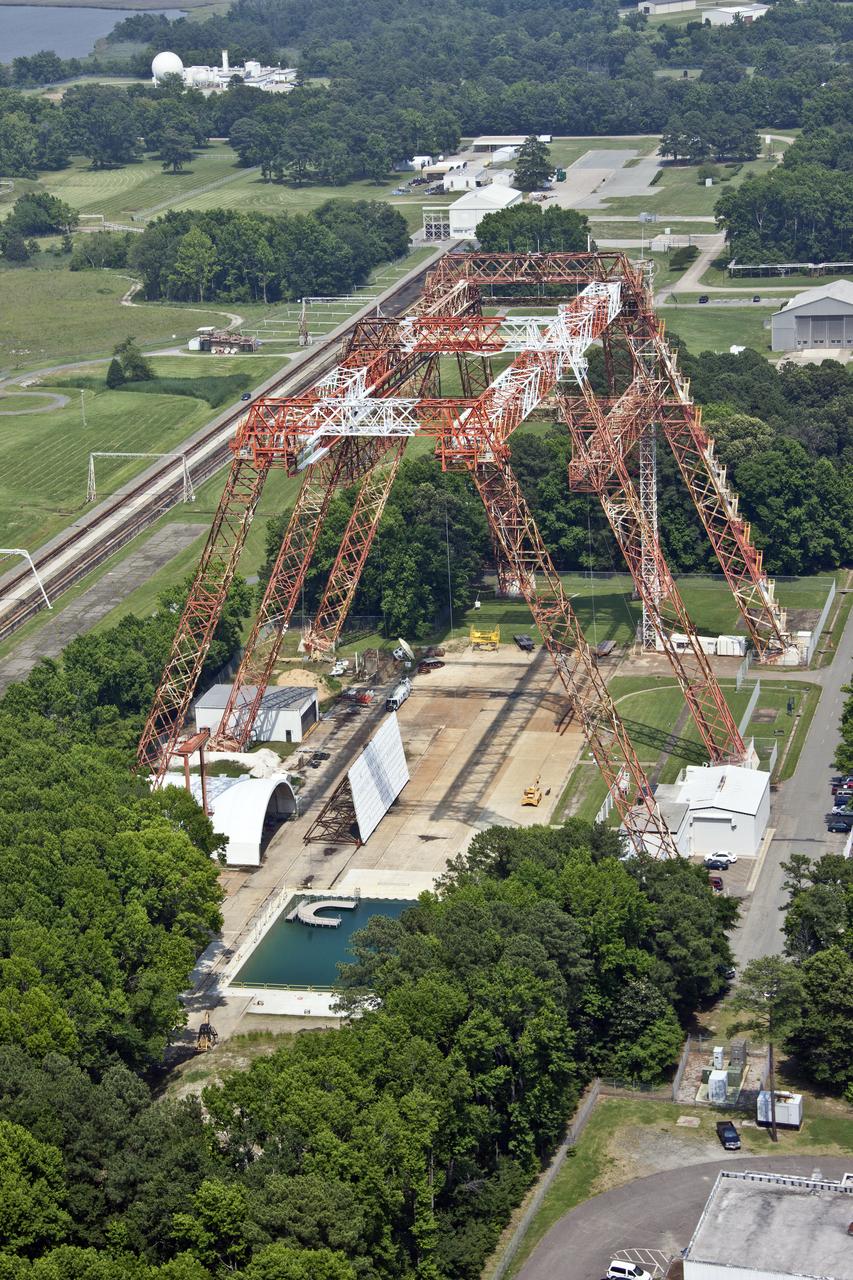
Aerial of NASA Langley's Gantry and slashdown pool also known as Impact Dynamic Faciltiy
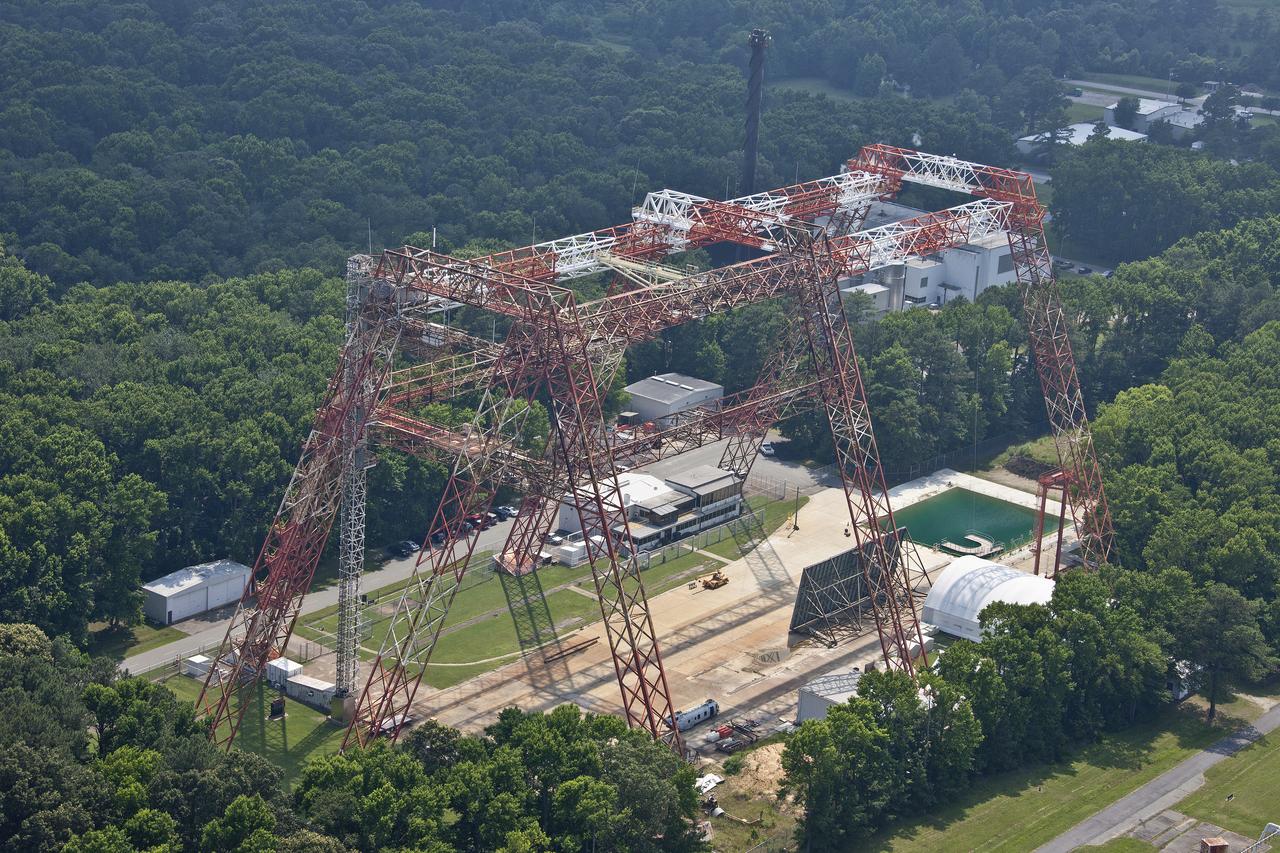
Aerial of NASA Langley's Gantry and slashdown pool also known as Impact Dynamic Faciltiy
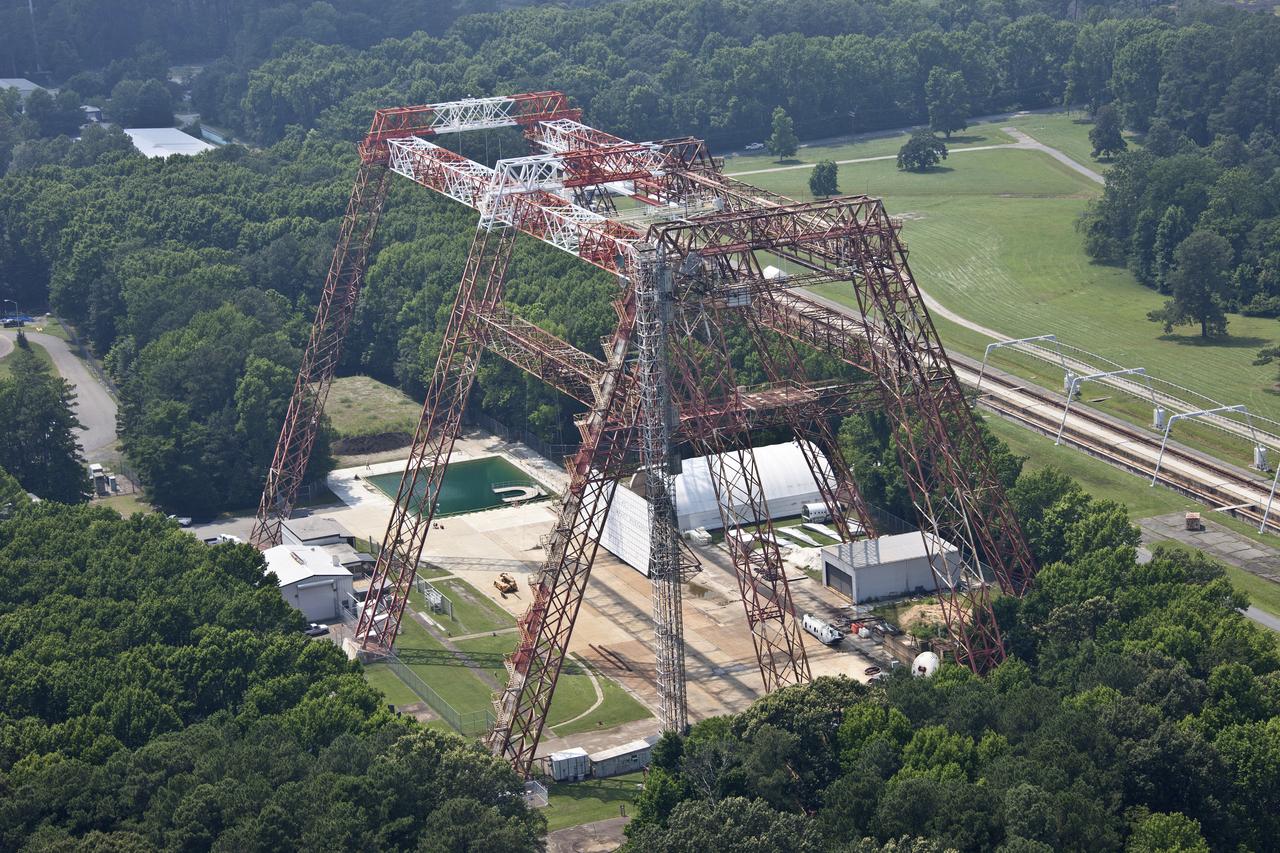
Aerial of NASA Langley's Gantry and slashdown pool also known as Impact Dynamic Faciltiy
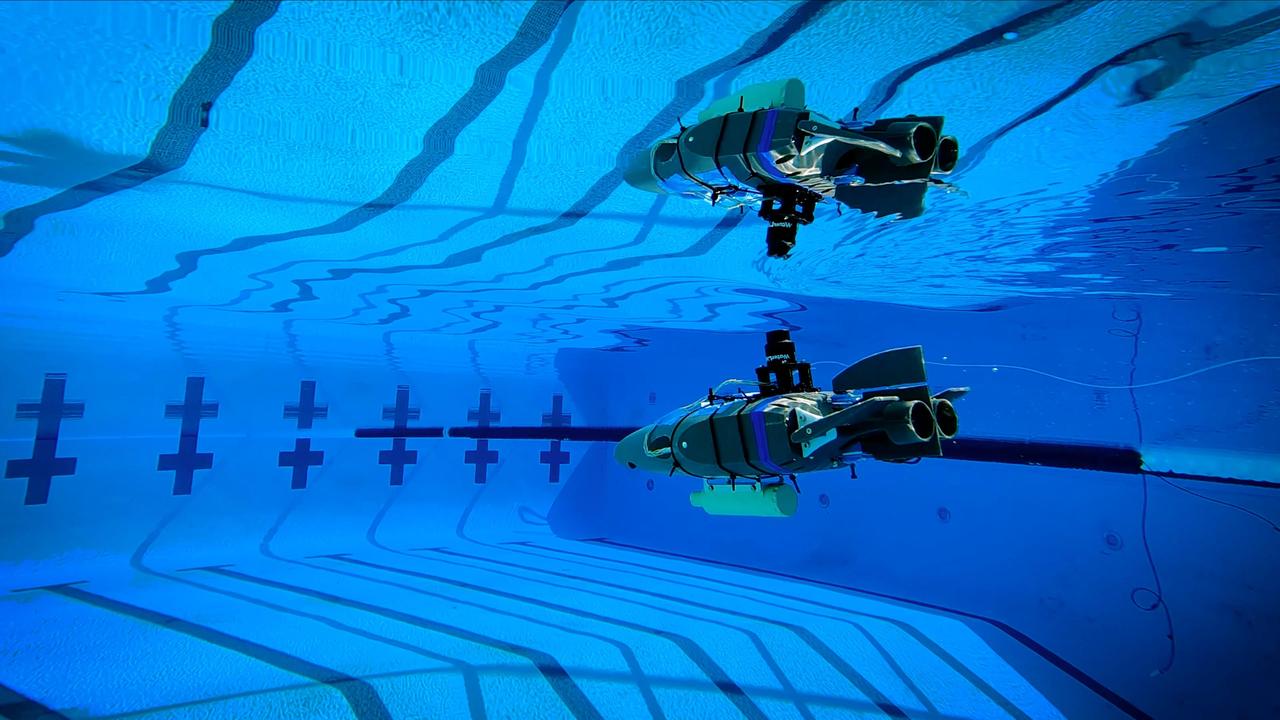
A prototype of a robot designed to explore the subsurface oceans of icy moons glides through a pool at Caltech in September 2024, its reflection visible below the water's surface. The prototype was built at NASA's Jet Propulsion Laboratory in Southern California to demonstrate the feasibility of a mission concept called SWIM, short for Sensing With Independent Micro-swimmers. SWIM envisions a swarm of dozens of self-propelled, cellphone-size robots exploring the waters of icy moons like Jupiter's Europa and Saturn's Enceladus. Delivered to the subsurface ocean by an ice-melting cryobot, the tiny robots would zoom away to look for chemical and temperature signals that could point to life. The prototype used in most of the pool tests was about 16.5 inches (42 centimeters) long, weighing 5 pounds (2.3 kilograms). As conceived for spaceflight, the robots would have dimensions about three times smaller – tiny compared to existing remotely operated and autonomous underwater scientific vehicles. In this image, commercial acoustic modules are mounted to the robot for testing: on top, one for communication, and on the bottom, one for underwater GPS. These devices were used during pool testing as stand-ins for what would be a novel wireless underwater acoustic communication system used both to transmit data between the cryobot and the swarm and to help each robot determine its position without the benefit of GPS. Led by JPL, work on SWIM took place from spring 2021 to fall 2024. The project was supported by Phase I and II funding from NASA's Innovative Advanced Concepts program under the agency's Space Technology Mission Directorate. JPL is managed for NASA by Caltech in Pasadena, California. https://photojournal.jpl.nasa.gov/catalog/PIA26423
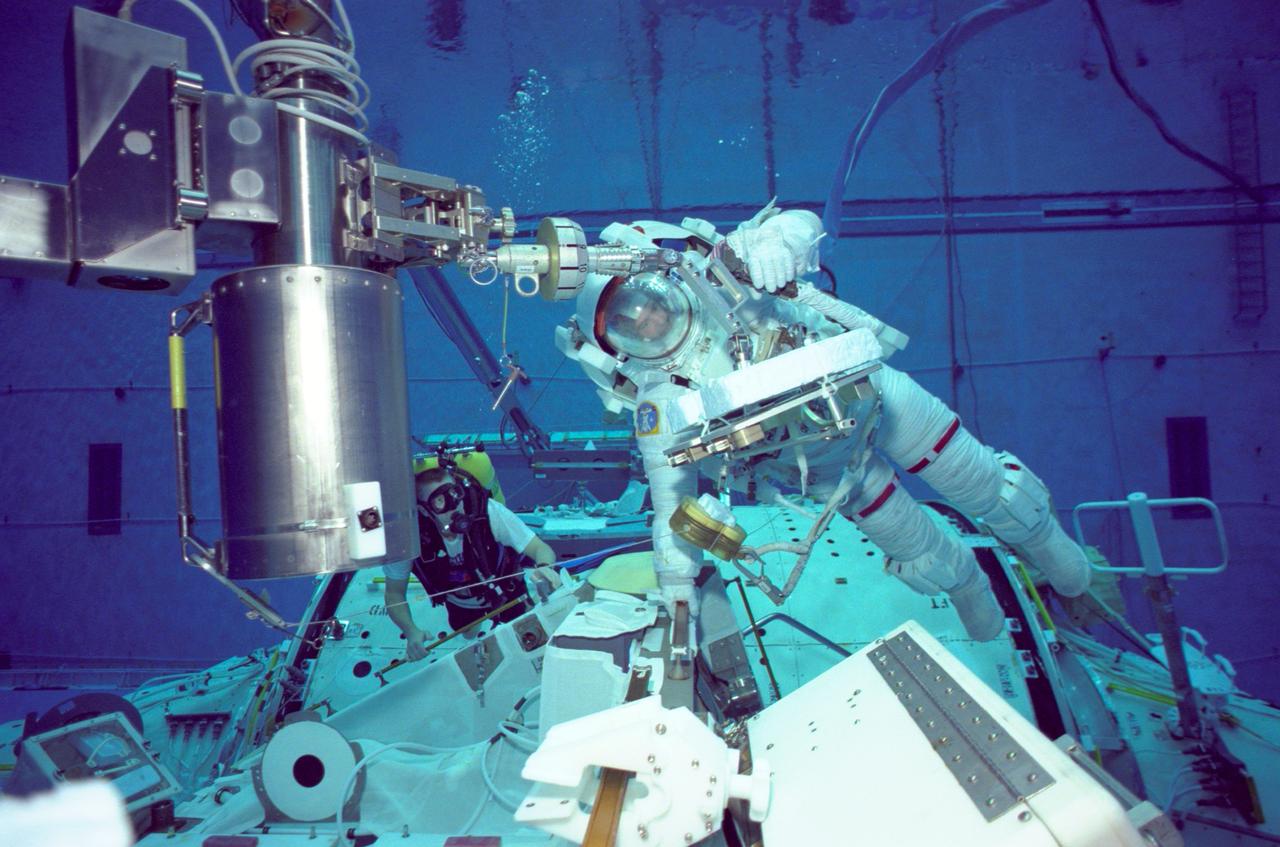
Photographic documentation showing astronauts in Extravehicular Mobility Units (EMU) participating in STS-97 (4A) EVA training in the Neutral Buoyancy Lab (NBL) pool in the Sonny Carter Training Facility (SCTF). Views include: various views of a person in an EMU (07069-71, 07077); various views of a person in an EMU with stripes on an Articulated Portable Foot Restraint (APFR) (07072, 07079) ; various views of a person in an EMU using a Pistol Grip Tool (PGT) (07073-74, 07080); person in an EMU with stripes poses with divers (07075); two persons in EMUs on APFRs (07076); person in an EMU with stripes (07078, 07081-83).
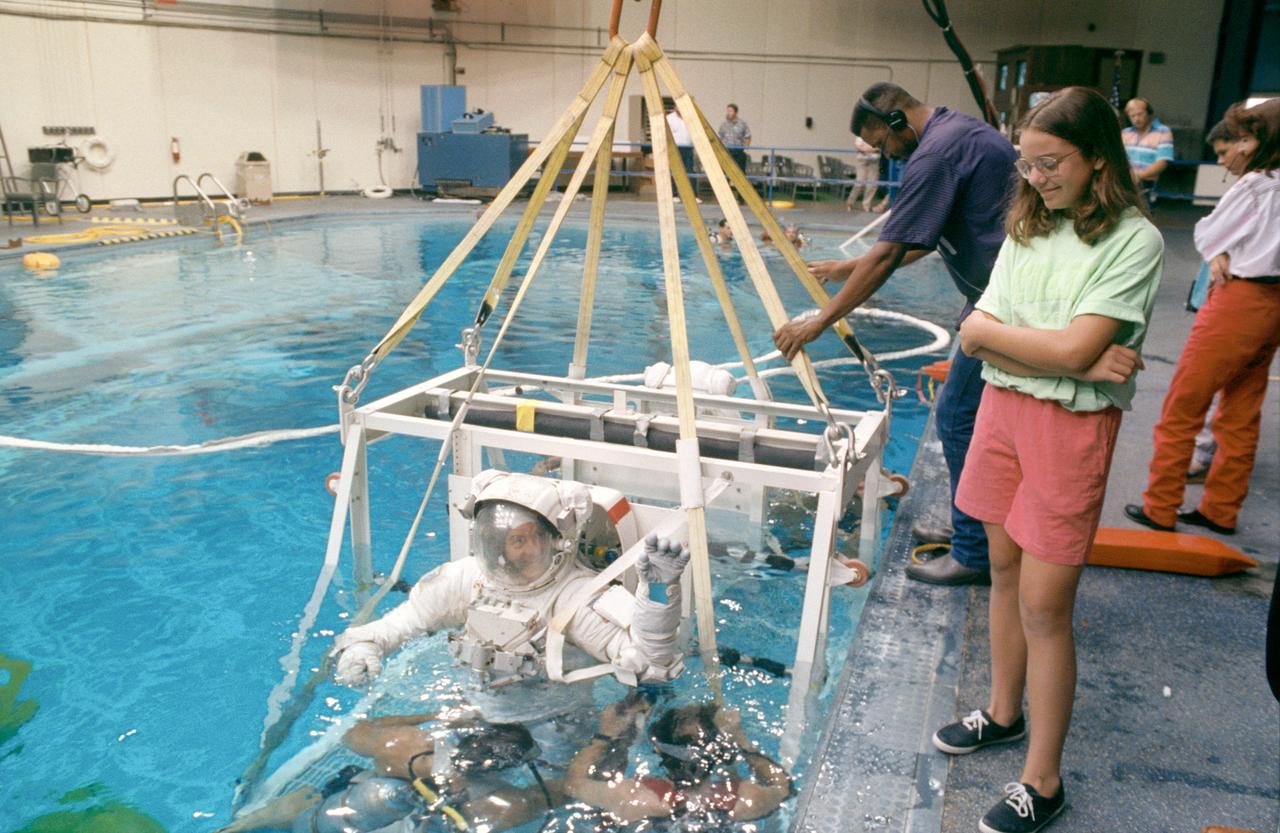
S92-43335 (28 July 1992) --- STS-53 Discovery, Orbiter Vehicle (OV) 103, Mission Specialist James S. Voss, wearing extravehicular mobility unit (EMU), is lowered into JSC?s Weightless Environment Training Facility (WETF) Bldg. 29 pool. Voss waves to his daughter standing on the poolside as the platform he is positioned in is submerged in the pool. Technicians on the poolside and scuba equipped divers in the water monitor activities. Once underwater, Voss will participate in contingency extravehicular activity (EVA) procedures.
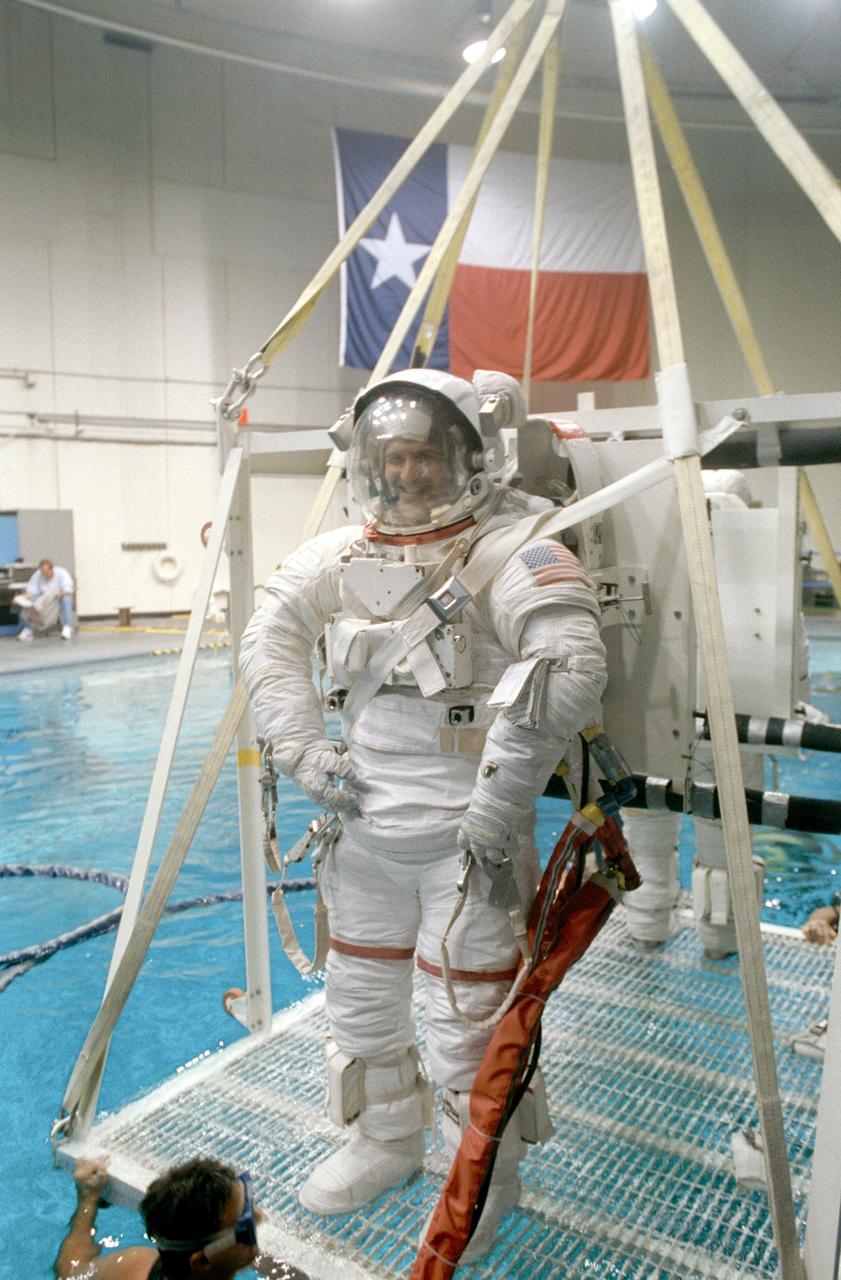
S92-40378 (1 July 1992) --- Astronaut Peter J.K. Wisoff, STS-57 mission specialist, fully suited in an extravehicular mobility unit (EMU) and helmet and standing on a platform, is lowered into the 25 foot deep pool of Johnson Space Center?s (JSC) Weightless Environment Training Facility (WETF) Bldg 29. Once underwater, Wisoff will participate in an underwater extravehicular activity (EVA) simulation. A scuba-equipped diver already in the pool guides the platform into the water.
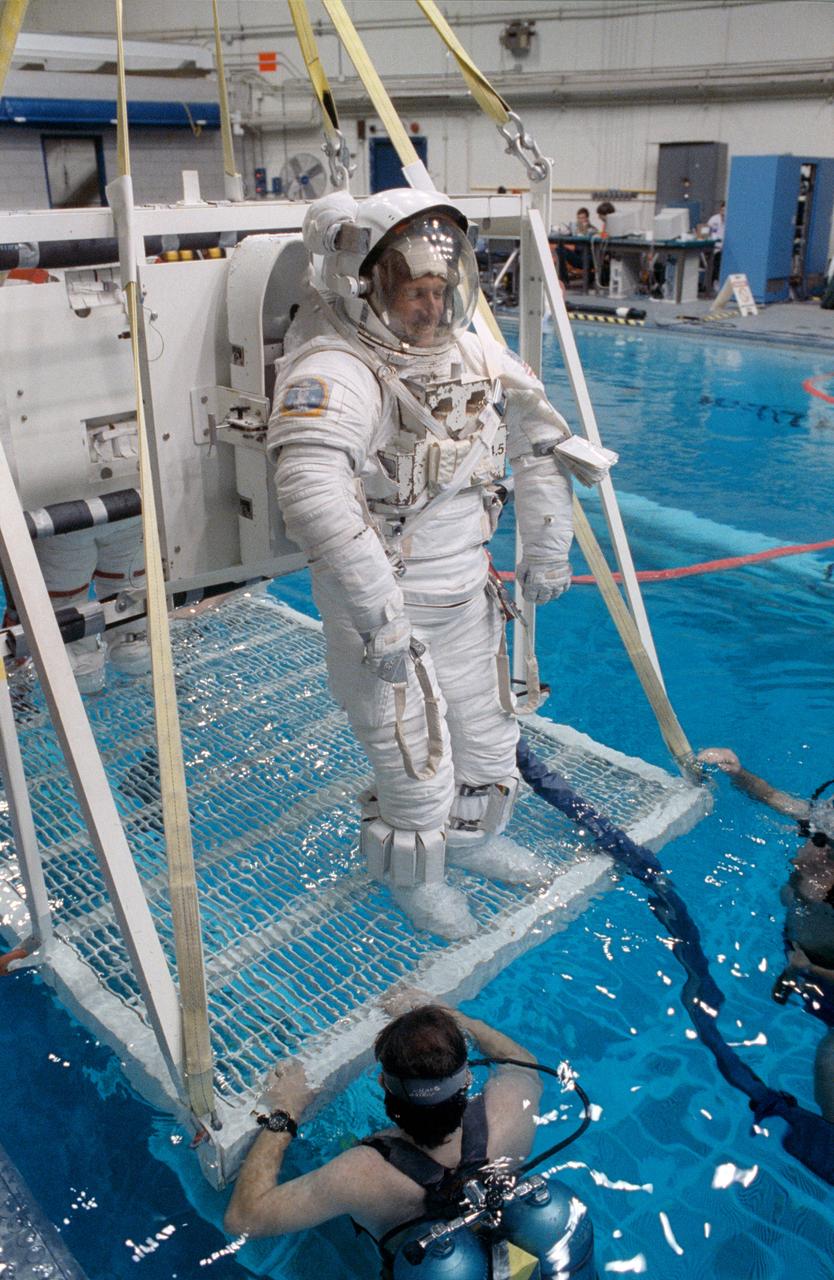
S91-30197 (1 March 1991) --- A wider shot of astronaut C. Michael Foale, mission specialist, standing on a platform which is part of a system that will lower him into a 25-ft. deep pool. Foale used the pool in the weightless environment training facility (WET-F) to rehearse a contingency extravehicular activity (EVA). Two SCUBA-equipped swimmers assist. Astronauts wear pressurized spacesuits configured for achieving a neutrally buoyant condition in the water to simulate both planned and contingency EVAs.
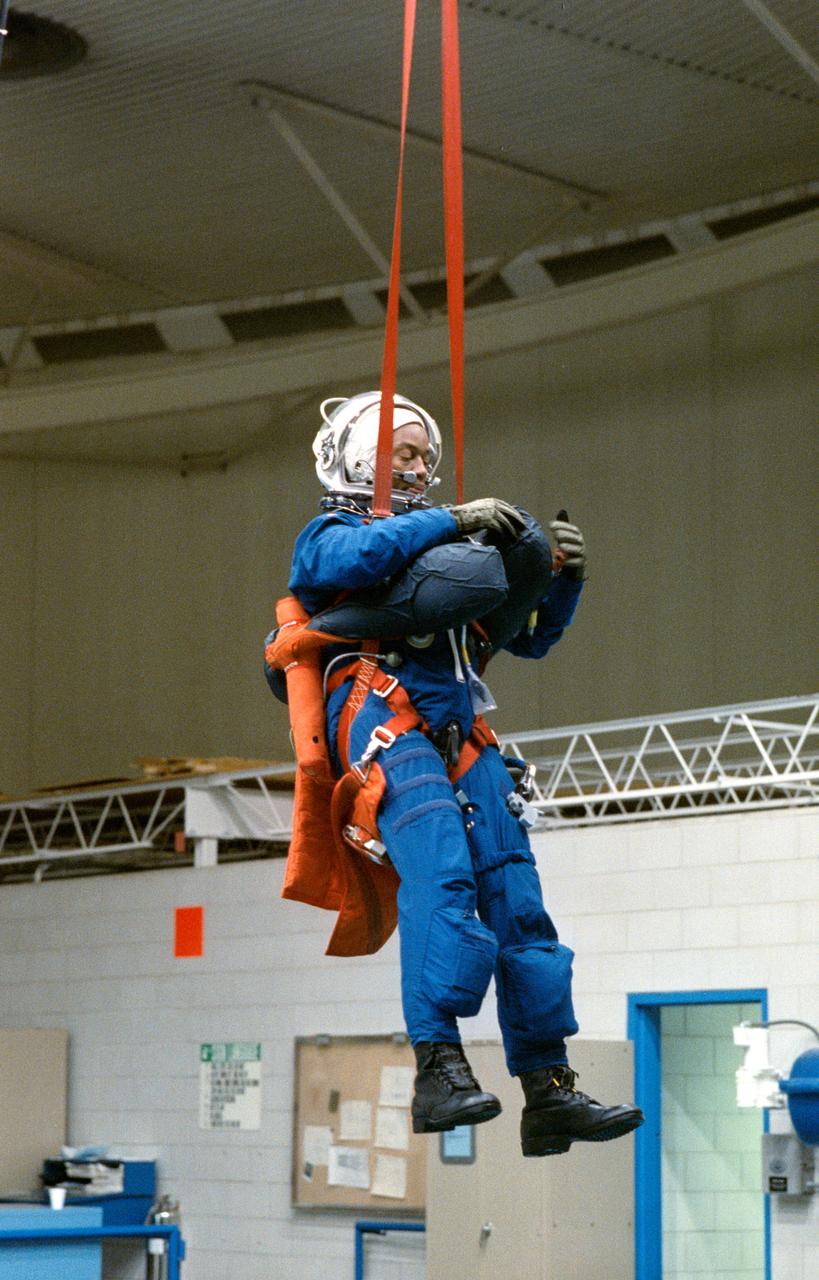
S90-54755 (13 Dec 1990) --- Astronaut Guion S. Bluford, Jr., STS-39 Mission Specialist wearing launch and entry suit (LES) and launch and entry helmet (LEH), is suspended above JSC's Weightless Environment Training Facility (WETF) Bldg 29 pool via his parachute harness. Bluford will be dropped from the harness into the WETF's 25 ft deep pool to simulate an emergency egress bailout from the Space Shuttle into the ocean.
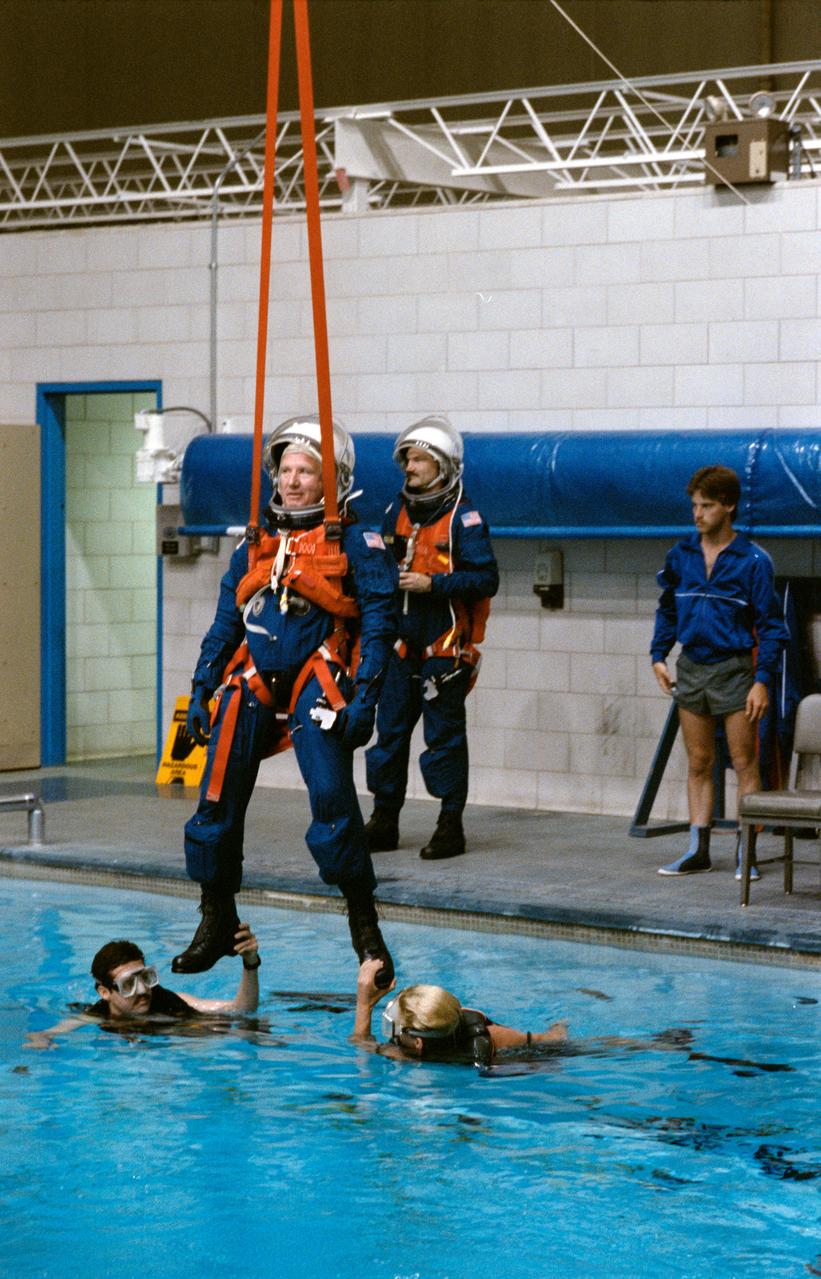
S90-34964 (16 April 1990) --- Astronaut Vance D. Brand, STS-35 commander, is suspended via his parachute harness above the pool in the Johnson Space Center?s (JSC) Weightless Environment Training Facility (WETF) Bldg 29 during launch emergency egress exercises. Divers in the pool hold Brand's feet to steady him. In the background and on the poolside is pilot Guy S. Gardner. Both Brand and Gardner are wearing launch and entry suits (LES) and launch and entry helmets (LEH).
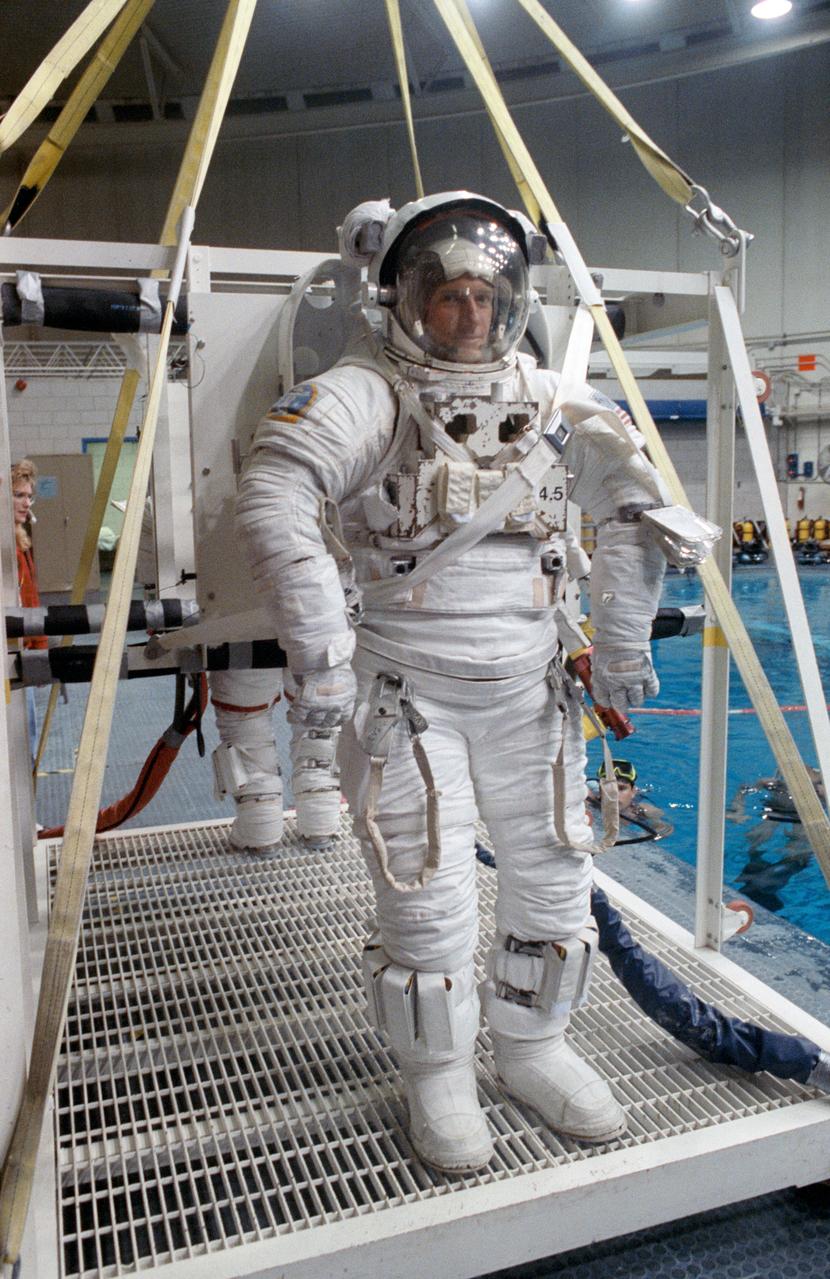
S91-30196 (1 March 1991) --- Astronaut C. Michael Foale, mission specialist, and Kathryn D. Sullivan, payload commander (barely visible in background), stand on a platform (out of frame) which is part of a system that will lower them into a 25-ft. deep pool. The payload commander and mission specialist used the pool in the weightless environment training facility (WET-F) to rehearse a contingency extravehicular activity (EVA). Astronauts wear pressurized spacesuits configured for achieving a neutrally buoyant condition in the water to simulate both planned and contingency EVAs. Two SCUBA-equipped swimmers assisting the training are seen in the background.
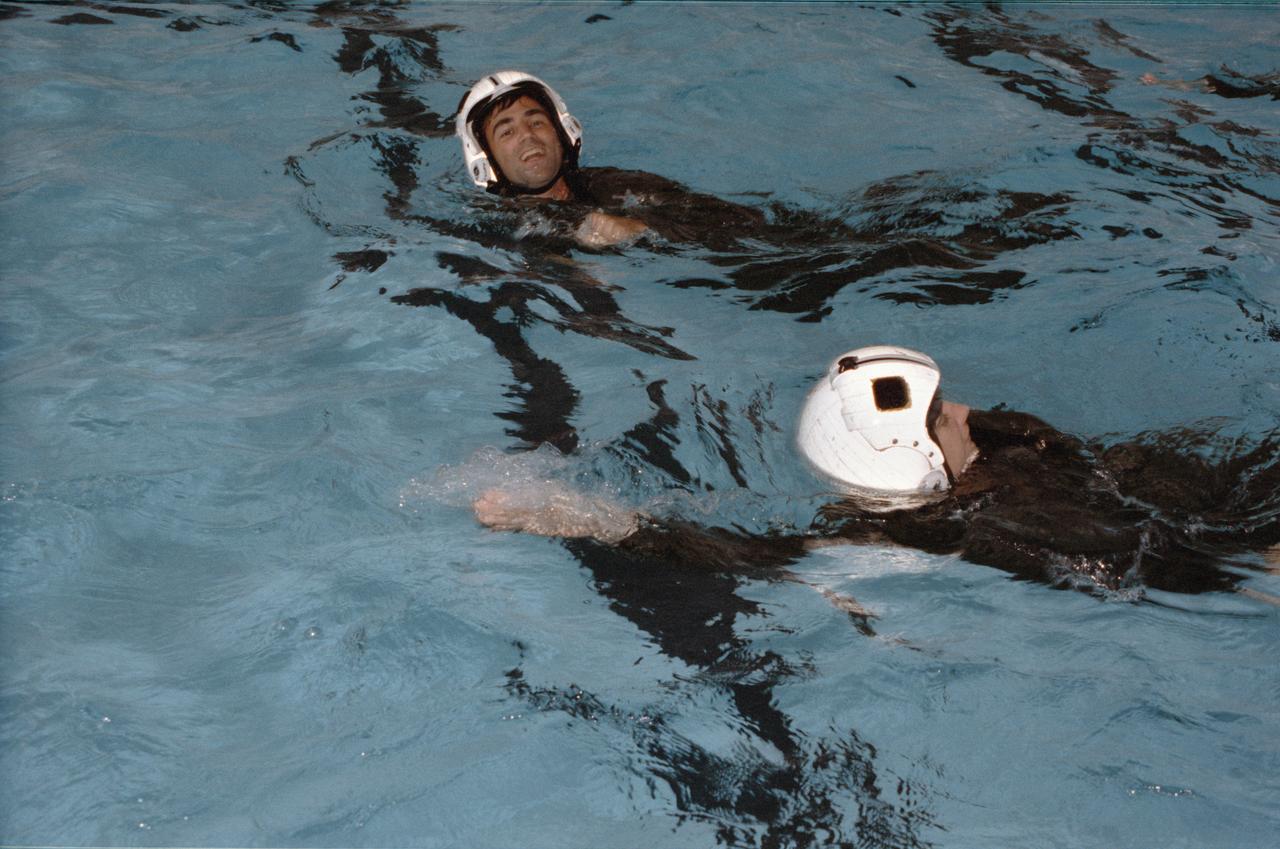
1990 Group 13 Astronaut Candidates (ASCANs) Susan J. Helms (foreground) and William G. Gregory, wearing helmets and flight suits, swim in pool at Elgin Air Force Base (AFB) in Pensacola, Florida, during water survival exercises. The training familiarized the candidates with survival techniques necessary in the event of a water landing. ASCANs participated in the exercises from 08-14-90 through 08-17-90.
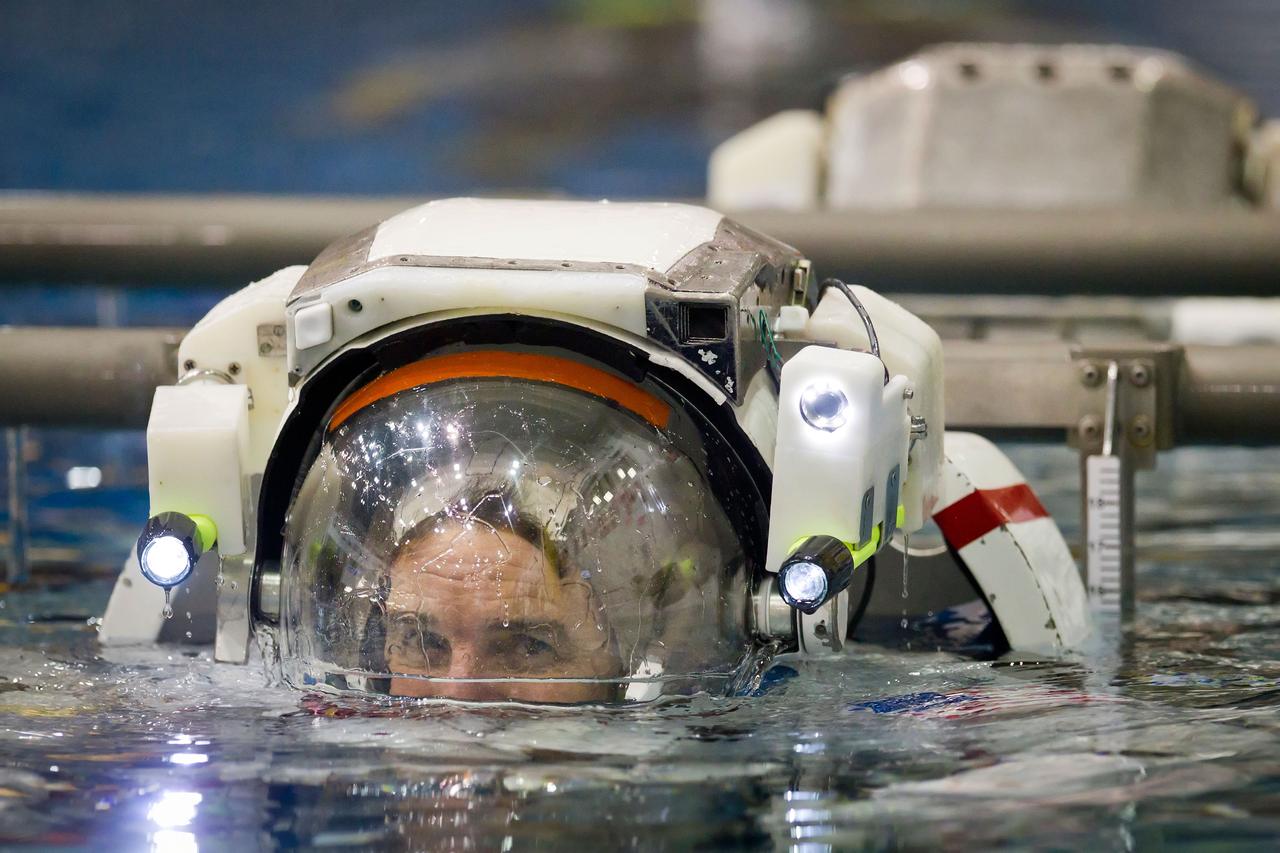
NASA astronaut Rex Walheim is lowered into the water to train for spacewalk in the Neutral Buoyancy Laboratory (NBL) on Tuesday, March 22, 2011, in Houston. ( NASA Photo / Houston Chronicle, Smiley N. Pool )
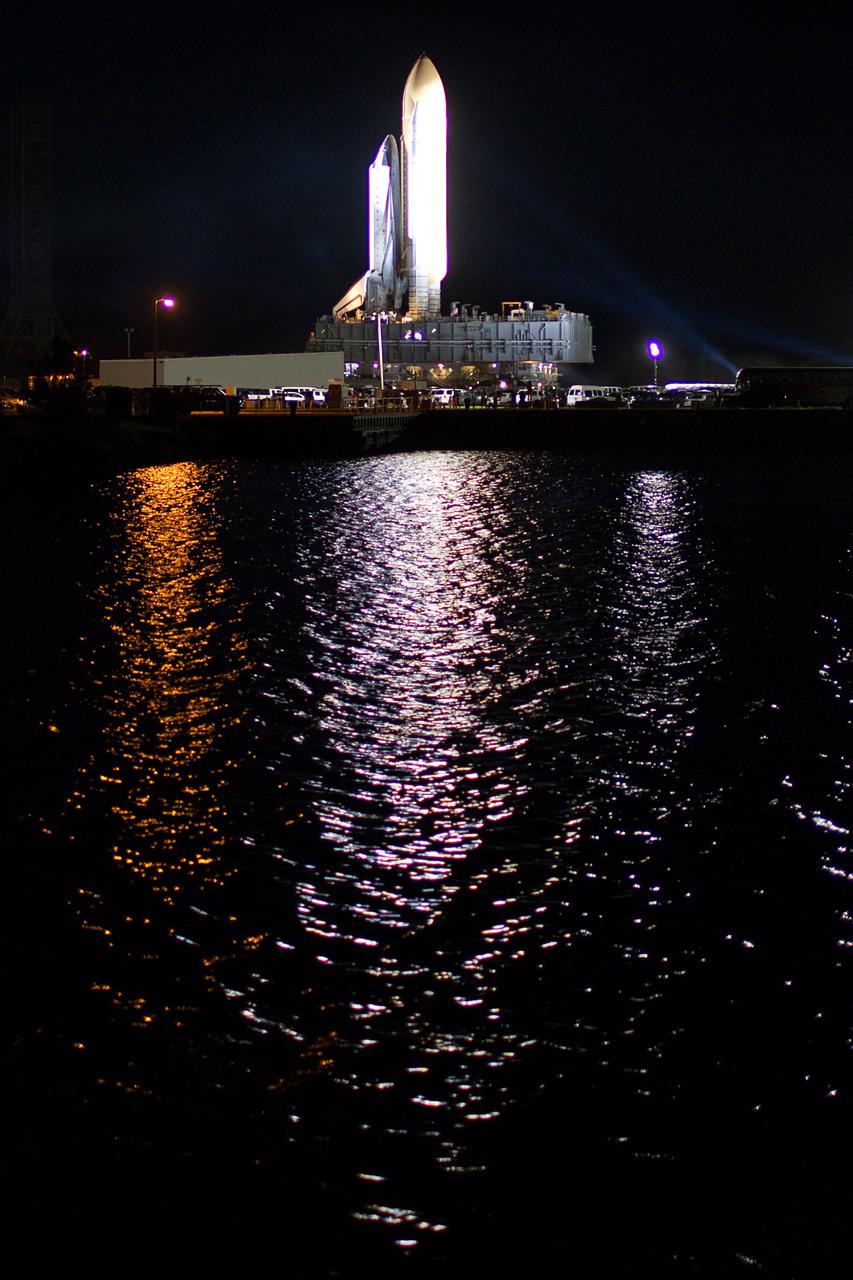
The space shuttle Atlantis moves to Launch Pad 39A during rollout at the Kennedy Space Center on Tuesday, May 31, 2011, in Florida. ( NASA Photo / Houston Chronicle, Smiley N. Pool ).
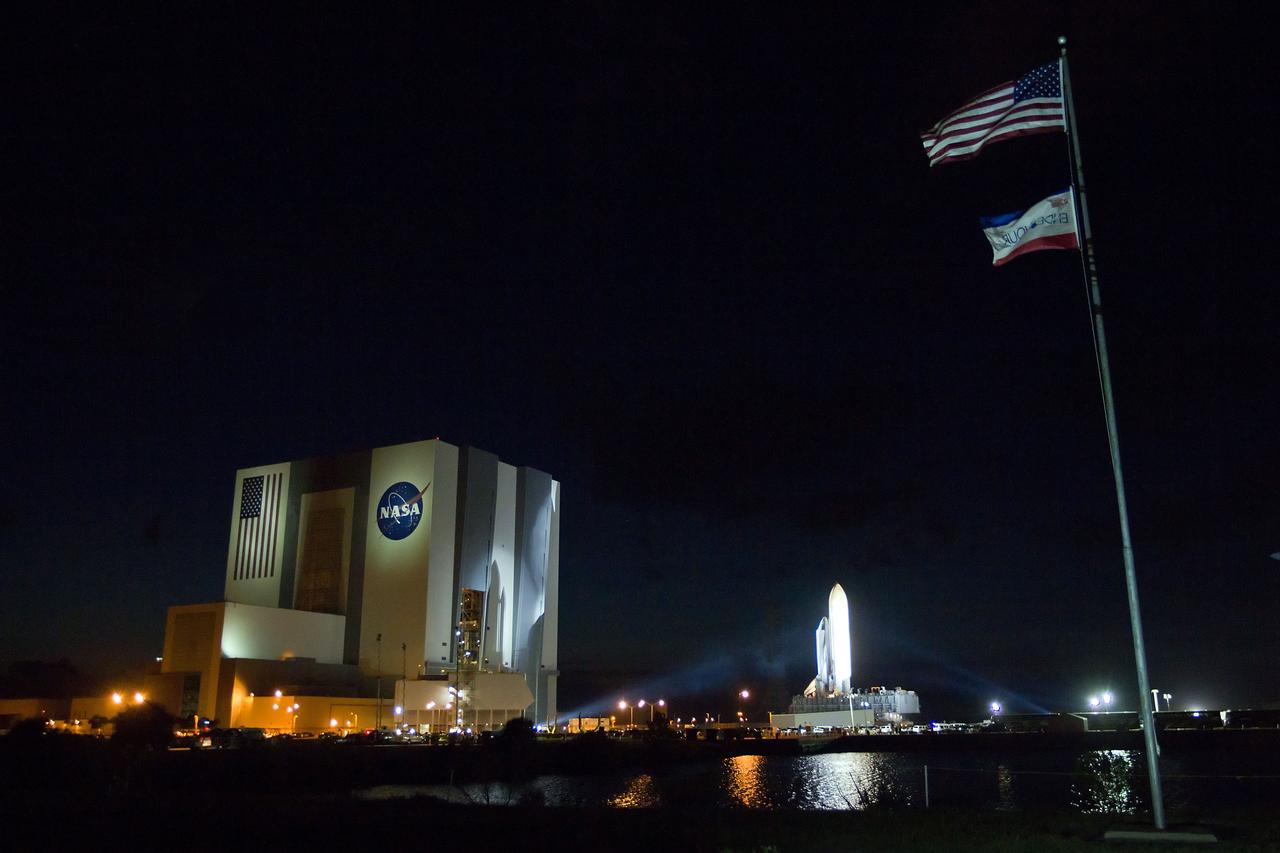
The space shuttle Atlantis moves to Launch Pad 39A during rollout at the Kennedy Space Center on Tuesday, May 31, 2011, in Florida. ( NASA Photo / Houston Chronicle, Smiley N. Pool ).
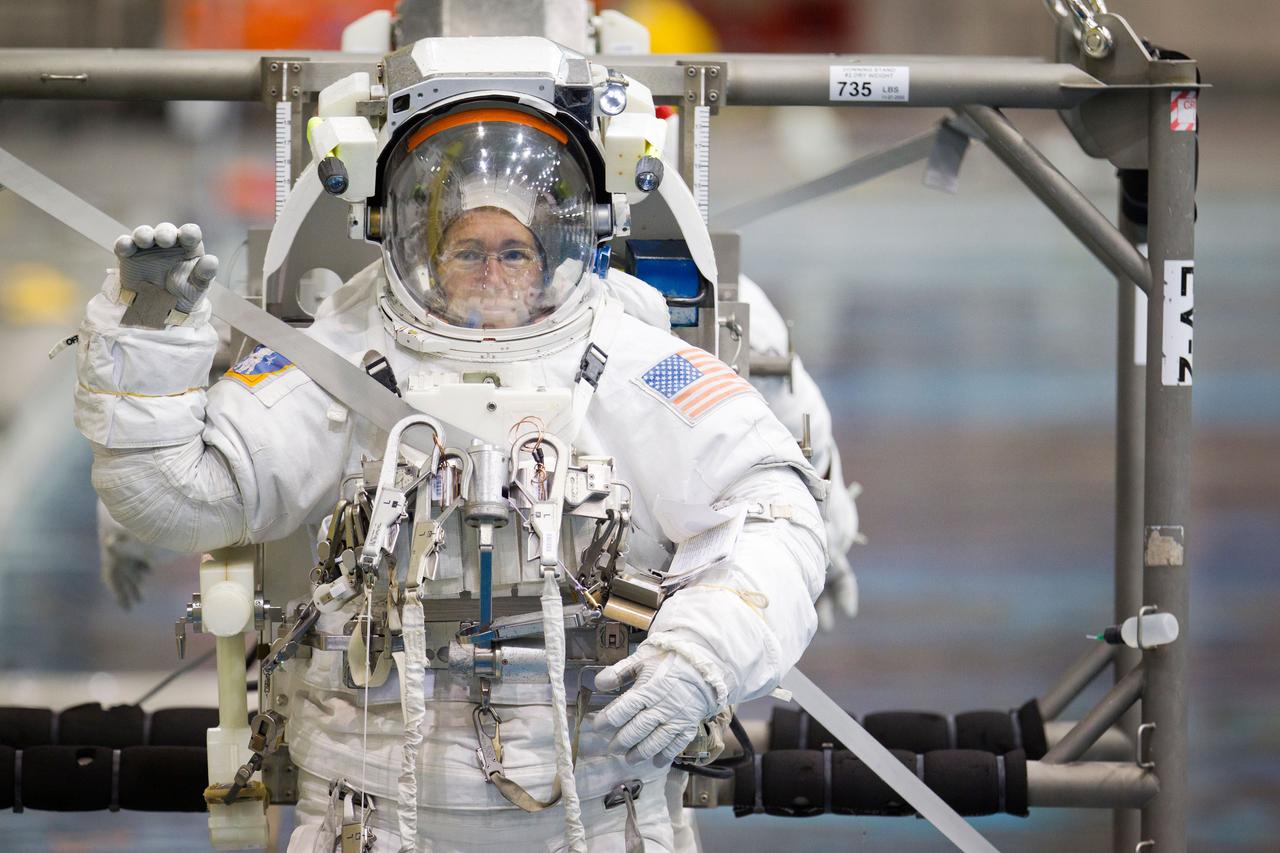
NASA astronaut Sandy Magnus waves as she is lowered into the water to train for spacewalk in the Neutral Buoyancy Laboratory (NBL) on Tuesday, March 22, 2011, in Houston. ( NASA Photo / Houston Chronicle, Smiley N. Pool )
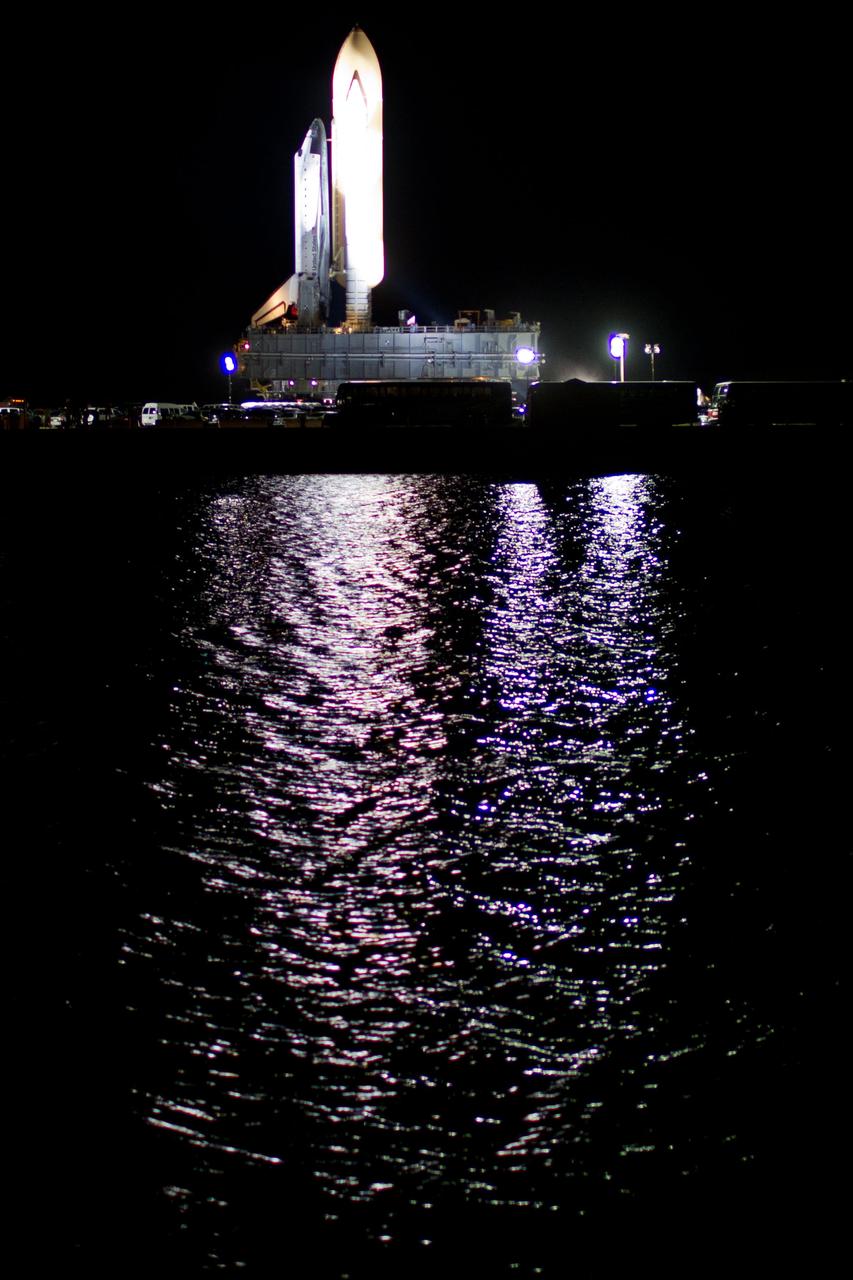
as the space shuttle Atlantis moves to Launch Pad 39A at the Kennedy Space Center on Tuesday, May 31, 2011, in Florida. ( NASA Photo / Houston Chronicle, Smiley N. Pool ).

In western Turkey, Pamukkale travertine pools and terraces form the largest such complex in the world. For thousands of years, people have visited the area due to the attraction of the thermal pools. The ancient Greco-Roman city of Hierapolis was built on top of the travertine formation. The volcanic activity which causes the hot springs, forced carbon dioxide into a cave, which was called the place of the god Pluto, and instantly killed any animals (and people) that ventured in. The perspective image was acquired May 25, 2021, and is located at 37.9 degrees north, 29.1 degrees east. https://photojournal.jpl.nasa.gov/catalog/PIA24868
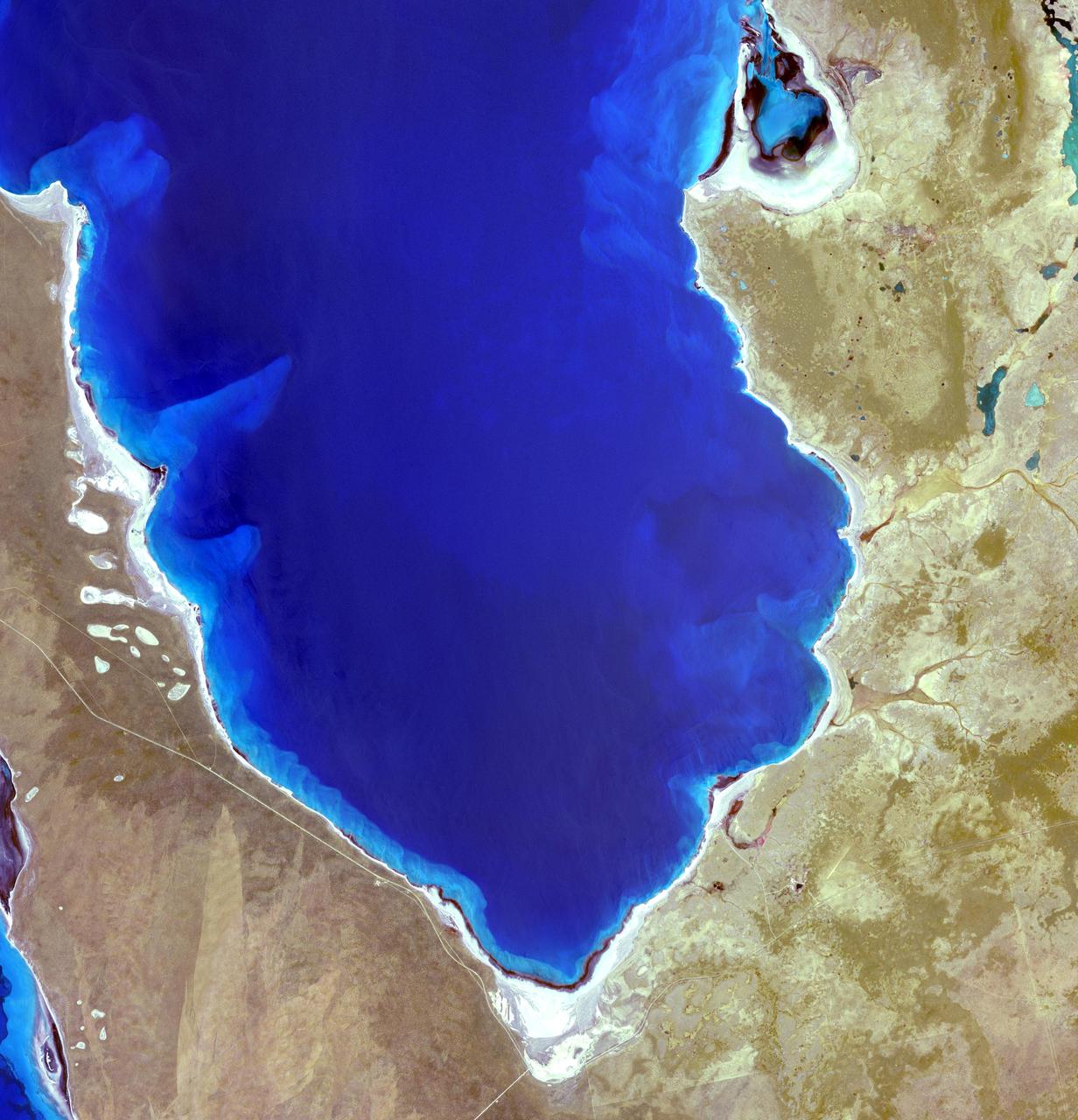
Acquired by NASA Terra spacecraft, this image shows Hamelin Pool Marine Nature Reserve, located in the Shark Bay World Heritage Site in Western Australia.

JSC2011-E-040265 (23 March 2011) --- A long parade of media is escorted between buildings at NASA?s Johnson Space Center in Houston for a media availability with the crew of STS-135 in the Systems Engineering Simulator March 23, 2011. Photo credit: NASA Photo/Houston Chronicle, Smiley N. Pool
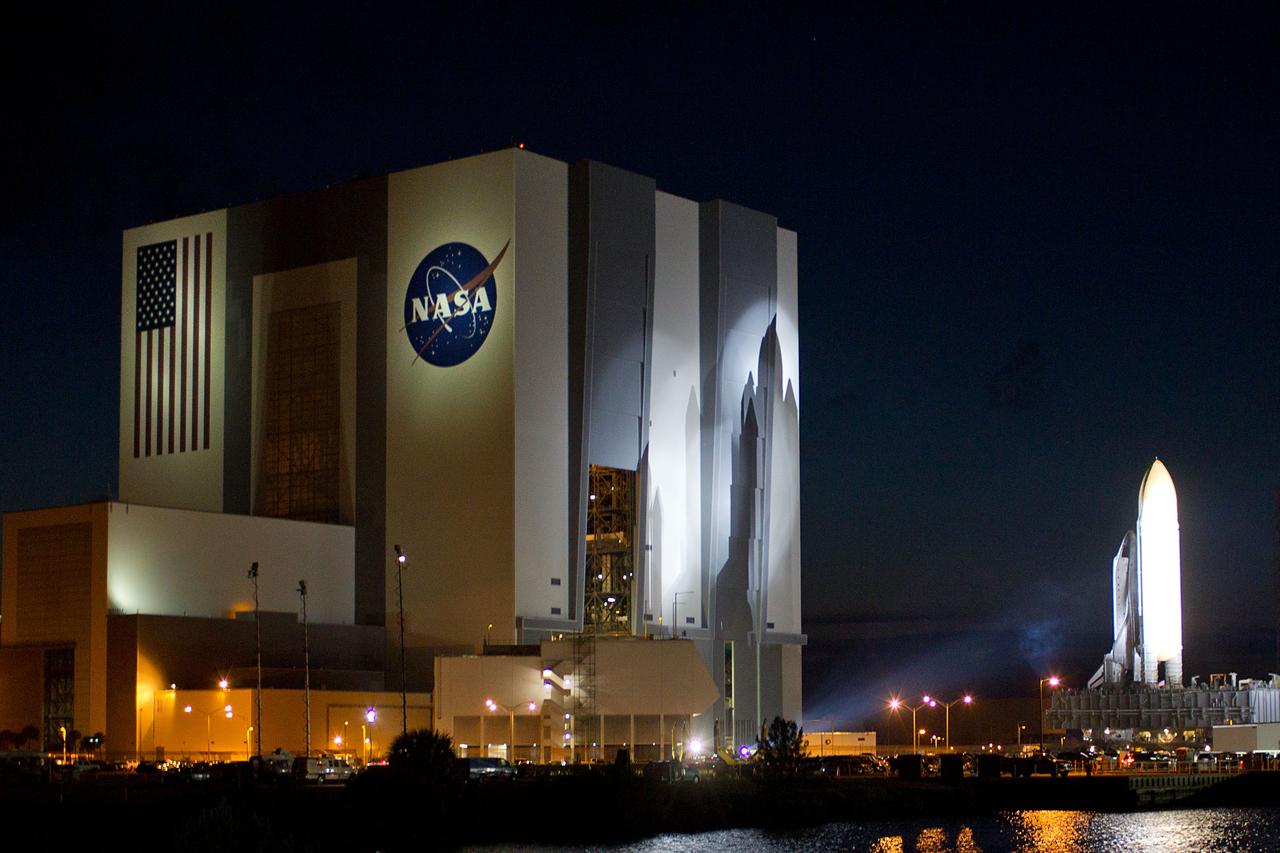
JSC2011-E-059488 (31 May 2011) --- The space shuttle Atlantis moves away from the Vehicle Assembly Building on its way to Launch Pad 39A during rollout at NASA?s Kennedy Space Center in Florida on May 31, 2011. Photo credit: NASA Photo/Houston Chronicle, Smiley N. Pool
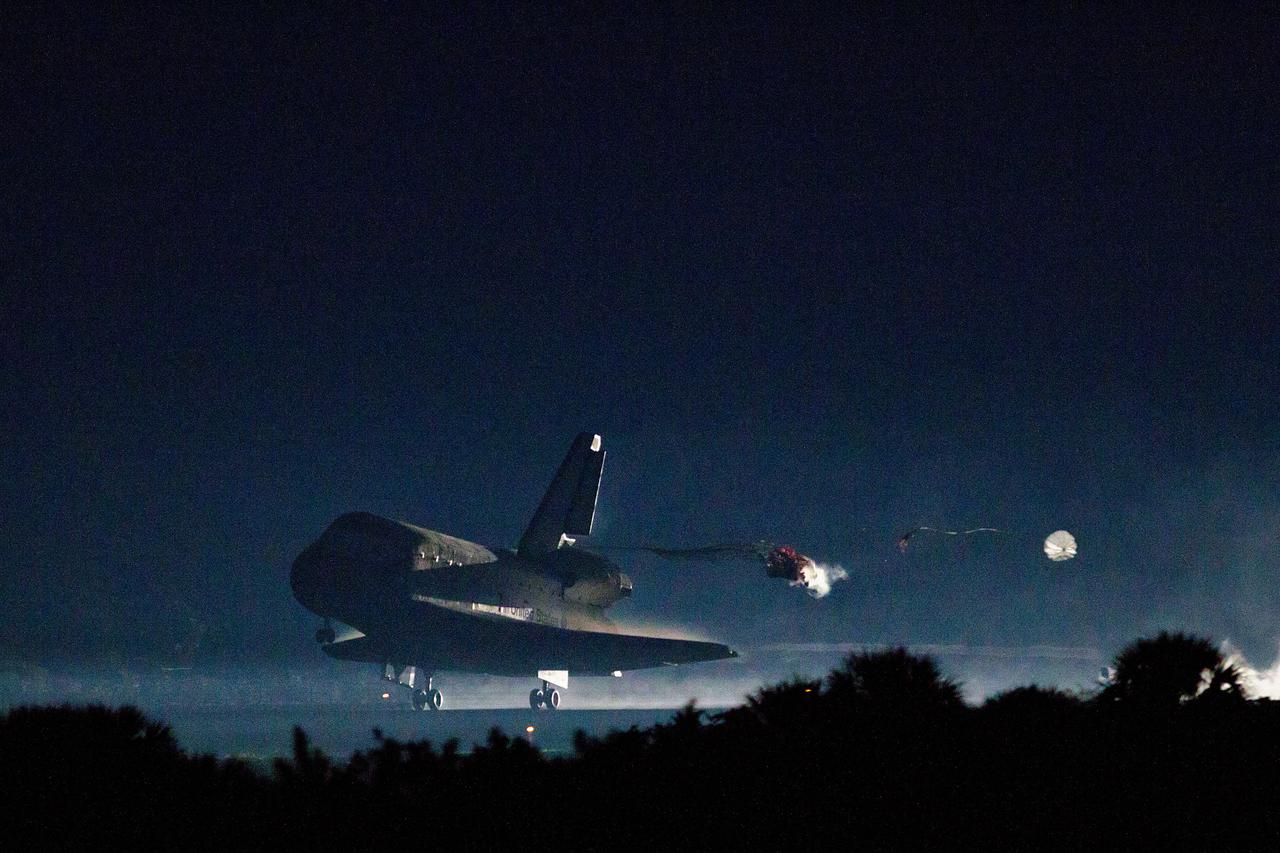
JSC2011-E-067687 (21 July 2011) --- The drag chute is deployed as the space shuttle Atlantis lands on July 21 at the Kennedy Space Center in Florida. The landing completed STS-135, the final mission of the NASA Space Shuttle Program. Photo credit: NASA Photo/Houston Chronicle, Smiley N. Pool
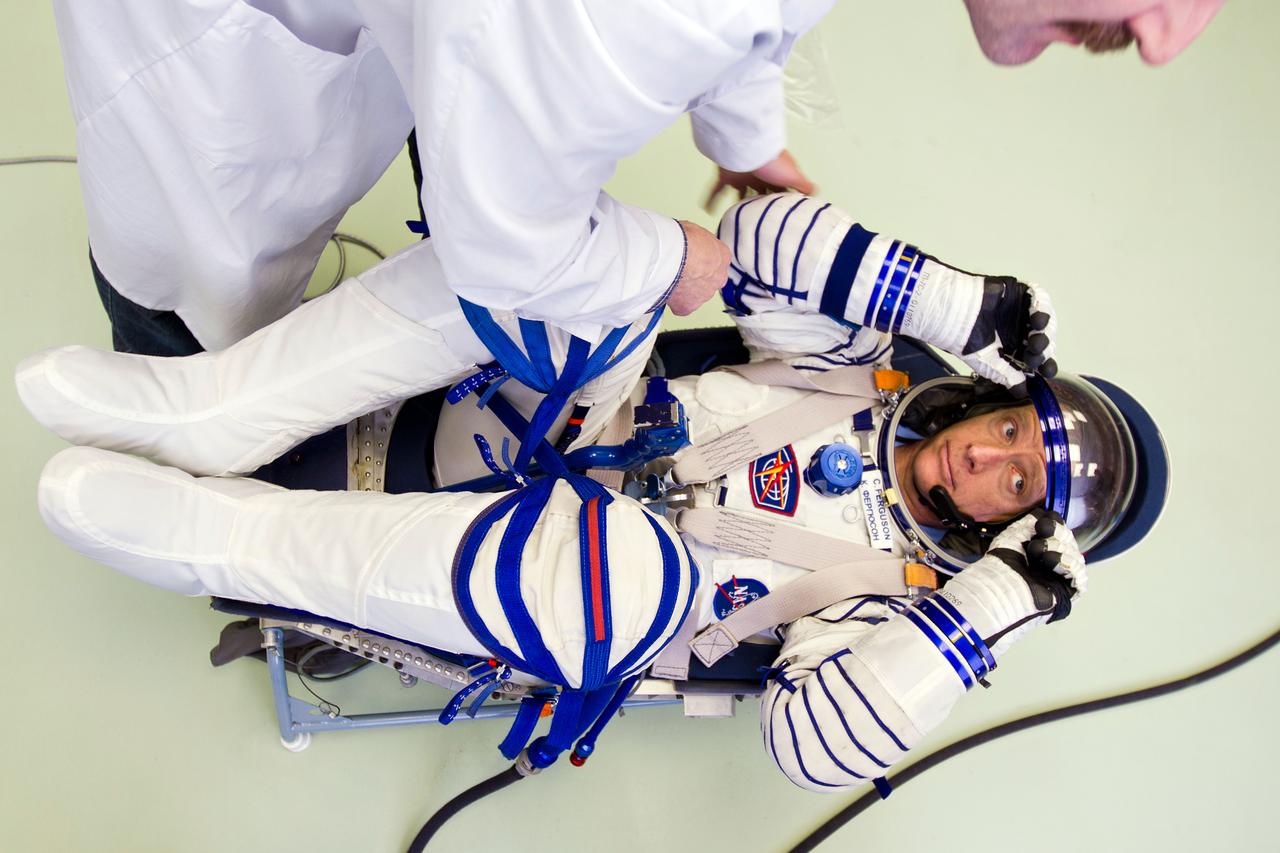
NASA astronaut Chris Ferguson undergoes a fit check of his Sokol space suit at the Zvezda facility on Tuesday, March 29, 2011, in Moscow. The crew of the final shuttle mission traveled to Moscow for a suit fit check of their Russian Soyuz suits that will be required in the event of an emergency. ( NASA Photo / Houston Chronicle, Smiley N. Pool )

JSC2011-E-059397 (13 May 2011) --- NASA astronaut Rex Walheim, STS-135 mission specialist, simulates a spacewalk in the Virtual Reality Laboratory at NASA?s Johnson Space Center May 13, 2011. Photo credit: NASA Photo/Houston Chronicle, Smiley N. Pool
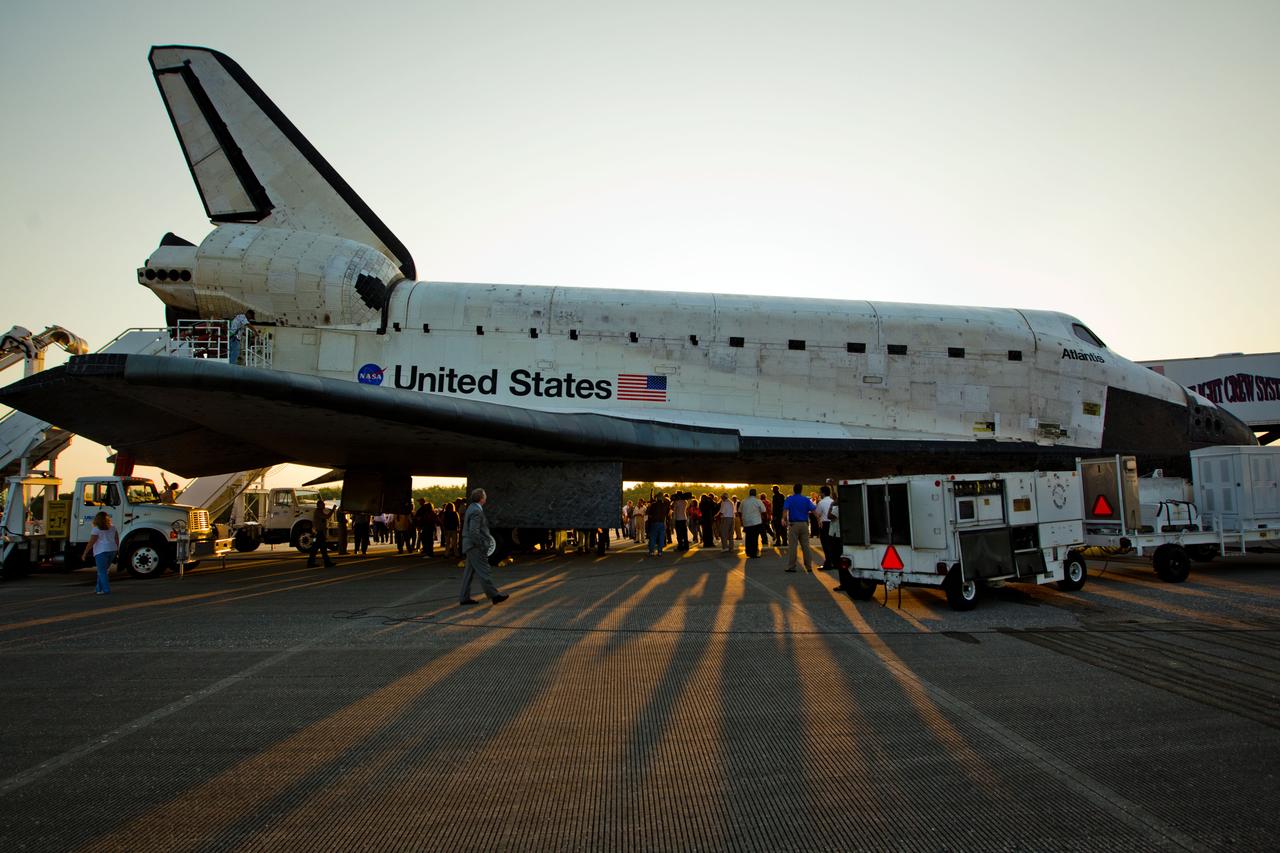
JSC2011-E-067975 (21 July 2011) --- The sun rises over the space shuttle Atlantis after landing July 21 at the Kennedy Space Center in Florida. The landing completed STS-135, the final mission of the NASA Space Shuttle Program. Photo credit: NASA Photo/Houston Chronicle, Smiley N. Pool
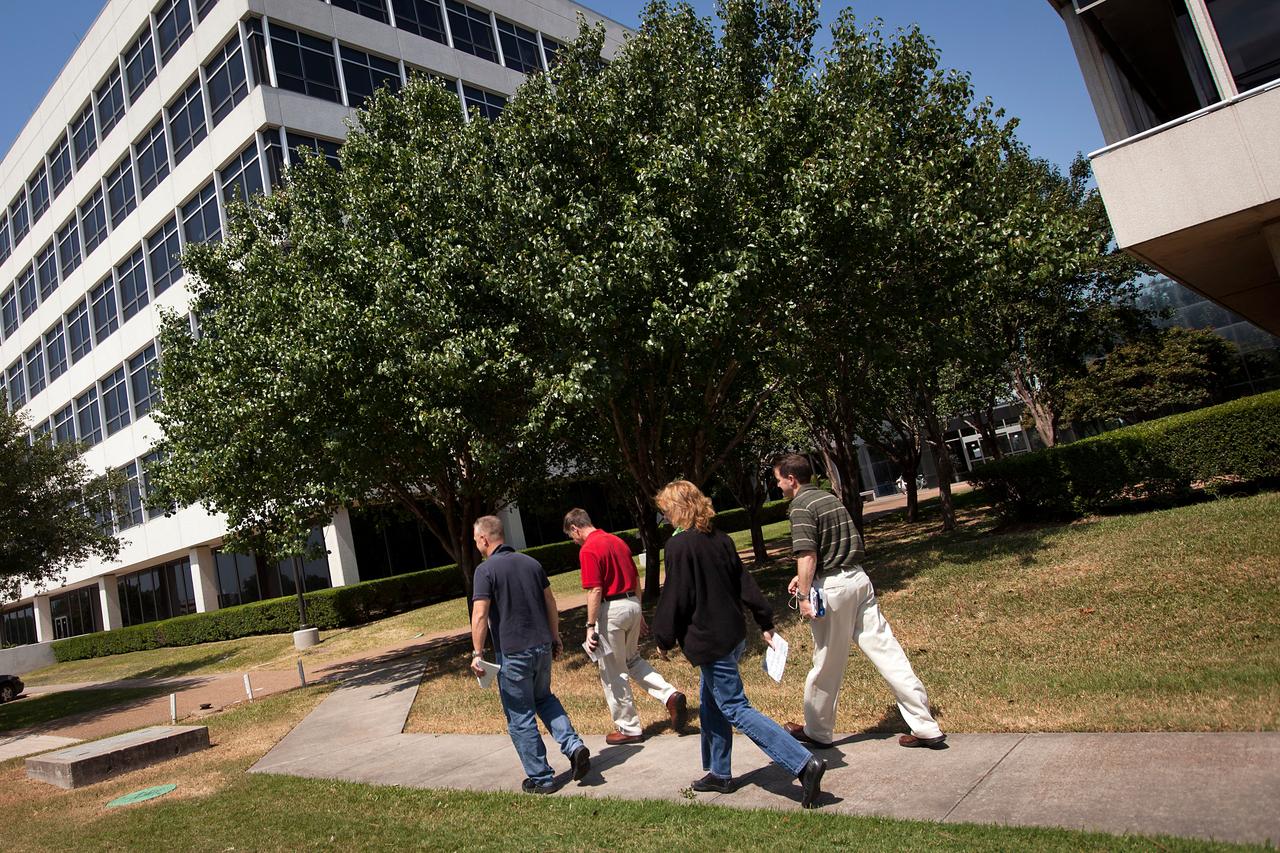
The crew of STS-135, from left, Doug Hurley, Chris Ferguson, Sandy Magnus and Rex Walheim walk between buildings at the Johnson Space Center after a simulation in the motion based simulator on Friday, May 6, 2011, in Houston. ( NASA Photo / Houston Chronicle, Smiley N. Pool ).
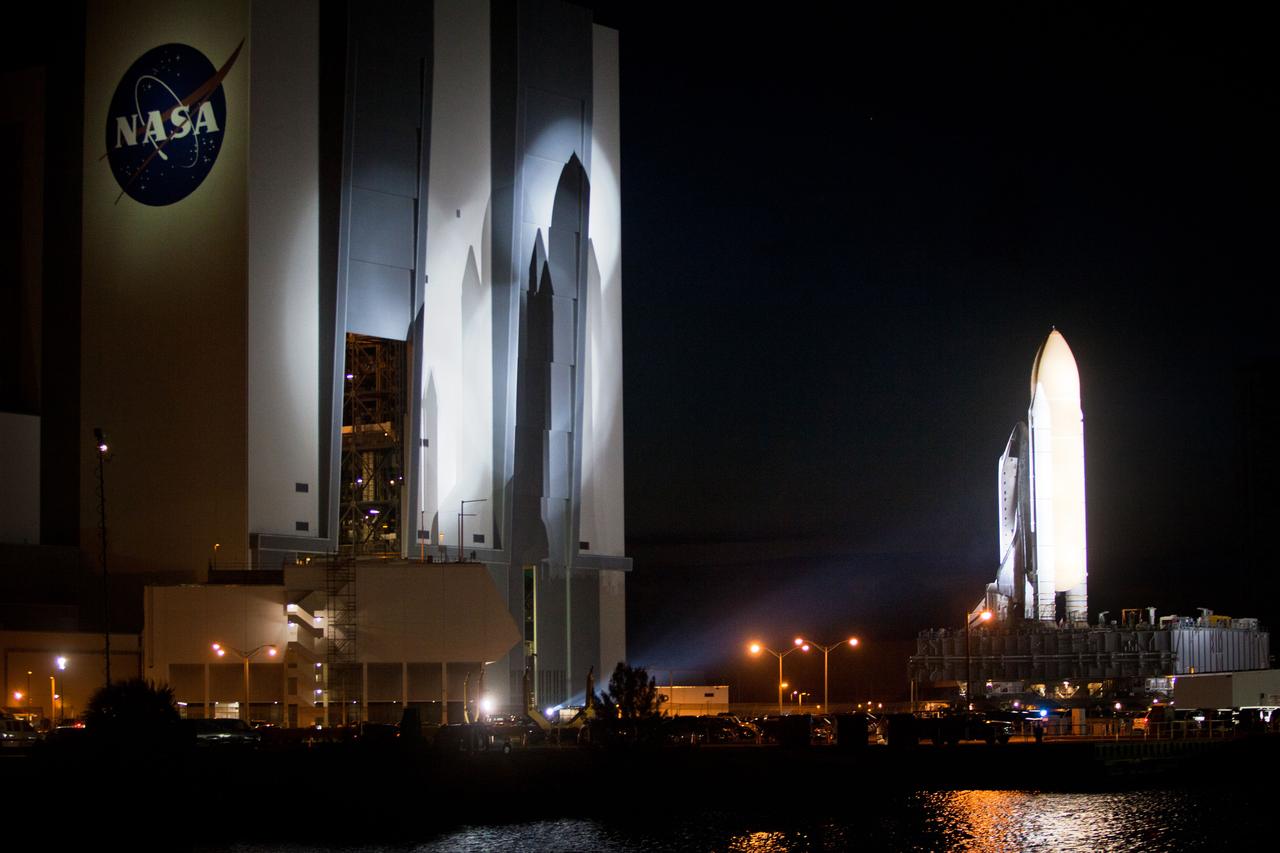
JSC2011-E-059490 (31 May 2011) --- The space shuttle Atlantis moves away from the Vehicle Assembly Building on its way to Launch Pad 39A during rollout at NASA?s Kennedy Space Center in Florida on May 31, 2011. Photo credit: NASA Photo/Houston Chronicle, Smiley N. Pool
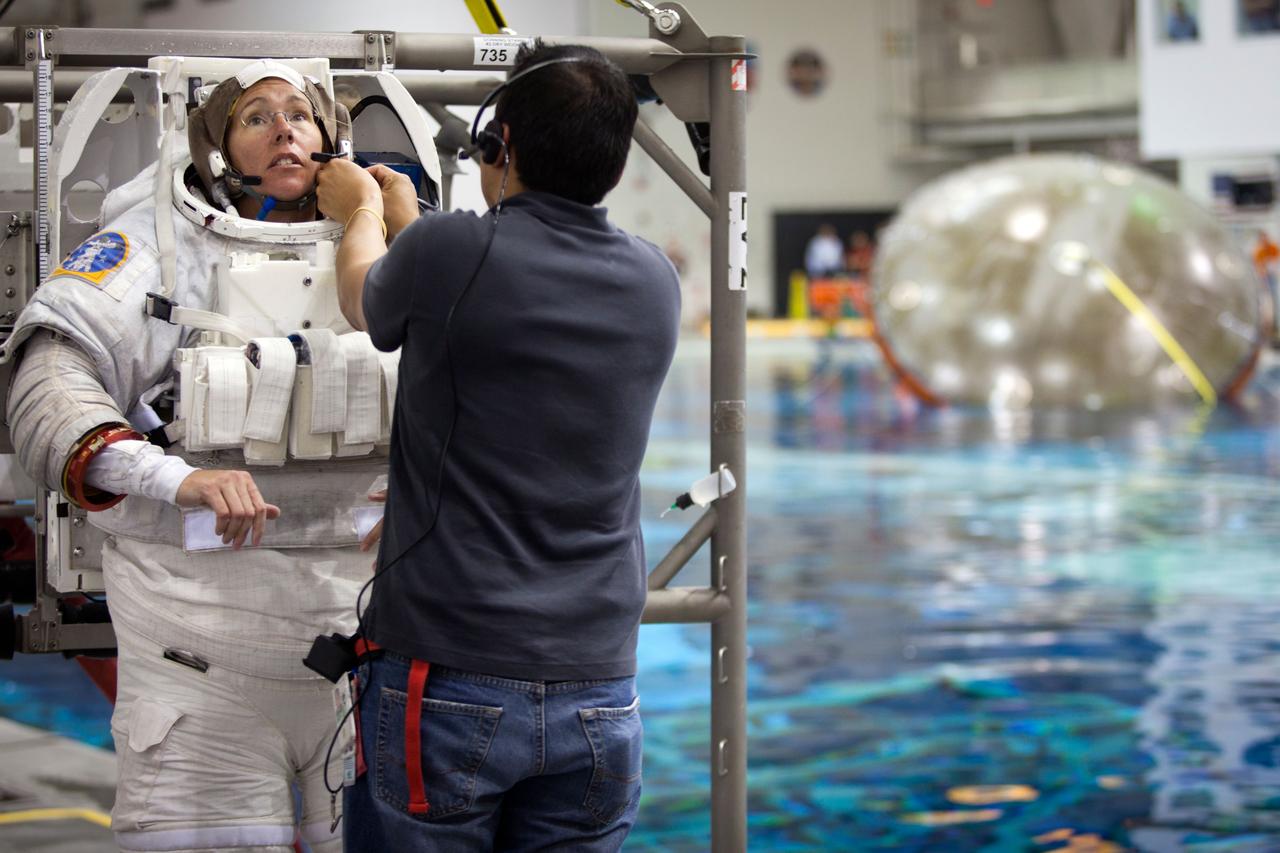
NASA astronaut Sandy Magnus is helped out of her training EMU after training for spacewalk in the Neutral Buoyancy Laboratory (NBL) on Tuesday, March 22, 2011, in Houston. In the background, a test is performed on the Orion capsule. ( NASA Photo / Houston Chronicle, Smiley N. Pool )
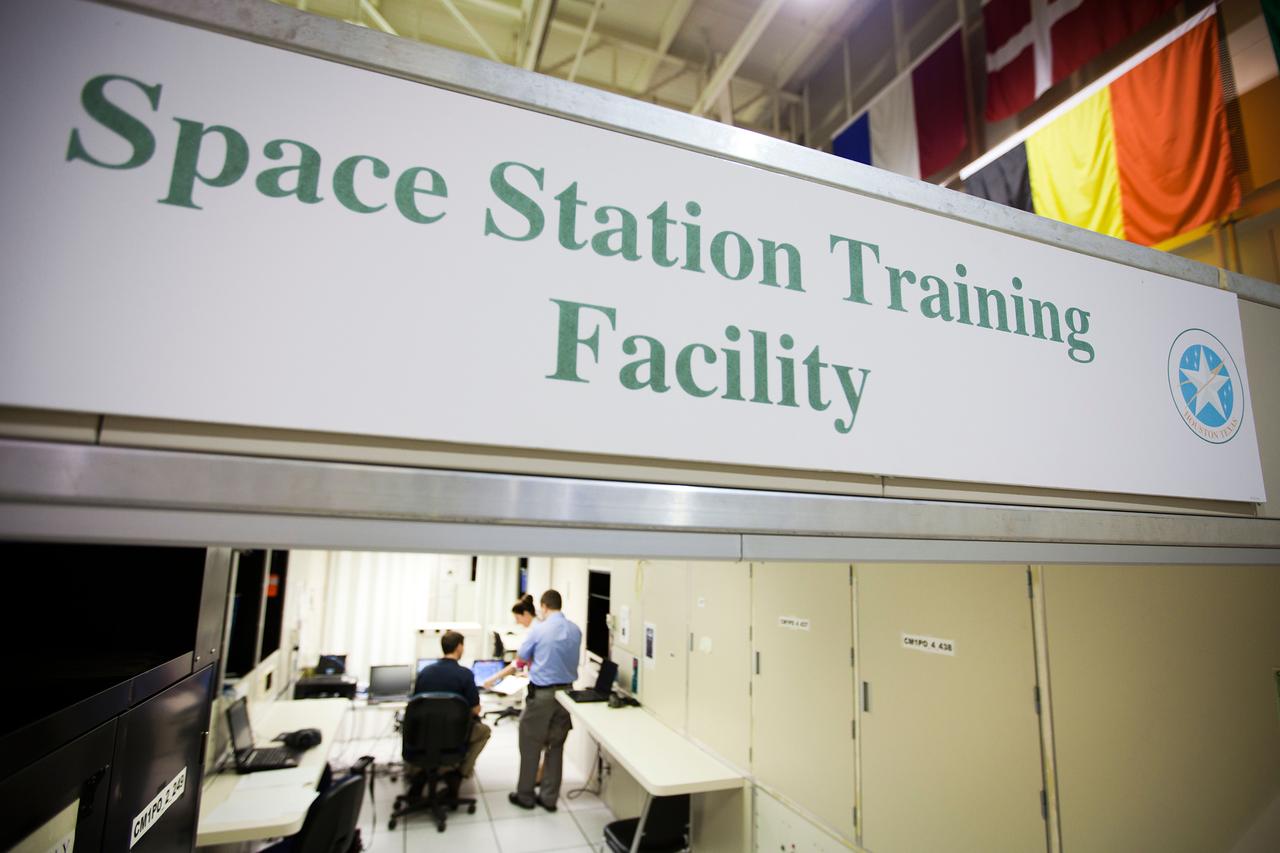
JSC2011-E-059424 (19 May 2011) --- The crew of STS-135, the final space shuttle mission, trains in the Space Station Training Facility at NASA?s Johnson Space Center May 19, 2011. Photo credit: NASA Photo/Houston Chronicle, Smiley N. Pool
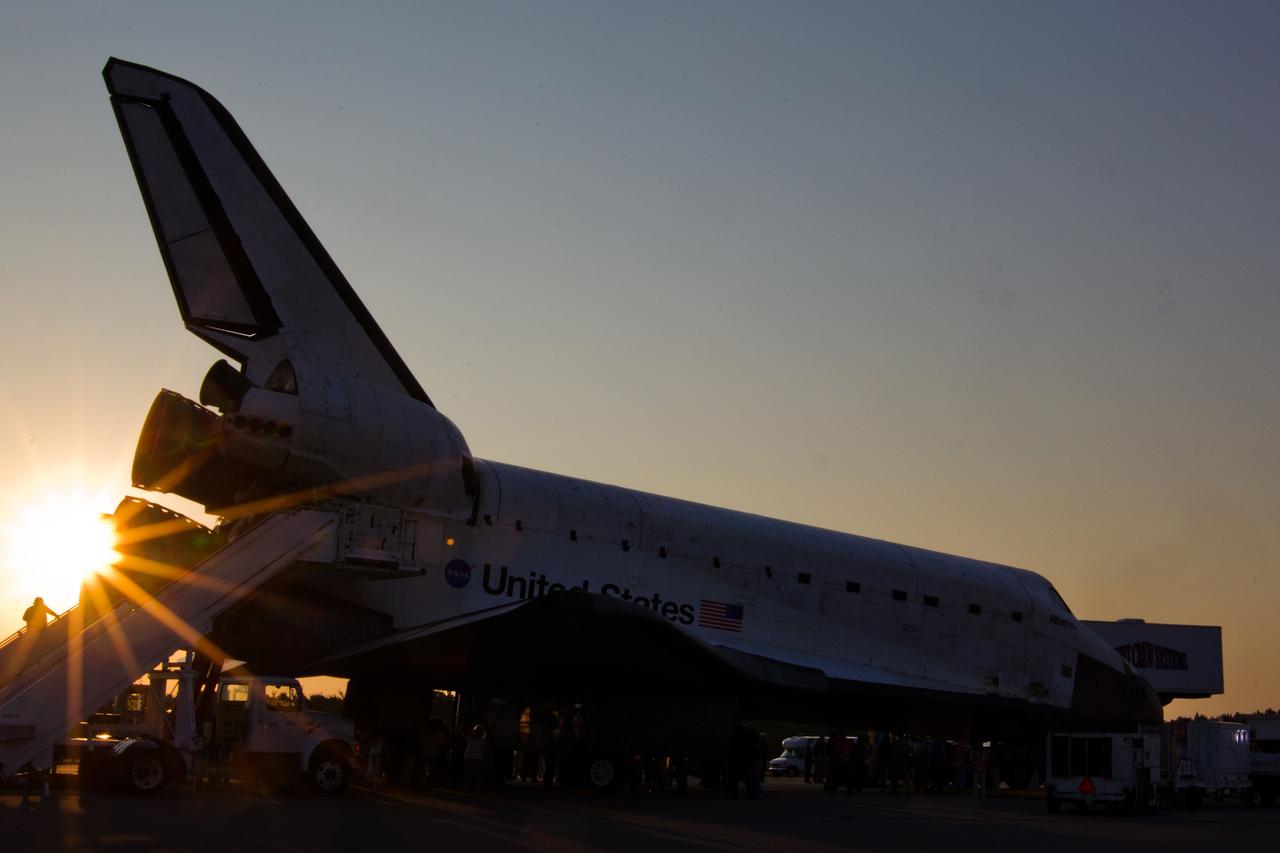
JSC2011-E-067976 (21 July 2011) --- The sun rises over the space shuttle Atlantis after landing July 21 at the Kennedy Space Center in Florida. The landing completed STS-135, the final mission of the NASA Space Shuttle Program. Photo credit: NASA Photo/Houston Chronicle, Smiley N. Pool
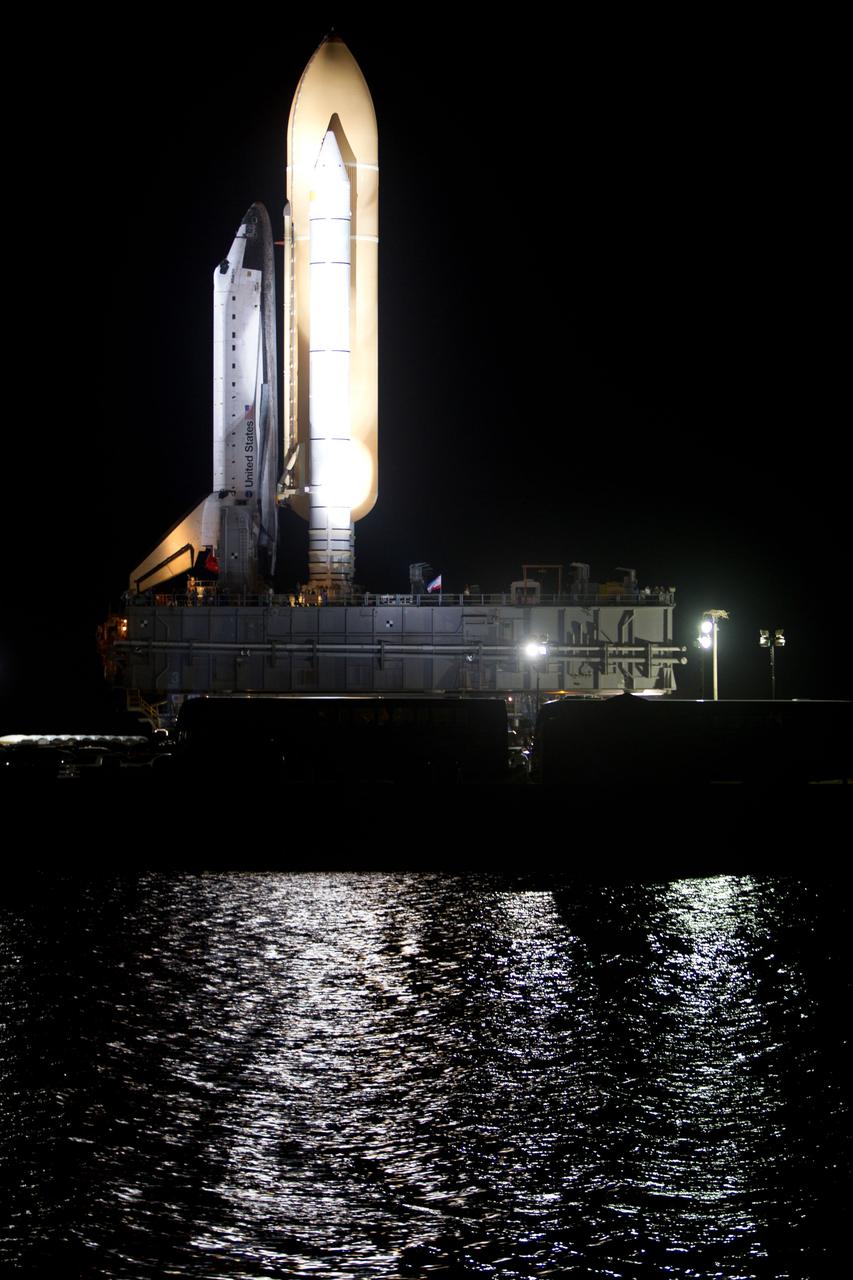
JSC2011-E-059491 (31 May 2011) --- The space shuttle Atlantis moves to Launch Pad 39A during rollout at NASA?s Kennedy Space Center in Florida on May 31, 2011. Photo credit: NASA Photo/Houston Chronicle, Smiley N. Pool
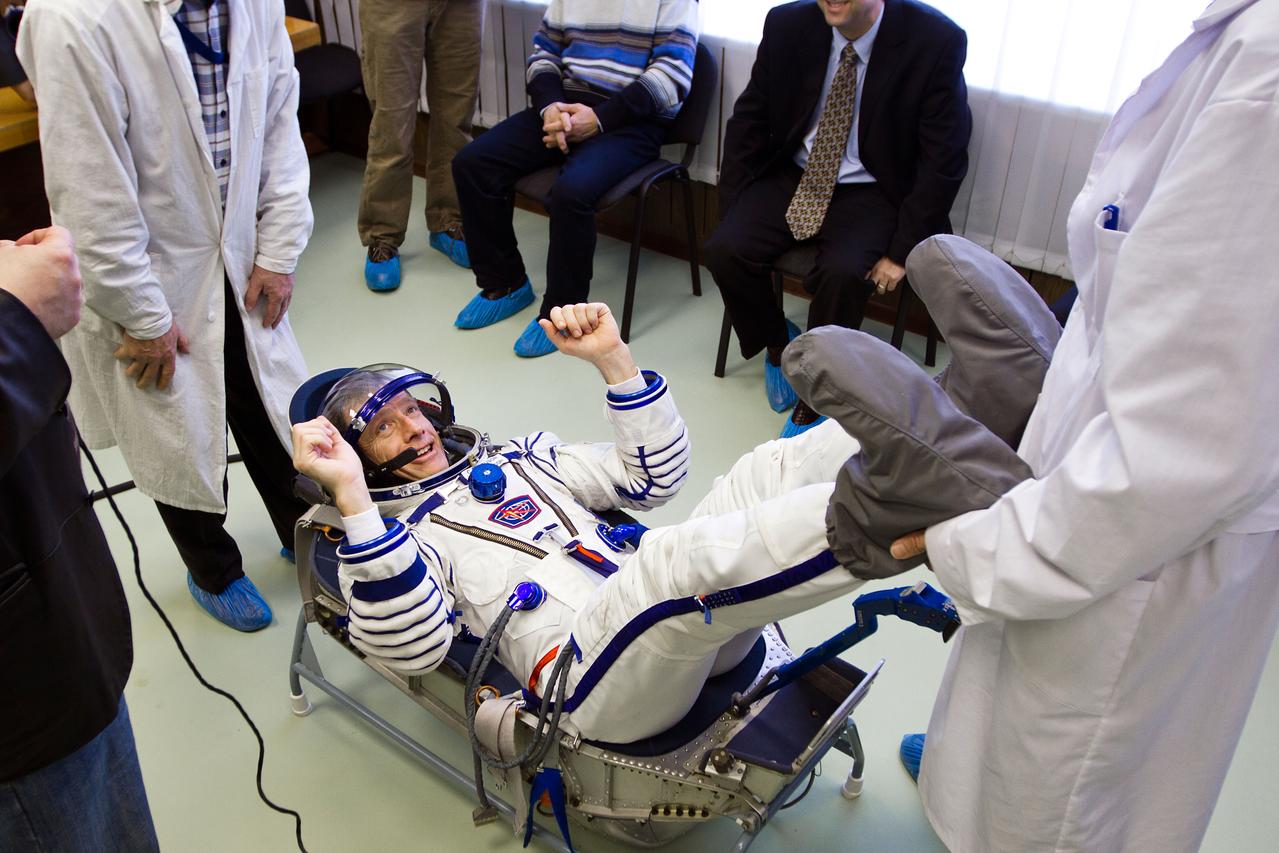
NASA astronaut Chris Ferguson undergoes a fit check of his Sokol space suit at the Zvezda facility on Tuesday, March 29, 2011, in Moscow. The crew of the final shuttle mission traveled to Moscow for a suit fit check of their Russian Soyuz suits that will be required in the event of an emergency. ( NASA Photo / Houston Chronicle, Smiley N. Pool )
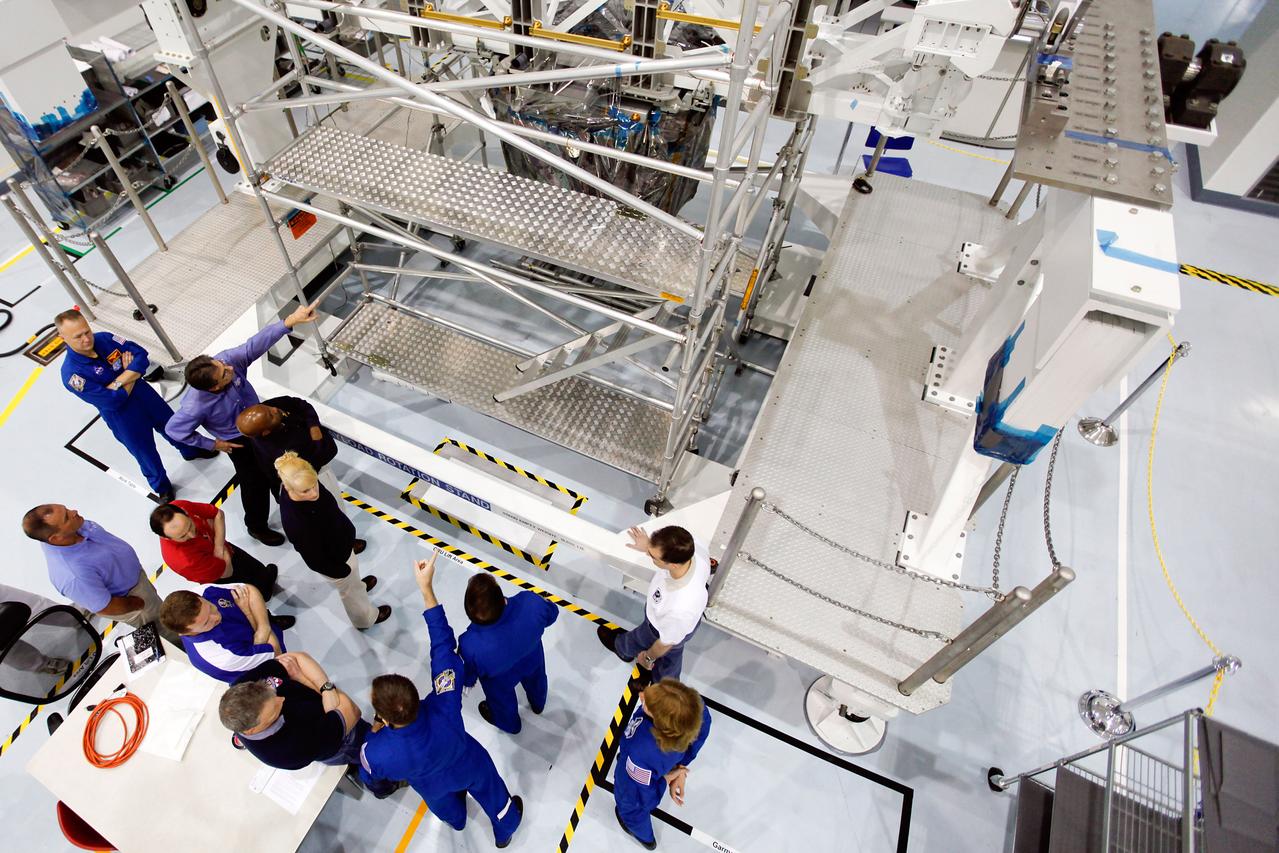
JSC2011-E-040337 (7 April 2011) --- The STS-135 crew members participate in the Crew Equipment Interface Test (CEIT) in the Space Station Processing Facility at NASA?s Kennedy Space Center, Florida on April 7, 2011. Photo credit: NASA Photo/Houston Chronicle, Smiley N. Pool
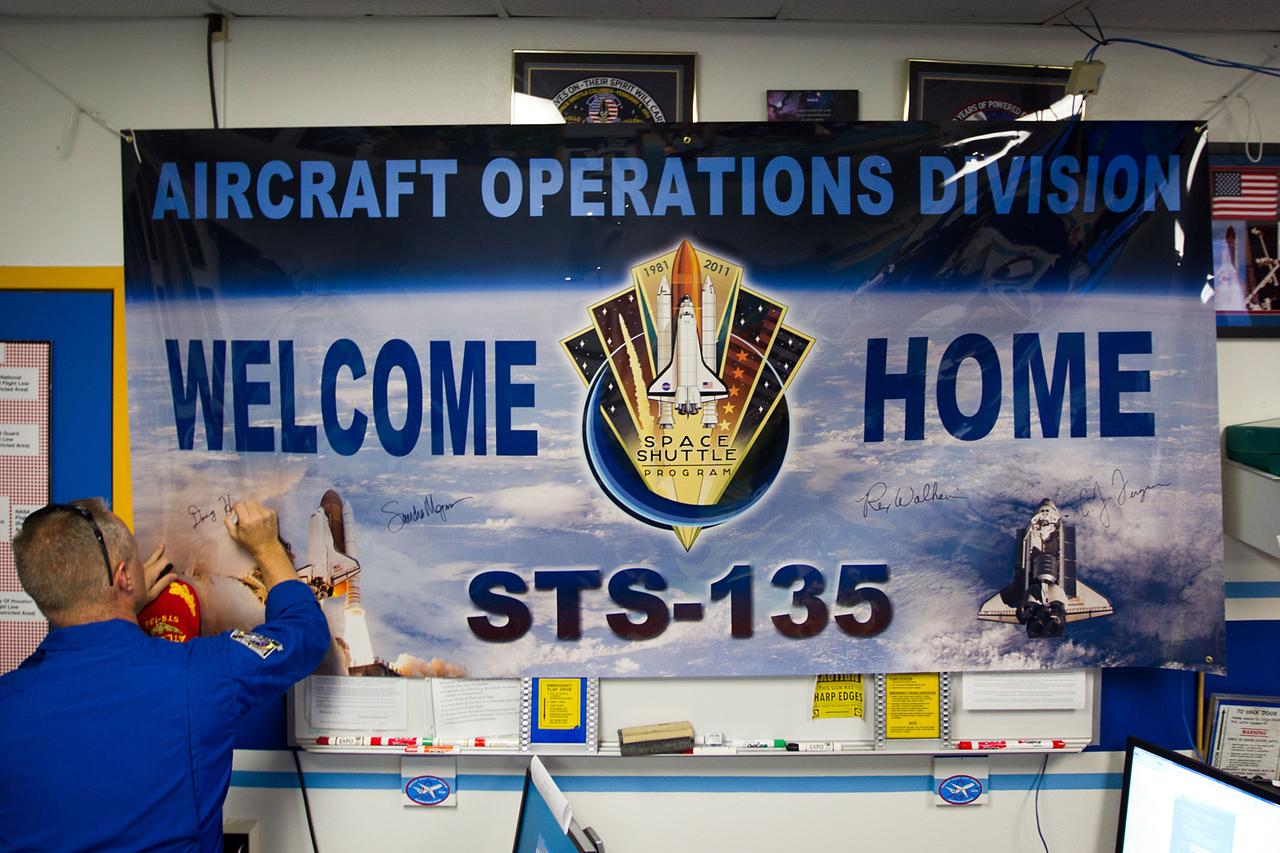
STS-135 pilot Doug Hurley signs a welcome home banner before a welcome home ceremony for the crew of the space shuttle Atlantis, the final mission of the NASA shuttle program, at Ellington Field in Houston on Friday, July 22, 2011. ( NASA Photo / Houston Chronicle, Smiley N. Pool )
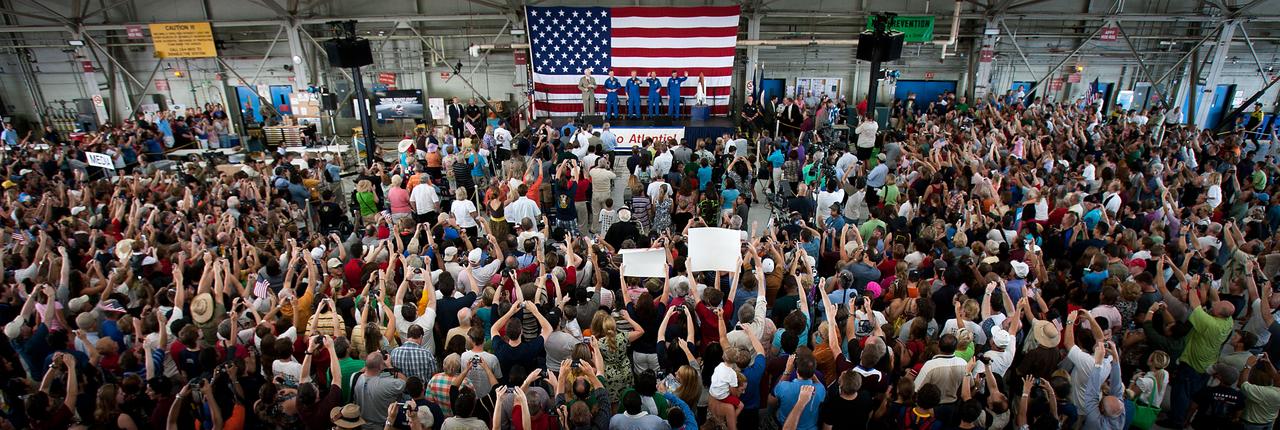
A large crowd of supporters welcomes home the crew of STS-135 during a ceremony for the crew of the space shuttle Atlantis, the final mission of the NASA shuttle program, at Ellington Field in Houston on Friday, July 22, 2011. ( NASA Photo / Houston Chronicle, Smiley N. Pool )
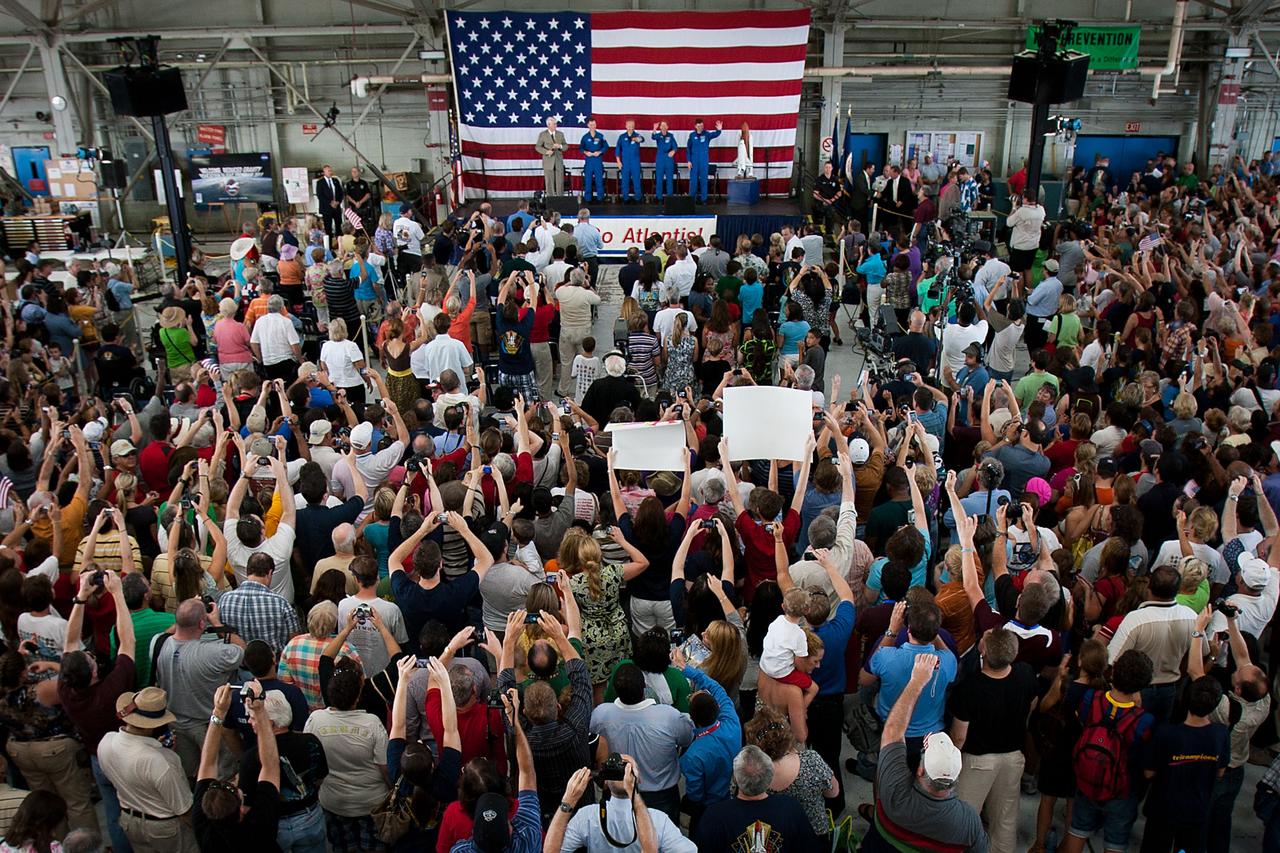
A large crowd of supporters welcomes home the crew of STS-135 during a ceremony for the crew of the space shuttle Atlantis, the final mission of the NASA shuttle program, at Ellington Field in Houston on Friday, July 22, 2011. ( NASA Photo / Houston Chronicle, Smiley N. Pool )
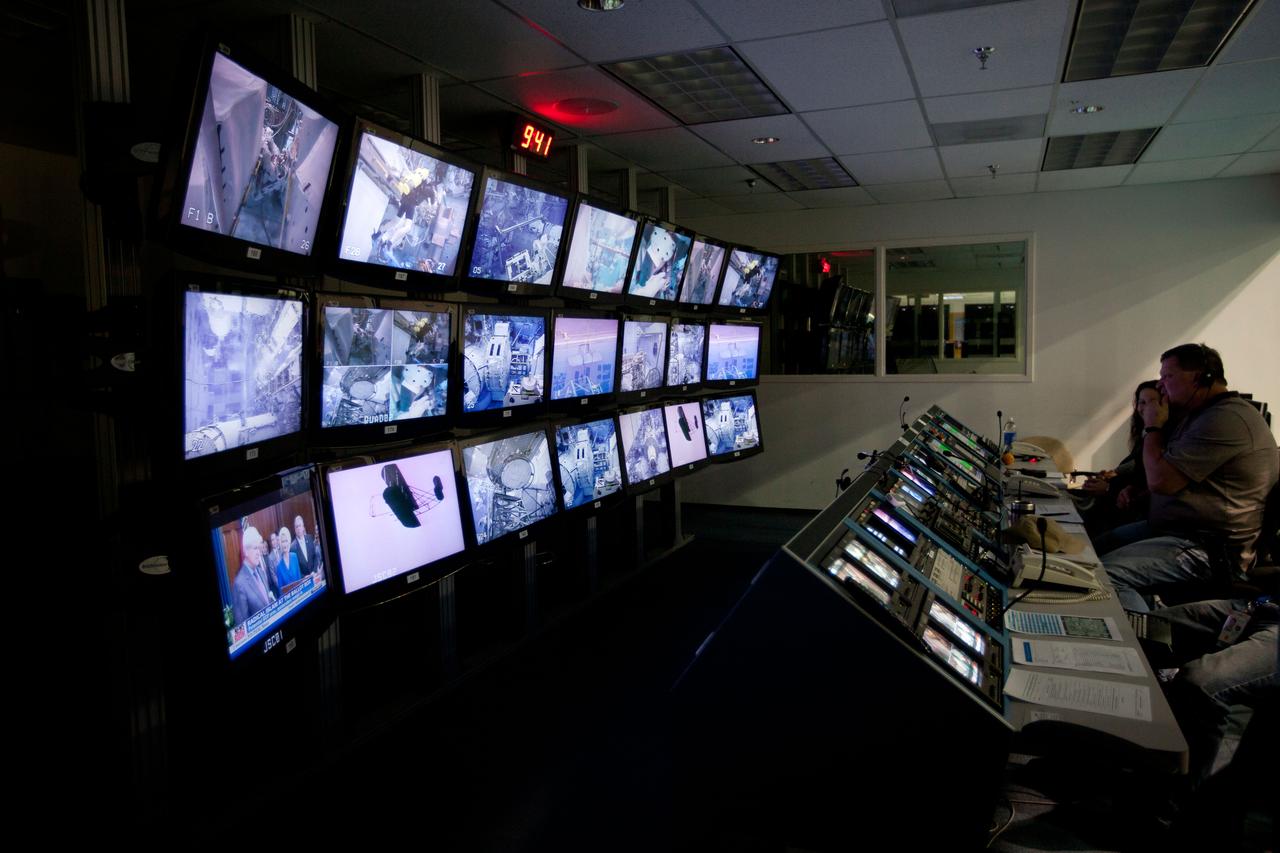
JSC2011-E-040215 (10 March 2011) --- A bank of video screens shows the progress of a simulated spacewalk as the crew of STS-135 trains in the Neutral Buoyancy Laboratory near NASA?s Johnson Space Center in Houston March 10, 2011. Photo credit: NASA Photo/Houston Chronicle, Smiley N. Pool
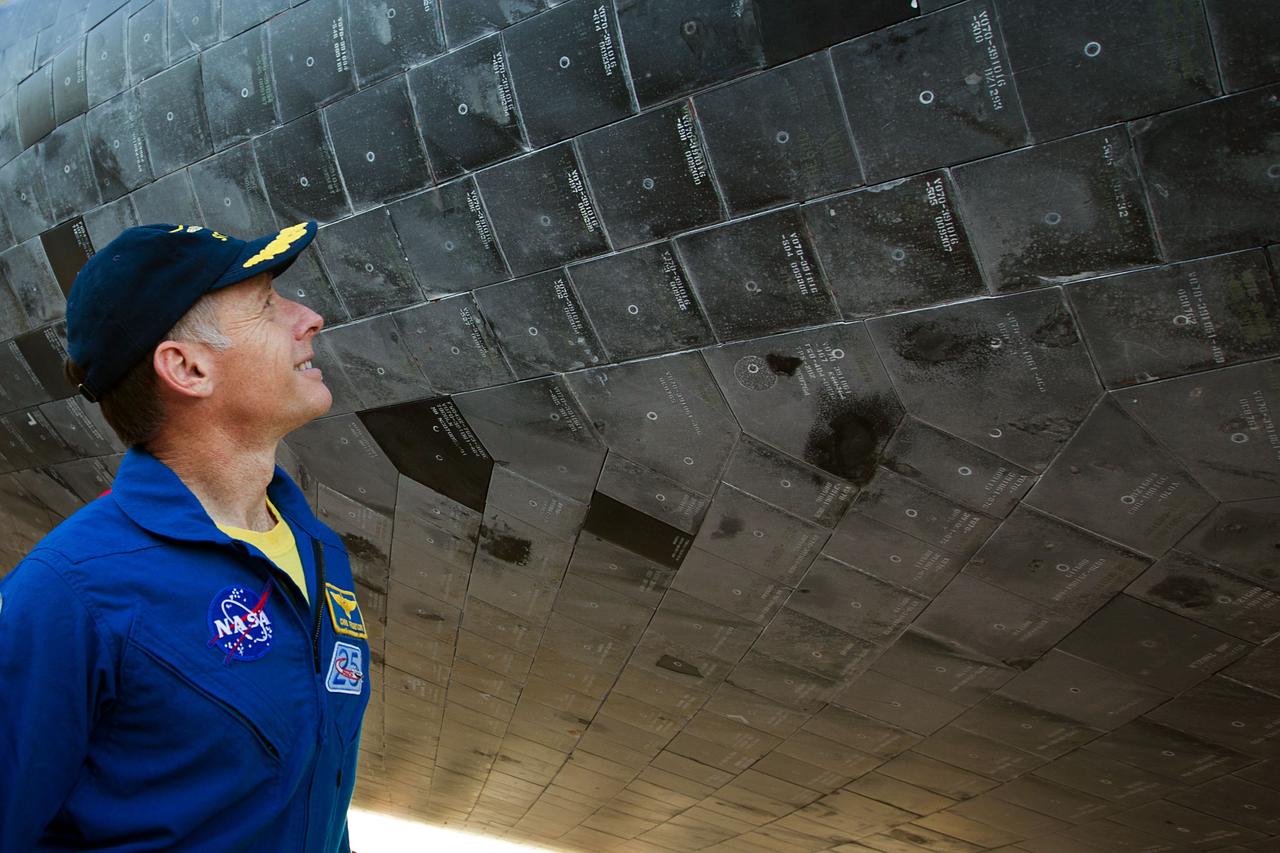
NASA astronaut Chris Ferguson, STS-135 commander, examines the thermal tiles of the orbiter after the space shuttle Atlantis landed at the Kennedy Space Center in Florida completing STS-135, the final mission of the NASA shuttle program, on Thursday, July 21, 2011. ( NASA Photo / Houston Chronicle, Smiley N. Pool )
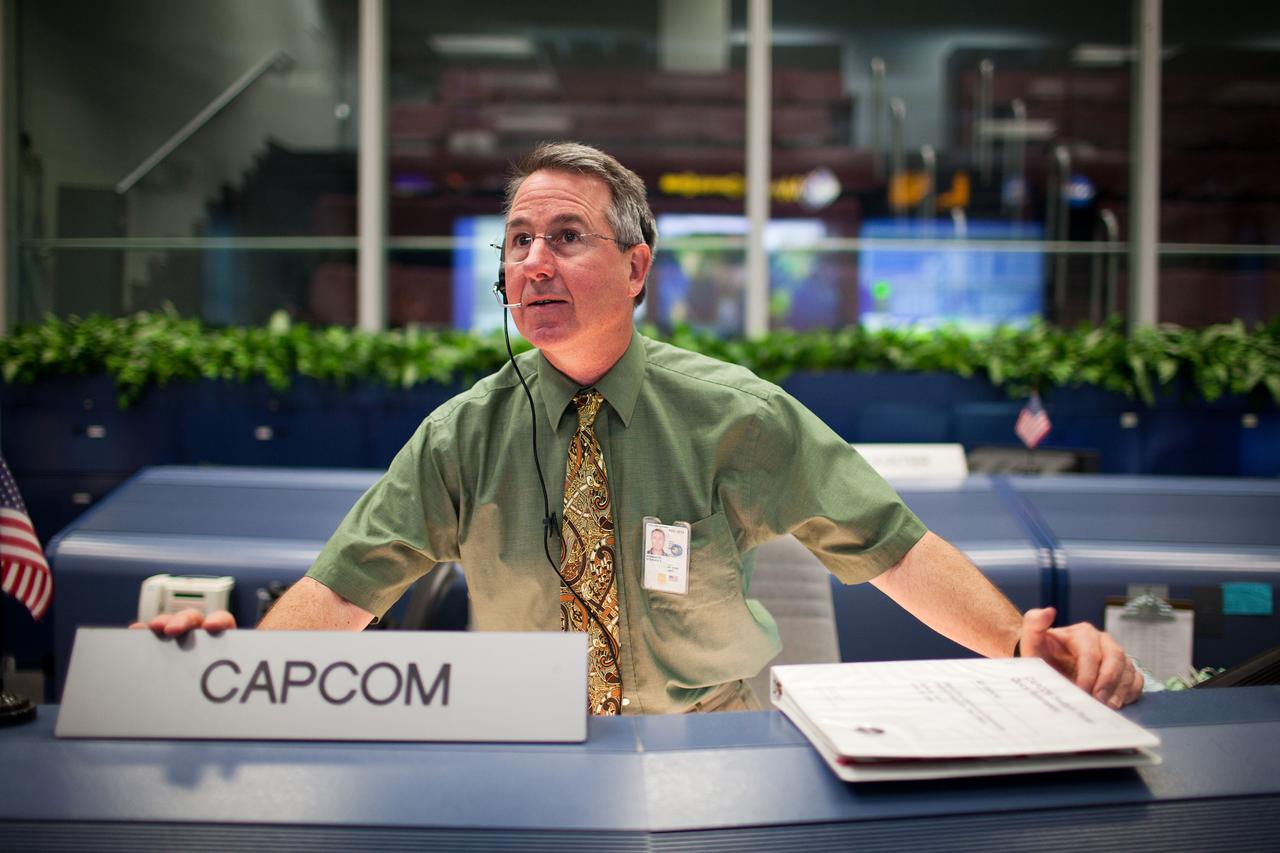
JSC2011-E-059389 (11 May 2011) --- Astronaut Steve Robinson, STS-135 CAPCOM, works in the Mission Control Center at NASA?s Johnson Space Center during a simulation exercise with the crew on May 11, 2011. Photo credit: NASA Photo/Houston Chronicle, Smiley N. Pool
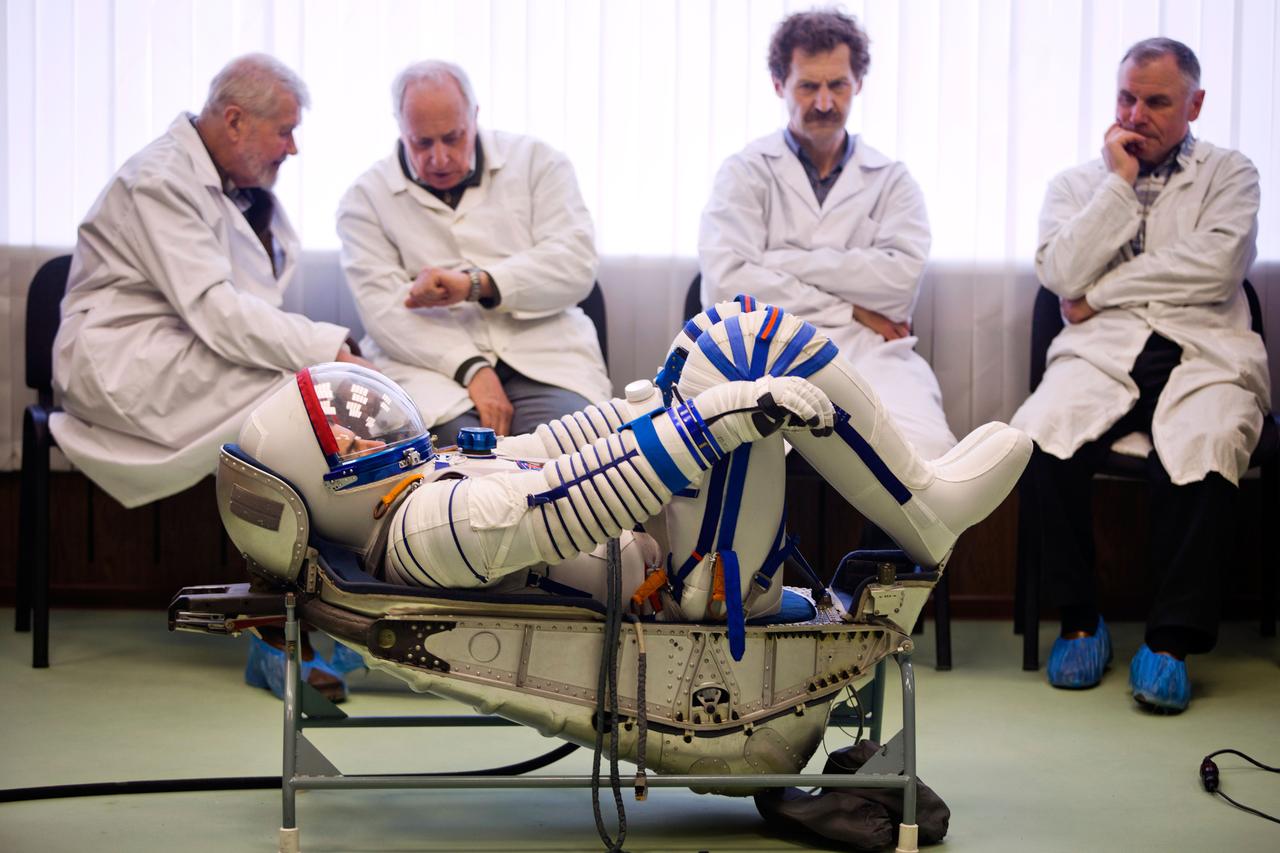
NASA astronaut Rex Walheim undergoes a fit check of his Sokol space suit at the Zvezda facility on Monday, March 28, 2011, in Moscow. The crew of the final shuttle mission traveled to Moscow for a suit fit check of their Russian Soyuz suits that will be required in the event of an emergency. ( NASA Photo / Houston Chronicle, Smiley N. Pool )
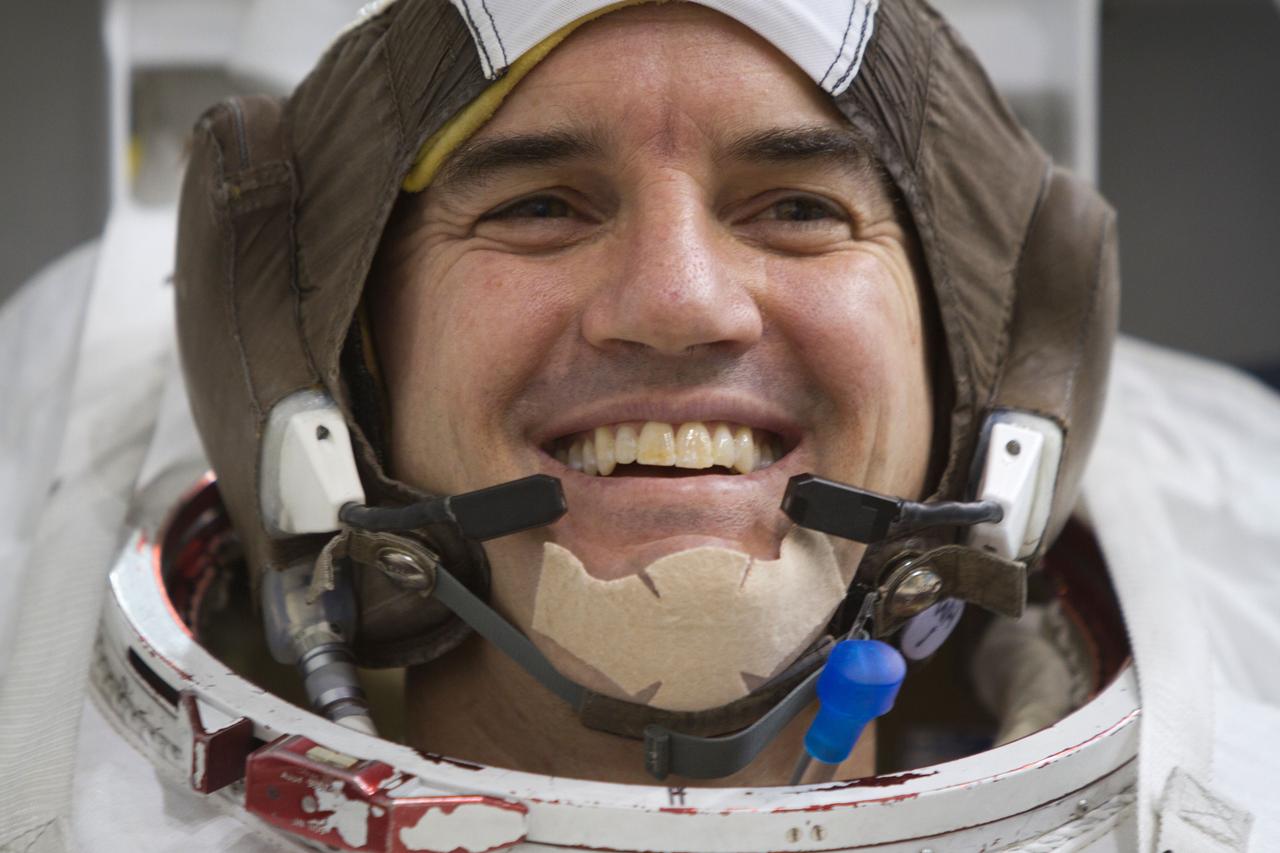
JSC2011-E-040211 (10 March 2011) --- NASA astronaut Rex Walheim, STS-135 mission specialist, prepares to train in the Neutral Buoyancy Laboratory (NBL) near NASA?s Johnson Space Center in Houston March 10, 2011. Photo credit: NASA Photo/Houston Chronicle, Smiley N. Pool
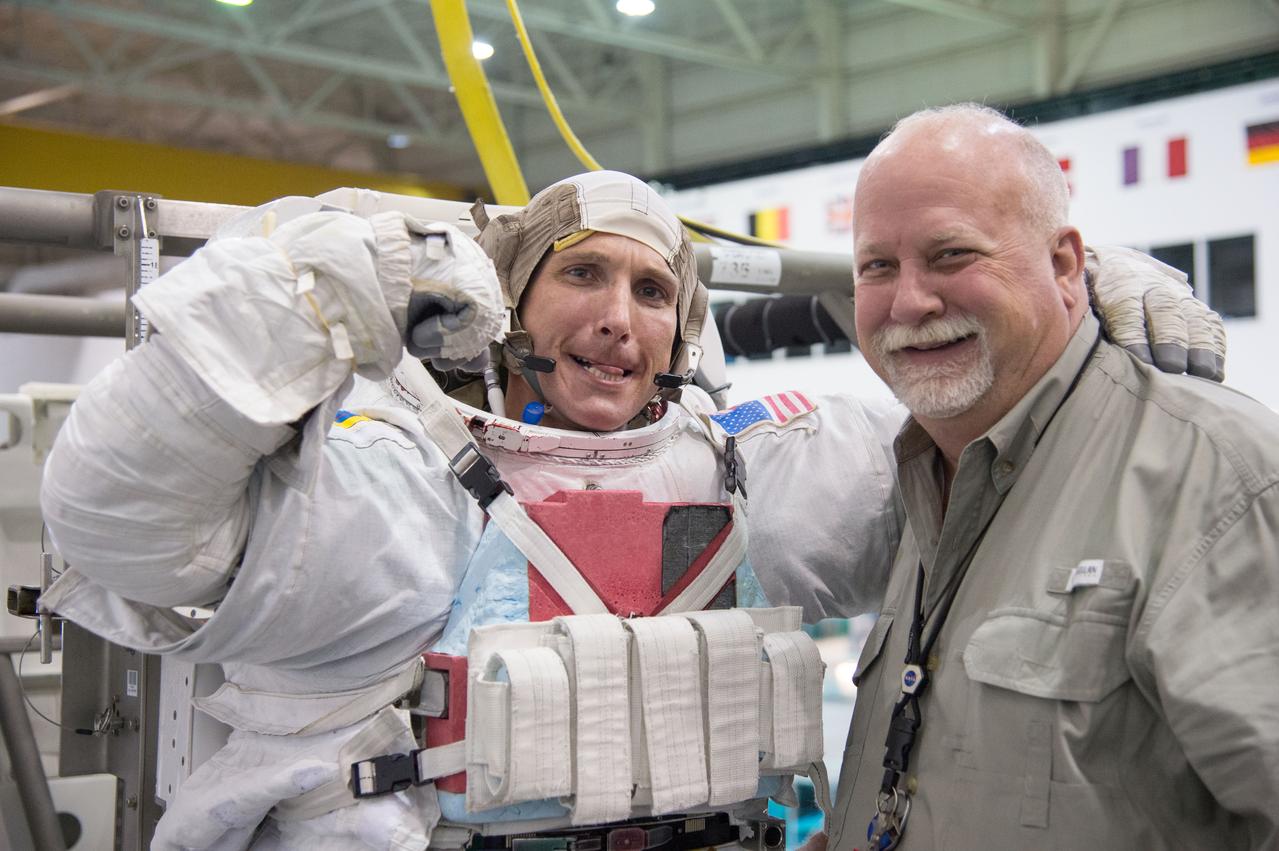
PHOTO DATE: 08-31-15 LOCATION: NBL - Pool Topside SUBJECT: Expedition 51/52 (Soyuz 50) astronaut Mark Vande Hei during ISS EVA Maintenance 1 training. PHOTOGRAPHER: BILL STAFFORD
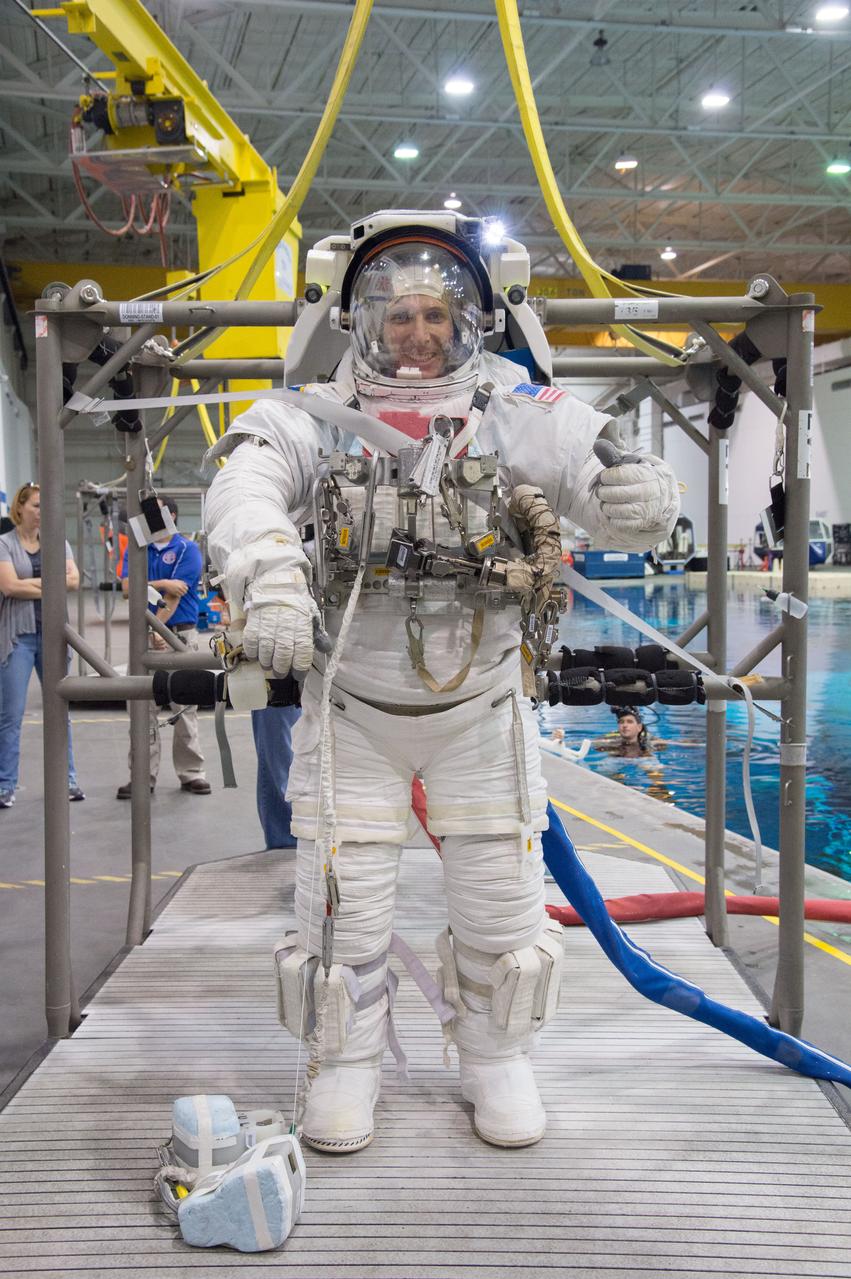
PHOTO DATE: 08-31-15 LOCATION: NBL - Pool Topside SUBJECT: Expedition 51/52 (Soyuz 50) astronaut Mark Vande Hei during ISS EVA Maintenance 1 training. PHOTOGRAPHER: BILL STAFFORD
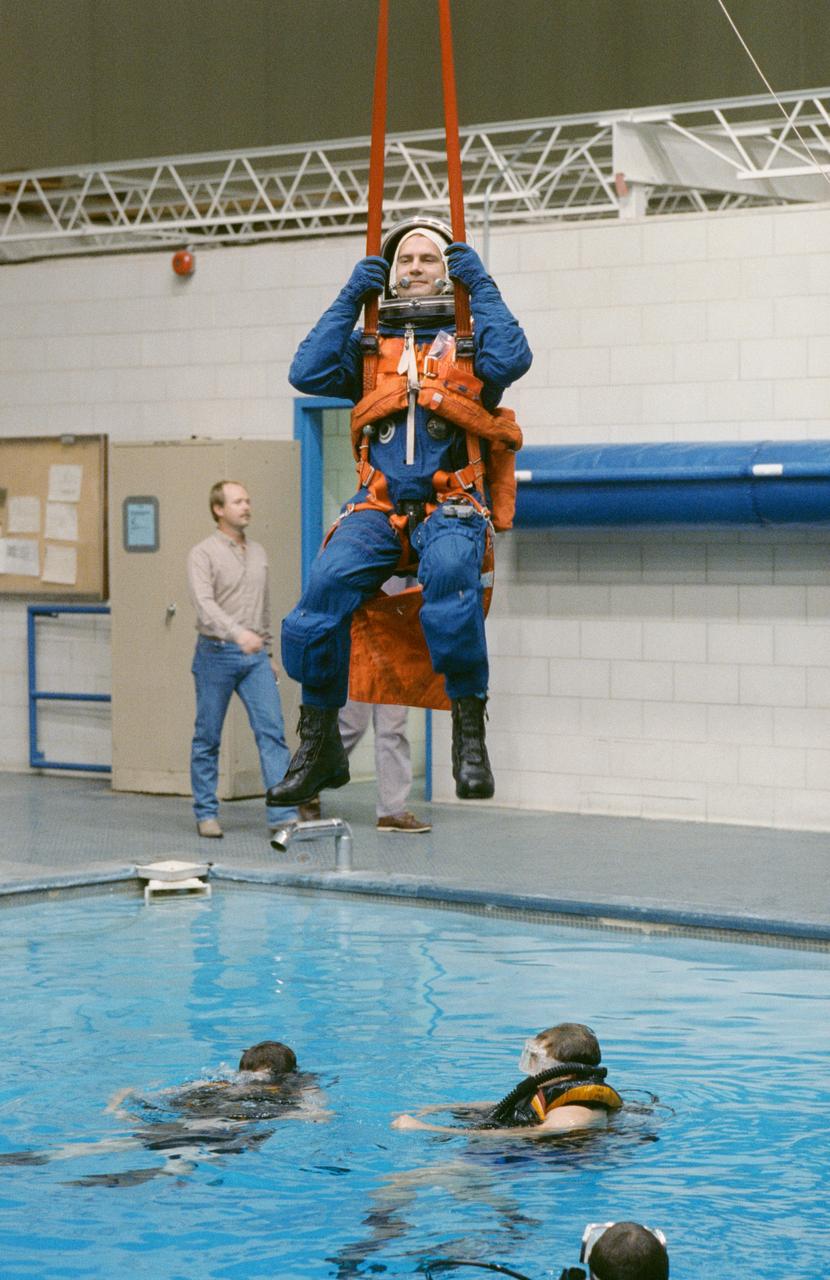
S90-54760 (7 Dec 1990) --- Astronaut Richard J. Hieb, mission specialist, participates in emergency egress training. Hieb and six fellow STS 39 astronauts were in JSC's weightless environment training facility (WET-F). This type training uses the WET-F's 25 ft. deep pool to simulate an ocean parachute landing. A number of SCUBA-equipped divers assist in the training session.
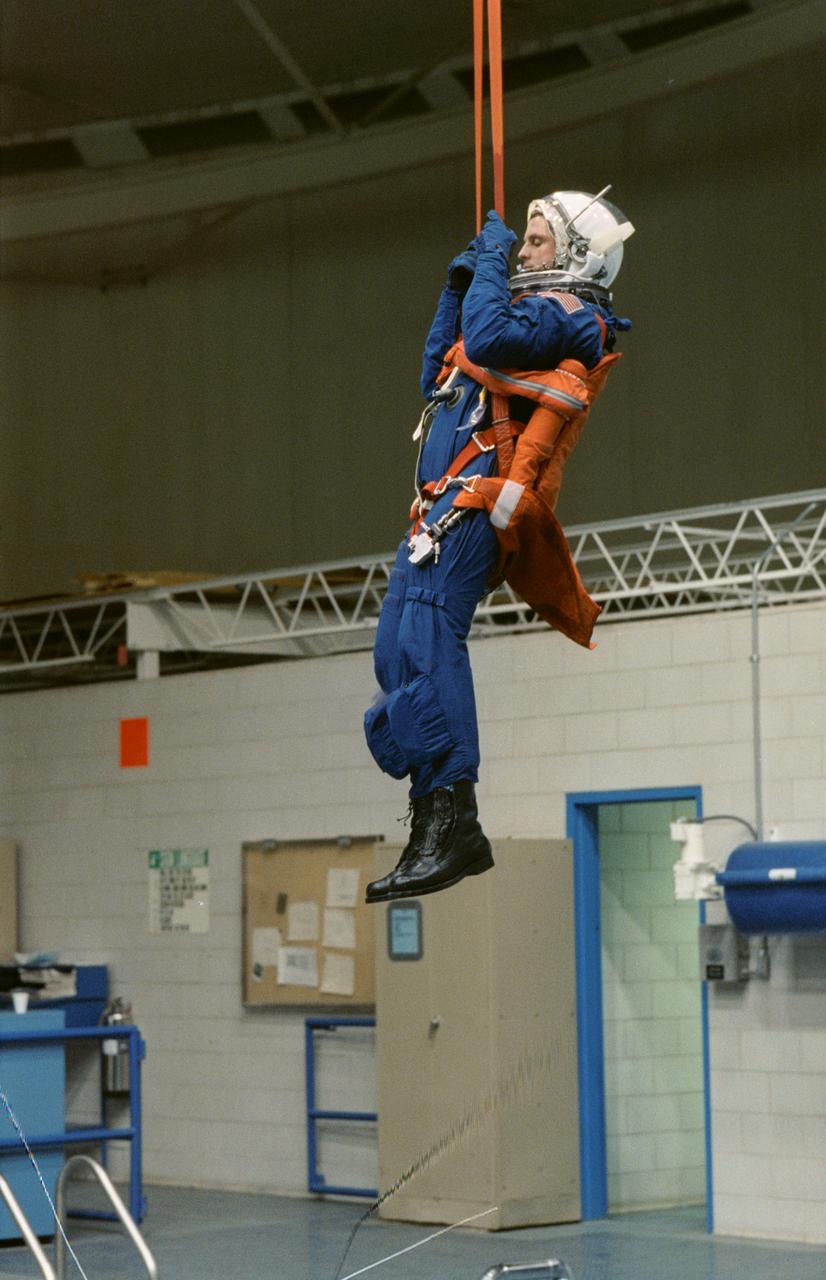
S90-54763 (7 Dec 1990) --- Astronaut Gregory J. Harbaugh. Mission specialist, participates in emergency egress training. Harbaugh and some of his fellow STS 39 astronauts were in JSC's weightless environment training facility (WET-F). Harbaugh is actually suspended over water. This type training uses the WET-F's 25 ft. deep pool to simulate an ocean parachute landing.

STS-48 Mission Specialist (MS) James F. Buchli, wearing an extravehicular mobility unit (EMU), is watched by SCUBA-equipped divers as the platform he is standing on is lowered into JSC's Weightless Environment Training Facility (WETF) Bldg 29 pool. When completely underwater, Buchli will be released from the platform and will perform contingency extravehicular activity (EVA) operations. This underwater simulation of a spacewalk is part of the training required for Buchli's upcoming mission aboard Discovery, Orbiter Vehicle (OV) 103.
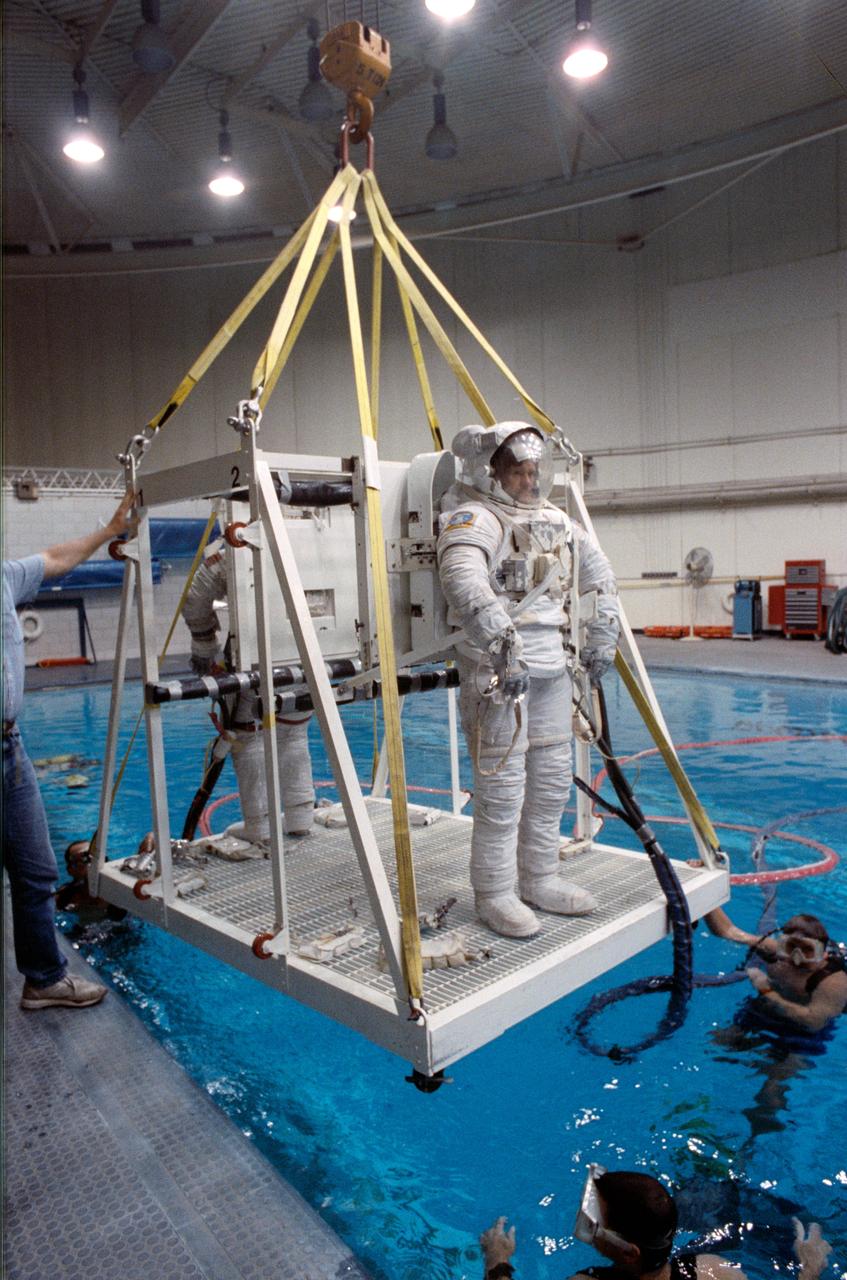
S90-46030 (Aug 1990) --- Astronaut Donald R. McMonagle (foreground) wears an extravehicular mobility unit (EMU) spacesuit as he prepares to be lowered into a 25-ft. deep pool at the Johnson Space Center's weightless environment training facility (WET-F). Astronaut Gregory J. Harbaugh, a fellow STS 39 mission specialist, shares the moveable platform with McMonagle and prepares to join him in the simulation of a contingency extravehicular activity (EVA) for the mission, scheduled for Discovery in the spring of 1991. A number of SCUBA-equipped divers assist in the training session.
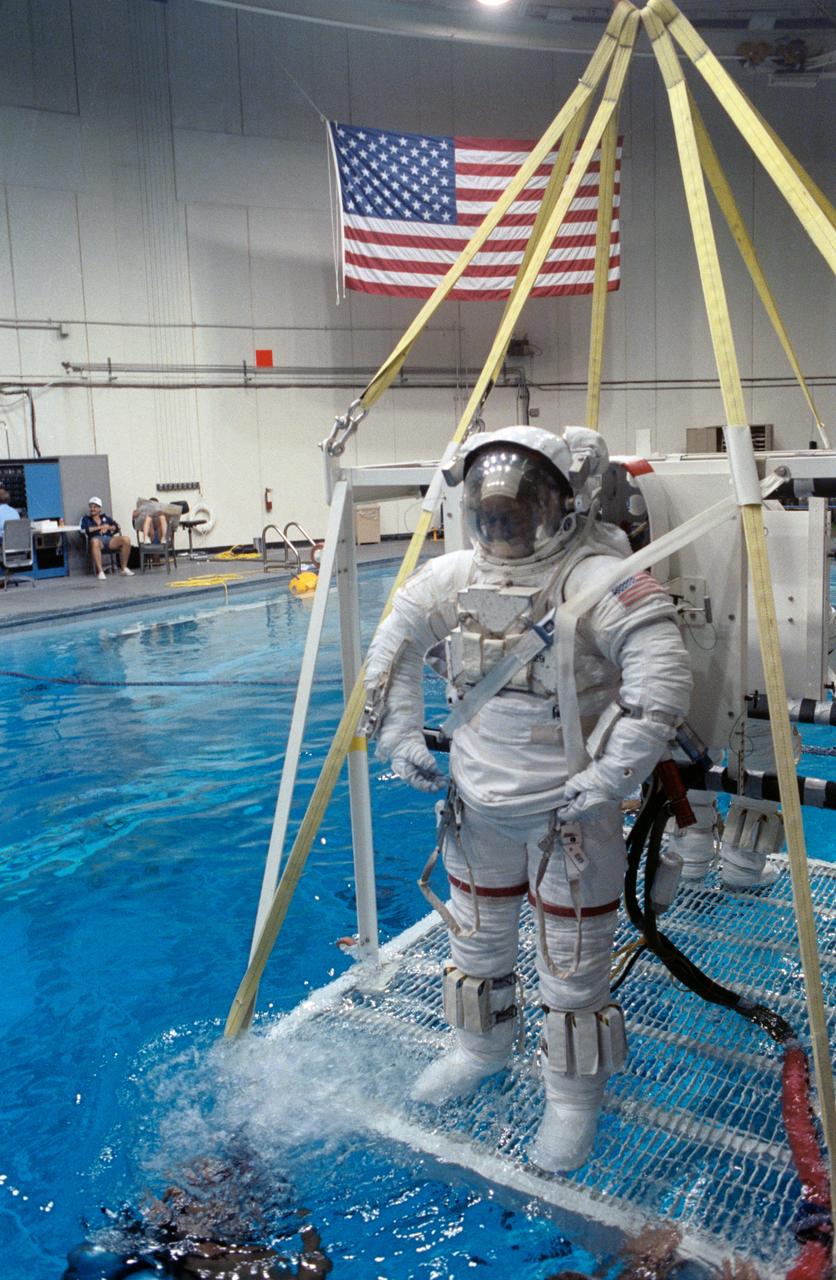
S90-44118 (August 1990) --- Astronaut Guion S. Bluford, mission specialist for STS-39, wearing an extravehicular mobility unit (EMU) spacesuit, is lowered by a hoist device prior to participating in an underwater rehearsal of a contingency EVA. The scene is in the Johnson Space Center's weightless environment training facility (WET-F) which houses a 25-ft. deep pool (visible in background).

S90-46492 (16 Aug 1990) --- Astronaut Tamara E. Jernigan, STS-40 mission specialist, is pictured in a training version of the extravehicular mobility unit (EMU) spacesuit. Dr. Jernigan was about to be submerged in the Johnson Space Center's 25-ft. deep weightless environment training facility (WET-F) pool to simulate a contingency extravehicular activity (EVA). There is no EVA scheduled for STS-40, the Spacelab Life Sciences (SLS-1) mission.
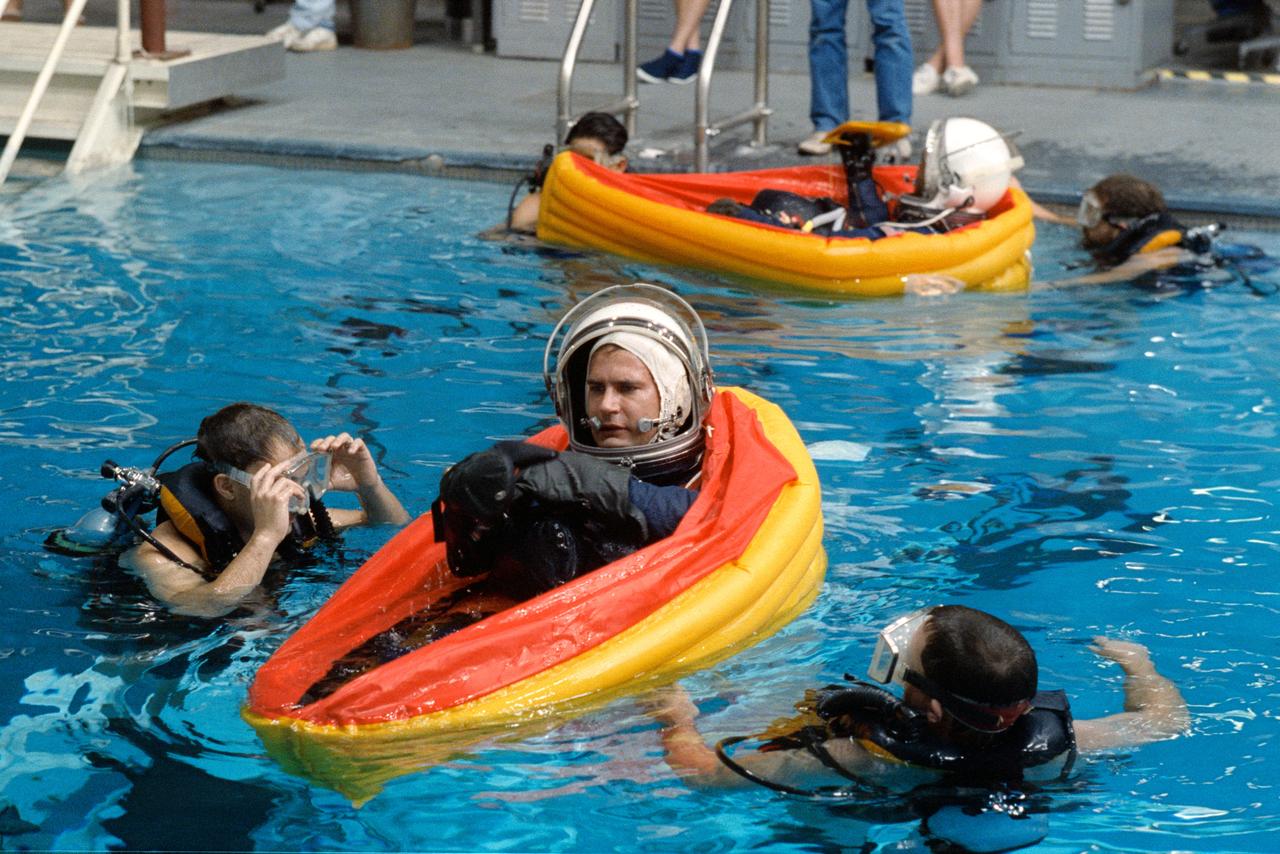
S90-54754 (13 Dec 1990) --- Astronaut Richard J. Hieb, STS-39 mission specialist, wearing launch and entry suit (LES) and launch and entry helmet (LEH), floats in single person life raft after landing in JSC's Weightless Environment Training Facility (WETF) Bldg 29 pool. During emergency egress bailout procedures, Hieb practiced procedures necessary for a water landing. Divers monitor Hieb's activity.

This artist concept depicts Kepler-186f, the first validated Earth-size planet to orbit a distant star in the habitable zone, a range of distance from a star where liquid water might pool on the planet surface.

This artist conception shows a young, hypothetical planet around a cool star. A soupy mix of potentially life-forming chemicals can be seen pooling around the base of the jagged rocks.

The cold pool of water in the Pacific known as La Nina is beginning to fade, but ocean conditions have not returned to normal, according to scientists studying images from the U.S.-French TOPEX/Poseidon satellite. http://photojournal.jpl.nasa.gov/catalog/PIA00031

The cold pool of water in the Pacific known as La Niña still persists, although it is slowly weakening, according to scientists studying new data from NASA U.S.-French TOPEX/Poseidon satellite.

Pools of warm water known as Kelvin waves can be seen traveling eastward along the equator black line in this image from the NASA/French Space Agency Ocean Surface Topography Mission/Jason-2 satellite.
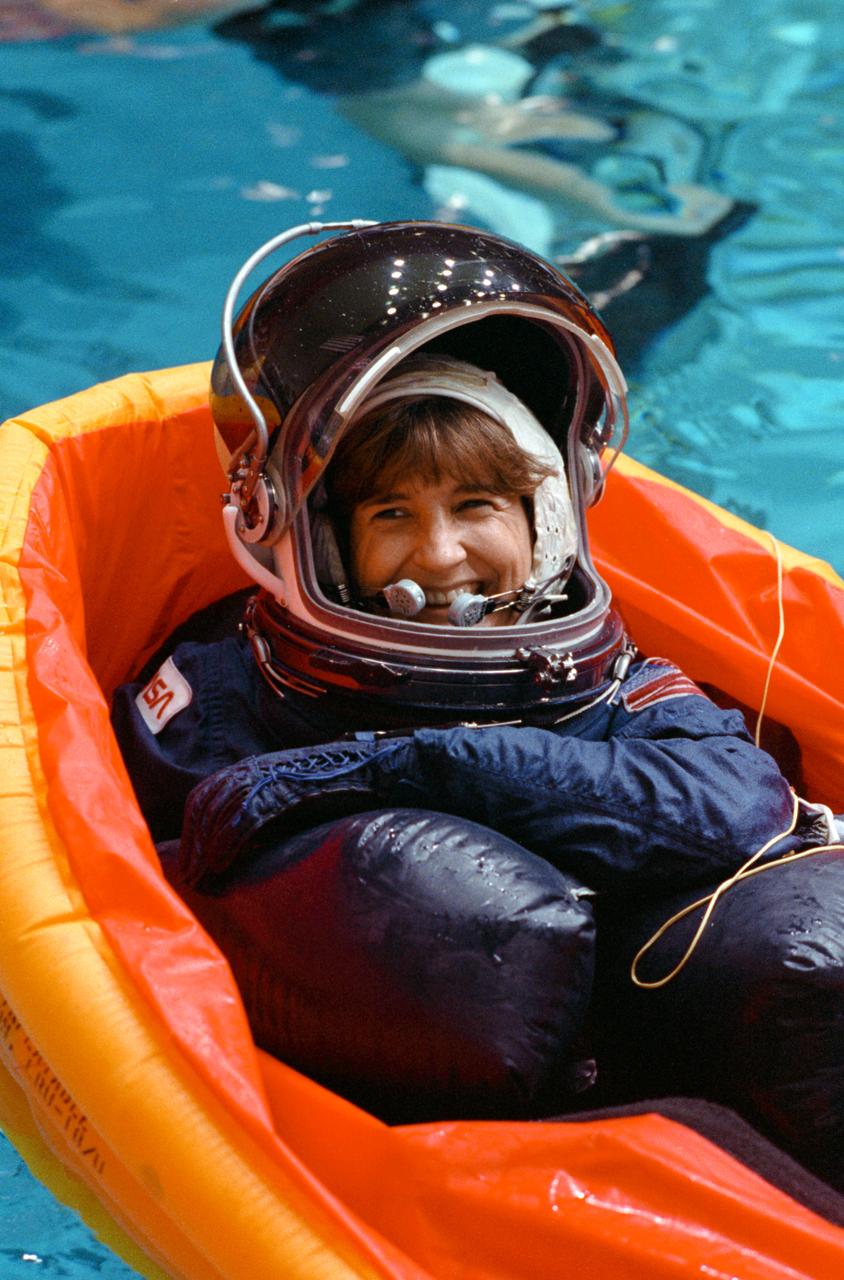
S90-45229 (25 June 1990) --- Astronaut Linda M. Godwin, STS-37 mission specialist, floats in a one-person life raft. She was simulating steps involved in emergency egress from a space shuttle. The training session was held in the Johnson Space Center's weightless environment training facility (WET-F). The 25-ft. deep pool in the facility served as a simulated ocean into which a parachute landing might be made. Early next year, Godwin, along with four other astronauts, will fly onboard Atlantis for a five-day mission.
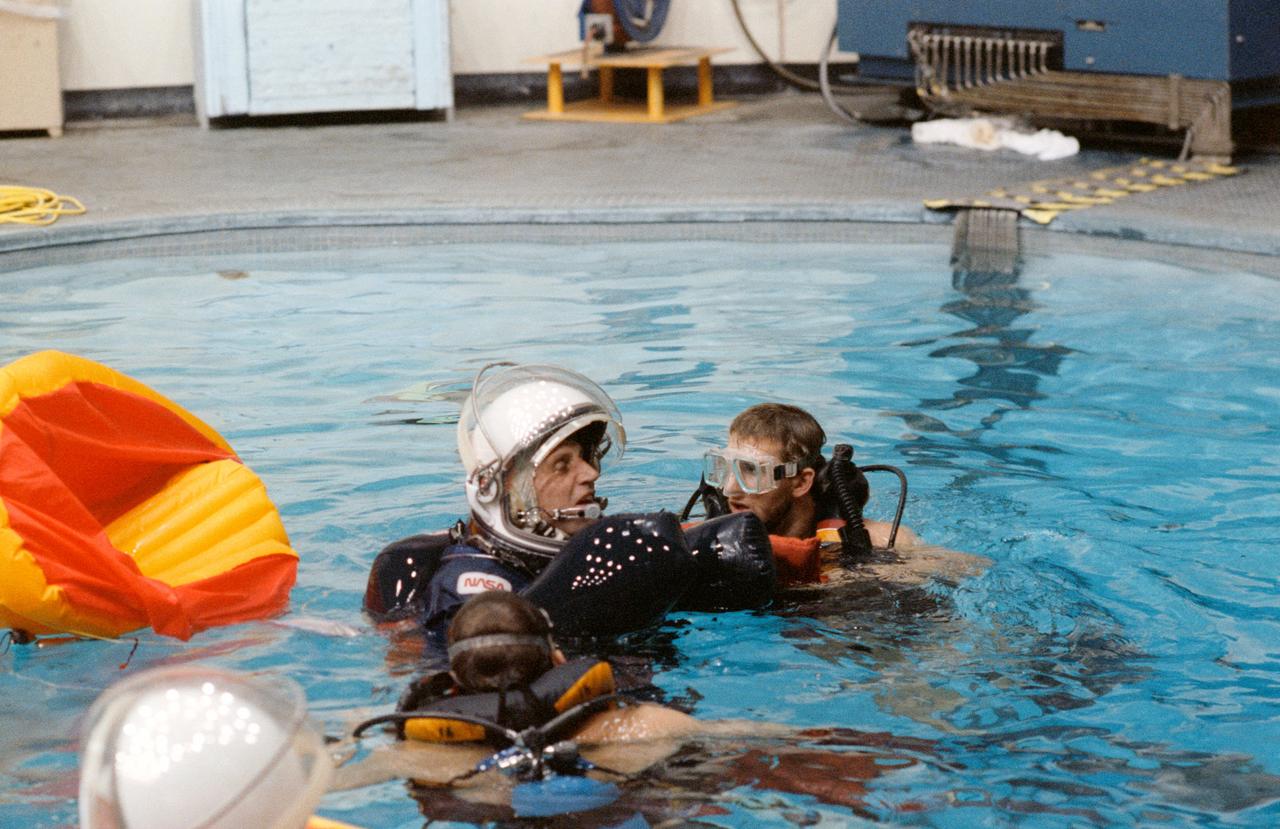
S91-51995 (26 Nov 1991) --- Astronaut David C. Hilmers, STS-42 mission specialist, wearing launch and entry suit (LES) and launch and entry helmet (LEH), floats in the water with the aid of an underarm flotation device as SCUBA-equipped divers look on. Behind Hilmers is his yellow and orange single person life raft. Hilmers is rehearsing launch emergency egress (bailout) procedures in the Johnson Space Center?s (JSC) Weightless Environment Training Facility (WETF) Bldg 29. The crewmembers would use this equipment in the event of an emergency bailout over water. The WETF's 25 ft deep pool is used to simulate the ocean.
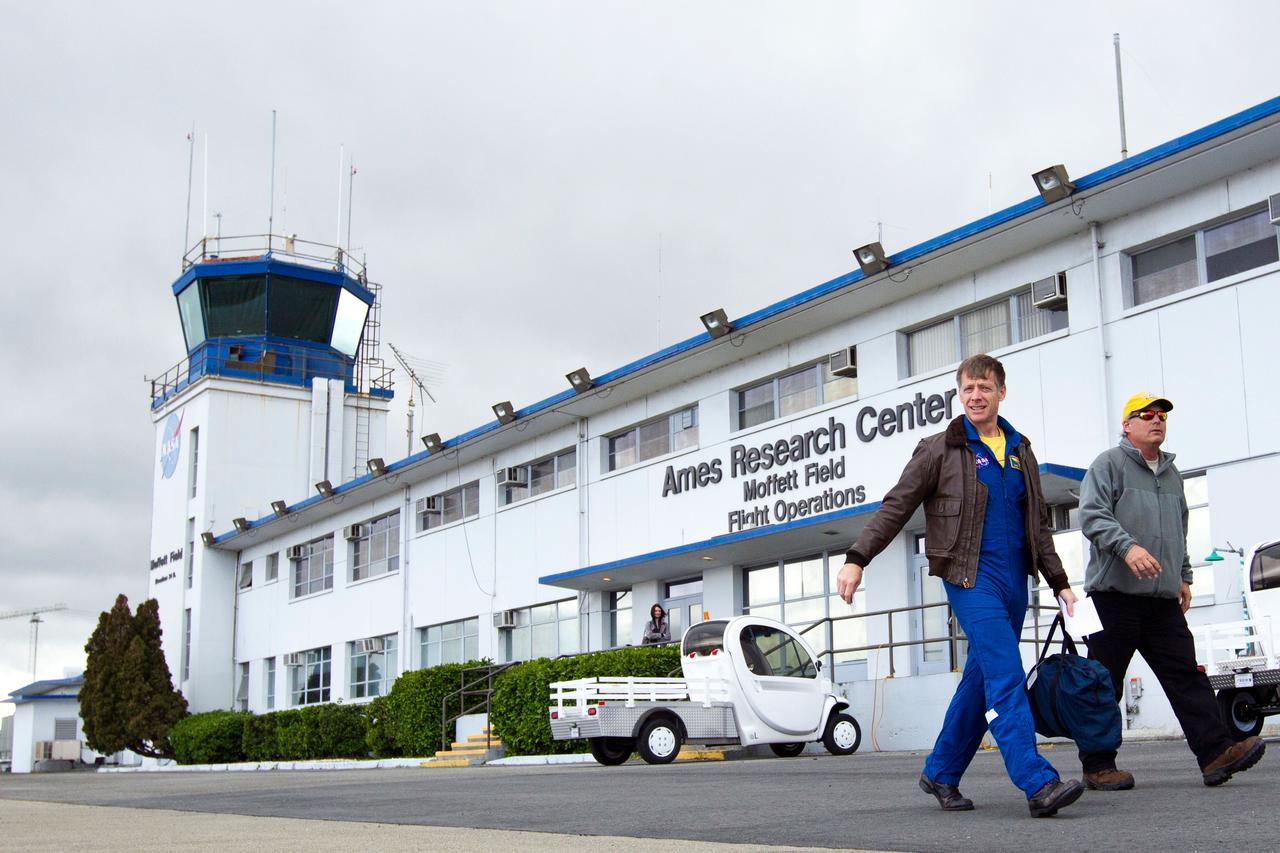
JSC2011-E-040202 (2 March 2011) --- NASA astronaut Chris Ferguson, STS-135 commander, departs from the Moffett Field (Calif.) flight operations center for his trip home to Houston after he and his crew trained in the Vertical Motion Simulator (VMS) at NASA's Ames Research Center in Mountain View, March 2, 2011. Photo credit: NASA Photo/Houston Chronicle, Smiley N. Pool
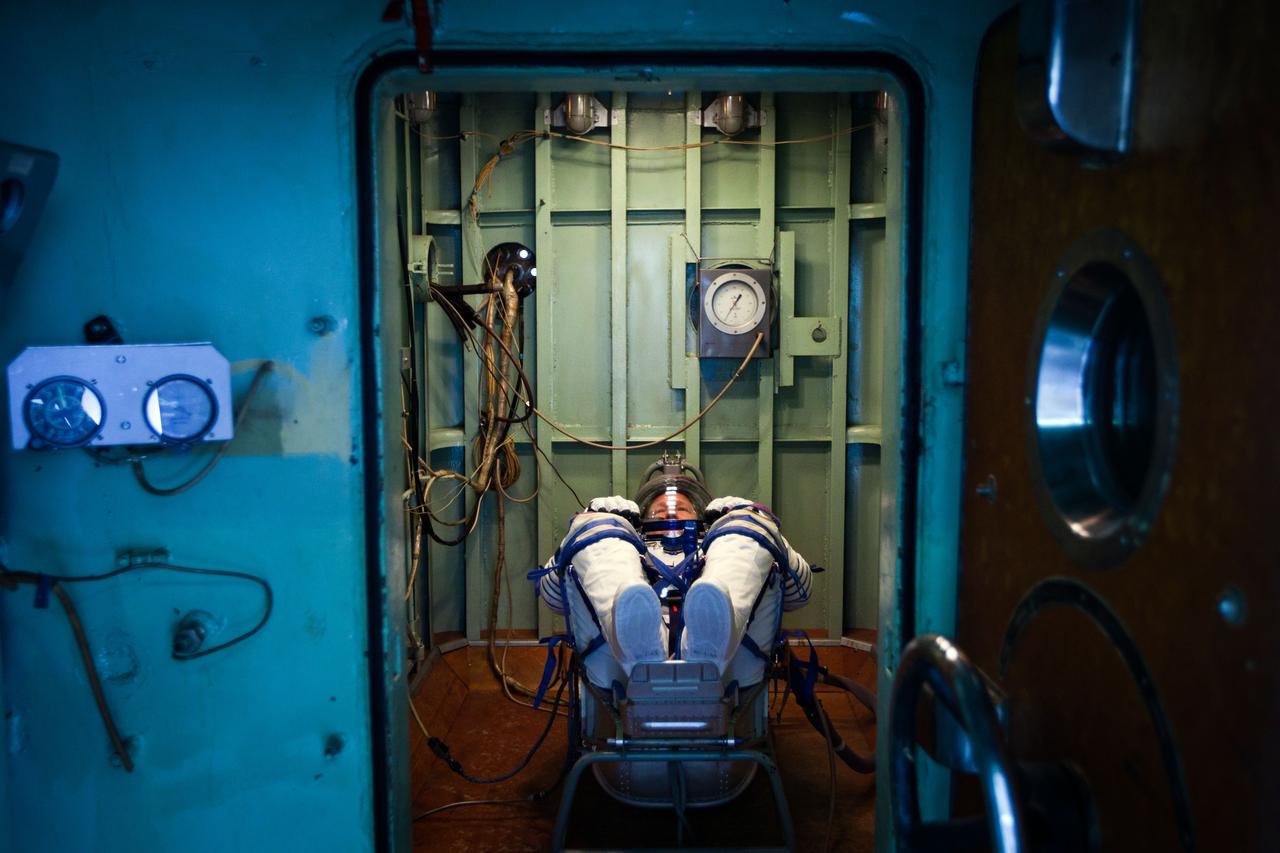
JSC2011-E-040324 (30 March 2011) --- NASA astronaut Doug Hurley, STS-135 pilot, waits in a pressure chamber before a test of his Russian Sokol spacesuit at the Zvezda facility in Moscow on March 30, 2011. The crew of the final shuttle mission traveled to Moscow for a suit fit check of their Russian Sokol suits which would be required in the event of an emergency. Photo credit: NASA Photo/Houston Chronicle, Smiley N. Pool
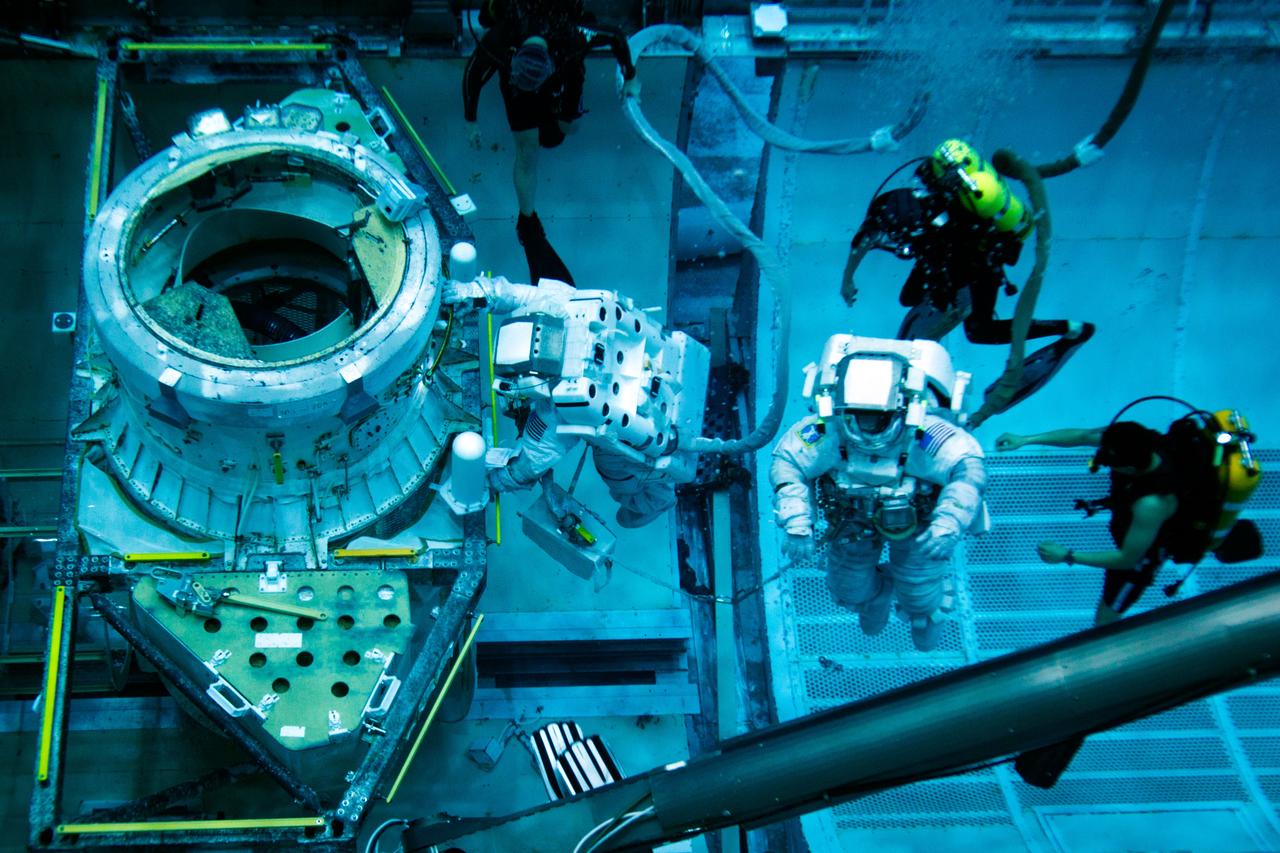
JSC2011-E-040220 (10 March 2011) --- NASA astronaut Rex Walheim (left), STS-135 mission specialist, and astronaut Mike Fossum are aided by divers as they work in a mock-up of the space shuttle's payload bay as the crew of STS-135 trains for a spacewalk in the Neutral Buoyancy Laboratory near NASA?s Johnson Space Center on March 10, 2011. Photo credit: NASA Photo/Houston Chronicle, Smiley N. Pool
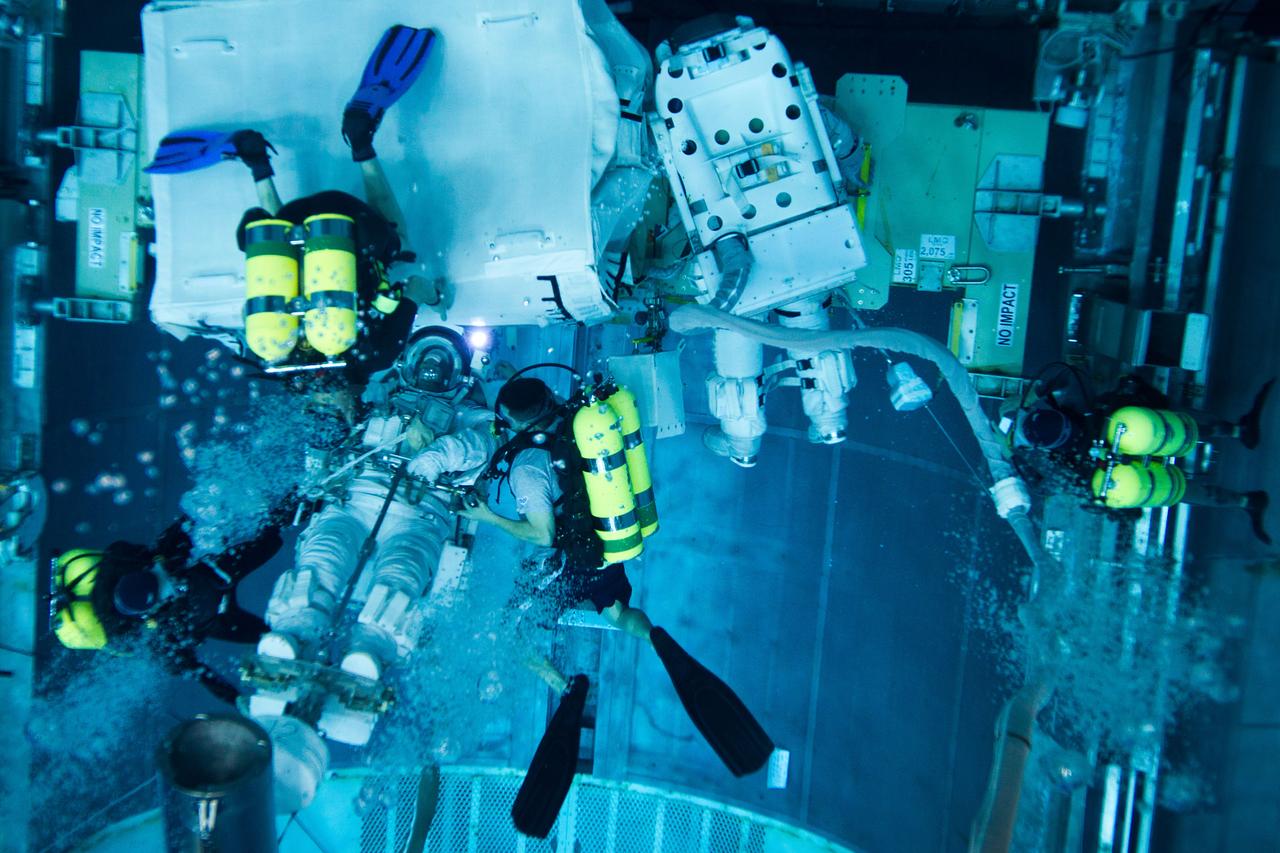
JSC2011-E-040217 (10 March 2011) --- NASA astronaut Rex Walheim, STS-135 mission specialist, is aided by divers as he works with astronaut Mike Fossum in a mock-up of the space shuttle's payload bay as the crew of STS-135 trains for a spacewalk in the Neutral Buoyancy Laboratory near NASA?s Johnson Space Center on March 10, 2011. Photo credit: NASA Photo/Houston Chronicle, Smiley N. Pool

JSC2011-E-059419 (17 May 2011) --- Photographers take pictures of the STS-135 crew as the space shuttle Atlantis is moved from the Orbiter Processing Facility to the Vehicle Assembly Building at NASA?s Kennedy Space Center on May 17, 2011. The move, known as rollover, is a milestone in the preparation for launch as the orbiter leaves its processing hangar to be prepped for its final flight. Photo credit: NASA Photo/Houston Chronicle, Smiley N. Pool
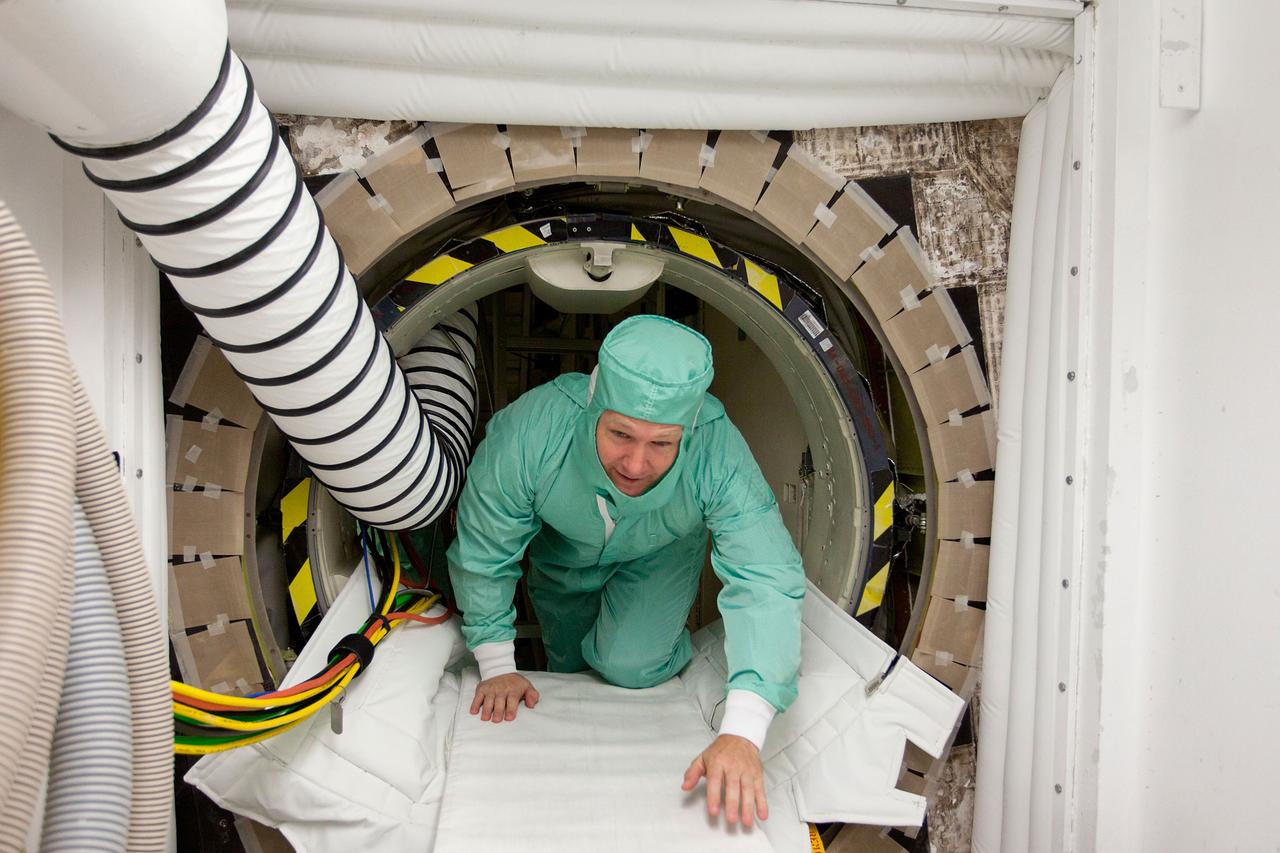
JSC2011-E-040358 (7 April 2011) --- NASA astronaut Doug Hurley, STS-135 pilot, exits the hatch of the space shuttle Atlantis during the STS-135 Crew Equipment Interface Test (CEIT) in the Orbiter Processing Facility at NASA?s Kennedy Space Center, Florida on April 7, 2011. Photo credit: NASA Photo/Houston Chronicle, Smiley N. Pool

JSC2011-E-059470 (31 May 2011) --- NASA astronaut Doug Hurley, STS-135 pilot, is seen in a partial silhouette against the space shuttle Atlantis as the spacecraft for the program's final mission moves to Launch Pad 39A during rollout at NASA?s Kennedy Space Center in Florida May 31, 2011. Photo credit: NASA photo/Houston Chronicle, Smiley N. Pool
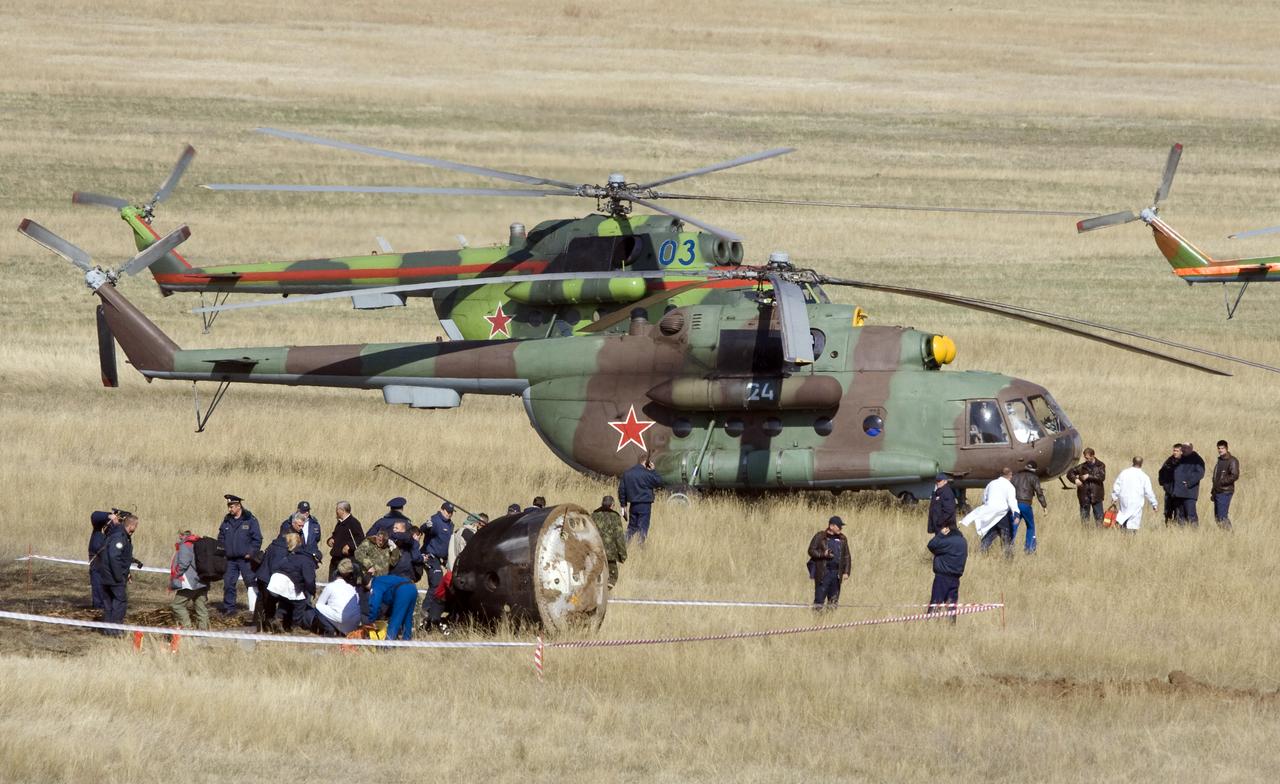
Russian ground crews walk around the Soyuz TMA-11 spacecraft after it landed carrying Expedition 16 Commander Peggy Whitson, Flight Engineer and Soyuz Commander Yuri Malenchenko and South Korean spaceflight participant So-yeon Yi, Friday, April 19, 2008, in central Kazakhstan to complete 192 days in space for Whitson and Malenchenko and 11 days in orbit for Yi. Photo Credit: (NASA/Reuters/Pool)

JSC2011-E-067680 (12 July 2011) --- This is an overall view of the wiring for the simulated shuttle payload bay in the Shuttle Avionics Integration Laboratory (SAIL) at the Johnson Space Center in Houston on July 12, 2011. The laboratory is a skeletal avionics version of the shuttle that uses actual orbiter hardware and flight software. The facility even carries the official orbiter designation as Orbiter Vehicle 095. Photo credit: NASA Photo/Houston Chronicle, Smiley N. Pool
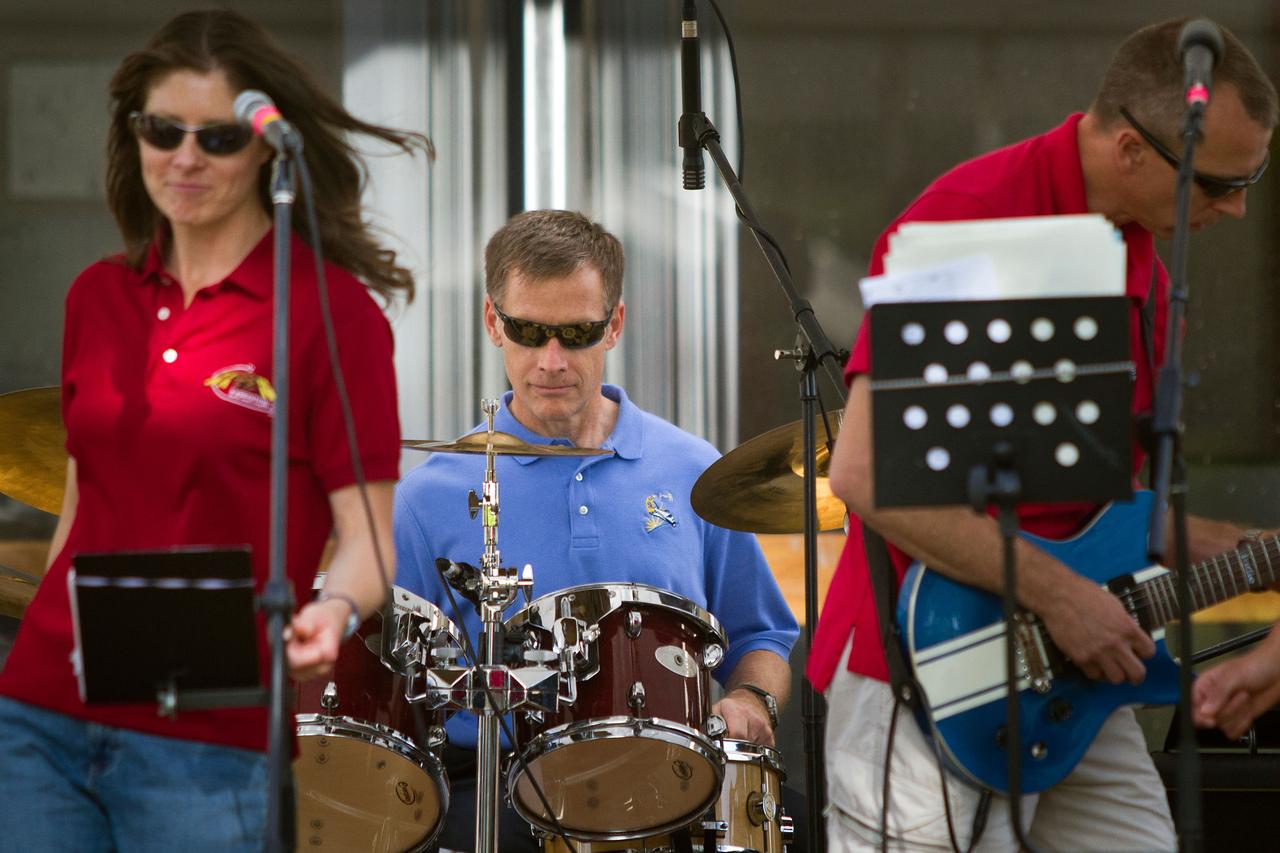
JSC2011-E-059375 (4 May 2011) --- NASA astronaut Chris Ferguson, STS-135 commander, plays the drums with the all-astronaut band known as Max Q as the group performs on Innovation Day at NASA?s Johnson Space Center in Houston May 4, 2011. Vocalist Tracy Caldwell Dyson is at left. Guitarist Drew Feustel is at right. Photo credit: NASA Photo/Houston Chronicle, Smiley N. Pool
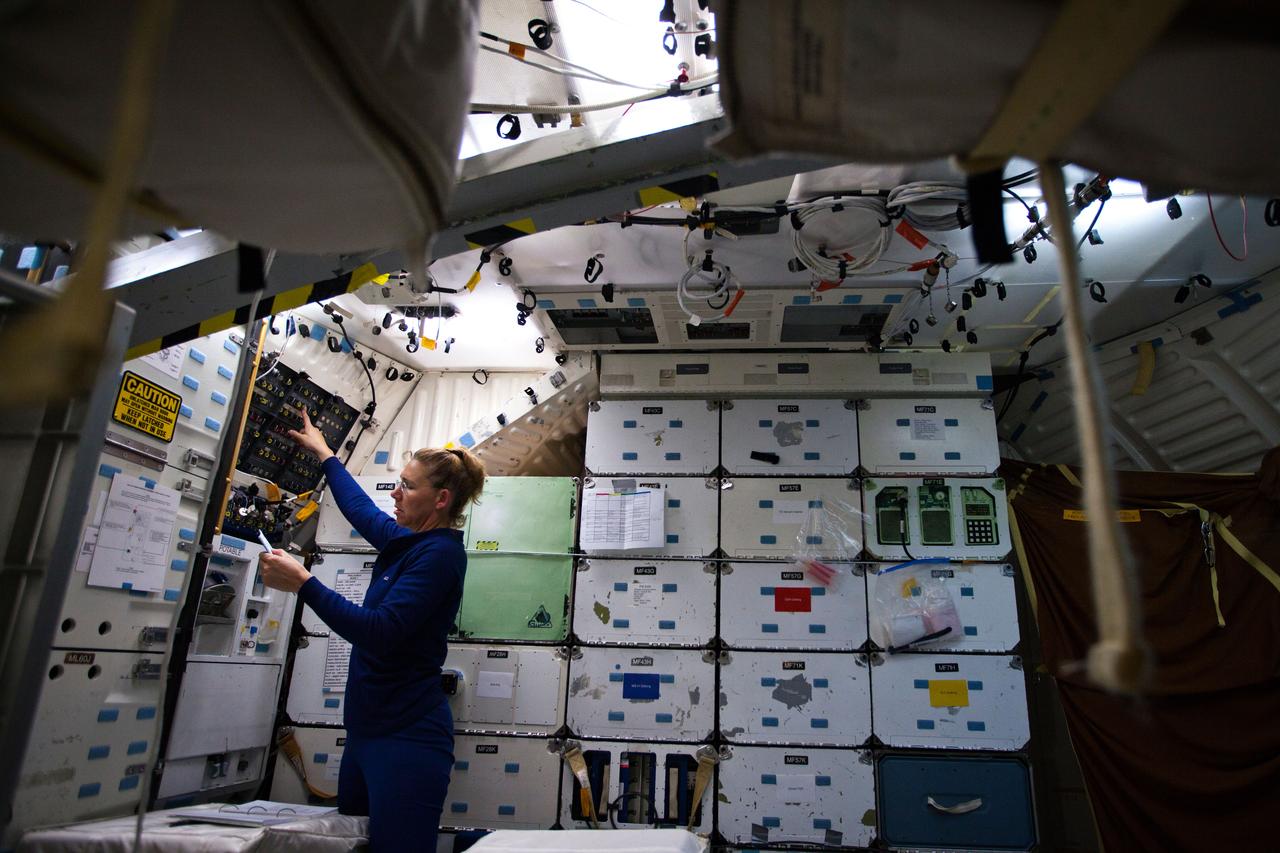
JSC2011-E-040281 (24 March 2011) --- NASA astronaut Sandy Magnus, STS-135 mission specialist, works on the middeck of the Full-Fuselage Trainer during a post-insertion training session in the Space Vehicle Mock-up Facility at NASA's Johnson Space Center on March 24, 2011. Photo credit: NASA Photo/Houston Chronicle, Smiley N. Pool
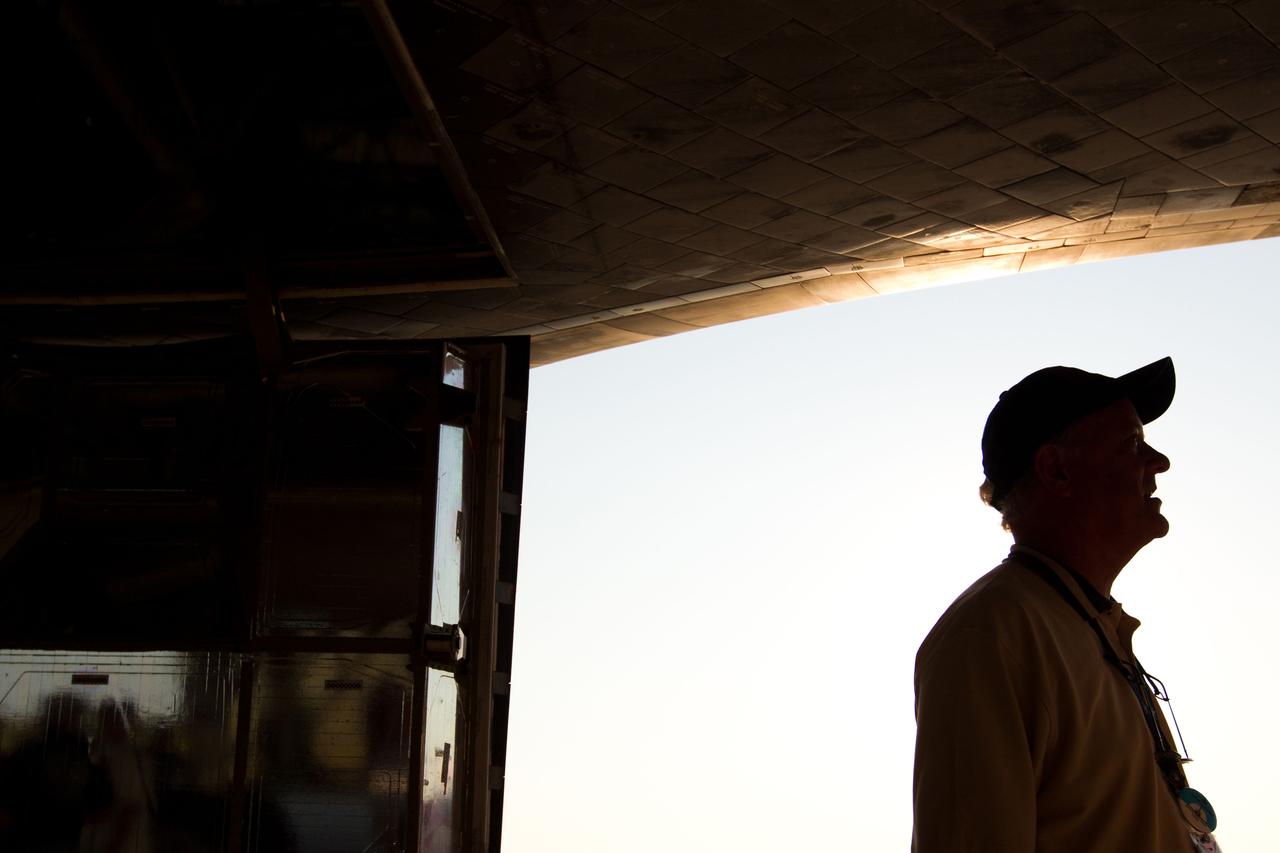
JSC2011-E-068012 (21 July 2011) --- Milt Heflin, associate director (technical) of the Johnson Space Center, stands under the wing of the space shuttle Atlantis after it landed on July 21, 2011 at the Kennedy Space Center in Florida. The landing completed STS-135, the final mission of the NASA Space Shuttle Program. Photo credit: NASA Photo/Houston Chronicle, Smiley N. Pool
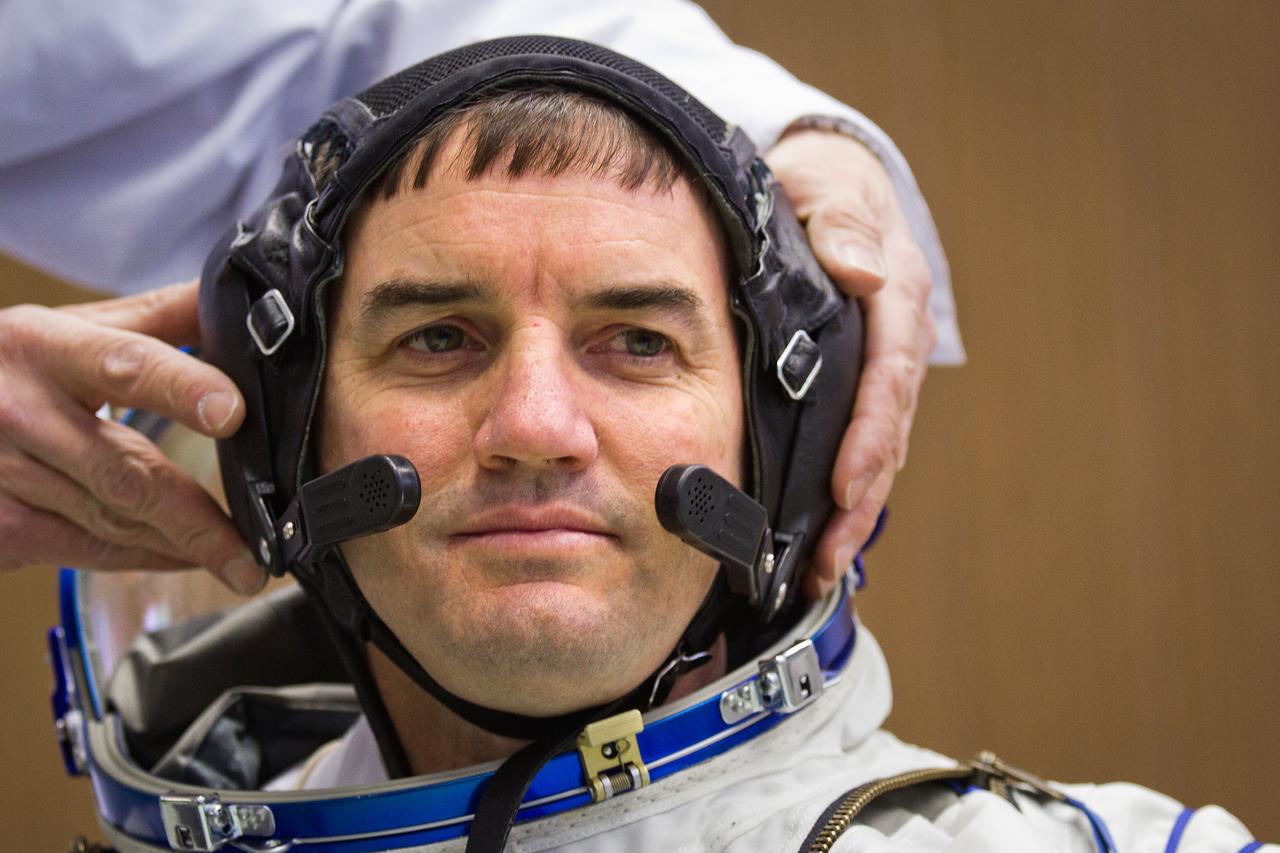
JSC2011-E-040298 (28 March 2011) --- NASA astronaut Rex Walheim, STS-135 mission specialist, undergoes a fit check of his Sokol spacesuit at the Zvezda facility in Moscow on March 28, 2011. The crew of the final shuttle mission traveled to Moscow for a suit fit check of their Russian suits would be required in the event of an emergency. Photo credit: NASA Photo/Houston Chronicle, Smiley N. Pool
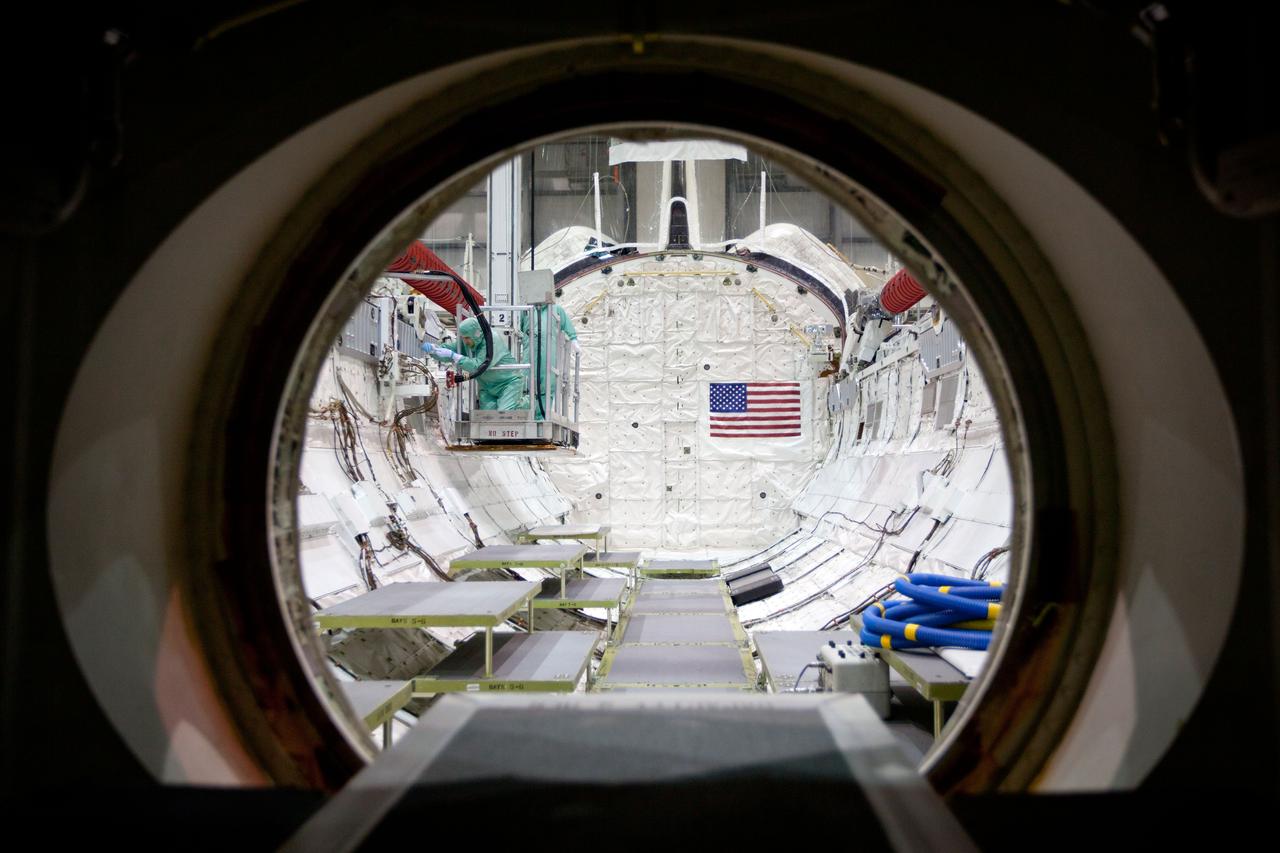
JSC2011-E-040372 (8 April 2011) --- Technicians inspect the payload bay of the space shuttle Atlantis during the STS-135 Crew Equipment Interface Test (CEIT) in the Orbiter Processing Facility at NASA?s Kennedy Space Center, Florida on April 8, 2011. Photo credit: NASA Photo/Houston Chronicle, Smiley N. Pool
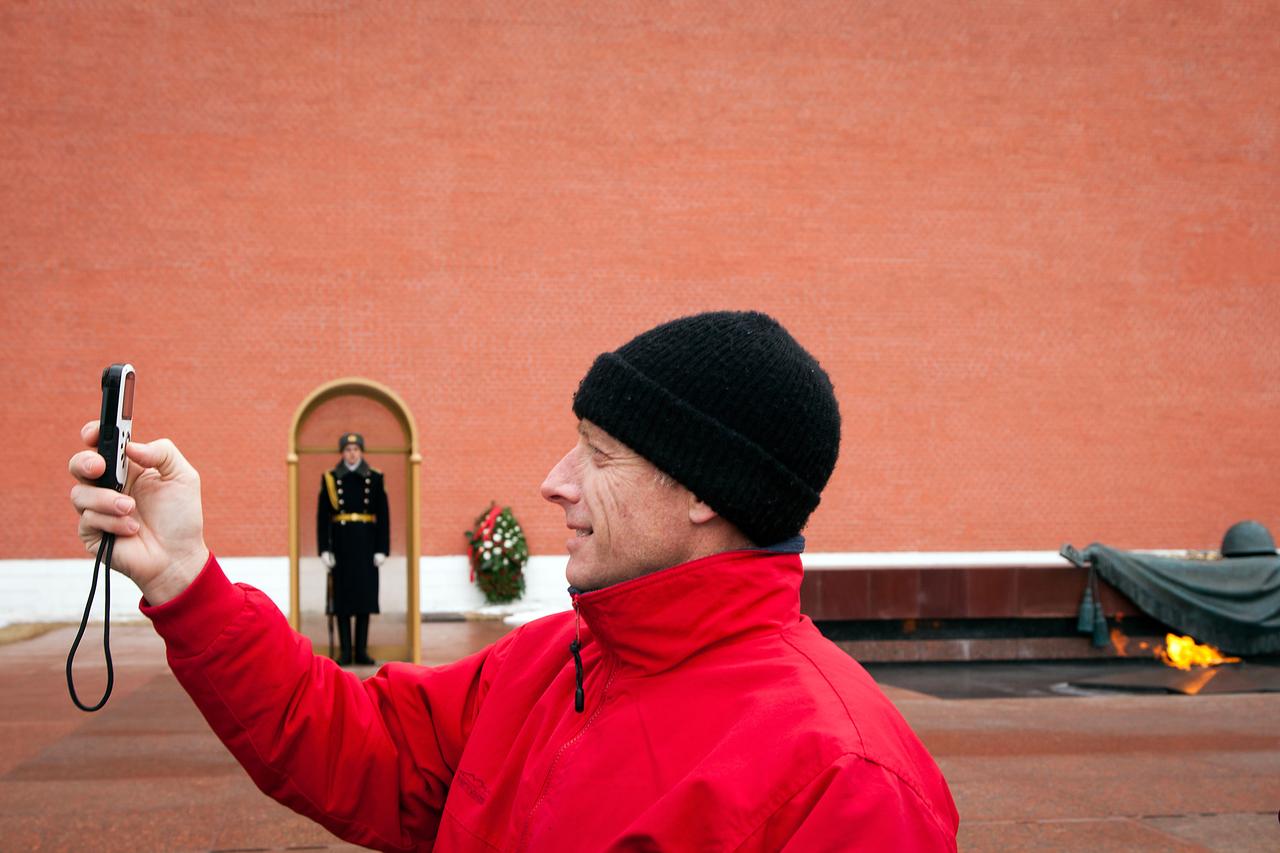
JSC2011-E-040330 (30 March 2011) --- NASA astronaut Chris Ferguson (foreground), STS-135 commander, visits Red Square in Moscow on March 30, 2011. The crew of the final shuttle mission traveled to Moscow for a suit fit check of their Russian Sokol suits which would be required in the event of an emergency. Photo credit: NASA Photo/Houston Chronicle, Smiley N. Pool
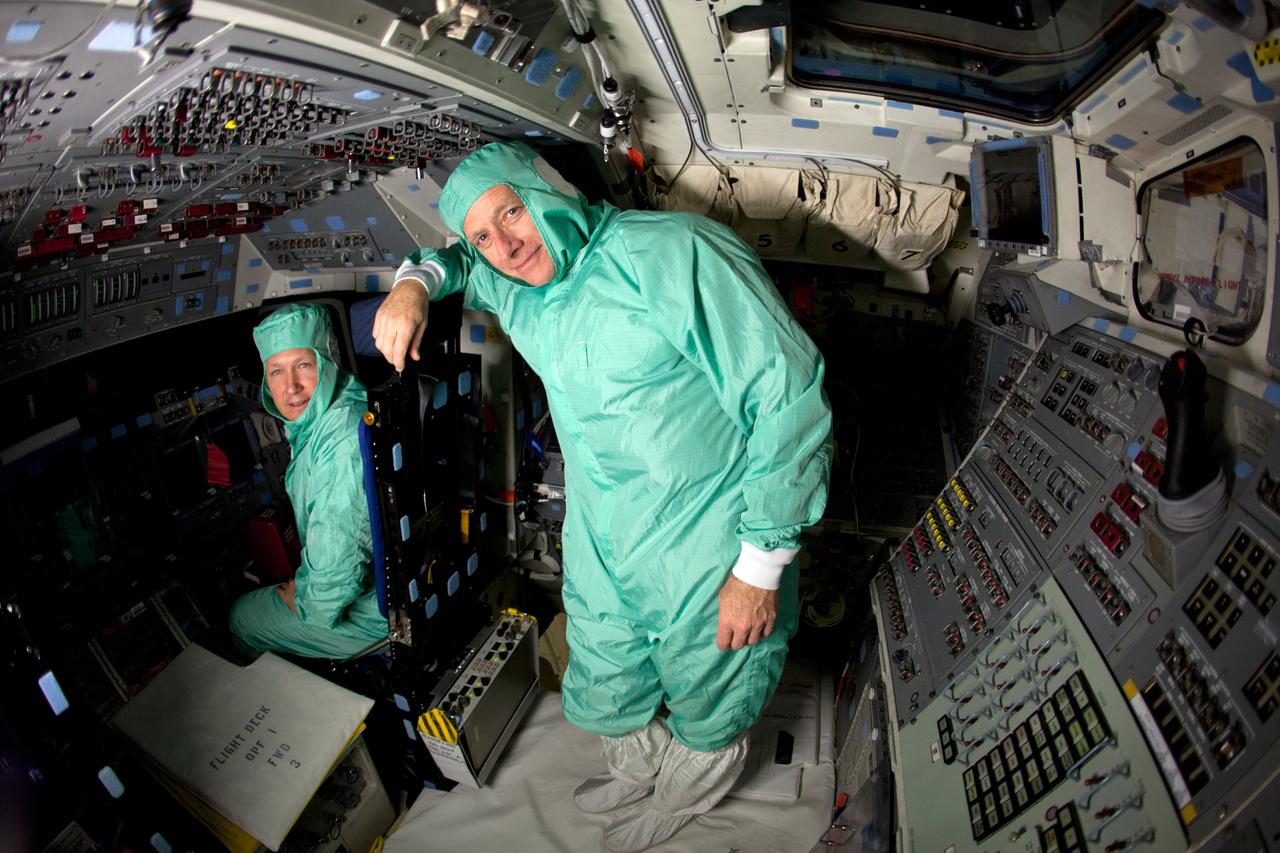
JSC2011-E-040357 (7 April 2011) --- NASA astronauts Chris Ferguson (right), STS-135 commander; and Doug Hurley, pilot, pose for a photo on the cockpit of the space shuttle Atlantis during the STS-135 Crew Equipment Interface Test (CEIT) in the Orbiter Processing Facility at NASA?s Kennedy Space Center, Florida on April 7, 2011. Photo credit: NASA Photo/Houston Chronicle, Smiley N. Pool
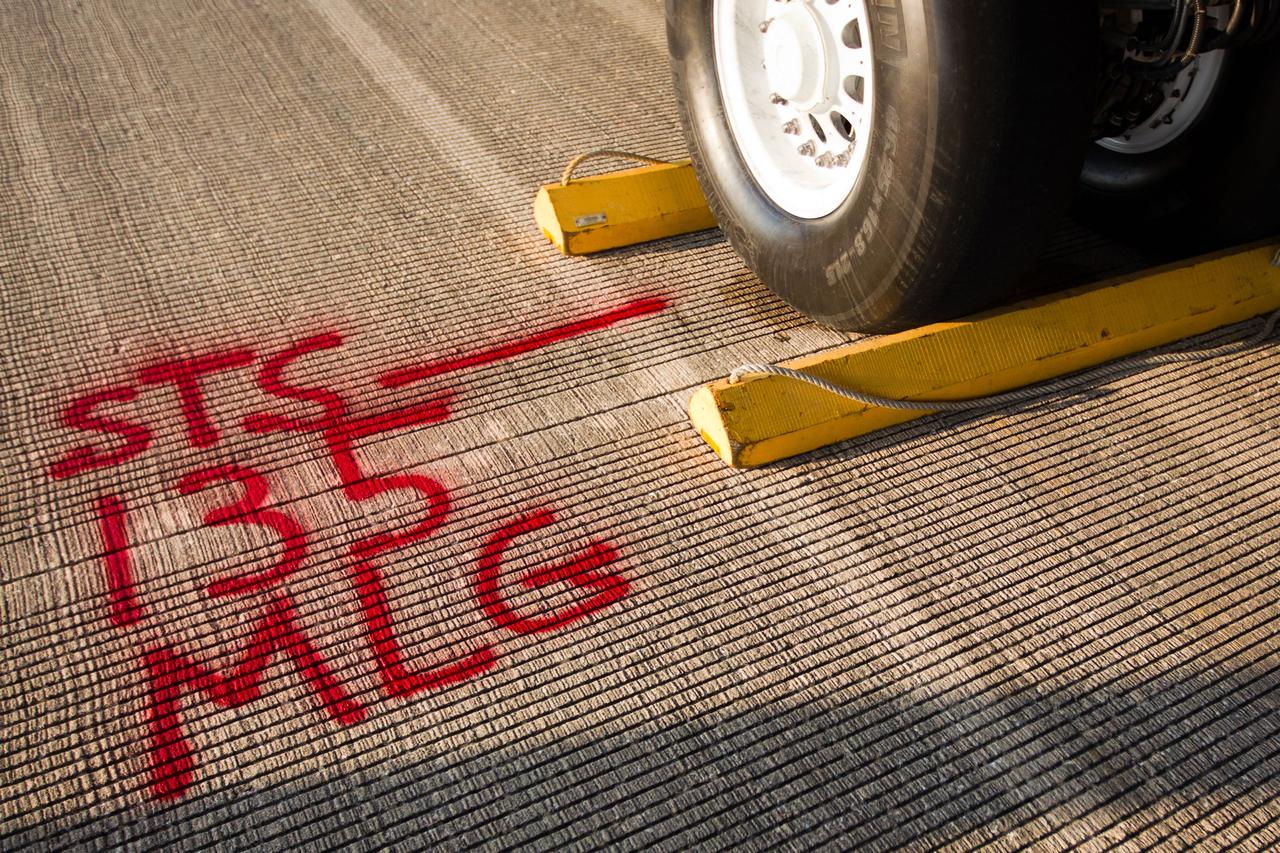
JSC2011-E-068008 (21 July 2011) --- Red paint marks the location where Atlantis' main landing gear came to a stop on the runway after the space shuttle landed at the Kennedy Space Center in Florida on July 21, 2011. The landing completed STS-135, the final mission of the NASA Space Shuttle Program. Photo credit: NASA Photo/Houston Chronicle, Smiley N. Pool
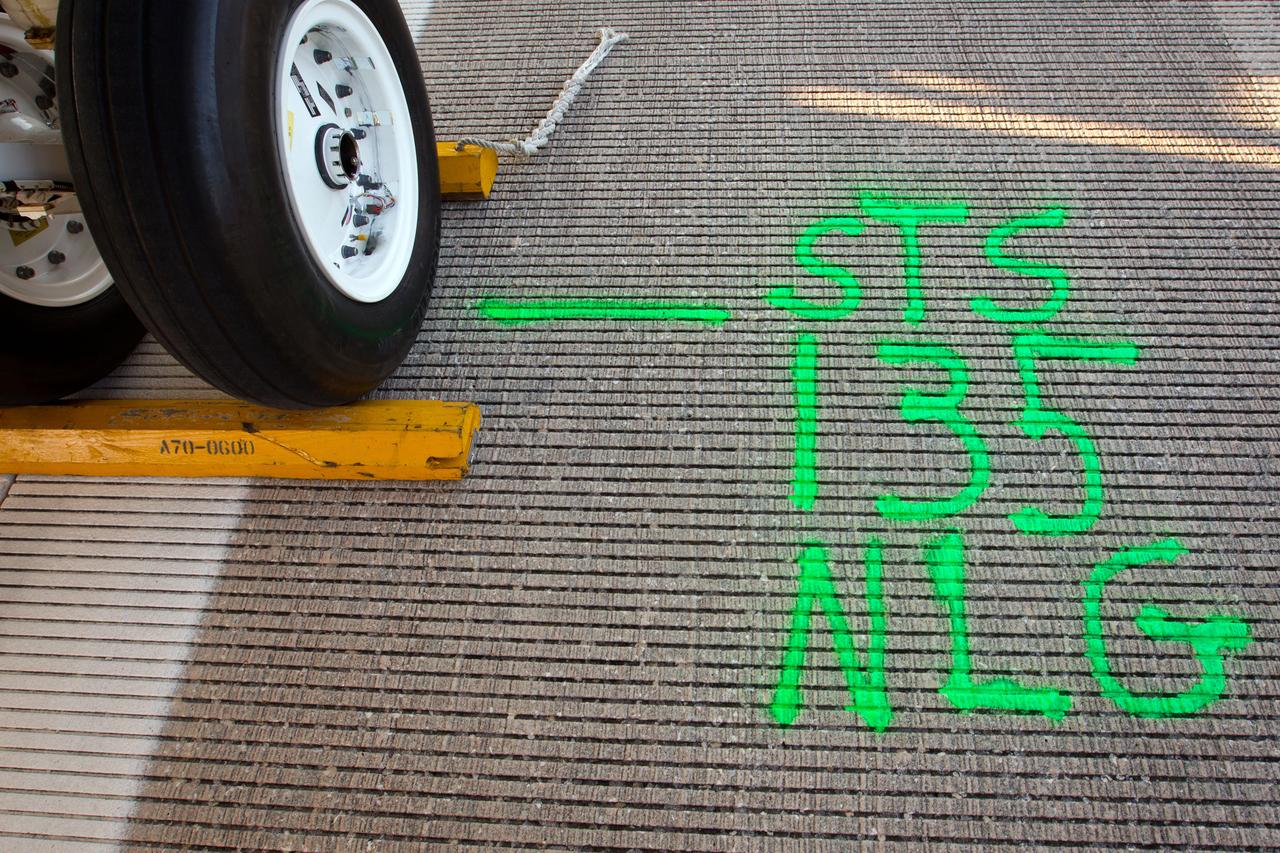
JSC2011-E-068007 (21 July 2011) --- Green paint marks the location where Atlantis' nose landing gear came to a stop on the runway after the space shuttle landed at the Kennedy Space Center in Florida on July 21, 2011. The landing completed STS-135, the final mission of the NASA Space Shuttle Program. Photo credit: NASA Photo/Houston Chronicle, Smiley N. Pool
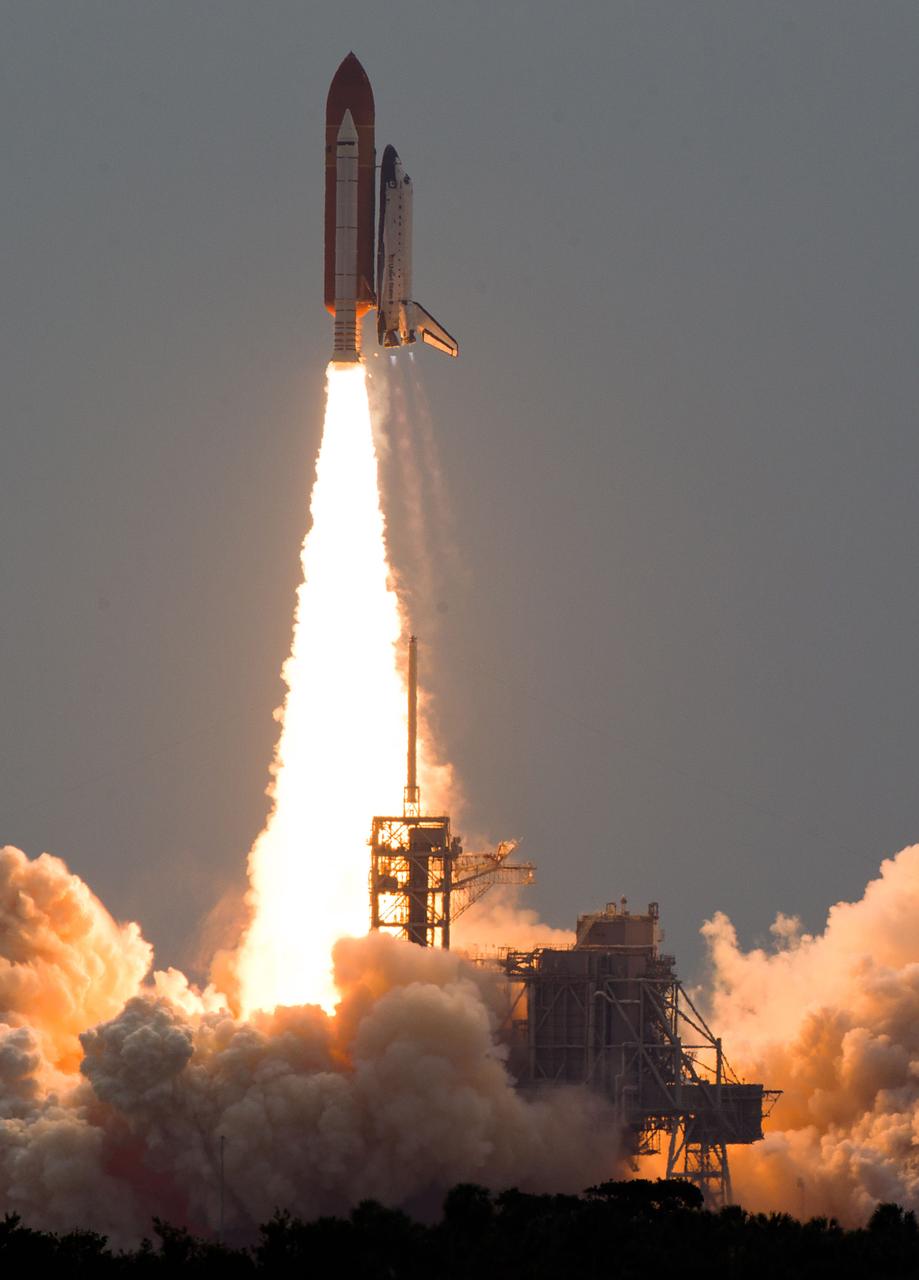
JSC2011-E-067589 (8 July 2011) --- The space shuttle Atlantis launches for the STS-135 mission to the International Space Station in the final mission of the Space Shuttle Program at NASA?s Kennedy Space Center in Florida. Liftoff was at 11:29 a.m. (EDT) on July 8, 2011. Onboard are NASA astronauts Chris Ferguson, STS-135 commander; Doug Hurley, pilot; Sandy Magnus and Rex Walheim, both mission specialists. Photo credit: NASA Photo/Houston Chronicle, Smiley N. Pool
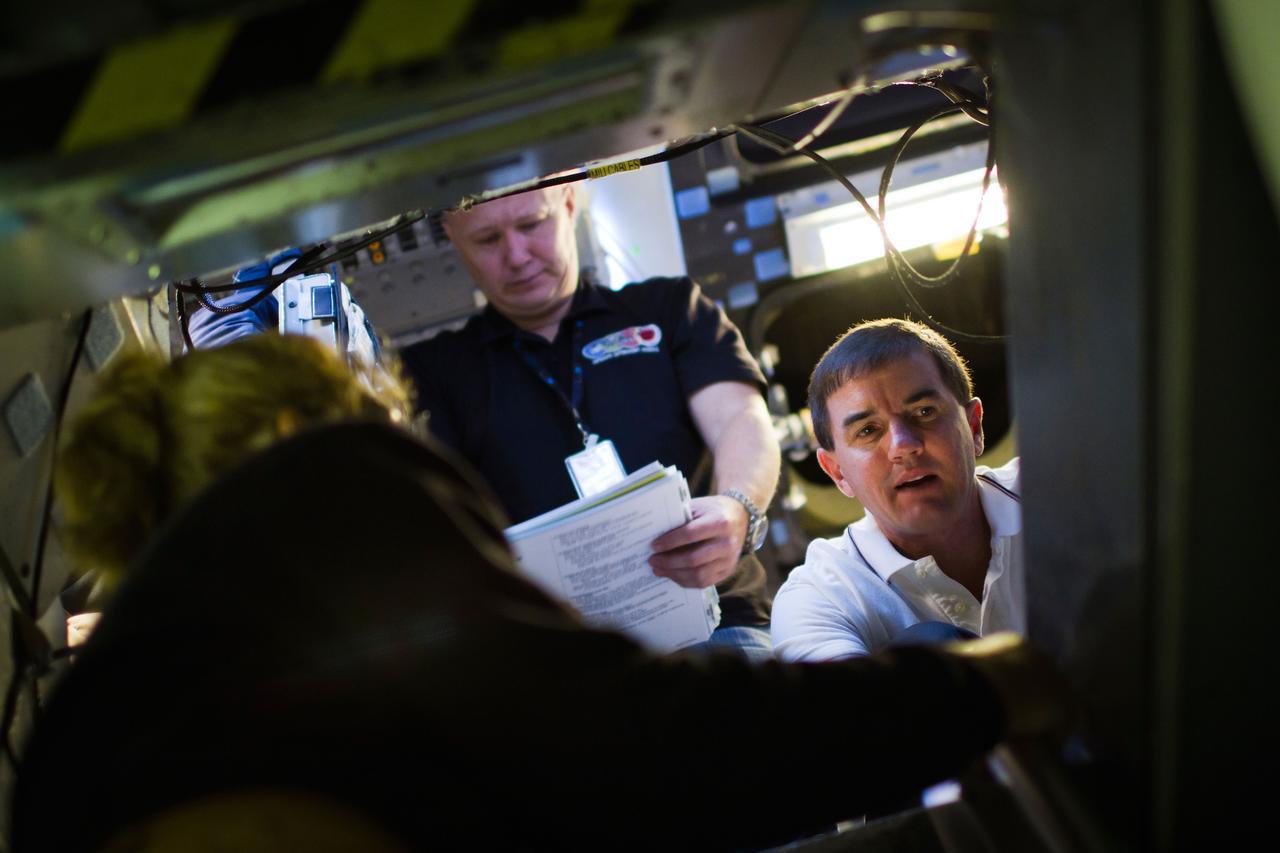
JSC2011-E-040335 (4 April 2011) --- NASA astronauts Rex Walheim, right, Sandy Magnus, foreground, both mission specialists, and Doug Hurley, pilot, work on the flight deck as the crew of STS-135 trains in the Fixed Base Simulator at NASA?s Johnson Space Center in Houston April 4, 2011. Photo credit: NASA Photo/Houston Chronicle, Smiley N. Pool
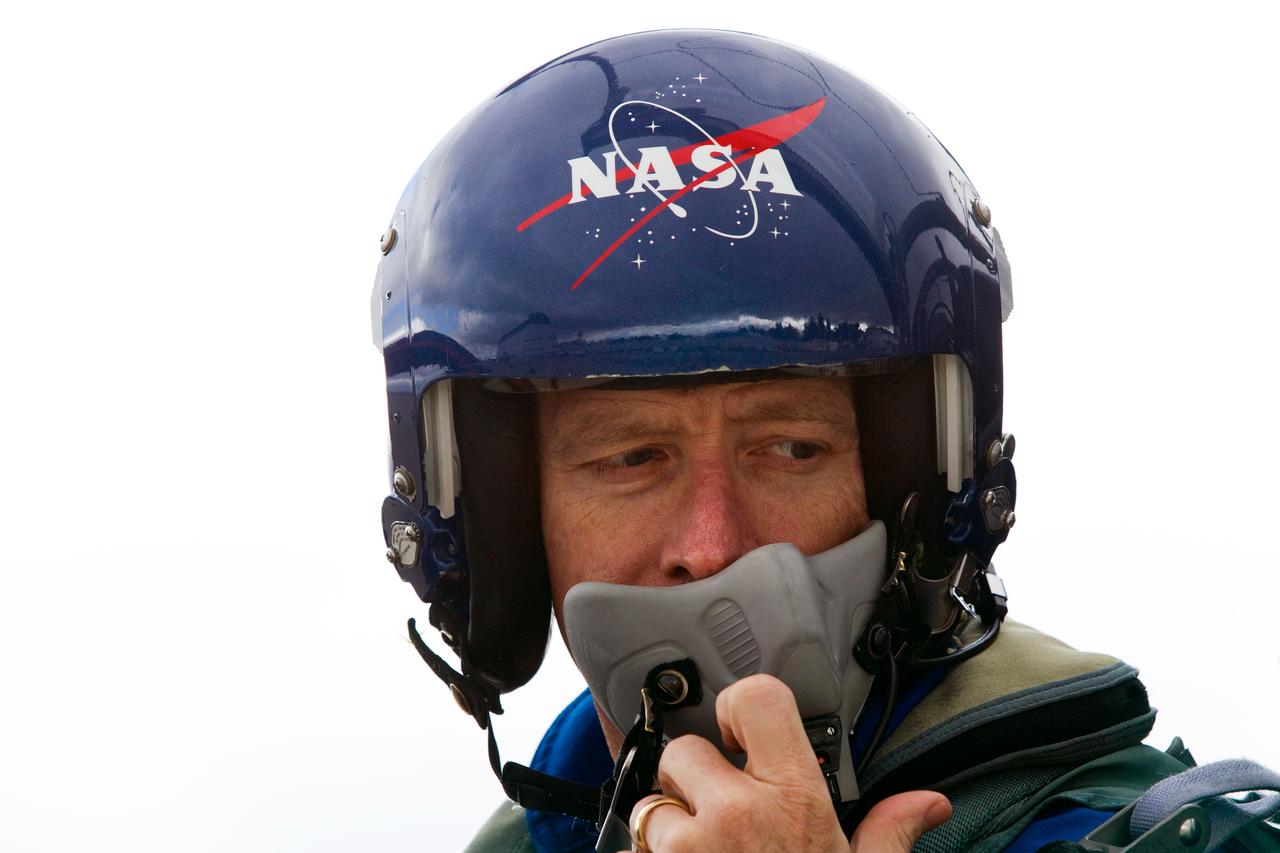
JSC2011-E-040243 (2 March 2011) --- NASA astronaut Chris Ferguson, STS-135 commander, prepares for departure from Moffett Field as he flies a T-38 trainer home to Houston after the crew of STS-135 trained in the Vertical Motion Simulator (VMS) at NASA's Ames Research Center on March 2, 2011, in Mountain View, Calif. Photo credit: NASA Photo/Houston Chronicle, Smiley N. Pool
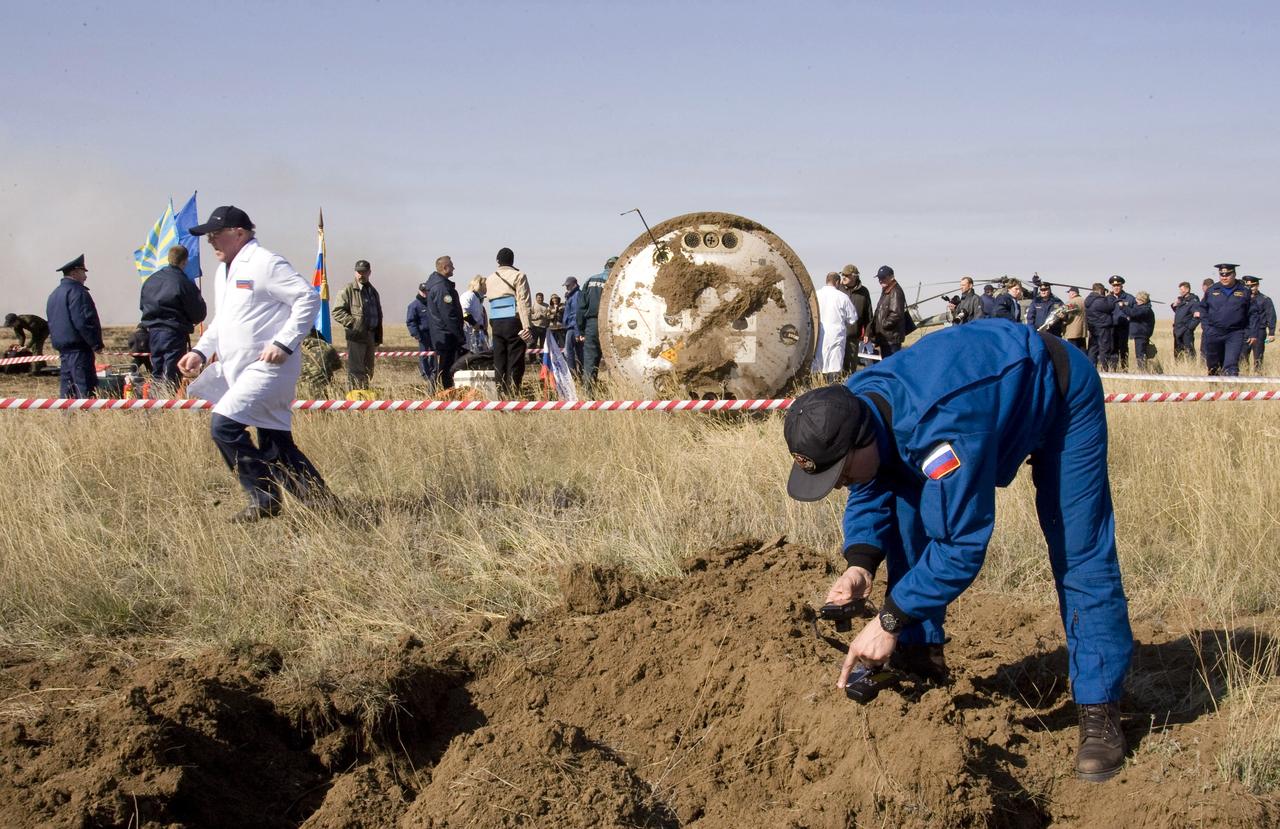
A Russian ground crew member examines the over turned soil near the Soyuz TMA-11 spacecraft after it landed carrying Expedition 16 Commander Peggy Whitson, Flight Engineer and Soyuz Commander Yuri Malenchenko and South Korean spaceflight participant So-yeon Yi, Friday, April 19, 2008, in central Kazakhstan to complete 192 days in space for Whitson and Malenchenko and 11 days in orbit for Yi. Photo Credit: (NASA/Reuters/Pool)
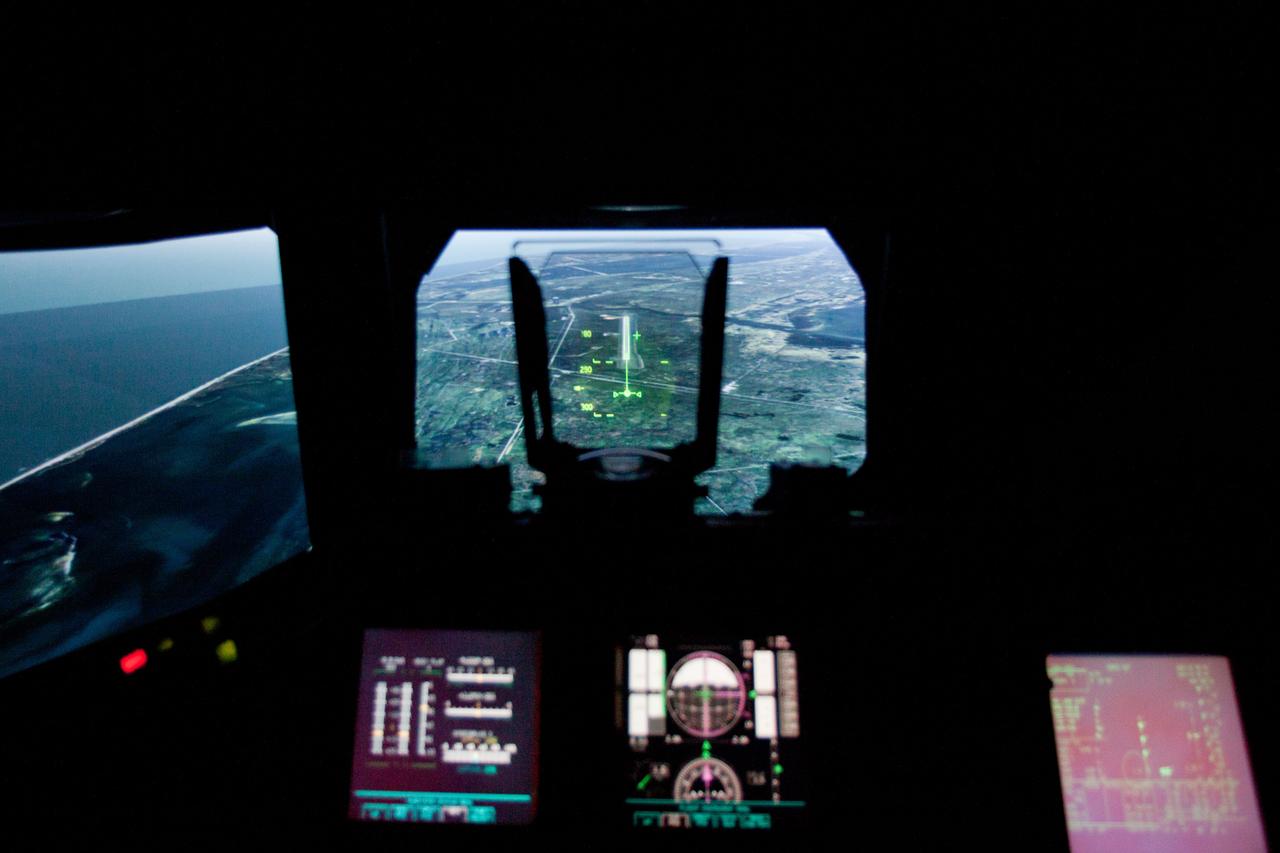
JSC2011-E-040200 (2 March 2011) --- The landing approach to the Kennedy Space Center is seen in a heads up display as the STS-135 crew trains in the Vertical Motion Simulator (VMS) at NASA's Ames Research Center in Mountain View, Calif., on March 2, 2011. Photo credit: NASA Photo/Houston Chronicle, Smiley N. Pool
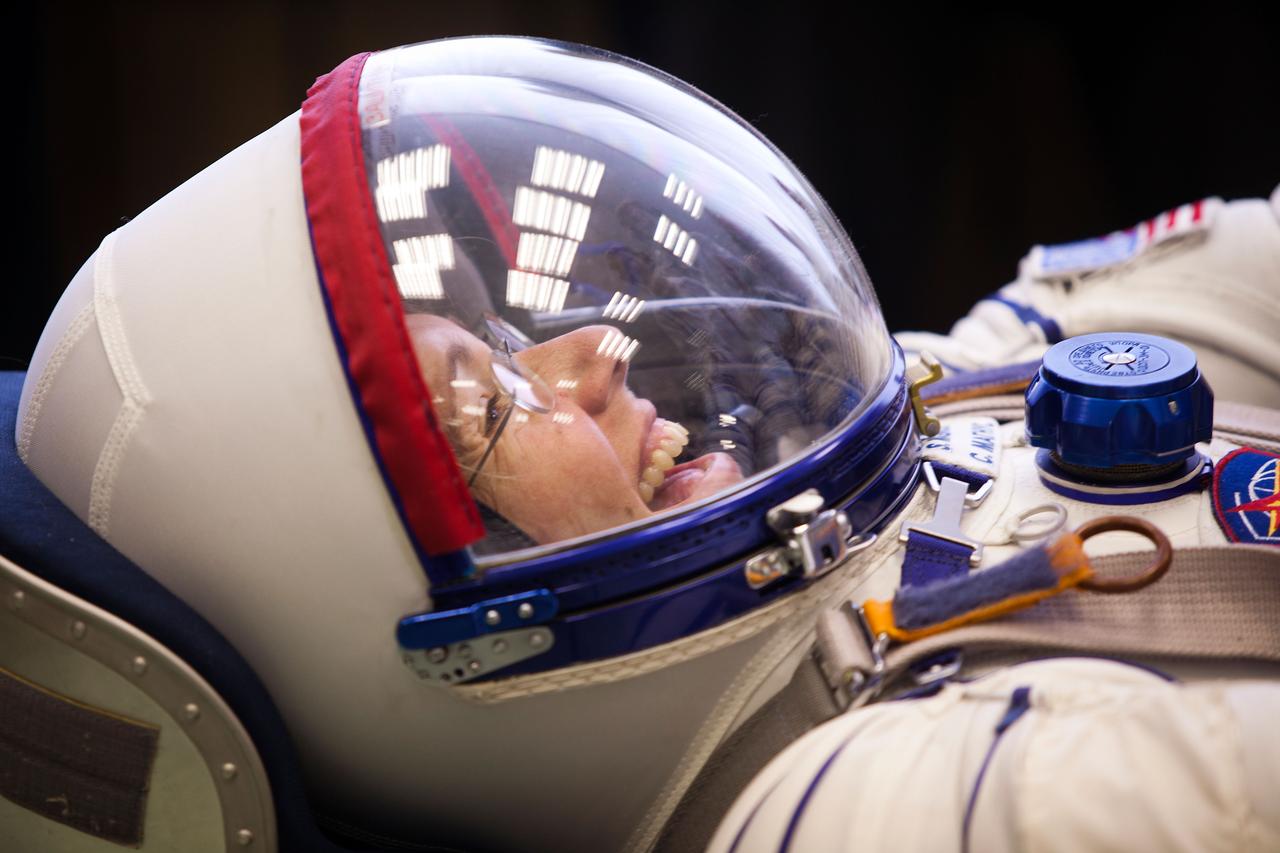
JSC2011-E-040322 (29 March 2011) --- NASA astronaut Sandy Magnus, STS-135 mission specialist, undergoes a fit check of her Sokol spacesuit March 29, 2011, at the Zvezda facility in Moscow. The crew of the final shuttle mission traveled to Moscow for a suit fit check of their Russian Soyuz suits that will be required in the event of an emergency. Photo credit: NASA Photo / Houston Chronicle, Smiley N. Pool

JSC2011-E-040366 (8 April 2011) --- Close-up photo of tools taken during the STS-135 crew members' inspection of the equipment they will use in space. The inspection was part of the STS-135 Crew Equipment Interface Test (CEIT) conducted April 8, 2011 at NASA?s Kennedy Space Center in Florida. Photo credit: NASA Photo/Houston Chronicle, Smiley N. Pool
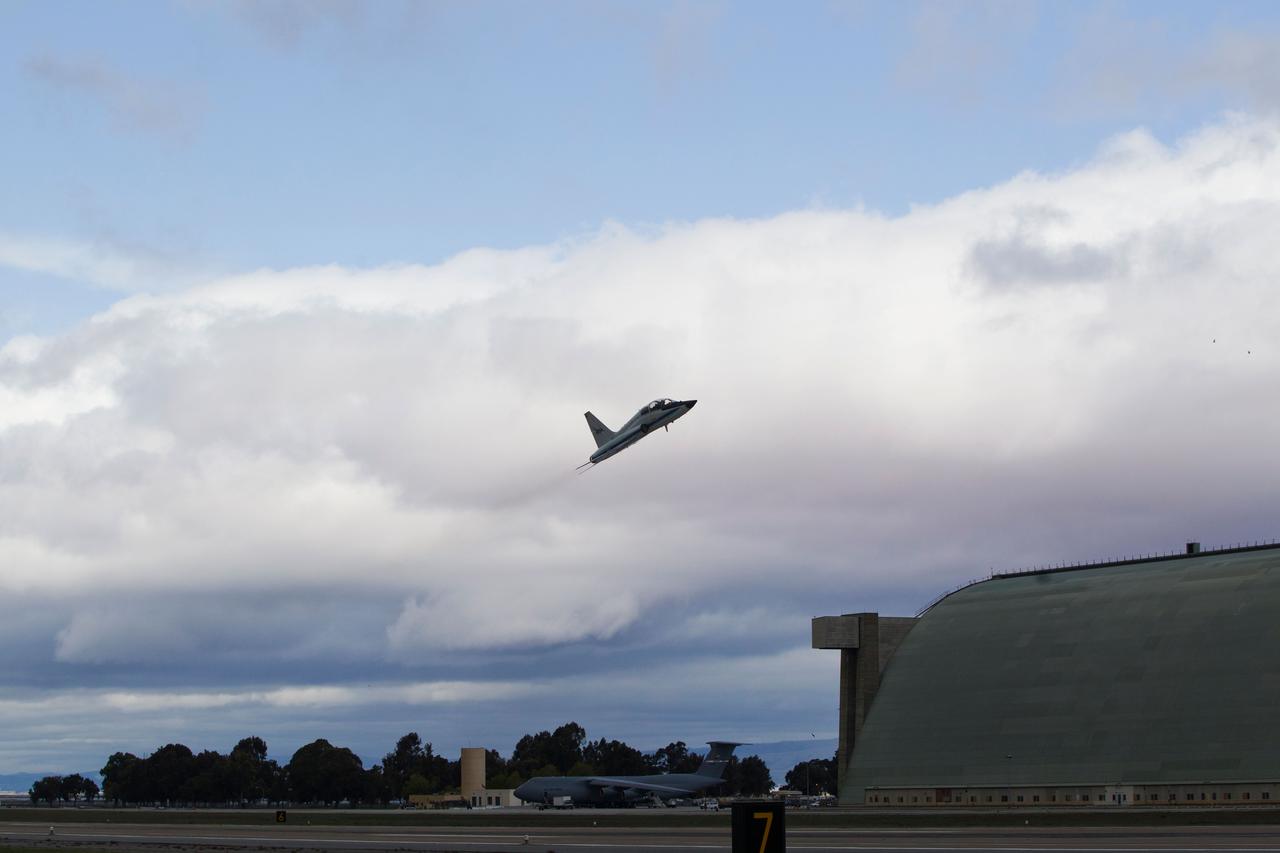
JSC2011-E-040205 (2 March 2011) --- A NASA T-38 jet trainer piloted by astronaut Chris Ferguson, STS-135 commander, takes off from Moffett Field in California for a flight home to Houston after Ferguson and his crew trained in the Vertical Motion Simulator (VMS) at NASA's Ames Research Center in Mountain View, March 2, 2011. Photo credit: NASA Photo/Houston Chronicle, Smiley N. Pool
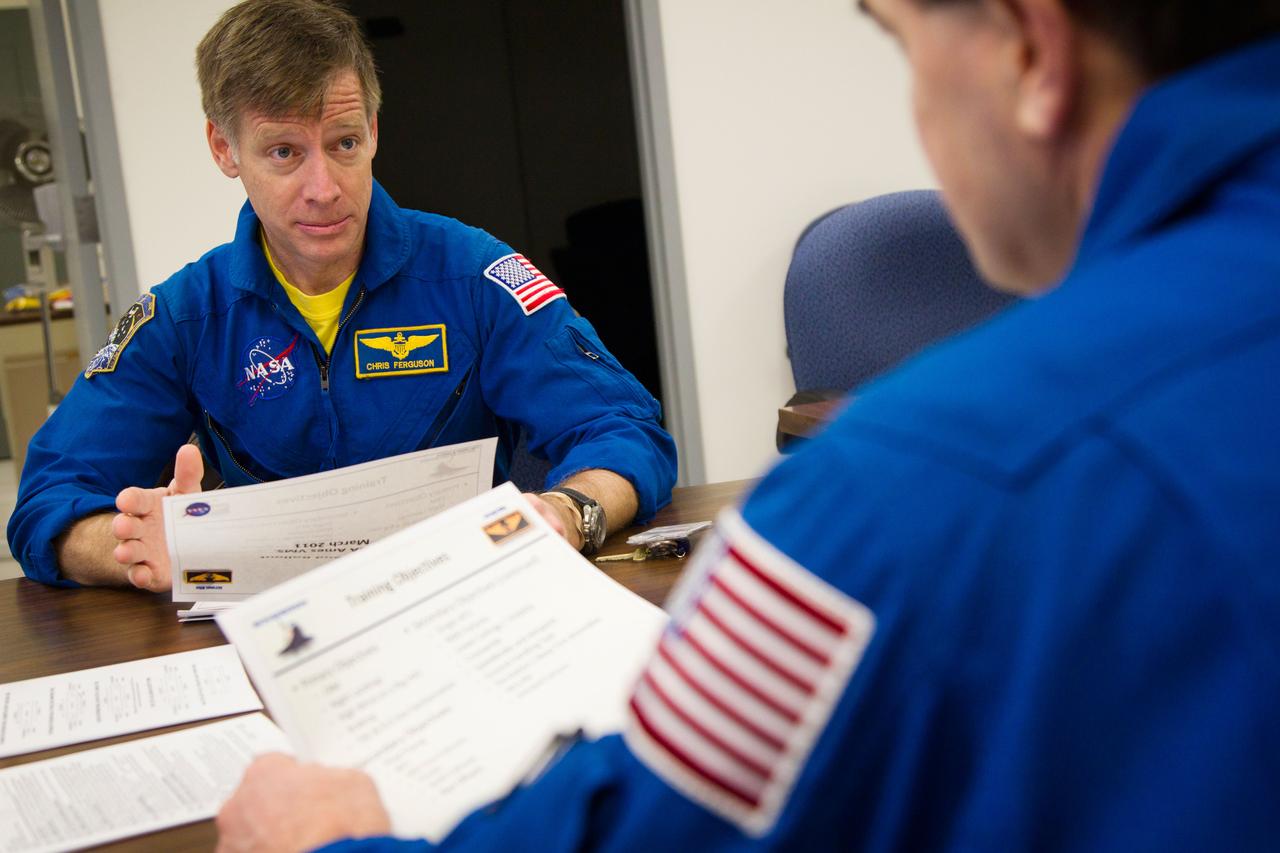
JSC2011-E-040193 (2 March 2011) --- NASA astronaut Chris Ferguson (left), STS-135 commander, confers with astronaut Rex Walheim, mission specialist, as the Atlantis crew participates in a briefing before a training session in the Vertical Motion Simulator (VMS) at NASA's Ames Research Center in Mountain View, Calif. March 2, 2011. Photo credit: NASA Photo/Houston Chronicle, Smiley N. Pool
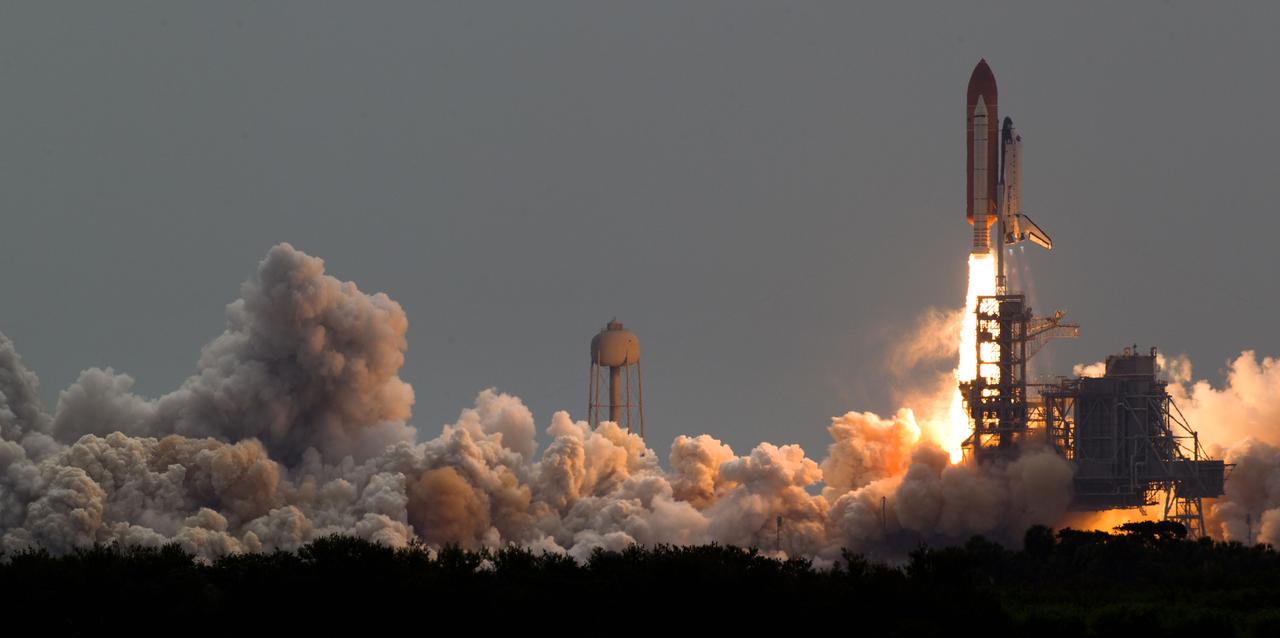
JSC2011-E-067587 (8 July 2011) --- The space shuttle Atlantis launches for the STS-135 mission to the International Space Station in the final mission of the Space Shuttle Program at NASA?s Kennedy Space Center in Florida. Liftoff was at 11:29 a.m. (EDT) on July 8, 2011. Onboard are NASA astronauts Chris Ferguson, STS-135 commander; Doug Hurley, pilot; Sandy Magnus and Rex Walheim, both mission specialists. Photo credit: NASA Photo/Houston Chronicle, Smiley N. Pool
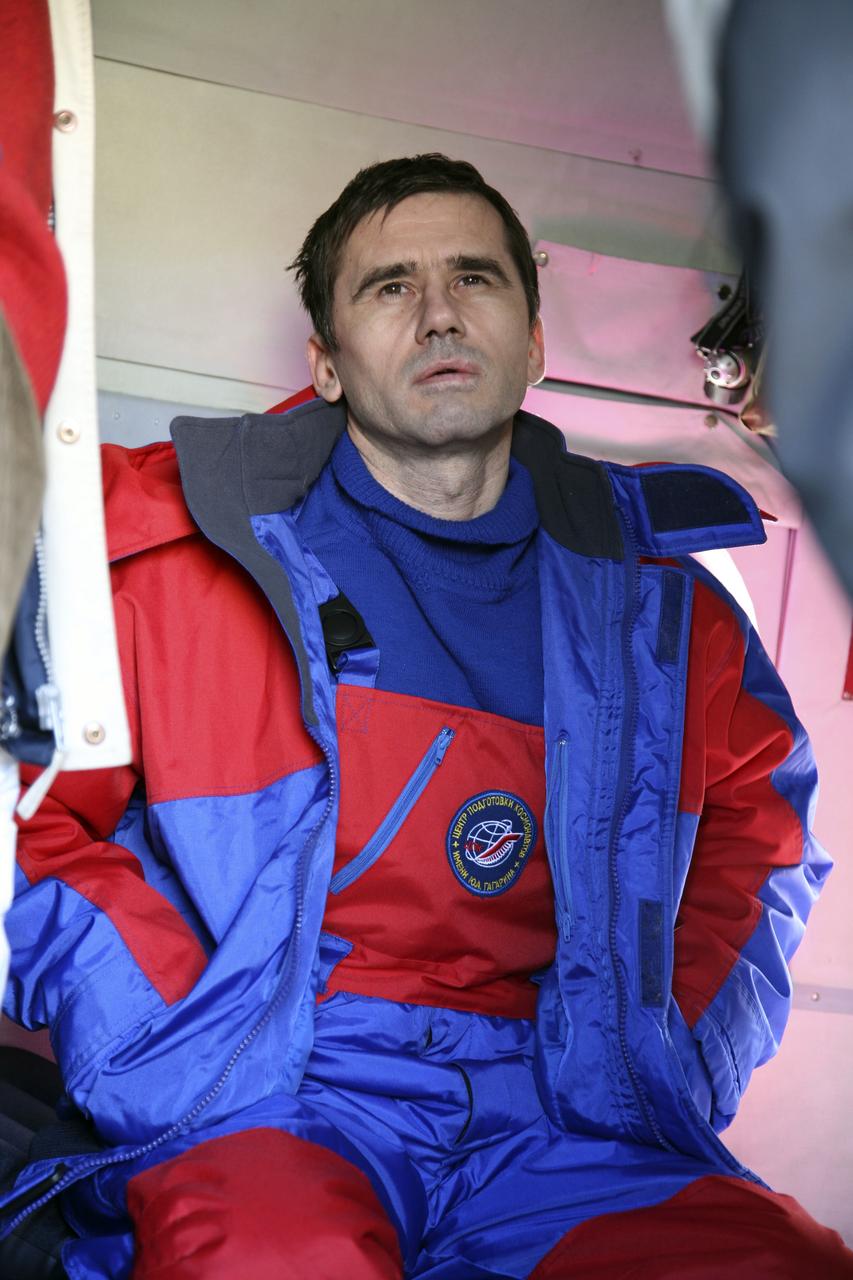
Expedition 16 Flight Engineer and Soyuz Commander Yuri Malenchenko sits in a helicopter after he and fellow crew members Expedition 16 Commander Peggy Whitson and South Korean spaceflight participant So-yeon Yi landed their Soyuz TMA-11 capsule, Friday, April 19, 2008, in central Kazakhstan. Whitson and Malenchenko completed 192 days in space and Yi 11 days in orbit. Photo Credit: (NASA/Reuters/Pool)
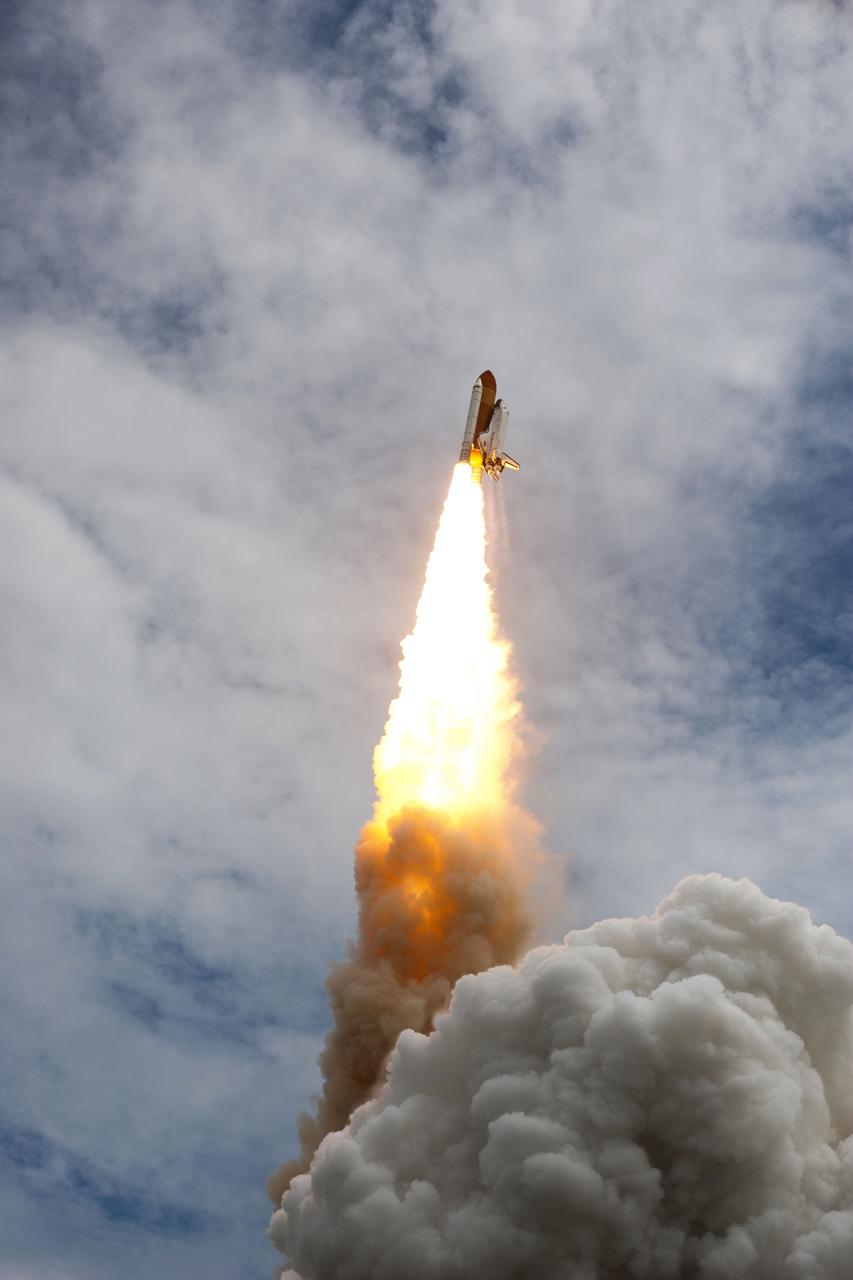
JSC2011-E-067611 (8 July 2011) --- The space shuttle Atlantis launches for the STS-135 mission to the International Space Station in the final mission of the Space Shuttle Program at NASA?s Kennedy Space Center in Florida. Liftoff was at 11:29 a.m. (EDT) on July 8, 2011. Onboard are NASA astronauts Chris Ferguson, STS-135 commander; Doug Hurley, pilot; Sandy Magnus and Rex Walheim, both mission specialists. Photo credit: NASA Photo/Houston Chronicle, Smiley N. Pool
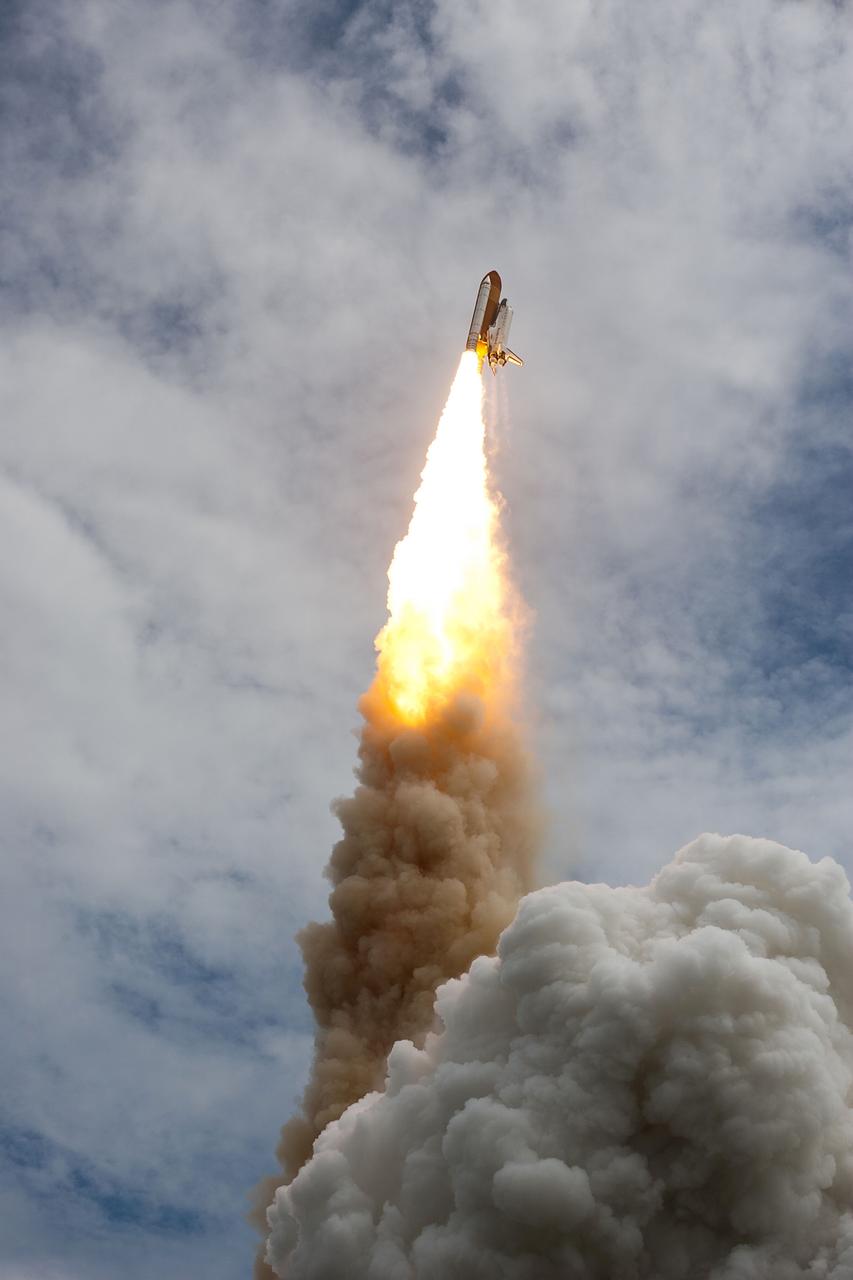
JSC2011-E-067613 (8 July 2011) --- The space shuttle Atlantis launches for the STS-135 mission to the International Space Station in the final mission of the Space Shuttle Program at NASA?s Kennedy Space Center in Florida. Liftoff was at 11:29 a.m. (EDT) on July 8, 2011. Onboard are NASA astronauts Chris Ferguson, STS-135 commander; Doug Hurley, pilot; Sandy Magnus and Rex Walheim, both mission specialists. Photo credit: NASA Photo/Houston Chronicle, Smiley N. Pool
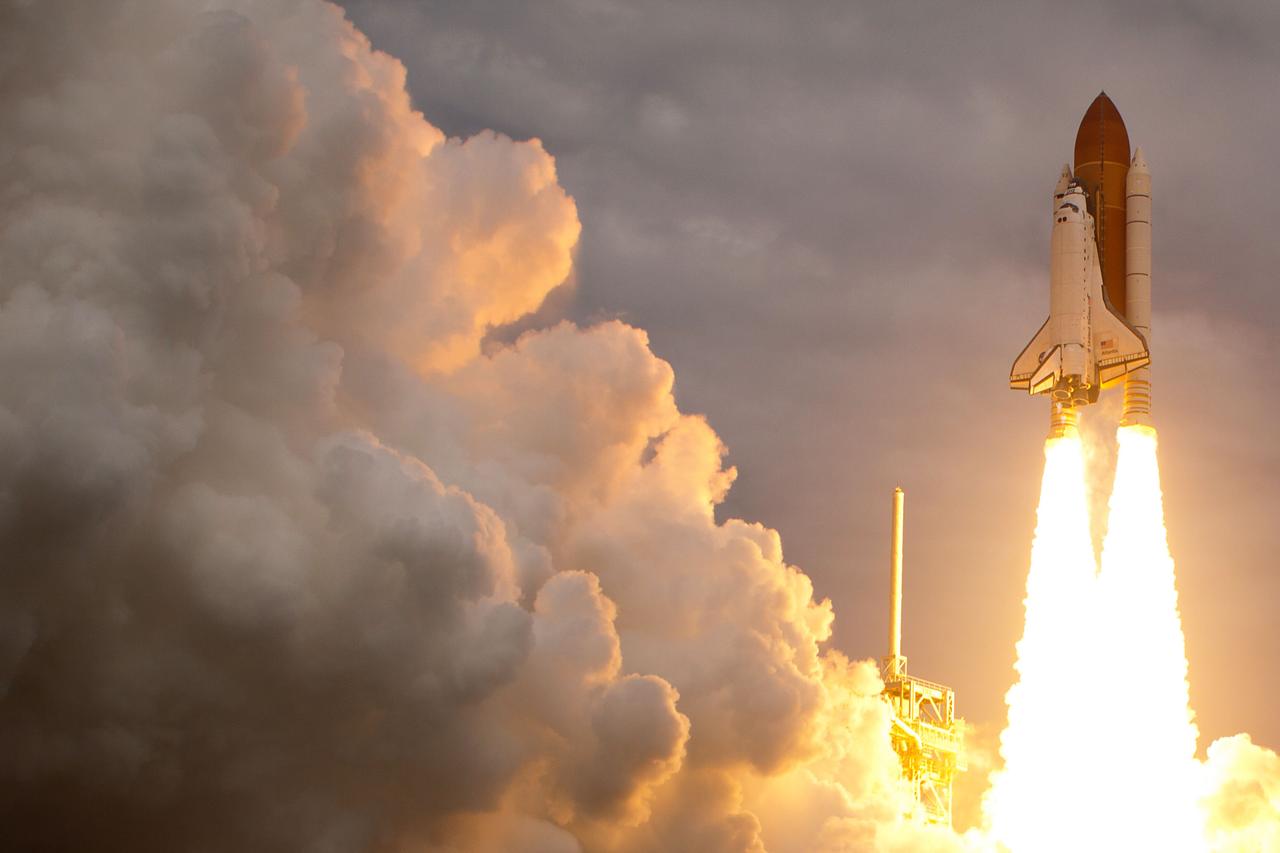
JSC2011-E-067645 (8 July 2011) --- The space shuttle Atlantis launches for the STS-135 mission to the International Space Station in the final mission of the Space Shuttle Program at NASA?s Kennedy Space Center in Florida. Liftoff was at 11:29 a.m. (EDT) on July 8, 2011. Onboard are NASA astronauts Chris Ferguson, STS-135 commander; Doug Hurley, pilot; Sandy Magnus and Rex Walheim, both mission specialists. Photo credit: NASA Photo/Houston Chronicle, Smiley N. Pool
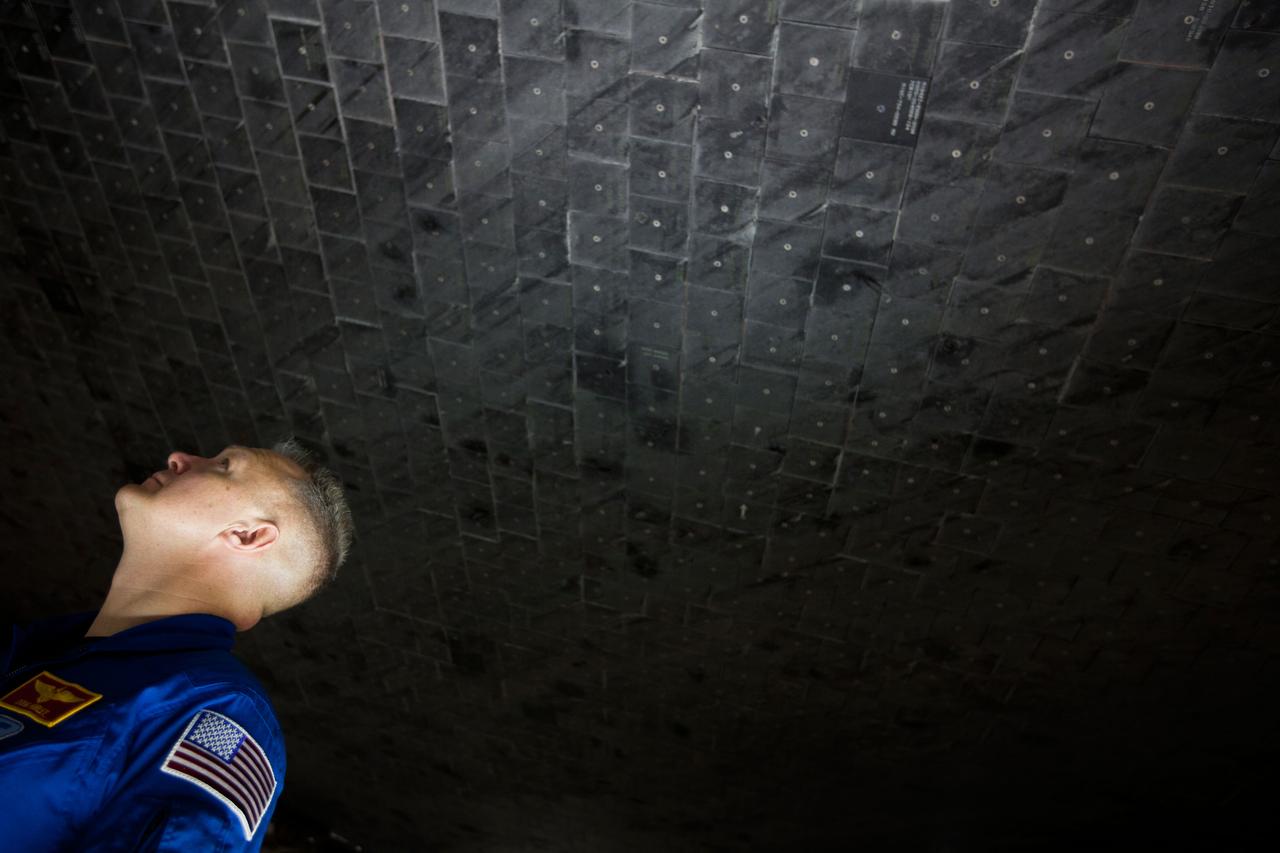
JSC2011-E-040343 (7 April 2011) --- NASA astronaut Doug Hurley, STS-135 pilot, looks at the thermal protection system on the underside of the space shuttle Atlantis during the mission's Crew Equipment Interface Test (CEIT) at the Kennedy Space Center in Florida on April 7, 2011. Photo credit: NASA Photo/Houston Chronicle, Smiley N. Pool
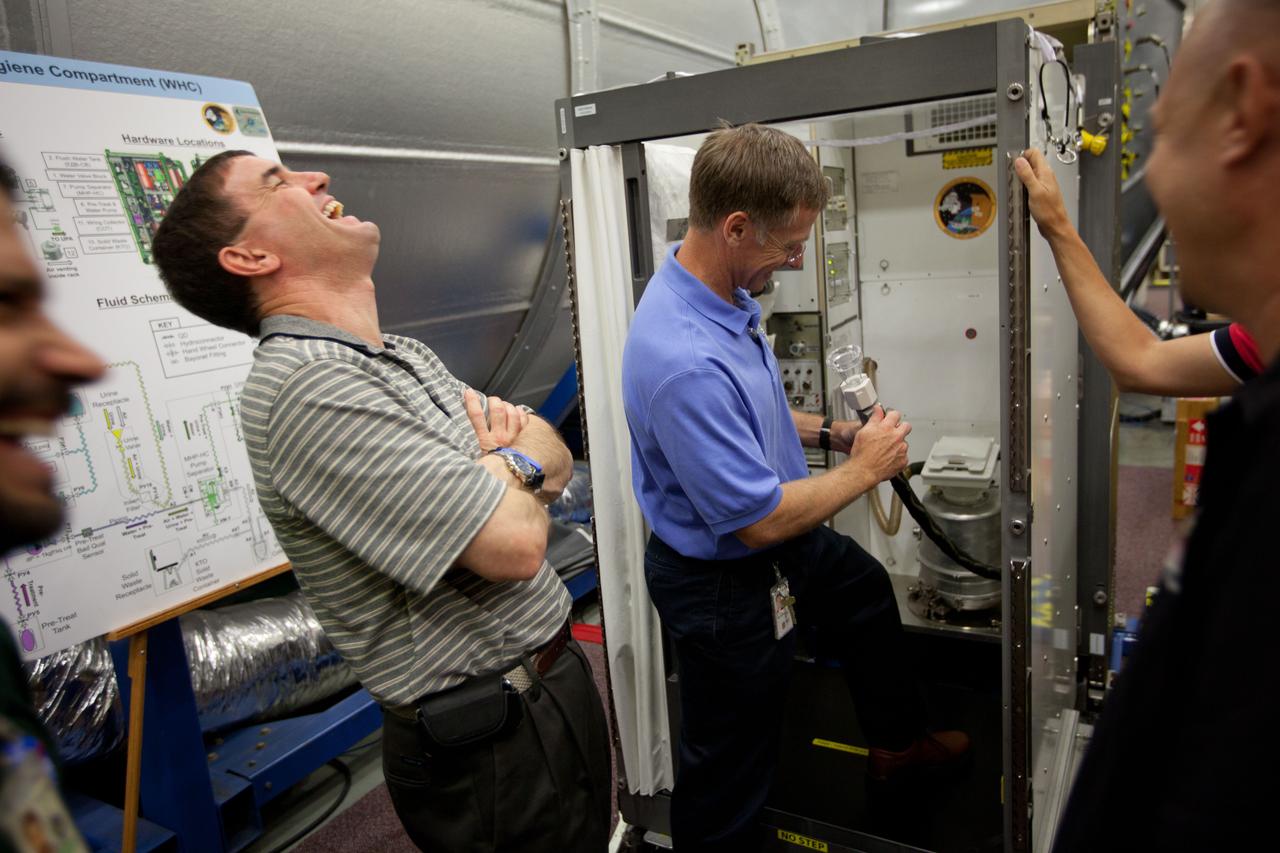
JSC2011-E-060140 (29 June 2011) --- NASA astronaut Rex Walheim laughs with his crewmates as STS-135 commander Chris Ferguson gets a refresher on the use of the waste management system on the International Space Station as the crew trains at NASA?s Johnson Space Center June 29, 2011. The day's training marked the crew's final scheduled sessions in the Space Vehicle Mock-up Facility at JSC. Photo credit: NASA Photo/Houston Chronicle, Smiley N. Pool
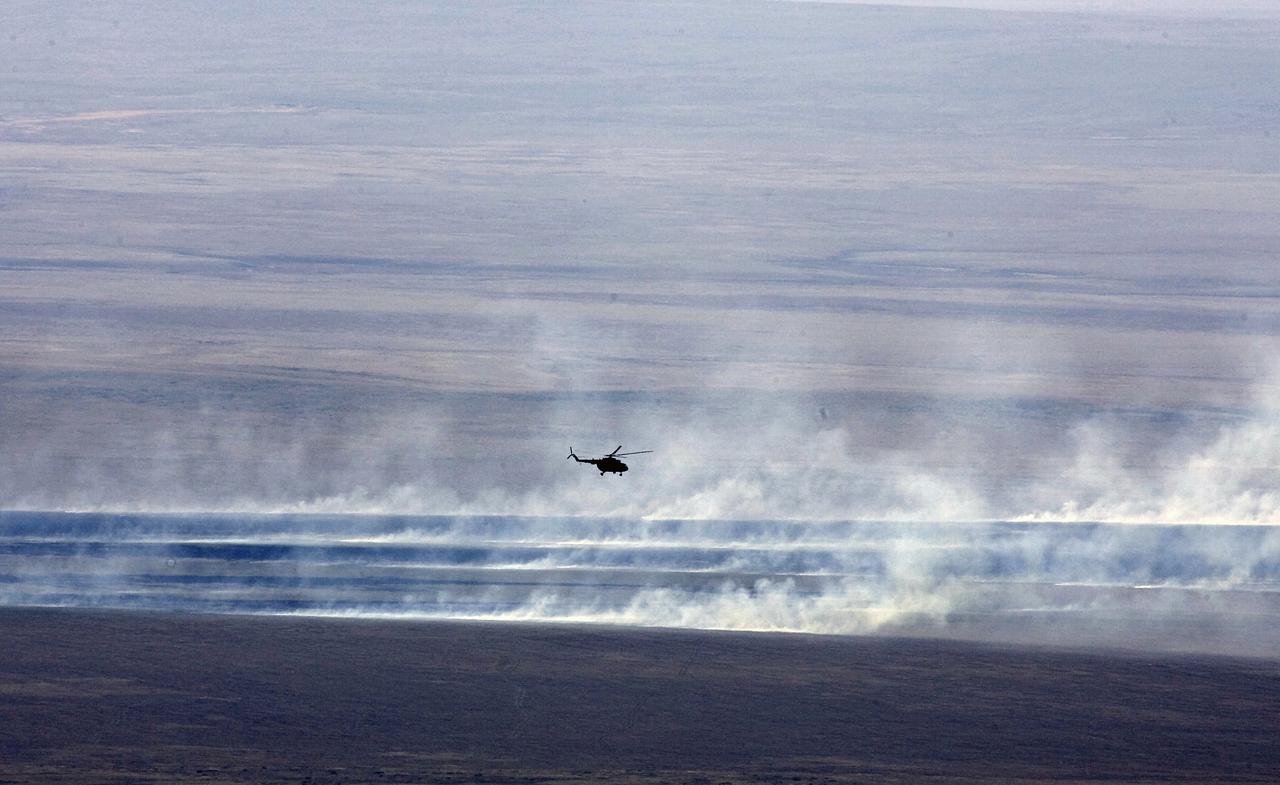
A Russian search and rescue helicopter flies over the burning Kazakh steppe after Expedition 16 Commander Peggy Whitson, Flight Engineer and Soyuz Commander Yuri Malenchenko and South Korean spaceflight participant So-yeon Yi landed their Soyuz TMA-11 spacecraft, Friday, April 19, 2008, in central Kazakhstan to complete 192 days in space for Whitson and Malenchenko and 11 days in orbit for Yi. Photo Credit: (NASA/Reuters/Pool)
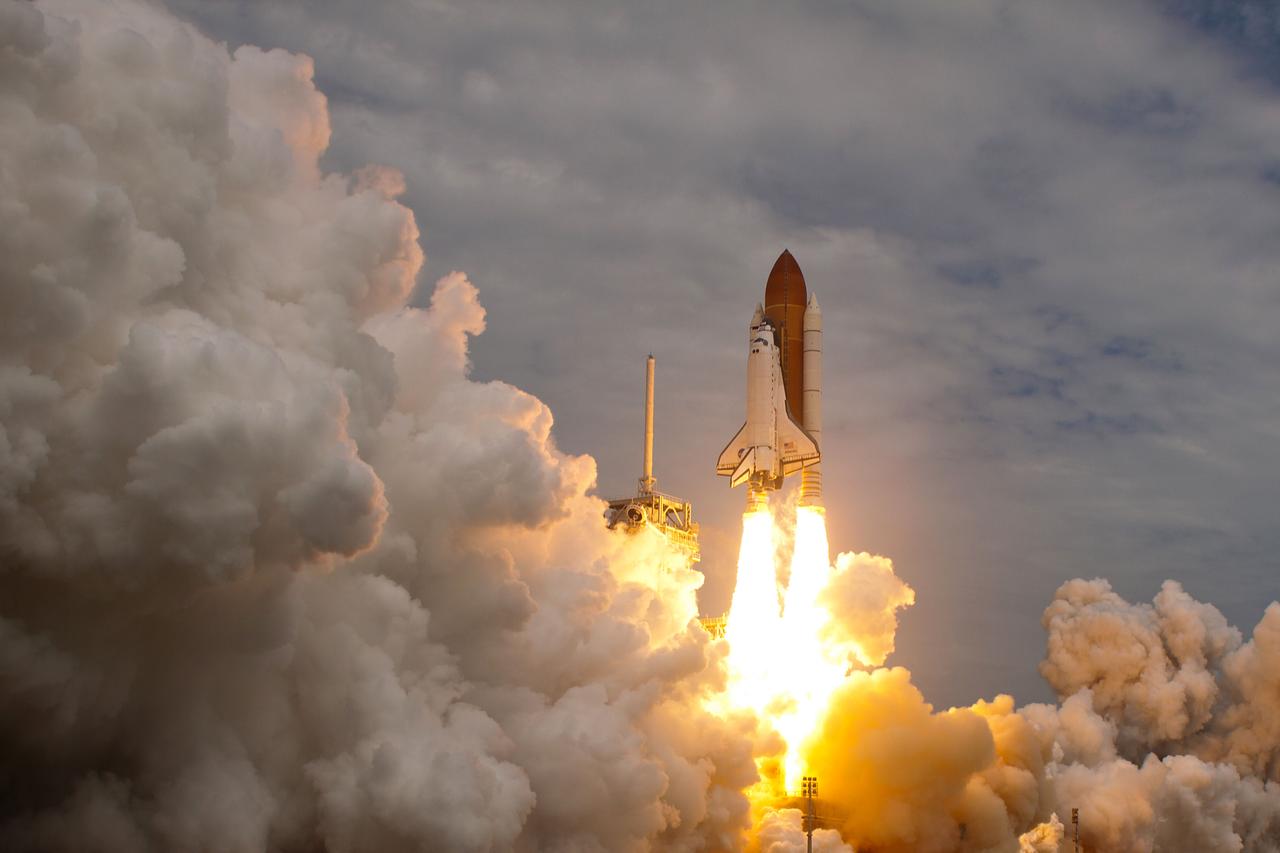
JSC2011-E-067641 (8 July 2011) --- The space shuttle Atlantis launches for the STS-135 mission to the International Space Station in the final mission of the Space Shuttle Program at NASA?s Kennedy Space Center in Florida. Liftoff was at 11:29 a.m. (EDT) on July 8, 2011. Onboard are NASA astronauts Chris Ferguson, STS-135 commander; Doug Hurley, pilot; Sandy Magnus and Rex Walheim, both mission specialists. Photo credit: NASA Photo/Houston Chronicle, Smiley N. Pool
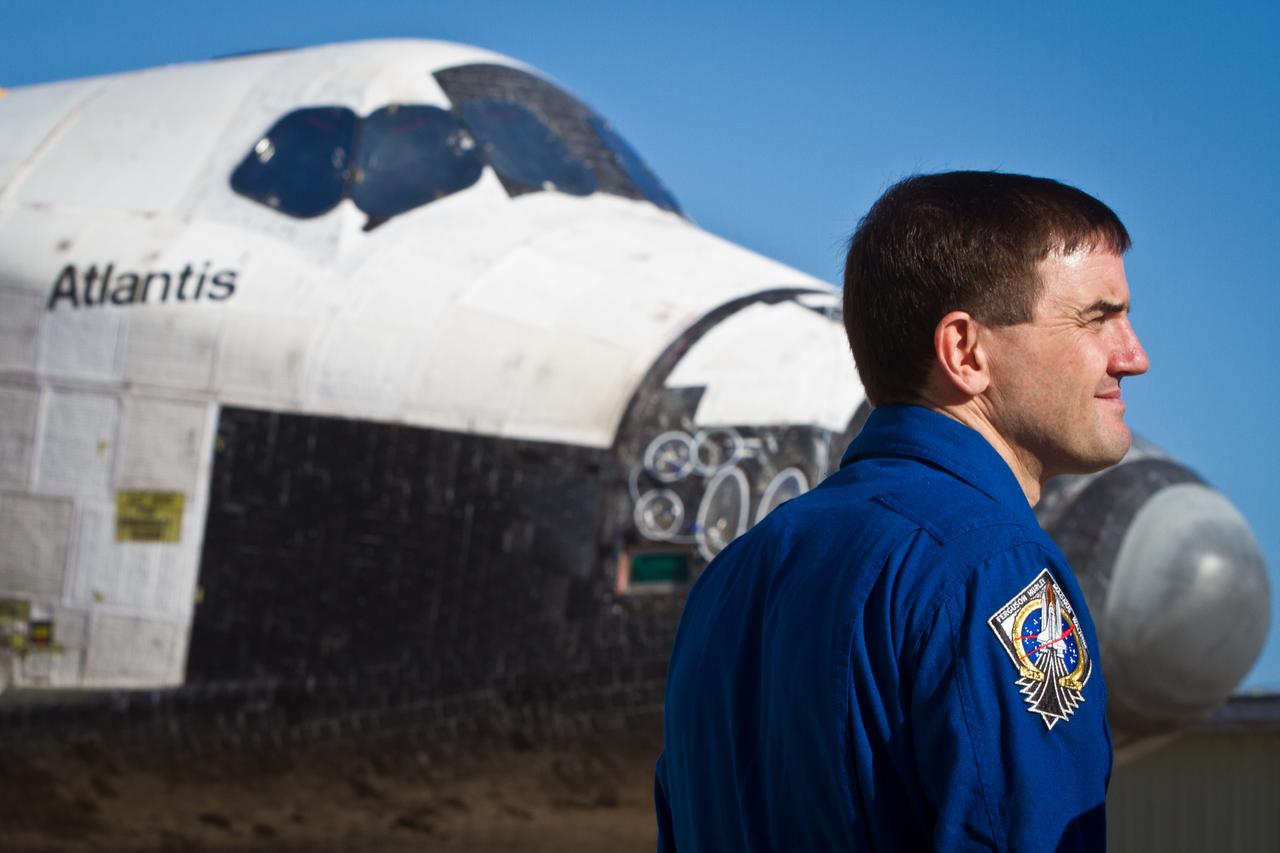
JSC2011-E-059411 (17 May 2011) --- NASA astronaut Rex Walheim, STS-135 mission specialist, watches as the space shuttle Atlantis is moved May 17, 2011. The move, known as rollover, is a milestone in the preparation for launch as the orbiter leaves its processing hangar to be prepped for its final flight. Photo credit: NASA Photo/Houston Chronicle, Smiley N. Pool
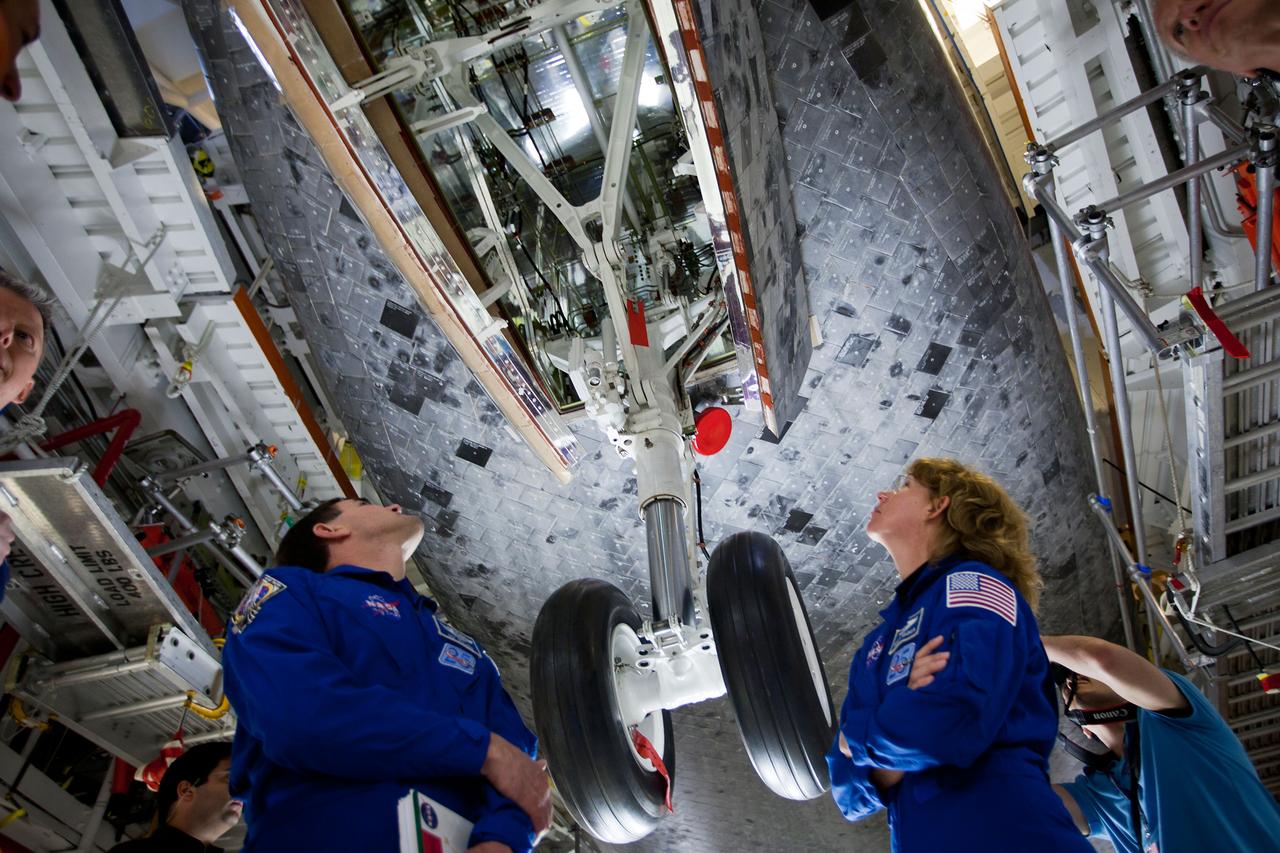
JSC2011-E-040345 (7 April 2011) --- NASA astronauts Rex Walheim and Sandy Magnus, STS-135 mission specialists, inspect the front landing gear of the space shuttle Atlantis during the STS-135 Crew Equipment Interface Test (CEIT) at NASA?s Kennedy Space Center, Florida on April 7, 2011. Photo credit: NASA Photo/Houston Chronicle, Smiley N. Pool

JSC2011-E-040323 (29 March 2011) --- NASA astronaut Sandy Magnus, STS-135 mission specialist, looks at a snow-covered neighborhood out the window of a van carrying her back to Star City following a fit check of her Sokol spacesuit at the Zvezda facility in Moscow March 29, 2011. The crew of the final shuttle mission traveled to Moscow for a suit fit check of their Russian spacesuits which would be required in the event of an emergency. Photo credit: NASA Photo/Houston Chronicle, Smiley N. Pool
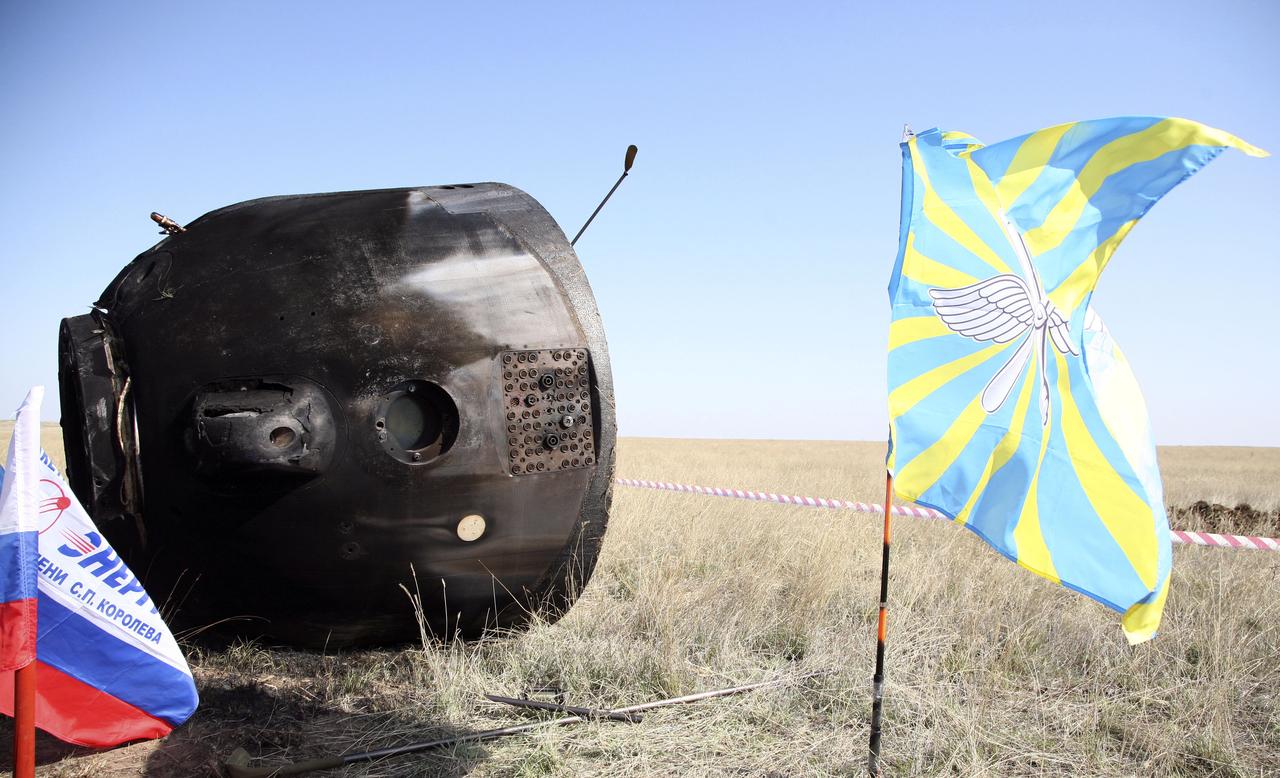
The Soyuz TMA-11 capsule lays on its side on the Kazakh steppe, Friday, April 19, 2008. Expedition 16 Commander Peggy Whitson, Flight Engineer and Soyuz Commander Yuri Malenchenko and South Korean spaceflight participant So-yeon Yi landed their Soyuz TMA-11 spacecraft in central Kazakhstan to complete 192 days in space for Whitson and Malenchenko and 11 days in orbit for Yi. Photo Credit: (NASA/Reuters/Pool)