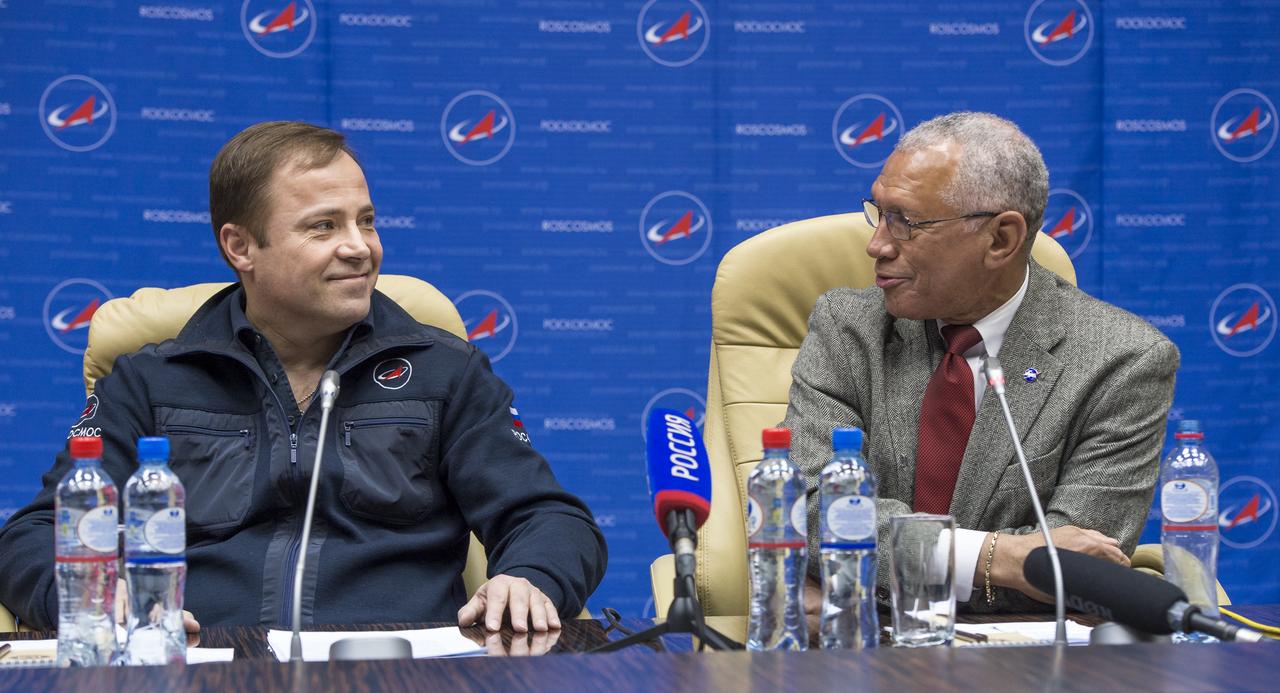
Head of Russian Federal Space Agency (Roscosmos) Igor Komarov, left, and NASA Administrator Charles Bolden are seen during an Expedition 43 post launch briefing, Saturday, March 28, 2015 at the Baikonur Hotel in Baikonur, Kazakhstan. Earlier in the morning the Soyuz TMA-16M launched to the International Space Station with Expedition 43 NASA Astronaut Scott Kelly, Russian Cosmonauts Mikhail Kornienko, and Gennady Padalka of the Russian Federal Space Agency (Roscosmos) onboard from the Baikonur Cosmodrome in Kazakhstan. As the one-year crew, Kelly and Kornienko will return to Earth on Soyuz TMA-18M in March 2016. Photo Credit (NASA/Bill Ingalls)
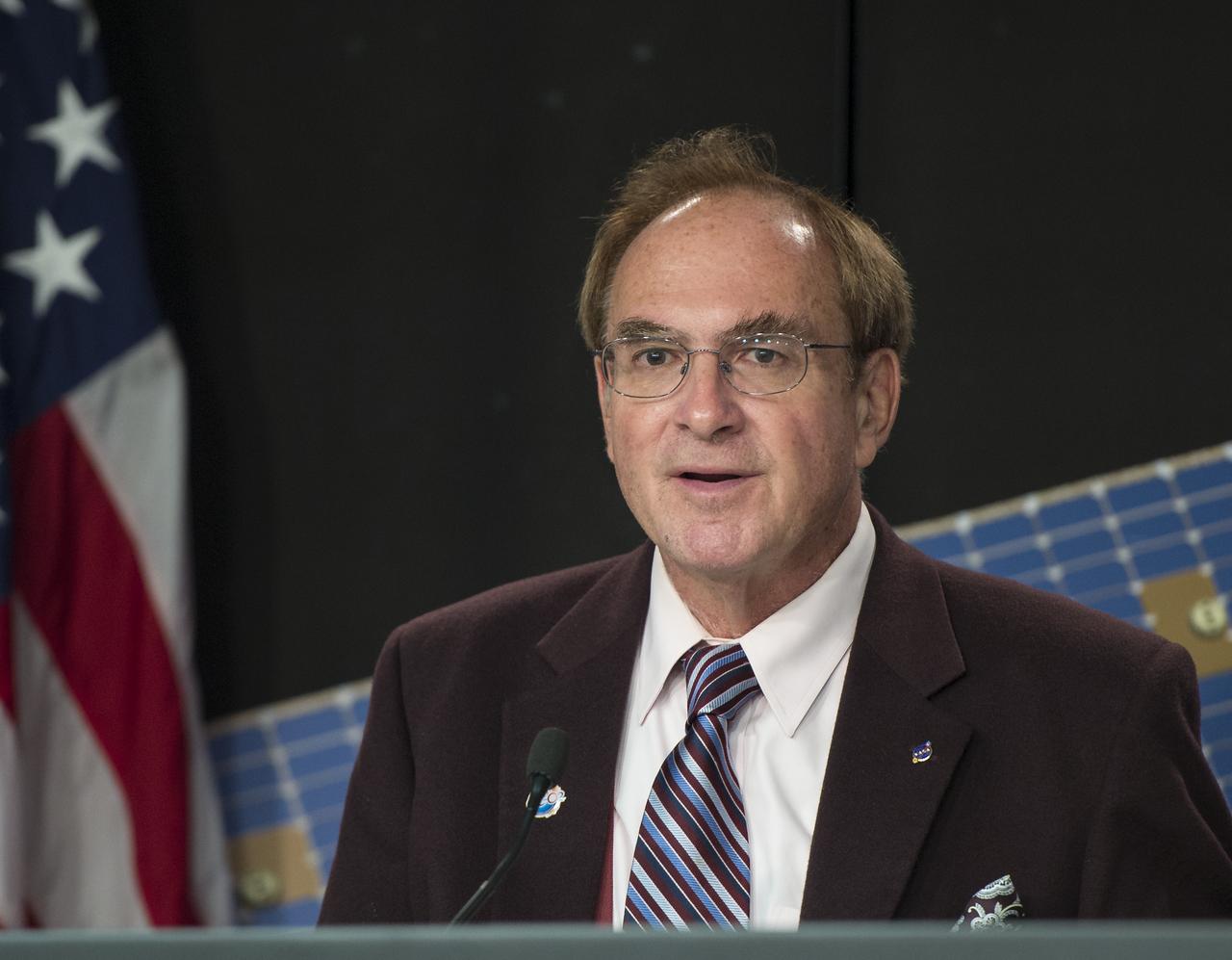
NASA Kennedy Space Center Public Affairs Officer George Diller, moderates a post-launch press briefing, following the successful launch of the Orbiting Carbon Observatory-2 (OCO-2), NASA’s first spacecraft dedicated to studying carbon dioxide, Wednesday, July 2, 2014, at the Vandenberg Air Force Base, Calif. OCO-2 will measure the global distribution of carbon dioxide, the leading human-produced greenhouse gas driving changes in Earth’s climate. Photo Credit: (NASA/Bill Ingalls)
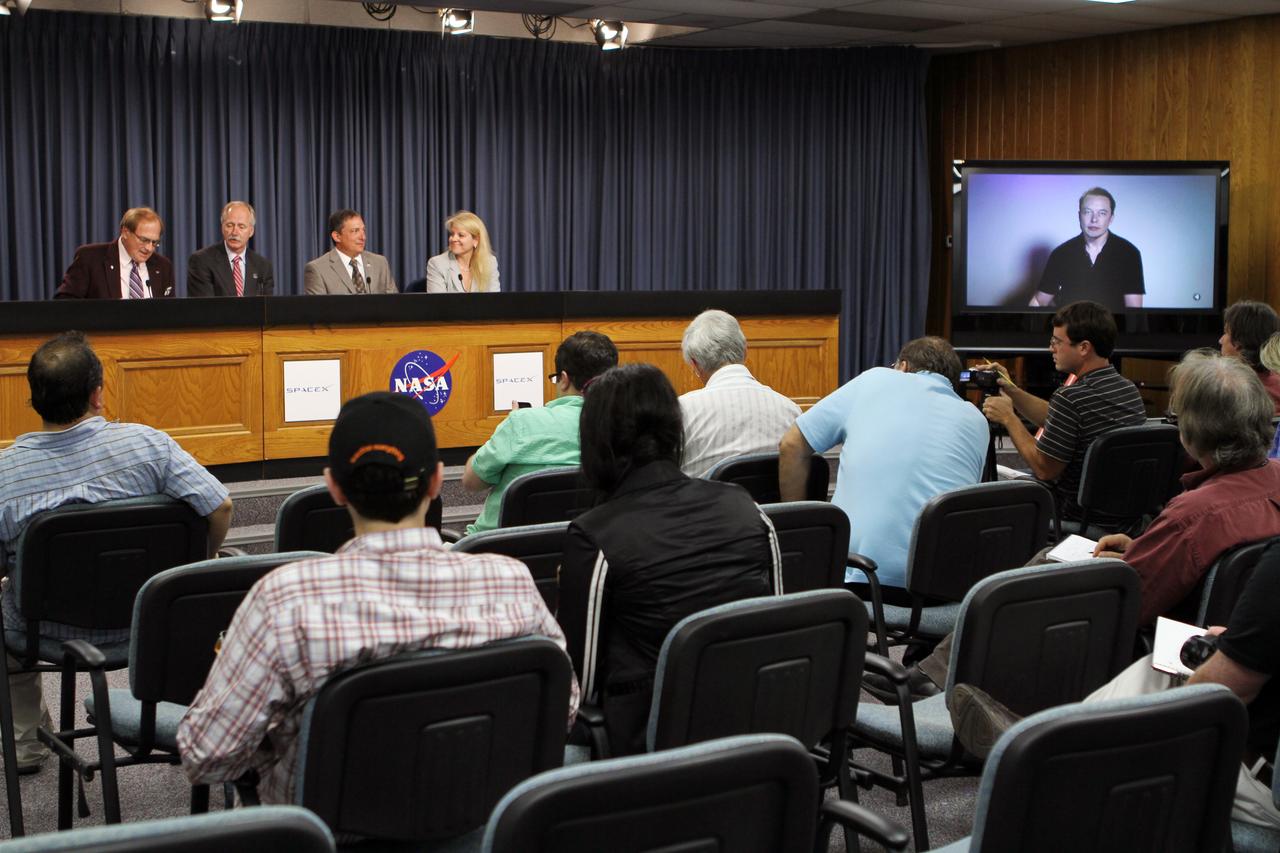
SpaceX Falcon 9/COTS 2 Post Launch Media Briefing
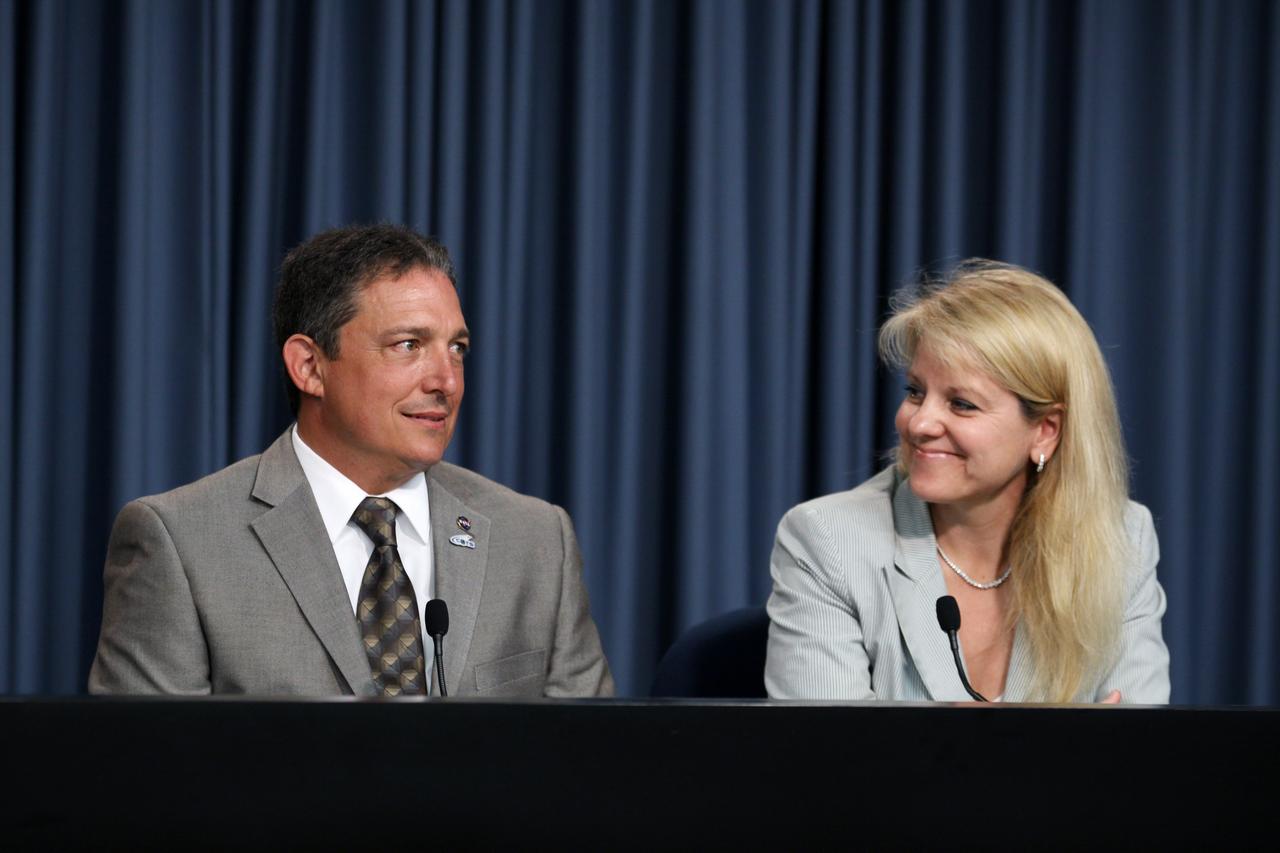
SpaceX Falcon 9/COTS 2 Post Launch Media Briefing
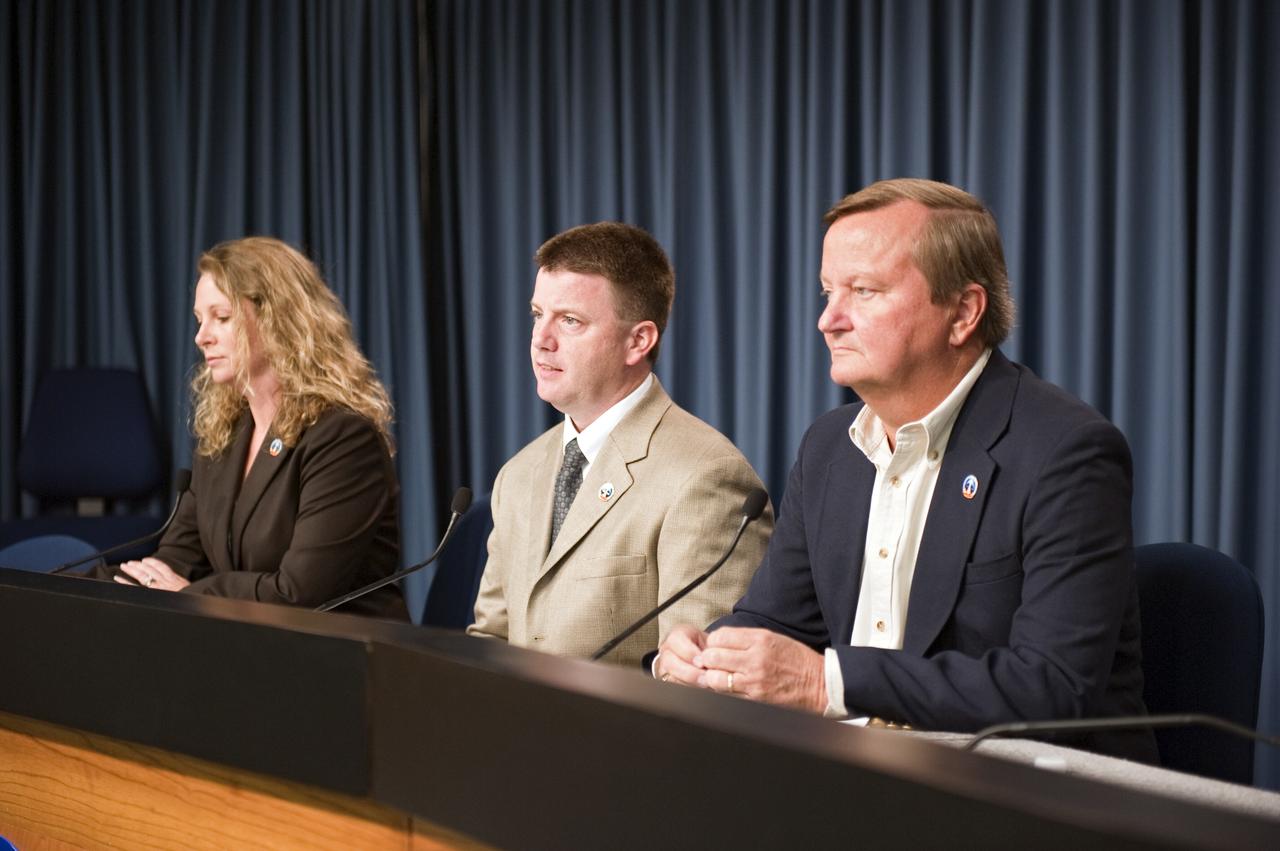
STS-133 LAUNCH L-1 POST MMT STATUS BRIEFING
STS-133 LAUNCH L-1 POST MMT STATUS BRIEFING
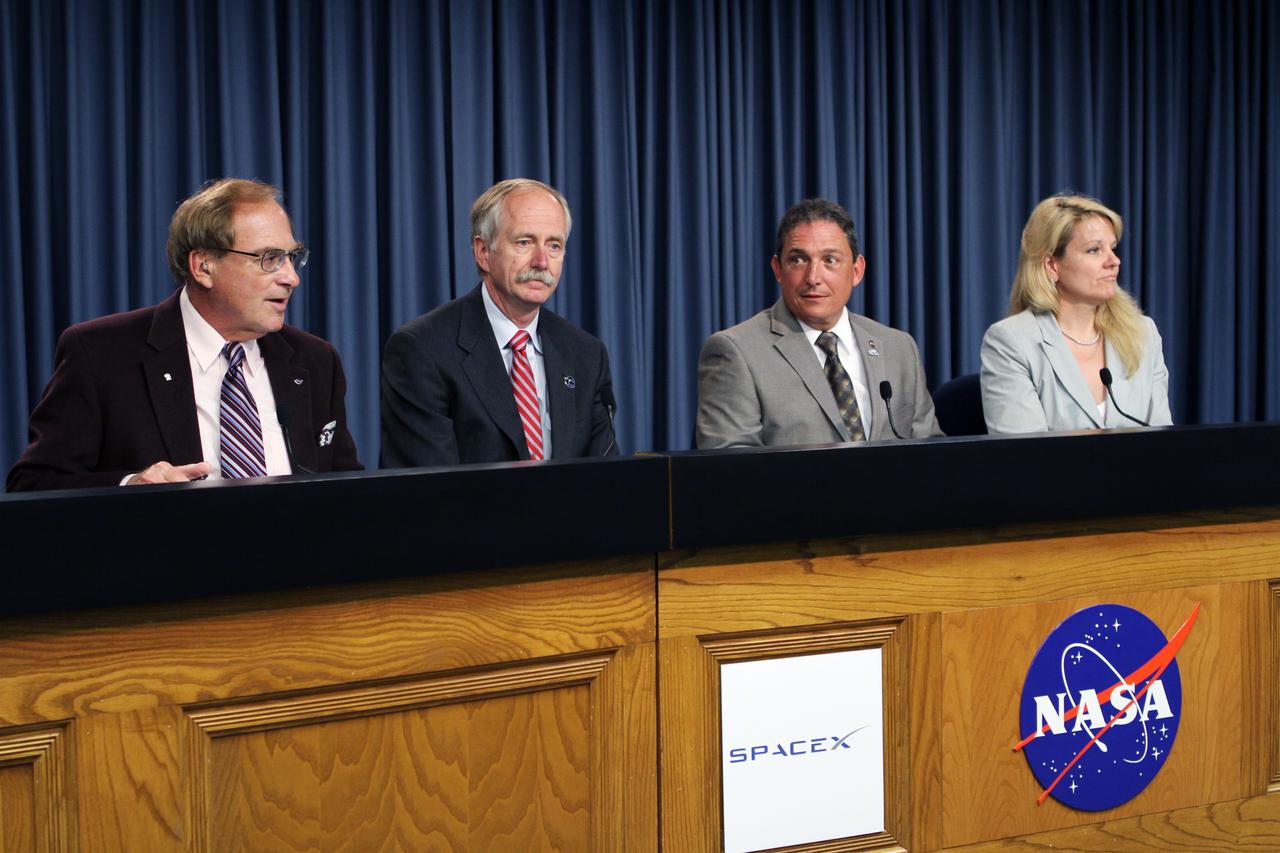
SpaceX Falcon 9/COTS 2 Post Launch Media Briefing
STS-133 LAUNCH L-1 POST MMT STATUS BRIEFING
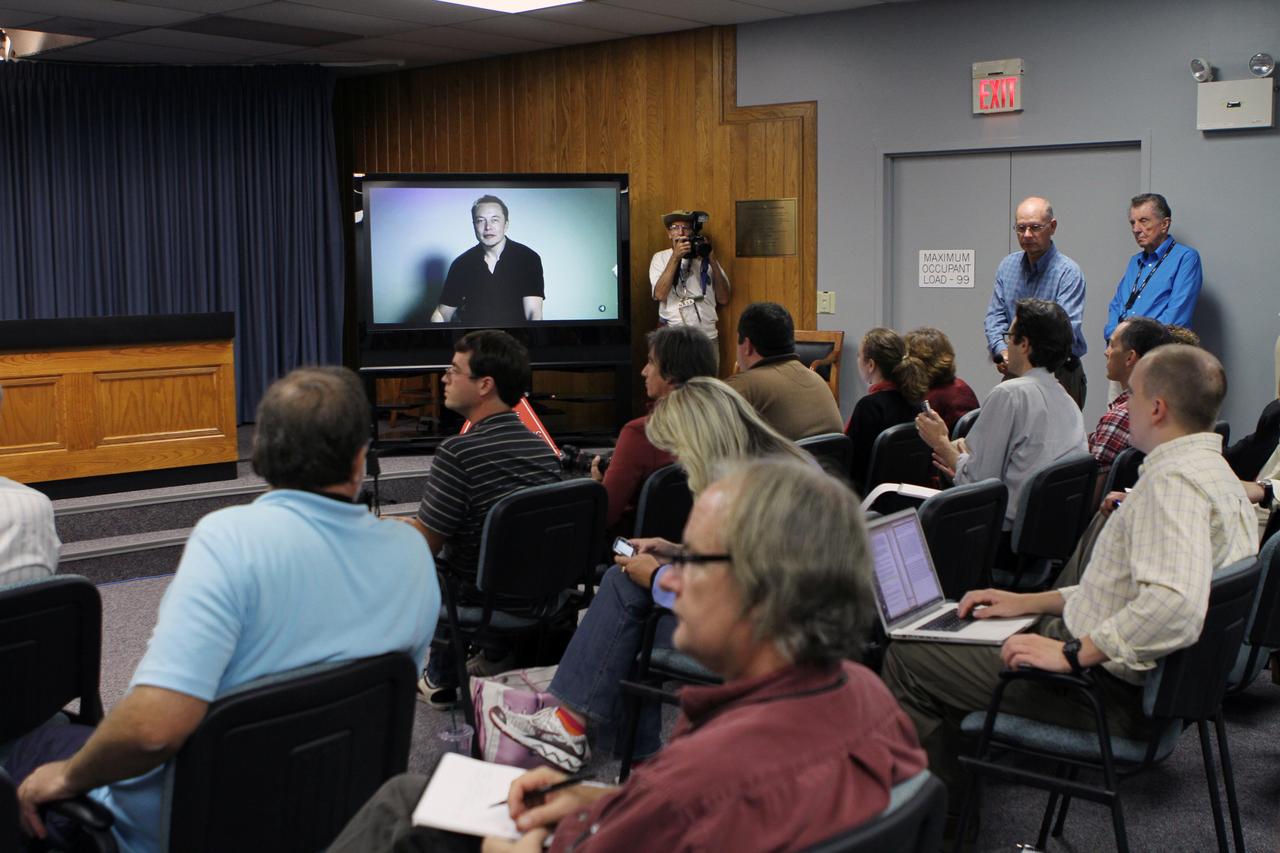
SpaceX Falcon 9/COTS 2 Post Launch Media Briefing
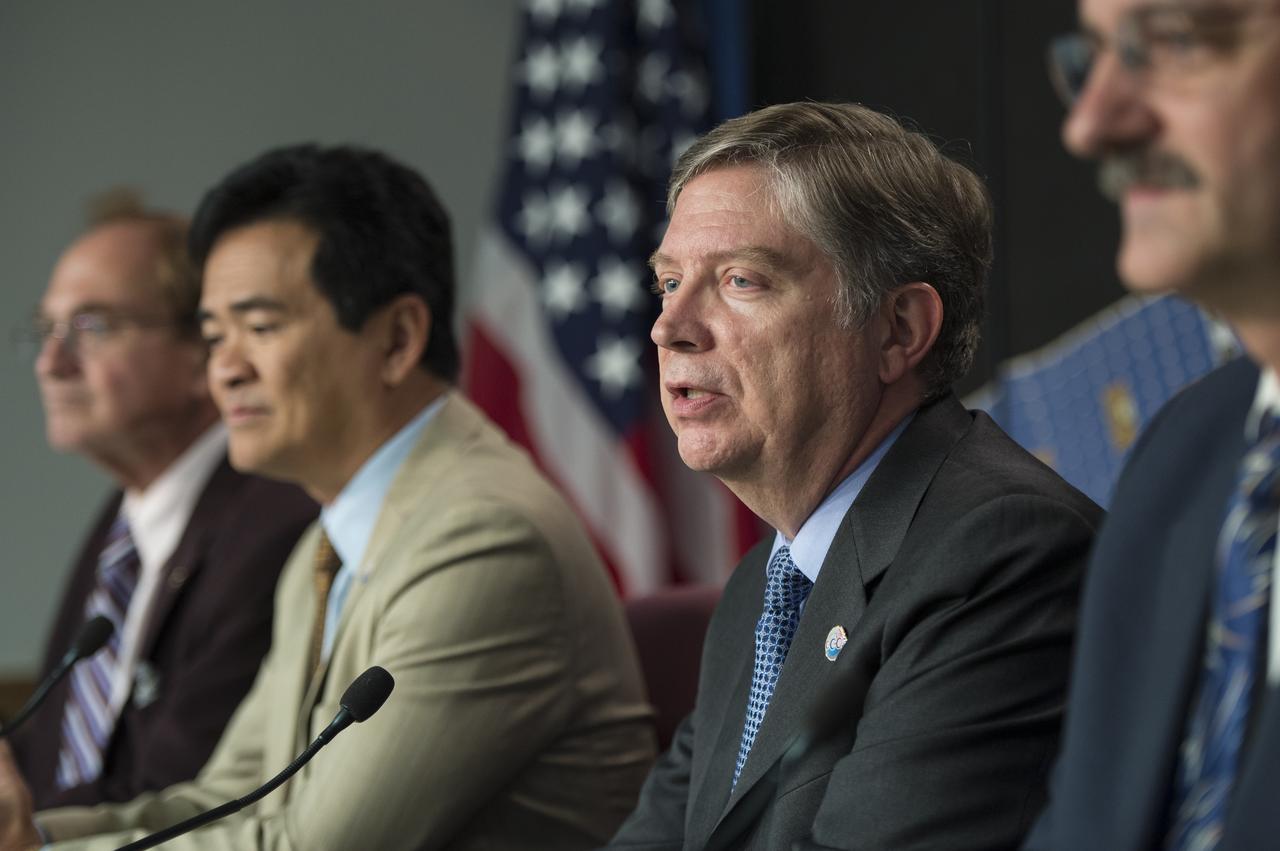
Mike Miller, senior vice president, Science and Environmental Satellite Programs, Orbital Sciences Space Systems Group, discusses the successful launch of the Orbiting Carbon Observatory-2 (OCO-2), NASA’s first spacecraft dedicated to studying carbon dioxide, during a press briefing, Wednesday, July 2, 2014, at the Vandenberg Air Force Base, Calif. OCO-2 will measure the global distribution of carbon dioxide, the leading human-produced greenhouse gas driving changes in Earth’s climate. Photo Credit: (NASA/Bill Ingalls)
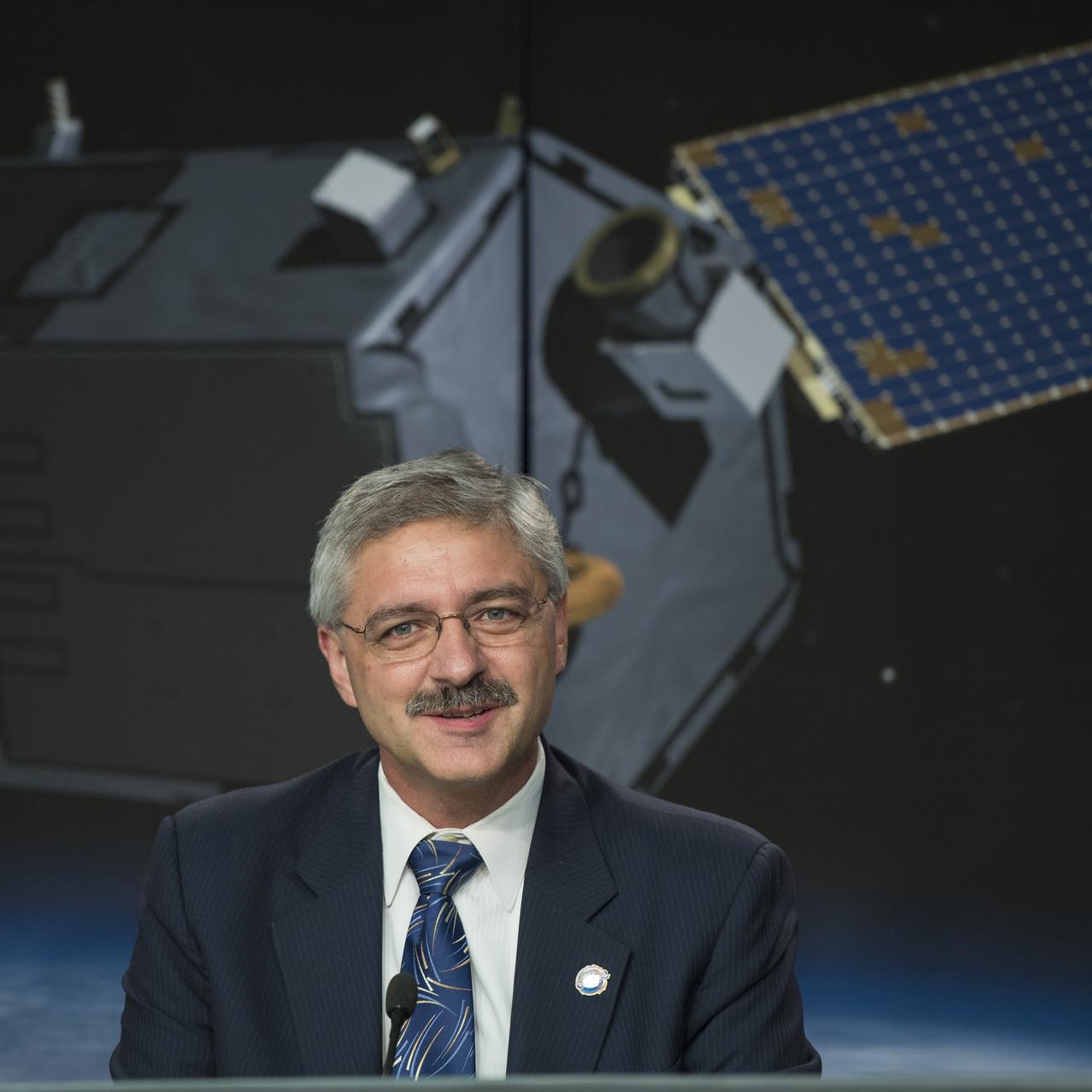
Geoff Yoder, deputy associate administrator for programs, Science Mission Directorate, NASA Headquarters, discusses the successful launch of the Orbiting Carbon Observatory-2 (OCO-2), NASA’s first spacecraft dedicated to studying carbon dioxide, during a press briefing, Wednesday, July 2, 2014, at the Vandenberg Air Force Base, Calif. OCO-2 will measure the global distribution of carbon dioxide, the leading human-produced greenhouse gas driving changes in Earth’s climate. Photo Credit: (NASA/Bill Ingalls)
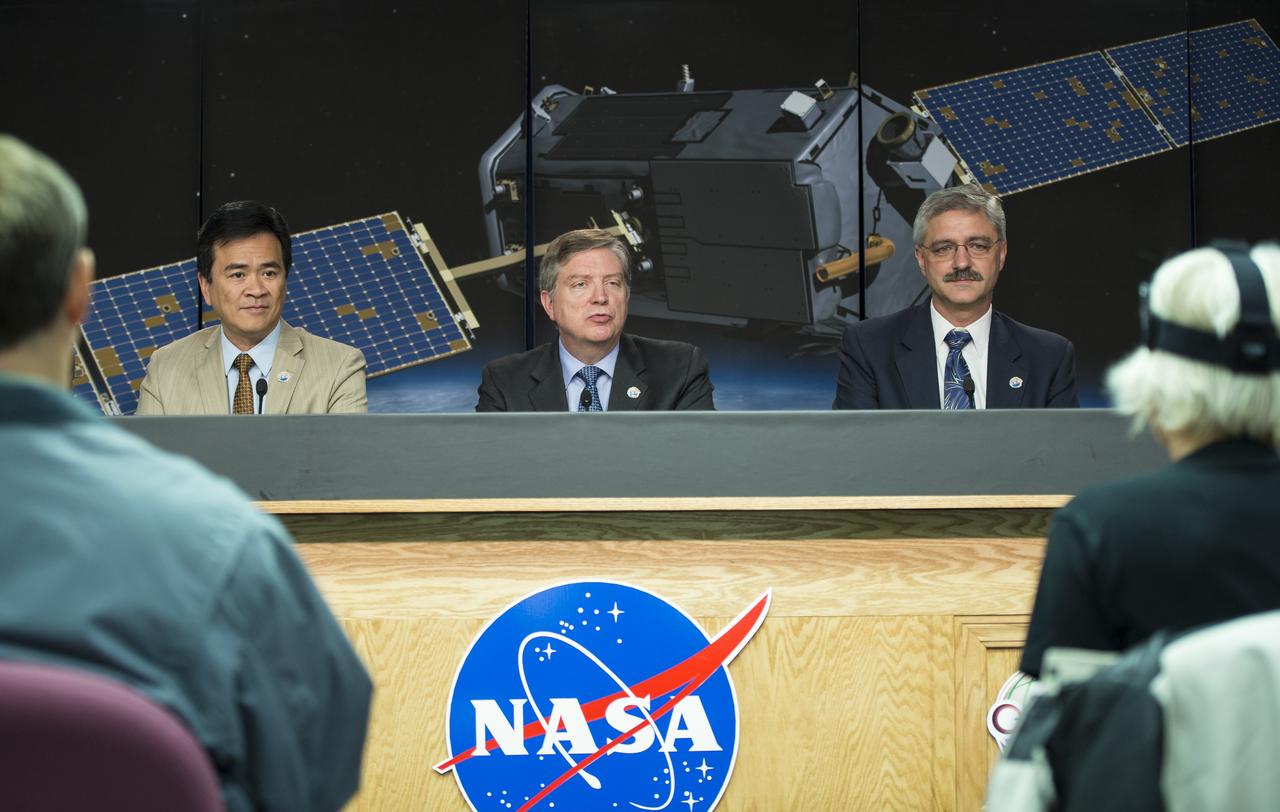
Ralph Basilio, OCO-2 project manager, Jet Propulsion Laboratory, left, Mike Miller, senior vice president, Science and Environmental Satellite Programs, Orbital Sciences Space Systems Group,and Geoff Yoder, deputy associate administrator for programs, Science Mission Directorate, NASA Headquarters, right, discuss the successful launch of the Orbiting Carbon Observatory-2 (OCO-2), NASA’s first spacecraft dedicated to studying carbon dioxide, during a press briefing, Wednesday, July 2, 2014, at the Vandenberg Air Force Base, Calif. OCO-2 will measure the global distribution of carbon dioxide, the leading human-produced greenhouse gas driving changes in Earth’s climate. Photo Credit: (NASA/Bill Ingalls)
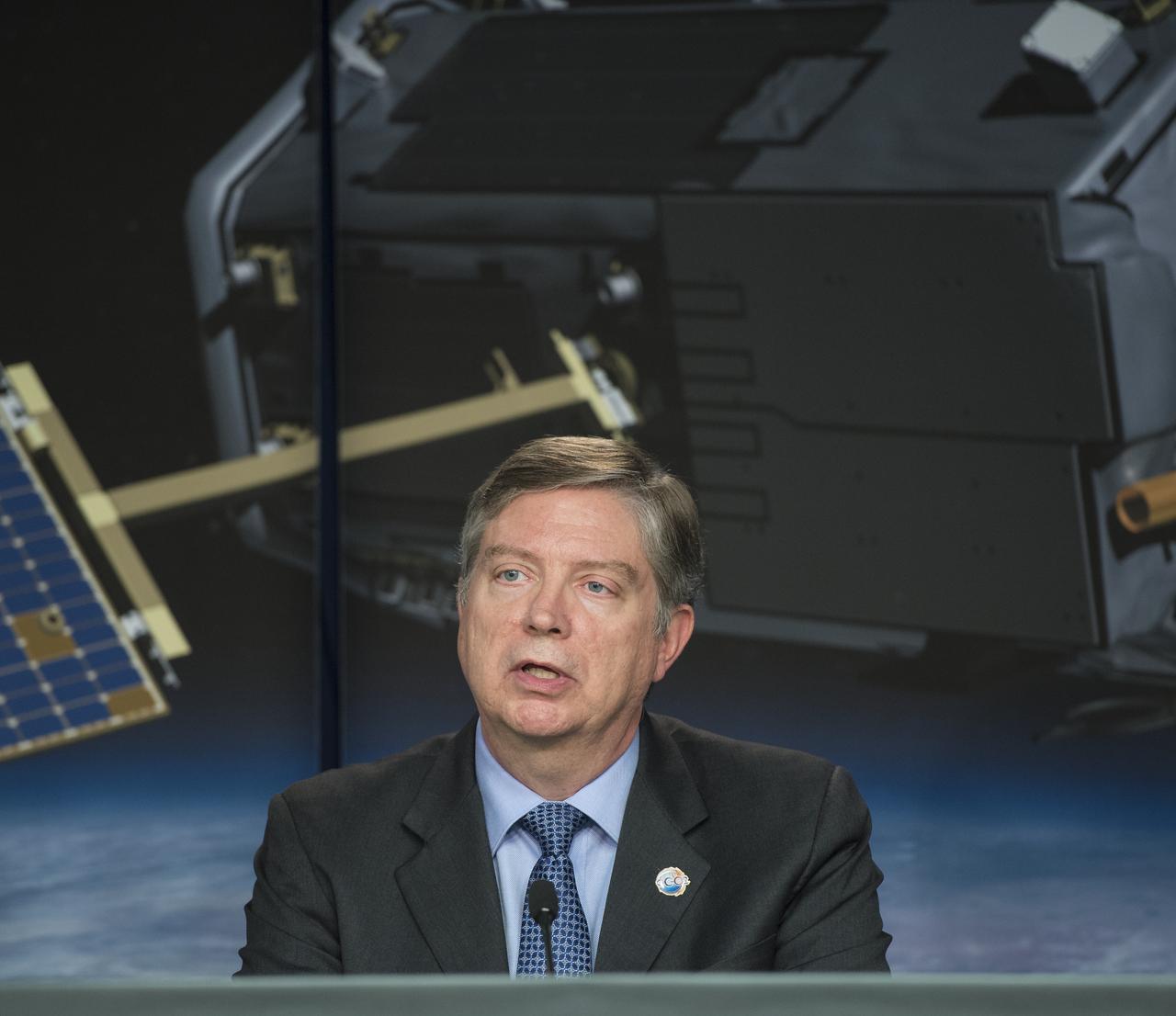
Mike Miller, senior vice president, Science and Environmental Satellite Programs, Orbital Sciences Space Systems Group, discusses the successful launch of the Orbiting Carbon Observatory-2 (OCO-2), NASA’s first spacecraft dedicated to studying carbon dioxide, during a press briefing, Wednesday, July 2, 2014, at the Vandenberg Air Force Base, Calif. OCO-2 will measure the global distribution of carbon dioxide, the leading human-produced greenhouse gas driving changes in Earth’s climate. Photo Credit: (NASA/Bill Ingalls)
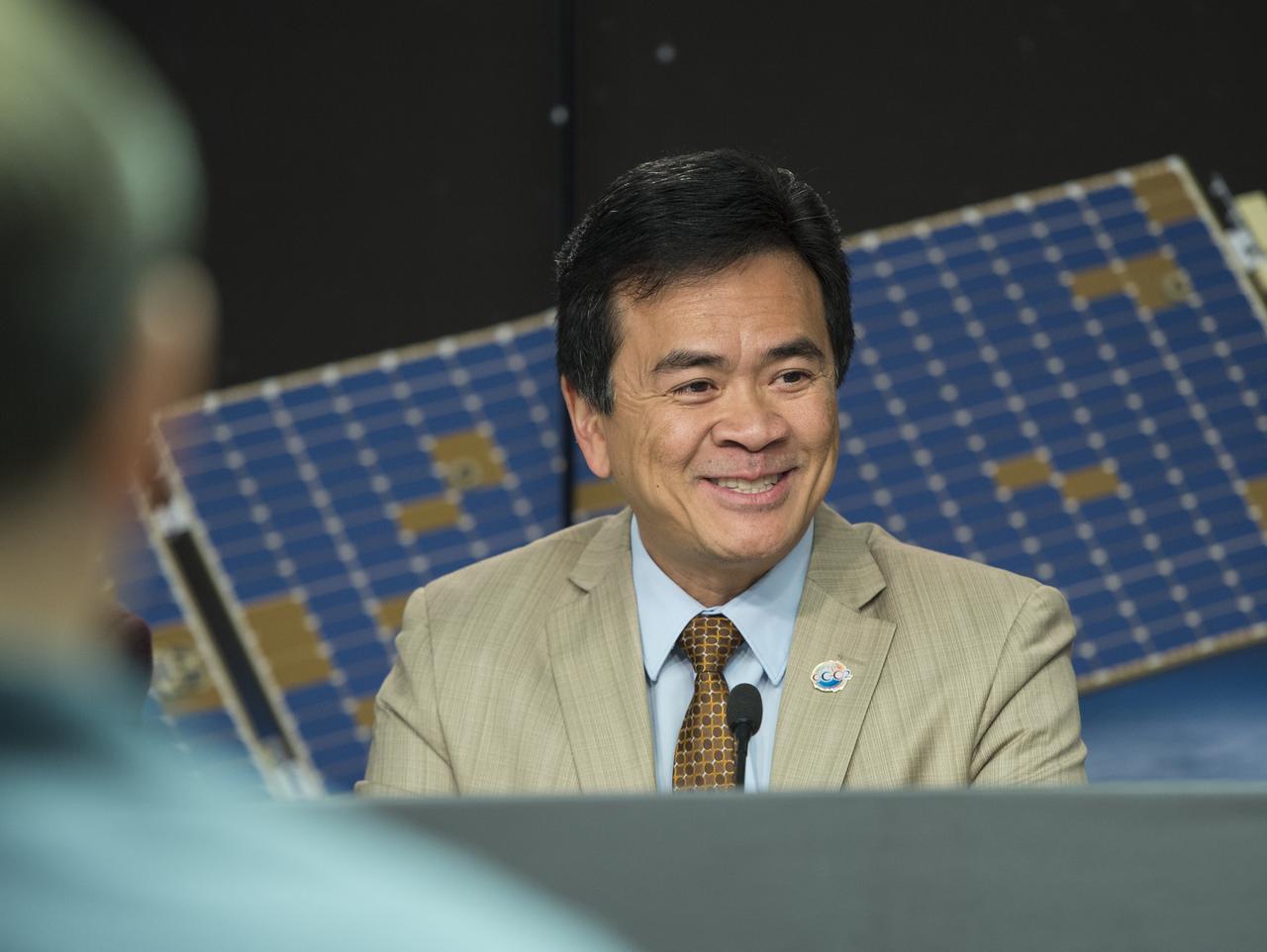
Ralph Basilio, OCO-2 project manager, Jet Propulsion Laboratory, discusses the successful launch of the Orbiting Carbon Observatory-2 (OCO-2), NASA’s first spacecraft dedicated to studying carbon dioxide, during a press briefing, Wednesday, July 2, 2014, at the Vandenberg Air Force Base, Calif. OCO-2 will measure the global distribution of carbon dioxide, the leading human-produced greenhouse gas driving changes in Earth’s climate. Photo Credit: (NASA/Bill Ingalls)
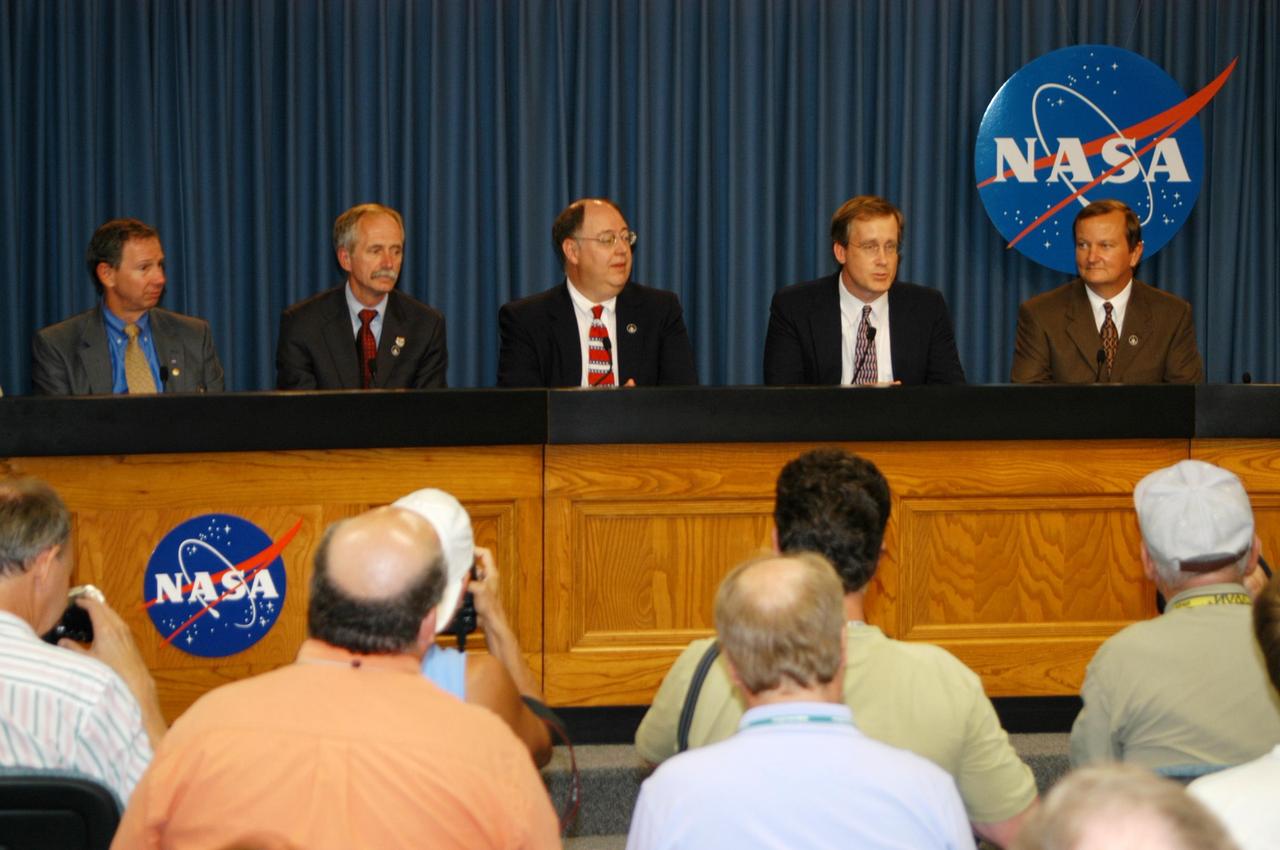
KENNEDY SPACE CENTER, FLA. - At a post-launch briefing, Shuttle Program Manager Wayne Hale, center, briefs the media about the successful launch of Space Shuttle Discovery on mission STS-121. Seated with him are, left to right, NASA Administrator Mike Griffin, NASA Associate Administrator for Space Operations Mission Bill Gerstenmaier, Chief of the Mission Management Team John Shannon, and Shuttle Launch Director Mike Leinbach. Liftoff of Discovery was on time at 2:30 p.m. EDT.
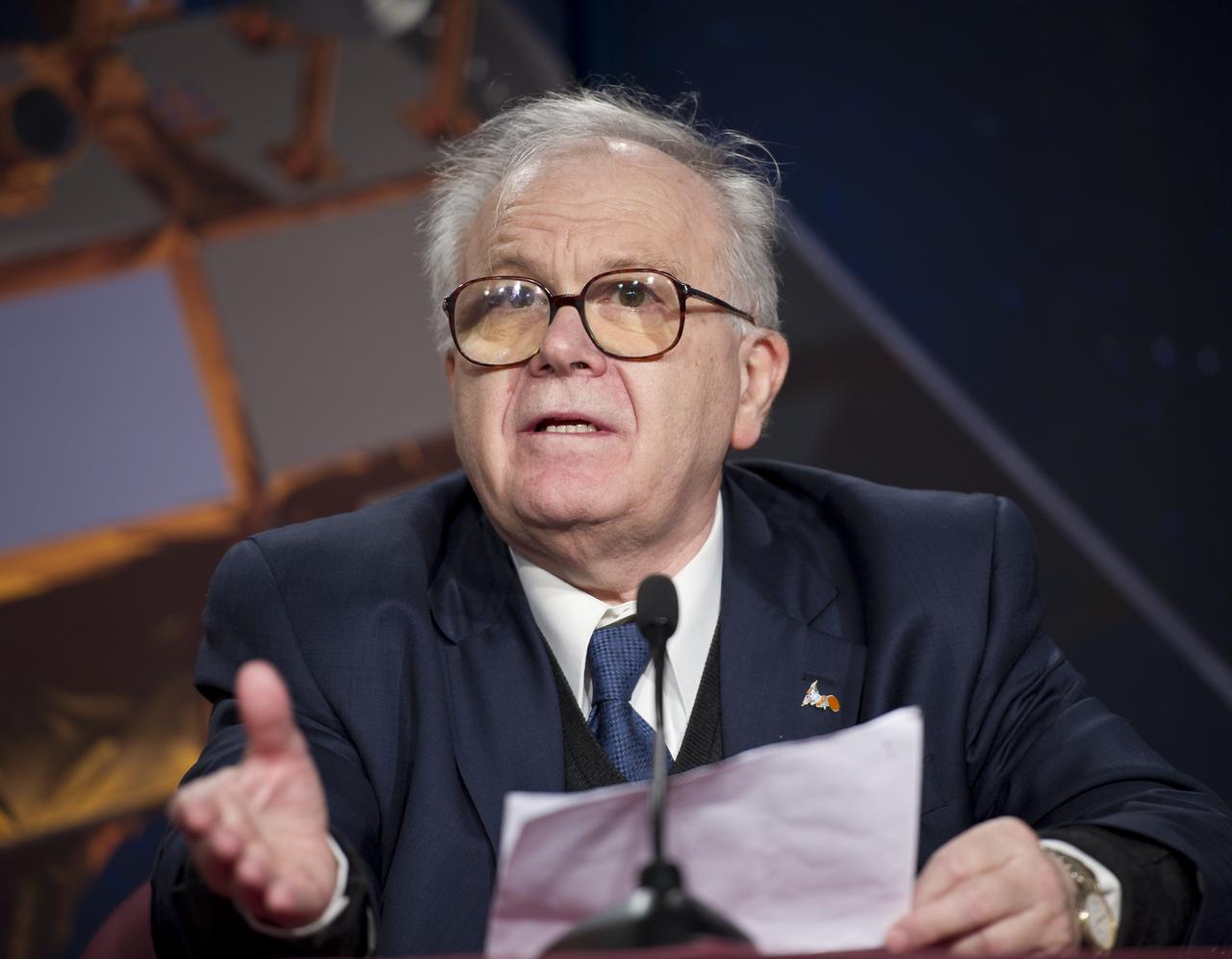
Conrado Varotto, CONAE Executive and Technical Director, Buenos Aires, talks during the Aquarius/SAC-D post-launch press conference on Friday, June 10, 2011 at the NASA Resident Office, Vandenberg Air Force Base, Calif. The joint U.S./Argentinian Aquarius/Satélite de Aplicaciones Científicas (SAC)-D mission, launched earlier on Friday June 10, will map the salinity at the ocean surface, information critical to improving our understanding of two major components of Earth's climate system: the water cycle and ocean circulation. Photo Credit: (NASA/Bill Ingalls)
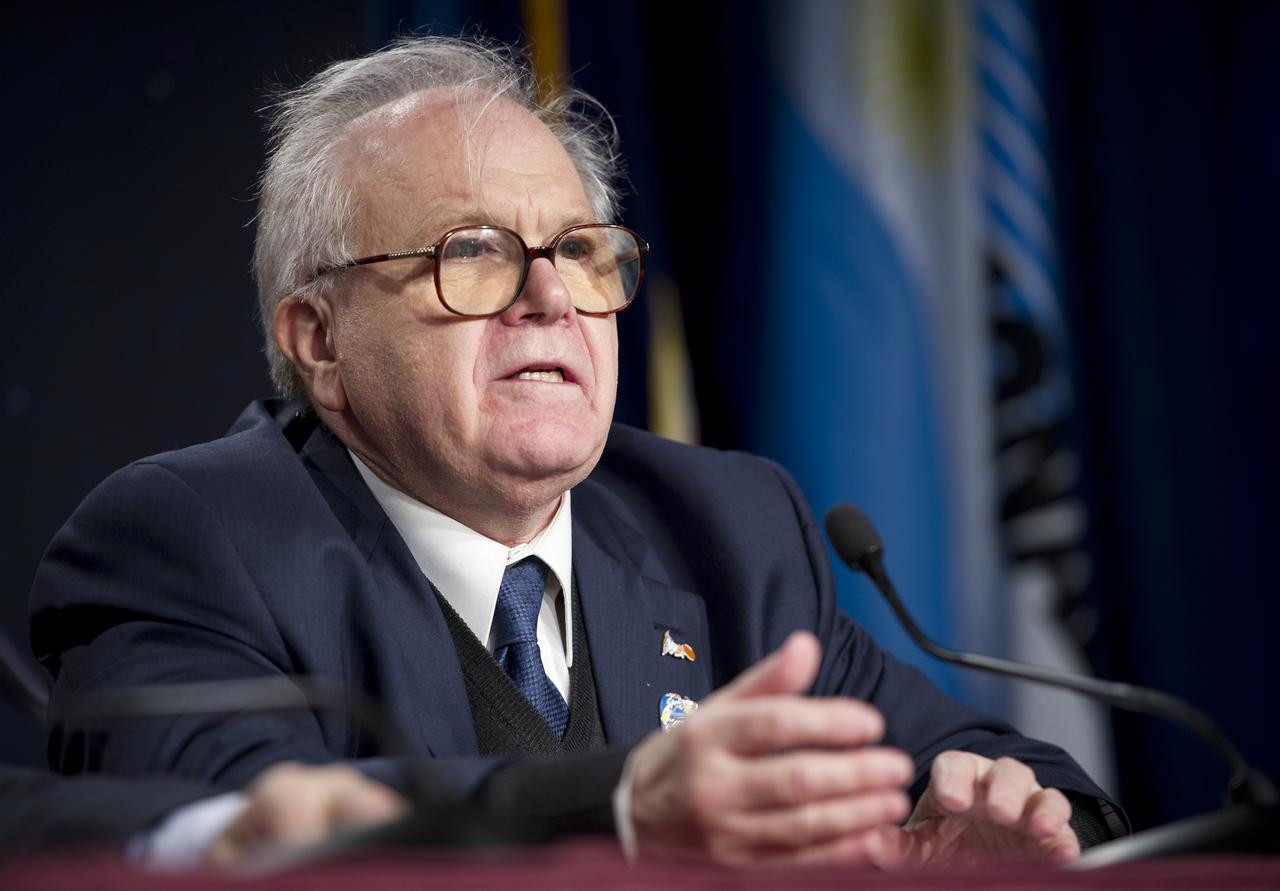
Conrado Varotto, CONAE Executive and Technical Director, Buenos Aires, talks during the Aquarius/SAC-D post-launch press conference on Friday, June 10, 2011 at the NASA Resident Office, Vandenberg Air Force Base, Calif. The joint U.S./Argentinian Aquarius/Satélite de Aplicaciones Científicas (SAC)-D mission, launched earlier on Friday June 10, will map the salinity at the ocean surface, information critical to improving our understanding of two major components of Earth's climate system: the water cycle and ocean circulation. Photo Credit: (NASA/Bill Ingalls)
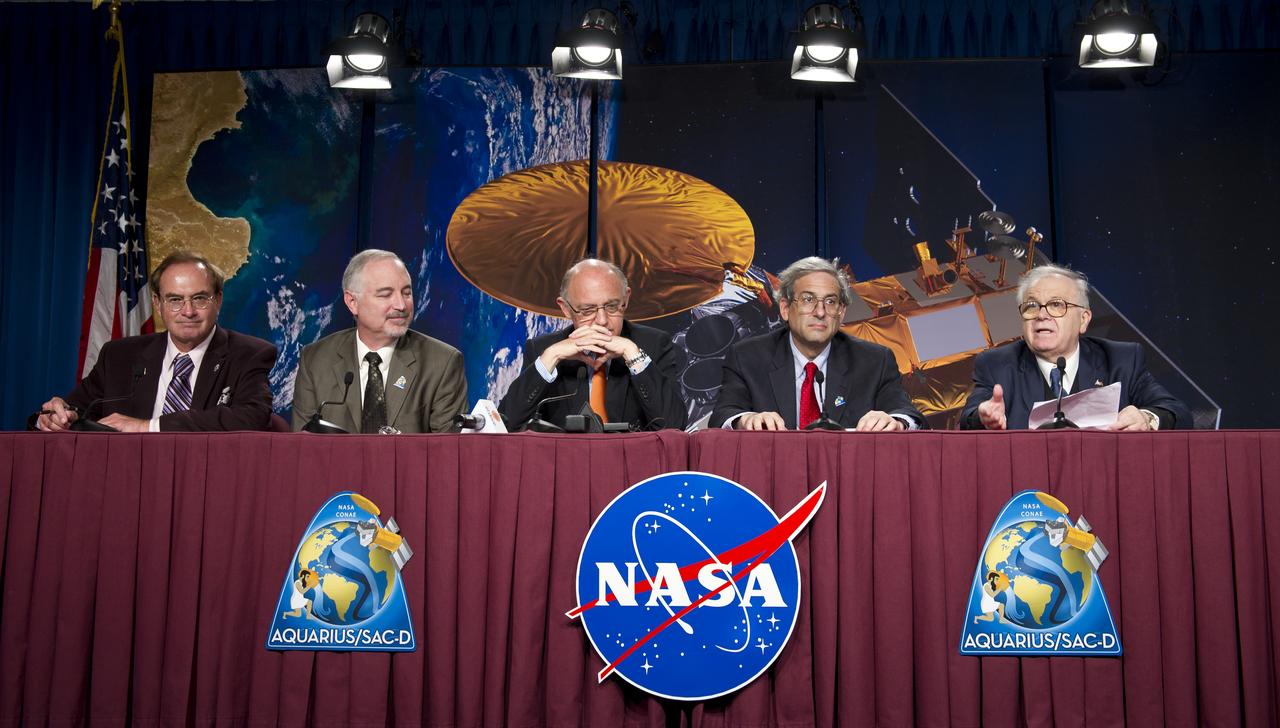
From left, George Diller, NASA Public Affairs Officer; Charles Gay, Deputy Associate Administrator, NASA Science Mission Directorate; Hector Timerman, Foreign Minister of Argentina, Buenos Aires; Michael Freilich, NASA Earth Science Division Director, NASA Headquarters; and Conrado Varotto, CONAE Executive and Technical Director, Buenos Aires, are seen at the Aquarius/SAC-D post-launch press conference on Friday, June 10, 2011 at the NASA Resident Office, Vandenberg Air Force Base, Calif. The joint U.S./Argentinian Aquarius/Satélite de Aplicaciones Científicas (SAC)-D mission, launched earlier on Friday June 10, will map the salinity at the ocean surface, information critical to improving our understanding of two major components of Earth's climate system: the water cycle and ocean circulation. Photo Credit: (NASA/Bill Ingalls)
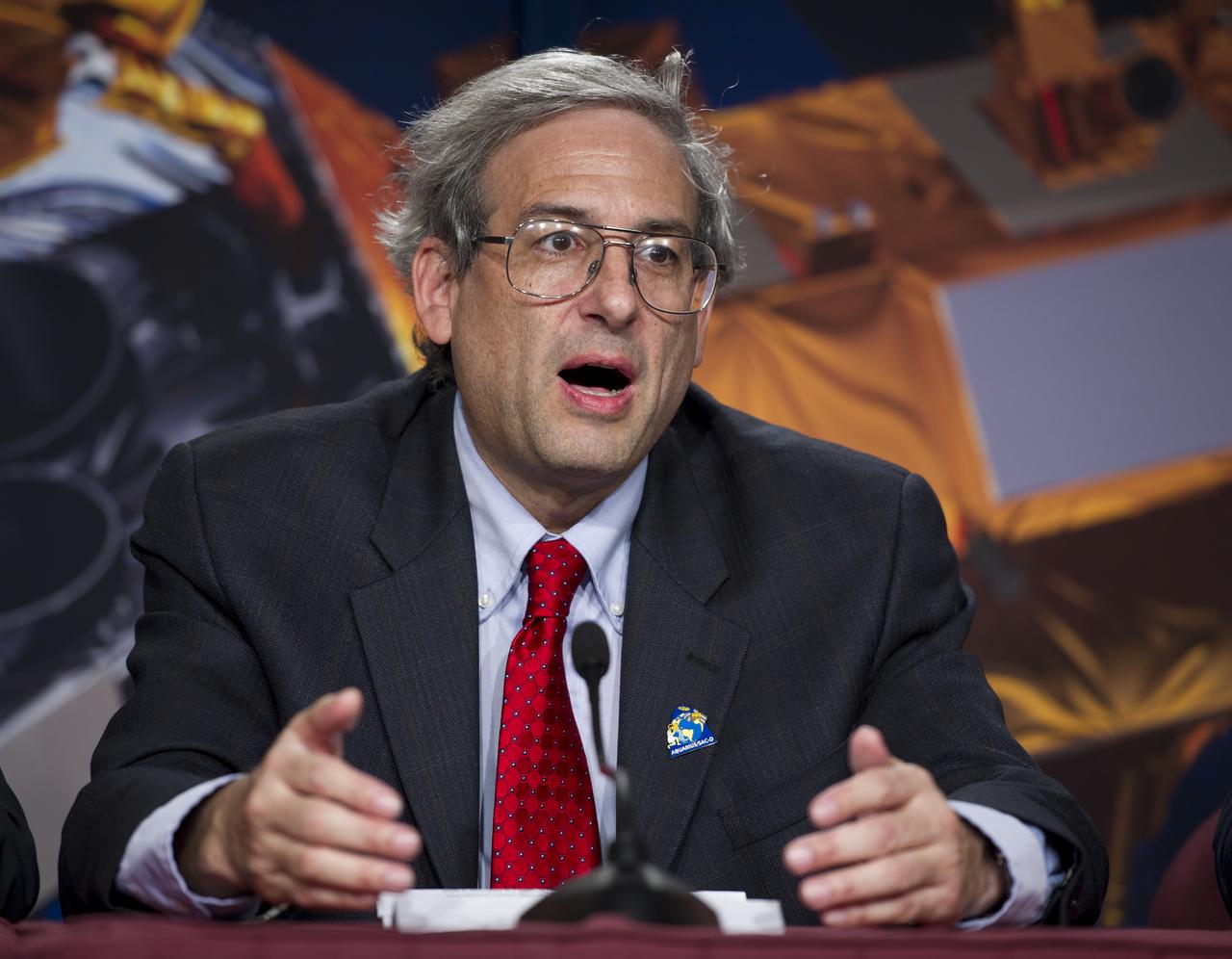
Michael Freilich, NASA Earth Science Division Director, NASA Headquarters, talks during the Aquarius/SAC-D post-launch press conference on Friday, June 10, 2011 at the NASA Resident Office, Vandenberg Air Force Base, Calif. The joint U.S./Argentinian Aquarius/Satélite de Aplicaciones Científicas (SAC)-D mission, launched earlier on Friday June 10, will map the salinity at the ocean surface, information critical to improving our understanding of two major components of Earth's climate system: the water cycle and ocean circulation. Photo Credit: (NASA/Bill Ingalls)
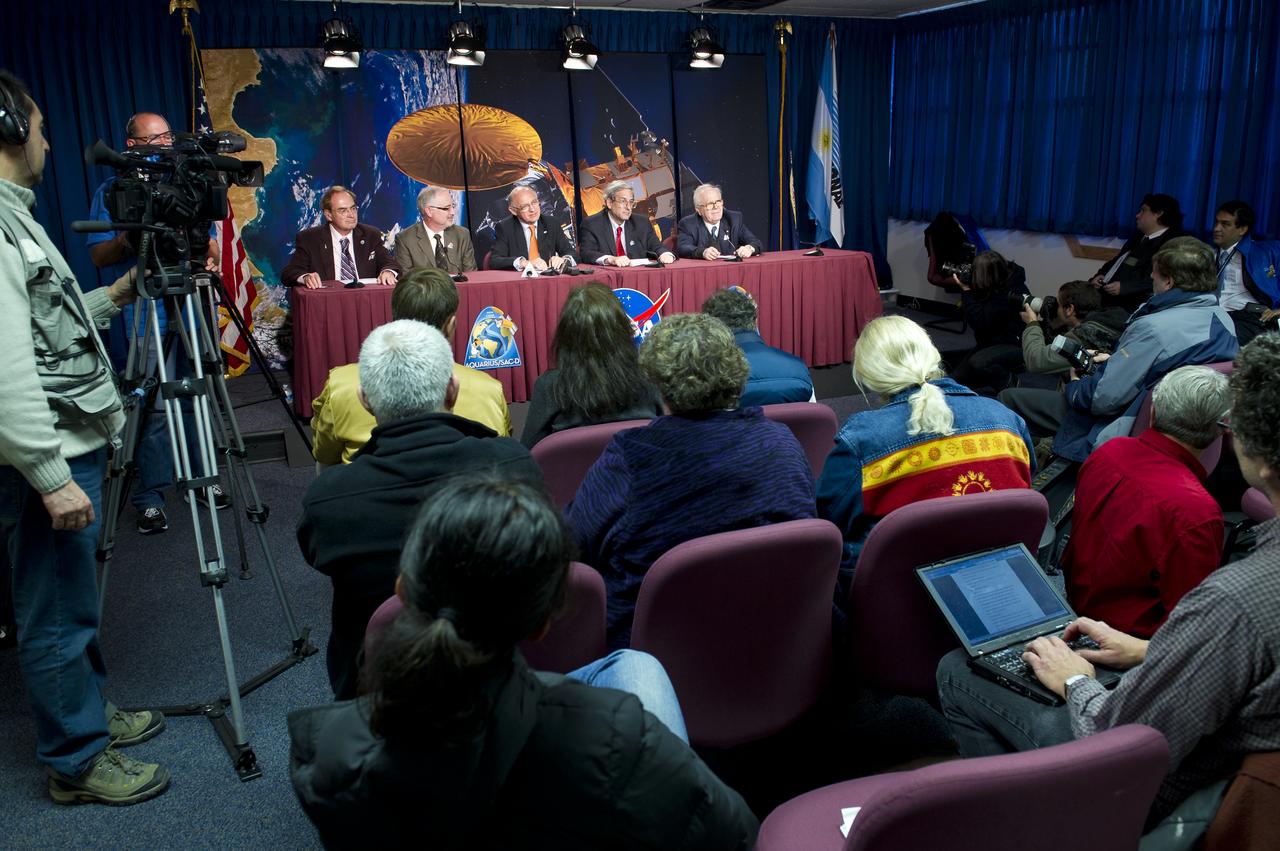
Seated from left, George Diller, NASA Public Affairs Officer; Charles Gay, Deputy Associate Administrator, NASA Science Mission Directorate; Hector Timerman, Foreign Minister of Argentina, Buenos Aires; Michael Freilich, NASA Earth Science Division Director, NASA Headquarters; and Conrado Varotto, CONAE Executive and Technical Director, Buenos Aires, are seen at the Aquarius/SAC-D post-launch press conference on Friday, June 10, 2011 at the NASA Resident Office, Vandenberg Air Force Base, Calif. The joint U.S./Argentinian Aquarius/Satélite de Aplicaciones Científicas (SAC)-D mission, launched earlier on Friday June 10, will map the salinity at the ocean surface, information critical to improving our understanding of two major components of Earth's climate system: the water cycle and ocean circulation. Photo Credit: (NASA/Bill Ingalls)
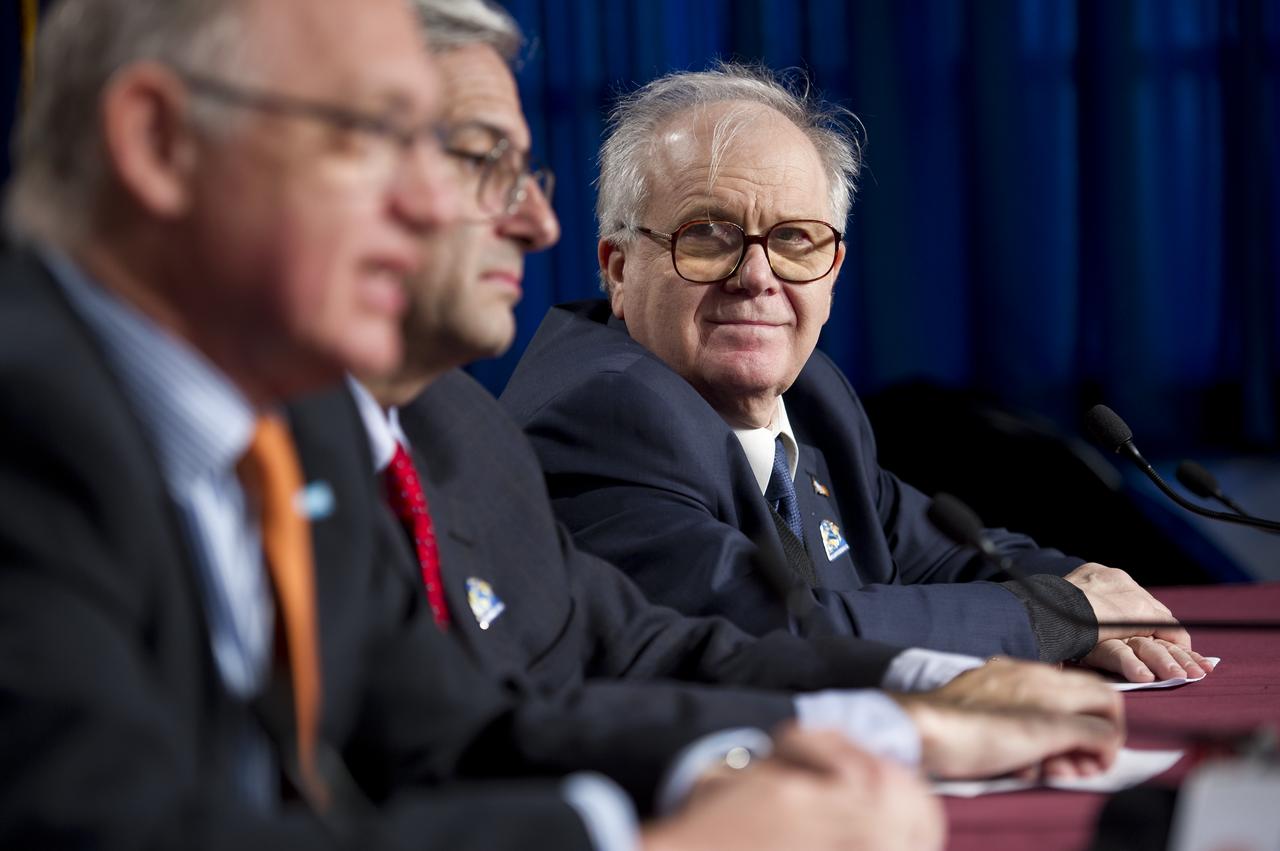
Conrado Varotto, CONAE Executive and Technical Director, Buenos Aires, looks on as other panelest speak during the Aquarius/SAC-D post-launch press conference on Friday, June 10, 2011 at the NASA Resident Office, Vandenberg Air Force Base, Calif. The joint U.S./Argentinian Aquarius/Satélite de Aplicaciones Científicas (SAC)-D mission, launched earlier on Friday June 10, will map the salinity at the ocean surface, information critical to improving our understanding of two major components of Earth's climate system: the water cycle and ocean circulation. Photo Credit: (NASA/Bill Ingalls)
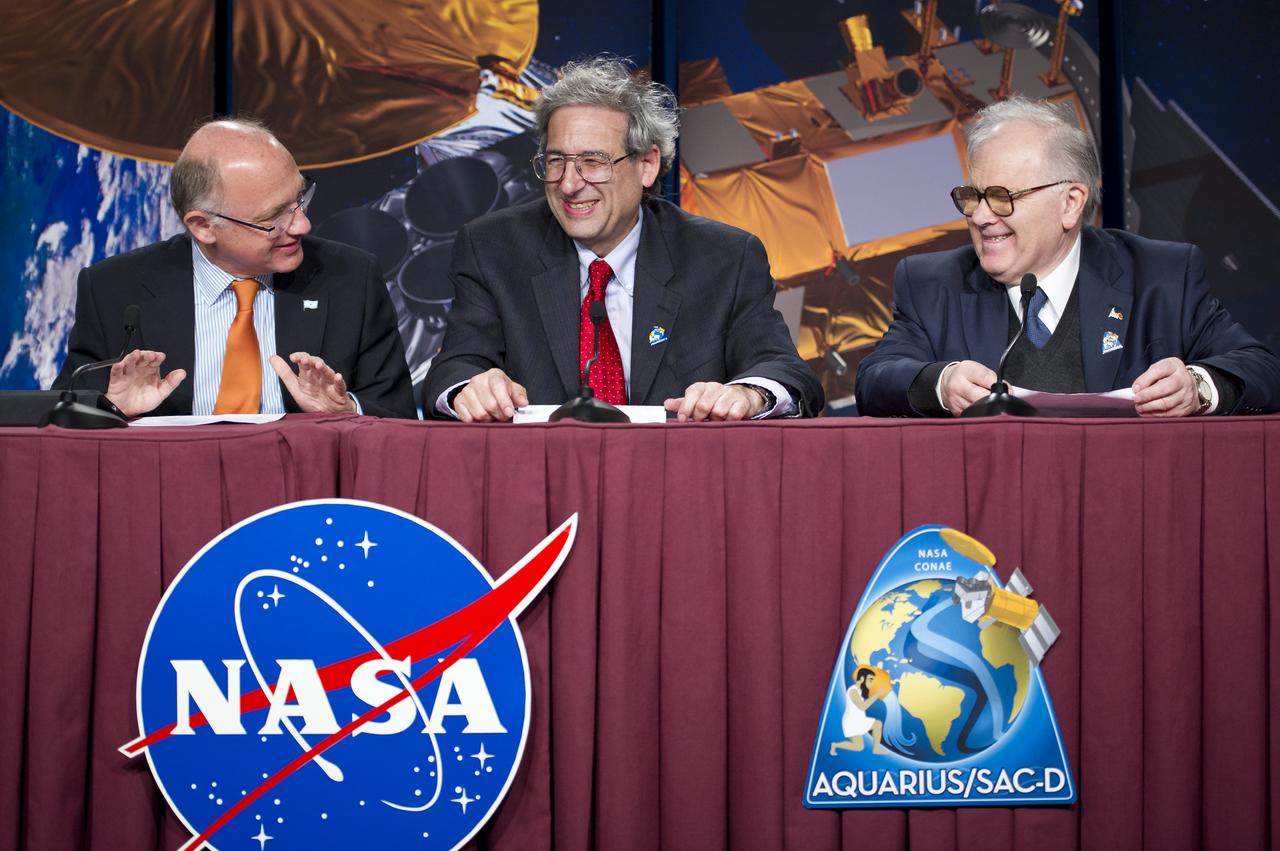
Hector Timerman, Foreign Minister of Argentina, Buenos Aires, left, Michael Freilich, NASA Earth Science Division Director, NASA Headquarters, Washington, center, and Conrado Varotto, CONAE Executive and Technical Director, Buenos Aires, laugh at the start of the Aquarius/SAC-D post-launch press conference on Friday, June 10, 2011 at the NASA Resident Office, Vandenberg Air Force Base, Calif. The joint U.S./Argentinian Aquarius/Satélite de Aplicaciones Científicas (SAC)-D mission, launched earlier on Friday June 10, will map the salinity at the ocean surface, information critical to improving our understanding of two major components of Earth's climate system: the water cycle and ocean circulation. Photo Credit: (NASA/Bill Ingalls)
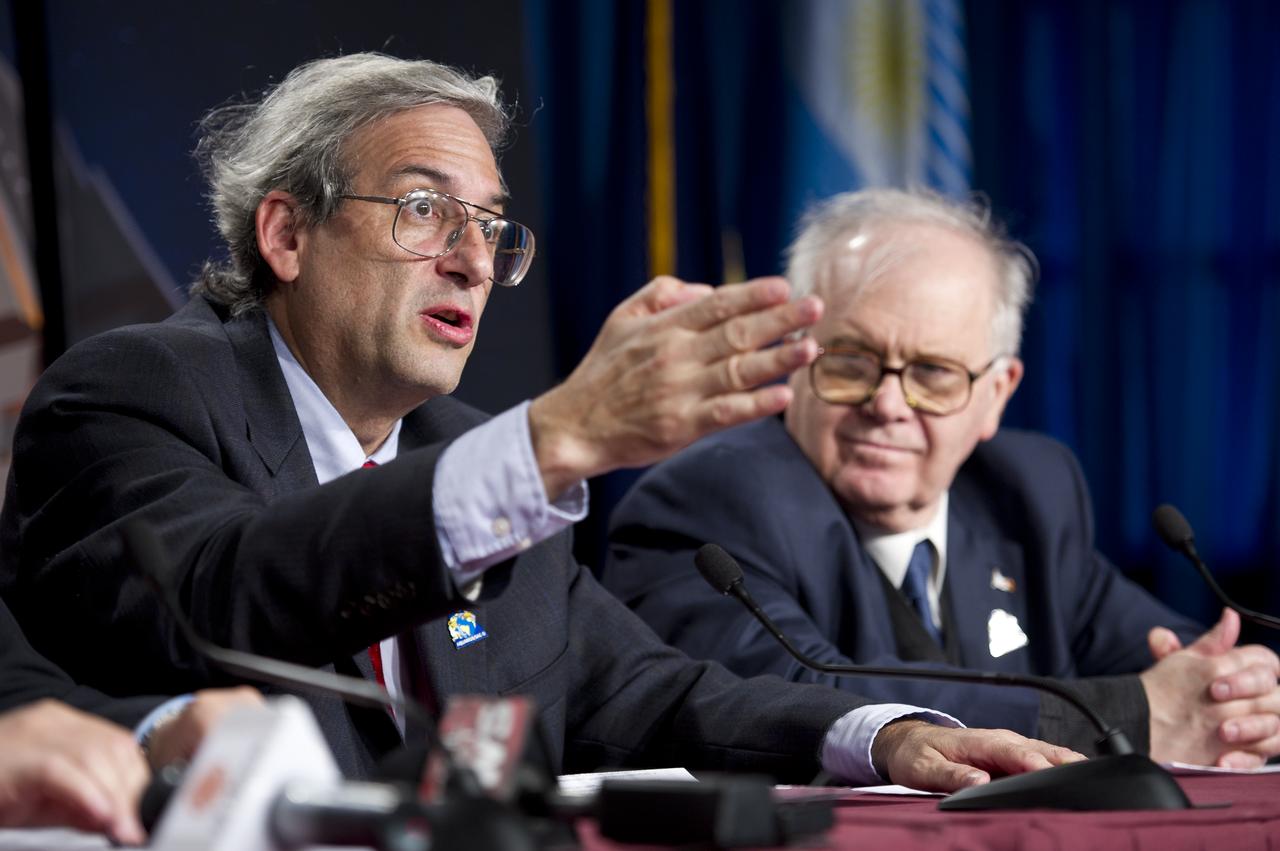
Michael Freilich, NASA Earth Science Division Director, NASA Headquarters, talks during the Aquarius/SAC-D post-launch press conference on Friday, June 10, 2011 at the NASA Resident Office, Vandenberg Air Force Base, Calif. The joint U.S./Argentinian Aquarius/Satélite de Aplicaciones Científicas (SAC)-D mission, launched earlier on Friday June 10, will map the salinity at the ocean surface, information critical to improving our understanding of two major components of Earth's climate system: the water cycle and ocean circulation. Photo Credit: (NASA/Bill Ingalls)
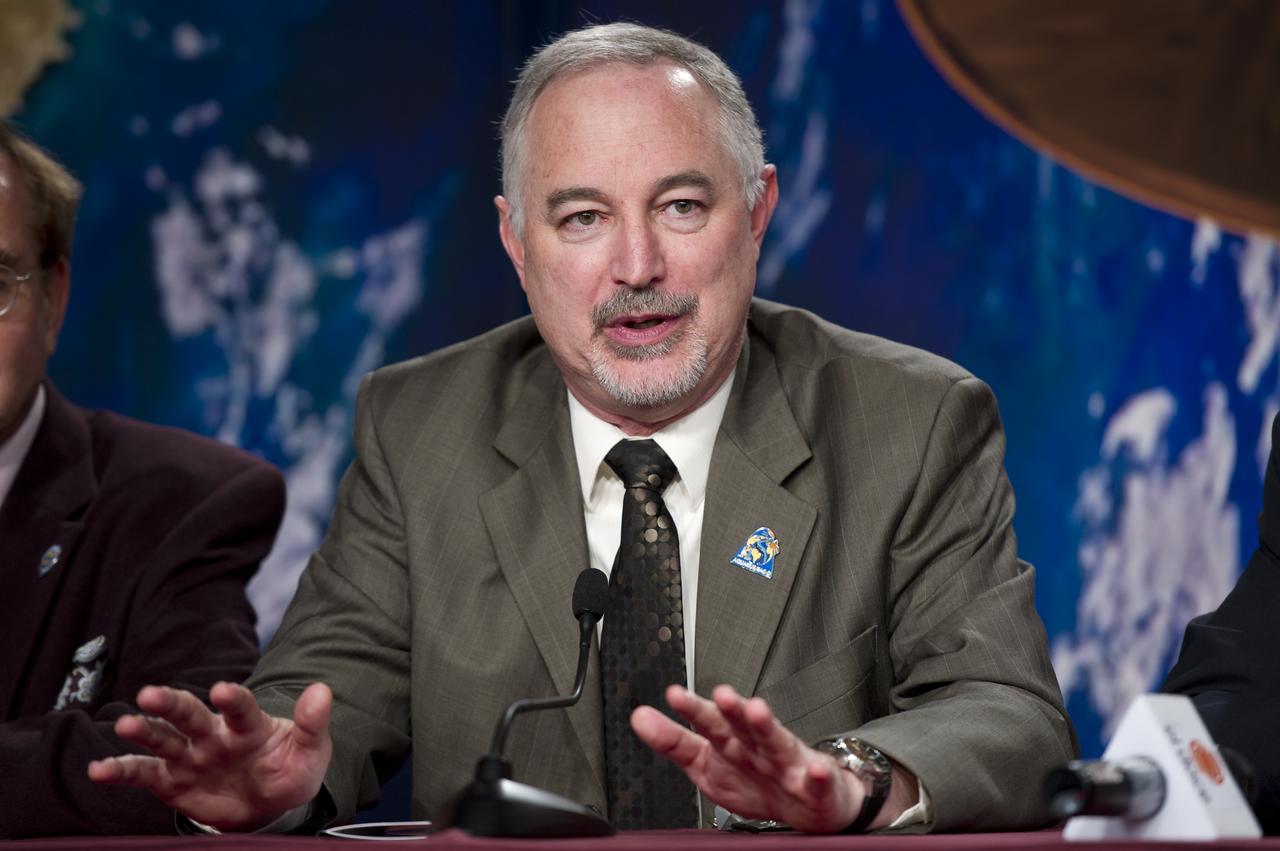
Charles Gay, Deputy Associate Administrator, NASA Science Mission Directorate, talks during the Aquarius/SAC-D post-launch press conference on Friday, June 10, 2011 at the NASA Resident Office, Vandenberg Air Force Base, Calif. The joint U.S./Argentinian Aquarius/Satélite de Aplicaciones Científicas (SAC)-D mission, launched earlier on Friday June 10, will map the salinity at the ocean surface, information critical to improving our understanding of two major components of Earth's climate system: the water cycle and ocean circulation. Photo Credit: (NASA/Bill Ingalls)
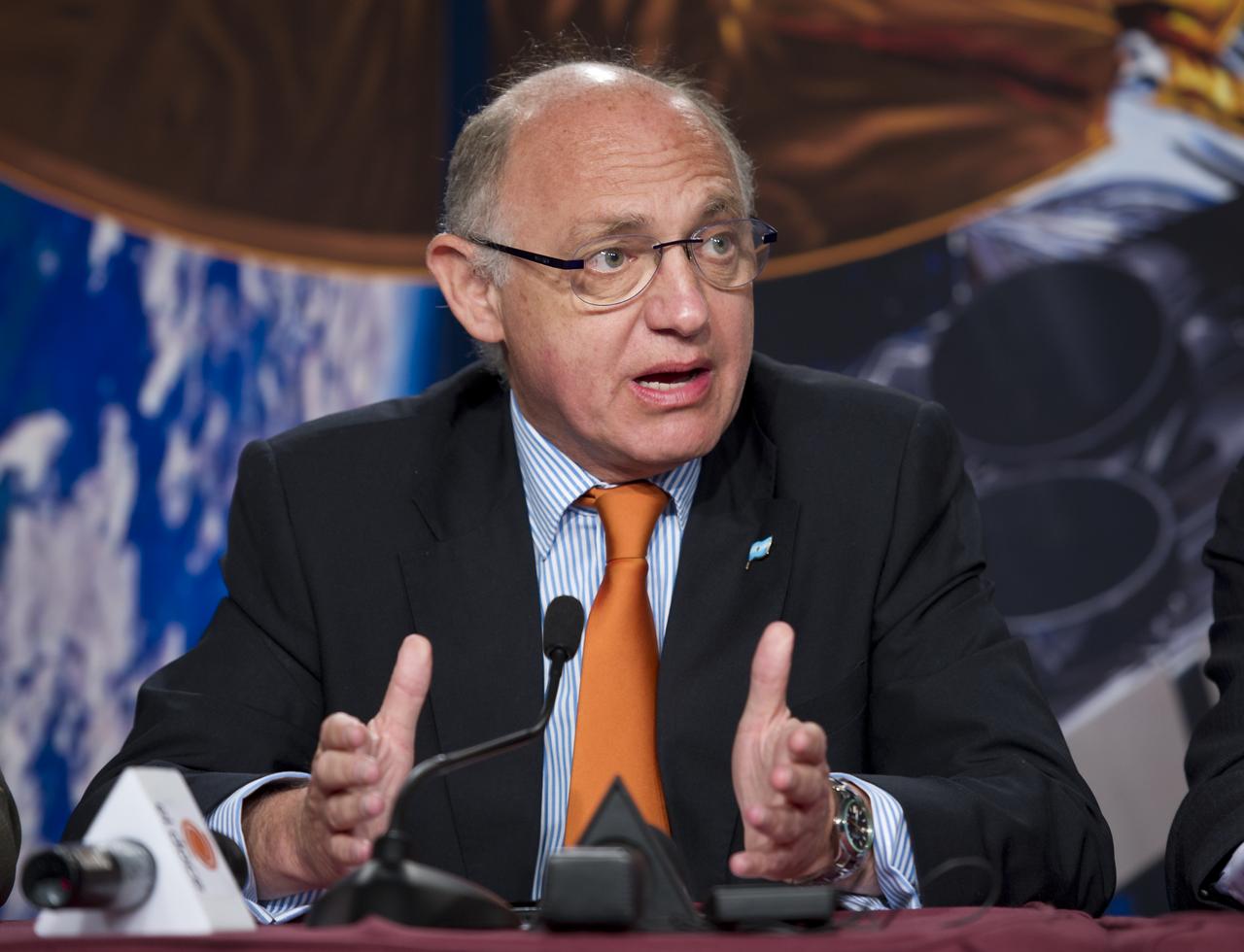
Hector Timerman, Foreign Minister of Argentina, Buenos Aires, talks during the Aquarius/SAC-D post-launch press conference on Friday, June 10, 2011 at the NASA Resident Office, Vandenberg Air Force Base, Calif. The joint U.S./Argentinian Aquarius/Satélite de Aplicaciones Científicas (SAC)-D mission, launched earlier on Friday June 10, will map the salinity at the ocean surface, information critical to improving our understanding of two major components of Earth's climate system: the water cycle and ocean circulation. Photo Credit: (NASA/Bill Ingalls)

NASA leaders participated in a virtual press briefing following the Space Launch System core stage hot fire test at Stennis Space Center near Bay St. Louis, Mississippi, on March 18. The leaders fielded questions submitted by offsite media during the post-test session. Agency participants present at Stennis included John Honeycutt, SLS Program manager at Marshall Space Flight Center in Huntsville, Alabama.

NASA leaders participated in a virtual press briefing following the Space Launch System core stage hot fire test at Stennis Space Center near Bay St. Louis, Mississippi, on March 18. The leaders fielded questions submitted by offsite media during the post-test session. Agency participants present at Stennis included Tom Whitmeyer, NASA deputy associate administrator for Exploration Systems Development.
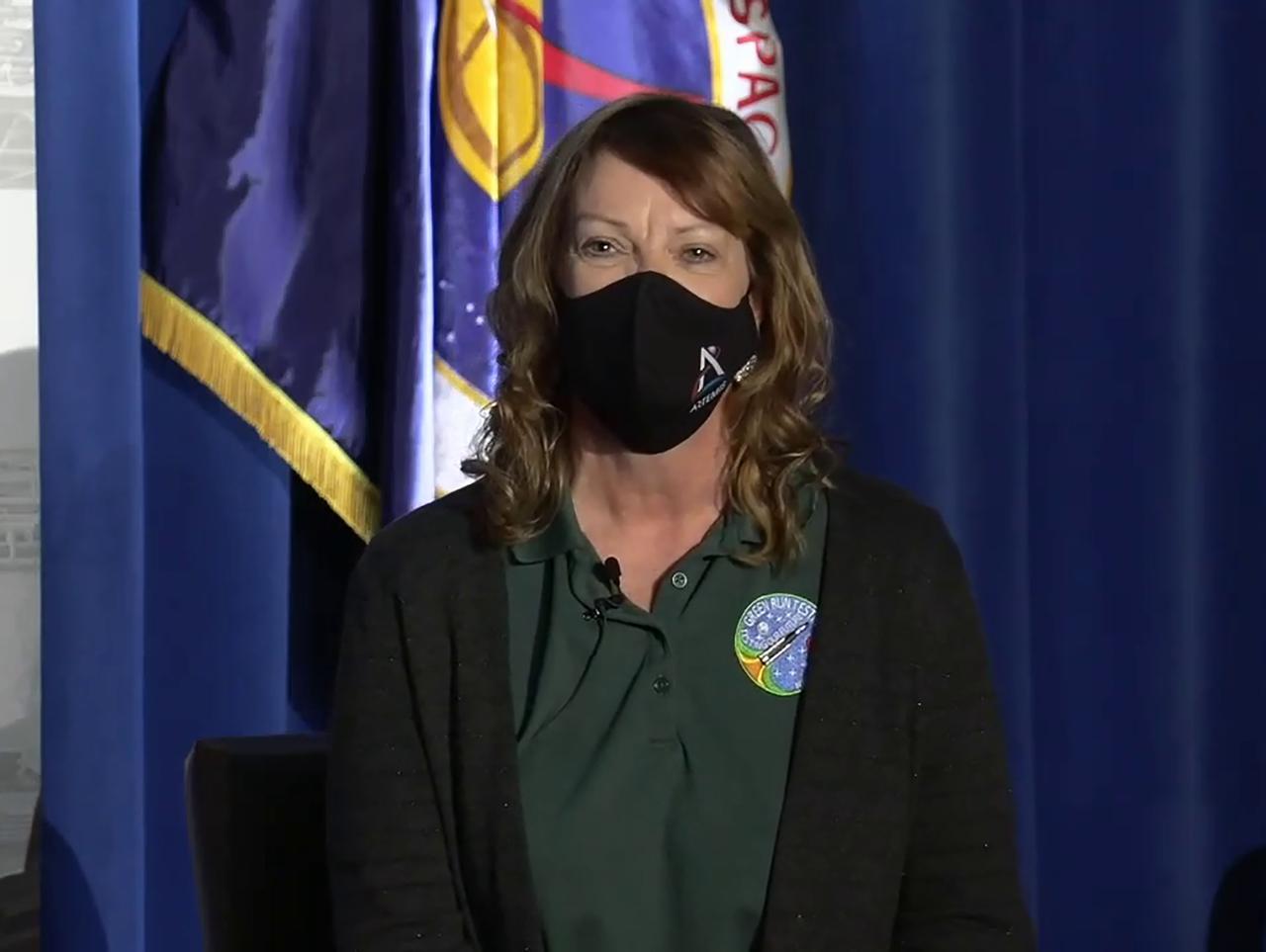
NASA leaders participated in a virtual press briefing following the Space Launch System core stage hot fire test at Stennis Space Center near Bay St. Louis, Mississippi, on March 18. The leaders fielded questions submitted by offsite media during the post-test session. Agency participants present at Stennis included Julie Bassler, SLS Stages Office manager at Marshall Space Flight Center in Huntsville, Alabama.
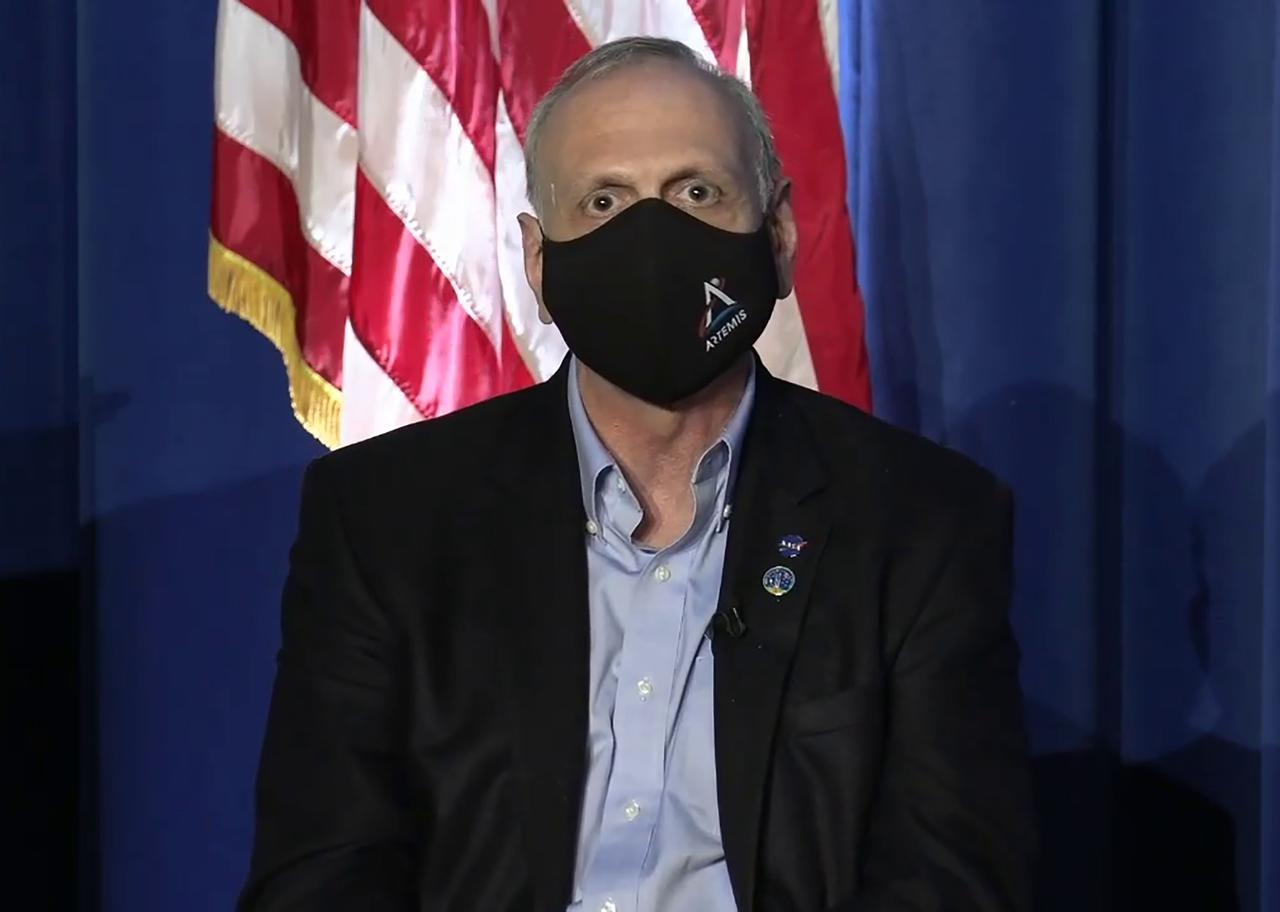
NASA leaders participated in a virtual press briefing following the Space Launch System core stage hot fire test at Stennis Space Center near Bay St. Louis, Mississippi, on March 18. The leaders fielded questions submitted by offsite media during the post-test session. Agency participants present at Stennis included NASA acting Administrator Steve Jurczyk.
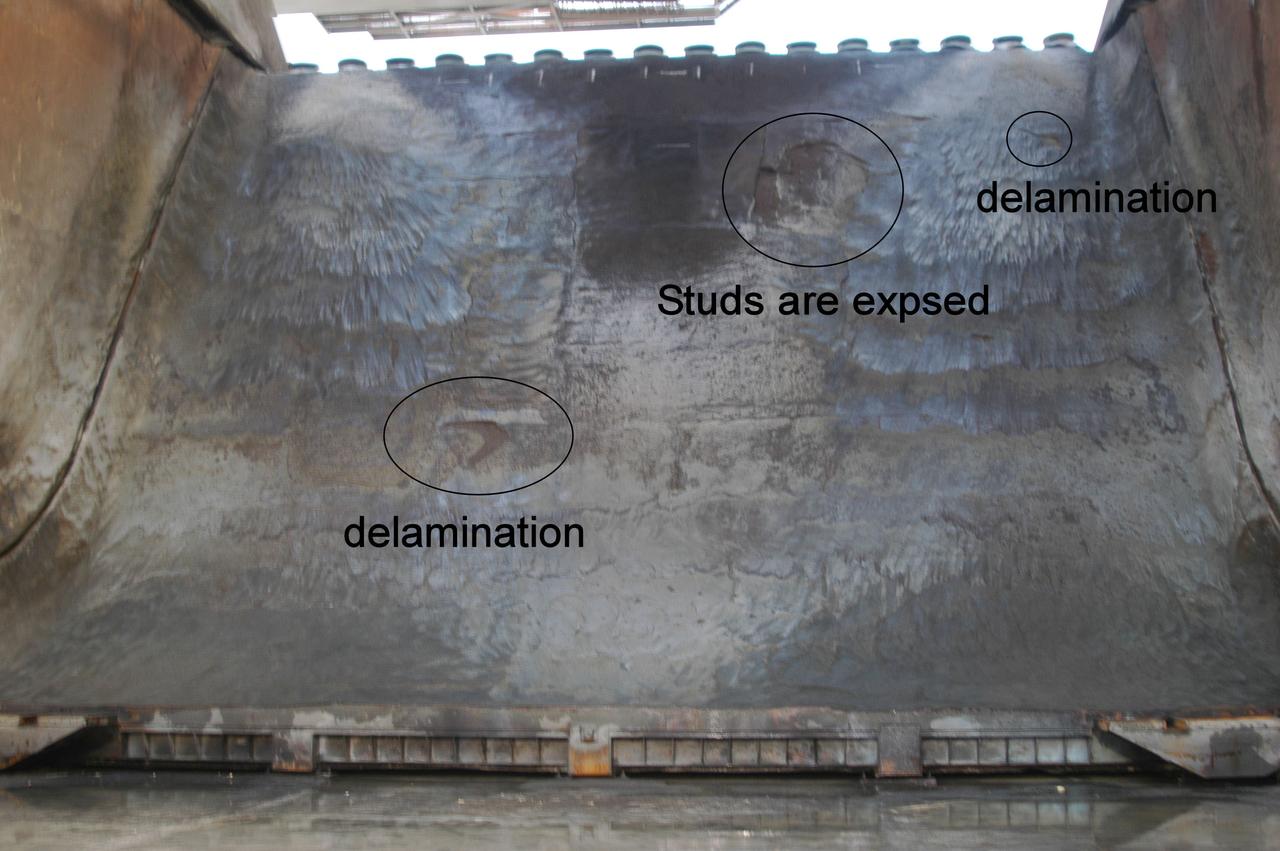
JSC2009-E-119287 (11 May 2009) --- A medium close still shot of the flame trench area at Launch Pad 39A at the Kennedy Space Center has been marked to indicate three different areas where minor damage was detected during STS-125 post-launch inspections. Two areas of delaminating flank a area where studs are partially exposed. While speaking during a press briefing, LeRoy Cain, deputy program manager for STS, showed this visual but expressed that NASA has no major concern over the damage at this time.
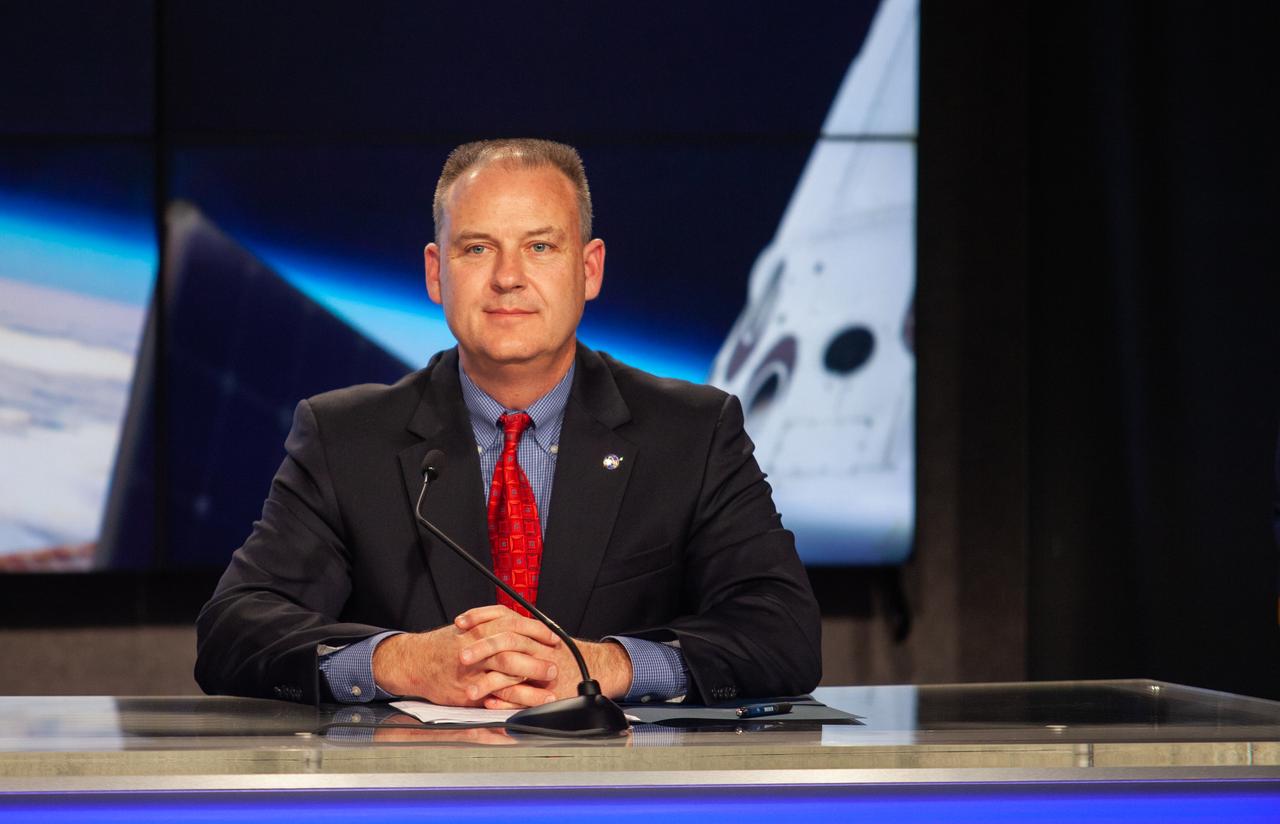
In Kennedy Space Center’s Press Site auditorium, agency and industry leaders speak to members of the media on Friday, Feb. 22, during the post-flight readiness review briefing for the SpaceX Demo-1 Commercial Crew Program (CCP) mission to the International Space Station. Pictured is Norm Knight, deputy director, NASA Johnson Space Center Flight Operations. The inaugural uncrewed flight of the SpaceX Crew Dragon, known as Demo-1, is targeted to lift off from Kennedy’s Launch Complex 39A on Saturday, March 2. EST. A SpaceX Falcon 9 rocket will launch the Crew Dragon on a mission designed to validate end-to-end systems and capabilities, leading to certification to fly crew.
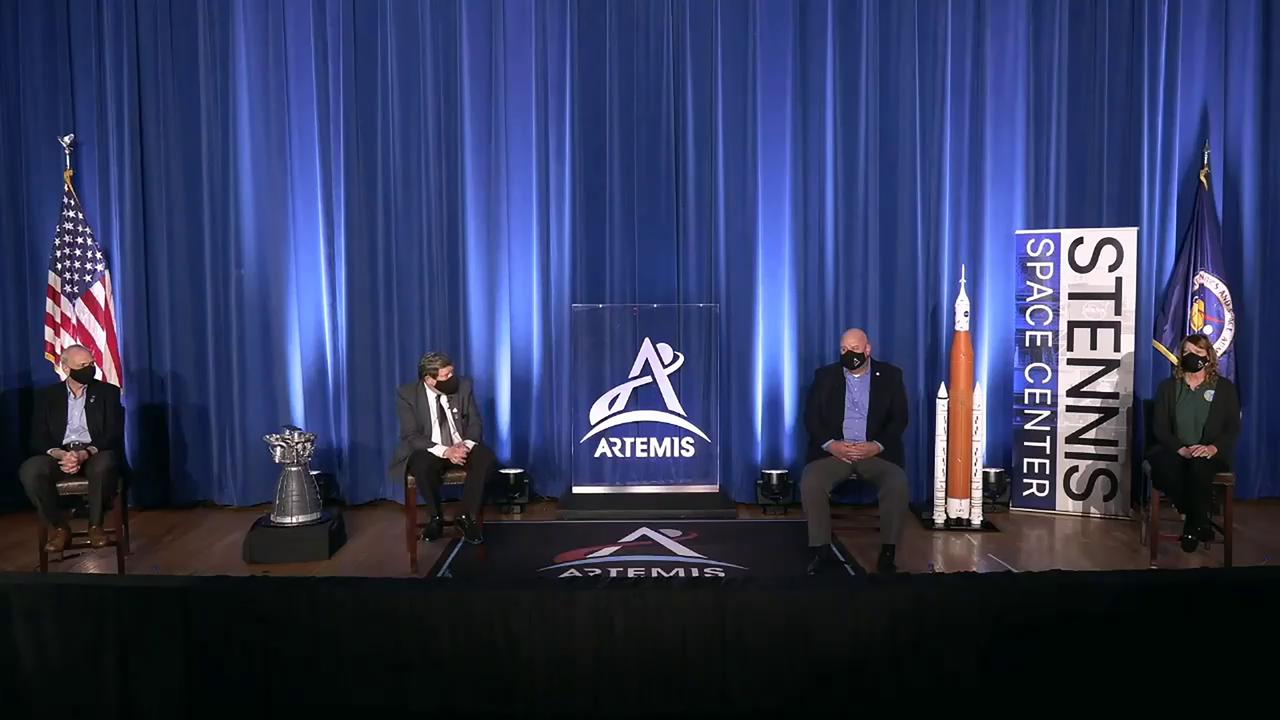
NASA leaders participated in a participate in a virtual press briefing following the Space Launch System core stage hot fire test at Stennis Space Center near Bay St. Louis, Mississippi, on March 18. The leaders fielded questions submitted by offsite media during the post-test session. Agency participants present at Stennis included (l to r): NASA acting Administrator Steve Jurczyk; Tom Whitmeyer, NASA deputy associate administrator for Exploration Systems Development; John Honeycutt, SLS Program manager at Marshall Space Flight Center; and Julie Bassler, SLS Stages Office manager at Marshall Space Flight Center.
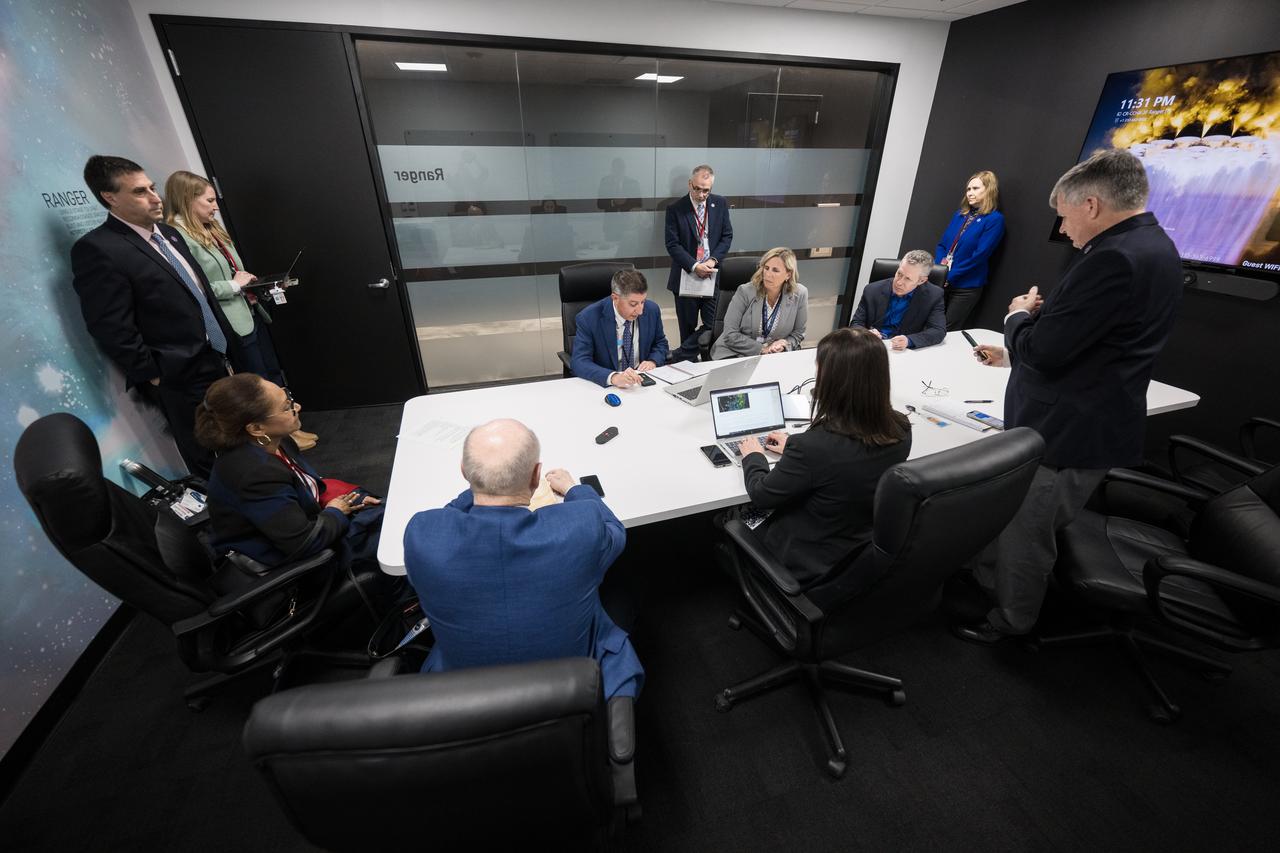
Richard Jones, deputy program manager for NASA's Commercial Crew Program seated, second from left, leads a post-launch synopsis briefing with NASA leadership after the launch of a SpaceX Falcon 9 rocket carrying the company's Dragon spacecraft on the Crew-8 mission with NASA astronauts Matthew Dominick, Michael Barratt, and Jeanette Epps, and Roscosmos cosmonaut Alexander Grebenkin onboard, Sunday, March 3, 2024, in the control room of SpaceX’s HangarX at NASA’s Kennedy Space Center in Florida. NASA’s SpaceX Crew-8 mission is the eighth crew rotation mission of the SpaceX Dragon spacecraft and Falcon 9 rocket to the International Space Station as part of the agency’s Commercial Crew Program. Dominick, Barratt, Epps, and Grebenkin launched at 10:53 p.m. EST, from Launch Complex 39A at the Kennedy Space Center. Photo Credit: (NASA/Aubrey Gemignani)

CAPE CANAVERAL, Fla. – Sam Scimemi, International Space Station Division director, NASA Human Exploration and Operation Mission Directorate, participates in a post-launch media briefing following the successful launch of NASA's SpaceX CRS-4 mission to the International Space Station. Liftoff was at 1:52 a.m. EDT. The mission is the fourth of 12 SpaceX flights NASA contracted with the company to resupply the space station. It will be the fifth trip by a Dragon spacecraft to the orbiting laboratory. The spacecraft’s 2.5 tons of supplies, science experiments, and technology demonstrations include critical materials to support 255 science and research investigations that will occur during the station's Expeditions 41 and 42. To learn more about the mission, visit http://www.nasa.gov/mission_pages/station/structure/launch/index.html. Photo credit: NASA/Jim Grossmann
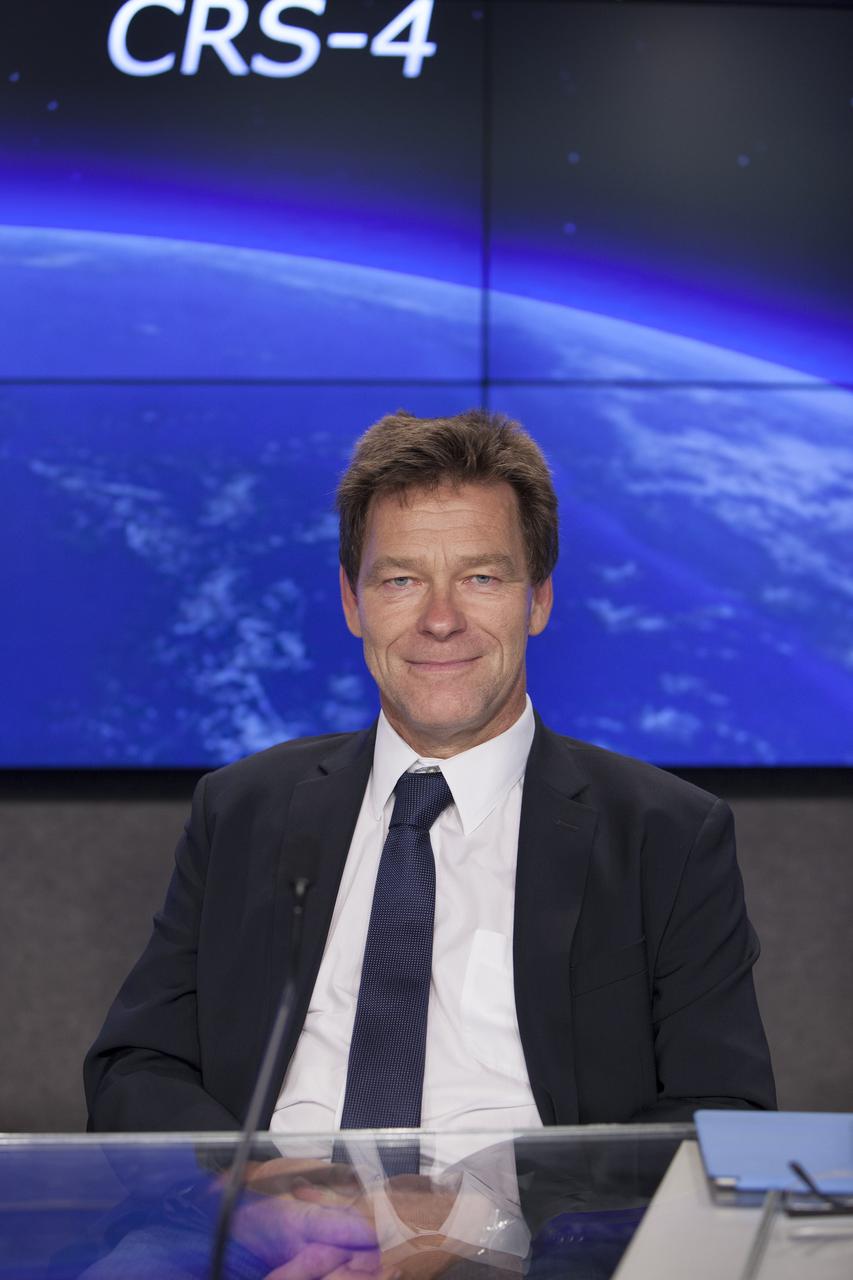
CAPE CANAVERAL, Fla. – Hans Koenigsmann, vice president of Mission Assurance, SpaceX, participates in a post-launch media briefing following the successful launch of NASA's SpaceX CRS-4 mission to the International Space Station. Liftoff was at 1:52 a.m. EDT. The mission is the fourth of 12 SpaceX flights NASA contracted with the company to resupply the space station. It will be the fifth trip by a Dragon spacecraft to the orbiting laboratory. The spacecraft’s 2.5 tons of supplies, science experiments, and technology demonstrations include critical materials to support 255 science and research investigations that will occur during the station's Expeditions 41 and 42. To learn more about the mission, visit http://www.nasa.gov/mission_pages/station/structure/launch/index.html. Photo credit: NASA/Jim Grossmann
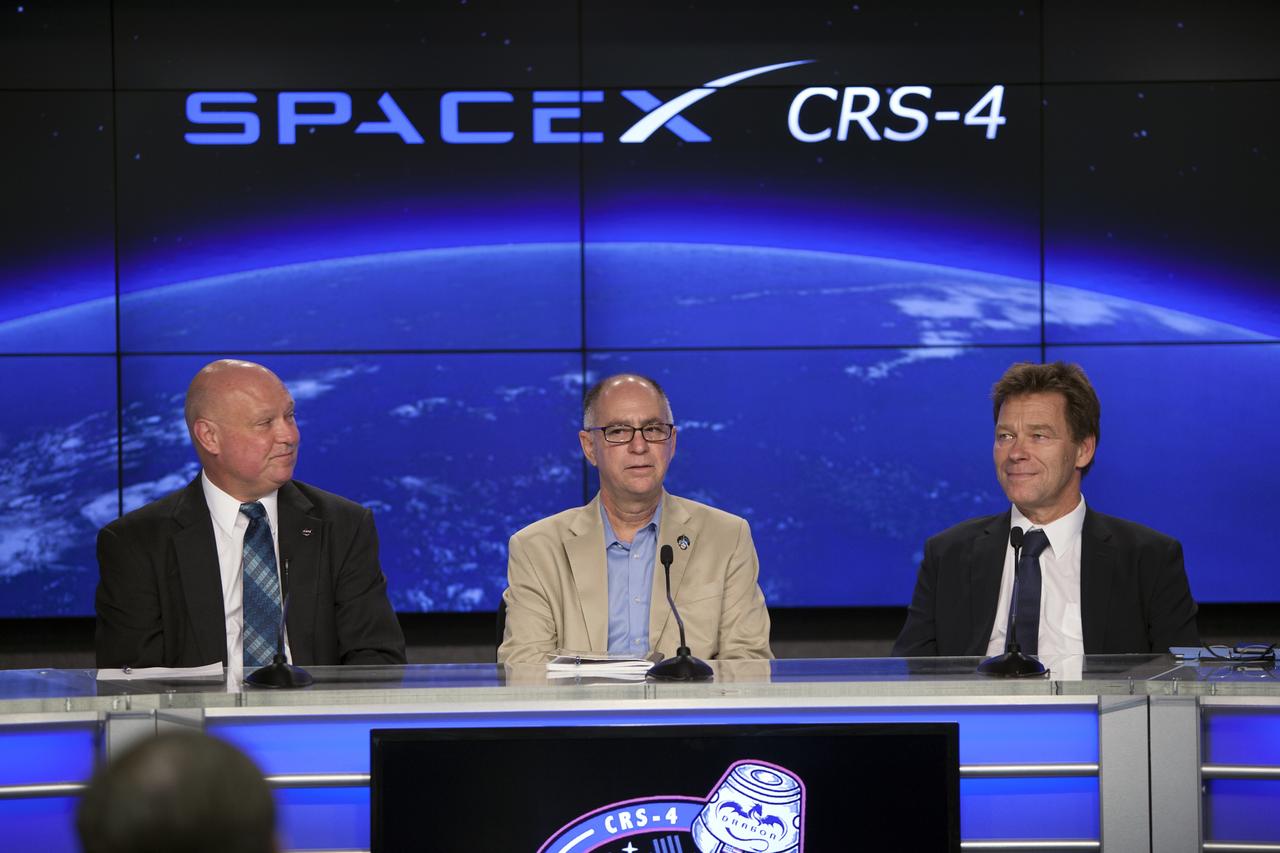
CAPE CANAVERAL, Fla. – NASA holds a post-launch media briefing following the successful launch of NASA's SpaceX CRS-4 mission to the International Space Station. From left are Michael Curie, moderator, NASA Public Affairs, Sam Scimemi, International Space Station Division director, NASA Human Exploration and Operation Mission Directorate, and Hans Koenigsmann, vice president of Mission Assurance, SpaceX. Liftoff was at 1:52 a.m. EDT. The mission is the fourth of 12 SpaceX flights NASA contracted with the company to resupply the space station. It will be the fifth trip by a Dragon spacecraft to the orbiting laboratory. The spacecraft’s 2.5 tons of supplies, science experiments, and technology demonstrations include critical materials to support 255 science and research investigations that will occur during the station's Expeditions 41 and 42. To learn more about the mission, visit http://www.nasa.gov/mission_pages/station/structure/launch/index.html. Photo credit: NASA/Jim Grossmann
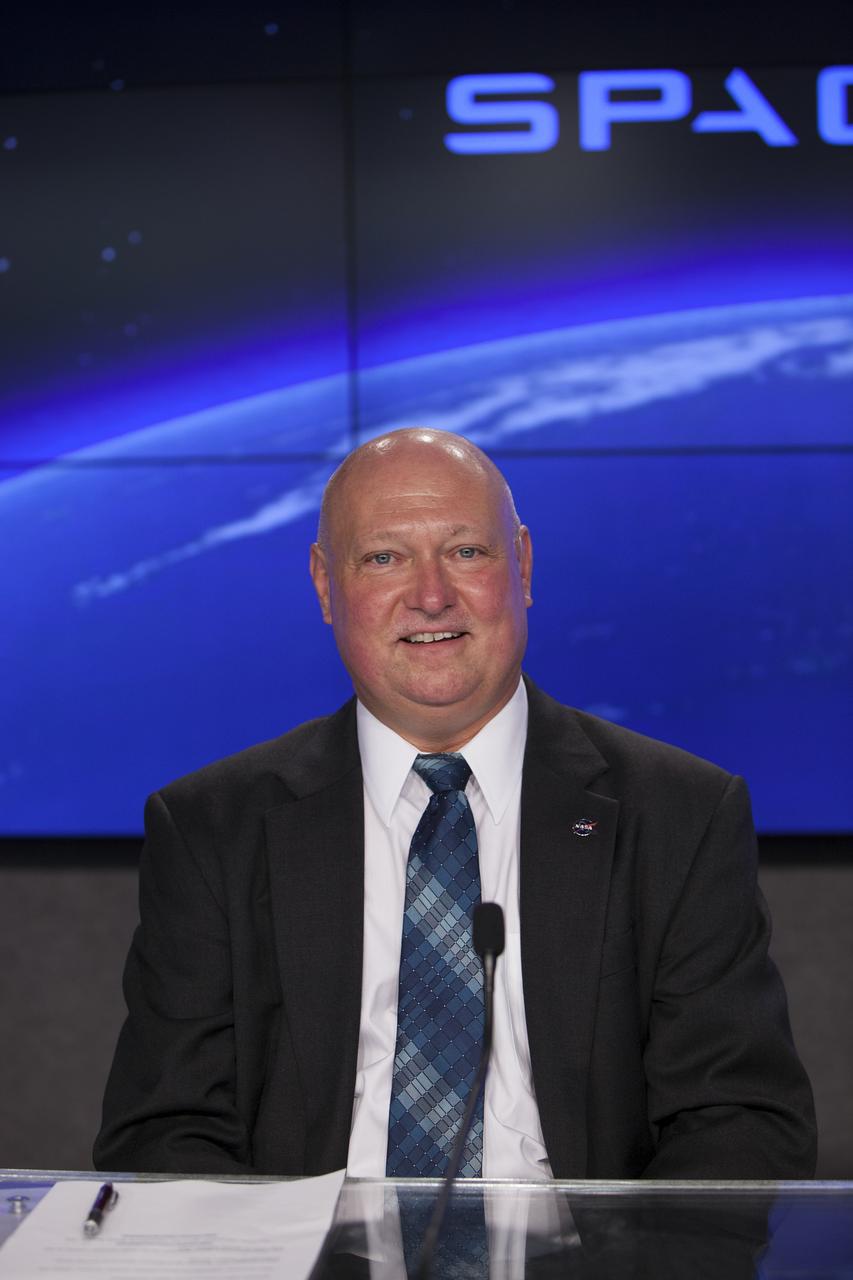
CAPE CANAVERAL, Fla. – Michael Curie, NASA Public Affairs, moderates a post-launch media briefing following the successful launch of NASA's SpaceX CRS-4 mission to the International Space Station. Liftoff was at 1:52 a.m. EDT. The mission is the fourth of 12 SpaceX flights NASA contracted with the company to resupply the space station. It will be the fifth trip by a Dragon spacecraft to the orbiting laboratory. The spacecraft’s 2.5 tons of supplies, science experiments, and technology demonstrations include critical materials to support 255 science and research investigations that will occur during the station's Expeditions 41 and 42. To learn more about the mission, visit http://www.nasa.gov/mission_pages/station/structure/launch/index.html. Photo credit: NASA/Jim Grossmann
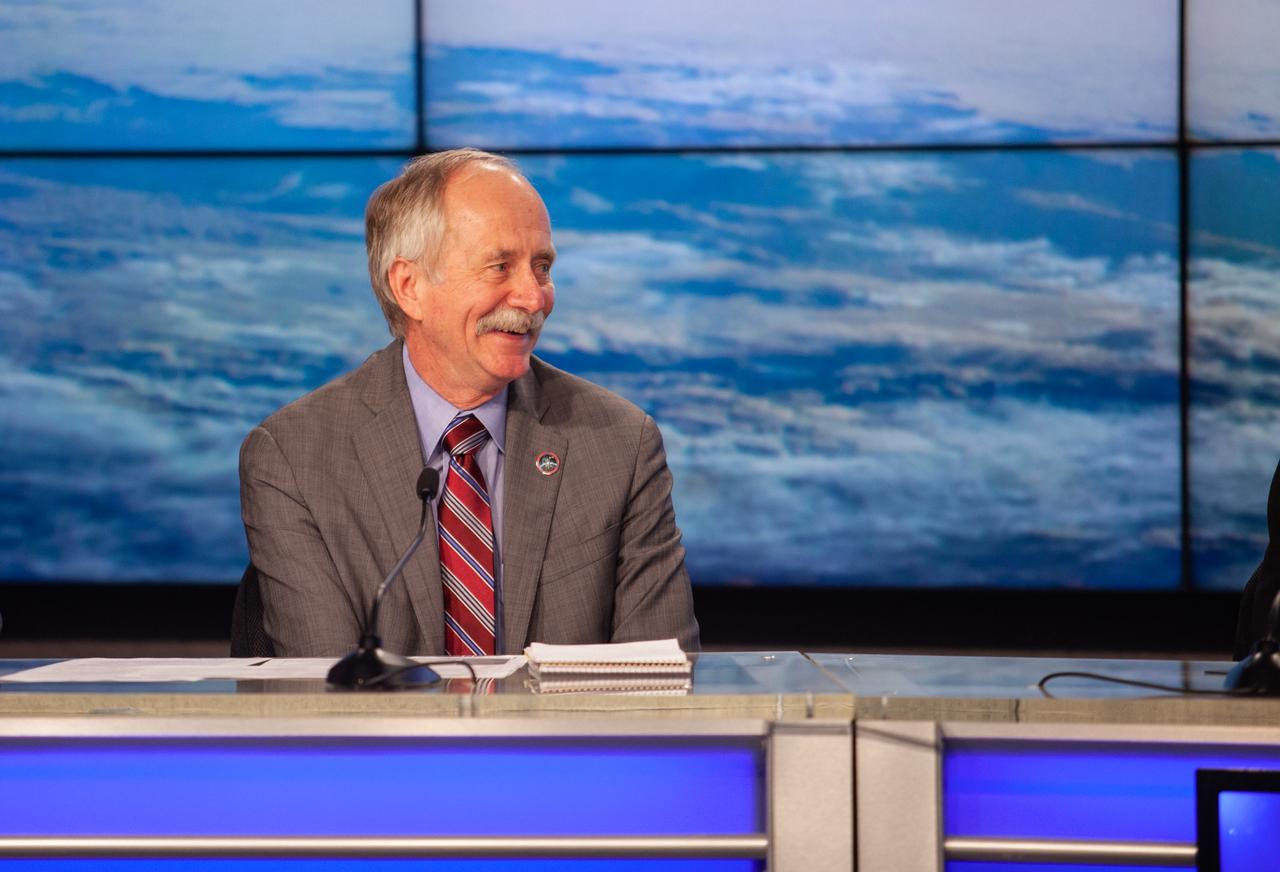
In Kennedy Space Center’s Press Site auditorium, agency and industry leaders speak to members of the media on Friday, Feb. 22, during the post-flight readiness review briefing for the SpaceX Demo-1 Commercial Crew Program (CCP) mission to the International Space Station. From left are: Josh Finch of NASA Communications and William Gerstenmaier, associate administrator, NASA Human Exploration and Operations. The inaugural uncrewed flight of the SpaceX Crew Dragon, known as Demo-1, is targeted to lift off from Kennedy’s Launch Complex 39A on Saturday, March 2. EST. A SpaceX Falcon 9 rocket will launch the Crew Dragon on a mission designed to validate end-to-end systems and capabilities, leading to certification to fly crew.
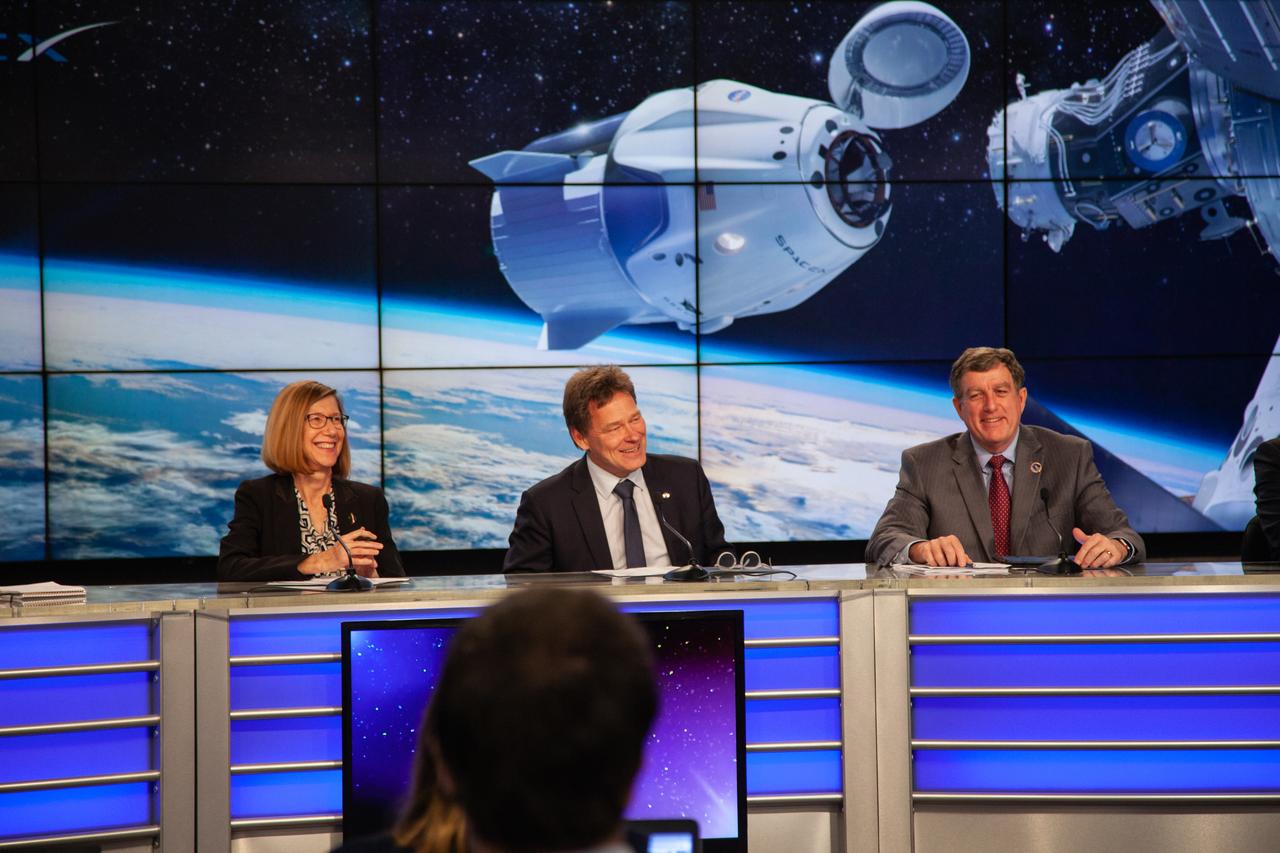
In Kennedy Space Center’s Press Site auditorium, agency and industry leaders speak to members of the media on Friday, Feb. 22, during the post-flight readiness review briefing for the SpaceX Demo-1 Commercial Crew Program (CCP) mission to the International Space Station. From left are: Kathy Lueders, manager, NASA Commercial Crew Program; Hans Koenigsmann, vice president, Build and Flight Reliability, SpaceX; and Kirk Shireman, International Space Station Program manager. The inaugural uncrewed flight of the SpaceX Crew Dragon, known as Demo-1, is targeted to lift off from Kennedy’s Launch Complex 39A on Saturday, March 2. EST. A SpaceX Falcon 9 rocket will launch the Crew Dragon on a mission designed to validate end-to-end systems and capabilities, leading to certification to fly crew.
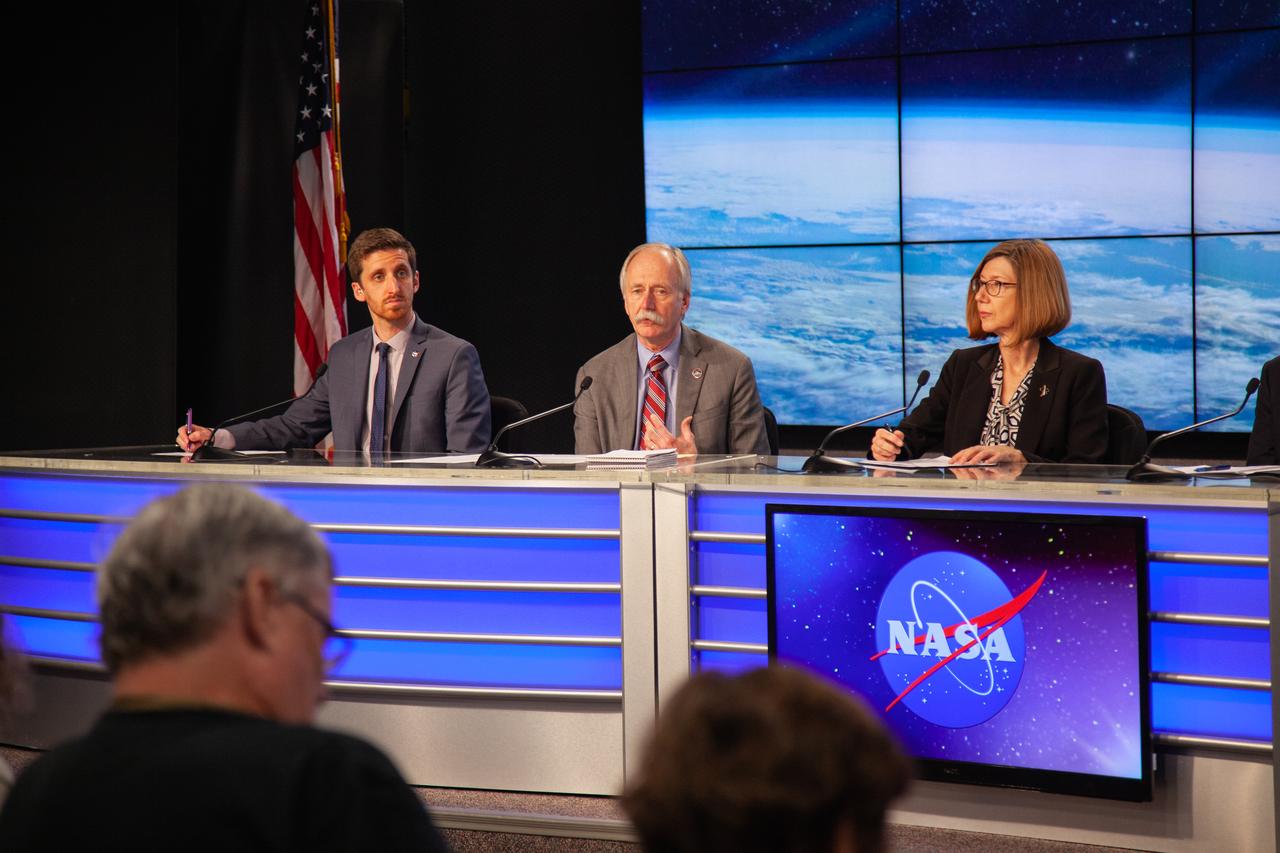
In Kennedy Space Center’s Press Site auditorium, agency and industry leaders speak to members of the media on Friday, Feb. 22, during the post-flight readiness review briefing for the SpaceX Demo-1 Commercial Crew Program (CCP) mission to the International Space Station. From left are: Josh Finch of NASA Communications; William Gerstenmaier, associate administrator, NASA Human Exploration and Operations; and Kathy Lueders, manager, NASA Commercial Crew Program. The inaugural uncrewed flight of the SpaceX Crew Dragon, known as Demo-1, is targeted to lift off from Kennedy’s Launch Complex 39A on Saturday, March 2. EST. A SpaceX Falcon 9 rocket will launch the Crew Dragon on a mission designed to validate end-to-end systems and capabilities, leading to certification to fly crew.
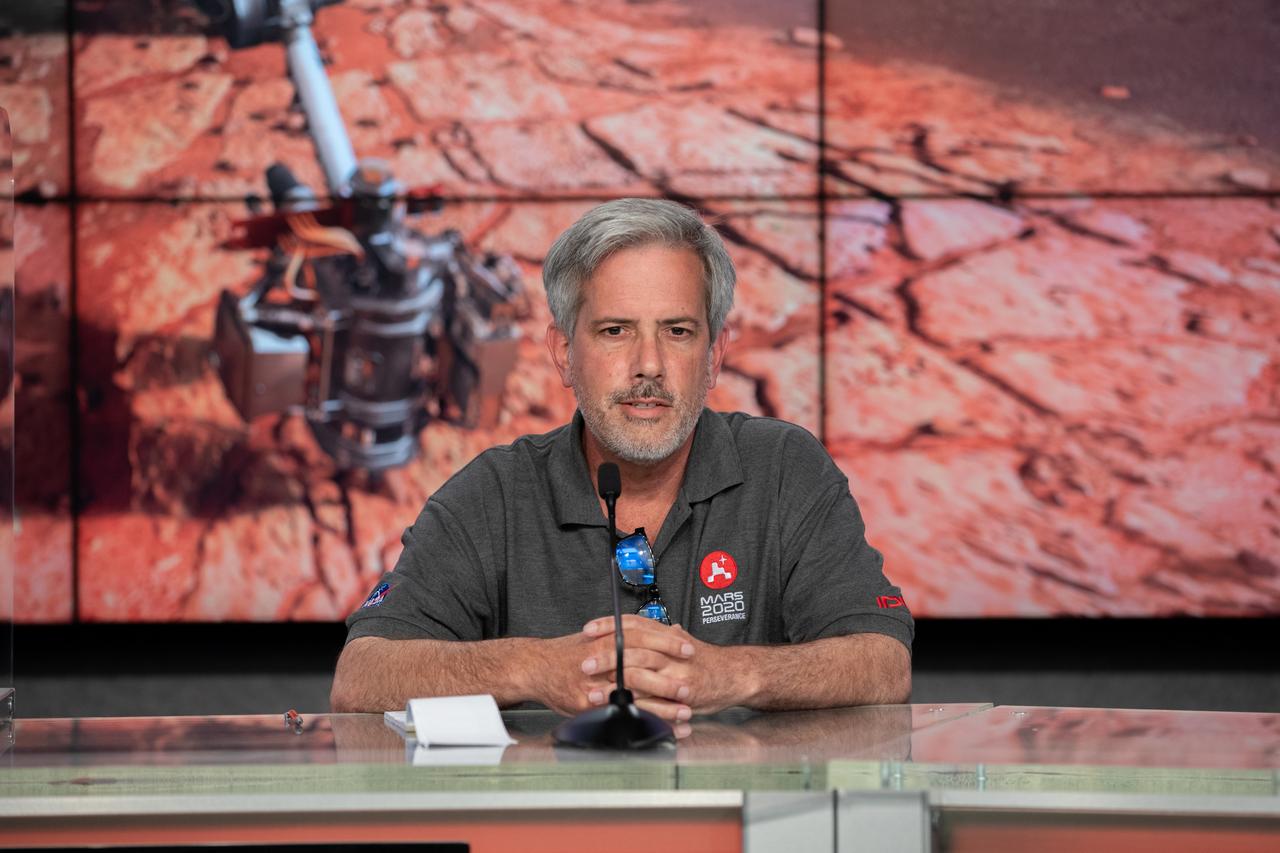
Matt Wallace, deputy project manager, NASA’s Jet Propulsion Laboratory, participates in a Mars 2020 post-launch news conference at NASA’s Kennedy Space Center in Florida on July 30, 2020. The United Launch Alliance Atlas V 541 rocket lifted off from Space Launch Complex 41 at Cape Canaveral Air Force Station at 7:50 a.m. EDT, carrying the agency’s Mars Perseverance rover and Ingenuity helicopter. The rover is part of NASA’s Mars Exploration Program, a long-term effort of robotic exploration of the Red Planet. The rover will search for habitable conditions in the ancient past and signs of past microbial life on Mars. The Launch Services Program at Kennedy is responsible for launch management.
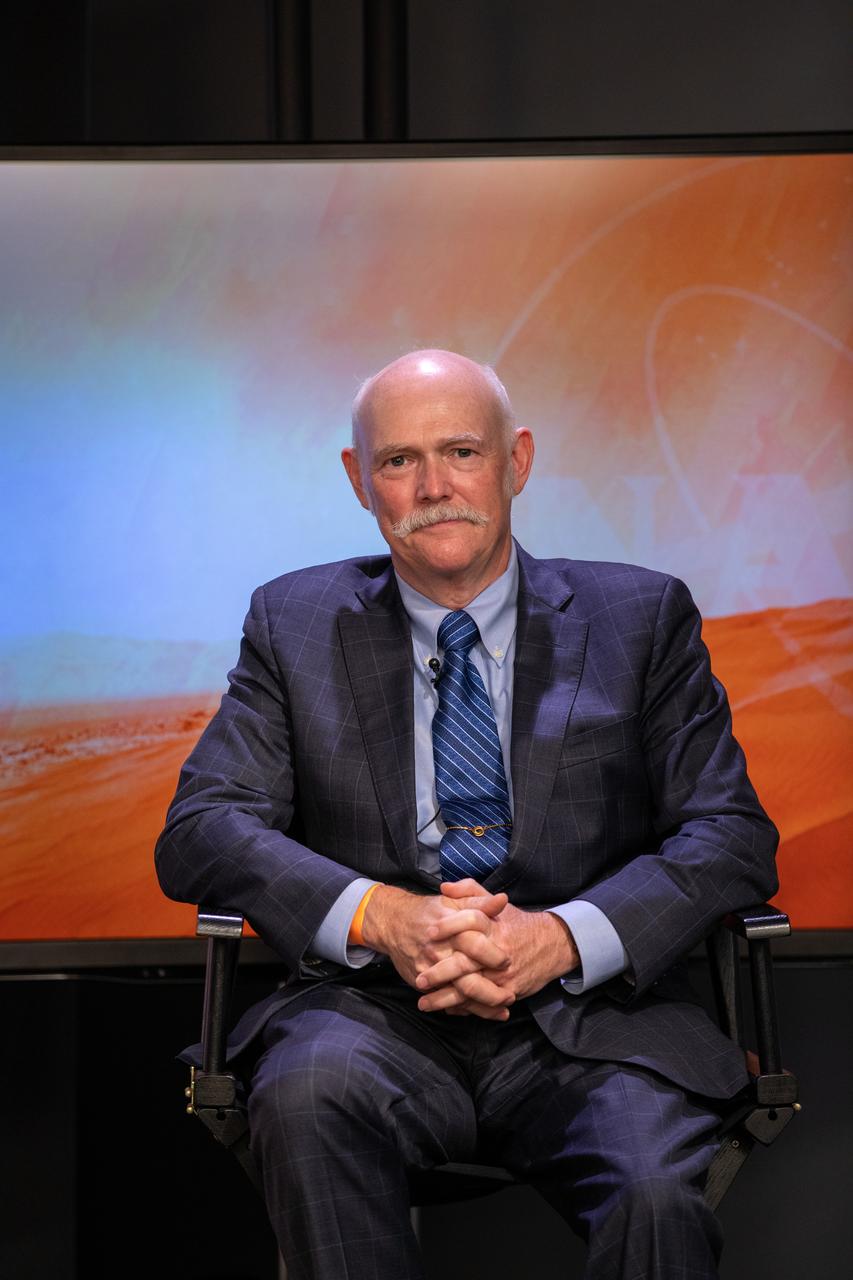
Tory Bruno, president and CEO of United Launch Alliance (ULA), participates in a Mars 2020 post-launch news conference at NASA’s Kennedy Space Center in Florida on July 30, 2020. The ULA Atlas V 541 rocket lifted off from Space Launch Complex 41 at Cape Canaveral Air Force Station at 7:50 a.m. EDT, carrying the agency’s Mars Perseverance rover and Ingenuity helicopter. The rover is part of NASA’s Mars Exploration Program, a long-term effort of robotic exploration of the Red Planet. The rover will search for habitable conditions in the ancient past and signs of past microbial life on Mars. The Launch Services Program at Kennedy is responsible for launch management.
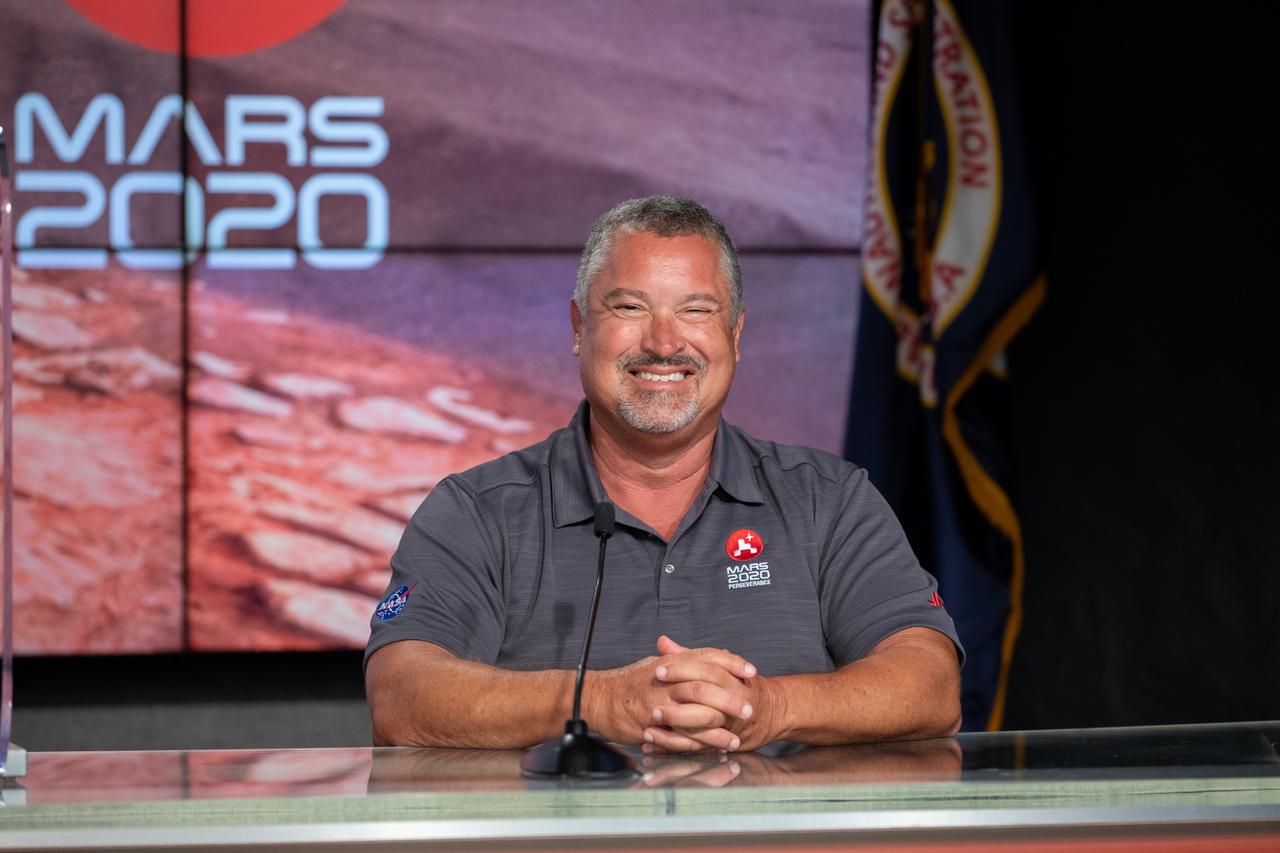
Omar Baez, launch director, NASA’s Launch Services Program, participates in a Mars 2020 post-launch news conference at NASA’s Kennedy Space Center in Florida on July 30, 2020. The United Launch Alliance Atlas V 541 rocket lifted off from Space Launch Complex 41 at Cape Canaveral Air Force Station at 7:50 a.m. EDT, carrying the agency’s Mars Perseverance rover and Ingenuity helicopter. The rover is part of NASA’s Mars Exploration Program, a long-term effort of robotic exploration of the Red Planet. The rover will search for habitable conditions in the ancient past and signs of past microbial life on Mars. The Launch Services Program at Kennedy is responsible for launch management.
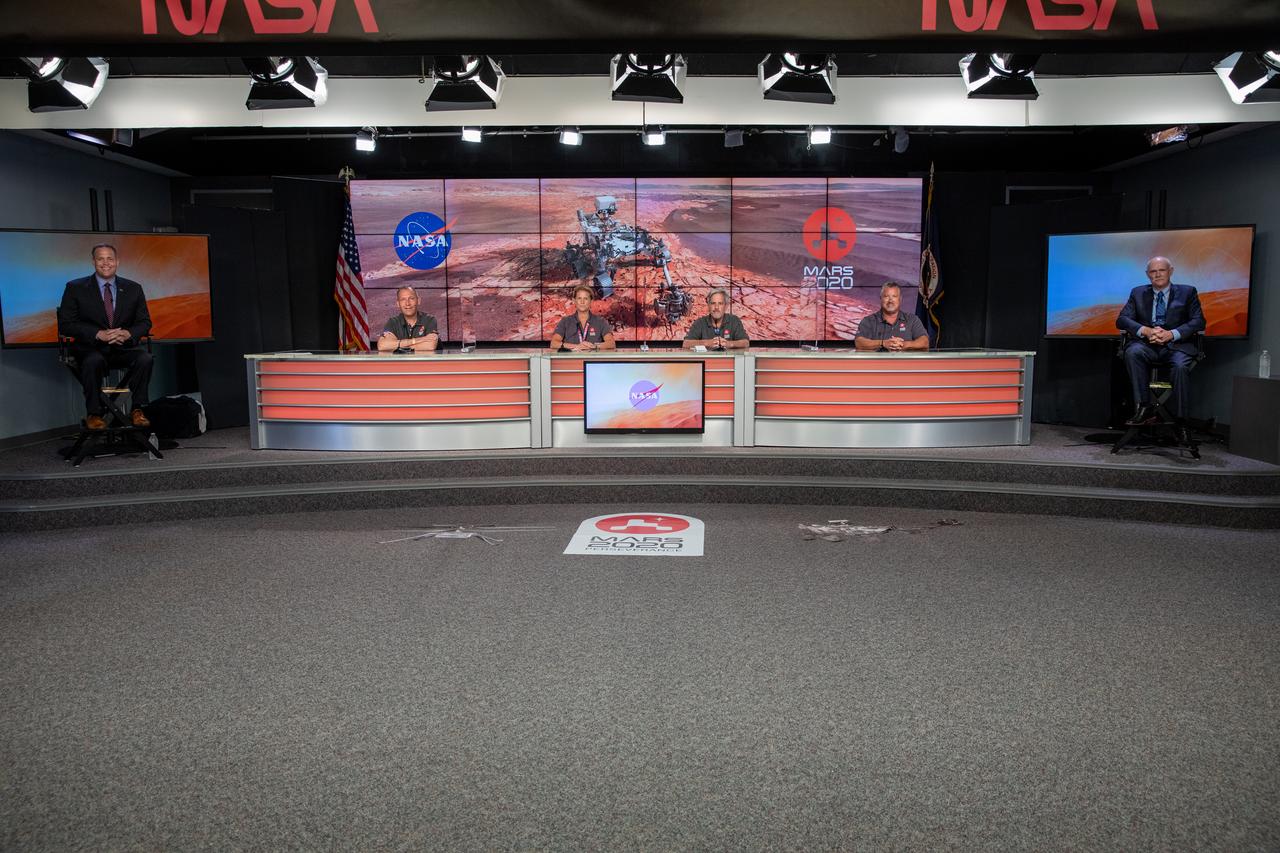
A Mars 2020 post-launch news conference is held at NASA’s Kennedy Space Center in Florida on July 30, 2020. Participants, from left, are NASA Administrator Jim Bridenstine; Thomas Zurbuchen, NASA associate administrator, Science Mission Directorate; Lori Glaze, Planetary Science Division director, NASA Headquarters; Matt Wallace, deputy project manager, NASA’s Jet Propulsion Laboratory; Omar Baez, launch director, NASA’s Launch Services Program; and Tory Bruno, president and CEO of United Launch Alliance. The United Launch Alliance Atlas V 541 rocket lifted off from Space Launch Complex 41 at Cape Canaveral Air Force Station at 7:50 a.m. EDT, carrying the agency’s Mars Perseverance rover and Ingenuity helicopter. The rover is part of NASA’s Mars Exploration Program, a long-term effort of robotic exploration of the Red Planet. The rover will search for habitable conditions in the ancient past and signs of past microbial life on Mars. The Launch Services Program at Kennedy is responsible for launch management.
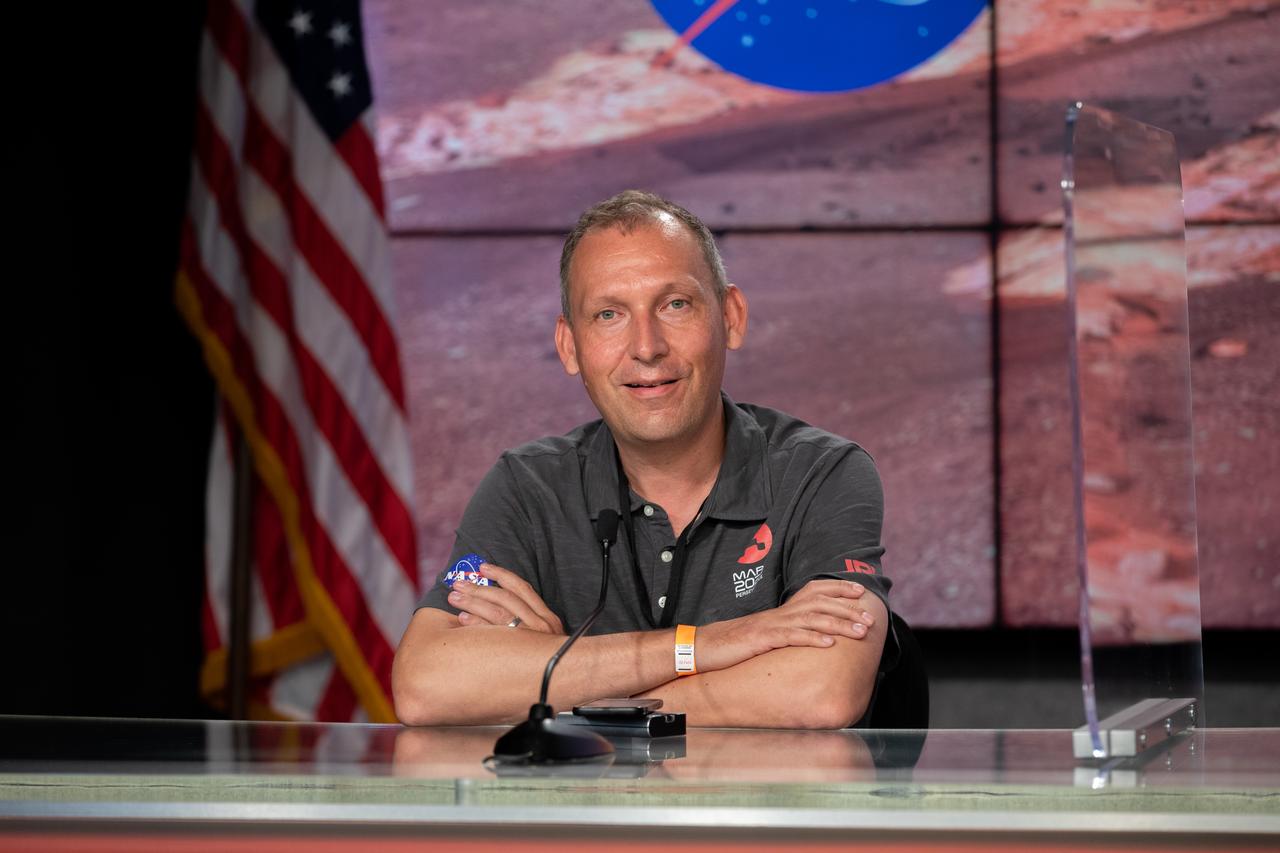
Thomas Zurbuchen, NASA associate administrator, Science Mission Directorate, participates in a Mars 2020 post-launch news conference at NASA’s Kennedy Space Center in Florida on July 30, 2020. The United Launch Alliance Atlas V 541 rocket lifted off from Space Launch Complex 41 at Cape Canaveral Air Force Station at 7:50 a.m. EDT, carrying the agency’s Mars Perseverance rover and Ingenuity helicopter. The rover is part of NASA’s Mars Exploration Program, a long-term effort of robotic exploration of the Red Planet. The rover will search for habitable conditions in the ancient past and signs of past microbial life on Mars. The Launch Services Program at Kennedy is responsible for launch management.
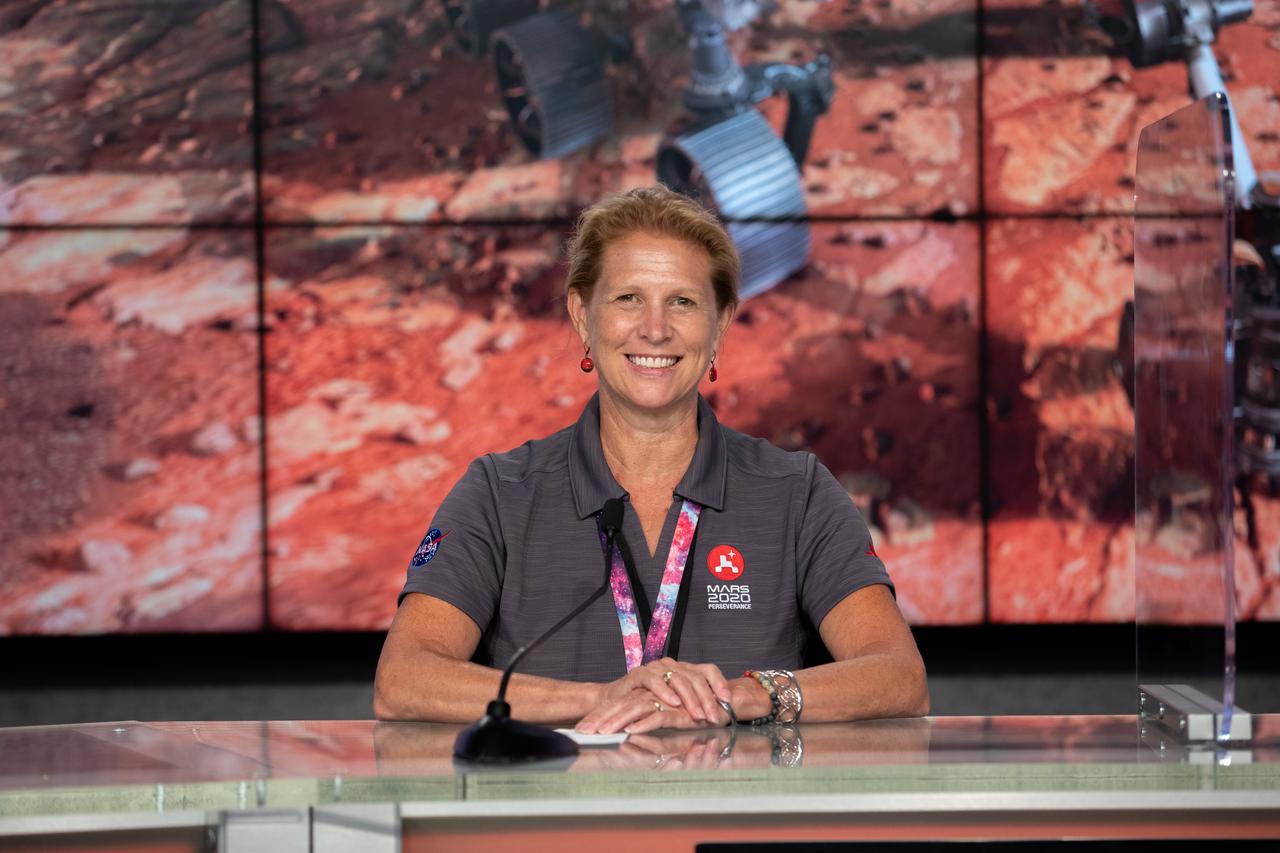
Lori Glaze, Planetary Science Division director, NASA Headquarters, participates in a Mars 2020 post-launch news conference at NASA’s Kennedy Space Center in Florida on July 30, 2020. The United Launch Alliance Atlas V 541 rocket lifted off from Space Launch Complex 41 at Cape Canaveral Air Force Station at 7:50 a.m. EDT, carrying the agency’s Mars Perseverance rover and Ingenuity helicopter. The rover is part of NASA’s Mars Exploration Program, a long-term effort of robotic exploration of the Red Planet. The rover will search for habitable conditions in the ancient past and signs of past microbial life on Mars. The Launch Services Program at Kennedy is responsible for launch management.
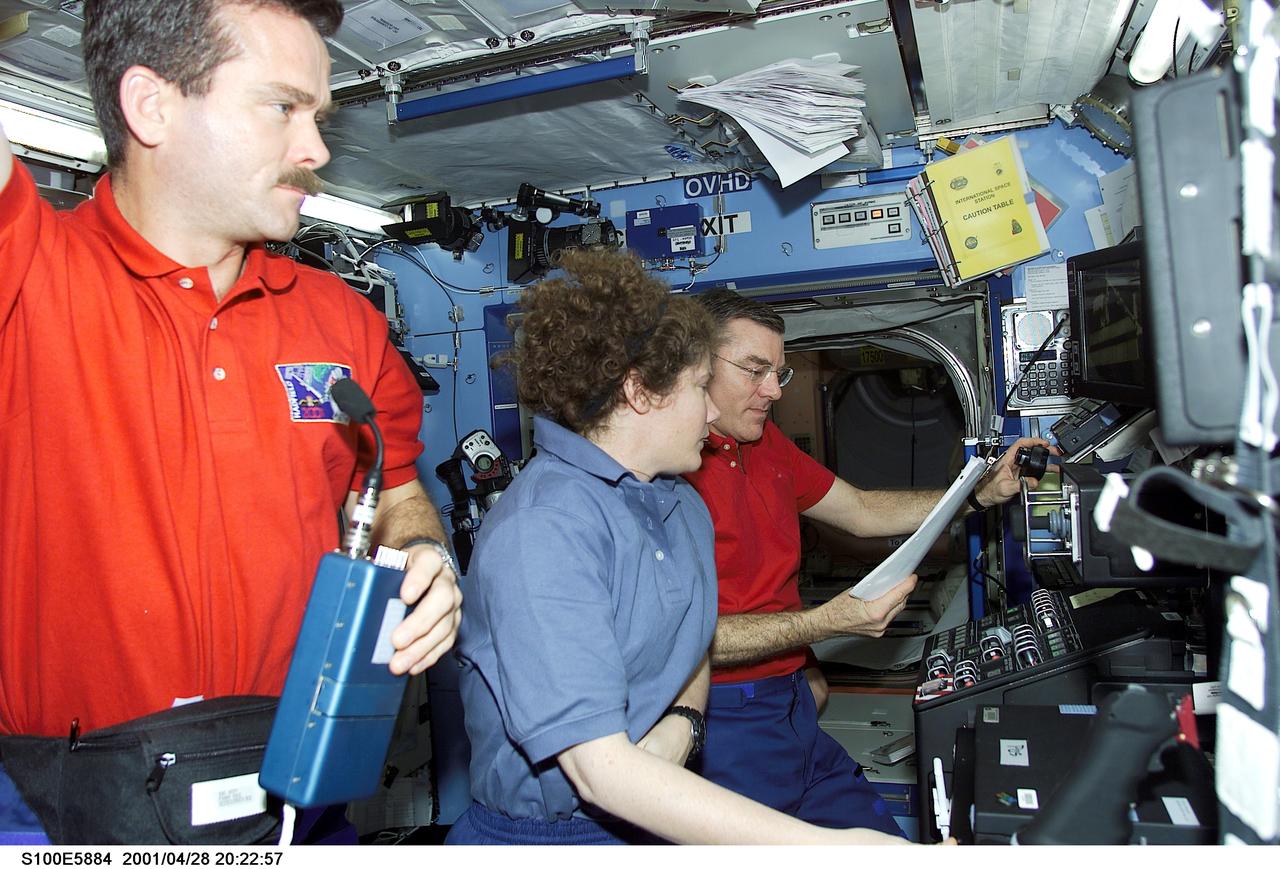
S100-E-5884 (28 April 2001) --- Some of the principal participants of an historical event are pictured in the Destiny laboratory aboard the International Space Station (ISS). From left to right are astronauts Chris A. Hadfield, STS-100 mission specialist, and astronauts Susan J. Helms and James S. Voss, Expedition Two flight engineers. A Canadian “handshake in space” occurred at 4:02 p.m (CDT), April 28, 2001, as the Canadian-built space station robotic arm – operated by Helms – transferred its launch cradle over to Endeavour’s robotic arm, with Canadian Space Agency astronaut Hadfield at the controls. In this scene, Hadfield has temporarily vacated his post on Endeavour's aft flight deck and was having a brief strategy meeting with the Expedition Two crew on the docked station. The exchange of the pallet from station arm to shuttle arm marked the first ever robotic-to-robotic transfer in space. This image was recorded with a digital still camera.
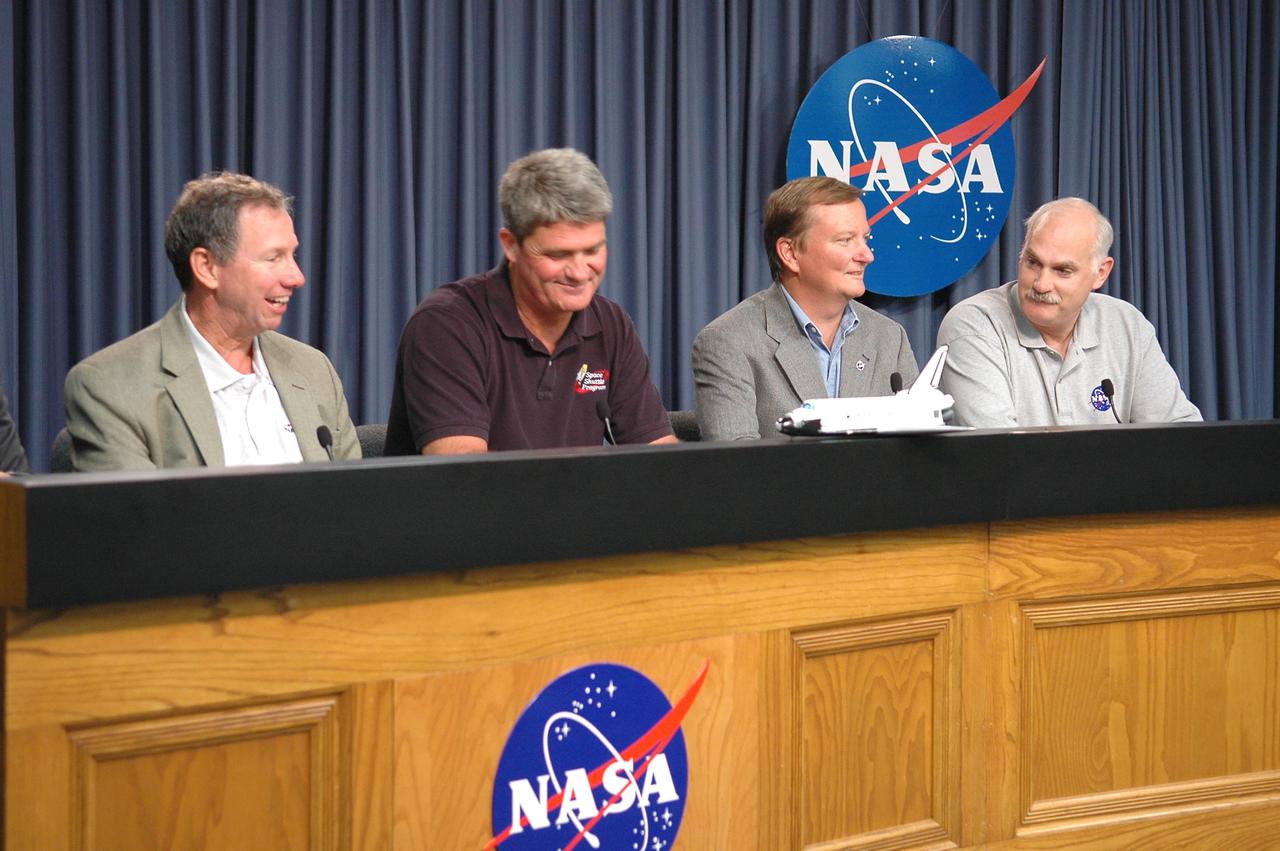
KENNEDY SPACE CENTER, FLA. - At a post-landing briefing, mission management cannot help smiling over the good news that Space Shuttle Discovery safely landed at Edwards Air Force Base in California. From left are NASA Administrator Mike Griffin, Space Shuttle Program Manager Bill Parsons, Shuttle Launch Director Mike Leinbach and Associate Administrator of NASA’s Space Operations Mission Directorate Bill Readdy. A landing at Kennedy Space Center was deferred due to weather concerns. The California landing occurred at 8:11 a.m. EDT, guided by Mission Commander Eileen Collins. Discovery spent two weeks in space on Return to Flight mission STS-114, where the crew demonstrated new methods to inspect and repair the Shuttle in orbit. The crew also delivered supplies, outfitted and performed maintenance on the International Space Station. A number of these tasks were conducted during three spacewalks.
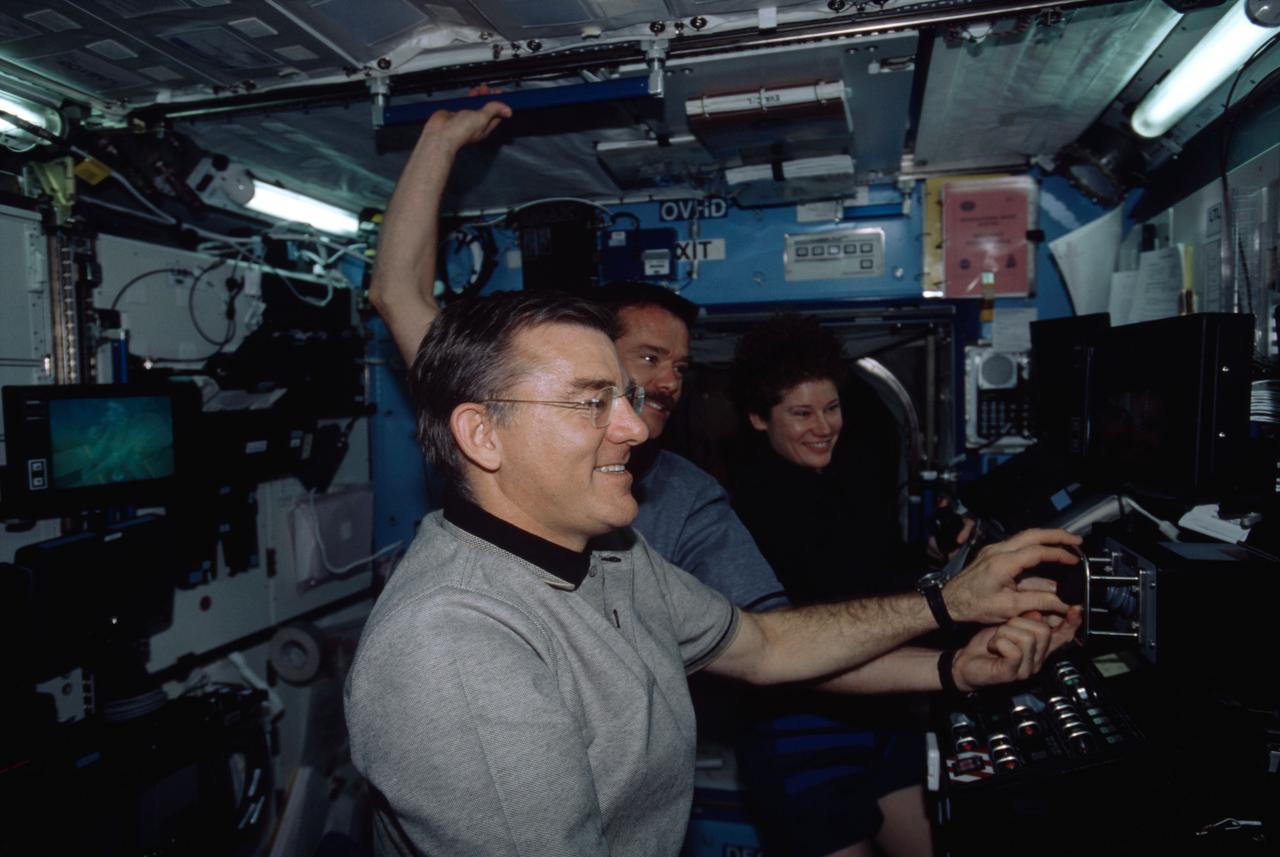
ISS002-303-036 (28 April 2001) --- Some of the principal participants of an historical event are pictured in the Destiny laboratory aboard the International Space Station (ISS). In the foreground is astronaut James S. Voss, with astronaut Chris A. Hadfield, STS-100 mission specialist, at center, and astronaut Susan J. Helms in the background. Voss and Helms are Expedition Two flight engineers. A Canadian "handshake in space" occurred at 4:02 p.m (CDT), April 28, 2001, as the Canadian-built space station robotic arm -- operated by Helms -- transferred its launch cradle over to Endeavour's robotic arm, with Canadian Space Agency astronaut Hadfield at the controls. In this scene, Hadfield had temporarily vacated his post on Endeavour's aft flight deck and was having a brief strategy meeting with the Expedition Two crew on the docked station. The exchange of the pallet from station arm to shuttle arm marked the first ever robotic-to-robotic transfer in space.
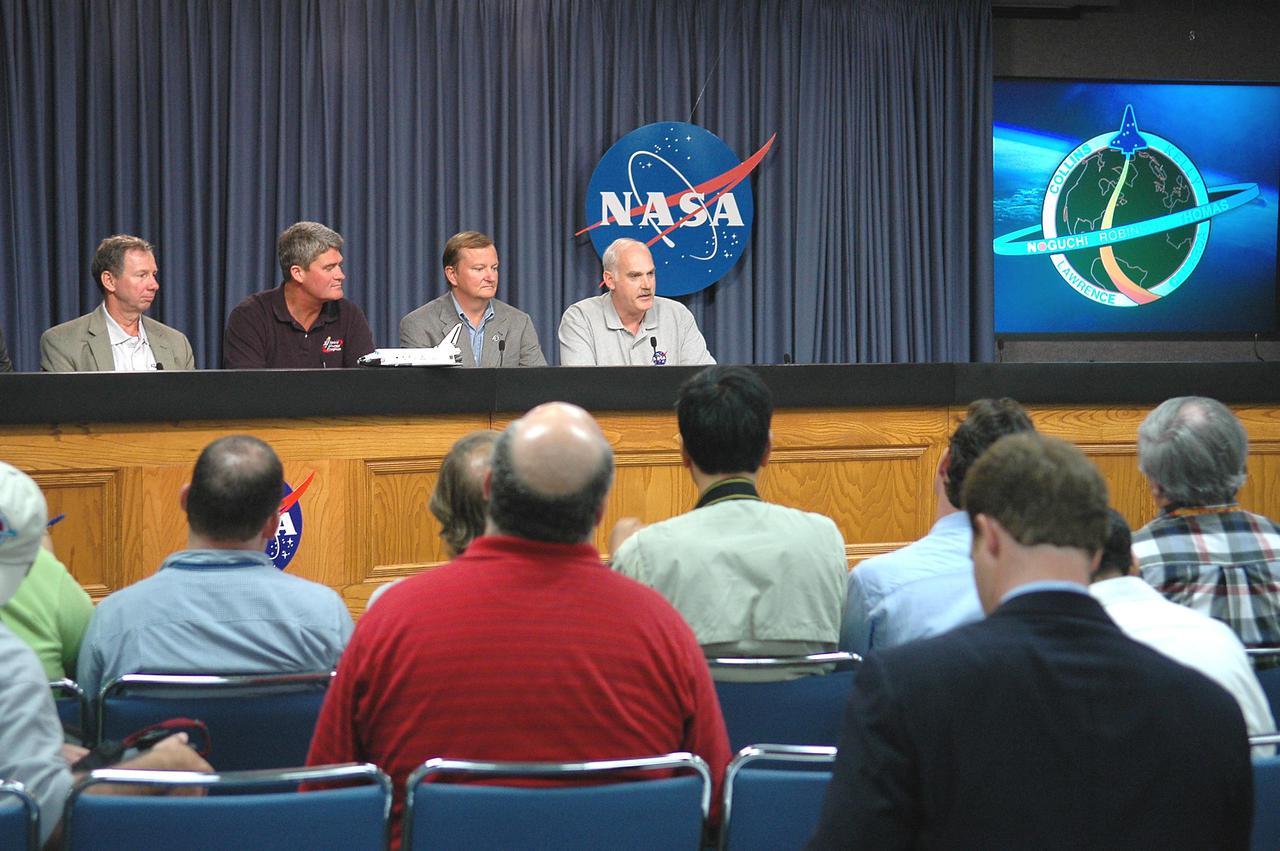
KENNEDY SPACE CENTER, FLA. - At a post-landing briefing, NASA Administrator Mike Griffin, Space Shuttle Program Manager Bill Parsons, Shuttle Launch Director Mike Leinbach and Associate Administrator of NASA’s Space Operations Mission Directorate Bill Readdy respond to questions from the media. Space Shuttle Discovery safely landed at Edwards Air Force Base in California at 8:11 a.m. EDT, guided by Mission Commander Eileen Collins. Discovery spent two weeks in space on Return to Flight mission STS-114, where the crew demonstrated new methods to inspect and repair the Shuttle in orbit. The crew also delivered supplies, outfitted and performed maintenance on the International Space Station. A number of these tasks were conducted during three spacewalks.
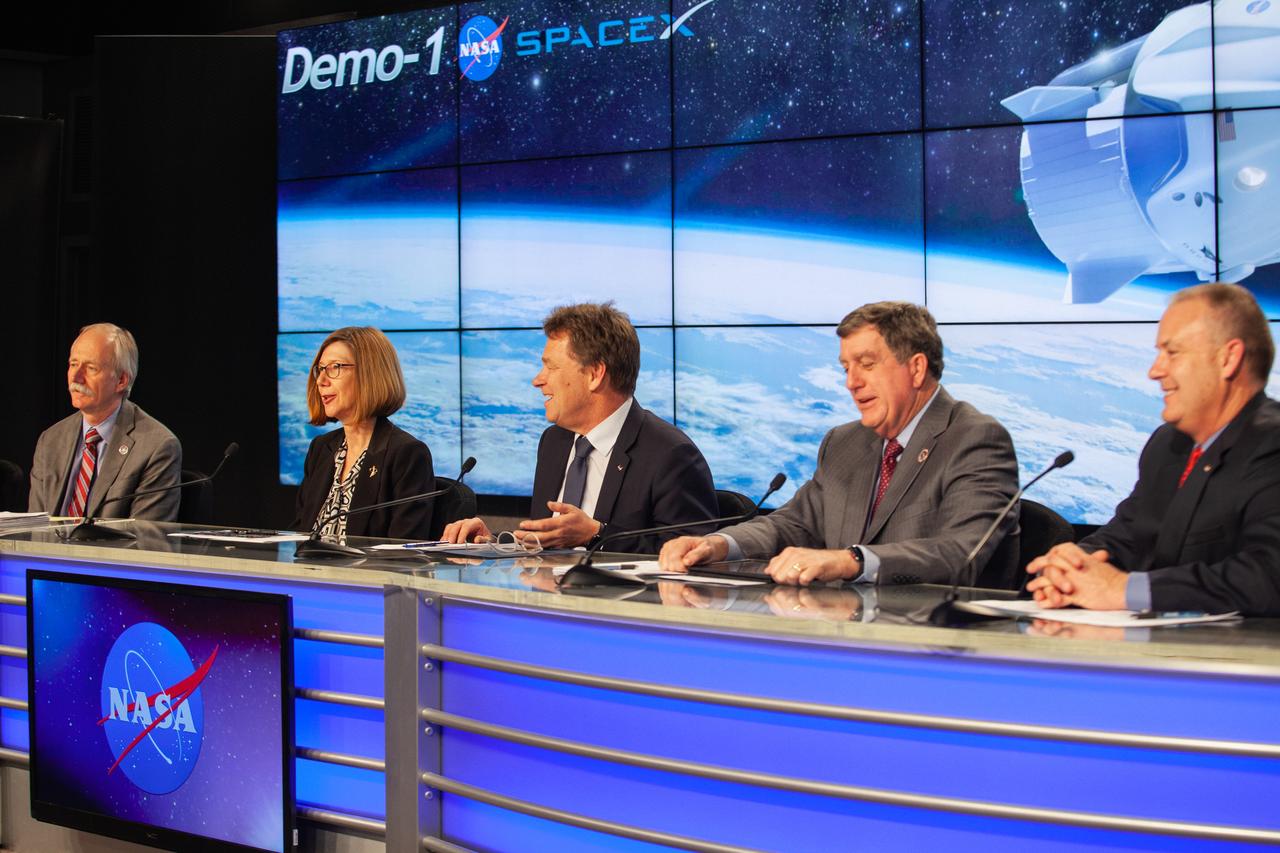
In Kennedy Space Center’s Press Site auditorium, agency and industry leaders speak to members of the media on Friday, Feb. 22, during the post-flight readiness review briefing for the SpaceX Demo-1 Commercial Crew Program (CCP) mission to the International Space Station. From left are: Josh Finch of NASA Communications; William Gerstenmaier, associate administrator, NASA Human Exploration and Operations; Kathy Lueders, manager, NASA Commercial Crew Program; Hans Koenigsmann, vice president, Build and Flight Reliability, SpaceX; Kirk Shireman, International Space Station Program manager; and Norm Knight, deputy director, NASA Johnson Space Center Flight Operations. The inaugural uncrewed flight of the SpaceX Crew Dragon, known as Demo-1, is targeted to lift off from Kennedy’s Launch Complex 39A on Saturday, March 2. EST. A SpaceX Falcon 9 rocket will launch the Crew Dragon on a mission designed to validate end-to-end systems and capabilities, leading to certification to fly crew.

CAPE CANAVERAL, Fla. - NASA managers participate in a post-landing media briefing at NASA's Kennedy Space Center in Florida following the completion of the STS-133 mission. From left are Allard Beutel, NASA Public Affairs; Bill Gerstenmaier, associate administrator for Space Operations; Mike Moses, space shuttle launch integration manager; and Mike Leinbach, shuttle launch director. Space shuttle Discovery's final return from space on Runway 15 at Kennedy's Shuttle Landing Facility completed the 13-day, 5.3-million-mile STS-133 mission. Main gear touchdown was at 11:57:17 a.m., followed by nose gear touchdown at 11:57:28, and wheelstop at 11:58:14 a.m. On board are Commander Steve Lindsey, Pilot Eric Boe, and Mission Specialists Nicole Stott, Michael Barratt, Alvin Drew and Steve Bowen. Discovery and its six-member crew delivered the Permanent Multipurpose Module, packed with supplies and critical spare parts, as well as Robonaut 2, the dexterous humanoid astronaut helper, to the orbiting outpost. STS-133 was Discovery's 39th and final mission. This was the 133rd Space Shuttle Program mission and the 35th shuttle voyage to the space station. Photo credit: NASA/Jack Pfaller
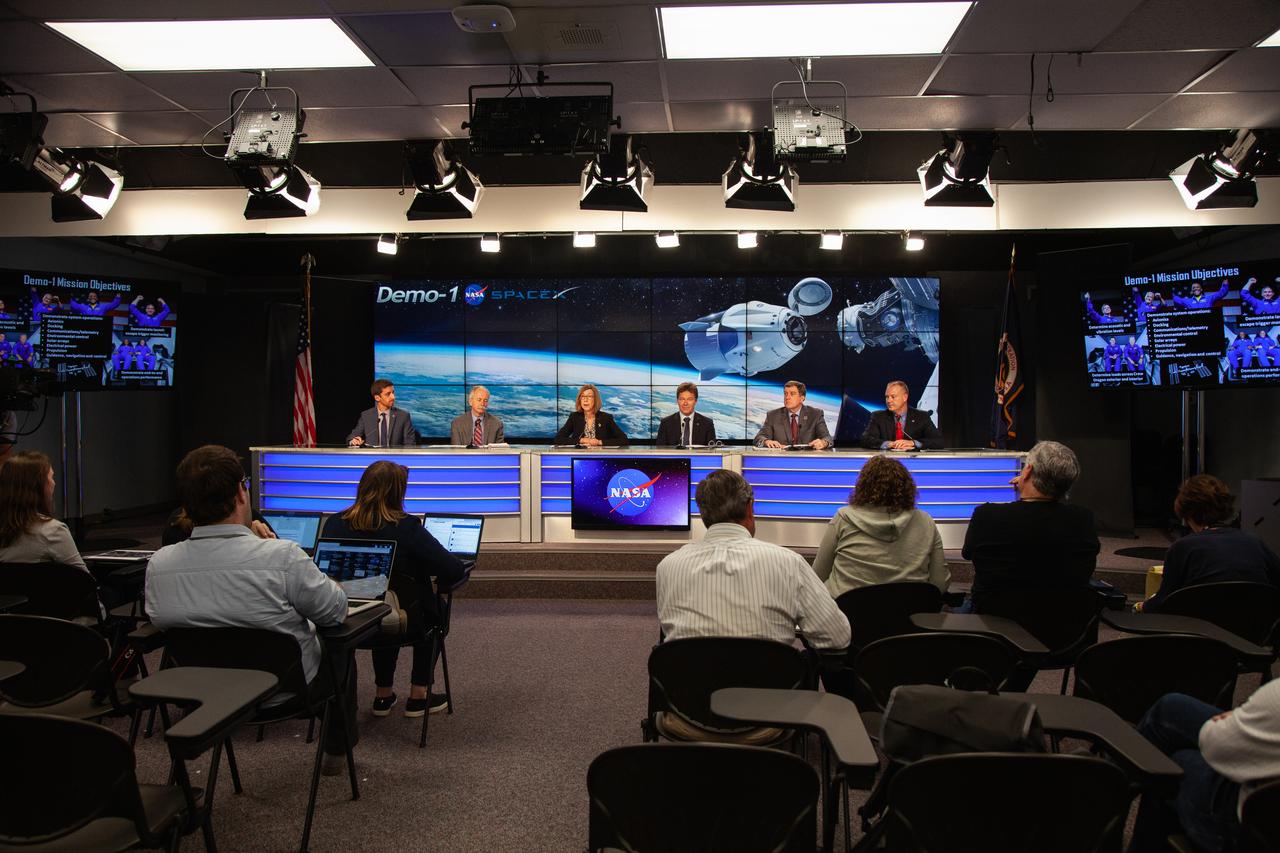
In Kennedy Space Center’s Press Site auditorium, agency and industry leaders speak to members of the media on Friday, Feb. 22, during the post-flight readiness review briefing for the SpaceX Demo-1 Commercial Crew Program (CCP) mission to the International Space Station. From left are: Josh Finch of NASA Communications; William Gerstenmaier, associate administrator, NASA Human Exploration and Operations; Kathy Lueders, manager, NASA Commercial Crew Program; Hans Koenigsmann, vice president, Build and Flight Reliability, SpaceX; Kirk Shireman, International Space Station Program manager; and Norm Knight, deputy director, NASA Johnson Space Center Flight Operations. The inaugural uncrewed flight of the SpaceX Crew Dragon, known as Demo-1, is targeted to lift off from Kennedy’s Launch Complex 39A on Saturday, March 2. EST. A SpaceX Falcon 9 rocket will launch the Crew Dragon on a mission designed to validate end-to-end systems and capabilities, leading to certification to fly crew.
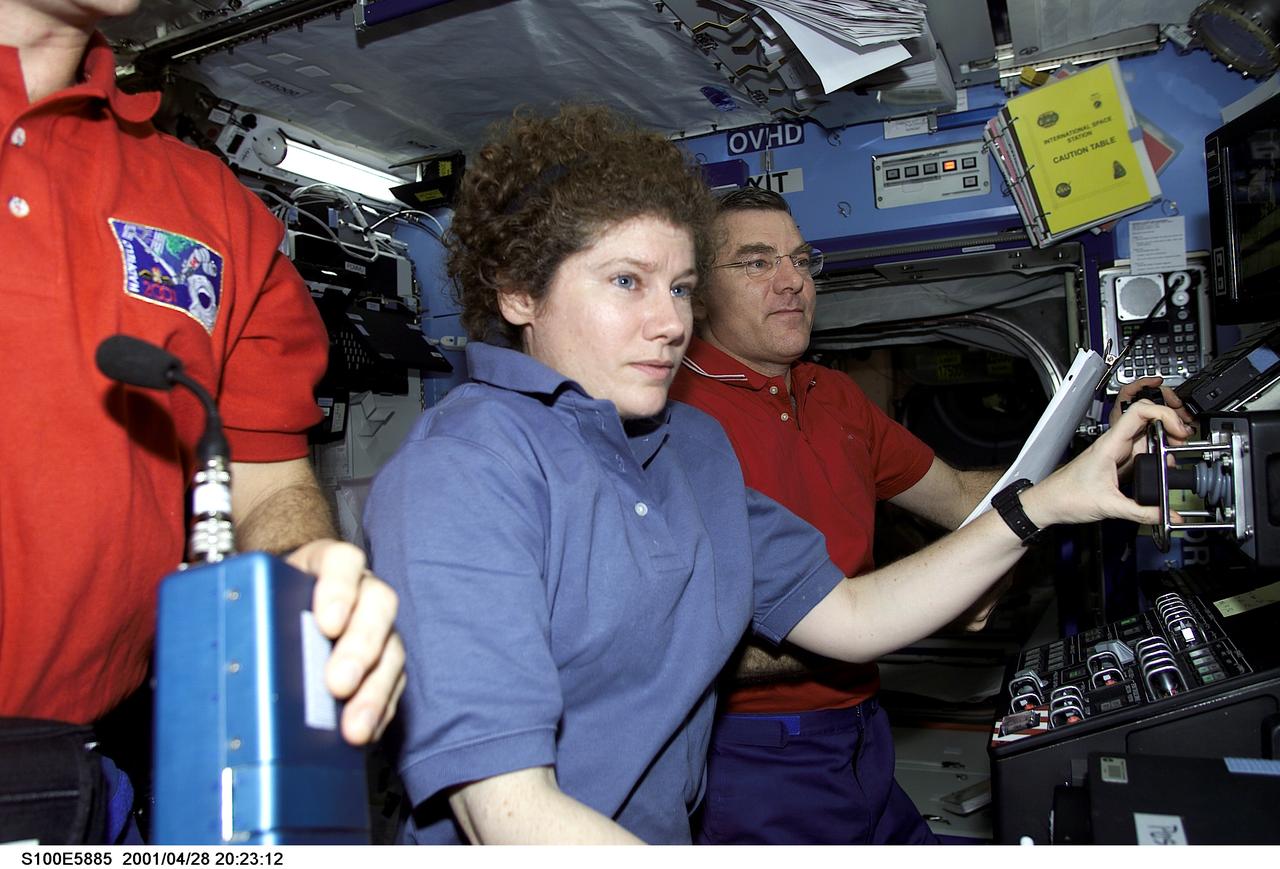
S100-E-5885 (28 April 2001) --- Some of the principal participants of an historical event are pictured in the Destiny laboratory aboard the International Space Station (ISS). From left to right are astronauts Chris A. Hadfield (partially out of frame), STS-100 mission specialist, and astronauts Susan J. Helms and James S. Voss, Expedition Two flight engineers. A Canadian “handshake in space” occurred at 4:02 p.m (CDT), April 28, 2001, as the Canadian-built space station robotic arm – operated by Helms – transferred its launch cradle over to Endeavour’s robotic arm, with Canadian Space Agency astronaut Hadfield at the controls. In this scene, Hadfield has temporarily vacated his post on Endeavour's aft flight deck and was having a brief strategy meeting with the Expedition Two crew on the docked station. The exchange of the pallet from station arm to shuttle arm marked the first ever robotic-to-robotic transfer in space. This image was recorded with a digital still camera.
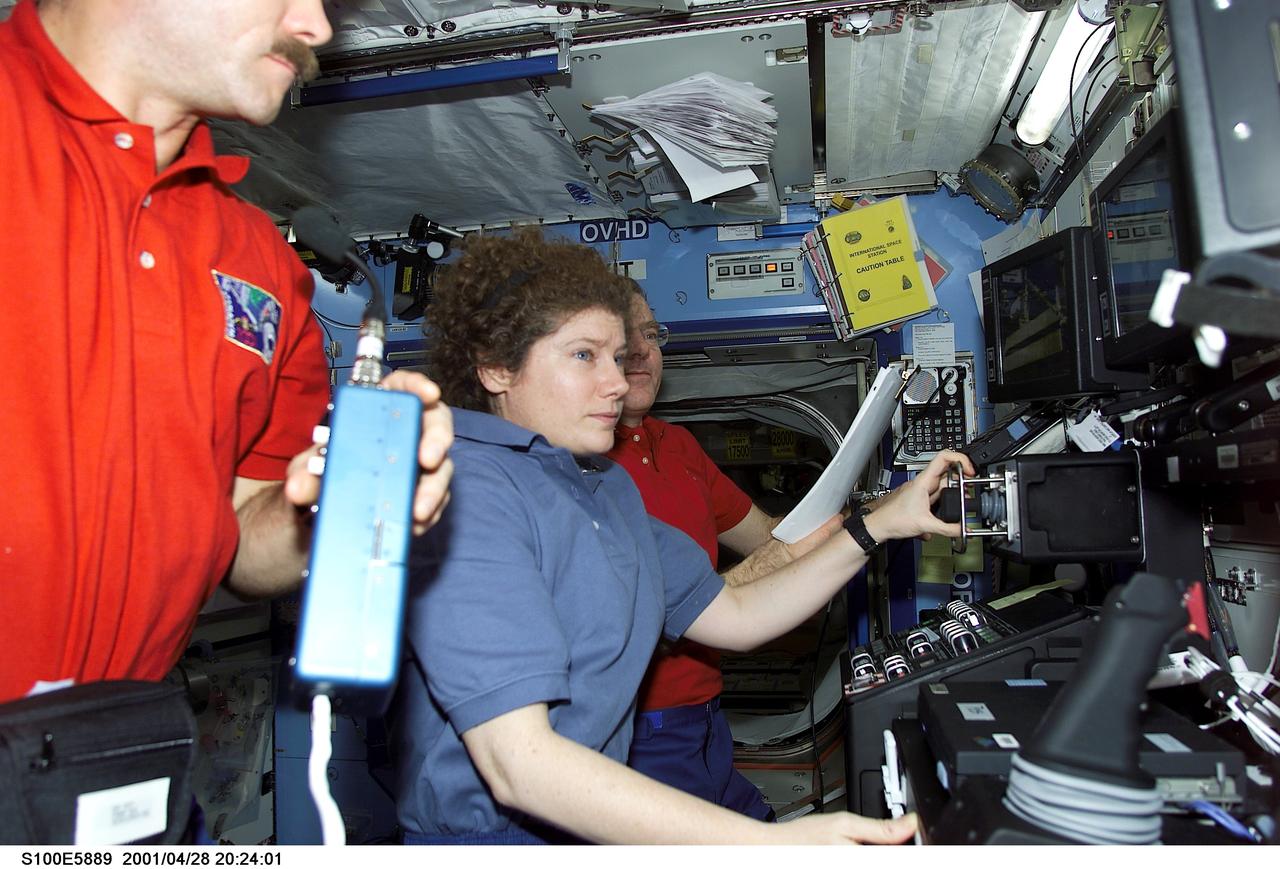
S100-E-5889 (28 April 2001) --- Two of the principal participants of an historical event are pictured in the Destiny laboratory aboard the International Space Station (ISS). Pictured are astronauts Chris A. Hadfield (partially out of frame), STS-100 mission specialist, and astronaut Susan J. Helms, flight engineer for Expedition Two. Astronaut James S. Voss, Expedition Two flight engineer, is in the background. A Canadian “handshake in space” occurred at 4:02 p.m (CDT), April 28, 2001, as the Canadian-built space station robotic arm – operated by Helms – transferred its launch cradle over to Endeavour’s robotic arm, with Canadian Space Agency astronaut Hadfield at the controls. In this scene, Hadfield has temporarily vacated his post on Endeavour's aft flight deck and was having a brief strategy meeting with Helms on the docked station. The exchange of the pallet from station arm to shuttle arm marked the first ever robotic-to-robotic transfer in space. This image was recorded with a digital still camera.
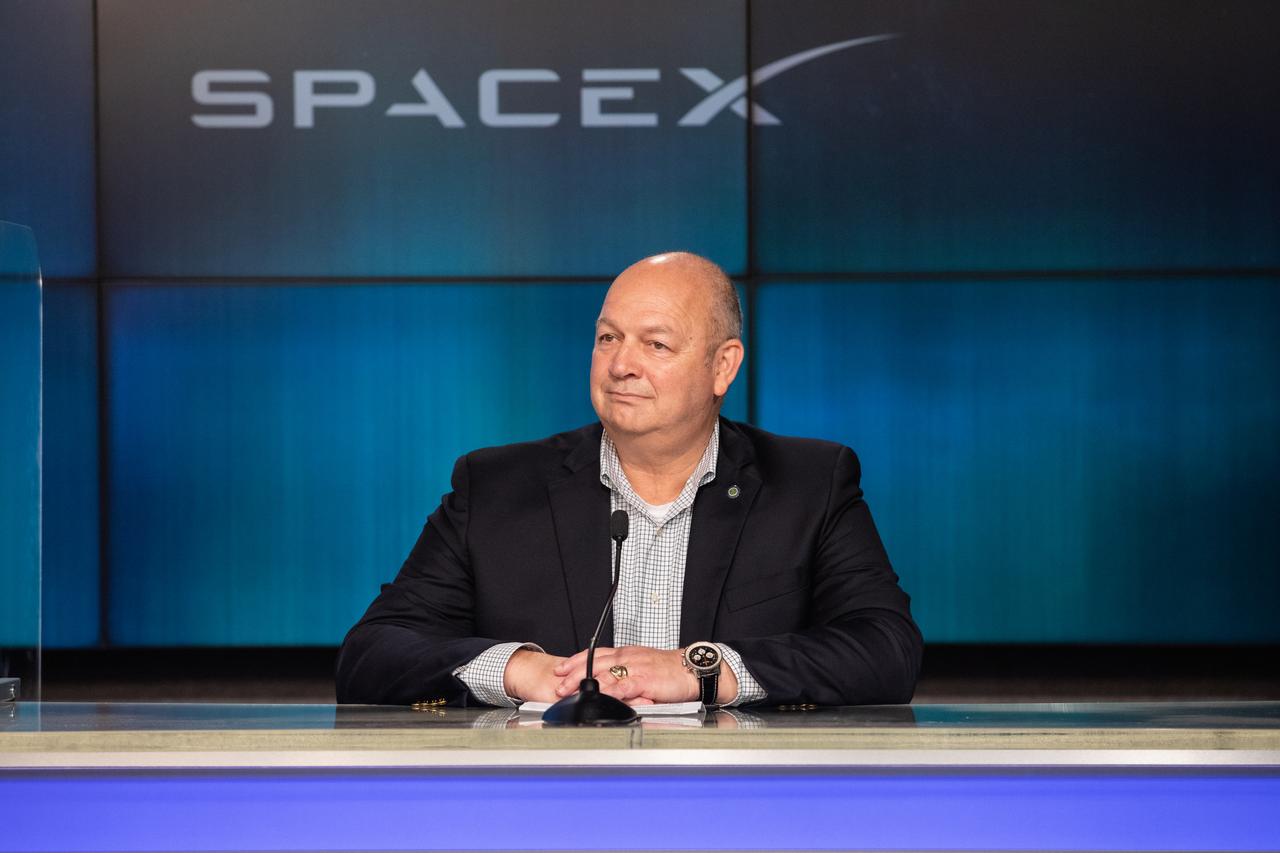
Steve Dickson, administrator, Federal Aviation Administration, answers questions from members of the news media during a postlaunch news conference for NASA’s SpaceX Crew-1 mission on Nov. 15, 2020, at Kennedy Space Center in Florida. Liftoff time on a Falcon 9 rocket was at 7:27 p.m. EST. The Crew Dragon is carrying NASA astronauts Michael Hopkins, spacecraft commander; Victor Glover, pilot; Shannon Walker, mission specialist; and Japan Aerospace Exploration Agency astronaut Soichi Noguchi, mission specialist, to the International Space Station. Crew-1 is the first regular crew mission of a U.S. commercial spacecraft with astronauts to the space station as part of NASA’s Commercial Crew Program. The Crew Dragon will dock with the station and the crew will remain on the orbiting laboratory for a six-month science mission.
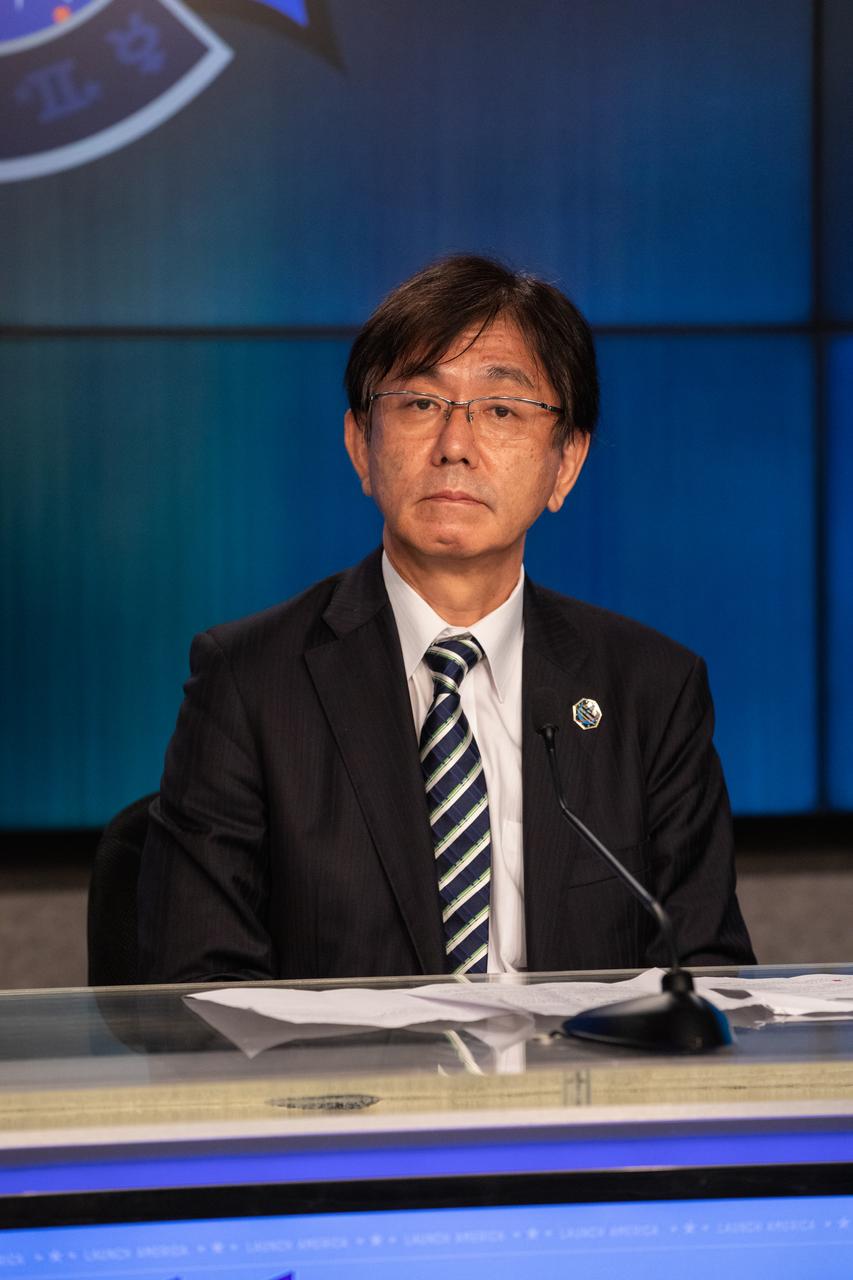
Hiroshi Sasaki, vice president and director general, JAXA’s Human Spaceflight Technology Directorate, answers questions from members of the news media during a postlaunch news conference for NASA’s SpaceX Crew-1 mission on Nov. 15, 2020, at Kennedy Space Center in Florida. Liftoff time on a Falcon 9 rocket was at 7:27 p.m. EST. The Crew Dragon is carrying NASA astronauts Michael Hopkins, spacecraft commander; Victor Glover, pilot; Shannon Walker, mission specialist; and Japan Aerospace Exploration Agency astronaut Soichi Noguchi, mission specialist, to the International Space Station. Crew-1 is the first regular crew mission of a U.S. commercial spacecraft with astronauts to the space station as part of NASA’s Commercial Crew Program. The Crew Dragon will dock with the station and the crew will remain on the orbiting laboratory for a six-month science mission.
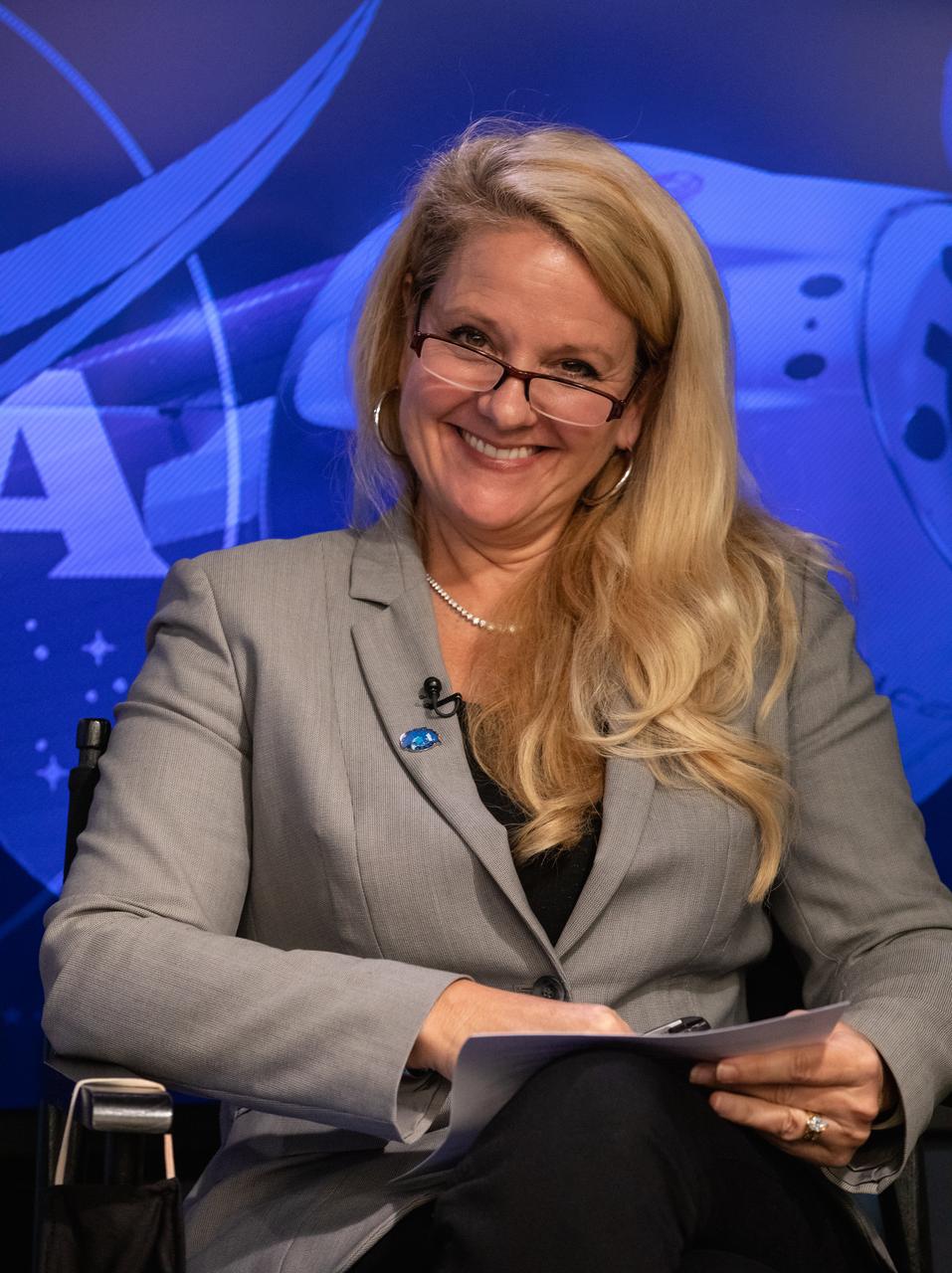
Gwynne Shotwell, president and chief operating officer, SpaceX, answers questions from members of the news media during a postlaunch news conference for NASA’s SpaceX Crew-1 mission on Nov. 15, 2020, at Kennedy Space Center in Florida. Liftoff time on a Falcon 9 rocket was at 7:27 p.m. EST. The Crew Dragon is carrying NASA astronauts Michael Hopkins, spacecraft commander; Victor Glover, pilot; Shannon Walker, mission specialist; and Japan Aerospace Exploration Agency astronaut Soichi Noguchi, mission specialist, to the International Space Station. Crew-1 is the first regular crew mission of a U.S. commercial spacecraft with astronauts to the space station as part of NASA’s Commercial Crew Program. The Crew Dragon will dock with the station and the crew will remain on the orbiting laboratory for a six-month science mission.
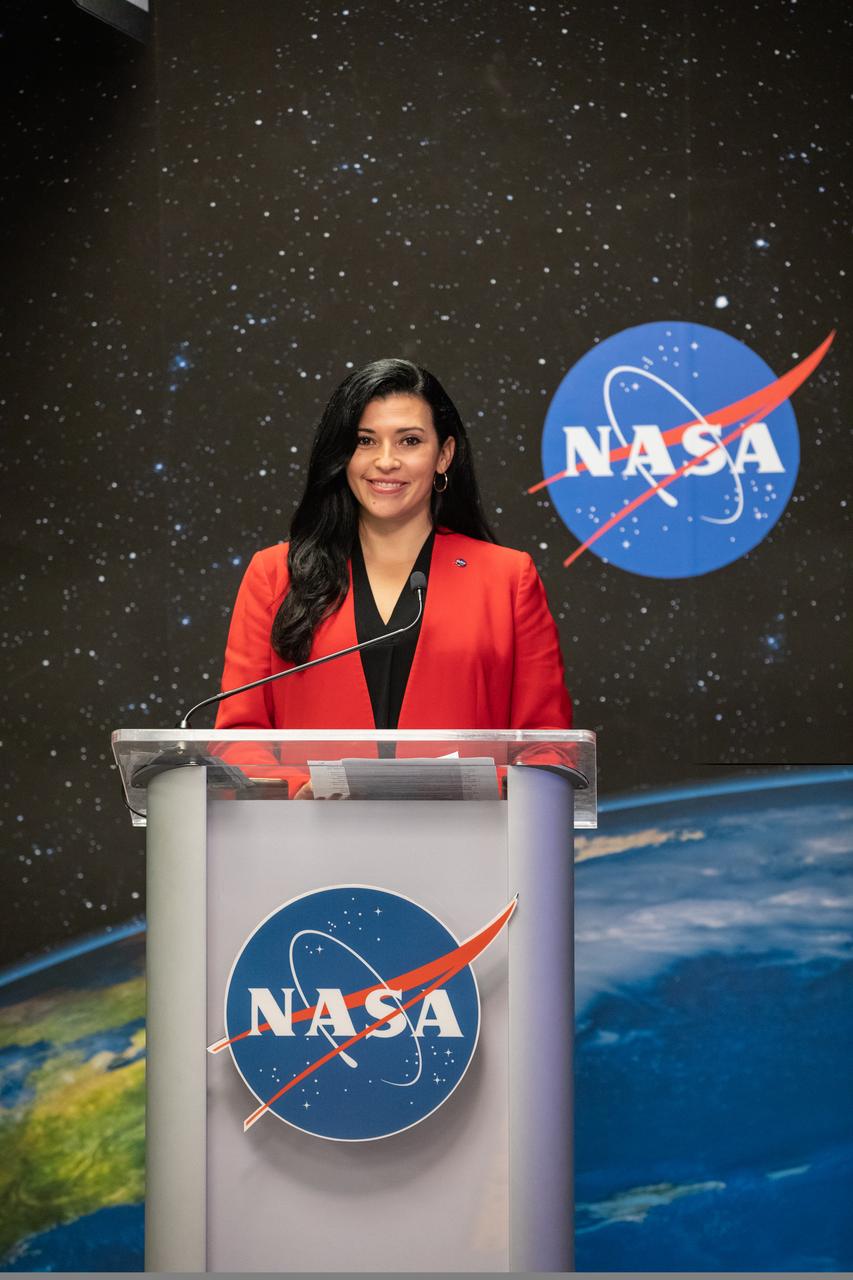
Bettina Inclan, NASA Communications, moderates a postlaunch news conference for NASA’s SpaceX Crew-1 mission on Nov. 15, 2020, at Kennedy Space Center in Florida. Liftoff time on a Falcon 9 rocket was at 7:27 p.m. EST. The Crew Dragon is carrying NASA astronauts Michael Hopkins, spacecraft commander; Victor Glover, pilot; Shannon Walker, mission specialist; and Japan Aerospace Exploration Agency astronaut Soichi Noguchi, mission specialist, to the International Space Station. Crew-1 is the first regular crew mission of a U.S. commercial spacecraft with astronauts to the space station as part of NASA’s Commercial Crew Program. The Crew Dragon will dock with the station and the crew will remain on the orbiting laboratory for a six-month science mission.
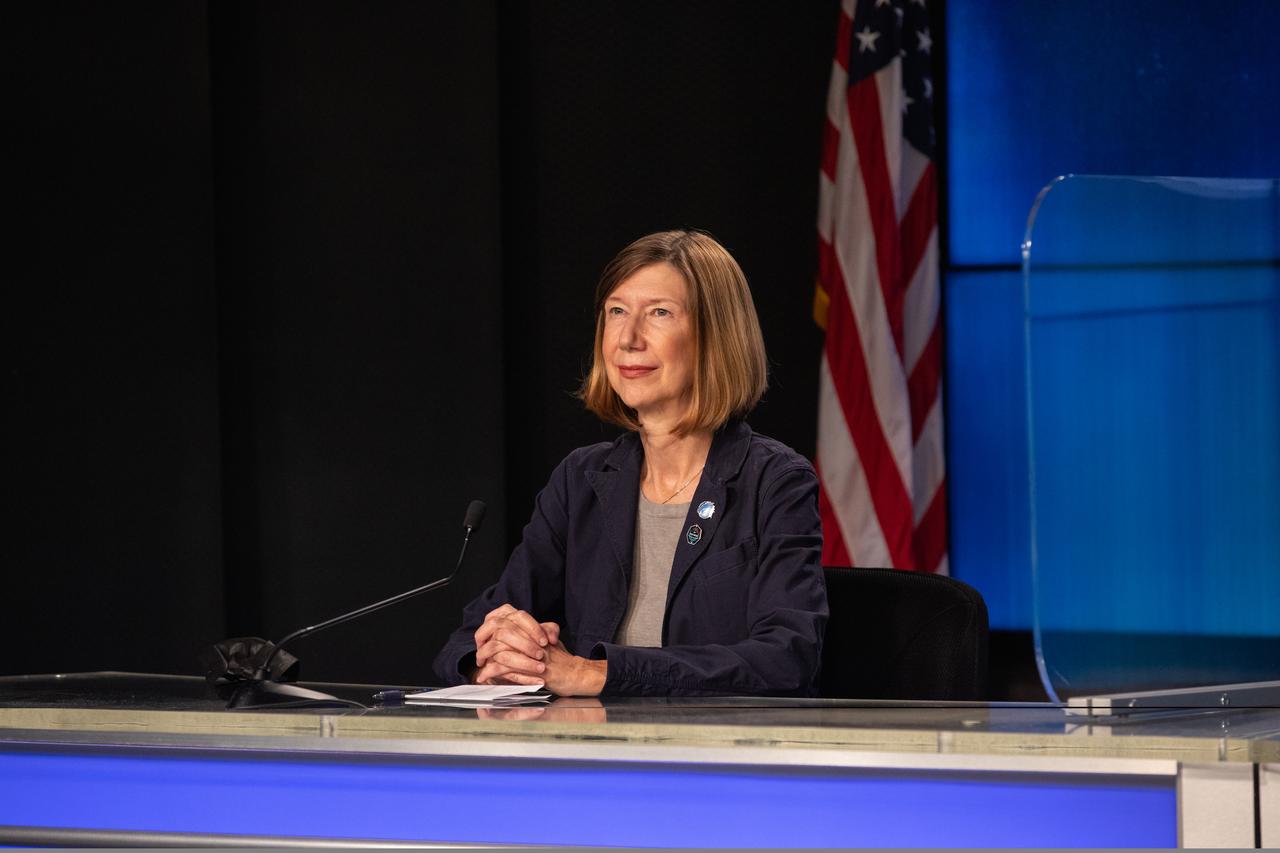
Kathy Lueders, associate administrator for human exploration and operations, NASA Headquarters, answers questions from members of the news media during a postlaunch news conference for NASA’s SpaceX Crew-1 mission on Nov. 15, 2020, at Kennedy Space Center in Florida. Liftoff time on a Falcon 9 rocket was at 7:27 p.m. EST. The Crew Dragon is carrying NASA astronauts Michael Hopkins, spacecraft commander; Victor Glover, pilot; Shannon Walker, mission specialist; and Japan Aerospace Exploration Agency astronaut Soichi Noguchi, mission specialist, to the International Space Station. Crew-1 is the first regular crew mission of a U.S. commercial spacecraft with astronauts to the space station as part of NASA’s Commercial Crew Program. The Crew Dragon will dock with the station and the crew will remain on the orbiting laboratory for a six-month science mission.
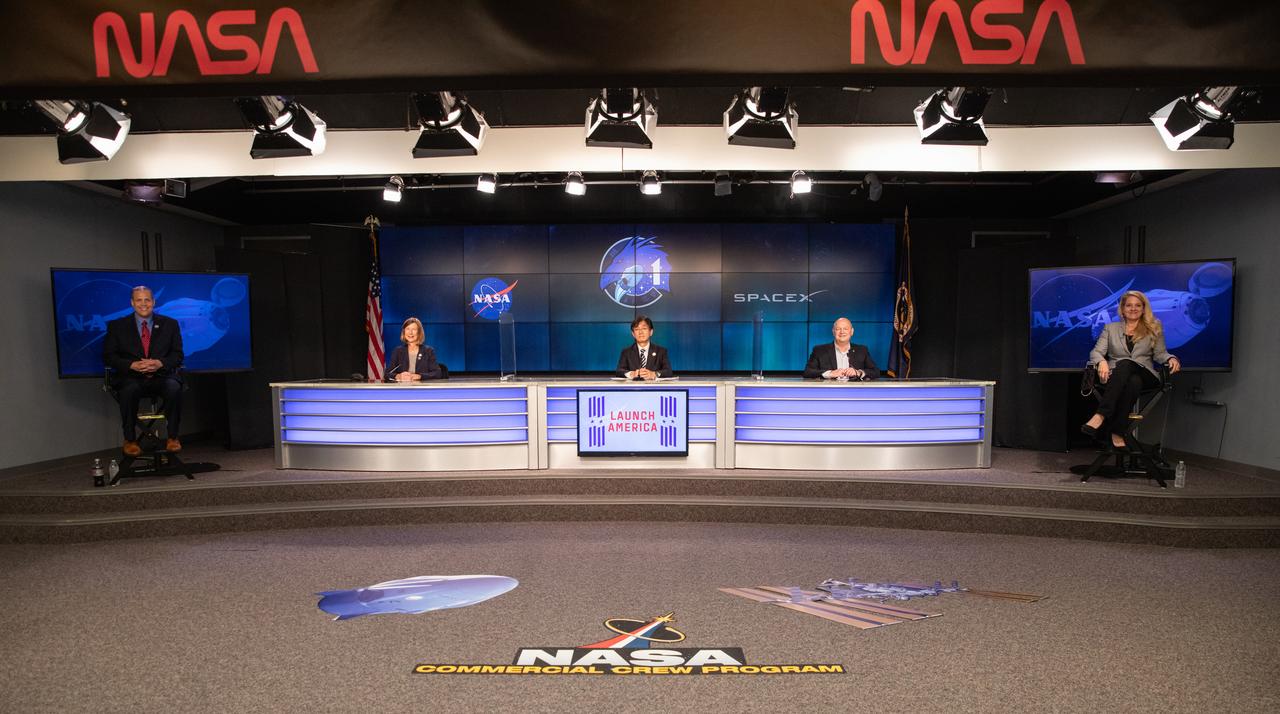
A postlaunch news conference for NASA’s SpaceX Crew-1 mission is held at Kennedy Space Center in Florida on Nov. 15, 2020. Liftoff time on a SpaceX Falcon 9 rocket was at 7:27 p.m. EST. From left are NASA Administrator Jim Bridenstine; Kathy Lueders, associate administrator for human exploration and operations, NASA Headquarters; Hiroshi Sasaki, vice president and director general, JAXA’s Human Spaceflight Technology Directorate; Steve Dickson, administrator, Federal Aviation Administration; and Gwynne Shotwell, president and chief operating officer, SpaceX. The Crew Dragon is carrying NASA astronauts Michael Hopkins, spacecraft commander; Victor Glover, pilot; Shannon Walker, mission specialist; and Japan Aerospace Exploration Agency astronaut Soichi Noguchi, mission specialist, to the international Space Station. Crew-1 is the first regular crew mission of a U.S. commercial spacecraft with astronauts to the space station as part of NASA’s Commercial Crew Program. The Crew Dragon will dock with the station and the crew will remain on the orbiting laboratory for a six-month science mission.
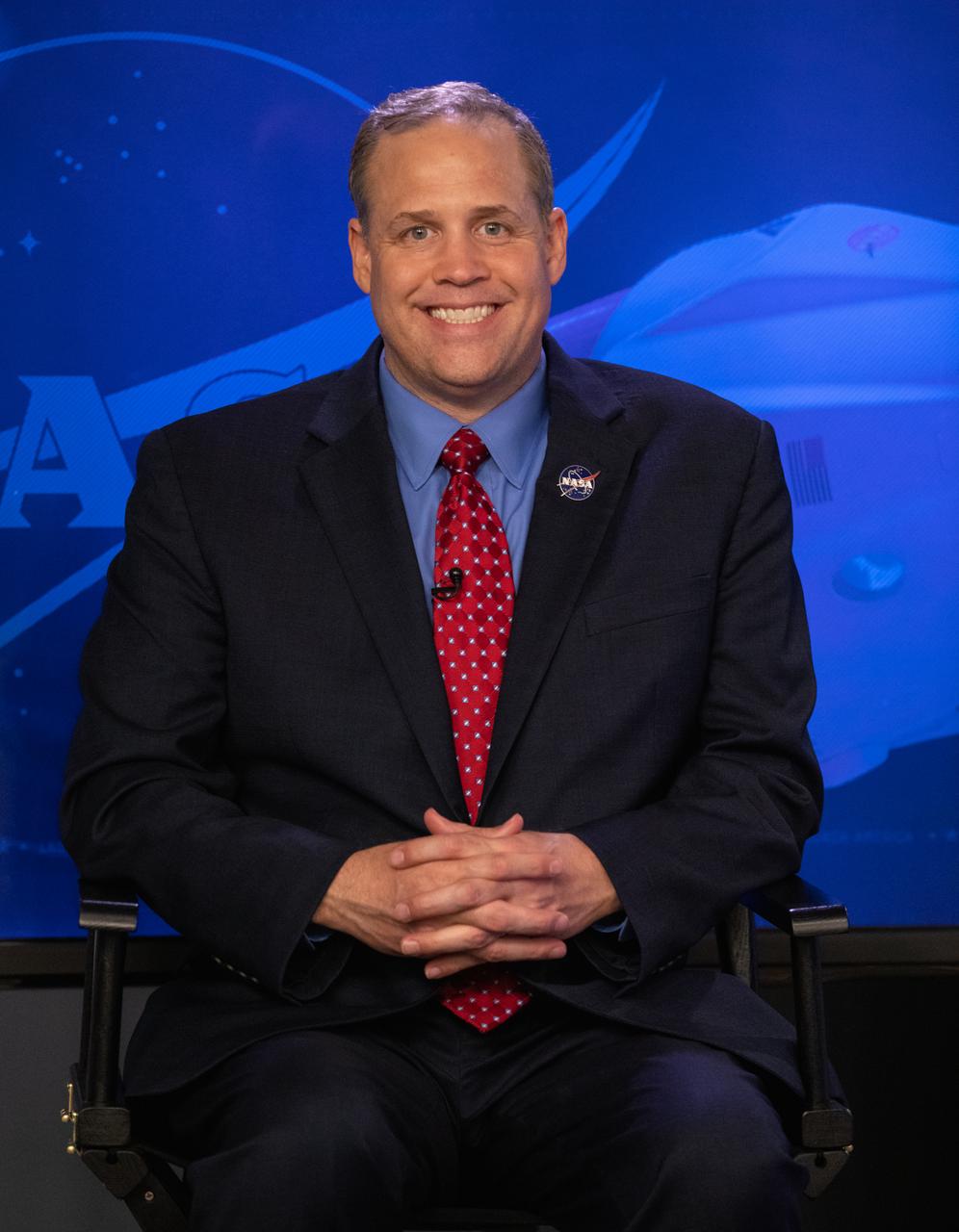
NASA Administrator Jim Bridenstine makes remarks during a postlaunch news conference for NASA’s SpaceX Crew-1 mission on Nov. 15, 2020, at Kennedy Space Center in Florida. Liftoff time on a Falcon 9 rocket was at 7:27 p.m. EST. The Crew Dragon is carrying NASA astronauts Michael Hopkins, spacecraft commander; Victor Glover, pilot; Shannon Walker, mission specialist; and Japan Aerospace Exploration Agency astronaut Soichi Noguchi, mission specialist, to the International Space Station. Crew-1 is the first regular crew mission of a U.S. commercial spacecraft with astronauts to the space station as part of NASA’s Commercial Crew Program. The Crew Dragon will dock with the station and the crew will remain on the orbiting laboratory for a six-month science mission.