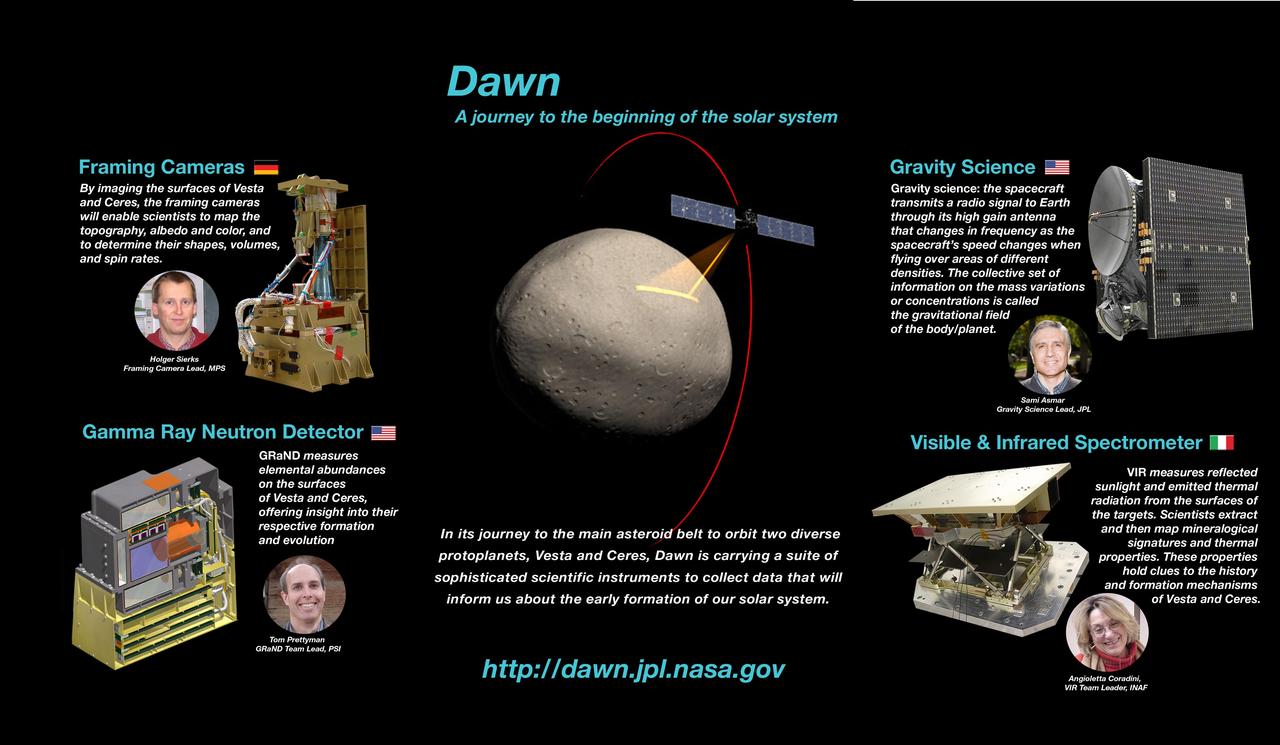
NASA Dawn instrumentation poster, part of the Dawn Mission Art series. http://photojournal.jpl.nasa.gov/catalog/PIA19374

NASA Earth Day 2019 Poster - Web

NASA Earth Day 2019 Poster - Print

Stylized poster for NASA's Artemis II mission.

Stylized poster for NASA's Artemis II mission
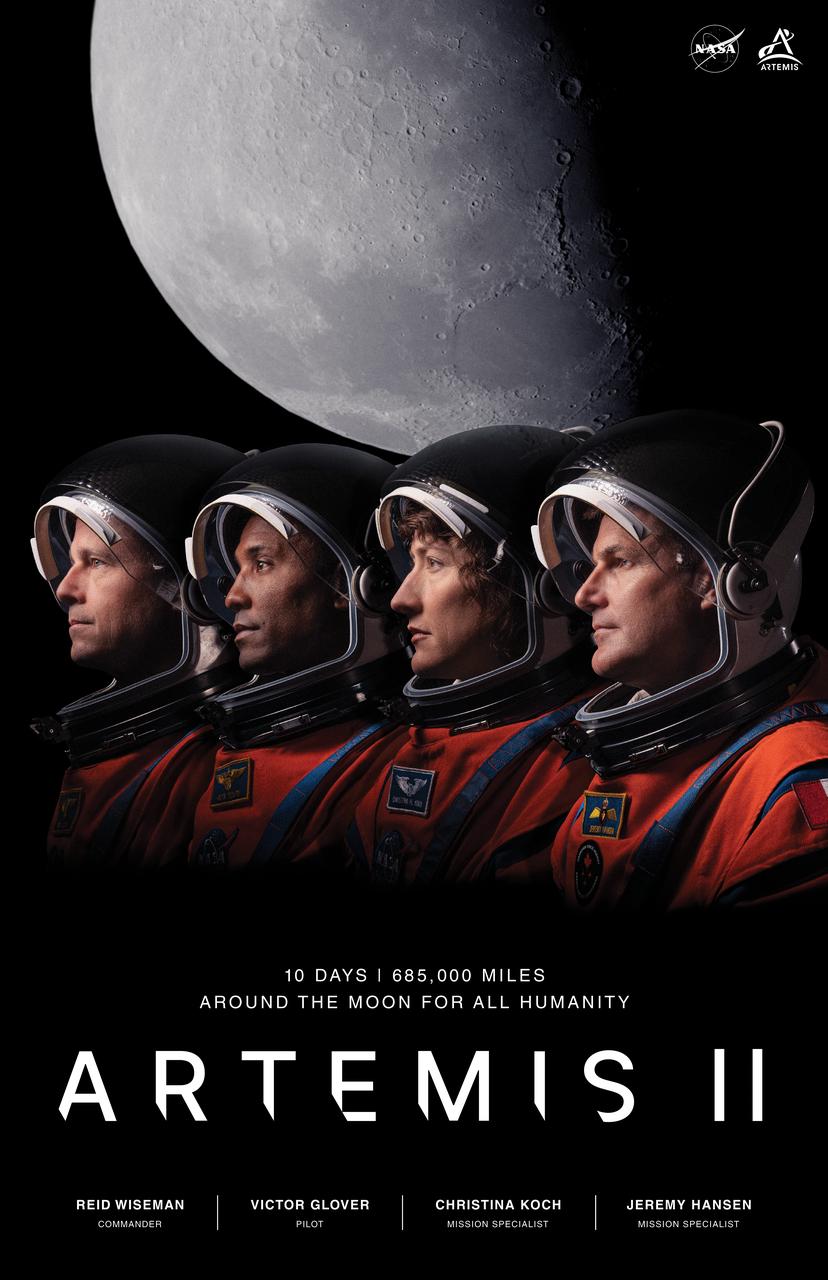
Artemis II Crew Poster
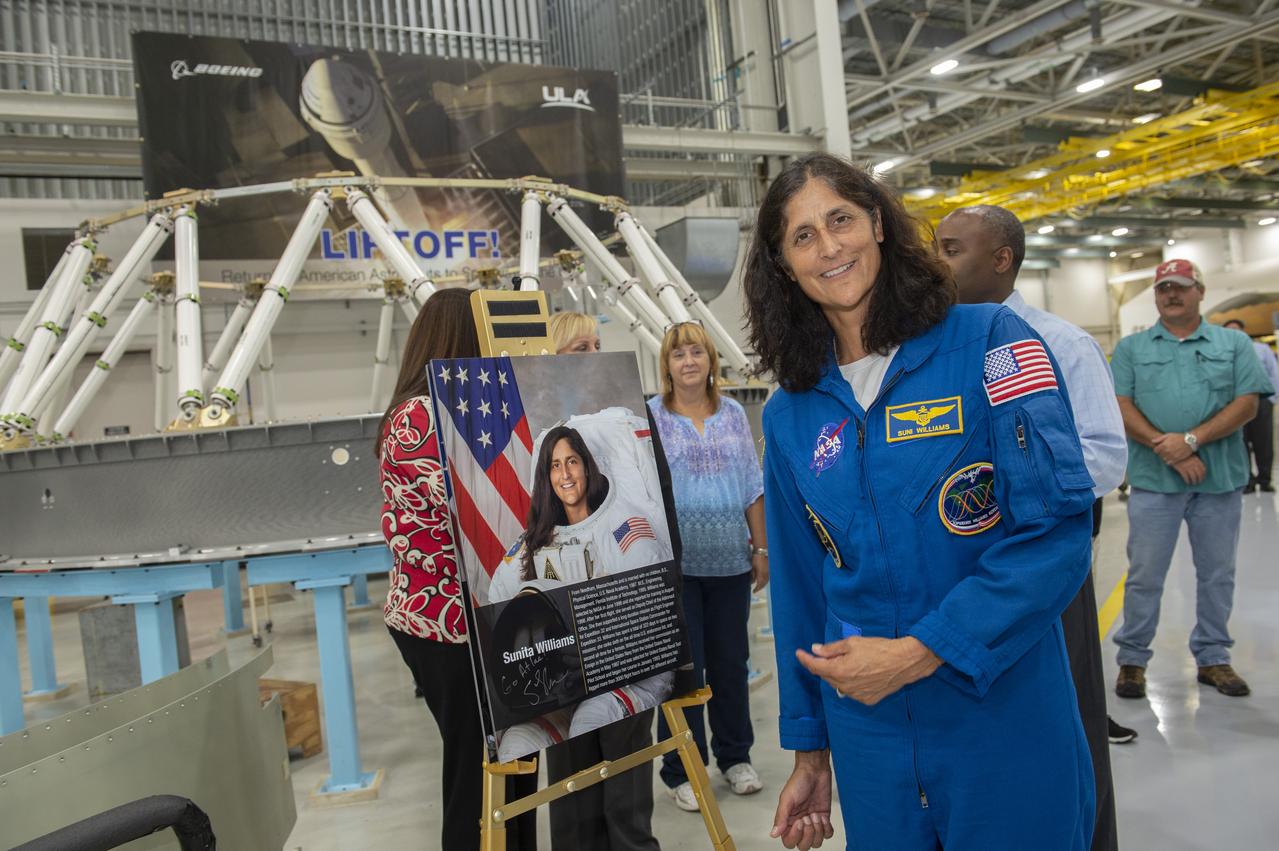
Astronaut Suni Williams poses with a poster of herself as she tours ULA facility in Decatur, Al
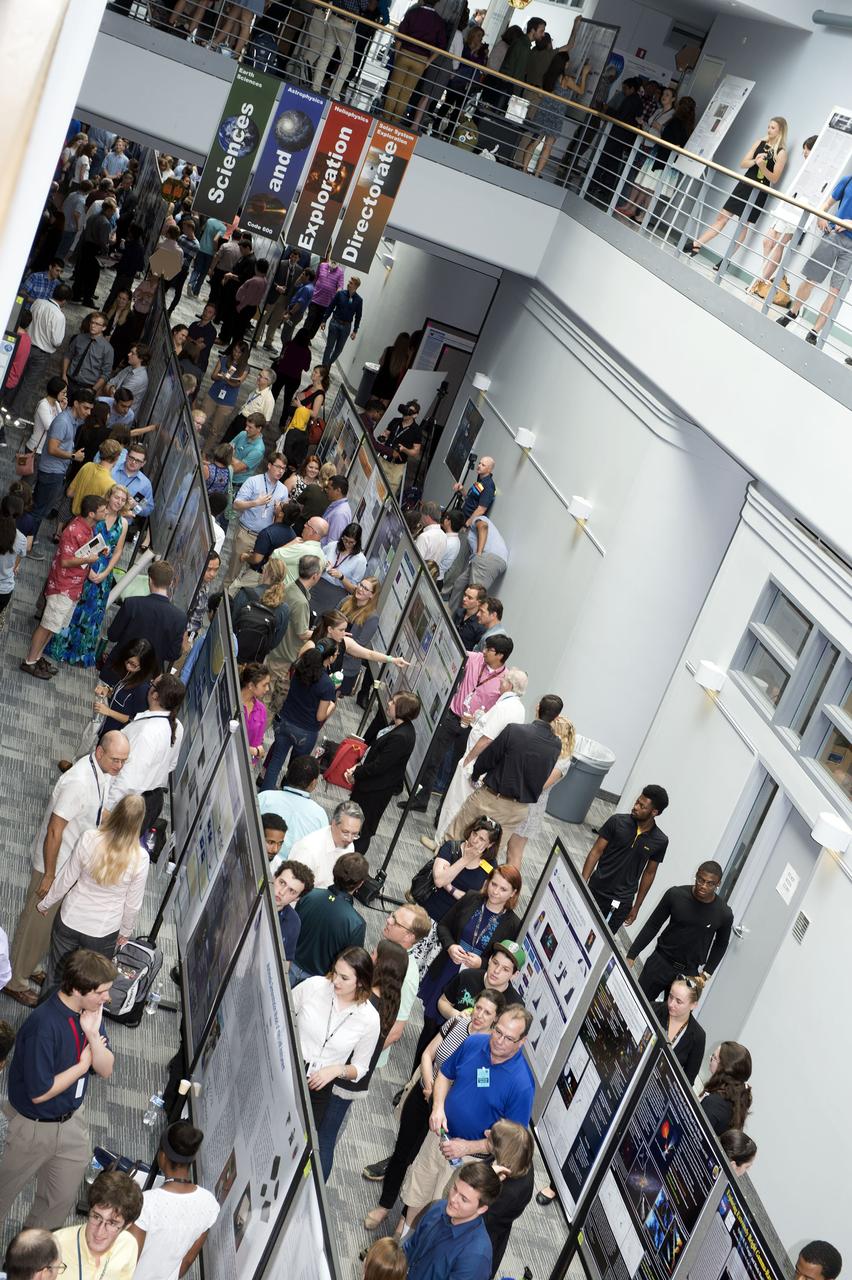
2017 interns participated in a summer poster session at Goddard on August 3,2017. Awards were given to top posters in categories of: computer science/IT, engineering, GSFC functional services and science. Colleen Hartman, Nancy Abell and Juan Ramon presented awards.
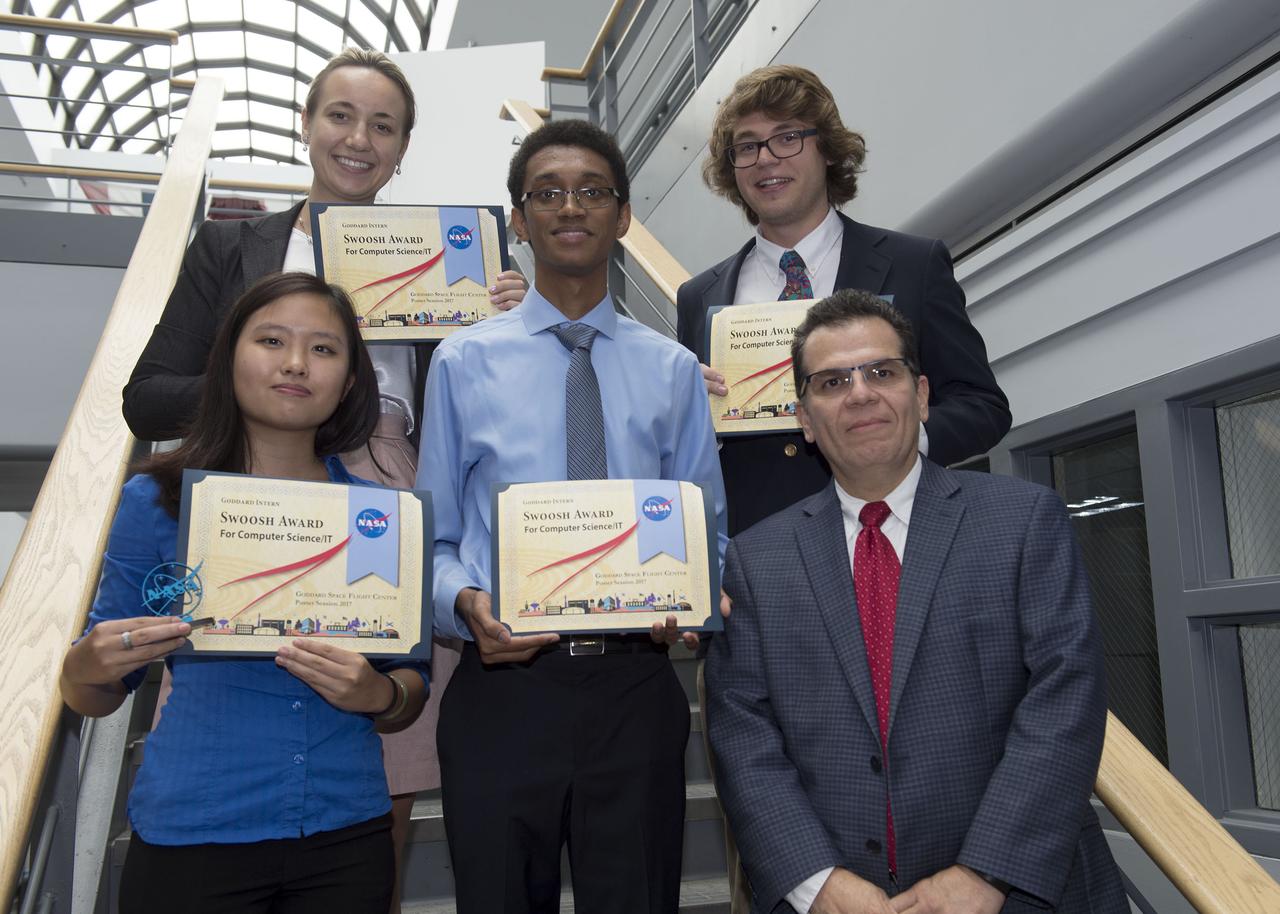
2017 interns participated in a summer poster session at Goddard on August 3, 2017. Awards were given to top posters in categories of: computer science/IT, engineering, GSFC functional services, and science. Colleen Hartman, Nancy Abell and Juan Ramon presented awards.
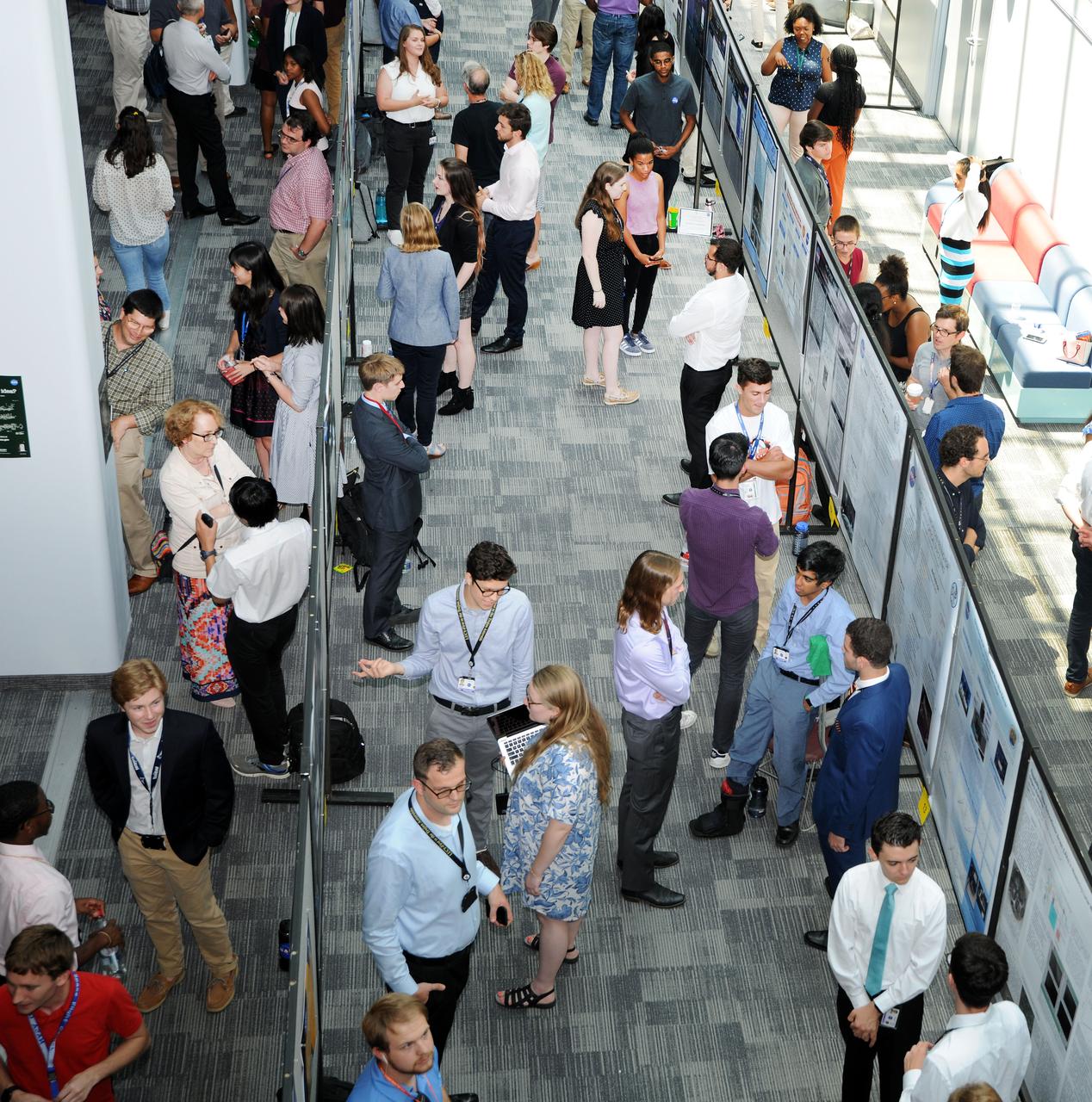
Intern poster session was held July 31-Aug 1, 2019 showcasing student projects during summer
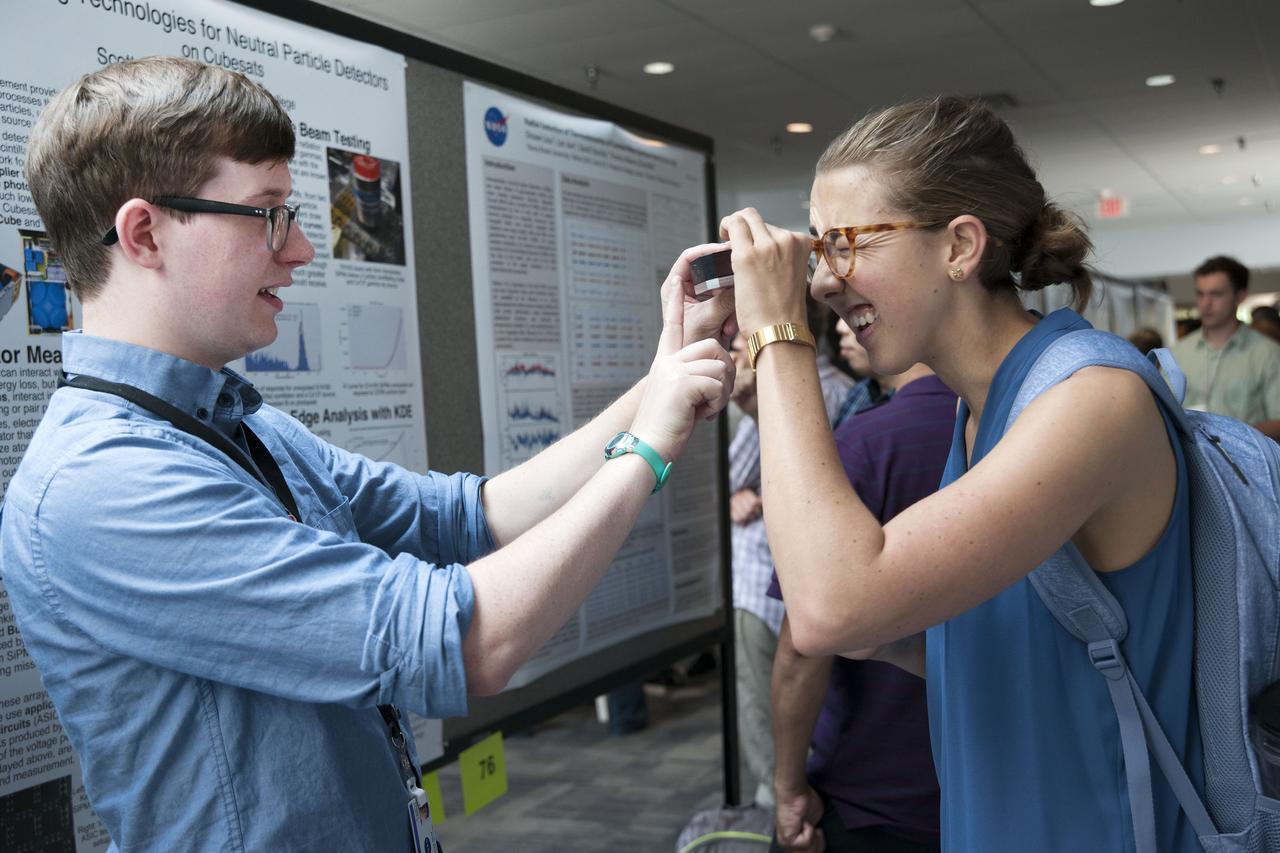
intern poster session was held July 31 - Aug 1, 2019 showcasing student projects during summer
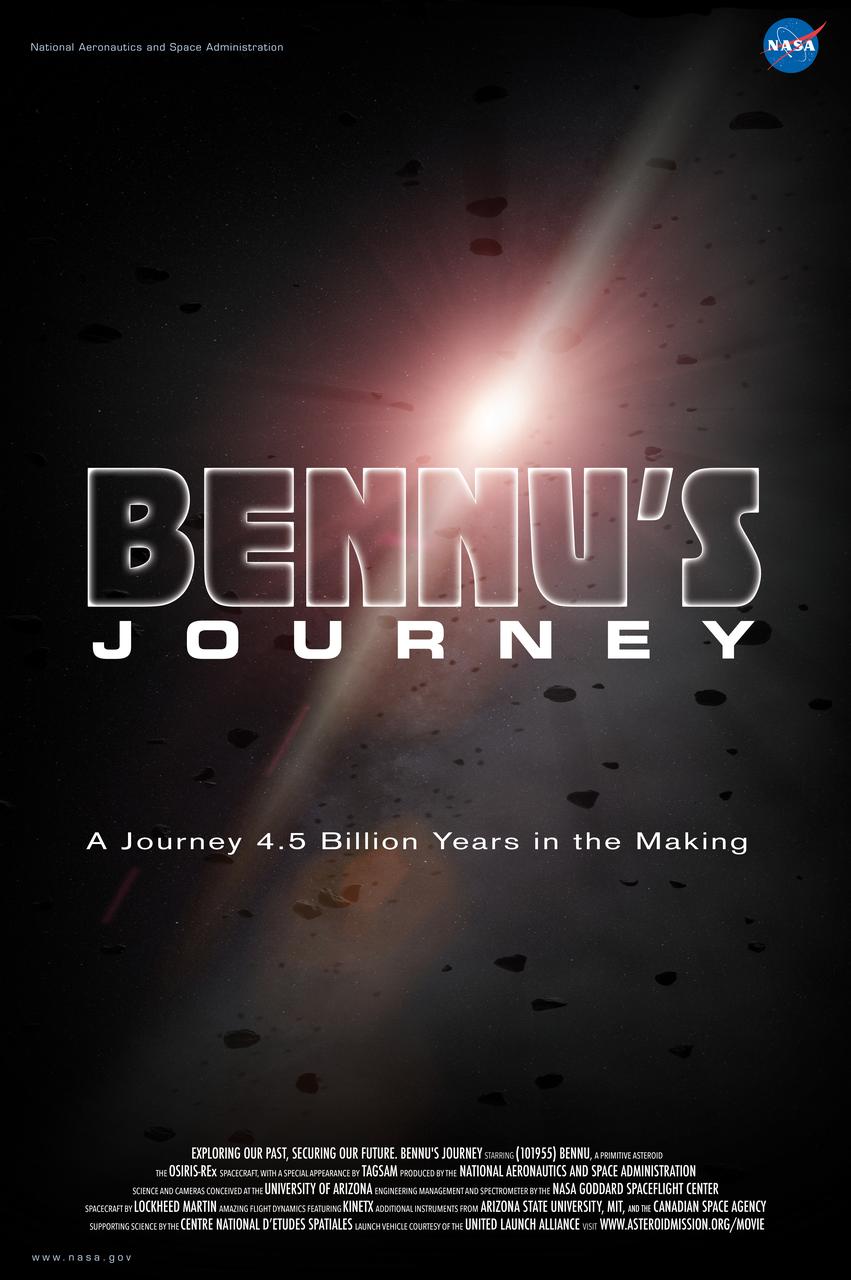
The Origins Spectral Interpretation Resource Identification Security -- Regolith Explorer spacecraft (OSIRIS-REx) will travel to a near-Earth asteroid, called Bennu, and bring a sample back to Earth for study. The mission will help scientists investigate how planets formed and how life began, as well as improve our understanding of asteroids that could impact Earth. OSIRIS-REx is scheduled for launch in late 2016. As planned, the spacecraft will reach its asteroid target in 2018 and return a sample to Earth in 2023. Watch the full video: <a href="http://youtu.be/gtUgarROs08" rel="nofollow">youtu.be/gtUgarROs08</a> Learn more about NASA’s OSIRIS-REx mission and the making of Bennu’s Journey: <a href="http://www.nasa.gov/content/goddard/bennus-journey/" rel="nofollow">www.nasa.gov/content/goddard/bennus-journey/</a> More information on the OSIRIS-REx mission is available at: <a href="http://www.nasa.gov/mission_pages/osiris-rex/index.html" rel="nofollow">www.nasa.gov/mission_pages/osiris-rex/index.html</a> <a href="http://www.asteroidmission.org" rel="nofollow">www.asteroidmission.org</a> <b><a href="http://www.nasa.gov/audience/formedia/features/MP_Photo_Guidelines.html" rel="nofollow">NASA image use policy.</a></b> <b><a href="http://www.nasa.gov/centers/goddard/home/index.html" rel="nofollow">NASA Goddard Space Flight Center</a></b> enables NASA’s mission through four scientific endeavors: Earth Science, Heliophysics, Solar System Exploration, and Astrophysics. Goddard plays a leading role in NASA’s accomplishments by contributing compelling scientific knowledge to advance the Agency’s mission. <b>Follow us on <a href="http://twitter.com/NASAGoddardPix" rel="nofollow">Twitter</a></b> <b>Like us on <a href="http://www.facebook.com/pages/Greenbelt-MD/NASA-Goddard/395013845897?ref=tsd" rel="nofollow">Facebook</a></b> <b>Find us on <a href="http://instagram.com/nasagoddard?vm=grid" rel="nofollow">Instagram</a></b>
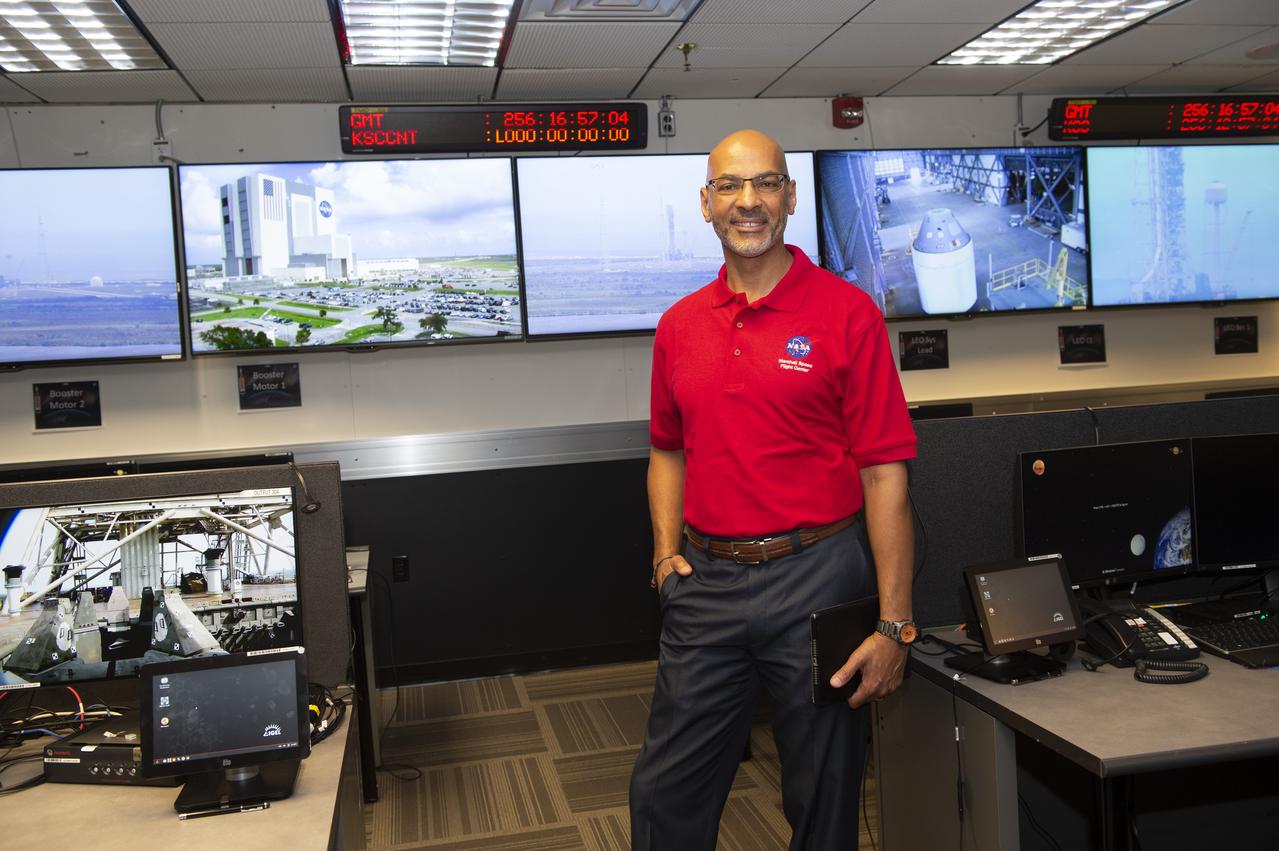
BRIAN BARLEY, PHOTO FOR “I AM BUILDING SLS” POSTER

One of many safety posters produced by NACA artists during World War II. The Aircraft Engine Research Laboratory established a Safety Office in 1942 to coordinate and oversee safety-related activities. The lab struggled to maintain a full staff during the war when military research projects were at a peak. NACA management mandated six-day work weeks without overtime and the elimination of holidays. As such, workplace injuries were a serious threat to maintaining productivity needed to sustain the military’s aeronautics efforts.
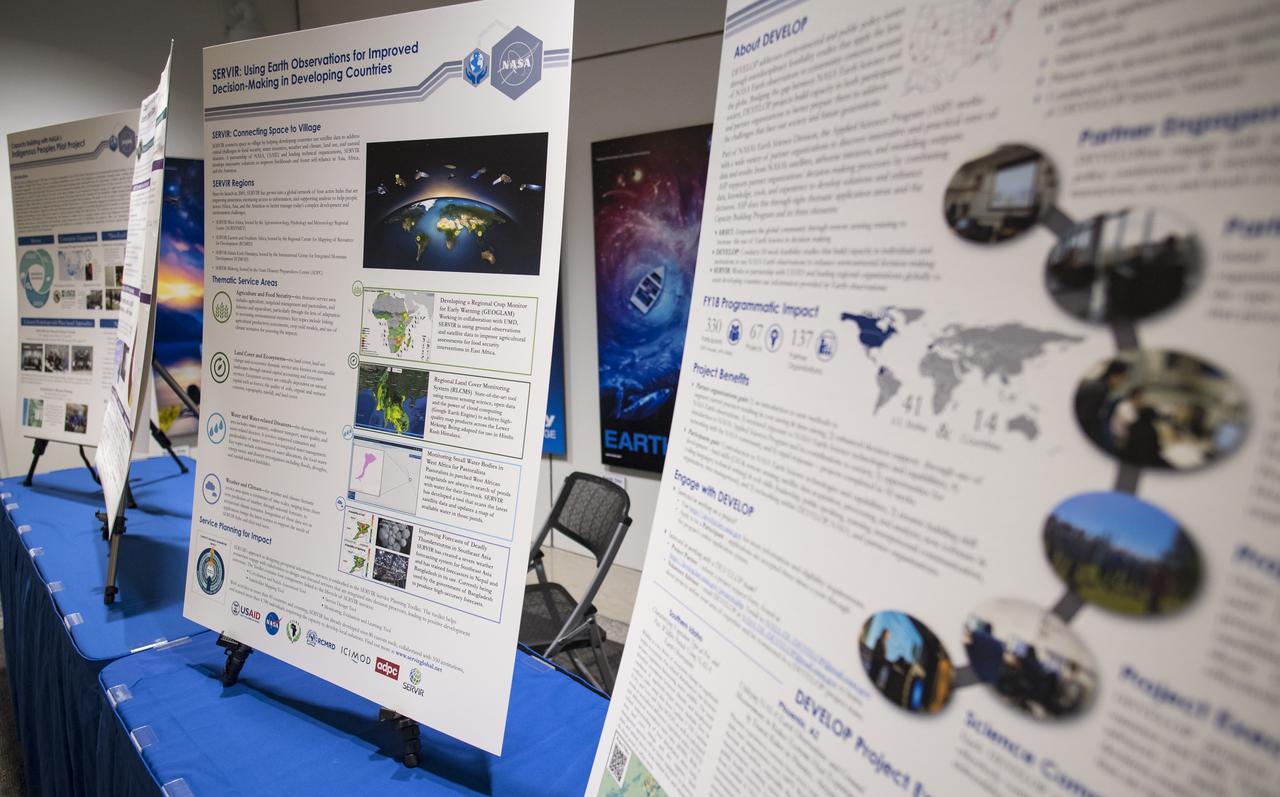
Posters are seen at the Earth Science Applications Showcase Wednesday, August 1, 2018 at NASA Headquarters in Washington. Every summer, participants in NASA’s Applied Sciences’ DEVELOP National Program come to NASA Headquarters and present their research projects. DEVELOP is a training and development program where students work on Earth science research projects, mentored by science advisers from NASA and partner agencies, and extend research results to local communities. Photo Credit: (NASA/Aubrey Gemignani)
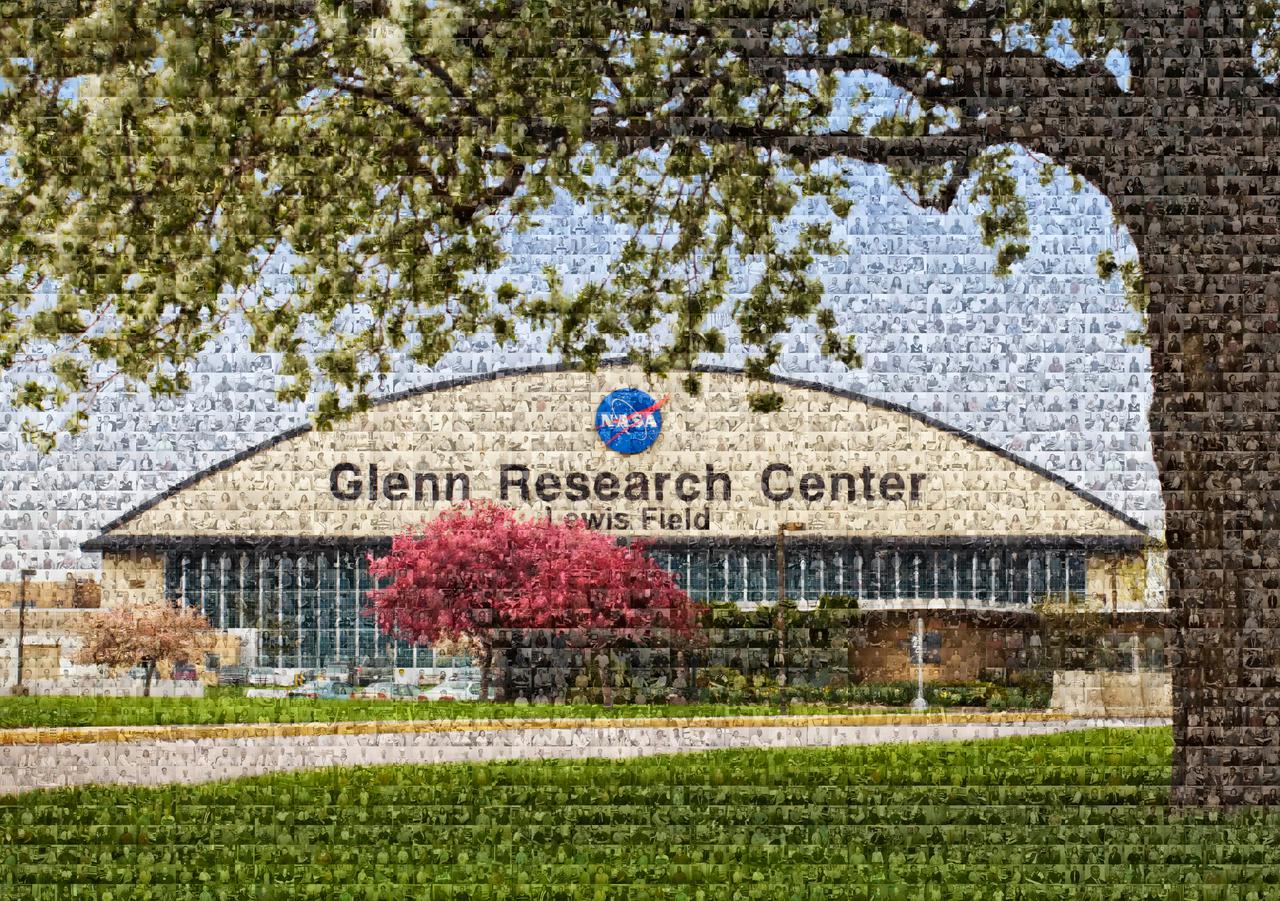
Over 2900 image tiles were used to assemble this mosaic image. Photographers photographed employees in their work areas, on the street and in public areas of every building on the Center to capture as many employees as possible. The final image was printed on a poster to commemorate NASA's 50th Anniversary on October 1, 2008.
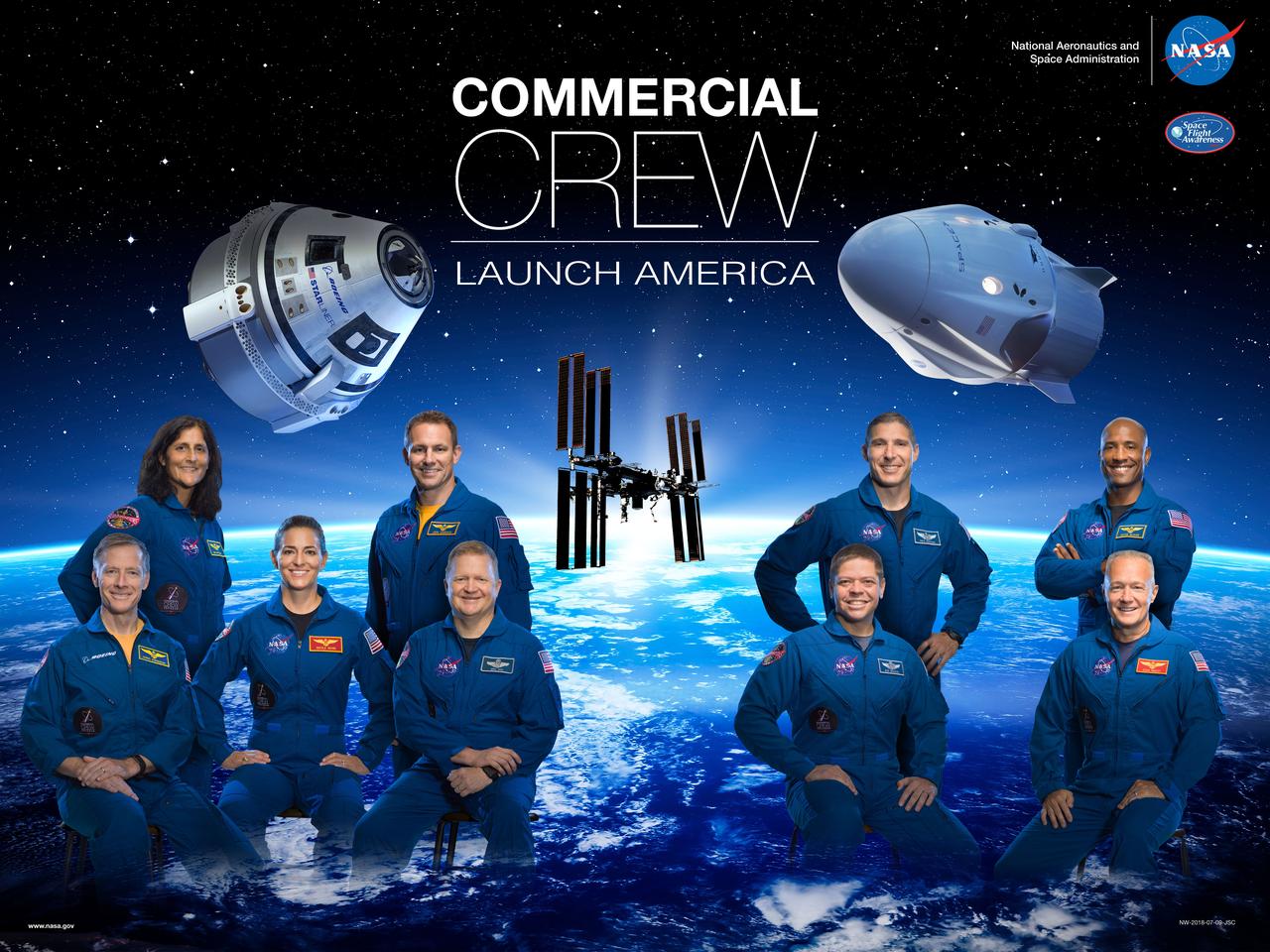
jsc2018e067825 (Aug. 2, 2018) --- The Commercial Crew Launch America poster highlights the astronauts assigned to the first test flights of American-made, commercial spacecraft to and from the International Space Station. The team of five astronauts on the left is assigned to Boeing's CST-100 Starliner Commercial Crew vehicle and consists of (front row from left) Chris Ferguson, Nicole Mann and Eric Boe. In the back row (from left) are Suni Williams and Josh Cassada. The team of four astronauts on the right is assigned to SpaceX's Dragon Commercial Crew vehicle and consists of (front row from left) Bob Behnken and Doug Hurley. In the back row (from left) are Mike Hopkins and Victor Glover.

This poster artfully depicts Solar Surfing, an early stage NASA study to support potential future missions that could travel closer to the Sun’s surface than ever before. The solar transition region, a very thin layer near the Sun’s surface, is of great interest to heliophysicists. In this zone, temperatures range from 10,000 to 1.8 million degrees Fahrenheit. The NASA Innovative Advanced Concepts (NIAC) program funds a study by a team at NASA’s Kennedy Space Center in Florida to further research a novel, highly reflective coating for a solar shield that could allow spacecraft to approach the Sun close enough to investigate this exciting region – about 500,000 miles from the surface. The better heliophysicists understand the Sun and how it generates energy, the better they can make predictions of the Sun’s effect on our planet – and improve our everyday communications, electronics, and transportation.
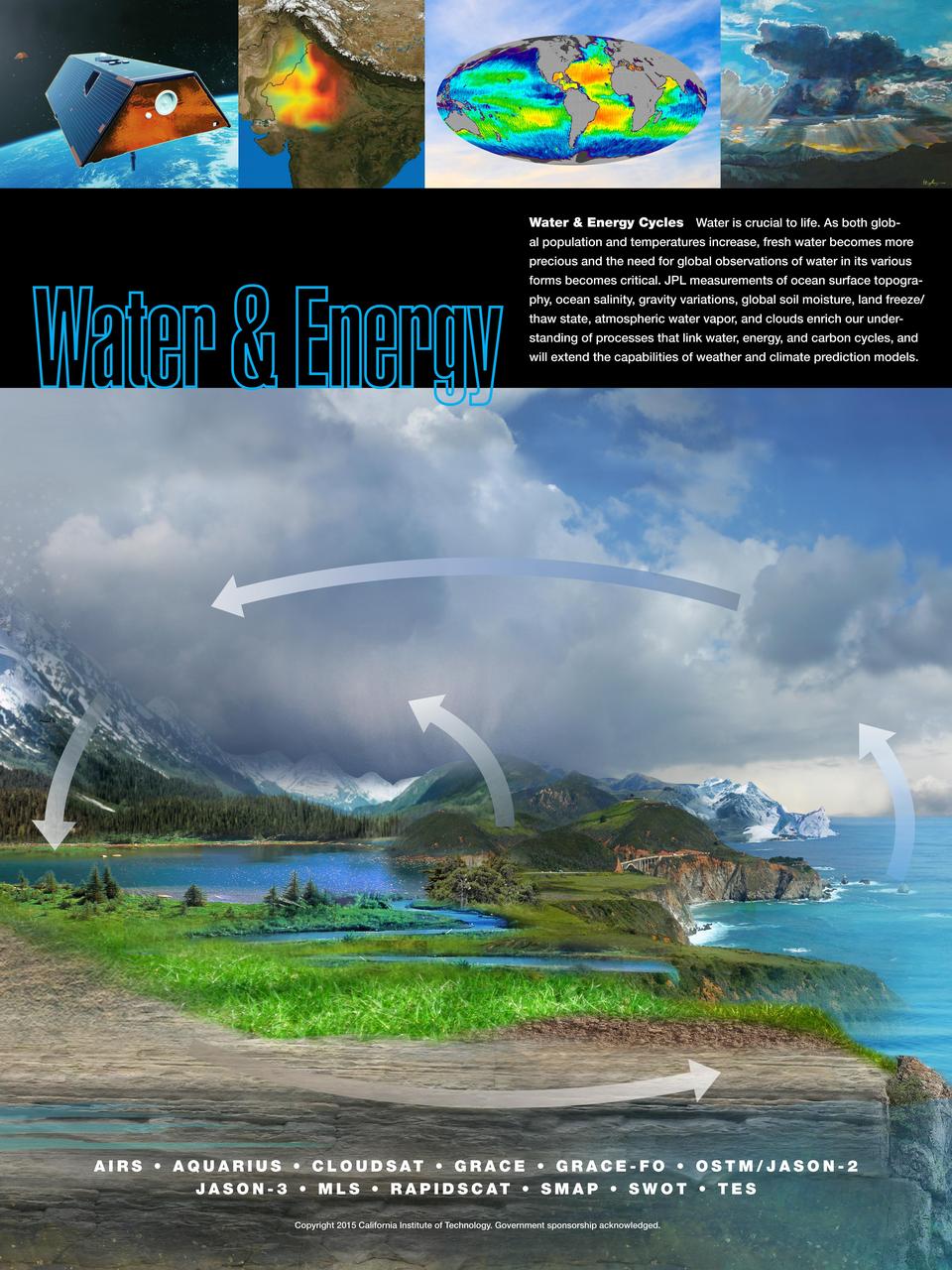
This poster highlights NASA JPL missions that provide important inputs to research on global and regional water resources. Water is crucial to life.

This poster highlights NASA JPL missions that provide important inputs to research on volcanoes, fires, earthquakes, droughts, tsunamis, floods and hurricanes.
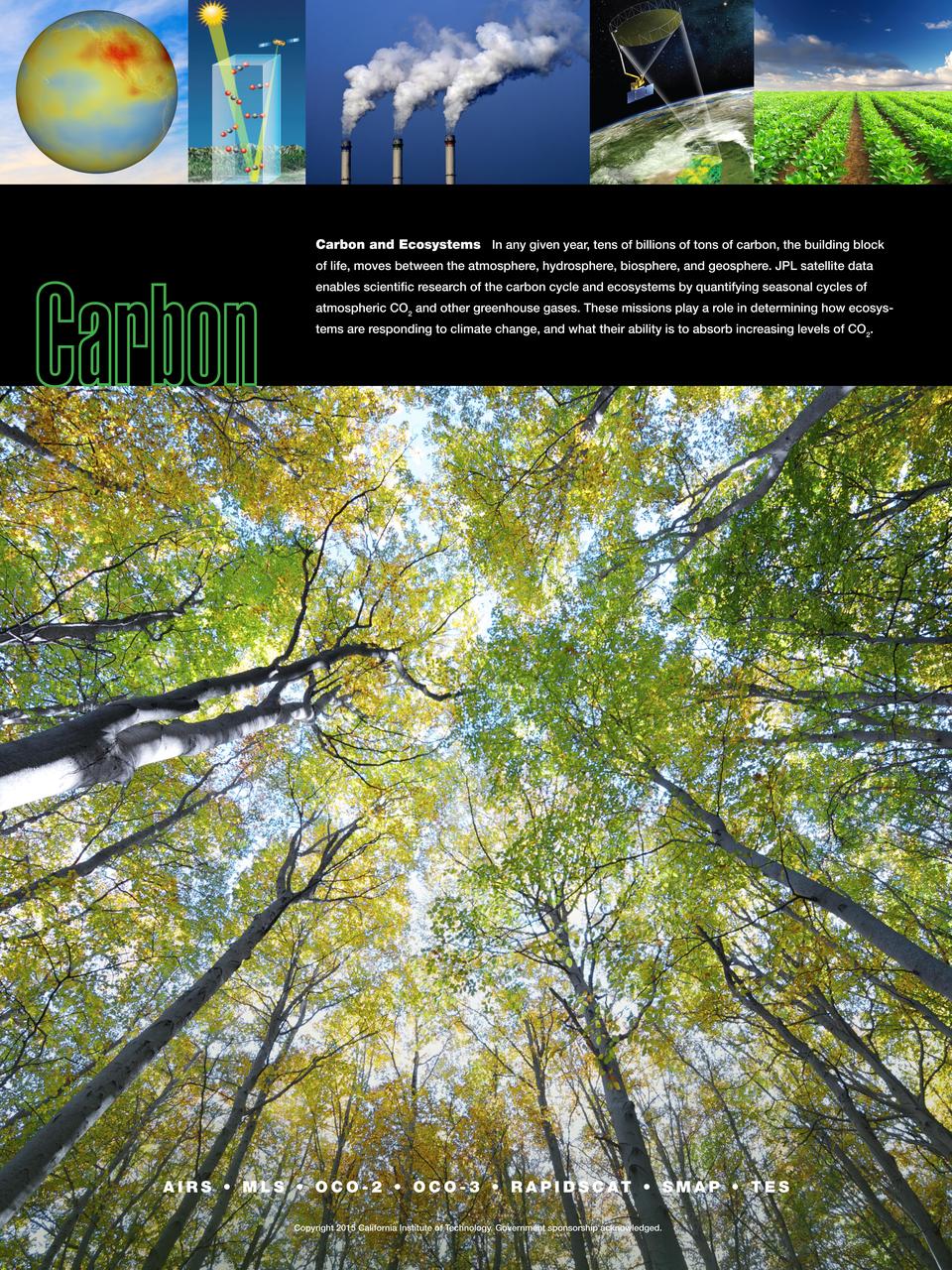
This poster highlights the JPL missions that provide important inputs to research on the carbon cycle and ecosystem interactions as measured from space.
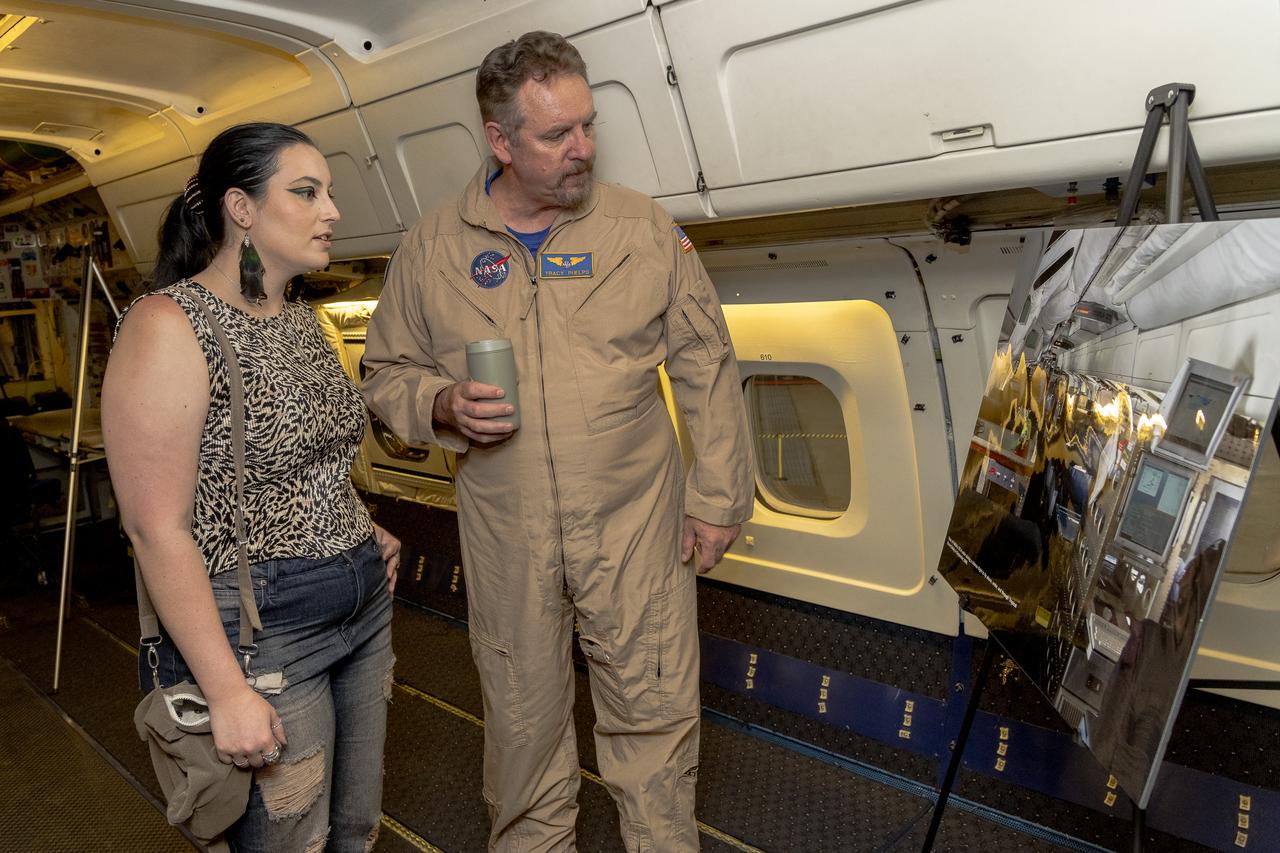
NASA pilot Tracy Phelps and his daughter Rachael Phelps look at a poster onboard the DC-8 at NASA’s Armstrong Flight Research Center Building 703 in Palmdale, California. On May 2, 2024, NASA personnel, friends, and family celebrated the DC-8 staff, aircraft, and science campaigns.

Artemis II poster_11x17_300ppi_CMYK_Right

Artemis II virtual background

This poster highlights NASA JPL missions that provide important inputs to research in sea level rise and variability -- key measures of ocean circulation and global climate change.

This poster highlights the JPL cubesat missions. NASA CubeSat Programs provide opportunities for small satellite systems to fly as auxiliary payloads on planned missions.
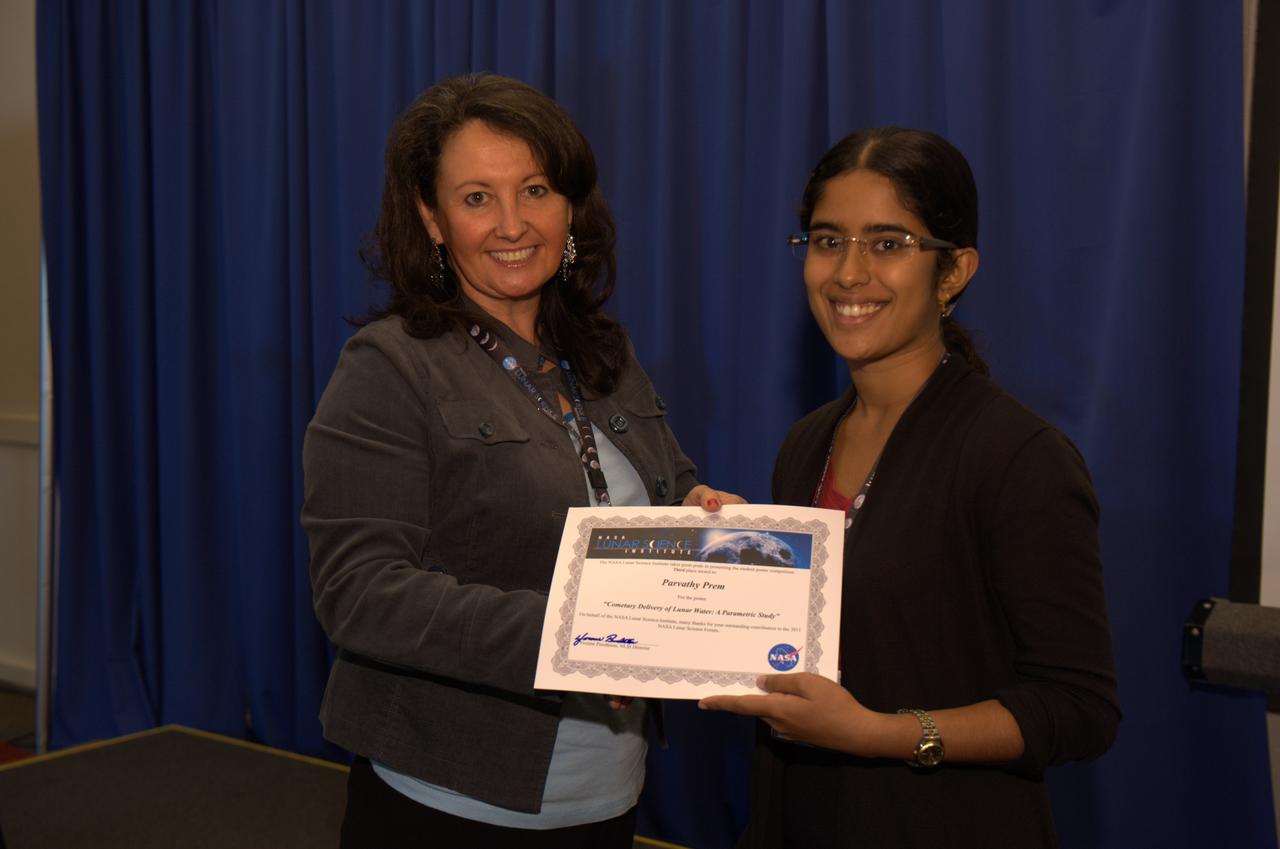
Lunar Science Forum Student Poster competition Third Place award to Parvathy Prem for the poster 'Cometary Delivery of Lunar Water: A Parametric Study'
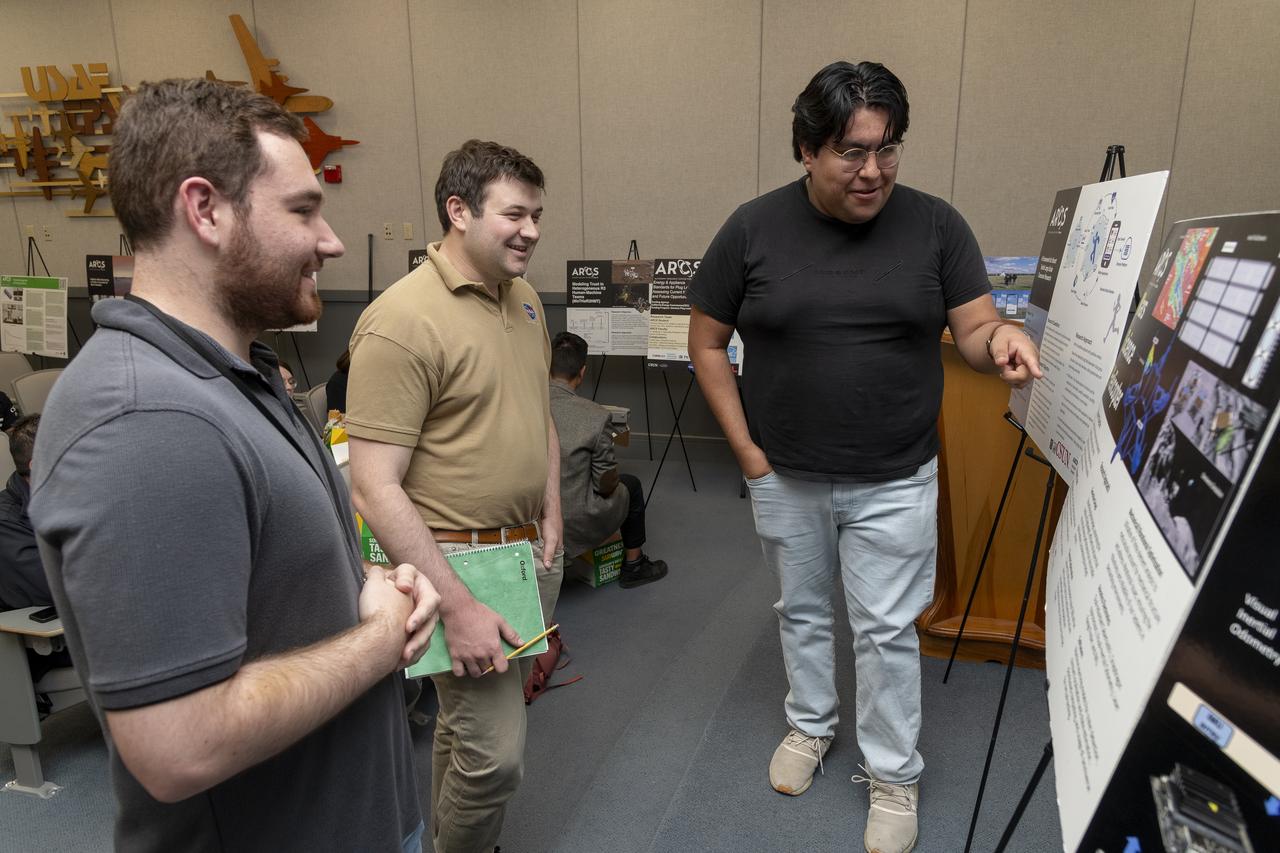
Two men from NASA’s Armstrong Flight Research Center in Edwards, California, ask Jared Carrillo, a student from the California State University, Northridge, Autonomy Research Center for science, technology, engineering, entrepreneurship, arts, humanities, and mathematics, about his work on the Mars Science Helicopter. Students displayed posters and answered questions about their technologies May 23 at the Air Force Test Pilot School auditorium on Edwards Air Force Base, California.
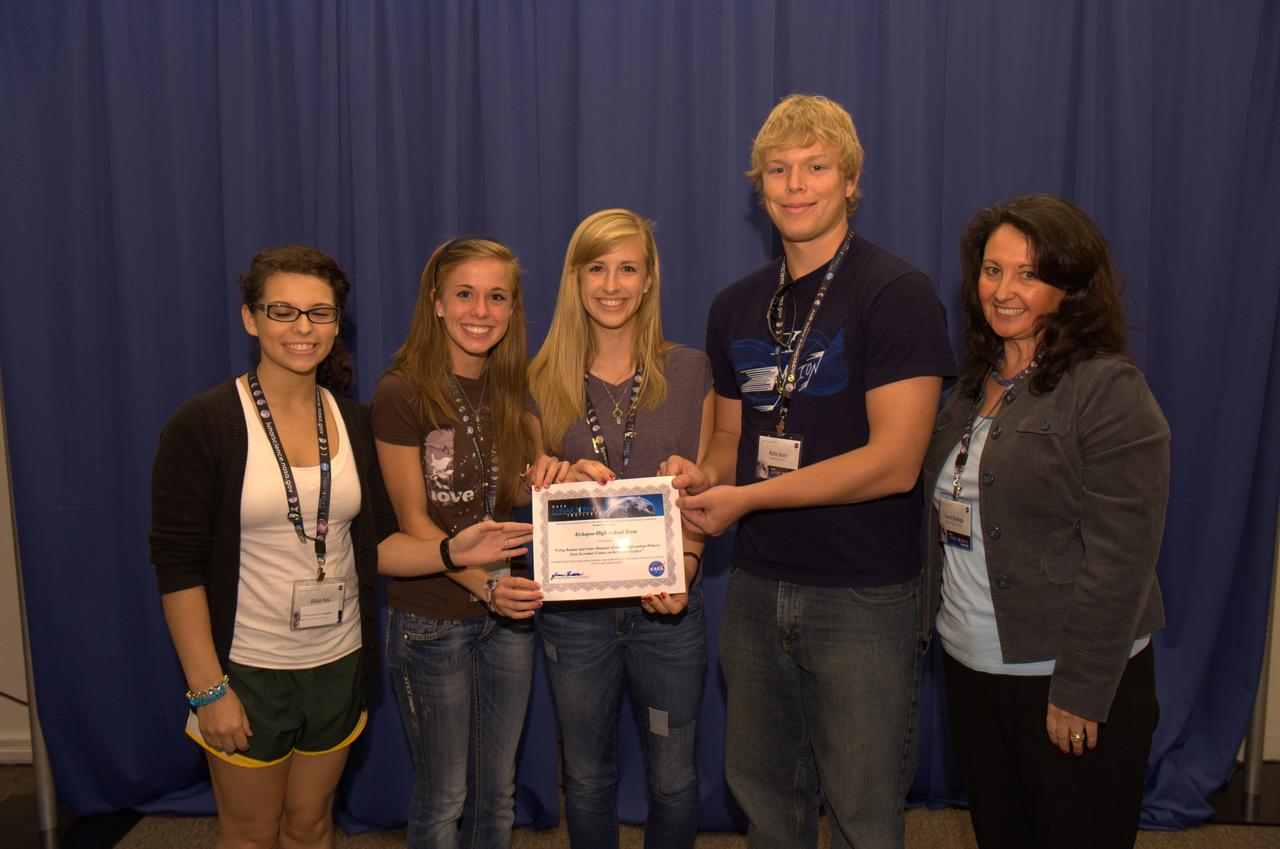
Lunar Science Forum Student Poster competition Second place award to Kickapoo High school Team for the poster 'using Boulder and Crater Diameter Ratios to Differentiate Primary from Secondary Craters and the Lunar Surface'
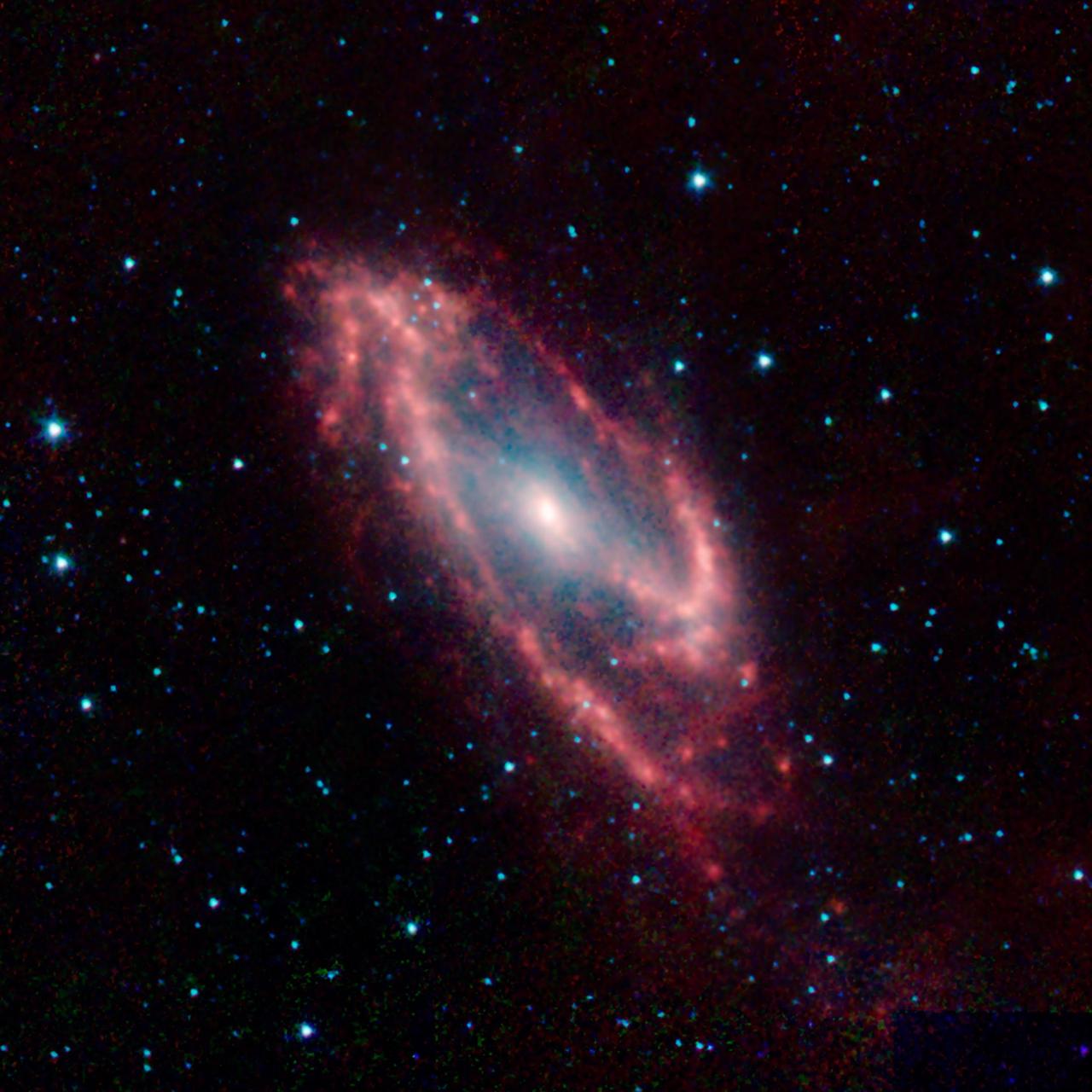
Maffei 2 is the poster child for an infrared galaxy that is almost invisible to optical telescopes. But this infrared image from NASA Spitzer Space Telescope penetrates the dust to reveal the galaxy in all its glory.
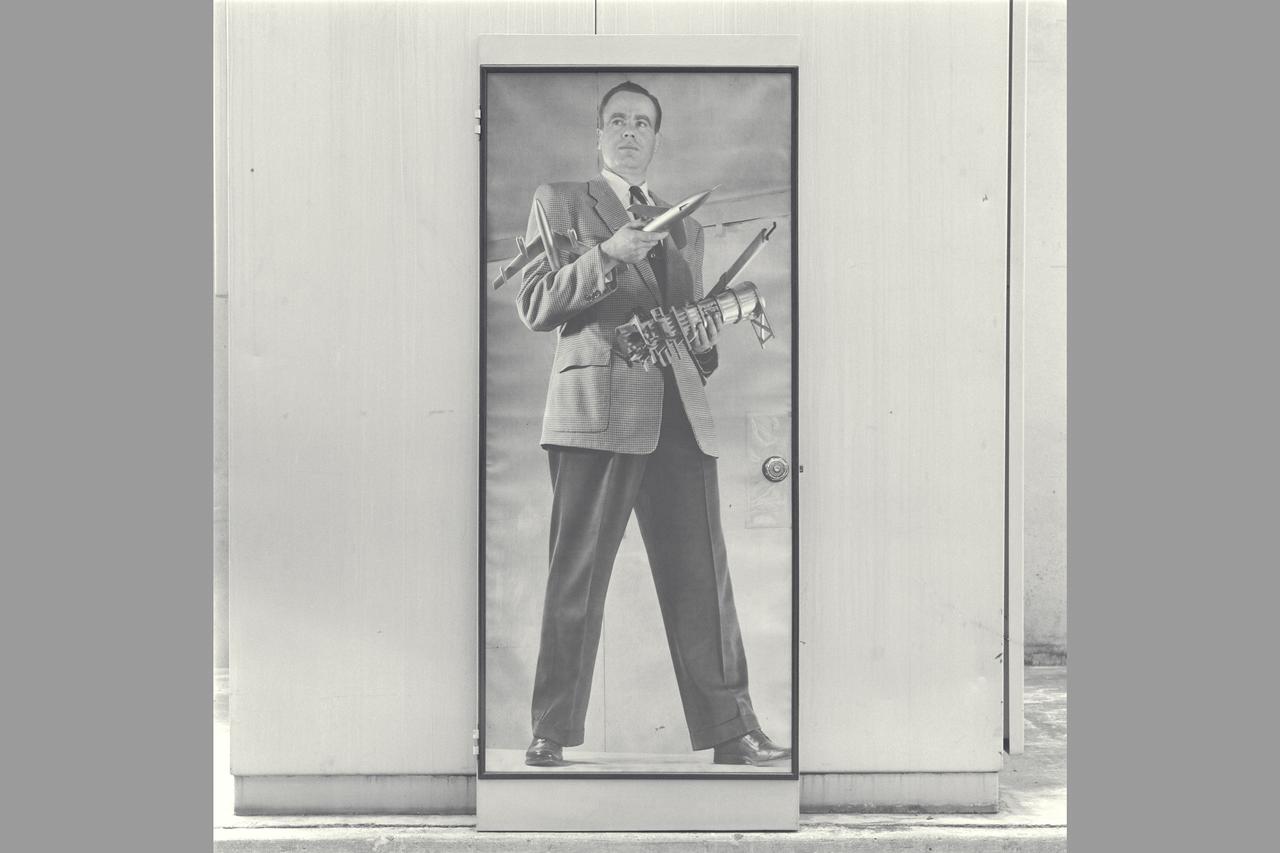
Historical Recruiting poster of Cleve E Voss holding model of B-47, Douglas D-558-2, 6x6ft w.t. & slide rule (on Display at Macy's San Francisco 1947 - 1950 ish) NOTE: Poster recovered from Voss's wife and copied from the (bedroom) door to which it had been adhered.
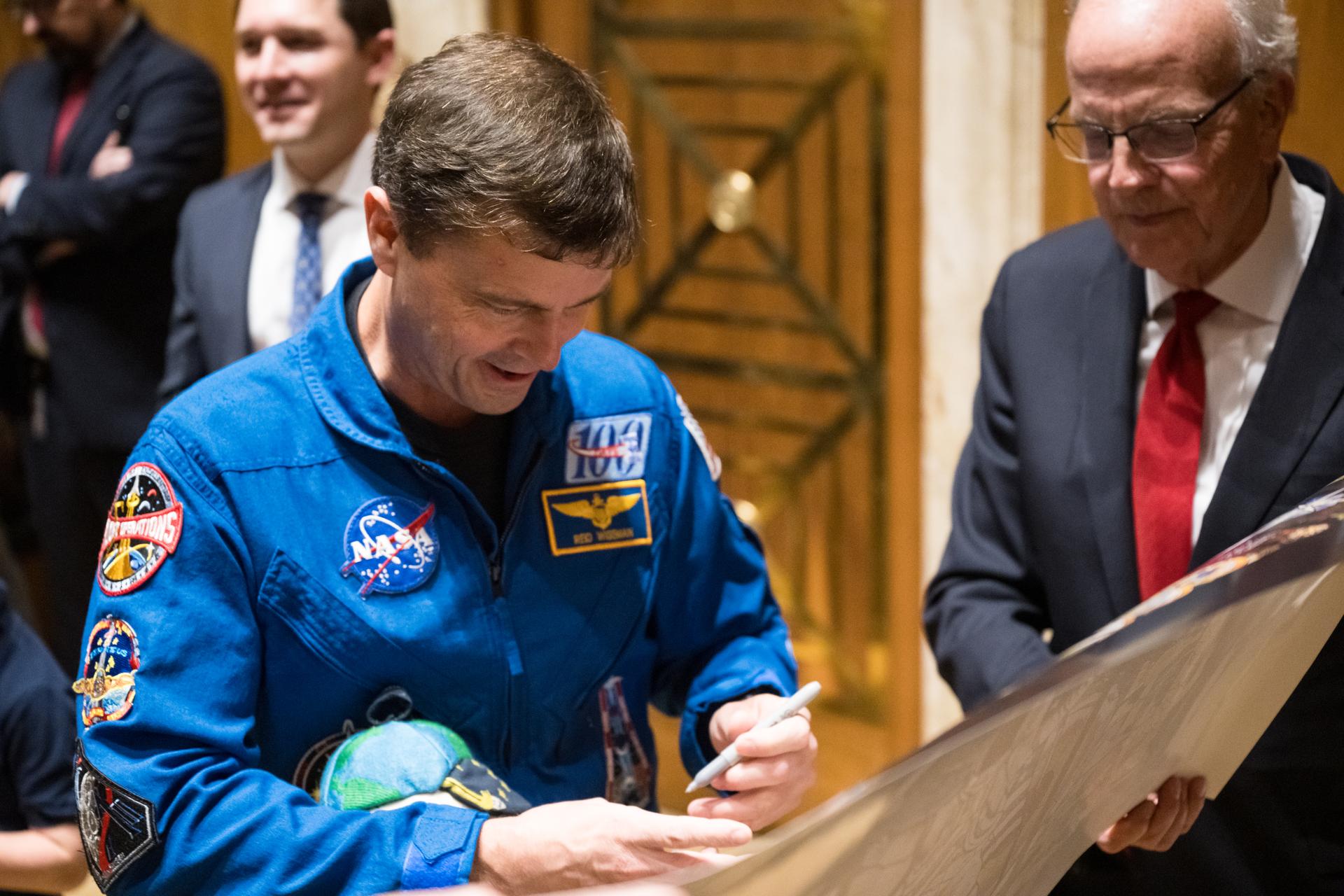
NASA astronaut Reid Wiseman, Artemis II commander signs a poster for U.S. Senator Jerry Moran (R-Kan.) at an event at the Dirksen Senate Office Building, Tuesday, May 12, 2026, in Washington. NASA’s Artemis II mission took Wiseman, and crewmates NASA astronaut Victor Glover, Artemis II pilot, Christina Koch, Artemis II mission specialist; and CSA (Canadian Space Agency) astronaut Jeremy Hansen, Artemis II mission specialist, on a nearly 10-day journey around the Moon and back to Earth in April 2026. Photo Credit: (NASA/Aubrey Gemignani)
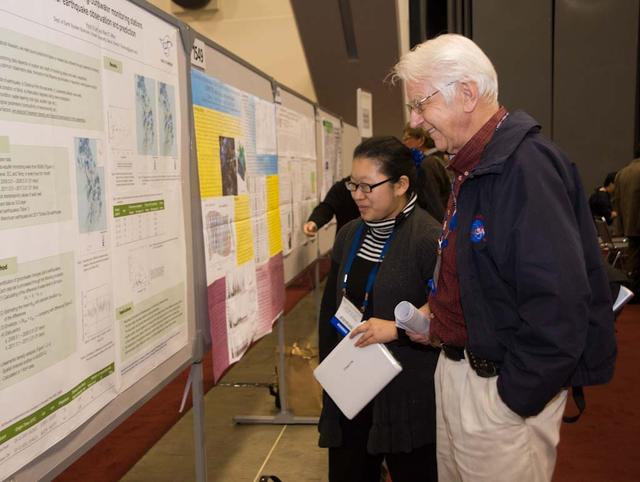
American Geophysical Union 'AGU' Fall Meeting in San Francisco Moscone Center, California. Friedemann Freund at poster session.
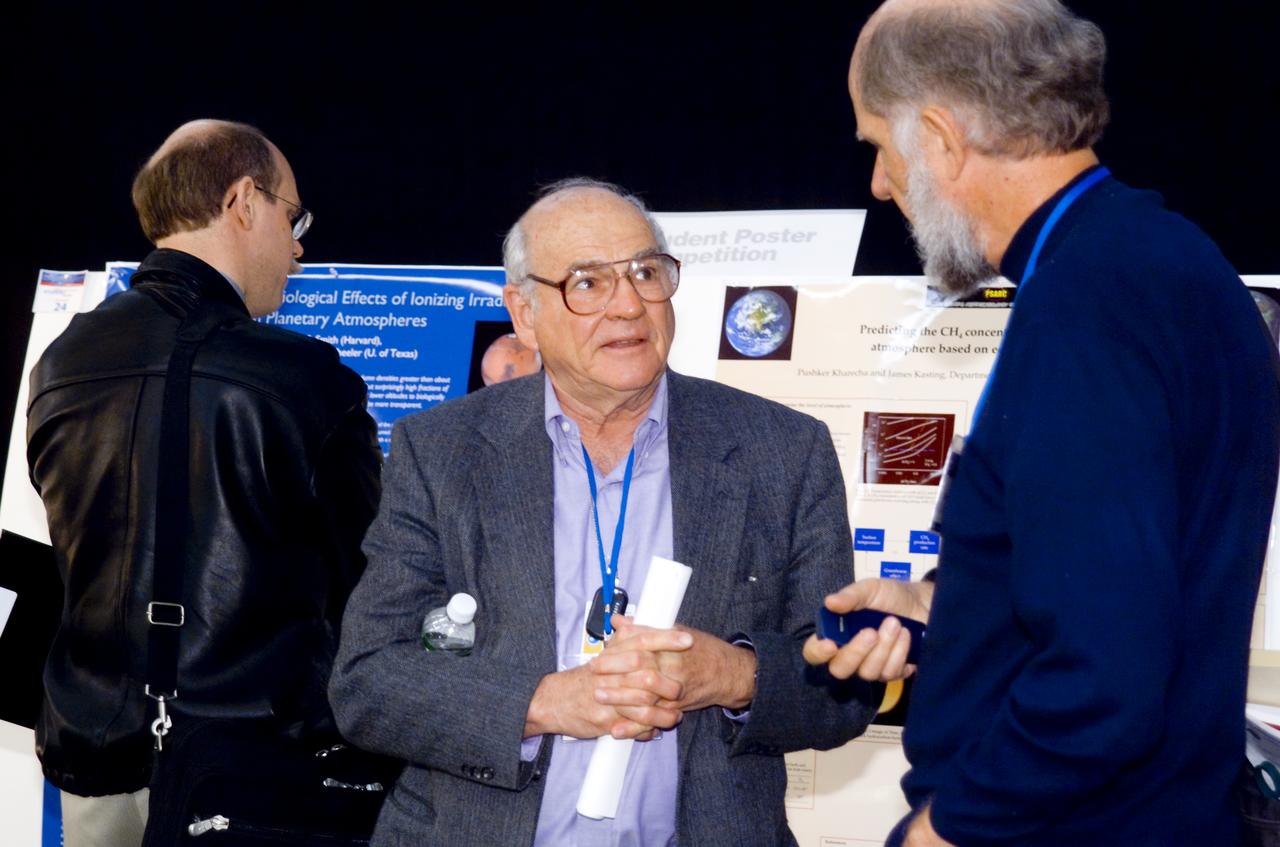
Ames holds NAI Astrobiology Conference 2002: NAI Director Dr Baruch Blumberg chat with attendee during poster session.
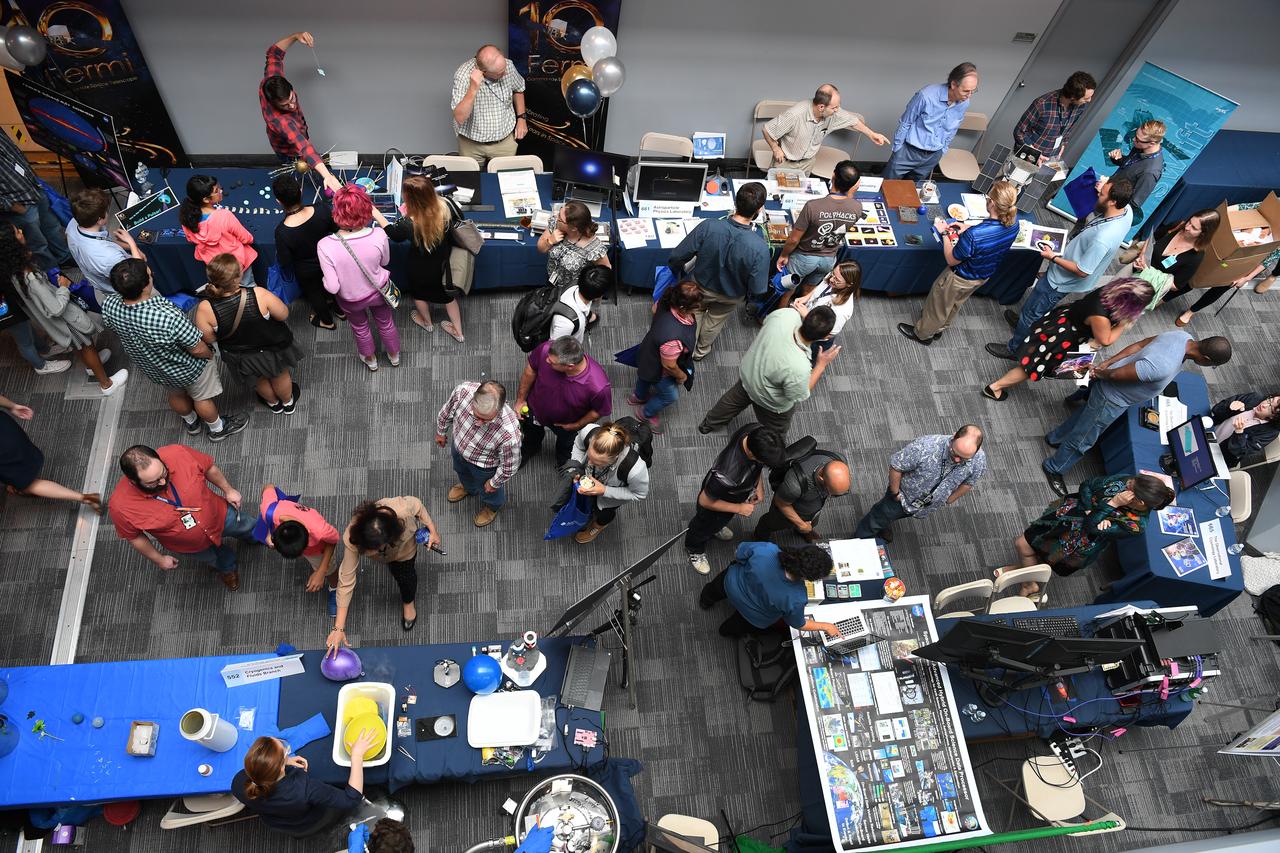
AIAA students visited Goddard on July 24-26, 2018 Poster session was held on July 25, 2018
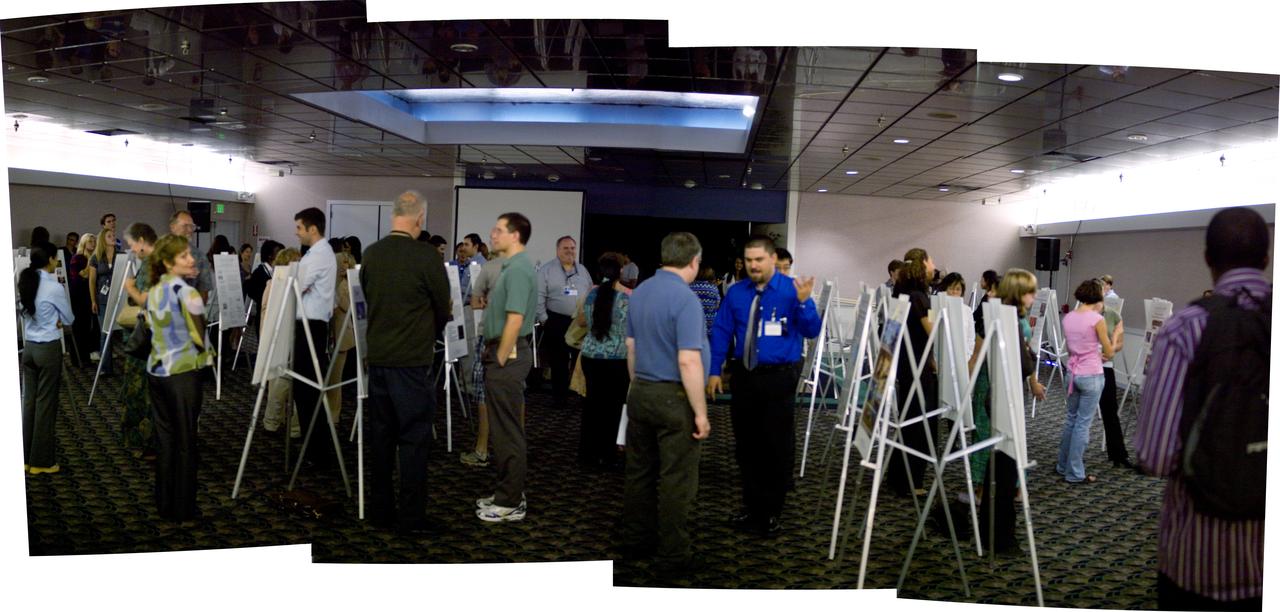
Foothill-DeAnza Community College Dstrict Internship Program poster Session NOTE: Photo taken by Summer Photo Intern Nick Tran.
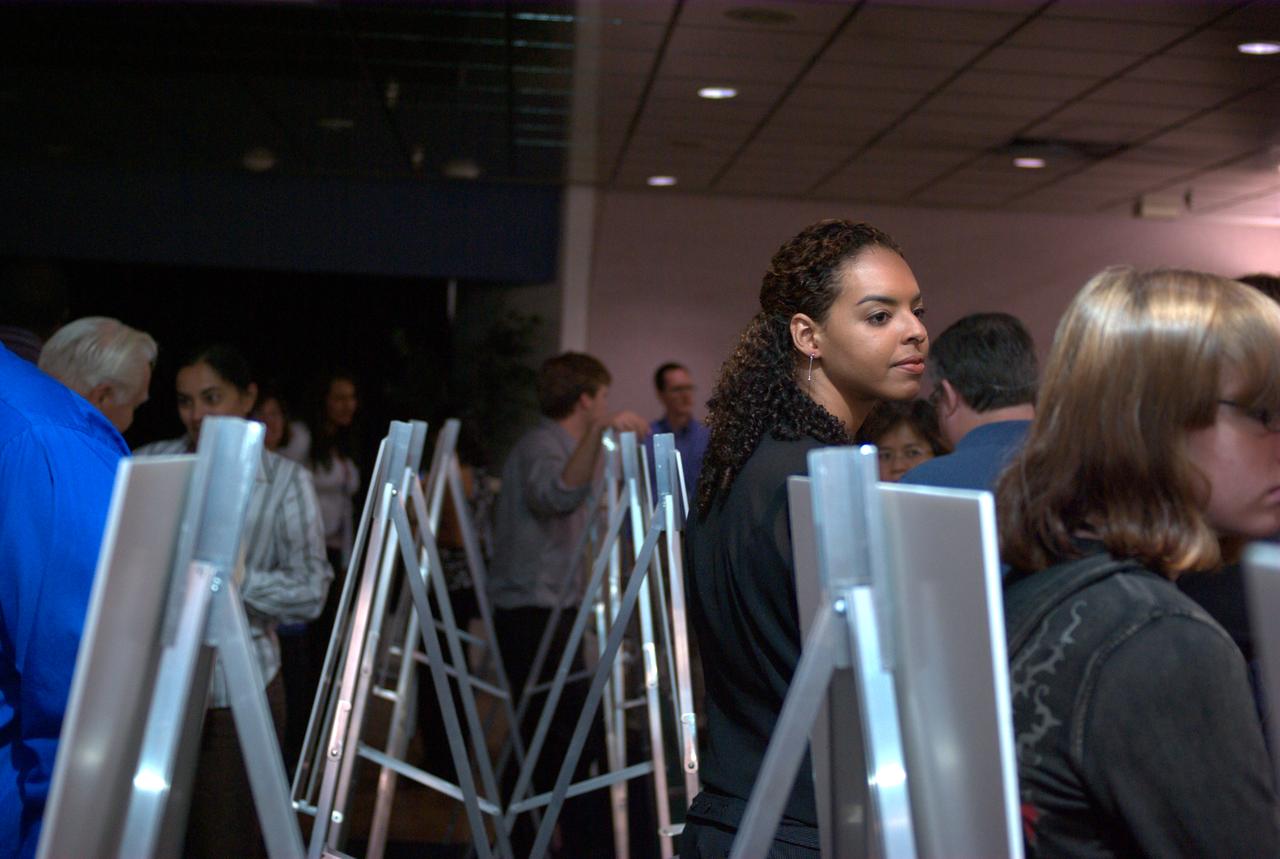
Foothill-DeAnza Community College Dstrict Internship Program poster Session NOTE: Photo taken by Summer Photo Intern Nick Tran.
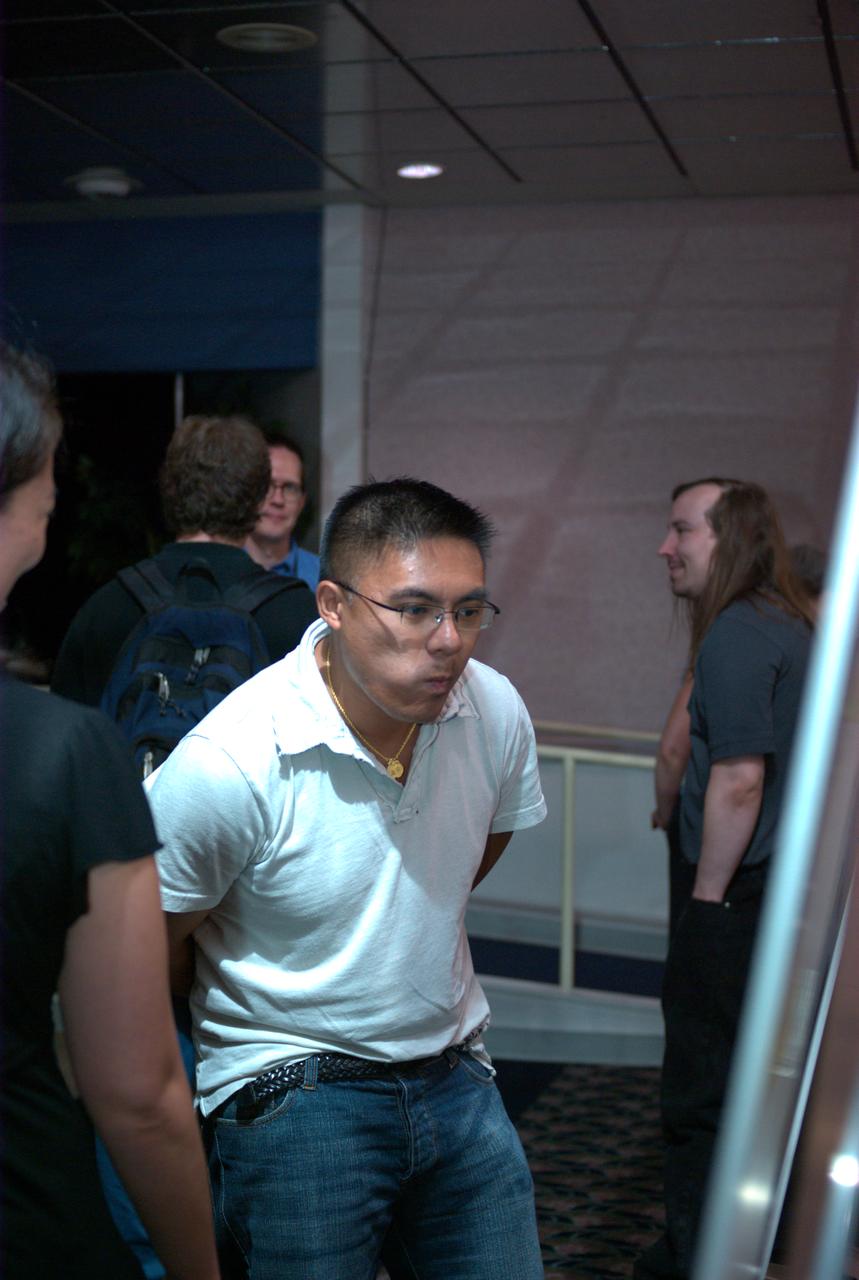
Foothill-DeAnza Community College Dstrict Internship Program poster Session NOTE: Photo taken by Summer Photo Intern Nick Tran.
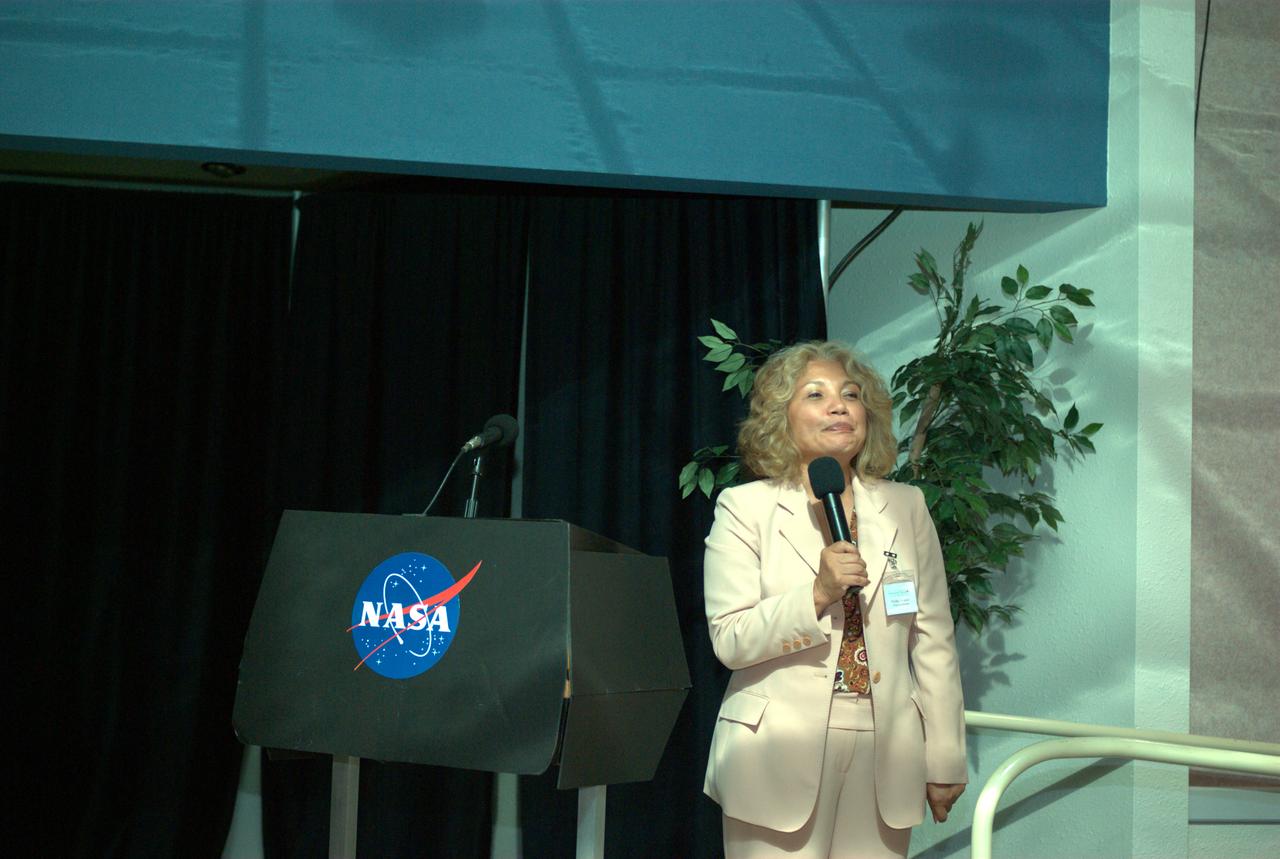
Foothill-DeAnza Community College Dstrict Internship Program poster Session NOTE: Photo taken by Summer Photo Intern Nick Tran.
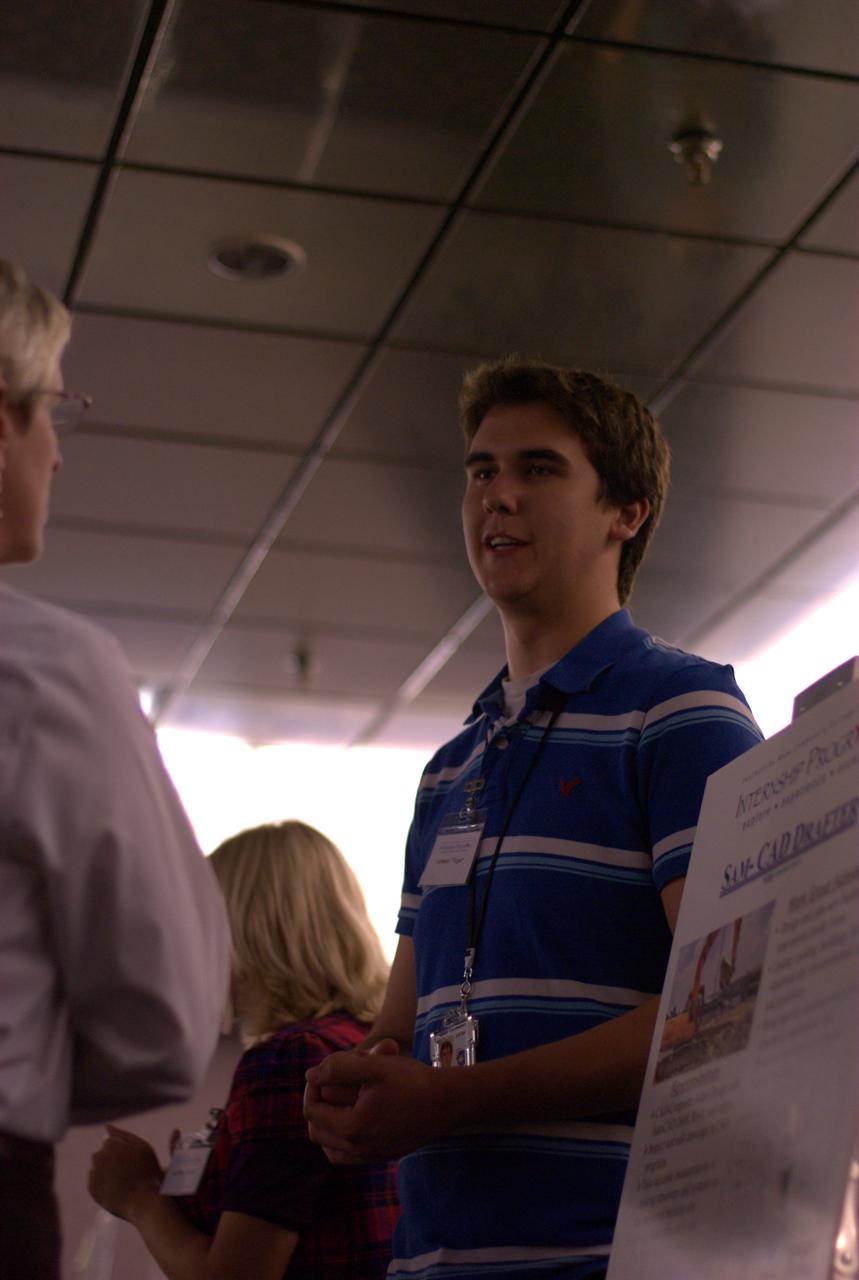
Foothill-DeAnza Community College Dstrict Internship Program poster Session NOTE: Photo taken by Summer Photo Intern Nick Tran.
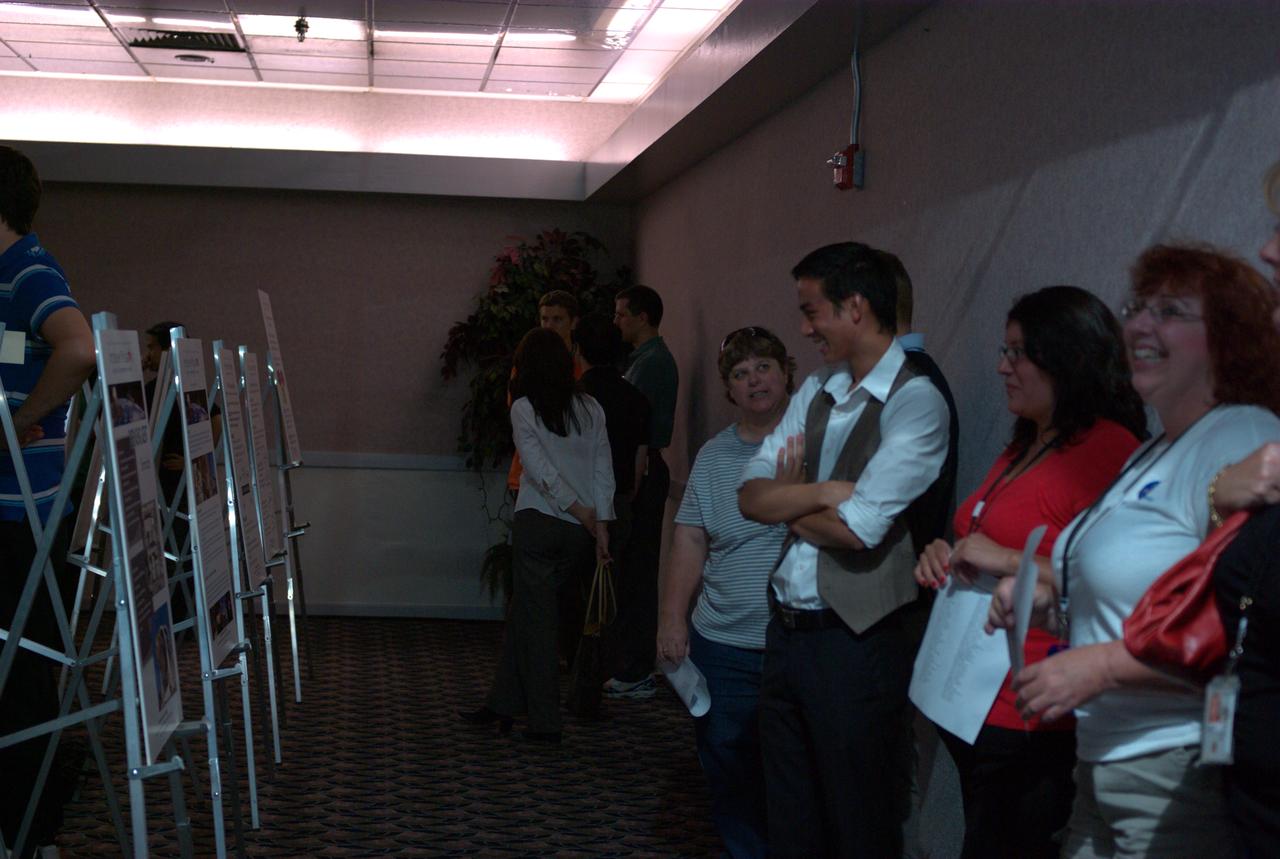
Foothill-DeAnza Community College Dstrict Internship Program poster Session NOTE: Photo taken by Summer Photo Intern Nick Tran.
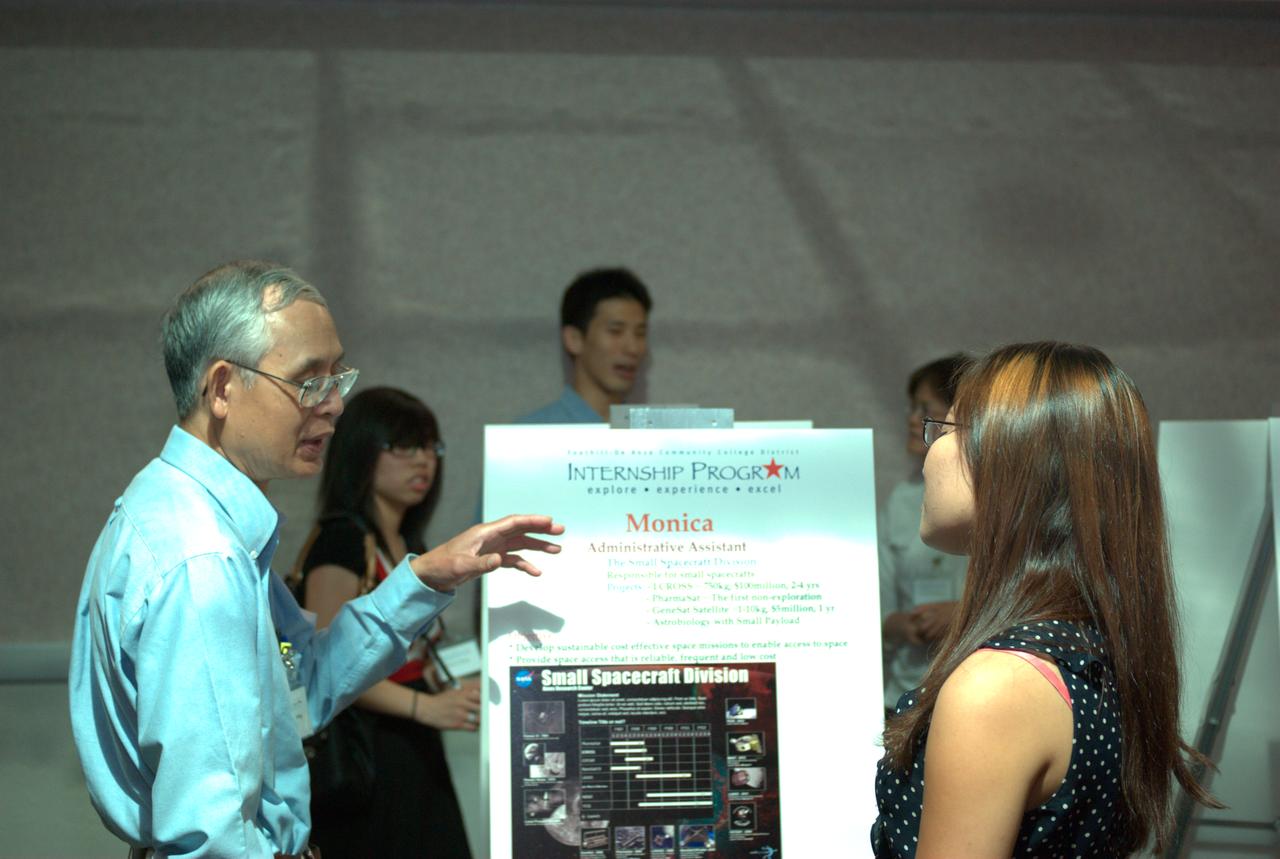
Foothill-DeAnza Community College Dstrict Internship Program poster Session NOTE: Photo taken by Summer Photo Intern Nick Tran.
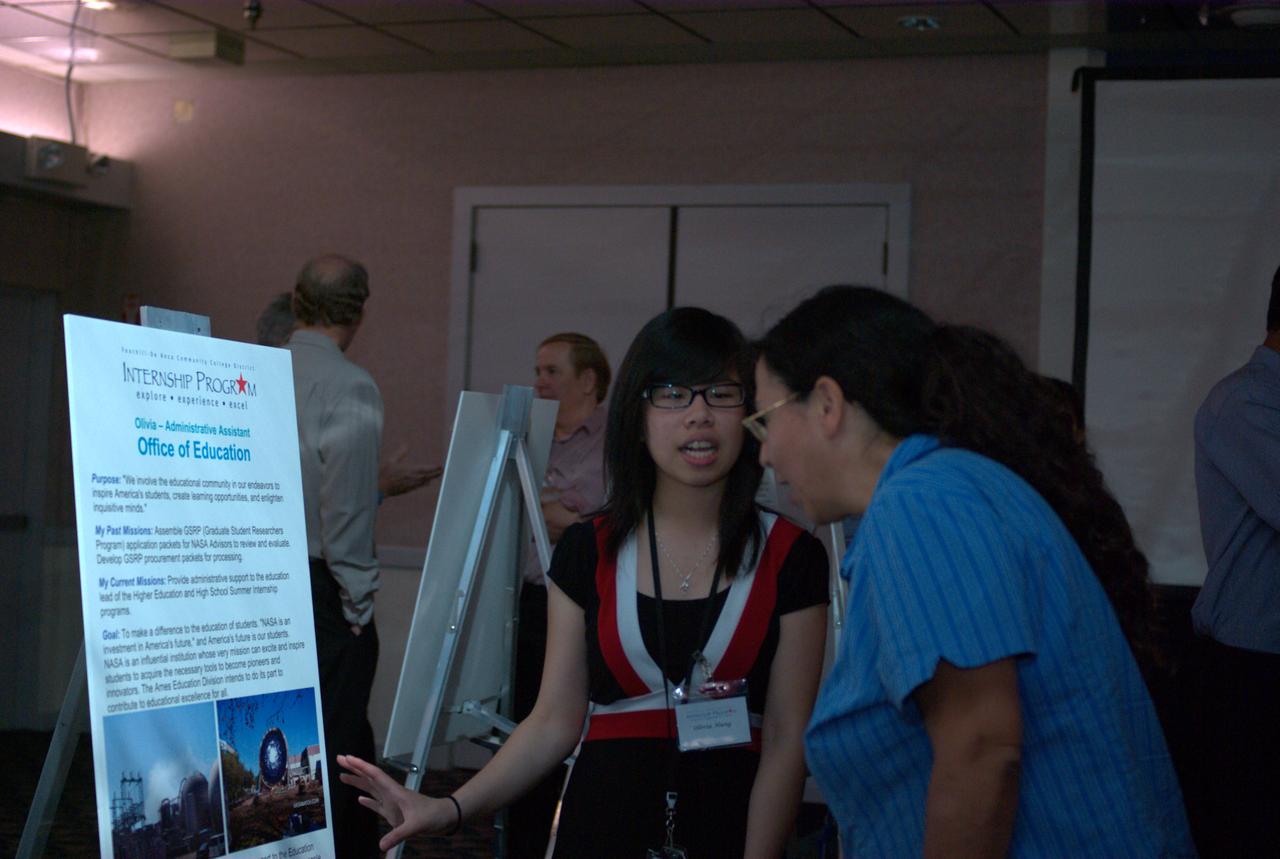
Foothill-DeAnza Community College Dstrict Internship Program poster Session NOTE: Photo taken by Summer Photo Intern Nick Tran.
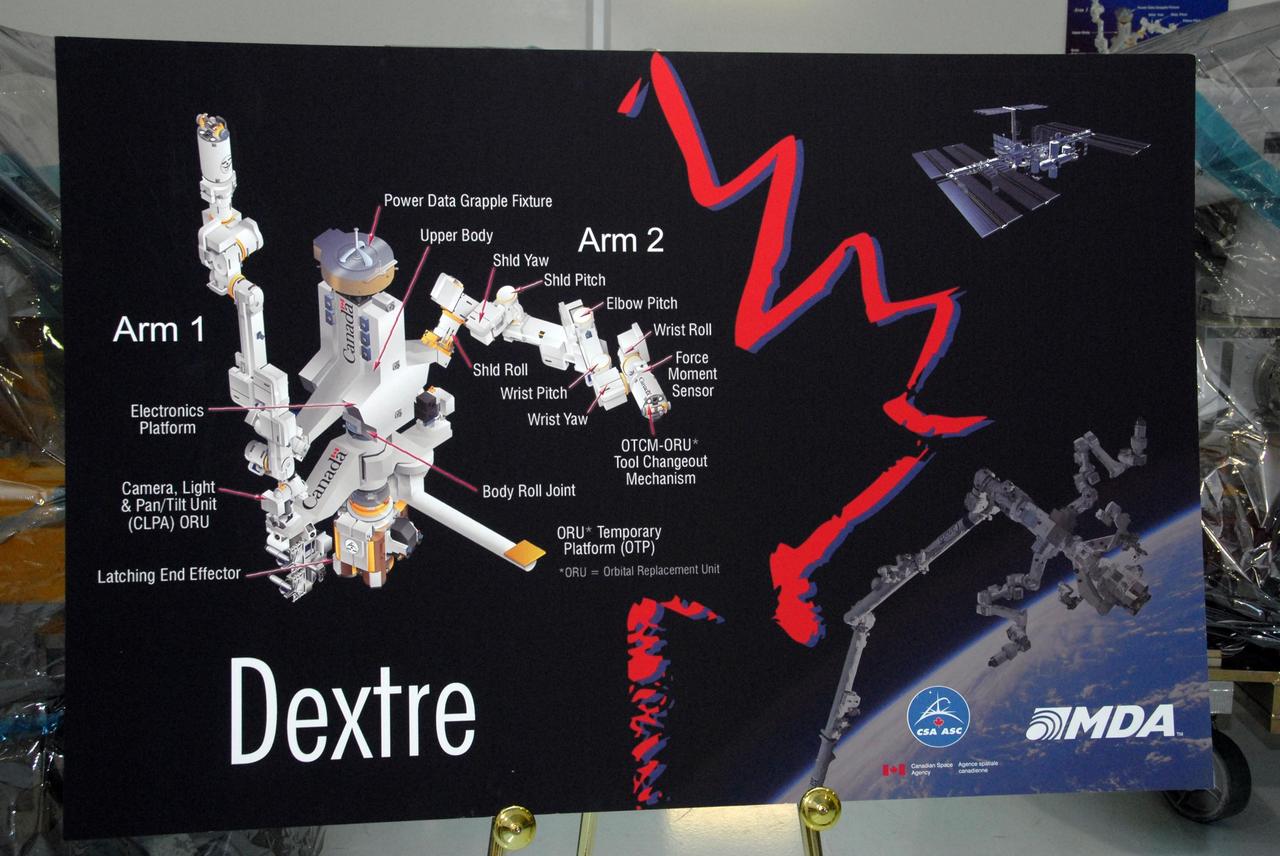
KENNEDY SPACE CENTER, FLA. -- A poster in the Space Station Processing Facility, or SSPF, at NASA's Kennedy Space Center illustrates the assembled Dextre, the third and final component of the mobile servicing system on the International Space Station. The Special Purpose Dexterous Manipulator will work with the mobile base and Canadarm2 on the station to perform critical construction and maintenance tasks. The poster sits in front of the draped sections in the SSPF. Dextre is part of the payload scheduled on mission STS-123, targeted to launch Feb. 14, 2008. Photo credit: NASA/George Shelton
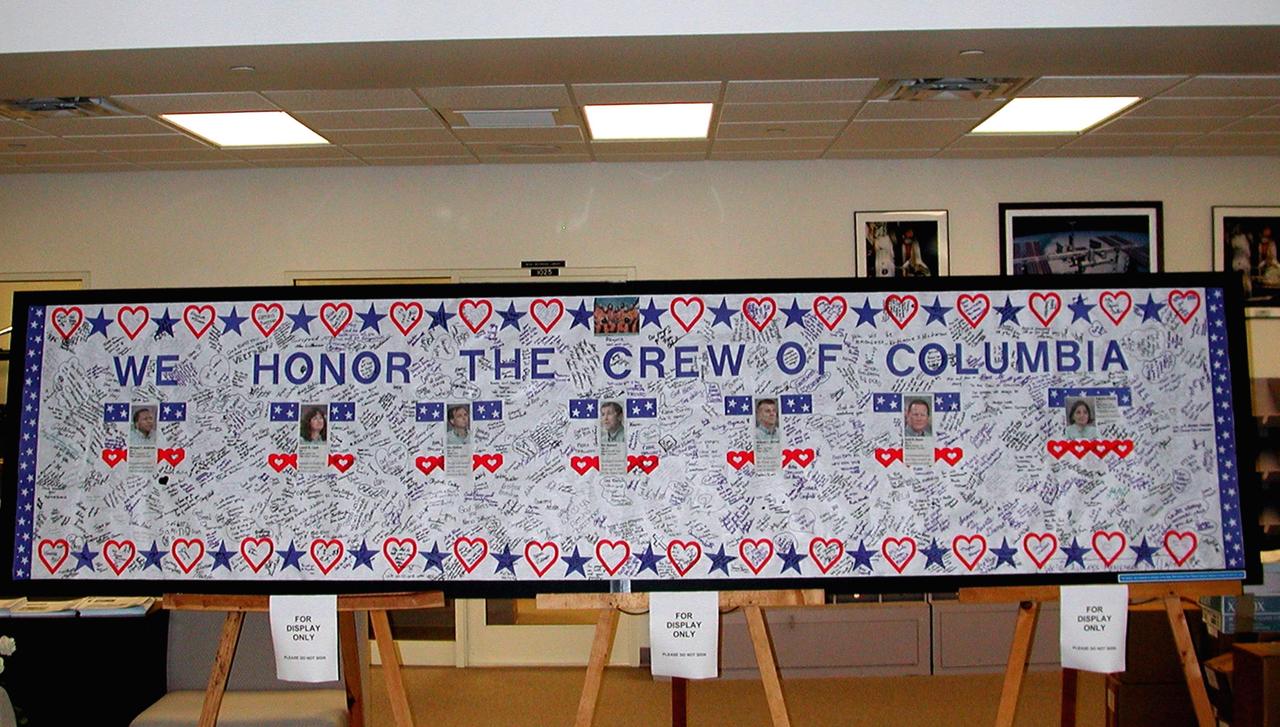
KENNEDY SPACE CENTER, FLA. -- A large poster in tribute to the Columbia astronauts who were lost in the Shuttle's explosion Feb. 1, is on display in the NASA News Center at KSC. The poster was signed by young women attending the Sally Ride Science Festival at the University of Central Florida, Orlando, Fla. The Sally Ride event promotes science, math and technology as future career paths for girls. Former astronaut Sally Ride addressed the girls at the festival, while breakout sessions afforded closer interaction between Ride and festival attendees.

NASA Marshall Space Flight Center’s Science and Technology Office held its 11th annual Science and Technology Jamboree Dec. 8 at Marshall Activities Building 4316. A poster session with around 60 poster presentations highlighted current science and technology topics and the innovative projects underway across the center. Here, Debra Needham, right, talks with coworker Sabrina Savage about one of the presentations. Both Needham and Savage are scientists in the Heliophysics & Planetary Science Branch of the Science Research and Projects Division.
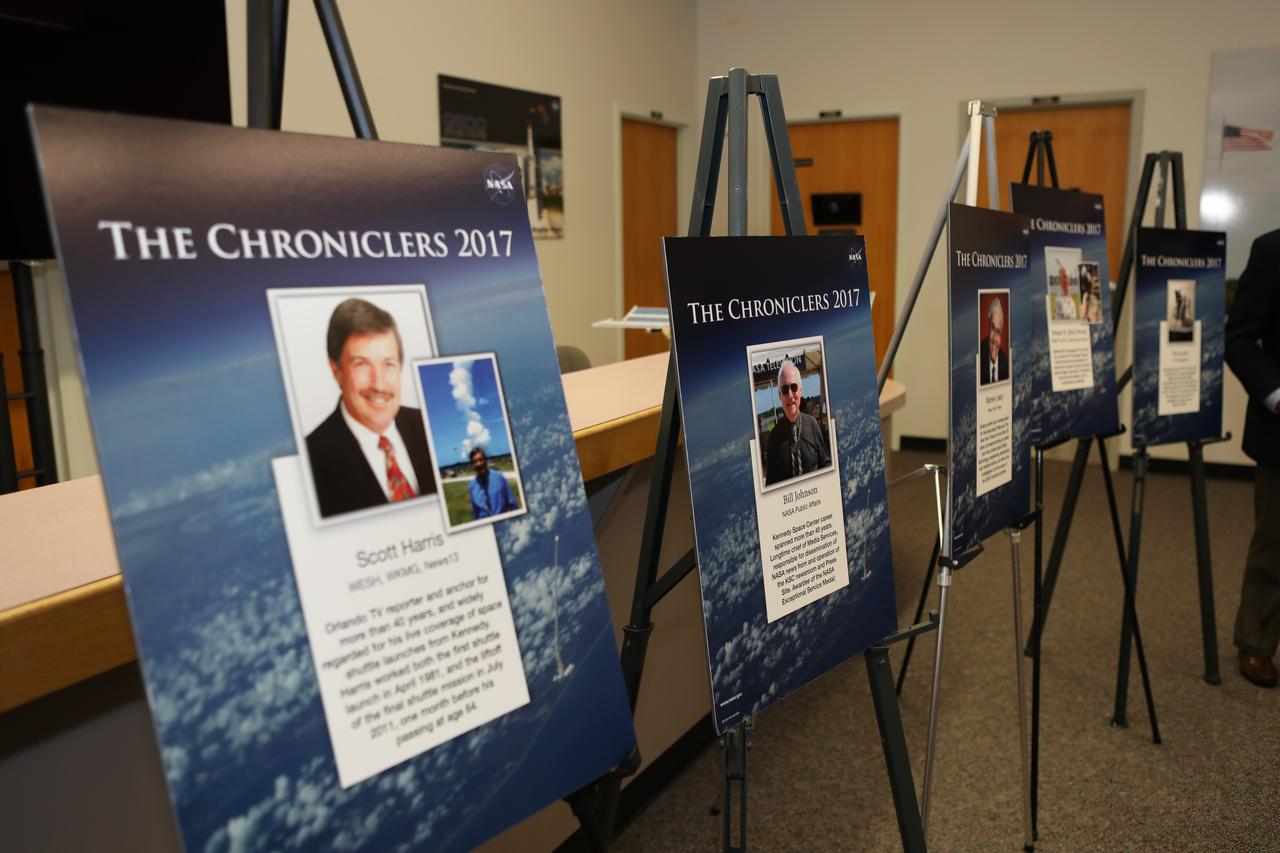
Posters in the NASA News Center at Kennedy Space Center in Florida bear the names and photos of five of the six new honorees added to the facility's "Chroniclers" roll of honor. From left to right are posters featuring Scott Harris, WESH, WKMG and Central Florida News 13; Bill Johnson, NASA Public Affairs; Warren Leary, The New York Times; Bob Murray, WDBO-TV, RCA and United Space Alliance; and Phillip Sandlin, Associated Press photographer. Not pictured is the poster for Bruce Hall, CBS News and NBC News. The Chroniclers program recognizes retirees of the news and communications business who helped spread news of American space exploration from Kennedy Space Center for ten years or more.
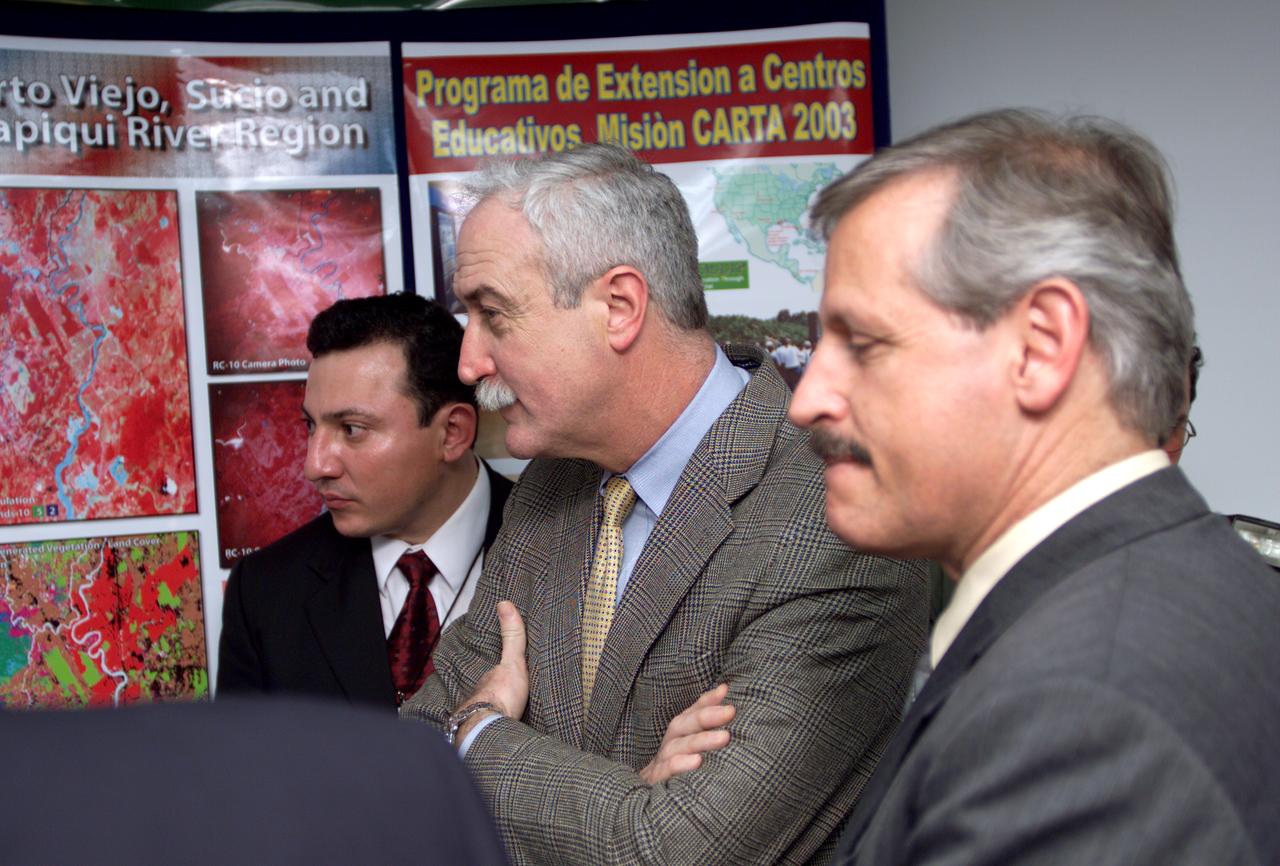
L-R; Jorge Andres Diaz, Director of the Costa Rican National Hangar for Airborne Research division of the National Center for High Technology(CENAT); NASA Administrator Sean O'Keefe; and Fernando Gutierrez, Costa Rican Minister of Science and Technology(MICIT), viewing posters showing how NASA activities have made an impact on Costa Rican people. Mr. O'Keefe was in Costa Rica to participate in the AirSAR 2004 Mesoamerica campaign, which used NASA DFRC's DC-8 airborne laboratory aircraft. AirSAR 2004 is a three-week expedition by an international team of scientists that will use an all-weather imaging tool, called the Airborne Synthetic Aperture Radar (AirSAR), in a mission ranging from the tropical rain forests of Central America to frigid Antarctica.
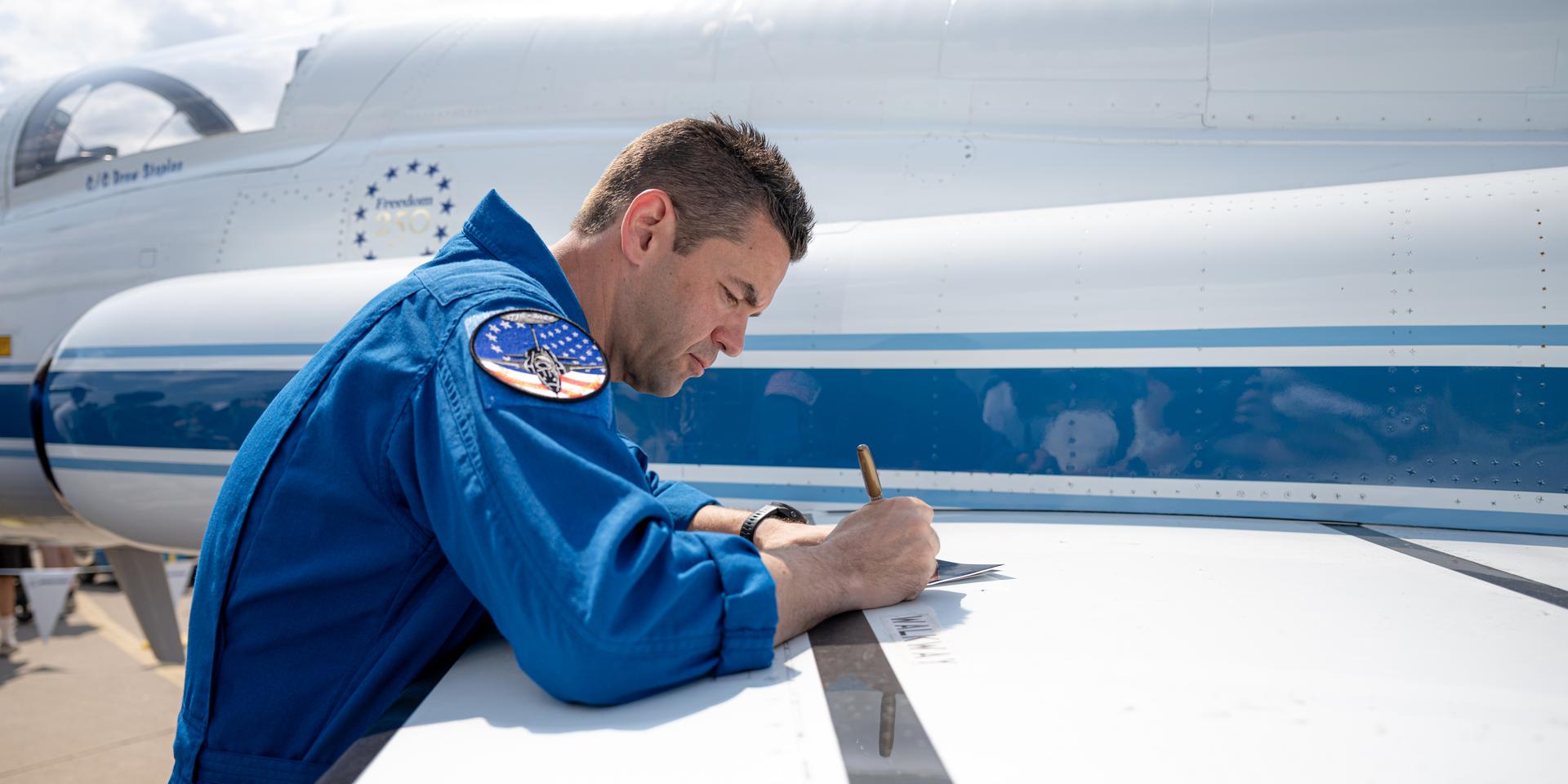
NASA Administrator Jared Isaacman signs a poster following a speaking arrangement, Friday, July 24, 2026, at EAA AirVenture Oshkosh at Wittman Regional Airport in Oshkosh, Wis. Photo Credit: (NASA/John Kraus)
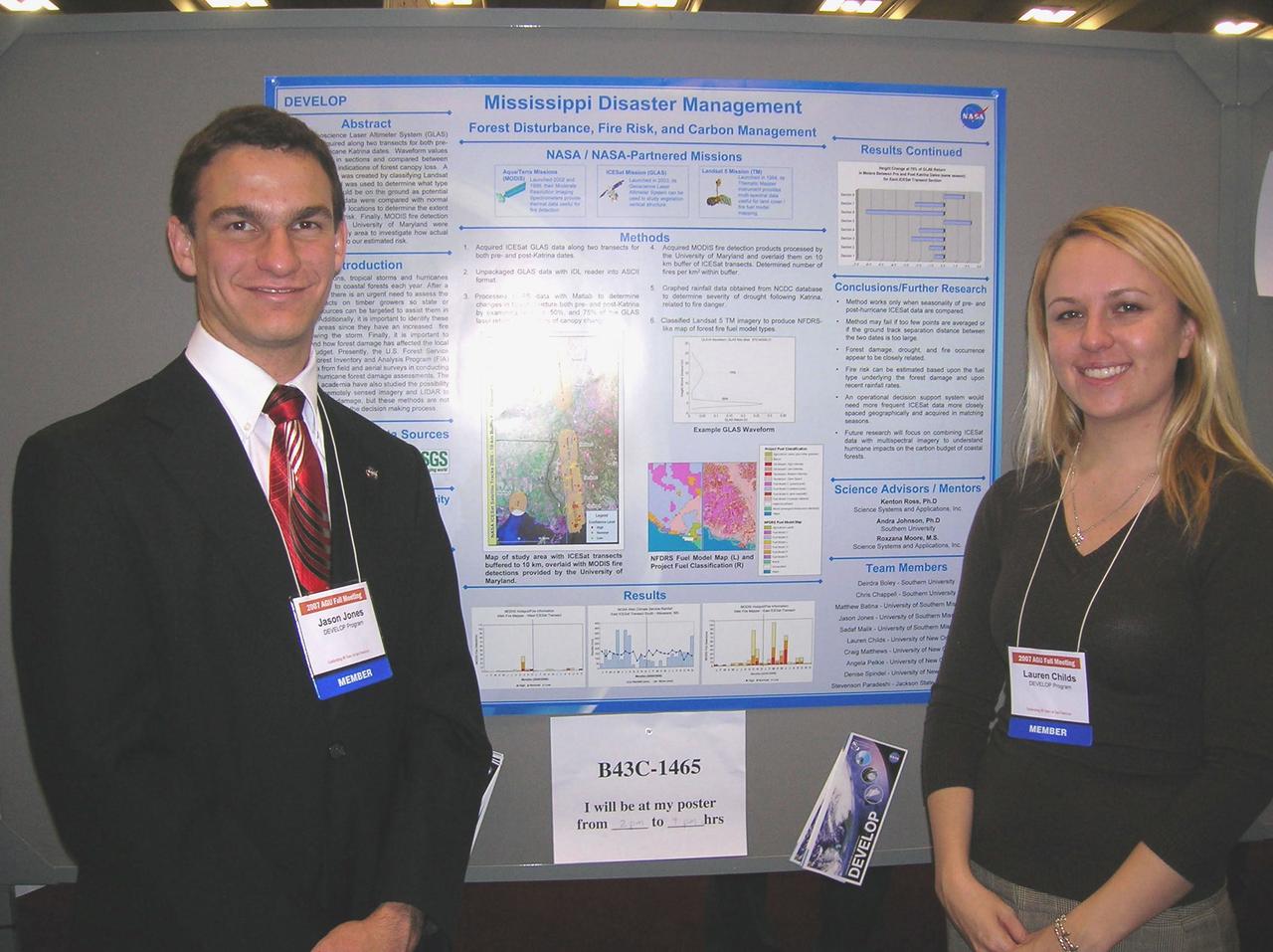
Jason Jones, left, and Lauren Childs are pictured with their presentation during the poster session at the American Geophysical Union Fall Meeting in San Francisco, Calif., Dec. 10-14, 2007.
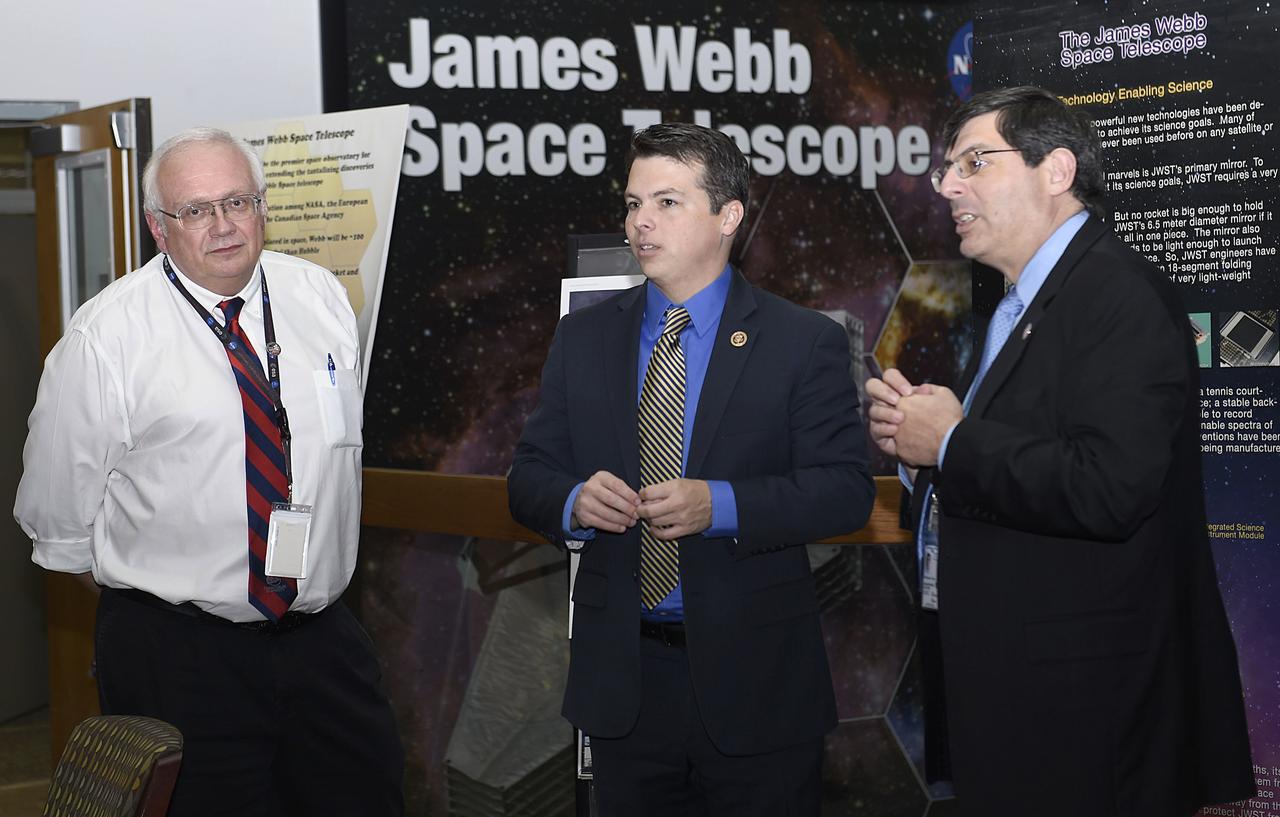
Congressman Brendan Boyle from Pennsylvania visited Goddard on November 14, 2016. Center Director Chris Scolese and Bill Ochs/JWST talk in front of posters in Bldg 29.
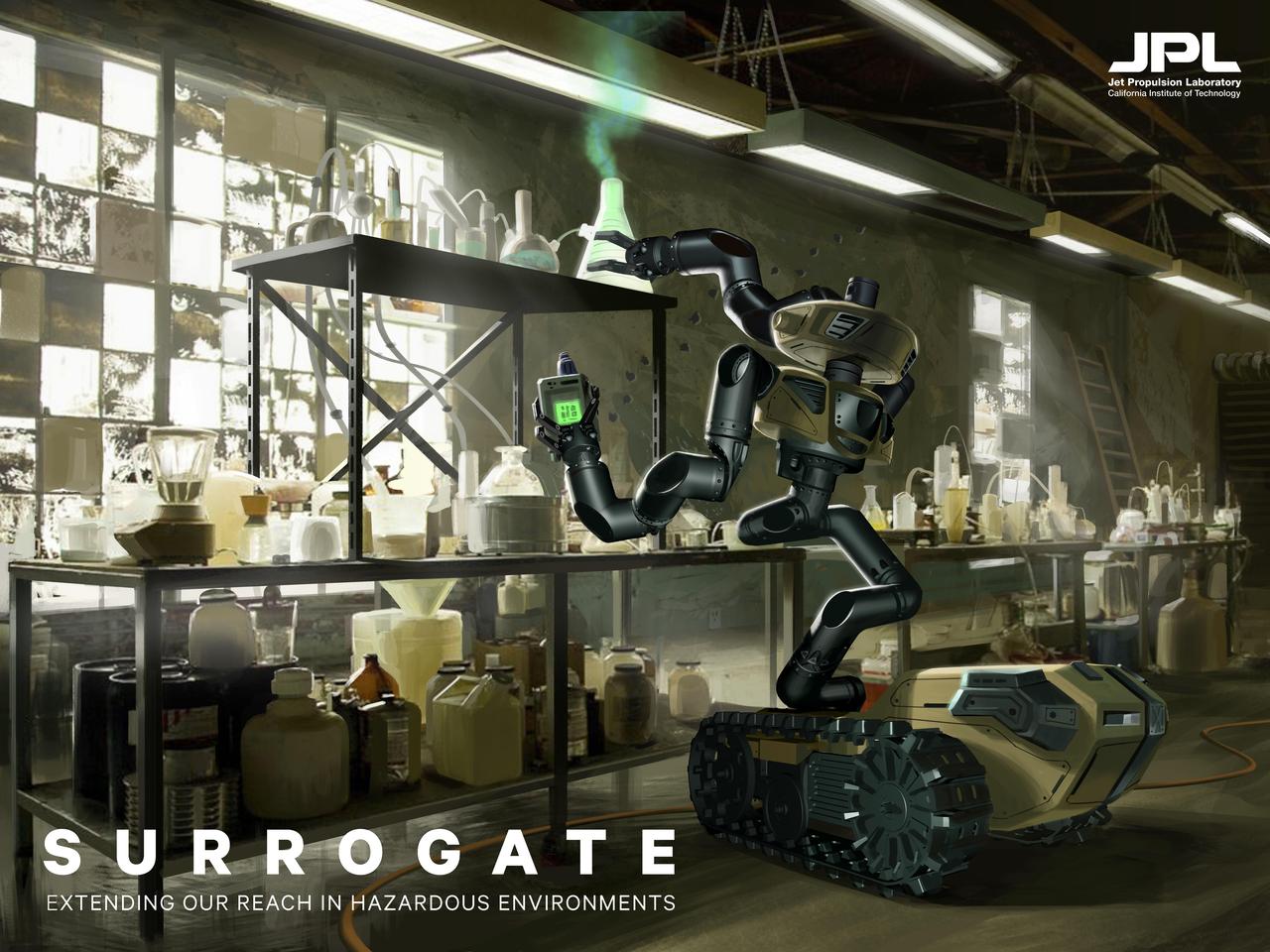
This artist's concept shows Surrogate, a robot that could one day assist in disasters or hazardous situations such as a dangerous chemical laboratory. Surrogate was designed and built at the Jet Propulsion Laboratory in Pasadena, California. Its components came from RoboSimian, another JPL-built robot designed for disaster relief and mitigation (see PIA19313). Surrogate rolls on a track rather than moving on its limbs. http://photojournal.jpl.nasa.gov/catalog/PIA19314
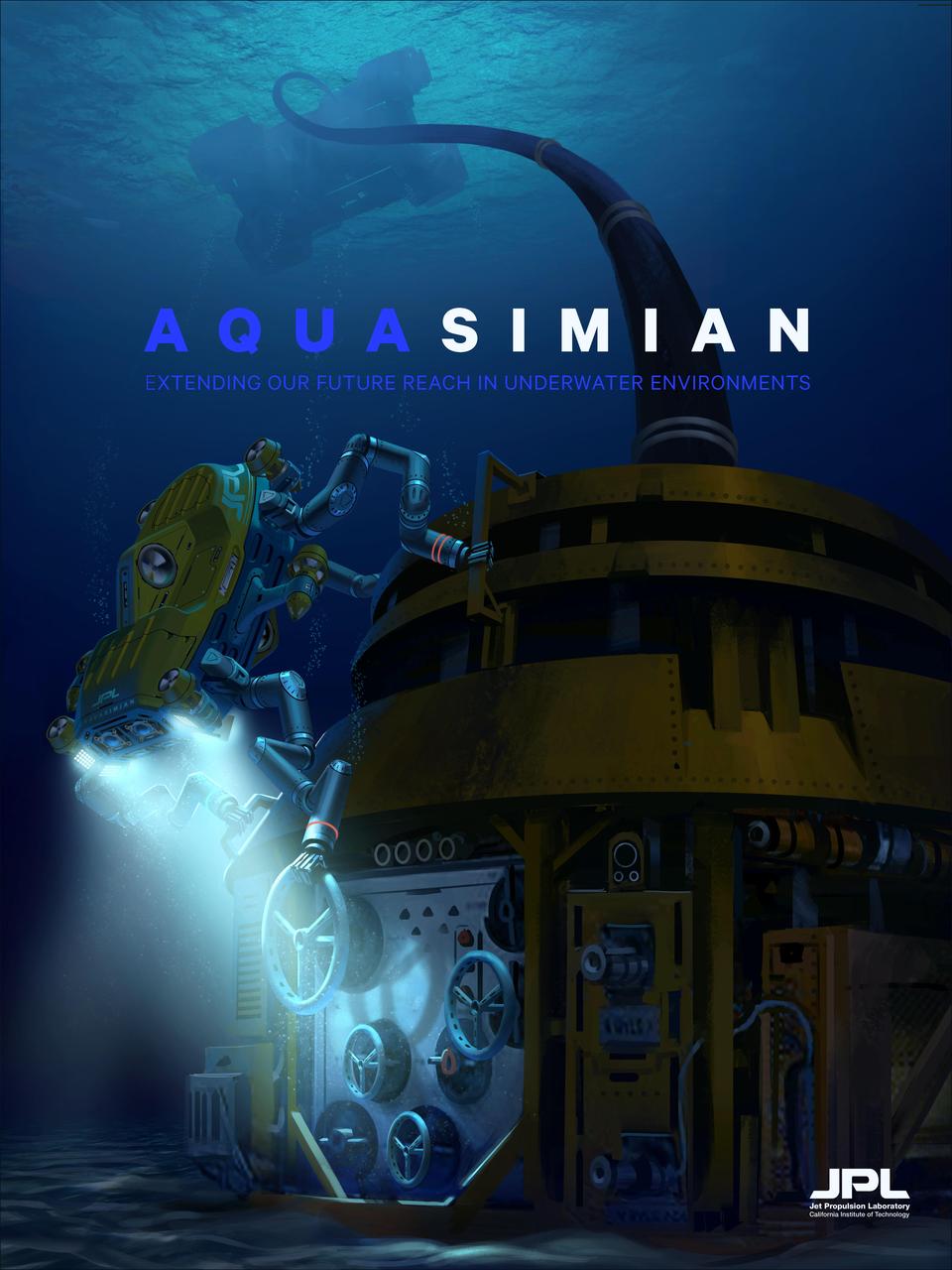
This artist's rendering shows a concept for a robot called AquaSimian that would assist with hazardous situations underwater. The concept is derived from RoboSimian, a land-based robot designed and built at the Jet Propulsion Laboratory in Pasadena, California. RoboSimian is shown in PIA19313. http://photojournal.jpl.nasa.gov/catalog/PIA19315
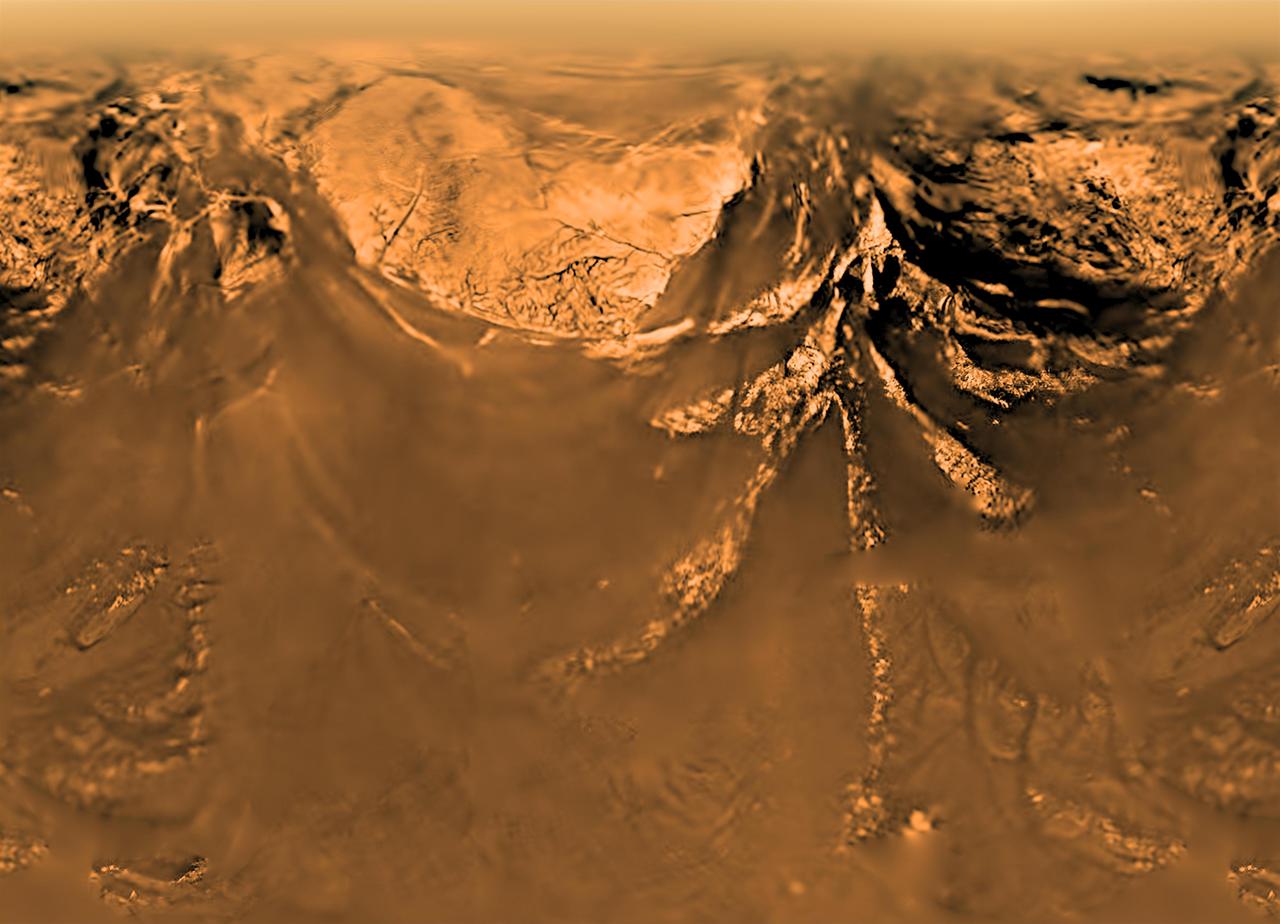
This poster shows a flattened (Mercator) projection of the Huygens probe's view from 10 kilometers altitude (6 miles). The images that make up this view were taken on Jan. 14, 2005, with the descent imager/spectral radiometer onboard the European Space Agency's Huygens probe. The Huygens probe was delivered to Saturn's moon Titan by the Cassini spacecraft, which is managed by NASA's Jet Propulsion Laboratory, Pasadena, Calif. NASA supplied two instruments on the probe, the descent imager/spectral radiometer and the gas chromatograph mass spectrometer. http://photojournal.jpl.nasa.gov/catalog/PIA08113
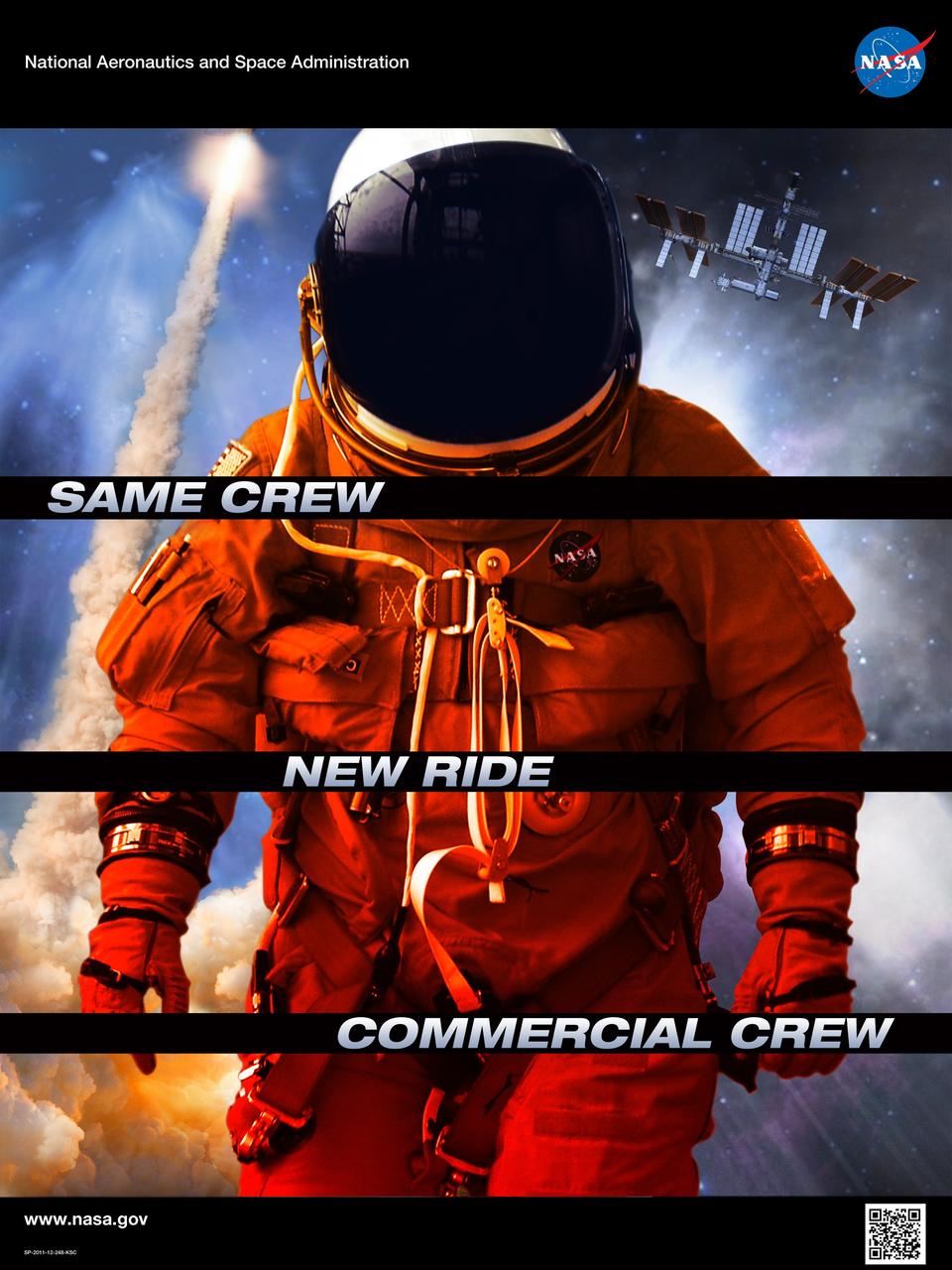
CAPE CANAVERAL, Fla. -- This is a printable version of NASA's "Same Crew, New Ride" poster depicting an artist's conception of NASA's Commercial Crew Program CCP. The poster features a NASA astronaut in the foreground with a vehicle launching toward the International Space Station in the background. CCP is investing in the aerospace industry and helping multiple companies design and develop crew transportation systems that could be capable of flying to the space station and other low Earth orbit destinations. The program is meant to accelerate a United States-led capability to the station where critical scientific work is being performed for use in applications here on Earth. CCP is expected to drive down the cost of space travel as well as open up space to more people than ever before by balancing industry’s own innovative capabilities with NASA's 50 years of human spaceflight experience. For more information, visit www.nasa.gov/commercialcrew. Poster designed by Kennedy Space Center Graphics Department/Greg Lee. Credit: NASA
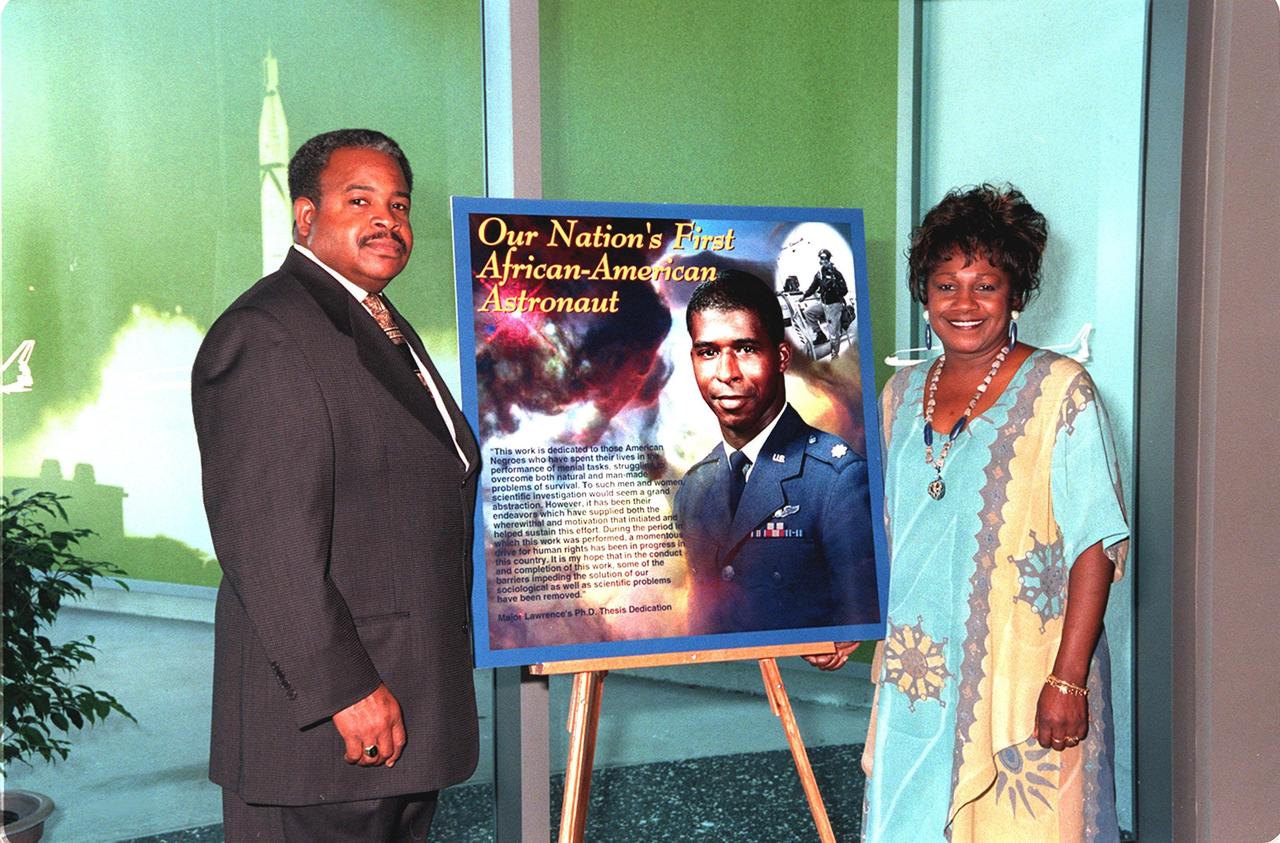
Mack McKinney (left), chief, Programs Resources Management, and Delores Abraham (right), with the Astronaut office, flank one of the posters decorating the Early Space Exploration Conference Center at the KSC Visitor Complex for the 2000 African American History Month Celebration Luncheon. McKinney is chairperson for the event
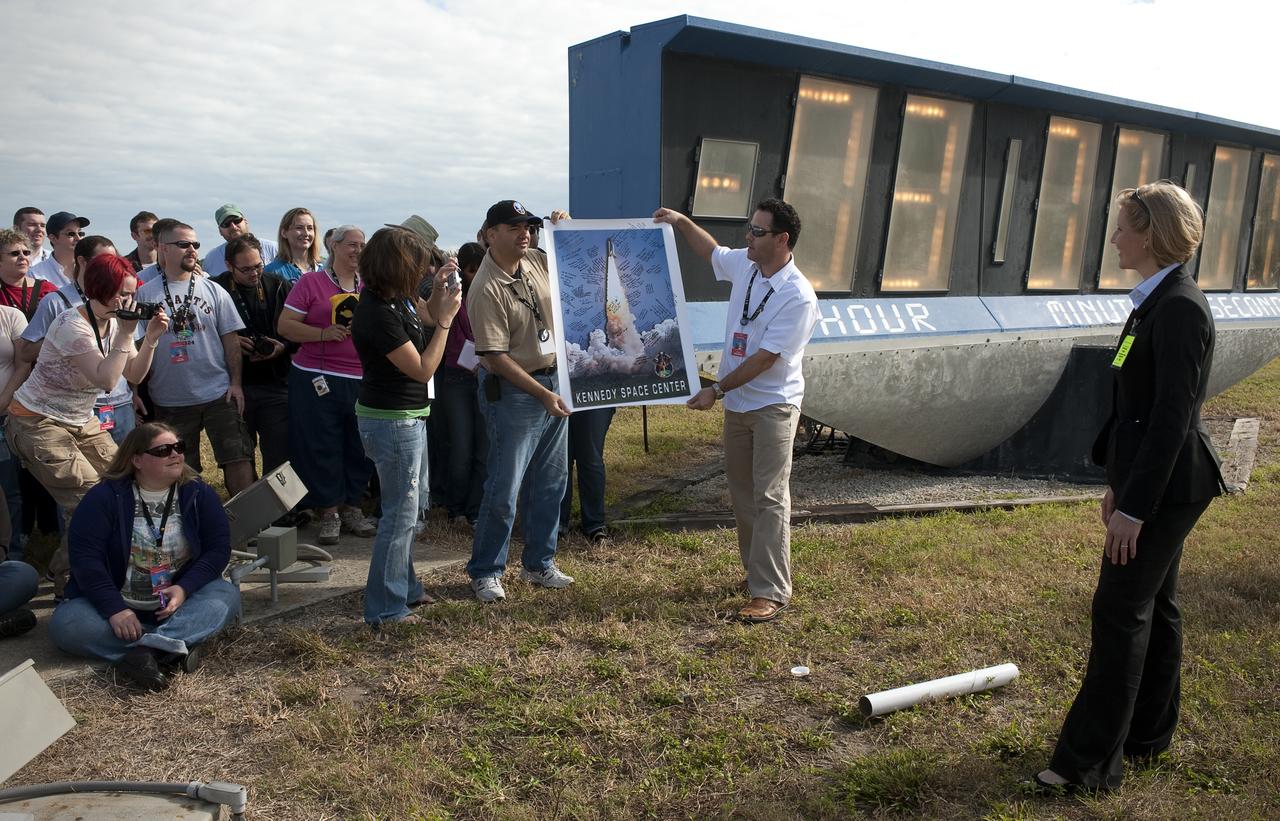
NASA Twitter followers attending a two-day NASA Tweetup presented NASA Public Affairs Officers with a signed poster from Kennedy Space Center expressing their appreciation for hosting this unique event, Monday, Nov. 16, 2009 in Cape Canaveral, Fla. Photo Credit: (NASA/Carla Cioffi)
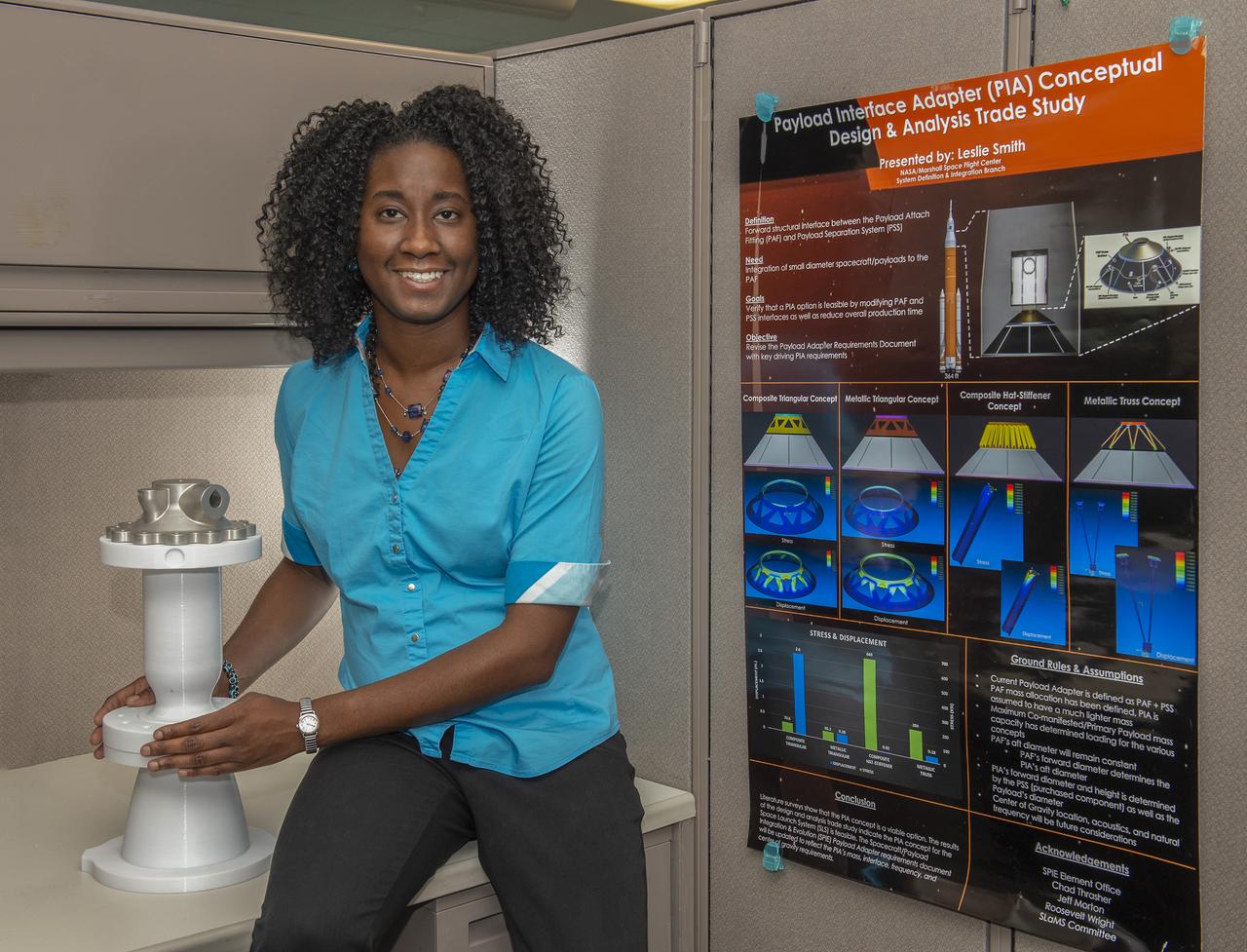
Leslie Smith, Systems Engineer, poses with an additive manufactured small combustion chamber, and poster she designed, of the Payload Interface Adapter (PIA) trade study that depicts four different concepts. The PIA is vital in helping transport various payloads to Beyond Earth Orbit.
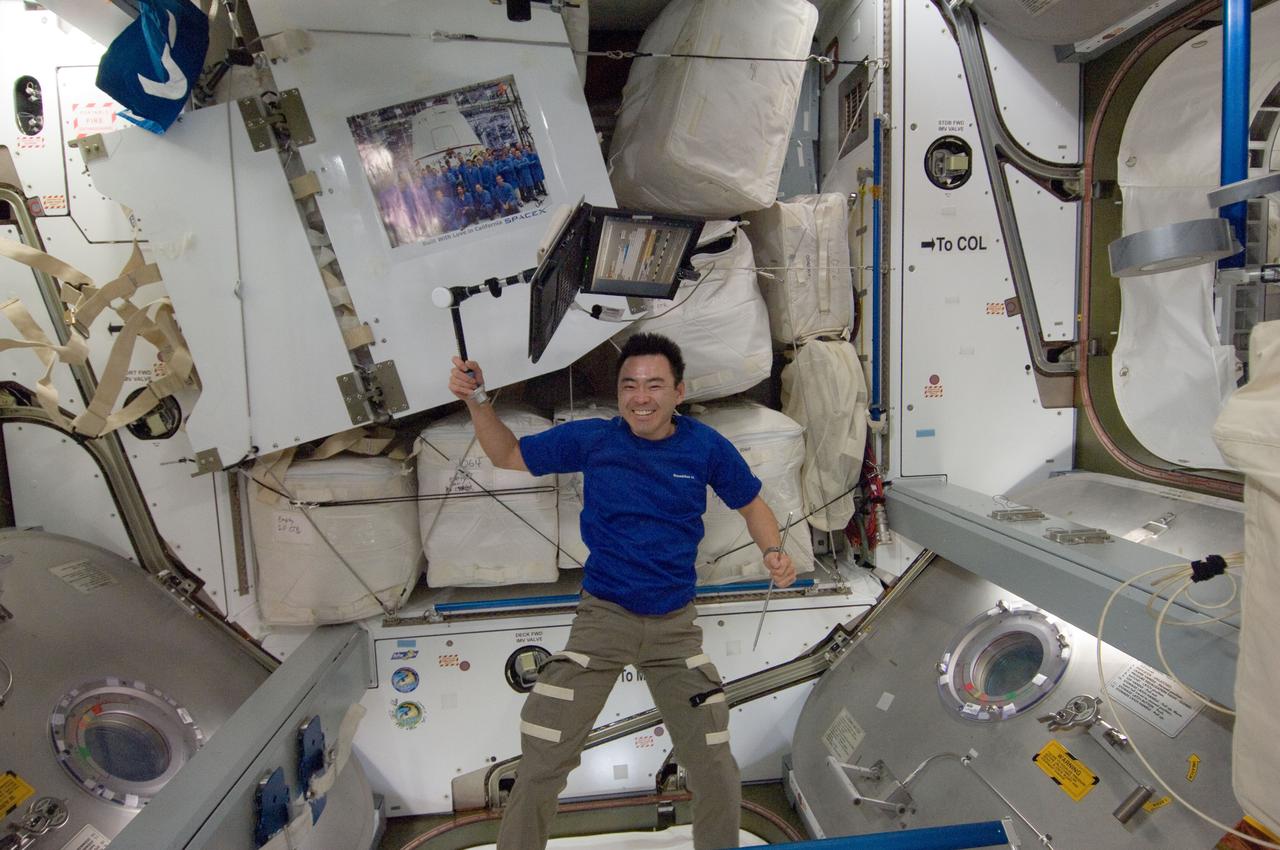
ISS033-E-013091 (14 Oct. 2012) --- Japan Aerospace Exploration Agency astronaut Aki Hoshide, Expedition 33 flight engineer, holds a computer attached to a stand in the Harmony node of the International Space Station. A signed poster of SpaceX personnel floats freely at upper left.
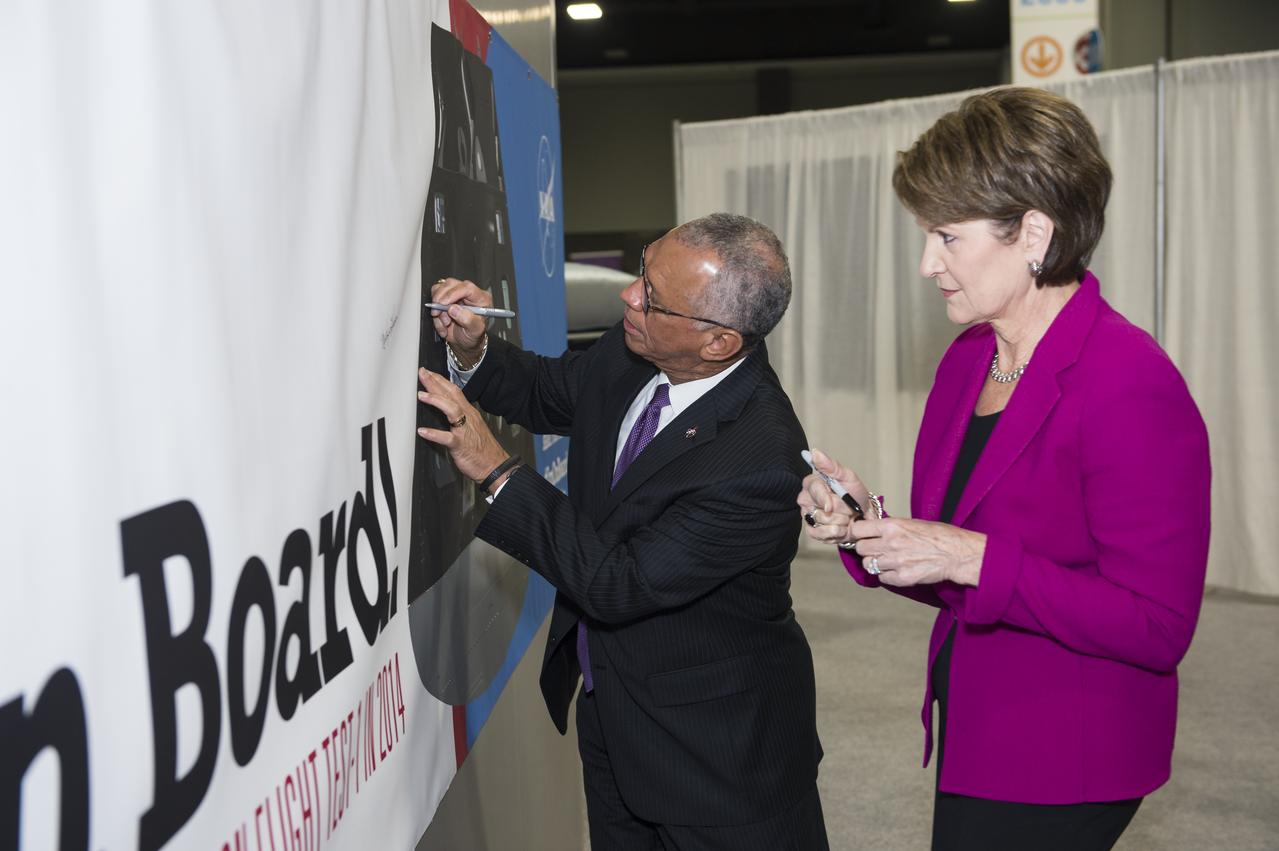
NASA Administrator Charles Bolden and Lockheed Martin CEO Marillyn Hewson sign the poster at the Orion exhibit at the USA Science and Engineering Festival on April 25, 2014. The USA Science and Engineering Festival takes place April 26-27, 2014 at the Washington Convention Center in Washington, DC. Photo Credit: (NASA/Aubrey Gemignani)
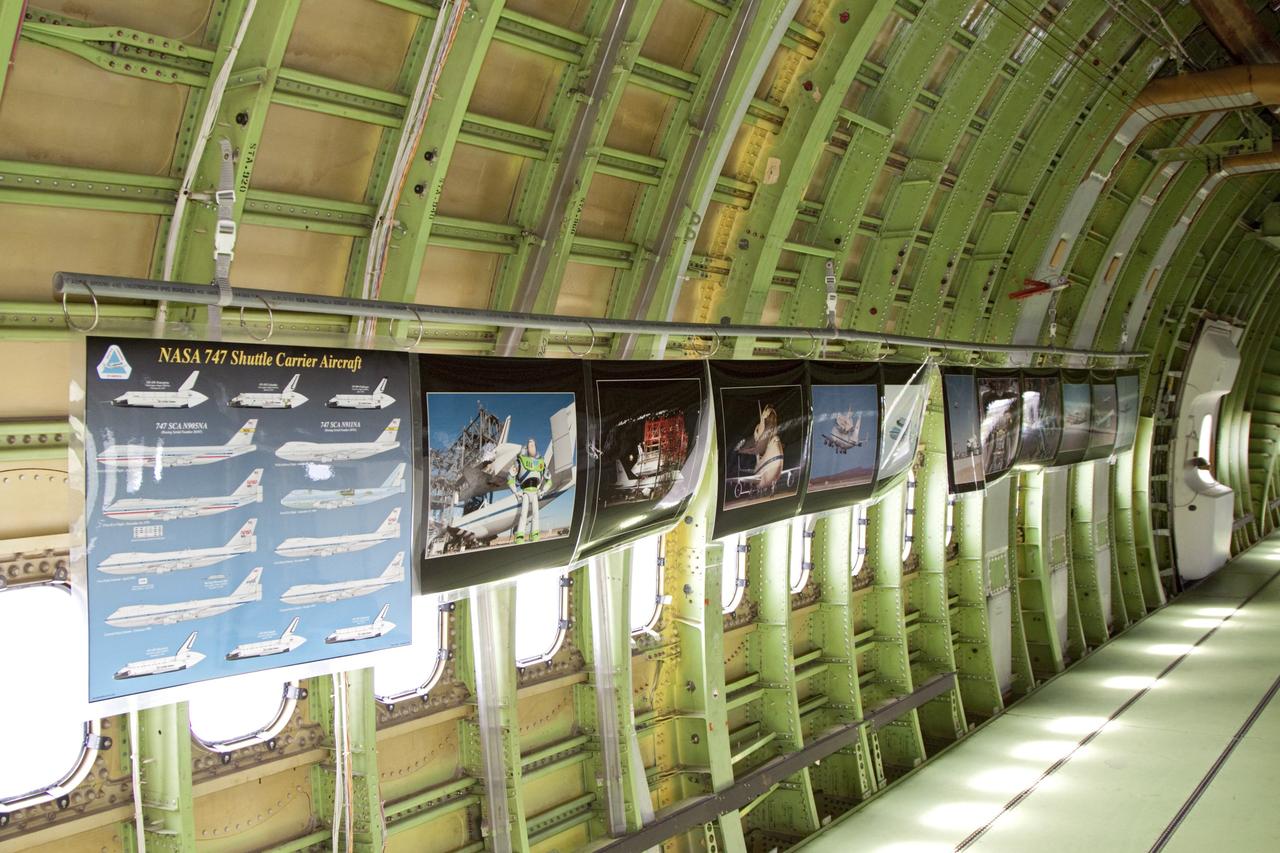
CAPE CANAVERAL, Fla. - A row of posters displays some of the history of the Shuttle Carrier Aircraft, or SCA, that will take space shuttle Endeavour from NASA's Kennedy Space Center in Florida to Los Angeles for public display. Photo credit: NASA/Kim Shiflett
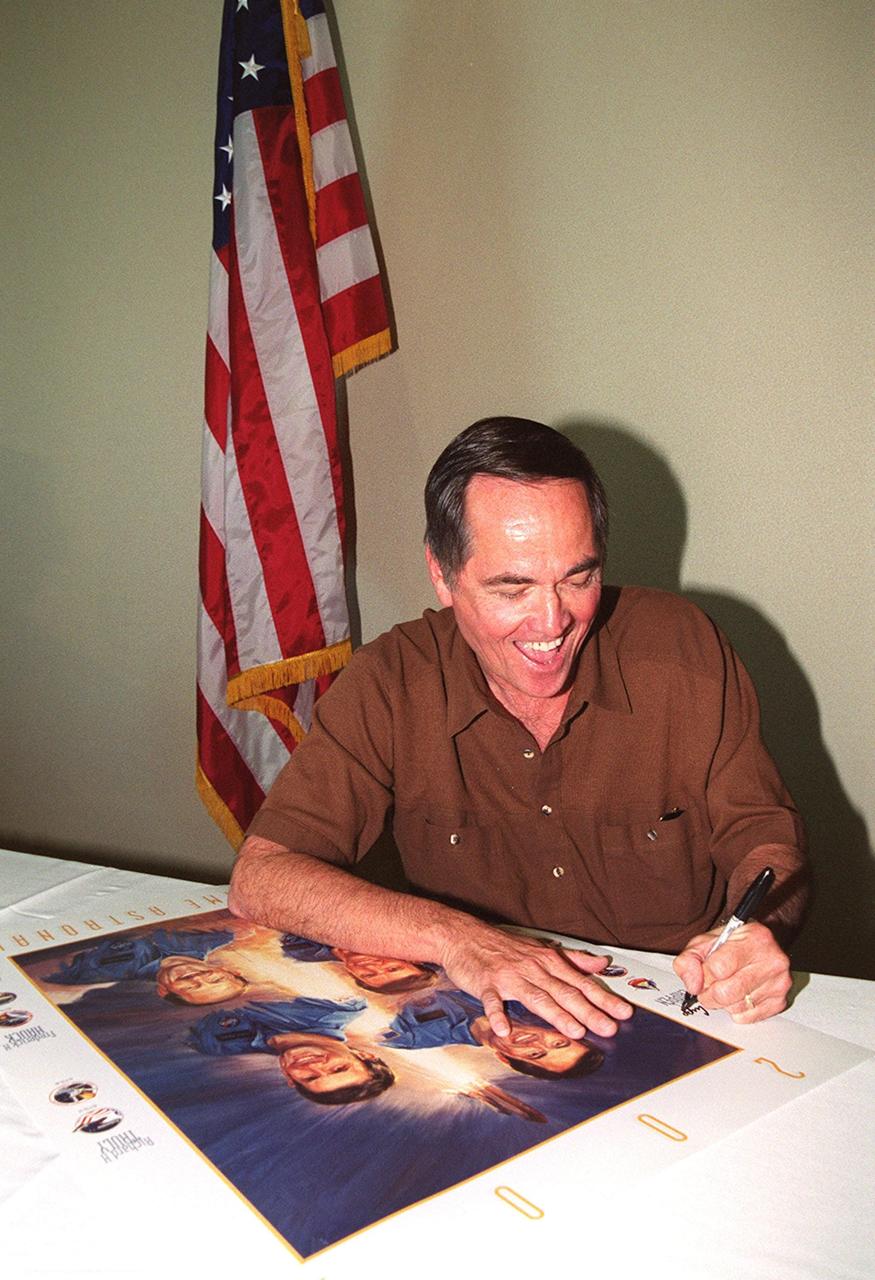
KENNEDY SPACE CENTER, Fla. -- One of the first Shuttle astronauts, Robert Crippen signs a poster during induction ceremonies into the U.S. Astronaut Hall of Fame Nov. 10. He shared the induction honor with astronauts Richard Truly, Joe Engle, and Frederick "Rick" Hauck. The event took place at the KSC Visitor Complex
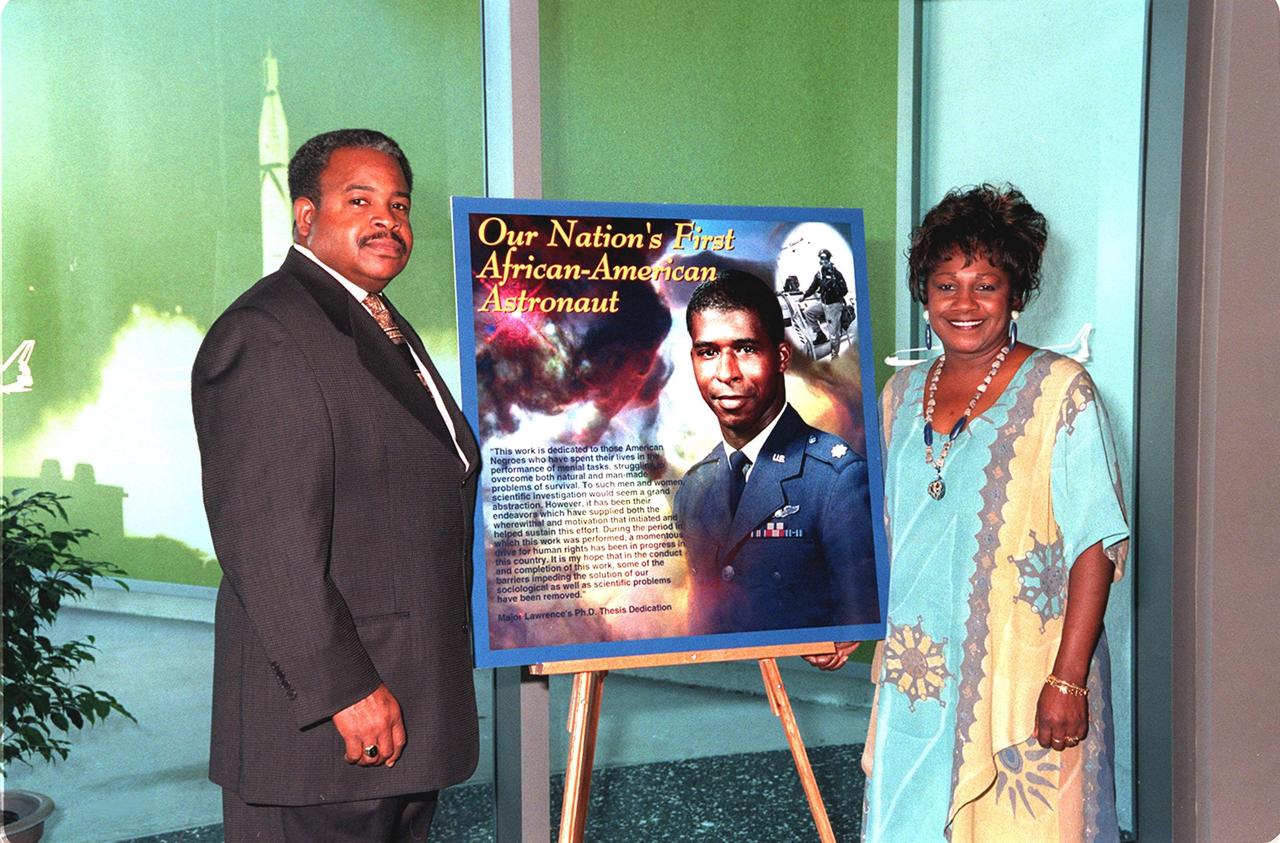
Mack McKinney (left), chief, Programs Resources Management, and Delores Abraham (right), with the Astronaut office, flank one of the posters decorating the Early Space Exploration Conference Center at the KSC Visitor Complex for the 2000 African American History Month Celebration Luncheon. McKinney is chairperson for the event
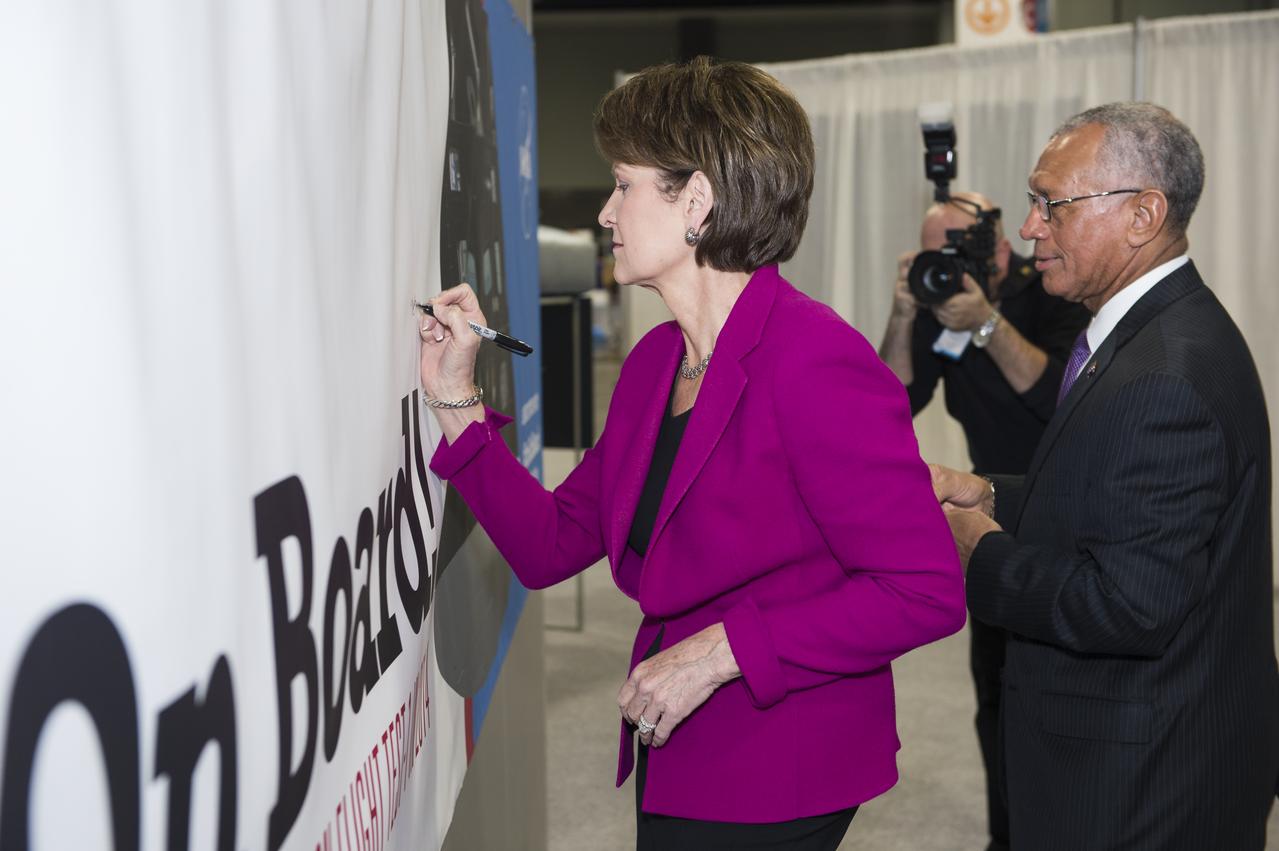
NASA Administrator Charles Bolden and Lockheed Martin CEO Marillyn Hewson sign the poster at the Orion exhibit at the USA Science and Engineering Festival on April 25, 2014. The USA Science and Engineering Festival takes place April 26-27, 2014 at the Washington Convention Center in Washington, DC. Photo Credit: (NASA/Aubrey Gemignani)
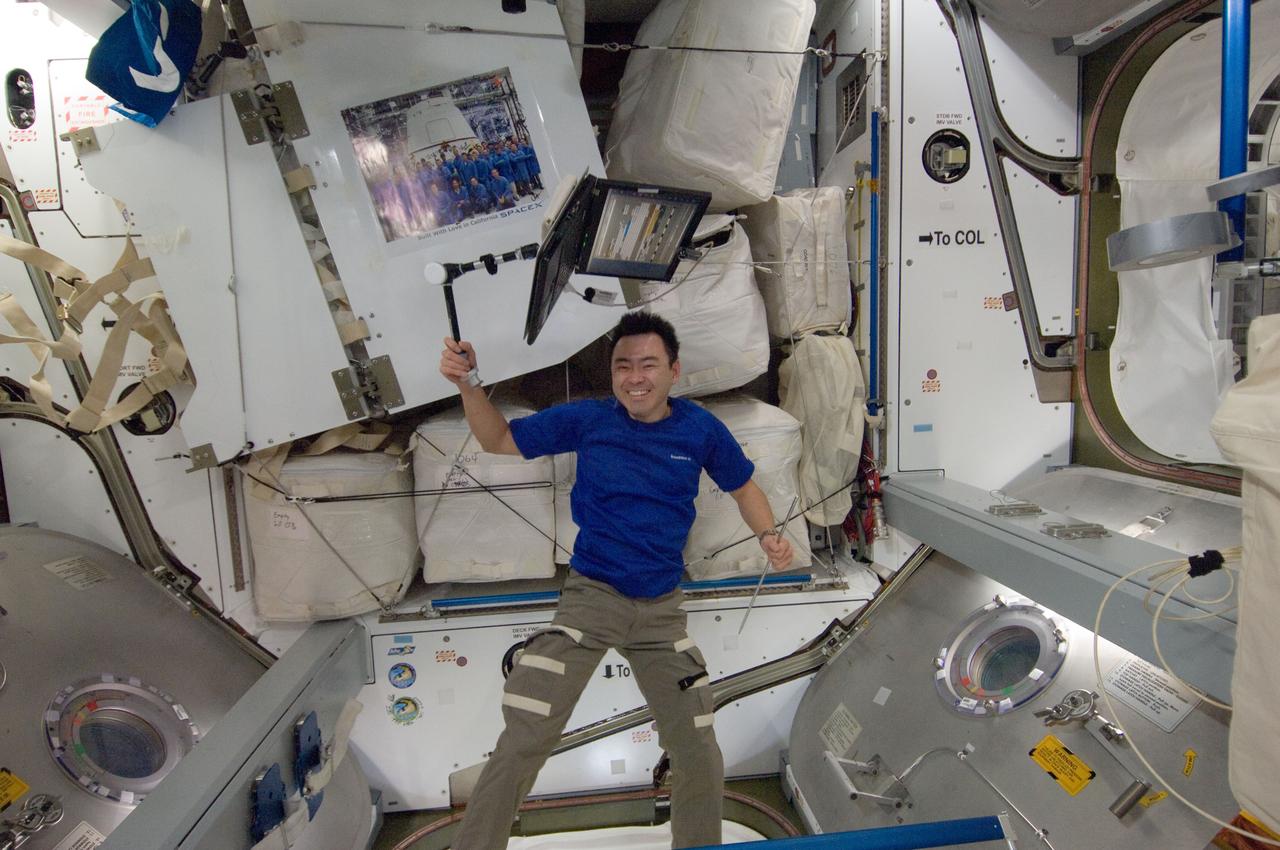
ISS033-E-013092 (14 Oct. 2012) --- Japan Aerospace Exploration Agency astronaut Aki Hoshide, Expedition 33 flight engineer, holds a computer attached to a stand in the Harmony node of the International Space Station. A signed poster of SpaceX personnel floats freely at upper left.
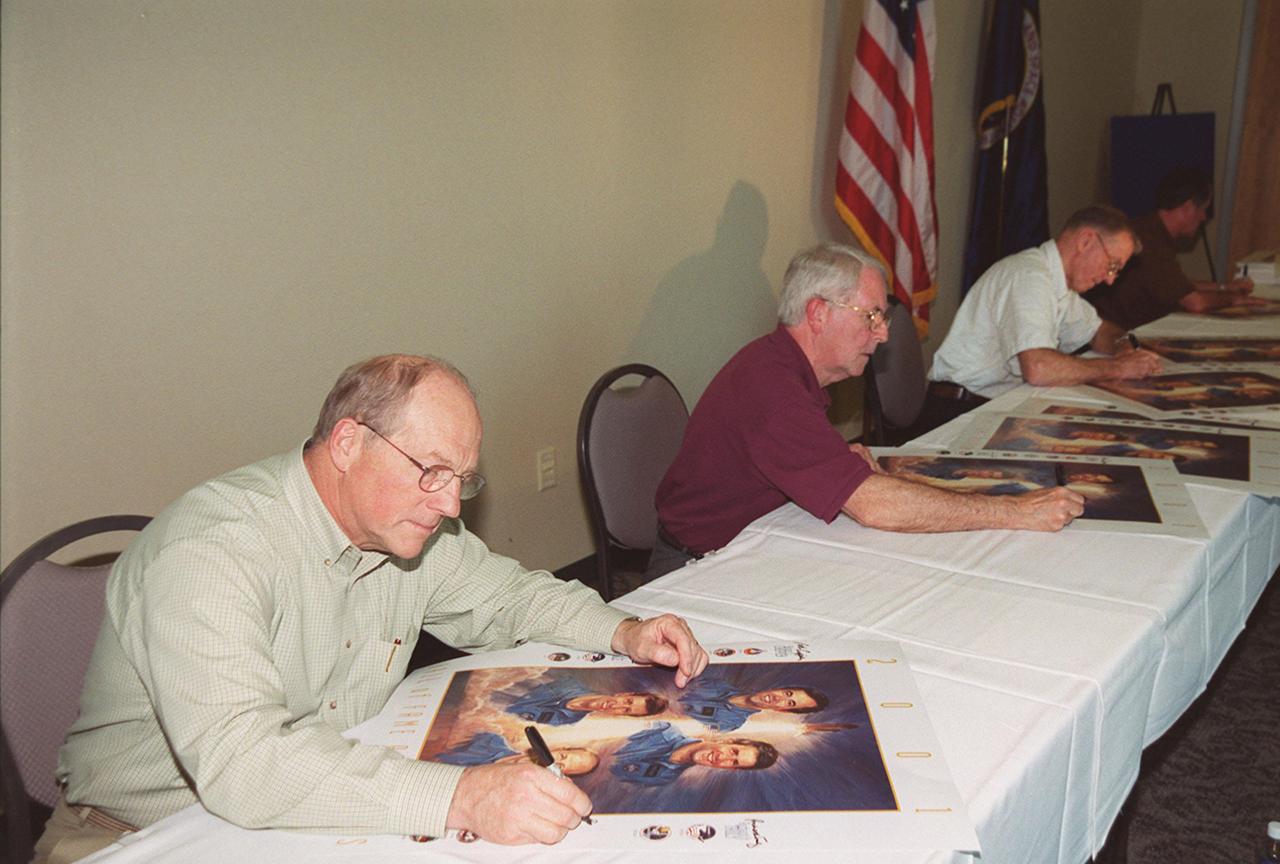
KENNEDY SPACE CENTER, Fla. -- The first four Shuttle astronauts take time to sign posters commemorating their induction into the U.S. Astronaut Hall of Fame Nov. 10. Seated from left are Frederick 'Rick' Hauck, Richard Truly, Joe Engle and Robert Crippen. The event took place at the KSC Visitor Complex

Students and young professionals discuss their projects at the Earth Science Applications Showcase Wednesday, August 1, 2018 at NASA Headquarters in Washington. Every summer, participants in NASA’s Applied Sciences’ DEVELOP National Program come to NASA Headquarters and present their research projects. DEVELOP is a training and development program where students work on Earth science research projects, mentored by science advisers from NASA and partner agencies, and extend research results to local communities. Photo Credit: (NASA/Aubrey Gemignani)
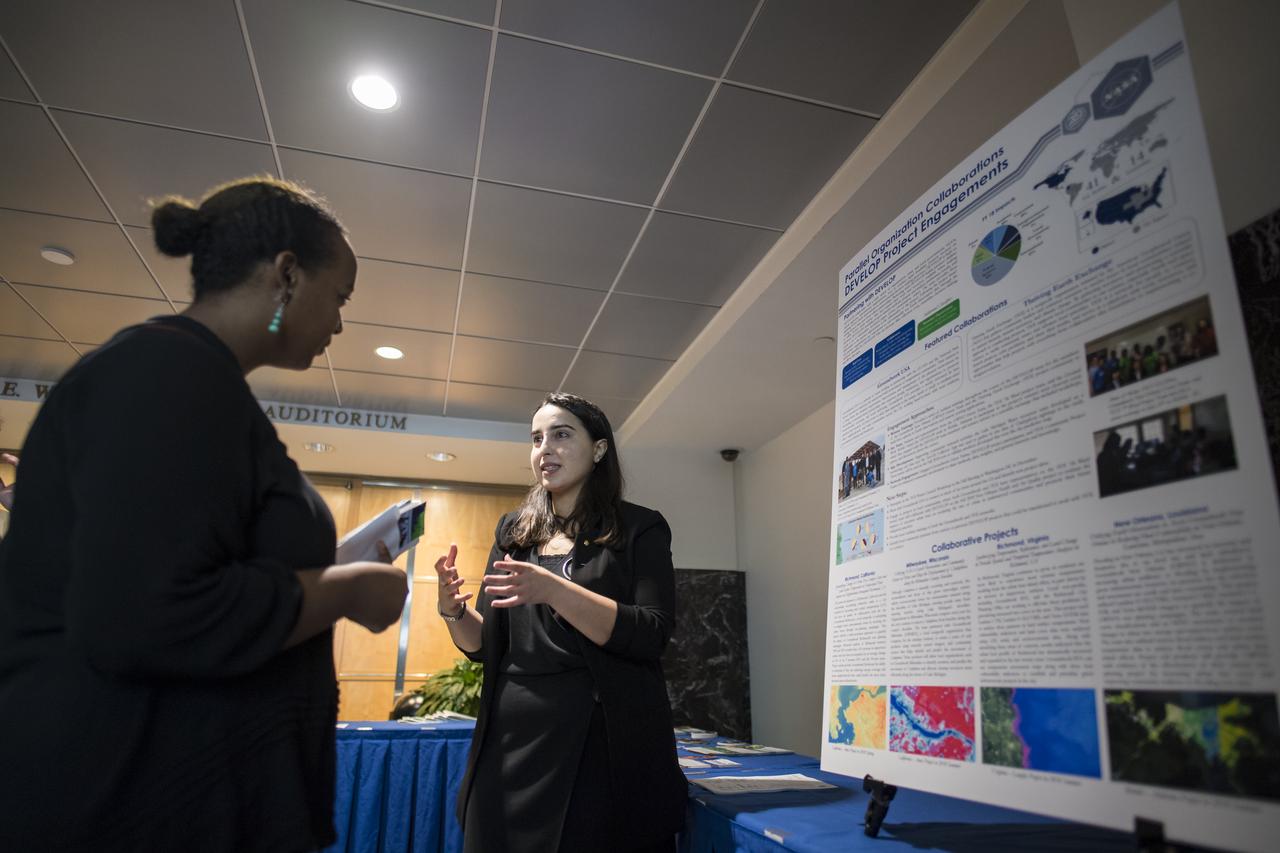
Farnaz Bayat from Mobile, Alabama, discusses her project with a participant at the Earth Science Applications Showcase Wednesday, August 1, 2018 at NASA Headquarters in Washington. Farnaz has been with the DEVELOP program since 2016 and has worked on several projects, including her current one using NASA Earth observations to identify areas in New Orleans that are vulnerable to flooding. DEVELOP is a training and development program where students work on Earth science research projects, mentored by science advisers from NASA and partner agencies, and extend research results to local communities. Photo Credit: (NASA/Aubrey Gemignani)
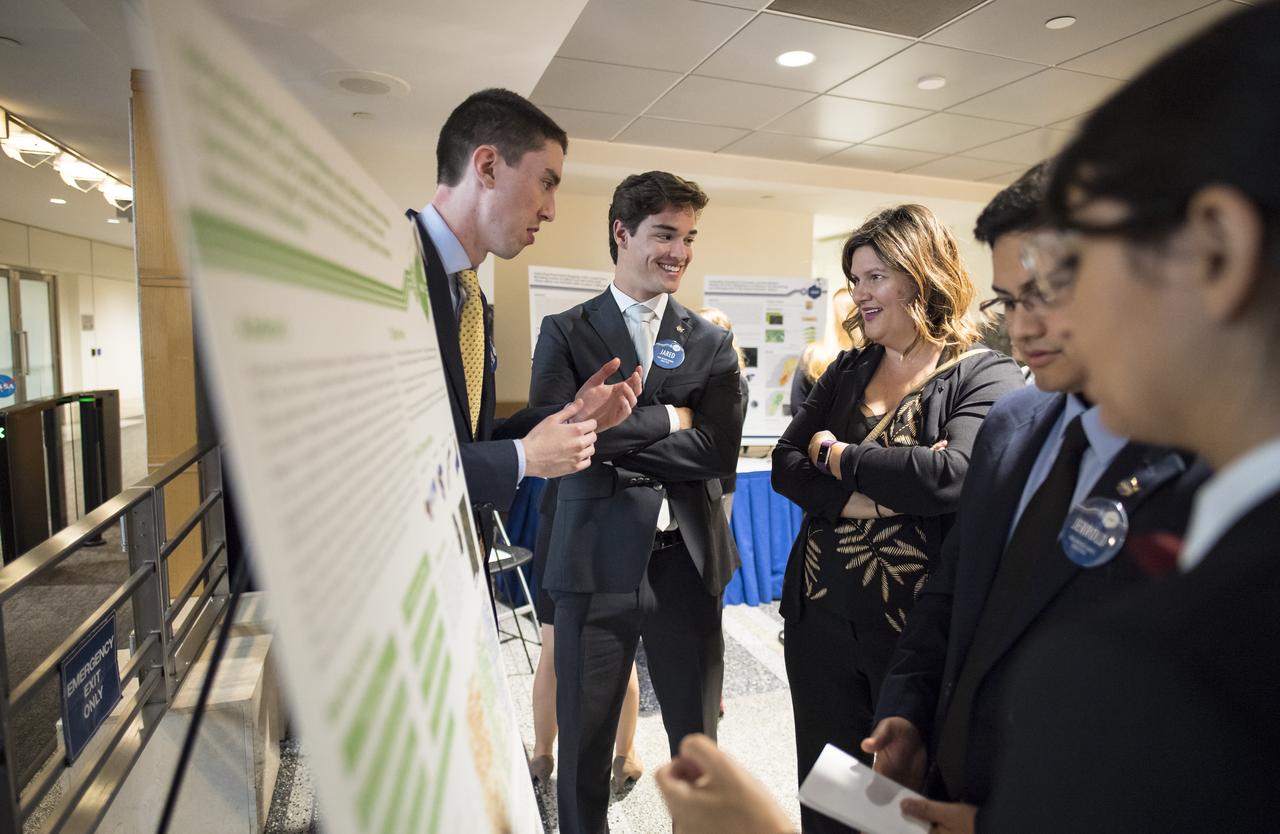
Students and young professionals discuss their projects at the Earth Science Applications Showcase Wednesday, August 1, 2018 at NASA Headquarters in Washington. Every summer, participants in NASA’s Applied Sciences’ DEVELOP National Program come to NASA Headquarters and present their research projects. DEVELOP is a training and development program where students work on Earth science research projects, mentored by science advisers from NASA and partner agencies, and extend research results to local communities. Photo Credit: (NASA/Aubrey Gemignani)
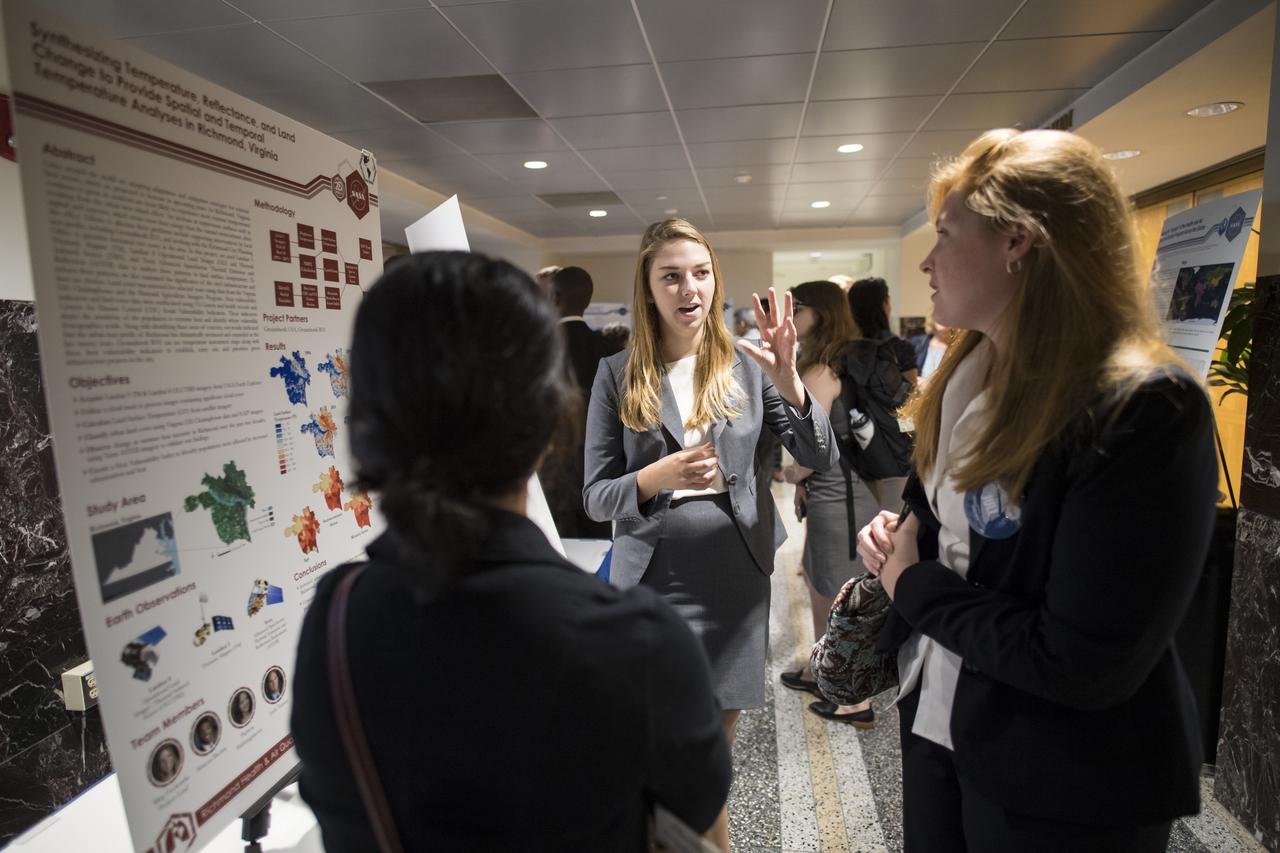
Students and young professionals discuss their projects at the Earth Science Applications Showcase Wednesday, August 1, 2018 at NASA Headquarters in Washington. Every summer, participants in NASA’s Applied Sciences’ DEVELOP National Program come to NASA Headquarters and present their research projects. DEVELOP is a training and development program where students work on Earth science research projects, mentored by science advisers from NASA and partner agencies, and extend research results to local communities. Photo Credit: (NASA/Aubrey Gemignani)

Students and young professionals discuss their projects at the Earth Science Applications Showcase Wednesday, August 1, 2018 at NASA Headquarters in Washington. Every summer, participants in NASA’s Applied Sciences’ DEVELOP National Program come to NASA Headquarters and present their research projects. DEVELOP is a training and development program where students work on Earth science research projects, mentored by science advisers from NASA and partner agencies, and extend research results to local communities. Photo Credit: (NASA/Aubrey Gemignani)
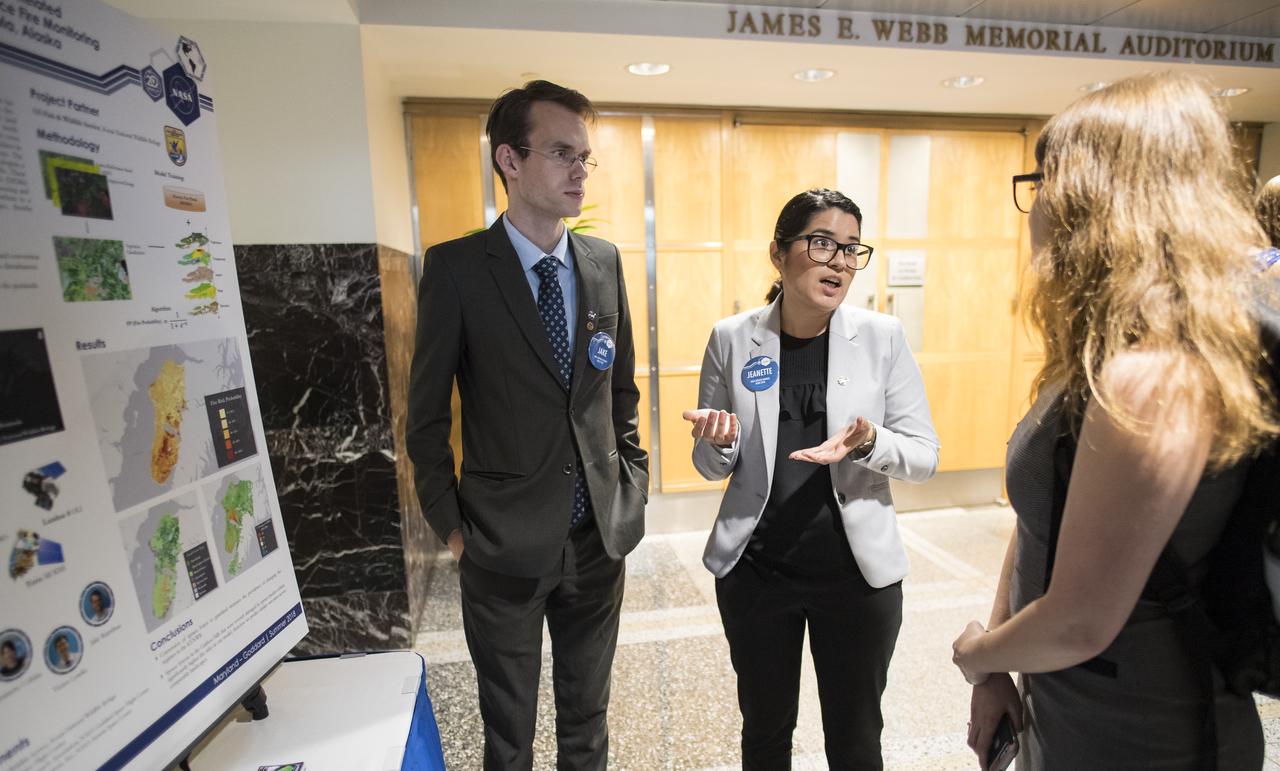
Students and young professionals discuss their projects at the Earth Science Applications Showcase Wednesday, August 1, 2018 at NASA Headquarters in Washington. Every summer, participants in NASA’s Applied Sciences’ DEVELOP National Program come to NASA Headquarters and present their research projects. DEVELOP is a training and development program where students work on Earth science research projects, mentored by science advisers from NASA and partner agencies, and extend research results to local communities. Photo Credit: (NASA/Aubrey Gemignani)
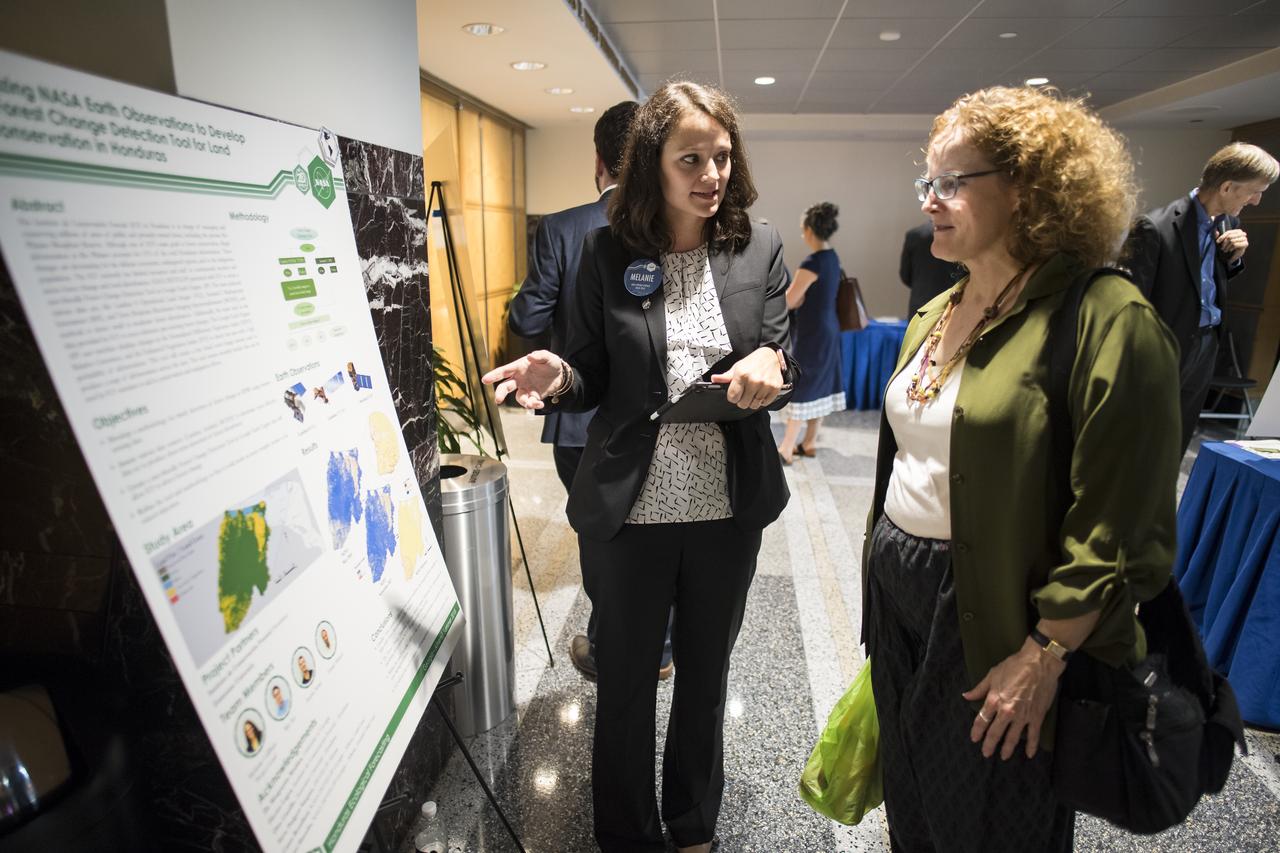
Students and young professionals discuss their projects at the Earth Science Applications Showcase Wednesday, August 1, 2018 at NASA Headquarters in Washington. Every summer, participants in NASA’s Applied Sciences’ DEVELOP National Program come to NASA Headquarters and present their research projects. DEVELOP is a training and development program where students work on Earth science research projects, mentored by science advisers from NASA and partner agencies, and extend research results to local communities. Photo Credit: (NASA/Aubrey Gemignani)
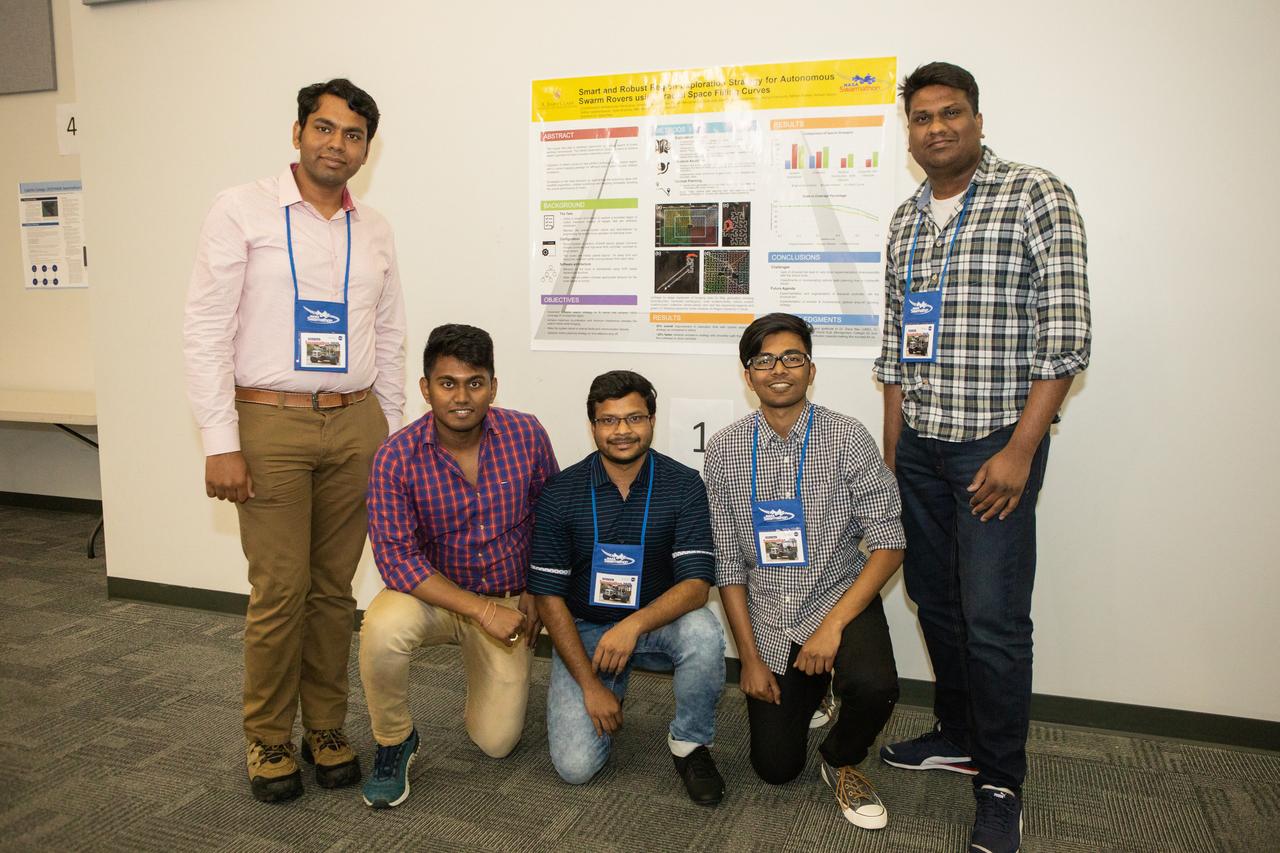
The Swarmathon University Competition 2019 team members from the University of Maryland participate in activities at the Kennedy Space Center Visitor Complex in Florida on June 11, 2019. They are standing in front of a poster they created for the poster competition portion of Swarmathon. The University of New Mexico was the host for the physical competition held in May 2019. The student teams were at Kennedy to participate in a student/mentor panel, hear from speakers, get a behind-the-scenes tour of Kennedy Space Center, dine with an astronaut and receive awards during an awards ceremony. During Swarmathon University Challenge IV, students developed algorithms for robotic swarms that are robust and adaptable like the foraging strategies of ant colonies. The fourth and final Swarmathon was a combined virtual and physical competition.
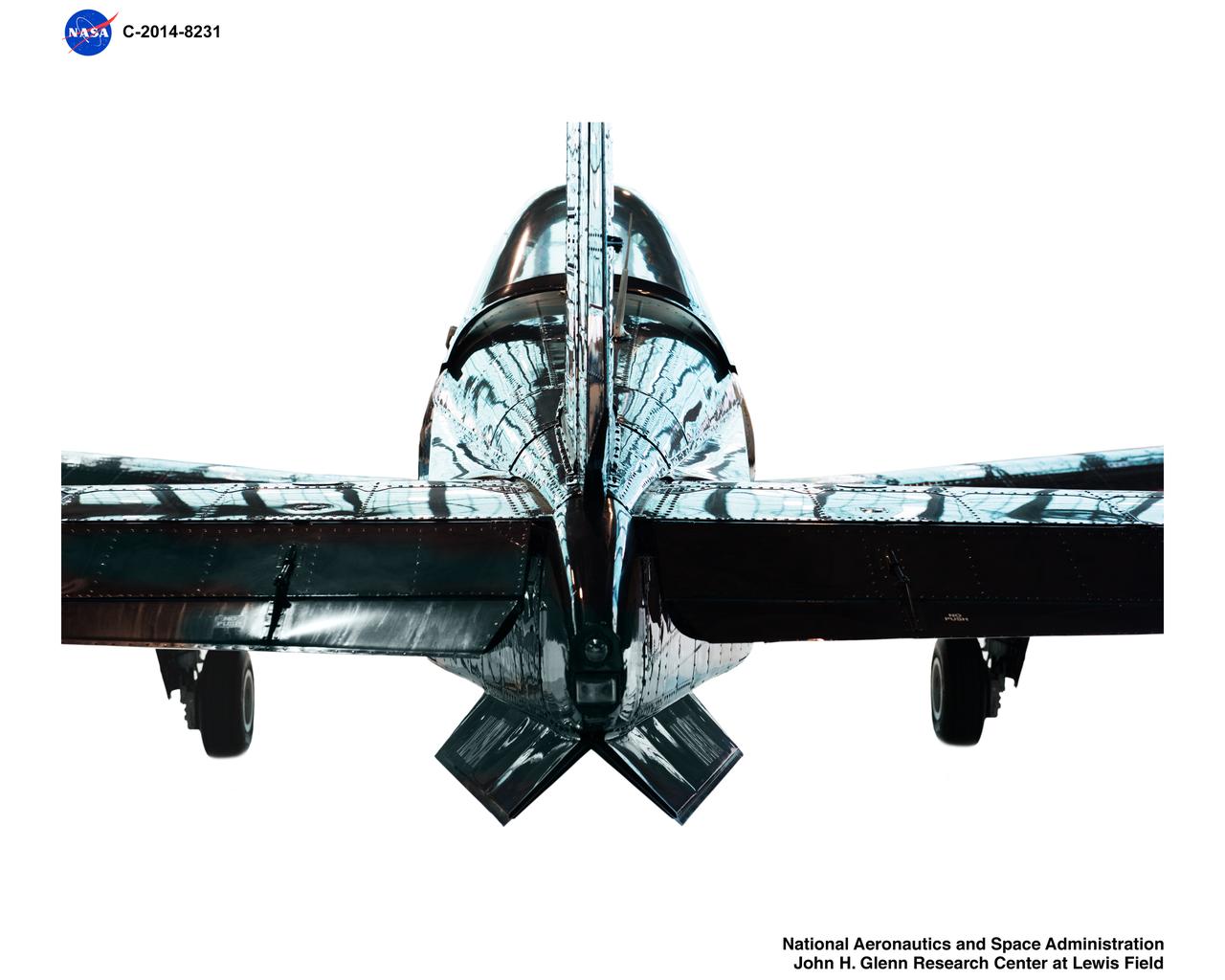
A T34-C aircraft reflects the large multi-paned windows on the Hangar doors. When NASA GRC obtained this T-34C from the Navy it was painted in ‚Äúthrowback‚Äù paint schemes from an earlier time in celebration of the 100th birthday of Naval Aviation. NASA kept it in the original paint job for posterity. This T-34C airplane will be GRCs surrogate aircraft for Unmanned Aircraft Systems in the National Airspace System aeronautics initiative. A T34-C aircraft reflects the large multi-paned windows on the Hangar doors. When NASA GRC obtained this T-34C from the Navy it was painted in “throwback” paint schemes from an earlier time in celebration of the 100th birthday of Naval Aviation. NASA kept it in the original paint job for posterity. This T-34C airplane will be GRCs surrogate aircraft for Unmanned Aircraft Systems in the National Airspace System aeronautics initiative.
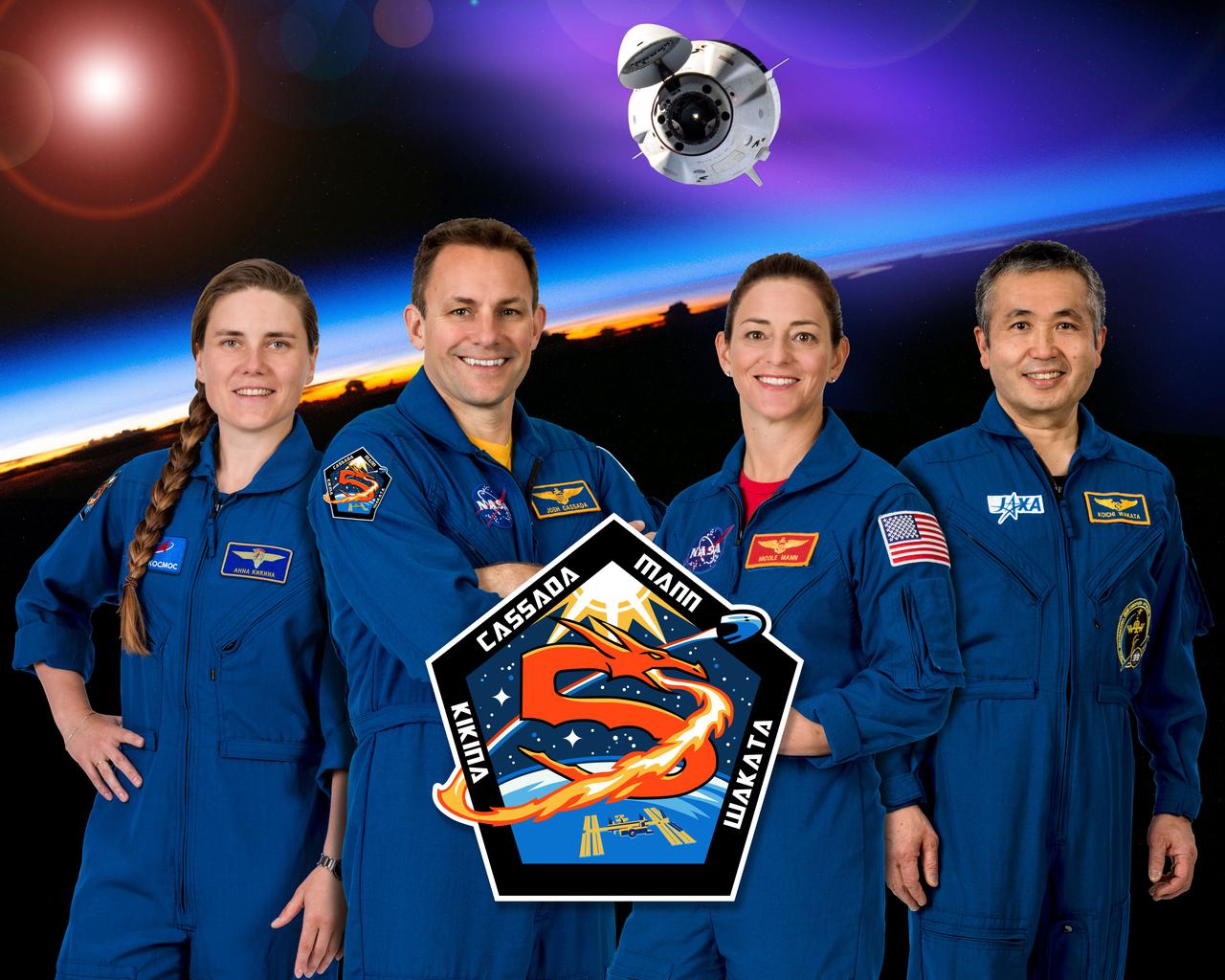
A fire-breathing, five-shaped dragon propels the Crew Dragon spacecraft of NASA's SpaceX Crew-5 mission beyond the confines of a pentagon’s outline and into low-Earth orbit. As the spacecraft ascends above the Earth’s atmosphere and its crew of courageous explorers embarks on their expedition aboard the International Space Station, the dragon’s fire transitions to the colors of NASA’s Commercial Crew Program representing the unrelenting efforts of the many teams who have met this challenge with unparalleled determination. The sun shines its light on this international team as they bravely pursue.
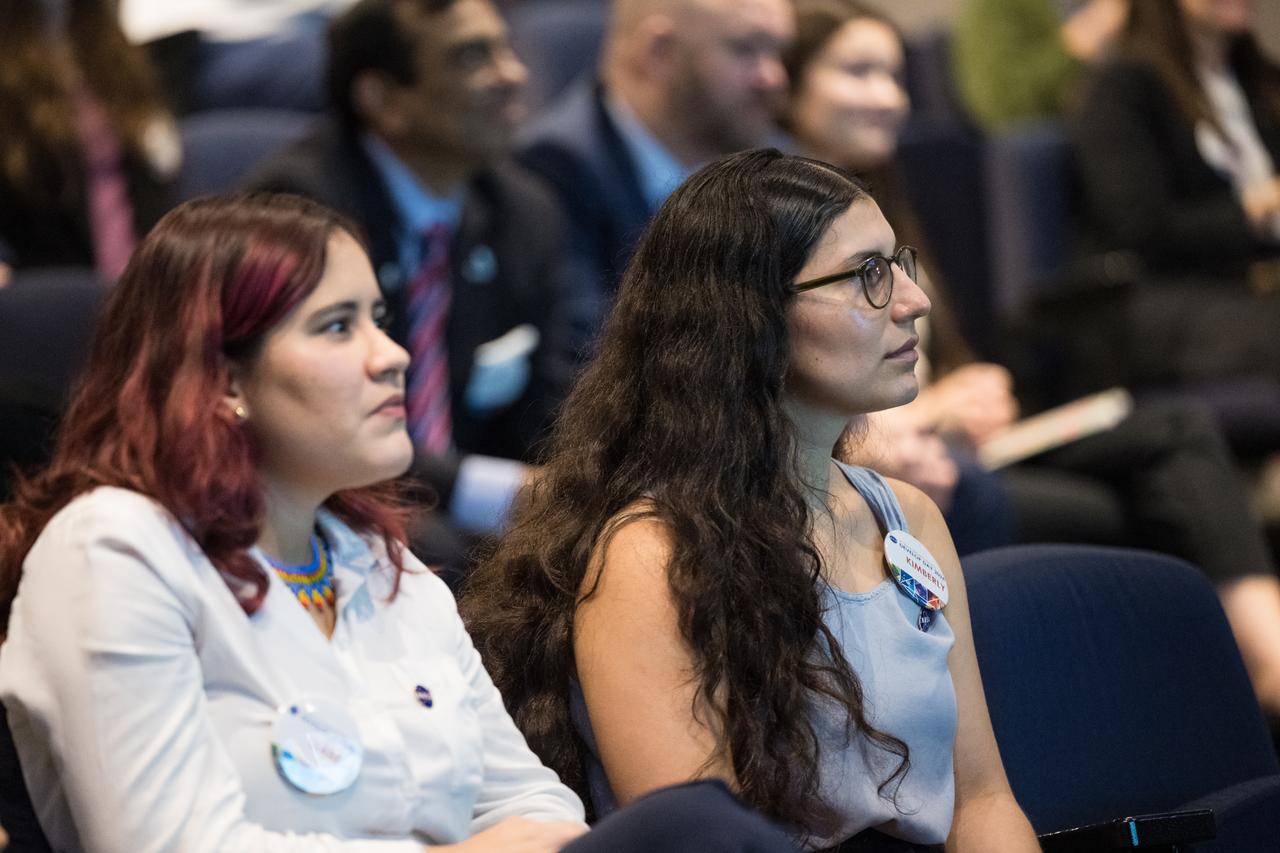
Audience members are seen during DEVELOP Day, Tuesday, August 6, 2024, at the Mary W. Jackson NASA Headquarters building in Washington. Every summer early career researchers from NASA’s DEVELOP National Program come to NASA Headquarters and present their research projects. DEVELOP is a training and development program where early career researchers work on Earth science projects, mentored by science advisors from NASA and partner agencies, and provide research results to local communities. Photo Credit: (NASA/Aubrey Gemignani)
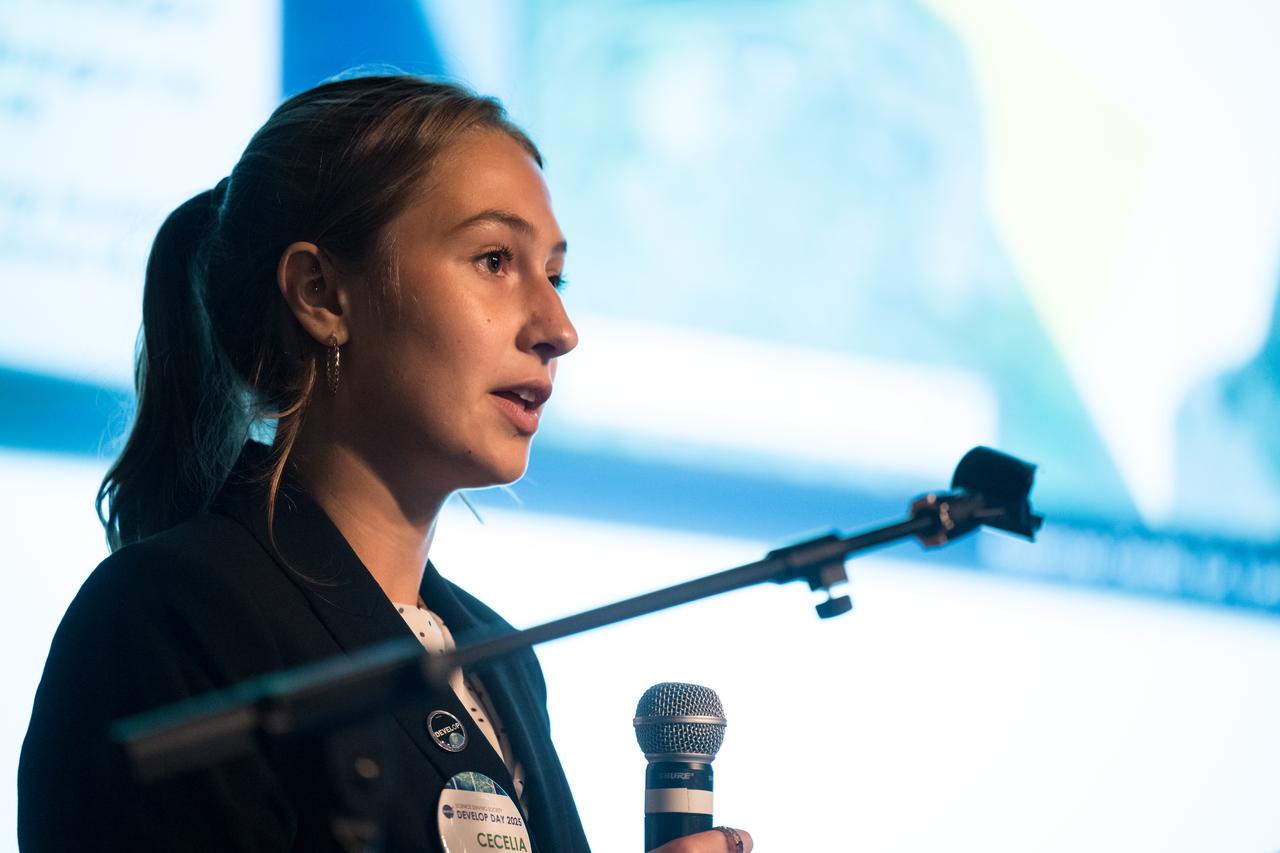
Cecelia Paparella provides remarks about her DEVELOP Project, Tuesday, August 6, 2024, at the Mary W. Jackson NASA Headquarters building in Washington. Every summer early career researchers from NASA’s DEVELOP National Program come to NASA Headquarters and present their research projects. DEVELOP is a training and development program where early career researchers work on Earth science projects, mentored by science advisors from NASA and partner agencies, and provide research results to local communities. Photo Credit: (NASA/Aubrey Gemignani)
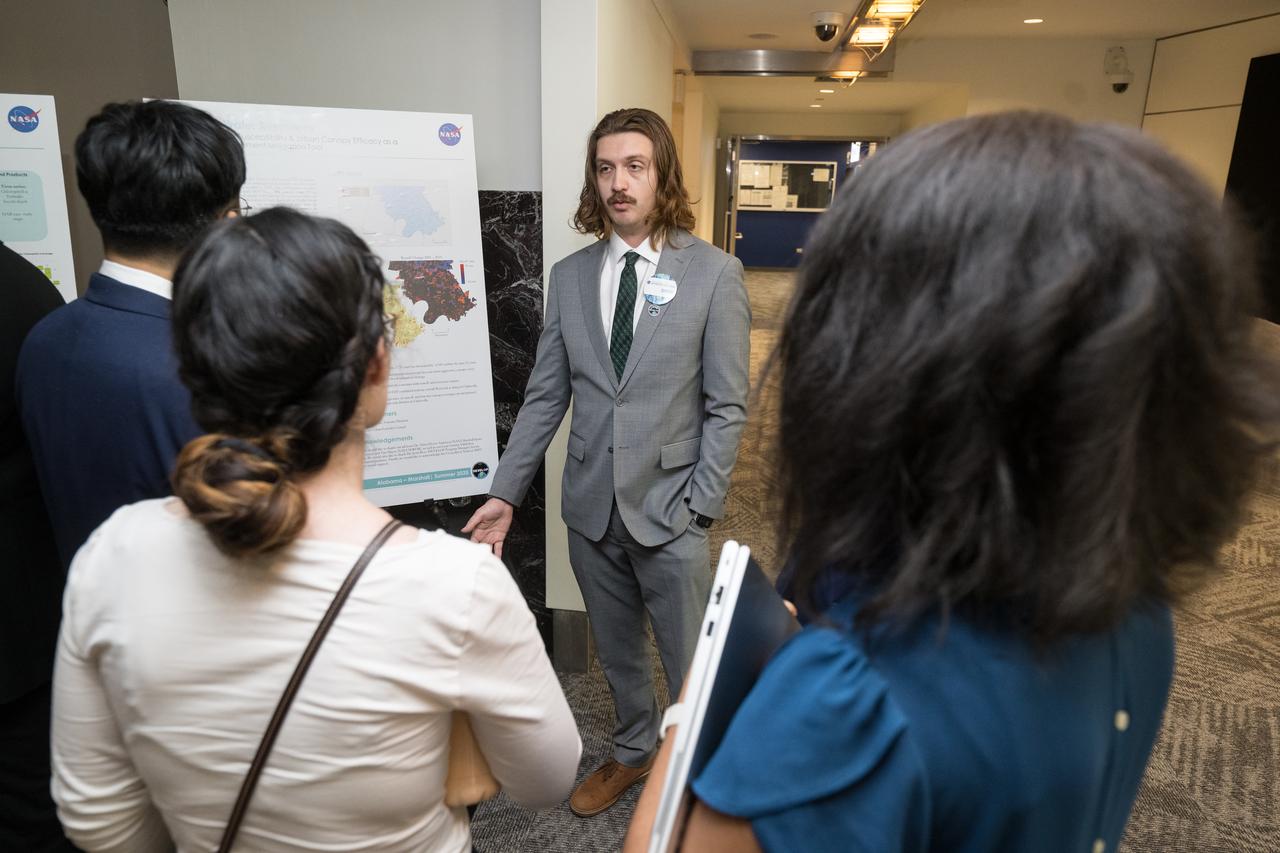
Students and young professionals share the results of their DEVELOP Project, Tuesday, August 5, 2025, at the Mary W. Jackson NASA Headquarters building in Washington. Every summer early career researchers from NASA’s DEVELOP National Program come to NASA Headquarters and present their research projects. DEVELOP is a training and development program where early career researchers work on Earth science projects, mentored by science advisors from NASA and partner agencies, and provide research results to local communities. Photo Credit: (NASA/Aubrey Gemignani)
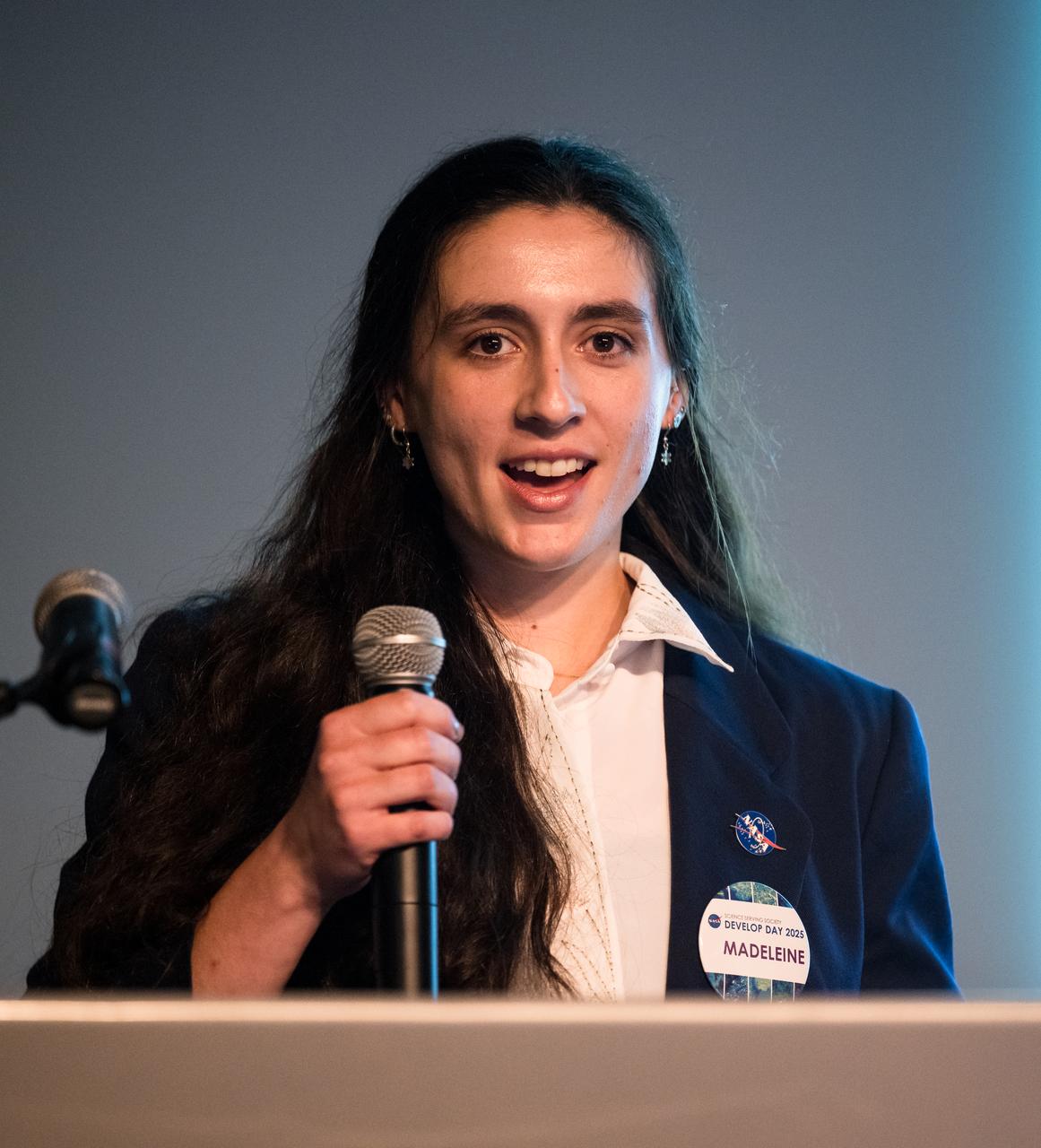
Madeleine Festin provides remarks about her DEVELOP Project, Tuesday, August 6, 2024, at the Mary W. Jackson NASA Headquarters building in Washington. Every summer early career researchers from NASA’s DEVELOP National Program come to NASA Headquarters and present their research projects. DEVELOP is a training and development program where early career researchers work on Earth science projects, mentored by science advisors from NASA and partner agencies, and provide research results to local communities. Photo Credit: (NASA/Aubrey Gemignani)
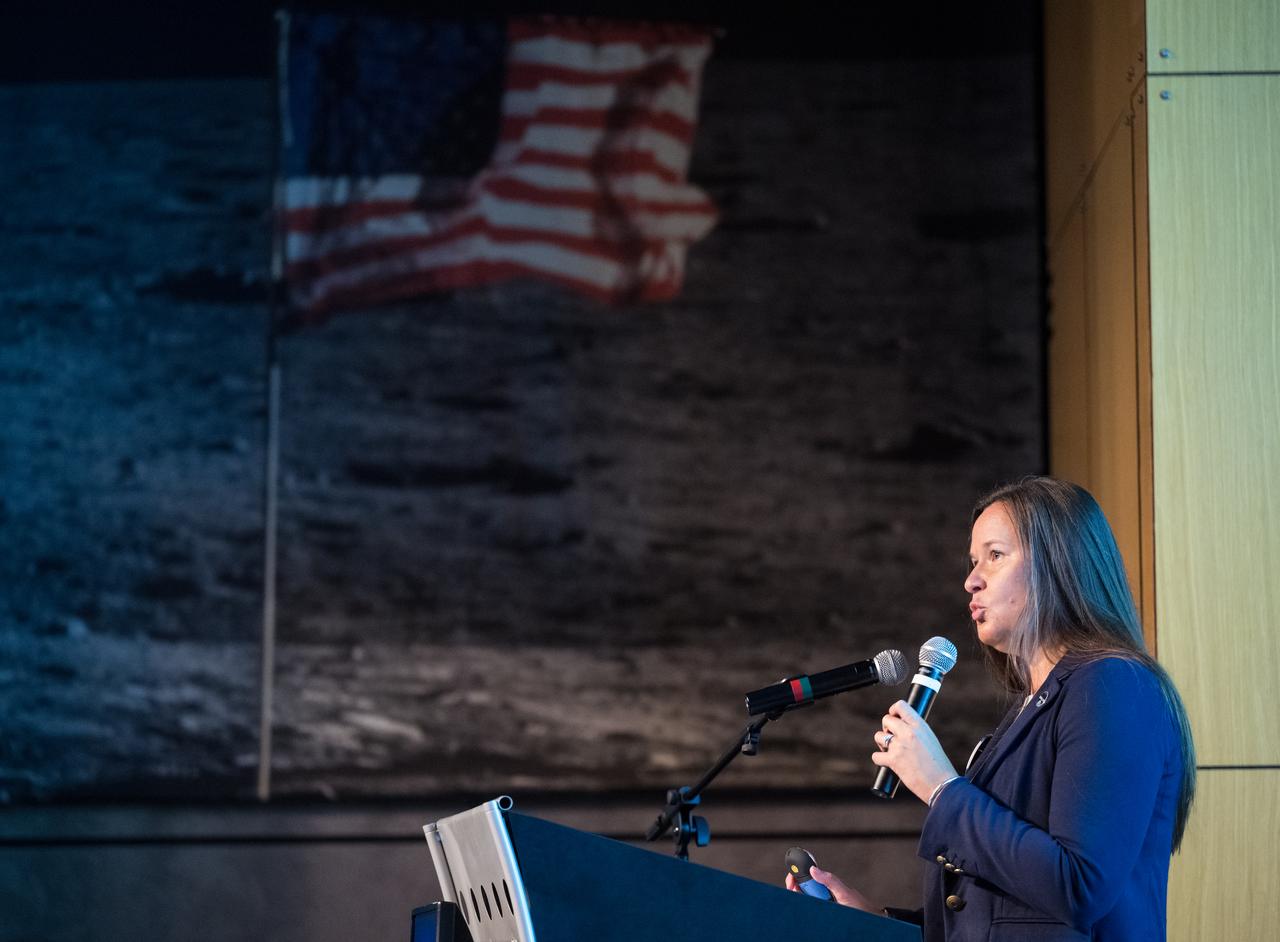
Amanda Cutright, acting associate director for Earth Action and Strategic Engagement for the Science Mission Directorate at NASA's Langley Research Center (LaRC), provides remarks before the presentation of DEVELOP Projects, Tuesday, August 5, 2025, at the Mary W. Jackson NASA Headquarters building in Washington. Every summer early career researchers from NASA’s DEVELOP National Program come to NASA Headquarters and present their research projects. DEVELOP is a training and development program where early career researchers work on Earth science projects, mentored by science advisors from NASA and partner agencies, and provide research results to local communities. Photo Credit: (NASA/Aubrey Gemignani)
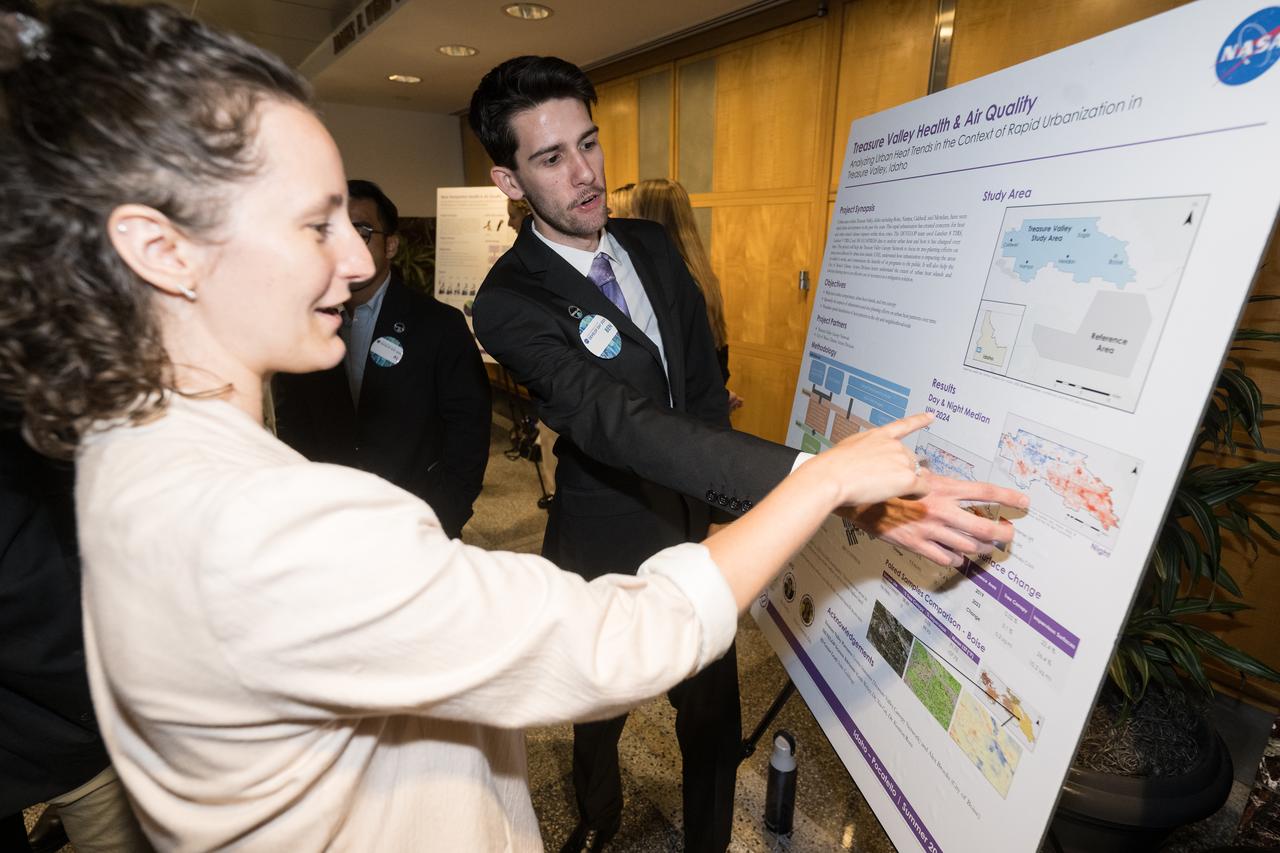
Students and young professionals share the results of their DEVELOP Project, Tuesday, August 5, 2025, at the Mary W. Jackson NASA Headquarters building in Washington. Every summer early career researchers from NASA’s DEVELOP National Program come to NASA Headquarters and present their research projects. DEVELOP is a training and development program where early career researchers work on Earth science projects, mentored by science advisors from NASA and partner agencies, and provide research results to local communities. Photo Credit: (NASA/Aubrey Gemignani)
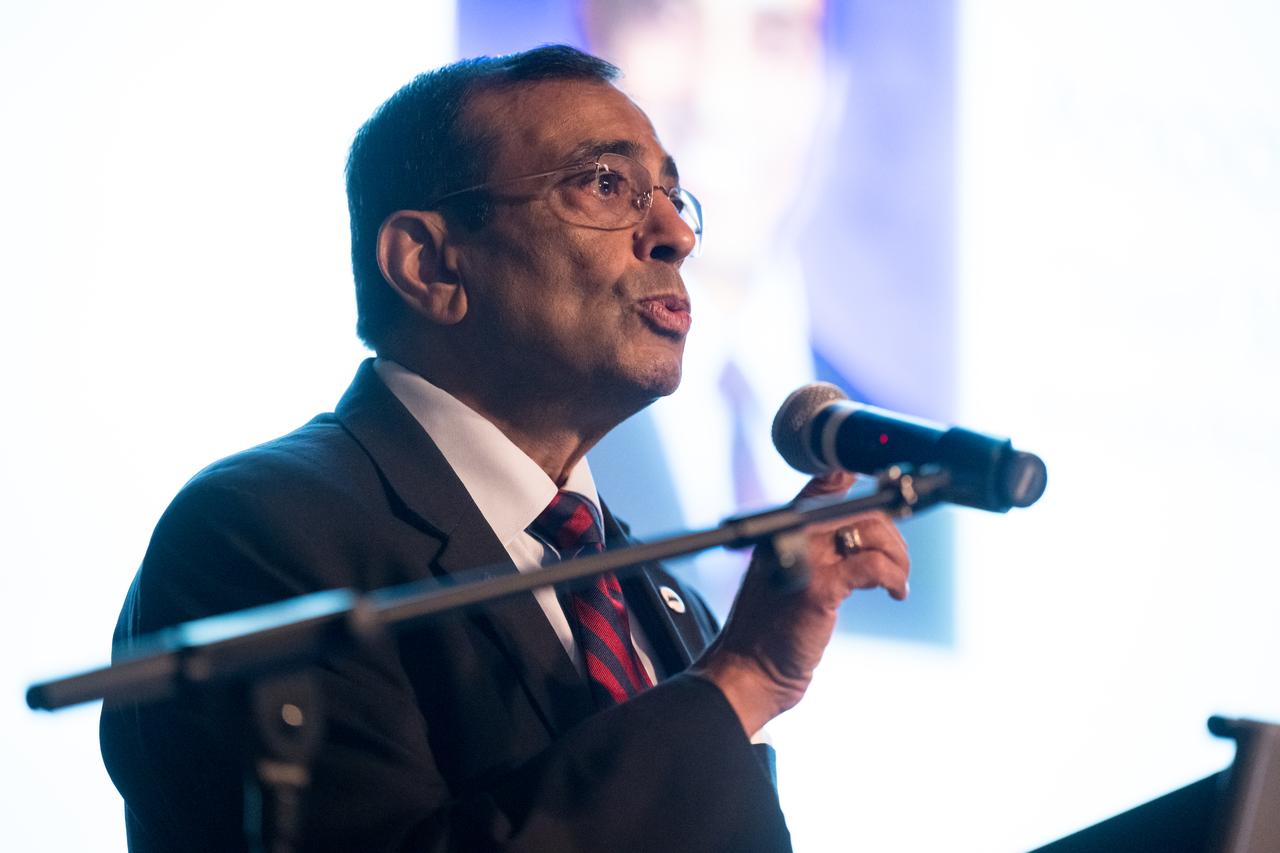
Anoop Mehta, Chief Strategist at Analytical Mechanics Associates, provides remarks after the presentation of DEVELOP Projects, Tuesday, August 5, 2025, at the Mary W. Jackson NASA Headquarters building in Washington. Every summer early career researchers from NASA’s DEVELOP National Program come to NASA Headquarters and present their research projects. DEVELOP is a training and development program where early career researchers work on Earth science projects, mentored by science advisors from NASA and partner agencies, and provide research results to local communities. Photo Credit: (NASA/Aubrey Gemignani)
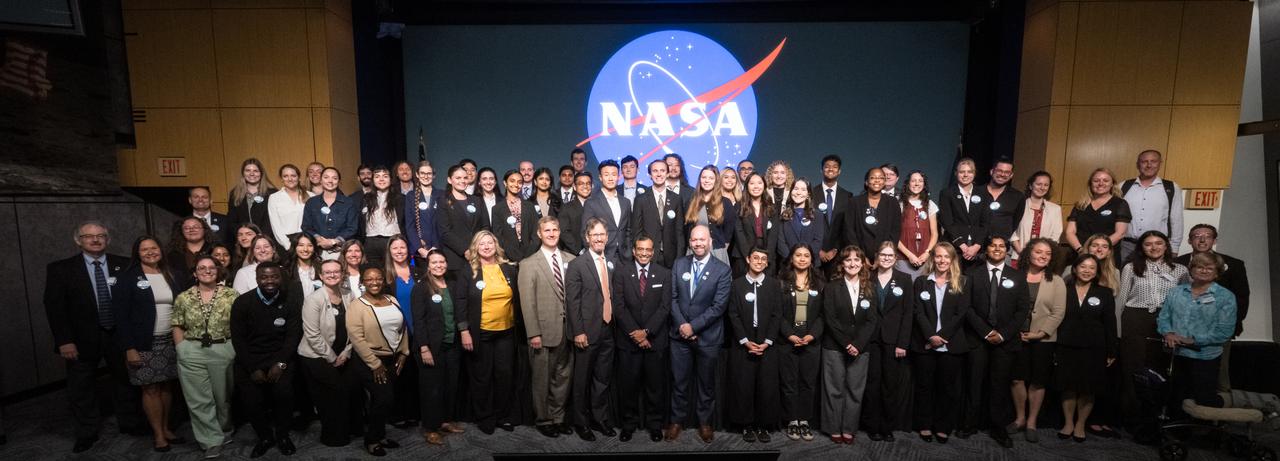
speaks about his/her DEVELOP Project, Tuesday, August 5, 2025, at the Mary W. Jackson NASA Headquarters building in Washington. Every summer early career researchers from NASA’s DEVELOP National Program come to NASA Headquarters and present their research projects. DEVELOP is a training and development program where early career researchers work on Earth science projects, mentored by science advisors from NASA and partner agencies, and provide research results to local communities. Photo Credit: (NASA/Aubrey Gemignani)
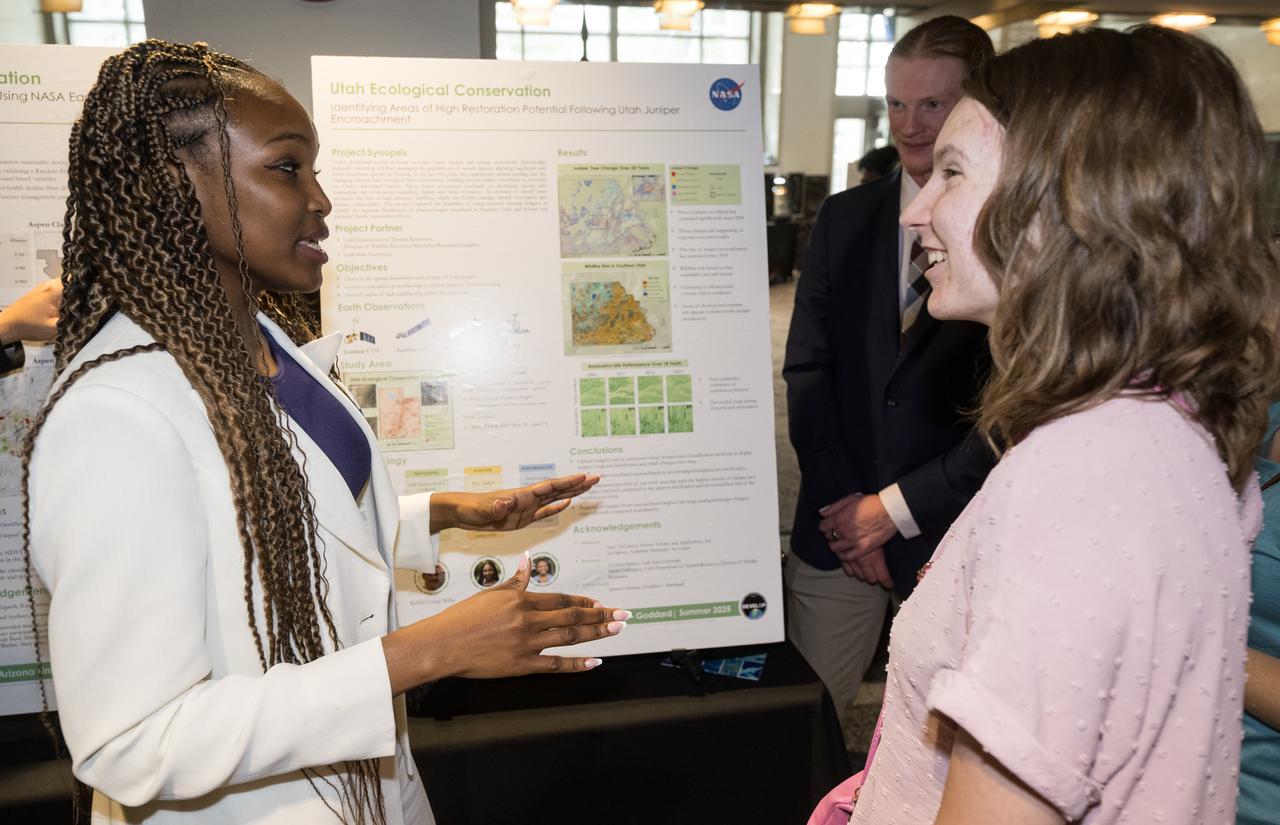
Students and young professionals share the results of their DEVELOP Project, Tuesday, August 5, 2025, at the Mary W. Jackson NASA Headquarters building in Washington. Every summer early career researchers from NASA’s DEVELOP National Program come to NASA Headquarters and present their research projects. DEVELOP is a training and development program where early career researchers work on Earth science projects, mentored by science advisors from NASA and partner agencies, and provide research results to local communities. Photo Credit: (NASA/Aubrey Gemignani)

Cecelia Paparella provides remarks about her DEVELOP Project, Tuesday, August 6, 2024, at the Mary W. Jackson NASA Headquarters building in Washington. Every summer early career researchers from NASA’s DEVELOP National Program come to NASA Headquarters and present their research projects. DEVELOP is a training and development program where early career researchers work on Earth science projects, mentored by science advisors from NASA and partner agencies, and provide research results to local communities. Photo Credit: (NASA/Aubrey Gemignani)
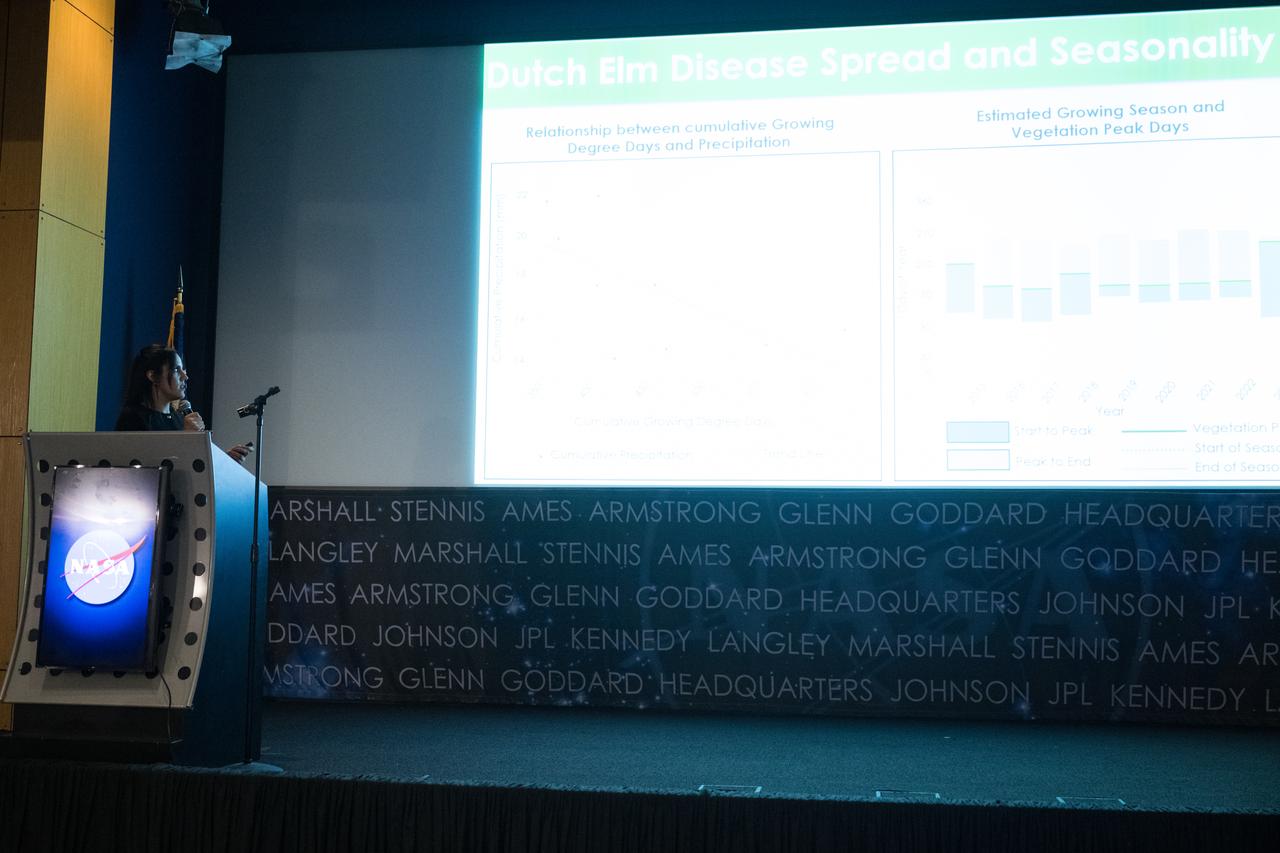
Ikram Morso speaks about her project, Central Park Ecological Conservation, Tuesday, August 6, 2024, at the Mary W. Jackson NASA Headquarters building in Washington. Every summer early career researchers from NASA’s DEVELOP National Program come to NASA Headquarters and present their research projects. DEVELOP is a training and development program where early career researchers work on Earth science projects, mentored by science advisors from NASA and partner agencies, and provide research results to local communities. Photo Credit: (NASA/Aubrey Gemignani)
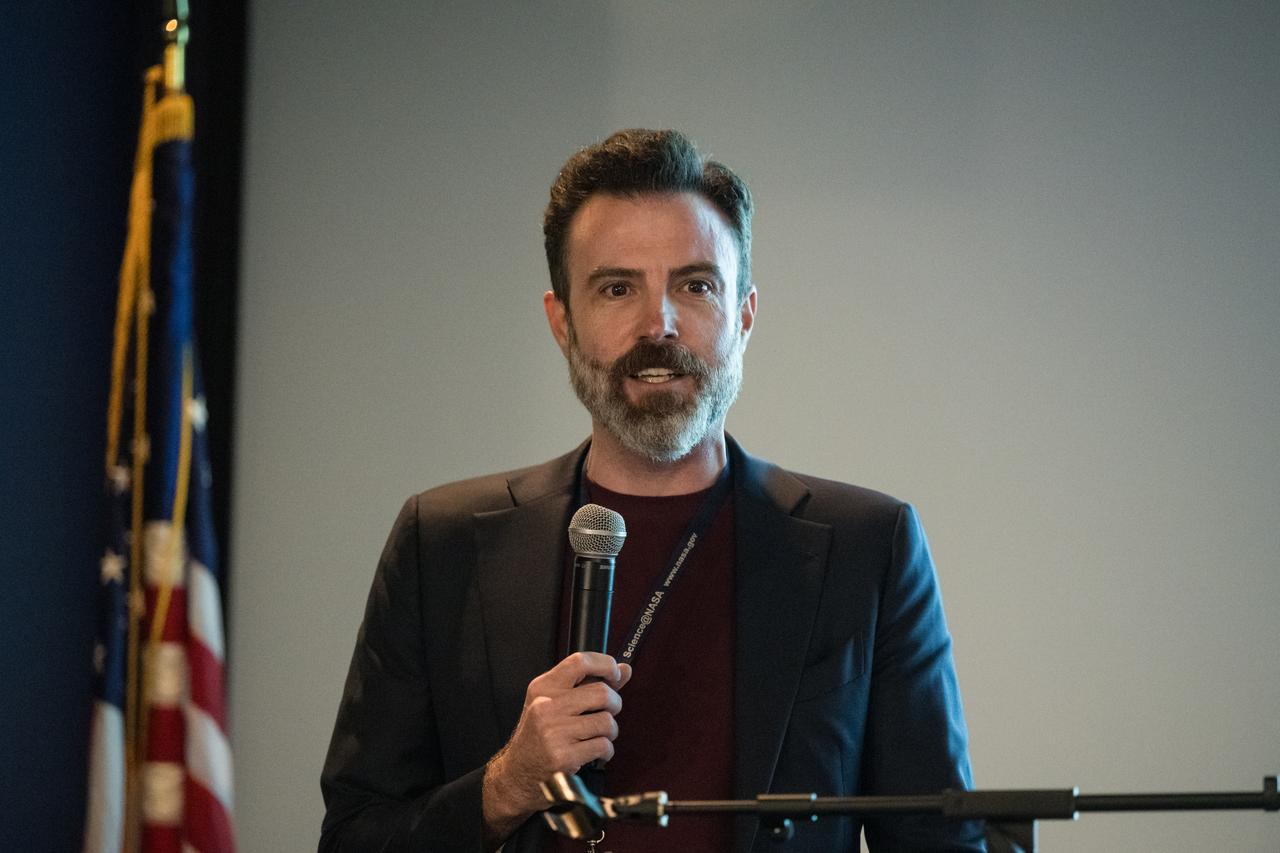
Director of the Space Weather Program, Jamie Favors, speaks about the Space Weather Pilot Project, Tuesday, August 6, 2024, at the Mary W. Jackson NASA Headquarters building in Washington. Every summer early career researchers from NASA’s DEVELOP National Program come to NASA Headquarters and present their research projects. DEVELOP is a training and development program where early career researchers work on Earth science projects, mentored by science advisors from NASA and partner agencies, and provide research results to local communities. Photo Credit: (NASA/Aubrey Gemignani)
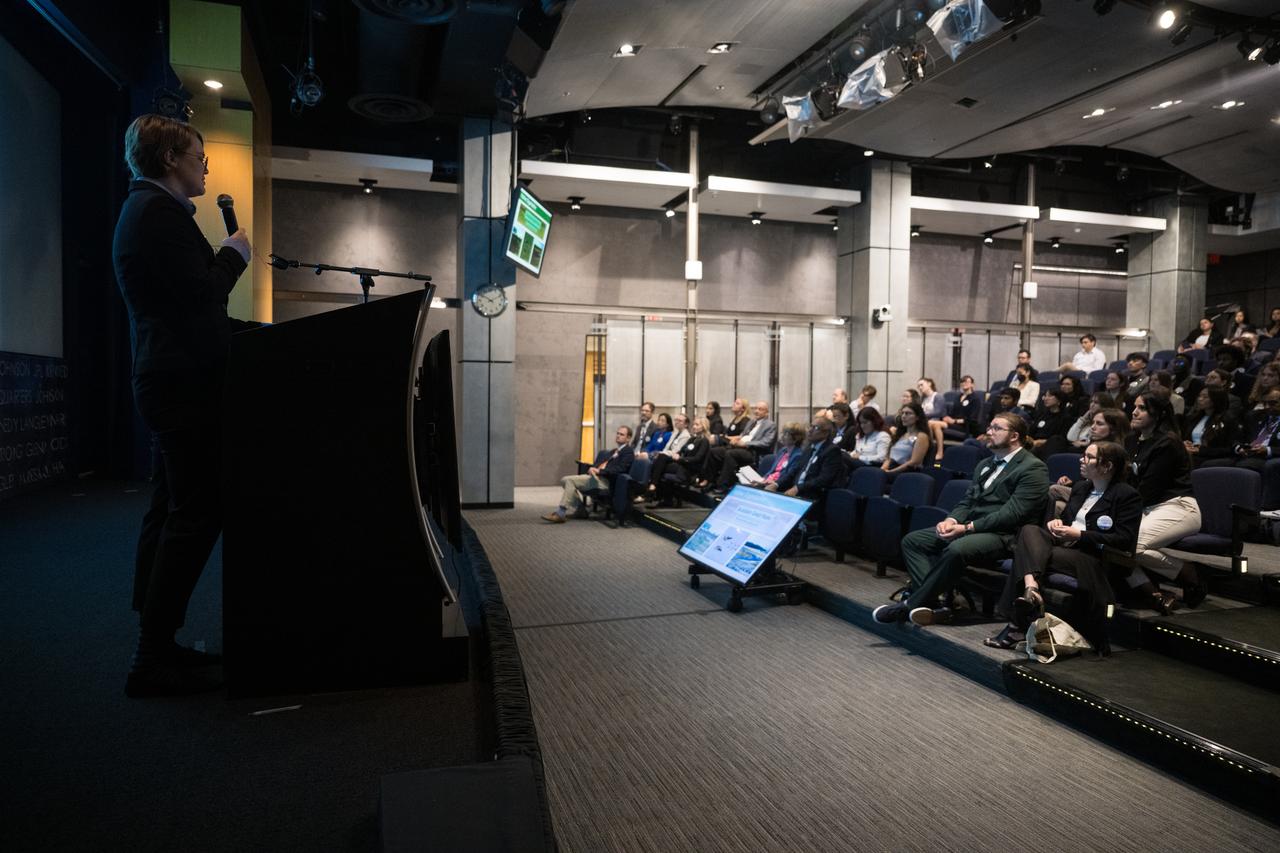
Olivia Kirkland speaks about her project, Platte River Basin Water Resources II, Tuesday, August 6, 2024, at the Mary W. Jackson NASA Headquarters building in Washington. Every summer early career researchers from NASA’s DEVELOP National Program come to NASA Headquarters and present their research projects. DEVELOP is a training and development program where early career researchers work on Earth science projects, mentored by science advisors from NASA and partner agencies, and provide research results to local communities. Photo Credit: (NASA/Aubrey Gemignani)
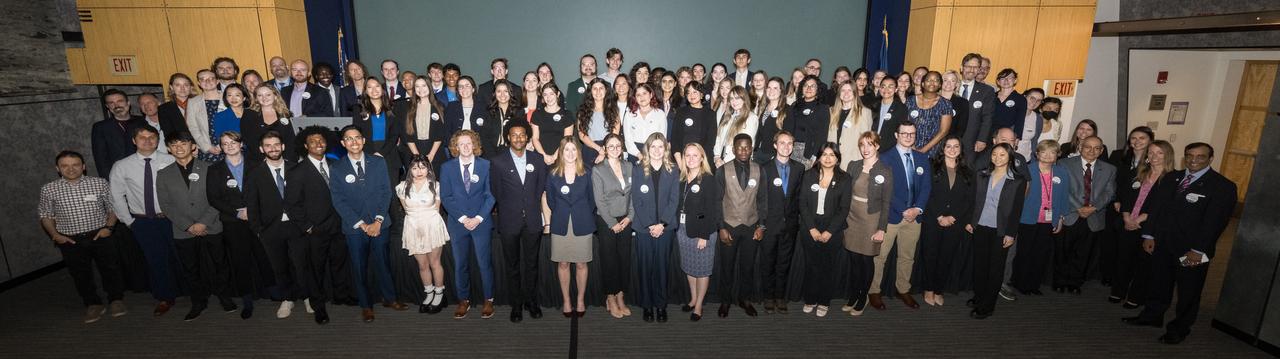
Participants and leaders in the DEVELOP program pose for a group photo, Tuesday, August 6, 2024, at the Mary W. Jackson NASA Headquarters building in Washington. Every summer early career researchers from NASA’s DEVELOP National Program come to NASA Headquarters and present their research projects. DEVELOP is a training and development program where early career researchers work on Earth science projects, mentored by science advisors from NASA and partner agencies, and provide research results to local communities. Photo Credit: (NASA/Aubrey Gemignani)
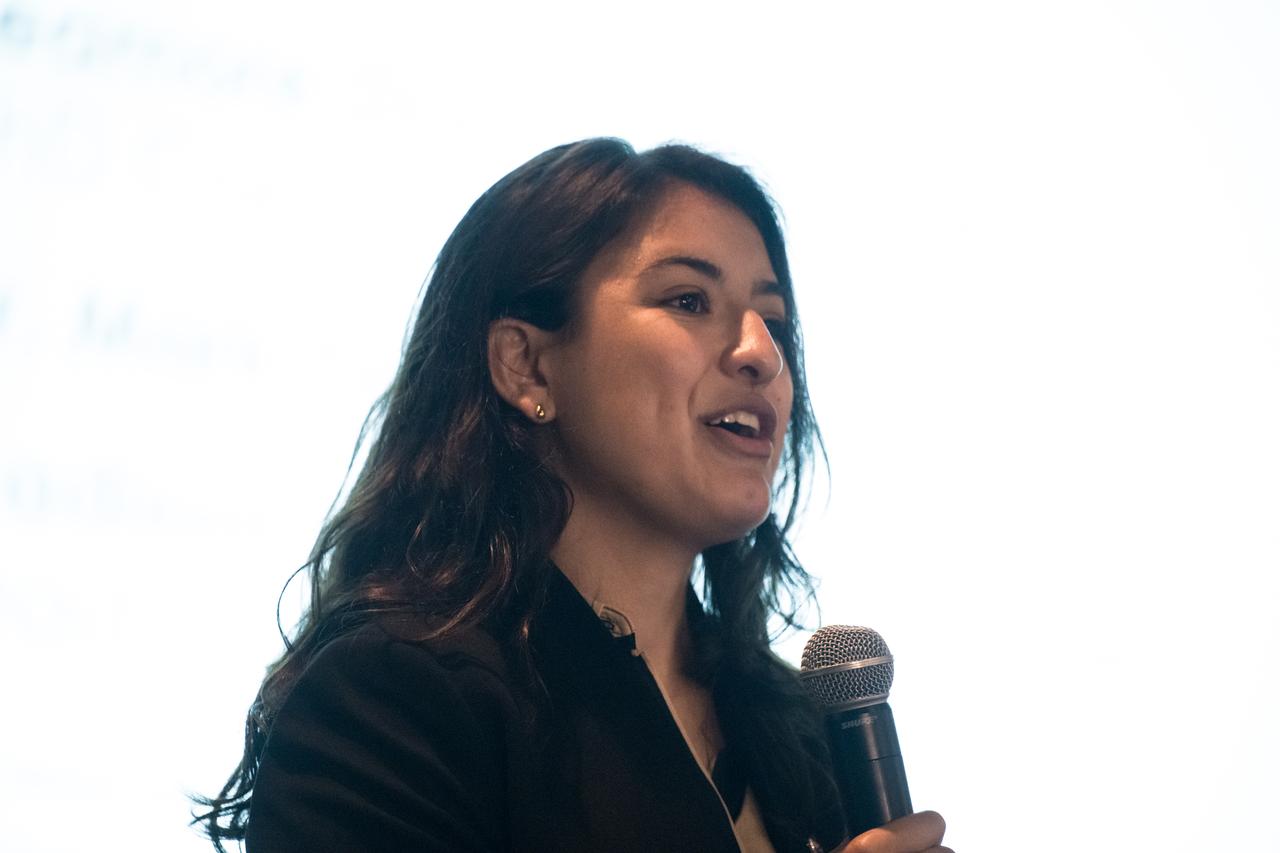
Jackie Encinas speaks about her project, Alaska Ecological Conservation II, Tuesday, August 6, 2024, at the Mary W. Jackson NASA Headquarters building in Washington. Every summer early career researchers from NASA’s DEVELOP National Program come to NASA Headquarters and present their research projects. DEVELOP is a training and development program where early career researchers work on Earth science projects, mentored by science advisors from NASA and partner agencies, and provide research results to local communities. Photo Credit: (NASA/Aubrey Gemignani)
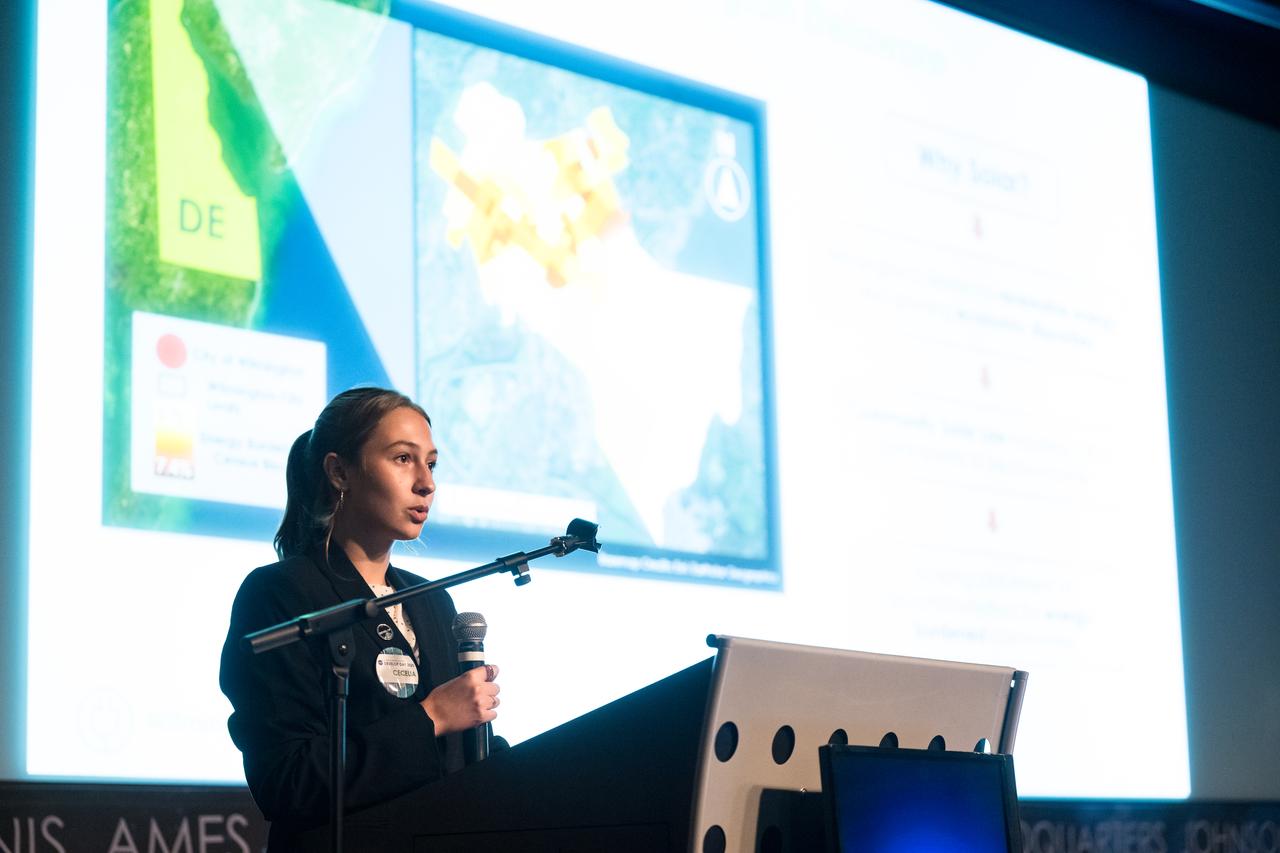
Cecelia Paparella provides remarks about her DEVELOP Project, Tuesday, August 6, 2024, at the Mary W. Jackson NASA Headquarters building in Washington. Every summer early career researchers from NASA’s DEVELOP National Program come to NASA Headquarters and present their research projects. DEVELOP is a training and development program where early career researchers work on Earth science projects, mentored by science advisors from NASA and partner agencies, and provide research results to local communities. Photo Credit: (NASA/Aubrey Gemignani)
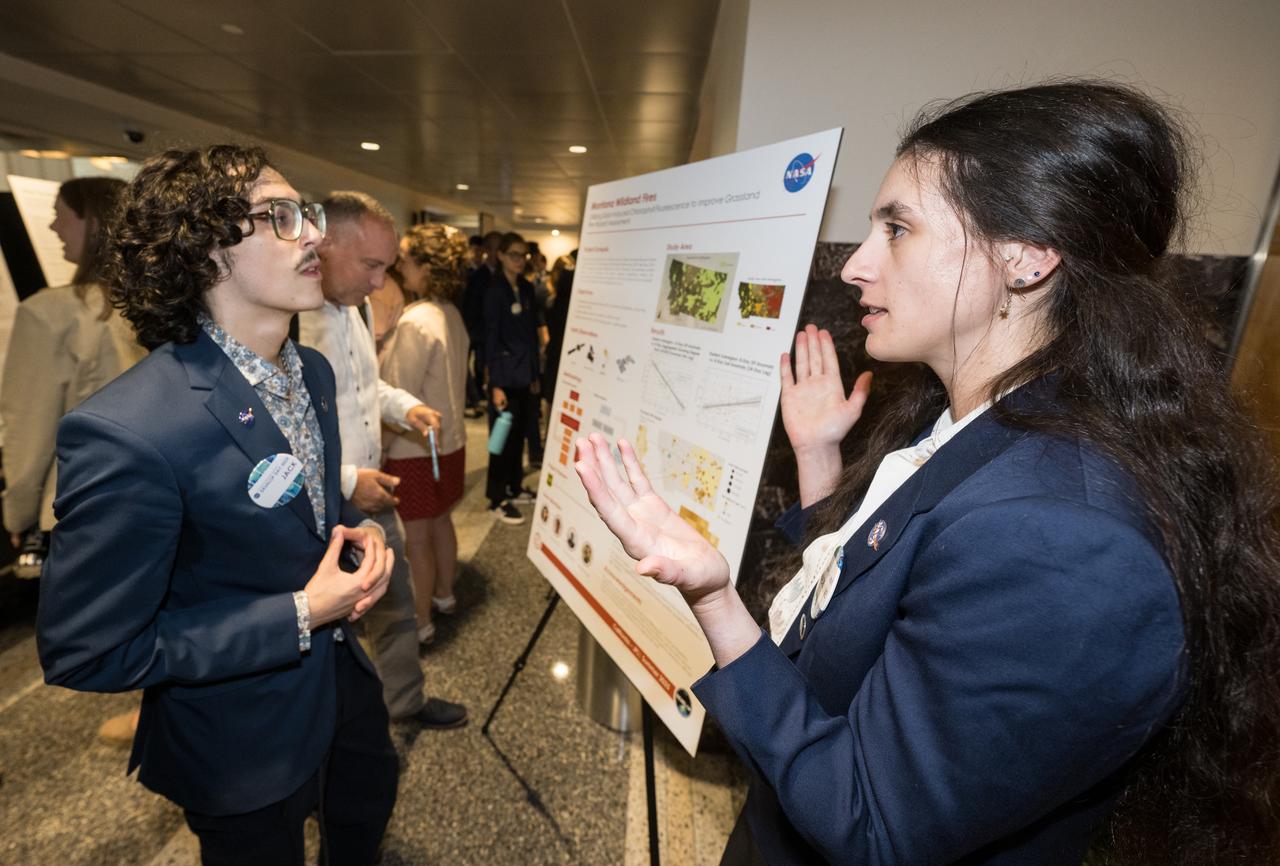
Students and young professionals share the results of their DEVELOP Project, Tuesday, August 5, 2025, at the Mary W. Jackson NASA Headquarters building in Washington. Every summer early career researchers from NASA’s DEVELOP National Program come to NASA Headquarters and present their research projects. DEVELOP is a training and development program where early career researchers work on Earth science projects, mentored by science advisors from NASA and partner agencies, and provide research results to local communities. Photo Credit: (NASA/Aubrey Gemignani)
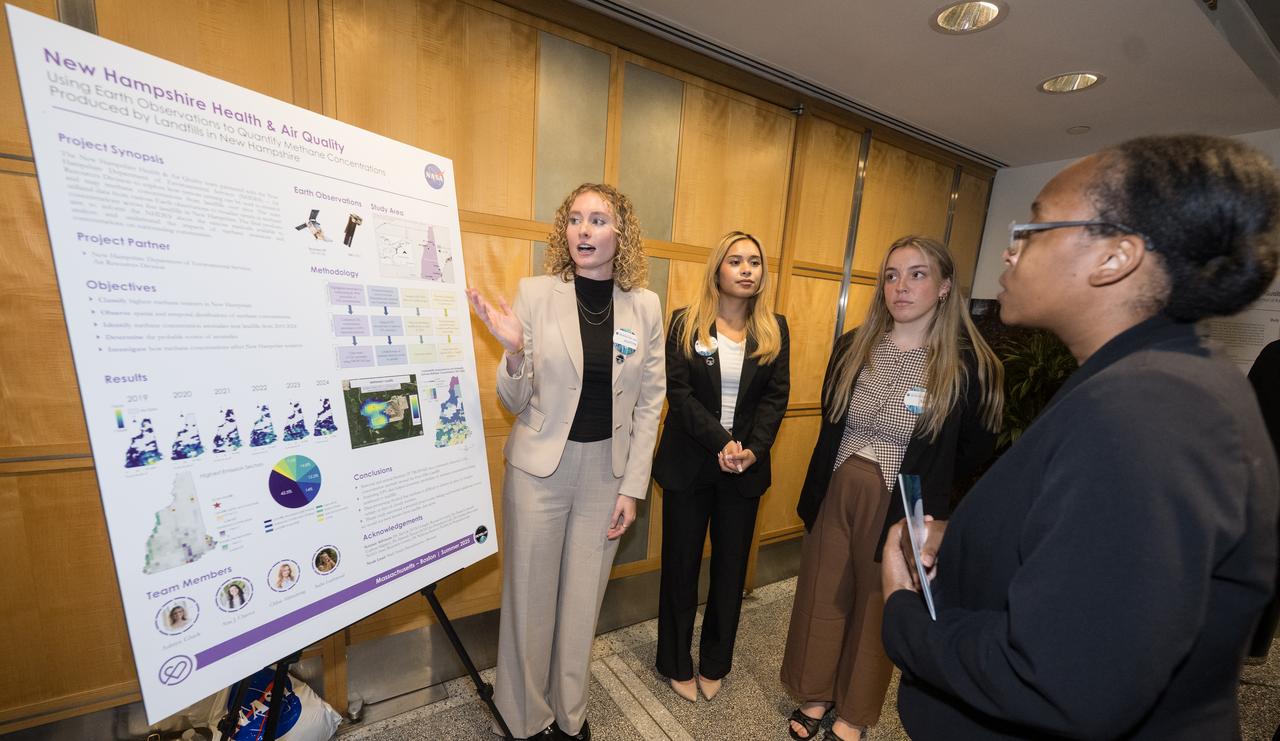
Students and young professionals share the results of their DEVELOP Project, Tuesday, August 5, 2025, at the Mary W. Jackson NASA Headquarters building in Washington. Every summer early career researchers from NASA’s DEVELOP National Program come to NASA Headquarters and present their research projects. DEVELOP is a training and development program where early career researchers work on Earth science projects, mentored by science advisors from NASA and partner agencies, and provide research results to local communities. Photo Credit: (NASA/Aubrey Gemignani)
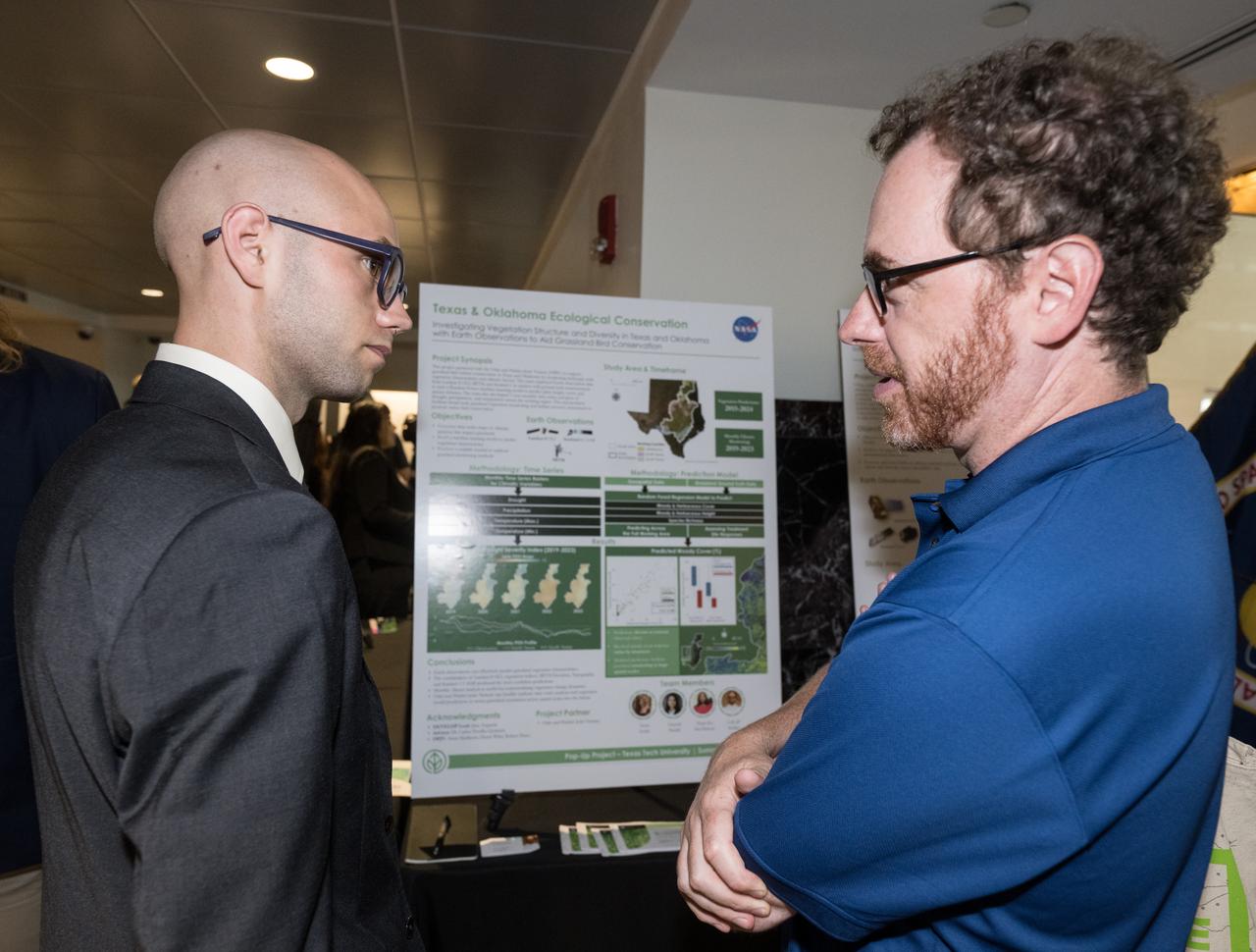
Students and young professionals share the results of their DEVELOP Project, Tuesday, August 5, 2025, at the Mary W. Jackson NASA Headquarters building in Washington. Every summer early career researchers from NASA’s DEVELOP National Program come to NASA Headquarters and present their research projects. DEVELOP is a training and development program where early career researchers work on Earth science projects, mentored by science advisors from NASA and partner agencies, and provide research results to local communities. Photo Credit: (NASA/Aubrey Gemignani)
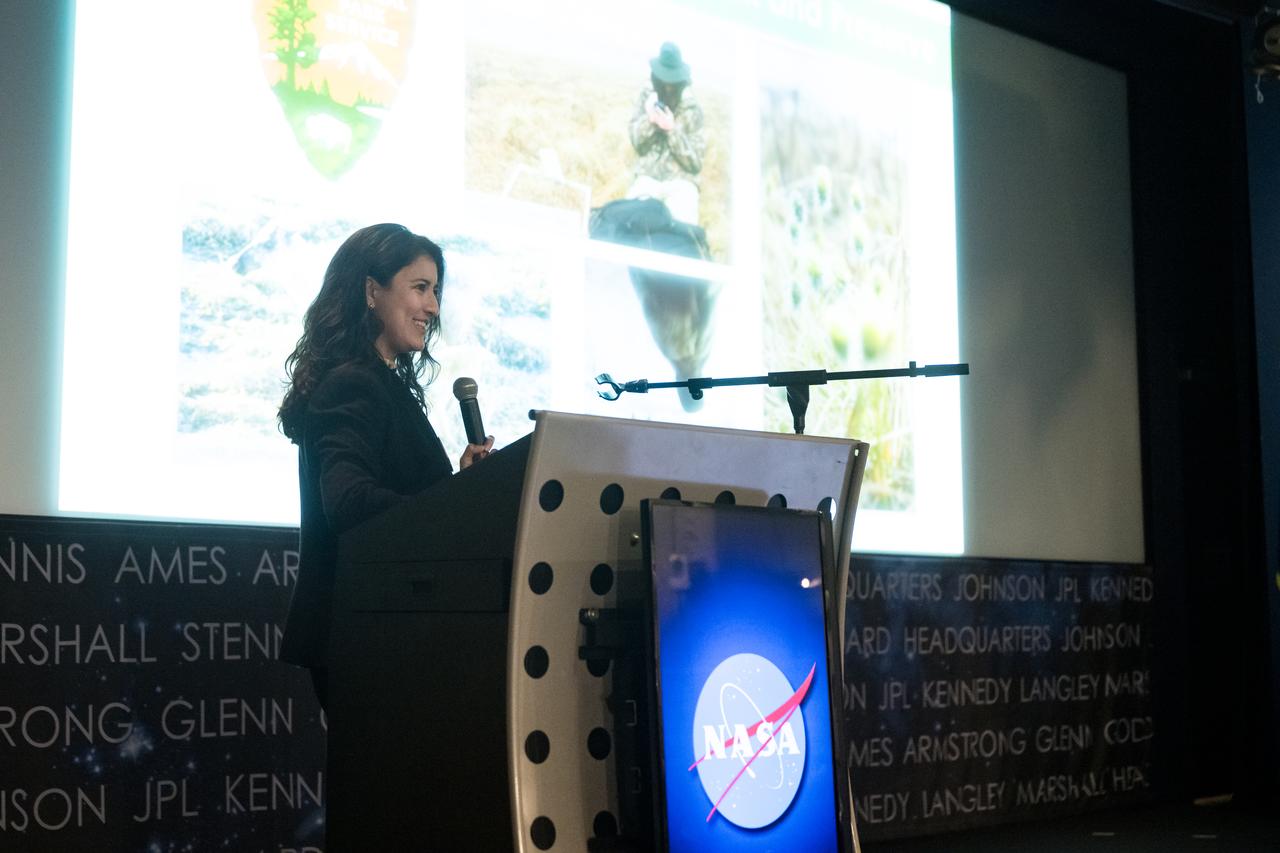
Jackie Encinas speaks about her project, Alaska Ecological Conservation II, Tuesday, August 6, 2024, at the Mary W. Jackson NASA Headquarters building in Washington. Every summer early career researchers from NASA’s DEVELOP National Program come to NASA Headquarters and present their research projects. DEVELOP is a training and development program where early career researchers work on Earth science projects, mentored by science advisors from NASA and partner agencies, and provide research results to local communities. Photo Credit: (NASA/Aubrey Gemignani)
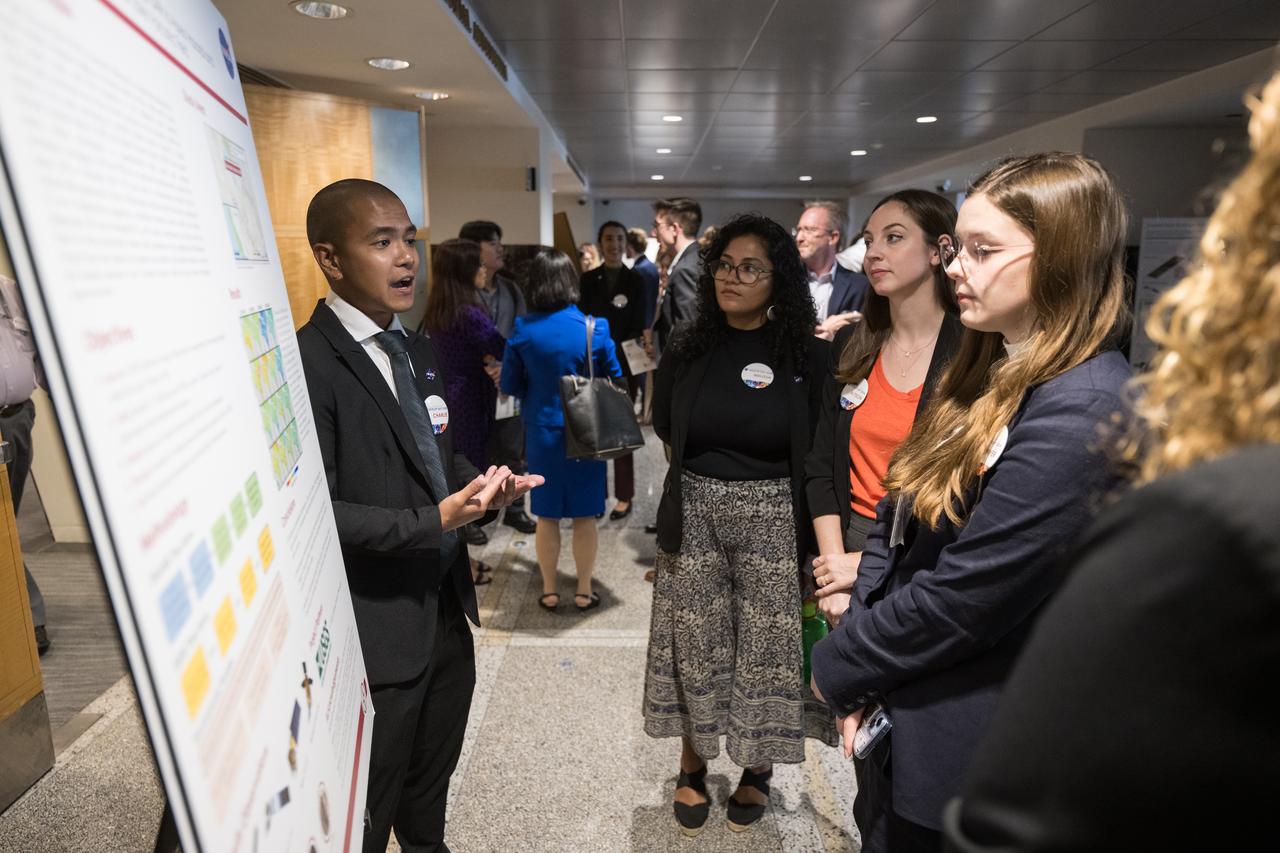
A DEVELOP researcher speaks about his project, Tuesday, August 6, 2024, at the Mary W. Jackson NASA Headquarters building in Washington. Every summer early career researchers from NASA’s DEVELOP National Program come to NASA Headquarters and present their research projects. DEVELOP is a training and development program where early career researchers work on Earth science projects, mentored by science advisors from NASA and partner agencies, and provide research results to local communities. Photo Credit: (NASA/Aubrey Gemignani)
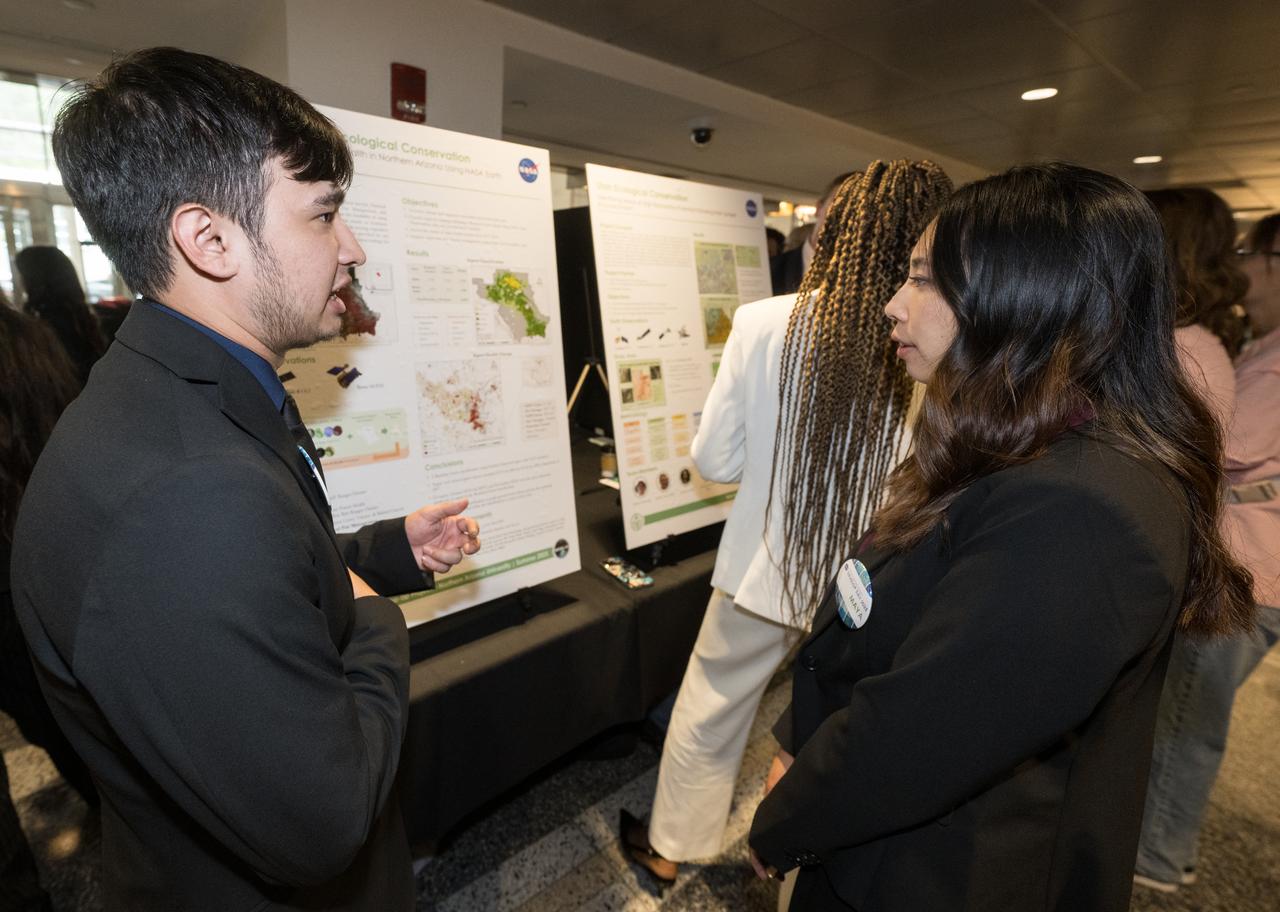
Students and young professionals share the results of their DEVELOP Project, Tuesday, August 5, 2025, at the Mary W. Jackson NASA Headquarters building in Washington. Every summer early career researchers from NASA’s DEVELOP National Program come to NASA Headquarters and present their research projects. DEVELOP is a training and development program where early career researchers work on Earth science projects, mentored by science advisors from NASA and partner agencies, and provide research results to local communities. Photo Credit: (NASA/Aubrey Gemignani)
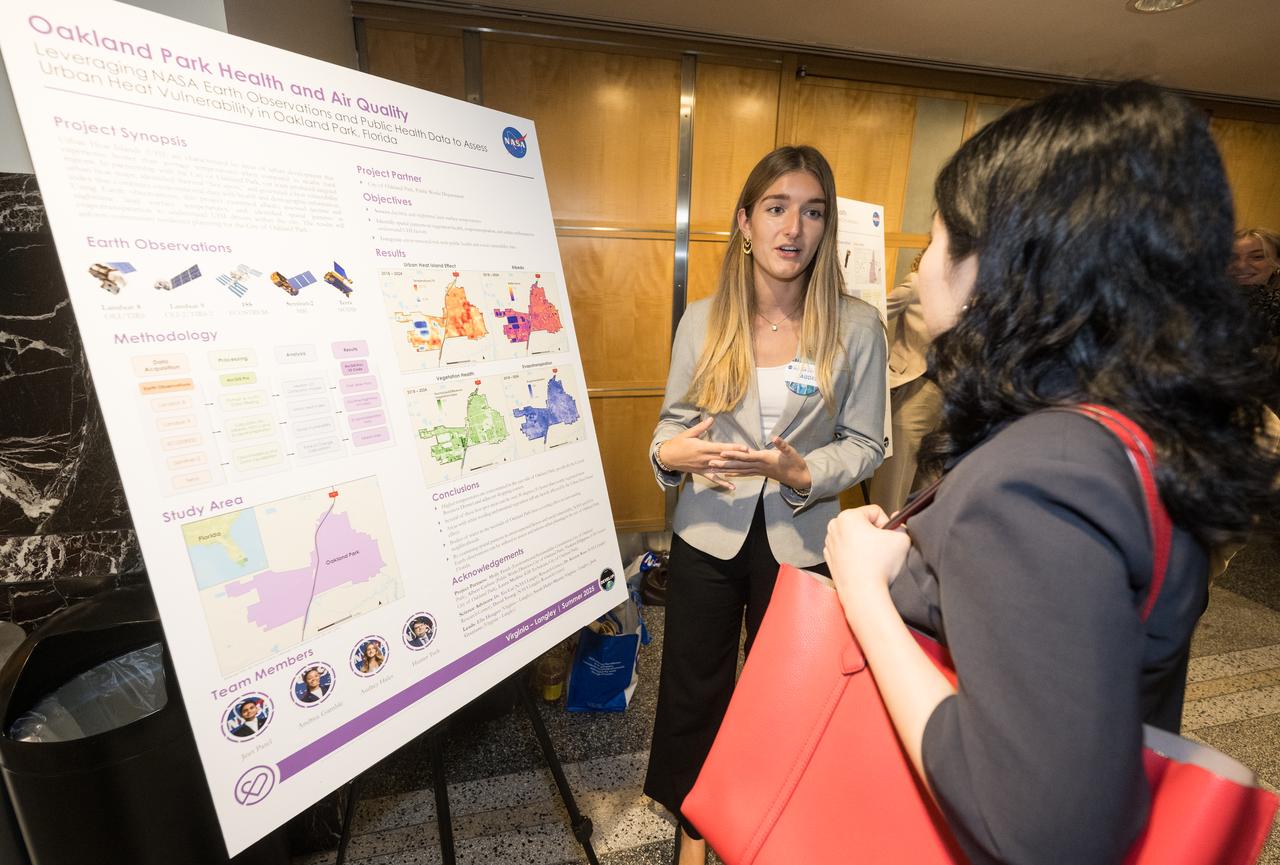
Students and young professionals share the results of their DEVELOP Project, Tuesday, August 5, 2025, at the Mary W. Jackson NASA Headquarters building in Washington. Every summer early career researchers from NASA’s DEVELOP National Program come to NASA Headquarters and present their research projects. DEVELOP is a training and development program where early career researchers work on Earth science projects, mentored by science advisors from NASA and partner agencies, and provide research results to local communities. Photo Credit: (NASA/Aubrey Gemignani)
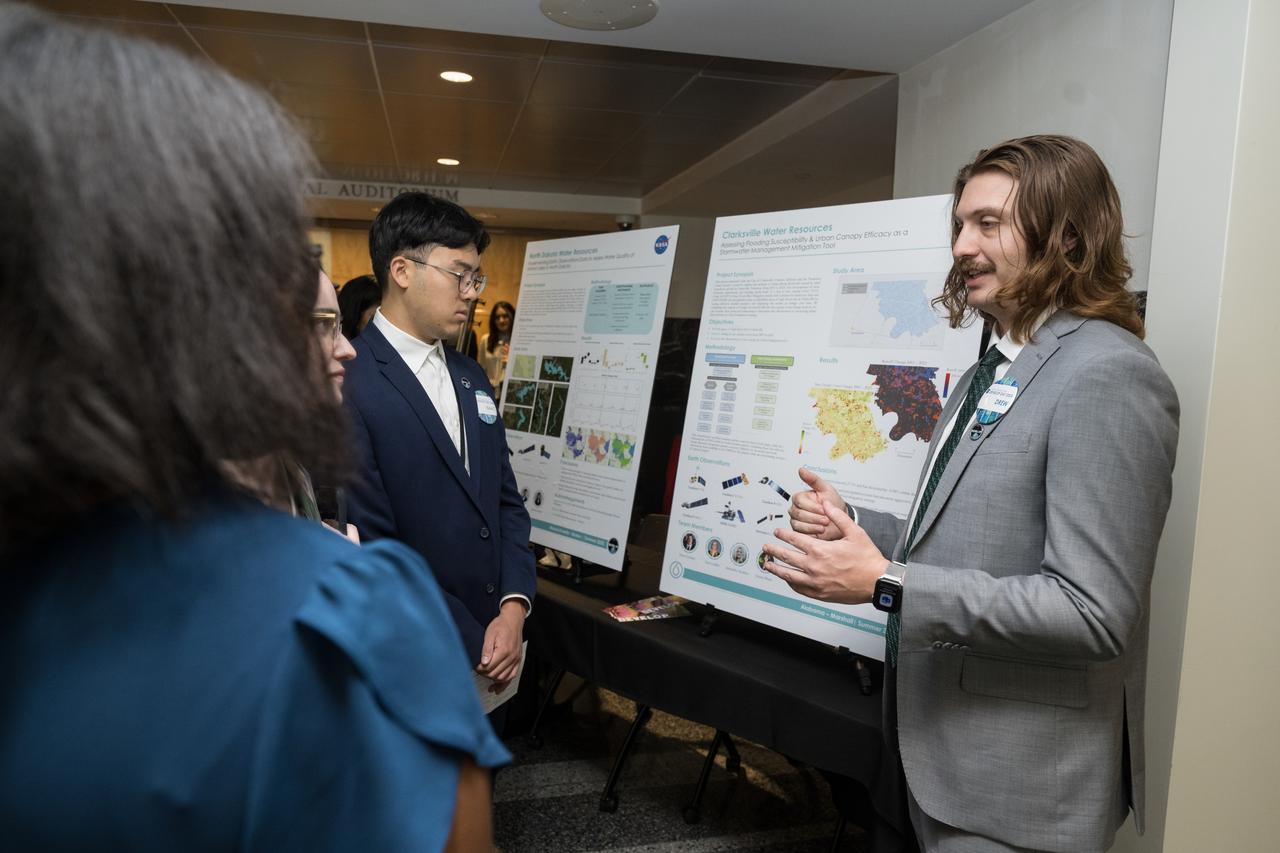
Students and young professionals share the results of their DEVELOP Project, Tuesday, August 5, 2025, at the Mary W. Jackson NASA Headquarters building in Washington. Every summer early career researchers from NASA’s DEVELOP National Program come to NASA Headquarters and present their research projects. DEVELOP is a training and development program where early career researchers work on Earth science projects, mentored by science advisors from NASA and partner agencies, and provide research results to local communities. Photo Credit: (NASA/Aubrey Gemignani)