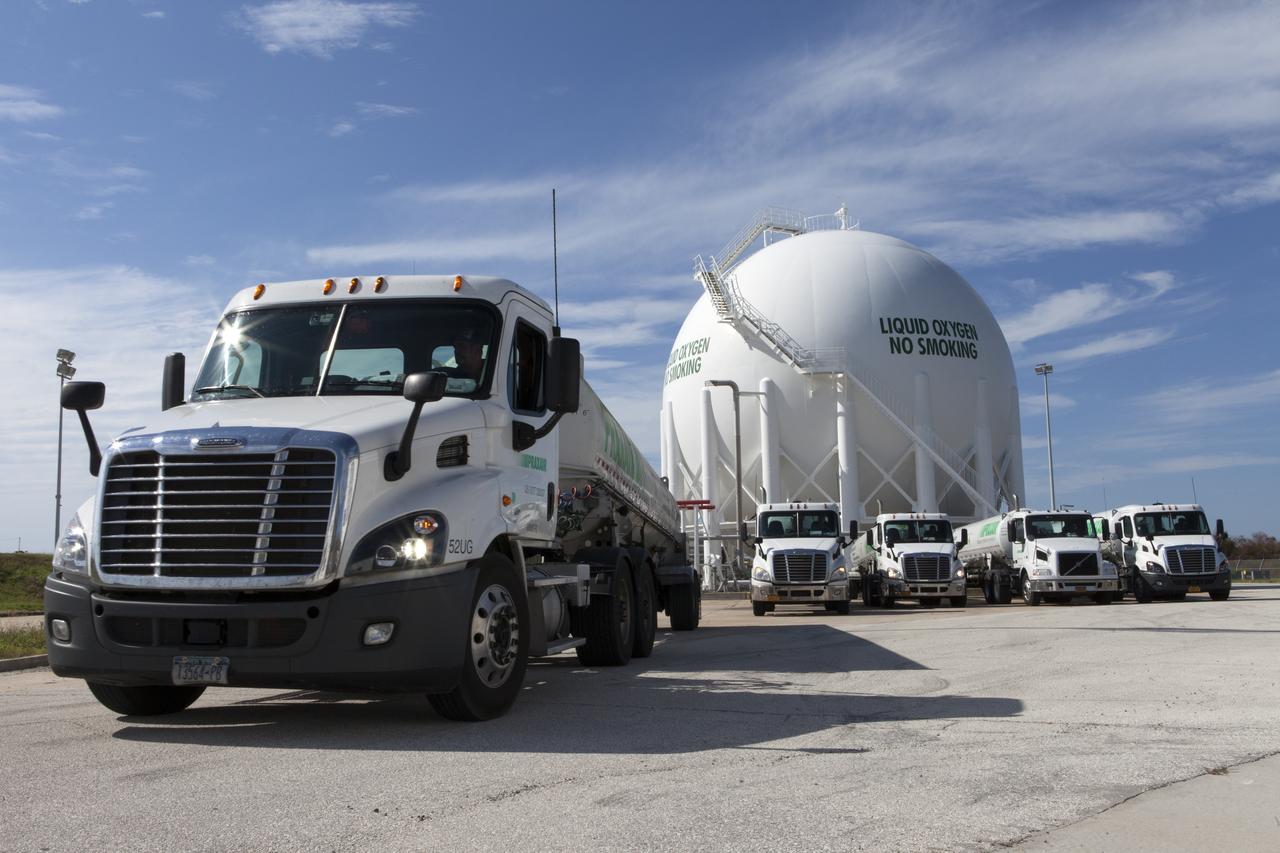
Several Praxair trucks begin to depart Launch Pad 39B at NASA's Kennedy Space Center in Florida, after offloading their loads of liquid oxygen, or LO2, one at a time into the giant storage sphere located at the northwest corner of the pad. The sphere was gradually chilled down from normal temperature to about negative 298 degrees Fahrenheit, during the first major integrated operation to prepare for the launch of the agency's Orion spacecraft atop the Space Launch System (SLS) rocket. The Ground Systems Development and Operations Program is overseeing upgrades and modifications to pad B to support the launch of the SLS and Orion spacecraft for Exploration Mission-1, deep space missions and NASA’s journey to Mars.
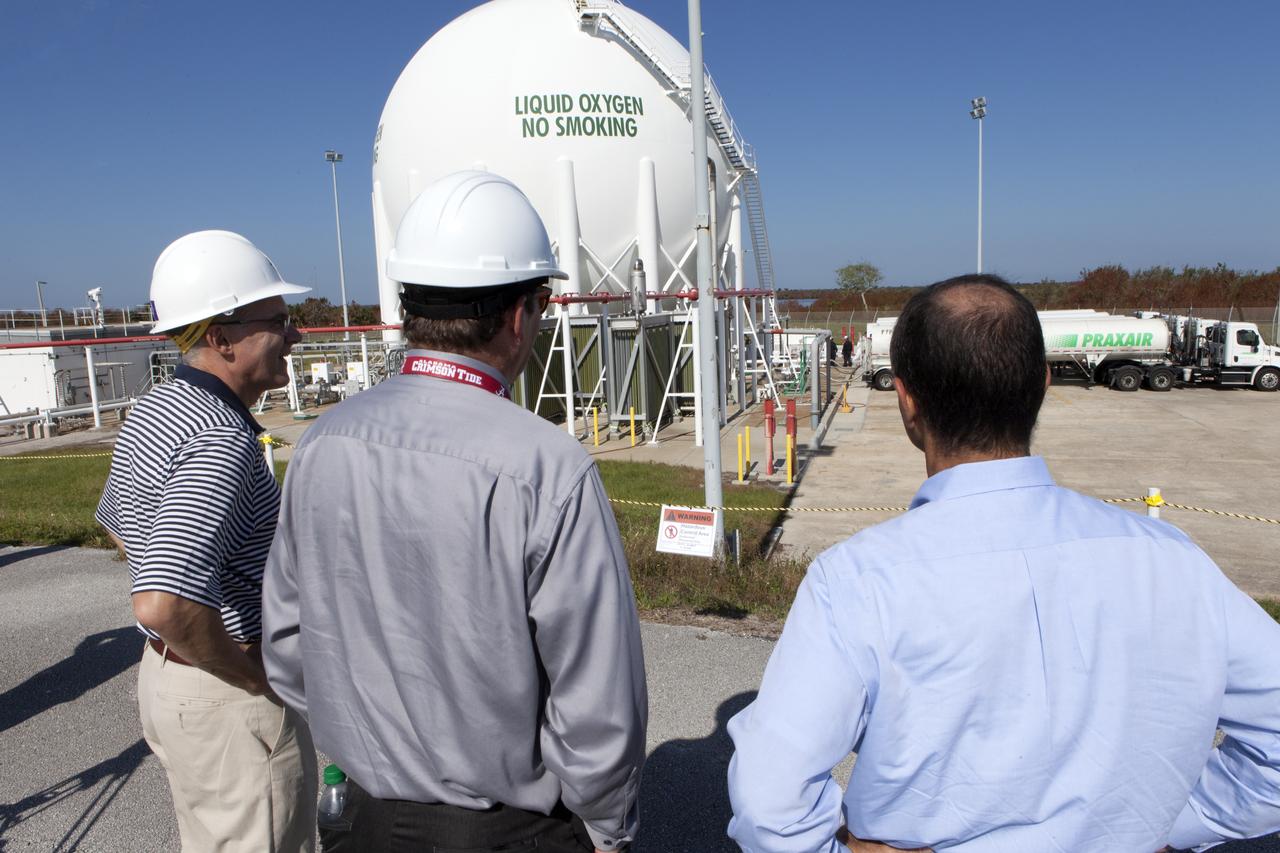
Engineers watch as several Praxair trucks carrying their loads of liquid oxygen, or LO2, arrive at Launch Pad 39B at NASA's Kennedy Space Center in Florida. The trucks will offload the LO2 one at a time into the giant storage sphere located at the northwest corner of the pad. The sphere will gradually be chilled down from normal temperature to about negative 298 degrees Fahrenheit, during the first major integrated operation to prepare for the launch of the agency's Orion spacecraft atop the Space Launch System (SLS) rocket. The Ground Systems Development and Operations Program is overseeing upgrades and modifications to pad B to support the launch of the SLS and Orion spacecraft for Exploration Mission-1, deep space missions and NASA’s journey to Mars.

Several Praxair trucks carrying their loads of liquid oxygen, or LO2, arrive at Launch Pad 39B at NASA's Kennedy Space Center in Florida. The trucks will offload LO2 slowly into a giant storage sphere located at the northwest corner of the pad to gradually chill it down from normal temperature to about negative 298 degrees Fahrenheit, during the first major integrated operation to prepare for the launch of the agency's Orion spacecraft atop the Space Launch System (SLS) rocket. The Ground Systems Development and Operations Program is overseeing upgrades and modifications to pad B to support the launch of the SLS and Orion spacecraft for Exploration Mission-1, deep space missions and NASA’s journey to Mars.
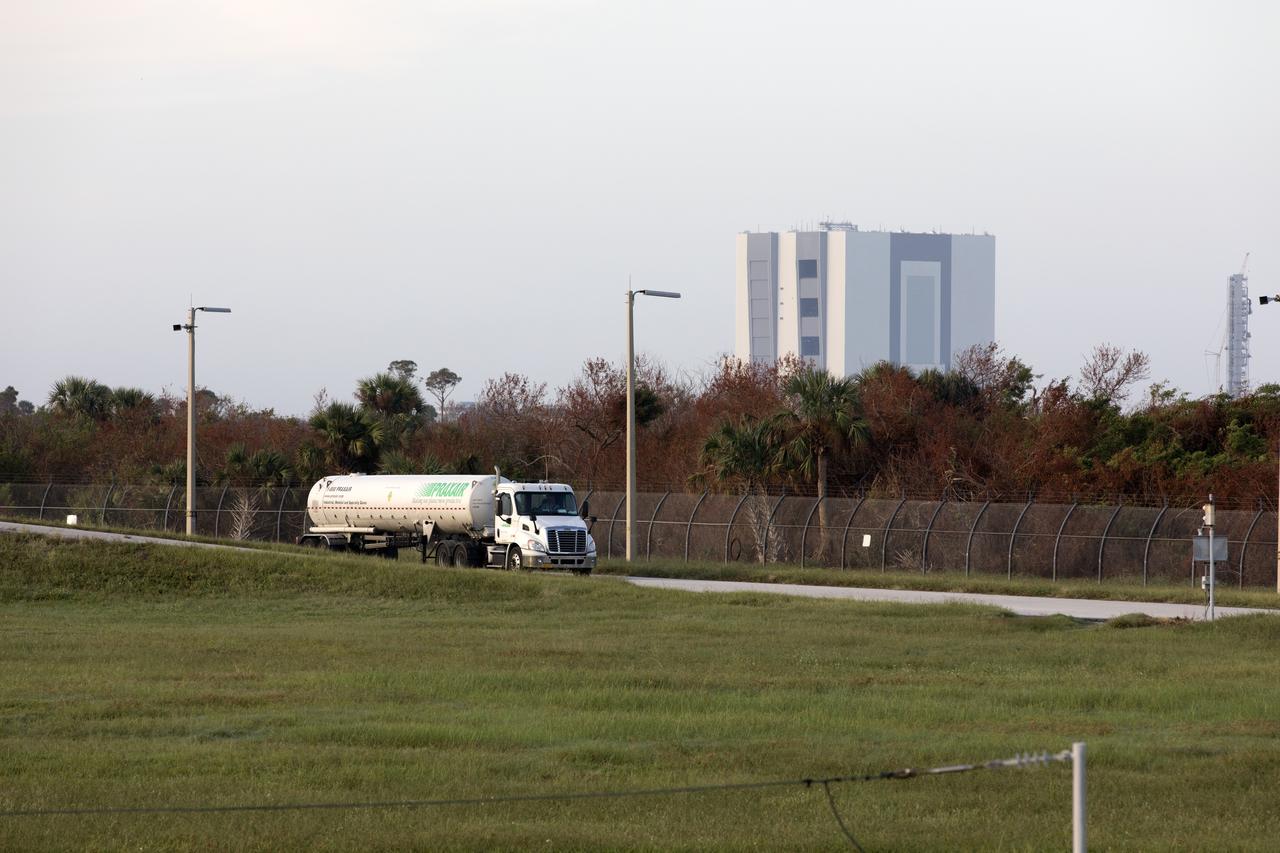
One of several Praxair trucks carrying its load of liquid oxygen, or LO2, is in route to Launch Pad 39B at NASA's Kennedy Space Center in Florida. The truck will offload LO2 slowly into a giant storage sphere located at the northwest corner of the pad to gradually chill it down from normal temperature to about negative 298 degrees Fahrenheit, during the first major integrated operation to prepare for the launch of the agency's Orion spacecraft atop the Space Launch System (SLS) rocket. The Ground Systems Development and Operations Program is overseeing upgrades and modifications to pad B to support the launch of the SLS and Orion spacecraft for Exploration Mission-1, deep space missions and NASA’s journey to Mars.
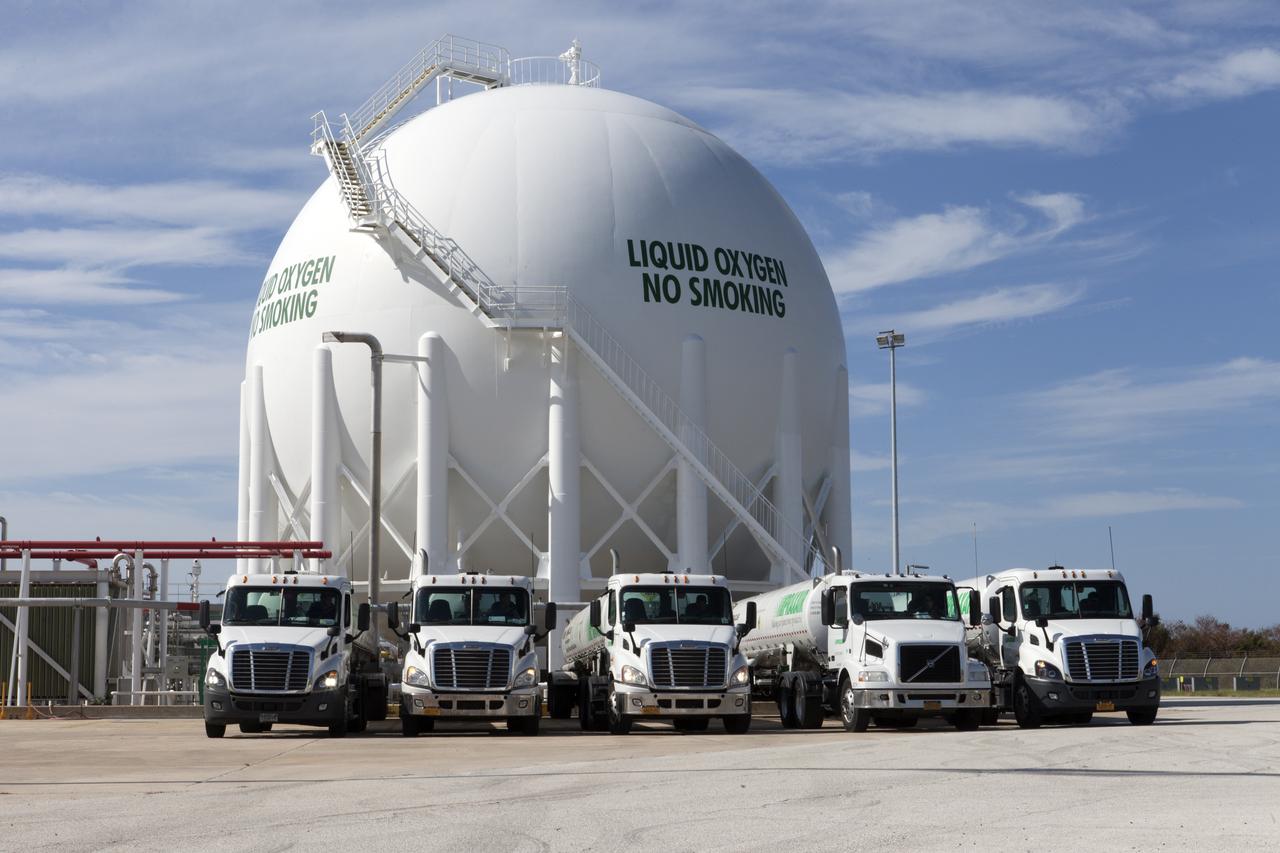
Several Praxair trucks carrying their loads of liquid oxygen, or LO2, have arrived at Launch Pad 39B at NASA's Kennedy Space Center in Florida. The trucks will begin to offload the LO2 one at a time into the giant storage sphere located at the northwest corner of the pad. The sphere will gradually be chilled down from normal temperature to about negative 298 degrees Fahrenheit, during the first major integrated operation to prepare for the launch of the agency's Orion spacecraft atop the Space Launch System (SLS) rocket. The Ground Systems Development and Operations Program is overseeing upgrades and modifications to pad B to support the launch of the SLS and Orion spacecraft for Exploration Mission-1, deep space missions and NASA’s journey to Mars.

Praxair trucks carrying their loads of liquid oxygen, or LO2, are on their way to Launch Pad 39B at NASA's Kennedy Space Center in Florida. The trucks will offload LO2 slowly into a giant storage sphere located at the northwest corner of the pad to gradually chill it down from normal temperature to about negative 298 degrees Fahrenheit, during the first major integrated operation to prepare for the launch of the agency's Orion spacecraft atop the Space Launch System (SLS) rocket. The Ground Systems Development and Operations Program is overseeing upgrades and modifications to pad B to support the launch of the SLS and Orion spacecraft for Exploration Mission-1, deep space missions and NASA’s journey to Mars.
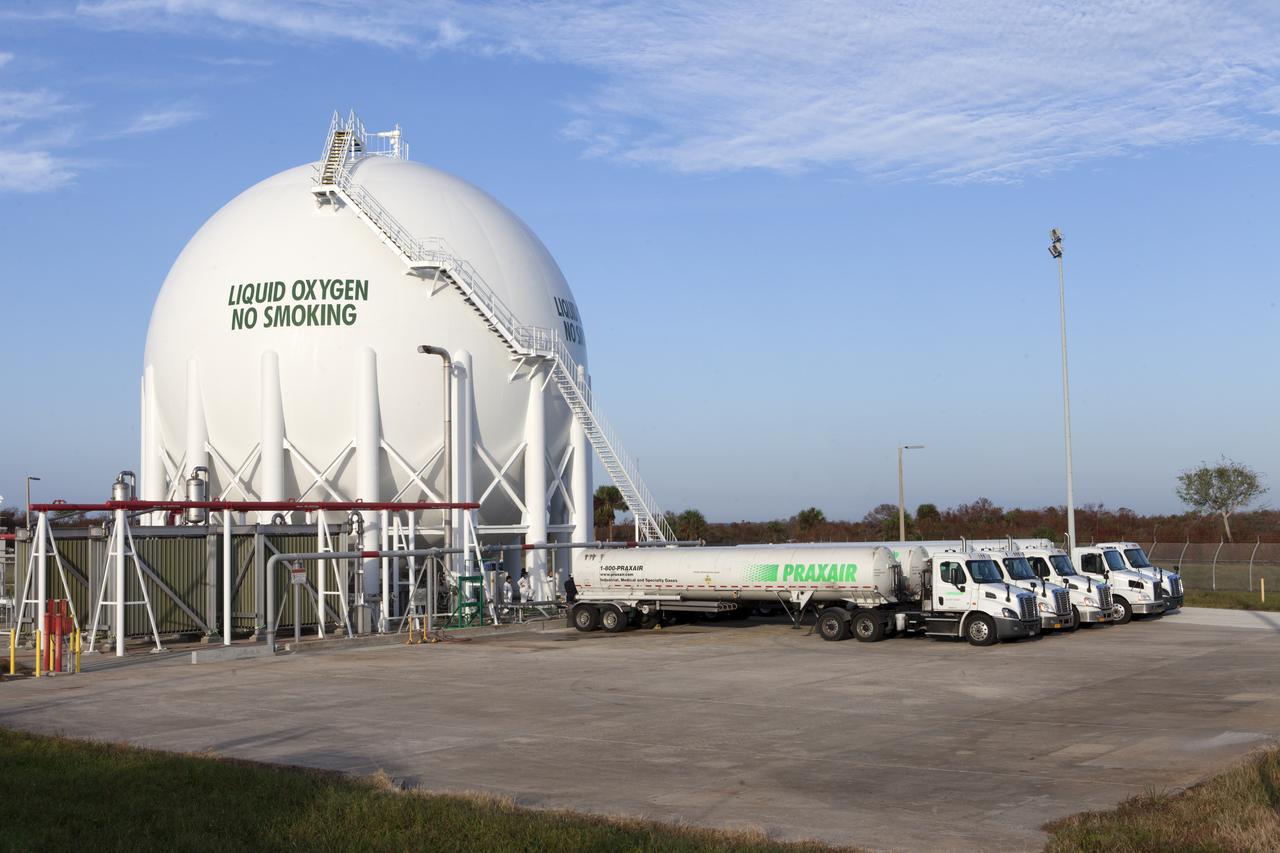
Several Praxair trucks carrying their loads of liquid oxygen, or LO2, have arrived at Launch Pad 39B at NASA's Kennedy Space Center in Florida. The trucks will offload LO2 slowly into a giant storage sphere located at the northwest corner of the pad to gradually chill it down from normal temperature to about negative 298 degrees Fahrenheit, during the first major integrated operation to prepare for the launch of the agency's Orion spacecraft atop the Space Launch System (SLS) rocket. The Ground Systems Development and Operations Program is overseeing upgrades and modifications to pad B to support the launch of the SLS and Orion spacecraft for Exploration Mission-1, deep space missions and NASA’s journey to Mars.
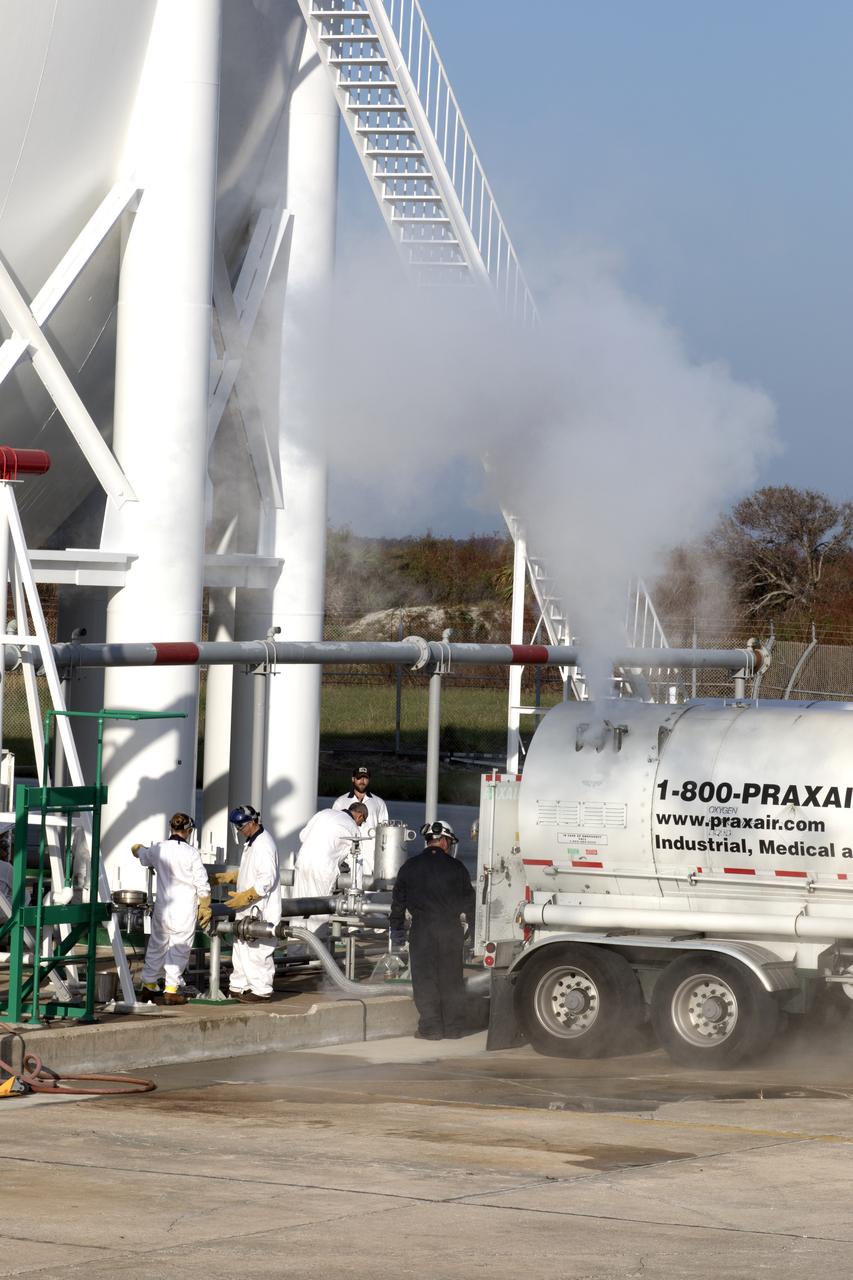
A large plume of mist or vapor is visible as a Praxair truck slowly transfers its load of liquid oxygen, or LO2, into a giant storage sphere at the northwest corner of Launch Pad 39B at NASA's Kennedy Space Center in Florida. The sphere will gradually be chilled down from normal temperature to about negative 298 degrees Fahrenheit, during the first major integrated operation to prepare for the launch of the agency's Orion spacecraft atop the Space Launch System (SLS) rocket. The Ground Systems Development and Operations Program is overseeing upgrades and modifications to pad B to support the launch of the SLS and Orion spacecraft for Exploration Mission-1, deep space missions and NASA’s journey to Mars.
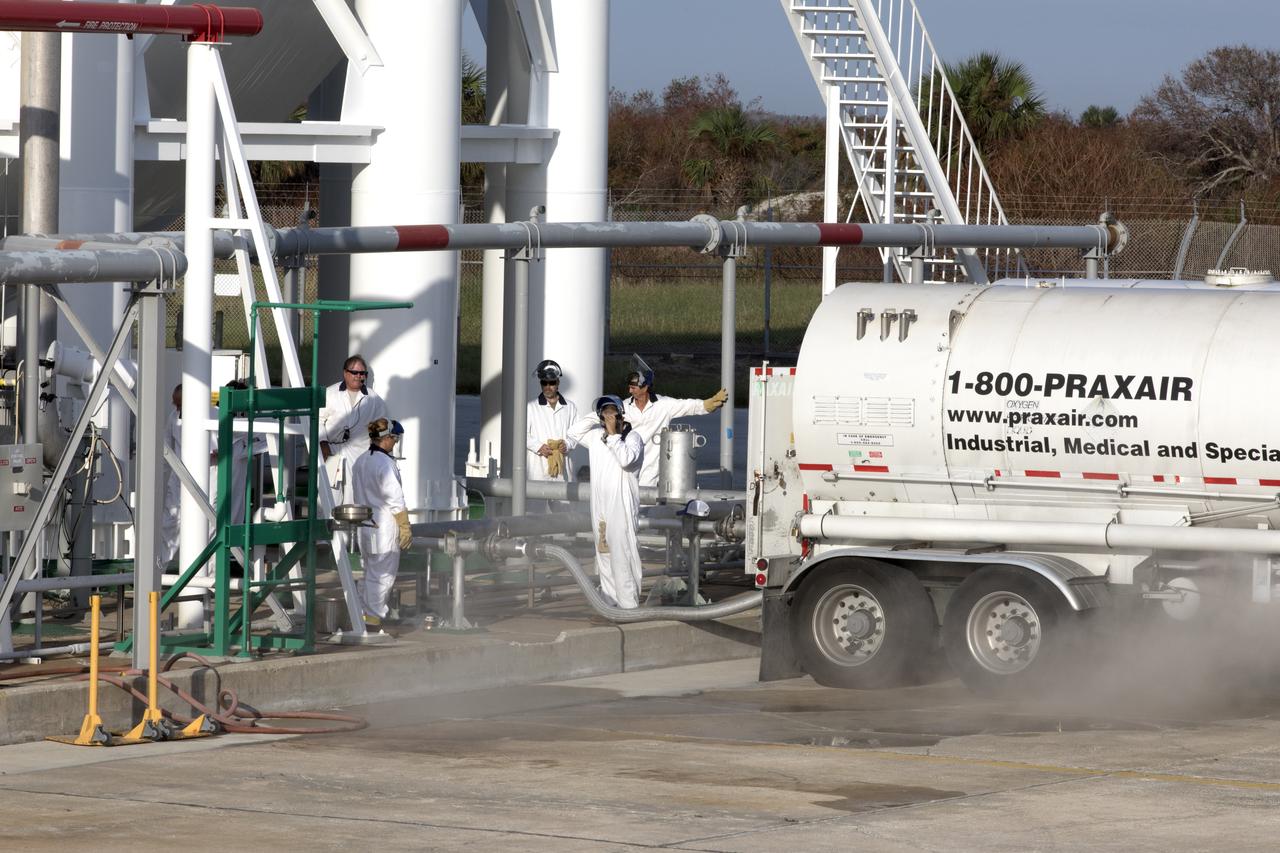
Mist or vapor is visible as a Praxair truck slowly transfers its load of liquid oxygen, or LO2, into a giant storage sphere at the northwest corner of Launch Pad 39B at NASA's Kennedy Space Center in Florida. The sphere will gradually be chilled down from normal temperature to about negative 298 degrees Fahrenheit, during the first major integrated operation to prepare for the launch of the agency's Orion spacecraft atop the Space Launch System (SLS) rocket. The Ground Systems Development and Operations Program is overseeing upgrades and modifications to pad B to support the launch of the SLS and Orion spacecraft for Exploration Mission-1, deep space missions and NASA’s journey to Mars.
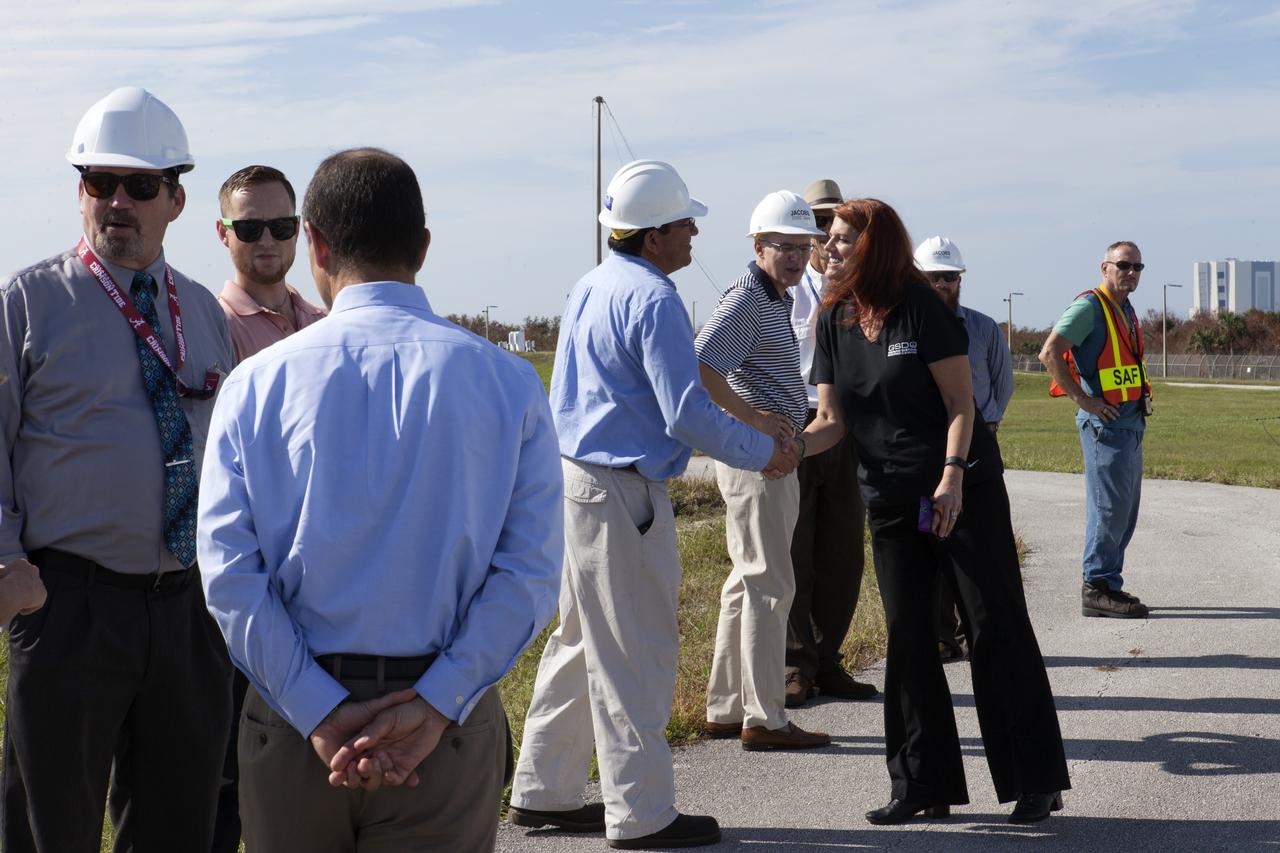
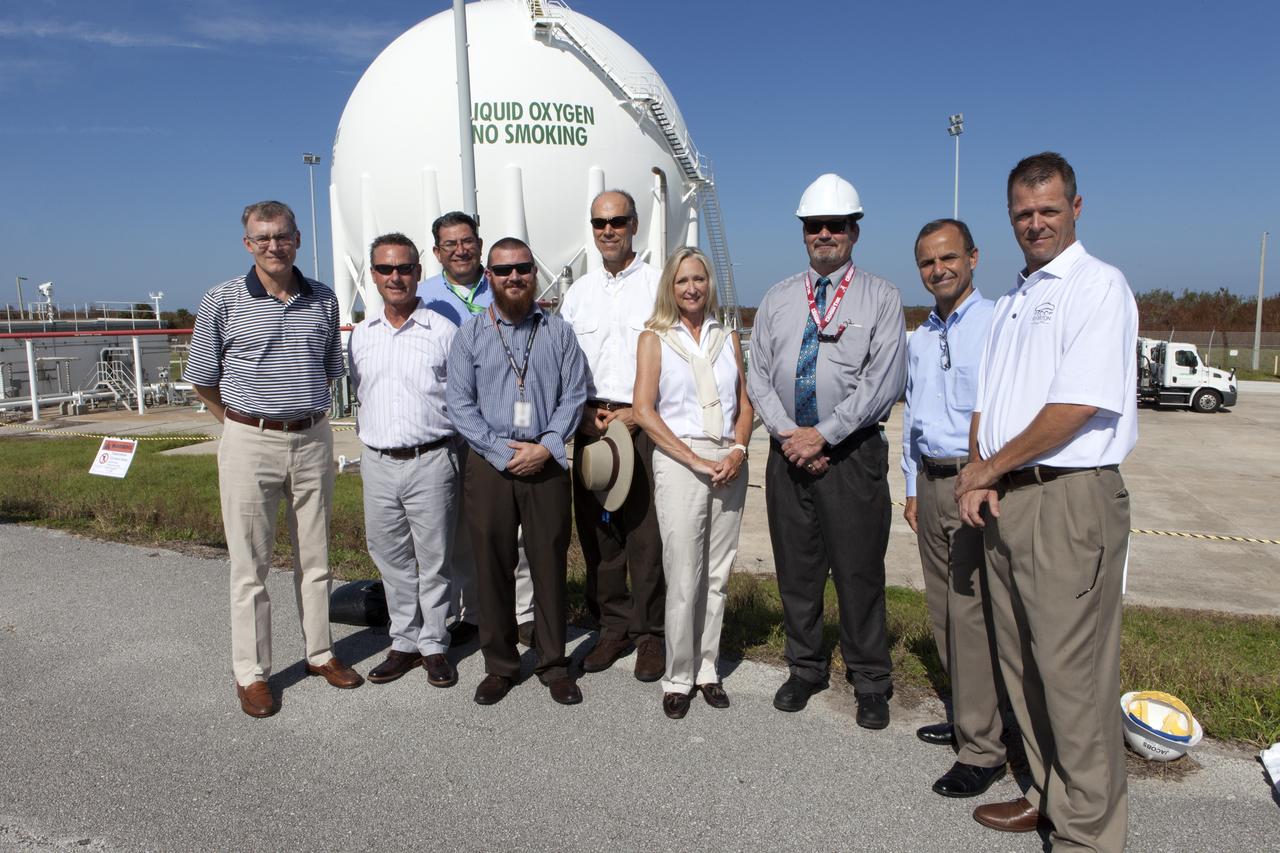
NASA Launch Director Charlie Blackwell-Thompson, at right, greets engineers and technicians at Launch Pad 39B at the agency's Kennedy Space Center in Florida. Blackwell-Thompson will observe the first major tanking operation of liquid oxygen, or LO2, into the giant storage sphere at the northwest corner of the pad to prepare for the launch of the agency's Orion spacecraft atop the Space Launch System (SLS) rocket. During the operation, several Praxair trucks will slowly offload LO2 to gradually chill down the sphere from normal temperature to about negative 298 degrees Fahrenheit. The Ground Systems Development and Operations Program is overseeing upgrades and modifications to pad B to support the launch of the SLS and Orion spacecraft for Exploration Mission-1, deep space missions and NASA’s journey to Mars.
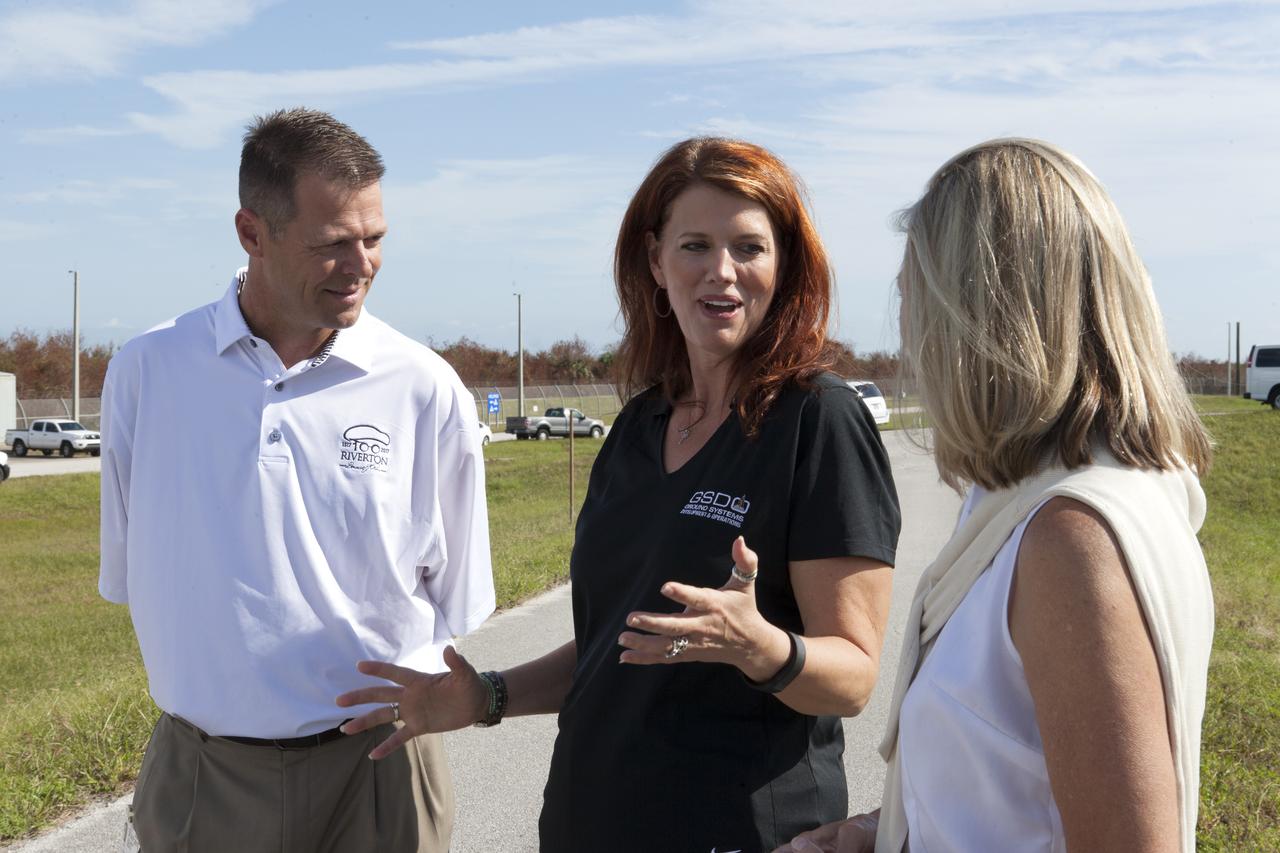
NASA Launch Director Charlie Blackwell-Thompson, center, talks to engineers at Launch Pad 39B at the agency's Kennedy Space Center in Florida. Blackwell-Thompson will observe the first major tanking operation of liquid oxygen, or LO2, into the giant storage sphere at the northwest corner of the pad to prepare for the launch of the agency's Orion spacecraft atop the Space Launch System (SLS) rocket. During the operation, several Praxair trucks will slowly offload LO2 to gradually chill down the sphere from normal temperature to about negative 298 degrees Fahrenheit. The Ground Systems Development and Operations Program is overseeing upgrades and modifications to pad B to support the launch of the SLS and Orion spacecraft for Exploration Mission-1, deep space missions and NASA’s journey to Mars.
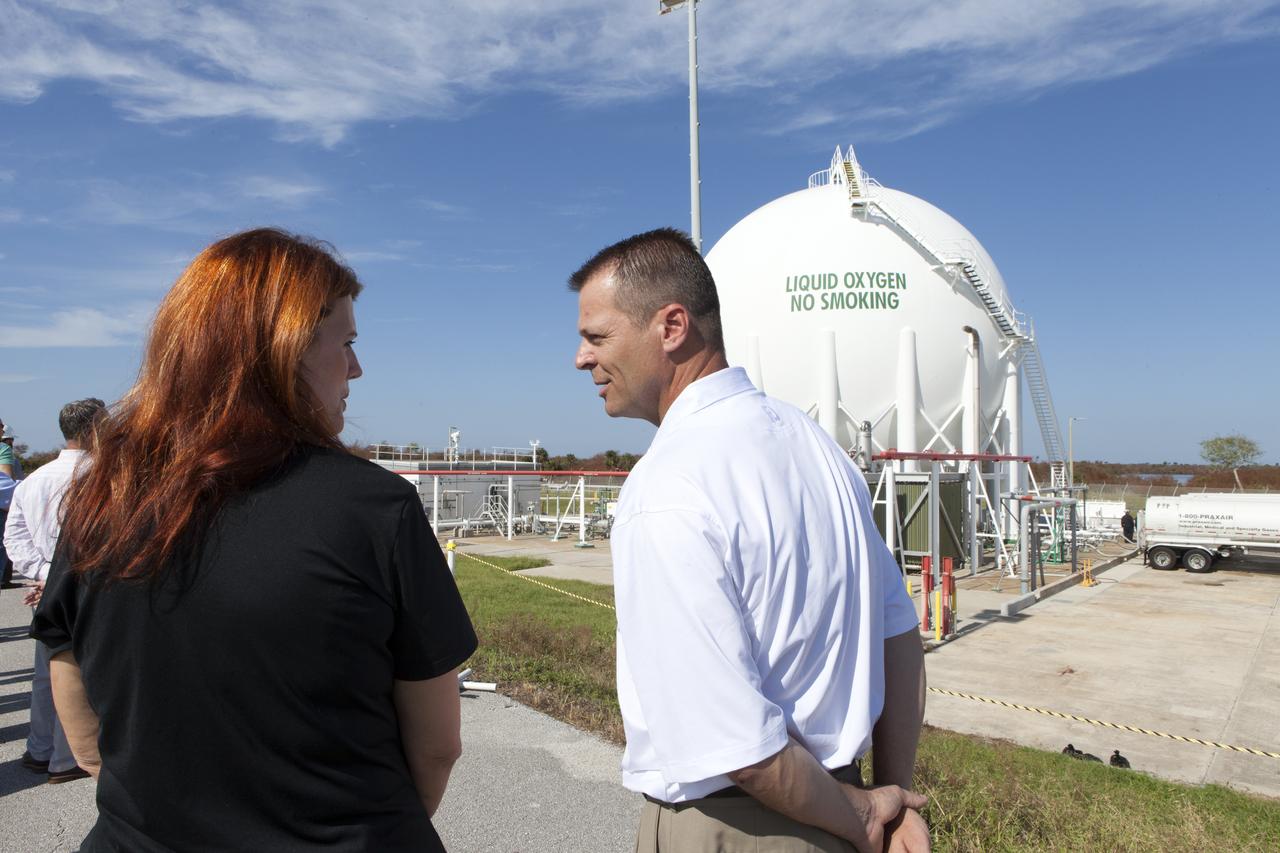
NASA Launch Director Charlie Blackwell-Thompson, at left, arrives at Launch Pad 39B at NASA's Kennedy Space Center in Florida, to observe the first major tanking operation of liquid oxygen, or LO2, into the giant storage sphere at the northwest corner of the pad to prepare for the launch of the agency's Orion spacecraft atop the Space Launch System (SLS) rocket. During the operation, several Praxair trucks will slowly offload LO2 to gradually chill down the sphere from normal temperature to about negative 298 degrees Fahrenheit. The Ground Systems Development and Operations Program is overseeing upgrades and modifications to pad B to support the launch of the SLS and Orion spacecraft for Exploration Mission-1, deep space missions and NASA’s journey to Mars.
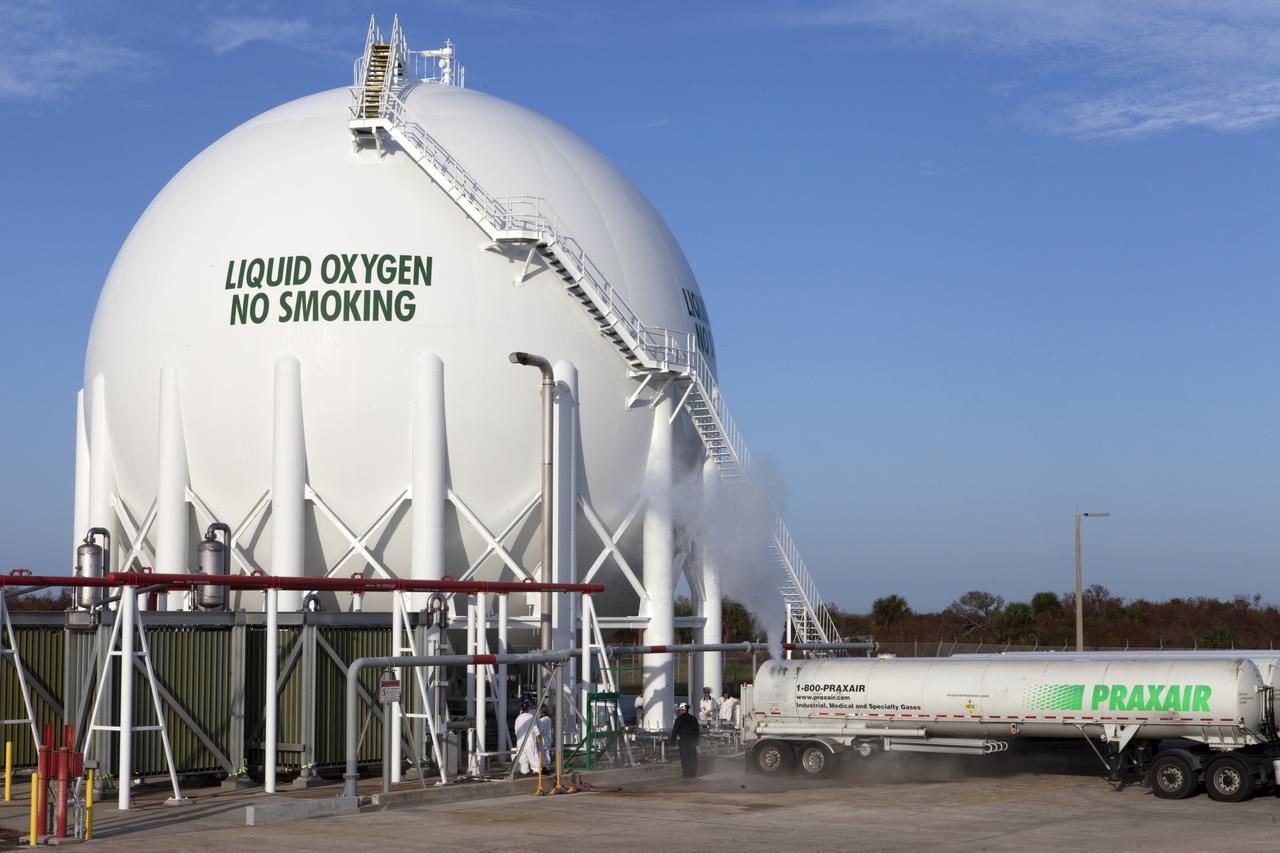
Several Praxair trucks carrying their loads of liquid oxygen, or LO2, have arrived at Launch Pad 39B at NASA's Kennedy Space Center in Florida. A mist is visible as LO2 is offloaded from one of the trucks into the giant storage sphere located at the northwest corner of the pad has begun. The sphere will gradually be chilled down from normal temperature to about negative 298 degrees Fahrenheit, during the first major integrated operation to prepare for the launch of the agency's Orion spacecraft atop the Space Launch System (SLS) rocket. The Ground Systems Development and Operations Program is overseeing upgrades and modifications to pad B to support the launch of the SLS and Orion spacecraft for Exploration Mission-1, deep space missions and NASA’s journey to Mars.
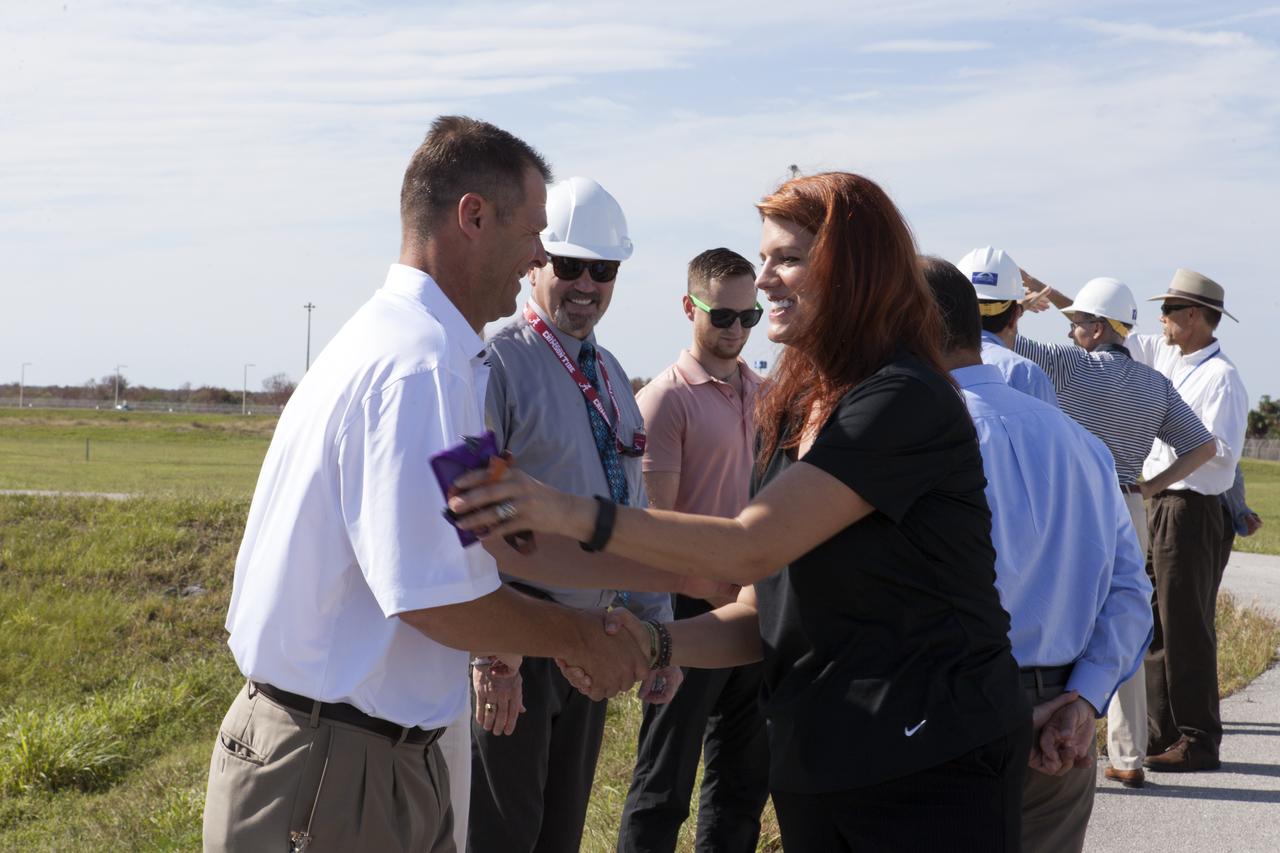
NASA Launch Director Charlie Blackwell-Thompson, at right, greets engineers and technicians at Launch Pad 39B at the agency's Kennedy Space Center in Florida. Blackwell-Thompson will observe the first major tanking operation of liquid oxygen, or LO2, into the giant storage sphere at the northwest corner of the pad to prepare for the launch of the agency's Orion spacecraft atop the Space Launch System (SLS) rocket. During the operation, several Praxair trucks will slowly offload LO2 to gradually chill down the sphere from normal temperature to about negative 298 degrees Fahrenheit. The Ground Systems Development and Operations Program is overseeing upgrades and modifications to pad B to support the launch of the SLS and Orion spacecraft for Exploration Mission-1, deep space missions and NASA’s journey to Mars.
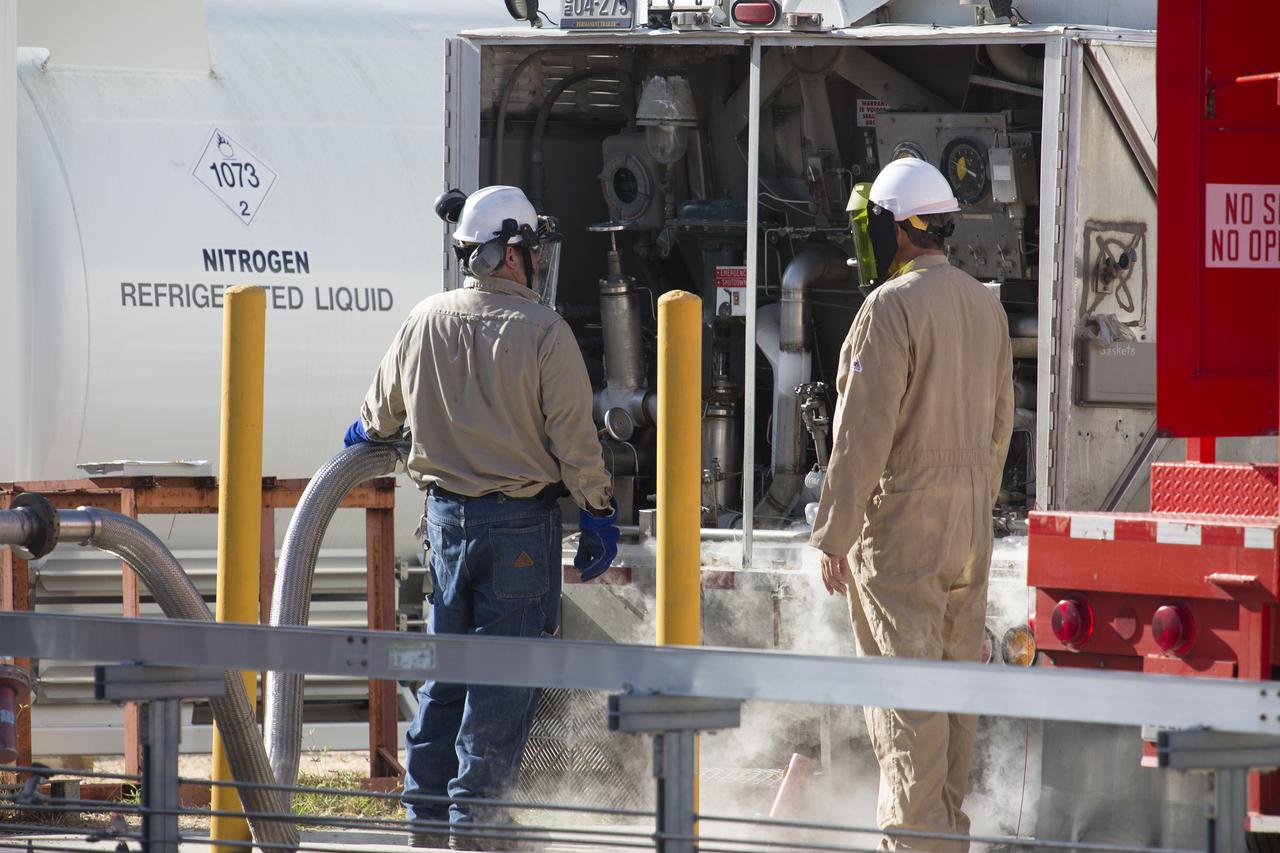
Technicians with Praxair pressurize the hydrogen trailer before offloading liquid hydrogen during a test of the Ground Operations Demo Unit for liquid hydrogen at NASA's Kennedy Space Center in Florida. The system includes a 33,000 gallon liquid hydrogen storage tank with an internal cold heat exchanger supplied from a cryogenic refrigerator. The primary goal of the testing is to achieve a liquid hydrogen zero boil-off capability. The system was designed, installed and tested by a team of civil servants and contractors from the center's Cryogenic Test Laboratory, with support from engineers at NASA's Glenn Research Center in Cleveland and Stennis Space Center in Mississippi. It may be applicable for use by the Ground Systems Development and Operations Program at Launch Pad 39B.
Liquid Oxygen filled in the Cryo tank of Pad 39B in support of the SLS rocket.