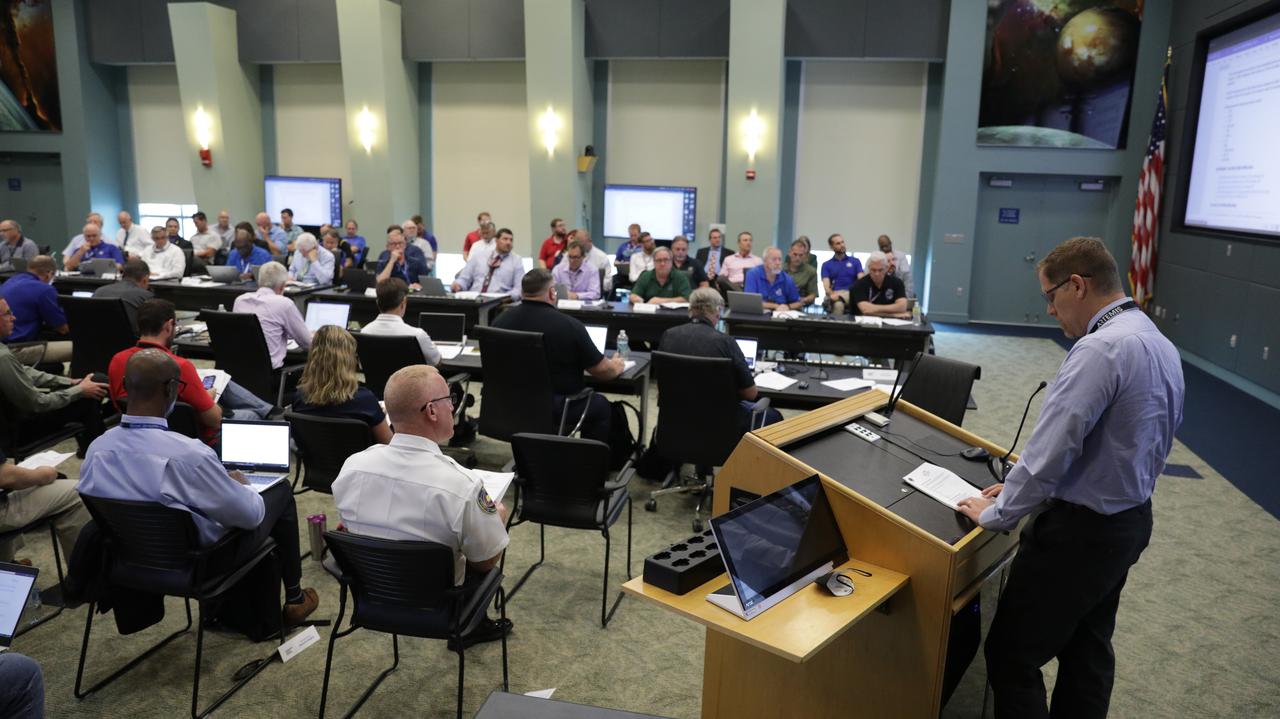
Artemis I team members conduct the Artemis I launch pre-test briefing on Sept. 23, 2022, at NASA’s Kennedy Space Center in Florida. The first in a series of increasingly complex missions, Artemis I will provide a foundation for human deep space exploration and demonstrate our commitment and capability to extend human presence to the Moon and beyond. The primary goal of Artemis I is to thoroughly test the integrated systems before crewed missions by operating the spacecraft in a deep space environment, testing Orion’s heat shield, and recovering the crew module after reentry, descent, and splashdown.
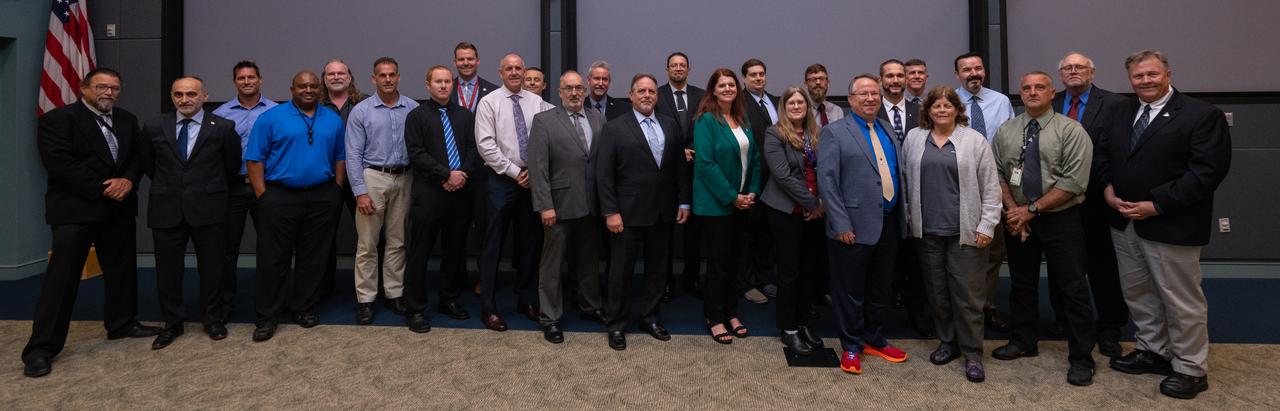
Artemis I managers gather for a final briefing on Aug. 26, 2022, at NASA’s Kennedy Space Center in Florida to confirm all is ready for launch team call to stations in Firing Room 1 of the Rocco A Petrone Launch Control Center. The agency’s Space Launch System rocket and Orion spacecraft are scheduled to launch no earlier than Aug. 29, 2022, at 8:33 a.m. EDT from Kennedy’s Launch Complex 39B. The first in a series of increasingly complex missions, Artemis I will provide a foundation for human deep space exploration and demonstrate our commitment and capability to extend human presence to the Moon and beyond. The primary goal of Artemis I is to thoroughly test the integrated systems before crewed missions by operating the spacecraft in a deep space environment, testing Orion’s heat shield, and recovering the crew module after reentry, descent, and splashdown.
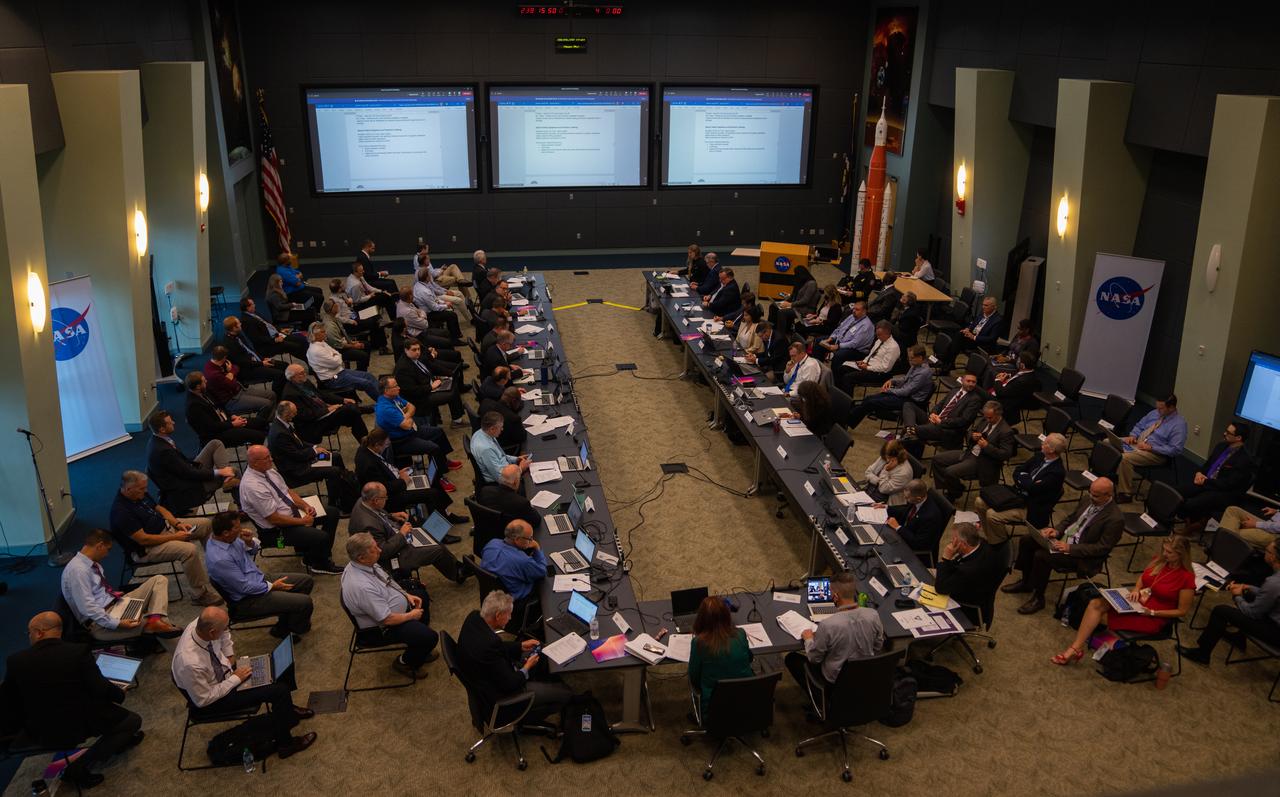
Artemis I managers hold a final briefing on Aug. 26, 2022, at NASA’s Kennedy Space Center in Florida to confirm all is ready for launch team call to stations in Firing Room 1 of the Rocco A Petrone Launch Control Center. The agency’s Space Launch System rocket and Orion spacecraft are scheduled to launch no earlier than Aug. 29, 2022, at 8:33 a.m. EDT from Kennedy’s Launch Complex 39B. The first in a series of increasingly complex missions, Artemis I will provide a foundation for human deep space exploration and demonstrate our commitment and capability to extend human presence to the Moon and beyond. The primary goal of Artemis I is to thoroughly test the integrated systems before crewed missions by operating the spacecraft in a deep space environment, testing Orion’s heat shield, and recovering the crew module after reentry, descent, and splashdown.
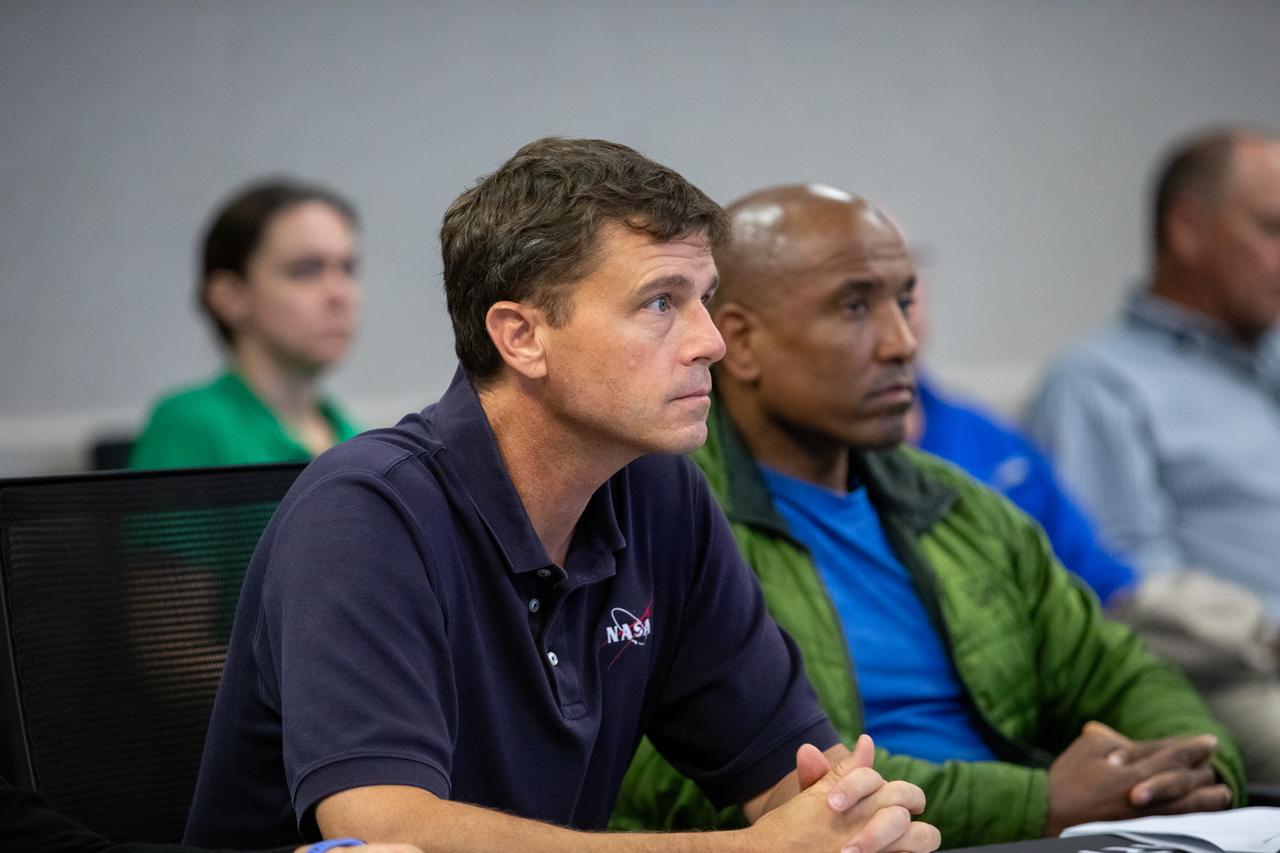
NASA astronauts Reid Wiseman (left) and Victor Glover (right) participate in an Artemis II pre-task briefing on Tuesday, Sept. 19, 2023, held in the Rocco A. Petrone Launch Control Center at NASA’s Kennedy Space Center in Florida. The briefing allows teams to collaborate ahead of a series of integrated system verification and validation tests conducted at Kennedy to evaluate the readiness of the crew and ground equipment ahead of launch day.
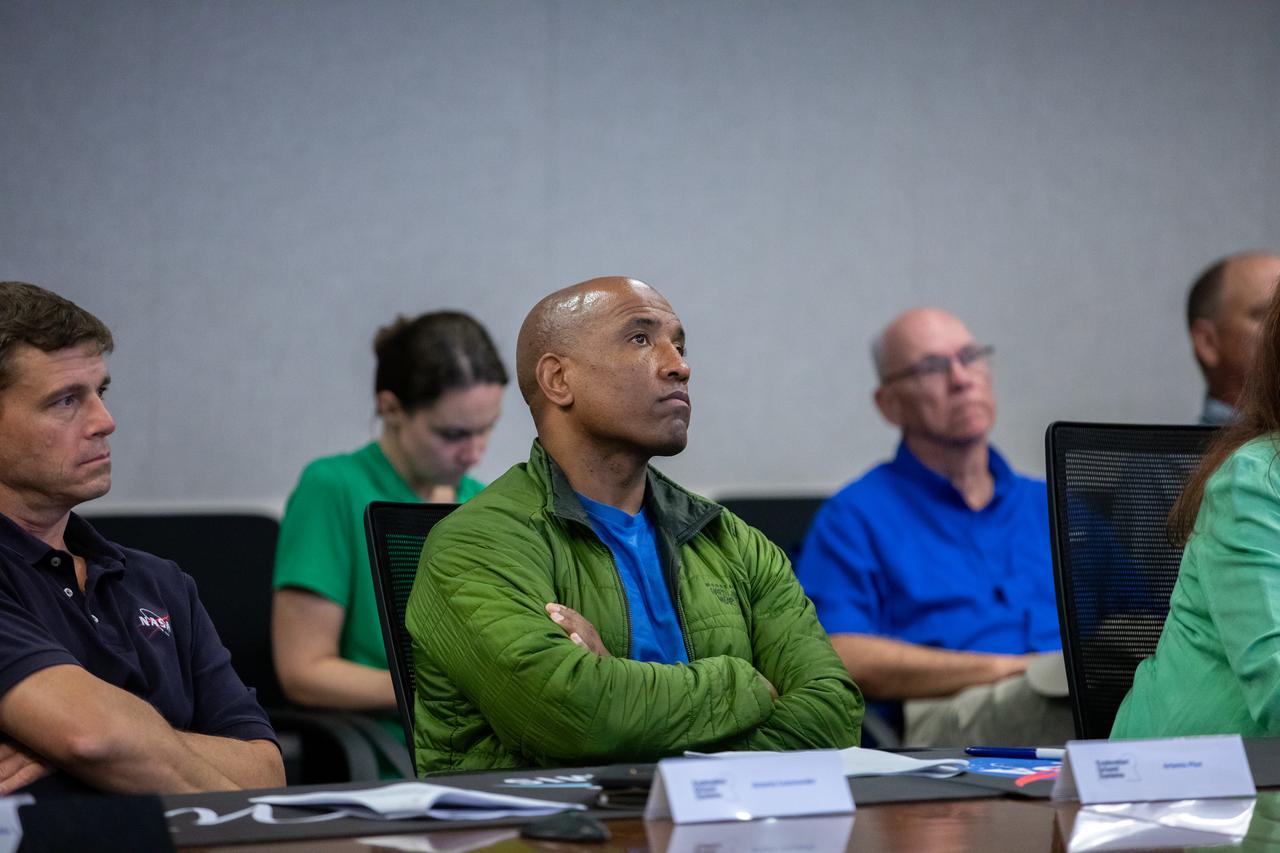
NASA astronauts Reid Wiseman (left) and Victor Glover (right) participate in an Artemis II pre-task briefing on Tuesday, Sept. 19, 2023, held in the Rocco A. Petrone Launch Control Center at NASA’s Kennedy Space Center in Florida. The briefing allows teams to collaborate ahead of a series of integrated system verification and validation tests conducted at Kennedy to evaluate the readiness of the crew and ground equipment ahead of launch day.
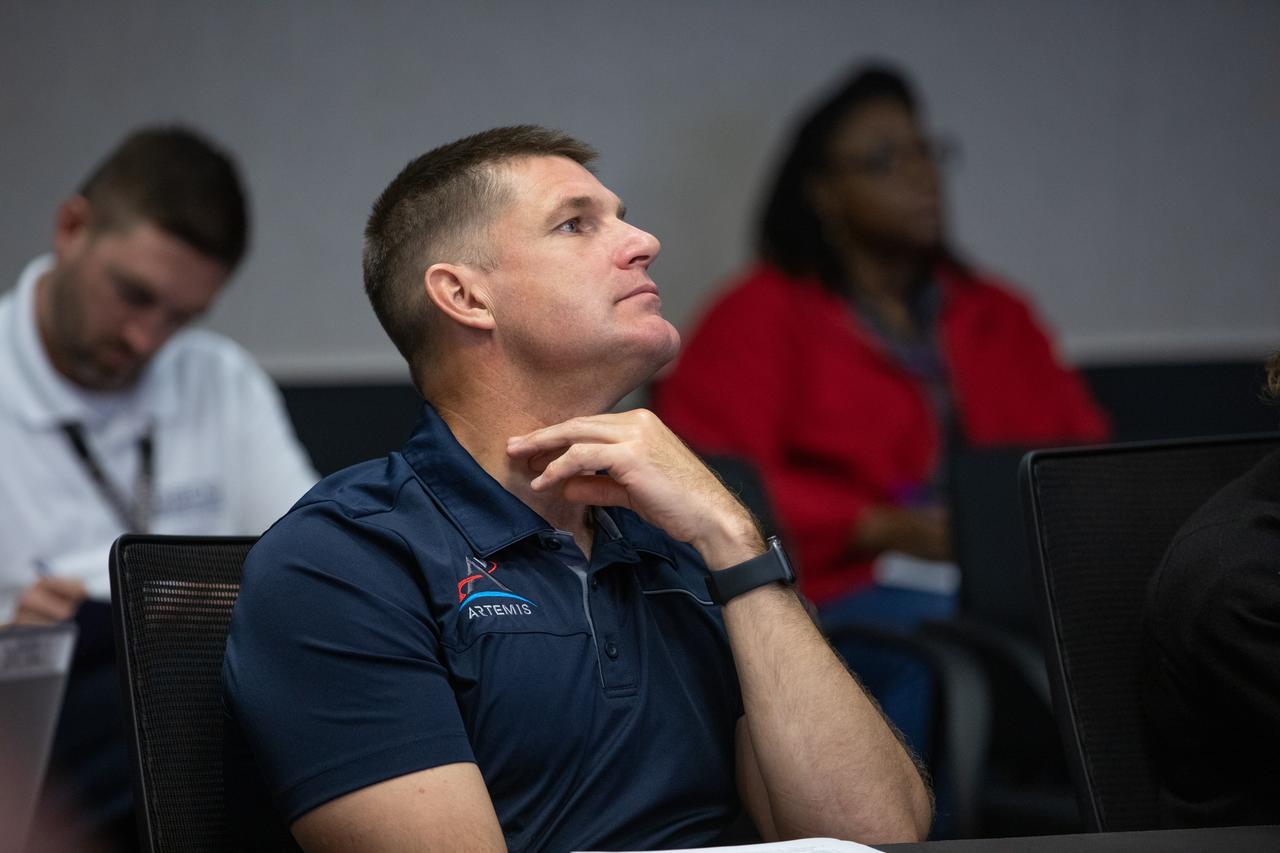
Artemis II crew member CSA (Canadian Space Agency) astronaut Jeremy Hansen participates in a pre-task briefing on Tuesday, Sept. 19, 2023, held in the Rocco A. Petrone Launch Control Center at NASA’s Kennedy Space Center in Florida. The briefing allows teams to collaborate ahead of a series of integrated system verification and validation tests conducted at Kennedy to evaluate the readiness of the crew and ground equipment ahead of launch day.
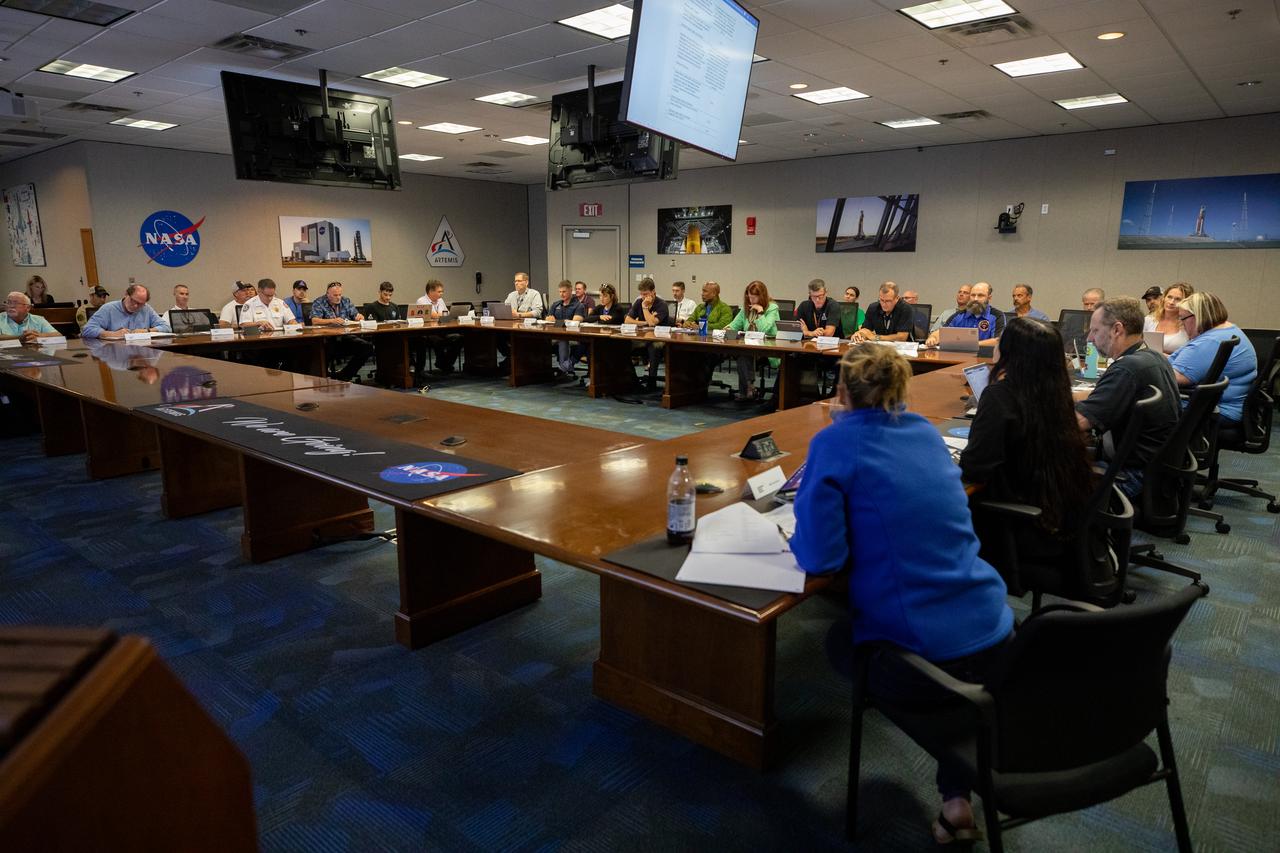
An Artemis II pre-task briefing on Tuesday, Sept. 19, 2023, is conducted in the Rocco A. Petrone Launch Control Center at NASA’s Kennedy Space Center in Florida. The briefing allows teams to collaborate ahead of a series of integrated system verification and validation tests conducted at Kennedy to evaluate the readiness of the crew and ground equipment ahead of launch day.

Artemis II crew member NASA astronaut Christina Koch participates in a pre-task briefing on Tuesday, Sept. 19, 2023, held in the Rocco A. Petrone Launch Control Center at NASA’s Kennedy Space Center in Florida. The briefing allows teams to collaborate ahead of a series of integrated system verification and validation tests conducted at Kennedy to evaluate the readiness of the crew and ground equipment ahead of launch day.
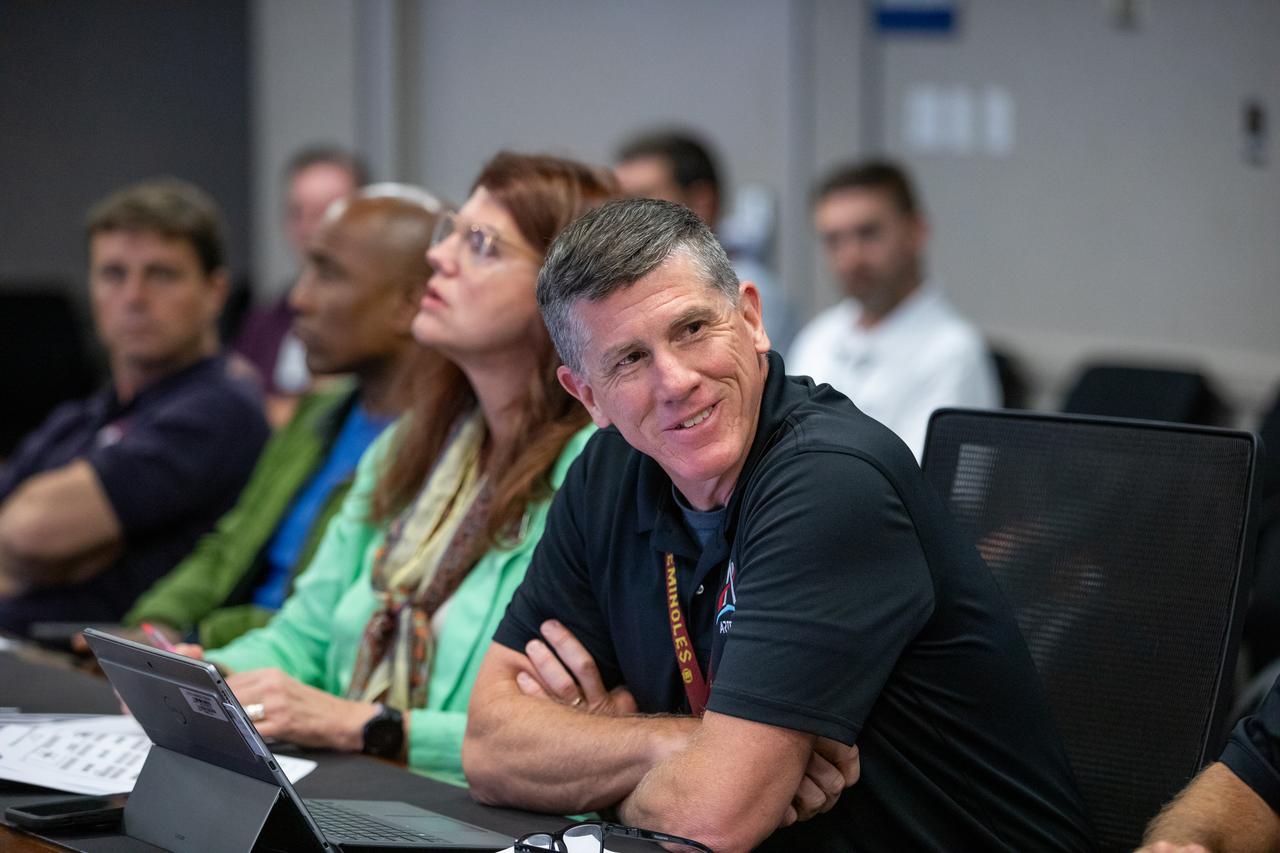
NASA astronauts Reid Wiseman and Victor Glover participate in an Artemis II pre-task briefing alongside NASA Artemis Launch Director Charlie Blackwell-Thompson and Assistant Launch Director Jeremy Graeber on Tuesday, Sept. 19, 2023, held in the Rocco A. Petrone Launch Control Center at NASA’s Kennedy Space Center in Florida. The briefing allows teams to collaborate ahead of a series of integrated system verification and validation tests conducted at Kennedy to evaluate the readiness of the crew and ground equipment ahead of launch day.
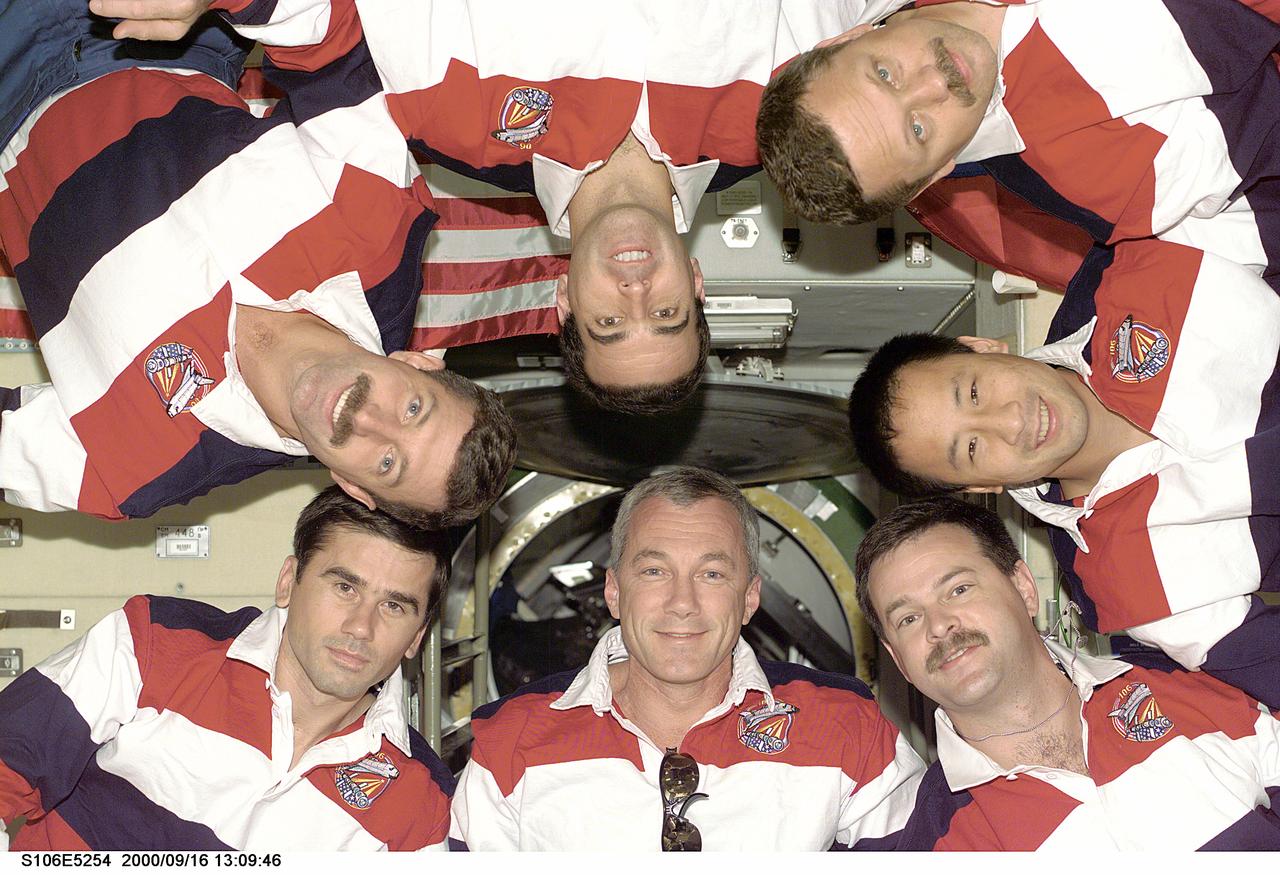
S106-E-5254 (16 September 2000) --- A brief break during busy moving tasks and detail work afforded the STS-106 crew members an opportunity for another traditional inflight crew portrait, snapped by a pre-set electronic still camera (ESC) nearby. Astronaut Terrence W. Wilcutt, mission commander, is at bottom center. Counterclockwise from that point are cosmonaut Yuri I. Malenchenko, astronauts Daniel C. Burbank and Richard A. Mastracchio, cosmonaut Boris V. Morukov and astronaut Edward T. Lu, all mission specialists; along with astronaut Scott D. Altman, pilot. Malenchenko and Morukov represent the Russian Aviation and Space Agency.
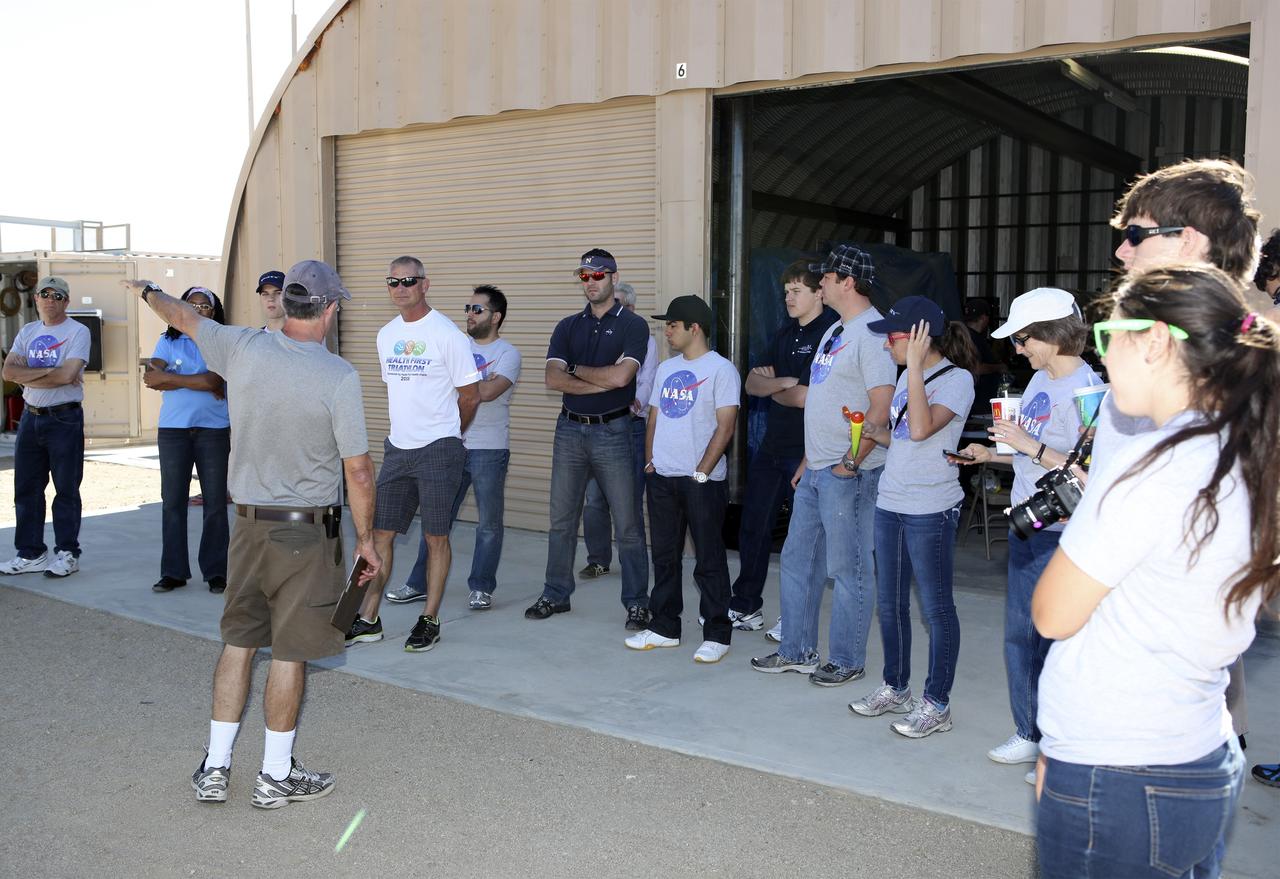
MOJAVE DESERT, Calif. – In the Mojave Desert in California, students and engineers participate in a pre-task briefing as preparations continue for the June 15 launch of a Garvey Spacecraft Corporation Prospector P-18D rocket on a high-altitude, suborbital flight. The rocket will carry four satellites made from four-inch cube section. Collectively known as CubeSats, the satellites will record shock, vibrations and heat inside the rocket. They will not be released during the test flight, but the results will be used to prove or strengthen their designs before they are carried into orbit in 2014 on a much larger rocket. A new, lightweight carrier is also being tested for use on future missions to deploy the small spacecraft. The flight also is being watched closely as a model for trying out new or off-the-shelf technologies quickly before putting them in the pipeline for use on NASA's largest launchers. Built by several different organizations, including a university, a NASA field center and a high school, the spacecraft are four-inch cubes designed to fly on their own eventually, but will remain firmly attached to the rocket during the upcoming mission. For more information, visit http://www.nasa.gov/mission_pages/smallsats/elana/cubesatlaunchpreview.html Photo credit: NASA/Dimitri Gerondidakis