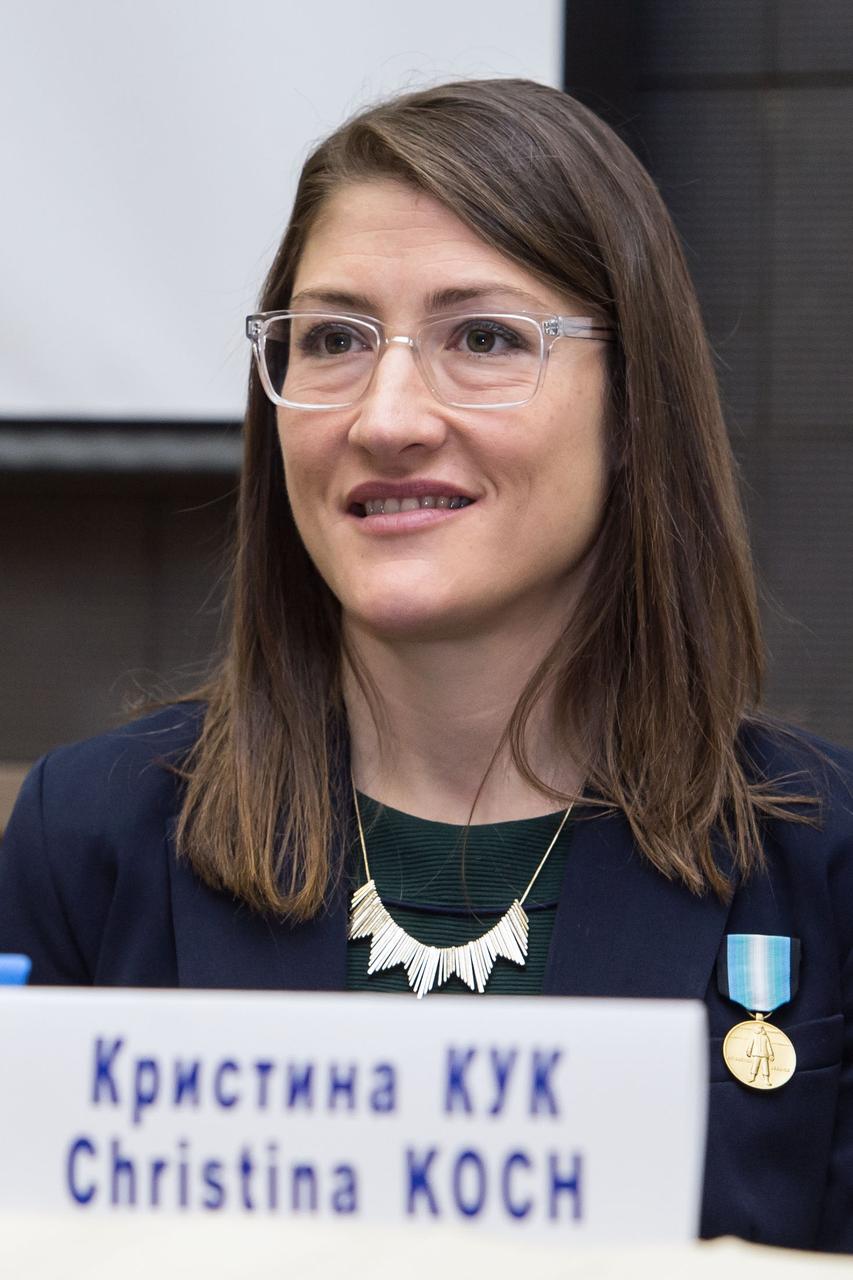
At the Gagarin Cosmonaut Training Center in Star City, Russia, Expedition 59 crewmember Christina Koch of NASA listens to a reporter’s question Feb. 21 during a pre-launch news conference. Koch, Nick Hague of NASA and Alexey Ovchinin of Roscosmos will launch March 14, U.S. time, on the Soyuz MS-12 spacecraft from the Baikonur Cosmodrome in Kazakhstan for a six-and-a-half month mission on the International Space Station. Andrey Shelepin/Gagarin Cosmonaut Training Center
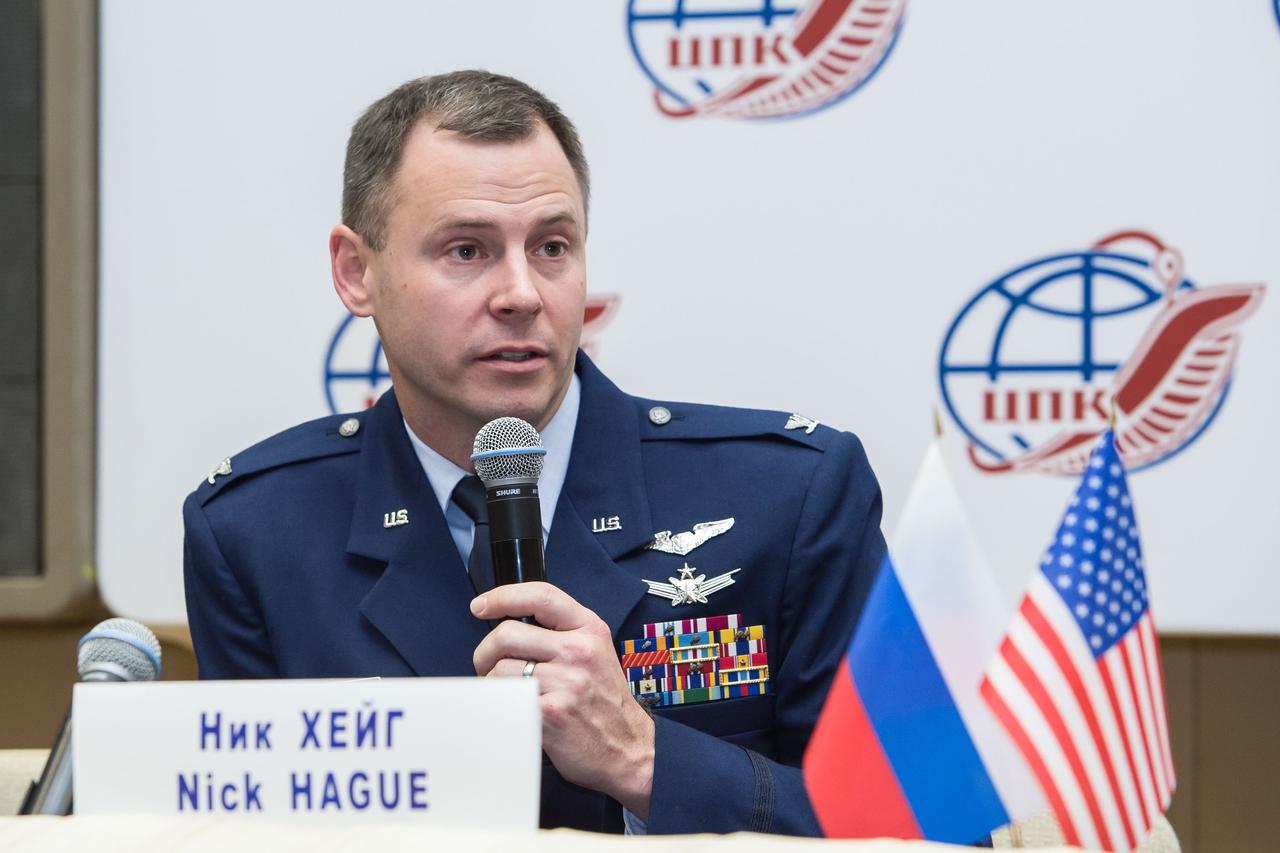
At the Gagarin Cosmonaut Training Center in Star City, Russia, Expedition 59 crewmember Nick Hague of NASA answers a reporter’s question Feb. 21 during a pre-launch news conference. Hague, Christina Koch of NASA and Alexey Ovchinin of Roscosmos will launch March 14, U.S. time, on the Soyuz MS-12 spacecraft from the Baikonur Cosmodrome in Kazakhstan for a six-and-a-half month mission on the International Space Station. Andrey Shelepin/Gagarin Cosmonaut Training Center
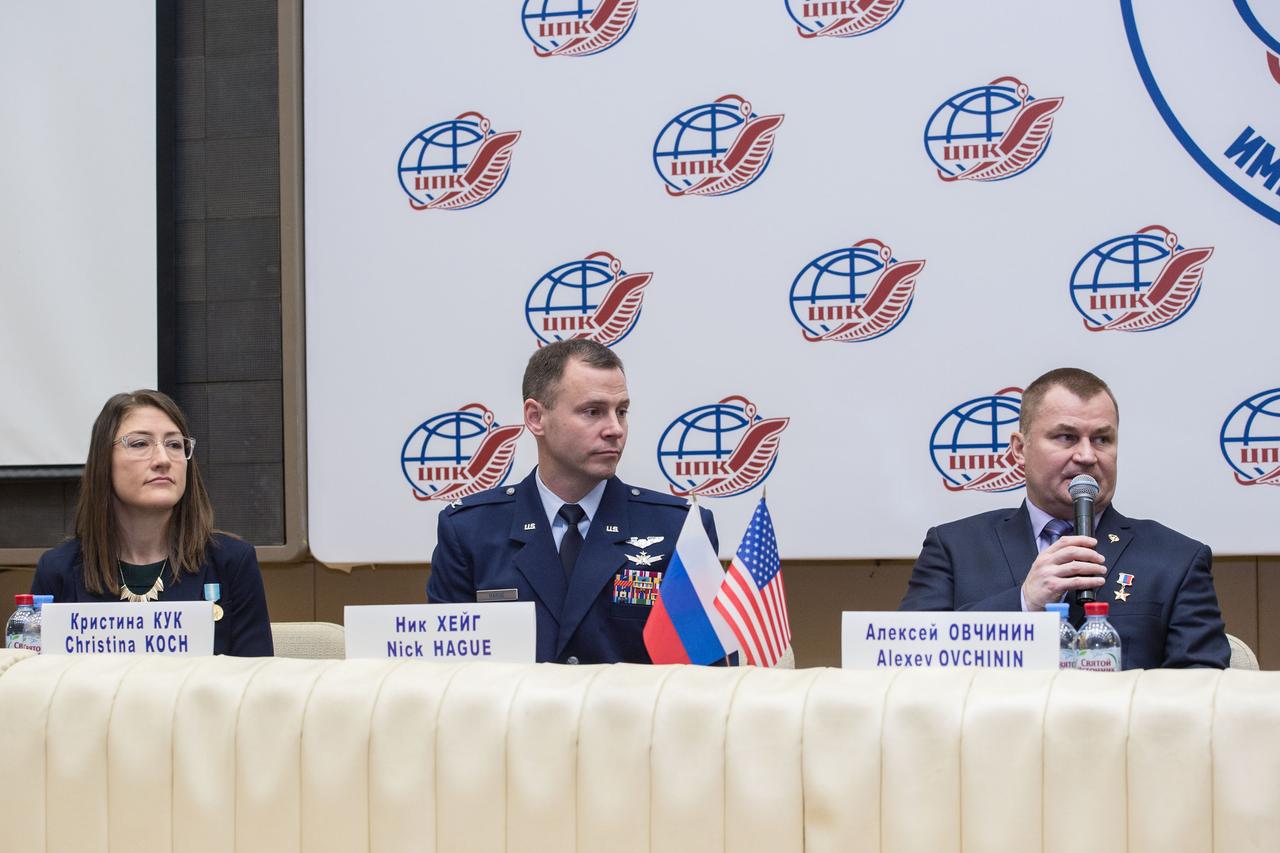
At the Gagarin Cosmonaut Training Center in Star City, Russia, Expedition 59 crewmember Alexey Ovchinin of Roscosmos (right) responds to a reporter’s question Feb. 21 during a pre-launch news conference as crewmates Christina Koch of NASA (left) and Nick Hague of NASA (center) look on. They will launch March 14, U.S. time, on the Soyuz MS-12 spacecraft from the Baikonur Cosmodrome in Kazakhstan for a six-and-a-half month mission on the International Space Station. Andrey Shelepin/Gagarin Cosmonaut Training Center
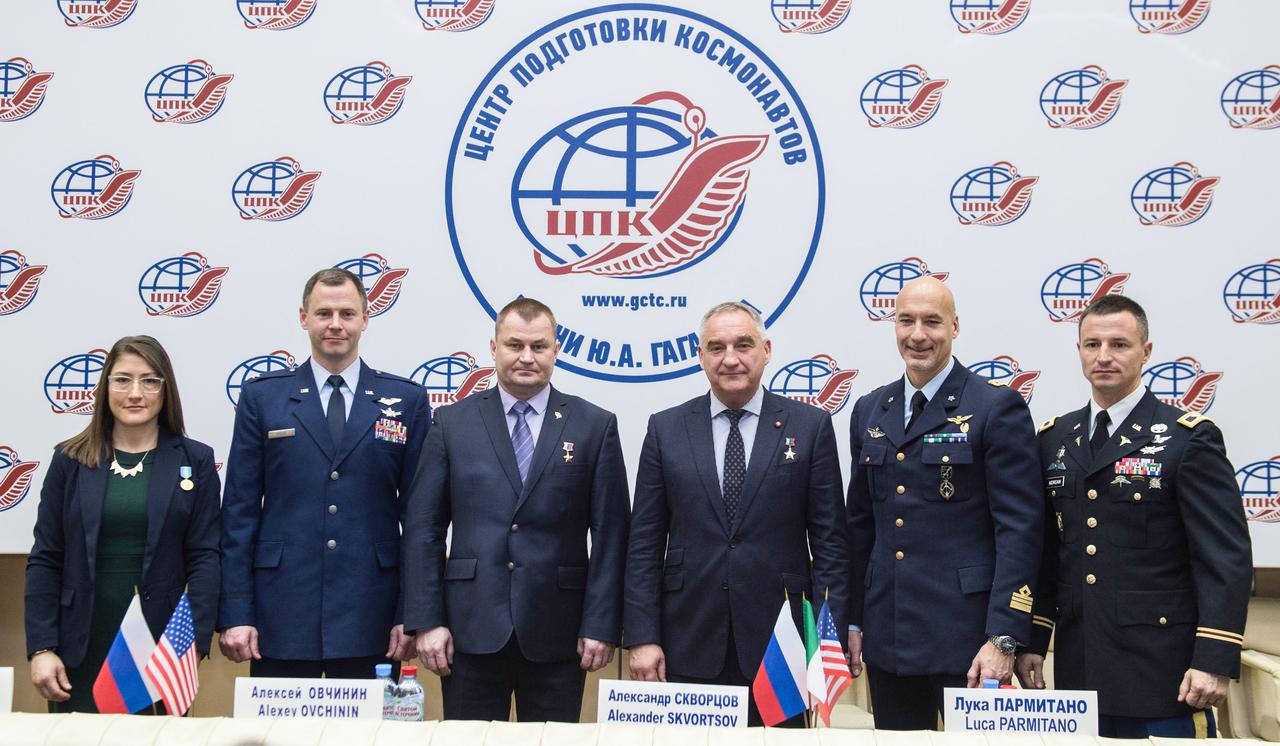
At the Gagarin Cosmonaut Training Center in Star City, Russia, the Expedition 59 prime and backup crewmembers pose for pictures Feb. 21 following a pre-launch news conference. From left to right are the prime crewmembers, Christina Koch and Nick Hague of NASA and Alexey Ovchinin of Roscosmos, and the backup crewmembers, Alexander Skvortsov of Roscosmos, Luca Parmitano of the European Space Agency and Drew Morgan of NASA. Koch, Hague and Ovchinin will launch March 14, U.S. time, on the Soyuz MS-12 spacecraft from the Baikonur Cosmodrome in Kazakhstan for a six-and-a-half month mission on the International Space Station. Andrey Shelepin/Gagarin Cosmonaut Training Center
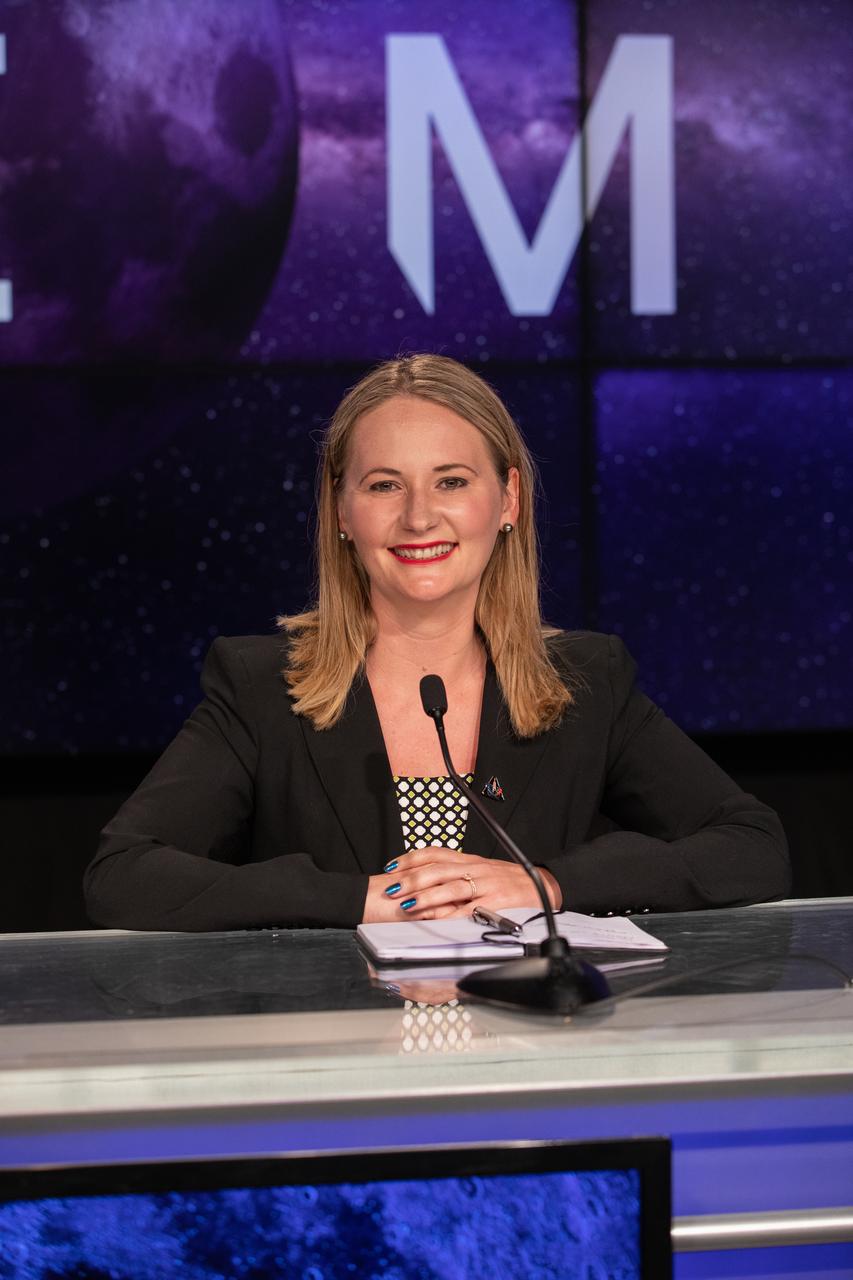
Melody Lovin, weather officer, Space Launch Delta 45, participates in a prelaunch media briefing on the status of the Artemis countdown is held on Aug. 28, at NASA’s Kennedy Space Center in Florida. Artemis I is scheduled to launch Aug. 29, at 8:33 a.m. EDT from Kennedy’s Launch Complex 39B. The first in a series of increasingly complex missions, Artemis I will provide a foundation for human deep space exploration and demonstrate our commitment and capability to extend human presence to the Moon and beyond. The primary goal of Artemis I is to thoroughly test the integrated systems before crewed missions by operating the spacecraft in a deep space environment, testing Orion’s heat shield, and recovering the crew module after reentry, descent, and splashdown.
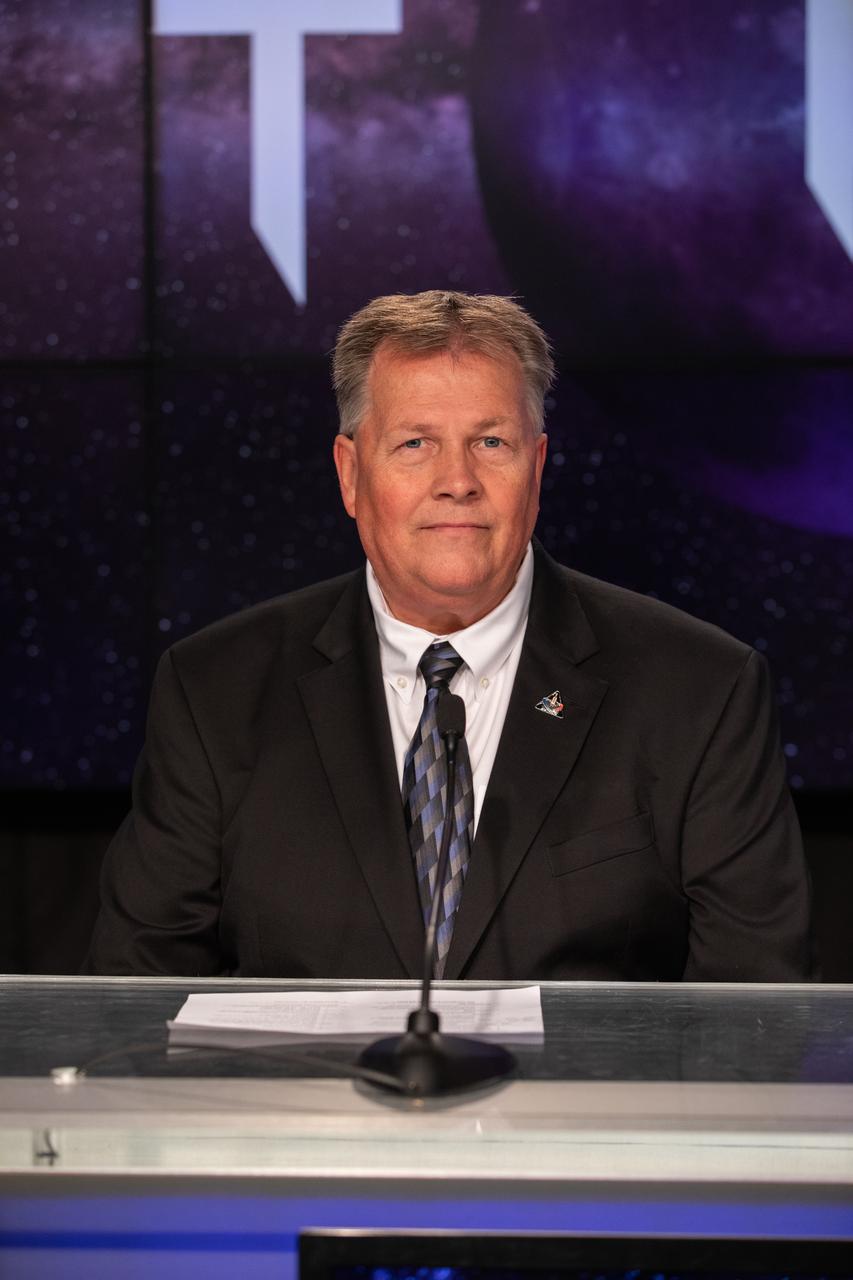
Jeff Spaulding, Artemis I senior NASA test director, participates in a prelaunch media briefing on the status of the Artemis countdown is held on Aug. 28, at NASA’s Kennedy Space Center in Florida. Artemis I is scheduled to launch Aug. 29, at 8:33 a.m. EDT from Kennedy’s Launch Complex 39B. The first in a series of increasingly complex missions, Artemis I will provide a foundation for human deep space exploration and demonstrate our commitment and capability to extend human presence to the Moon and beyond. The primary goal of Artemis I is to thoroughly test the integrated systems before crewed missions by operating the spacecraft in a deep space environment, testing Orion’s heat shield, and recovering the crew module after reentry, descent, and splashdown.

A prelaunch media briefing on the status of the Artemis countdown is held on Aug. 28, at NASA’s Kennedy Space Center in Florida. From left are Megan Cruz, NASA Communications; Jeff Spaulding, Artemis I senior NASA test director; Melody Lovin, weather officer, Space Launch Delta 45. Artemis I is scheduled to launch Aug. 29, at 8:33 a.m. EDT from Kennedy’s Launch Complex 39B. The first in a series of increasingly complex missions, Artemis I will provide a foundation for human deep space exploration and demonstrate our commitment and capability to extend human presence to the Moon and beyond. The primary goal of Artemis I is to thoroughly test the integrated systems before crewed missions by operating the spacecraft in a deep space environment, testing Orion’s heat shield, and recovering the crew module after reentry, descent, and splashdown.
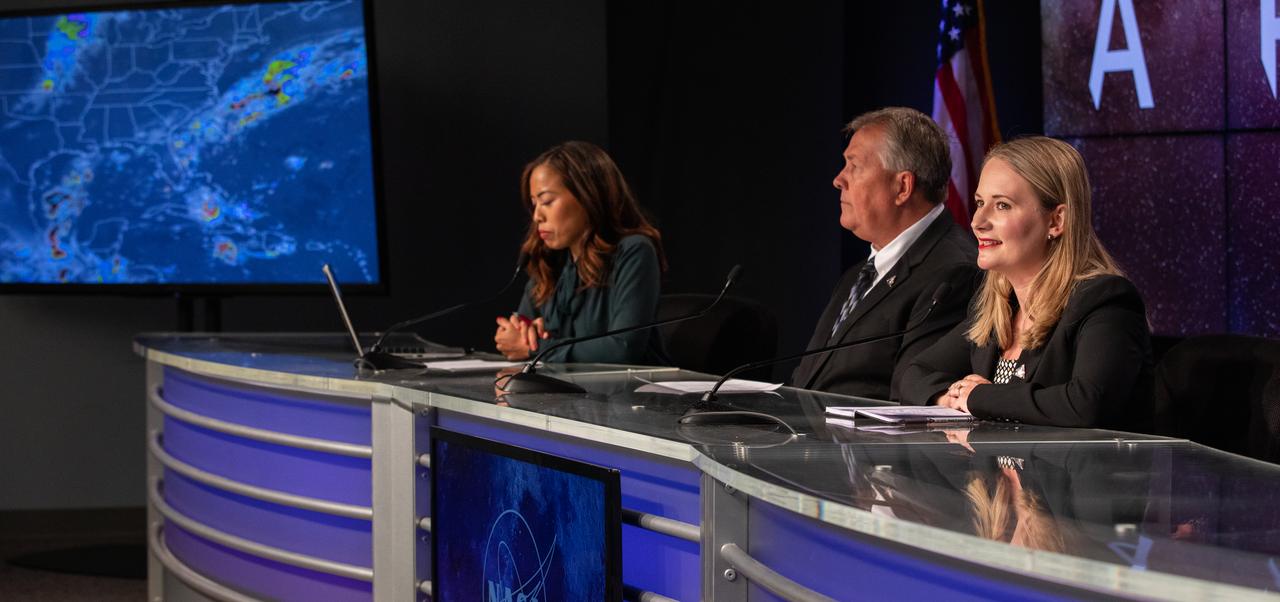
A prelaunch media briefing on the status of the Artemis countdown is held on Aug. 28, at NASA’s Kennedy Space Center in Florida. From left are Megan Cruz, NASA Communications; Jeff Spaulding, Artemis I senior NASA test director; Melody Lovin, weather officer, Space Launch Delta 45. Artemis I is scheduled to launch Aug. 29, at 8:33 a.m. EDT from Kennedy’s Launch Complex 39B. The first in a series of increasingly complex missions, Artemis I will provide a foundation for human deep space exploration and demonstrate our commitment and capability to extend human presence to the Moon and beyond. The primary goal of Artemis I is to thoroughly test the integrated systems before crewed missions by operating the spacecraft in a deep space environment, testing Orion’s heat shield, and recovering the crew module after reentry, descent, and splashdown.
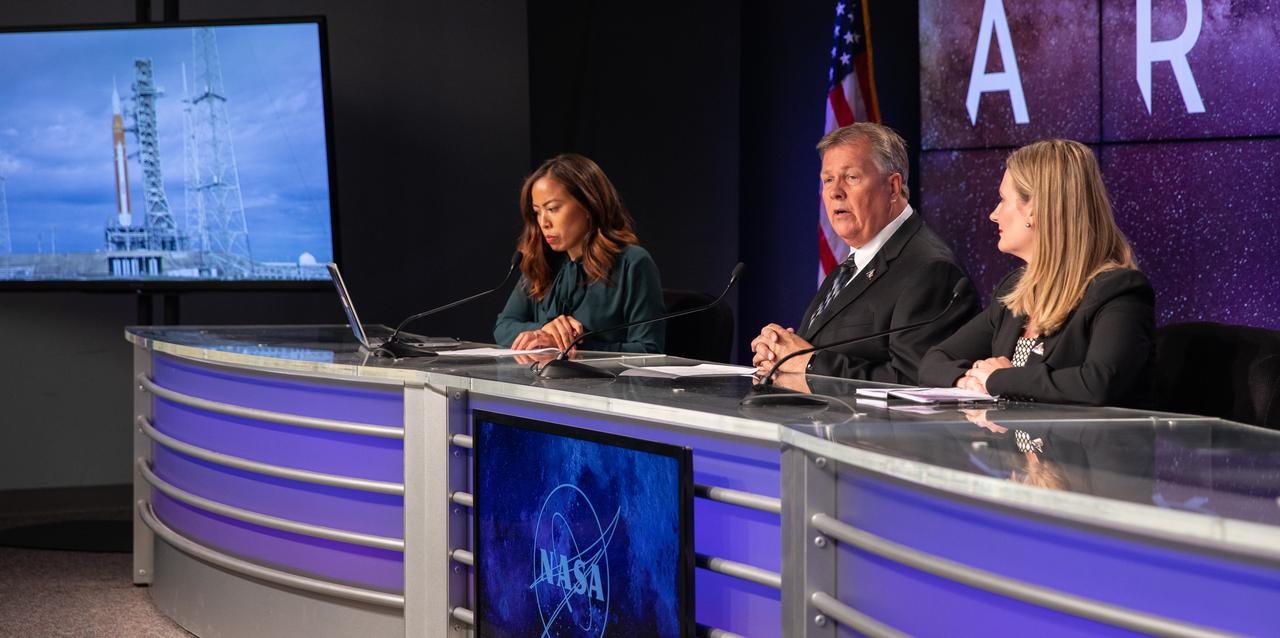
A prelaunch media briefing on the status of the Artemis countdown is held on Aug. 28, at NASA’s Kennedy Space Center in Florida. From left are Megan Cruz, NASA Communications; Jeff Spaulding, Artemis I senior NASA test director; Melody Lovin, weather officer, Space Launch Delta 45. Artemis I is scheduled to launch Aug. 29, at 8:33 a.m. EDT from Kennedy’s Launch Complex 39B. The first in a series of increasingly complex missions, Artemis I will provide a foundation for human deep space exploration and demonstrate our commitment and capability to extend human presence to the Moon and beyond. The primary goal of Artemis I is to thoroughly test the integrated systems before crewed missions by operating the spacecraft in a deep space environment, testing Orion’s heat shield, and recovering the crew module after reentry, descent, and splashdown.
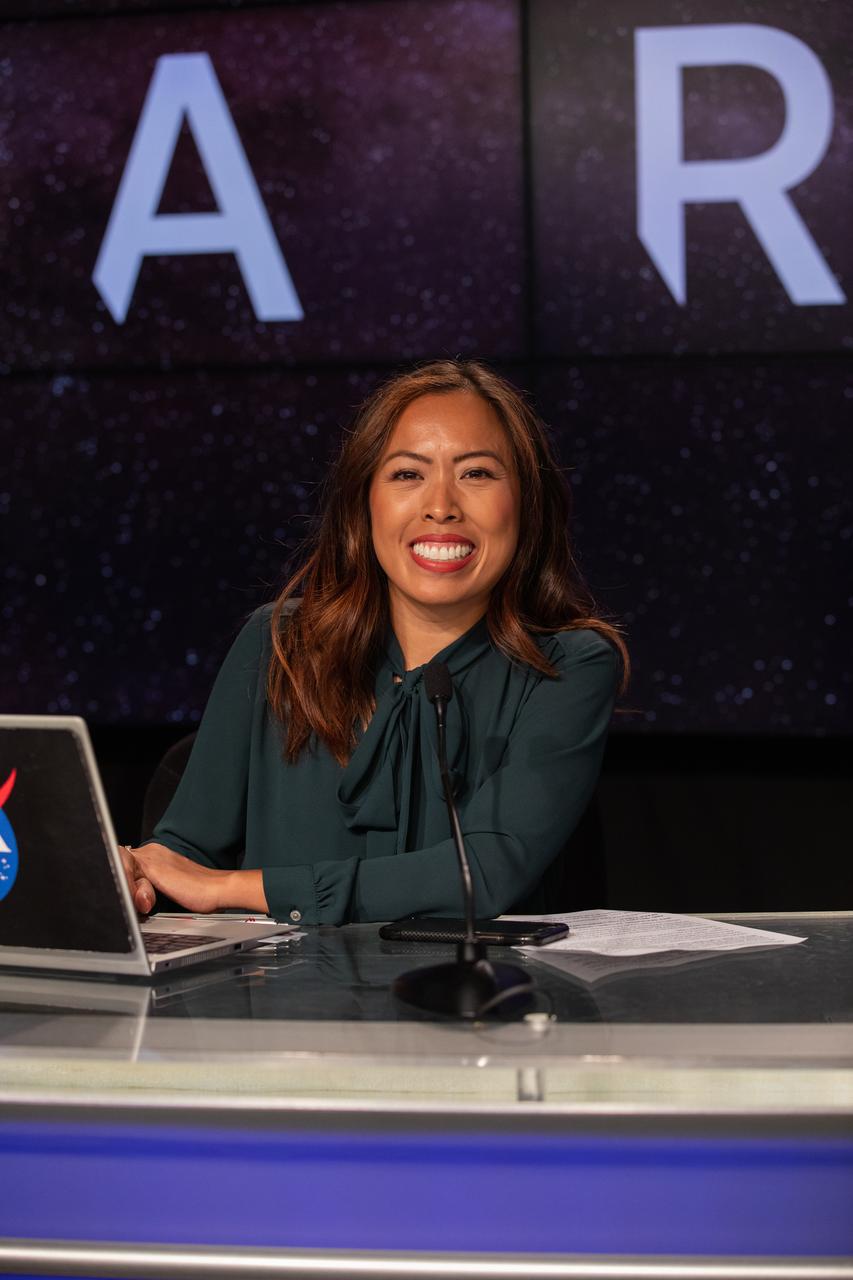
Megan Cruz, NASA Communications, participates in a prelaunch media briefing on the status of the Artemis countdown is held on Aug. 28, at NASA’s Kennedy Space Center in Florida. Artemis I is scheduled to launch Aug. 29, at 8:33 a.m. EDT from Kennedy’s Launch Complex 39B. The first in a series of increasingly complex missions, Artemis I will provide a foundation for human deep space exploration and demonstrate our commitment and capability to extend human presence to the Moon and beyond. The primary goal of Artemis I is to thoroughly test the integrated systems before crewed missions by operating the spacecraft in a deep space environment, testing Orion’s heat shield, and recovering the crew module after reentry, descent, and splashdown.
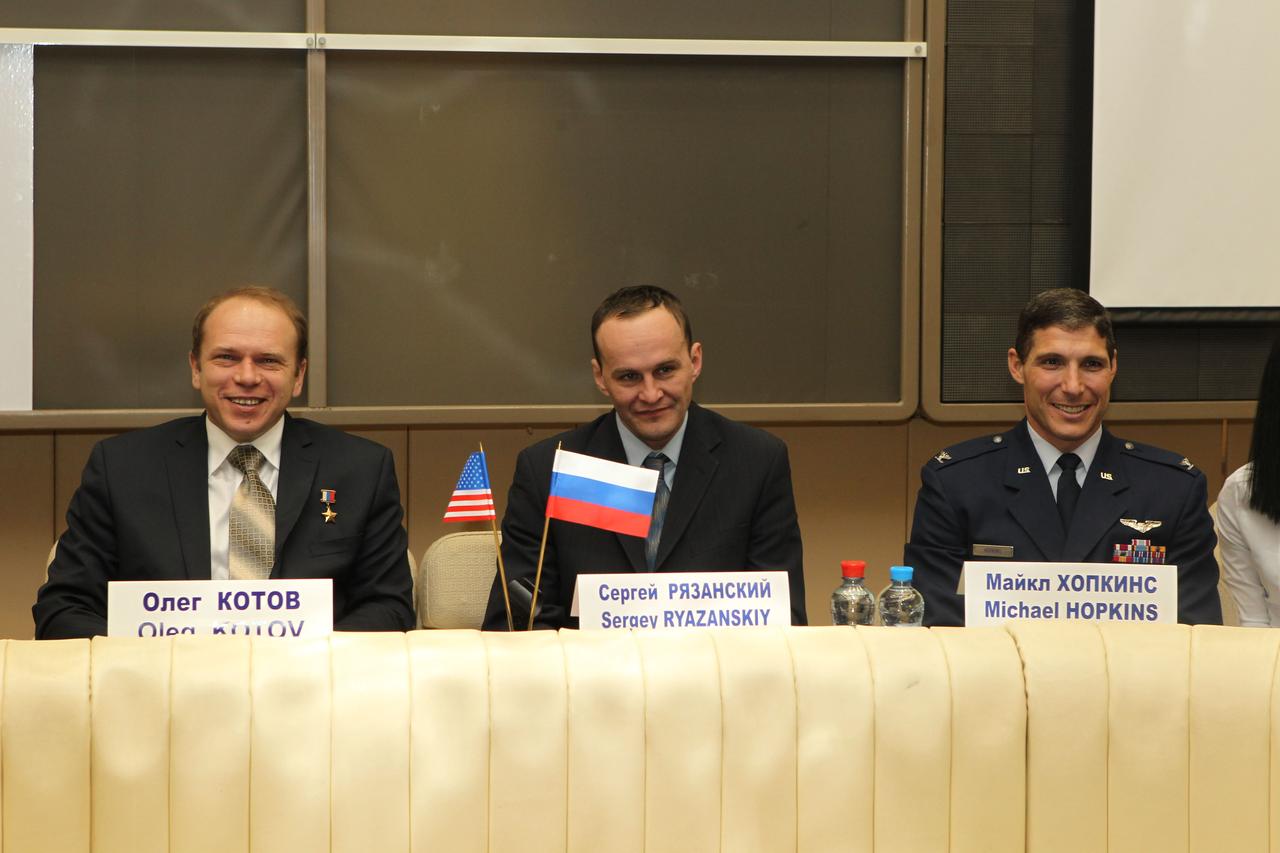
At the Gagarin Cosmonaut Training Center in Star City, Russia, Expedition 35-36 backup crewmembers Oleg Kotov (left), Sergey Ryazanskiy (center) and Michael Hopkins of NASA (right) pose for pictures during a pre-launch news conference March 7. The three crewmembers are in training as backups to Chris Cassidy of NASA, Alexander Misurkin and Pavel Vinogradov who are scheduled to launch to the International Space Station March 29, Kazakh time, in the Soyuz TMA-08M spacecraft from the Baikonur Cosmodrome in Kazakhstan. NASA / Stephanie Stoll
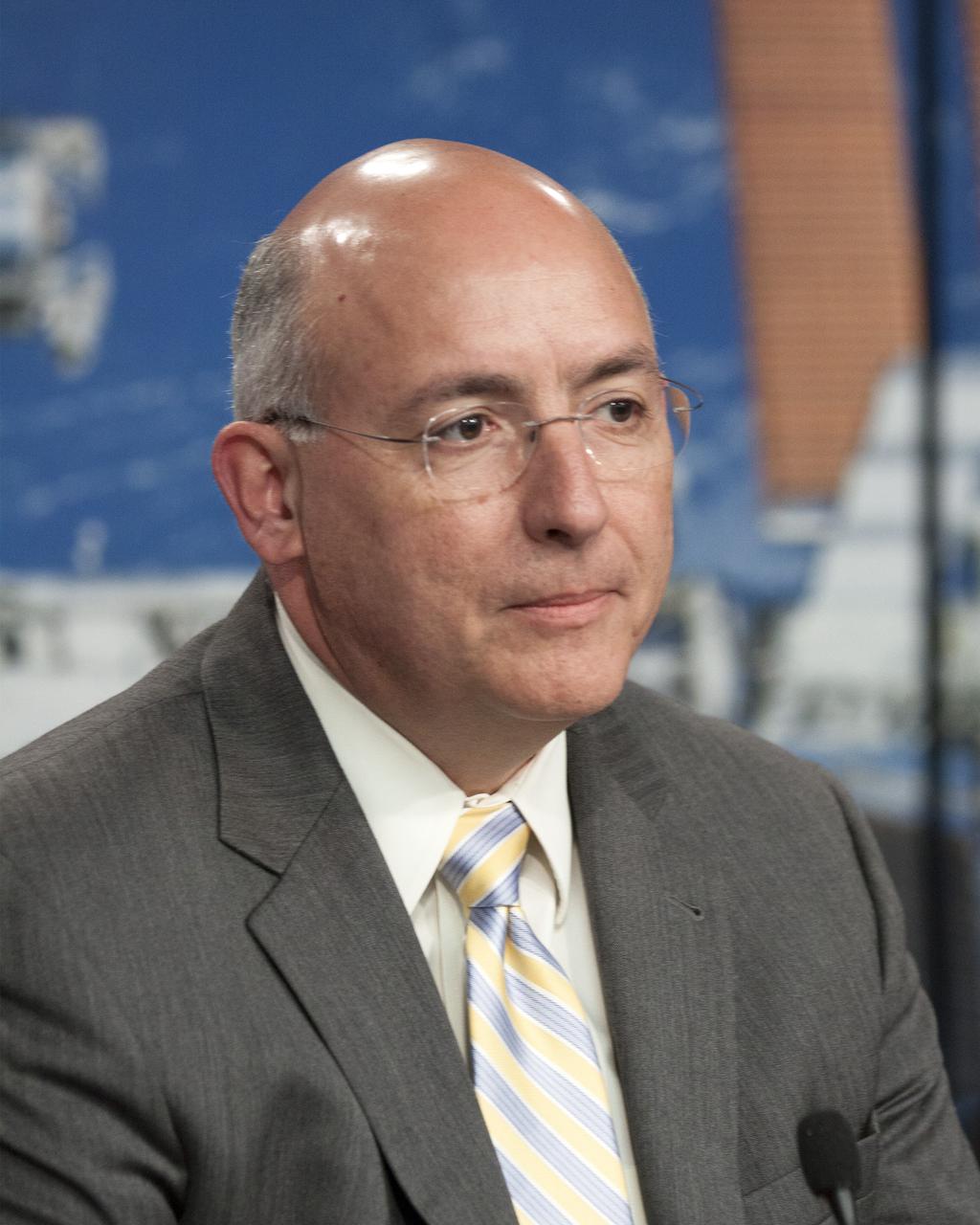
CAPE CANAVERAL, Fla. - Media attending a pre-launch news conference at the Kennedy Space Center, Fla. heard from Mike Suffredini, NASA program manager for the International Space Station at the Johnson Space Center. Scheduled for launch March 1 atop a Falcon 9 rocket, the SpaceX Dragon capsule will be making its third trip to the space station. The mission is the second of 12 SpaceX flights contracted by NASA to resupply the orbiting laboratory. For more information, visit http:__www.nasa.gov_mission_pages_station_structure_launch_spacex2-feature.html Photo credit: NASA_Kim Shiflett
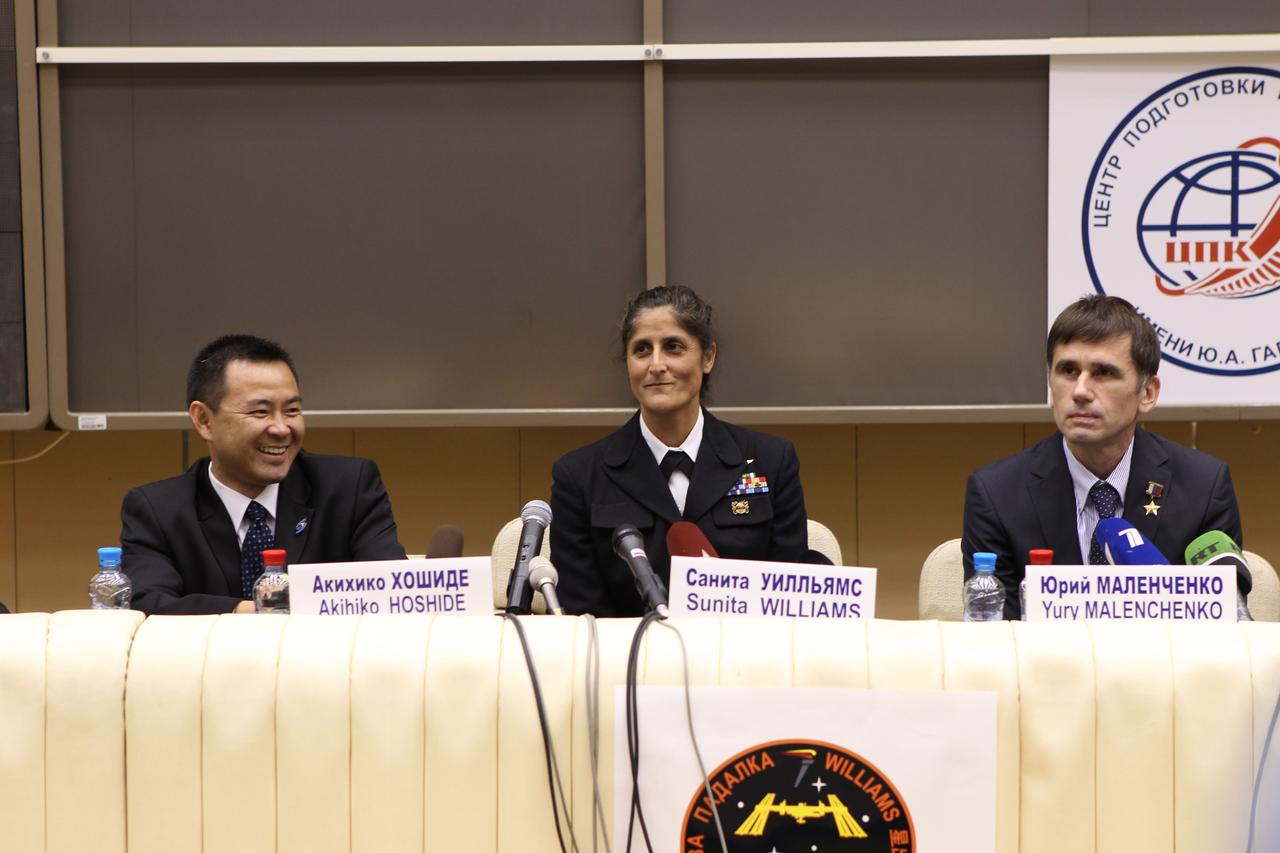
At the Gagarin Cosmonaut Training Center in Star City, Russia, Expedition 32/33 Flight Engineer Aki Hoshide of the Japan Aerospace Exploration Agency (left), NASA Flight Engineer Sunita Williams (center) and Soyuz Commander Yuri Malenchenko answered questions during a pre-launch news conference June 22, 2012. The crew will travel to the Baikonur Cosmodrome in Kazakhstan July 2 for final preparations leading to their launch July 15 to the International Space Station in their Soyuz TMA-05M spacecraft. Credit: NASA/Stephanie Stoll
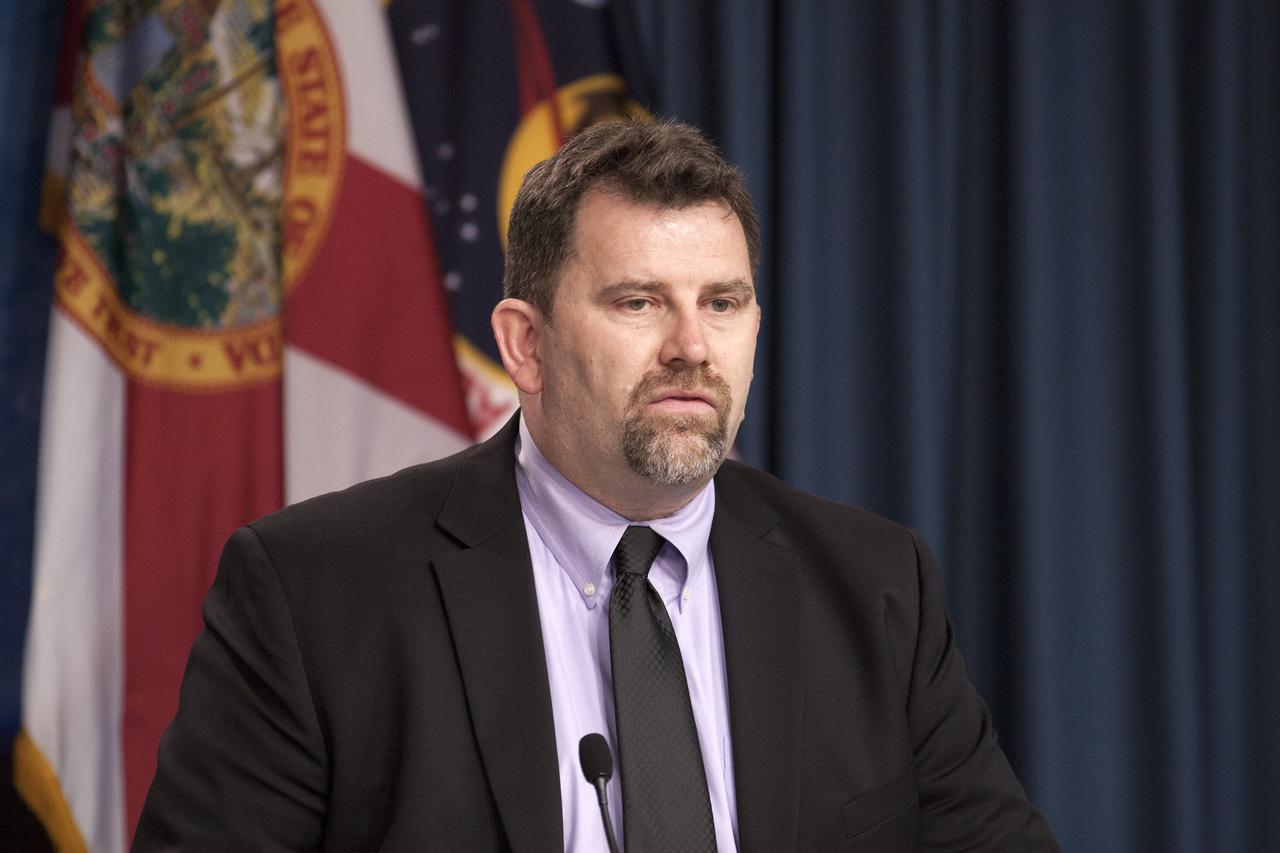
CAPE CANAVERAL, Fla. - Media attending a pre-launch news conference at the Kennedy Space Center, Fla. heard from Michael Roberts, research scientist with the Center for Advancement of Science in Space. Scheduled for launch March 1 atop a Falcon 9 rocket, the SpaceX Dragon capsule will be making its third trip to the space station. The mission is the second of 12 SpaceX flights contracted by NASA to resupply the orbiting laboratory. For more information, visit http:__www.nasa.gov_mission_pages_station_structure_launch_spacex2-feature.html Photo credit: NASA_Kim Shiflett
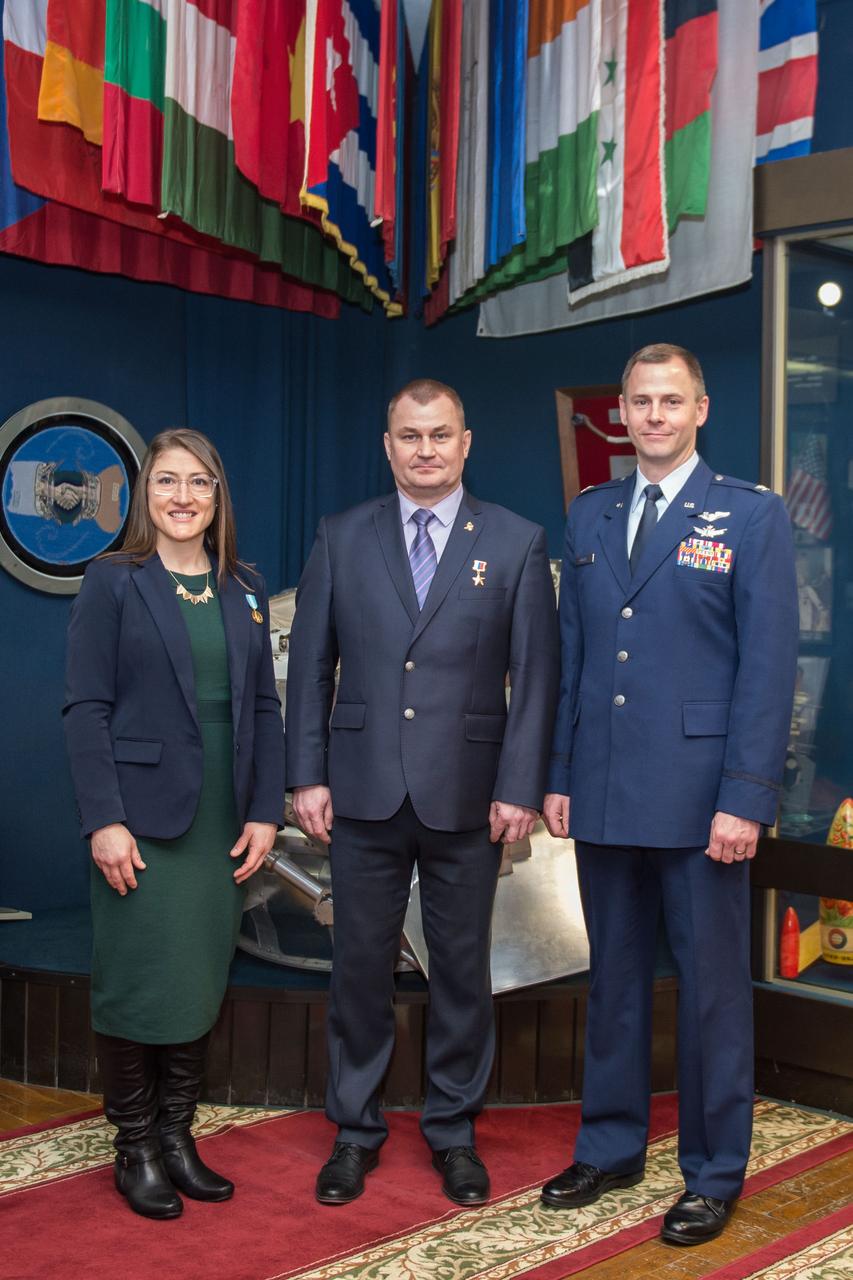
At the Gagarin Museum in the Gagarin Cosmonaut Training Center in Star City, Russia, Expedition 59 crewmembers Christina Koch of NASA (left), Alexey Ovchinin of Roscosmos (center) and Nick Hague of NASA (right) pose for pictures Feb. 21 following a pre-launch news conference. They will launch March 14, U.S. time, on the Soyuz MS-12 spacecraft from the Baikonur Cosmodrome in Kazakhstan for a six-and-a-half month mission on the International Space Station. Irina Spektor/Gagarin Cosmonaut Training Center
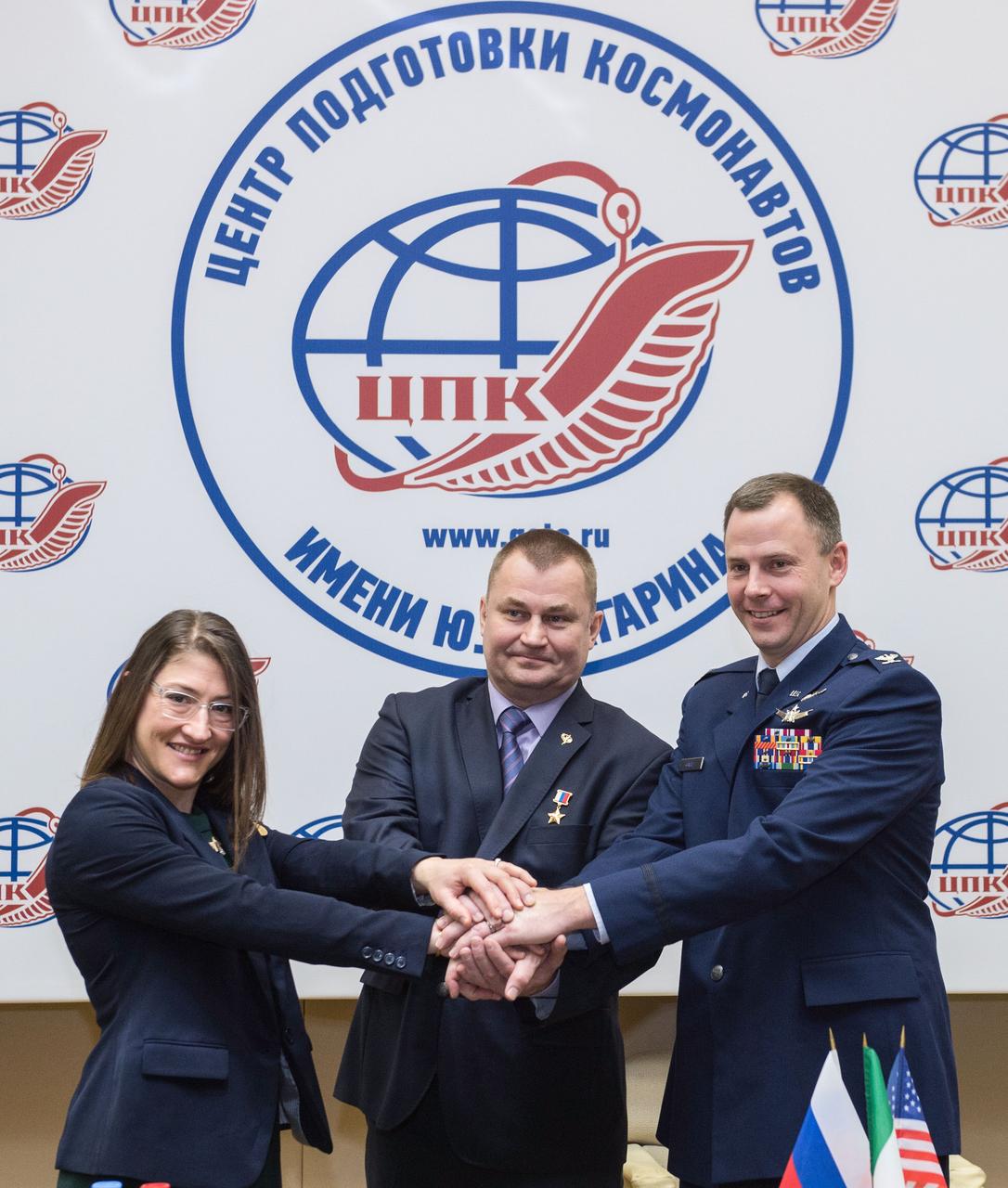
At the Gagarin Cosmonaut Training Center in Star City, Russia, Expedition 59 crewmembers Christina Koch of NASA (left), Alexey Ovchinin of Roscosmos (center) and Nick Hague of NASA (right) pose for pictures Feb. 21 following a pre-launch news conference. They will launch March 14, U.S. time, on the Soyuz MS-12 spacecraft from the Baikonur Cosmodrome in Kazakhstan for a six-and-a-half month mission on the International Space Station. Andrey Shelepin/Gagarin Cosmonaut Training Center
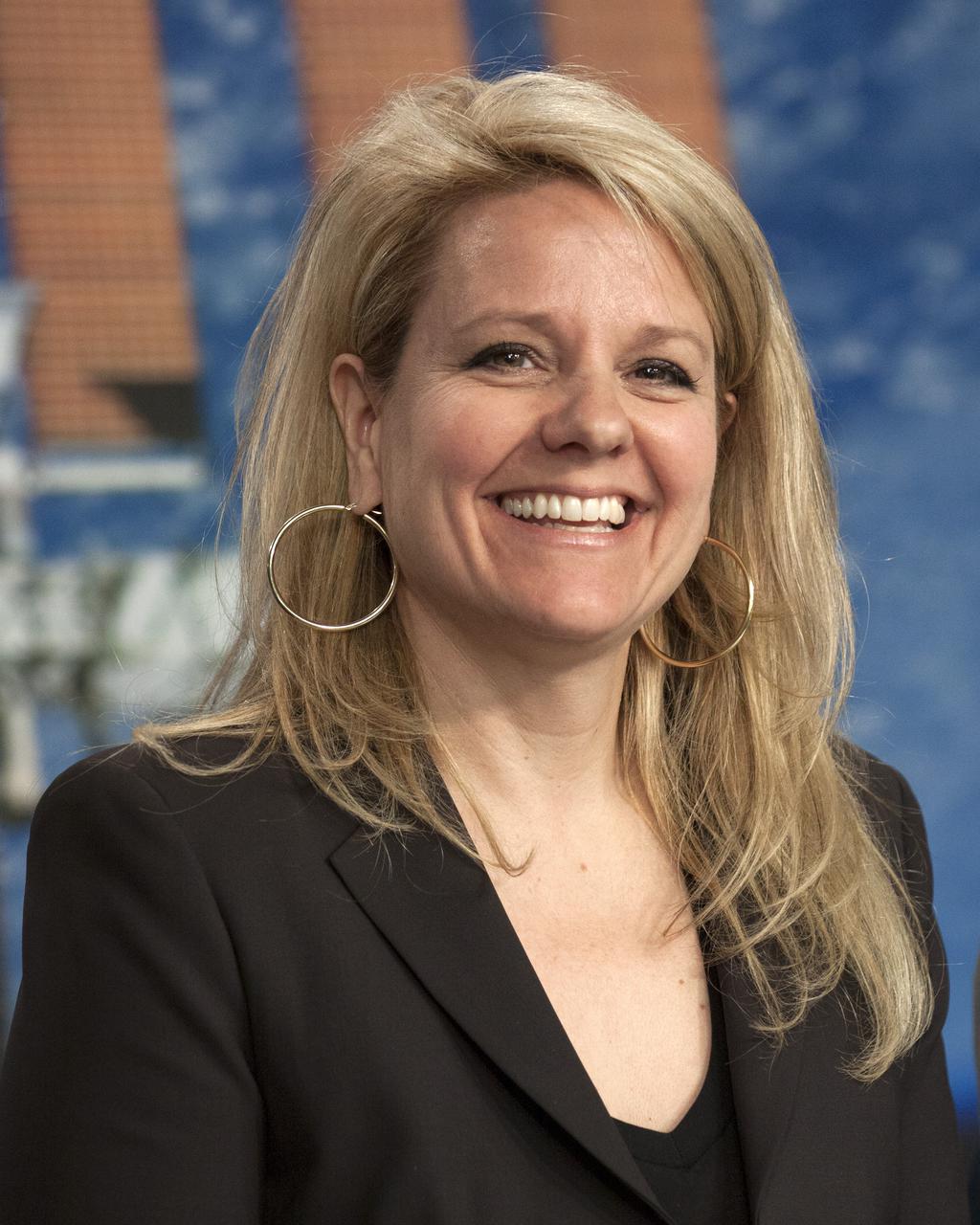
CAPE CANAVERAL, Fla. - Media attending a pre-launch news conference at the Kennedy Space Center, Fla. heard from Gwynne Shotwell, president of SpaceX. Scheduled for launch March 1 atop a Falcon 9 rocket, the SpaceX Dragon capsule will be making its third trip to the space station. The mission is the second of 12 SpaceX flights contracted by NASA to resupply the orbiting laboratory. For more information, visit http:__www.nasa.gov_mission_pages_station_structure_launch_spacex2-feature.html Photo credit: NASA_Kim Shiflett
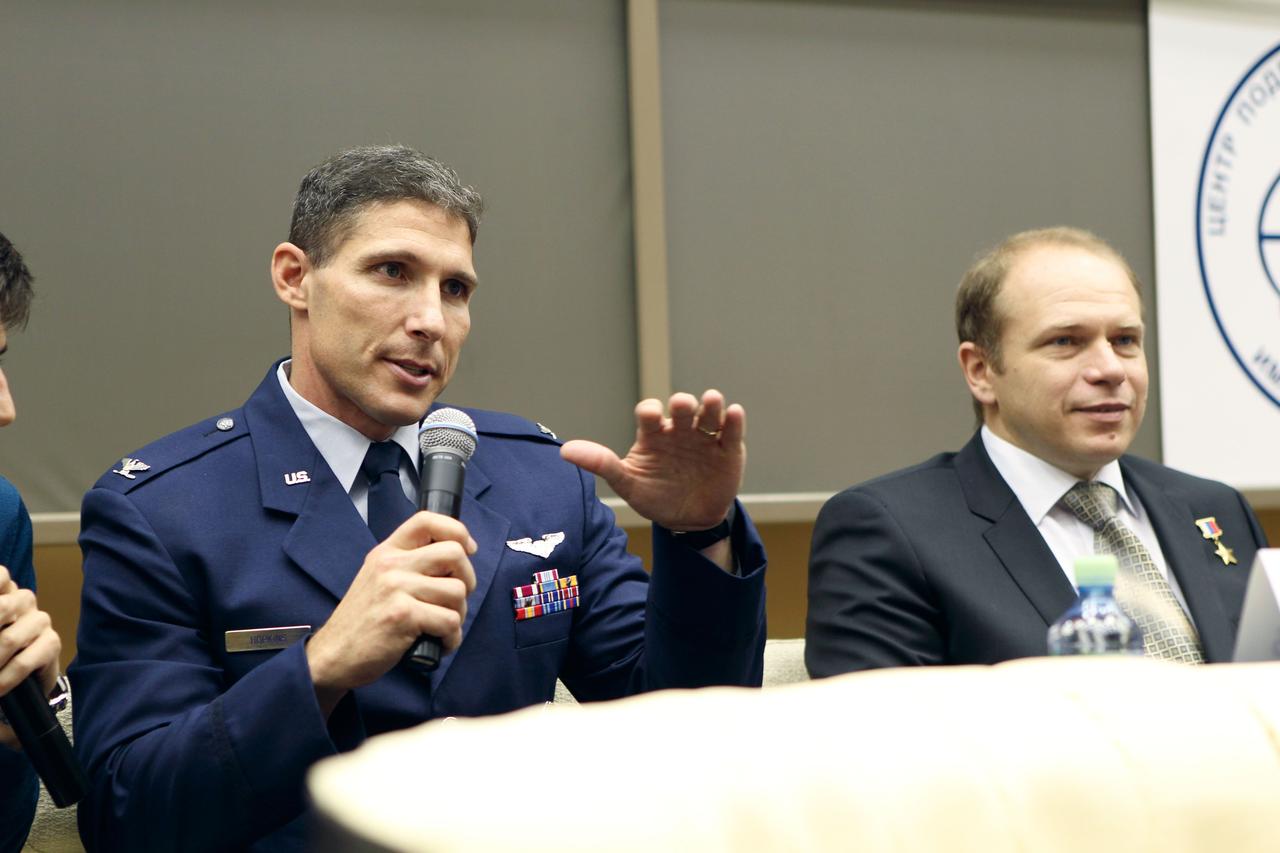
At the Gagarin Cosmonaut Training Center in Star City, Russia, Expedition 37/38 Flight Engineer Michael Hopkins of NASA answers a question from a reporter at a pre-launch news conference Sept. 6 as his crewmate, Soyuz Commander Oleg Kotov (right) looks on. Along with Flight Engineer Sergey Ryazanskiy, Hopkins and Kotov are preparing for their launch to the International Space Station from the Baikonur Cosmodrome in Kazakhstan on Sept. 26, Kazakh time, aboard the Soyuz TMA-10M spacecraft NASA/Stephanie Stoll
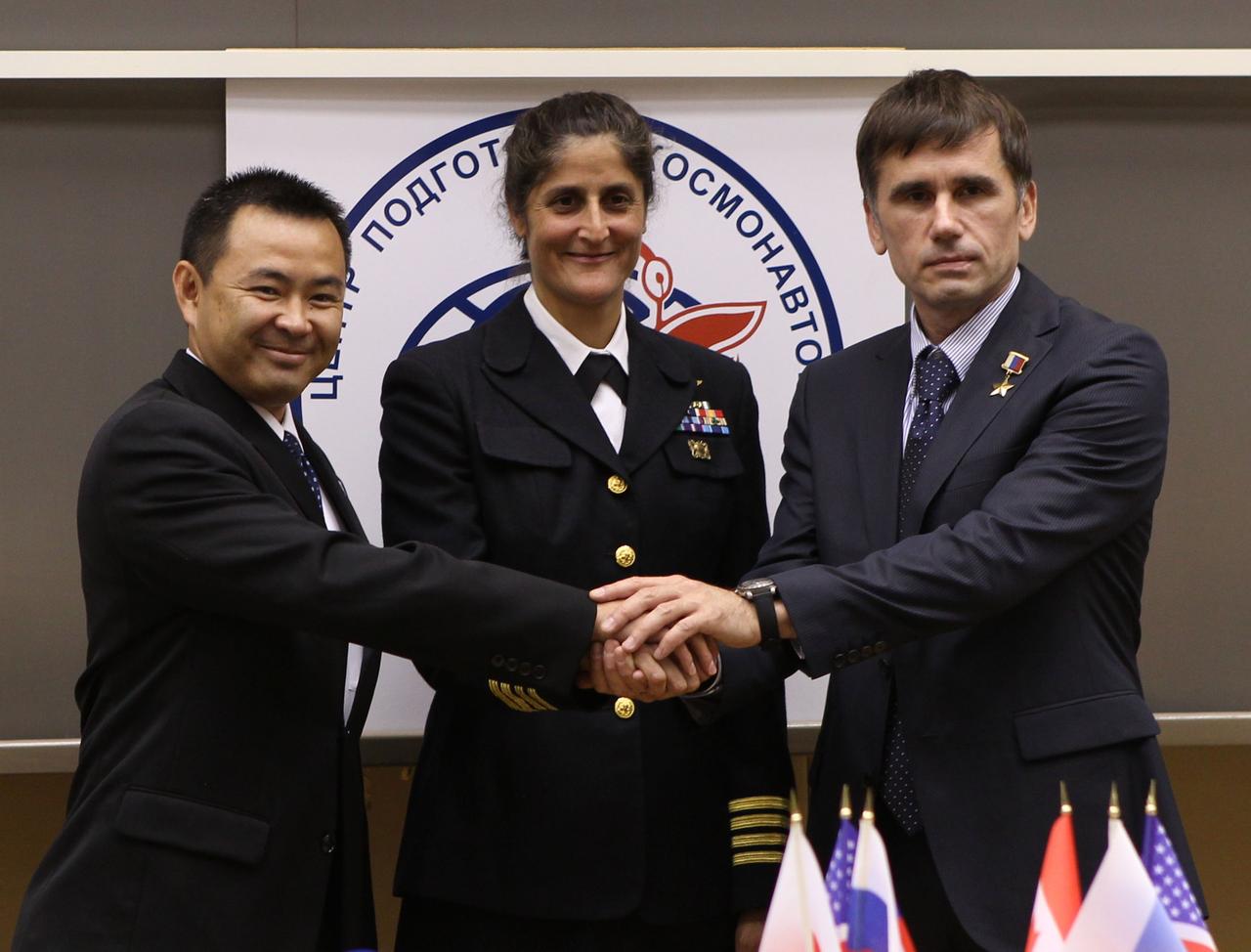
At the Gagarin Cosmonaut Training Center in Star City, Russia, Expedition 32/33 Flight Engineer Aki Hoshide of the Japan Aerospace Exploration Agency (left), NASA Flight Engineer Sunita Williams (center) and Soyuz Commander Yuri Malenchenko grasped hands at the completion of a pre-launch news conference June 22, 2012. The crew will travel to the Baikonur Cosmodrome in Kazakhstan July 2 for final preparations leading to their launch July 15 to the International Space Station in their Soyuz TMA-05M spacecraft. Credit: NASA/Stephanie Stoll
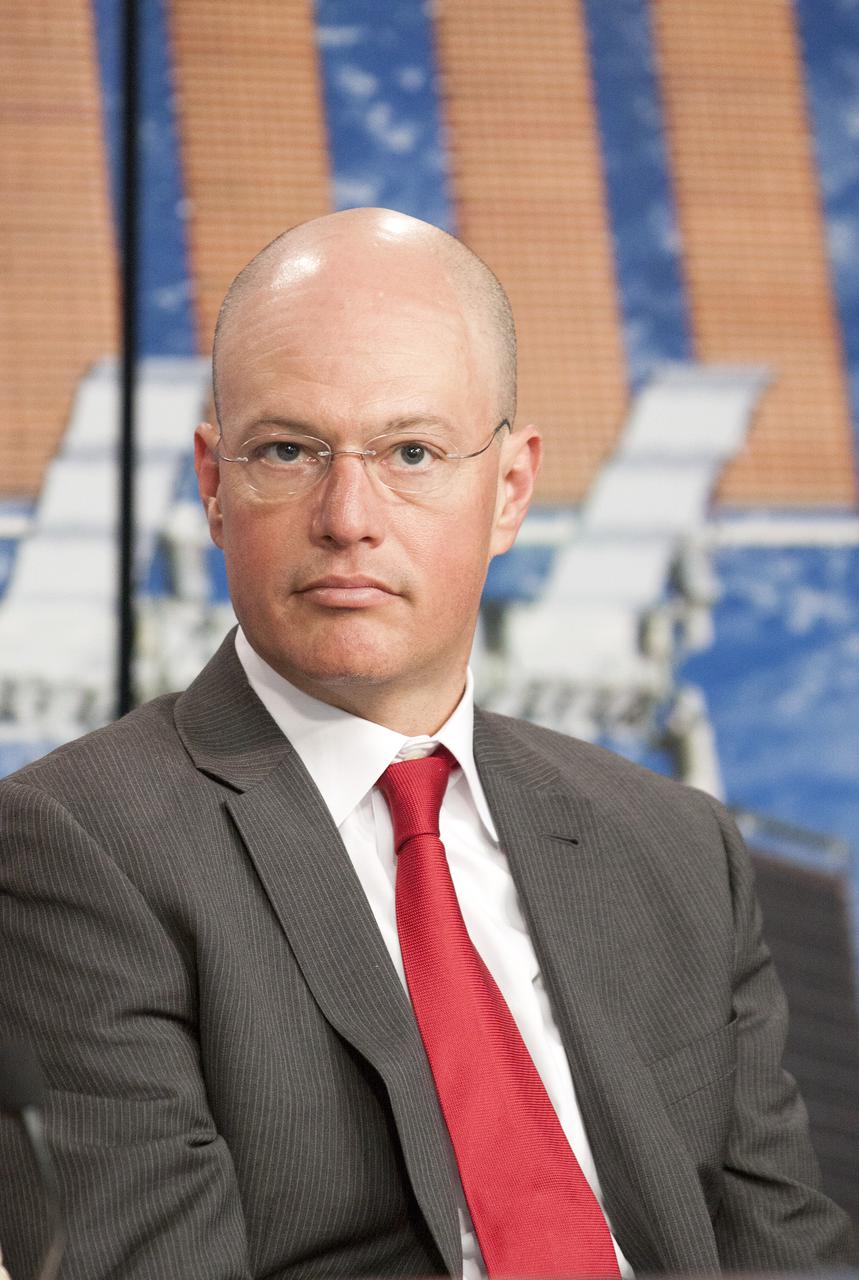
CAPE CANAVERAL, Fla. - Media attending a pre-launch news conference at the Kennedy Space Center, Fla. heard from Marshall Porterfield, division director of the Life and Physical Sciences at NASA Headquarters. Scheduled for launch March 1 atop a Falcon 9 rocket, the SpaceX Dragon capsule will be making its third trip to the space station. The mission is the second of 12 SpaceX flights contracted by NASA to resupply the orbiting laboratory. For more information, visit http:__www.nasa.gov_mission_pages_station_structure_launch_spacex2-feature.html Photo credit: NASA_Kim Shiflett
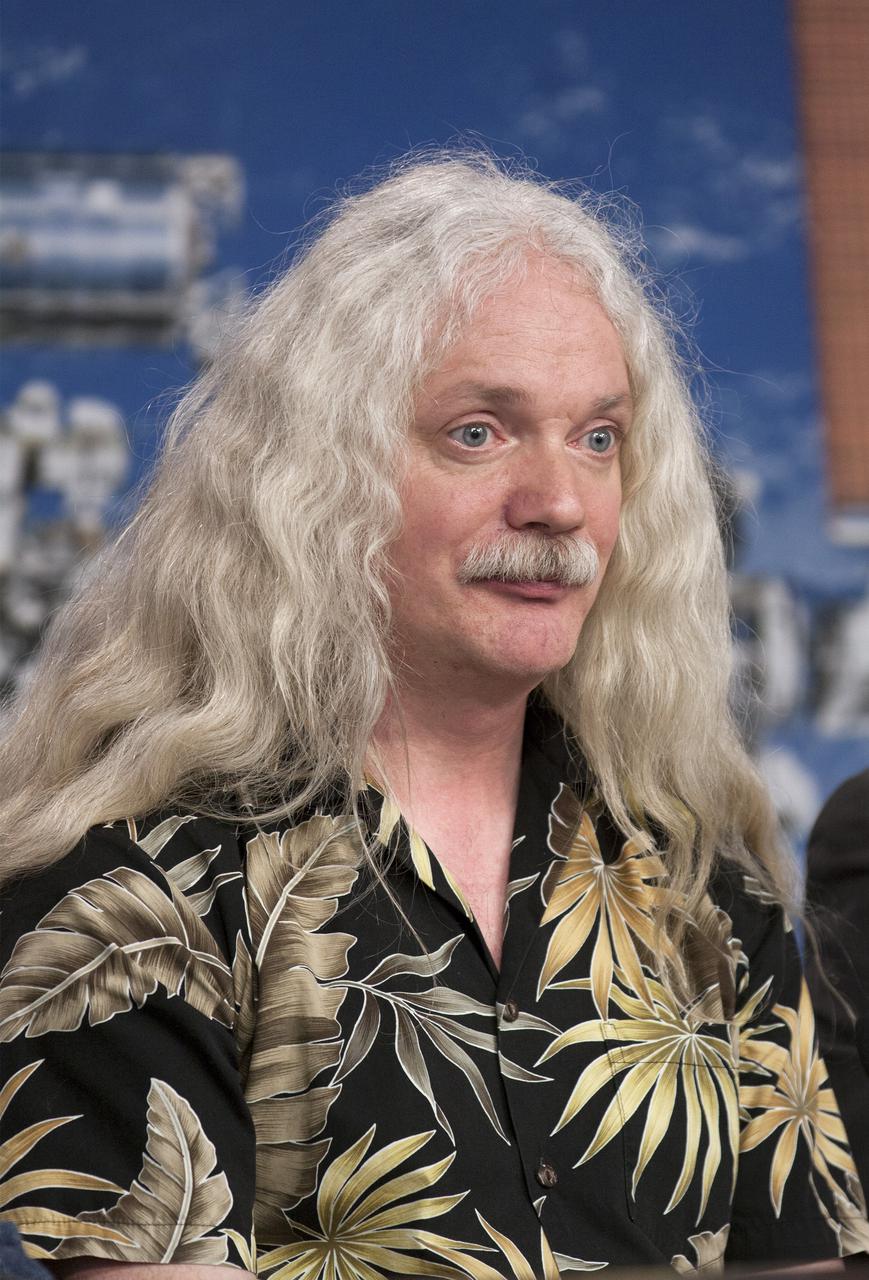
CAPE CANAVERAL, Fla. - Media attending a pre-launch news conference at the Kennedy Space Center, Fla. heard from Simon Gilroy, BRIC-17 Lead Investigator from the University of Wisconsin. Scheduled for launch March 1 atop a Falcon 9 rocket, the SpaceX Dragon capsule will be making its third trip to the space station. The mission is the second of 12 SpaceX flights contracted by NASA to resupply the orbiting laboratory. For more information, visit http:__www.nasa.gov_mission_pages_station_structure_launch_spacex2-feature.html Photo credit: NASA_Kim Shiflett
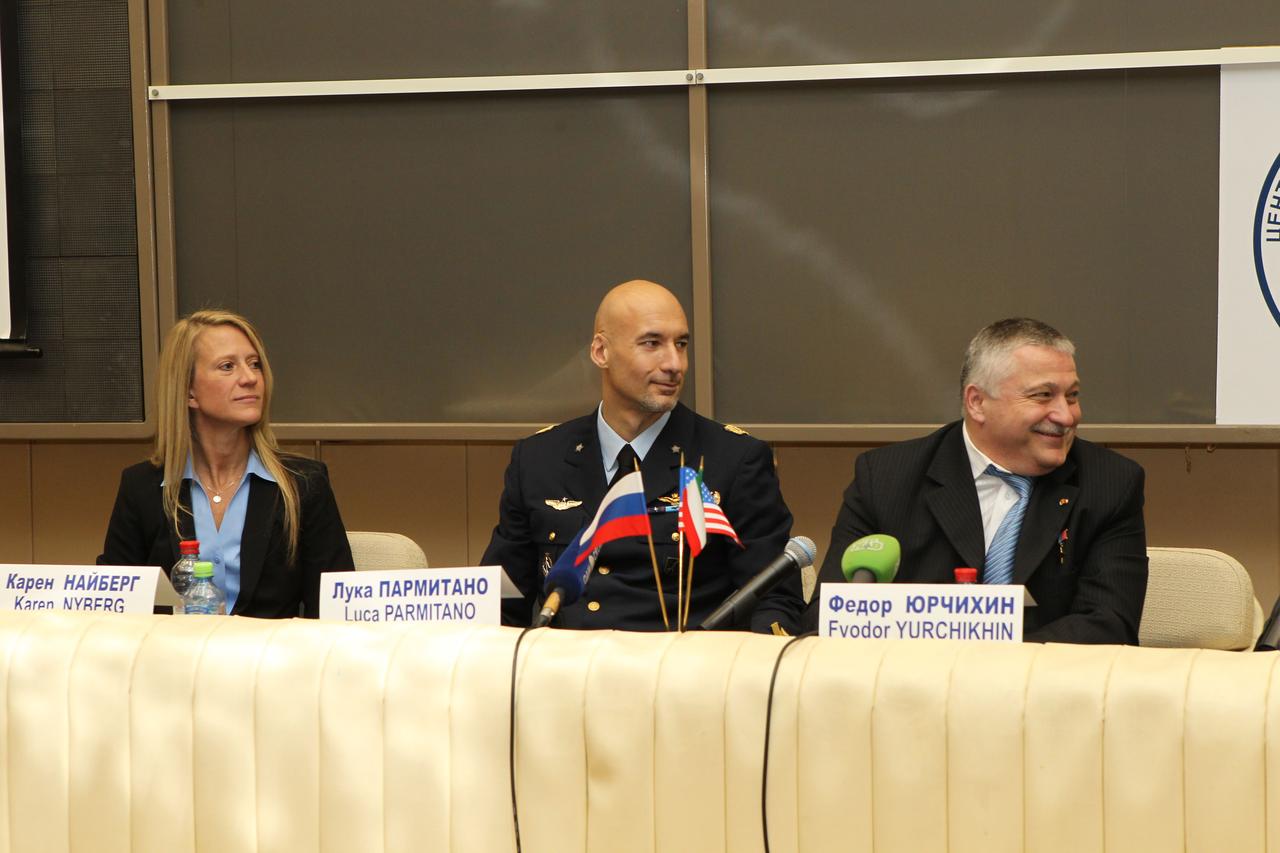
At the Gagarin Cosmonaut Training Center in Star City, Russia, Expedition 36/37 Flight Engineer Karen Nyberg of NASA (left), Flight Engineer Luca Parmitano of the European Space Agency (center) and Soyuz Commander Fyodor Yurchikhin (right) listen to a question during a pre-launch news conference May 8. The three crewmembers are preparing for their launch May 29, Kazakh time, in their Soyuz TMA-09M spacecraft from the Baikonur Cosmodrome in Kazakhstan for a six-month mission on the International Space Station. NASA/Stephanie Stoll

jsc2019e052147 - At the Gagarin Cosmonaut Training Center in Star City, Russia, Expedition 61 crewmember Jessica Meir of NASA listens to a reporter’s question Sept. 5 during a pre-launch news conference. Meir, Oleg Skripochka of Roscosmos and Hazzaa Ali Almansoori of the United Arab Emirates will launch Sept. 25 from the Baikonur Cosmodrome in Kazakhstan on the Soyuz MS-15 spacecraft for a mission on the International Space Station...Credit/Gagarin Cosmonaut Training Center.
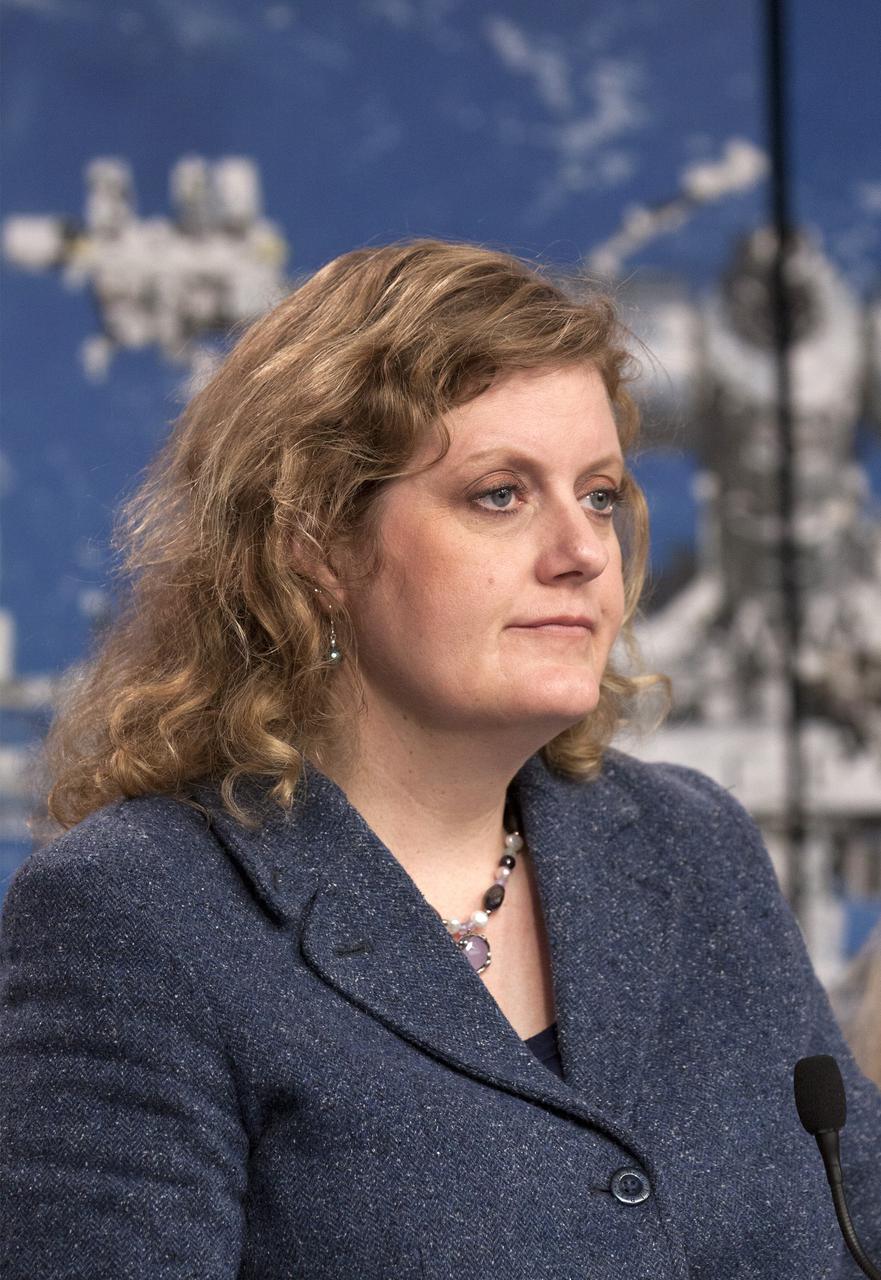
CAPE CANAVERAL, Fla. - Media attending a pre-launch news conference at the Kennedy Space Center, Fla. heard from Julie Robinson, NASA program scientist for the International Space Station. Scheduled for launch March 1 atop a Falcon 9 rocket, the SpaceX Dragon capsule will be making its third trip to the space station. The mission is the second of 12 SpaceX flights contracted by NASA to resupply the orbiting laboratory. For more information, visit http:__www.nasa.gov_mission_pages_station_structure_launch_spacex2-feature.html Photo credit: NASA_Kim Shiflett
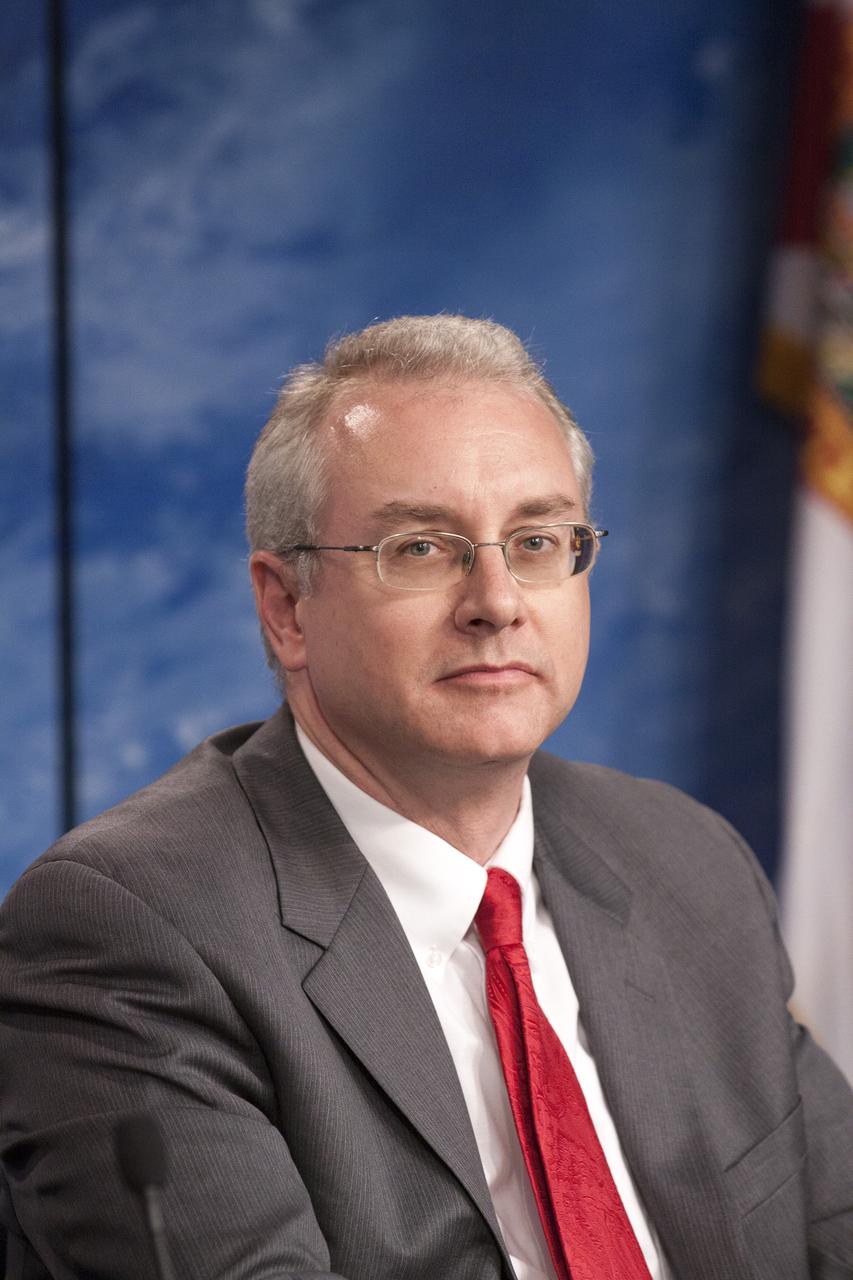
CAPE CANAVERAL, Fla. - Media attending a pre-launch news conference at the Kennedy Space Center, Fla. heard from Michael Johnson, chief technical officer for NanoRacks. Scheduled for launch March 1 atop a Falcon 9 rocket, the SpaceX Dragon capsule will be making its third trip to the space station. The mission is the second of 12 SpaceX flights contracted by NASA to resupply the orbiting laboratory. For more information, visit http:__www.nasa.gov_mission_pages_station_structure_launch_spacex2-feature.html Photo credit: NASA_Kim Shiflett
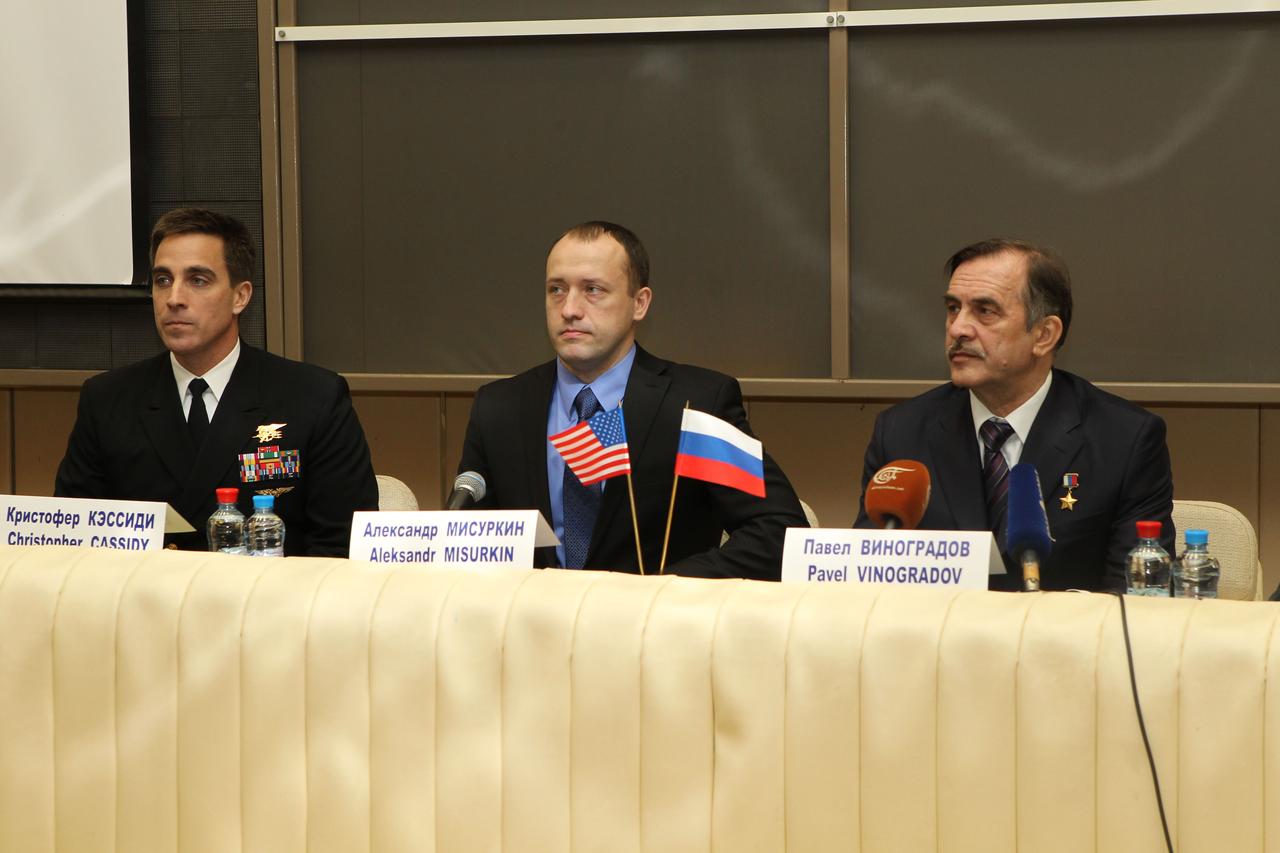
At the Gagarin Cosmonaut Training Center in Star City, Russia, Expedition 35-36 prime crewmembers Chris Cassidy of NASA (left), Alexander Misurkin (center) and Soyuz Commander Pavel Vinogradov (right) listen to questions from reporters March 7 during a pre-launch news conference. The three crewmembers are in the final stages of training for their launch to the International Space Station March 29, Kazakh time, in their Soyuz TMA-08M spacecraft from the Baikonur Cosmodrome in Kazakhstan NASA / Stephanie Stoll

At the Gagarin Cosmonaut Training Center in Star City, Russia, Expedition 36/37 Flight Engineer Karen Nyberg of NASA (left), Soyuz Commander Fyodor Yurchikhin (center) and Flight Engineer Luca Parmitano of the European Space Agency (right) flash a thumbs up May 8 following a pre-launch news conference. The three crewmembers are preparing for their launch May 29, Kazakh time, in their Soyuz TMA-09M spacecraft from the Baikonur Cosmodrome in Kazakhstan for a six-month mission on the International Space Station. NASA/Stephanie Stoll
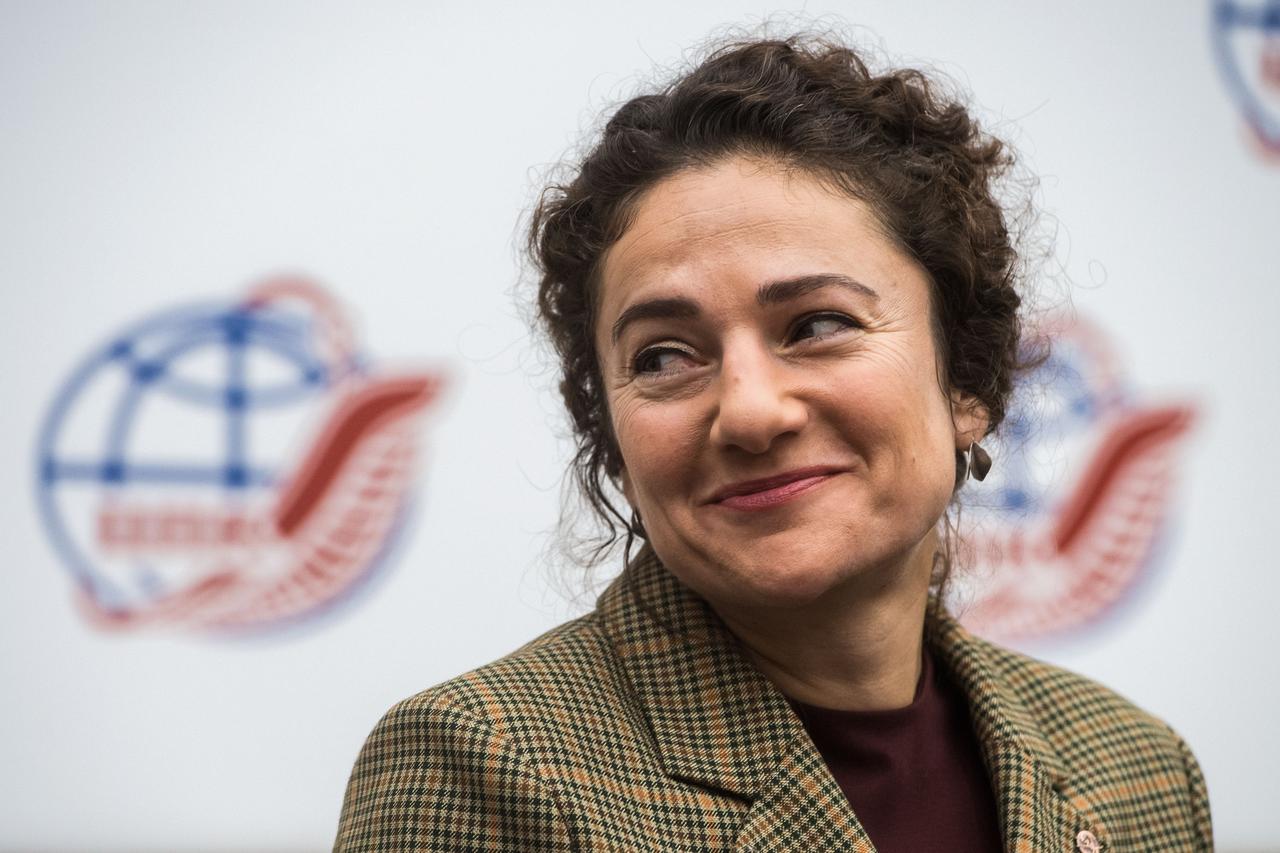
jsc2019e052154 - At the Gagarin Cosmonaut Training Center in Star City, Russia, Expedition 61 crewmember Jessica Meir of NASA listens to a reporter’s question Sept. 5 during a pre-launch news conference. Meir, Oleg Skripochka of Roscosmos and Hazzaa Ali Almansoori of the United Arab Emirates will launch Sept. 25 from the Baikonur Cosmodrome in Kazakhstan on the Soyuz MS-15 spacecraft for a mission on the International Space Station...Credit/Gagarin Cosmonaut Training Center.
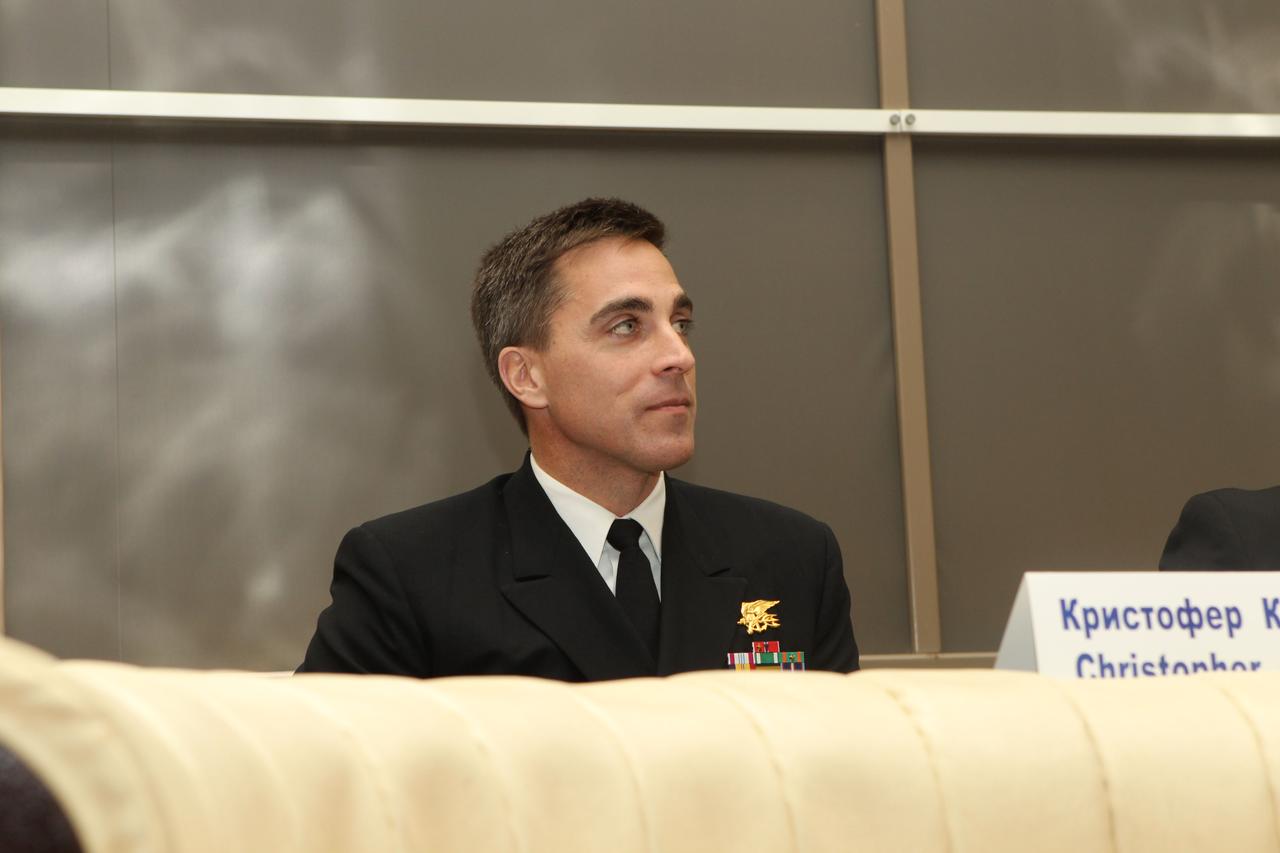
At the Gagarin Cosmonaut Training Center in Star City, Russia, Expedition 35-36 Flight Engineer Chris Cassidy of NASA listens to a question from a reporter during a pre-launch news conference March 7. Cassidy, Soyuz Commander Pavel Vinogradov and Alexander Misurkin are in the final stages of training for their launch to the International Space Station March 29, Kazakh time, in their Soyuz TMA-08M spacecraft from the Baikonur Cosmodrome in Kazakhstan. NASA / Stephanie Stoll
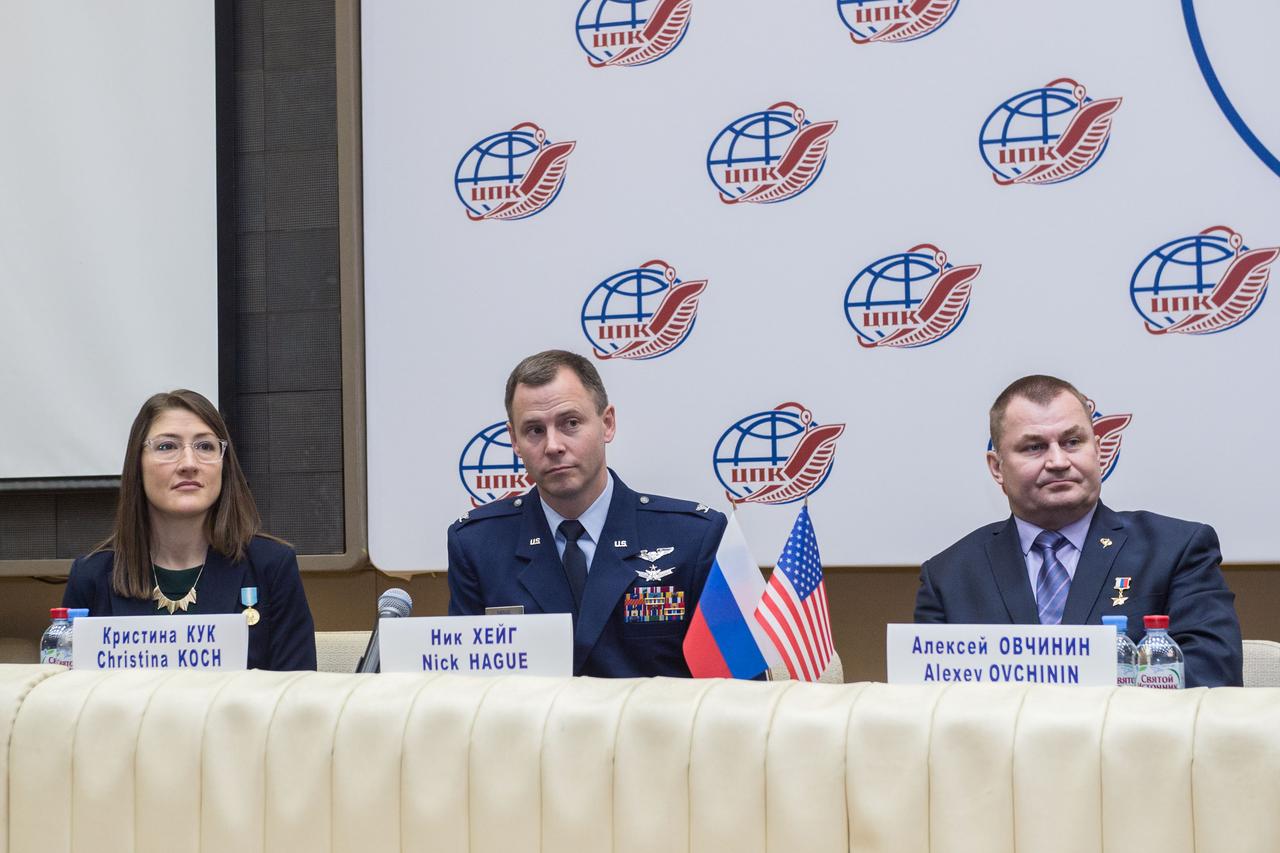
At the Gagarin Cosmonaut Training Center in Star City, Russia, Expedition 59 crewmembers Christina Koch of NASA (left), Nick Hague of NASA (center) and Alexey Ovchinin of Roscosmos (right) listen to reporters’ questions Feb. 21 during a pre-launch news conference. They will launch March 14, U.S. time, on the Soyuz MS-12 spacecraft from the Baikonur Cosmodrome in Kazakhstan for a six-and-a-half month mission on the International Space Station. Andrey Shelepin/Gagarin Cosmonaut Training Center
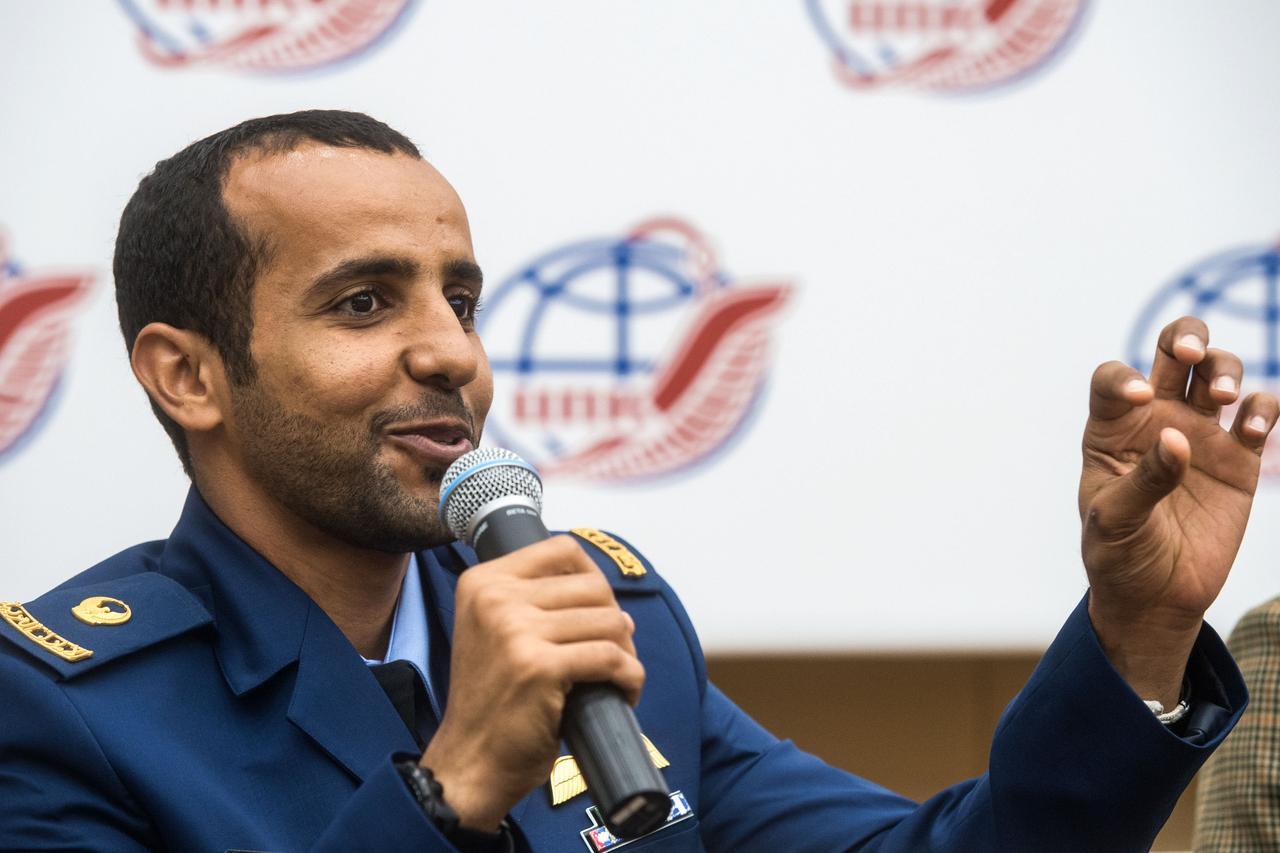
jsc2019e052155 - At the Gagarin Cosmonaut Training Center in Star City, Russia, spaceflight participant Hazzaa Ali Almansoori of the United Arab Emirates answers a reporter’s question Sept. 5 as part of a pre-flight news conference. Almansoori, Oleg Skripochka of Roscosmos and Jessica Meir of NASA will launch Sept. 25 from the Baikonur Cosmodrome in Kazakhstan on the Soyuz MS-15 spacecraft for a mission on the International Space Station...Credit/Gagarin Cosmonaut Training Center.
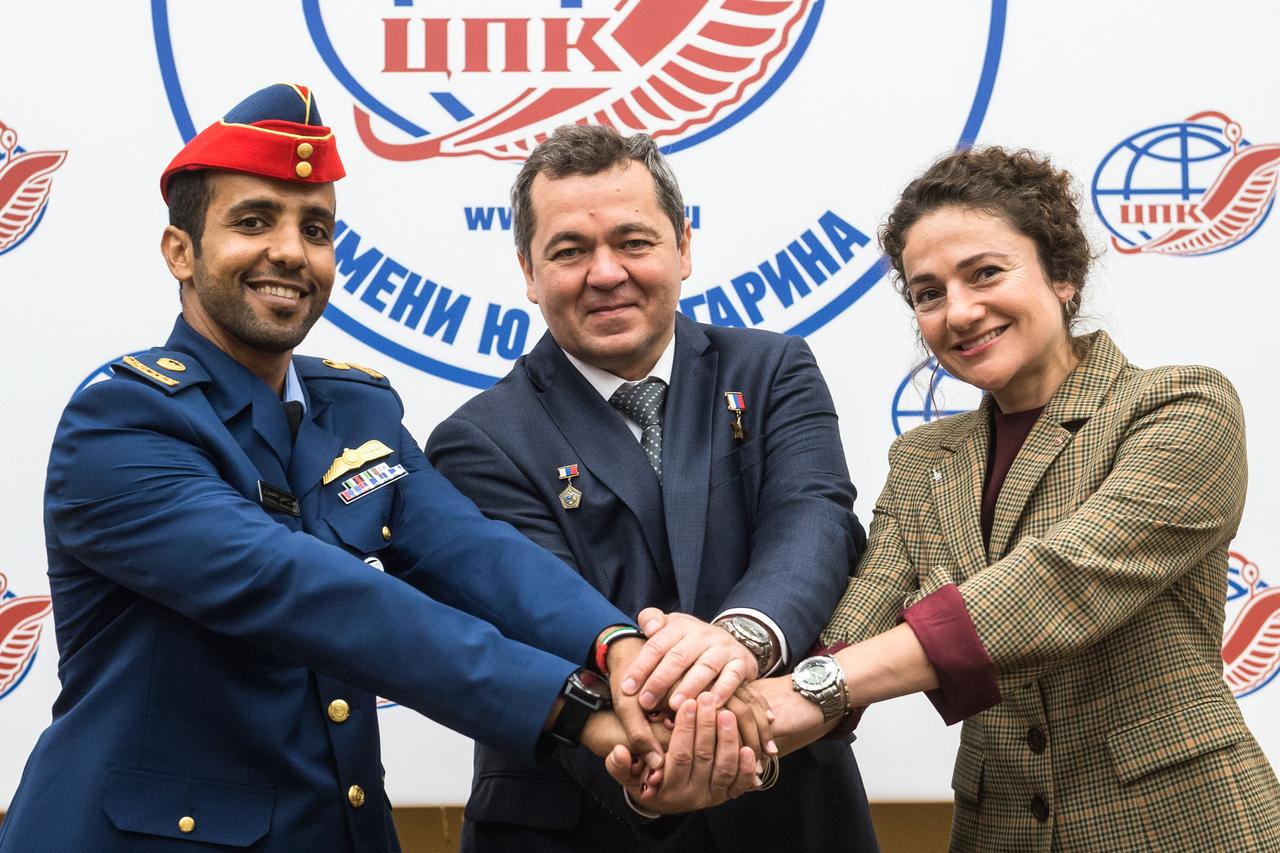
jsc2019e052151 - At the Gagarin Cosmonaut Training Center in Star City, Russia, spaceflight participant Hazzaa Ali Almansoori of the United Arab Emirates (left), Oleg Skripochka of Roscosmos (center) and Jessica Meir of NASA (right) pose for pictures Sept. 5 as part of a pre-flight news conference. They will launch Sept. 25 from the Baikonur Cosmodrome in Kazakhstan on the Soyuz MS-15 spacecraft for a mission on the International Space Station...Credit/Gagarin Cosmonaut Training Center.
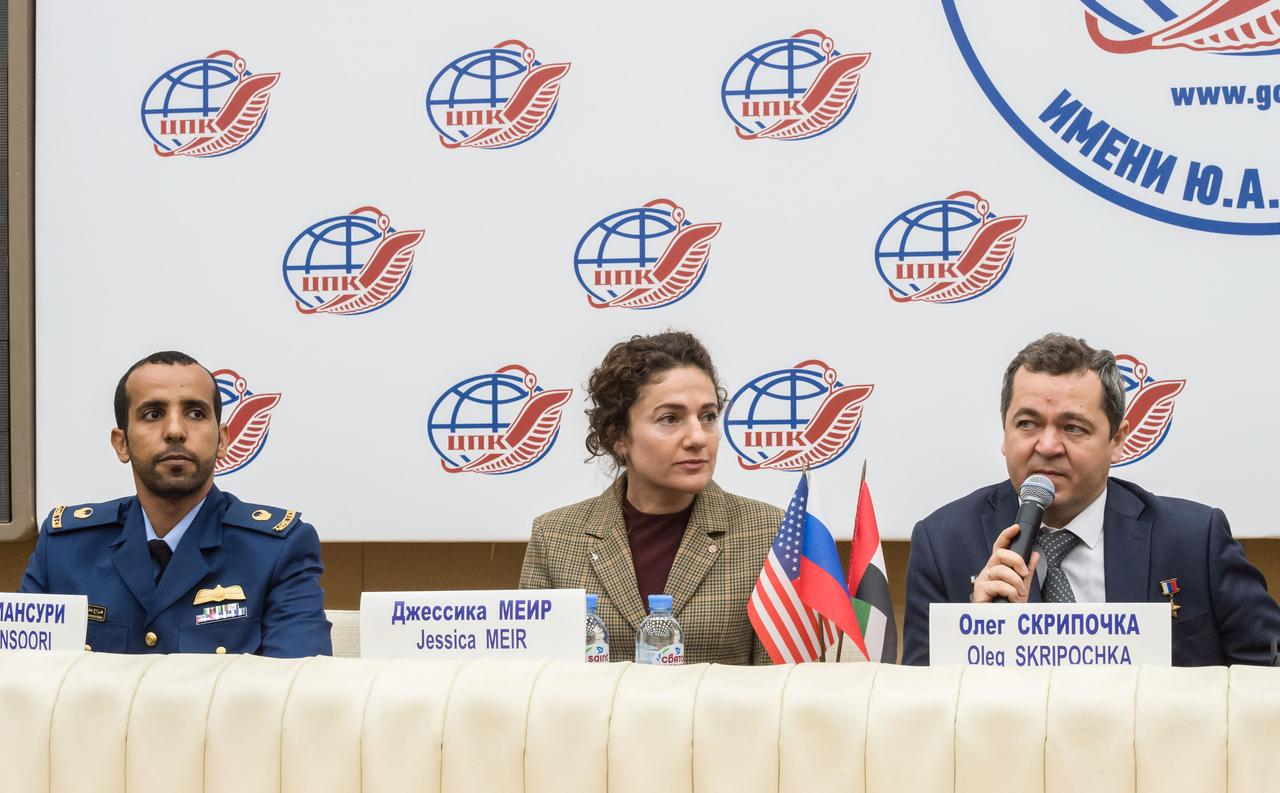
jsc2019e052149 - At the Gagarin Cosmonaut Training Center in Star City, Russia, Expedition 61 crewmember Oleg Skripochka of Roscosmos (right) answers a reporter’s question Sept. 5 during a pre-flight news conference. Looking on are Expedition 61 crewmate Jessica Meir of NASA (center) and spaceflight participant Hazzaa Ali Almansoori of the United Arab Emirates. They will launch Sept. 25 from the Baikonur Cosmodrome in Kazakhstan on the Soyuz MS-15 spacecraft for a mission on the International Space Station...Credit/Gagarin Cosmonaut Training Center..
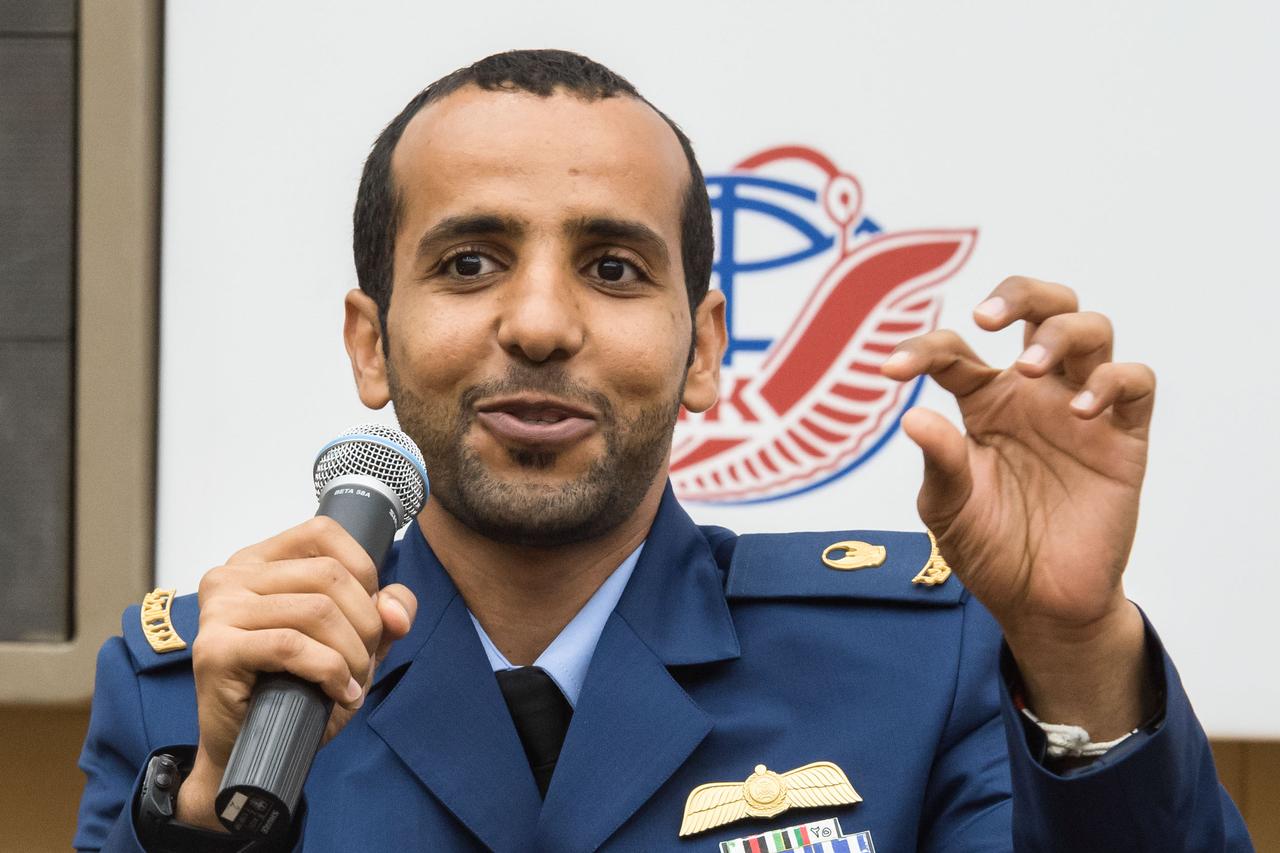
jsc2019e052148 - At the Gagarin Cosmonaut Training Center in Star City, Russia, spaceflight participant Hazzaa Ali Almansoori of the United Arab Emirates answers a reporter’s question Sept. 5 as part of a pre-flight news conference. Almansoori, Oleg Skripochka of Roscosmos and Jessica Meir of NASA will launch Sept. 25 from the Baikonur Cosmodrome in Kazakhstan on the Soyuz MS-15 spacecraft for a mission on the International Space Station...Credit/Gagarin Cosmonaut Training Center..
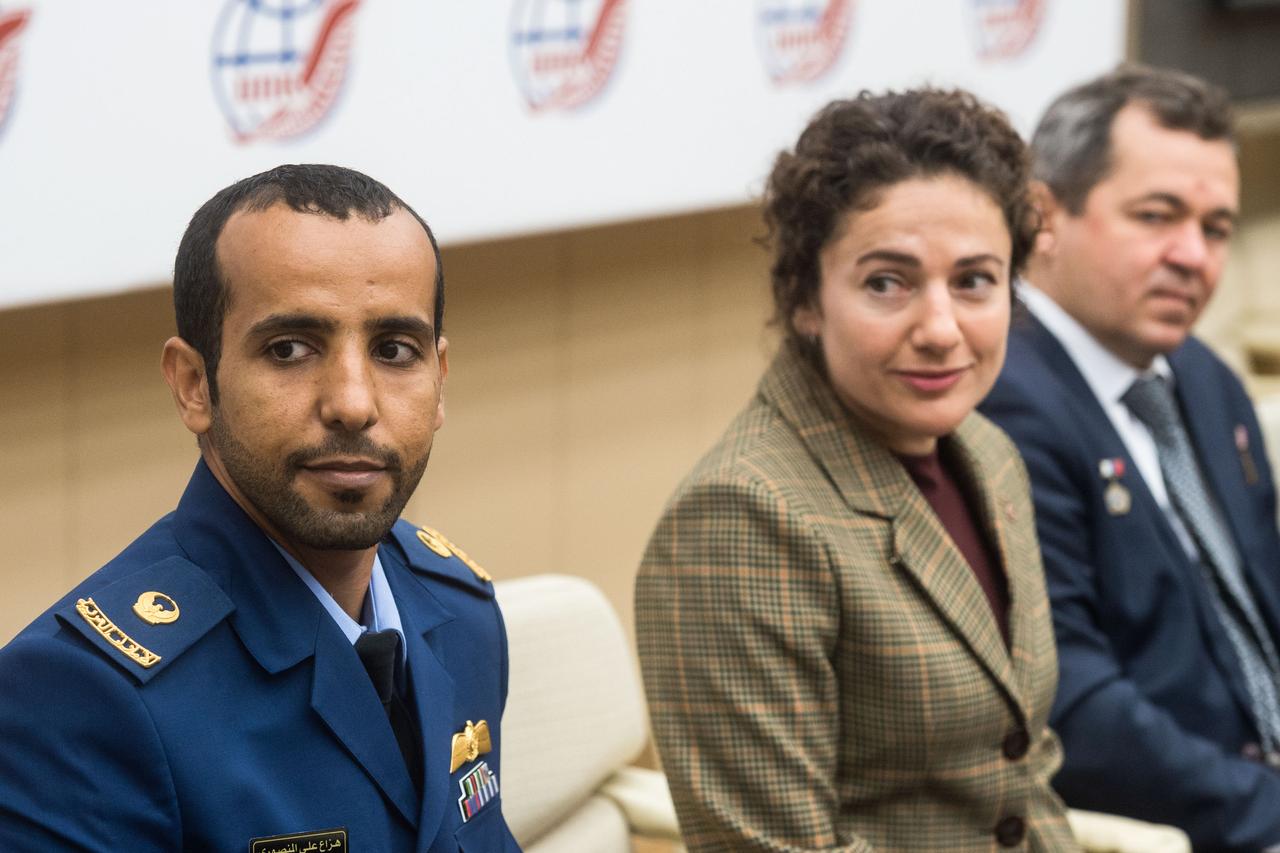
jsc2019e052153 - At the Gagarin Cosmonaut Training Center in Star City, Russia, spaceflight participant Hazzaa Ali Almansoori of the United Arab Emirates (left), Jessica Meir of NASA (center) and Oleg Skripochka of Roscosmos listen to a reporter’s question Sept. 5 as part of a pre-flight news conference. They will launch Sept. 25 from the Baikonur Cosmodrome in Kazakhstan on the Soyuz MS-15 spacecraft for a mission on the International Space Station...Credit/Gagarin Cosmonaut Training Center.
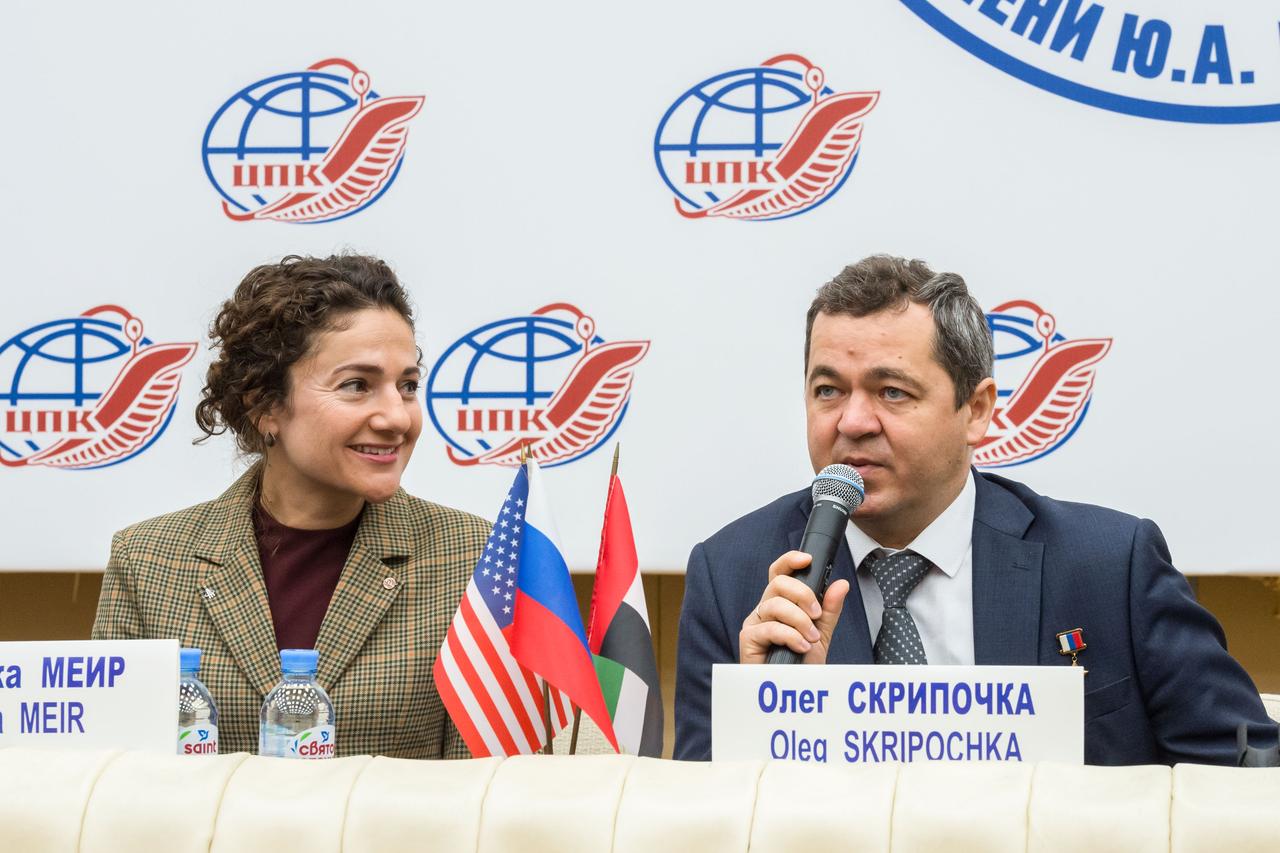
jsc2019e052150 - At the Gagarin Cosmonaut Training Center in Star City, Russia, Expedition 61 crewmember Oleg Skripochka of Roscosmos (right) answers a reporter’s question Sept. 5 during a pre-flight news conference. Looking on is Expedition 61 crewmate Jessica Meir of NASA. Skripochka, Meir and spaceflight participant Hazzaa Ali Almansoori of the United Arab Emirates will launch Sept. 25 from the Baikonur Cosmodrome in Kazakhstan on the Soyuz MS-15 spacecraft for a mission on the International Space Station...Credit/Gagarin Cosmonaut Training Center.

jsc2019e052146 - At the Gagarin Cosmonaut Training Center in Star City, Russia, spaceflight participant Hazzaa Ali Almansoori of the United Arab Emirates (left), Oleg Skripochka of Roscosmos (center) and Jessica Meir of NASA (right) pose for pictures Sept. 5 as part of a pre-flight news conference. They will launch Sept. 25 from the Baikonur Cosmodrome in Kazakhstan on the Soyuz MS-15 spacecraft for a mission on the International Space Station...Credit/Gagarin Cosmonaut Training Center.
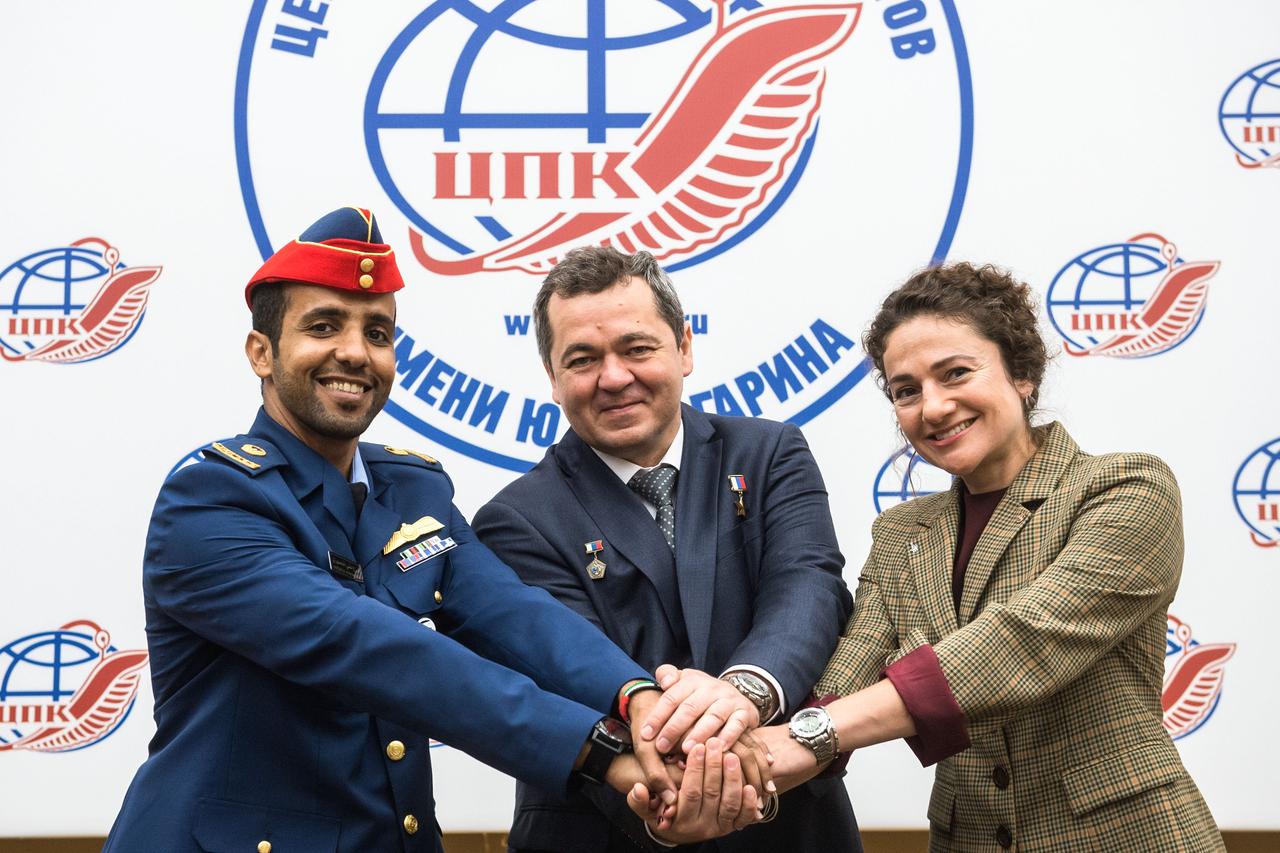
jsc2019e052156 - At the Gagarin Cosmonaut Training Center in Star City, Russia, spaceflight participant Hazzaa Ali Almansoori of the United Arab Emirates (left), Oleg Skripochka of Roscosmos (center) and Jessica Meir of NASA (right) pose for pictures Sept. 5 as part of a pre-flight news conference. They will launch Sept. 25 from the Baikonur Cosmodrome in Kazakhstan on the Soyuz MS-15 spacecraft for a mission on the International Space Station...Credit/Gagarin Cosmonaut Training Center.
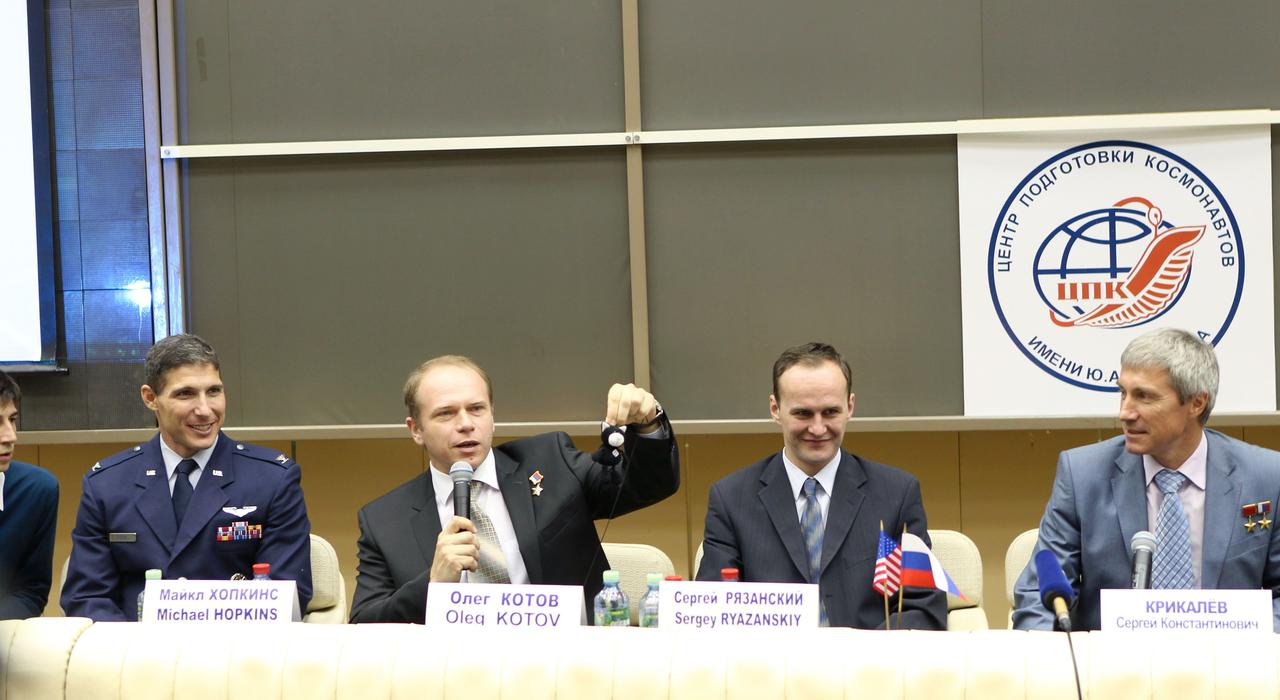
At the Gagarin Cosmonaut Training Center in Star City, Russia, Expedition 37/38 Soyuz Commander Oleg Kotov (second from left) holds a toy cat mascot during a pre-launch news conference Sept. 6 as his crewmates, Flight Engineer Michael Hopkins of NASA (far left) and Flight Engineer Sergey Ryazanskiy (second from the right) look on. Also participating in the news conference was the head of the Cosmonaut Training Center, Sergei Krikalev (far right). The mascot will be mounted inside the crew’s Soyuz TMA-10M spacecraft over Kotov’s head as a “zero-g indicator” once the crew launches. Their launch to the International Space Station is set for Sept. 26, Kazakh time, from the Baikonur Cosmodrome in Kazakhstan. NASA/Stephanie Stoll
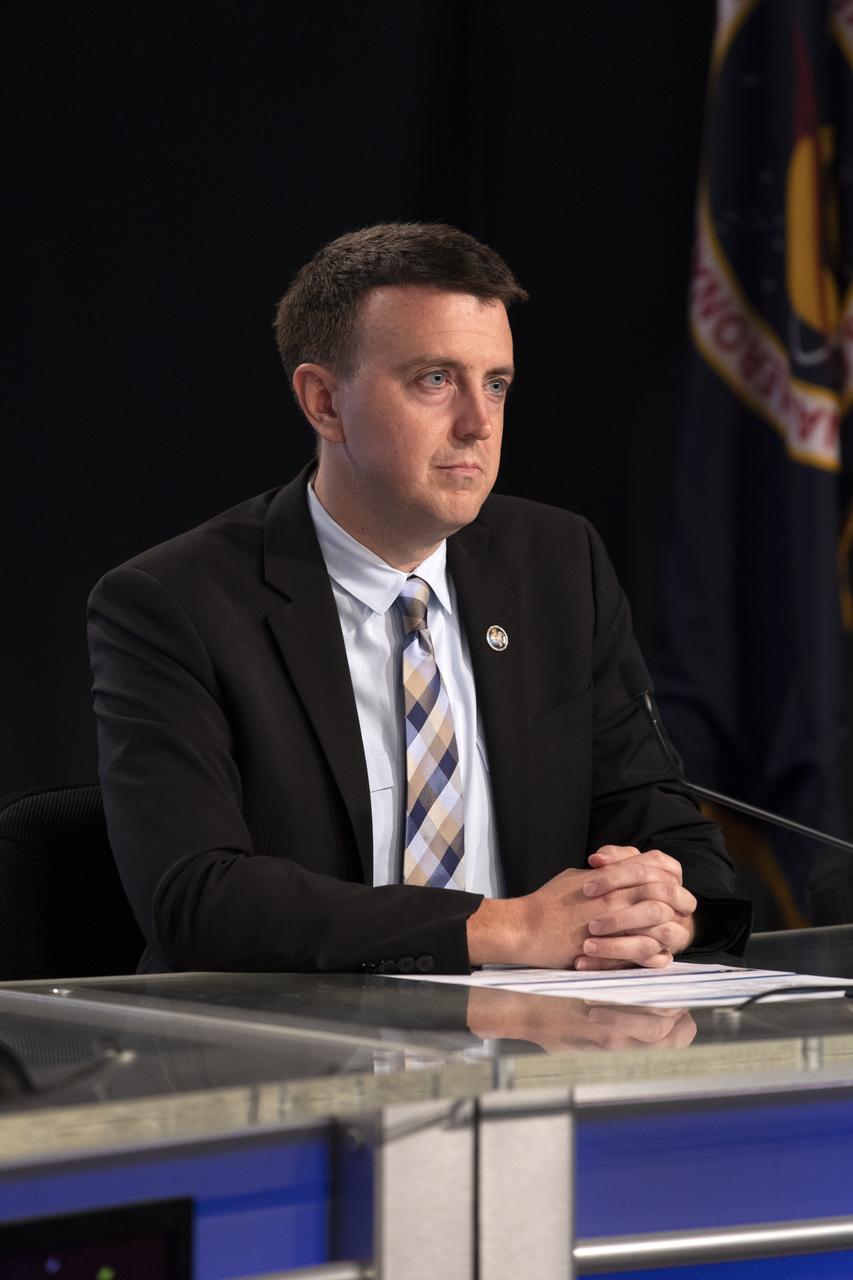
Will Ulrich, 45th Space Wing weather officer with the U.S. Air Force, speaks to members of the news media during a prelaunch news conference for SpaceX’s 17th Commercial Resupply Services (CRS-17) mission for NASA to the International Space Station on May 2, 2019, at the agency’s Kennedy Space Center in Florida. The SpaceX Falcon 9 rocket and Dragon cargo module are scheduled to launch no earlier than May 3, 2019, from Space Launch Complex 40 on Cape Canaveral Air Force Station in Florida.

Will Ulrich, launch weather officer with the U.S. Air Force 45th Space Wing, discusses the liftoff weather forecast during the prelaunch news conference for SpaceX’s 18th Commercial Resupply Services (CRS-18) mission to the International Space Station, July 24, 2019, at NASA’s Kennedy Space Center in Florida. The SpaceX Falcon 9 rocket and uncrewed Dragon spacecraft are scheduled to launch July 24, 2019, from Space Launch Complex 40 at Florida’s Cape Canaveral Air Force Station.
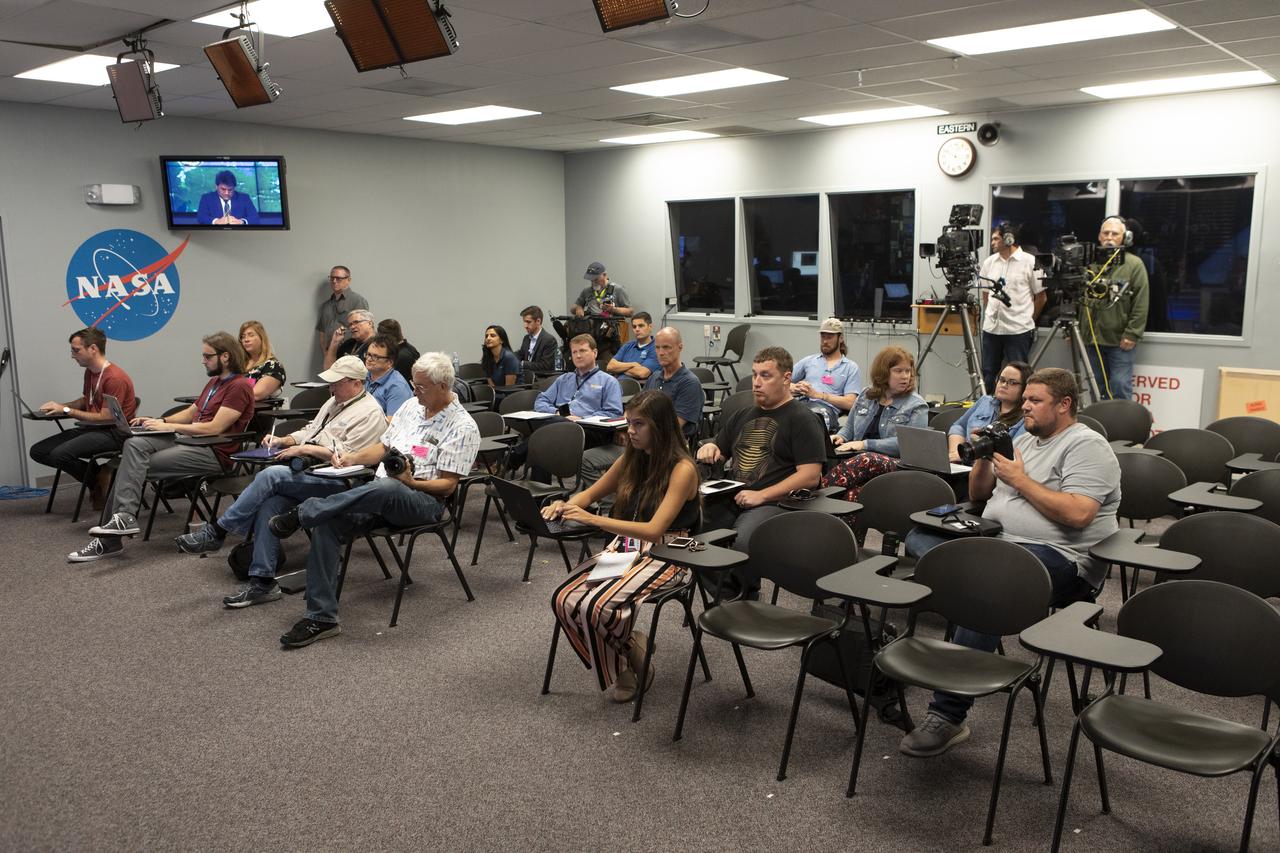
Members of the news media attend the prelaunch news conference for SpaceX’s 18th Commercial Resupply Services (CRS-18) mission to the International Space Station, July 24, 2019, at NASA’s Kennedy Space Center in Florida. Participants were Marie Lewis, NASA Communications moderator; Bill Spetch, deputy manager of the International Space Station Transportation Integration Office at the agency’s Johnson Space Center in Houston; Jessica Jensen, director of Dragon mission management at SpaceX; Pete Hasbrook, manager of the space station’s Program Science Office at Johnson; and Will Ulrich, launch weather officer with the U.S. Air Force 45th Space Wing. The SpaceX Falcon 9 rocket and uncrewed Dragon spacecraft are scheduled to launch July 24, 2019, from Space Launch Complex 40 at Florida’s Cape Canaveral Air Force Station.
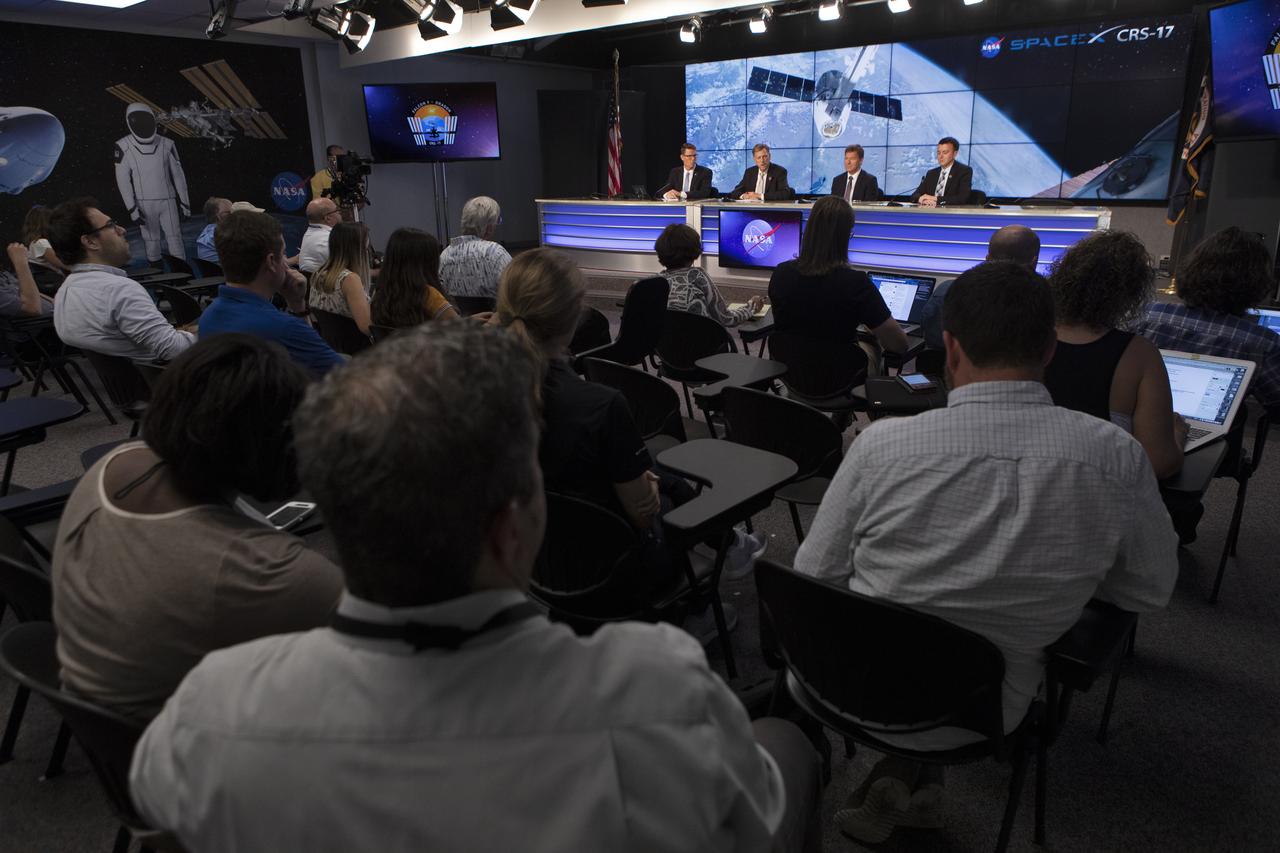
Members of the news media attend a prelaunch news conference for SpaceX’s 17th Commercial Resupply Services (CRS-17) mission to the International Space Station for NASA on May 2, 2019, at the agency’s Kennedy Space Center in Florida. From left, are Derrol Nail, NASA Communications moderator; Kenny Todd, Manager, International Space Station Operations and Integration at NASA’s Johnson Space Center in Houston; Hans Koenigsmann, VP, Build and Flight Reliability with SpaceX; and Will Ulrich, 45th launch weather officer with the U.S. Air Force. The SpaceX Falcon 9 rocket and Dragon cargo module are scheduled to launch no earlier than May 3, 2019, from Space Launch Complex 40 on Cape Canaveral Air Force Station in Florida.
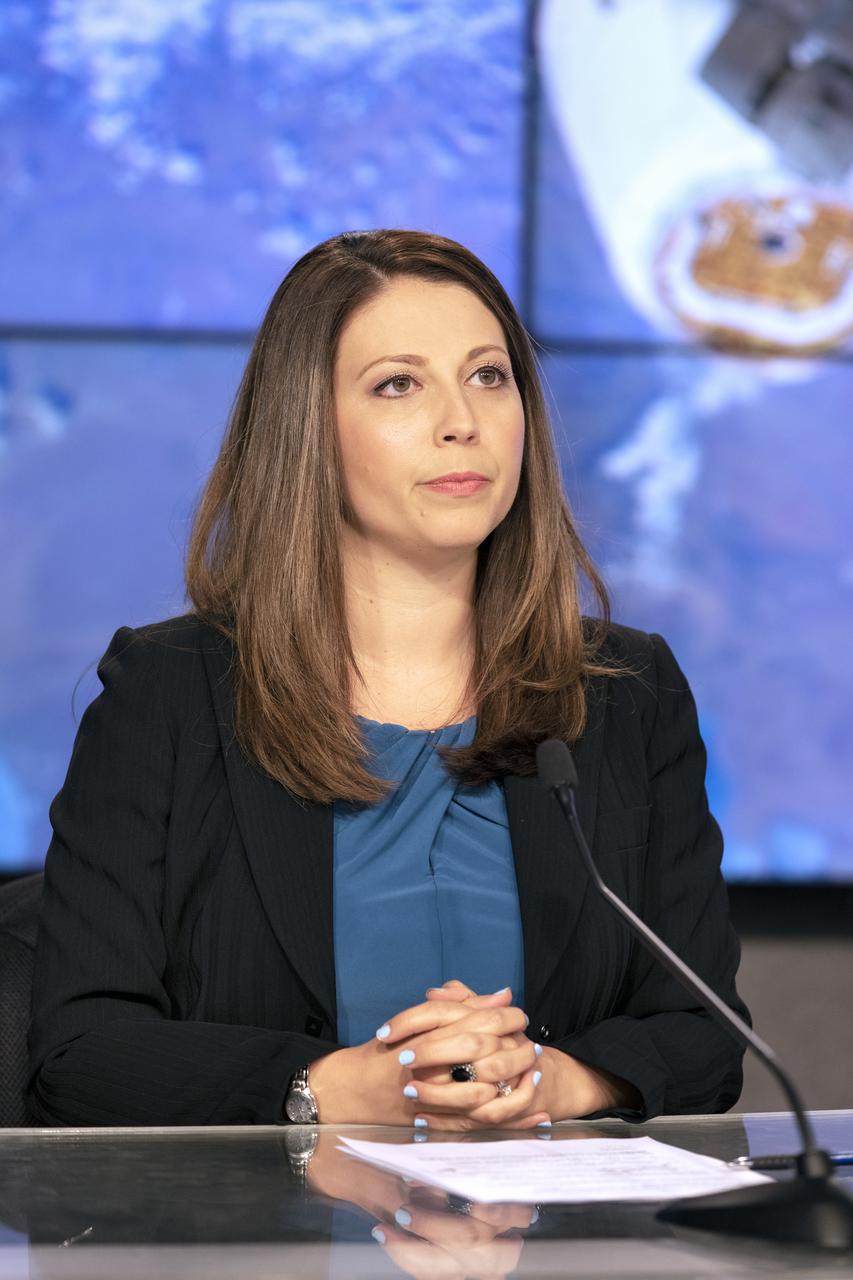
Marie Lewis, NASA Communications moderator, moderates the prelaunch news conference for SpaceX’s 18th Commercial Resupply Services (CRS-18) mission to the International Space Station, July 24, 2019, at the agency’s Kennedy Space Center in Florida. The SpaceX Falcon 9 rocket and uncrewed Dragon spacecraft are scheduled to launch July 24, 2019, from Space Launch Complex 40 at Florida’s Cape Canaveral Air Force Station.
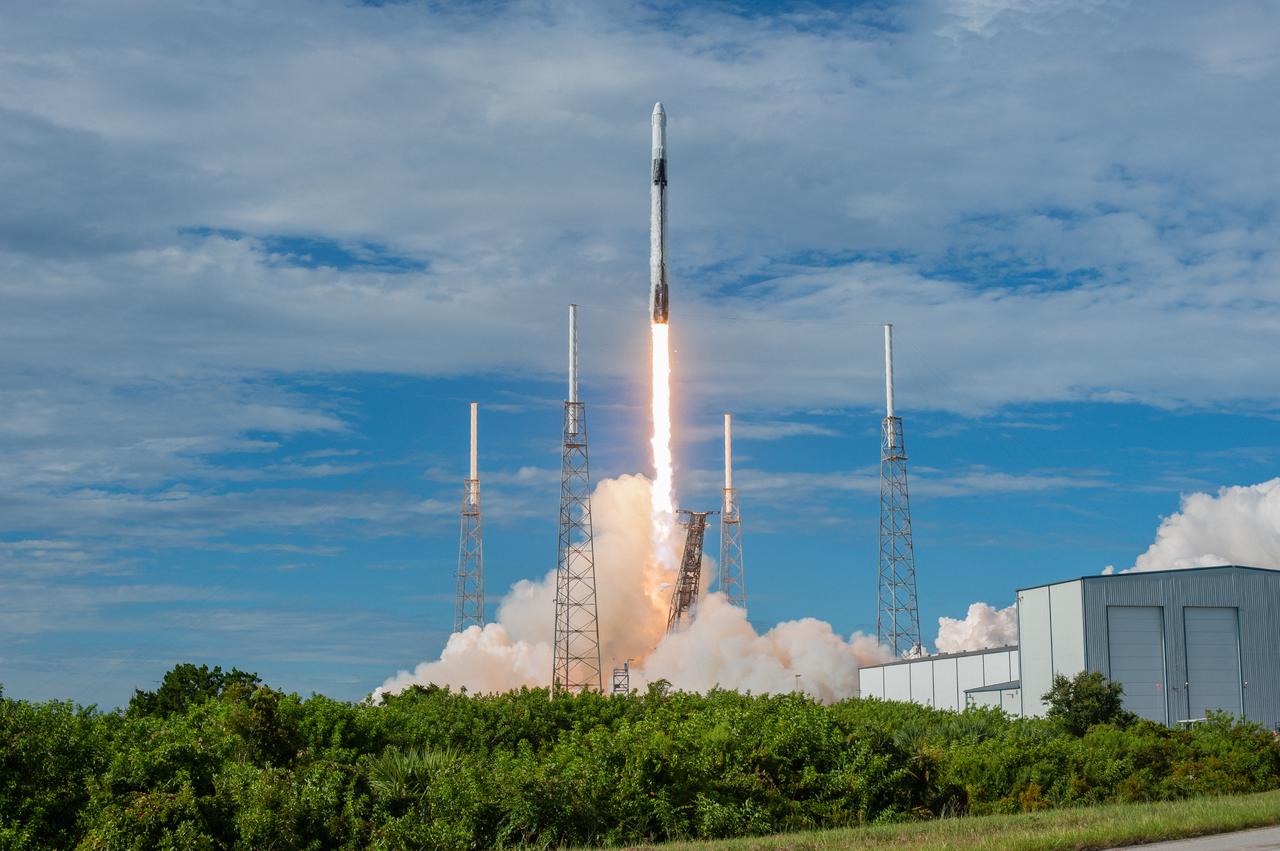
A SpaceX Falcon 9 rocket lifts off from Space Launch Complex 40 at Cape Canaveral Air Force Station in Florida at 6:01 p.m. EDT on July 25, 2019, carrying the Dragon spacecraft on the company's 18th Commercial Resupply Services (CRS-18) mission to the International Space Station. The uncrewed Dragon spacecraft will deliver about 5,000 pounds of science and research, crew supplies and vehicle hardware to the orbiting laboratory.
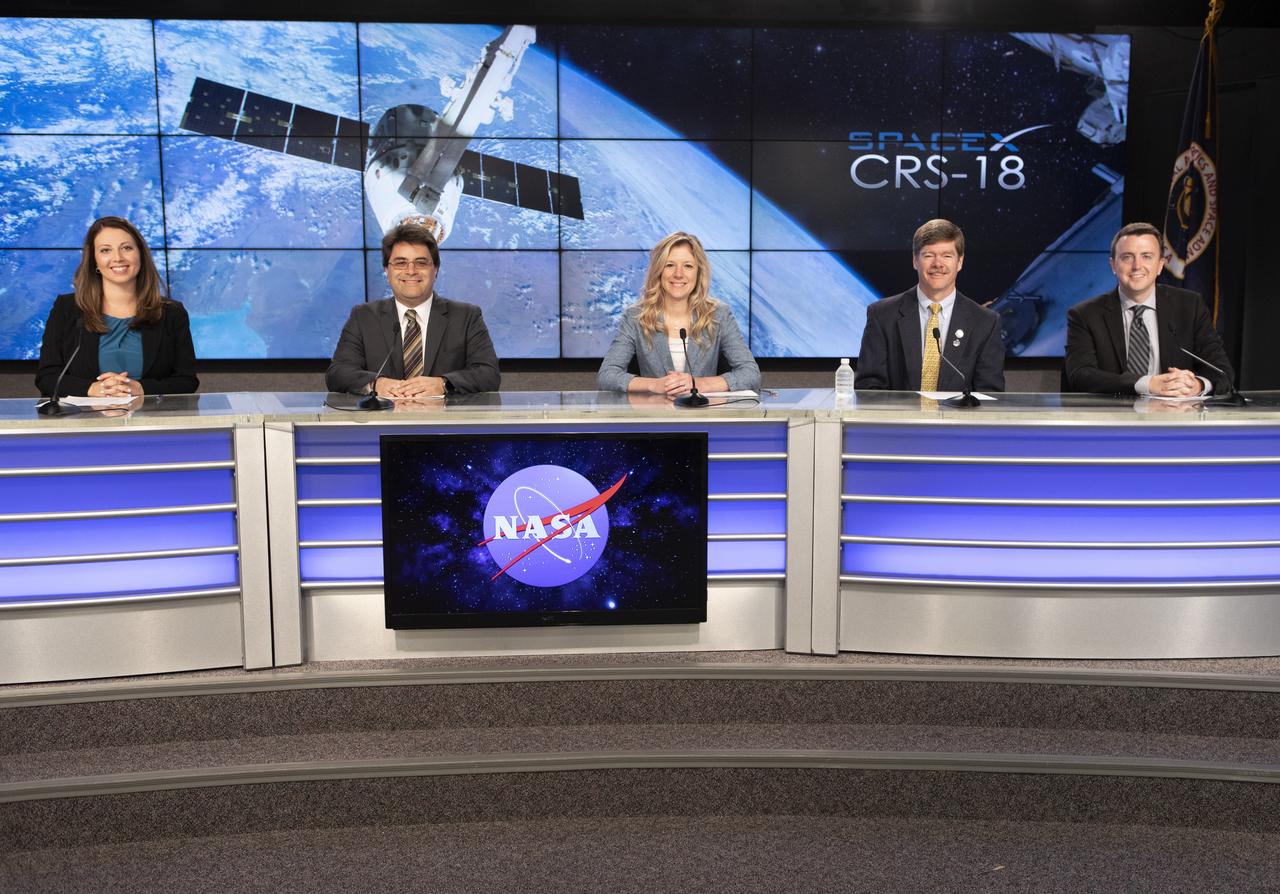
A prelaunch news conference for SpaceX’s 18th Commercial Resupply Services (CRS-18) mission to the International Space Station for NASA is held July 24, 2019, at the agency’s Kennedy Space Center in Florida. From left are Marie Lewis, NASA Communications moderator; Bill Spetch, deputy manager of the International Space Station Transportation Integration Office at NASA’s Johnson Space Center in Houston; Jessica Jensen, director of Dragon mission management at SpaceX; Pete Hasbrook, manager of the space station’s Program Science Office at Johnson; and Will Ulrich, launch weather officer with the U.S. Air Force 45th Space Wing. The SpaceX Falcon 9 rocket and uncrewed Dragon spacecraft are scheduled to launch July 24, 2019, from Space Launch Complex 40 at Florida’s Cape Canaveral Air Force Station.
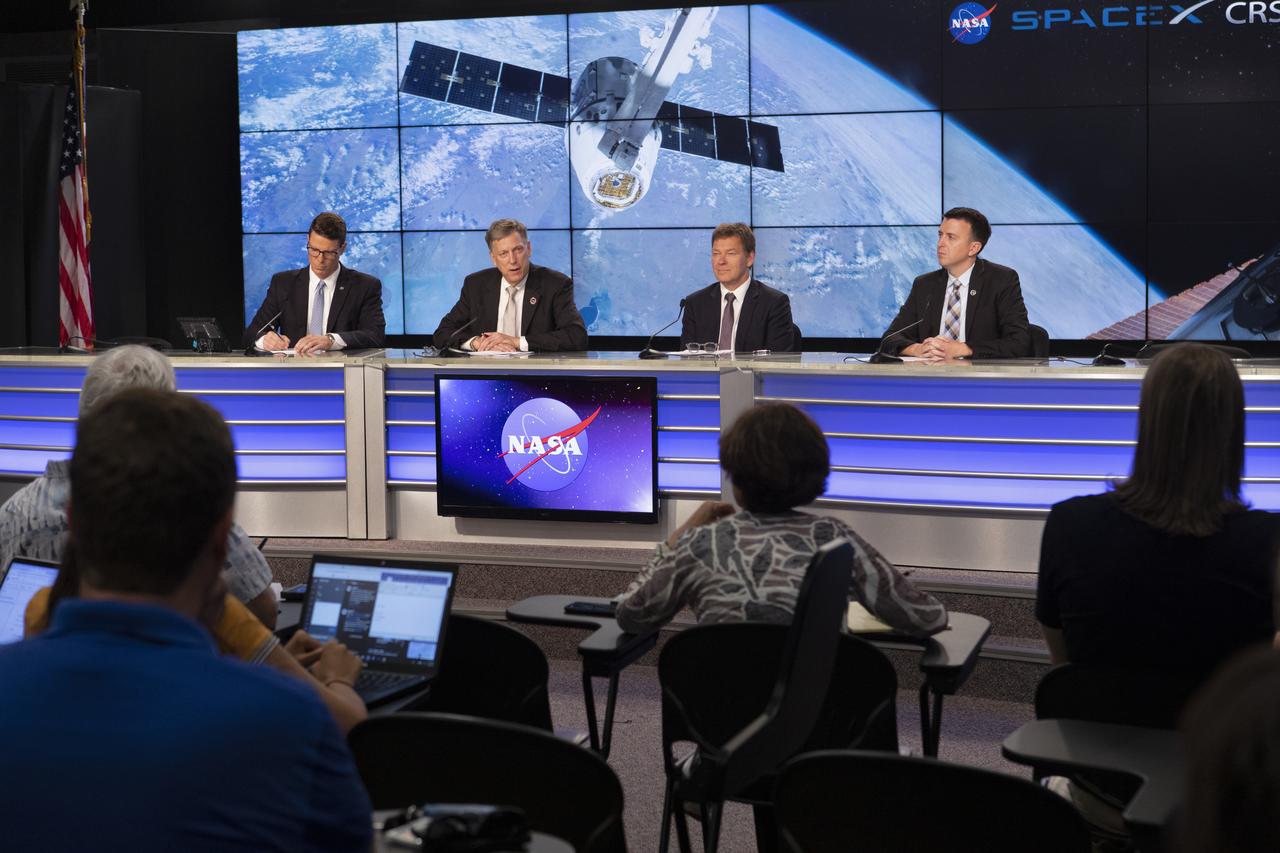
A prelaunch news conference for SpaceX’s 17th Commercial Resupply Services (CRS-17) mission to the International Space Station for NASA is held at the agency’s Kennedy Space Center in Florida on May 2, 2019. From left, are Derrol Nail, NASA Communications moderator; Kenny Todd, Manager, International Space Station Operations and Integration at NASA’s Johnson Space Center in Houston; Hans Koenigsmann, VP, Build and Flight Reliability with SpaceX; and Will Ulrich, 45th launch weather officer with the U.S. Air Force. The SpaceX Falcon 9 rocket and Dragon cargo module are scheduled to launch no earlier than May 3, 2019, from Space Launch Complex 40 on Cape Canaveral Air Force Station in Florida.
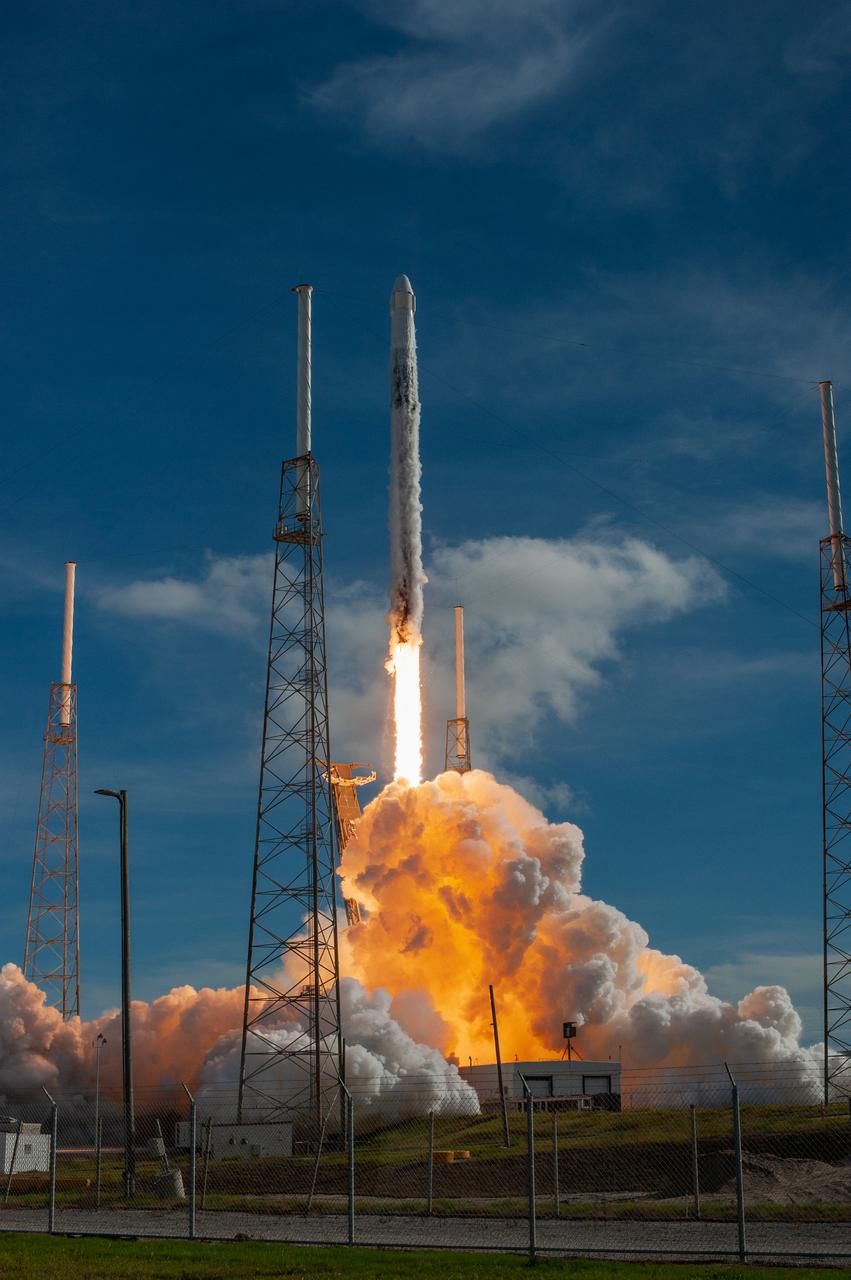
A SpaceX Falcon 9 rocket lifts off from Space Launch Complex 40 at Cape Canaveral Air Force Station in Florida at 6:01 p.m. EDT on July 25, 2019, carrying the Dragon spacecraft on the company's 18th Commercial Resupply Services (CRS-18) mission to the International Space Station. The uncrewed Dragon spacecraft will deliver about 5,000 pounds of science and research, crew supplies and vehicle hardware to the orbiting laboratory.
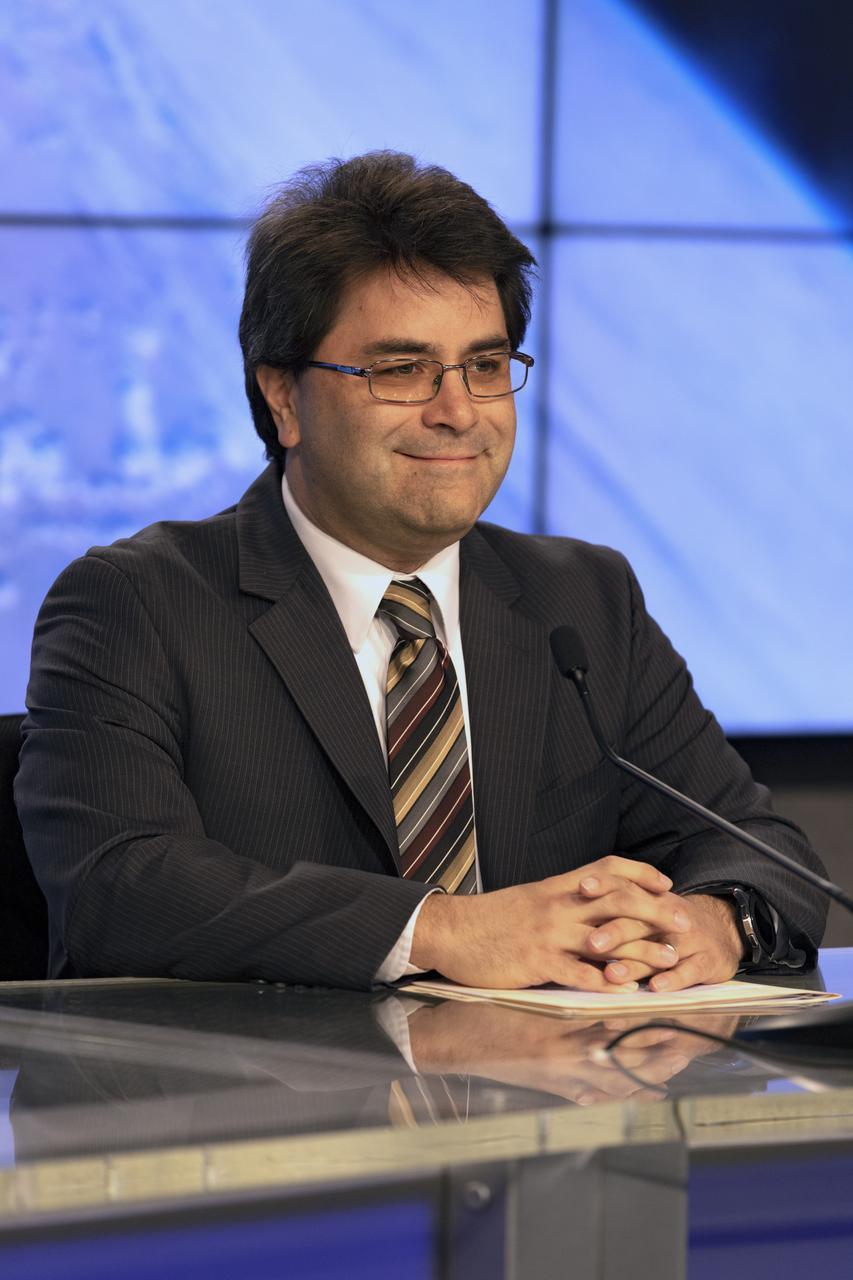
Bill Spetch, deputy manager of the International Space Station Transportation Integration Office at NASA’s Johnson Space Center in Houston, speaks during the prelaunch news conference for SpaceX’s 18th Commercial Resupply Services (CRS-18) mission to the station on July 24, 2019, at the agency’s Kennedy Space Center in Florida. The SpaceX Falcon 9 rocket and uncrewed Dragon spacecraft are scheduled to launch July 24, 2019, from Space Launch Complex 40 at Florida’s Cape Canaveral Air Force Station.
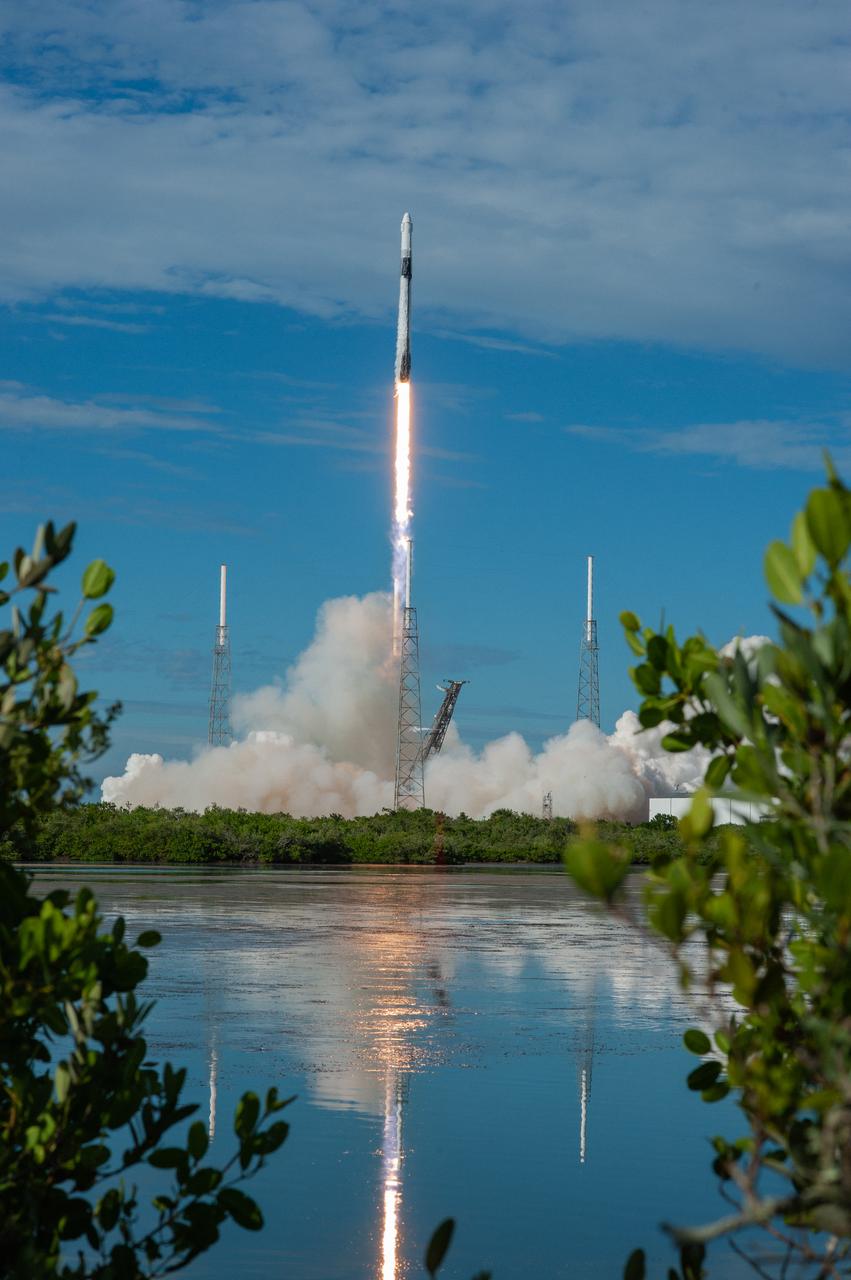
A SpaceX Falcon 9 rocket lifts off from Space Launch Complex 40 at Cape Canaveral Air Force Station in Florida at 6:01 p.m. EDT on July 25, 2019, carrying the Dragon spacecraft on the company's 18th Commercial Resupply Services (CRS-18) mission to the International Space Station. The uncrewed Dragon spacecraft will deliver about 5,000 pounds of science and research, crew supplies and vehicle hardware to the orbiting laboratory.
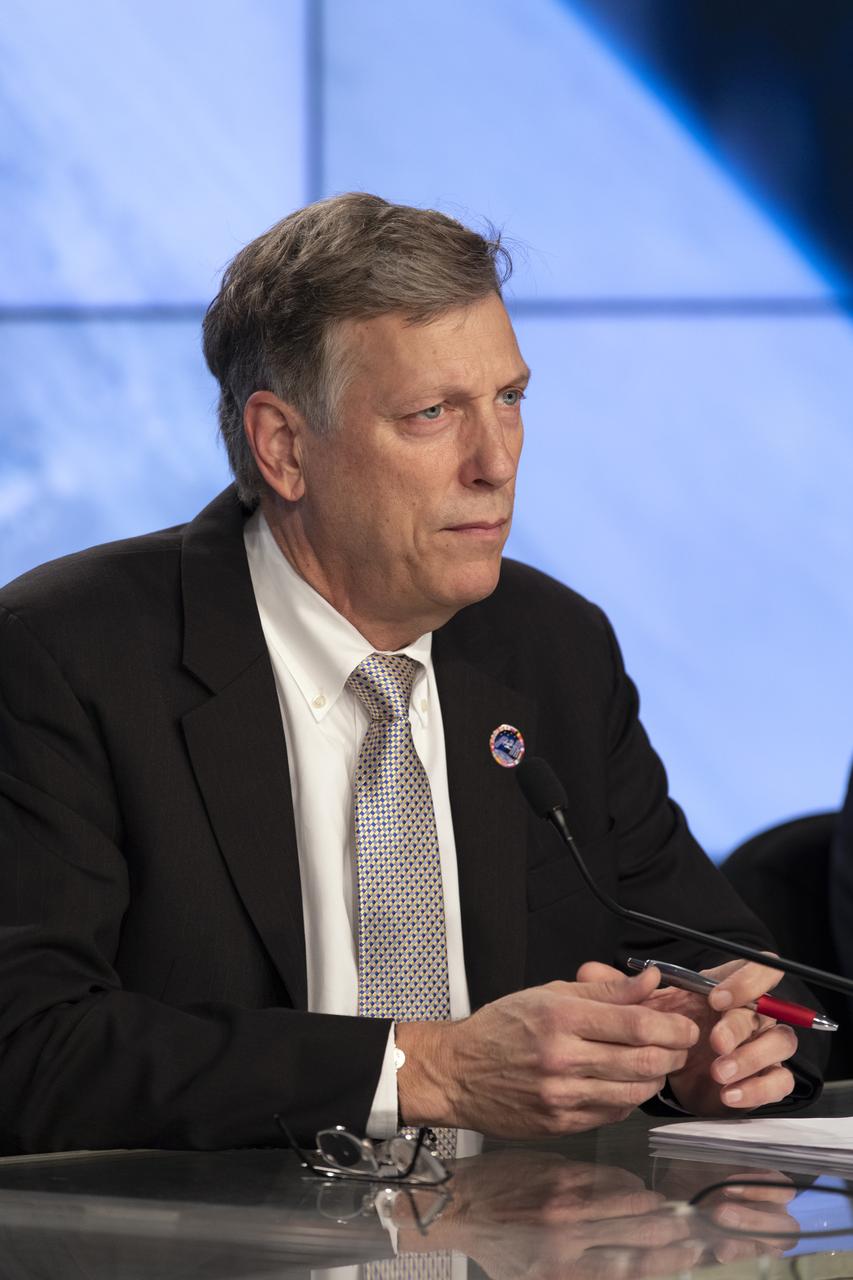
Kenny Todd, manager, International Space Station Operations and Integration, NASA’s Johnson Space Center in Houston, speaks to members of the news media during a prelaunch news conference for SpaceX’s 17th Commercial Resupply Services (CRS-17) mission for NASA to the International Space Station on May 2, 2019, at the agency’s Kennedy Space Center in Florida. The SpaceX Falcon 9 rocket and Dragon cargo module are scheduled to launch no earlier than May 3, 2019, from Space Launch Complex 40 on Cape Canaveral Air Force Station in Florida.
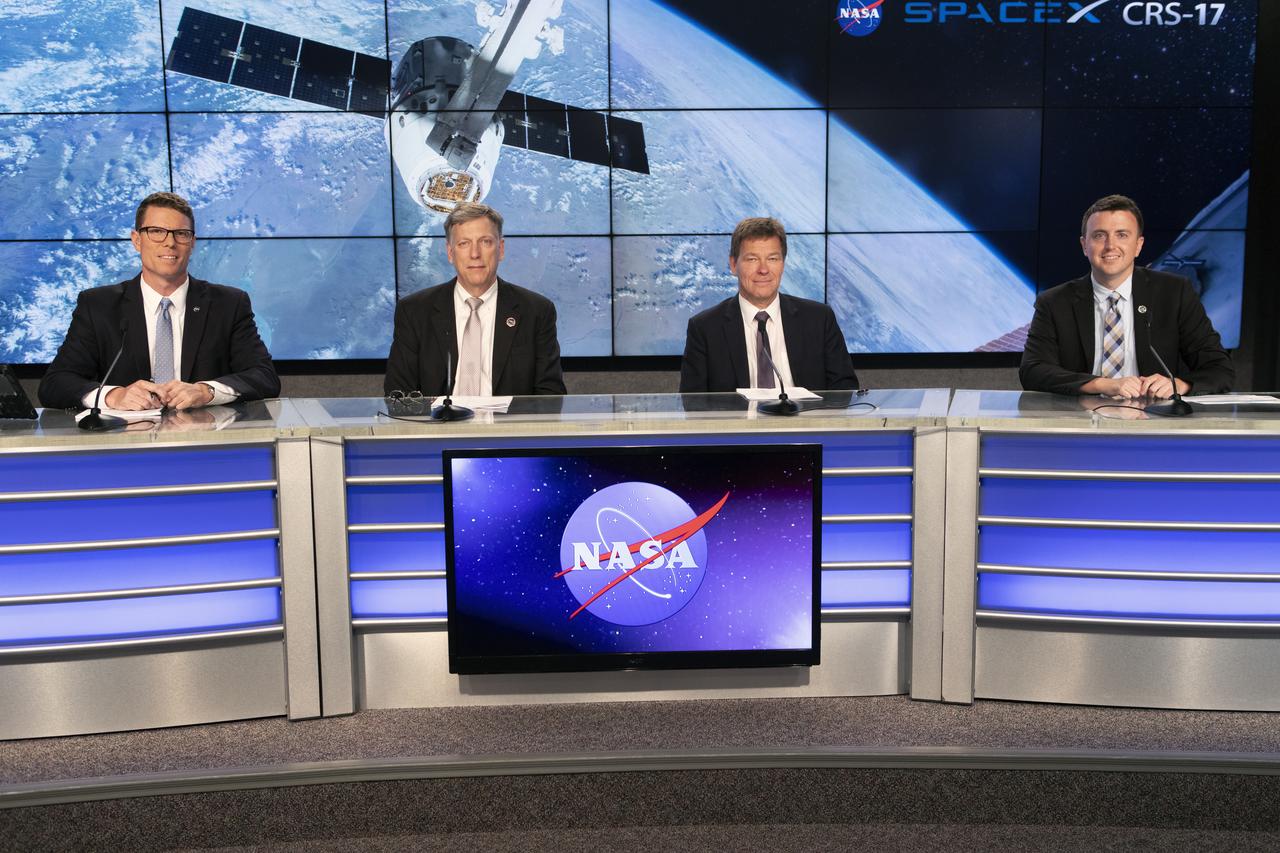
A prelaunch news conference for SpaceX’s 17th Commercial Resupply Services (CRS-17) mission to the International Space Station for NASA is held at the agency’s Kennedy Space Center in Florida on May 2, 2019. From left, are Derrol Nail, NASA Communications moderator; Kenny Todd, Manager, International Space Station Operations and Integration at NASA’s Johnson Space Center in Houston; Hans Koenigsmann, VP, Build and Flight Reliability with SpaceX; and Will Ulrich, 45th launch weather officer with the U.S. Air Force. The SpaceX Falcon 9 rocket and Dragon cargo module are scheduled to launch no earlier than May 3, 2019, from Space Launch Complex 40 on Cape Canaveral Air Force Station in Florida.
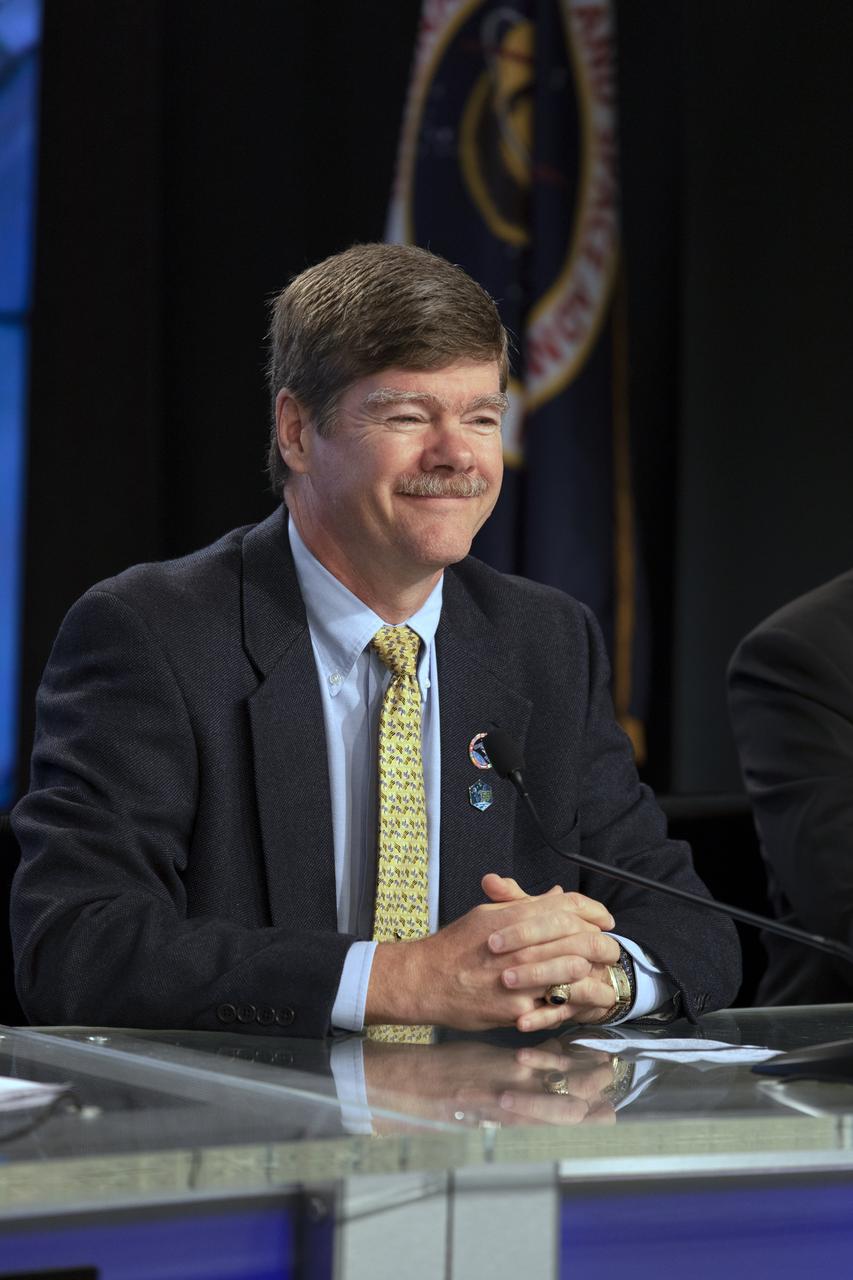
Pete Hasbrook, manager of the International Space Station Program Science Office at NASA’s Johnson Space Center in Houston, speaks during the prelaunch news conference for SpaceX’s 18th Commercial Resupply Services (CRS-18) mission to the station, July 24, 2019, at the agency’s Kennedy Space Center in Florida. The SpaceX Falcon 9 rocket and uncrewed Dragon spacecraft are scheduled to launch July 24, 2019, from Space Launch Complex 40 at Florida’s Cape Canaveral Air Force Station.
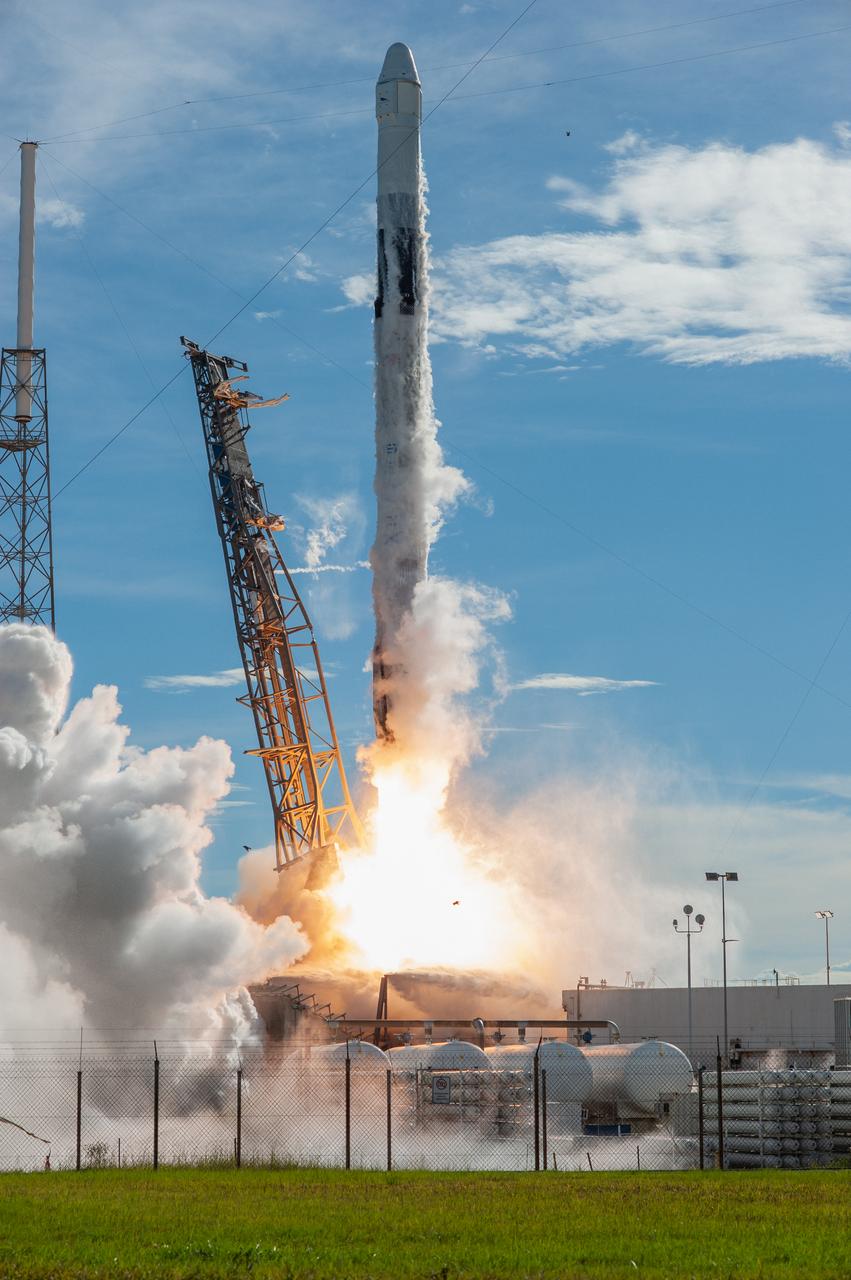
A SpaceX Falcon 9 rocket lifts off from Space Launch Complex 40 at Cape Canaveral Air Force Station in Florida at 6:01 p.m. EDT on July 25, 2019, carrying the Dragon spacecraft on the company's 18th Commercial Resupply Services (CRS-18) mission to the International Space Station. The uncrewed Dragon spacecraft will deliver about 5,000 pounds of science and research, crew supplies and vehicle hardware to the orbiting laboratory.
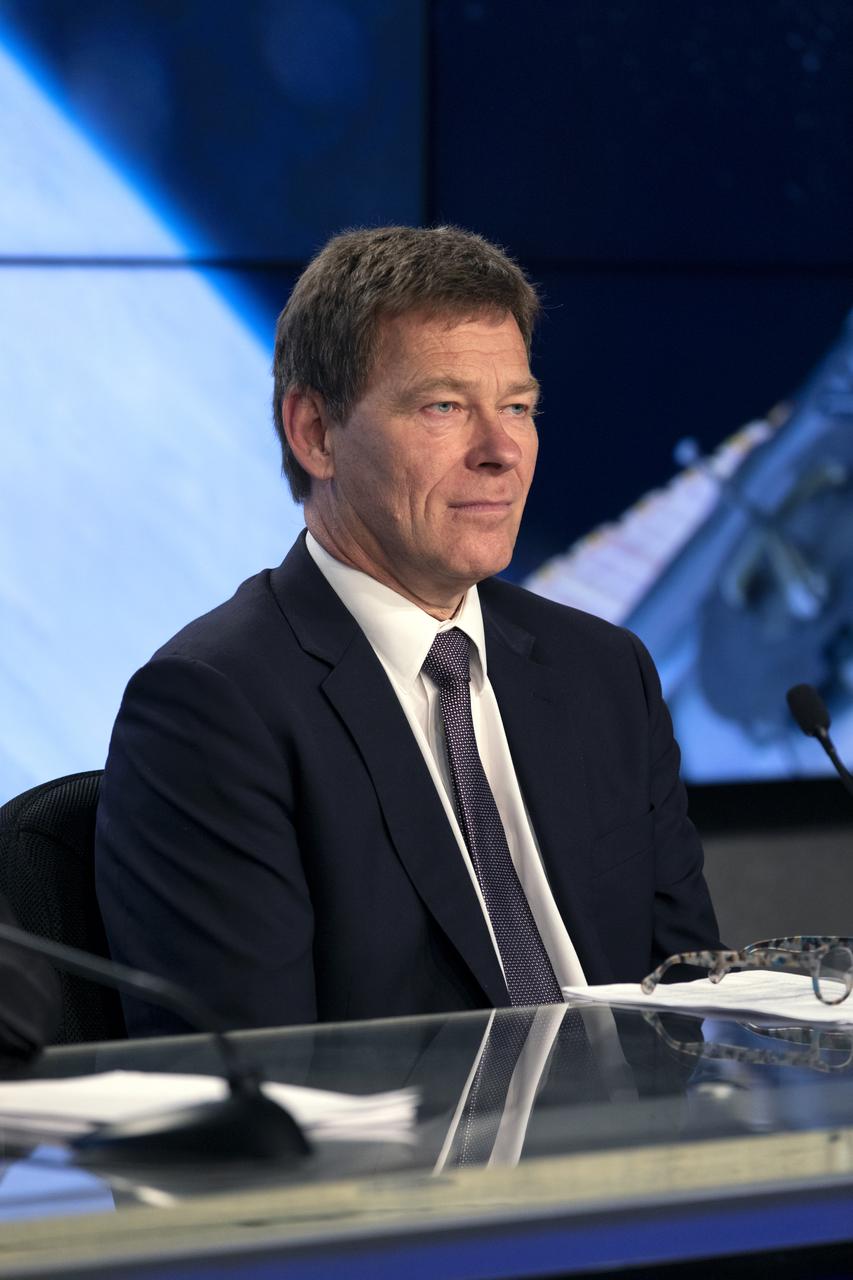
Hans Koenigsmann, VP, Build and Flight Reliability with SpaceX, speaks to members of the news media during a prelaunch news conference for SpaceX’s 17th Commercial Resupply Services (CRS-17) mission for NASA to the International Space Station on May 2, 2019, at the agency’s Kennedy Space Center in Florida. The SpaceX Falcon 9 rocket and Dragon cargo module are scheduled to launch no earlier than May 3, 2019, from Space Launch Complex 40 on Cape Canaveral Air Force Station in Florida.
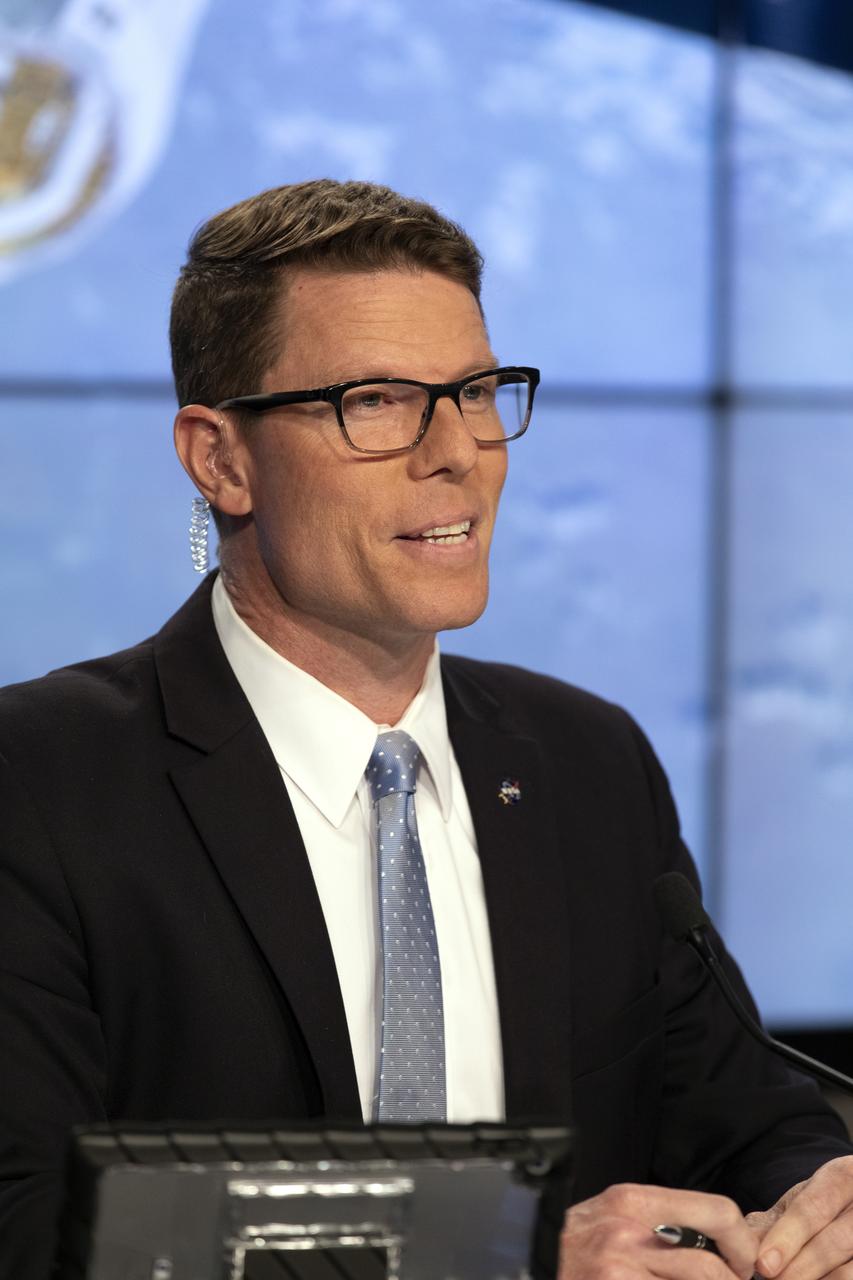
Derrol Nail, NASA Communications moderates a prelaunch news conference for SpaceX’s 17th Commercial Resupply Services (CRS-17) mission for NASA to the International Space Station on May 2, 2019, at the agency’s Kennedy Space Center in Florida. The SpaceX Falcon 9 rocket and Dragon cargo module are scheduled to launch no earlier than May 3, 2019, from Space Launch Complex 40 on Cape Canaveral Air Force Station in Florida.
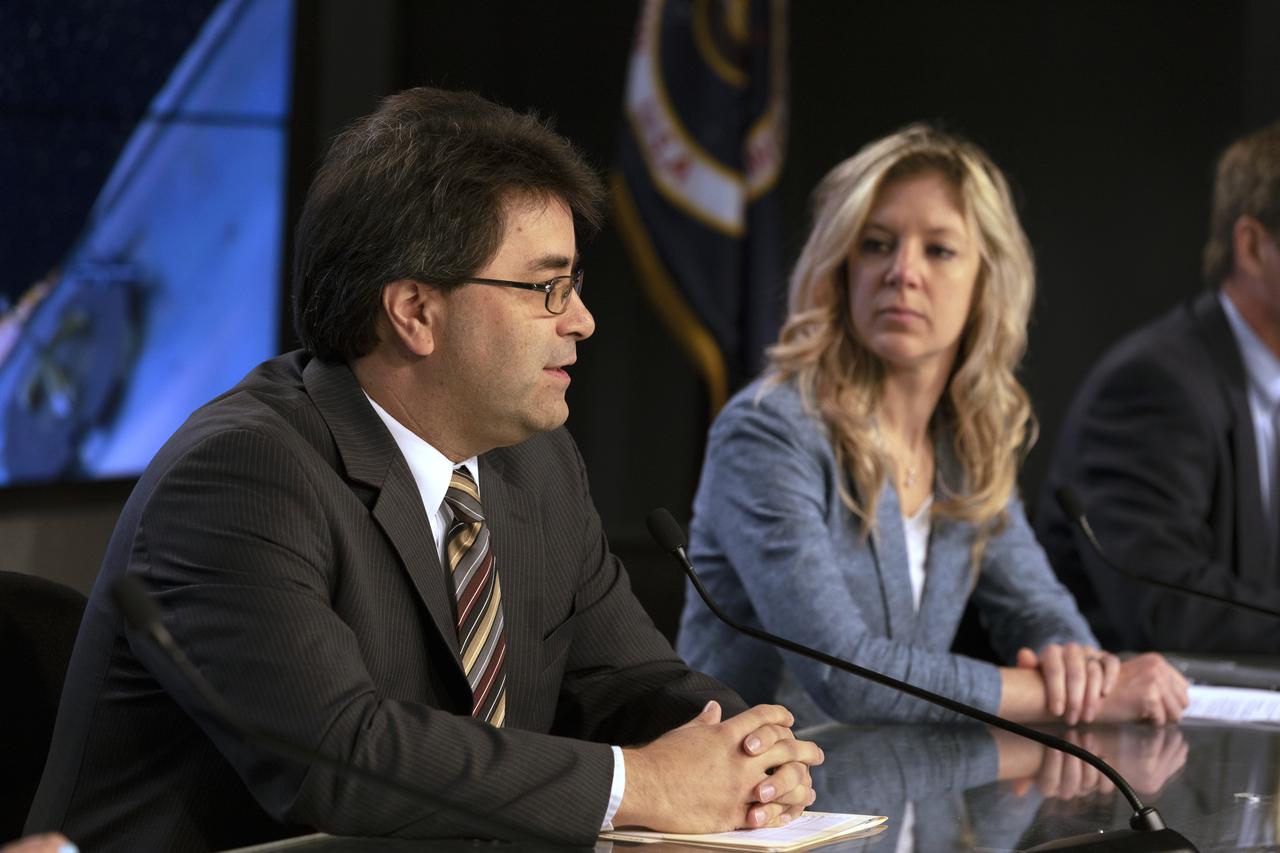
Bill Spetch, deputy manager of the International Space Station Transportation Integration Office at NASA’s Johnson Space Center in Houston, speaks during the prelaunch news conference for SpaceX’s 18th Commercial Resupply Services (CRS-18) mission to the station on July 24, 2019, at the agency’s Kennedy Space Center in Florida. At right is Jessica Jensen, director of Dragon mission management at SpaceX. The SpaceX Falcon 9 rocket and uncrewed Dragon spacecraft are scheduled to launch July 24, 2019, from Space Launch Complex 40 at Florida’s Cape Canaveral Air Force Station.
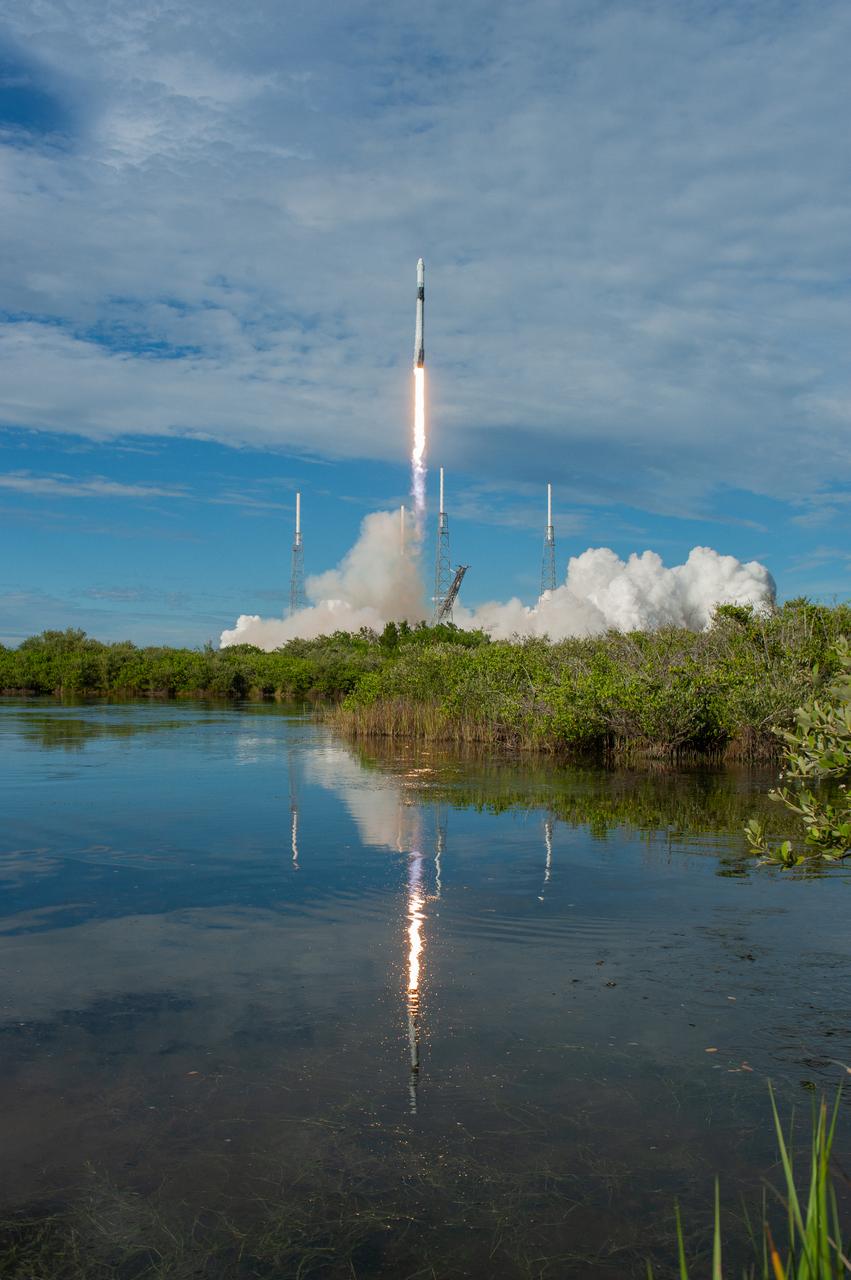
A SpaceX Falcon 9 rocket lifts off from Space Launch Complex 40 at Cape Canaveral Air Force Station in Florida at 6:01 p.m. EDT on July 25, 2019, carrying the Dragon spacecraft on the company's 18th Commercial Resupply Services (CRS-18) mission to the International Space Station. The uncrewed Dragon spacecraft will deliver about 5,000 pounds of science and research, crew supplies and vehicle hardware to the orbiting laboratory.
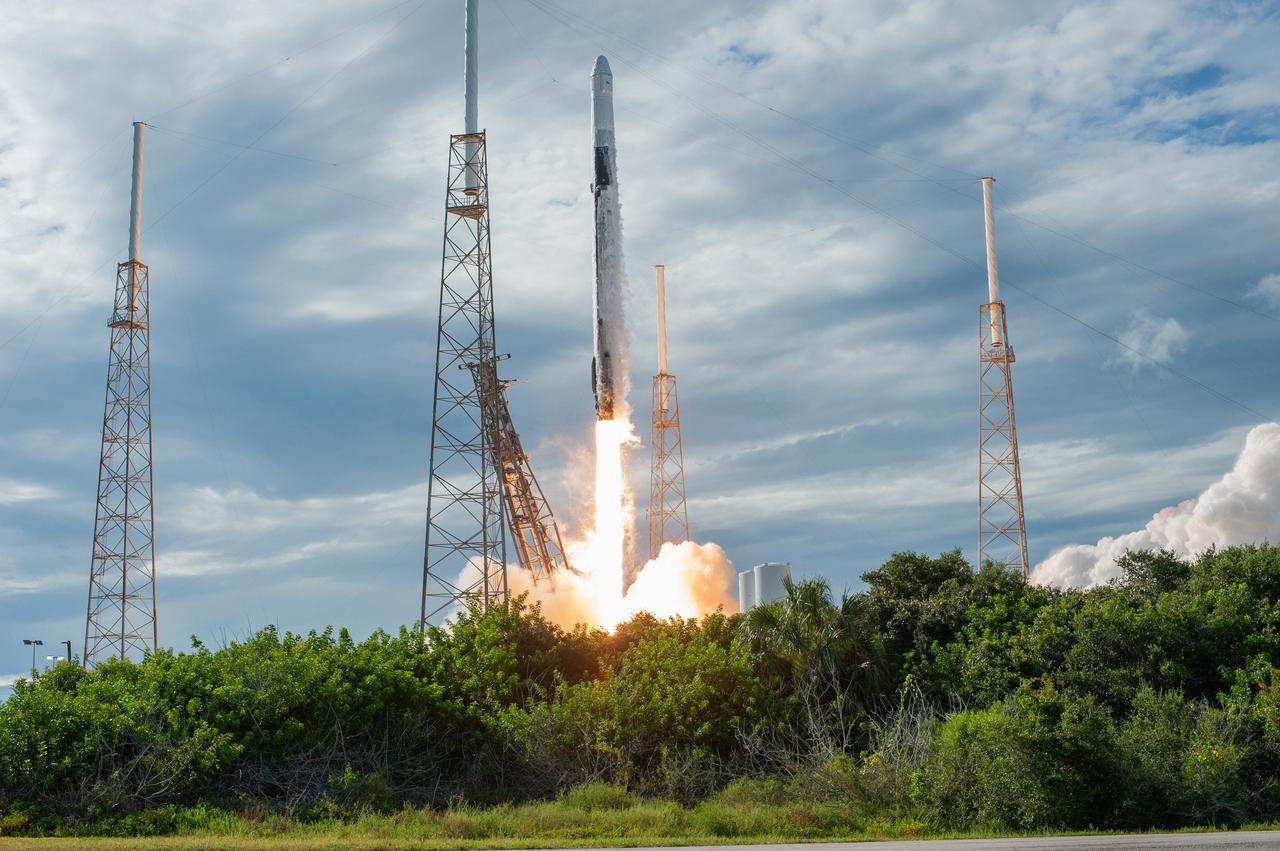
A SpaceX Falcon 9 rocket lifts off from Space Launch Complex 40 at Cape Canaveral Air Force Station in Florida at 6:01 p.m. EDT on July 25, 2019, carrying the Dragon spacecraft on the company's 18th Commercial Resupply Services (CRS-18) mission to the International Space Station. The uncrewed Dragon spacecraft will deliver about 5,000 pounds of science and research, crew supplies and vehicle hardware to the orbiting laboratory.
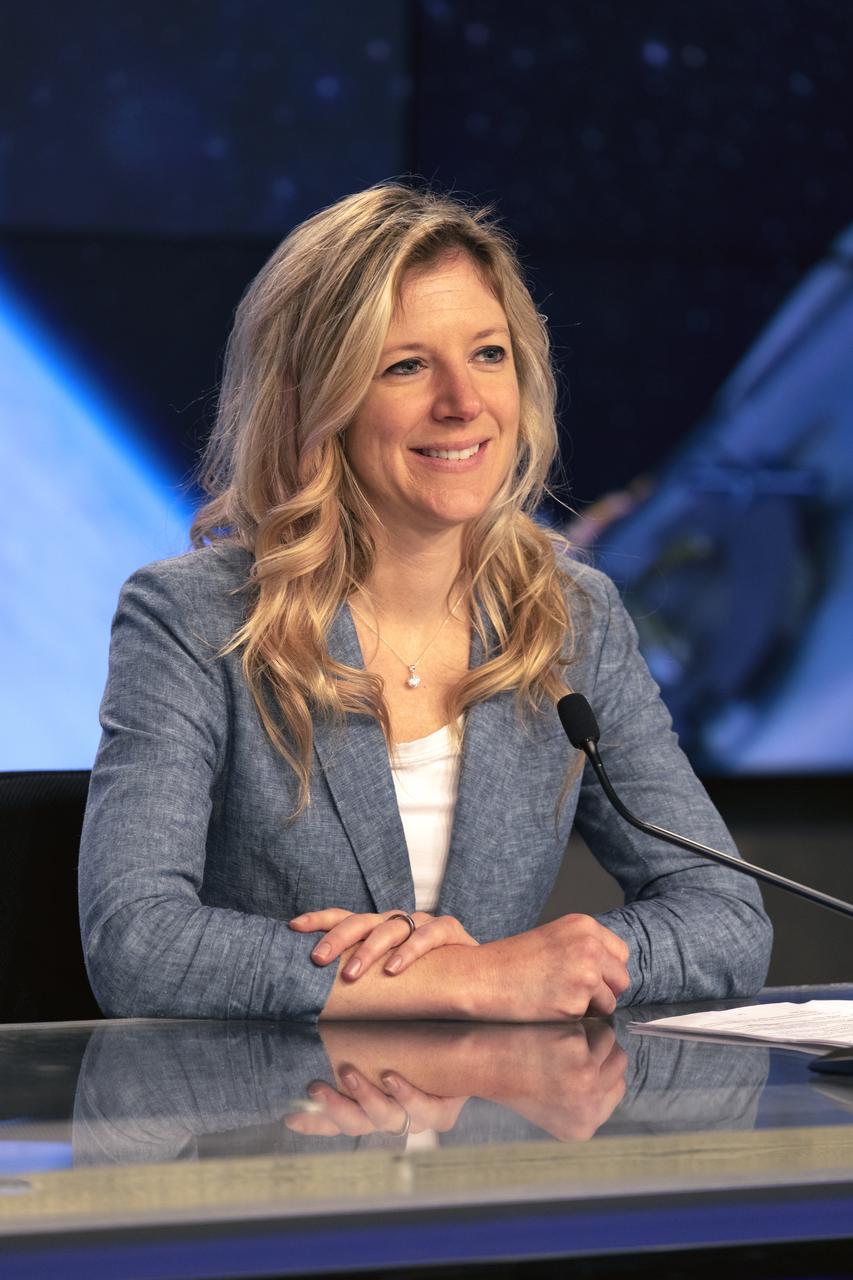
Jessica Jensen, director of Dragon mission management at SpaceX, speaks during the prelaunch news conference for the company's 18th Commercial Resupply Services (CRS-18) mission to the International Space Station, July 24, 2019, at NASA’s Kennedy Space Center in Florida. The SpaceX Falcon 9 rocket and uncrewed Dragon spacecraft are scheduled to launch July 24, 2019, from Space Launch Complex 40 at Florida’s Cape Canaveral Air Force Station.
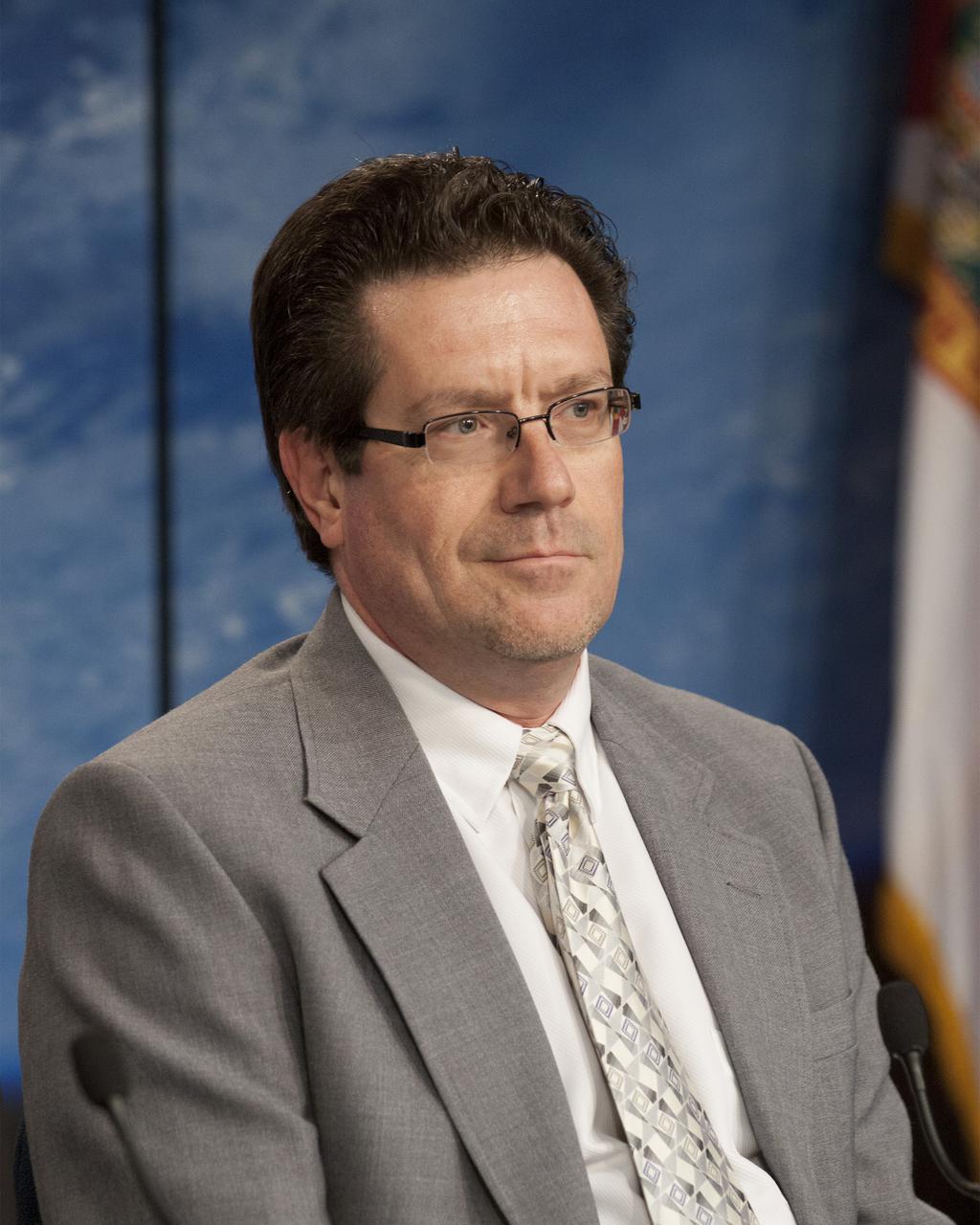
CAPE CANAVERAL, Fla. - Media attending a pre-launch news conference at the Kennedy Space Center, Fla. heard from Joel Tumbiolo, launch weather officer for the 45th Weather Squadron at Cape Canaveral Air Force Station. Scheduled for launch March 1 atop a Falcon 9 rocket, the SpaceX Dragon capsule will be making its third trip to the space station. The mission is the second of 12 SpaceX flights contracted by NASA to resupply the orbiting laboratory. For more information, visit http:__www.nasa.gov_mission_pages_station_structure_launch_spacex2-feature.html Photo credit: NASA_Kim Shiflett

0699: At the Gagarin Cosmonaut Training Center in Star City, Russia, Expedition 40/41 Flight Engineer Alexander Gerst of the European Space Agency answers a reporter’s question May 8 during a pre-launch news conference. Gerst, Soyuz Commander Max Suraev of the Russian Federal Space Agency (Roscosmos) and Flight Engineer Reid Wiseman of NASA are preparing for launch May 29, Kazakh time, from the Baikonur Cosmodrome in Kazakhstan on the Soyuz TMA-13M spacecraft for a 5 ½ month mission on the International Space Station. NASA/Stephanie Stoll
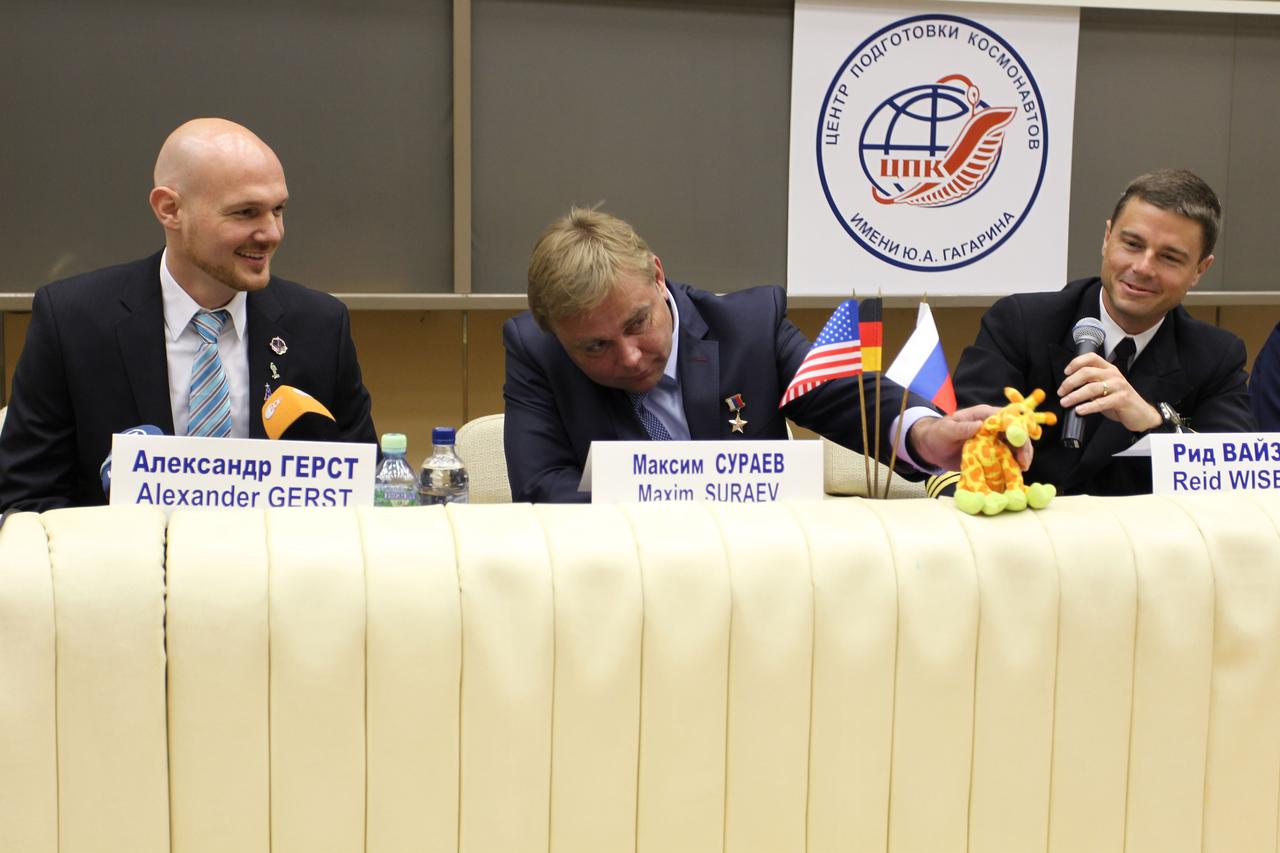
0687: At the Gagarin Cosmonaut Training Center in Star City, Russia, Expedition 40/41 Soyuz Commander Max Suraev of the Russian Federal Space Agency (Roscosmos, center) plays with a toy giraffe at the crew’s pre-launch news conference May 8 while his crewmates, Alexander Gerst of the European Space Agency (left) and Reid Wiseman of NASA (right) look on. The giraffe, which belongs to Wiseman’s daughter, will fly as a “zero-G” mascot above the heads of the crew in the Soyuz TMA-13M spacecraft when they launch May 29, Kazakh time, from the Baikonur Cosmodrome in Kazakhstan for a 5 ½ month mission on the International Space Station. NASA/Stephanie Stoll
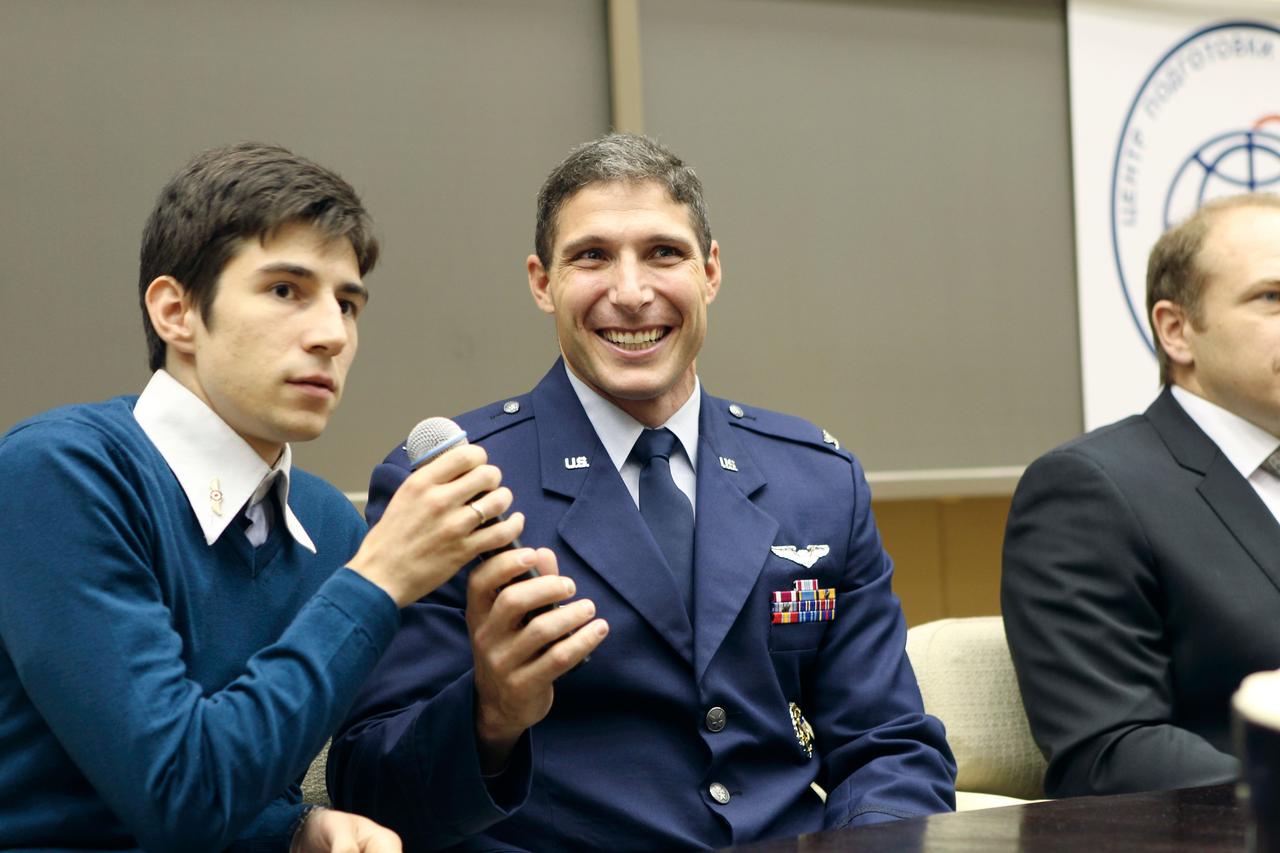
At the Gagarin Cosmonaut Training Center in Star City, Russia, Expedition 37/38 Flight Engineer Michael Hopkins of NASA hands the microphone to an interpreters after answering a question from a reporter at a pre-launch news conference Sept. 6 as his crewmate, Soyuz Commander Oleg Kotov (right) looks on. Along with Flight Engineer Sergey Ryazanskiy, Hopkins and Kotov are preparing for their launch to the International Space Station from the Baikonur Cosmodrome in Kazakhstan on Sept. 26, Kazakh time, aboard the Soyuz TMA-10M spacecraft. NASA/Stephanie Stoll
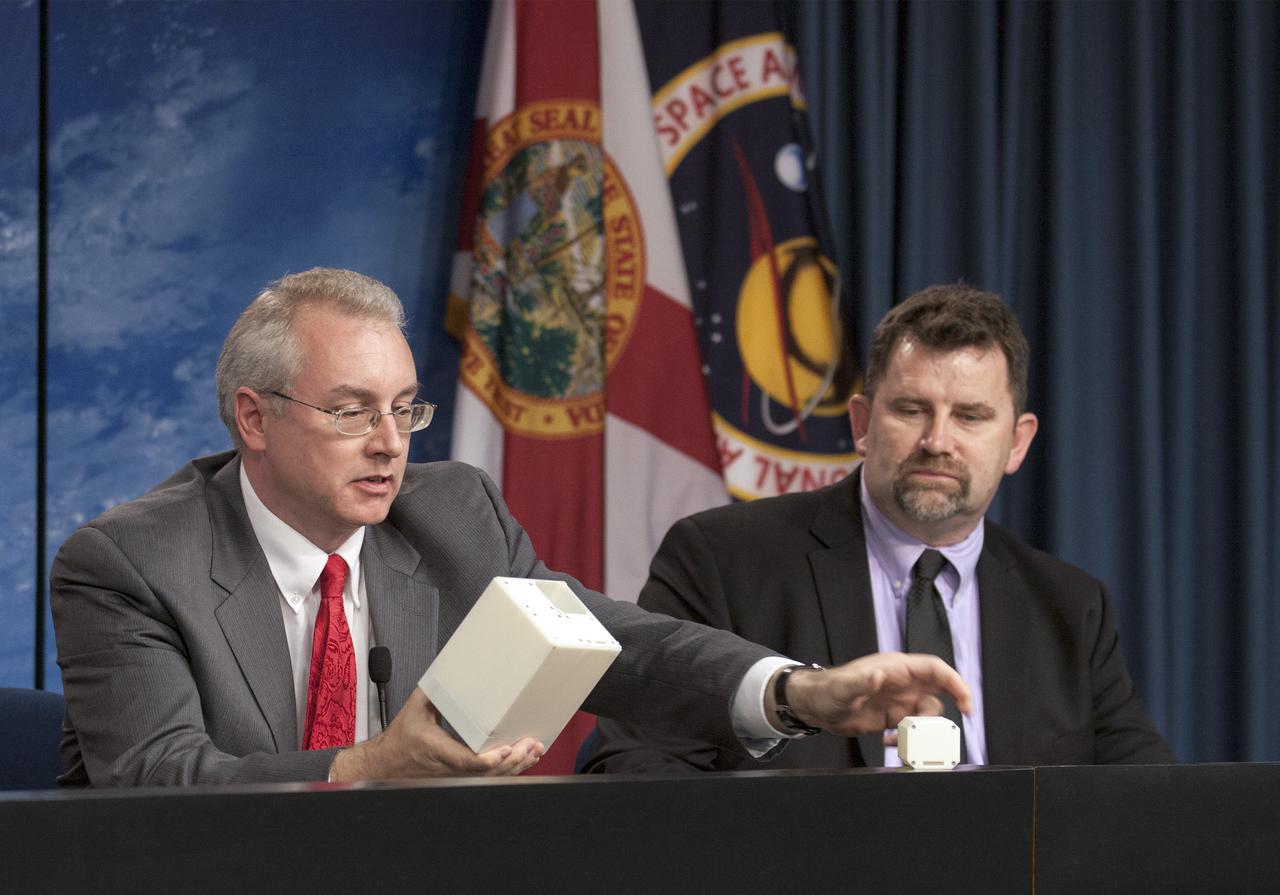
CAPE CANAVERAL, Fla. - Media attending a pre-launch news conference at the Kennedy Space Center, Fla. heard from Michael Johnson, chief technical officer for NanoRacks, who described experiments to be transported to the International Space Station on the SpaceX 2 mission. Looking on from the right is Michael Roberts, research scientist with the Center for Advancement of Science in Space. Scheduled for launch March 1 atop a Falcon 9 rocket, the SpaceX Dragon capsule will be making its third trip to the space station. The mission is the second of 12 SpaceX flights contracted by NASA to resupply the orbiting laboratory. For more information, visit http:__www.nasa.gov_mission_pages_station_structure_launch_spacex2-feature.html Photo credit: NASA_Kim Shiflett
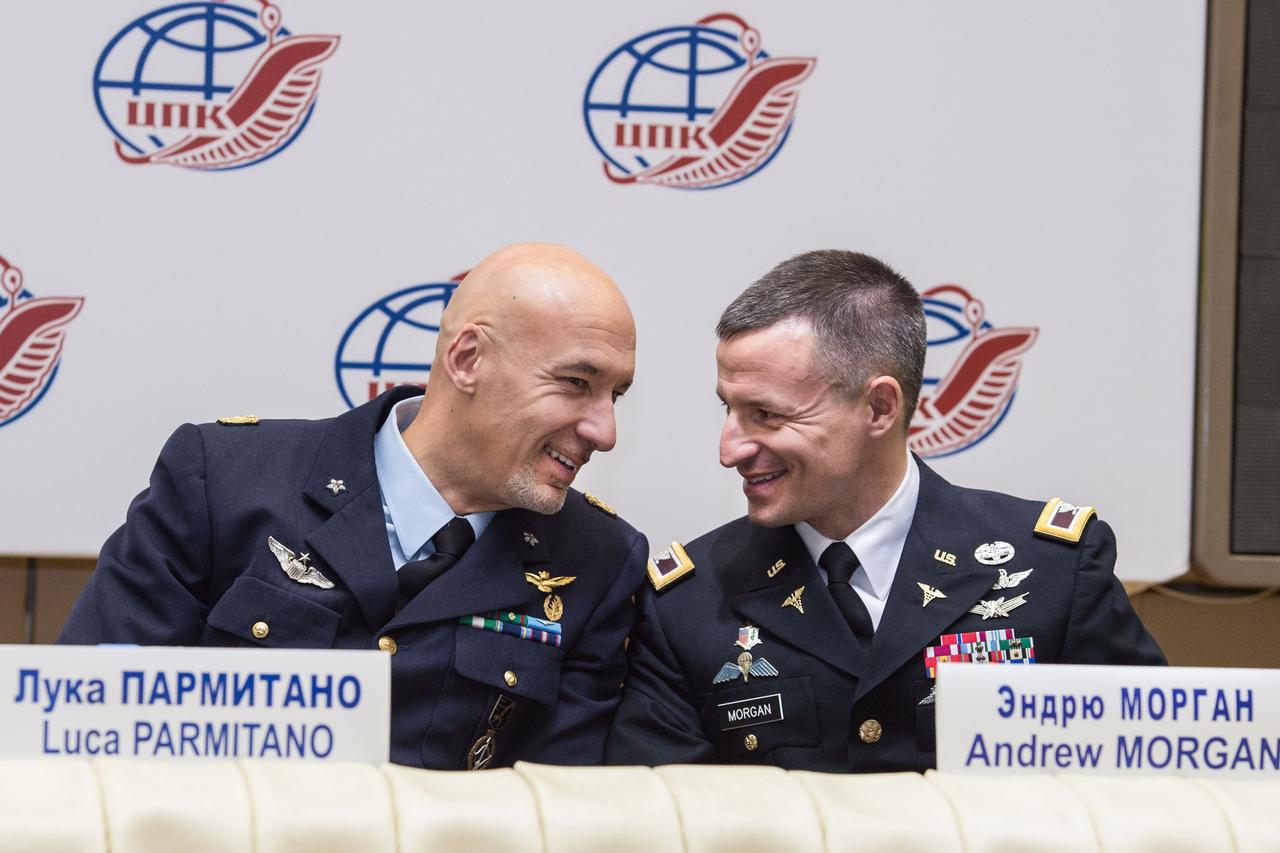
At the Gagarin Cosmonaut Training Center in Star City, Russia, Expedition 59 backup crewmembers Luca Parmitano of the European Space Agency (left) and Drew Morgan of NASA (right) exchange thoughts Feb. 21 during a pre-launch news conference. They and Alexander Skvortsov of Roscosmos are backups to the prime crewmembers, Nick Hague and Christina Koch of NASA and Alexey Ovchinin of Roscosmos, who will launch March 14, U.S. time, on the Soyuz MS-12 spacecraft from the Baikonur Cosmodrome in Kazakhstan for a six-and-a-half month mission on the International Space Station. Andrey Shelepin/Gagarin Cosmonaut Training Center
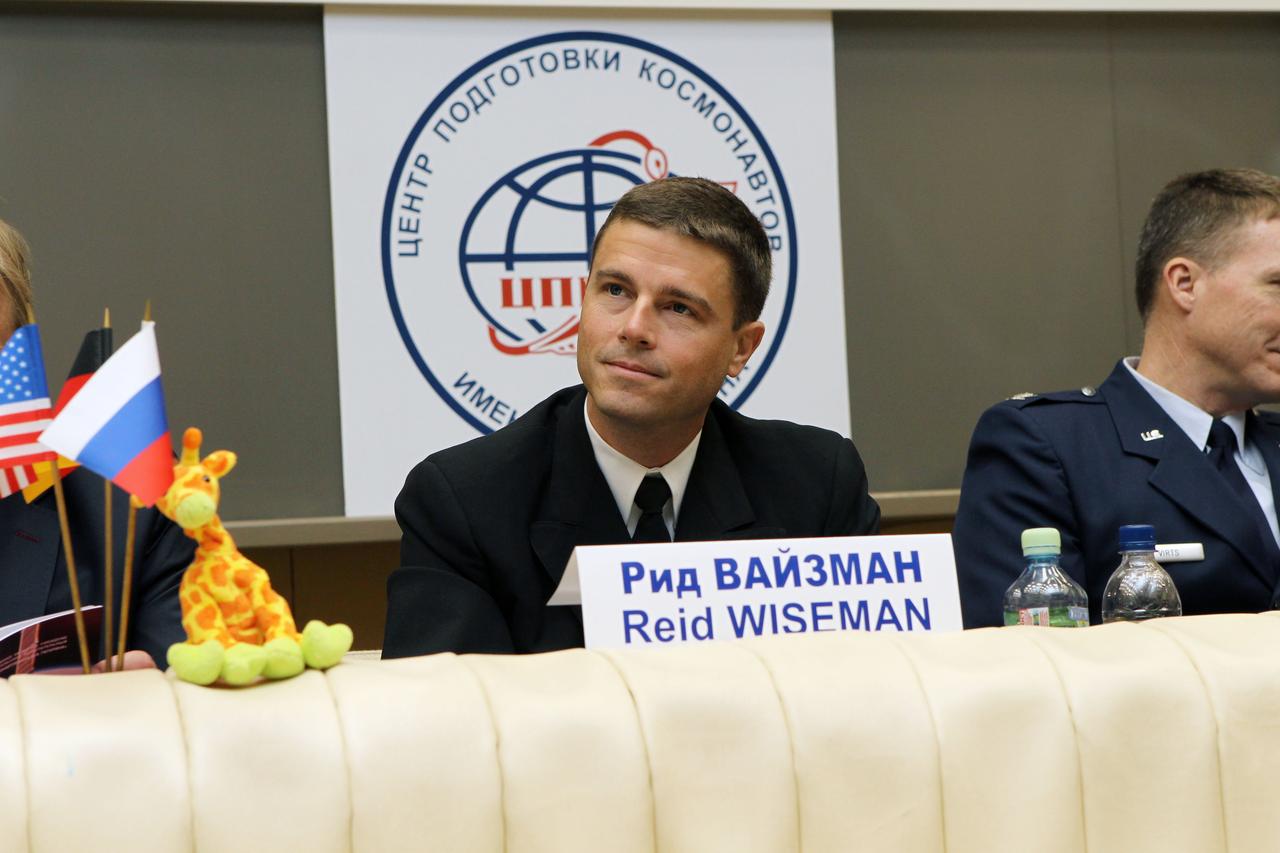
0704: At the Gagarin Cosmonaut Training Center in Star City, Russia, Expedition 40/41 Flight Engineer Reid Wiseman of NASA listens to a reporter’s question May 8 during a pre-launch news conference. Near him is a toy giraffe belonging to his daughter that will fly as a “zero-G” mascot above the heads of the crew in the Soyuz TMA-13M spacecraft when Wiseman, Flight Engineer Alexander Gerst of the European Space Agency and Soyuz Commander Max Suraev of the Russian Federal Space Agency (Roscosmos) launch May 29, Kazakh time, from the Baikonur Cosmodrome in Kazakhstan for a 5 ½ month mission on the International Space Station. NASA/Stephanie Stoll
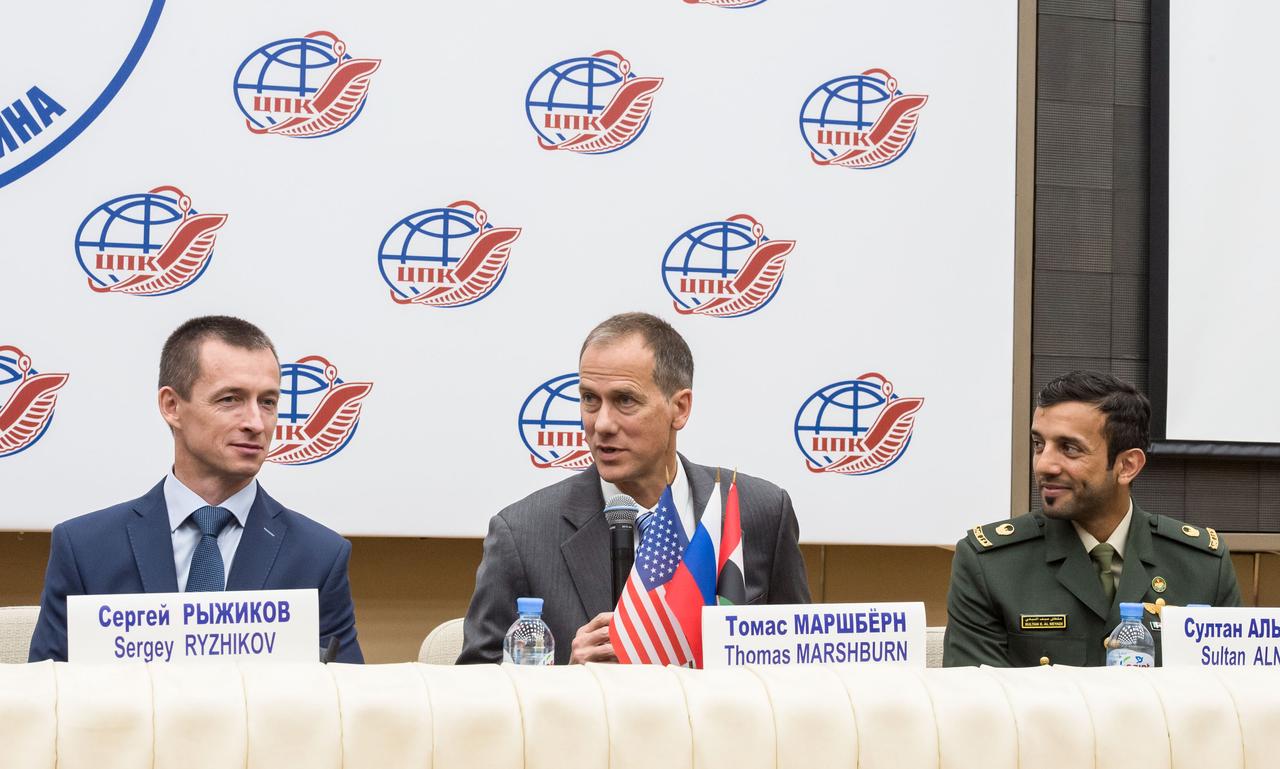
jsc2019e052157 - At the Gagarin Cosmonaut Training Center in Star City, Russia, Expedition 61 backup crewmembers Sergey Ryzhikov of Roscosmos (left), Tom Marshburn of NASA (center) and Sultan Al-Neyadi of the United Arab Emirates (right) answer reporters’ questions Sept. 5 as part of a pre-flight news conference. They are the backups to the prime crewmembers, Oleg Skripochka of Roscosmos, Jessica Meir of NASA and Hazzaa Ali Almansoori of the United Arab Emirates, who will launch Sept. 25 from the Baikonur Cosmodrome in Kazakhstan on the Soyuz MS-15 spacecraft for a mission on the International Space Station...Credit/Gagarin Cosmonaut Training Center.
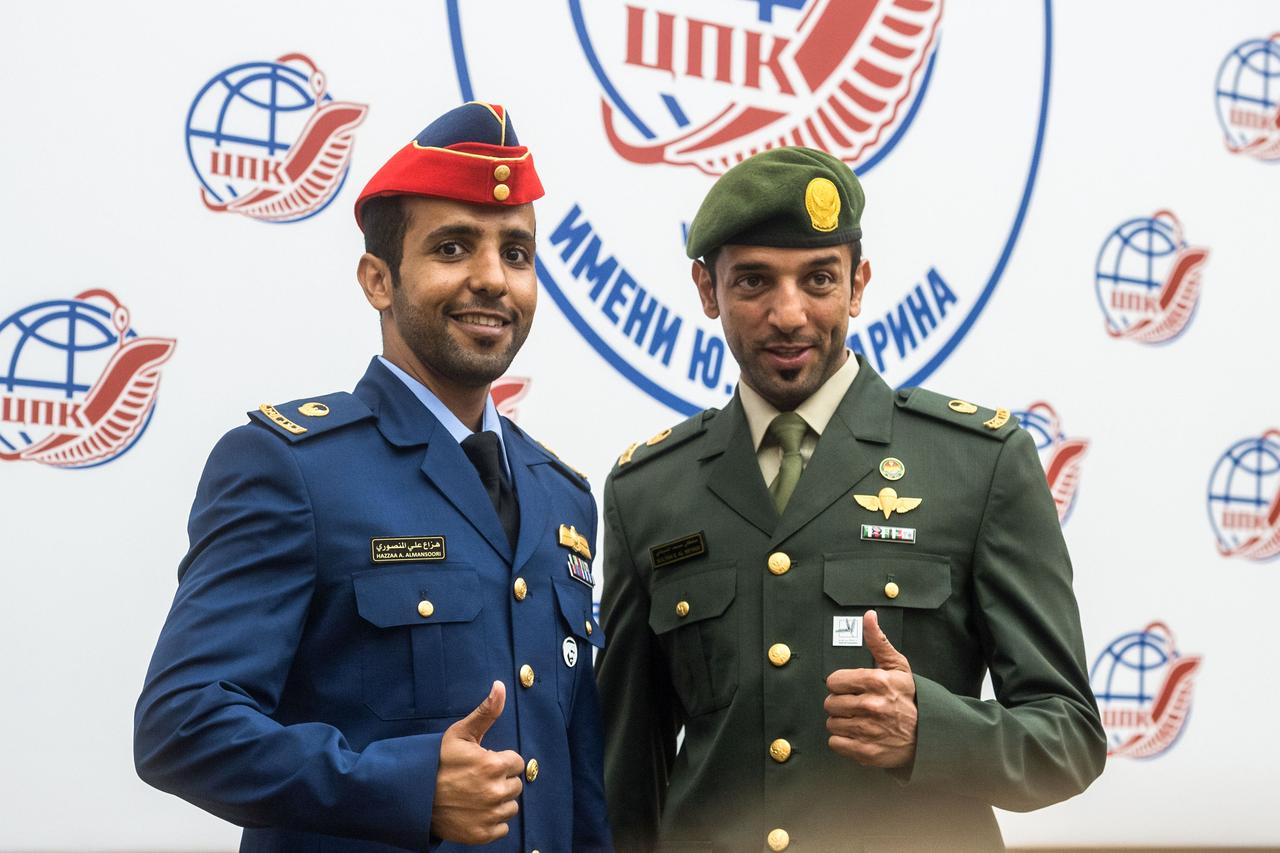
jsc2019e052152 - At the Gagarin Cosmonaut Training Center in Star City, Russia, prime spaceflight participant Hazzaa Ali Almansoori of the United Arab Emirates (left) and his backup, Sultan Al-Neyadi of the United Arab Emirates (right) pose for pictures Sept. 5 during a pre-flight news conference. Almansoori will launch with Expedition 61 crewmembers Oleg Skripochka of Roscosmos and Jessica Meir of NASA Sept. 25 from the Baikonur Cosmodrome in Kazakhstan on the Soyuz MS-15 spacecraft for a mission on the International Space Station...Credit/Gagarin Cosmonaut Training Center.
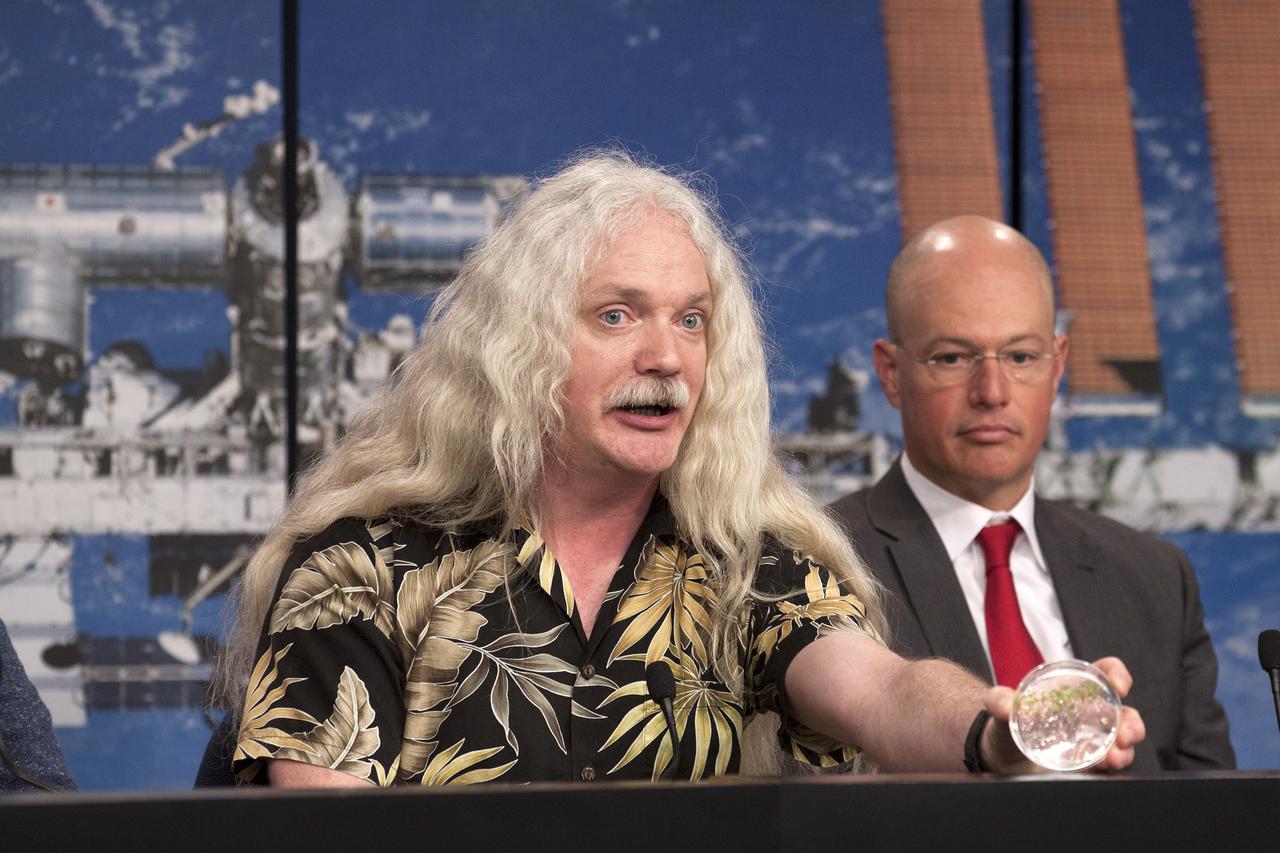
CAPE CANAVERAL, Fla. - Simon Gilroy, Ph.D., BRIC-17 Lead Investigator from the University of Wisconsin, describes a Petri dish similar to those that will be used to study plant development in a weightless environment. The briefing was for news media representatives attending a pre-launch news conference at the Kennedy Space Center, Fla. Looking on from the right is Marshall Porterfield, division director of the Life and Physical Sciences at NASA Headquarters. Scheduled for launch March 1 atop a Falcon 9 rocket, the SpaceX Dragon capsule will be making its third trip to the space station. The mission is the second of 12 SpaceX flights contracted by NASA to resupply the orbiting laboratory. For more information, visit http:__www.nasa.gov_mission_pages_station_structure_launch_spacex2-feature.html Photo credit: NASA_Kim Shiflett
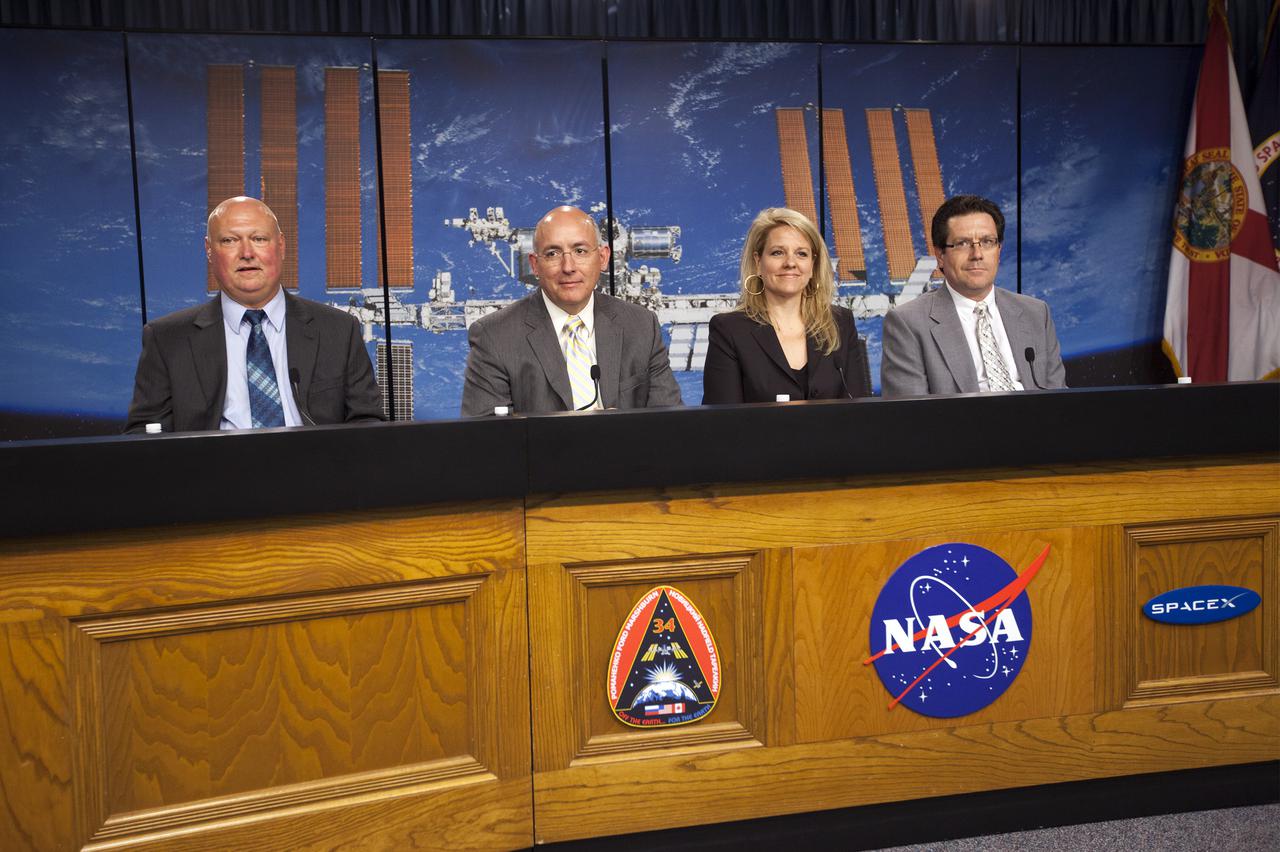
CAPE CANAVERAL, Fla. - Media attending a pre-launch news conference at the Kennedy Space Center, Fla. heard from officials who discussed payloads to be launched aboard a SpaceX Dragon capsule. From the left are: Mike Curie of NASA Public Affairs at the Kennedy Space Center, Mike Suffredini, NASA program manager for the International Space Station at the Johnson Space Center, Gwynne Shotwell, president of SpaceX, and Joel Tumbiolo, launch weather officer for the 45th Weather Squadron at Cape Canaveral Air Force Station. Scheduled for launch March 1 atop a Falcon 9 rocket, the SpaceX Dragon capsule will be making its third trip to the space station. The mission is the second of 12 SpaceX flights contracted by NASA to resupply the orbiting laboratory. For more information, visit http:__www.nasa.gov_mission_pages_station_structure_launch_spacex2-feature.html Photo credit: NASA_Kim Shiflett
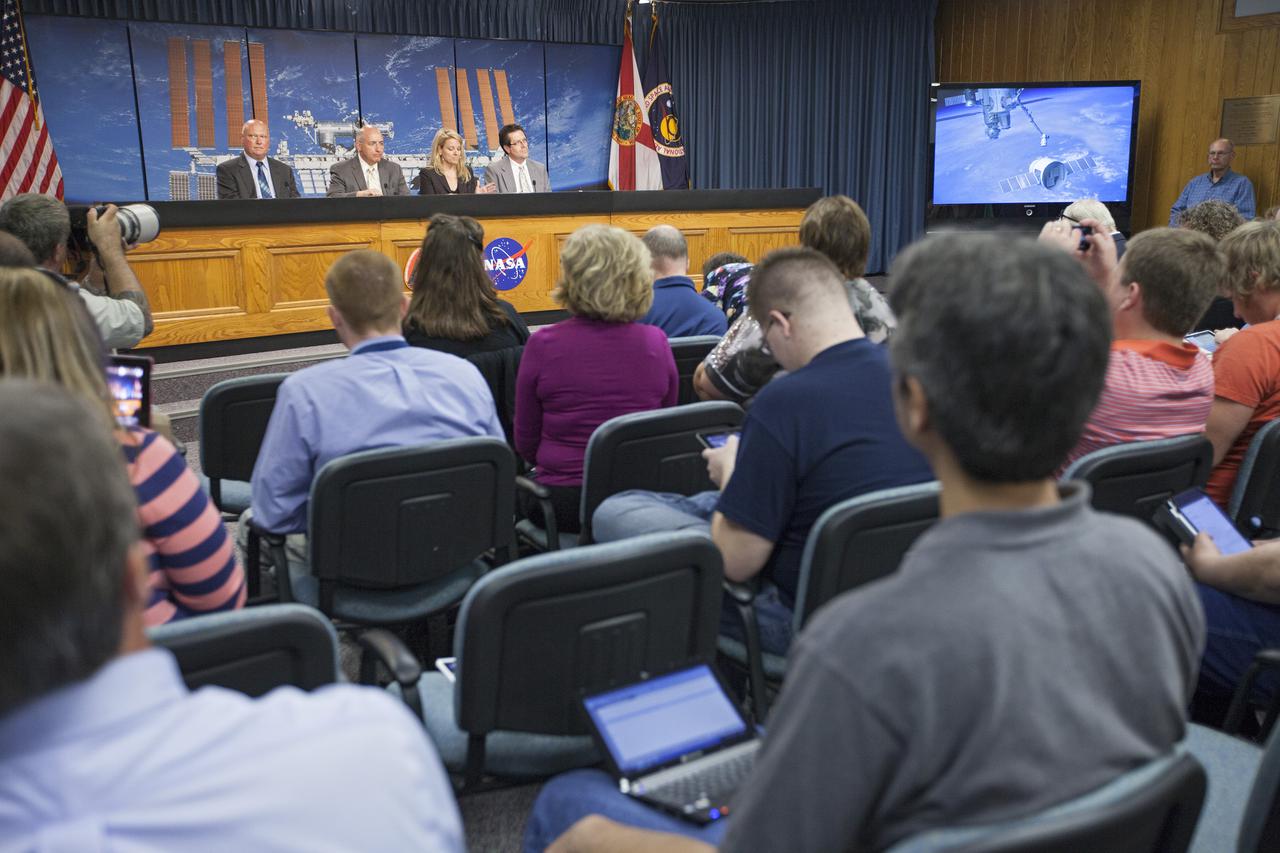
CAPE CANAVERAL, Fla. - Media attending a pre-launch news conference at the Kennedy Space Center, Fla. heard from officials who discussed payloads to be launched aboard a SpaceX Dragon capsule. From the left are: Mike Curie of NASA Public Affairs at the Kennedy Space Center, Mike Suffredini, NASA program manager for the International Space Station at the Johnson Space Center, Gwynne Shotwell, president of SpaceX, and Joel Tumbiolo, launch weather officer for the 45th Weather Squadron at Cape Canaveral Air Force Station. Scheduled for launch March 1 atop a Falcon 9 rocket, the SpaceX Dragon capsule will be making its third trip to the space station. The mission is the second of 12 SpaceX flights contracted by NASA to resupply the orbiting laboratory. For more information, visit http:__www.nasa.gov_mission_pages_station_structure_launch_spacex2-feature.html Photo credit: NASA_Kim Shiflett
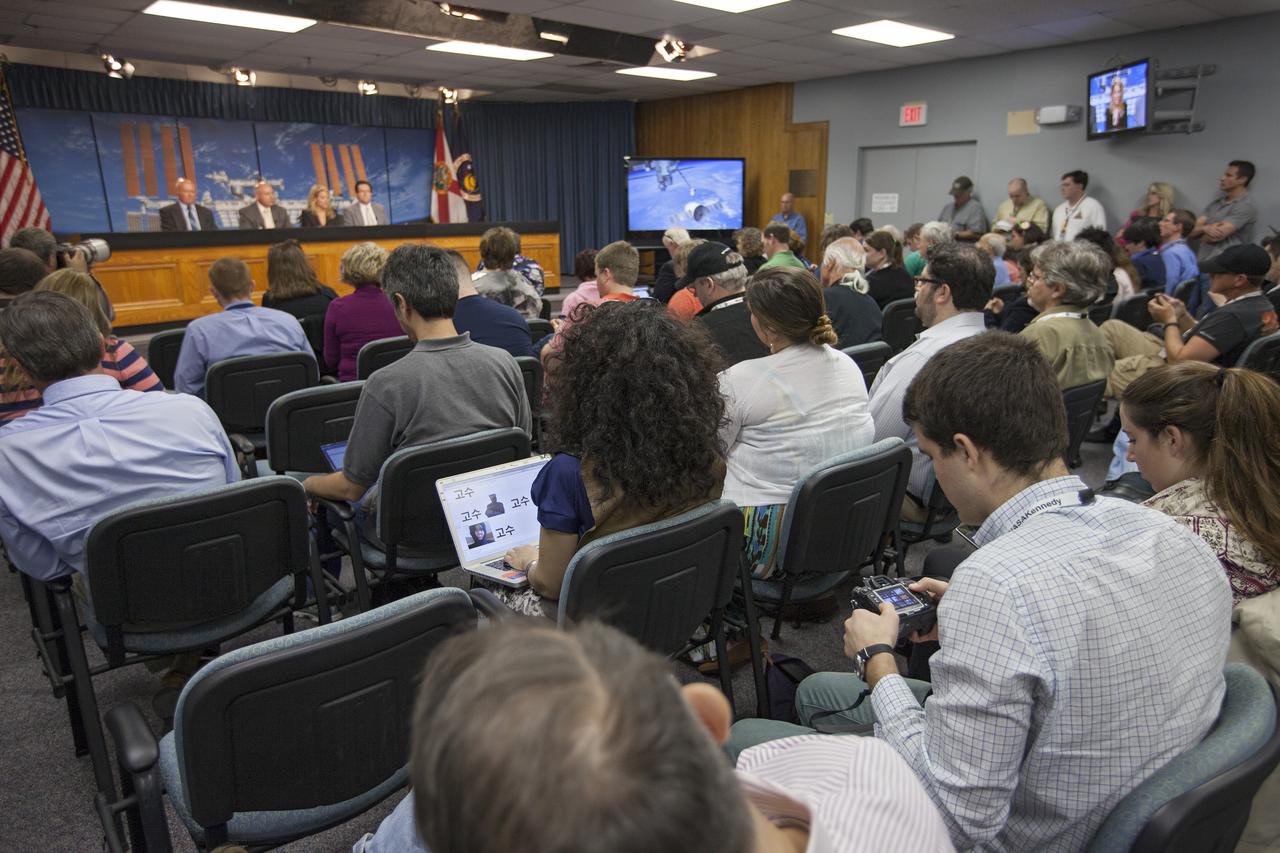
CAPE CANAVERAL, Fla. - Media attending a pre-launch news conference at the Kennedy Space Center, Fla. heard from officials who discussed payloads to be launched aboard a SpaceX Dragon capsule. From the left are: Mike Curie of NASA Public Affairs at the Kennedy Space Center, Mike Suffredini, NASA program manager for the International Space Station at the Johnson Space Center, Gwynne Shotwell, president of SpaceX, and Joel Tumbiolo, launch weather officer for the 45th Weather Squadron at Cape Canaveral Air Force Station. Scheduled for launch March 1 atop a Falcon 9 rocket, the SpaceX Dragon capsule will be making its third trip to the space station. The mission is the second of 12 SpaceX flights contracted by NASA to resupply the orbiting laboratory. For more information, visit http:__www.nasa.gov_mission_pages_station_structure_launch_spacex2-feature.html Photo credit: NASA_Kim Shiflett
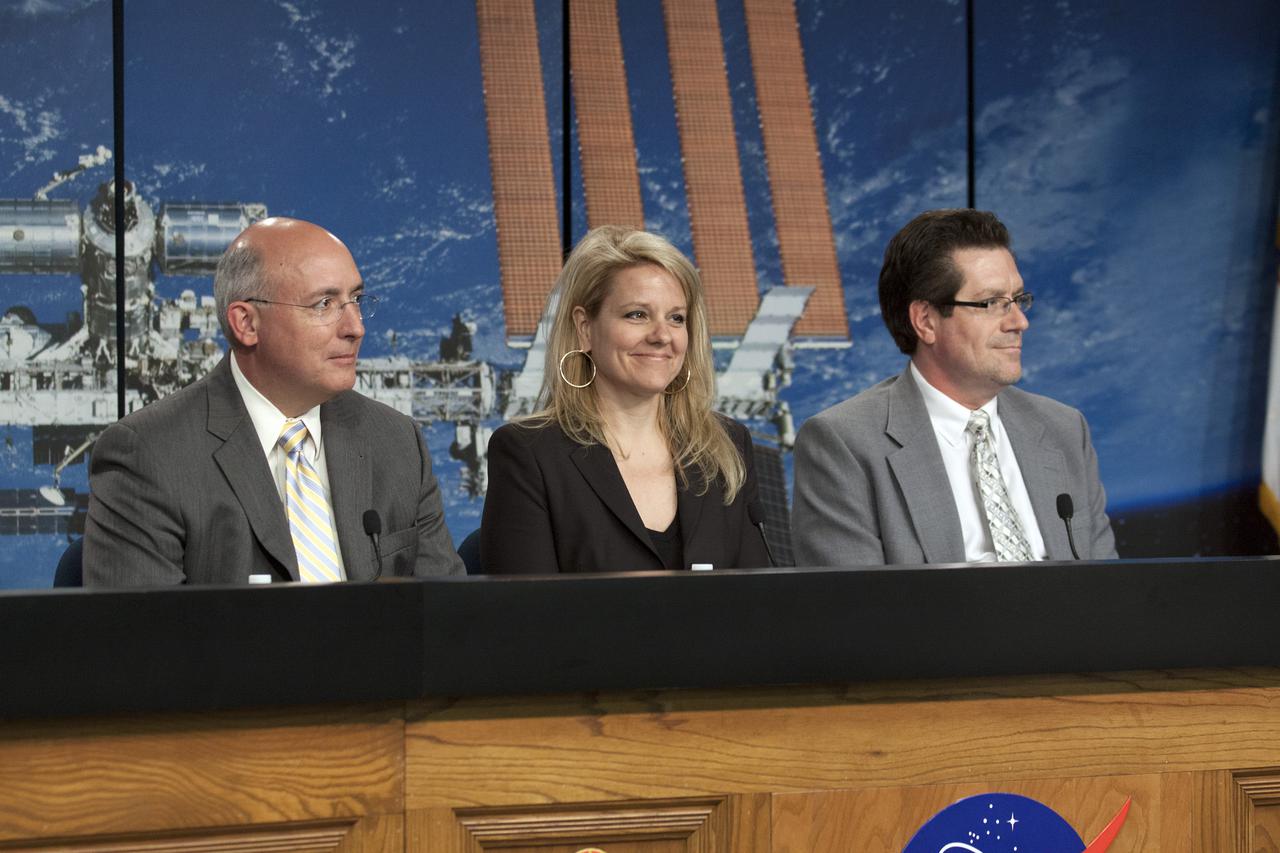
CAPE CANAVERAL, Fla. - Media attending a pre-launch news conference at the Kennedy Space Center, Fla. heard from officials who discussed payloads to be launched aboard a SpaceX Dragon capsule. From the left are: Mike Suffredini, NASA program manager for the International Space Station at the Johnson Space Center, Gwynne Shotwell, president of SpaceX, and Joel Tumbiolo, launch weather officer for the 45th Weather Squadron at Cape Canaveral Air Force Station. Scheduled for launch March 1 atop a Falcon 9 rocket, the SpaceX Dragon capsule will be making its third trip to the space station. The mission is the second of 12 SpaceX flights contracted by NASA to resupply the orbiting laboratory. For more information, visit http:__www.nasa.gov_mission_pages_station_structure_launch_spacex2-feature.html Photo credit: NASA_Kim Shiflett
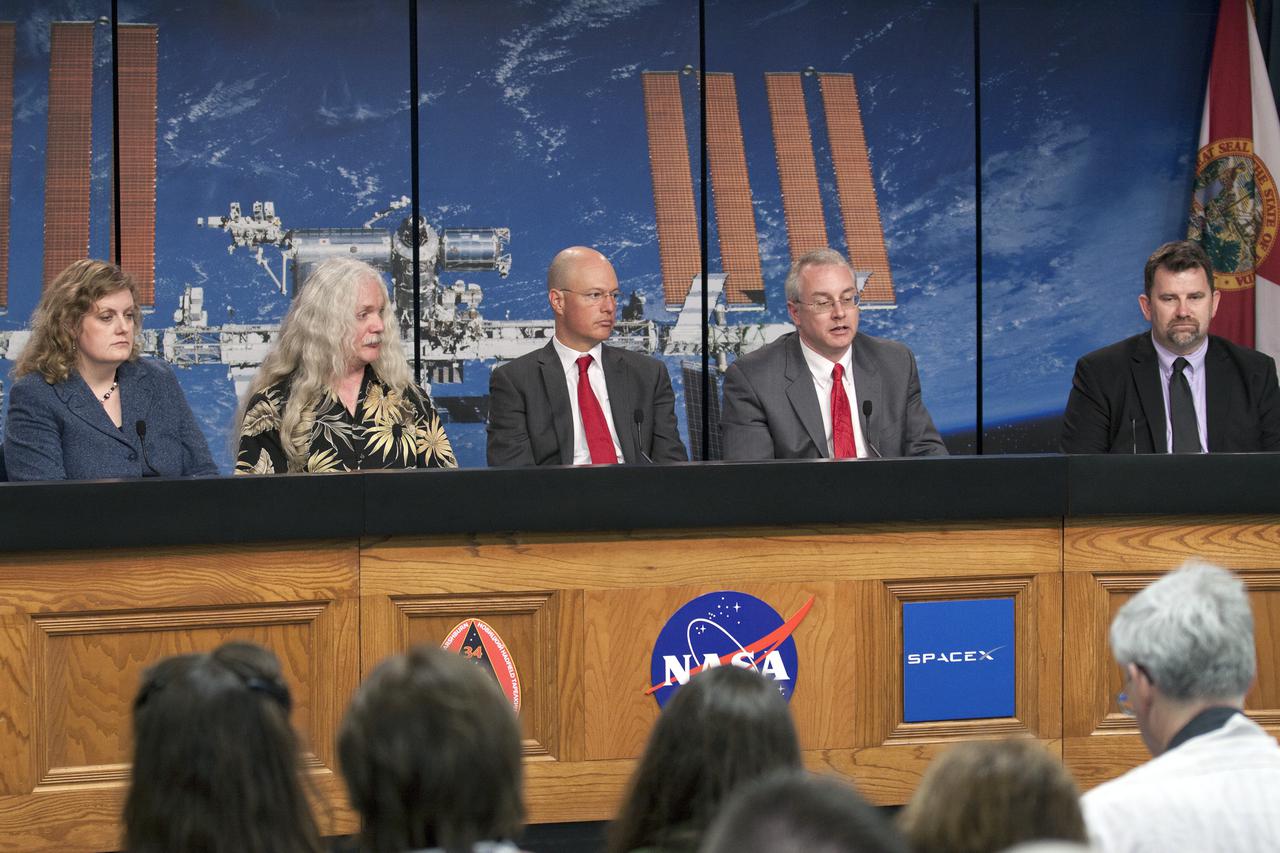
CAPE CANAVERAL, Fla. - Media attending a pre-launch news conference at the Kennedy Space Center, Fla. heard from officials who discussed payloads to be launched aboard a SpaceX Dragon capsule. From the left are: Julie Robinson, NASA program scientist for the International Space Station, Simon Gilroy, Ph.D., BRIC-17 Lead Investigator from the University of Wisconsin, Marshall Porterfield, division director of the Life and Physical Sciences at NASA Headquarters, Michael Johnson, chief technical officer for NanoRacks, and Michael Roberts, research scientist with the Center for Advancement of Science in Space. Scheduled for launch March 1 atop a Falcon 9 rocket, the SpaceX Dragon capsule will be making its third trip to the space station. The mission is the second of 12 SpaceX flights contracted by NASA to resupply the orbiting laboratory. For more information, visit http:__www.nasa.gov_mission_pages_station_structure_launch_spacex2-feature.html Photo credit: NASA_Kim Shiflett
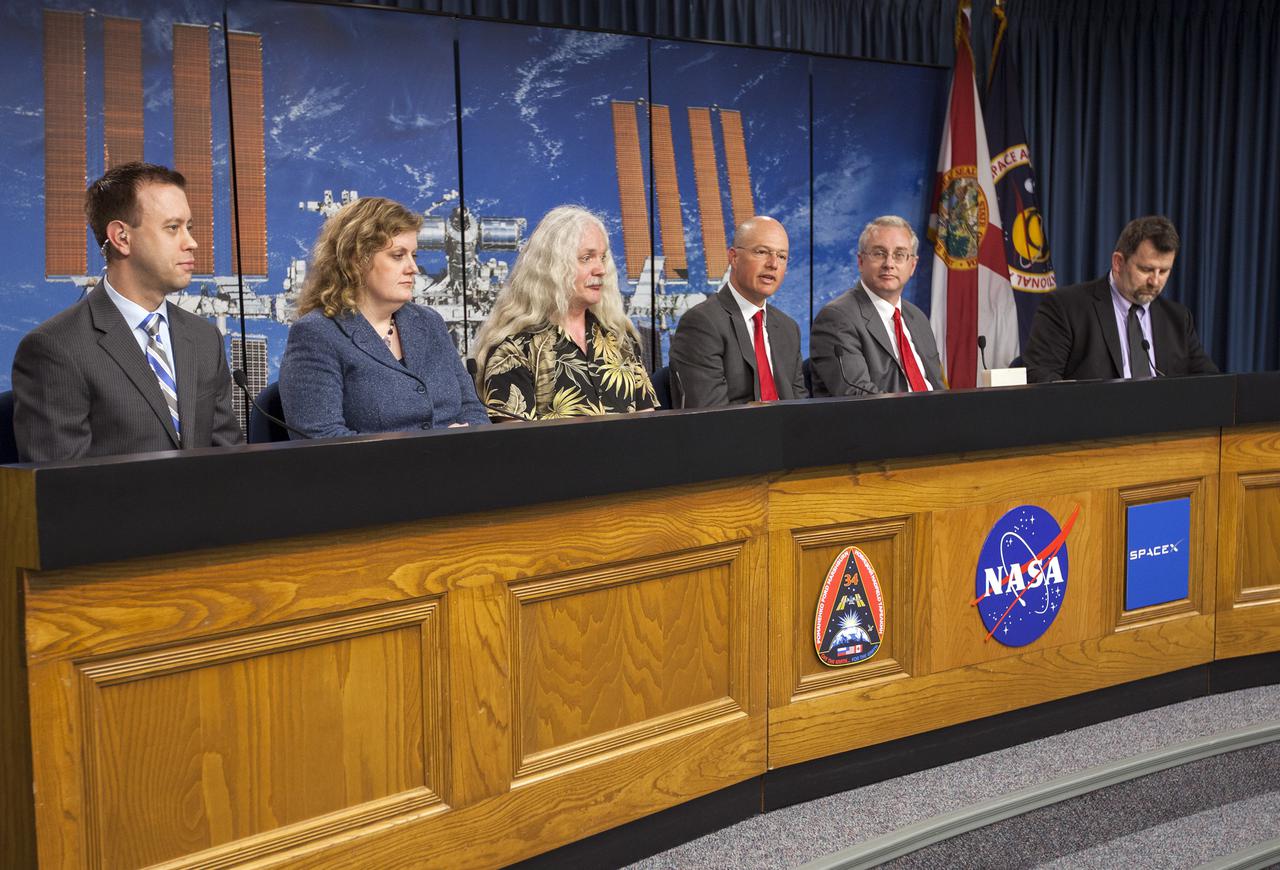
CAPE CANAVERAL, Fla. - Media attending a pre-launch news conference at the Kennedy Space Center, Fla. heard from officials who discussed payloads to be launched aboard a SpaceX Dragon capsule. From the left are: Josh Byerly of NASA Public Affairs at the Johnson Space Center, Julie Robinson, NASA program scientist for the International Space Station, Simon Gilroy, Ph.D., BRIC-17 Lead Investigator from the University of Wisconsin, Marshall Porterfield, division director of the Life and Physical Sciences at NASA Headquarters, Michael Johnson, chief technical officer for NanoRacks, and Michael Roberts, research scientist with the Center for Advancement of Science in Space. Scheduled for launch March 1 atop a Falcon 9 rocket, the SpaceX Dragon capsule will be making its third trip to the space station. The mission is the second of 12 SpaceX flights contracted by NASA to resupply the orbiting laboratory. For more information, visit http:__www.nasa.gov_mission_pages_station_structure_launch_spacex2-feature.html Photo credit: NASA_Kim Shiflett
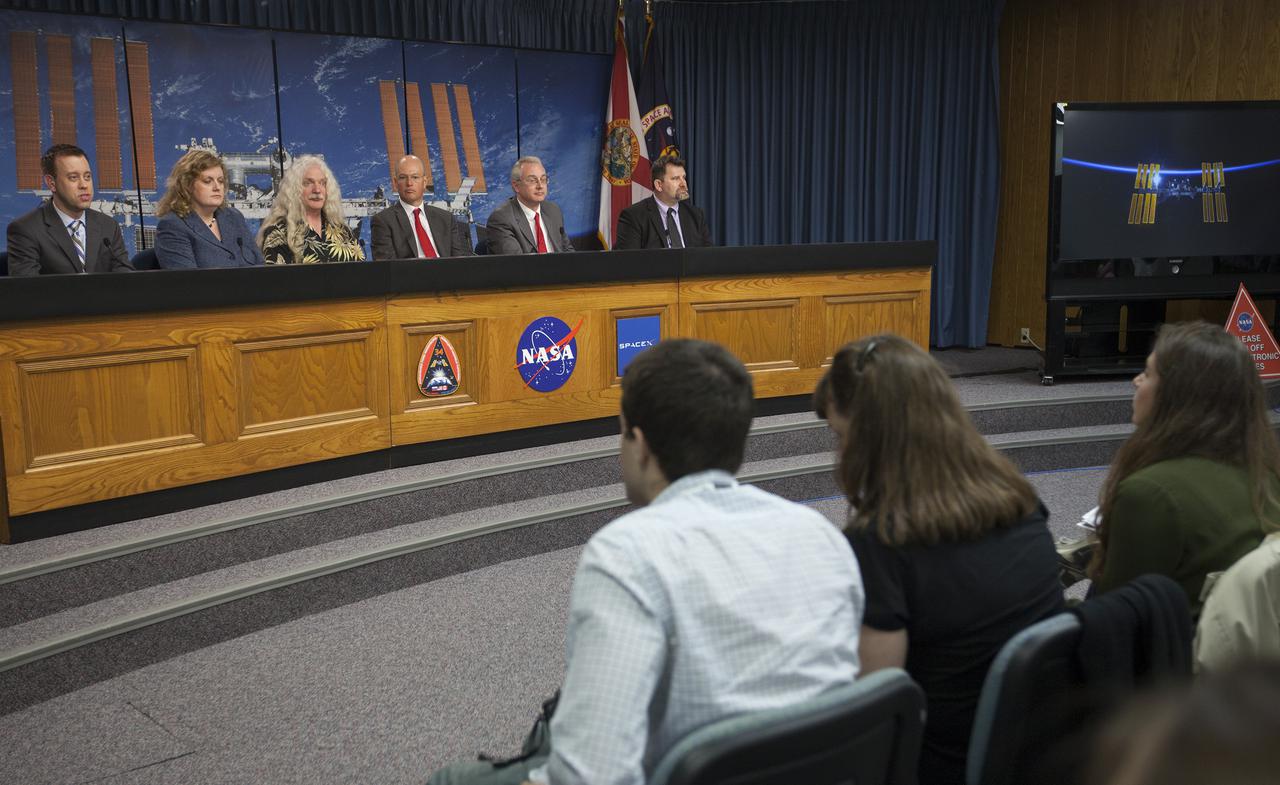
CAPE CANAVERAL, Fla. - Media attending a pre-launch news conference at the Kennedy Space Center, Fla. heard from officials who discussed payloads to be launched aboard a SpaceX Dragon capsule. From the left are: Josh Byerly of NASA Public Affairs at the Johnson Space Center, Julie Robinson, NASA program scientist for the International Space Station, Simon Gilroy, Ph.D., BRIC-17 Lead Investigator from the University of Wisconsin, Marshall Porterfield, division director of the Life and Physical Sciences at NASA Headquarters, Michael Johnson, chief technical officer for NanoRacks, and Michael Roberts, research scientist with the Center for Advancement of Science in Space. Scheduled for launch March 1 atop a Falcon 9 rocket, the SpaceX Dragon capsule will be making its third trip to the space station. The mission is the second of 12 SpaceX flights contracted by NASA to resupply the orbiting laboratory. For more information, visit http:__www.nasa.gov_mission_pages_station_structure_launch_spacex2-feature.html Photo credit: NASA_Kim Shiflett

At the Gagarin Cosmonaut Training Center (GCTC) in Star City, Russia, Expedition 35-36 Flight Engineer Chris Cassidy of NASA (far left) answers a question during a pre-launch news conference March 7. From Cassidy’s left down the row looking on are Flight Engineer Alexander Misurkin, Soyuz Commander Pavel Vinogradov, GCTC Director Sergei Krikalev, backup Soyuz Commander Oleg Kotov, backup Flight Engineer Sergey Ryazankiy, backup Flight Engineer Michael Hopkins of NASA and an unidentified interpreter. Cassidy, Vinogradov and Misurkin are in the final stages of training for their launch to the International Space Station March 29, Kazakh time, in their Soyuz TMA-08M spacecraft from the Baikonur Cosmodrome in Kazakhstan. NASA / Stephanie Stoll