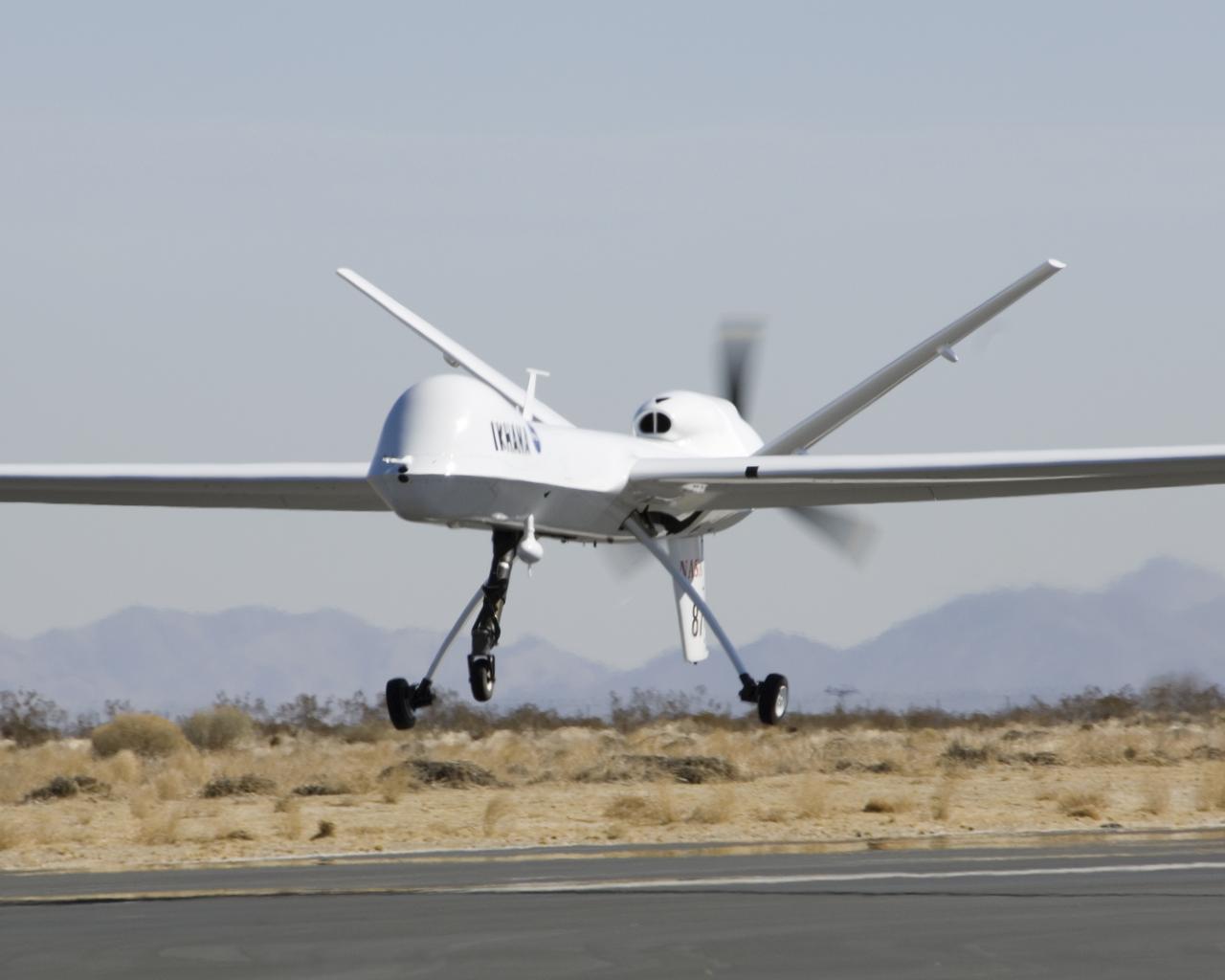
NASA's Ikhana unmanned science demonstration aircraft, a civil variant of General Atomics' Predator B, lifts off from Grey Butte airfield in Southern California.
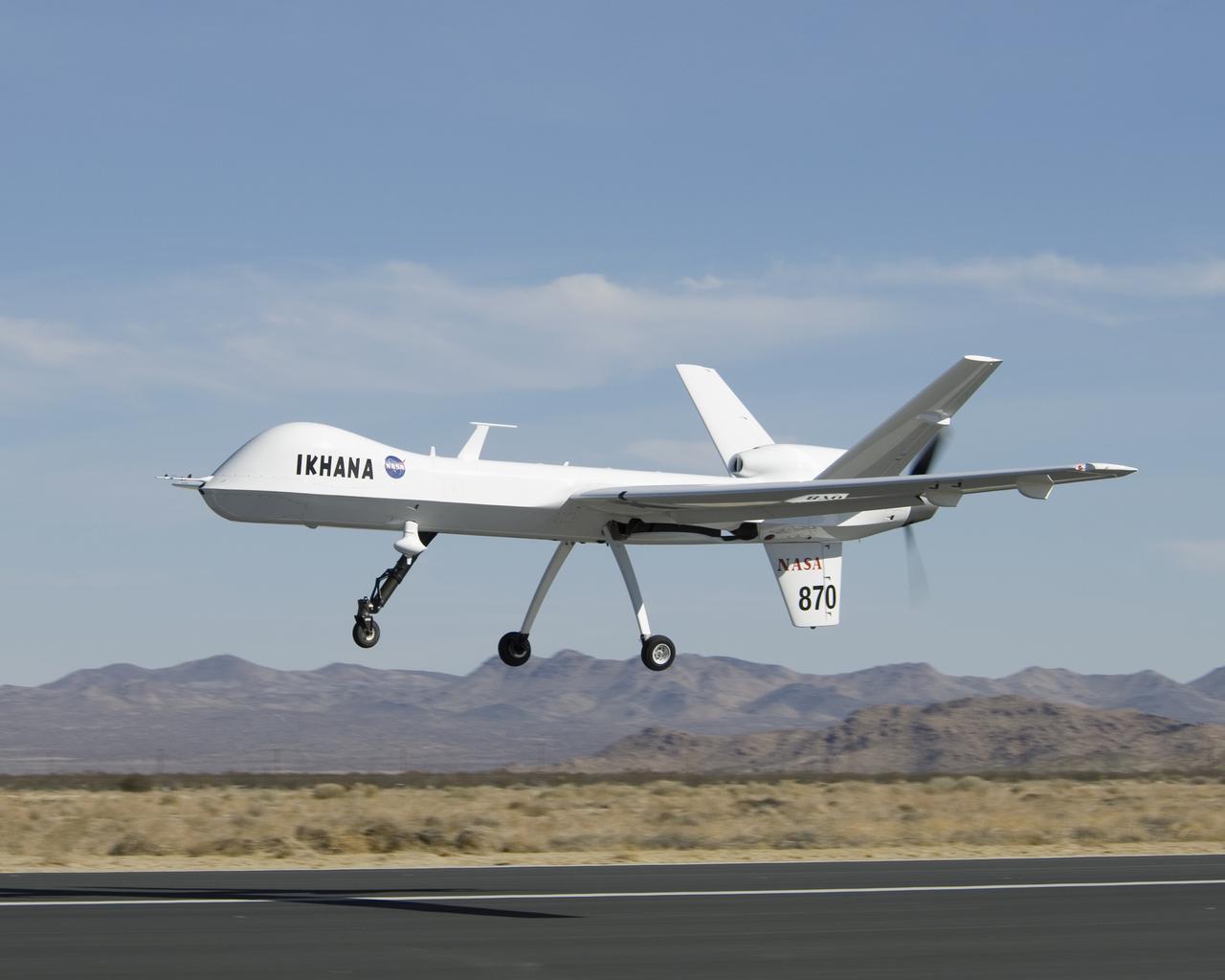
NASA's Ikhana unmanned science demonstration aircraft, a civil variant of General Atomics' Predator B, lifts off from Grey Butte airfield in Southern California.
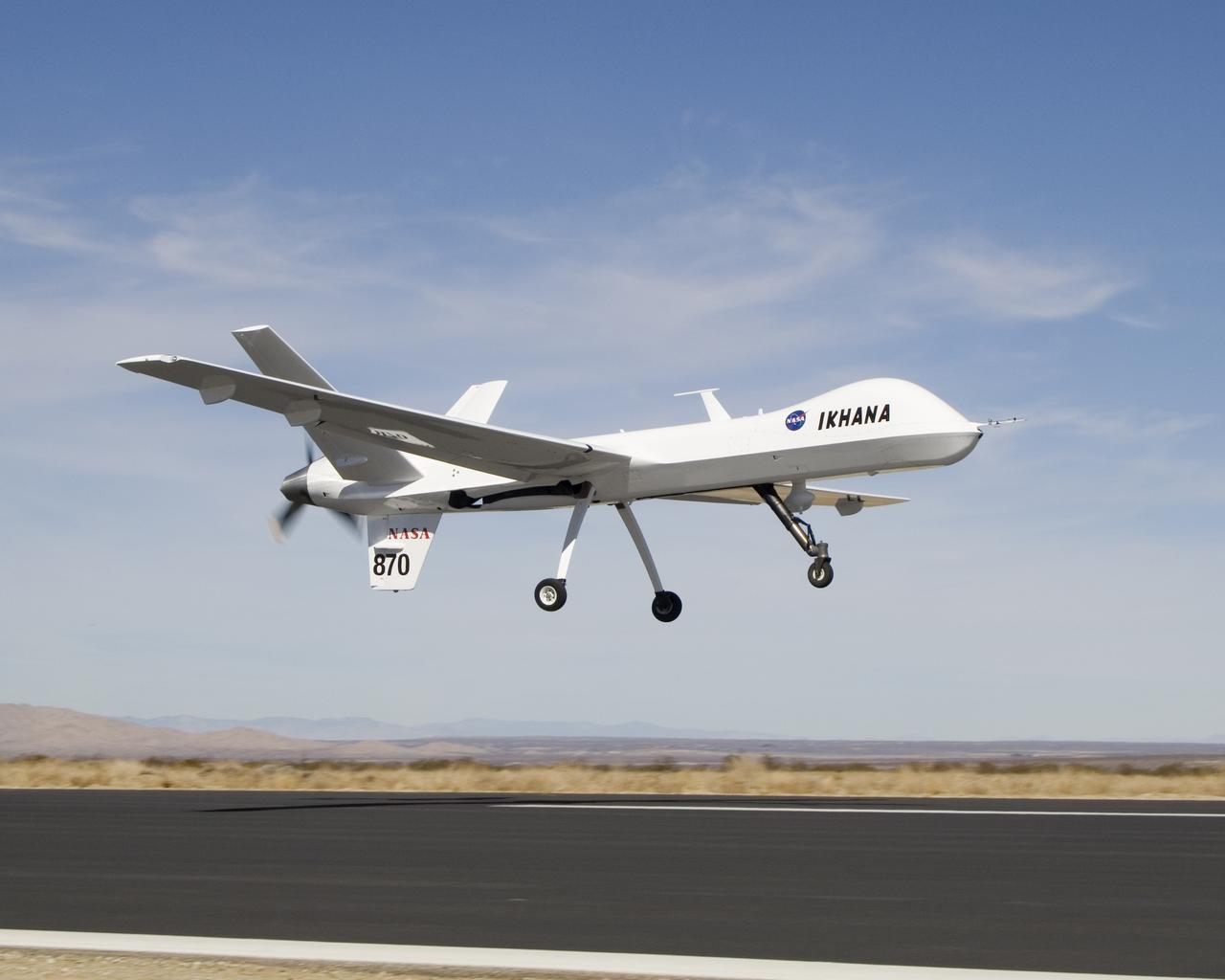
NASA's Ikhana, a civil variant of General Atomics' Predator B unmanned aircraft, takes to the sky for a morning checkout flight from the Grey Butte airfield.
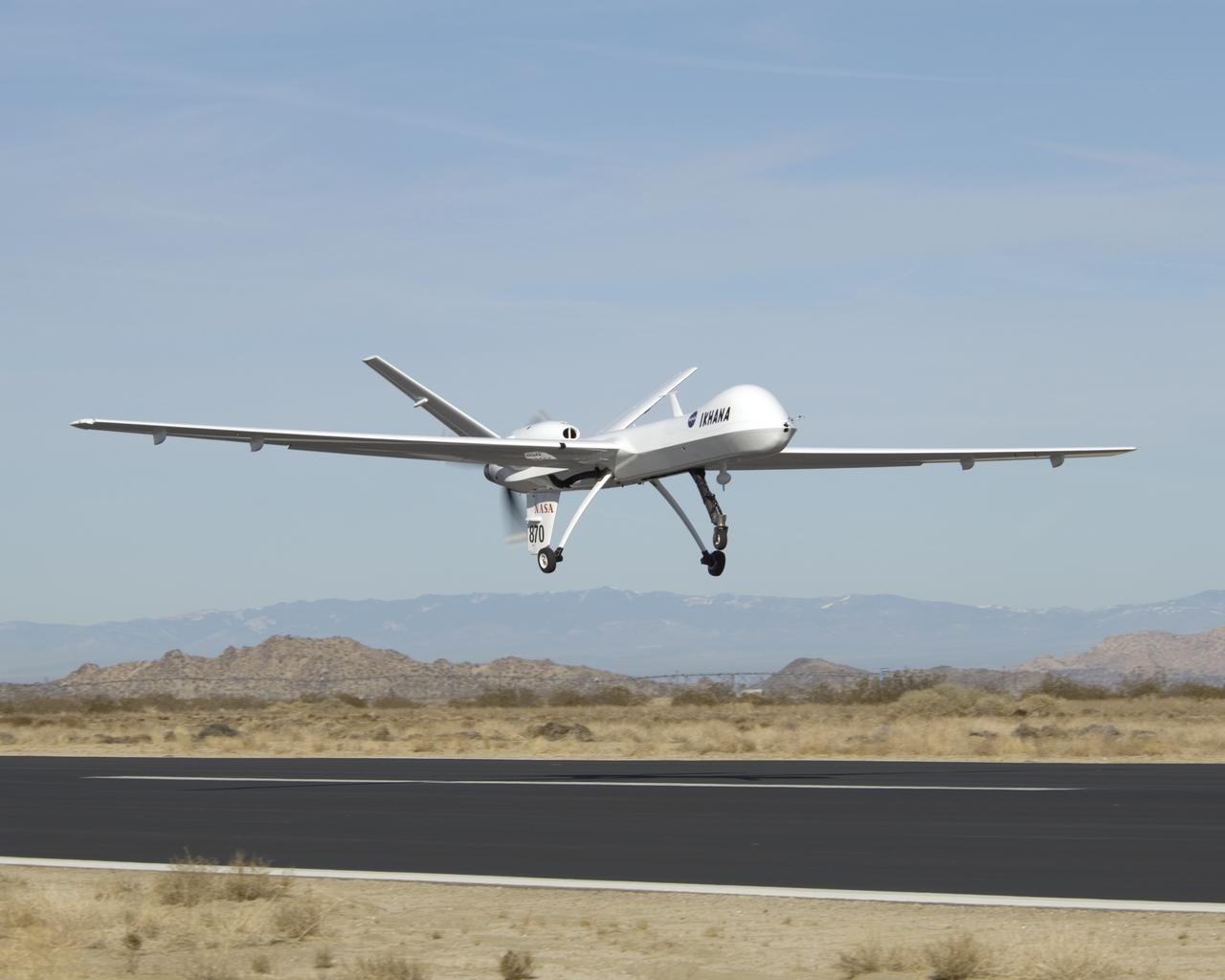
NASA's Ikhana unmanned long-endurance science aircraft, a civil variant of General Atomics' Predator B, takes to the sky over Southern California's high desert.
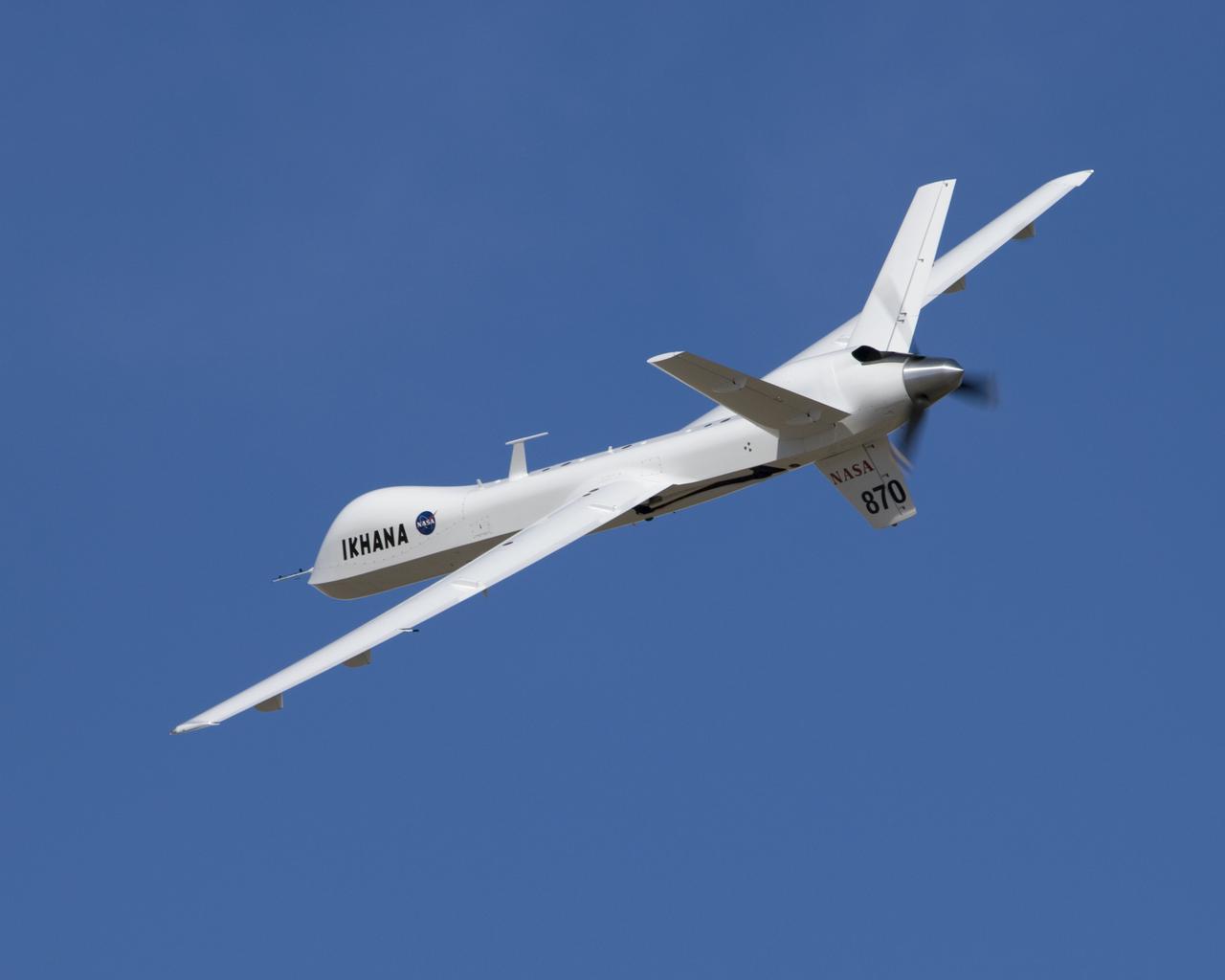
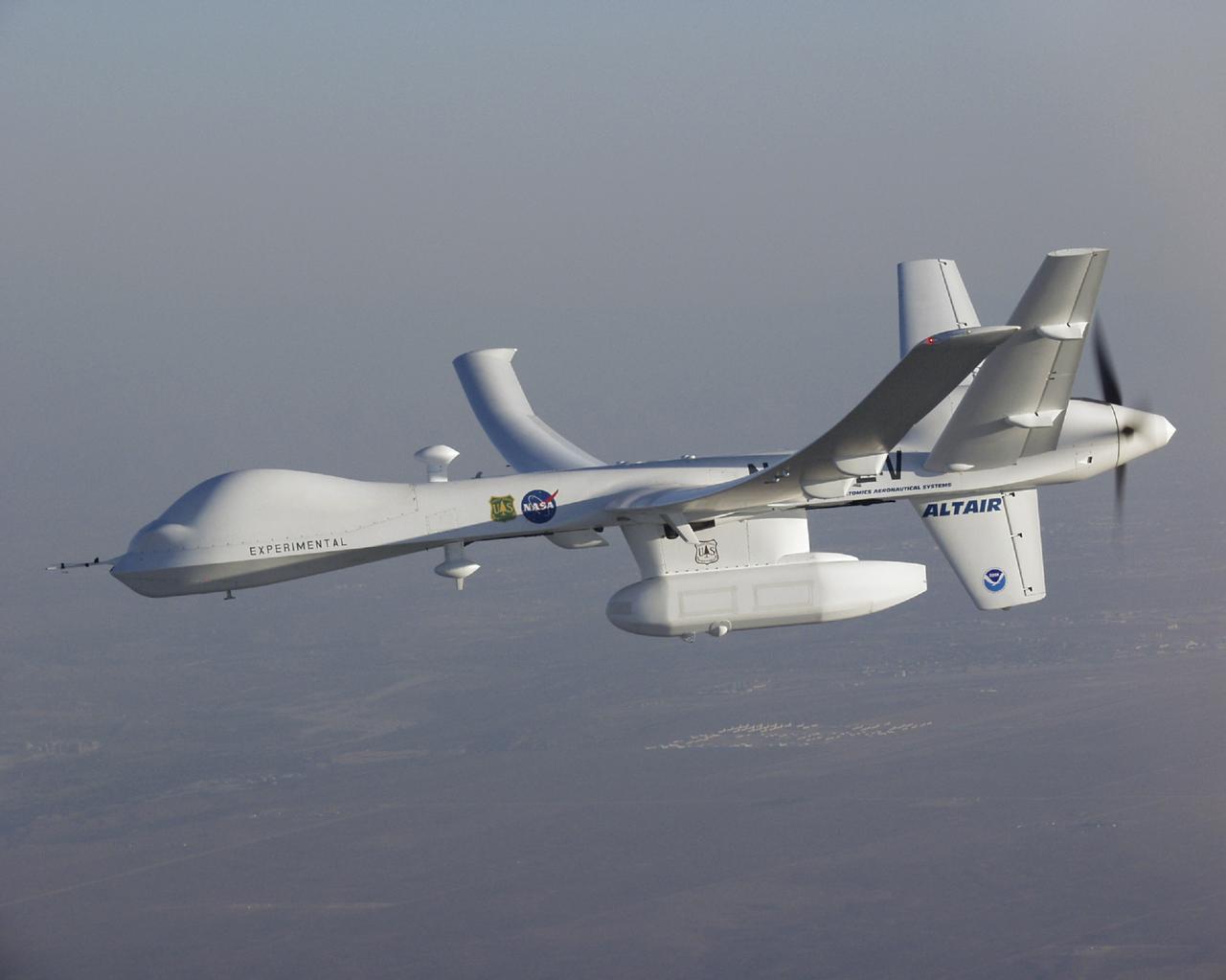
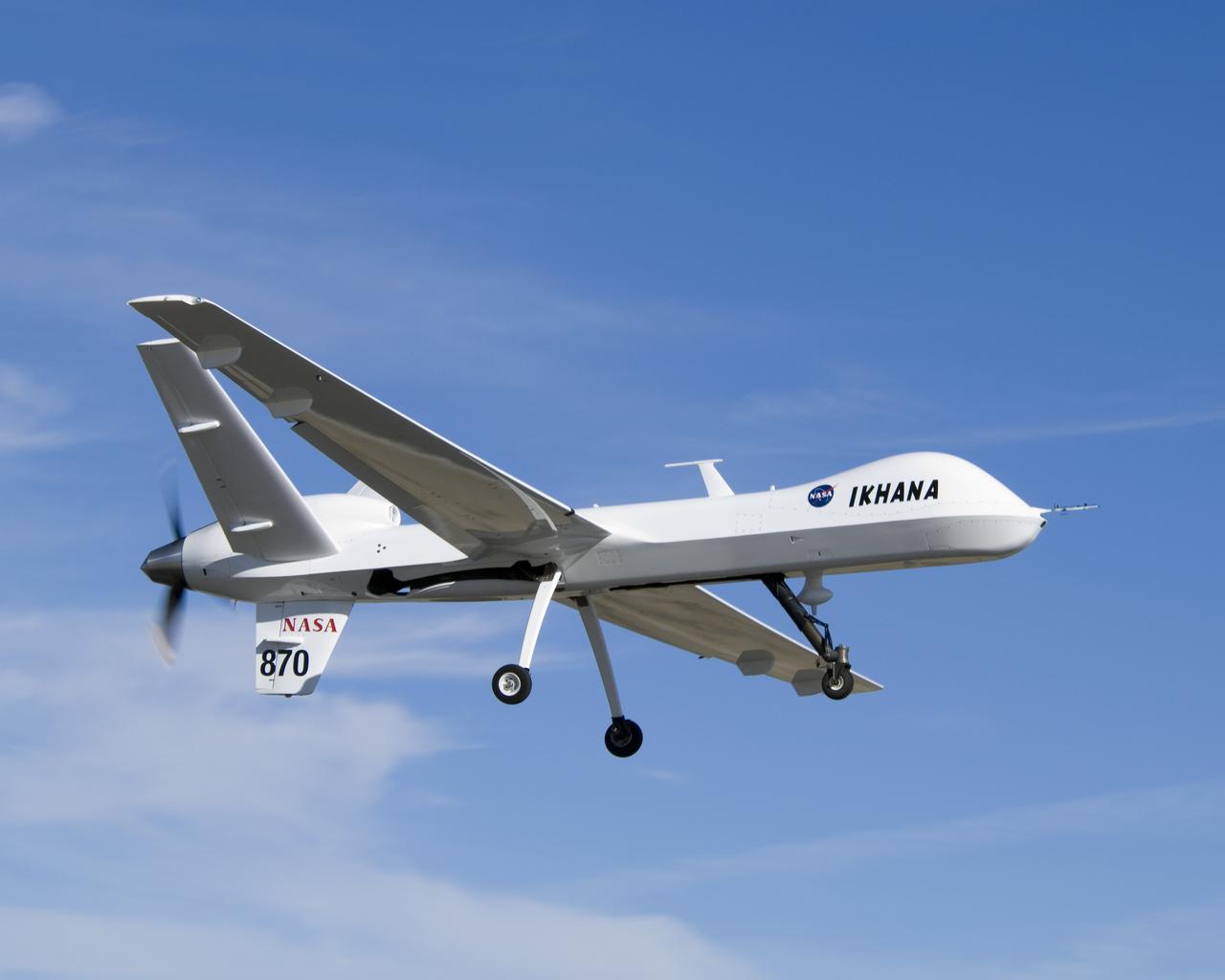
Straight wings, a Y-tail and a pusher propeller distinguish NASA's Ikhana, a civil version of General Atomics Aeronautical system's Predator B unmanned aircraft.
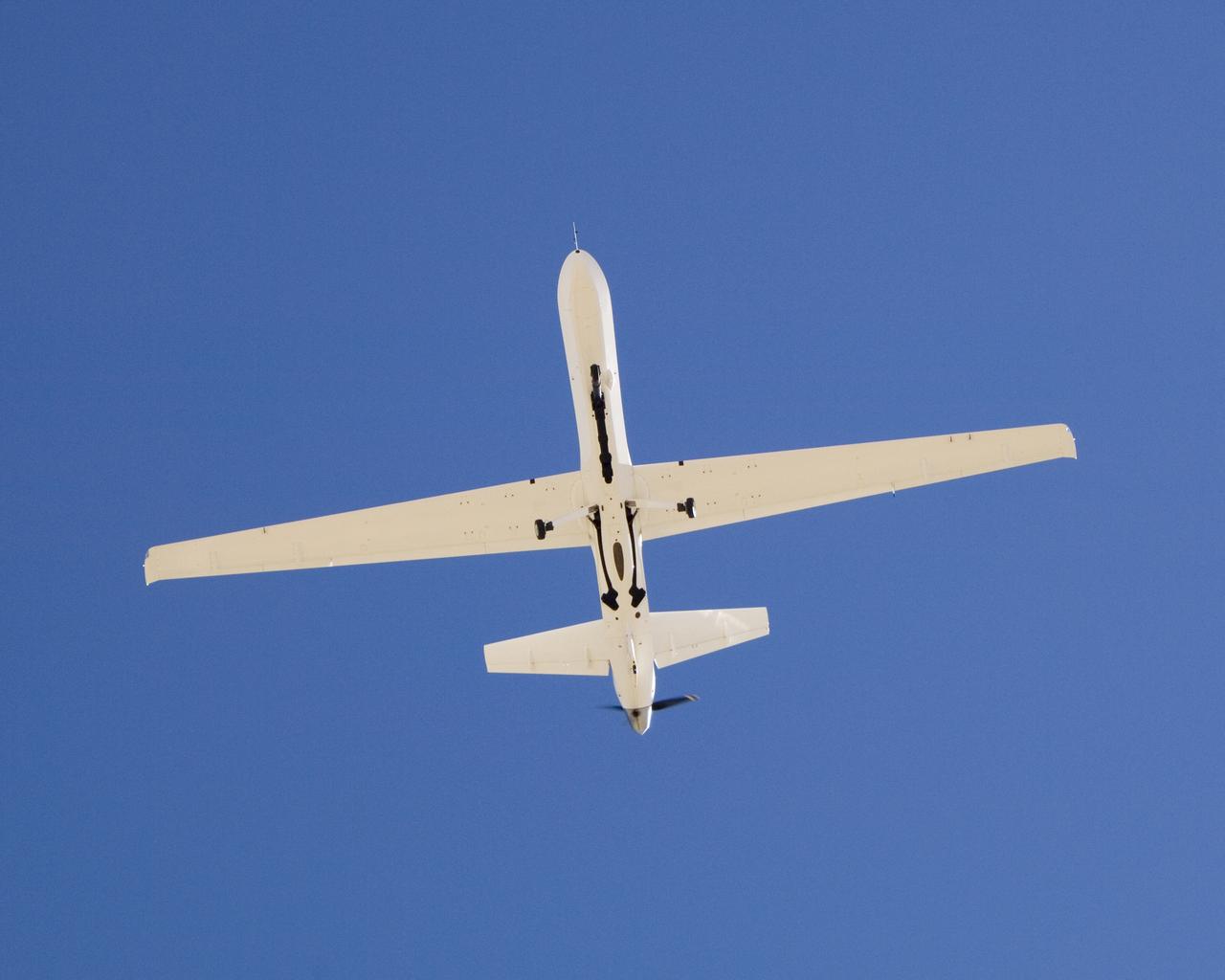
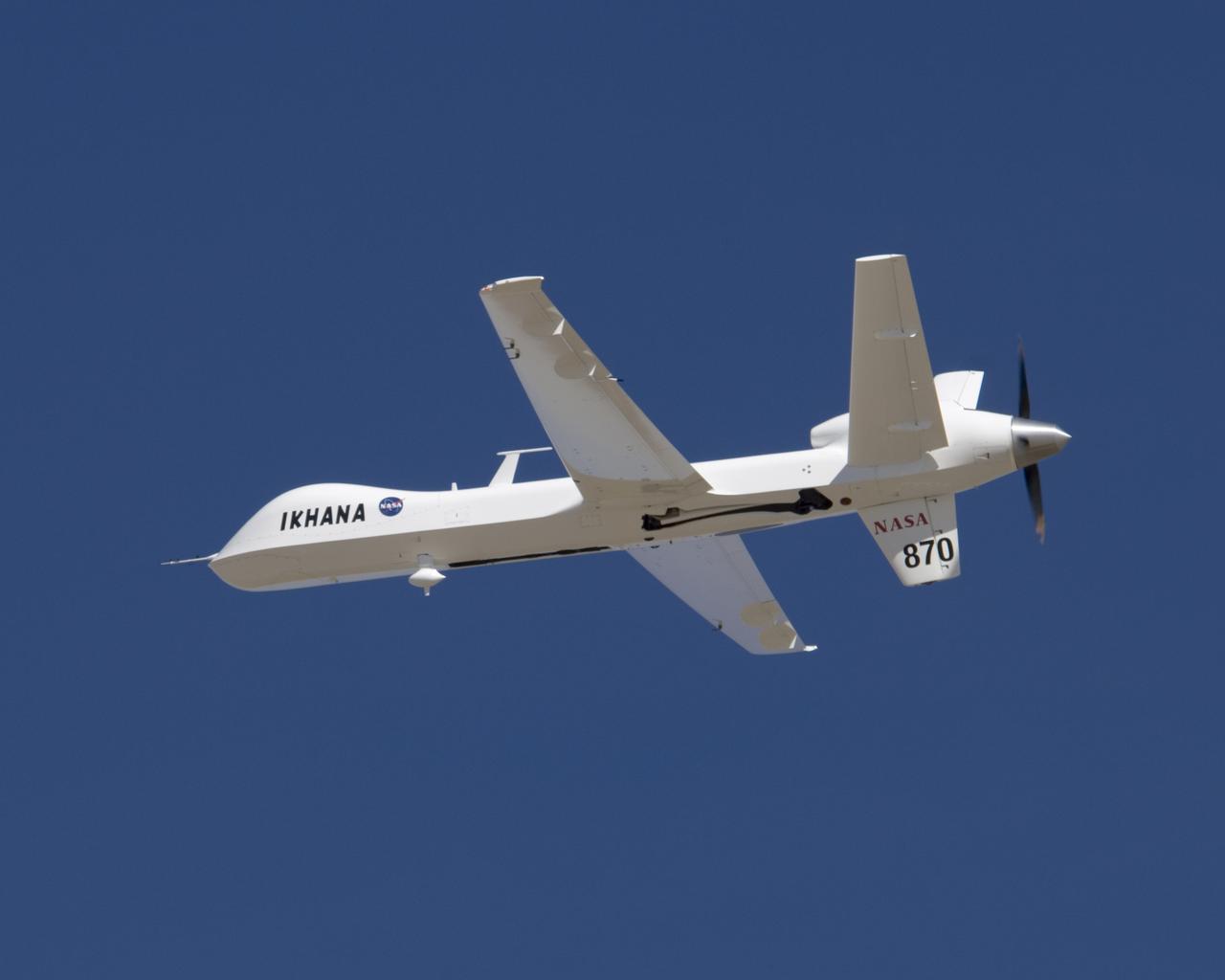
The narrow fuselage of NASA'S Ikhana unmanned science aircraft, a civil version of General Atomics' Predator B, is evident in this view from underneath.
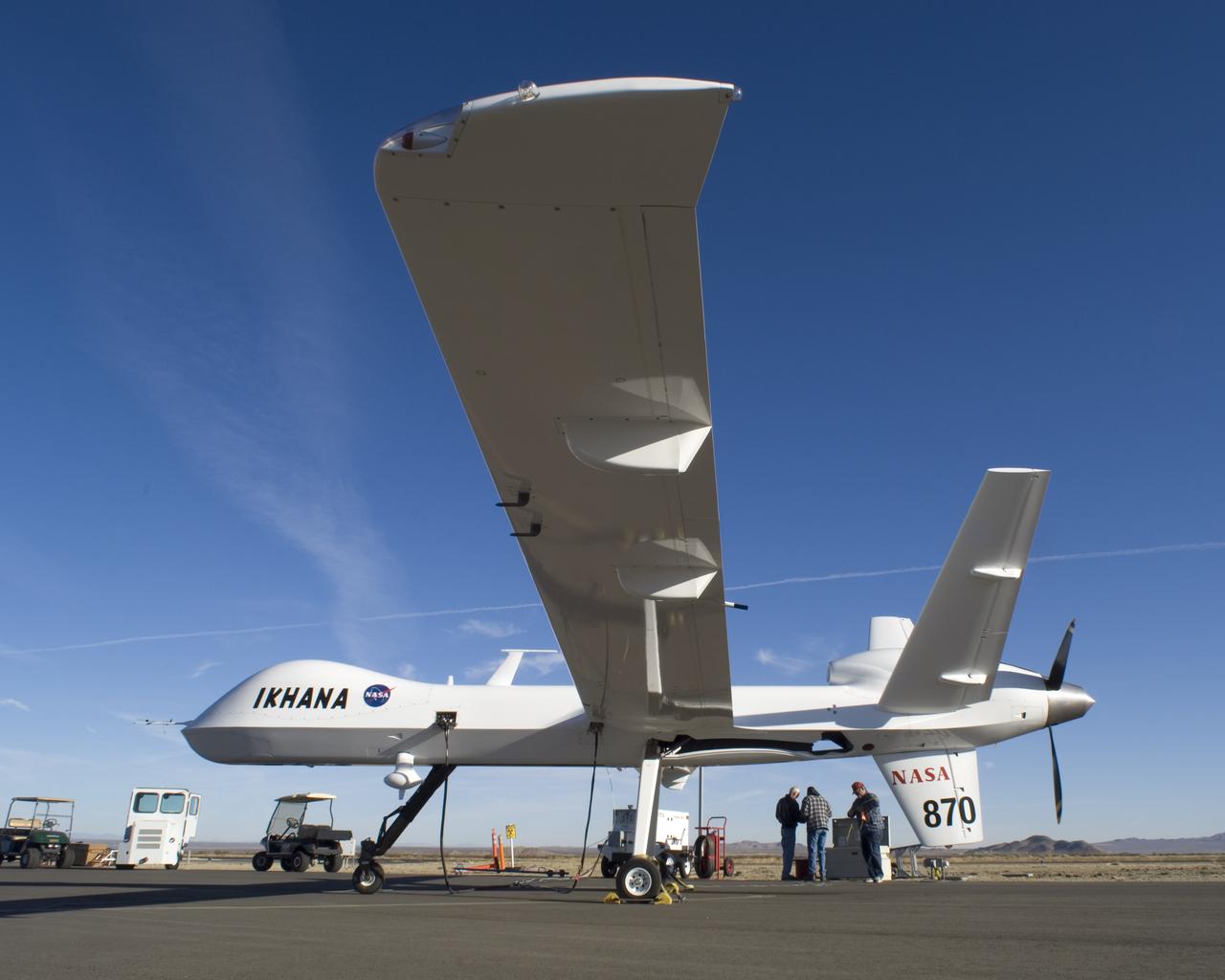
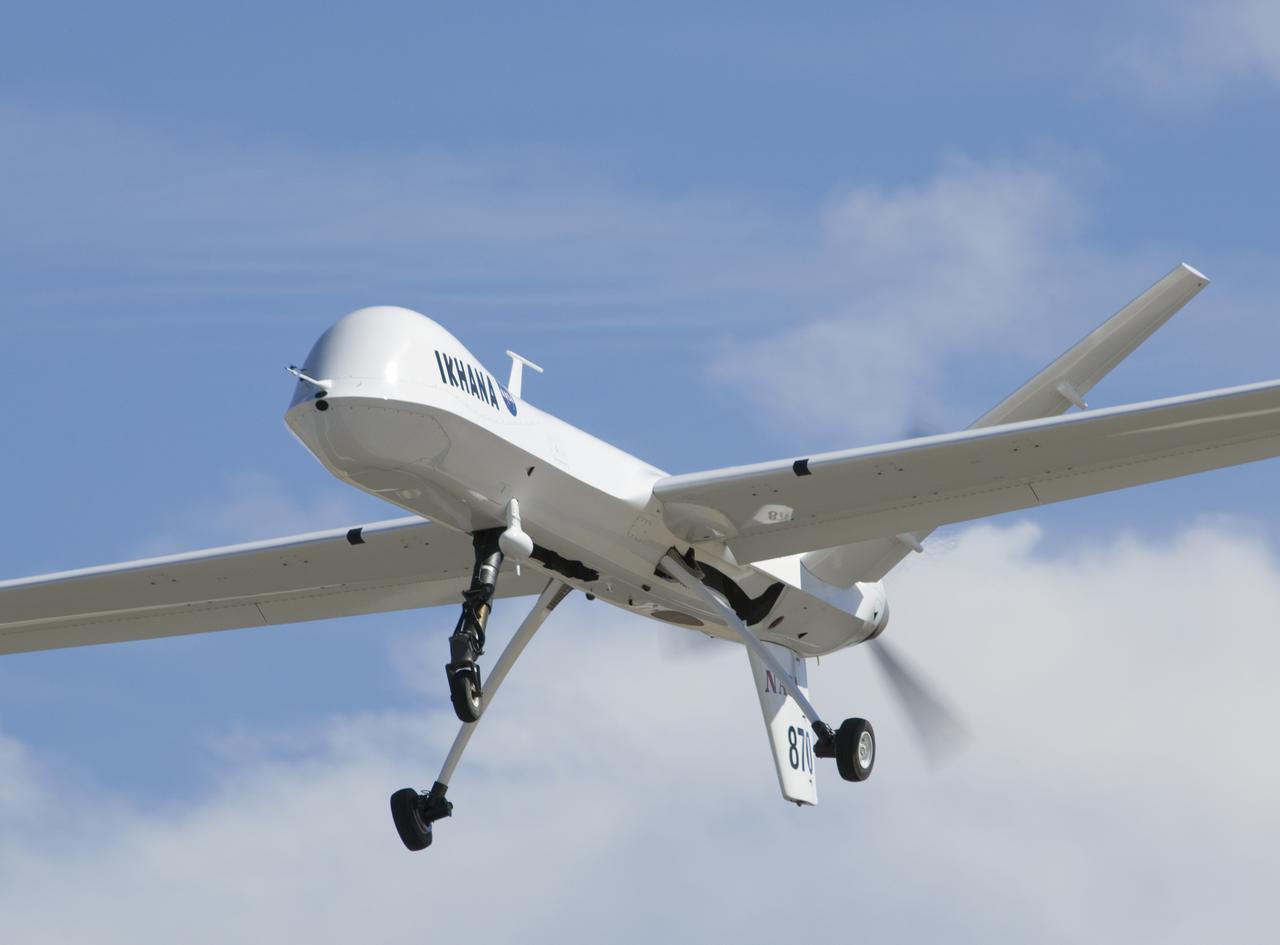
Bearing NASA tail number 870, NASA's Ikhana unmanned aircraft is a civil version of the Predator B designed for high-altitude, long-endurance science flights.
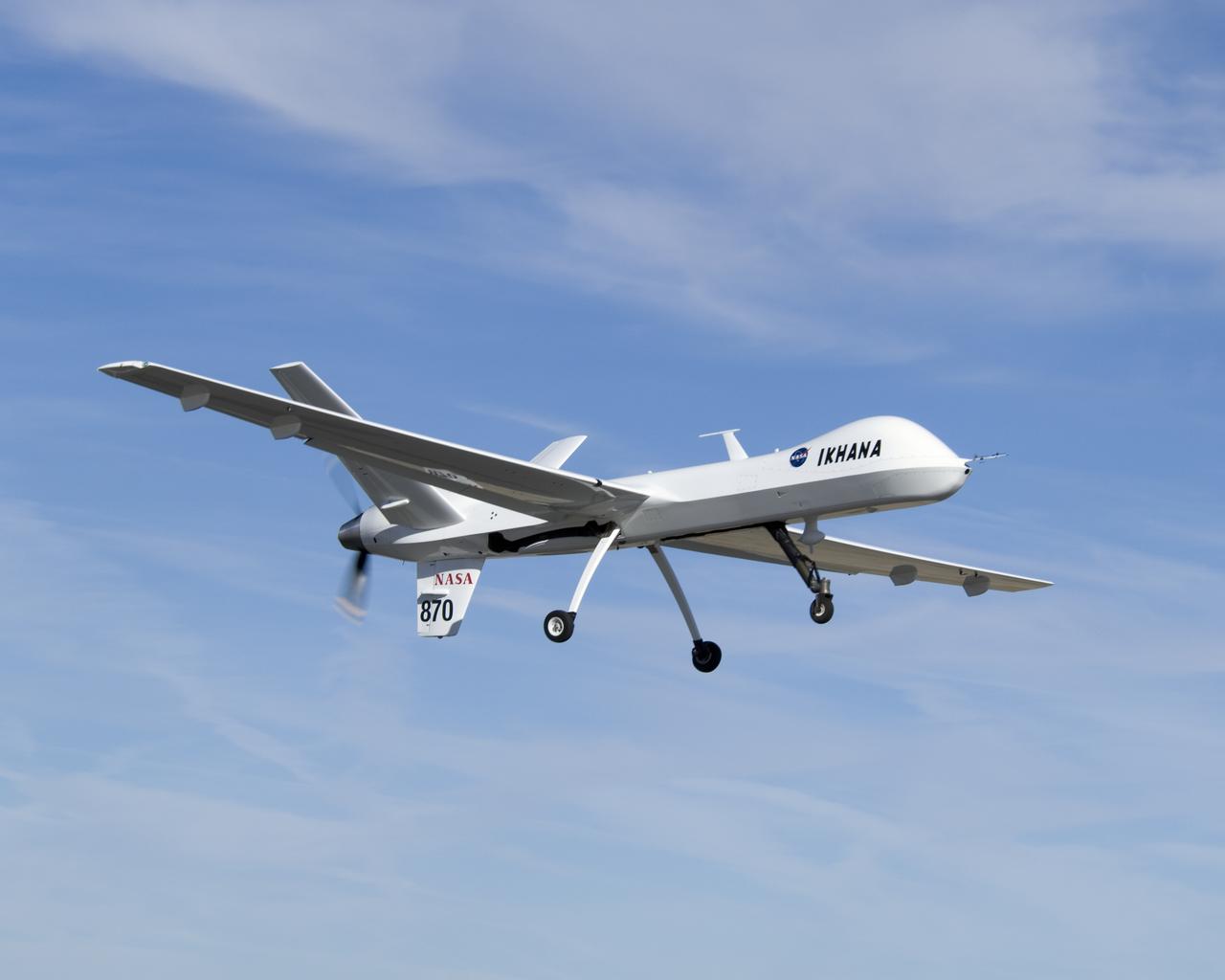
Narrow wings, a Y-tail and rear engine layout distinguish NASA's Ikhana science aircraft, a civil variant of General Atomics' Predator B unmanned aircraft system.
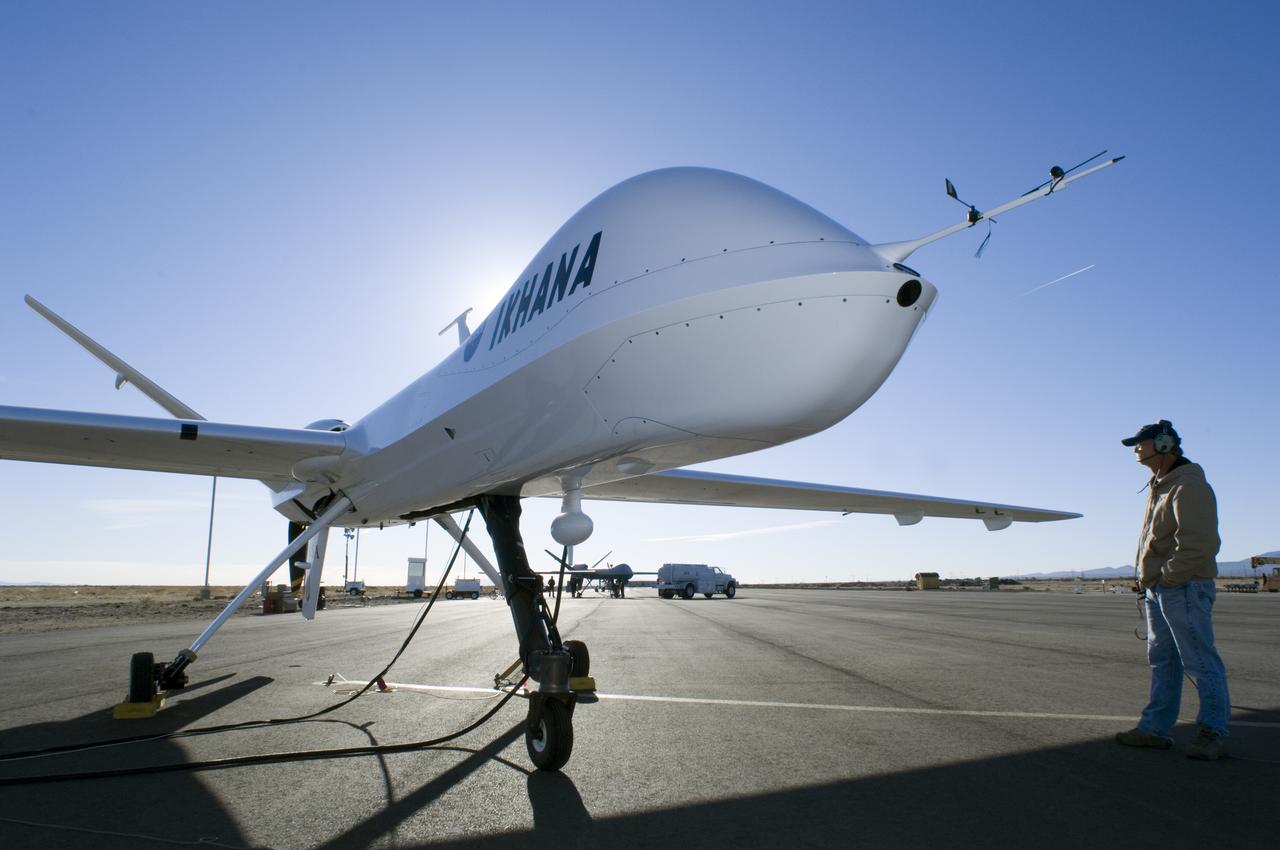
Silhouetted by the morning sun, NASA's Ikhana, a civil version of the Predator B unmanned aircraft, is readied for flight By NASA Dryden crew chief Joe Kinn.
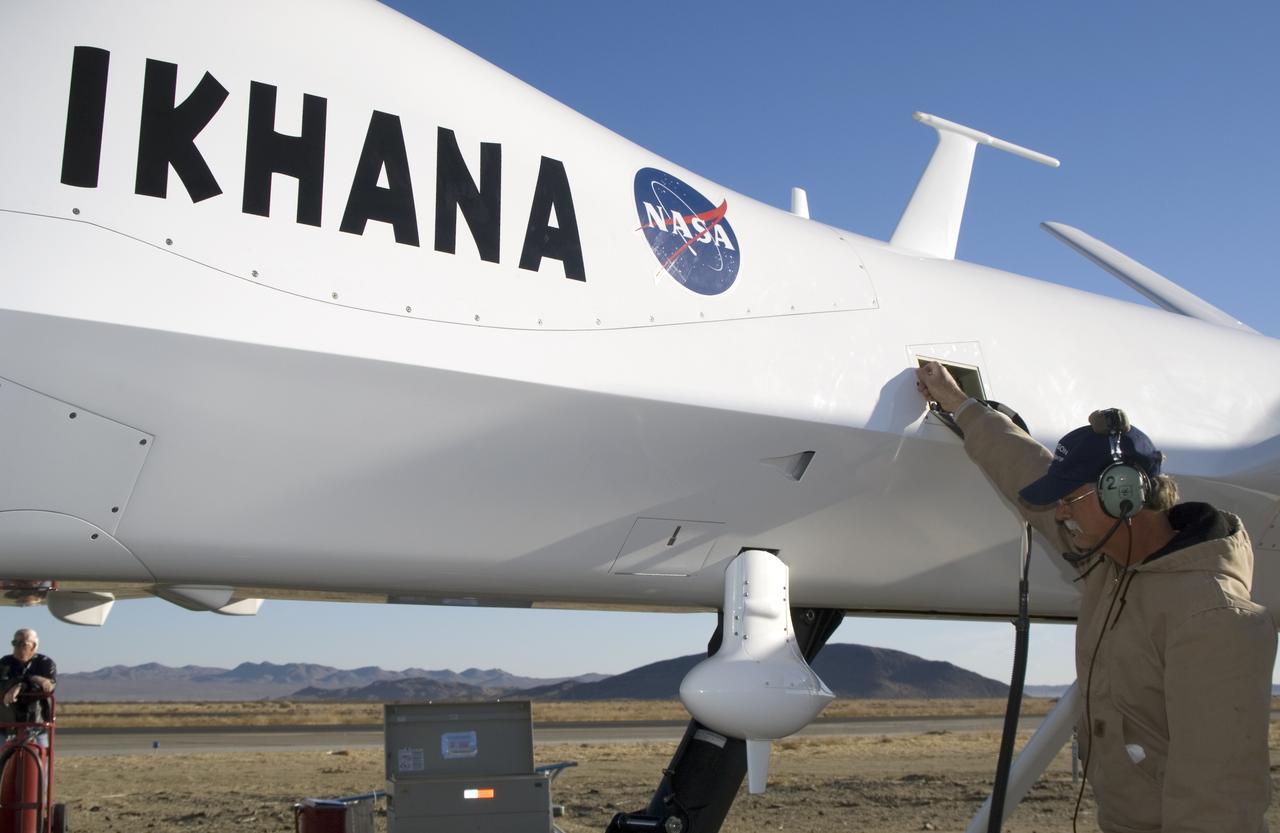
NASA Dryden crew chief Joe Kinn gives final checks to NASA's Ikhana, a civil version of the Predator B unmanned aircraft, prior to a morning checkout flight.
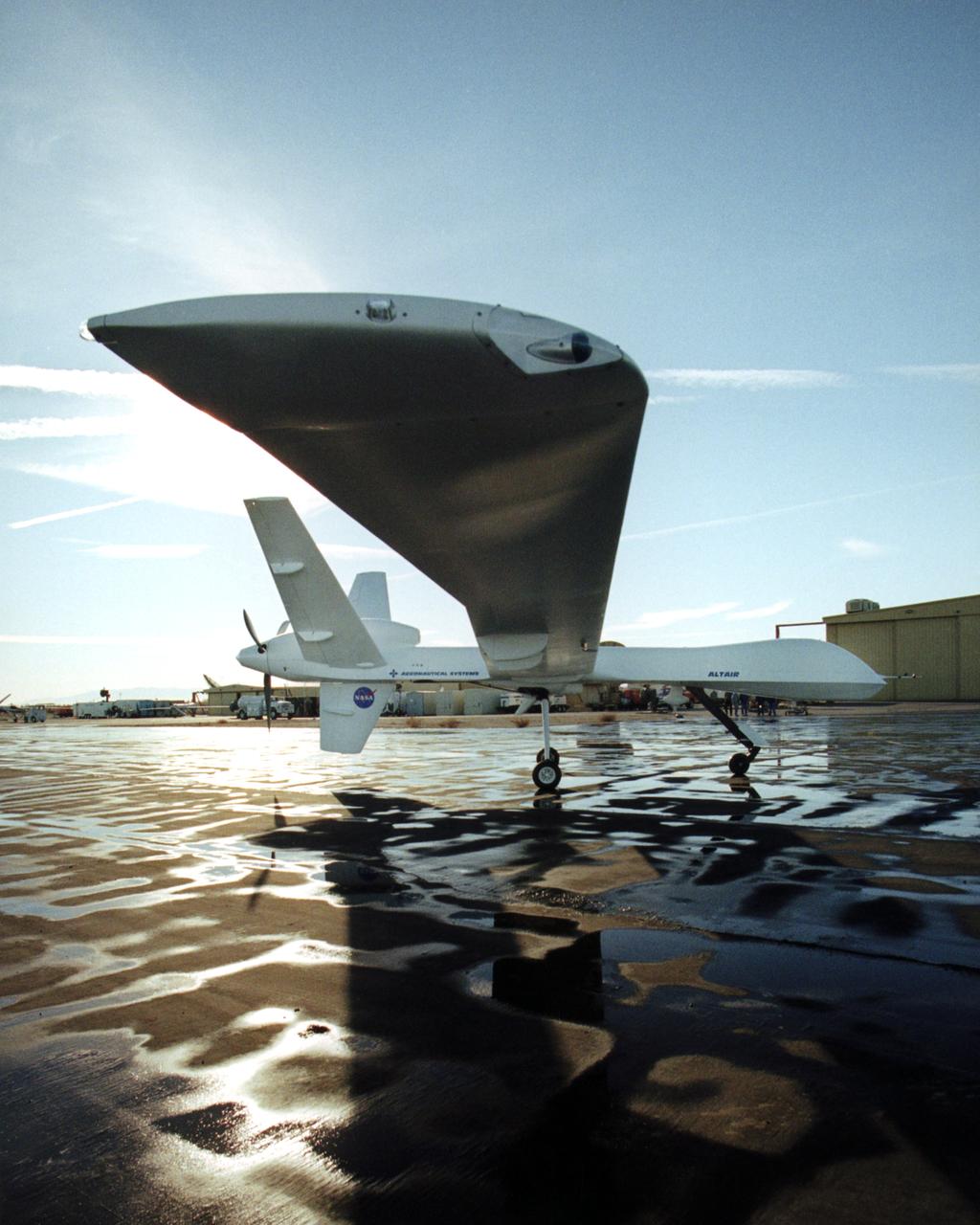
The Altair, a civil variant of the QM-9 Predator B unmanned aerial vehicle (UAV), shows off its lengthy high-aspect ratio wing while on the ramp at General Atomics Aeronautical Systems' flight test facility at El Mirage, California.
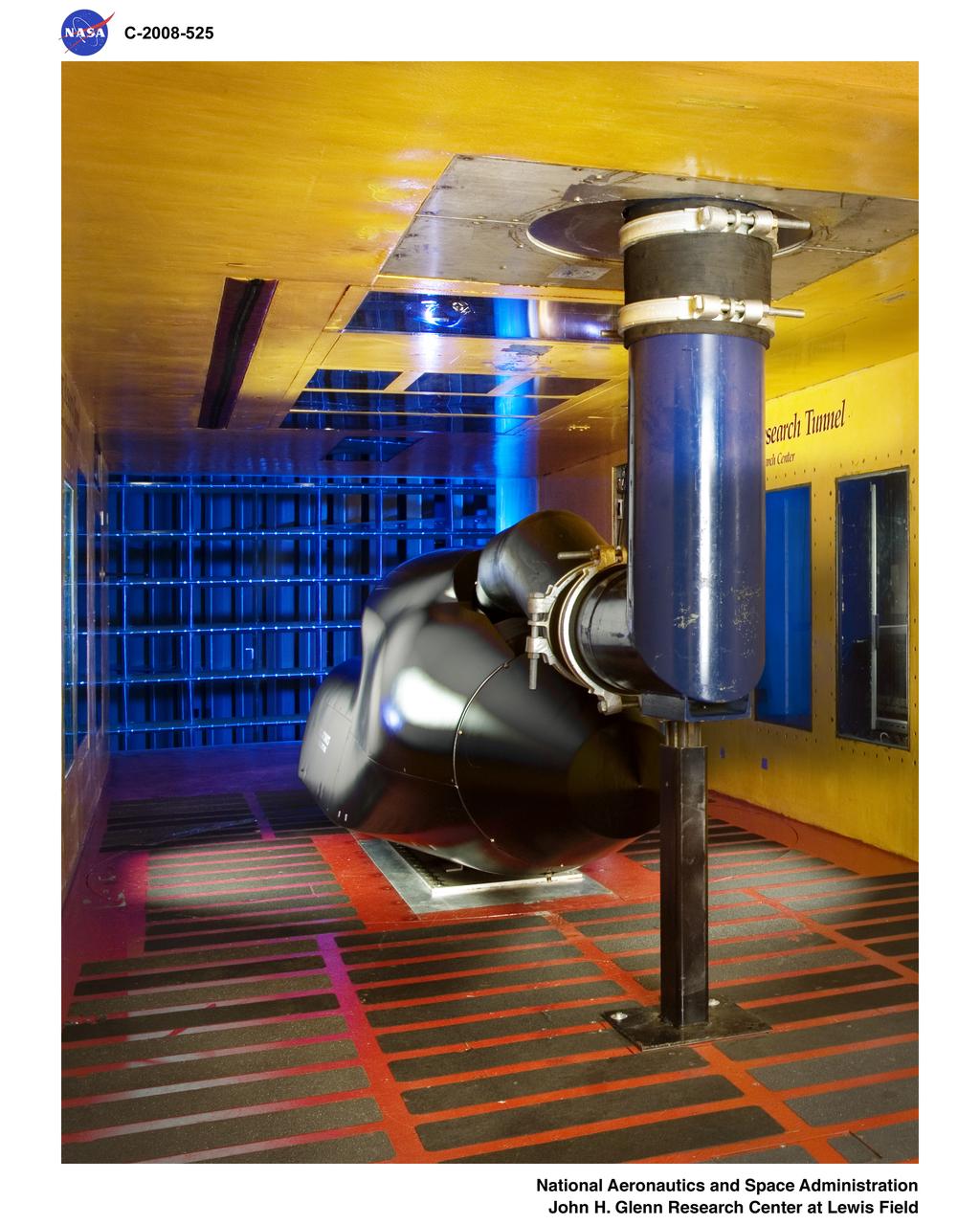
General Atomics - Predator B Inlet Model in the Icing Research Tunnel
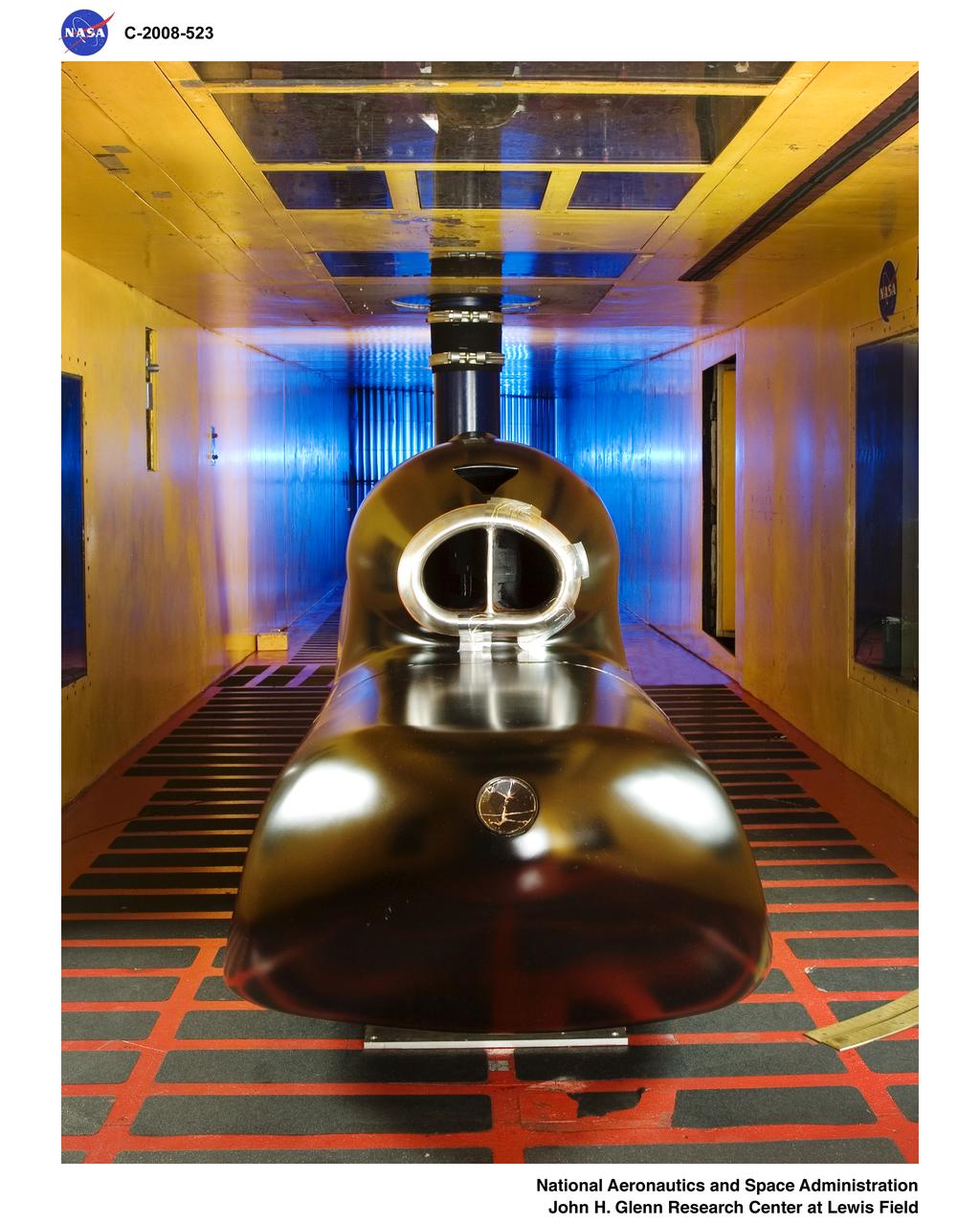
General Atomics - Predator B Inlet Model in the Icing Research Tunnel
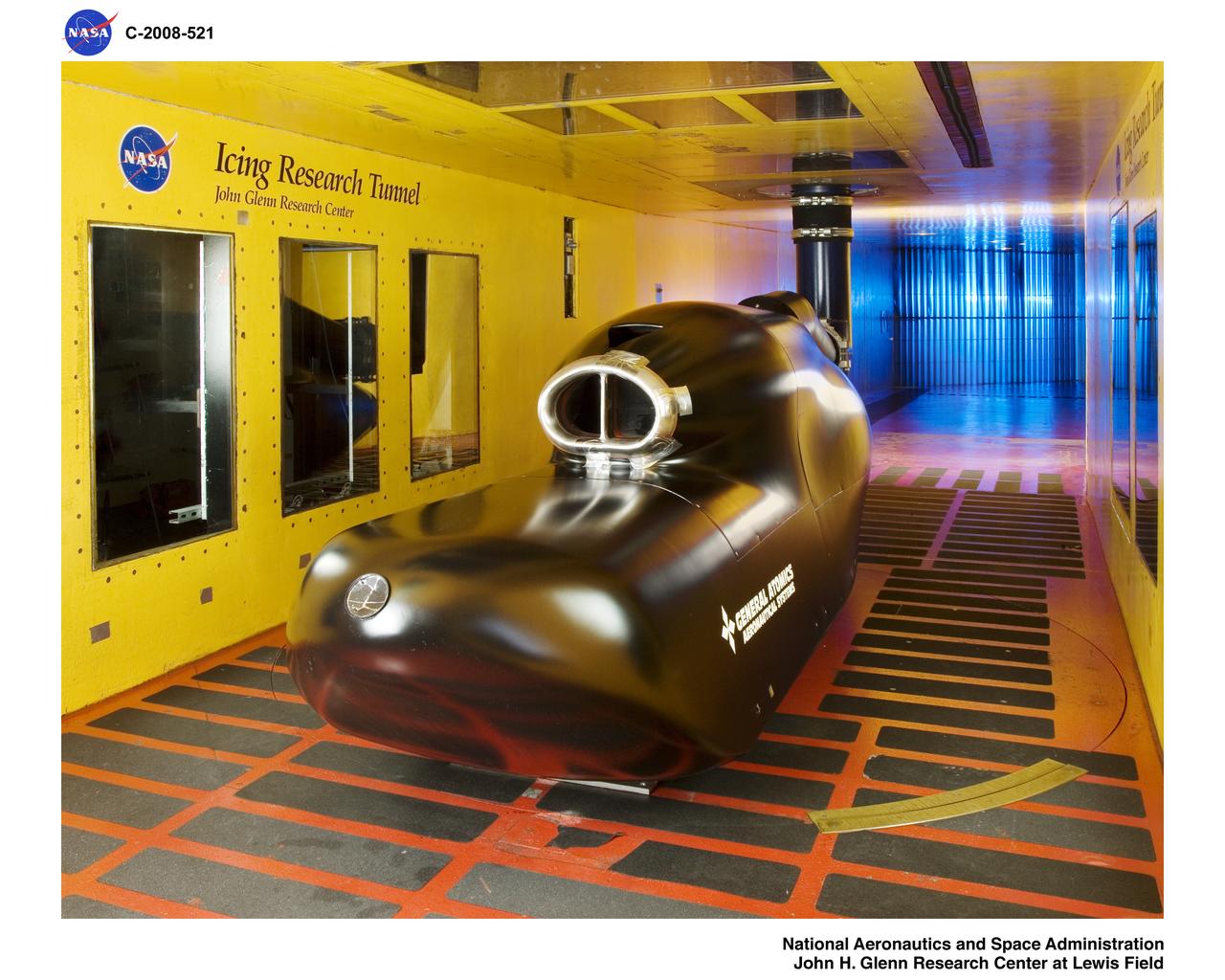
General Atomics - Predator B Inlet Model in the Icing Research Tunnel
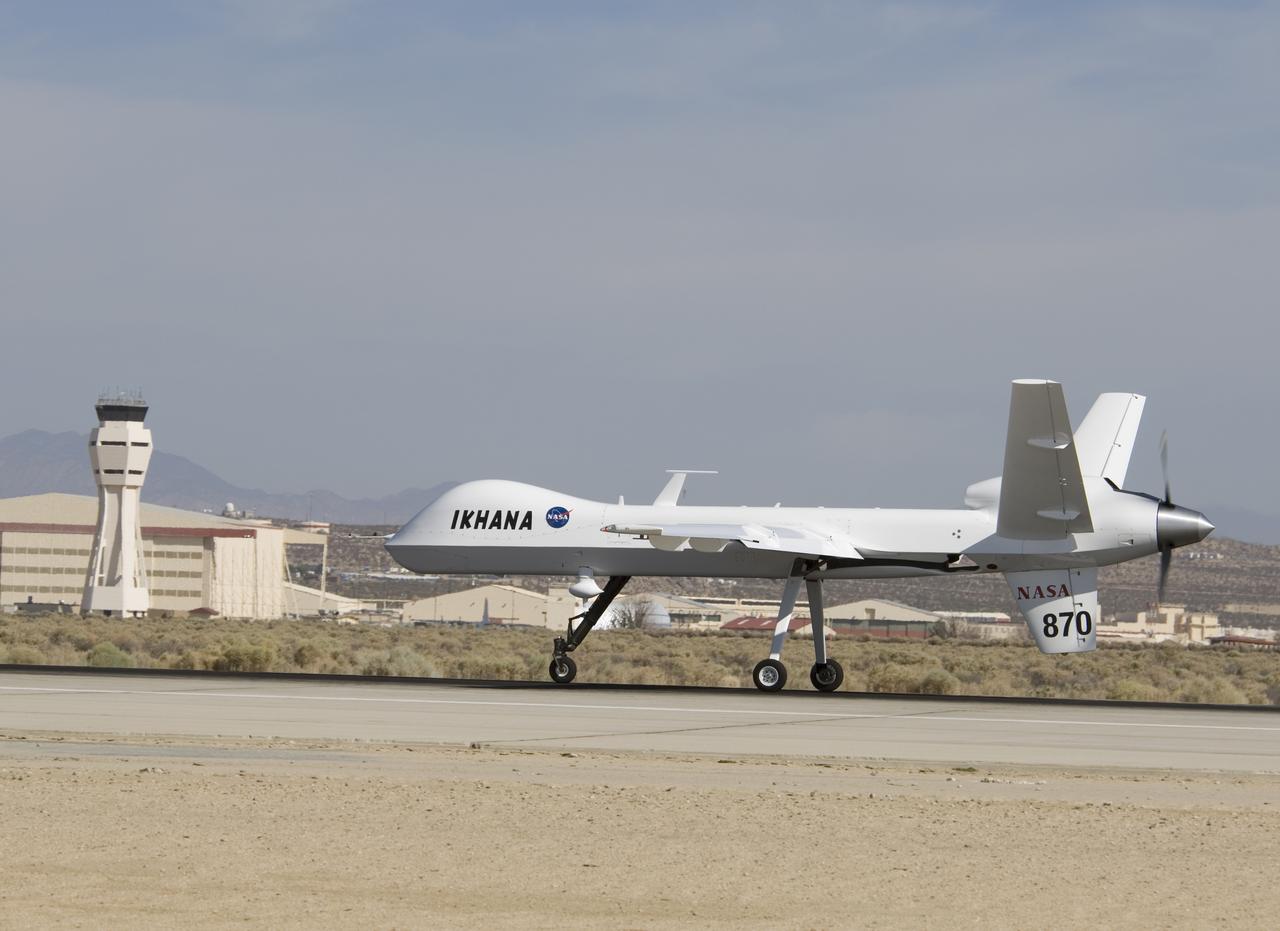
NASA's Ikhana unmanned science demonstration aircraft, a civil variant of General Atomics' Predator B, on the runway at Edwards Air Force Base after its ferry flight to NASA's Dryden Flight Research Center. NASA took possession of the new aircraft in November, 2006, and it arrived at the NASA center at Edwards Air Force Base, Calif., on June 23, 2007.
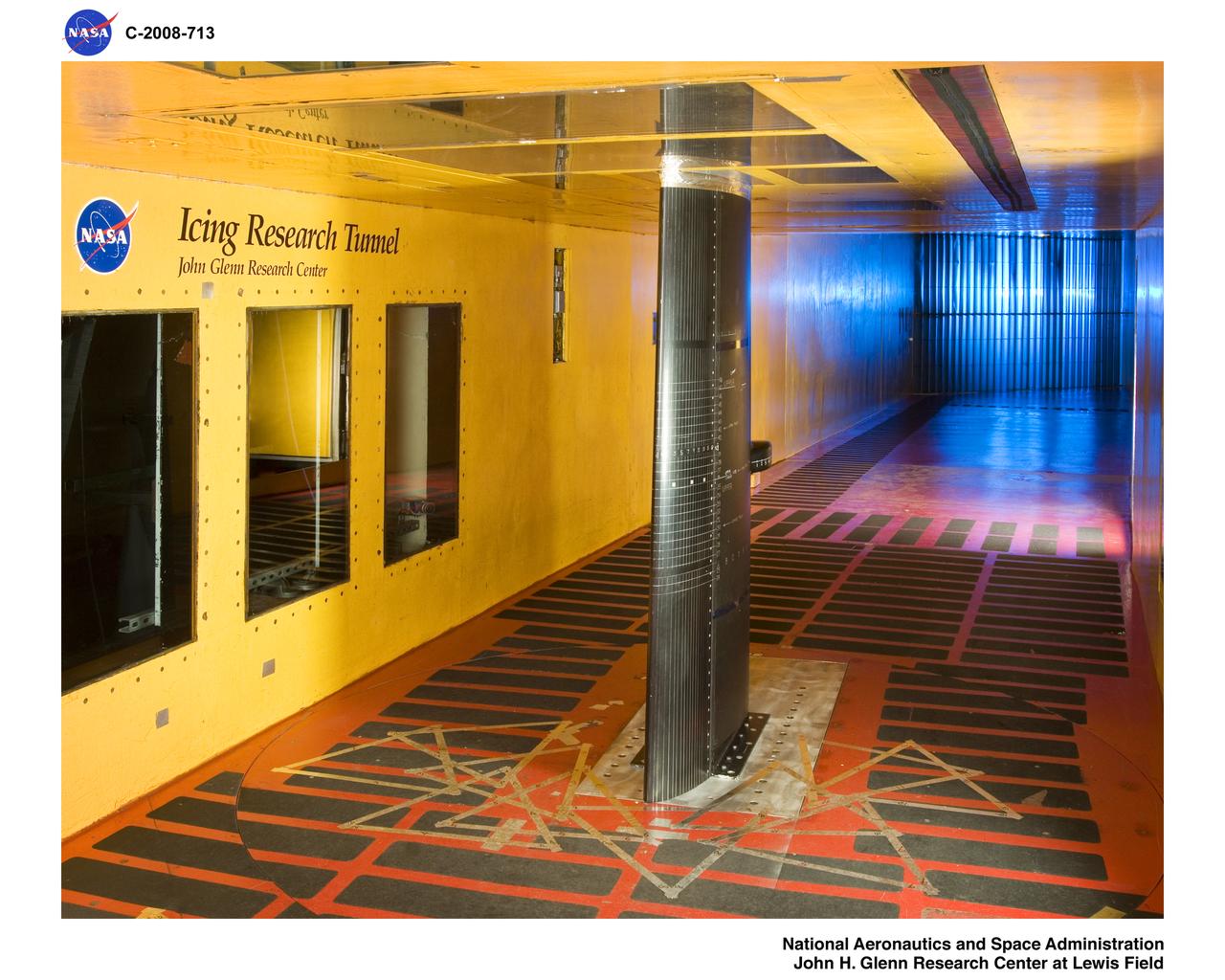
Leading Edge De-Icing Evaluation Test of the General Atomics Predator B Wing Section using Electro-Expulsive De-Icing System (EEDS) Testing conducted in cooperation with Wichita State University
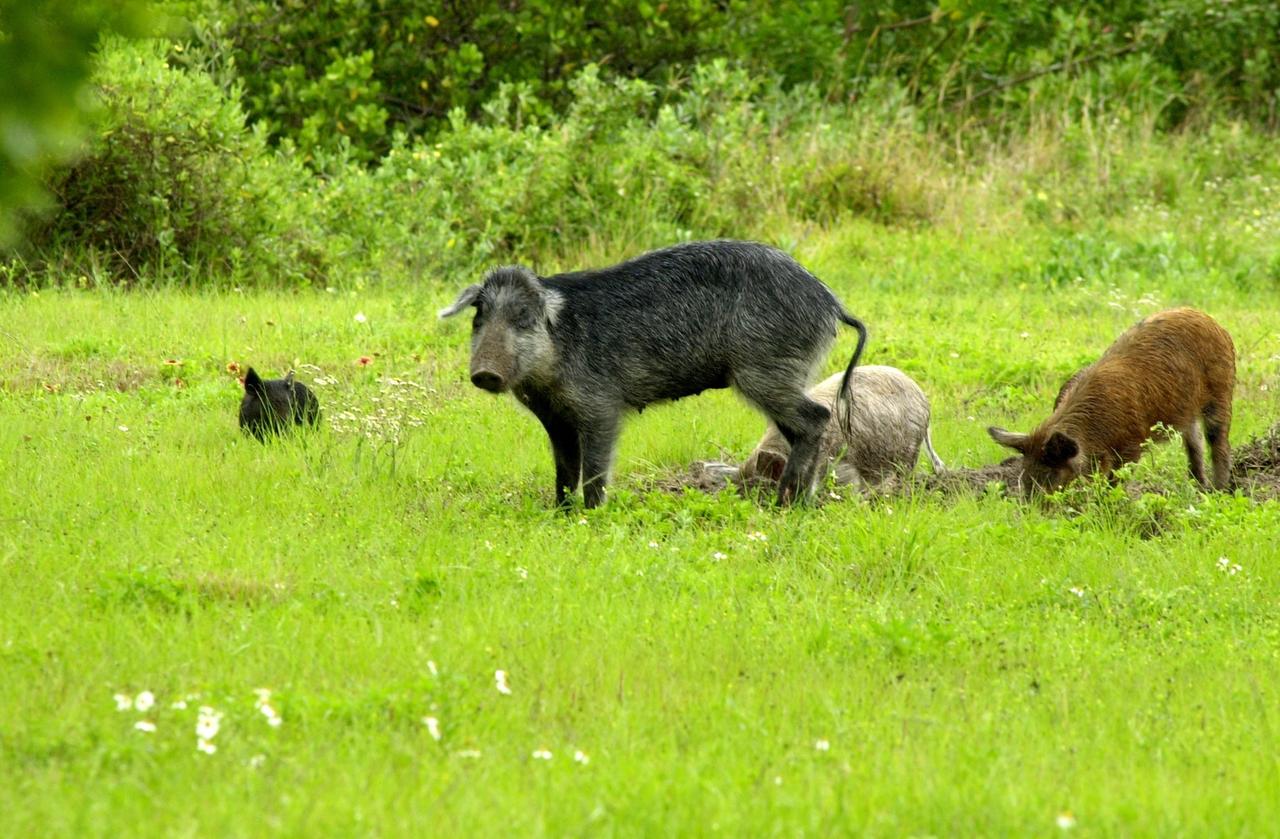
KENNEDY SPACE CENTER, FLA. -- Feral pigs dig for food on grounds near Kennedy Space Center. Not a native in the environment, the hogs are believed to be descendants from the pigs brought to Florida by the early Spanish explorers. Without many predators other than human, the pigs have flourished
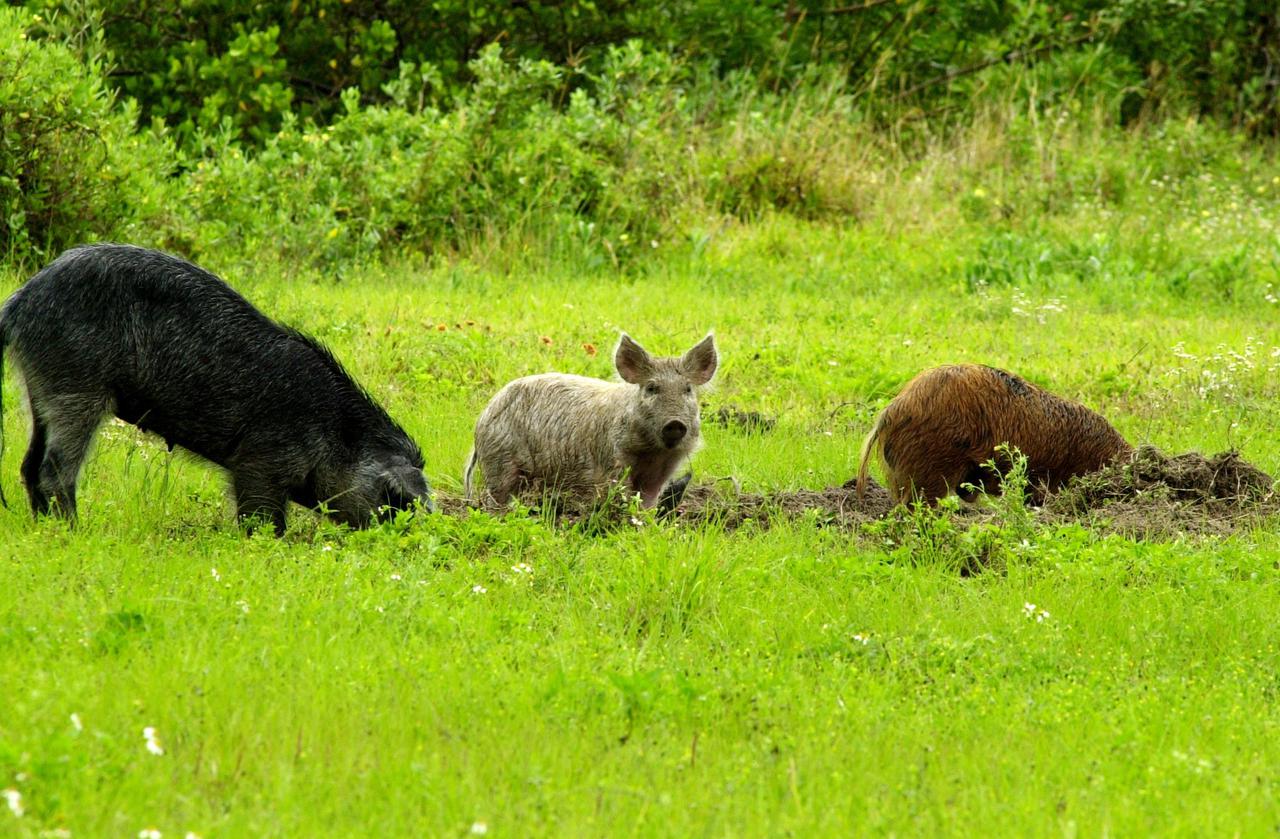
KENNEDY SPACE CENTER, FLA. -- Feral pigs dig for food on grounds near Kennedy Space Center. Not a native in the environment, the hogs are believed to be descendants from the pigs brought to Florida by the early Spanish explorers. Without many predators other than human, the pigs have flourished
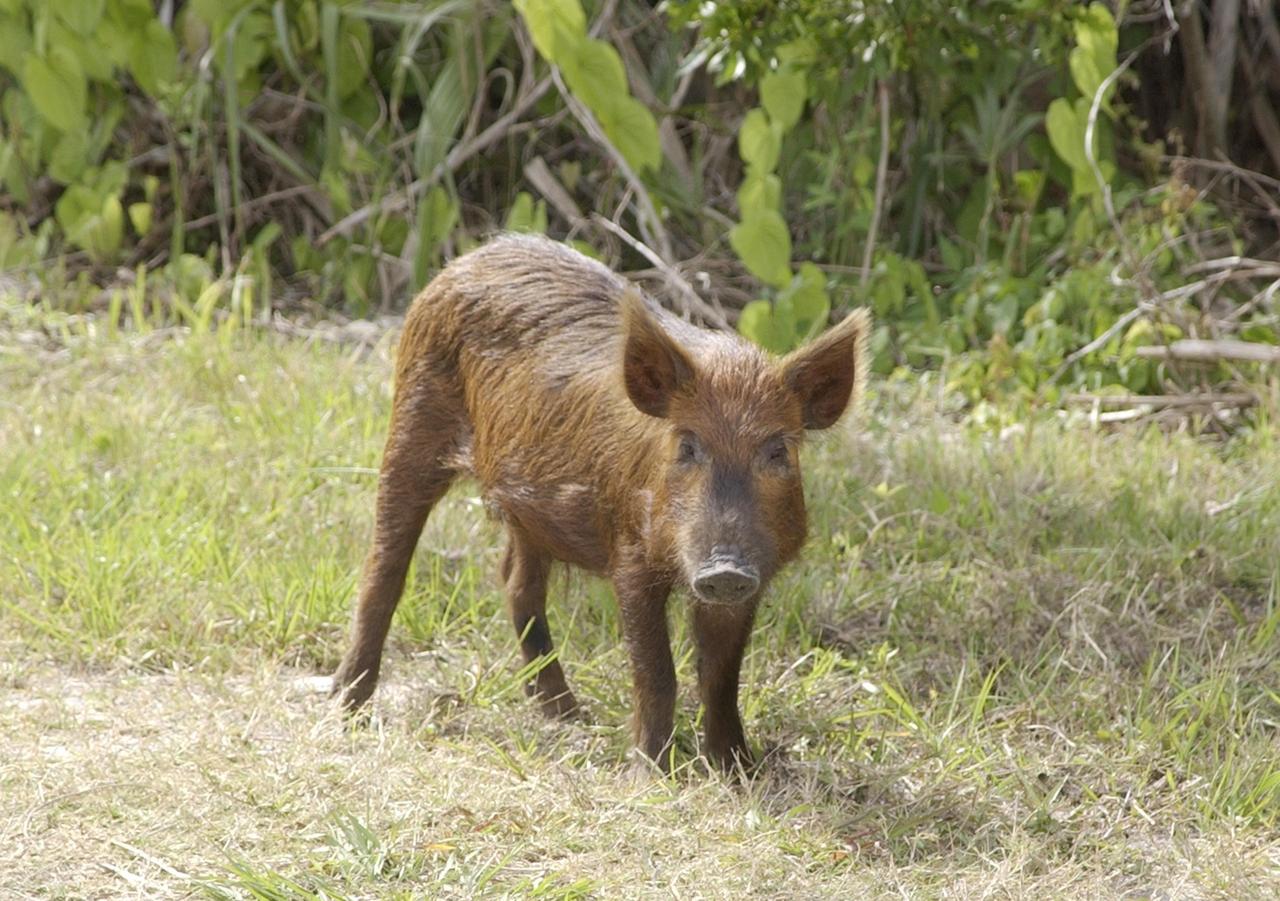
KENNEDY SPACE CENTER, FLA. - A wild pig is spotted near the KSC Press Site on its daily foraging rounds. Not a native in the environment, the pigs around KSC are believed to be descendants from those brought to Florida by the early Spanish explorers. Without many predators other than human, the pigs have flourished in the surrounding environs
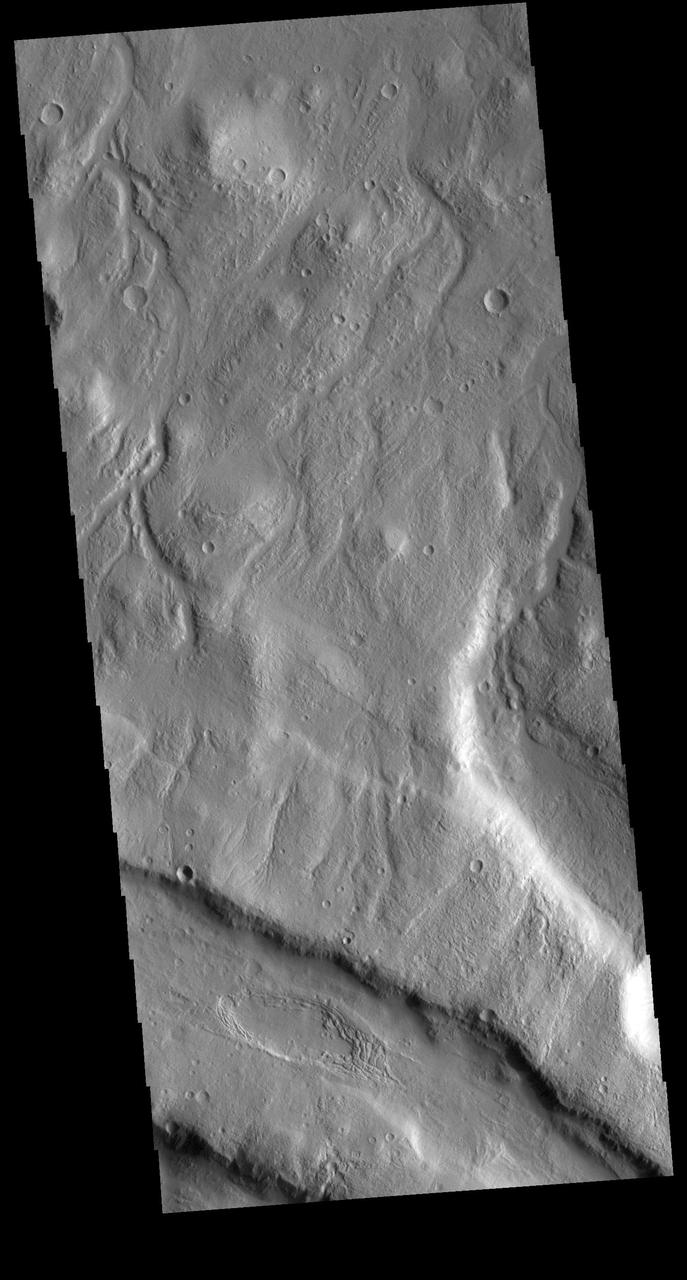
This VIS image shows part of the northern margin of Acheron Fossae. Multiple channels dissect the the higher elevation graben features at the bottom of the image. This higher topography feature is surrounded by lava flows and is thought to predate the majority of volcanic activity in the Tharsis region. Acheron Fossae is located 1,050 kilometers (650 miles) north of the large shield volcano Olympus Mons. Orbit Number: 79093 Latitude: 39.3864 Longitude: 225.573 Instrument: VIS Captured: 2019-10-13 20:15 https://photojournal.jpl.nasa.gov/catalog/PIA23566
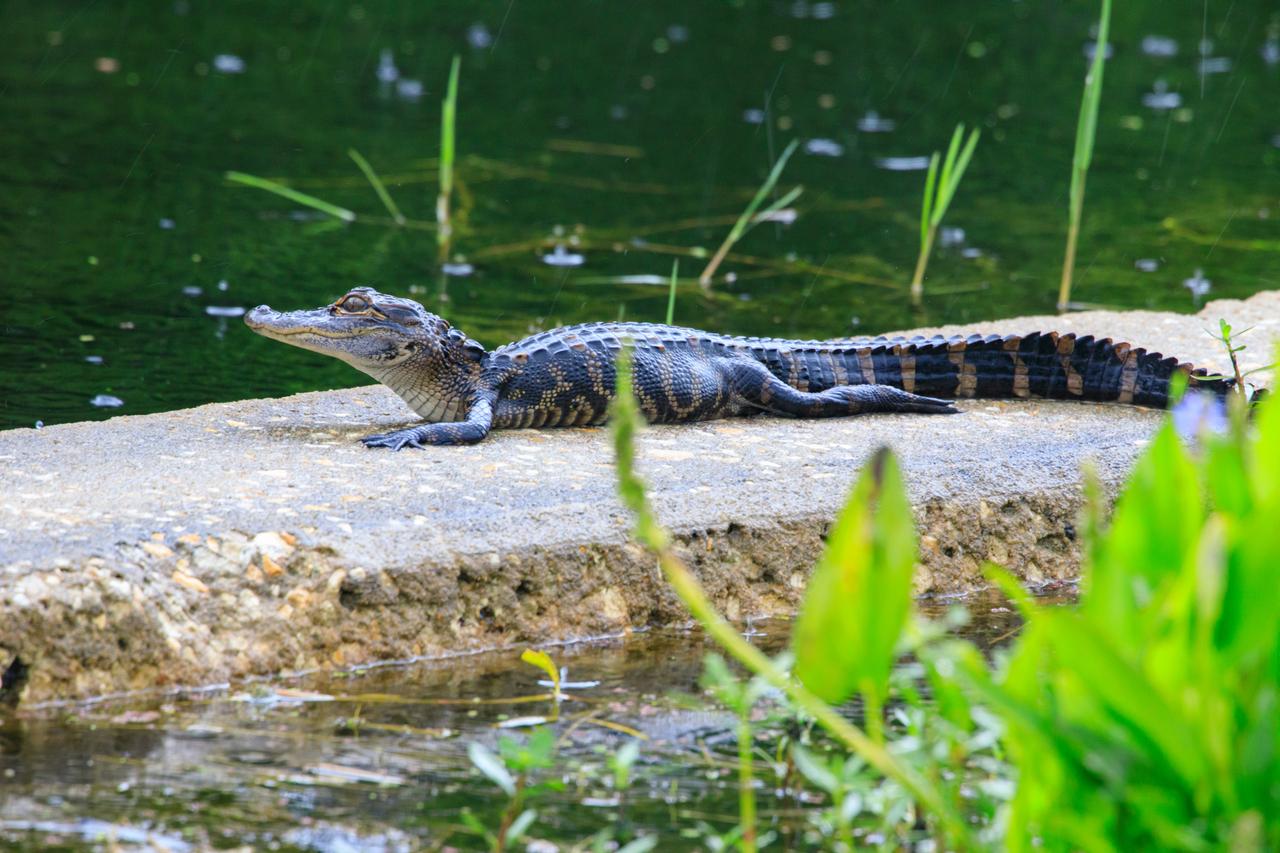
A young alligator rests on a concrete structure at NASA’s Kennedy Space Center in Florida on April 25, 2023. Alligator breeding season starts in May when males begin courting females. By June, pairs have mated and females build vegetation nests in the marsh. Eggs hatch in about 65 days. The mother carries her young to the water and protects them from predators, including male alligators.
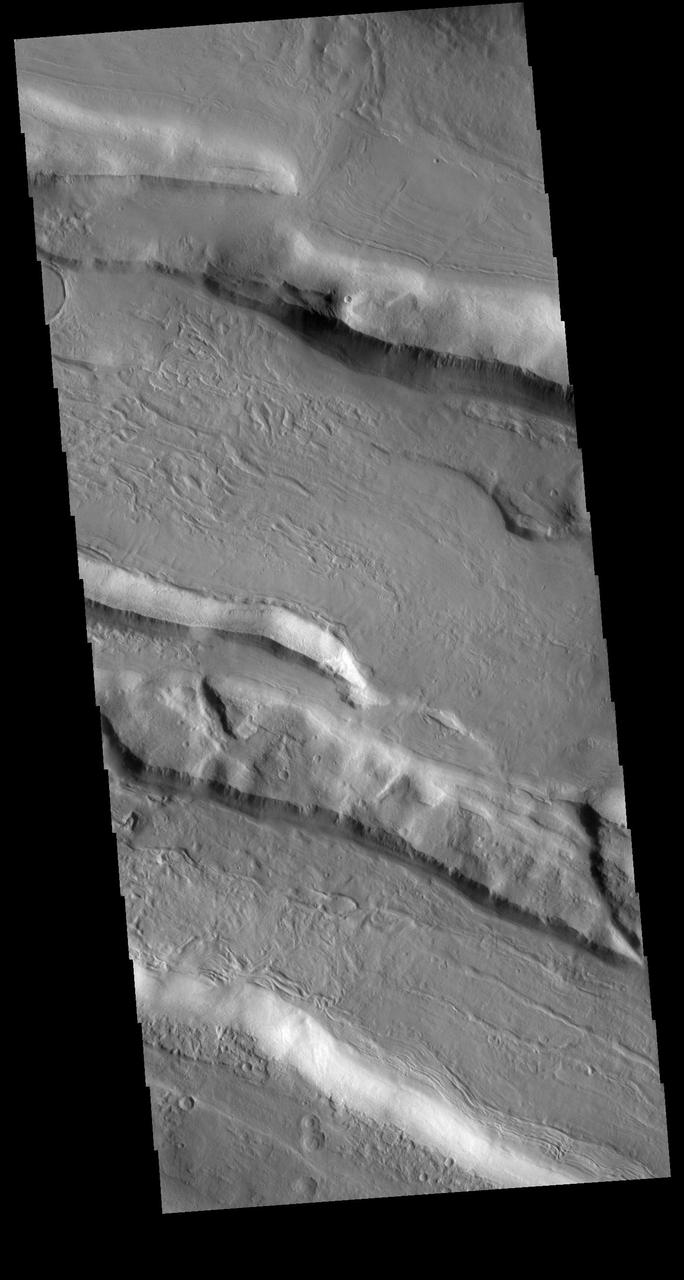
This VIS shows part of Acheron Fossae. Acheron Fossae is the highly fractured, faulted and deformed terrain located 1,050 kilometers (650 miles) north of the large shield volcano Olympus Mons. Lava flows from Olympus Mons at the base of Acheron Fossae show that the fossae predate the flows. The scarps visible in this image are approximately one kilometer (3,300 feet) high. Orbit Number: 79929 Latitude: 37.9951 Longitude: 227.289 Instrument: VIS Captured: 2019-12-21 16:21 https://photojournal.jpl.nasa.gov/catalog/PIA23747
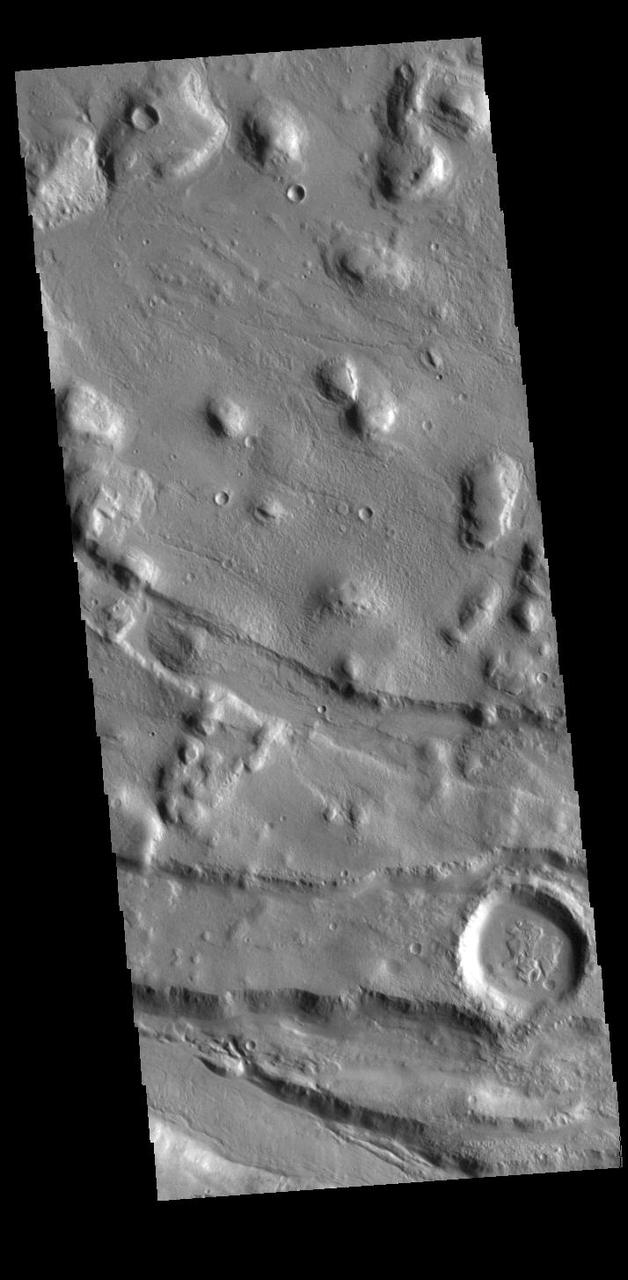
This VIS image shows part of Acheron Fossae. Acheron Fossae is the highly fractured, faulted and deformed terrain located 1,050 kilometers (650 miles) north of the large shield volcano Olympus Mons. Lava flows from Olympus Mons at the base of Acheron Fossae show that the fossae predate the flows. Orbit Number: 87741 Latitude: 38.8782 Longitude: 220.025 Instrument: VIS Captured: 2021-09-24 21:46 https://photojournal.jpl.nasa.gov/catalog/PIA25266
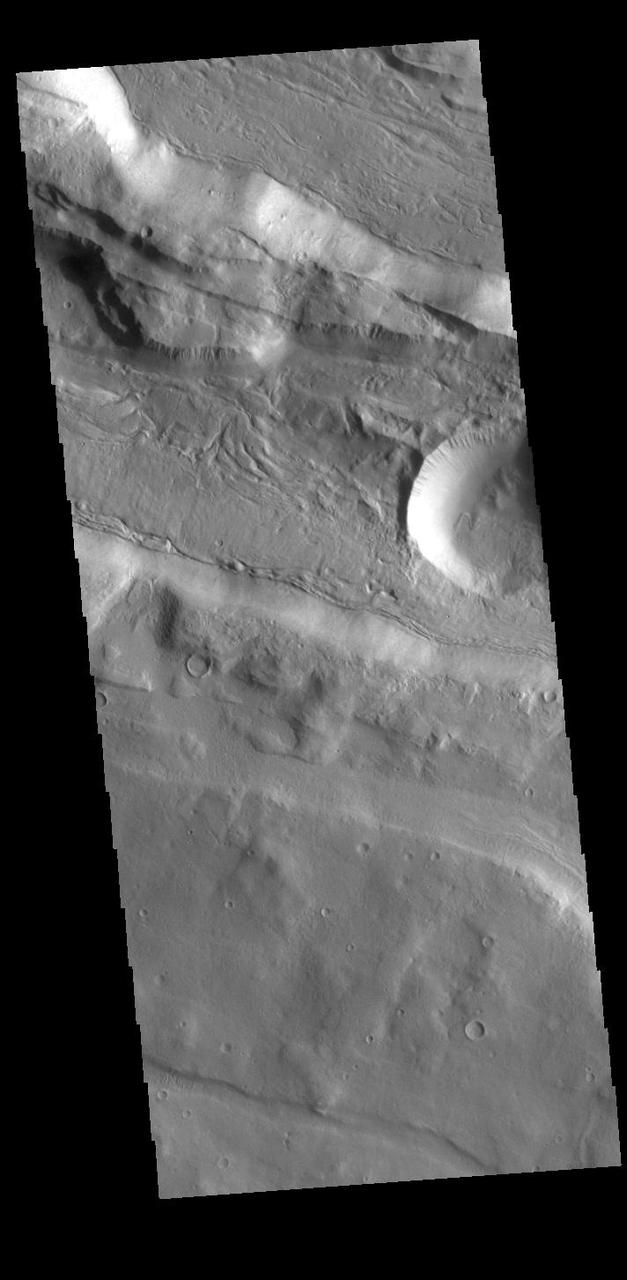
This VIS shows part of Acheron Fossae. Acheron Fossae is the highly fractured, faulted and deformed terrain located 1,050 kilometers (650 miles) north of the large shield volcano Olympus Mons. Lava flows from Olympus Mons at the base of Acheron Fossae show that the fossae predate the flows. The scarps visible in this image are approximately one kilometer (3,300 feet) high. Orbit Number: 88190 Latitude: 37.8893 Longitude: 226.816 Instrument: VIS Captured: 2021-10-31 21:03 https://photojournal.jpl.nasa.gov/catalog/PIA25191
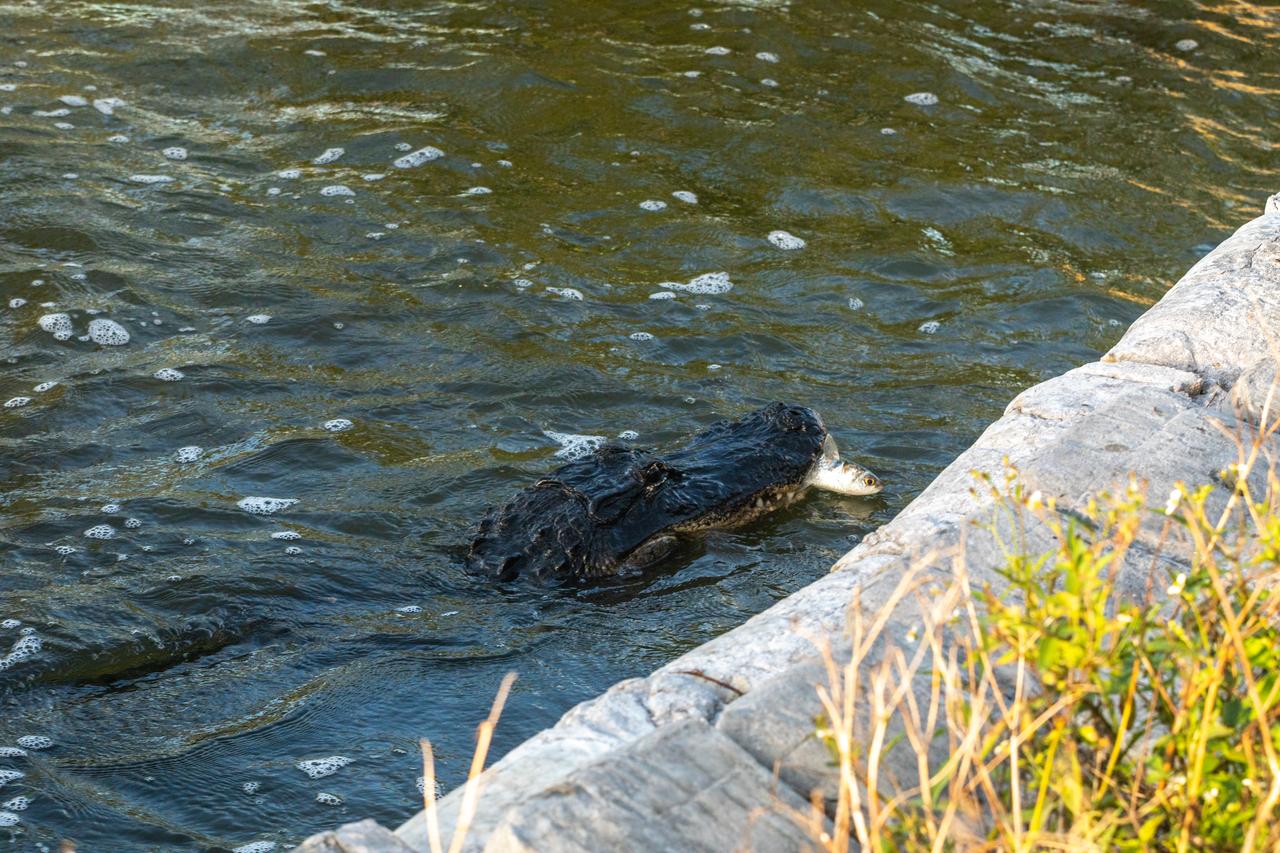
Kennedy Space Center shares boundaries with the Merritt Island National Wildlife Refuge on Florida’s Atlantic coast. Alligators can be found in many areas of the refuge. They are important top predators that help keep populations of smaller animals under control. They also create habitat for other wildlife in the marsh by digging holes that hold water during the dry season.
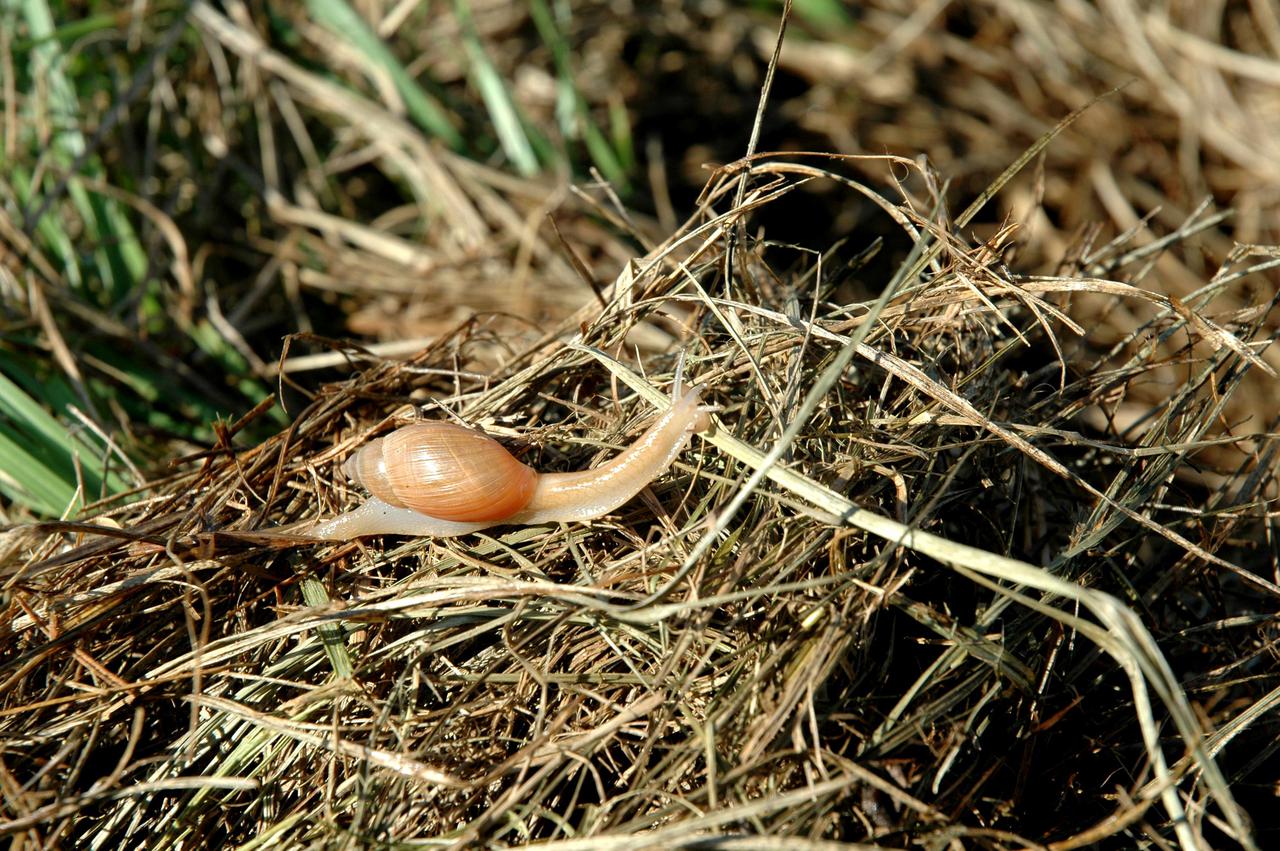
KENNEDY SPACE CENTER, FLA. - This snail was photographed near the NASA Kennedy Space Center Shuttle Landing Facility. It appears to have the characteristics of the “Rosy Predator Snail,” which is found in Southeastern Texas, Louisiana, Mississippi, Alabama, Georgia, South Carolina and is widespread in Florida including the Keys. It is usually found singly in hardwood forests, roadsides and urban gardens. The Shuttle Landing Facility backs up to the Banana Creek and surrounding marshes.
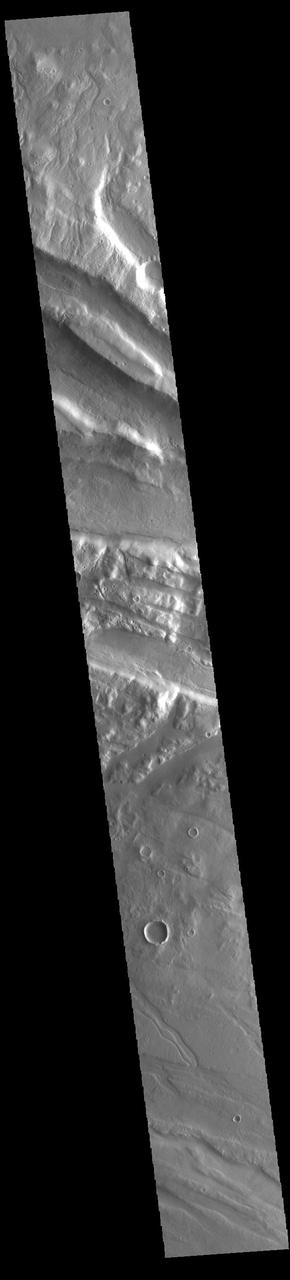
This VIS image shows part of Acheron Fossae. Acheron Fossae is the highly fractured, faulted and deformed terrain located 1,050 kilometers (650 miles) north of the large shield volcano Olympus Mons. Lava flows from Olympus Mons at the base of Acheron Fossae show that the fossae predate the flows. The scarps visible in this image are approximately one kilometer (3,300 feet) high. Orbit Number: 93718 Latitude: 38.2569 Longitude: 225.828 Instrument: VIS Captured: 2023-01-30 01:18 https://photojournal.jpl.nasa.gov/catalog/PIA25873
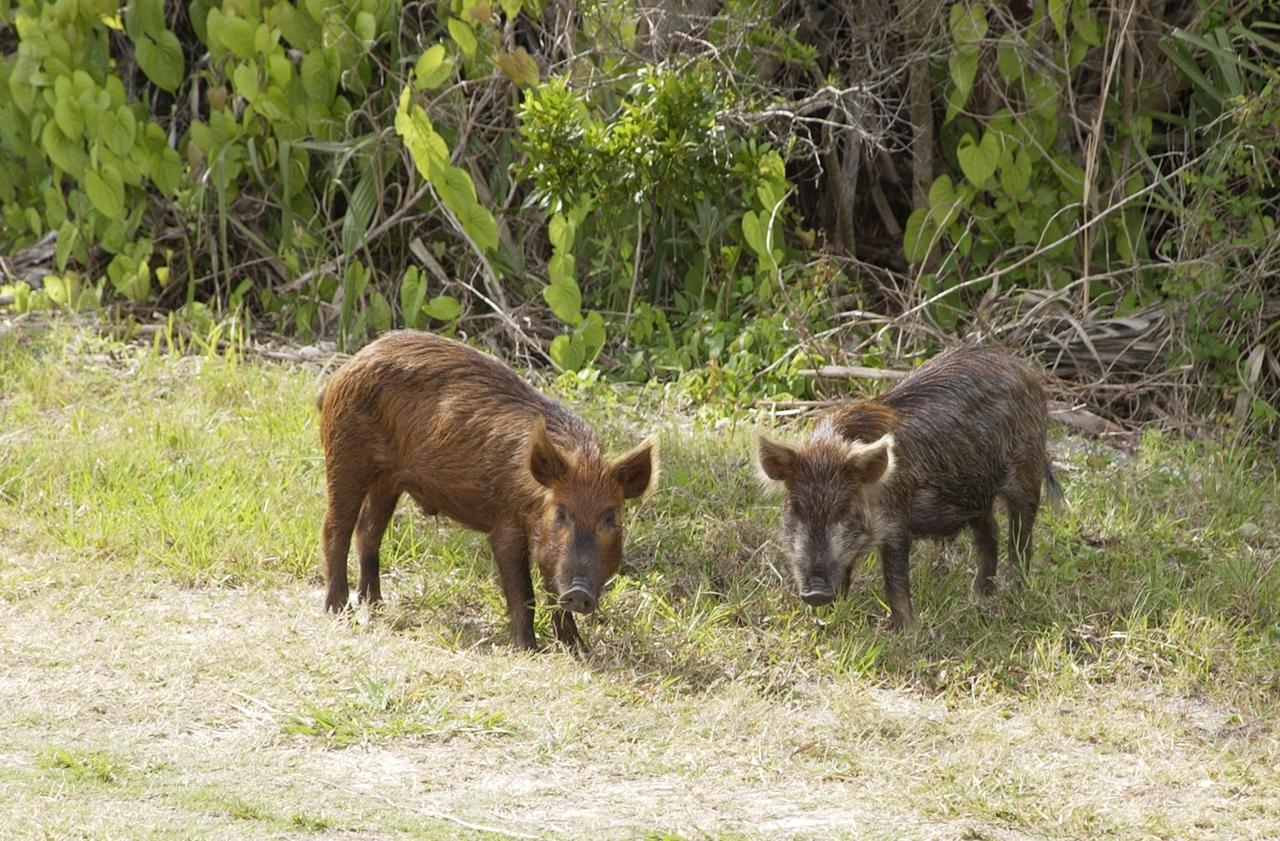
KENNEDY SPACE CENTER, FLA. - Wild pigs stop near the KSC Press Site in the Launch Complex 39 Area on their daily foraging rounds. Not a native in the environment, the pigs are believed to be descendants from those brought to Florida by the early Spanish explorers. Without many predators other than human, the pigs have flourished in the surrounding environs
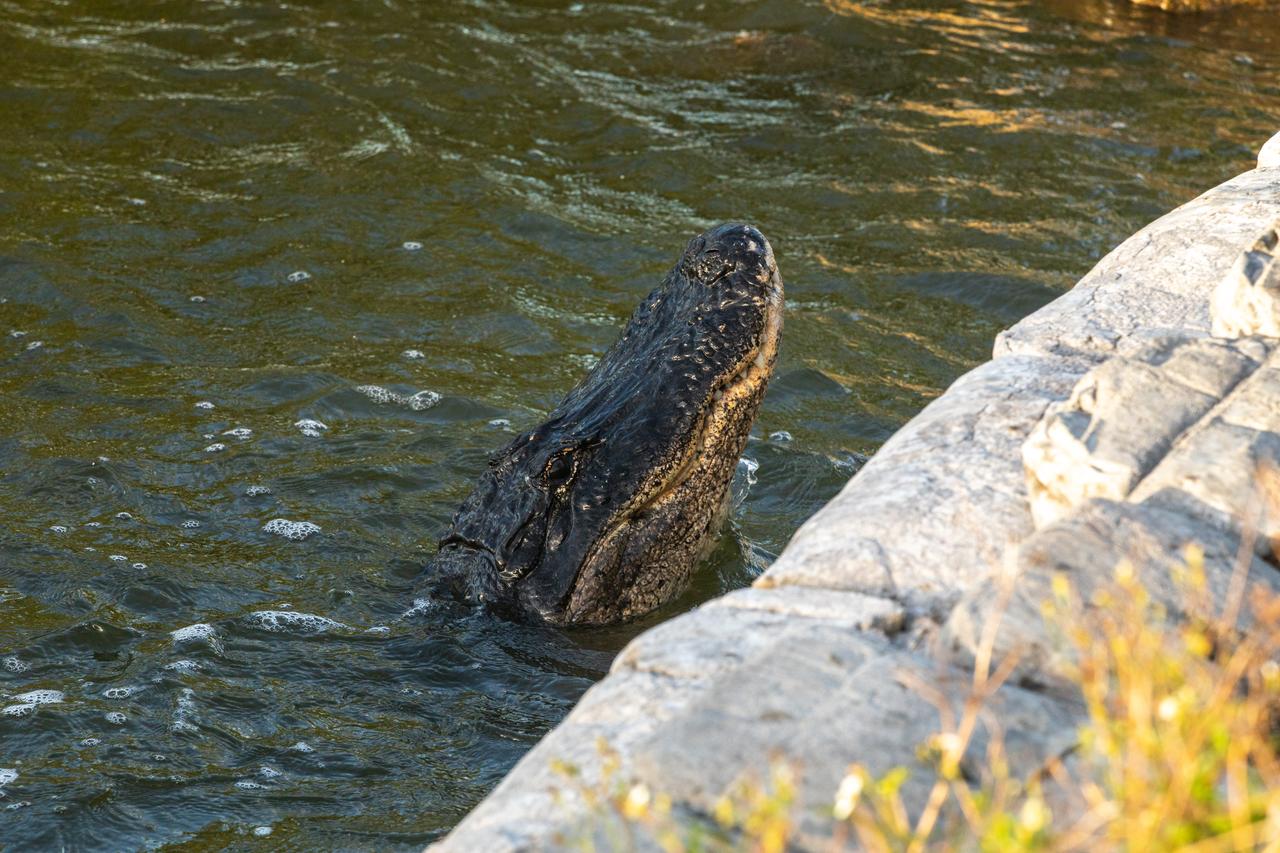
Kennedy Space Center shares boundaries with the Merritt Island National Wildlife Refuge on Florida’s Atlantic coast. Alligators can be found in many areas of the refuge. They are important top predators that help keep populations of smaller animals under control. They also create habitat for other wildlife in the marsh by digging holes that hold water during the dry season.

jsc2021e019402 (8/6/2016) --- Juvenile bobtail squid swimming in seawater just after hatching. The bobtail squid are born without their symbiotic microbes and must acquire them from their environment. Once the baby squid are colonized by the bacteria they gain the ability to glow in the dark and hide from their predators. Understanding of Microgravity on Animal-Microbe Interactions (UMAMI) examines the effects of spaceflight on the molecular and chemical interactions between beneficial microbes and their animal hosts. Image courtesy of Jamie S. Foster.
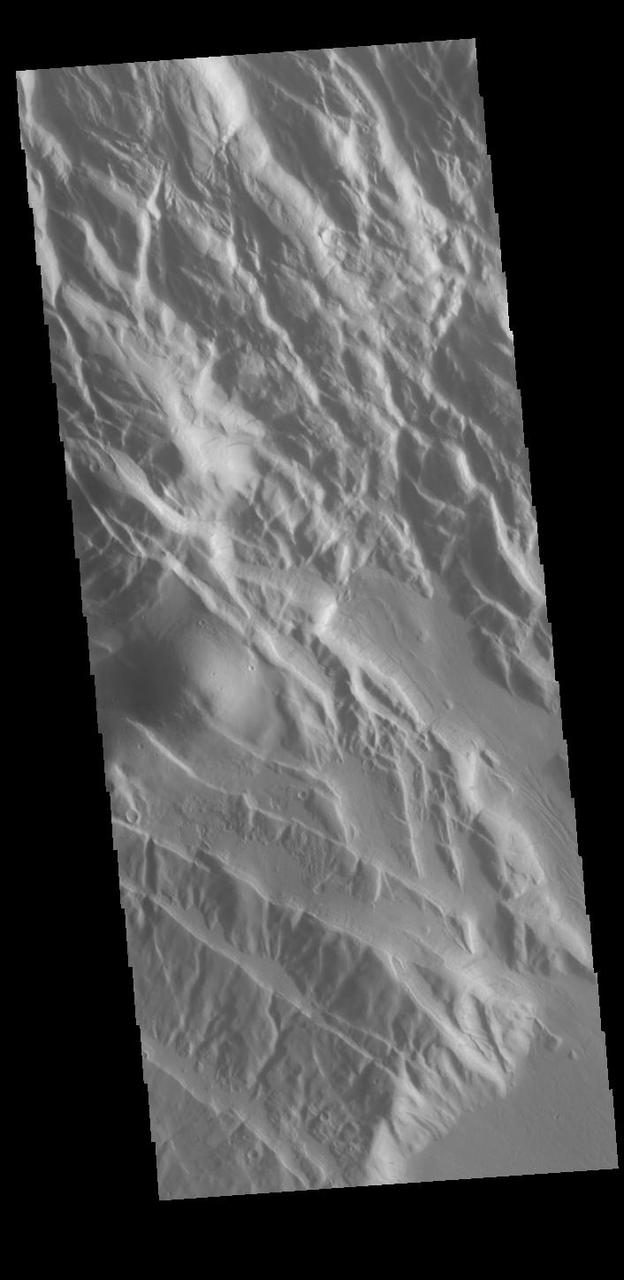
This VIS shows part of Acheron Fossae. Acheron Fossae is the highly fractured, faulted and deformed terrain located 1,050 kilometers (650 miles) north of the large shield volcano Olympus Mons. Lava flows from Olympus Mons at the base of Acheron Fossae show that the fossae predate the flows. The scarps visible in this image are approximately one kilometer (3,300 feet) high. Orbit Number: 85794 Latitude: 36.0816 Longitude: 229.11 Instrument: VIS Captured: 2021-04-17 12:16 https://photojournal.jpl.nasa.gov/catalog/PIA24873
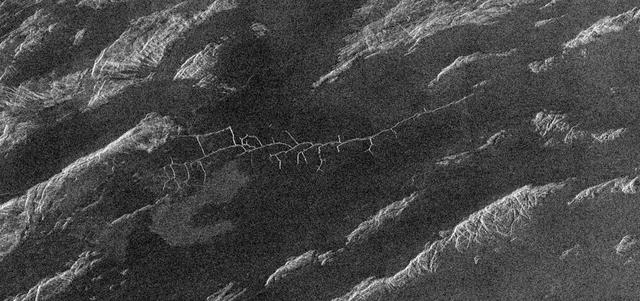
This image from NASA Magellan spacecraft covers region near Hestia Rupes on the northwestern corner of Aphrodite Terra. The complex network of narrow (<1 kilometer) fractures in the center of the image extends for approximately 50 kilometers (31 miles). This network exhibits tributary-like branches similar to those observed in river systems on Earth. However, the angular intersections of tributaries suggest tectonic control. These features appear to be due to drainage of lava along preexisting fractures and subsequent collapse of the surface. The underlying tectonic fabric can be observed in the northeast trending ridges which predate the plains. http://photojournal.jpl.nasa.gov/catalog/PIA00469
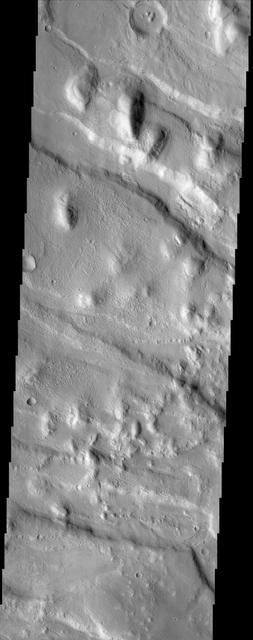
Located north of Olympus Mons and west of Alba Patera, Acheron Fossae provides a record of early tectonic activity in the Tharsis region. Acheron Fossae is a relatively high standing region characterized by multiple subparallel graben. As seen in the image, the graben trend generally to the northwest. The entire area predates the Alba Patera flows (which embay the eastern most Acheron grabens) and the Olympus Mons volcano (one of the youngest Tharsis features). The subdued nature of the highstanding hills, the erosion the graben walls, the eroded rims of all the visible craters, and the wind etching of the flat surfaces all help indicate the great age of Acheron Fossae. http://photojournal.jpl.nasa.gov/catalog/PIA04034

The greens and blues of the ocean color from NASA satellite data have provided new insights into how climate and ecosystem processes affect the growth cycles of phytoplankton—microscopic aquatic plants important for fish populations and Earth’s carbon cycle. At the bottom of the ocean’s food chain, phytoplankton account for roughly half of the net photosynthesis on Earth. Their photosynthesis consumes carbon dioxide and plays a key role in transferring carbon from the atmosphere to the ocean. Unlike the plant ecosystems on land, the amount of phytoplankton in the ocean is always followed closely by the abundance of organisms that eat phytoplankton, creating a perpetual dance between predators and prey. This new analysis shows how tiny imbalances in this predator-prey relationship, caused by environmental variability, give rise to massive phytoplankton blooms, having huge impacts on ocean productivity, fisheries and carbon cycling. The study was released Thursday, Sept. 25, in the journal Nature Climate Change. “The continuous year-in and year-out measurements provided by NASA’s ocean color satellites have dramatically changed our understanding of phytoplankton dynamics on the Earth,” said Mike Behrenfeld, author of the study and phytoplankton ecologist at Oregon State University, Corvallis, Oregon. “What we now see is a closely linked system of phytoplankton cell division and consumption lying at the heart of the plant’s annual cycle.” Behrenfeld calls this close predator-prey relationship the “Dance of the Plankton.” This view is different from previous perspectives that have simply focused on environmental resources used by phytoplankton to grow, such as nutrients and light. The new view is important because it reveals that tiny imbalances can greatly impact Earth’s ecology. Read more: <a href="http://1.usa.gov/ZkVMHG" rel="nofollow">1.usa.gov/ZkVMHG</a> Credit: NASA's Goddard Space Flight Center, Norman Kuring; USGS <b><a href="http://www.nasa.gov/audience/formedia/features/MP_Photo_Guidelines.html" rel="nofollow">NASA image use policy.</a></b> <b><a href="http://www.nasa.gov/centers/goddard/home/index.html" rel="nofollow">NASA Goddard Space Flight Center</a></b> enables NASA’s mission through four scientific endeavors: Earth Science, Heliophysics, Solar System Exploration, and Astrophysics. Goddard plays a leading role in NASA’s accomplishments by contributing compelling scientific knowledge to advance the Agency’s mission. <b>Follow us on <a href="http://twitter.com/NASAGoddardPix" rel="nofollow">Twitter</a></b> <b>Like us on <a href="http://www.facebook.com/pages/Greenbelt-MD/NASA-Goddard/395013845897?ref=tsd" rel="nofollow">Facebook</a></b> <b>Find us on <a href="http://instagram.com/nasagoddard?vm=grid" rel="nofollow">Instagram</a></b>

The left wing of NASA's Altair unmanned aerial vehicle (UAV) rests in a jig during construction at General Atomics Aeronautical Systems, Inc., (GA-ASI) facility at Adelanto, Calif.
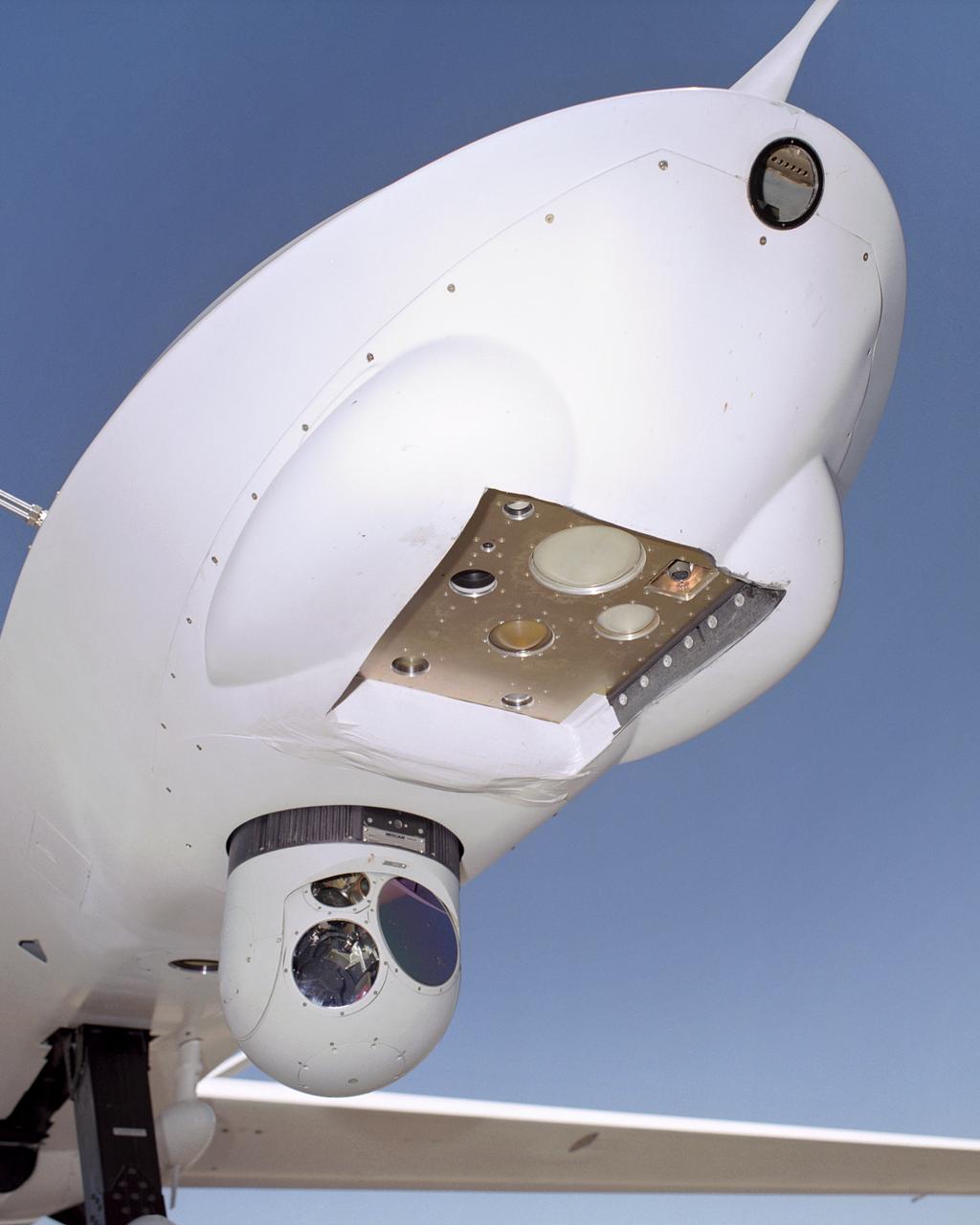
An ocean color senor, a passive microwave vertical sounder and an electro-optical sensor were mounted on the Altair UAV for the NOAA-NASA flight demonstration.
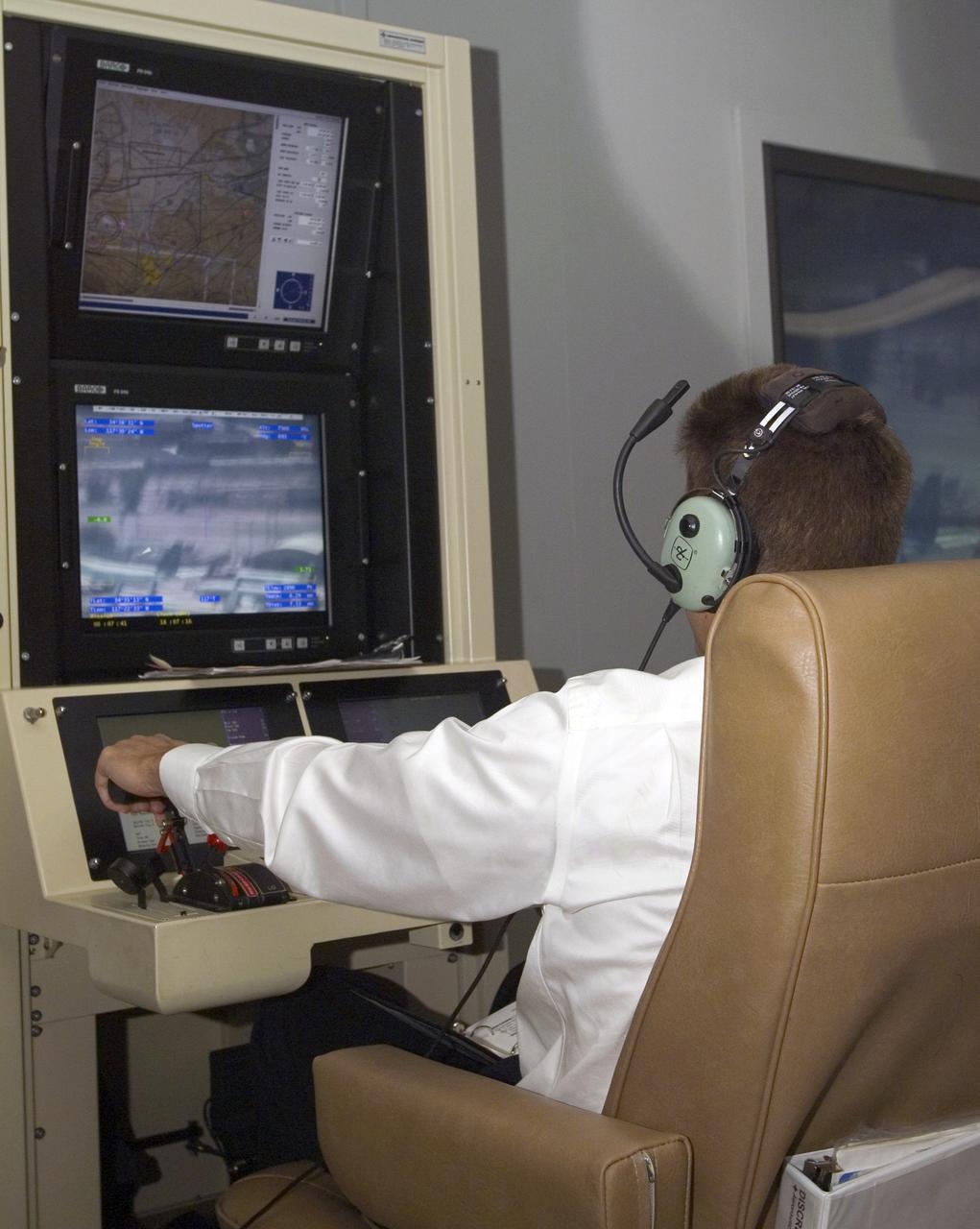
A pilot for General Atomics guides the Altair remotely operated aircraft from a ground control station using both visual and telemetered data.
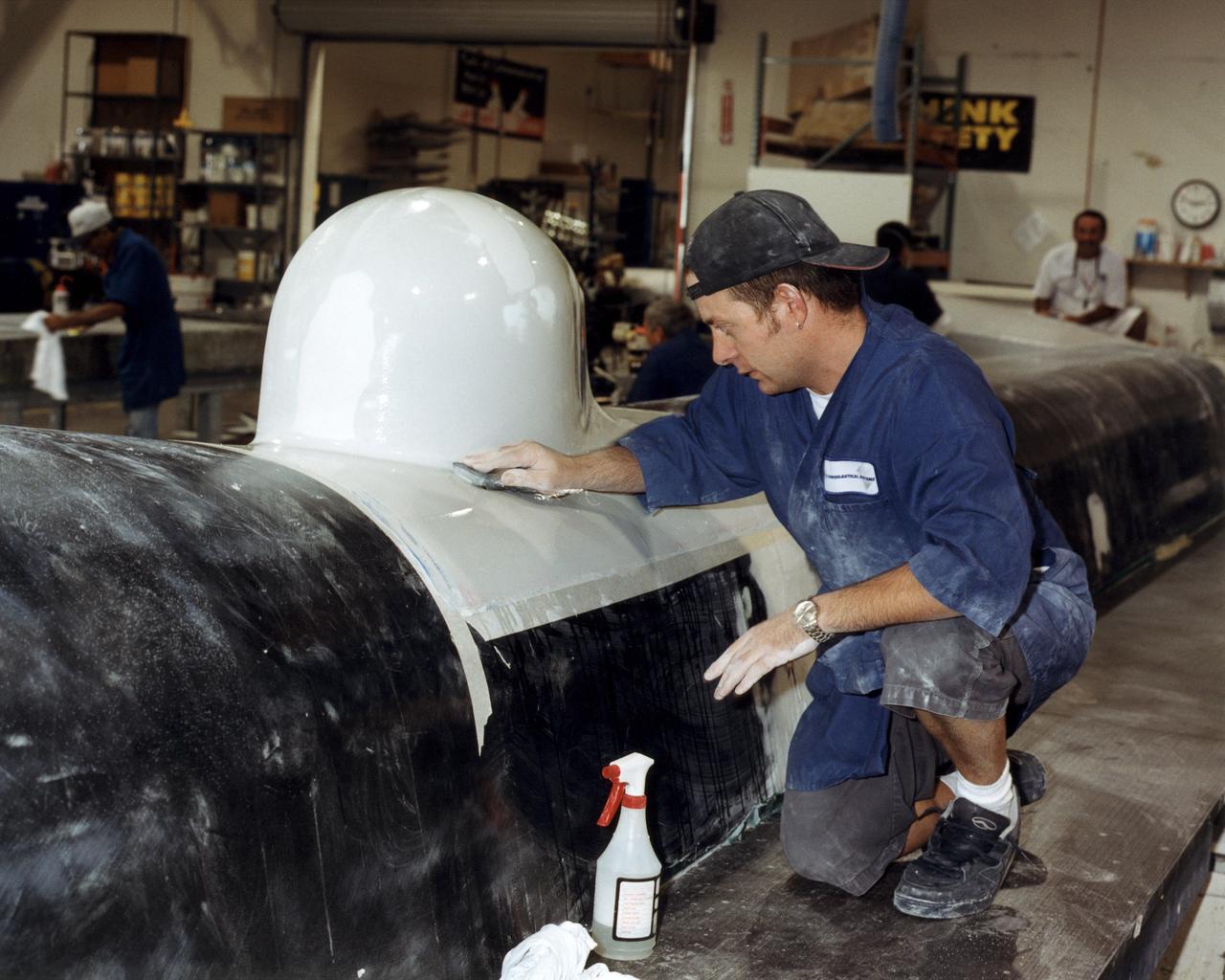
Technician Shawn Warren carefully smoothes out the composite skin of an instrument fairing<br>atop the upper fuselage of the Altair unmanned aerial vehicle (UAV) at General Atomics Aeronautical Systems, Inc., facility at Adelanto, Calif.
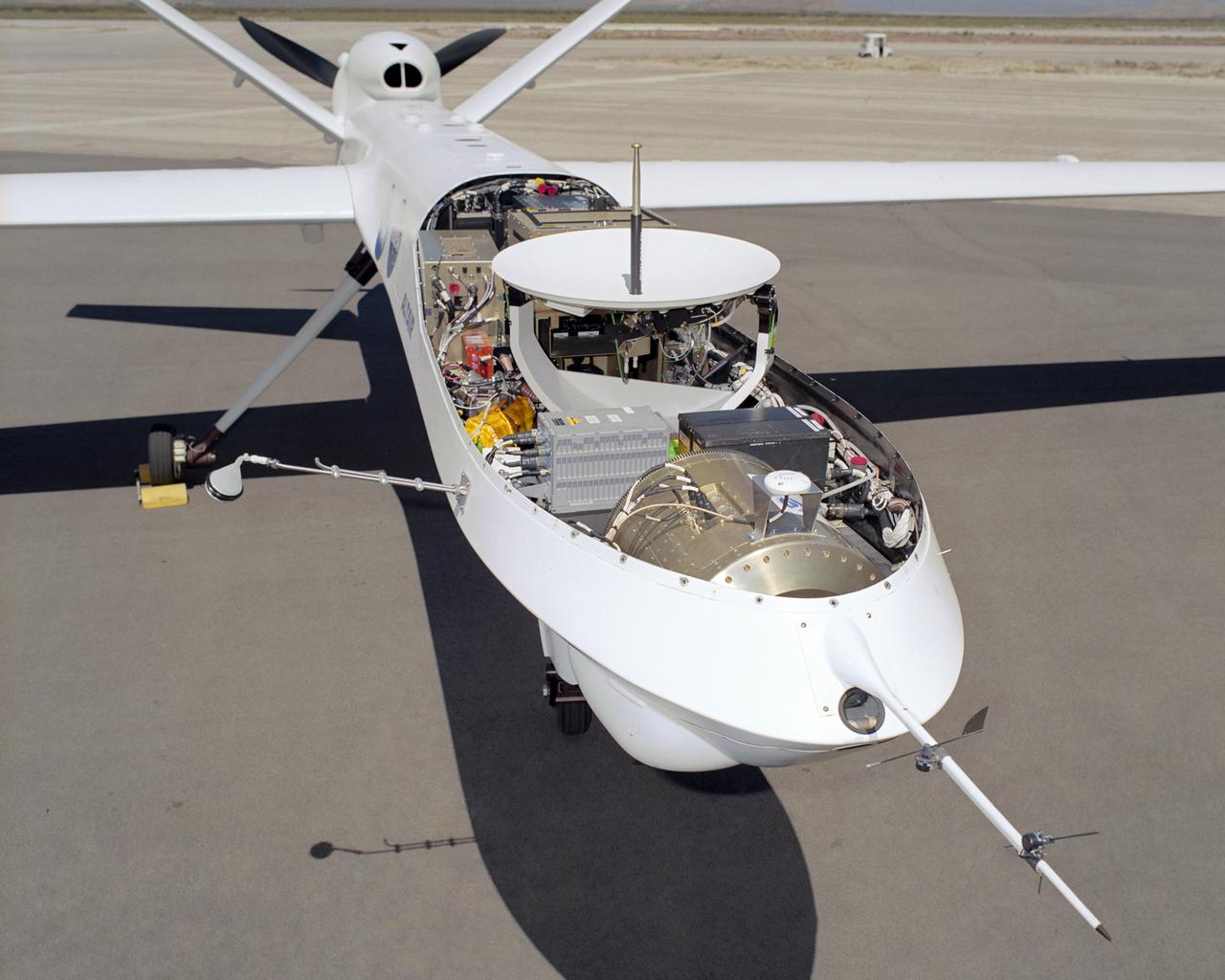
A satellite antenna, electro-optical/infrared and ocean color sensors (front) were among payloads installed on the Altair for the NOAA-NASA flight demonstration

Terrence Hertz, Deputy Associate Administrator for Technology, NASA Aeronautics Research Mission Directorate, at the NOAA/NASA Altair flight demo kickoff.
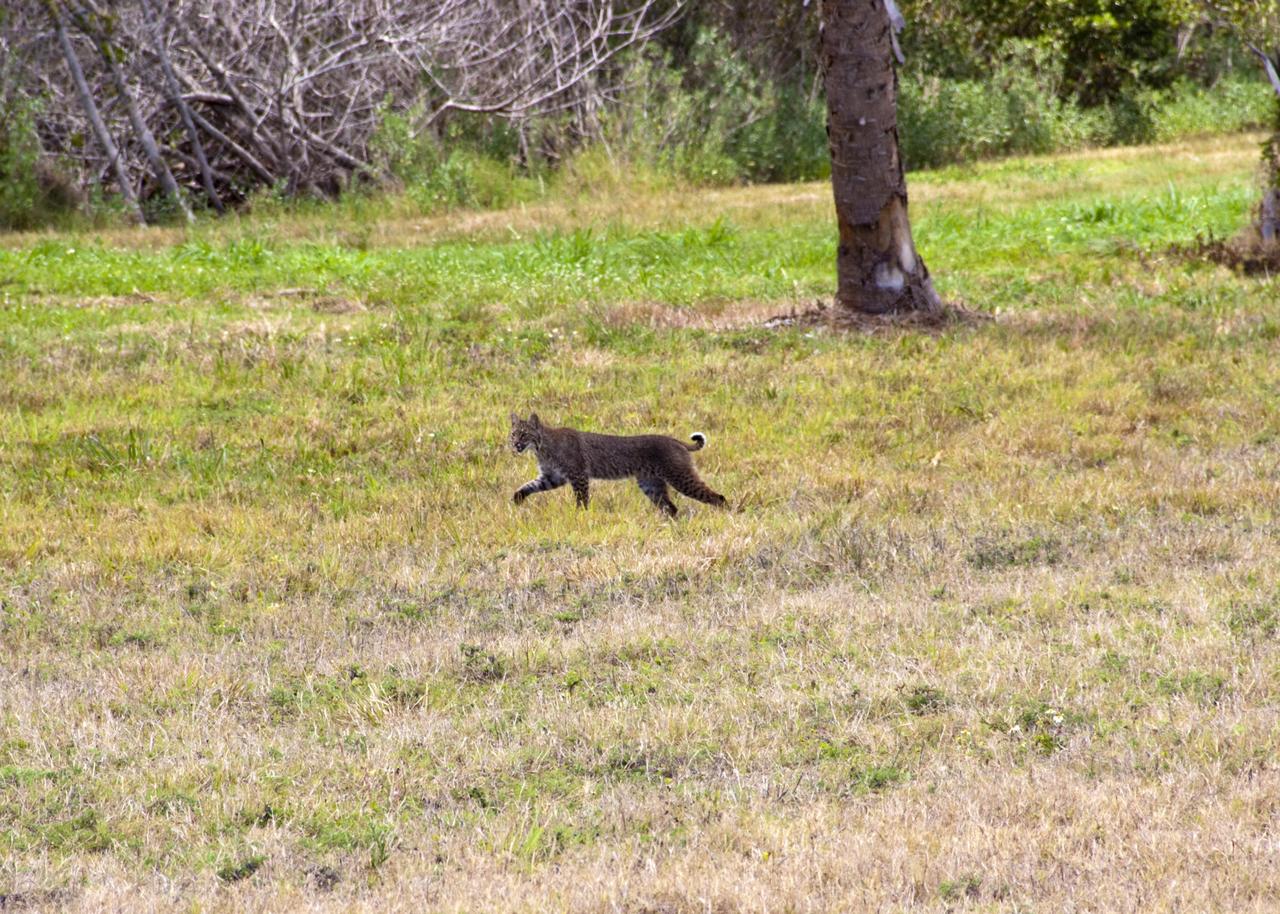
CAPE CANAVERAL, Fla. – A bobcat strolls across the causeway between NASA’s Kennedy Space Center and Cape Canaveral Air Force Station in Florida, oblivious to everything but the hunt for its next meal. The cat is seldom observed during the day unless scared from its daytime shelter. It is the last large mammalian predator remaining on the center. Kennedy and the Merritt Island National Wildlife Refuge mutually reside on 140,000 acres on central Florida’s east coast. The area’s coastal dunes, saltwater estuaries and marshes, freshwater impoundments, scrub, pine flatwoods, and hardwood hammocks provide habitats for more than 1,000 species of plants and animals, including about 331 species of birds. For more information, visit http://www.nasa.gov/kennedy. Photo credit: NASA/Jim Grossmann
CAPE CANAVERAL, Fla. – – At NASA's Kennedy Space Center in Florida, adult wild pigs line up for their food hunt in the grassy field The wild pigs have flourished in the environs around Kennedy, which shares a border with the Merritt Island National Wildlife Refuge, without many predators other than panthers and humans. Pigs were introduced to Florida in the 1500s and are now found statewide in wooded areas close to water. Pigs are omnivores, foraging on the ground and rooting just beneath the surface, which damages the groundcover. Wild pigs eat almost anything that has nutritional value, including tubers, roots, shoots, acorns, fruits, berries, earthworms, amphibians, reptiles and rodents. Their appearance is similar to domestic hogs, but leaner, with a longer, narrower head and a coarser, denser coat. Females may have two litters per year. The piglets are weaned in a few weeks but remain with the mother for several months. Photo credit: NASA/Ben Smegelsky
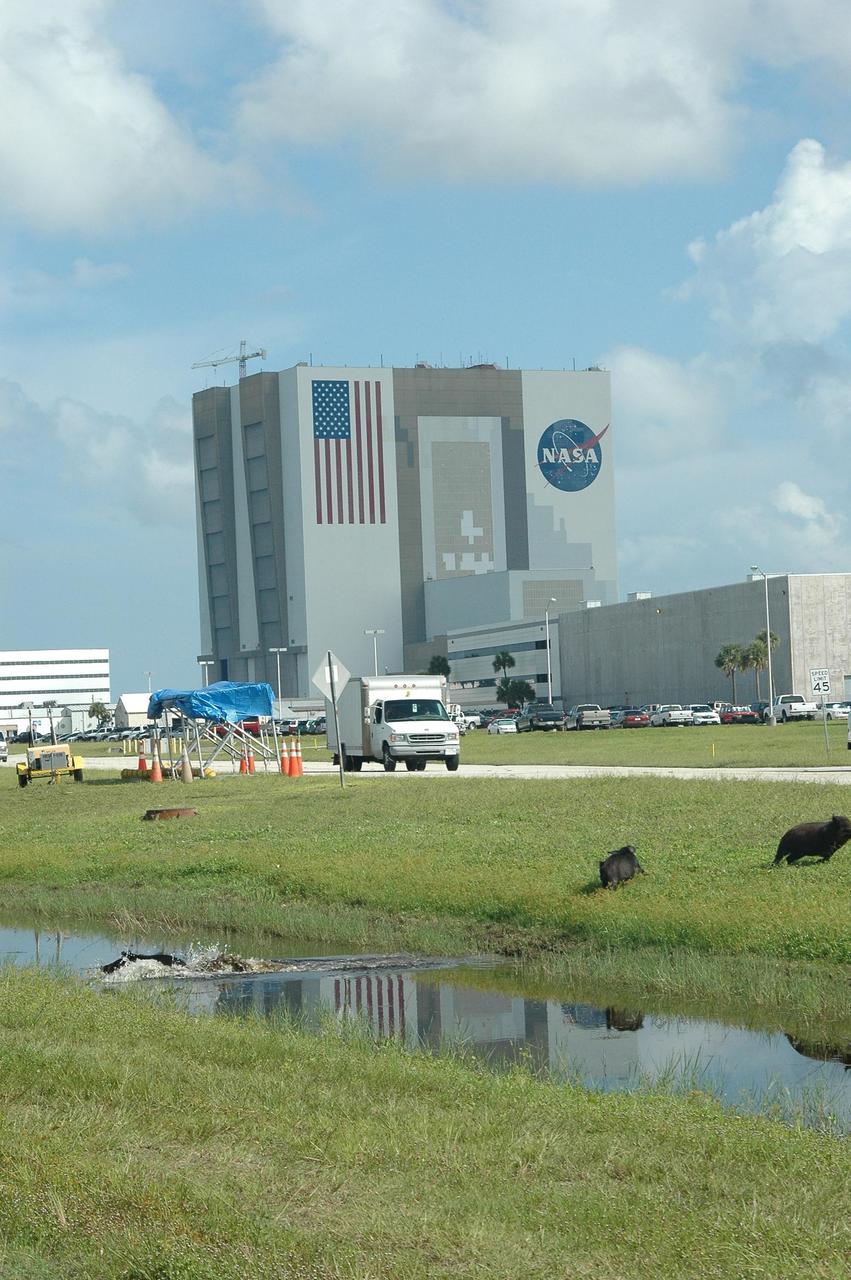
KENNEDY SPACE CENTER, FLA. - A wild pig splashes through a canal near NASA Kennedy Space Center’s Vehicle Assembly Building while its companions stay nearby on the bank. The wild pigs have flourished in the environs around KSC, which shares a border with the Merritt Island National Wildlife Refuge, without many predators other than panthers and humans. Pigs were introduced to Florida in the 1500s and are now found statewide in wooded areas close to water. Pigs are omnivores, foraging on the ground and rooting just beneath the surface, which damages the groundcover. Wild pigs eat almost anything that has nutritional value, including tubers, roots, shoots, acorns, fruits, berries, earthworms, amphibians, reptiles and rodents. Appearance is similar to domestic hogs, but leaner, with a longer, narrower head and a coarser, denser coat. Females may have two litters per year. The piglets are weaned in a few weeks but remain with the mother for several months.
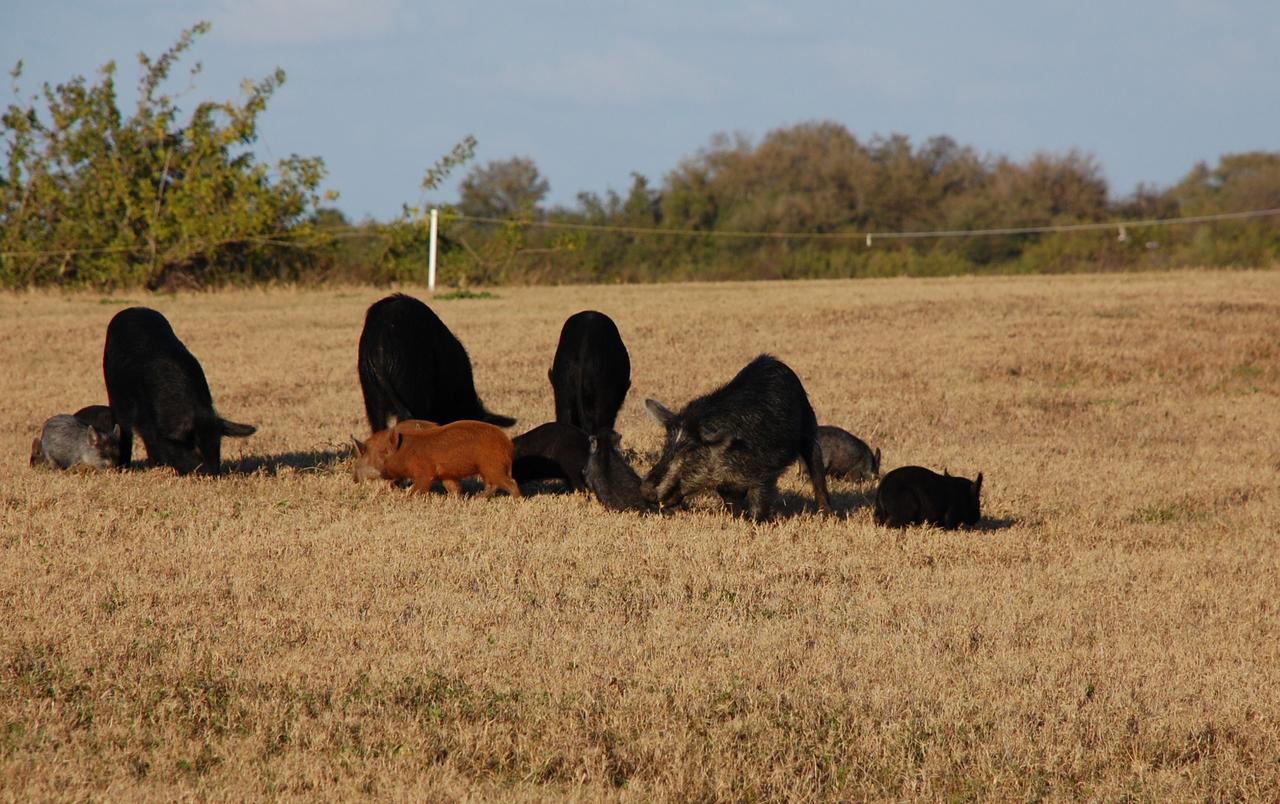
CAPE CANAVERAL, Fla. – At NASA's Kennedy Space Center in Florida, a family of wild pigs roots through the grass for food. The wild pigs have flourished in the environs around Kennedy, which shares a border with the Merritt Island National Wildlife Refuge, without many predators other than panthers and humans. Pigs were introduced to Florida in the 1500s and are now found statewide in wooded areas close to water. Pigs are omnivores, foraging on the ground and rooting just beneath the surface, which damages the groundcover. Wild pigs eat almost anything that has nutritional value, including tubers, roots, shoots, acorns, fruits, berries, earthworms, amphibians, reptiles and rodents. Their appearance is similar to domestic hogs, but leaner, with a longer, narrower head and a coarser, denser coat. Females may have two litters per year. The piglets are weaned in a few weeks but remain with the mother for several months. Photo credit: NASA/Ben Smegelsky
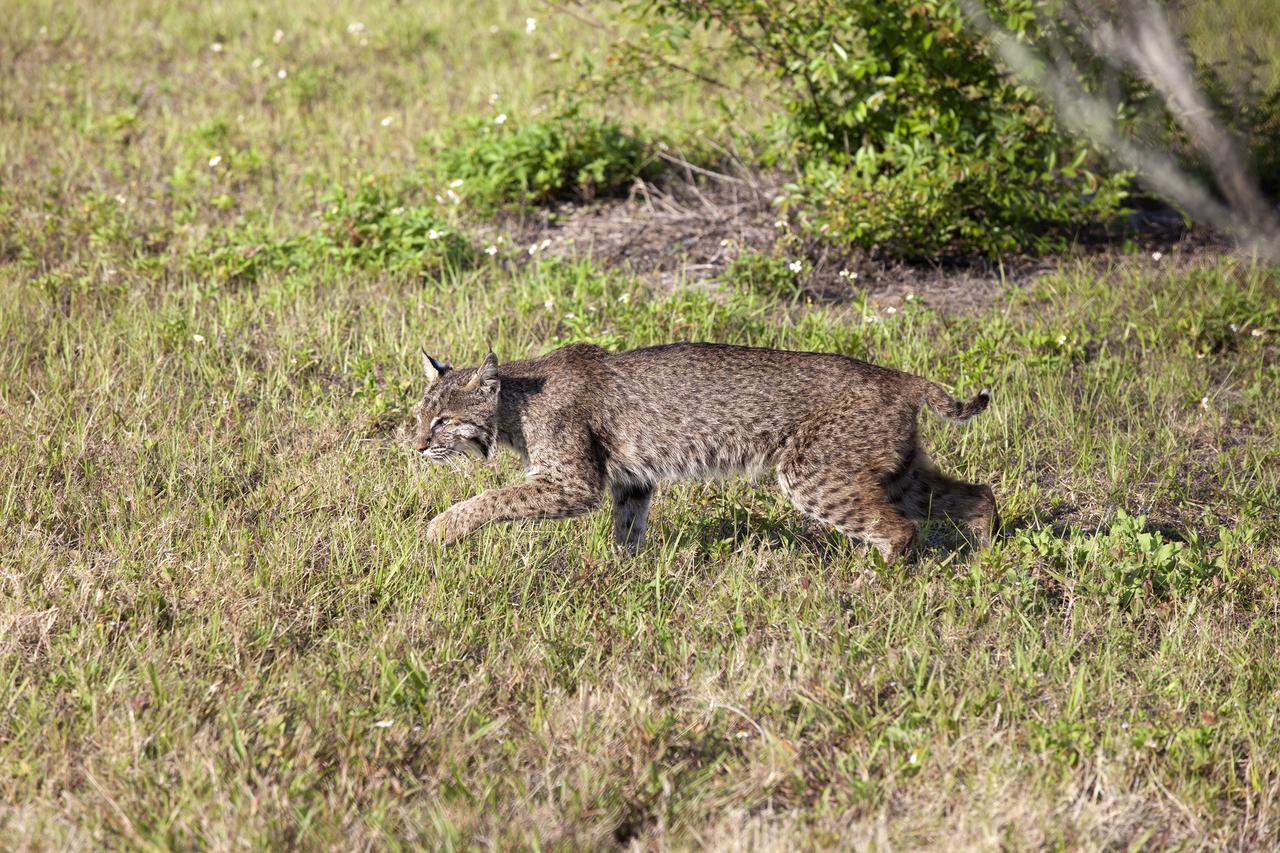
CAPE CANAVERAL, Fla. -- A bobcat retreats from the limelight near the Press Site at NASA's Kennedy Space Center in Florida. The center, the only launch site for crewed missions from U.S. soil, coexists with the Merritt Island National Wildlife Refuge, which encompasses 140,000 acres. The cat is the last large mammalian predator remaining on the center. The refuge provides a wide variety of habitats, including coastal dunes, saltwater estuaries and marshes, freshwater impoundments, scrub, pine flatwoods, and hardwood hammocks, and is a sanctuary for more than 1,500 species of plants and animals, including more than 330 species of birds, 31 mammals, 117 fishes, and 65 amphibians and reptiles. For additional information about the refuge, visit http://www.fws.gov/merrittisland. Photo credit: NASA/Kim Shiflett
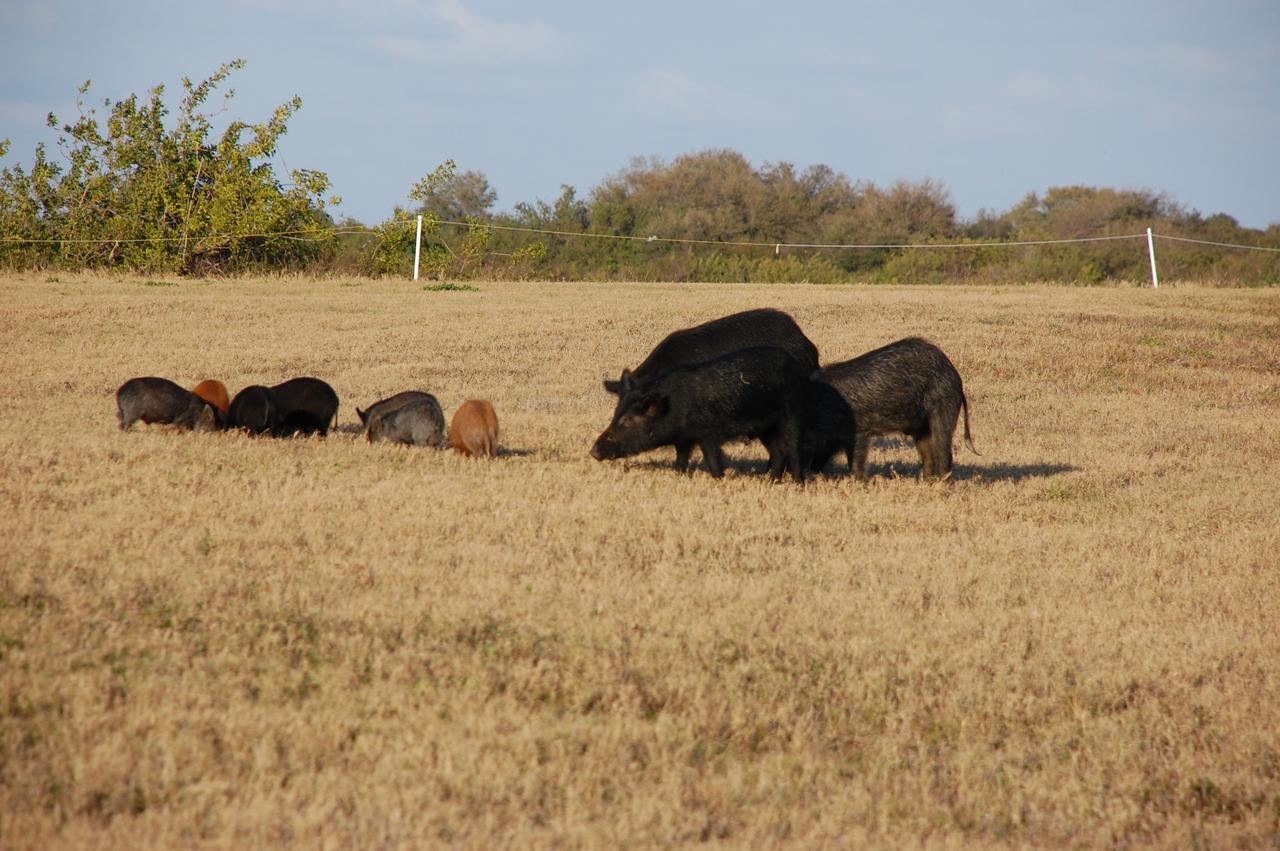
CAPE CANAVERAL, Fla. – At NASA's Kennedy Space Center in Florida, a family of wild pigs roots through the grass for food. The wild pigs have flourished in the environs around Kennedy, which shares a border with the Merritt Island National Wildlife Refuge, without many predators other than panthers and humans. Pigs were introduced to Florida in the 1500s and are now found statewide in wooded areas close to water. Pigs are omnivores, foraging on the ground and rooting just beneath the surface, which damages the groundcover. Wild pigs eat almost anything that has nutritional value, including tubers, roots, shoots, acorns, fruits, berries, earthworms, amphibians, reptiles and rodents. Their appearance is similar to domestic hogs, but leaner, with a longer, narrower head and a coarser, denser coat. Females may have two litters per year. The piglets are weaned in a few weeks but remain with the mother for several months. Photo credit: NASA/Ben Smegelsky
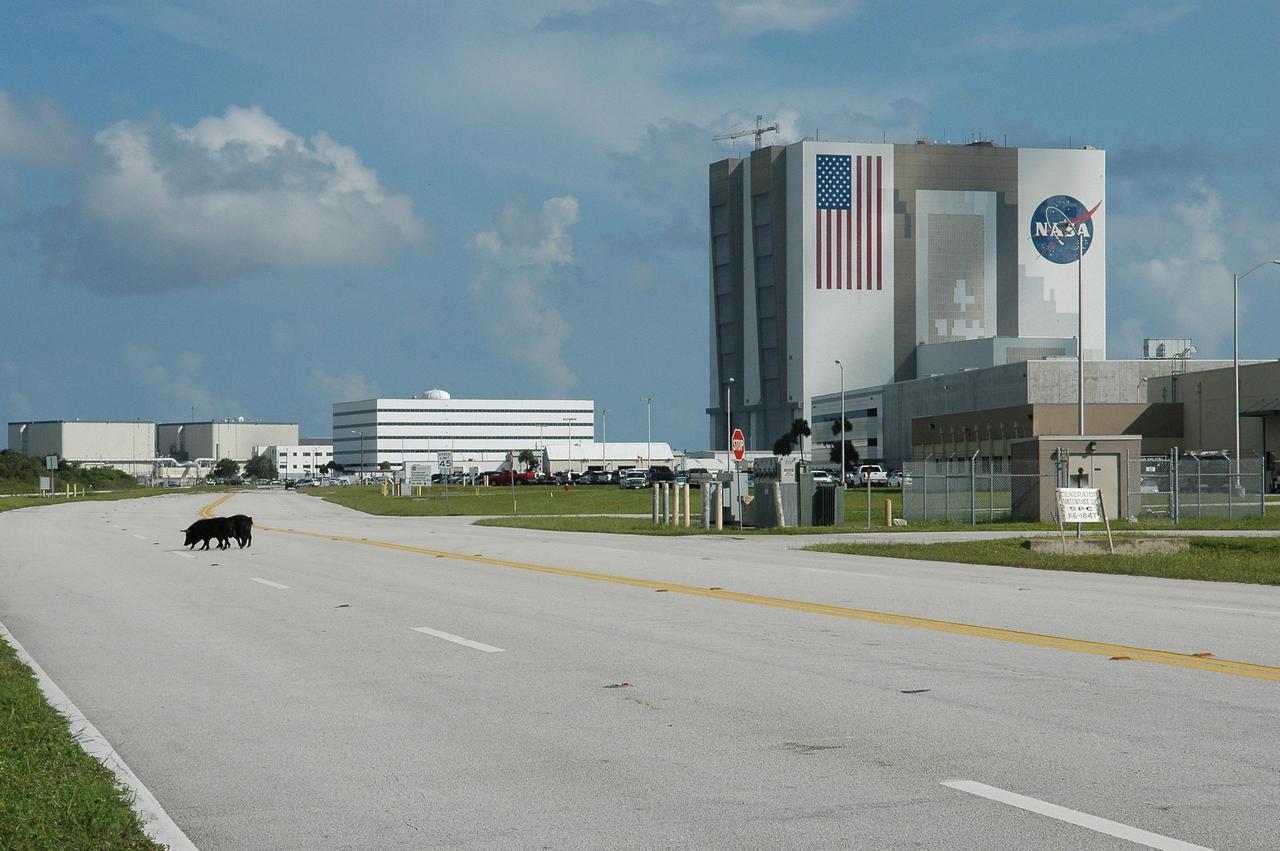
KENNEDY SPACE CENTER, FLA. - Out for a stroll on a sunny Florida day, a trio of wild pigs cross the road near NASA Kennedy Space Center’s Vehicle Assembly Building, in the background. The wild pigs have flourished in the environs around KSC, which shares a border with the Merritt Island National Wildlife Refuge, without many predators other than panthers and humans. Pigs were introduced to Florida in the 1500s and are now found statewide in wooded areas close to water. Pigs are omnivores, foraging on the ground and rooting just beneath the surface, which damages the groundcover. Wild pigs eat almost anything that has nutritional value, including tubers, roots, shoots, acorns, fruits, berries, earthworms, amphibians, reptiles and rodents. Appearance is similar to domestic hogs, but leaner, with a longer, narrower head and a coarser, denser coat. Females may have two litters per year. The piglets are weaned in a few weeks but remain with the mother for several months.
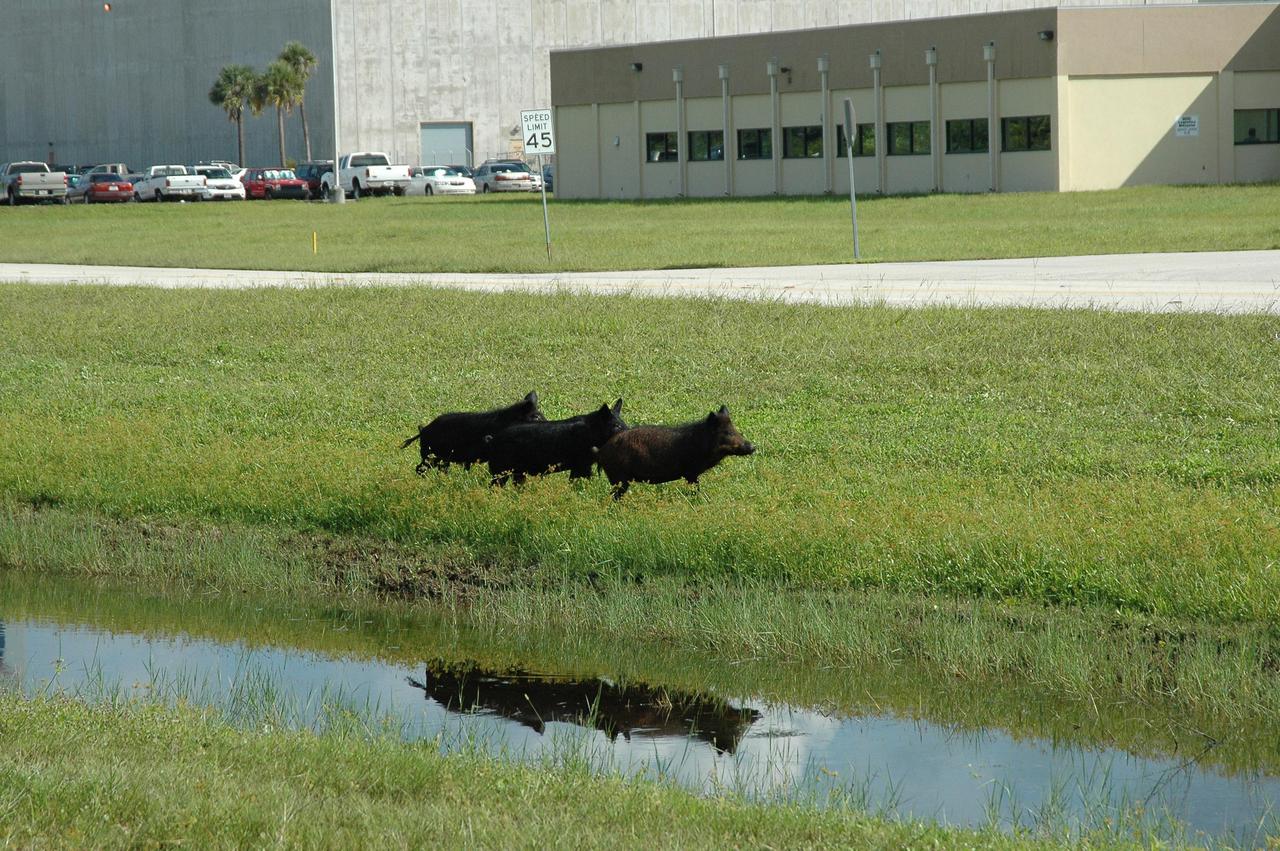
KENNEDY SPACE CENTER, FLA. - As if posing for the photographer, a trio of wild pigs pause during their stroll along a canal near NASA Kennedy Space Center’s Launch Control Center, in the background. The wild pigs have flourished in the environs around KSC, which shares a border with the Merritt Island National Wildlife Refuge, without many predators other than panthers and humans. Pigs were introduced to Florida in the 1500s and are now found statewide in wooded areas close to water. Pigs are omnivores, foraging on the ground and rooting just beneath the surface, which damages the groundcover. Wild pigs eat almost anything that has nutritional value, including tubers, roots, shoots, acorns, fruits, berries, earthworms, amphibians, reptiles and rodents. Appearance is similar to domestic hogs, but leaner, with a longer, narrower head and a coarser, denser coat. Females may have two litters per year. The piglets are weaned in a few weeks but remain with the mother for several months.
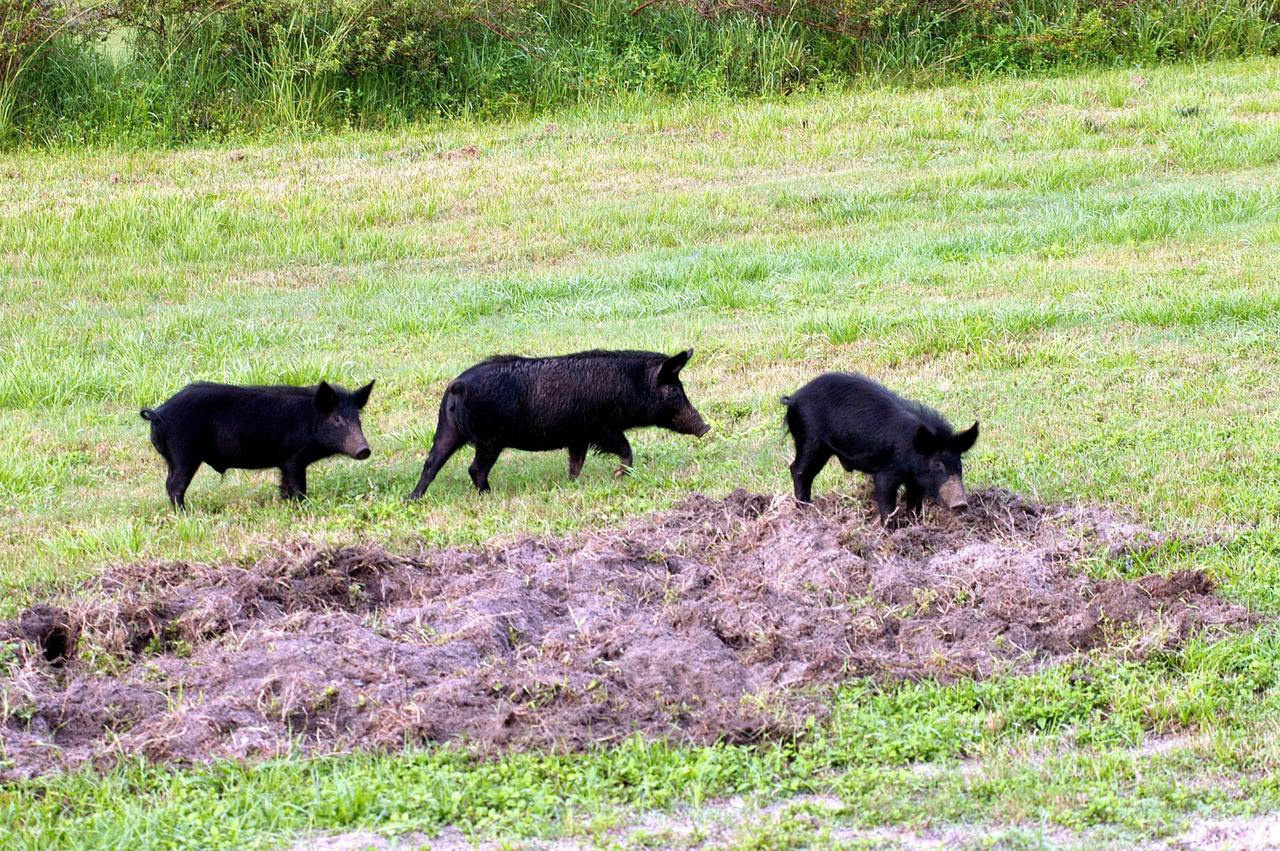
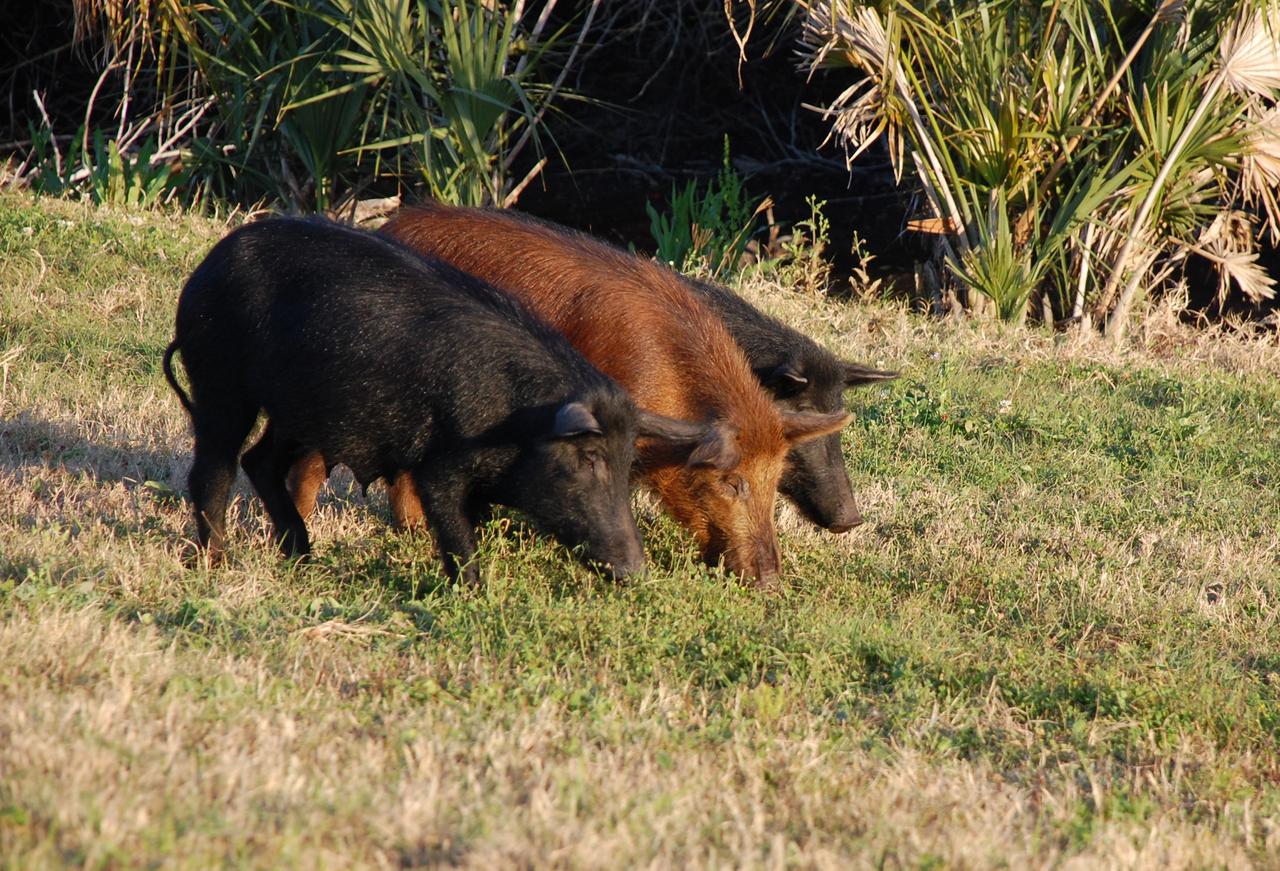
KENNEDY SPACE CENTER, FLA. - Three wild pigs - a mother and her two offspring - root for food in the grass near the NASA News Center at KSC. Feral pigs were introduced to Florida in the 1500s and are now found statewide in wooded areas close to water. The pigs have flourished in the environs around KSC, which shares a border with the Merritt Island National Wildlife Refuge, without many predators other than panthers and humans. Pigs are omnivores, foraging on the ground and rooting just beneath the surface, which damages the groundcover. Wild pigs eat almost anything that has nutritional value, including tubers, roots, shoots, acorns, fruits, berries, earthworms, amphibians, reptiles and rodents. Appearance is similar to domestic hogs, but leaner, with a longer, narrower head and a coarser, denser coat. Females may have two litters per year. The piglets are weaned in a few weeks but remain with the mother for several months.
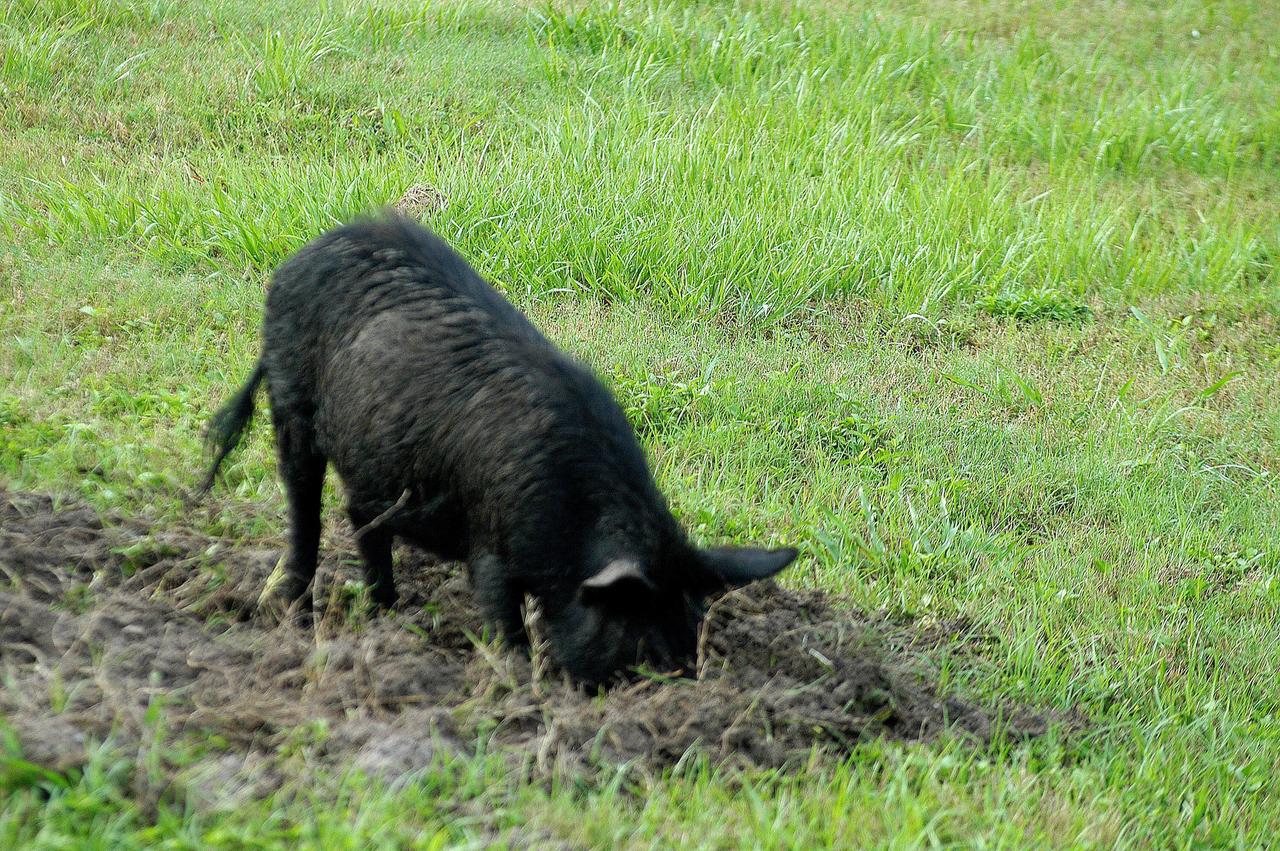
KENNEDY SPACE CENTER, FLA. - A young wild pig roots in the grass for food in an area near the NASA News Center at KSC. Feral pigs were introduced to Florida in the 1500s and are now found statewide in wooded areas close to water. The pigs have flourished in the environs around KSC, which shares a border with the Merritt Island National Wildlife Refuge, without many predators other than panthers and humans. Pigs are omnivores, foraging on the ground and rooting just beneath the surface, which damages the groundcover. Wild pigs eat almost anything that has nutritional value, including tubers, roots, shoots, acorns, fruits, berries, earthworms, amphibians, reptiles and rodents. Appearance is similar to domestic hogs, but leaner, with a longer, narrower head and a coarser, denser coat. Females may have two litters per year. The piglets are weaned in a few weeks but remain with the mother for several months.
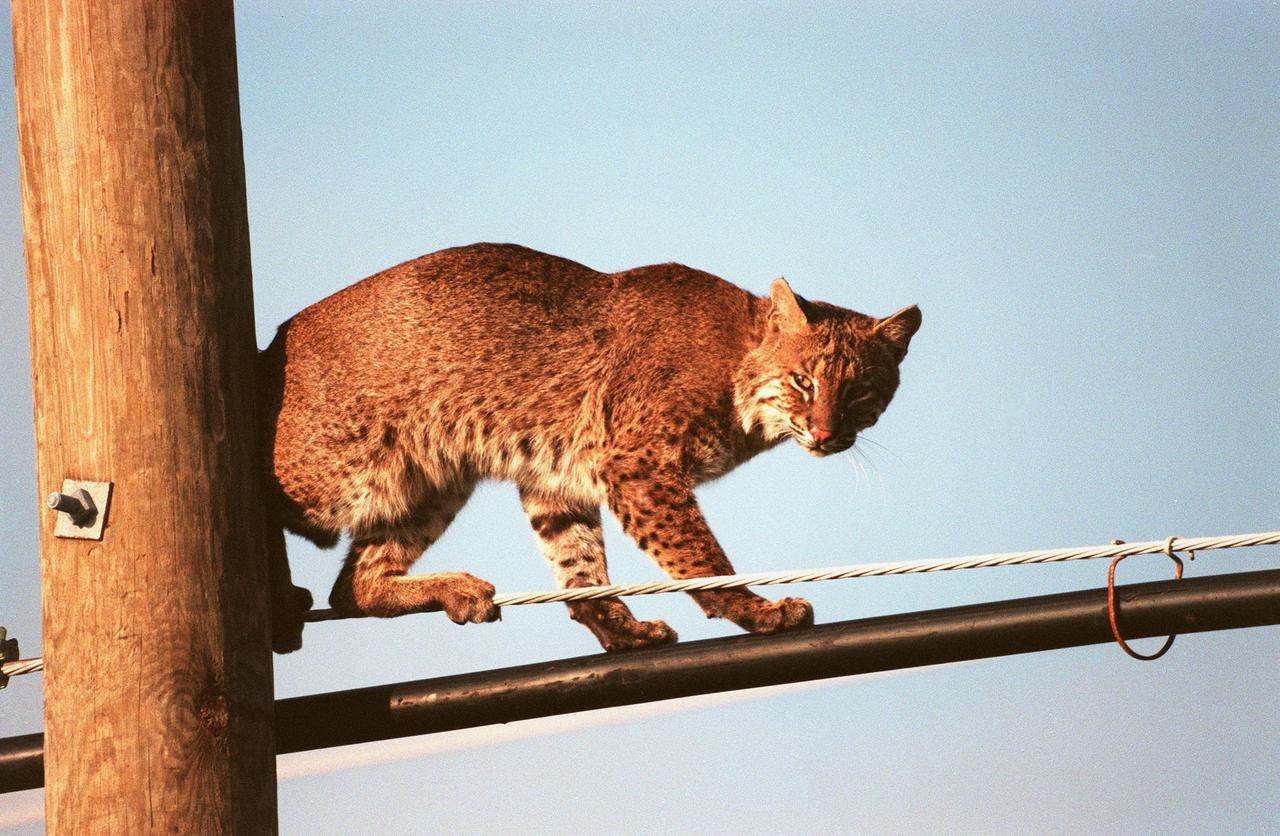
KENNEDY SPACE CENTER, FLA. -- A young, male bobcat balances gingerly on telephone pole cables next to the south-bound lane of Kennedy Parkway. The cat is nocturnal and is seldom observed during the day unless scared from its daytime shelter in the grass or beneath a shrub. Usually found in broken sections of heavily wooded or brushy country, bobcats are reported as common in scrub strand and roadside or weedy grass habitats at KSC. The bobcat is known to inhabit mangrove habitats and will readily swim across small bodies of water. The bobcat occurs across southern Canada then south over the entire United States, except for the midwestern corn belt, to southern Mexico. It is the last large mammalian predator remaining on KSC. The Merritt Island National Wildlife Refuge, which is located on Kennedy Space Center property, is home to many species of wild animals, including the bobcat.
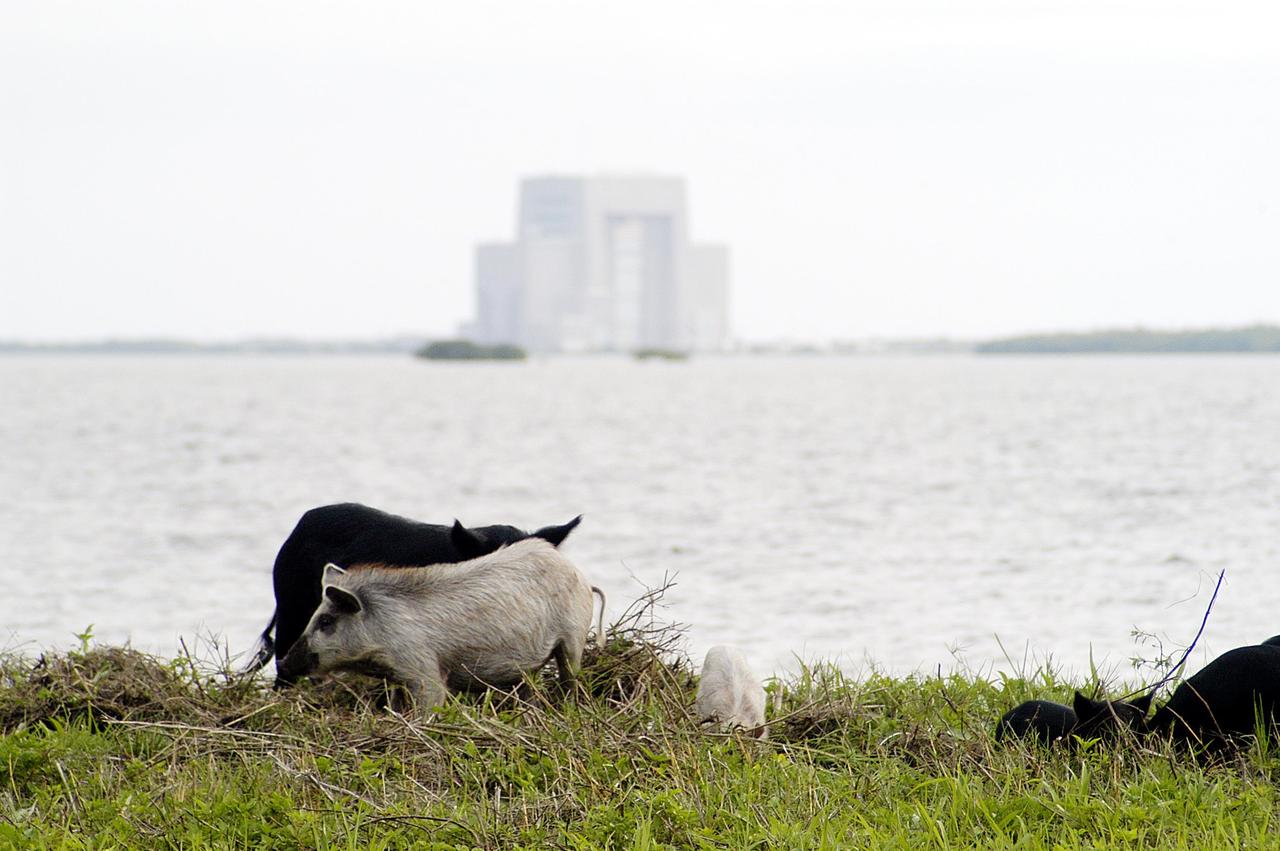
KENNEDY SPACE CENTER, Fla. - A small herd of wild pigs root for food along the bank of this body of water at Kennedy Space Center. Not a native in the environment, the pigs are believed to be descendants from those brought to Florida by the early Spanish explorers. Without many predators other than human, the pigs have flourished in the surrounding environs, primarily the Merritt Island National Wildlife Refuge, which shares a boundary with the Center. The Wildlife Refuge encompasses 92,000 acres that are a habitat for more than 331 species of birds, 31 mammals, 117 fishes, and 65 amphibians and reptiles. The marshes and open water of the refuge provide wintering areas for 23 species of migratory waterfowl, as well as a year-round home for great blue herons, great egrets, wood storks, cormorants, brown pelicans and other species of marsh and shore birds, plus a variety of insects.
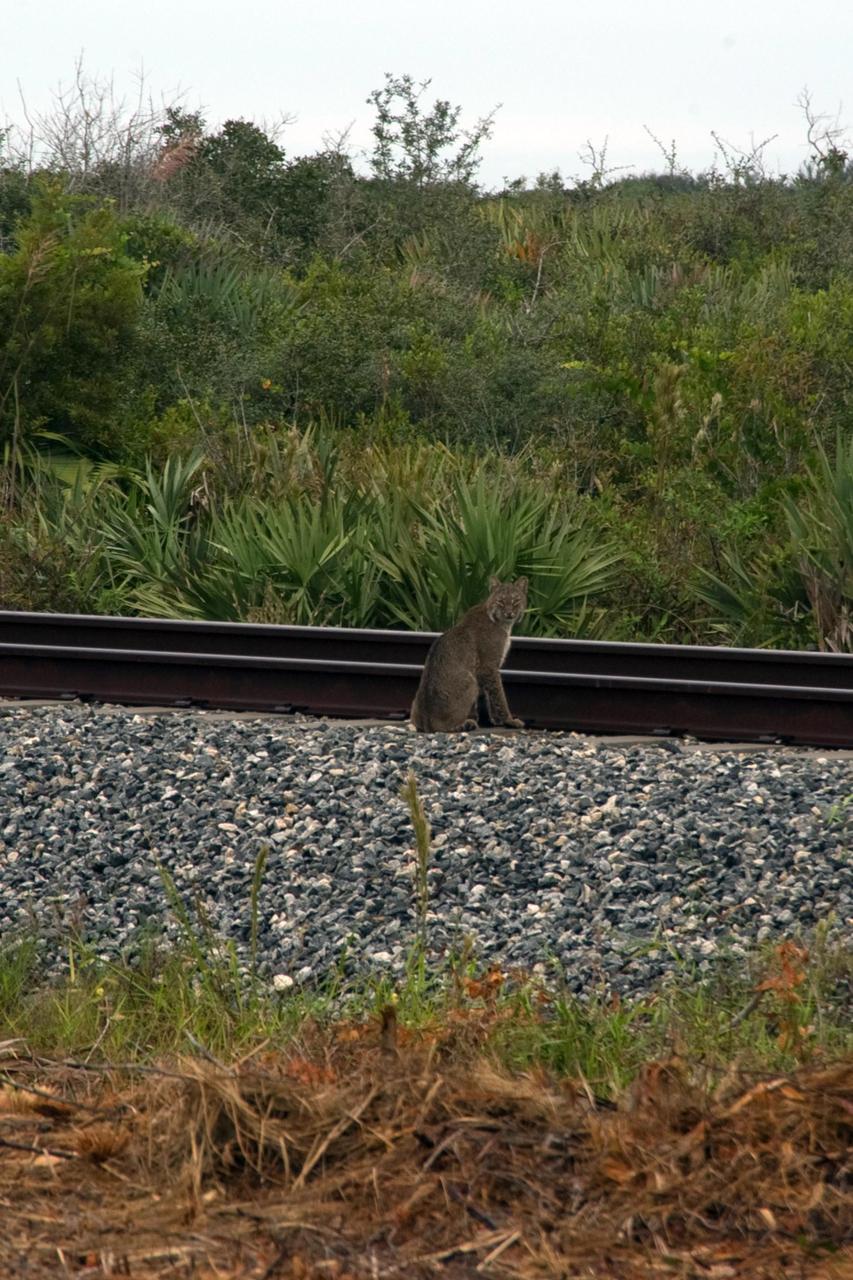
KENNEDY SPACE CENTER, FLA. -- A rare view of a bobcat, spotted near the NASA Railroad tracks on a mid-morning. The bobcat is a solitary and territorial predator mammal. They are mostly nocturnal and solitary, but will travel long distances for a mate. Not as big as a panther, but about the size of a medium-sized dog, male and female bobcats average 39 inches and 36 inches in length, and 24 pounds and 15 pounds in weight, respectively. They are most easily identified by their short tails which are about 5.5 inches long. Their fur, which is short, soft and dense, ranges from light tan to reddish or yellowish brown and markings vary from tabby stripes to spotting. They swim more than other native cats. The backs of their ears are white with a black outline. Their underparts are generally white. Bobcats can most likely be found in every county in Florida. Photo credit: NASA/Sandra Joseph
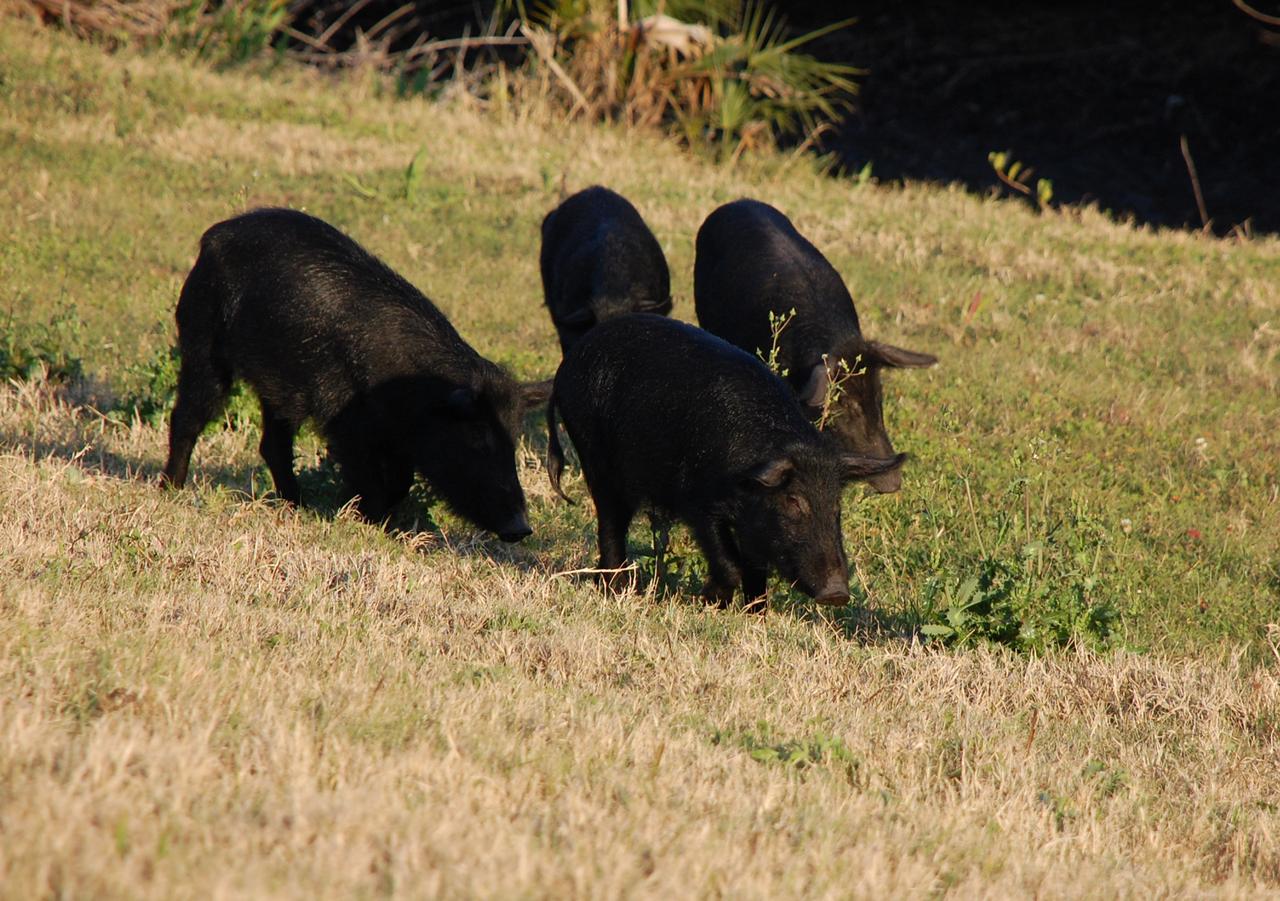
CAPE CANAVERAL, Fla. – At NASA's Kennedy Space Center in Florida, adult wild pigs hunt for food in the grassy field. The wild pigs have flourished in the environs around Kennedy, which shares a border with the Merritt Island National Wildlife Refuge, without many predators other than panthers and humans. Pigs were introduced to Florida in the 1500s and are now found statewide in wooded areas close to water. Pigs are omnivores, foraging on the ground and rooting just beneath the surface, which damages the groundcover. Wild pigs eat almost anything that has nutritional value, including tubers, roots, shoots, acorns, fruits, berries, earthworms, amphibians, reptiles and rodents. Their appearance is similar to domestic hogs, but leaner, with a longer, narrower head and a coarser, denser coat. Females may have two litters per year. The piglets are weaned in a few weeks but remain with the mother for several months. Photo credit: NASA/Ben Smegelsky
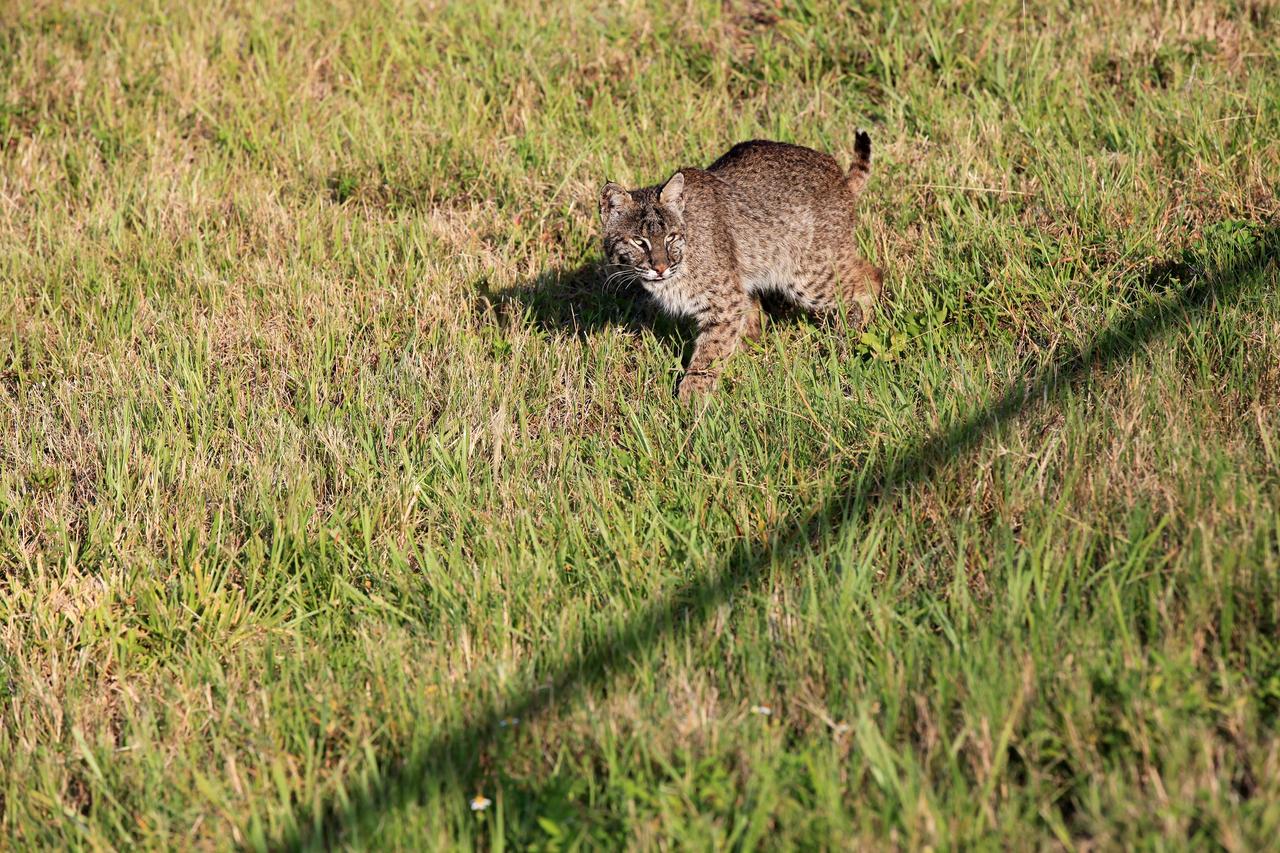
CAPE CANAVERAL, Fla. -- A bobcat is startled to be discovered near the Press Site at NASA's Kennedy Space Center in Florida. The center, the only launch site for crewed missions from U.S. soil, coexists with the Merritt Island National Wildlife Refuge, which encompasses 140,000 acres. The cat is the last large mammalian predator remaining on the center. The refuge provides a wide variety of habitats, including coastal dunes, saltwater estuaries and marshes, freshwater impoundments, scrub, pine flatwoods, and hardwood hammocks, and is a sanctuary for more than 1,500 species of plants and animals, including more than 330 species of birds, 31 mammals, 117 fishes, and 65 amphibians and reptiles. For additional information about the refuge, visit http://www.fws.gov/merrittisland. Photo credit: NASA/Kim Shiflett
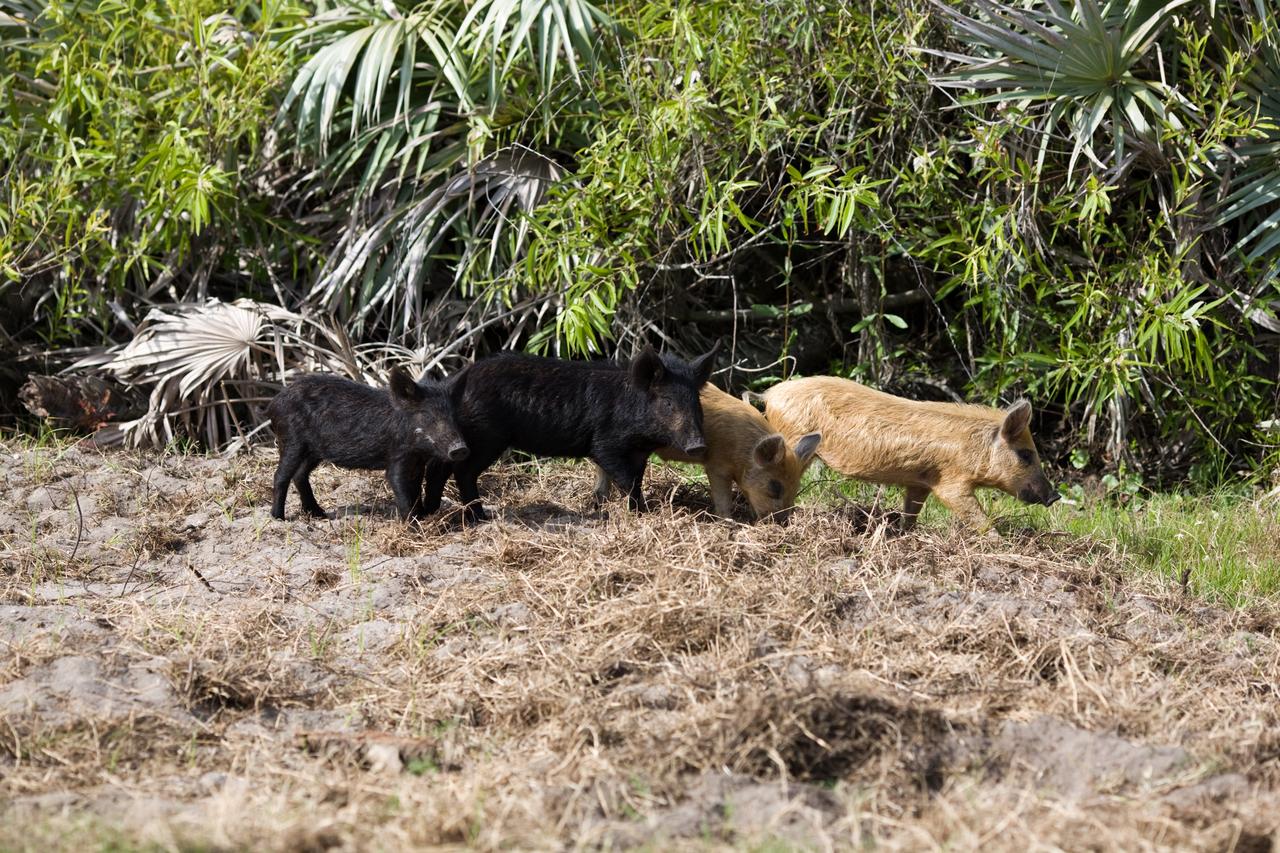
CAPE CANAVERAL, Fla. –– Wild pigs forage for food near a road through NASA's Kennedy Space Center in Florida. The wild pigs have flourished in the environs around Kennedy, which shares a border with the Merritt Island National Wildlife Refuge, without many predators other than panthers and humans. Pigs were introduced to Florida in the 1500s and are now found statewide in wooded areas close to water. Pigs are omnivores, foraging on the ground and rooting just beneath the surface, which damages the groundcover. Wild pigs eat almost anything that has nutritional value, including tubers, roots, shoots, acorns, fruits, berries, earthworms, amphibians, reptiles and rodents. Their appearance is similar to domestic hogs, but leaner, with a longer, narrower head and a coarser, denser coat. Females may have two litters per year. The piglets are weaned in a few weeks but remain with the mother for several months. Photo credit: NASA/Dimitri Gerondidakis
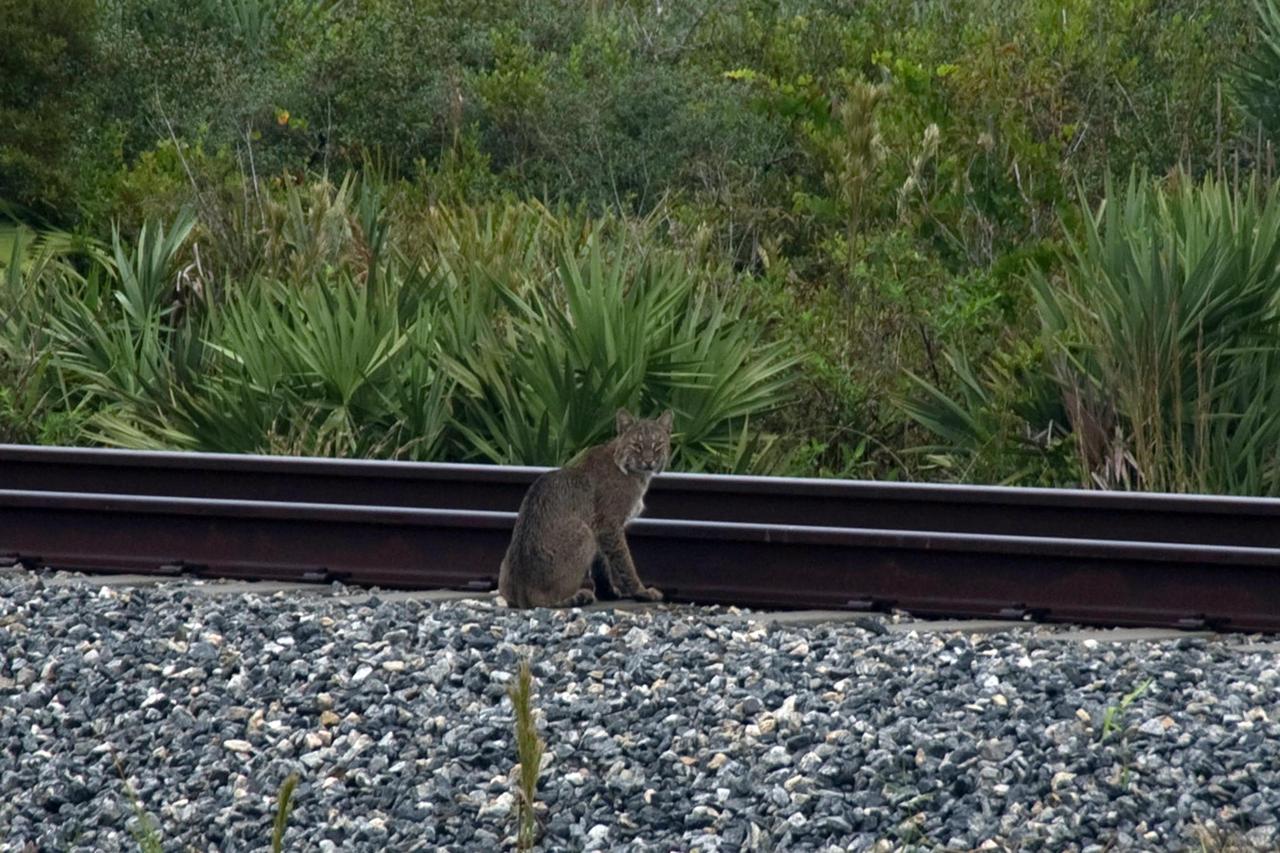
KENNEDY SPACE CENTER, FLA. -- A rare view of a bobcat, spotted near the NASA Railroad tracks on a mid-morning. The bobcat is a solitary and territorial predator mammal. They are mostly nocturnal and solitary, but will travel long distances for a mate. Not as big as a panther, but about the size of a medium-sized dog, male and female bobcats average 39 inches and 36 inches in length, and 24 pounds and 15 pounds in weight, respectively. They are most easily identified by their short tails which are about 5.5 inches long. Their fur, which is short, soft and dense, ranges from light tan to reddish or yellowish brown and markings vary from tabby stripes to spotting. They swim more than other native cats. The backs of their ears are white with a black outline. Their underparts are generally white. Bobcats can most likely be found in every county in Florida. Photo credit: NASA/Sandra Joseph
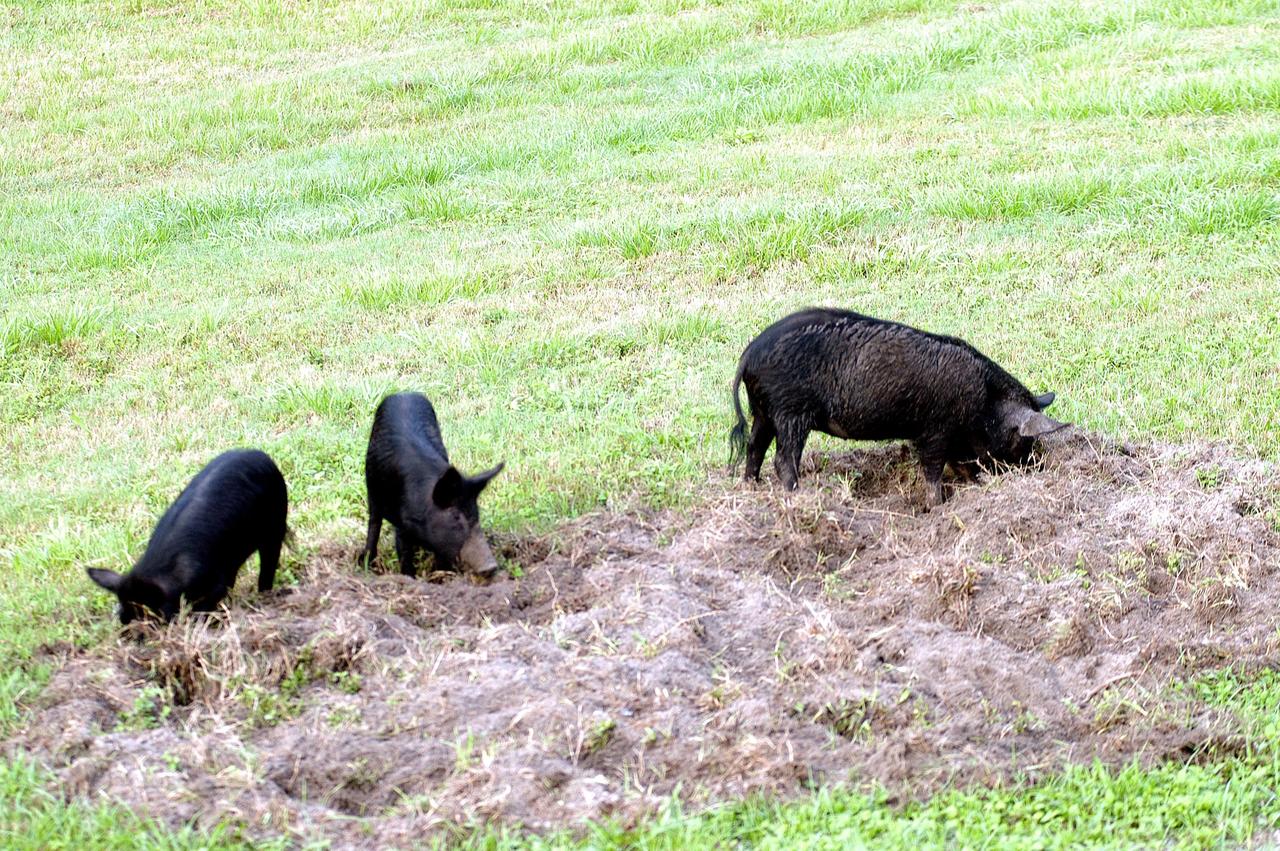
KENNEDY SPACE CENTER, FLA. - Three wild pigs - a mother and her two offspring - root for food in the grass near the NASA News Center at KSC. Feral pigs were introduced to Florida in the 1500s and are now found statewide in wooded areas close to water. The pigs have flourished in the environs around KSC, which shares a border with the Merritt Island National Wildlife Refuge, without many predators other than panthers and humans. Pigs are omnivores, foraging on the ground and rooting just beneath the surface, which damages the groundcover. Wild pigs eat almost anything that has nutritional value, including tubers, roots, shoots, acorns, fruits, berries, earthworms, amphibians, reptiles and rodents. Appearance is similar to domestic hogs, but leaner, with a longer, narrower head and a coarser, denser coat. Females may have two litters per year. The piglets are weaned in a few weeks but remain with the mother for several months.
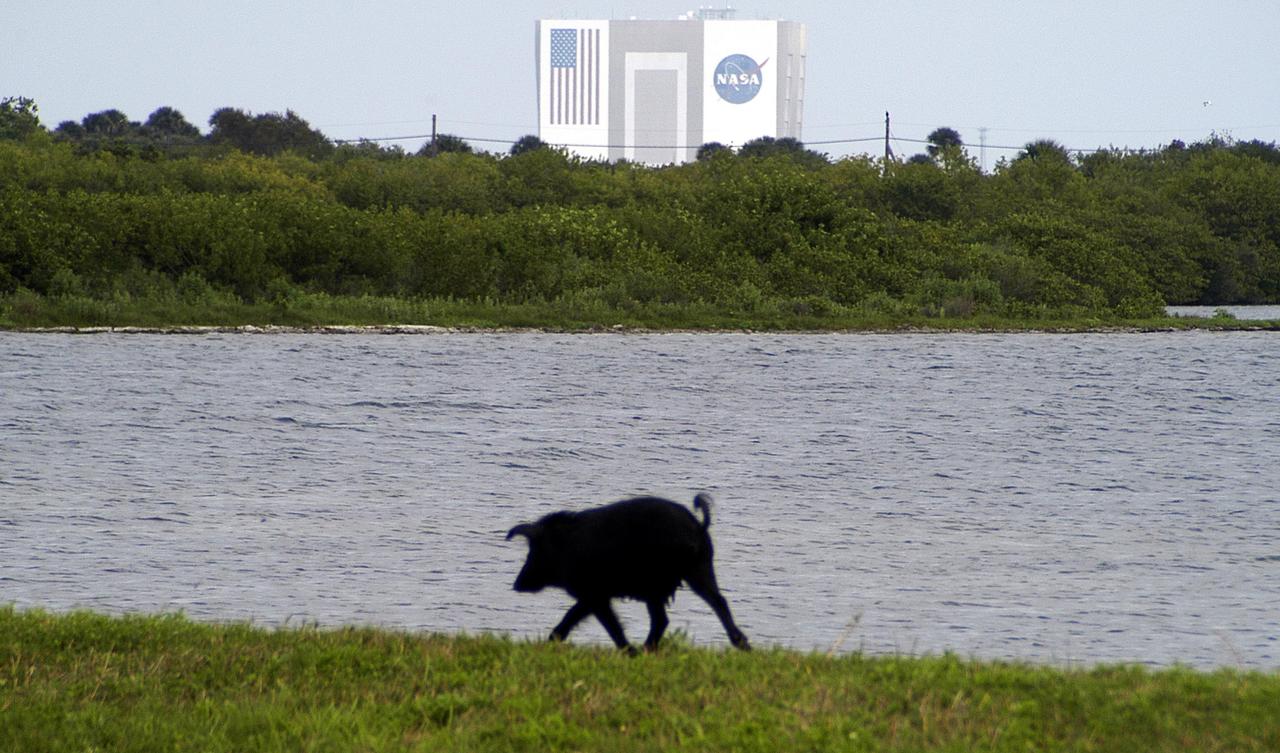
KENNEDY SPACE CENTER, Fla. - A lone wild pig travels the bank of a body of water near Kennedy Space Center. In the background is the 525-foot-high Vehicle Assembly Building. Not a native in the environment, the pigs are believed to be descendants from those brought to Florida by the early Spanish explorers. Without many predators other than human, the pigs have flourished in the surrounding environs, primarily the Merritt Island National Wildlife Refuge, which shares a boundary with the Center. The Wildlife Refuge encompasses 92,000 acres that are a habitat for more than 331 species of birds, 31 mammals, 117 fishes, and 65 amphibians and reptiles. The marshes and open water of the refuge provide wintering areas for 23 species of migratory waterfowl, as well as a year-round home for great blue herons, great egrets, wood storks, cormorants, brown pelicans and other species of marsh and shore birds, plus a variety of insects.
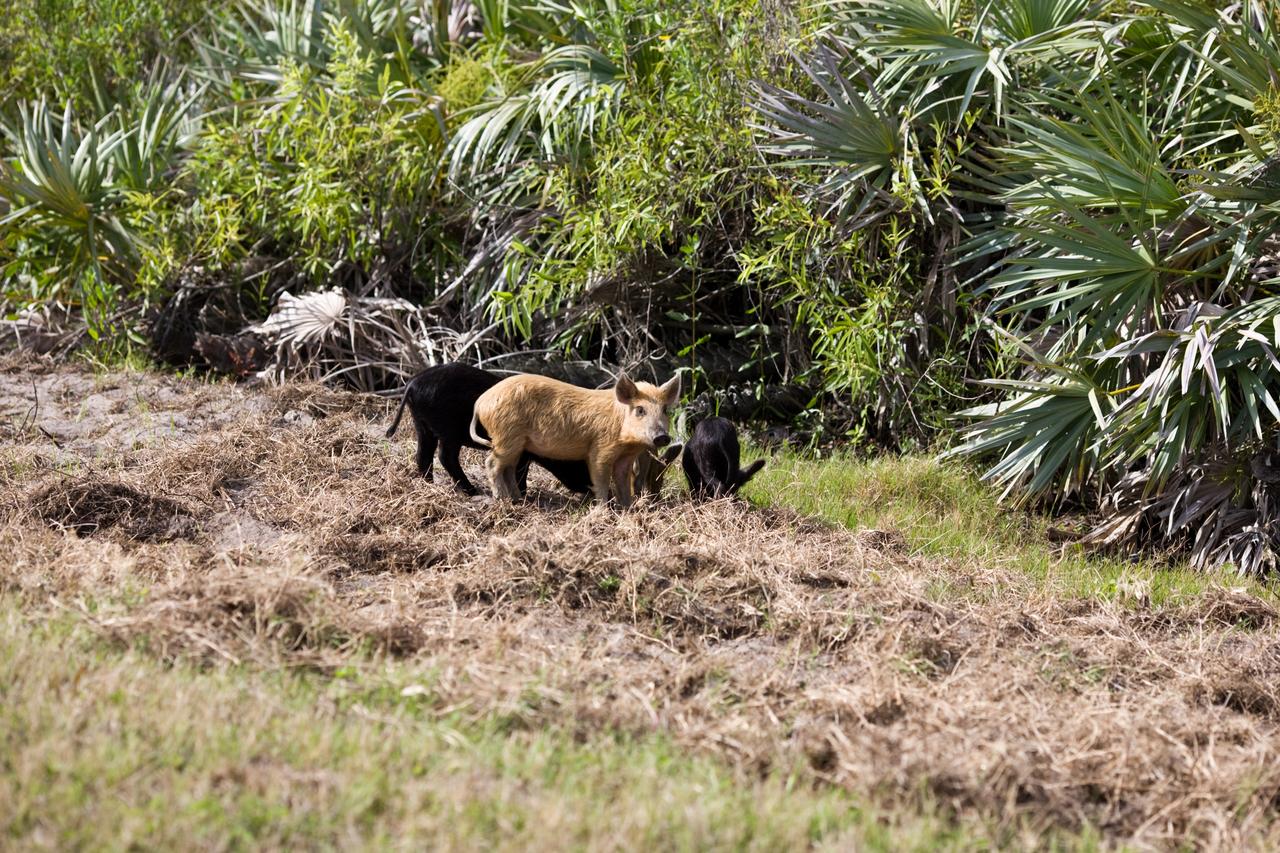
CAPE CANAVERAL, Fla. –– Wild pigs forage for food near a road through NASA's Kennedy Space Center in Florida. The wild pigs have flourished in the environs around Kennedy, which shares a border with the Merritt Island National Wildlife Refuge, without many predators other than panthers and humans. Pigs were introduced to Florida in the 1500s and are now found statewide in wooded areas close to water. Pigs are omnivores, foraging on the ground and rooting just beneath the surface, which damages the groundcover. Wild pigs eat almost anything that has nutritional value, including tubers, roots, shoots, acorns, fruits, berries, earthworms, amphibians, reptiles and rodents. Their appearance is similar to domestic hogs, but leaner, with a longer, narrower head and a coarser, denser coat. Females may have two litters per year. The piglets are weaned in a few weeks but remain with the mother for several months. Photo credit: NASA/Dimitri Gerondidakis
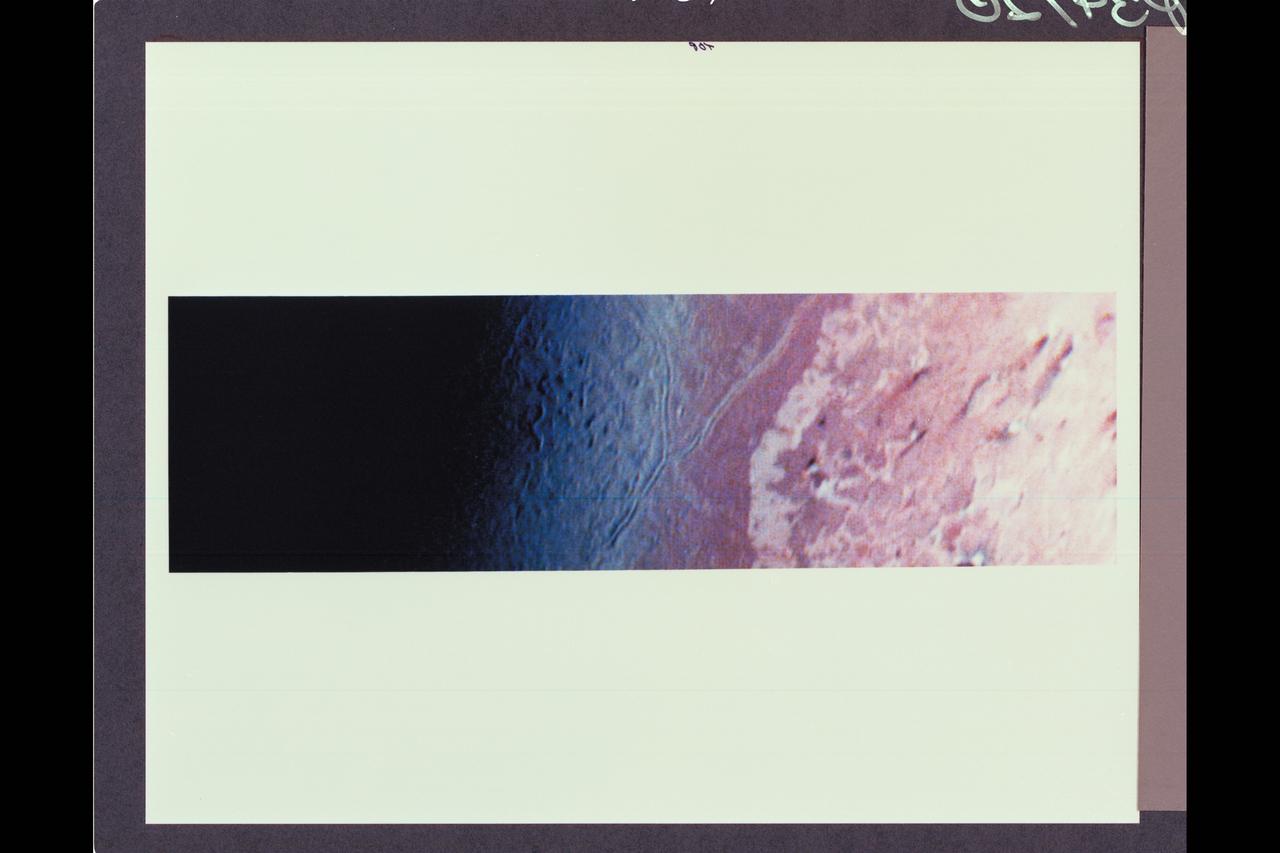
Voyager violet, green and ultraviolet images of Triton were map projected into cylindrical coordinates and combines to produce this false-color terrain map. Several compositionally distinct terrain and geologic features are portrayed. At center is a gray-blue unit referred to as 'cantaloupe' terrain because of its unusual topographic texture. The unit appears to predate other units to the left. Immediately adjacent to the cantaloupe terrain, is a smoother unit, represented by a reddish color, that has been dissected by a prominent fault system. This unit apparently overlies a much-higher-albedo material, seen farther left. A prominent angular albedo boundary separates relatively undisturbed smooth terrain from irregular patches which seem to emanate from circular, often bright-centered features. The parallel streaks may represent vented particulate materials blown in the same direction by winds in Triton's thin atmosphere.
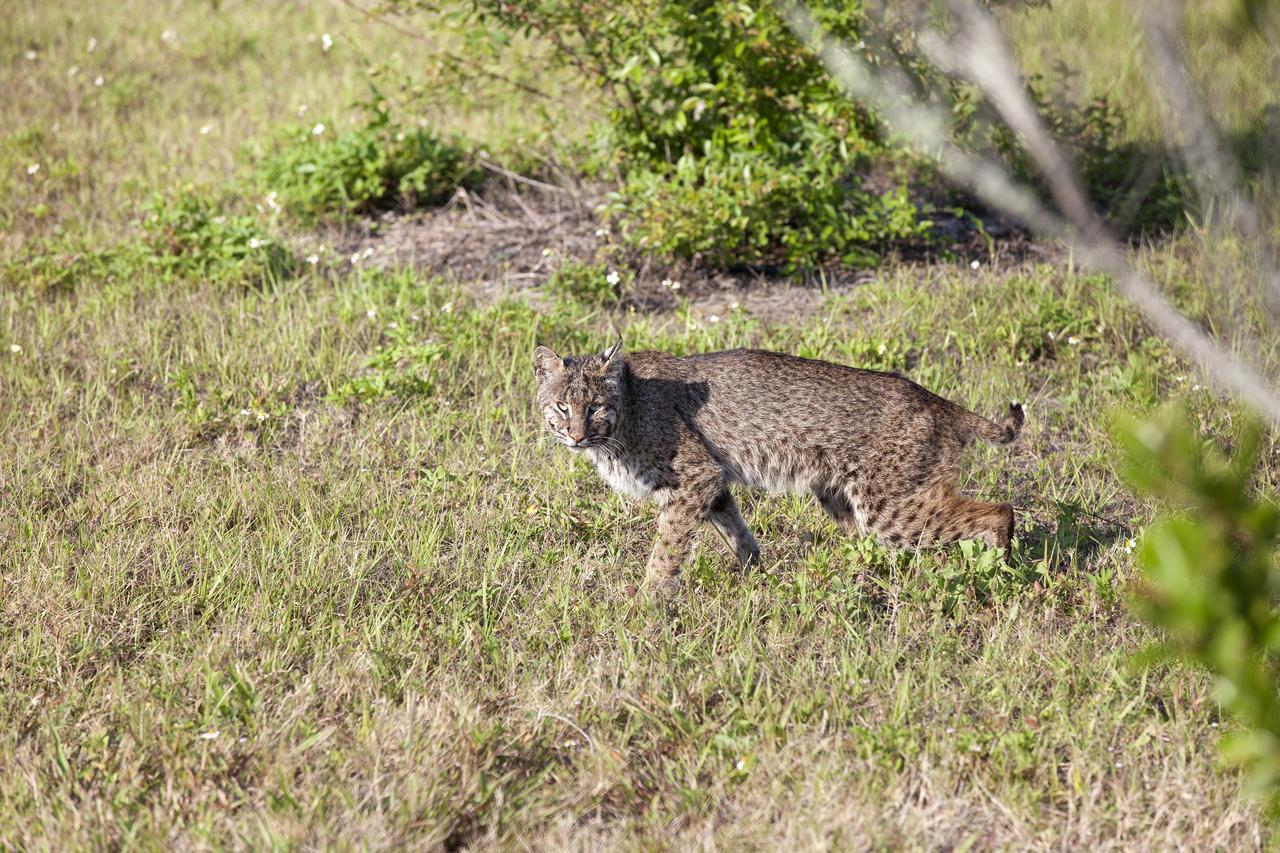
CAPE CANAVERAL, Fla. -- A bobcat prowls through the grass near the Press Site at NASA's Kennedy Space Center in Florida. The center, the only launch site for crewed missions from U.S. soil, coexists with the Merritt Island National Wildlife Refuge, which encompasses 140,000 acres. The cat is the last large mammalian predator remaining on the center. The refuge provides a wide variety of habitats, including coastal dunes, saltwater estuaries and marshes, freshwater impoundments, scrub, pine flatwoods, and hardwood hammocks, and is a sanctuary for more than 1,500 species of plants and animals, including more than 330 species of birds, 31 mammals, 117 fishes, and 65 amphibians and reptiles. For additional information about the refuge, visit http://www.fws.gov/merrittisland. Photo credit: NASA/Kim Shiflett
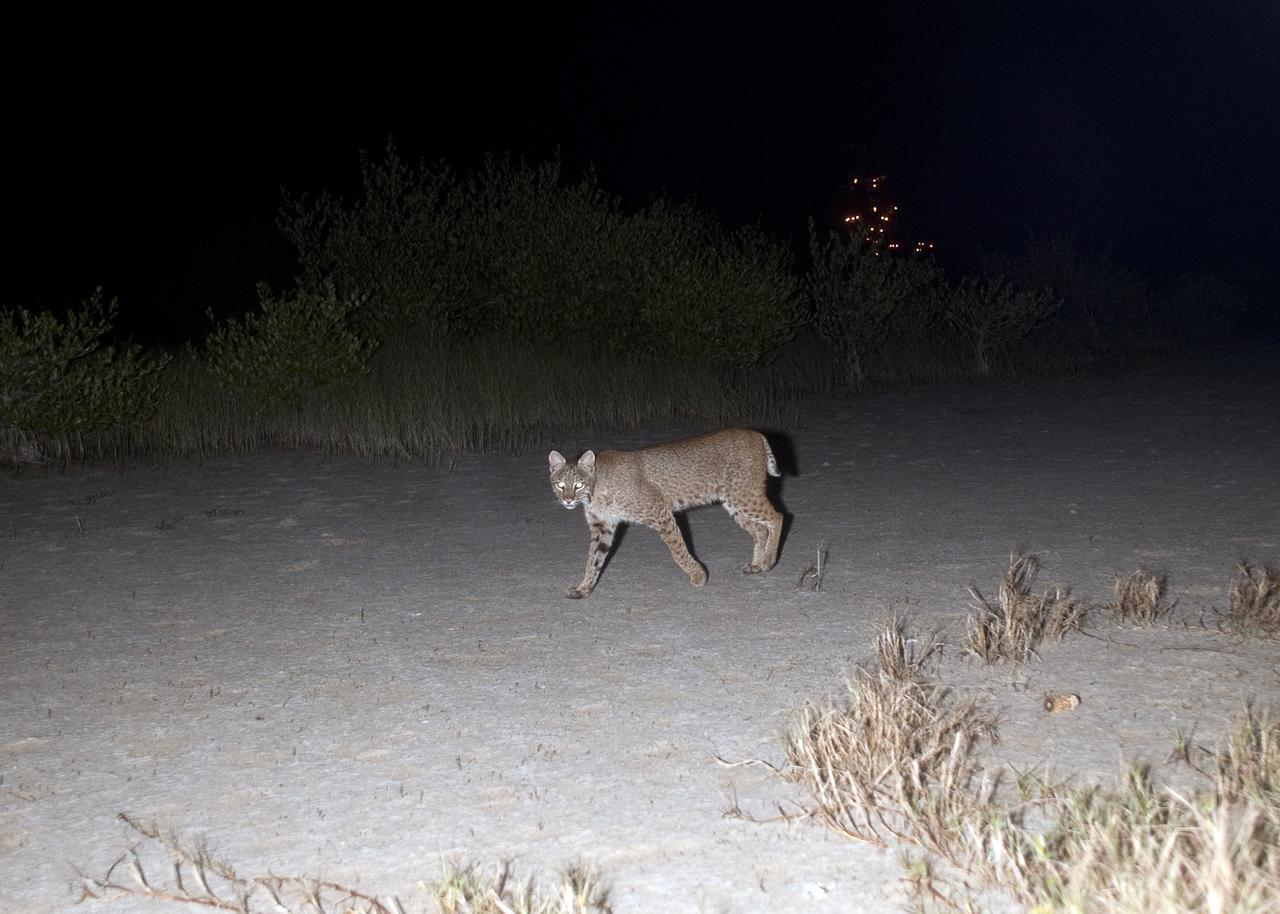
CAPE CANAVERAL, Fla. – Out on a nocturnal stroll, a bobcat triggers a motion-activated remote camera set up for this purpose at NASA’s Kennedy Space Center in Florida. The cat is seldom observed during the day unless scared from its daytime shelter. It is the last large mammalian predator remaining on the center. In the background are the lights on Launch Pad 39A. Kennedy and the Merritt Island National Wildlife Refuge mutually reside on 140,000 acres on central Florida’s east coast. The area’s coastal dunes, saltwater estuaries and marshes, freshwater impoundments, scrub, pine flatwoods, and hardwood hammocks provide habitats for more than 1,500 species of plants and animals, including about 331 species of birds. For more information, visit http://www.nasa.gov/kennedy. Photo credit: NASA/Tony Gray
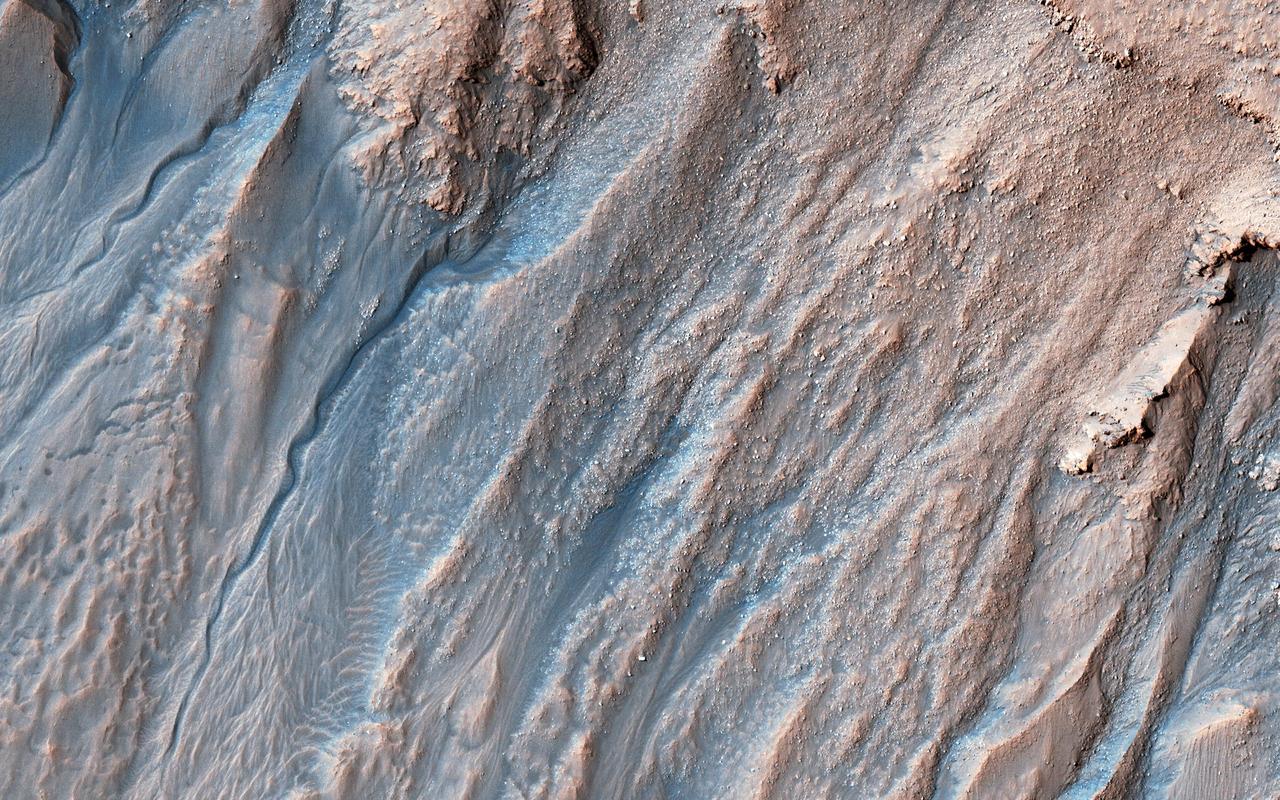
Gullies probably formed along the bouldery layers in the upper slopes of this unnamed crater within the last few million years. Gullies eroded these crater slopes and transported sediment downslope forming debris aprons multiple times. These older apron surfaces were cut by numerous fractures running perpendicular to the slope. Subsequent episodes of gully activity eroded through these fractures and deposited new aprons. On the floor of the crater are ridges with bouldery layers. These ridges may mark the furthest extent of glaciers that predate much of the original gully activity. Bright flows continue to form in these gullies seasonally. In the upper gully regions, long shadows cast by jagged outcrops allow scientists to determine the heights and depths of landforms by measuring the length of the shadows cast by the ridges onto the gully floor. https://photojournal.jpl.nasa.gov/catalog/PIA23020
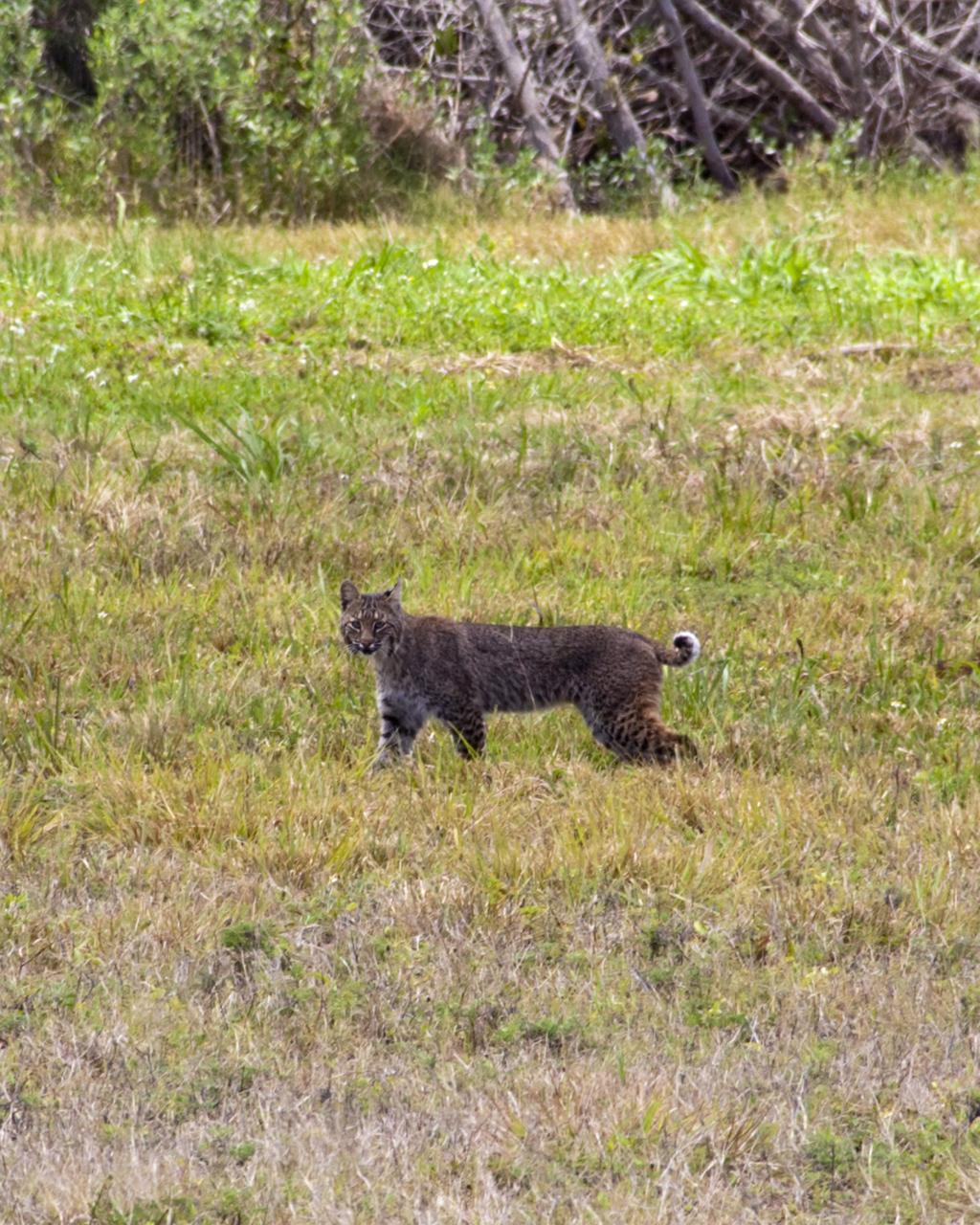
CAPE CANAVERAL, Fla. – A bobcat on the causeway between NASA’s Kennedy Space Center and Cape Canaveral Air Force Station in Florida pauses to check out the photographer who chanced upon it during the hunt for its next meal. The cat is seldom observed during the day unless scared from its daytime shelter. It is the last large mammalian predator remaining on the center. Kennedy and the Merritt Island National Wildlife Refuge mutually reside on 140,000 acres on central Florida’s east coast. The area’s coastal dunes, saltwater estuaries and marshes, freshwater impoundments, scrub, pine flatwoods, and hardwood hammocks provide habitats for more than 1,000 species of plants and animals, including about 331 species of birds. For more information, visit http://www.nasa.gov/kennedy. Photo credit: NASA/Jim Grossmann
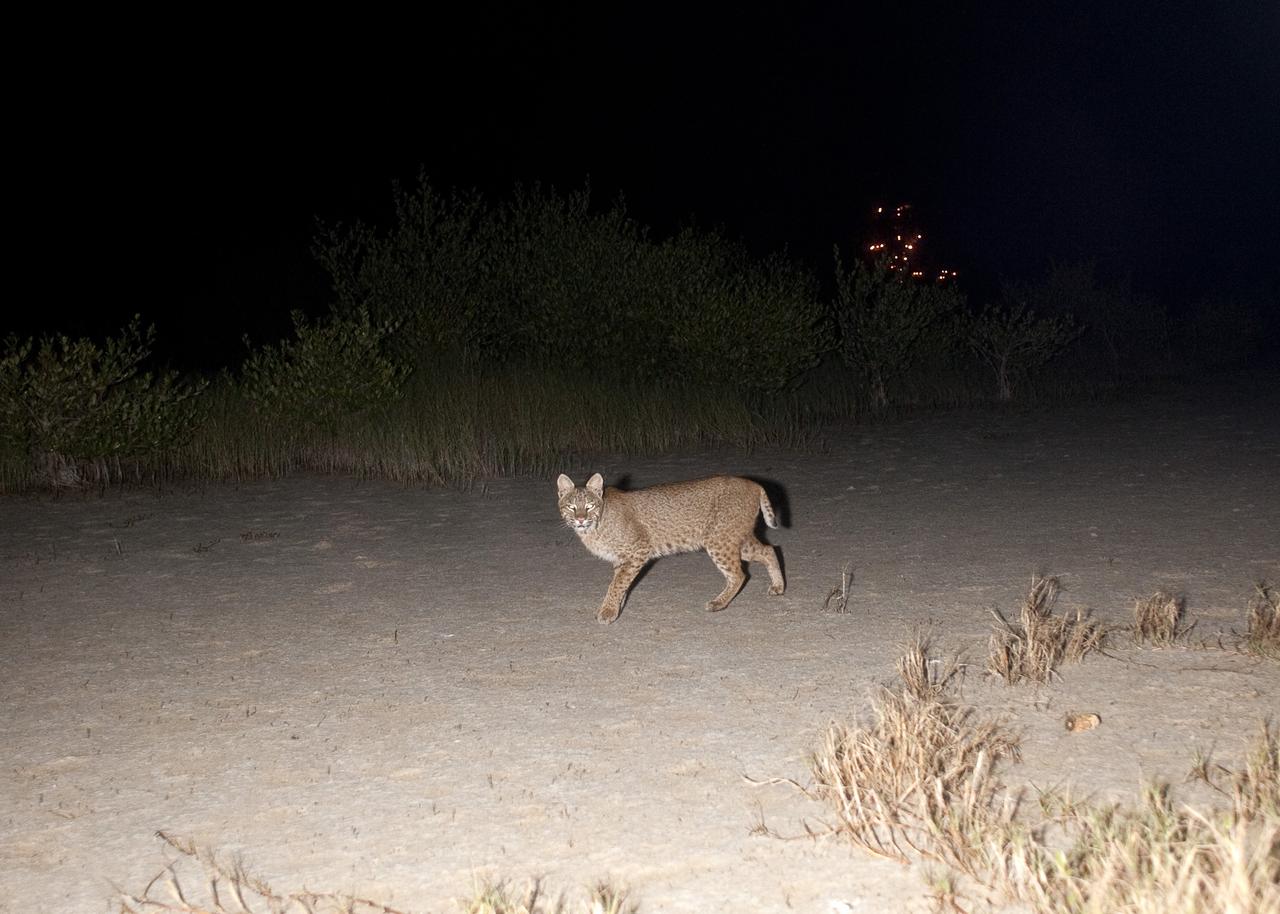
CAPE CANAVERAL, Fla. – Gotcha! A bobcat out on a nocturnal stroll triggers a motion-activated remote camera set up for this purpose at NASA’s Kennedy Space Center in Florida. The cat is seldom observed during the day unless scared from its daytime shelter. It is the last large mammalian predator remaining on the center. In the background are the lights on Launch Pad 39A. Kennedy and the Merritt Island National Wildlife Refuge mutually reside on 140,000 acres on central Florida’s east coast. The area’s coastal dunes, saltwater estuaries and marshes, freshwater impoundments, scrub, pine flatwoods, and hardwood hammocks provide habitats for more than 1,500 species of plants and animals, including about 331 species of birds. For more information, visit http://www.nasa.gov/kennedy. Photo credit: NASA/Tony Gray
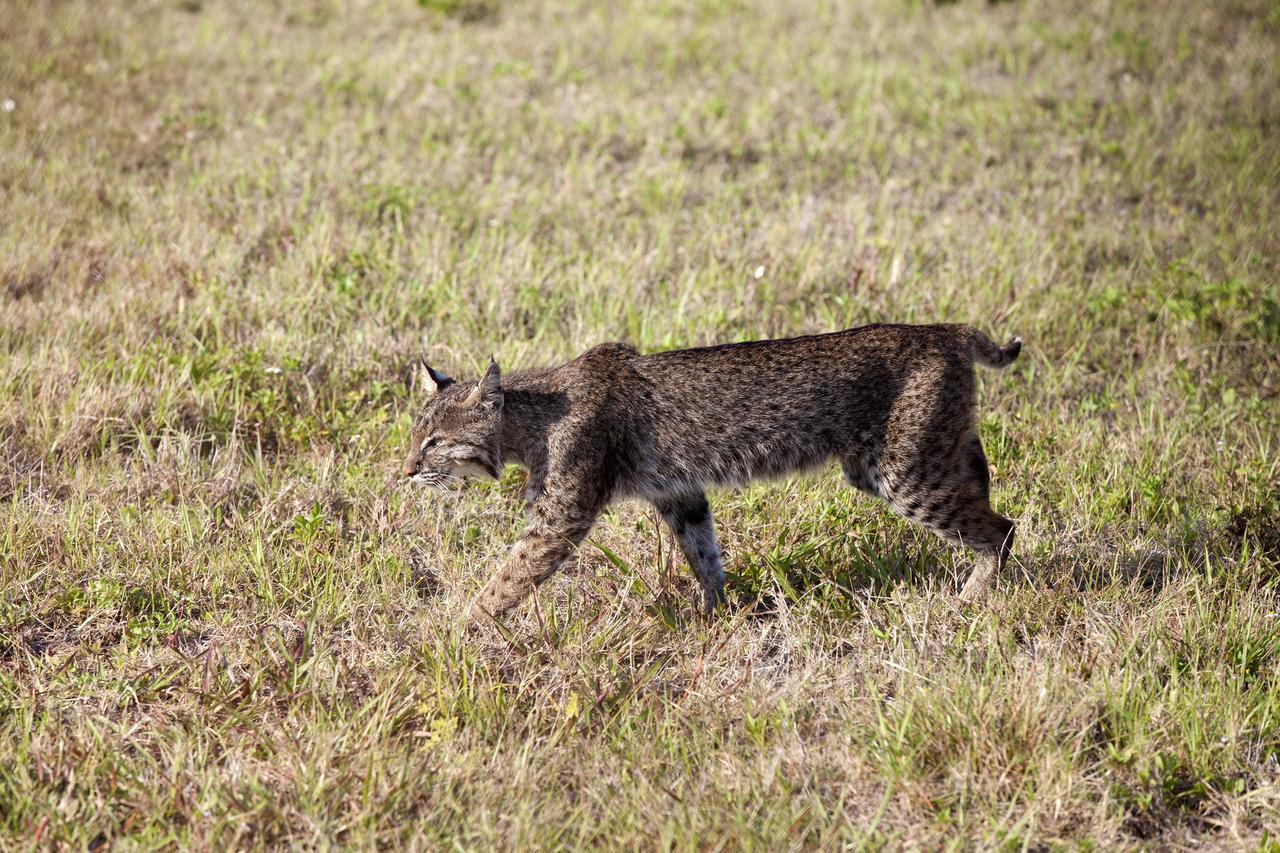
CAPE CANAVERAL, Fla. -- A bobcat continues on its way past the Press Site at NASA's Kennedy Space Center in Florida. The center, the only launch site for crewed missions from U.S. soil, coexists with the Merritt Island National Wildlife Refuge, which encompasses 140,000 acres. The cat is the last large mammalian predator remaining on the center. The refuge provides a wide variety of habitats, including coastal dunes, saltwater estuaries and marshes, freshwater impoundments, scrub, pine flatwoods, and hardwood hammocks, and is a sanctuary for more than 1,500 species of plants and animals, including more than 330 species of birds, 31 mammals, 117 fishes, and 65 amphibians and reptiles. For additional information about the refuge, visit http://www.fws.gov/merrittisland. Photo credit: NASA/Kim Shiflett
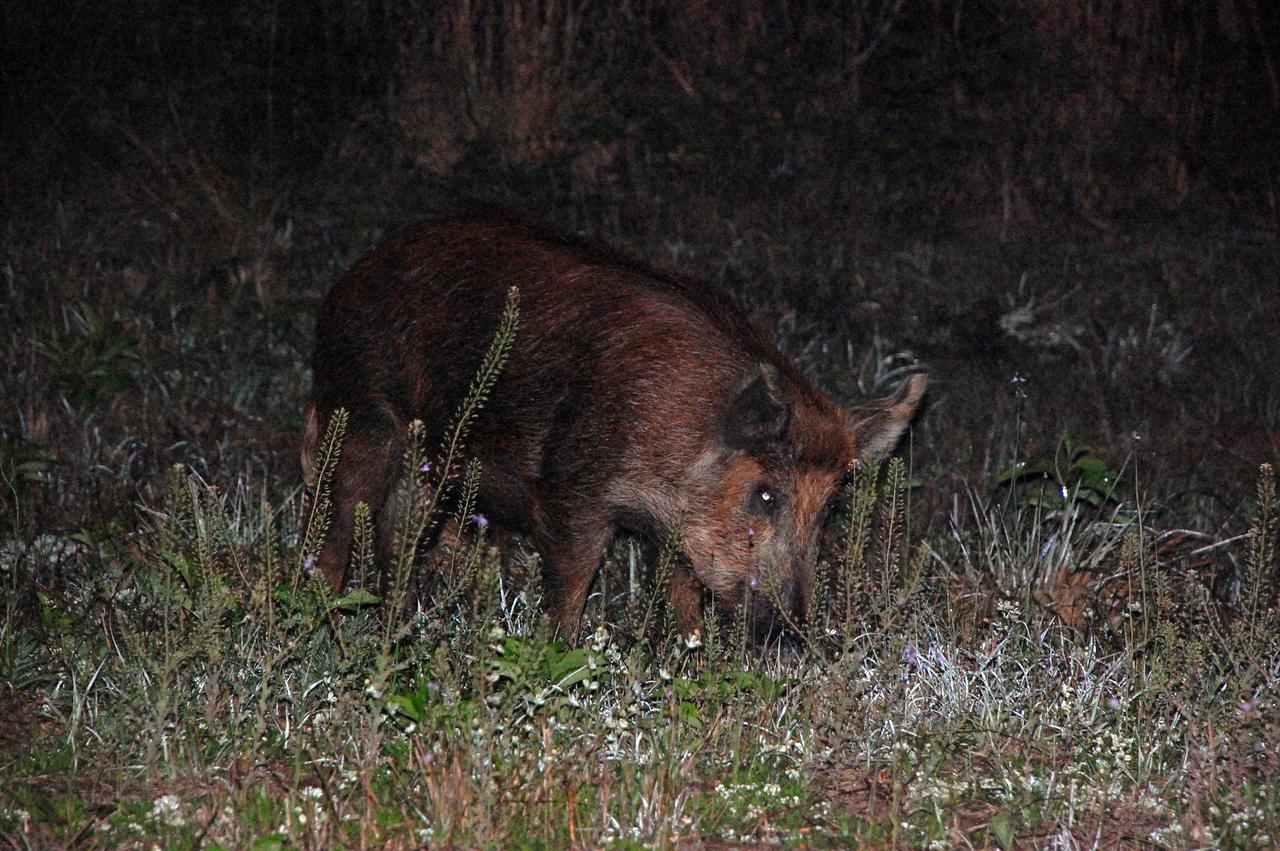
CAPE CANAVERAL, Fla. - A young feral hog roots for his breakfast at NASA's Kennedy Space Center in Florida. Wild hogs flourish in the environs around Kennedy, which coexists with the Merritt Island National Wildlife Refuge, without many predators other than panthers and humans. Hogs were introduced to Florida in the 1500s and are now found statewide in wooded areas close to water. Estimates of the hog population on the refuge vary from 5,000 to 12,000. The Merritt Island National Wildlife Refuge coexists with Kennedy Space Center and provides a habitat for 330 species of birds and a variety of other wildlife - 117 kinds of fish, 65 types of amphibians and reptiles, 31 different mammals, and 1,045 species of plants. For information on the refuge, visit http:__www.fws.gov_merrittisland_Index.html. For information on Kennedy Space Center, visit http:__www.nasa.gov_kennedy. Photo credit: NASA_Ben Smegelsky
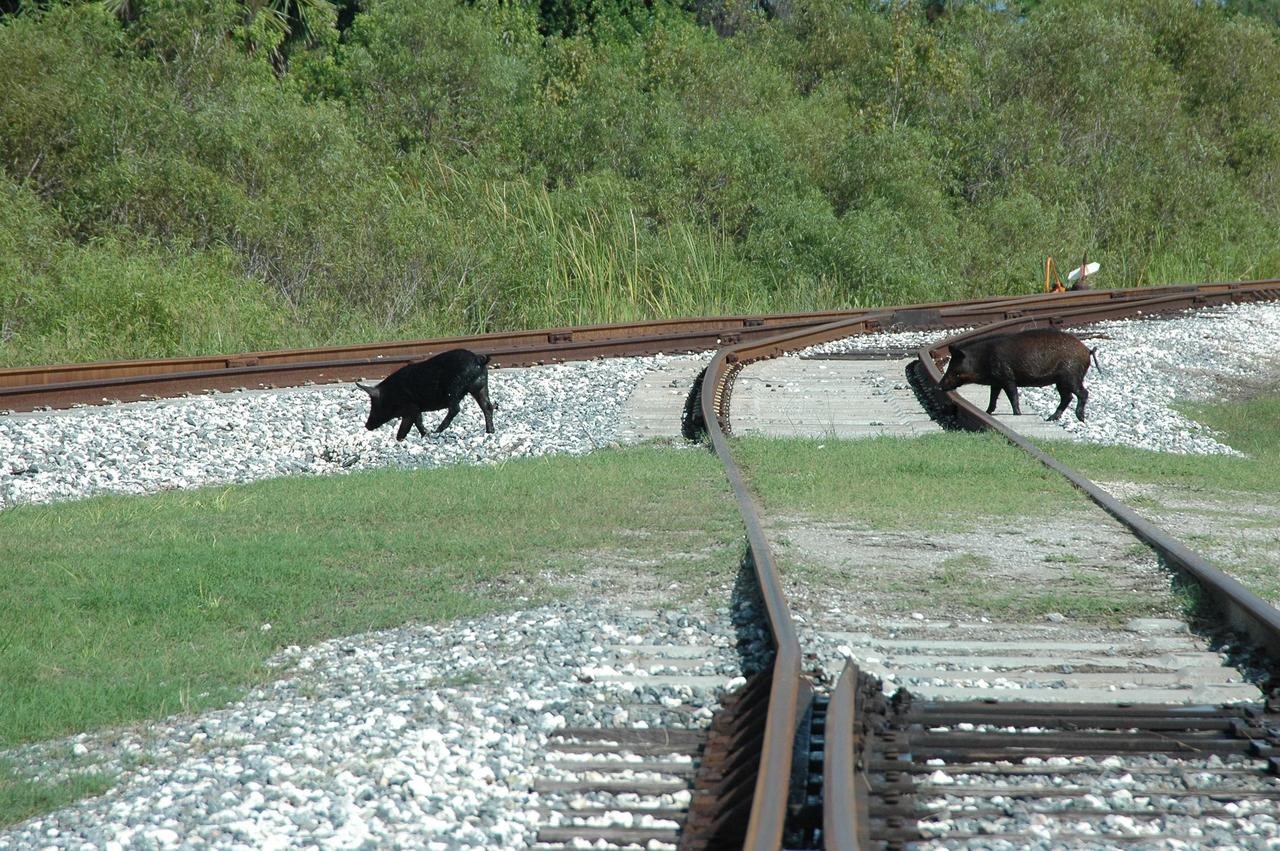
KENNEDY SPACE CENTER, FLA. - Two wild pigs cross railroad tracks on grounds at NASA Kennedy Space Center. The wild pigs have flourished in the environs around KSC, which shares a border with the Merritt Island National Wildlife Refuge, without many predators other than panthers and humans. Pigs were introduced to Florida in the 1500s and are now found statewide in wooded areas close to water. Pigs are omnivores, foraging on the ground and rooting just beneath the surface, which damages the groundcover. Wild pigs eat almost anything that has nutritional value, including tubers, roots, shoots, acorns, fruits, berries, earthworms, amphibians, reptiles and rodents. Appearance is similar to domestic hogs, but leaner, with a longer, narrower head and a coarser, denser coat. Females may have two litters per year. The piglets are weaned in a few weeks but remain with the mother for several months.

Technicians at General Atomics Aeronautical Systems, Inc., (GA-ASI) facility at Adelanto, Calif., carefully install a turboprop engine to the rear fuselage of NASA's Altair aircraft during final assembly operations.
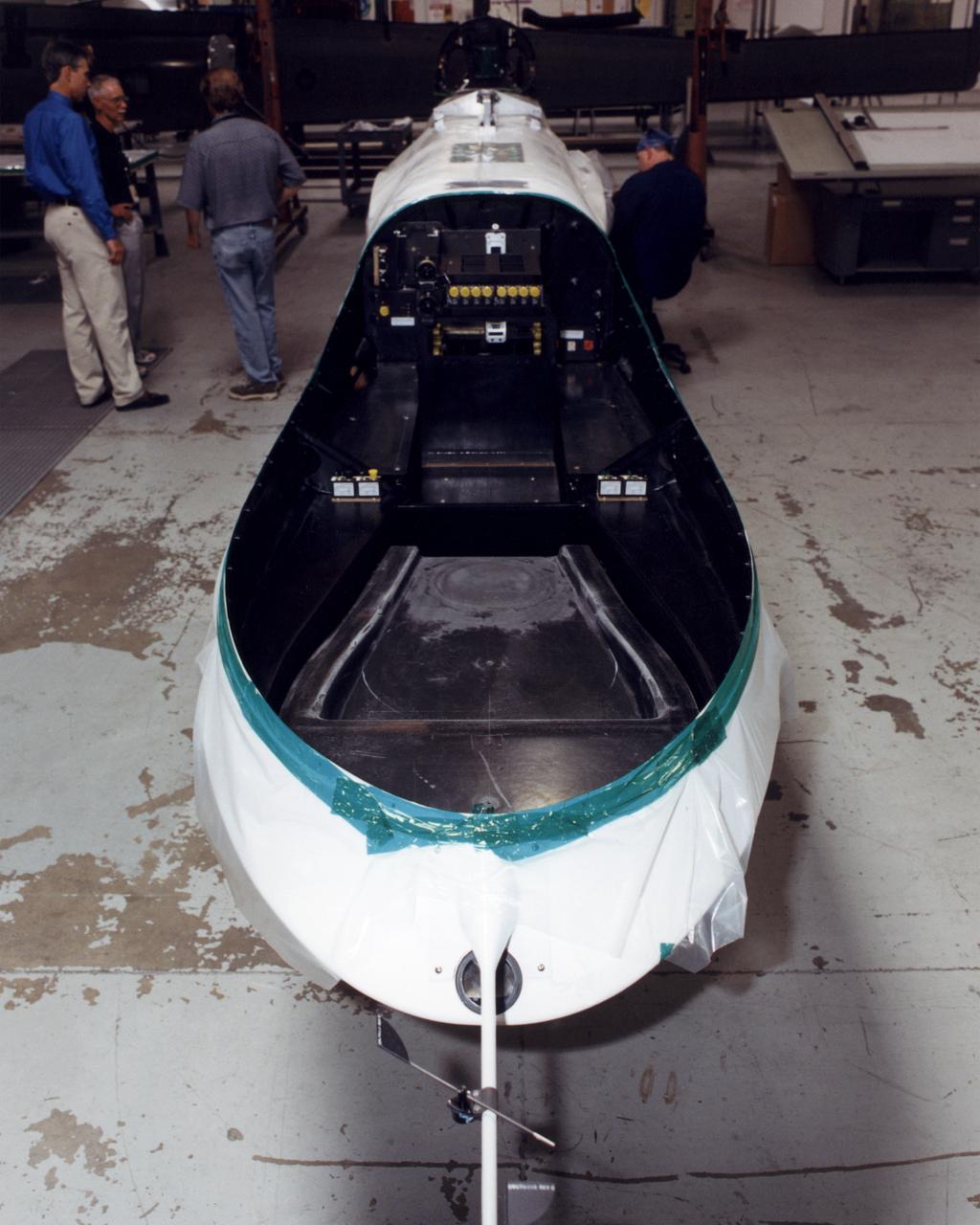
The payload bay in the nose of NASA's Altair unmanned aerial vehicle (UAV) will be able to carry up to 700 lbs. of sensors, imaging equipment and other instruments for Earth science missions.
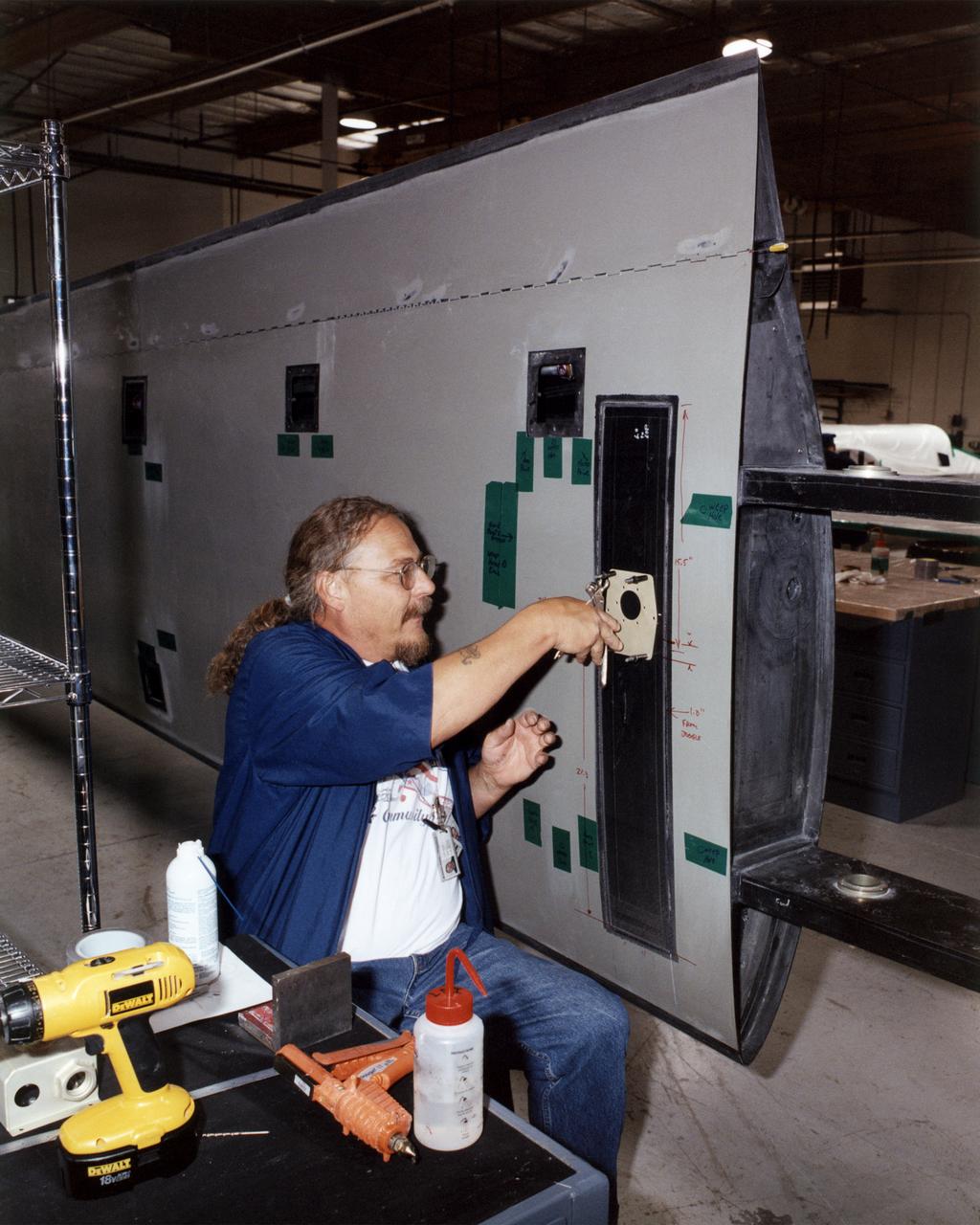
Technician Dave Brown installs a drilling template during construction of the all-composite left wing of NASA's Altair aircraft at General Atomics Aeronautical Systems, Inc., (GA-ASI) facility at Adelanto, Calif.
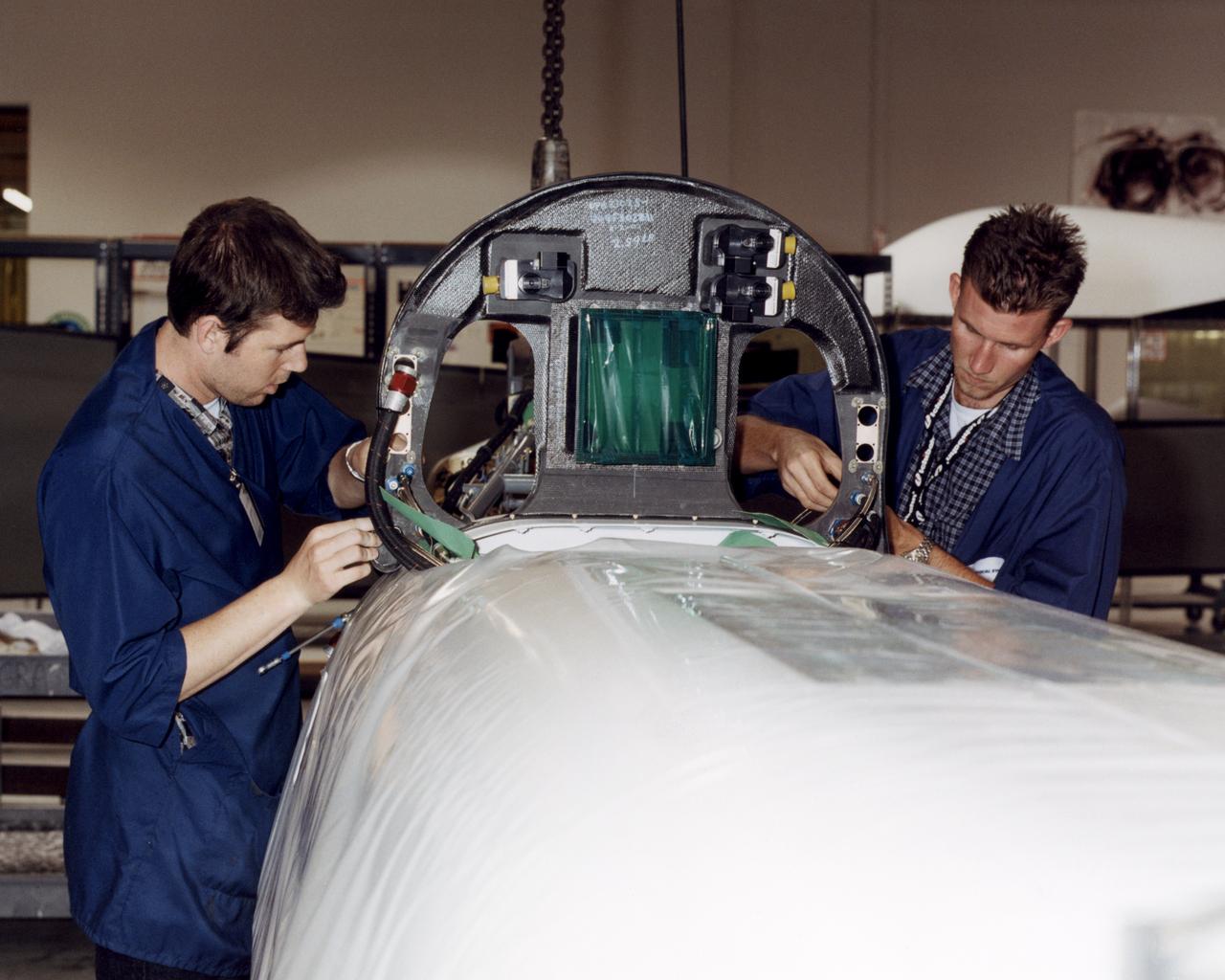
Technicians at General Atomics Aeronautical Systems, Inc., (GA-ASI) facility at Adelanto, Calif., carefully thread control lines through a bulkhead during engine installation on NASA's Altair aircraft.
A high-tech infrared imaging sensor in its underbelly pod, the Altair UAS flew repeated passes over the Esperanza fire to aid firefighting efforts.
Equipped with a pod-mounted infrared imaging sensor, the Altair UAS aided fire mapping efforts over wildfires in central and southern California in late 2006.
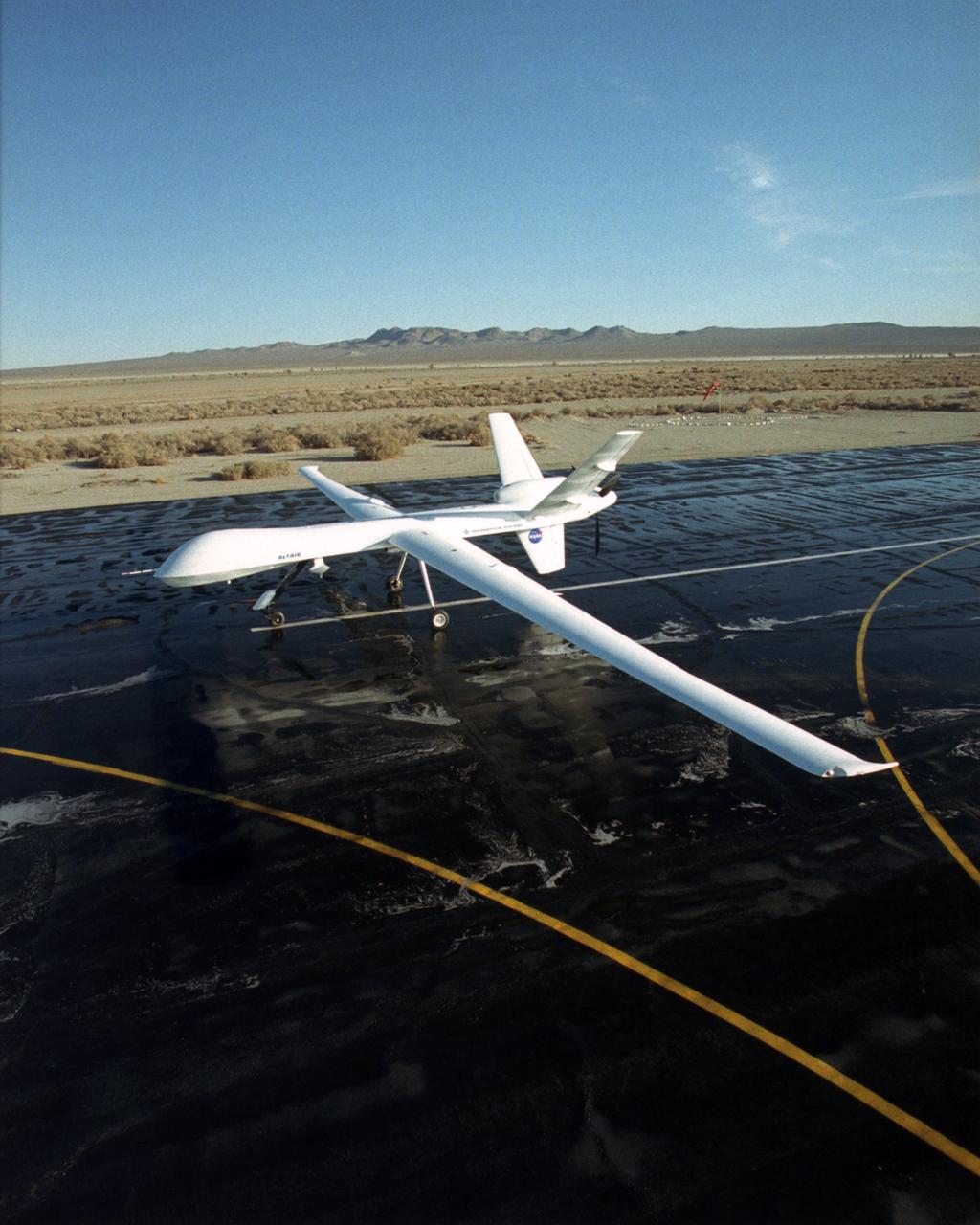
The Altair unmanned aerial vehicle (UAV), built by General Atomics Aeronautical Systems, Inc. for NASA, is poised for flight at GA-ASI's flight test facility at El Mirage, California.
An efficient turboprop engine and large fuel capacity enable NASA's Ikhana unmanned aircraft to remain aloft for up to 30 hours on science or technology flights.
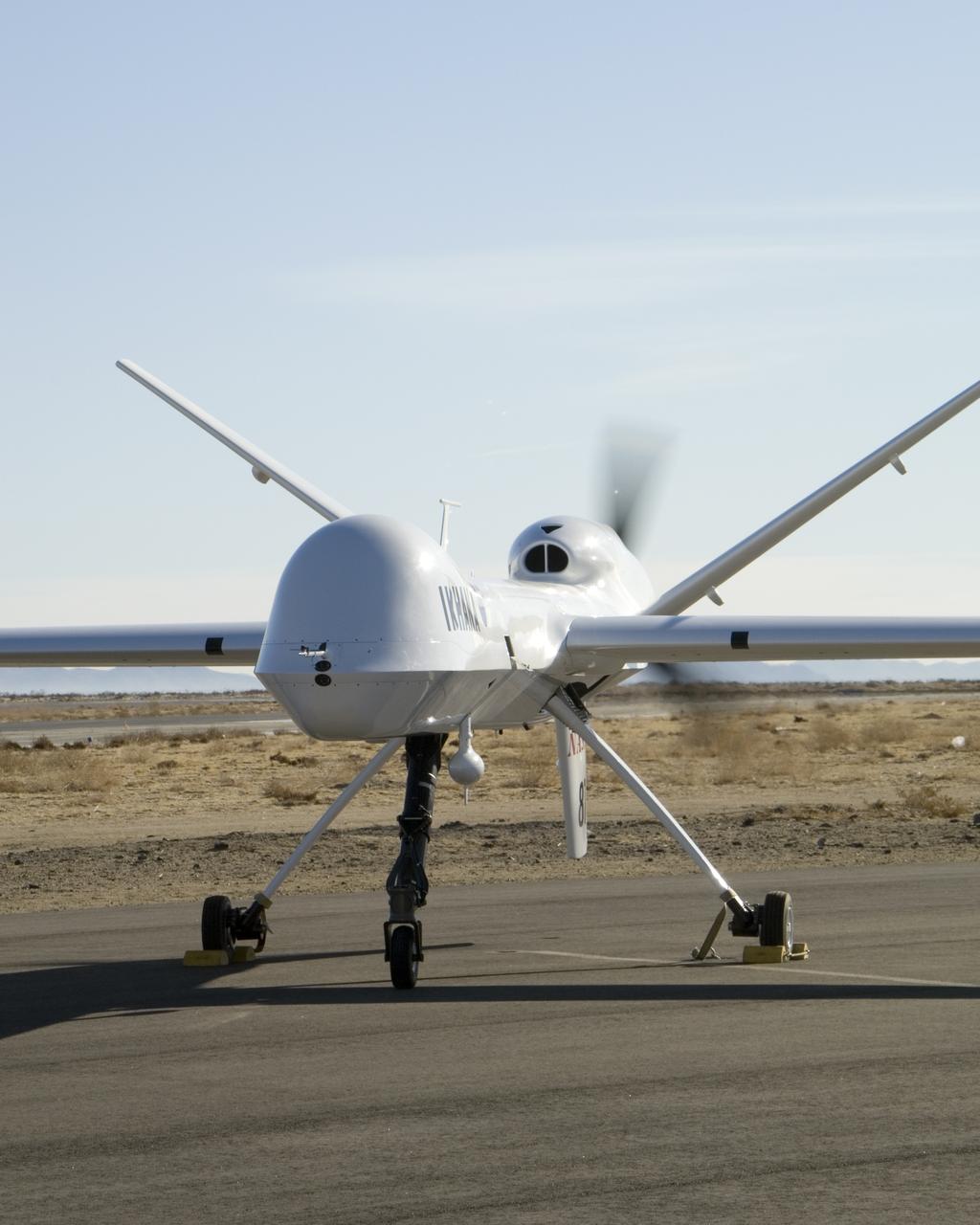
Distinguished by its large nose payload bay, NASA's Ikhana unmanned aircraft does an engine run prior to takeoff from General Atomics' Grey Butte airfield.
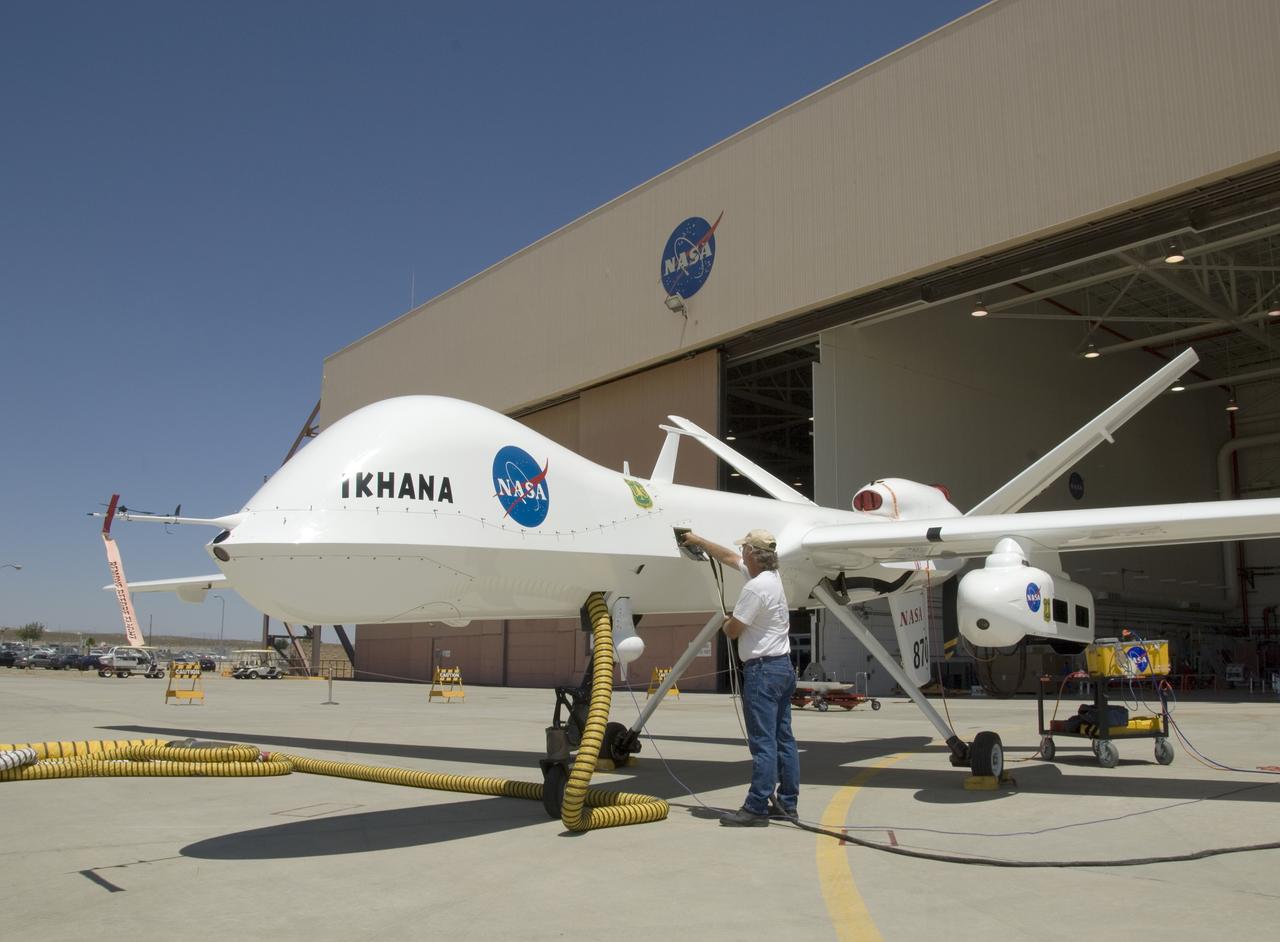
A ground crewman unplugs electrical connections during pre-flight checks of NASA's Ikhana research aircraft. Ikhana's payload pod is mounted on the left wing.
A small nose-mounted television camera enables pilots of NASA's Ikhana unmanned science aircraft to view the flight path ahead.
The bulging fairing atop the forward fuselage of NASA's Ikhana unmanned aircraft covers a variety of navigation, communications and science instruments.
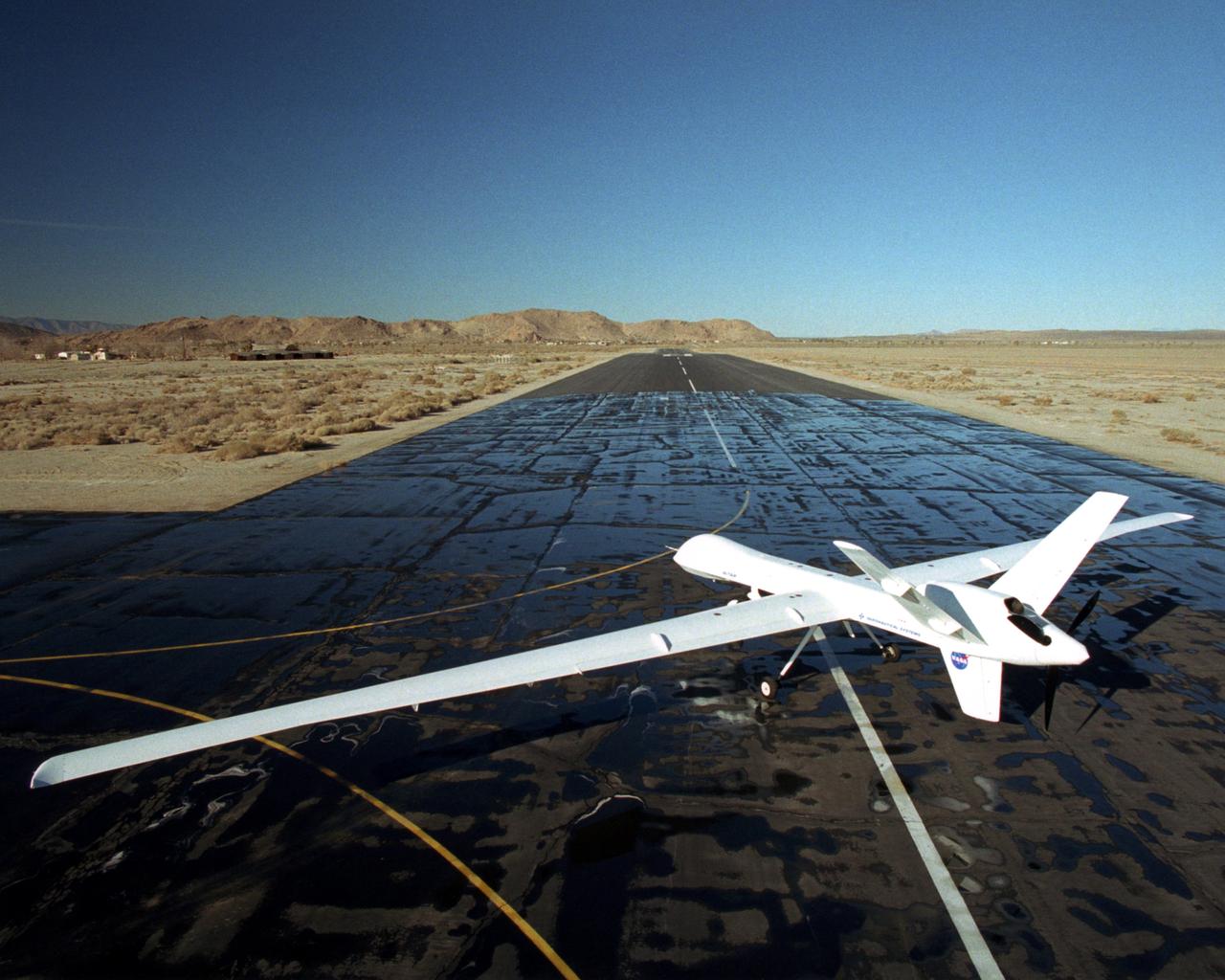
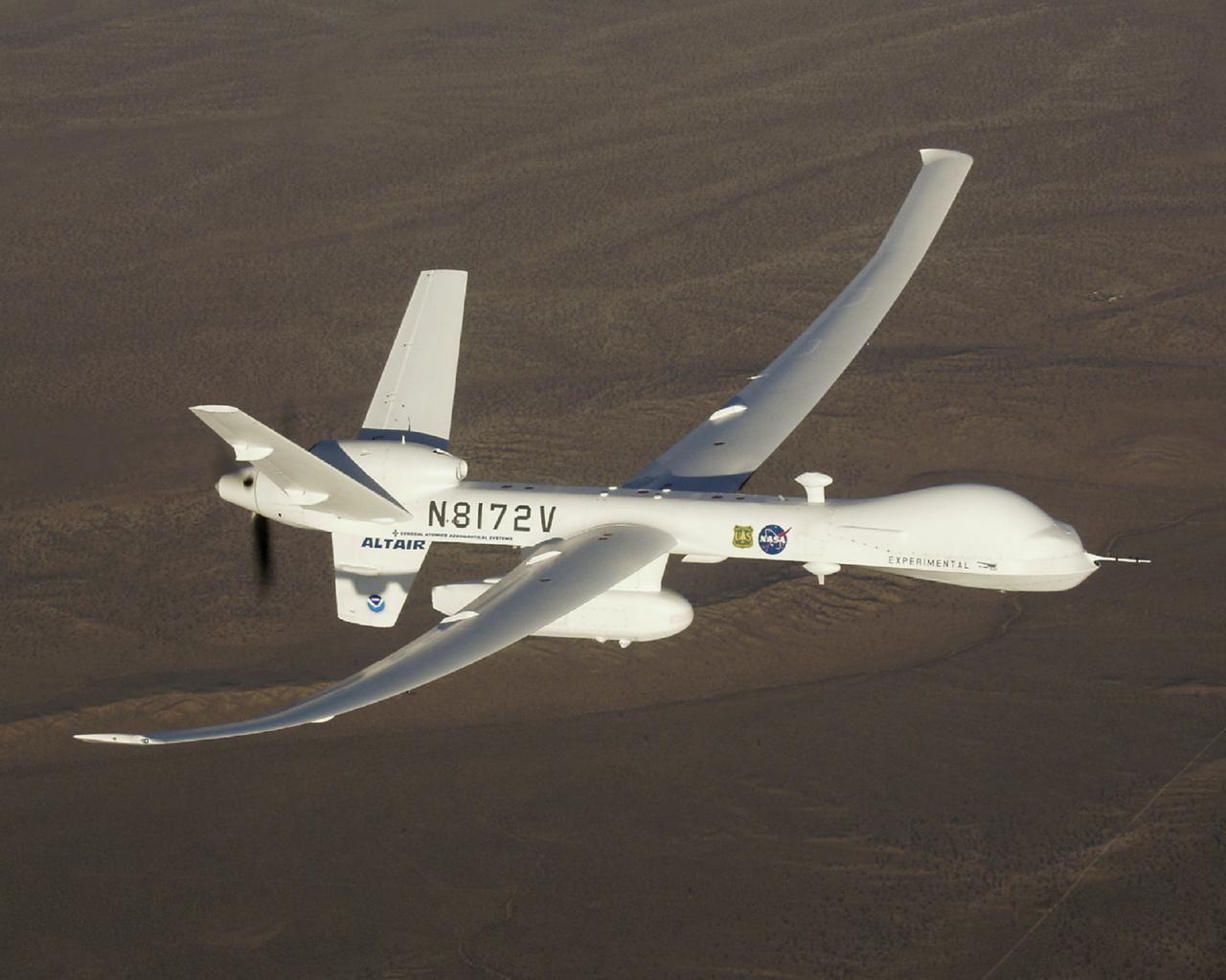
The long, narrow wings of NASA's Altair are designed to allow the unmanned aerial vehicle (UAV) to maintain long-duration flight at high altitudes.
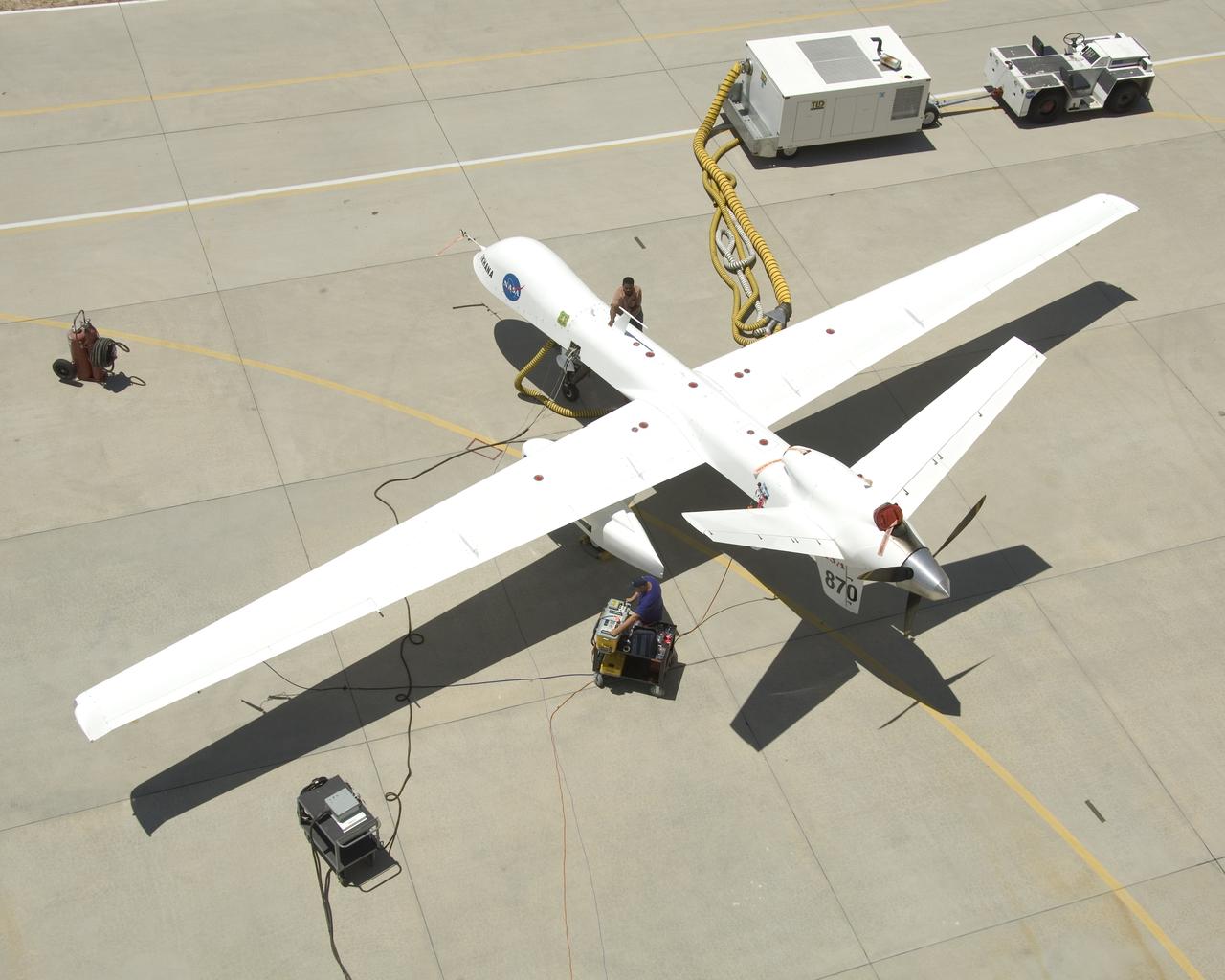
Ground crewmen prepare NASA's Ikhana remotely piloted research aircraft for another flight. Ikhana's infrared imaging sensor pod is visible under the left wing.
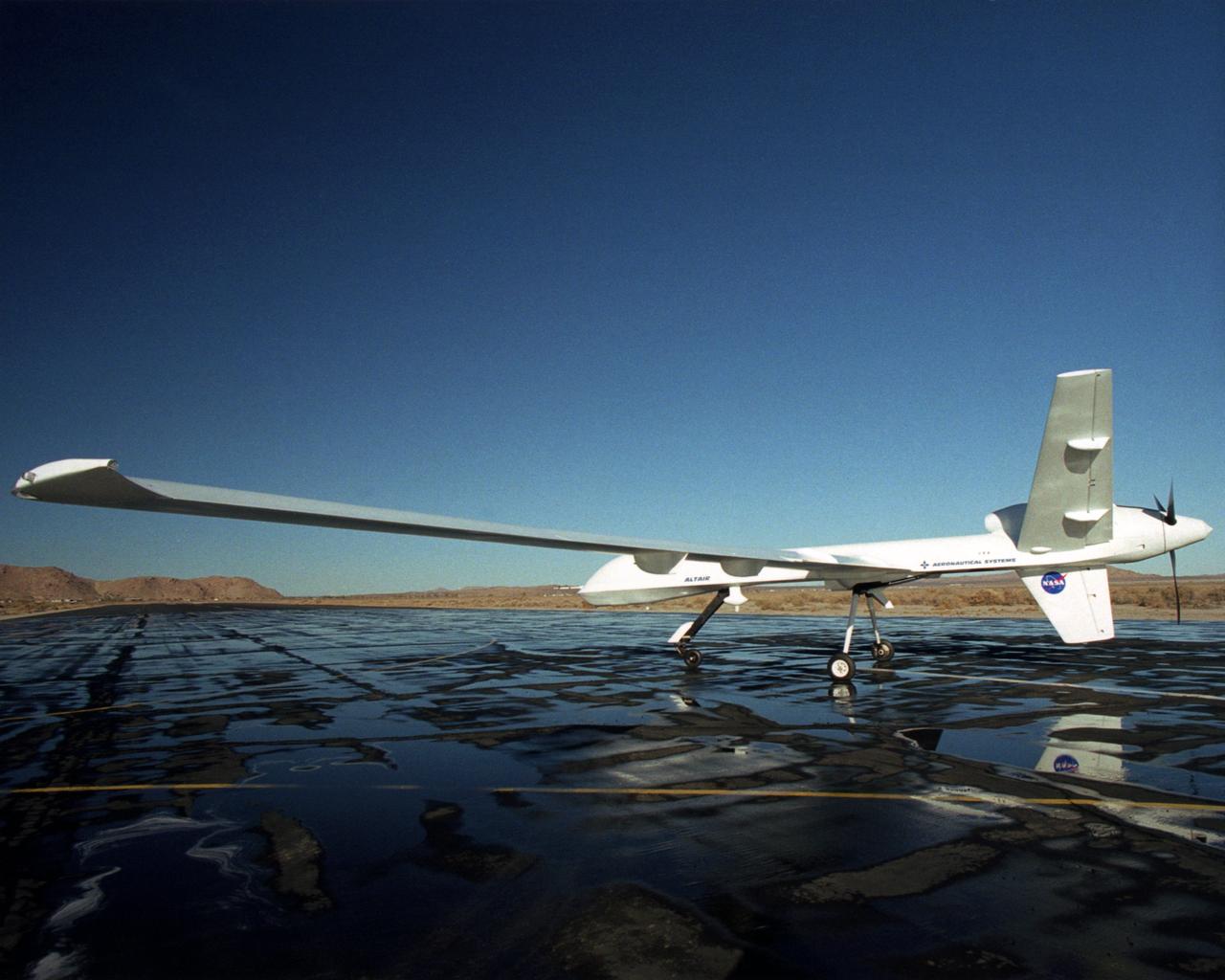
Long wings, a V-tail with a ventral fin and a rear-mounted engine distinguish the Altair, an unmanned aerial vehicle built for NASA by General Atomics Aeronautical Systems, Inc.

The long wings of General Atomics Altair UAV are in evidence during a series of environmental monitoring missions for NOAA and NASA in the spring of 2005.
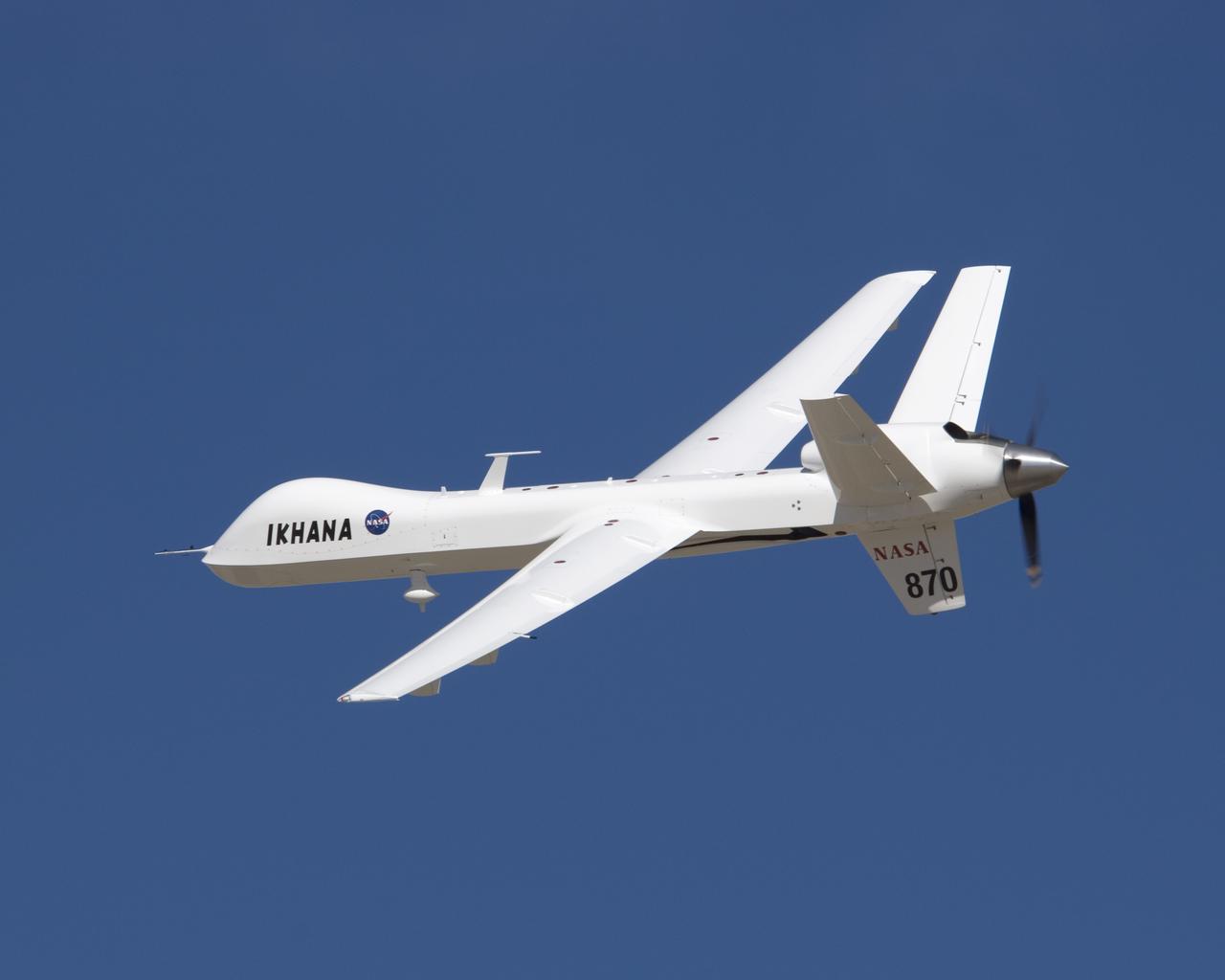
Its white surfaces in contrast with the deep blue sky, NASA's Ikhana unmanned science and technology development aircraft soars over California's high desert.
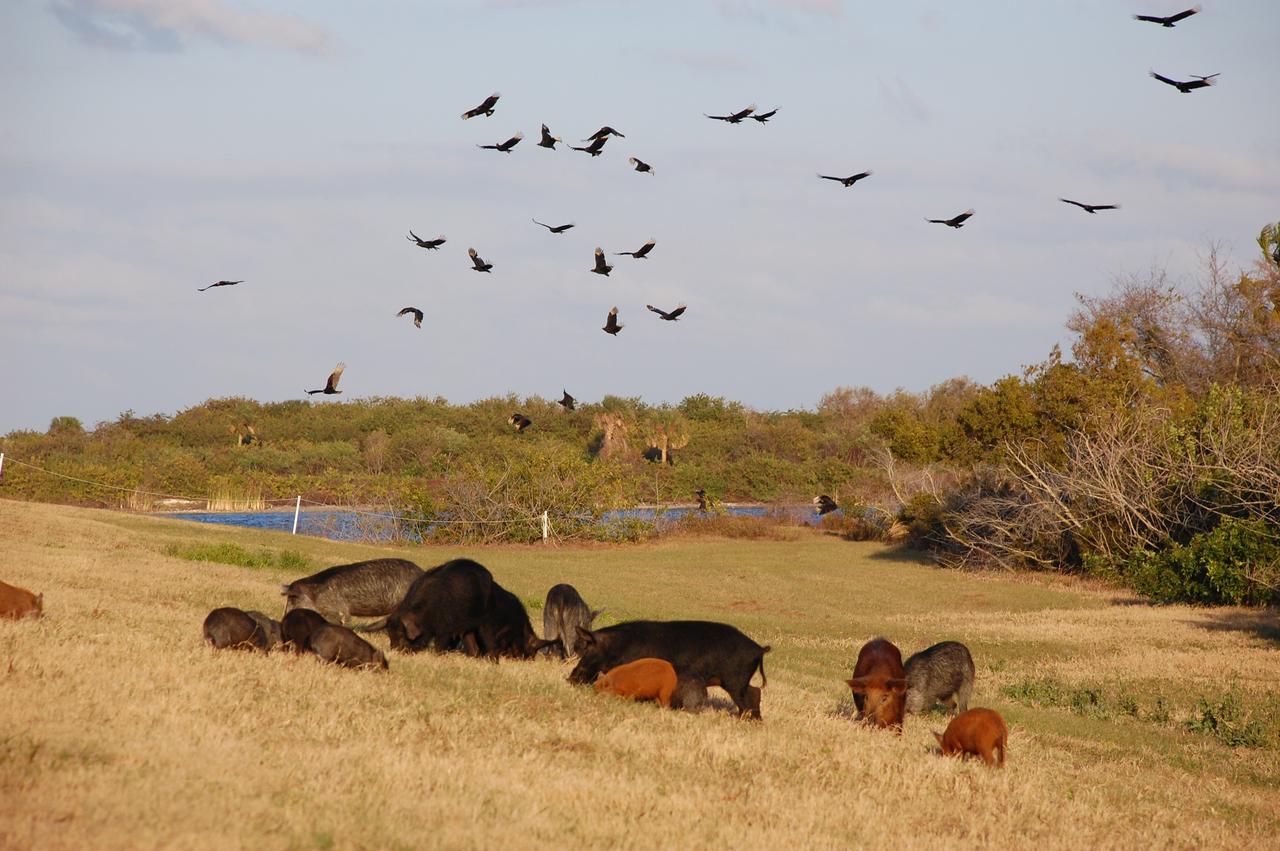
CAPE CANAVERAL, Fla. – At NASA's Kennedy Space Center in Florida, a family of wild pigs roots through the grass for food. Overhead, vultures circle, hunting for their share of food. The wild pigs have flourished in the environs around Kennedy, which shares a border with the Merritt Island National Wildlife Refuge, without many predators other than panthers and humans. Pigs were introduced to Florida in the 1500s and are now found statewide in wooded areas close to water. Pigs are omnivores, foraging on the ground and rooting just beneath the surface, which damages the groundcover. Wild pigs eat almost anything that has nutritional value, including tubers, roots, shoots, acorns, fruits, berries, earthworms, amphibians, reptiles and rodents. Their appearance is similar to domestic hogs, but leaner, with a longer, narrower head and a coarser, denser coat. Females may have two litters per year. The piglets are weaned in a few weeks but remain with the mother for several months. Photo credit: NASA/Ben Smegelsky

CAPE CANAVERAL, Fla. – At NASA's Kennedy Space Center in Florida, a wild pig stops hunting for food to eye the photographer. This pig is part of a larger family in the area. The wild pigs have flourished in the environs around Kennedy, which shares a border with the Merritt Island National Wildlife Refuge, without many predators other than panthers and humans. Pigs were introduced to Florida in the 1500s and are now found statewide in wooded areas close to water. Pigs are omnivores, foraging on the ground and rooting just beneath the surface, which damages the groundcover. Wild pigs eat almost anything that has nutritional value, including tubers, roots, shoots, acorns, fruits, berries, earthworms, amphibians, reptiles and rodents. Their appearance is similar to domestic hogs, but leaner, with a longer, narrower head and a coarser, denser coat. Females may have two litters per year. The piglets are weaned in a few weeks but remain with the mother for several months. Photo credit: NASA/Ben Smegelsky
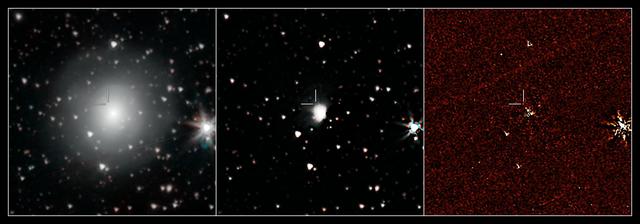
NASA's Spitzer Space Telescope has provisionally detected the faint afterglow of the explosive merger of two neutron stars in the galaxy NGC 4993. The event, labeled GW170817, was initially detected in gravitational waves and gamma rays. Subsequent observations by dozens of telescopes have monitored its afterglow across the entire spectrum of light. The event is located about 130 million light-years from Earth. Spitzer's observation on September 29, 2017, came late in the game, just over 6 weeks after the event was first seen. But if this weak detection is verified, it will play an important role in helping astronomers understand how many of the heaviest elements in the periodic table are created in explosive neutron star mergers. The left panel is a color composite of the 3.6 and 4.5 micron channels of the Spitzer IRAC instrument, rendered in cyan and red. The center panel is a median-filtered color composite showing a faint red dot at the known location of the event. The right panel shows the residual 4.5 micron data after subtracting out the light of the galaxy using an archival image that predates the event. An annotated version is at https://photojournal.jpl.nasa.gov/catalog/PIA21910
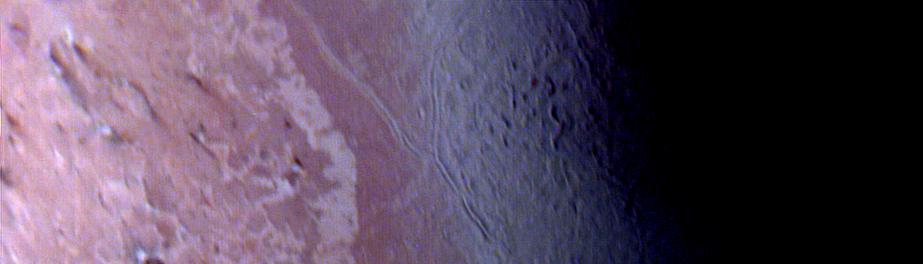
Voyager violet, green, and ultraviolet images of Triton were map projected into cylindrical coordinates and combined to produce this false color terrain map. Several compositionally distinct terrain and geologic features are portrayed. At center is a gray blue unit referred to as 'cantaloupe' terrain because of its unusual topographic texture. The unit appears to predate other units to the left. Immediately adjacent to the cantaloupe terrain, is a smoother unit, represented by a reddish color, that has been dissected by a prominent fault system. This unit apparently overlies a much higher albedo material, seen farther left. A prominent angular albedo boundary separates relatively undisturbed smooth terrain from irregular patches which have been derived from breakup of the same material. Also visible at the far left are diffuse, elongated streaks, which seem to emanate from circular, often bright centered features. The parallel streaks may represent vented particulate materials blown in the same direction by winds in Triton's thin atmosphere. The Voyager Mission was conducted by JPL for NASA's Office of Space Science and Applications. http://photojournal.jpl.nasa.gov/catalog/PIA00060
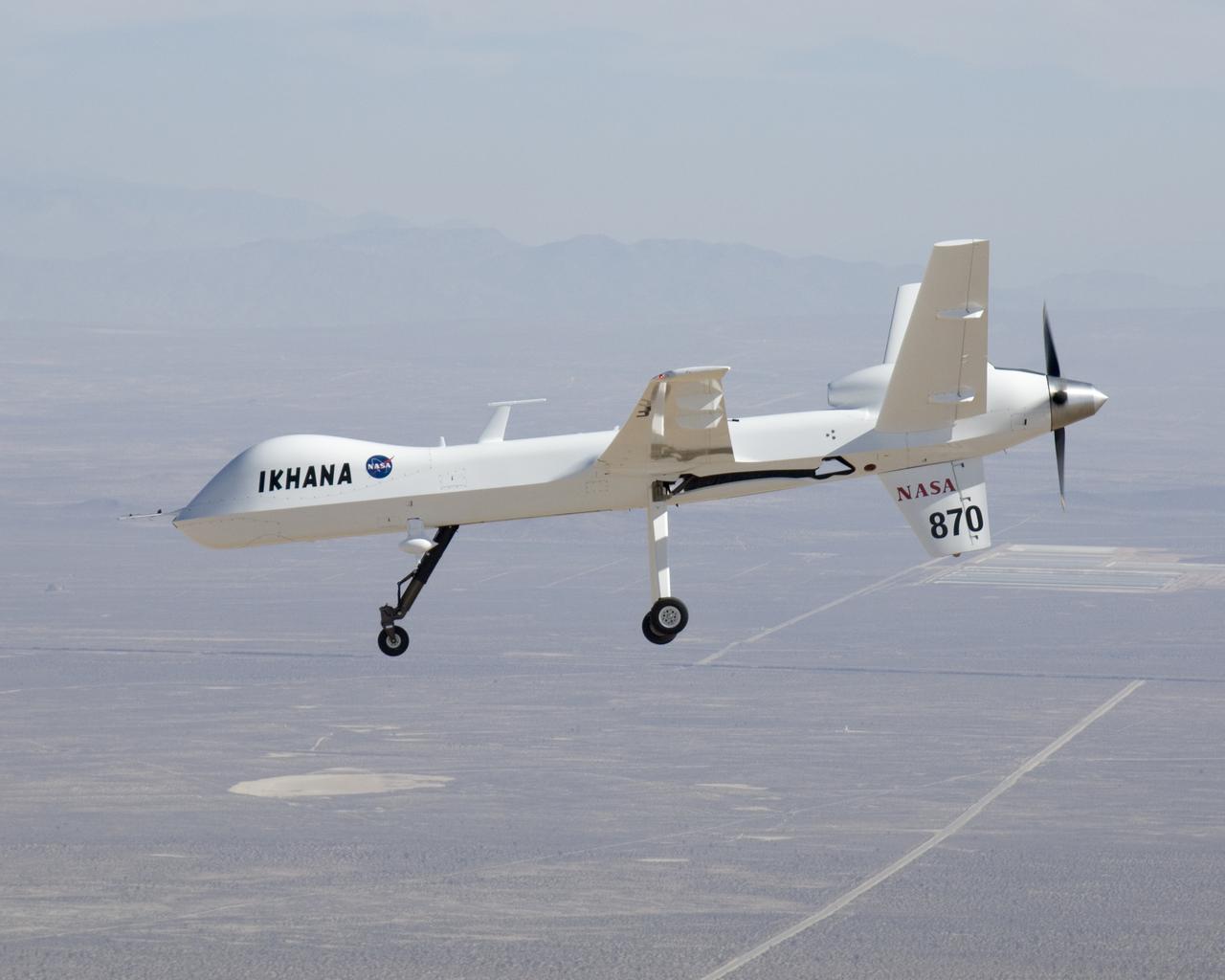
NASA's Ikhana unmanned science demonstration aircraft prepares for landing as it arrives at Edwards Air Force Base, Calif. NASA took possession of the new aircraft in November, 2006, and it arrived at its new home at NASA's Dryden Flight Reseach Center at Edwards AFB, on June 23, 2007.
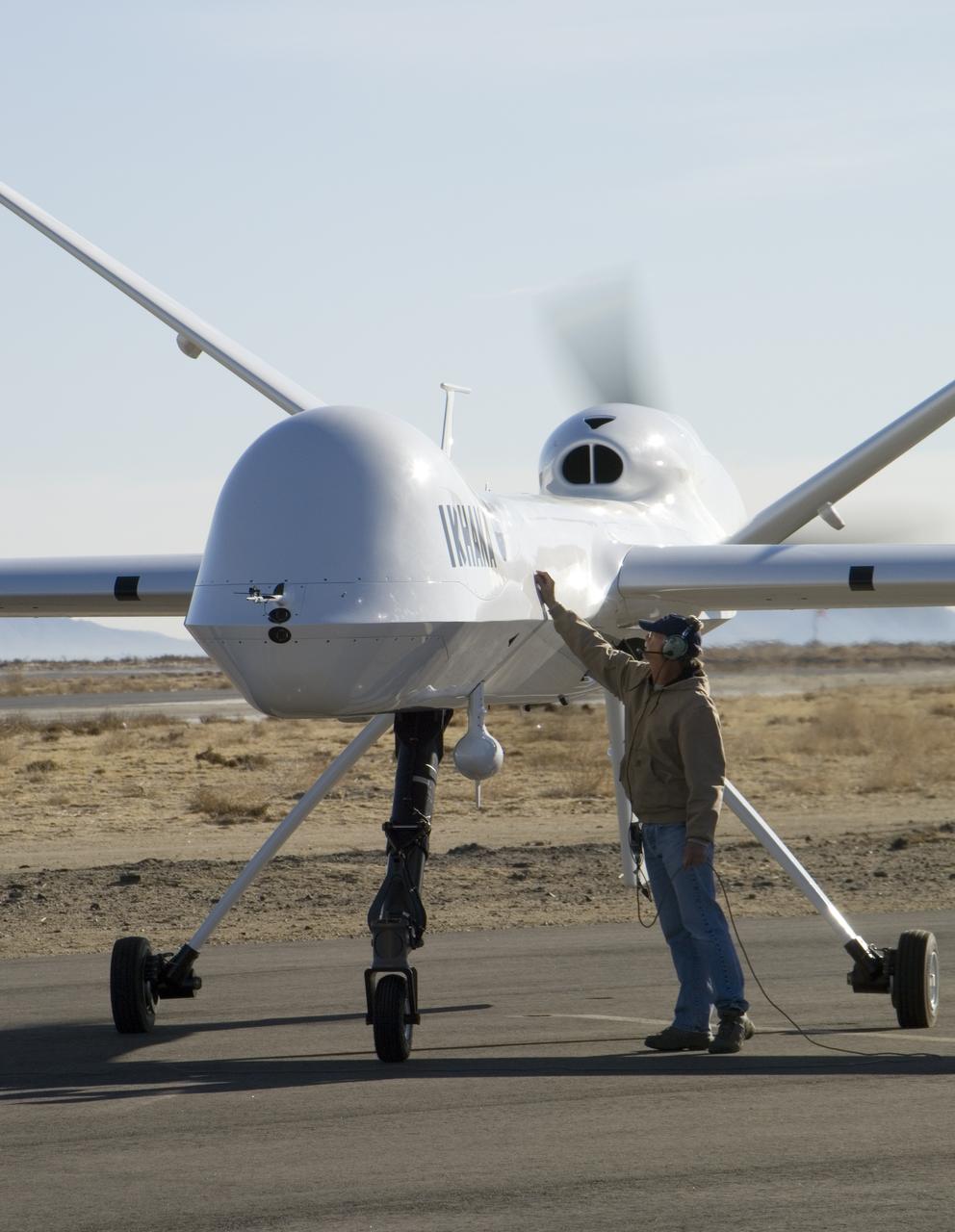
Crew chief Joe Kinn gives NASA's Ikhana unmanned aircraft a final check during engine run-up prior to takeoff at General Atomics Aeronautical Systems' airfield.
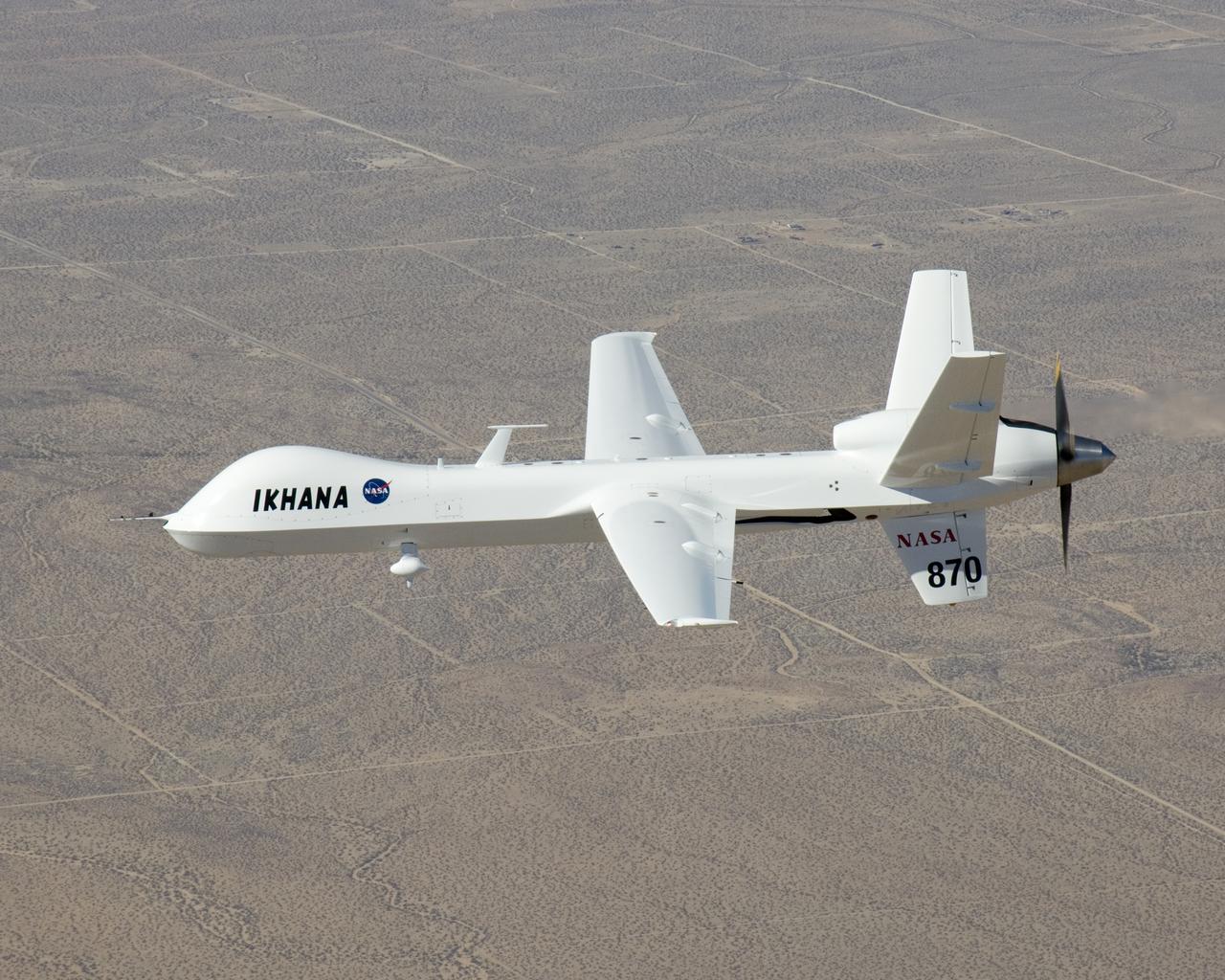
NASA's Ikhana unmanned science demonstration aircraft over Southern California's high desert during the ferry flight to its new home at the Dryden Flight Research Center. NASA took possession of the new aircraft in November, 2006, and it arrived at DFRC at Edwards Air Force Base, Calif., on June 23, 2007.
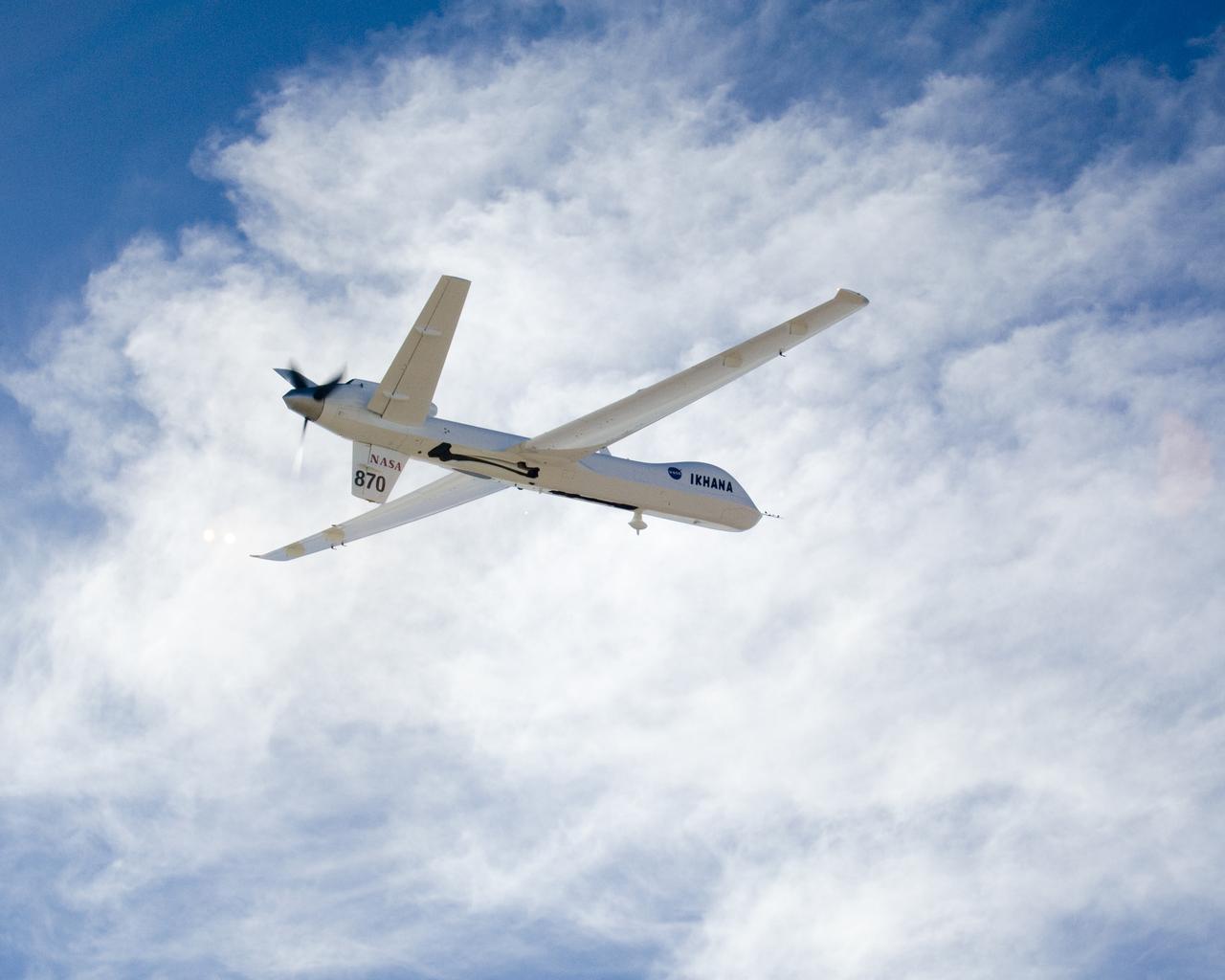
NASA's Ikhana unmanned science demonstration aircraft in flight during the ferry flight to its new home at the Dryden Flight Research Center. NASA took possession of the new aircraft in November, 2006, and it arrived at the NASA center at Edwards Air Force Base, Calif., on June 23, 2007.
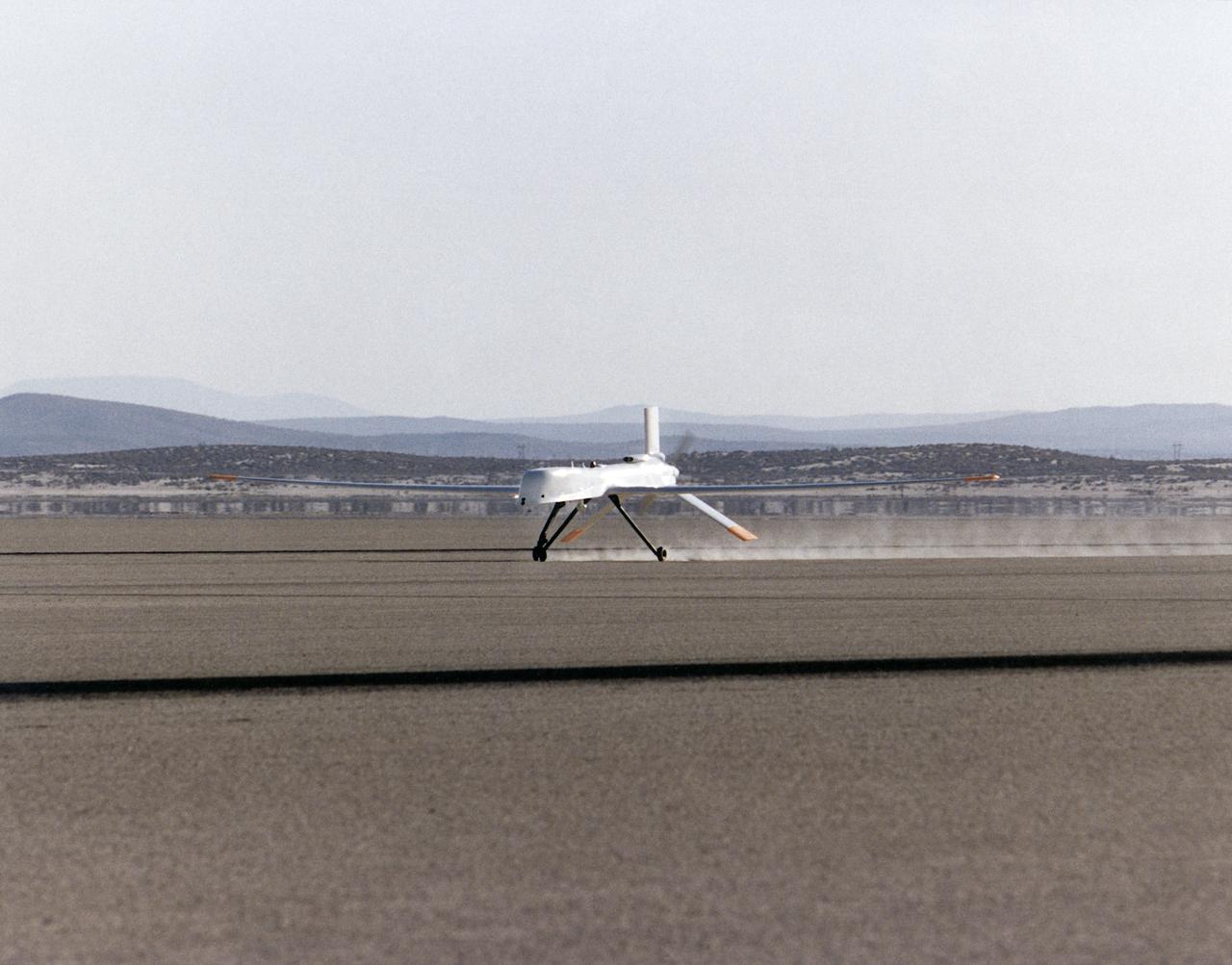
Altus I aircraft landing on Edwards lakebed runway 23
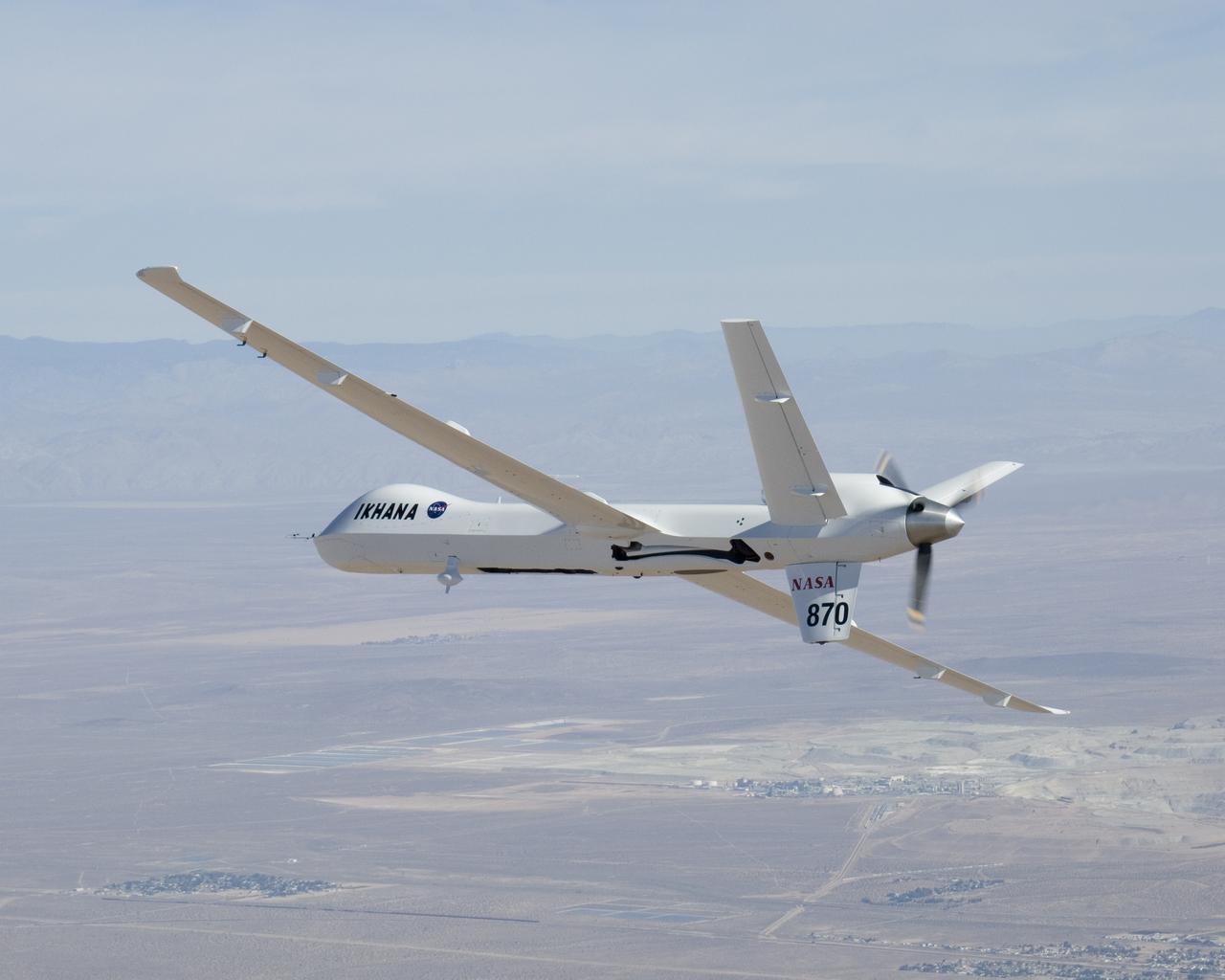
NASA's Ikhana unmanned science demonstration aircraft over the U.S. Borax mine, Boron, California, near the Dryden/Edwards Air Force Base complex. NASA took possession of the new aircraft in November, 2006, and it arrived at the NASA center at Edwards Air Force Base, Calif., on June 23, 2007.
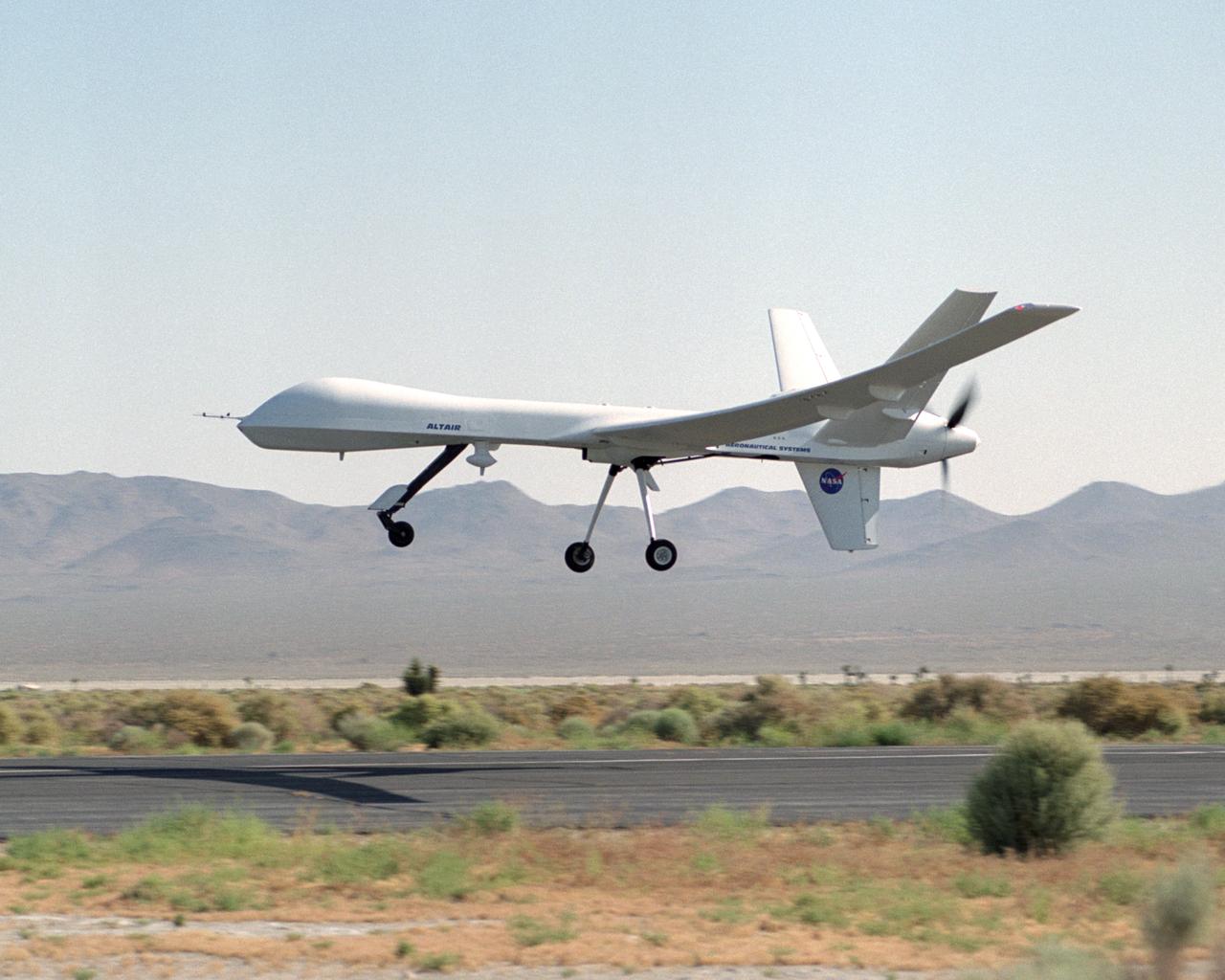
The remotely-piloted Altair unmanned aerial vehicle (UAV) took to the air on its first checkout flight on June 9, 2003 at El Mirage, California.
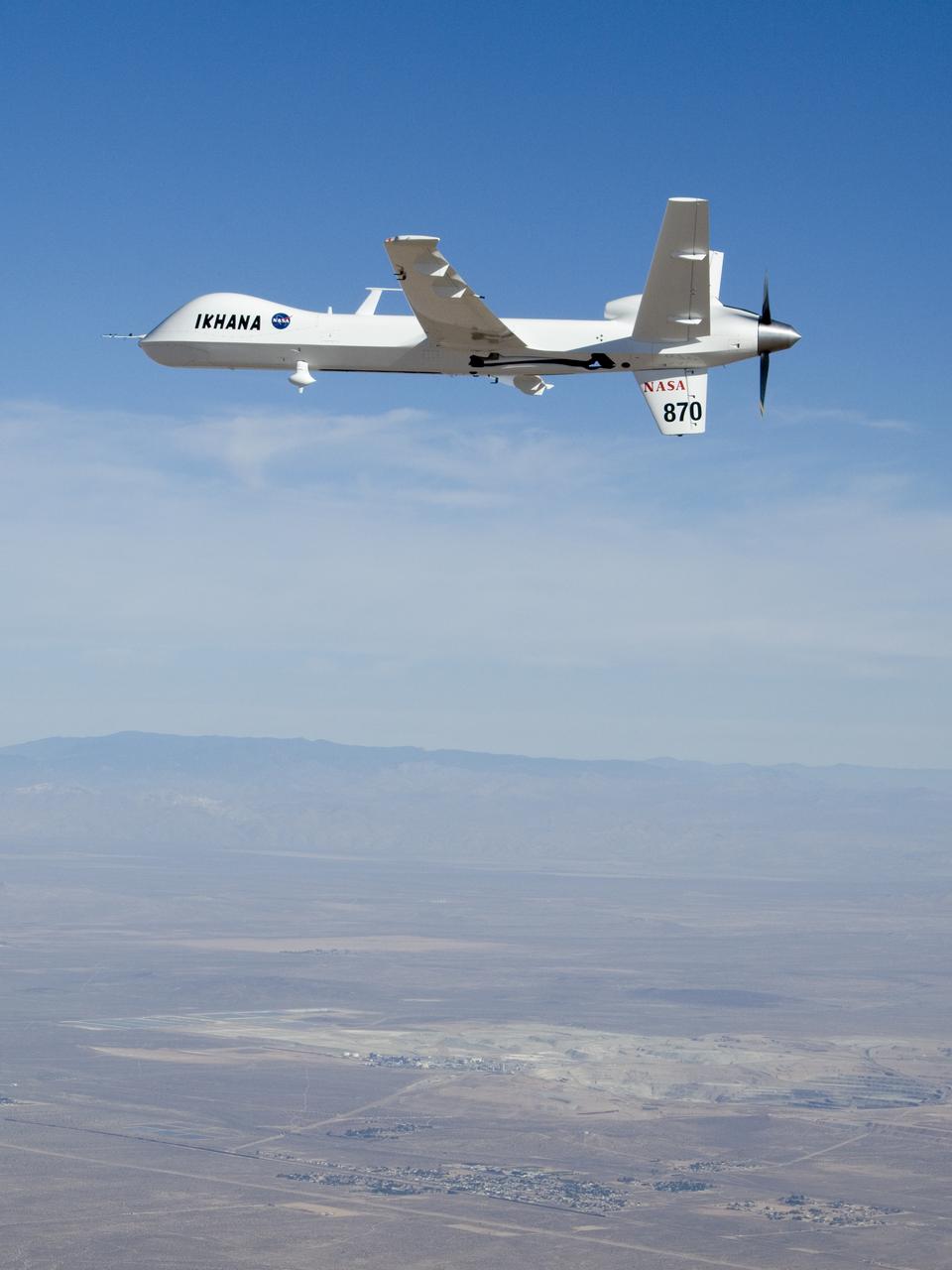
NASA's Ikhana unmanned science demonstration aircraft over the U.S. Borax mine, Boron, California, near the Dryden/Edwards Air Force Base complex. NASA took possession of the new aircraft in November, 2006, and it arrived at the NASA Dryden Flight Research Center at Edwards AFB, Calif., on June 23, 2007.
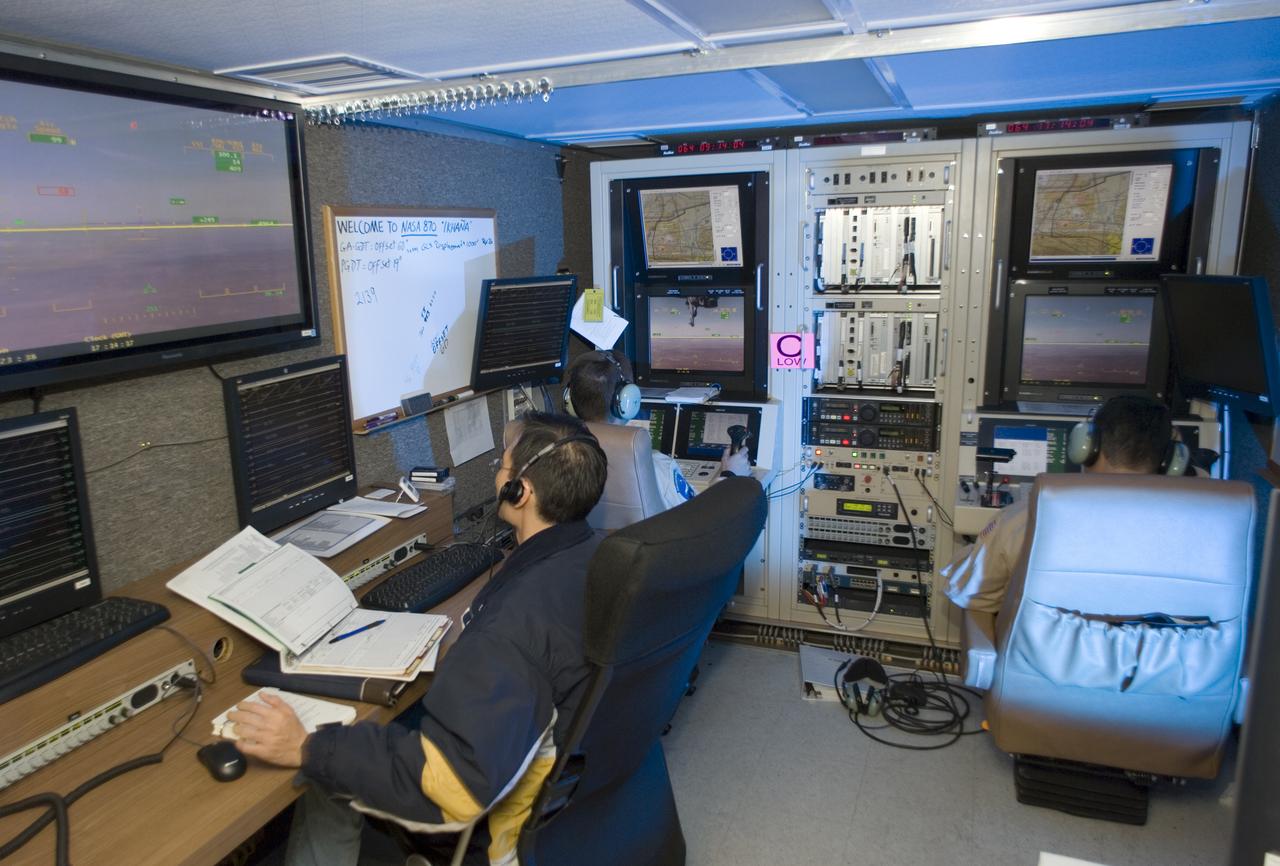
NASA's Ikhana unmanned science aircraft ground control station includes consoles for two pilots and positions for scientists and engineers along the side.
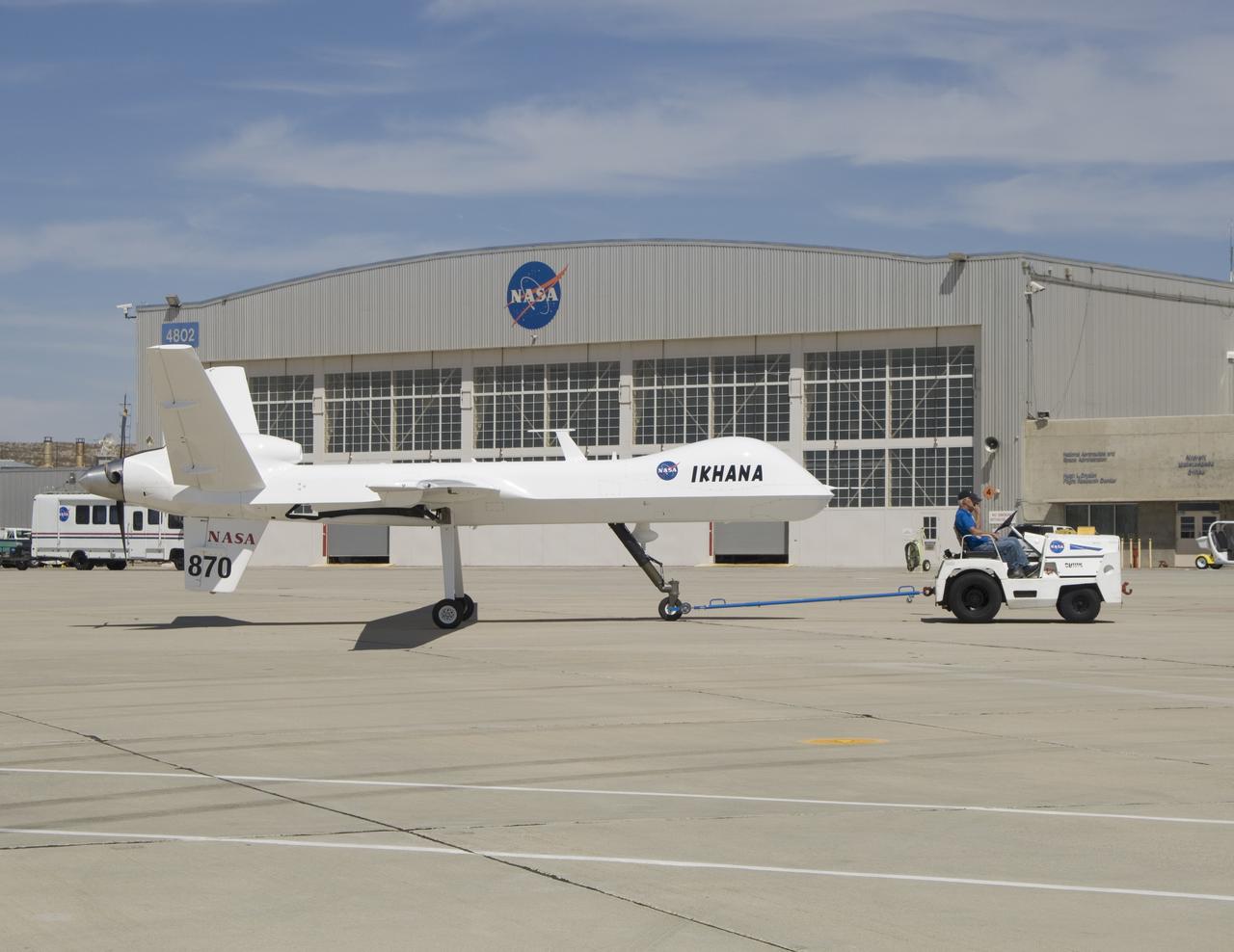
After arriving via a ferry flight on June 23, 2007, NASA's Ikhana unmanned science demonstration aircraft is towed to a hangar at its new home, the Dryden Flight Research Center in Southern California.