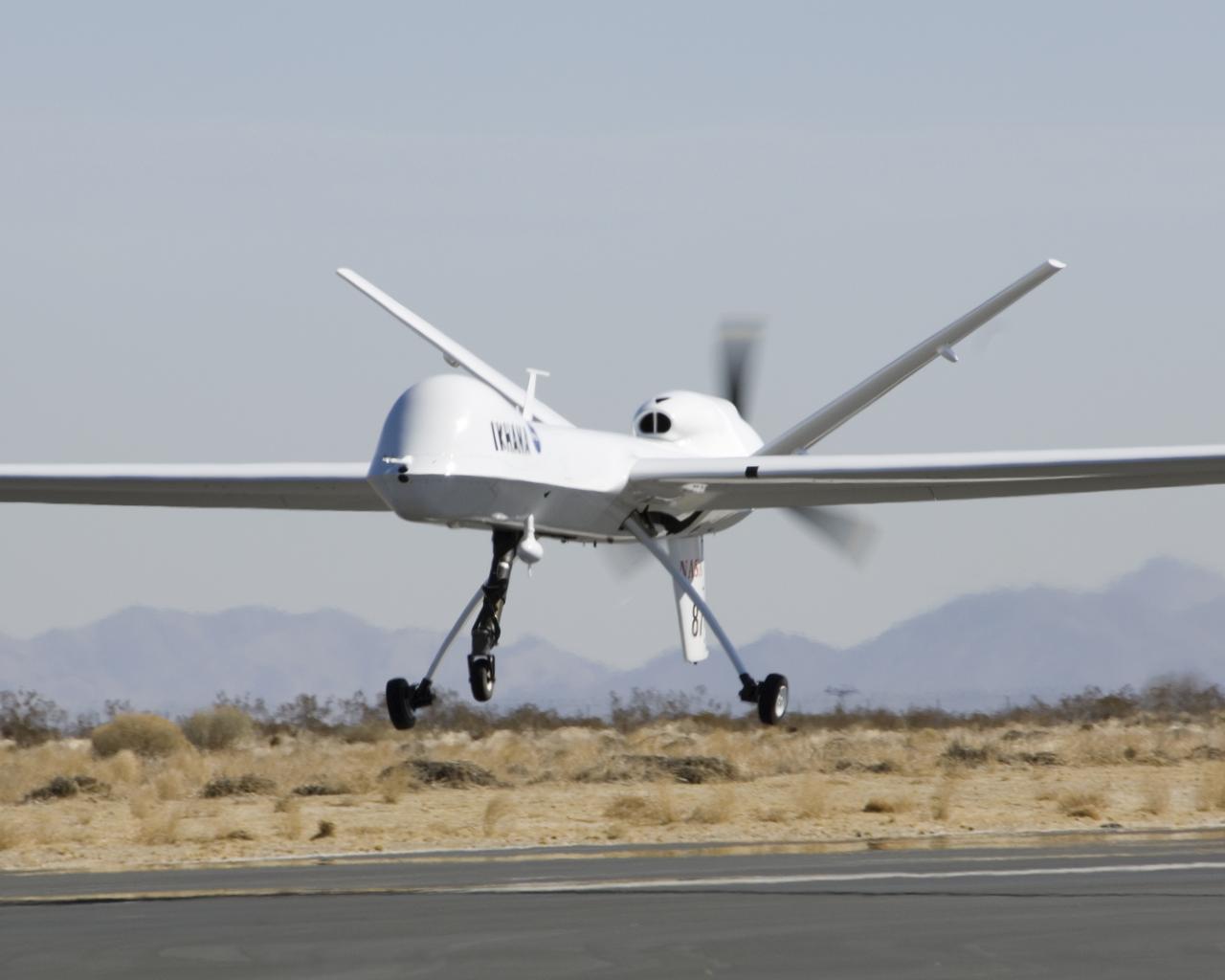
NASA's Ikhana unmanned science demonstration aircraft, a civil variant of General Atomics' Predator B, lifts off from Grey Butte airfield in Southern California.
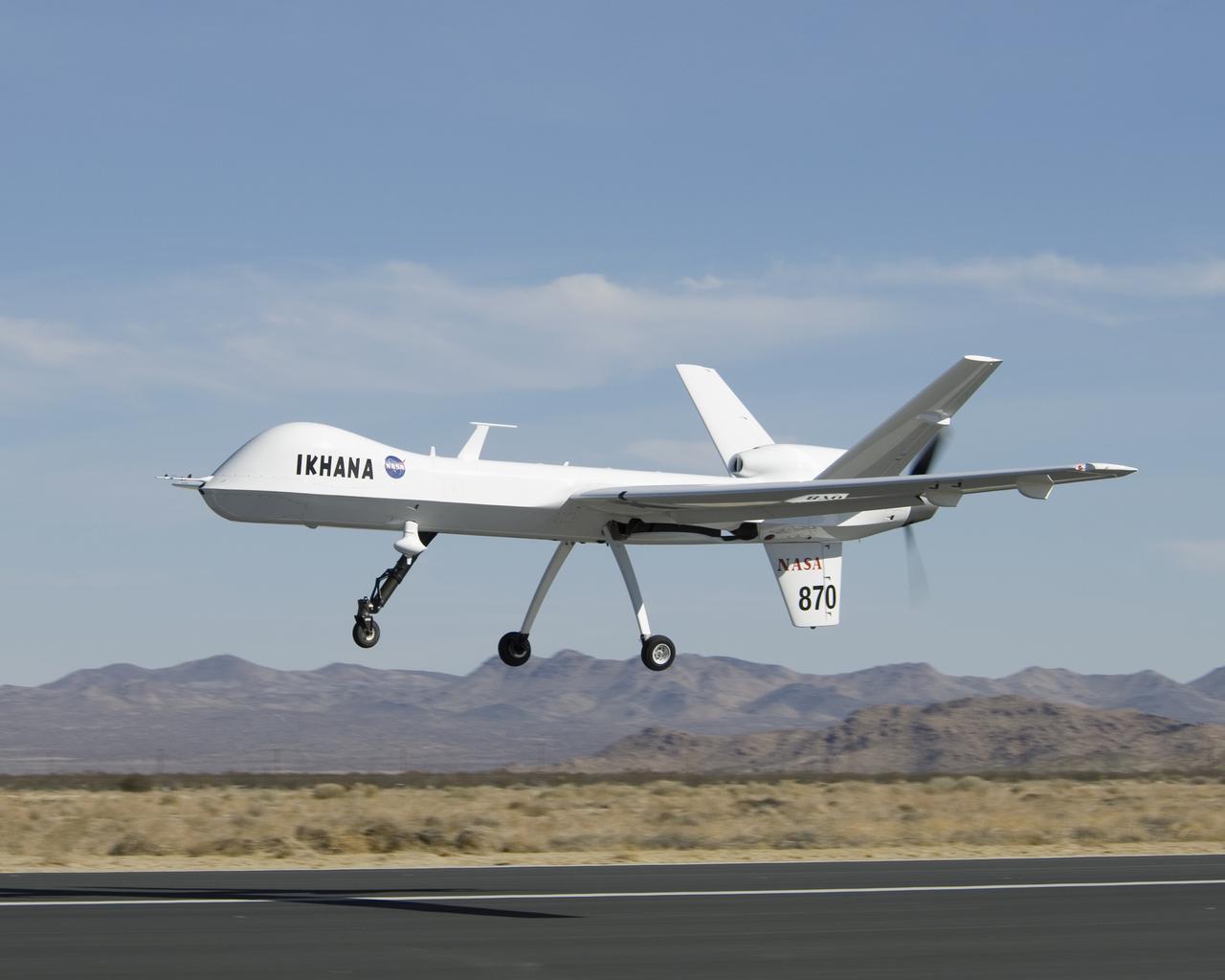
NASA's Ikhana unmanned science demonstration aircraft, a civil variant of General Atomics' Predator B, lifts off from Grey Butte airfield in Southern California.
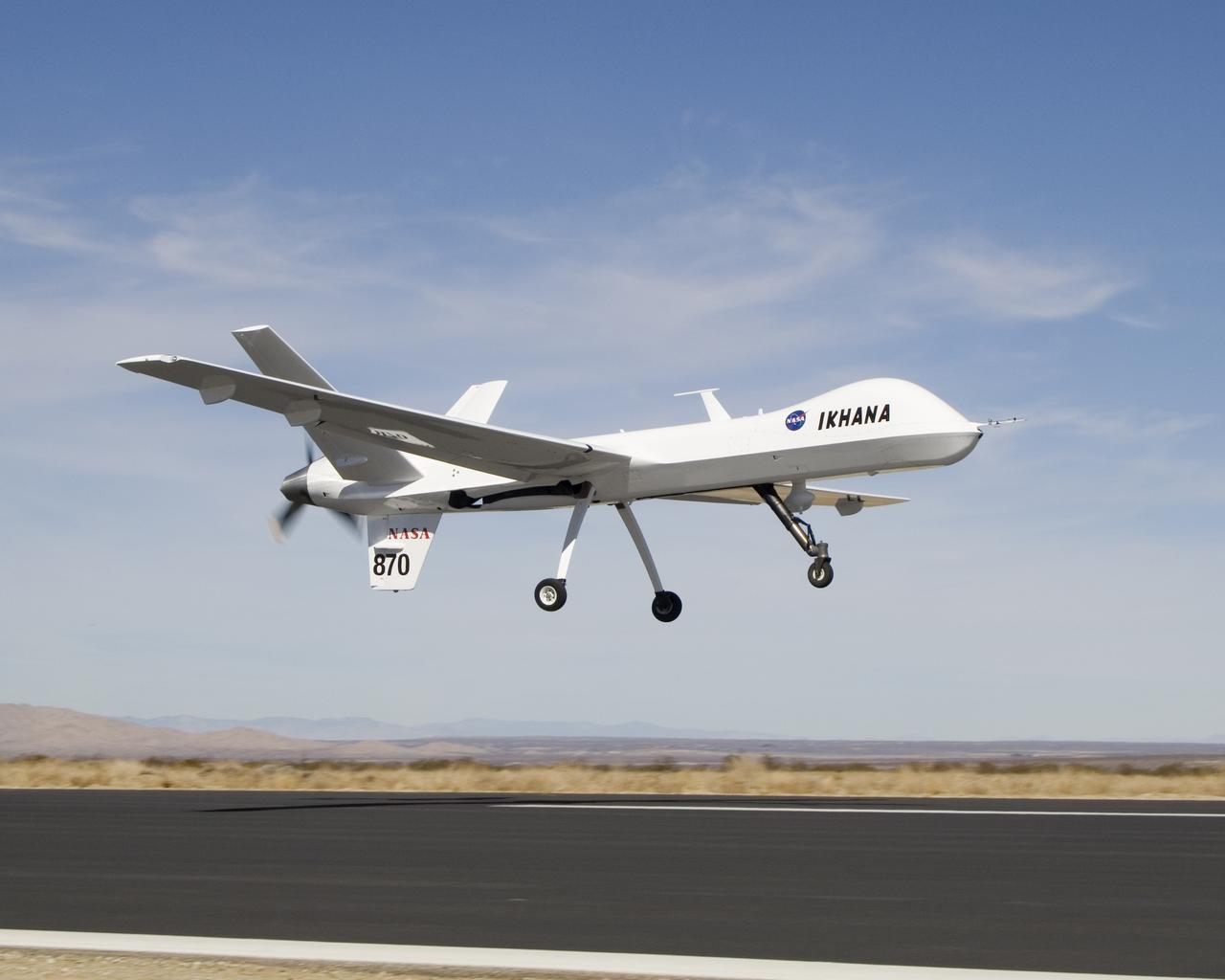
NASA's Ikhana, a civil variant of General Atomics' Predator B unmanned aircraft, takes to the sky for a morning checkout flight from the Grey Butte airfield.
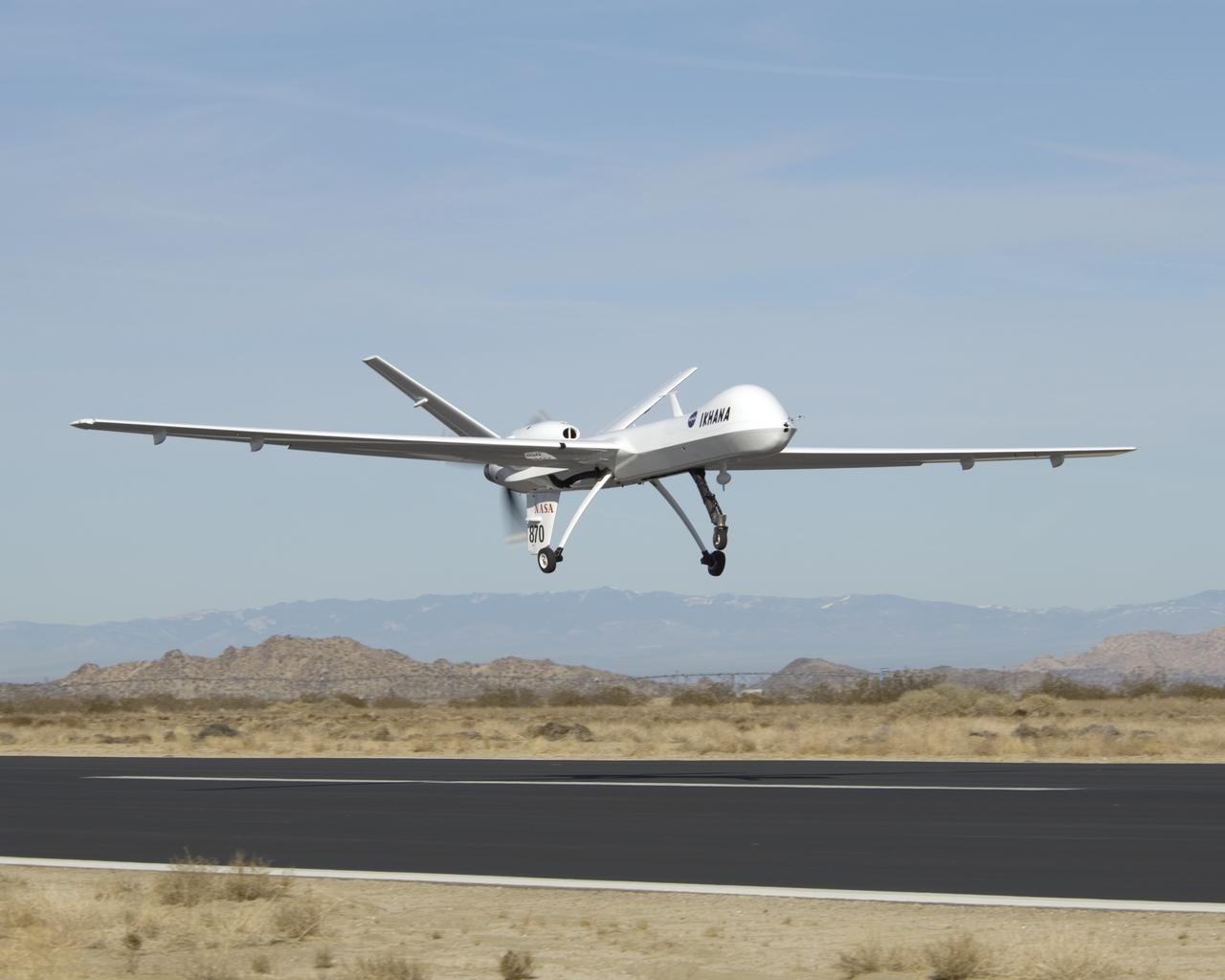
NASA's Ikhana unmanned long-endurance science aircraft, a civil variant of General Atomics' Predator B, takes to the sky over Southern California's high desert.
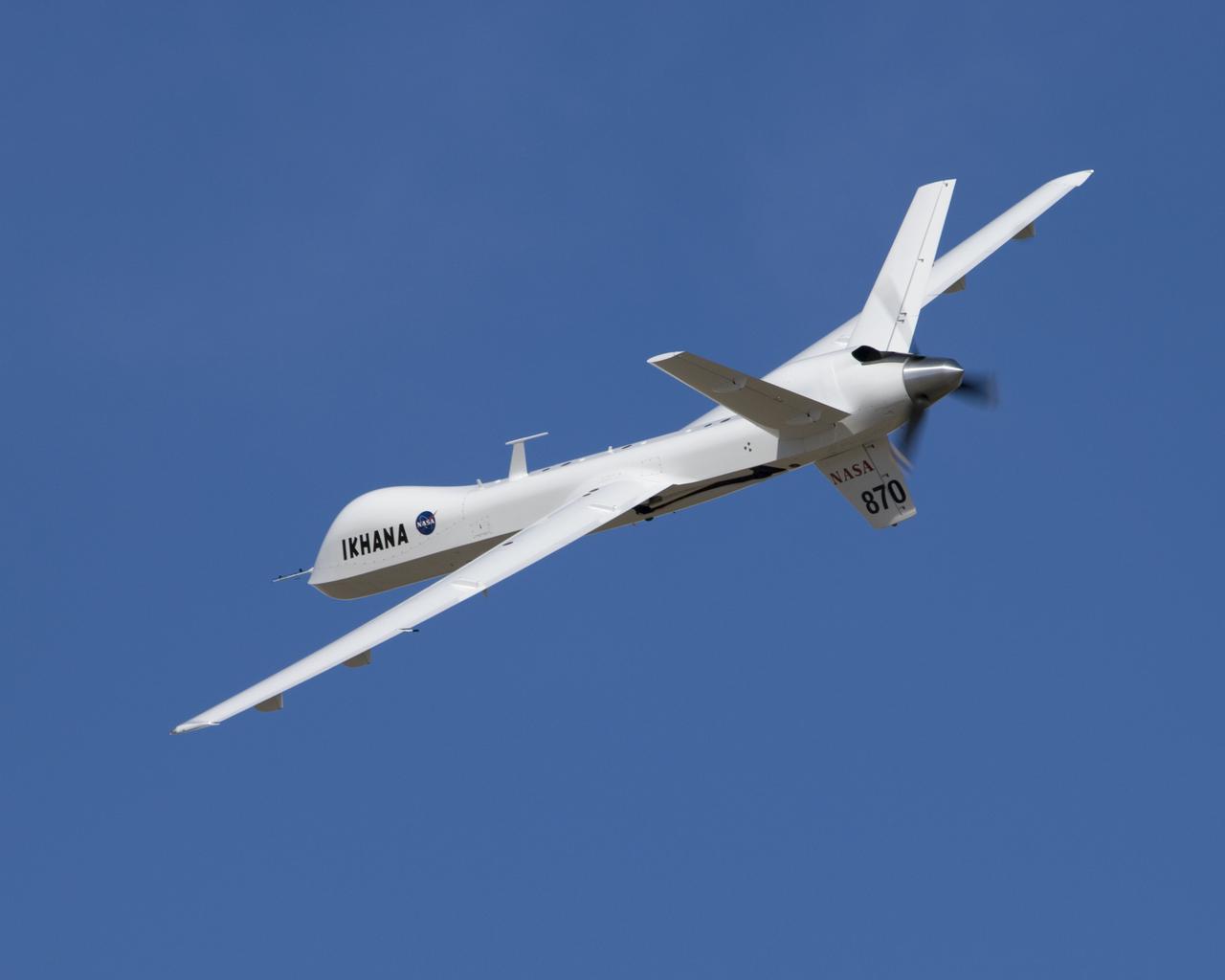
Straight wings, a Y-tail and a pusher propeller distinguish NASA's Ikhana, a civil version of General Atomics Aeronautical system's Predator B unmanned aircraft.
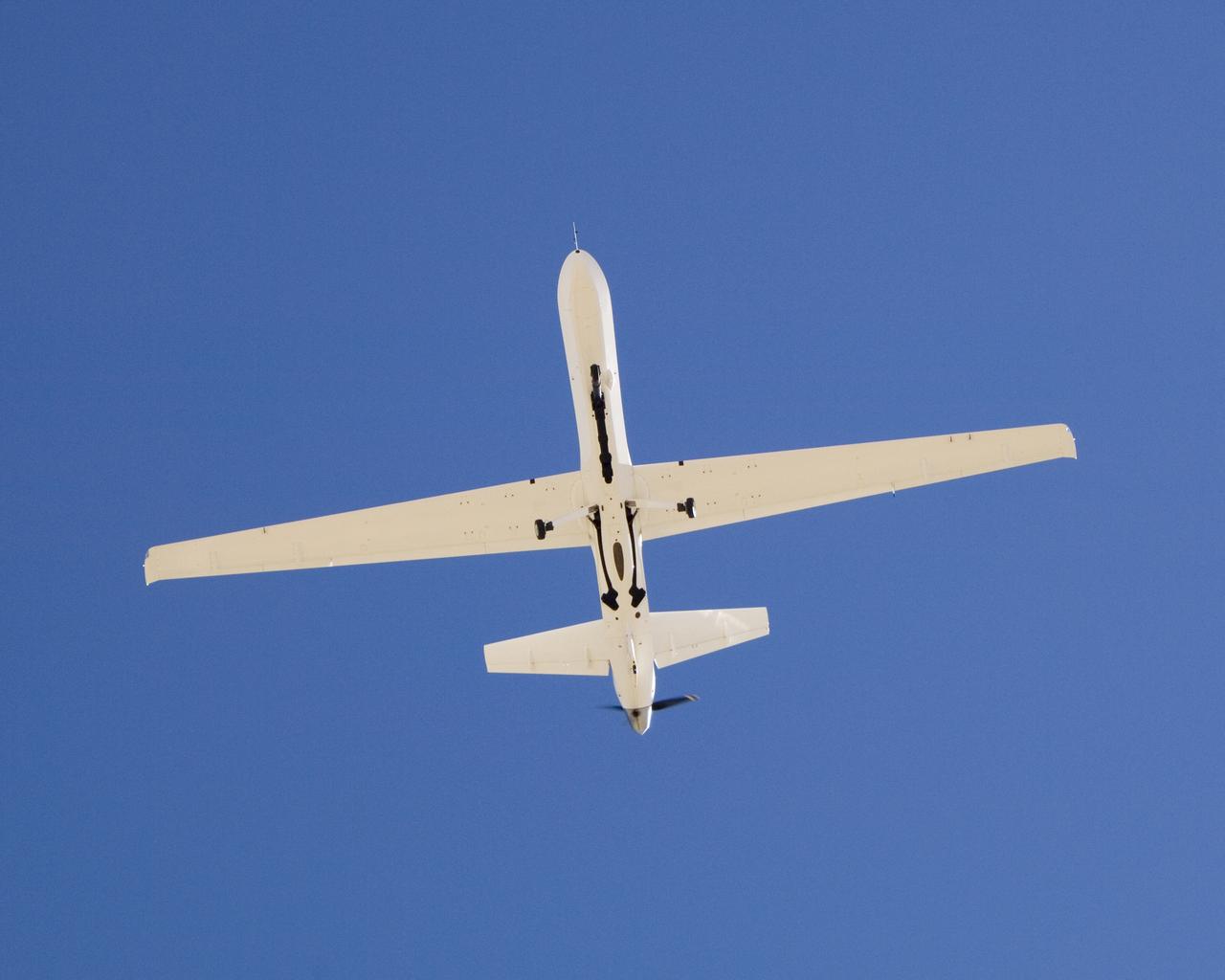
The narrow fuselage of NASA'S Ikhana unmanned science aircraft, a civil version of General Atomics' Predator B, is evident in this view from underneath.
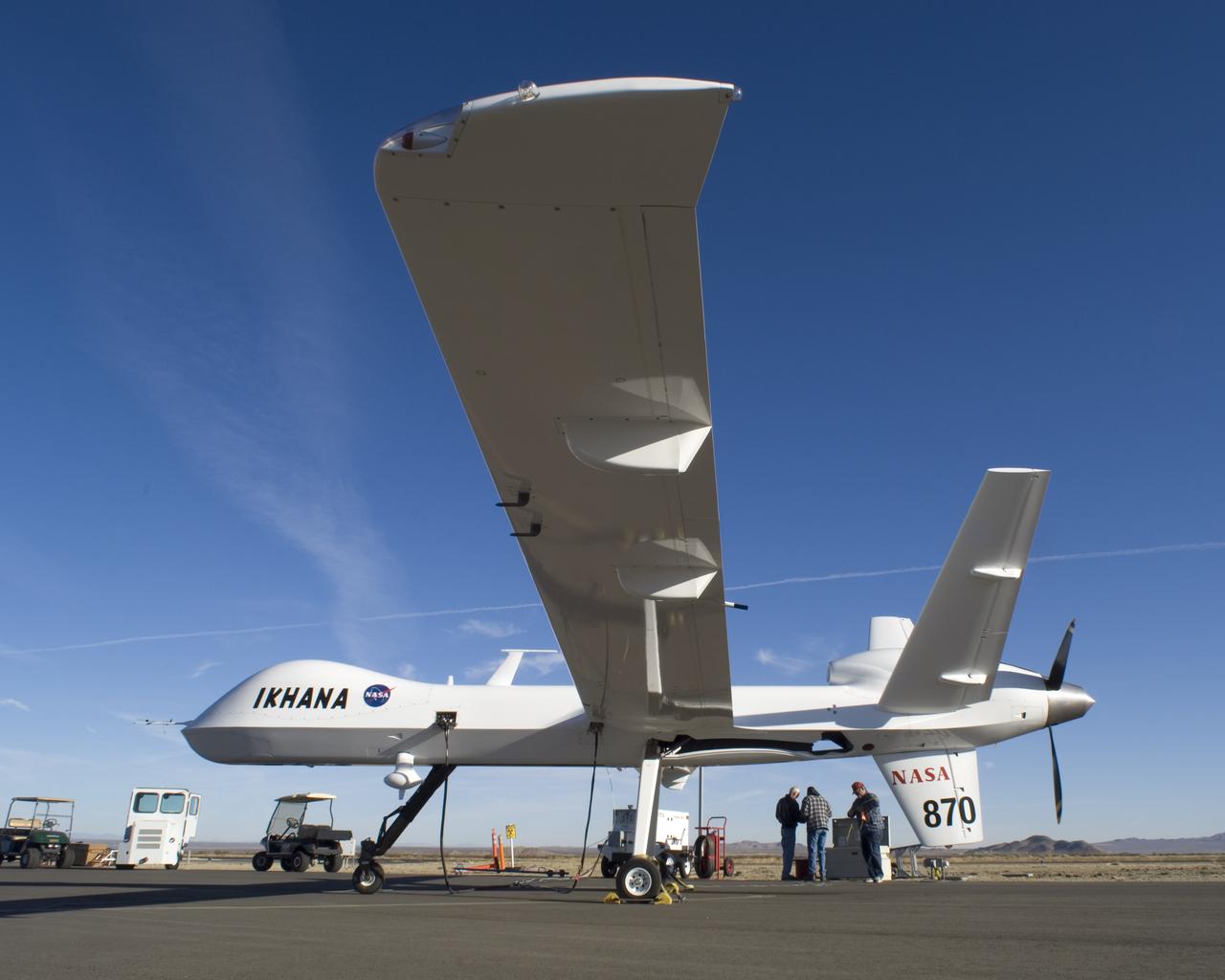
Bearing NASA tail number 870, NASA's Ikhana unmanned aircraft is a civil version of the Predator B designed for high-altitude, long-endurance science flights.
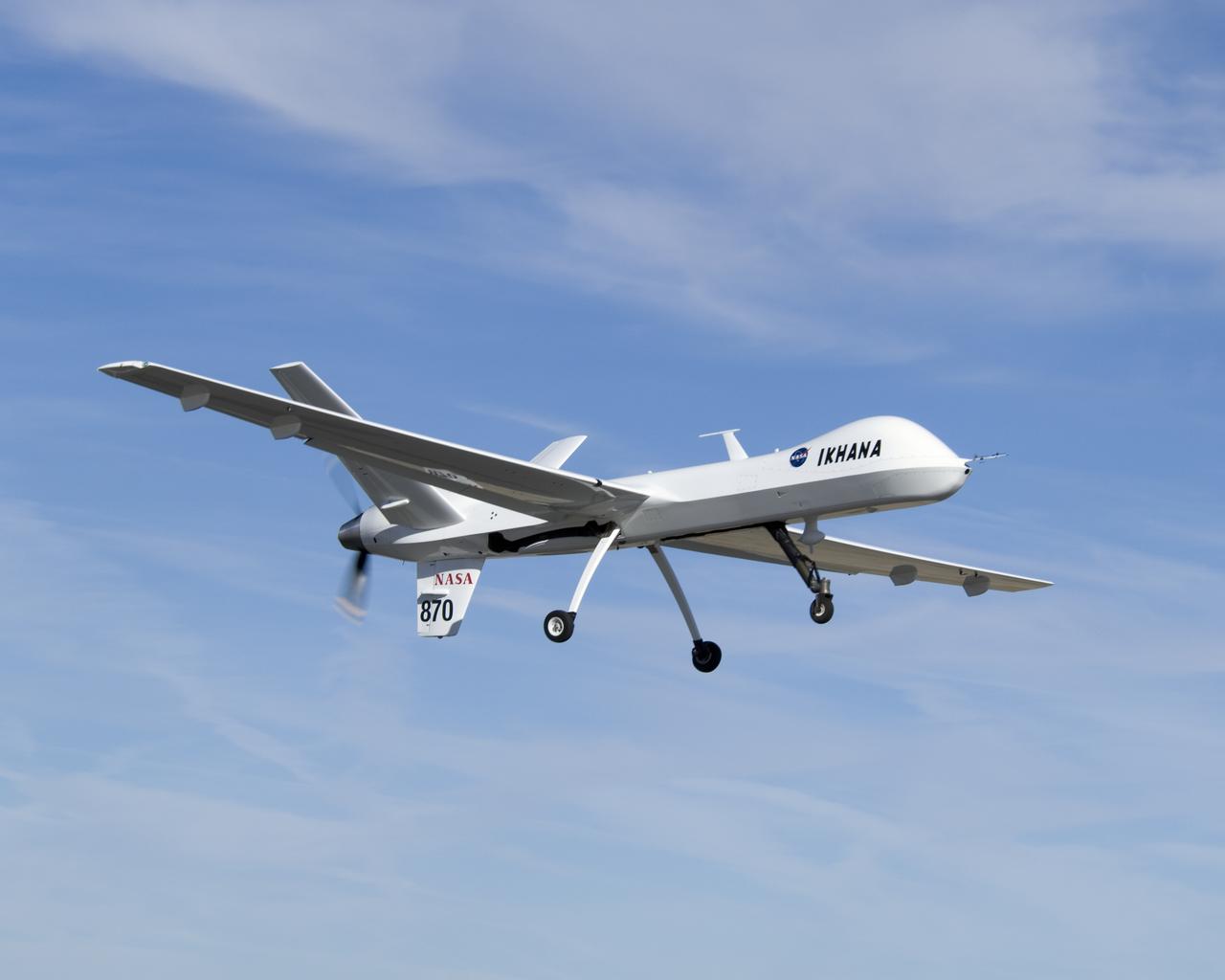
Narrow wings, a Y-tail and rear engine layout distinguish NASA's Ikhana science aircraft, a civil variant of General Atomics' Predator B unmanned aircraft system.
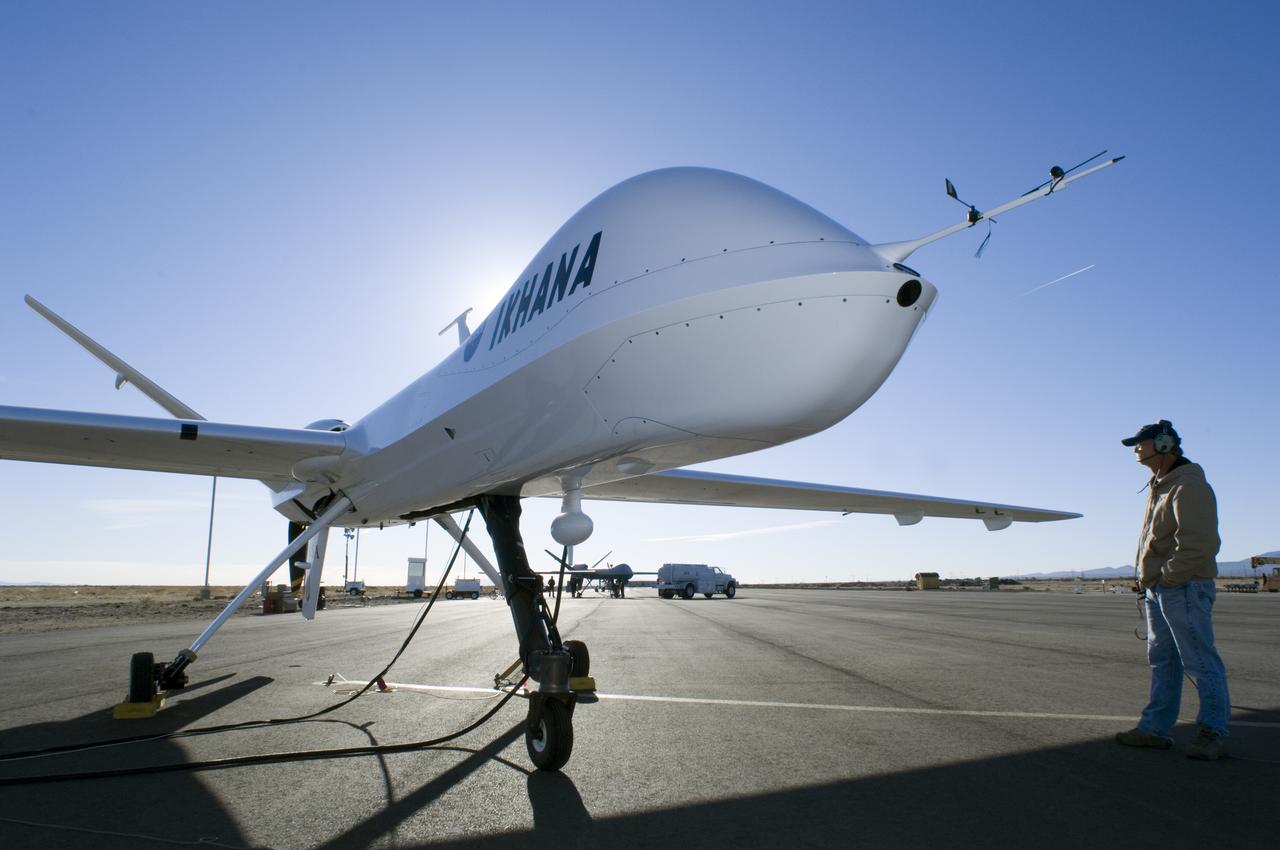
Silhouetted by the morning sun, NASA's Ikhana, a civil version of the Predator B unmanned aircraft, is readied for flight By NASA Dryden crew chief Joe Kinn.
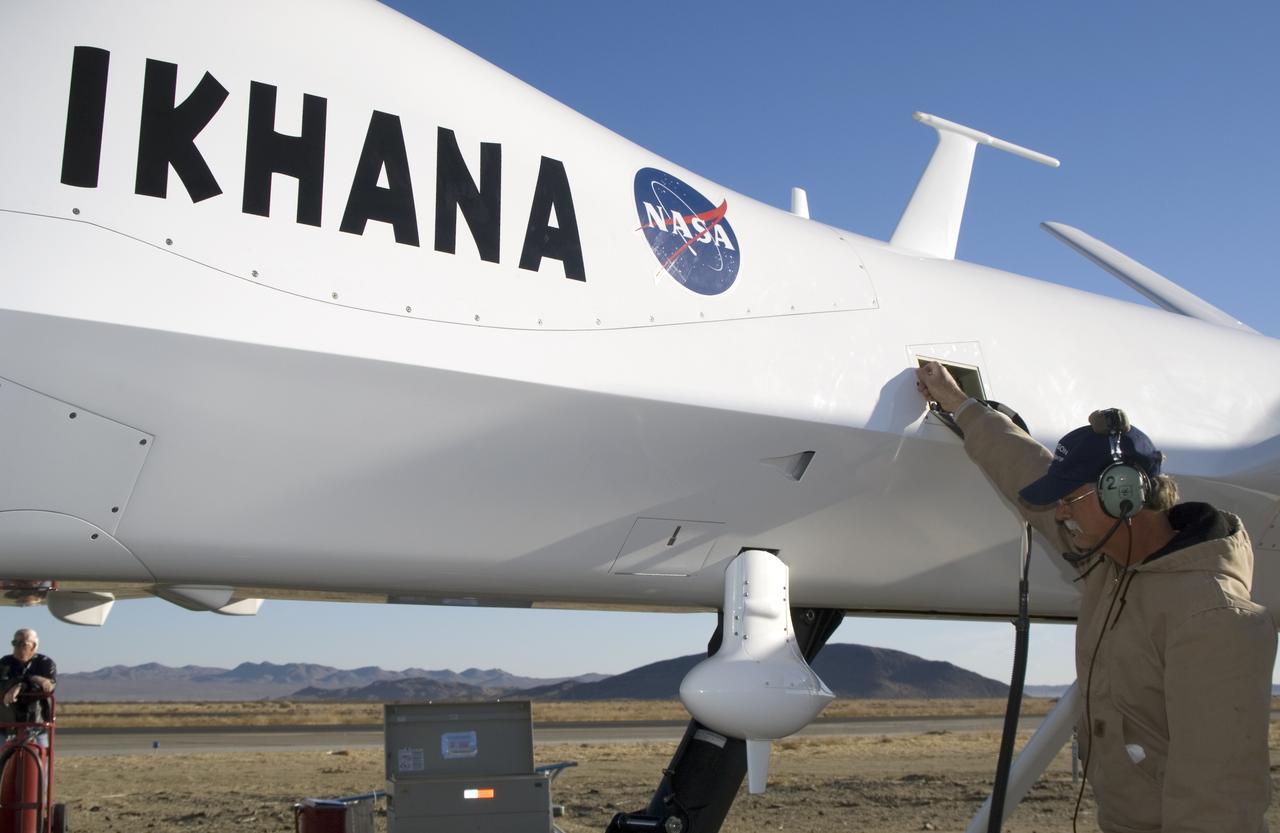
NASA Dryden crew chief Joe Kinn gives final checks to NASA's Ikhana, a civil version of the Predator B unmanned aircraft, prior to a morning checkout flight.
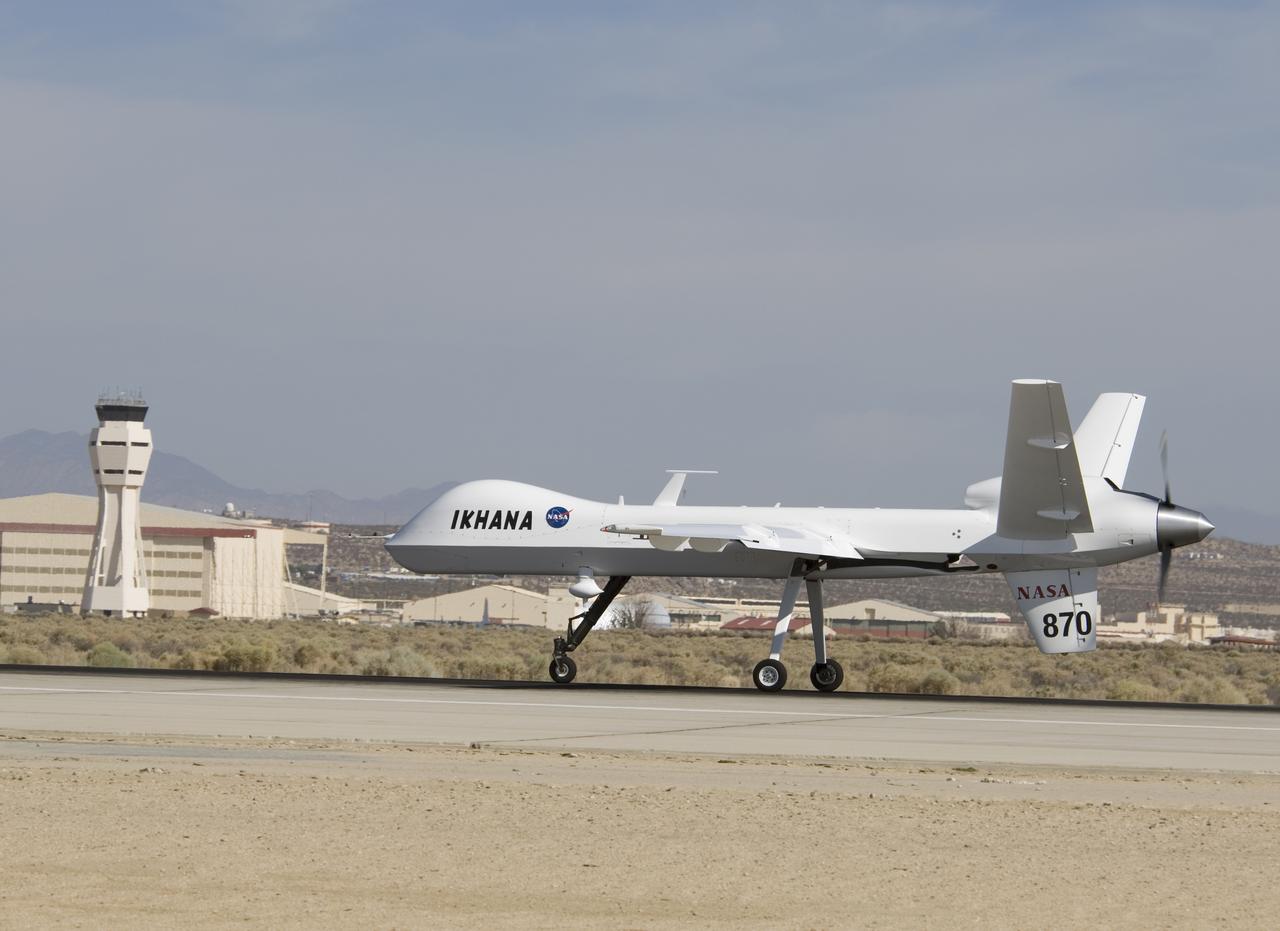
NASA's Ikhana unmanned science demonstration aircraft, a civil variant of General Atomics' Predator B, on the runway at Edwards Air Force Base after its ferry flight to NASA's Dryden Flight Research Center. NASA took possession of the new aircraft in November, 2006, and it arrived at the NASA center at Edwards Air Force Base, Calif., on June 23, 2007.

The left wing of NASA's Altair unmanned aerial vehicle (UAV) rests in a jig during construction at General Atomics Aeronautical Systems, Inc., (GA-ASI) facility at Adelanto, Calif.
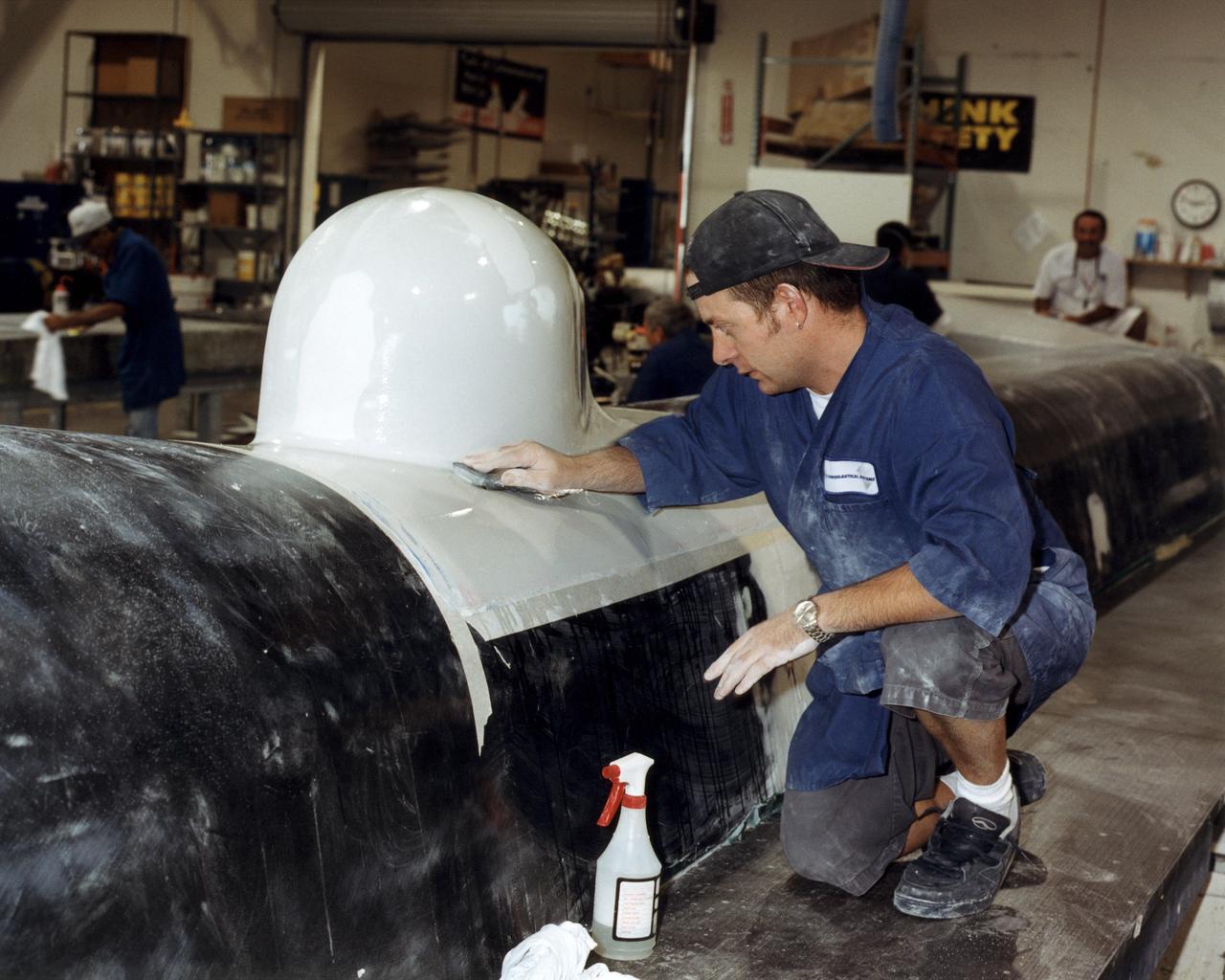
Technician Shawn Warren carefully smoothes out the composite skin of an instrument fairing<br>atop the upper fuselage of the Altair unmanned aerial vehicle (UAV) at General Atomics Aeronautical Systems, Inc., facility at Adelanto, Calif.
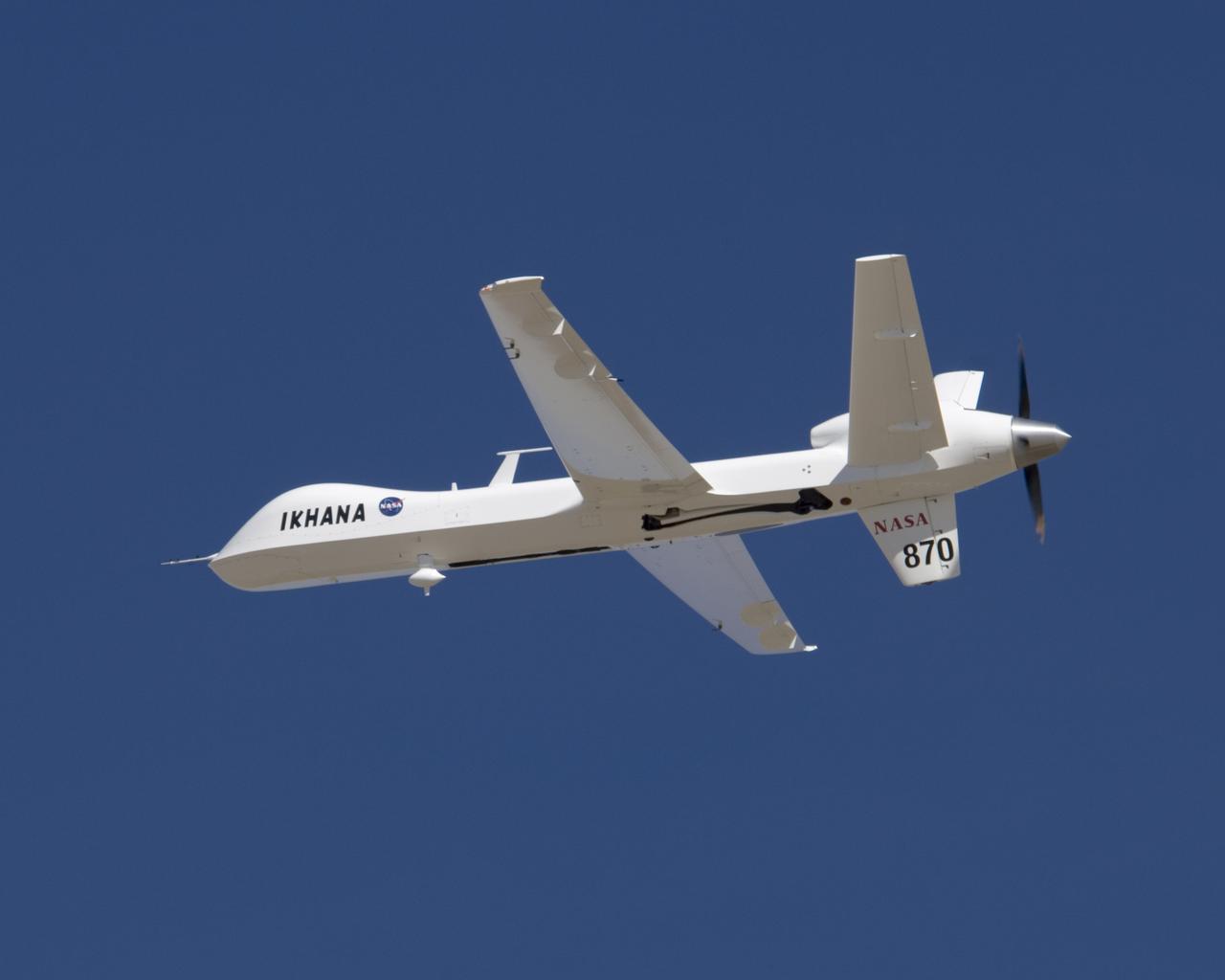
An efficient turboprop engine and large fuel capacity enable NASA's Ikhana unmanned aircraft to remain aloft for up to 30 hours on science or technology flights.
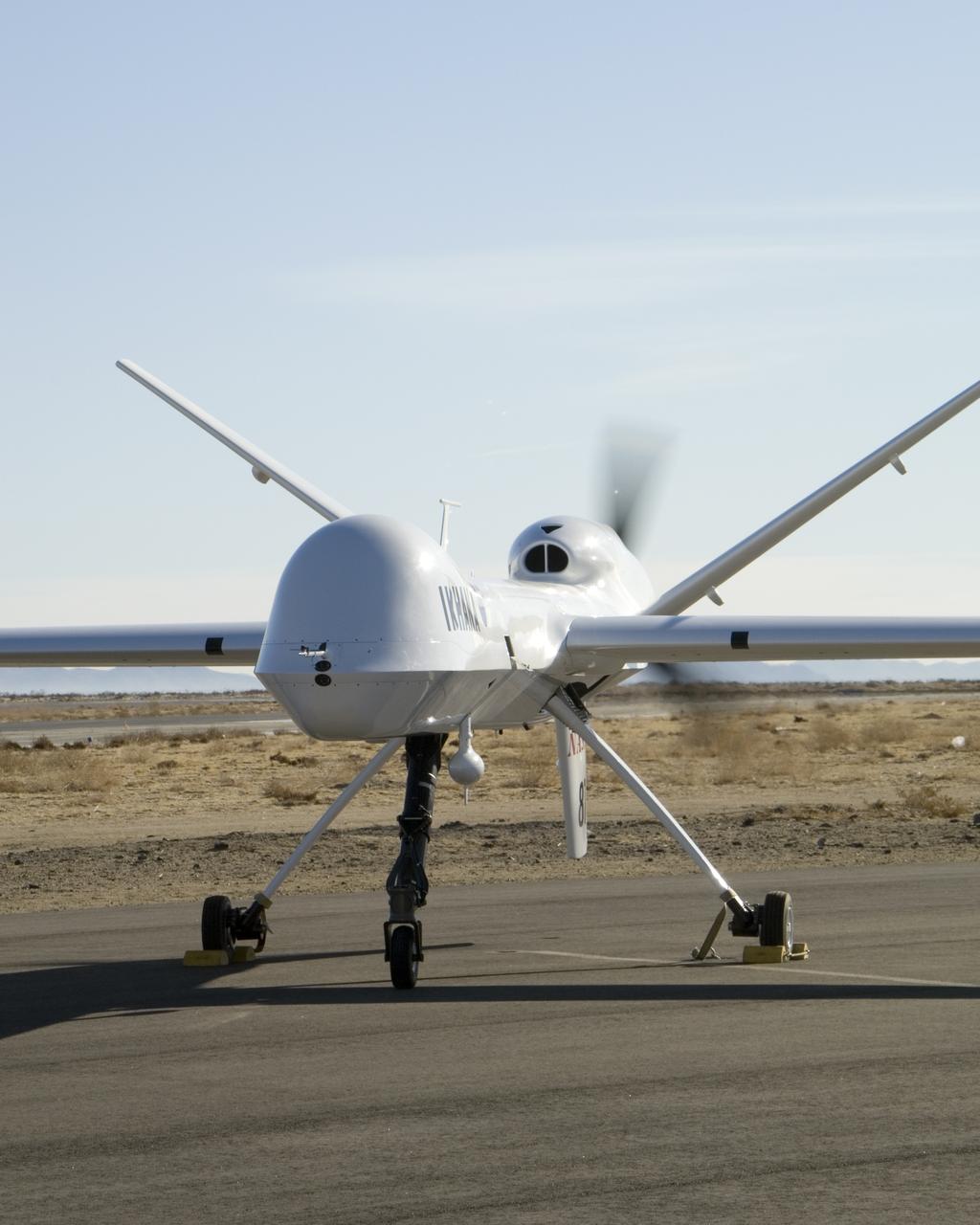
Distinguished by its large nose payload bay, NASA's Ikhana unmanned aircraft does an engine run prior to takeoff from General Atomics' Grey Butte airfield.
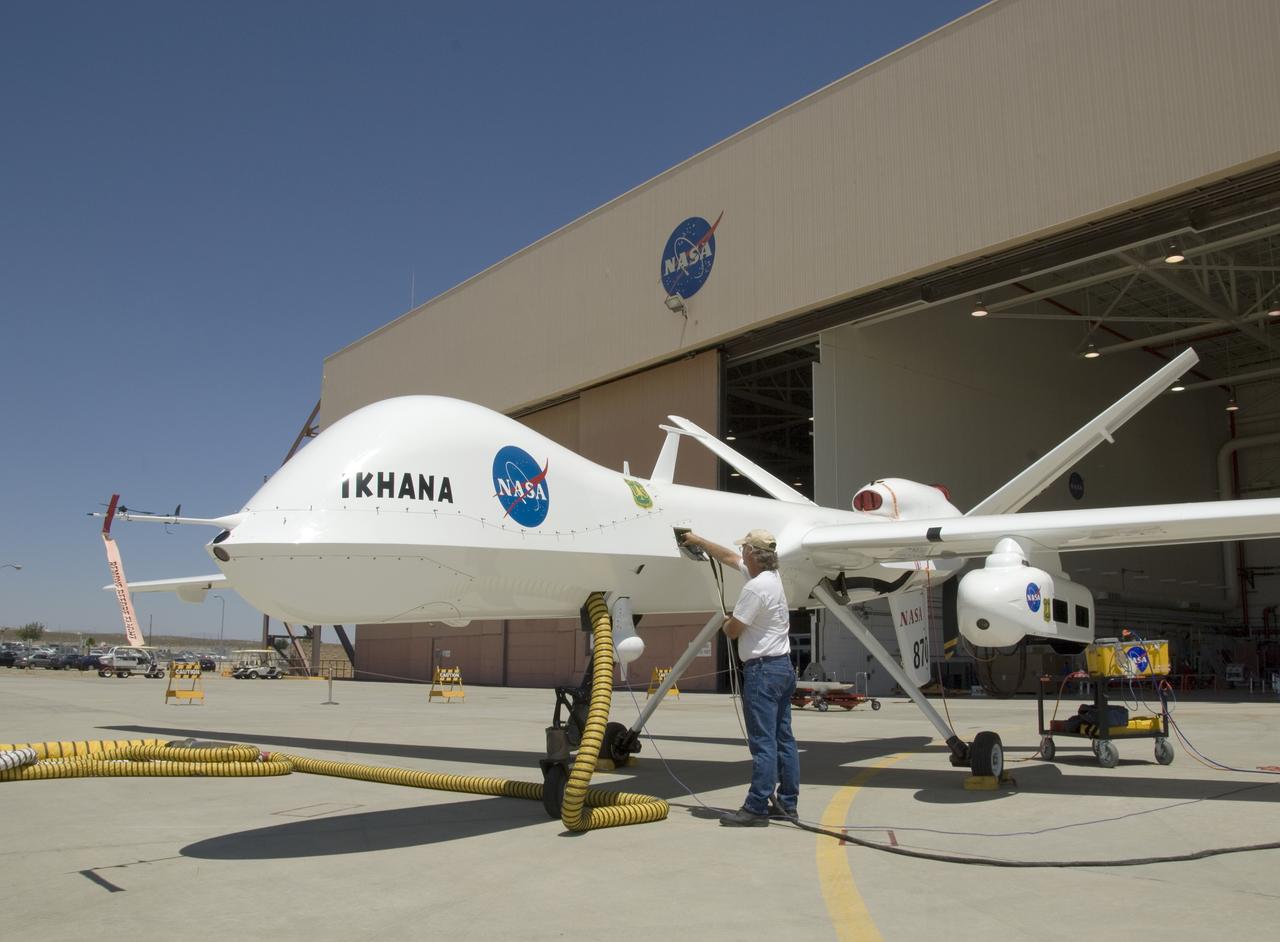
A ground crewman unplugs electrical connections during pre-flight checks of NASA's Ikhana research aircraft. Ikhana's payload pod is mounted on the left wing.
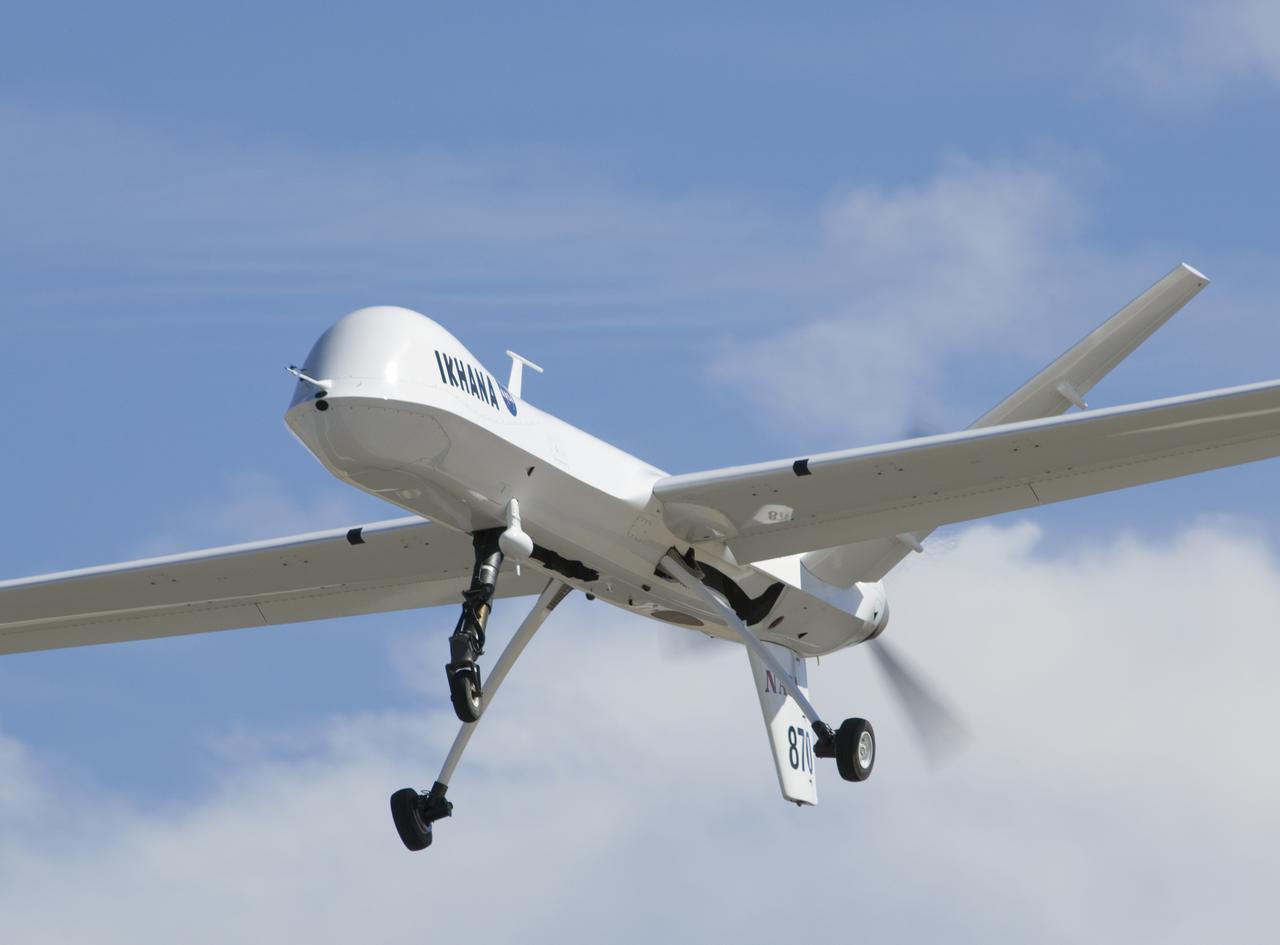
A small nose-mounted television camera enables pilots of NASA's Ikhana unmanned science aircraft to view the flight path ahead.
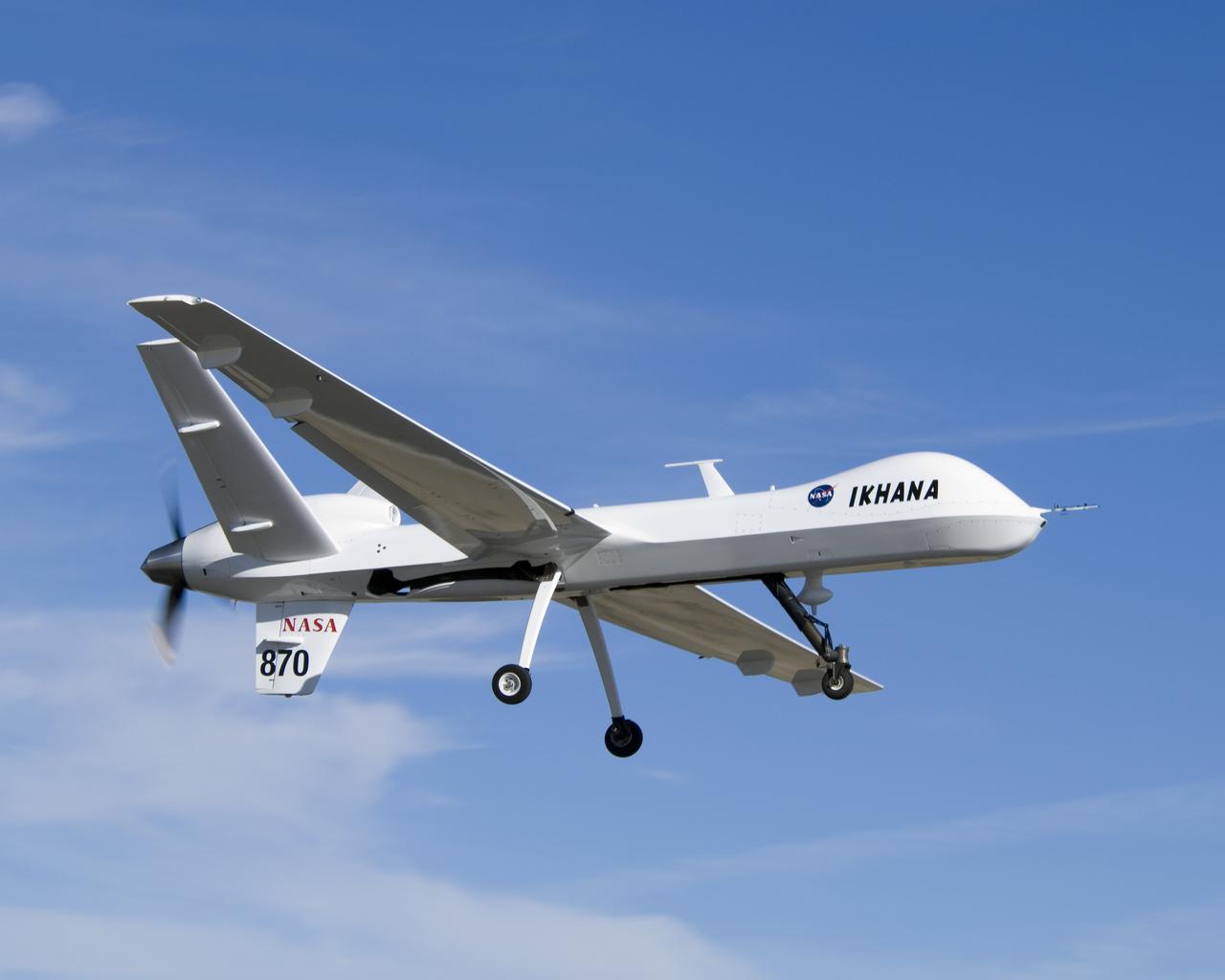
The bulging fairing atop the forward fuselage of NASA's Ikhana unmanned aircraft covers a variety of navigation, communications and science instruments.
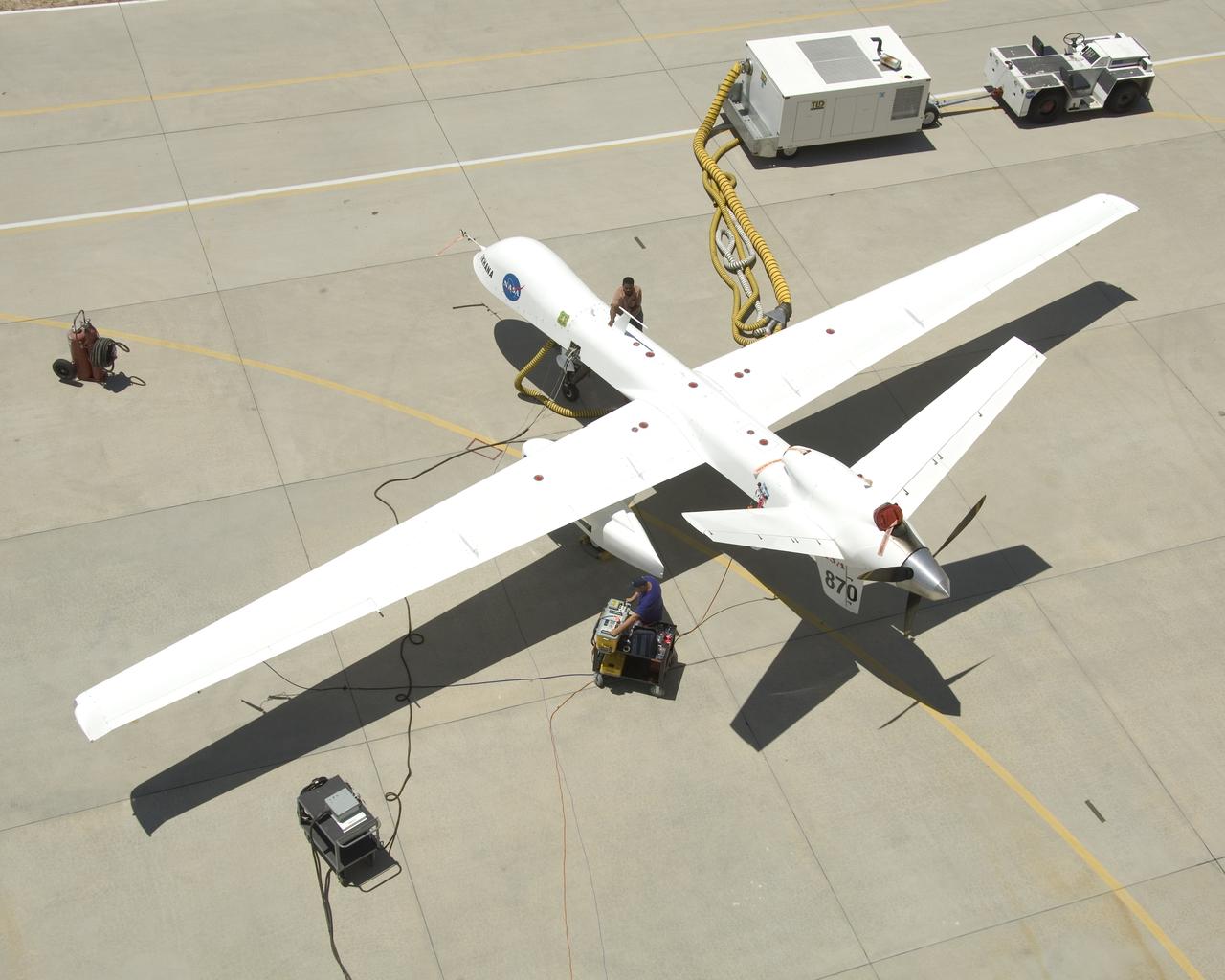
Ground crewmen prepare NASA's Ikhana remotely piloted research aircraft for another flight. Ikhana's infrared imaging sensor pod is visible under the left wing.
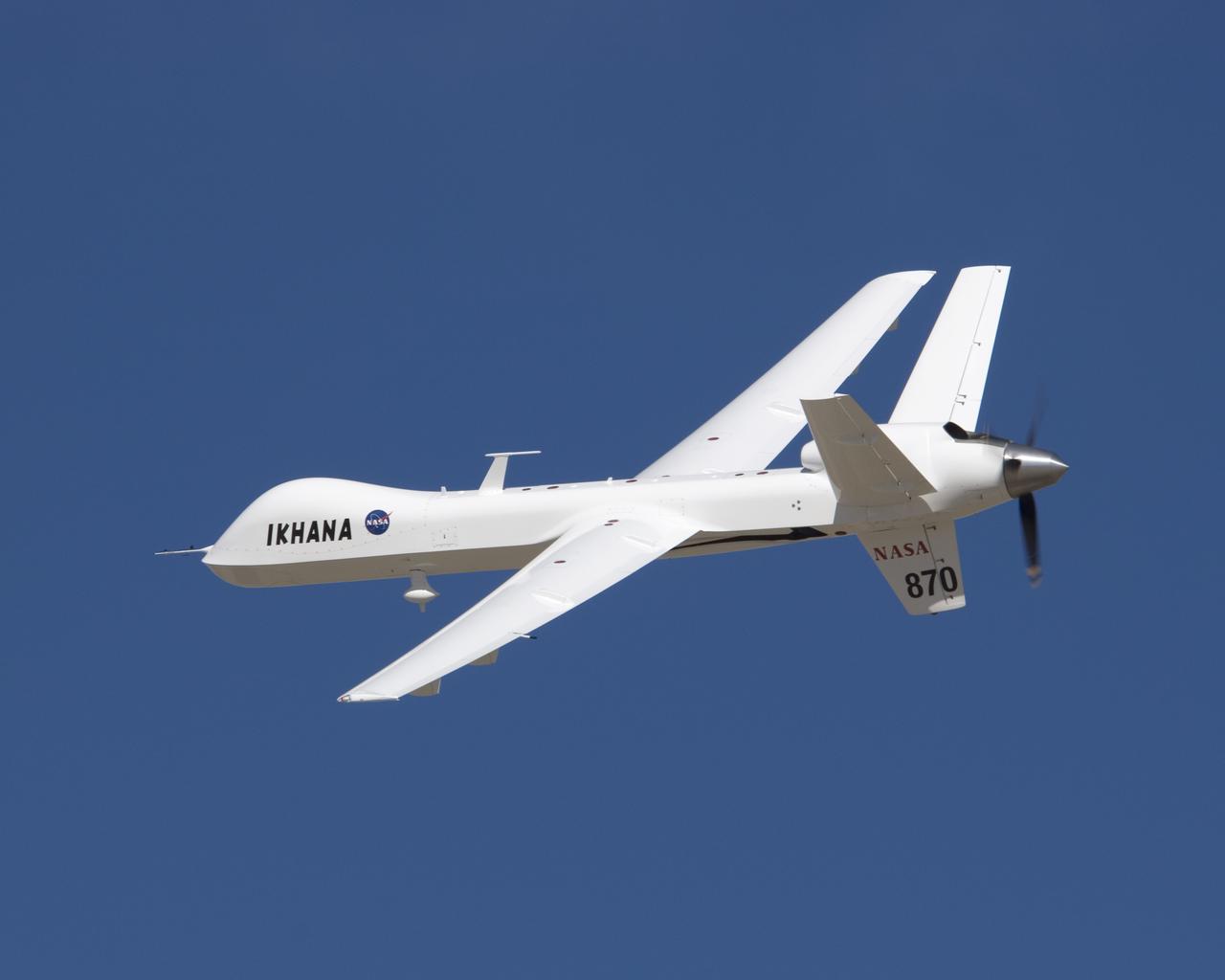
Its white surfaces in contrast with the deep blue sky, NASA's Ikhana unmanned science and technology development aircraft soars over California's high desert.
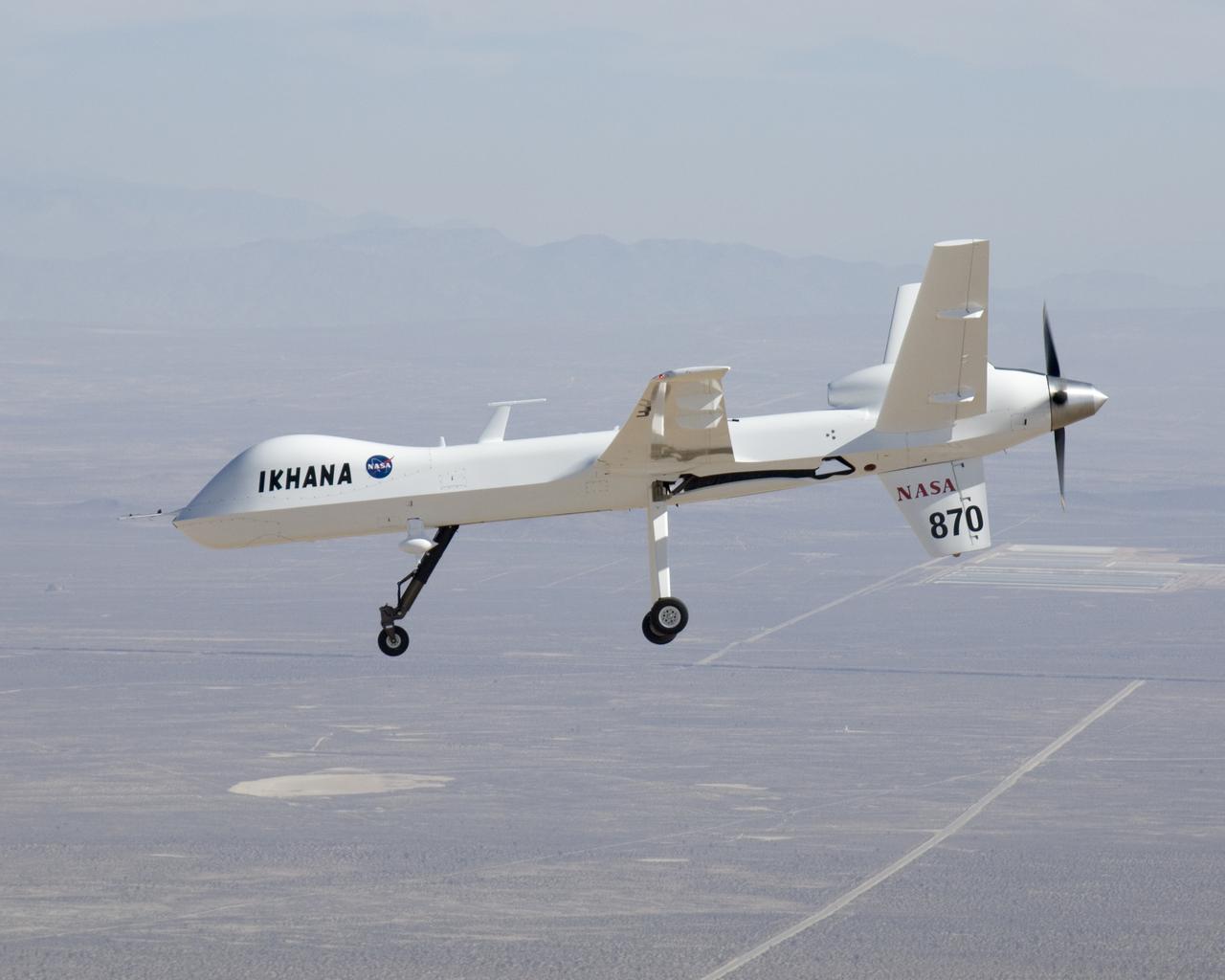
NASA's Ikhana unmanned science demonstration aircraft prepares for landing as it arrives at Edwards Air Force Base, Calif. NASA took possession of the new aircraft in November, 2006, and it arrived at its new home at NASA's Dryden Flight Reseach Center at Edwards AFB, on June 23, 2007.
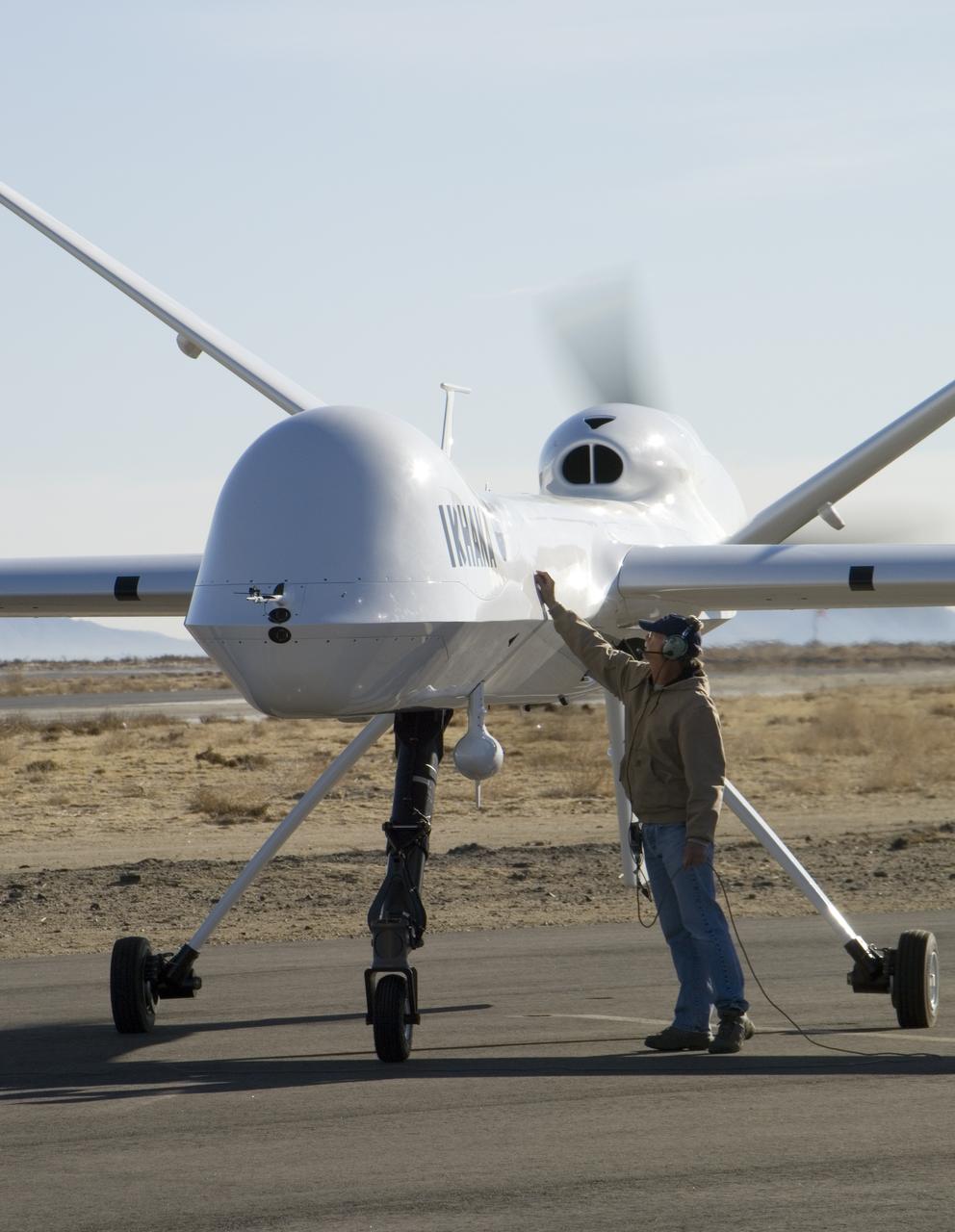
Crew chief Joe Kinn gives NASA's Ikhana unmanned aircraft a final check during engine run-up prior to takeoff at General Atomics Aeronautical Systems' airfield.
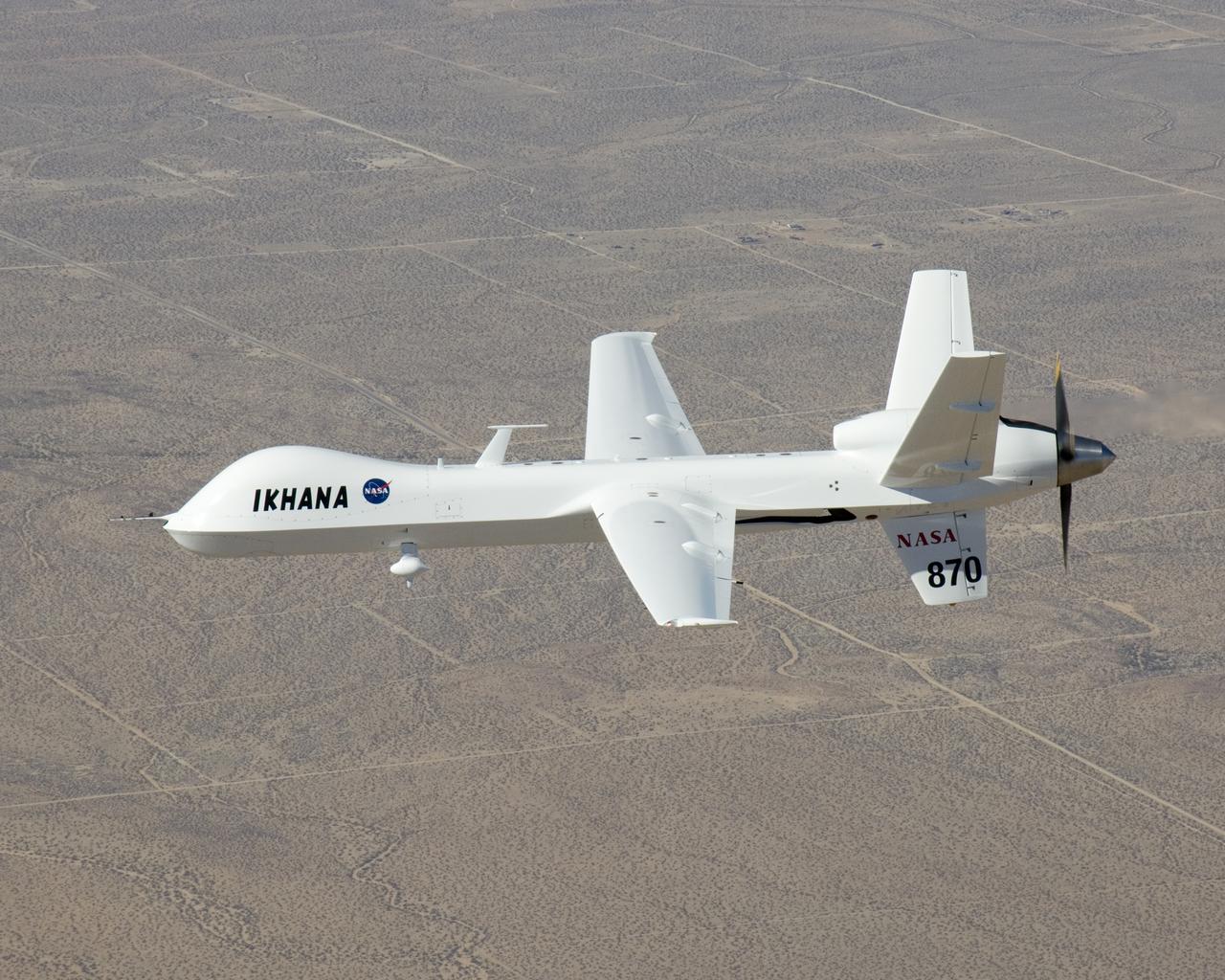
NASA's Ikhana unmanned science demonstration aircraft over Southern California's high desert during the ferry flight to its new home at the Dryden Flight Research Center. NASA took possession of the new aircraft in November, 2006, and it arrived at DFRC at Edwards Air Force Base, Calif., on June 23, 2007.
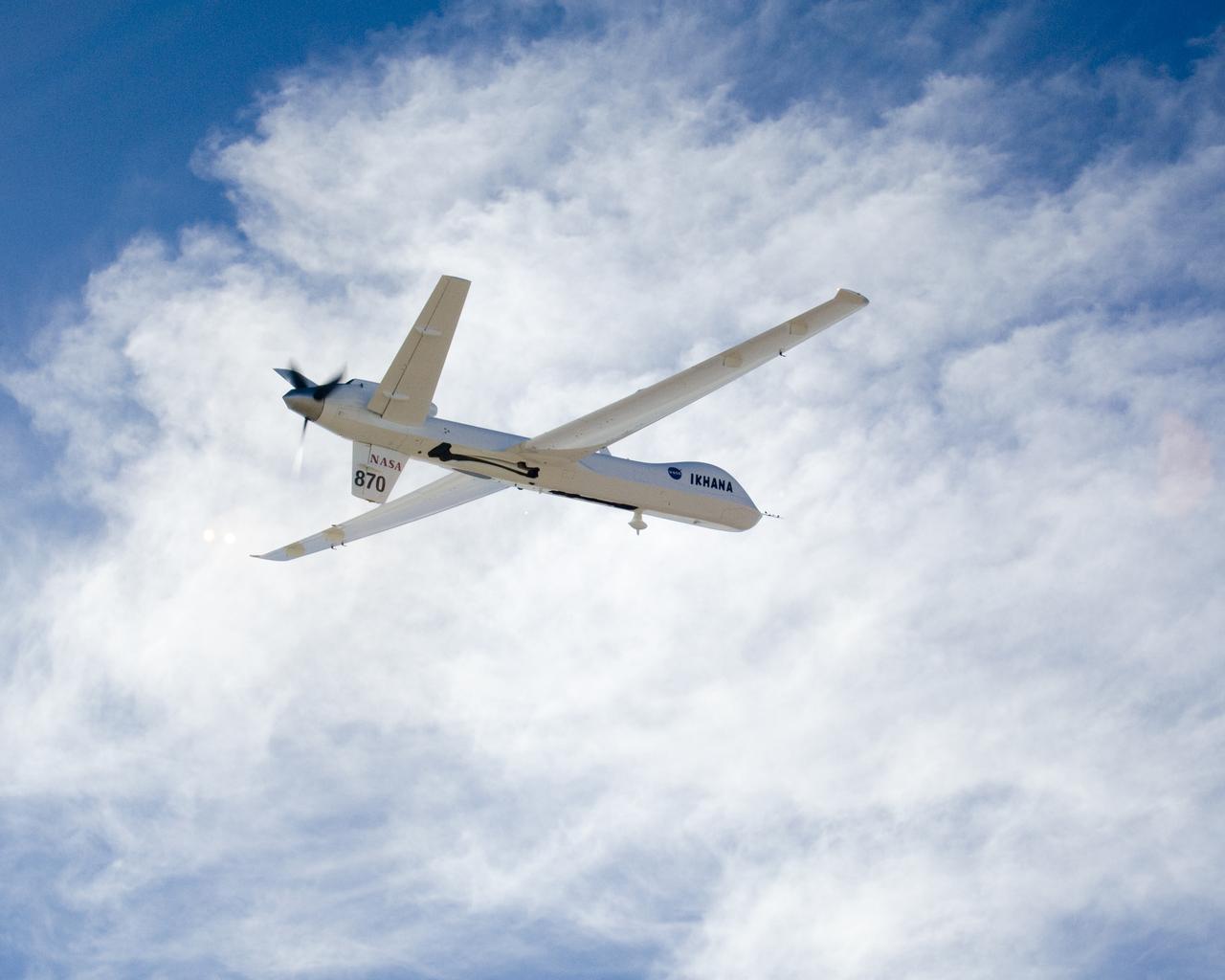
NASA's Ikhana unmanned science demonstration aircraft in flight during the ferry flight to its new home at the Dryden Flight Research Center. NASA took possession of the new aircraft in November, 2006, and it arrived at the NASA center at Edwards Air Force Base, Calif., on June 23, 2007.
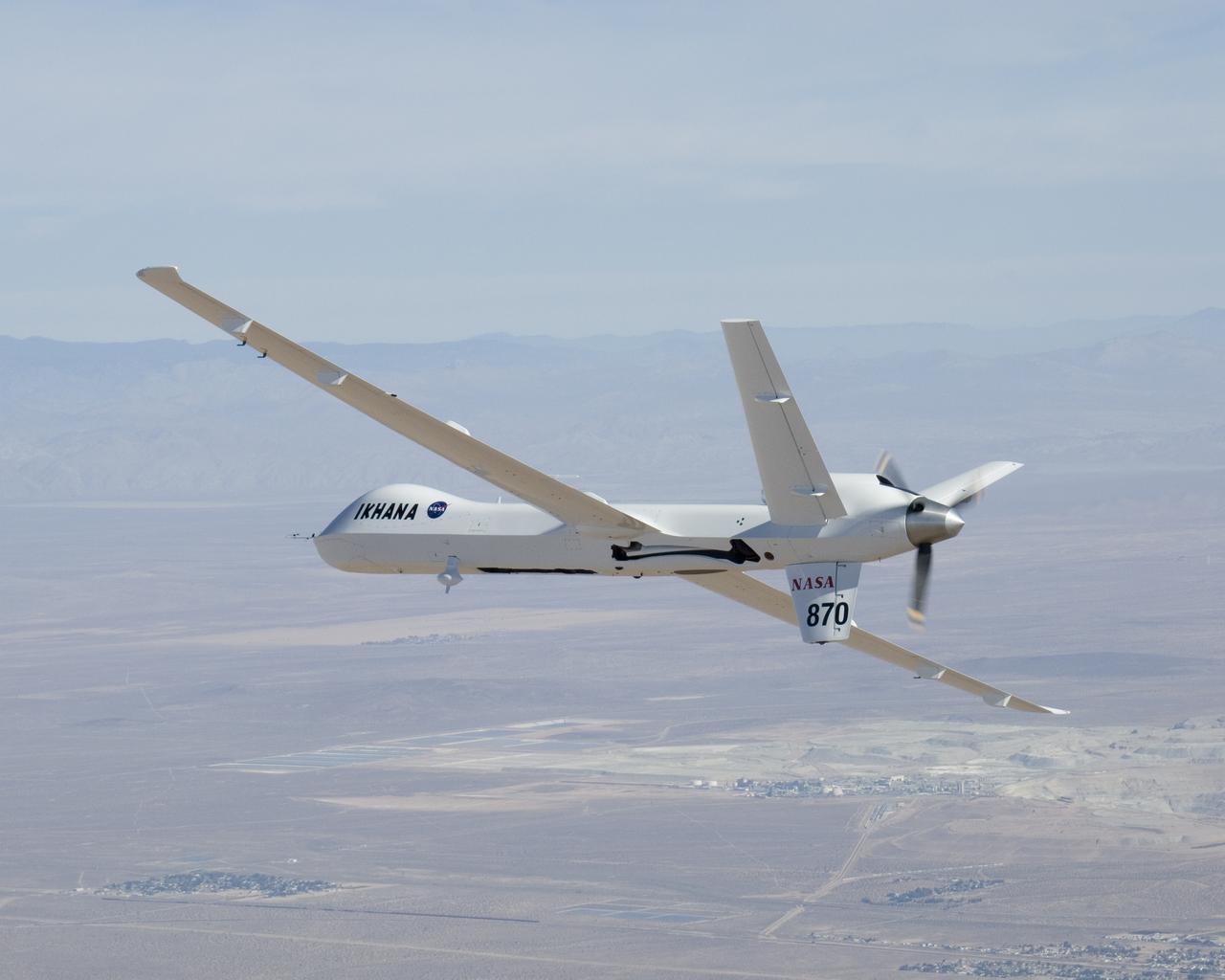
NASA's Ikhana unmanned science demonstration aircraft over the U.S. Borax mine, Boron, California, near the Dryden/Edwards Air Force Base complex. NASA took possession of the new aircraft in November, 2006, and it arrived at the NASA center at Edwards Air Force Base, Calif., on June 23, 2007.
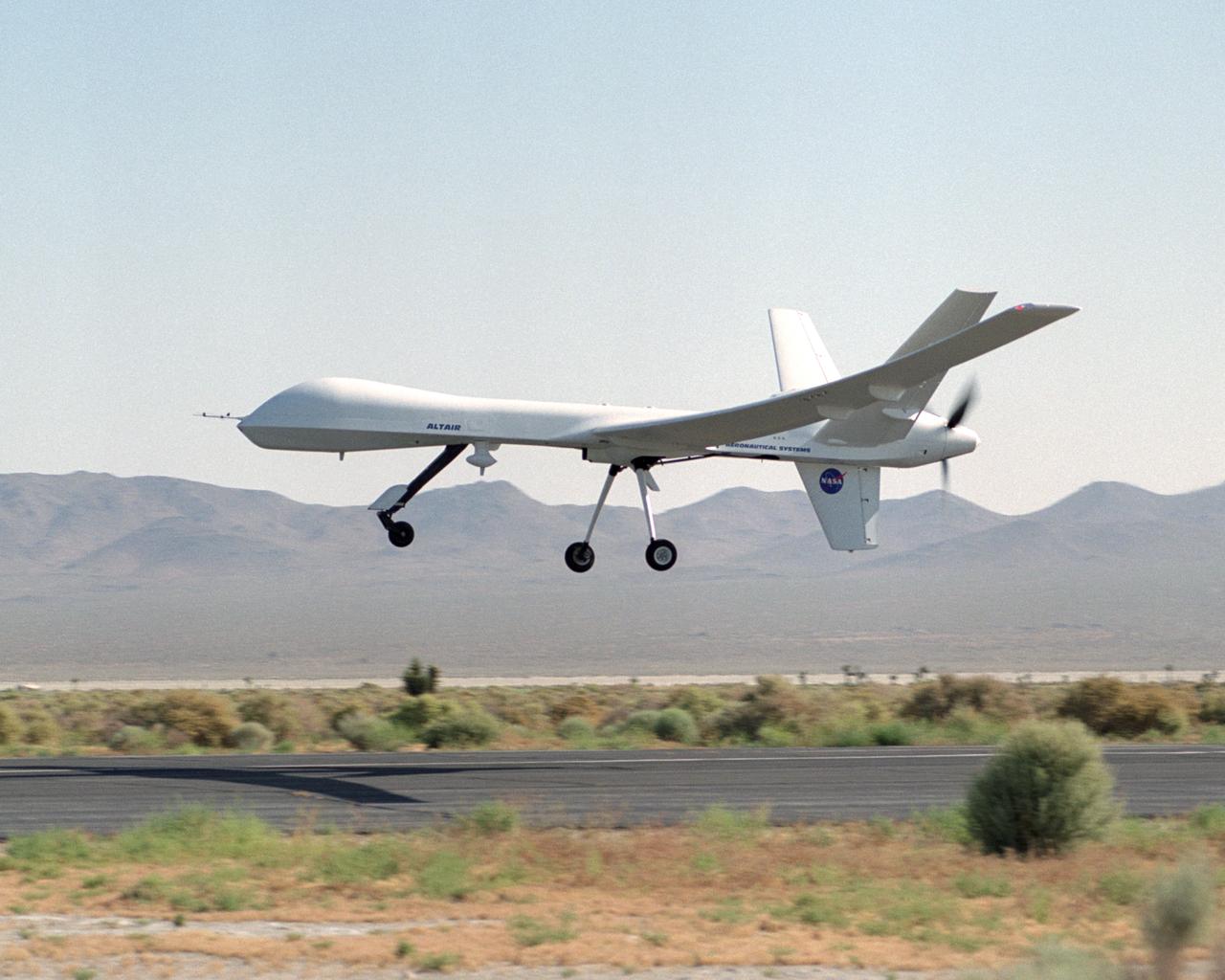
The remotely-piloted Altair unmanned aerial vehicle (UAV) took to the air on its first checkout flight on June 9, 2003 at El Mirage, California.
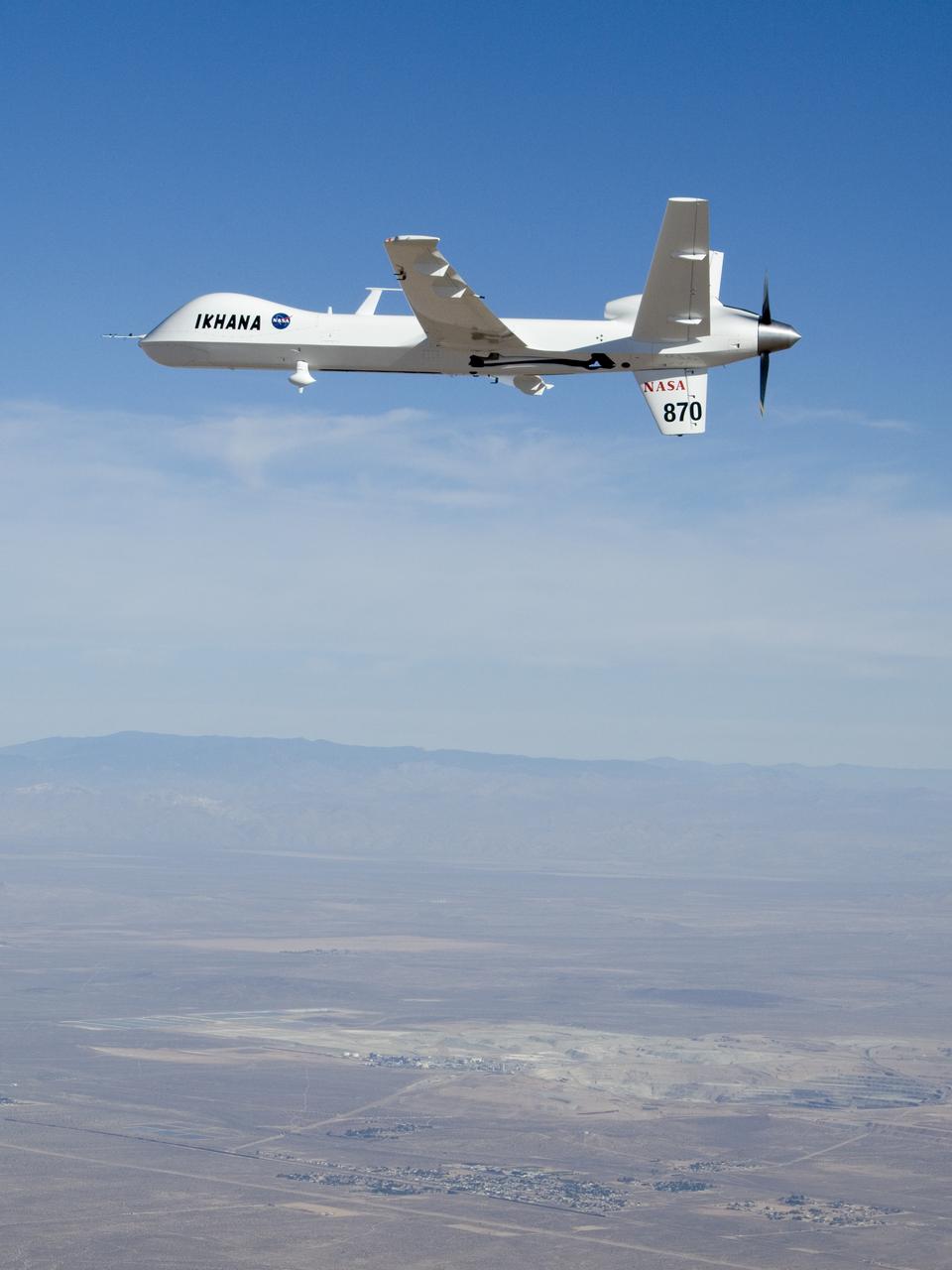
NASA's Ikhana unmanned science demonstration aircraft over the U.S. Borax mine, Boron, California, near the Dryden/Edwards Air Force Base complex. NASA took possession of the new aircraft in November, 2006, and it arrived at the NASA Dryden Flight Research Center at Edwards AFB, Calif., on June 23, 2007.
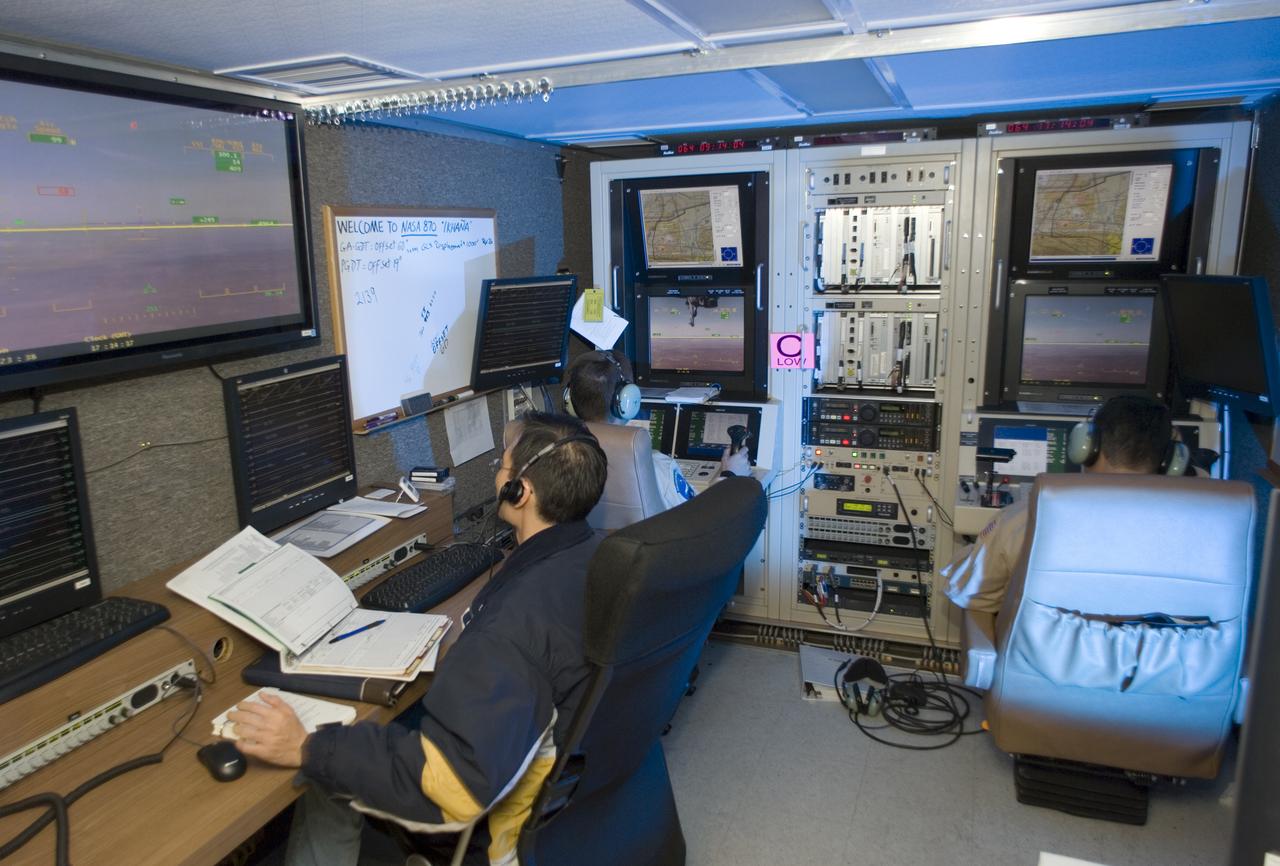
NASA's Ikhana unmanned science aircraft ground control station includes consoles for two pilots and positions for scientists and engineers along the side.
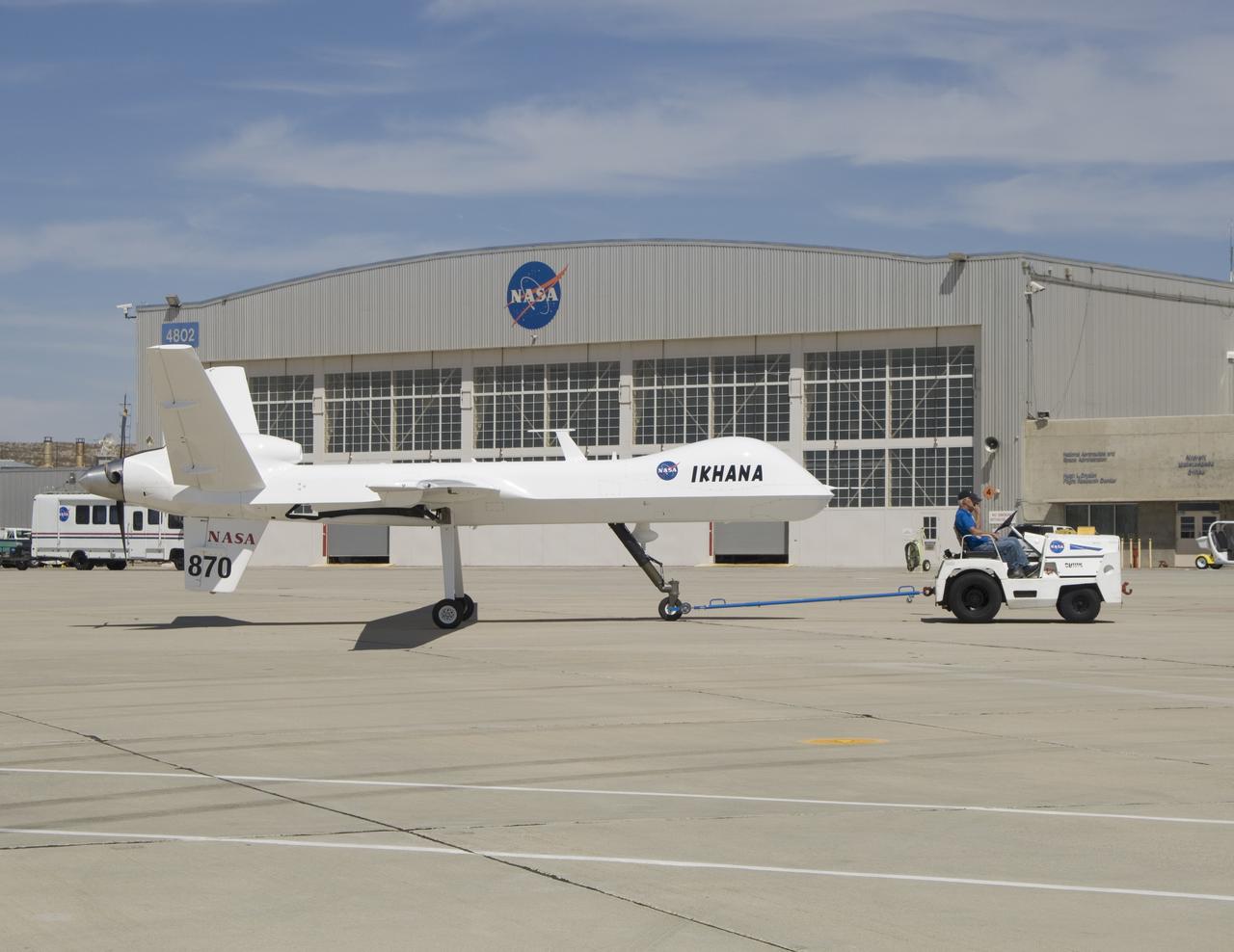
After arriving via a ferry flight on June 23, 2007, NASA's Ikhana unmanned science demonstration aircraft is towed to a hangar at its new home, the Dryden Flight Research Center in Southern California.
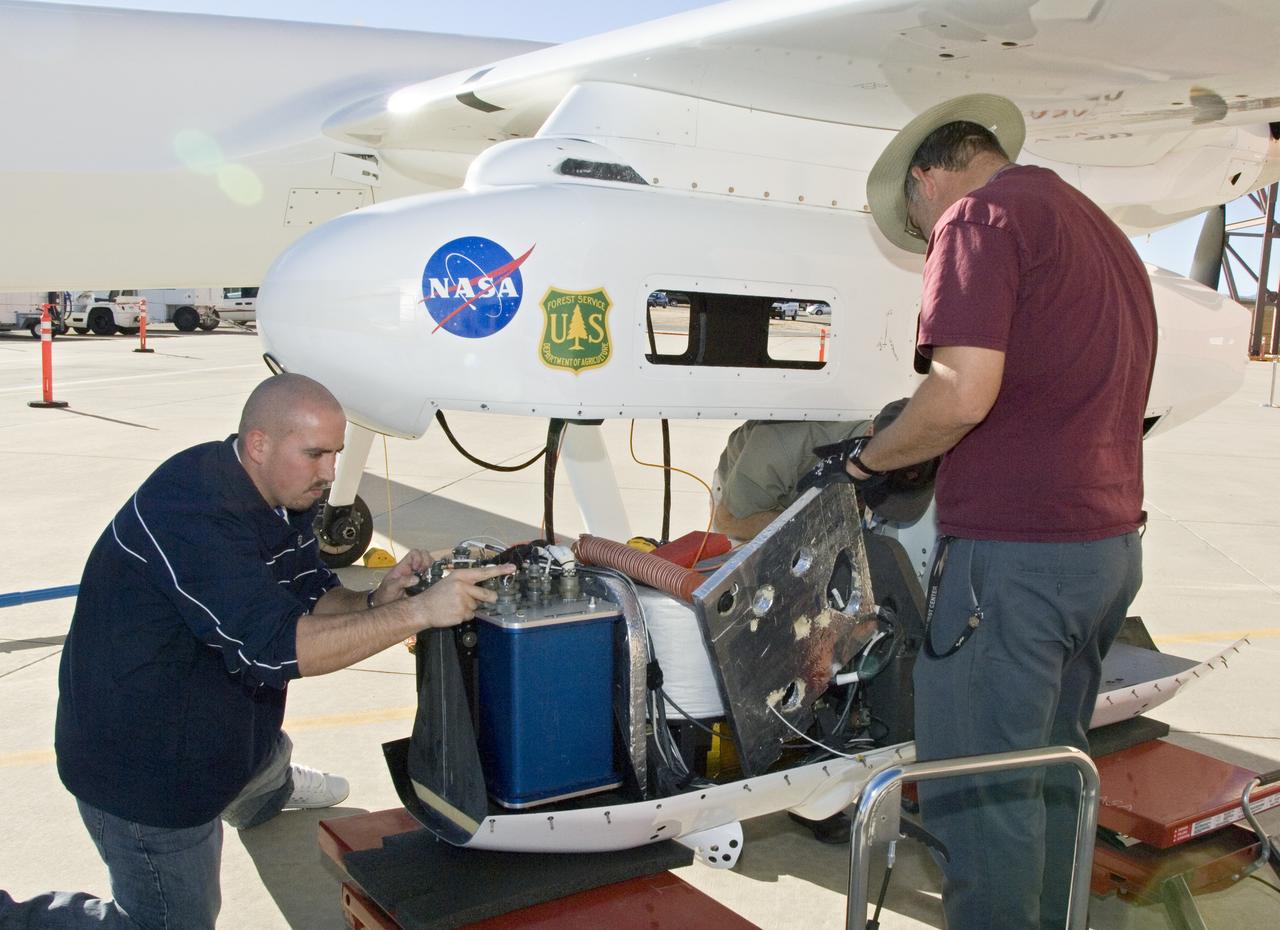
NASA Dryden's Ikhana ground crewmen Gus Carreno and James Smith load the thermal-infrared imaging scanner pallet into the Ikhana's underwing payload pod.
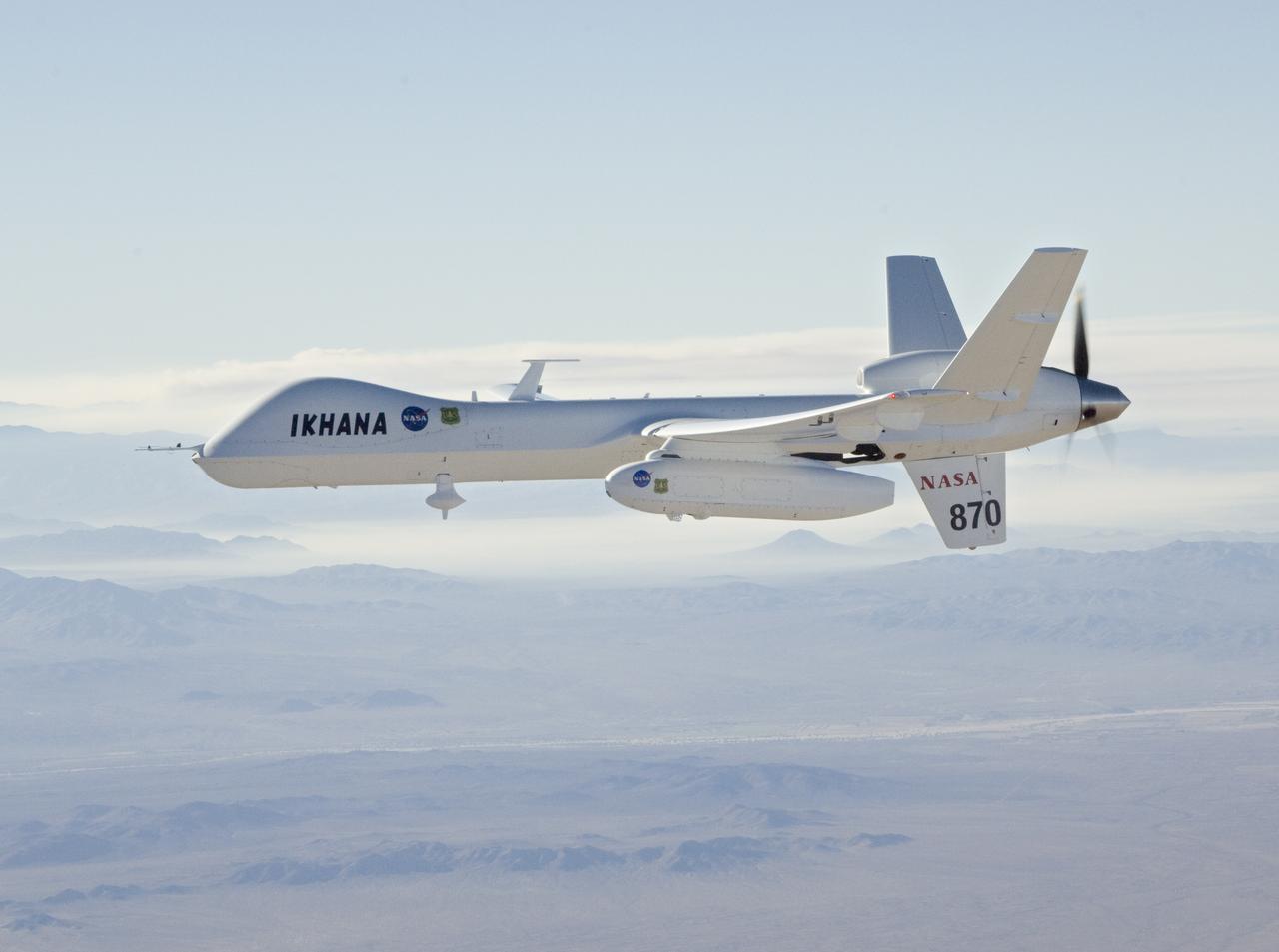
With smoke from the Lake Arrowhead area fires streaming in the background, NASA's Ikhana unmanned aircraft heads out on a Southern California wildfires imaging mission.
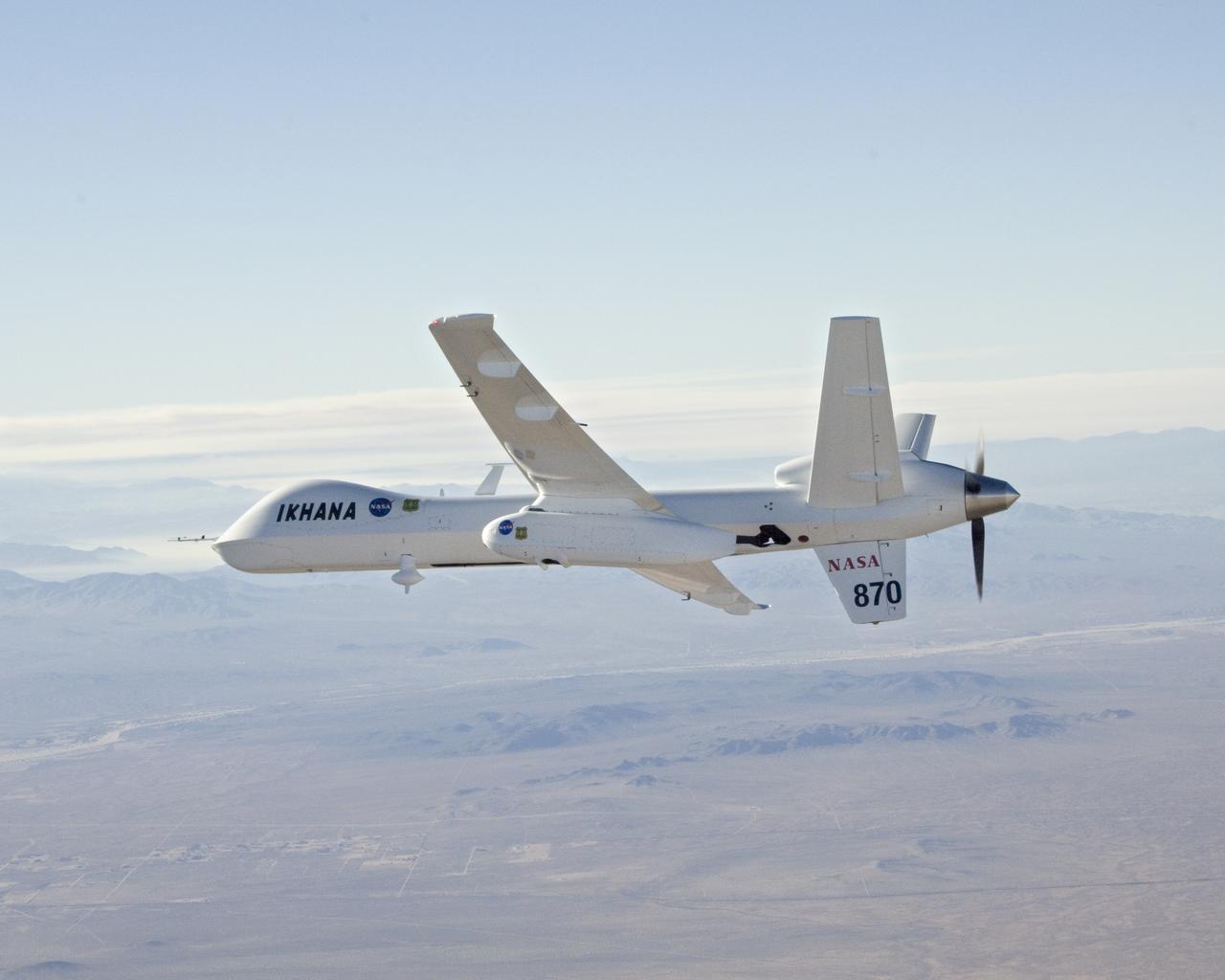
With smoke from the Lake Arrowhead area fires streaming in the background, NASA's Ikhana unmanned aircraft heads out on a Southern California wildfires imaging mission.
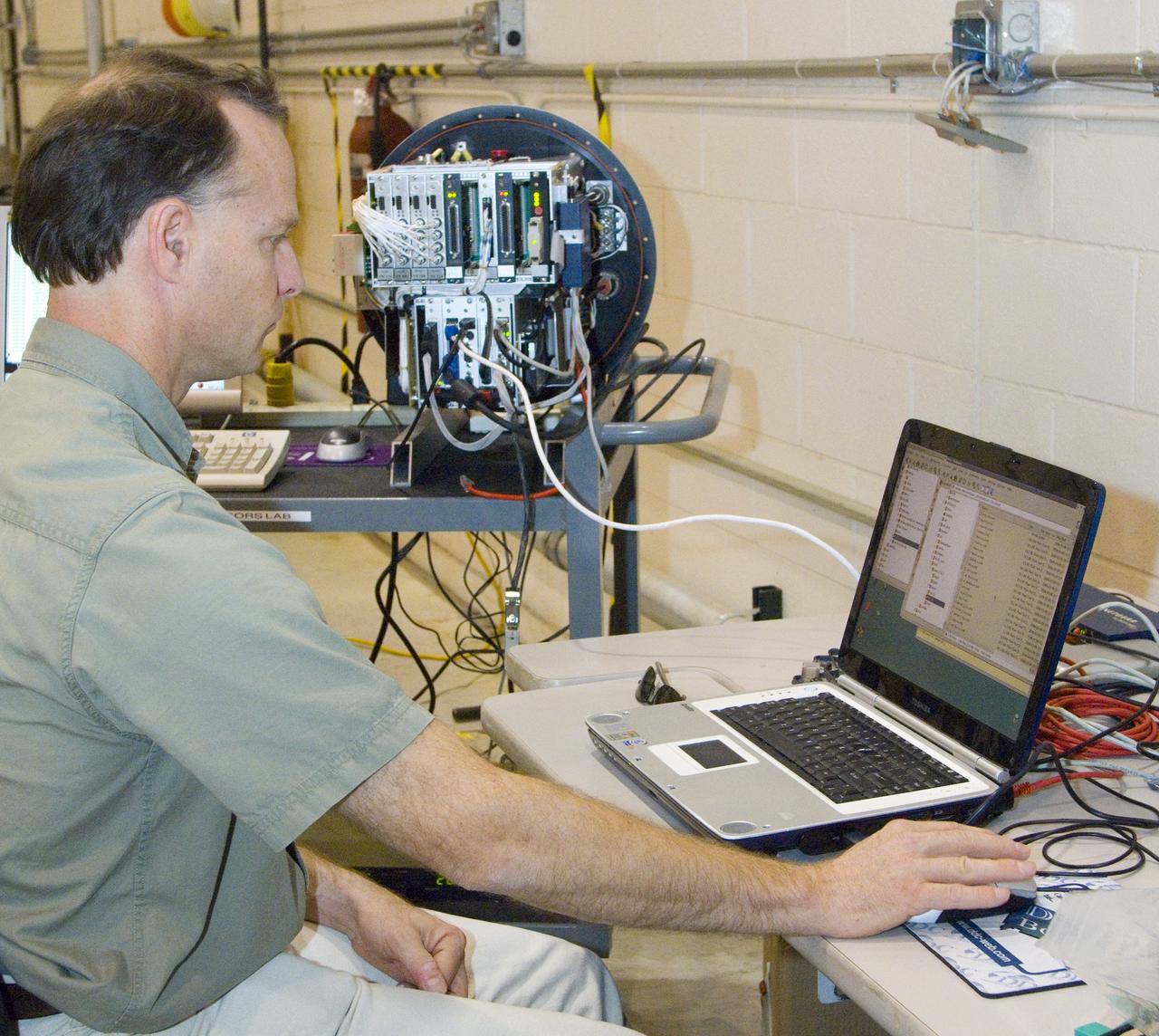
NASA Ames engineer Ted Hildum checks out the thermal-infrared scanner computer before it is loaded on NASA's Ikhana unmanned aircraft.