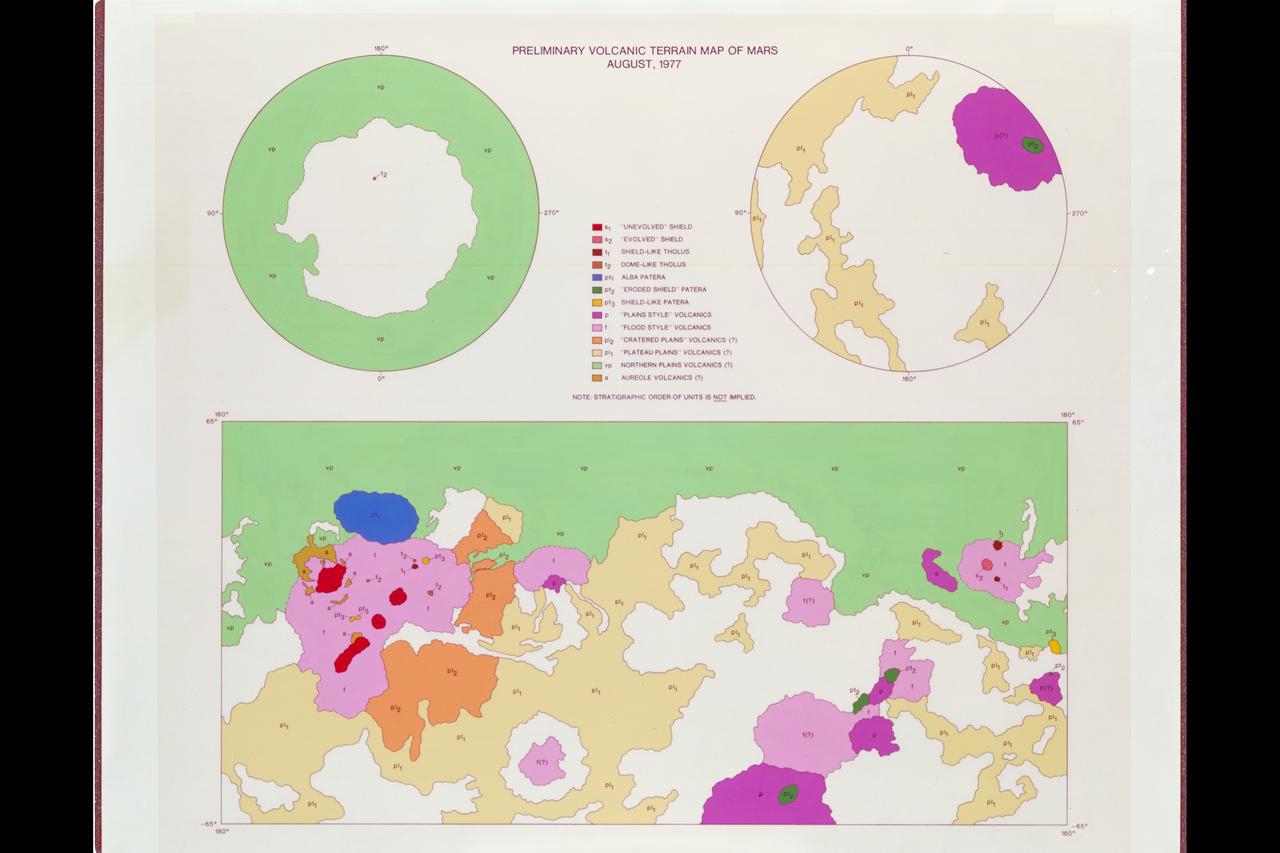
Illustration Preliminary Volcanic Terrain Map of Mars Regional Chart
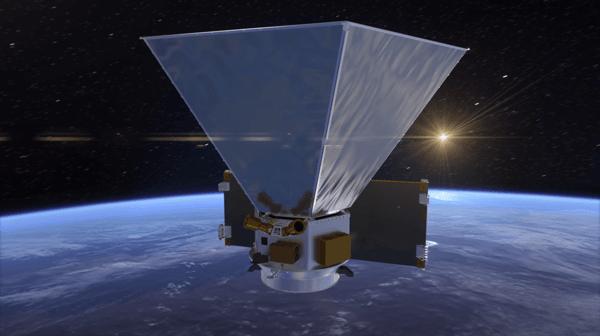
NASA's SPHEREx mission will study the universe's early expansion, the history of galaxies, and the composition of planetary systems. This animation shows the preliminary design for the spacecraft, including hexagonal sun shields that will help keep the instruments cool. Movie available at https://photojournal.jpl.nasa.gov/catalog/PIA23869
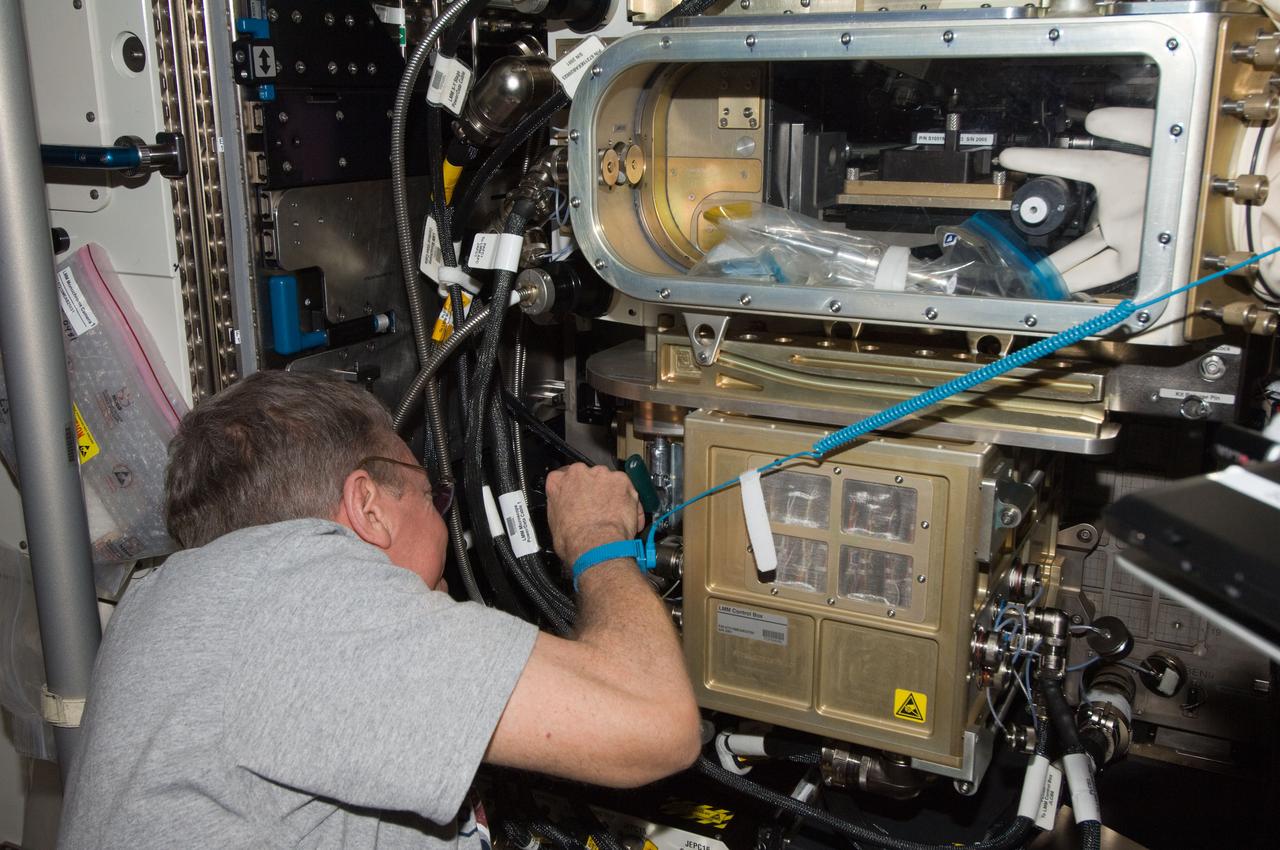
ISS029-E-011867 (29 Sept. 2011) --- NASA astronaut Mike Fossum, Expedition 29 commander, works with the Light Microscopy Module (LMM) control box in the Destiny laboratory of the International Space Station in preparation for another session with the Preliminary Advanced Colloids Experiment (PACE) hardware.
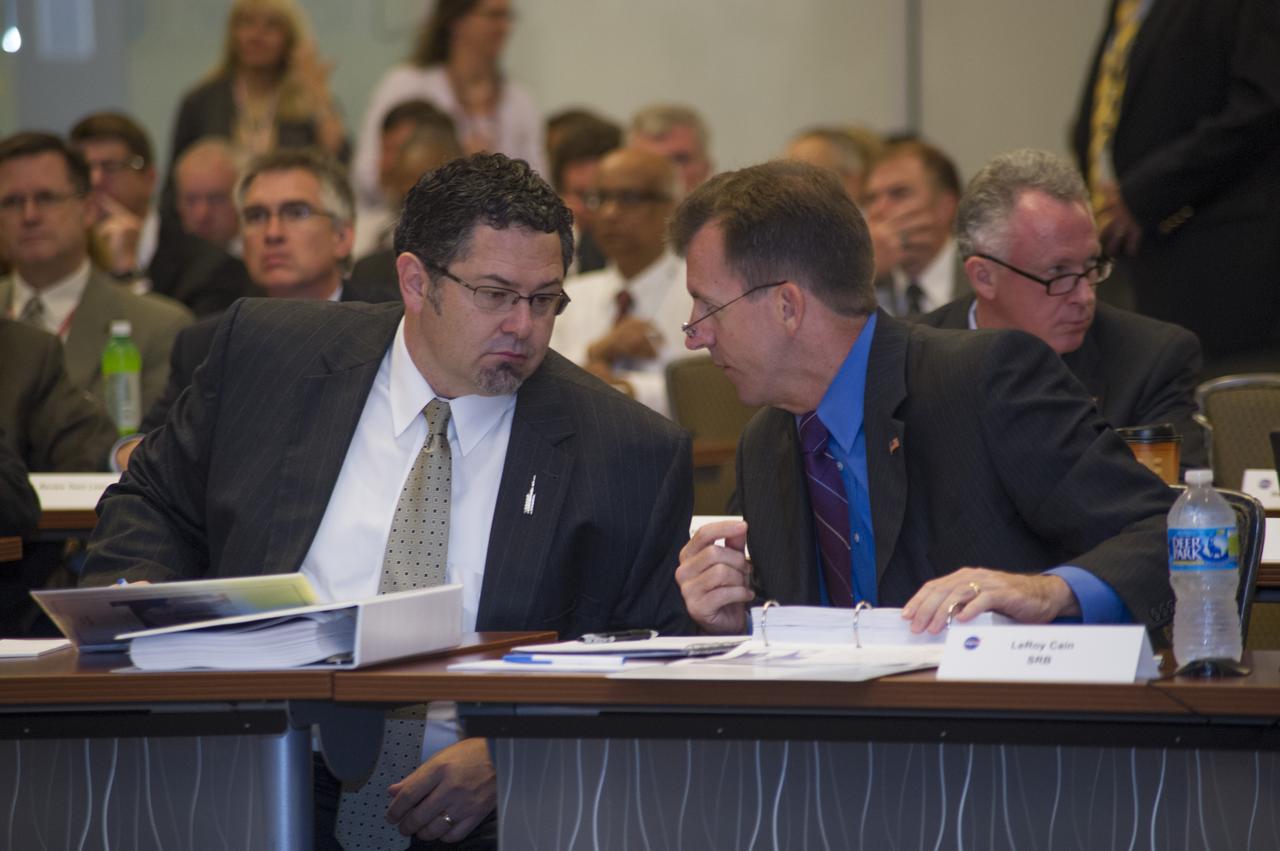
TODD MAY, LEFT, MANAGER OF THE SLS PROGRAM AT THE MARSHALL CENTER, DISCUSSES THE ROCKET'S SPECIFICATIONS WITH LEROY CAIN, WHO HEADS THE INDEPENDENT STANDING REVIEW BOARD FOR SLS, DURING THE SLS PROGRAM'S PRELIMINARY DESIGN REVIEW. THE REVIEW KICKED OFF JUNE 18-19
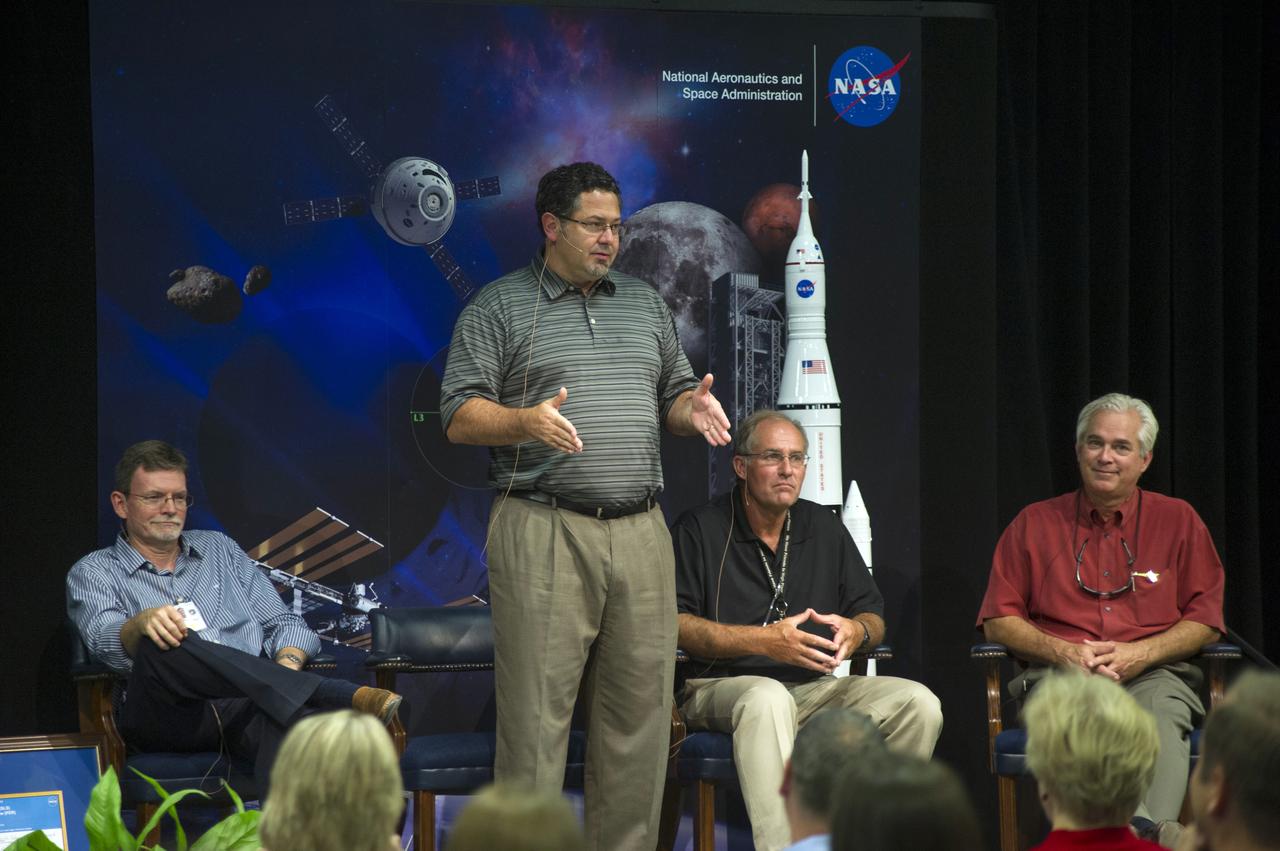
MORE THAN 250 PEOPLE FROM ACROSS NASA'S MARSHALL SPACE FLIGHT CENTER PARTICIPATED IN THE SPACE LAUNCH SYSTEM (SLS) POST-PRELIMINARY DESIGN REVIEW REPORT, HELD AUG. 5 IN ACTIVITIES BUILDING 4316. DISCUSSING THE REVIEW AND THANKING THE MARSHALL TEAM FOR A JOB WELL DONE, ARE FROM LEFT, GARRY LYLES, SLS CHIEF ENGINEER; TODD MAY, MANAGER OF THE SLS PROGRAM; STEVE CASH, DIRECTOR OF MARSHALL’S SAFETY & MISSION ASSURANCE DIRECTORATE; AND CHRIS SINGER, MANAGER OF MARSHALL’S ENGINEERING DIRECTORATE
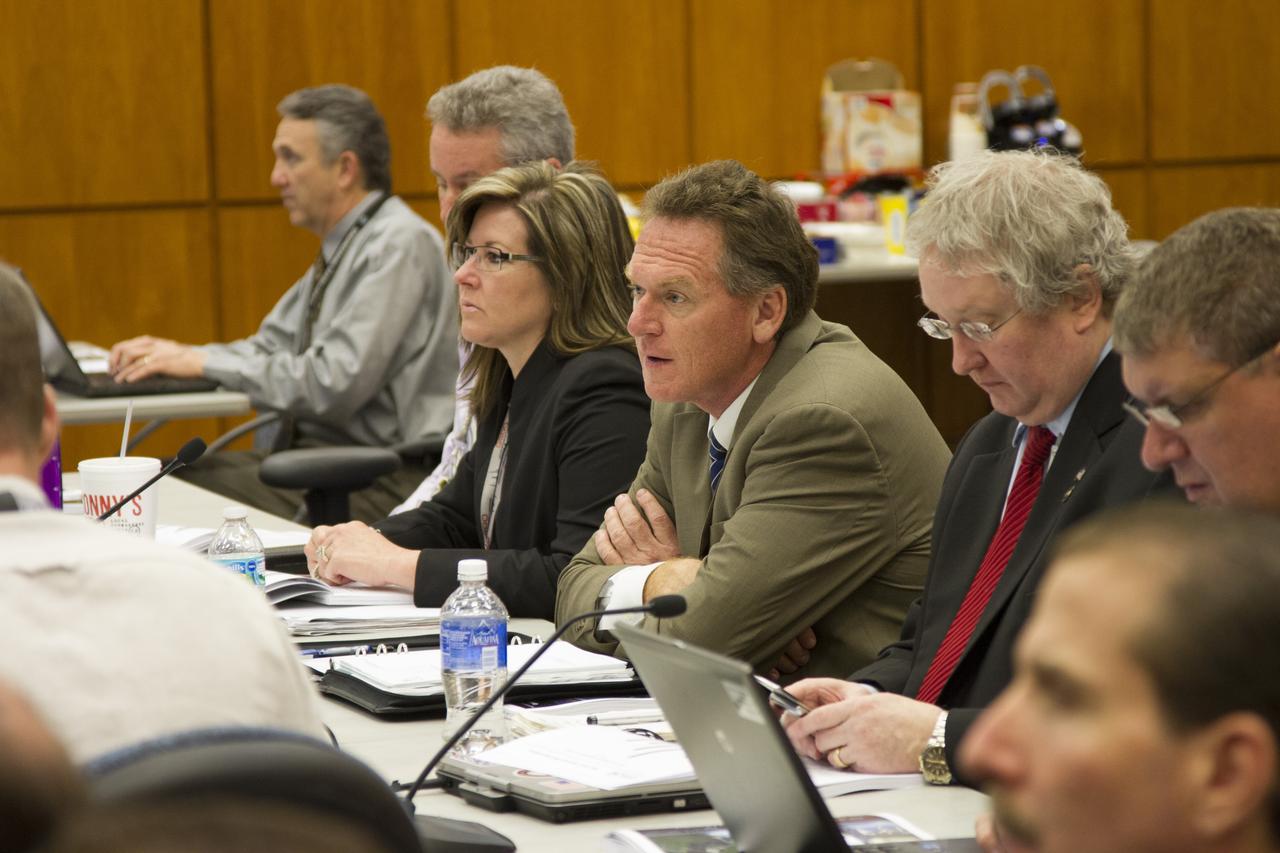
CAPE CANAVERAL, Fla. – Mike Bolger, program manager for the Ground Systems Development and Operations, or GSDO, Program speaks to participants during completion of the preliminary design review in the Mission Briefing Room inside the Operations and Checkout Building at NASA’s Kennedy Space Center in Florida. Representatives from NASA, its contractor partners and experts from across the aerospace industry met in the Mission Briefing Room inside the Operations and Checkout Building at NASA’s Kennedy Space Center in Florida to conclude the initial design and technology development phase. Completion of this review has validated that the baseline architecture is sound and aligns with the agency's exploration objectives. NASA is developing the Space Launch System and Orion spacecraft to provide an entirely new capability for human exploration beyond low-Earth orbit, with the flexibility to launch spacecraft for crew and cargo missions, including to an asteroid and Mars. Orion’s first unpiloted test flight is scheduled to launch later this year atop a Delta IV rocket. A second uncrewed flight test is scheduled for fiscal year 2018 on the Space Launch System rocket. For more information, visit http://www.nasa.gov/orion. Photo credit: NASA/Cory Huston
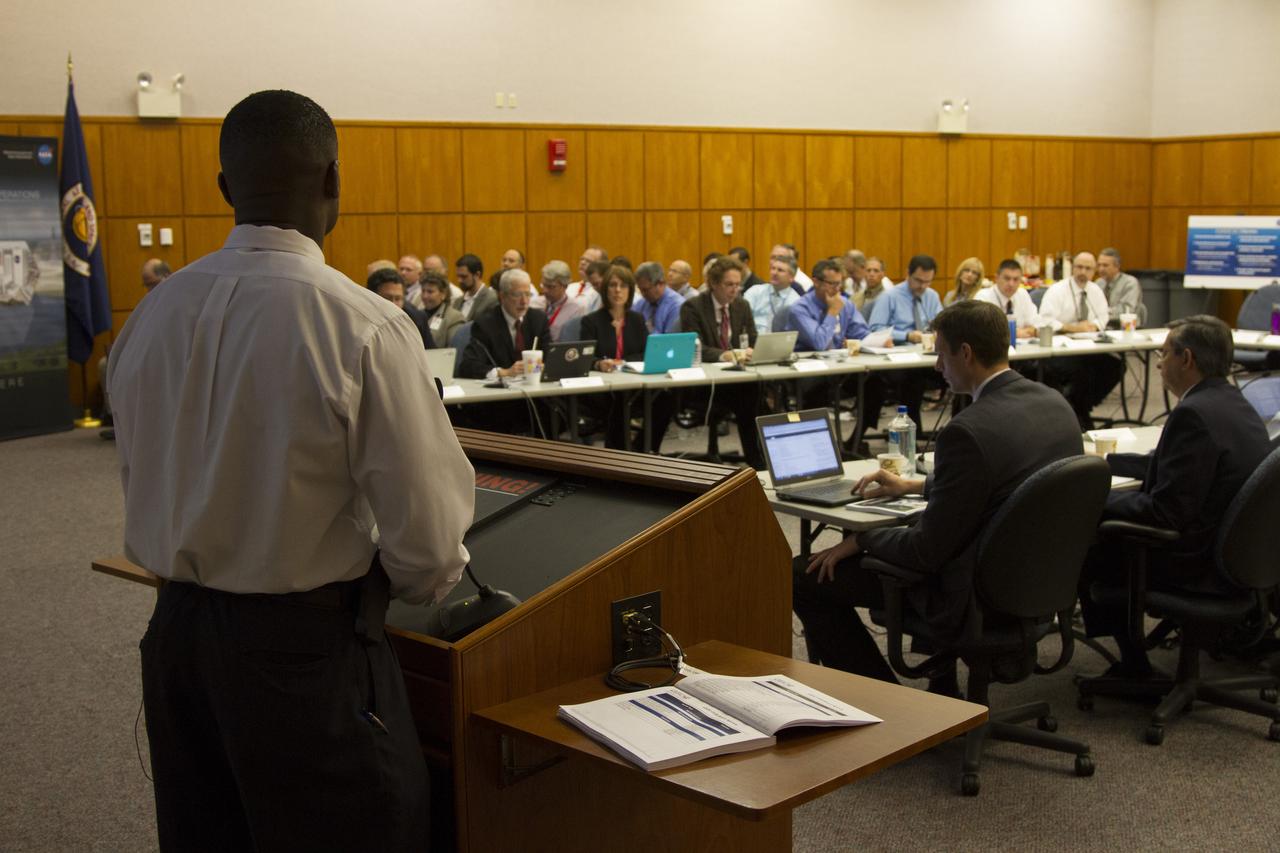
CAPE CANAVERAL, Fla. – The Ground Systems Development and Operations, or GSDO, Program completed its preliminary design review which allows development of the ground systems to proceed to detailed design. Representatives from NASA, its contractor partners and experts from across the aerospace industry met in the Mission Briefing Room inside the Operations and Checkout Building at NASA’s Kennedy Space Center in Florida to conclude the initial design and technology development phase. Completion of this review has validated that the baseline architecture is sound and aligns with the agency's exploration objectives. NASA is developing the Space Launch System and Orion spacecraft to provide an entirely new capability for human exploration beyond low-Earth orbit, with the flexibility to launch spacecraft for crew and cargo missions, including to an asteroid and Mars. Orion’s first unpiloted test flight is scheduled to launch later this year atop a Delta IV rocket. A second uncrewed flight test is scheduled for fiscal year 2018 on the Space Launch System rocket. For more information, visit http://www.nasa.gov/orion. Photo credit: NASA/Cory Huston
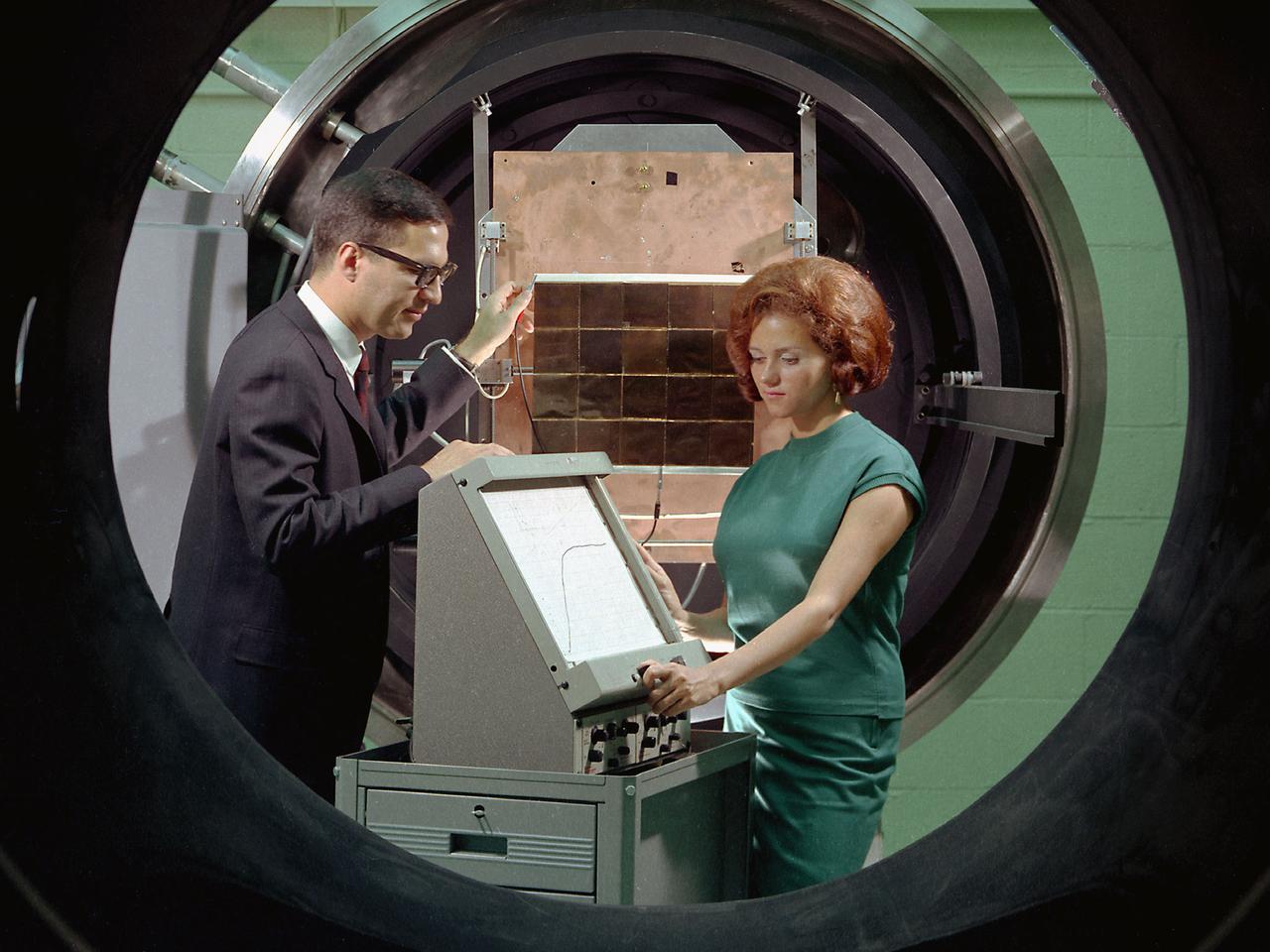
George Mazaris, works with an assistant to obtain the preliminary measurements of cadmium sulfide thin-film solar cells being tested in the Space Environmental Chamber at the National Aeronautics and Space Administration (NASA) Lewis Research Center. Lewis’ Photovoltaic Fundamentals Section was investigating thin-film alternatives to the standard rigid and fragile solar cells. The cadmium sulfide semiconductors were placed in a light, metallized substrate that could be rolled or furled during launch. The main advantage of the thin-film solar cells was their reduced weight. Lewis researchers, however, were still working on improving the performance of the semiconductor. The new thin-film solar cells were tested in a space simulation chamber in the CW-6 test cell in the Engine Research Building. The chamber created a simulated altitude of 200 miles. Sunlight was simulated by a 5000-watt xenon light. Some two dozen cells were exposed to 15 minutes of light followed by 15 minutes of darkness to test their durability in the constantly changing illumination of Earth orbit. This photograph was taken for use in a NASA recruiting publication.
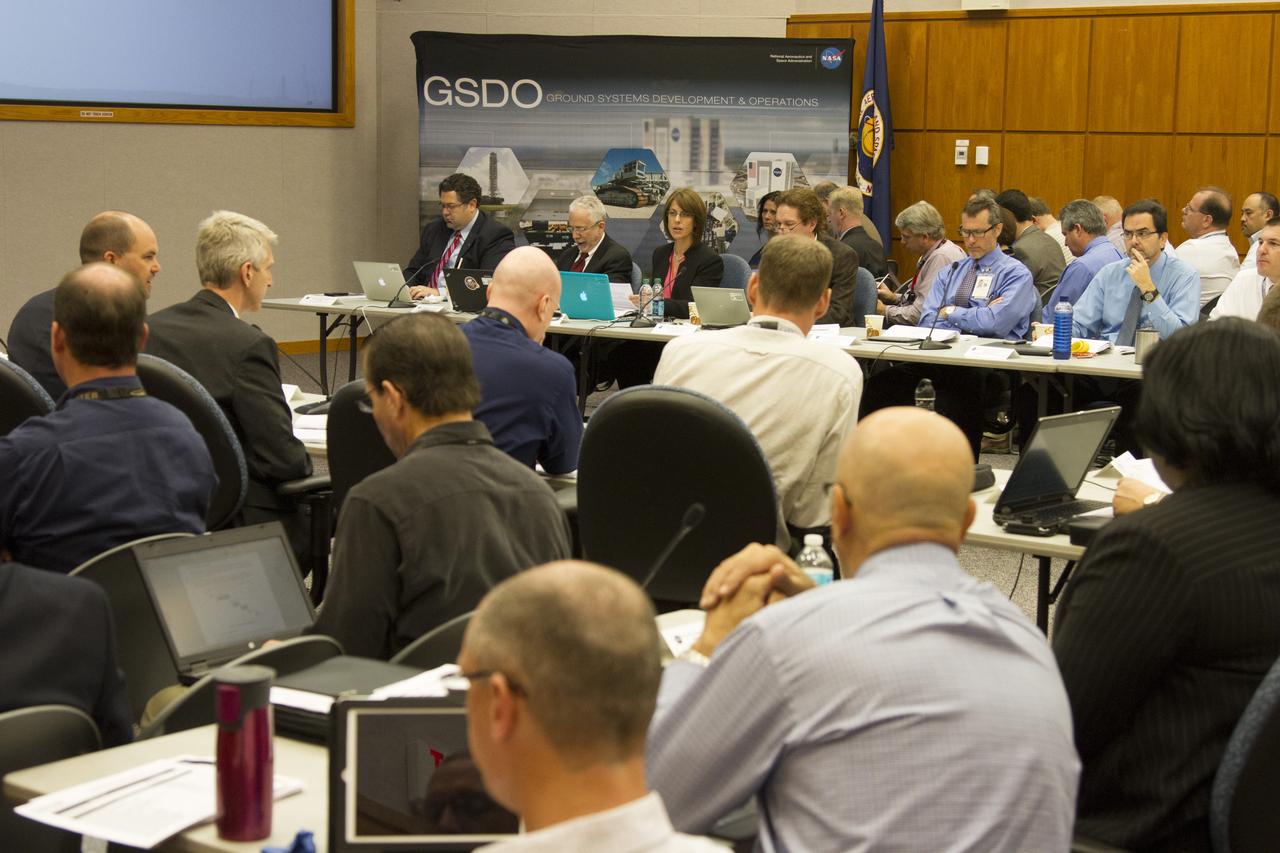
CAPE CANAVERAL, Fla. – The Ground Systems Development and Operations, or GSDO, Program completed its preliminary design review which allows development of the ground systems to proceed to detailed design. Representatives from NASA, its contractor partners and experts from across the aerospace industry met in the Mission Briefing Room inside the Operations and Checkout Building at NASA’s Kennedy Space Center in Florida to conclude the initial design and technology development phase. Completion of this review has validated that the baseline architecture is sound and aligns with the agency's exploration objectives. NASA is developing the Space Launch System and Orion spacecraft to provide an entirely new capability for human exploration beyond low-Earth orbit, with the flexibility to launch spacecraft for crew and cargo missions, including to an asteroid and Mars. Orion’s first unpiloted test flight is scheduled to launch later this year atop a Delta IV rocket. A second uncrewed flight test is scheduled for fiscal year 2018 on the Space Launch System rocket. For more information, visit http://www.nasa.gov/orion. Photo credit: NASA/Cory Huston
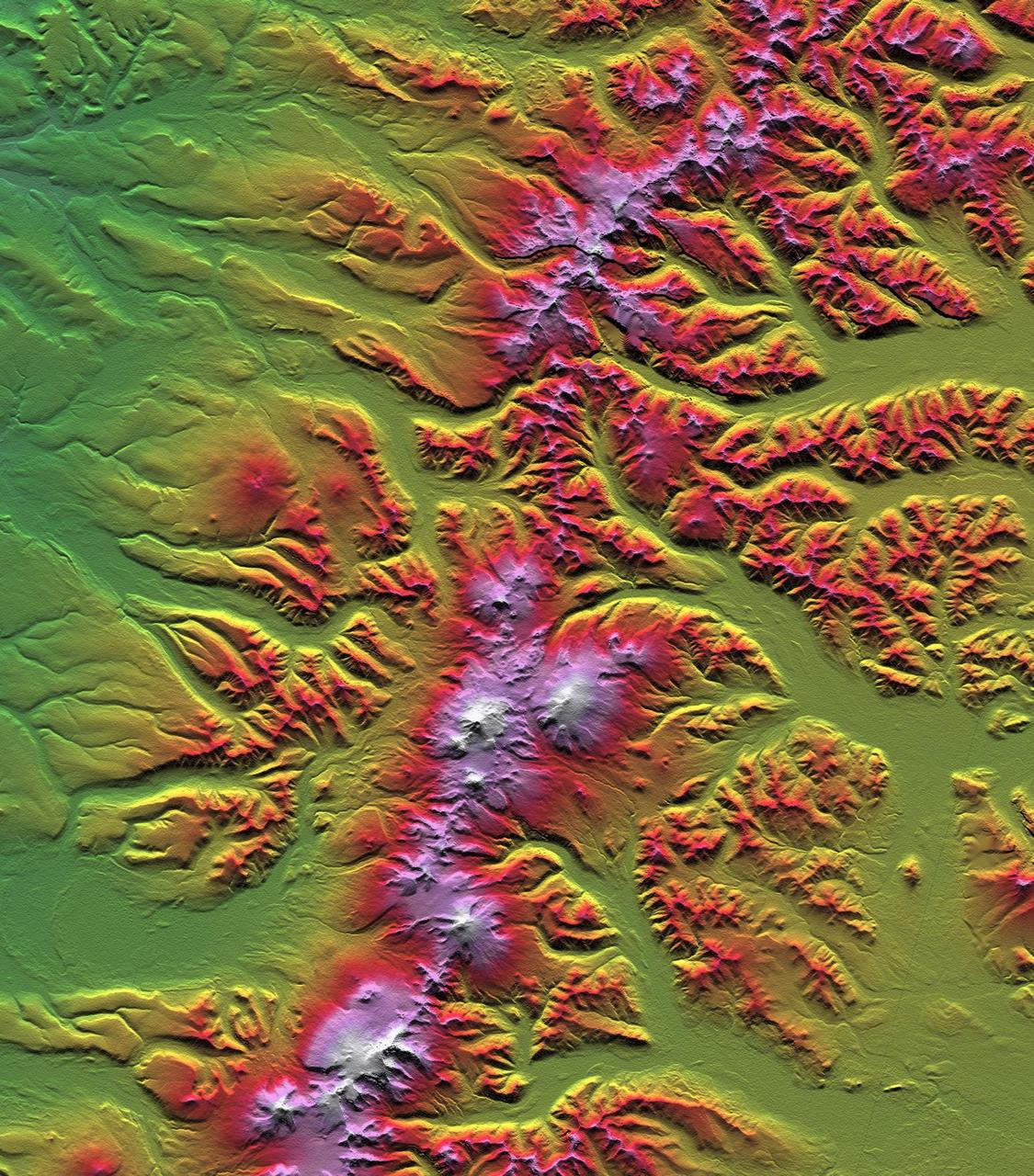
The Kamchatka Peninsula in eastern Russia is shown in this scene created from a preliminary elevation model derived from the first data collected during NASA Shuttle Radar Topography Mission SRTM on February 12, 2000.
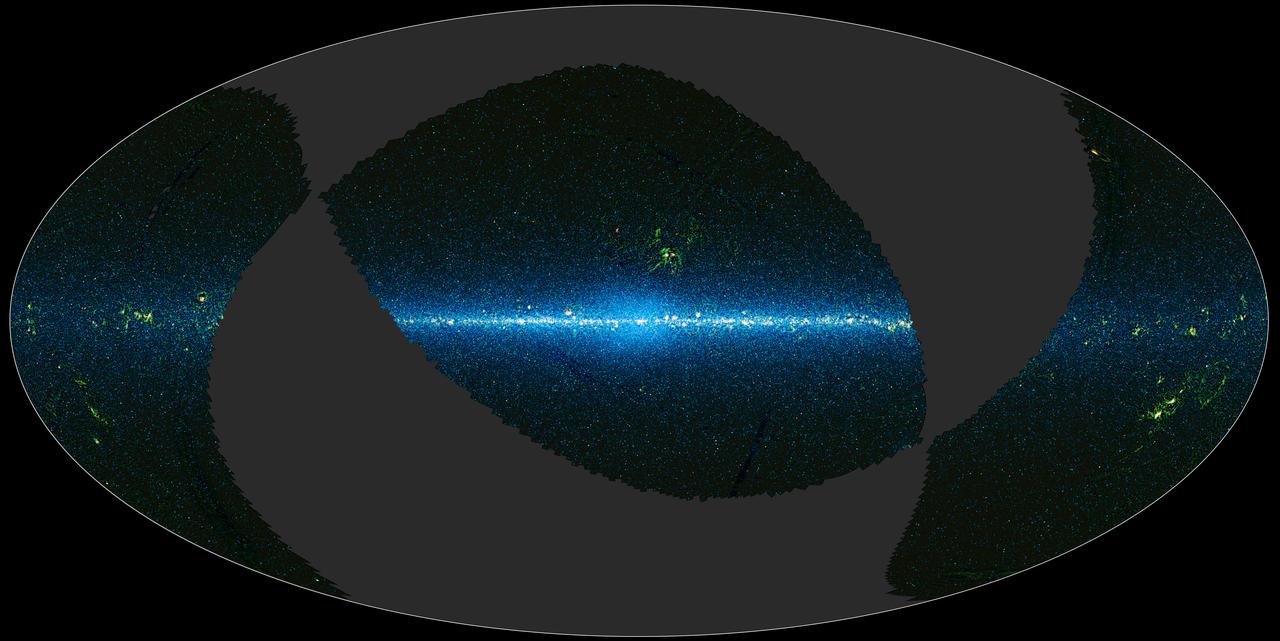
This image is a map of the portion of the sky covered by the preliminary release of WISE data. WISE surveyed the entire sky in four infrared wavelengths in 2010. This map is centered on the Milky Way galaxy.
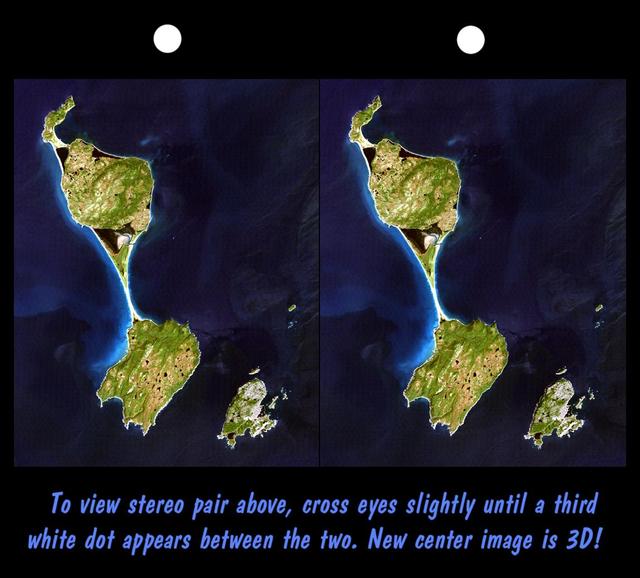
This stereoscopic satellite image showing Miquelon and Saint Pierre Islands, located south of Newfoundland, Canada, was generated by draping NASA Landsat satellite image over a preliminary Shuttle Radar Topography Mission SRTM elevation model.
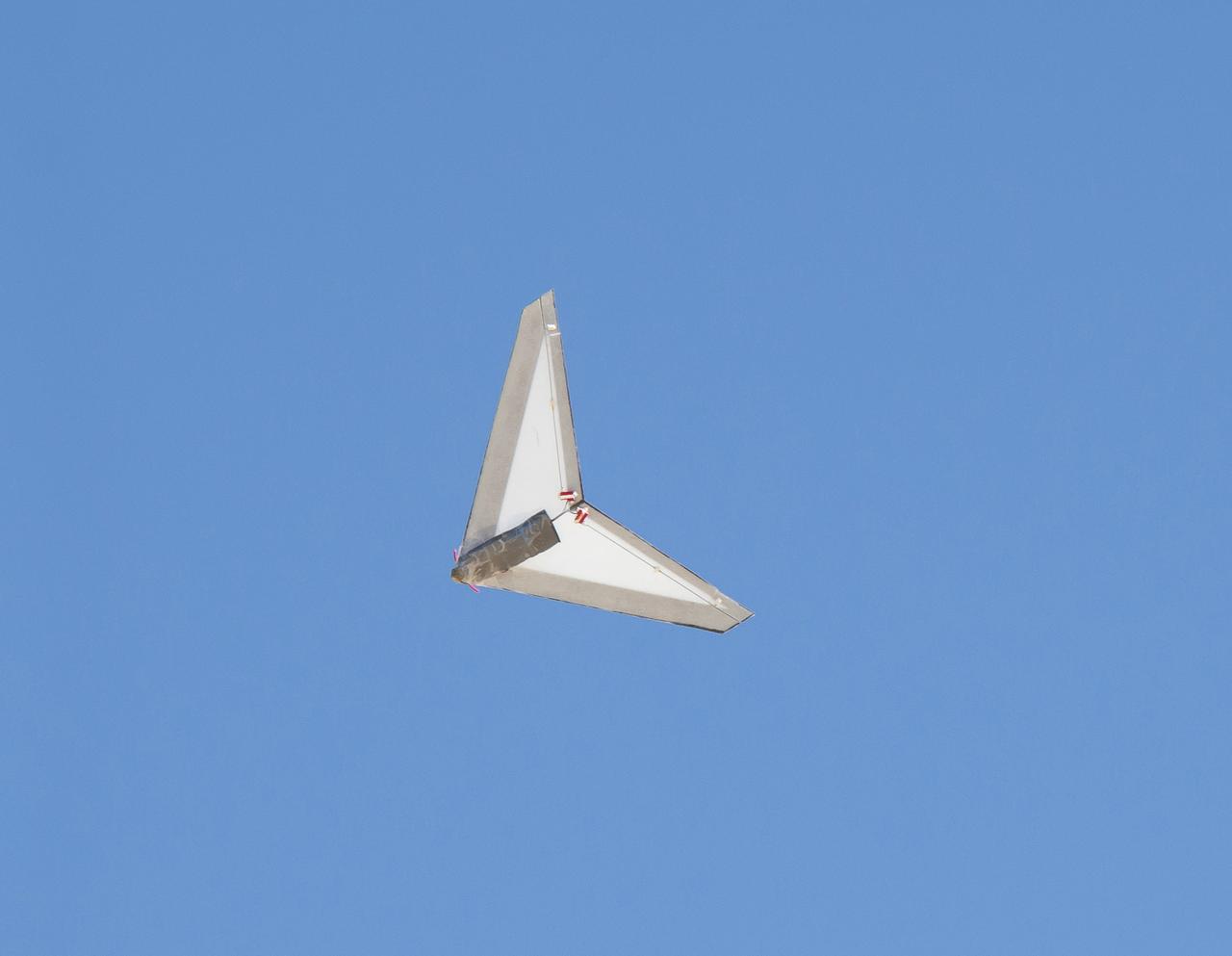
The Preliminary Research Aerodynamic Design to Land on Mars, or Prandtl-M, flies during a test flight. A new proposal based on the aircraft recently won an agencywide technology grant.
SMART probe' Computerized Cancer Diagnostic Tool: A NASA Stanford Team is in the preliminary stages of developing a probe for breast cancer detection.
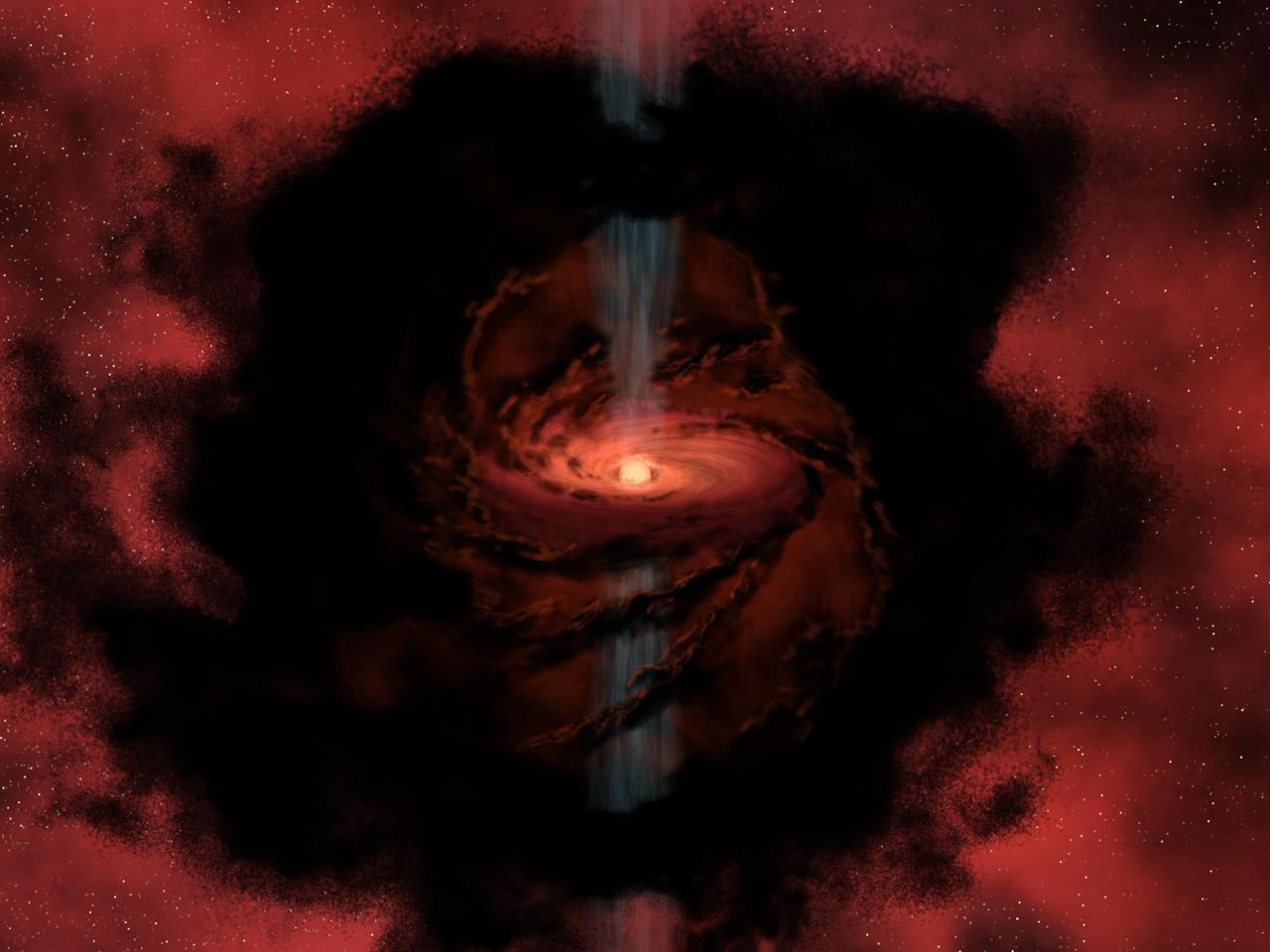
Are brown dwarfs born like stars, as in this rendering, or do they form like planets orbiting another star? A study by researchers using data from NASA Spitzer Space Telescope has led to the preliminary conclusion that they are formed much like a star.
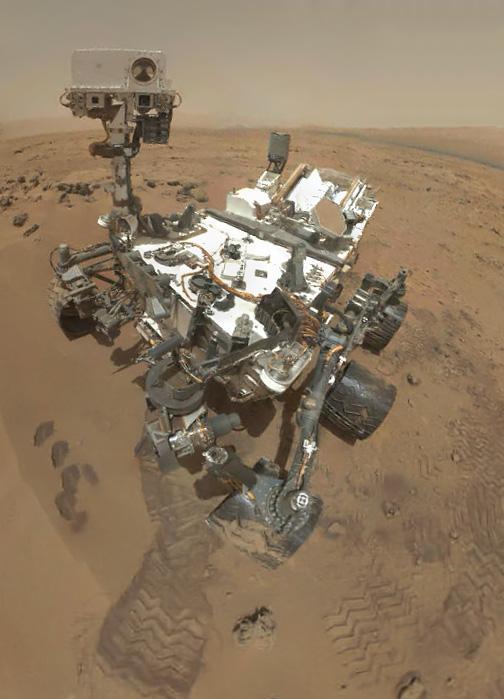
NASA Curiosity rover used the Mars Hand Lens Imager MAHLI to capture the set of thumbnail images stitched together to create this full-color self-portrait.
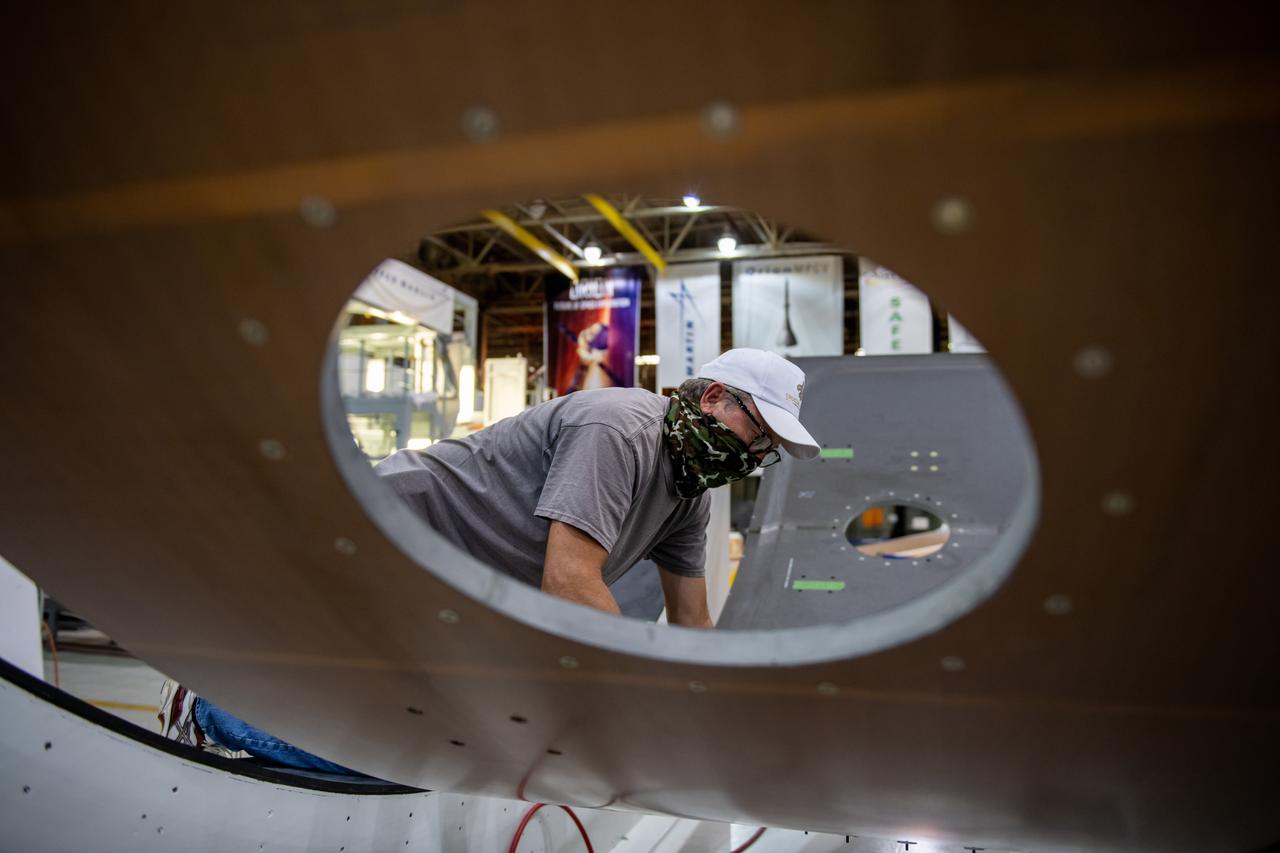
This week, NASA is taking preliminary steps to resume @NASA_SLS core stage production. Limited crews will return to #NASAMichoud to perform critical work essential to the agency's #Artemis program and our return to the Moon.
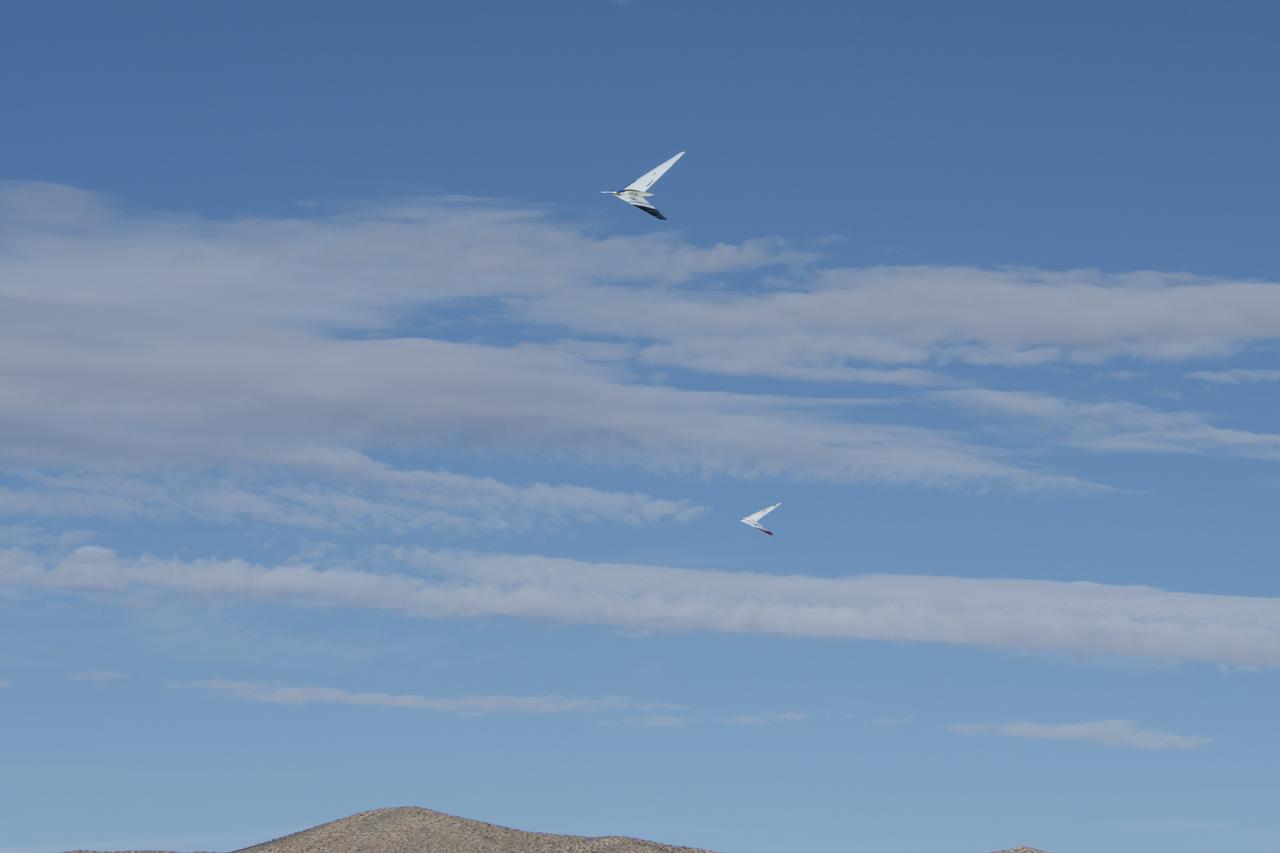
NASA Armstrong Flight Research Center conducted its first formation flight with the Preliminary Research Aerodynamic Design to Lower Drag (Prandtl) aircrafts Prandtl-D2 and Prandtl-3C.
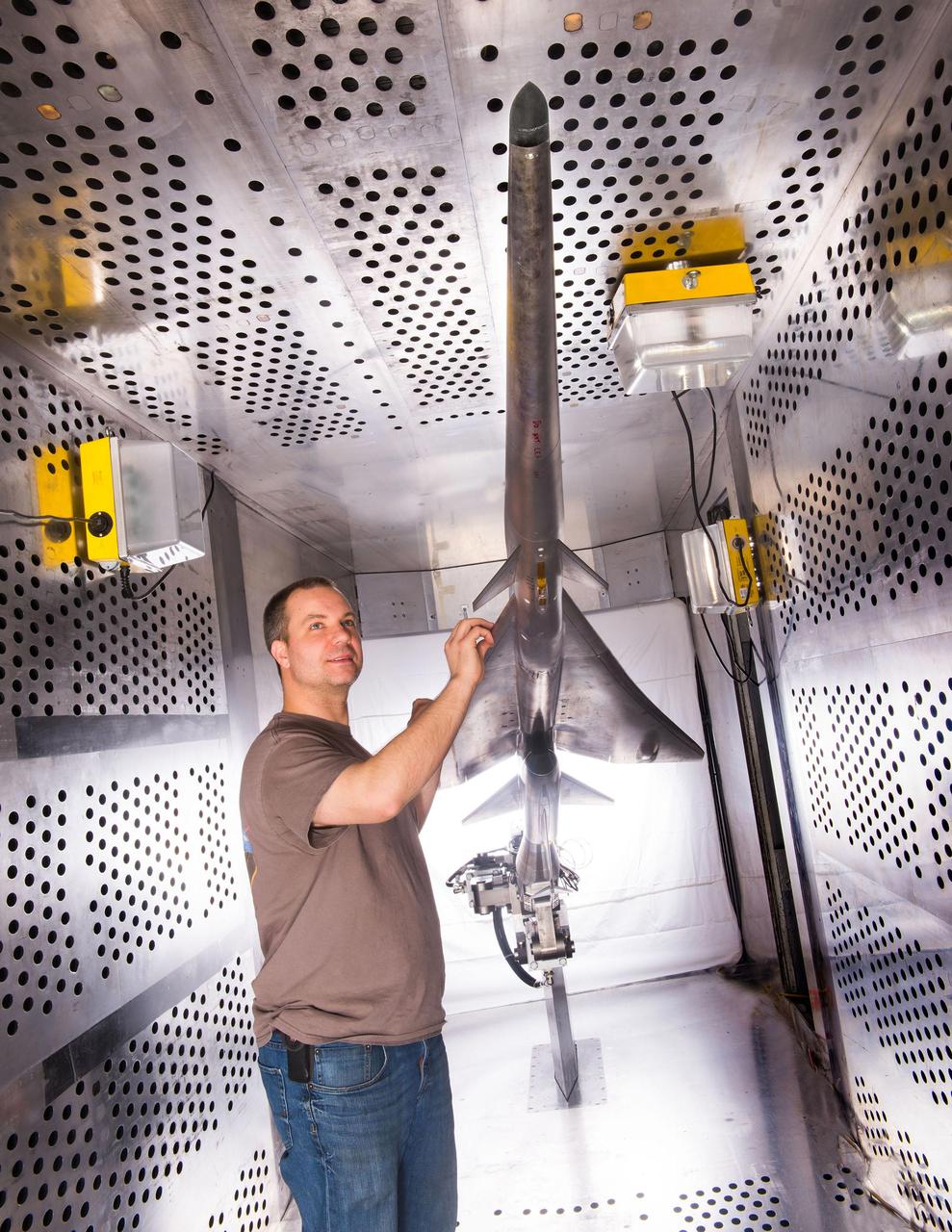
Mechanical technician Dan Pitts prepares a scale model of Lockheed Martin's Quiet Supersonic Technology (QueSST) X-plane preliminary design for its first high-speed wind tunnel tests at NASA's Glenn Research Center.

Fiber-Reinforced-Foam (FRF) Core Composite Sandwich Panel Concept for Advanced Composites Technologies Project - Preliminary Manufacturing Demonstration Articles for Ares V Payload Shroud Barrel Acreage Structure
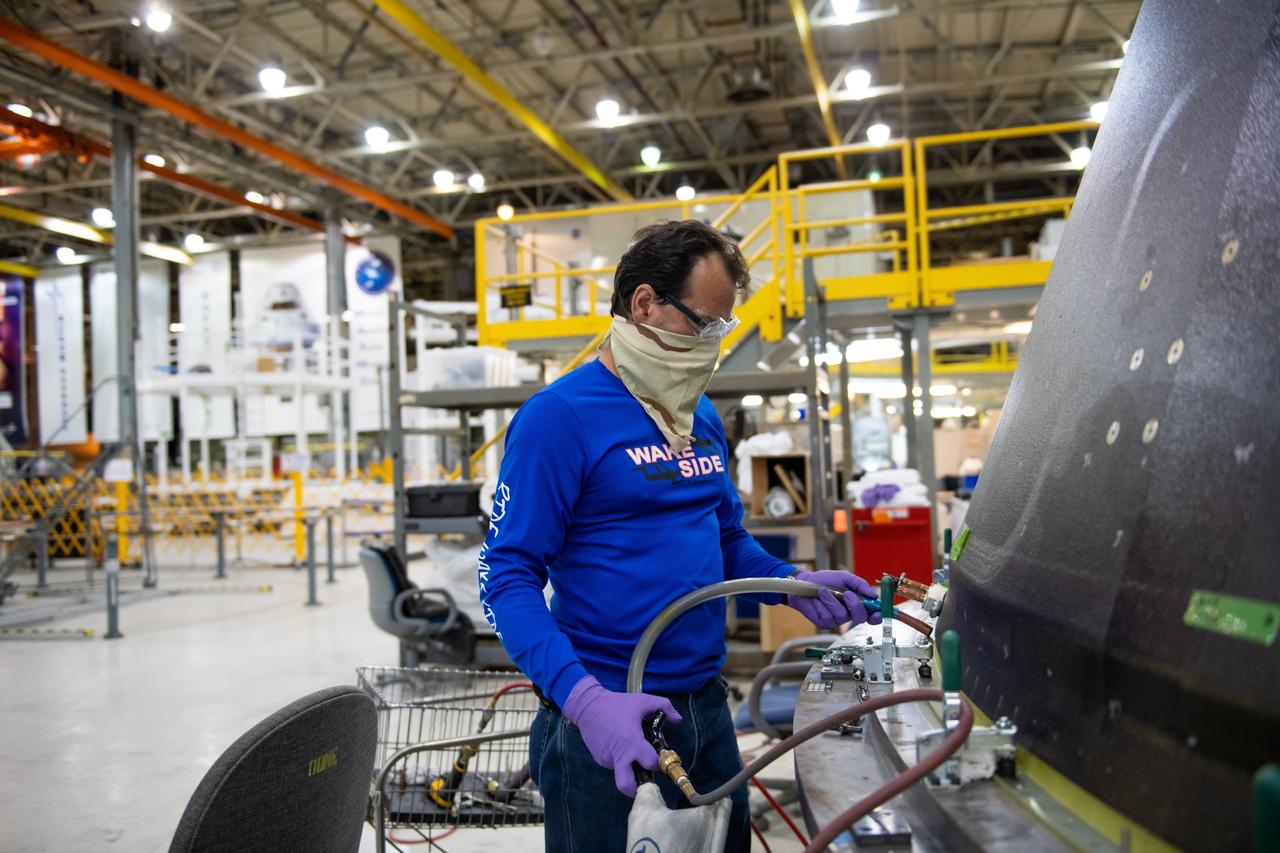
This week, NASA is taking preliminary steps to resume @NASA_SLS core stage production. Limited crews will return to #NASAMichoud to perform critical work essential to the agency's #Artemis program and our return to the Moon.
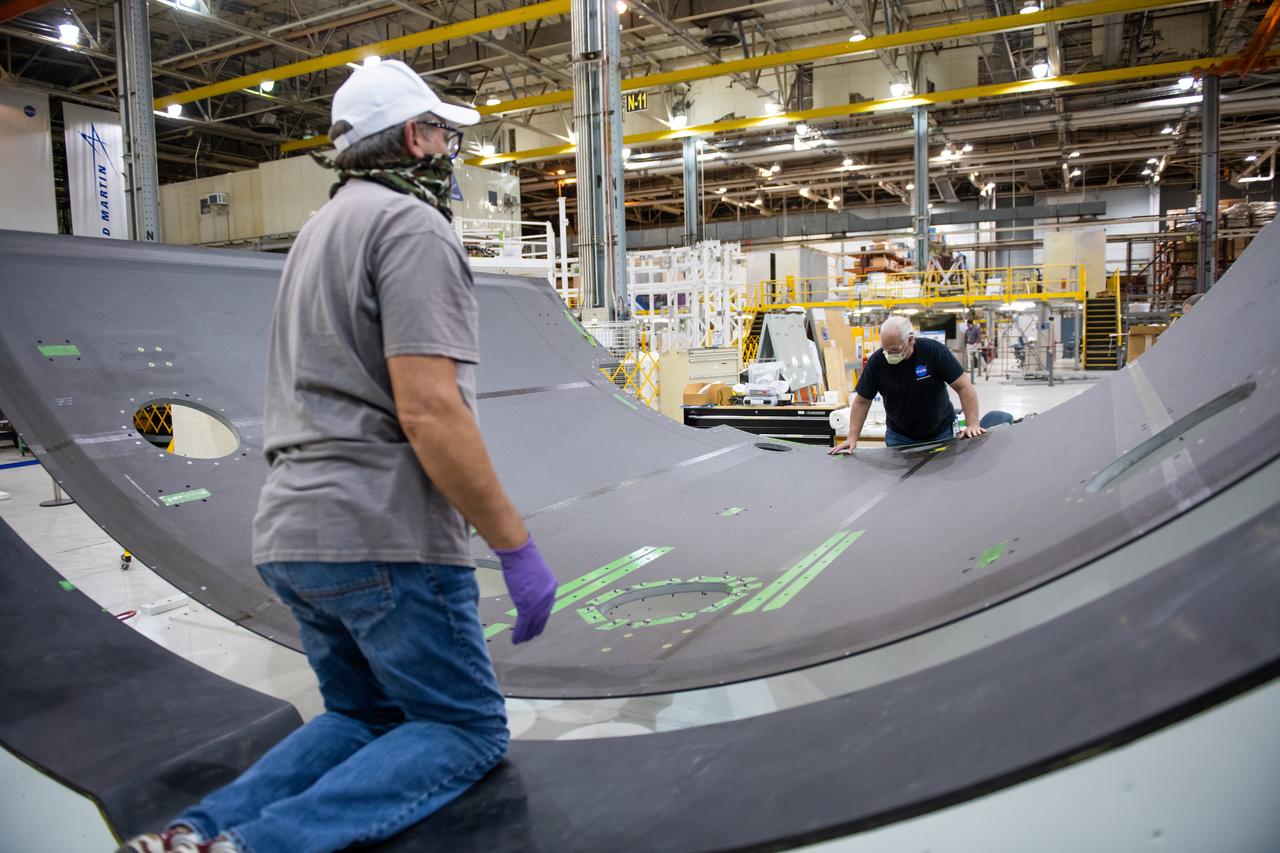
This week, NASA is taking preliminary steps to resume @NASA_SLS core stage production. Limited crews will return to #NASAMichoud to perform critical work essential to the agency's #Artemis program and our return to the Moon.
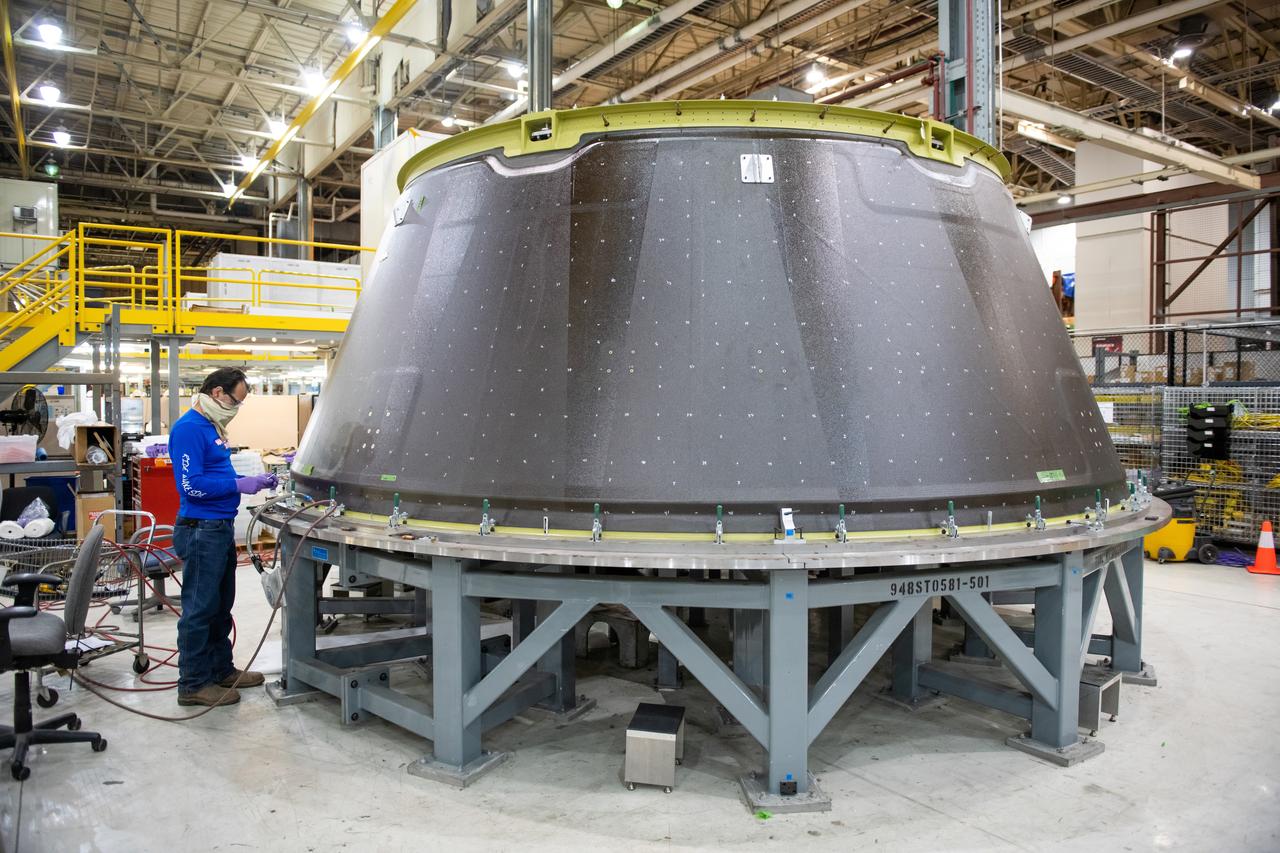
This week, NASA is taking preliminary steps to resume @NASA_SLS core stage production. Limited crews will return to #NASAMichoud to perform critical work essential to the agency's #Artemis program and our return to the Moon.
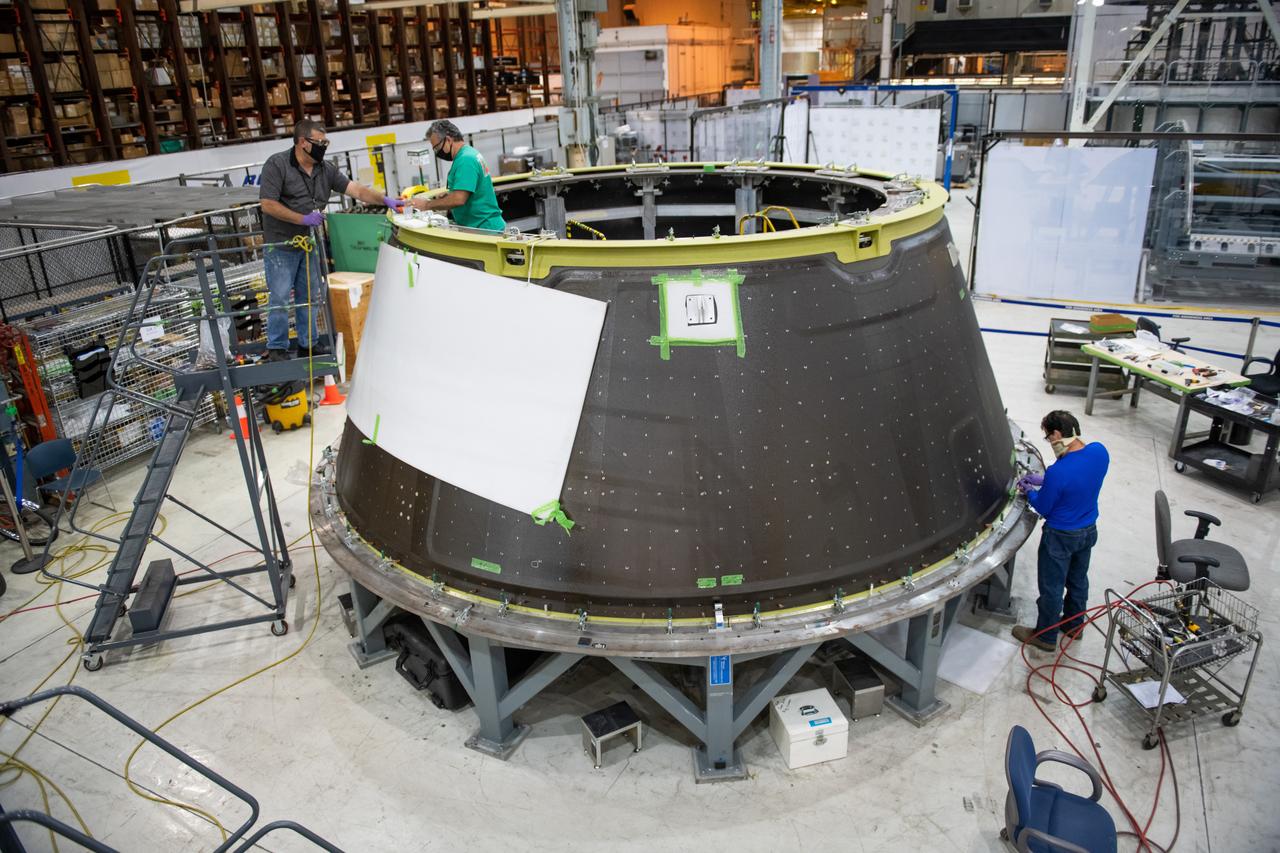
This week, NASA is taking preliminary steps to resume @NASA_SLS core stage production. Limited crews will return to #NASAMichoud to perform critical work essential to the agency's #Artemis program and our return to the Moon.
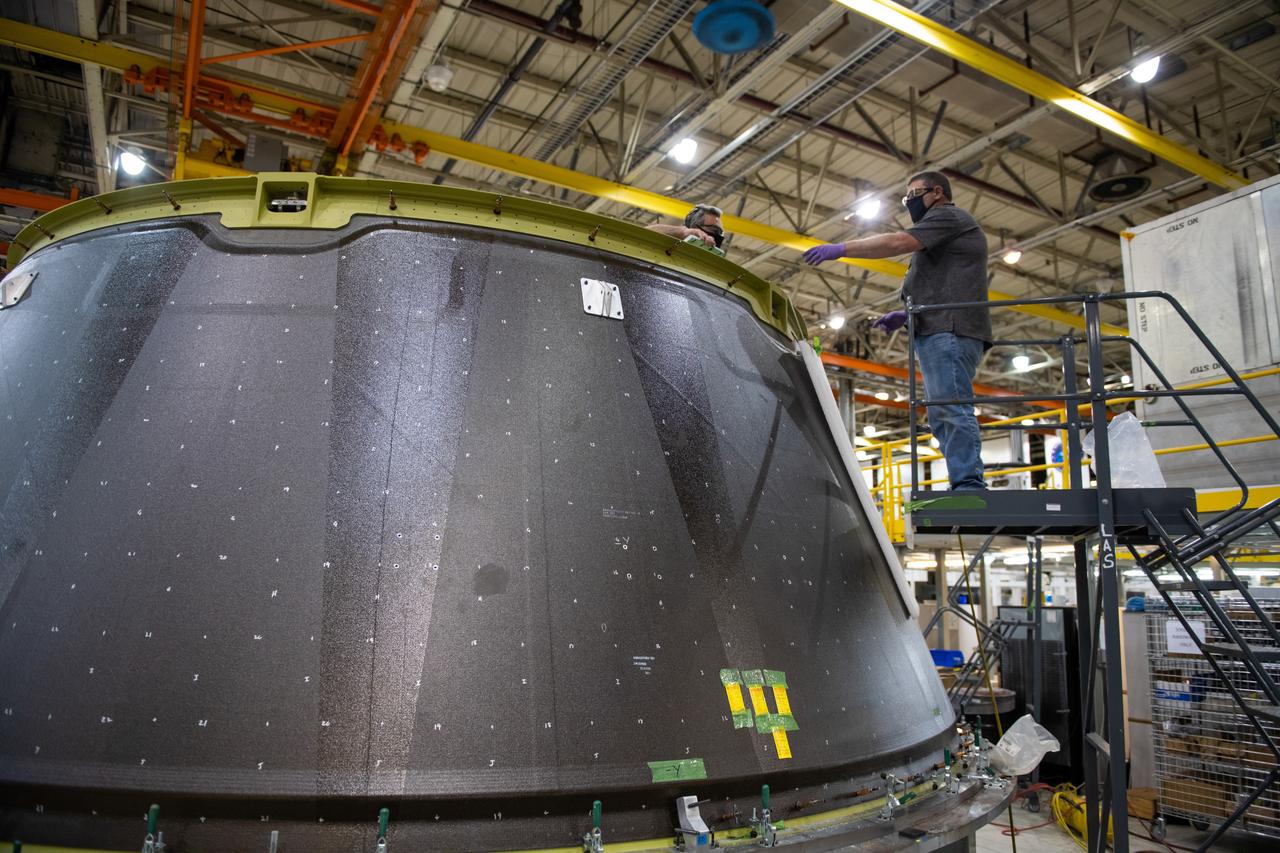
This week, NASA is taking preliminary steps to resume @NASA_SLS core stage production. Limited crews will return to #NASAMichoud to perform critical work essential to the agency's #Artemis program and our return to the Moon.
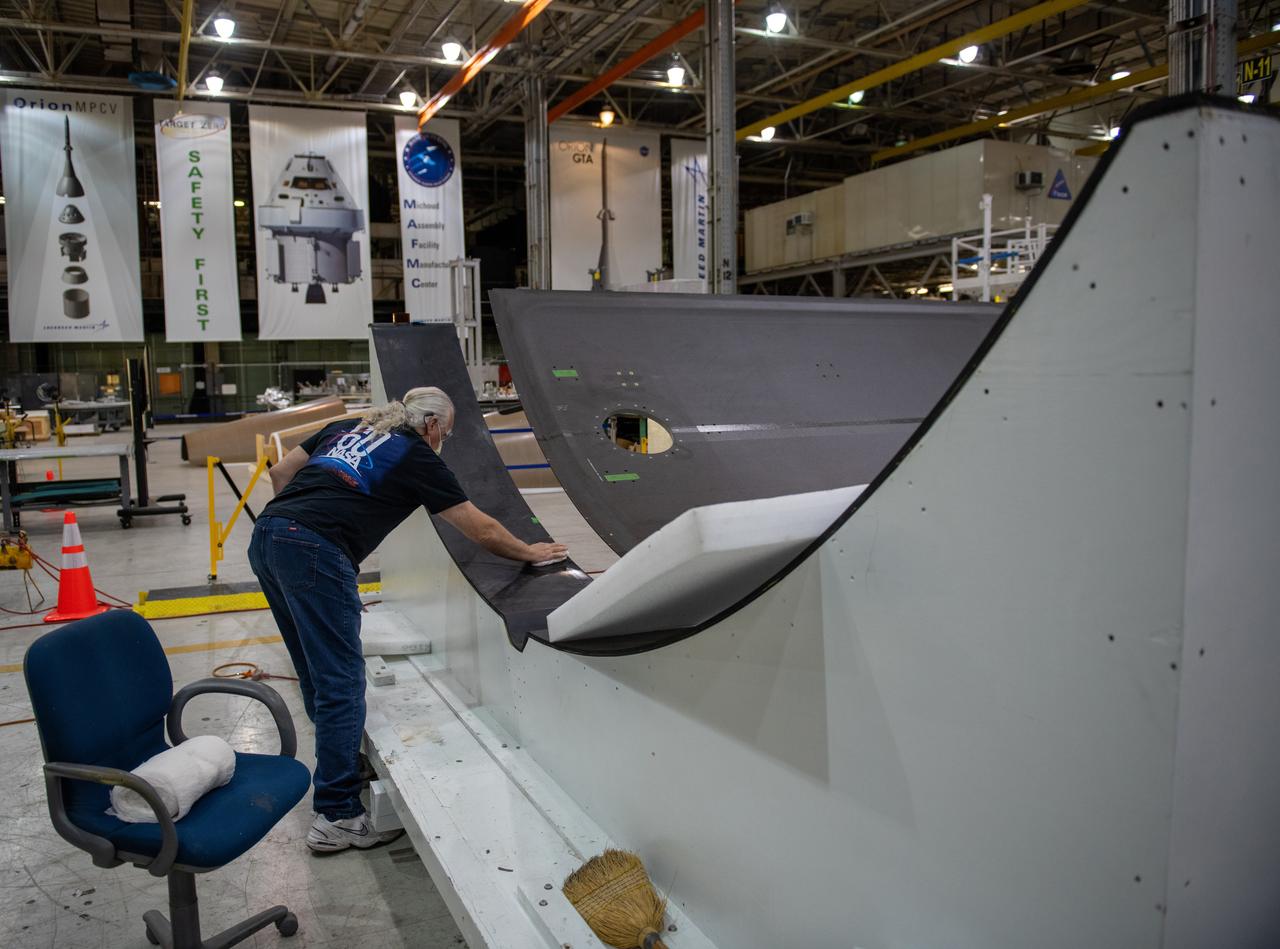
This week, NASA is taking preliminary steps to resume @NASA_SLS core stage production. Limited crews will return to #NASAMichoud to perform critical work essential to the agency's #Artemis program and our return to the Moon.

Fiber-Reinforced-Foam (FRF) Core Composite Sandwich Panel Concept for Advanced Composites Technologies Project - Preliminary Manufacturing Demonstration Articles for Ares V Payload Shroud Barrel Acreage Structure

Fiber-Reinforced-Foam (FRF) Core Composite Sandwich Panel Concept for Advanced Composites Technologies Project - Preliminary Manufacturing Demonstration Articles for Ares V Payload Shroud Barrel Acreage Structure
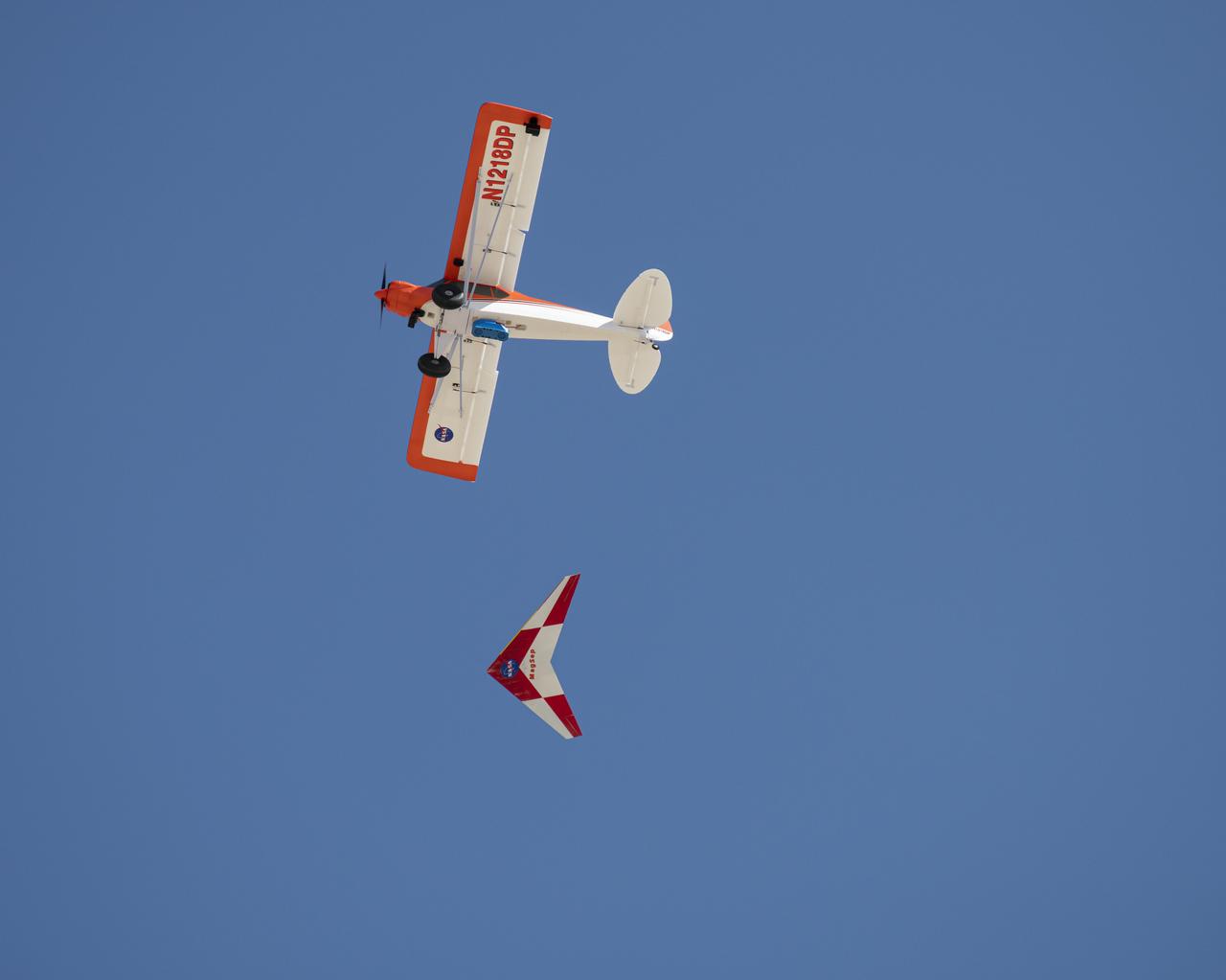
The Preliminary Research Aerodynamic Design to Land on Mars, or Prandtl-M, glider flies after a magnetic release mechanism on the Carbon-Z Cub was activated to air launch the aircraft. A team from NASA's Armstrong Flight Research Center in Edwards, California, conducted the successful research flight.
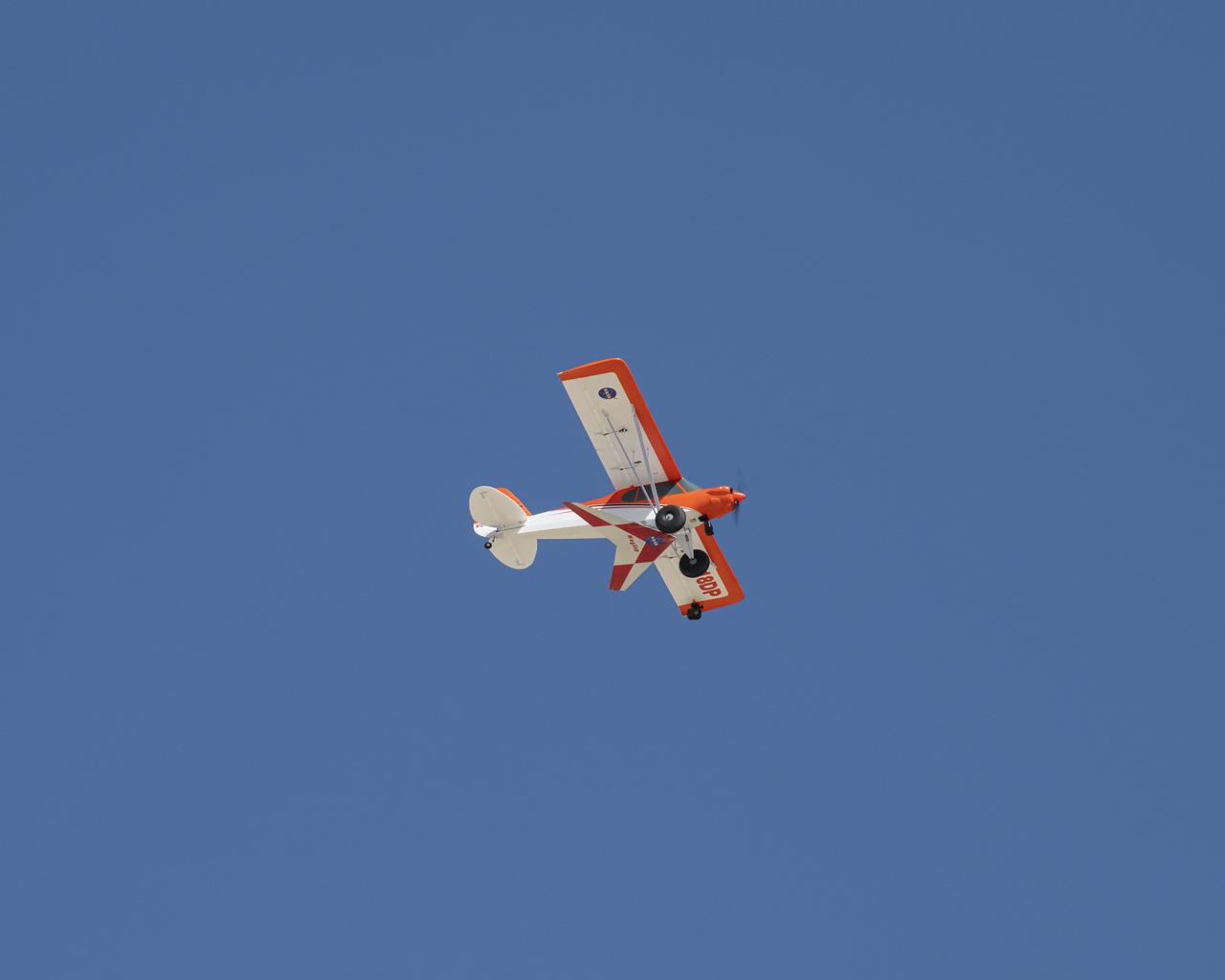
A team from NASA's Armstrong Flight Research Center in Edwards, California, prepares a Carbon-Z Cub to air launch the Preliminary Research Aerodynamic Design to Land on Mars, or Prandtl-M, glider from a magnetic release mechanism on the cub.
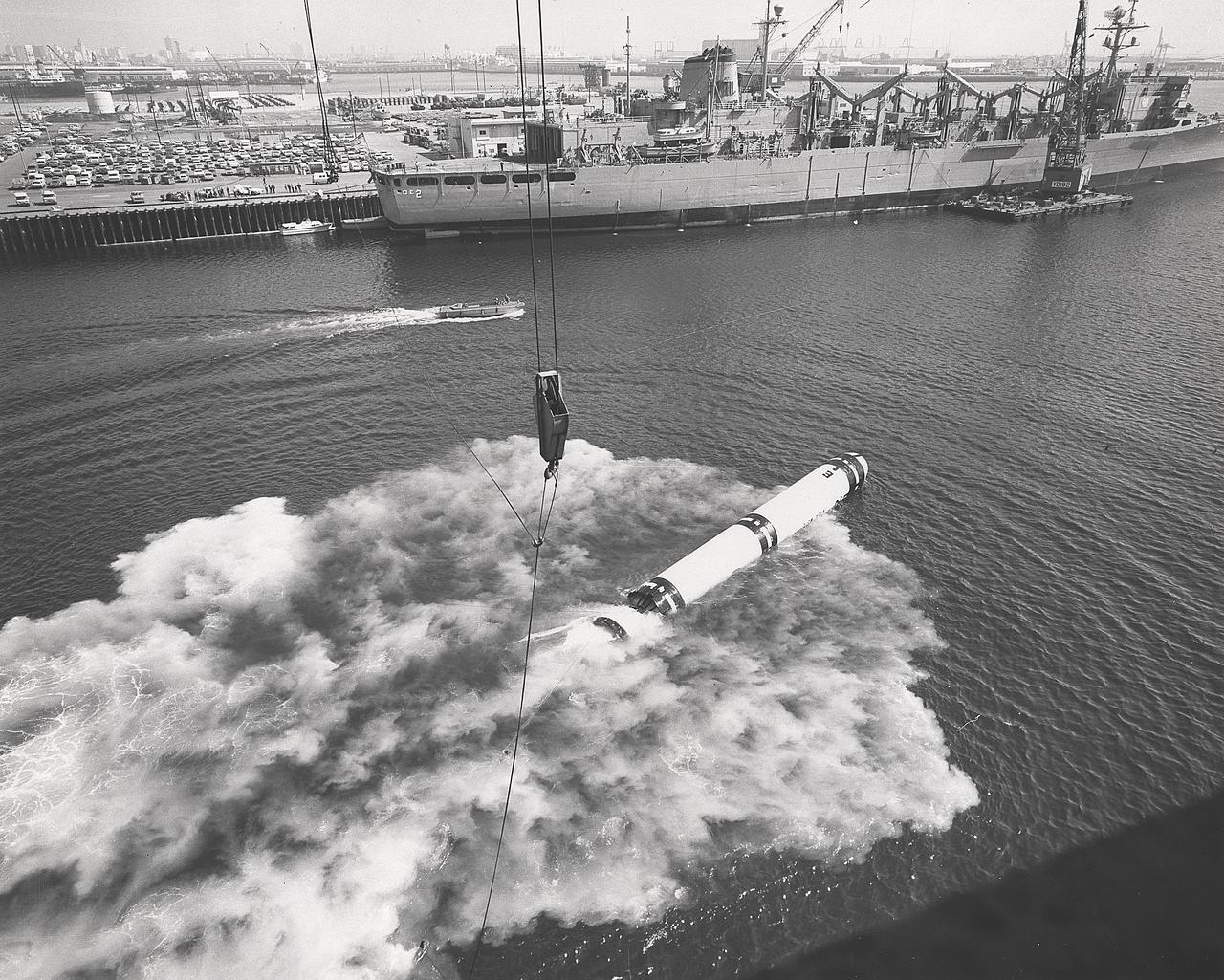
As early as September 1972, the Marshall Space Flight Center arnounced plans for a series of 20 water-entry simulation tests with a solid-fueled rocket casing assembly. The tests would provide valuable data for assessment of solid rocket booster parachute water recovery and aid in preliminary solid rocket motor design.
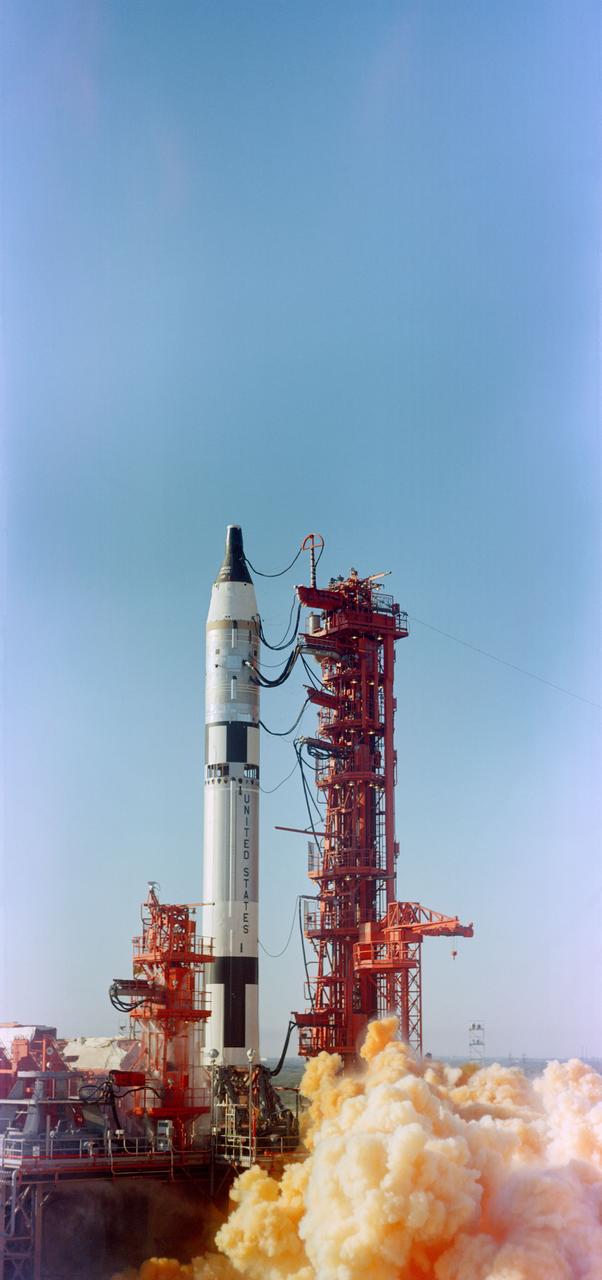
S65-14150 (19 January 1965) --- Launching of the unmanned Gemini 2 flight. The second Titan II Gemini Launch Vehicle (GLV-2) carried the unmanned, instrumented Gemini spacecraft (GT-2) for a suborbital shot preliminary to the first U.S. two-man Gemini mission.
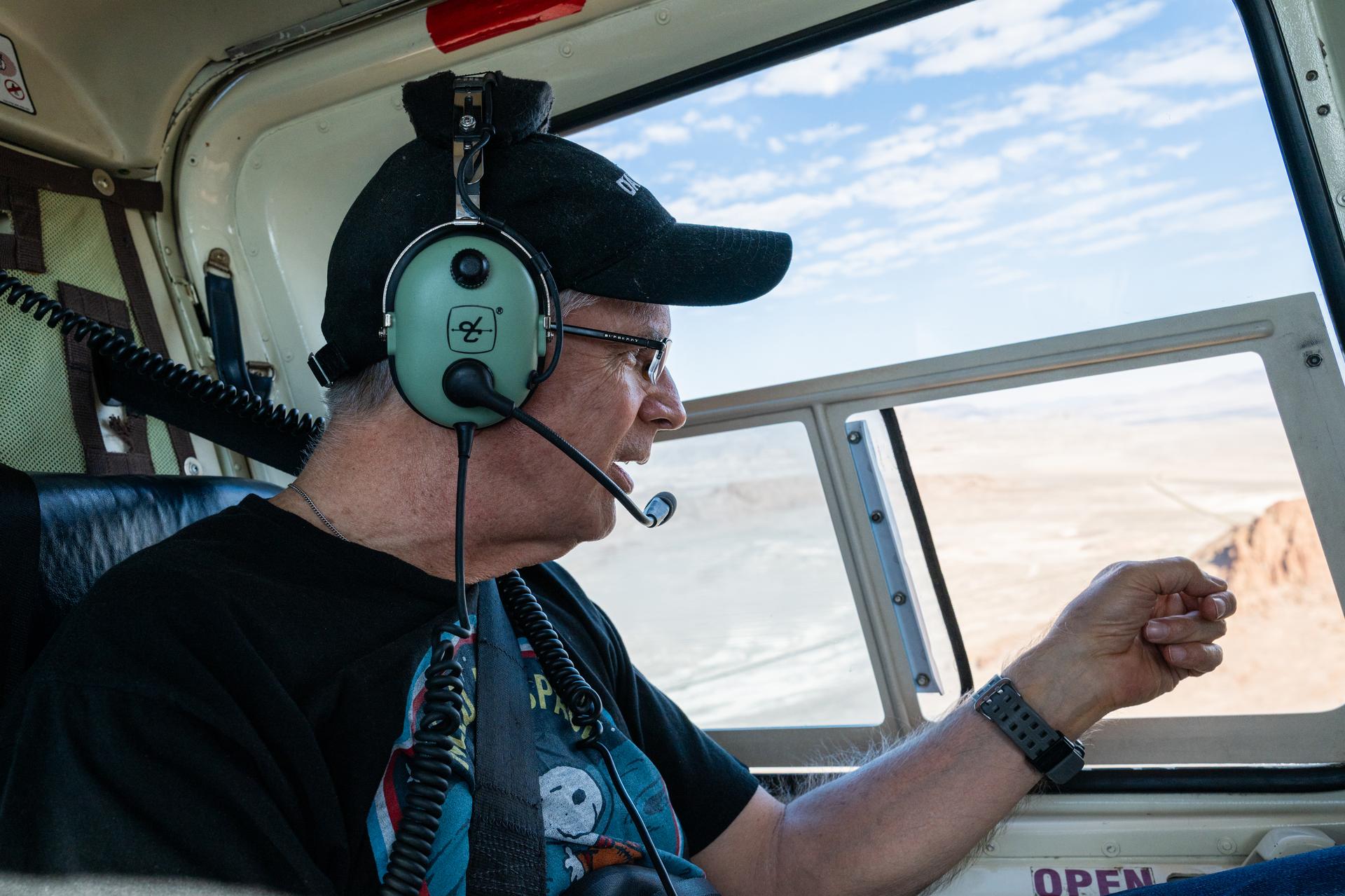
Dr. Jim Garvin makes observations from the window of a helicopter while flying from Wendover Utah to Crater Island, June 23, 2026. The flight was in coordination with the VADIX mission, a preliminary experiment which will demonstrate a prototype camera system that will one day fly on the DAVINCI probe to Venus. NASA/Mike Guinto
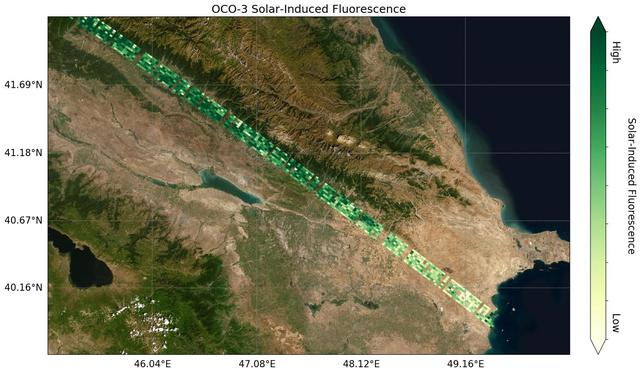
Image shows OCO-3's first preliminary solar-induced fluorescence (SIF) measurements over western Asia. Solar-induced fluorescence is the glow plants emit from photosynthesis — the process of plant growth that includes the capture of carbon from the atmosphere. Areas with lower photosynthesis activity are in shown in light green; areas with higher photosynthesis activity are shown in dark green. As expected, there is significant contrast in plant activity from areas of low vegetation near the Caspian Sea to areas of more dense vegetation like the forests and farms north and east of the Mingachevir Reservoir (near the center of the image). The mission team expects to complete OCO-3's In-orbit checkout phase — the period where they ensure all instruments and components are working and calibrated correctly — in August 2019. They are scheduled to release official CO2 and solar-induced fluorescence data to the science community a year later; however, the data will likely be available sooner given the quality of the measurements that OCO-3 is already making. https://photojournal.jpl.nasa.gov/catalog/PIA23353
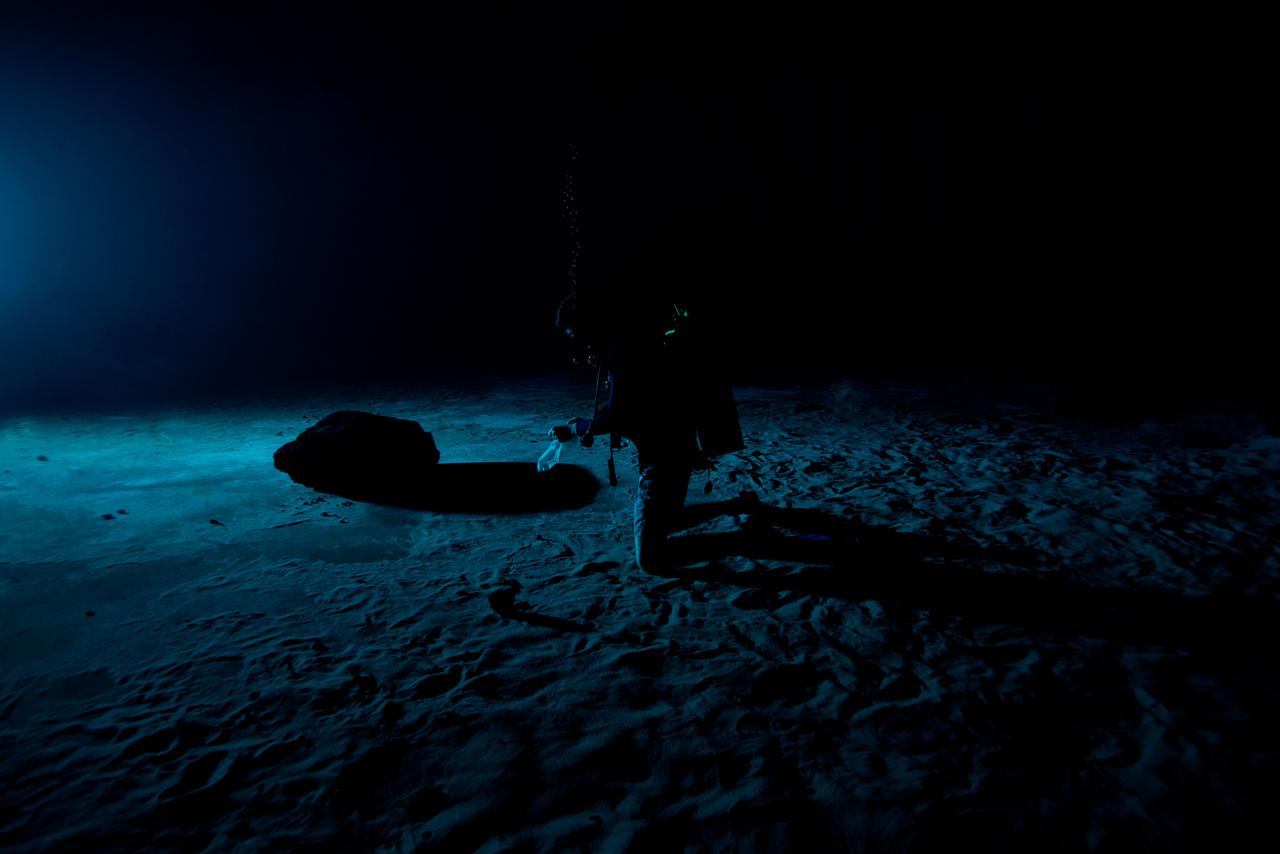
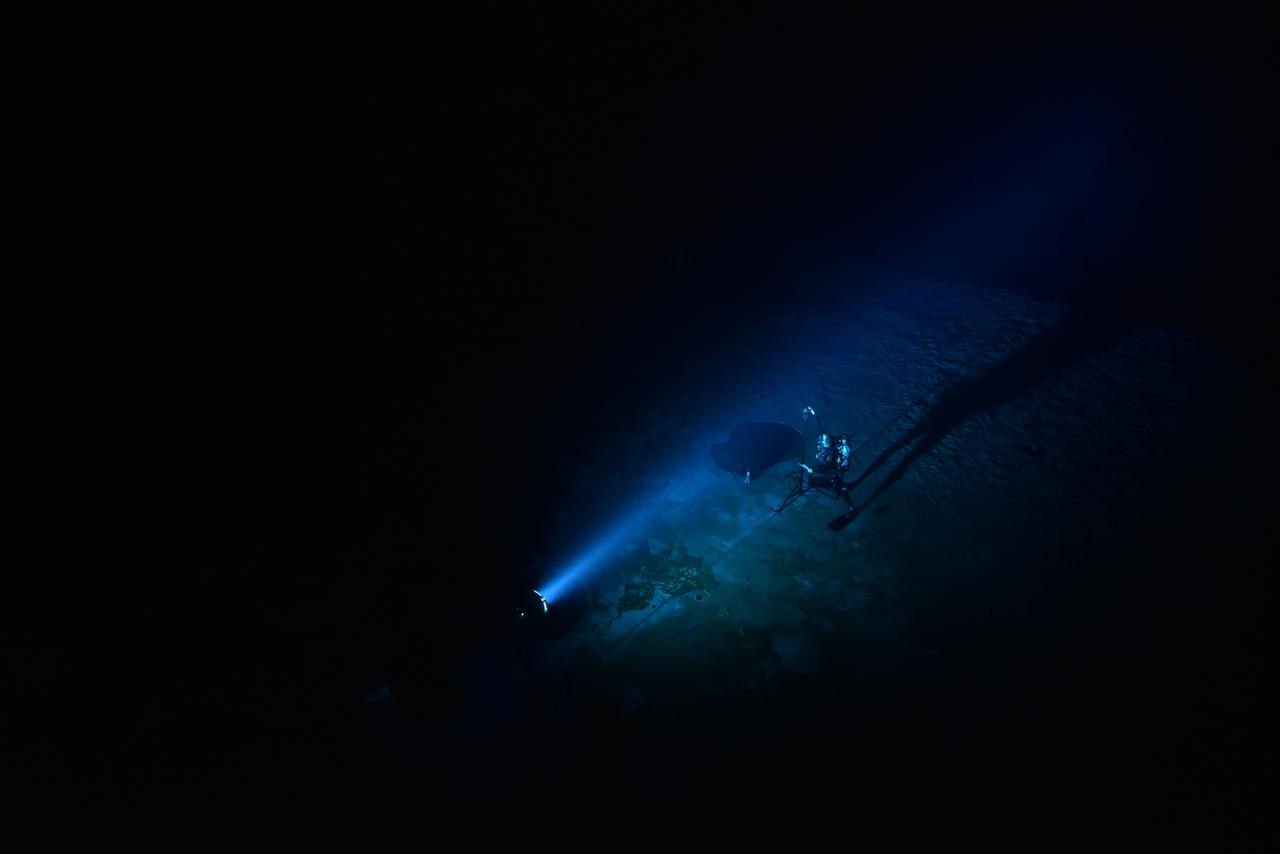
Test subjects performing subjective assessment of underwater lamp source during NBL Preliminary Lunar Lighting Evaluation. Divers at the Neutral Buoyancy Laboratory (NBL) in Houston are setting the stage for future Moonwalk training by simulating lunar lighting conditions. At the Lunar South Pole, the Sun will remain no more than a few degrees above the horizon, resulting in extremely long and dark shadows. To prepare astronauts for these challenging lighting conditions, the team at the NBL has begun preliminary evaluations of lunar lighting solutions at the bottom of the 40-foot deep pool. This testing and evaluation involved turning off all the lights in the facility, installing black curtains on the pool walls to minimize reflections, and using a powerful underwater cinematic lamp, to get the conditions just right ahead of upcoming training for astronauts.
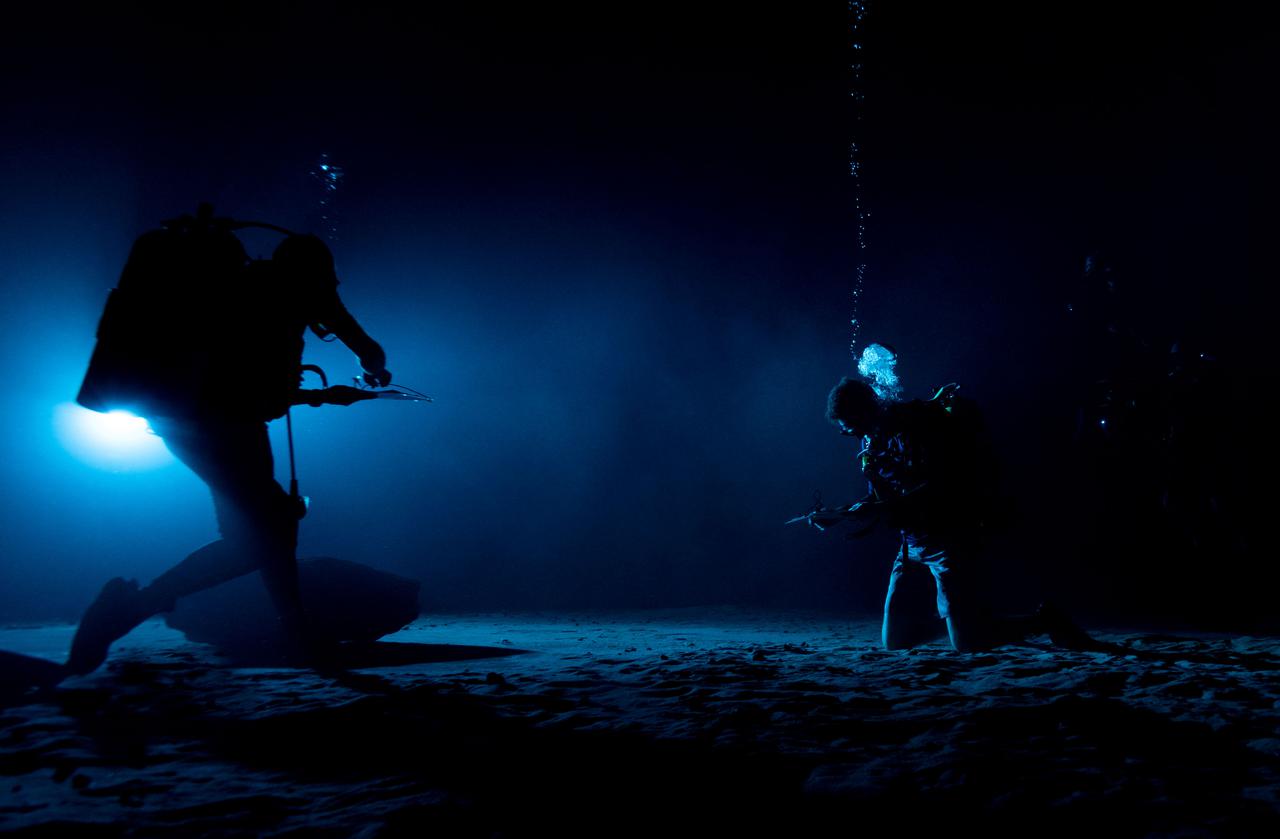
Test subjects performing subjective assessment of underwater lamp source during NBL Preliminary Lunar Lighting Evaluation. Divers at the Neutral Buoyancy Laboratory (NBL) in Houston are setting the stage for future Moonwalk training by simulating lunar lighting conditions. At the Lunar South Pole, the Sun will remain no more than a few degrees above the horizon, resulting in extremely long and dark shadows. To prepare astronauts for these challenging lighting conditions, the team at the NBL has begun preliminary evaluations of lunar lighting solutions at the bottom of the 40-foot deep pool. This testing and evaluation involved turning off all the lights in the facility, installing black curtains on the pool walls to minimize reflections, and using a powerful underwater cinematic lamp, to get the conditions just right ahead of upcoming training for astronauts.
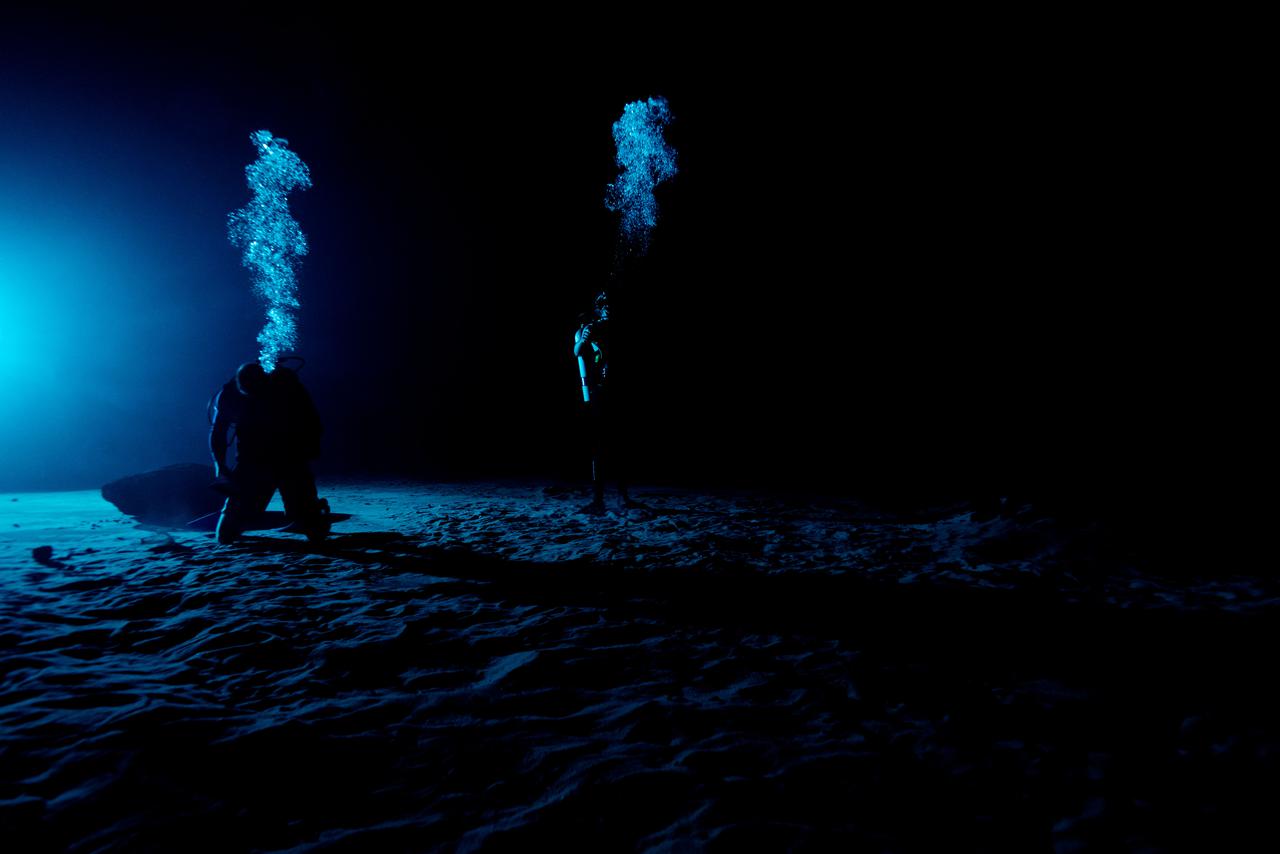
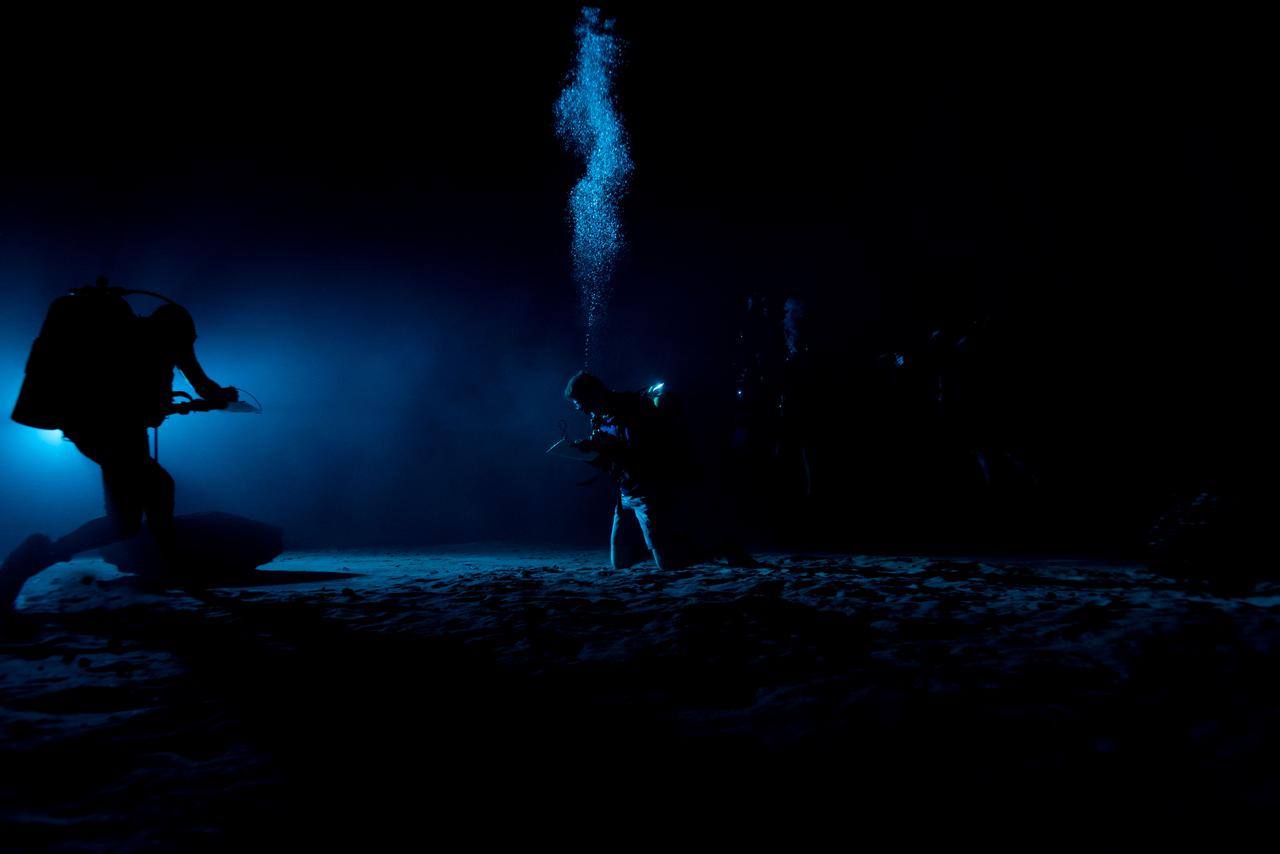
Test subjects performing mission-relevant tasks and evaluating shadow quality during NBL Preliminary Lunar Lighting Evaluation. Divers at the Neutral Buoyancy Laboratory (NBL) in Houston are setting the stage for future Moonwalk training by simulating lunar lighting conditions. At the Lunar South Pole, the Sun will remain no more than a few degrees above the horizon, resulting in extremely long and dark shadows. To prepare astronauts for these challenging lighting conditions, the team at the NBL has begun preliminary evaluations of lunar lighting solutions at the bottom of the 40-foot deep pool. This testing and evaluation involved turning off all the lights in the facility, installing black curtains on the pool walls to minimize reflections, and using a powerful underwater cinematic lamp, to get the conditions just right ahead of upcoming training for astronauts.
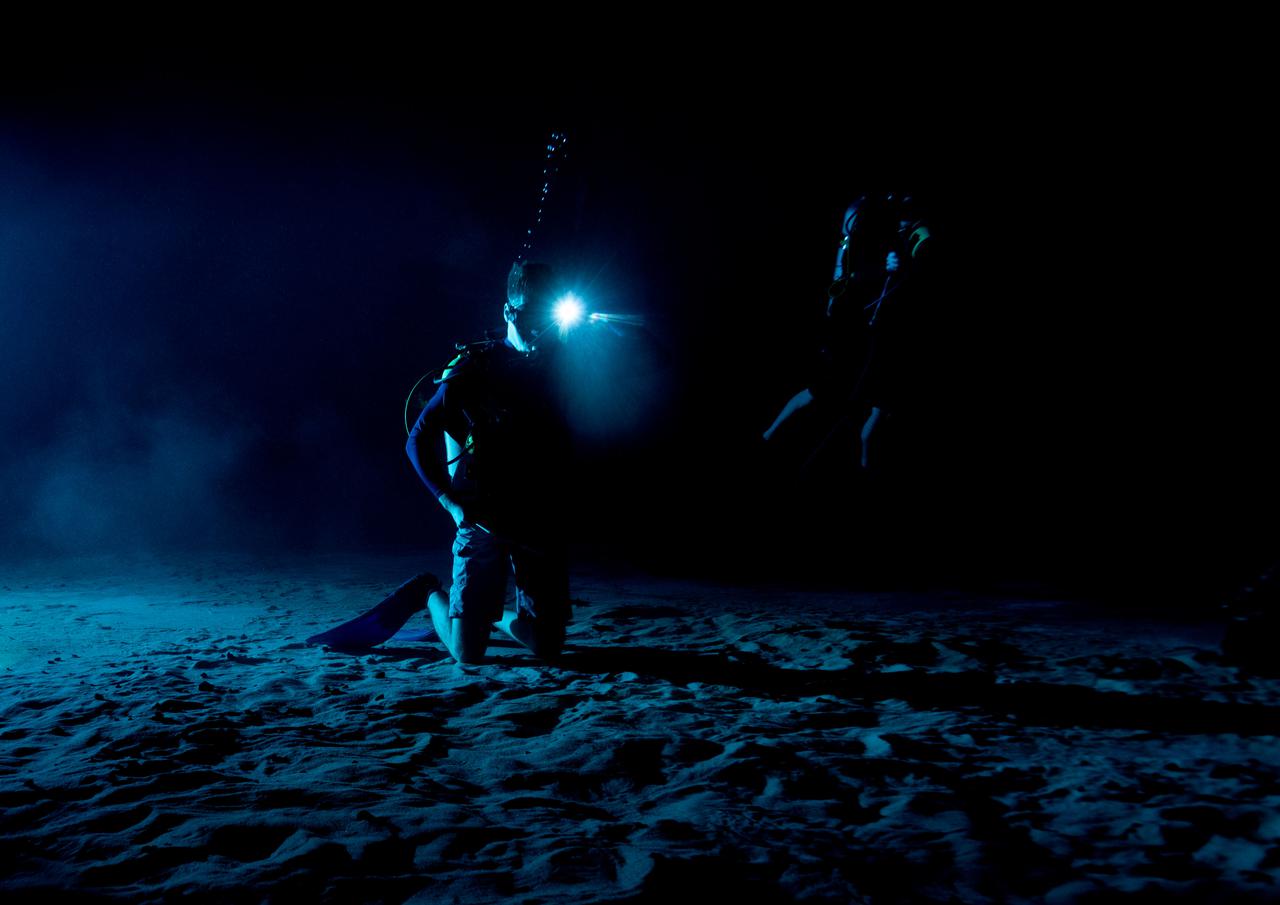
Test subjects performing subjective assessment of supplemental lighting during NBL Preliminary Lunar Lighting Evaluation. Divers at the Neutral Buoyancy Laboratory (NBL) in Houston are setting the stage for future Moonwalk training by simulating lunar lighting conditions. At the Lunar South Pole, the Sun will remain no more than a few degrees above the horizon, resulting in extremely long and dark shadows. To prepare astronauts for these challenging lighting conditions, the team at the NBL has begun preliminary evaluations of lunar lighting solutions at the bottom of the 40-foot deep pool. This testing and evaluation involved turning off all the lights in the facility, installing black curtains on the pool walls to minimize reflections, and using a powerful underwater cinematic lamp, to get the conditions just right ahead of upcoming training for astronauts.
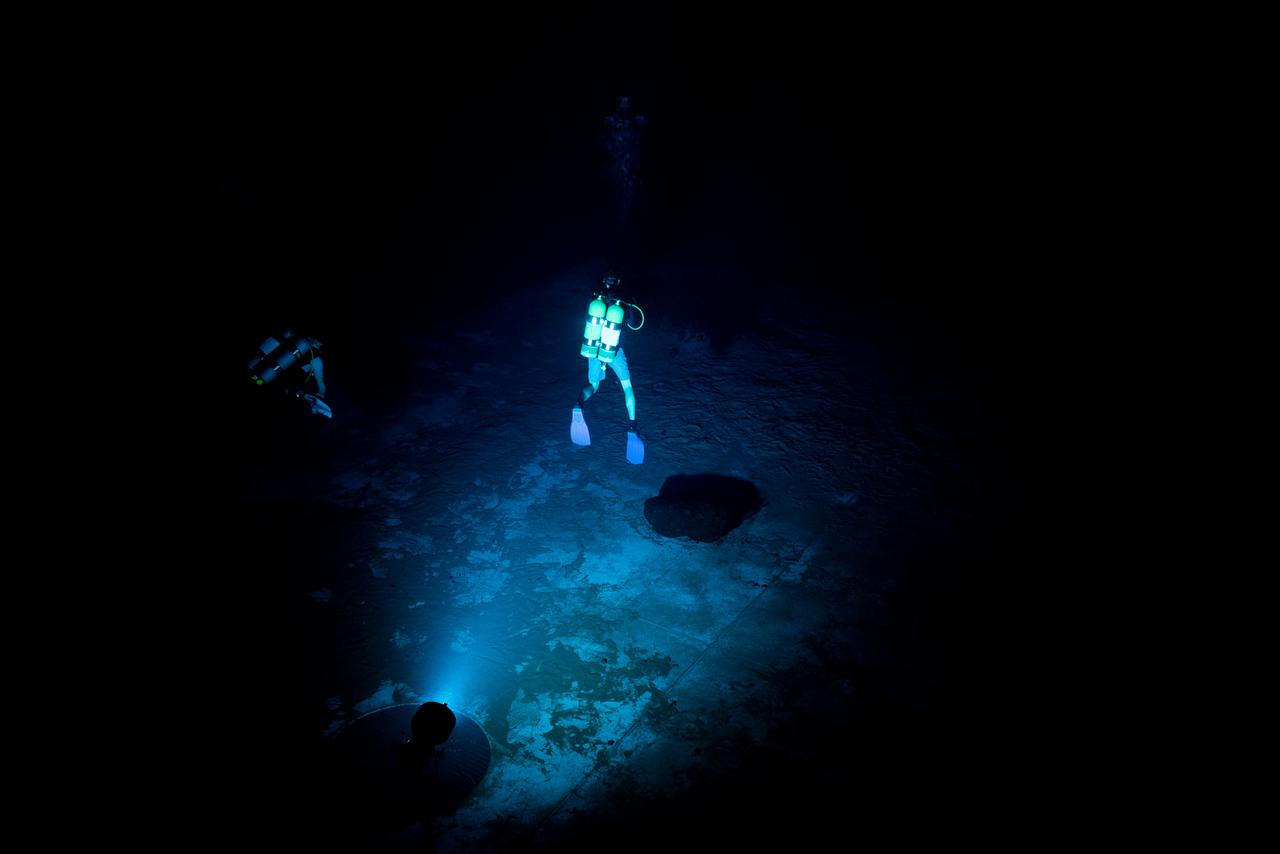
Quantitative evaluation of light source by NBL diver during NBL Preliminary Lunar Lighting Evaluation. Divers at the Neutral Buoyancy Laboratory (NBL) in Houston are setting the stage for future Moonwalk training by simulating lunar lighting conditions. At the Lunar South Pole, the Sun will remain no more than a few degrees above the horizon, resulting in extremely long and dark shadows. To prepare astronauts for these challenging lighting conditions, the team at the NBL has begun preliminary evaluations of lunar lighting solutions at the bottom of the 40-foot deep pool. This testing and evaluation involved turning off all the lights in the facility, installing black curtains on the pool walls to minimize reflections, and using a powerful underwater cinematic lamp, to get the conditions just right ahead of upcoming training for astronauts.
Quantitative evaluation of light source by NBL diver during NBL Preliminary Lunar Lighting Evaluation. Divers at the Neutral Buoyancy Laboratory (NBL) in Houston are setting the stage for future Moonwalk training by simulating lunar lighting conditions. At the Lunar South Pole, the Sun will remain no more than a few degrees above the horizon, resulting in extremely long and dark shadows. To prepare astronauts for these challenging lighting conditions, the team at the NBL has begun preliminary evaluations of lunar lighting solutions at the bottom of the 40-foot deep pool. This testing and evaluation involved turning off all the lights in the facility, installing black curtains on the pool walls to minimize reflections, and using a powerful underwater cinematic lamp, to get the conditions just right ahead of upcoming training for astronauts.
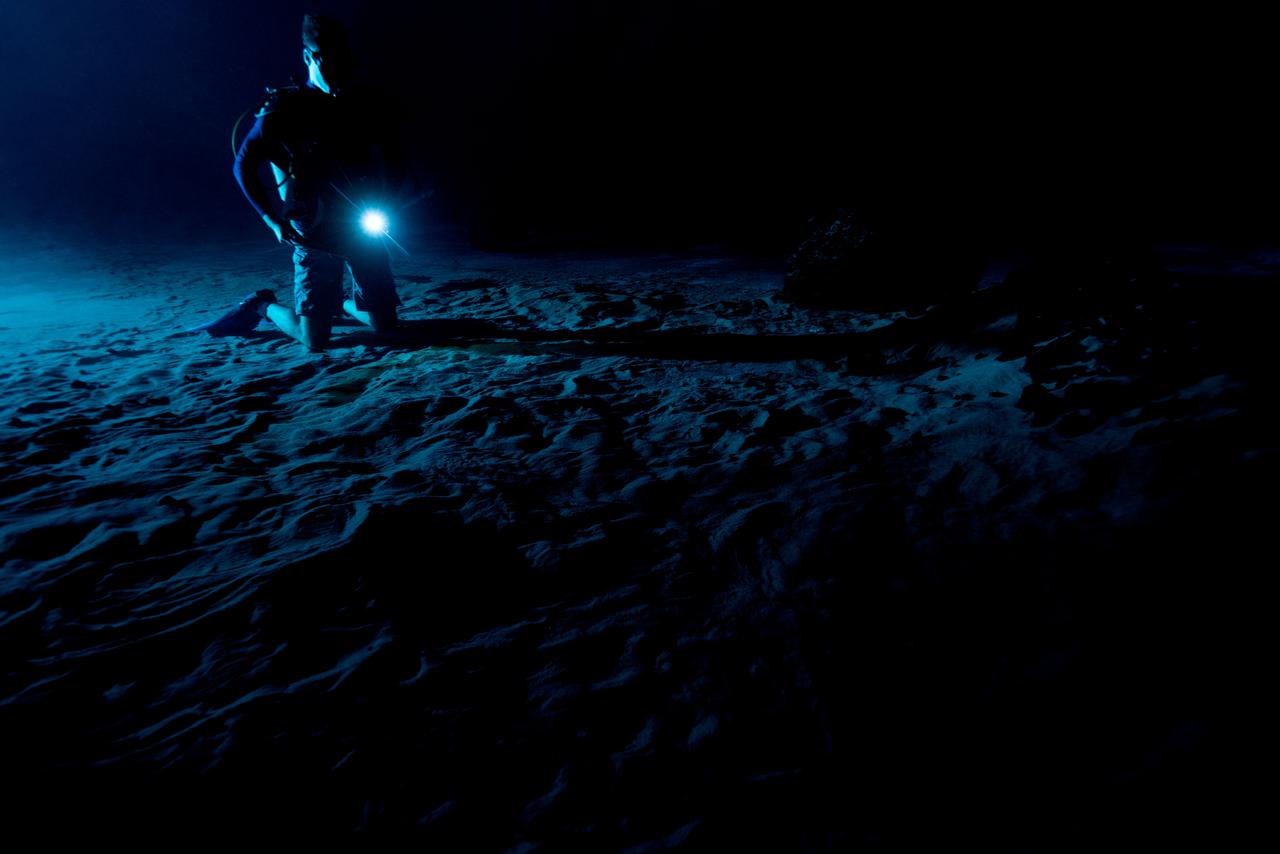
Test subjects performing subjective assessment of supplemental lighting during NBL Preliminary Lunar Lighting Evaluation. Divers at the Neutral Buoyancy Laboratory (NBL) in Houston are setting the stage for future Moonwalk training by simulating lunar lighting conditions. At the Lunar South Pole, the Sun will remain no more than a few degrees above the horizon, resulting in extremely long and dark shadows. To prepare astronauts for these challenging lighting conditions, the team at the NBL has begun preliminary evaluations of lunar lighting solutions at the bottom of the 40-foot deep pool. This testing and evaluation involved turning off all the lights in the facility, installing black curtains on the pool walls to minimize reflections, and using a powerful underwater cinematic lamp, to get the conditions just right ahead of upcoming training for astronauts.
Test subjects performing subjective assessment of underwater lamp source during NBL Preliminary Lunar Lighting Evaluation. Divers at the Neutral Buoyancy Laboratory (NBL) in Houston are setting the stage for future Moonwalk training by simulating lunar lighting conditions. At the Lunar South Pole, the Sun will remain no more than a few degrees above the horizon, resulting in extremely long and dark shadows. To prepare astronauts for these challenging lighting conditions, the team at the NBL has begun preliminary evaluations of lunar lighting solutions at the bottom of the 40-foot deep pool. This testing and evaluation involved turning off all the lights in the facility, installing black curtains on the pool walls to minimize reflections, and using a powerful underwater cinematic lamp, to get the conditions just right ahead of upcoming training for astronauts.

The preliminary design for the Space Experiment Research and Processing Laboratory (SERPL) at Kennedy Space Center is shown in this artist's rendition. The SERPL is a planned 100,000-square-foot laboratory that will provide expanded and upgraded facilities for hosting International Space Station experiment processing. In addition, it will provide better support for other biological and life sciences payload processing at KSC. It will serve as a magnet facility for a planned 400-acre Space Station Commerce Park
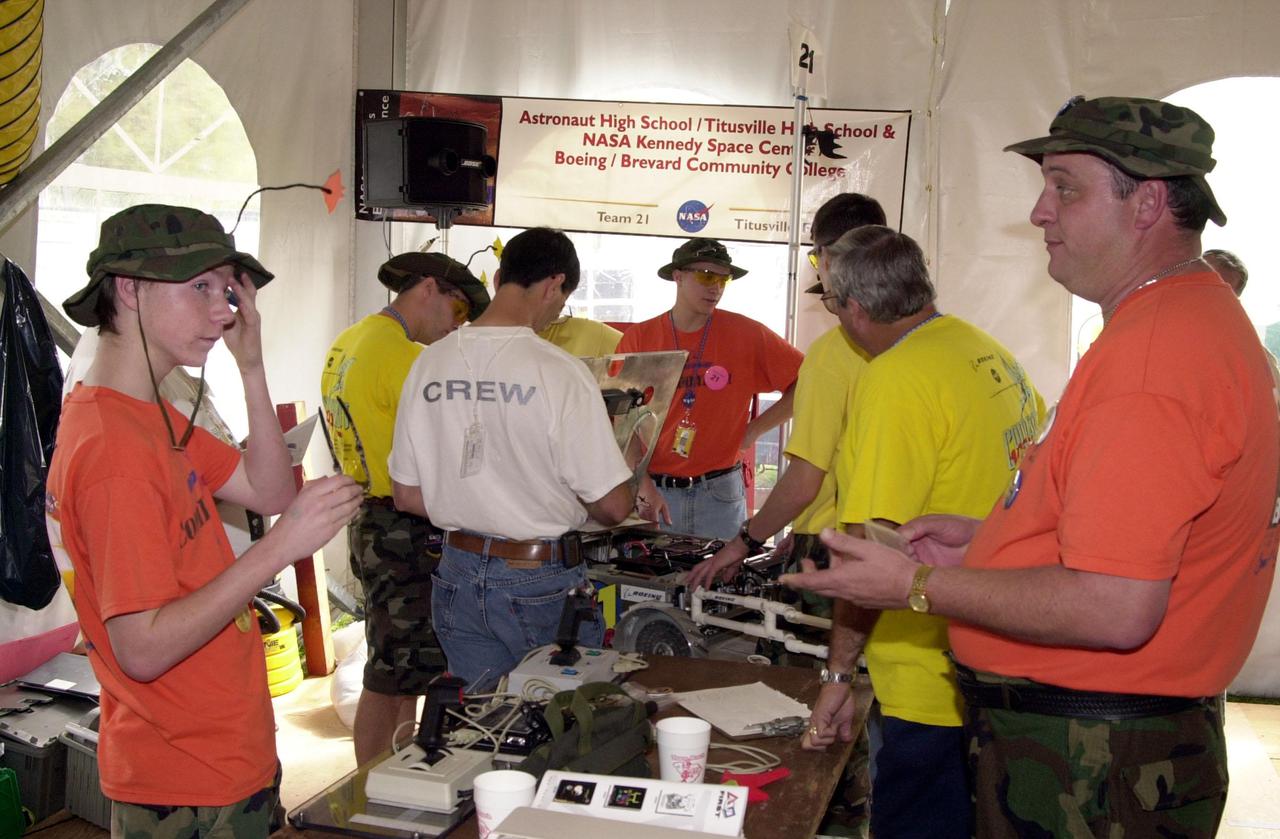
Getting ready for preliminary heats, students from Astronaut and Titusville High Schools work on their robot to compete in the NASA_KSC FIRST Southeastern Regional event. FIRST (For Inspiration and Recognition of Science and Technology) events are held nationwide, pitting the student-built robots against each other and the clock on a playing field. Many teams are sponsored by corporations and academic institutions. There are 27 teams throughout the State of Florida who are competing. KSC, which sponsors nine teams, has held the regional event for two years.
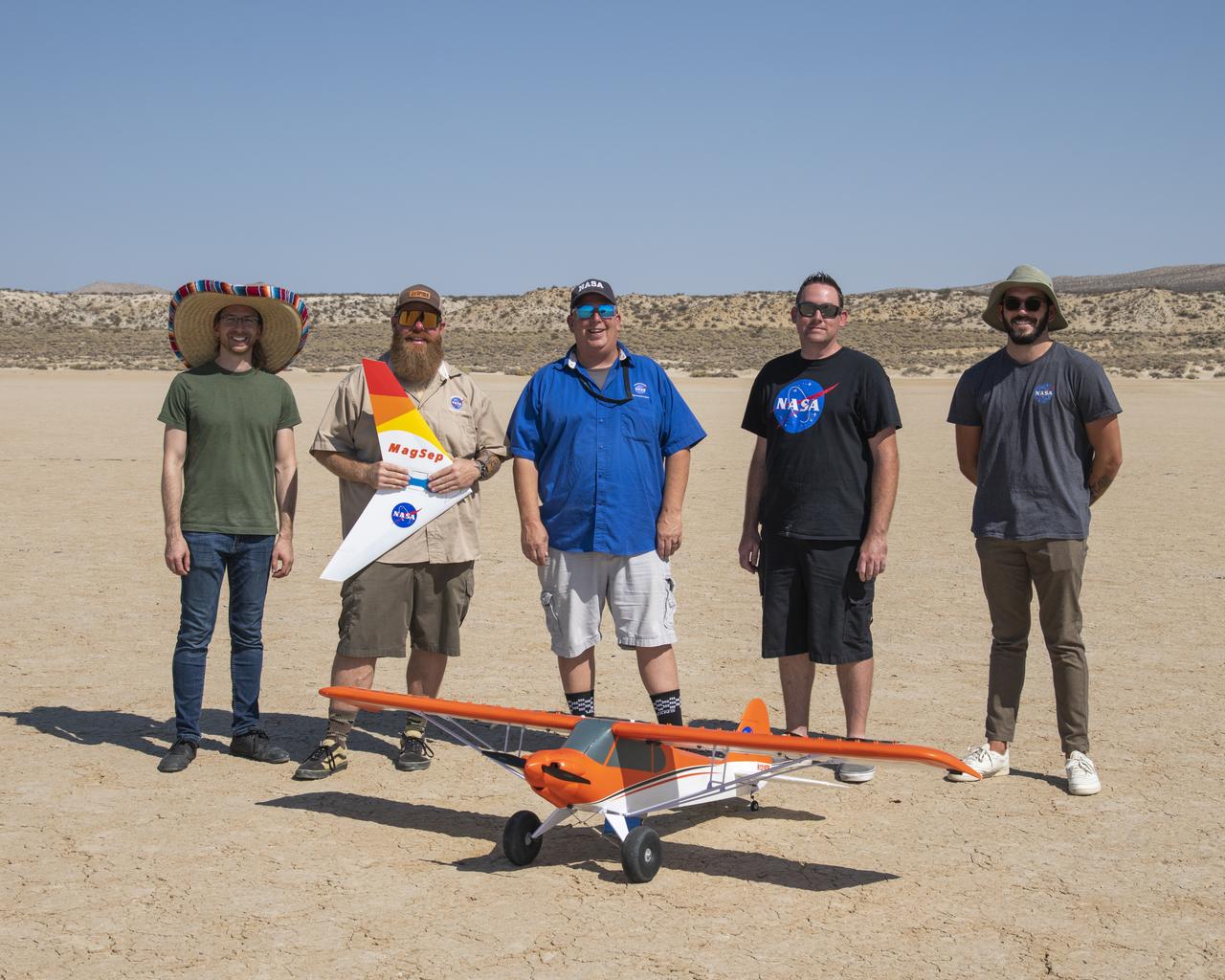
A Preliminary Research Aerodynamic Design to Land on Mars, or Prandtl-M, glider was air launched Sept. 7 using a magnetic release mechanism mounted on a Carbon-Z Cub. The team, based at NASA's Armstrong Flight Research Center in Edwards, California, includes, from left, Paul Bean, Justin Hall, Red Jensen, Justin Link, and Nathan Allaire.
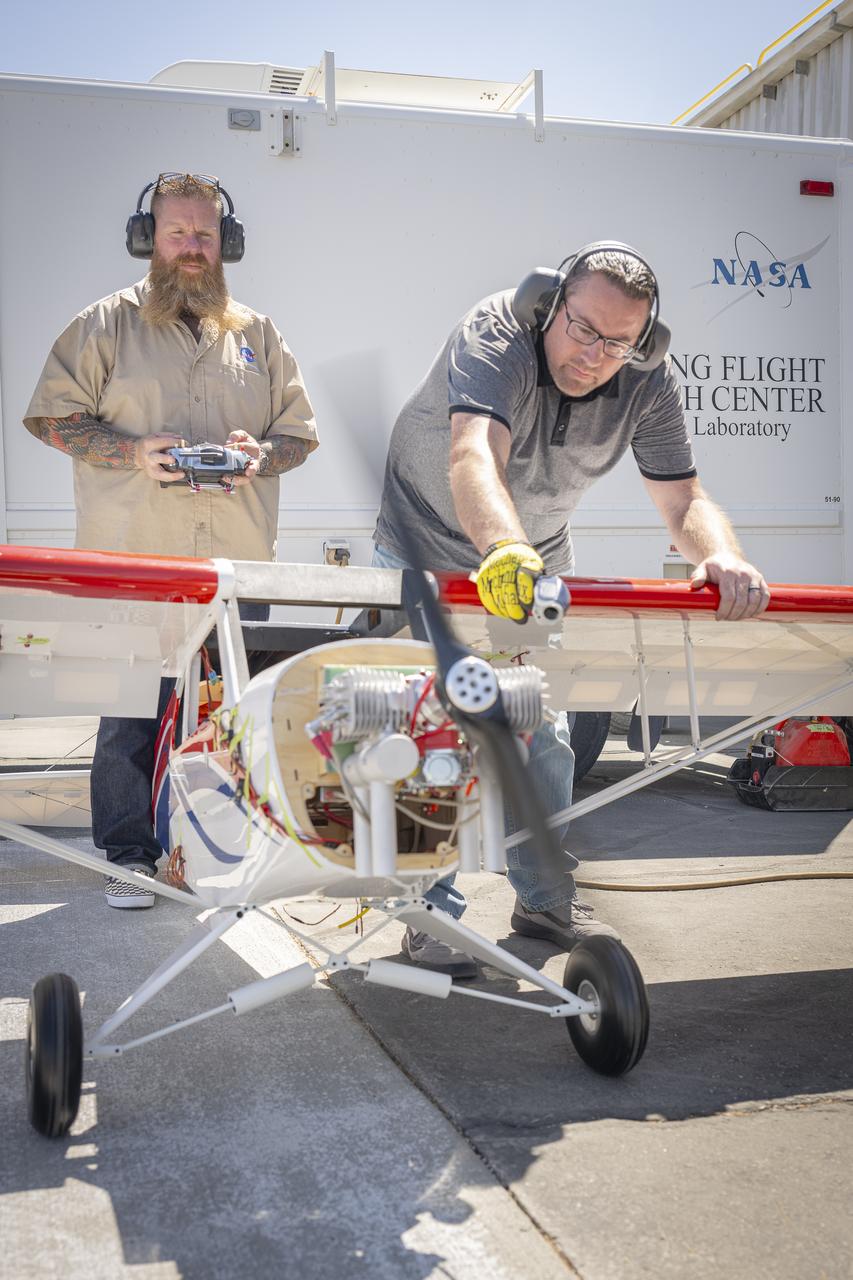
Justin Hall, left, controls a subscale aircraft as Justin Link holds the aircraft in place during preliminary engine tests on Friday, Sept. 12, 2025, at NASA’s Armstong Flight Research Center in Edwards, California. Hall is chief pilot at the center’s Dale Reed Subscale Flight Research Laboratory and Link is a pilot for small uncrewed aircraft systems.

The load pad bonding process for the vertical tails was a preliminary step in the process to test the F/A-18E from the Naval Air Systems Command (NAVAIR) in Patuxent River, Maryland. The aircraft is in NASA’s Armstrong Flight Research Center Flight Loads Laboratory in Edwards, California, for the center’s biggest load calibrations tests. This testing is needed before the aircraft can serve as a test vehicle for determining if it can safely manage maneuvers and proposed upgrades.
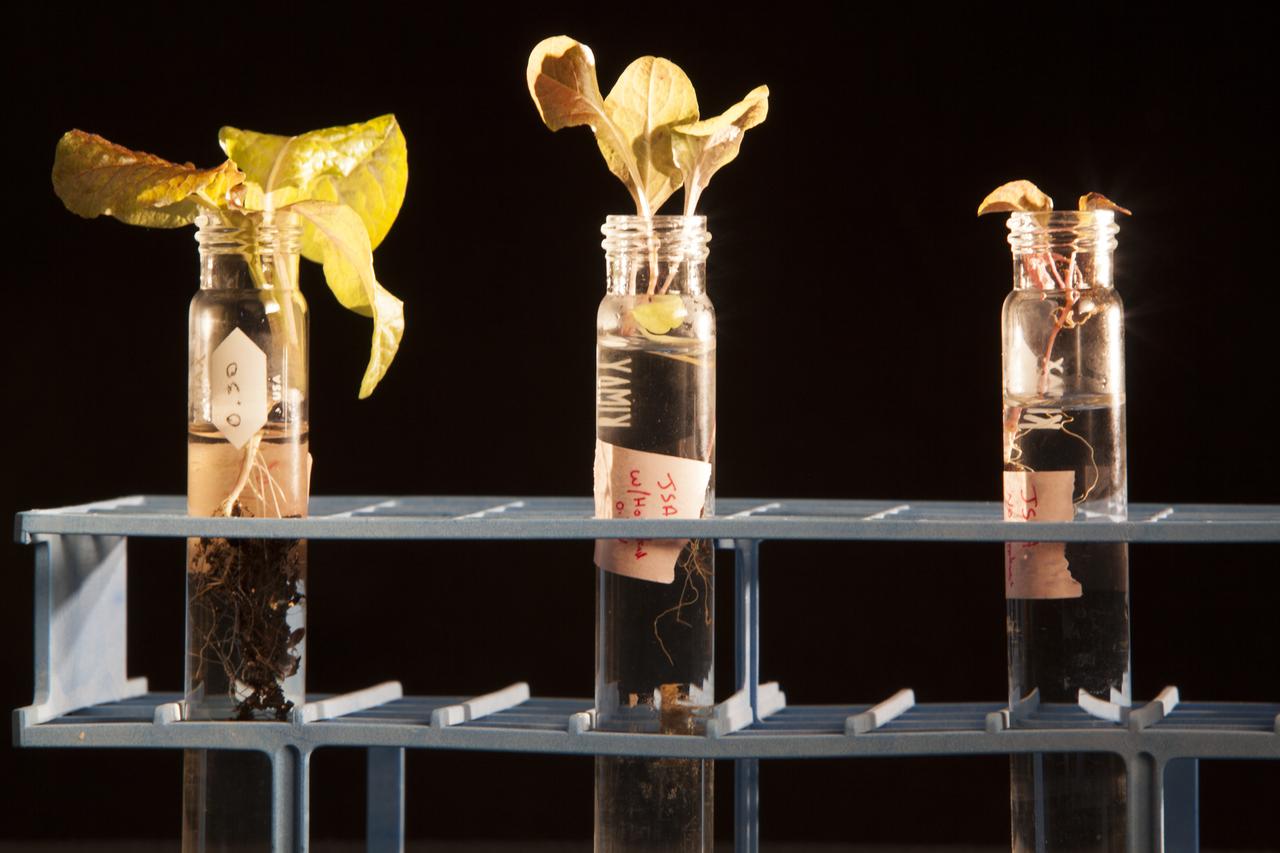
NASA’s Kennedy Space Center is partnering with the Florida Tech Buzz Aldrin Space Institute in Melbourne, Florida, to collaborate on research studying the performance of crop species grown in a simulated “Martian garden” — a proving ground for a potential future farm on the Red Planet. Plants were grown in a preliminary experiment comparing (left to right) potting soil, regolith simulant with added nutrients, and simulant without nutrients.
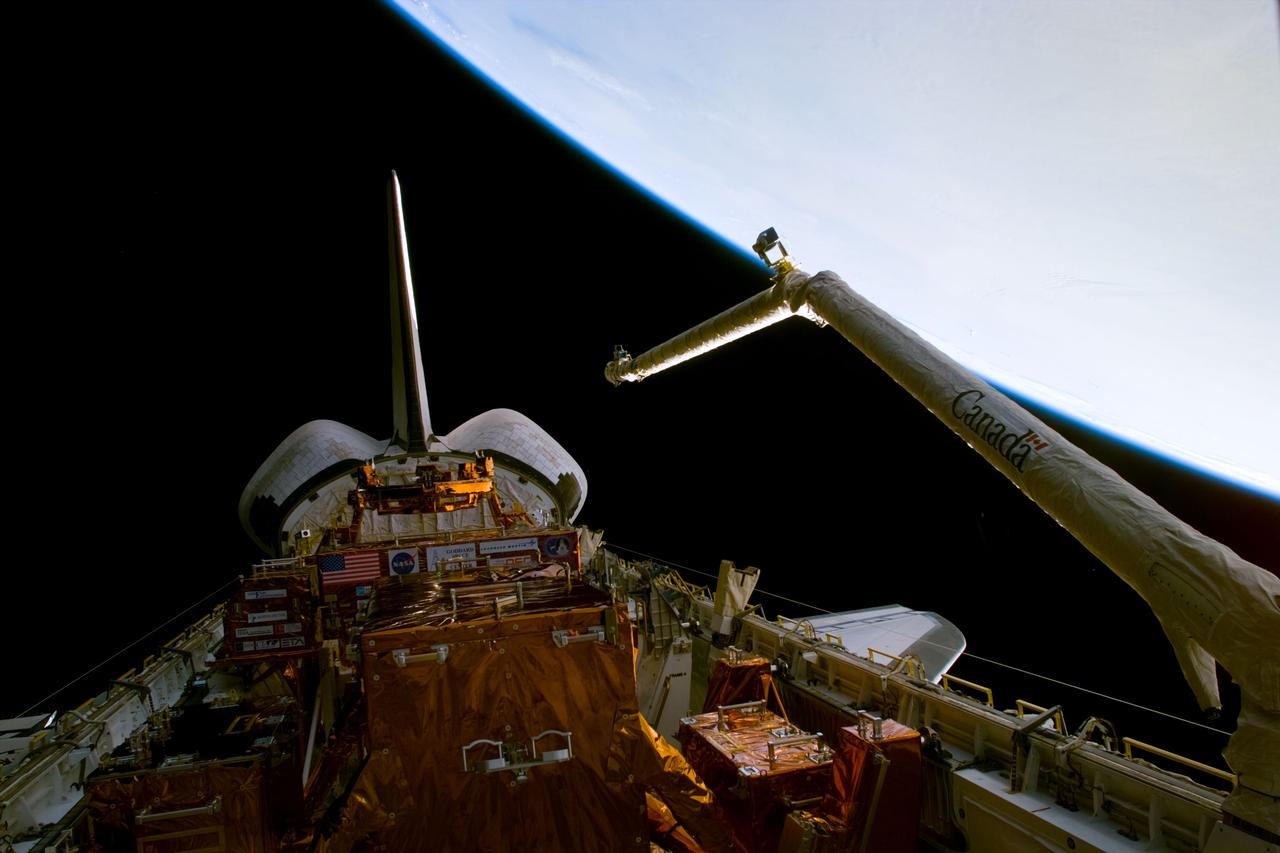
S82-E-5014 (12 Feb. 1997) --- Space Shuttle Discovery's Remote Manipulator System (RMS) gets a preliminary workout in preparation for a busy work load later in the week. The crewmembers are preparing for a scheduled Extravehicular Activity (EVA) with the Hubble Space Telescope (HST), which will be pulled into the Space Shuttle Discovery's cargo bay with the aid of the Remote Manipulator System (RMS). A series of EVA's will be required to properly service the giant telescope. This view was taken with an Electronic Still Camera (ESC).
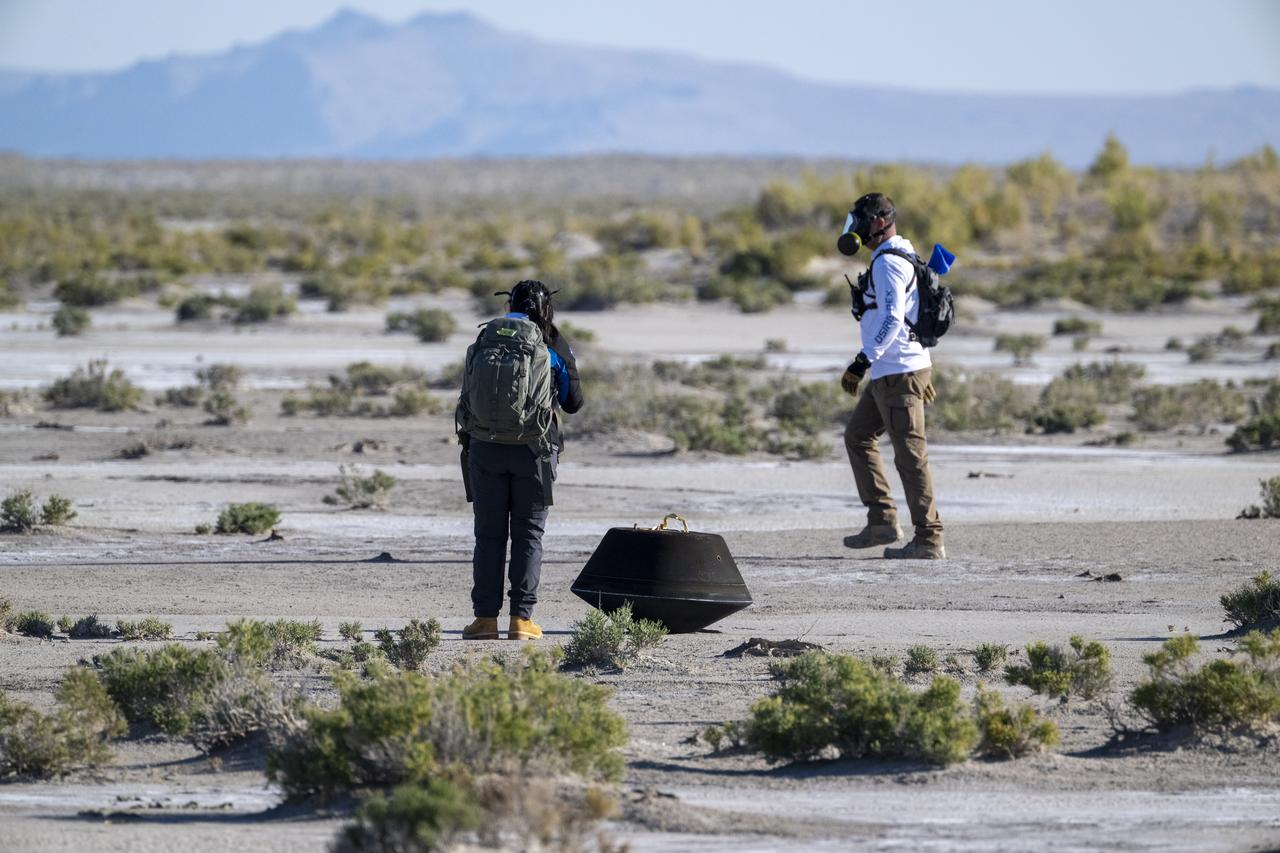
Lockheed Martin System Safety Engineer Victoria Thiem, left, and On Scene Commander of Recovery Stuart Wylie, right, perform preliminary checks on the sample return capsule from NASA’s OSIRIS-REx mission, Sunday, Sept. 24, 2023, shortly after the capsule landed at the Department of Defense's Utah Test and Training Range. The sample was collected from the asteroid Bennu in October 2020 by NASA’s OSIRIS-REx spacecraft. Photo Credit: (NASA/Keegan Barber)
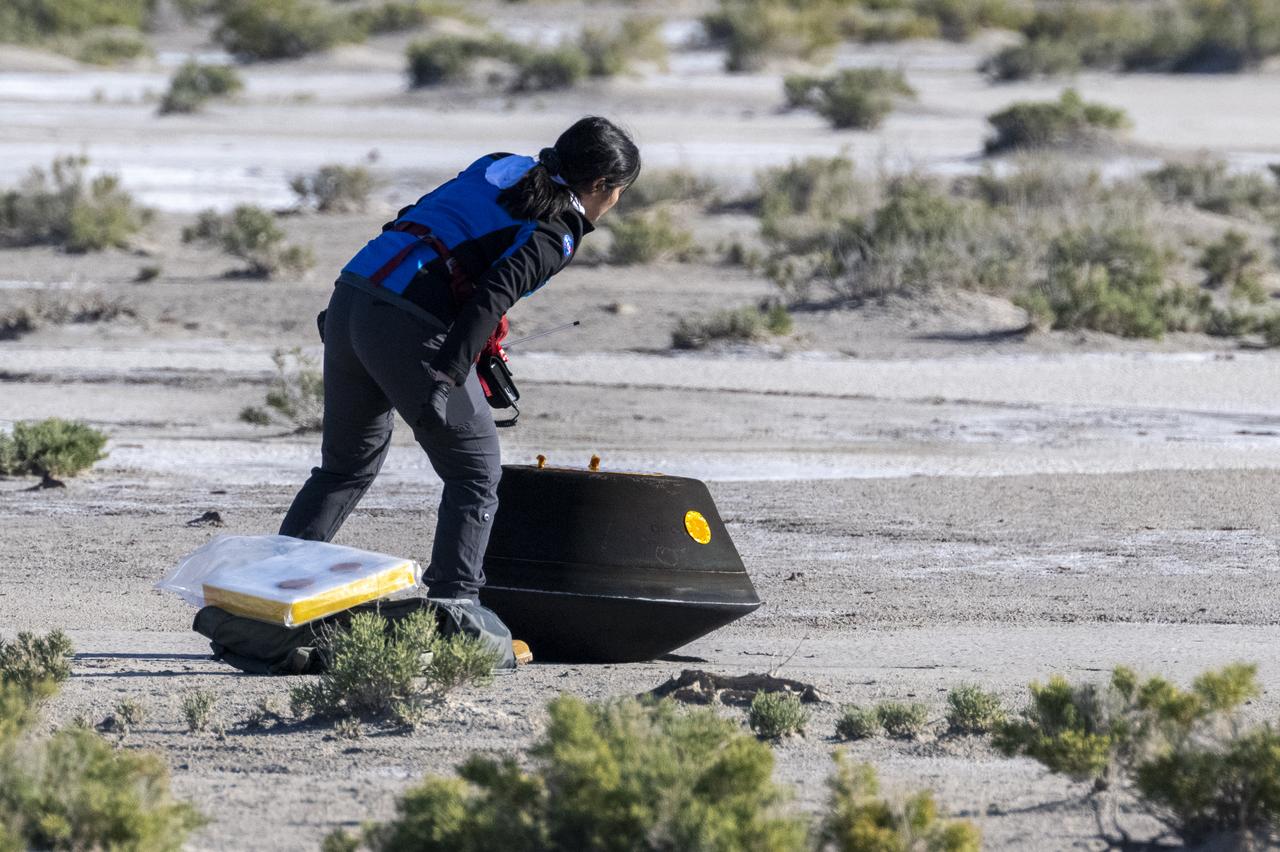
Lockheed Martin System Safety Engineer Victoria Thiem performs preliminary checks on the sample return capsule from NASA’s OSIRIS-REx mission, Sunday, Sept. 24, 2023, shortly after the capsule landed at the Department of Defense's Utah Test and Training Range. The sample was collected from the asteroid Bennu in October 2020 by NASA’s OSIRIS-REx spacecraft. Photo Credit: (NASA/Keegan Barber)
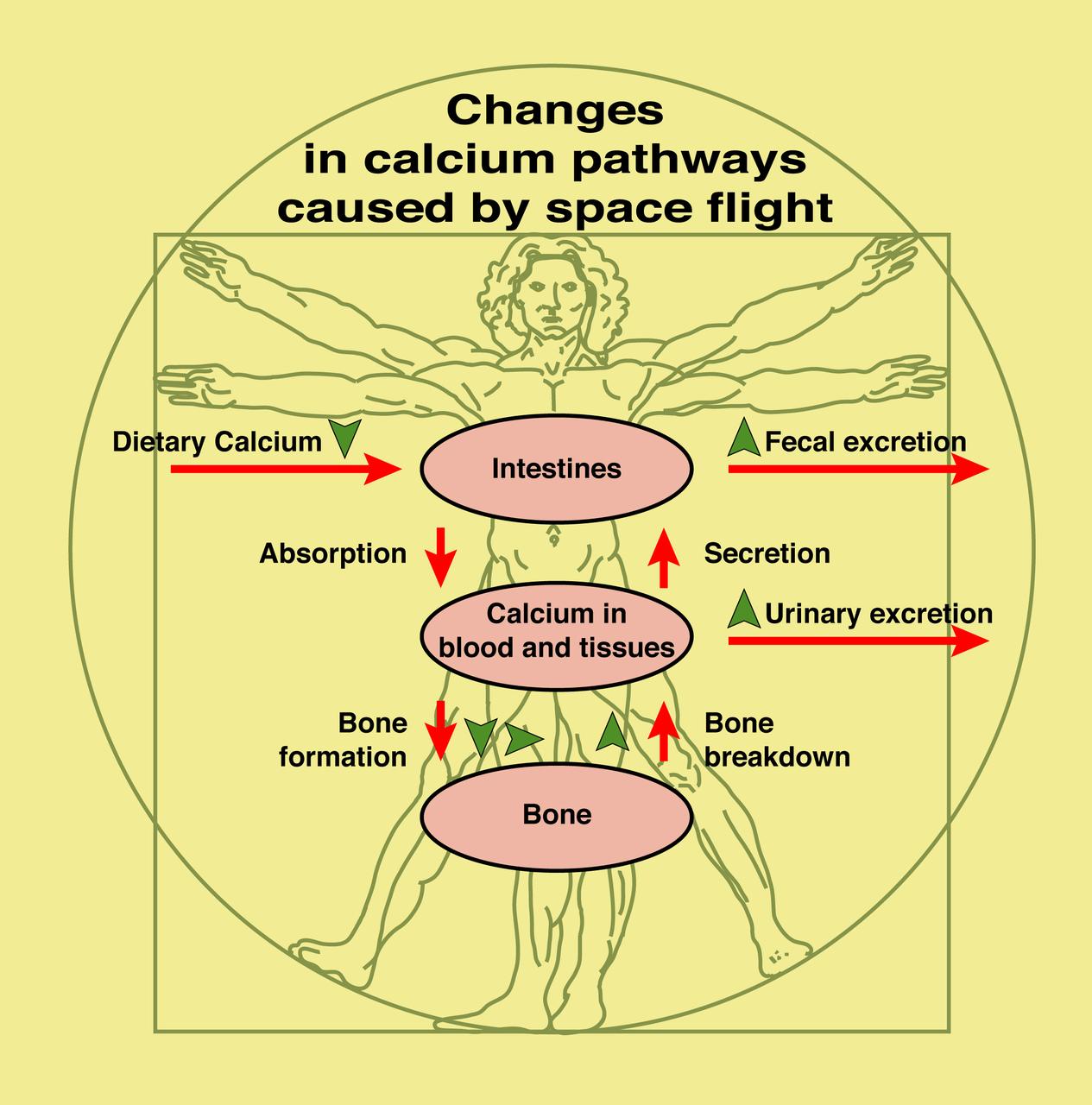
This diagram shows the normal pathways of calcium movement in the body and indicates changes (green arrows) seen during preliminary space flight experiments. Calcium plays a central role because 1) it gives strength and structure to bone and 2) all types of cells require it to function normally. To better understand how and why weightlessness induces bone loss, astronauts have participated in a study of calcium kinetics -- that is, the movement of calcium through the body, including absorption from food, and its role in the formation and breakdown of bone.
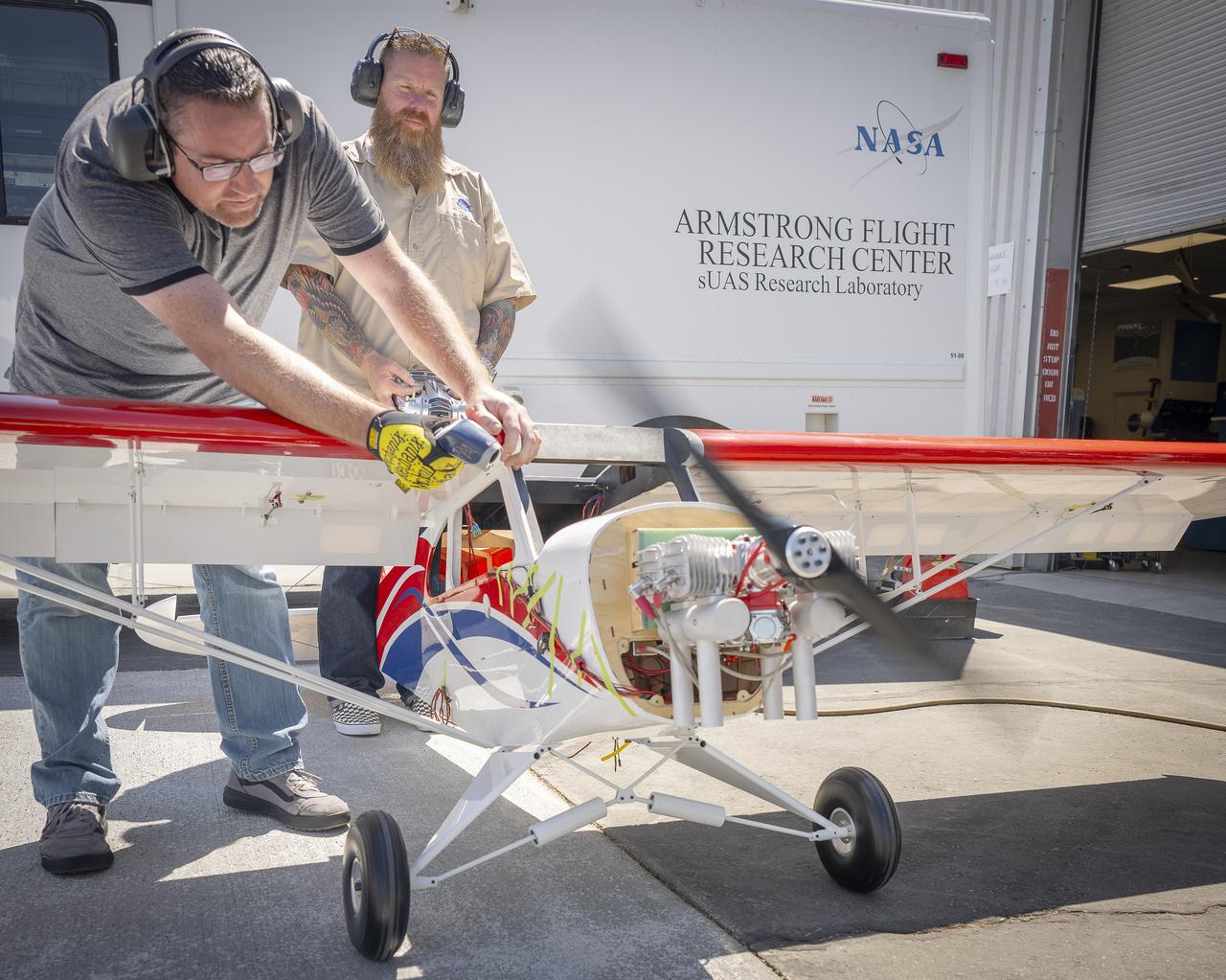
Justin Link, left, holds the subscale aircraft in place, while Justin Hall manages engine speed during preliminary engine tests on Friday, Sept. 12, 2025, at NASA’s Armstong Flight Research Center in Edwards, California. Link is a pilot for small uncrewed aircraft systems at the center’s Dale Reed Subscale Flight Research Laboratory and Hall is the chief pilot.
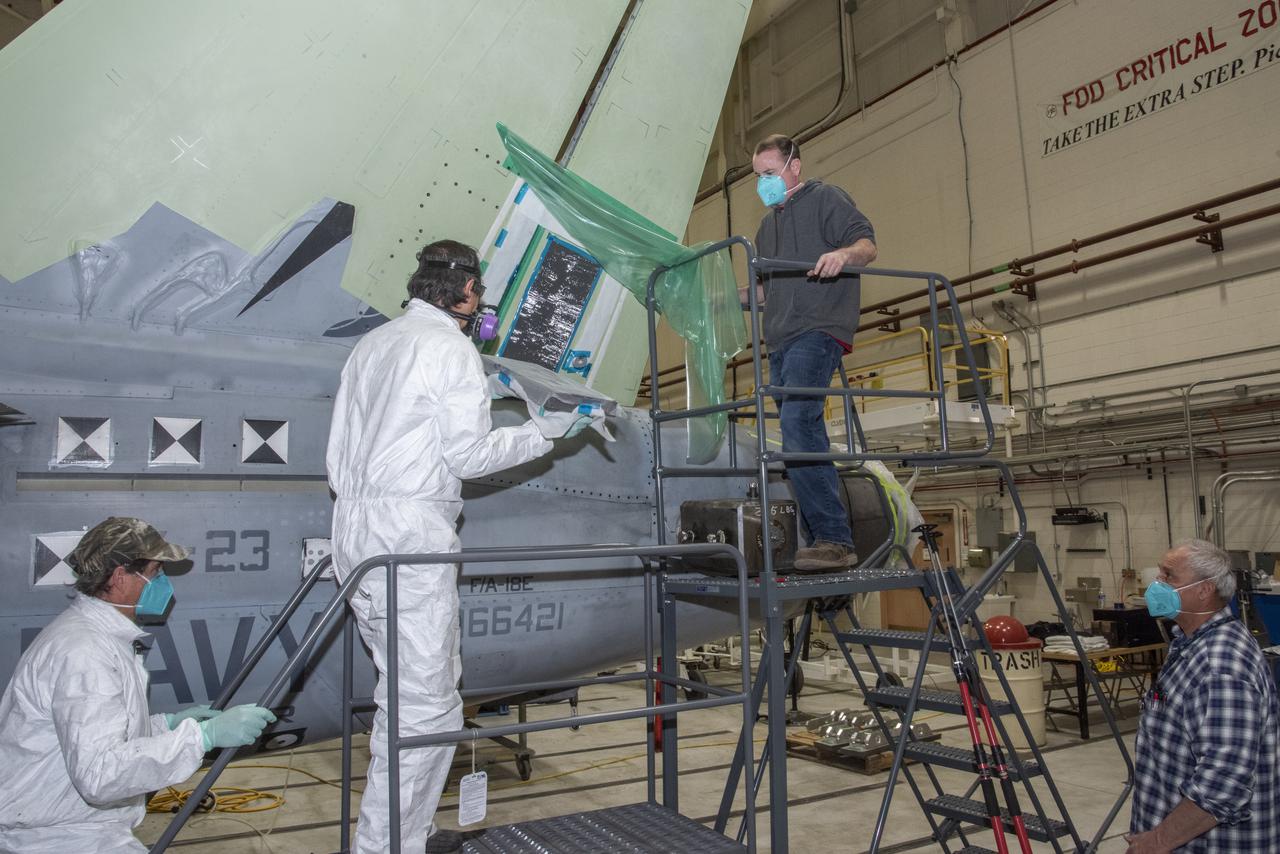
The load pad bonding process for the vertical tails was a preliminary step in the process to test the F/A-18E from the Naval Air Systems Command (NAVAIR) in Patuxent River, Maryland. The aircraft is in NASA’s Armstrong Flight Research Center Flight Loads Laboratory in Edwards, California, for the center’s biggest load calibrations tests. This testing is needed before the aircraft can serve as a test vehicle for determining if it can safely manage maneuvers and proposed upgrades.
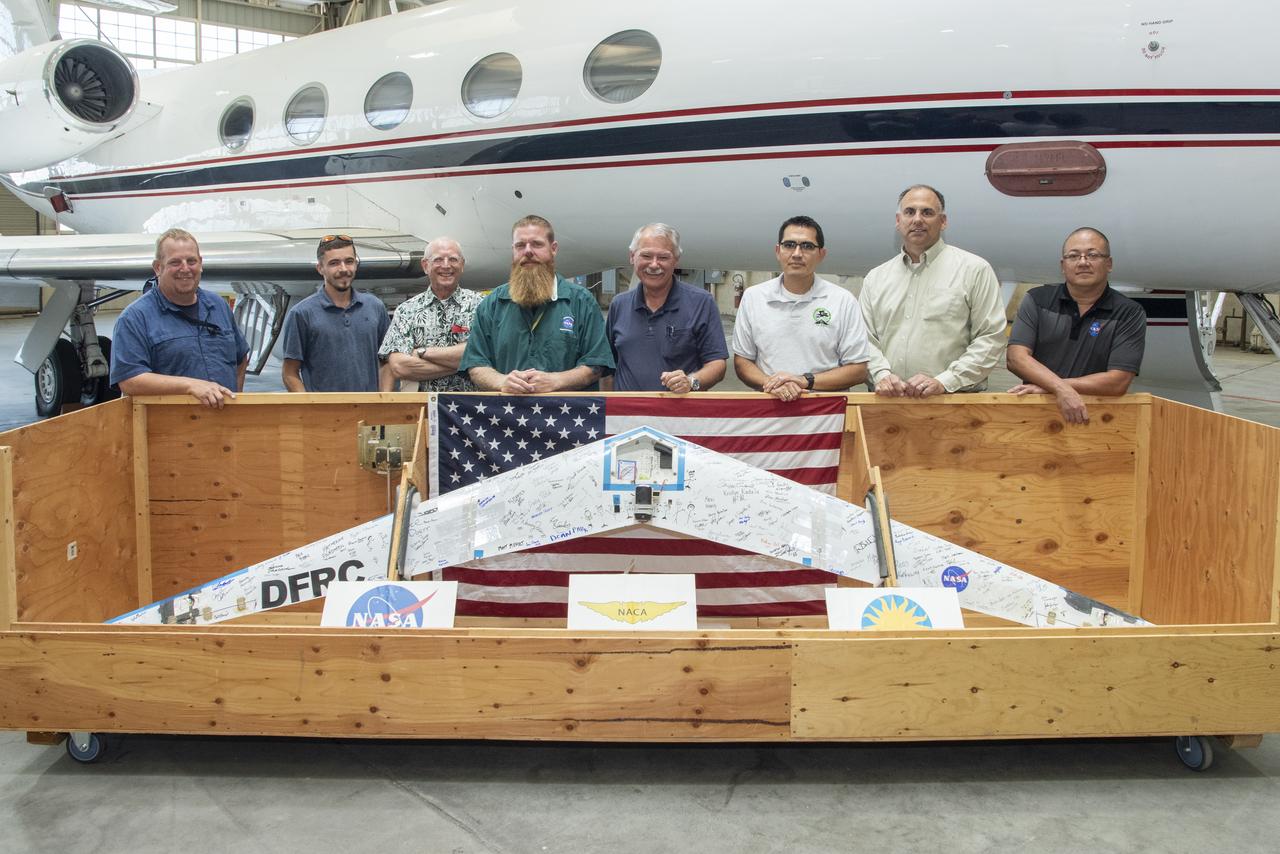
Preliminary Research Aerodynamic Design to Lower Drag, or Prandtl-D1, will be displayed in an upcoming Innovations Gallery at the National Air and Space Museum, the Smithsonian Institute. The aircraft, which flew from NASA's Armstrong Flight Research Center in California, uses a method of aircraft design that introduces a twist that results in a more efficient wing. From left are Robert "Red" Jensen, Logan Shaw, Christian Gelzer, Justin Hall, Al Bowers, Oscar Murillo, Brian Eslinger and Derek Abramson
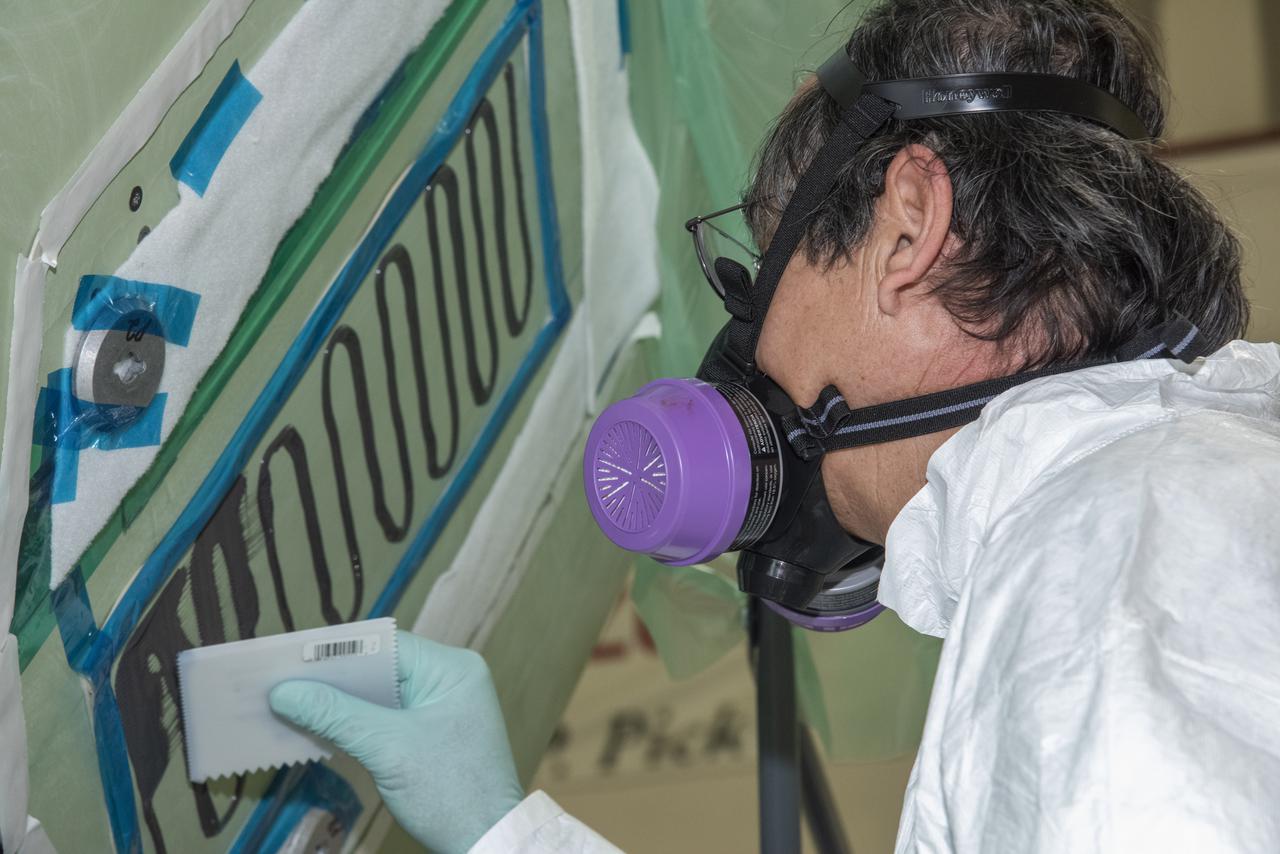
The load pad bonding process for the vertical tails was a preliminary step in the process to test the F/A-18E from the Naval Air Systems Command (NAVAIR) in Patuxent River, Maryland. The aircraft is in NASA’s Armstrong Flight Research Center Flight Loads Laboratory in Edwards, California, for the center’s biggest load calibrations tests. This testing is needed before the aircraft can serve as a test vehicle for determining if it can safely manage maneuvers and proposed upgrades.
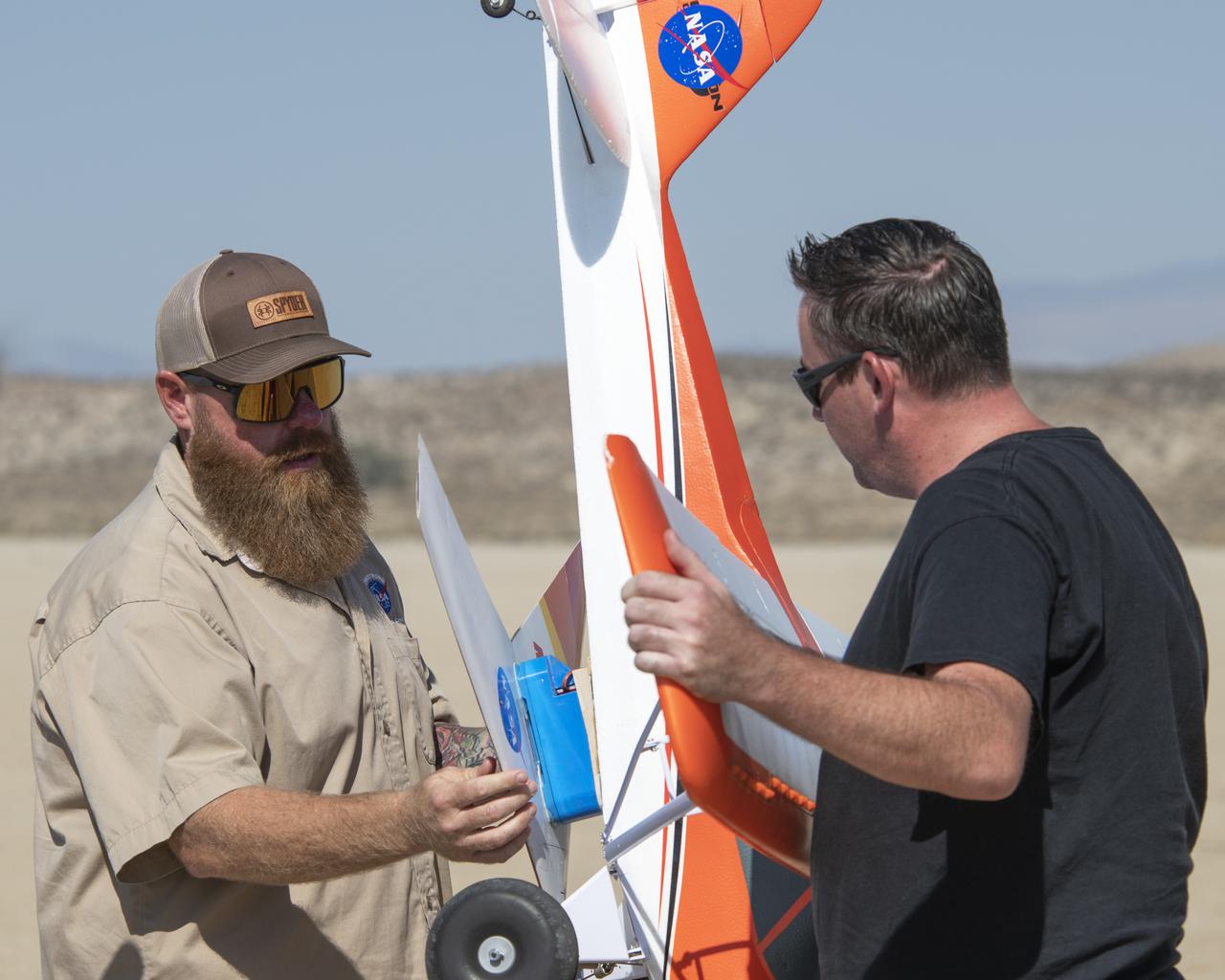
Justin Hall, left, attaches the Preliminary Research Aerodynamic Design to Land on Mars, or Prandtl-M, glider onto the Carbon-Z Cub, which Justin Link steadies. Hall and Link are part of a team from NASA's Armstrong Flight Research Center in Edwards, California, that uses an experimental magnetic release mechanism to air launch the glider.
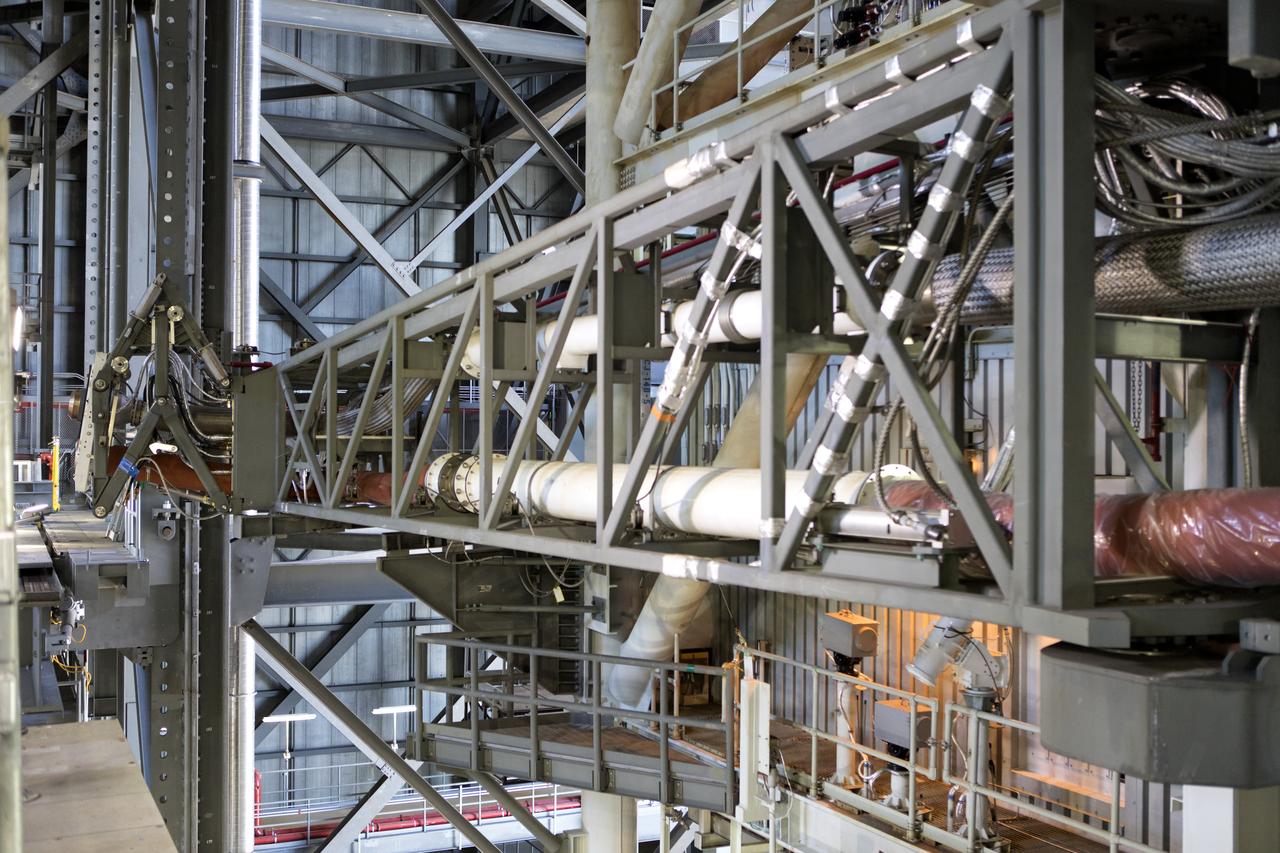
Preparations are underway to perform a preliminary swing test of the Core Stage Inter-tank Umbilical (CSITU) on the mobile launcher in High Bay 3 of the Vehicle Assembly Building on Feb. 22, 2019, at NASA's Kennedy Space Center in Florida. The CSITU is a swing-arm umbilical that will connect to the Space Launch System core stage inter-tank. It will provide conditioned air, pressurized gases and power and data connection to the core stage. The Exploration Ground Systems Program is overseeing installation of the umbilicals.
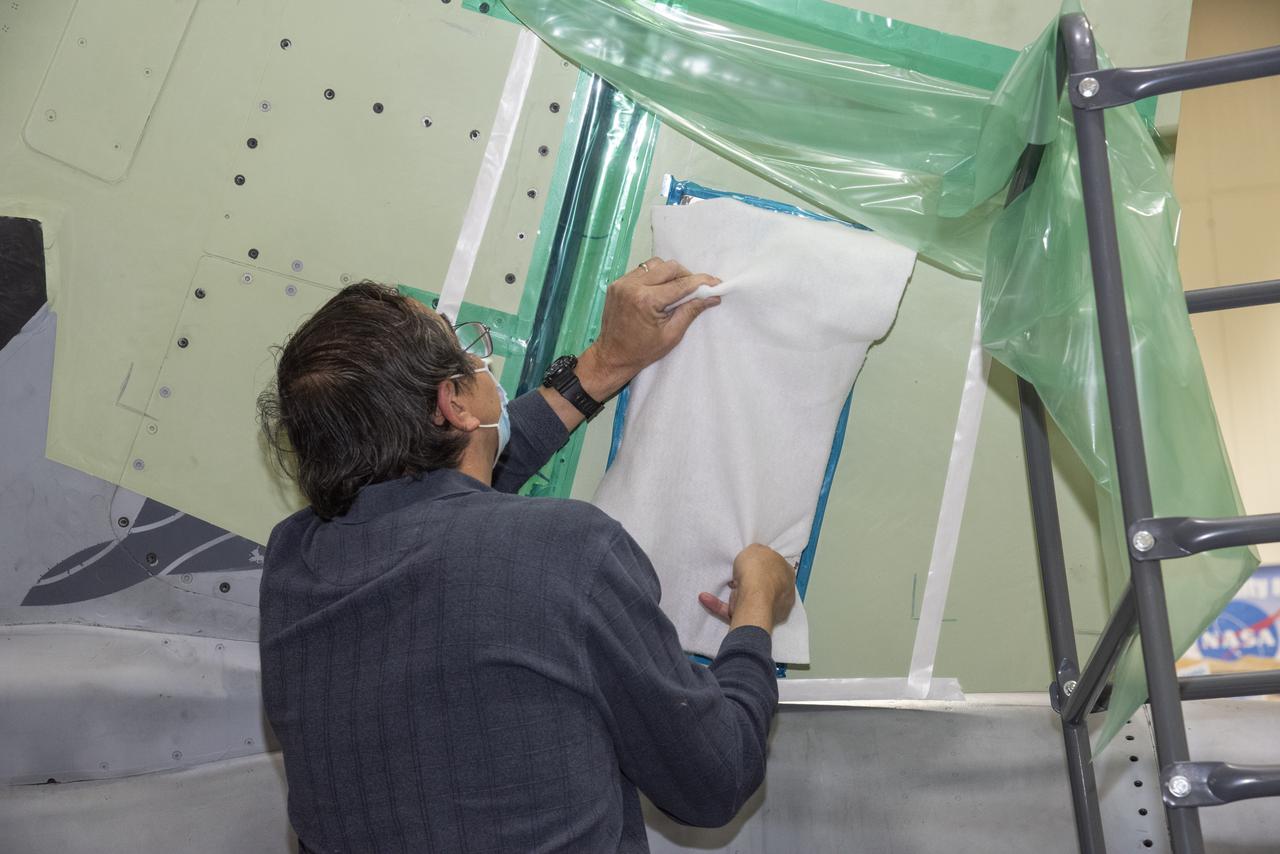
The load pad bonding process for the vertical tails was a preliminary step in the process to test the F/A-18E from the Naval Air Systems Command (NAVAIR) in Patuxent River, Maryland. The aircraft is in NASA’s Armstrong Flight Research Center Flight Loads Laboratory in Edwards, California, for the center’s biggest load calibrations tests. This testing is needed before the aircraft can serve as a test vehicle for determining if it can safely manage maneuvers and proposed upgrades.
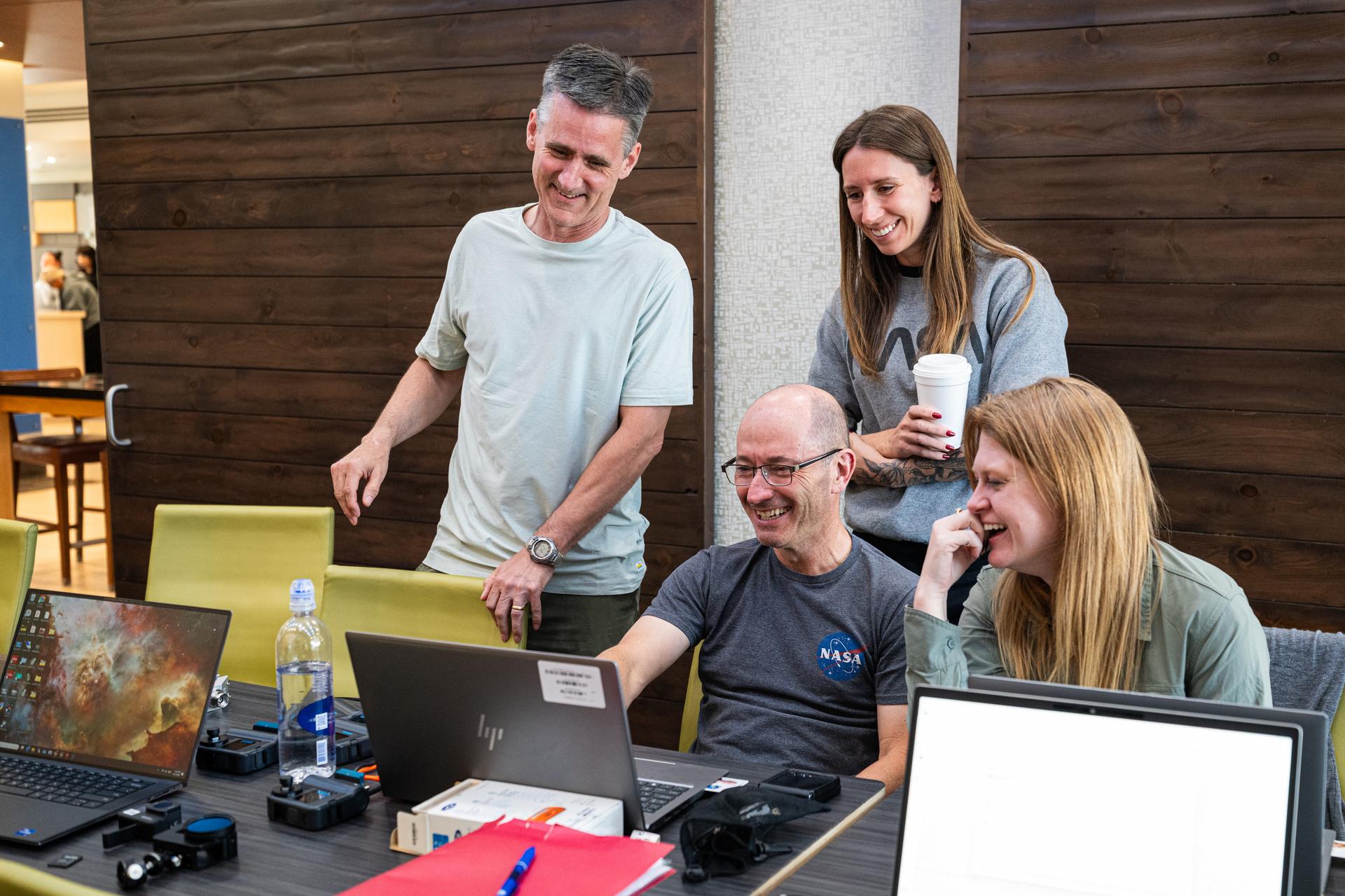
Brent Bos, (left) Phillip Coulter, Terra Hardwick, and Erika Kohler (right) review images from a preliminary test of the Venus Analog Descent Imaging Experiment (VADIX) hardware in Brigham City, Utah, June 2, 2026. VADIX is a prototype camera system which will one day fly aboard NASA's DAVINCI probe to Venus.
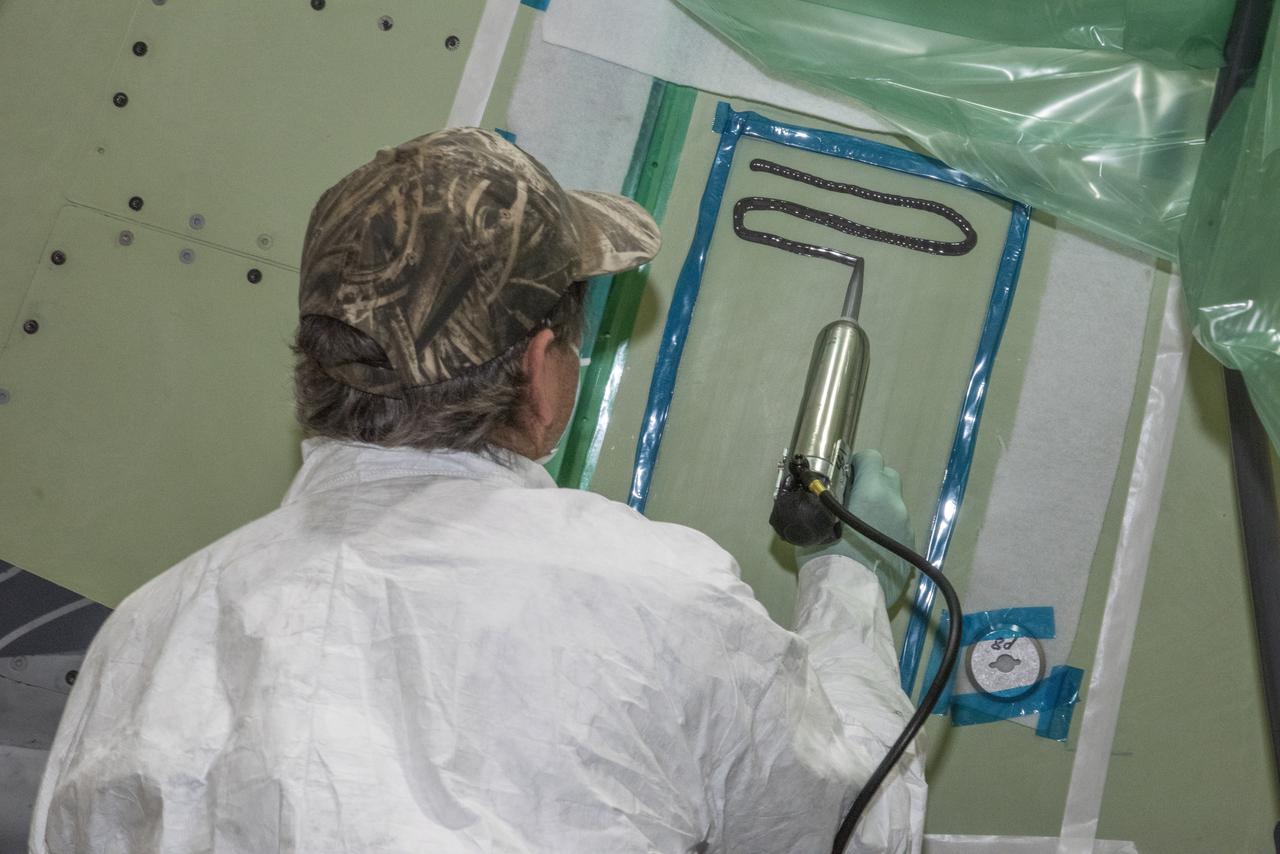
The load pad bonding process for the vertical tails was a preliminary step in the process to test the F/A-18E from the Naval Air Systems Command (NAVAIR) in Patuxent River, Maryland. The aircraft is in NASA’s Armstrong Flight Research Center Flight Loads Laboratory in Edwards, California, for the center’s biggest load calibrations tests. This testing is needed before the aircraft can serve as a test vehicle for determining if it can safely manage maneuvers and proposed upgrades.
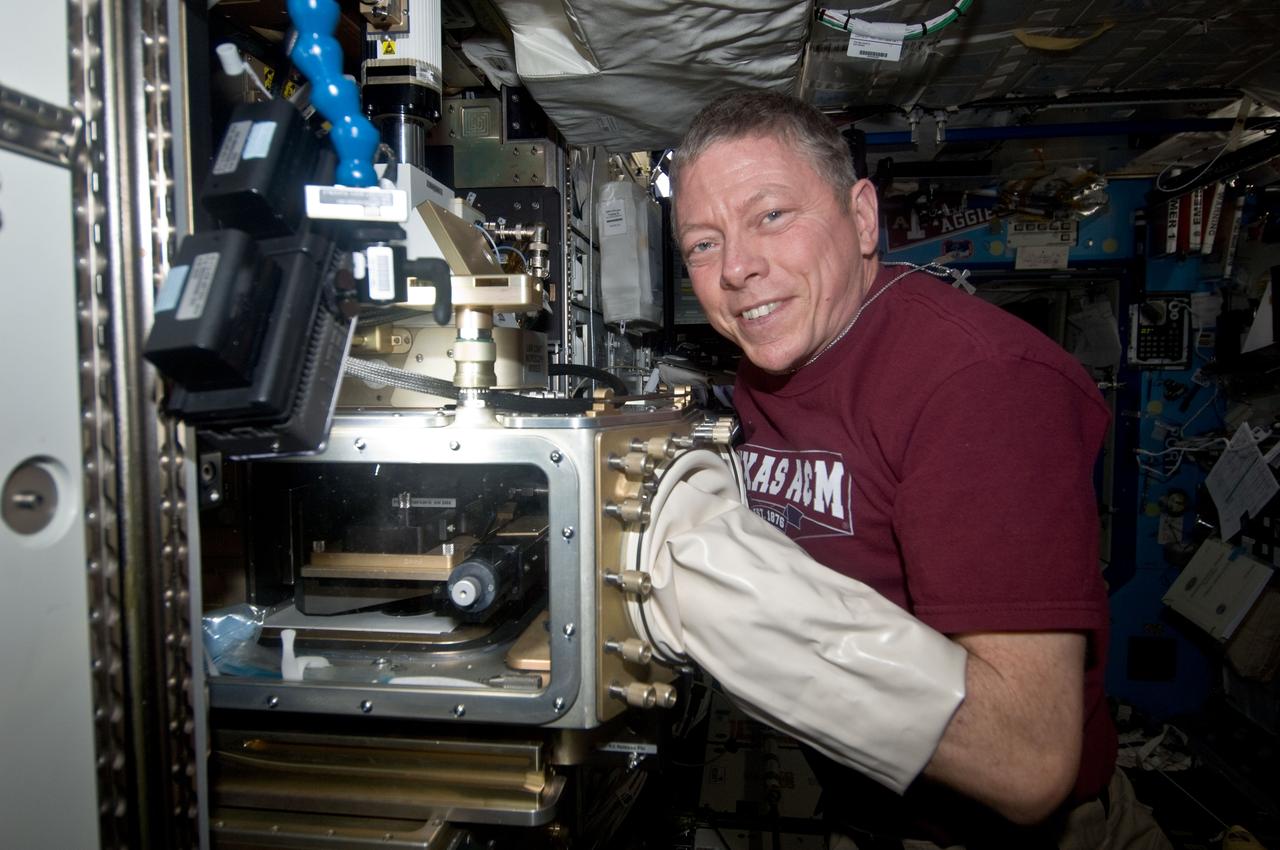
ISS029-E-025108 (11 Oct. 2011) --- NASA astronaut Mike Fossum, Expedition 29 commander, works on the Fluids Integrated Rack/Fluids and Combustion Facility (FIR/FCF), conducting another session with the Preliminary Advanced Colloids Experiment (PACE). Fossum is working at the Light Microscopy Module (LMM) in the Destiny laboratory of the International Space Station.
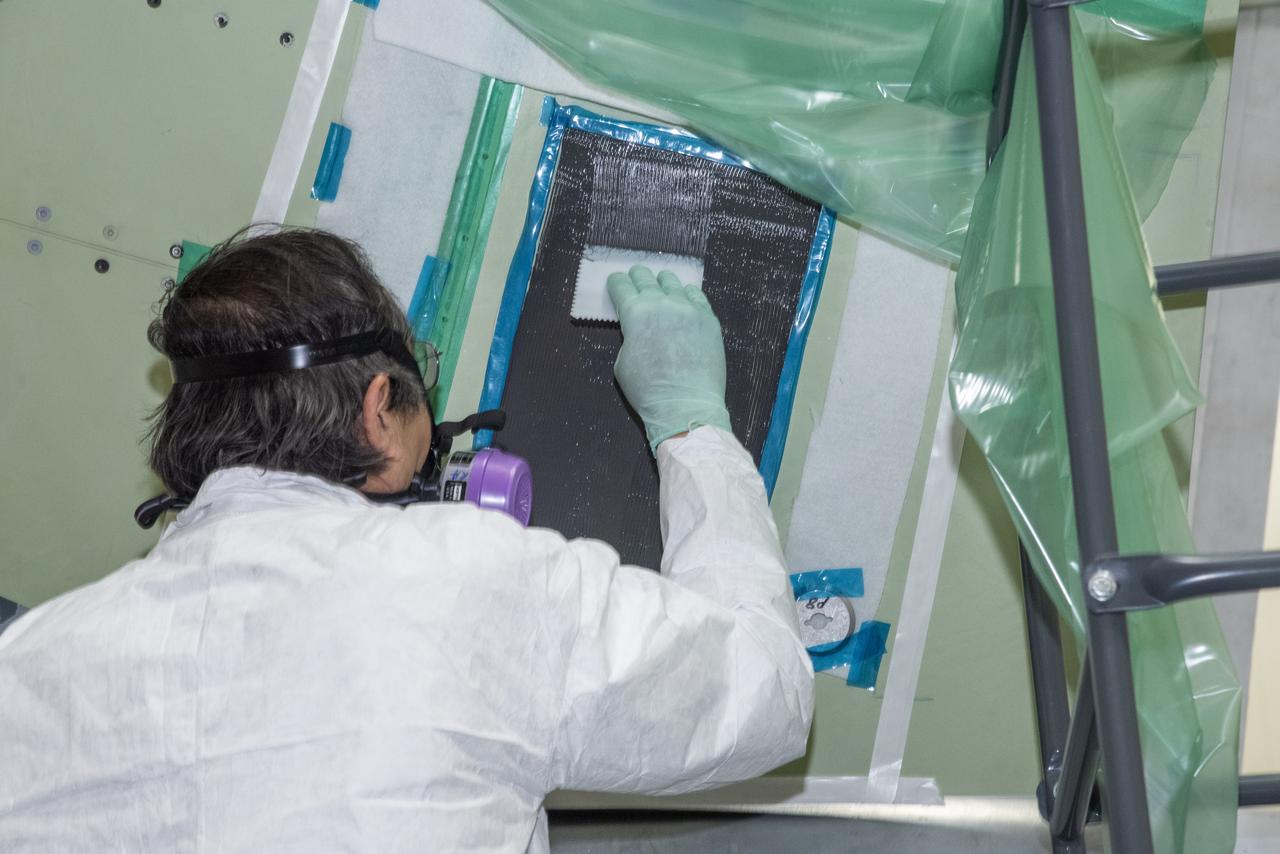
The load pad bonding process for the vertical tails was a preliminary step in the process to test the F/A-18E from the Naval Air Systems Command (NAVAIR) in Patuxent River, Maryland. The aircraft is in NASA’s Armstrong Flight Research Center Flight Loads Laboratory in Edwards, California, for the center’s biggest load calibrations tests. This testing is needed before the aircraft can serve as a test vehicle for determining if it can safely manage maneuvers and proposed upgrades.
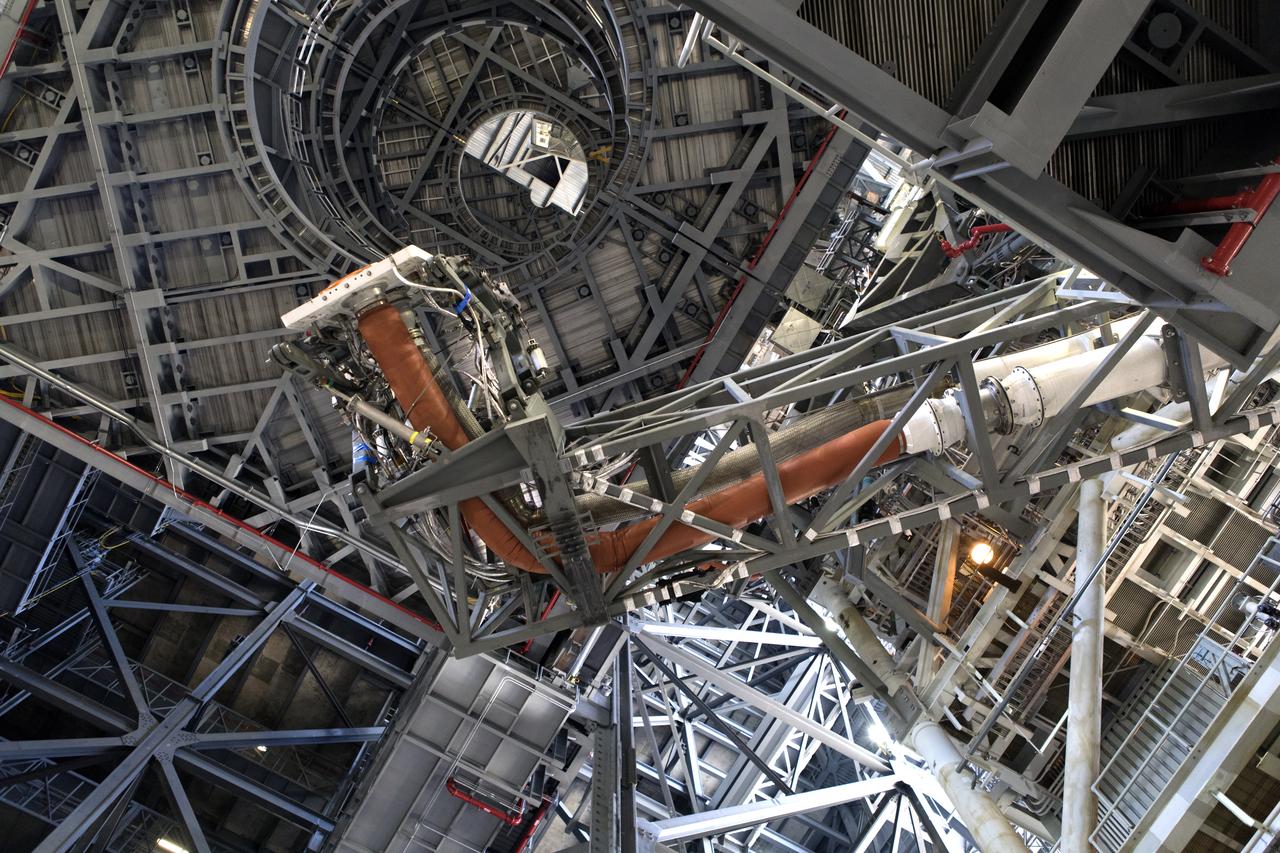
In this view looking up in High Bay 3 of the Vehicle Assembly Building at NASA’s Kennedy Space Center in Florida, a preliminary swing test is being performed on the Core Stage Inter-tank Umbilical (CSITU) on Feb. 22, 2019. The CSITU is a swing-arm umbilical that will connect to the Space Launch System core stage inter-tank. It will provide conditioned air, pressurized gases and power and data connection to the core stage. Exploration Ground Systems at Kennedy is conducting the swing test.
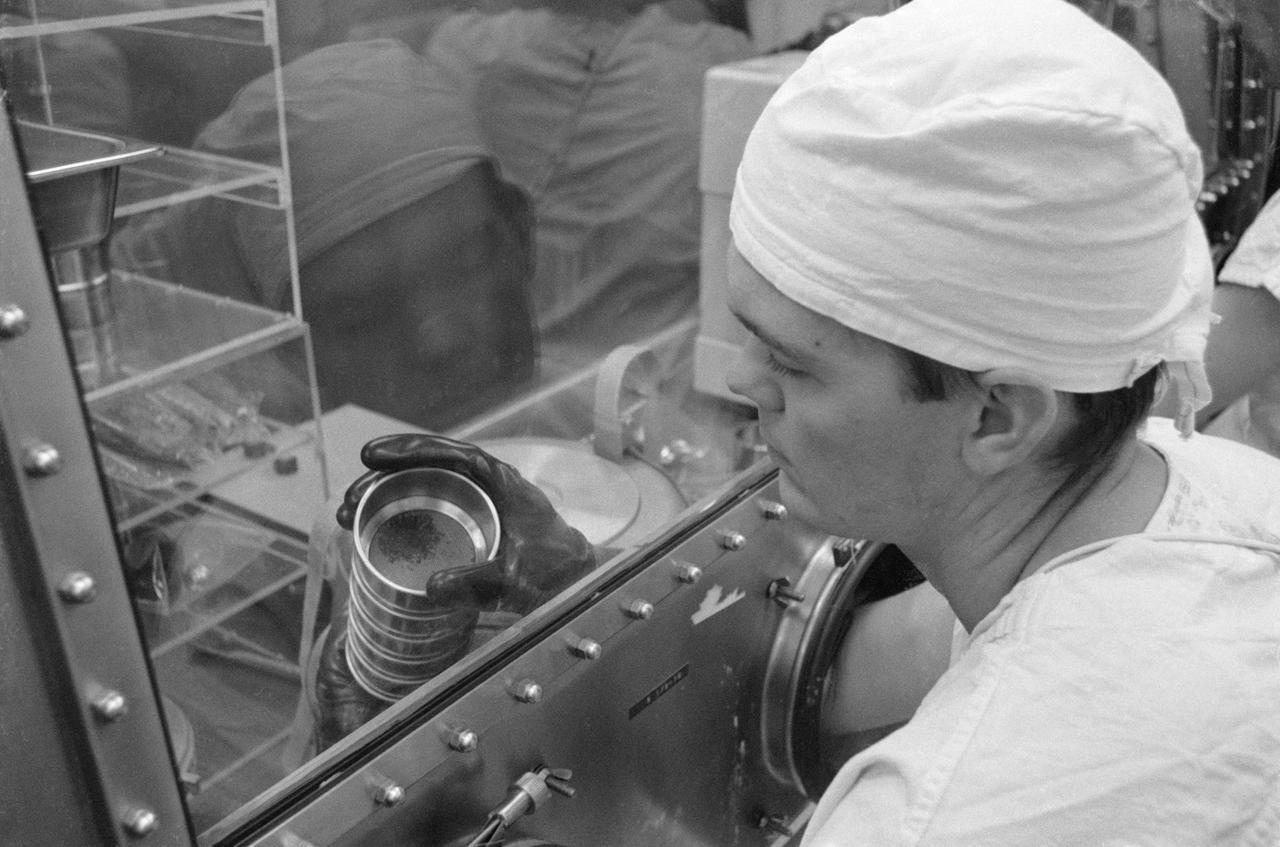
S69-40749 (July 1969) --- Dr. Grant Heikan, MSC and a Lunar Sample Preliminary Examination Team member, examines lunar material in a sieve from the bulk sample container which was opened in the Biopreparation Laboratory of the Lunar Receiving Laboratory. The samples were collected by astronauts Neil A. Armstrong and Edwin E. Aldrin Jr. during their lunar surface extravehicular activity on July 20, 1969.

S69-40740 (July 1969) --- Dr. Ross Taylor (seated), Australian National University, and John Allen, Brown and Root-Northrop technician, review preliminary data from the optical emission spectrograph in the Spectrographic Laboratory of the Physical-Chemical Test Laboratory. Tests were being conducted on lunar surface material collected by astronauts Neil A. Armstrong and Edwin E. Aldrin Jr. during their lunar surface extravehicular activity on July 20, 1969.
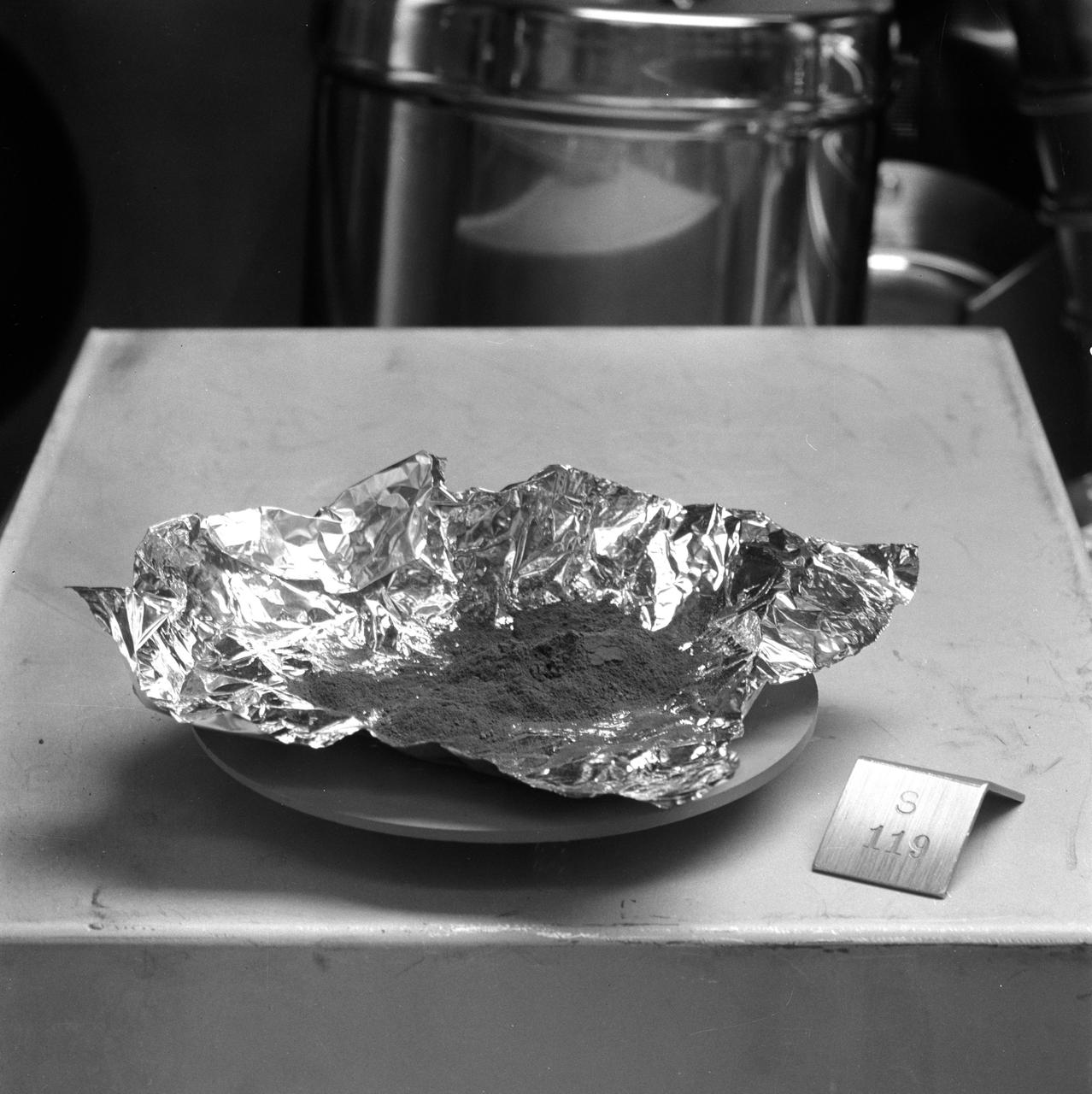
S71-19269 (12 Feb. 1971) --- A close-up view of Apollo 14 sample number 14414 & 14412, a fine lunar powder-like material under examination in the Sterile Nitrogen Atmospheric Processing (SNAP) line in the Lunar Receiving Laboratory (LRL) at the Manned Spacecraft Center (MSC). Scientists are currently making preliminary analyses of material brought back from the moon by the crew of Apollo 14 lunar landing mission.
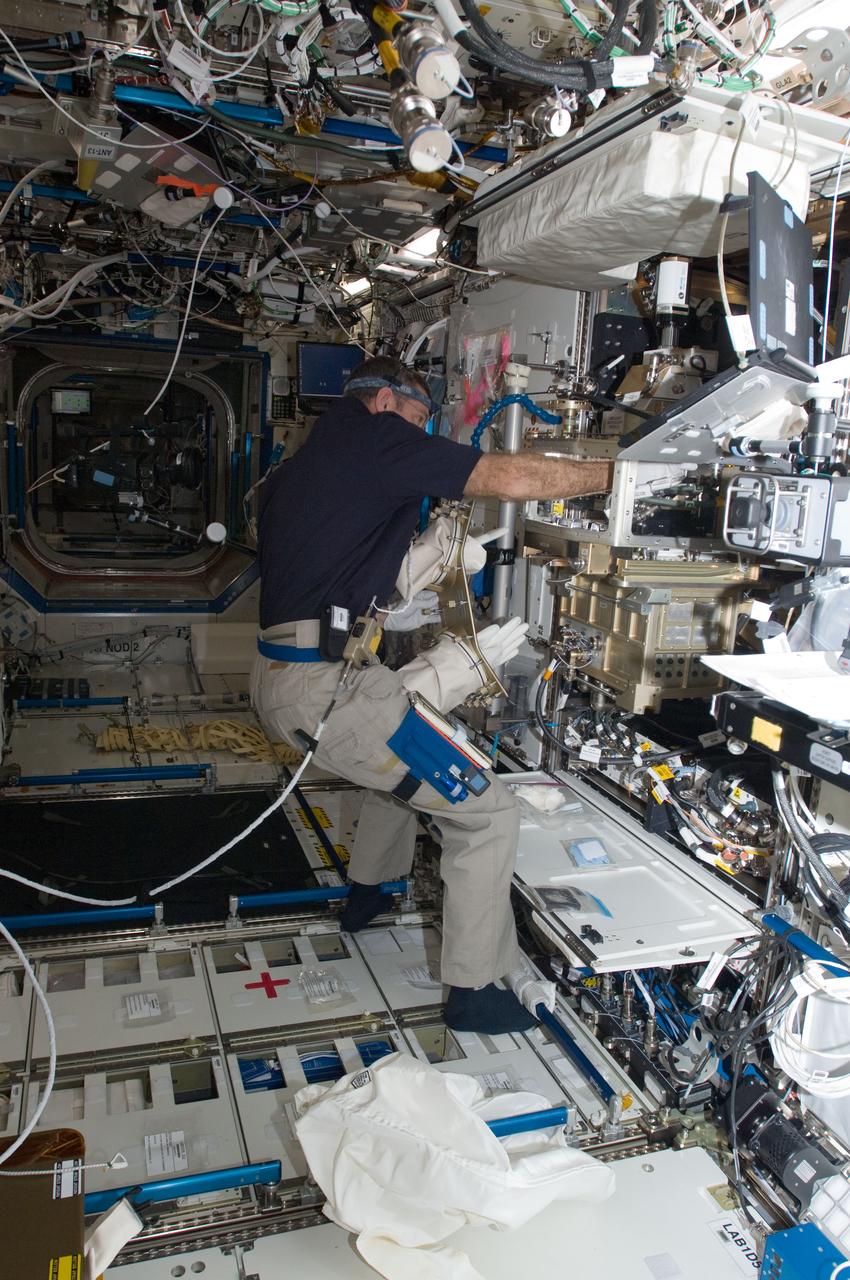
ISS030-E-007418 (1 Dec. 2011) --- In the International Space Station’s Destiny laboratory, NASA astronaut Dan Burbank, Expedition 30 commander, conducts a session with the Preliminary Advanced Colloids Experiment (PACE) at the Light Microscopy Module (LMM) in the Fluids Integrated Rack / Fluids Combustion Facility (FIR/FCF). PACE is designed to investigate the capability of conducting high magnification colloid experiments with the LMM for determining the minimum size particles which can be resolved with it.
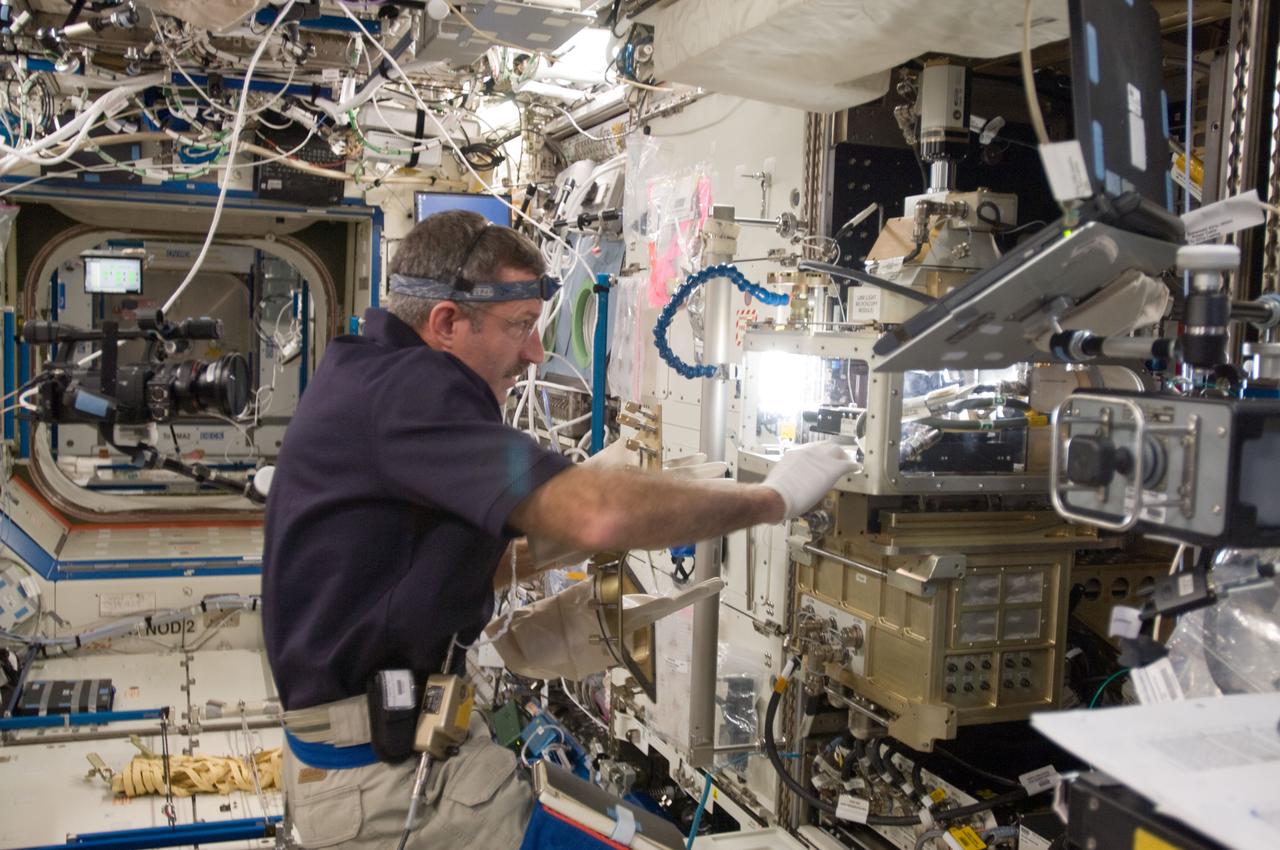
ISS030-E-007417 (1 Dec. 2011) --- In the International Space Station?s Destiny laboratory, NASA astronaut Dan Burbank, Expedition 30 commander, conducts a session with the Preliminary Advanced Colloids Experiment (PACE) at the Light Microscopy Module (LMM) in the Fluids Integrated Rack / Fluids Combustion Facility (FIR/FCF). PACE is designed to investigate the capability of conducting high magnification colloid experiments with the LMM for determining the minimum size particles which can be resolved with it.
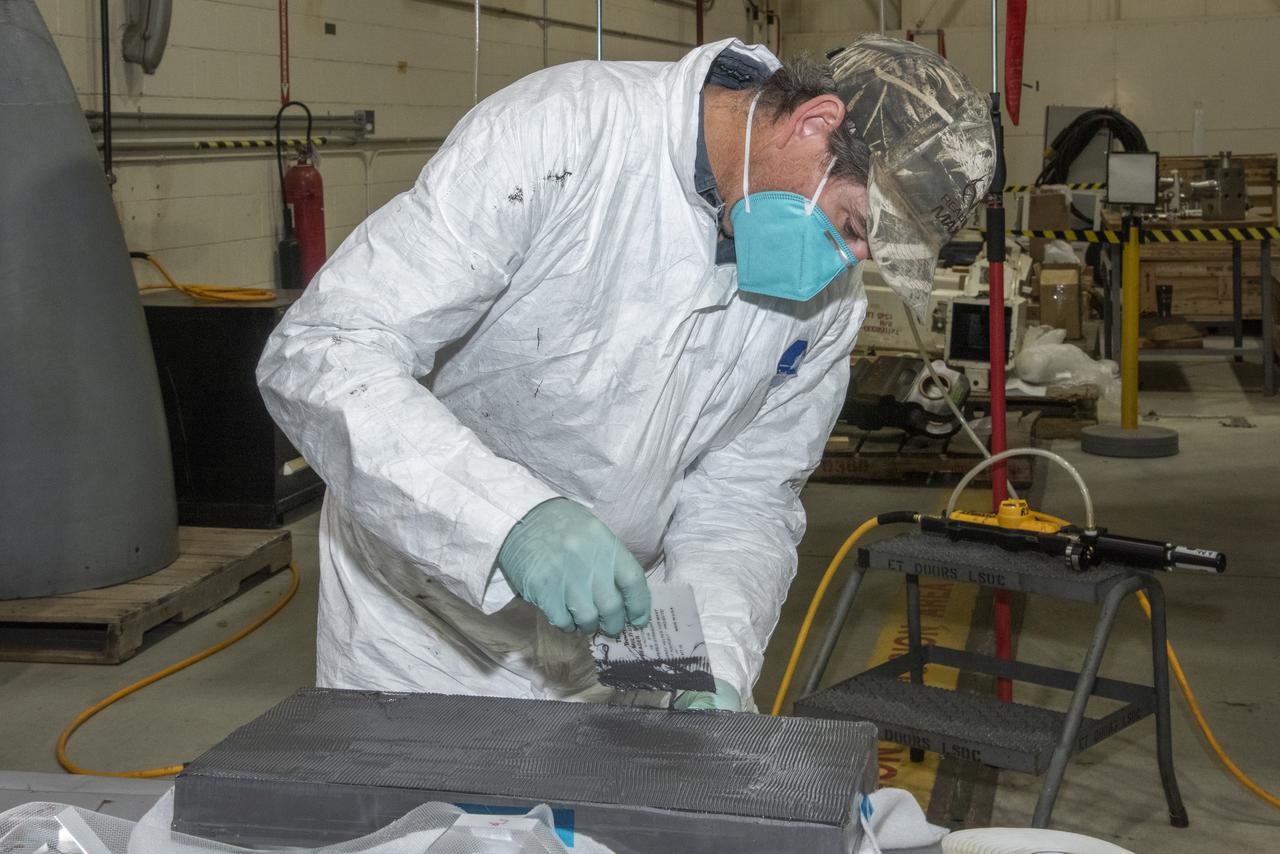
The load pad bonding process for the vertical tails was a preliminary step in the process to test the F/A-18E from the Naval Air Systems Command (NAVAIR) in Patuxent River, Maryland. The aircraft is in NASA’s Armstrong Flight Research Center Flight Loads Laboratory in Edwards, California, for the center’s biggest load calibrations tests. This testing is needed before the aircraft can serve as a test vehicle for determining if it can safely manage maneuvers and proposed upgrades.
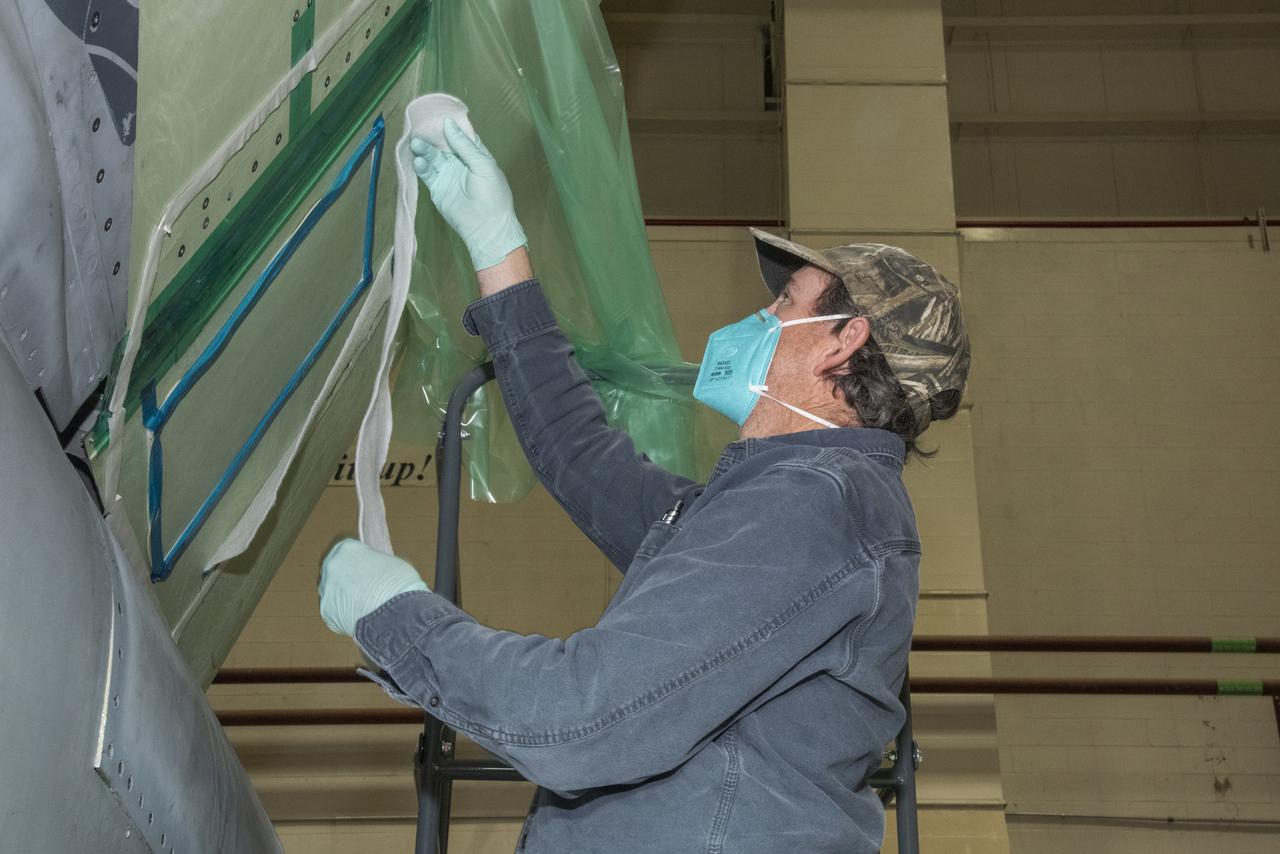
The load pad bonding process for the vertical tails was a preliminary step in the process to test the F/A-18E from the Naval Air Systems Command (NAVAIR) in Patuxent River, Maryland. The aircraft is in NASA’s Armstrong Flight Research Center Flight Loads Laboratory in Edwards, California, for the center’s biggest load calibrations tests. This testing is needed before the aircraft can serve as a test vehicle for determining if it can safely manage maneuvers and proposed upgrades.
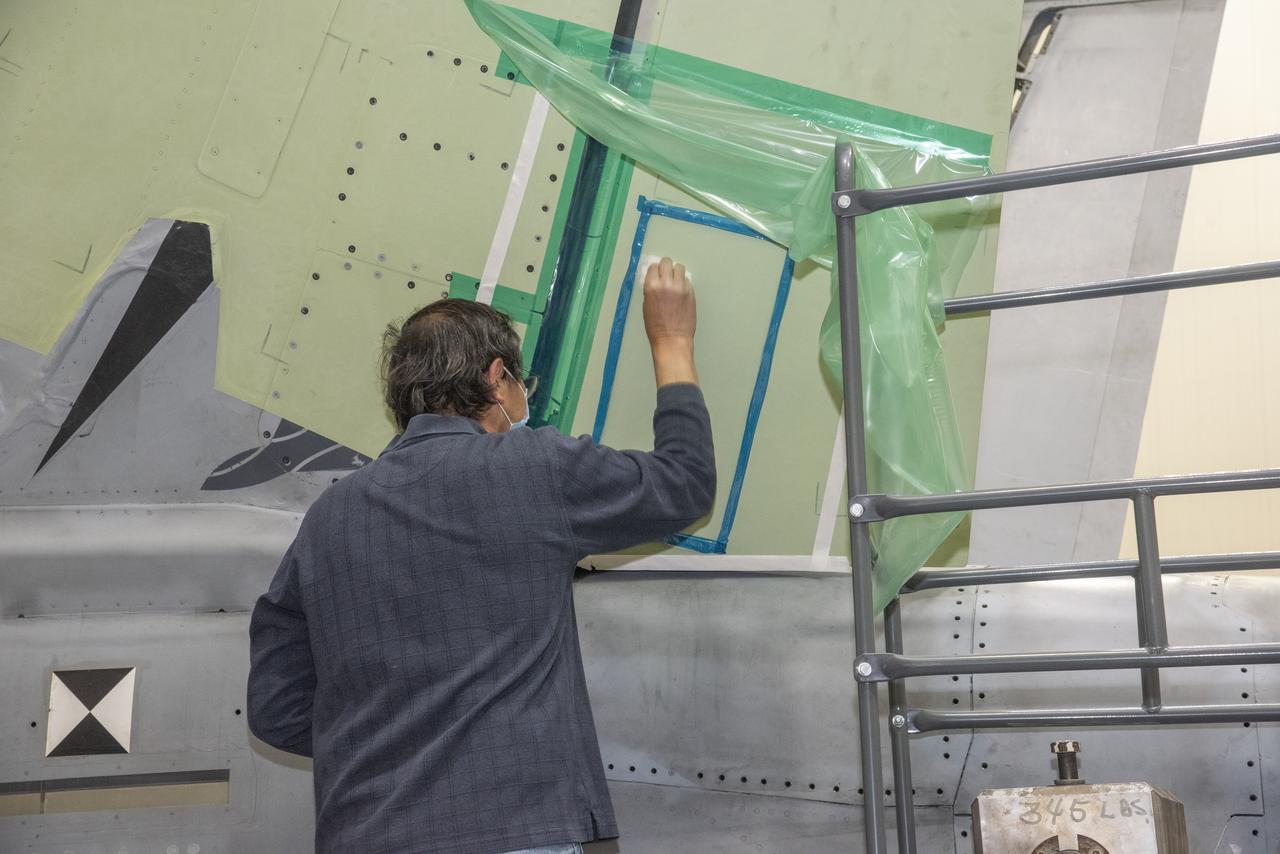
The load pad bonding process for the vertical tails was a preliminary step in the process to test the F/A-18E from the Naval Air Systems Command (NAVAIR) in Patuxent River, Maryland. The aircraft is in NASA’s Armstrong Flight Research Center Flight Loads Laboratory in Edwards, California, for the center’s biggest load calibrations tests. This testing is needed before the aircraft can serve as a test vehicle for determining if it can safely manage maneuvers and proposed upgrades.
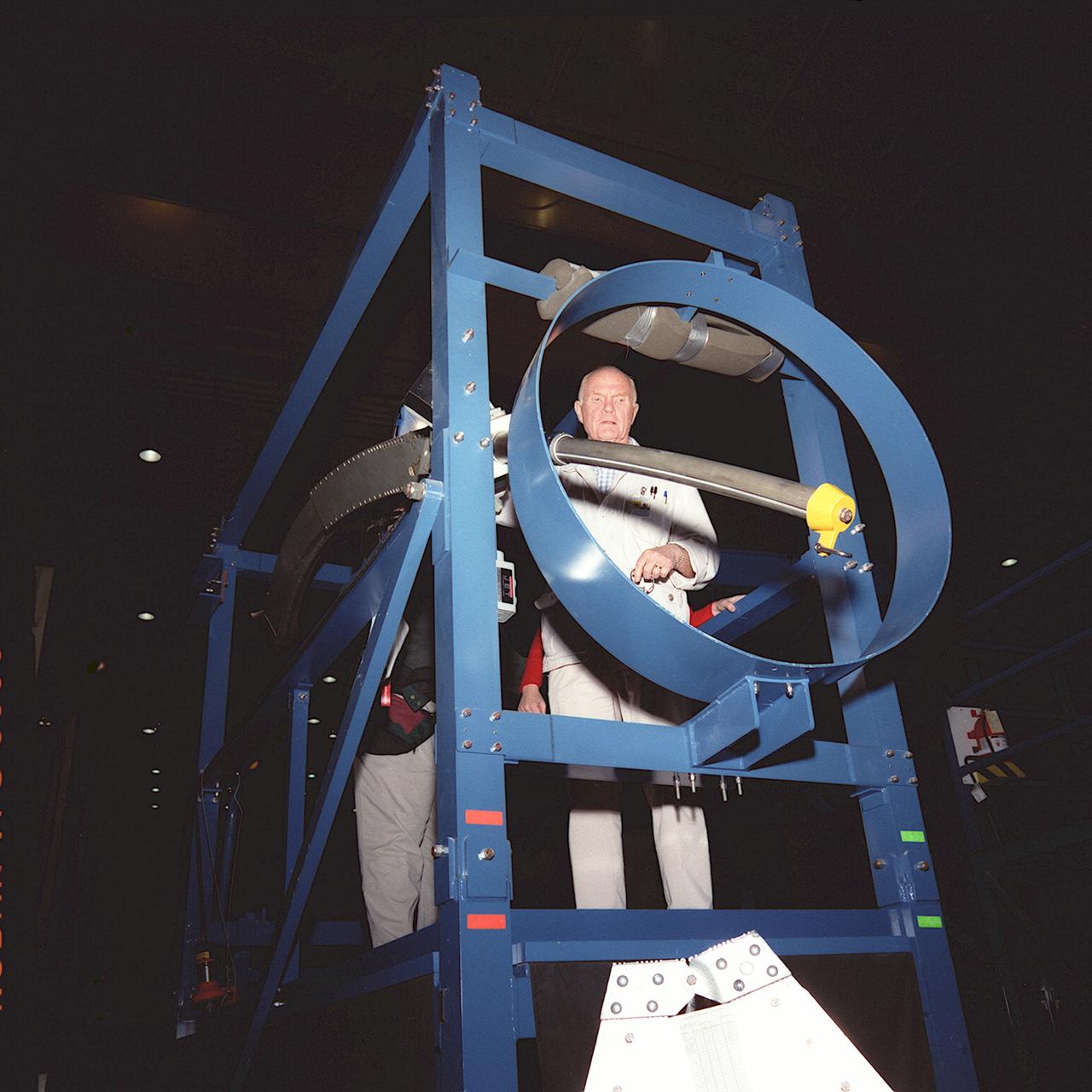
S98-02045 (20 February 1998) --- U.S. Sen. John H. Glenn Jr. (D.-Ohio) is given a briefing on the Shuttle emergency escape pole trainer/mockup at the Johnson Space Center (JSC). Named as a crew member for STS-95 scheduled later this year aboard the Space Shuttle Discovery, Glenn has begun preliminary familiarization, suit fitting and training at the Houston NASA facility.
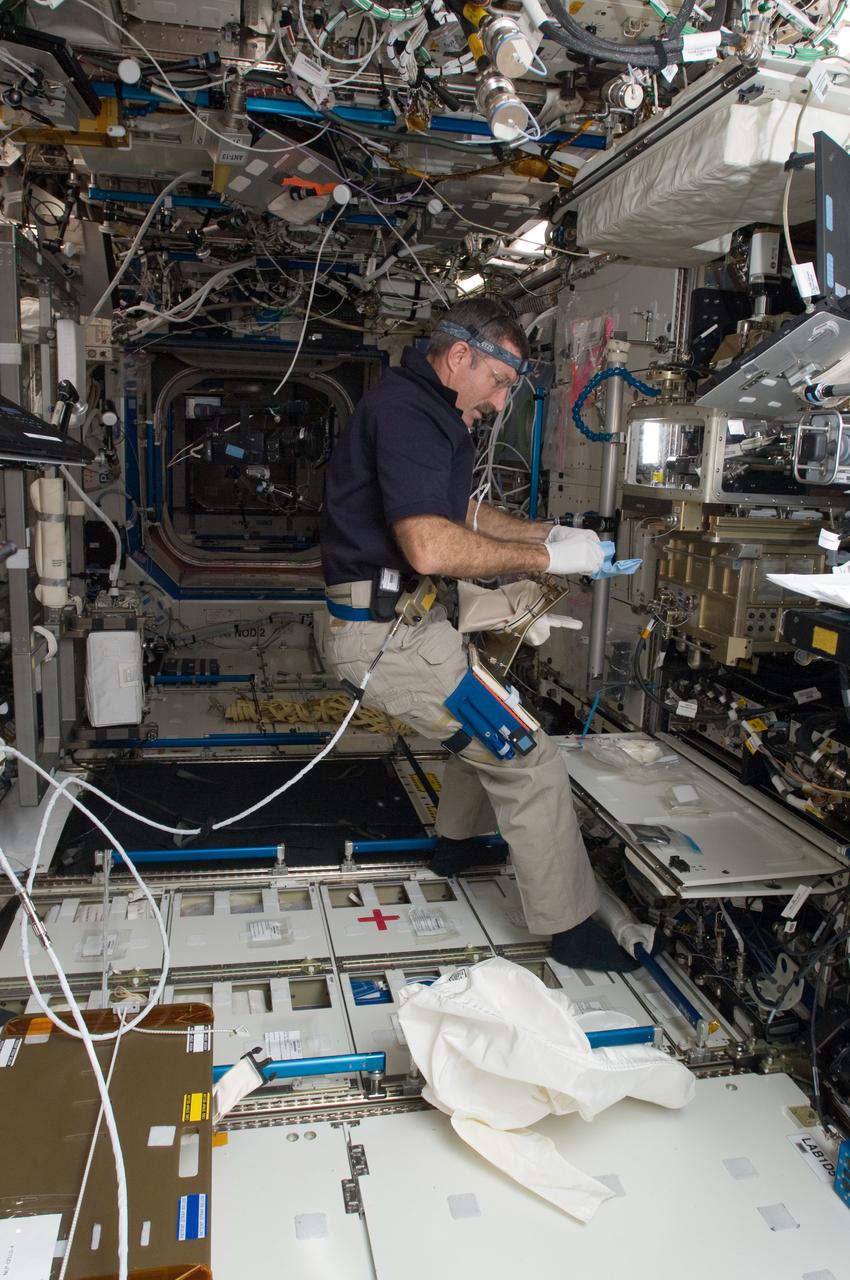
ISS030-E-007419 (1 Dec. 2011) --- In the International Space Station’s Destiny laboratory, NASA astronaut Dan Burbank, Expedition 30 commander, conducts a session with the Preliminary Advanced Colloids Experiment (PACE) at the Light Microscopy Module (LMM) in the Fluids Integrated Rack / Fluids Combustion Facility (FIR/FCF). PACE is designed to investigate the capability of conducting high magnification colloid experiments with the LMM for determining the minimum size particles which can be resolved with it.
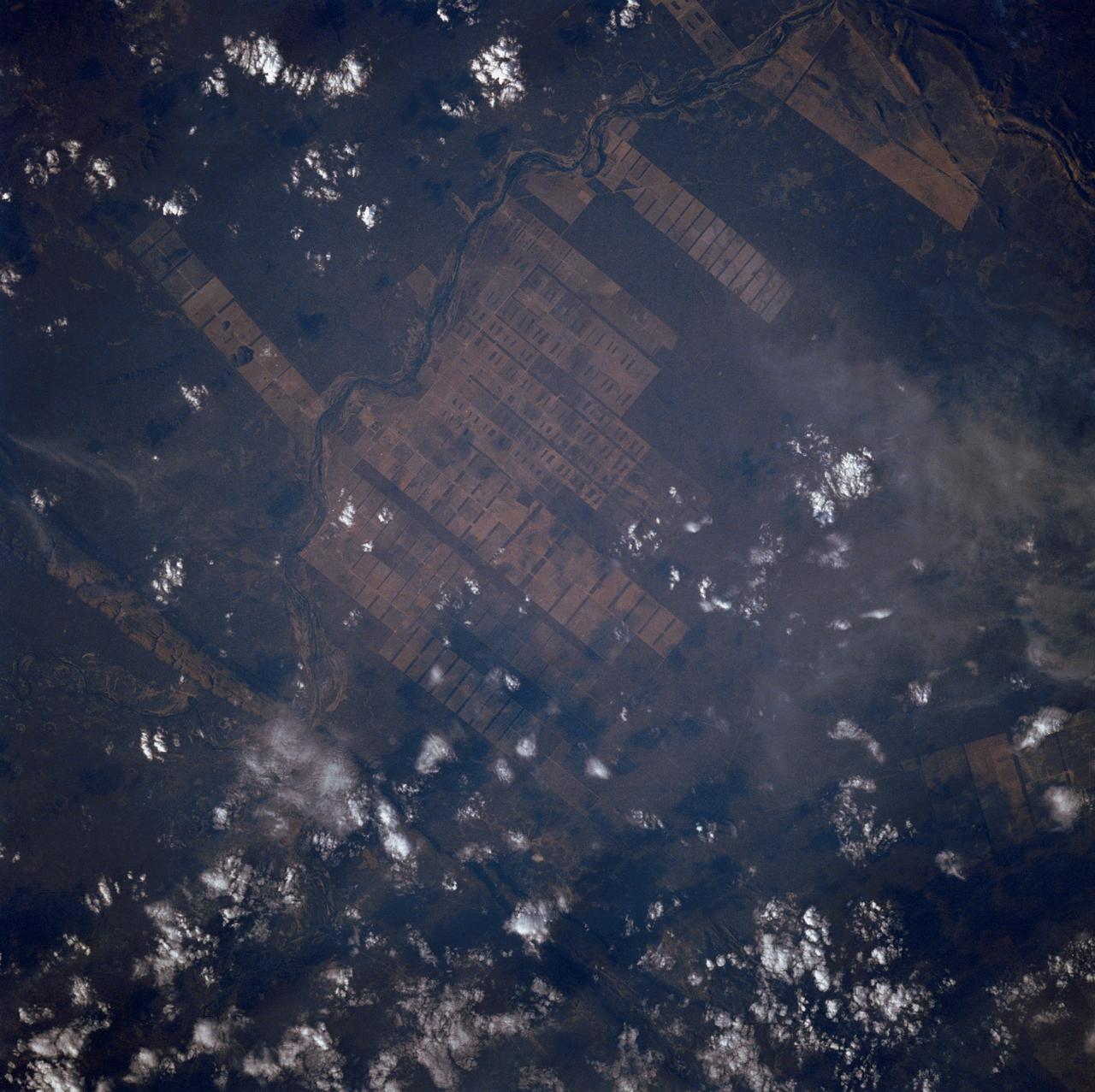
The large field patterns in this view of the Rio Sao Francisco basin, Brazil, South America, (11.5S, 43.5W) indicate a commercial agriculture venture; family subsistence farms are much smaller and laid out in different patterns. Land clearing in Brazil has increased at an alarming rate in recent years and preliminary estimates suggest a 25 to 30% increase in deforestation since 1984. The long term impact on the ecological processes are still unknown.
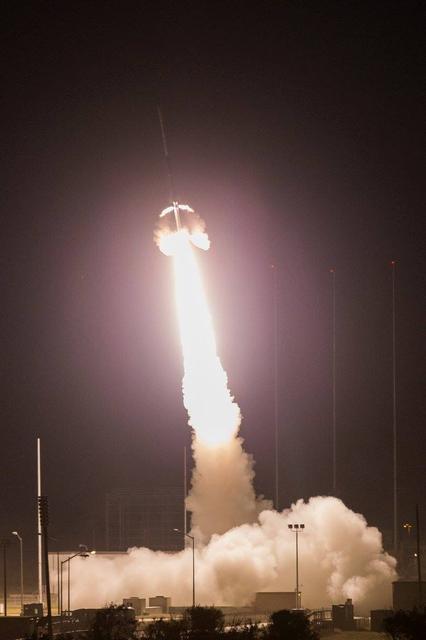
A Black Brant IX suborbital sounding rocket is launched at 7:07 p.m., Wednesday October 7, 2015. (NASA Photo/A. Stancil) A Black Brant IX suborbital rocket was launched from NASA's Wallops Flight Facility. The launch occurred at 7:07 p.m. The primary purpose of the flight was to test the performance of the second-stage Black Brant motor. Preliminary indications are that the motor performed as planned. Preliminary data analysis of the technology experiments (vapor tracer deployments) on the payload is in progress. <b><a href="http://www.nasa.gov/audience/formedia/features/MP_Photo_Guidelines.html" rel="nofollow">NASA image use policy.</a></b> <b><a href="http://www.nasa.gov/centers/goddard/home/index.html" rel="nofollow">NASA Goddard Space Flight Center</a></b> enables NASA’s mission through four scientific endeavors: Earth Science, Heliophysics, Solar System Exploration, and Astrophysics. Goddard plays a leading role in NASA’s accomplishments by contributing compelling scientific knowledge to advance the Agency’s mission. <b>Follow us on <a href="http://twitter.com/NASAGoddardPix" rel="nofollow">Twitter</a></b> <b>Like us on <a href="http://www.facebook.com/pages/Greenbelt-MD/NASA-Goddard/395013845897?ref=tsd" rel="nofollow">Facebook</a></b> <b>Find us on <a href="http://instagrid.me/nasagoddard/?vm=grid" rel="nofollow">Instagram</a></b>
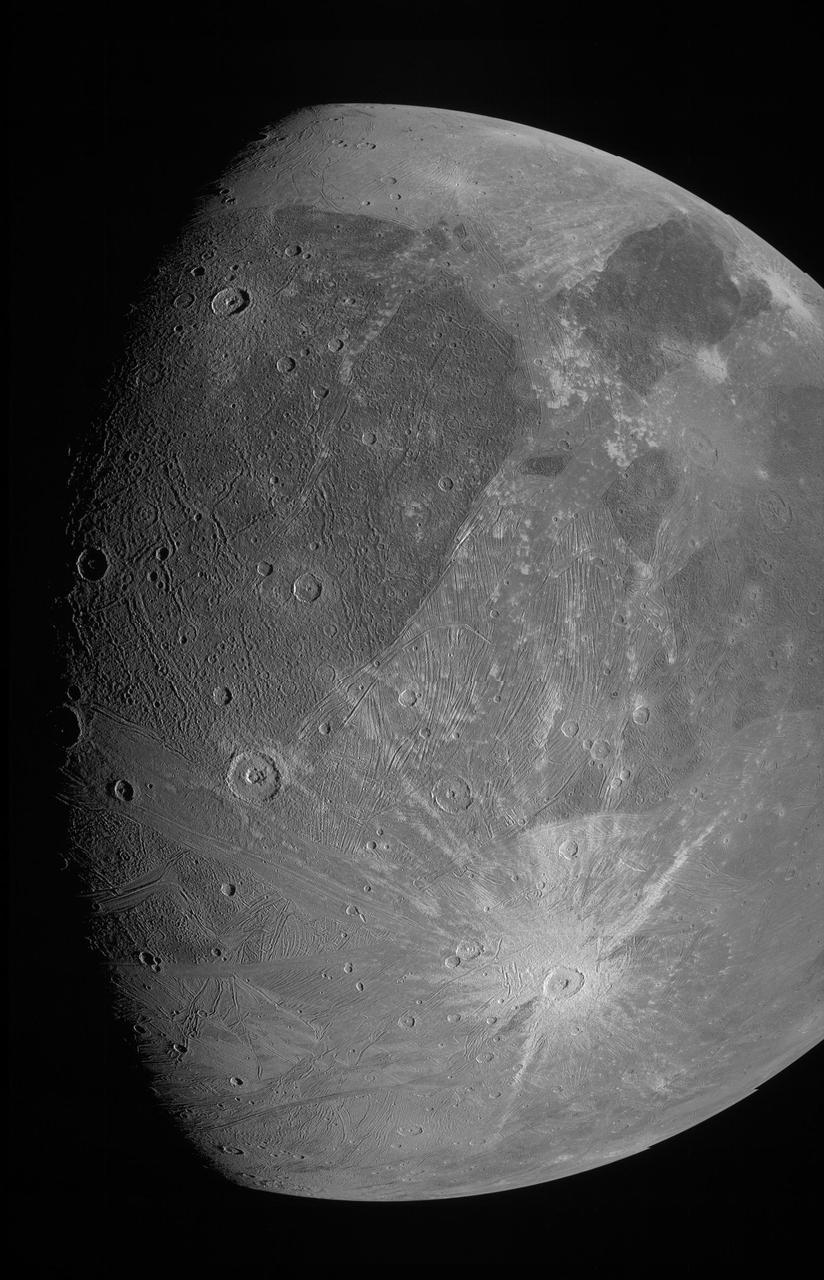
This image of the Jovian moon Ganymede was obtained by the JunoCam imager aboard NASA's Juno spacecraft during its June 7, 2021, flyby of the icy moon. At the time of closest approach, Juno was within 645 miles (1,038 kilometers) of its surface – closer to Jupiter's largest moon than any other spacecraft has come in more than two decades. This image is a preliminary product – Ganymede as seen through JunoCam's green filter. Juno is a spin-stabilized spacecraft (with a rotation rate of 2 rpm), and the JunoCam imager has a fixed field of view. To obtain Ganymede images as Juno rotated, the camera acquired a strip at a time as the target passed through its field of view. These image strips were captured separately through the red, green, and blue filters. To generate the final image product, the strips must be stitched together and colors aligned. At the time this preliminary image was generated, the "spice kernels" (navigation and other ancillary information providing precision observation geometry) necessary to properly map-project the imagery were not available. The red, and blue filtered image strips were also not available. When the final spice kernel data and images from the two filters are incorporated, the images seams (most prevalent on lower right of sphere) will disappear and a complete color image will be generated. https://photojournal.jpl.nasa.gov/catalog/PIA24681
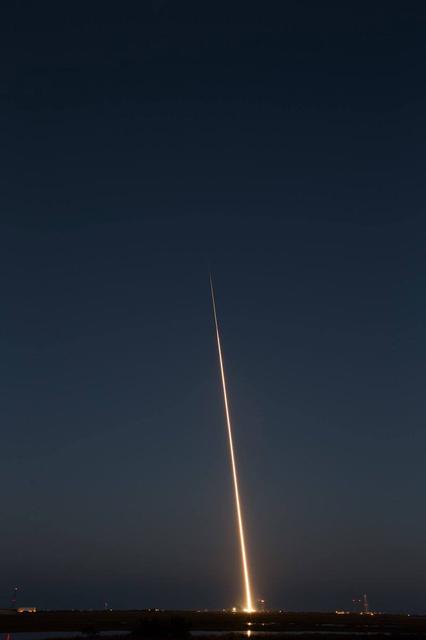
A Black Brant IX suborbital sounding rocket is launched at 7:07 p.m., Wednesday October 7, 2015. (NASA Photo/T. Zaperach) A Black Brant IX suborbital rocket was launched from NASA's Wallops Flight Facility. The launch occurred at 7:07 p.m. The primary purpose of the flight was to test the performance of the second-stage Black Brant motor. Preliminary indications are that the motor performed as planned. Preliminary data analysis of the technology experiments (vapor tracer deployments) on the payload is in progress. <b><a href="http://www.nasa.gov/audience/formedia/features/MP_Photo_Guidelines.html" rel="nofollow">NASA image use policy.</a></b> <b><a href="http://www.nasa.gov/centers/goddard/home/index.html" rel="nofollow">NASA Goddard Space Flight Center</a></b> enables NASA’s mission through four scientific endeavors: Earth Science, Heliophysics, Solar System Exploration, and Astrophysics. Goddard plays a leading role in NASA’s accomplishments by contributing compelling scientific knowledge to advance the Agency’s mission. <b>Follow us on <a href="http://twitter.com/NASAGoddardPix" rel="nofollow">Twitter</a></b> <b>Like us on <a href="http://www.facebook.com/pages/Greenbelt-MD/NASA-Goddard/395013845897?ref=tsd" rel="nofollow">Facebook</a></b> <b>Find us on <a href="http://instagrid.me/nasagoddard/?vm=grid" rel="nofollow">Instagram</a></b>

A Black Brant IX suborbital sounding rocket is launched at 7:07 p.m., Wednesday October 7, 2015. (NASA Photo/A. Stancil) A Black Brant IX suborbital rocket was launched from NASA's Wallops Flight Facility. The launch occurred at 7:07 p.m. The primary purpose of the flight was to test the performance of the second-stage Black Brant motor. Preliminary indications are that the motor performed as planned. Preliminary data analysis of the technology experiments (vapor tracer deployments) on the payload is in progress. <b><a href="http://www.nasa.gov/audience/formedia/features/MP_Photo_Guidelines.html" rel="nofollow">NASA image use policy.</a></b> <b><a href="http://www.nasa.gov/centers/goddard/home/index.html" rel="nofollow">NASA Goddard Space Flight Center</a></b> enables NASA’s mission through four scientific endeavors: Earth Science, Heliophysics, Solar System Exploration, and Astrophysics. Goddard plays a leading role in NASA’s accomplishments by contributing compelling scientific knowledge to advance the Agency’s mission. <b>Follow us on <a href="http://twitter.com/NASAGoddardPix" rel="nofollow">Twitter</a></b> <b>Like us on <a href="http://www.facebook.com/pages/Greenbelt-MD/NASA-Goddard/395013845897?ref=tsd" rel="nofollow">Facebook</a></b> <b>Find us on <a href="http://instagrid.me/nasagoddard/?vm=grid" rel="nofollow">Instagram</a></b>
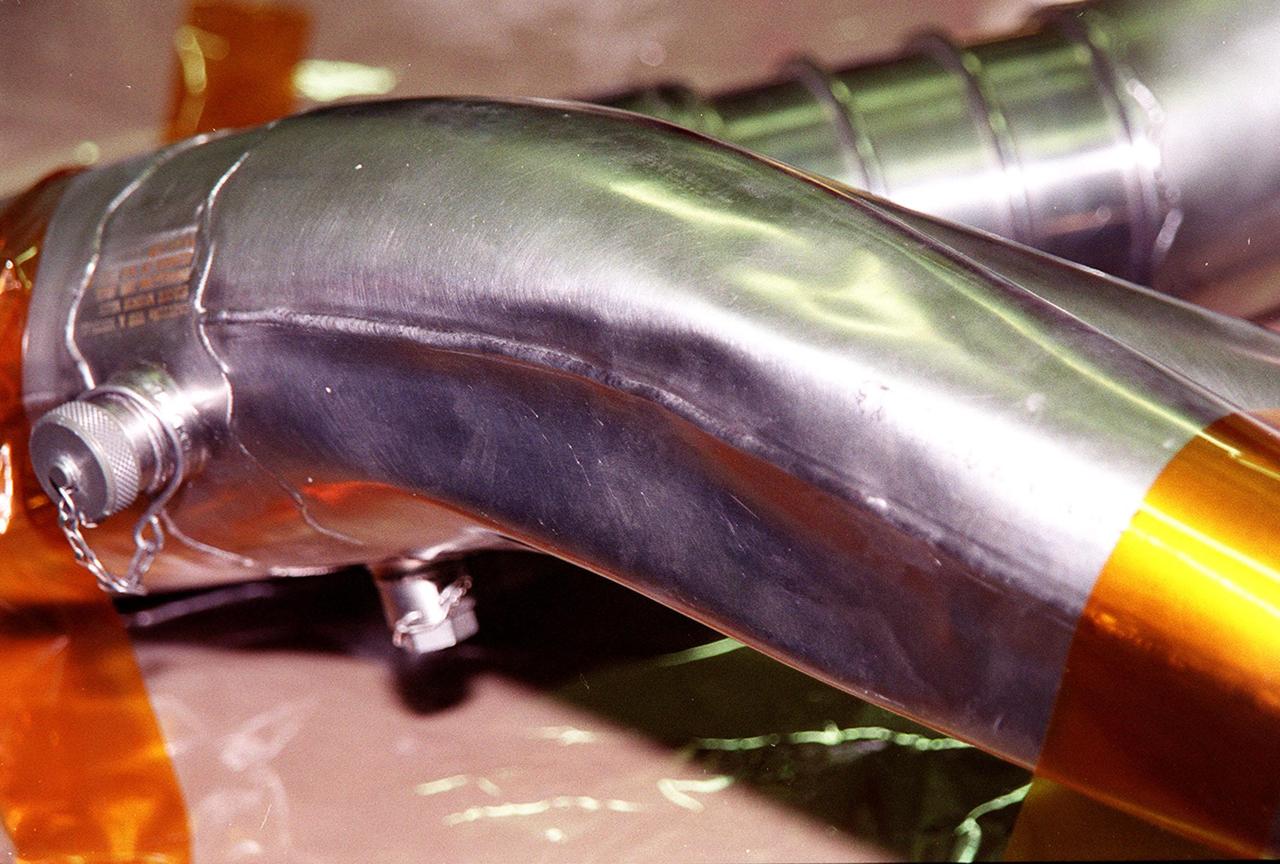
This close-up shows the 12-inch-long dent on Shuttle Discovery's main propulsion system liquid hydrogen recirculation line that was discovered during routine aft compartment inspections Tuesday, Dec. 7. The line recirculates hydrogen from the Shuttle main engines back to the external tank during prelaunch engine conditioning. The line is being replaced and managers expect the replacement work to take about 3 days, followed by system retests and final aft compartment close-outs. Preliminary assessments reflect a launch date of Space Shuttle Discovery on mission STS-103 no earlier than Dec. 16. STS-103 is the third servicing mission for the Hubble Space Telescope
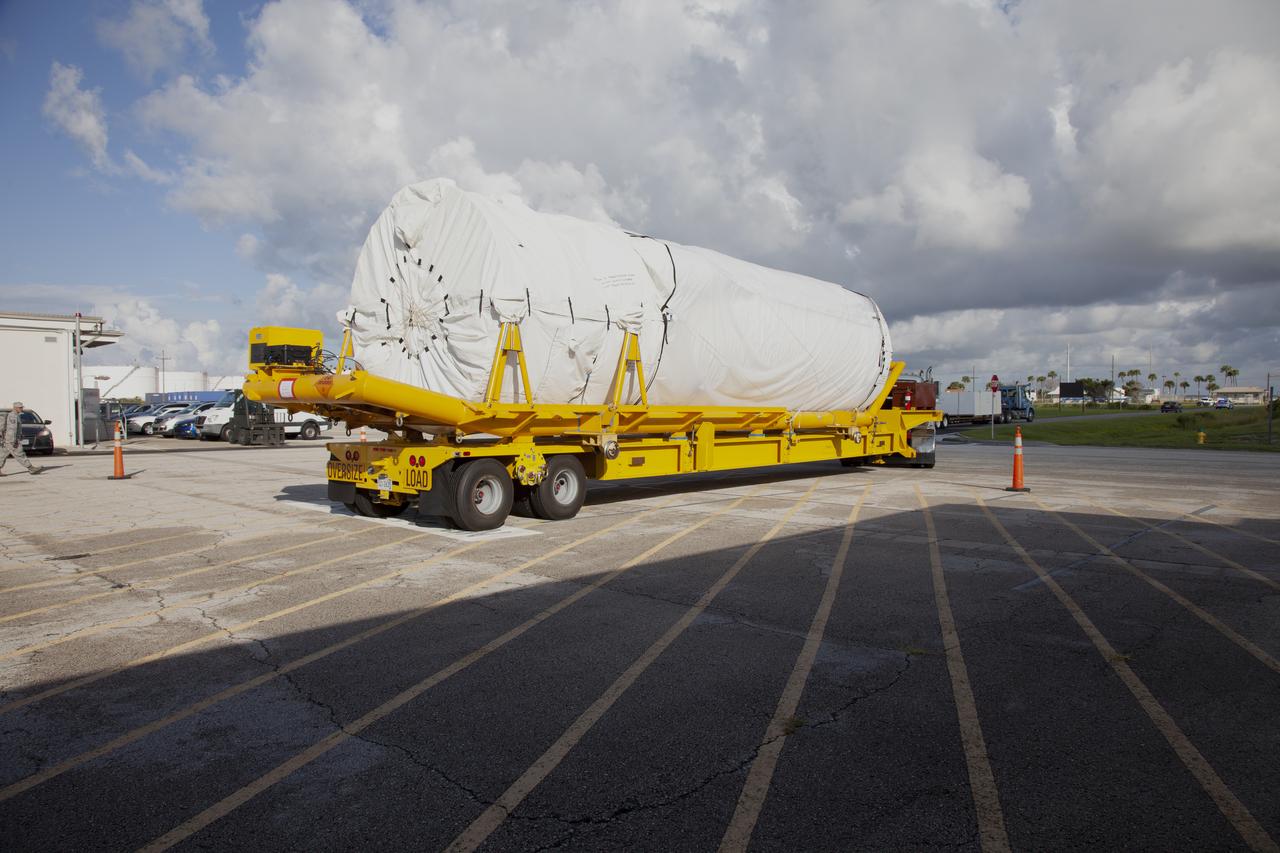
A transport truck moves a United Launch Alliance (ULA) two-engine Centaur upper stage from the company’s Mariner ship that just arrived at Port Canaveral in Florida. The Centaur will be transported to the Atlas Spaceflight Operations Center at Cape Canaveral Air Force Station for preliminary checkouts. Mounted atop a ULA Atlas V rocket, the Centaur will help launch a Boeing CST-100 Starliner spacecraft on an uncrewed Orbital Flight Test from Space Launch Complex 41 at the Cape. NASA’s Commercial Crew Program will return human spaceflight launches to U.S. soil, providing safe, reliable and cost-effective access to low-Earth orbit on systems that meet our safety and mission requirements.
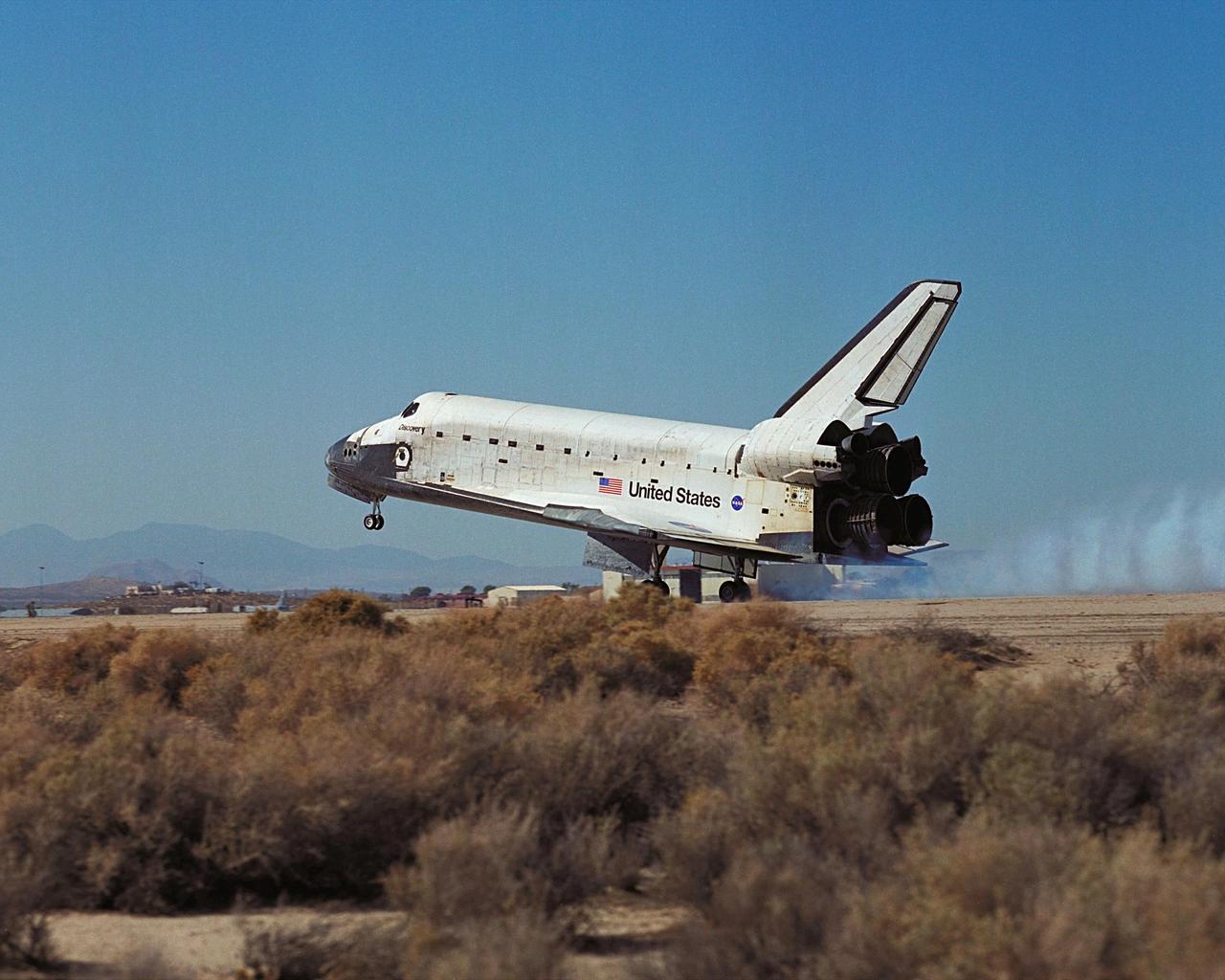
Viewed from the side, orbiter Discovery, with its seven-member crew, touches down on the landing strip at Edwards Air Force Base, Calif., after an 11-day mission to the International Space Station. The orbiter’s main landing gear touched down on EAFB runway 22 at 5 p.m. With the aid of its drag chute, Discovery came to a complete stop at 5:01 p.m. At the conclusion of mission STS-92, Discovery and crew had traveled about 5.3 million statute miles. Following vehicle safing and preliminary offloading efforts, workers will begin preparations for Discovery’s transcontinental ferry flight back to KSC on the back of NASA’s modified Boeing 747
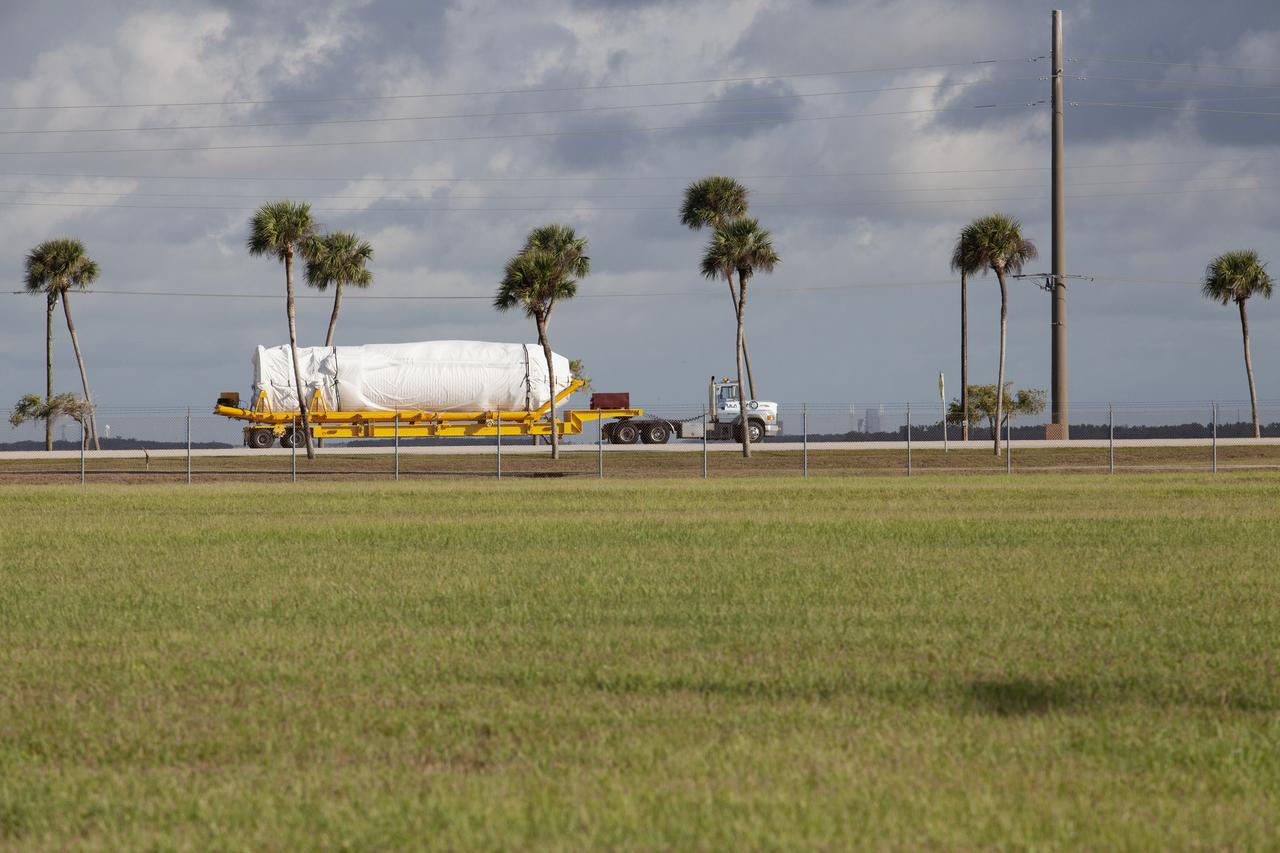
A truck transports a United Launch Alliance (ULA) two-engine Centaur upper stage from Port Canaveral in Florida to the Atlas Spaceflight Operations Center at Cape Canaveral Air Force Station for preliminary checkouts. Mounted atop a ULA Atlas V rocket, the Centaur will help launch a Boeing CST-100 Starliner spacecraft on an uncrewed Orbital Flight Test from Space Launch Complex 41 at the Cape. NASA’s Commercial Crew Program will return human spaceflight launches to U.S. soil, providing safe, reliable and cost-effective access to low-Earth orbit on systems that meet our safety and mission requirements.
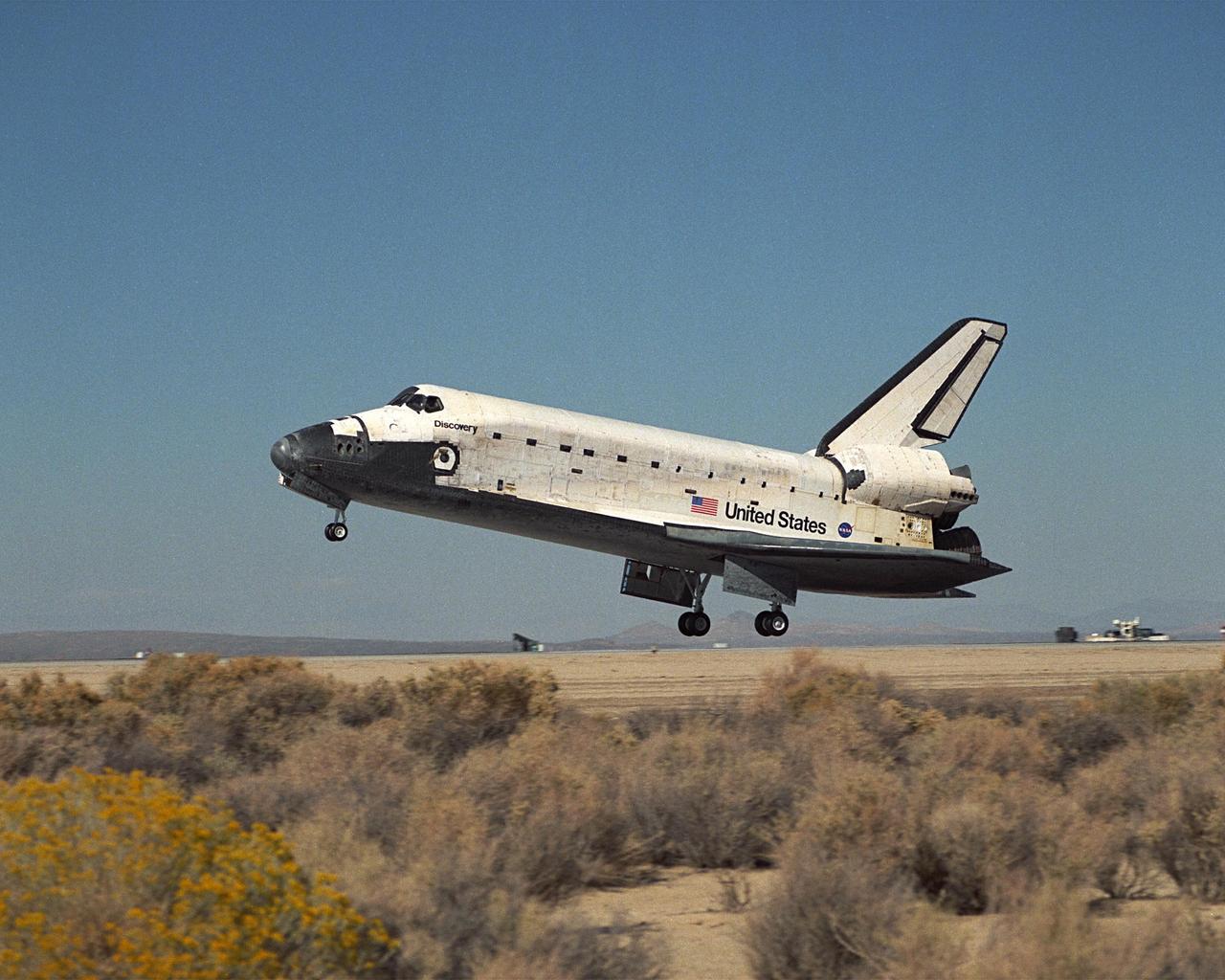
Viewed from the side, orbiter Discovery, with its seven-member crew, is about to touch down on the landing strip at Edwards Air Force Base, Calif., after an 11-day mission to the International Space Station. The orbiter’s main landing gear touched down on EAFB runway 22 at 5 p.m. With the aid of its drag chute, Discovery came to a complete stop at 5:01 p.m. At the conclusion of mission STS-92, Discovery and crew had traveled about 5.3 million statute miles. Following vehicle safing and preliminary offloading efforts, workers will begin preparations for Discovery’s transcontinental ferry flight back to KSC on the back of NASA’s modified Boeing 747
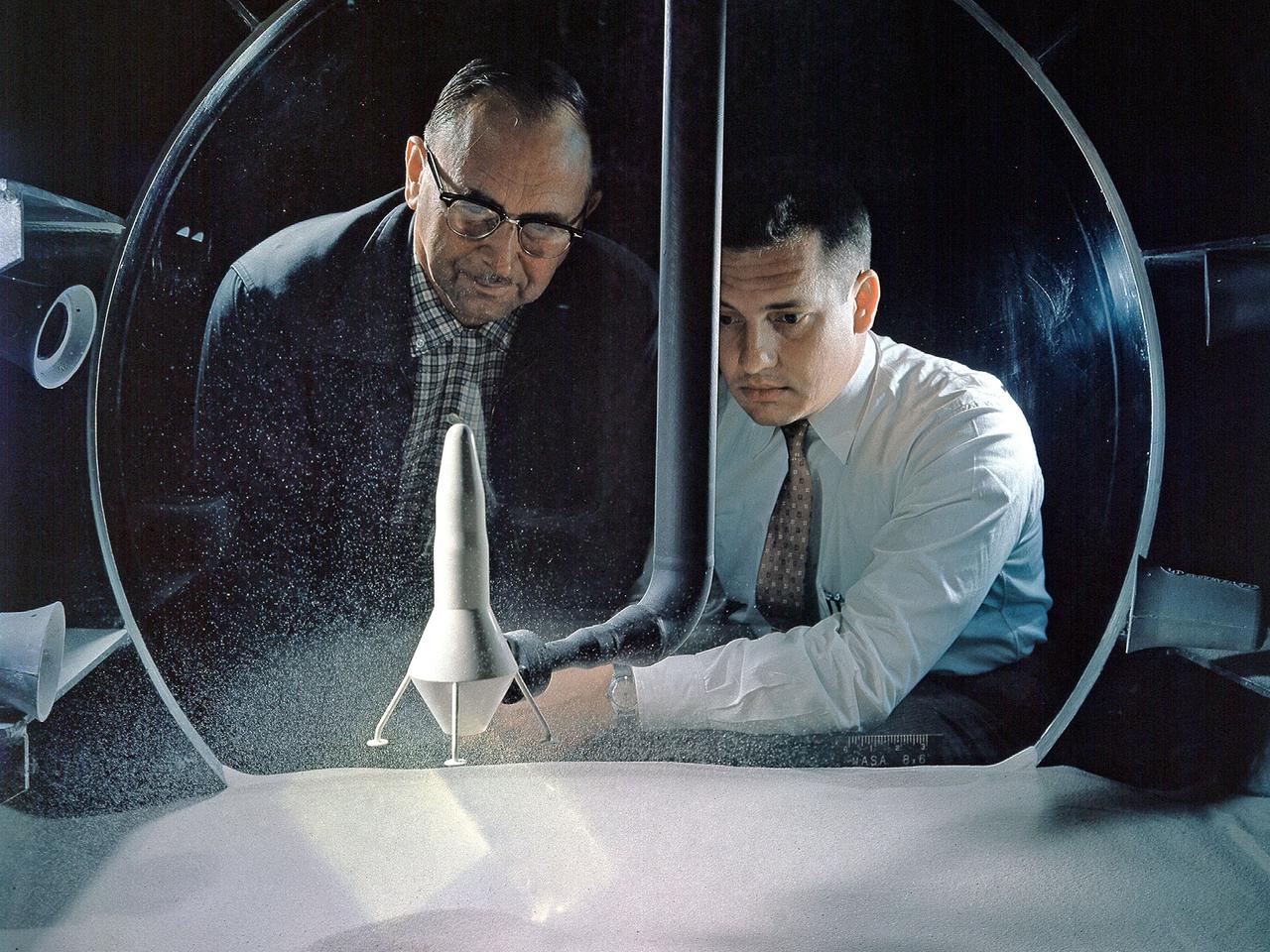
NASA Researchers view a demonstration of the moon dust simulator in the 8- by 6-Foot Supersonic Wind Tunnel facility at the National Aeronautics and Space Administration (NASA) Lewis Research Center. The researchers were studying the effect of the lunar lander’s retrorockets on the loose dust on the lunar surface. There was some concern that the retrorockets would kick up so much dust that the crew would lose the ability to see. They also did not know how the dust’s behavior would be affected by the space atmosphere. This small vacuum tank was built for very preliminary investigations into this matter. The pipe entering the top of the tank supplied the airflow to the lander model, which was affixed to the pipe. The researchers altered the vacuum levels and speed of the airflow.
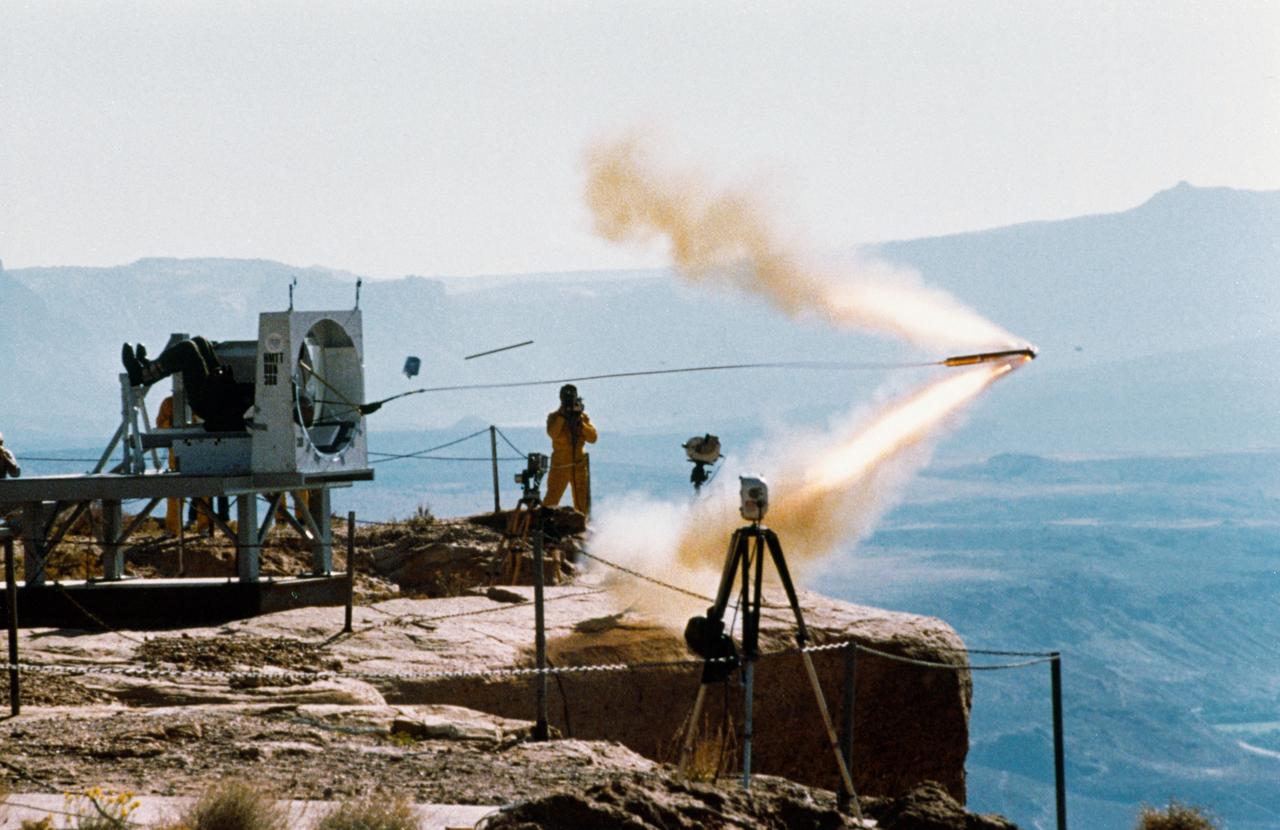
Shuttle crew escape systems (CES) tractor rocket tests conducted at Hurricane Mesa, Utah. This preliminary ground test of the tractor rocket will lead up to in-air evaluations. View shows tractor rocket as it is fired from side hatch mockup. The tractor rocket concept is one of two escape methods being studied to provide crew egress capability during Space Shuttle controlled gliding flight. In-air tests of the system, utilizing a Convair-240 aircraft, will begin 11-19-87 at the Naval Weapons Center in China Lake, California.
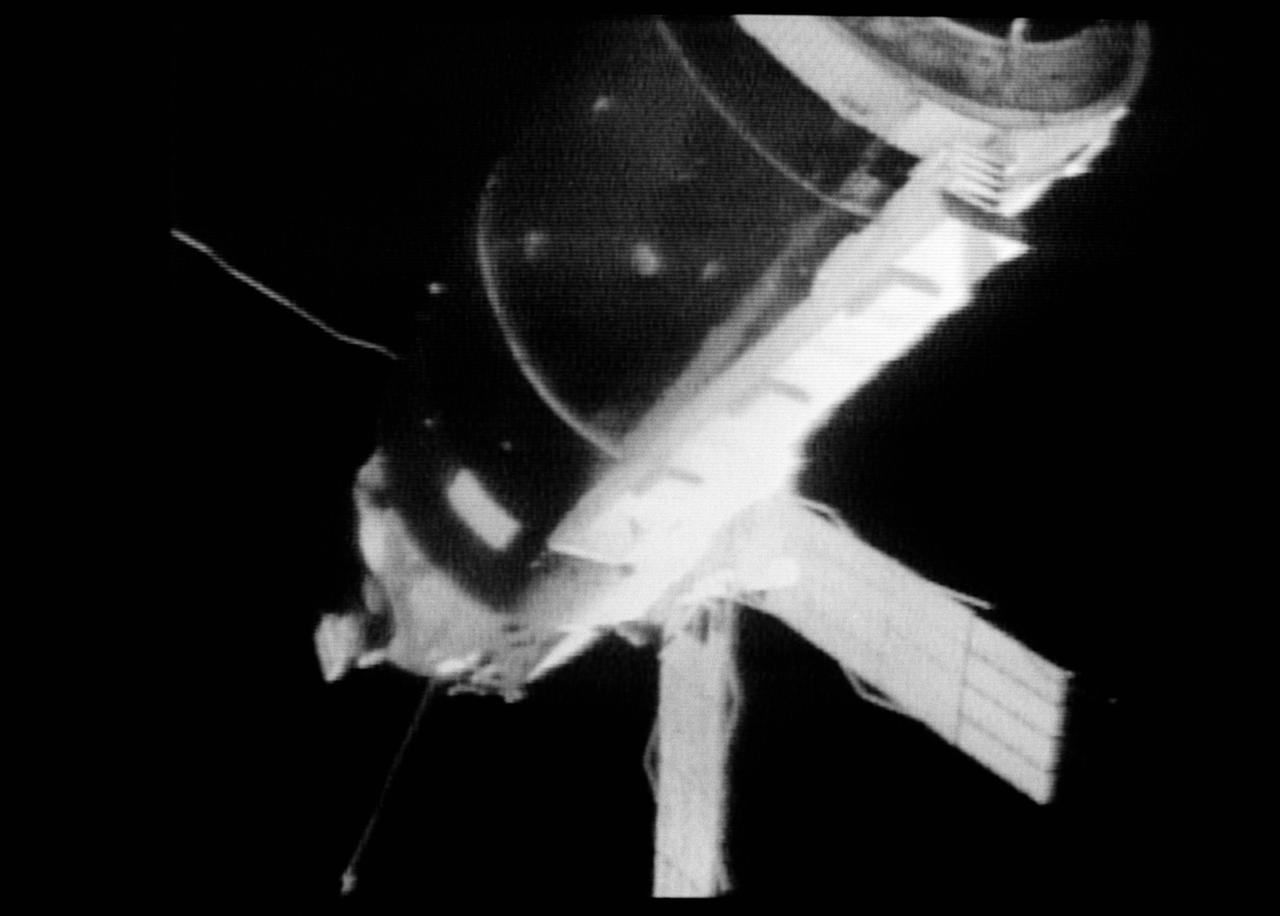
S73-27182 (25 May 1973) --- A close-up view of the Skylab 1 space station cluster can be seen in this reproduction taken from a color television transmission made by a TV camera aboard the Skylab 2 Command Module during its "fly around" inspection of the cluster. This view has been enhanced. At left center the damaged solar array system wing on the Orbital Workshop (OWS) appears to be partly folded. In their preliminary inspection the crewmen noted that portions of the micrometeoroid shield had slid back underneath the OWS solar wing. Solar panels on the Apollo Telescope Mount extend out at the top center. Photo credit: NASA
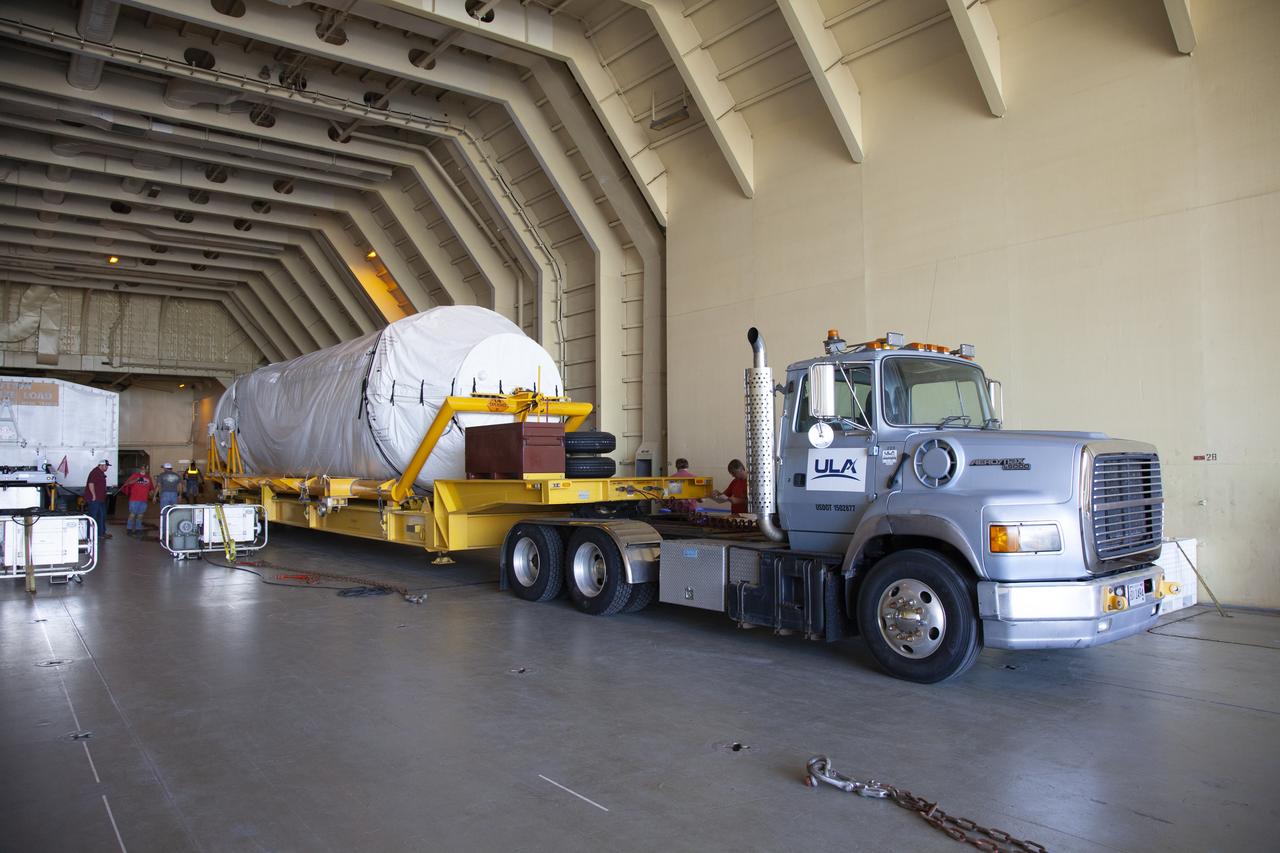
A transport truck moves a United Launch Alliance (ULA) two-engine Centaur upper stage from the company’s Mariner ship that just arrived at Port Canaveral in Florida. The Centaur will be transported to the Atlas Spaceflight Operations Center at Cape Canaveral Air Force Station for preliminary checkouts. Mounted atop a ULA Atlas V rocket, the Centaur will help launch a Boeing CST-100 Starliner spacecraft on an uncrewed Orbital Flight Test from Space Launch Complex 41 at the Cape. NASA’s Commercial Crew Program will return human spaceflight launches to U.S. soil, providing safe, reliable and cost-effective access to low-Earth orbit on systems that meet our safety and mission requirements.
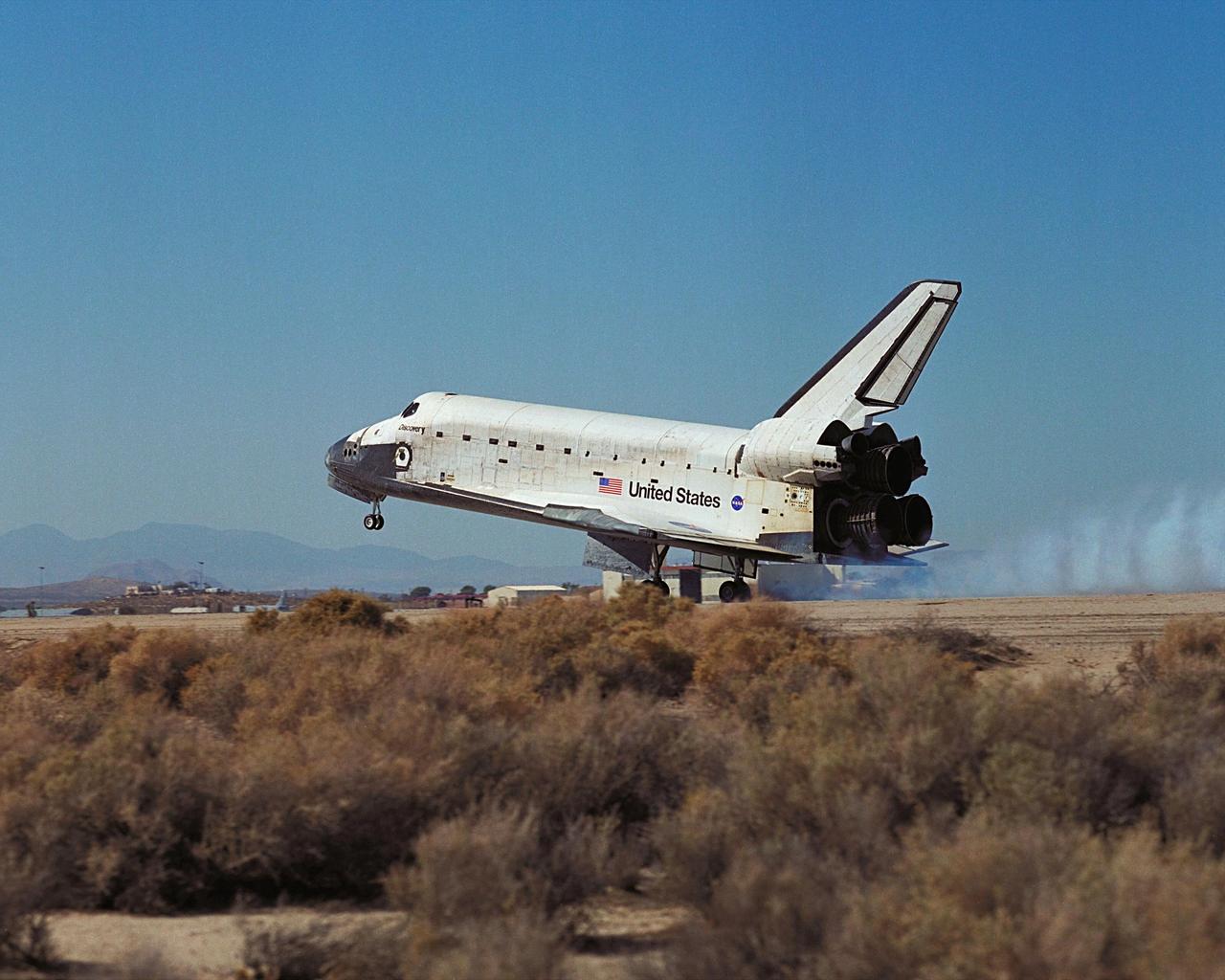
Viewed from the side, orbiter Discovery, with its seven-member crew, touches down on the landing strip at Edwards Air Force Base, Calif., after an 11-day mission to the International Space Station. The orbiter’s main landing gear touched down on EAFB runway 22 at 5 p.m. With the aid of its drag chute, Discovery came to a complete stop at 5:01 p.m. At the conclusion of mission STS-92, Discovery and crew had traveled about 5.3 million statute miles. Following vehicle safing and preliminary offloading efforts, workers will begin preparations for Discovery’s transcontinental ferry flight back to KSC on the back of NASA’s modified Boeing 747
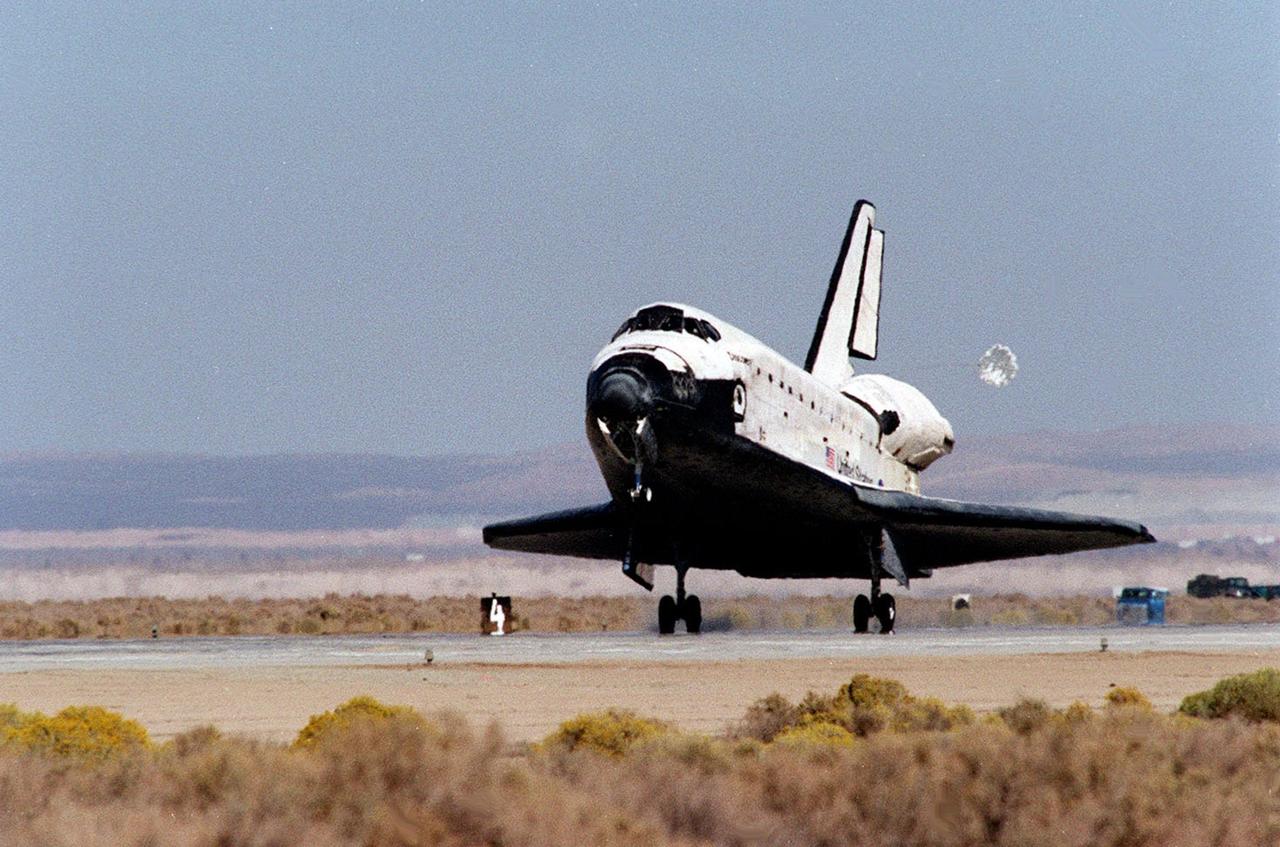
With its drag chute deployed, orbiter Discovery and its seven-member crew roll toward a stop at Edwards Air Force Base, Calif., after an 11-day mission to the International Space Station. The orbiter’s main landing gear touched down on EAFB runway 22 at 5 p.m. With the aid of its drag chute, Discovery came to a complete stop at 5:01 p.m. At the conclusion of mission STS-92, Discovery and crew had traveled about 5.3 million statute miles. Following vehicle safing and preliminary offloading efforts, workers will begin preparations for Discovery’s transcontinental ferry flight back to KSC on the back of NASA’s modified Boeing 747
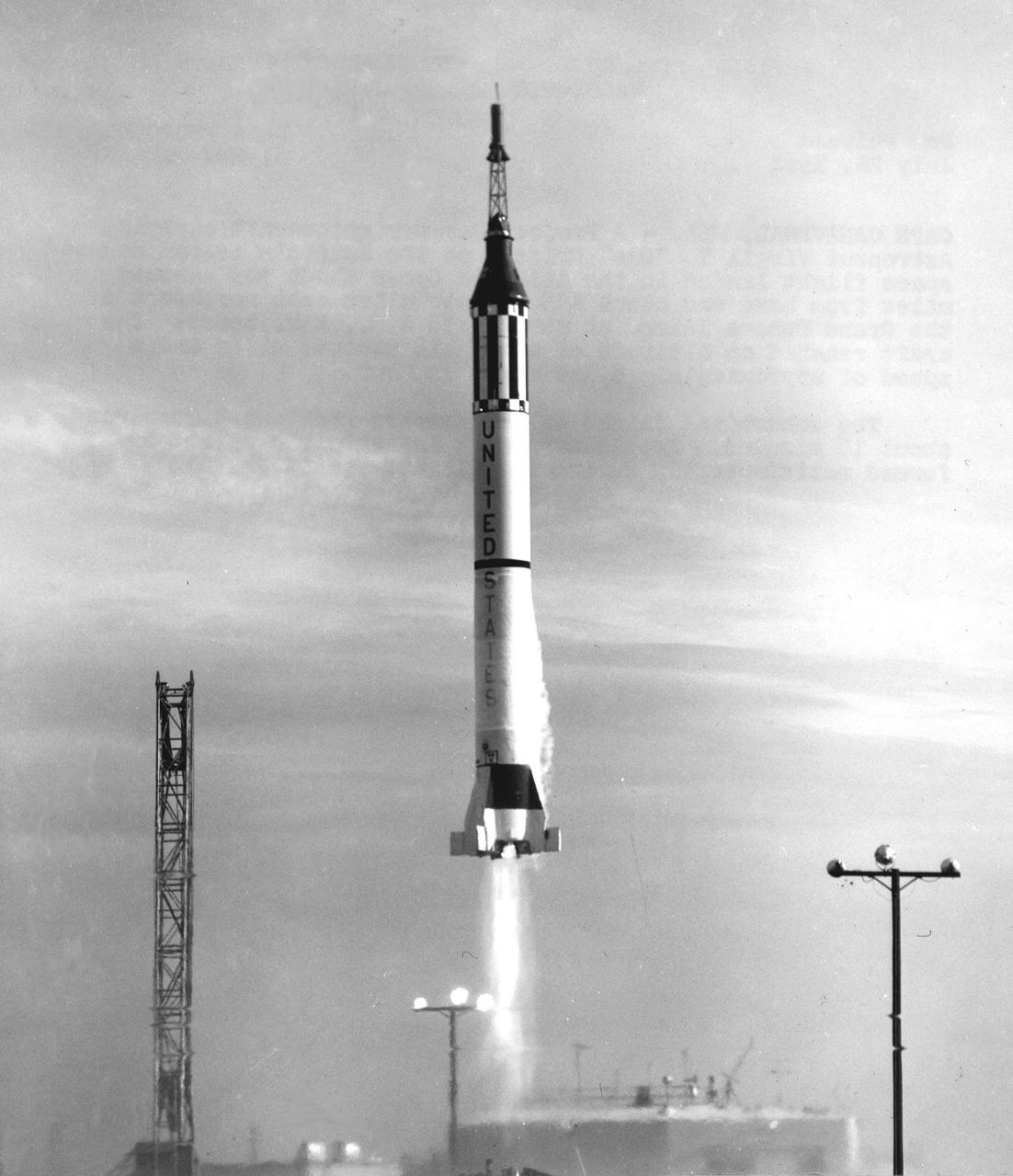
KENNEDY SPACE CENTER, FLA. -- A Project Mercury spacecraft carrying astronaut Virgil I. 'Gus' Grissom on the nation's second manned space flight landed in the Atlantic Ocean about 305 statute miles from here and about 145 statute miles east northeast of the Grand Bahama Island at about 7:36 a.m. EST today. The craft reached an altitude of about 118 statute miles and a speed of approximately 5,310 miles an hour. The suborbital flight of the Mercury-Redstone 4 required about 16 minutes. Preliminary data indicated the pilot performed satisfactorily during the flight. The spacecraft was known as Liberty Bell 7. (NASA Photo)
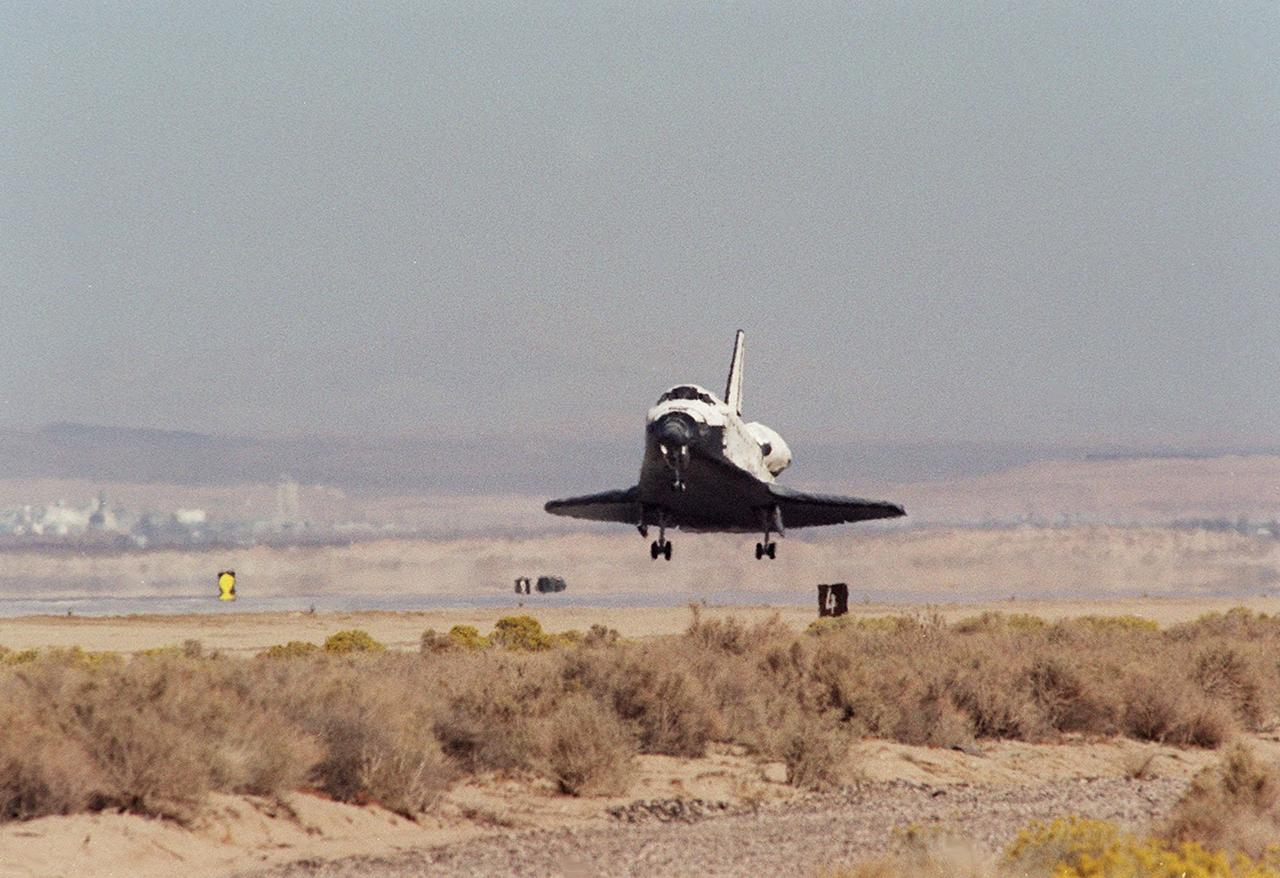
Orbiter Discovery, with its seven-member crew, approaches the landing strip at Edwards Air Force Base, Calif., after an 11-day mission to the International Space Station. The orbiter’s main landing gear touched down on EAFB runway 22 at 5 p.m. With the aid of its drag chute, Discovery came to a complete stop at 5:01 p.m. At the conclusion of mission STS-92, Discovery and crew had traveled about 5.3 million statute miles. Following vehicle safing and preliminary offloading efforts, workers will begin preparations for Discovery’s transcontinental ferry flight back to KSC on the back of NASA’s modified Boeing 747
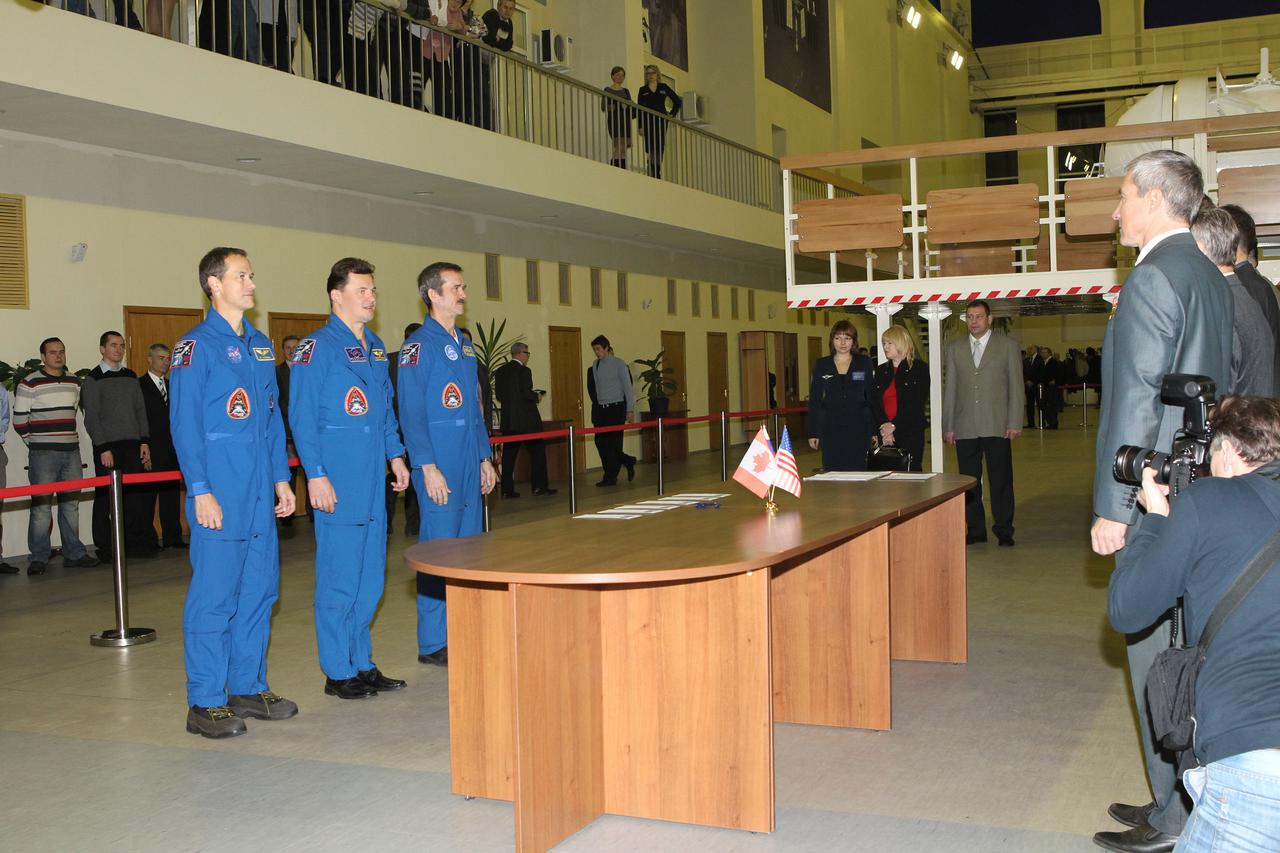
At the Gagarin Cosmonaut Training Center (GCTC) in Star City, Russia, the next trio of residents to be launched to the International Space Station began two days of certification exams for flight Nov. 27, 2012. Expedition 34/35 NASA Flight Engineer Tom Marshburn (left), Soyuz Commander Roman Romanenko (center) and Flight Engineer Chris Hadfield of the Canadian Space Agency received preliminary instructions from GCTC Director Sergei Krikalev (far right). Romanenko, Marshburn and Hadfield and their backups are in the final weeks of training for launch on the Soyuz TMA-07M spacecraft from the Baikonur Cosmodrome in Kazakhstan on Dec. 19 for 5 ½ months on the orbital laboratory. NASA/Stephanie Stoll
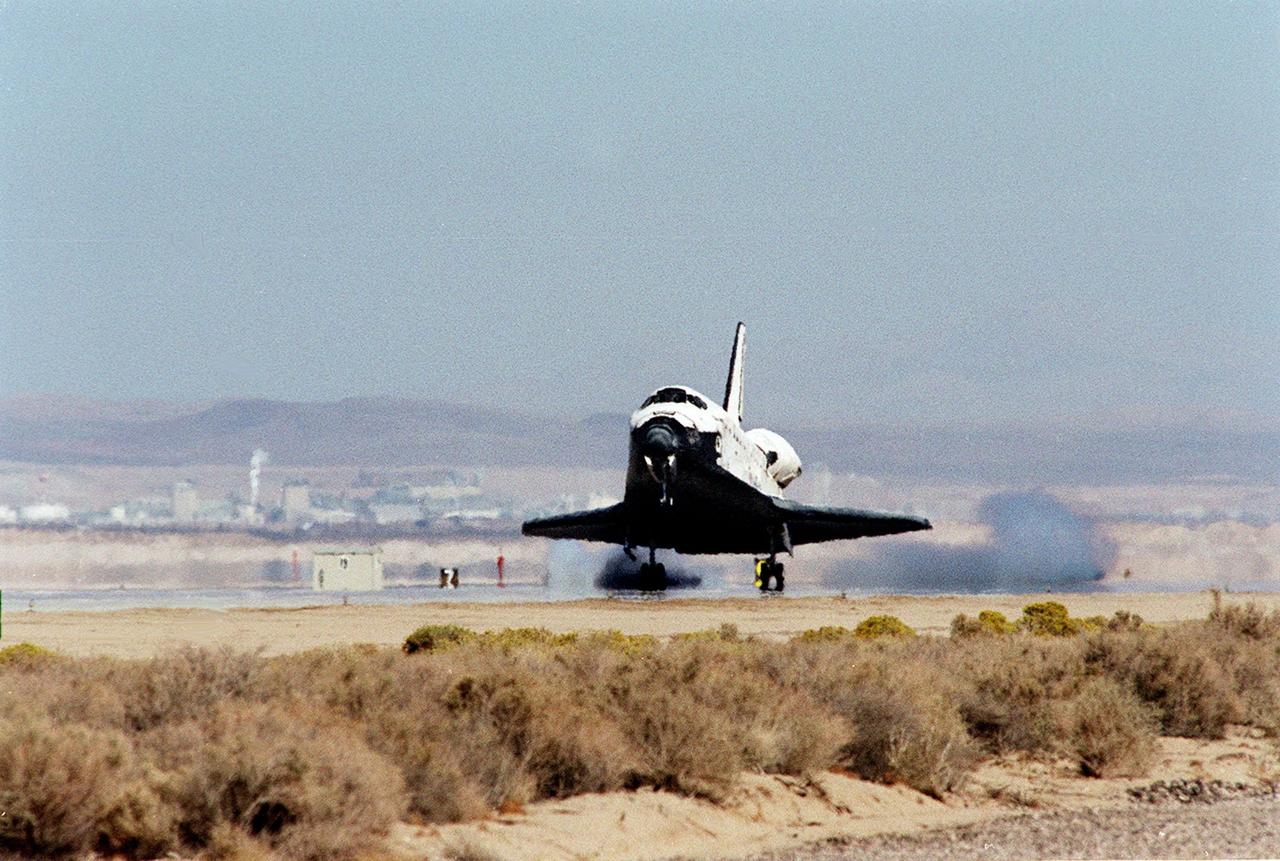
Orbiter Discovery, with its seven-member crew, touches down on the landing strip at Edwards Air Force Base, Calif., after an 11-day mission to the International Space Station. The orbiter’s main landing gear touched down on EAFB runway 22 at 5 p.m. With the aid of its drag chute, Discovery came to a complete stop at 5:01 p.m. At the conclusion of mission STS-92, Discovery and crew had traveled about 5.3 million statute miles. Following vehicle safing and preliminary offloading efforts, workers will begin preparations for Discovery’s transcontinental ferry flight back to KSC on the back of NASA’s modified Boeing 747
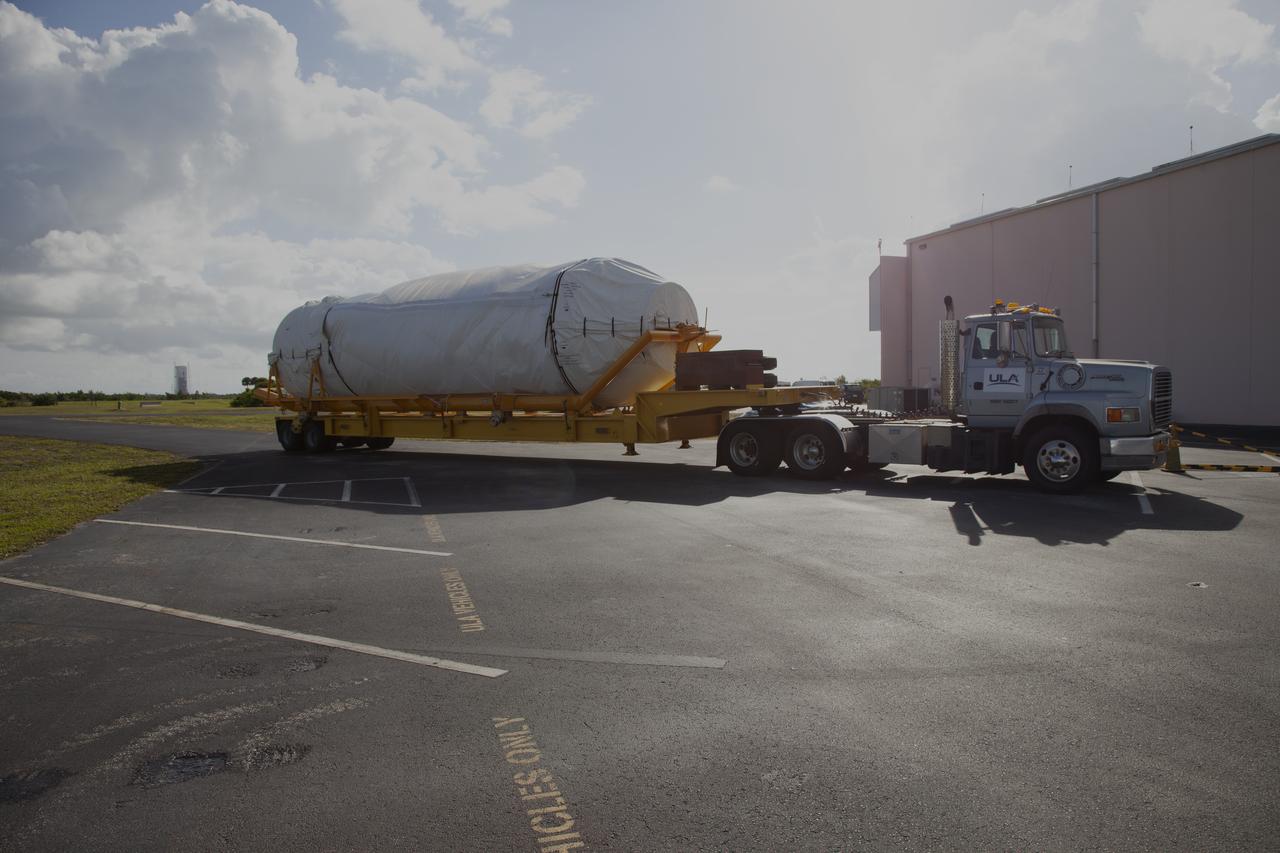
A transport truck with a United Launch Alliance (ULA) two-engine Centaur upper stage arrives at the Atlas Spaceflight Operations Center at Cape Canaveral Air Force Station for preliminary checkouts. Mounted atop a ULA Atlas V rocket, the Centaur will help launch a Boeing CST-100 Starliner spacecraft on an uncrewed Orbital Flight Test from Space Launch Complex 41 at the Cape. NASA’s Commercial Crew Program will return human spaceflight launches to U.S. soil, providing safe, reliable and cost-effective access to low-Earth orbit on systems that meet our safety and mission requirements.
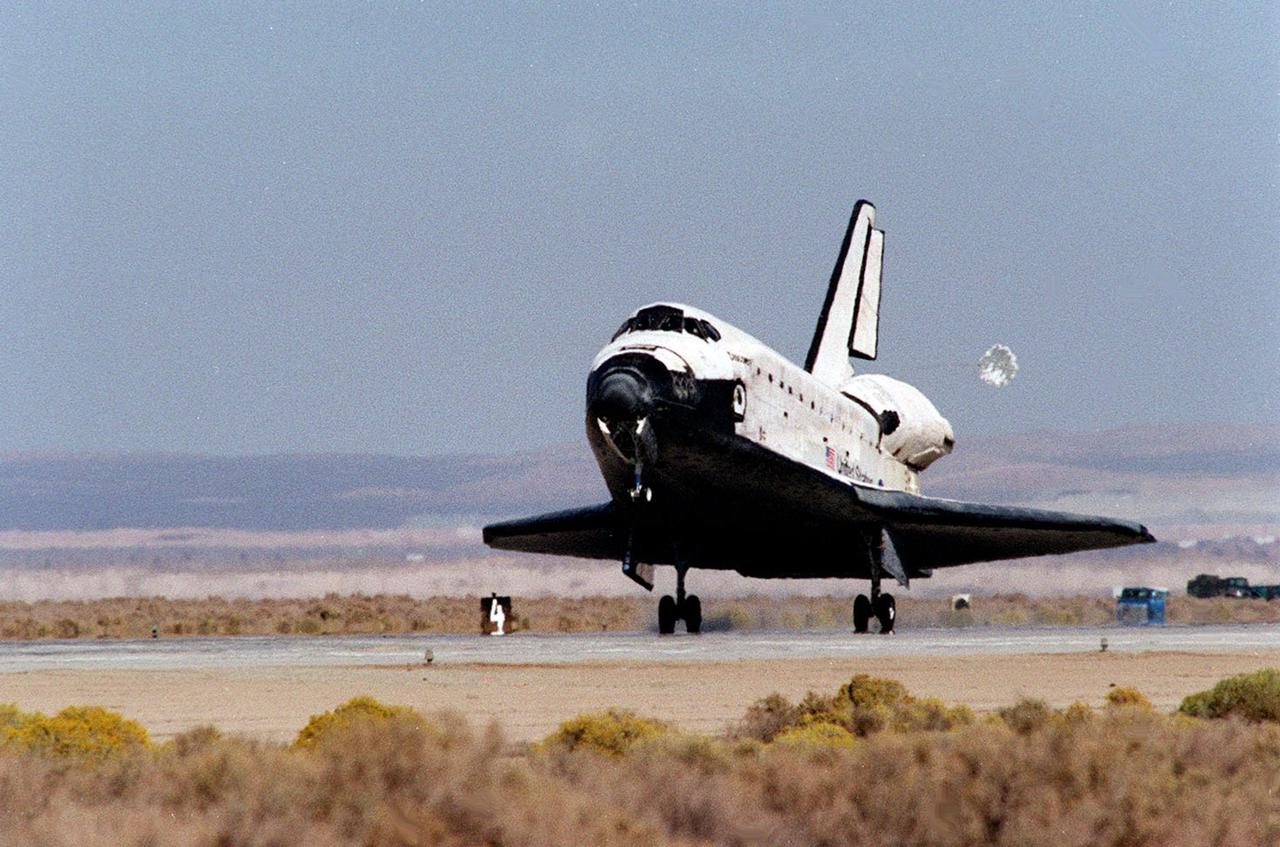
With its drag chute deployed, orbiter Discovery and its seven-member crew roll toward a stop at Edwards Air Force Base, Calif., after an 11-day mission to the International Space Station. The orbiter’s main landing gear touched down on EAFB runway 22 at 5 p.m. With the aid of its drag chute, Discovery came to a complete stop at 5:01 p.m. At the conclusion of mission STS-92, Discovery and crew had traveled about 5.3 million statute miles. Following vehicle safing and preliminary offloading efforts, workers will begin preparations for Discovery’s transcontinental ferry flight back to KSC on the back of NASA’s modified Boeing 747
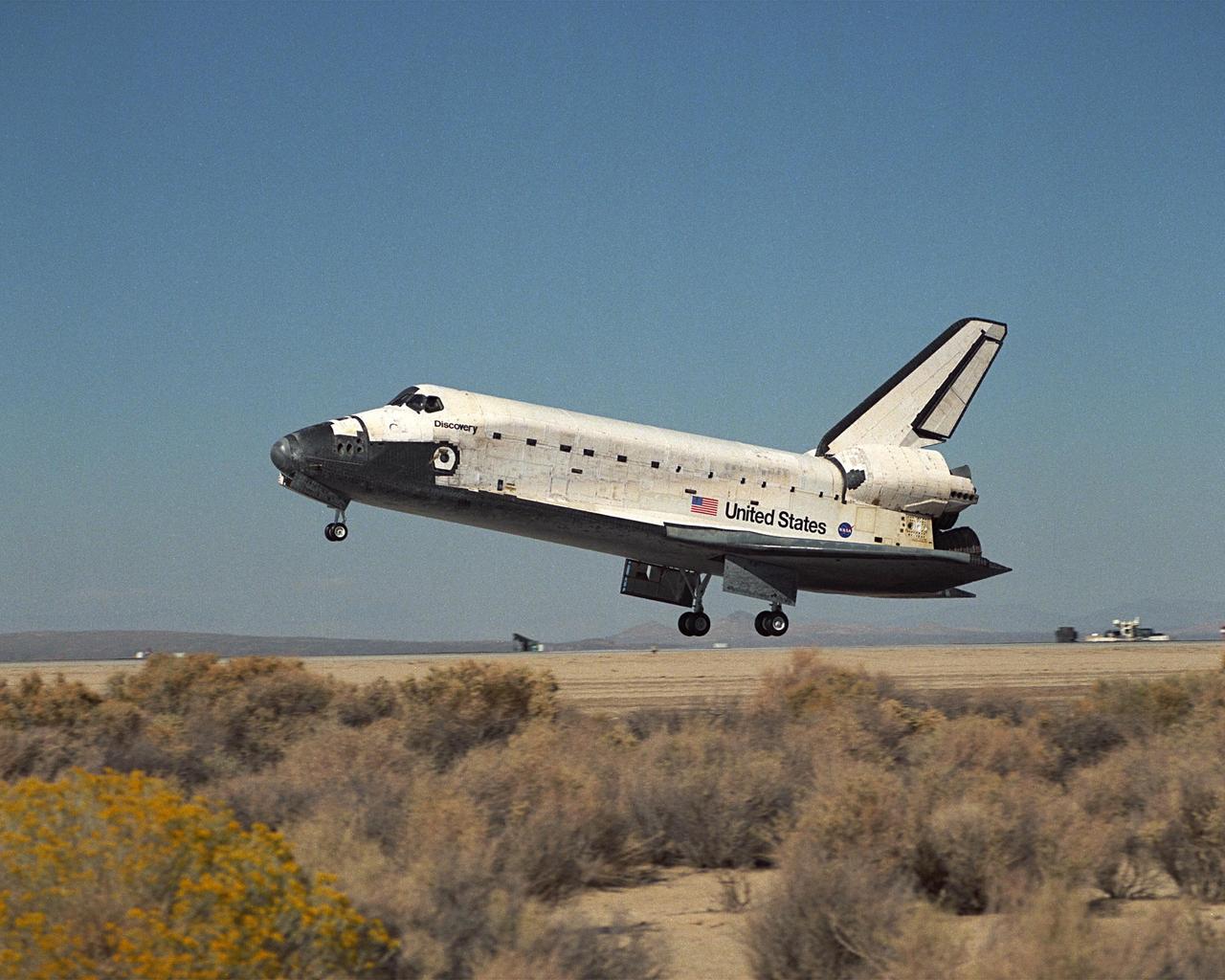
Viewed from the side, orbiter Discovery, with its seven-member crew, is about to touch down on the landing strip at Edwards Air Force Base, Calif., after an 11-day mission to the International Space Station. The orbiter’s main landing gear touched down on EAFB runway 22 at 5 p.m. With the aid of its drag chute, Discovery came to a complete stop at 5:01 p.m. At the conclusion of mission STS-92, Discovery and crew had traveled about 5.3 million statute miles. Following vehicle safing and preliminary offloading efforts, workers will begin preparations for Discovery’s transcontinental ferry flight back to KSC on the back of NASA’s modified Boeing 747
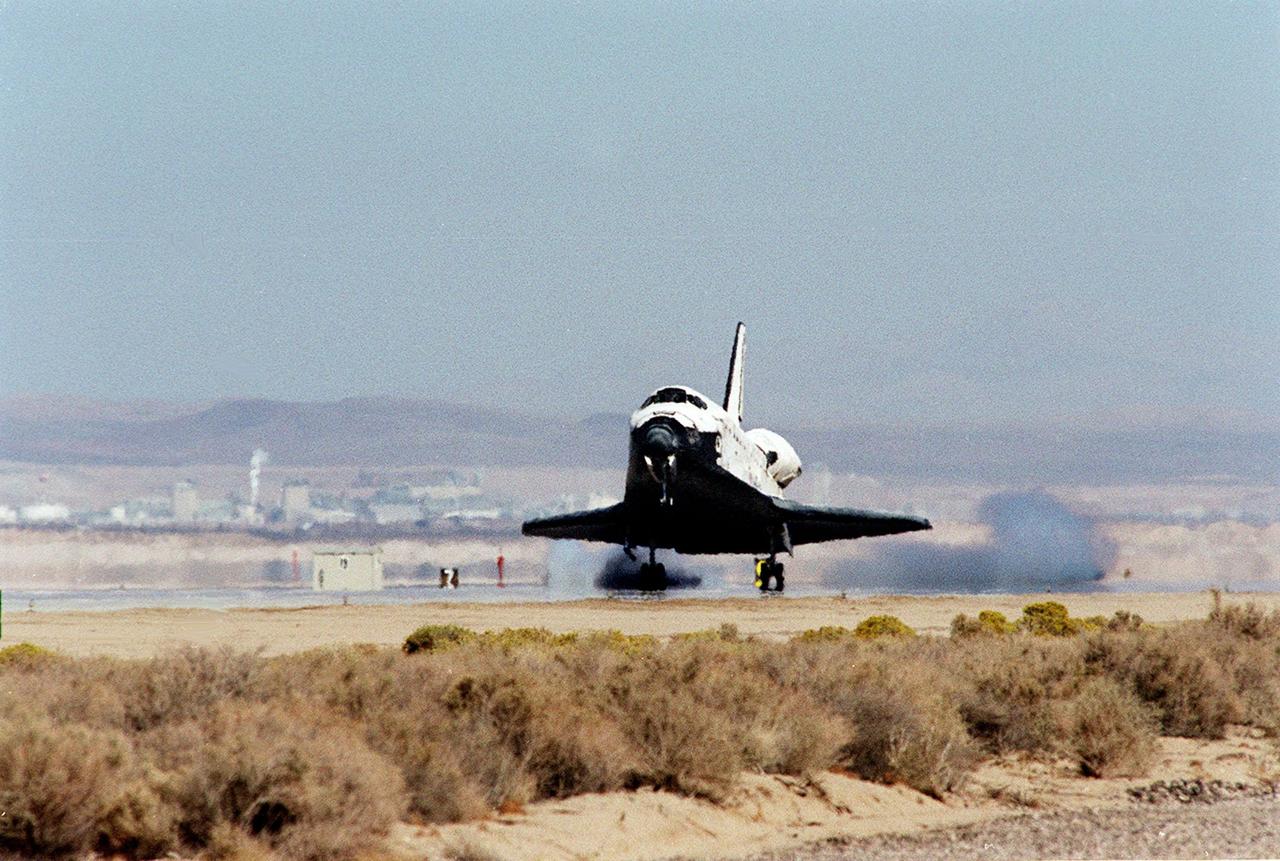
Orbiter Discovery, with its seven-member crew, touches down on the landing strip at Edwards Air Force Base, Calif., after an 11-day mission to the International Space Station. The orbiter’s main landing gear touched down on EAFB runway 22 at 5 p.m. With the aid of its drag chute, Discovery came to a complete stop at 5:01 p.m. At the conclusion of mission STS-92, Discovery and crew had traveled about 5.3 million statute miles. Following vehicle safing and preliminary offloading efforts, workers will begin preparations for Discovery’s transcontinental ferry flight back to KSC on the back of NASA’s modified Boeing 747
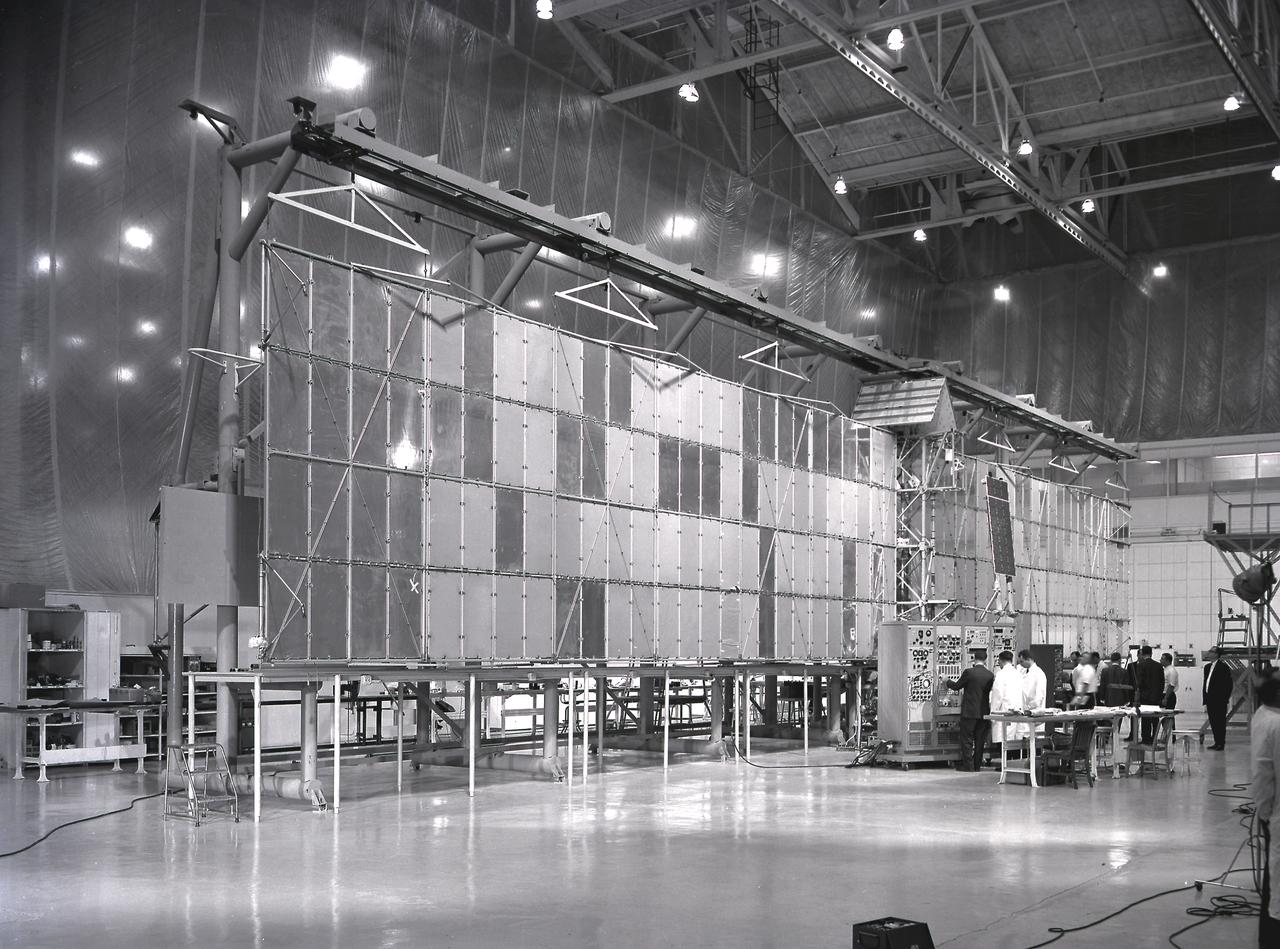
Fairchild technicians check out the extended Pegasus meteoroid detection surface. The Pegasus was developed by Fairchild Stratos Corporation, Hagerstown, Maryland, for NASA through the Marshall Space Flight Center. Three Pegasus satellites were flown aboard Saturn I SA-8, SA-9, and SA-10 missions. After being placed into orbit around the Earth, the satellite unfolded a series of giant panels to form a pair of wings measuring 96 feet across. The purpose of the satellite was to electronically record the size and frequency of particles in space, and compare the performance of protected and unprotected solar cells as important new preliminaries to a marned flight to the Moon.
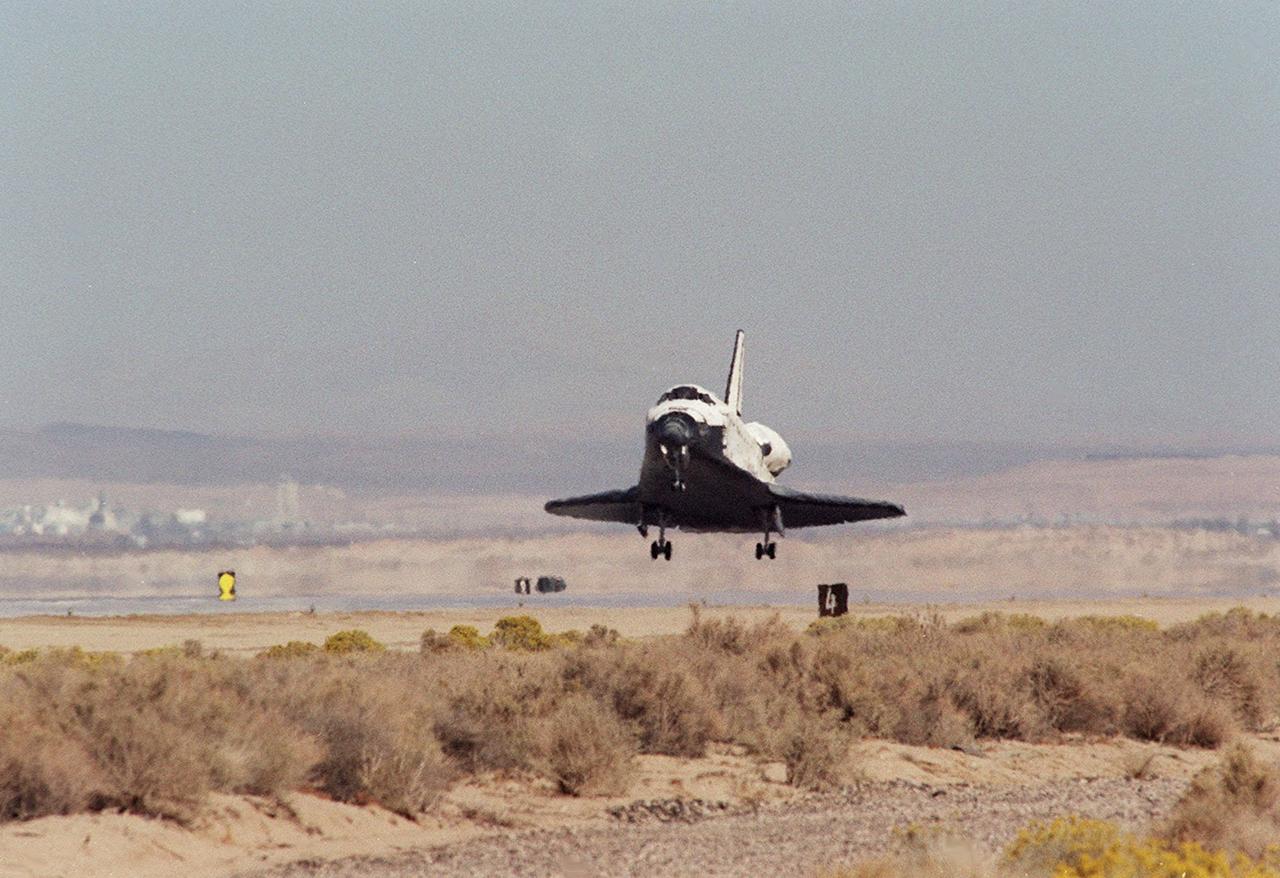
Orbiter Discovery, with its seven-member crew, approaches the landing strip at Edwards Air Force Base, Calif., after an 11-day mission to the International Space Station. The orbiter’s main landing gear touched down on EAFB runway 22 at 5 p.m. With the aid of its drag chute, Discovery came to a complete stop at 5:01 p.m. At the conclusion of mission STS-92, Discovery and crew had traveled about 5.3 million statute miles. Following vehicle safing and preliminary offloading efforts, workers will begin preparations for Discovery’s transcontinental ferry flight back to KSC on the back of NASA’s modified Boeing 747