
Preparing to Dip
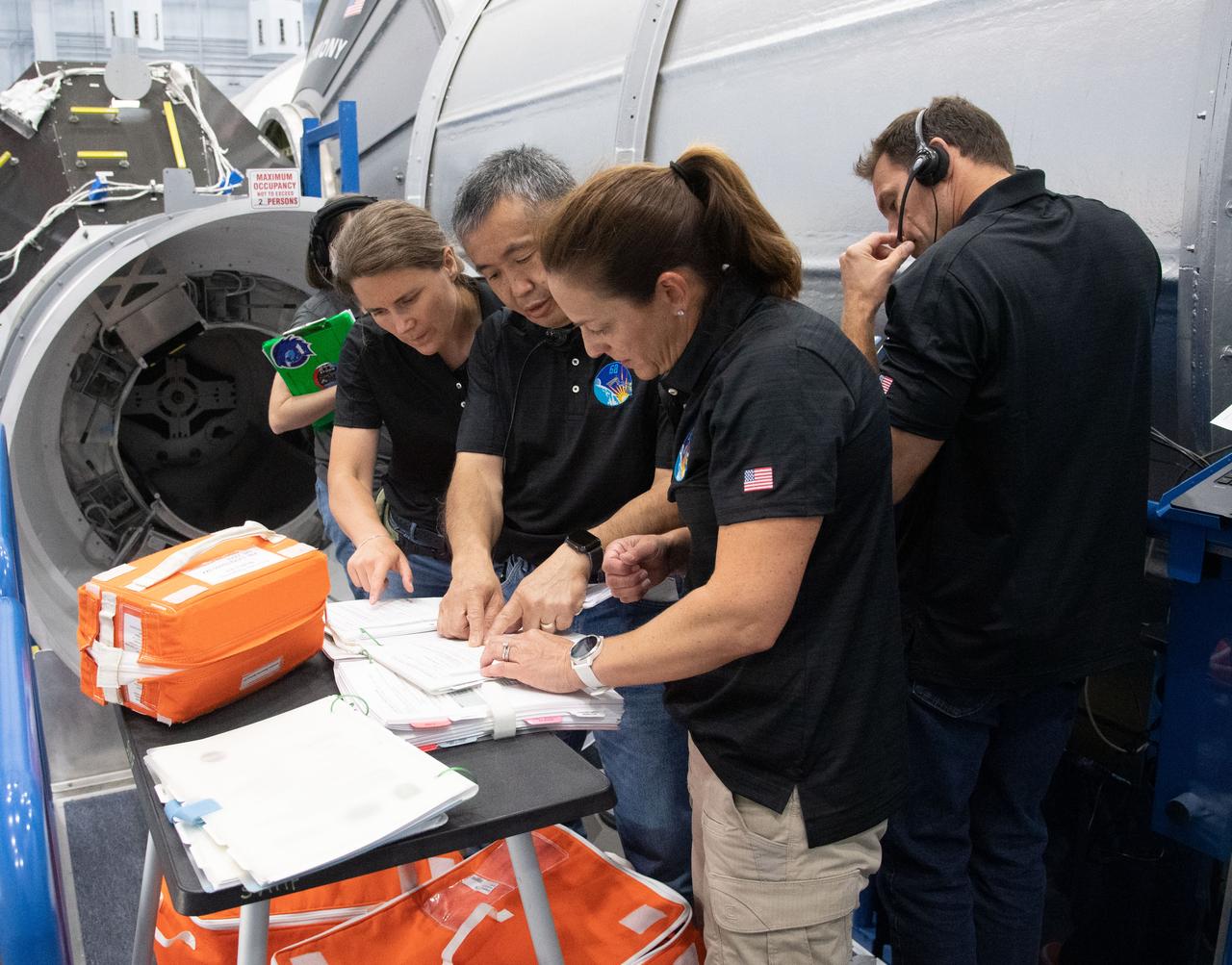
Roscosmos cosmonaut Anna Kikina, JAXA astronaut Koichi Wakata, and NASA astronaut Nicole Mann prepare for the unlikely event of an emergency before their mission to the International Space Station. Credit: NASA/James Blair
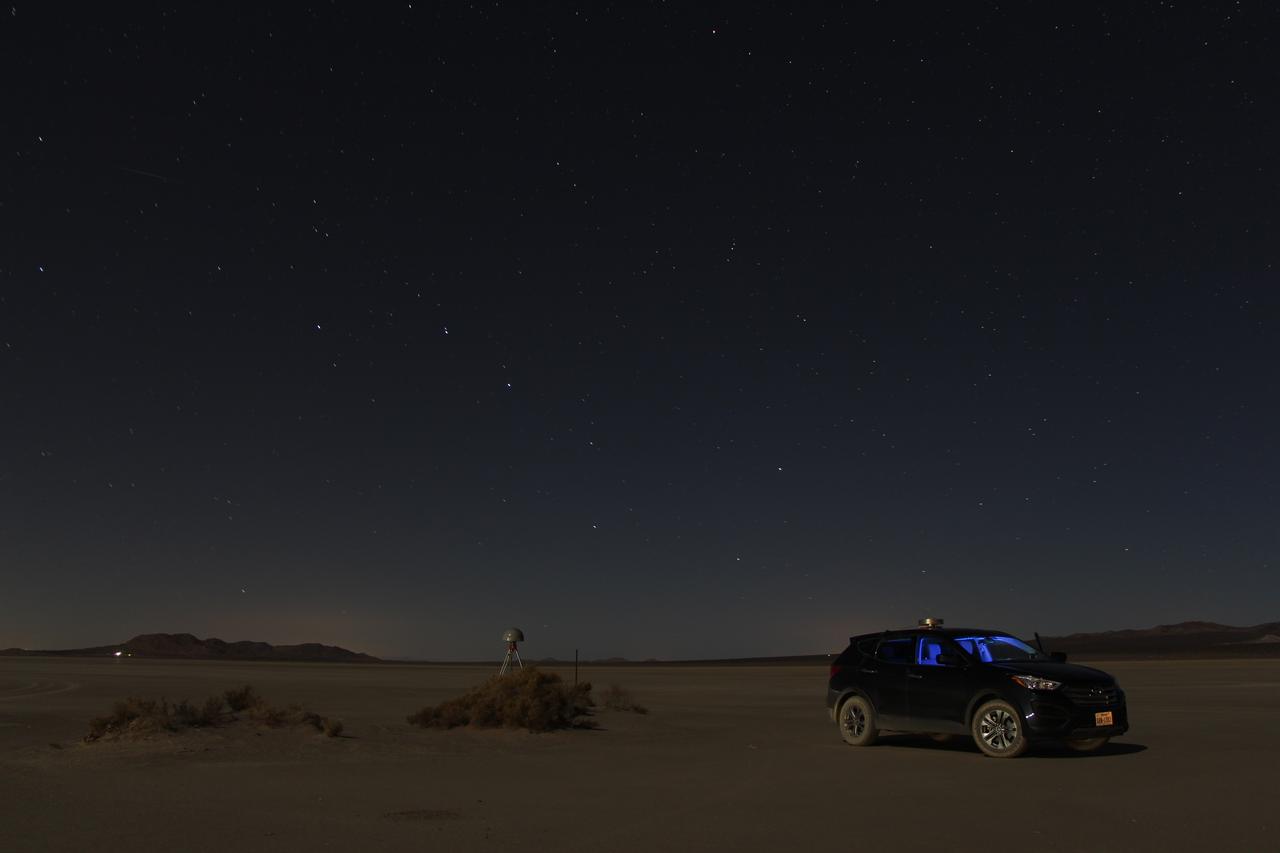
At first glance a dry lake bed in the southern California desert seems like the last place to prepare to study ice. But on Oct. 2, 2014, NASA’s Operation IceBridge carried out a ground-based GPS survey of the El Mirage lake bed in California’s Mojave Desert. Members of the IceBridge team are currently at NASA’s Armstrong Flight Research Center, preparing instruments aboard the DC-8 research aircraft for flights over Antarctica. Part of this preparation involves test flights over the desert, where researchers verify their instruments are working properly. El Mirage serves as a prime location for testing the mission’s laser altimeter, the Airborne Topographic Mapper, because the lake bed has a flat surface and reflects light similarly to snow and ice. This photo, taken shortly after the survey, shows the GPS-equipped survey vehicle and a stationary GPS station (left of the vehicle) on the lake bed with the constellation Ursa Major in the background. By driving the vehicle in parallel back and forth lines over a predefined area and comparing those GPS elevation readings with measurements from the stationary GPS, researchers are able to build an elevation map that will be used to precisely calibrate the laser altimeter for ice measurements. Credit: NASA/John Sonntag Operation IceBridge is scheduled to begin research flights over Antarctica on Oct. 15, 2014. The mission will be based out of Punta Arenas, Chile, until Nov. 23. For more information about IceBridge, visit: <a href="http://www.nasa.gov/icebridge" rel="nofollow">www.nasa.gov/icebridge</a> <b><a href="http://www.nasa.gov/audience/formedia/features/MP_Photo_Guidelines.html" rel="nofollow">NASA image use policy.</a></b> <b><a href="http://www.nasa.gov/centers/goddard/home/index.html" rel="nofollow">NASA Goddard Space Flight Center</a></b> enables NASA’s mission through four scientific endeavors: Earth Science, Heliophysics, Solar System Exploration, and Astrophysics. Goddard plays a leading role in NASA’s accomplishments by contributing compelling scientific knowledge to advance the Agency’s mission. <b>Follow us on <a href="http://twitter.com/NASAGoddardPix" rel="nofollow">Twitter</a></b> <b>Like us on <a href="http://www.facebook.com/pages/Greenbelt-MD/NASA-Goddard/395013845897?ref=tsd" rel="nofollow">Facebook</a></b> <b>Find us on <a href="http://instagram.com/nasagoddard?vm=grid" rel="nofollow">Instagram</a></b>
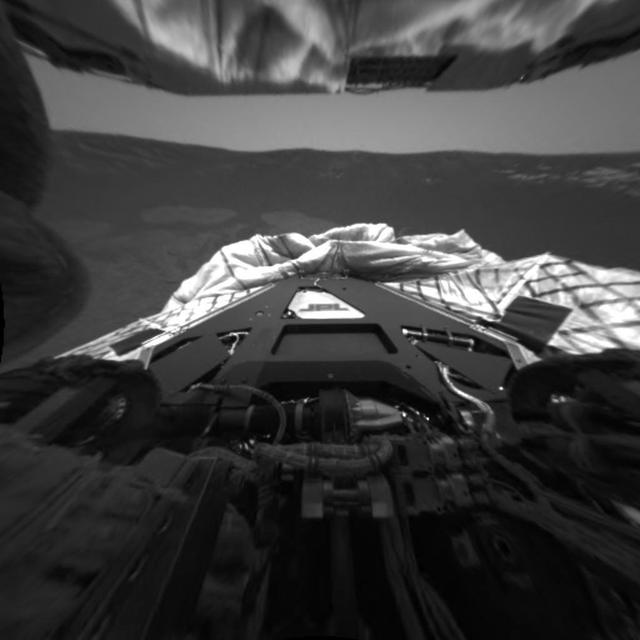
Opportunity Prepares for Egress

Preparation for Moving a Rock on Mars
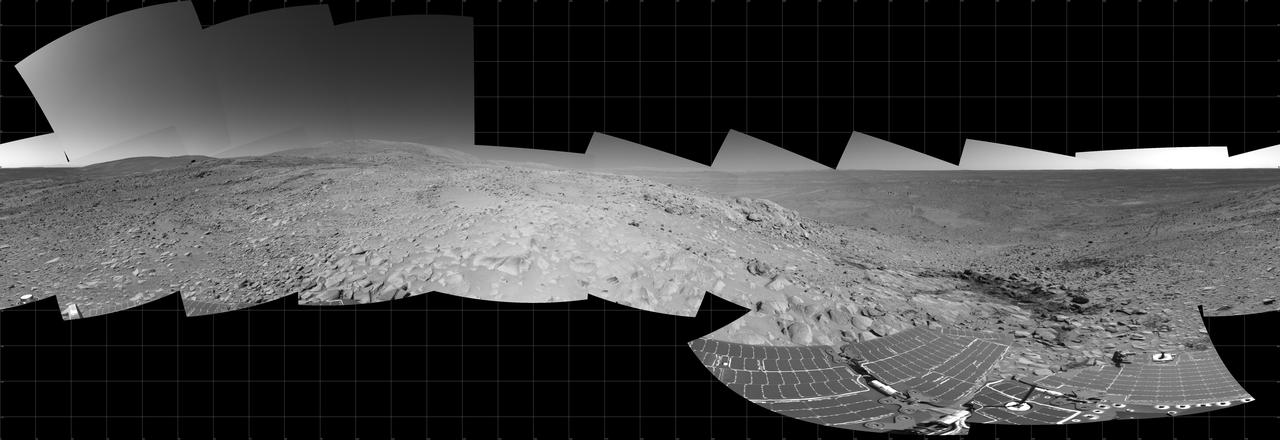
Preparing for Lights Out on Mars
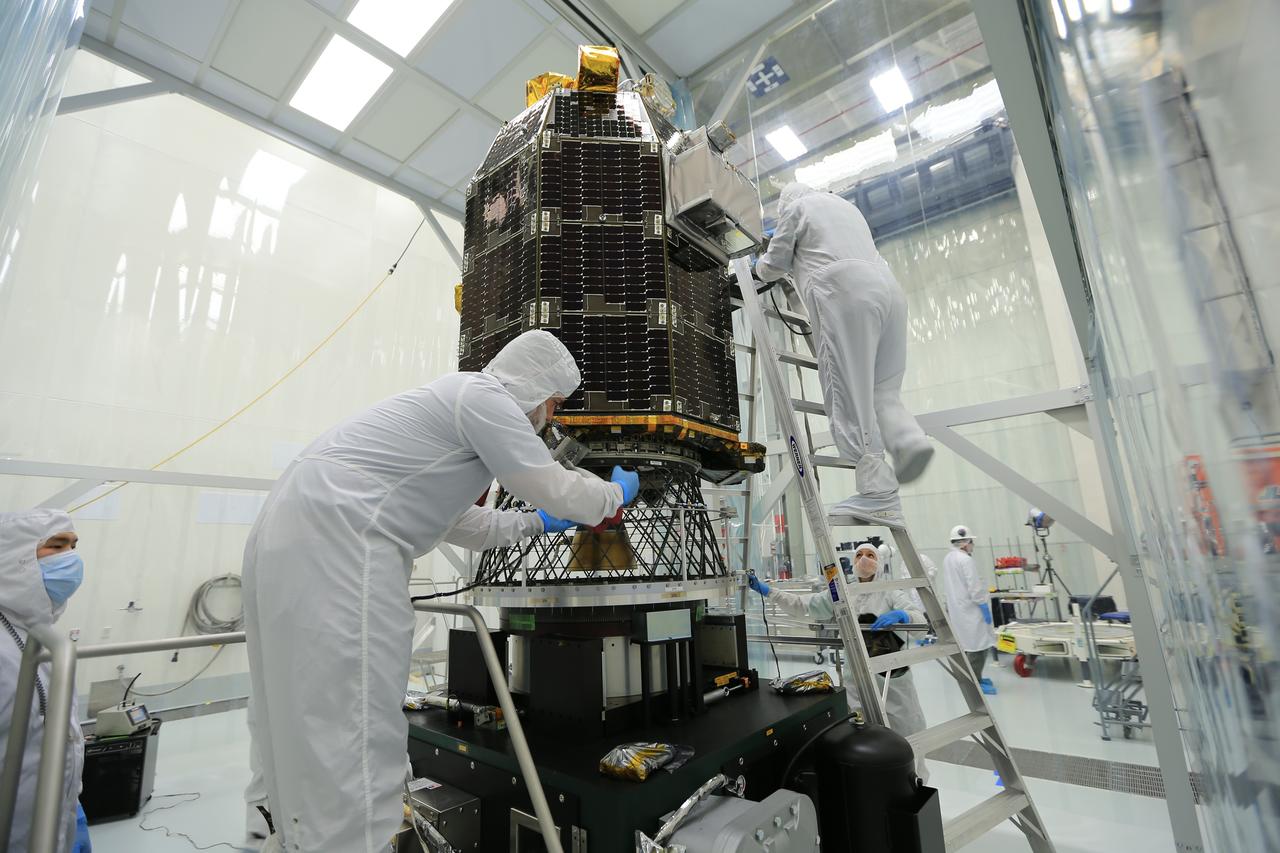
NASA's Lunar Atmosphere and Dust Environment Explorer (LADEE) spacecraft being prepared in the clean room at Wallops Flight Facility. Credit: NASA ----- What is LADEE? The Lunar Atmosphere and Dust Environment Explorer (LADEE) is designed to study the Moon's thin exosphere and the lunar dust environment. An "exosphere" is an atmosphere that is so thin and tenuous that molecules don't collide with each other. Studying the Moon's exosphere will help scientists understand other planetary bodies with exospheres too, like Mercury and some of Jupiter's bigger moons. The orbiter will determine the density, composition and temporal and spatial variability of the Moon's exosphere to help us understand where the species in the exosphere come from and the role of the solar wind, lunar surface and interior, and meteoric infall as sources. The mission will also examine the density and temporal and spatial variability of dust particles that may get lofted into the atmosphere. The mission also will test several new technologies, including a modular spacecraft bus that may reduce the cost of future deep space missions and demonstrate two-way high rate laser communication for the first time from the Moon. LADEE now is ready to launch when the window opens on Sept. 6, 2013. Read more: <a href="http://www.nasa.gov/ladee" rel="nofollow">www.nasa.gov/ladee</a> <b><a href="http://www.nasa.gov/audience/formedia/features/MP_Photo_Guidelines.html" rel="nofollow">NASA image use policy.</a></b> <b><a href="http://www.nasa.gov/centers/goddard/home/index.html" rel="nofollow">NASA Goddard Space Flight Center</a></b> enables NASA’s mission through four scientific endeavors: Earth Science, Heliophysics, Solar System Exploration, and Astrophysics. Goddard plays a leading role in NASA’s accomplishments by contributing compelling scientific knowledge to advance the Agency’s mission. <b>Follow us on <a href="http://twitter.com/NASA_GoddardPix" rel="nofollow">Twitter</a></b> <b>Like us on <a href="http://www.facebook.com/pages/Greenbelt-MD/NASA-Goddard/395013845897?ref=tsd" rel="nofollow">Facebook</a></b> <b>Find us on <a href="http://instagram.com/nasagoddard?vm=grid" rel="nofollow">Instagram</a></b>
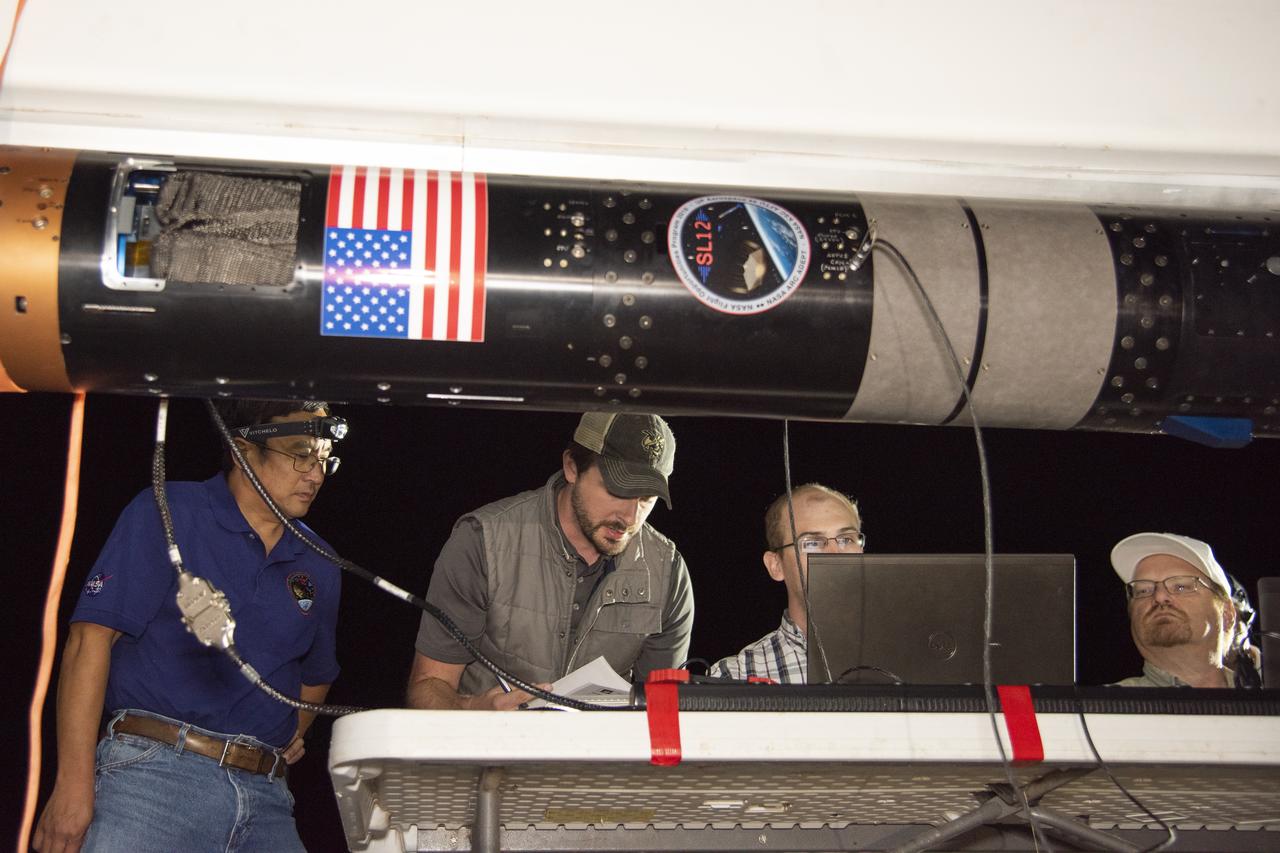
UP Aerospace employees preparing their SpaceLoft rocket to carry NASA technologies for testing in microgravity.
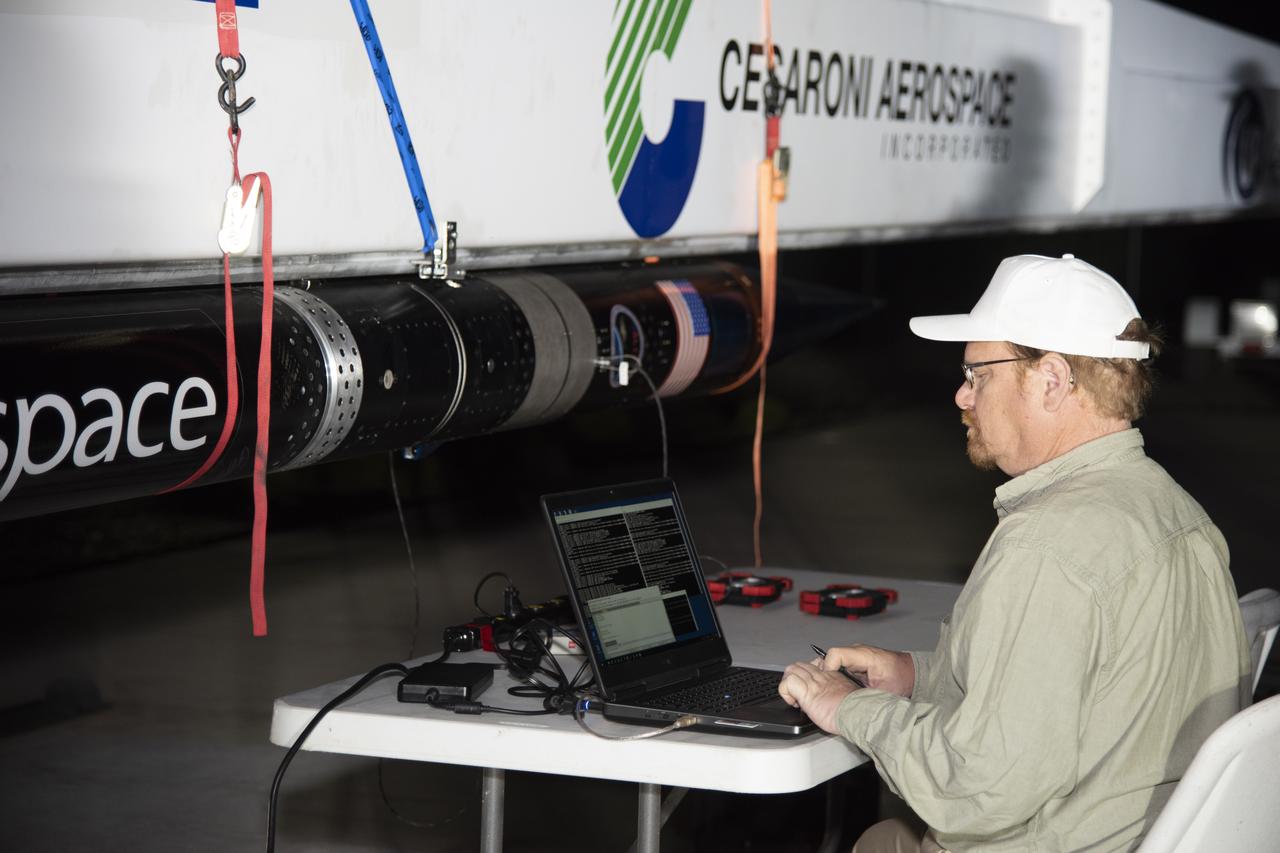
UP Aerospace employees preparing their SpaceLoft rocket to carry NASA technologies for testing in microgravity.
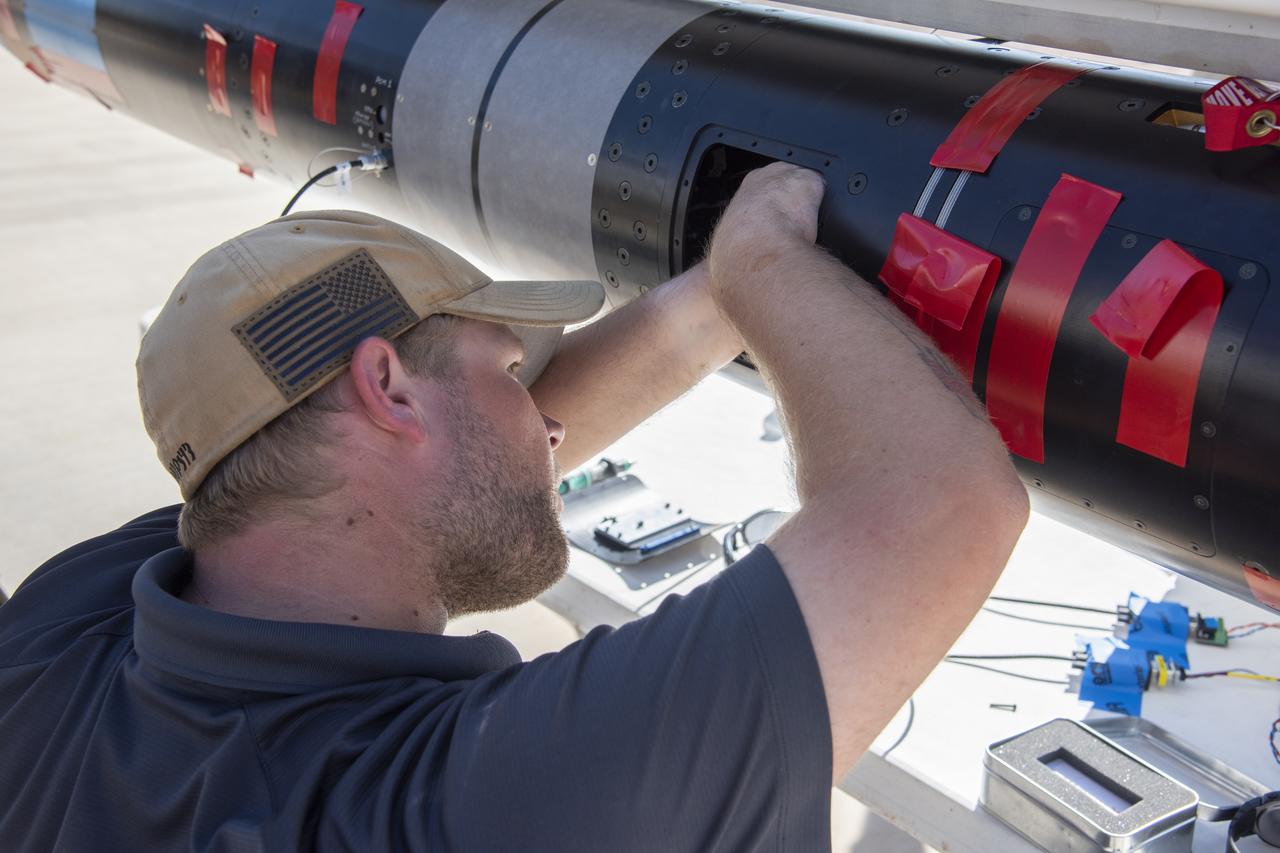
UP Aerospace employees preparing their SpaceLoft rocket to carry NASA technologies for testing in microgravity.
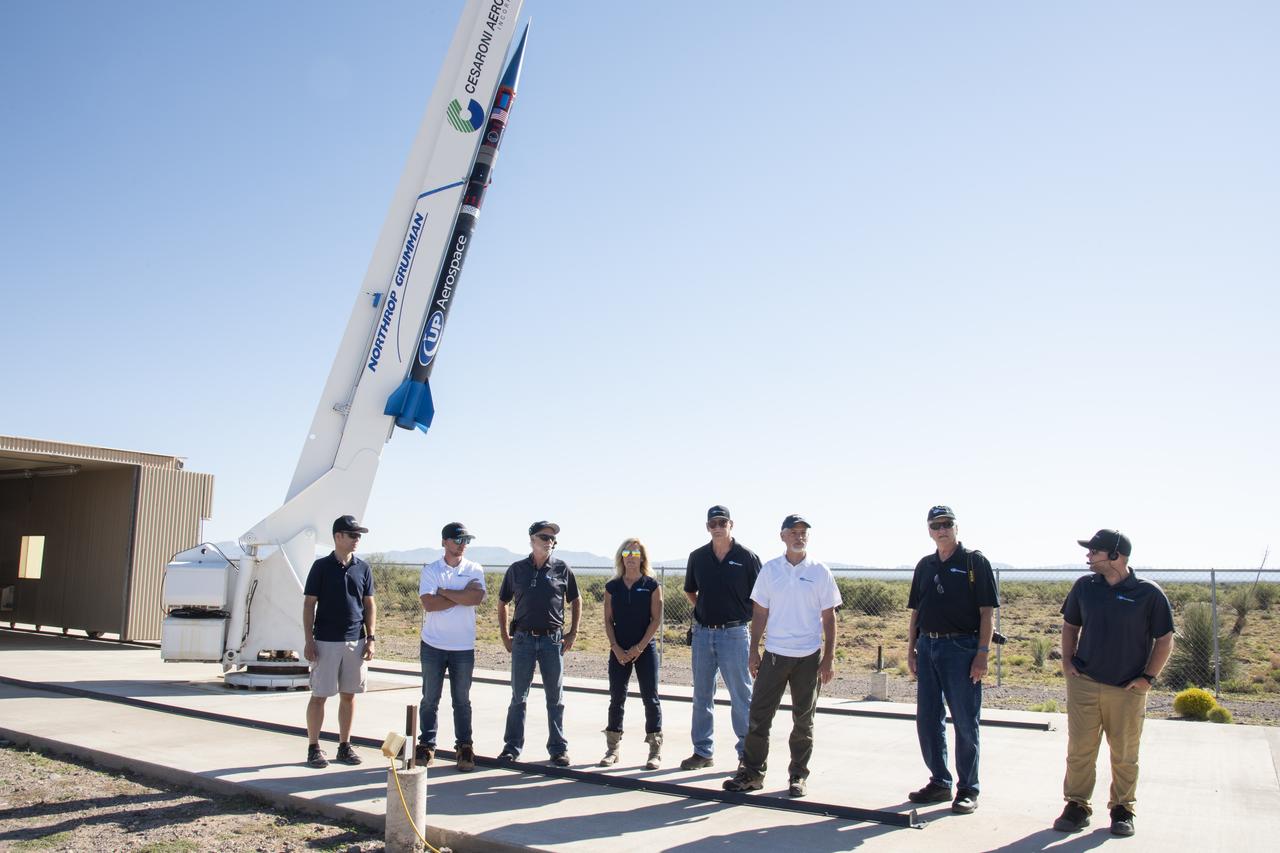
UP Aerospace employees preparing their SpaceLoft rocket to carry NASA technologies for testing in microgravity
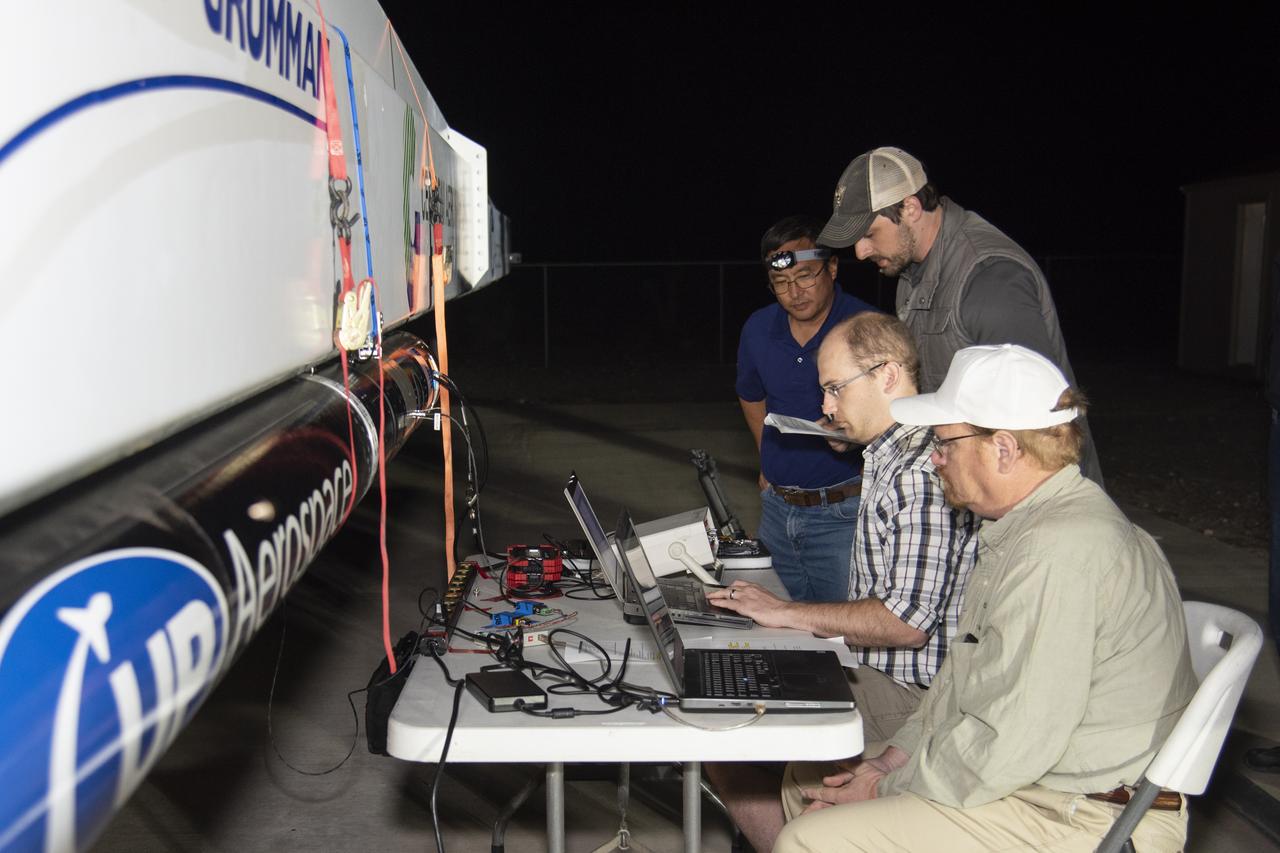
UP Aerospace employees preparing their SpaceLoft rocket to carry NASA technologies for testing in microgravity.
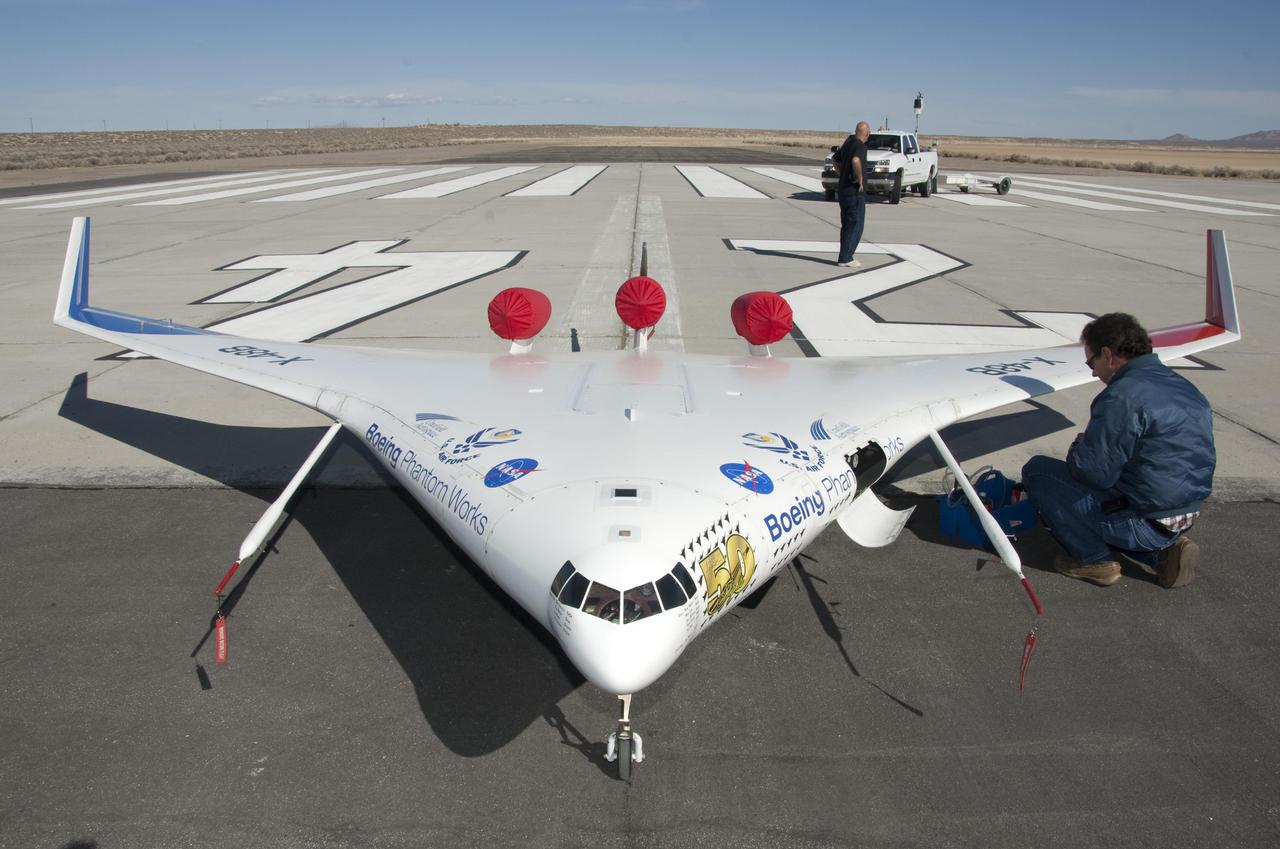
NASA Dryden engineer Gary Cosentino prepares the X-48B for flight.
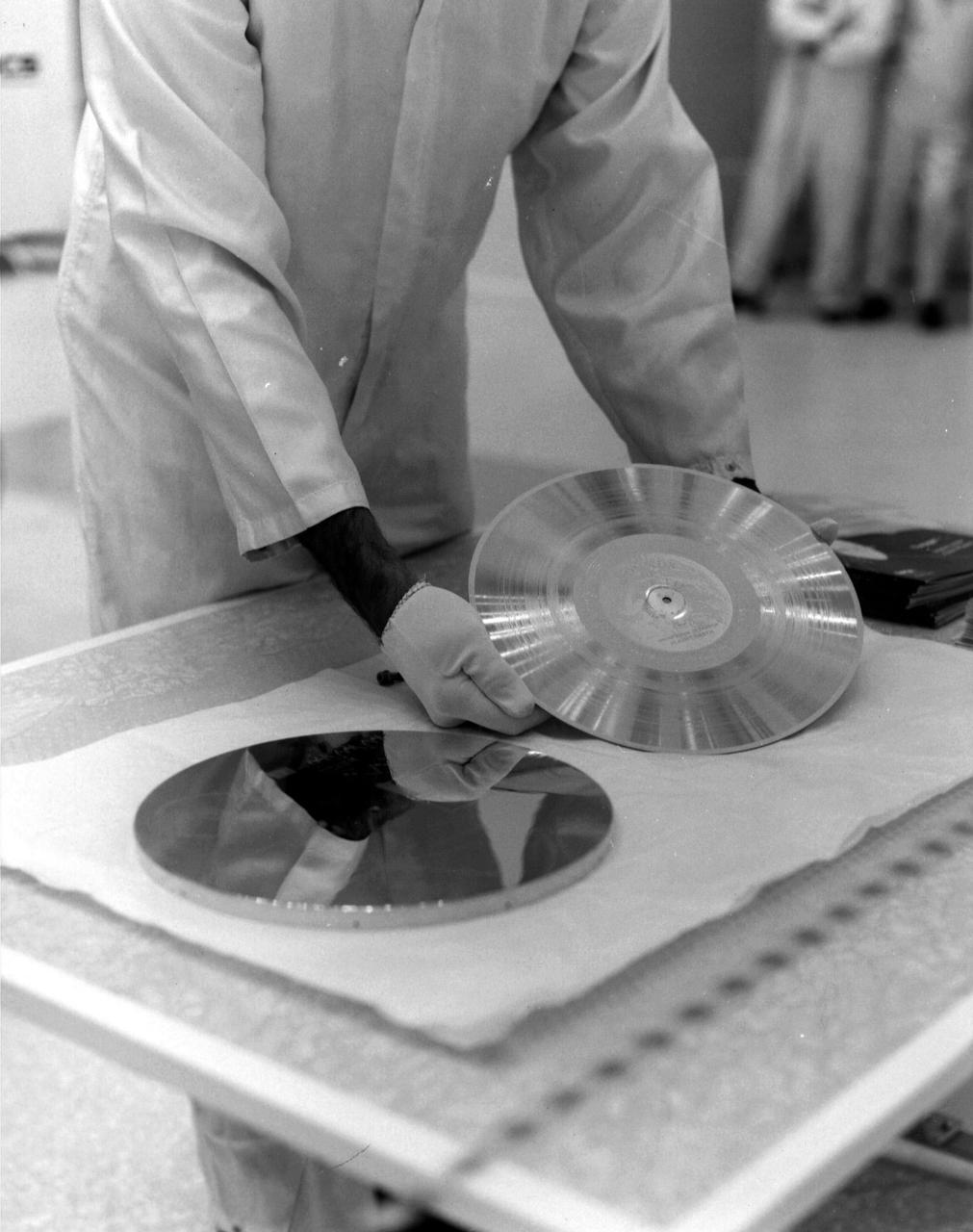
The Voyager 1 Golden Record is prepared for installation on the spacecraft in this archival image from 1977. https://photojournal.jpl.nasa.gov/catalog/PIA21741
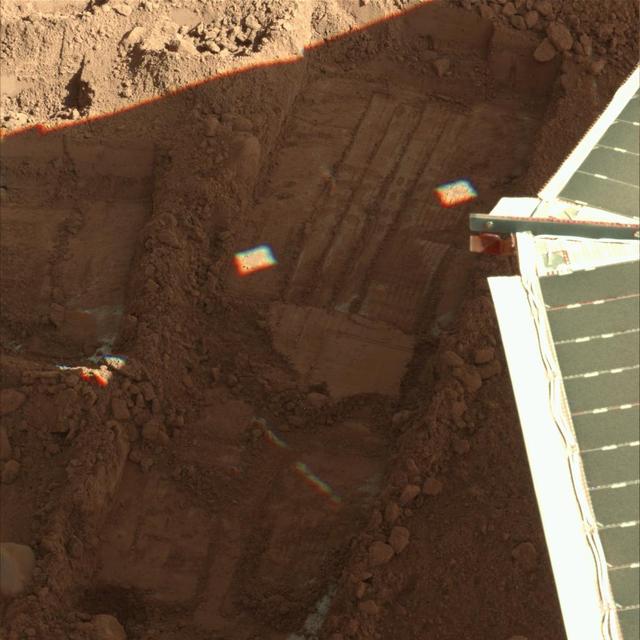
Snow White Trench Prepared for Sample Collection
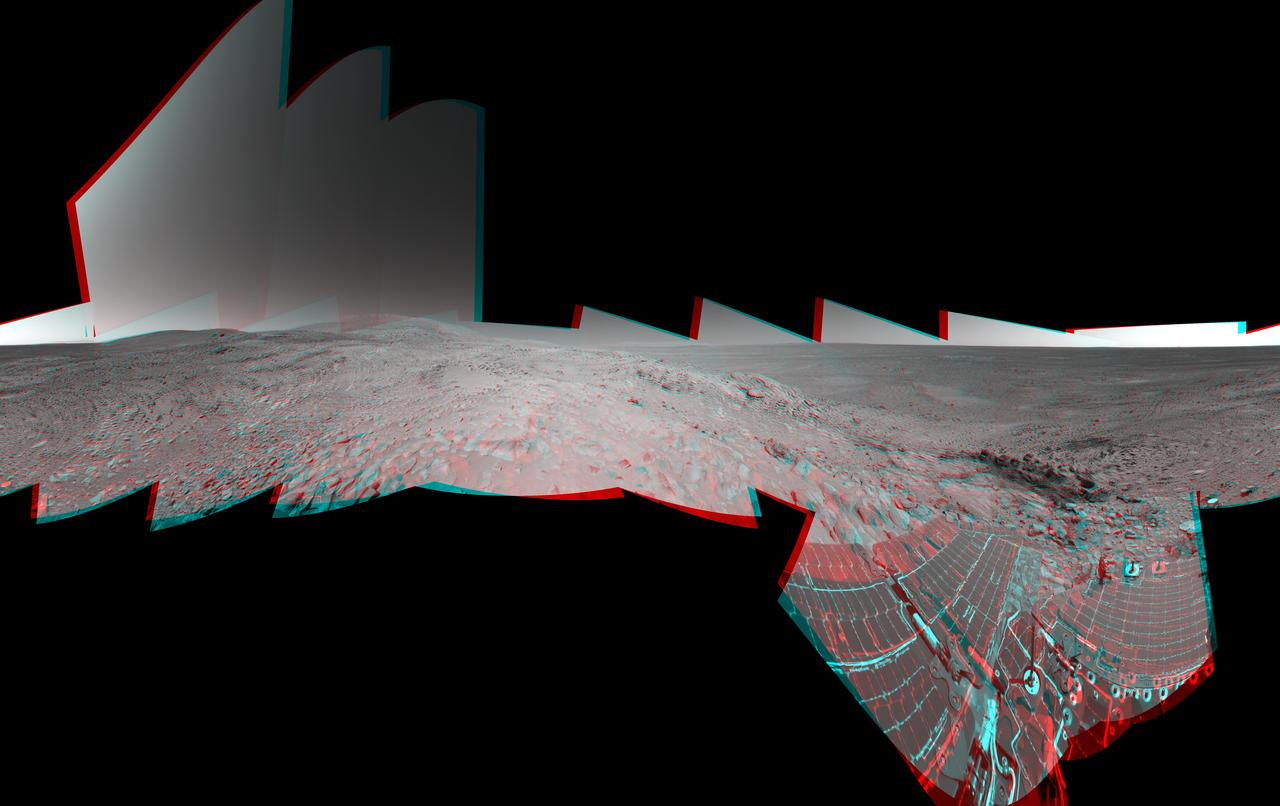
Preparing for Lights Out on Mars 3-D
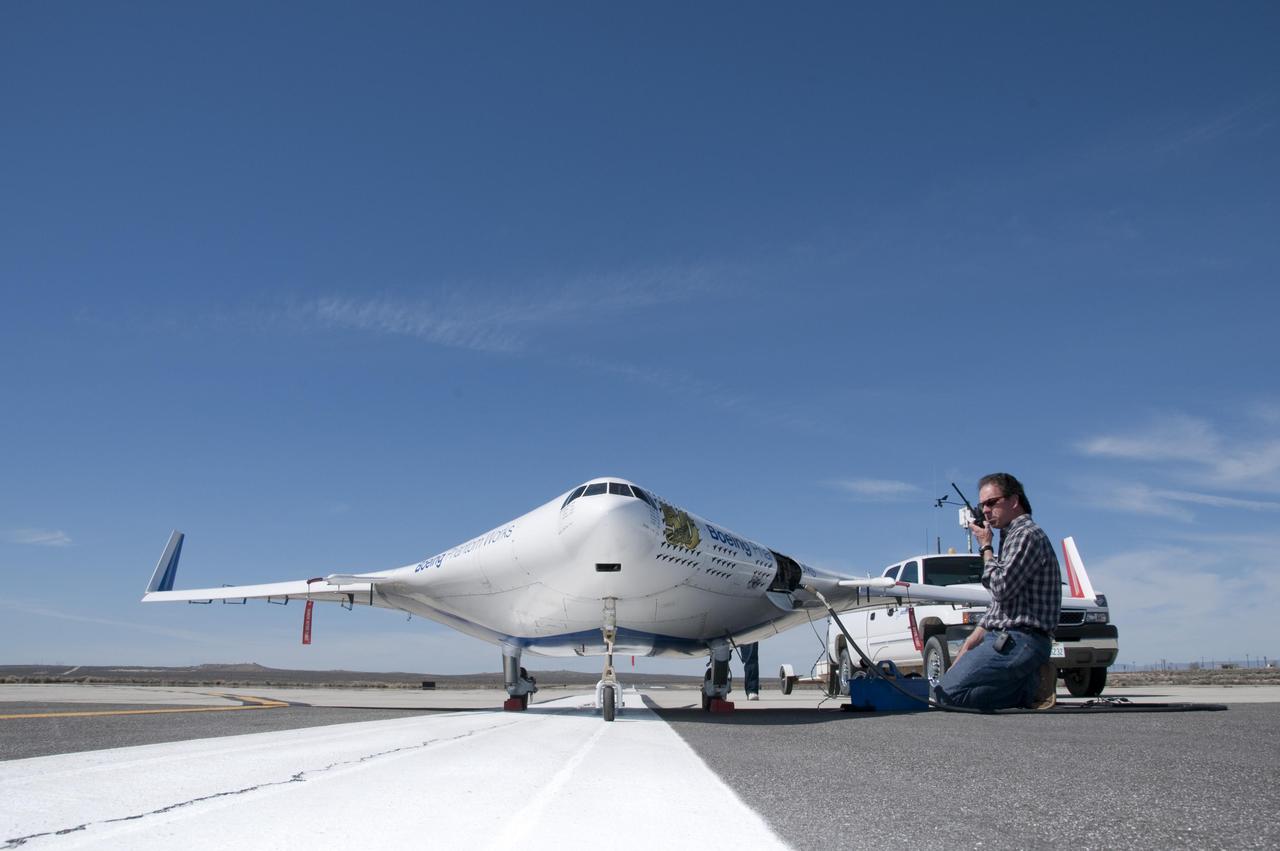
NASA engineer Gary Cosentino communicates with fellow X-48B flight team personnel in preparation for another flight.
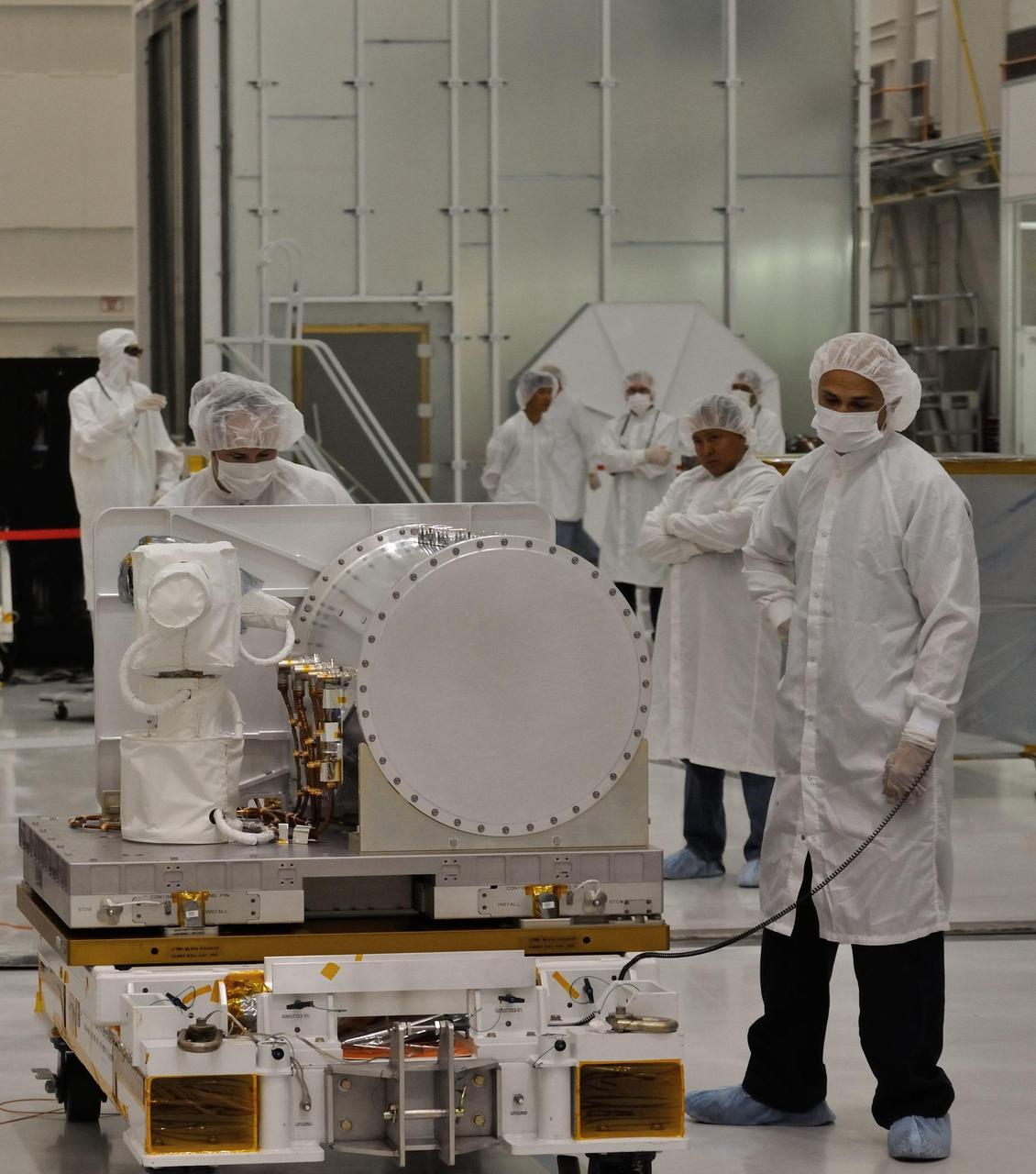
This photo shows the Optical PAyload for Lasercomm Science OPALS flight terminal at JPL being prepared for shipment to NASA Kennedy Space Center.
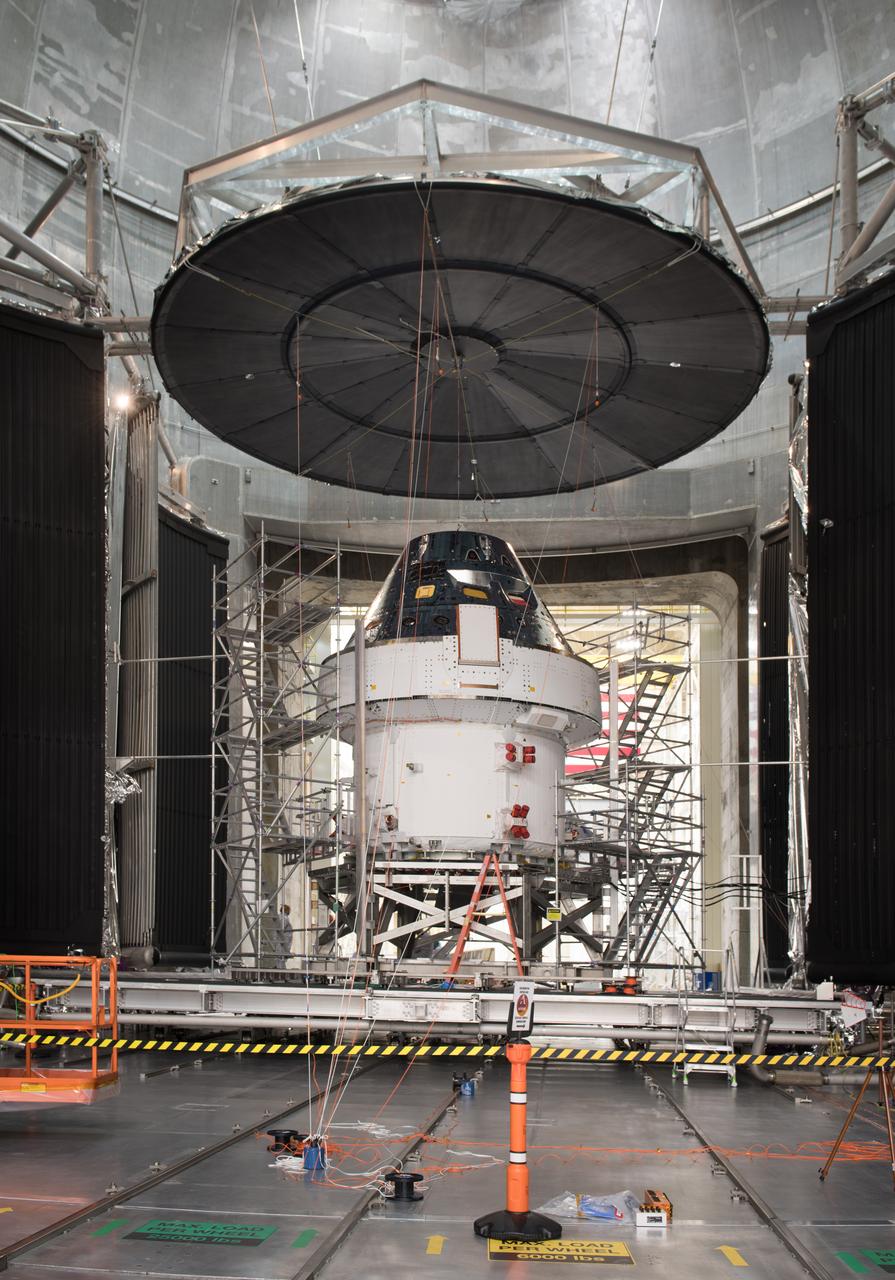
The Orion Spacecraft Crew and Service Module is being prepared for Electromagnetic Interference. EMI testing as part of testing to be certified for launch for the first Artemis mission
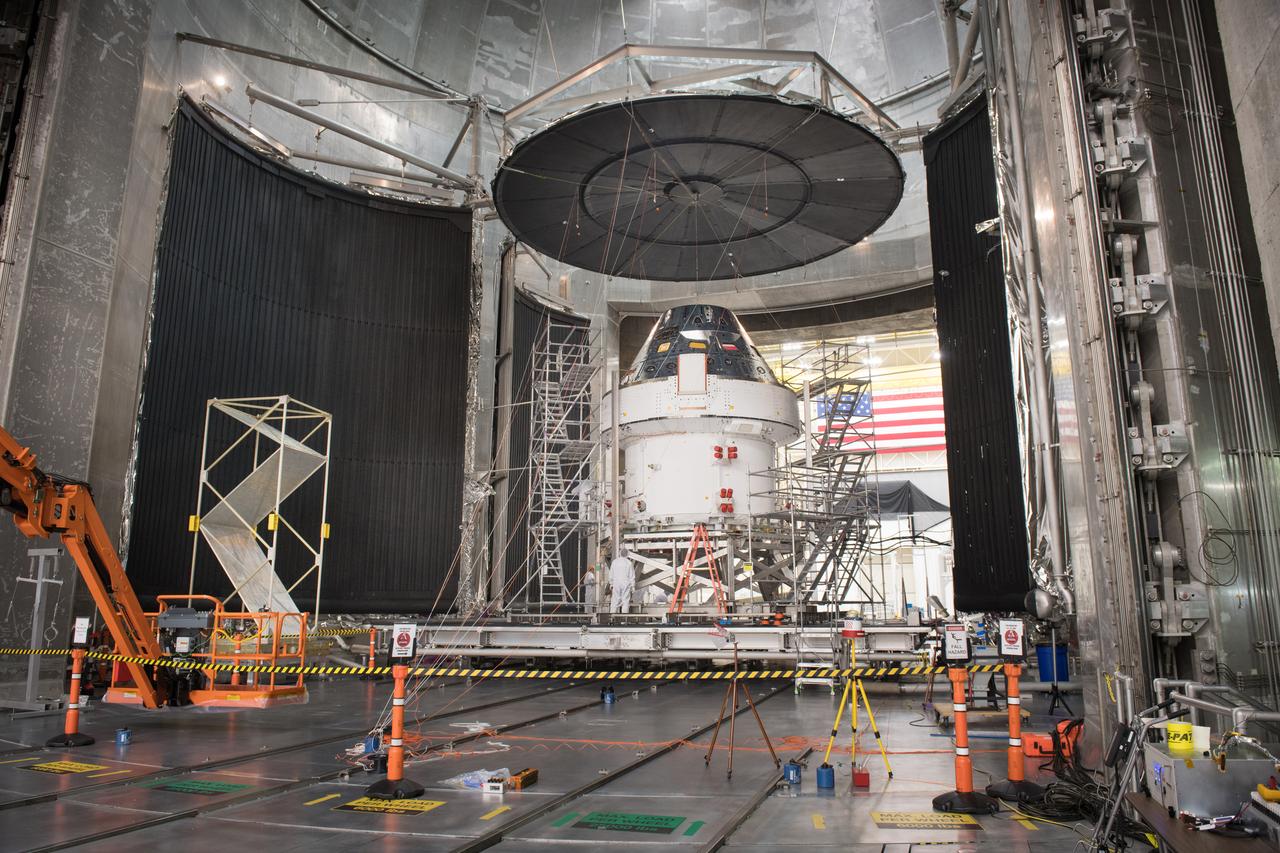
The Orion Spacecraft Crew and Service Module is being prepared for Electromagnetic Interference. EMI testing as part of testing to be certified for launch for the first Artemis mission
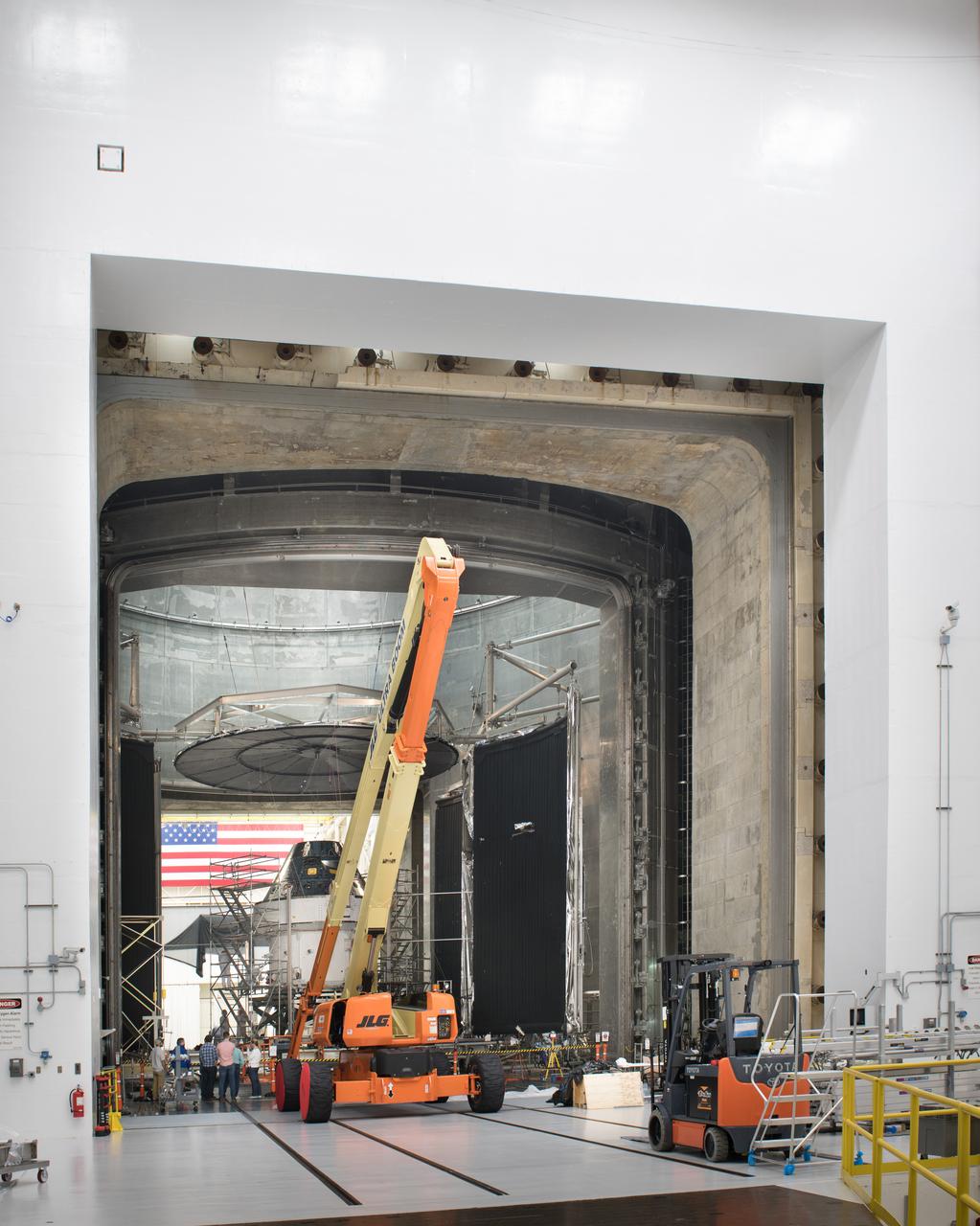
The Orion Spacecraft Crew and Service Module is being prepared for Electromagnetic Interference. EMI testing as part of testing to be certified for launch for the first Artemis mission
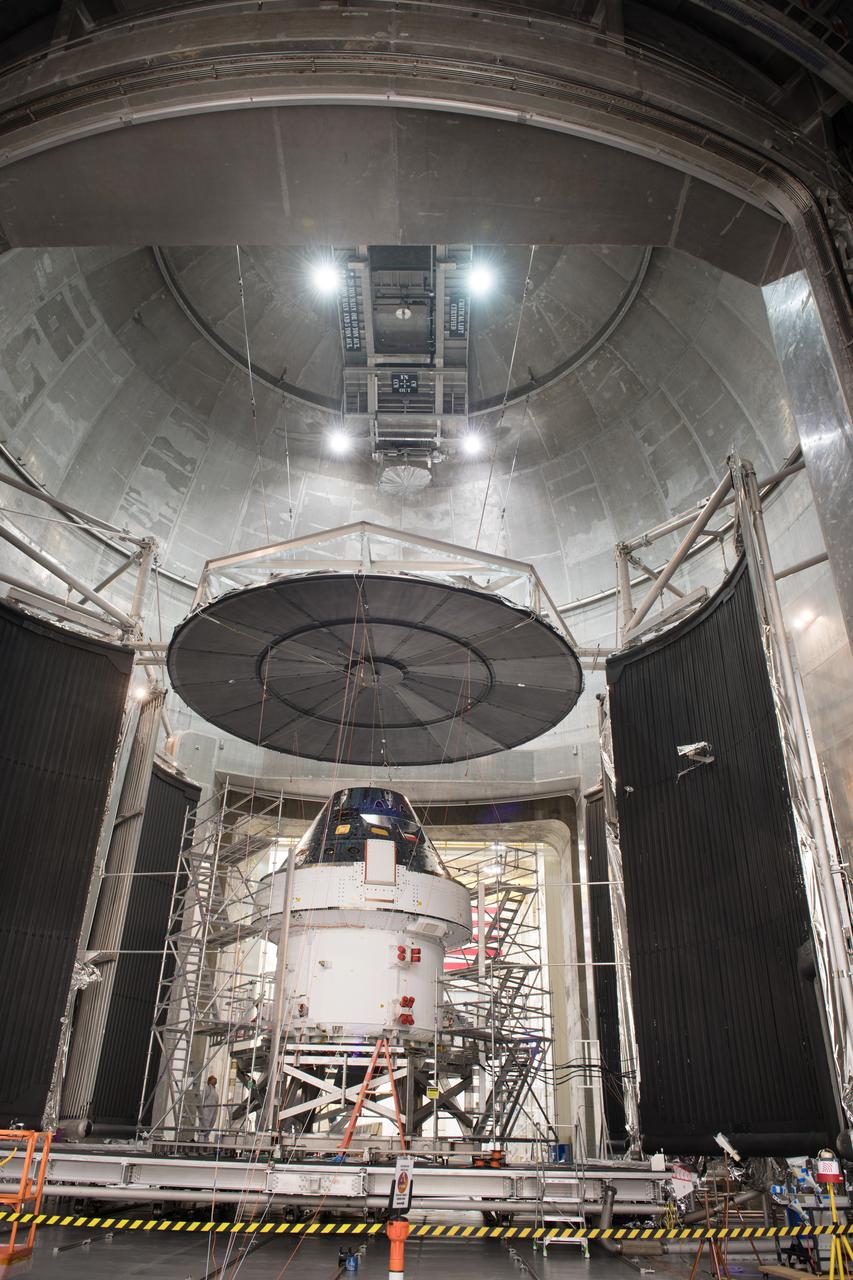
The Orion Spacecraft Crew and Service Module is being prepared for Electromagnetic Interference. EMI testing as part of testing to be certified for launch for the first Artemis mission
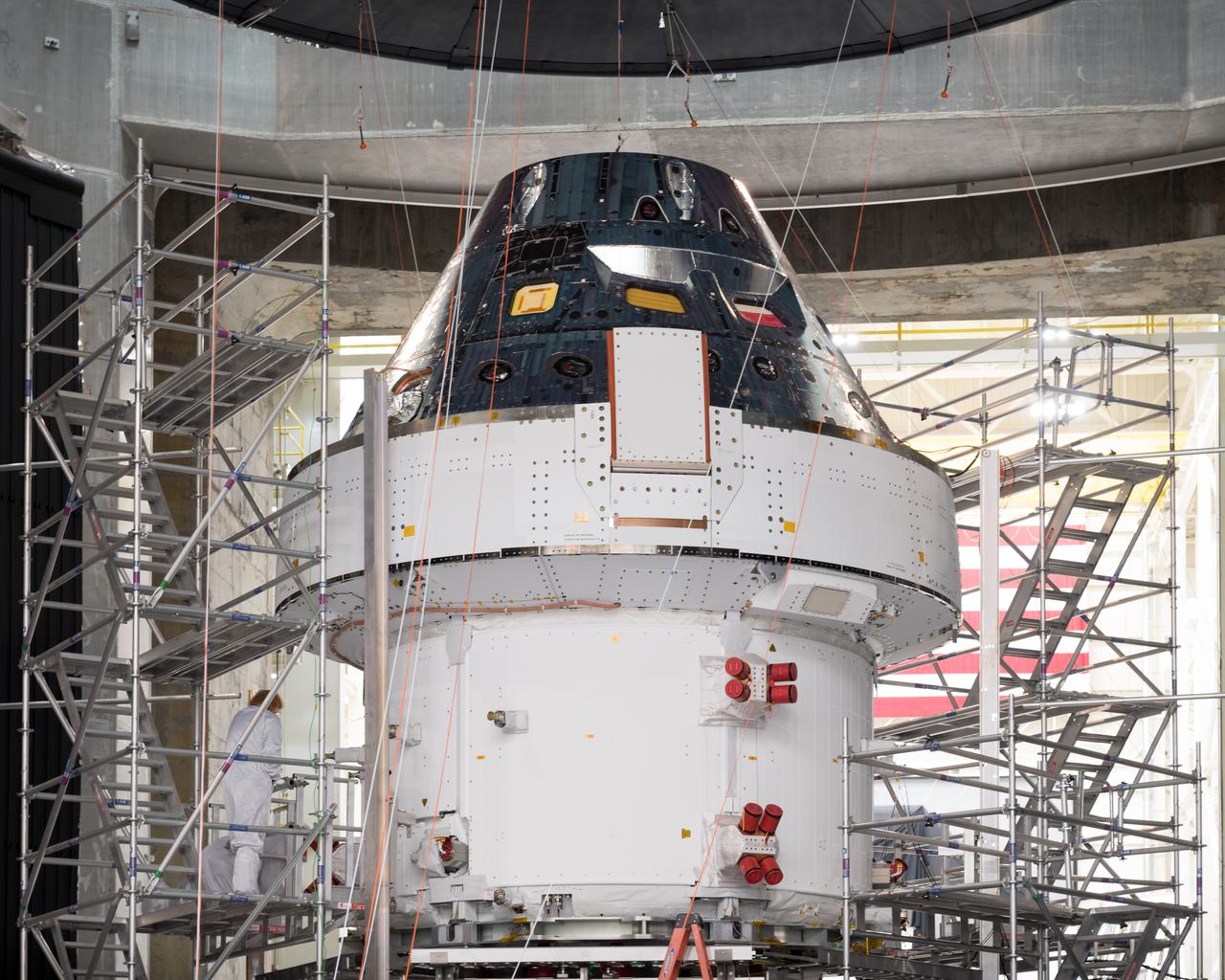
The Orion Spacecraft Crew and Service Module is being prepared for Electromagnetic Interference. EMI testing as part of testing to be certified for launch for the first Artemis mission
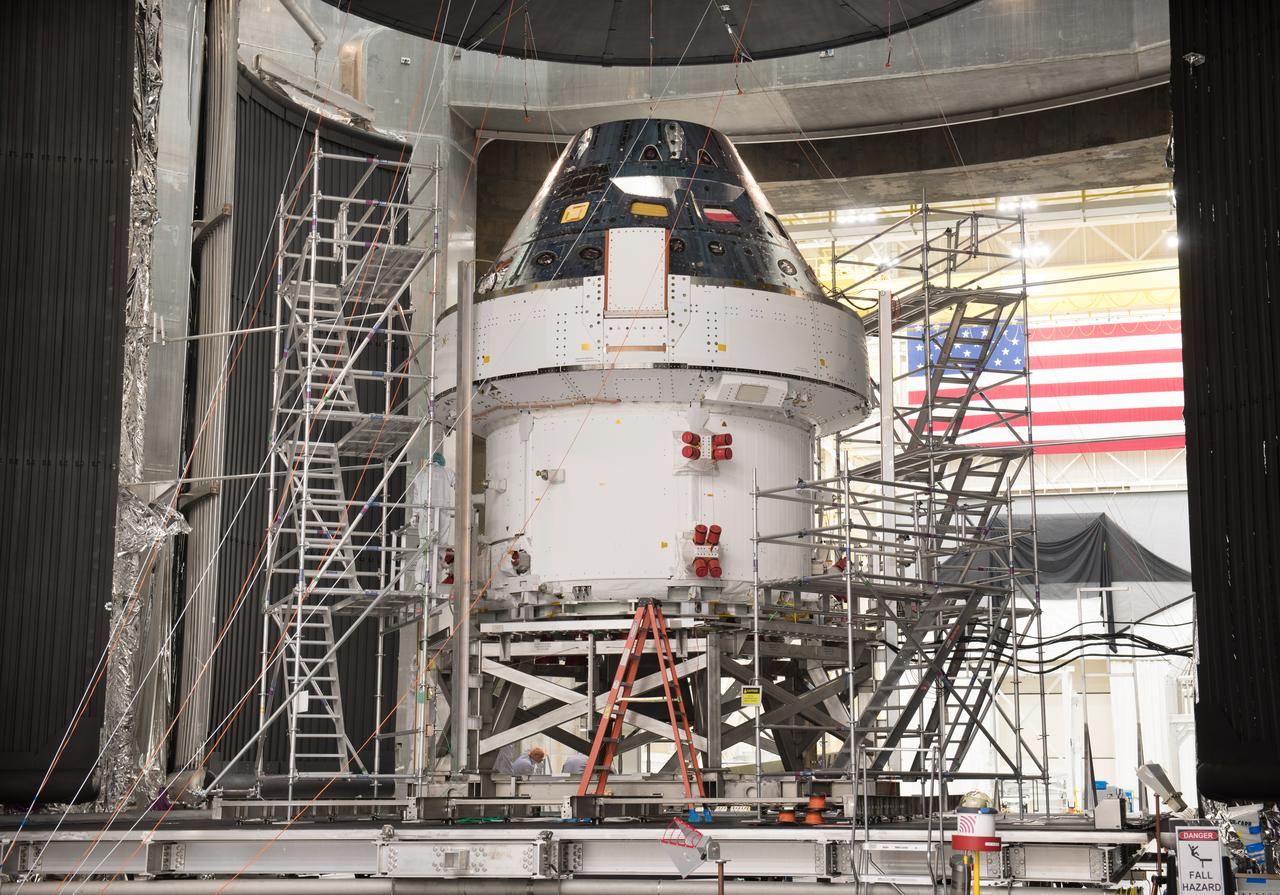
The Orion Spacecraft Crew and Service Module is being prepared for Electromagnetic Interference. EMI testing as part of testing to be certified for launch for the first Artemis mission
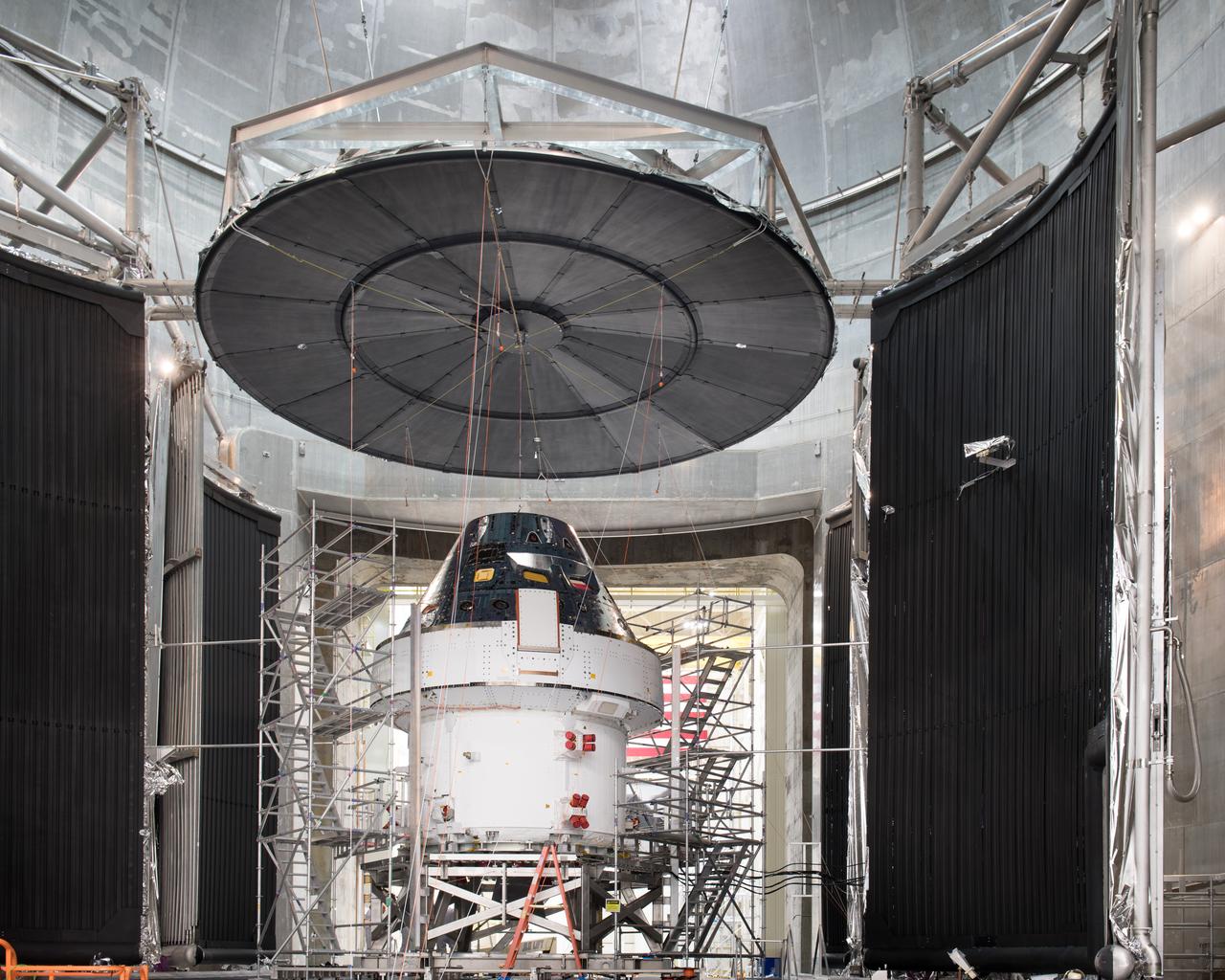
The Orion Spacecraft Crew and Service Module is being prepared for Electromagnetic Interference. EMI testing as part of testing to be certified for launch for the first Artemis mission
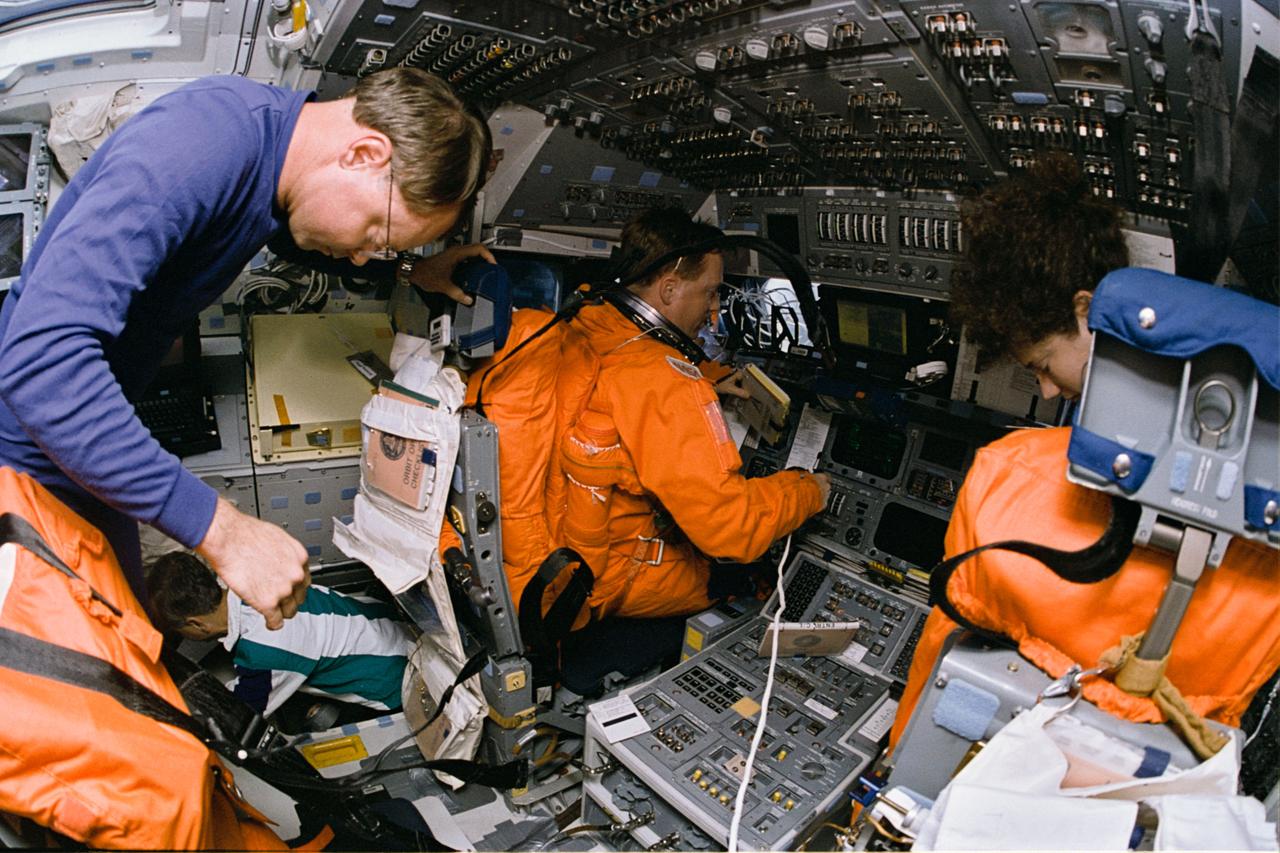
STS064-06-028 (9-20 Sept. 1994) --- On the space shuttle Discovery's flight deck, two thirds of the crew prepare for one of four hard efforts (in a two-day period) to de-orbit and complete the extended spaceflight. Manning the commander's station and wearing one of the launch and entry suits is astronaut Richard N. Richards, STS-64 mission commander. At the pilot's station is astronaut Susan J. Helms, mission specialist. Astronaut L. Blaine Hammond, pilot, is at left foreground, and astronaut Carl J. Meade, mission specialist, is at left background in the hatch leading to the middeck. Photo credit: NASA or National Aeronautics and Space Administration

CAPE CANAVERAL, Fla. – The crew members for space shuttle Discovery's STS-119 mission arrive at NASA's Kennedy Space Center in Florida to prepare for launch. From left, Mission Specialist Koichi Wakata is greeted by Mike Wetmore, the associate director for Engineering and Technical Operations at Kennedy. STS-119 is the 125th space shuttle flight and the 28th flight to the International Space Station. Discovery and its crew will deliver the final set of large power-generating solar array wings and integrated truss structure, S6, to the space station. The mission includes four spacewalks. Launch is scheduled for March 11 at 9:20 p.m. EDT. Photo credit: NASA/Kim Shiflett
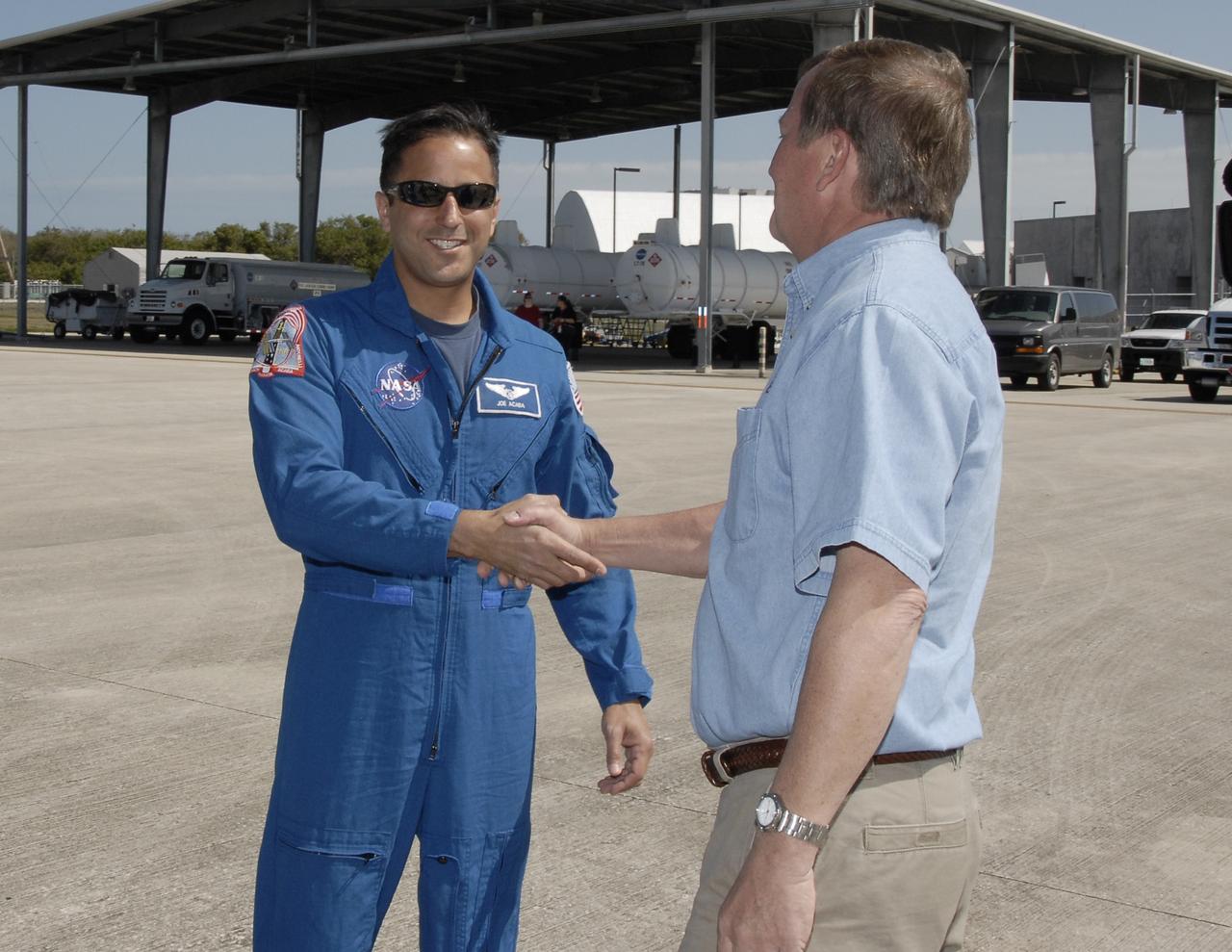
CAPE CANAVERAL, Fla. – The first crew members for space shuttle Discovery's STS-119 mission arrive at NASA's Kennedy Space Center in Florida to prepare for launch. From left, Mission Specialist Joseph Acaba is greeted by Mike Leinbach, shuttle launch director. STS-119 is the 125th space shuttle flight and the 28th flight to the International Space Station. Discovery and its crew will deliver the final set of large power-generating solar array wings and integrated truss structure, S6, to the space station. The mission includes four spacewalks. Launch is scheduled for March 11 at 9:20 p.m. EDT. Photo credit: NASA/Kim Shiflett
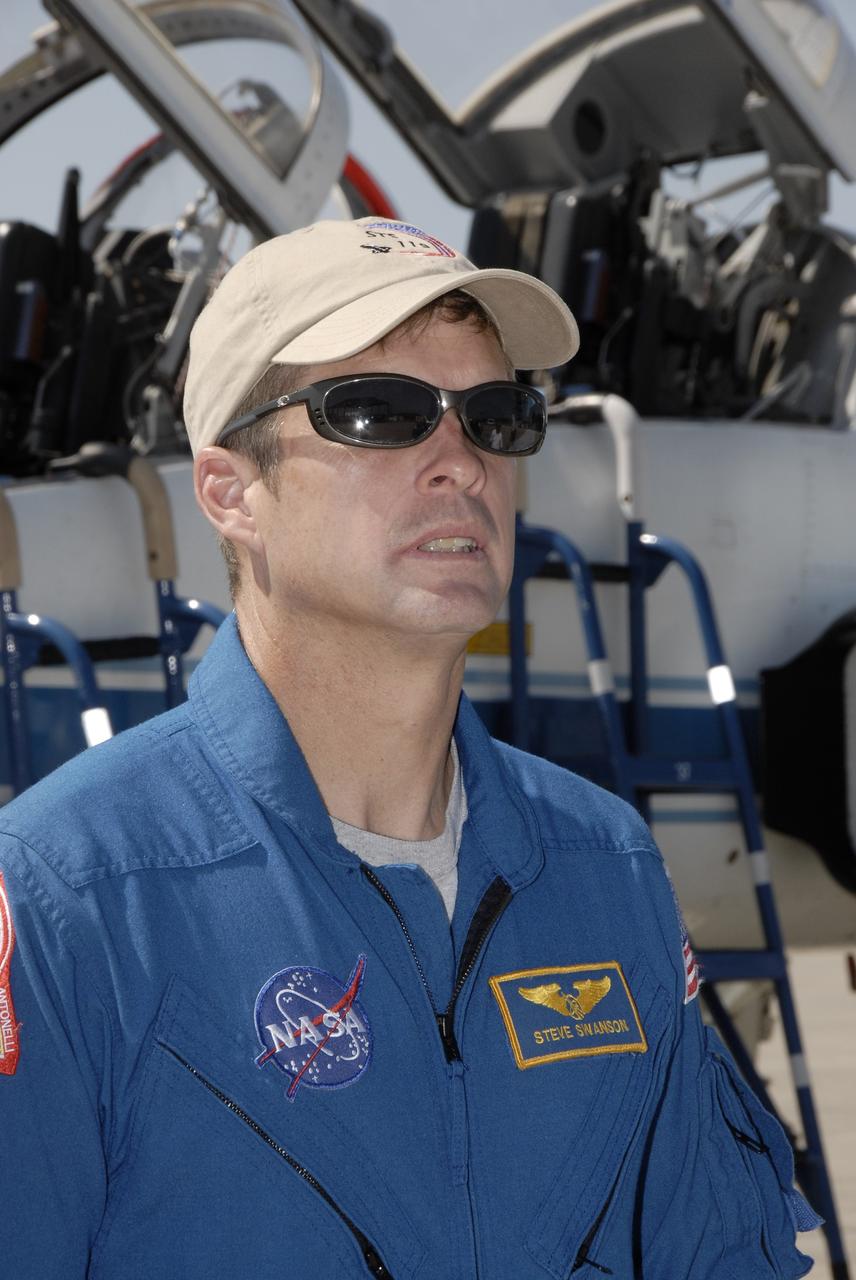
CAPE CANAVERAL, Fla. – Astronaut Steve Swanson, a mission specialist for space shuttle Discovery's STS-119 mission, arrives at NASA's Kennedy Space Center in Florida to prepare for launch. STS-119 is the 125th space shuttle flight and the 28th flight to the International Space Station. Discovery and its crew will deliver the final set of large power-generating solar array wings and integrated truss structure, S6, to the space station. The mission includes four spacewalks. Launch is scheduled for March 11 at 9:20 p.m. EDT. Photo credit: NASA/Kim Shiflett
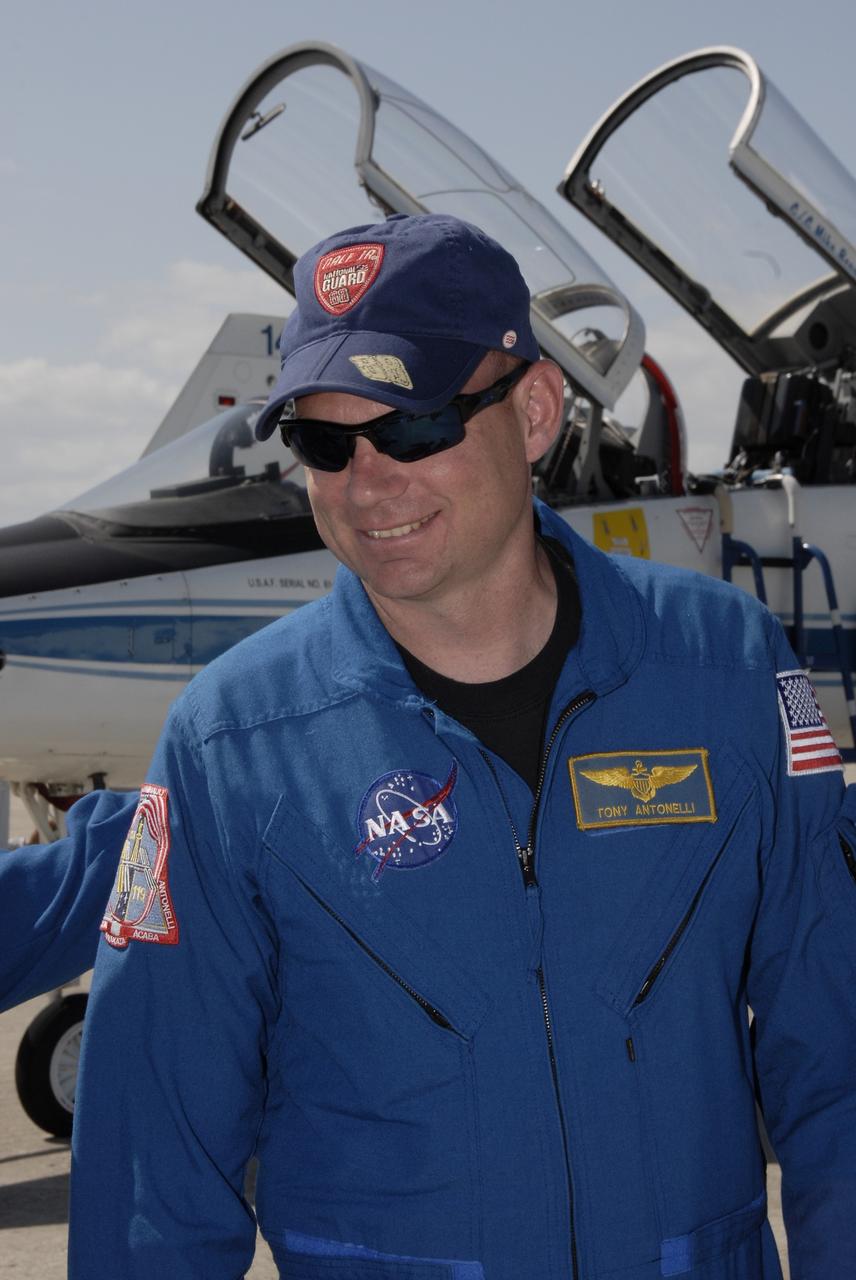
CAPE CANAVERAL, Fla. – Astronaut Tony Antonelli, pilot for space shuttle Discovery's STS-119 mission, arrives at NASA's Kennedy Space Center in Florida to prepare for launch. STS-119 is the 125th space shuttle flight and the 28th flight to the International Space Station. Discovery and its crew will deliver the final set of large power-generating solar array wings and integrated truss structure, S6, to the space station. The mission includes four spacewalks. Launch is scheduled for March 11 at 9:20 p.m. EDT. Photo credit: NASA/Kim Shiflett
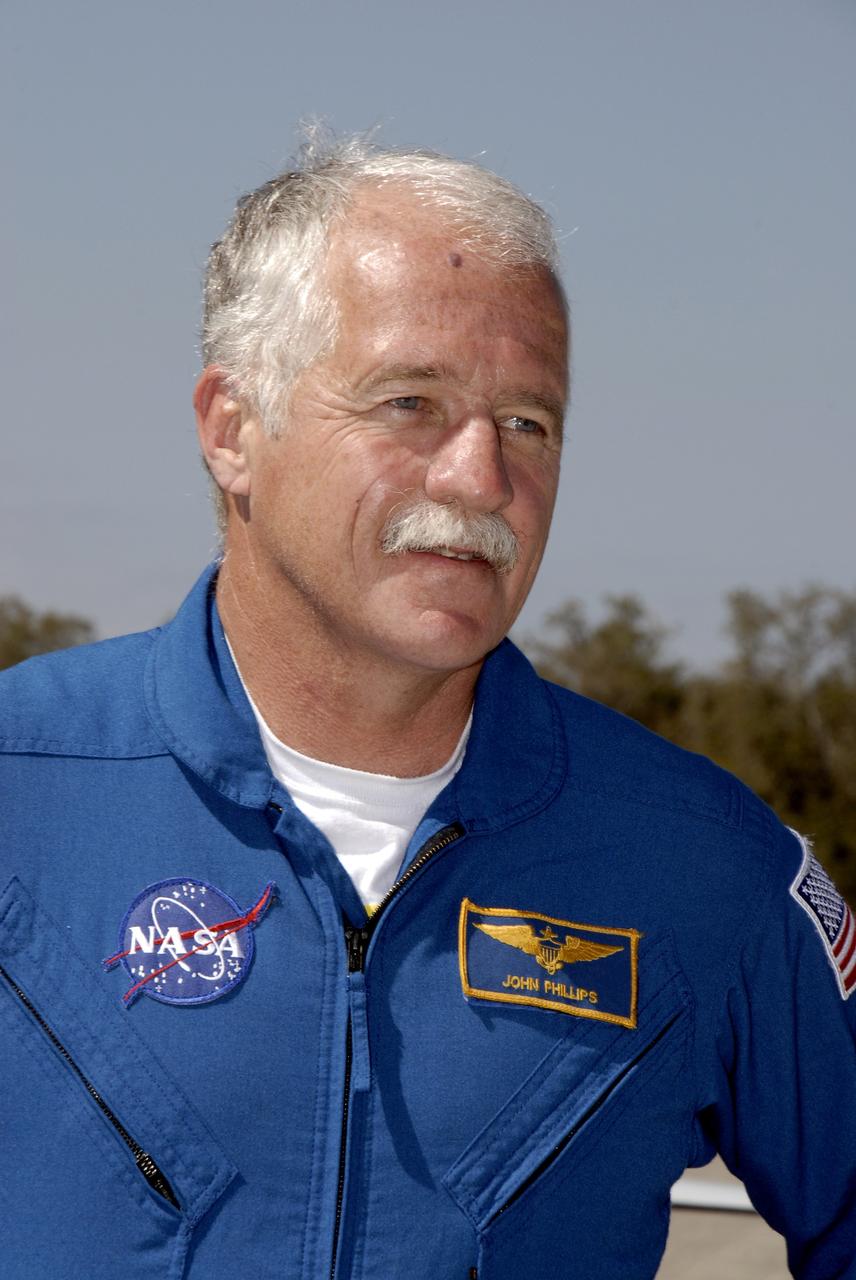
CAPE CANAVERAL, Fla. – Astronaut John Phillips, a mission specialist for space shuttle Discovery's STS-119 mission, arrives at NASA's Kennedy Space Center in Florida to prepare for launch. STS-119 is the 125th space shuttle flight and the 28th flight to the International Space Station. Discovery and its crew will deliver the final set of large power-generating solar array wings and integrated truss structure, S6, to the space station. The mission includes four spacewalks. Launch is scheduled for March 11 at 9:20 p.m. EDT. Photo credit: NASA/Kim Shiflett
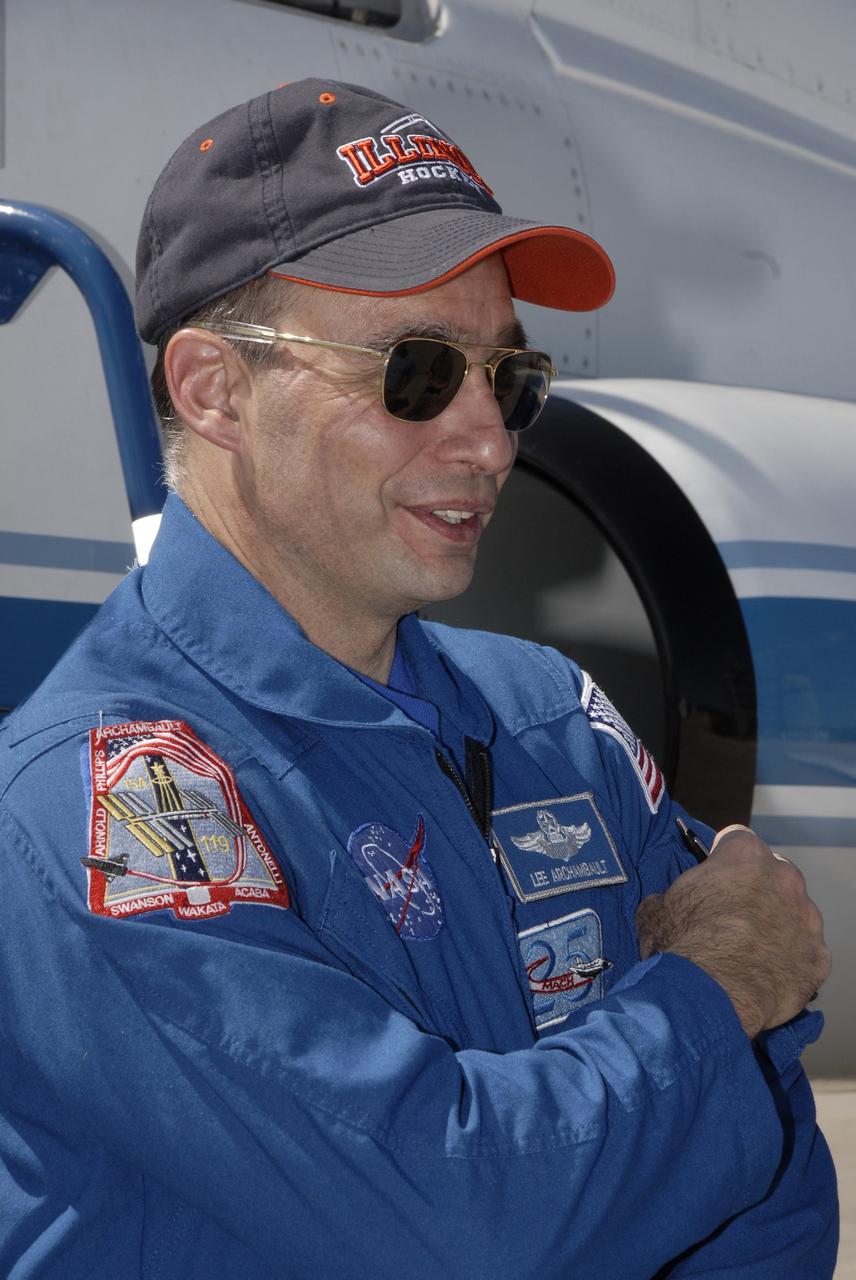
CAPE CANAVERAL, Fla. – Astronaut Lee Archambault, the commander for space shuttle Discovery's STS-119 mission, arrives at NASA's Kennedy Space Center in Florida to prepare for launch. STS-119 is the 125th space shuttle flight and the 28th flight to the International Space Station. Discovery and its crew will deliver the final set of large power-generating solar array wings and integrated truss structure, S6, to the space station. The mission includes four spacewalks. Launch is scheduled for March 11 at 9:20 p.m. EDT. Photo credit: NASA/Kim Shiflett
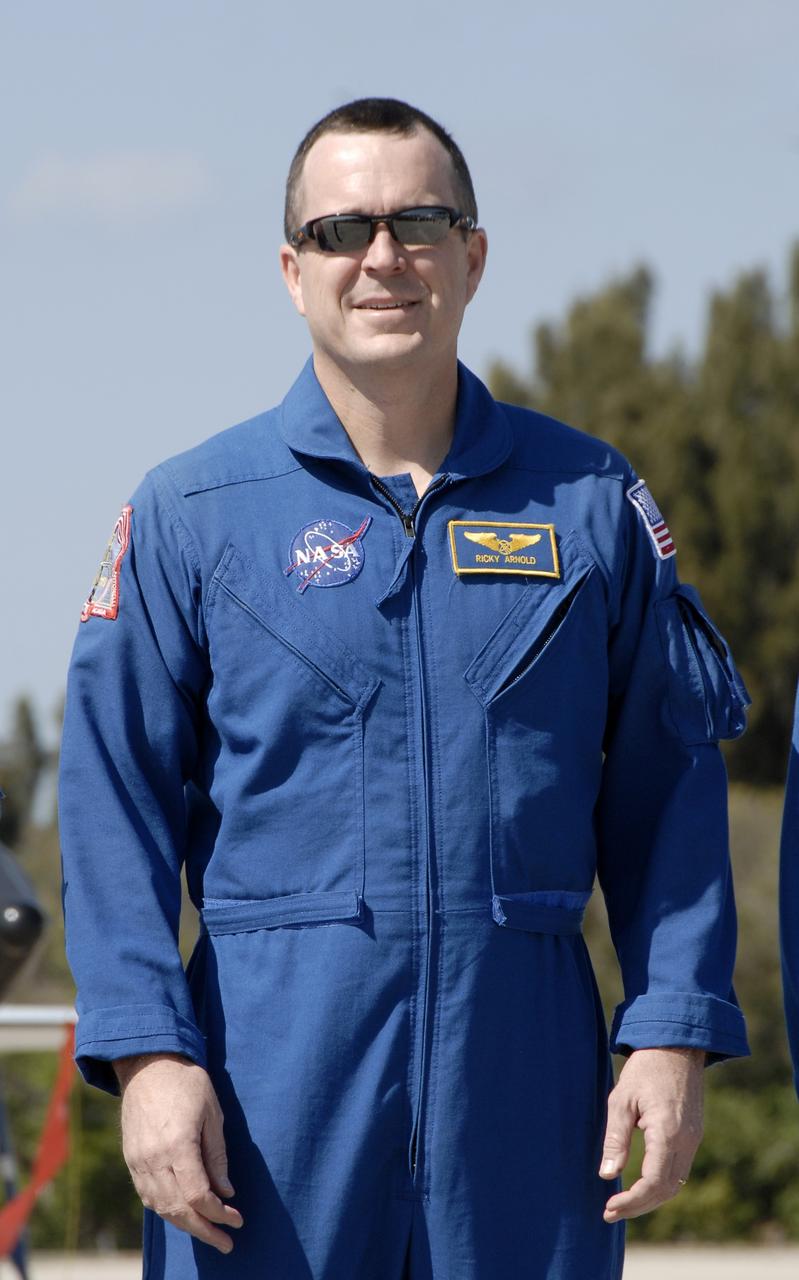
CAPE CANAVERAL, Fla. – Astronaut Richard Arnold, a mission specialist for space shuttle Discovery's STS-119 mission, arrives at NASA's Kennedy Space Center in Florida to prepare for launch. STS-119 is the 125th space shuttle flight and the 28th flight to the International Space Station. Discovery and its crew will deliver the final set of large power-generating solar array wings and integrated truss structure, S6, to the space station. The mission includes four spacewalks. Launch is scheduled for March 11 at 9:20 p.m. EDT. Photo credit: NASA/Kim Shiflett
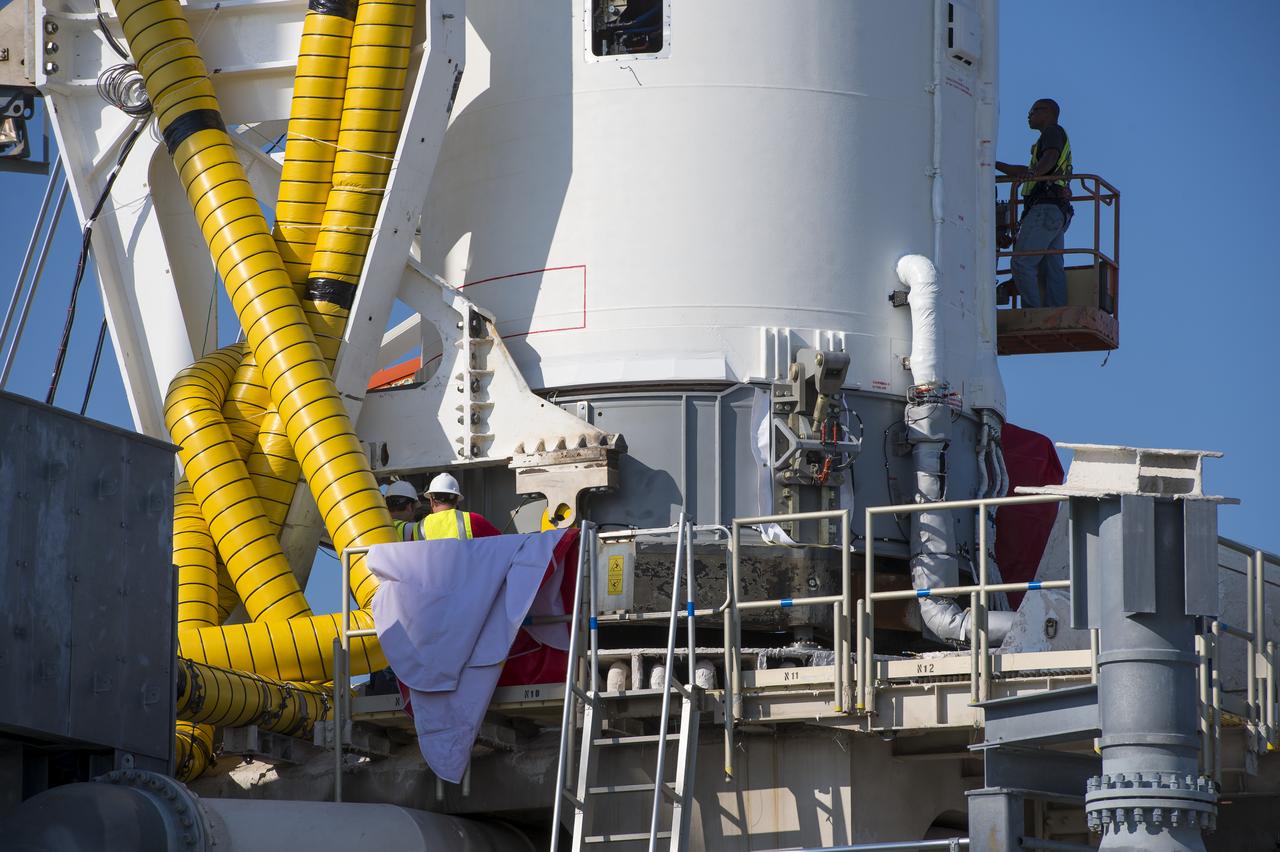
The Orbital Sciences Corporation Antares rocket, with the Cygnus spacecraft onboard, is seen on launch Pad-0A, Saturday, July 12, 2014, at NASA's Wallops Flight Facility in Virginia. The launch is planned for Sunday, July 13 and will carry the Cygnus spacecraft filled with over 3,000 pounds of supplies for the International Space Station, including science experiments, experiment hardware, spare parts, and crew provisions. The Orbital-2 mission is Orbital Sciences' second contracted cargo delivery flight to the space station for NASA. Photo Credit: (NASA/Aubrey Gemignani)
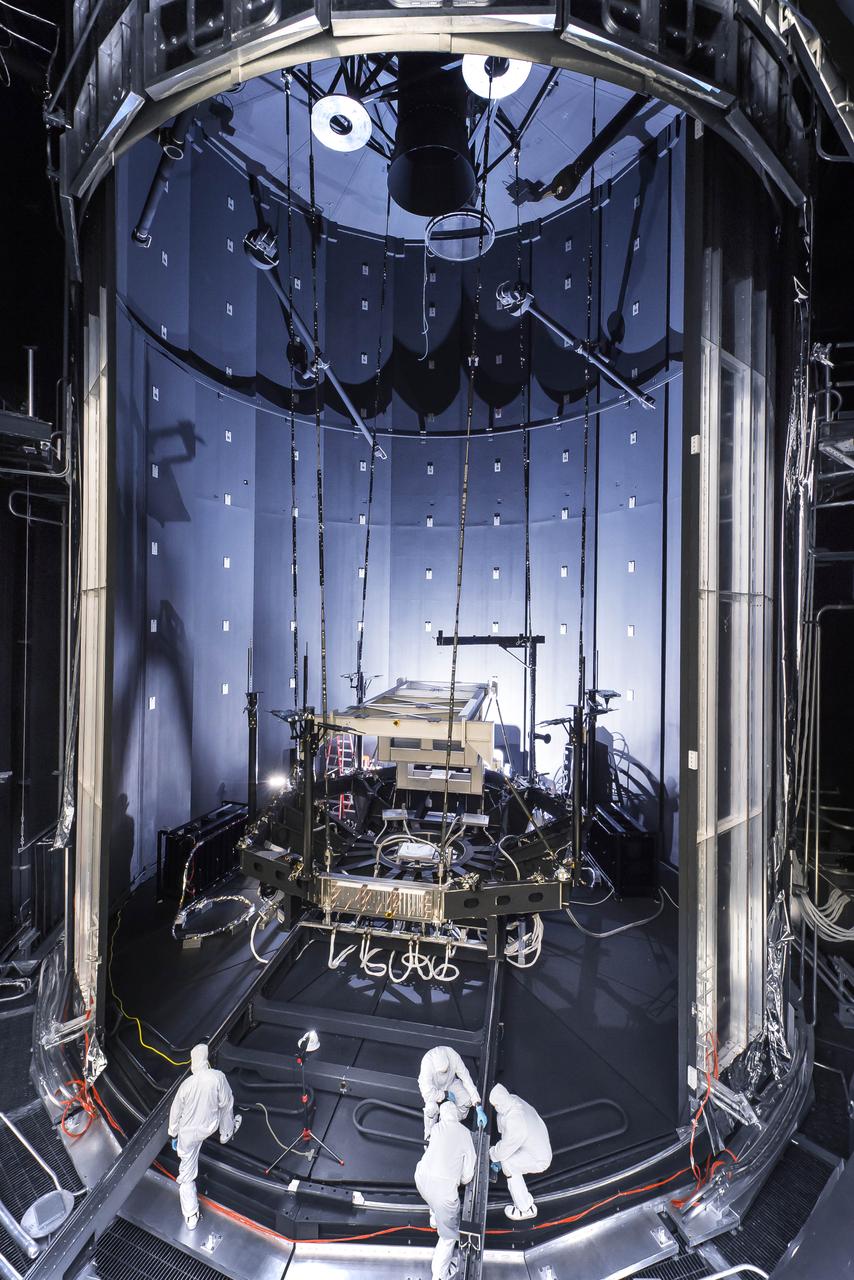
This photo was captured from outside the enormous mouth of NASA's giant thermal vacuum chamber, called Chamber A, at Johnson Space Center in Houston. Previously used for manned spaceflight missions, this historic chamber is now filled with engineers and technicians preparing a lift system that will be used to hold the James Webb Space Telescope during testing. The James Webb Space Telescope is the scientific successor to NASA's Hubble Space Telescope. It will be the most powerful space telescope ever built. Webb is an international project led by NASA with its partners, the European Space Agency and the Canadian Space Agency. Credit: NASA/Goddard/Chris Gunn <b><a href="http://www.nasa.gov/audience/formedia/features/MP_Photo_Guidelines.html" rel="nofollow">NASA image use policy.</a></b> <b><a href="http://www.nasa.gov/centers/goddard/home/index.html" rel="nofollow">NASA Goddard Space Flight Center</a></b> enables NASA’s mission through four scientific endeavors: Earth Science, Heliophysics, Solar System Exploration, and Astrophysics. Goddard plays a leading role in NASA’s accomplishments by contributing compelling scientific knowledge to advance the Agency’s mission. <b>Follow us on <a href="http://twitter.com/NASAGoddardPix" rel="nofollow">Twitter</a></b> <b>Like us on <a href="http://www.facebook.com/pages/Greenbelt-MD/NASA-Goddard/395013845897?ref=tsd" rel="nofollow">Facebook</a></b> <b>Find us on <a href="http://instagrid.me/nasagoddard/?vm=grid" rel="nofollow">Instagram</a></b>
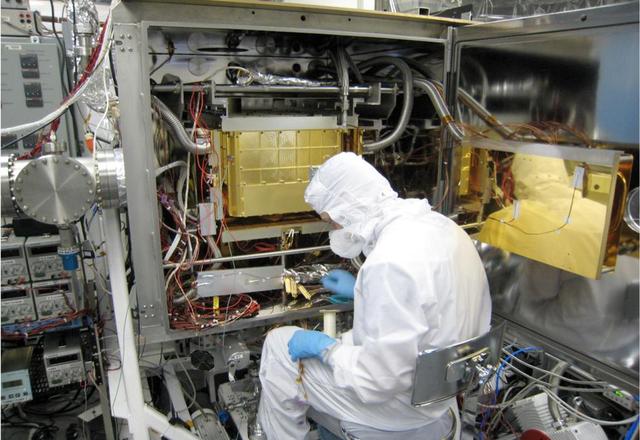
A Sample Analysis at Mars (SAM) team member at NASA's Goddard Space Flight Center, Greenbelt, Maryland, prepares the SAM testbed for an experiment. This test copy of the SAM suite of instruments is inside a chamber that, when closed, can model the pressure and temperature environment that SAM sees inside NASA's Curiosity rover on Mars. Many weeks of testing are often needed to develop and refine sequences of operations that SAM uses for making specific measurements on Mars. This was the case with preparation to pull a volume of gas from the atmosphere and extract the heavy noble gas xenon. SAM's measurements of different types of xenon in the Martian atmosphere provide clues about the planet's history. http://photojournal.jpl.nasa.gov/catalog/PIA19149

CAPE CANAVERAL, Fla. – The first crew members for space shuttle Discovery's STS-119 mission arrive at NASA's Kennedy Space Center in Florida to prepare for launch. From left, Commander Lee Archambault and Mission Specialist John Phillips are greeted by Mike Leinbach, shuttle launch director, and Mike Wetmore, associate director for Engineering and Technical Operations at Kennedy. STS-119 is the 125th space shuttle flight and the 28th flight to the International Space Station. Discovery and its crew will deliver the final set of large power-generating solar array wings and integrated truss structure, S6, to the space station. The mission includes four spacewalks. Launch is scheduled for March 11 at 9:20 p.m. EDT. Photo credit: NASA/Kim Shiflett
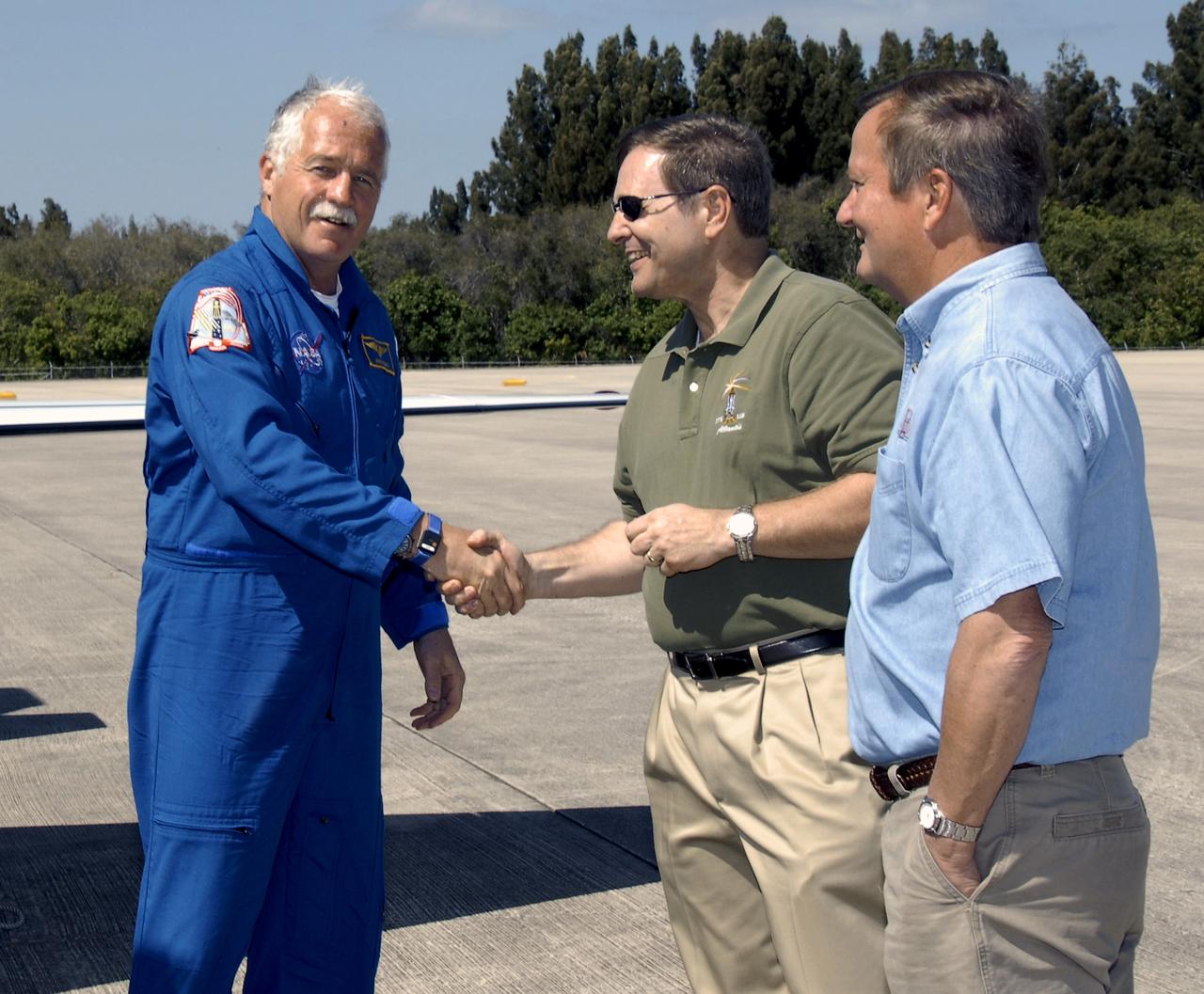
CAPE CANAVERAL, Fla. – The first crew members for space shuttle Discovery's STS-119 mission arrive at NASA's Kennedy Space Center in Florida to prepare for launch. From left, Mission Specialist John Phillips is greeted by Mike Wetmore, associate director for Engineering and Technical Operations at Kennedy, and Mike Leinbach, shuttle launch director. STS-119 is the 125th space shuttle flight and the 28th flight to the International Space Station. Discovery and its crew will deliver the final set of large power-generating solar array wings and integrated truss structure, S6, to the space station. The mission includes four spacewalks. Launch is scheduled for March 11 at 9:20 p.m. EDT. Photo credit: NASA/Kim Shiflett
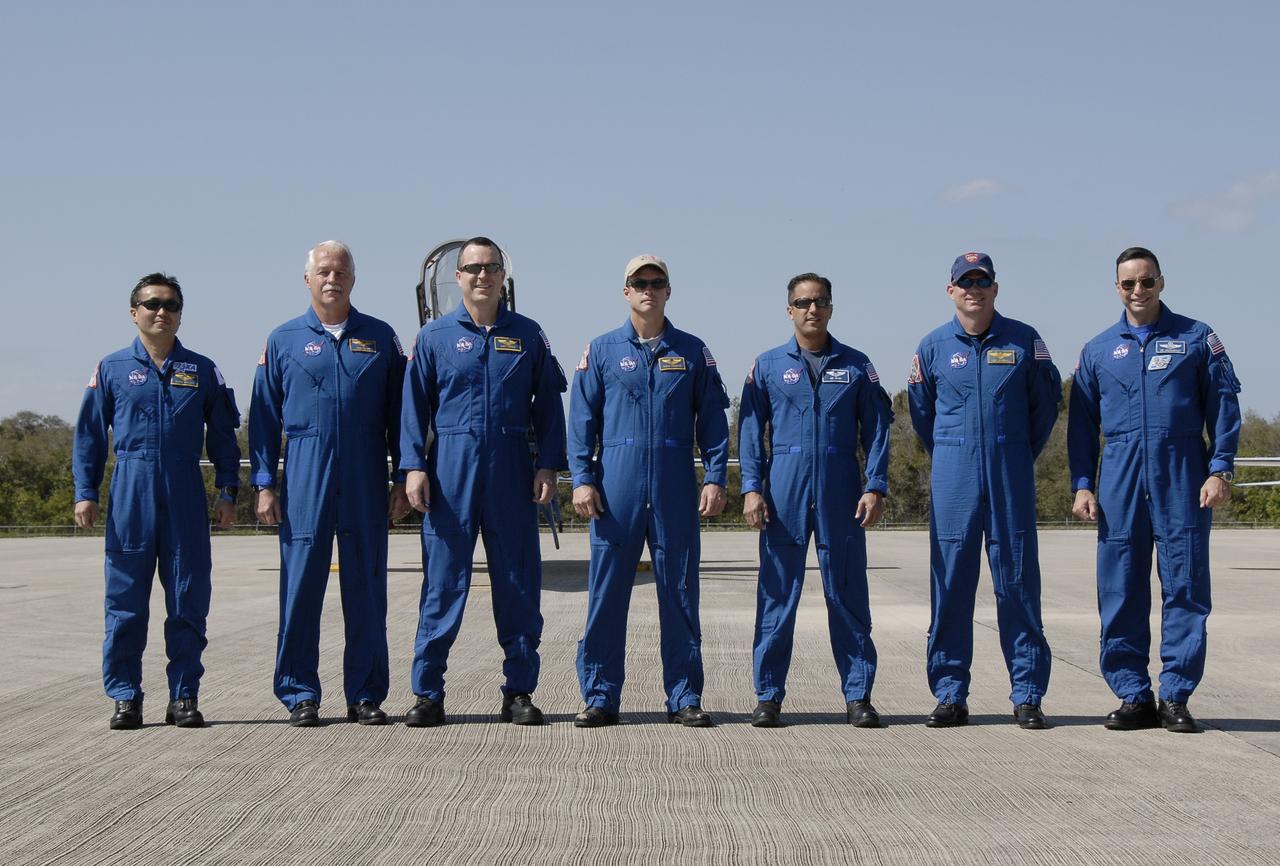
CAPE CANAVERAL, Fla. – The crew members for space shuttle Discovery's STS-119 mission pose for a group portrait at the Shuttle Landing Facility at NASA's Kennedy Space Center in Florida. The crew arrived at Kennedy this afternoon to make final preparations for launch. From left are Mission Specialists Koichi Wakata of the Japan Aerospace Exploration Agency, John Phillips, Richard Arnold, Steve Swanson and Joseph Acaba; Pilot Tony Antonelli; and Commander Lee Archambault. STS-119 is the 125th space shuttle flight and the 28th flight to the International Space Station. Discovery and its crew will deliver the final set of large power-generating solar array wings and integrated truss structure, S6, to the space station. The mission includes four spacewalks. Launch is scheduled for March 11 at 9:20 p.m. EDT. Photo credit: NASA/Kim Shiflett
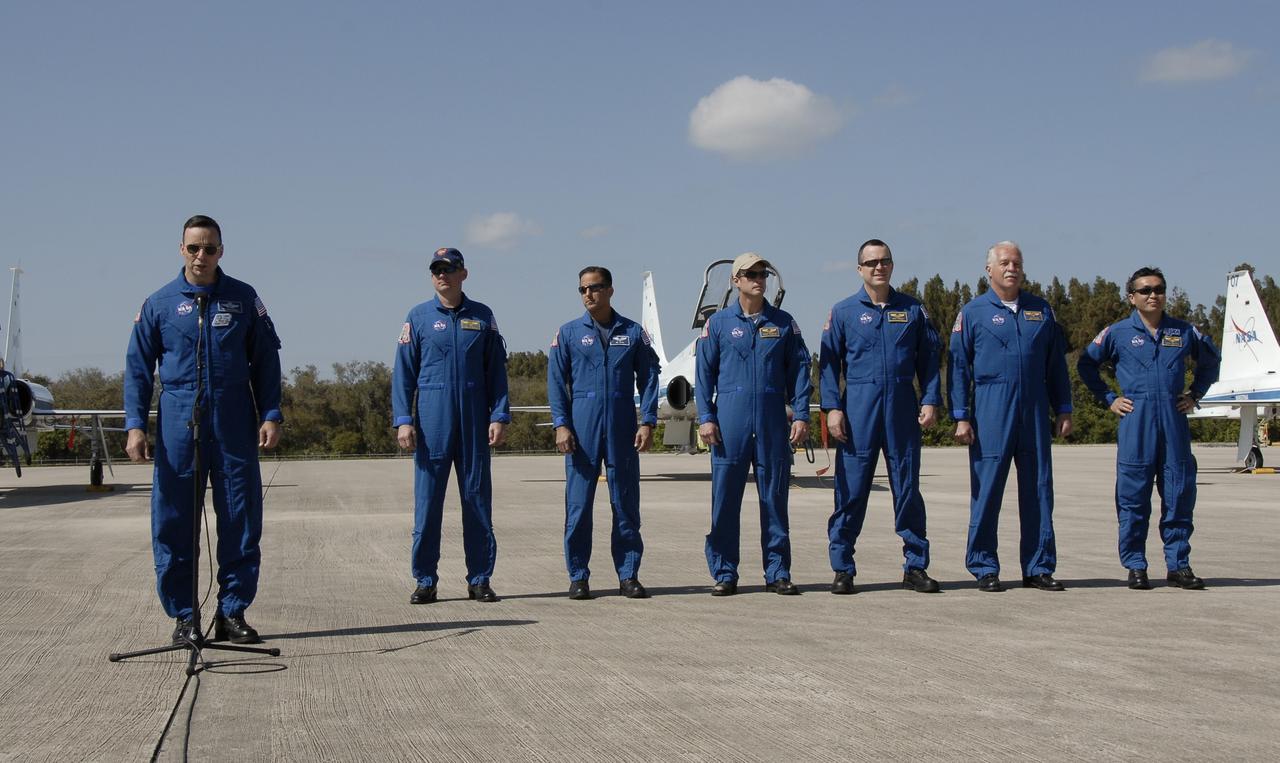
CAPE CANAVERAL, Fla. – The crew members for space shuttle Discovery's STS-119 mission address the news media on hand to welcome them upon their arrival at NASA's Kennedy Space Center in Florida to prepare for launch. From left are Commander Lee Archambault, at the microphone; Pilot Tony Antonelli; and Mission Specialists Joseph Acaba, Steve Swanson, Richard Arnold, John Phillips and Koichi Wakata of the Japan Aerospace Exploration Agency. STS-119 is the 125th space shuttle flight and the 28th flight to the International Space Station. Discovery and its crew will deliver the final set of large power-generating solar array wings and integrated truss structure, S6, to the space station. The mission includes four spacewalks. Launch is scheduled for March 11 at 9:20 p.m. EDT. Photo credit: NASA/Kim Shiflett
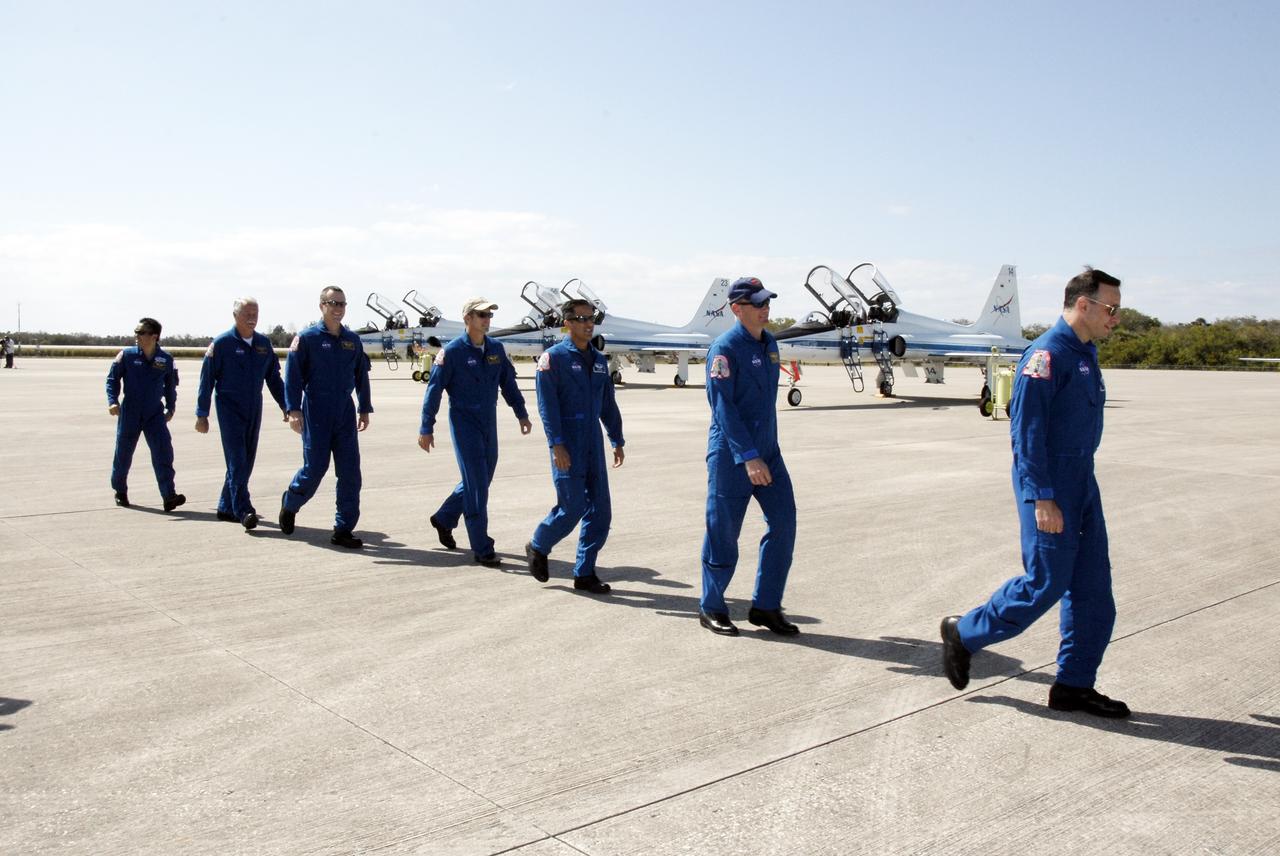
CAPE CANAVERAL, Fla. – After addressing the news media on hand to welcome them, the crew members for space shuttle Discovery's STS-119 mission leave the Shuttle Landing Facility at NASA's Kennedy Space Center in Florida. The crew arrived at Kennedy this afternoon to make final preparations for launch. From left are Mission Specialists Koichi Wakata of the Japan Aerospace Exploration Agency, John Phillips, Richard Arnold, Steve Swanson and Joseph Acaba; Pilot Tony Antonelli; and Commander Lee Archambault. STS-119 is the 125th space shuttle flight and the 28th flight to the International Space Station. Discovery and its crew will deliver the final set of large power-generating solar array wings and integrated truss structure, S6, to the space station. The mission includes four spacewalks. Launch is scheduled for March 11 at 9:20 p.m. EDT. Photo credit: NASA/Kim Shiflett
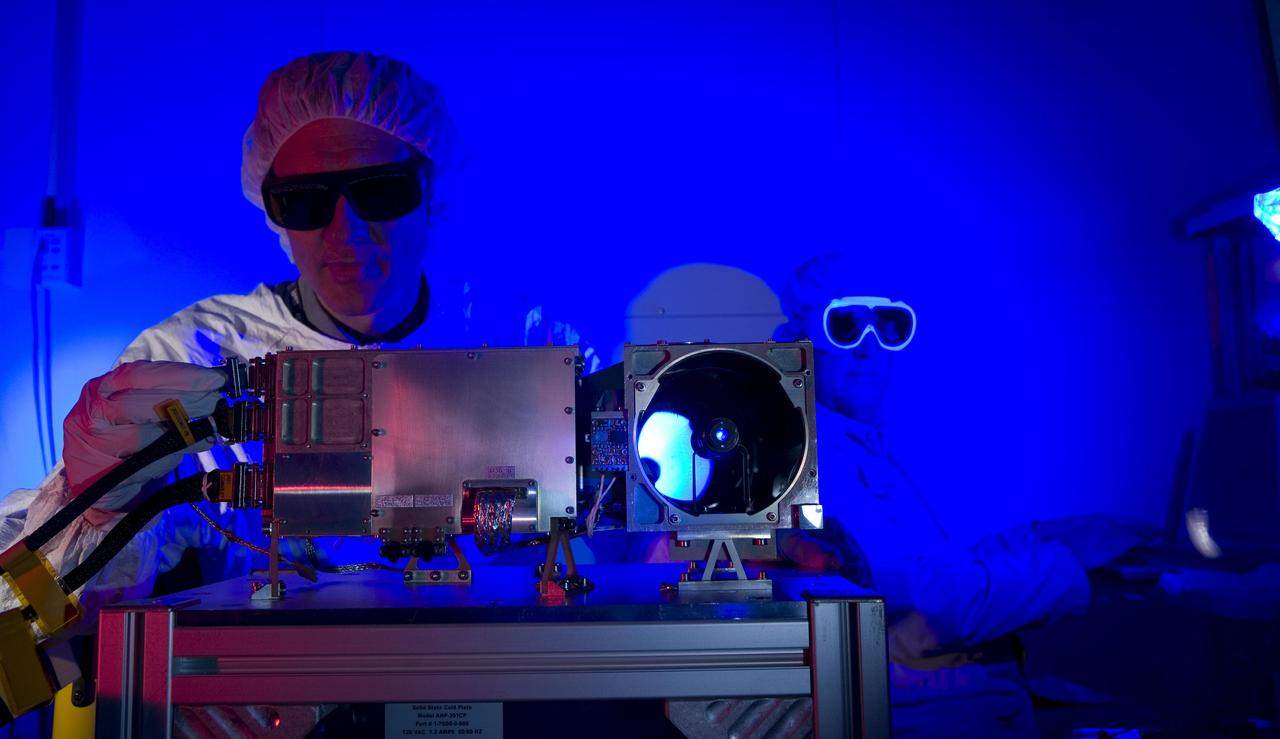
Researchers prepare for a test of the Chemistry and Camera ChemCam instrument that will fly on NASA Mars Science Laboratory mission; researchers are preparing the instrument mast unit for a laser firing test.
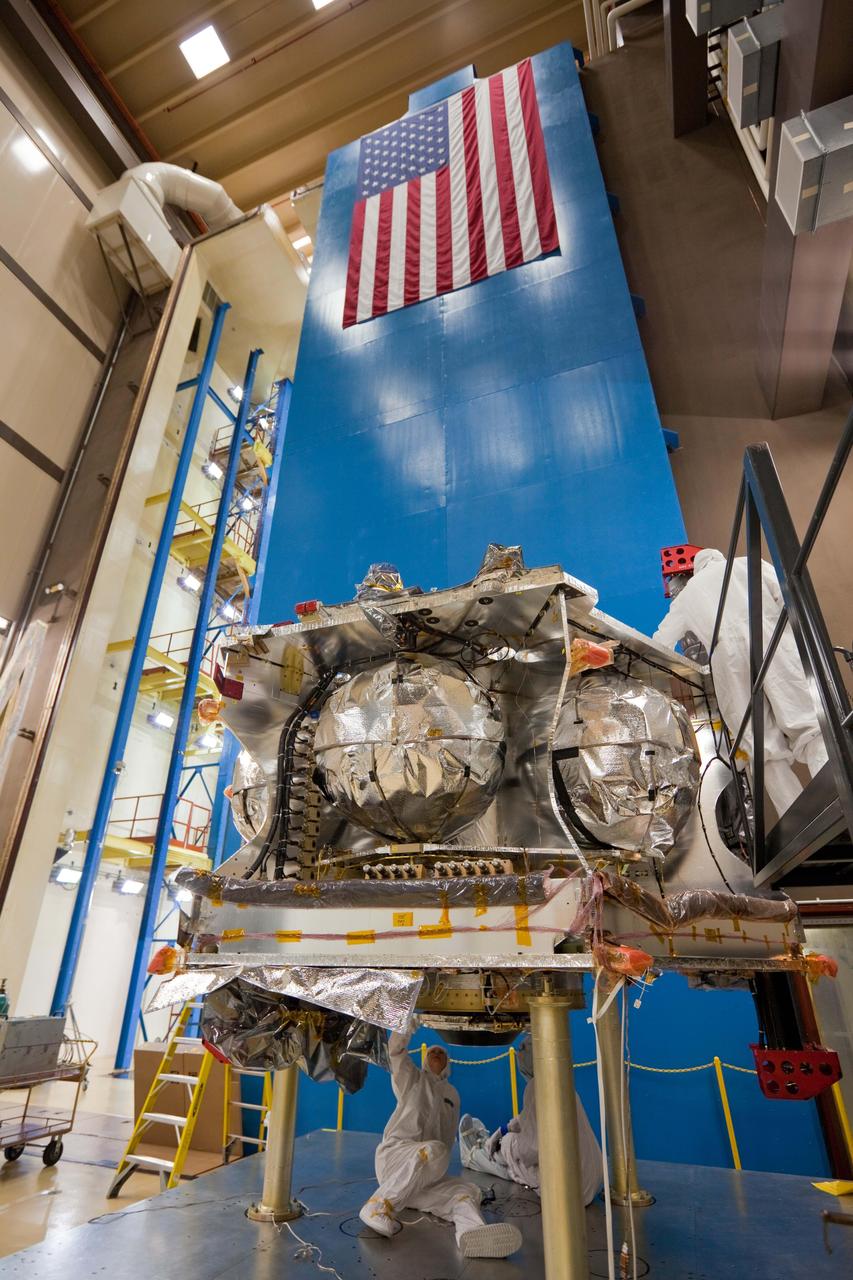
Technicians prepare NASA Juno spacecraft for a functional test of its main engine cover.
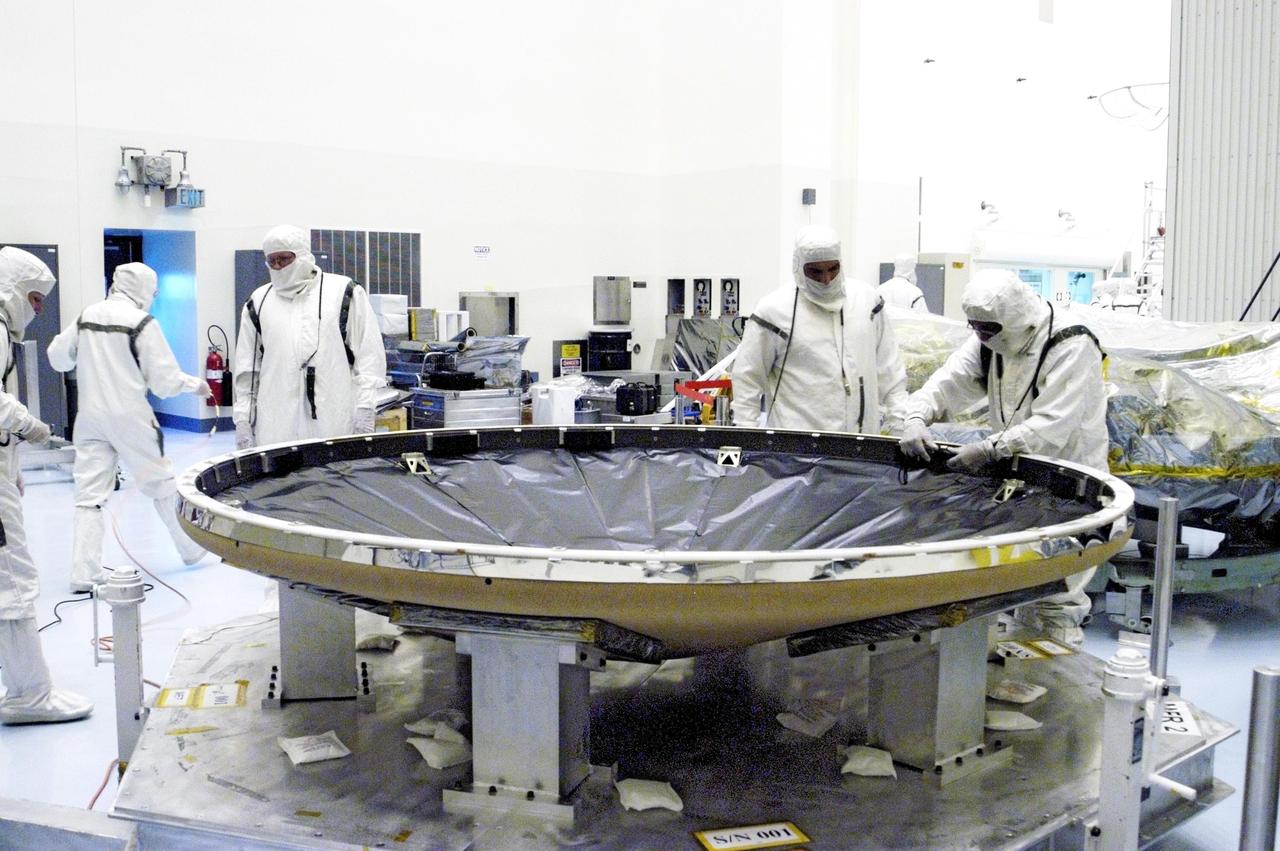
Workers in the Payload Hazardous Servicing Facility prepare the heat shield that will be attached to the backshell, surrounding Mars Exploration Rover 1 MER-1.

KENNEDY SPACE CENTER, FLA. -- In the Space Station Processing Facility at NASA's Kennedy Space Center, technicians prepare the Special Purpose Dexterous Manipulator, known as Dextre, for its move onto a pallet. Processing of the payload is under way for its mission to the International Space Station. Dextre will work with the mobile base and Canadarm2 on the station to perform critical construction and maintenance tasks. Dextre is part of the payload scheduled on mission STS-123, targeted to launch Feb. 14, 2008. Photo credit: NASA/Kim Shiflett
Orbital Sciences team members move the second half of the payload fairing before it is placed over NASA's IRIS (Interface Region Imaging Spectrograph) spacecraft. The fairing connects to the nose of the Orbital Sciences Pegasus XL rocket that will lift the solar observatory into orbit. The work is taking place in a hangar at Vandenberg Air Force Base, where IRIS is being prepared for launch on a Pegasus XL rocket. Scheduled for launch from Vandenberg on June 26, 2013, IRIS will open a new window of discovery by tracing the flow of energy and plasma through the chromospheres and transition region into the sun's corona using spectrometry and imaging. IRIS fills a crucial gap in our ability to advance studies of the sun-to-Earth connection by tracing the flow of energy and plasma through the foundation of the corona and the region around the sun known as the heliosphere. High res file available here: <a href="http://1.usa.gov/11yal3w" rel="nofollow">1.usa.gov/11yal3w</a> Photo Credit: NASA/Tony Vauclin <b><a href="http://www.nasa.gov/audience/formedia/features/MP_Photo_Guidelines.html" rel="nofollow">NASA image use policy.</a></b> <b><a href="http://www.nasa.gov/centers/goddard/home/index.html" rel="nofollow">NASA Goddard Space Flight Center</a></b> enables NASA’s mission through four scientific endeavors: Earth Science, Heliophysics, Solar System Exploration, and Astrophysics. Goddard plays a leading role in NASA’s accomplishments by contributing compelling scientific knowledge to advance the Agency’s mission. <b>Follow us on <a href="http://twitter.com/NASA_GoddardPix" rel="nofollow">Twitter</a></b> <b>Like us on <a href="http://www.facebook.com/pages/Greenbelt-MD/NASA-Goddard/395013845897?ref=tsd" rel="nofollow">Facebook</a></b> <b>Find us on <a href="http://instagram.com/nasagoddard?vm=grid" rel="nofollow">Instagram</a></b>
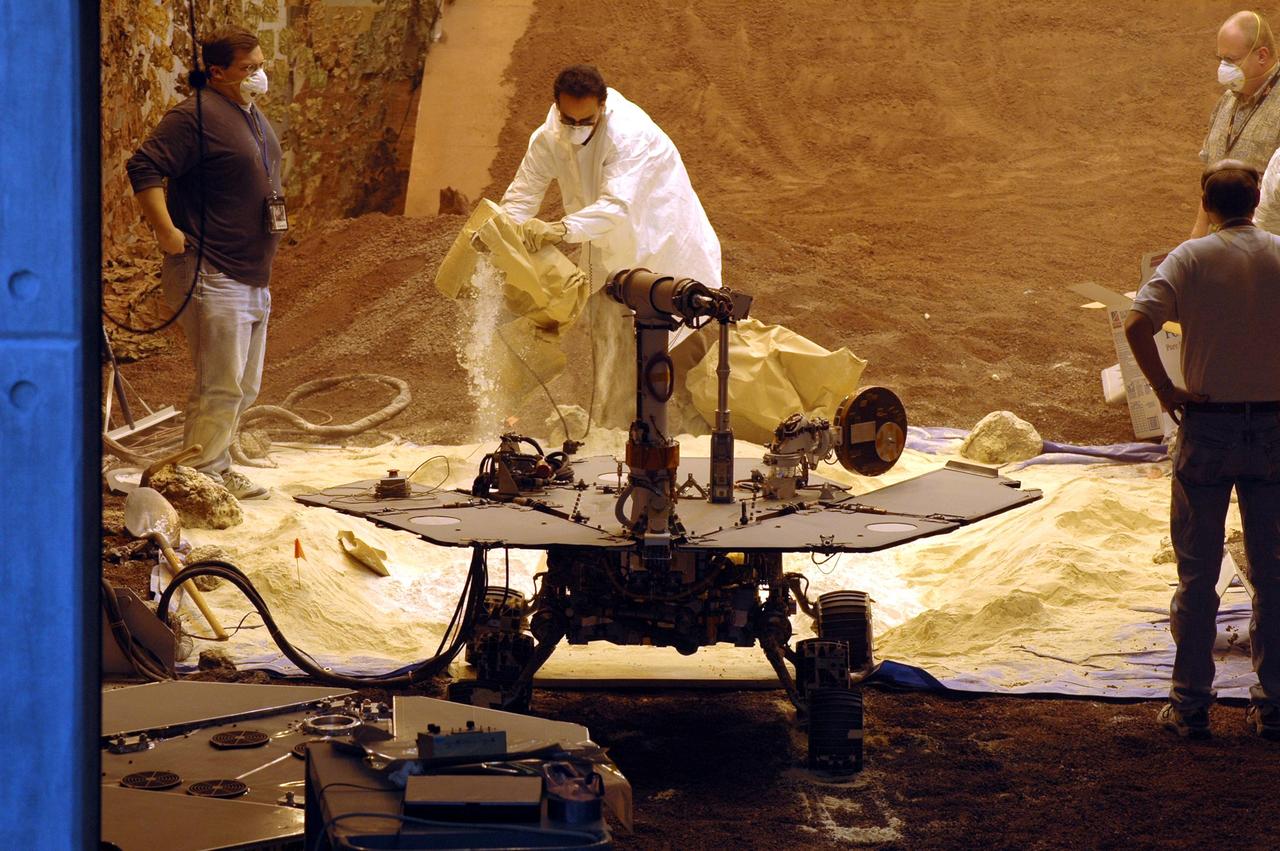
Rover engineers prepare a mixture of sandy and powdery materials to simulate some difficult Mars driving conditions inside a facility at NASA Jet Propulsion Laboratory, Pasadena, Calif.
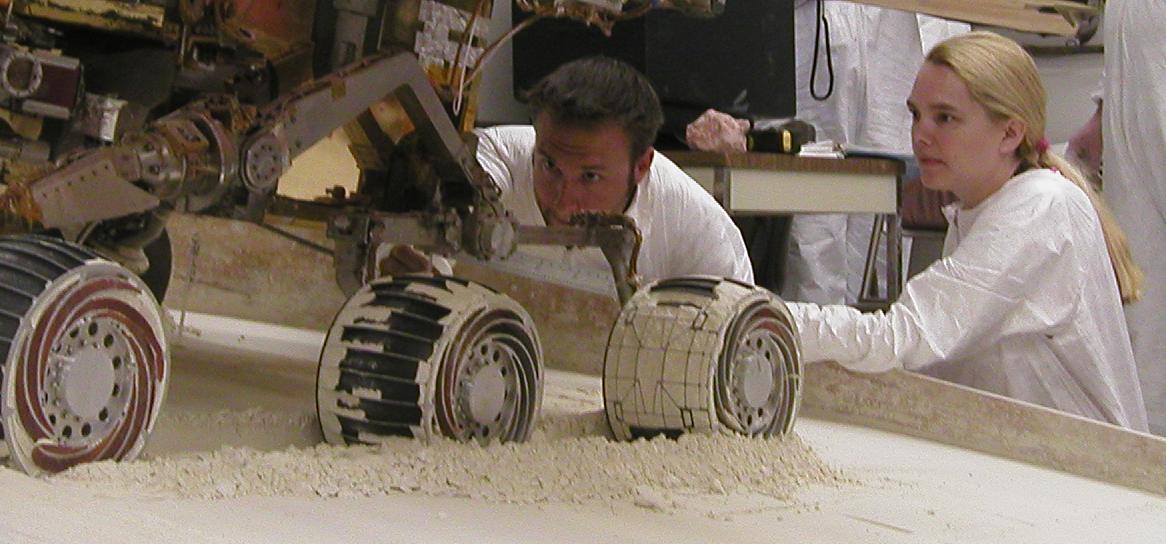
Mike Seibert and Sharon Laubach, engineers on NASA Mars Exploration Rover team at the Jet Propulsion Laboratory, Pasadena, check the exact position of a test rover in preparation for the next test of a possible maneuver for Spirit to use on Mars.
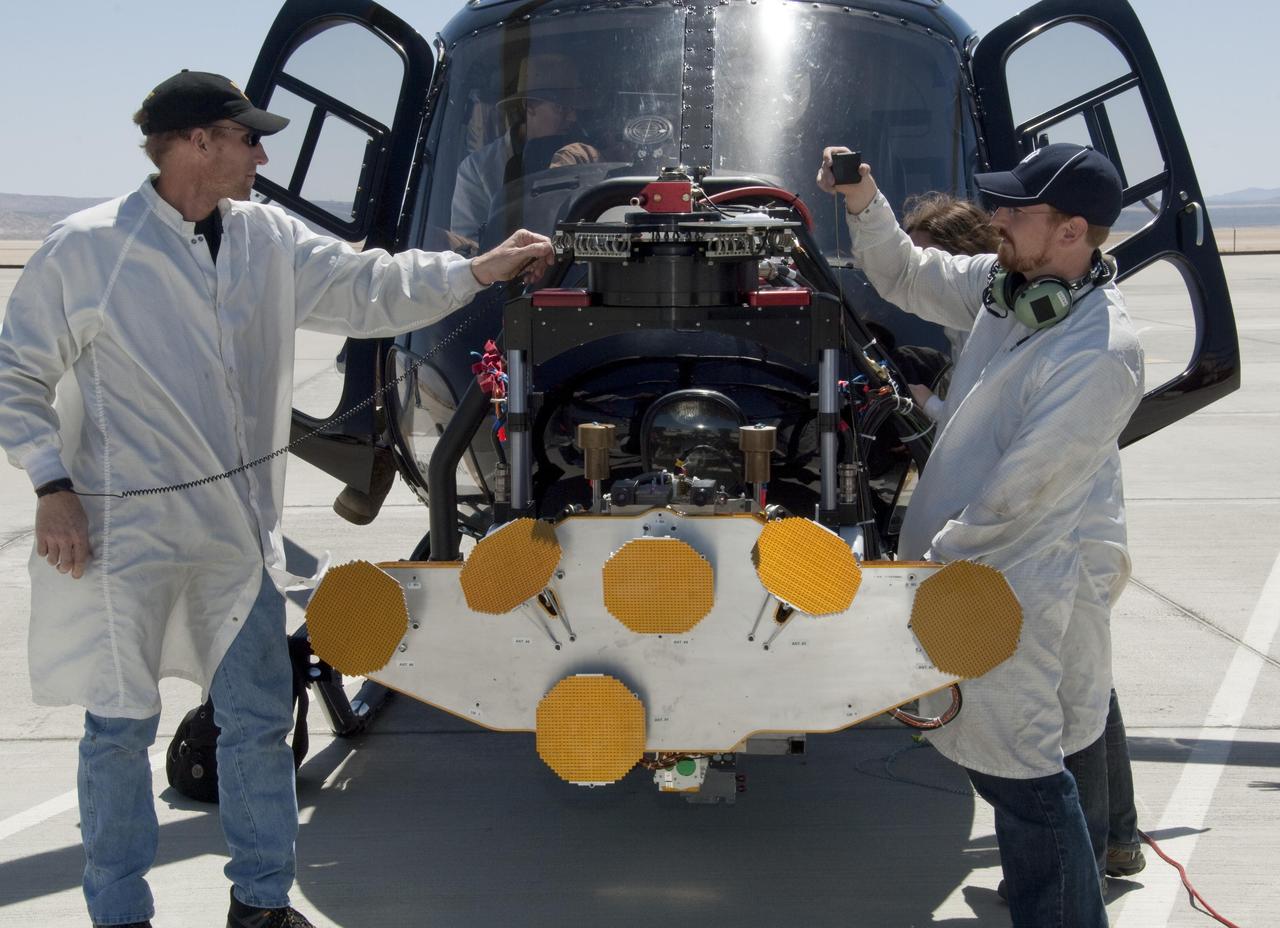
In advance of a testing flight at NASA Dryden Flight Research Center, members of the test team prepare the engineering model of the Mars Science Laboratory descent radar on the nose gimbal of a helicopter. The yellow disks are the radar antennae.
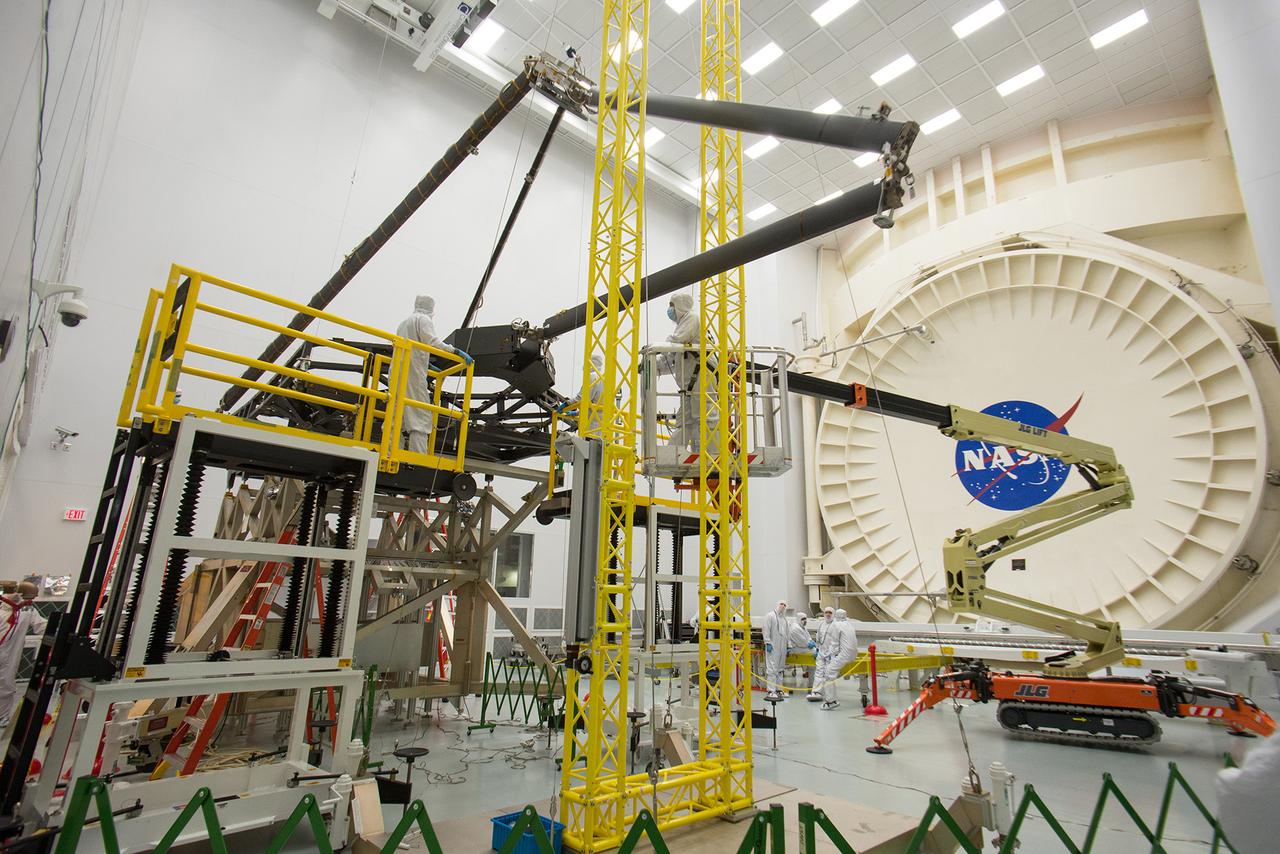
Engineers and technicians manually deployed the secondary mirror support structure (SMSS) of the James Webb Space Telescope's Pathfinder backplane test model, outside of a giant space simulation chamber called Chamber A, at NASA's Johnson Space Center in Houston. This historic test chamber was previously used in manned spaceflight missions and is being readied for a cryogenic test of a Webb telescope component. In the weightless environment of space, the SMSS is deployed by electric motors. On the ground, specially trained operators use a hand crank and a collection of mechanical ground support equipment to overcome the force of gravity. "This structure needs to be in the deployed configuration during the cryogenic test to see how the structure will operate in the frigid temperatures of space," said Will Rowland, senior mechanical test engineer for Northrop Grumman Aerospace Systems, Redondo Beach, California. "The test also demonstrates that the system works and can be successfully deployed." After the deployment was completed, Chamber A's circular door was opened and the rails (seen in the background of the photo) were installed so that the Pathfinder unit could be lifted, installed and rolled into the chamber on a cart. The team completed a fit check for the Pathfinder. Afterwards they readied the chamber for the cryogenic test, which will simulate the frigid temperatures the Webb telescope will encounter in space. “The team has been doing a great job keeping everything on schedule to getting our first optical test results, " said Lee Feinberg, NASA Optical Telescope Element Manager. The James Webb Space Telescope is the scientific successor to NASA's Hubble Space Telescope. It will be the most powerful space telescope ever built. Webb is an international project led by NASA with its partners, the European Space Agency and the Canadian Space Agency. Image credit: NASA/Desiree Stover Text credit: Laura Betz, NASA's Goddard Space Flight Center, Greenbelt, Maryland <b><a href="http://www.nasa.gov/audience/formedia/features/MP_Photo_Guidelines.html" rel="nofollow">NASA image use policy.</a></b> <b><a href="http://www.nasa.gov/centers/goddard/home/index.html" rel="nofollow">NASA Goddard Space Flight Center</a></b> enables NASA’s mission through four scientific endeavors: Earth Science, Heliophysics, Solar System Exploration, and Astrophysics. Goddard plays a leading role in NASA’s accomplishments by contributing compelling scientific knowledge to advance the Agency’s mission. <b>Follow us on <a href="http://twitter.com/NASAGoddardPix" rel="nofollow">Twitter</a></b> <b>Like us on <a href="http://www.facebook.com/pages/Greenbelt-MD/NASA-Goddard/395013845897?ref=tsd" rel="nofollow">Facebook</a></b> <b>Find us on <a href="http://instagrid.me/nasagoddard/?vm=grid" rel="nofollow">Instagram</a></b>
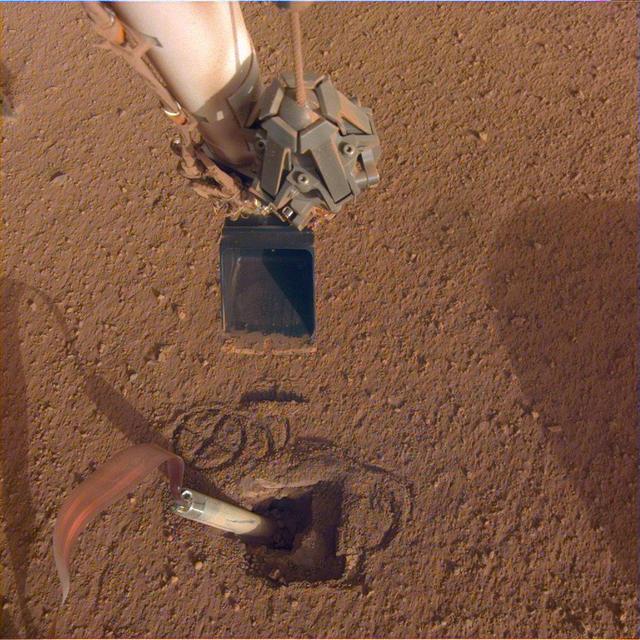
NASA's Mars InSight lander recently moved its robotic arm closer to the heat probe's digging device, called the "mole," in preparation to push on its top, or back cap. The InSight team hopes that pushing on this location will help the mole it bury itself and enable the heat probe to take Mars' temperature. Animation available at https://photojournal.jpl.nasa.gov/catalog/PIA23622
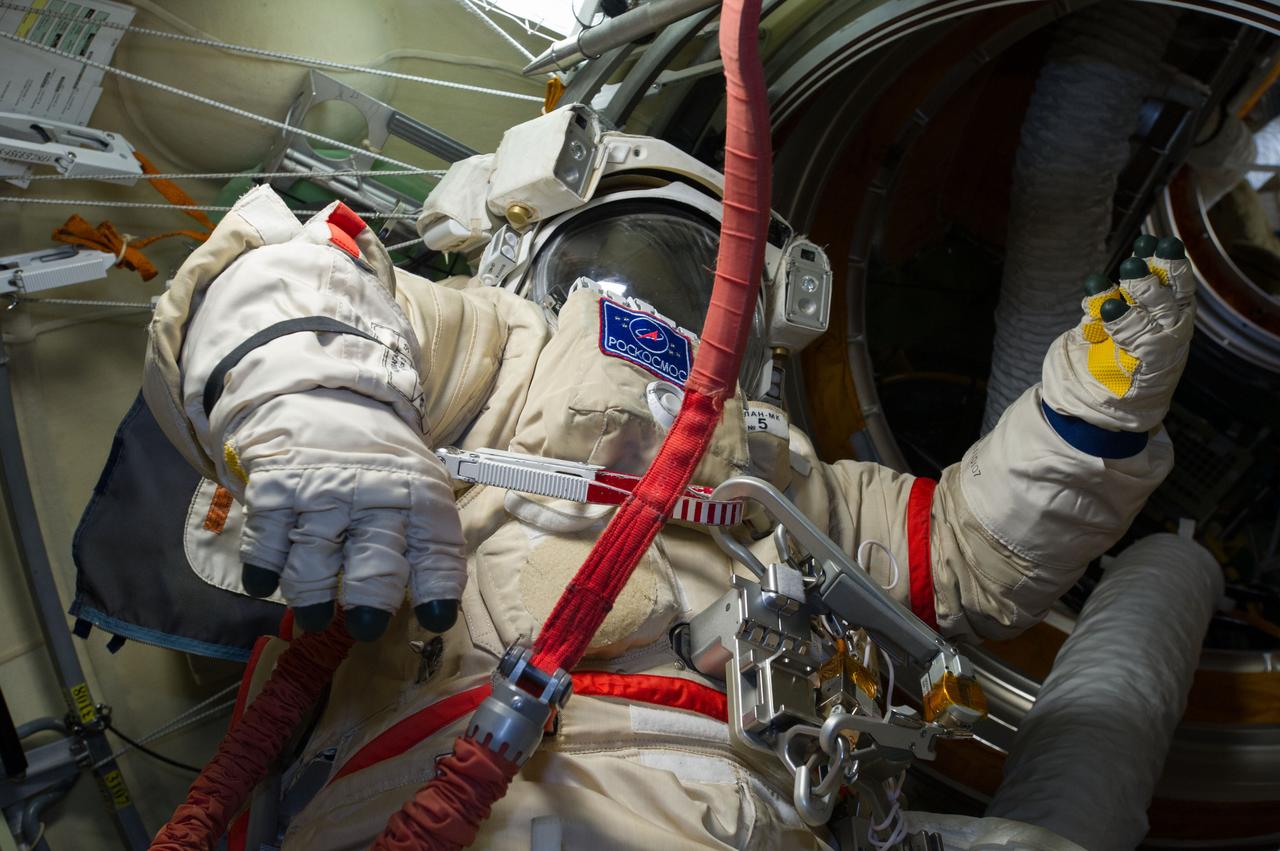
ISS040-E-013827 (17 June 2014) --- This is the Orlan spacesuit of Russian cosmonaut Alexander Skvortsov, Expedition 40 flight engineer. Skvortsov and fellow cosmonaut Oleg Artemyev readied their Russian Orlan suits early on June 17 in preparation for a scheduled spacewalk on June 19.
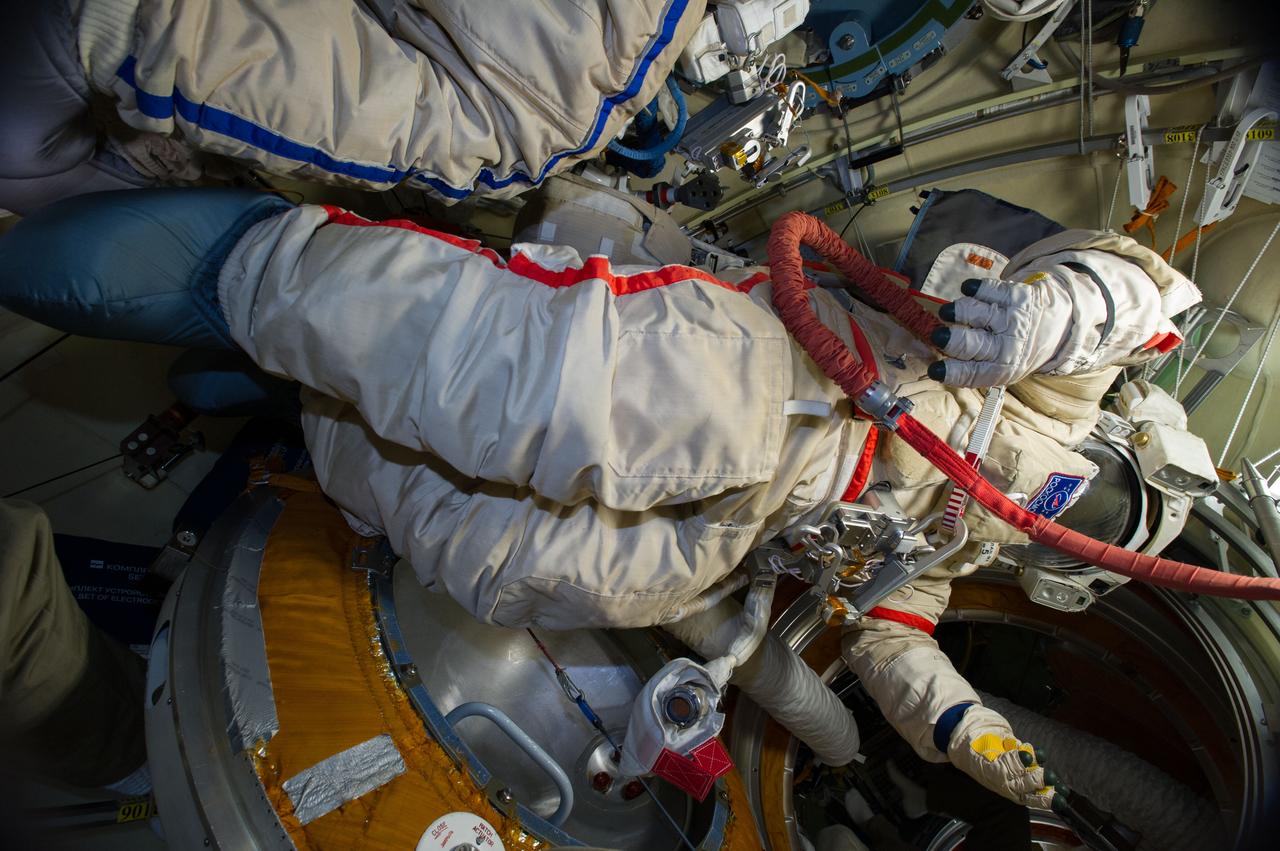
ISS040-E-013826 (17 June 2014) --- This is the Orlan spacesuit of Russian cosmonaut Alexander Skvortsov, Expedition 40 flight engineer. Skvortsov and fellow cosmonaut Oleg Artemyev readied their Russian Orlan suits early on June 17 in preparation for a scheduled spacewalk on June 19.
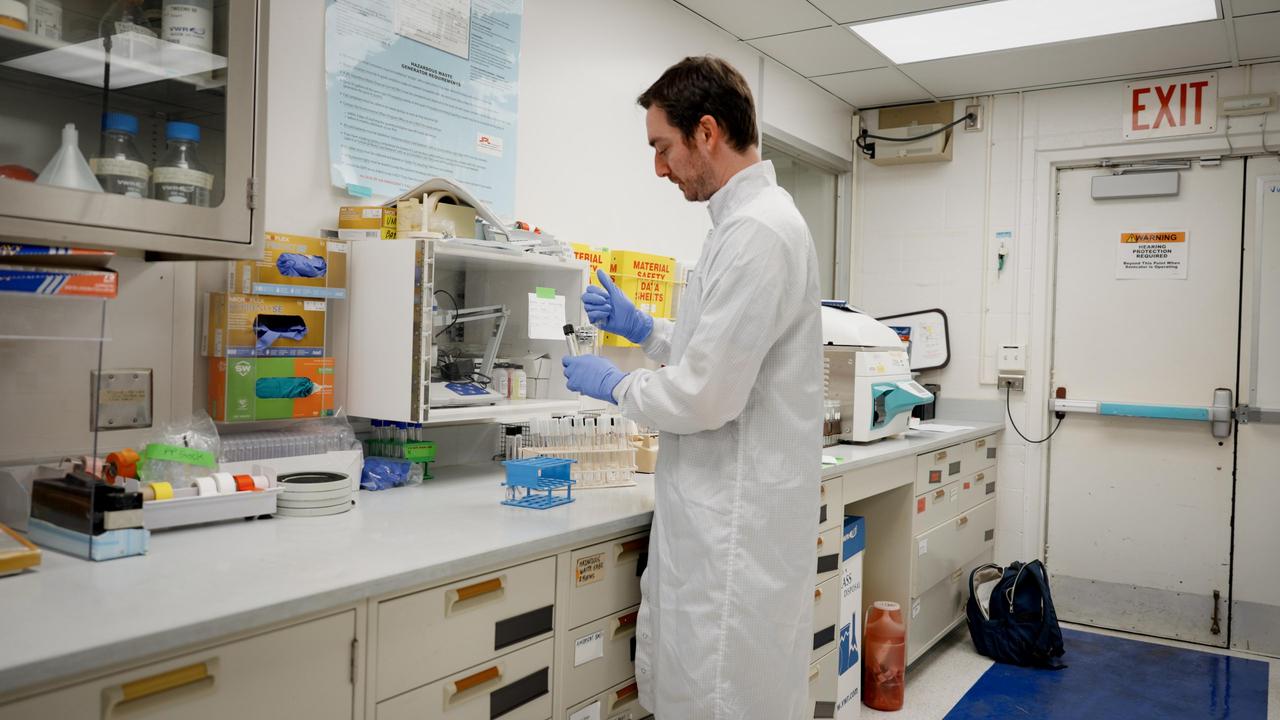
A planetary protection engineer at NASA's Jet Propulsion Laboratory prepares samples for analysis on March 20, 2024. The samples, swabbed from the surfaces of the agency's Europa Clipper spacecraft during its construction, were collected to help monitor the mission's adherence to strict standards for biological cleanliness. Created in keeping with the international 1967 Outer Space Treaty, the mission's planetary protection protocols are designed to minimize the chance that microbes brought from Earth could compromise future scientific investigations at its target destination: Jupiter's icy moon Europa. Europa Clipper's three main science objectives are to determine the thickness of the moon's icy shell and its interactions with the ocean below, to investigate its composition, and to characterize its geology. The mission's detailed exploration of Europa will help scientists better understand the astrobiological potential for habitable worlds beyond our planet. https://photojournal.jpl.nasa.gov/catalog/PIA26441
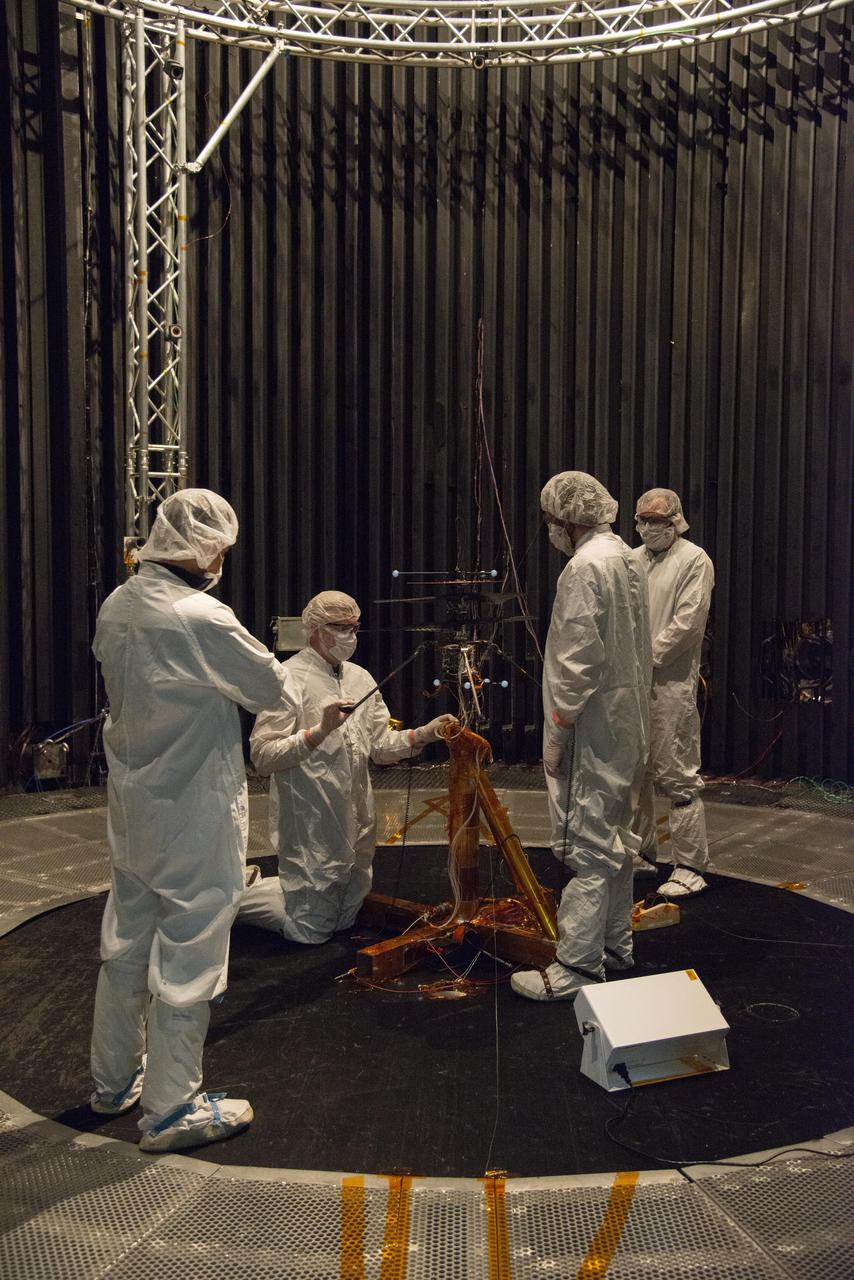
Members of NASA's Mars Helicopter team prepare the flight model (vehicle going to Mars) for a test in the Space Simulator, a 25-foot-wide (7.62-meter-wide) vacuum chamber at NASA's Jet Propulsion Laboratory in Pasadena, California. The image was taken on Jan. 18, 2019. https://photojournal.jpl.nasa.gov/catalog/PIA23156
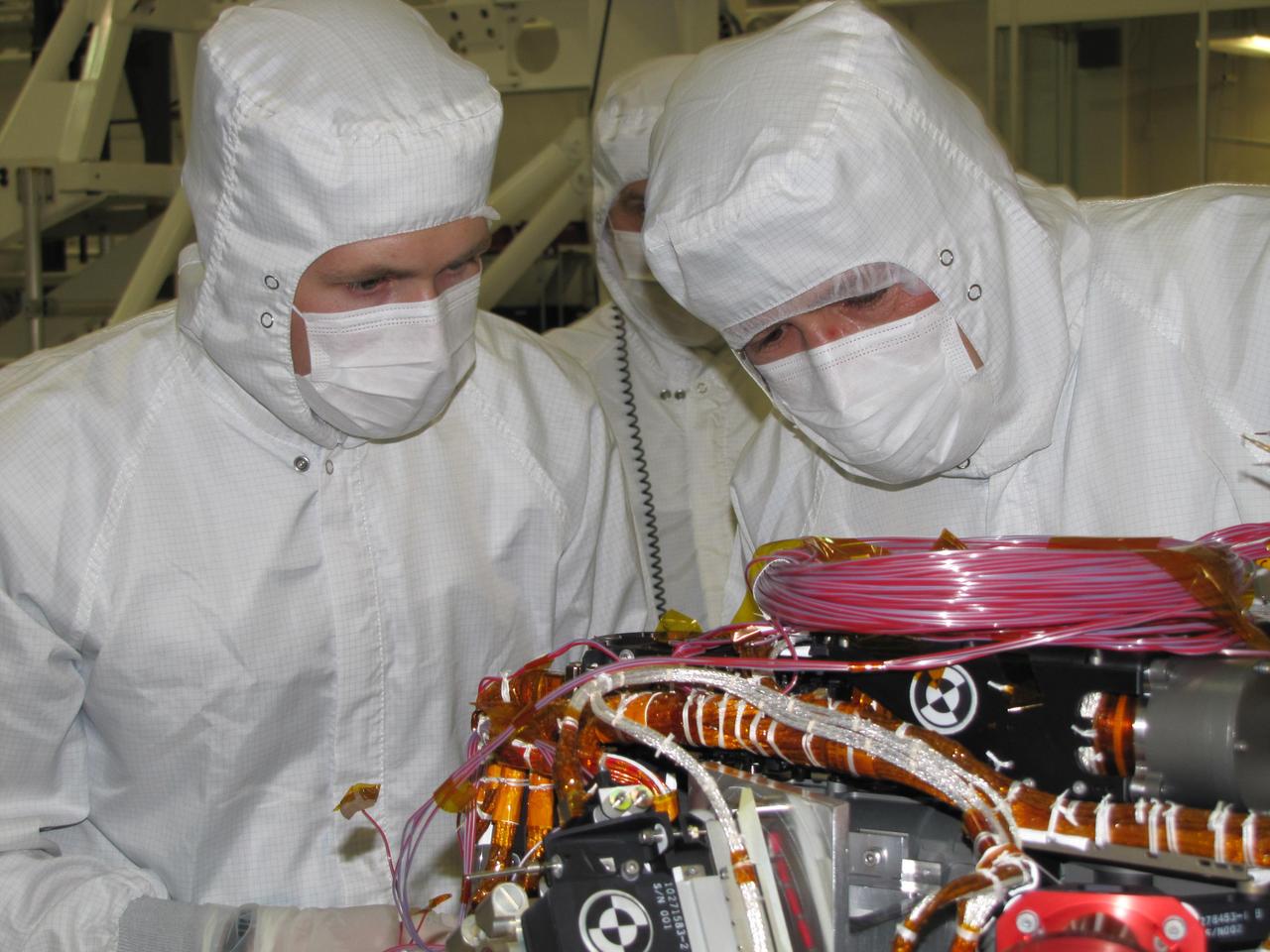
Grad student Nicholas Boyd left and Principal Investigator Ralf Gellert, both of the University of Guelph, Ontario, Canada, prepare for the installation of the Alpha Particle X-ray Spectrometer sensor head during testing at NASA JPL.
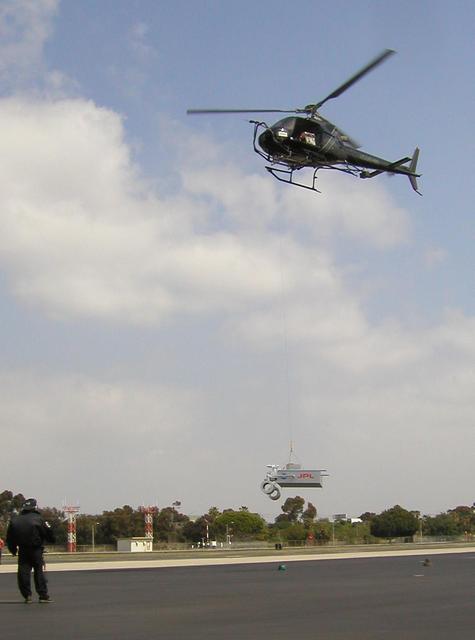
This image taken March 25, 2010 shows preparations for radar testing for NASA Mars Science Laboratory. This day work evaluated a setup for suspending a rover mock-up beneath a helicopter at Hawthorne Municipal Airport, Hawthorne, Calif.

Mars Exploration Rover team members at NASA Jet Propulsion Laboratory, Pasadena, Calif., prepare an experiment on July 13, 2009, for assessing how a test rover moves when embedded in loose soil and commanded to drive backward with wheels turned.
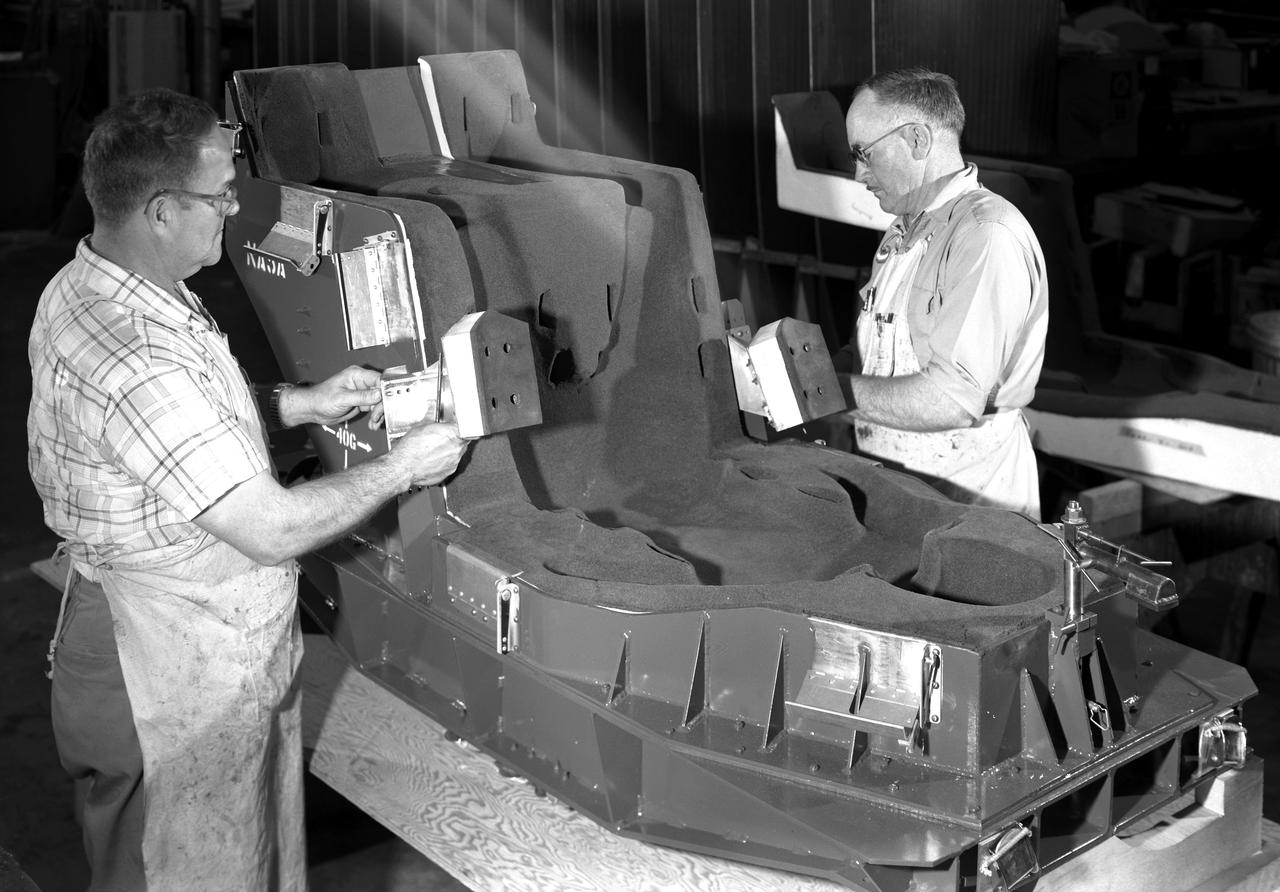
Space Couch Preparation. Man with the mustache is Richard H. Pingley
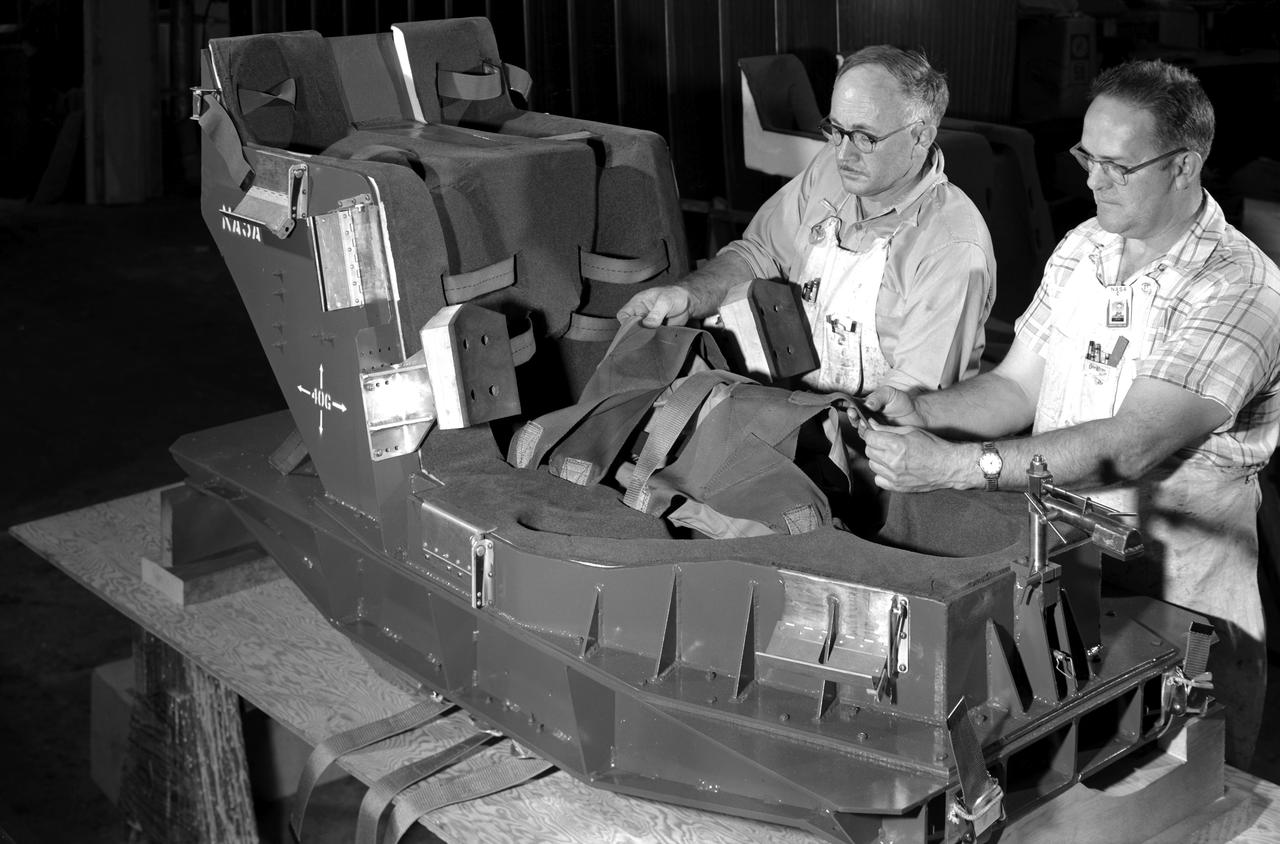
Space Couch Preparation man with the mustache is Richard H. Pingley
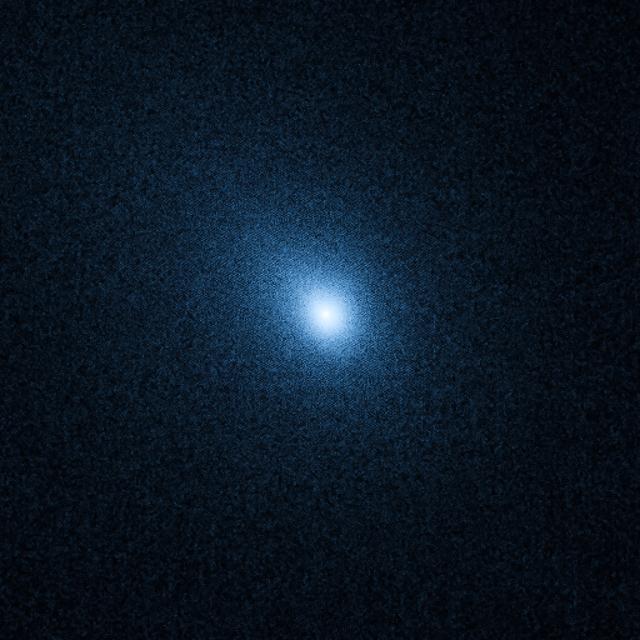
NASA image release October 5, 2010 Hubble Space Telescope observations of comet 103P/Hartley 2, taken on September 25, are helping in the planning for a November 4 flyby of the comet by NASA's Deep Impact eXtended Investigation (DIXI) spacecraft. Analysis of the new Hubble data shows that the nucleus has a diameter of approximately 0.93 miles (1.5 km), which is consistent with previous estimates. The comet is in a highly active state, as it approaches the Sun. The Hubble data show that the coma is remarkably uniform, with no evidence for the types of outgassing jets seen from most "Jupiter Family" comets, of which Hartley 2 is a member. Jets can be produced when the dust emanates from a few specific icy regions, while most of the surface is covered with relatively inert, meteoritic-like material. In stark contrast, the activity from Hartley 2's nucleus appears to be more uniformly distributed over its entire surface, perhaps indicating a relatively "young" surface that hasn't yet been crusted over. Hubble's spectrographs - the Cosmic Origins Spectrograph (COS) and the Space Telescope Imaging Spectrograph (STIS) -- are expected to provide unique information about the comet's chemical composition that might not be obtainable any other way, including measurements by DIXI. The Hubble team is specifically searching for emissions from carbon monoxide (CO) and diatomic sulfur (S2). These molecules have been seen in other comets but have not yet been detected in 103P/Hartley 2. 103P/Hartley has an orbital period of 6.46 years. It was discovered by Malcolm Hartley in 1986 at the Schmidt Telescope Unit in Siding Spring, Australia. The comet will pass within 11 million miles of Earth (about 45 times the distance to the Moon) on October 20. During that time the comet may be visible to the naked eye as a 5th magnitude "fuzzy star" in the constellation Auriga. Credit: NASA, ESA, and H. Weaver (The Johns Hopkins University/Applied Physics Lab) The Hubble Space Telescope is a project of international cooperation between NASA and the European Space Agency. NASA's Goddard Space Flight Center manages the telescope. The Space Telescope Science Institute (STScI) conducts Hubble science operations. STScI is operated for NASA by the Association of Universities for Research in Astronomy, Inc., in Washington, D.C. <b><a href="http://www.nasa.gov/centers/goddard/home/index.html" rel="nofollow">NASA Goddard Space Flight Center</a></b> enables NASA’s mission through four scientific endeavors: Earth Science, Heliophysics, Solar System Exploration, and Astrophysics. Goddard plays a leading role in NASA’s accomplishments by contributing compelling scientific knowledge to advance the Agency’s mission. <b>Follow us on <a href="http://twitter.com/NASA_GoddardPix" rel="nofollow">Twitter</a></b> <b>Join us on <a href="http://www.facebook.com/pages/Greenbelt-MD/NASA-Goddard/395013845897?ref=tsd" rel="nofollow">Facebook</a></b>

KENNEDY SPACE CENTER, FLA. -- Workers monitor the progress of Space Shuttle Discovery as it moves through the doors of the Vehicle Assembly Building toward Launch Pad 39A. First motion out of the VAB was at 6:47 a.m. EDT. Rollout is a milestone for Discovery's launch to the International Space Station on mission STS-120, targeted for Oct. 23. The crew will be delivering and installing the Italian-built U.S. Node 2, named Harmony. The pressurized module will act as an internal connecting port and passageway to additional international science labs and cargo spacecraft. In addition to increasing the living and working space inside the station, it also will serve as a work platform outside for the station's robotic arm. Photo credit: NASA/George Shelton
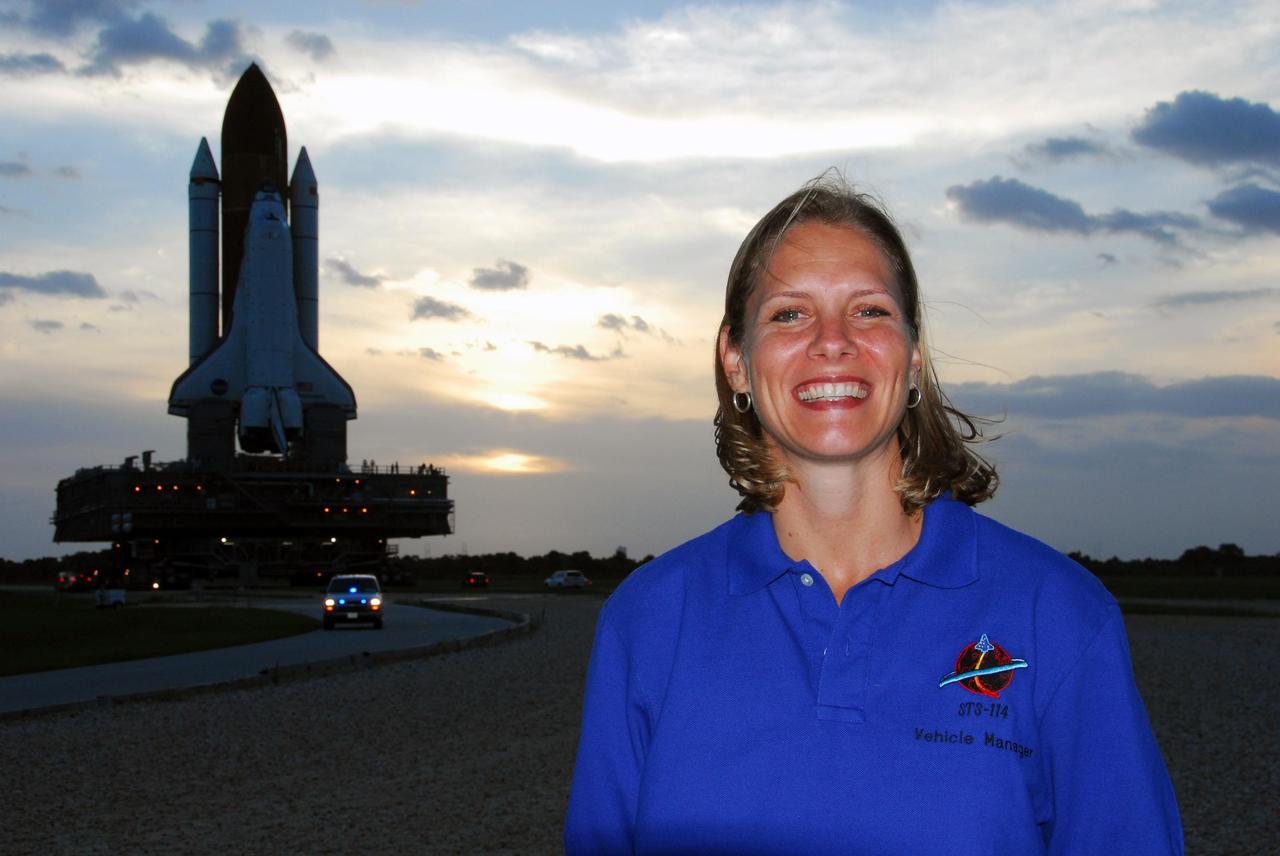
KENNEDY SPACE CENTER, FLA. -- Space Shuttle Discovery Flow Director Stephanie Stilson poses with the orbiter in the background as it is moved from the Vehicle Assembly Building to Launch Pad 39A. First motion out of the VAB was at 6:47 a.m. EDT. Rollout is a milestone for Discovery's launch to the International Space Station on mission STS-120, targeted for Oct. 23. The crew will be delivering and installing the Italian-built U.S. Node 2, named Harmony. The pressurized module will act as an internal connecting port and passageway to additional international science labs and cargo spacecraft. In addition to increasing the living and working space inside the station, it also will serve as a work platform outside for the station's robotic arm. Photo credit: NASA/George Shelton
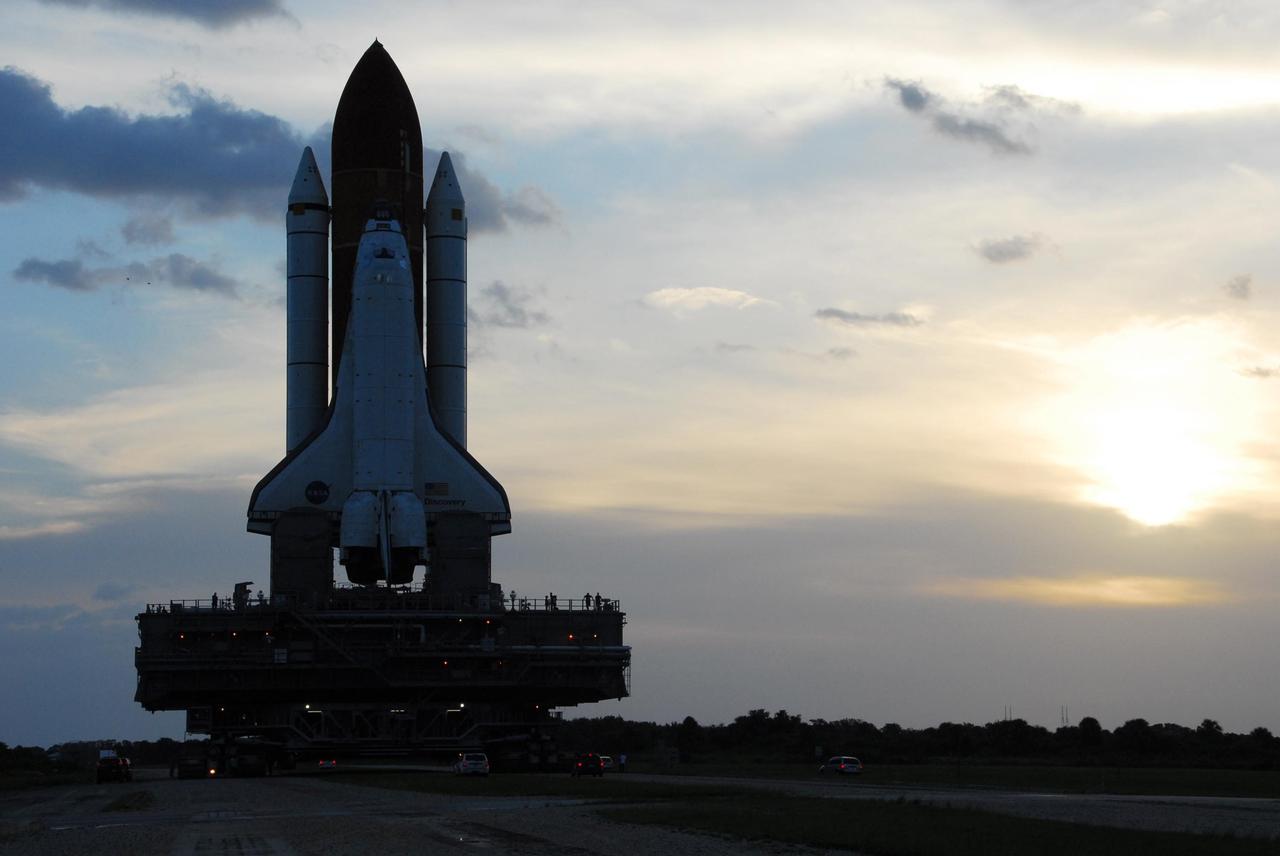
KENNEDY SPACE CENTER, FLA. -- Space Shuttle Discovery moves along the crawlerway from the Vehicle Assembly Building toward Launch Pad 39A as the sun rises on a balmy Florida morning. First motion out of the VAB was at 6:47 a.m. EDT. Rollout is a milestone for Discovery's launch to the International Space Station on mission STS-120, targeted for Oct. 23. The crew will be delivering and installing the Italian-built U.S. Node 2, named Harmony. The pressurized module will act as an internal connecting port and passageway to additional international science labs and cargo spacecraft. In addition to increasing the living and working space inside the station, it also will serve as a work platform outside for the station's robotic arm. Photo credit: NASA/George Shelton
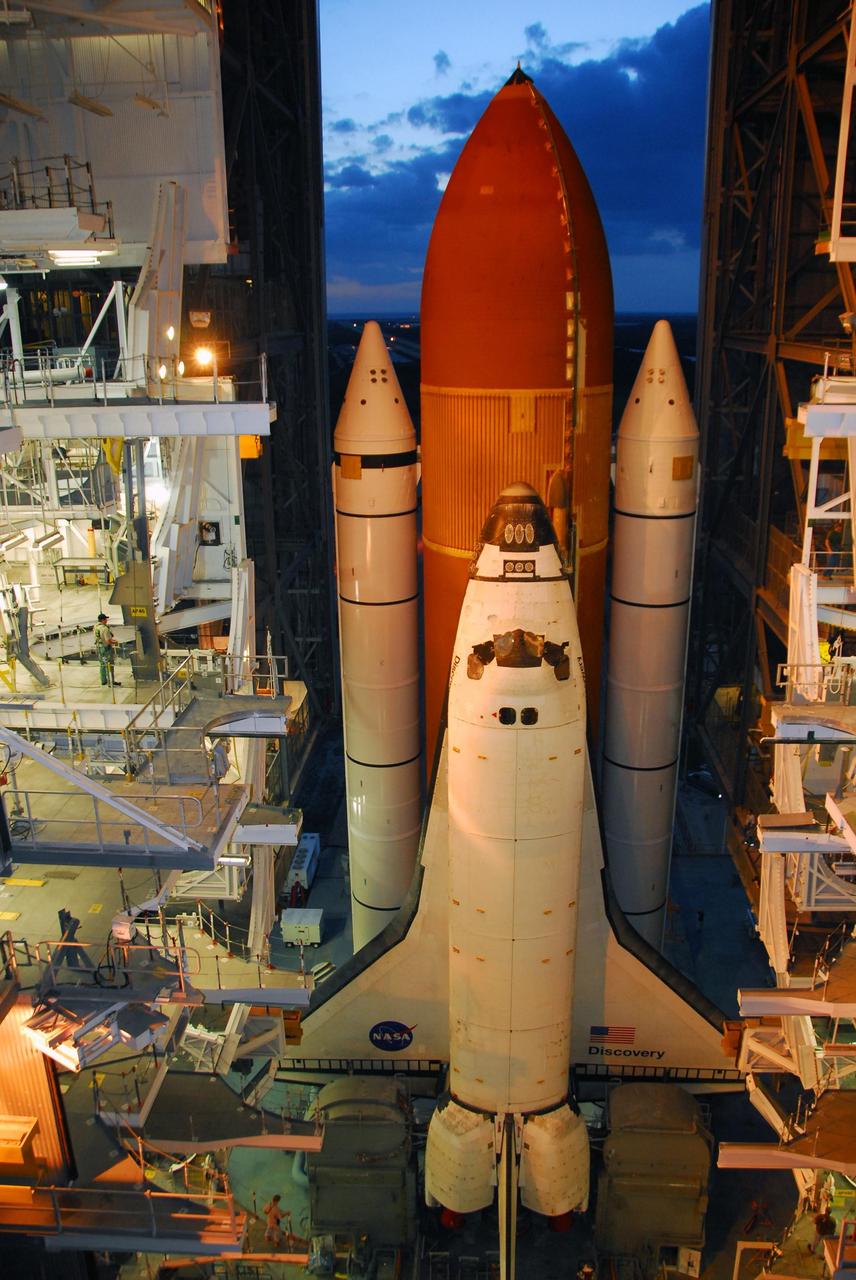
KENNEDY SPACE CENTER, FLA. -- Space Shuttle Discovery begins moving through the doors of the Vehicle Assembly Building toward Launch Pad 39A. First motion out of the VAB was at 6:47 a.m. EDT. Rollout is a milestone for Discovery's launch to the International Space Station on mission STS-120, targeted for Oct. 23. The crew will be delivering and installing the Italian-built U.S. Node 2, named Harmony. The pressurized module will act as an internal connecting port and passageway to additional international science labs and cargo spacecraft. In addition to increasing the living and working space inside the station, it also will serve as a work platform outside for the station's robotic arm. Photo credit: NASA/George Shelton
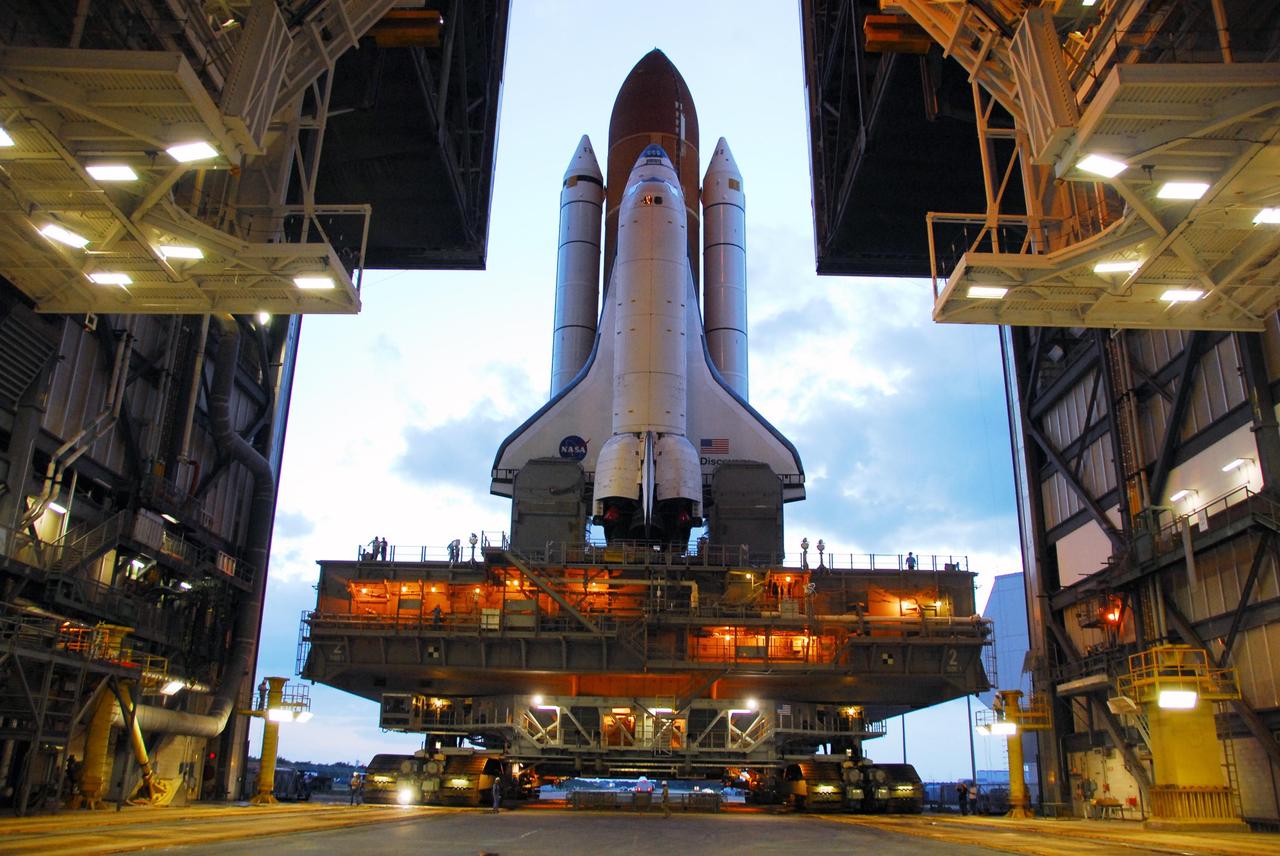
KENNEDY SPACE CENTER, FLA. -- Space Shuttle Discovery, atop a mobile launch platform, moves through the doors of the Vehicle Assembly Building toward Launch Pad 39A just before sunrise on a balmy Florida morning. First motion out of the VAB was at 6:47 a.m. EDT. Rollout is a milestone for Discovery's launch to the International Space Station on mission STS-120, targeted for Oct. 23. The crew will be delivering and installing the Italian-built U.S. Node 2, named Harmony. The pressurized module will act as an internal connecting port and passageway to additional international science labs and cargo spacecraft. In addition to increasing the living and working space inside the station, it also will serve as a work platform outside for the station's robotic arm. Photo credit: NASA/George Shelton
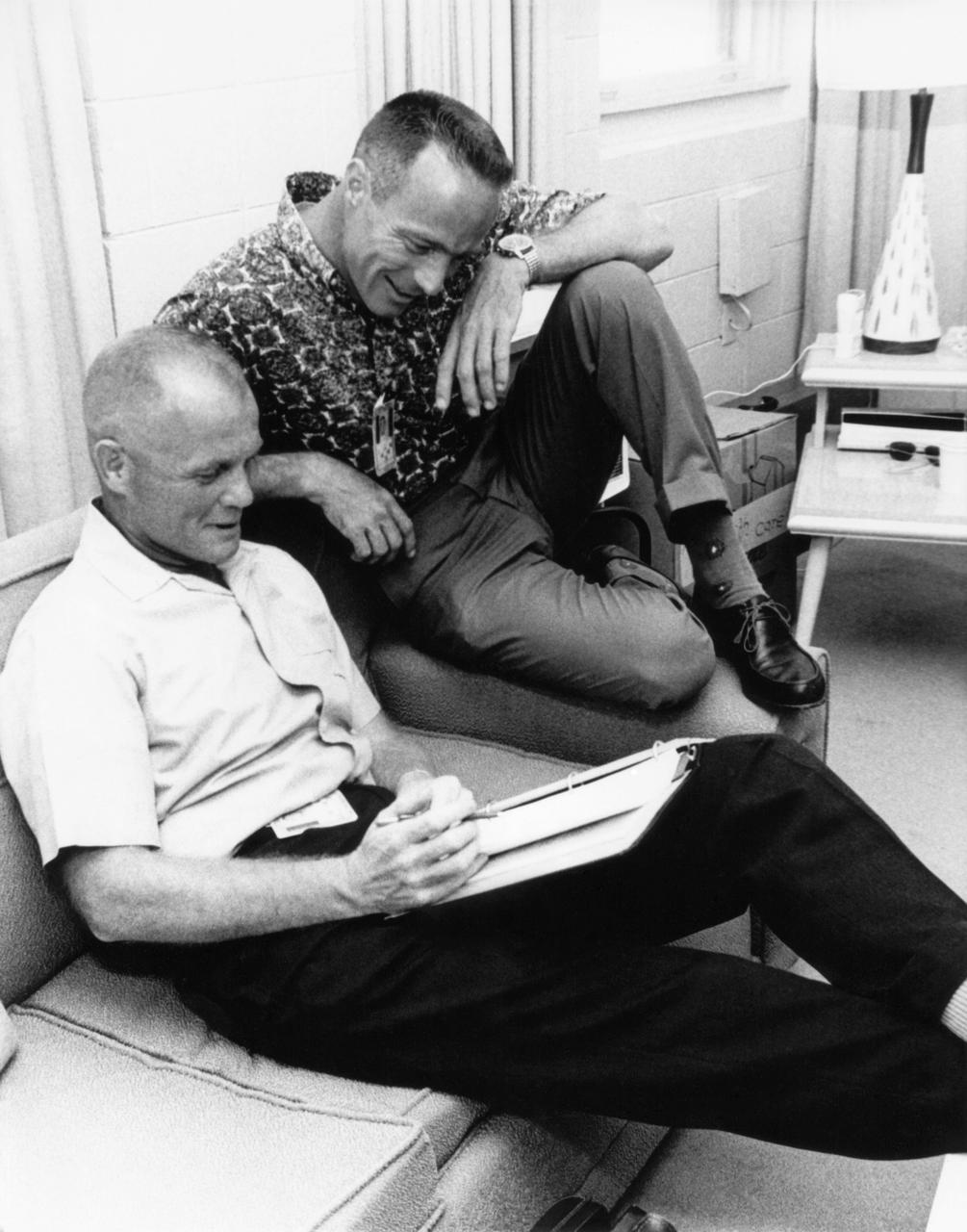
62-MA7-86 (1962) --- John Glenn (left) makes last minute preparations with Scott Carpenter prior to the flight of MA-7. Photo credit: NASA
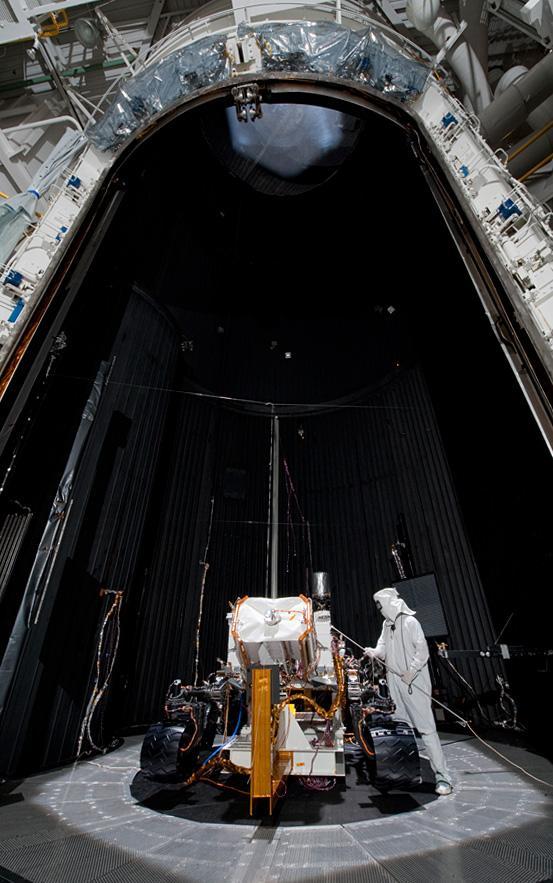
This image shows preparation for March 2011 testing of the Mars Science Laboratory rover, Curiosity, in a space-simulation chamber; the rover will go through operational sequences in environmental conditions similar to what it will experience on Mars.
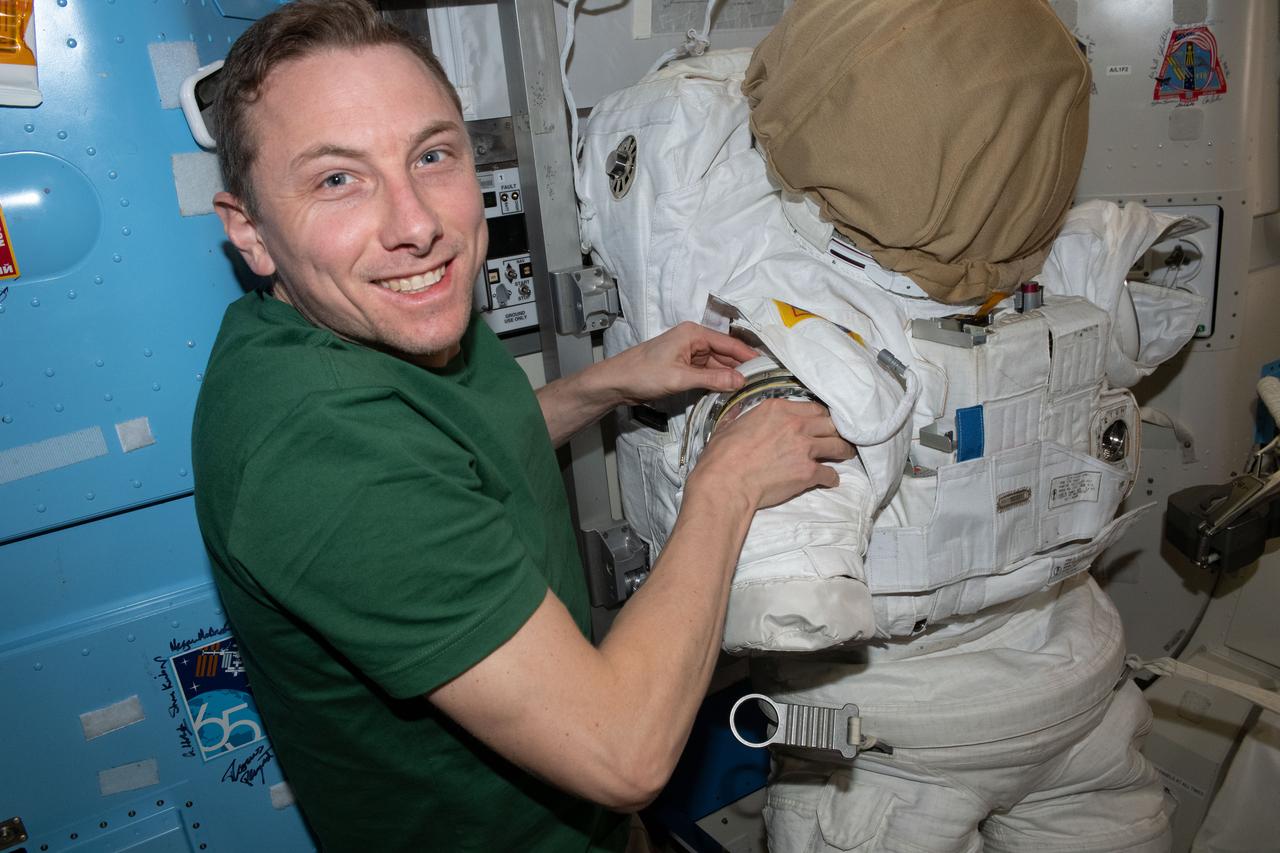
iss069e003918 (April 17, 2023) --- NASA astronaut and Expedition 69 Flight Engineer Woody Hoburg prepares an Extravehicular Mobility Unit, or spacesuit, inside the International Space Station's Quest airlock for an upcoming spacewalk.
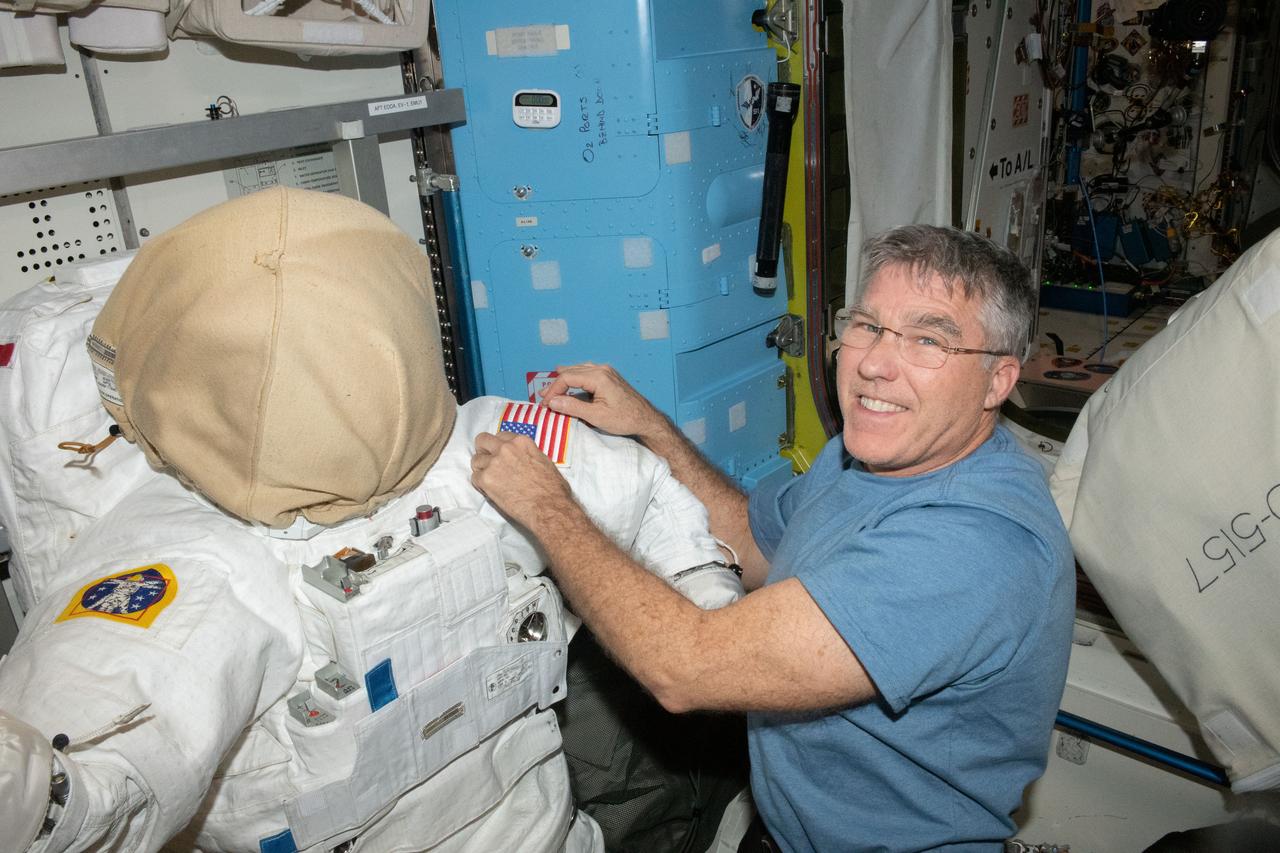
iss069e003944 (April 17, 2023) --- NASA astronaut and Expedition 69 Flight Engineer Stephen Bowen prepares an Extravehicular Mobility Unit, or spacesuit, inside the International Space Station's Quest airlock for an upcoming spacewalk.
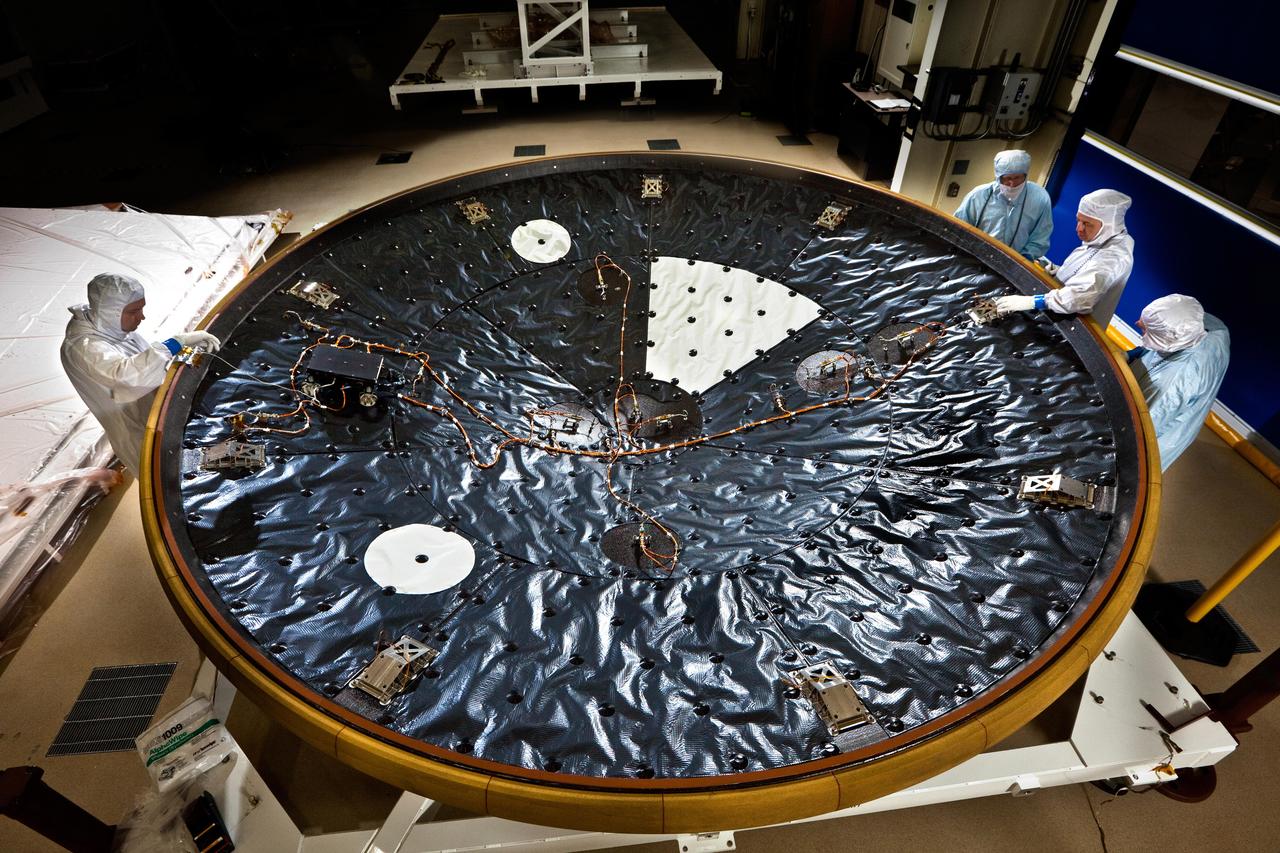
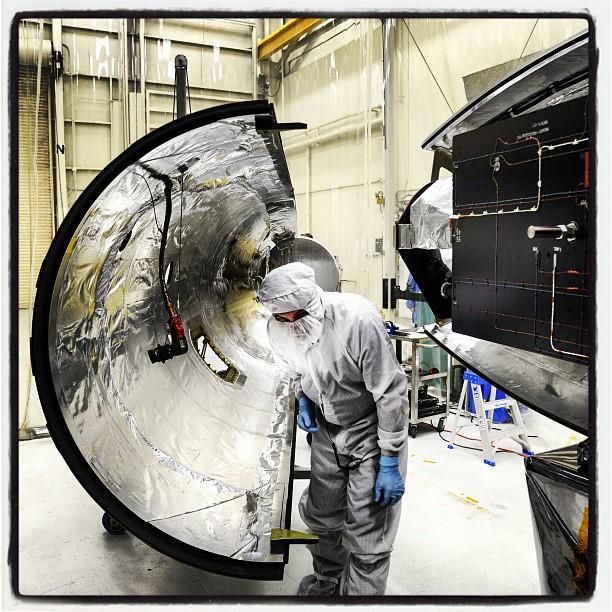
The heat shield for NASA Mars Science Laboratory is the largest ever built for a planetary mission. This image shows the heat shield being prepared at Lockheed Martin Space Systems, Denver, in April 2011.
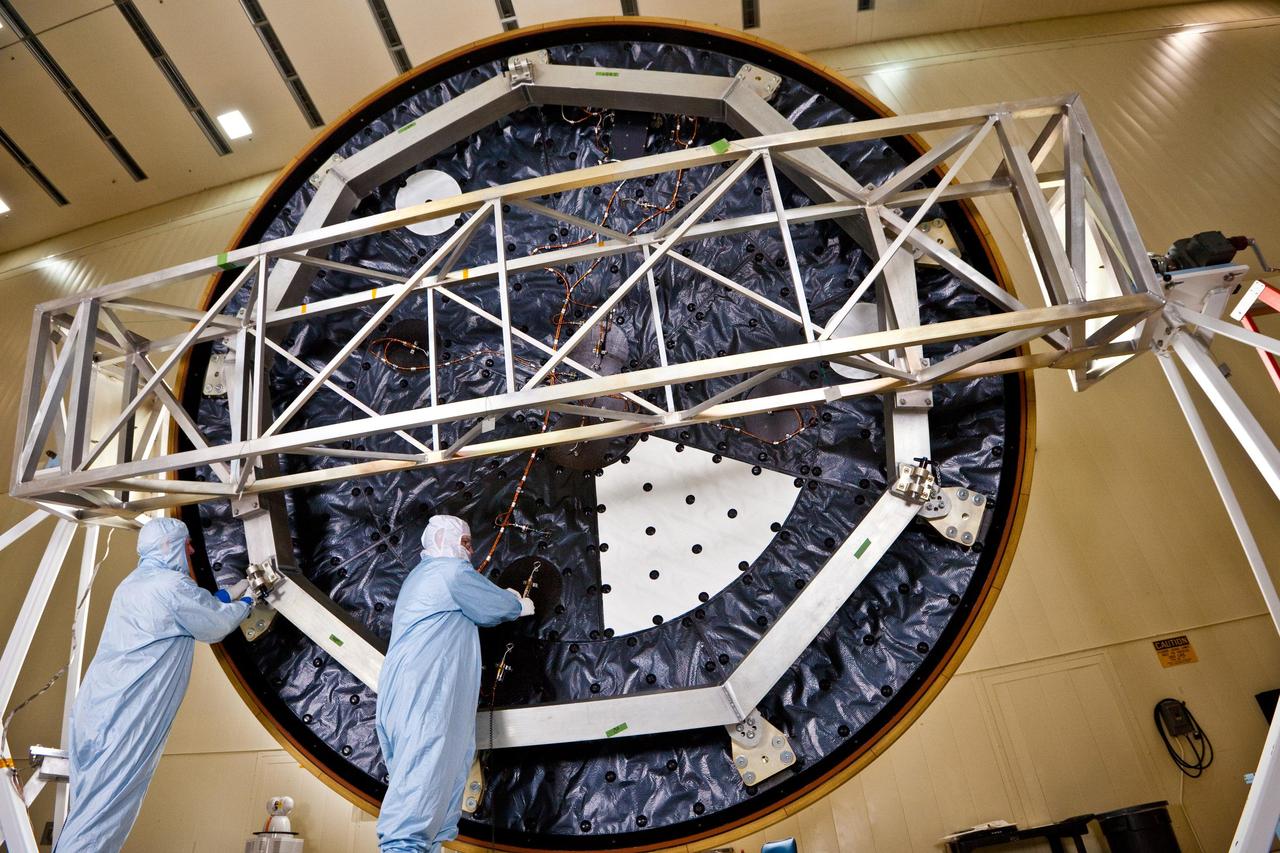
Technicians at Lockheed Martin Space Systems, Denver, prepare the heat shield for NASA Mars Science Laboratory. With a diameter of 4.5 meters nearly 15 feet, this heat shield is the largest ever built for a planetary mission.
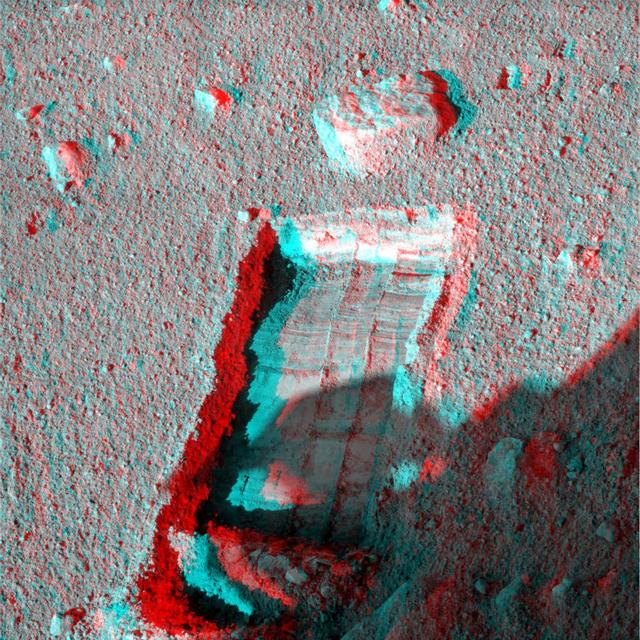
The robotic arm on NASA Phoenix Mars Lander enlarged a trench beside a rock called Headless on Sept. 20, 2008 in preparation for sliding the rock into the trench. 3D glasses are necessary to view this image.
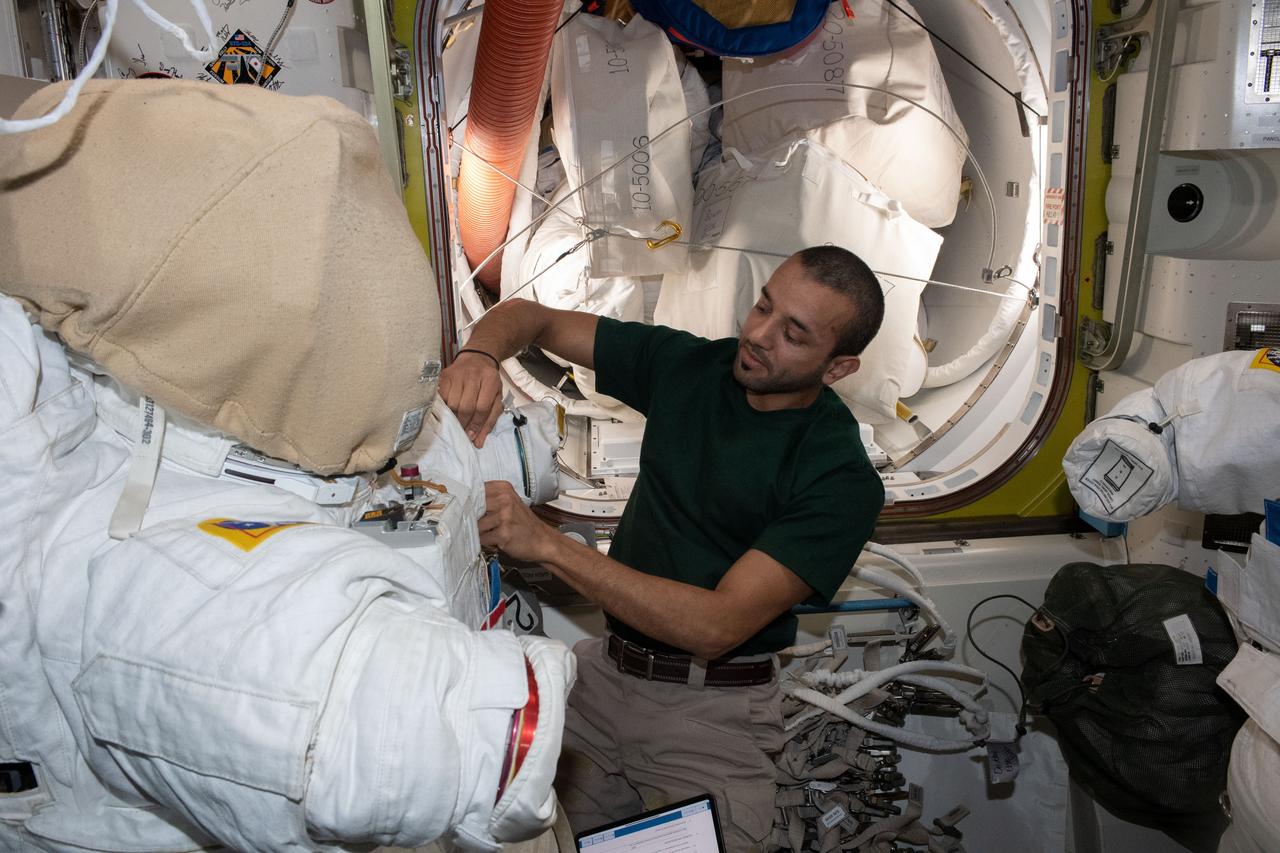
iss069e003933 (April 17, 2023) --- UAE (United Arab Emirates) astronaut and Expedition 69 Flight Engineer Sultan Alneyadi prepares an Extravehicular Mobility Unit, or spacesuit, inside the International Space Station's Quest airlock for an upcoming spacewalk.
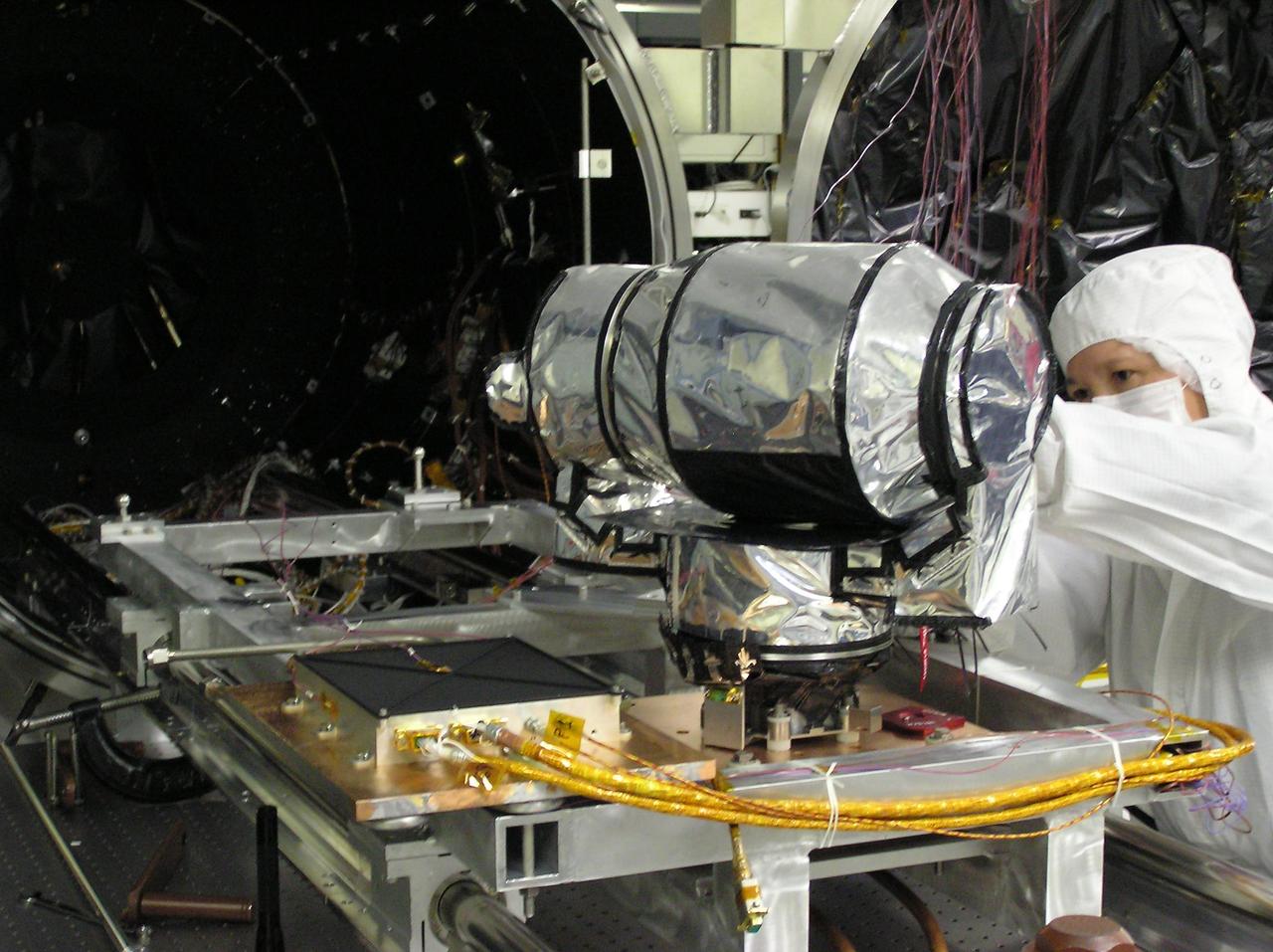
This image shows final preparations being made for thermal balance testing of the Diviner Lunar Radiometer Experiment at JPL. Diviner is one of seven instruments aboard NASA LRO Mission.
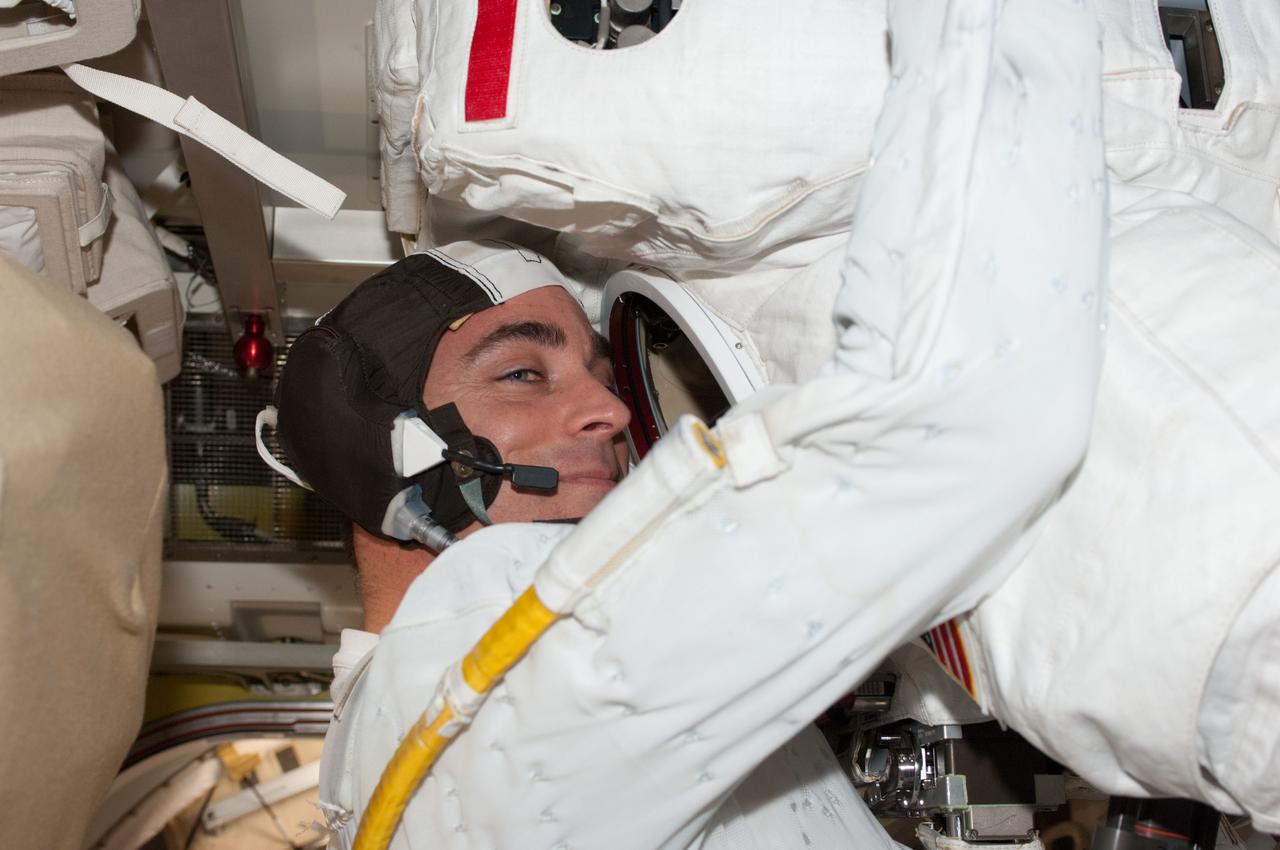
ISS036-E-014640 (3 July 2013) --- NASA astronaut Chris Cassidy, Expedition 36 flight engineer, prepares to don his Extravehicular Mobility Unit (EMU) spacesuit during a ?dry run? in the International Space Station?s Quest airlock in preparation for the first of two sessions of extravehicular (EVA) scheduled for July 9 and July 16. Cassidy is wearing a liquid cooling and ventilation garment that complements the EMU.
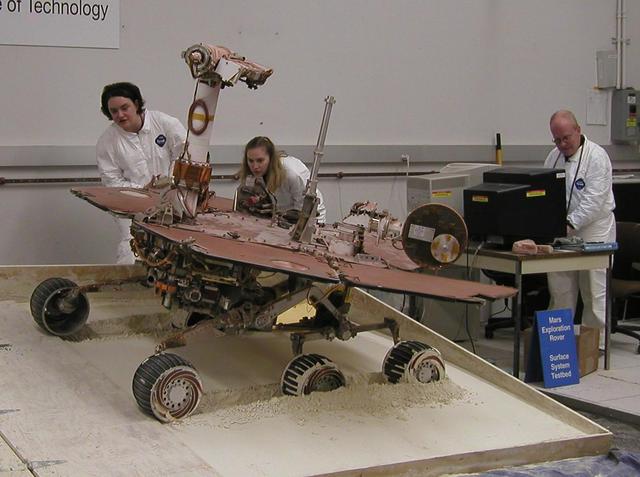
While a test rover rolls off a plywood surface into a prepared bed of soft soil, rover team members Colette Lohr left and Kim Lichtenberg center eye the wheels digging into the soil and Paolo Bellutta enters the next driving command.
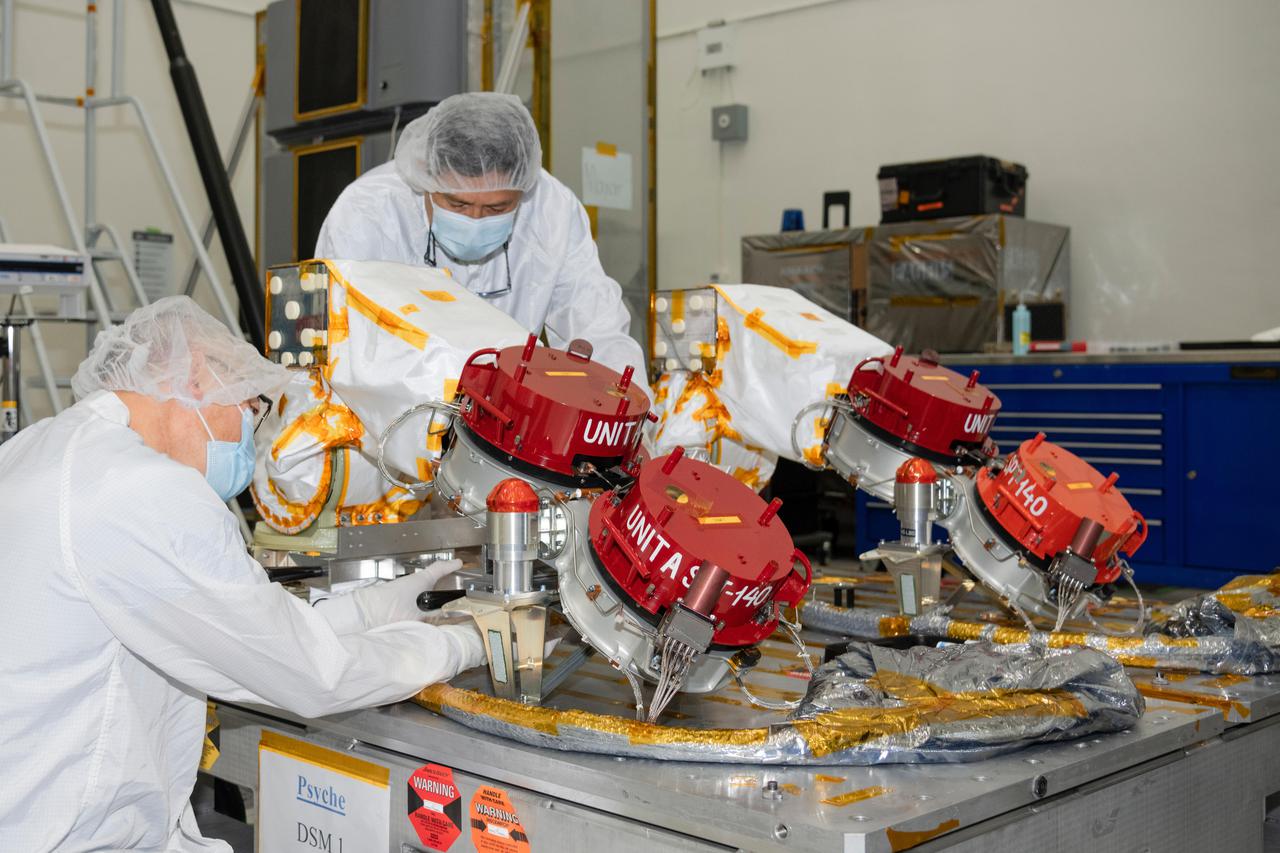
Engineers at NASA's Jet Propulsion Laboratory in Southern California prepare to integrate four Hall thrusters (beneath red protective covers) into the agency's Psyche spacecraft in July 2021. Psyche is set to launch in August 2022 and will travel to its target, a metal-rich asteroid also named Psyche, under the power of solar electric propulsion. This super-efficient mode of propulsion uses solar arrays to capture sunlight that is converted into electricity to power the spacecraft's thrusters. The thrusters work by turning xenon gas, a neutral gas used in car headlights and plasma TVs, into xenon ions. As the xenon ions are accelerated out of the thruster, they create the thrust that will propel the spacecraft. On the Psyche spacecraft, Hall thrusters will be used for the first time beyond lunar orbit, demonstrating that they could play a role in supporting future missions to deep space. https://photojournal.jpl.nasa.gov/catalog/PIA24788
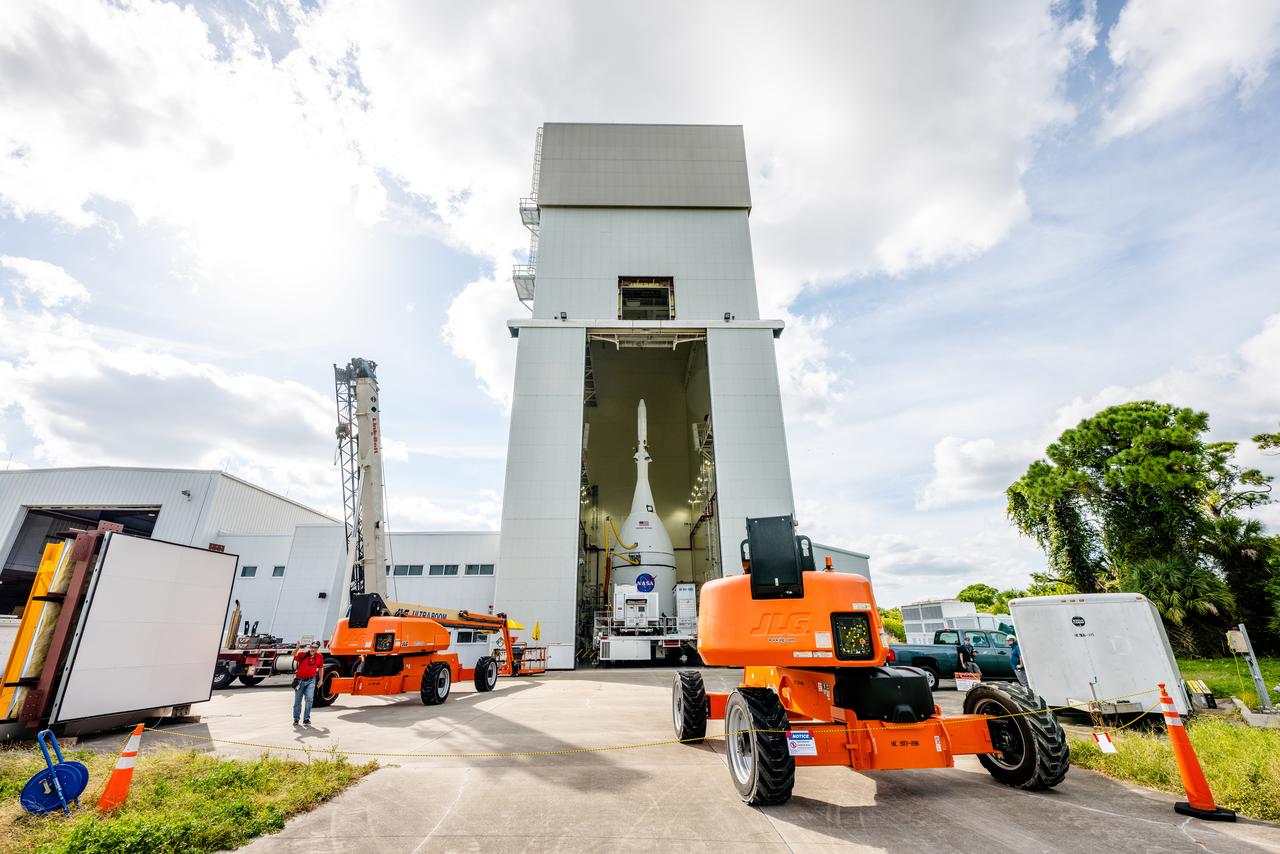
The team at Kennedy Space Center prepares the Artemis I Orion for transport from the Launch Abort System Facility to the Vehicle Assembly Building where it will be stacked atop the Launch Abort System.
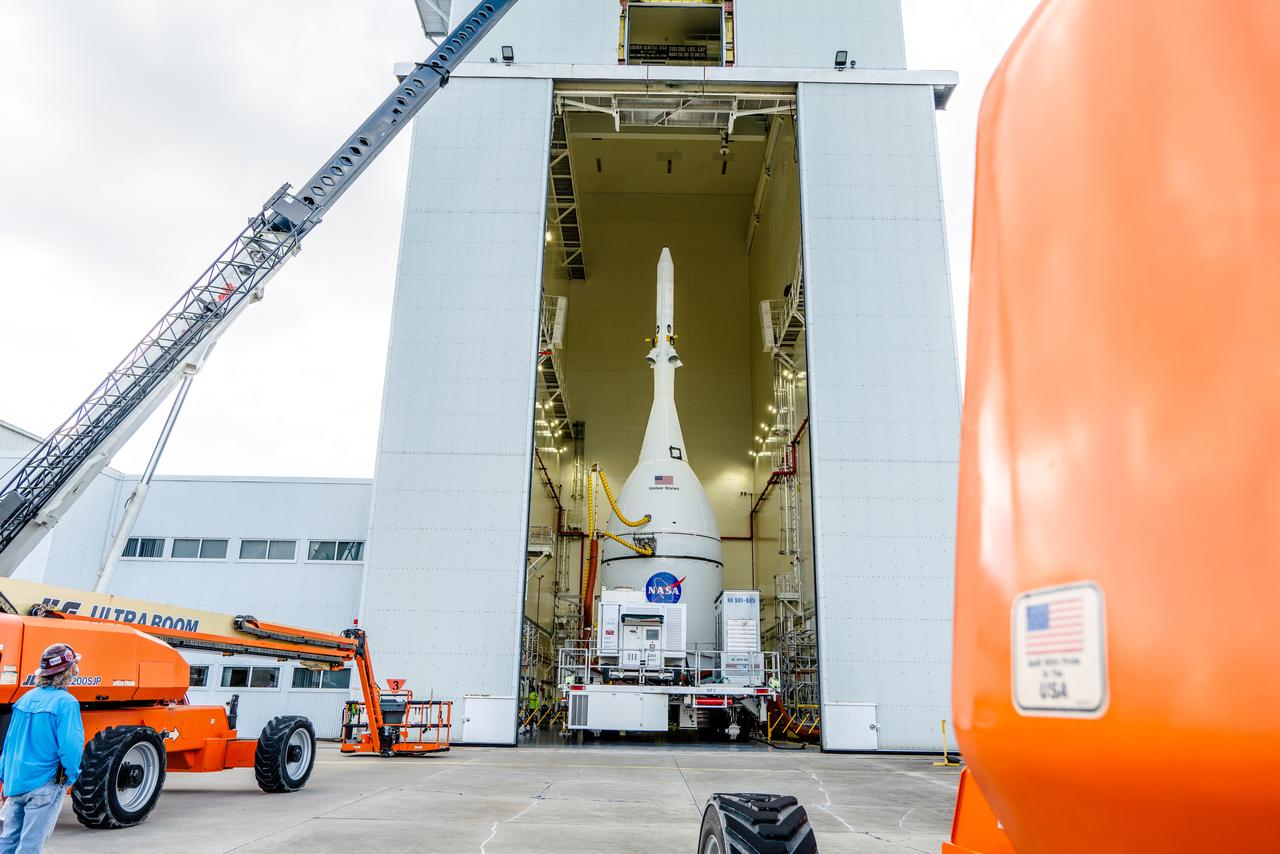
The team at Kennedy Space Center prepares the Artemis I Orion for transport from the Launch Abort System Facility to the Vehicle Assembly Building where it will be stacked atop the Launch Abort System.
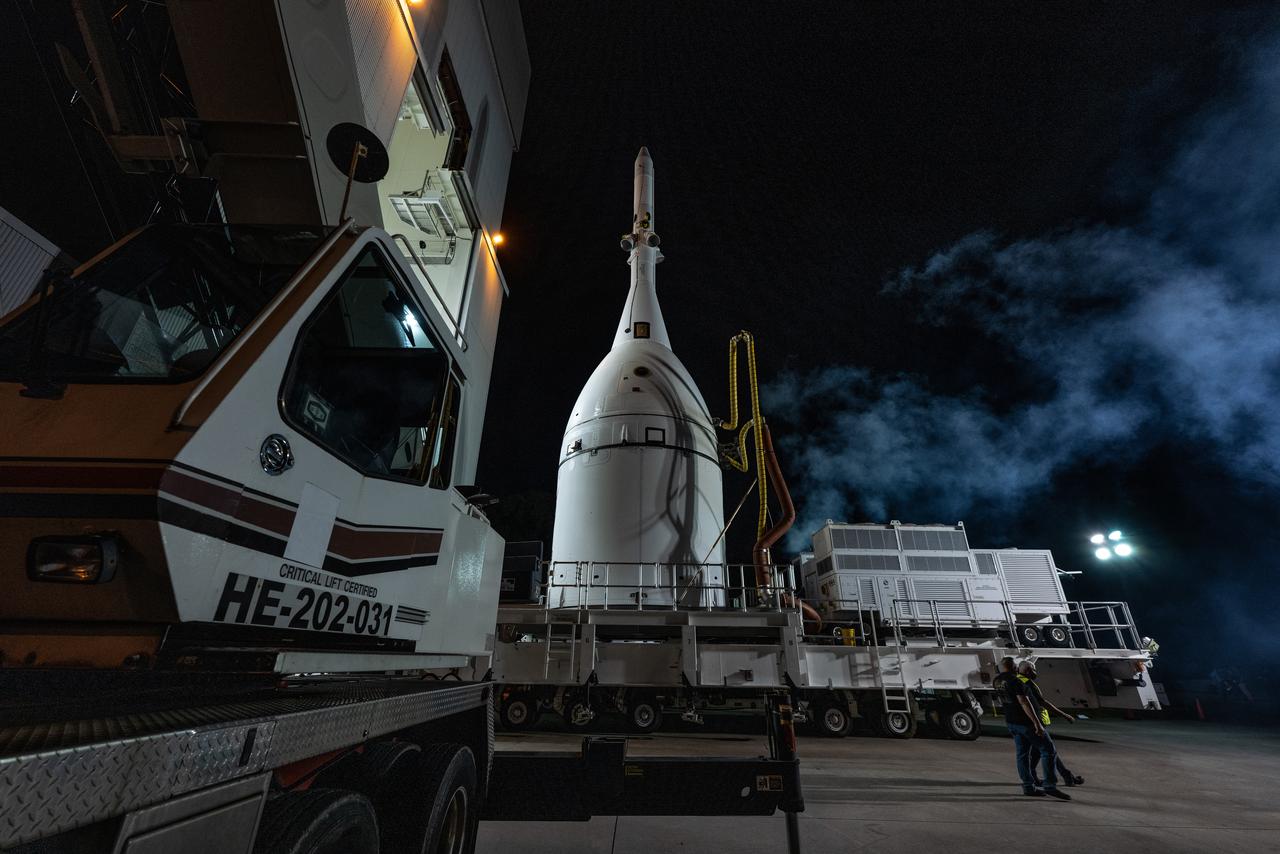
The team at Kennedy Space Center prepares the Artemis I Orion for transport from the Launch Abort System Facility to the Vehicle Assembly Building where it will be stacked atop the Space Launch System.
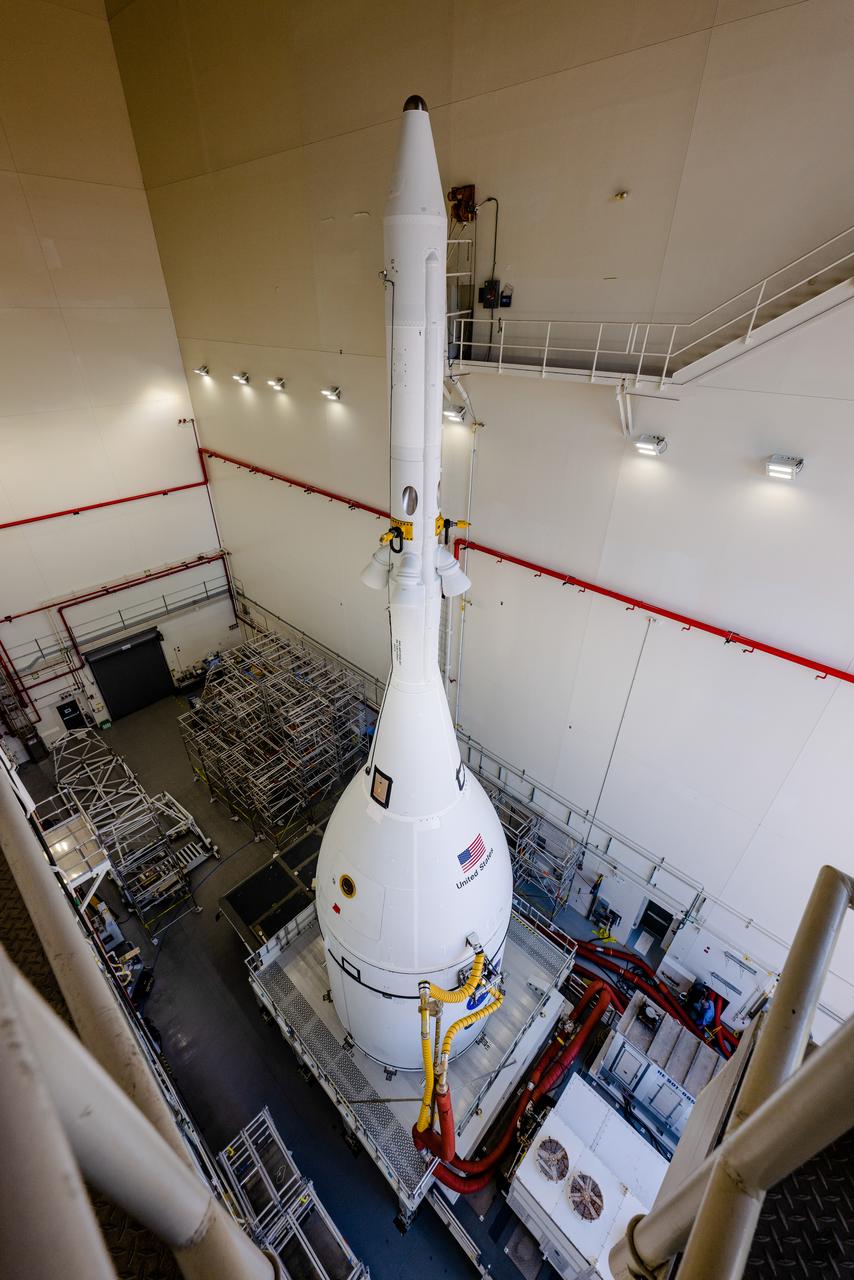
The team at Kennedy Space Center prepares the Artemis I Orion for transport from the Launch Abort System Facility to the Vehicle Assembly Building where it will be stacked atop the Launch Abort System.
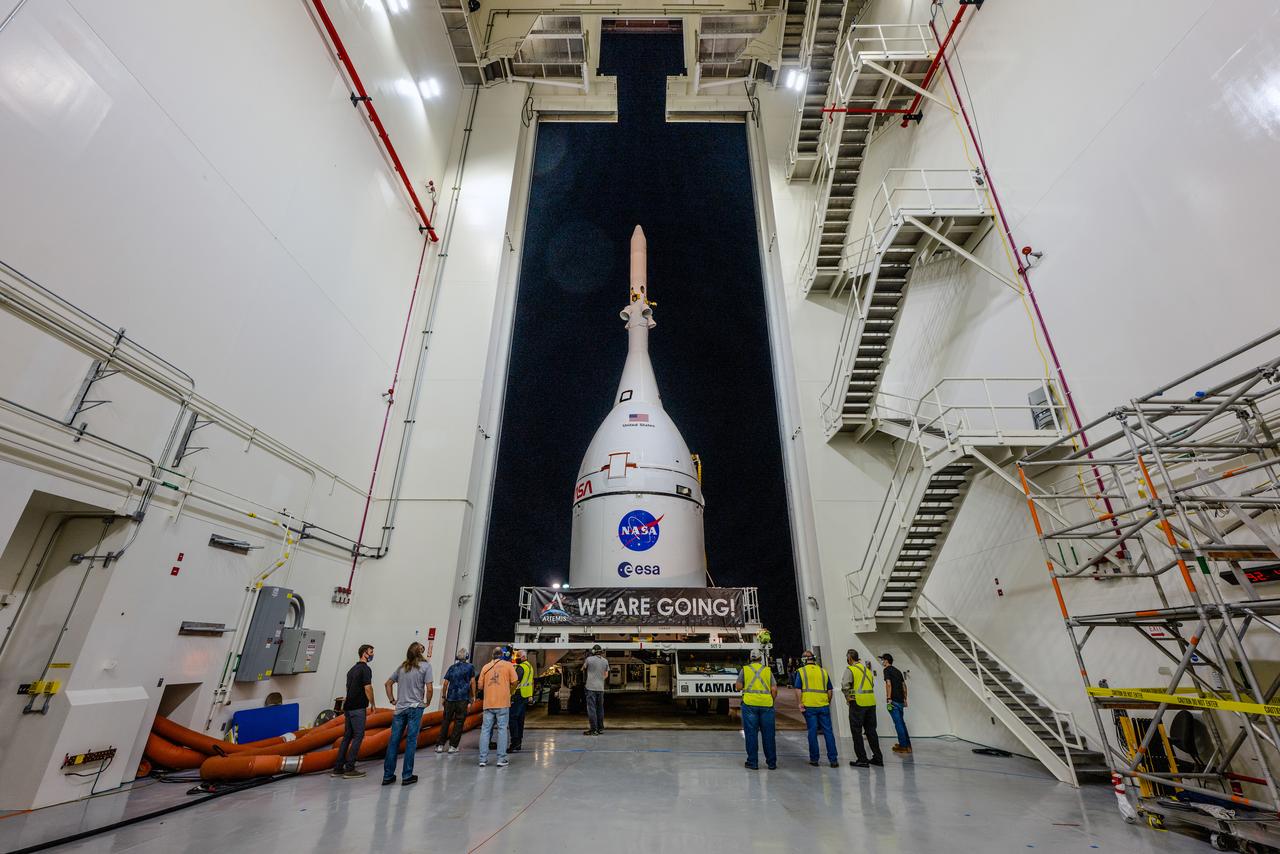
The team at Kennedy Space Center prepares the Artemis I Orion for transport from the Launch Abort System Facility to the Vehicle Assembly Building where it will be stacked atop the Launch Abort System.

The team at Kennedy Space Center prepares the Artemis I Orion for transport from the Launch Abort System Facility to the Vehicle Assembly Building where it will be stacked atop the Launch Abort System.
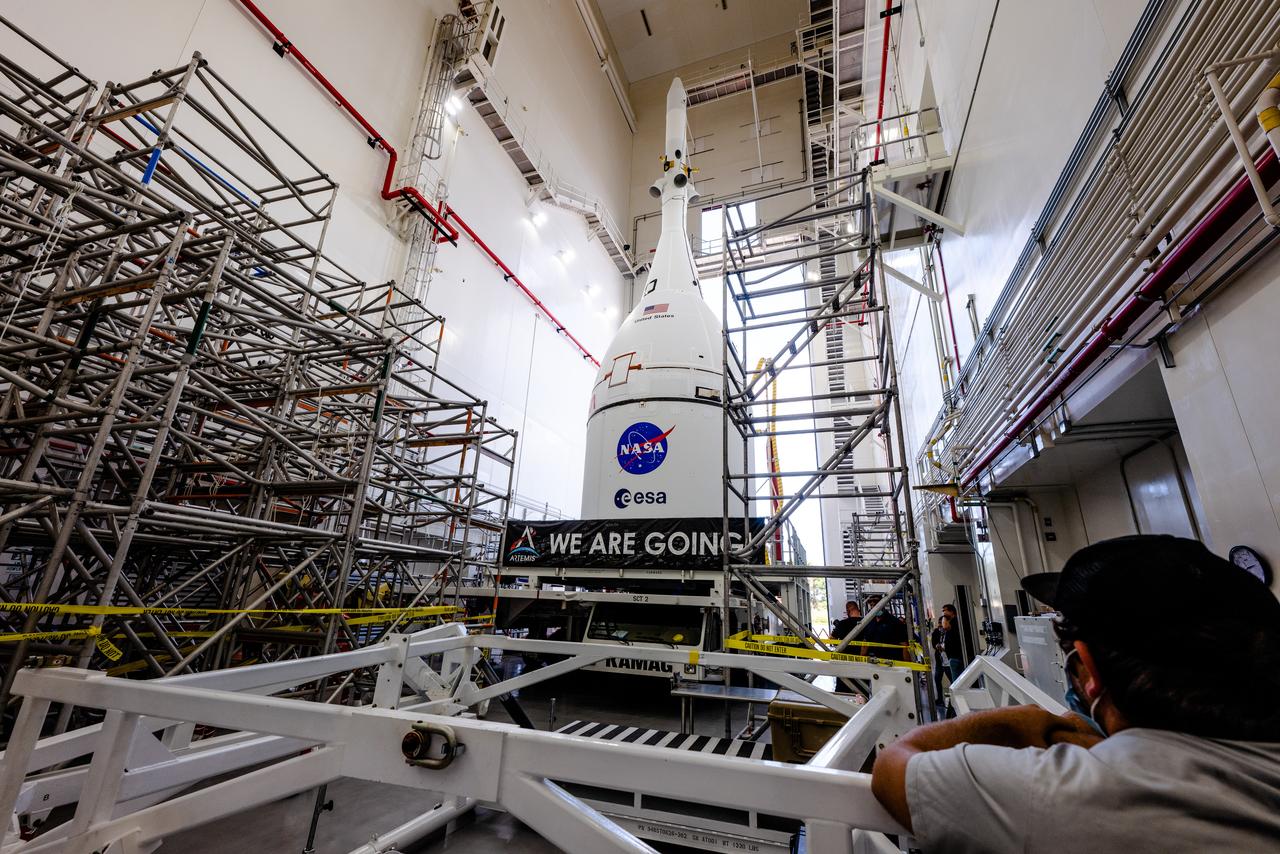
The team at Kennedy Space Center prepares the Artemis I Orion for transport from the Launch Abort System Facility to the Vehicle Assembly Building where it will be stacked atop the Launch Abort System.
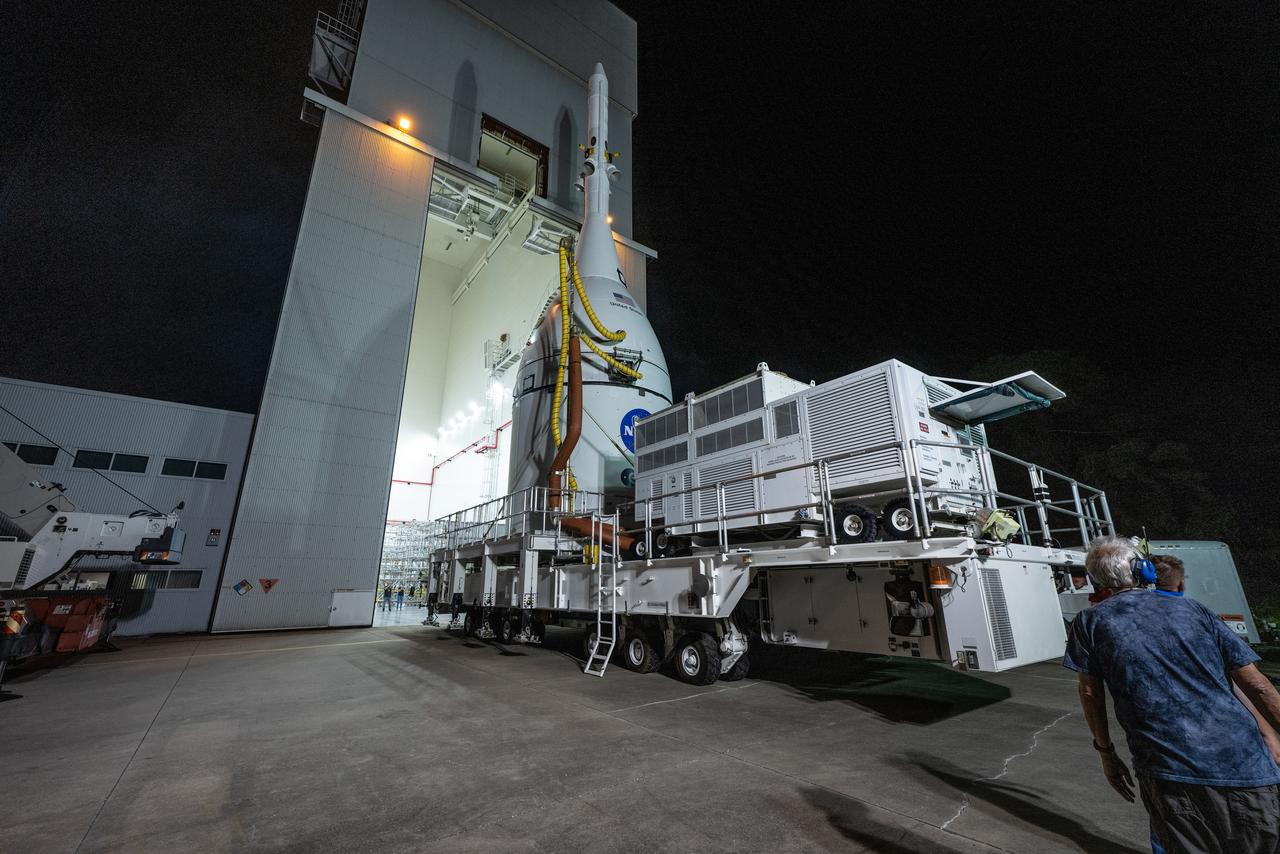
The team at Kennedy Space Center prepares the Artemis I Orion for transport from the Launch Abort System Facility to the Vehicle Assembly Building where it will be stacked atop the Launch Abort System.
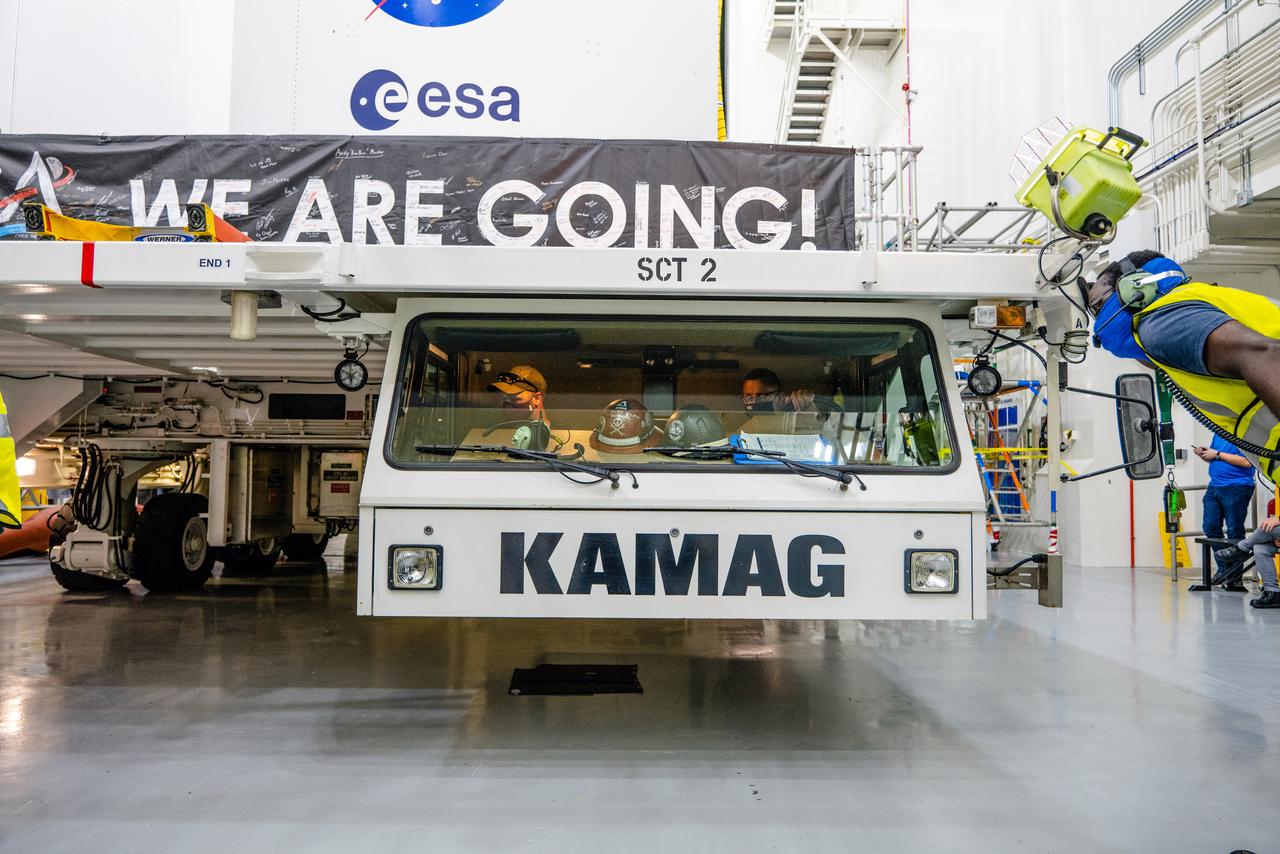
The team at Kennedy Space Center prepares the Artemis I Orion for transport from the Launch Abort System Facility to the Vehicle Assembly Building where it will be stacked atop the Launch Abort System.
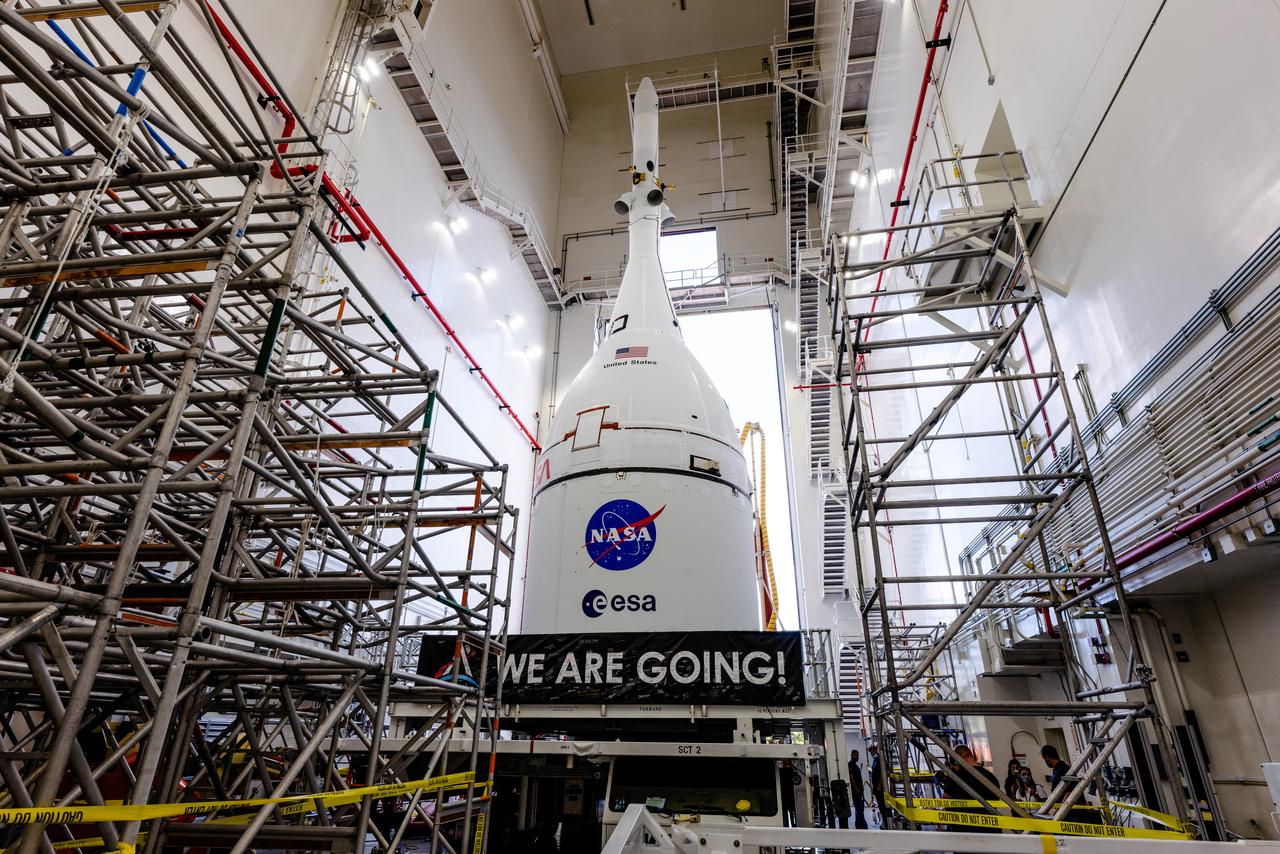
The team at Kennedy Space Center prepares the Artemis I Orion for transport from the Launch Abort System Facility to the Vehicle Assembly Building where it will be stacked atop the Launch Abort System.
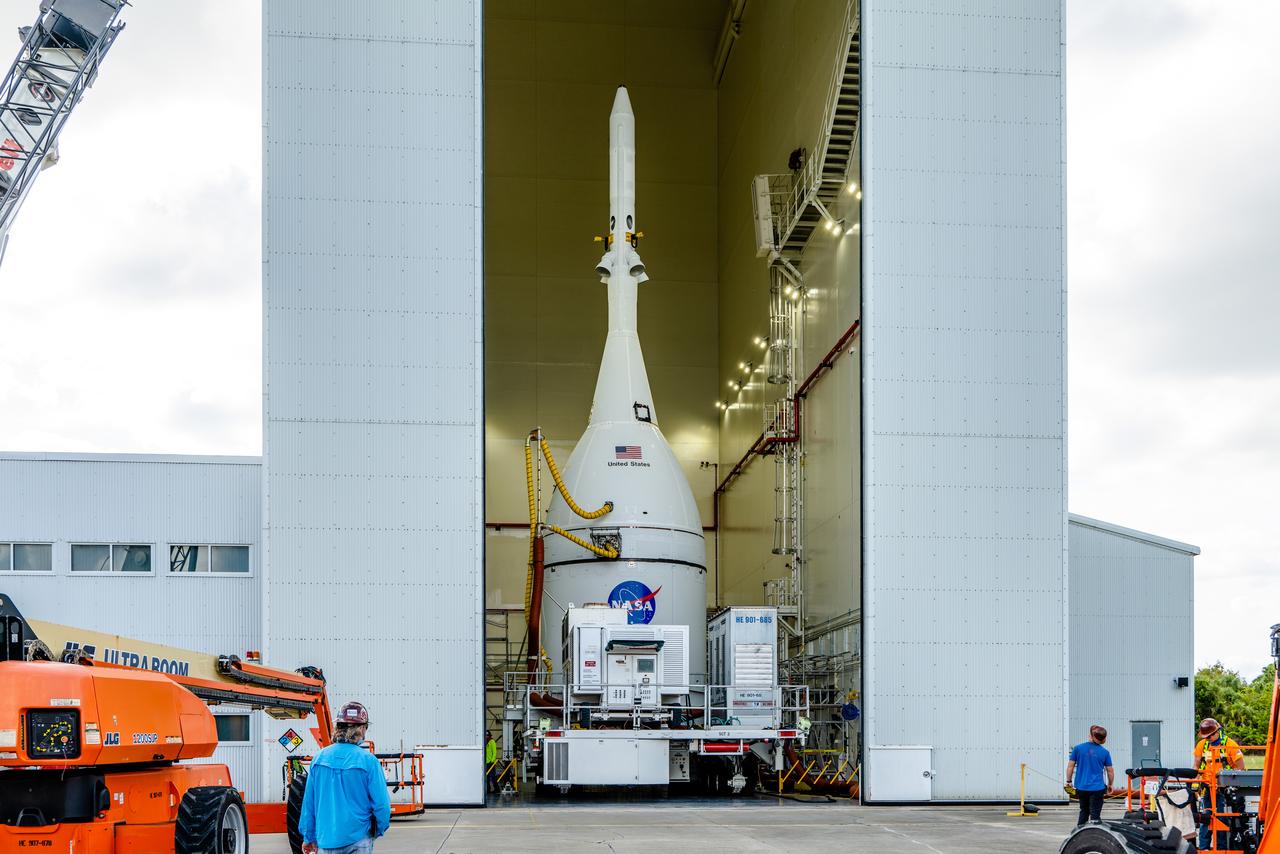
The team at Kennedy Space Center prepares the Artemis I Orion for transport from the Launch Abort System Facility to the Vehicle Assembly Building where it will be stacked atop the Launch Abort System.
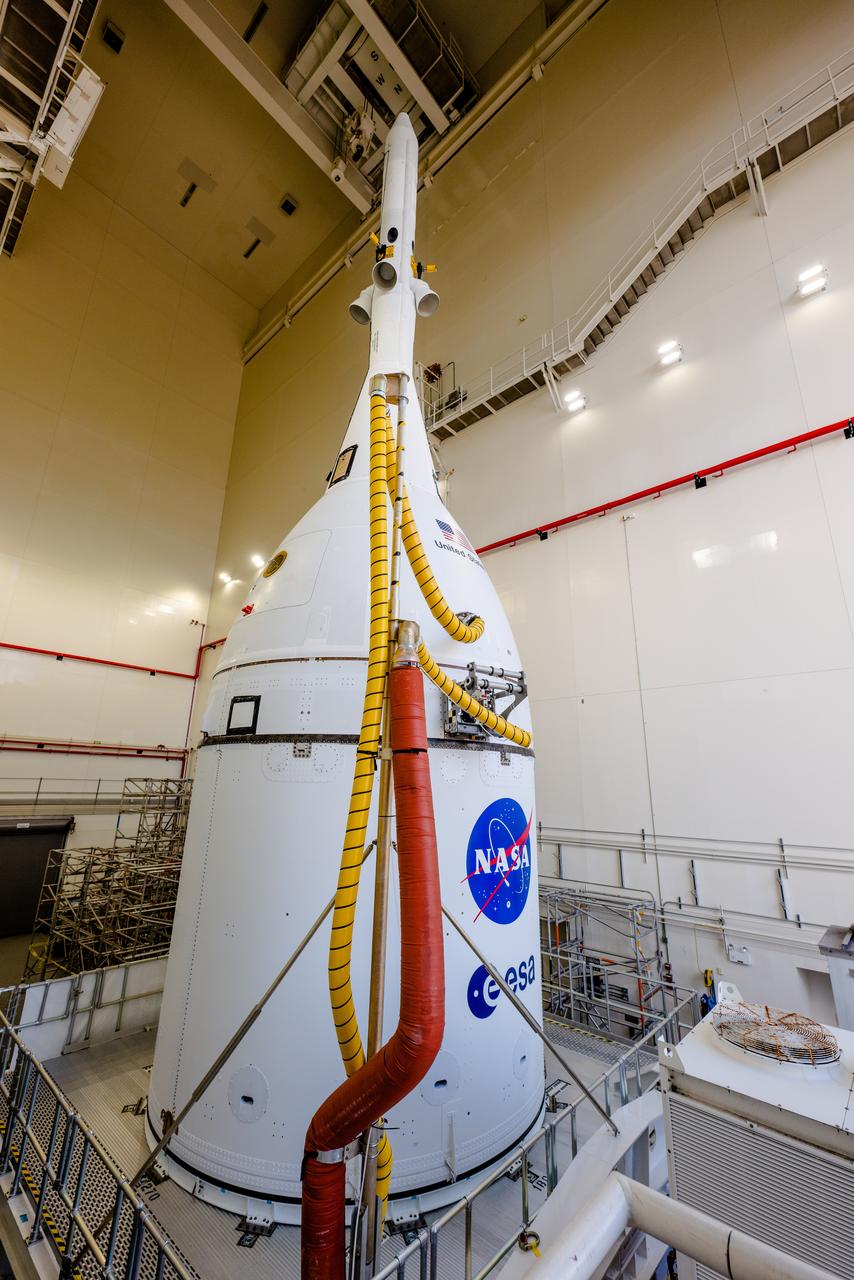
The team at Kennedy Space Center prepares the Artemis I Orion for transport from the Launch Abort System Facility to the Vehicle Assembly Building where it will be stacked atop the Launch Abort System.
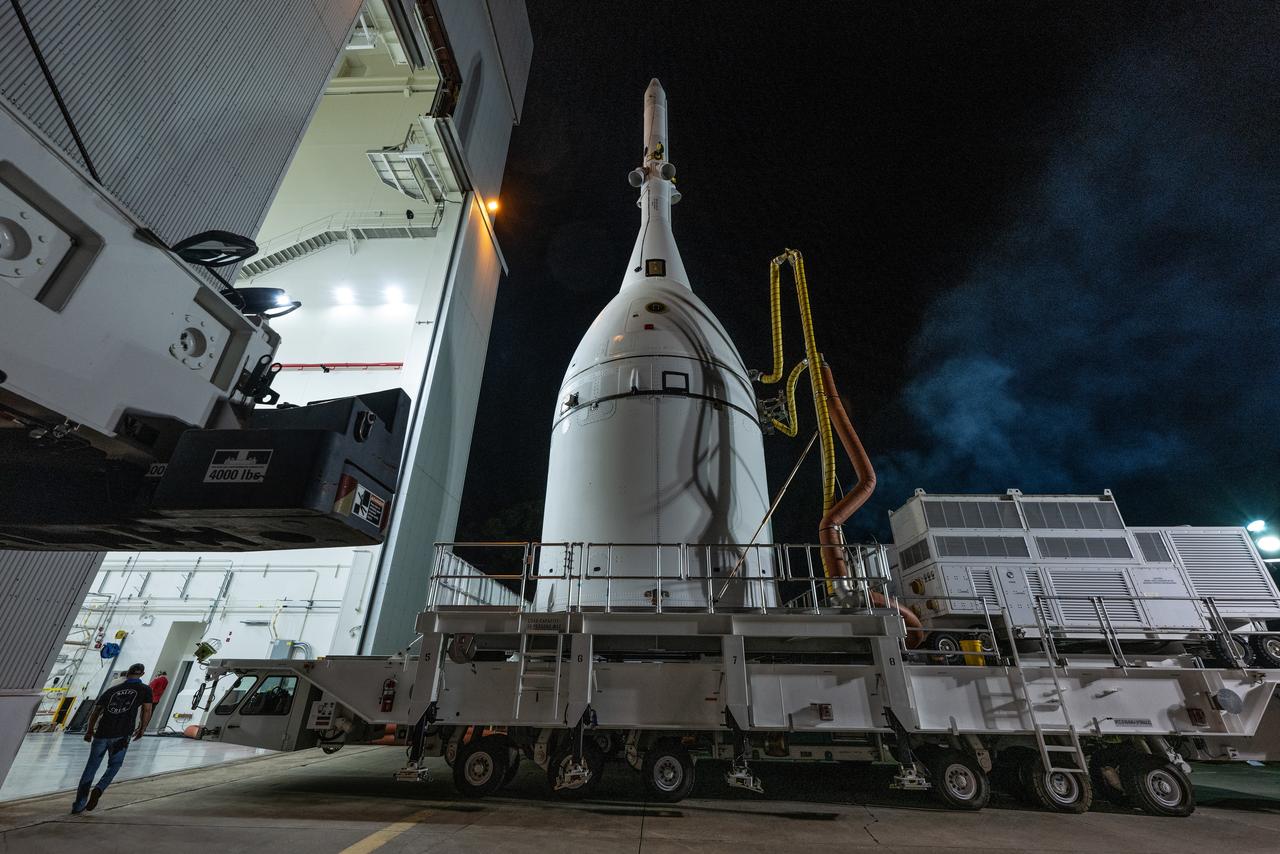
The team at Kennedy Space Center prepares the Artemis I Orion for transport from the Launch Abort System Facility to the Vehicle Assembly Building where it will be stacked atop the Launch Abort System.
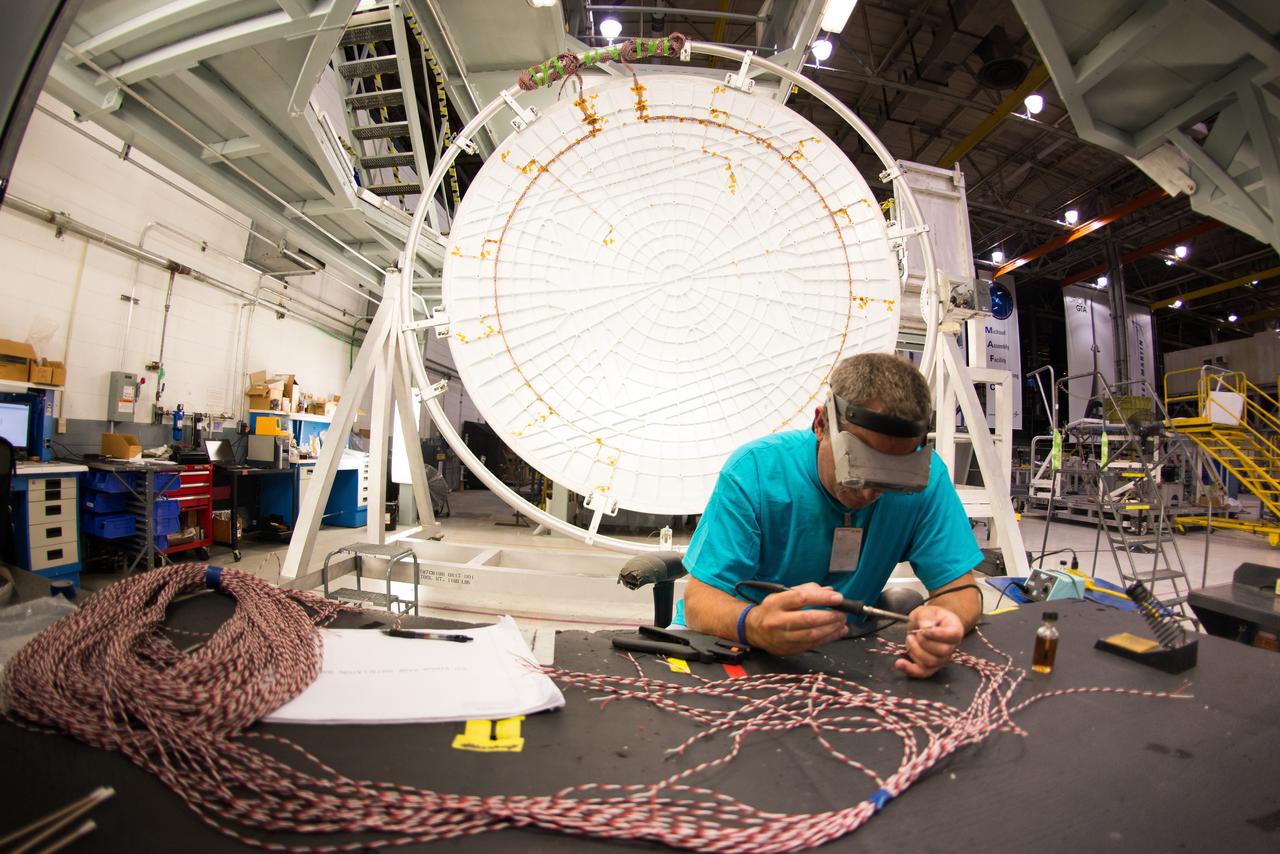
Lockheed Martin engineers at Michoud Assembly Facility in New Orleans, Louisiana, prepare elements of the Orion pressure vessel for welding on Sept. 23, 2015. Part of Batch image transfer from Flickr.
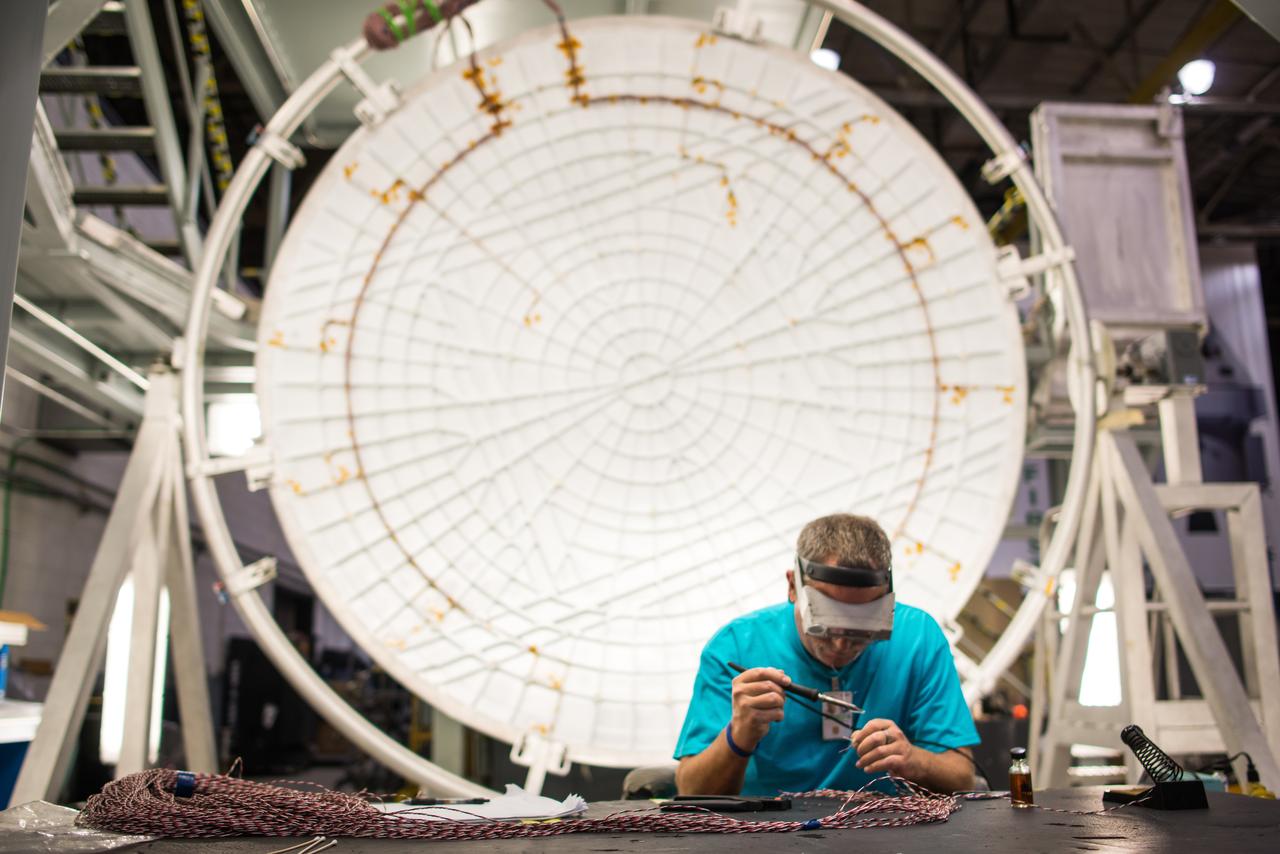
Lockheed Martin engineers at Michoud Assembly Facility in New Orleans, Louisiana, prepare elements of the Orion pressure vessel for welding on Sept. 23, 2015. Part of Batch image transfer from Flickr.
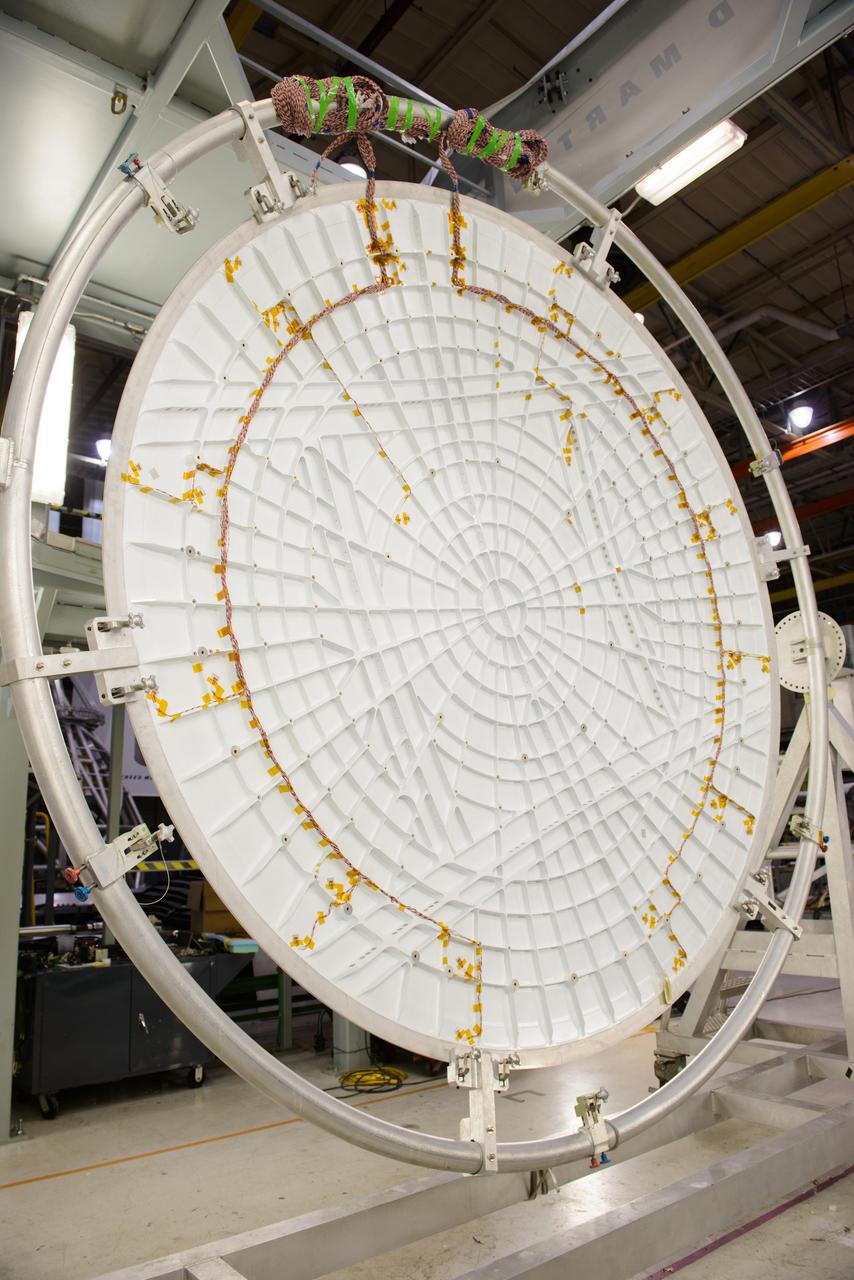
Lockheed Martin engineers at Michoud Assembly Facility in New Orleans, Louisiana, prepare elements of the Orion pressure vessel for welding on Sept. 23, 2015. Part of Batch image transfer from Flickr.
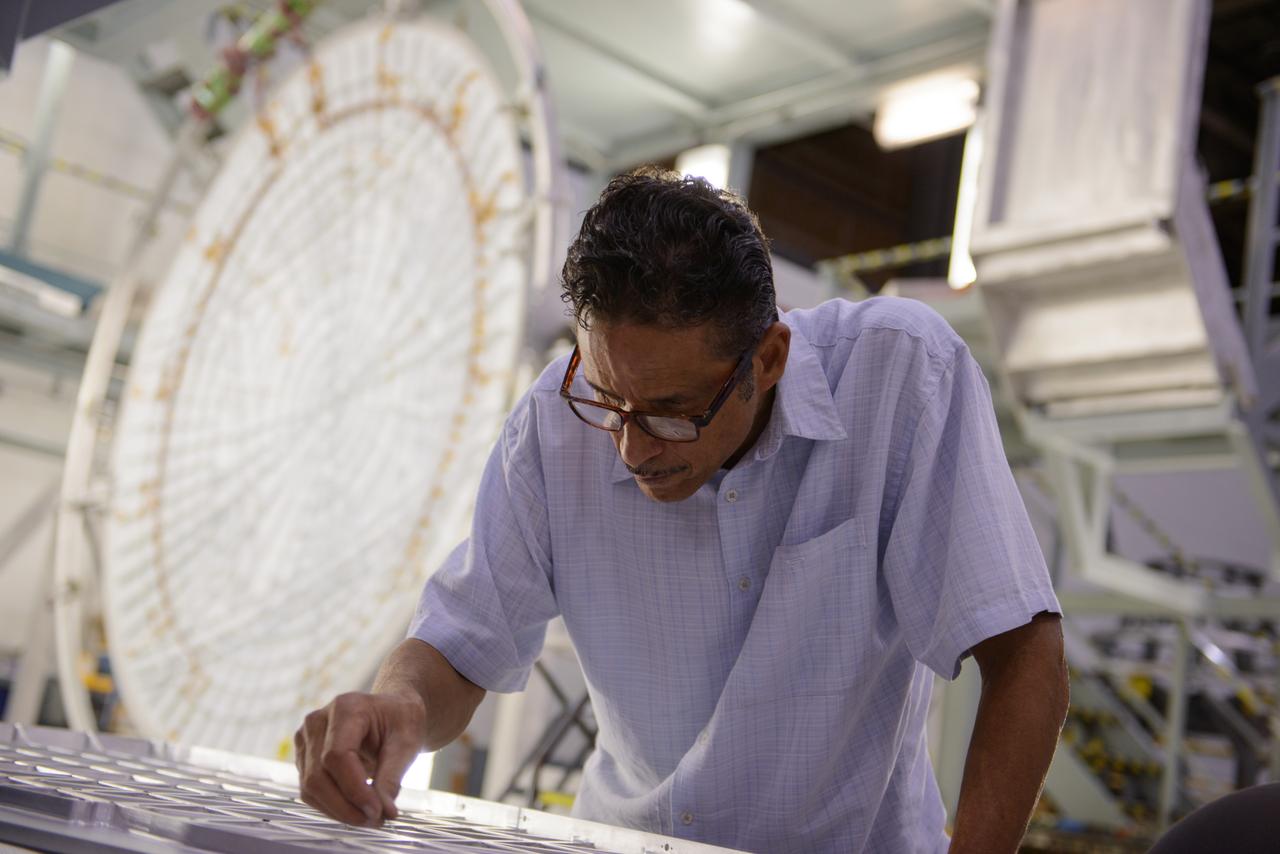
Lockheed Martin engineers at Michoud Assembly Facility in New Orleans, Louisiana, prepare elements of the Orion pressure vessel for welding on Sept. 23, 2015. Part of Batch image transfer from Flickr.
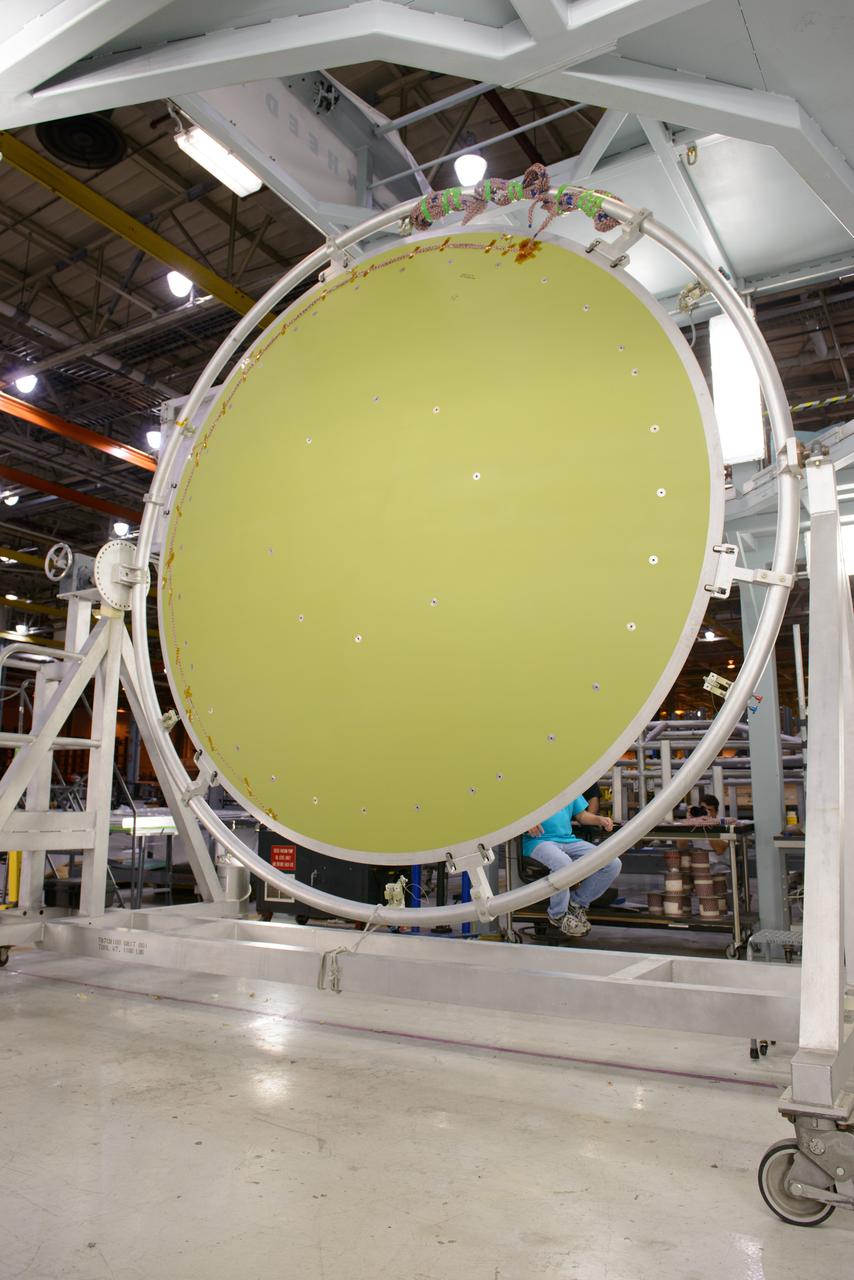
Lockheed Martin engineers at Michoud Assembly Facility in New Orleans, Louisiana, prepare elements of the Orion pressure vessel for welding on Sept. 23, 2015. Part of Batch image transfer from Flickr.
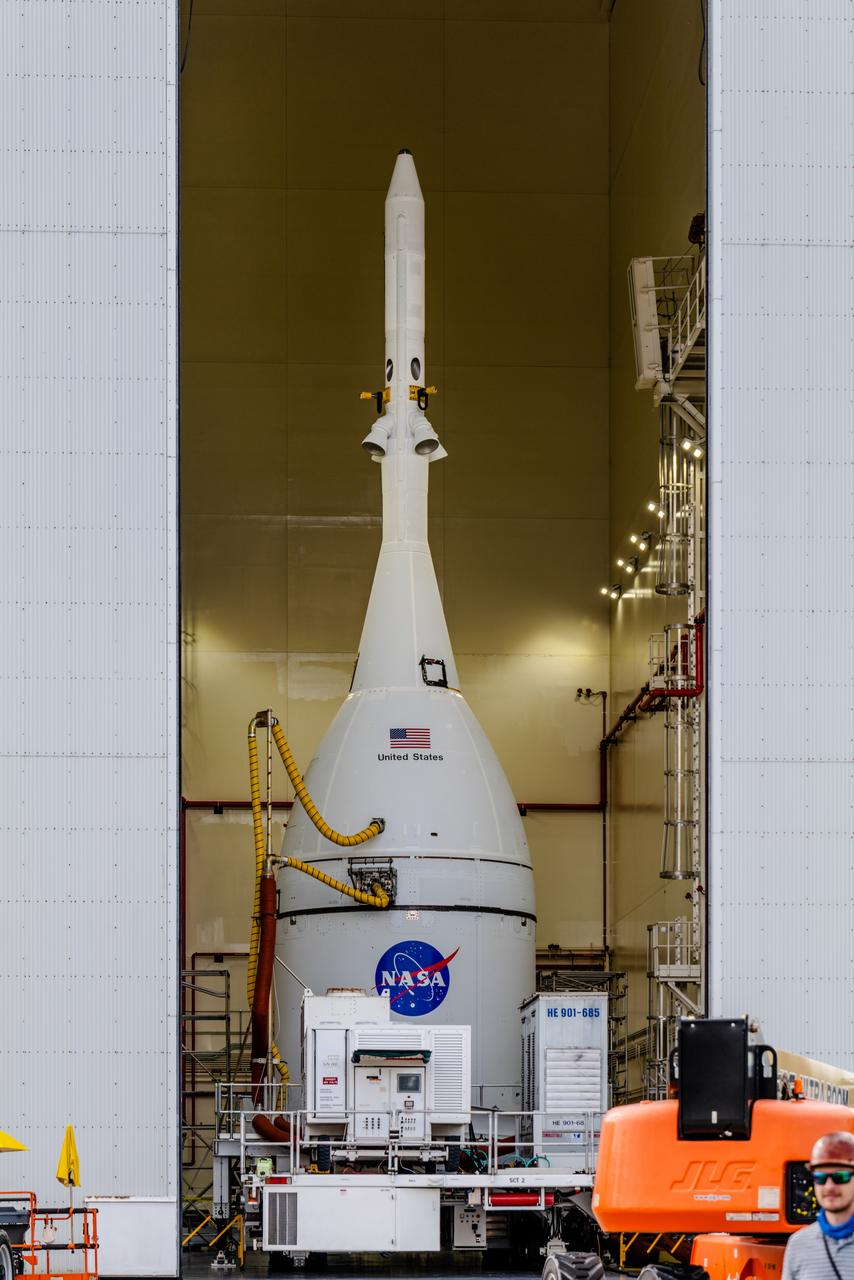
The team at Kennedy Space Center prepares the Artemis I Orion for transport from the Launch Abort System Facility to the Vehicle Assembly Building where it will be stacked atop the Launch Abort System.
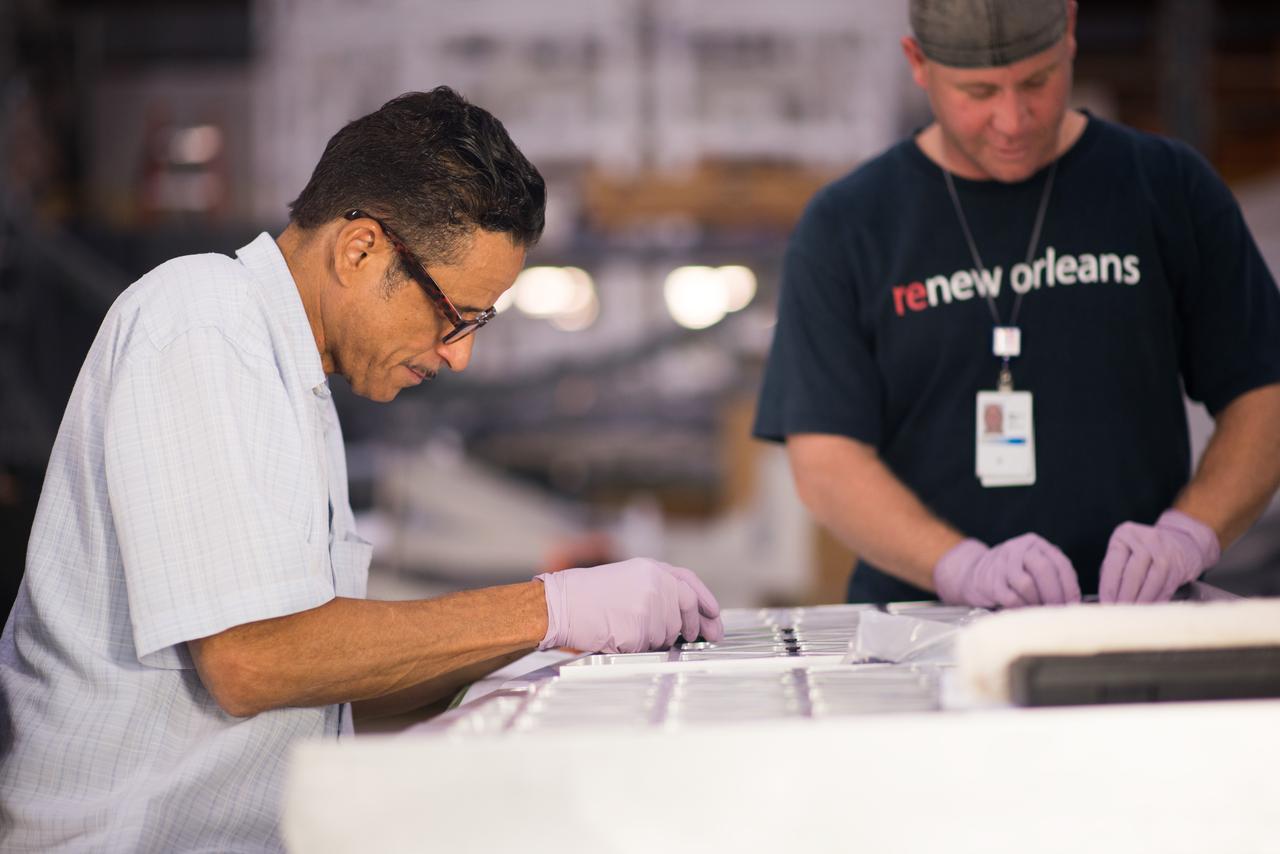
Lockheed Martin engineers at Michoud Assembly Facility in New Orleans, Louisiana, prepare elements of the Orion pressure vessel for welding on Sept. 23, 2015. Part of Batch image transfer from Flickr.
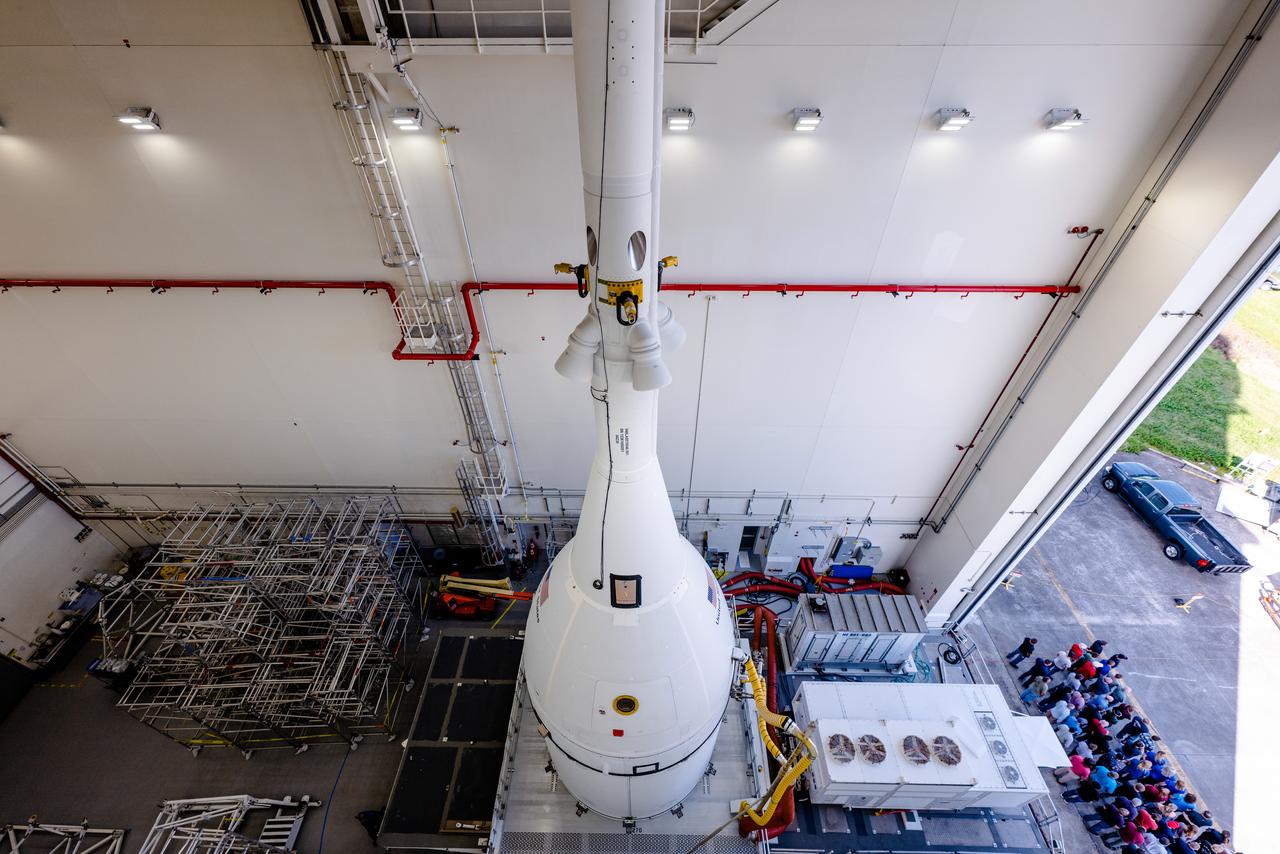
The team at Kennedy Space Center prepares the Artemis I Orion for transport from the Launch Abort System Facility to the Vehicle Assembly Building where it will be stacked atop the Launch Abort System.
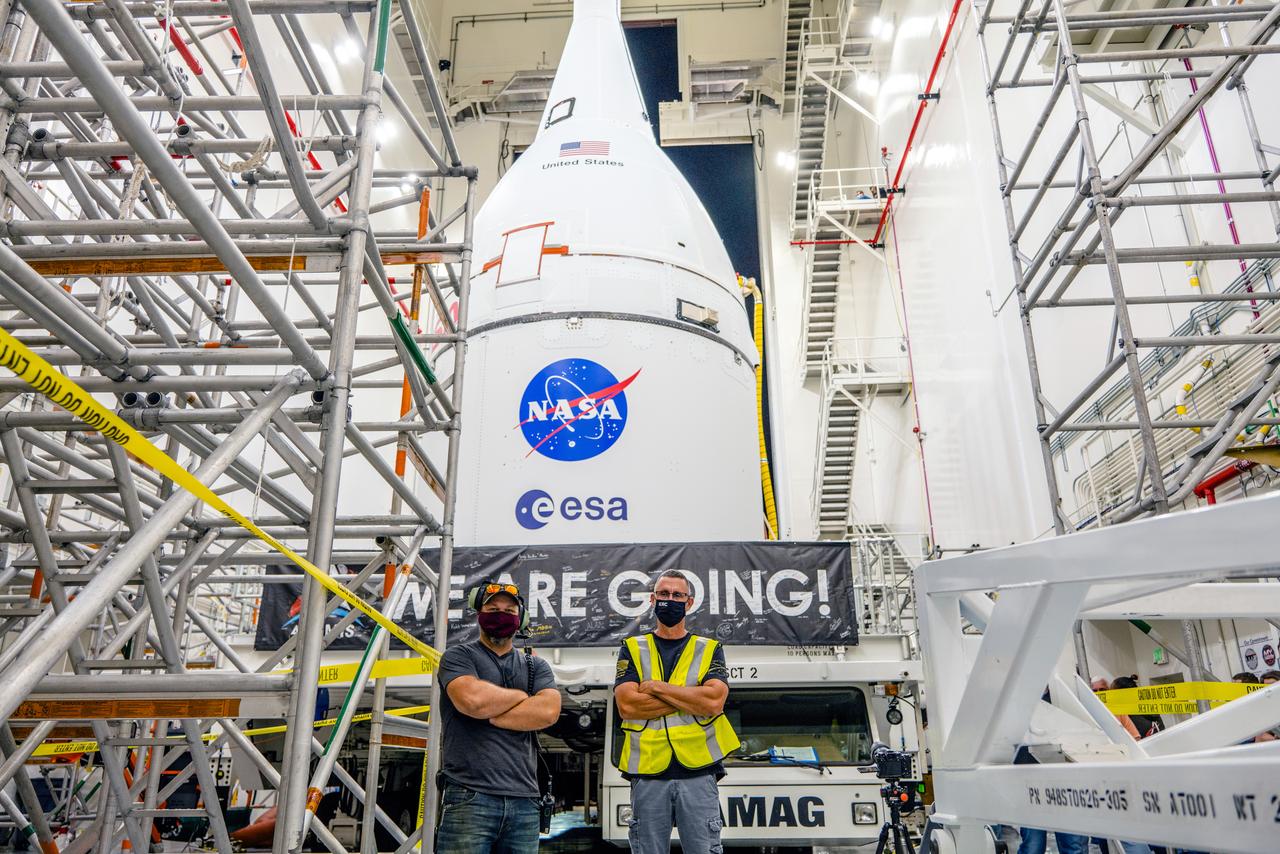
The team at Kennedy Space Center prepares the Artemis I Orion for transport from the Launch Abort System Facility to the Vehicle Assembly Building where it will be stacked atop the Launch Abort System.