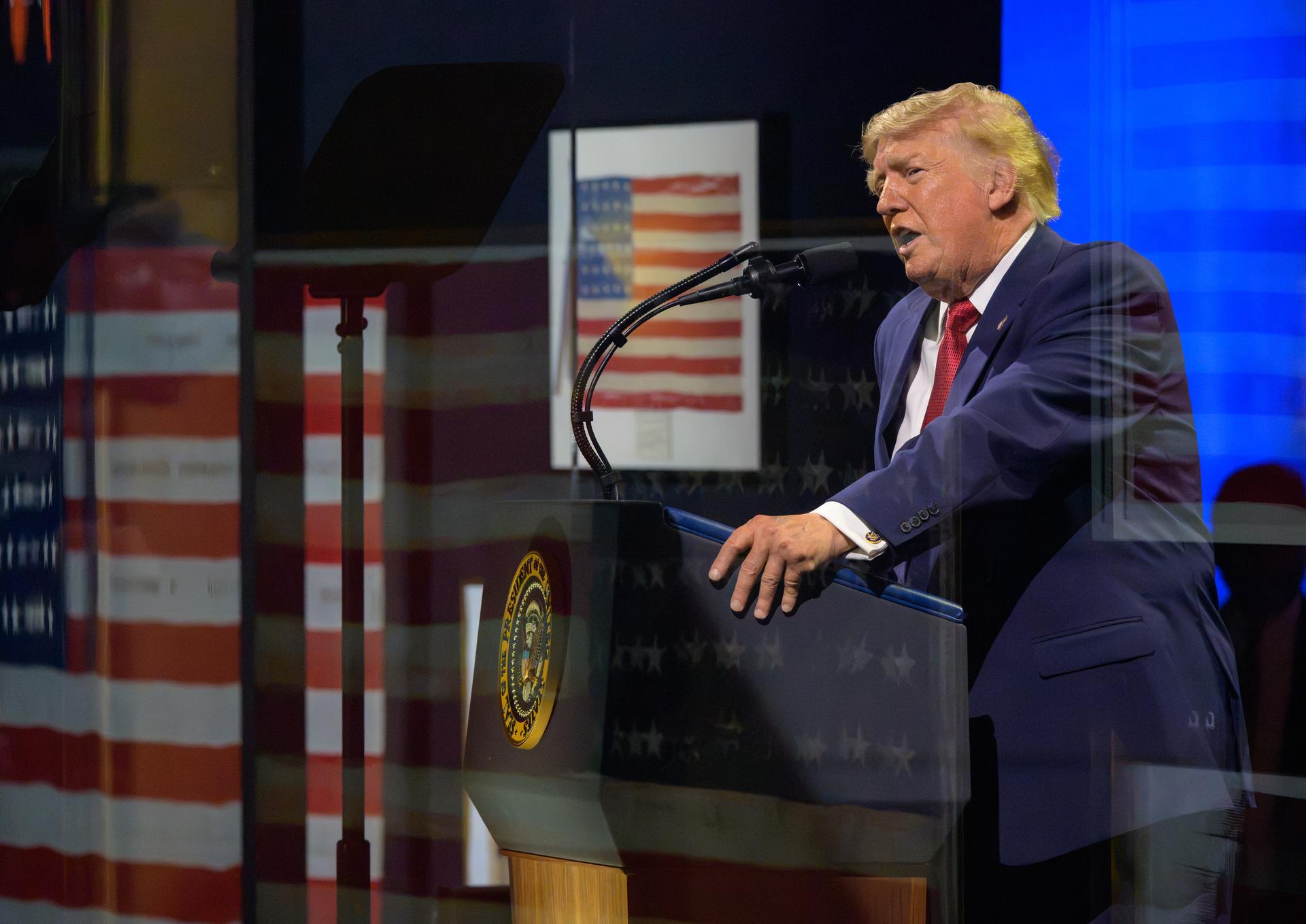
President Donald Trump provides remarks during the “Salute to America” event, Saturday, July 4, 2026, on the National Mall in Washington, D.C. The United States Semiquincentennial celebrates the 250th anniversary of the adoption of the Declaration of Independence. Photo Credit: (NASA/Bill Ingalls)
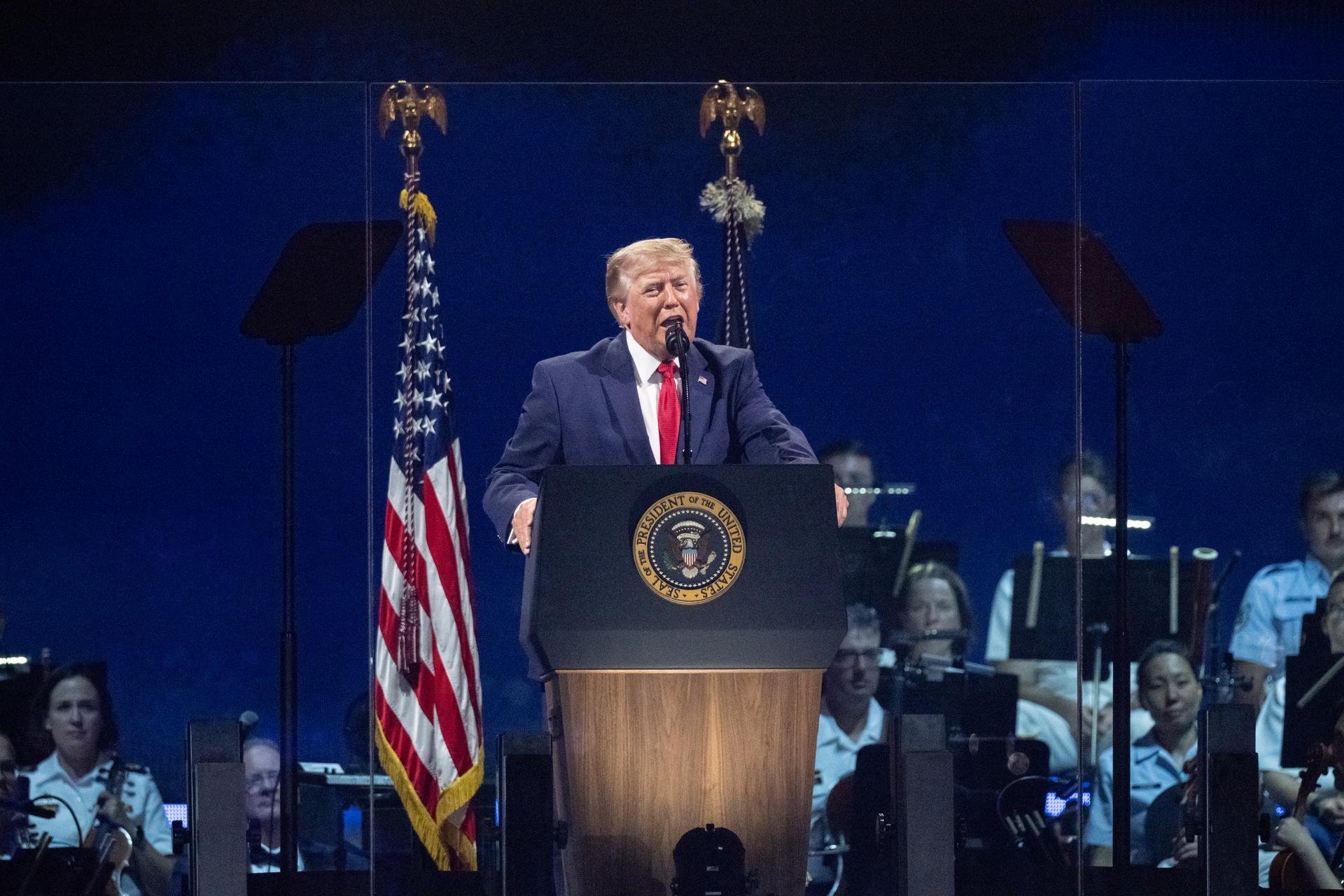
President Donald Trump delivers remarks during the “Salute to America” event, Saturday, July 4, 2026, on the National Mall in Washington, D.C. The United States Semiquincentennial celebrates the 250th anniversary of the adoption of the Declaration of Independence. Photo Credit: (NASA/Keegan Barber)
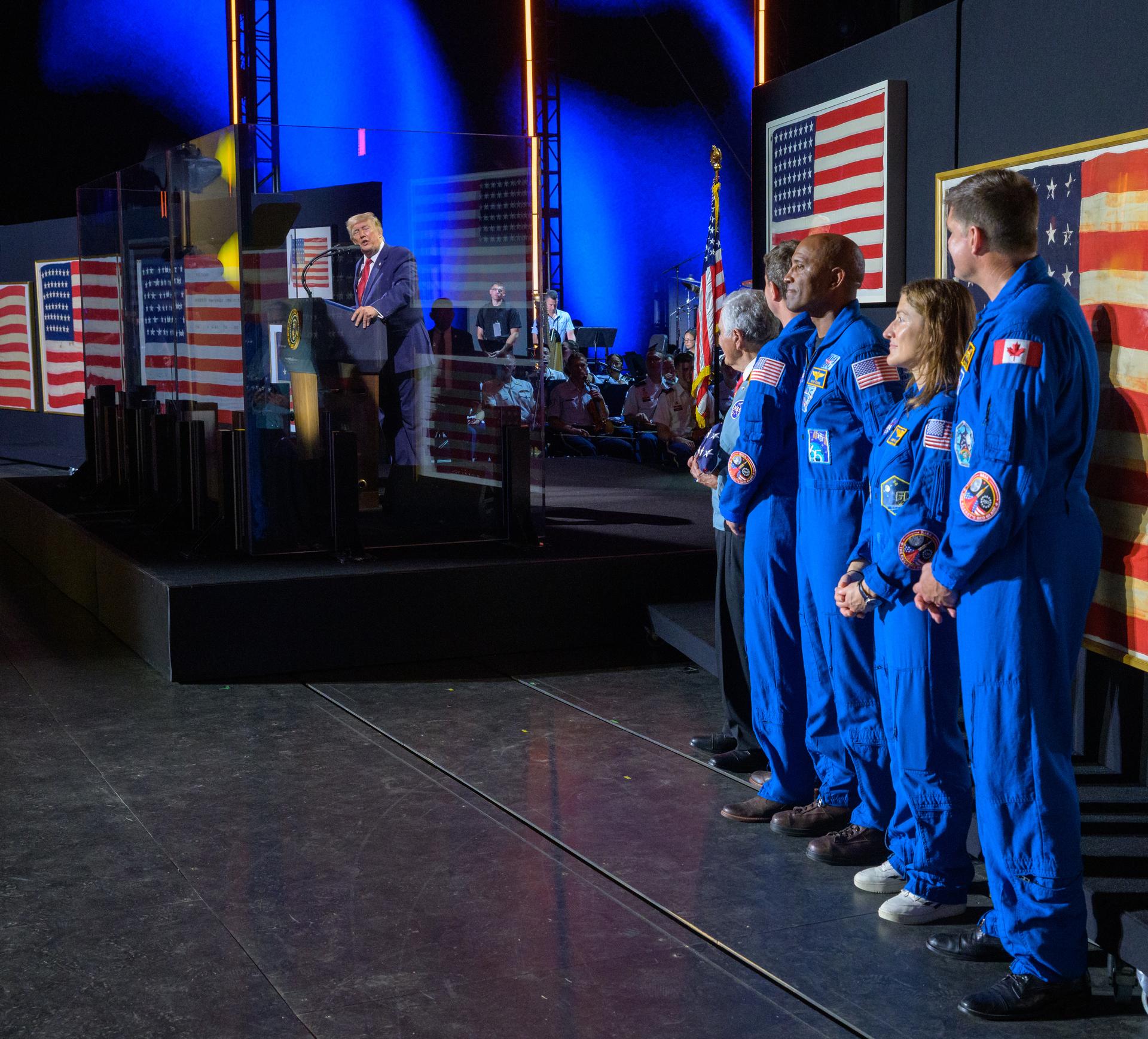
President Donald Trump recognizes NASA Apollo astronaut Harrison "Jack" Schmitt, left, NASA astronauts Reid Wiseman, commander; Victor Glover, pilot; Christina Koch, mission specialist; and CSA (Canadian Space Agency) astronaut Jeremy Hansen, mission specialist, right, during the “Salute to America” event, Saturday, July 4, 2026, on the National Mall in Washington, D.C. The United States Semiquincentennial celebrates the 250th anniversary of the adoption of the Declaration of Independence. Photo Credit: (NASA/Bill Ingalls)
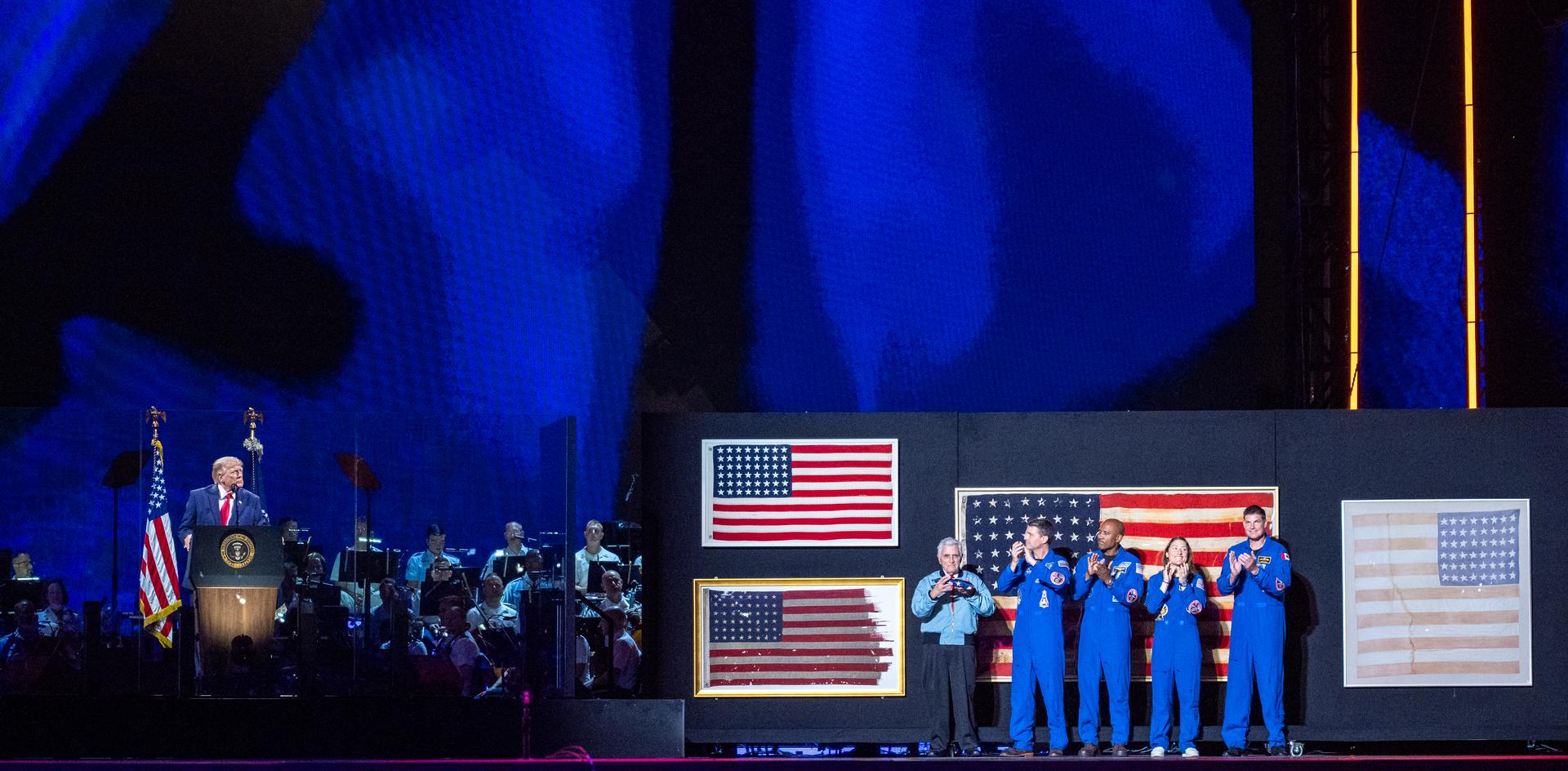
President Donald Trump recognizes NASA Apollo astronaut Harrison "Jack" Schmitt, left, NASA astronauts Reid Wiseman, commander; Victor Glover, pilot; Christina Koch, mission specialist; and CSA (Canadian Space Agency) astronaut Jeremy Hansen, mission specialist, right, during the “Salute to America” event, Saturday, July 4, 2026, on the National Mall in Washington, D.C. The United States Semiquincentennial celebrates the 250th anniversary of the adoption of the Declaration of Independence. Photo Credit: (NASA/Keegan Barber)
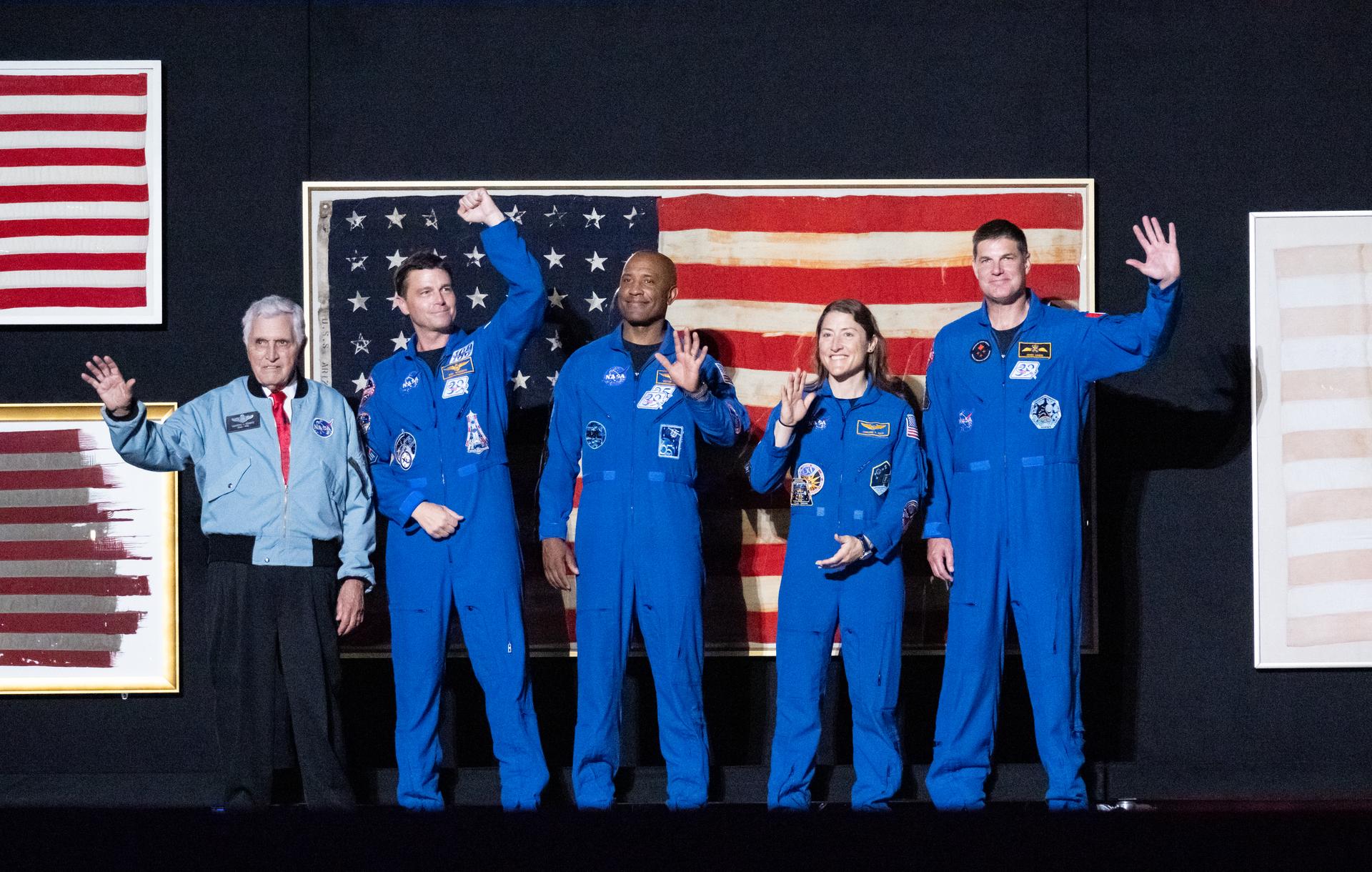
President Donald Trump recognizes NASA Apollo astronaut Harrison "Jack" Schmitt, left, NASA astronauts Reid Wiseman, commander; Victor Glover, pilot; Christina Koch, mission specialist; and CSA (Canadian Space Agency) astronaut Jeremy Hansen, mission specialist, right, during the “Salute to America” event, Saturday, July 4, 2026, on the National Mall in Washington, D.C. The United States Semiquincentennial celebrates the 250th anniversary of the adoption of the Declaration of Independence. Photo Credit: (NASA/Keegan Barber)
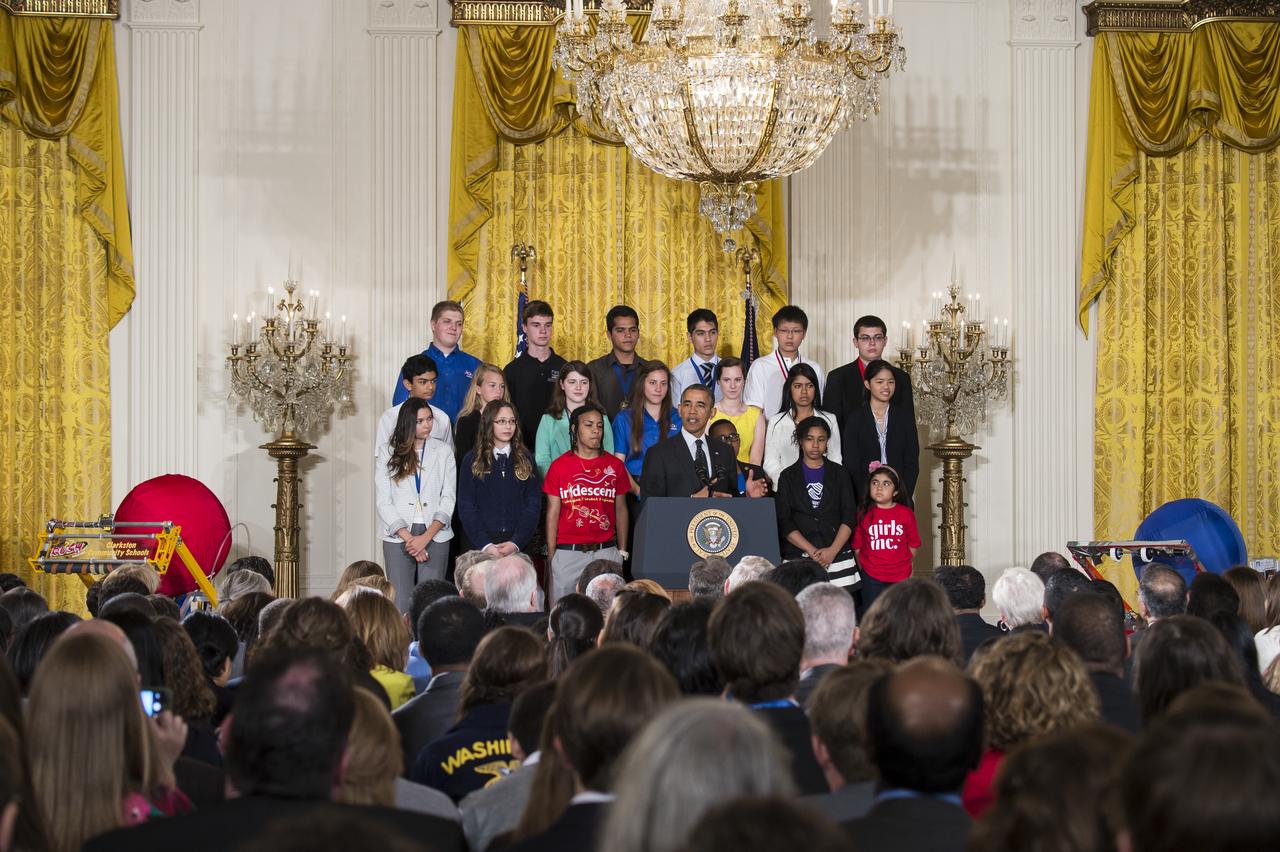
President Barack Obama spoke at the White House Science Fair Tuesday, May 27, 2014 at the White House. NASA Administrator Charles Bolden attended and was recognized by the President at the fourth White House Science Fair, which included 100 students from more than 30 different states who competed in science, technology, engineering, and math (STEM) competitions. (Photo Credit: NASA/Aubrey Gemignani)
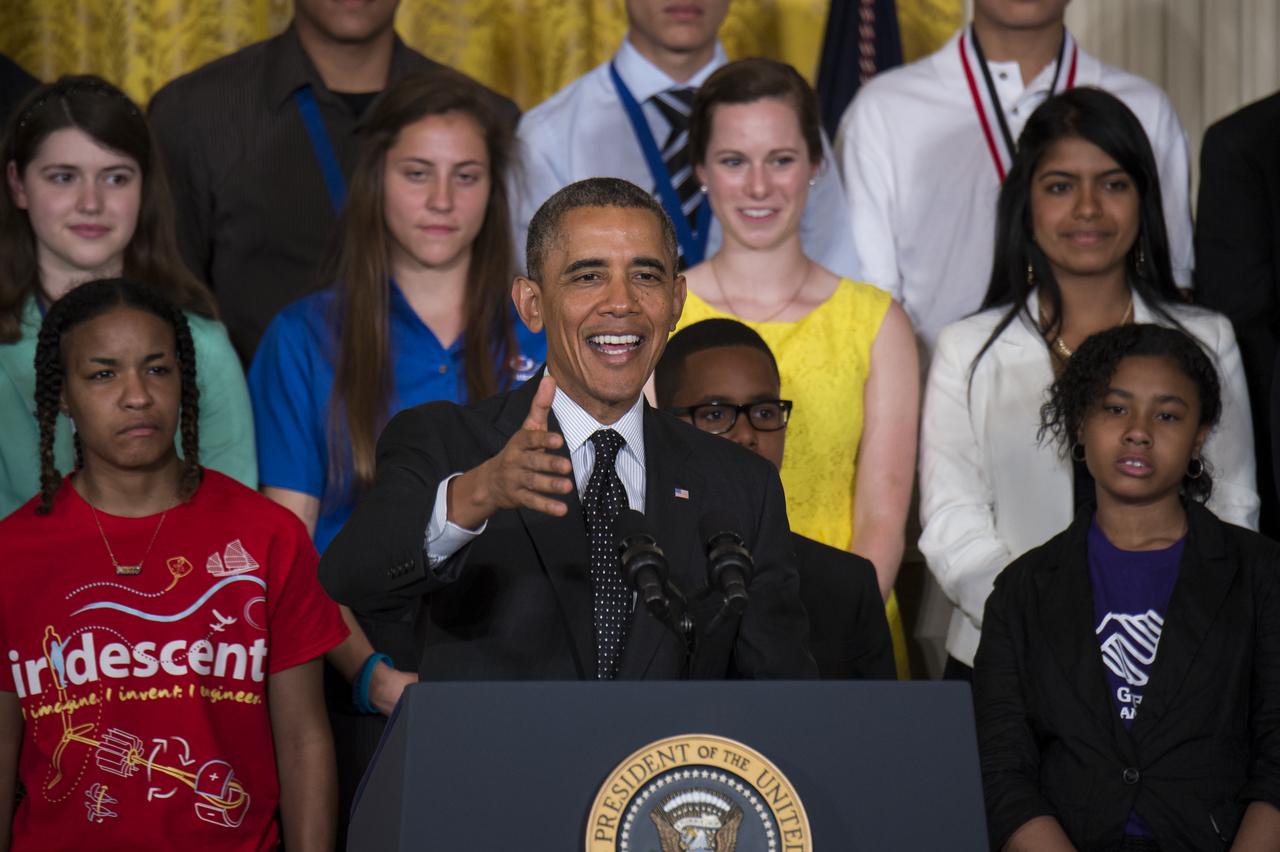
President Barack Obama spoke at the White House Science Fair Tuesday, May 27, 2014 at the White House. NASA Administrator Charles Bolden attended and was recognized by the President at the fourth White House Science Fair, which included 100 students from more than 30 different states who competed in science, technology, engineering, and math (STEM) competitions. (Photo Credit: NASA/Aubrey Gemignani)
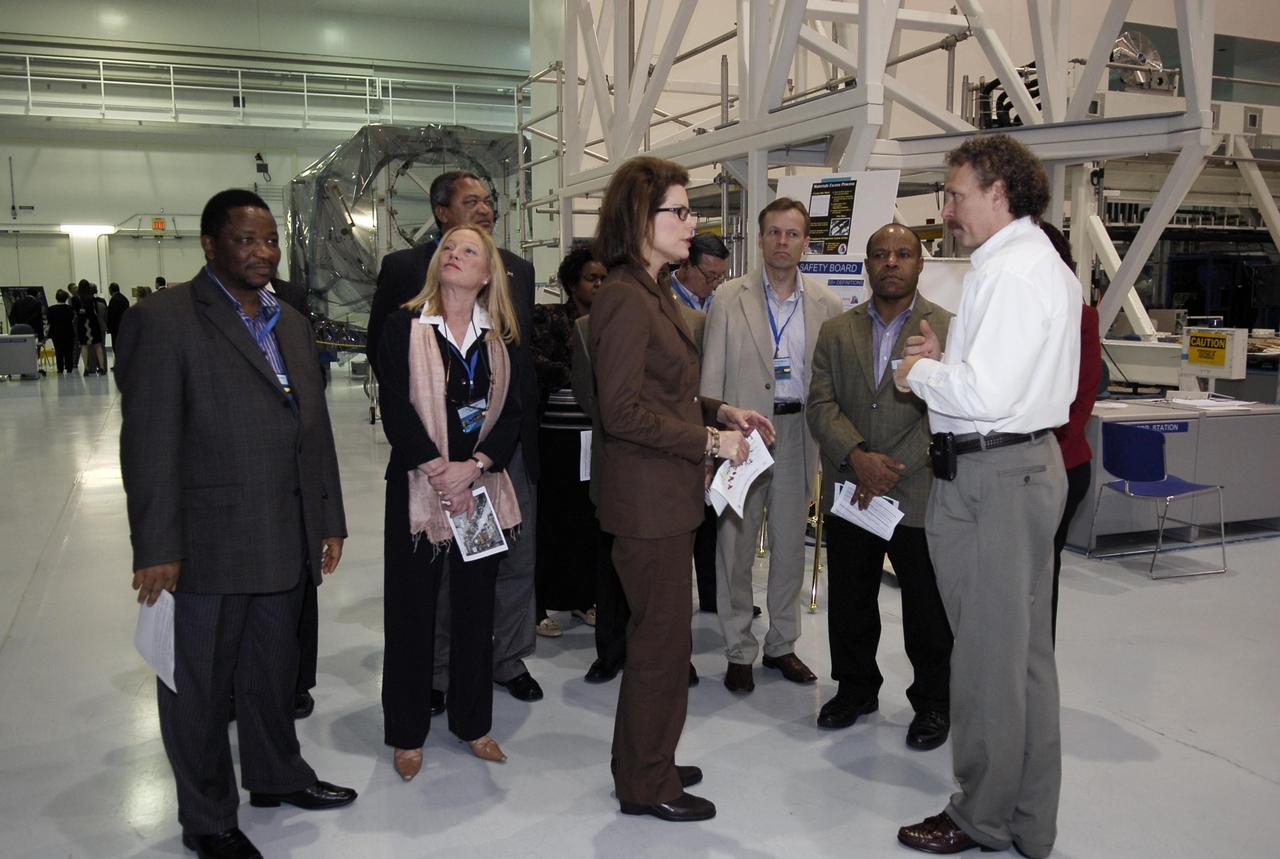
KENNEDY SPACE CENTER, FLA. -- A group of The Chiefs of Diplomatic Missions from more than 45 countries tour the Space Station Processing Facility. In the foreground, U.S. Ambassador Nancy Brinker, who is the host for the Diplomatic Corps, talks to Russell Romanella, director of the International Space Station and Payload Processing Directorate. Ambassador Brinker is President Bush's representative and liaison to the foreign ambassadors in Washington. The visit, one of the largest tours undertaken by the diplomatic corps, is part of the State Department's new Experience America program. The international dignitaries were provided an overview of the United States' space exploration programs and NASA's international cooperation in pursuit of exploration and scientific discovery. They visited various locations at Kennedy, including the Space Station Processing Facility and Launch Pad 39A where space shuttle Atlantis is being prepared for its upcoming mission to the International Space Station. Photo credit: NASA/Kim Shiflett
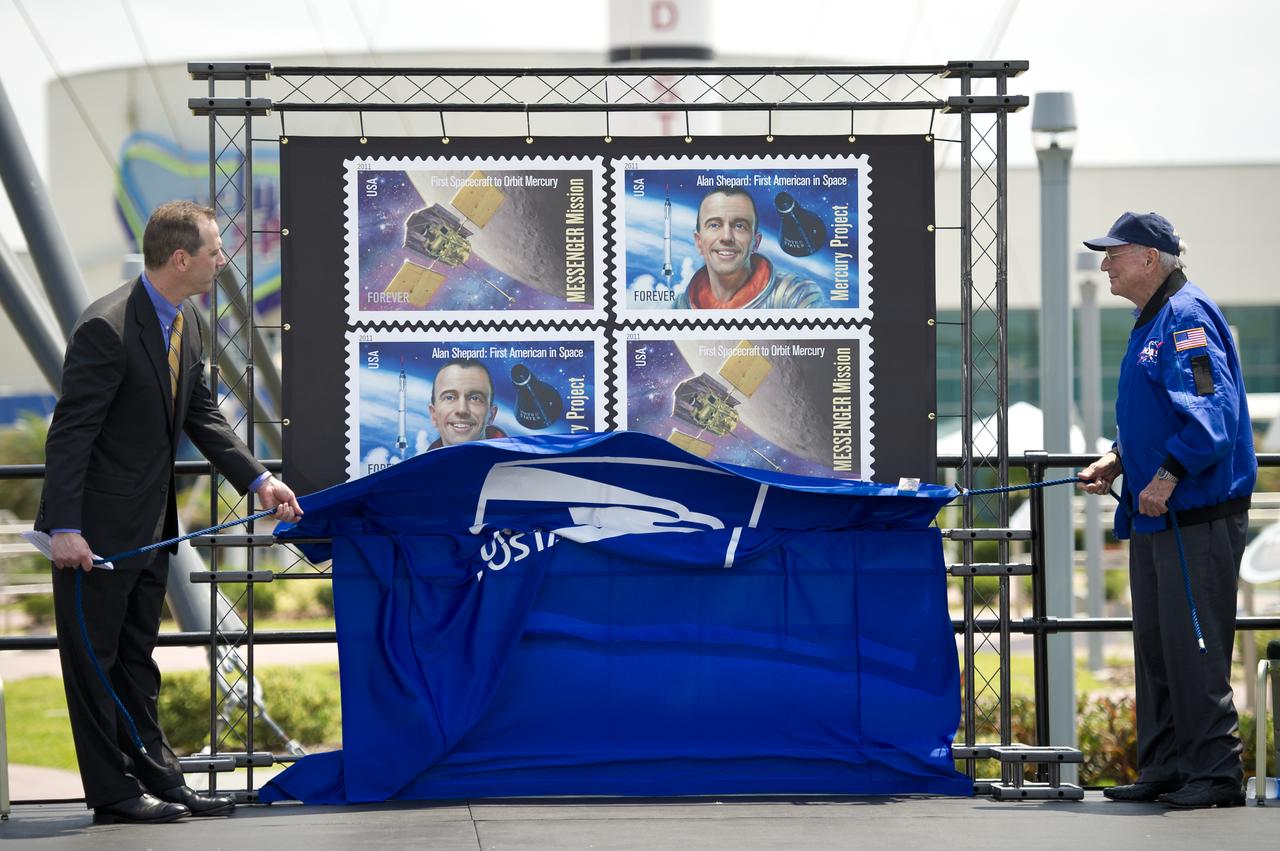
United States Postal Service Vice President of Finance Steve Masse, left, and NASA Mercury Astronaut Scott Carpenter, unveil two USPS stamps to commemorate and celebrate 50 years of US Spaceflight and the MESSENGER program during an event, Wednesday, May 4, 2011 at the NASA Kennedy Space Center in Cape Canaveral, Fla. One stamp commemorates NASA’s Project Mercury, America’s first manned spaceflight program, and NASA astronaut Alan Shepard’s historic flight on May 5, 1961, aboard spacecraft Freedom 7. The other stamp draws attention to NASA’s unmanned MESSENGER mission, a scientific investigation of the planet Mercury. On March 17, 2011, MESSENGER became the first spacecraft to enter into orbit around Mercury. Photo Credit: (NASA/Bill Ingalls)
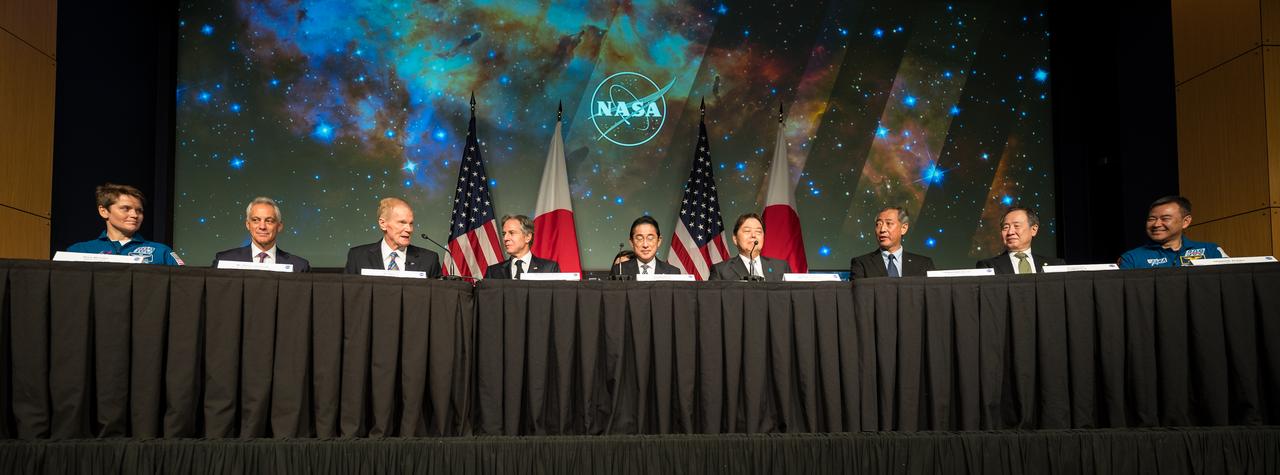
From left to right, NASA astronaut Anne McClain, U.S. Ambassador to Japan, Rahm Emanuel, NASA Administrator Bill Nelson, U.S. Secretary of State Antony Blinken, Prime Minister of Japan, His Excellency Kishida Fumio, Minister for Foreign Affairs of Japan, The Honorable Hayashi Yoshimasa, President of the Japan Aerospace Exploration Agency (JAXA), Yamakawa Hiroshi, Ambassador Extraordinary and Plenipotentiary of Japan to the U.S., Tomita Koji, and JAXA astronaut Hoshide Akihiko, are seen before the signing of an agreement that builds on a long history of collaboration in space exploration between the U.S. and Japan, Friday, Jan. 13, 2023, at the Mary W. Jackson NASA Headquarters building in Washington. “The Framework Agreement Between the Government of Japan and the Government of the United States of America for Cooperation in Space Exploration and Use of Outer Space, Including the Moon and Other Celestial Bodies, For Peaceful Purposes” covers joint activities including space science, Earth science, space operations and exploration, aeronautical science and technology, space technology, space transportation, and safety and mission assurance, among others. Photo Credit: (NASA/Aubrey Gemignani)
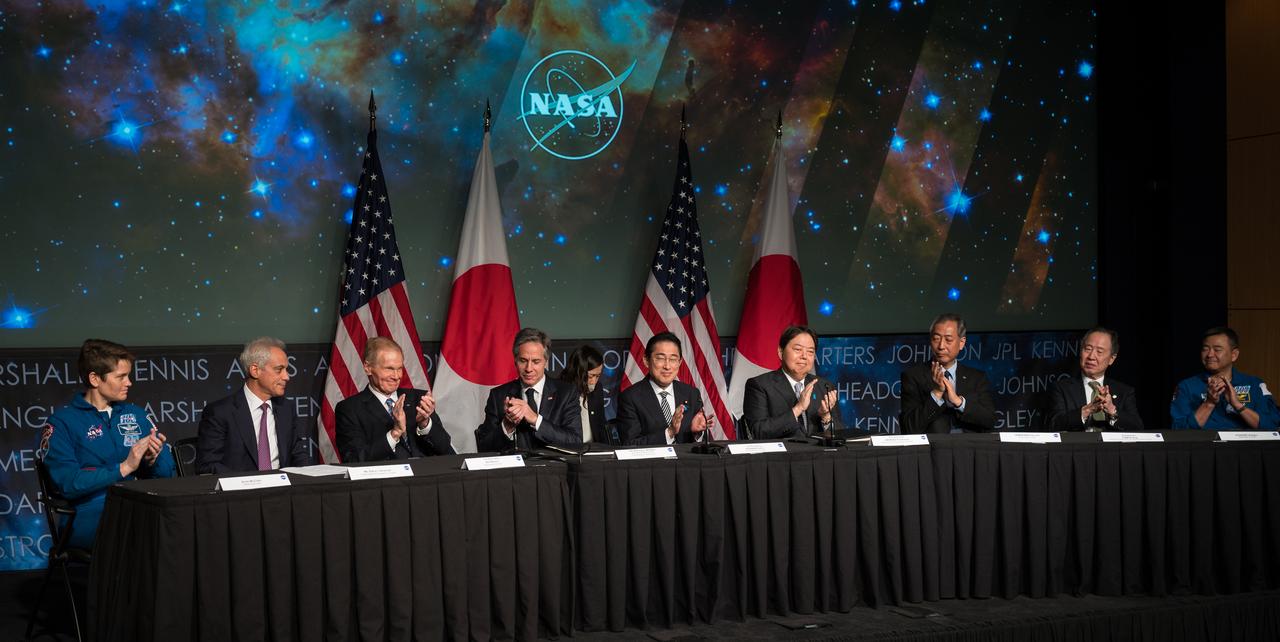
From left to right, NASA astronaut Anne McClain, U.S. Ambassador to Japan Rahm Emanuel, NASA Administrator Bill Nelson, U.S. Secretary of State Antony Blinken, Prime Minister of Japan, His Excellency Kishida Fumio, Minister for Foreign Affairs of Japan, The Honorable Hayashi Yoshimasa, President of the Japan Aerospace Exploration Agency (JAXA), Yamakawa Hiroshi, Ambassador Extraordinary and Plenipotentiary of Japan to the U.S., Tomita Koji, and JAXA astronaut Hoshide Akihiko, applaud after the signing of an agreement that builds on a long history of collaboration in space exploration between the U.S. and Japan, Friday, Jan. 13, 2023, at the Mary W. Jackson NASA Headquarters building in Washington. “The Framework Agreement Between the Government of Japan and the Government of the United States of America for Cooperation in Space Exploration and Use of Outer Space, Including the Moon and Other Celestial Bodies, For Peaceful Purposes” covers joint activities including space science, Earth science, space operations and exploration, aeronautical science and technology, space technology, space transportation, and safety and mission assurance, among others. Photo Credit: (NASA/Aubrey Gemignani)
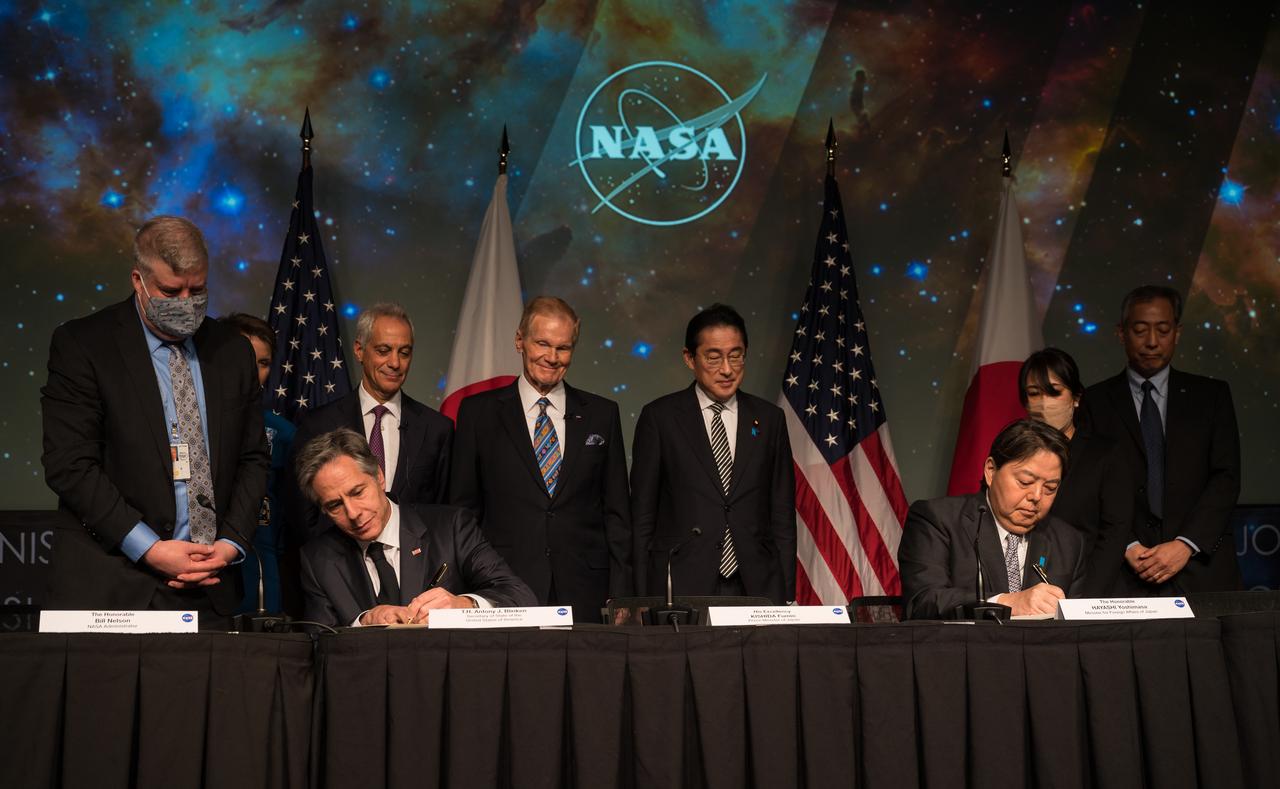
U.S. Secretary of State Antony Blinken, seated left, and Japan’s Minister for Foreign Affairs, Hayashi Yoshimasa, seated right, sign an agreement that builds on a long history of collaboration in space exploration between the U.S. and Japan, Friday, Jan. 13, 2023, at the Mary W. Jackson NASA Headquarters building in Washington. Also present were, U.S. Ambassador to Japan Rahm Emanuel, second from left, NASA Administrator Bill Nelson, third from left, Prime Minister of Japan, His Excellency Kishida Fumio, third from right, President of the Japan Aerospace Exploration Agency (JAXA), Yamakawa Hiroshi, right. “The Framework Agreement Between the Government of Japan and the Government of the United States of America for Cooperation in Space Exploration and Use of Outer Space, Including the Moon and Other Celestial Bodies, For Peaceful Purposes” covers joint activities including space science, Earth science, space operations and exploration, aeronautical science and technology, space technology, space transportation, and safety and mission assurance, among others. Photo Credit: (NASA/Aubrey Gemignani)
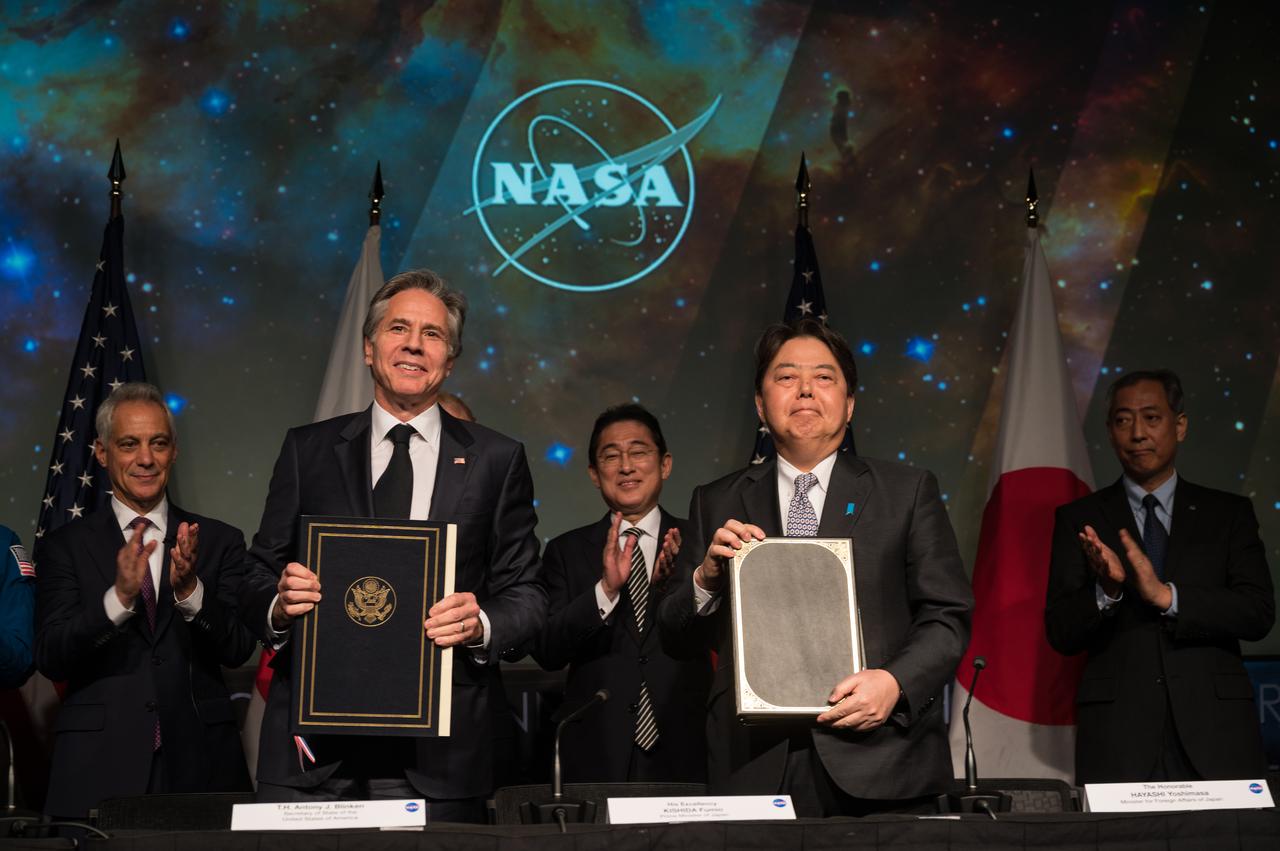
U.S. Secretary of State Antony Blinken, front left, and Japan’s Minister for Foreign Affairs, Hayashi Yoshimasa, front right, pose for a photo after signing an agreement that builds on a long history of collaboration in space exploration between the U.S. and Japan, Friday, Jan. 13, 2023, at the Mary W. Jackson NASA Headquarters building in Washington. Also present were, U.S. Ambassador to Japan Rahm Emanuel, left, NASA Administrator Bill Nelson, second from left, Prime Minister of Japan, His Excellency Kishida Fumio, second from right, President of the Japan Aerospace Exploration Agency (JAXA), Yamakawa Hiroshi, right. “The Framework Agreement Between the Government of Japan and the Government of the United States of America for Cooperation in Space Exploration and Use of Outer Space, Including the Moon and Other Celestial Bodies, For Peaceful Purposes” covers joint activities including space science, Earth science, space operations and exploration, aeronautical science and technology, space technology, space transportation, and safety and mission assurance, among others. Photo Credit: (NASA/Aubrey Gemignani)
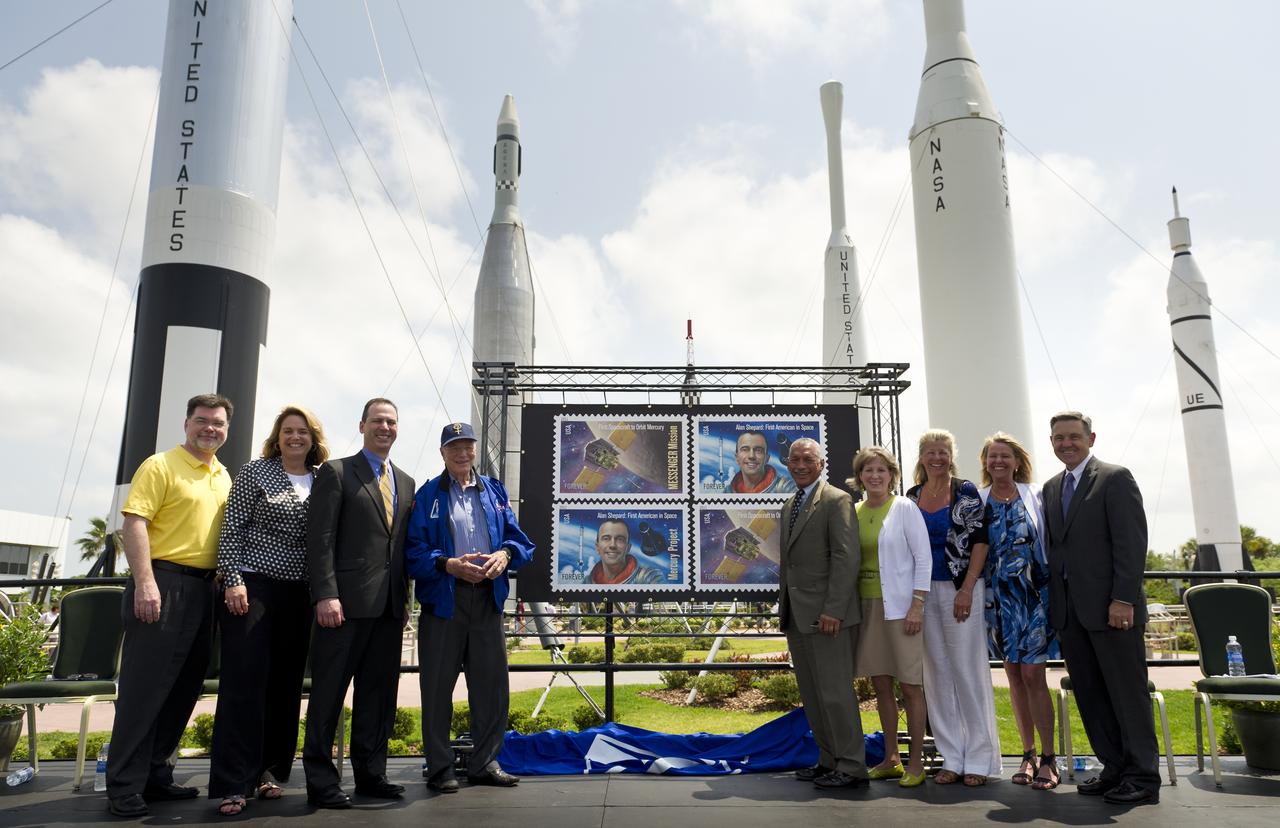
From left, NASA Deputy Director, Planetary Science Division, Science Mission Directorate, Jim Adams, NASA Kennedy Space Center Director of Education and External Relations Cheryl Hurst, United States Postal Service Vice President of Finance Steve Masse, NASA Mercury Astronaut Scott Carpenter, NASA Administrator Charles Boldin, Daughters of NASA astronaut Alan Shepard, Alice Wackermann, Laura Shepard Churchley, and Julie Jenkins, and NASA Kennedy Space Center Director Robert Cabana pose for a photograph during an unveiling ceremony of two USPS stamps that commemorate and celebrate 50 years of US Spaceflight and the MESSENGER program during an event, Wednesday, May 4, 2011 at the NASA Kennedy Space Center in Cape Canaveral, Fla. One stamp commemorates NASA’s Project Mercury, America’s first manned spaceflight program, and NASA astronaut Alan Shepard’s historic flight on May 5, 1961, aboard spacecraft Freedom 7. The other stamp draws attention to NASA’s unmanned MESSENGER mission, a scientific investigation of the planet Mercury. On March 17, 2011, MESSENGER became the first spacecraft to enter into orbit around Mercury. Photo Credit: (NASA/Bill Ingalls)