
A model of the Pressurized lunar rover is seen during a briefing discussing the historic agreement signed April 9th at NASA Headquarters, between the United States and Japan to advance sustainable human exploration of the Moon, Wednesday, April 10, 2024, at the Japan Aerospace Exploration Agency (JAXA) offices in Washington. Under the agreement, Japan will design, develop, and operate a pressurized rover for crewed and uncrewed exploration on the Moon. NASA will provide the launch and delivery of the rover to the Moon as well as two Japanese astronaut missions to the lunar surface. Photo Credit: Photo Credit: (NASA/Bill Ingalls)

A model of the Pressurized lunar rover is seen during a briefing discussing the historic agreement signed April 9th at NASA Headquarters, between the United States and Japan to advance sustainable human exploration of the Moon, Wednesday, April 10, 2024, at the Japan Aerospace Exploration Agency (JAXA) offices in Washington. Under the agreement, Japan will design, develop, and operate a pressurized rover for crewed and uncrewed exploration on the Moon. NASA will provide the launch and delivery of the rover to the Moon as well as two Japanese astronaut missions to the lunar surface. Photo Credit: Photo Credit: (NASA/Bill Ingalls)

NASA Administrator Bill Nelson discusses the historic agreement signed April 9th at NASA Headquarters, between the United States and Japan to advance sustainable human exploration of the Moon, Wednesday, April 10, 2024, at the Japan Aerospace Exploration Agency (JAXA) offices in Washington. Under the agreement, Japan will design, develop, and operate a pressurized rover for crewed and uncrewed exploration on the Moon. NASA will provide the launch and delivery of the rover to the Moon as well as two Japanese astronaut missions to the lunar surface. Photo Credit: Photo Credit: (NASA/Bill Ingalls)
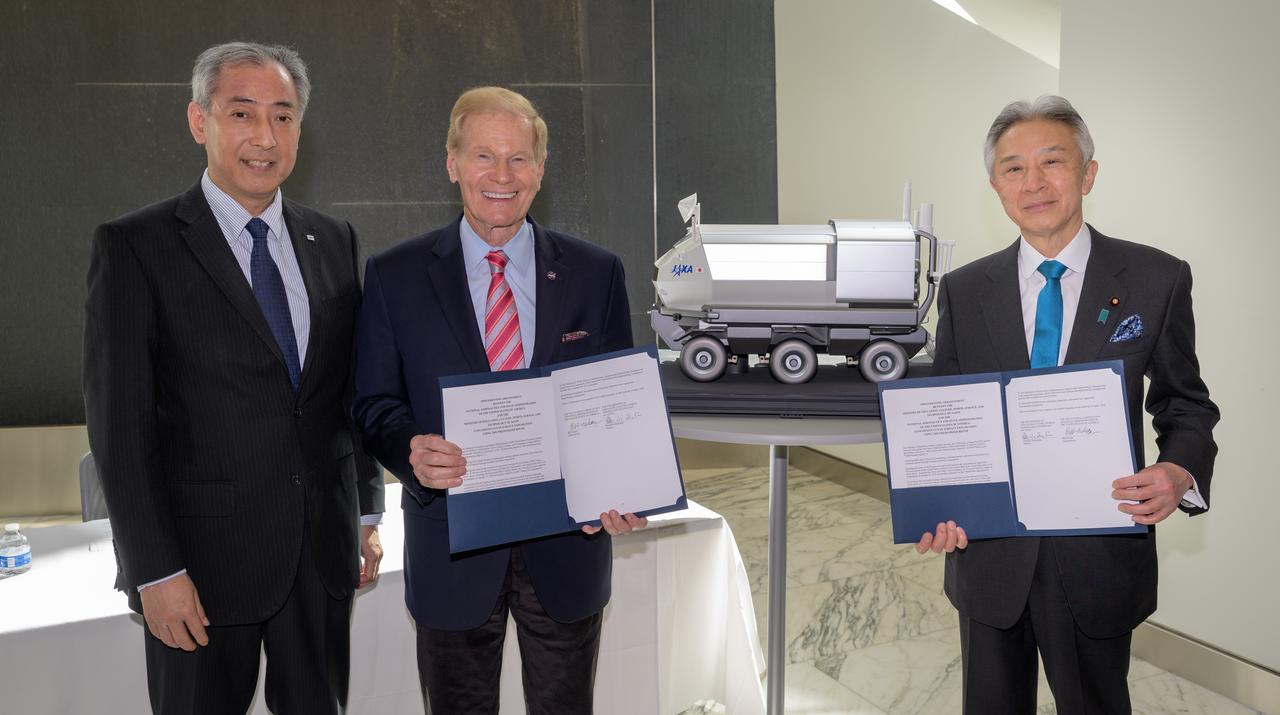
Japan Aerospace Exploration Agency (JAXA) President Hiroshi Yamakawa, left, NASA Administrator Bill Nelson, and Japan’s Minister of Education, Culture, Sports, Science and Technology Masahito Moriyama, right, pose for a group photograph holding the historic agreement signed April 9th at NASA Headquarters, between the United States and Japan to advance sustainable human exploration of the Moon, Wednesday, April 10, 2024, at the Japan Aerospace Exploration Agency (JAXA) offices in Washington. Under the agreement, Japan will design, develop, and operate a pressurized rover for crewed and uncrewed exploration on the Moon. NASA will provide the launch and delivery of the rover to the Moon as well as two Japanese astronaut missions to the lunar surface. Photo Credit: Photo Credit: (NASA/Bill Ingalls)
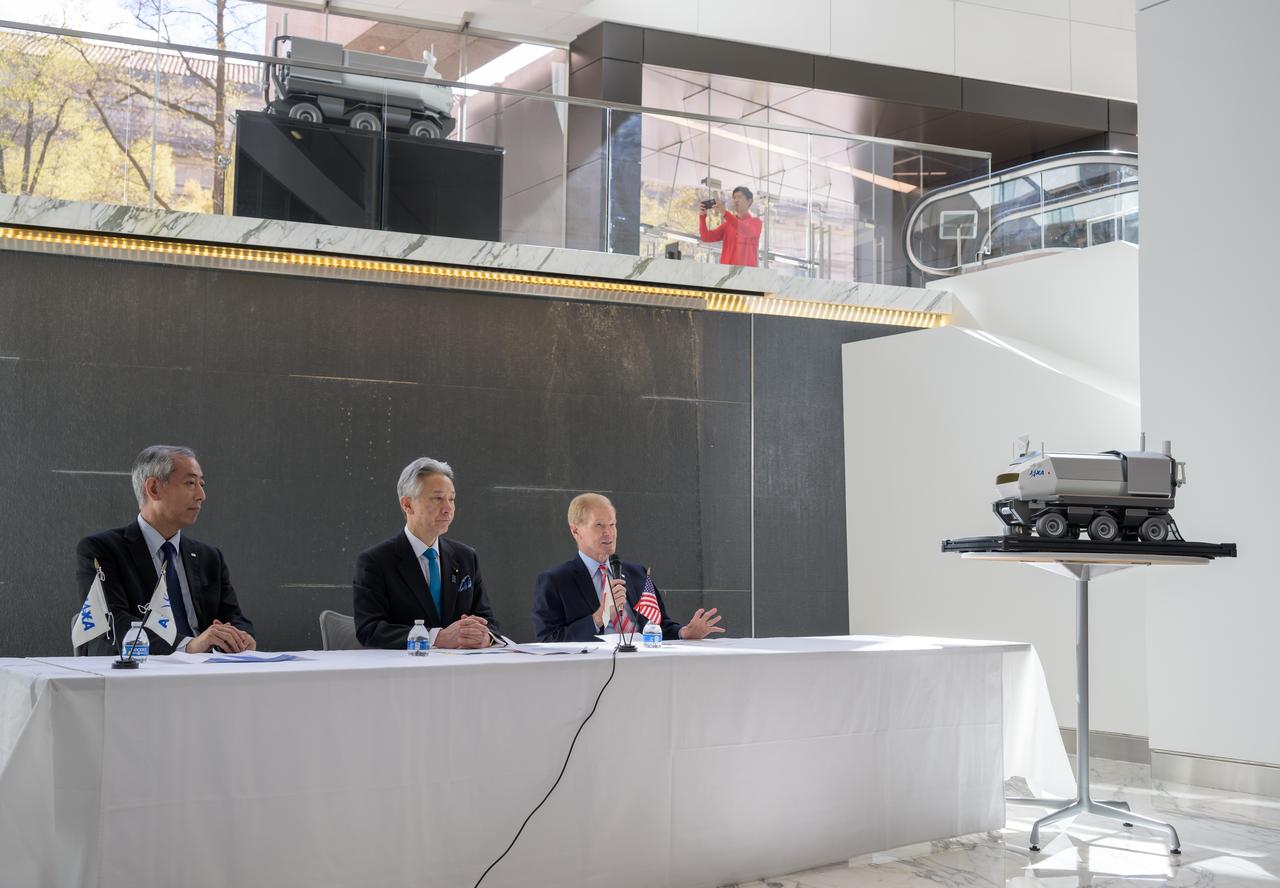
Japan Aerospace Exploration Agency (JAXA) President Hiroshi Yamakawa, left, Japan’s Minister of Education, Culture, Sports, Science and Technology Masahito Moriyama, and NASA Administrator Bill Nelson, right, are seen during a briefing where they discussed the historic agreement signed April 9th at NASA Headquarters, between the United States and Japan to advance sustainable human exploration of the Moon, Wednesday, April 10, 2024, at the Japan Aerospace Exploration Agency (JAXA) offices in Washington. Under the agreement, Japan will design, develop, and operate a pressurized rover for crewed and uncrewed exploration on the Moon. NASA will provide the launch and delivery of the rover to the Moon as well as two Japanese astronaut missions to the lunar surface. Photo Credit: Photo Credit: (NASA/Bill Ingalls)
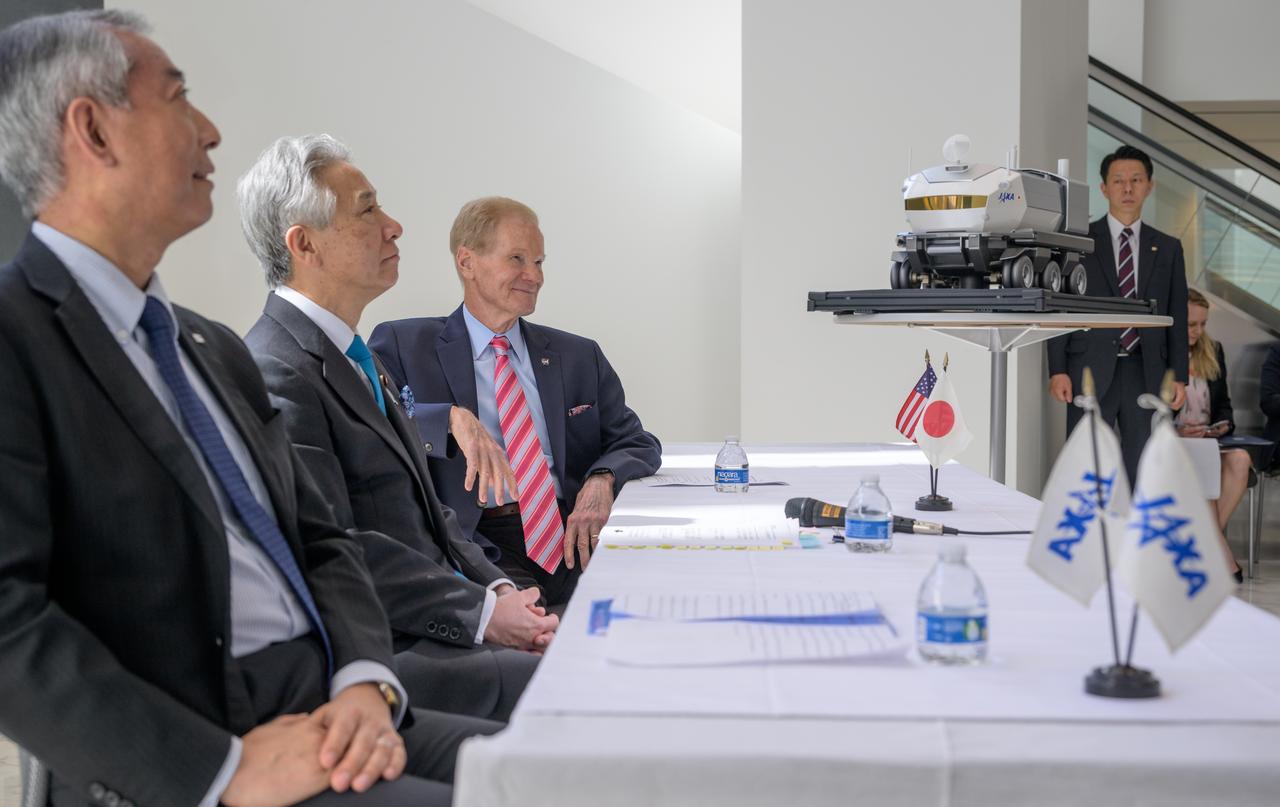
Japan Aerospace Exploration Agency (JAXA) President Hiroshi Yamakawa, left, Japan’s Minister of Education, Culture, Sports, Science and Technology Masahito Moriyama, and NASA Administrator Bill Nelson, right, are seen during a briefing where they discussed the historic agreement signed April 9th at NASA Headquarters, between the United States and Japan to advance sustainable human exploration of the Moon, Wednesday, April 10, 2024, at the Japan Aerospace Exploration Agency (JAXA) offices in Washington. Under the agreement, Japan will design, develop, and operate a pressurized rover for crewed and uncrewed exploration on the Moon. NASA will provide the launch and delivery of the rover to the Moon as well as two Japanese astronaut missions to the lunar surface. Photo Credit: Photo Credit: (NASA/Bill Ingalls)
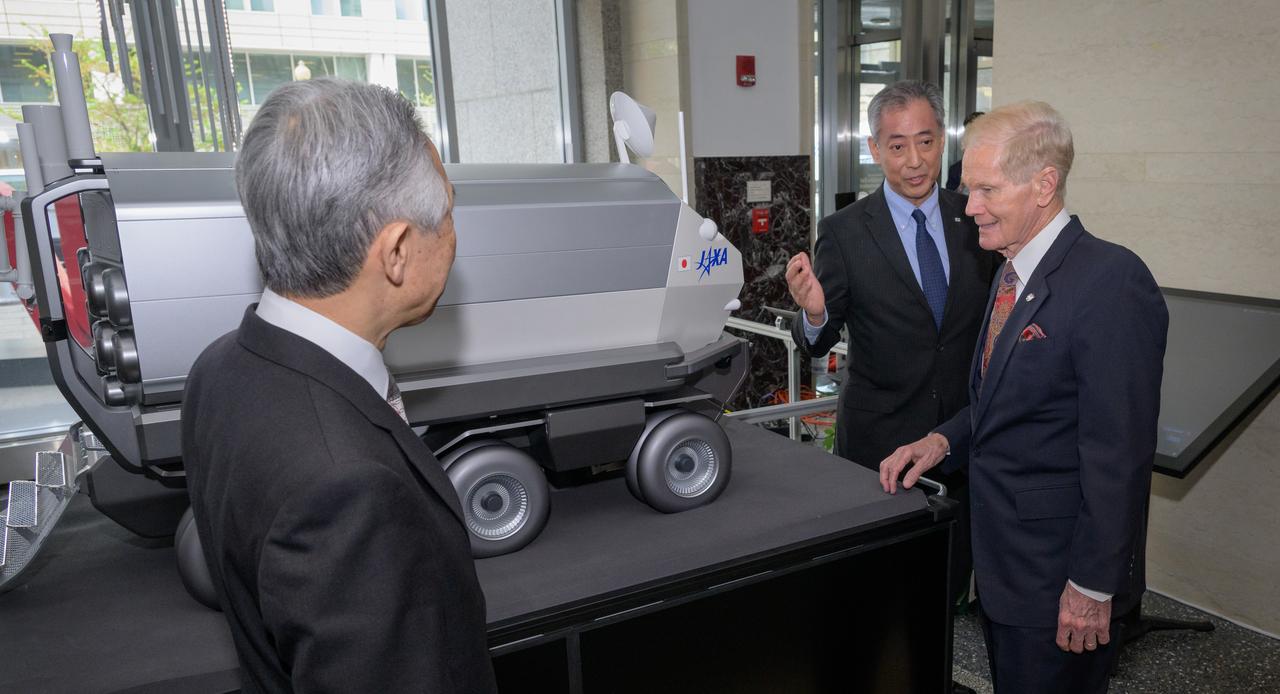
Japan’s Minister of Education, Culture, Sports, Science and Technology Masahito Moriyama, left, Japan Aerospace Exploration Agency (JAXA) President Hiroshi Yamakawa, and NASA Administrator Bill Nelson, right, look at a model of the Pressurized lunar rover, prior to the signing an historic agreement between the United States and Japan to advance sustainable human exploration of the Moon, Tuesday, April 9, 2024, at the NASA Headquarters Mary W. Jackson Building in Washington. Under the agreement, Japan will design, develop, and operate a pressurized rover for crewed and uncrewed exploration on the Moon. NASA will provide the launch and delivery of the rover to the Moon as well as two Japanese astronaut missions to the lunar surface. Photo Credit: (NASA/Bill Ingalls)

NASA Pressurized Rover Project Manager Danny Newswander discusses the historic agreement signed April 9th at NASA Headquarters, between the United States and Japan to advance sustainable human exploration of the Moon, Wednesday, April 10, 2024, at the Japan Aerospace Exploration Agency (JAXA) offices in Washington. Under the agreement, Japan will design, develop, and operate a pressurized rover for crewed and uncrewed exploration on the Moon. NASA will provide the launch and delivery of the rover to the Moon as well as two Japanese astronaut missions to the lunar surface. Photo Credit: Photo Credit: (NASA/Bill Ingalls)

NASA Pressurized Rover Project Manager Danny Newswander, left, NASA Administrator Bill Nelson, and NASA Extravehicular Activity and Human Surface Mobility Program Lara Kearney, right, discuss the historic agreement signed April 9th at NASA Headquarters, between the United States and Japan to advance sustainable human exploration of the Moon, Wednesday, April 10, 2024, at the Japan Aerospace Exploration Agency (JAXA) offices in Washington. Under the agreement, Japan will design, develop, and operate a pressurized rover for crewed and uncrewed exploration on the Moon. NASA will provide the launch and delivery of the rover to the Moon as well as two Japanese astronaut missions to the lunar surface. Photo Credit: Photo Credit: (NASA/Bill Ingalls)
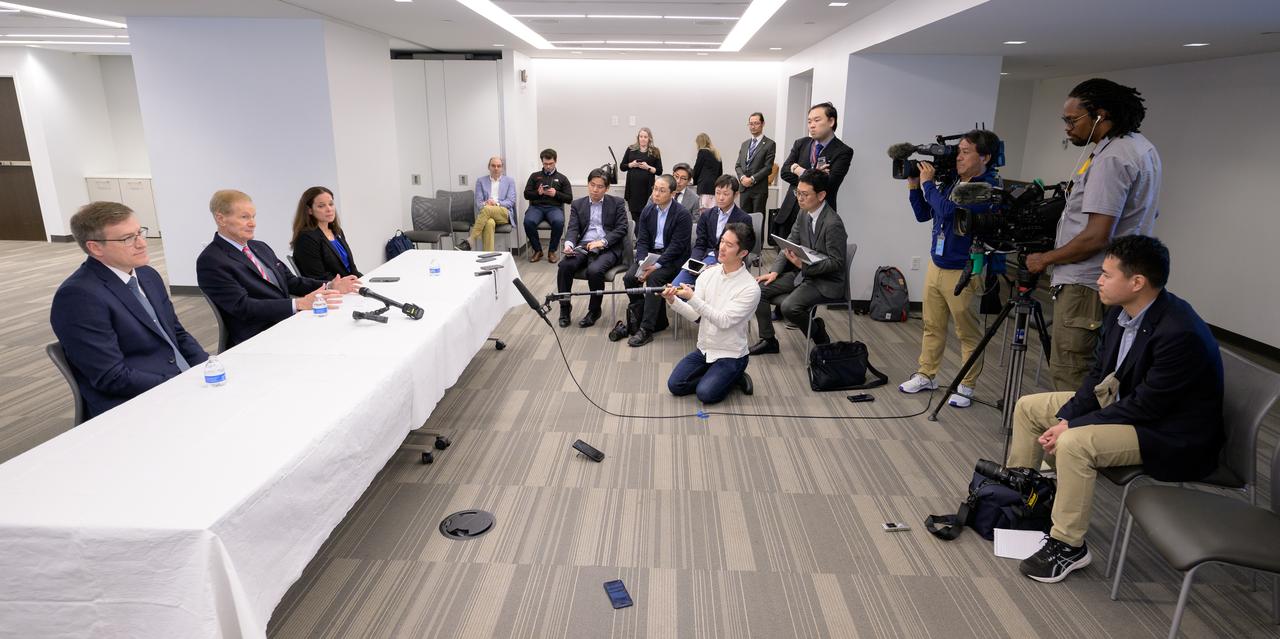
NASA Pressurized Rover Project Manager Danny Newswander, left, NASA Administrator Bill Nelson, and NASA Extravehicular Activity and Human Surface Mobility Program Lara Kearney, right, discuss the historic agreement signed April 9th at NASA Headquarters, between the United States and Japan to advance sustainable human exploration of the Moon, Wednesday, April 10, 2024, at the Japan Aerospace Exploration Agency (JAXA) offices in Washington. Under the agreement, Japan will design, develop, and operate a pressurized rover for crewed and uncrewed exploration on the Moon. NASA will provide the launch and delivery of the rover to the Moon as well as two Japanese astronaut missions to the lunar surface. Photo Credit: Photo Credit: (NASA/Bill Ingalls)
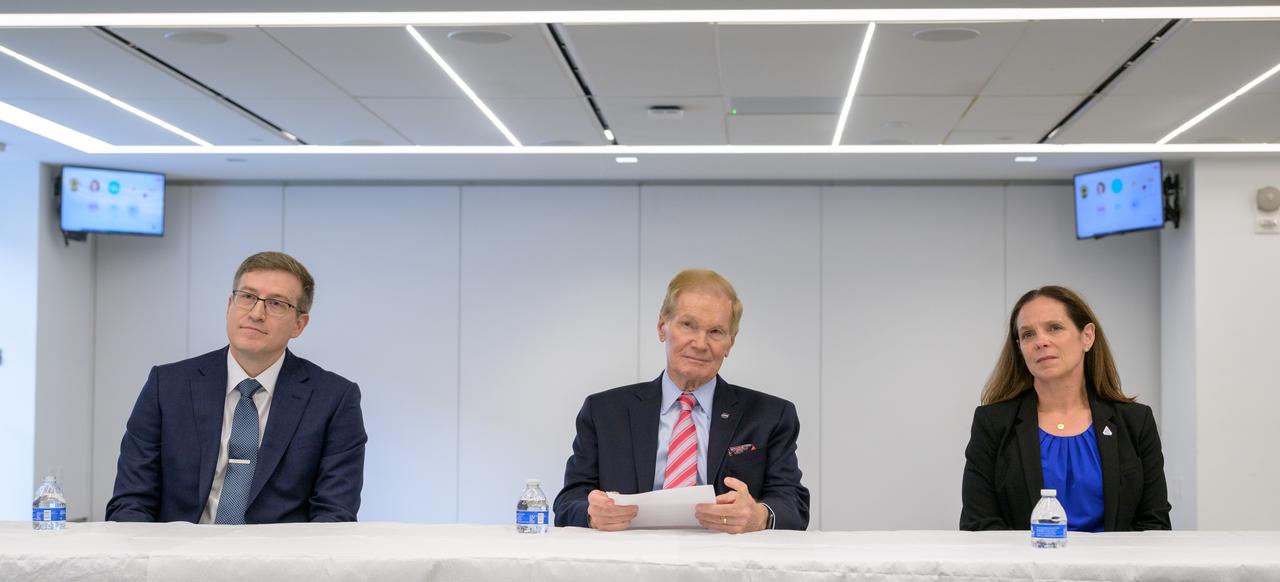
NASA Pressurized Rover Project Manager Danny Newswander, left, NASA Administrator Bill Nelson, and NASA Extravehicular Activity and Human Surface Mobility Program Lara Kearney, right, discuss the historic agreement signed April 9th at NASA Headquarters, between the United States and Japan to advance sustainable human exploration of the Moon, Wednesday, April 10, 2024, at the Japan Aerospace Exploration Agency (JAXA) offices in Washington. Under the agreement, Japan will design, develop, and operate a pressurized rover for crewed and uncrewed exploration on the Moon. NASA will provide the launch and delivery of the rover to the Moon as well as two Japanese astronaut missions to the lunar surface. Photo Credit: Photo Credit: (NASA/Bill Ingalls)

Japan Aerospace Exploration Agency (JAXA) President Hiroshi Yamakawa, left, JAXA astronaut Akihiko Hoshide, Japan’s Minister of Education, Culture, Sports, Science and Technology Masahito Moriyama, NASA Administrator Bill Nelson, and NASA astronaut Kayla Barron, right, talk by a model of the Pressurized lunar rover, after the signing of an historic agreement between the United States and Japan to advance sustainable human exploration of the Moon, Tuesday, April 9, 2024, at the NASA Headquarters Mary W. Jackson Building in Washington. Under the agreement, Japan will design, develop, and operate a pressurized rover for crewed and uncrewed exploration on the Moon. NASA will provide the launch and delivery of the rover to the Moon as well as two Japanese astronaut missions to the lunar surface. Photo Credit: (NASA/Bill Ingalls)
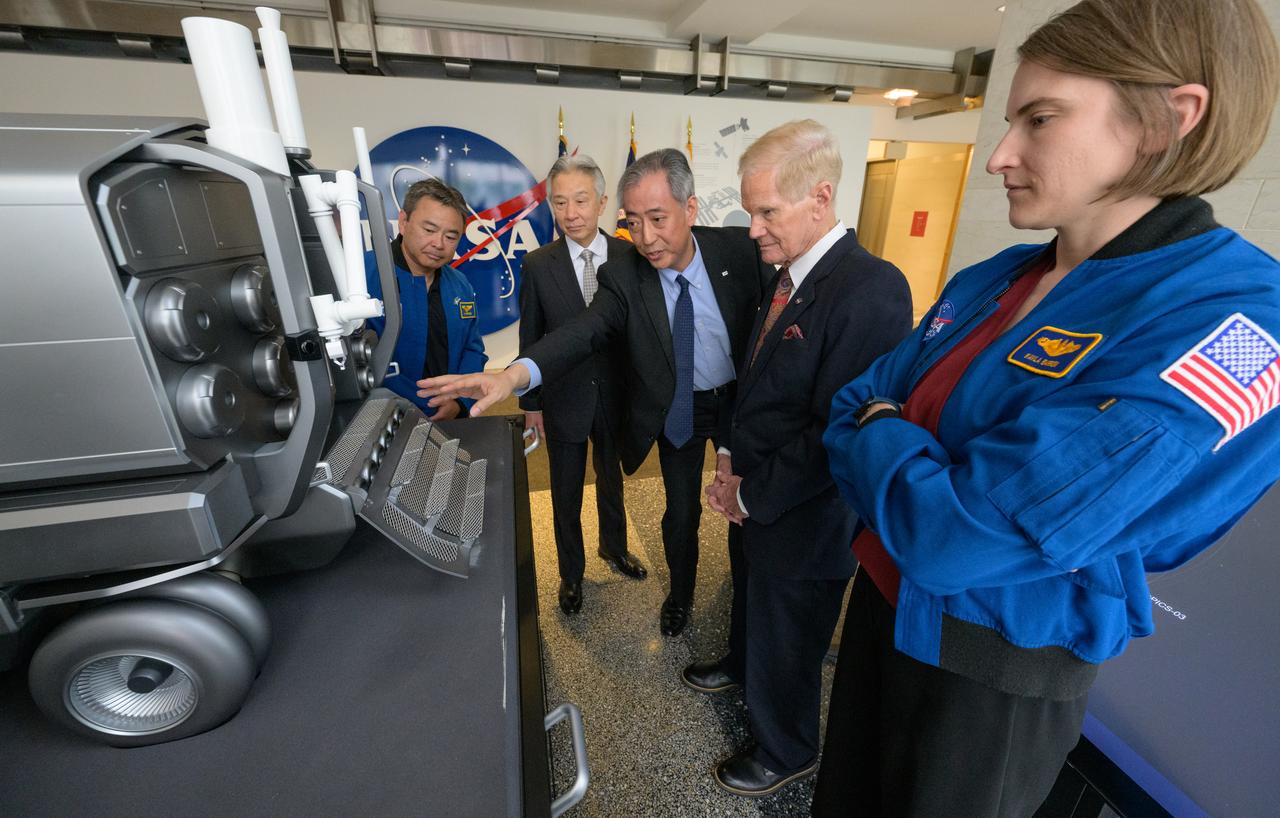
Japan Aerospace Exploration Agency (JAXA) astronaut Akihiko Hoshide, left, Japan’s Minister of Education, Culture, Sports, Science and Technology Masahito Moriyama, JAXA President Hiroshi Yamakawa, NASA Administrator Bill Nelson, and NASA astronaut Kayla Barron, right, talk by a model of the Pressurized lunar rover, after the signing of an historic agreement between the United States and Japan to advance sustainable human exploration of the Moon, Tuesday, April 9, 2024, at the NASA Headquarters Mary W. Jackson Building in Washington. Under the agreement, Japan will design, develop, and operate a pressurized rover for crewed and uncrewed exploration on the Moon. NASA will provide the launch and delivery of the rover to the Moon as well as two Japanese astronaut missions to the lunar surface. Photo Credit: (NASA/Bill Ingalls)
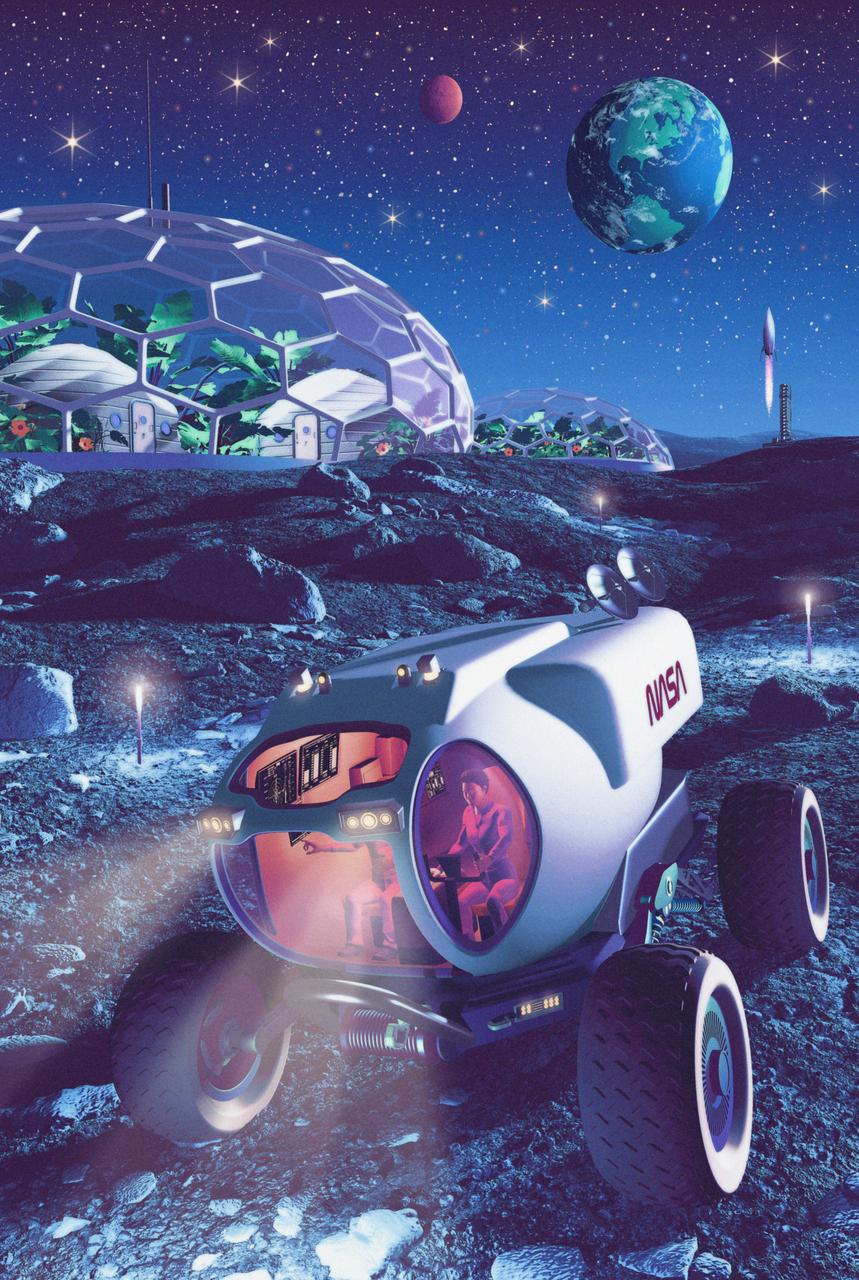
This illustration of Moon to Mars transportation and habitation shows astronauts driving a pressurized rover away from the dome of a translucent lunar habitat. NASA’s Moon to Mars Objectives establish an objectives-based approach to the agency's human deep space exploration efforts; NASA’s Moon to Mars Architecture approach distills the objectives into operational capabilities and elements.

NASA Administrator Bill Nelson speaks prior to signing an historic agreement between the United States and Japan to advance sustainable human exploration of the Moon, Tuesday, April 9, 2024, at the NASA Headquarters Mary W. Jackson Building in Washington. Under the agreement, Japan will design, develop, and operate a pressurized rover for crewed and uncrewed exploration on the Moon. NASA will provide the launch and delivery of the rover to the Moon as well as two Japanese astronaut missions to the lunar surface. Photo Credit: (NASA/Bill Ingalls)

NASA Administrator Bill Nelson discusses the historic agreement signed April 9th at NASA Headquarters, between the United States and Japan to advance sustainable human exploration of the Moon, Wednesday, April 10, 2024, at the Japan Aerospace Exploration Agency (JAXA) offices in Washington. Under the agreement, Japan will design, develop, and operate a pressurized rover for crewed and uncrewed exploration on the Moon. NASA will provide the launch and delivery of the rover to the Moon as well as two Japanese astronaut missions to the lunar surface. Photo Credit: Photo Credit: (NASA/Bill Ingalls)
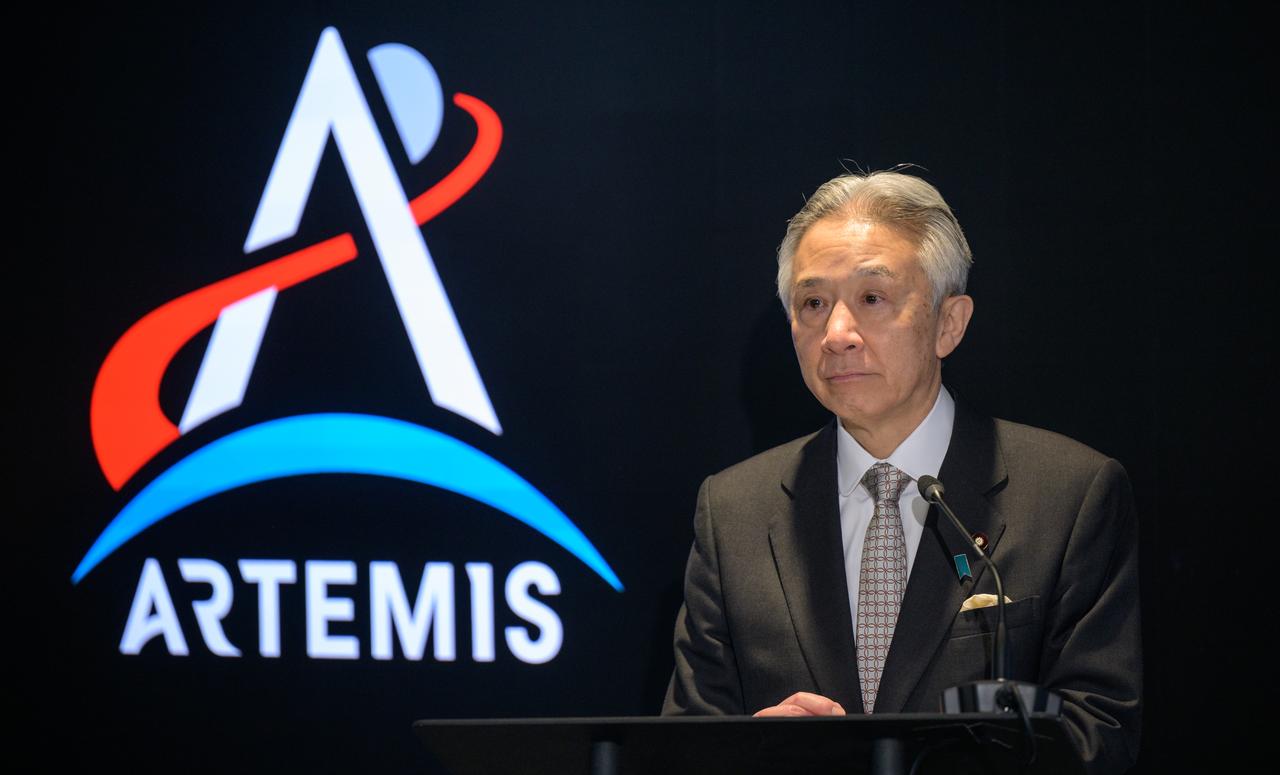
Japan’s Minister of Education, Culture, Sports, Science and Technology Masahito Moriyama speaks after signing an historic agreement between the United States and Japan to advance sustainable human exploration of the Moon, Tuesday, April 9, 2024, at the NASA Headquarters Mary W. Jackson Building in Washington. Under the agreement, Japan will design, develop, and operate a pressurized rover for crewed and uncrewed exploration on the Moon. NASA will provide the launch and delivery of the rover to the Moon as well as two Japanese astronaut missions to the lunar surface. Photo Credit: (NASA/Bill Ingalls)

NASA Administrator Bill Nelson signs an historic agreement between the United States and Japan to advance sustainable human exploration of the Moon, Tuesday, April 9, 2024, at the NASA Headquarters Mary W. Jackson Building in Washington. Under the agreement, Japan will design, develop, and operate a pressurized rover for crewed and uncrewed exploration on the Moon. NASA will provide the launch and delivery of the rover to the Moon as well as two Japanese astronaut missions to the lunar surface. Photo Credit: (NASA/Bill Ingalls)
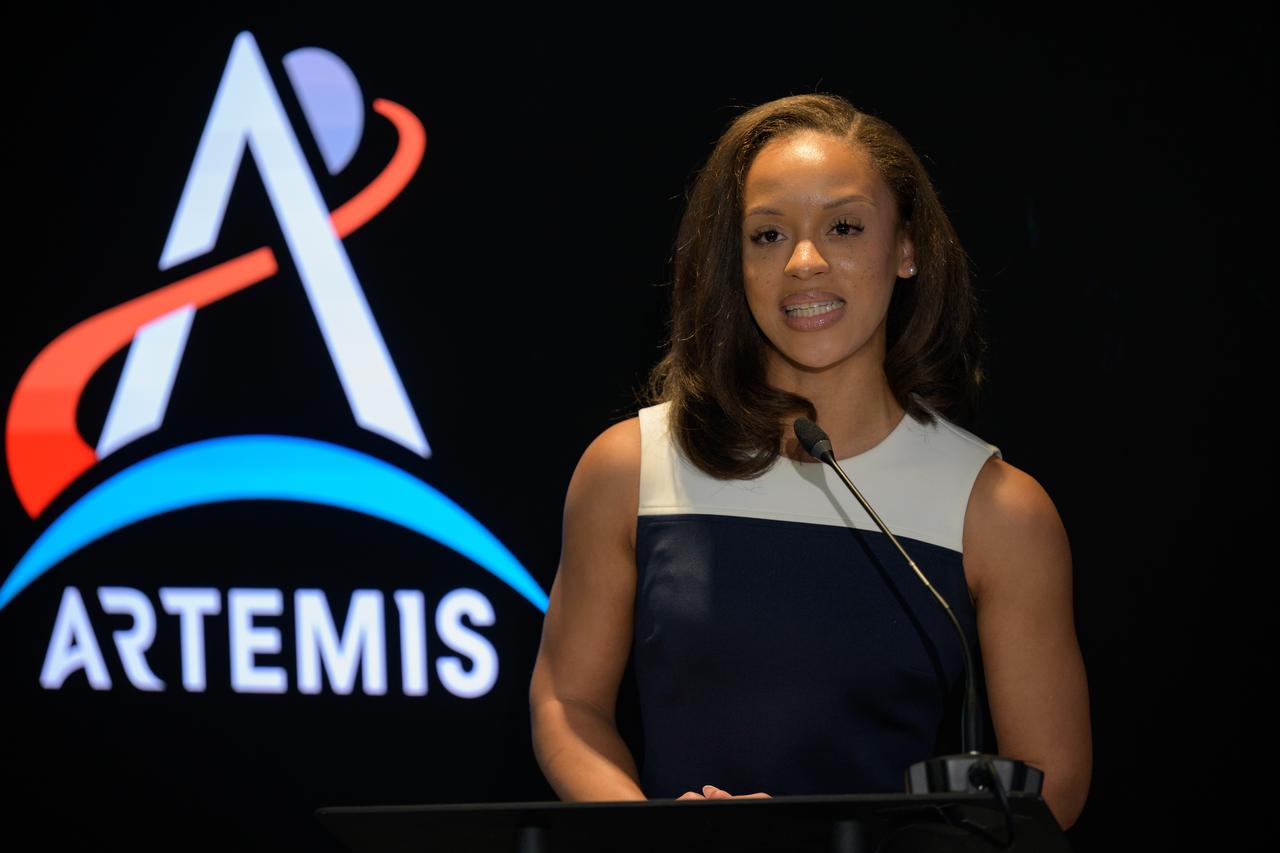
NASA Press Secretary Faith McKie moderates an event where an historic agreement is to be signed between the United States and Japan to advance sustainable human exploration of the Moon, Tuesday, April 9, 2024, at the NASA Headquarters Mary W. Jackson Building in Washington. Under the agreement, Japan will design, develop, and operate a pressurized rover for crewed and uncrewed exploration on the Moon. NASA will provide the launch and delivery of the rover to the Moon as well as two Japanese astronaut missions to the lunar surface. Photo Credit: (NASA/Bill Ingalls)

NASA Administrator Bill Nelson discusses the historic agreement signed April 9th at NASA Headquarters, between the United States and Japan to advance sustainable human exploration of the Moon, Wednesday, April 10, 2024, at the Japan Aerospace Exploration Agency (JAXA) offices in Washington. Under the agreement, Japan will design, develop, and operate a pressurized rover for crewed and uncrewed exploration on the Moon. NASA will provide the launch and delivery of the rover to the Moon as well as two Japanese astronaut missions to the lunar surface. Photo Credit: Photo Credit: (NASA/Bill Ingalls)
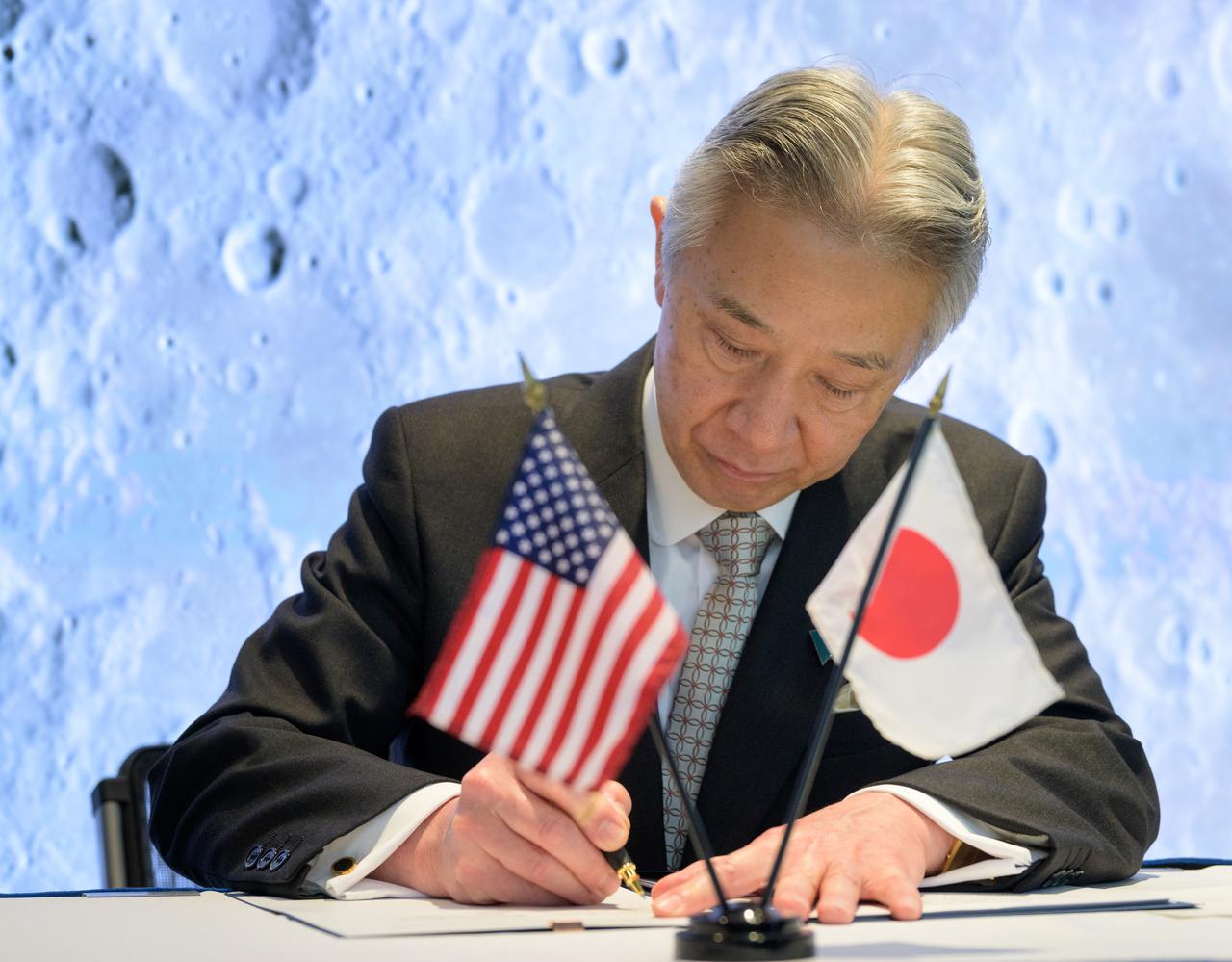
Japan’s Minister of Education, Culture, Sports, Science and Technology Masahito Moriyama, signs an historic agreement between the United States and Japan to advance sustainable human exploration of the Moon, Tuesday, April 9, 2024, at the NASA Headquarters Mary W. Jackson Building in Washington. Under the agreement, Japan will design, develop, and operate a pressurized rover for crewed and uncrewed exploration on the Moon. NASA will provide the launch and delivery of the rover to the Moon as well as two Japanese astronaut missions to the lunar surface. Photo Credit: (NASA/Bill Ingalls)
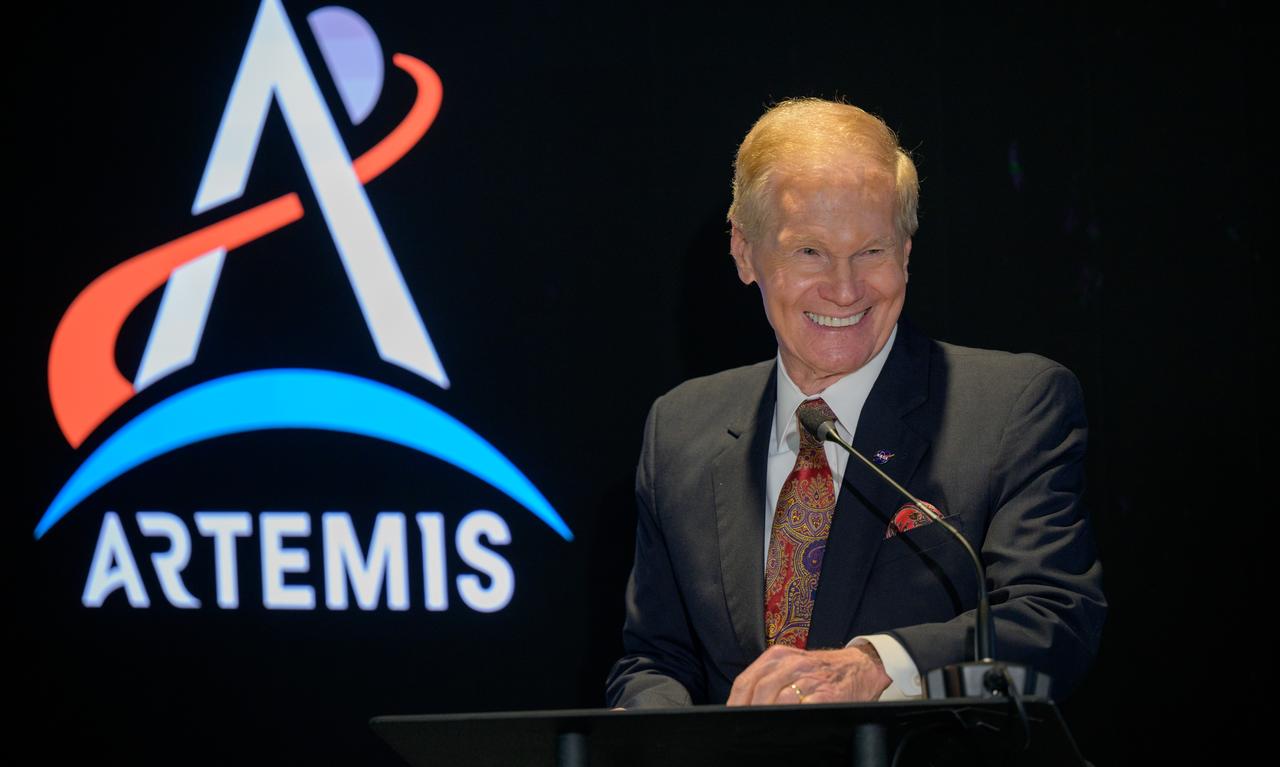
NASA Administrator Bill Nelson speaks prior to signing an historic agreement between the United States and Japan to advance sustainable human exploration of the Moon, Tuesday, April 9, 2024, at the NASA Headquarters Mary W. Jackson Building in Washington. Under the agreement, Japan will design, develop, and operate a pressurized rover for crewed and uncrewed exploration on the Moon. NASA will provide the launch and delivery of the rover to the Moon as well as two Japanese astronaut missions to the lunar surface. Photo Credit: (NASA/Bill Ingalls)

NASA Administrator Bill Nelson discusses the historic agreement signed April 9th at NASA Headquarters, between the United States and Japan to advance sustainable human exploration of the Moon, Wednesday, April 10, 2024, at the Japan Aerospace Exploration Agency (JAXA) offices in Washington. Under the agreement, Japan will design, develop, and operate a pressurized rover for crewed and uncrewed exploration on the Moon. NASA will provide the launch and delivery of the rover to the Moon as well as two Japanese astronaut missions to the lunar surface. Photo Credit: Photo Credit: (NASA/Bill Ingalls)
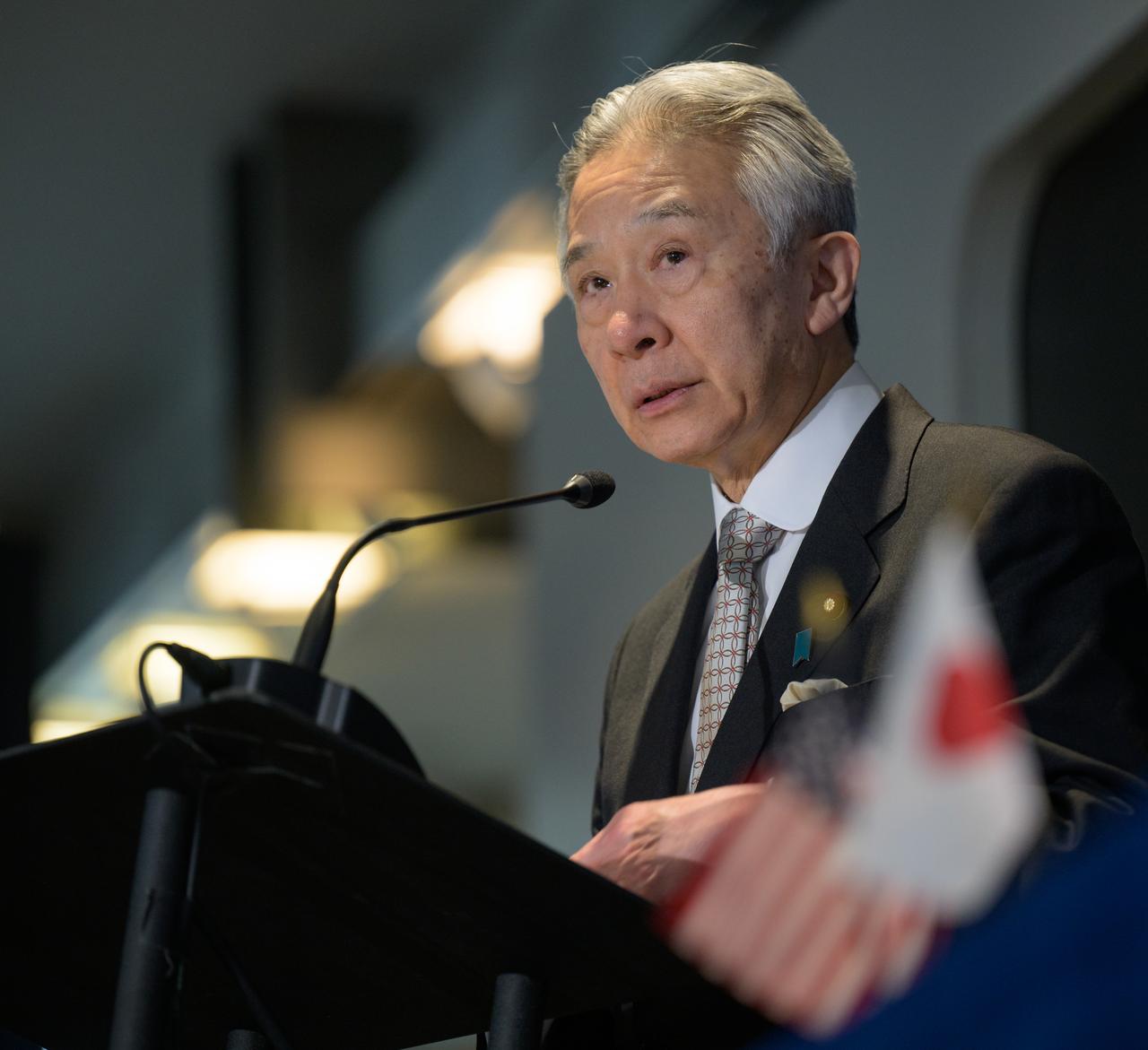
Japan’s Minister of Education, Culture, Sports, Science and Technology Masahito Moriyama speaks after signing an historic agreement between the United States and Japan to advance sustainable human exploration of the Moon, Tuesday, April 9, 2024, at the NASA Headquarters Mary W. Jackson Building in Washington. Under the agreement, Japan will design, develop, and operate a pressurized rover for crewed and uncrewed exploration on the Moon. NASA will provide the launch and delivery of the rover to the Moon as well as two Japanese astronaut missions to the lunar surface. Photo Credit: (NASA/Bill Ingalls)
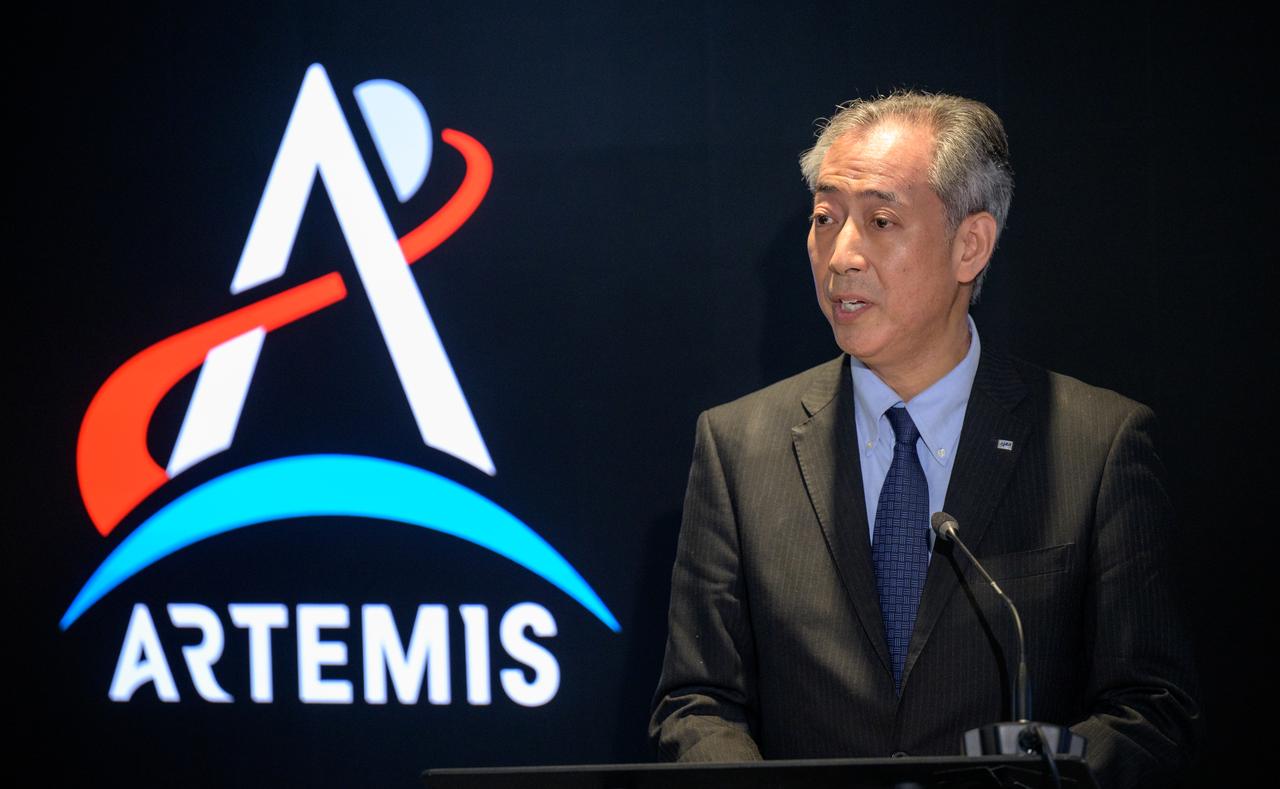
Japan Aerospace Exploration Agency (JAXA) President Hiroshi Yamakawa speaks after the signing of an historic agreement between the United States and Japan to advance sustainable human exploration of the Moon, Tuesday, April 9, 2024, at the NASA Headquarters Mary W. Jackson Building in Washington. Under the agreement, Japan will design, develop, and operate a pressurized rover for crewed and uncrewed exploration on the Moon. NASA will provide the launch and delivery of the rover to the Moon as well as two Japanese astronaut missions to the lunar surface. Photo Credit: (NASA/Bill Ingalls)
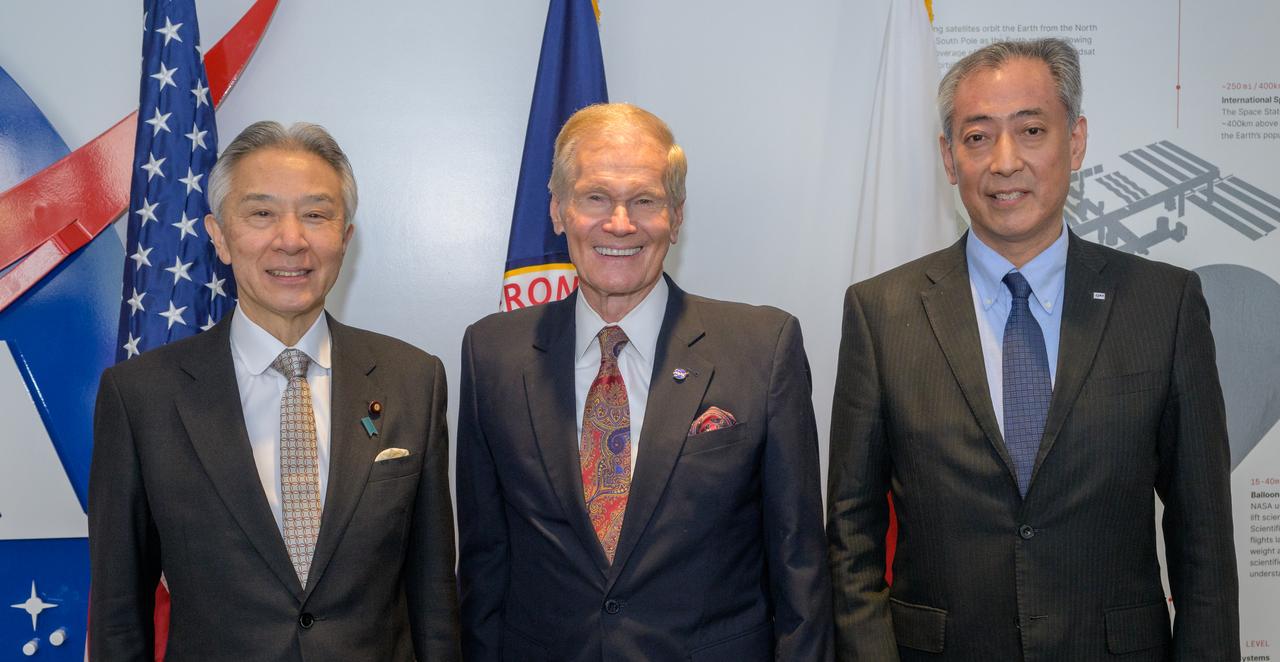
Japan’s Minister of Education, Culture, Sports, Science and Technology Masahito Moriyama, left, NASA Administrator Bill Nelson, and Japan Aerospace Exploration Agency (JAXA) President Hiroshi Yamakawa, right, pose for a photograph prior to the signing an historic agreement between the United States and Japan to advance sustainable human exploration of the Moon, Tuesday, April 9, 2024, at the NASA Headquarters Mary W. Jackson Building in Washington. Under the agreement, Japan will design, develop, and operate a pressurized rover for crewed and uncrewed exploration on the Moon. NASA will provide the launch and delivery of the rover to the Moon as well as two Japanese astronaut missions to the lunar surface. Photo Credit: (NASA/Bill Ingalls)

NASA Extravehicular Activity and Human Surface Mobility Program Lara Kearney discusses the historic agreement signed April 9th at NASA Headquarters, between the United States and Japan to advance sustainable human exploration of the Moon, Wednesday, April 10, 2024, at the Japan Aerospace Exploration Agency (JAXA) offices in Washington. Under the agreement, Japan will design, develop, and operate a pressurized rover for crewed and uncrewed exploration on the Moon. NASA will provide the launch and delivery of the rover to the Moon as well as two Japanese astronaut missions to the lunar surface. Photo Credit: Photo Credit: (NASA/Bill Ingalls)
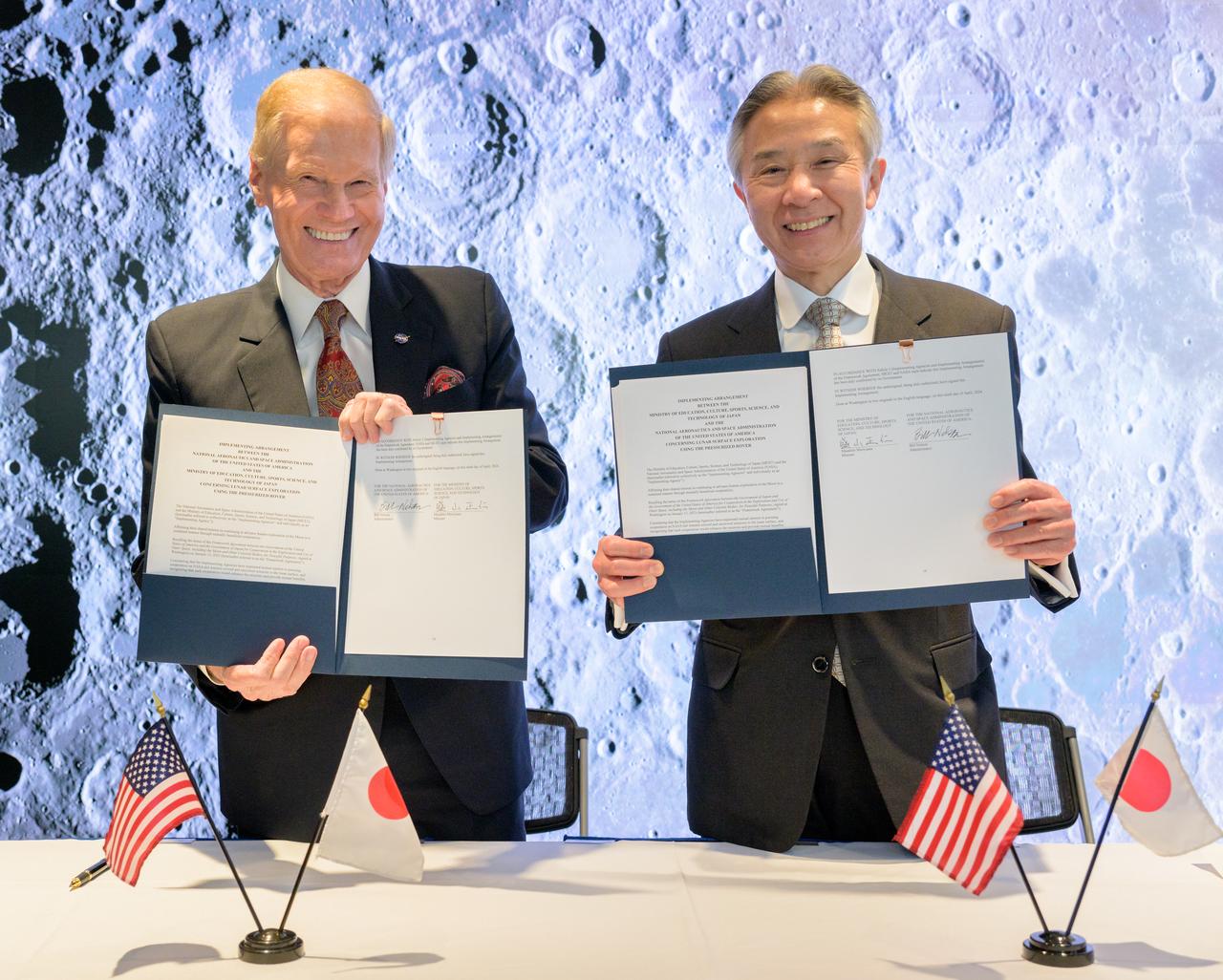
NASA Administrator Bill Nelson, left, and Japan’s Minister of Education, Culture, Sports, Science and Technology Masahito Moriyama, hold signed copies of an historic agreement between the United States and Japan to advance sustainable human exploration of the Moon, Tuesday, April 9, 2024, at the NASA Headquarters Mary W. Jackson Building in Washington. Under the agreement, Japan will design, develop, and operate a pressurized rover for crewed and uncrewed exploration on the Moon. NASA will provide the launch and delivery of the rover to the Moon as well as two Japanese astronaut missions to the lunar surface. Photo Credit: (NASA/Bill Ingalls)

Japan Aerospace Exploration Agency (JAXA) President Hiroshi Yamakawa discusses the historic agreement signed April 9th at NASA Headquarters, between the United States and Japan to advance sustainable human exploration of the Moon, Wednesday, April 10, 2024, at the Japan Aerospace Exploration Agency (JAXA) offices in Washington. Under the agreement, Japan will design, develop, and operate a pressurized rover for crewed and uncrewed exploration on the Moon. NASA will provide the launch and delivery of the rover to the Moon as well as two Japanese astronaut missions to the lunar surface. Photo Credit: Photo Credit: (NASA/Bill Ingalls)
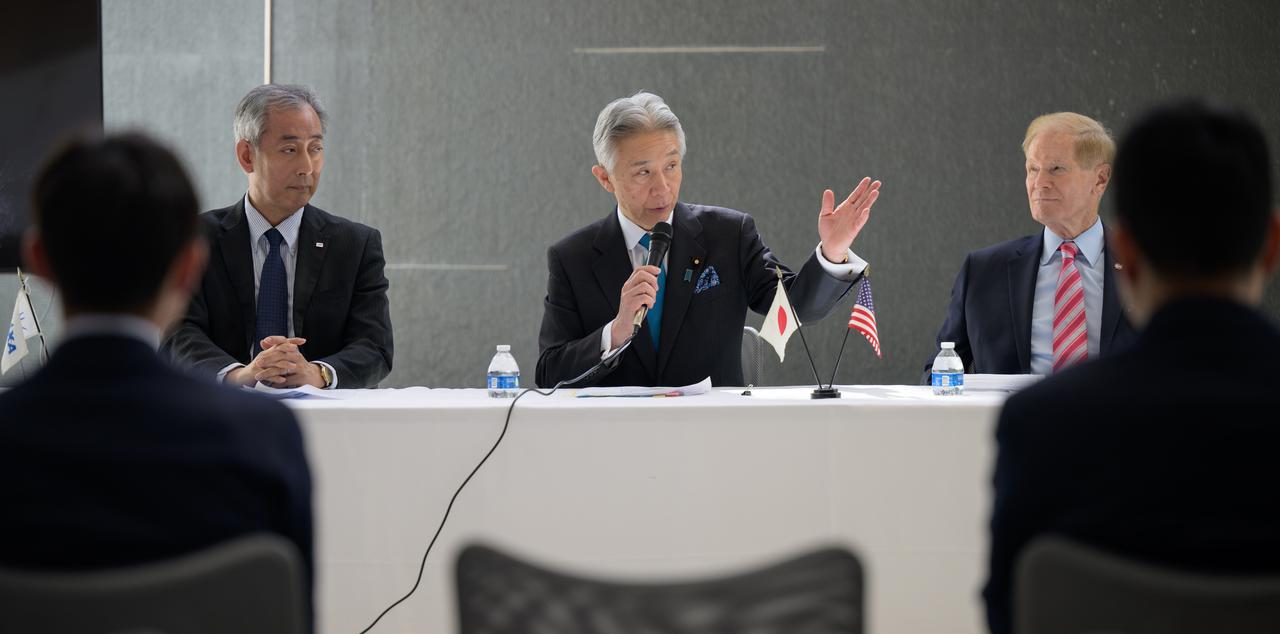
Japan’s Minister of Education, Culture, Sports, Science and Technology Masahito Moriyama, center, discusses the historic agreement signed April 9th at NASA Headquarters, between the United States and Japan to advance sustainable human exploration of the Moon, Wednesday, April 10, 2024, at the Japan Aerospace Exploration Agency (JAXA) offices in Washington. Under the agreement, Japan will design, develop, and operate a pressurized rover for crewed and uncrewed exploration on the Moon. NASA will provide the launch and delivery of the rover to the Moon as well as two Japanese astronaut missions to the lunar surface. Photo Credit: Photo Credit: (NASA/Bill Ingalls)

Japan’s Minister of Education, Culture, Sports, Science and Technology Masahito Moriyama discusses the historic agreement signed April 9th at NASA Headquarters, between the United States and Japan to advance sustainable human exploration of the Moon, Wednesday, April 10, 2024, at the Japan Aerospace Exploration Agency (JAXA) offices in Washington. Under the agreement, Japan will design, develop, and operate a pressurized rover for crewed and uncrewed exploration on the Moon. NASA will provide the launch and delivery of the rover to the Moon as well as two Japanese astronaut missions to the lunar surface. Photo Credit: Photo Credit: (NASA/Bill Ingalls)
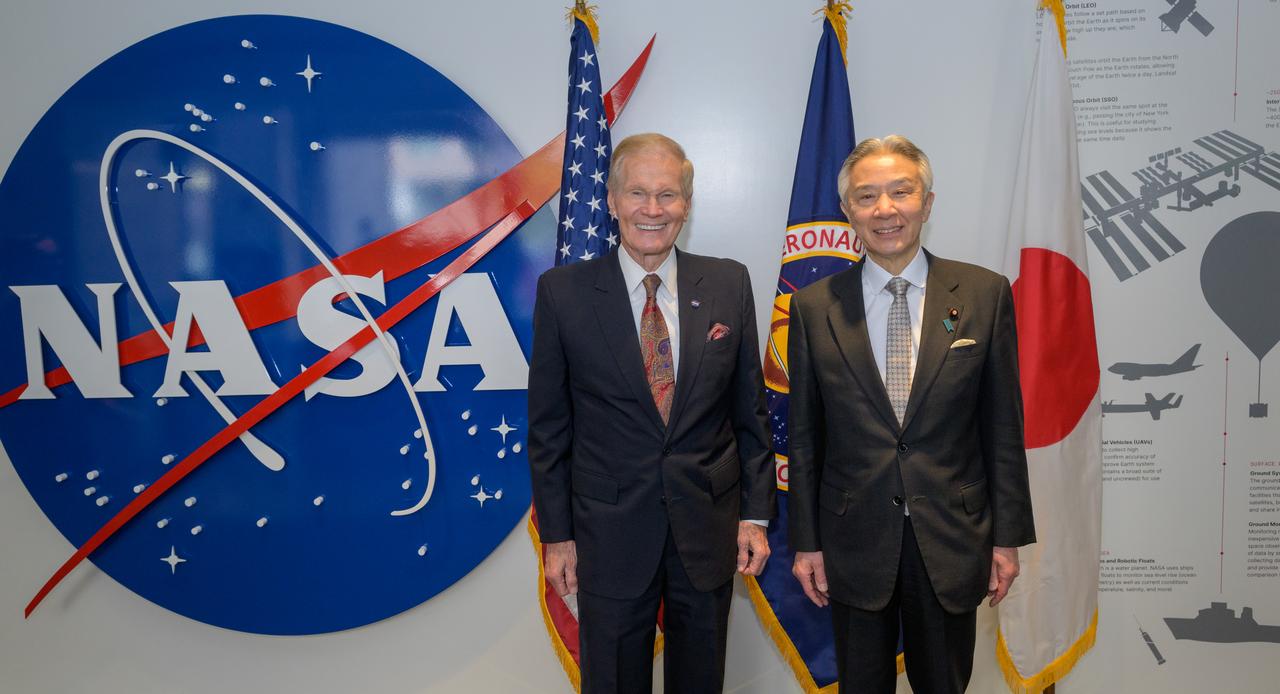
NASA Administrator Bill Nelson, left, and Japan’s Minister of Education, Culture, Sports, Science and Technology Masahito Moriyama, pose for a photograph prior to signing an historic agreement between the United States and Japan to advance sustainable human exploration of the Moon, Tuesday, April 9, 2024, at the NASA Headquarters Mary W. Jackson Building in Washington. Under the agreement, Japan will design, develop, and operate a pressurized rover for crewed and uncrewed exploration on the Moon. NASA will provide the launch and delivery of the rover to the Moon as well as two Japanese astronaut missions to the lunar surface. Photo Credit: (NASA/Bill Ingalls)
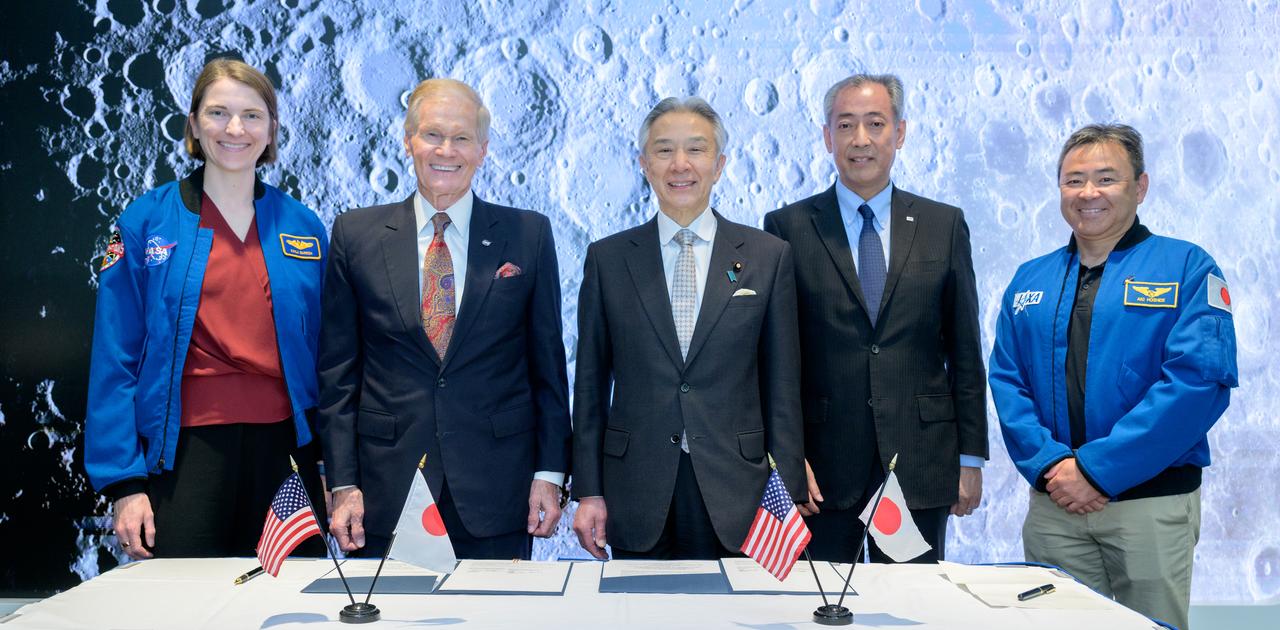
NASA astronaut Kayla Barron, left, NASA Administrator Bill Nelson, Japan’s Minister of Education, Culture, Sports, Science and Technology Masahito Moriyama, Japan Aerospace Exploration Agency (JAXA) President Hiroshi Yamakawa, and JAXA astronaut Akihiko Hoshide, right, pose for a group photograph after the signing of an historic agreement between the United States and Japan to advance sustainable human exploration of the Moon, Tuesday, April 9, 2024, at the NASA Headquarters Mary W. Jackson Building in Washington. Under the agreement, Japan will design, develop, and operate a pressurized rover for crewed and uncrewed exploration on the Moon. NASA will provide the launch and delivery of the rover to the Moon as well as two Japanese astronaut missions to the lunar surface. Photo Credit: (NASA/Bill Ingalls)
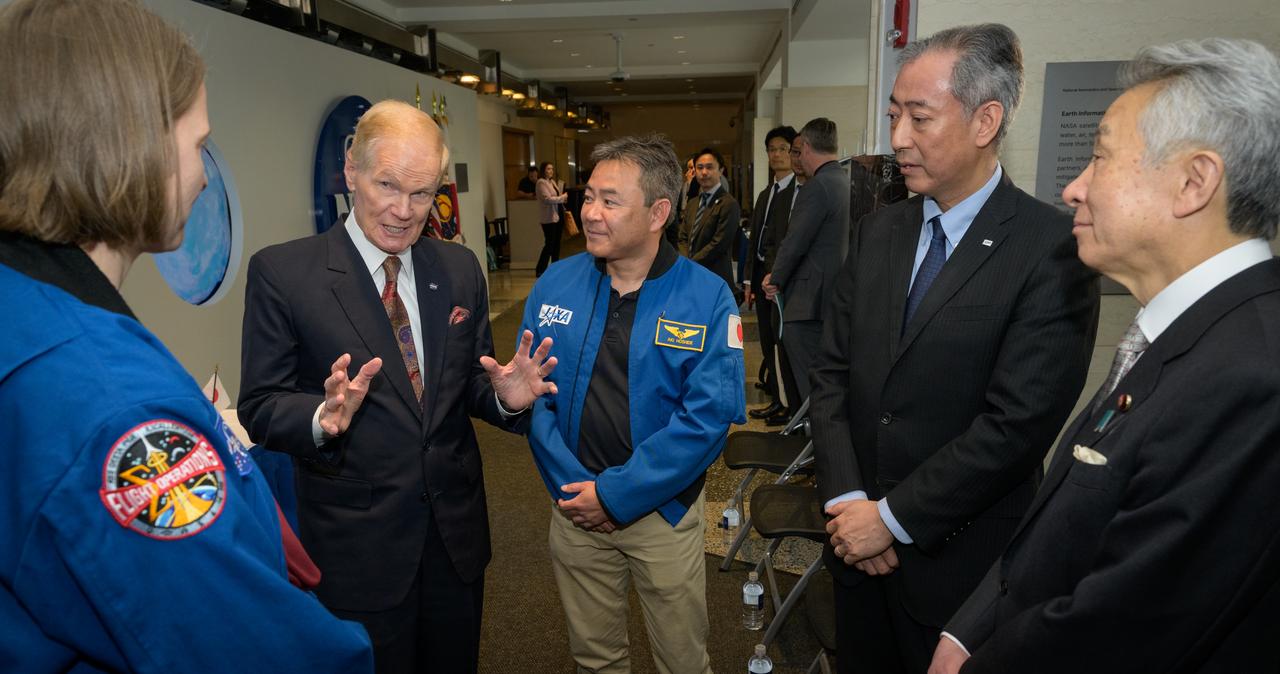
NASA astronaut Kayla Barron, left, NASA Administrator Bill Nelson, JAXA astronaut Akihiko Hoshide, Japan Aerospace Exploration Agency (JAXA) President Hiroshi Yamakawa, and Japan’s Minister of Education, Culture, Sports, Science and Technology Masahito Moriyama, right, talk after the signing of an historic agreement between the United States and Japan to advance sustainable human exploration of the Moon, Tuesday, April 9, 2024, at the NASA Headquarters Mary W. Jackson Building in Washington. Under the agreement, Japan will design, develop, and operate a pressurized rover for crewed and uncrewed exploration on the Moon. NASA will provide the launch and delivery of the rover to the Moon as well as two Japanese astronaut missions to the lunar surface. Photo Credit: (NASA/Bill Ingalls)

Japan Aerospace Exploration Agency (JAXA) President Hiroshi Yamakawa, left, Japan’s Minister of Education, Culture, Sports, Science and Technology Masahito Moriyama, and NASA Administrator Bill Nelson, right, are seen during a briefing where they discussed the historic agreement signed April 9th at NASA Headquarters, between the United States and Japan to advance sustainable human exploration of the Moon, Wednesday, April 10, 2024, at the Japan Aerospace Exploration Agency (JAXA) offices in Washington. Under the agreement, Japan will design, develop, and operate a pressurized rover for crewed and uncrewed exploration on the Moon. NASA will provide the launch and delivery of the rover to the Moon as well as two Japanese astronaut missions to the lunar surface. Photo Credit: Photo Credit: (NASA/Bill Ingalls)
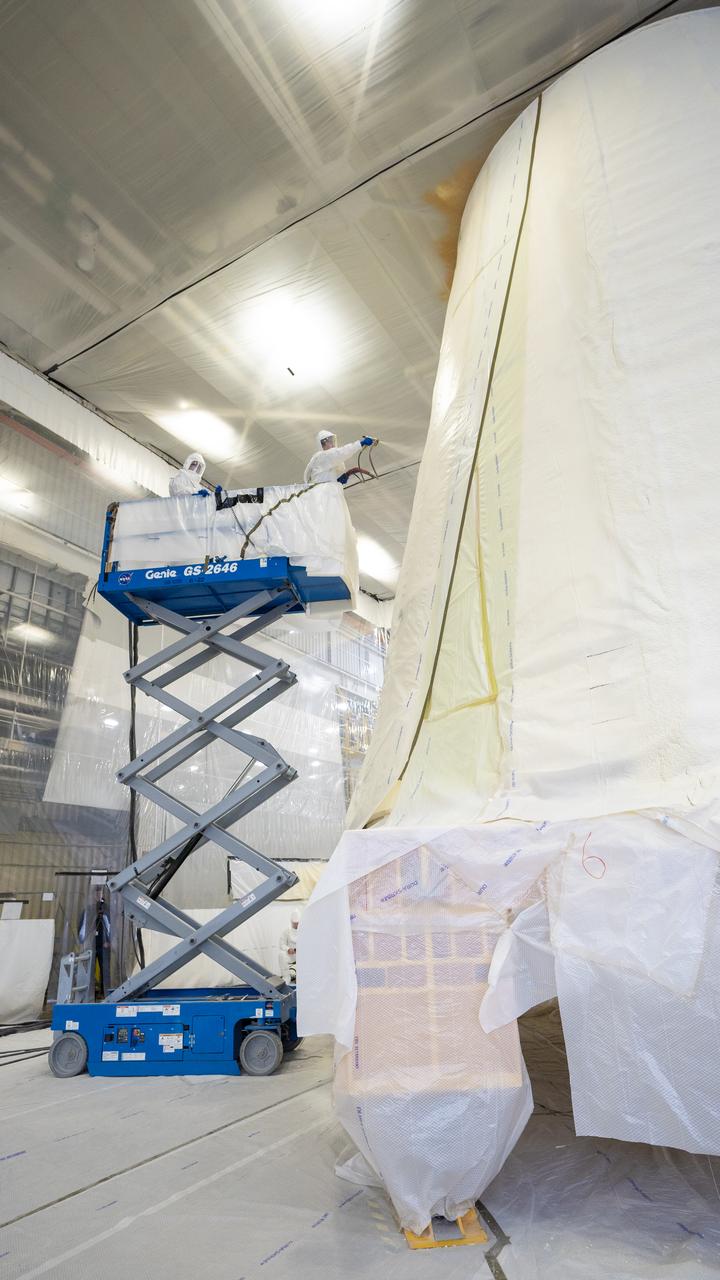
These photos show how technicians at NASA’s Marshall Space Flight Center in Huntsville, Alabama, have applied the thermal protection system material to the launch vehicle stage adapter (LVSA) of NASA’s SLS (Space Launch System) rocket for Artemis III, which will land astronauts on the Moon to advance long-term lunar exploration and scientific discovery and inspire the Artemis Generation. The LVSA is a cone-shaped element that connects the mega rocket’s core stage to its interim cryogenic propulsion stage (ICPS), partially enclosing it and protecting its avionics and electrical systems from the extreme pressures, sounds, and temperatures during launch and flight. Teams at Marshall began applying the thermal protection system material in the spring of 2023. Unlike other parts of the SLS rocket, the thermal protection system material for the LVSA is applied entirely by hand using a spray gun. During application, the technicians use a thin measuring rod to gauge the proper thickness. Once the thermal protection system has cured, certain areas are sanded down to meet parameters. The entire process takes several months. The LVSA is fully manufactured at Marshall by NASA, lead contractor Teledyne Brown Engineering, and the Jacobs Space Group’s ESSCA contract. The LVSA for Artemis III is the last of its kind as future SLS rockets will transition to its next, more powerful Block 1B configuration beginning with Artemis IV. NASA is working to land the first woman and first person of color on the Moon under Artemis. SLS is part of NASA’s backbone for deep space exploration, along with the Orion spacecraft, advanced spacesuits and rovers, the Gateway in orbit around the Moon, and commercial human landing systems. SLS is the only rocket that can send Orion, astronauts, and supplies to the Moon in a single mission.
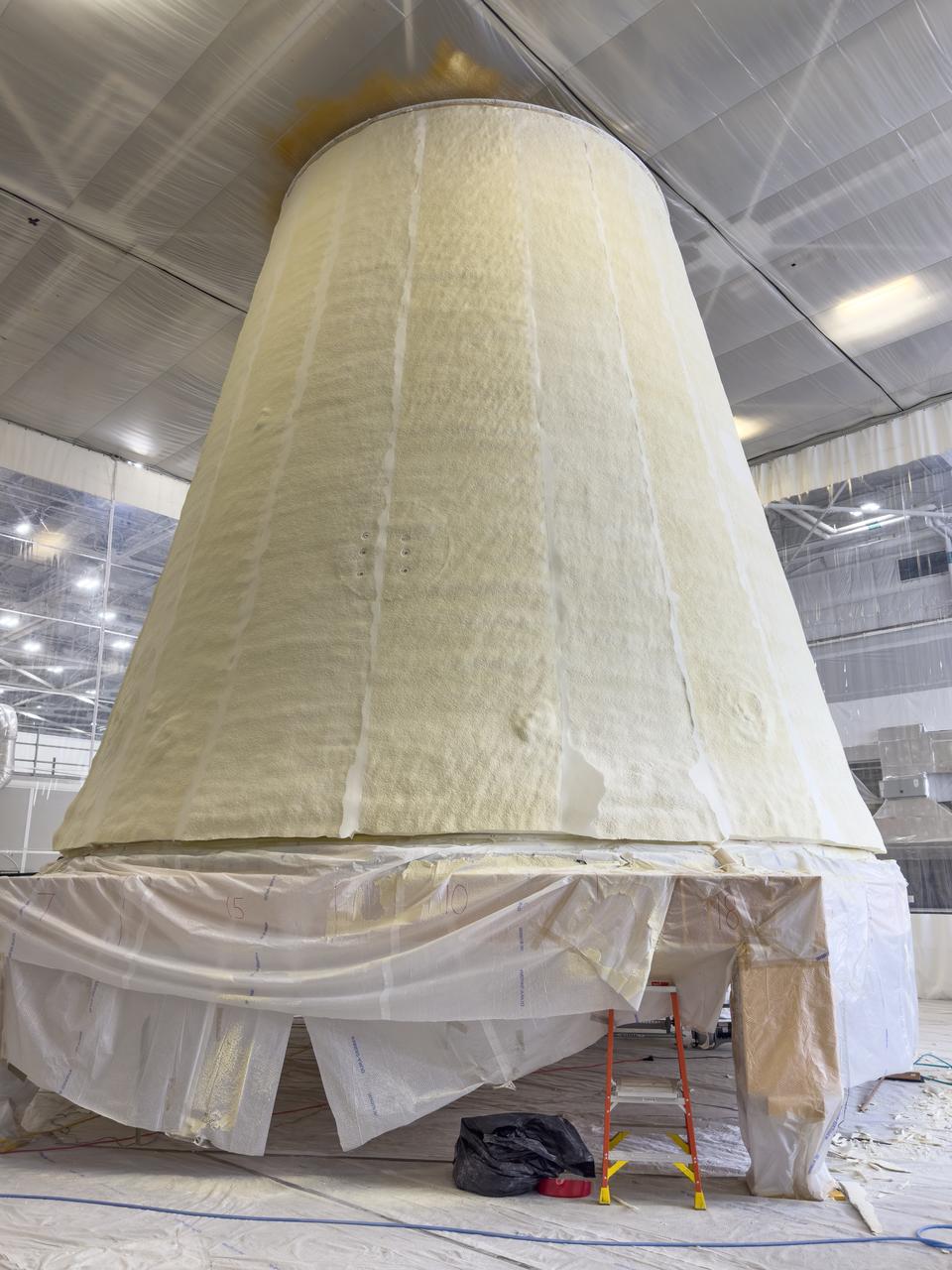
These photos show how technicians at NASA’s Marshall Space Flight Center in Huntsville, Alabama, have applied the thermal protection system material to the launch vehicle stage adapter (LVSA) of NASA’s SLS (Space Launch System) rocket for Artemis III, which will land astronauts on the Moon to advance long-term lunar exploration and scientific discovery and inspire the Artemis Generation. The LVSA is a cone-shaped element that connects the mega rocket’s core stage to its interim cryogenic propulsion stage (ICPS), partially enclosing it and protecting its avionics and electrical systems from the extreme pressures, sounds, and temperatures during launch and flight. Teams at Marshall began applying the thermal protection system material in the spring of 2023. Unlike other parts of the SLS rocket, the thermal protection system material for the LVSA is applied entirely by hand using a spray gun. During application, the technicians use a thin measuring rod to gauge the proper thickness. Once the thermal protection system has cured, certain areas are sanded down to meet parameters. The entire process takes several months. The LVSA is fully manufactured at Marshall by NASA, lead contractor Teledyne Brown Engineering, and the Jacobs Space Group’s ESSCA contract. The LVSA for Artemis III is the last of its kind as future SLS rockets will transition to its next, more powerful Block 1B configuration beginning with Artemis IV. NASA is working to land the first woman and first person of color on the Moon under Artemis. SLS is part of NASA’s backbone for deep space exploration, along with the Orion spacecraft, advanced spacesuits and rovers, the Gateway in orbit around the Moon, and commercial human landing systems. SLS is the only rocket that can send Orion, astronauts, and supplies to the Moon in a single mission.
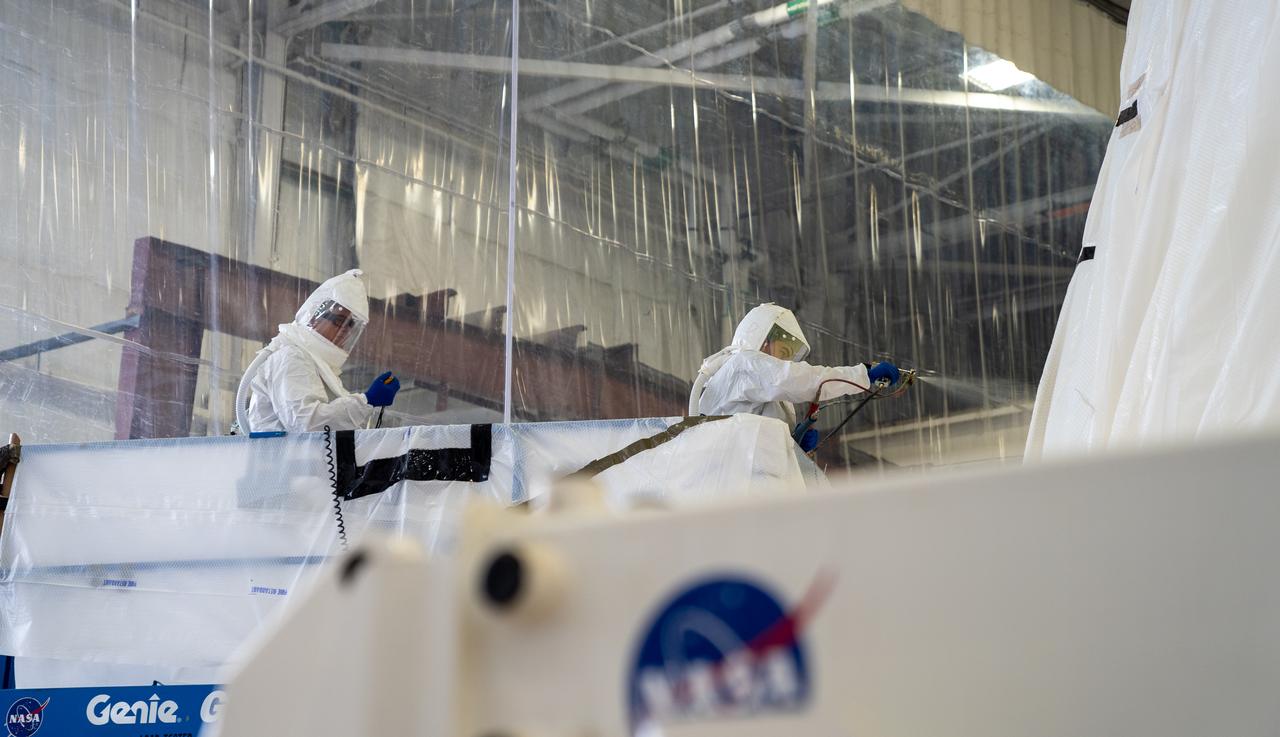
These photos show how technicians at NASA’s Marshall Space Flight Center in Huntsville, Alabama, have applied the thermal protection system material to the launch vehicle stage adapter (LVSA) of NASA’s SLS (Space Launch System) rocket for Artemis III, which will land astronauts on the Moon to advance long-term lunar exploration and scientific discovery and inspire the Artemis Generation. The LVSA is a cone-shaped element that connects the mega rocket’s core stage to its interim cryogenic propulsion stage (ICPS), partially enclosing it and protecting its avionics and electrical systems from the extreme pressures, sounds, and temperatures during launch and flight. Teams at Marshall began applying the thermal protection system material in the spring of 2023. Unlike other parts of the SLS rocket, the thermal protection system material for the LVSA is applied entirely by hand using a spray gun. During application, the technicians use a thin measuring rod to gauge the proper thickness. Once the thermal protection system has cured, certain areas are sanded down to meet parameters. The entire process takes several months. The LVSA is fully manufactured at Marshall by NASA, lead contractor Teledyne Brown Engineering, and the Jacobs Space Group’s ESSCA contract. The LVSA for Artemis III is the last of its kind as future SLS rockets will transition to its next, more powerful Block 1B configuration beginning with Artemis IV. NASA is working to land the first woman and first person of color on the Moon under Artemis. SLS is part of NASA’s backbone for deep space exploration, along with the Orion spacecraft, advanced spacesuits and rovers, the Gateway in orbit around the Moon, and commercial human landing systems. SLS is the only rocket that can send Orion, astronauts, and supplies to the Moon in a single mission.
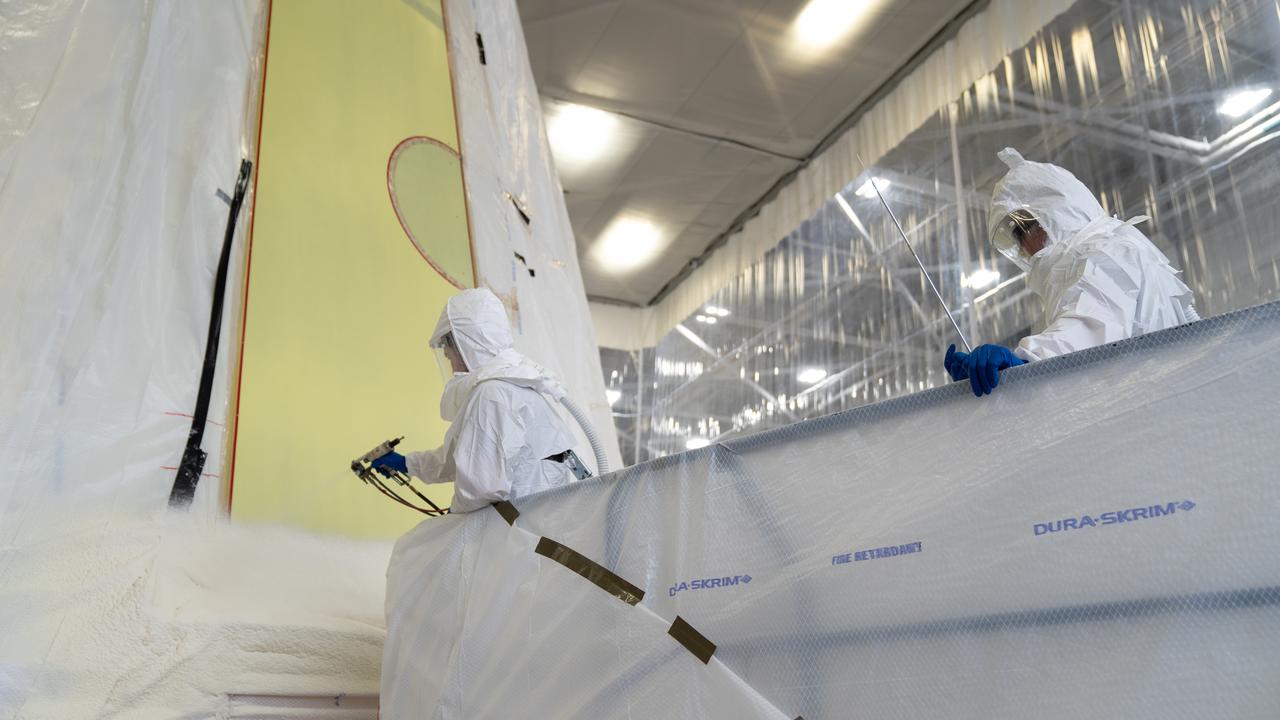
These photos show how technicians at NASA’s Marshall Space Flight Center in Huntsville, Alabama, have applied the thermal protection system material to the launch vehicle stage adapter (LVSA) of NASA’s SLS (Space Launch System) rocket for Artemis III, which will land astronauts on the Moon to advance long-term lunar exploration and scientific discovery and inspire the Artemis Generation. The LVSA is a cone-shaped element that connects the mega rocket’s core stage to its interim cryogenic propulsion stage (ICPS), partially enclosing it and protecting its avionics and electrical systems from the extreme pressures, sounds, and temperatures during launch and flight. Teams at Marshall began applying the thermal protection system material in the spring of 2023. Unlike other parts of the SLS rocket, the thermal protection system material for the LVSA is applied entirely by hand using a spray gun. During application, the technicians use a thin measuring rod to gauge the proper thickness. Once the thermal protection system has cured, certain areas are sanded down to meet parameters. The entire process takes several months. The LVSA is fully manufactured at Marshall by NASA, lead contractor Teledyne Brown Engineering, and the Jacobs Space Group’s ESSCA contract. The LVSA for Artemis III is the last of its kind as future SLS rockets will transition to its next, more powerful Block 1B configuration beginning with Artemis IV. NASA is working to land the first woman and first person of color on the Moon under Artemis. SLS is part of NASA’s backbone for deep space exploration, along with the Orion spacecraft, advanced spacesuits and rovers, the Gateway in orbit around the Moon, and commercial human landing systems. SLS is the only rocket that can send Orion, astronauts, and supplies to the Moon in a single mission.
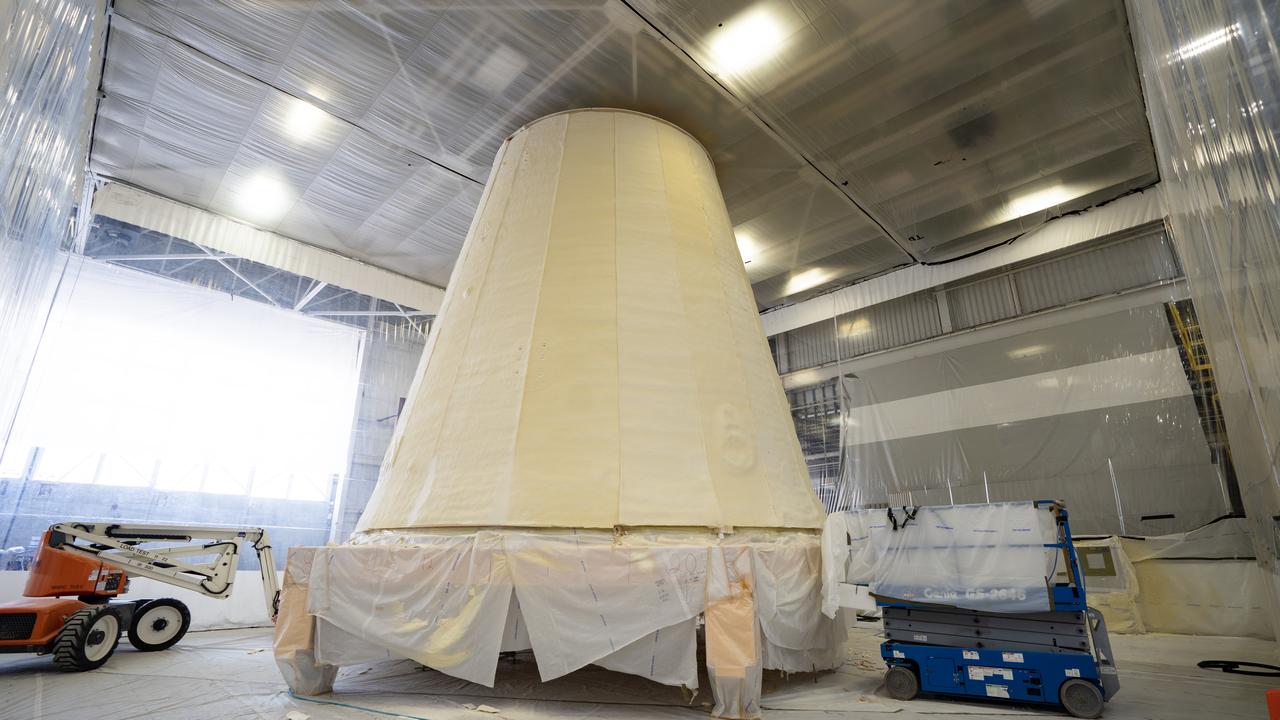
These photos show how technicians at NASA’s Marshall Space Flight Center in Huntsville, Alabama, have applied the thermal protection system material to the launch vehicle stage adapter (LVSA) of NASA’s SLS (Space Launch System) rocket for Artemis III, which will land astronauts on the Moon to advance long-term lunar exploration and scientific discovery and inspire the Artemis Generation. The LVSA is a cone-shaped element that connects the mega rocket’s core stage to its interim cryogenic propulsion stage (ICPS), partially enclosing it and protecting its avionics and electrical systems from the extreme pressures, sounds, and temperatures during launch and flight. Teams at Marshall began applying the thermal protection system material in the spring of 2023. Unlike other parts of the SLS rocket, the thermal protection system material for the LVSA is applied entirely by hand using a spray gun. During application, the technicians use a thin measuring rod to gauge the proper thickness. Once the thermal protection system has cured, certain areas are sanded down to meet parameters. The entire process takes several months. The LVSA is fully manufactured at Marshall by NASA, lead contractor Teledyne Brown Engineering, and the Jacobs Space Group’s ESSCA contract. The LVSA for Artemis III is the last of its kind as future SLS rockets will transition to its next, more powerful Block 1B configuration beginning with Artemis IV. NASA is working to land the first woman and first person of color on the Moon under Artemis. SLS is part of NASA’s backbone for deep space exploration, along with the Orion spacecraft, advanced spacesuits and rovers, the Gateway in orbit around the Moon, and commercial human landing systems. SLS is the only rocket that can send Orion, astronauts, and supplies to the Moon in a single mission.
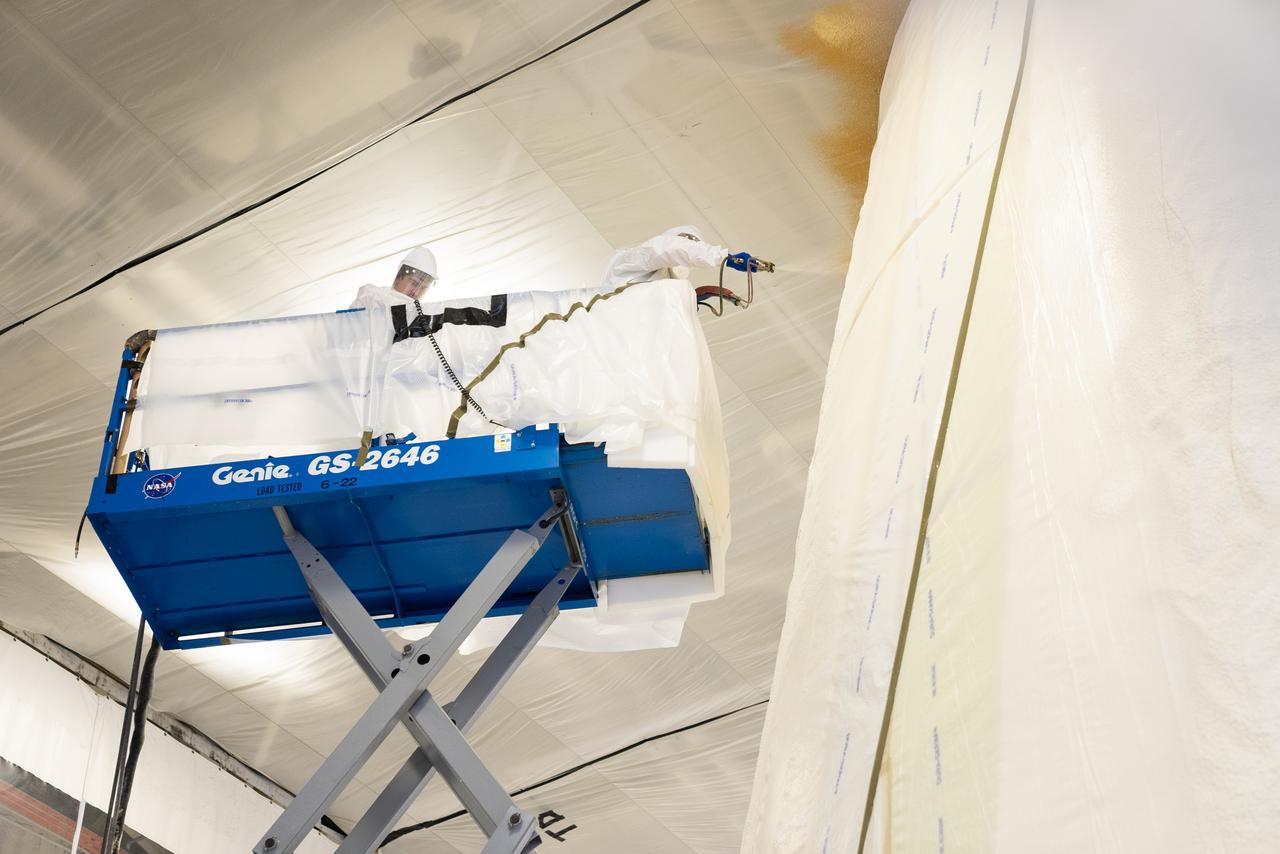
These photos show how technicians at NASA’s Marshall Space Flight Center in Huntsville, Alabama, have applied the thermal protection system material to the launch vehicle stage adapter (LVSA) of NASA’s SLS (Space Launch System) rocket for Artemis III, which will land astronauts on the Moon to advance long-term lunar exploration and scientific discovery and inspire the Artemis Generation. The LVSA is a cone-shaped element that connects the mega rocket’s core stage to its interim cryogenic propulsion stage (ICPS), partially enclosing it and protecting its avionics and electrical systems from the extreme pressures, sounds, and temperatures during launch and flight. Teams at Marshall began applying the thermal protection system material in the spring of 2023. Unlike other parts of the SLS rocket, the thermal protection system material for the LVSA is applied entirely by hand using a spray gun. During application, the technicians use a thin measuring rod to gauge the proper thickness. Once the thermal protection system has cured, certain areas are sanded down to meet parameters. The entire process takes several months. The LVSA is fully manufactured at Marshall by NASA, lead contractor Teledyne Brown Engineering, and the Jacobs Space Group’s ESSCA contract. The LVSA for Artemis III is the last of its kind as future SLS rockets will transition to its next, more powerful Block 1B configuration beginning with Artemis IV. NASA is working to land the first woman and first person of color on the Moon under Artemis. SLS is part of NASA’s backbone for deep space exploration, along with the Orion spacecraft, advanced spacesuits and rovers, the Gateway in orbit around the Moon, and commercial human landing systems. SLS is the only rocket that can send Orion, astronauts, and supplies to the Moon in a single mission.