
KENNEDY SPACE CENTER, Fla. -- The Microwave Anisotropy Probe (MAP) is mated to the upper stage of the Boeing Delta II rocket. The rocket is scheduled to launch the MAP instrument June 30 into a lunar-assisted trajectory to the Sun-Earth for a 27-month mission. MAP will measure small fluctuations in the temperature of the cosmic microwave background radiation to an accuracy of one millionth of a degree. These measurements should reveal the size, matter content, age, geometry and fate of the universe. They will also reveal the primordial structure that grew to form galaxies and will test ideas about the origins of these primordial structures. The MAP instrument will be continuously shaded from the Sun, Earth, and Moon by the spacecraft. It is a product of Goddard Space Flight Center in partnership with Princeton University

Eric Zirnstein, researcher, Princeton University, speaks at an event to celebrate the 40th Anniversary of the launch of the Voyager 1 and 2 missions, Tuesday, September 5, 2017 at Smithsonian's National Air and Space Museum in Washington. Voyager 1 was launched September 5, 1977, with a mission to study Jupiter and Saturn, but now the twin Voyager spacecrafts are on a journey into interstellar space to search for the heliopause, a region never reached by any other spacecraft. Photo Credit: (NASA/Aubrey
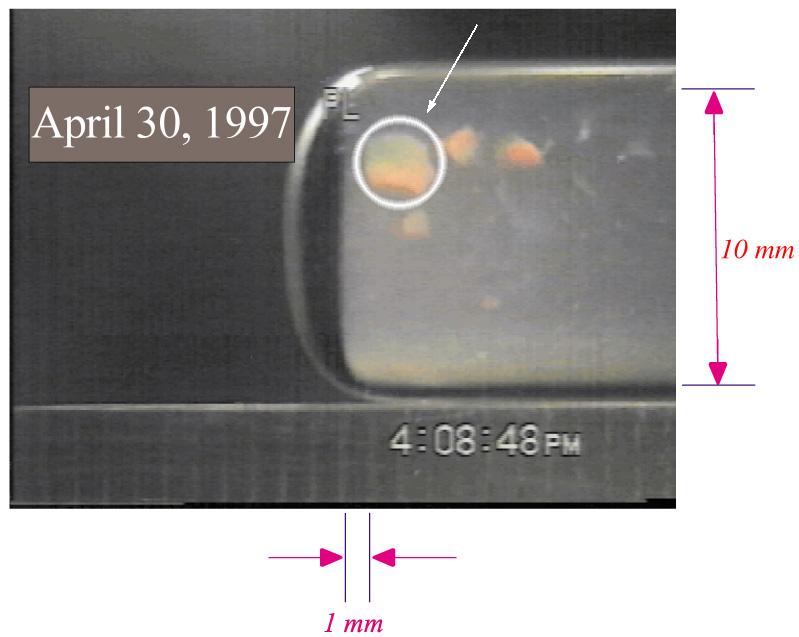
Experiments with colloidal solutions of plastic microspheres suspended in a liquid serve as models of how molecules interact and form crystals. For the Dynamics of Colloidal Disorder-Order Transition (CDOT) experiment, Paul Chaikin of Princeton University has identified effects that are attributable to Earth's gravity and demonstrated that experiments are needed in the microgravity of orbit. Space experiments have produced unexpected dendritic (snowflake-like) structures. To date, the largest hard sphere crystal grown is a 3 mm single crystal grown at the cool end of a ground sample. At least two more additional flight experiments are plarned aboard the International Space Station. This image is from a video downlink.

CAPE CANAVERAL, Fla. – Dr. Christopher Chyba, professor of Astrophysical Sciences and International Affairs at Princeton University, speaks during the Augustine Commission, meeting in Cocoa Beach, Fla. At the request of the Office of Science and Technology Policy, NASA established the Review of U.S. Human Space Flight Plans Committee, known as the Augustine Commission. Chaired by Norman R. Augustine, retired chairman and CEO of Lockheed Martin Corp., the committee is conducting an independent review of ongoing U.S. human spaceflight plans and programs, as well as alternatives, to ensure the nation is pursuing the best trajectory for the future of human space flight - one that is safe, innovative, affordable, and sustainable. Photo credit: NASA/Jim Grossmann
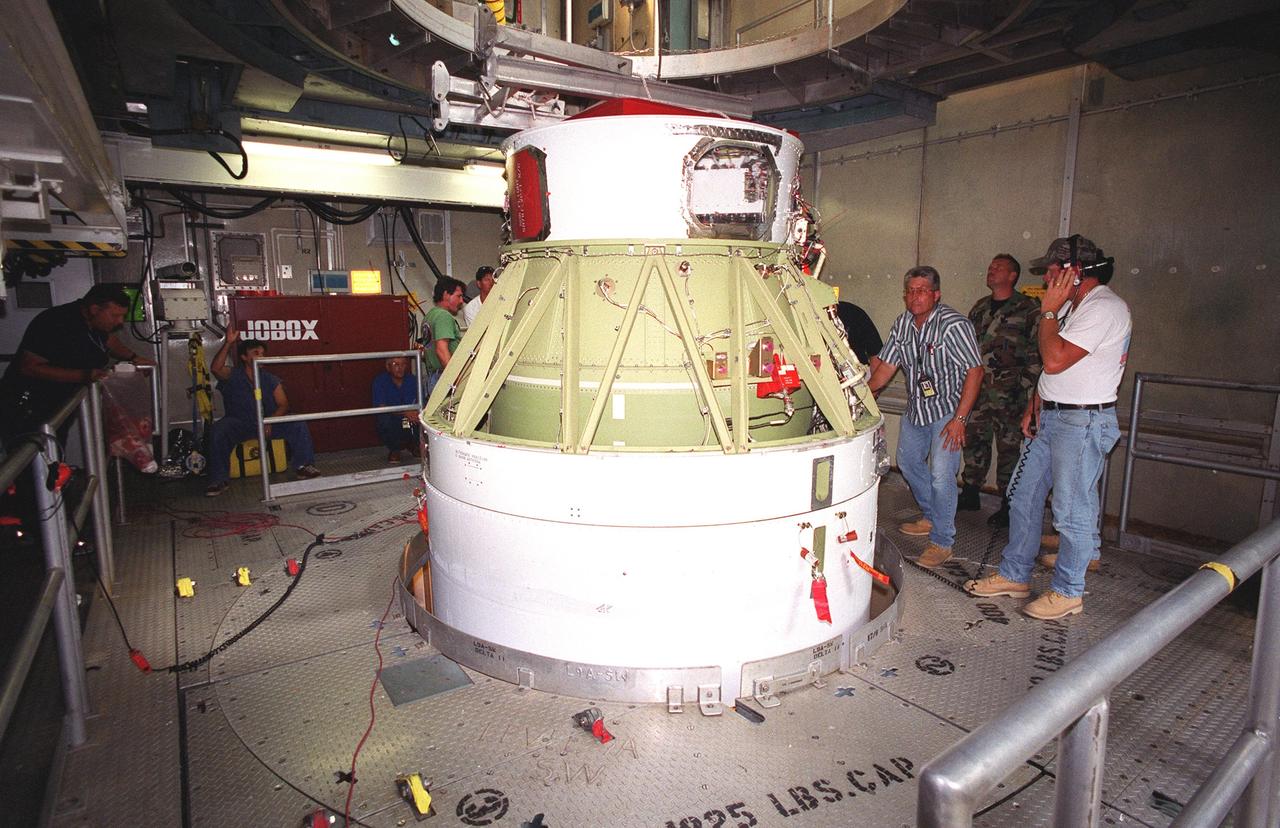
KENNEDY SPACE CENTER, FLA. -- On Launch Complex 17-B, Cape Canaveral Air Force Station, the second stage of a Boeing Delta 7425-10 rocket is lifted into position as preparations to launch NASA's Microwave Anisotropy Probe (MAP) on June 30 continue. The launch will place MAP into a lunar-assisted trajectory to the Sun-Earth for a 27-month mission.; The probe will measure small fluctuations in the temperature of the cosmic microwave background radiation to an accuracy of one millionth of a degree. These measurements should reveal the size, matter content, age, geometry and fate of the universe. They will also reveal the primordial structure that grew to form galaxies and will test ideas about the origins of these primordial structures. The MAP instrument will be continuously shaded from the Sun, Earth, and Moon by the spacecraft. The probe is a product of Goddard Space Flight Center in partnership with Princeton University

KENNEDY SPACE CENTER, Fla. -- Photographers gather in the Spacecraft Assembly and Encapsulation Facility -2 for a media showing of the Microwave Anisotropy Probe (MAP). The MAP is mated to the upper stage of the Boeing Delta II rocket. The rocket is scheduled to launch the MAP instrument June 30 into a lunar-assisted trajectory to the Sun-Earth for a 27-month mission. MAP will measure small fluctuations in the temperature of the cosmic microwave background radiation to an accuracy of one millionth of a degree. These measurements should reveal the size, matter content, age, geometry and fate of the universe. They will also reveal the primordial structure that grew to form galaxies and will test ideas about the origins of these primordial structures. The MAP instrument will be continuously shaded from the Sun, Earth, and Moon by the spacecraft. It is a product of Goddard Space Flight Center in partnership with Princeton University
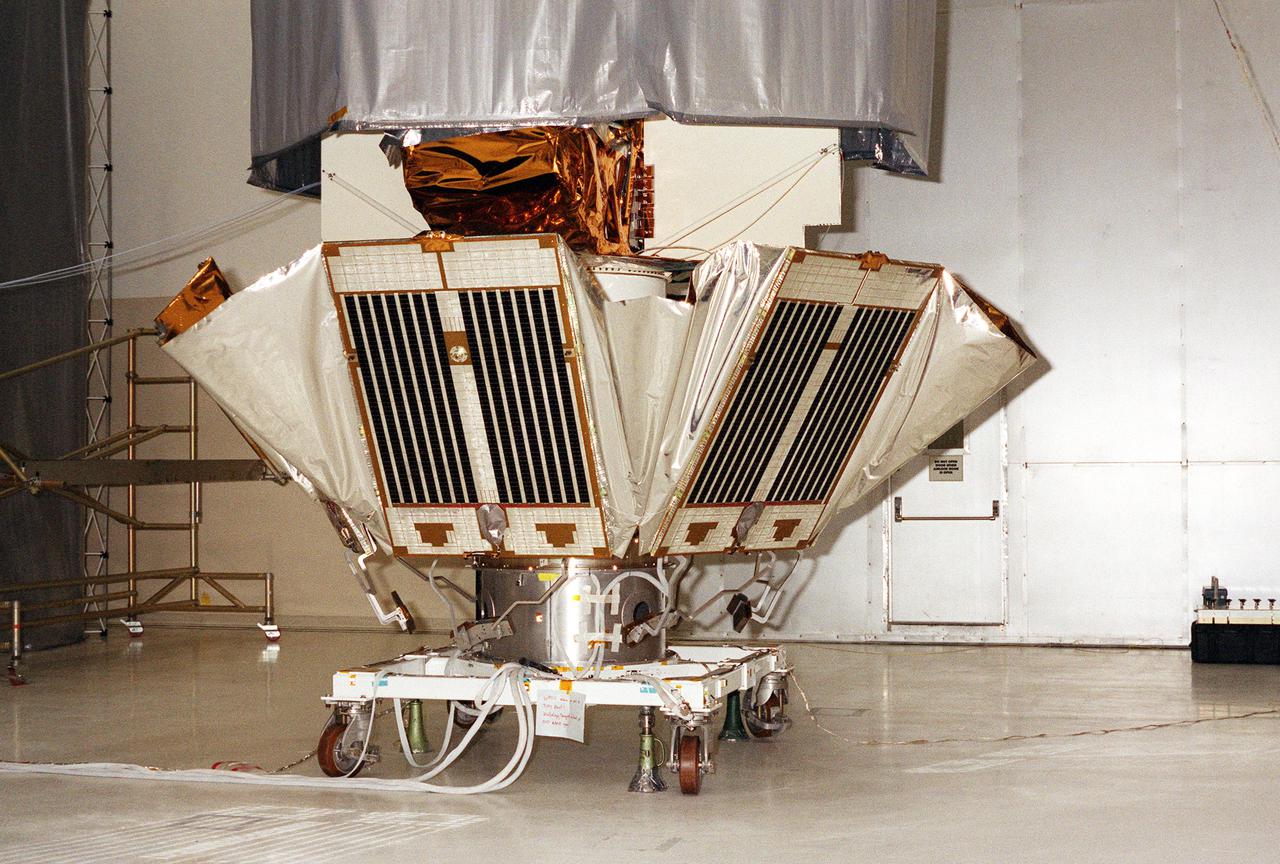
KENNEDY SPACE CENTER, FLA. -- Solar panels on the Microwave Anisotropy Probe (MAP) spacecraft begin deployment in the Spacecraft Assembly and Encapsulation Facility 2. MAP is scheduled for launch on June 30 aboard a Boeing Delta II rocket. The launch will place MAP into a lunar-assisted trajectory to the Sun-Earth for a 27-month mission. The probe will measure small fluctuations in the temperature of the cosmic microwave background radiation to an accuracy of one millionth of a degree. These measurements should reveal the size, matter content, age, geometry and fate of the universe. They will also reveal the primordial structure that grew to form galaxies and will test ideas about the origins of these primordial structures. The MAP instrument will be continuously shaded from the Sun, Earth, and Moon by the spacecraft. The probe is a product of Goddard Space Flight Center in partnership with Princeton University
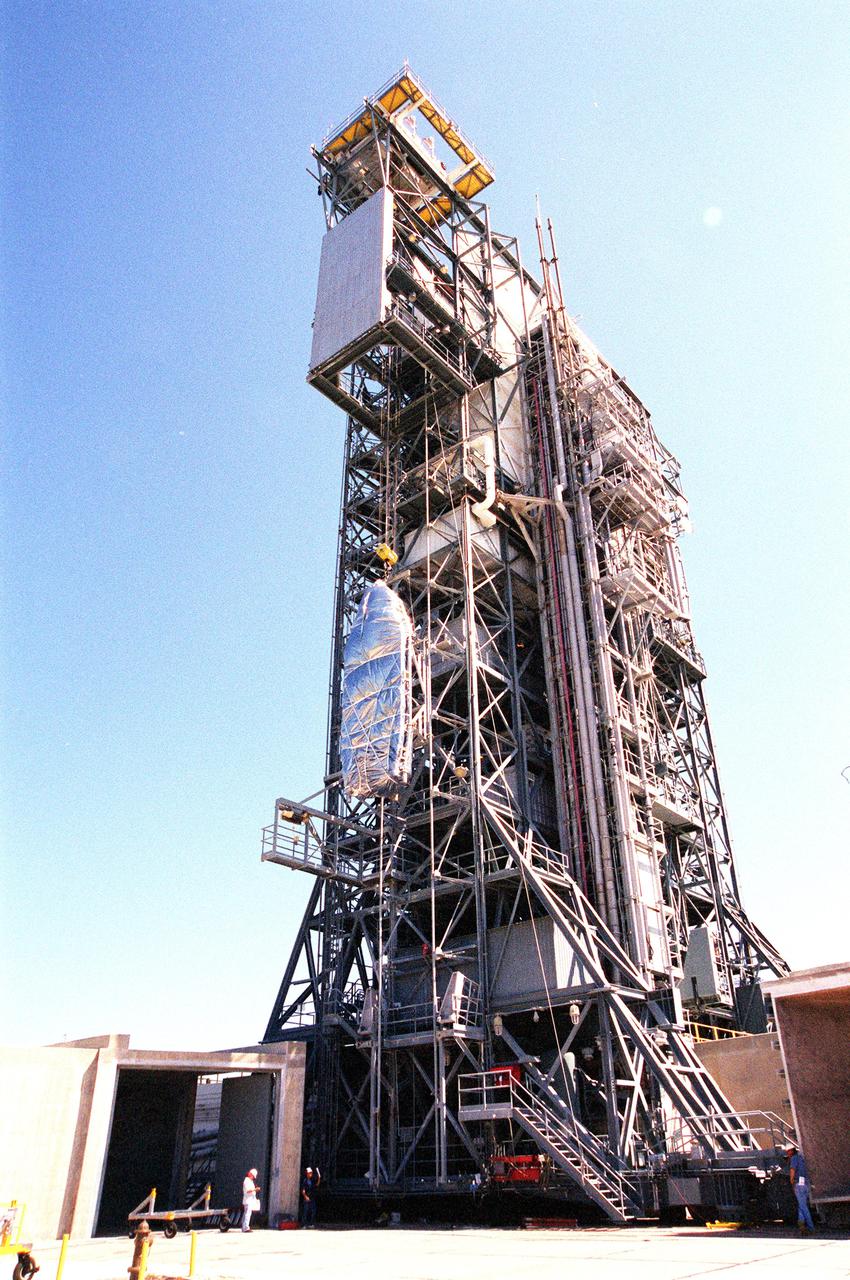
KENNEDY SPACE CENTER, FLA. -- On Complex 17-A, Cape Canaveral Air Force Station, the fairing for the Microwave Anisotropy Probe (MAP) spacecraft is lifted up the gantry to the White Room. There it will wait for the arrival of the spacecraft. MAP is scheduled for launch on June 30 aboard a Boeing Delta II rocket. The launch will place MAP into a lunar-assisted trajectory to the Sun-Earth for a 27-month mission. The probe will measure small fluctuations in the temperature of the cosmic microwave background radiation to an accuracy of one millionth of a degree. These measurements should reveal the size, matter content, age, geometry and fate of the universe. They will also reveal the primordial structure that grew to form galaxies and will test ideas about the origins of these primordial structures. The MAP instrument will be continuously shaded from the Sun, Earth, and Moon by the spacecraft. The probe is a product of Goddard Space Flight Center in partnership with Princeton University

KENNEDY SPACE CENTER, Fla. -- Engineers in Hangar A&E, Cape Canaveral Air Force Station, wait to track the launch of the Boeing Delta II rocket carrying the Microwave Anisotropy Probe (MAP) spacecraft. The screens above the console show the rocket on the launch pad. The launch will place MAP into a lunar-assisted trajectory to the Sun-Earth for a 27-month mission. The probe will measure small fluctuations in the temperature of the cosmic microwave background radiation to an accuracy of one millionth of a degree. These measurements should reveal the size, matter content, age, geometry and fate of the universe. They will also reveal the primordial structure that grew to form galaxies and will test ideas about the origins of these primordial structures. The MAP instrument will be continuously shaded from the Sun, Earth, and Moon by the spacecraft. The probe is a product of Goddard Space Flight Center in partnership with Princeton University. Launch is scheduled for 3:46 p.m. EDT
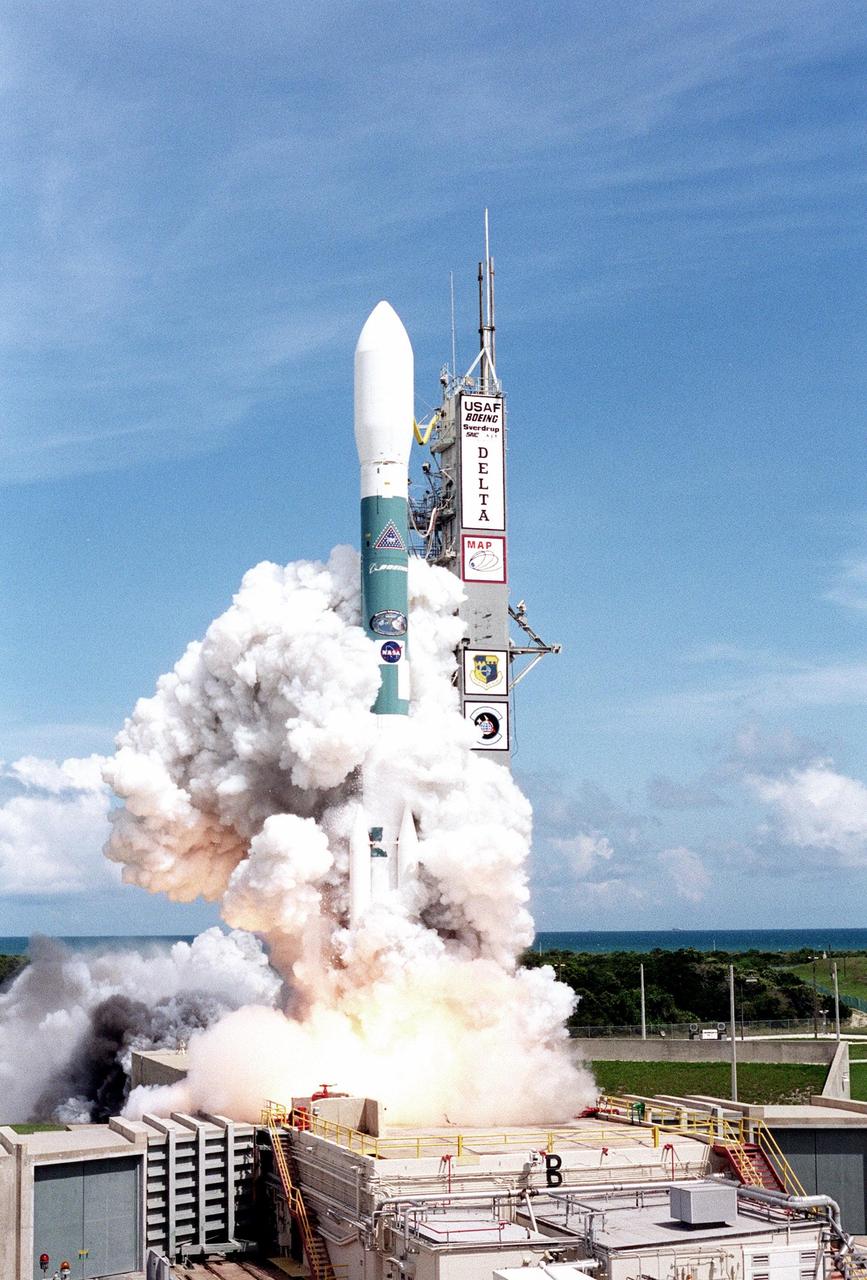
KENNEDY SPACE CENTER, Fla. -- Wrapped in billows of smoke and steam, the Boeing Delta II rocket lifts off Launch Complex 17-A, Cape Canaveral Air Force Station, carrying the Microwave Anisotropy Probe (MAP) spacecraft. The successful launch occurred at 3:46:46 p.m. EDT. The launch will place MAP into a lunar-assisted trajectory to the Sun-Earth for a 27-month mission. The probe will measure small fluctuations in the temperature of the cosmic microwave background radiation to an accuracy of one millionth of a degree. These measurements should reveal the size, matter content, age, geometry and fate of the universe. They will also reveal the primordial structure that grew to form galaxies and will test ideas about the origins of these primordial structures. The MAP instrument will be continuously shaded from the Sun, Earth, and Moon by the spacecraft. The probe is a product of Goddard Space Flight Center in partnership with Princeton University

KENNEDY SPACE CENTER, Fla. -- In the Spacecraft Assembly and Encapsulation Facility -2, the Microwave Anisotropy Probe (MAP) is lifted for moving to the upper stage of the Boeing Delta II rocket. The rocket is scheduled to launch the MAP instrument June 30 into a lunar-assisted trajectory to the Sun-Earth for a 27-month mission. MAP will measure small fluctuations in the temperature of the cosmic microwave background radiation to an accuracy of one millionth of a degree. These measurements should reveal the size, matter content, age, geometry and fate of the universe. They will also reveal the primordial structure that grew to form galaxies and will test ideas about the origins of these primordial structures. The MAP instrument will be continuously shaded from the Sun, Earth, and Moon by the spacecraft. It is a product of Goddard Space Flight Center in partnership with Princeton University
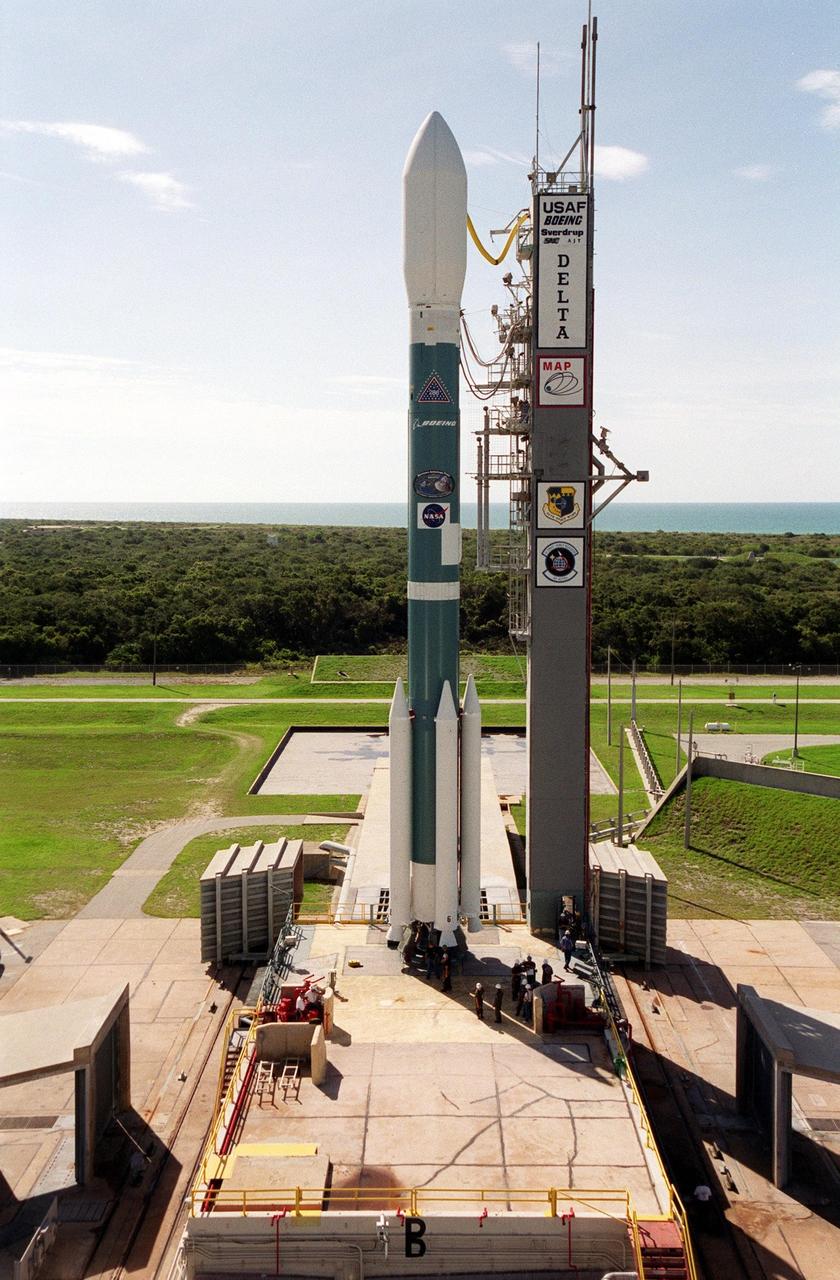
KENNEDY SPACE CENTER, Fla. -- The morning sky is nearly clear over Launch Complex 17-A, Cape Canaveral Air Force Station, and the waiting Boeing/Delta II rocket. The Atlantic Ocean can be seen on the horizon. Topping the rocket is the payload, the Microwave Anisotropy Probe (MAP) spacecraft. Launch is scheduled at 3:46 p.m. EDT June 30. The launch will place MAP into a lunar-assisted trajectory to the Sun-Earth for a 27-month mission. The probe will measure small fluctuations in the temperature of the cosmic microwave background radiation to an accuracy of one millionth of a degree. These measurements should reveal the size, matter content, age, geometry and fate of the universe. They will also reveal the primordial structure that grew to form galaxies and will test ideas about the origins of these primordial structures. The MAP instrument will be continuously shaded from the Sun, Earth, and Moon by the spacecraft. The probe is a product of Goddard Space Flight Center in partnership with Princeton University

KENNEDY SPACE CENTER, FLA. -- On Launch Complex 17-B, Cape Canaveral Air Force Station, the first stage of a Boeing Delta rocket arrives at the pad. When fully assembled, the rocket is scheduled to launch the MAP instrument June 30 into a lunar-assisted trajectory to the Sun-Earth for a 27-month mission. MAP will measure small fluctuations in the temperature of the cosmic microwave background radiation to an accuracy of one millionth of a degree. These measurements should reveal the size, matter content, age, geometry and fate of the universe. They will also reveal the primordial structure that grew to form galaxies and will test ideas about the origins of these primordial structures. The MAP instrument will be continuously shaded from the Sun, Earth, and Moon by the spacecraft. It is a product of Goddard Space Flight Center in partnership with Princeton University
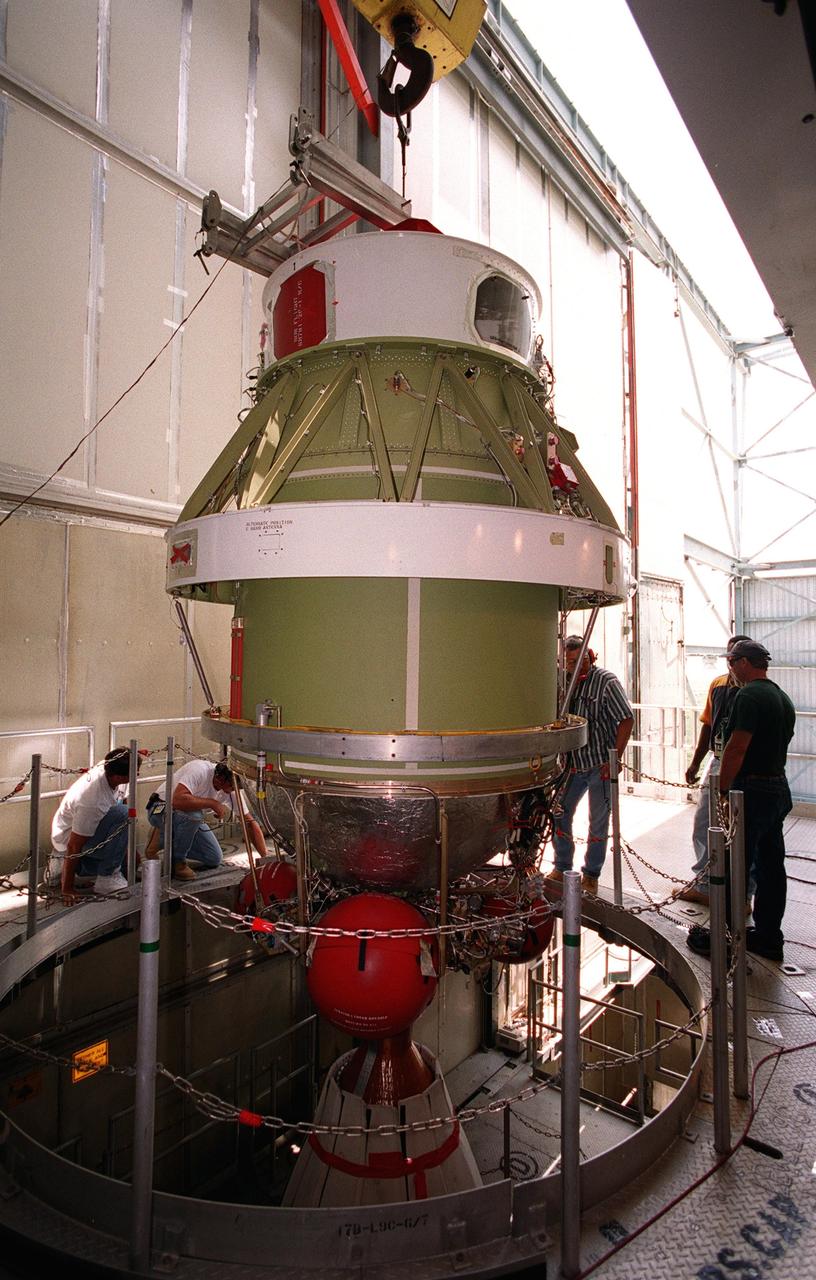
On Launch Complex 17-B, Cape Canaveral Air Force Station, the second stage of a Boeing Delta 7425-10 rocket is lifted into position as preparations to launch NASA's Microwave Anisotropy Probe (MAP) on June 30 continue. The launch will place MAP into a lunar-assisted trajectory to the Sun-Earth for a 27-month mission.; The probe will measure small fluctuations in the temperature of the cosmic microwave background radiation to an accuracy of one millionth of a degree. These measurements should reveal the size, matter content, age, geometry and fate of the universe. They will also reveal the primordial structure that grew to form galaxies and will test ideas about the origins of these primordial structures. The MAP instrument will be continuously shaded from the Sun, Earth, and Moon by the spacecraft. The probe is a product of Goddard Space Flight Center in partnership with Princeton University
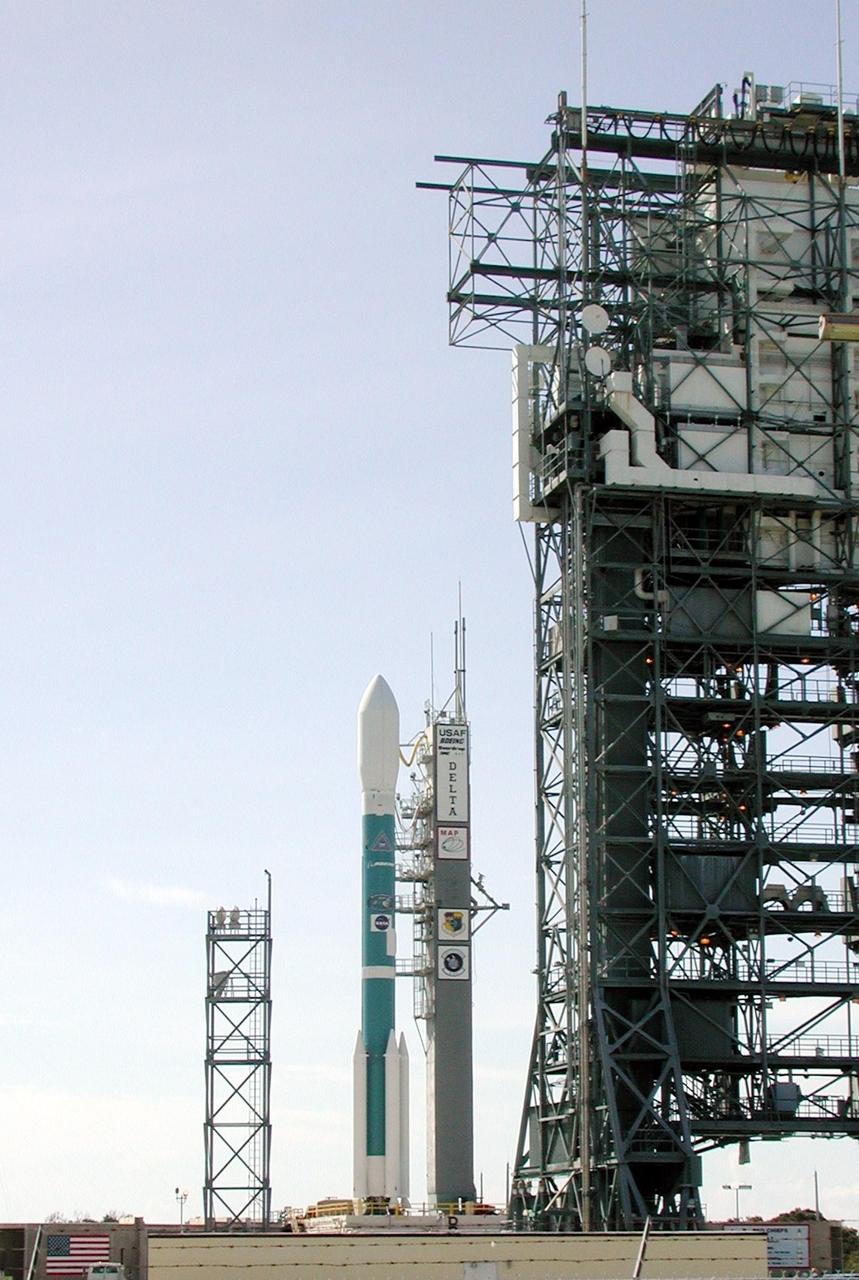
KENNEDY SPACE CENTER, Fla. -- The Boeing Delta II rocket is poised for flight on Launch Complex 17-A, Cape Canaveral Air Force Station, after rollback of the Mobile Service Tower (right). Topping the rocket is the payload, the Microwave Anisotropy Probe (MAP) spacecraft. Launch is scheduled at 3:46 p.m. EDT June 30. The launch will place MAP into a lunar-assisted trajectory to the Sun-Earth for a 27-month mission. The probe will measure small fluctuations in the temperature of the cosmic microwave background radiation to an accuracy of one millionth of a degree. These measurements should reveal the size, matter content, age, geometry and fate of the universe. They will also reveal the primordial structure that grew to form galaxies and will test ideas about the origins of these primordial structures. The MAP instrument will be continuously shaded from the Sun, Earth, and Moon by the spacecraft. The probe is a product of Goddard Space Flight Center in partnership with Princeton University
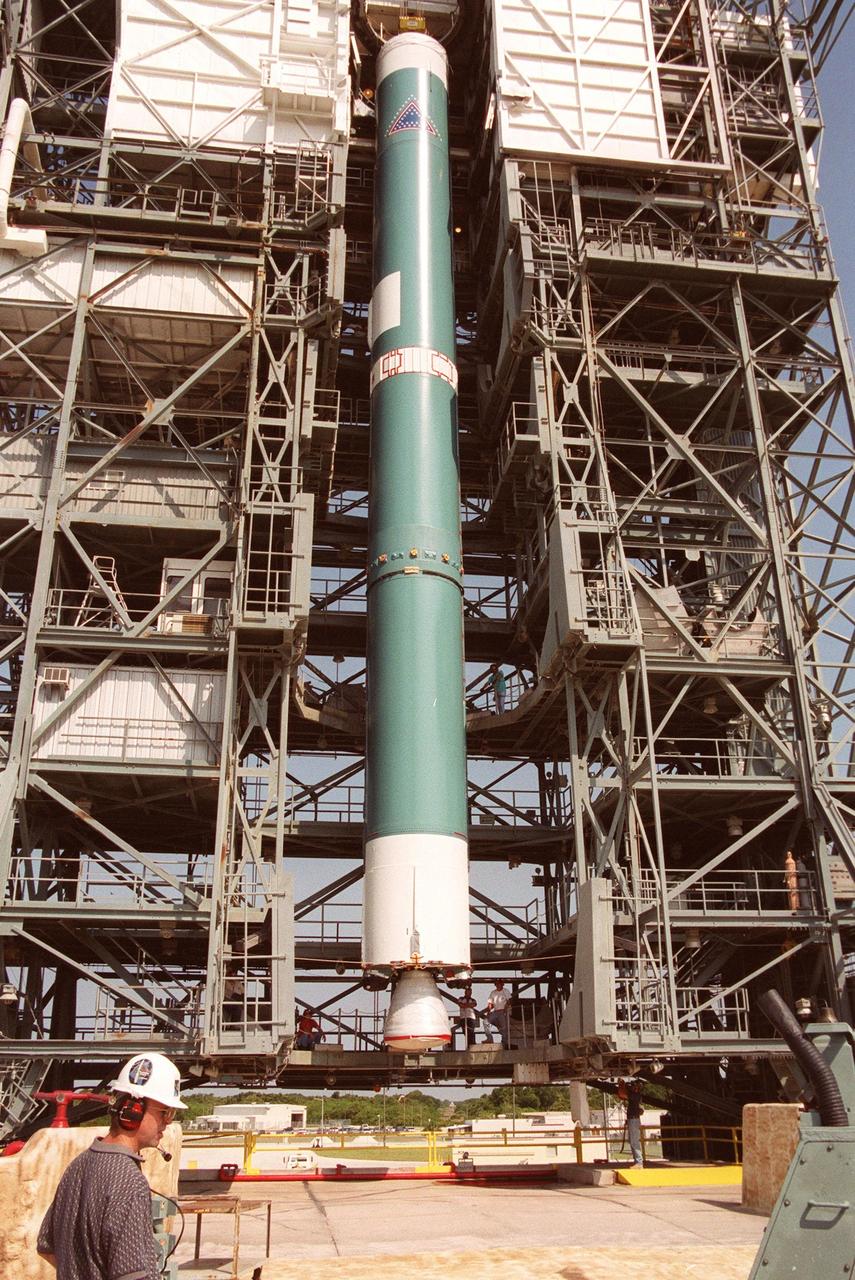
KENNEDY SPACE CENTER, FLA. -- On Launch Complex 17-B, Cape Canaveral Air Force Station, the first stage of a Boeing Delta rocket is suspended in the gantry on the pad. When fully assembled, the rocket is scheduled to launch the MAP instrument June 30 into a lunar-assisted trajectory to the Sun-Earth for a 27-month mission. MAP will measure small fluctuations in the temperature of the cosmic microwave background radiation to an accuracy of one millionth of a degree. These measurements should reveal the size, matter content, age, geometry and fate of the universe. They will also reveal the primordial structure that grew to form galaxies and will test ideas about the origins of these primordial structures. The MAP instrument will be continuously shaded from the Sun, Earth, and Moon by the spacecraft. It is a product of Goddard Space Flight Center in partnership with Princeton University
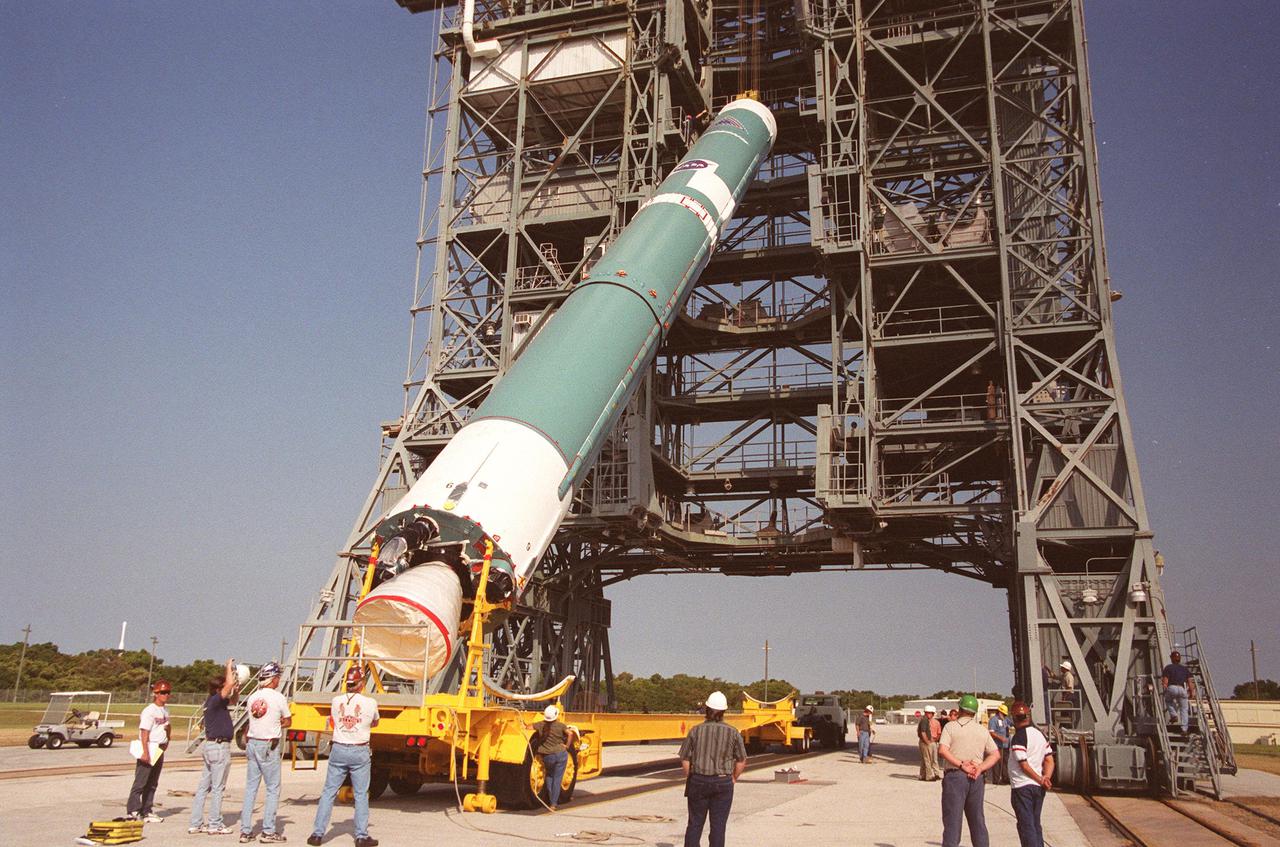
KENNEDY SPACE CENTER, FLA. -- On Launch Complex 17-B, Cape Canaveral Air Force Station, the first stage of a Boeing Delta rocket is lifted to vertical as it moves up the gantry. When fully assembled, the rocket is scheduled to launch the MAP instrument June 30 into a lunar-assisted trajectory to the Sun-Earth for a 27-month mission. MAP will measure small fluctuations in the temperature of the cosmic microwave background radiation to an accuracy of one millionth of a degree. These measurements should reveal the size, matter content, age, geometry and fate of the universe. They will also reveal the primordial structure that grew to form galaxies and will test ideas about the origins of these primordial structures. The MAP instrument will be continuously shaded from the Sun, Earth, and Moon by the spacecraft. It is a product of Goddard Space Flight Center in partnership with Princeton University

KENNEDY SPACE CENTER, Fla. -- The Delta II rocket, carrying the Microwave Anisotropy Probe (MAP) spacecraft, arcs through the cloud-washed blue sky while photographers try to capture the spectacle from the ground. The successful launch from Launch Complex 17-A, Cape Canaveral Air Force Station, occurred at 3:46:46 p.m. EDT. The launch will place MAP into a lunar-assisted trajectory to the Sun-Earth for a 27-month mission. The probe will measure small fluctuations in the temperature of the cosmic microwave background radiation to an accuracy of one millionth of a degree. These measurements should reveal the size, matter content, age, geometry and fate of the universe. They will also reveal the primordial structure that grew to form galaxies and will test ideas about the origins of these primordial structures. The MAP instrument will be continuously shaded from the Sun, Earth, and Moon by the spacecraft. The probe is a product of Goddard Space Flight Center in partnership with Princeton University
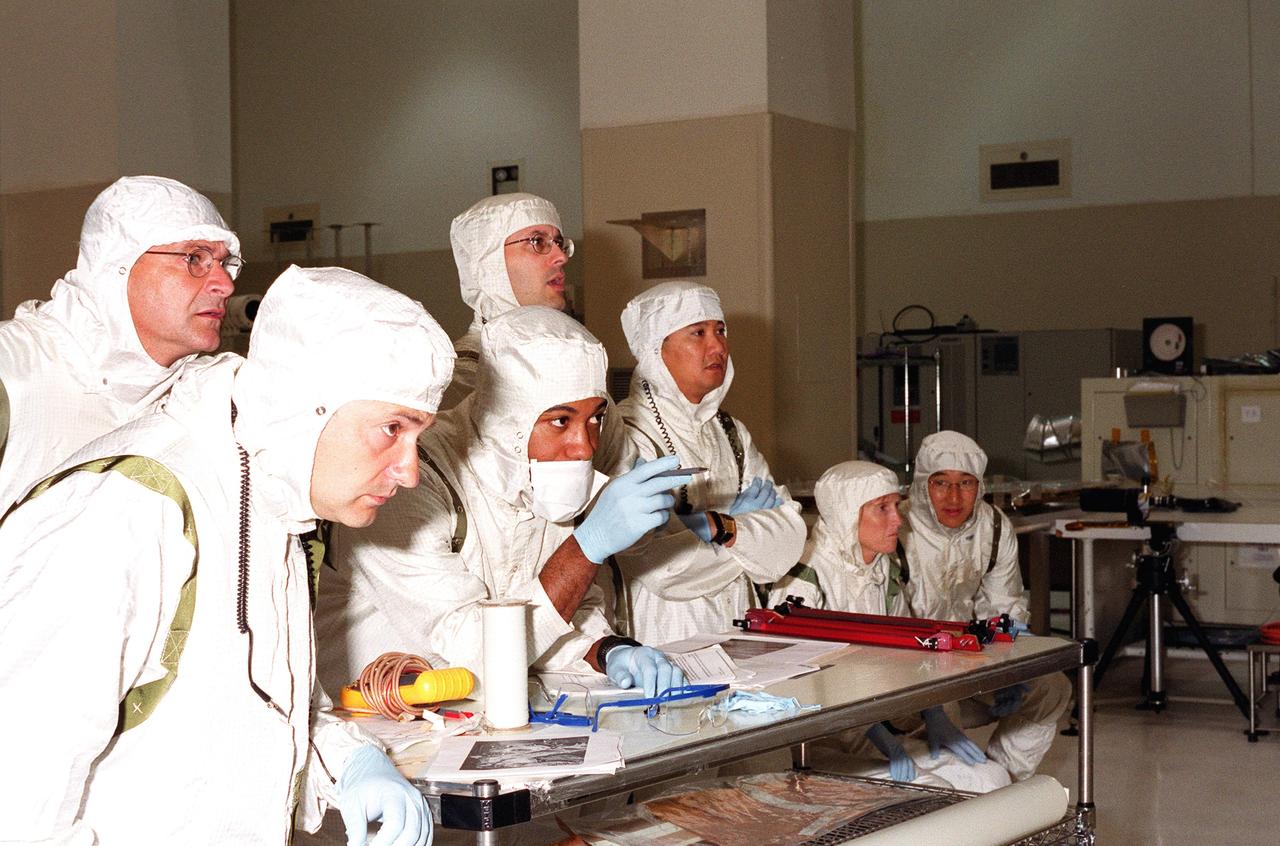
KENNEDY SPACE CENTER, FLA. -- Scientists and other workers watch as the solar panels on the Microwave Anisotropy Probe (MAP) spacecraft are deployed in the Spacecraft Assembly and Encapsulation Facility 2. MAP is scheduled for launch on June 30 aboard a Boeing Delta II rocket. The launch will place MAP into a lunar-assisted trajectory to the Sun-Earth for a 27-month mission. The probe will measure small fluctuations in the temperature of the cosmic microwave background radiation to an accuracy of one millionth of a degree. These measurements should reveal the size, matter content, age, geometry and fate of the universe. They will also reveal the primordial structure that grew to form galaxies and will test ideas about the origins of these primordial structures. The MAP instrument will be continuously shaded from the Sun, Earth, and Moon by the spacecraft. The probe is a product of Goddard Space Flight Center in partnership with Princeton University
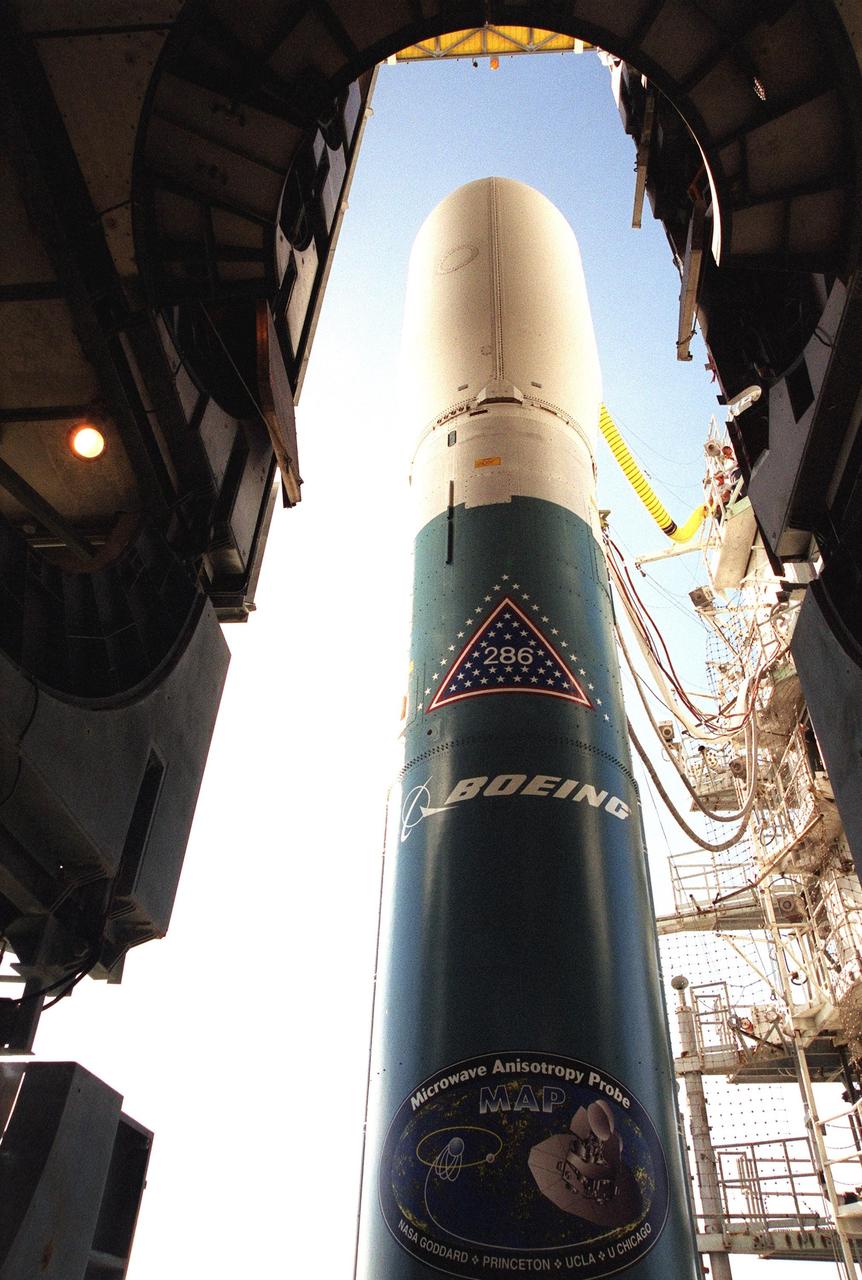
KENNEDY SPACE CENTER, Fla. -- The Boeing Delta II rocket is poised for flight on Launch Complex 17-A, Cape Canaveral Air Force Station, after rollback of the Mobile Service Tower. Topping the rocket is the payload, the Microwave Anisotropy Probe (MAP) spacecraft. Launch is scheduled at 3:46 p.m. EDT June 30. The launch will place MAP into a lunar-assisted trajectory to the Sun-Earth for a 27-month mission. The probe will measure small fluctuations in the temperature of the cosmic microwave background radiation to an accuracy of one millionth of a degree. These measurements should reveal the size, matter content, age, geometry and fate of the universe. They will also reveal the primordial structure that grew to form galaxies and will test ideas about the origins of these primordial structures. The MAP instrument will be continuously shaded from the Sun, Earth, and Moon by the spacecraft. The probe is a product of Goddard Space Flight Center in partnership with Princeton University
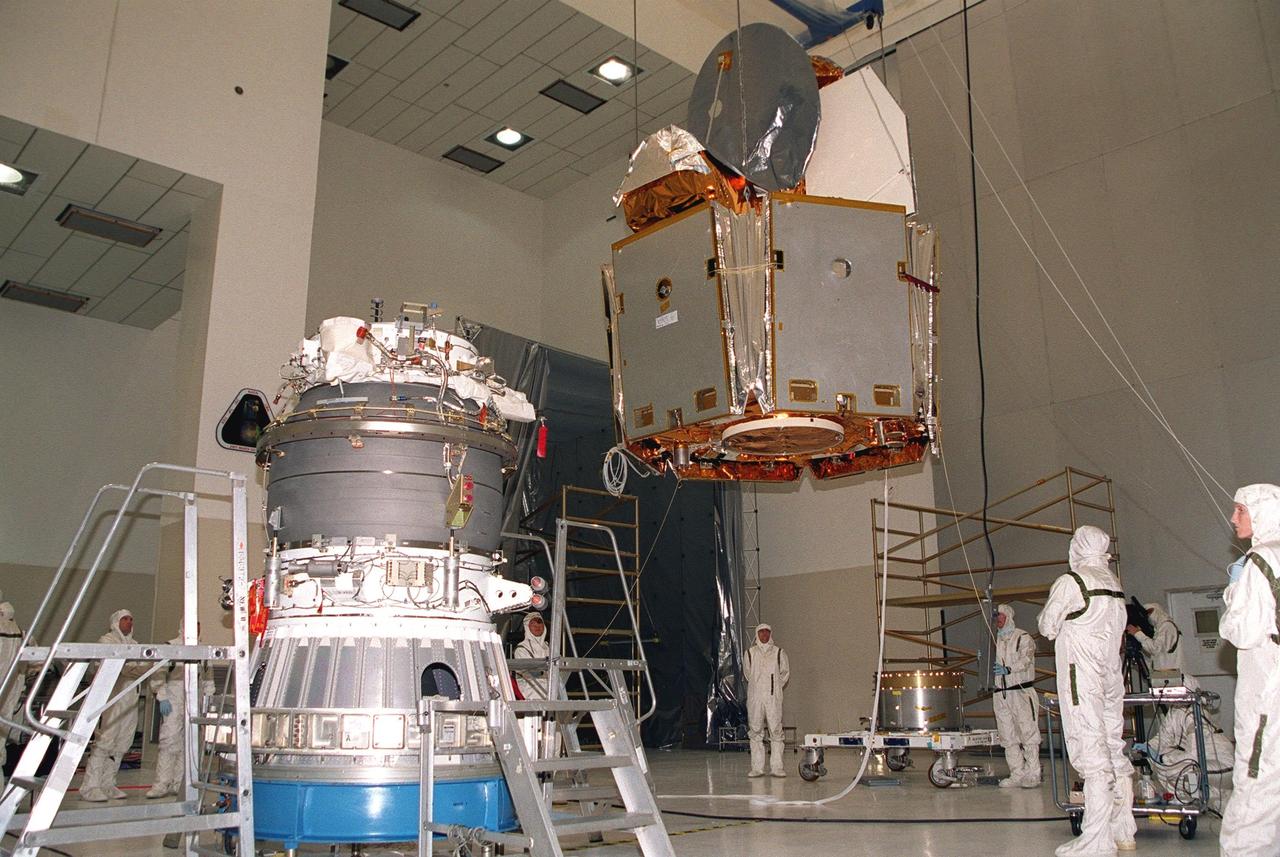
KENNEDY SPACE CENTER, Fla. -- In the Spacecraft Assembly and Encapsulation Facility -2, the Microwave Anisotropy Probe (MAP), suspended by a crane, crosses the facility to the upper stage of the Boeing Delta II rocket. The rocket is scheduled to launch the MAP instrument June 30 into a lunar-assisted trajectory to the Sun-Earth for a 27-month mission. MAP will measure small fluctuations in the temperature of the cosmic microwave background radiation to an accuracy of one millionth of a degree. These measurements should reveal the size, matter content, age, geometry and fate of the universe. They will also reveal the primordial structure that grew to form galaxies and will test ideas about the origins of these primordial structures. The MAP instrument will be continuously shaded from the Sun, Earth, and Moon by the spacecraft. It is a product of Goddard Space Flight Center in partnership with Princeton University
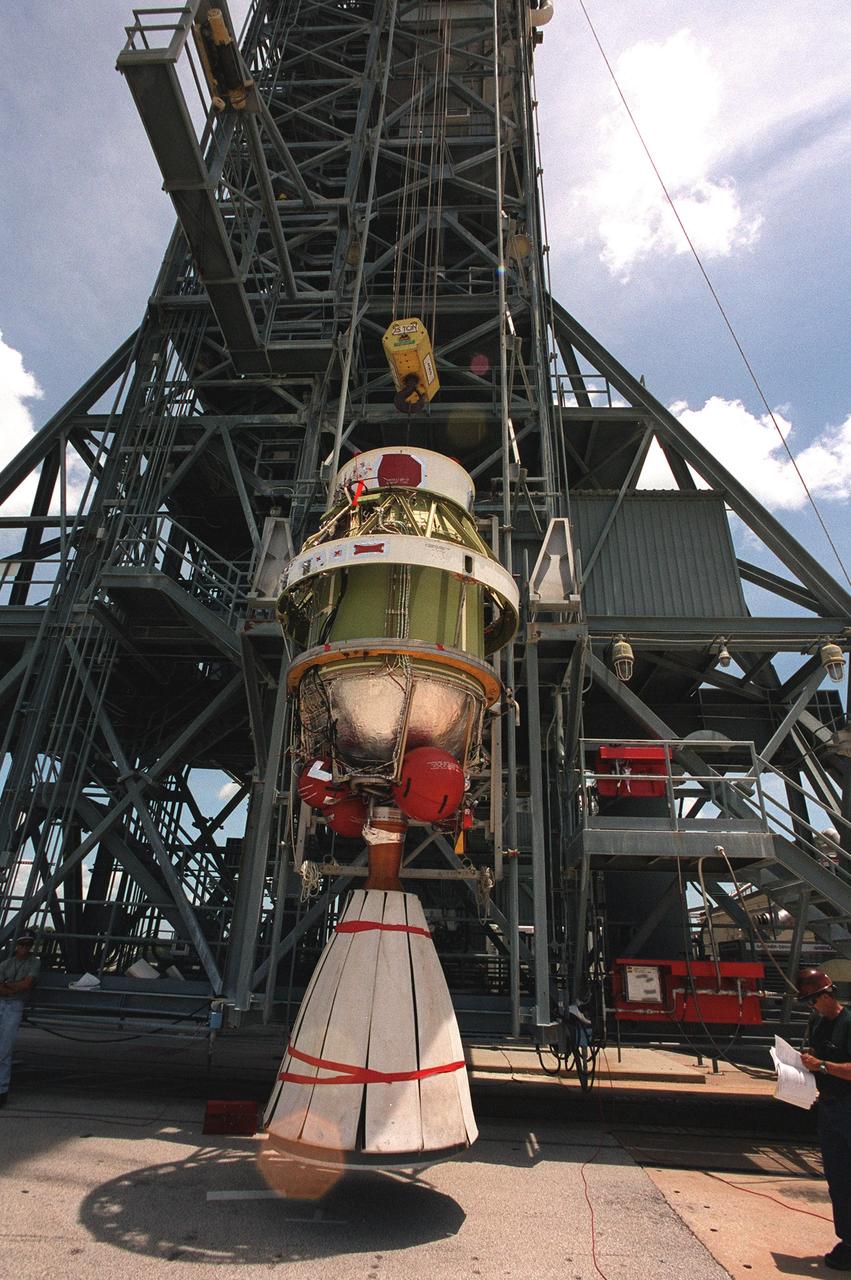
On Launch Complex 17-B, Cape Canaveral Air Force Station, the second stage of a Boeing Delta 7425-10 rocket is lifted into position as preparations to launch NASA's Microwave Anisotropy Probe (MAP) on June 30 continue. The launch will place MAP into a lunar-assisted trajectory to the Sun-Earth for a 27-month mission.; The probe will measure small fluctuations in the temperature of the cosmic microwave background radiation to an accuracy of one millionth of a degree. These measurements should reveal the size, matter content, age, geometry and fate of the universe. They will also reveal the primordial structure that grew to form galaxies and will test ideas about the origins of these primordial structures. The MAP instrument will be continuously shaded from the Sun, Earth, and Moon by the spacecraft. The probe is a product of Goddard Space Flight Center in partnership with Princeton University
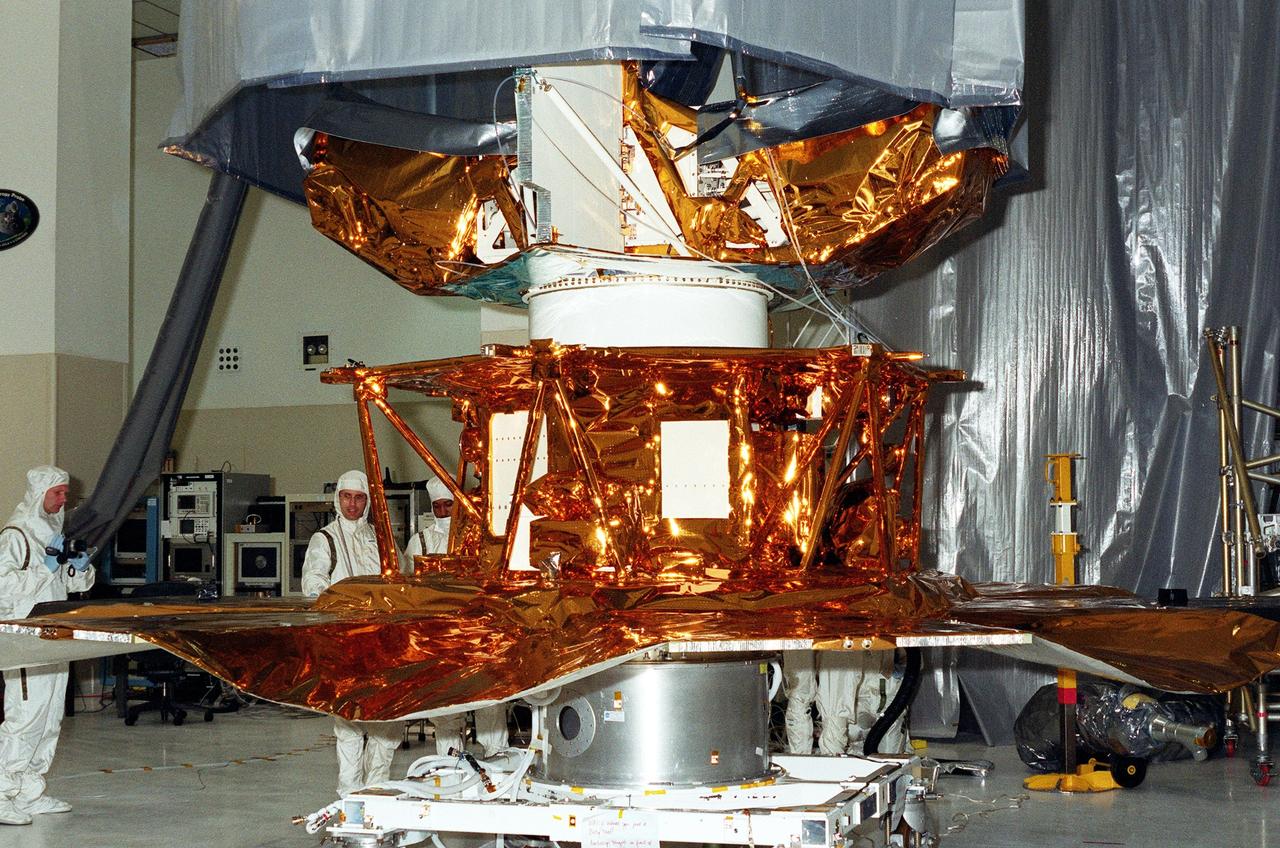
KENNEDY SPACE CENTER, FLA. -- Scientists and other workers watch as the solar panels on the Microwave Anisotropy Probe (MAP) spacecraft are deployed in the Spacecraft Assembly and Encapsulation Facility 2. MAP is scheduled for launch on June 30 aboard a Boeing Delta II rocket. The launch will place MAP into a lunar-assisted trajectory to the Sun-Earth for a 27-month mission. The probe will measure small fluctuations in the temperature of the cosmic microwave background radiation to an accuracy of one millionth of a degree. These measurements should reveal the size, matter content, age, geometry and fate of the universe. They will also reveal the primordial structure that grew to form galaxies and will test ideas about the origins of these primordial structures. The MAP instrument will be continuously shaded from the Sun, Earth, and Moon by the spacecraft. The probe is a product of Goddard Space Flight Center in partnership with Princeton University
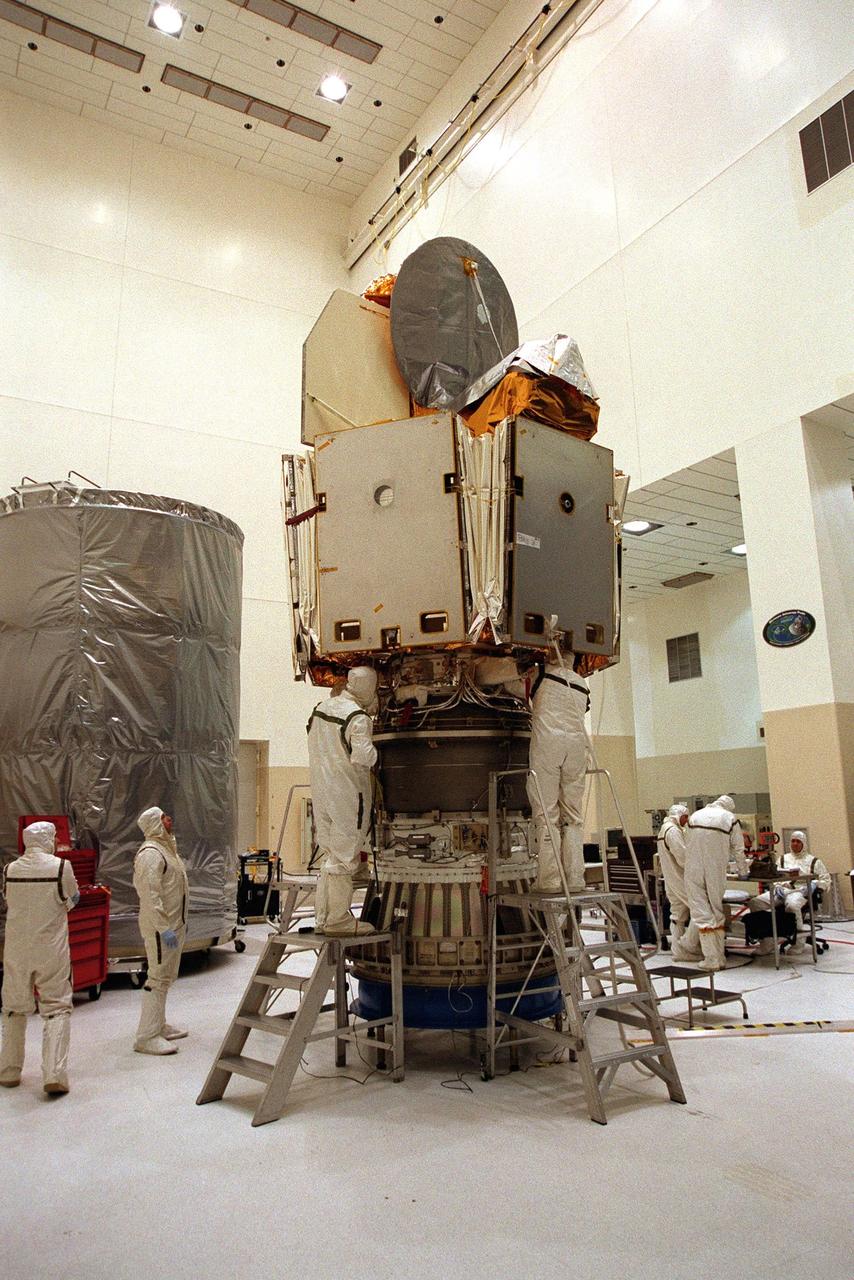
KENNEDY SPACE CENTER, Fla. -- Workers in the Spacecraft Assembly and Encapsulation Facility -2 prepare the Microwave Anisotropy Probe (MAP) for a media showing. The MAP is mated to the upper stage of the Boeing Delta II rocket. The rocket is scheduled to launch the MAP instrument June 30 into a lunar-assisted trajectory to the Sun-Earth for a 27-month mission. MAP will measure small fluctuations in the temperature of the cosmic microwave background radiation to an accuracy of one millionth of a degree. These measurements should reveal the size, matter content, age, geometry and fate of the universe. They will also reveal the primordial structure that grew to form galaxies and will test ideas about the origins of these primordial structures. The MAP instrument will be continuously shaded from the Sun, Earth, and Moon by the spacecraft. It is a product of Goddard Space Flight Center in partnership with Princeton University

KENNEDY SPACE CENTER, Fla. -- Workers in the Spacecraft Assembly and Encapsulation Facility -2 prepare the Microwave Anisotropy Probe (MAP) for a media showing. The MAP is mated to the upper stage of the Boeing Delta II rocket. The rocket is scheduled to launch the MAP instrument June 30 into a lunar-assisted trajectory to the Sun-Earth for a 27-month mission. MAP will measure small fluctuations in the temperature of the cosmic microwave background radiation to an accuracy of one millionth of a degree. These measurements should reveal the size, matter content, age, geometry and fate of the universe. They will also reveal the primordial structure that grew to form galaxies and will test ideas about the origins of these primordial structures. The MAP instrument will be continuously shaded from the Sun, Earth, and Moon by the spacecraft. It is a product of Goddard Space Flight Center in partnership with Princeton University
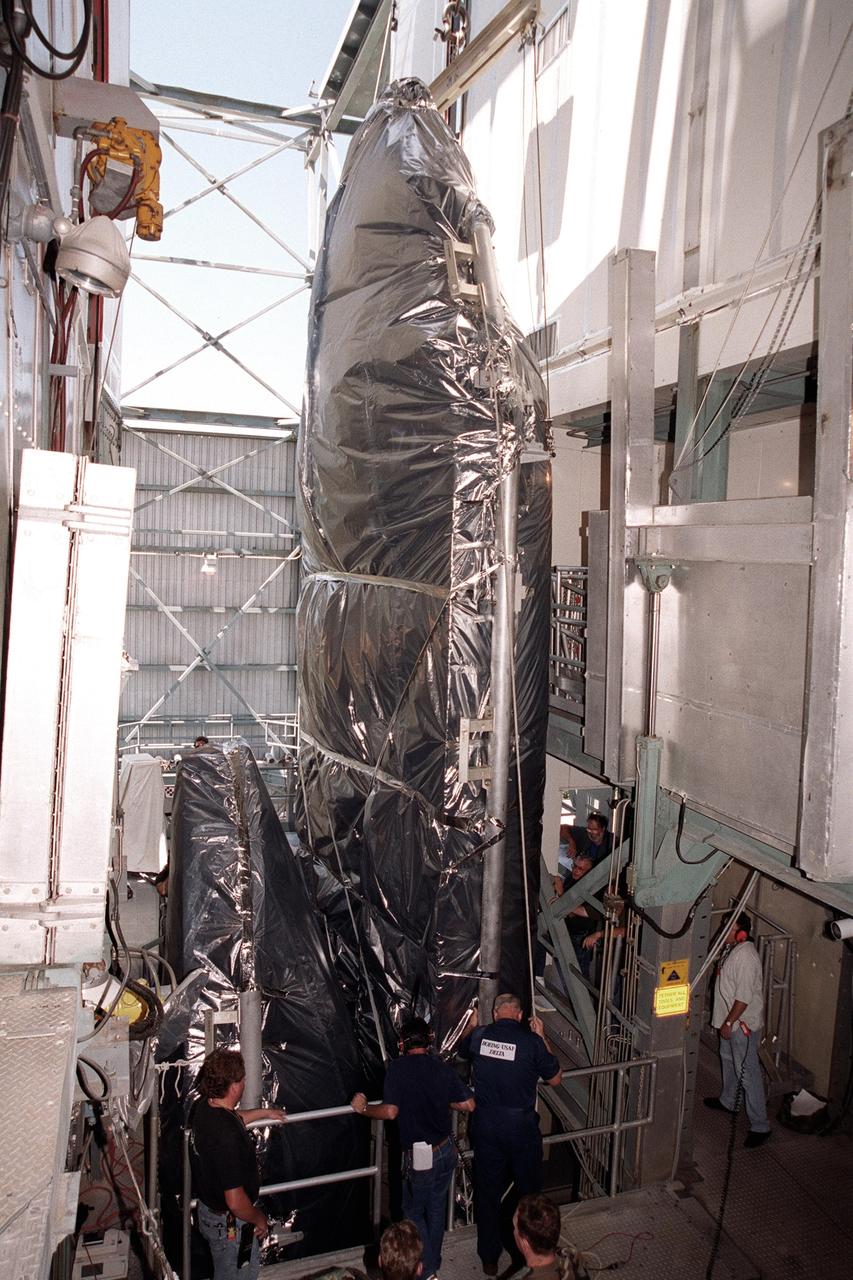
KENNEDY SPACE CENTER, FLA. -- At the gantry on Complex 17-A, Cape Canaveral Air Force Station, the fairing for the Microwave Anisotropy Probe (MAP) spacecraft arrives in the White Room. There it will wait for the arrival of the spacecraft. MAP is scheduled for launch on June 30 aboard a Boeing Delta II rocket. The launch will place MAP into a lunar-assisted trajectory to the Sun-Earth for a 27-month mission. The probe will measure small fluctuations in the temperature of the cosmic microwave background radiation to an accuracy of one millionth of a degree. These measurements should reveal the size, matter content, age, geometry and fate of the universe. They will also reveal the primordial structure that grew to form galaxies and will test ideas about the origins of these primordial structures. The MAP instrument will be continuously shaded from the Sun, Earth, and Moon by the spacecraft. The probe is a product of Goddard Space Flight Center in partnership with Princeton University

KENNEDY SPACE CENTER, Fla. -- The Boeing Delta II rocket is poised for flight on Launch Complex 17-A, Cape Canaveral Air Force Station, after rollback of the Mobile Service Tower (right). Topping the rocket is the payload, the Microwave Anisotropy Probe (MAP) spacecraft. Launch is scheduled at 3:46 p.m. EDT June 30. The launch will place MAP into a lunar-assisted trajectory to the Sun-Earth for a 27-month mission. The probe will measure small fluctuations in the temperature of the cosmic microwave background radiation to an accuracy of one millionth of a degree. These measurements should reveal the size, matter content, age, geometry and fate of the universe. They will also reveal the primordial structure that grew to form galaxies and will test ideas about the origins of these primordial structures. The MAP instrument will be continuously shaded from the Sun, Earth, and Moon by the spacecraft. The probe is a product of Goddard Space Flight Center in partnership with Princeton University
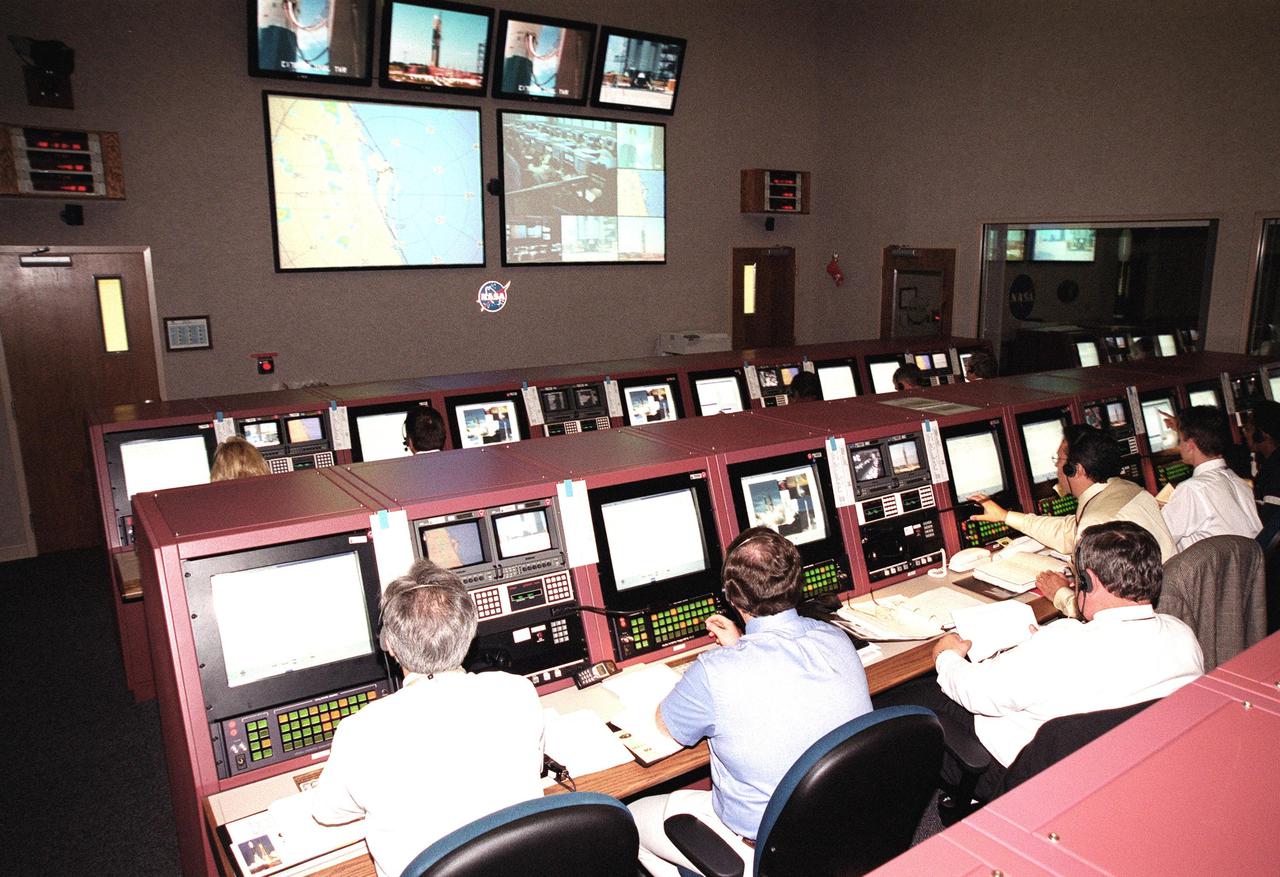
KENNEDY SPACE CENTER, Fla. -- The launch of the Boeing Delta II rocket carrying the Microwave Anisotropy Probe (MAP) spacecraft is tracked inside Hangar AandE, Cape Canaveral Air Force Station. The successful launch from Launch Complex 17-A, Cape Canaveral Air Force Station, occurred at 3:46:46 p.m. EDT. The launch will place MAP into a lunar-assisted trajectory to the Sun-Earth for a 27-month mission. The probe will measure small fluctuations in the temperature of the cosmic microwave background radiation to an accuracy of one millionth of a degree. These measurements should reveal the size, matter content, age, geometry and fate of the universe. They will also reveal the primordial structure that grew to form galaxies and will test ideas about the origins of these primordial structures. The MAP instrument will be continuously shaded from the Sun, Earth, and Moon by the spacecraft. The probe is a product of Goddard Space Flight Center in partnership with Princeton University
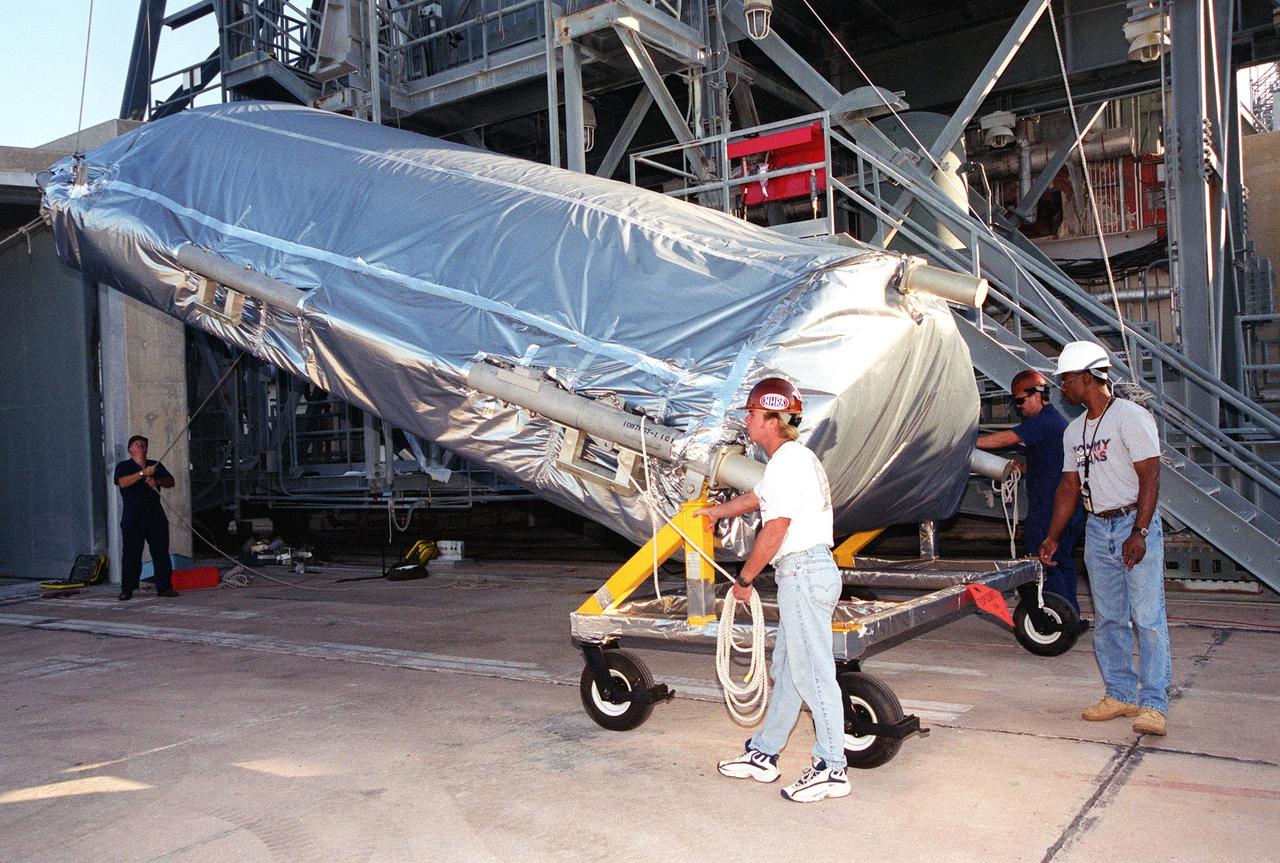
At the gantry on Complex 17-A, Cape Canaveral Air Force Station, the fairing for the Microwave Anisotropy Probe (MAP) spacecraft is raised for its lift to the White Room. There it will wait for the arrival of the spacecraft. MAP is scheduled for launch on June 30 aboard a Boeing Delta II rocket. The launch will place MAP into a lunar-assisted trajectory to the Sun-Earth for a 27-month mission. The probe will measure small fluctuations in the temperature of the cosmic microwave background radiation to an accuracy of one millionth of a degree. These measurements should reveal the size, matter content, age, geometry and fate of the universe. They will also reveal the primordial structure that grew to form galaxies and will test ideas about the origins of these primordial structures. The MAP instrument will be continuously shaded from the Sun, Earth, and Moon by the spacecraft. The probe is a product of Goddard Space Flight Center in partnership with Princeton University
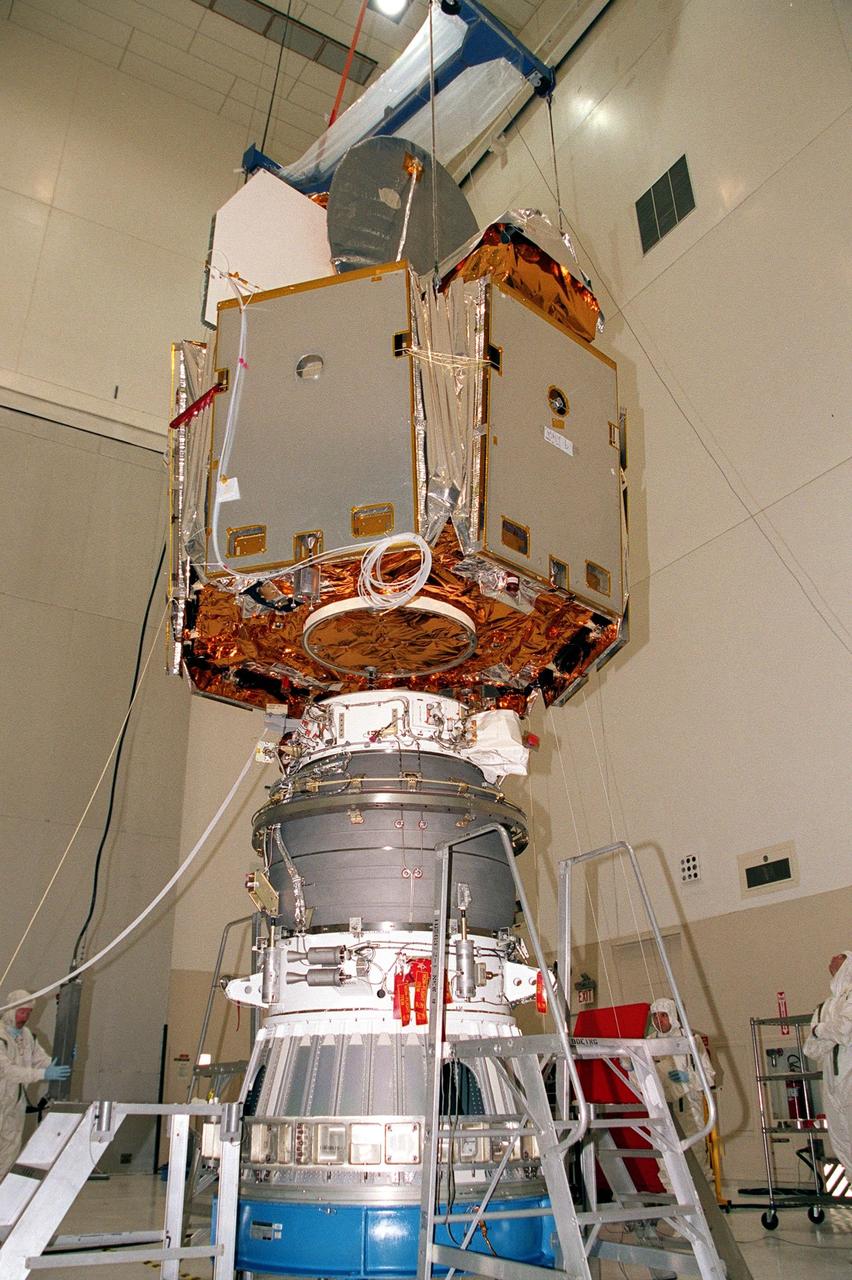
KENNEDY SPACE CENTER, Fla. -- The Microwave Anisotropy Probe (MAP) is lowered onto the upper stage of the Boeing Delta II rocket. The rocket is scheduled to launch the MAP instrument June 30 into a lunar-assisted trajectory to the Sun-Earth for a 27-month mission. MAP will measure small fluctuations in the temperature of the cosmic microwave background radiation to an accuracy of one millionth of a degree. These measurements should reveal the size, matter content, age, geometry and fate of the universe. They will also reveal the primordial structure that grew to form galaxies and will test ideas about the origins of these primordial structures. The MAP instrument will be continuously shaded from the Sun, Earth, and Moon by the spacecraft. It is a product of Goddard Space Flight Center in partnership with Princeton University

KENNEDY SPACE CENTER, Fla. -- The Boeing Delta II rocket is poised for flight on Launch Complex 17-A, Cape Canaveral Air Force Station, after rollback of the Mobile Service Tower. Topping the rocket is the payload, the Microwave Anisotropy Probe (MAP) spacecraft. Launch is scheduled at 3:46 p.m. EDT June 30. The launch will place MAP into a lunar-assisted trajectory to the Sun-Earth for a 27-month mission. The probe will measure small fluctuations in the temperature of the cosmic microwave background radiation to an accuracy of one millionth of a degree. These measurements should reveal the size, matter content, age, geometry and fate of the universe. They will also reveal the primordial structure that grew to form galaxies and will test ideas about the origins of these primordial structures. The MAP instrument will be continuously shaded from the Sun, Earth, and Moon by the spacecraft. The probe is a product of Goddard Space Flight Center in partnership with Princeton University
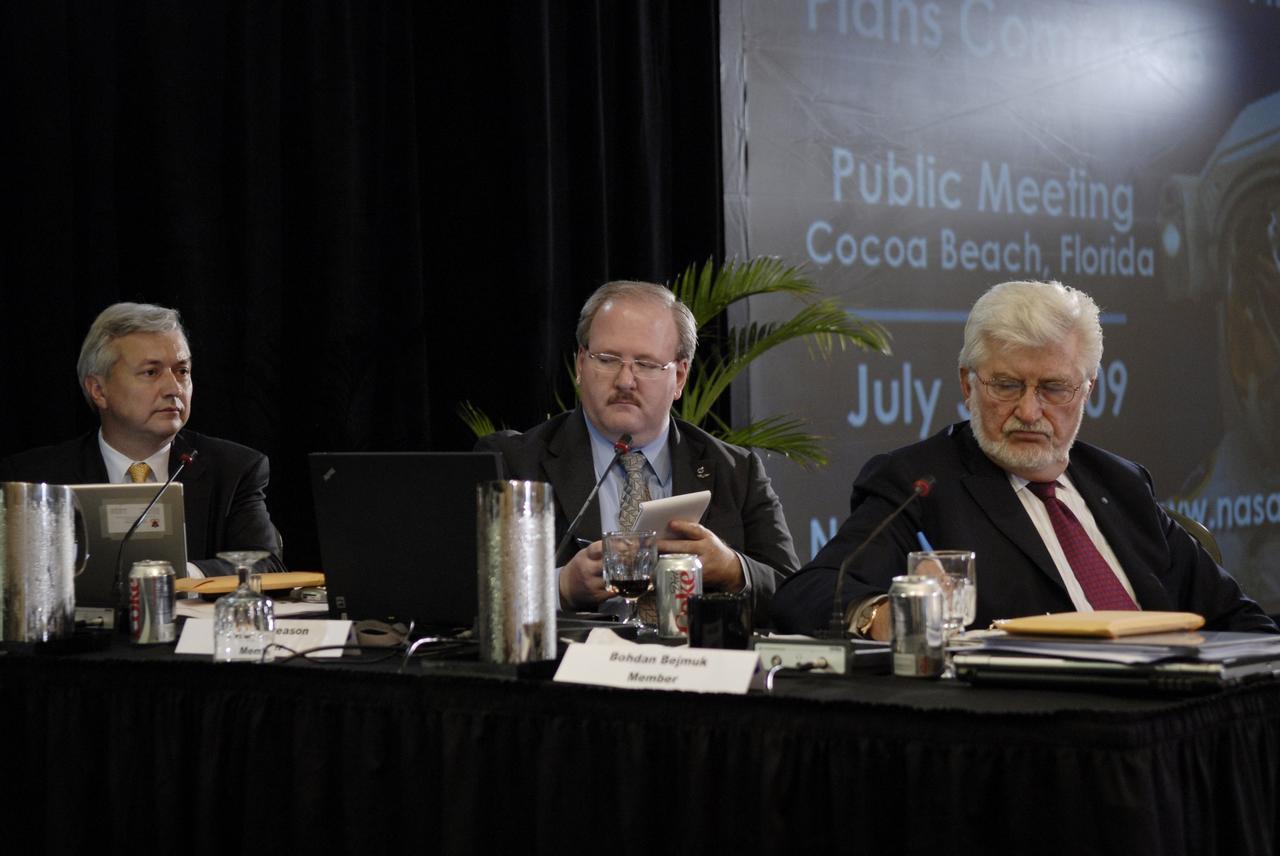
CAPE CANAVERAL, Fla. – Members of the Augustine Commission are meeting in Cocoa Beach, Fla. From left are Dr. Christopher Chyba, Professor of Astrophysical Sciences and international Affairs at Princeton University; Jeff Greason, co-founder and CEO of XCOR Aerospace; and Bohdan Bejmuk, chair of Constellation Program Standing Review Board. At the request of the Office of Science and Technology Policy, NASA established the Review of U.S. Human Space Flight Plans Committee, known as the Augustine Commission. Chaired by Norman R. Augustine, retired chairman and CEO of Lockheed Martin Corp., the committee is conducting an independent review of ongoing U.S. human spaceflight plans and programs, as well as alternatives, to ensure the nation is pursuing the best trajectory for the future of human space flight - one that is safe, innovative, affordable, and sustainable. Photo credit: NASA/Kim Shiflett
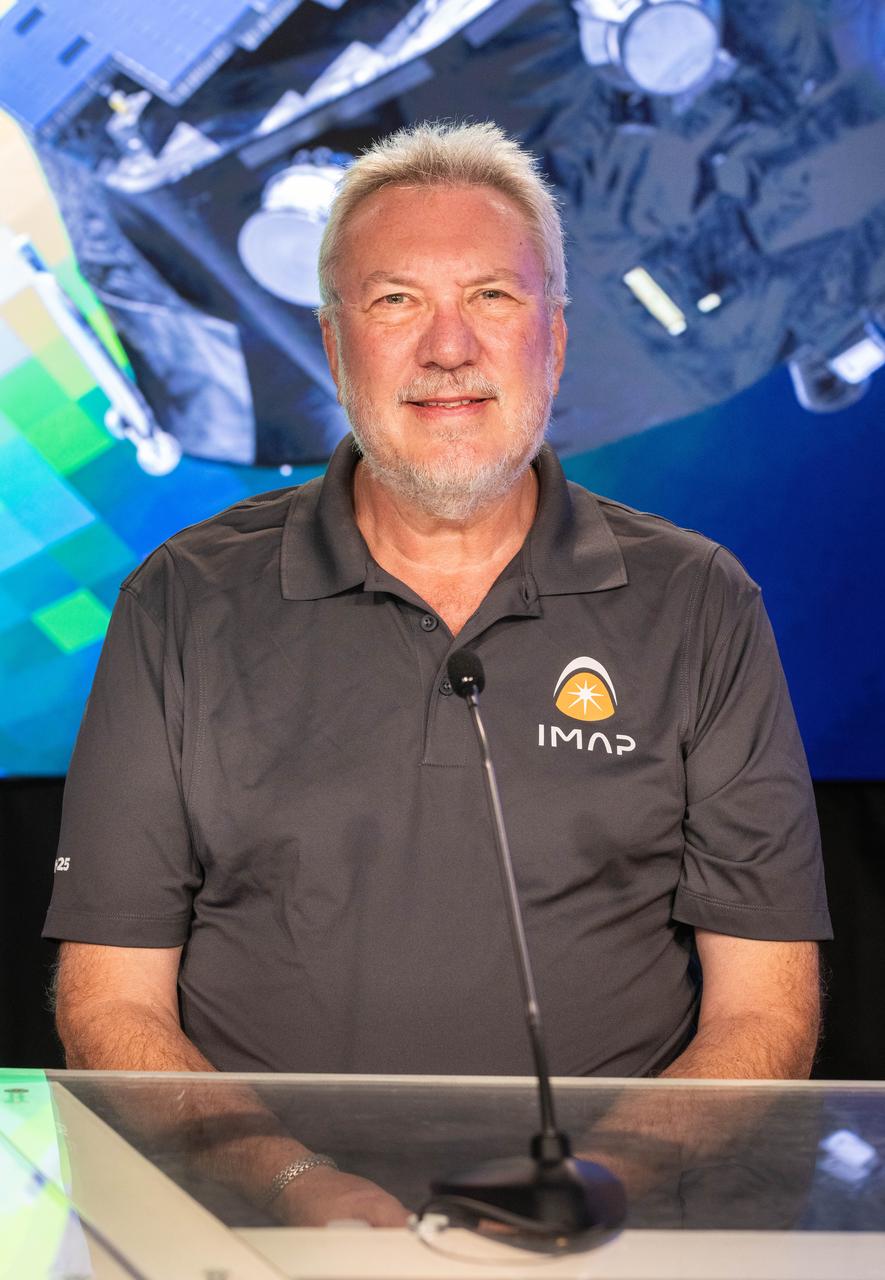
David McComas, IMAP principal investigator, Princeton University, participates in a science briefing on NASA’s IMAP (Interstellar Mapping and Acceleration Probe) mission and its two rideshares – NASA’s exosphere-studying Carruthers Geocorona Observatory and National Oceanic and Atmospheric Administration’s (NOAA) Space Weather Follow On–Lagrange 1 (SWFO-L1) observatory – at the agency’s Kennedy Space Center in Florida on Sunday, Sept. 21, 2025. NASA’s IMAP will use 10 science instruments to study and map the heliosphere, a vast magnetic bubble surrounding the Sun protecting our solar system from radiation incoming from interstellar space. The three missions will orbit the Sun near Lagrange point 1, about one million miles from Earth. Launch is targeted for 7:32 a.m. EDT, Tuesday, Sept. 23, from Launch Complex 39A at NASA Kennedy.

KENNEDY SPACE CENTER, FLA. -- The Microwave Anisotropy Probe (MAP) satellite arrives at Kennedy Space Center. The Vehicle Assembly Building is in the background. MAP is scheduled to launch on June 30 from Cape Canaveral Air Force Station on a Delta II rocket into a lunar-assisted trajectory to the Sun-Earth for a 27-month mission (3 months transit, 24 months observing). The MAP instrument consists of a set of passively cooled microwave radiometers with 1.4x 1.6-meter diameter primary reflectors to provide the desired angular resolution. MAP measures small fluctuations in the temperature of the cosmic microwave background radiation to an accuracy of one millionth of a degree. These measurements should reveal the size, matter content, age, geometry and fate of the universe. They will also reveal the primordial structure that grew to form galaxies and will test ideas about the origins of these primordial structures. The MAP instrument will be continuously shaded from the Sun, Earth, and Moon by the spacecraft. It is a product of Goddard Space Flight Center in partnership with Princeton University

KENNEDY SPACE CENTER, FLA. -- The container with the Microwave Anisotropy Probe (MAP) satellite inside moves into the Spacecraft Assembly and Encapsulation Facility 2. MAP will undergo testing in the SAEF-2 before its scheduled launch June 30 from Cape Canaveral Air Force Station on a Delta II rocket into a lunar-assisted trajectory to the Sun-Earth for a 27-month mission (3 months transit, 24 months observing). The MAP instrument consists of a set of passively cooled microwave radiometers with 1.4x 1.6-meter diameter primary reflectors to provide the desired angular resolution. MAP measures small fluctuations in the temperature of the cosmic microwave background radiation to an accuracy of one millionth of a degree. These measurements should reveal the size, matter content, age, geometry and fate of the universe. They will also reveal the primordial structure that grew to form galaxies and will test ideas about the origins of these primordial structures. The MAP instrument will be continuously shaded from the Sun, Earth, and Moon by the spacecraft. It is a product of Goddard Space Flight Center in partnership with Princeton University
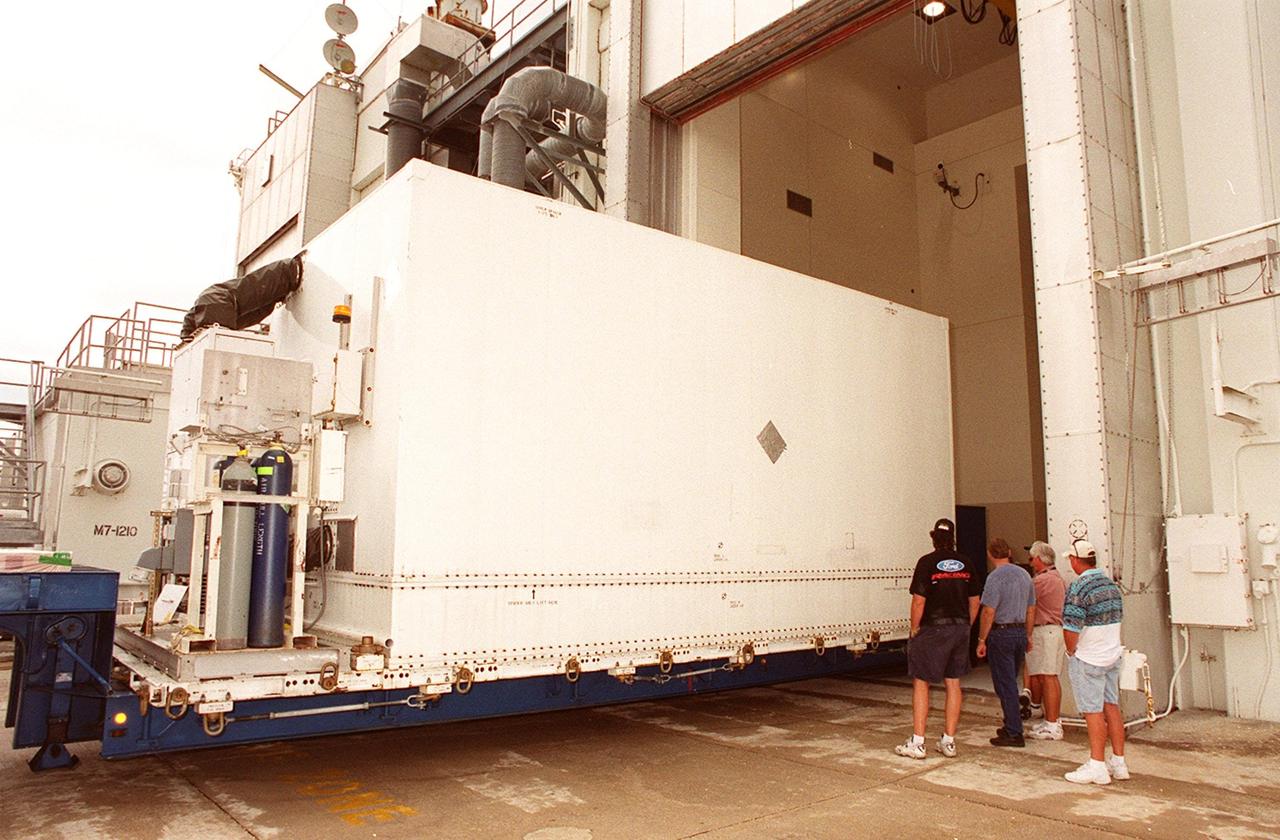
KENNEDY SPACE CENTER, FLA. -- The container with the Microwave Anisotropy Probe (MAP) satellite inside is backed into the Spacecraft Assembly and Encapsulation Facility 2. MAP will undergo testing in the SAEF-2 before its scheduled launch June 30 from Cape Canaveral Air Force Station on a Delta II rocket into a lunar-assisted trajectory to the Sun-Earth for a 27-month mission (3 months transit, 24 months observing). The MAP instrument consists of a set of passively cooled microwave radiometers with 1.4x 1.6-meter diameter primary reflectors to provide the desired angular resolution. MAP measures small fluctuations in the temperature of the cosmic microwave background radiation to an accuracy of one millionth of a degree. These measurements should reveal the size, matter content, age, geometry and fate of the universe. They will also reveal the primordial structure that grew to form galaxies and will test ideas about the origins of these primordial structures. The MAP instrument will be continuously shaded from the Sun, Earth, and Moon by the spacecraft. It is a product of Goddard Space Flight Center in partnership with Princeton University
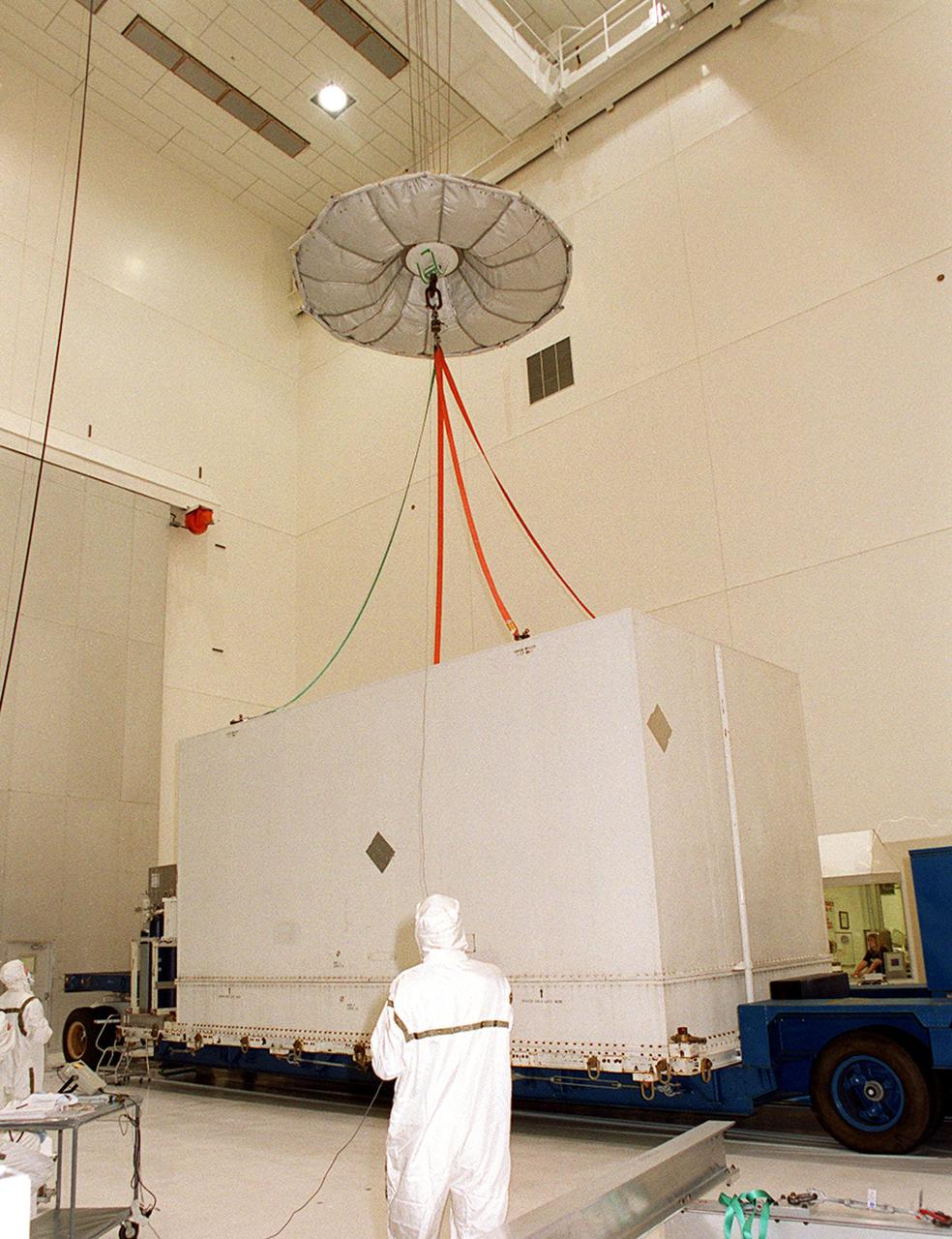
KENNEDY SPACE CENTER, FLA. -- Inside the Spacecraft Assembly and Encapsulation Facility 2, an overhead crane is attached to the container surrounding the Microwave Anisotropy Probe (MAP) satellite. MAP will undergo testing in the SAEF-2 before its scheduled launch June 30 from Cape Canaveral Air Force Station on a Delta II rocket into a lunar-assisted trajectory to the Sun-Earth for a 27-month mission (3 months transit, 24 months observing). The MAP instrument consists of a set of passively cooled microwave radiometers with 1.4x 1.6-meter diameter primary reflectors to provide the desired angular resolution. MAP measures small fluctuations in the temperature of the cosmic microwave background radiation to an accuracy of one millionth of a degree. These measurements should reveal the size, matter content, age, geometry and fate of the universe. They will also reveal the primordial structure that grew to form galaxies and will test ideas about the origins of these primordial structures. The MAP instrument will be continuously shaded from the Sun, Earth, and Moon by the spacecraft. It is a product of Goddard Space Flight Center in partnership with Princeton University
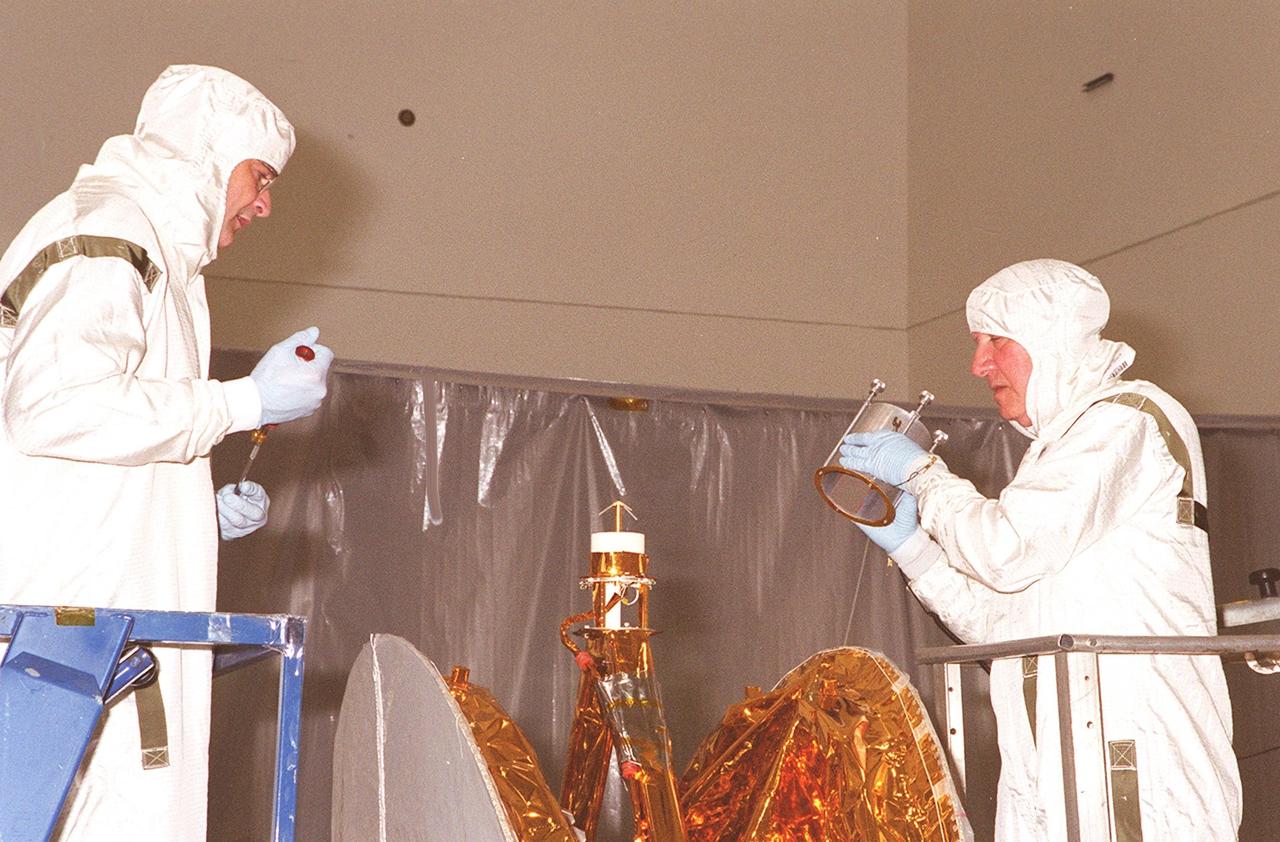
KENNEDY SPACE CENTER, FLA. -- Workers in the Spacecraft Assembly and Encapsulation Facility 2 place an antenna on the Microwave Anisotropy Probe (MAP). Several other milestones must be completed while MAP is at SAEF-2, including solar array installation, solar array deployment and illumination testing, a spacecraft comprehensive performance test, fueling with hydrazine propellant and a spin balance test. MAP will then be ready for integration with the solid propellant Payload Assist Module upper stage booster. MAP is scheduled for launch June 30 from Cape Canaveral Air Force Station on a Delta II rocket into a lunar-assisted trajectory to the Sun-Earth for a 27-month mission. The MAP instrument consists of a set of passively cooled microwave radiometers with 1.4x 1.6-meter diameter primary reflectors to provide the desired angular resolution. MAP measures small fluctuations in the temperature of the cosmic microwave background radiation to an accuracy of one millionth of a degree These measurements should reveal the size, matter content, age, geometry and fate of the universe. They will also reveal the primordial structure that grew to form galaxies and will test ideas about the origins of these primordial structures. The MAP instrument will be continuously shaded from the Sun, Earth, and Moon by the spacecraft. It is a product of Goddard Space Flight Center in partnership with Princeton University
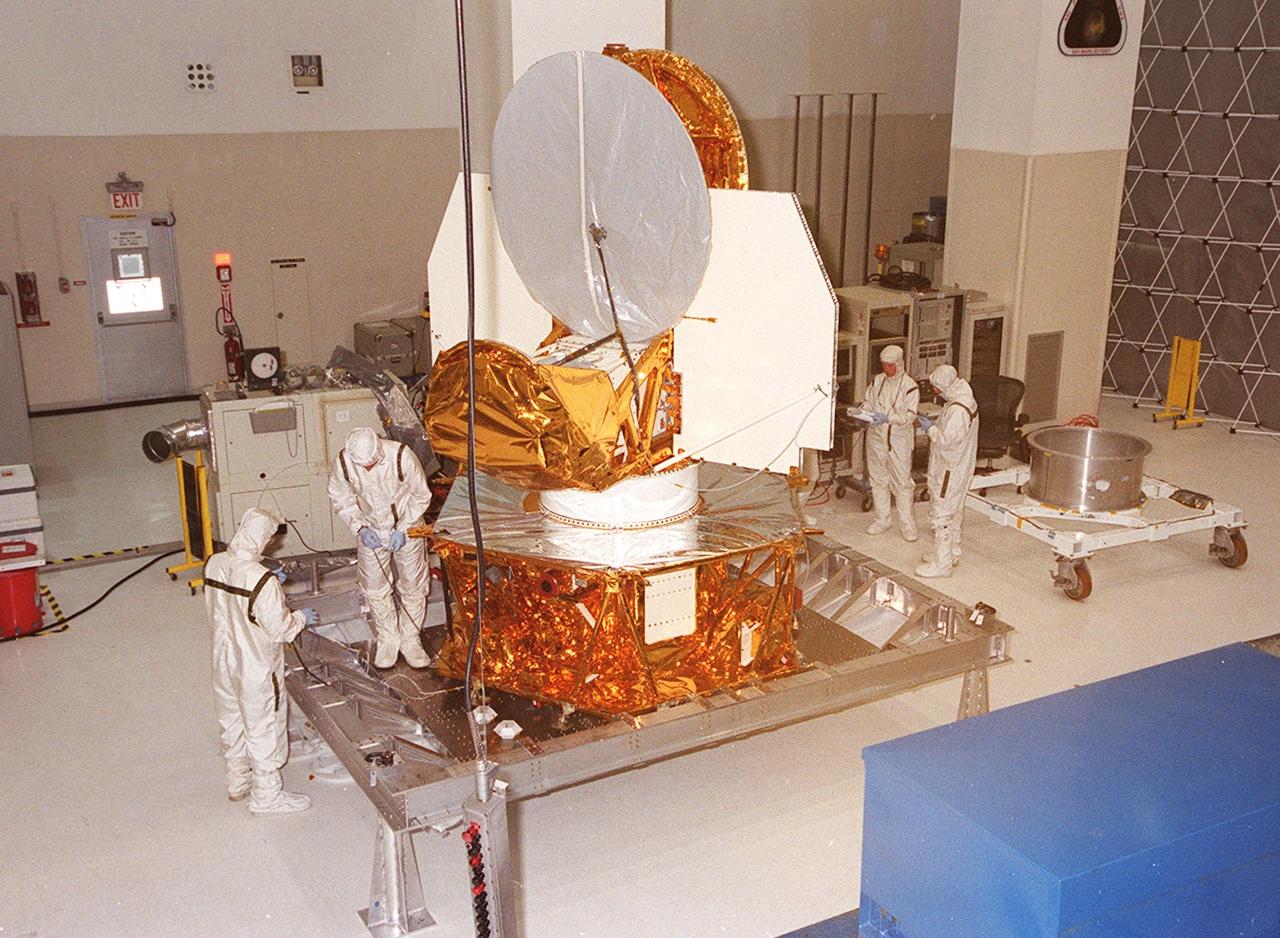
KENNEDY SPACE CENTER, FLA. -- The Microwave Anisotropy Probe (MAP) is worked on in the Spacecraft Assembly and Encapsulation Facility 2. Several milestones must be completed while MAP is at SAEF-2, including antenna installations, solar array installation, solar array deployment and illumination testing, a spacecraft comprehensive performance test, fueling with hydrazine propellant and a spin balance test. MAP will then be ready for integration with the solid propellant Payload Assist Module upper stage booster. MAP is scheduled for launch June 30 from Cape Canaveral Air Force Station on a Delta II rocket into a lunar-assisted trajectory to the Sun-Earth for a 27-month mission. The MAP instrument consists of a set of passively cooled microwave radiometers with 1.4x 1.6-meter diameter primary reflectors to provide the desired angular resolution. MAP measures small fluctuations in the temperature of the cosmic microwave background radiation to an accuracy of one millionth of a degree These measurements should reveal the size, matter content, age, geometry and fate of the universe. They will also reveal the primordial structure that grew to form galaxies and will test ideas about the origins of these primordial structures. The MAP instrument will be continuously shaded from the Sun, Earth, and Moon by the spacecraft. It is a product of Goddard Space Flight Center in partnership with Princeton University
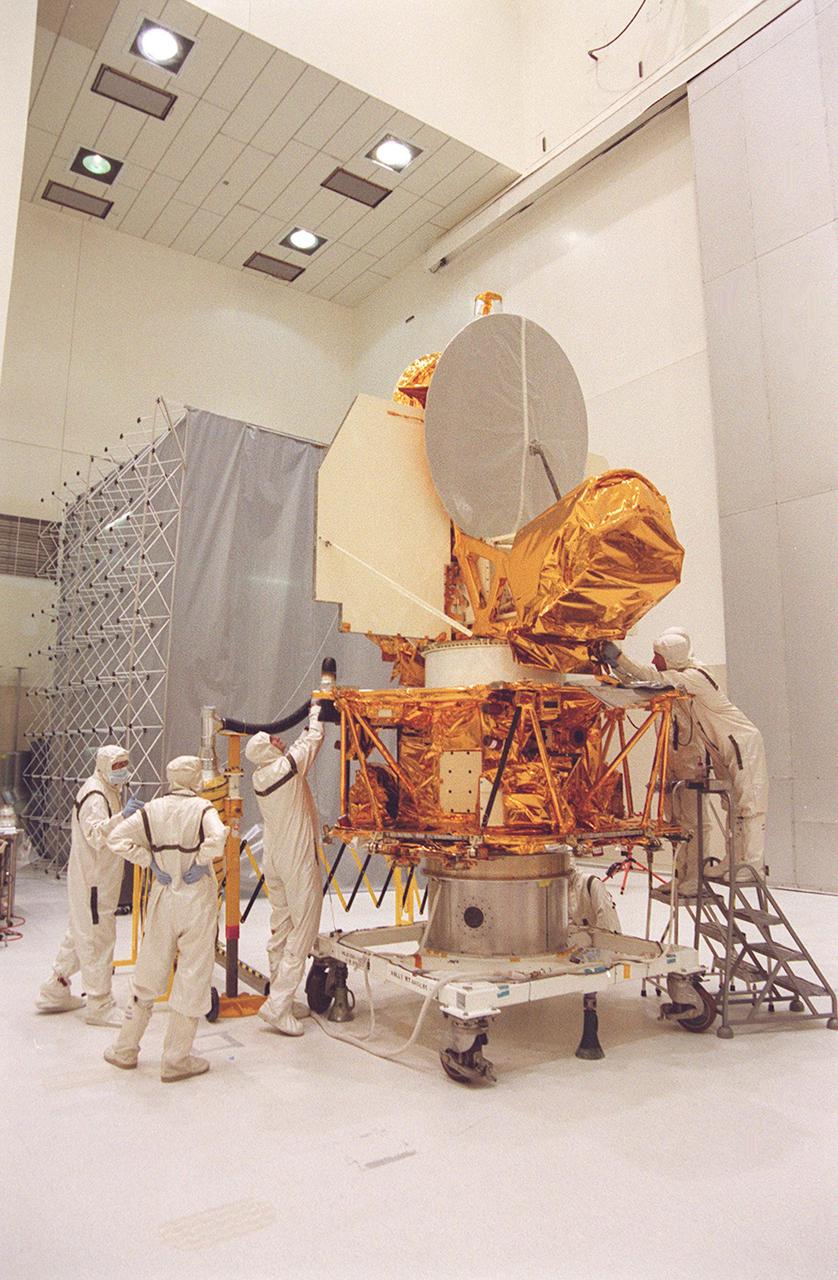
KENNEDY SPACE CENTER, FLA. -- In the Spacecraft Assembly and Encapsulation Facility 2, workers check out parts of the Microwave Anisotropy Probe (MAP. Several milestones must be completed while MAP is at SAEF-2, including antenna and solar array installation, solar array deployment and illumination testing, a spacecraft comprehensive performance test, fueling with hydrazine propellant and a spin balance test. MAP will then be ready for integration with the solid propellant Payload Assist Module upper stage booster. MAP is scheduled for launch June 30 from Cape Canaveral Air Force Station on a Delta II rocket into a lunar-assisted trajectory to the Sun-Earth for a 27-month mission. The MAP instrument consists of a set of passively cooled microwave radiometers with 1.4x 1.6-meter diameter primary reflectors to provide the desired angular resolution. MAP measures small fluctuations in the temperature of the cosmic microwave background radiation to an accuracy of one millionth of a degree These measurements should reveal the size, matter content, age, geometry and fate of the universe. They will also reveal the primordial structure that grew to form galaxies and will test ideas about the origins of these primordial structures. The MAP instrument will be continuously shaded from the Sun, Earth, and Moon by the spacecraft. It is a product of Goddard Space Flight Center in partnership with Princeton University

KENNEDY SPACE CENTER, FLA. -- The Microwave Anisotropy Probe (MAP) satellite arrives at KSC’s Spacecraft Assembly and Encapsulation Facility 2. MAP will undergo testing in the SAEF-2 before its scheduled launch June 30 from Cape Canaveral Air Force Station on a Delta II rocket into a lunar-assisted trajectory to the Sun-Earth for a 27-month mission (3 months transit, 24 months observing). The MAP instrument consists of a set of passively cooled microwave radiometers with 1.4x 1.6-meter diameter primary reflectors to provide the desired angular resolution. MAP measures small fluctuations in the temperature of the cosmic microwave background radiation to an accuracy of one millionth of a degree. These measurements should reveal the size, matter content, age, geometry and fate of the universe. They will also reveal the primordial structure that grew to form galaxies and will test ideas about the origins of these primordial structures. The MAP instrument will be continuously shaded from the Sun, Earth, and Moon by the spacecraft. It is a product of Goddard Space Flight Center in partnership with Princeton University
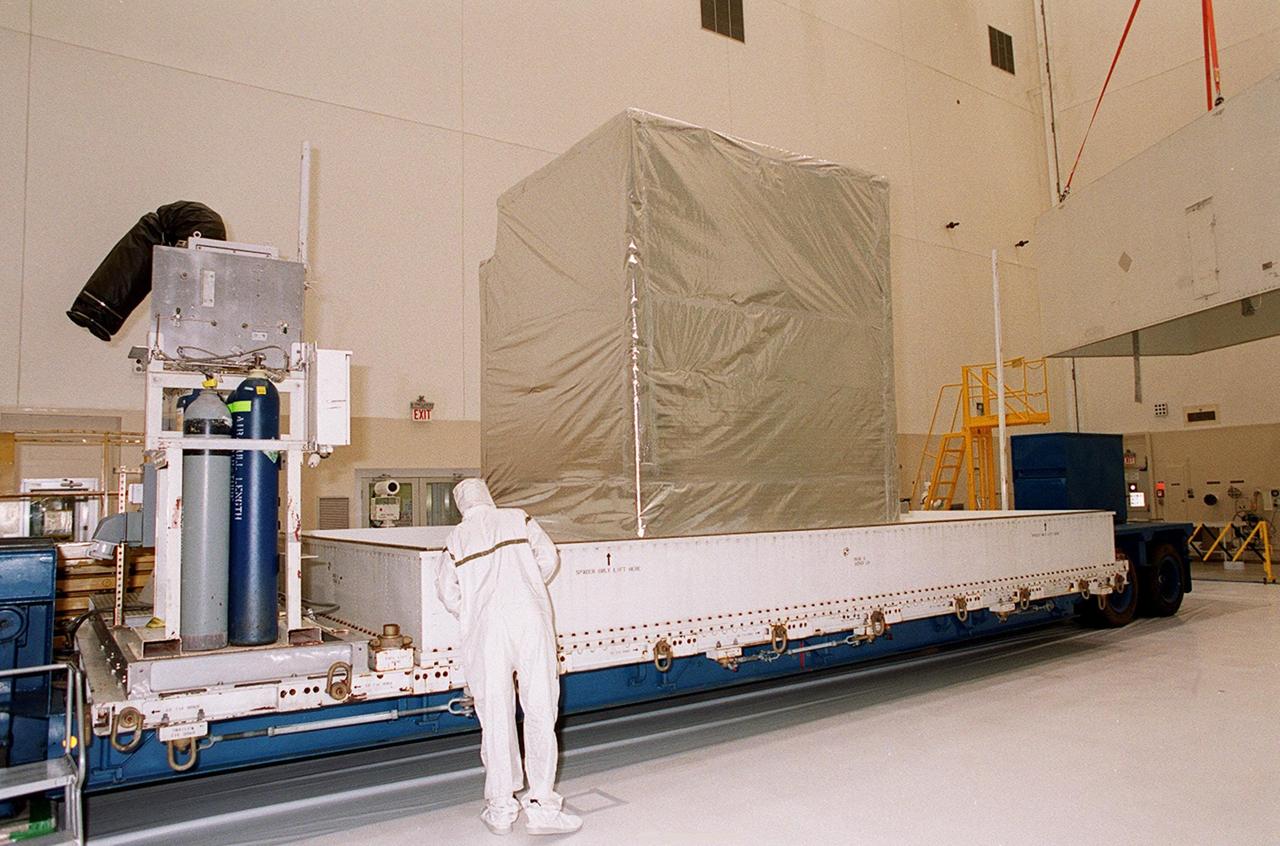
KENNEDY SPACE CENTER, FLA. -- Inside the Spacecraft Assembly and Encapsulation Facility 2, a covered Microwave Anisotropy Probe (MAP) satellite is revealed after removal of the container (far right). MAP will undergo testing in the SAEF-2 before its scheduled launch June 30 from Cape Canaveral Air Force Station on a Delta II rocket into a lunar-assisted trajectory to the Sun-Earth for a 27-month mission (3 months transit, 24 months observing). The MAP instrument consists of a set of passively cooled microwave radiometers with 1.4x 1.6-meter diameter primary reflectors to provide the desired angular resolution. MAP measures small fluctuations in the temperature of the cosmic microwave background radiation to an accuracy of one millionth of a degree. These measurements should reveal the size, matter content, age, geometry and fate of the universe. They will also reveal the primordial structure that grew to form galaxies and will test ideas about the origins of these primordial structures. The MAP instrument will be continuously shaded from the Sun, Earth, and Moon by the spacecraft. It is a product of Goddard Space Flight Center in partnership with Princeton University
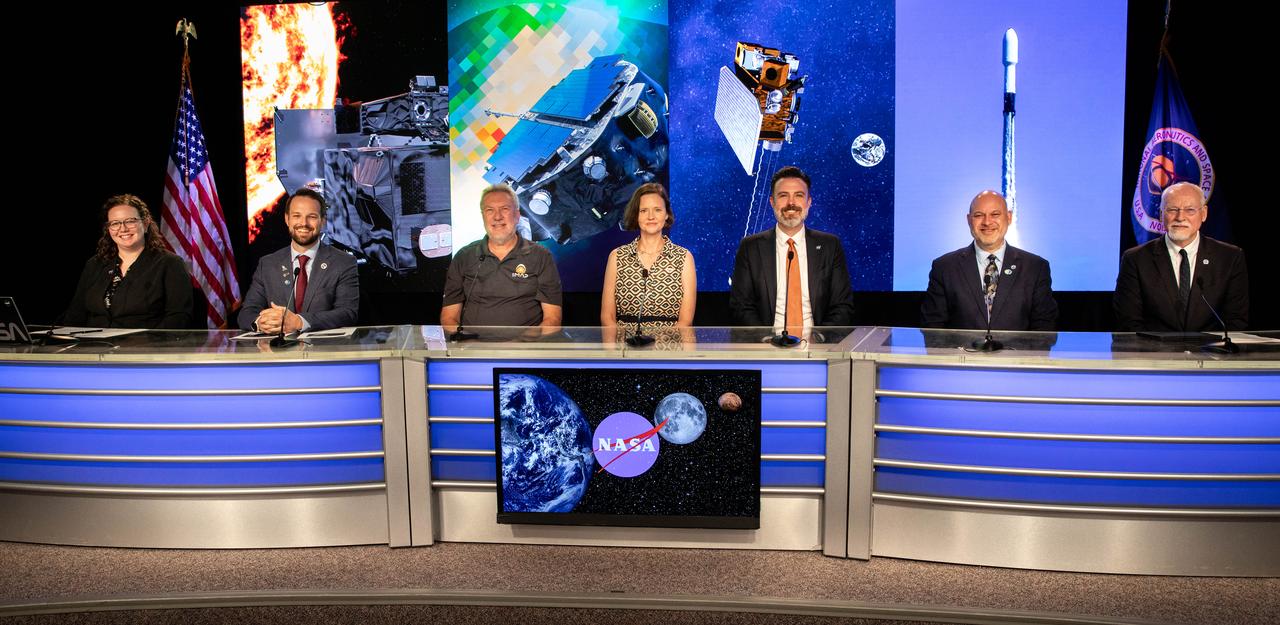
NASA, NOAA, and mission leaders participate in a science briefing on NASA’s IMAP (Interstellar Mapping and Acceleration Probe) mission and its two rideshares – NASA’s exosphere-studying Carruthers Geocorona Observatory and National Oceanic and Atmospheric Administration’s (NOAA) Space Weather Follow On–Lagrange 1 (SWFO-L1) observatory – at the agency’s Kennedy Space Center in Florida on Sunday, Sept. 21, 2025. From left are: Sarah Frazier, NASA Communications; Joe Westlake, director, Heliophysics Division, NASA Headquarters in Washington; David McComas, IMAP principal investigator, Princeton University; Lara Waldrop, Carruthers Geocorona Observatory principal investigator, University of Illinois Urbana-Champaign; Jamie Favors, director, Space Weather Program, Heliophysics Division, NASA Headquarters; Clinton Wallace, director, NOAA Space Weather Prediction Center; James Spann, senior scientist, NOAA Office of Space Weather Observations. NASA’s IMAP will use 10 science instruments to study and map the heliosphere, a vast magnetic bubble surrounding the Sun protecting our solar system from radiation incoming from interstellar space. The missions will orbit the Sun near Lagrange point 1, about one million miles from Earth. Launch is targeted for 7:32 a.m. EDT, Tuesday, Sept. 23, from Launch Complex 39A at NASA Kennedy.
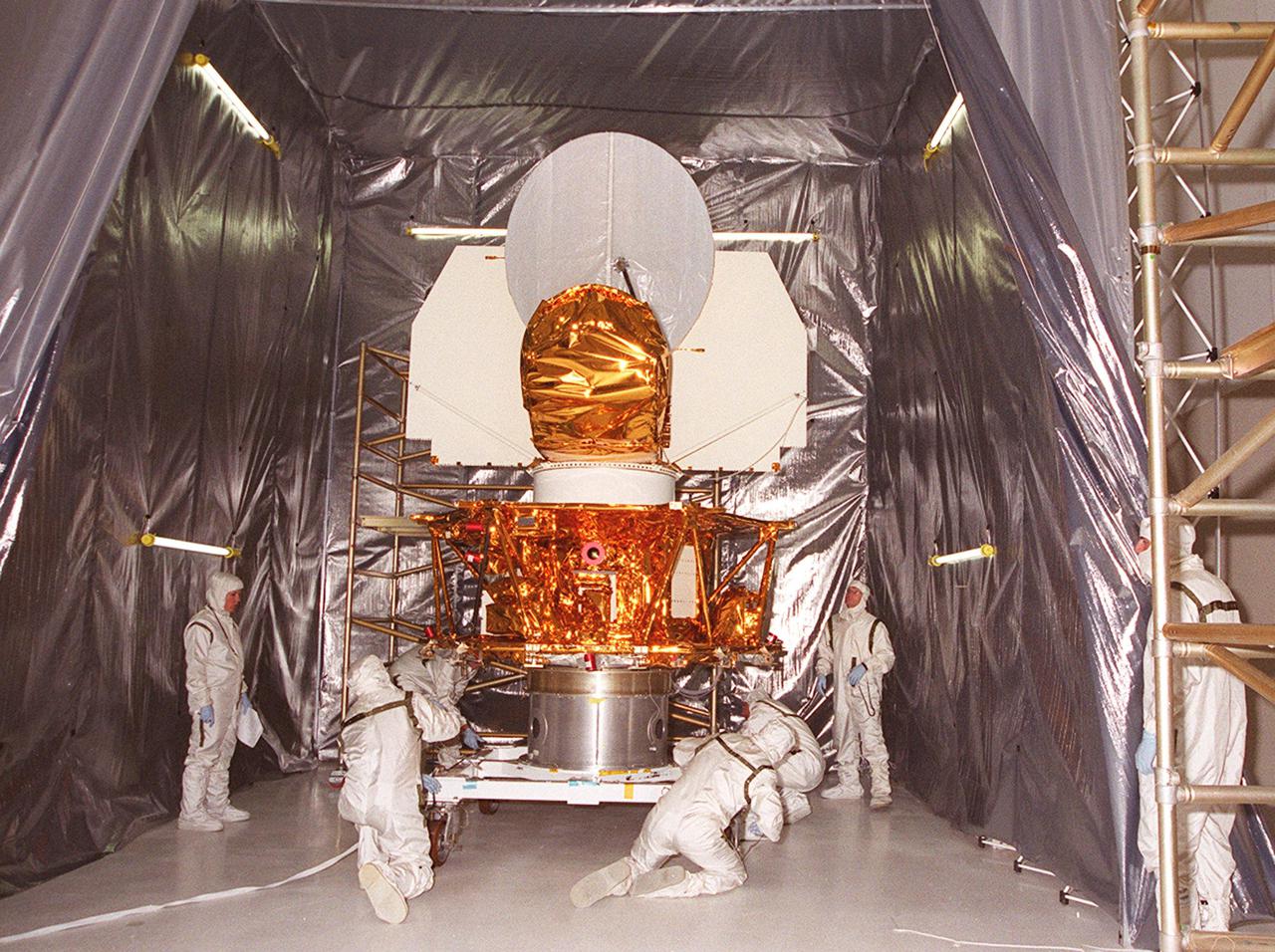
KENNEDY SPACE CENTER, FLA. -- Workers in the Spacecraft Assembly and Encapsulation Facility 2 secure the Microwave Anisotropy Probe (MAP) on a workstand inside a tent. Several milestones must be completed while MAP is at SAEF-2, including antenna installations, solar array installation, solar array deployment and illumination testing, a spacecraft comprehensive performance test, fueling with hydrazine propellant and a spin balance test. MAP will then be ready for integration with the solid propellant Payload Assist Module upper stage booster. MAP is scheduled for launch June 30 from Cape Canaveral Air Force Station on a Delta II rocket into a lunar-assisted trajectory to the Sun-Earth for a 27-month mission. The MAP instrument consists of a set of passively cooled microwave radiometers with 1.4x 1.6-meter diameter primary reflectors to provide the desired angular resolution. MAP measures small fluctuations in the temperature of the cosmic microwave background radiation to an accuracy of one millionth of a degree These measurements should reveal the size, matter content, age, geometry and fate of the universe. They will also reveal the primordial structure that grew to form galaxies and will test ideas about the origins of these primordial structures. The MAP instrument will be continuously shaded from the Sun, Earth, and Moon by the spacecraft. It is a product of Goddard Space Flight Center in partnership with Princeton University

KENNEDY SPACE CENTER, FLA. -- In the Spacecraft Assembly and Encapsulation Facility 2, the Microwave Anisotropy Probe (MAP) undergoes testing and checkout. Several milestones must be completed while MAP is at SAEF-2, including antenna and solar array installation, solar array deployment and illumination testing, a spacecraft comprehensive performance test, fueling with hydrazine propellant and a spin balance test. MAP will then be ready for integration with the solid propellant Payload Assist Module upper stage booster. MAP is scheduled for launch June 30 from Cape Canaveral Air Force Station on a Delta II rocket into a lunar-assisted trajectory to the Sun-Earth for a 27-month mission. The MAP instrument consists of a set of passively cooled microwave radiometers with 1.4x 1.6-meter diameter primary reflectors to provide the desired angular resolution. MAP measures small fluctuations in the temperature of the cosmic microwave background radiation to an accuracy of one millionth of a degree These measurements should reveal the size, matter content, age, geometry and fate of the universe. They will also reveal the primordial structure that grew to form galaxies and will test ideas about the origins of these primordial structures. The MAP instrument will be continuously shaded from the Sun, Earth, and Moon by the spacecraft. It is a product of Goddard Space Flight Center in partnership with Princeton University
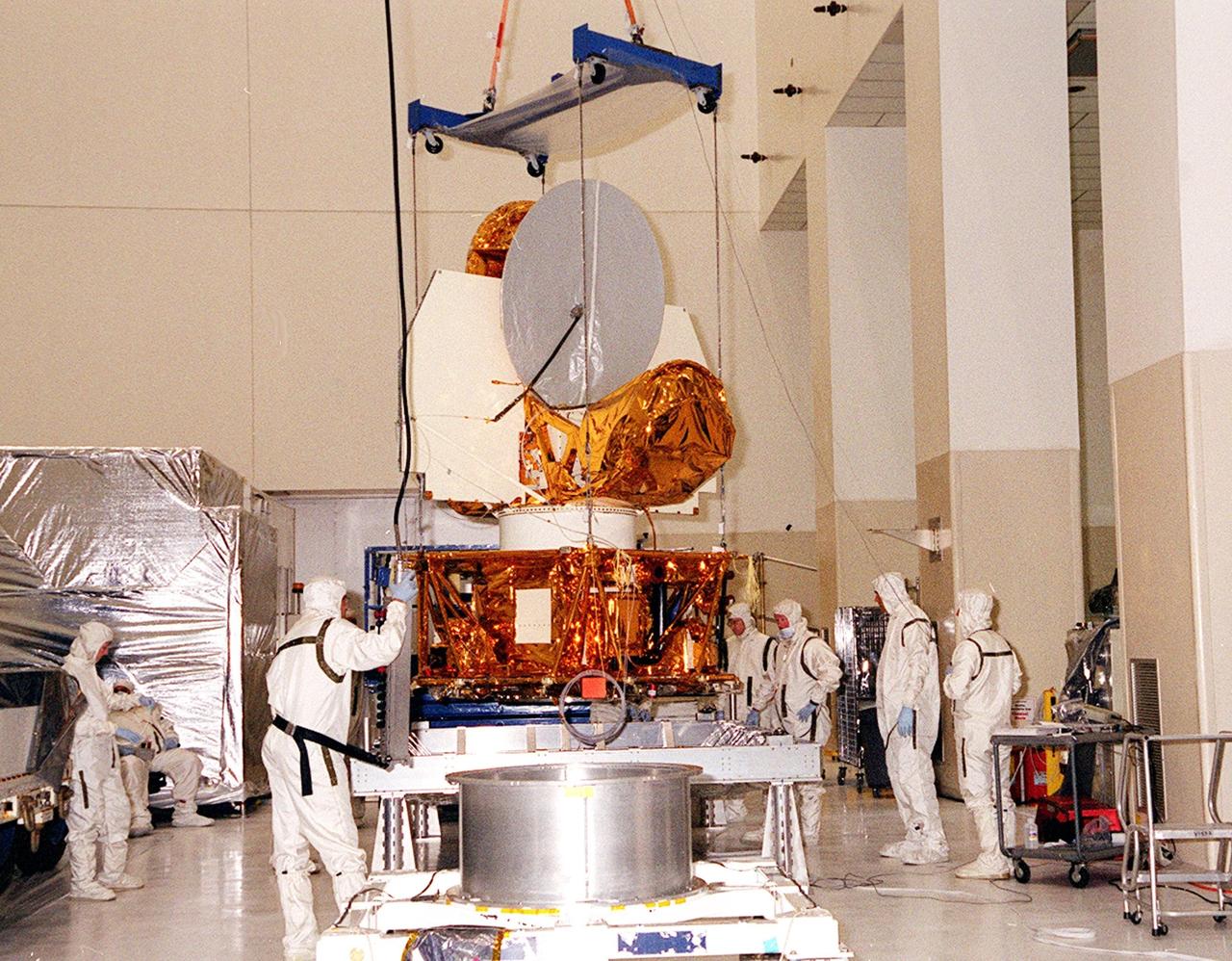
KENNEDY SPACE CENTER, FLA. -- Workers in the Spacecraft Assembly and Encapsulation Facility 2 stand by while the Microwave Anisotropy Probe (MAP) is lifted to place it on a workstand. Several milestones must be completed while MAP is at SAEF-2, including antenna installations, solar array installation, solar array deployment and illumination testing, a spacecraft comprehensive performance test, fueling with hydrazine propellant and a spin balance test. MAP will then be ready for integration with the solid propellant Payload Assist Module upper stage booster. MAP is scheduled for launch June 30 from Cape Canaveral Air Force Station on a Delta II rocket into a lunar-assisted trajectory to the Sun-Earth for a 27-month mission. The MAP instrument consists of a set of passively cooled microwave radiometers with 1.4x 1.6-meter diameter primary reflectors to provide the desired angular resolution. MAP measures small fluctuations in the temperature of the cosmic microwave background radiation to an accuracy of one millionth of a degree These measurements should reveal the size, matter content, age, geometry and fate of the universe. They will also reveal the primordial structure that grew to form galaxies and will test ideas about the origins of these primordial structures. The MAP instrument will be continuously shaded from the Sun, Earth, and Moon by the spacecraft. It is a product of Goddard Space Flight Center in partnership with Princeton University

CAPE CANAVERAL, Fla. – NASA Kennedy Space Center's Center Director Bob Cabana (right) speaks during the meeting of the Augustine Commission in Cocoa Beach, Fla. At the conference table in the foreground are members of the commission: (from left) Bohdan Bejmuk, chair of Constellation Program Standing Review Board; Jeff Greason, co-founder and CEO of XCOR Aerospace; Dr. Christopher Chyba, professor of Astrophysical Sciences and international Affairs at Princeton University; and Phil McAlister, special assistant for Program Analysis in NASA's Office of Program Analysis and Evaluation. At the request of the Office of Science and Technology Policy, NASA established the Review of U.S. Human Space Flight Plans Committee, known as the Augustine Commission. Chaired by Norman R. Augustine, retired chairman and CEO of Lockheed Martin Corp., the committee is conducting an independent review of ongoing U.S. human spaceflight plans and programs, as well as alternatives, to ensure the nation is pursuing the best trajectory for the future of human space flight - one that is safe, innovative, affordable, and sustainable. Photo credit: NASA/Jim Grossmann
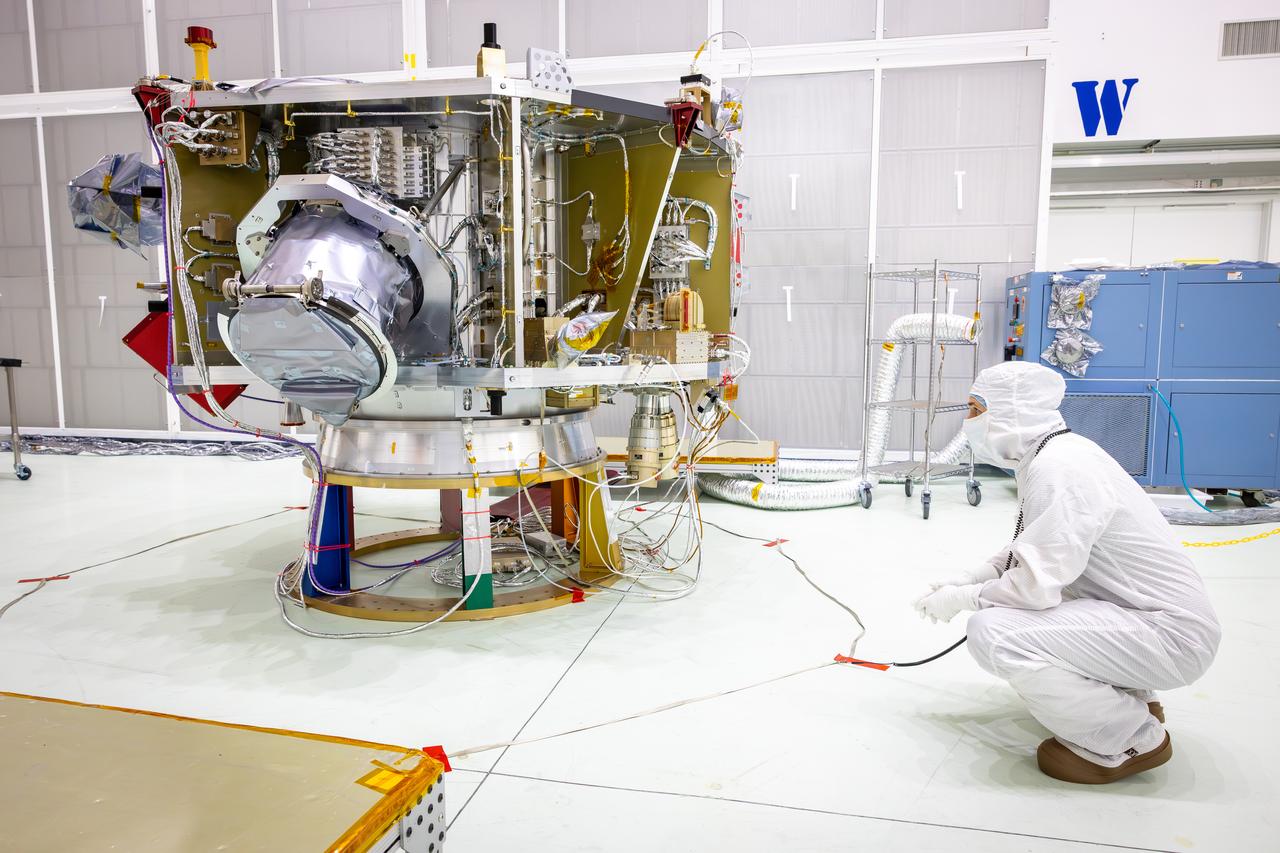
Technicians test the spring-activated door on the Interstellar Dust Experiment (IDEX) instrument of NASA’s IMAP (Interstellar Mapping and Acceleration Probe) observatory inside the high bay at the Astrotech Space Operations Facility near the agency’s Kennedy Space Center in Florida on Tuesday, June 3, 2025. The door will remain closed to protect IDEX from contamination during integration and launch. Once in space, the door will swing open permanently to allow interstellar and interplanetary dust to flow into the instrument for measurement. The IMAP observatory will study how the Sun shapes the boundaries of the heliosphere, the protective bubble around our solar system. Launch is targeted for no earlier than September 2025 aboard a SpaceX Falcon 9 rocket from Launch Complex 39A at NASA Kennedy.
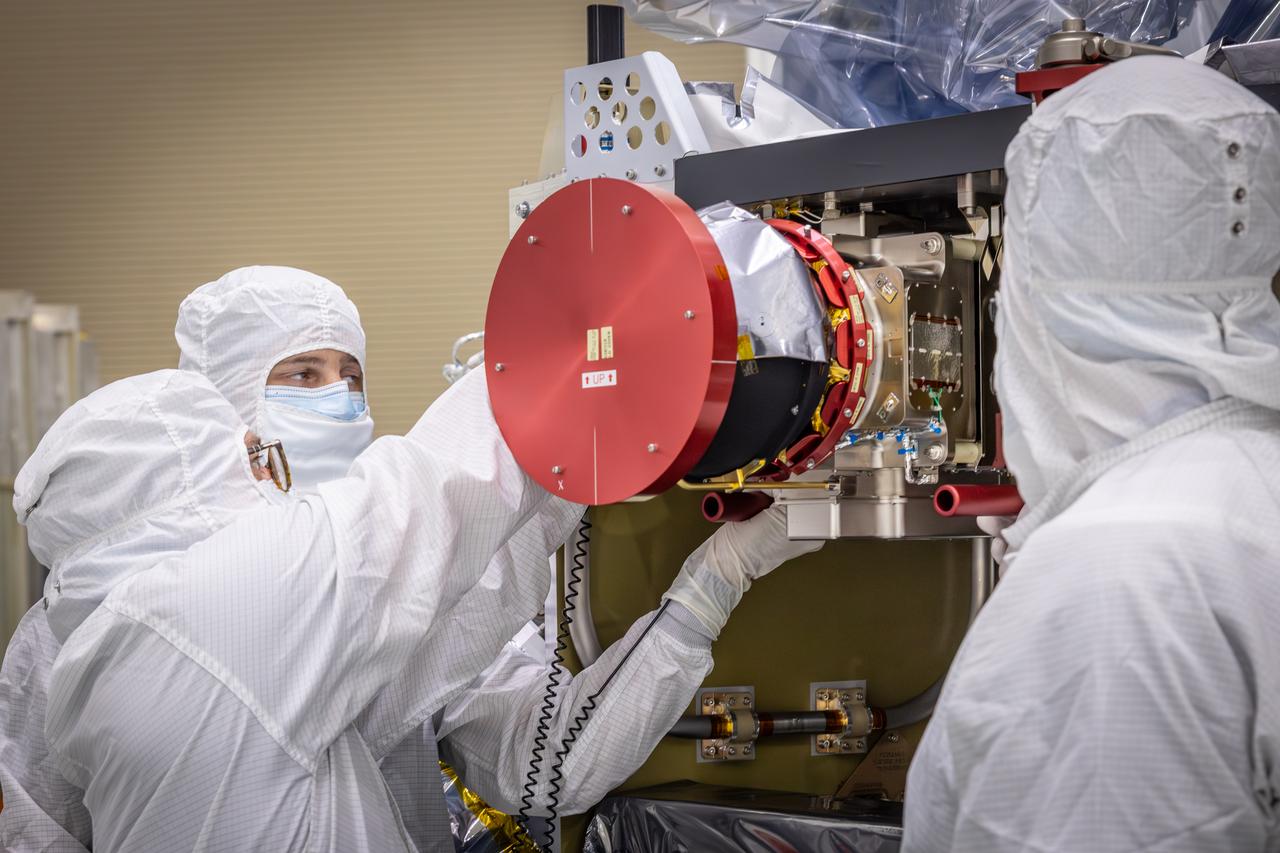
Technicians reintegrate the Compact Dual Ion Composition Experiment (CoDICE) instrument of NASA’s IMAP (Interstellar Mapping and Acceleration Probe) observatory inside the high bay at the Astrotech Space Operations Facility near the agency’s Kennedy Space Center in Florida on Friday, June 20, 2025. CoDICE will measure solar wind particles flowing from the Sun and pickup ions that entered the heliosphere from outside the solar system, as well as the direction of travel, and types of specific species of pickup ions. Launch of the IMAP mission is targeted for no earlier than September 2025 aboard a SpaceX Falcon 9 rocket from Launch Complex 39A at NASA Kennedy.
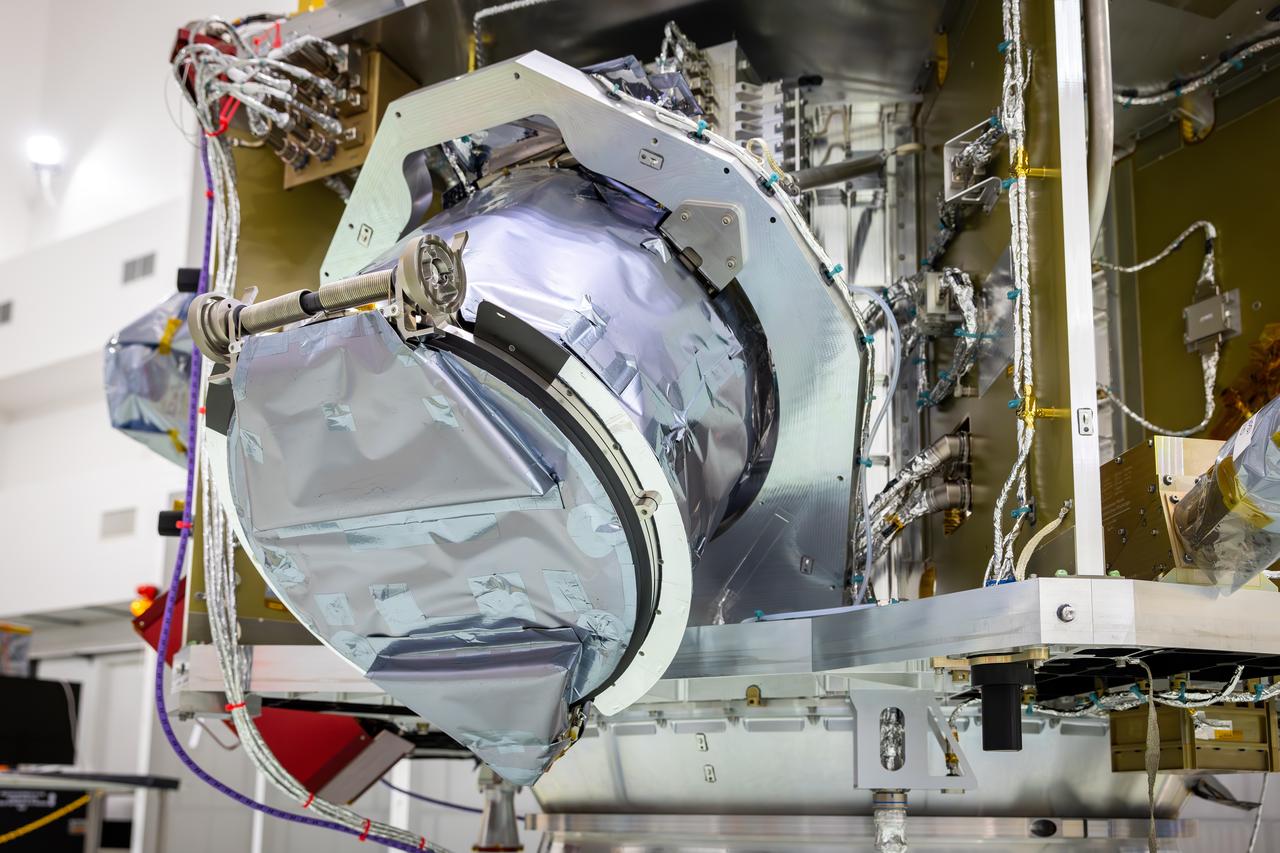
Technicians test the spring-activated door on the Interstellar Dust Experiment (IDEX) instrument of NASA’s IMAP (Interstellar Mapping and Acceleration Probe) observatory inside the high bay at the Astrotech Space Operations Facility near the agency’s Kennedy Space Center in Florida on Tuesday, June 3, 2025. The door will remain closed to protect IDEX from contamination during integration and launch. Once in space, the door will swing open permanently to allow interstellar and interplanetary dust to flow into the instrument for measurement. The IMAP observatory will study how the Sun shapes the boundaries of the heliosphere, the protective bubble around our solar system. Launch is targeted for no earlier than September 2025 aboard a SpaceX Falcon 9 rocket from Launch Complex 39A at NASA Kennedy.
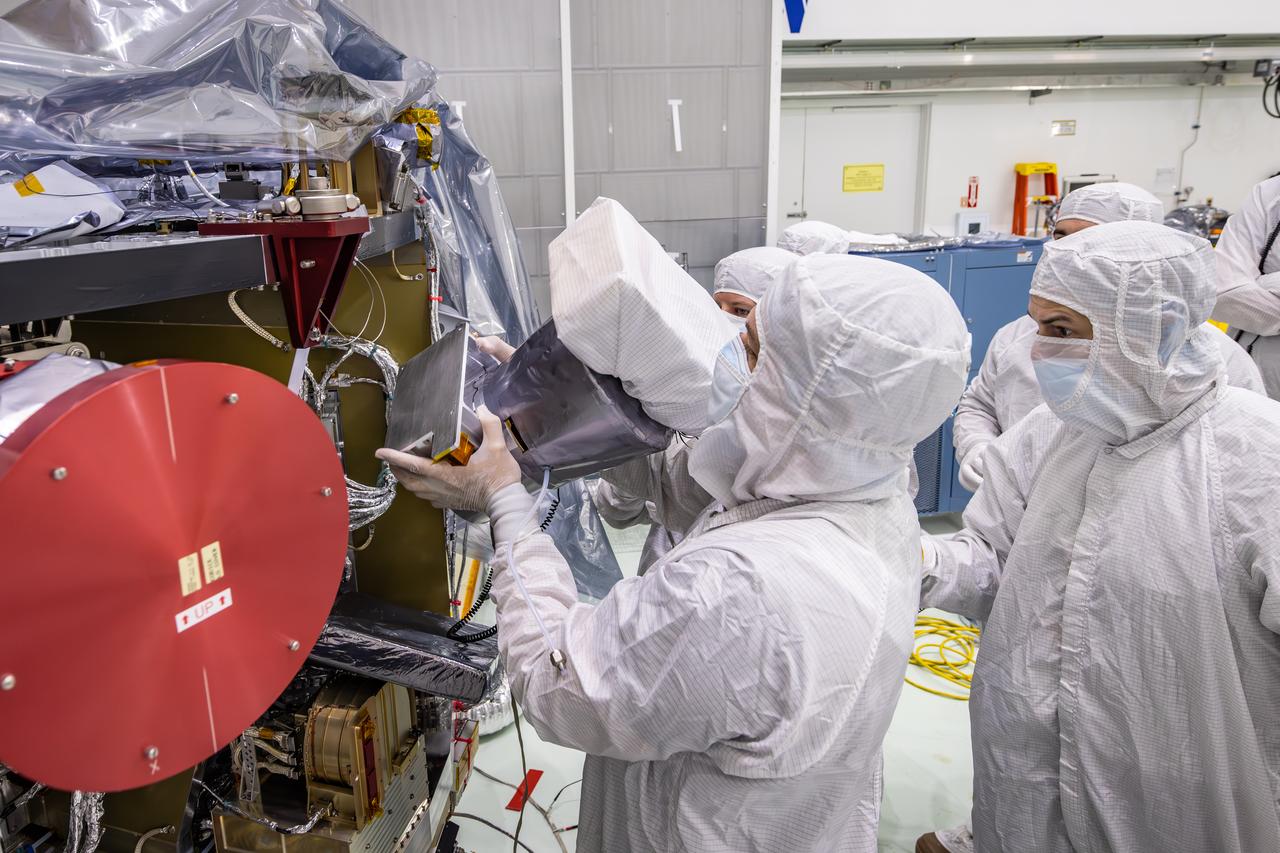
Technicians reintegrate the Solar Wind and Pickup Ions (SWAPI) instrument of NASA’s IMAP (Interstellar Mapping and Acceleration Probe) observatory inside the high bay at the Astrotech Space Operations Facility near the agency’s Kennedy Space Center in Florida on Monday, June 23, 2025. As IMAP spins in space, solar wind particles are swept into SWAPI through a special opening called “sunglasses,” an opening covered by a screen with very tiny precise holes that cut down the brightness of the very intense solar wind. SWAPI collects and counts particles from the solar wind flowing from the Sun and particles called pick-up ions that have entered the heliosphere from outside the solar system and traveled inwards where IMAP orbits near Earth. Launch of the IMAP mission is targeted for no earlier than September 2025 aboard a SpaceX Falcon 9 rocket from Launch Complex 39A at NASA Kennedy.

Technicians test the spring-activated door on the Interstellar Dust Experiment (IDEX) instrument of NASA’s IMAP (Interstellar Mapping and Acceleration Probe) observatory inside the high bay at the Astrotech Space Operations Facility near the agency’s Kennedy Space Center in Florida on Tuesday, June 3, 2025. The door will remain closed to protect IDEX from contamination during integration and launch. Once in space, the door will swing open permanently to allow interstellar and interplanetary dust to flow into the instrument for measurement. The IMAP observatory will study how the Sun shapes the boundaries of the heliosphere, the protective bubble around our solar system. Launch is targeted for no earlier than September 2025 aboard a SpaceX Falcon 9 rocket from Launch Complex 39A at NASA Kennedy.
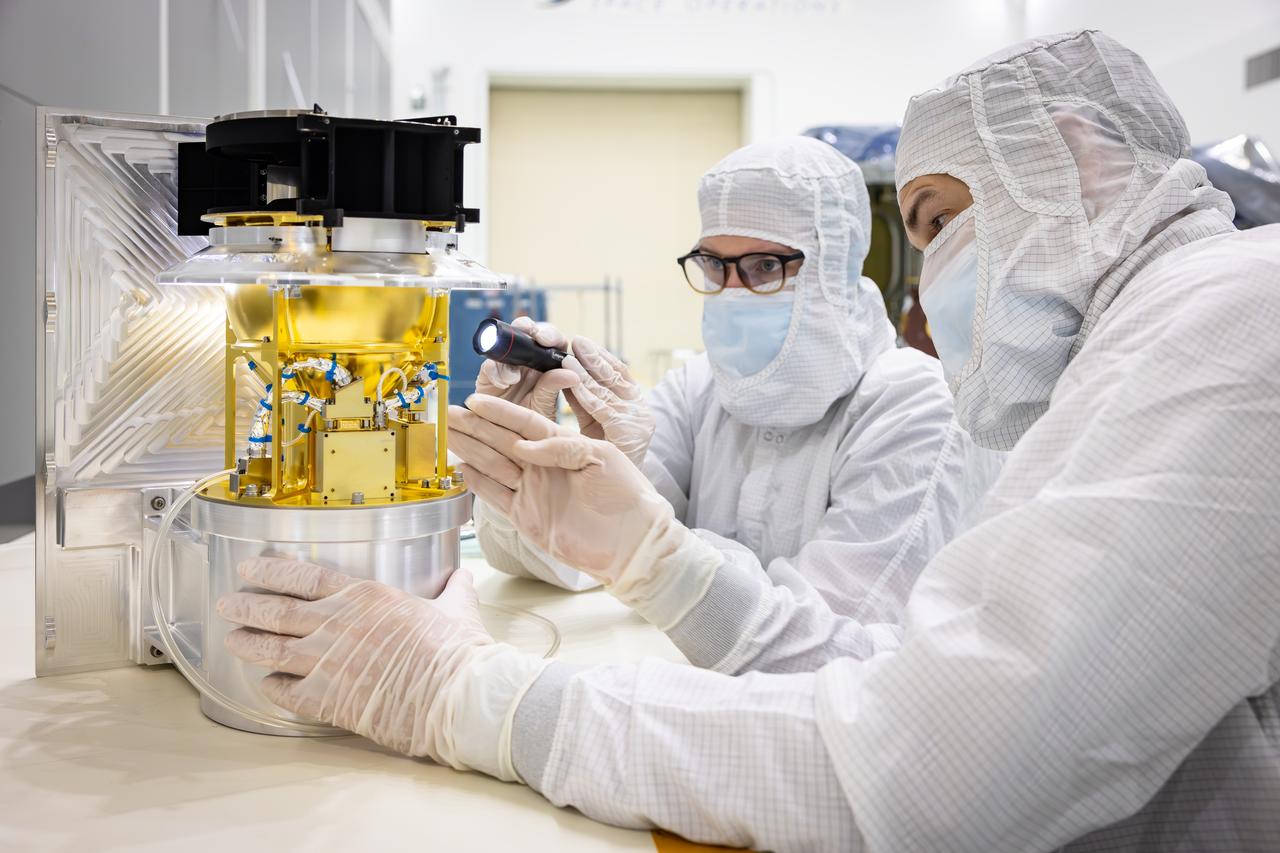
Technicians perform tests the Solar Wind and Pickup Ions (SWAPI) instrument of NASA’s IMAP (Interstellar Mapping and Acceleration Probe) observatory inside the high bay at the Astrotech Space Operations Facility near the agency’s Kennedy Space Center in Florida on Tuesday, June 17, 2025. As IMAP spins in space, solar wind particles are swept into SWAPI through a special opening called “sunglasses,” an opening covered by a screen with very tiny precise holes that cut down the brightness of the very intense solar wind. SWAPI collects and counts particles from the solar wind flowing from the Sun and particles called pick-up ions that have entered the heliosphere from outside the solar system and traveled inwards where IMAP orbits near Earth. Launch of the IMAP mission is targeted for no earlier than September 2025 aboard a SpaceX Falcon 9 rocket from Launch Complex 39A at NASA Kennedy.
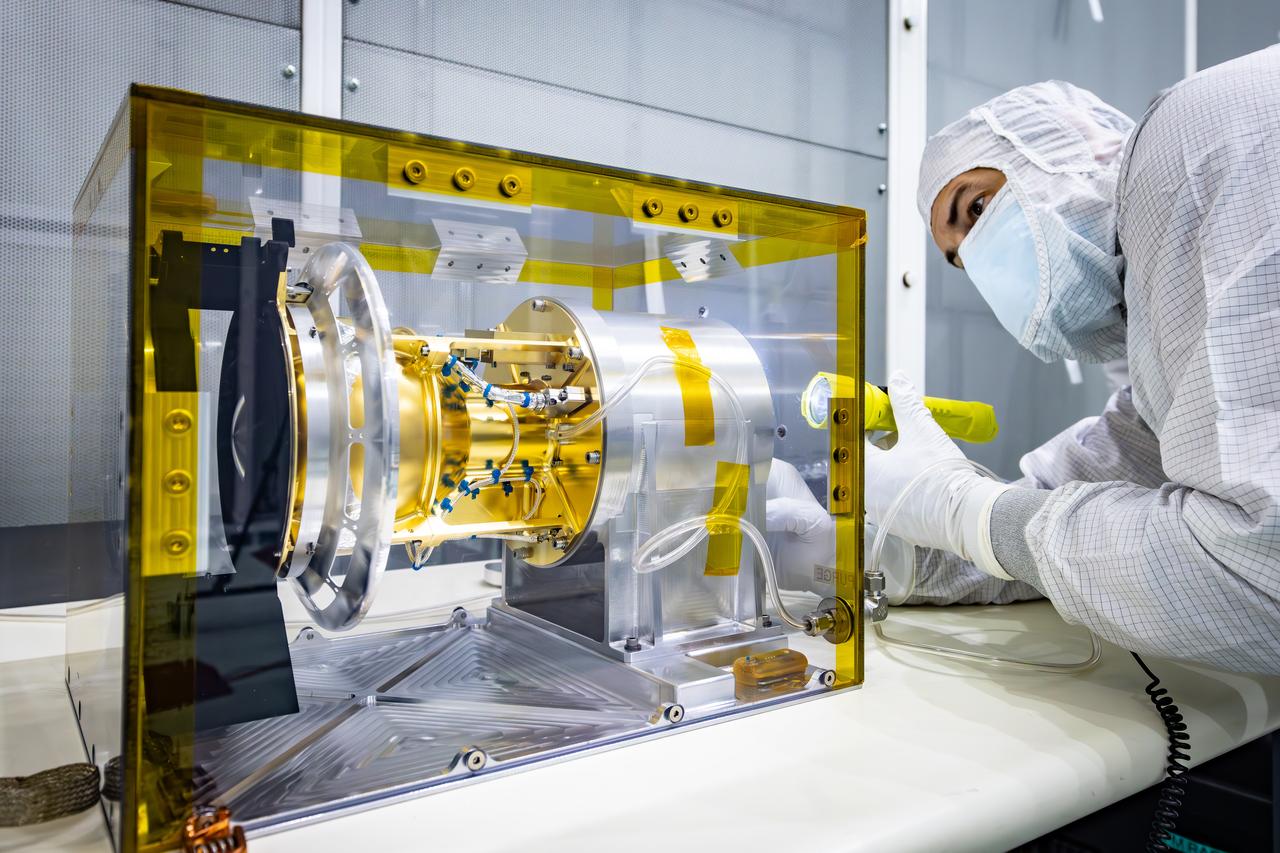
Technicians perform tests the Solar Wind and Pickup Ions (SWAPI) instrument of NASA’s IMAP (Interstellar Mapping and Acceleration Probe) observatory inside the high bay at the Astrotech Space Operations Facility near the agency’s Kennedy Space Center in Florida on Tuesday, June 17, 2025. As IMAP spins in space, solar wind particles are swept into SWAPI through a special opening called “sunglasses,” an opening covered by a screen with very tiny precise holes that cut down the brightness of the very intense solar wind. SWAPI collects and counts particles from the solar wind flowing from the Sun and particles called pick-up ions that have entered the heliosphere from outside the solar system and traveled inwards where IMAP orbits near Earth. Launch of the IMAP mission is targeted for no earlier than September 2025 aboard a SpaceX Falcon 9 rocket from Launch Complex 39A at NASA Kennedy.
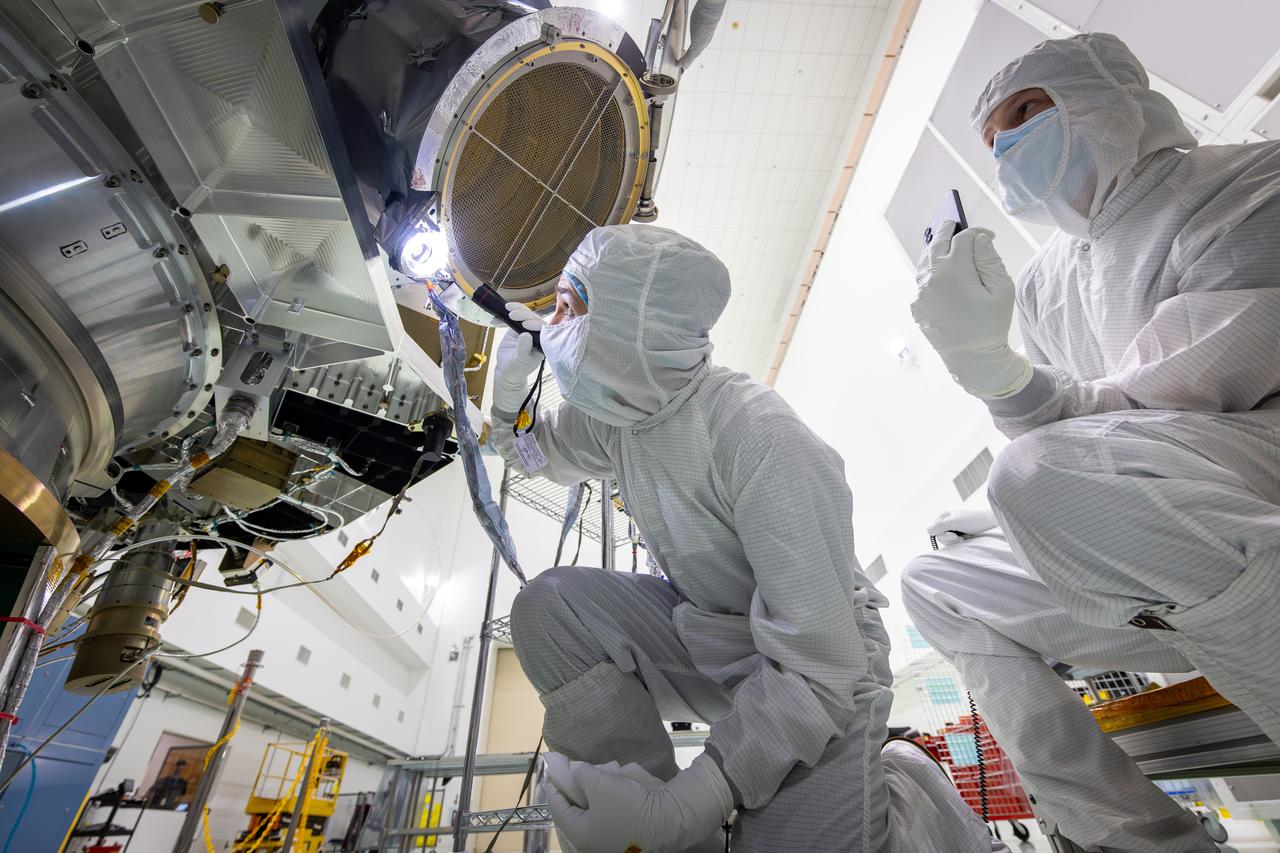
Technicians test the spring-activated door on the Interstellar Dust Experiment (IDEX) instrument of NASA’s IMAP (Interstellar Mapping and Acceleration Probe) observatory inside the high bay at the Astrotech Space Operations Facility near the agency’s Kennedy Space Center in Florida on Tuesday, June 3, 2025. The door will remain closed to protect IDEX from contamination during integration and launch. Once in space, the door will swing open permanently to allow interstellar and interplanetary dust to flow into the instrument for measurement. The IMAP observatory will study how the Sun shapes the boundaries of the heliosphere, the protective bubble around our solar system. Launch is targeted for no earlier than September 2025 aboard a SpaceX Falcon 9 rocket from Launch Complex 39A at NASA Kennedy.
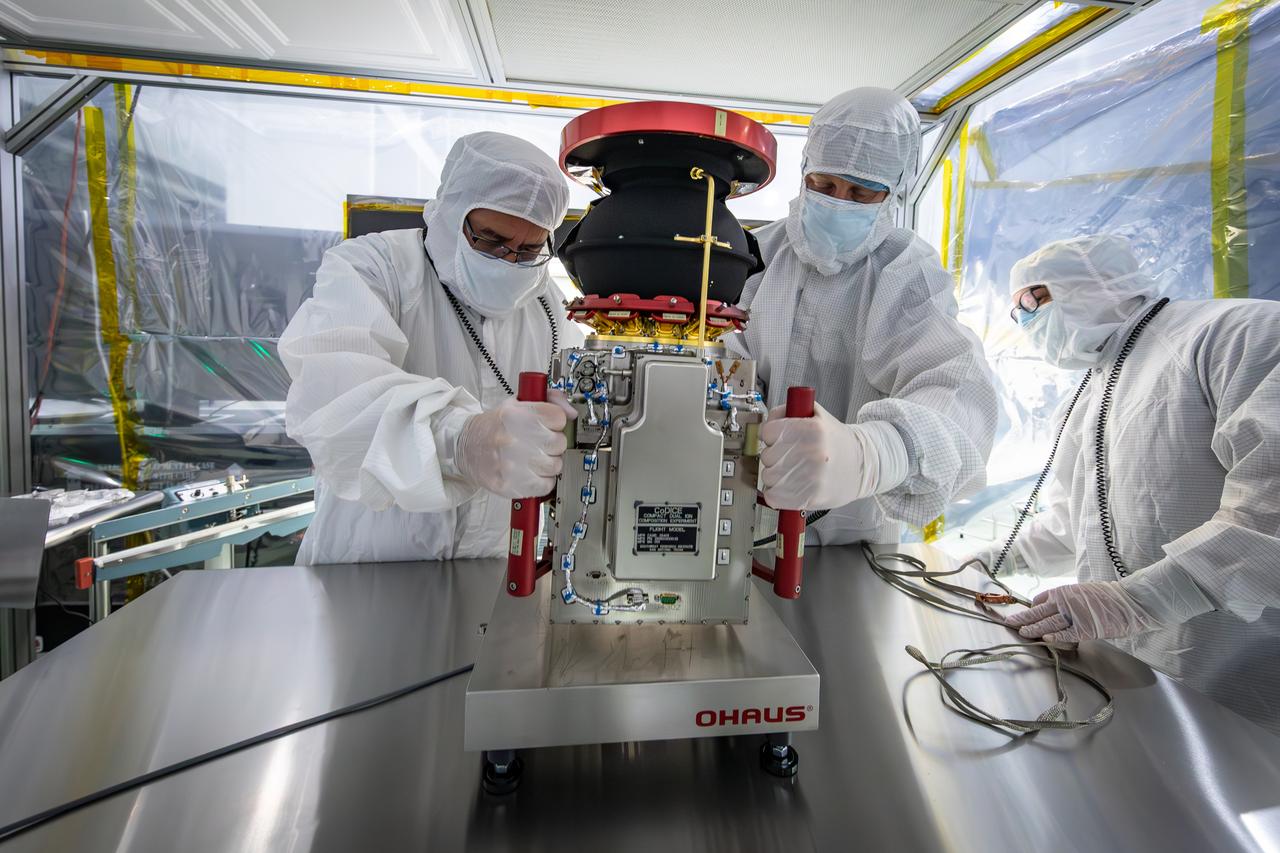
Technicians reintegrate the Compact Dual Ion Composition Experiment (CoDICE) instrument of NASA’s IMAP (Interstellar Mapping and Acceleration Probe) observatory inside the high bay at the Astrotech Space Operations Facility near the agency’s Kennedy Space Center in Florida on Friday, June 20, 2025. CoDICE will measure solar wind particles flowing from the Sun and pickup ions that entered the heliosphere from outside the solar system, as well as the direction of travel, and types of specific species of pickup ions. Launch of the IMAP mission is targeted for no earlier than September 2025 aboard a SpaceX Falcon 9 rocket from Launch Complex 39A at NASA Kennedy.
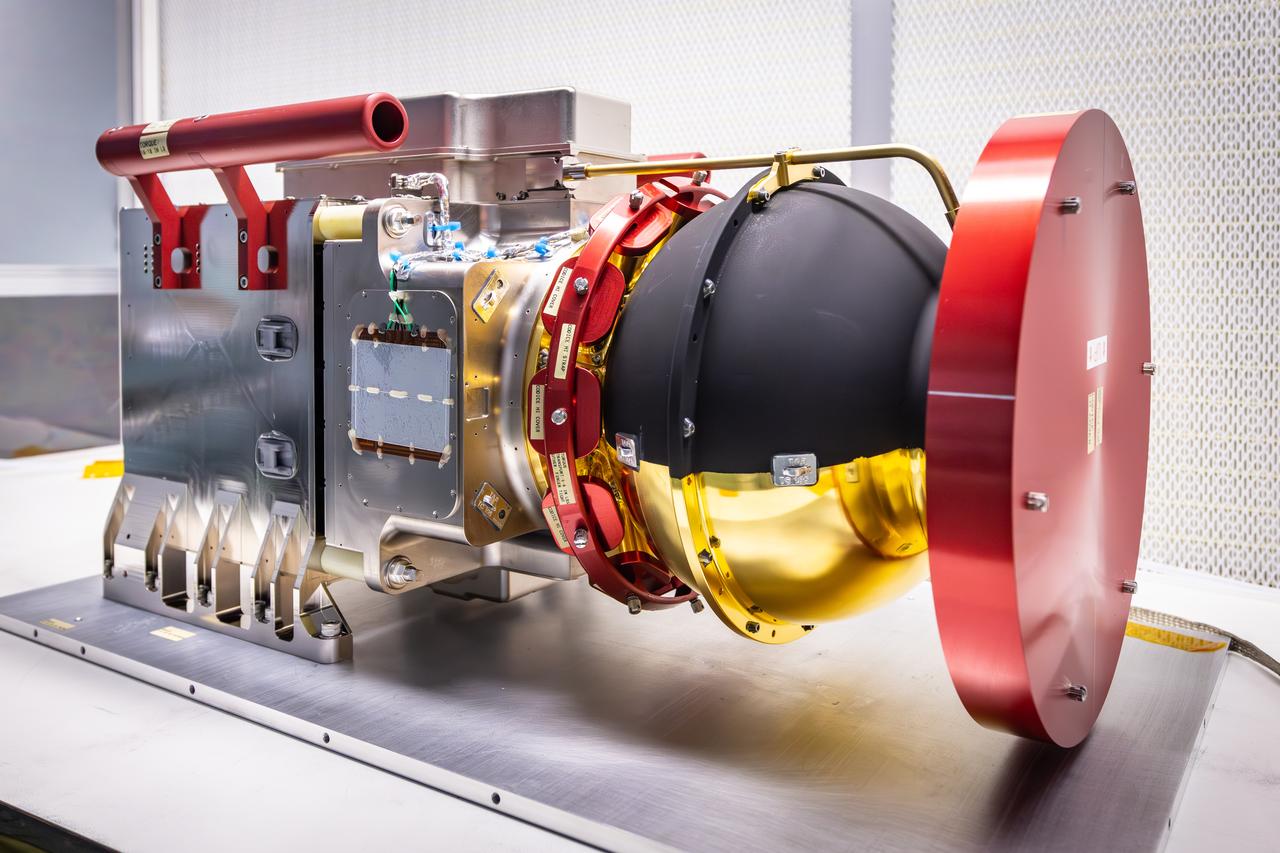
Technicians perform tests on the Compact Dual Ion Composition Experiment (CoDICE) instrument of NASA’s IMAP (Interstellar Mapping and Acceleration Probe) observatory inside the high bay at the Astrotech Space Operations Facility near the agency’s Kennedy Space Center in Florida on Tuesday, June 17, 2025. CoDICE will measure solar wind particles flowing from the Sun and pickup ions that entered the heliosphere from outside the solar system, as well as the direction of travel, and types of specific species of pickup ions. Launch of the IMAP mission is targeted for no earlier than September 2025 aboard a SpaceX Falcon 9 rocket from Launch Complex 39A at NASA Kennedy.
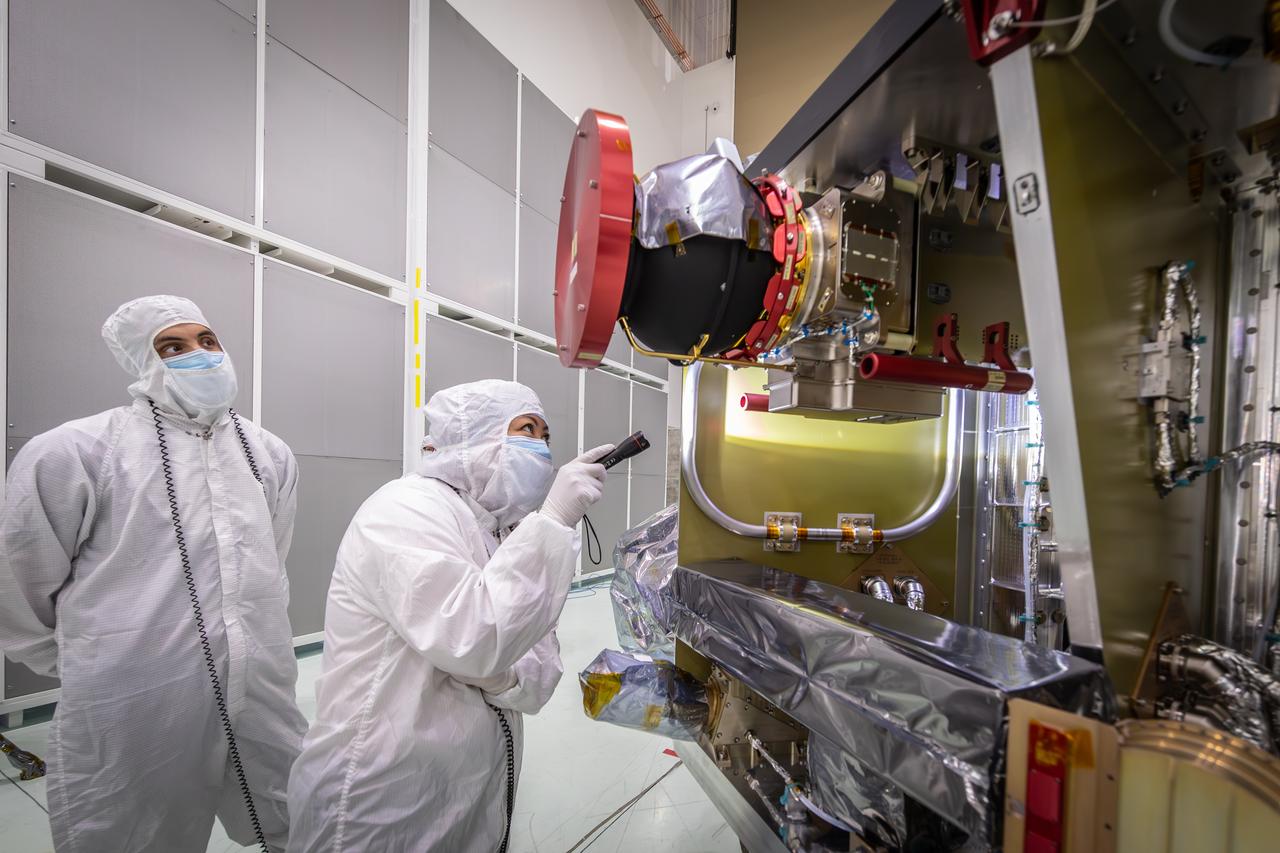
Technicians reintegrate the Compact Dual Ion Composition Experiment (CoDICE) instrument of NASA’s IMAP (Interstellar Mapping and Acceleration Probe) observatory inside the high bay at the Astrotech Space Operations Facility near the agency’s Kennedy Space Center in Florida on Friday, June 20, 2025. CoDICE will measure solar wind particles flowing from the Sun and pickup ions that entered the heliosphere from outside the solar system, as well as the direction of travel, and types of specific species of pickup ions. Launch of the IMAP mission is targeted for no earlier than September 2025 aboard a SpaceX Falcon 9 rocket from Launch Complex 39A at NASA Kennedy.

Technicians test the spring-activated door on the Interstellar Dust Experiment (IDEX) instrument of NASA’s IMAP (Interstellar Mapping and Acceleration Probe) observatory inside the high bay at the Astrotech Space Operations Facility near the agency’s Kennedy Space Center in Florida on Tuesday, June 3, 2025. The door will remain closed to protect IDEX from contamination during integration and launch. Once in space, the door will swing open permanently to allow interstellar and interplanetary dust to flow into the instrument for measurement. The IMAP observatory will study how the Sun shapes the boundaries of the heliosphere, the protective bubble around our solar system. Launch is targeted for no earlier than September 2025 aboard a SpaceX Falcon 9 rocket from Launch Complex 39A at NASA Kennedy.
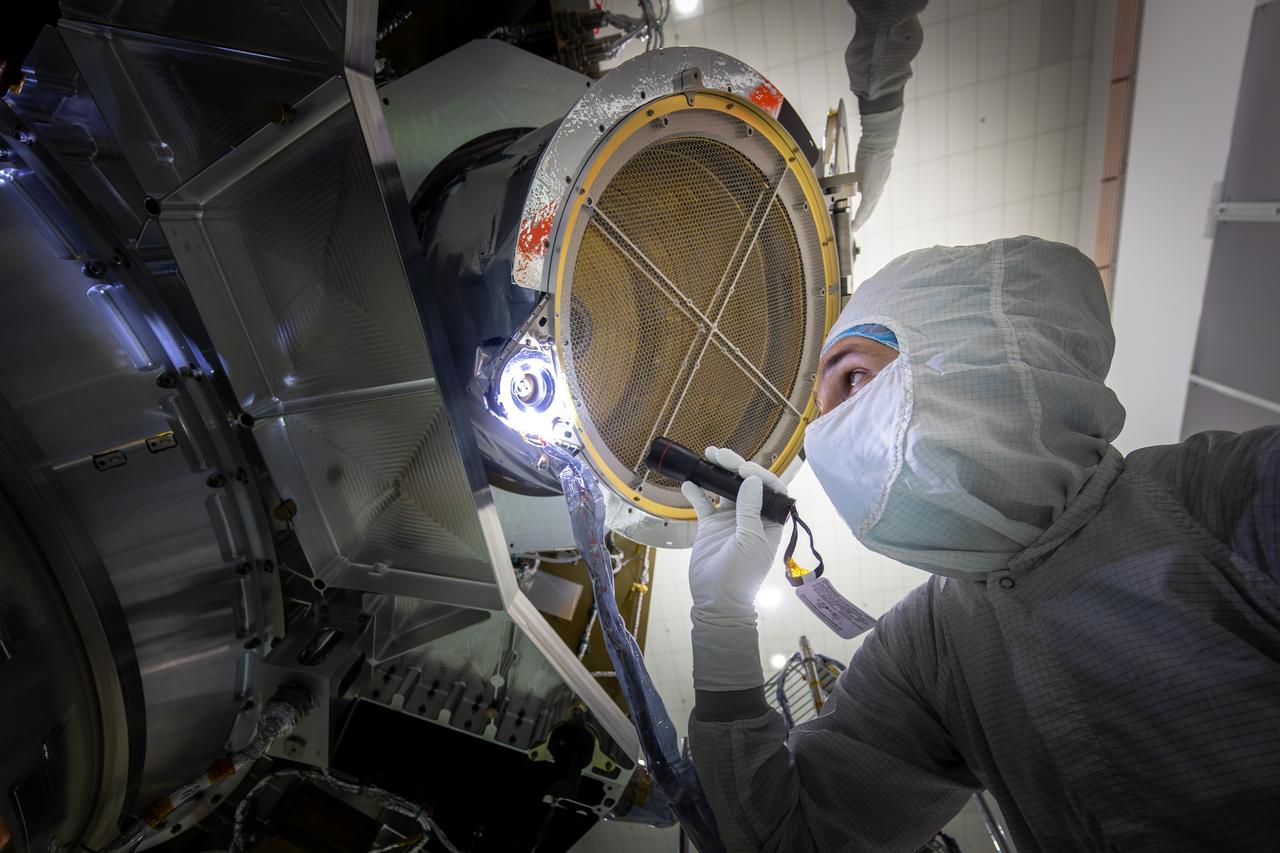
Technicians test the spring-activated door on the Interstellar Dust Experiment (IDEX) instrument of NASA’s IMAP (Interstellar Mapping and Acceleration Probe) observatory inside the high bay at the Astrotech Space Operations Facility near the agency’s Kennedy Space Center in Florida on Tuesday, June 3, 2025. The door will remain closed to protect IDEX from contamination during integration and launch. Once in space, the door will swing open permanently to allow interstellar and interplanetary dust to flow into the instrument for measurement. The IMAP observatory will study how the Sun shapes the boundaries of the heliosphere, the protective bubble around our solar system. Launch is targeted for no earlier than September 2025 aboard a SpaceX Falcon 9 rocket from Launch Complex 39A at NASA Kennedy.
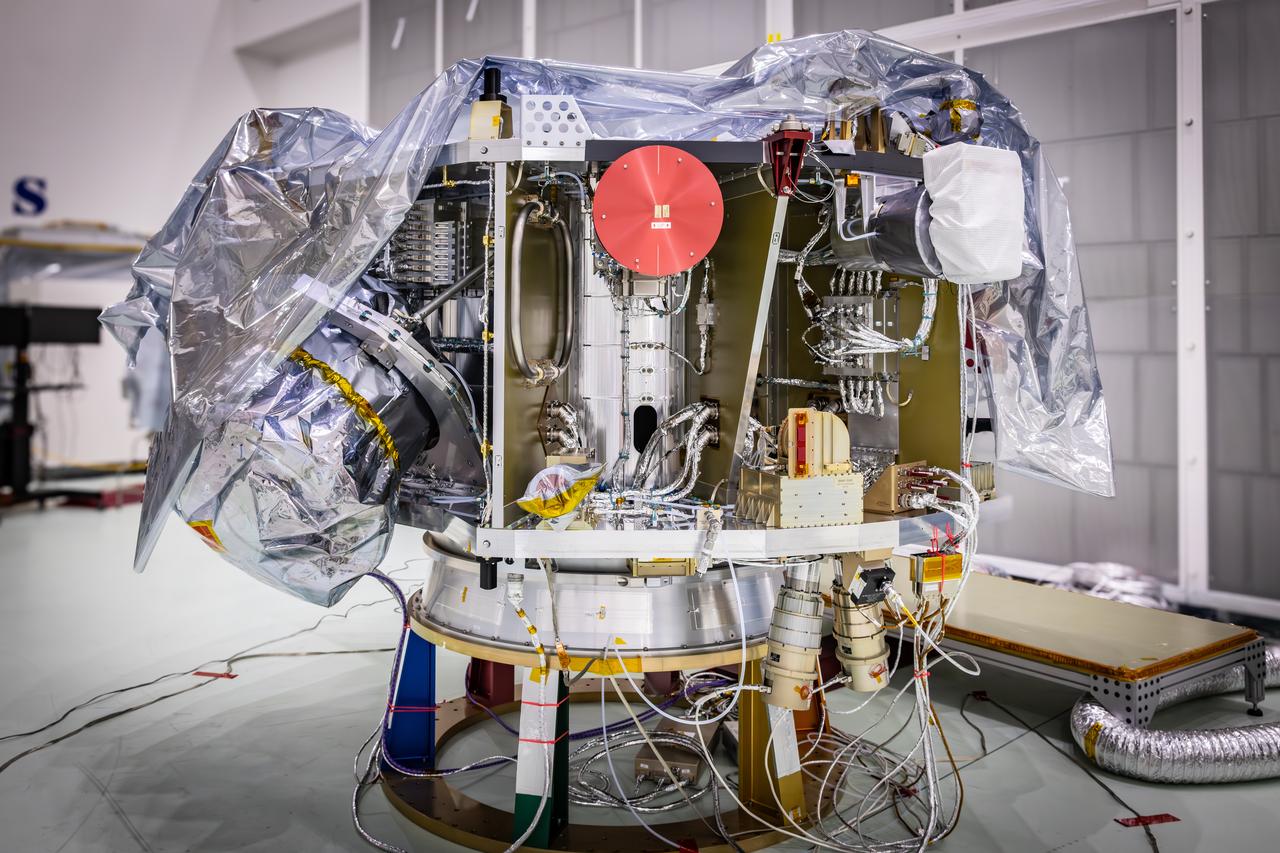
Technicians reintegrate the Solar Wind and Pickup Ions (SWAPI) instrument of NASA’s IMAP (Interstellar Mapping and Acceleration Probe) observatory inside the high bay at the Astrotech Space Operations Facility near the agency’s Kennedy Space Center in Florida on Monday, June 23, 2025. As IMAP spins in space, solar wind particles are swept into SWAPI through a special opening called “sunglasses,” an opening covered by a screen with very tiny precise holes that cut down the brightness of the very intense solar wind. SWAPI collects and counts particles from the solar wind flowing from the Sun and particles called pick-up ions that have entered the heliosphere from outside the solar system and traveled inwards where IMAP orbits near Earth. Launch of the IMAP mission is targeted for no earlier than September 2025 aboard a SpaceX Falcon 9 rocket from Launch Complex 39A at NASA Kennedy.
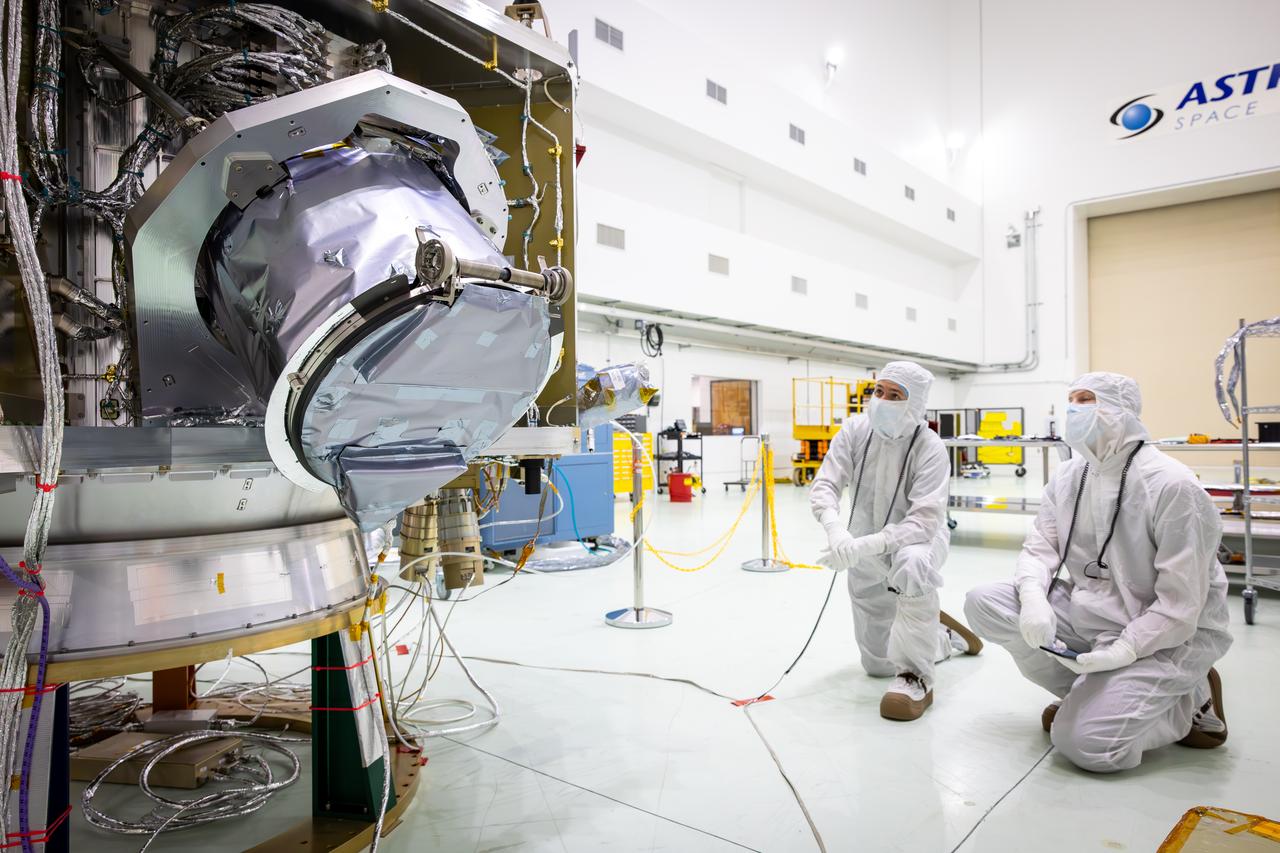
Technicians test the spring-activated door on the Interstellar Dust Experiment (IDEX) instrument of NASA’s IMAP (Interstellar Mapping and Acceleration Probe) observatory inside the high bay at the Astrotech Space Operations Facility near the agency’s Kennedy Space Center in Florida on Tuesday, June 3, 2025. The door will remain closed to protect IDEX from contamination during integration and launch. Once in space, the door will swing open permanently to allow interstellar and interplanetary dust to flow into the instrument for measurement. The IMAP observatory will study how the Sun shapes the boundaries of the heliosphere, the protective bubble around our solar system. Launch is targeted for no earlier than September 2025 aboard a SpaceX Falcon 9 rocket from Launch Complex 39A at NASA Kennedy.
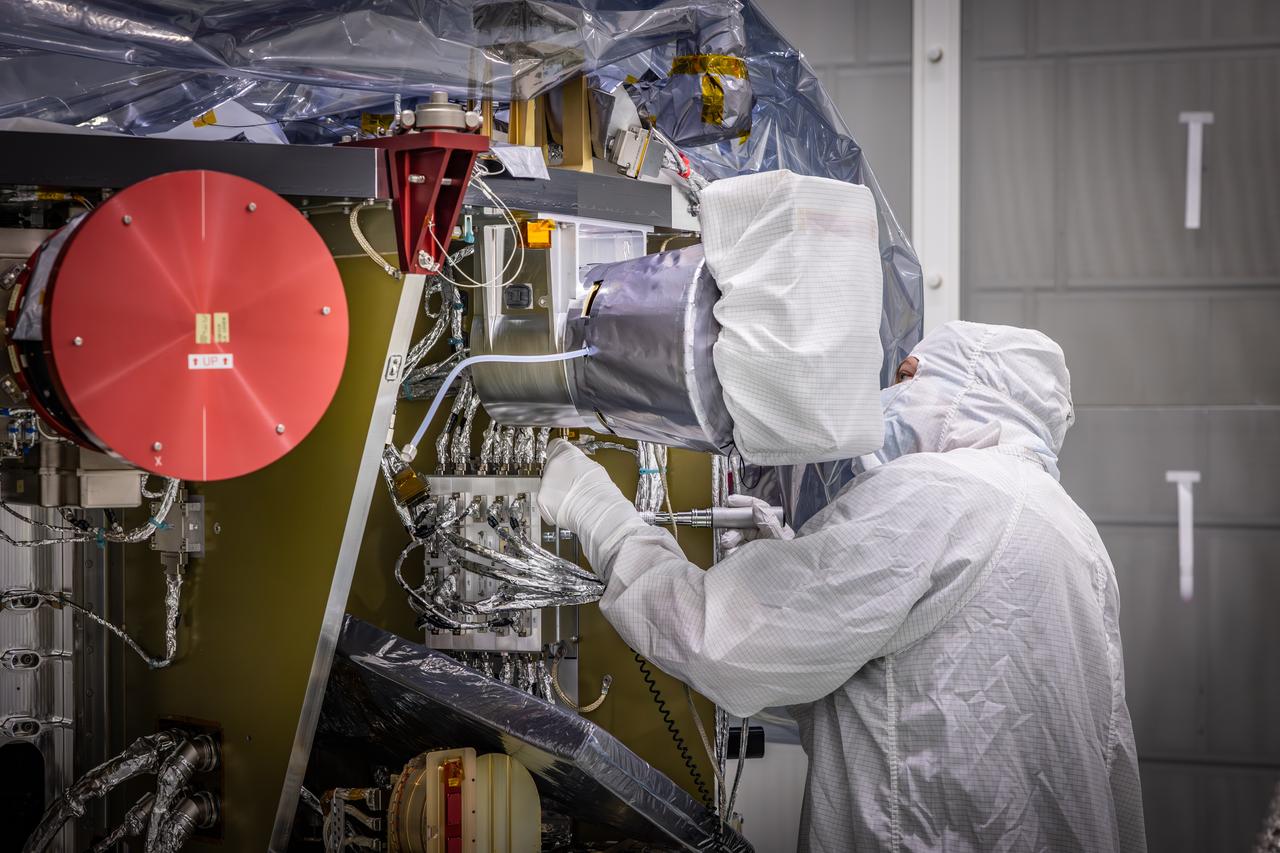
Technicians reintegrate the Solar Wind and Pickup Ions (SWAPI) instrument of NASA’s IMAP (Interstellar Mapping and Acceleration Probe) observatory inside the high bay at the Astrotech Space Operations Facility near the agency’s Kennedy Space Center in Florida on Monday, June 23, 2025. As IMAP spins in space, solar wind particles are swept into SWAPI through a special opening called “sunglasses,” an opening covered by a screen with very tiny precise holes that cut down the brightness of the very intense solar wind. SWAPI collects and counts particles from the solar wind flowing from the Sun and particles called pick-up ions that have entered the heliosphere from outside the solar system and traveled inwards where IMAP orbits near Earth. Launch of the IMAP mission is targeted for no earlier than September 2025 aboard a SpaceX Falcon 9 rocket from Launch Complex 39A at NASA Kennedy.
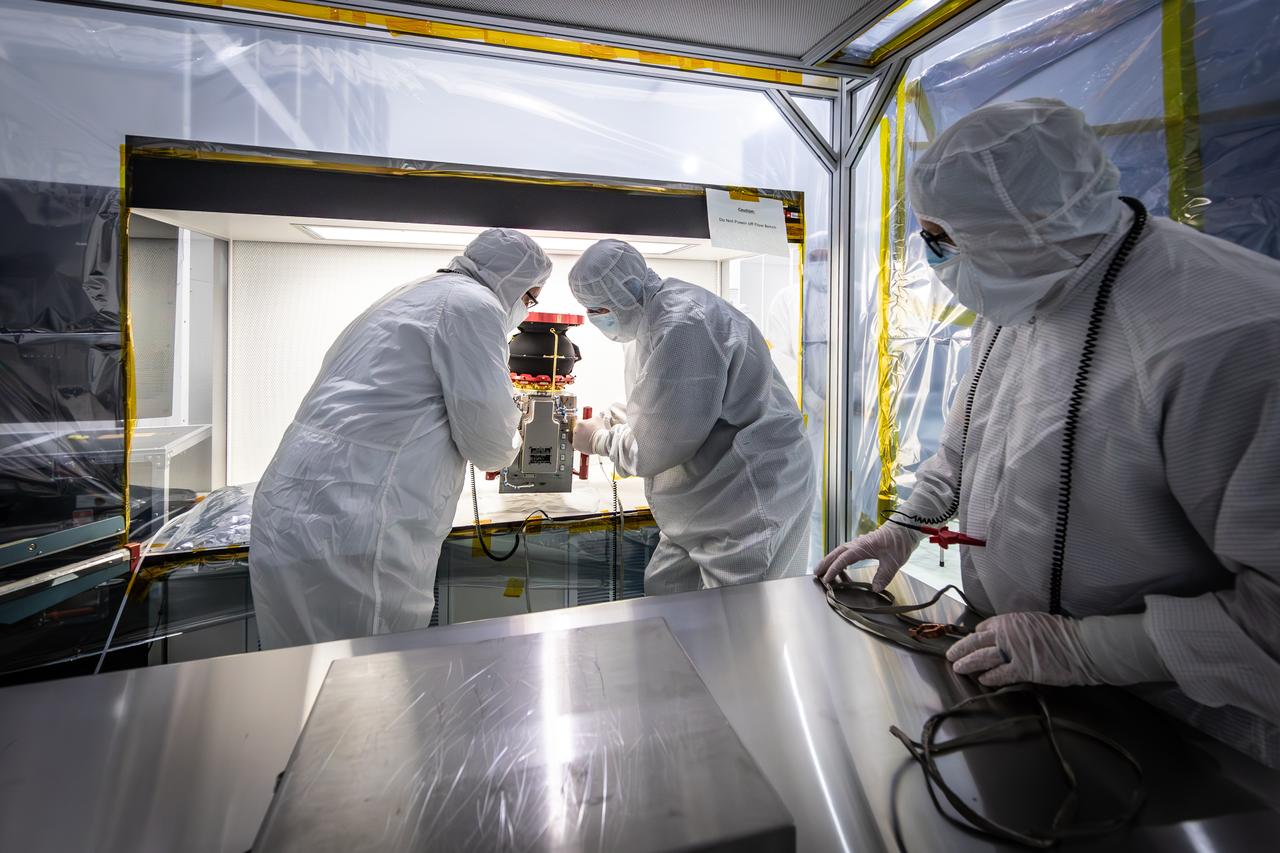
Technicians reintegrate the Compact Dual Ion Composition Experiment (CoDICE) instrument of NASA’s IMAP (Interstellar Mapping and Acceleration Probe) observatory inside the high bay at the Astrotech Space Operations Facility near the agency’s Kennedy Space Center in Florida on Friday, June 20, 2025. CoDICE will measure solar wind particles flowing from the Sun and pickup ions that entered the heliosphere from outside the solar system, as well as the direction of travel, and types of specific species of pickup ions. Launch of the IMAP mission is targeted for no earlier than September 2025 aboard a SpaceX Falcon 9 rocket from Launch Complex 39A at NASA Kennedy.
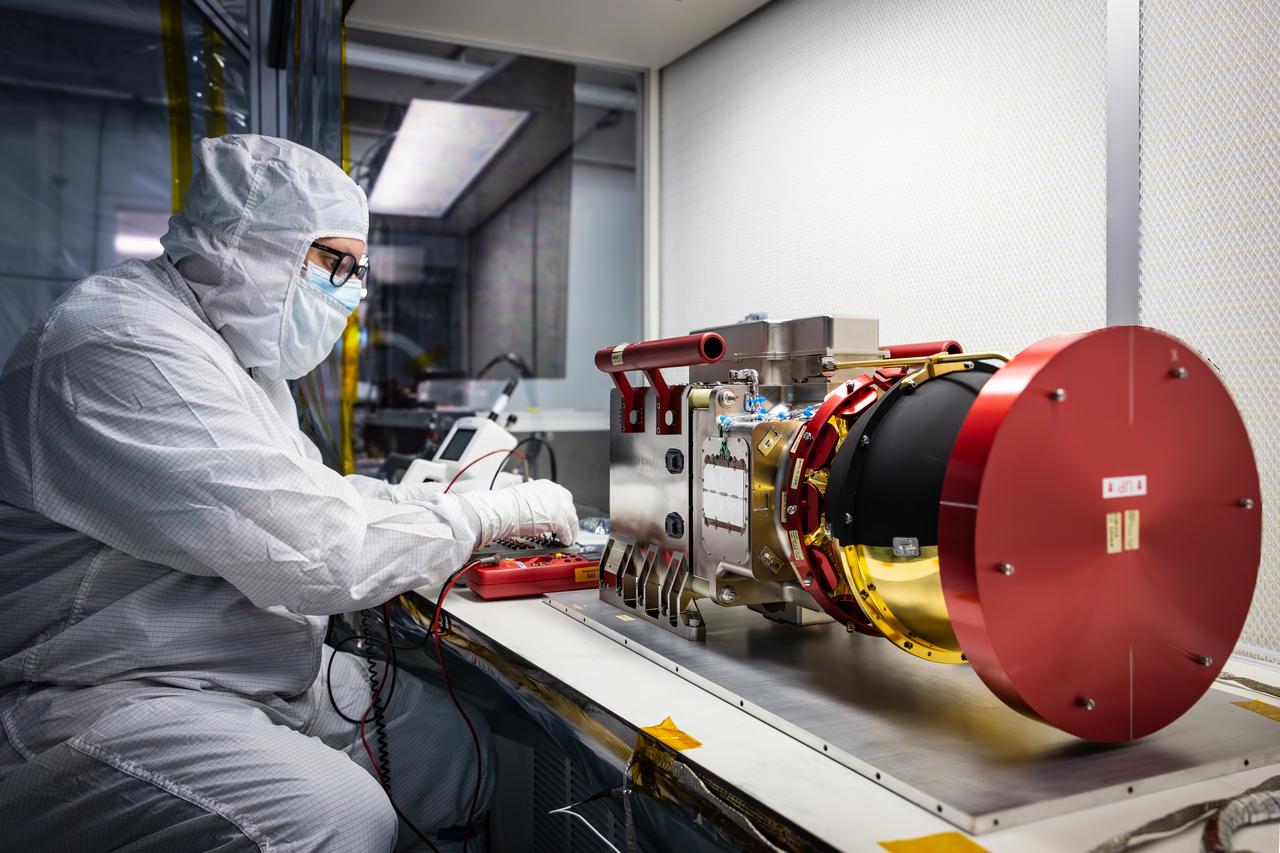
A technician performs tests on the Compact Dual Ion Composition Experiment (CoDICE) instrument of NASA’s IMAP (Interstellar Mapping and Acceleration Probe) observatory inside the high bay at the Astrotech Space Operations Facility near the agency’s Kennedy Space Center in Florida on Tuesday, June 17, 2025. CoDICE will measure solar wind particles flowing from the Sun and pickup ions that entered the heliosphere from outside the solar system, as well as the direction of travel, and types of specific species of pickup ions. Launch of the IMAP mission is targeted for no earlier than September 2025 aboard a SpaceX Falcon 9 rocket from Launch Complex 39A at NASA Kennedy.
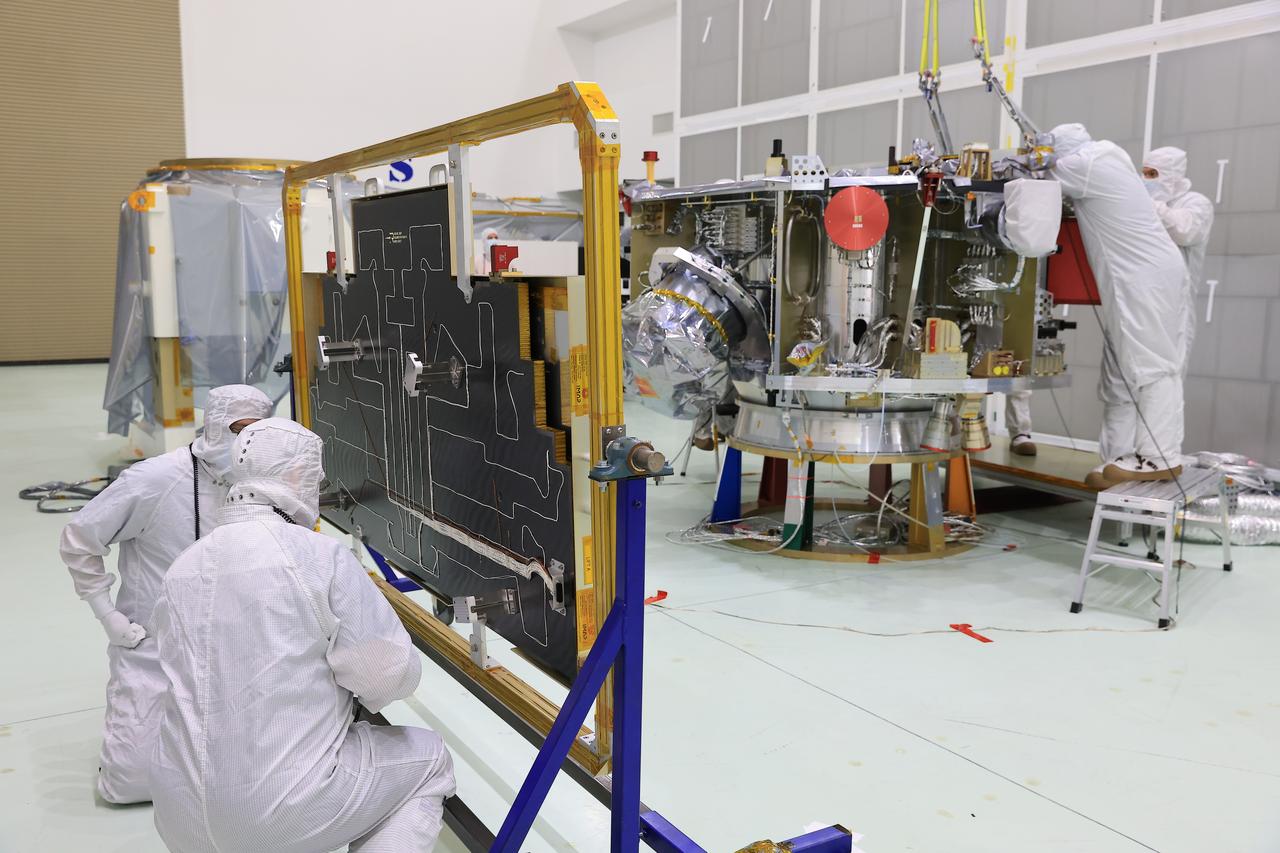
Technicians at the Astrotech Space Operations Facility near NASA’s Kennedy Space Center in Florida install the two-panel solar array on Thursday, July 17, 2025, that will help power the agency’s IMAP (Interstellar Mapping and Acceleration Probe) observatory on its upcoming journey one million miles away from Earth. Each panel of the solar array, located on the top of IMAP, consists of 16 strings of solar cells, with 36 cells per string, and combined will convert sunlight into 500 watts of power, more than enough for the observatory, which as a system uses less power than five 100-watt incandescent light bulbs.
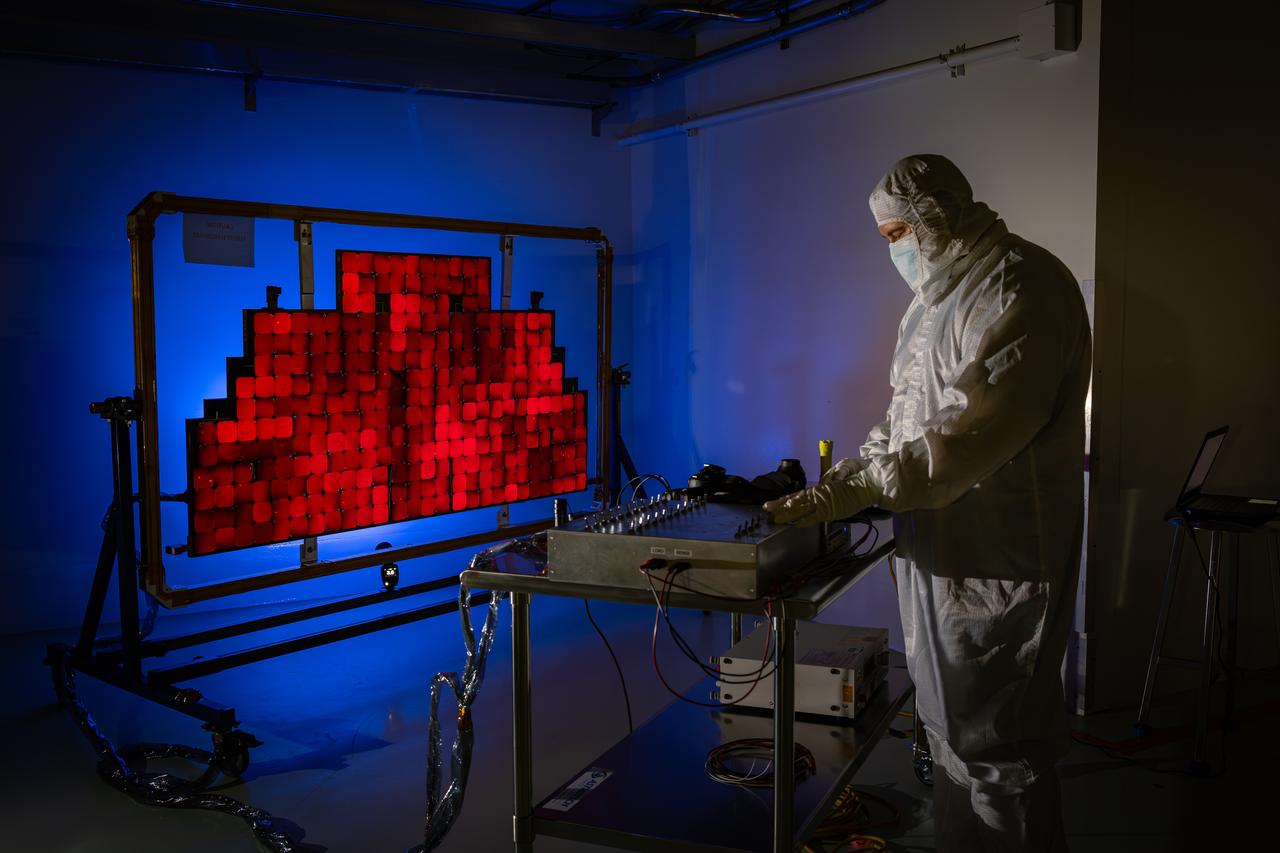
Technicians conduct an illumination test by flashing a bright light that simulates the Sun into the solar array for NASA’s IMAP (Interstellar Mapping and Acceleration Probe) observatory inside the high bay at the Astrotech Space Operations Facility near the agency’s Kennedy Space Center in Florida on Friday, June 20, 2025. The IMAP solar array converts sunlight into approximately 500 watts of power, and IMAP’s spin axis, which comes through the center of the solar arrays, points sunward to provide constant power. Launch is targeted for no earlier than September 2025 aboard a SpaceX Falcon 9 rocket from Launch Complex 39A at NASA Kennedy.
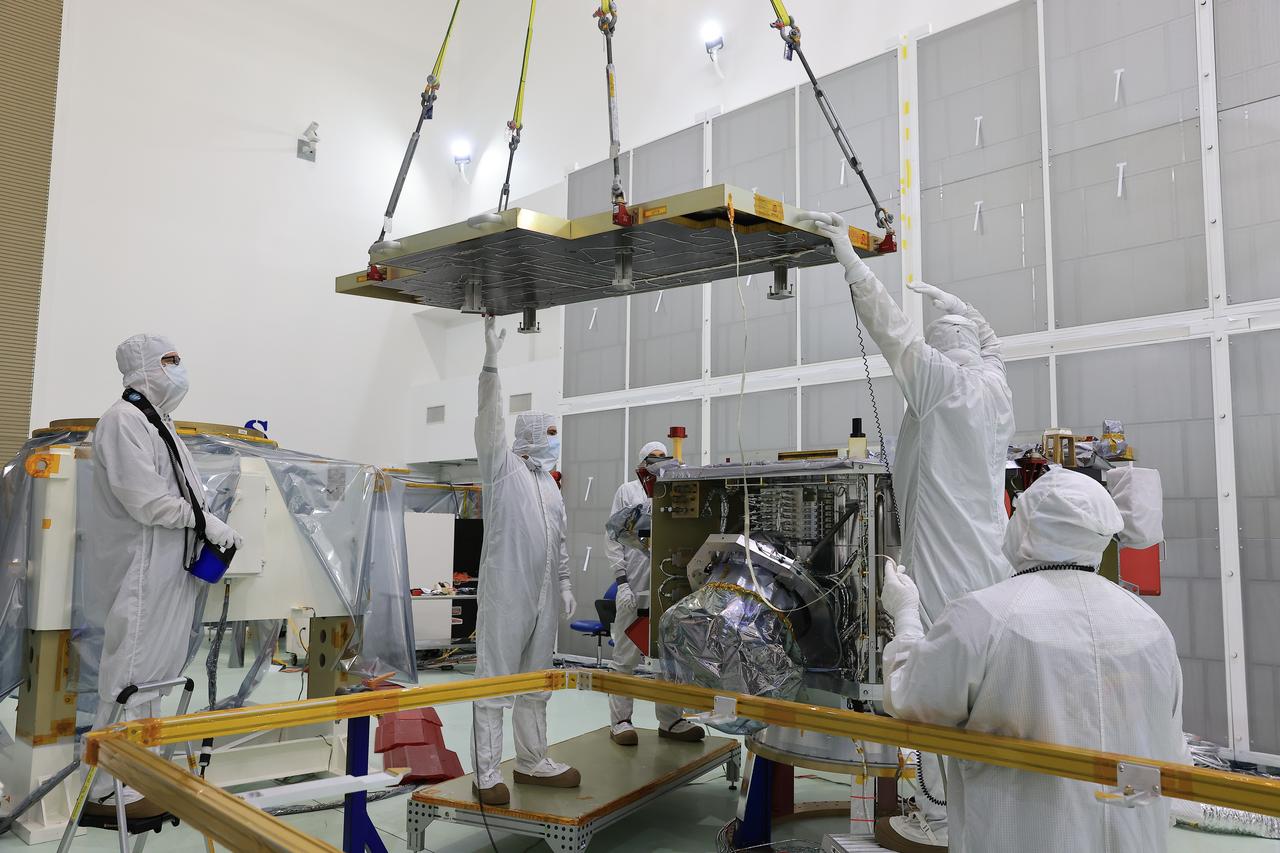
Technicians at the Astrotech Space Operations Facility near NASA’s Kennedy Space Center in Florida install the two-panel solar array on Thursday, July 17, 2025, that will help power the agency’s IMAP (Interstellar Mapping and Acceleration Probe) observatory on its upcoming journey one million miles away from Earth. Each panel of the solar array, located on the top of IMAP, consists of 16 strings of solar cells, with 36 cells per string, and combined will convert sunlight into 500 watts of power, more than enough for the observatory, which as a system uses less power than five 100-watt incandescent light bulbs.
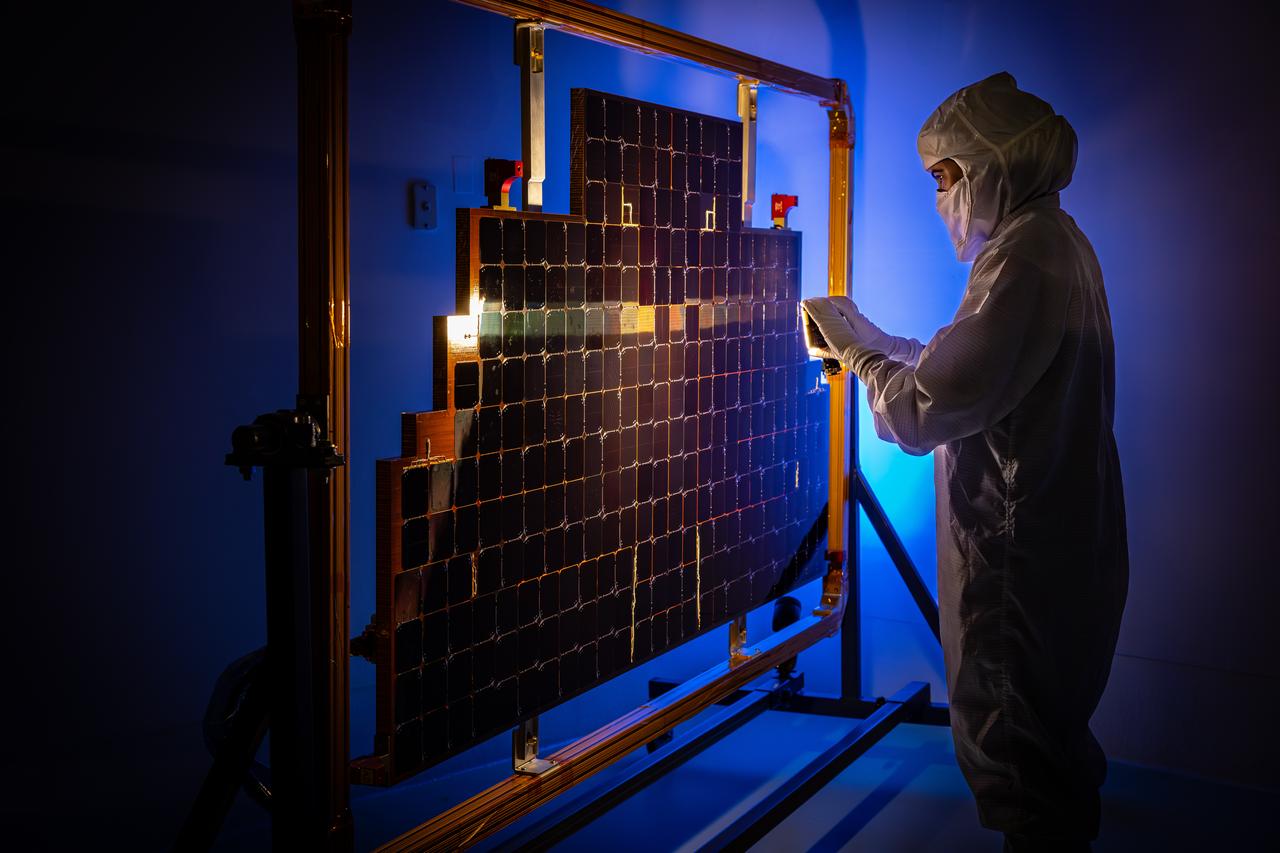
Technicians conduct an illumination test by flashing a bright light that simulates the Sun into the solar array for NASA’s IMAP (Interstellar Mapping and Acceleration Probe) observatory inside the high bay at the Astrotech Space Operations Facility near the agency’s Kennedy Space Center in Florida on Friday, June 20, 2025. The IMAP solar array converts sunlight into approximately 500 watts of power, and IMAP’s spin axis, which comes through the center of the solar arrays, points sunward to provide constant power. Launch is targeted for no earlier than September 2025 aboard a SpaceX Falcon 9 rocket from Launch Complex 39A at NASA Kennedy.
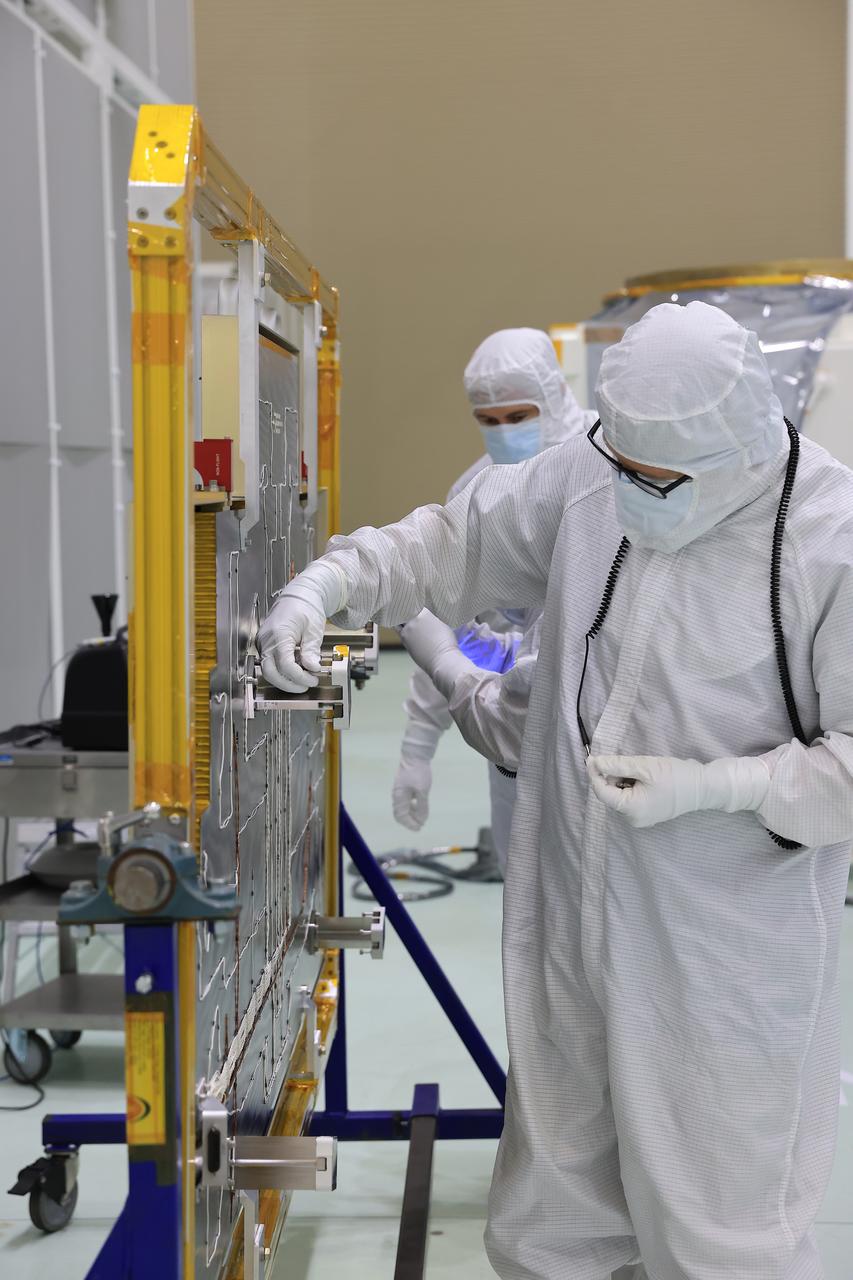
Technicians at the Astrotech Space Operations Facility near NASA’s Kennedy Space Center in Florida install the two-panel solar array on Thursday, July 17, 2025, that will help power the agency’s IMAP (Interstellar Mapping and Acceleration Probe) observatory on its upcoming journey one million miles away from Earth. Each panel of the solar array, located on the top of IMAP, consists of 16 strings of solar cells, with 36 cells per string, and combined will convert sunlight into 500 watts of power, more than enough for the observatory, which as a system uses less power than five 100-watt incandescent light bulbs.
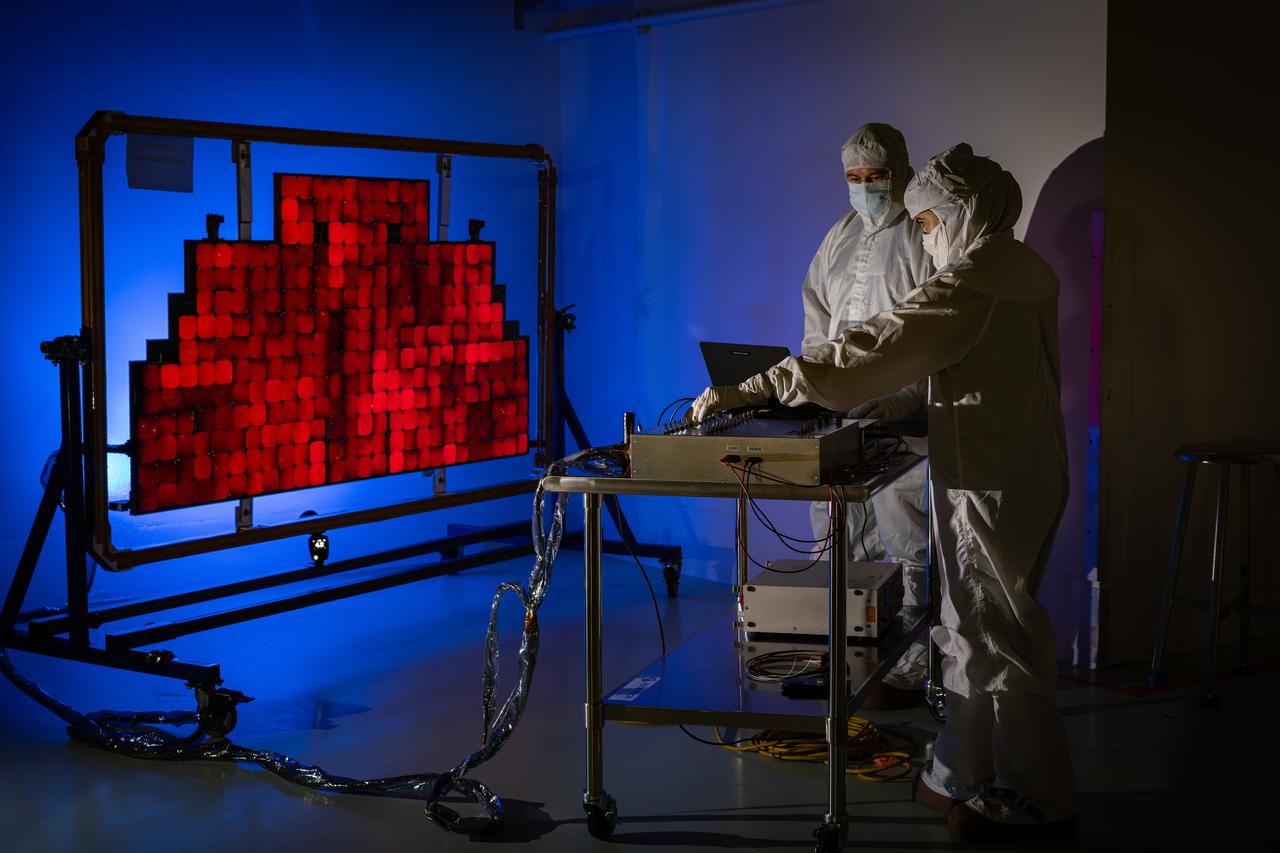
Technicians conduct an illumination test by flashing a bright light that simulates the Sun into the solar array for NASA’s IMAP (Interstellar Mapping and Acceleration Probe) observatory inside the high bay at the Astrotech Space Operations Facility near the agency’s Kennedy Space Center in Florida on Friday, June 20, 2025. The IMAP solar array converts sunlight into approximately 500 watts of power, and IMAP’s spin axis, which comes through the center of the solar arrays, points sunward to provide constant power. Launch is targeted for no earlier than September 2025 aboard a SpaceX Falcon 9 rocket from Launch Complex 39A at NASA Kennedy.
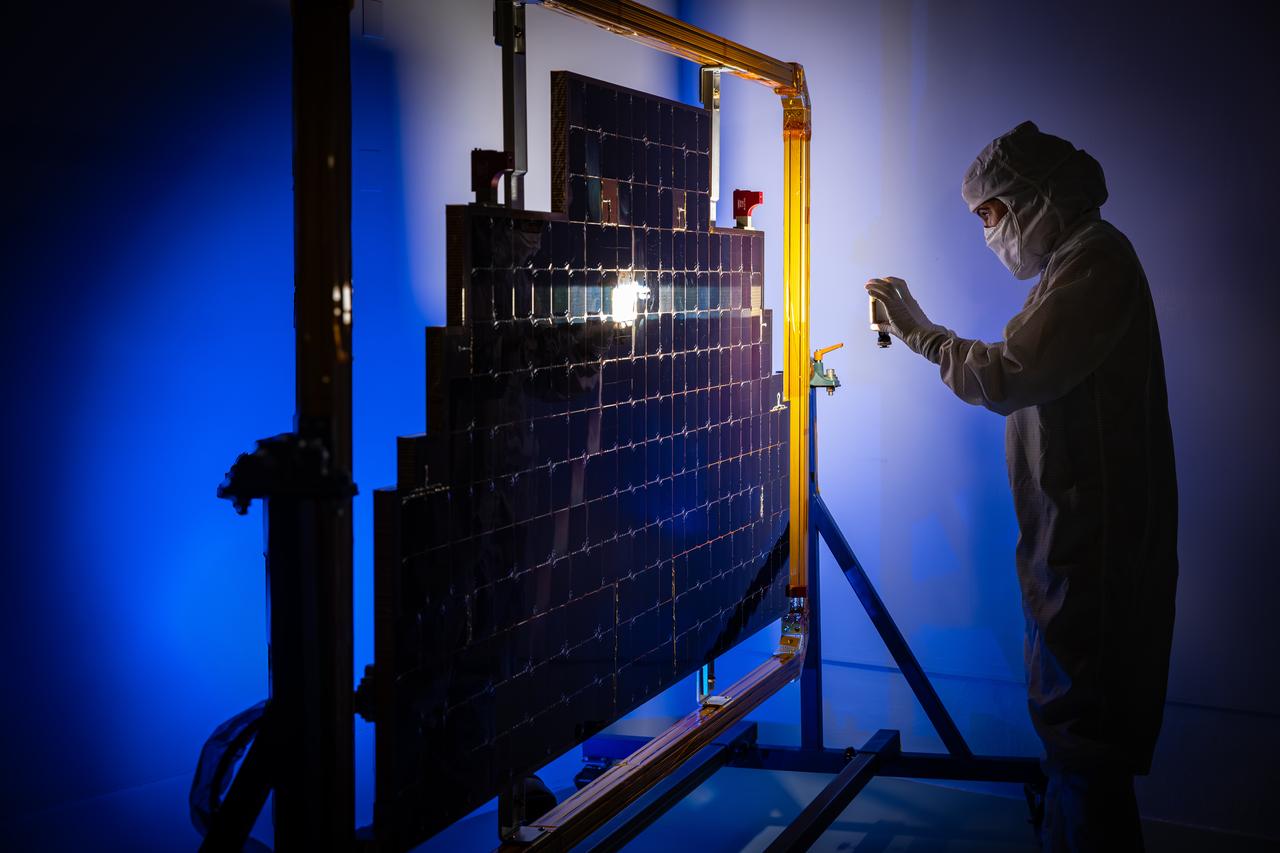
Technicians conduct an illumination test by flashing a bright light that simulates the Sun into the solar array for NASA’s IMAP (Interstellar Mapping and Acceleration Probe) observatory inside the high bay at the Astrotech Space Operations Facility near the agency’s Kennedy Space Center in Florida on Friday, June 20, 2025. The IMAP solar array converts sunlight into approximately 500 watts of power, and IMAP’s spin axis, which comes through the center of the solar arrays, points sunward to provide constant power. Launch is targeted for no earlier than September 2025 aboard a SpaceX Falcon 9 rocket from Launch Complex 39A at NASA Kennedy.
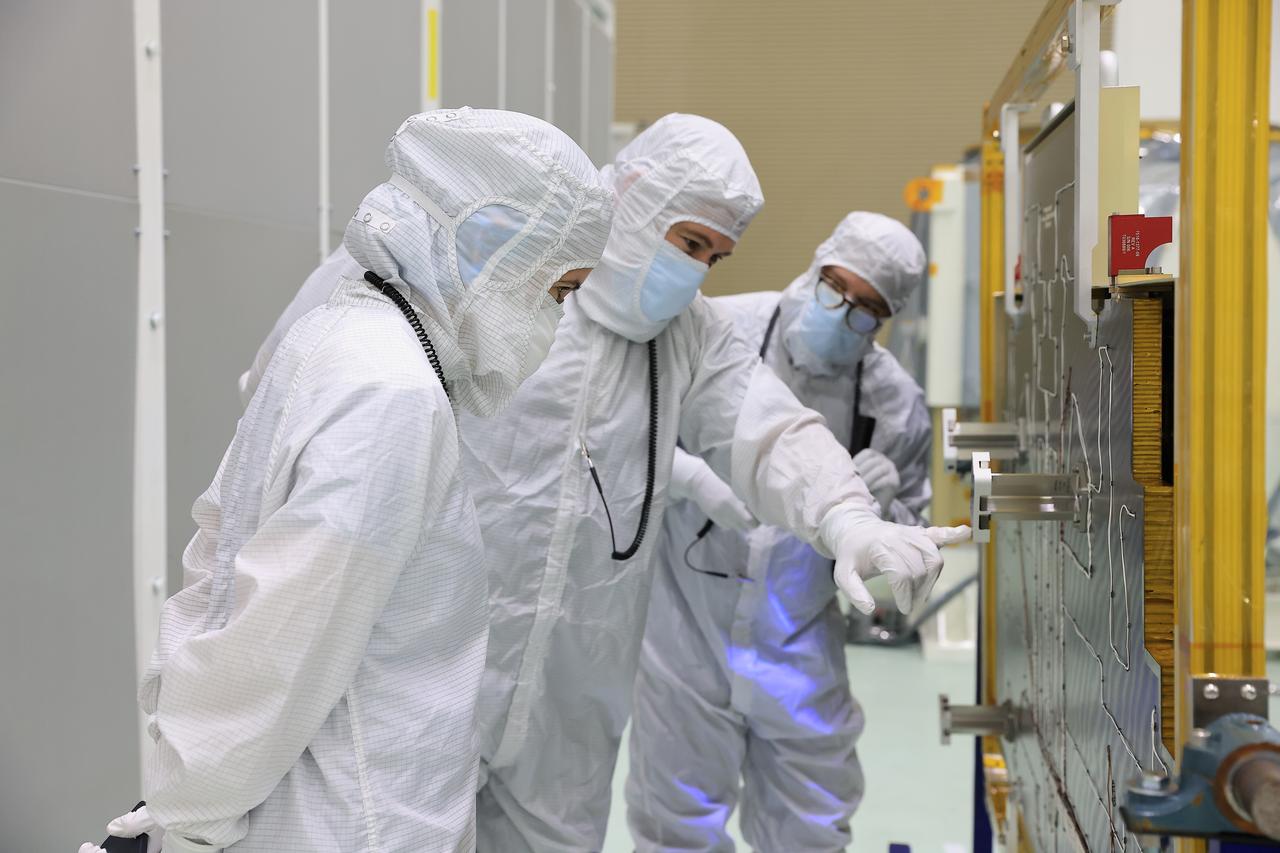
Technicians at the Astrotech Space Operations Facility near NASA’s Kennedy Space Center in Florida install the two-panel solar array on Thursday, July 17, 2025, that will help power the agency’s IMAP (Interstellar Mapping and Acceleration Probe) observatory on its upcoming journey one million miles away from Earth. Each panel of the solar array, located on the top of IMAP, consists of 16 strings of solar cells, with 36 cells per string, and combined will convert sunlight into 500 watts of power, more than enough for the observatory, which as a system uses less power than five 100-watt incandescent light bulbs.
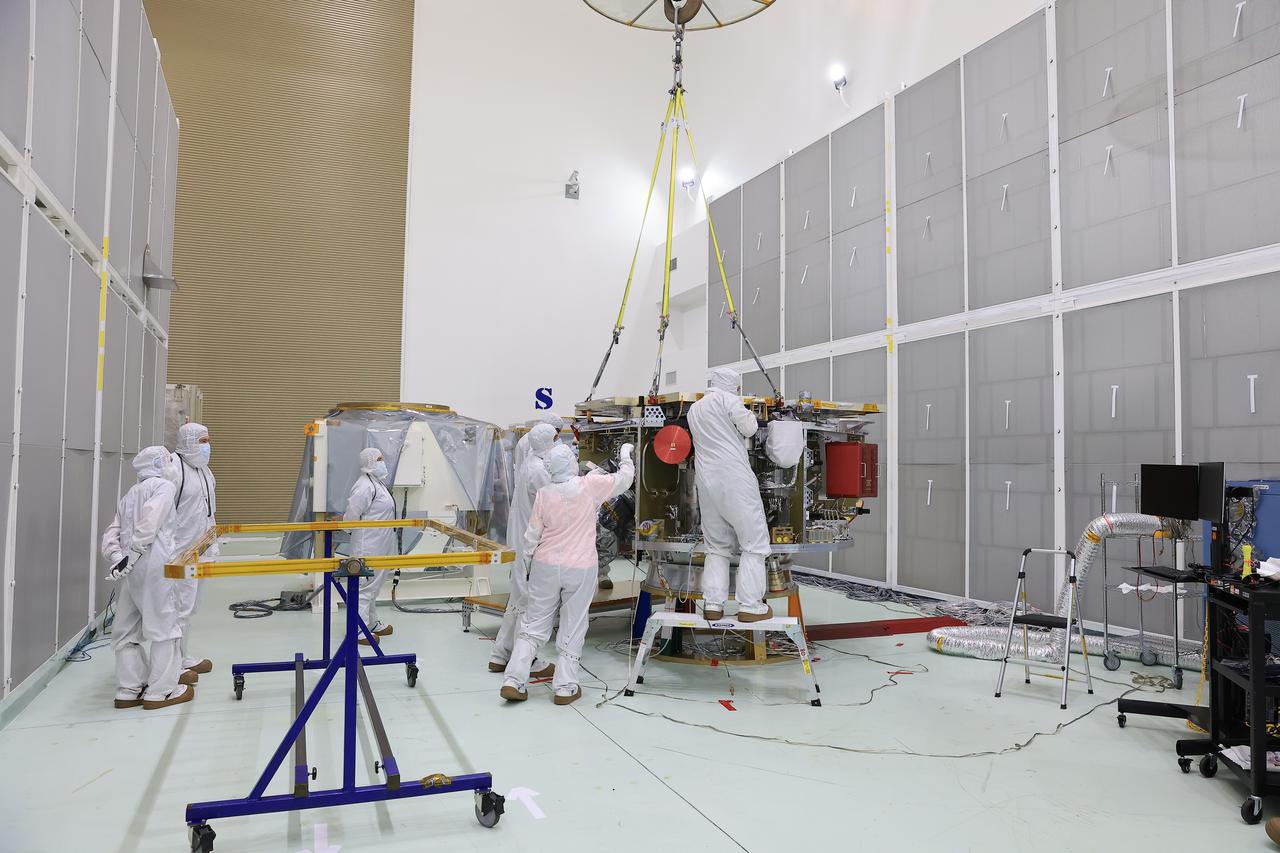
Technicians at the Astrotech Space Operations Facility near NASA’s Kennedy Space Center in Florida install the two-panel solar array on Thursday, July 17, 2025, that will help power the agency’s IMAP (Interstellar Mapping and Acceleration Probe) observatory on its upcoming journey one million miles away from Earth. Each panel of the solar array, located on the top of IMAP, consists of 16 strings of solar cells, with 36 cells per string, and combined will convert sunlight into 500 watts of power, more than enough for the observatory, which as a system uses less power than five 100-watt incandescent light bulbs.
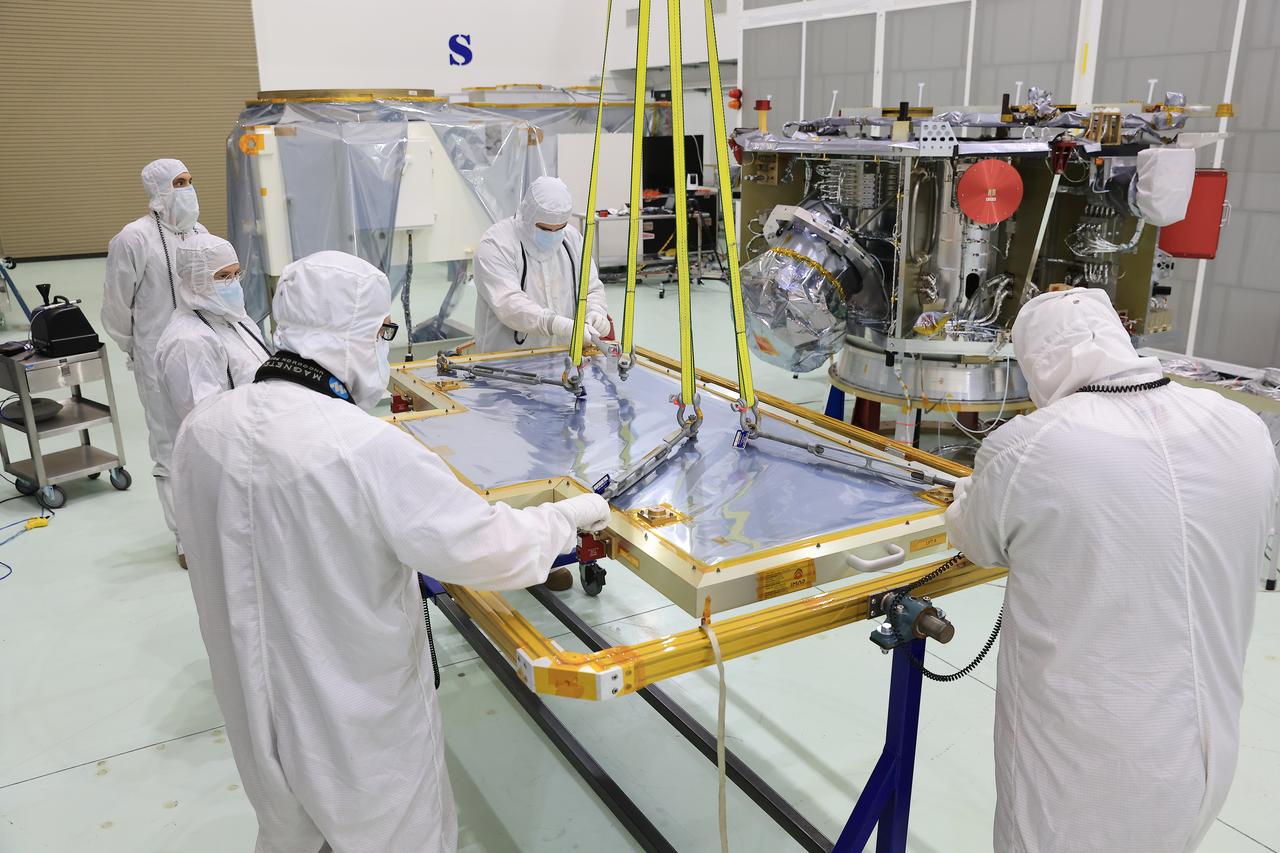
Technicians at the Astrotech Space Operations Facility near NASA’s Kennedy Space Center in Florida install the two-panel solar array on Thursday, July 17, 2025, that will help power the agency’s IMAP (Interstellar Mapping and Acceleration Probe) observatory on its upcoming journey one million miles away from Earth. Each panel of the solar array, located on the top of IMAP, consists of 16 strings of solar cells, with 36 cells per string, and combined will convert sunlight into 500 watts of power, more than enough for the observatory, which as a system uses less power than five 100-watt incandescent light bulbs.
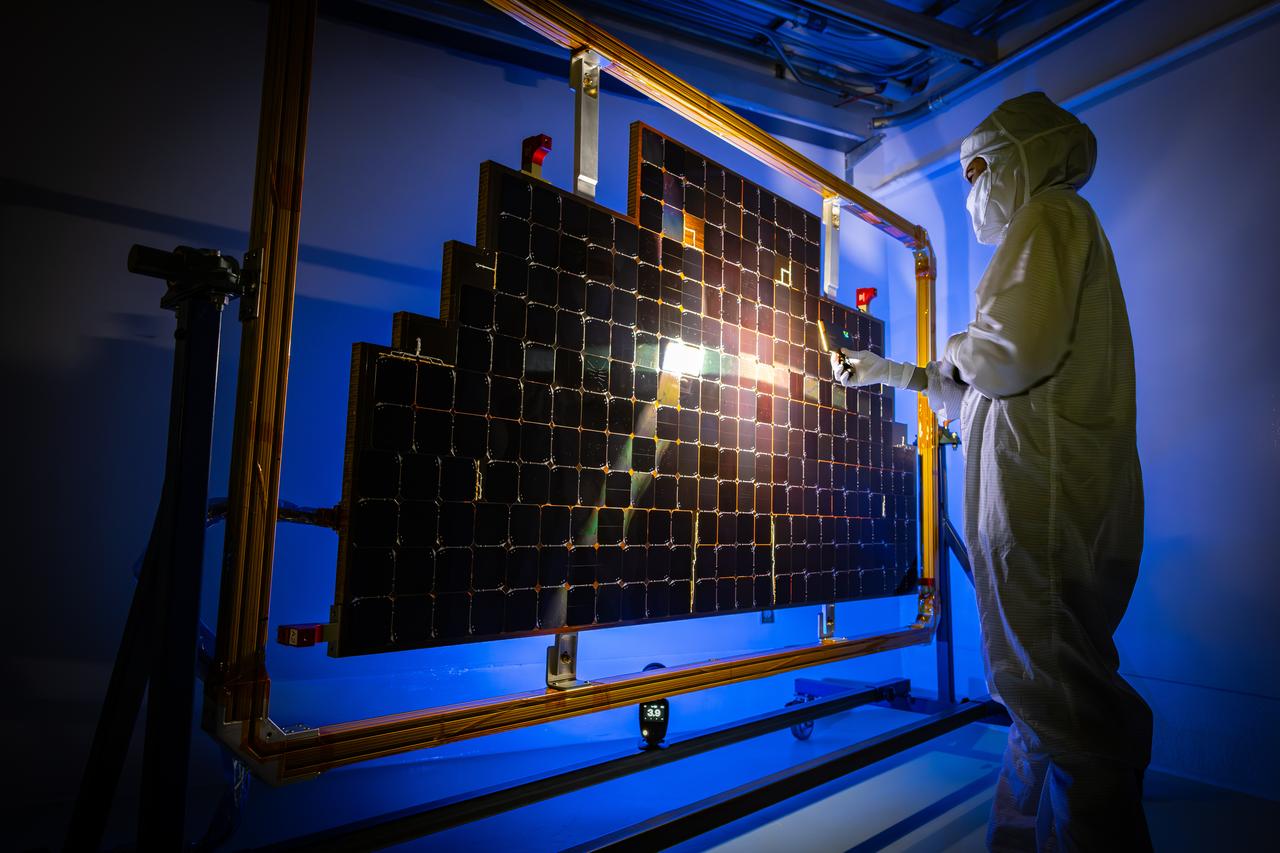
Technicians conduct an illumination test by flashing a bright light that simulates the Sun into the solar array for NASA’s IMAP (Interstellar Mapping and Acceleration Probe) observatory inside the high bay at the Astrotech Space Operations Facility near the agency’s Kennedy Space Center in Florida on Friday, June 20, 2025. The IMAP solar array converts sunlight into approximately 500 watts of power, and IMAP’s spin axis, which comes through the center of the solar arrays, points sunward to provide constant power. Launch is targeted for no earlier than September 2025 aboard a SpaceX Falcon 9 rocket from Launch Complex 39A at NASA Kennedy.
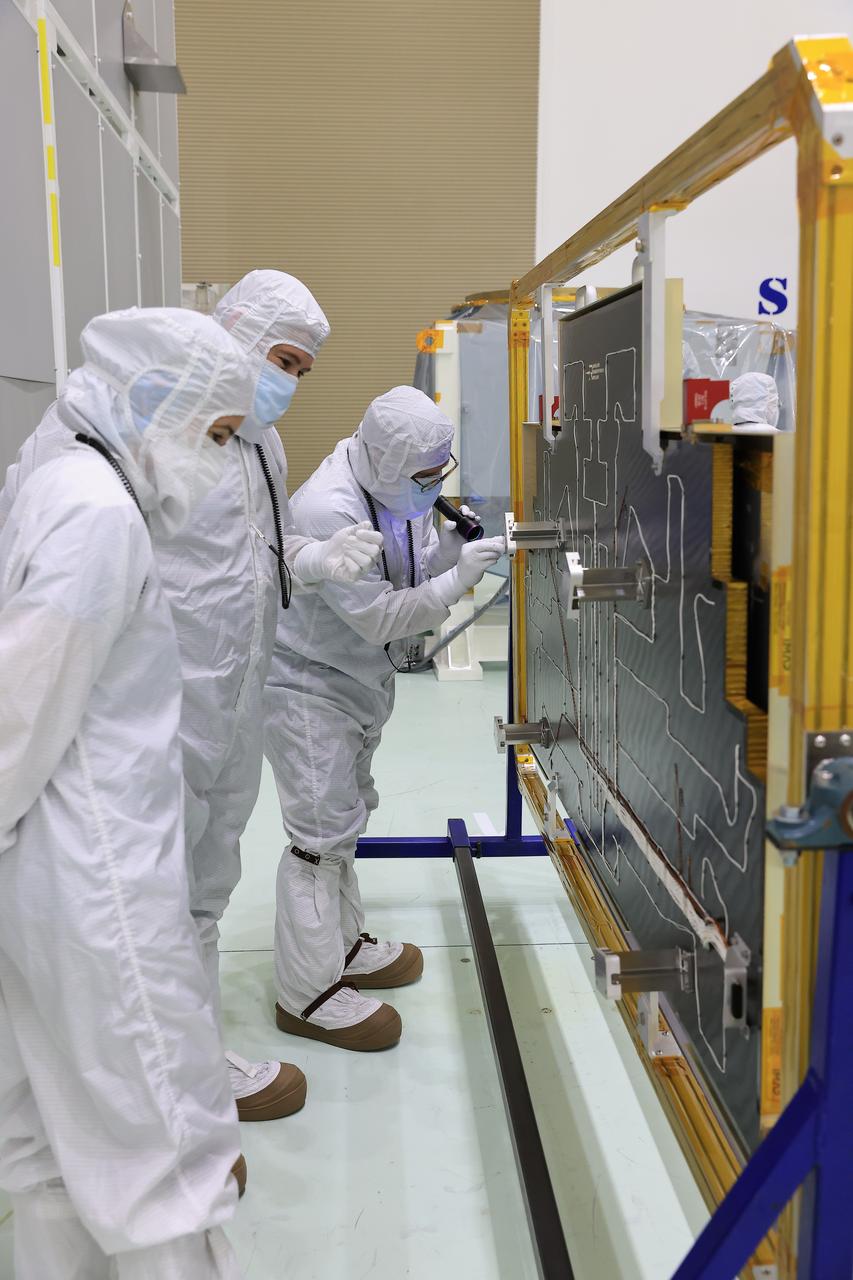
Technicians at the Astrotech Space Operations Facility near NASA’s Kennedy Space Center in Florida install the two-panel solar array on Thursday, July 17, 2025, that will help power the agency’s IMAP (Interstellar Mapping and Acceleration Probe) observatory on its upcoming journey one million miles away from Earth. Each panel of the solar array, located on the top of IMAP, consists of 16 strings of solar cells, with 36 cells per string, and combined will convert sunlight into 500 watts of power, more than enough for the observatory, which as a system uses less power than five 100-watt incandescent light bulbs.
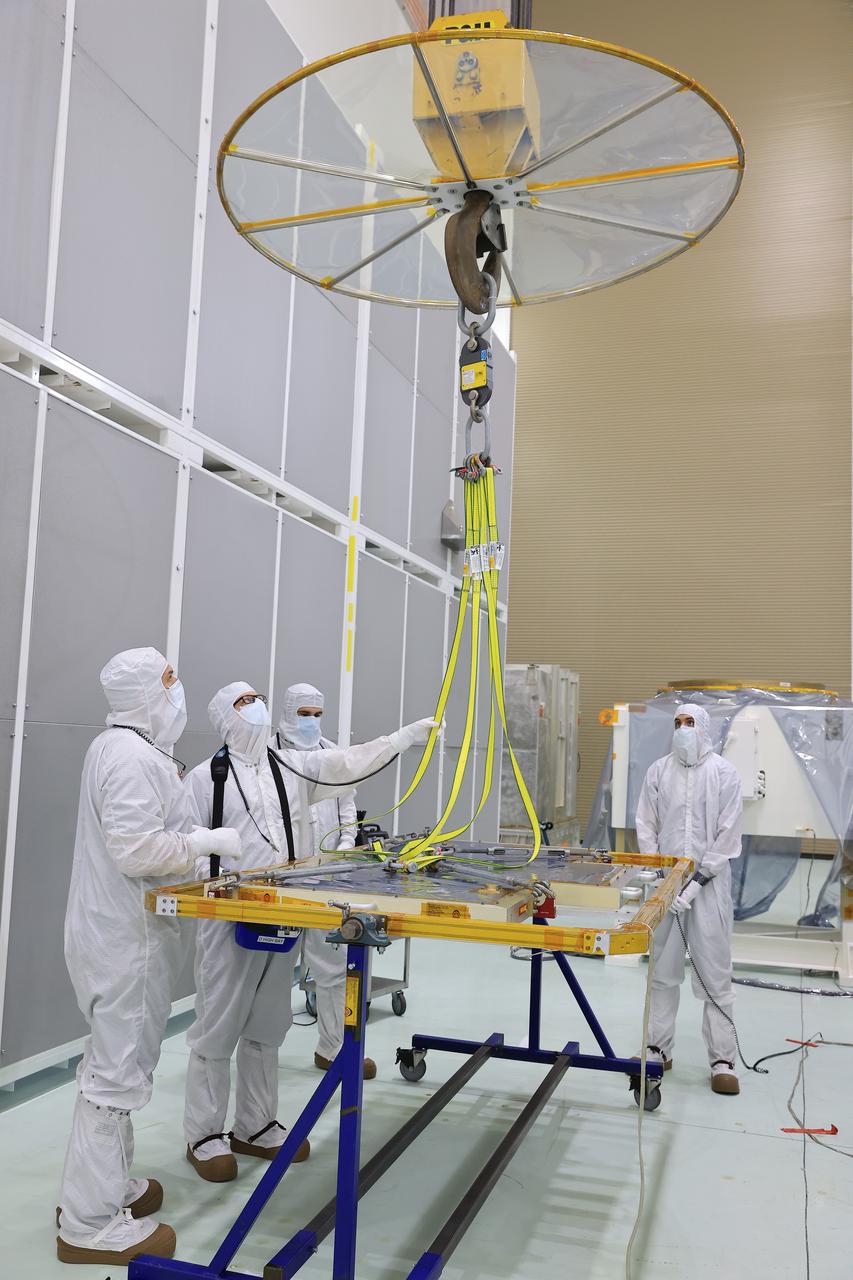
Technicians at the Astrotech Space Operations Facility near NASA’s Kennedy Space Center in Florida install the two-panel solar array on Thursday, July 17, 2025, that will help power the agency’s IMAP (Interstellar Mapping and Acceleration Probe) observatory on its upcoming journey one million miles away from Earth. Each panel of the solar array, located on the top of IMAP, consists of 16 strings of solar cells, with 36 cells per string, and combined will convert sunlight into 500 watts of power, more than enough for the observatory, which as a system uses less power than five 100-watt incandescent light bulbs.
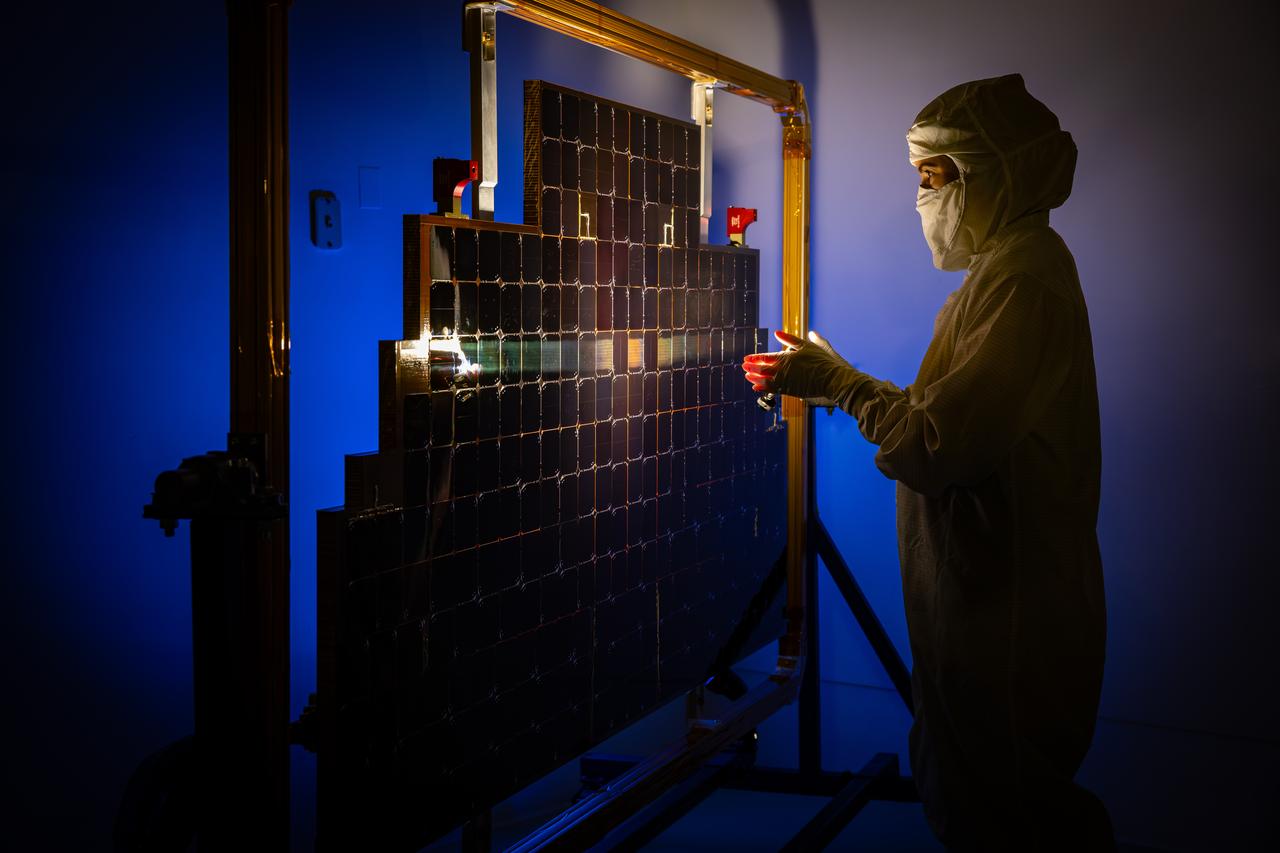
Technicians conduct an illumination test by flashing a bright light that simulates the Sun into the solar array for NASA’s IMAP (Interstellar Mapping and Acceleration Probe) observatory inside the high bay at the Astrotech Space Operations Facility near the agency’s Kennedy Space Center in Florida on Friday, June 20, 2025. The IMAP solar array converts sunlight into approximately 500 watts of power, and IMAP’s spin axis, which comes through the center of the solar arrays, points sunward to provide constant power. Launch is targeted for no earlier than September 2025 aboard a SpaceX Falcon 9 rocket from Launch Complex 39A at NASA Kennedy.
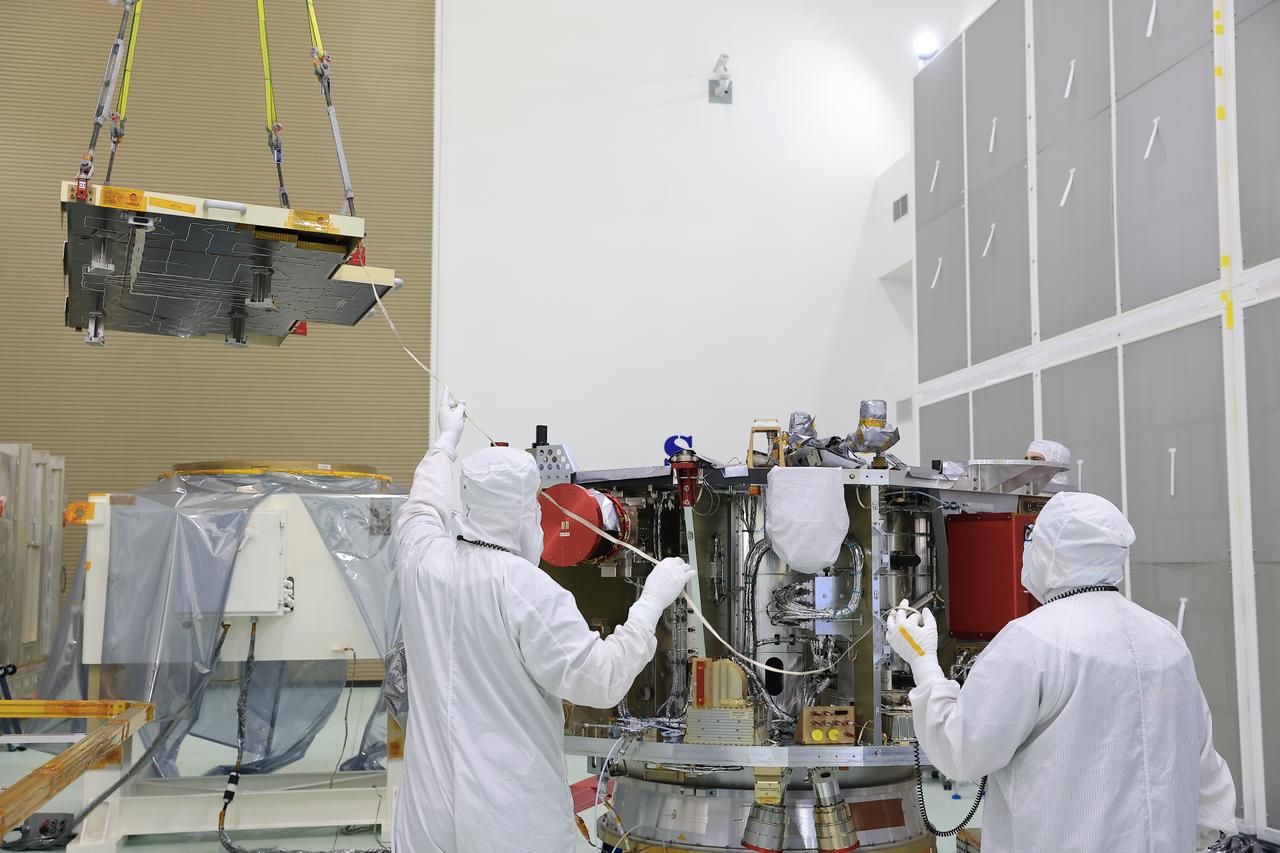
Technicians at the Astrotech Space Operations Facility near NASA’s Kennedy Space Center in Florida install the two-panel solar array on Thursday, July 17, 2025, that will help power the agency’s IMAP (Interstellar Mapping and Acceleration Probe) observatory on its upcoming journey one million miles away from Earth. Each panel of the solar array, located on the top of IMAP, consists of 16 strings of solar cells, with 36 cells per string, and combined will convert sunlight into 500 watts of power, more than enough for the observatory, which as a system uses less power than five 100-watt incandescent light bulbs.
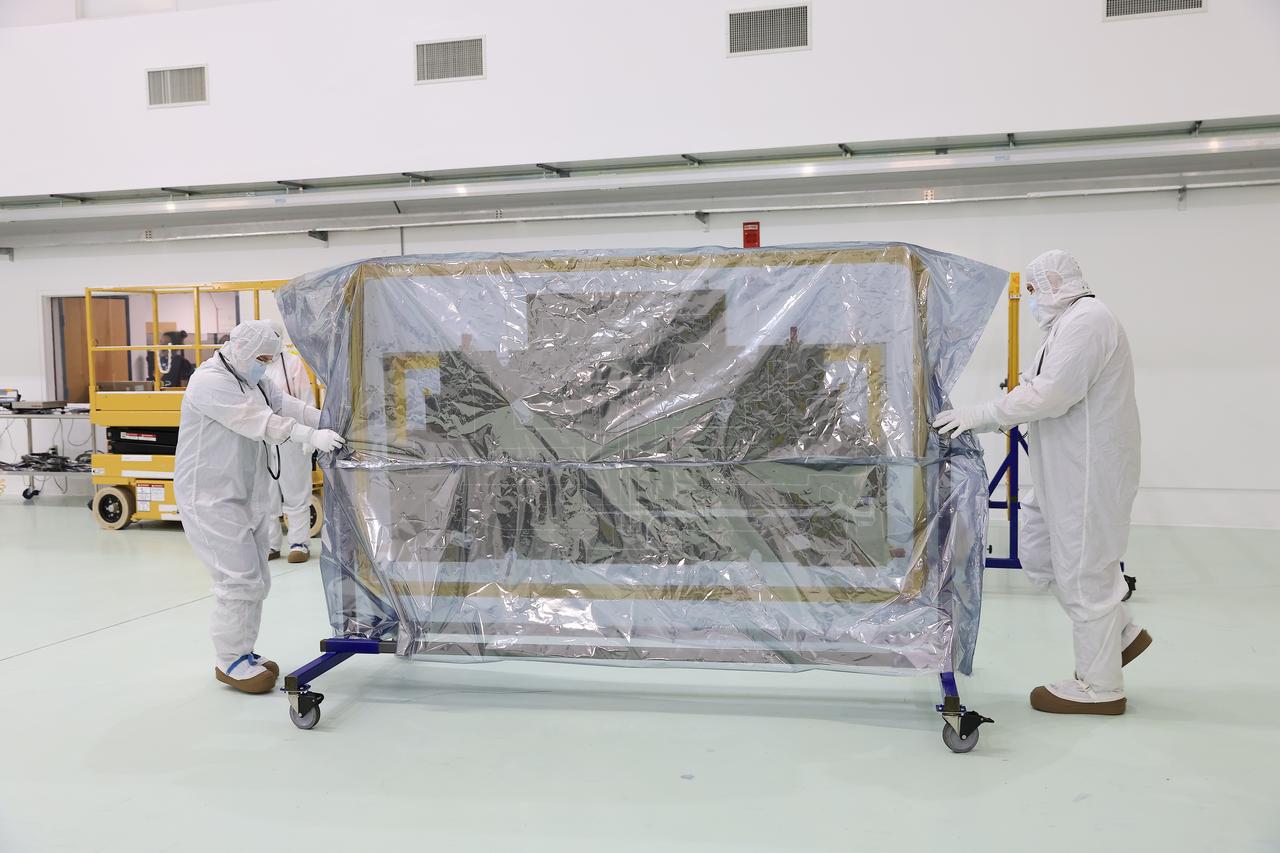
Technicians at the Astrotech Space Operations Facility near NASA’s Kennedy Space Center in Florida install the two-panel solar array on Thursday, July 17, 2025, that will help power the agency’s IMAP (Interstellar Mapping and Acceleration Probe) observatory on its upcoming journey one million miles away from Earth. Each panel of the solar array, located on the top of IMAP, consists of 16 strings of solar cells, with 36 cells per string, and combined will convert sunlight into 500 watts of power, more than enough for the observatory, which as a system uses less power than five 100-watt incandescent light bulbs.
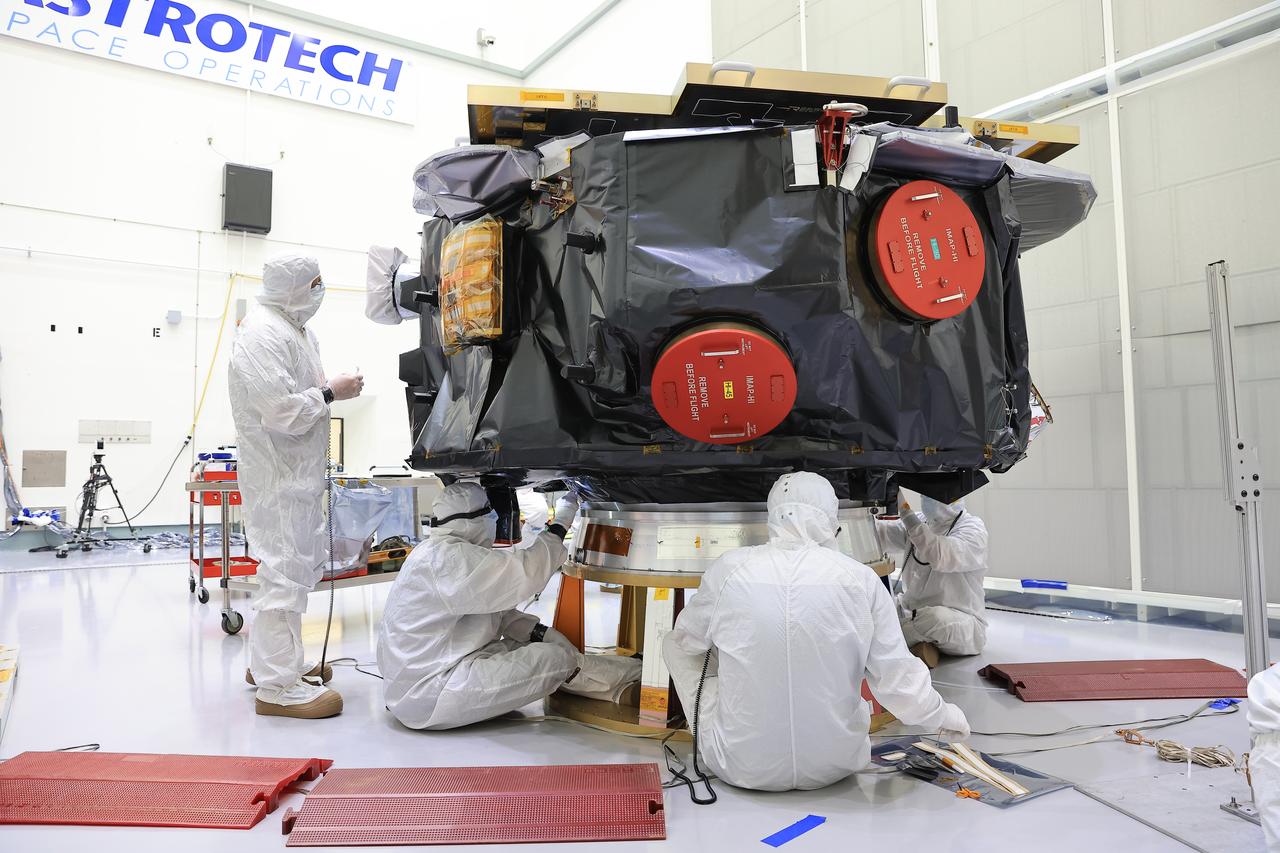
Technicians conduct blanket closeout work on NASA’s IMAP (Interstellar Mapping and Acceleration Probe) observatory at the Astrotech Space Operations Facility near NASA’s Kennedy Space Center in Florida on Friday, Aug. 15, 2025. IMAP will explore and map the boundaries of the heliosphere — a huge bubble created by the Sun’s wind that encapsulates our entire solar system — and study how the heliosphere interacts with the local galactic neighborhood beyond.
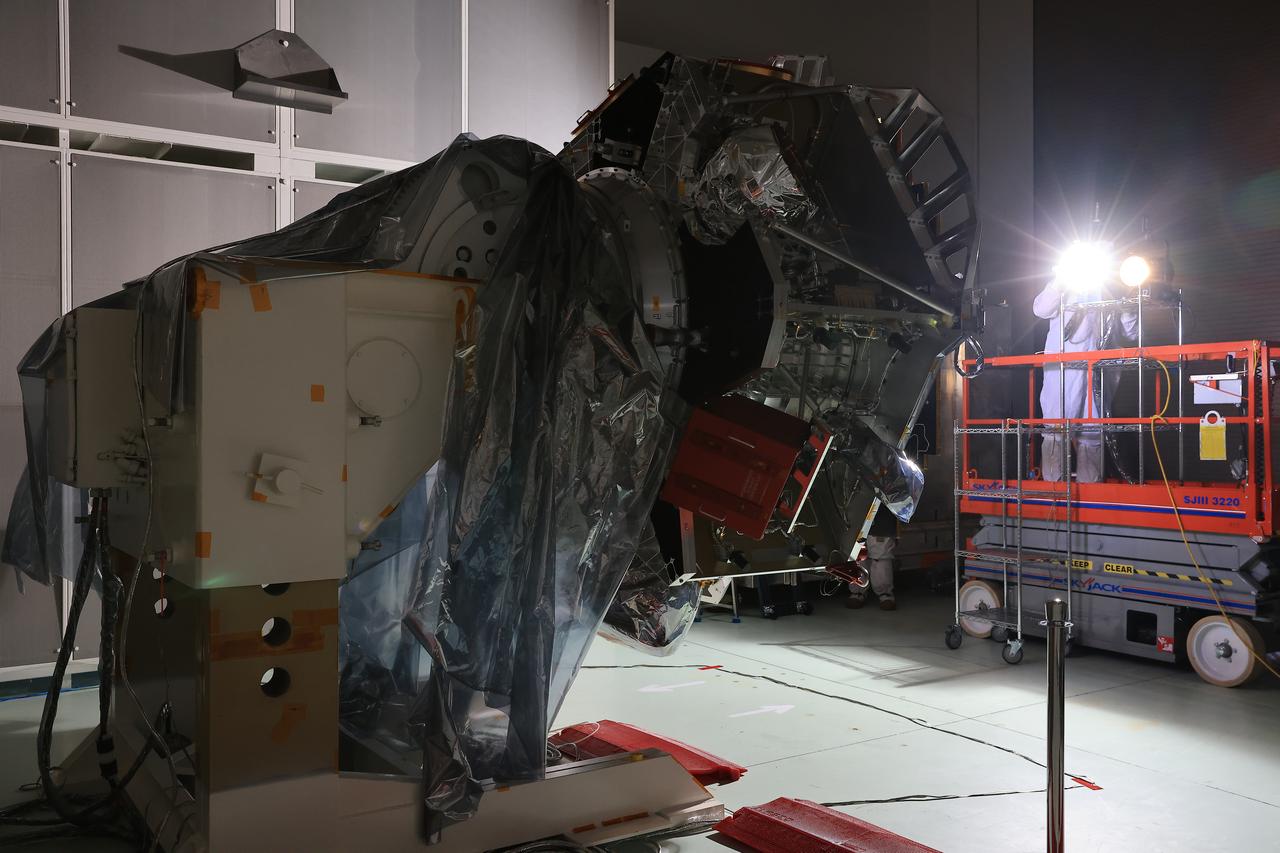
Technicians at the Astrotech Space Operations Facility near NASA’s Kennedy Space Center in Florida conduct illumination testing on Friday, July 18, 2025, by flashing a bright light that simulates the Sun into the two-panel solar array that will help power the agency’s IMAP (Interstellar Mapping and Acceleration Probe) observatory on its upcoming journey to a destination about one million miles away from Earth Lagrange Point 1. Each panel of the solar array, located on the top of IMAP, consists of 16 strings of solar cells, with 36 cells per string, and combined will convert sunlight into 500 watts of power, more than enough for the observatory, which as a system uses less power than five 100-watt incandescent light bulbs.
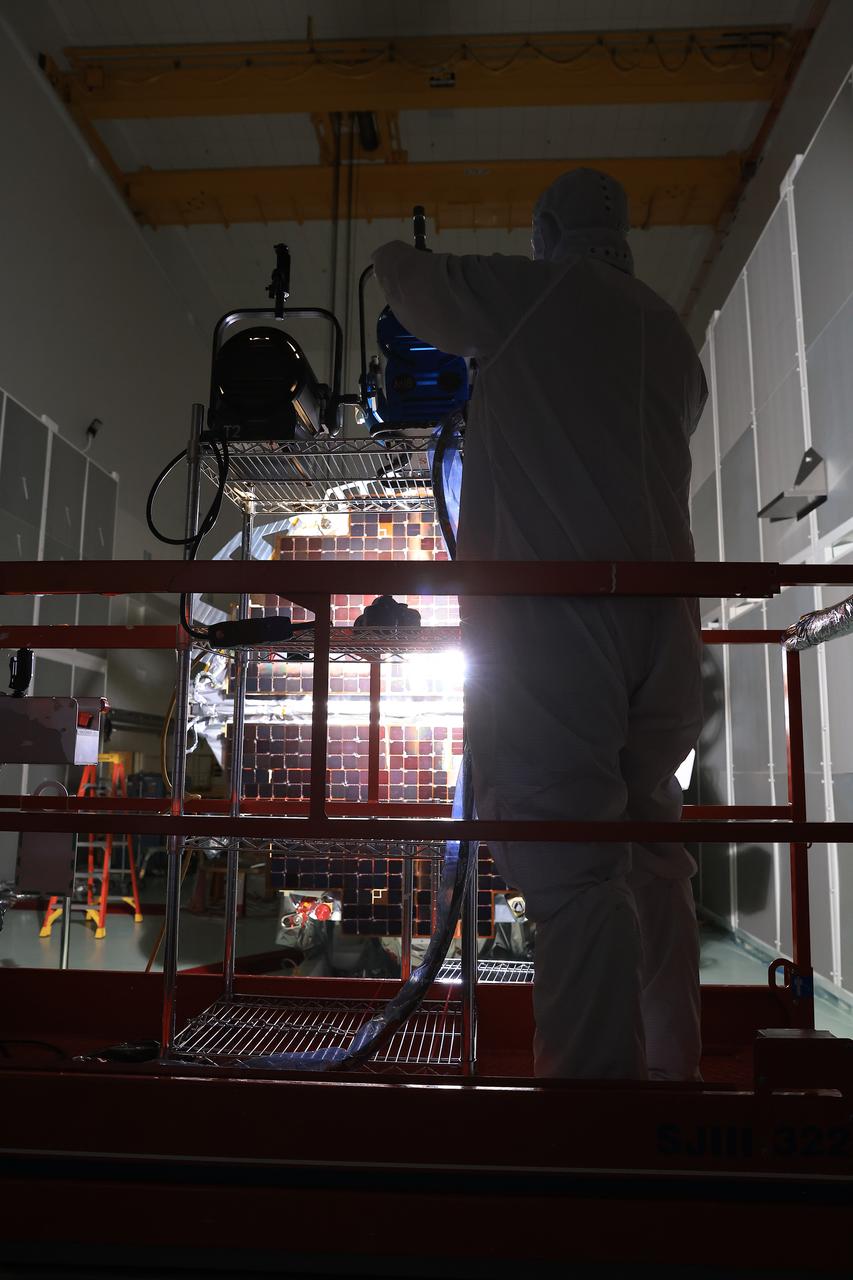
Technicians at the Astrotech Space Operations Facility near NASA’s Kennedy Space Center in Florida conduct illumination testing on Friday, July 18, 2025, by flashing a bright light that simulates the Sun into the two-panel solar array that will help power the agency’s IMAP (Interstellar Mapping and Acceleration Probe) observatory on its upcoming journey to a destination about one million miles away from Earth Lagrange Point 1. Each panel of the solar array, located on the top of IMAP, consists of 16 strings of solar cells, with 36 cells per string, and combined will convert sunlight into 500 watts of power, more than enough for the observatory, which as a system uses less power than five 100-watt incandescent light bulbs.
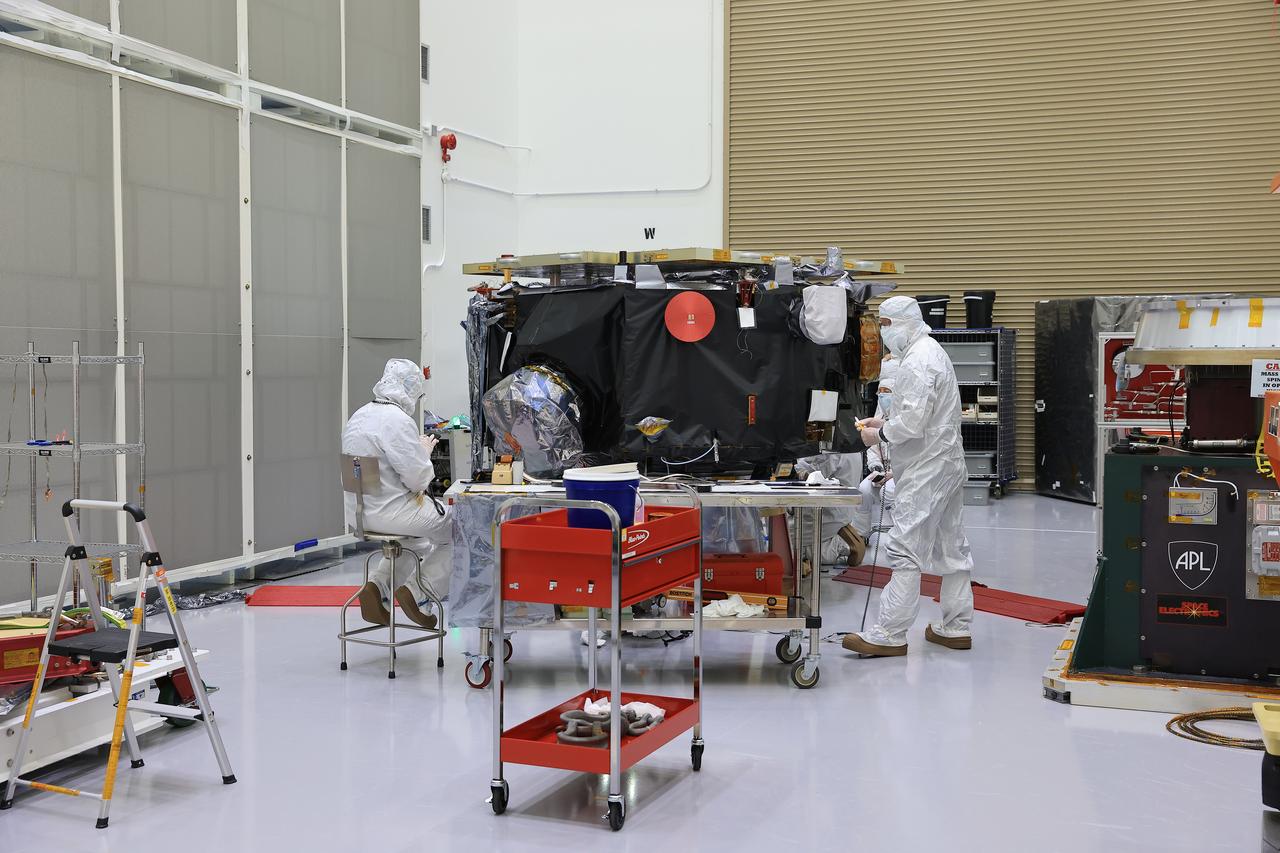
Technicians conduct blanket closeout work on NASA’s IMAP (Interstellar Mapping and Acceleration Probe) observatory at the Astrotech Space Operations Facility near NASA’s Kennedy Space Center in Florida on Friday, Aug. 15, 2025. IMAP will explore and map the boundaries of the heliosphere — a huge bubble created by the Sun’s wind that encapsulates our entire solar system — and study how the heliosphere interacts with the local galactic neighborhood beyond.

Technicians inspect NASA’s IMAP (Interstellar Mapping and Acceleration Probe) spacecraft on a spacecraft dolly inside Astrotech Space Operations Facility near the agency’s Kennedy Space Center in Florida during a NASA-hosted media day on Thursday, Aug. 28, 2025. IMAP and its two rideshares – NASA’s Carruthers Geocorona Observatory and National Oceanic and Atmospheric Administration’s (NOAA) Space Weather Follow On–Lagrange 1 (SWFO-L1) observatory – will orbit the Sun near Lagrange point 1, about one million miles from Earth, where IMAP will scan the heliosphere, a huge bubble created by the Sun’s wind that encapsulates our entire solar system, and analyze the composition of charged particles, and investigate how those particles move through the solar system.
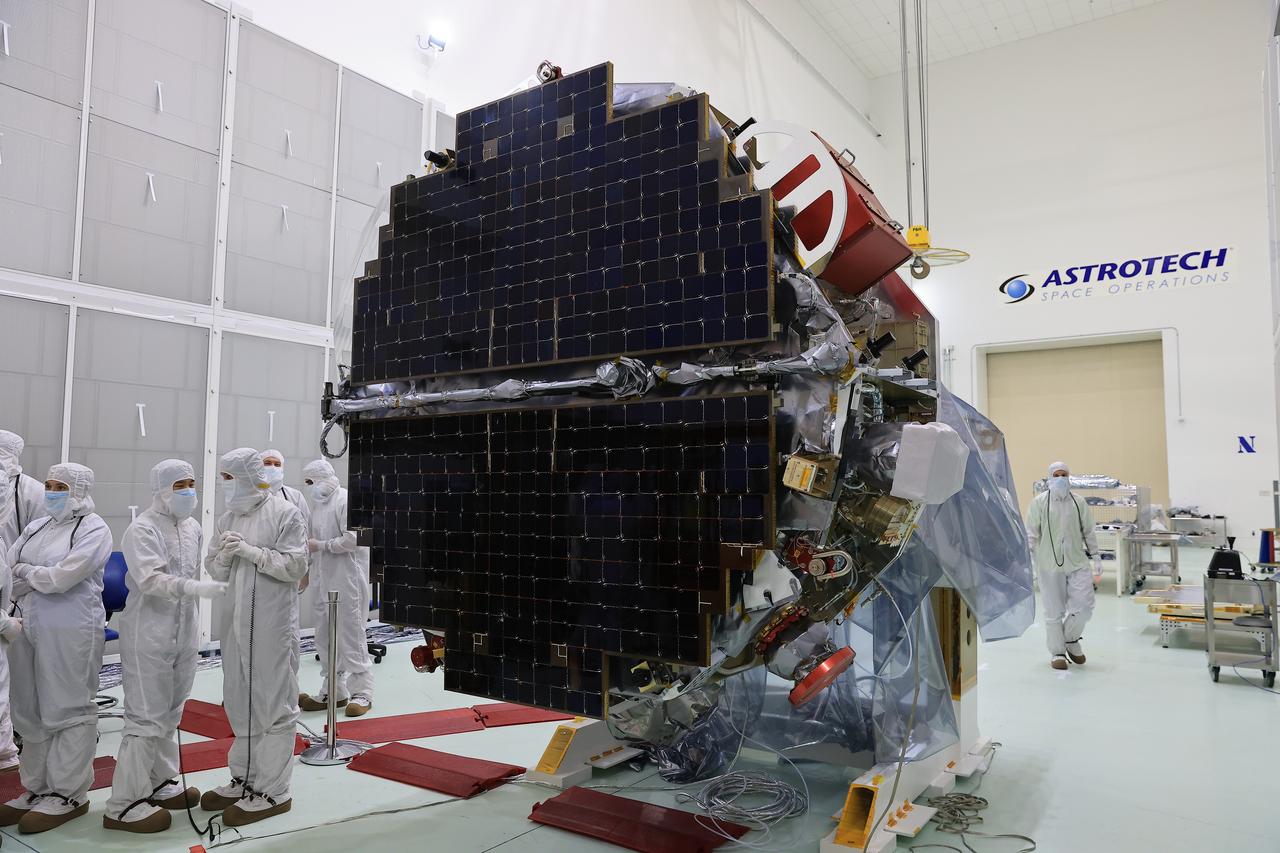
Technicians at the Astrotech Space Operations Facility near NASA’s Kennedy Space Center in Florida conduct illumination testing on Friday, July 18, 2025, by flashing a bright light that simulates the Sun into the two-panel solar array that will help power the agency’s IMAP (Interstellar Mapping and Acceleration Probe) observatory on its upcoming journey to a destination about one million miles away from Earth Lagrange Point 1. Each panel of the solar array, located on the top of IMAP, consists of 16 strings of solar cells, with 36 cells per string, and combined will convert sunlight into 500 watts of power, more than enough for the observatory, which as a system uses less power than five 100-watt incandescent light bulbs.
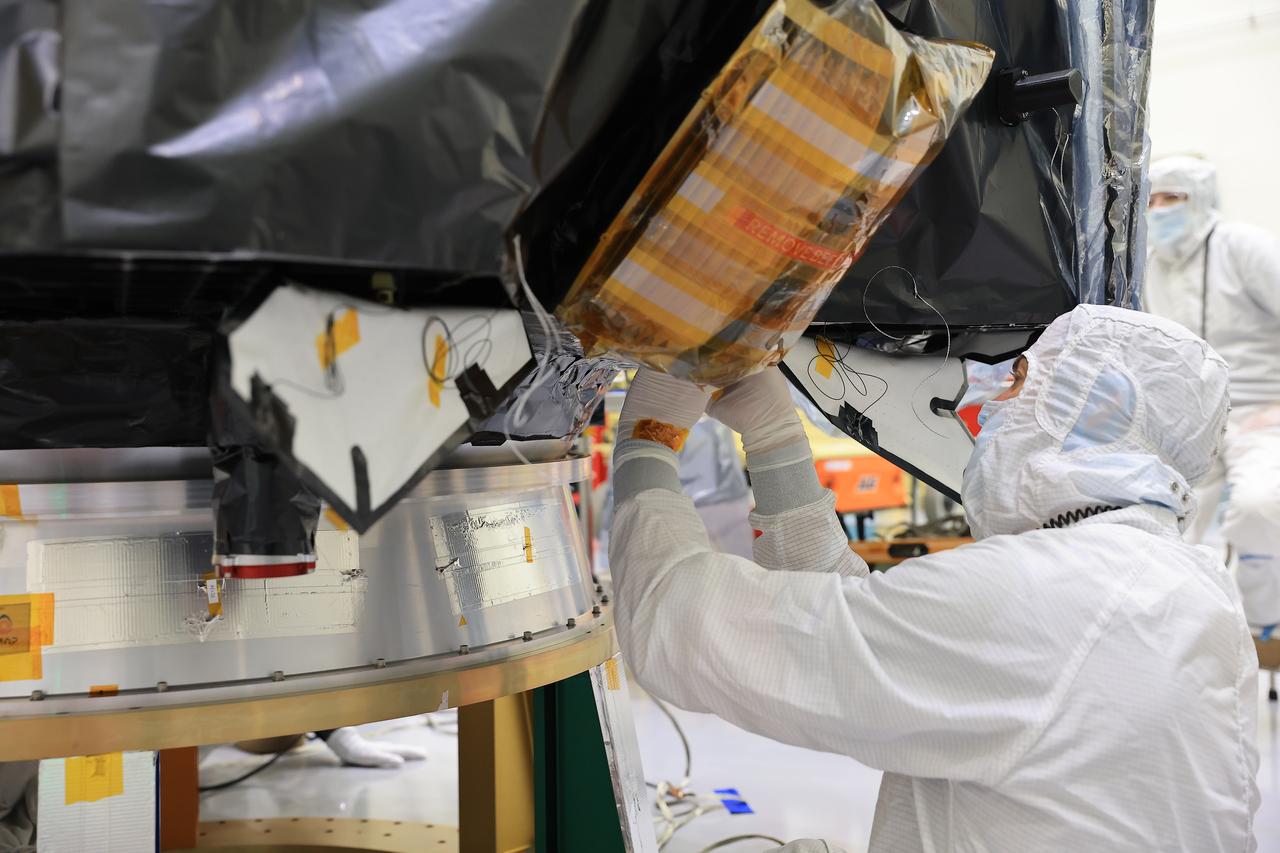
Technicians conduct blanket closeout work on NASA’s IMAP (Interstellar Mapping and Acceleration Probe) observatory at the Astrotech Space Operations Facility near NASA’s Kennedy Space Center in Florida on Friday, Aug. 15, 2025. IMAP will explore and map the boundaries of the heliosphere — a huge bubble created by the Sun’s wind that encapsulates our entire solar system — and study how the heliosphere interacts with the local galactic neighborhood beyond.
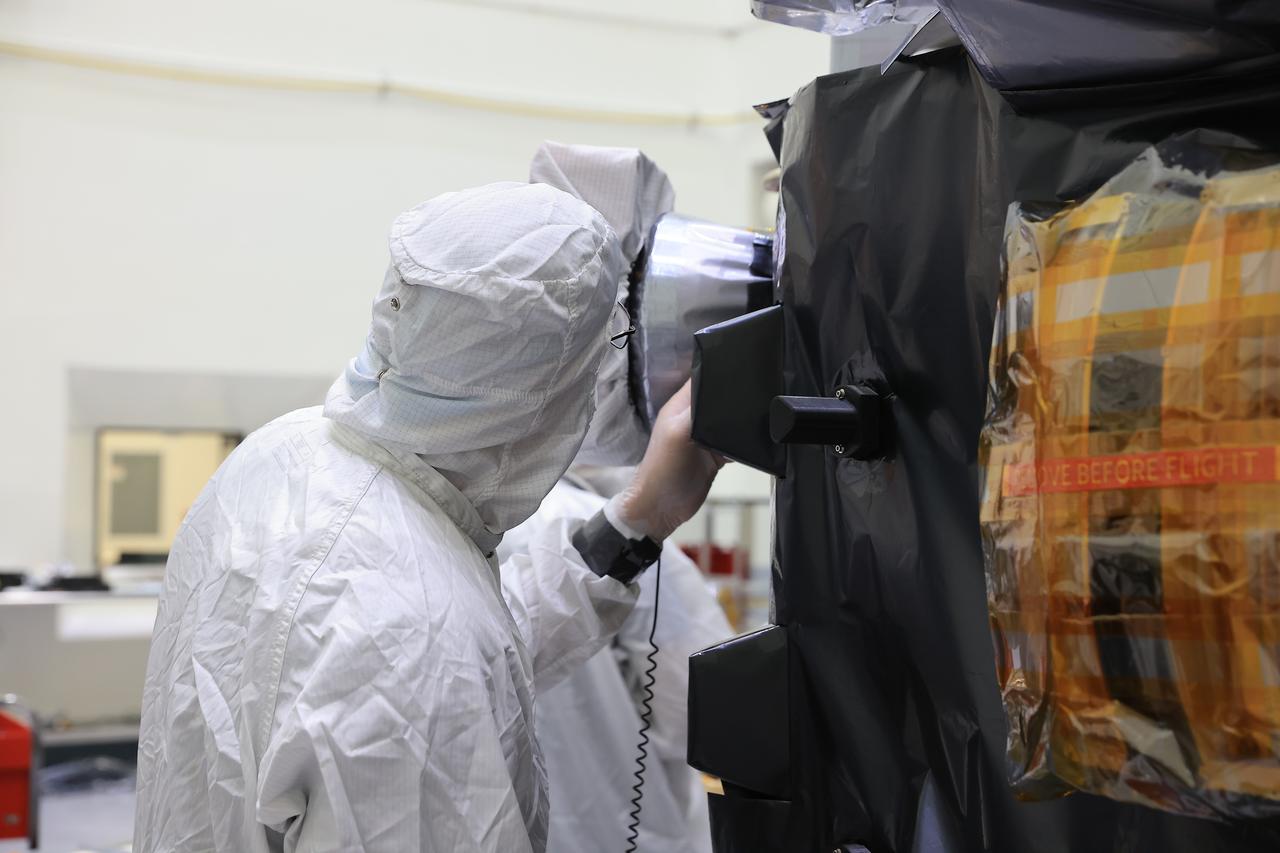
Technicians conduct blanket closeout work on NASA’s IMAP (Interstellar Mapping and Acceleration Probe) observatory at the Astrotech Space Operations Facility near NASA’s Kennedy Space Center in Florida on Friday, Aug. 15, 2025. IMAP will explore and map the boundaries of the heliosphere — a huge bubble created by the Sun’s wind that encapsulates our entire solar system — and study how the heliosphere interacts with the local galactic neighborhood beyond.

One of two rideshare spacecraft on NASA’s IMAP (Interstellar Mapping and Acceleration Probe) mission, NASA’s exosphere-studying Carruthers Geocorona Observatory sits on a spacecraft dolly in a high bay inside Astrotech Space Operations Facility near the agency’s Kennedy Space Center in Florida during a NASA-hosted media day on Thursday, Aug. 28, 2025. The missions, along with the National Oceanic and Atmospheric Administration’s (NOAA) Space Weather Follow On–Lagrange 1 (SWFO-L1) observatory, will orbit the Sun near Lagrange point 1, about one million miles from Earth. Carruthers will use its ultraviolet cameras to monitor how space weather from the Sun impacts the exosphere, the outermost part of Earth’s atmosphere.

The two rideshare spacecraft on NASA’s IMAP (Interstellar Mapping and Acceleration Probe) mission – NASA’s exosphere-studying Carruthers Geocorona Observatory and the National Oceanic and Atmospheric Administration’s (NOAA) Space Weather Follow On–Lagrange 1 (SWFO-L1) observatory – sit on spacecraft dollies in a high bay inside Astrotech Space Operations Facility near the agency’s Kennedy Space Center in Florida during a NASA-hosted media day on Thursday, Aug. 28, 2025. The missions will orbit the Sun near Lagrange point 1, about one million miles from Earth.

One of two rideshare spacecraft on NASA’s IMAP (Interstellar Mapping and Acceleration Probe) mission, the National Oceanic and Atmospheric Administration’s (NOAA) Space Weather Follow On–Lagrange 1 (SWFO-L1) observatory sits on a spacecraft dolly in a high bay inside Astrotech Space Operations Facility near the agency’s Kennedy Space Center in Florida during a NASA-hosted media day on Thursday, Aug. 28, 2025. The missions, along with NASA’s exosphere-studying Carruthers Geocorona Observatory, will orbit the Sun near Lagrange point 1, about one million miles from Earth, where SWFO-L1 will monitor the Sun and near-Earth environment using a suite of instruments that provide real-time measurements of solar activity.
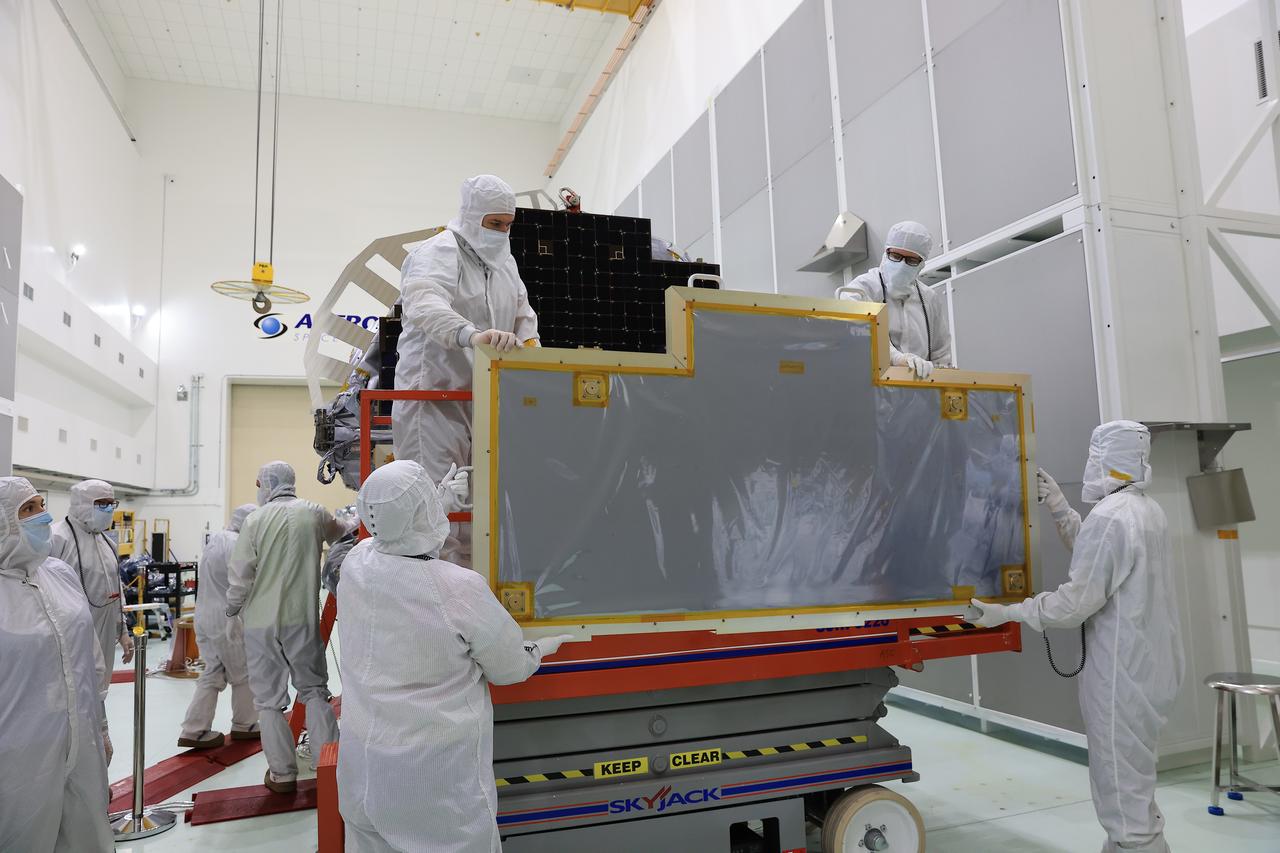
Technicians at the Astrotech Space Operations Facility near NASA’s Kennedy Space Center in Florida remove a protective covering from the two-panel solar array on Friday, July 18, 2025, that will help power the agency’s IMAP (Interstellar Mapping and Acceleration Probe) observatory on its upcoming journey to a destination about one million miles away from Earth at Lagrange Point 1. Each panel of the solar array, located on the top of IMAP, consists of 16 strings of solar cells, with 36 cells per string, and combined will convert sunlight into 500 watts of power, more than enough for the observatory, which as a system uses less power than five 100-watt incandescent light bulbs.

Technicians inspect NASA’s IMAP (Interstellar Mapping and Acceleration Probe) spacecraft on a spacecraft dolly inside Astrotech Space Operations Facility near the agency’s Kennedy Space Center in Florida during a NASA-hosted media day on Thursday, Aug. 28, 2025. IMAP and its two rideshares – NASA’s Carruthers Geocorona Observatory and National Oceanic and Atmospheric Administration’s (NOAA) Space Weather Follow On–Lagrange 1 (SWFO-L1) observatory – will orbit the Sun near Lagrange point 1, about one million miles from Earth, where IMAP will scan the heliosphere, a huge bubble created by the Sun’s wind that encapsulates our entire solar system, and analyze the composition of charged particles, and investigate how those particles move through the solar system.
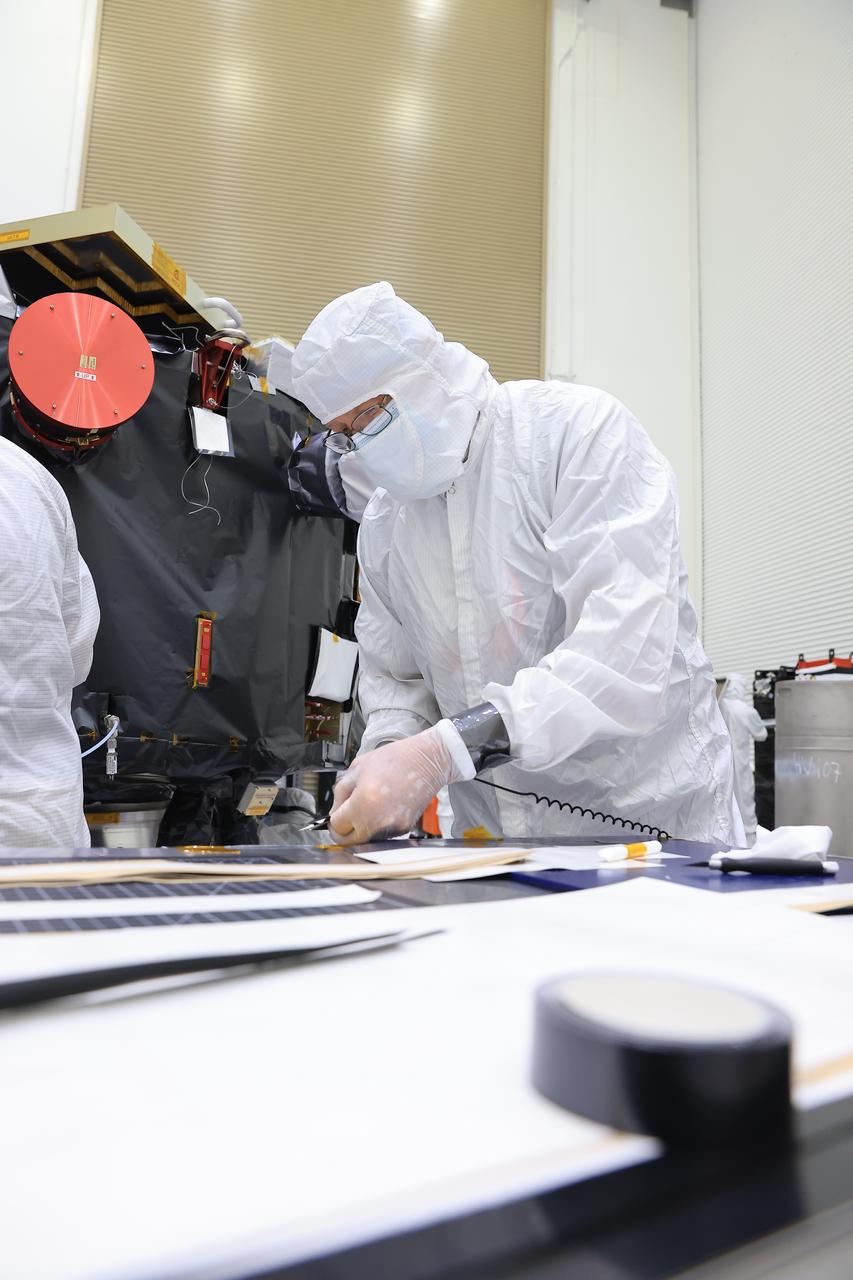
Technicians conduct blanket closeout work on NASA’s IMAP (Interstellar Mapping and Acceleration Probe) observatory at the Astrotech Space Operations Facility near NASA’s Kennedy Space Center in Florida on Friday, Aug. 15, 2025. IMAP will explore and map the boundaries of the heliosphere — a huge bubble created by the Sun’s wind that encapsulates our entire solar system — and study how the heliosphere interacts with the local galactic neighborhood beyond.

Technicians inspect NASA’s IMAP (Interstellar Mapping and Acceleration Probe) spacecraft on a spacecraft dolly inside Astrotech Space Operations Facility near the agency’s Kennedy Space Center in Florida during a NASA-hosted media day on Thursday, Aug. 28, 2025. IMAP and its two rideshares – NASA’s Carruthers Geocorona Observatory and National Oceanic and Atmospheric Administration’s (NOAA) Space Weather Follow On–Lagrange 1 (SWFO-L1) observatory – will orbit the Sun near Lagrange point 1, about one million miles from Earth, where IMAP will scan the heliosphere, a huge bubble created by the Sun’s wind that encapsulates our entire solar system, and analyze the composition of charged particles, and investigate how those particles move through the solar system.

One of two rideshare spacecraft on NASA’s IMAP (Interstellar Mapping and Acceleration Probe) mission, NASA’s exosphere-studying Carruthers Geocorona Observatory sits on a spacecraft dolly in a high bay inside Astrotech Space Operations Facility near the agency’s Kennedy Space Center in Florida during a NASA-hosted media day on Thursday, Aug. 28, 2025. The missions, along with the National Oceanic and Atmospheric Administration’s (NOAA) Space Weather Follow On–Lagrange 1 (SWFO-L1) observatory, will orbit the Sun near Lagrange point 1, about one million miles from Earth. Carruthers will use its ultraviolet cameras to monitor how space weather from the Sun impacts the exosphere, the outermost part of Earth’s atmosphere.

One of two rideshare spacecraft on NASA’s IMAP (Interstellar Mapping and Acceleration Probe) mission, the National Oceanic and Atmospheric Administration’s (NOAA) Space Weather Follow On–Lagrange 1 (SWFO-L1) observatory sits on a spacecraft dolly in a high bay inside Astrotech Space Operations Facility near the agency’s Kennedy Space Center in Florida during a NASA-hosted media day on Thursday, Aug. 28, 2025. The missions, along with NASA’s exosphere-studying Carruthers Geocorona Observatory, will orbit the Sun near Lagrange point 1, about one million miles from Earth, where SWFO-L1 will monitor the Sun and near-Earth environment using a suite of instruments that provide real-time measurements of solar activity.
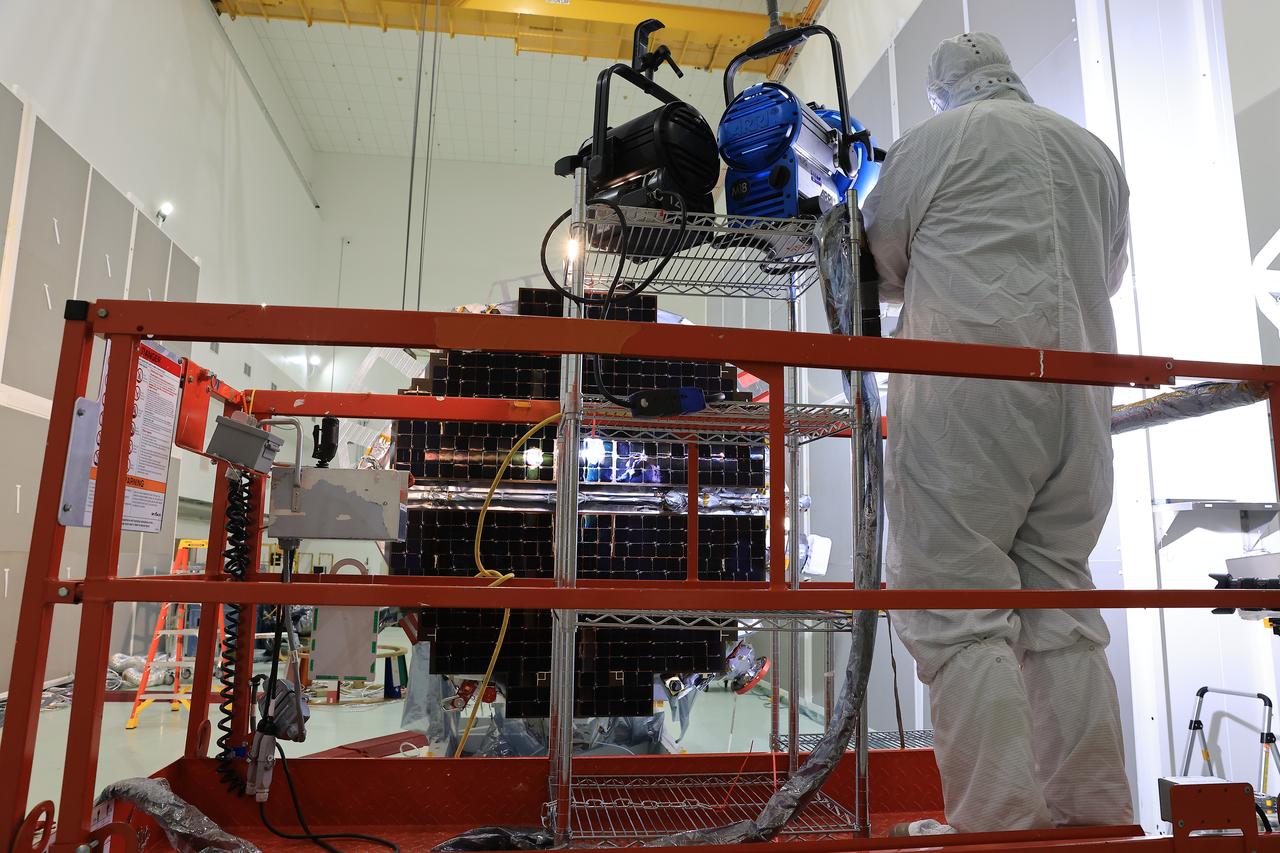
Technicians at the Astrotech Space Operations Facility near NASA’s Kennedy Space Center in Florida conduct illumination testing on Friday, July 18, 2025, by flashing a bright light that simulates the Sun into the two-panel solar array that will help power the agency’s IMAP (Interstellar Mapping and Acceleration Probe) observatory on its upcoming journey to a destination about one million miles away from Earth Lagrange Point 1. Each panel of the solar array, located on the top of IMAP, consists of 16 strings of solar cells, with 36 cells per string, and combined will convert sunlight into 500 watts of power, more than enough for the observatory, which as a system uses less power than five 100-watt incandescent light bulbs.
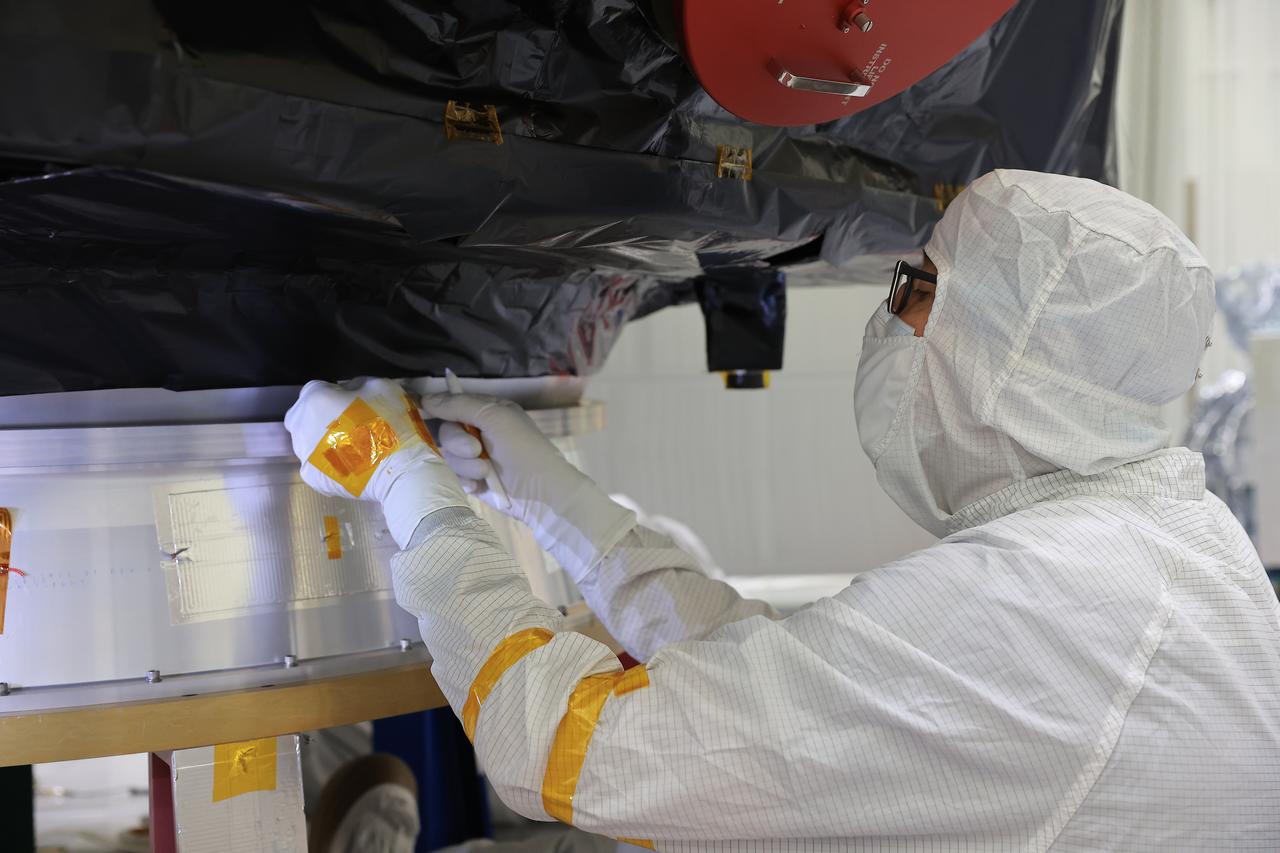
Technicians conduct blanket closeout work on NASA’s IMAP (Interstellar Mapping and Acceleration Probe) observatory at the Astrotech Space Operations Facility near NASA’s Kennedy Space Center in Florida on Friday, Aug. 15, 2025. IMAP will explore and map the boundaries of the heliosphere — a huge bubble created by the Sun’s wind that encapsulates our entire solar system — and study how the heliosphere interacts with the local galactic neighborhood beyond.