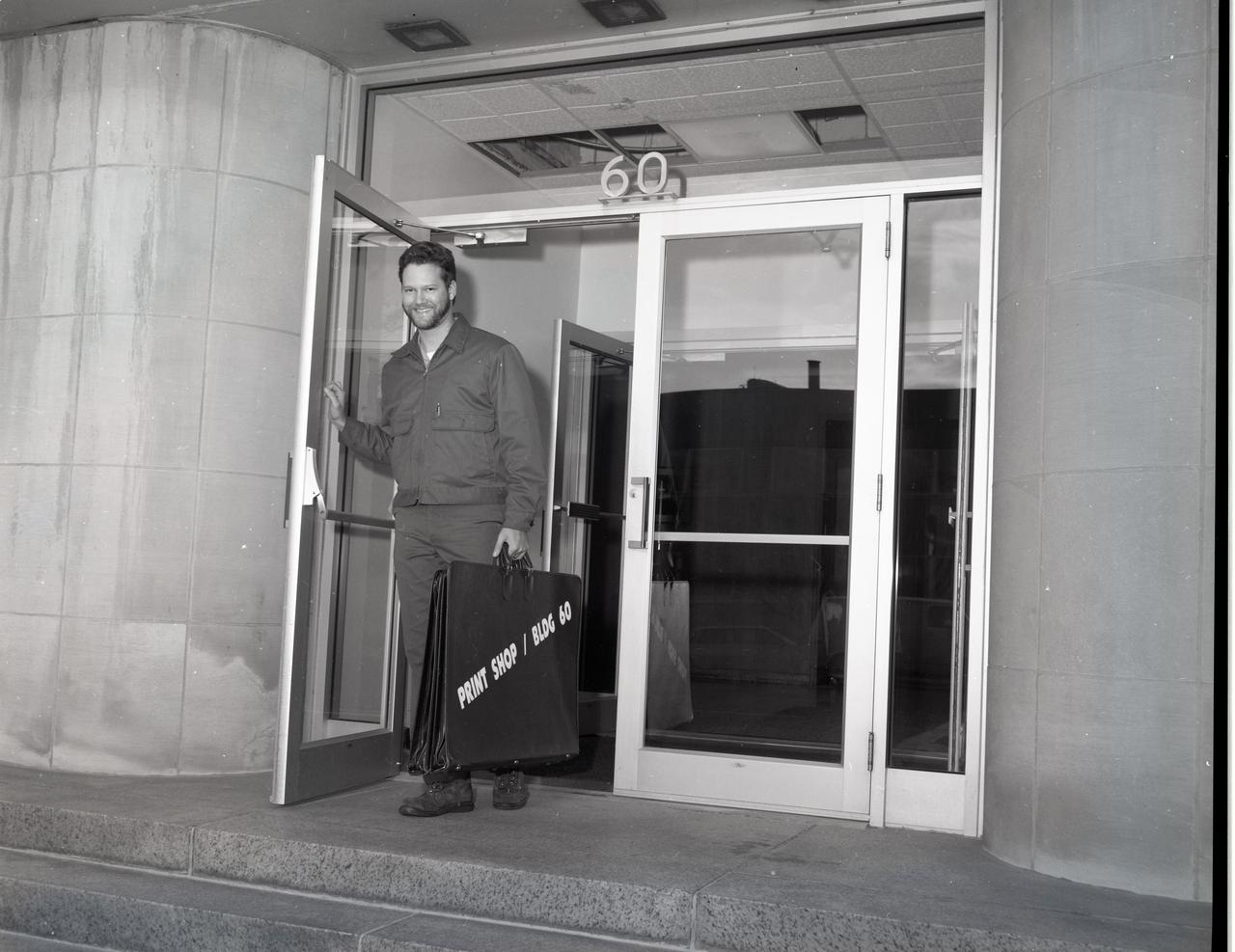
Cortez III Employee Delivers Work Between the Print Shop and the Building 60 Graphics Department
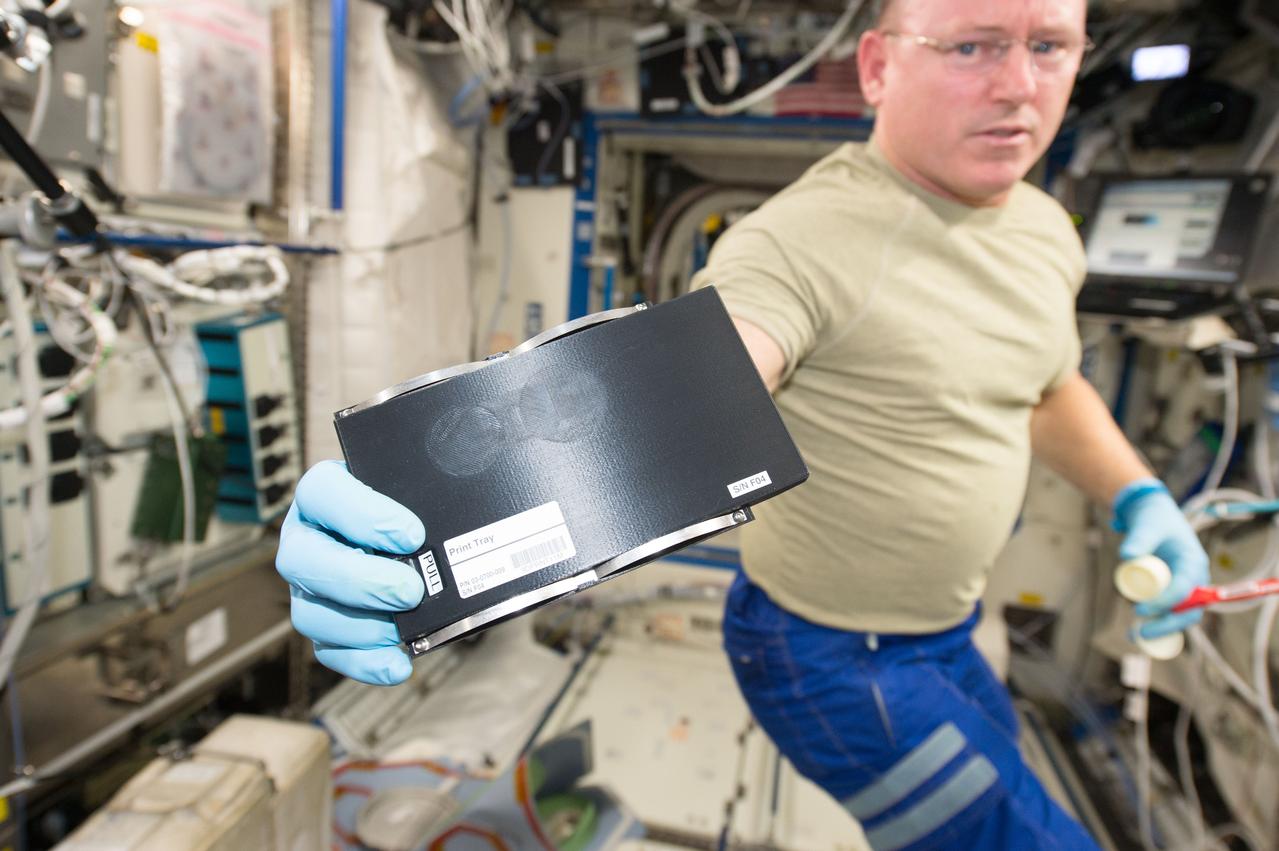
iss042e031282 (12/09/2014) ---US Astronaut Barry (Butch) Wilmore holding a 3D coupon works with the new 3D printer aboard the International Space Station. The 3D Printing experiment in zero gravity demonstrates that a 3D printer works normally in space. In general, a 3D printer extrudes streams of heated plastic, metal or other material, building layer on top of layer to create 3 dimensional objects. Testing a 3D printer using relatively low-temperature plastic feedstock on the International Space Station is the first step towards establishing an on-demand machine shop in space, a critical enabling component for deep-space crewed missions and in-space manufacturing.
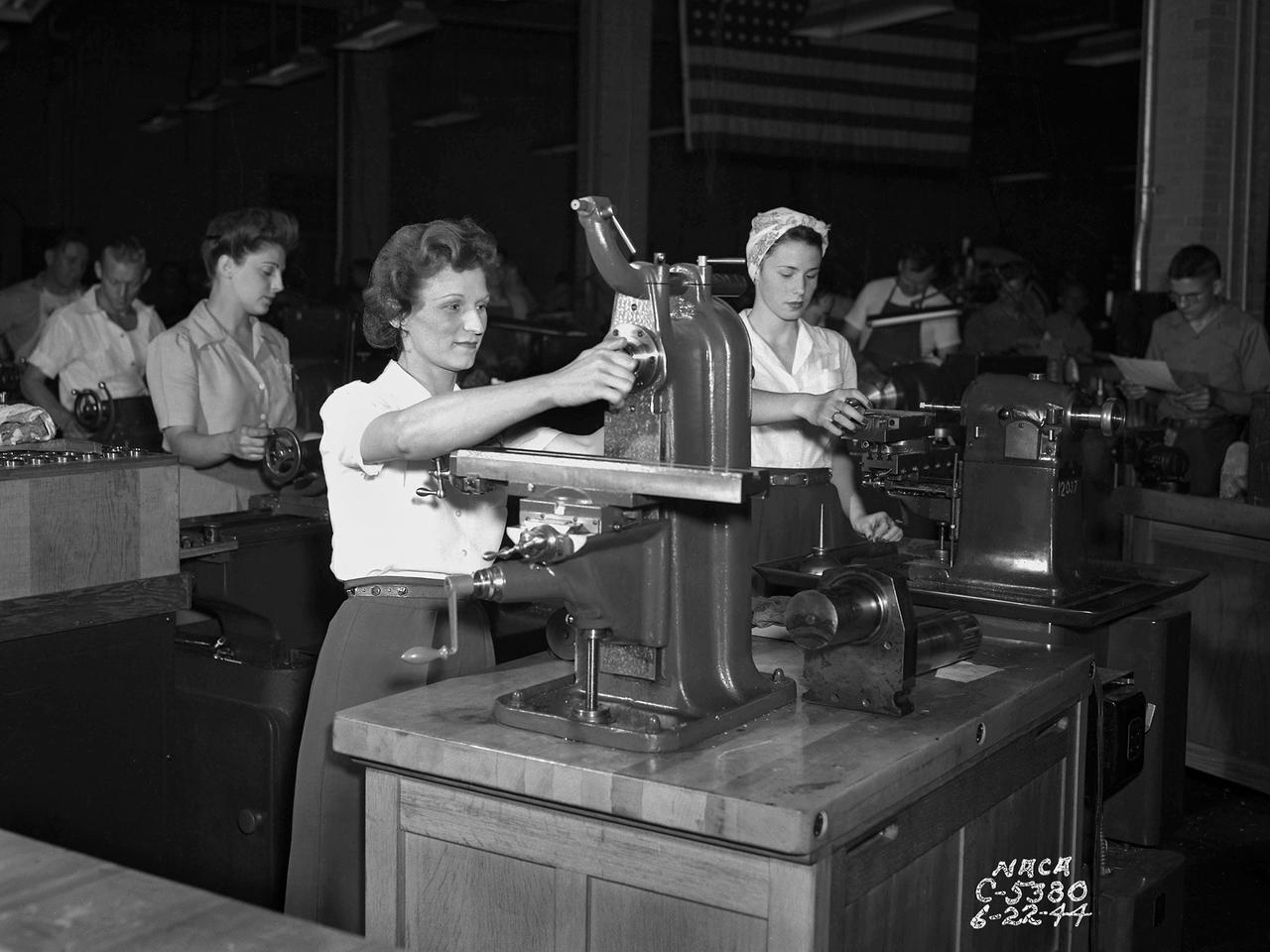
The loss of male NACA employees to the war effort and the military’s increased demand for expedited aeronautical research results resulted in a sharp demand for increased staffing in the early 1940s. The Aircraft Engine Research Laboratory (AERL) undertook an extensive recruiting effort to remedy the situation. Current employees were asked to bring in friends and family members, including women. The number of women employed at the AERL nearly doubled to 412 between 1943 and 1944. In May 1944 Director Raymond Sharp initiated a program to train women as machine operators, electricians, instrumentation engineers, and other technical positions. The move coincided with the lab’s implementation of a third shift to meet the military’s demands for improved aircraft performance. There was also a modest, but important, number of female engineers and chemists, as well as large group employed in more traditional positions such as data analysts, editors, and clerks. The integration of women in the research process was critical. Researchers developed a test and submitted plans to the Drafting Section to be converted into blueprints. In some instances the Instrumentation Shop was asked to create instruments for the test. During the test, computers gathered and analyzed the data. The researcher then wrote the report which was reviewed by the Editorial Department and printed in the Duplication Unit. All of these tasks were generally performed by female employees.