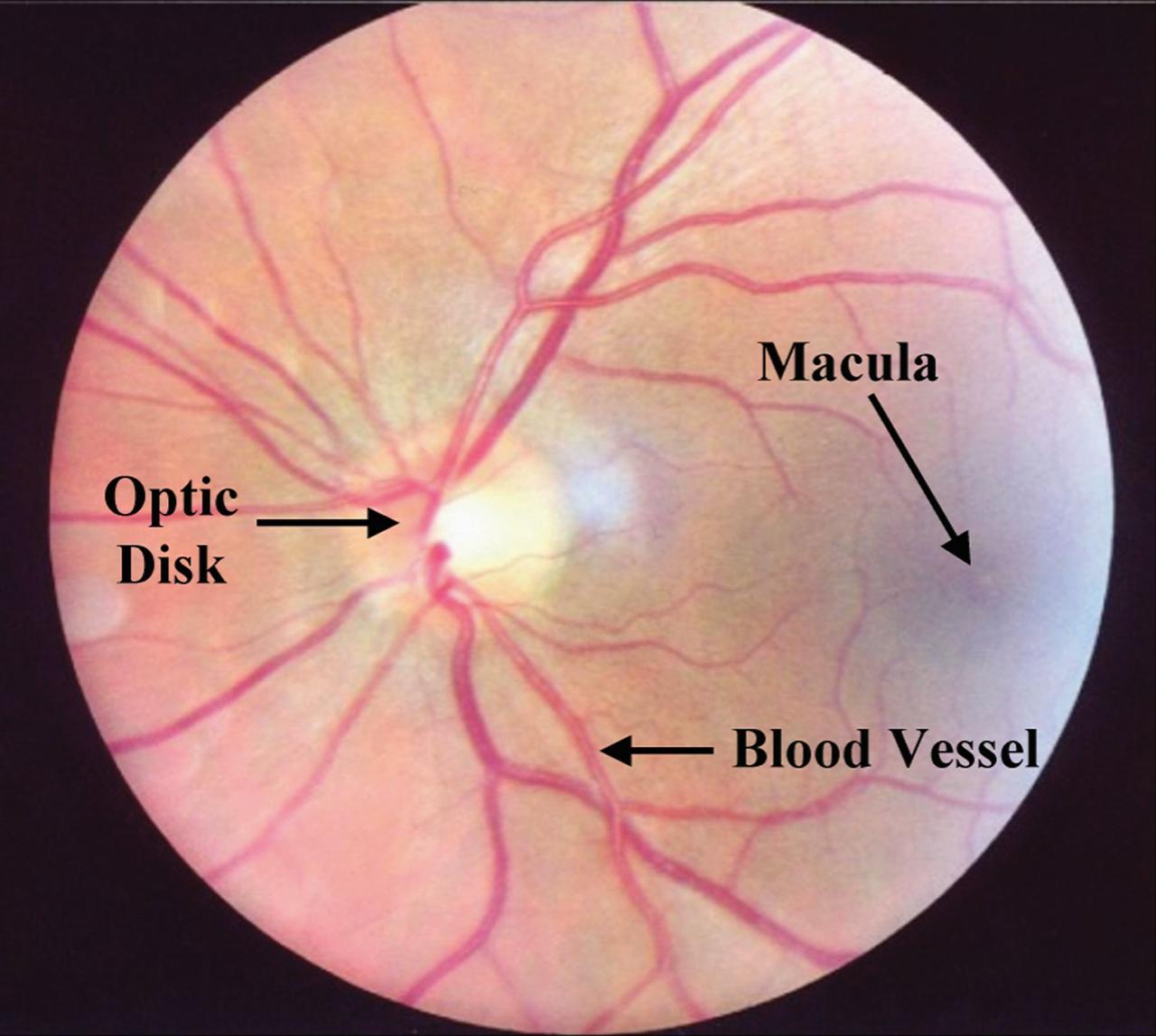
ProVision Technologies, a NASA commercial space center at Sternis Space Center in Mississippi, has developed a new hyperspectral imaging (HSI) system that is much smaller than the original large units used aboard remote sensing aircraft and satellites. The new apparatus is about the size of a breadbox. HSI may be useful to ophthalmologists to study and diagnose eye health, both on Earth and in space, by examining the back of the eye to determine oxygen and blood flow quickly and without any invasion. ProVision's hyperspectral imaging system can scan the human eye and produce a graph showing optical density or light absorption, which can then be compared to a graph from a normal eye. Scans of the macula, optic disk or optic nerve head, and blood vessels can be used to detect anomalies and identify diseases in this delicate and important organ. ProVision has already developed a relationship with the University of Alabama at Birmingham, but is still on the lookout for a commercial partner in this application.
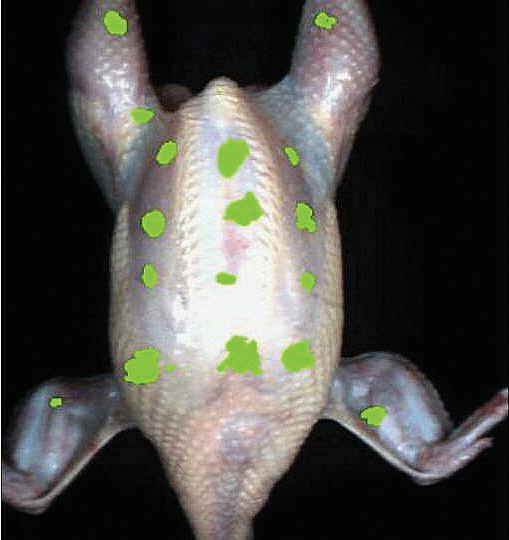
ProVision Technologies, a NASA research partnership center at Sternis Space Center in Mississippi, has developed a new hyperspectral imaging (HSI) system that is much smaller than the original large units used aboard remote sensing aircraft and satellites. The new apparatus is about the size of a breadbox. Health-related applications of HSI include scanning chickens during processing to help prevent contaminated food from getting to the table. ProVision is working with Sanderson Farms of Mississippi and the U.S. Department of Agriculture. ProVision has a record in its spectral library of the unique spectral signature of fecal contamination, so chickens can be scanned and those with a positive reading can be separated. HSI sensors can also determine the quantity of surface contamination. Research in this application is quite advanced, and ProVision is working on a licensing agreement for the technology. The potential for future use of this equipment in food processing and food safety is enormous.
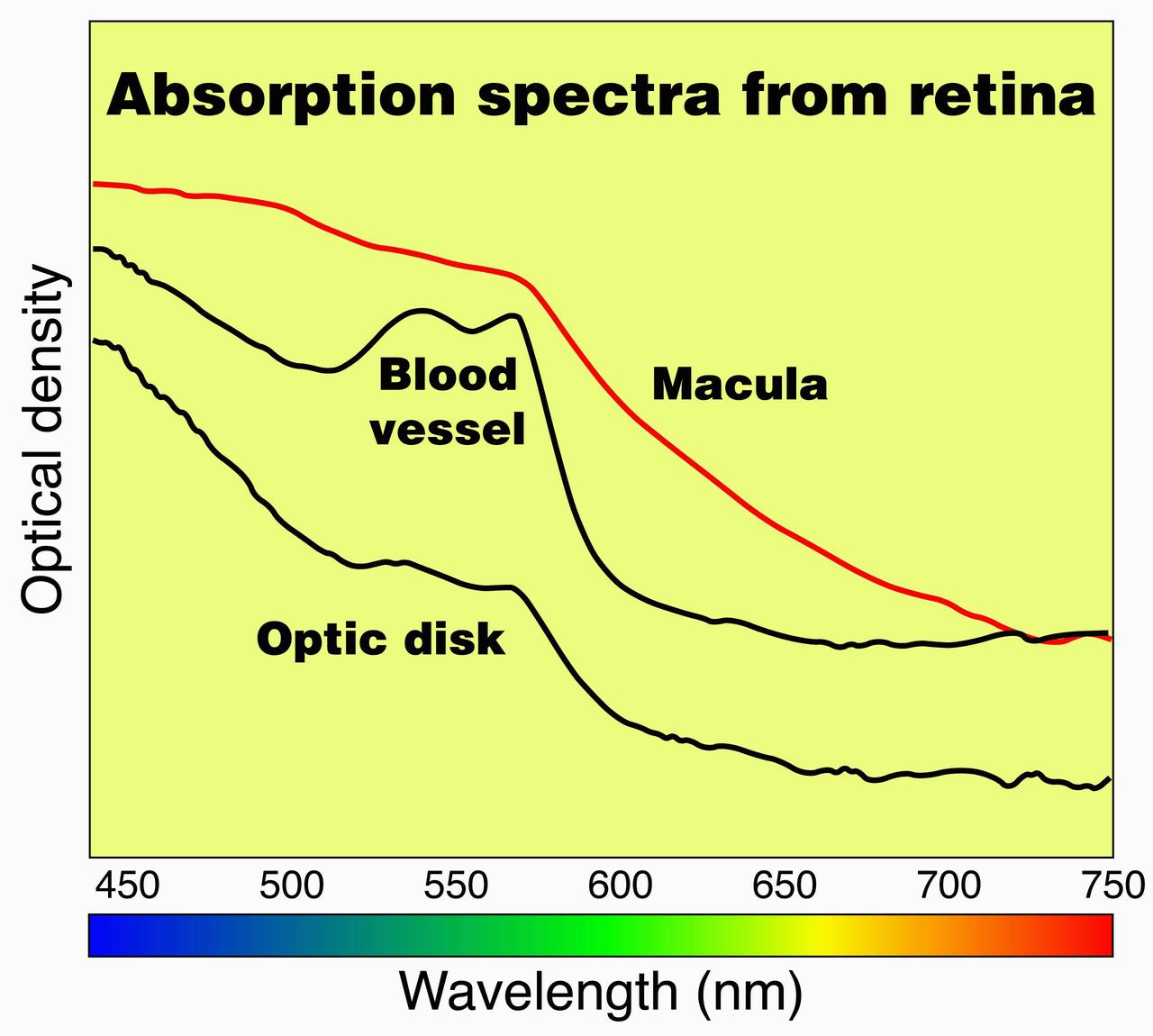
ProVision Technologies, a NASA research partnership center at Sternis Space Center in Mississippi, has developed a new hyperspectral imaging (HSI) system that is much smaller than the original large units used aboard remote sensing aircraft and satellites. The new apparatus is about the size of a breadbox. HSI may be useful to ophthalmologists to study and diagnose eye health, both on Earth and in space, by examining the back of the eye to determine oxygen and blood flow quickly and without any invasion. ProVision's hyperspectral imaging system can scan the human eye and produce a graph showing optical density or light absorption, which can then be compared to a graph from a normal eye. Scans of the macula, optic disk or optic nerve head, and blood vessels can be used to detect anomalies and identify diseases in this delicate and important organ. ProVision has already developed a relationship with the University of Alabama at Birmingham, but is still on the lookout for a commercial partner in this application.
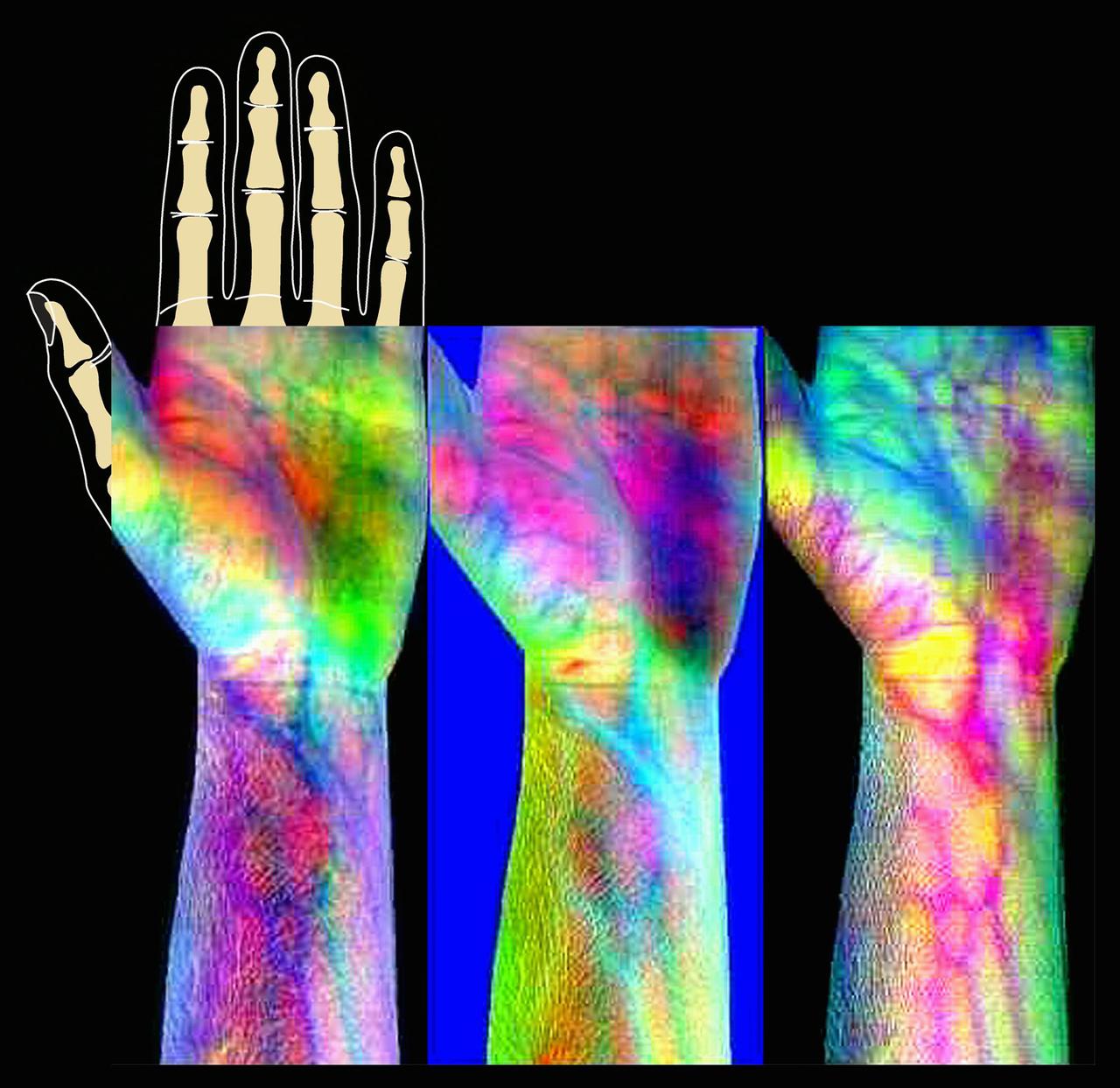
ProVision Technologies, a NASA research partnership center at Sternis Space Center in Mississippi, has developed a new hyperspectral imaging (HSI) system that is much smaller than the original large units used aboard remote sensing aircraft and satellites. The new apparatus is about the size of a breadbox. Health-related applications of HSI include non-invasive analysis of human skin to characterize wounds and wound healing rates (especially important for space travelers who heal more slowly), determining if burns are first-, second-, or third degree (rather than painful punch biopsies). The work is sponsored under NASA's Space Product Development (SPD) program.
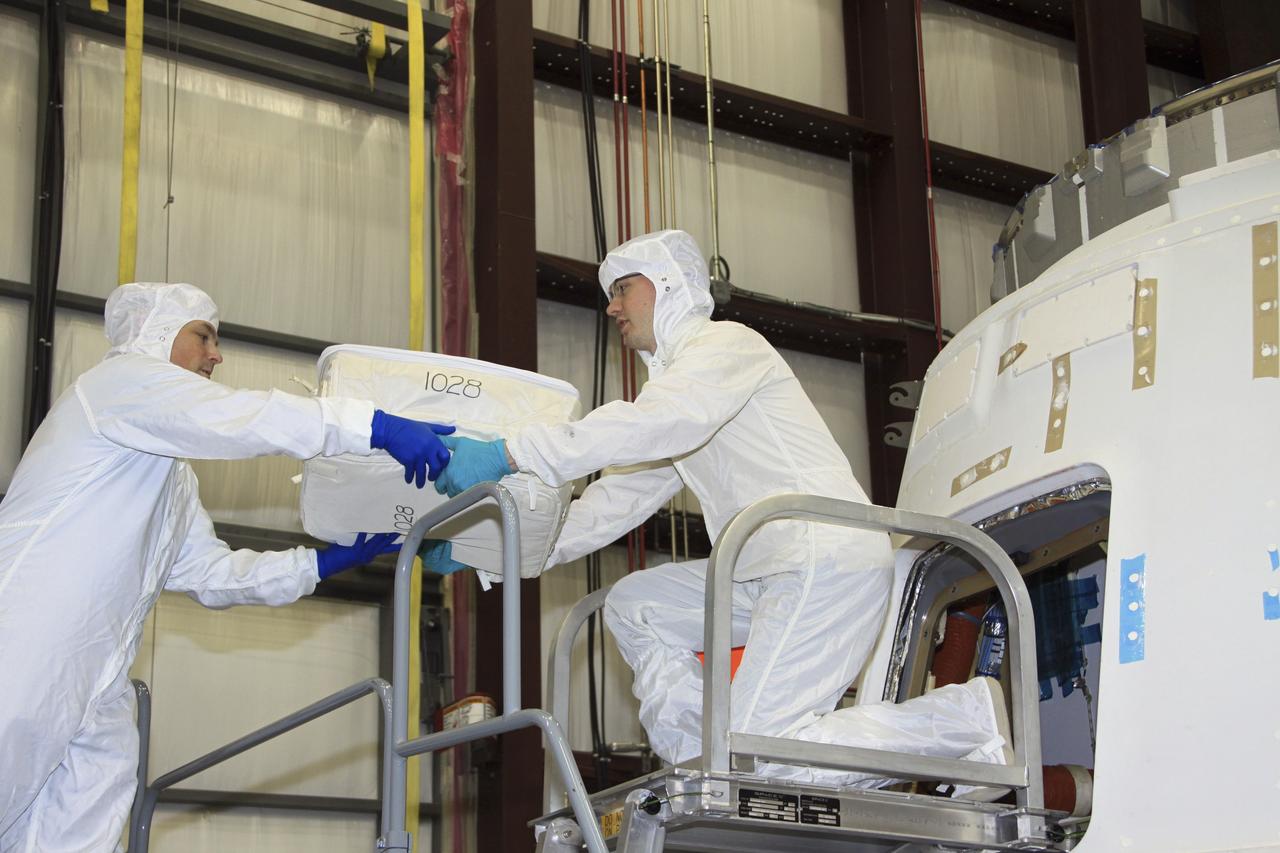
CAPE CANAVERAL, Fla. – In a processing hangar at Space Launch Complex-40 on Cape Canaveral Air Force Station in Florida, Space Exploration Technologies technicians load cargo into the Dragon capsule in preparation for its scheduled April 30 liftoff aboard a Falcon 9 rocket. Known as SpaceX, the launch will be the company's second demonstration test flight for NASA's Commercial Orbital Transportation Services program, or COTS. During the flight, the capsule will conduct a series of checkout procedures to test and prove its systems, including rendezvous and berthing with the International Space Station. The cargo includes food and provisions for the station’s Expedition crews, such as clothing, batteries, and computer equipment. Under COTS, NASA has partnered with two private companies to launch cargo safely to the station. For more information, visit http://www.nasa.gov/spacex. Photo credit: NASA/Jim Grossmann
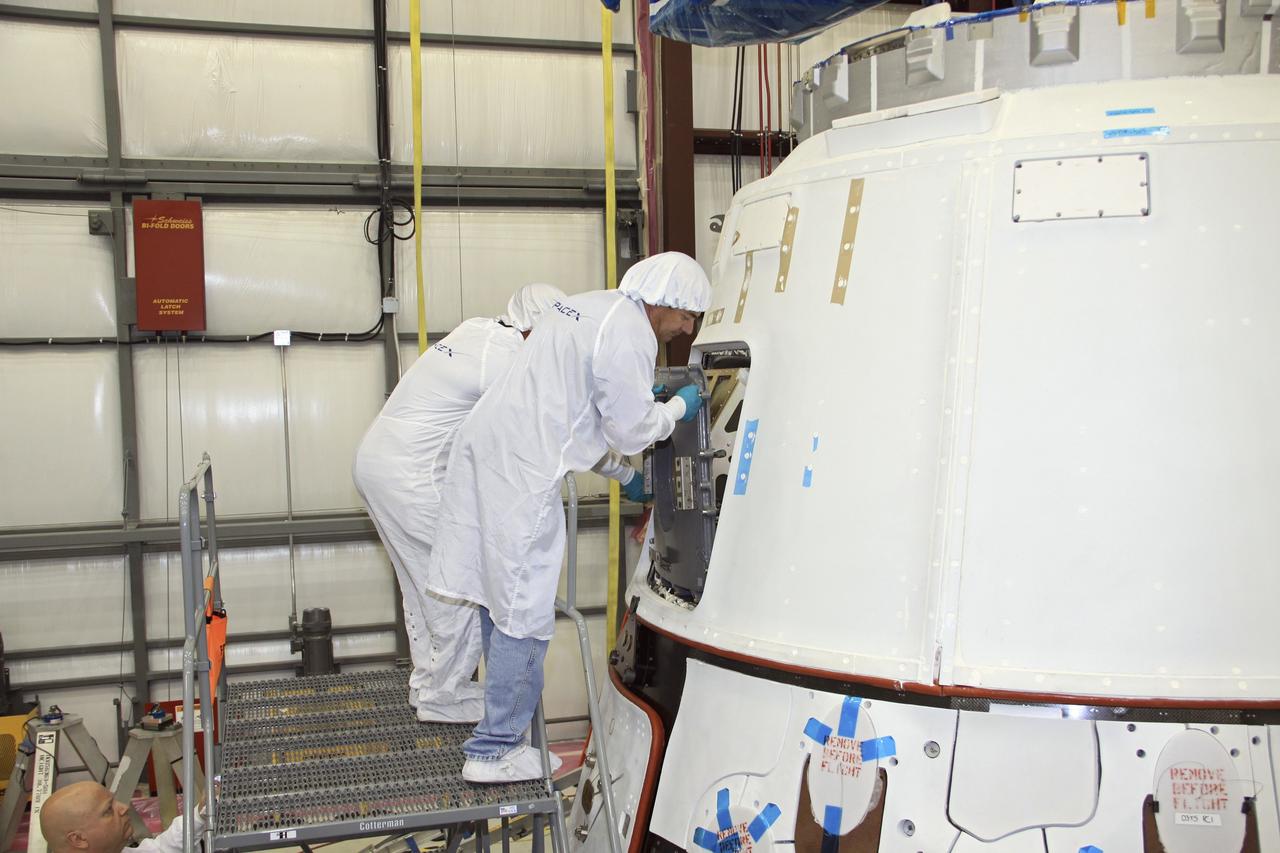
CAPE CANAVERAL, Fla. – In a processing hangar at Space Launch Complex-40 on Cape Canaveral Air Force Station in Florida, Space Exploration Technologies technicians close the hatch of the Dragon capsule. The hatch was open for cargo to be stowed in the capsule in preparation for its scheduled April 30 liftoff aboard a Falcon 9 rocket. Known as SpaceX, the launch will be the company's second demonstration test flight for NASA's Commercial Orbital Transportation Services program, or COTS. During the flight, the capsule will conduct a series of checkout procedures to test and prove its systems, including rendezvous and berthing with the International Space Station. The cargo includes food and provisions for the station’s Expedition crews, such as clothing, batteries, and computer equipment. Under COTS, NASA has partnered with two private companies to launch cargo safely to the station. For more information, visit http://www.nasa.gov/spacex. Photo credit: NASA/Jim Grossmann
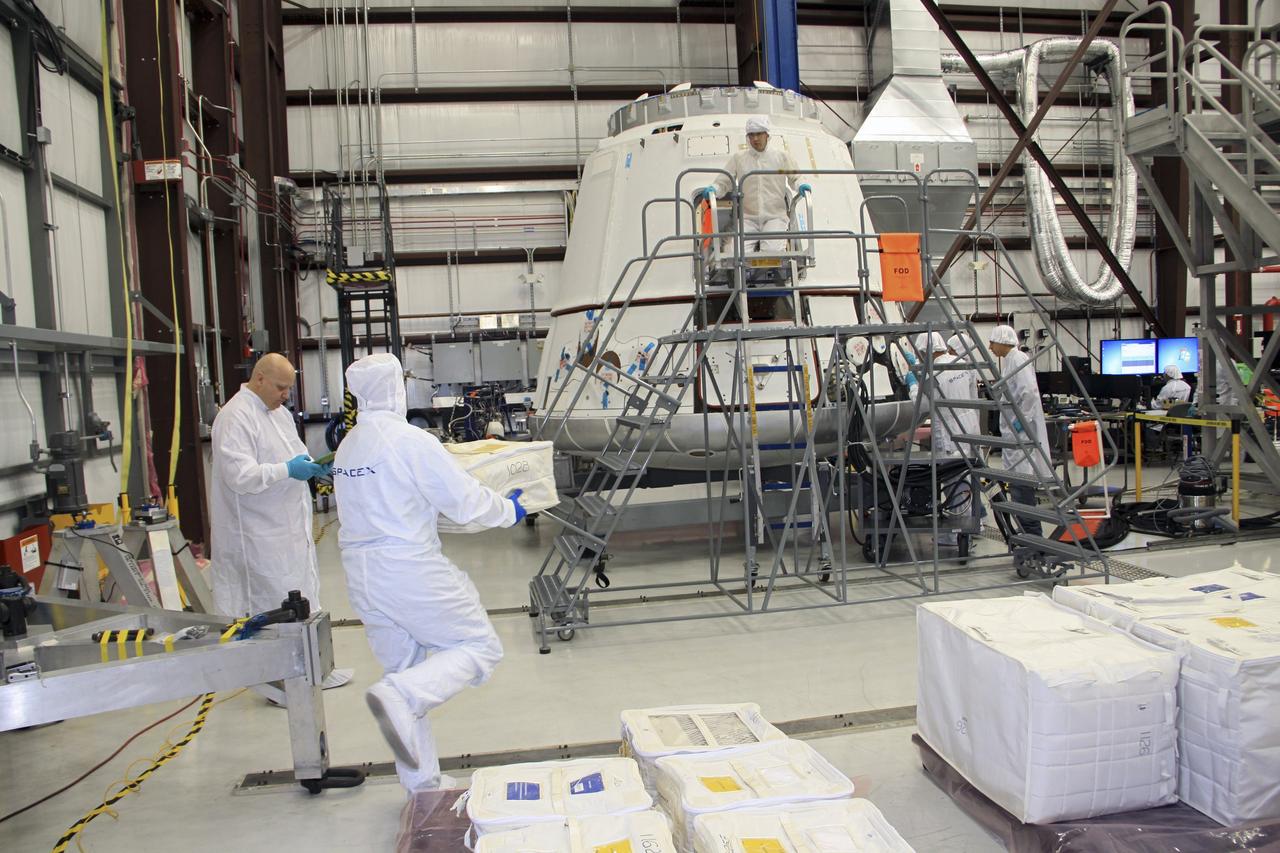
CAPE CANAVERAL, Fla. – In a processing hangar at Space Launch Complex-40 on Cape Canaveral Air Force Station in Florida, Space Exploration Technologies technicians load cargo into the Dragon capsule in preparation for its scheduled April 30 liftoff aboard a Falcon 9 rocket. Known as SpaceX, the launch will be the company's second demonstration test flight for NASA's Commercial Orbital Transportation Services program, or COTS. During the flight, the capsule will conduct a series of checkout procedures to test and prove its systems, including rendezvous and berthing with the International Space Station. The cargo includes food and provisions for the station’s Expedition crews, such as clothing, batteries, and computer equipment. Under COTS, NASA has partnered with two private companies to launch cargo safely to the station. For more information, visit http://www.nasa.gov/spacex. Photo credit: NASA/Jim Grossmann
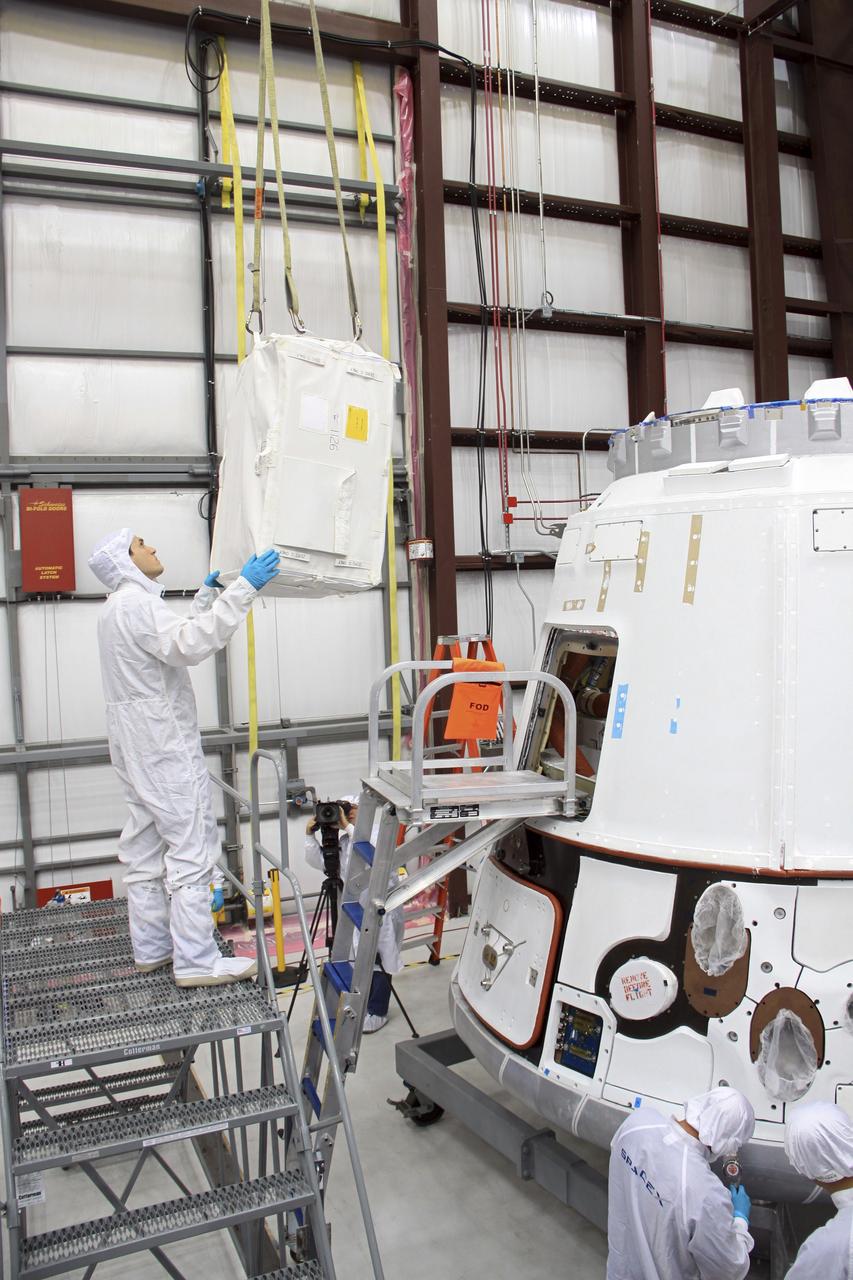
CAPE CANAVERAL, Fla. – In a processing hangar at Space Launch Complex-40 on Cape Canaveral Air Force Station in Florida, a cargo bag is lowered into the hands of a Space Exploration Technologies technician who will load it into the Dragon capsule in preparation for its scheduled April 30 liftoff aboard a Falcon 9 rocket. Known as SpaceX, the launch will be the company's second demonstration test flight for NASA's Commercial Orbital Transportation Services program, or COTS. During the flight, the capsule will conduct a series of checkout procedures to test and prove its systems, including rendezvous and berthing with the International Space Station. The cargo includes food and provisions for the station’s Expedition crews, such as clothing, batteries, and computer equipment. Under COTS, NASA has partnered with two private companies to launch cargo safely to the station. For more information, visit http://www.nasa.gov/spacex. Photo credit: NASA/Jim Grossmann
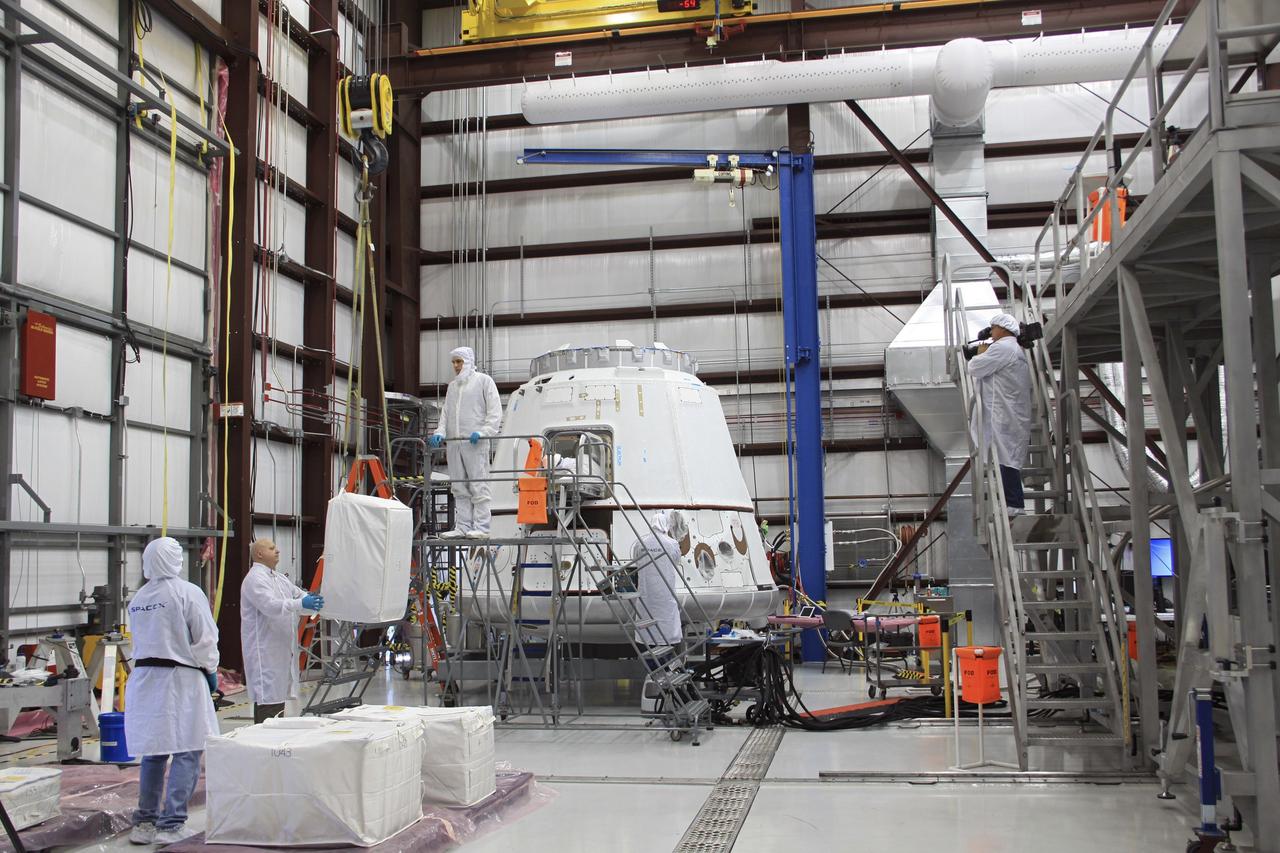
CAPE CANAVERAL, Fla. – In a processing hangar at Space Launch Complex-40 on Cape Canaveral Air Force Station in Florida, a Space Exploration Technologies technician attaches a cargo bag to the crane that will lift it toward the Dragon capsule where it will be stowed in preparation for its scheduled April 30 liftoff aboard a Falcon 9 rocket. Known as SpaceX, the launch will be the company's second demonstration test flight for NASA's Commercial Orbital Transportation Services program, or COTS. During the flight, the capsule will conduct a series of checkout procedures to test and prove its systems, including rendezvous and berthing with the International Space Station. The cargo includes food and provisions for the station’s Expedition crews, such as clothing, batteries, and computer equipment. Under COTS, NASA has partnered with two private companies to launch cargo safely to the station. For more information, visit http://www.nasa.gov/spacex. Photo credit: NASA/Jim Grossmann
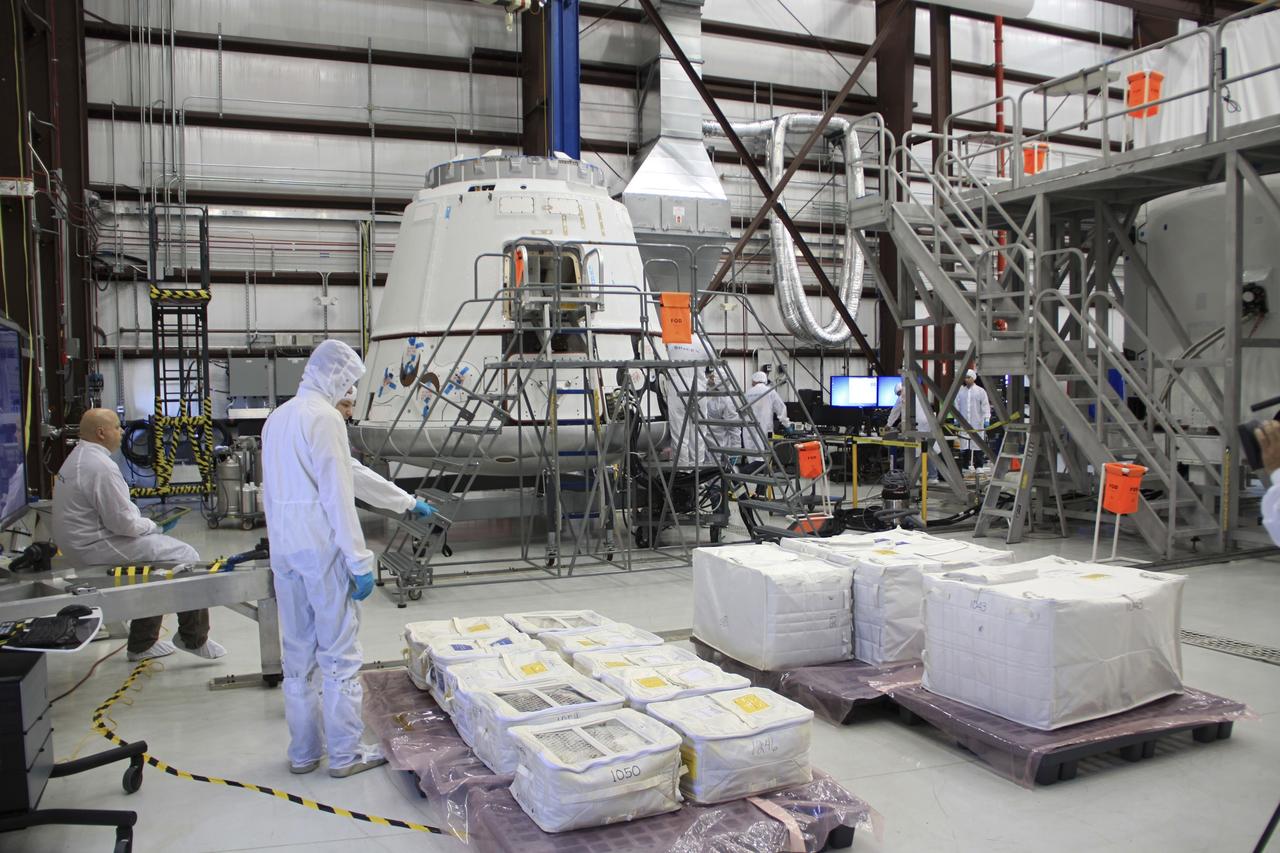
CAPE CANAVERAL, Fla. – In a processing hangar at Space Launch Complex-40 on Cape Canaveral Air Force Station in Florida, preparations are under way to load cargo into the Space Exploration Technologies Dragon capsule in preparation for its scheduled April 30 liftoff aboard a Falcon 9 rocket. Known as SpaceX, the launch will be the company's second demonstration test flight for NASA's Commercial Orbital Transportation Services program, or COTS. During the flight, the capsule will conduct a series of checkout procedures to test and prove its systems, including rendezvous and berthing with the International Space Station. The cargo includes food and provisions for the station’s Expedition crews, such as clothing, batteries, and computer equipment. Under COTS, NASA has partnered with two private companies to launch cargo safely to the station. For more information, visit http://www.nasa.gov/spacex. Photo credit: NASA/Jim Grossmann
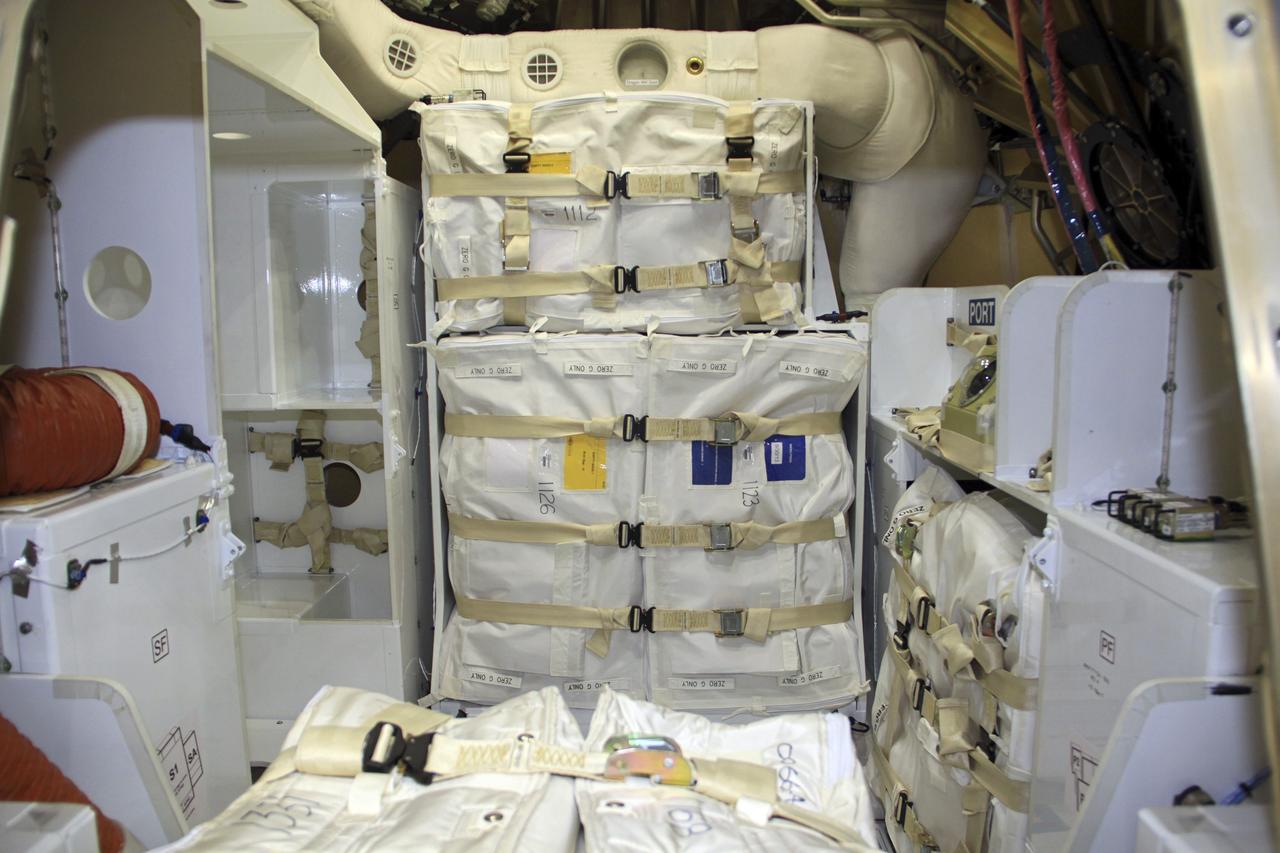
CAPE CANAVERAL, Fla. – In a processing hangar at Space Launch Complex-40 on Cape Canaveral Air Force Station in Florida, cargo has been stowed in the Space Exploration Technologies Dragon capsule in preparation for its scheduled April 30 liftoff aboard a Falcon 9 rocket. Known as SpaceX, the launch will be the company's second demonstration test flight for NASA's Commercial Orbital Transportation Services program, or COTS. During the flight, the capsule will conduct a series of checkout procedures to test and prove its systems, including rendezvous and berthing with the International Space Station. The cargo includes food and provisions for the station’s Expedition crews, such as clothing, batteries, and computer equipment. Under COTS, NASA has partnered with two private companies to launch cargo safely to the station. For more information, visit http://www.nasa.gov/spacex. Photo credit: NASA/Jim Grossmann
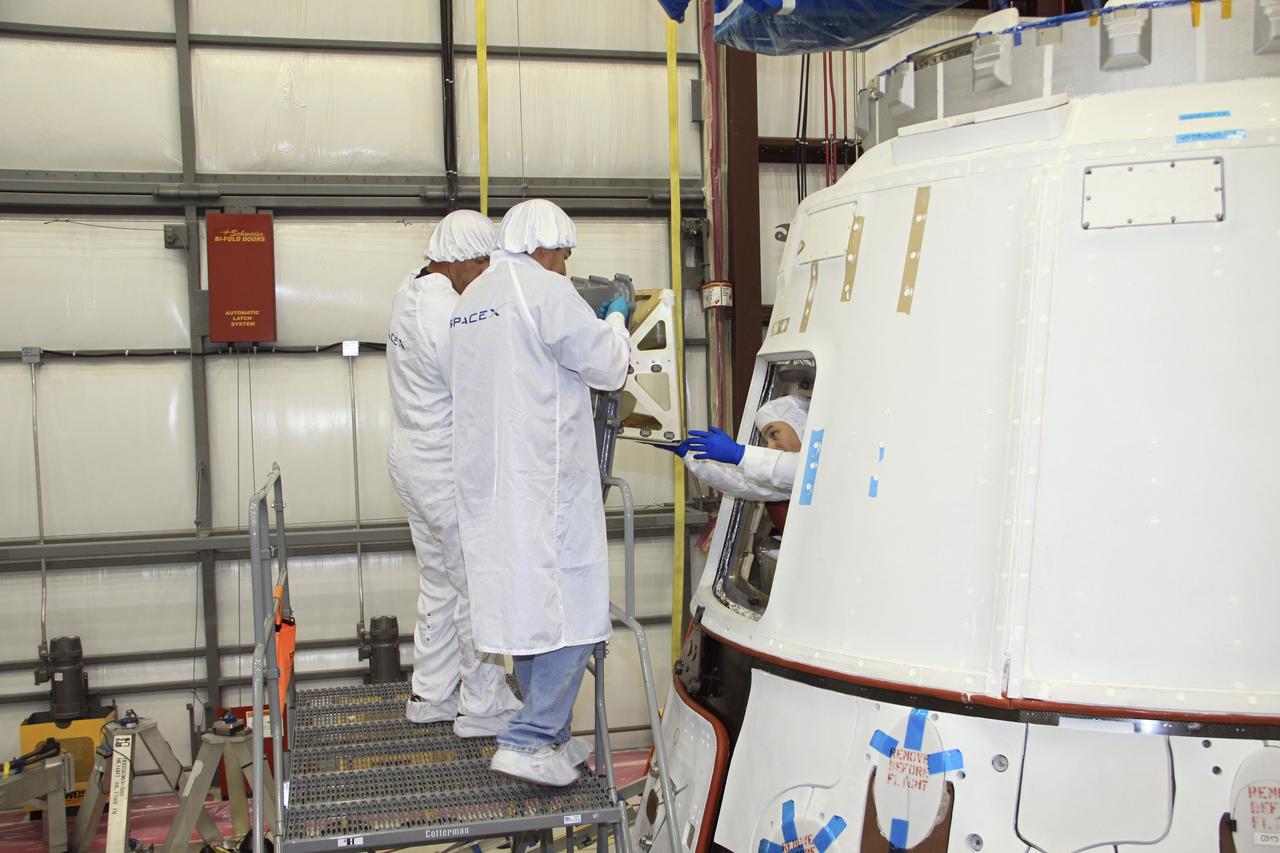
CAPE CANAVERAL, Fla. – In a processing hangar at Space Launch Complex-40 on Cape Canaveral Air Force Station in Florida, Space Exploration Technologies technicians prepare to close the hatch of the Dragon capsule. The hatch was open for cargo to be stowed in the capsule in preparation for its scheduled April 30 liftoff aboard a Falcon 9 rocket. Known as SpaceX, the launch will be the company's second demonstration test flight for NASA's Commercial Orbital Transportation Services program, or COTS. During the flight, the capsule will conduct a series of checkout procedures to test and prove its systems, including rendezvous and berthing with the International Space Station. The cargo includes food and provisions for the station’s Expedition crews, such as clothing, batteries, and computer equipment. Under COTS, NASA has partnered with two private companies to launch cargo safely to the station. For more information, visit http://www.nasa.gov/spacex. Photo credit: NASA/Jim Grossmann
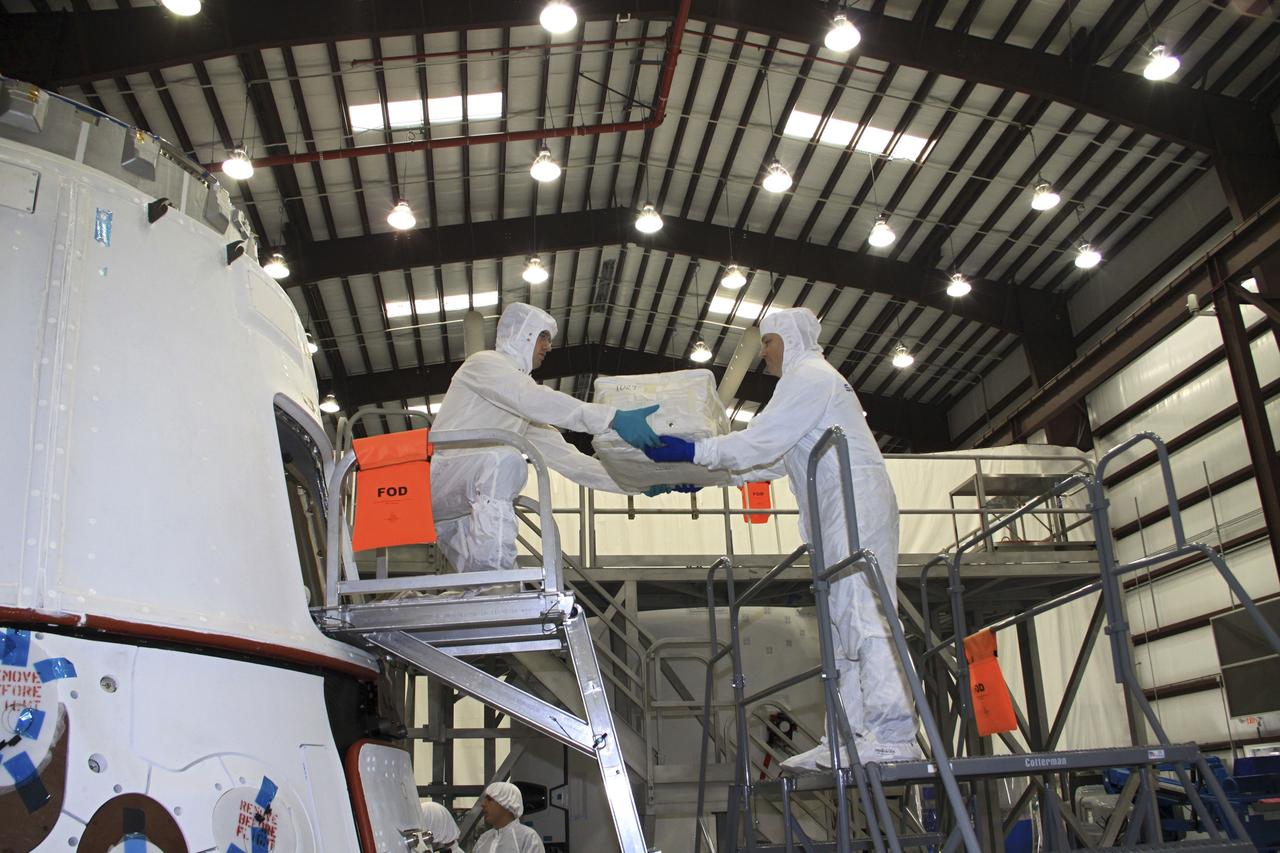
CAPE CANAVERAL, Fla. – In a processing hangar at Space Launch Complex-40 on Cape Canaveral Air Force Station in Florida, Space Exploration Technologies technicians load cargo into the Dragon capsule in preparation for its scheduled April 30 liftoff aboard a Falcon 9 rocket. Known as SpaceX, the launch will be the company's second demonstration test flight for NASA's Commercial Orbital Transportation Services program, or COTS. During the flight, the capsule will conduct a series of checkout procedures to test and prove its systems, including rendezvous and berthing with the International Space Station. The cargo includes food and provisions for the station’s Expedition crews, such as clothing, batteries, and computer equipment. Under COTS, NASA has partnered with two private companies to launch cargo safely to the station. For more information, visit http://www.nasa.gov/spacex. Photo credit: NASA/Jim Grossmann
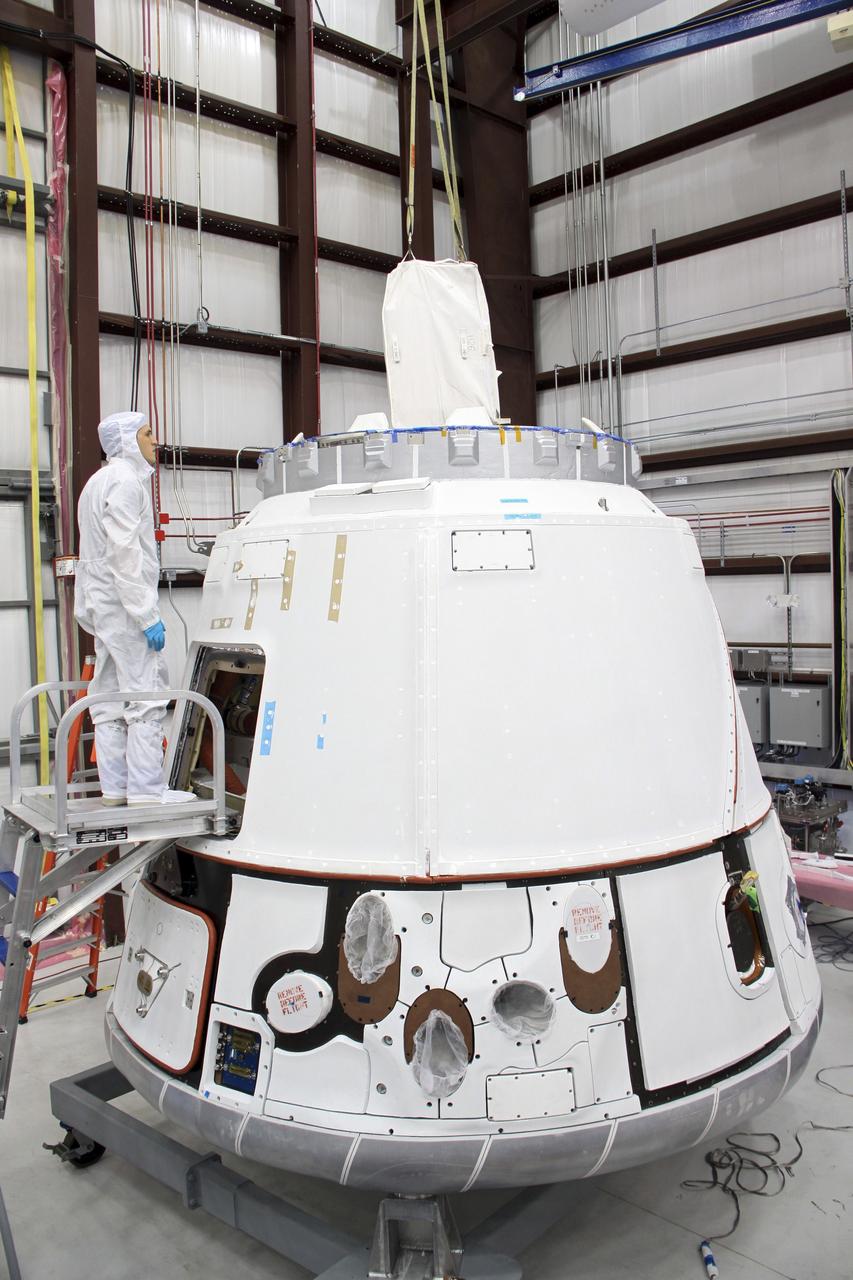
CAPE CANAVERAL, Fla. – In a processing hangar at Space Launch Complex-40 on Cape Canaveral Air Force Station in Florida, a cargo bag slides through the docking ring into the Space Exploration Technologies Dragon capsule for stowage for its scheduled April 30 liftoff aboard a Falcon 9 rocket. Known as SpaceX, the launch will be the company's second demonstration test flight for NASA's Commercial Orbital Transportation Services program, or COTS. During the flight, the capsule will conduct a series of checkout procedures to test and prove its systems, including rendezvous and berthing with the International Space Station. The cargo includes food and provisions for the station’s Expedition crews, such as clothing, batteries, and computer equipment. Under COTS, NASA has partnered with two private companies to launch cargo safely to the station. For more information, visit http://www.nasa.gov/spacex. Photo credit: NASA/Jim Grossmann
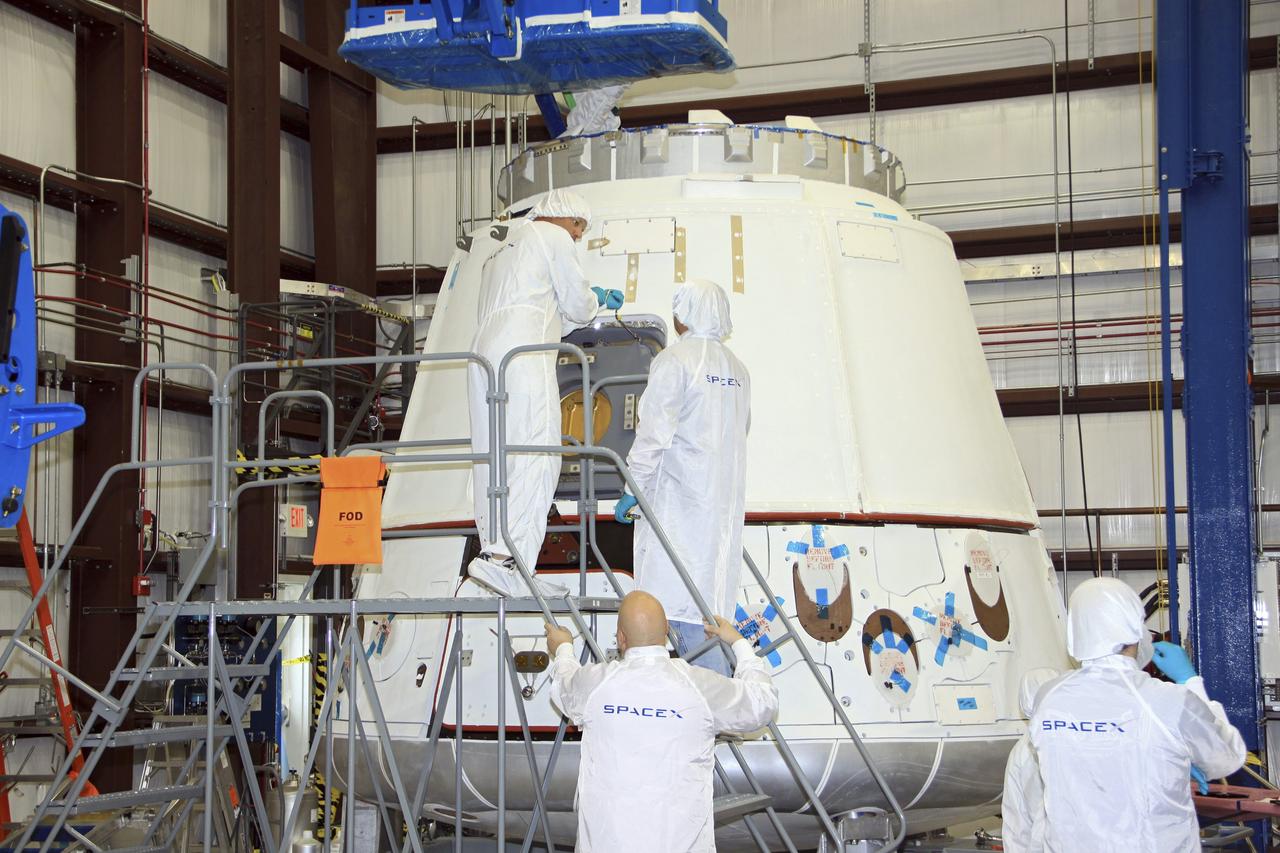
CAPE CANAVERAL, Fla. – In a processing hangar at Space Launch Complex-40 on Cape Canaveral Air Force Station in Florida, the hatch of the Space Exploration Technologies Dragon capsule has been closed following stowage of cargo in preparation for its scheduled April 30 liftoff aboard a Falcon 9 rocket. Known as SpaceX, the launch will be the company's second demonstration test flight for NASA's Commercial Orbital Transportation Services program, or COTS. During the flight, the capsule will conduct a series of checkout procedures to test and prove its systems, including rendezvous and berthing with the International Space Station. The cargo includes food and provisions for the station’s Expedition crews, such as clothing, batteries, and computer equipment. Under COTS, NASA has partnered with two private companies to launch cargo safely to the station. For more information, visit http://www.nasa.gov/spacex. Photo credit: NASA/Jim Grossmann
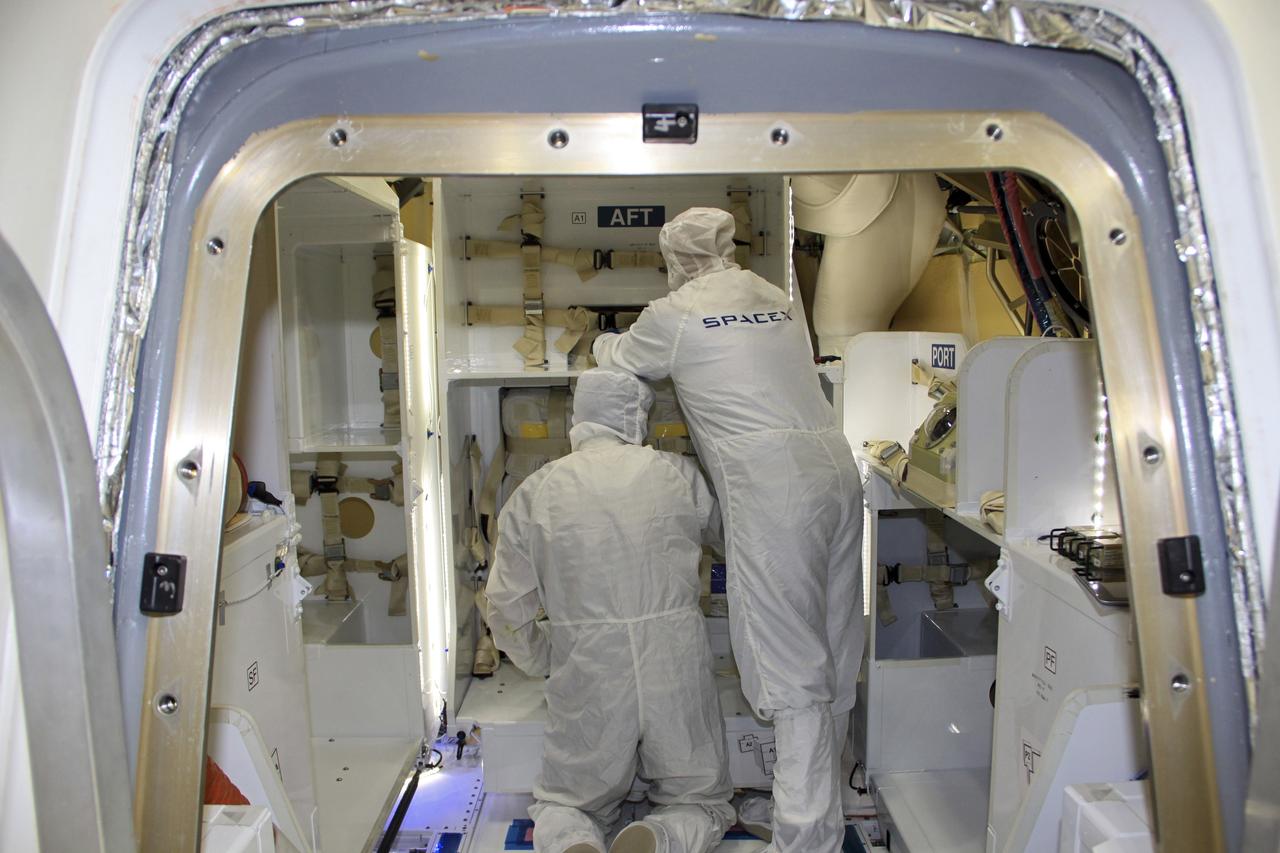
CAPE CANAVERAL, Fla. – In a processing hangar at Space Launch Complex-40 on Cape Canaveral Air Force Station in Florida, Space Exploration Technologies technicians stow cargo in the Dragon capsule in preparation for its scheduled April 30 liftoff aboard a Falcon 9 rocket. Known as SpaceX, the launch will be the company's second demonstration test flight for NASA's Commercial Orbital Transportation Services program, or COTS. During the flight, the capsule will conduct a series of checkout procedures to test and prove its systems, including rendezvous and berthing with the International Space Station. The cargo includes food and provisions for the station’s Expedition crews, such as clothing, batteries, and computer equipment. Under COTS, NASA has partnered with two private companies to launch cargo safely to the station. For more information, visit http://www.nasa.gov/spacex. Photo credit: NASA/Jim Grossmann
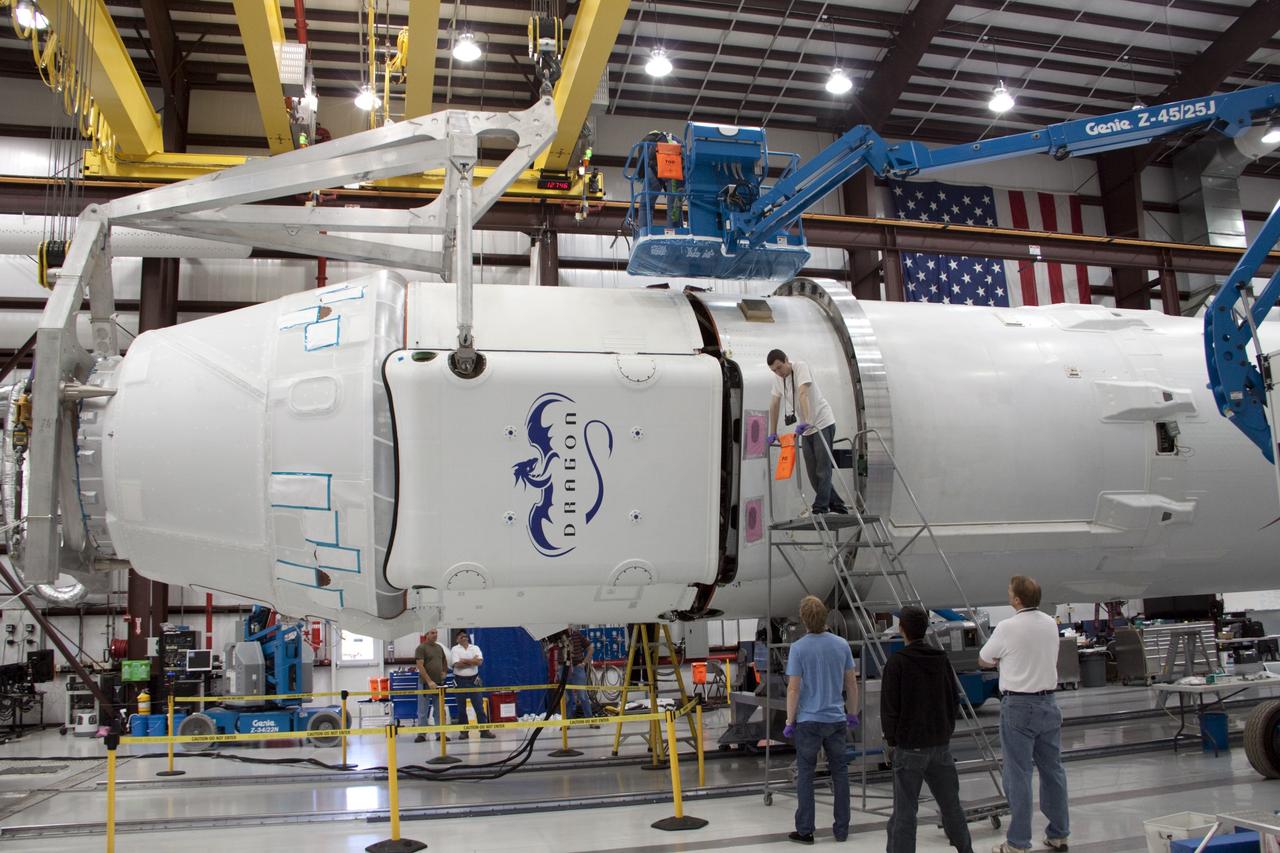
CAPE CANAVERAL, Fla. – In a processing facility at Space Launch Complex-40 on Cape Canaveral Air Force Station in Florida, Space Exploration Technologies technicians prepare to attach the Dragon capsule to the second stage of the company’s Falcon 9 rocket. Known as SpaceX, the launch will be the company's second demonstration test flight for NASA's Commercial Orbital Transportation Services program, or COTS. During the flight, the capsule will conduct a series of check-out procedures to test and prove its systems, including rendezvous and berthing with the International Space Station. If the capsule performs as planned, the NanoRacks-CubeLabs Module-9 experiments and other cargo aboard Dragon will be transferred to the station. The cargo includes food, water and provisions for the station’s Expedition crews, such as clothing, batteries and computer equipment. Under COTS, NASA has partnered with two private companies to provide resupply missions to the station. The launch is scheduled for 9:38 a.m. EDT on May 7. For more information, visit http://www.nasa.gov/spacex. Photo credit: NASA/Jim Grossmann
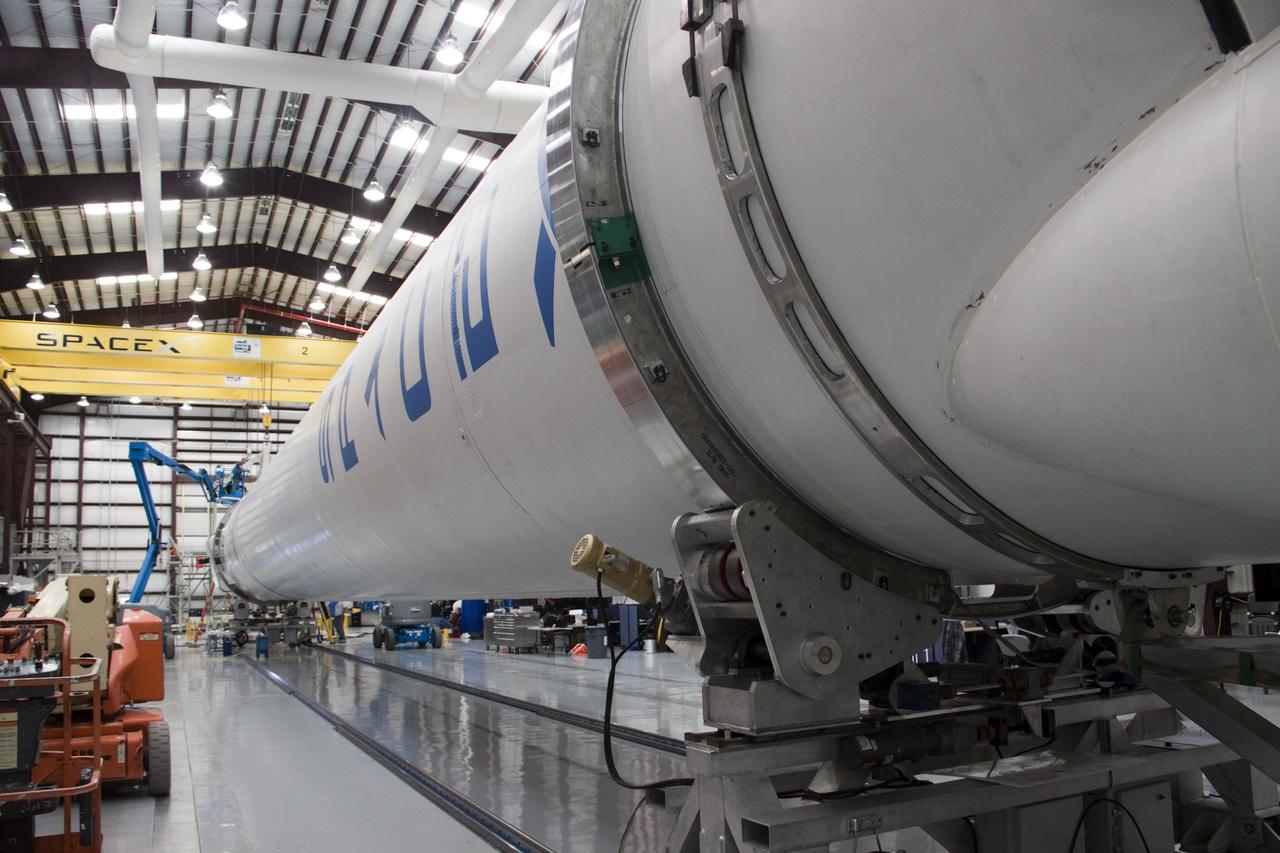
CAPE CANAVERAL, Fla. – In a processing facility at Space Launch Complex-40 on Cape Canaveral Air Force Station in Florida, mating of the Space Exploration Technologies Dragon capsule to the second stage of the company’s Falcon 9 rocket is nearly complete. Known as SpaceX, the launch will be the company's second demonstration test flight for NASA's Commercial Orbital Transportation Services program, or COTS. During the flight, the capsule will conduct a series of check-out procedures to test and prove its systems, including rendezvous and berthing with the International Space Station. If the capsule performs as planned, the NanoRacks-CubeLabs Module-9 experiments and other cargo aboard Dragon will be transferred to the station. The cargo includes food, water and provisions for the station’s Expedition crews, such as clothing, batteries and computer equipment. Under COTS, NASA has partnered with two private companies to provide resupply missions to the station. The launch is scheduled for 9:38 a.m. EDT on May 7. For more information, visit http://www.nasa.gov/spacex. Photo credit: NASA/Jim Grossmann
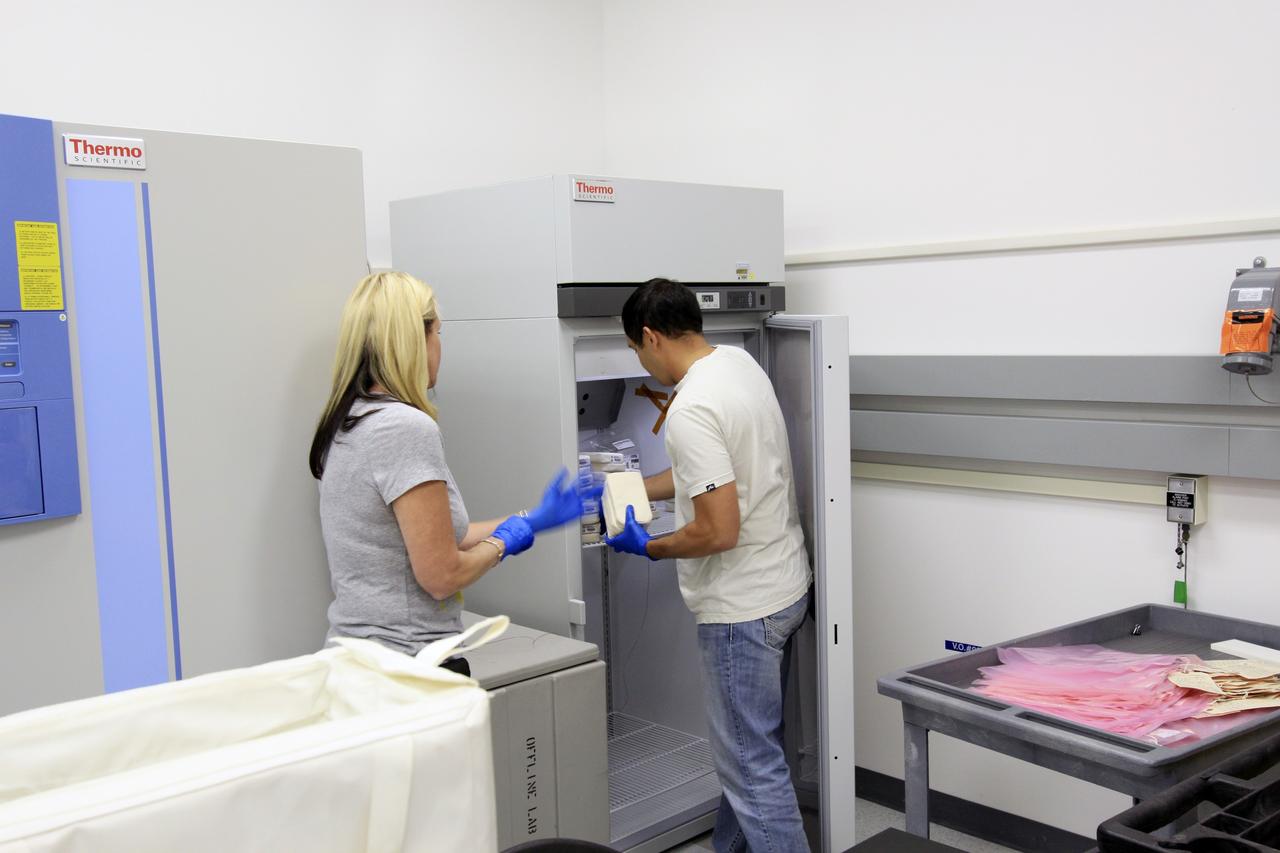
CAPE CANAVERAL, Fla. – In the Space Station Processing Facility at NASA’s Kennedy Space Center in Florida, refrigerated NanoRacks-CubeLabs Module-9 experiments are being prepared for transport to Space Launch Complex-40 on nearby Cape Canaveral Air Force Station. There, the bags will be loaded into the Space Exploration Technologies Dragon capsule in preparation for its scheduled April 30 liftoff aboard a Falcon 9 rocket. NanoRacks-CubeLabs Module-9 uses a two-cube unit box for student competition investigations using 15 liquid mixing tube assemblies that function similar to commercial glow sticks. The investigations range from microbial growth to water purification in microgravity. Known as SpaceX, the launch will be the company's second demonstration test flight for NASA's Commercial Orbital Transportation Services program, or COTS. During the flight, the capsule will conduct a series of check-out procedures to test and prove its systems, including rendezvous and berthing with the International Space Station. If the capsule performs as planned, the module and other cargo will be transferred to the station. The cargo includes food, water and provisions for the station’s Expedition crews, such as clothing, batteries and computer equipment. Under COTS, NASA has partnered with two private companies to launch cargo safely to the station. For more information, visit http://www.nasa.gov/spacex. Photo credit: NASA/Jim Grossmann
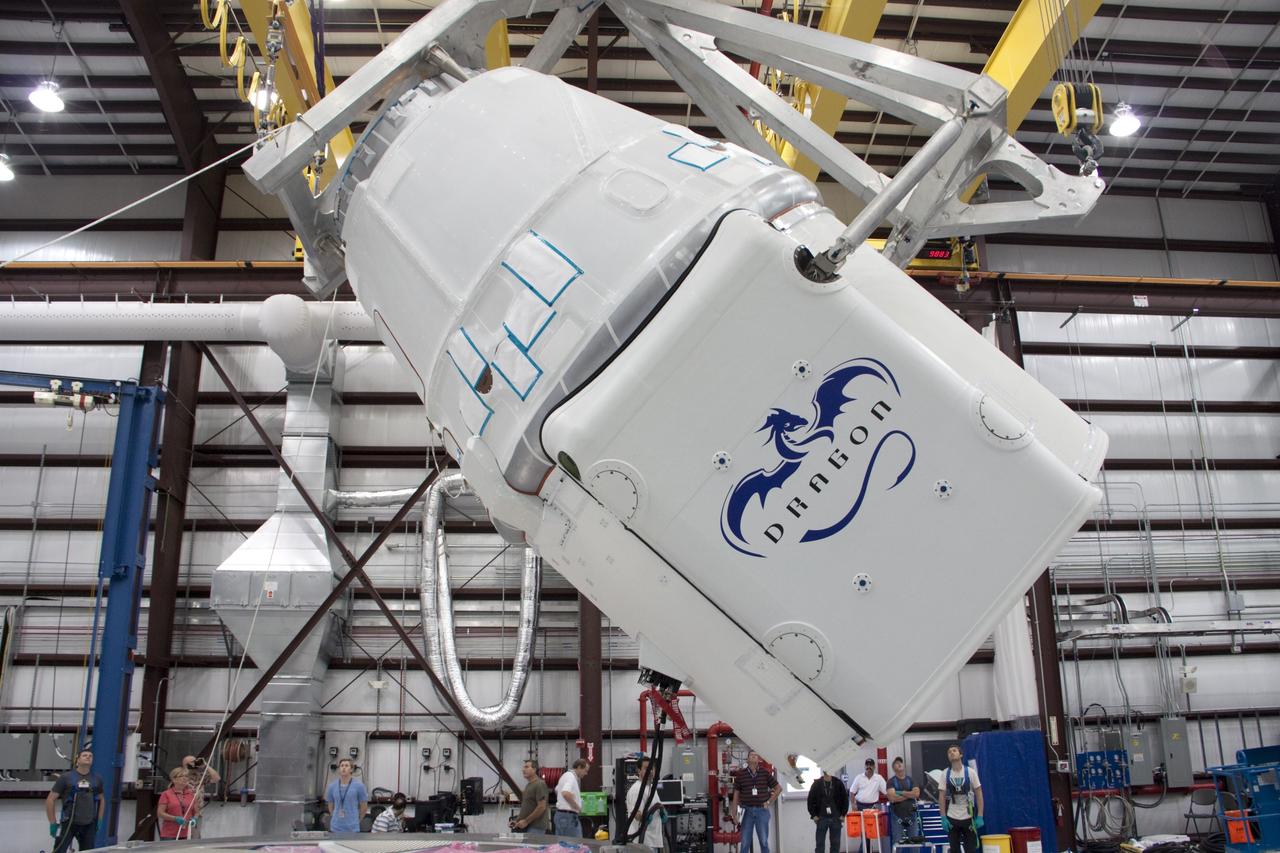
CAPE CANAVERAL, Fla. – In a processing facility at Space Launch Complex-40 on Cape Canaveral Air Force Station in Florida, the Space Exploration Technologies Dragon capsule is rotated into a horizontal position for mating with the second stage of the company’s Falcon 9 rocket. Known as SpaceX, the launch will be the company's second demonstration test flight for NASA's Commercial Orbital Transportation Services program, or COTS. During the flight, the capsule will conduct a series of check-out procedures to test and prove its systems, including rendezvous and berthing with the International Space Station. If the capsule performs as planned, the NanoRacks-CubeLabs Module-9 experiments and other cargo aboard Dragon will be transferred to the station. The cargo includes food, water and provisions for the station’s Expedition crews, such as clothing, batteries and computer equipment. Under COTS, NASA has partnered with two private companies to provide resupply missions to the station. The launch is scheduled for 9:38 a.m. EDT on May 7. For more information, visit http://www.nasa.gov/spacex. Photo credit: NASA/Jim Grossmann
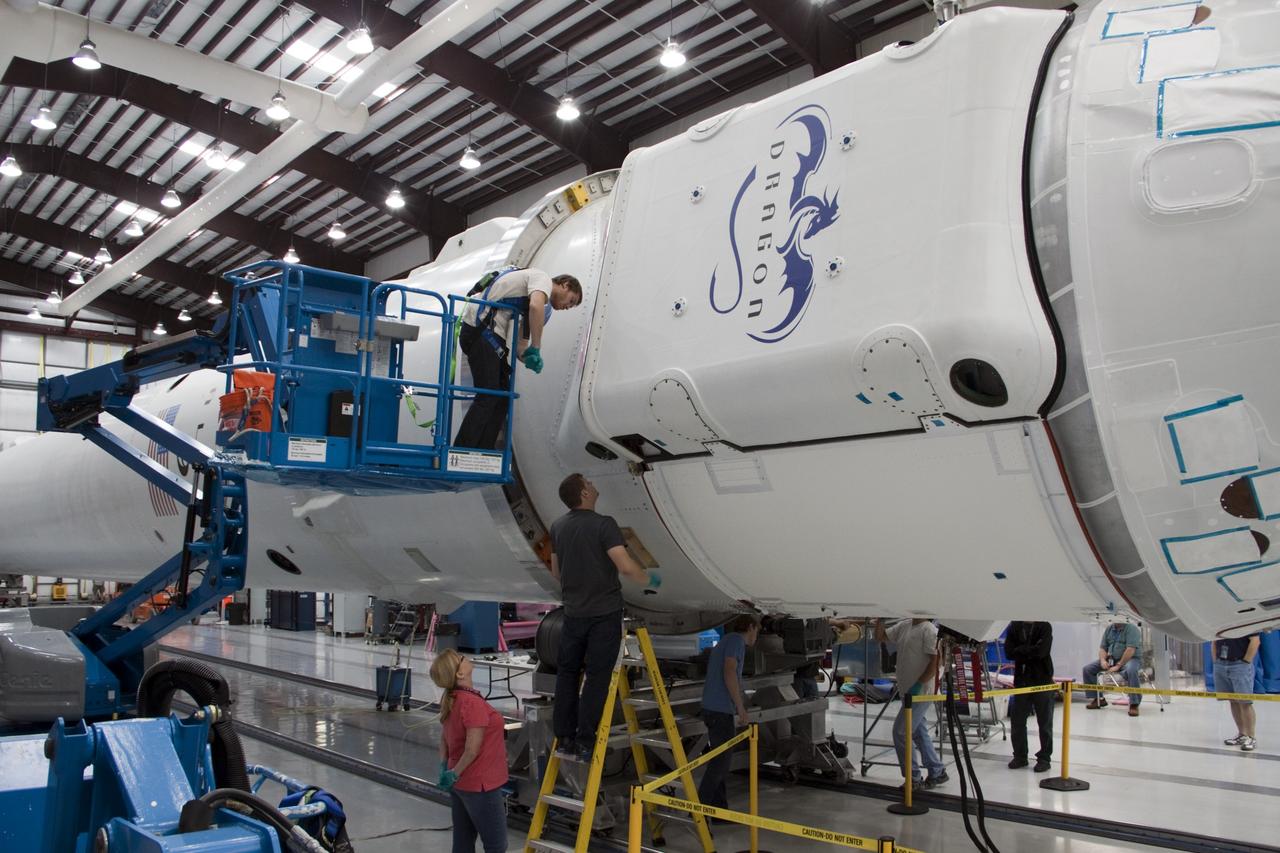
CAPE CANAVERAL, Fla. – In a processing facility at Space Launch Complex-40 on Cape Canaveral Air Force Station in Florida, Space Exploration Technologies technicians attach the Dragon capsule to the second stage of the company’s Falcon 9 rocket. Known as SpaceX, the launch will be the company's second demonstration test flight for NASA's Commercial Orbital Transportation Services program, or COTS. During the flight, the capsule will conduct a series of check-out procedures to test and prove its systems, including rendezvous and berthing with the International Space Station. If the capsule performs as planned, the NanoRacks-CubeLabs Module-9 experiments and other cargo aboard Dragon will be transferred to the station. The cargo includes food, water and provisions for the station’s Expedition crews, such as clothing, batteries and computer equipment. Under COTS, NASA has partnered with two private companies to provide resupply missions to the station. The launch is scheduled for 9:38 a.m. EDT on May 7. For more information, visit http://www.nasa.gov/spacex. Photo credit: NASA/Jim Grossmann
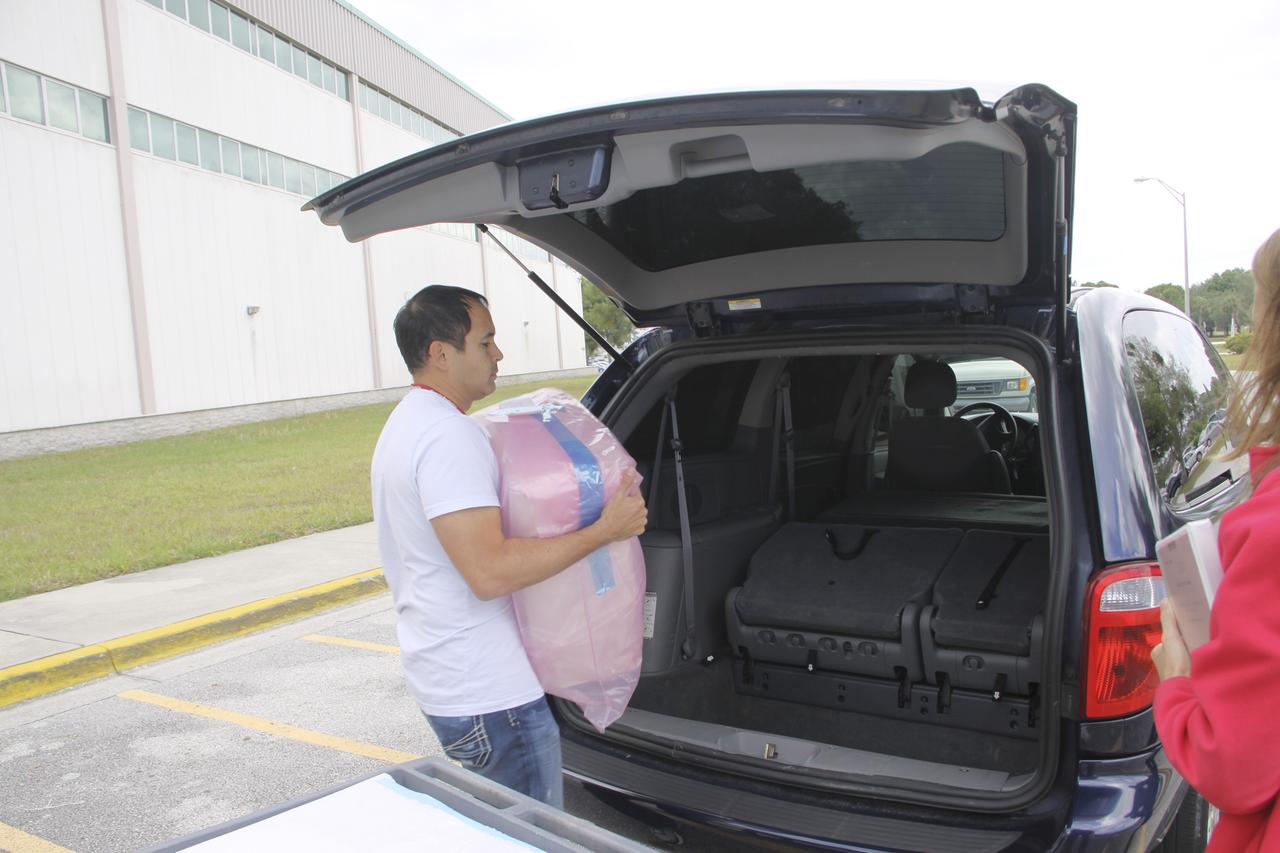
CAPE CANAVERAL, Fla. – A cargo bag designed to keep its contents cool, packed with NanoRacks-CubeLabs Module-9 experiments, is loaded into a van at the Space Station Processing Facility at NASA’s Kennedy Space Center in Florida for its trip to Space Launch Complex-40 on nearby Cape Canaveral Air Force Station. There, the bag will be loaded into the Space Exploration Technologies Dragon capsule in preparation for its scheduled April 30 liftoff aboard a Falcon 9 rocket. NanoRacks-CubeLabs Module-9 uses a two-cube unit box for student competition investigations using 15 liquid mixing tube assemblies that function similar to commercial glow sticks. The investigations range from microbial growth to water purification in microgravity. Known as SpaceX, the launch will be the company's second demonstration test flight for NASA's Commercial Orbital Transportation Services program, or COTS. During the flight, the capsule will conduct a series of check-out procedures to test and prove its systems, including rendezvous and berthing with the International Space Station. If the capsule performs as planned, the module and other cargo will be transferred to the station. The cargo includes food, water and provisions for the station’s Expedition crews, such as clothing, batteries and computer equipment. Under COTS, NASA has partnered with two private companies to launch cargo safely to the station. For more information, visit http://www.nasa.gov/spacex. Photo credit: NASA/Jim Grossmann
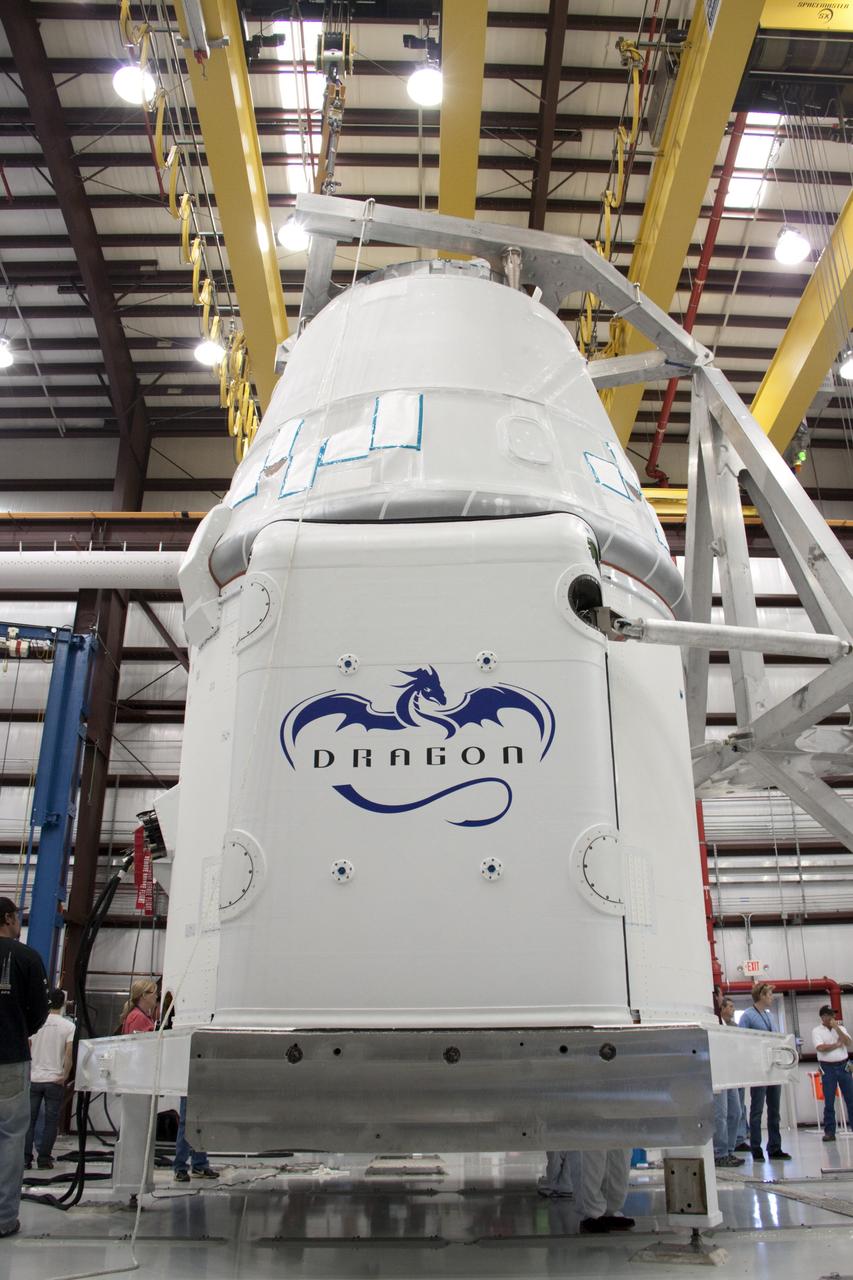
CAPE CANAVERAL, Fla. – In a processing facility at Space Launch Complex-40 on Cape Canaveral Air Force Station in Florida, preparations are under way to mate the Space Exploration Technologies Dragon capsule to the second stage of the company’s Falcon 9 rocket. Known as SpaceX, the launch will be the company's second demonstration test flight for NASA's Commercial Orbital Transportation Services program, or COTS. During the flight, the capsule will conduct a series of check-out procedures to test and prove its systems, including rendezvous and berthing with the International Space Station. If the capsule performs as planned, the NanoRacks-CubeLabs Module-9 experiments and other cargo aboard Dragon will be transferred to the station. The cargo includes food, water and provisions for the station’s Expedition crews, such as clothing, batteries and computer equipment. Under COTS, NASA has partnered with two private companies to provide resupply missions to the station. The launch is scheduled for 9:38 a.m. EDT on May 7. For more information, visit http://www.nasa.gov/spacex. Photo credit: NASA/Jim Grossmann

CAPE CANAVERAL, Fla. – In the Space Station Processing Facility at NASA’s Kennedy Space Center in Florida, a cargo bag designed to keep its contents cool is packed with NanoRacks-CubeLabs Module-9 experiments in preparation to transport it to Space Launch Complex-40 on nearby Cape Canaveral Air Force Station. There, the bag will be loaded into the Space Exploration Technologies Dragon capsule in preparation for its scheduled April 30 liftoff aboard a Falcon 9 rocket. NanoRacks-CubeLabs Module-9 uses a two-cube unit box for student competition investigations using 15 liquid mixing tube assemblies that function similar to commercial glow sticks. The investigations range from microbial growth to water purification in microgravity. Known as SpaceX, the launch will be the company's second demonstration test flight for NASA's Commercial Orbital Transportation Services program, or COTS. During the flight, the capsule will conduct a series of check-out procedures to test and prove its systems, including rendezvous and berthing with the International Space Station. If the capsule performs as planned, the module and other cargo will be transferred to the station. The cargo includes food, water and provisions for the station’s Expedition crews, such as clothing, batteries and computer equipment. Under COTS, NASA has partnered with two private companies to launch cargo safely to the station. For more information, visit http://www.nasa.gov/spacex. Photo credit: NASA/Jim Grossmann
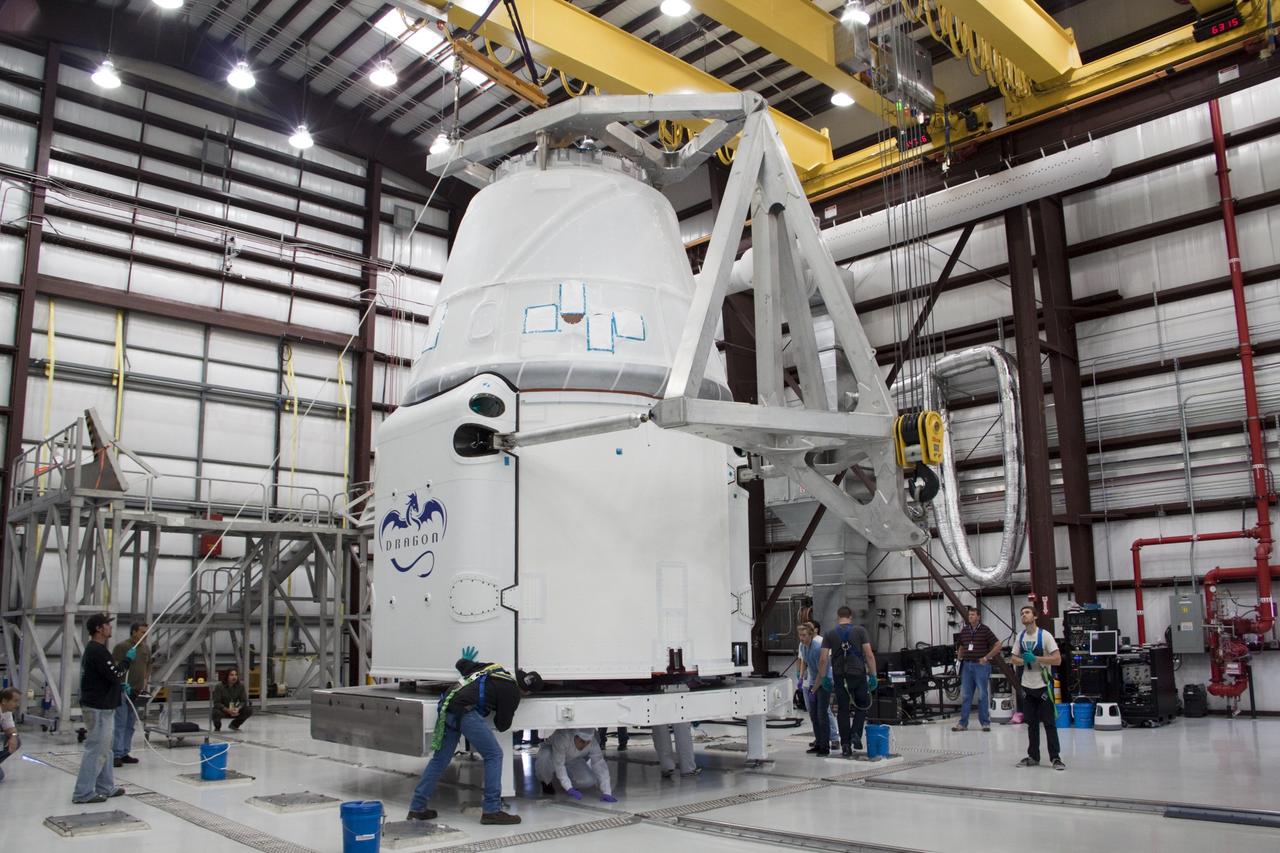
CAPE CANAVERAL, Fla. – In a processing facility at Space Launch Complex-40 on Cape Canaveral Air Force Station in Florida, Space Exploration Technologies technicians prepare to rotate the Dragon capsule into a horizontal position for mating with the second stage of the company’s Falcon 9 rocket. Known as SpaceX, the launch will be the company's second demonstration test flight for NASA's Commercial Orbital Transportation Services program, or COTS. During the flight, the capsule will conduct a series of check-out procedures to test and prove its systems, including rendezvous and berthing with the International Space Station. If the capsule performs as planned, the NanoRacks-CubeLabs Module-9 experiments and other cargo aboard Dragon will be transferred to the station. The cargo includes food, water and provisions for the station’s Expedition crews, such as clothing, batteries and computer equipment. Under COTS, NASA has partnered with two private companies to provide resupply missions to the station. The launch is scheduled for 9:38 a.m. EDT on May 7. For more information, visit http://www.nasa.gov/spacex. Photo credit: NASA/Jim Grossmann
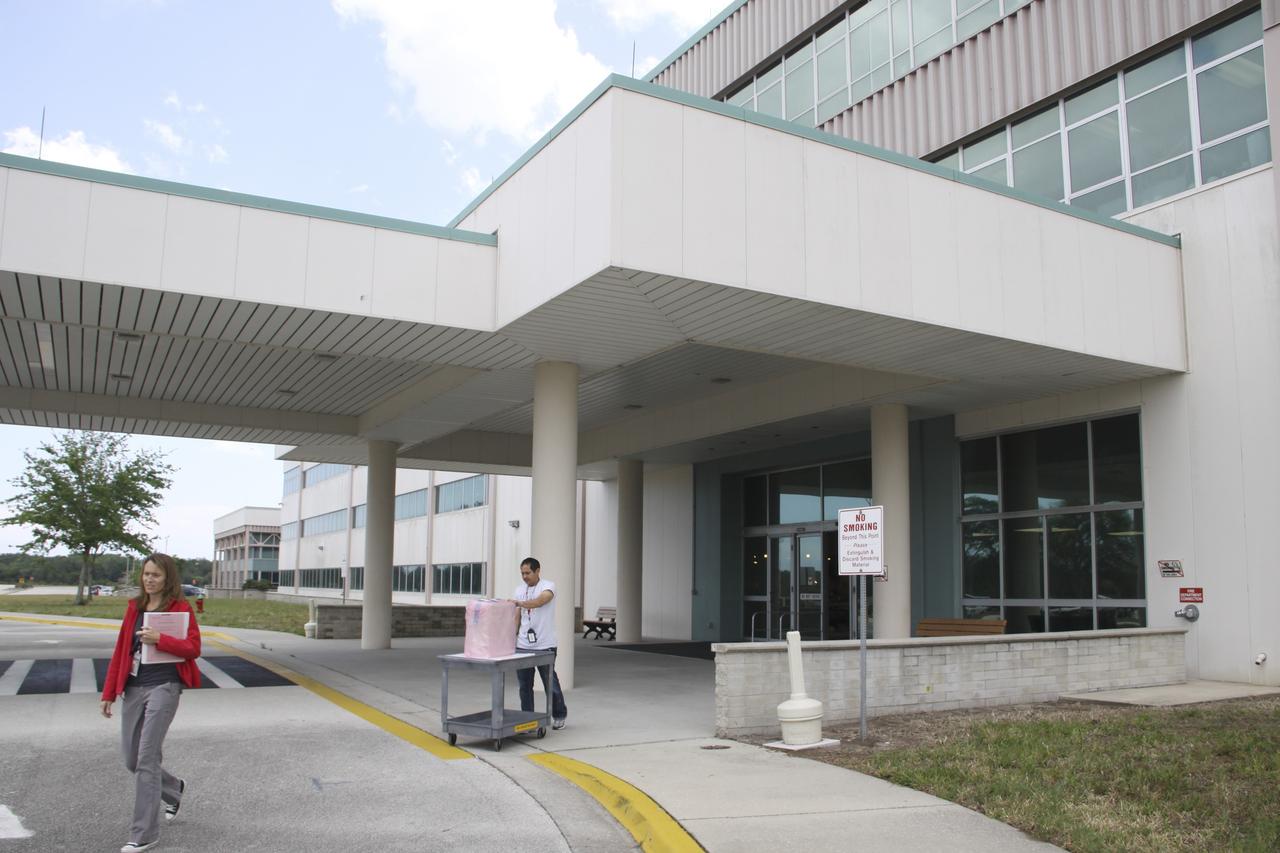
CAPE CANAVERAL, Fla. – A cargo bag designed to keep its contents cool, packed with NanoRacks-CubeLabs Module-9 experiments, departs the Space Station Processing Facility at NASA’s Kennedy Space Center in Florida for its trip to Space Launch Complex-40 on nearby Cape Canaveral Air Force Station. There, the bag will be loaded into the Space Exploration Technologies Dragon capsule in preparation for its scheduled April 30 liftoff aboard a Falcon 9 rocket. NanoRacks-CubeLabs Module-9 uses a two-cube unit box for student competition investigations using 15 liquid mixing tube assemblies that function similar to commercial glow sticks. The investigations range from microbial growth to water purification in microgravity. Known as SpaceX, the launch will be the company's second demonstration test flight for NASA's Commercial Orbital Transportation Services program, or COTS. During the flight, the capsule will conduct a series of check-out procedures to test and prove its systems, including rendezvous and berthing with the International Space Station. If the capsule performs as planned, the module and other cargo will be transferred to the station. The cargo includes food, water and provisions for the station’s Expedition crews, such as clothing, batteries and computer equipment. Under COTS, NASA has partnered with two private companies to launch cargo safely to the station. For more information, visit http://www.nasa.gov/spacex. Photo credit: NASA/Jim Grossmann
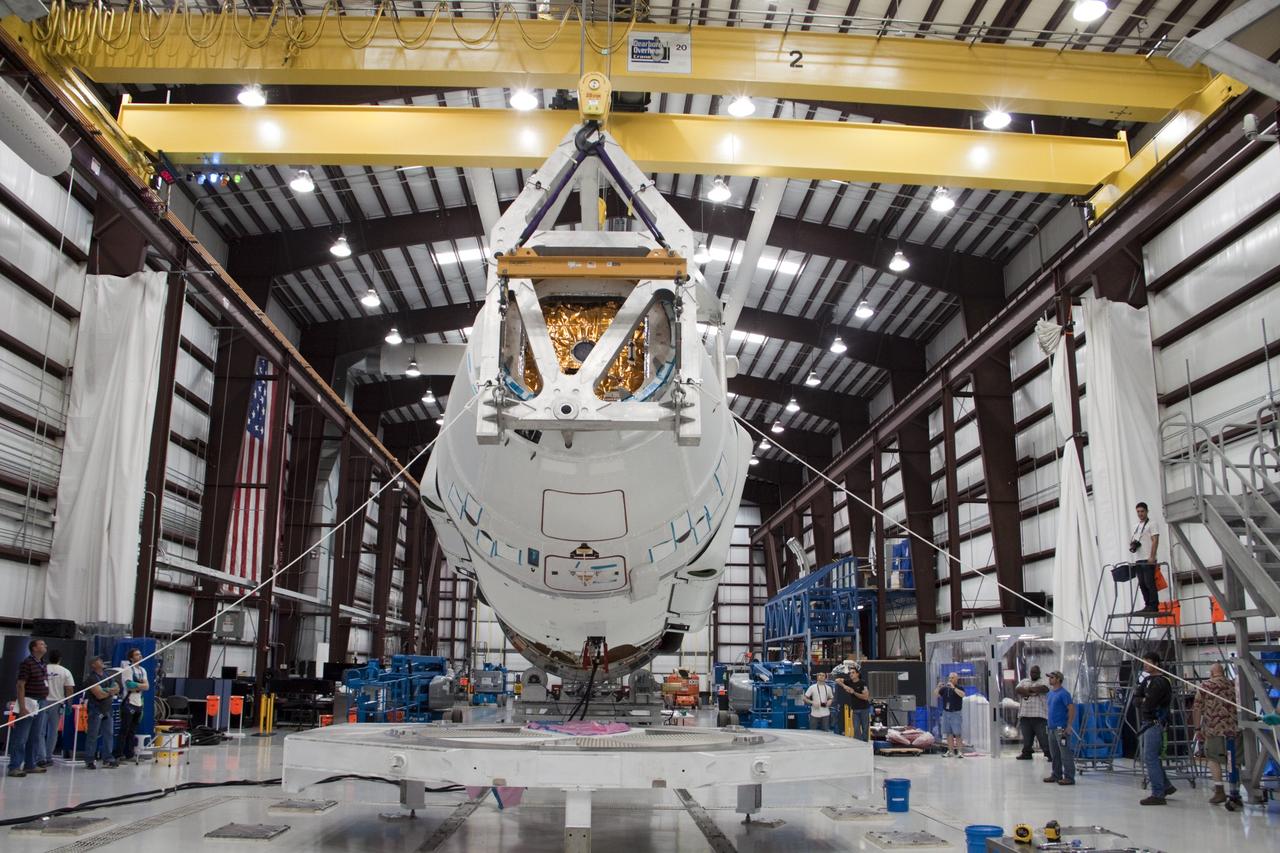
CAPE CANAVERAL, Fla. – In a processing facility at Space Launch Complex-40 on Cape Canaveral Air Force Station in Florida, the Space Exploration Technologies Dragon capsule is positioned against the second stage of the company’s Falcon 9 rocket during mating operations. Known as SpaceX, the launch will be the company's second demonstration test flight for NASA's Commercial Orbital Transportation Services program, or COTS. During the flight, the capsule will conduct a series of check-out procedures to test and prove its systems, including rendezvous and berthing with the International Space Station. If the capsule performs as planned, the NanoRacks-CubeLabs Module-9 experiments and other cargo aboard Dragon will be transferred to the station. The cargo includes food, water and provisions for the station’s Expedition crews, such as clothing, batteries and computer equipment. Under COTS, NASA has partnered with two private companies to provide resupply missions to the station. The launch is scheduled for 9:38 a.m. EDT on May 7. For more information, visit http://www.nasa.gov/spacex. Photo credit: NASA/Jim Grossmann
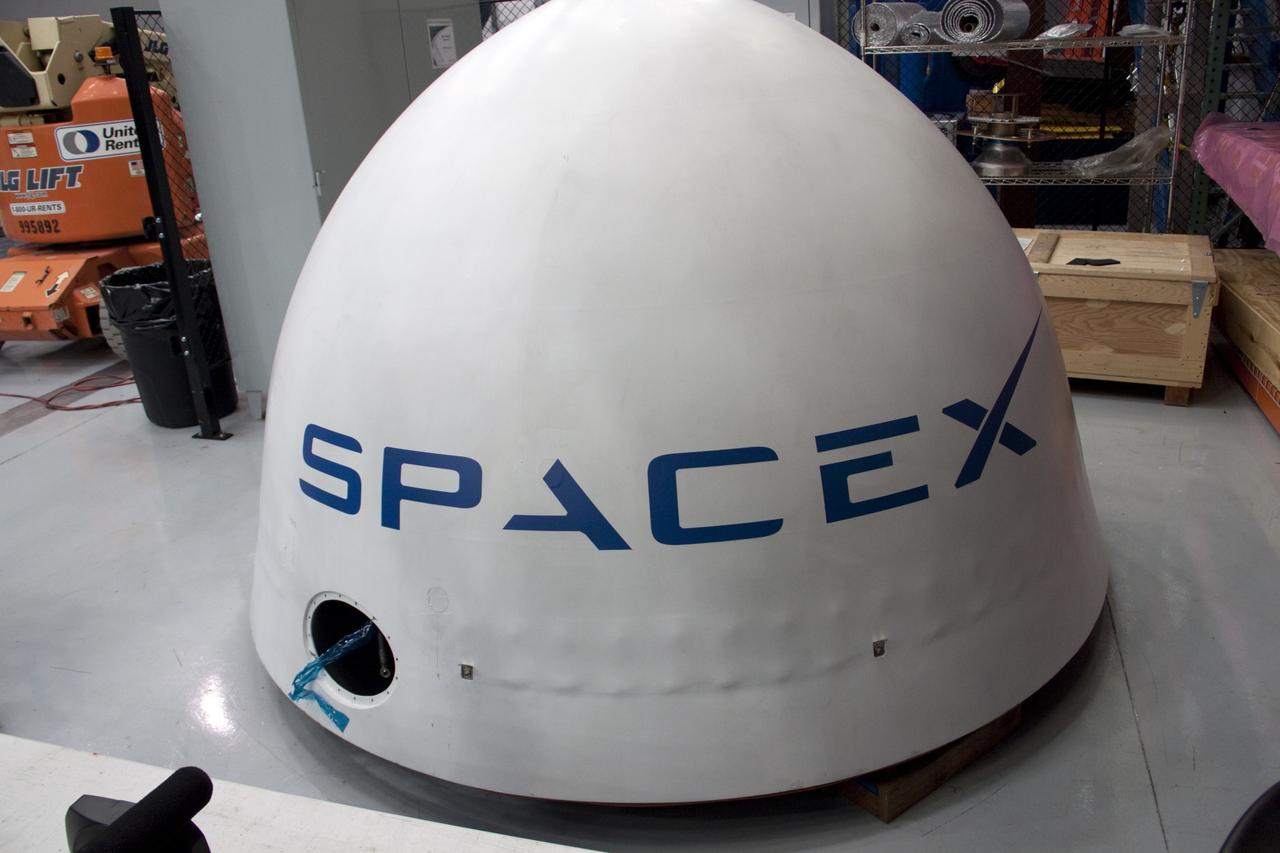
CAPE CANAVERAL, Fla. – A nose cone rests on the floor of a processing facility at Space Launch Complex-40 on Cape Canaveral Air Force Station in Florida awaiting installation on a Space Exploration Technologies Dragon capsule. Operations to attach the capsule to the company’s Falcon 9 rocket are in progress. Known as SpaceX, the launch will be the company's second demonstration test flight for NASA's Commercial Orbital Transportation Services program, or COTS. During the flight, the capsule will conduct a series of check-out procedures to test and prove its systems, including rendezvous and berthing with the International Space Station. If the capsule performs as planned, the NanoRacks-CubeLabs Module-9 experiments and other cargo aboard Dragon will be transferred to the station. The cargo includes food, water and provisions for the station’s Expedition crews, such as clothing, batteries and computer equipment. Under COTS, NASA has partnered with two private companies to provide resupply missions to the station. The launch is scheduled for 9:38 a.m. EDT on May 7. For more information, visit http://www.nasa.gov/spacex. Photo credit: NASA/Jim Grossmann
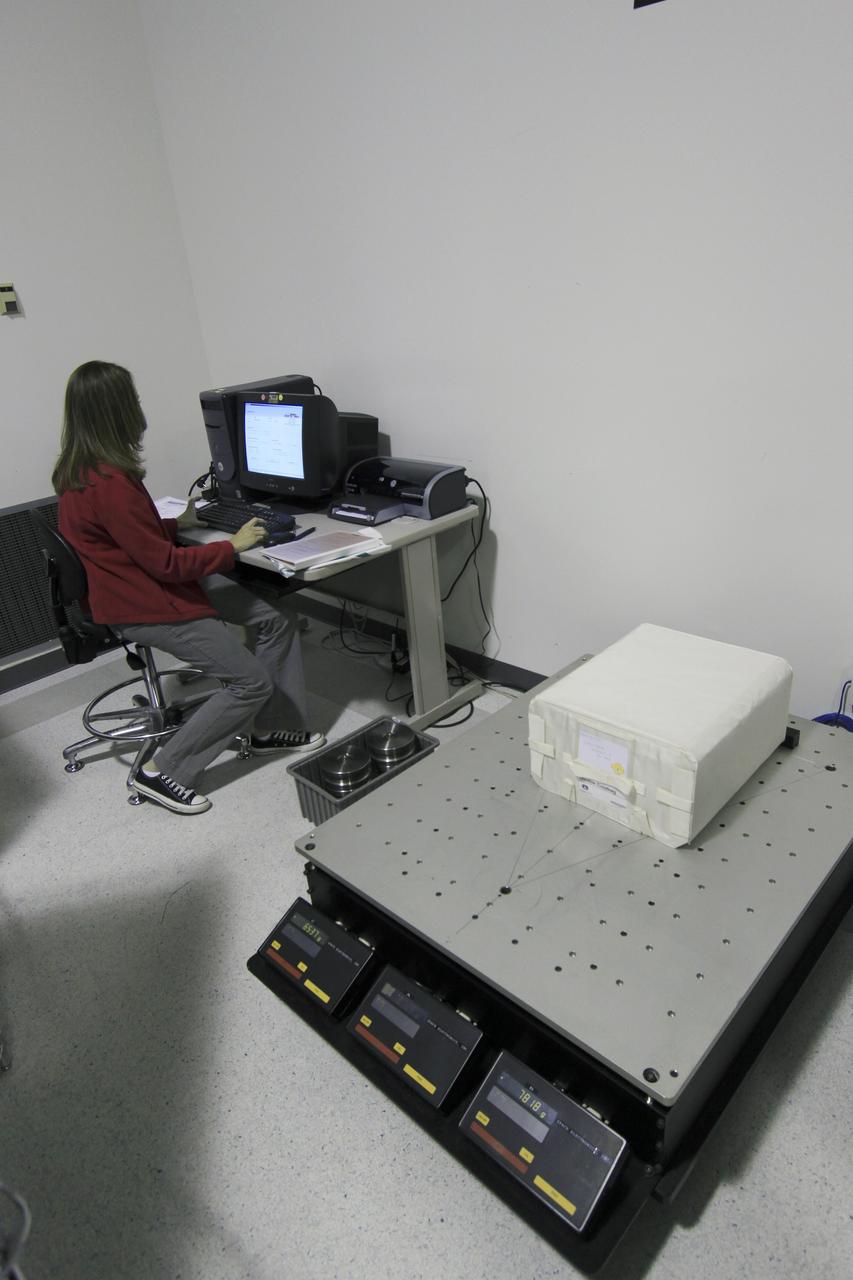
CAPE CANAVERAL, Fla. – In the Space Station Processing Facility at NASA’s Kennedy Space Center in Florida, a cargo bag packed with NanoRacks-CubeLabs Module-9 experiments is weighed before it is transported to Space Launch Complex-40 on nearby Cape Canaveral Air Force Station for cold stowage. There, the bag will be loaded into the Space Exploration Technologies Dragon capsule in preparation for its scheduled April 30 liftoff aboard a Falcon 9 rocket. NanoRacks-CubeLabs Module-9 uses a two-cube unit box for student competition investigations using 15 liquid mixing tube assemblies that function similar to commercial glow sticks. The investigations range from microbial growth to water purification in microgravity. Known as SpaceX, the launch will be the company's second demonstration test flight for NASA's Commercial Orbital Transportation Services program, or COTS. During the flight, the capsule will conduct a series of check-out procedures to test and prove its systems, including rendezvous and berthing with the International Space Station. If the capsule performs as planned, the module and other cargo will be transferred to the station. The cargo includes food, water and provisions for the station’s Expedition crews, such as clothing, batteries and computer equipment. Under COTS, NASA has partnered with two private companies to launch cargo safely to the station. For more information, visit http://www.nasa.gov/spacex. Photo credit: NASA/Jim Grossmann
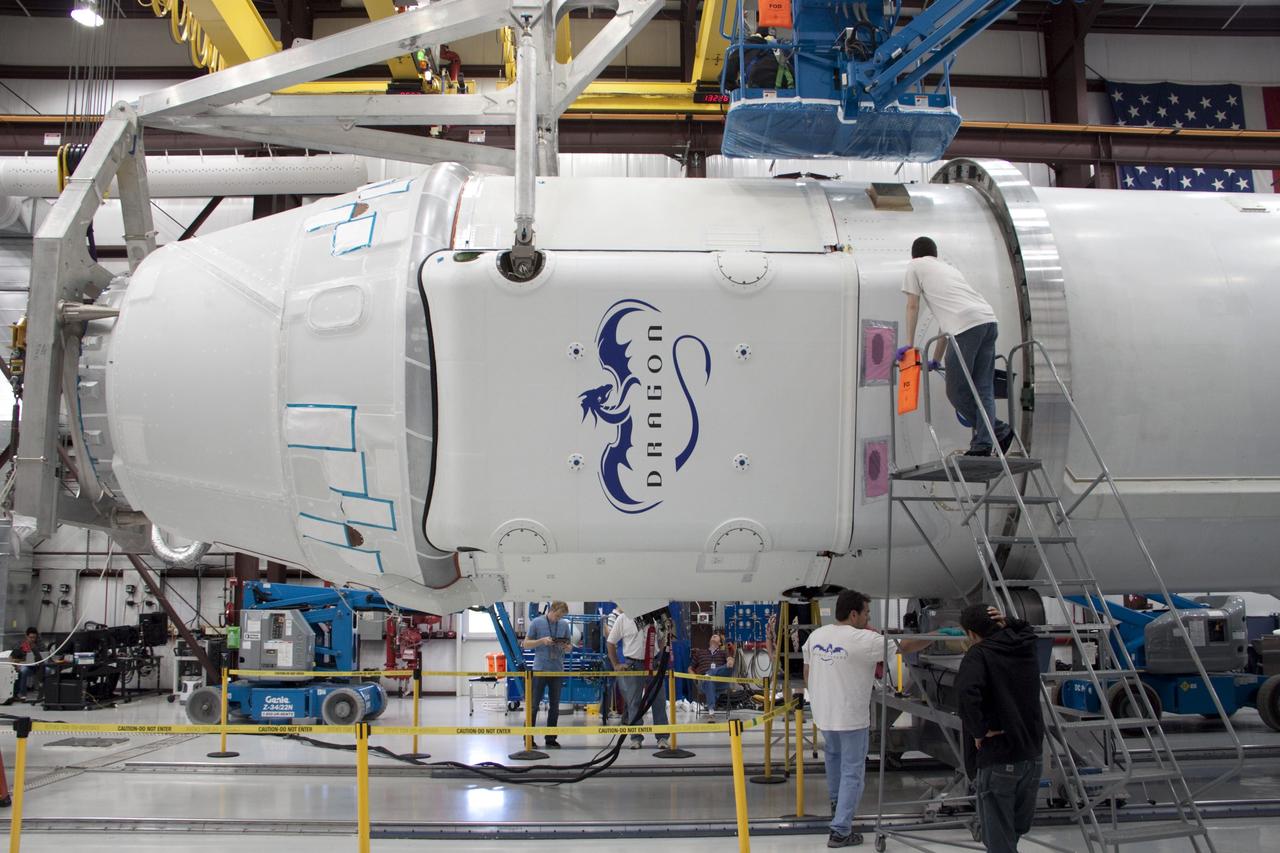
CAPE CANAVERAL, Fla. – In a processing facility at Space Launch Complex-40 on Cape Canaveral Air Force Station in Florida, operations are under way to mate the Space Exploration Technologies Dragon capsule to the second stage of the company’s Falcon 9 rocket. Known as SpaceX, the launch will be the company's second demonstration test flight for NASA's Commercial Orbital Transportation Services program, or COTS. During the flight, the capsule will conduct a series of check-out procedures to test and prove its systems, including rendezvous and berthing with the International Space Station. If the capsule performs as planned, the NanoRacks-CubeLabs Module-9 experiments and other cargo aboard Dragon will be transferred to the station. The cargo includes food, water and provisions for the station’s Expedition crews, such as clothing, batteries and computer equipment. Under COTS, NASA has partnered with two private companies to provide resupply missions to the station. The launch is scheduled for 9:38 a.m. EDT on May 7. For more information, visit http://www.nasa.gov/spacex. Photo credit: NASA/Jim Grossmann
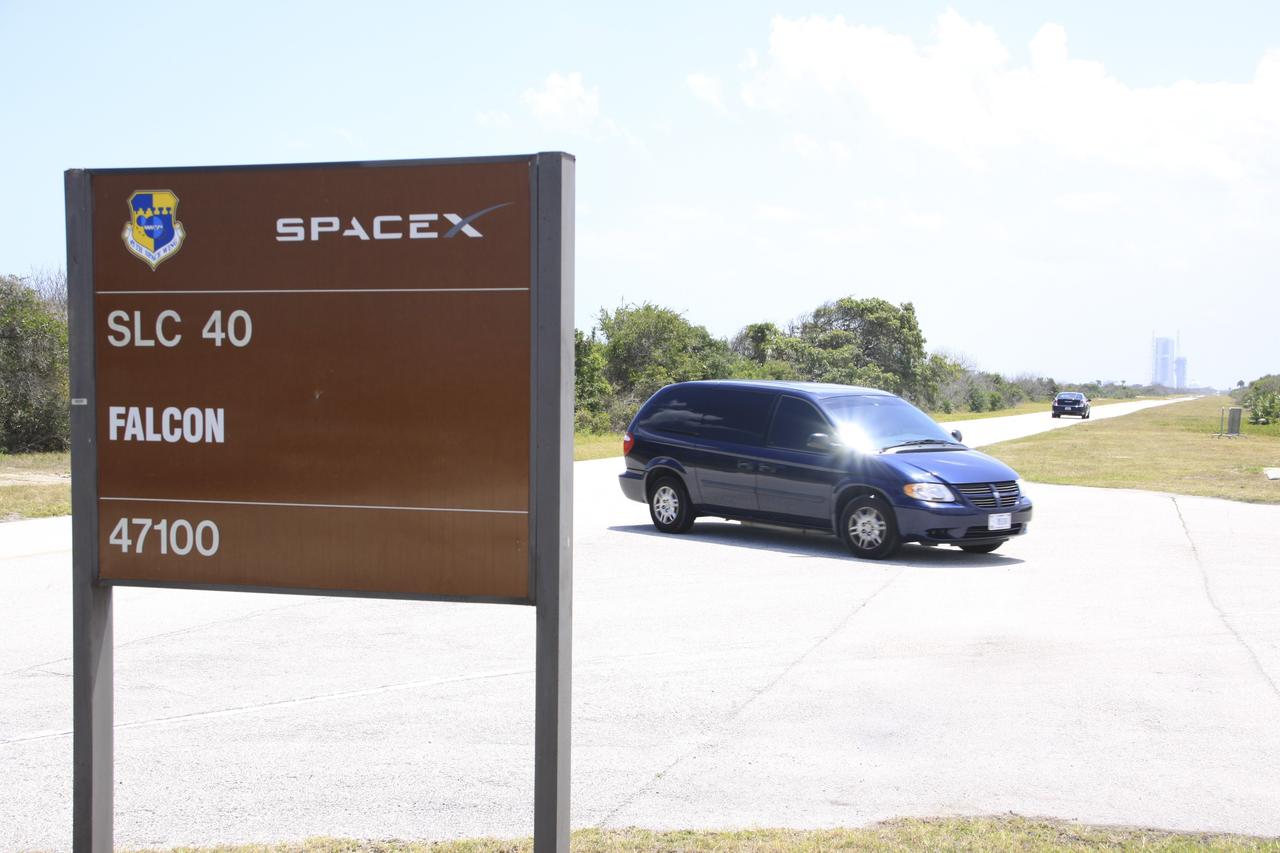
CAPE CANAVERAL, Fla. – The van transporting the cargo bag packed with NanoRacks-CubeLabs Module-9 experiments, arrives at Space Launch Complex-40 on Cape Canaveral Air Force Station in Florida for cold stowage. The bag will be loaded into the Space Exploration Technologies Dragon capsule in preparation for its scheduled April 30 liftoff aboard a Falcon 9 rocket. NanoRacks-CubeLabs Module-9 uses a two-cube unit box for student competition investigations using 15 liquid mixing tube assemblies that function similar to commercial glow sticks. The investigations range from microbial growth to water purification in microgravity. Known as SpaceX, the launch will be the company's second demonstration test flight for NASA's Commercial Orbital Transportation Services program, or COTS. During the flight, the capsule will conduct a series of check-out procedures to test and prove its systems, including rendezvous and berthing with the International Space Station. If the capsule performs as planned, the module and other cargo will be transferred to the station. The cargo includes food, water and provisions for the station’s Expedition crews, such as clothing, batteries and computer equipment. Under COTS, NASA has partnered with two private companies to launch cargo safely to the station. For more information, visit http://www.nasa.gov/spacex. Photo credit: NASA/Jim Grossmann
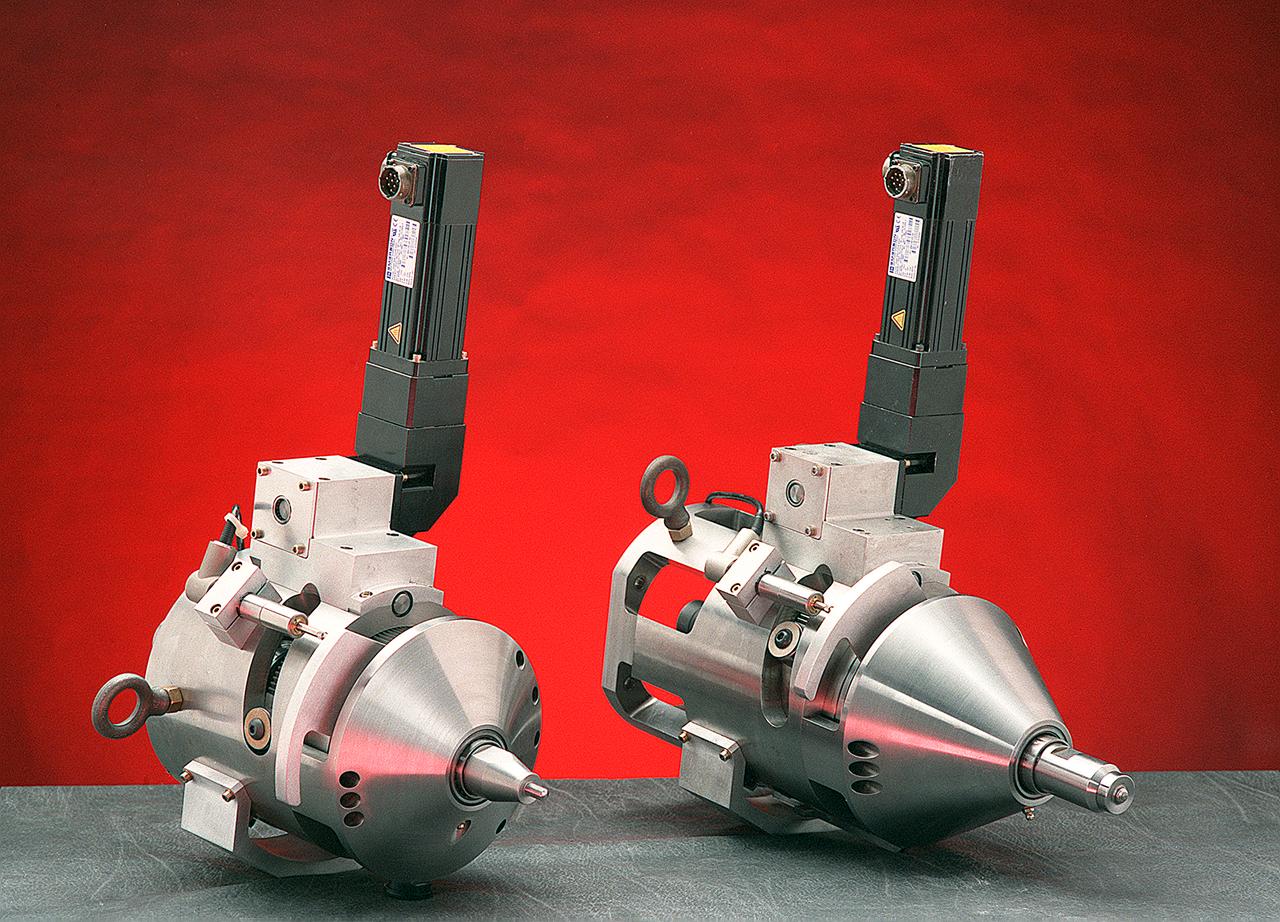
Two companies have successfully commercialized a specialized welding tool developed at the Marshall Space Flight Center (MSFC). Friction stir welding uses the high rotational speed of a tool and the resulting frictional heat created from contact to crush, "stir" together, and forge a bond between two metal alloys. It has had a major drawback, reliance on a single-piece pin tool. The pin is slowly plunged into the joint between two materials to be welded and rotated as high speed. At the end of the weld, the single-piece pin tool is retracted and leaves a "keyhole," something which is unacceptable when welding cylindrical objects such as drums, pipes and storage tanks. Another drawback is the requirement for different-length pin tools when welding materials of varying thickness. An engineer at the MSFC helped design an automatic retractable pin tool that uses a computer-controlled motor to automatically retract the pin into the shoulder of the tool at the end of the weld, preventing keyholes. This design allows the pin angle and length to be adjusted for changes in material thickness and results in a smooth hole closure at the end of the weld. Benefits of friction stir welding, using the MSFC retractable pin tool technology, include the following: The ability to weld a wide range of alloys, including previously unweldable and composite materials; provision of twice the fatigue resistance of fusion welds and no keyholes; minimization of material distortion; no creation of hazards such as welding fumes, radiation, high voltage, liquid metals, or arcing; automatic retraction of the pin at the end of the weld; and maintaining full penetration of the pin.
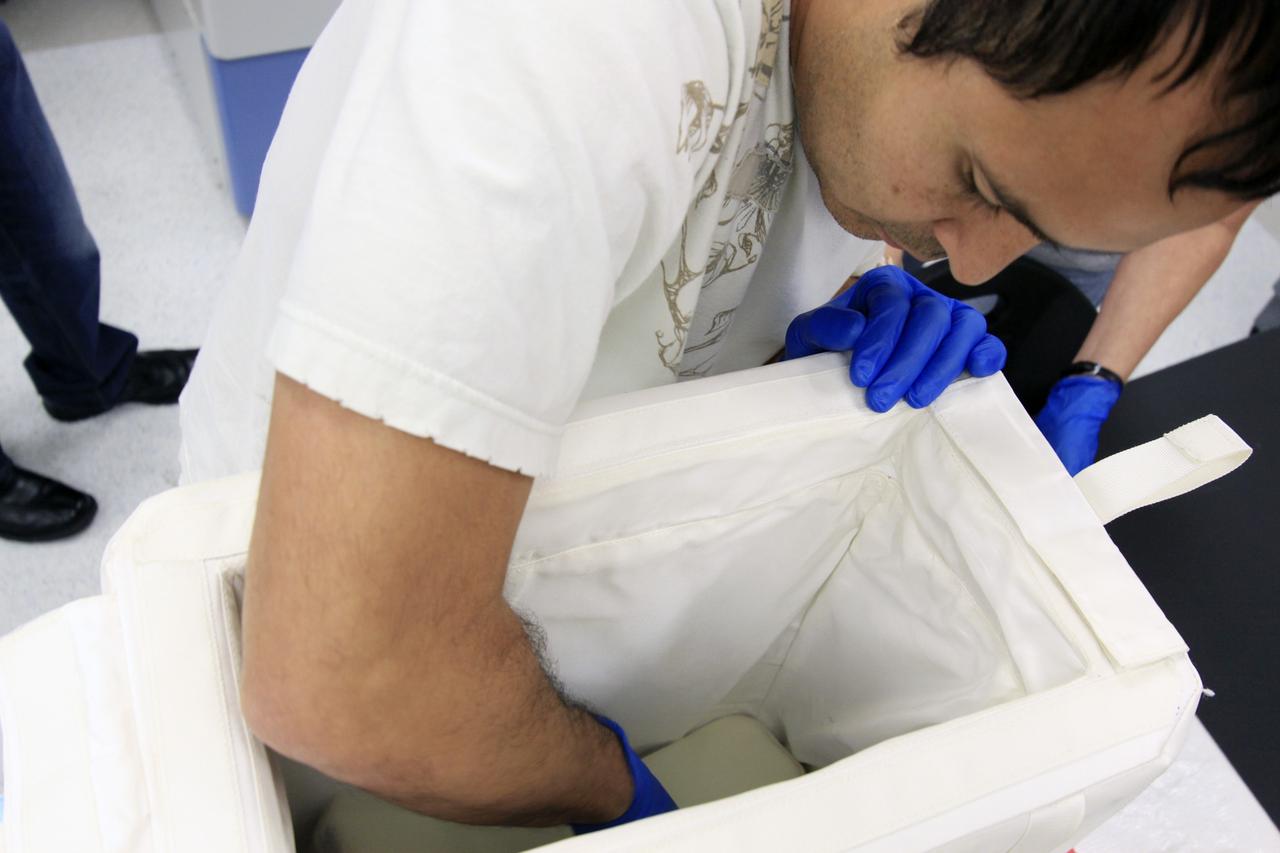
CAPE CANAVERAL, Fla. – In the Space Station Processing Facility at NASA’s Kennedy Space Center in Florida, a cargo bag designed to keep its contents cool is readied to receive the NanoRacks-CubeLabs Module-9 experiments. The module’s experiments requiring cold stowage are being prepared for transport to Space Launch Complex-40 on nearby Cape Canaveral Air Force Station. There, the bags will be loaded into the Space Exploration Technologies Dragon capsule in preparation for its scheduled April 30 liftoff aboard a Falcon 9 rocket. NanoRacks-CubeLabs Module-9 uses a two-cube unit box for student competition investigations using 15 liquid mixing tube assemblies that function similar to commercial glow sticks. The investigations range from microbial growth to water purification in microgravity. Known as SpaceX, the launch will be the company's second demonstration test flight for NASA's Commercial Orbital Transportation Services program, or COTS. During the flight, the capsule will conduct a series of check-out procedures to test and prove its systems, including rendezvous and berthing with the International Space Station. If the capsule performs as planned, the module and other cargo will be transferred to the station. The cargo includes food, water and provisions for the station’s Expedition crews, such as clothing, batteries and computer equipment. Under COTS, NASA has partnered with two private companies to launch cargo safely to the station. For more information, visit http://www.nasa.gov/spacex. Photo credit: NASA/Jim Grossmann
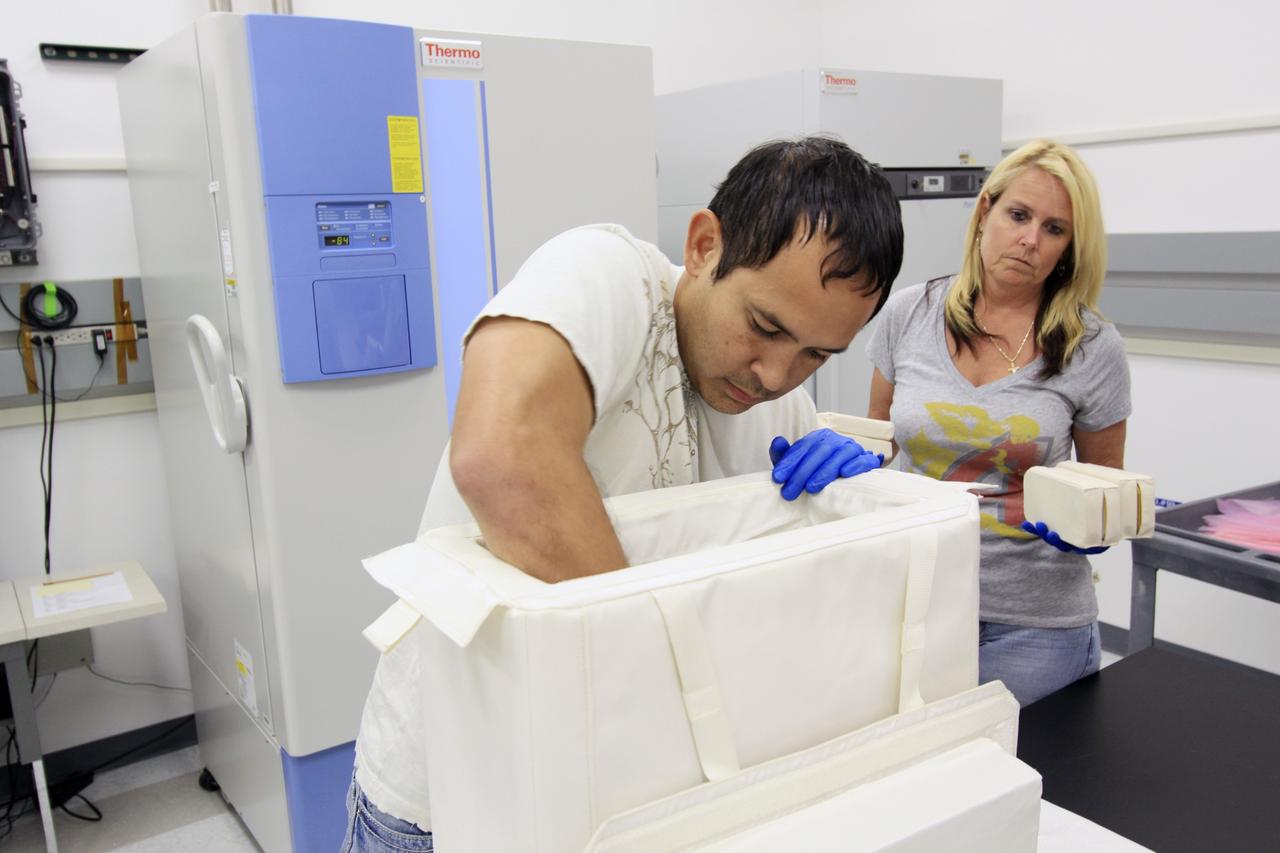
CAPE CANAVERAL, Fla. – In the Space Station Processing Facility at NASA’s Kennedy Space Center in Florida, the NanoRacks-CubeLabs Module-9 experiments requiring refrigeration are placed in a cargo bag designed to keep its contents cool. The module’s experiments requiring cold stowage are being prepared for transport to Space Launch Complex-40 on nearby Cape Canaveral Air Force Station. There, the bags will be loaded into the Space Exploration Technologies Dragon capsule in preparation for its scheduled April 30 liftoff aboard a Falcon 9 rocket. NanoRacks-CubeLabs Module-9 uses a two-cube unit box for student competition investigations using 15 liquid mixing tube assemblies that function similar to commercial glow sticks. The investigations range from microbial growth to water purification in microgravity. Known as SpaceX, the launch will be the company's second demonstration test flight for NASA's Commercial Orbital Transportation Services program, or COTS. During the flight, the capsule will conduct a series of check-out procedures to test and prove its systems, including rendezvous and berthing with the International Space Station. If the capsule performs as planned, the module and other cargo will be transferred to the station. The cargo includes food, water and provisions for the station’s Expedition crews, such as clothing, batteries and computer equipment. Under COTS, NASA has partnered with two private companies to launch cargo safely to the station. For more information, visit http://www.nasa.gov/spacex. Photo credit: NASA/Jim Grossmann
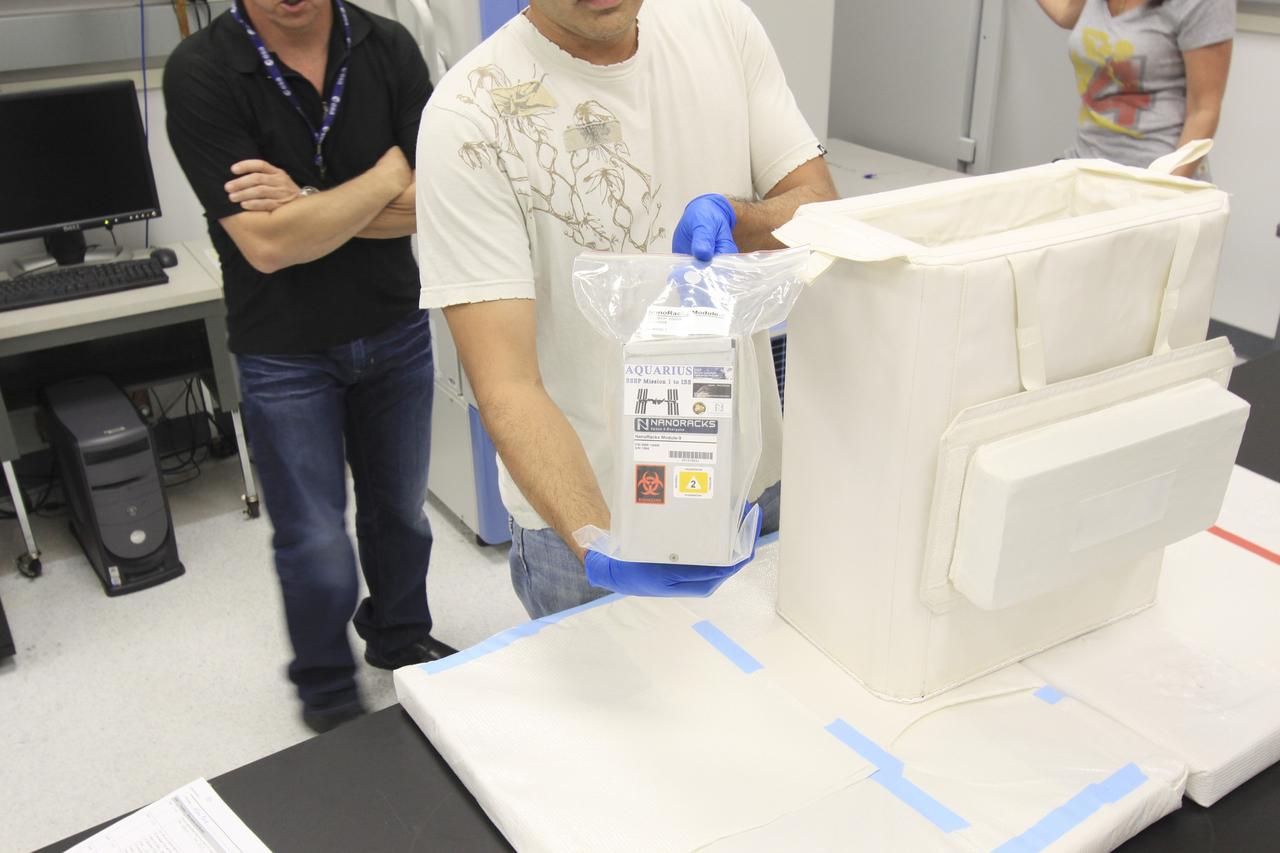
CAPE CANAVERAL, Fla. – In the Space Station Processing Facility at NASA’s Kennedy Space Center in Florida, the NanoRacks-CubeLabs Module-9 experiments requiring refrigeration are prepared for placement in a cargo bag designed to keep its contents cool. The module’s experiments requiring cold stowage are being prepared for transport to Space Launch Complex-40 on nearby Cape Canaveral Air Force Station. There, the bags will be loaded into the Space Exploration Technologies Dragon capsule in preparation for its scheduled April 30 liftoff aboard a Falcon 9 rocket. NanoRacks-CubeLabs Module-9 uses a two-cube unit box for student competition investigations using 15 liquid mixing tube assemblies that function similar to commercial glow sticks. The investigations range from microbial growth to water purification in microgravity. Known as SpaceX, the launch will be the company's second demonstration test flight for NASA's Commercial Orbital Transportation Services program, or COTS. During the flight, the capsule will conduct a series of check-out procedures to test and prove its systems, including rendezvous and berthing with the International Space Station. If the capsule performs as planned, the module and other cargo will be transferred to the station. The cargo includes food, water and provisions for the station’s Expedition crews, such as clothing, batteries and computer equipment. Under COTS, NASA has partnered with two private companies to launch cargo safely to the station. For more information, visit http://www.nasa.gov/spacex. Photo credit: NASA/Jim Grossmann