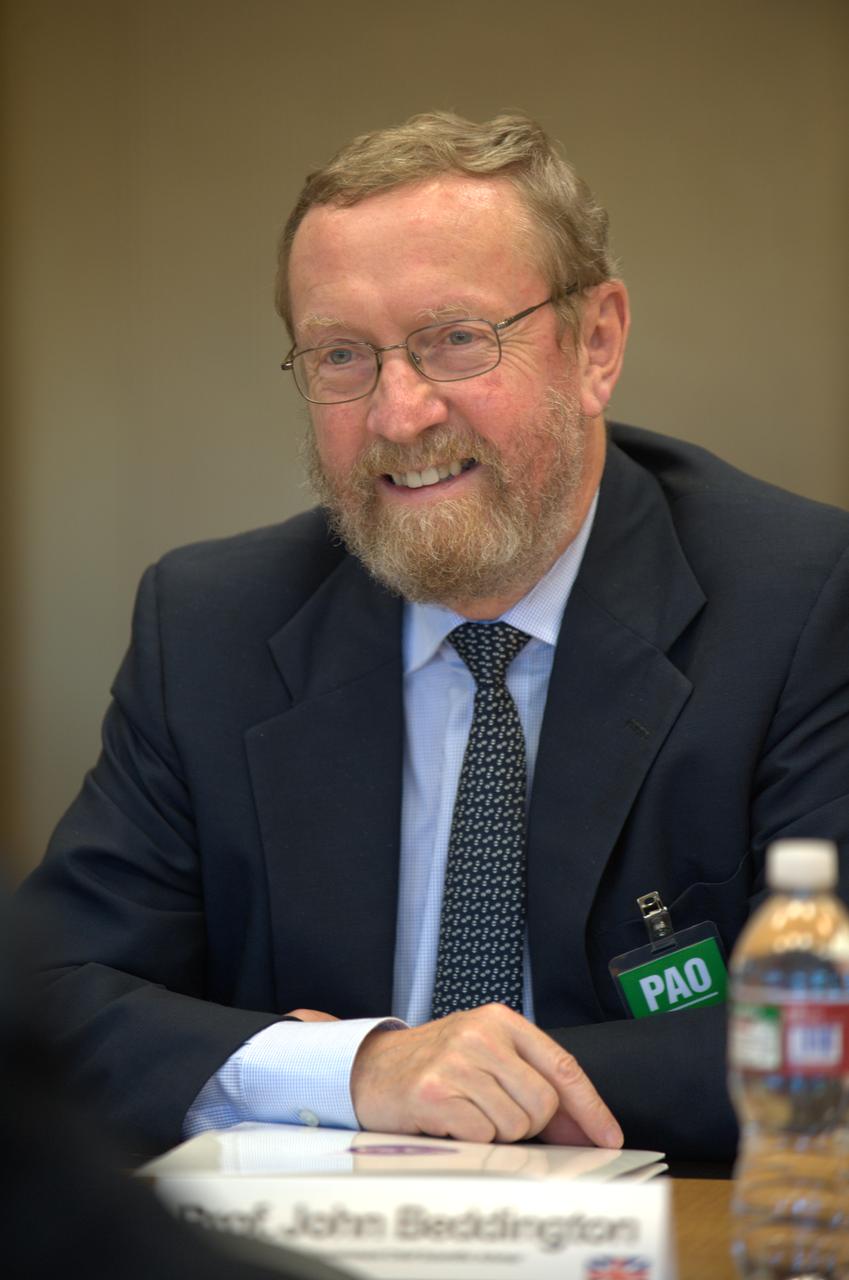
Professor John Beddington, UK (United Kingdom) Government Chief Scientist Advisor visit to Ames in Bldg N-200 Boyd Room
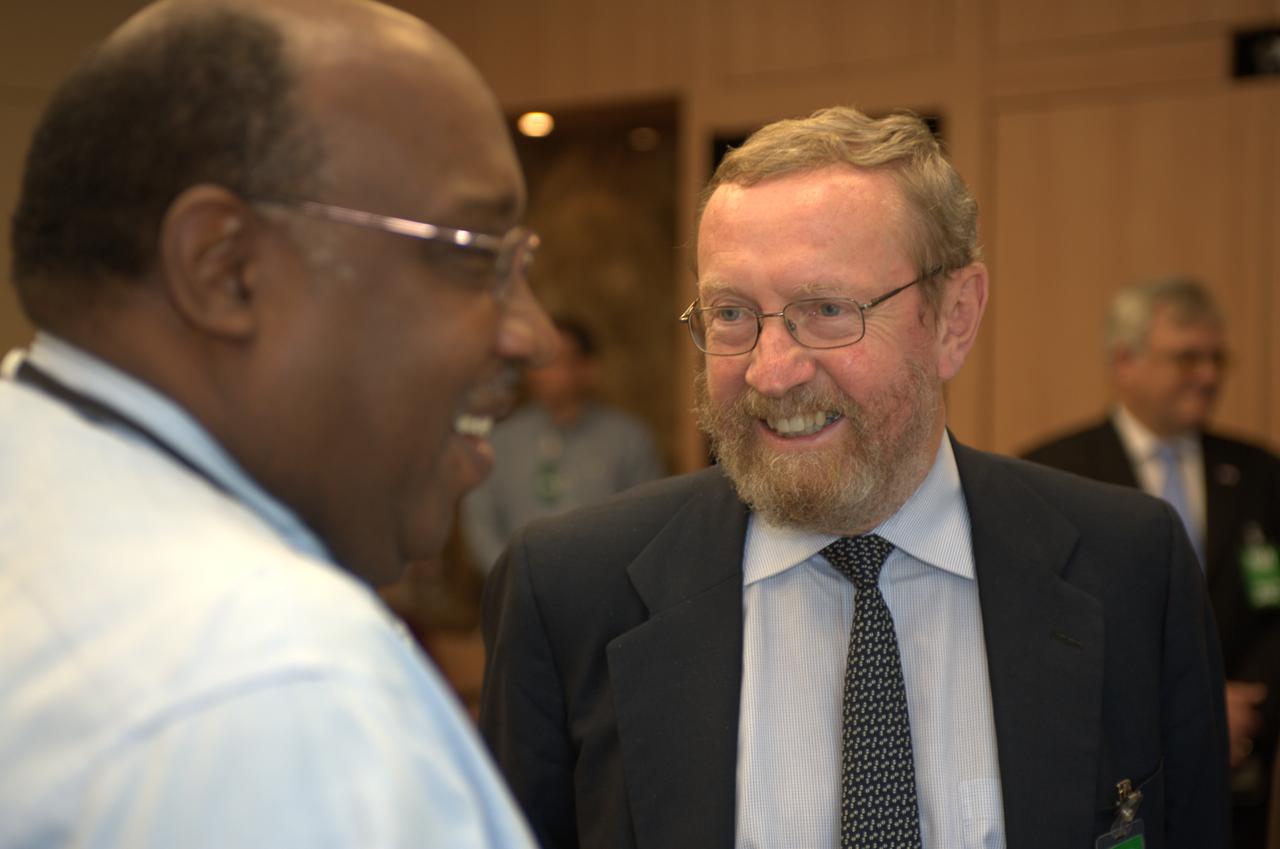
Professor John Beddington, UK (United Kingdom) Government Chief Scientist Advisor visit to Ames with John Hinein N-200 Boyd Room
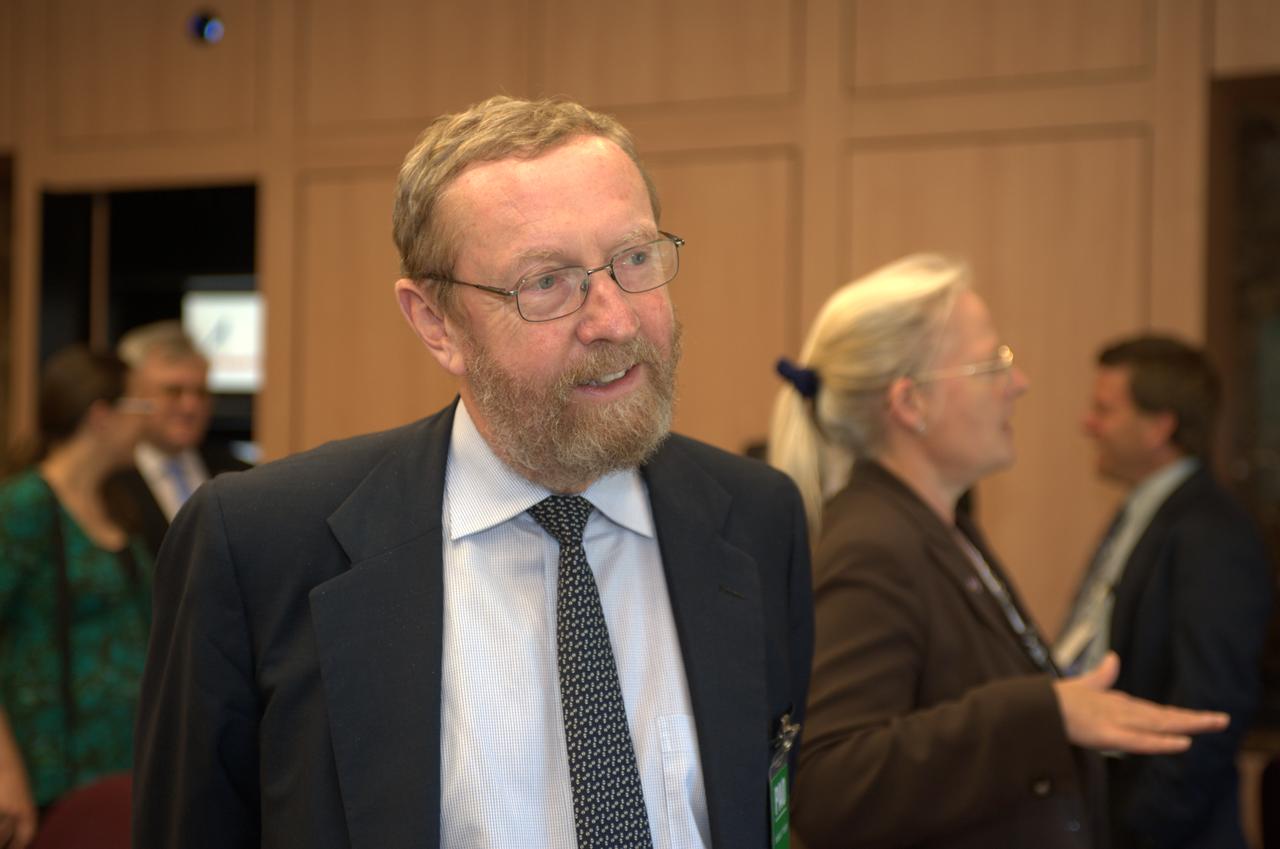
Professor John Beddington, UK (United Kingdom) Government Chief Scientist Advisor visit to Ames in Bldg N-200 Boyd Room
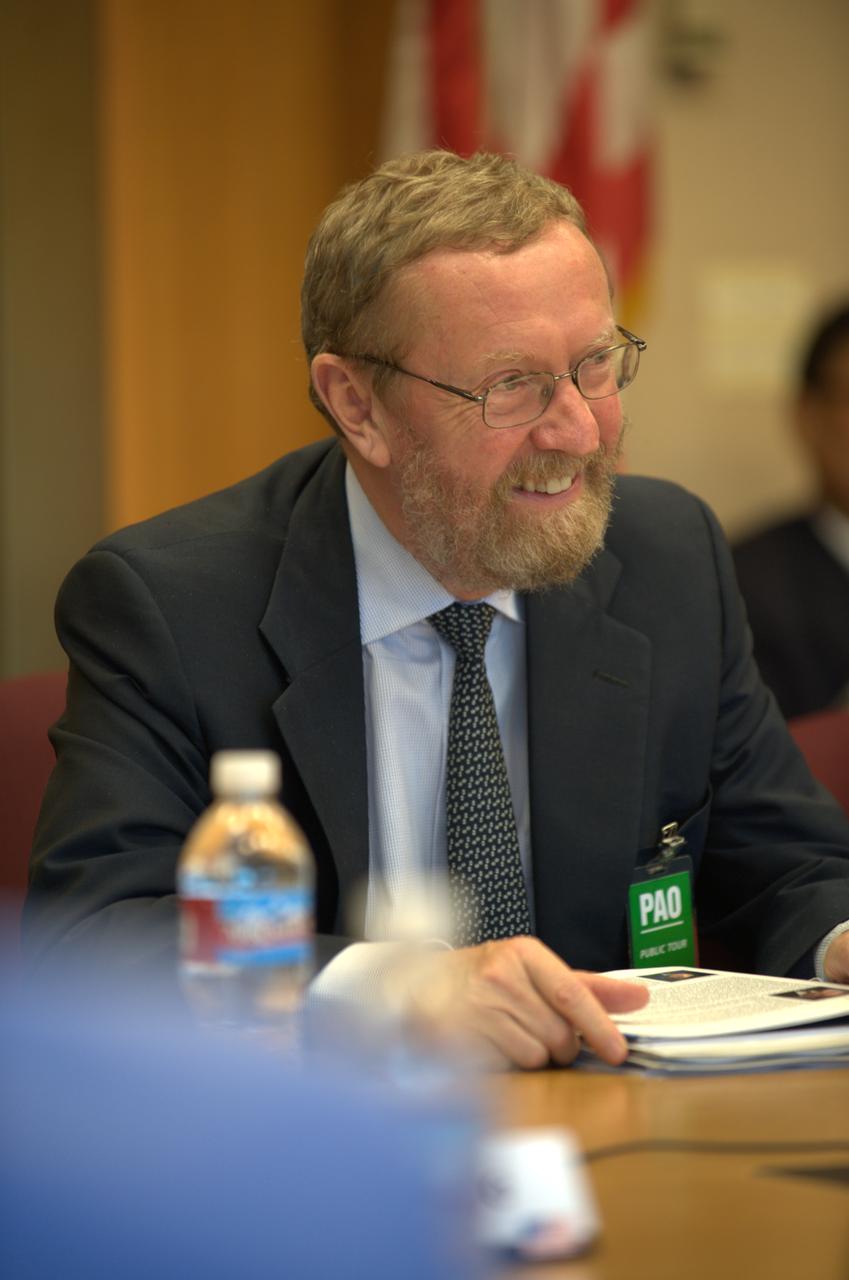
Professor John Beddington, UK (United Kingdom) Government Chief Scientist Advisor visit to Ames in Bldg N-200 Boyd Room
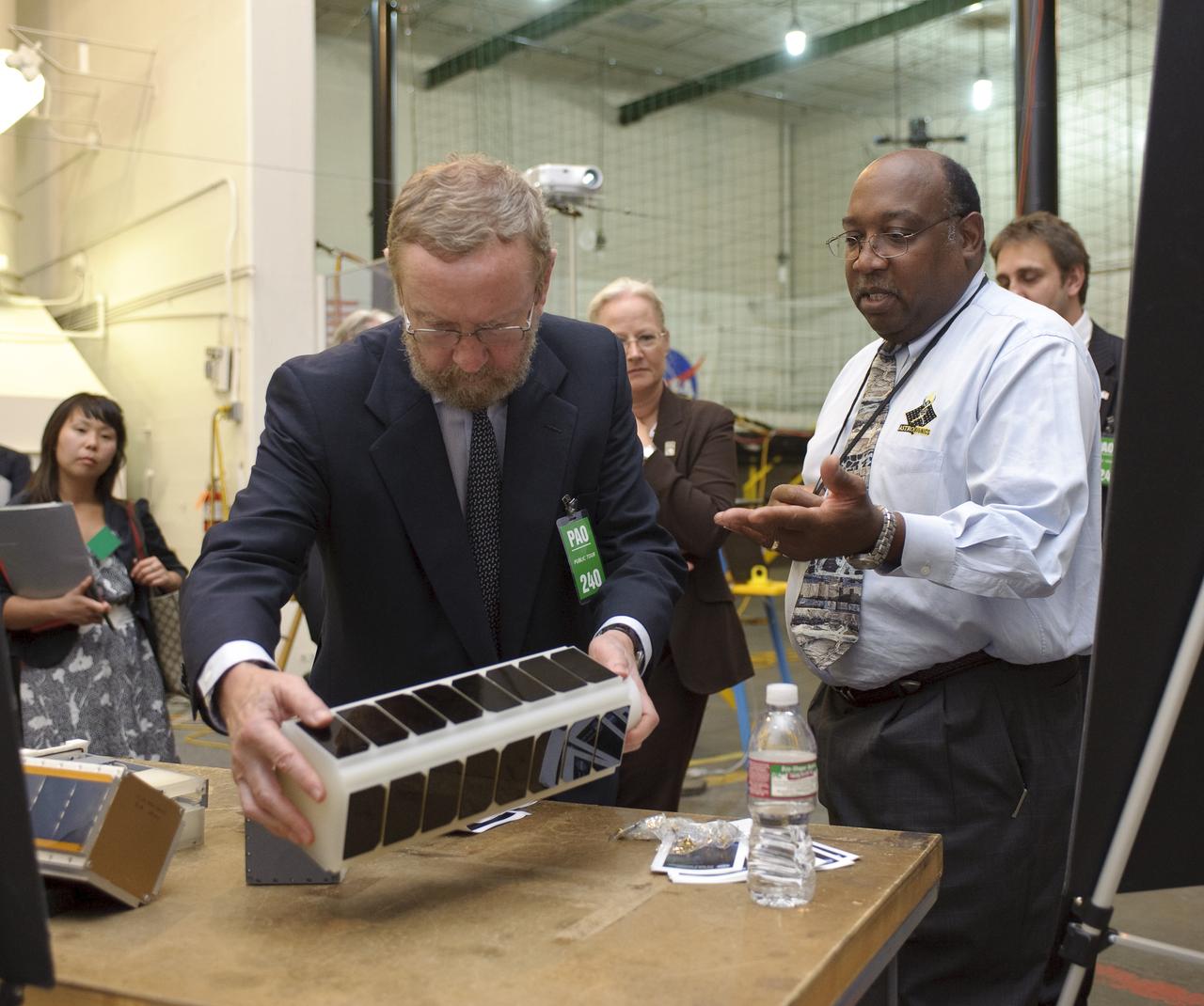
Professor John Beddington, UK (United Kingdom) Government Chief Scientist Advisor visit to Ames on tour of the Small Satellites area Bldg 45 with John Hine of Ames Research Center
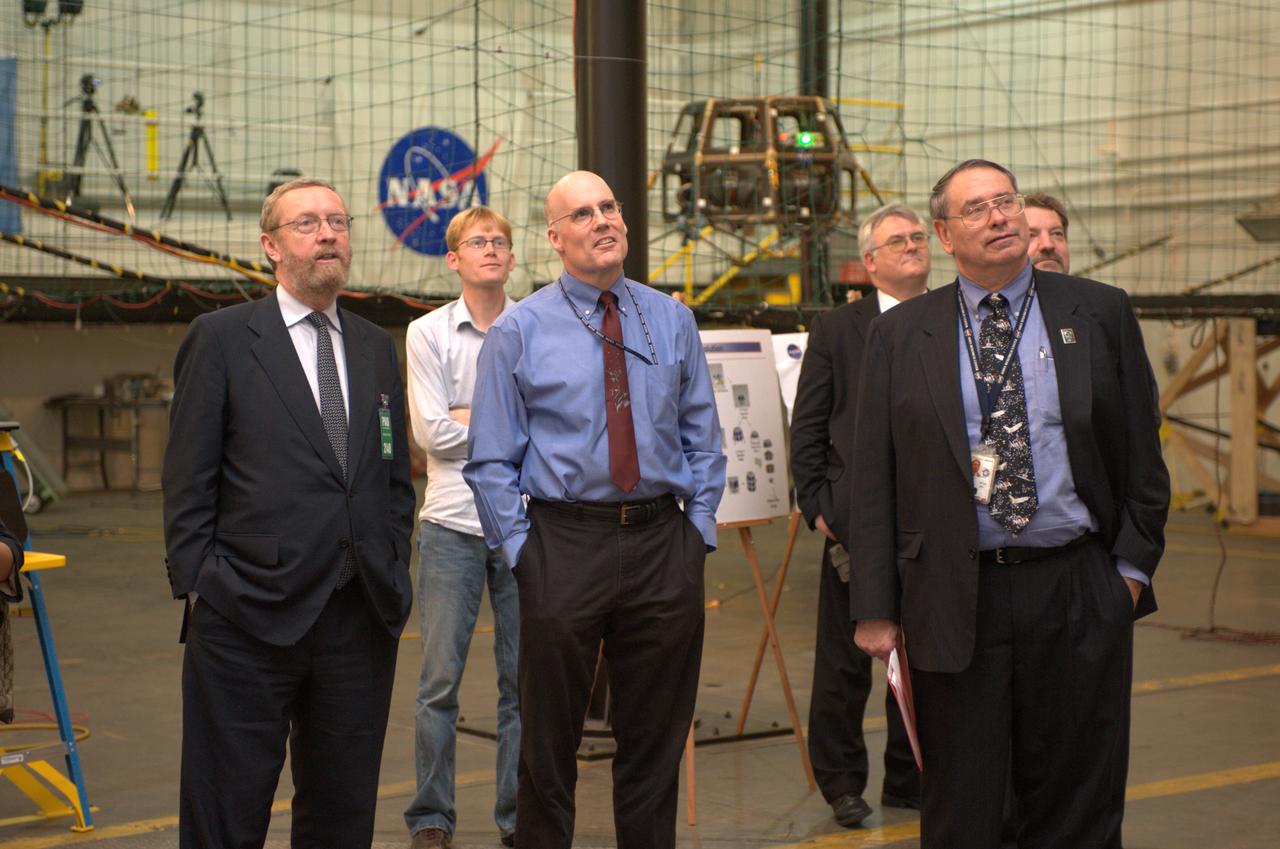
Professor John Beddington, UK (United Kingdom) Government Chief Scientist Advisor visit to Ames on tour of the Small Satellites area Bldg 45 (and a lunar lander prototype)
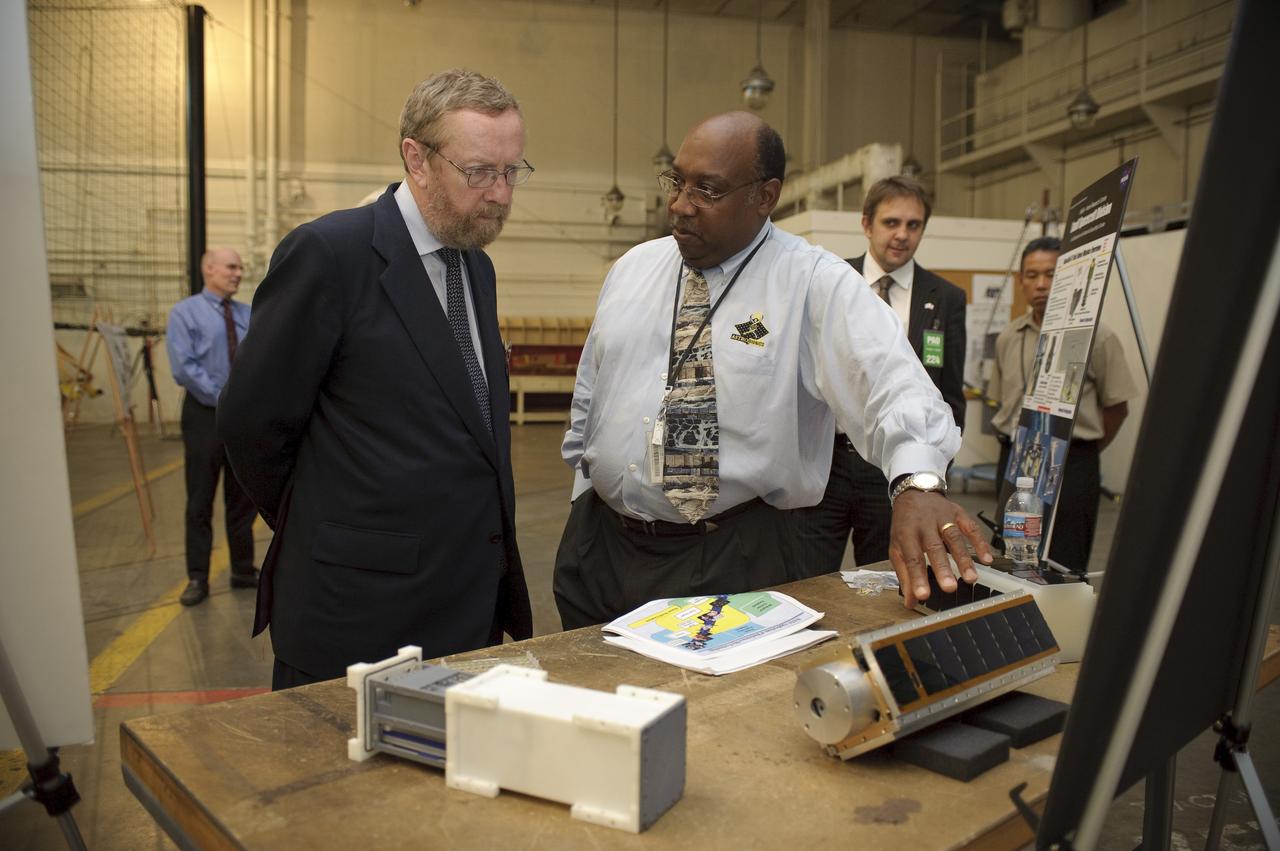
Professor John Beddington, UK (United Kingdom) Government Chief Scientist Advisor visit to Ames on tour of the Small Satellites area Bldg 45 with John Hine of Ames Research Center
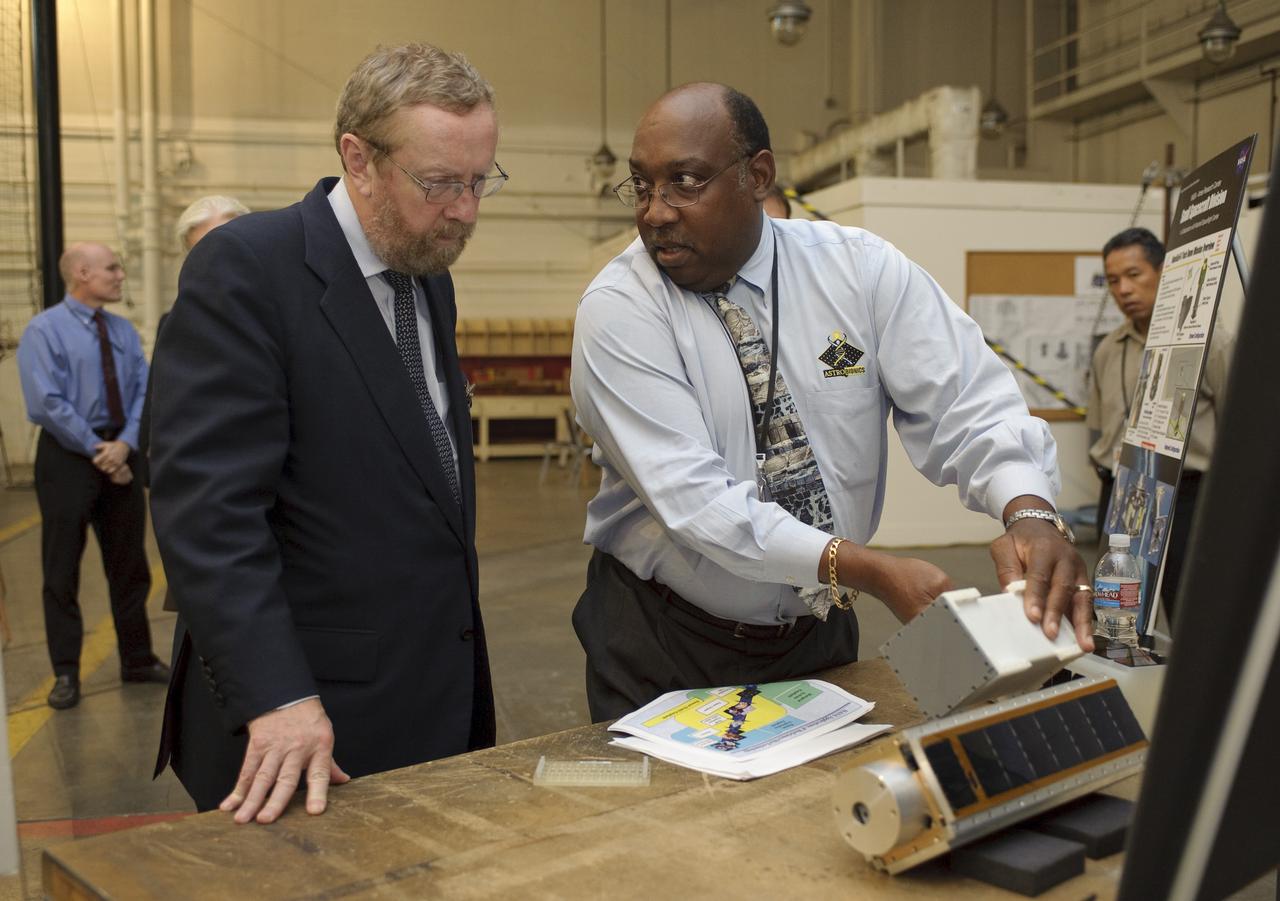
Professor John Beddington, UK (United Kingdom) Government Chief Scientist Advisor visit to Ames on tour of the Small Satellites area Bldg 45 with John Hine of Ames Research Center
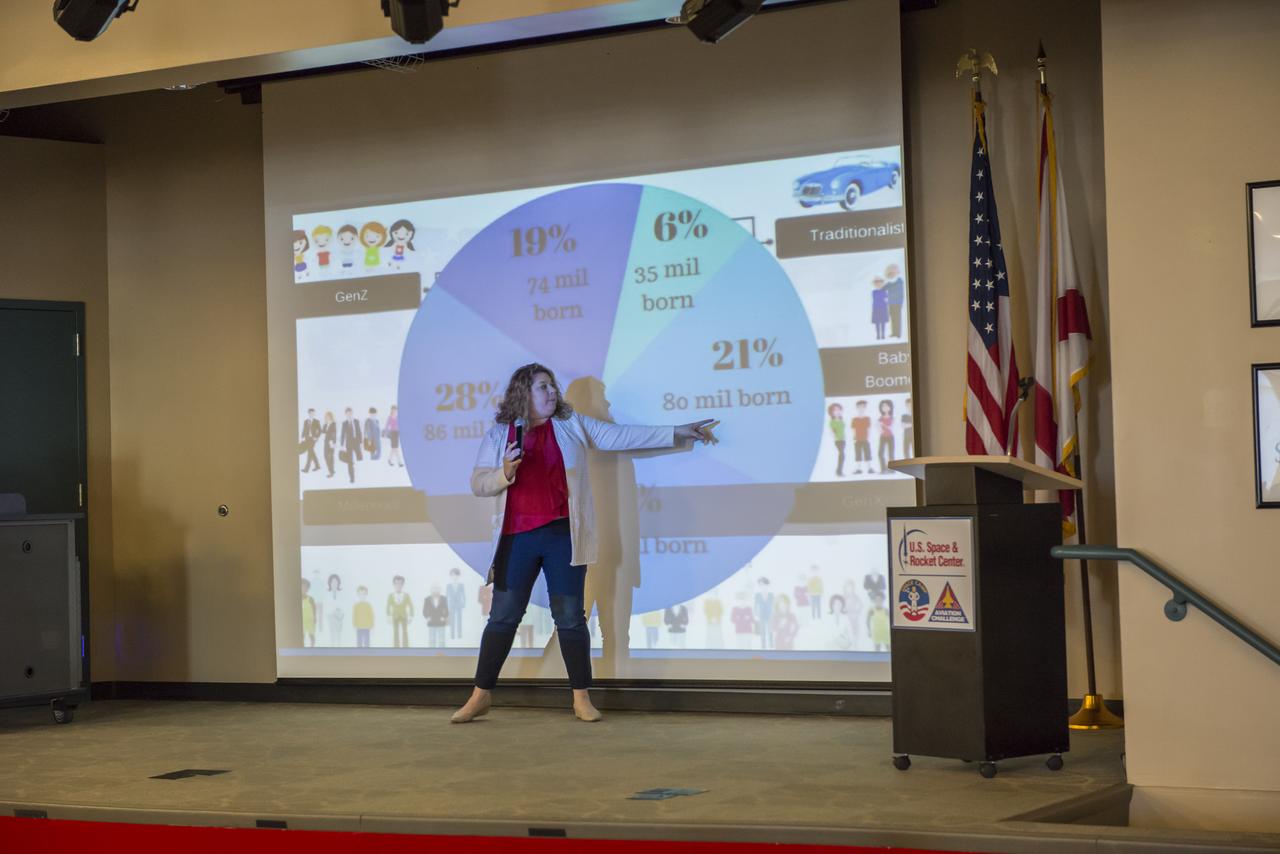
The NASA Educator Resource Center hosted the 2018 "Leading Within a Multigenerational Workforce" mentoring event. Opening remarks were by MSFC Deputy Director, Jody Singer, with a mentoring presentation from Mat Park. The key note presenter was UAH professor Kristin Scroggin.
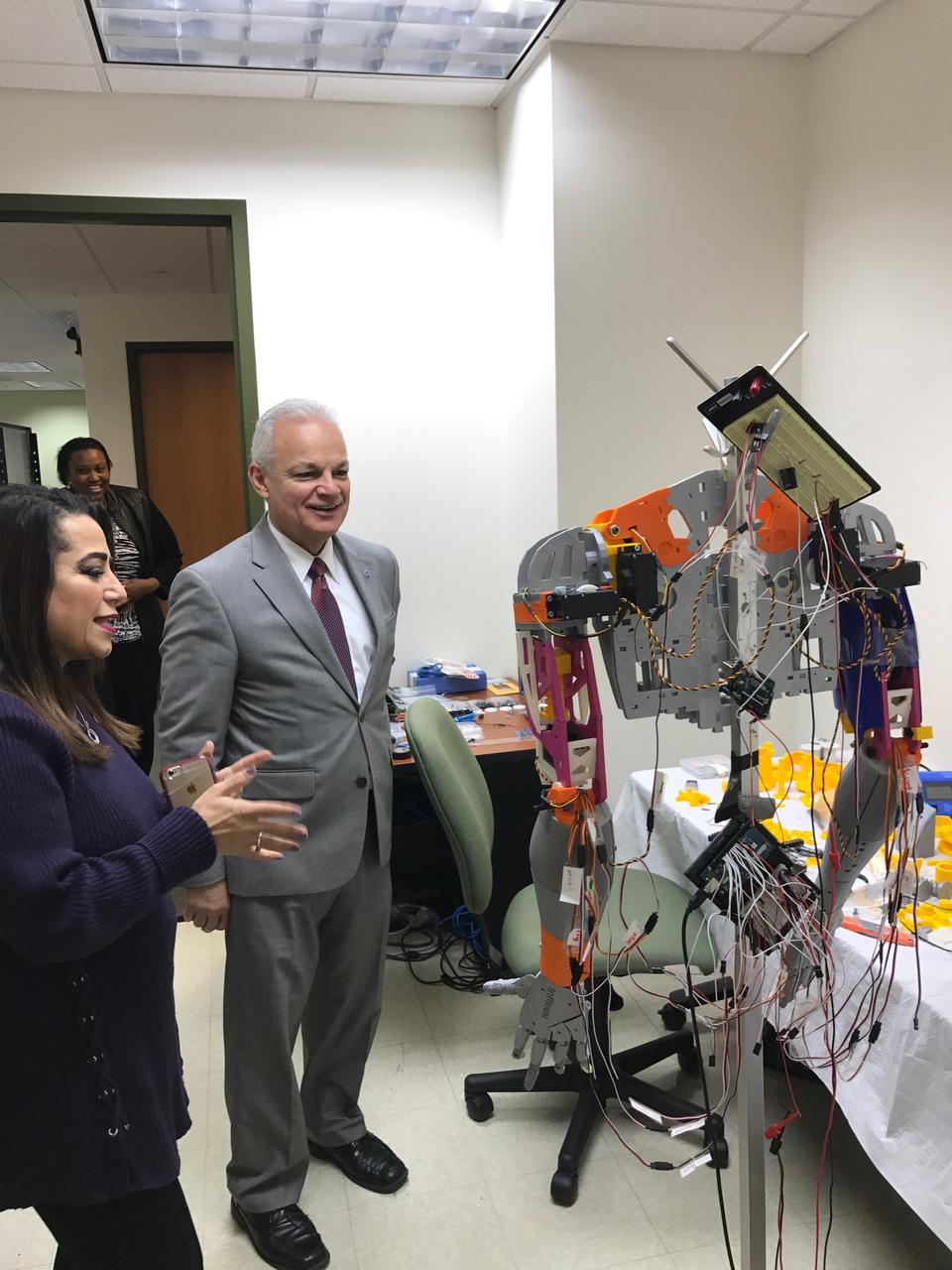
Norfolk State University Associate Professor Rasha Morsi showcases a phone operated, 3D-printed robot sign language interpreter to NASA Chief Technologist Douglas Terrier during a tour of the university’s Creative Gaming Simulation lab on February 6, 2018. (Credit: NASA)
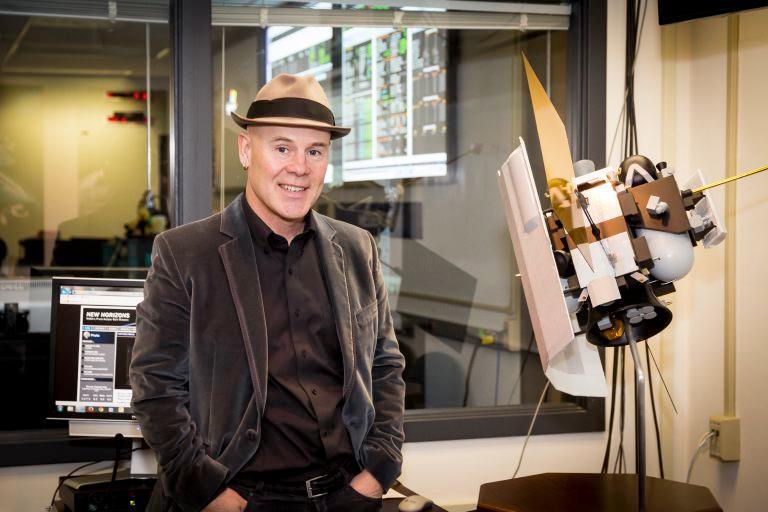
Thomas Morgan Robertson, better known to music fans as Thomas Dolby, has joined Johns Hopkins University as an honorary Homewood Professor of the Arts.
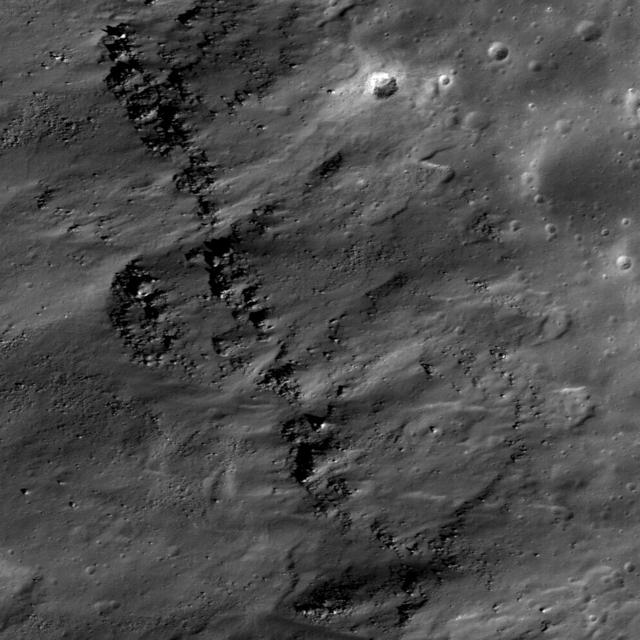
Lichtenberg crater is of Eratosthenian age, located in western Oceanus Procellarum. It is named after George C. Lichtenberg, a German professor of experimental physics 16th century.

Dr. Phoebe Cohen, Professor of Geosciences, Williams College, speaks on a panel at the “Ancient Earth, Alien Earths” Event at NASA Headquarters in Washington, DC Wednesday, August 20, 2014. The event was sponsored by NASA, the National Science Foundation (NSF), and the Smithsonian Institution and was moderated by Dr. David H. Grinspoon, Senior Scientist at the Planetary Science Institute. Six scientists discussed how research on early Earth could help guide our search for habitable planets orbiting other stars. Photo Credit: (NASA/Aubrey Gemignani)

Dr. Christopher House, Professor of Geosciences, Pennsylvania State University, speaks on a panel at the “Ancient Earth, Alien Earths” Event at NASA Headquarters in Washington, DC Wednesday, August 20, 2014. The event was sponsored by NASA, the National Science Foundation (NSF), and the Smithsonian Institution and was moderated by Dr. David H. Grinspoon, Senior Scientist at the Planetary Science Institute. Six scientists discussed how research on early Earth could help guide our search for habitable planets orbiting other stars. Photo Credit: (NASA/Aubrey Gemignani)

Dr. Dawn Sumner, Professor of Geology, UC Davis, speaks on a panel at the “Ancient Earth, Alien Earths” Event at NASA Headquarters in Washington, DC Wednesday, August 20, 2014. The event was sponsored by NASA, the National Science Foundation (NSF), and the Smithsonian Institution and was moderated by Dr. David H. Grinspoon, Senior Scientist at the Planetary Science Institute. Six scientists discussed how research on early Earth could help guide our search for habitable planets orbiting other stars. Photo Credit: (NASA/Aubrey Gemignani)

Dr. Timothy Lyons, Professor of Biogeochemistry, UC Riverside, speaks on a panel at the “Ancient Earth, Alien Earths” Event at NASA Headquarters in Washington, DC Wednesday, August 20, 2014. The event was sponsored by NASA, the National Science Foundation (NSF), and the Smithsonian Institution and was moderated by Dr. David H. Grinspoon, Senior Scientist at the Planetary Science Institute. Six scientists discussed how research on early Earth could help guide our search for habitable planets orbiting other stars. Photo Credit: (NASA/Aubrey Gemignani)
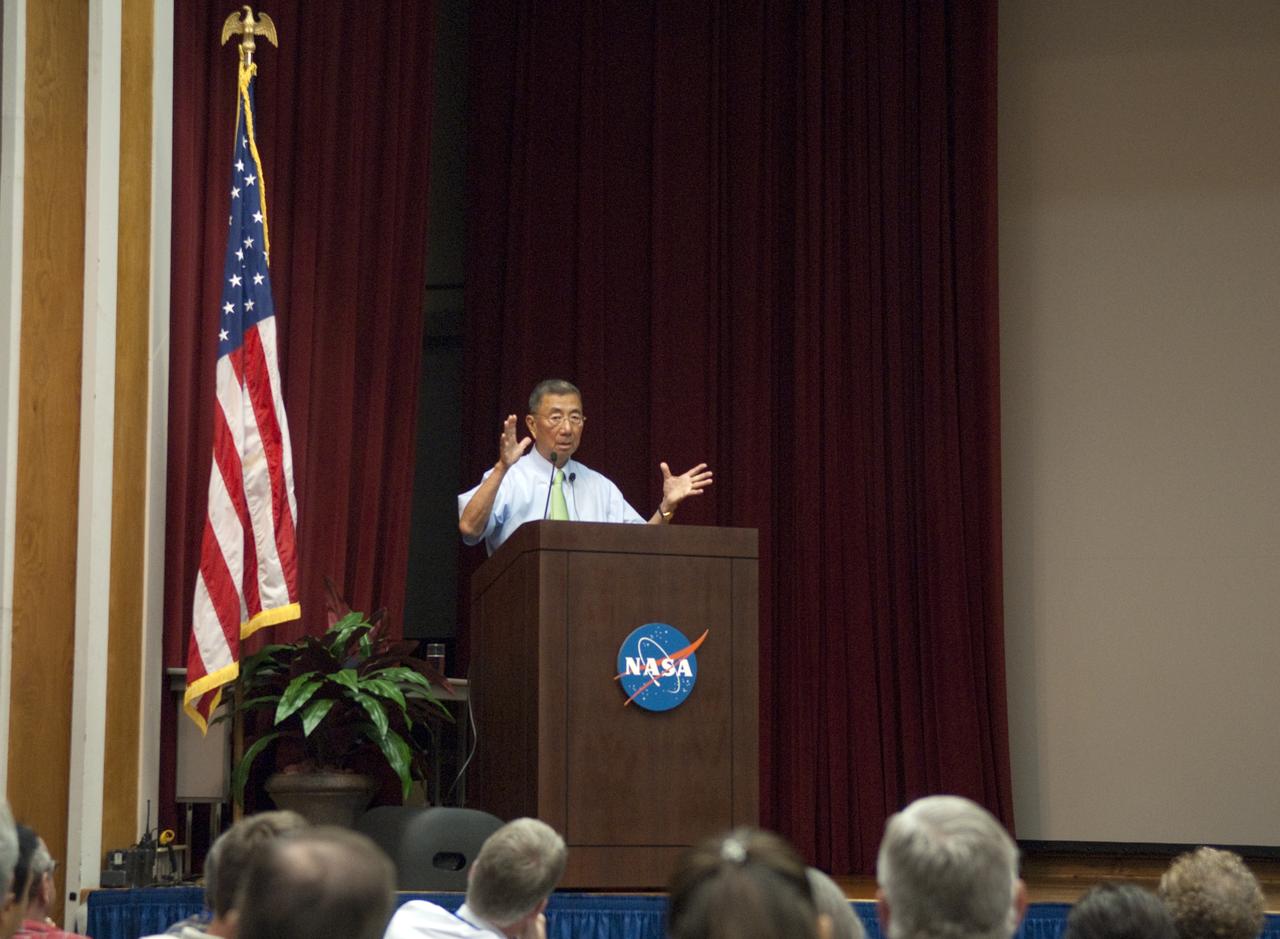
PROFESSOR SAMUEL TING - ALPHA MAGNETIC SPECTROMETER (AMS) PRESENTATION TO KSC EMPLOYEES
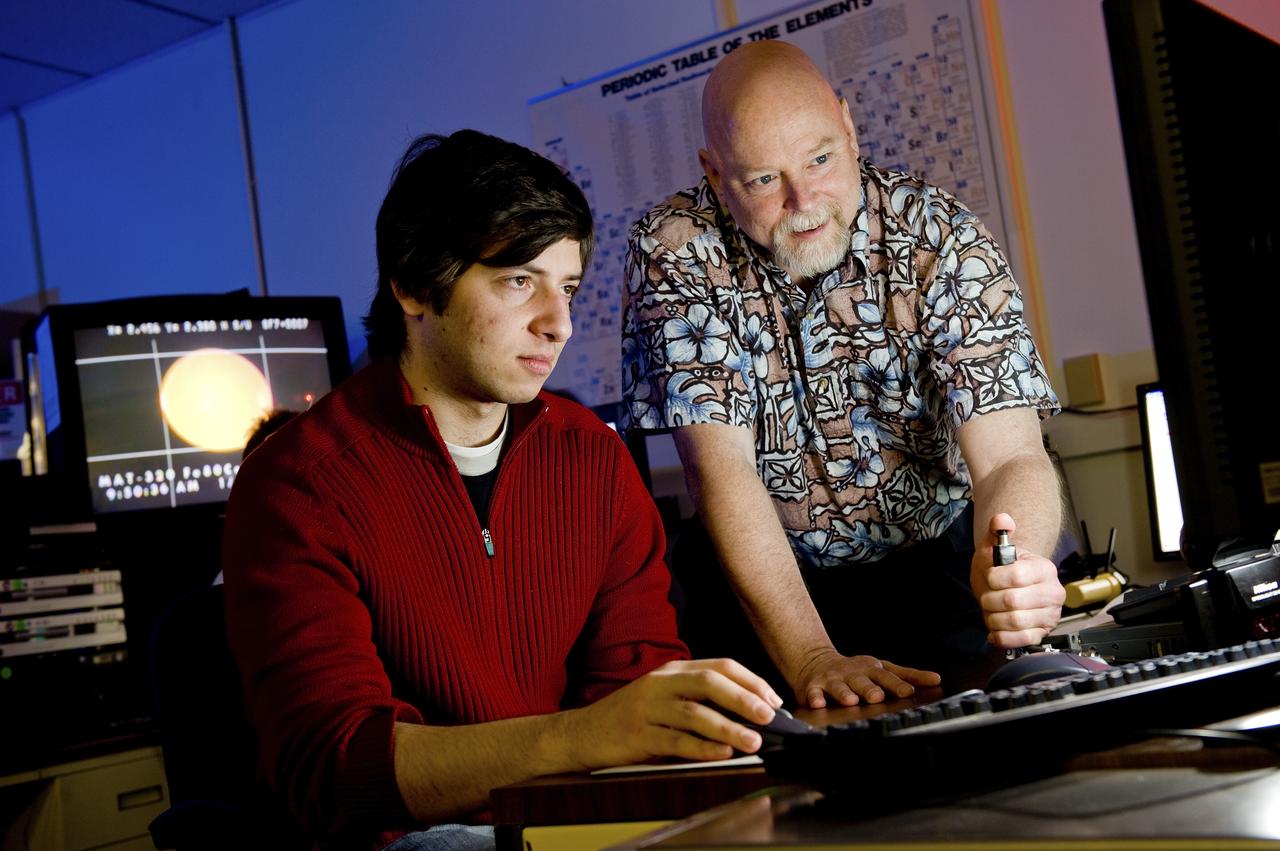
PAUL CHOUFANI AND PROFESSOR DOUGLAS MATSON AT THE CONTROLS OUTSIDE OF THE ELECTROSTATIC LEVITATOR
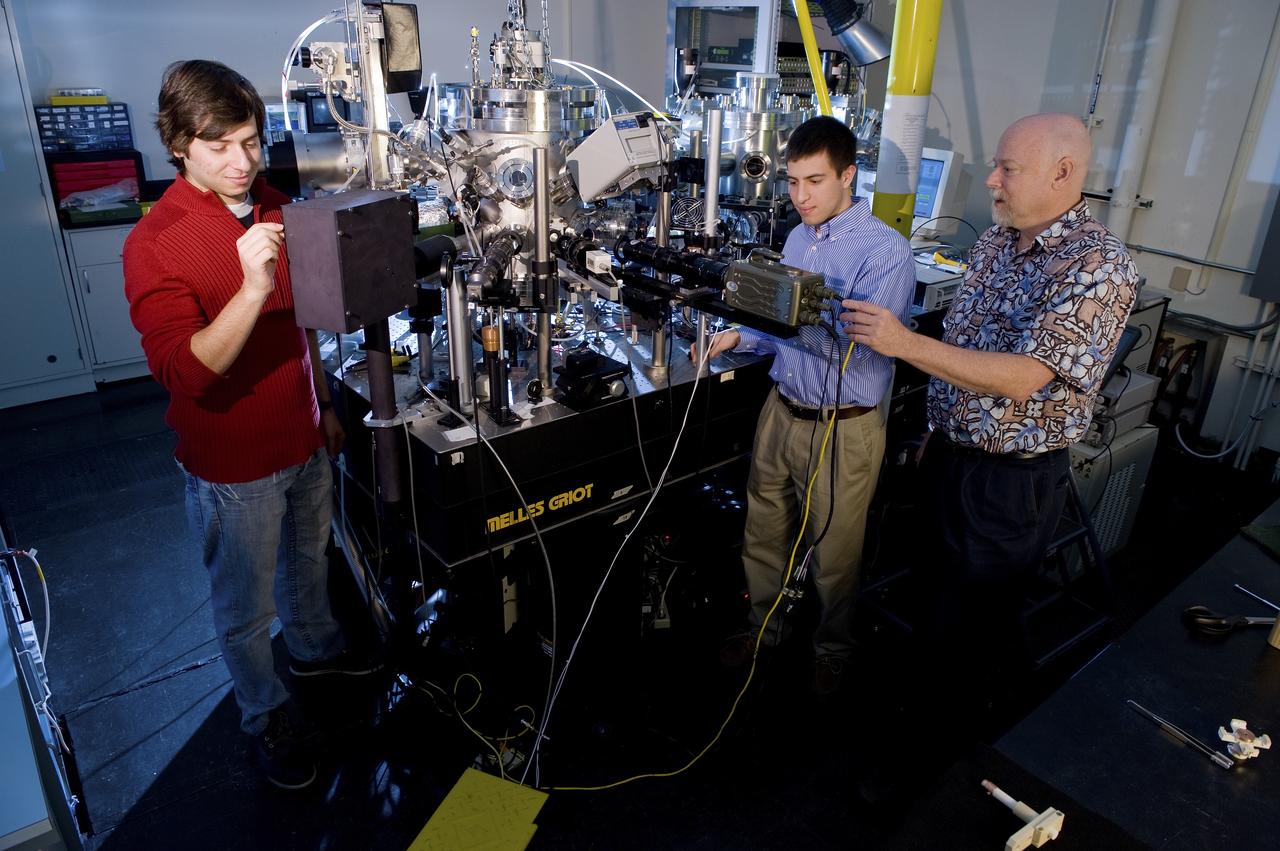
PAUL CHOUFANI, MATTHEW SHERMAN, AND PROFESSOR DOUGLAS MATSON WITH THE ELECTROSTATIC LEVITATOR.
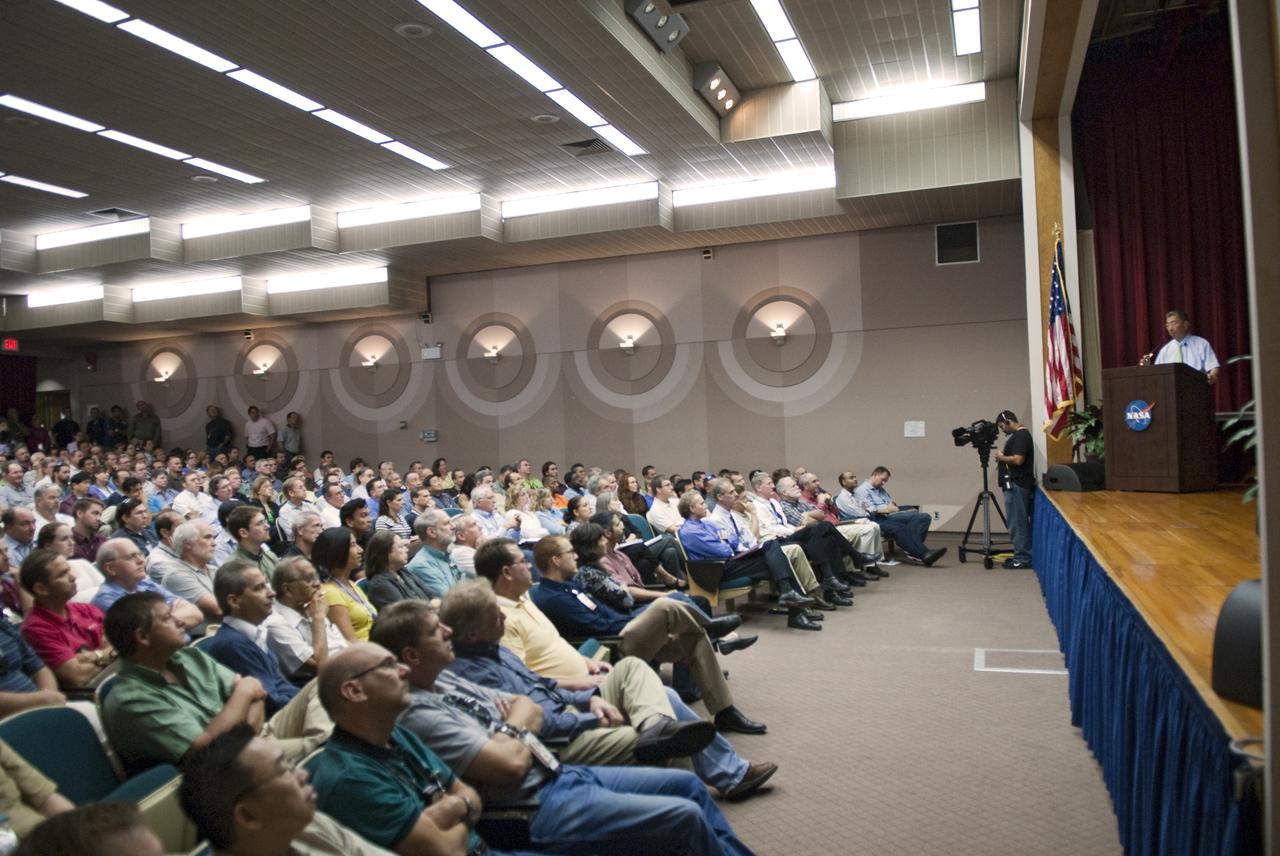
PROFESSOR SAMUEL TING - ALPHA MAGNETIC SPECTROMETER (AMS) PRESENTATION TO KSC EMPLOYEES
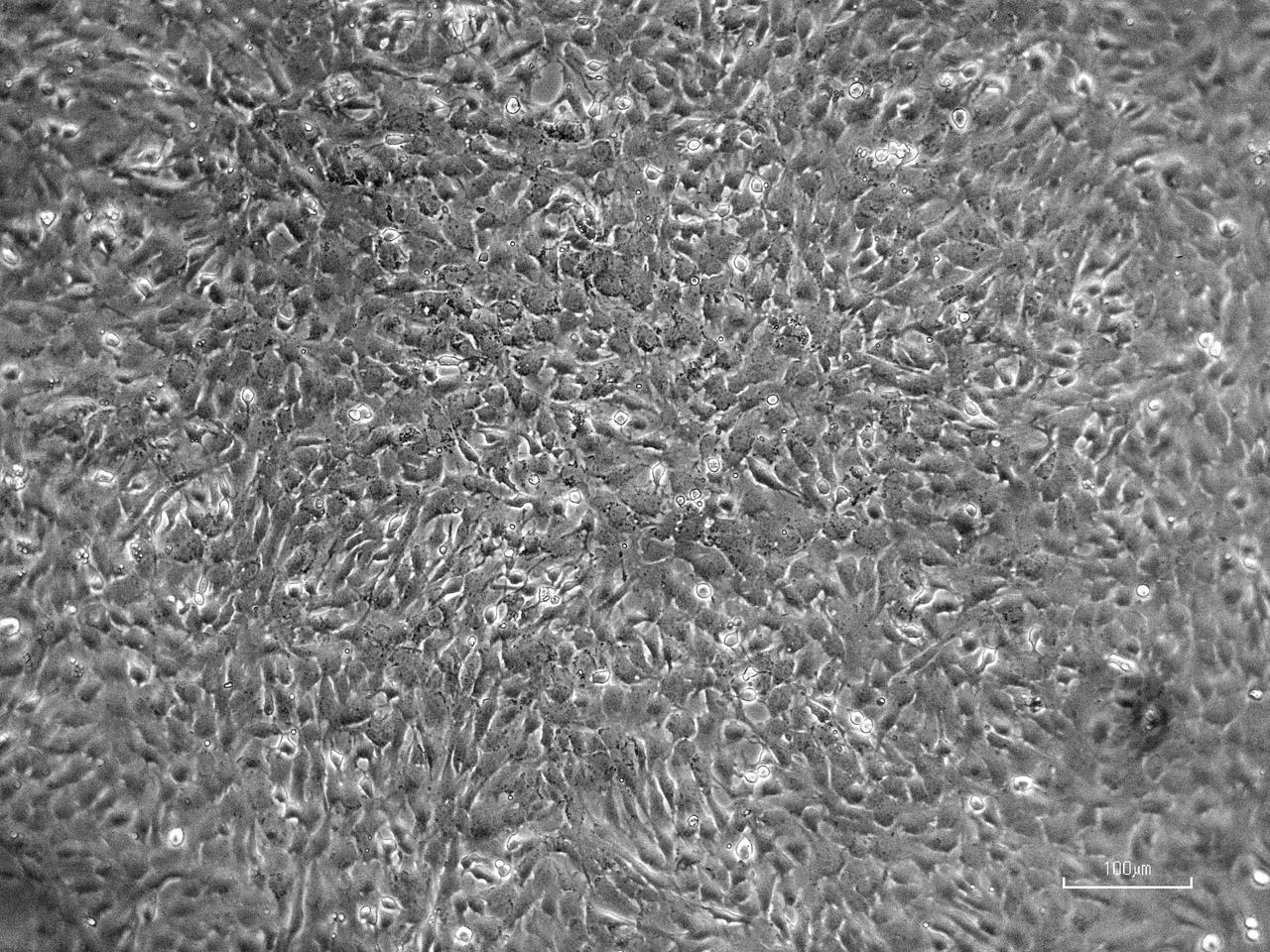
jsc2022e072967 (4/12/2021) --- Image of bovine ovary Granulosa cells. Coordinated by the Italian Space Agency (ASI), OVOSPACE investigates how microgravity influences the maturation and development ovarian cells in mammals, including Granulosa cells. This experiment could help scientists understand how long-term settlement on the Moon or Mars might affect the fertility of astronauts living in reduced gravity for long durations. Image courtesy of Professor Mariano Bizzarri, Department of Experimental Medicine, Sapienza University of Rome.
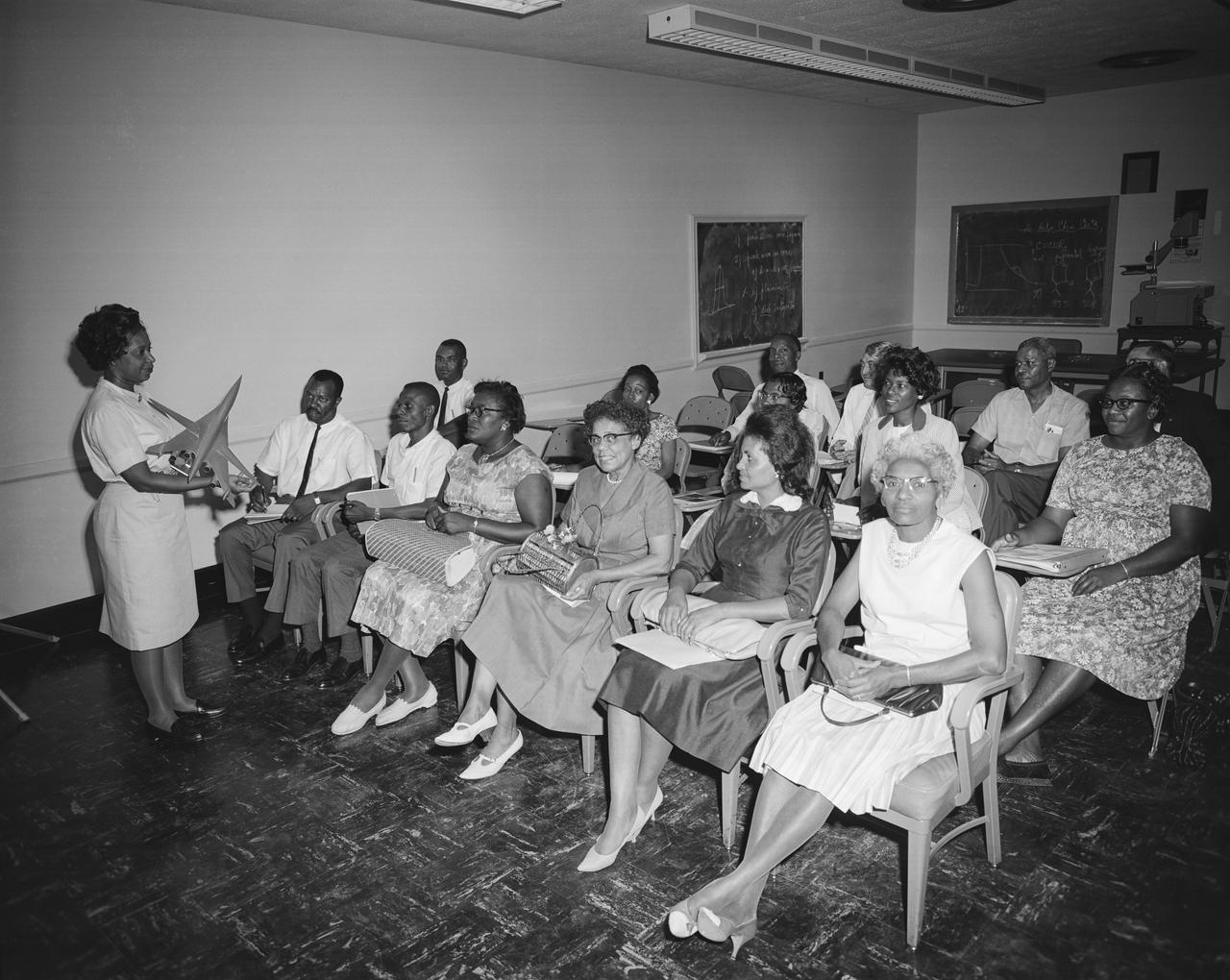
Photograph taken July 30, 1964. Mary W Jackson, Aerospace Engineer in the Large Supersonic Tunnels Branch of Full-Scale Research Division, explains the facilities used in testing research models such as SCAT. The Guidance Counseling Class from Hampton Institute visited the center on July 30 and toured a number of facilities. The purpose of the visit was to provide the counselors an opportunity to see areas of work representing fields in which their students might be employed. The group, under the direction of Professor Fissell Jones (Left, back row) of Hampton Institute, represented the states of Virginia, North Carolina, South Carolina, and Georgia. In 1958 Mary Jackson became NASA's first black female engineer. The Hampton Institute (now Hampton University) is a Historically Black College. NASA started its EEO office in 1964 and the NASA Administrator at the time, James Webb, was very enthusiastic about reaching out to universities (including HBCUs) to partner with them and to encourage students to become NASA engineers.
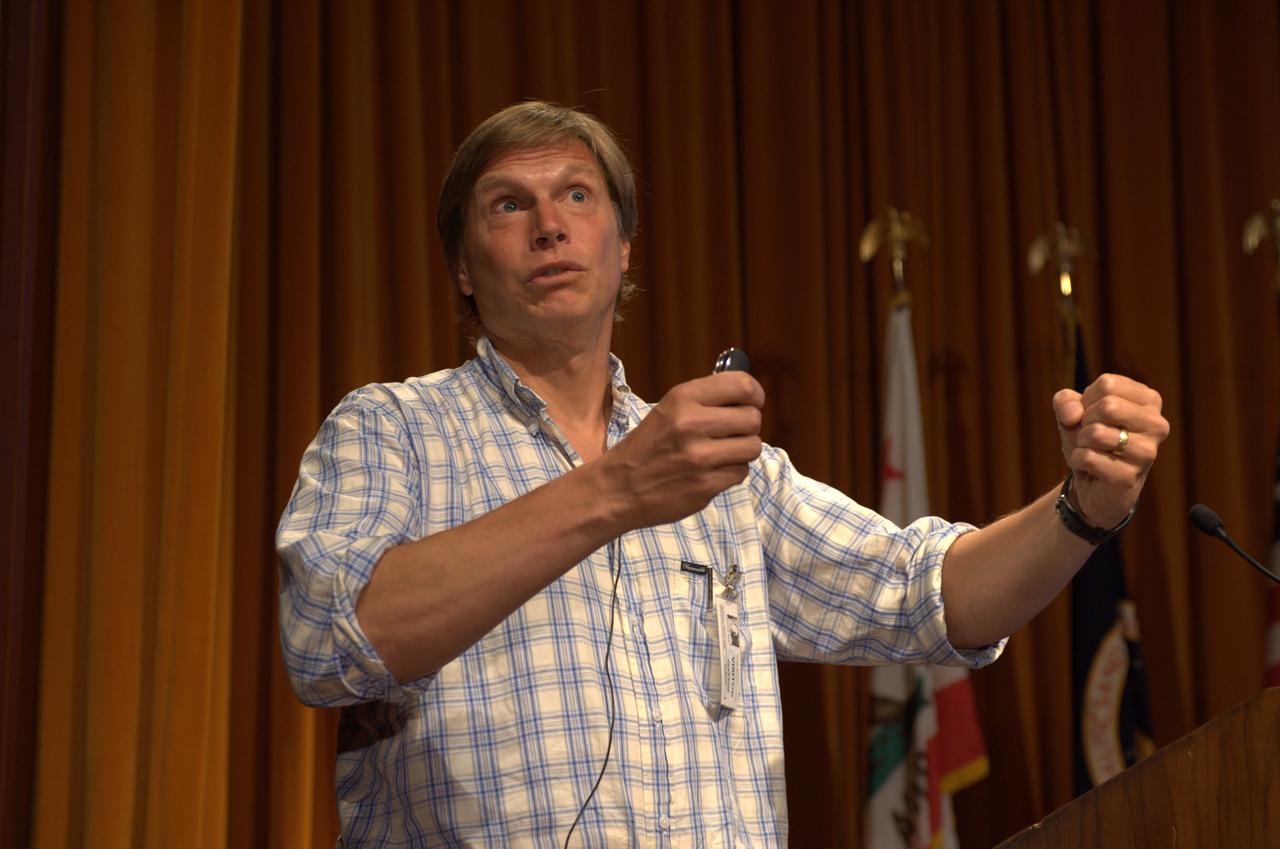
Dr. Mark Kasevich, Professor of Physics and Applied Physics at Stanford University presents a Director's Colloquium to Ames staff on 'Atom Interferometry'
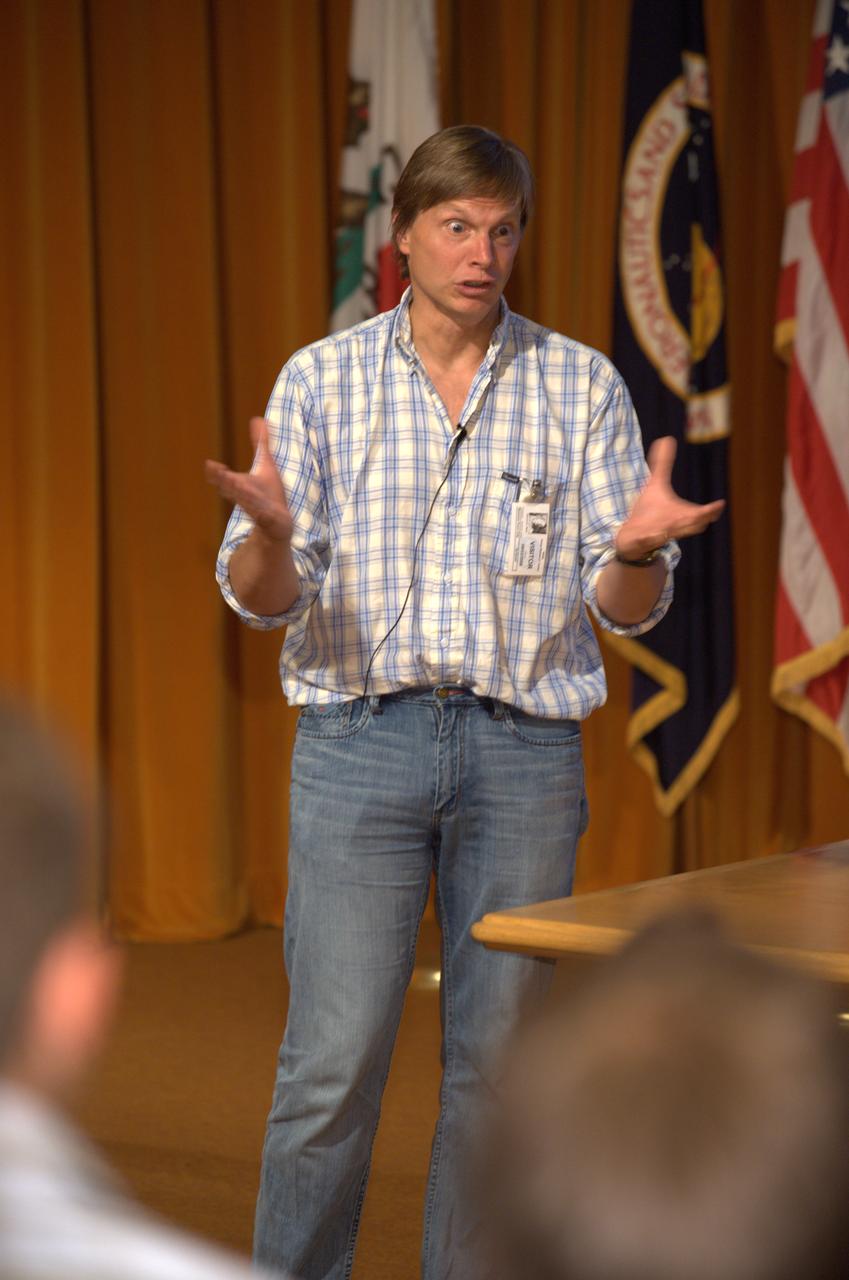
Dr. Mark Kasevich, Professor of Physics and Applied Physics at Stanford University presents a Director's Colloquium to Ames staff on 'Atom Interferometry'
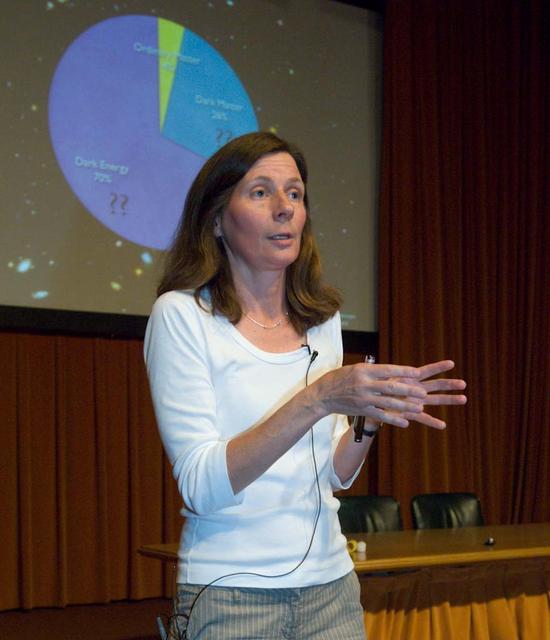
Professor Patricia Burchat, Chair of the Physics Department at Stanford University presents a Director's Colloquium entitled 'The Dark Side of the Universe'.
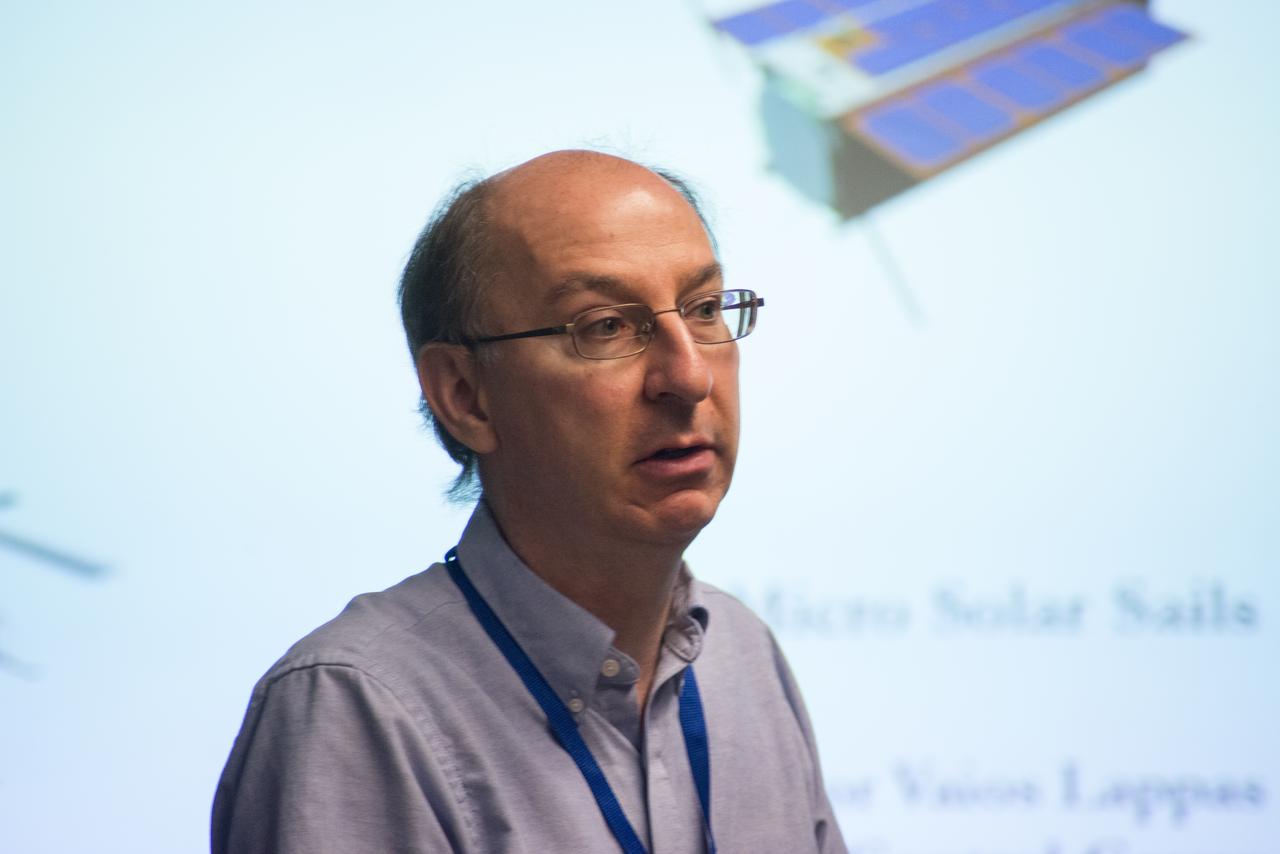
LES JOHNSON INTRODUCES PROFESSOR VARIOS LAPP, UNIVERSITY OF SURREY, UK, PRIME INVESTIGATOR OF SOLAR SAIL TECHNOLOGY
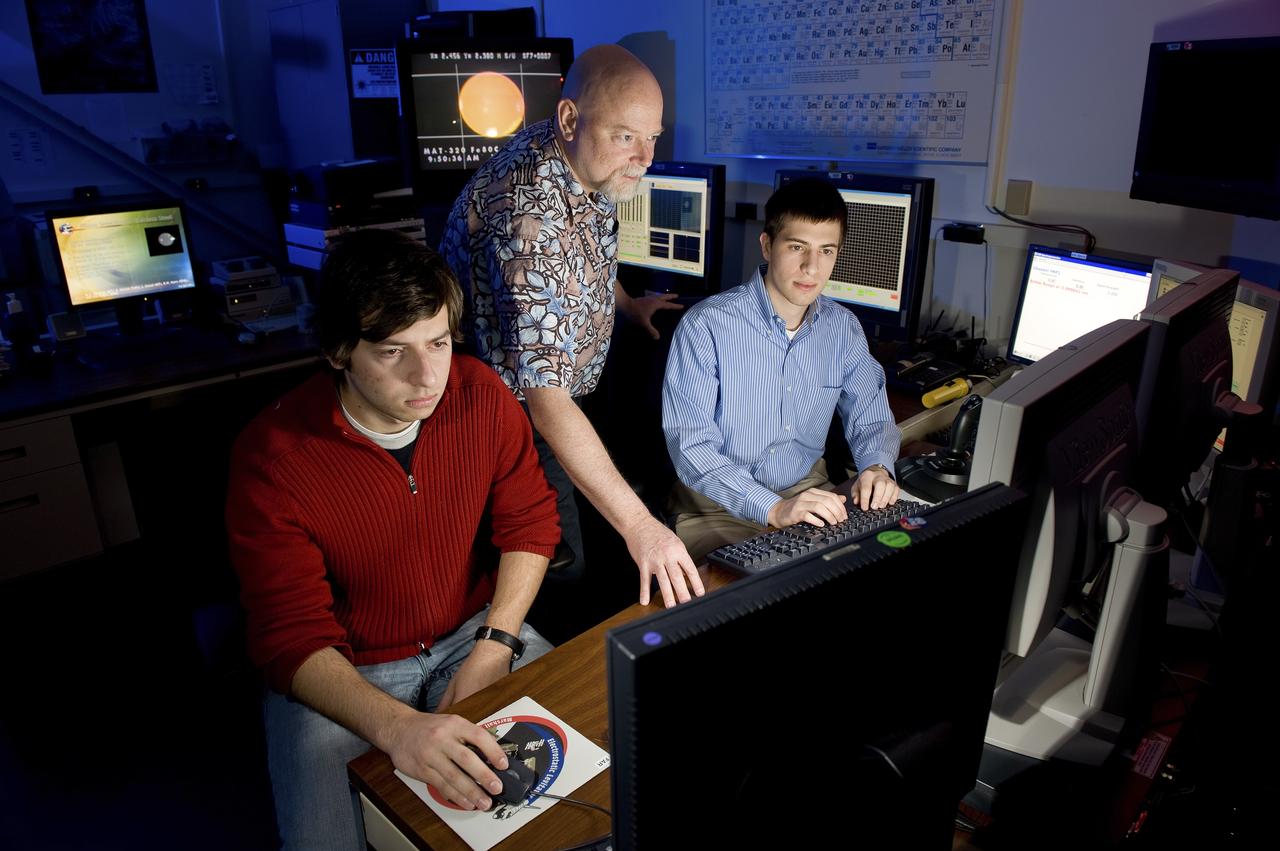
PAUL CHOUFANI, PROFESSOR DOUGLAS MATSON, AND MATTHEW SHERMAN AT THE CONTROLS OUTSIDE OF THE ELECTROSTATIC LEVITATOR.
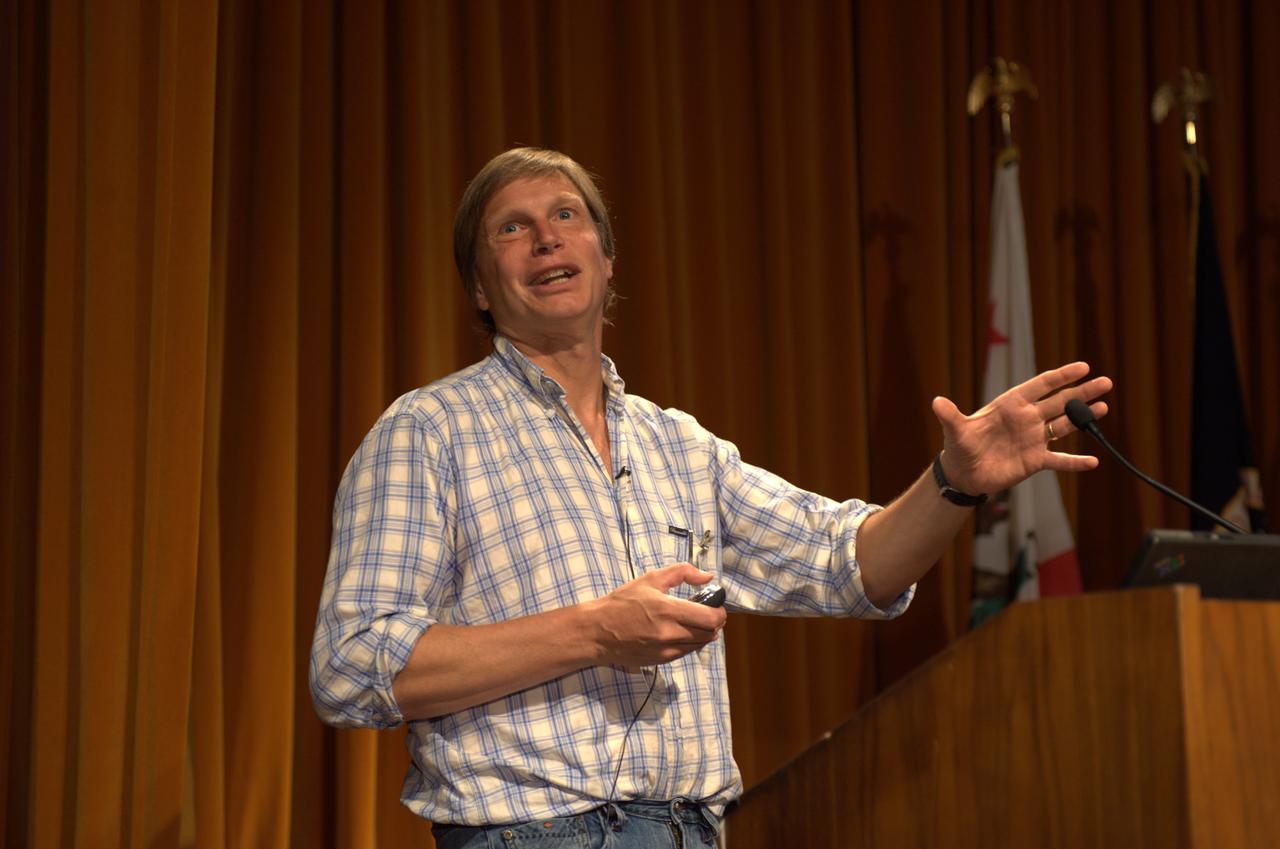
Dr. Mark Kasevich, Professor of Physics and Applied Physics at Stanford University presents a Director's Colloquium to Ames staff on 'Atom Interferometry'
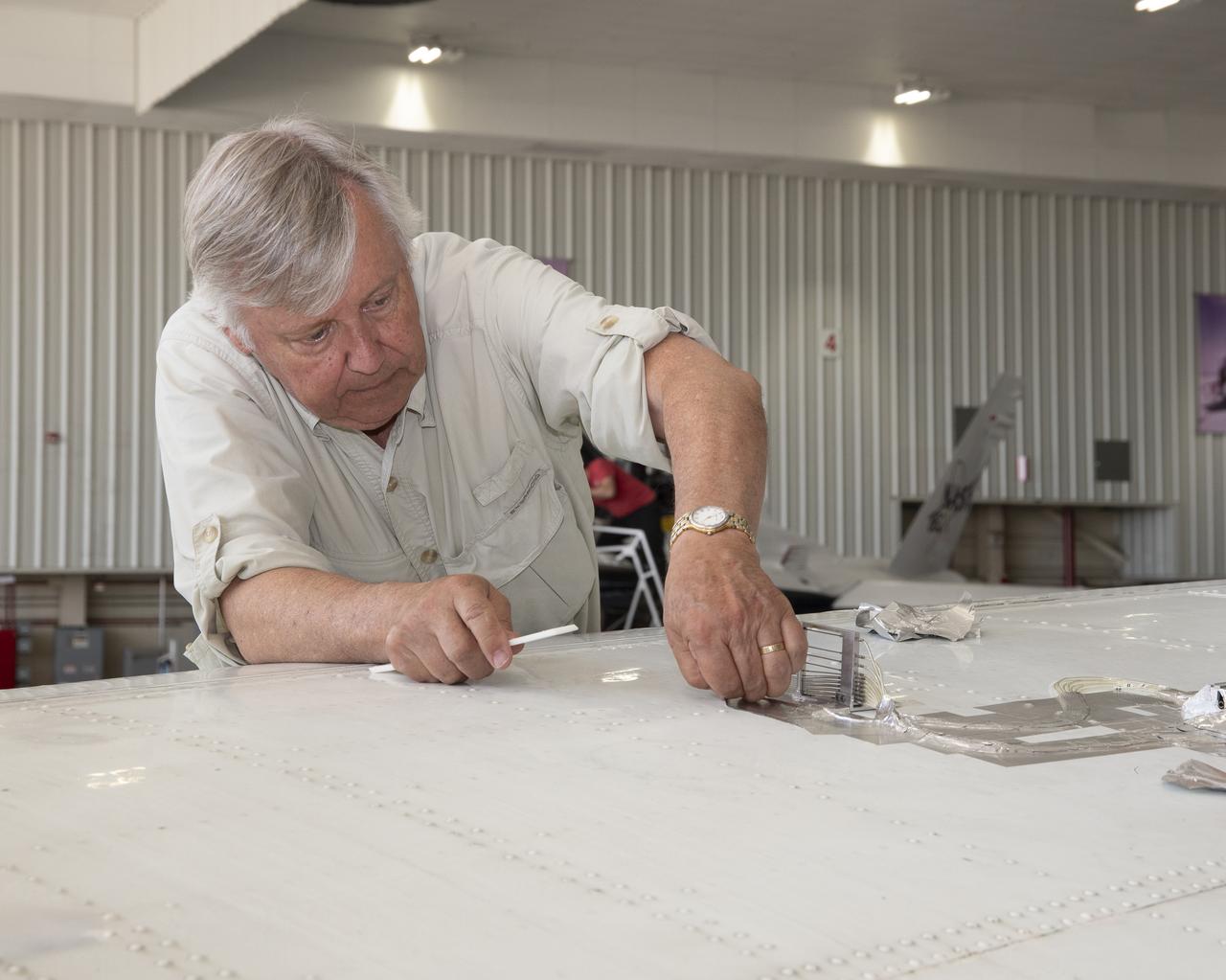
Cal Poly San Luis Obispo Professor Russ Westphal works on the Boundary Layer Data System (BLDS) attached to the wing of a Beechcraft Beech 200 Super King Air aircraft. The BLDS was attached to the aircraft with removable adhesives for a flight test at NASA’s Armstrong Flight Research Center.
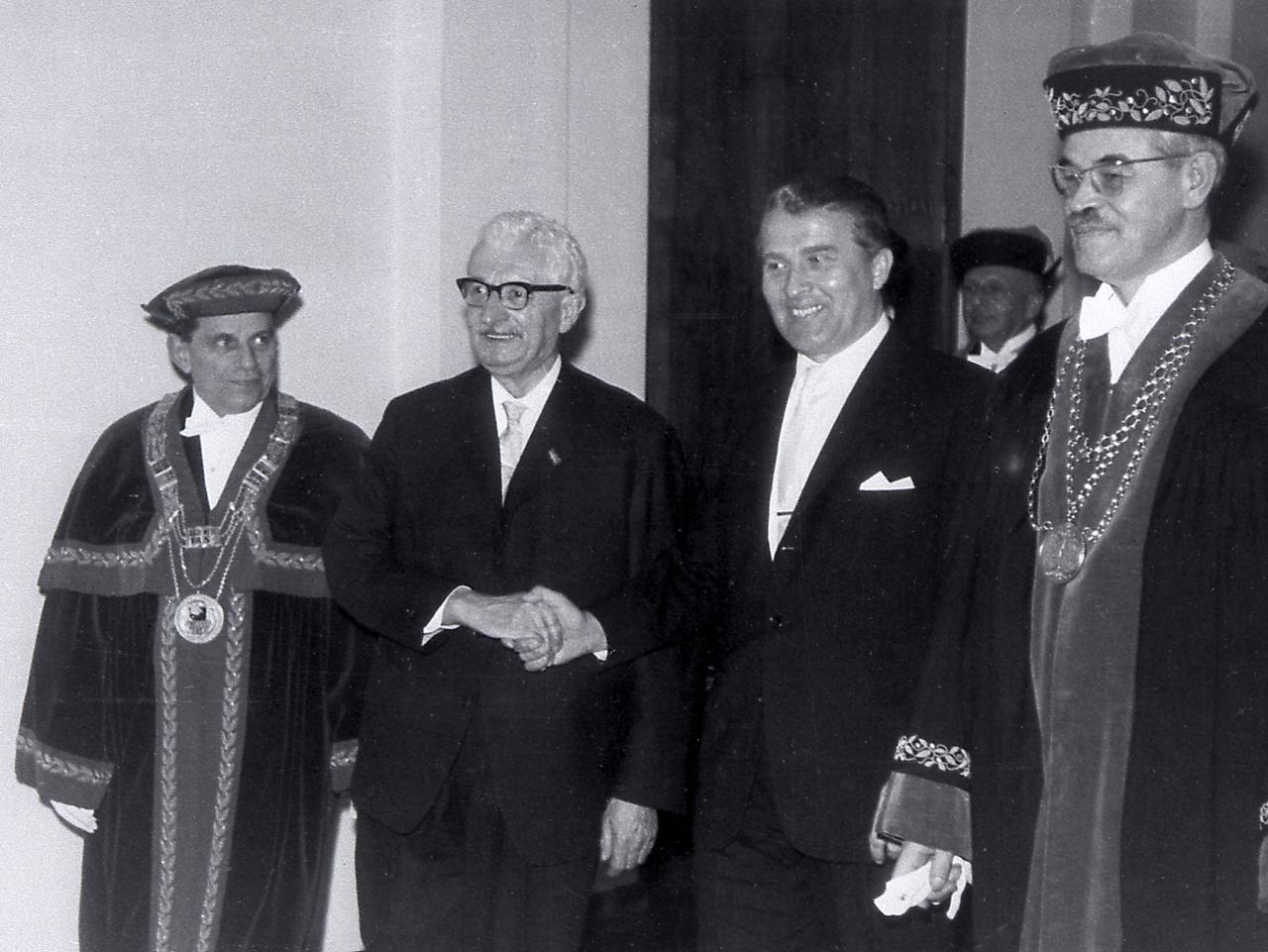
Dr. von Braun and Professor Hermann Oberth are honored by the Berlin Technical University. Both received honorary doctorates on January 8, 1963.
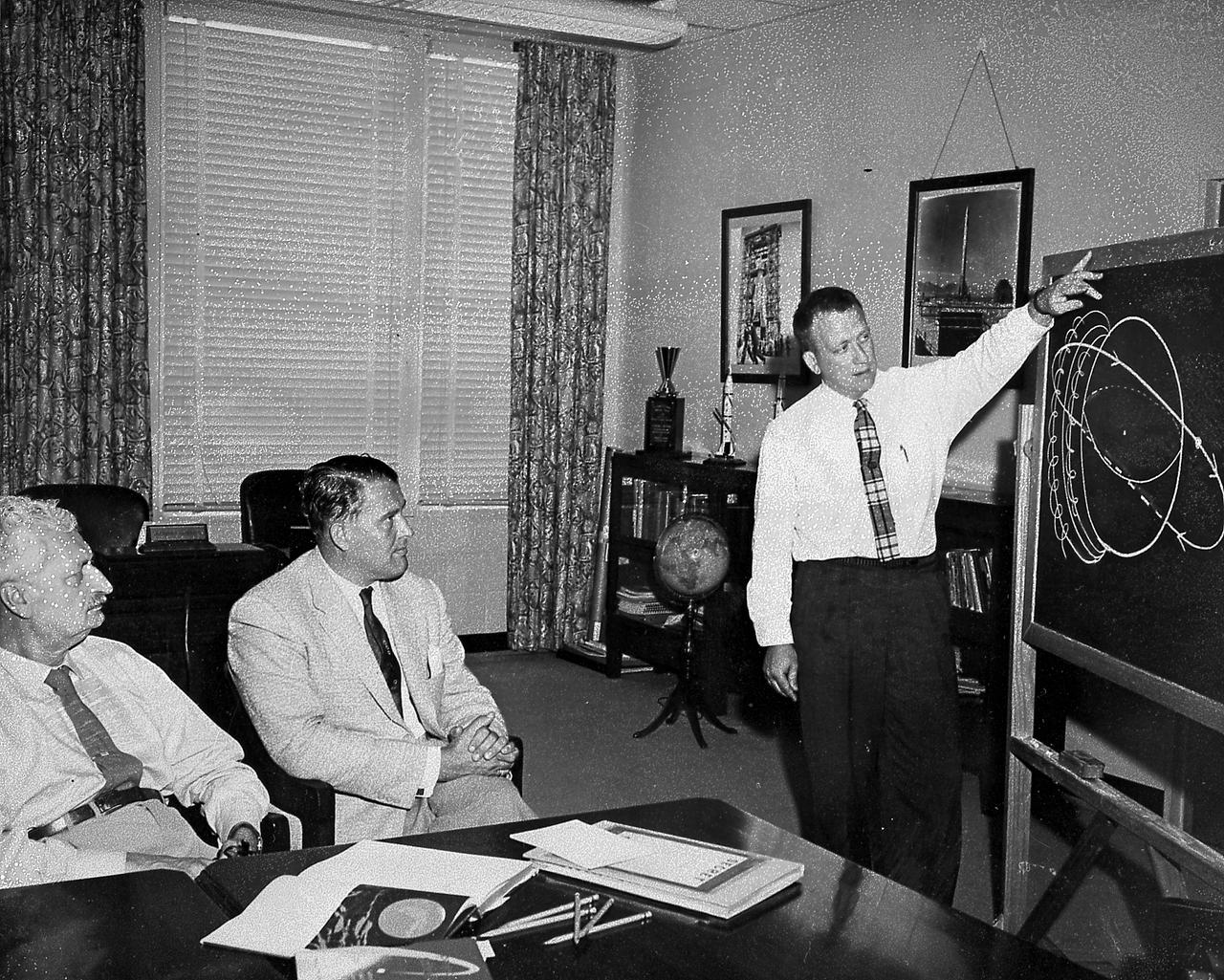
Professor Hermann Oberth and Dr. von Braun are briefed on satellite orbits by Dr. Charles A. Lundquist at Army Ballistic Missile Agency, Redstone Arsenal, Huntsville, Alabama.
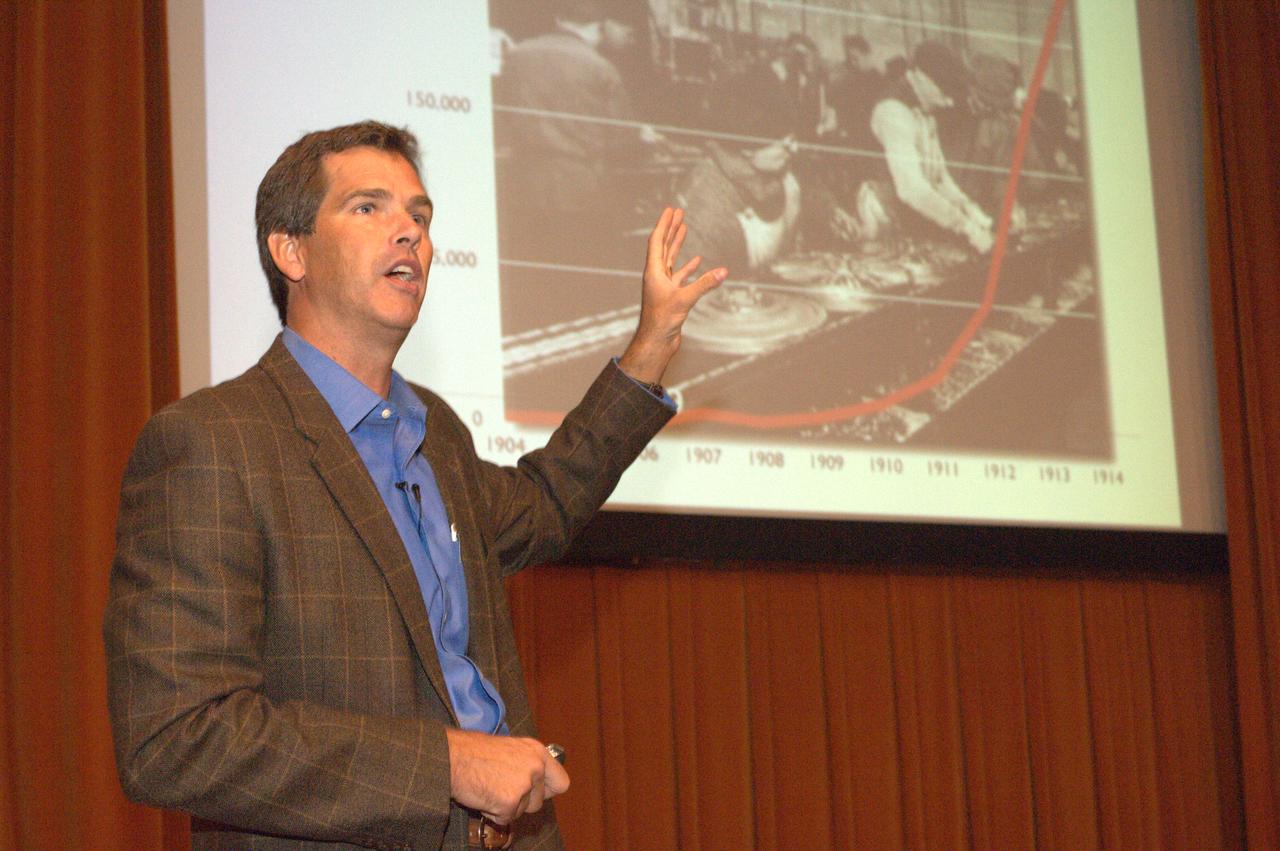
Professor Andrew Hargadon present a Director's Colloquium to NASA Ames on his book entitled 'How Breakthroughs Happen: The Surprising Truth about How Companies Innovate'

NASA astronaut Jessica Watkins presents Howard University Professor, Dr. Prabhakar Misra, left, and Howard University Professor and Chair of the Department of Physics and Astronomy, Dr. Quinton Williams, right, with a montage from her time as part of Expeditions 67 and 68 aboard the International Space Station, Friday, March 31, 2023, at Howard University in Washington. Photo Credit: (NASA/Aubrey Gemignani)
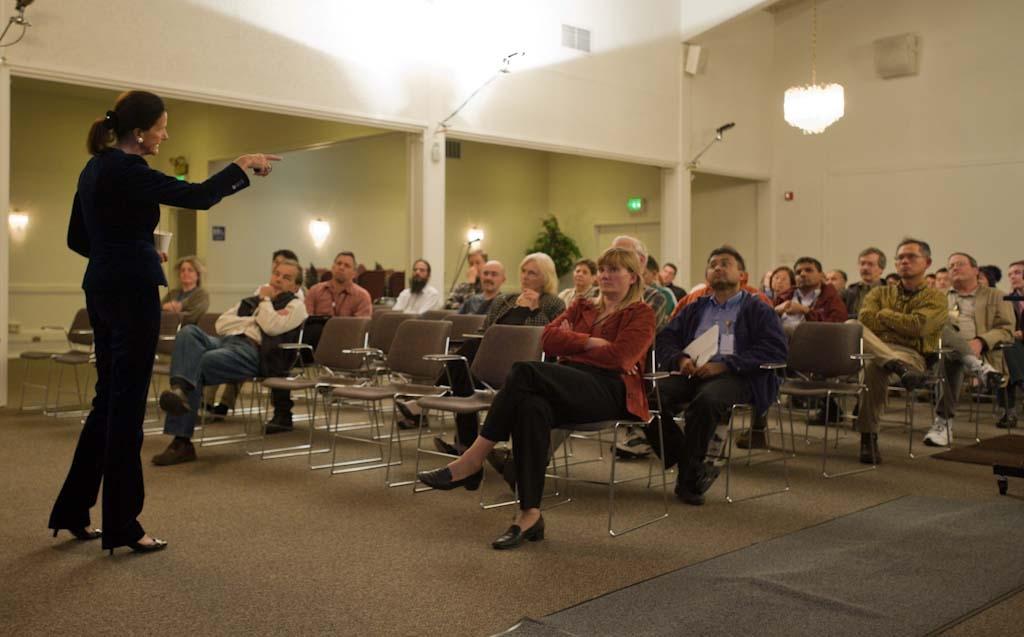
Aeronautics Technical Seminar: Dr. Elisabeth Pate-Cornell, Burt and Deedee McMurtry professor and chair of the Department of Management Science and Engineering at Stanford University presents 'Lessons Learned in Applying Engineering Risk Analysis'.
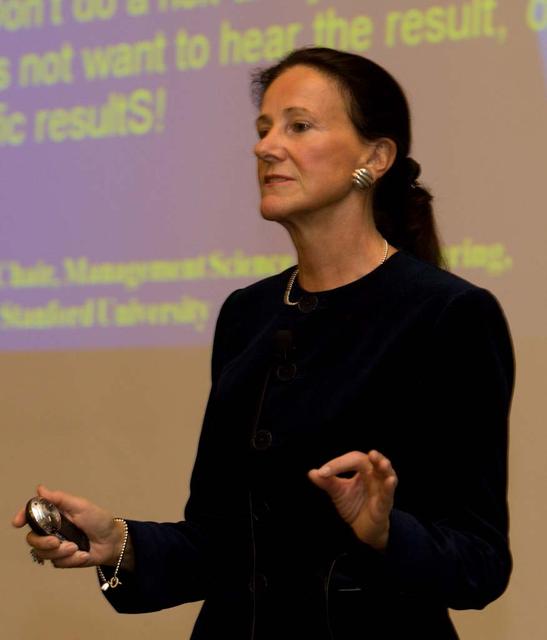
Aeronautics Technical Seminar: Dr. Elisabeth Pate-Cornell, Burt and Deedee McMurtry professor and chair of the Department of Management Science and Engineering at Stanford University presents 'Lessons Learned in Applying Engineering Risk Analysis'.
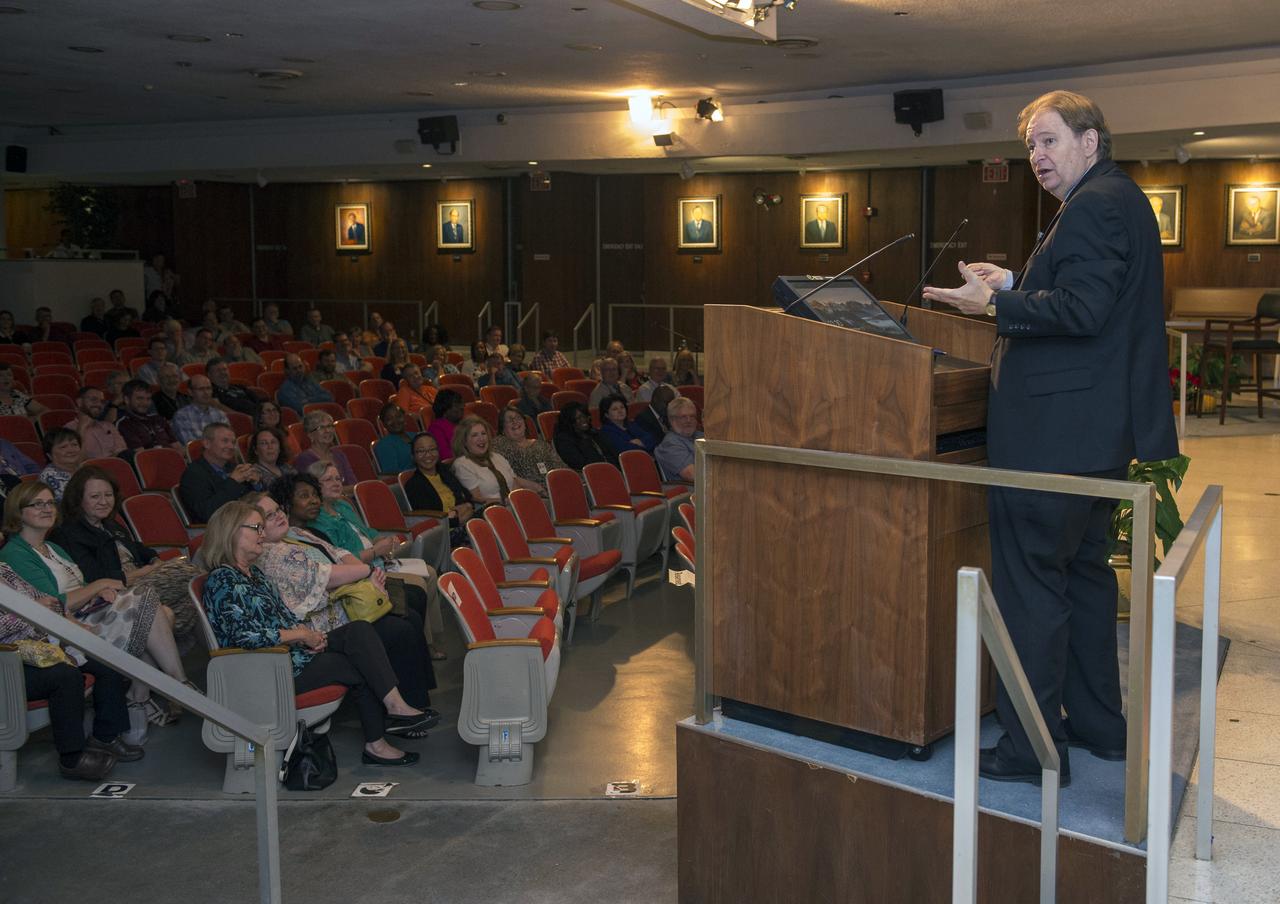
Kickoff speaker for Safety Week 2017 at NASA's Marshall Space Flight Center, former news reporter Rick Bragg -- now a journalism professor at the University of Alabama in Tuscaloosa -- speaks to team members Sept. 25, 2017
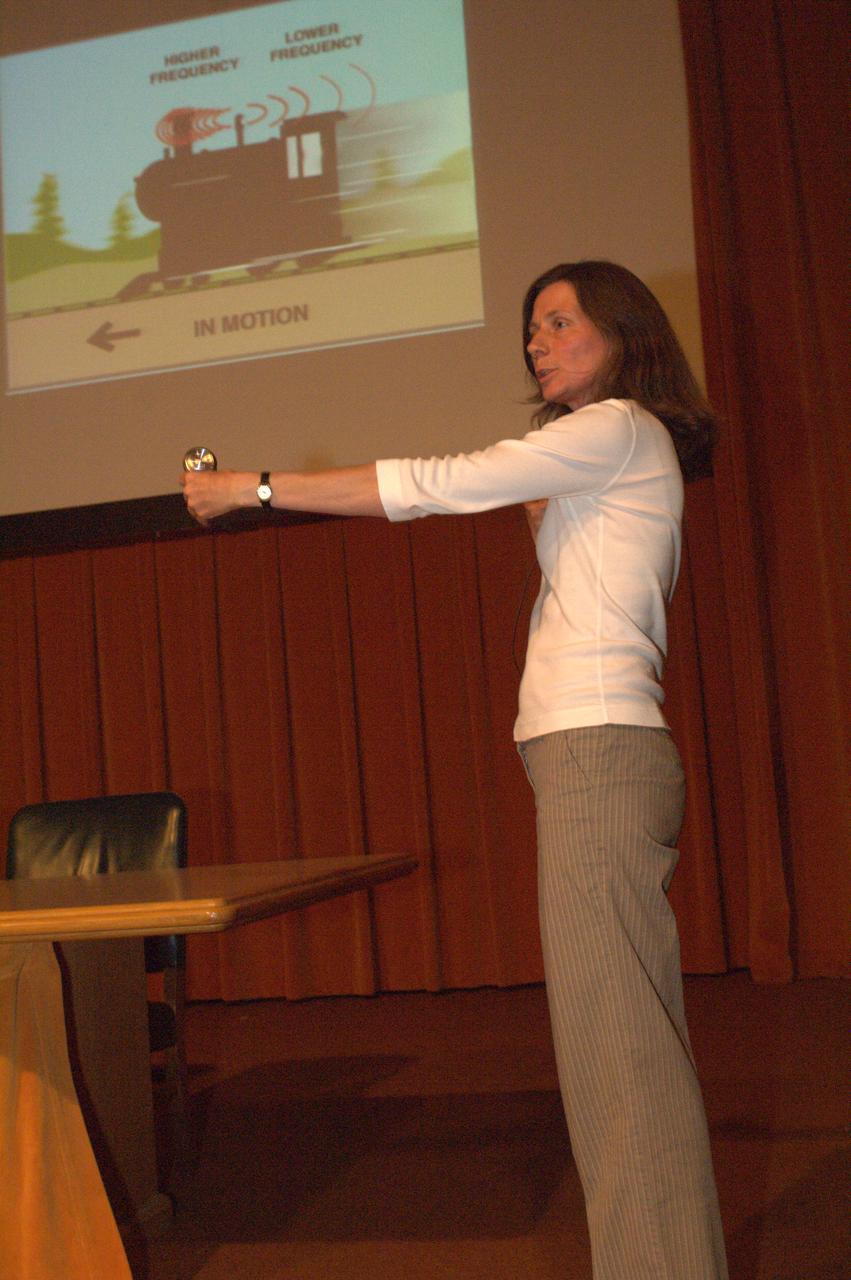
Professor Patricia Burchat, Chair of the Physics Department at Stanford University presents a Director's Colloquium entitled 'The Dark Side of the Universe'. A video of the presentation is currently available at the NASA Ames Library.
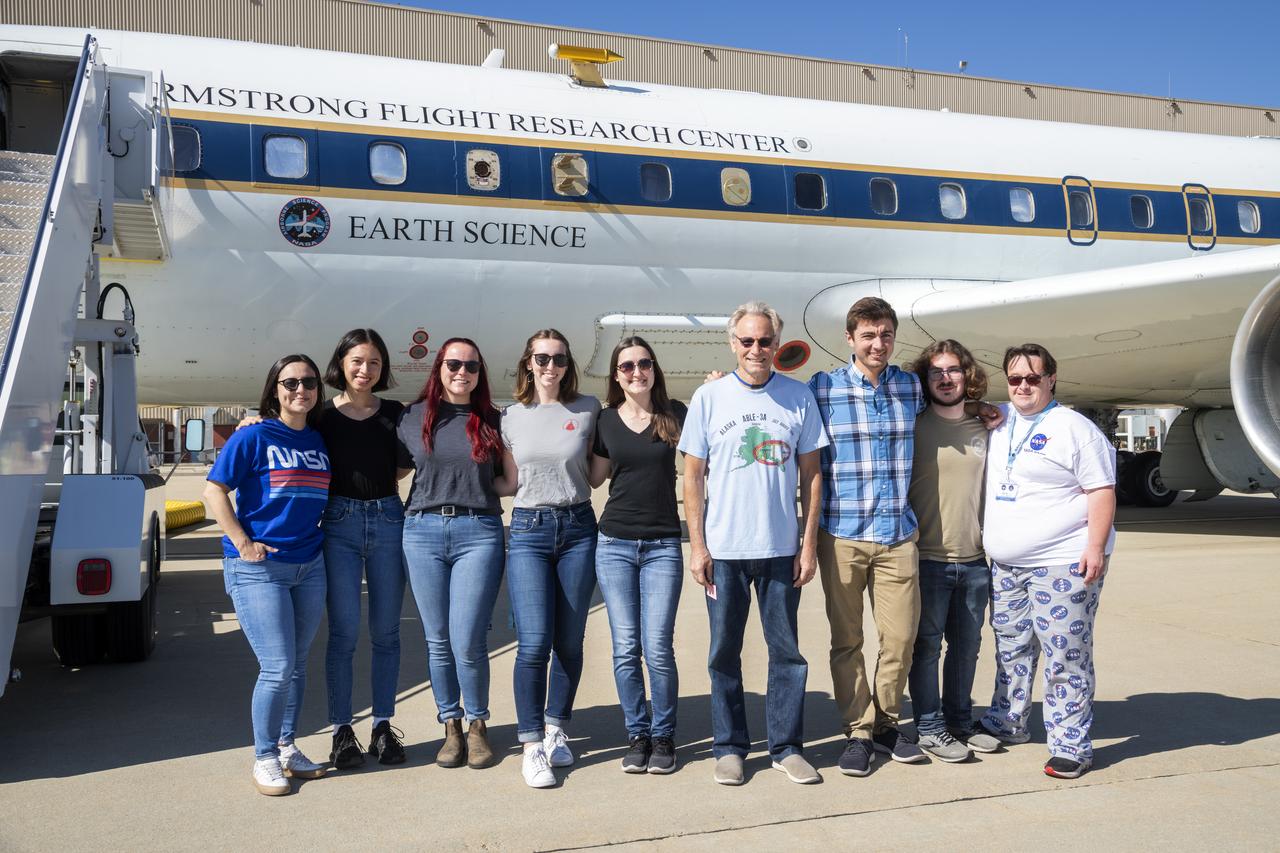
NASA Student Airborne Research Program participants pose in front of the DC-8 before their flight on Jun 23, 2022. The students are joined by mentors and professors to study air quality over the Central Valley in California.
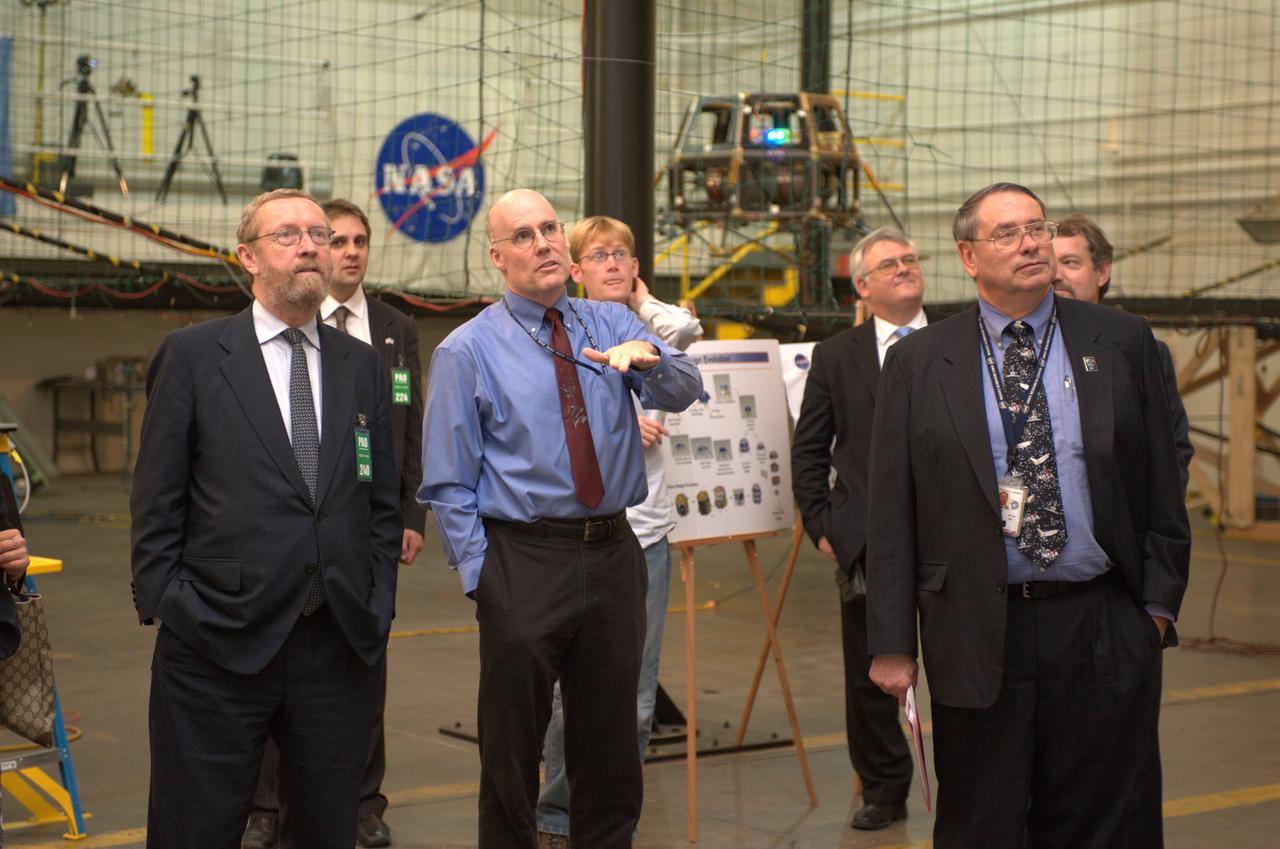
Professor John Beddington, UK (United Kingdom) Government Chief Scientist Advisor visit to Ames on tour of the Small Satellites area Bldg 45 with ______and Ames Center Director Pete Worden (and a lunar lander prototype)
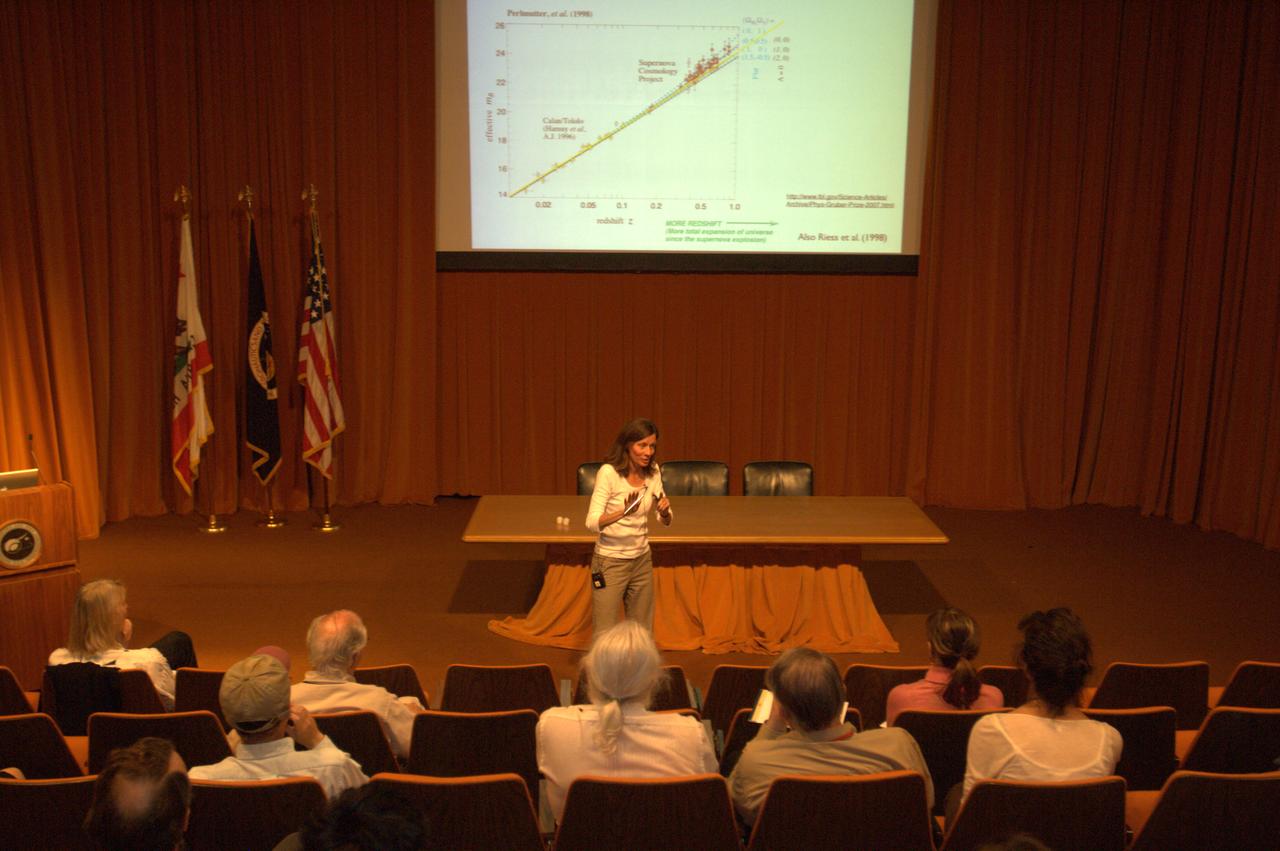
Professor Patricia Burchat, Chair of the Physics Department at Stanford University presents a Director's Colloquium entitled 'The Dark Side of the Universe'. A video of the presentation is currently available at the NASA Ames Library.
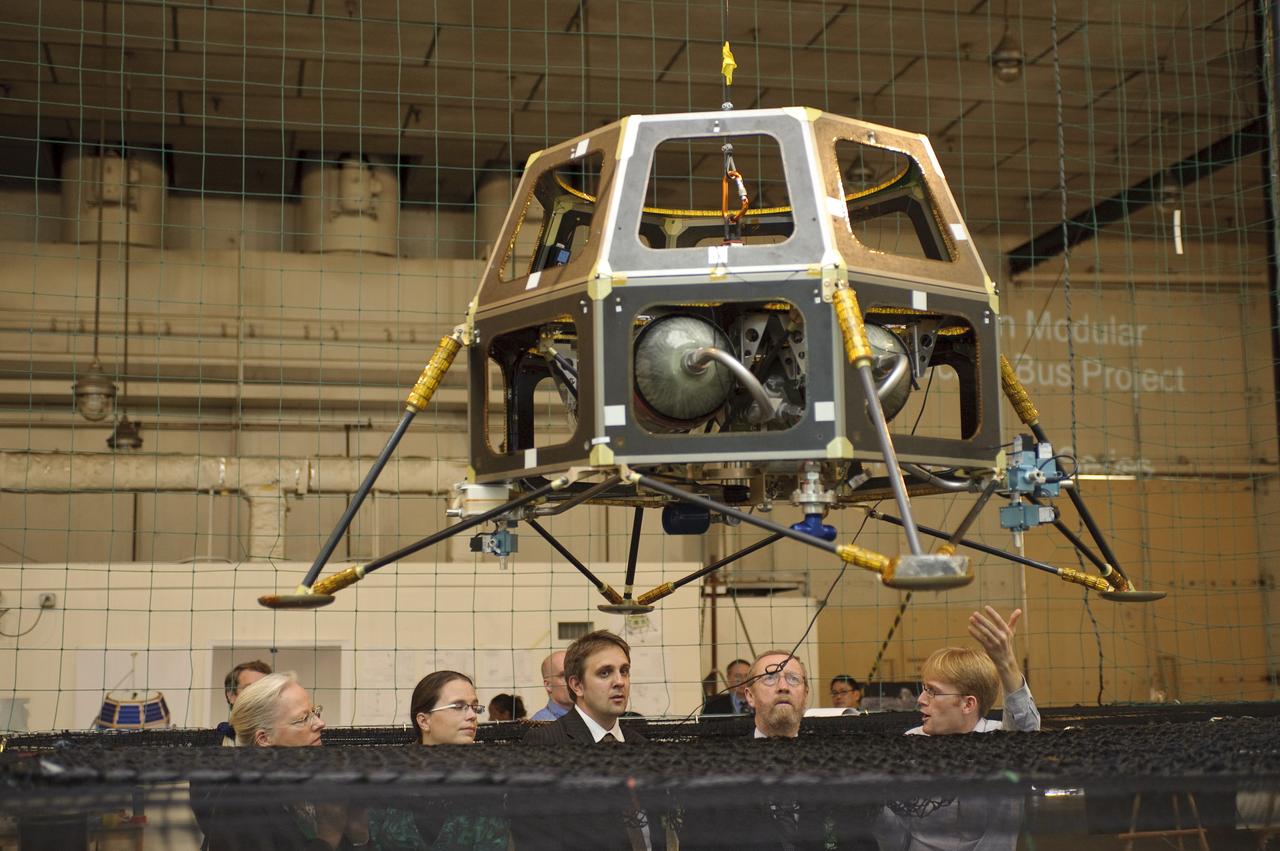
Professor John Beddington, UK (United Kingdom) Government Chief Scientist Advisor visit to Ames on tour of the Small Satellites area Bldg 45 (and a lunar lander prototype LADEE)
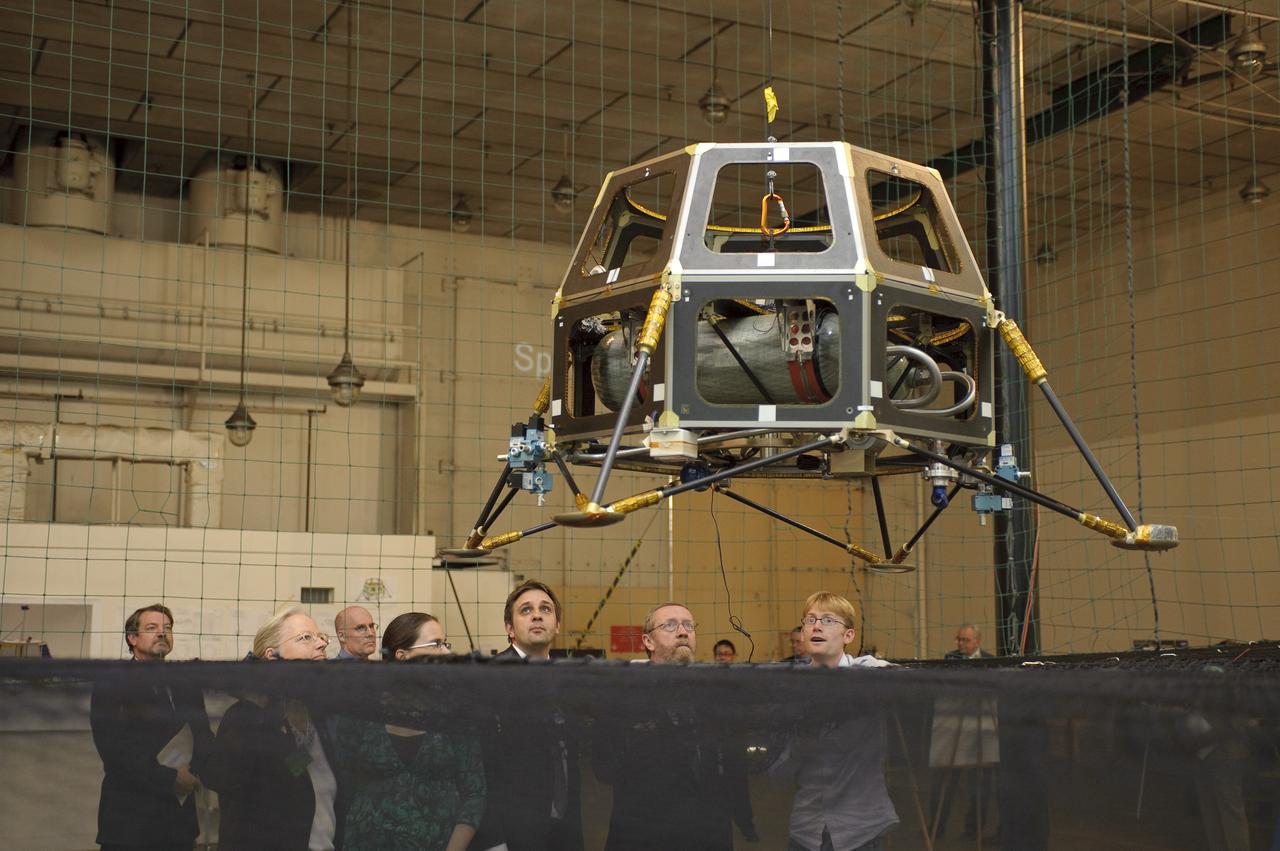
Professor John Beddington, UK (United Kingdom) Government Chief Scientist Advisor visit to Ames on tour of the Small Satellites area Bldg 45 (and a lunar lander prototype LADEE)
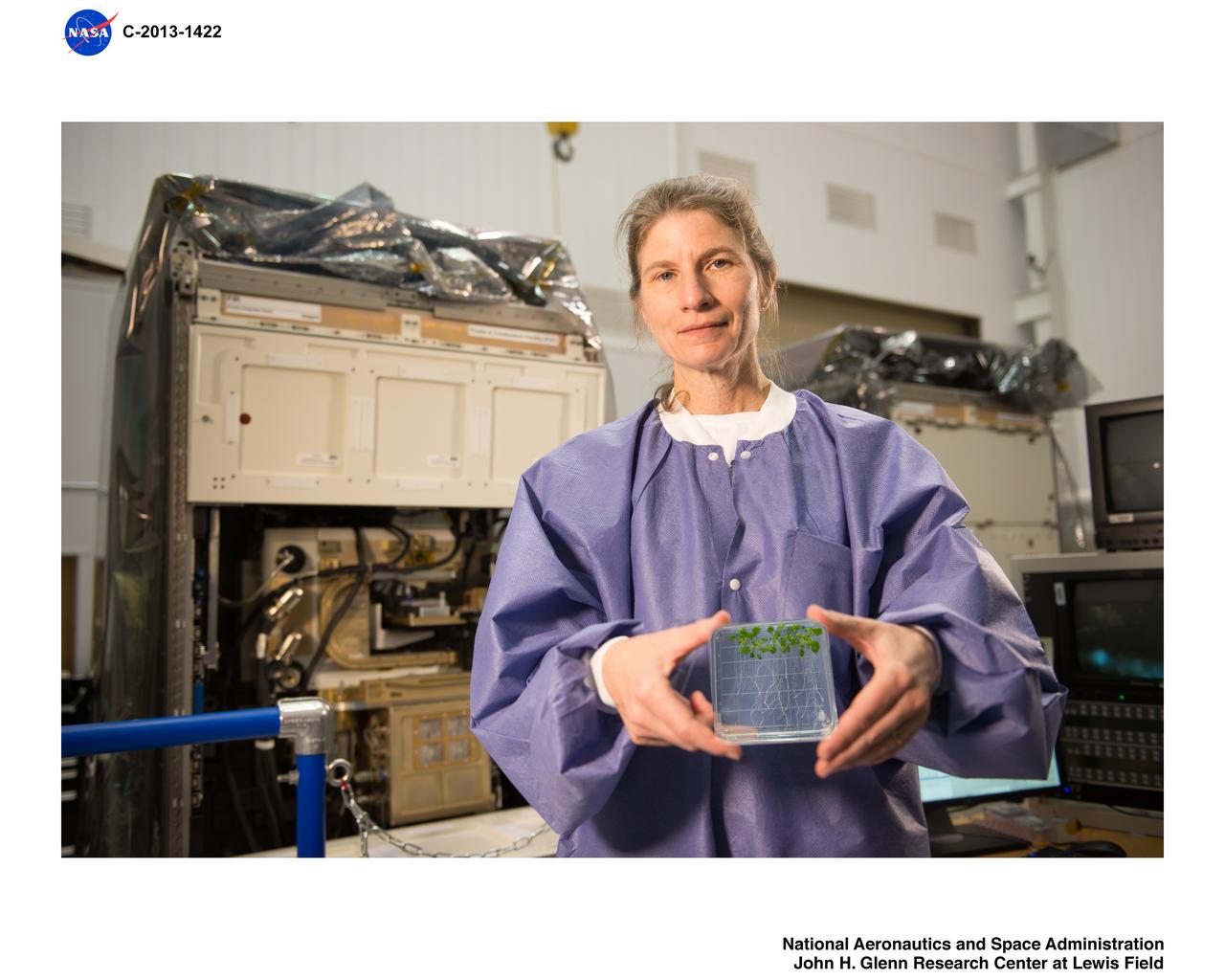
University of Florida, Professor and Director of Interdisciplinary Center for Biotechnology Research Interacting with the Fluids Integration Rack, FIR, Light Microscopy Module, LMM, Ground Integration Unit, GIU, Hardware
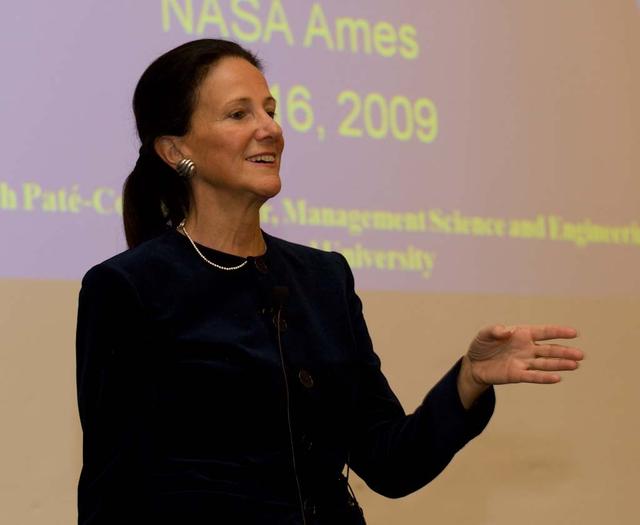
Aeronautics Technical Seminar: Dr. Elisabeth Pate-Cornell, Burt and Deedee McMurtry professor and chair of the Department of Management Science and Engineering at Stanford University presents 'Lessons Learned in Applying Engineering Risk Analysis'.
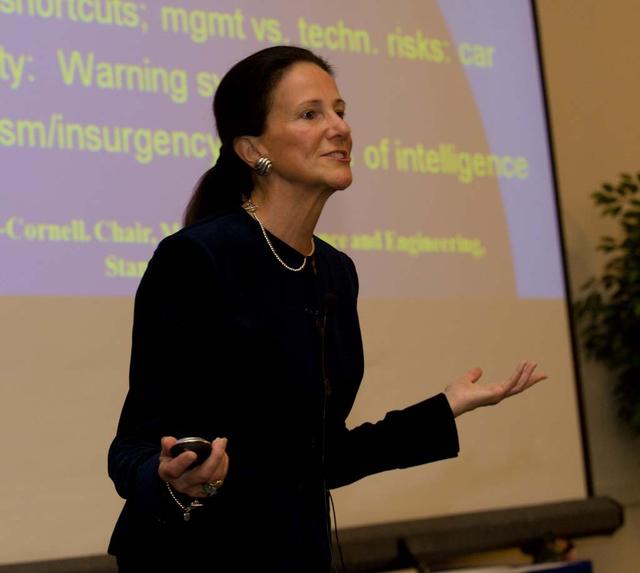
Aeronautics Technical Seminar: Dr. Elisabeth Pate-Cornell, Burt and Deedee McMurtry professor and chair of the Department of Management Science and Engineering at Stanford University presents 'Lessons Learned in Applying Engineering Risk Analysis'.
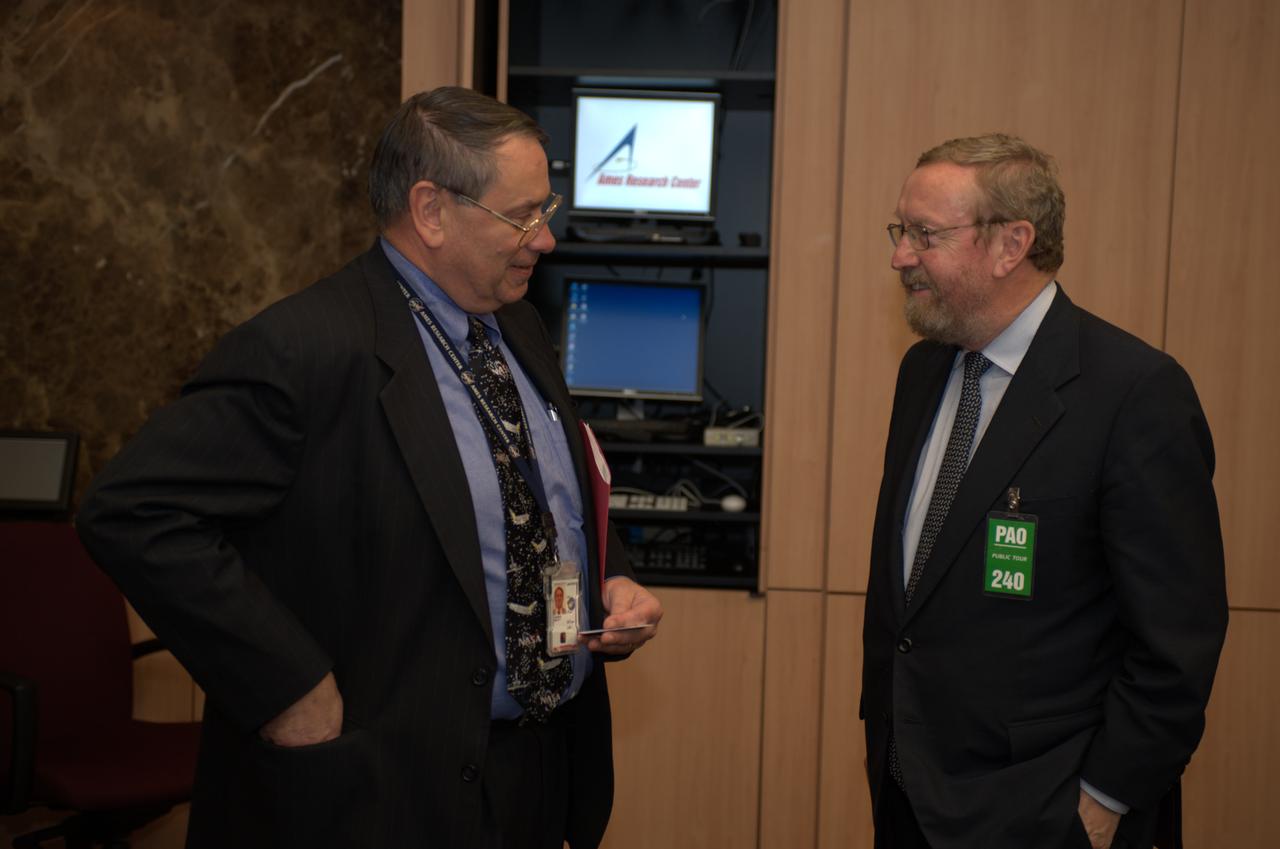
Professor John Beddington, UK (United Kingdom) Government Chief Scientist Advisor visit to Ames - greeted by Ames Center Director Pete Worden in Bldg N-200 Boyd Room
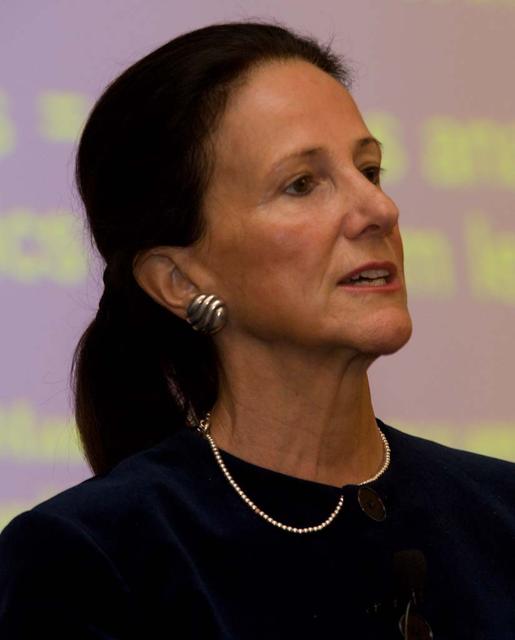
Aeronautics Technical Seminar: Dr. Elisabeth Pate-Cornell, Burt and Deedee McMurtry professor and chair of the Department of Management Science and Engineering at Stanford University presents 'Lessons Learned in Applying Engineering Risk Analysis'.
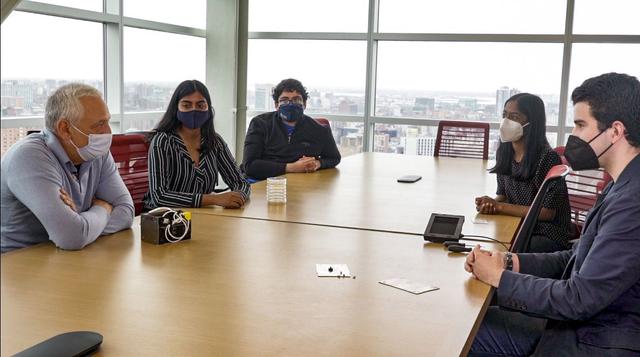
jsc2021e063275--Leadership team meets with Professor and Former Astronaut Michael Massimino Pictured from left to right: Michael Massimino, Swati Ravi, Hugo Favila, Kalpana Ganeshan, Alfonso Ussia
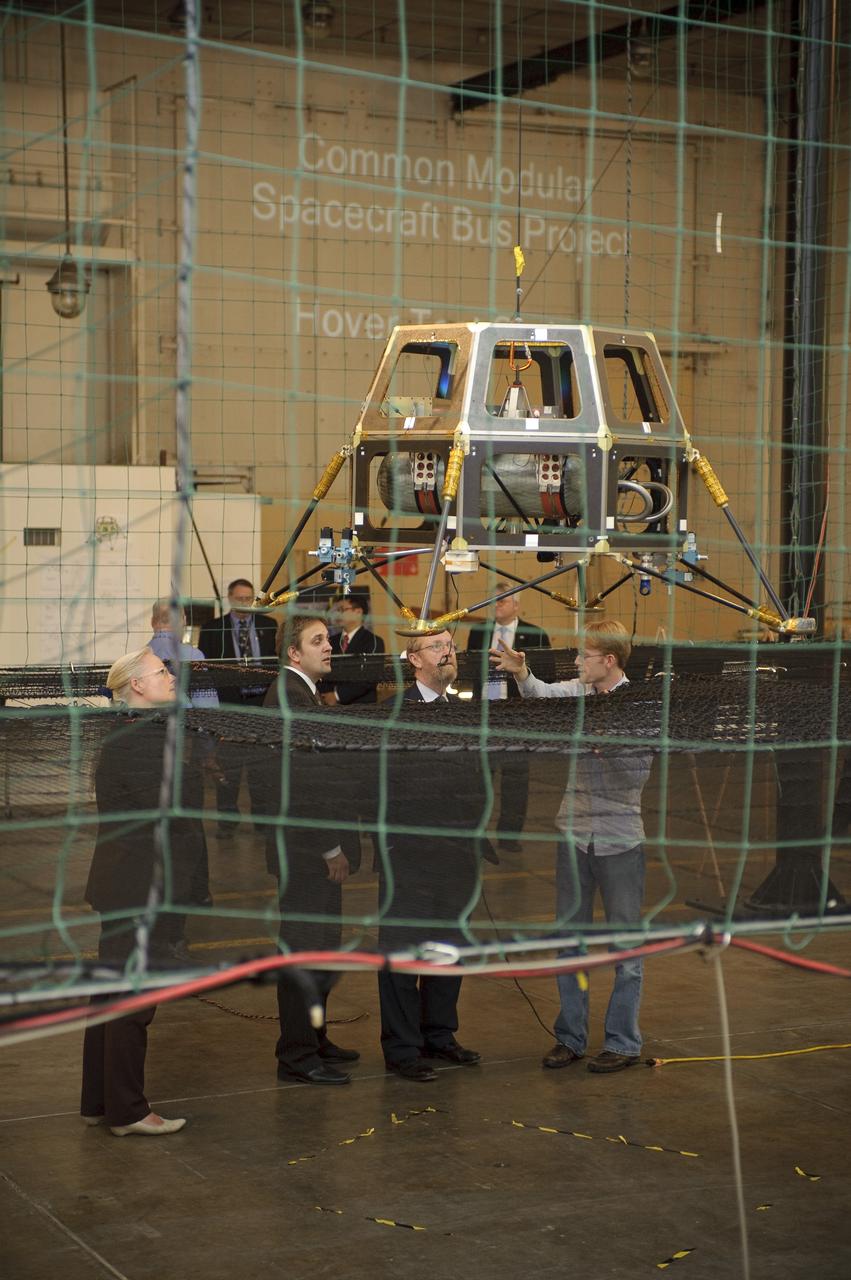
Professor John Beddington, UK (United Kingdom) Government Chief Scientist Advisor visit to Ames on tour of the Small Satellites area Bldg 45 (and a lunar lander prototype LADEE)
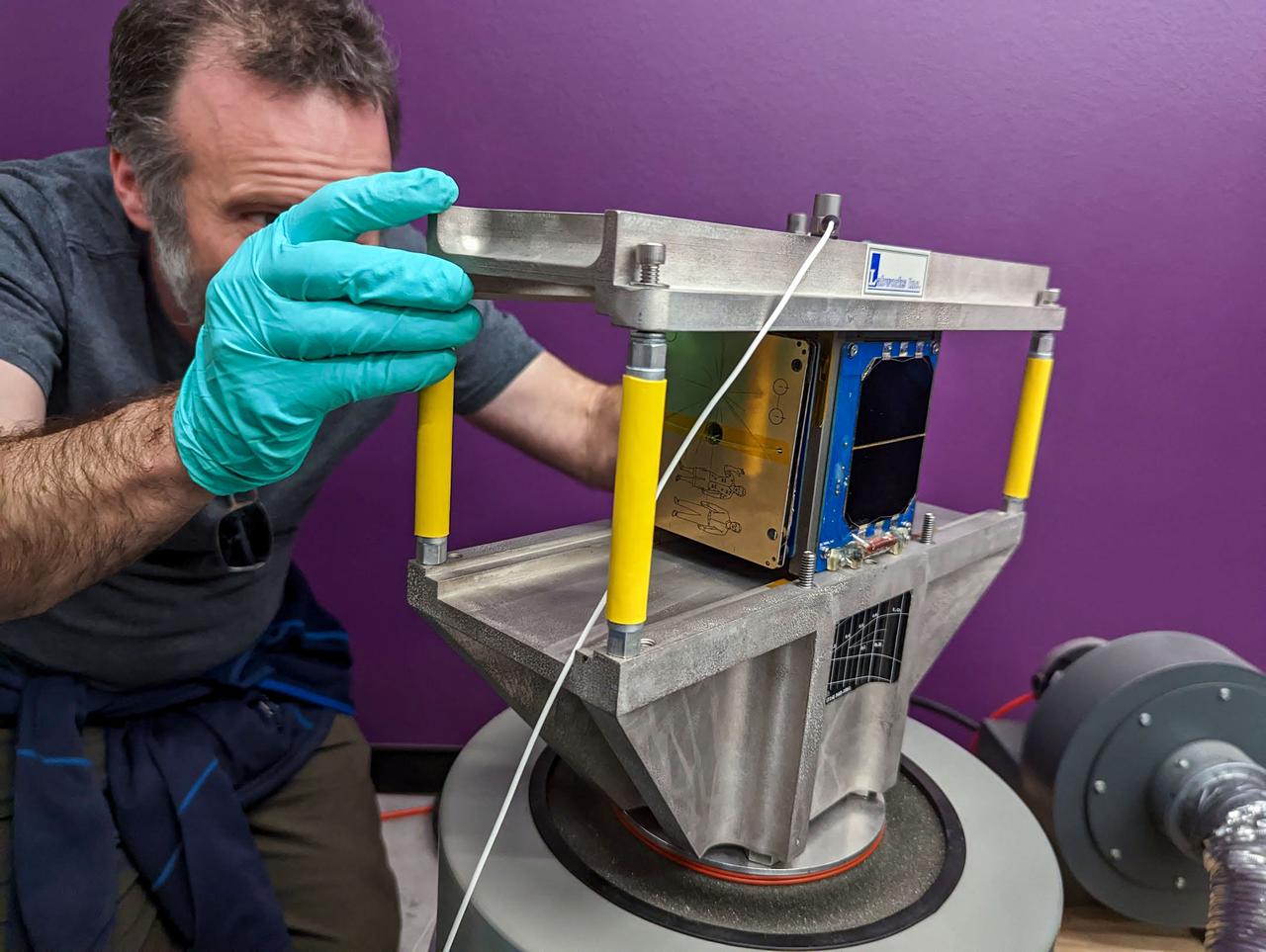
jsc2023e010186 (12/13/2022) --- Professor Danny Jacobs inspects the LightCube inside the Random Vibration Test Fixture. Image courtesy of Jaime Sanchez de la Vega.
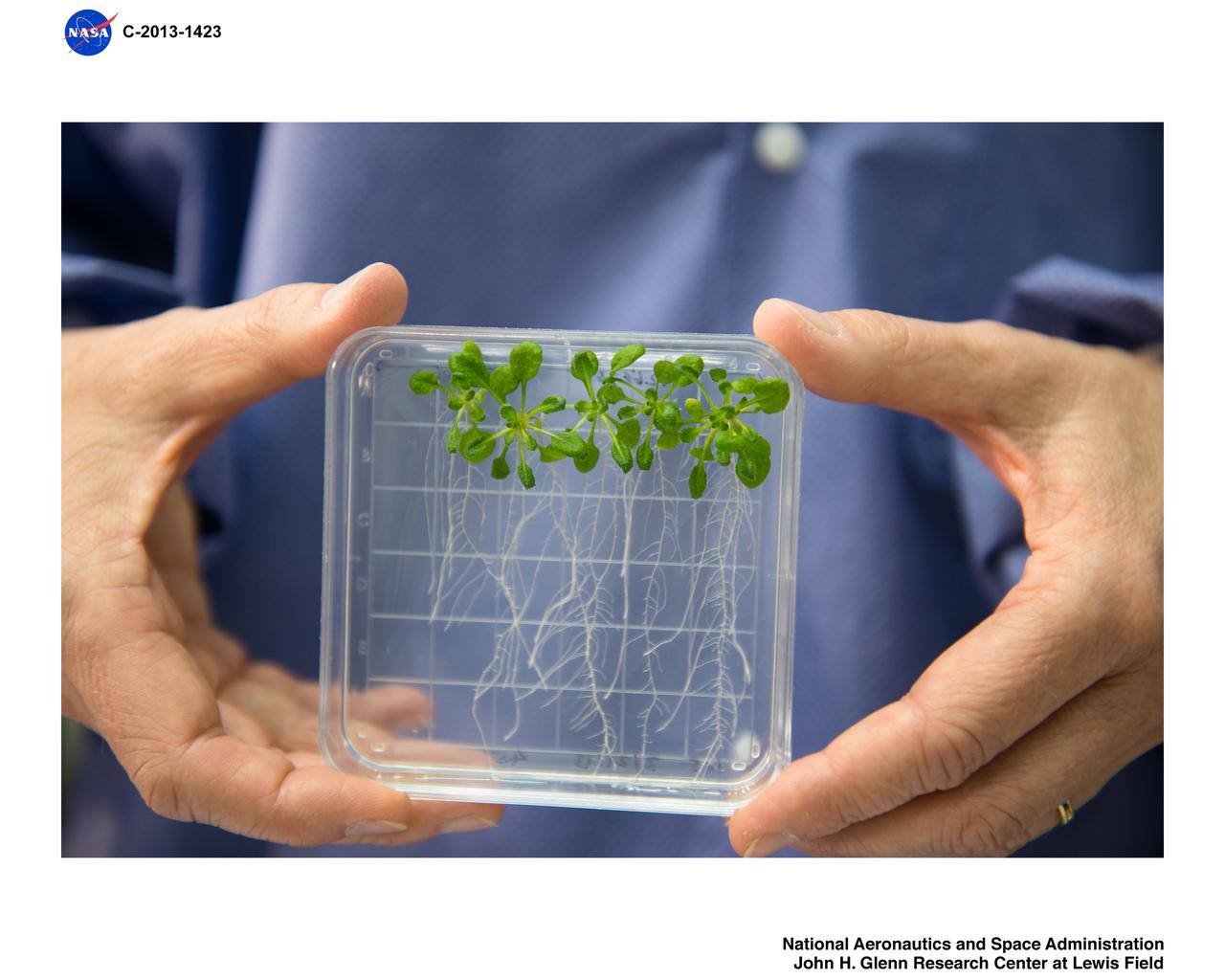
University of Florida, Professor and Director of Interdisciplinary Center for Biotechnology Research Interacting with the Fluids Integration Rack, FIR, Light Microscopy Module, LMM, Ground Integration Unit, GIU, Hardware
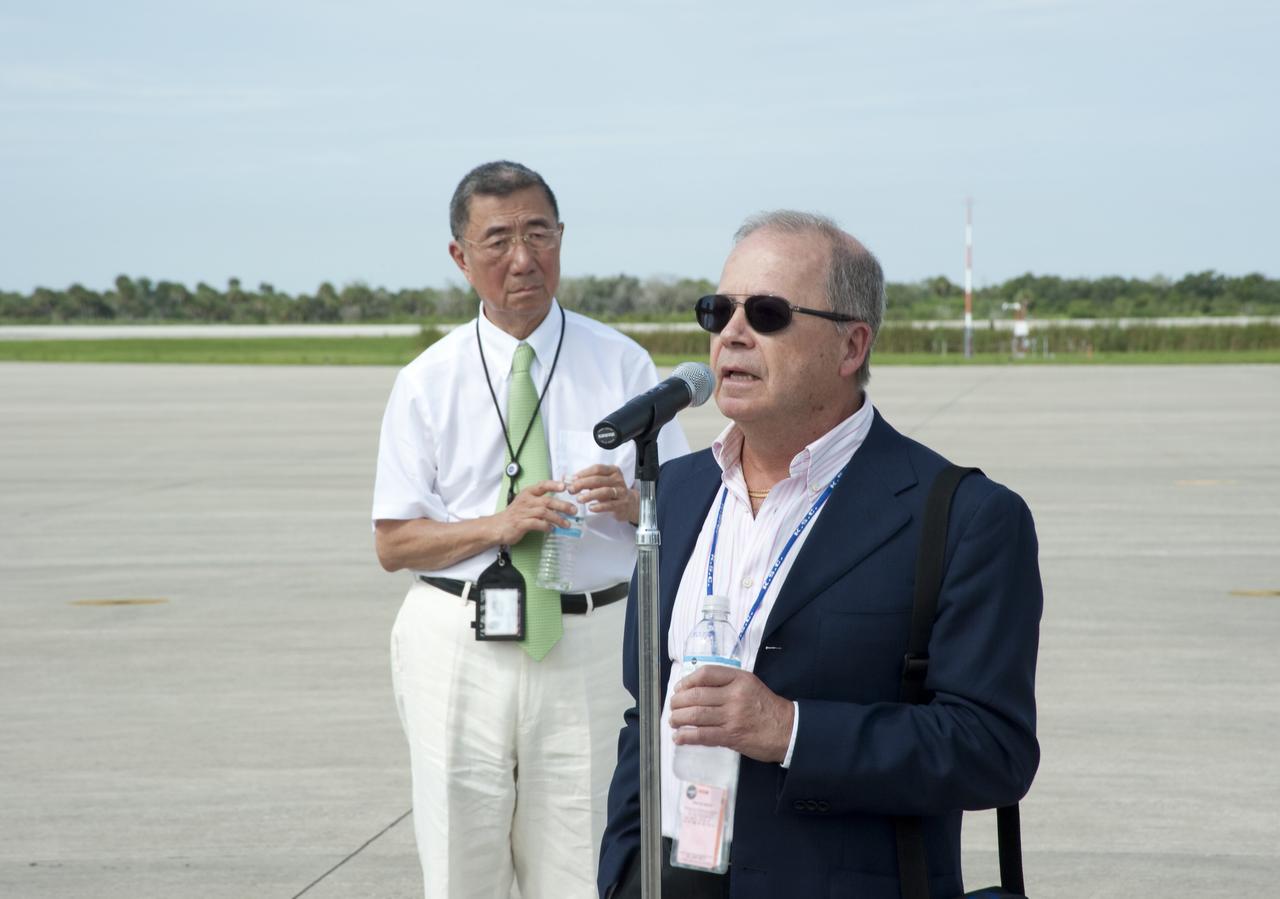
CAPE CANAVERAL, Fla. -- At the Shuttle Landing Facility at NASA's Kennedy Space Center in Florida, Professor Sam Ting, AMS Principal Investigator from the Massachusetts Institute of Technology listens intently as Professor Manuel Aguilar, AMS Spanish Coordinator, speaks to the media before the arrival of the Alpha Magnetic Spectrometer, or AMS. AMS, a state-of-the-art particle physics detector, is designed to operate as an external module on the International Space Station. It will use the unique environment of space to study the universe and its origin by searching for dark matter. The STS-134 crew will fly AMS to the International Space Station aboard space shuttle Endeavour, targeted to launch Feb. 26, 2011. Photo credit: NASA/Kim Shiflett
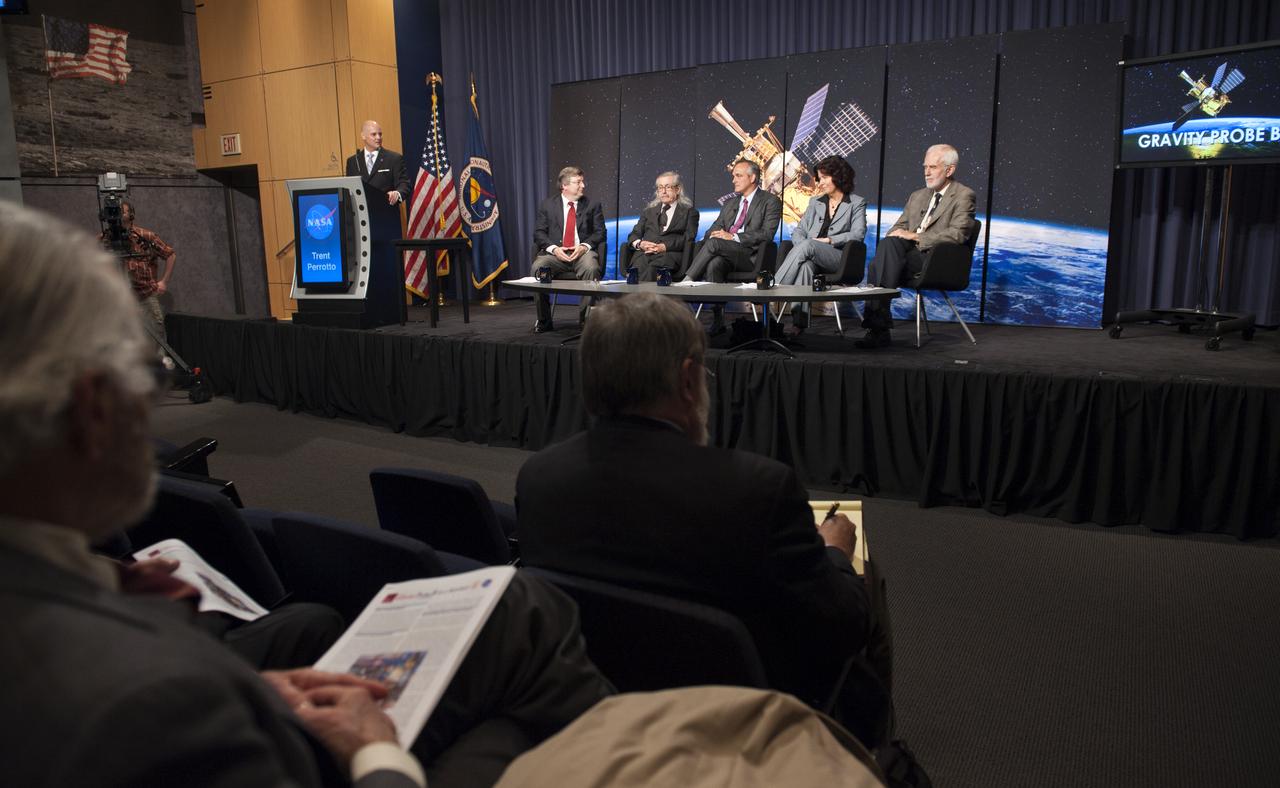
Seated from left, Bill Danchi, Senior Astrophysicist and Program Scientist at NASA Headquarters, Francis Everitt, Principal Investigator for the Gravity Probe B Mission at Stanford University, Rex Geveden, President of Teledyne Brown Engineering, Colleen Hartman, a research professor at George Washington University, and Clifford Will, Professor of Physics at Washington University in St. Louis, Mo., conduct a press conference, Wednesday, May 4, 2011, to discuss NASA's Gravity Probe B (GP-B) mission which has confirmed two key predictions derived from Albert Einstein's general theory of relativity, which the spacecraft was designed to test. at NASA Headquarters in Washington. Photo Credit: (NASA/Paul E. Alers)
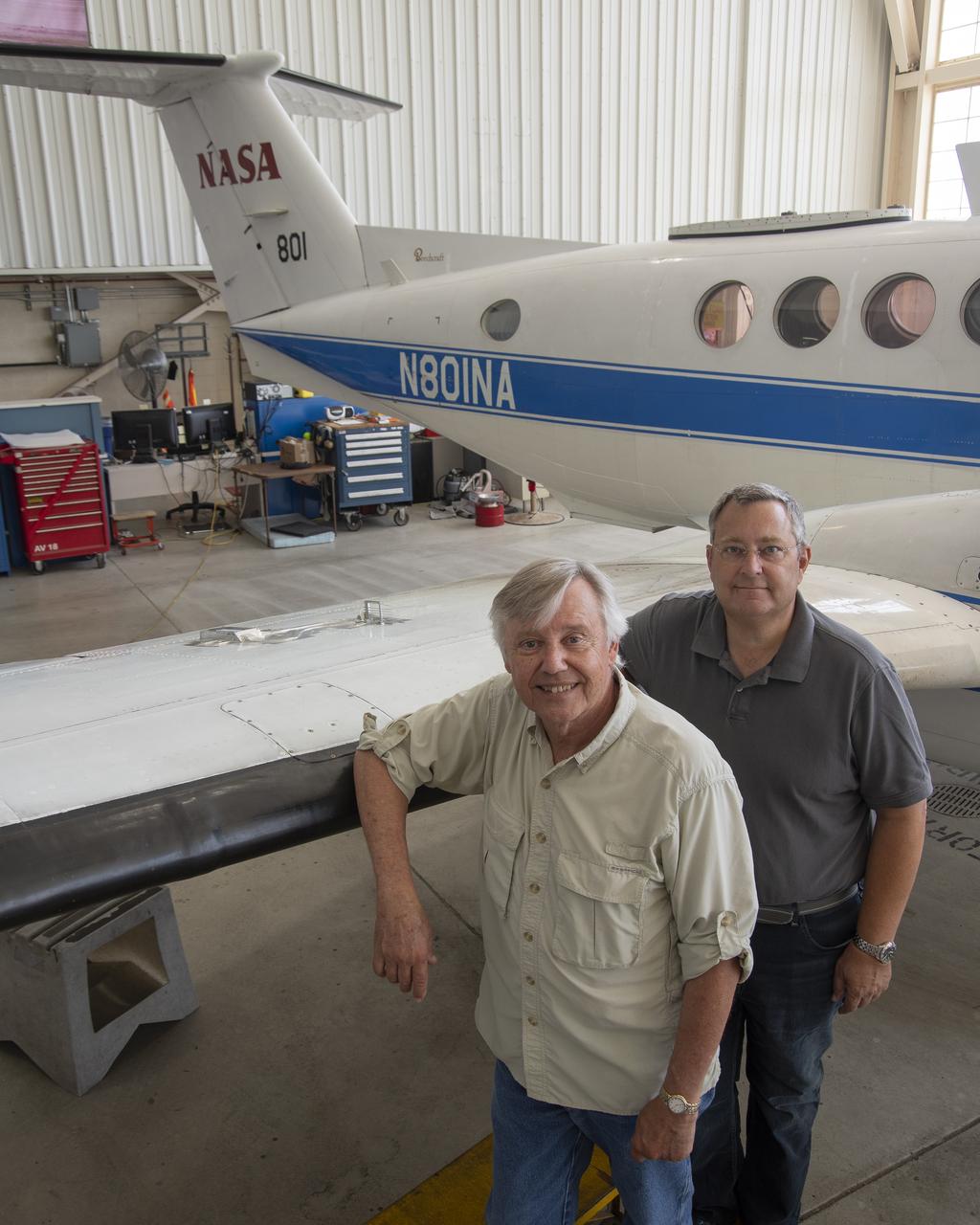
Cal Poly San Luis Obispo professors Russ Westphal, left, and Aaron Drake posed next to NASA Armstrong Flight Research Center’s Beechcraft Beech 200 Super King Air aircraft. On the King Air’s wing is the Boundary Layer Data System (BLDS), a sensor developed by Cal Poly and Northrop Grumman. BLDS was flown at NASA Armstrong as a step towards creating a process allowing universities, small businesses and other interested parties to quickly test flight technologies.
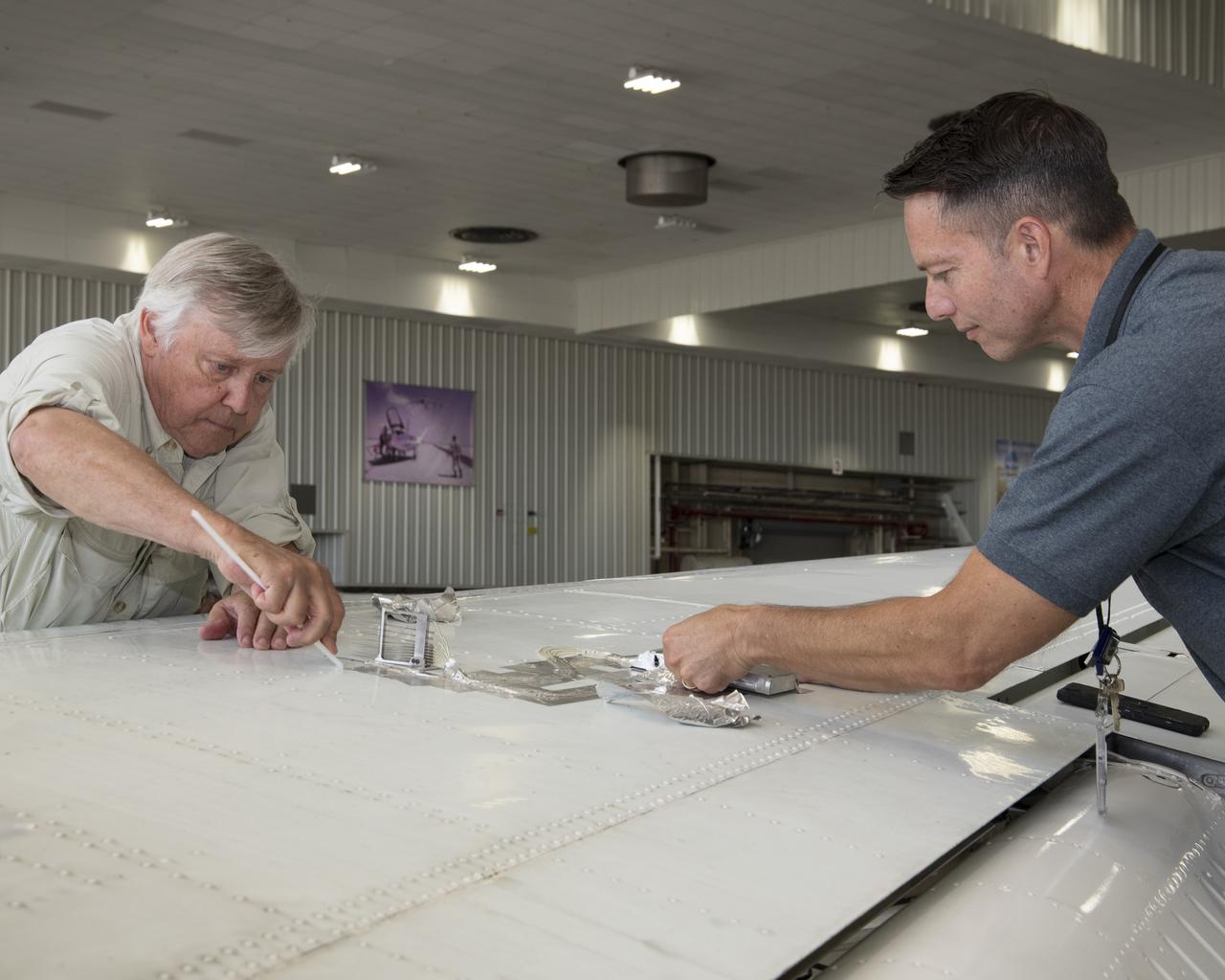
Cal Poly San Luis Obispo Professor Russ Westphal, left, and NASA Armstrong’s Technology Transfer Officer Benjamin Tomlinson remove the Boundary Layer Data System (BLDS) sensor attached to the wing of a Beechcraft Beech 200 Super King Air. The BLDS was flight tested at NASA’s Armstrong Flight Research Center to showcase rapid and flexible flight-testing capabilities.
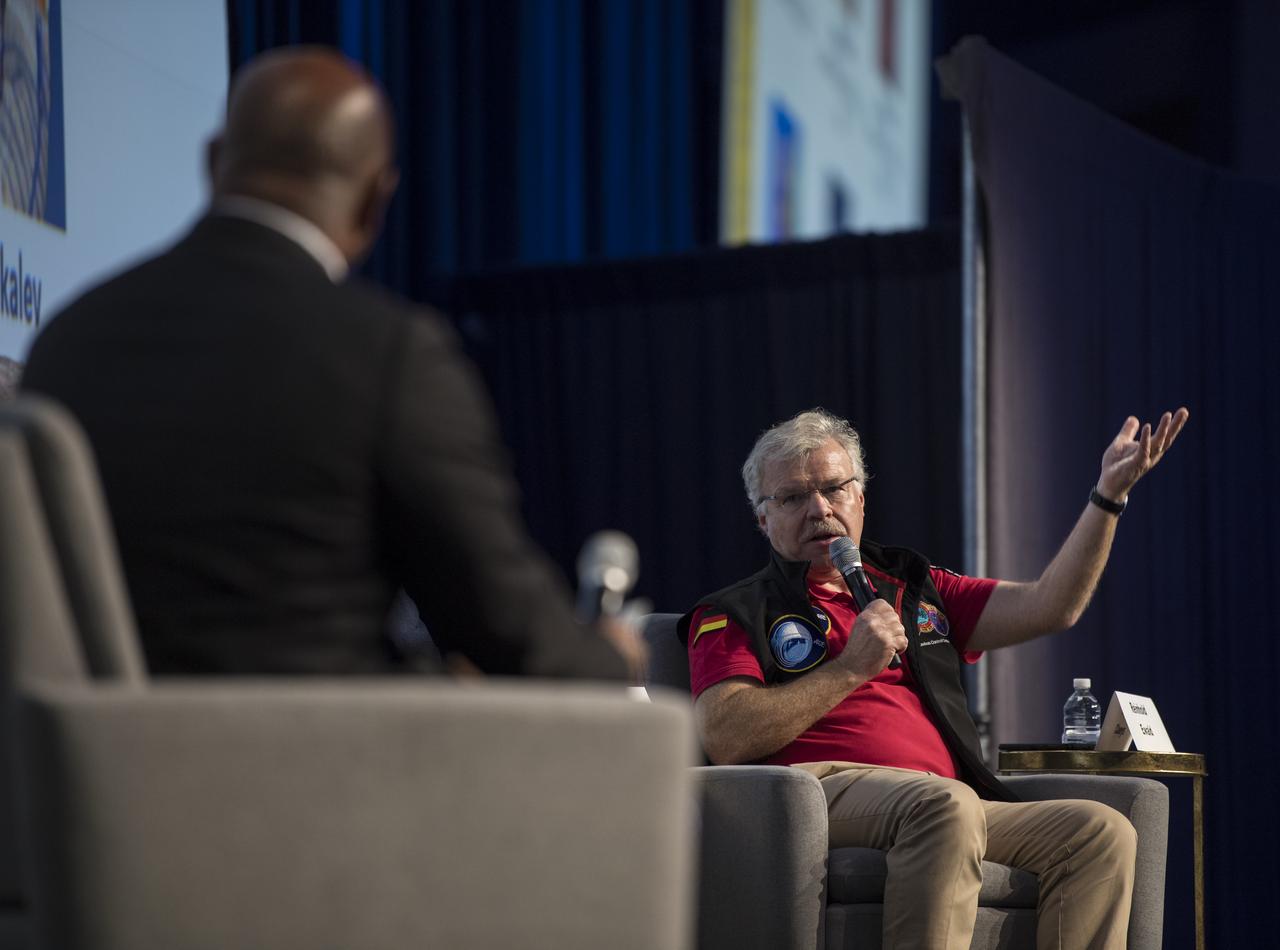
European astronaut and professor, Institute of Space Systems, Reinhold Ewald, speaks during an astronaut panel discussion at the 70th International Astronautical Congress, Friday, Oct. 25, 2019, at the Walter E. Washington Convention Center in Washington. Photo credit: (NASA/Aubrey Gemignani)

NASA Chief Technologist Douglas Terrier, left of center, meets with Dr. Ed Wilson, engineering professor emeritus and tours Wilson's atmospheric sciences laser lab during “NASA Day in Arkansas” at Harding University in Searcy, Arkansas, on Jan. 27, 2020.
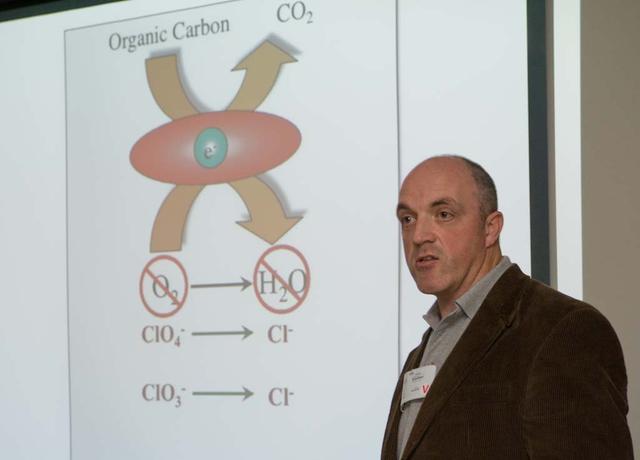
Directors Colloquium: Science Seminar by John Coates, Associate Professor of Microbiology at the University of California, Berkeley, on Microbial Perchlorate Reduction. The discovery of perchlorate in soils at the Phoenix Landing site, makes this type of organisms interesting analogues to potential life on Mars.
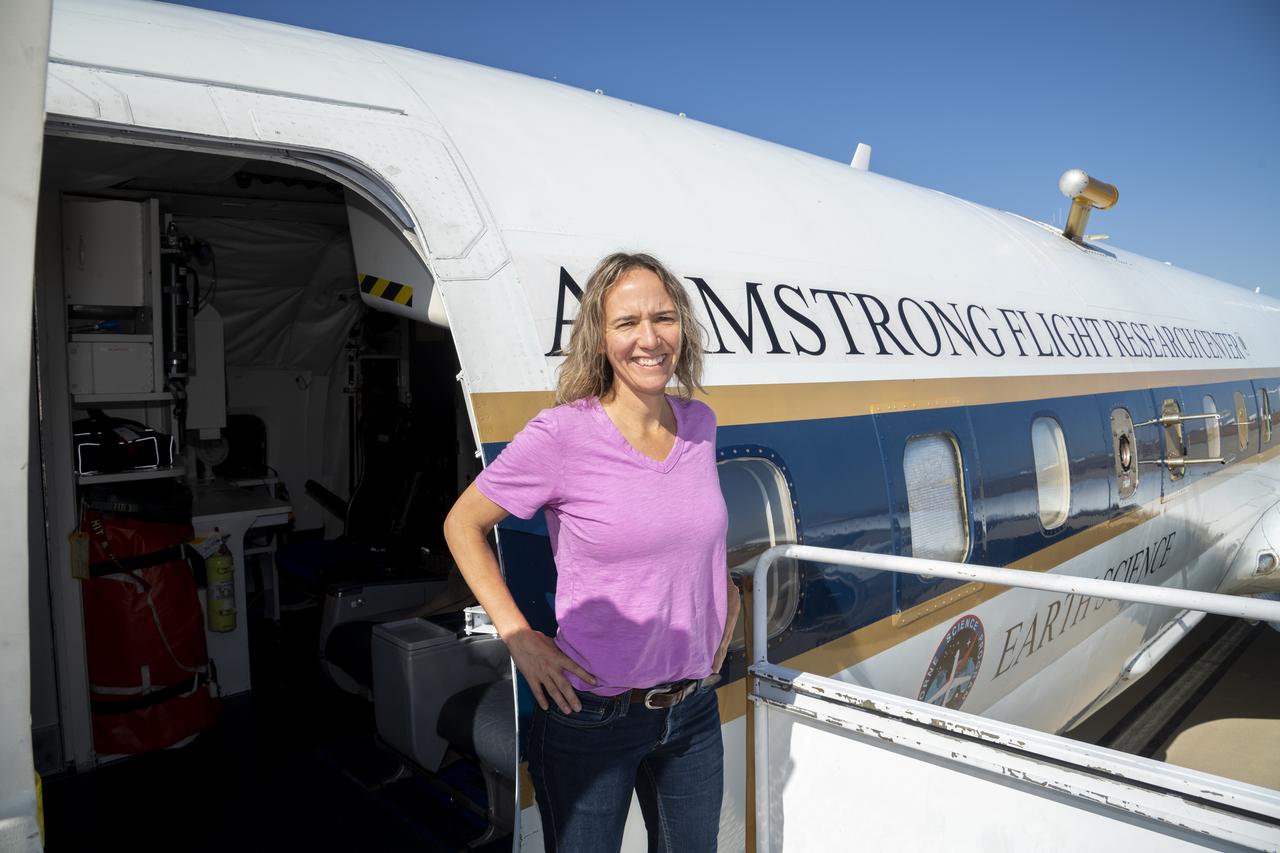
NASA’s Student Airborne Research Program invites Dr. Ann Marie Carlton, Professor of Chemistry at the University of California, Irvine and White House Office of Science and Technology Policy fellow, to fly aboard the DC-8 to measure air quality on June 23, 2022.

Howard University Professor and Chair of the Department of Physics and Astronomy, Dr. Quinton Williams, introduces NASA astronaut Jessica Watkins to speak about her time in space as part of Expeditions 67 and 68, Friday, March 31, 2023, at Howard University in Washington. Photo Credit: (NASA/Aubrey Gemignani)
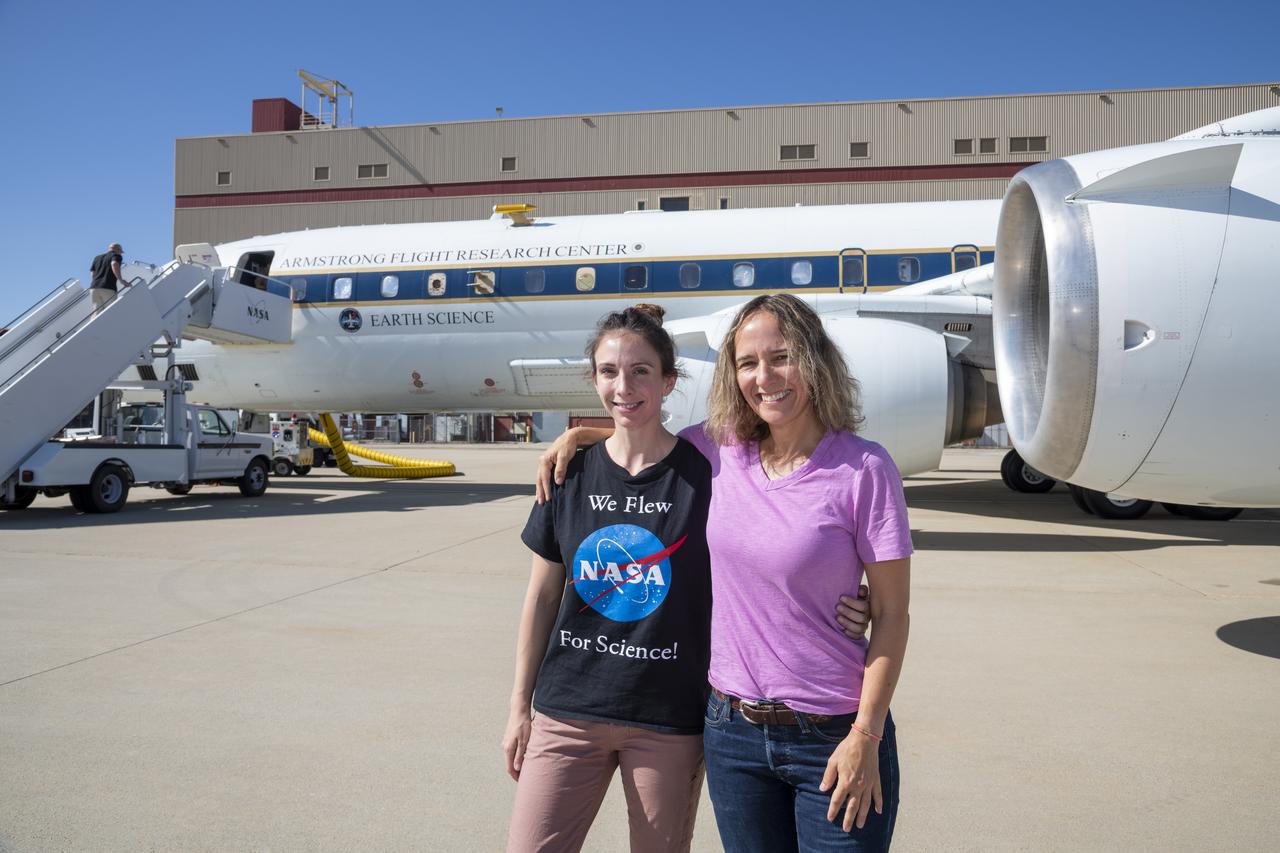
NASA Student Airborne Research Program Manager, Dr. Brenna Biggs and Professor of Chemistry at the University of California, Irvine and White House Office of Science and Technology Policy fellow, Dr. Ann Marie Carlton pose in front of the DC-8 on June 23, 2022.

Howard University Professor and Chair of the Department of Physics and Astronomy, Dr. Quinton Williams gives NASA astronaut Jessica Watkins a tour of the Renewable Energy/Battery Research Laboratory at Howard University, Friday, March 31, 2023, in Washington. Photo Credit: (NASA/Aubrey Gemignani)
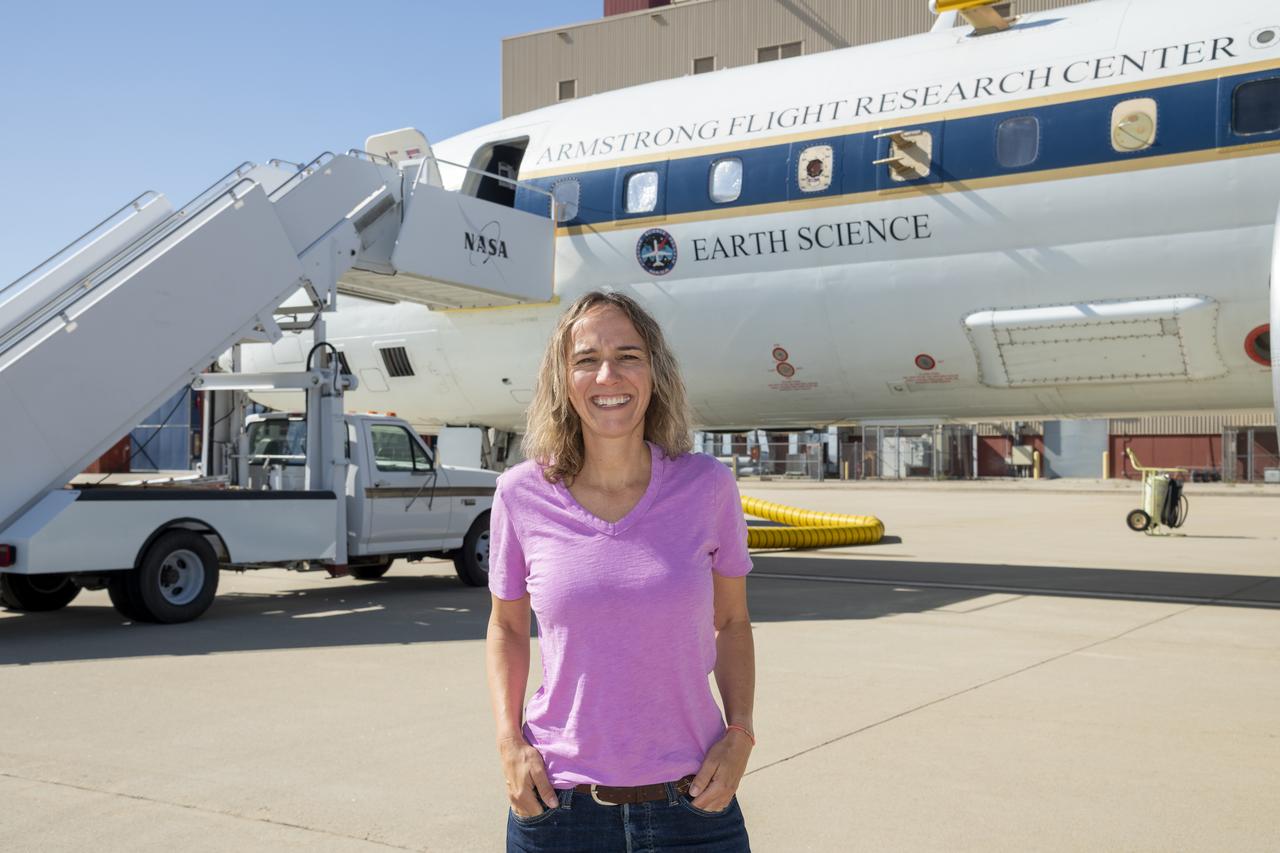
NASA’s Student Airborne Research Program invites Dr. Ann Marie Carlton, Professor of Chemistry at the University of California, Irvine and White House Office of Science and Technology Policy fellow, to fly aboard the DC-8 to measure air quality on June 23, 2022.
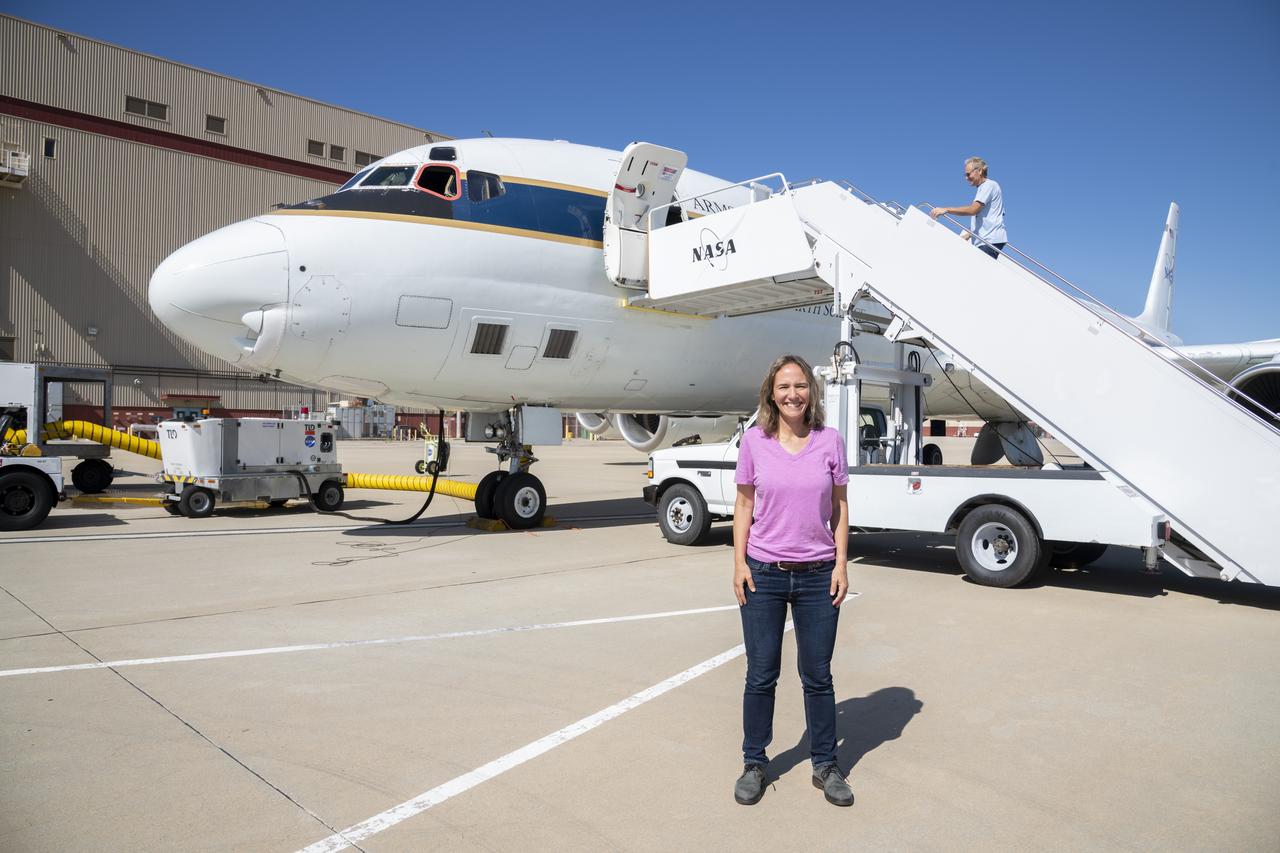
NASA’s Student Airborne Research Program invites Dr. Ann Marie Carlton, Professor of Chemistry at the University of California, Irvine and White House Office of Science and Technology Policy fellow, to fly aboard the DC-8 to measure air quality on June 23, 2022.
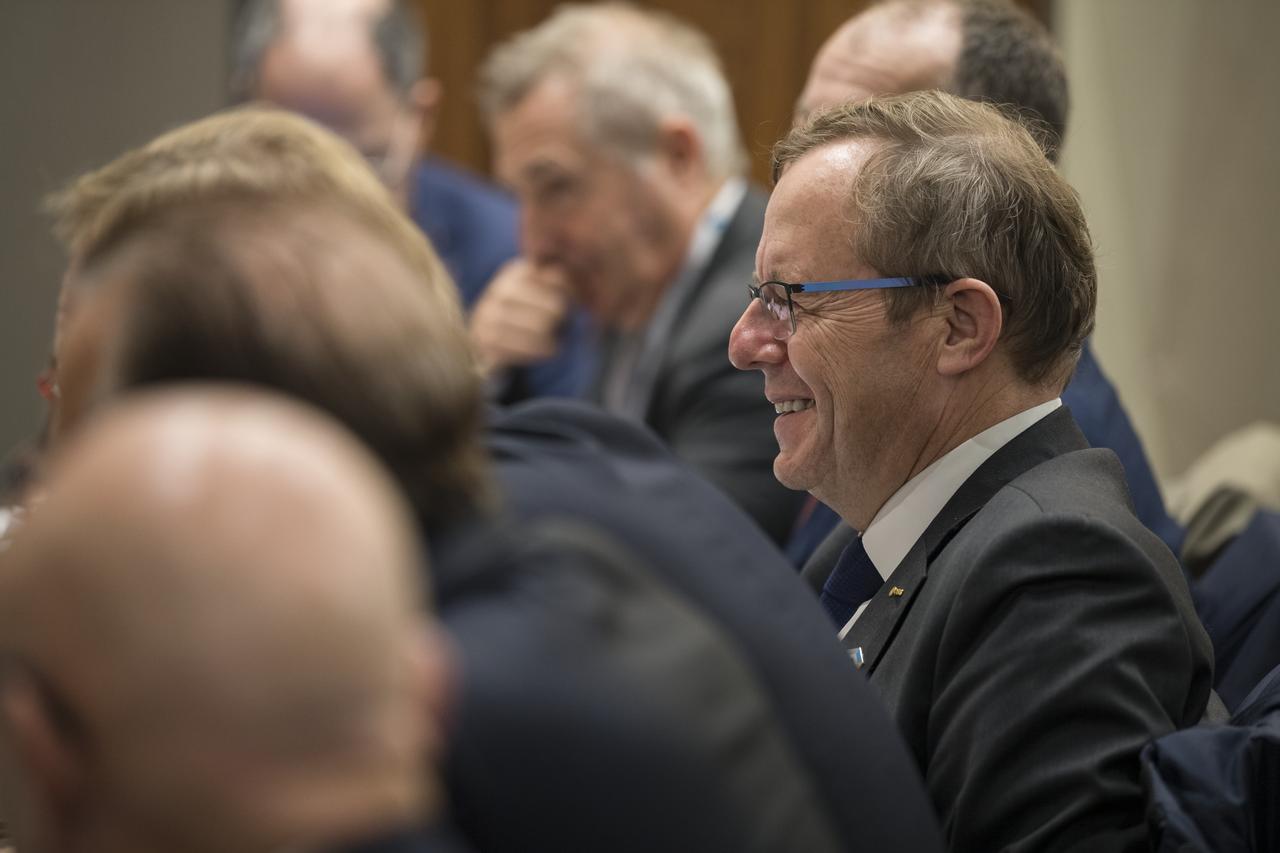
Professor Johann-Dietrich Worner, Director General of ESA (European Space Agency), reacts to something NASA Administrator Jim Bridenstine said during the 70th International Astronautical Congress, Tuesday, Oct. 22, 2019 in Washington. Photo Credit: (NASA/Aubrey Gemignani)
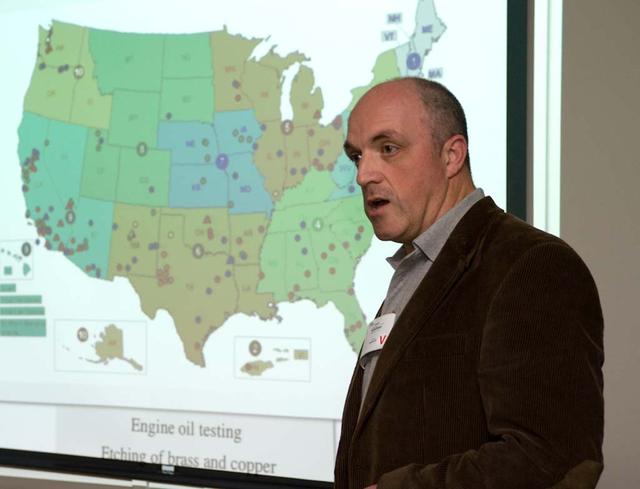
Directors Colloquium: Science Seminar by John Coates, Associate Professor of Microbiology at the University of California, Berkeley, on Microbial Perchlorate Reduction. The discovery of perchlorate in soils at the Phoenix Landing site, makes this type of organisms interesting analogues to potential life on Mars.
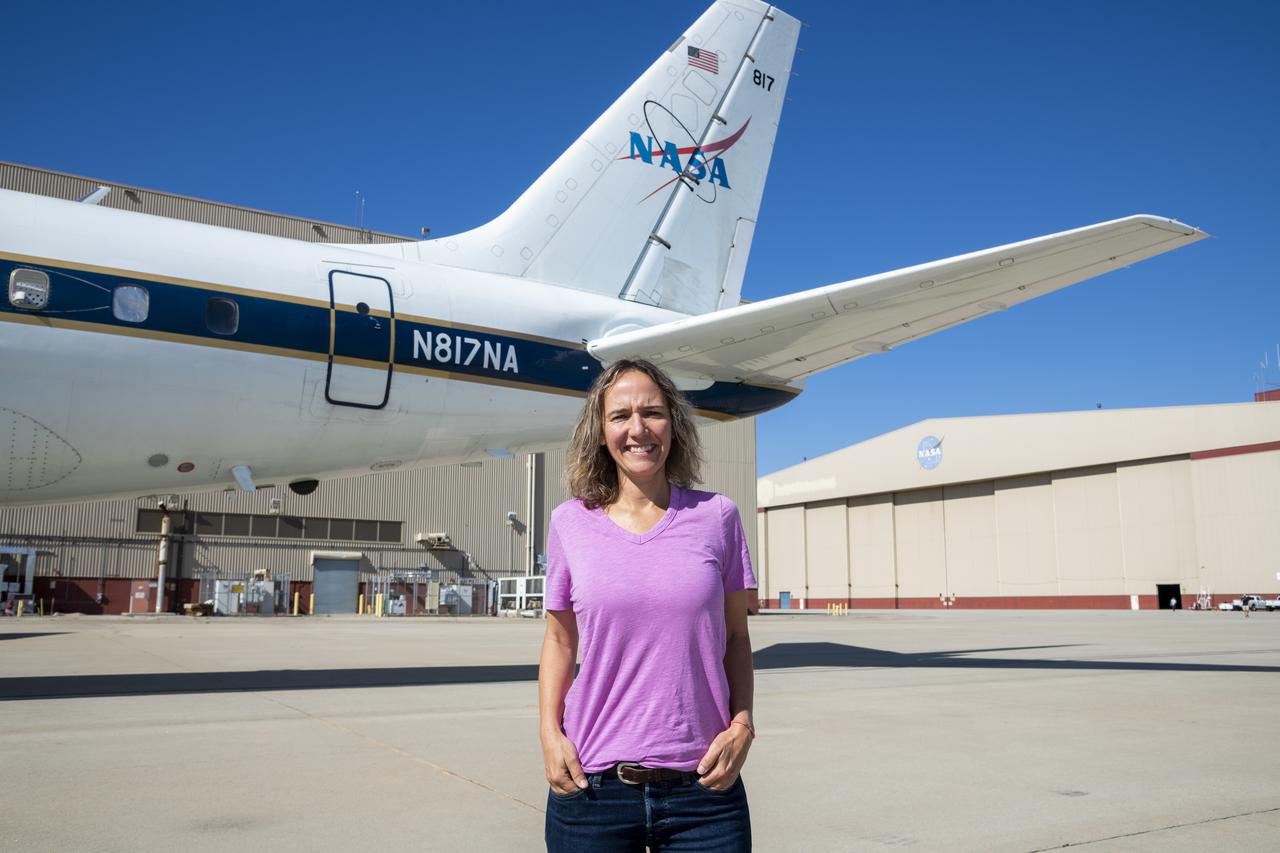
NASA’s Student Airborne Research Program invites Dr. Ann Marie Carlton, Professor of Chemistry at the University of California, Irvine and White House Office of Science and Technology Policy fellow, to fly aboard the DC-8 to measure air quality on June 23, 2022.
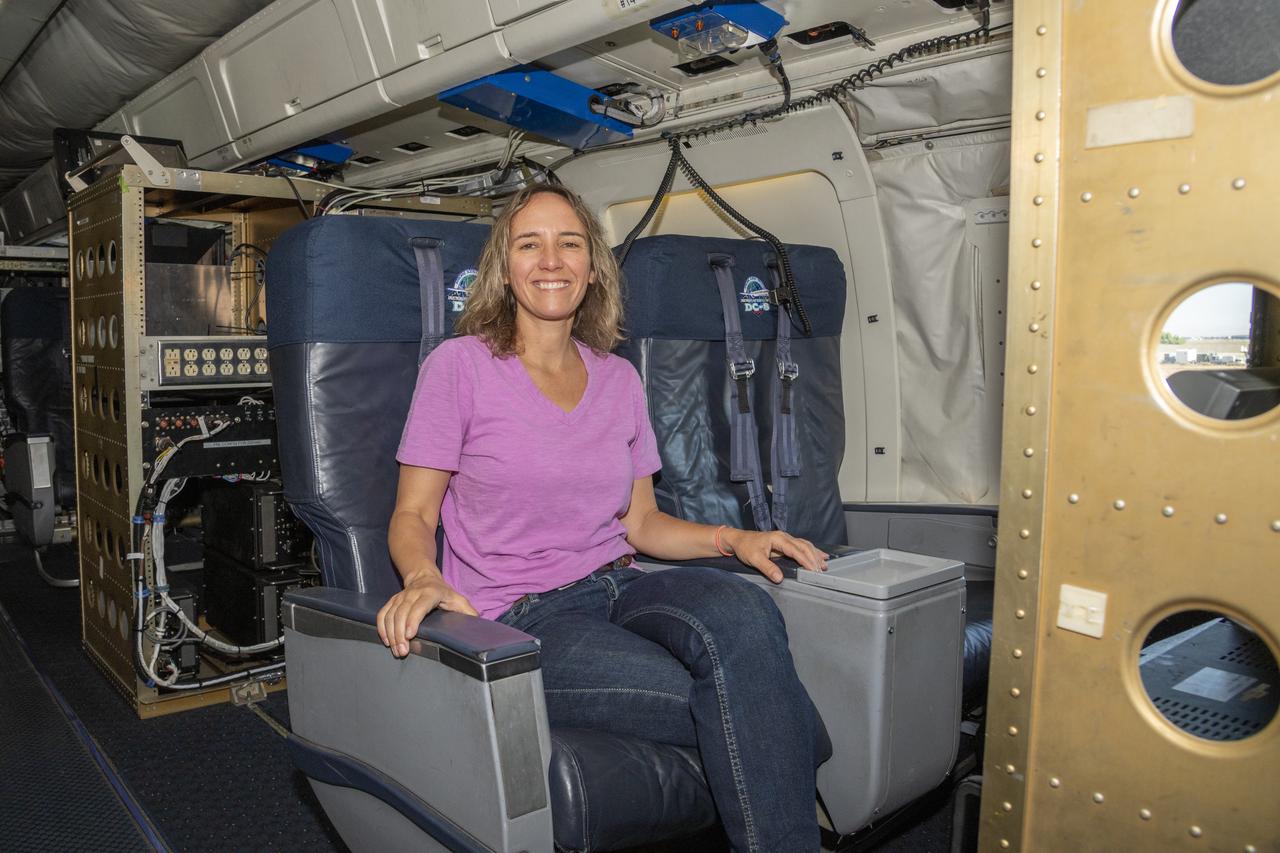
NASA’s Student Airborne Research Program invites Dr. Ann Marie Carlton, Professor of Chemistry at the University of California, Irvine and White House Office of Science and Technology Policy fellow, to fly aboard the DC-8 to measure air quality on June 23, 2022.
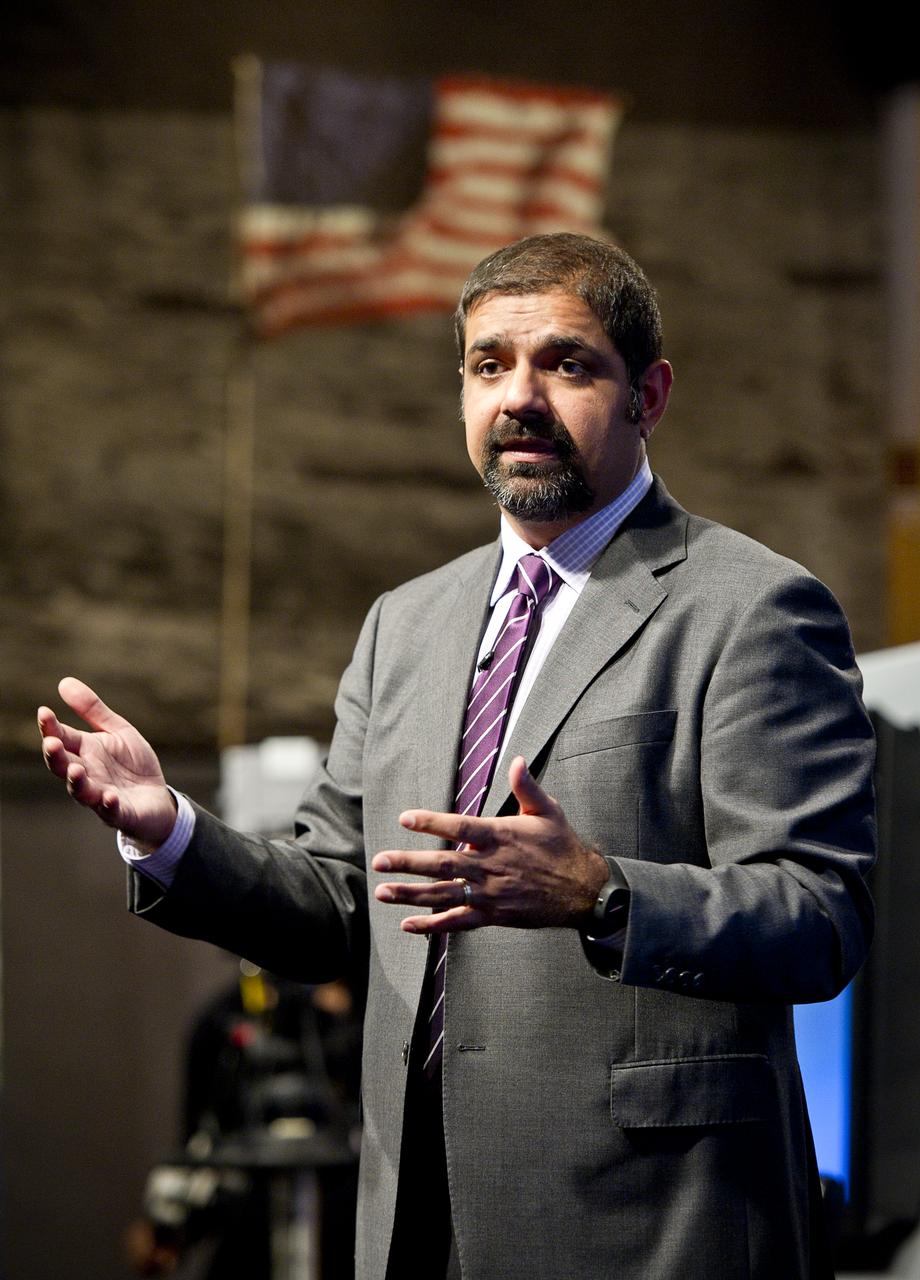
Karim R. Lakhani, assistant professor at Harvard Business School, kicked off the Office of the Chief Technologist TechNovation Lecture series with his talk "Accessing the Ideas Cloud" on Thursday, Feb. 17, 2011 at NASA Headquarters in Washington. Photo Credit: (NASA/Carla Cioffi)
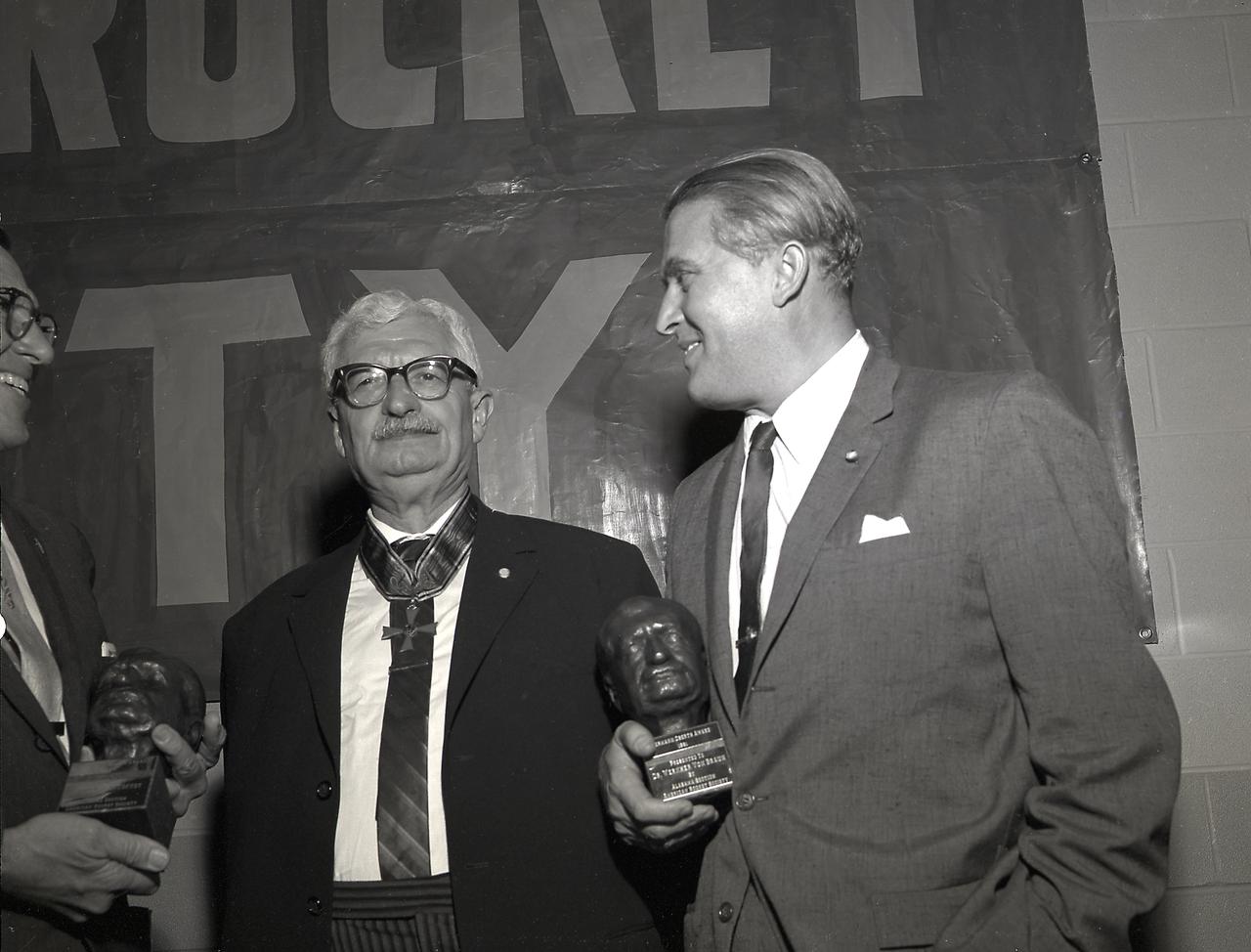
Dr. Wernher von Braun holds the coveted Hermarn Oberth award presented to him by Professor Oberth during the banquet hosted by the Alabama Section of the American Rocket Society (ARS), on October 19, 1961. The Oberth award was given for outstanding technical contributions to the field of astronautics or for the promotion and advancement of astronautical sciences.
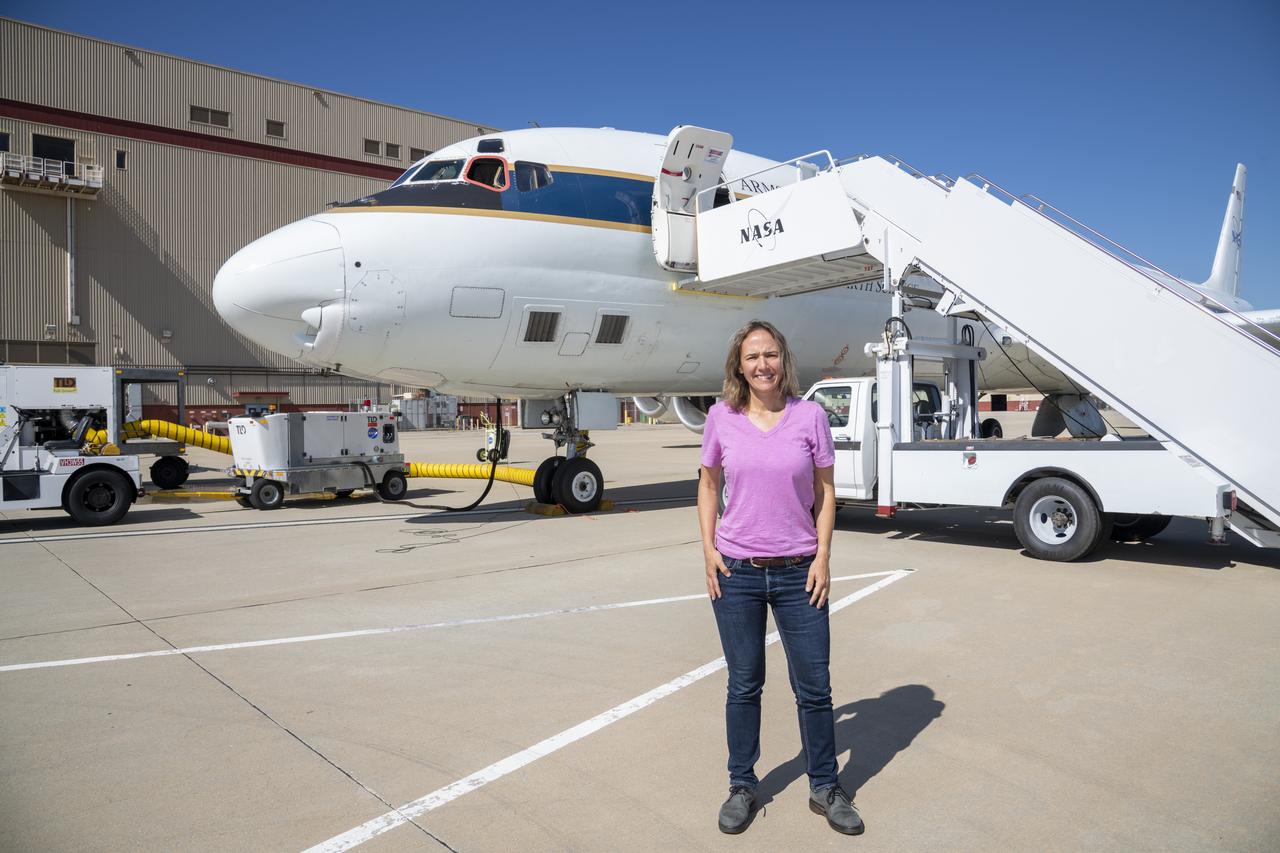
NASA’s Student Airborne Research Program invites Dr. Ann Marie Carlton, Professor of Chemistry at the University of California, Irvine and White House Office of Science and Technology Policy fellow, to fly aboard the DC-8 to measure air quality on June 23, 2022.

Dr. Edward Crawley, Ford Professor of Engineering at MIT and co-chair, NASA Exploration Technology Development Program Review Committee speaks during the final meeting of the Human Space Flight Review Committee, Wednesday, Aug. 12, 2009, in Washington. Photo Credit: (NASA/Paul E. Alers)
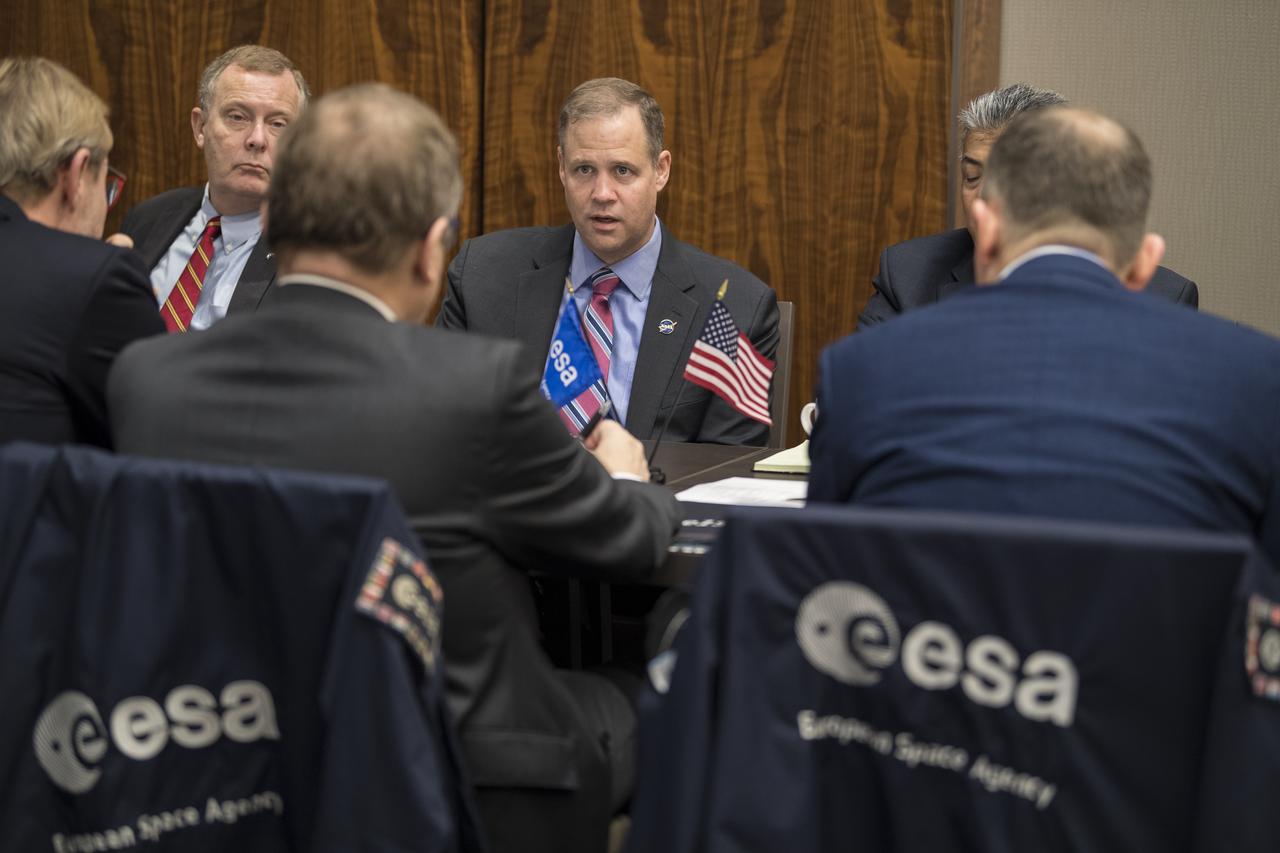
NASA Administrator Jim Bridenstine, center, and Deputy Administrator Jim Morhard, left, speak with Professor Johann-Dietrich Worner, Director General of ESA (European Space Agency), during the 70th International Astronautical Congress, Tuesday, Oct. 22, 2019 in Washington. Photo Credit: (NASA/Aubrey Gemignani)

Dr. Stephen Hawking, a professor of mathematics at the University of Cambridge, delivers a speech entitled "Why we should go into space" during a lecture that is part of a series honoring NASA's 50th Anniversary, Monday, April 21, 2008, at George Washington University's Morton Auditorium in Washington. Photo Credit: (NASA/Paul. E. Alers)
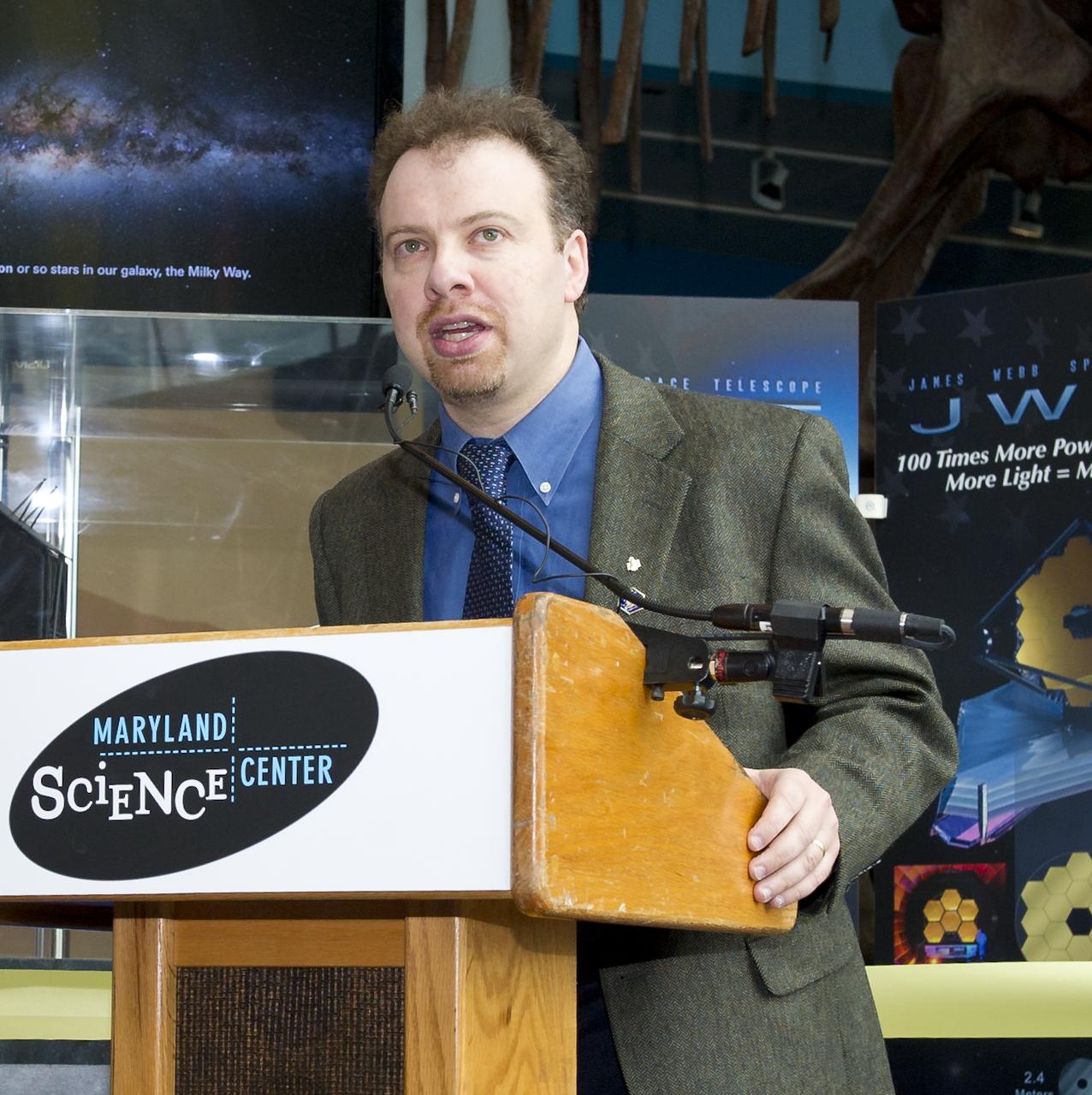
Adam Reiss, recipient of the 2011 Nobel Prize in Physics and professor of astronomy and physics at Johns Hopkins University speaks at the presentation of the permanent exhibit of the James Webb Space Telescope at the Maryland Science Center on Wednesday, Oct. 26, 2011 in Baltimore. Photo Credit: (NASA/Carla Cioffi)
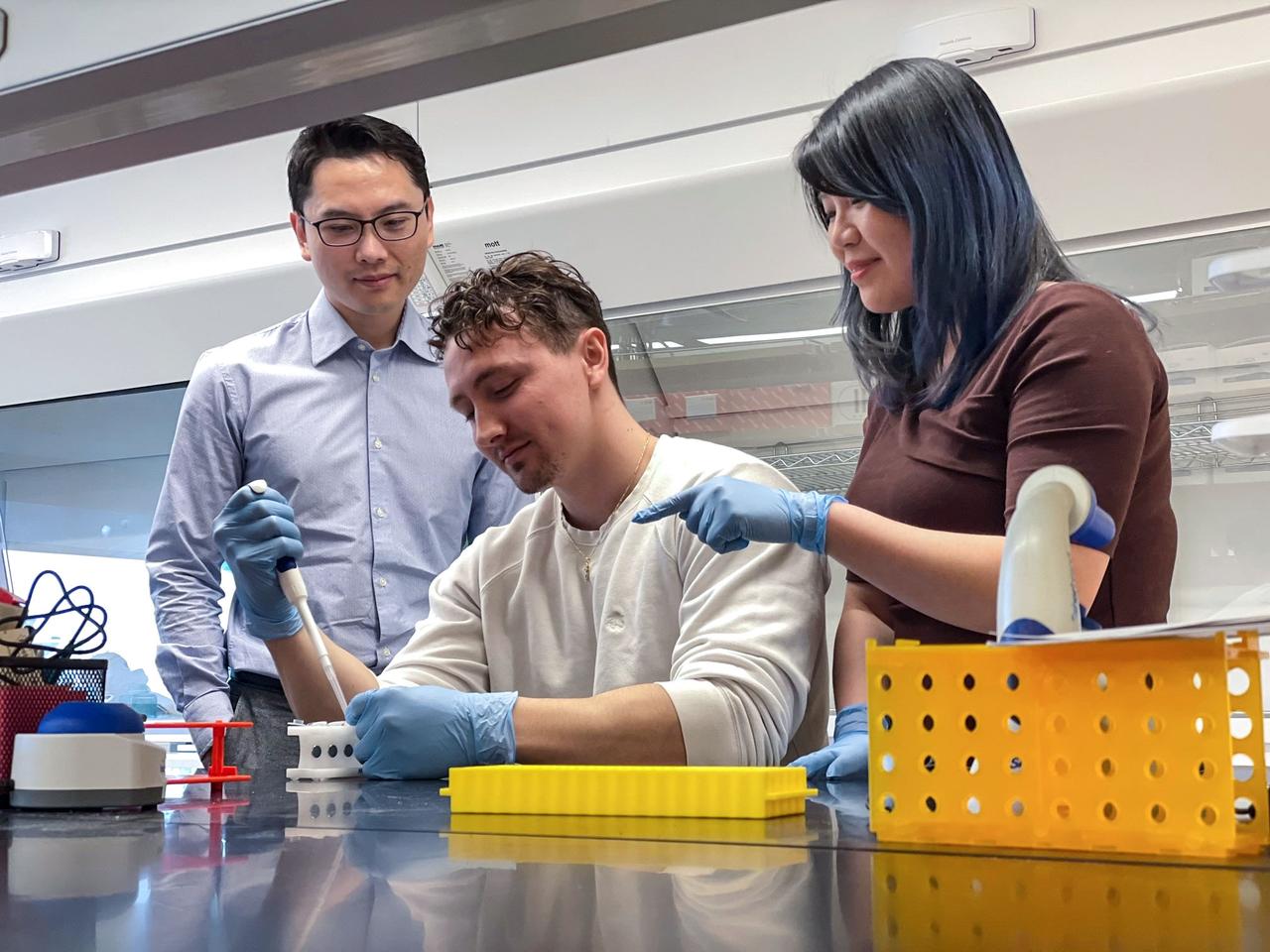
jsc2024e005965 (1/12/2024) --- The Compartment Cartilage Tissue Construct team includes Dr. Yupeng Chen (Associate Professor of Biomedical Engineering from University of Connecticut), Ian Sands (Ph.D. candidate from University of Connecticut) and Anne Yau (Ph.D. candidate from University of Connecticut). Image courtesy of the University of Connecticut.
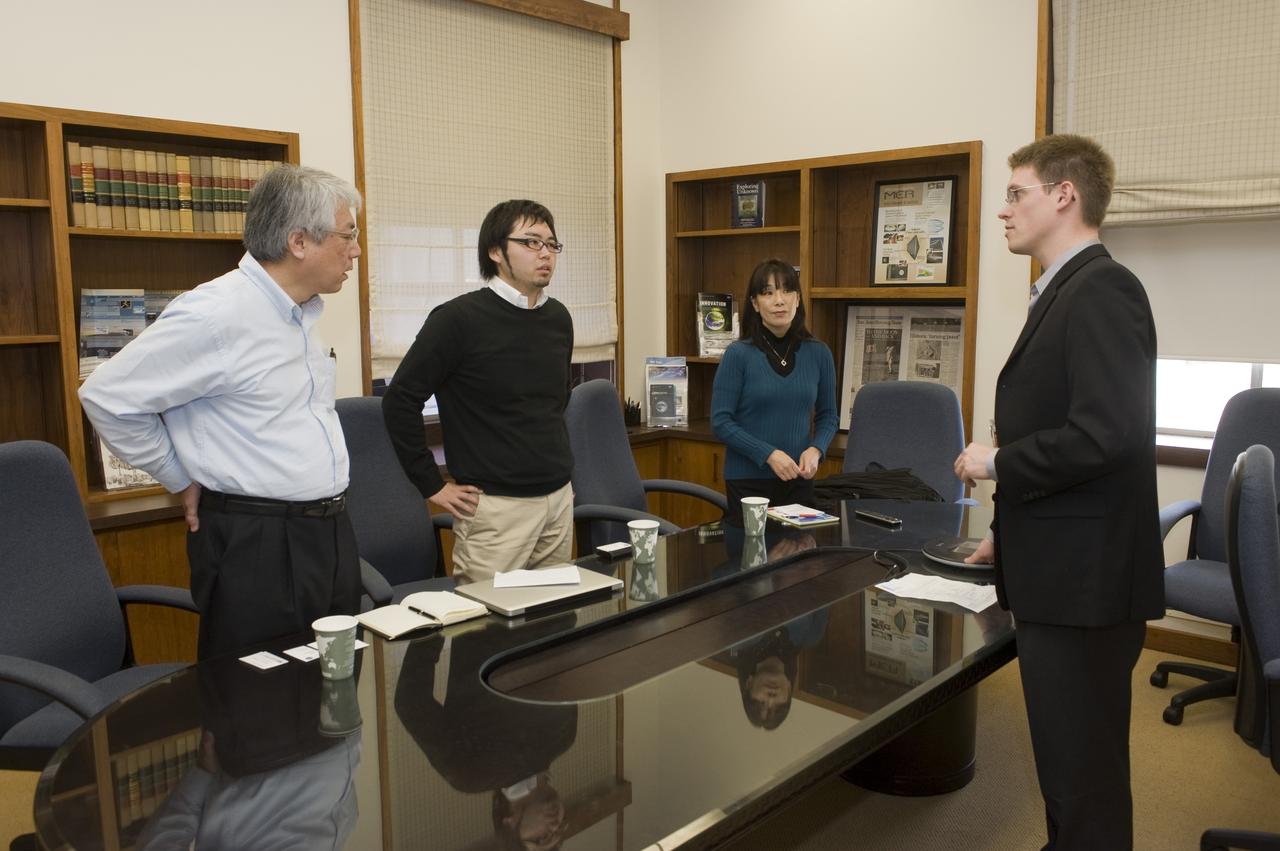
Jamanese Industry Officials and Academia visit. Visitor include Nabukazu Yoshioka, Associate Profesor at the Japanese National Institute of Informatics NIN; Shigetoshi Yoloyama, professor (by special appointment) at NIN; Yuriko Shimamoto, independent conference interpreter; and Kenji Motohashi, senior research engineer, NTT DATA AnileNet L.L.C. with Chris Kemp, Ames CIO
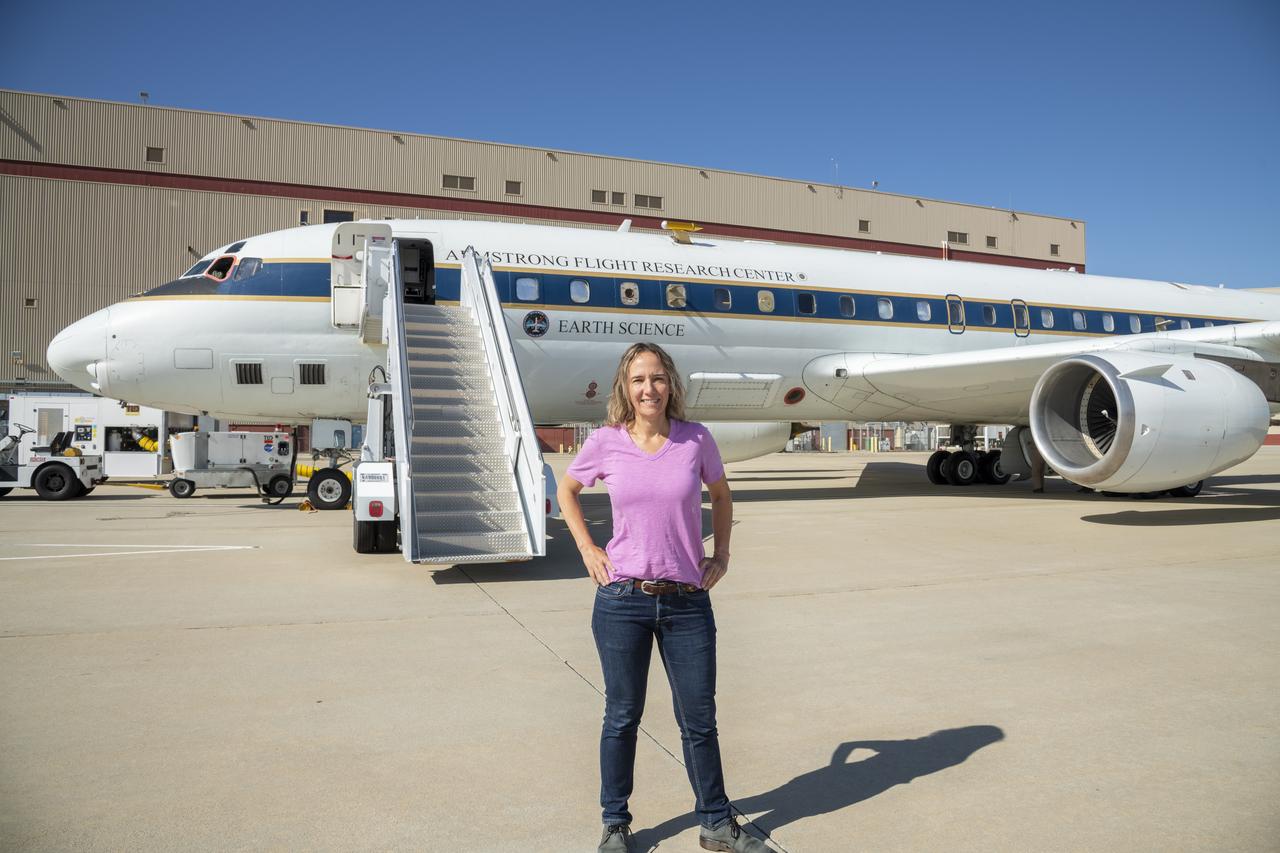
NASA’s Student Airborne Research Program invites Dr. Ann Marie Carlton, Professor of Chemistry at the University of California, Irvine and White House Office of Science and Technology Policy fellow, to fly aboard the DC-8 to measure air quality on June 23, 2022.
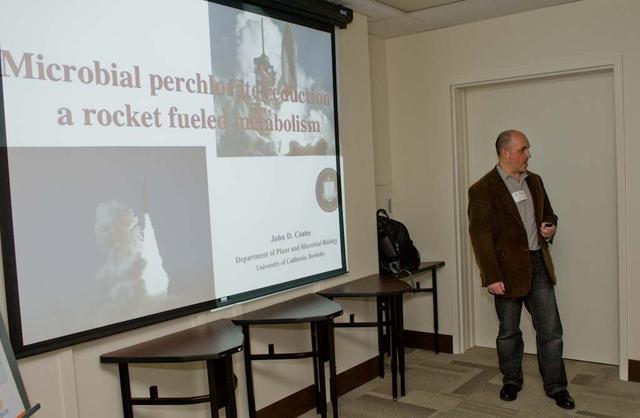
Directors Colloquium: Science Seminar by John Coates, Associate Professor of Microbiology at the University of California, Berkeley, on Microbial Perchlorate Reduction. The discovery of perchlorate in soils at the Phoenix Landing site, makes this type of organisms interesting analogues to potential life on Mars.
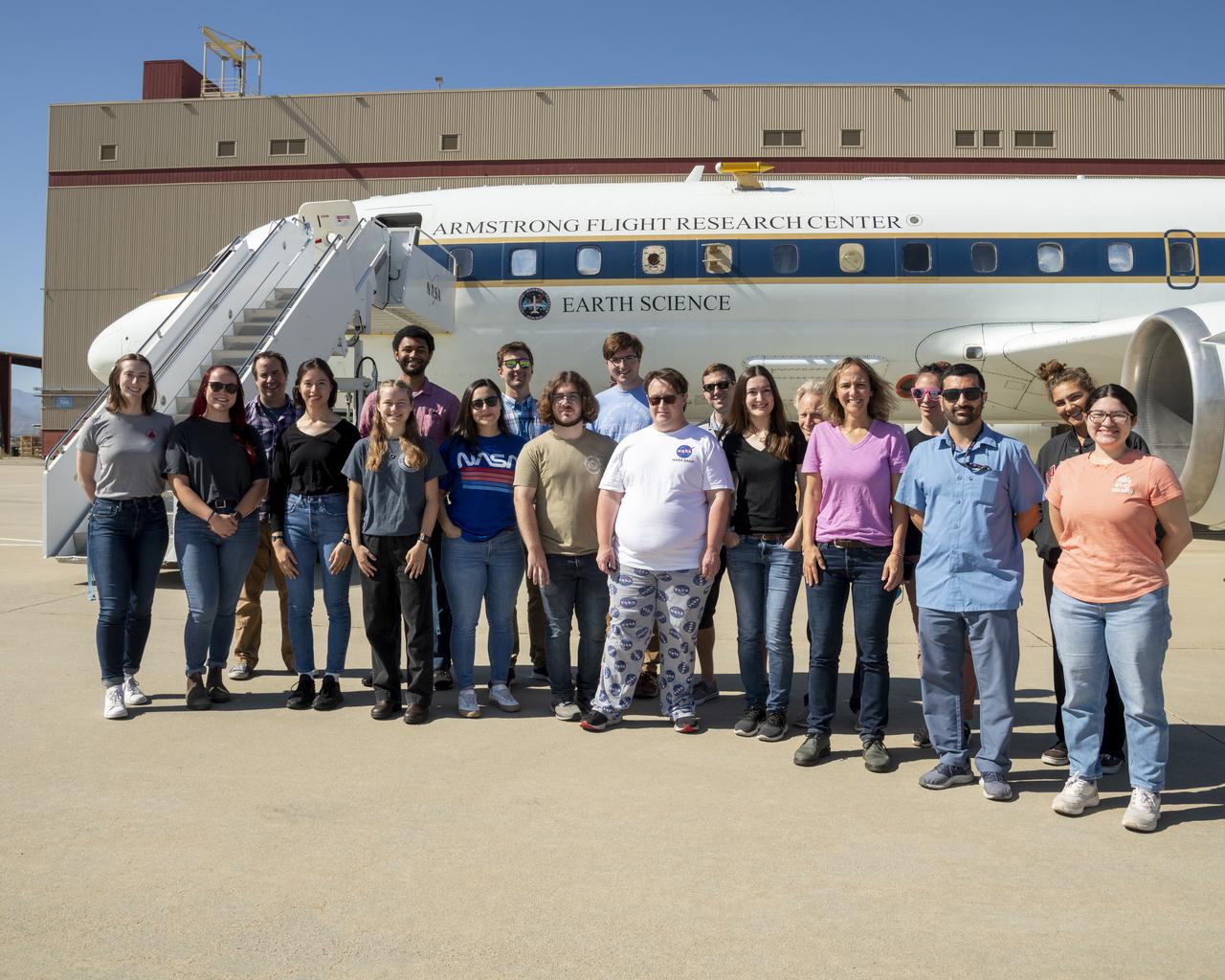
NASA’s Student Airborne Research Program invites Dr. Ann Marie Carlton, Professor of Chemistry at the University of California, Irvine and White House Office of Science and Technology Policy fellow, to fly aboard the DC-8 to measure air quality on June 23, 2022.
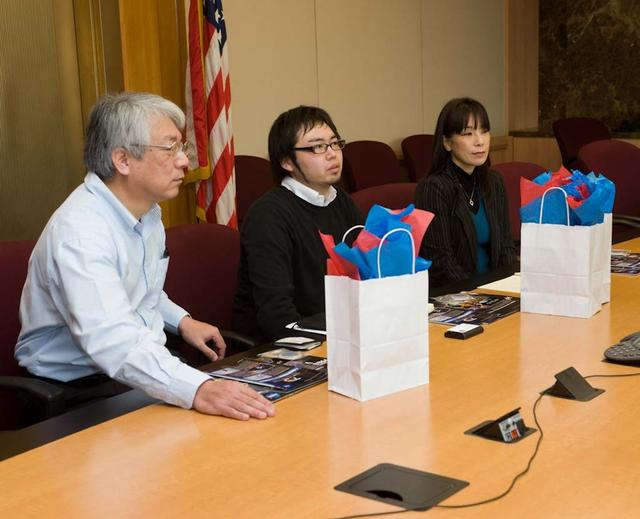
Jamanese Industry Officials and Academia visit. Visitor include Nabukazu Yoshioka, Associate Profesor at the Japanese National Institute of Informatics NIN; Shigetoshi Yoloyama, professor (by special appointment) at NIN; Yuriko Shimamoto, independent conference interpreter; and Kenji Motohashi, senior research engineer, NTT DATA AnileNet L.L.C. with L. Braxton III
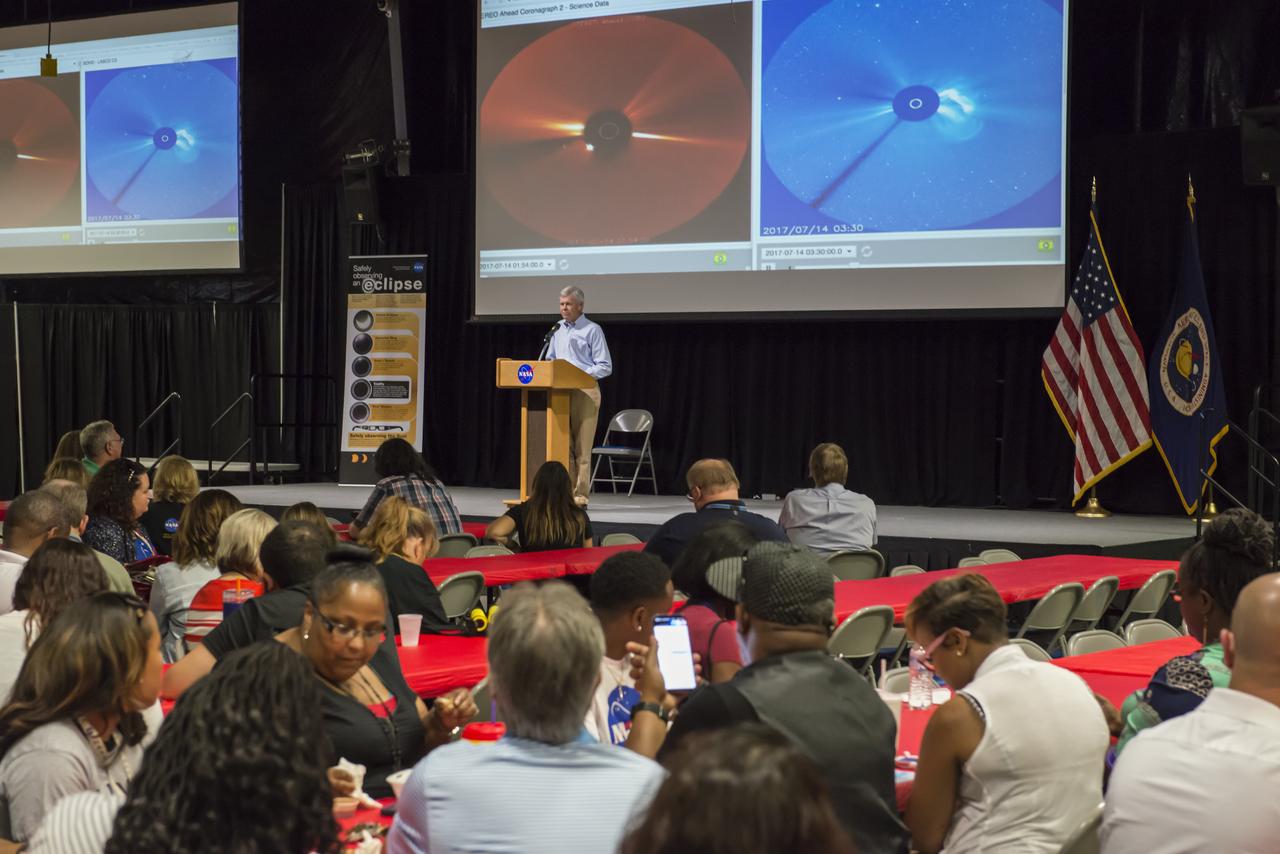
Former Spacelab 1 mission scientist Rick Chappell addresses Marshall team members during the Aug. 21 eclipse-watching event in Activities Building 4316. Chappell, a former associate director for science at Marshall and now a physics professor at Vanderbilt University in Nashville, joined a throng of Marshall personnel to marvel at the eclipse.

Howard University Professor and Chair of the Department of Physics and Astronomy, Dr. Quinton Williams gives NASA astronaut Jessica Watkins a tour of the Renewable Energy/Battery Research Laboratory at Howard University, Friday, March 31, 2023, in Washington. Photo Credit: (NASA/Aubrey Gemignani)
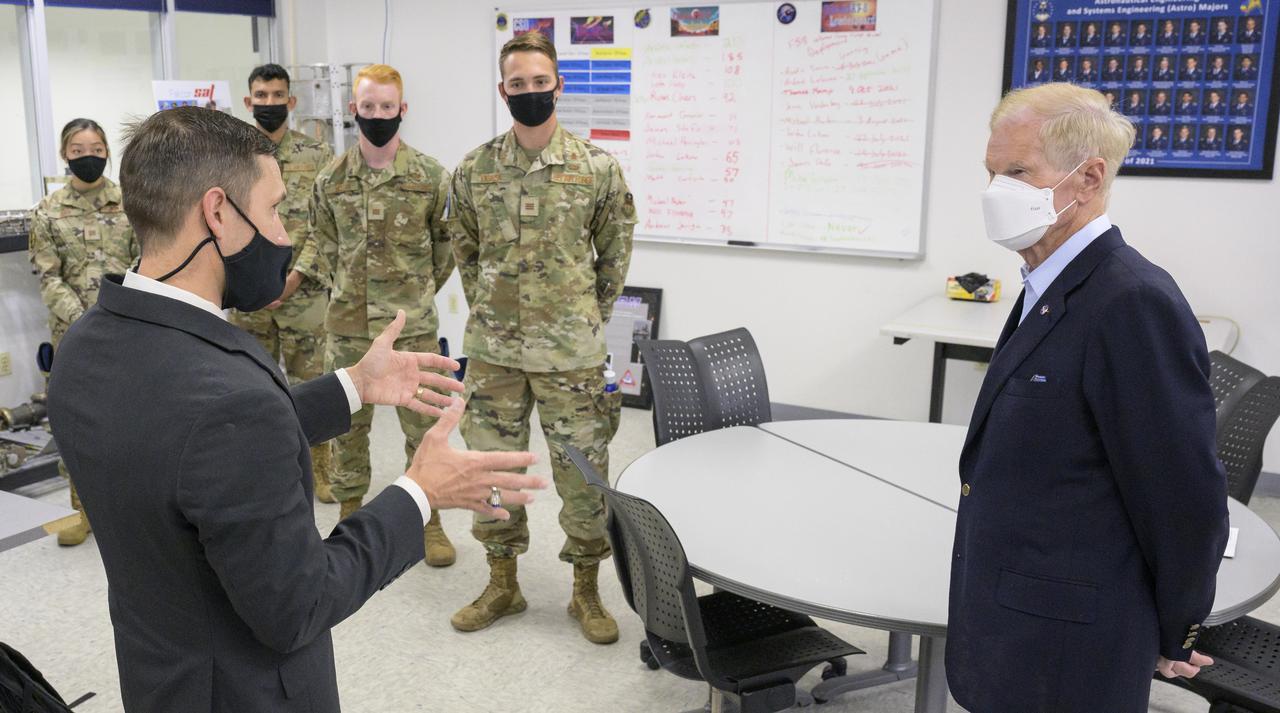
NASA Administrator Bill Nelson, right, listens as Col Luke Sauter, Permanent Professor and Head, Department of Astronautics, introduces Nelson to cadets in the astronautics lab at the United States Air Force Academy, Wednesday, Aug. 25, 2021, north of Colorado Springs, Colorado. Photo Credit: (NASA/Bill Ingalls)
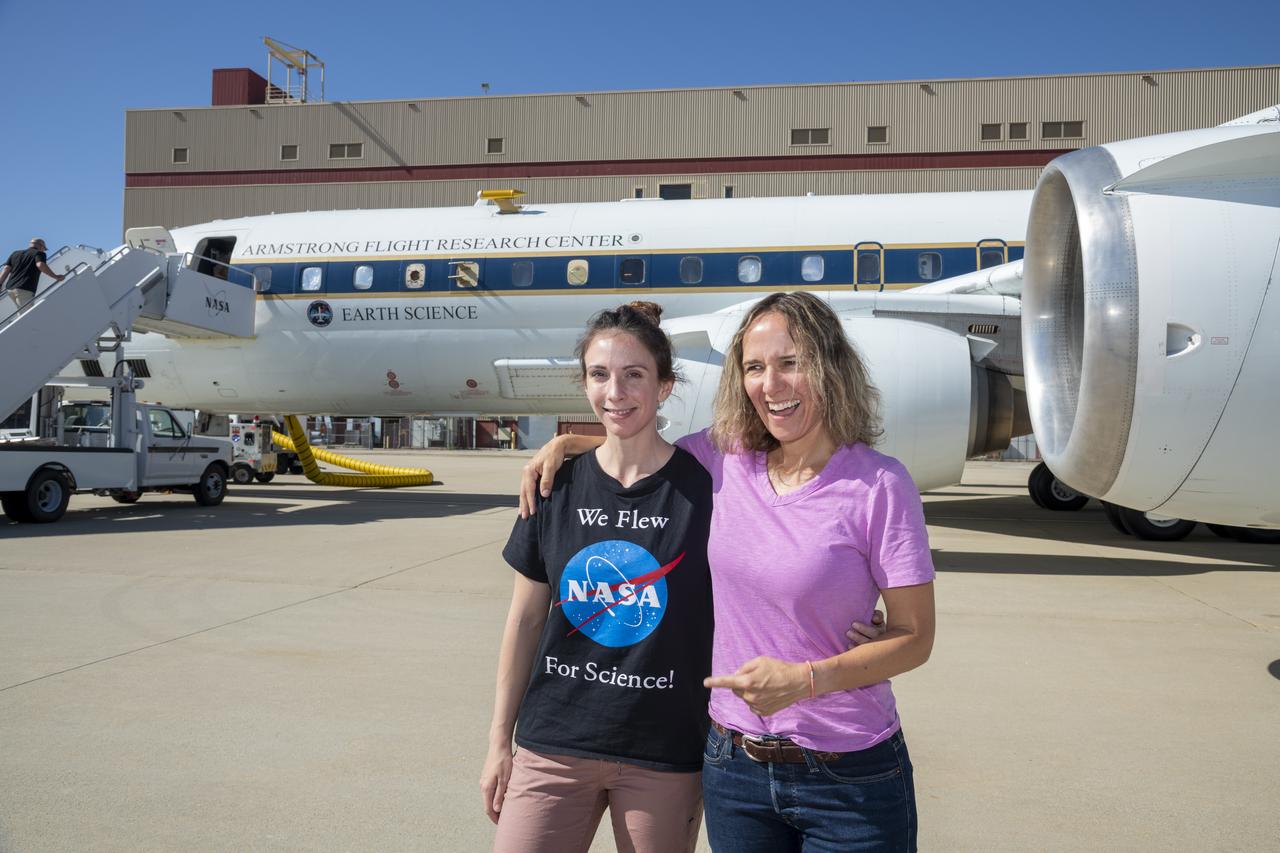
NASA Student Airborne Research Program Manager, Dr. Brenna Biggs and Professor of Chemistry at the University of California, Irvine and White House Office of Science and Technology Policy fellow, Dr. Ann Marie Carlton pose in front of the DC-8 on June 23, 2022.

Dr. Stephen Hawking, a professor of mathematics at the University of Cambridge, delivers a speech entitled "Why we should go into space" during a lecture that is part of a series honoring NASA's 50th Anniversary, Monday, April 21, 2008, at George Washington University's Morton Auditorium in Washington. Photo Credit: (NASA/Paul. E. Alers)
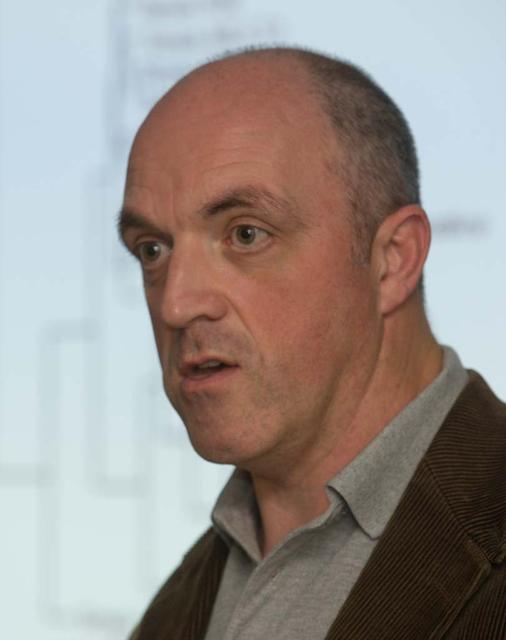
Directors Colloquium: Science Seminar by John Coates, Associate Professor of Microbiology at the University of California, Berkeley, on Microbial Perchlorate Reduction. The discovery of perchlorate in soils at the Phoenix Landing site, makes this type of organisms interesting analogues to potential life on Mars.
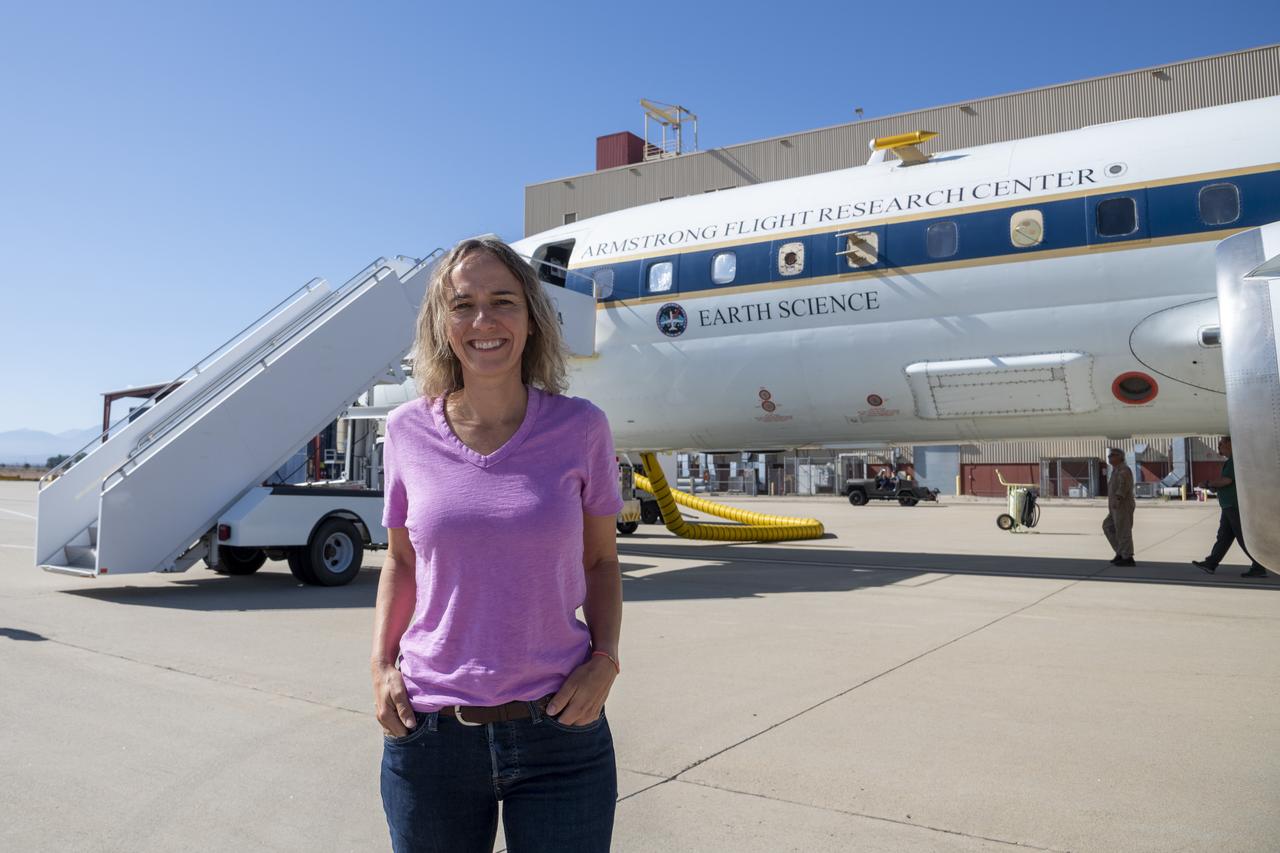
NASA’s Student Airborne Research Program invites Dr. Ann Marie Carlton, Professor of Chemistry at the University of California, Irvine and White House Office of Science and Technology Policy fellow, to fly aboard the DC-8 to measure air quality on June 23, 2022.

Dr. Stephen Hawking, a professor of mathematics at the University of Cambridge, delivers a speech entitled "Why we should go into space" during a lecture that is part of a series honoring NASA's 50th Anniversary, Monday, April 21, 2008, at George Washington University's Morton Auditorium in Washington. Photo Credit: (NASA/Paul. E. Alers)

Dr. Stephen Hawking, a professor of mathematics at the University of Cambridge, delivers a speech entitled "Why we should go into space" during a lecture that is part of a series honoring NASA's 50th Anniversary, Monday, April 21, 2008, at George Washington University's Morton Auditorium in Washington. Photo Credit: (NASA/Paul. E. Alers)
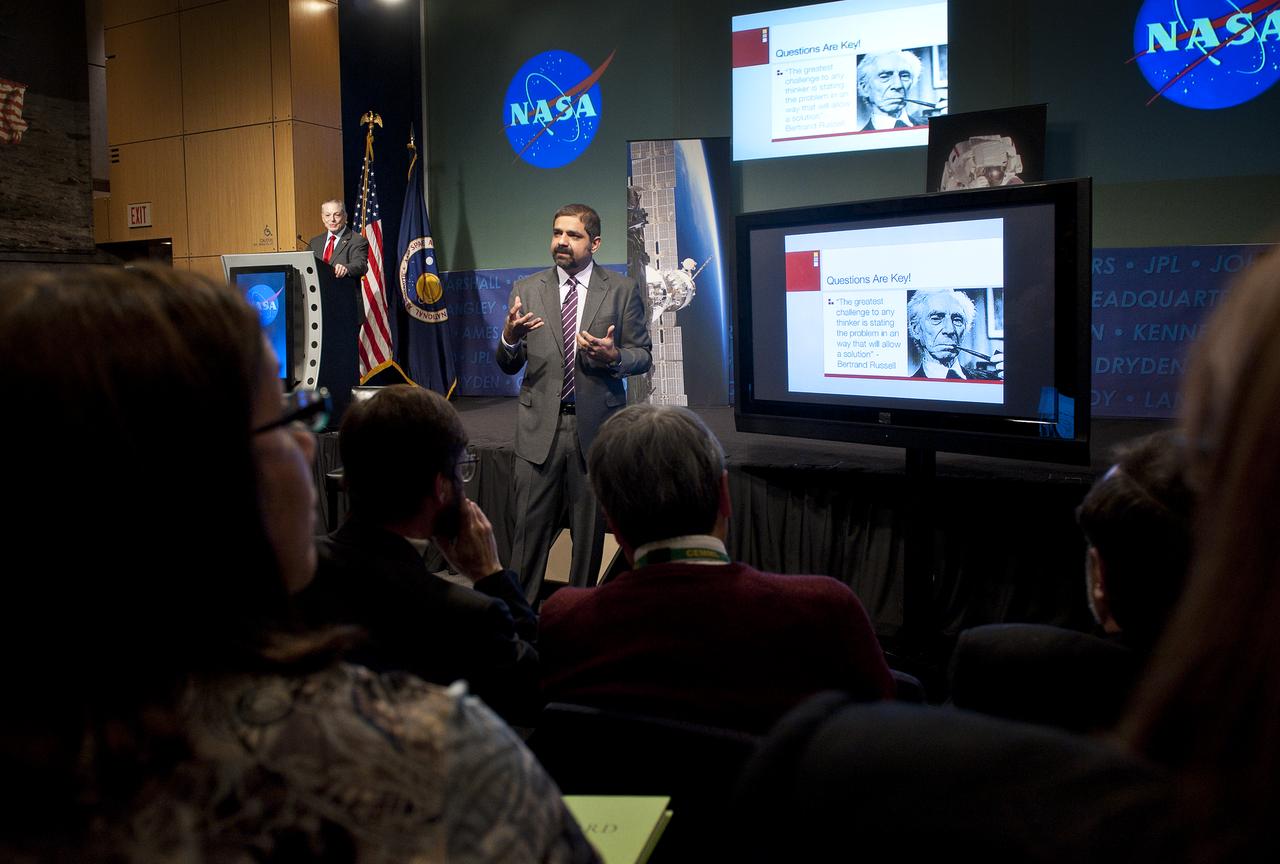
Karim R. Lakhani, assistant professor at Harvard Business School, kicked off the Office of the Chief Technologist TechNovation Lecture series with his talk "Accessing the Ideas Cloud" on Thursday, Feb. 17, 2011 at NASA Headquarters in Washington. Photo Credit: (NASA/Carla Cioffi)

Dr. Stephen Hawking, a professor of mathematics at the University of Cambridge, delivers a speech entitled "Why we should go into space" during a lecture that is part of a series honoring NASA's 50th Anniversary, Monday, April 21, 2008, at George Washington University's Morton Auditorium in Washington. Photo Credit: (NASA/Paul. E. Alers)
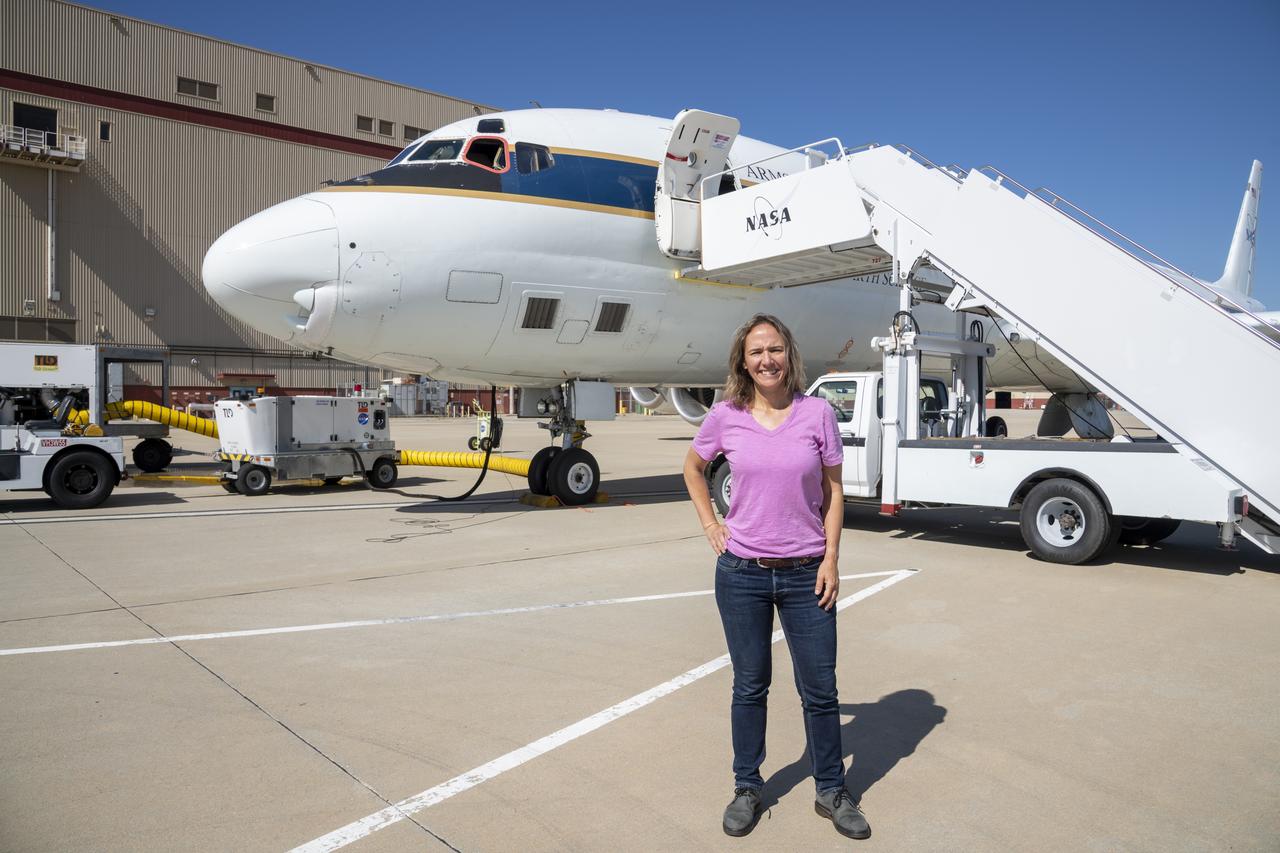
NASA’s Student Airborne Research Program invites Dr. Ann Marie Carlton, Professor of Chemistry at the University of California, Irvine and White House Office of Science and Technology Policy fellow, to fly aboard the DC-8 to measure air quality on June 23, 2022.
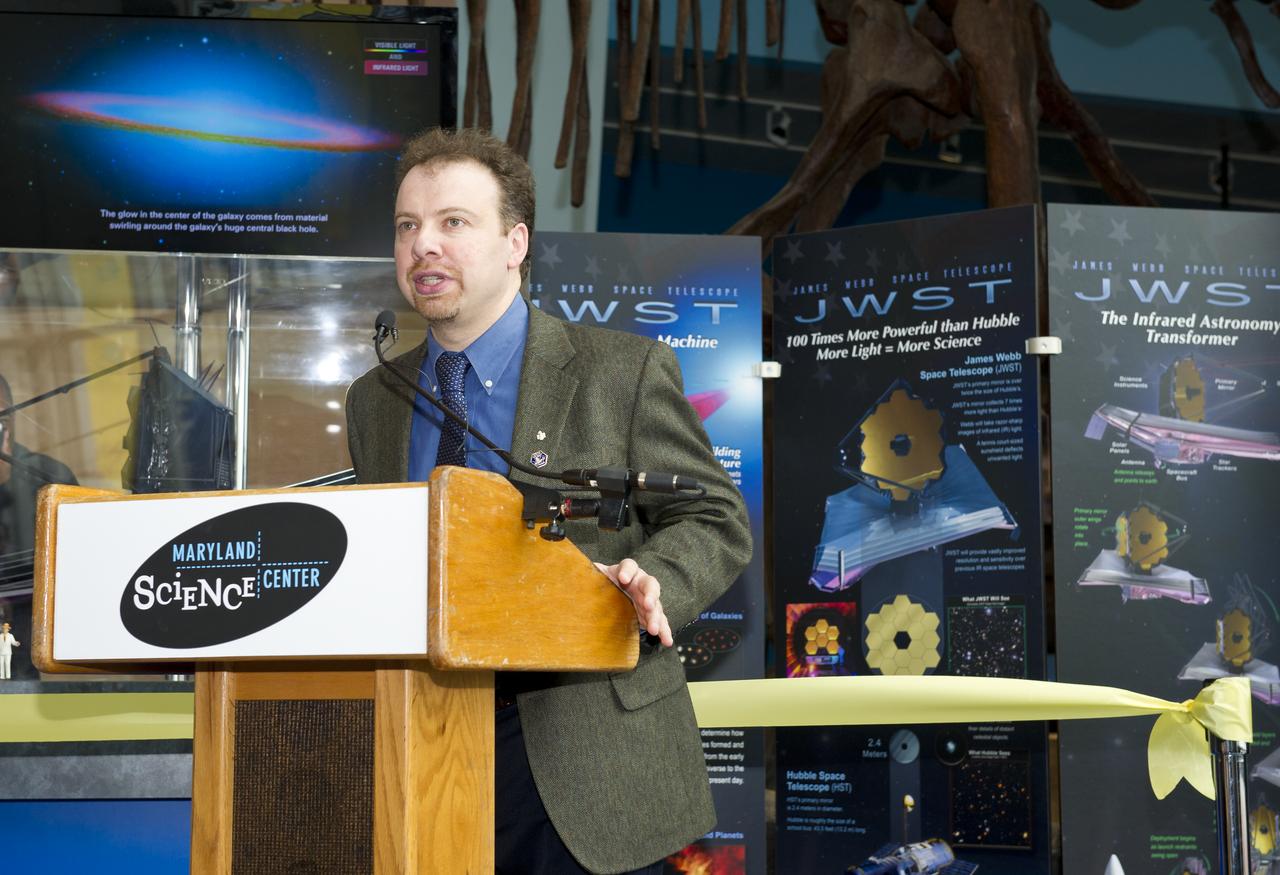
Adam Reiss, recipient of the 2011 Nobel Prize in Physics and professor of astronomy and physics at Johns Hopkins University speaks at the presentation of the permanent exhibit of the James Webb Space Telescope at the Maryland Science Center on Wednesday, Oct. 26, 2011 in Baltimore. Photo Credit: (NASA/Carla Cioffi)
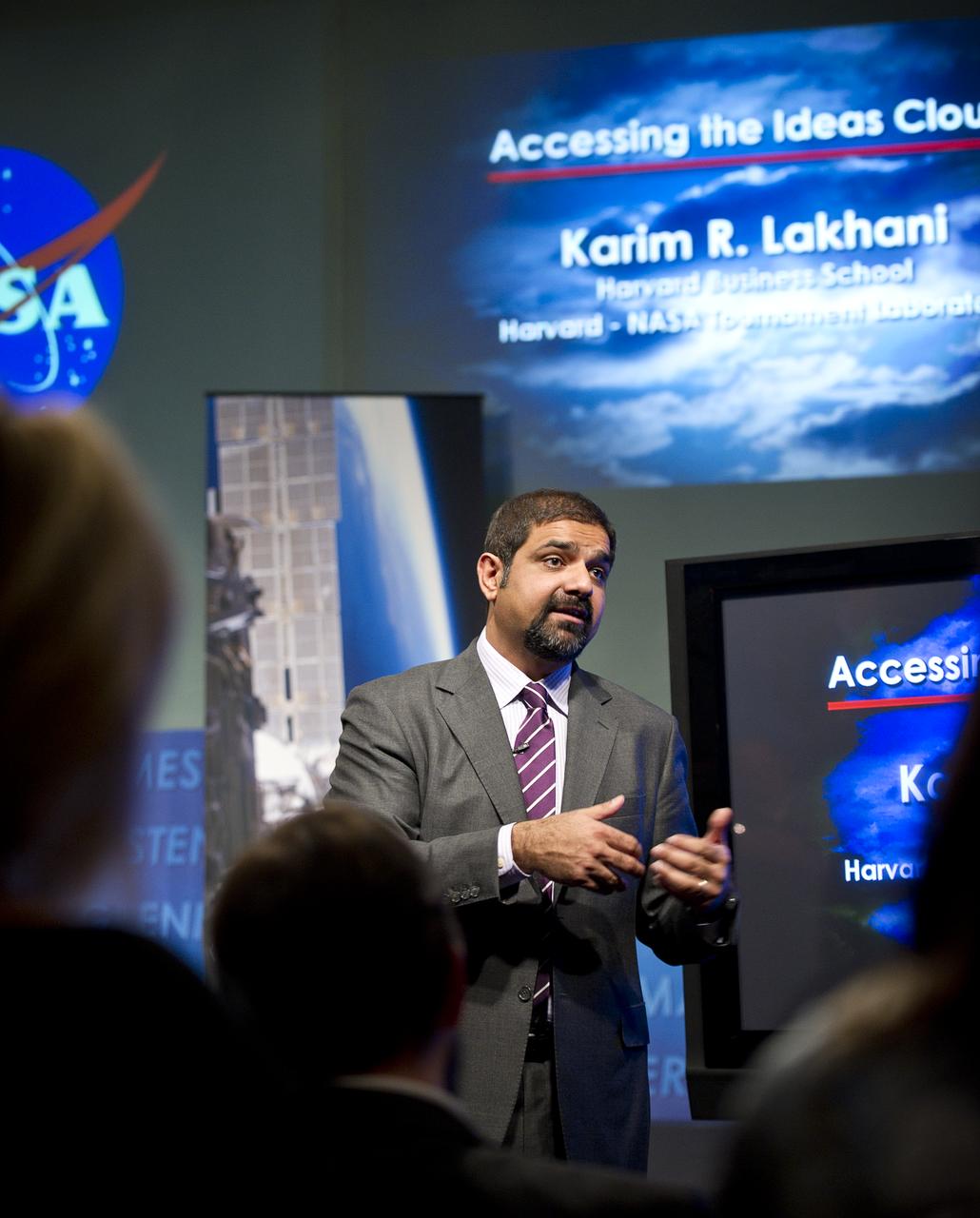
Karim R. Lakhani, assistant professor at Harvard Business School, kicked off the Office of the Chief Technologist TechNovation Lecture series with his talk "Accessing the Ideas Cloud" on Thursday, Feb. 17, 2011 at NASA Headquarters in Washington. Photo Credit: (NASA/Carla Cioffi)
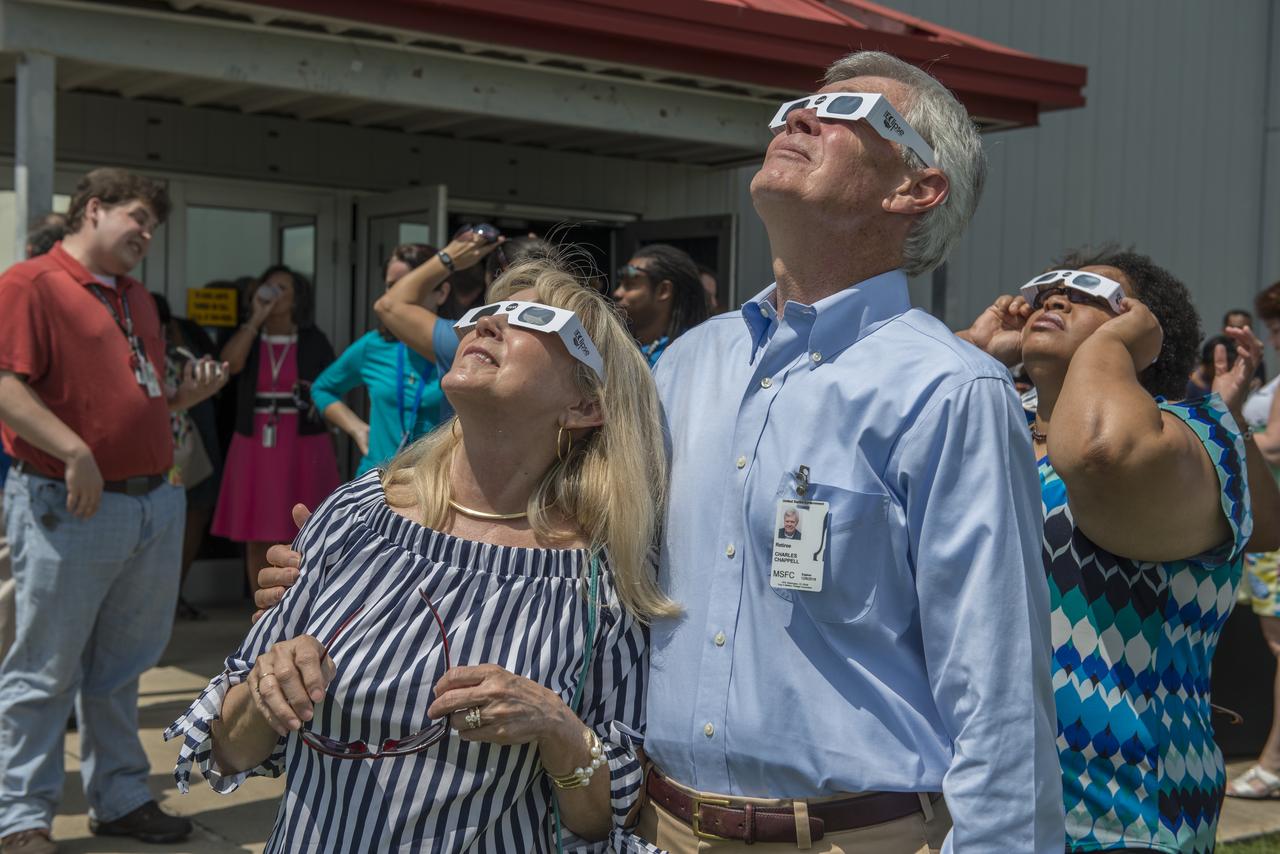
Former Spacelab 1 Mission scientist Rick Chappell views the August 21, 2017 solar eclipse with his wife. Chappell, a former associate director for science at Marshall and now a physics professor at Vanderbilt University in Nashville, joined a throng of Marshall personnel to marvel at the eclipse.
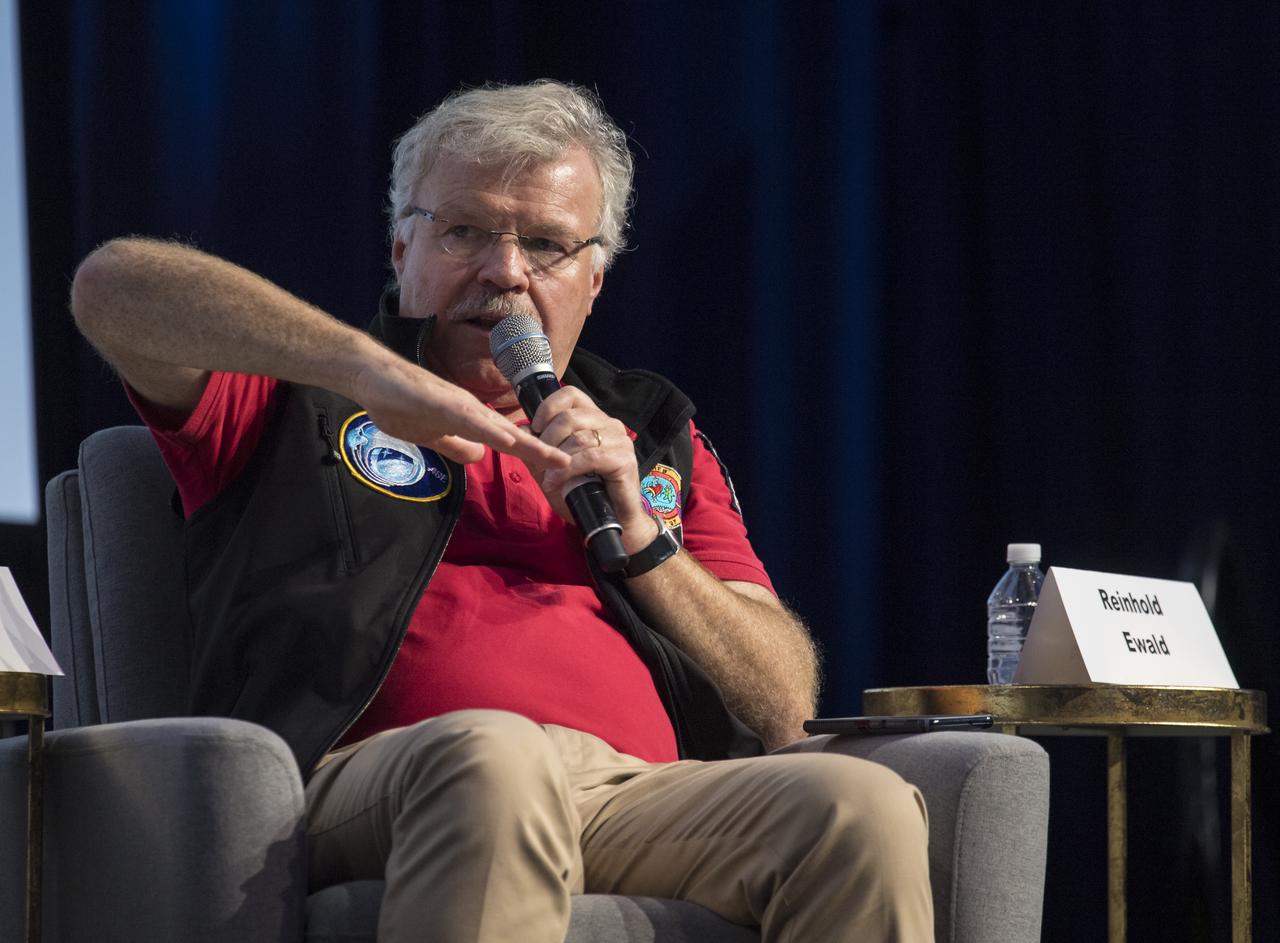
European astronaut and professor, Institute of Space Systems, Reinhold Ewald, speaks during an astronaut panel discussion at the 70th International Astronautical Congress, Friday, Oct. 25, 2019, at the Walter E. Washington Convention Center in Washington. Photo credit: (NASA/Aubrey Gemignani)
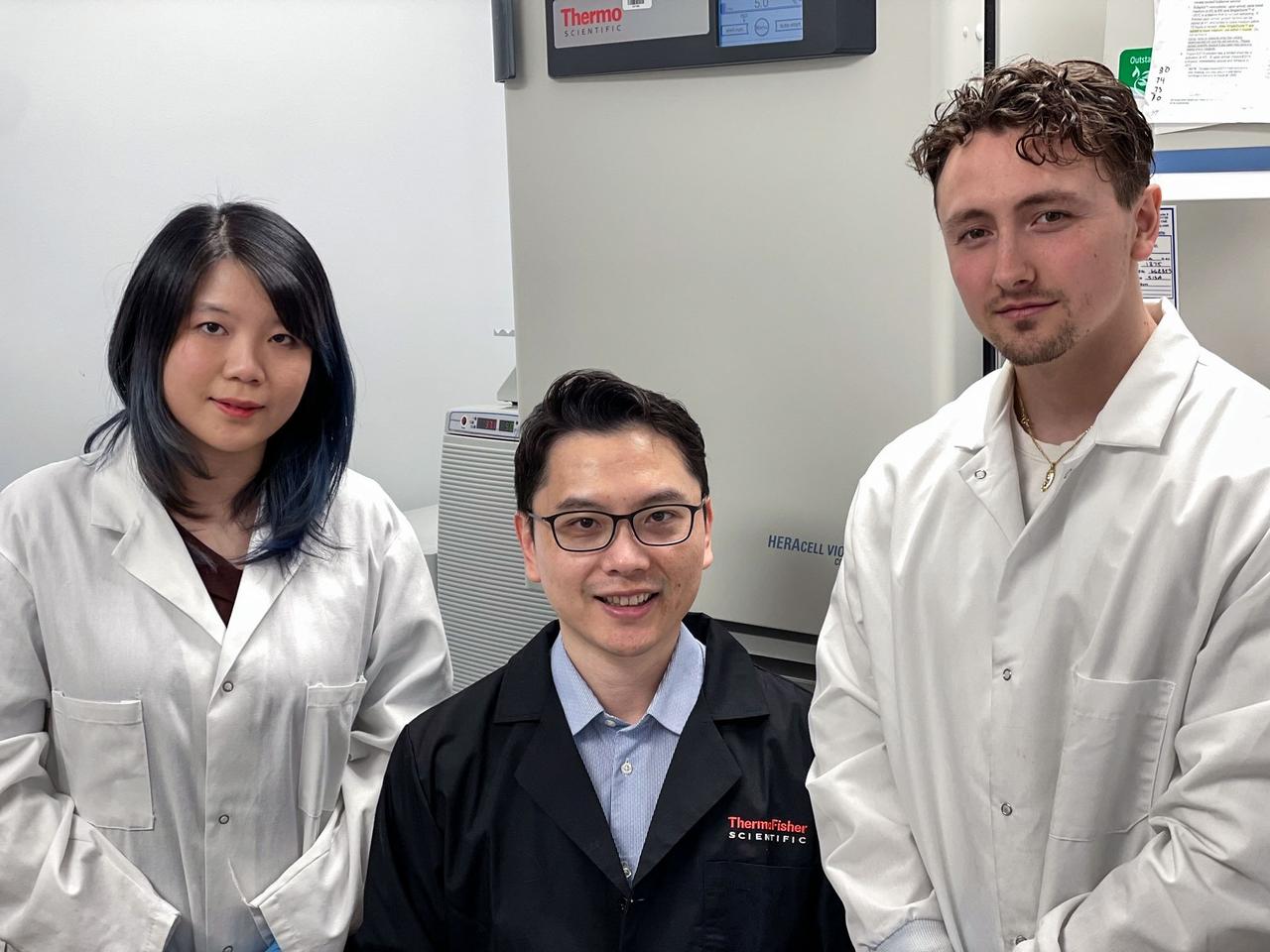
jsc2024e005966 (1/12/2024) --- The Compartment Cartilage Tissue Construct team includes Dr. Yupeng Chen (Associate Professor of Biomedical Engineering from University of Connecticut), Ian Sands (Ph.D. candidate from University of Connecticut) and Anne Yau (Ph.D. candidate from University of Connecticut). Image courtesy of the University of Connecticut.
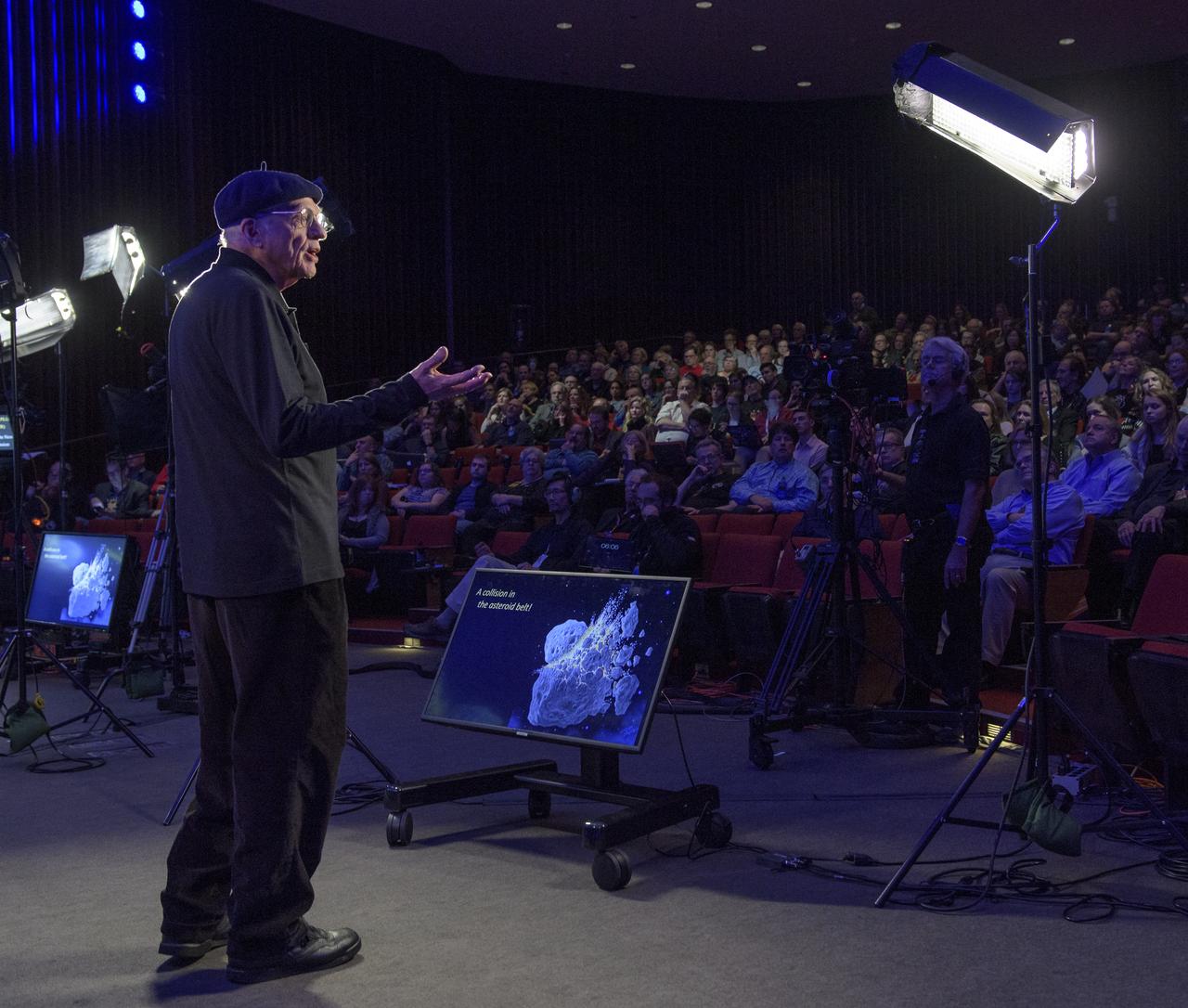
Walter Alvarez professor in the Earth and Planetary Science department at the University of California, Berkeley, gives a presentation titled "Doing Geology by Looking Up; Doing Astronomy by Looking Down", Monday, Dec. 31, 2018 at Johns Hopkins University Applied Physics Laboratory (APL) in Laurel, Maryland. Photo Credit: (NASA/Bill Ingalls)

Dr. Stephen Hawking, a professor of mathematics at the University of Cambridge, delivers a speech entitled "Why we should go into space" during a lecture that is part of a series honoring NASA's 50th Anniversary, Monday, April 21, 2008, at George Washington University's Morton Auditorium in Washington. Photo Credit: (NASA/Paul. E. Alers)