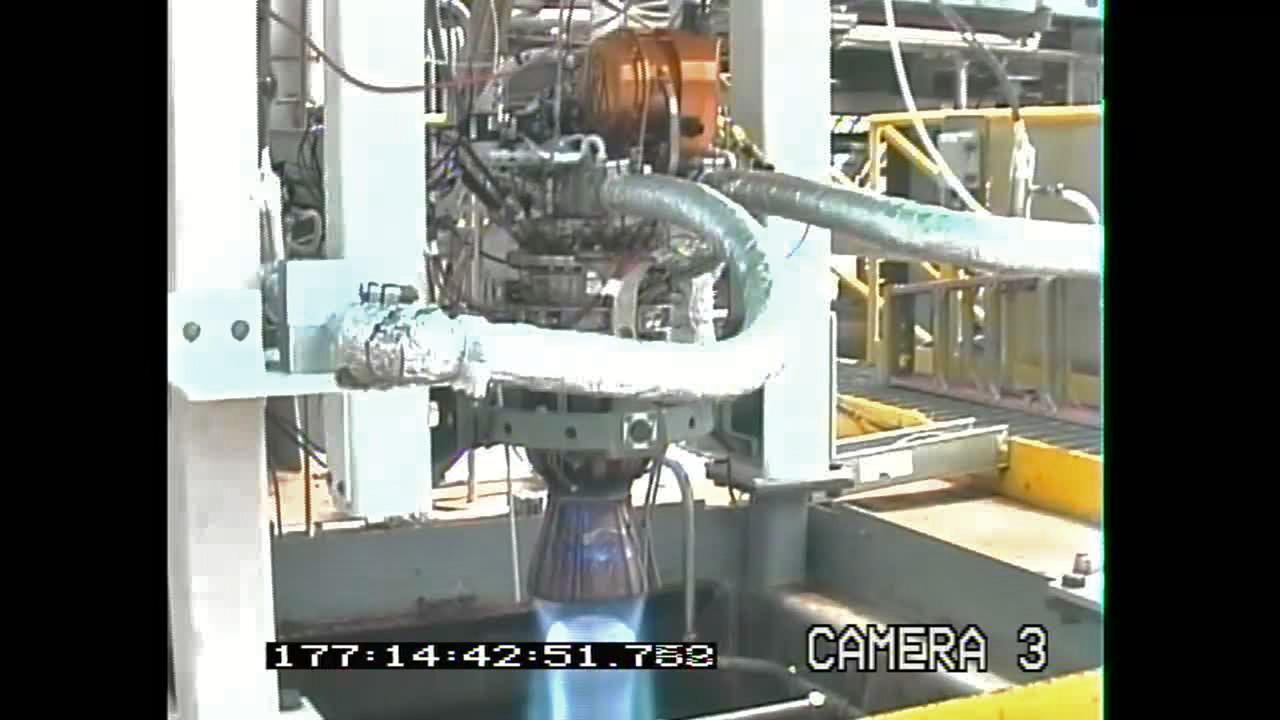
A frame grab from a mounted video camera on the E-3 Test Stand at Stennis Space Center documents testing of the new Project Morpheus engine. The new liquid methane, liquid oxygen engine will power the Morpheus prototype lander, which could one day evolve to carry cargo safely to the moon, asteroids or Mars surfaces.
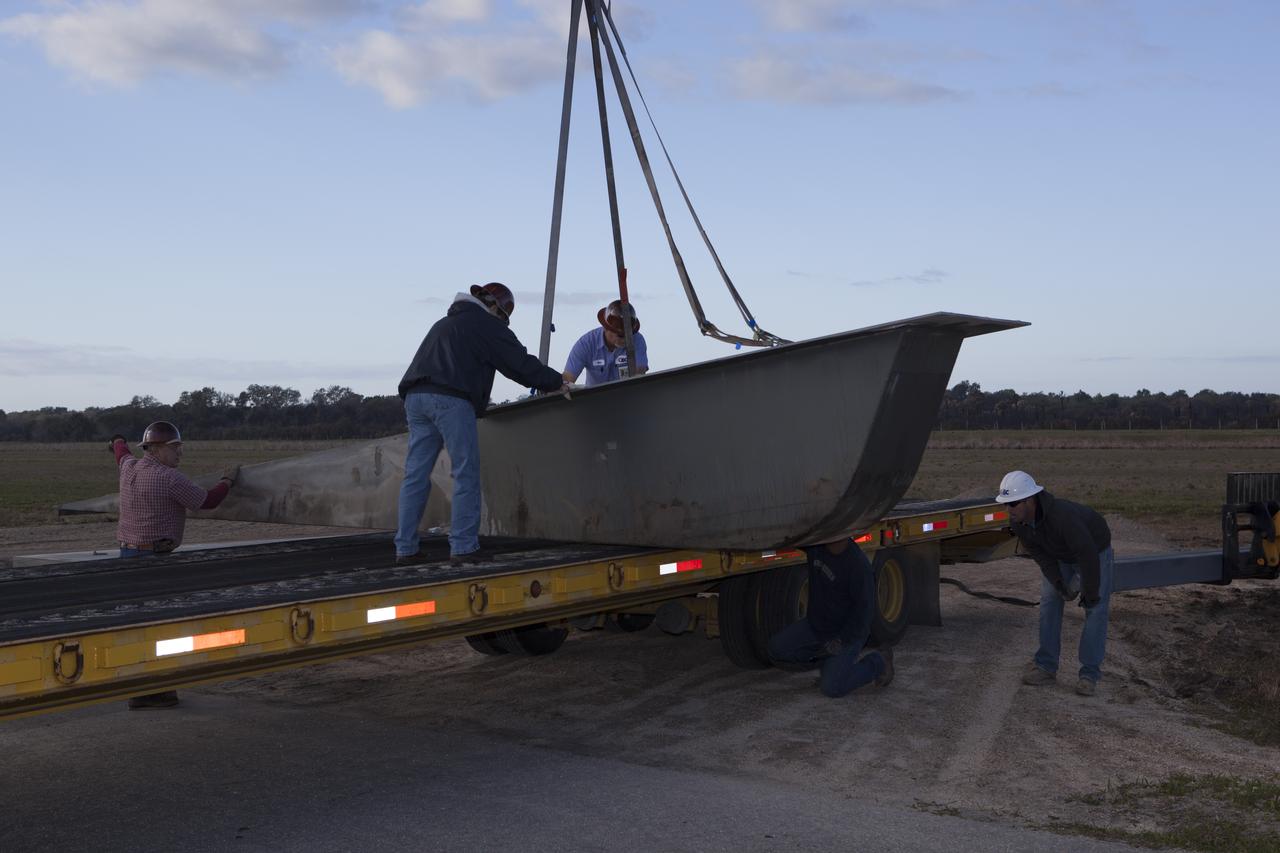
CAPE CANAVERAL, Fla. – Construction workers assist as a crane lowers a portion of the launch pad for the Project Morpheus prototype lander onto a transporter at the north end of the Shuttle Landing Facility at NASA’s Kennedy Space Center in Florida. The launch pad is being moved to a different location at the landing facility to support the next phase of flight testing. Morpheus completed its seventh free flight test on March 11. The 83-second test began at 3:41 p.m. EDT with the Morpheus lander launching from the ground over a flame trench and ascending to 580 feet. Morpheus then flew its fastest downrange trek at 30 mph, travelling farther than before, 837 feet. The lander performed a 42-foot divert to emulate a hazard avoidance maneuver before descending and touching down on Landing Site 2, at the northern landing pad inside the automated landing and hazard avoidance technology ALHAT hazard field. Morpheus landed within one foot of its intended target. Project Morpheus tests NASA’s ALHAT and an engine that runs on liquid oxygen and methane, or green propellants, into a fully-operational lander that could deliver cargo to other planetary surfaces. The landing facility provides the lander with the kind of field necessary for realistic testing, complete with rocks, craters and hazards to avoid. Morpheus’ ALHAT payload allows it to navigate to clear landing sites amidst rocks, craters and other hazards during its descent. Project Morpheus is being managed under the Advanced Exploration Systems, or AES, Division in NASA’s Human Exploration and Operations Mission Directorate. The efforts in AES pioneer new approaches for rapidly developing prototype systems, demonstrating key capabilities and validating operational concepts for future human missions beyond Earth orbit. For more information on Project Morpheus, visit http://morpheuslander.jsc.nasa.gov/. Photo credit: NASA/Dimitri Gerondidakis
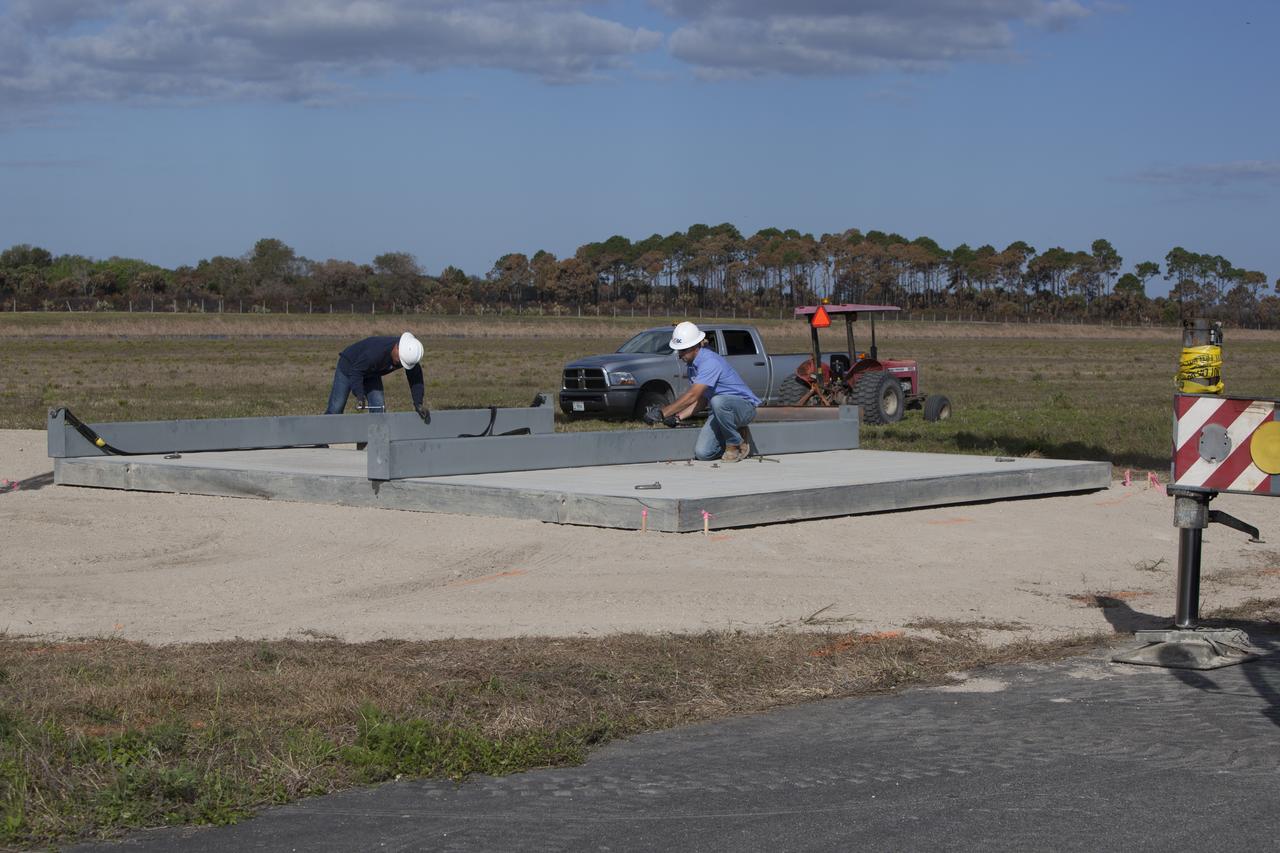
CAPE CANAVERAL, Fla. – Construction workers begin to reassemble the launch pad for the Project Morpheus prototype lander at a new location at the north end of the Shuttle Landing Facility at NASA’s Kennedy Space Center in Florida. The launch pad was moved to a different location to support the next phase of flight testing. Morpheus completed its seventh free flight test on March 11. The 83-second test began at 3:41 p.m. EDT with the Morpheus lander launching from the ground over a flame trench and ascending to 580 feet. Morpheus then flew its fastest downrange trek at 30 mph, travelling farther than before, 837 feet. The lander performed a 42-foot divert to emulate a hazard avoidance maneuver before descending and touching down on Landing Site 2, at the northern landing pad inside the automated landing and hazard avoidance technology ALHAT hazard field. Morpheus landed within one foot of its intended target. Project Morpheus tests NASA’s ALHAT and an engine that runs on liquid oxygen and methane, or green propellants, into a fully-operational lander that could deliver cargo to other planetary surfaces. The landing facility provides the lander with the kind of field necessary for realistic testing, complete with rocks, craters and hazards to avoid. Morpheus’ ALHAT payload allows it to navigate to clear landing sites amidst rocks, craters and other hazards during its descent. Project Morpheus is being managed under the Advanced Exploration Systems, or AES, Division in NASA’s Human Exploration and Operations Mission Directorate. The efforts in AES pioneer new approaches for rapidly developing prototype systems, demonstrating key capabilities and validating operational concepts for future human missions beyond Earth orbit. For more information on Project Morpheus, visit http://morpheuslander.jsc.nasa.gov/. Photo credit: NASA/Dimitri Gerondidakis
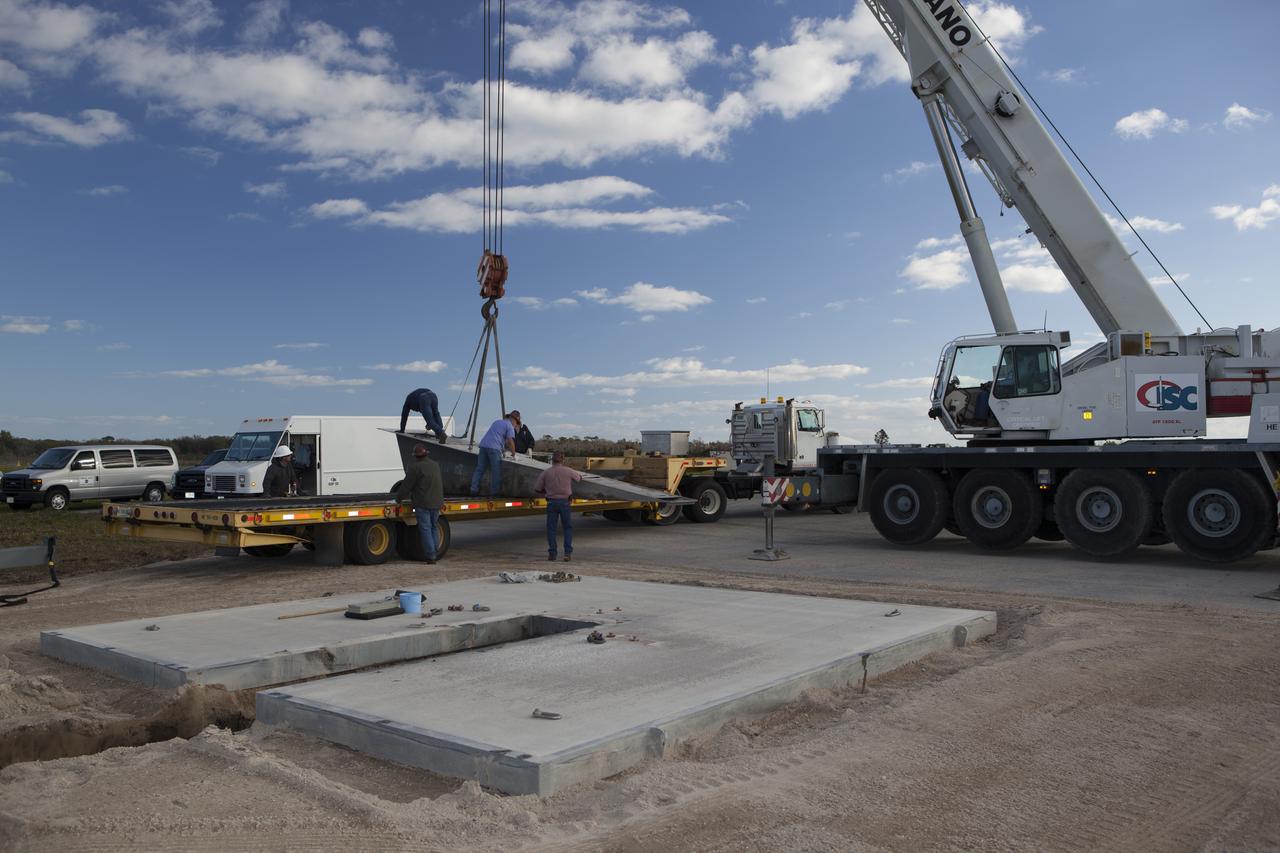
CAPE CANAVERAL, Fla. – Construction workers assist as a crane lowers a portion of the launch pad for the Project Morpheus prototype lander onto a transporter at the north end of the Shuttle Landing Facility at NASA’s Kennedy Space Center in Florida. The launch pad is being moved to a different location at the landing facility to support the next phase of flight testing. Morpheus completed its seventh free flight test on March 11. The 83-second test began at 3:41 p.m. EDT with the Morpheus lander launching from the ground over a flame trench and ascending to 580 feet. Morpheus then flew its fastest downrange trek at 30 mph, travelling farther than before, 837 feet. The lander performed a 42-foot divert to emulate a hazard avoidance maneuver before descending and touching down on Landing Site 2, at the northern landing pad inside the automated landing and hazard avoidance technology ALHAT hazard field. Morpheus landed within one foot of its intended target. Project Morpheus tests NASA’s ALHAT and an engine that runs on liquid oxygen and methane, or green propellants, into a fully-operational lander that could deliver cargo to other planetary surfaces. The landing facility provides the lander with the kind of field necessary for realistic testing, complete with rocks, craters and hazards to avoid. Morpheus’ ALHAT payload allows it to navigate to clear landing sites amidst rocks, craters and other hazards during its descent. Project Morpheus is being managed under the Advanced Exploration Systems, or AES, Division in NASA’s Human Exploration and Operations Mission Directorate. The efforts in AES pioneer new approaches for rapidly developing prototype systems, demonstrating key capabilities and validating operational concepts for future human missions beyond Earth orbit. For more information on Project Morpheus, visit http://morpheuslander.jsc.nasa.gov/. Photo credit: NASA/Dimitri Gerondidakis
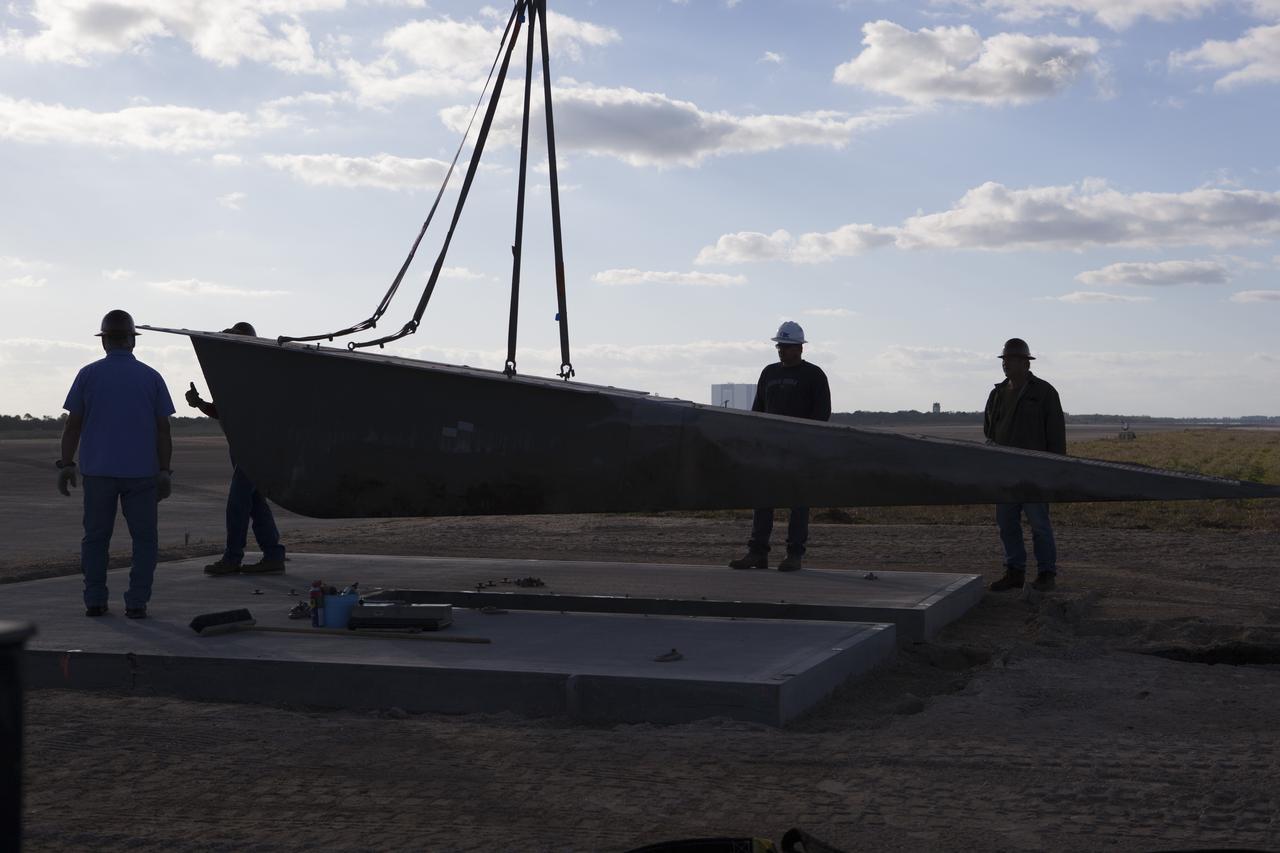
CAPE CANAVERAL, Fla. – Construction workers monitor the progress as a crane is used to lift a portion of the launch pad for the Project Morpheus prototype lander at the north end of the Shuttle Landing Facility at NASA’s Kennedy Space Center in Florida. The launch pad will be moved to a different location at the landing facility to support the next phase of flight testing. The seventh free flight test of Morpheus occurred on March 11. The 83-second test began at 3:41 p.m. EDT with the Morpheus lander launching from the ground over a flame trench and ascending to 580 feet. Morpheus then flew its fastest downrange trek at 30 mph, travelling farther than before, 837 feet. The lander performed a 42-foot divert to emulate a hazard avoidance maneuver before descending and touching down on Landing Site 2, at the northern landing pad inside the automated landing and hazard avoidance technology ALHAT hazard field. Morpheus landed within one foot of its intended target. Project Morpheus tests NASA’s ALHAT and an engine that runs on liquid oxygen and methane, or green propellants, into a fully-operational lander that could deliver cargo to other planetary surfaces . The landing facility provides the lander with the kind of field necessary for realistic testing, complete with rocks, craters and hazards to avoid. Morpheus’ ALHAT payload allows it to navigate to clear landing sites amidst rocks, craters and other hazards during its descent. Project Morpheus is being managed under the Advanced Exploration Systems, or AES, Division in NASA’s Human Exploration and Operations Mission Directorate. The efforts in AES pioneer new approaches for rapidly developing prototype systems, demonstrating key capabilities and validating operational concepts for future human missions beyond Earth orbit. For more information on Project Morpheus, visit http://morpheuslander.jsc.nasa.gov/. Photo credit: NASA/Dimitri Gerondidakis
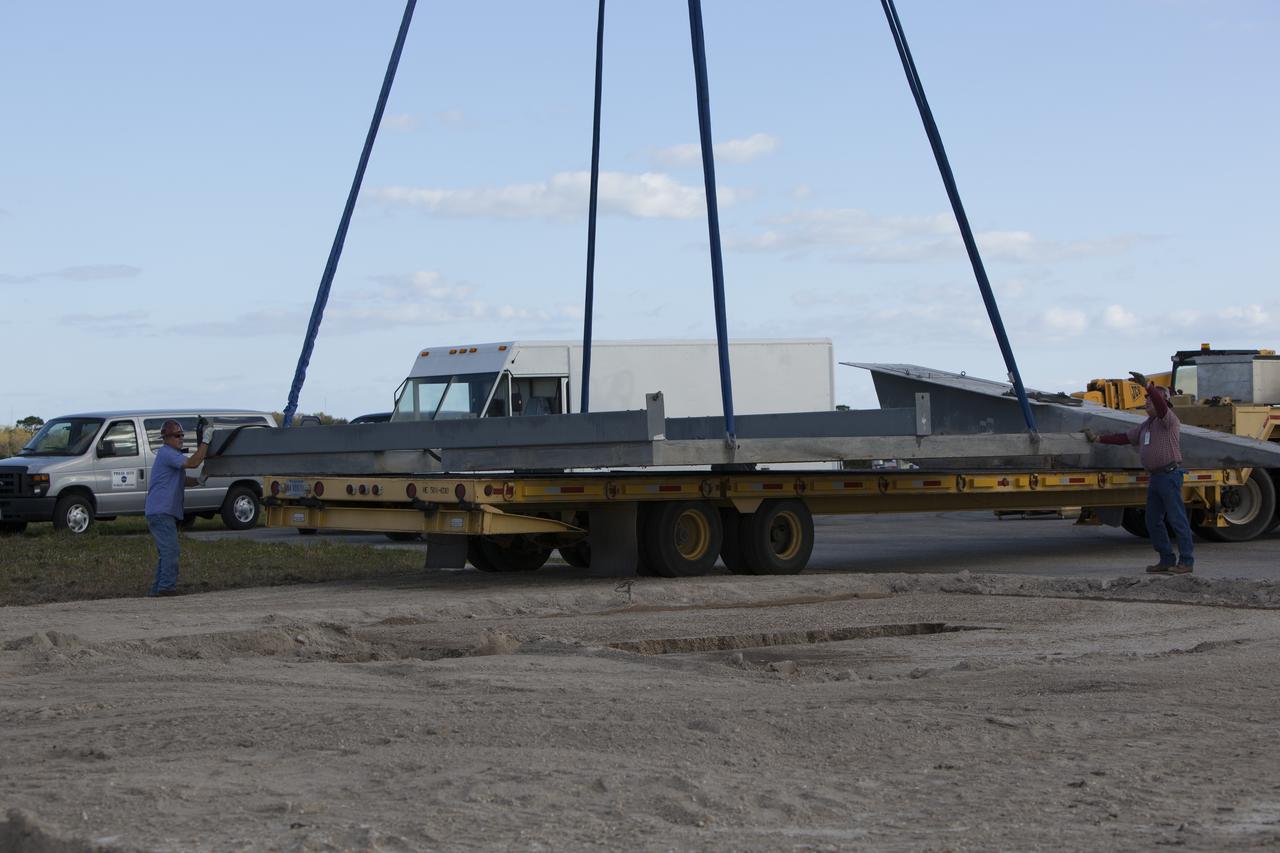
CAPE CANAVERAL, Fla. – Construction workers assist as a crane lowers a large portion of the launch pad for the Project Morpheus prototype lander onto a transporter at the north end of the Shuttle Landing Facility at NASA’s Kennedy Space Center in Florida. The launch pad is being moved to a different location at the landing facility to support the next phase of flight testing. Morpheus completed its seventh free flight test on March 11. The 83-second test began at 3:41 p.m. EDT with the Morpheus lander launching from the ground over a flame trench and ascending to 580 feet. Morpheus then flew its fastest downrange trek at 30 mph, travelling farther than before, 837 feet. The lander performed a 42-foot divert to emulate a hazard avoidance maneuver before descending and touching down on Landing Site 2, at the northern landing pad inside the automated landing and hazard avoidance technology ALHAT hazard field. Morpheus landed within one foot of its intended target. Project Morpheus tests NASA’s ALHAT and an engine that runs on liquid oxygen and methane, or green propellants, into a fully-operational lander that could deliver cargo to other planetary surfaces. The landing facility provides the lander with the kind of field necessary for realistic testing, complete with rocks, craters and hazards to avoid. Morpheus’ ALHAT payload allows it to navigate to clear landing sites amidst rocks, craters and other hazards during its descent. Project Morpheus is being managed under the Advanced Exploration Systems, or AES, Division in NASA’s Human Exploration and Operations Mission Directorate. The efforts in AES pioneer new approaches for rapidly developing prototype systems, demonstrating key capabilities and validating operational concepts for future human missions beyond Earth orbit. For more information on Project Morpheus, visit http://morpheuslander.jsc.nasa.gov/. Photo credit: NASA/Dimitri Gerondidakis
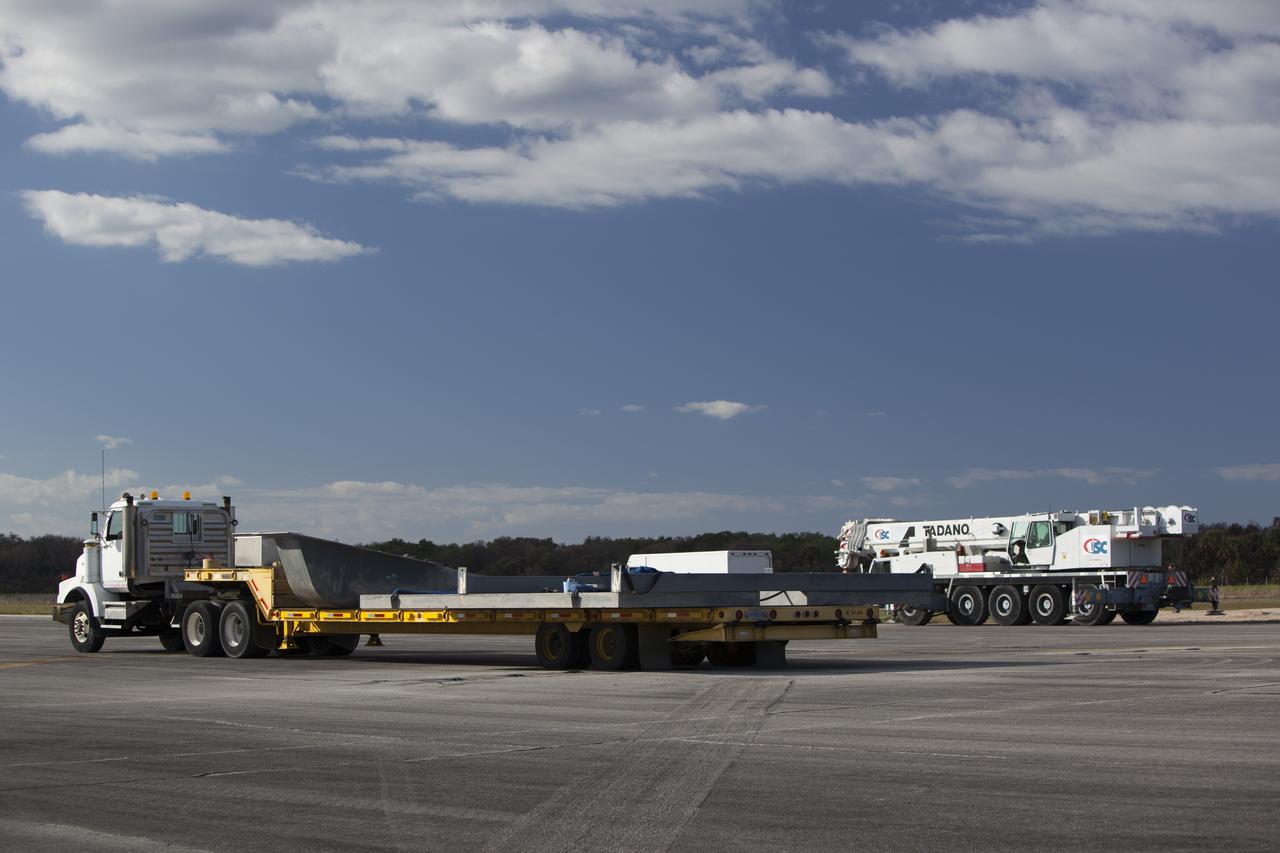
CAPE CANAVERAL, Fla. – A flatbed truck carries the launch pad for the Project Morpheus prototype lander to a new location at the north end of the Shuttle Landing Facility at NASA’s Kennedy Space Center in Florida. The launch pad is being moved to a different location to support the next phase of flight testing. Morpheus completed its seventh free flight test on March 11. The 83-second test began at 3:41 p.m. EDT with the Morpheus lander launching from the ground over a flame trench and ascending to 580 feet. Morpheus then flew its fastest downrange trek at 30 mph, travelling farther than before, 837 feet. The lander performed a 42-foot divert to emulate a hazard avoidance maneuver before descending and touching down on Landing Site 2, at the northern landing pad inside the automated landing and hazard avoidance technology ALHAT hazard field. Morpheus landed within one foot of its intended target. Project Morpheus tests NASA’s ALHAT and an engine that runs on liquid oxygen and methane, or green propellants, into a fully-operational lander that could deliver cargo to other planetary surfaces. The landing facility provides the lander with the kind of field necessary for realistic testing, complete with rocks, craters and hazards to avoid. Morpheus’ ALHAT payload allows it to navigate to clear landing sites amidst rocks, craters and other hazards during its descent. Project Morpheus is being managed under the Advanced Exploration Systems, or AES, Division in NASA’s Human Exploration and Operations Mission Directorate. The efforts in AES pioneer new approaches for rapidly developing prototype systems, demonstrating key capabilities and validating operational concepts for future human missions beyond Earth orbit. For more information on Project Morpheus, visit http://morpheuslander.jsc.nasa.gov/. Photo credit: NASA/Dimitri Gerondidakis
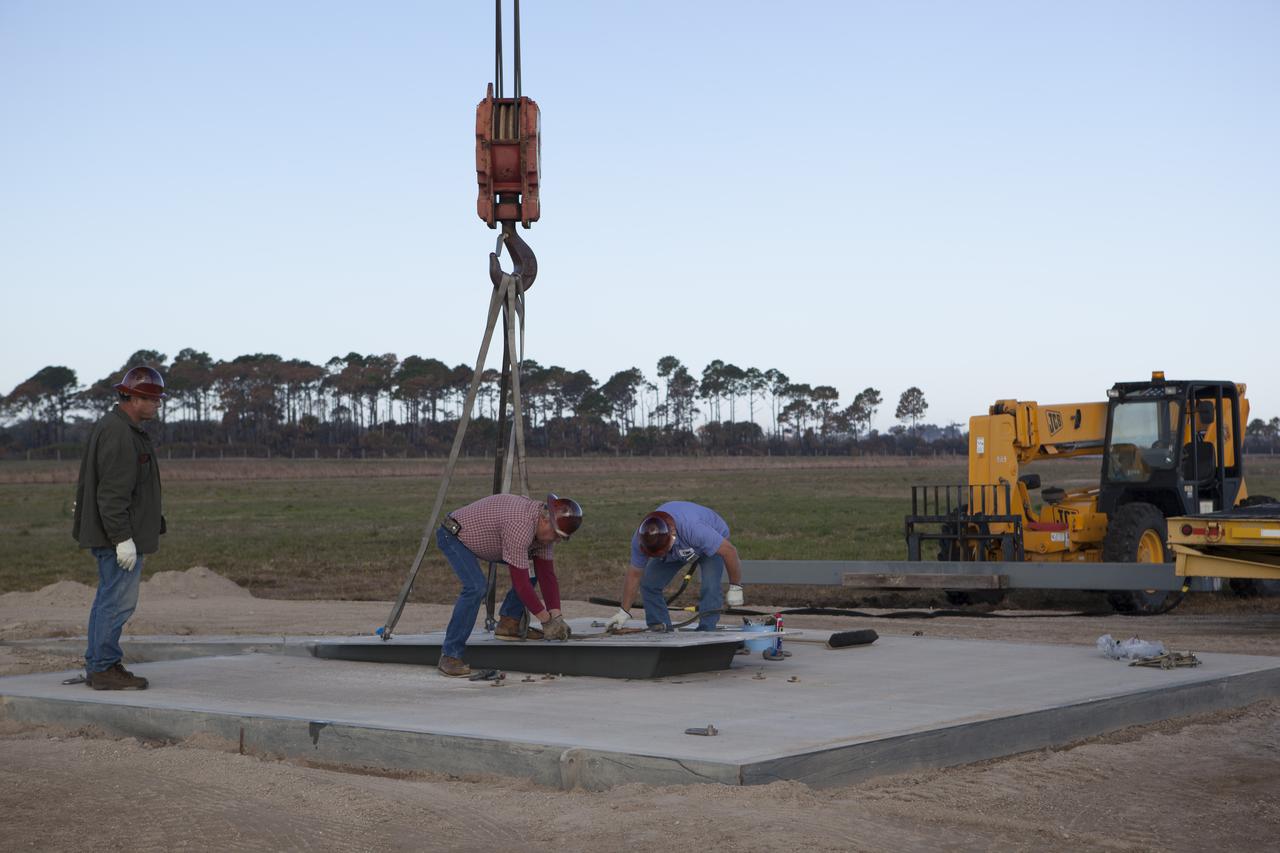
CAPE CANAVERAL, Fla. – Construction workers attach a crane to part of the launch pad for the Project Morpheus prototype lander at the north end of the Shuttle Landing Facility at NASA’s Kennedy Space Center in Florida. The launch pad will be moved to a different location at the landing facility to support the next phase of flight testing. The seventh free flight test of Morpheus occurred on March 11. The 83-second test began at 3:41 p.m. EDT with the Morpheus lander launching from the ground over a flame trench and ascending to 580 feet. Morpheus then flew its fastest downrange trek at 30 mph, travelling farther than before, 837 feet. The lander performed a 42-foot divert to emulate a hazard avoidance maneuver before descending and touching down on Landing Site 2, at the northern landing pad inside the automated landing and hazard avoidance technology ALHAT hazard field. Morpheus landed within one foot of its intended target. Project Morpheus tests NASA’s ALHAT and an engine that runs on liquid oxygen and methane, or green propellants, into a fully-operational lander that could deliver cargo to other planetary surfaces. The landing facility provides the lander with the kind of field necessary for realistic testing, complete with rocks, craters and hazards to avoid. Morpheus’ ALHAT payload allows it to navigate to clear landing sites amidst rocks, craters and other hazards during its descent. Project Morpheus is being managed under the Advanced Exploration Systems, or AES, Division in NASA’s Human Exploration and Operations Mission Directorate. The efforts in AES pioneer new approaches for rapidly developing prototype systems, demonstrating key capabilities and validating operational concepts for future human missions beyond Earth orbit. For more information on Project Morpheus, visit http://morpheuslander.jsc.nasa.gov/. Photo credit: NASA/Dimitri Gerondidakis
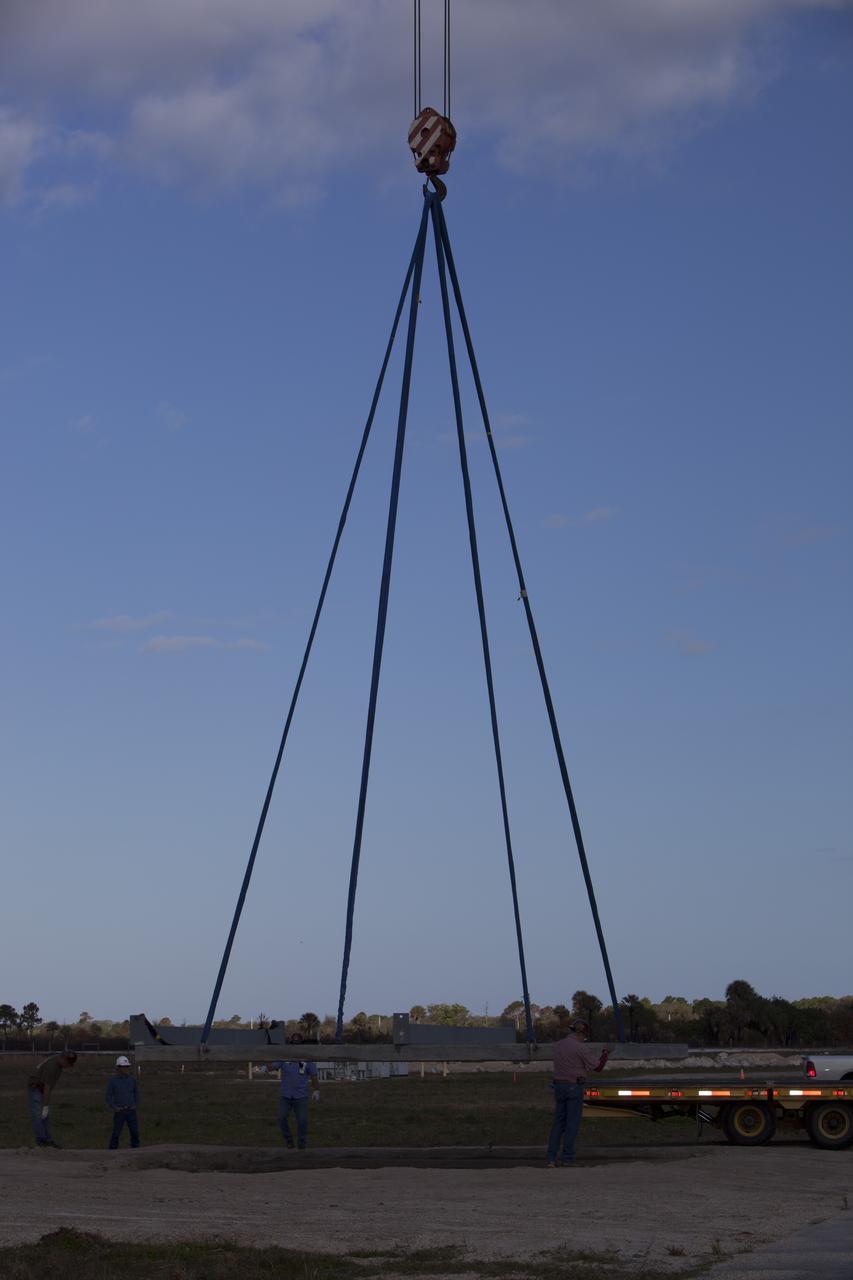
CAPE CANAVERAL, Fla. – Construction workers assist as a crane is used to lift a large portion of the launch pad for the Project Morpheus prototype lander onto a transporter at the north end of the Shuttle Landing Facility at NASA’s Kennedy Space Center in Florida. The launch pad is being moved to a different location at the landing facility to support the next phase of flight testing. Morpheus completed its seventh free flight test on March 11. The 83-second test began at 3:41 p.m. EDT with the Morpheus lander launching from the ground over a flame trench and ascending to 580 feet. Morpheus then flew its fastest downrange trek at 30 mph, travelling farther than before, 837 feet. The lander performed a 42-foot divert to emulate a hazard avoidance maneuver before descending and touching down on Landing Site 2, at the northern landing pad inside the automated landing and hazard avoidance technology ALHAT hazard field. Morpheus landed within one foot of its intended target. Project Morpheus tests NASA’s ALHAT and an engine that runs on liquid oxygen and methane, or green propellants, into a fully-operational lander that could deliver cargo to other planetary surfaces. The landing facility provides the lander with the kind of field necessary for realistic testing, complete with rocks, craters and hazards to avoid. Morpheus’ ALHAT payload allows it to navigate to clear landing sites amidst rocks, craters and other hazards during its descent. Project Morpheus is being managed under the Advanced Exploration Systems, or AES, Division in NASA’s Human Exploration and Operations Mission Directorate. The efforts in AES pioneer new approaches for rapidly developing prototype systems, demonstrating key capabilities and validating operational concepts for future human missions beyond Earth orbit. For more information on Project Morpheus, visit http://morpheuslander.jsc.nasa.gov/. Photo credit: NASA/Dimitri Gerondidakis
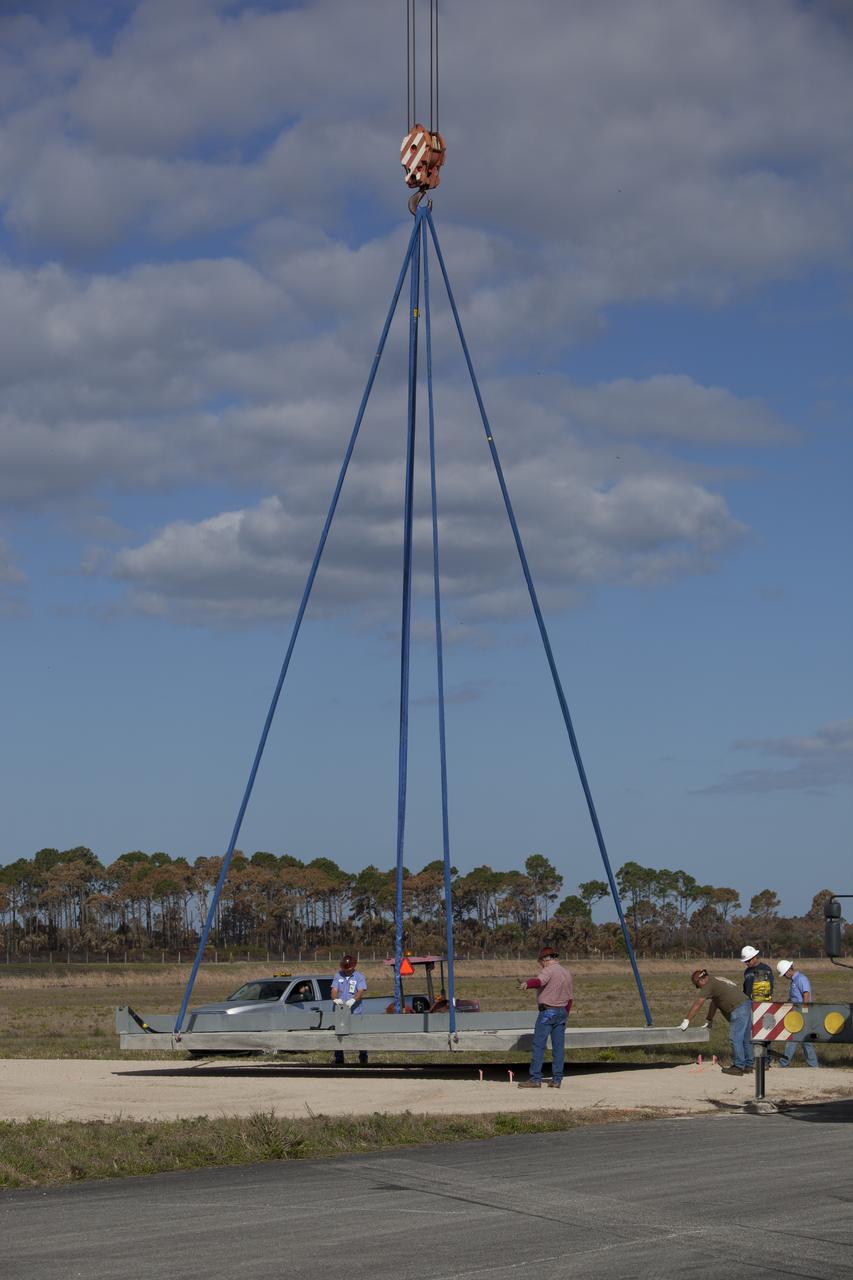
CAPE CANAVERAL, Fla. – A crane is used to lower the launch pad for the Project Morpheus prototype lander onto a new location at the north end of the Shuttle Landing Facility at NASA’s Kennedy Space Center in Florida. The launch pad was moved to a different location to support the next phase of flight testing. Morpheus completed its seventh free flight test on March 11. The 83-second test began at 3:41 p.m. EDT with the Morpheus lander launching from the ground over a flame trench and ascending to 580 feet. Morpheus then flew its fastest downrange trek at 30 mph, travelling farther than before, 837 feet. The lander performed a 42-foot divert to emulate a hazard avoidance maneuver before descending and touching down on Landing Site 2, at the northern landing pad inside the automated landing and hazard avoidance technology ALHAT hazard field. Morpheus landed within one foot of its intended target. Project Morpheus tests NASA’s ALHAT and an engine that runs on liquid oxygen and methane, or green propellants, into a fully-operational lander that could deliver cargo to other planetary surfaces. The landing facility provides the lander with the kind of field necessary for realistic testing, complete with rocks, craters and hazards to avoid. Morpheus’ ALHAT payload allows it to navigate to clear landing sites amidst rocks, craters and other hazards during its descent. Project Morpheus is being managed under the Advanced Exploration Systems, or AES, Division in NASA’s Human Exploration and Operations Mission Directorate. The efforts in AES pioneer new approaches for rapidly developing prototype systems, demonstrating key capabilities and validating operational concepts for future human missions beyond Earth orbit. For more information on Project Morpheus, visit http://morpheuslander.jsc.nasa.gov/. Photo credit: NASA/Dimitri Gerondidakis
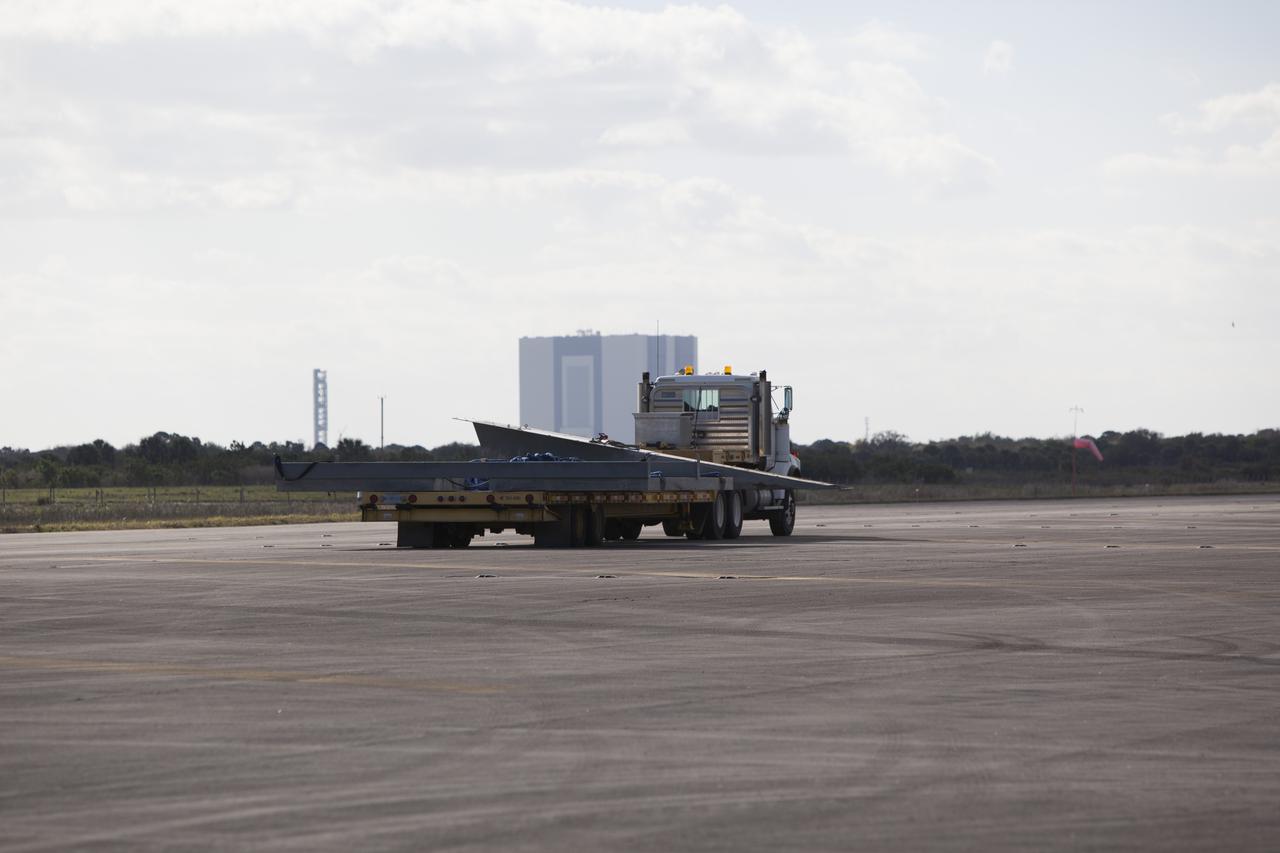
CAPE CANAVERAL, Fla. – A flatbed truck carries the launch pad for the Project Morpheus prototype lander to a new location at the north end of the Shuttle Landing Facility at NASA’s Kennedy Space Center in Florida. The launch pad is being moved to a different location to support the next phase of flight testing. Morpheus completed its seventh free flight test on March 11. The 83-second test began at 3:41 p.m. EDT with the Morpheus lander launching from the ground over a flame trench and ascending to 580 feet. Morpheus then flew its fastest downrange trek at 30 mph, travelling farther than before, 837 feet. The lander performed a 42-foot divert to emulate a hazard avoidance maneuver before descending and touching down on Landing Site 2, at the northern landing pad inside the automated landing and hazard avoidance technology ALHAT hazard field. Morpheus landed within one foot of its intended target. Project Morpheus tests NASA’s ALHAT and an engine that runs on liquid oxygen and methane, or green propellants, into a fully-operational lander that could deliver cargo to other planetary surfaces. The landing facility provides the lander with the kind of field necessary for realistic testing, complete with rocks, craters and hazards to avoid. Morpheus’ ALHAT payload allows it to navigate to clear landing sites amidst rocks, craters and other hazards during its descent. Project Morpheus is being managed under the Advanced Exploration Systems, or AES, Division in NASA’s Human Exploration and Operations Mission Directorate. The efforts in AES pioneer new approaches for rapidly developing prototype systems, demonstrating key capabilities and validating operational concepts for future human missions beyond Earth orbit. For more information on Project Morpheus, visit http://morpheuslander.jsc.nasa.gov/. Photo credit: NASA/Dimitri Gerondidakis
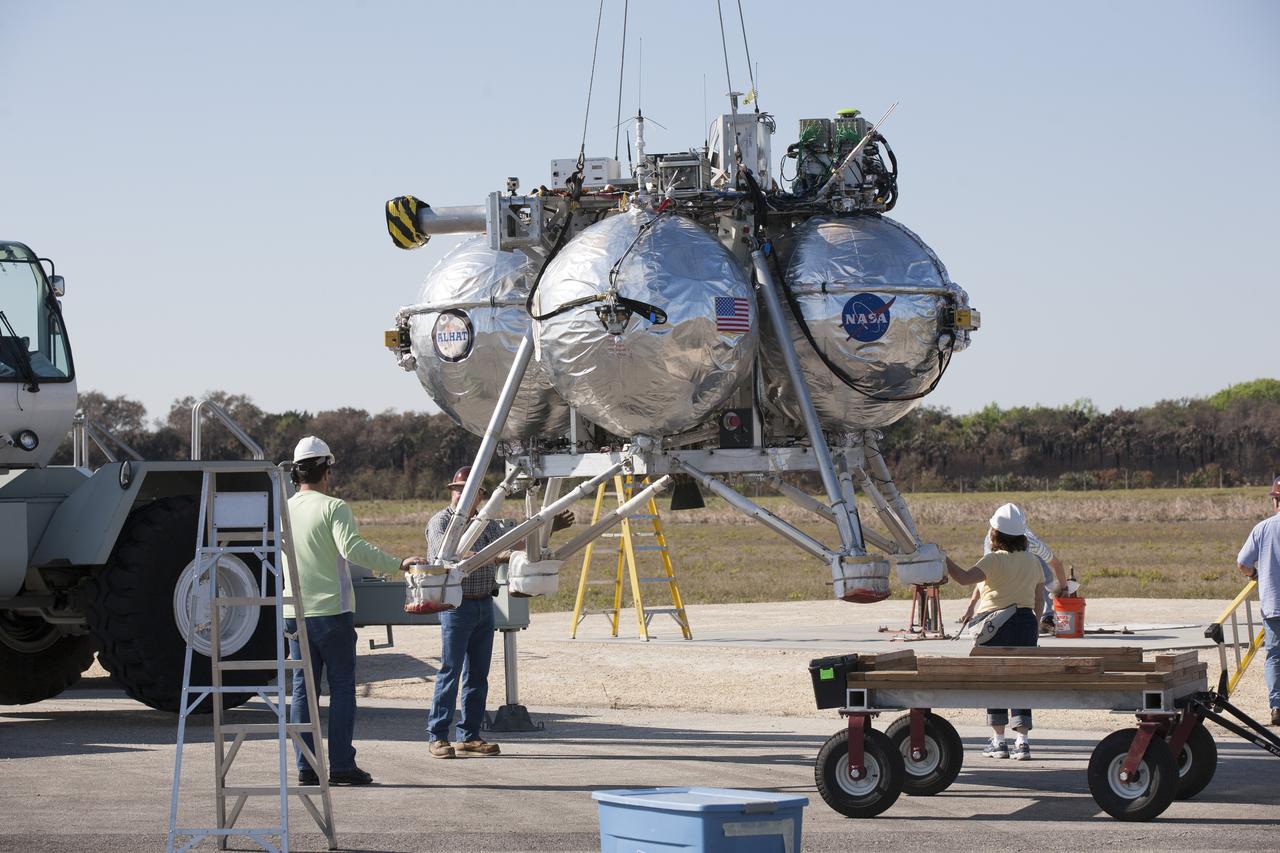
CAPE CANAVERAL, Fla. - Engineers and technicians assist as a crane lowers the Project Morpheus prototype lander in preparation for its seventh free flight test at the north end of the Shuttle Landing Facility at NASA’s Kennedy Space Center in Florida. The 83-second test began at 3:41 p.m. EDT with the Morpheus lander launching from the ground over a flame trench and ascending to 580 feet, its highest to date. Morpheus then flew its fastest downrange trek at 30 mph, travelling farther than before, 837 feet. The lander performed a 42-foot divert to emulate a hazard avoidance maneuver before descending and touching down on Landing Site 2, at the northern landing pad inside the automated landing and hazard avoidance technology ALHAT hazard field. Morpheus landed within one foot of its intended target. Project Morpheus tests NASA’s ALHAT and an engine that runs on liquid oxygen and methane, or green propellants, into a fully-operational lander that could deliver cargo to other planetary surfaces. The landing facility provides the lander with the kind of field necessary for realistic testing, complete with rocks, craters and hazards to avoid. Morpheus’ ALHAT payload allows it to navigate to clear landing sites amidst rocks, craters and other hazards during its descent. Project Morpheus is being managed under the Advanced Exploration Systems, or AES, Division in NASA’s Human Exploration and Operations Mission Directorate. The efforts in AES pioneer new approaches for rapidly developing prototype systems, demonstrating key capabilities and validating operational concepts for future human missions beyond Earth orbit. For more information on Project Morpheus, visit http://morpheuslander.jsc.nasa.gov/. Photo credit: NASA/Kim Shiflett
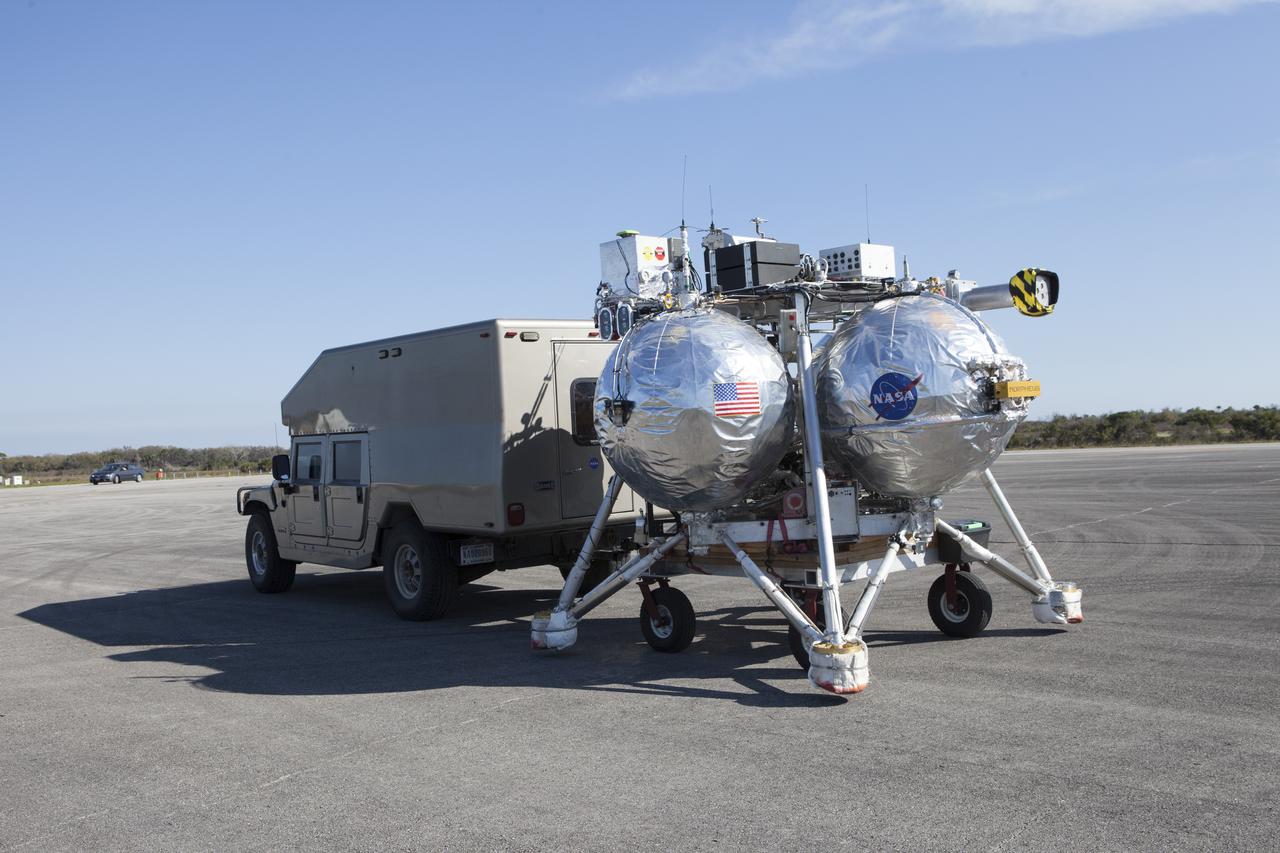
CAPE CANAVERAL, Fla. - The Project Morpheus prototype lander is transported to the north end of the Shuttle Landing Facility at NASA’s Kennedy Space Center in Florida for the seventh free flight test. The 83-second test began at 3:41 p.m. EDT with the Morpheus lander launching from the ground over a flame trench and ascending to 580 feet, its highest to date. Morpheus then flew its fastest downrange trek at 30 mph, travelling farther than before, 837 feet. The lander performed a 42-foot divert to emulate a hazard avoidance maneuver before descending and touching down on Landing Site 2, at the northern landing pad inside the automated landing and hazard avoidance technology ALHAT hazard field. Morpheus landed within one foot of its intended target. Project Morpheus tests NASA’s ALHAT and an engine that runs on liquid oxygen and methane, or green propellants, into a fully-operational lander that could deliver cargo to other planetary surfaces. The landing facility provides the lander with the kind of field necessary for realistic testing, complete with rocks, craters and hazards to avoid. Morpheus’ ALHAT payload allows it to navigate to clear landing sites amidst rocks, craters and other hazards during its descent. Project Morpheus is being managed under the Advanced Exploration Systems, or AES, Division in NASA’s Human Exploration and Operations Mission Directorate. The efforts in AES pioneer new approaches for rapidly developing prototype systems, demonstrating key capabilities and validating operational concepts for future human missions beyond Earth orbit. For more information on Project Morpheus, visit http://morpheuslander.jsc.nasa.gov/. Photo credit: NASA/Kim Shiflett
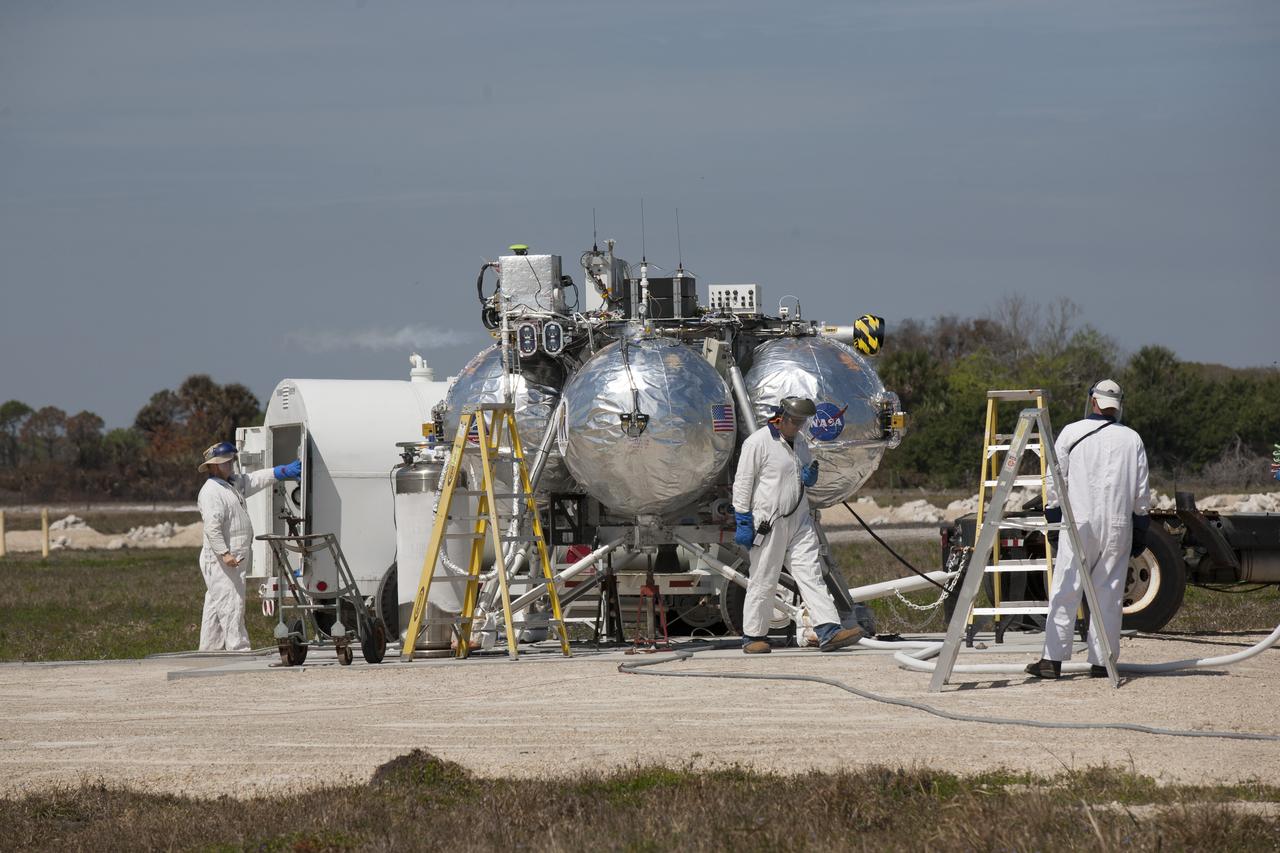
CAPE CANAVERAL, Fla. - Engineers and technicians prepare the Project Morpheus prototype lander for its seventh free flight test at the north end of the Shuttle Landing Facility at NASA’s Kennedy Space Center in Florida. The 83-second test began at 3:41 p.m. EDT with the Morpheus lander launching from the ground over a flame trench and ascending to 580 feet, its highest to date. Morpheus then flew its fastest downrange trek at 30 mph, travelling farther than before, 837 feet. The lander performed a 42-foot divert to emulate a hazard avoidance maneuver before descending and touching down on Landing Site 2, at the northern landing pad inside the automated landing and hazard avoidance technology ALHAT hazard field. Morpheus landed within one foot of its intended target. Project Morpheus tests NASA’s ALHAT and an engine that runs on liquid oxygen and methane, or green propellants, into a fully-operational lander that could deliver cargo to other planetary surfaces. The landing facility provides the lander with the kind of field necessary for realistic testing, complete with rocks, craters and hazards to avoid. Morpheus’ ALHAT payload allows it to navigate to clear landing sites amidst rocks, craters and other hazards during its descent. Project Morpheus is being managed under the Advanced Exploration Systems, or AES, Division in NASA’s Human Exploration and Operations Mission Directorate. The efforts in AES pioneer new approaches for rapidly developing prototype systems, demonstrating key capabilities and validating operational concepts for future human missions beyond Earth orbit. For more information on Project Morpheus, visit http://morpheuslander.jsc.nasa.gov/. Photo credit: NASA/Kim Shiflett
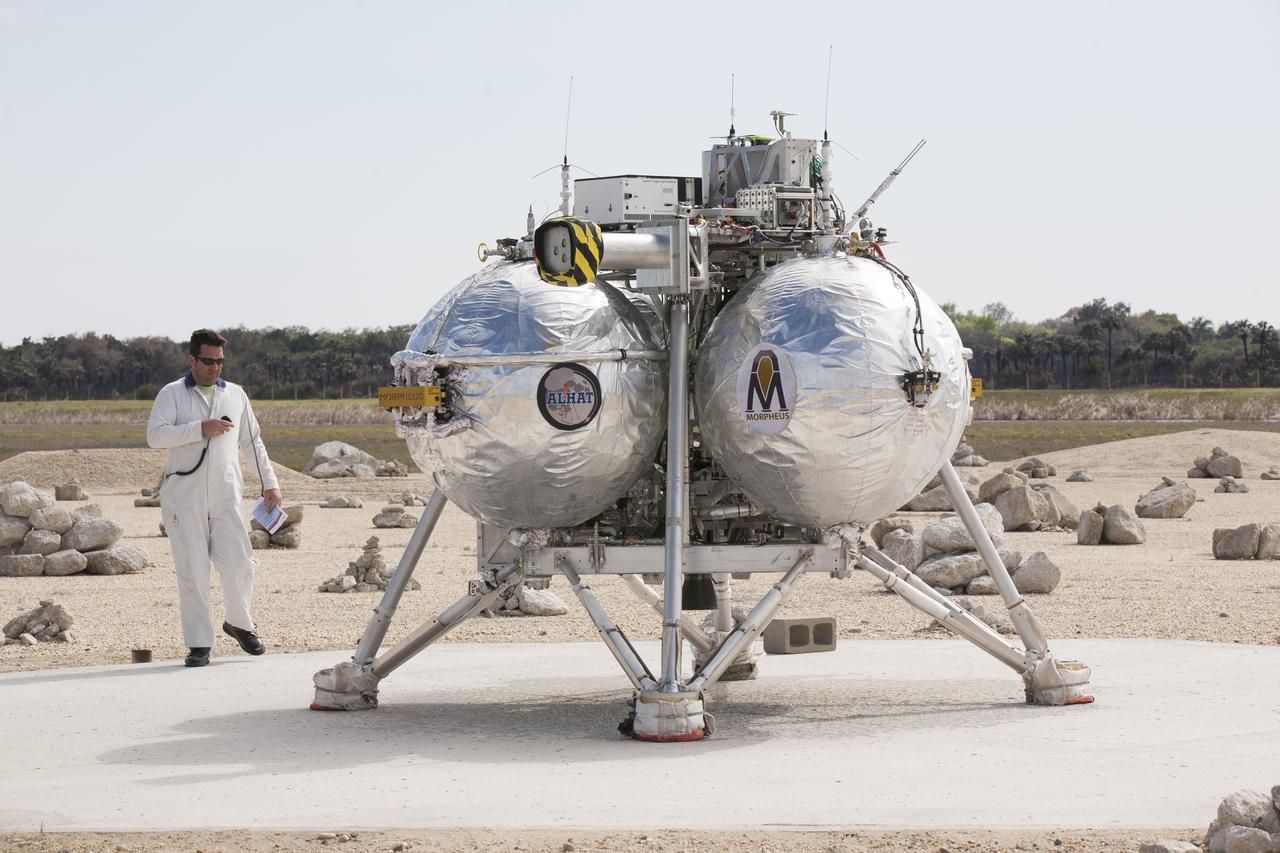
CAPE CANAVERAL, Fla. - An engineer checks the Project Morpheus prototype lander after it landed in the automated landing and hazard avoidance technology, or ALHAT, hazard field, completing its seventh free flight test at the north end of the Shuttle Landing Facility at NASA’s Kennedy Space Center in Florida. The 83-second test began at 3:41 p.m. EDT with the Morpheus lander launching from the ground over a flame trench and ascending to 580 feet, its highest to date. Morpheus then flew its fastest downrange trek at 30 mph, travelling farther than before, 837 feet. The lander performed a 42-foot divert to emulate a hazard avoidance maneuver before descending and touching down on Landing Site 2, at the northern landing pad inside the hazard field. Morpheus landed within one foot of its intended target. Project Morpheus tests NASA’s ALHAT and an engine that runs on liquid oxygen and methane, or green propellants, into a fully-operational lander that could deliver cargo to other planetary surfaces. The landing facility provides the lander with the kind of field necessary for realistic testing, complete with rocks, craters and hazards to avoid. Morpheus’ ALHAT payload allows it to navigate to clear landing sites amidst rocks, craters and other hazards during its descent. Project Morpheus is being managed under the Advanced Exploration Systems, or AES, Division in NASA’s Human Exploration and Operations Mission Directorate. The efforts in AES pioneer new approaches for rapidly developing prototype systems, demonstrating key capabilities and validating operational concepts for future human missions beyond Earth orbit. For more information on Project Morpheus, visit http://morpheuslander.jsc.nasa.gov/. Photo credit: NASA/Kim Shiflett
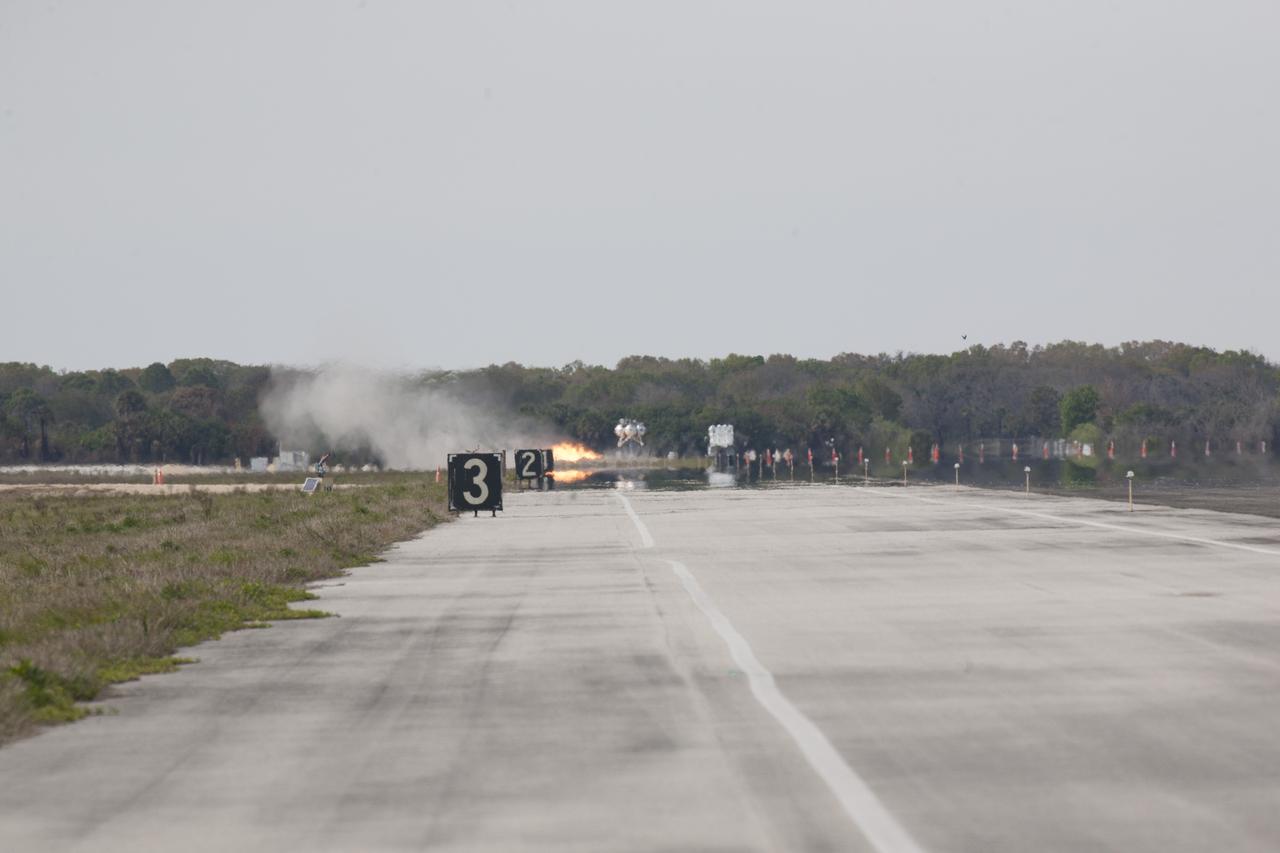
CAPE CANAVERAL, Fla. - The Project Morpheus prototype lander lifts off in the automated landing and hazard avoidance technology, or ALHAT, hazard field for its seventh free flight test at the north end of the Shuttle Landing Facility at NASA’s Kennedy Space Center in Florida. The 83-second test began at 3:41 p.m. EDT with the Morpheus lander launching from the ground over a flame trench and ascending to 580 feet, its highest to date. Morpheus then flew its fastest downrange trek at 30 mph, travelling farther than before, 837 feet. The lander performed a 42-foot divert to emulate a hazard avoidance maneuver before descending and touching down on Landing Site 2, at the northern landing pad inside the hazard field. Morpheus landed within one foot of its intended target. Project Morpheus tests NASA’s ALHAT and an engine that runs on liquid oxygen and methane, or green propellants, into a fully-operational lander that could deliver cargo to other planetary surfaces. The landing facility provides the lander with the kind of field necessary for realistic testing, complete with rocks, craters and hazards to avoid. Morpheus’ ALHAT payload allows it to navigate to clear landing sites amidst rocks, craters and other hazards during its descent. Project Morpheus is being managed under the Advanced Exploration Systems, or AES, Division in NASA’s Human Exploration and Operations Mission Directorate. The efforts in AES pioneer new approaches for rapidly developing prototype systems, demonstrating key capabilities and validating operational concepts for future human missions beyond Earth orbit. For more information on Project Morpheus, visit http://morpheuslander.jsc.nasa.gov/. Photo credit: NASA/Kim Shiflett
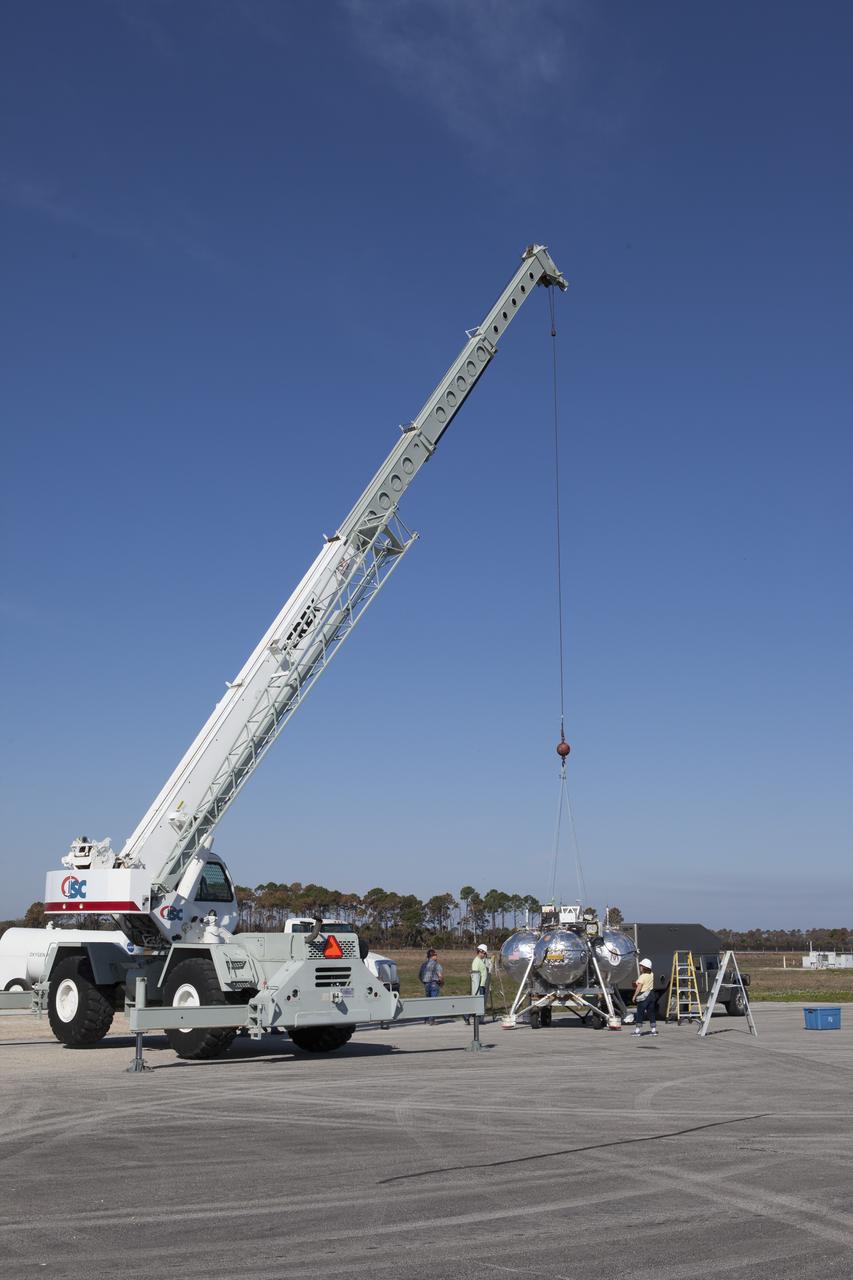
CAPE CANAVERAL, Fla. - Preparations are underway to prepare the Project Morpheus prototype lander for its seventh free flight test at the north end of the Shuttle Landing Facility at NASA’s Kennedy Space Center in Florida. The 83-second test began at 3:41 p.m. EDT with the Morpheus lander launching from the ground over a flame trench and ascending to 580 feet, its highest to date. Morpheus then flew its fastest downrange trek at 30 mph, travelling farther than before, 837 feet. The lander performed a 42-foot divert to emulate a hazard avoidance maneuver before descending and touching down on Landing Site 2, at the northern landing pad inside the automated landing and hazard avoidance technology ALHAT hazard field. Morpheus landed within one foot of its intended target. Project Morpheus tests NASA’s ALHAT and an engine that runs on liquid oxygen and methane, or green propellants, into a fully-operational lander that could deliver cargo to other planetary surfaces. The landing facility provides the lander with the kind of field necessary for realistic testing, complete with rocks, craters and hazards to avoid. Morpheus’ ALHAT payload allows it to navigate to clear landing sites amidst rocks, craters and other hazards during its descent. Project Morpheus is being managed under the Advanced Exploration Systems, or AES, Division in NASA’s Human Exploration and Operations Mission Directorate. The efforts in AES pioneer new approaches for rapidly developing prototype systems, demonstrating key capabilities and validating operational concepts for future human missions beyond Earth orbit. For more information on Project Morpheus, visit http://morpheuslander.jsc.nasa.gov/. Photo credit: NASA/Kim Shiflett
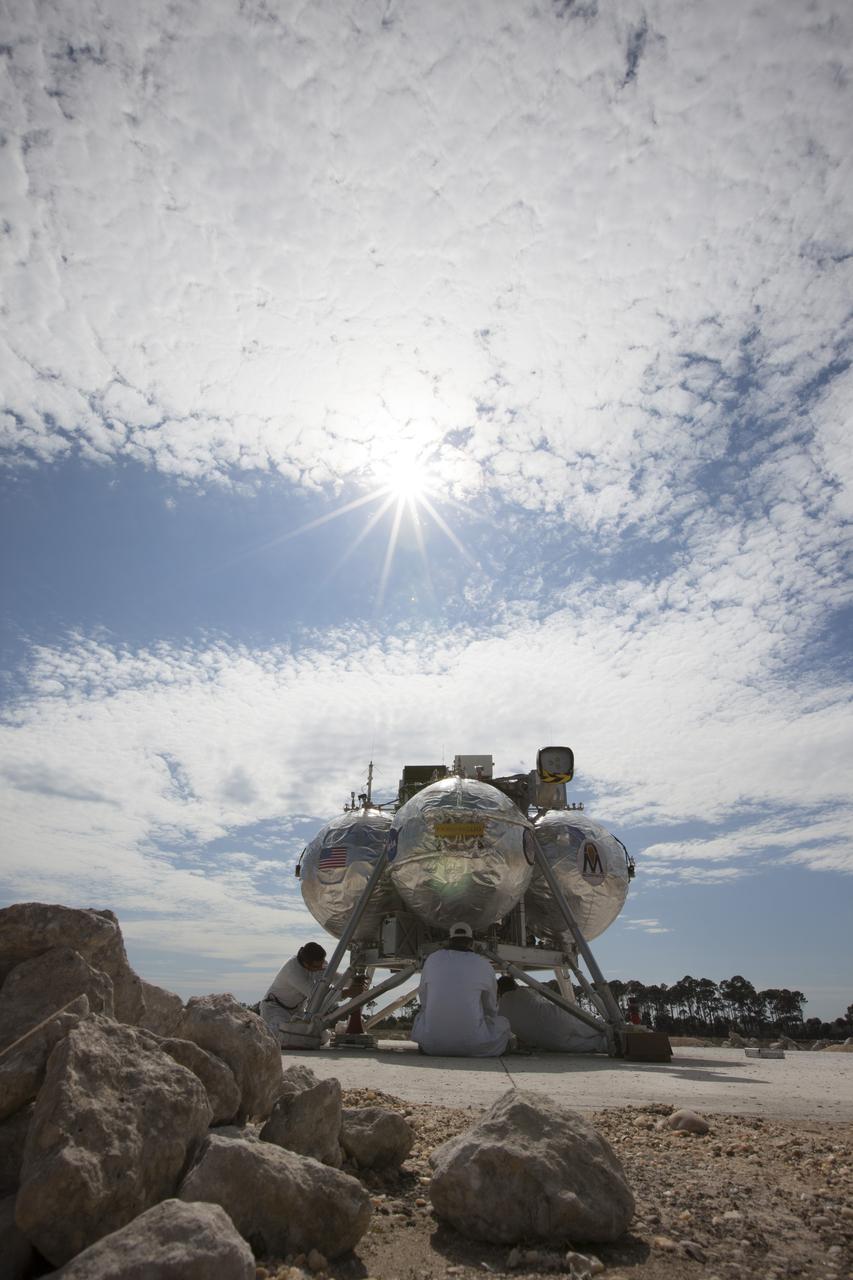
CAPE CANAVERAL, Fla. - Technicians prepare the Project Morpheus prototype lander for its seventh free flight test at the north end of the Shuttle Landing Facility at NASA’s Kennedy Space Center in Florida. The 83-second test began at 3:41 p.m. EDT with the Morpheus lander launching from the ground over a flame trench and ascending to 580 feet, its highest to date. Morpheus then flew its fastest downrange trek at 30 mph, travelling farther than before, 837 feet. The lander performed a 42-foot divert to emulate a hazard avoidance maneuver before descending and touching down on Landing Site 2, at the northern landing pad inside the automated landing and hazard avoidance technology ALHAT hazard field. Morpheus landed within one foot of its intended target. Project Morpheus tests NASA’s ALHAT and an engine that runs on liquid oxygen and methane, or green propellants, into a fully-operational lander that could deliver cargo to other planetary surfaces. The landing facility provides the lander with the kind of field necessary for realistic testing, complete with rocks, craters and hazards to avoid. Morpheus’ ALHAT payload allows it to navigate to clear landing sites amidst rocks, craters and other hazards during its descent. Project Morpheus is being managed under the Advanced Exploration Systems, or AES, Division in NASA’s Human Exploration and Operations Mission Directorate. The efforts in AES pioneer new approaches for rapidly developing prototype systems, demonstrating key capabilities and validating operational concepts for future human missions beyond Earth orbit. For more information on Project Morpheus, visit http://morpheuslander.jsc.nasa.gov/. Photo credit: NASA/Kim Shiflett

CAPE CANAVERAL, Fla. – The Project Morpheus prototype lander begins to ascend on its sixth free flight test at the north end of the Shuttle Landing Facility at NASA’s Kennedy Space Center in Florida. The 82-second test began at 11:32 a.m. EST with the Morpheus lander launching from the ground over a flame trench and ascending to 465 feet. The lander flew forward, covering 633 feet while performing a 55-foot divert to emulate a hazard avoidance maneuver before descending and landing on a dedicated pad inside the automated landing and hazard avoidance technology, or ALHAT, hazard field. Morpheus landed 10 inches west of its intended target. Project Morpheus tests NASA’s ALHAT and an engine that runs on liquid oxygen and methane, or green propellants, into a fully-operational lander that could deliver cargo to other planetary surfaces. The landing facility provides the lander with the kind of field necessary for realistic testing, complete with rocks, craters and hazards to avoid. Morpheus’ ALHAT payload allows it to navigate to clear landing sites amidst rocks, craters and other hazards during its descent. Project Morpheus is being managed under the Advanced Exploration Systems, or AES, Division in NASA’s Human Exploration and Operations Mission Directorate. The efforts in AES pioneer new approaches for rapidly developing prototype systems, demonstrating key capabilities and validating operational concepts for future human missions beyond Earth orbit. For more information on Project Morpheus, visit http://morpheuslander.jsc.nasa.gov/. Photo credit: NASA/Kim Shiflett
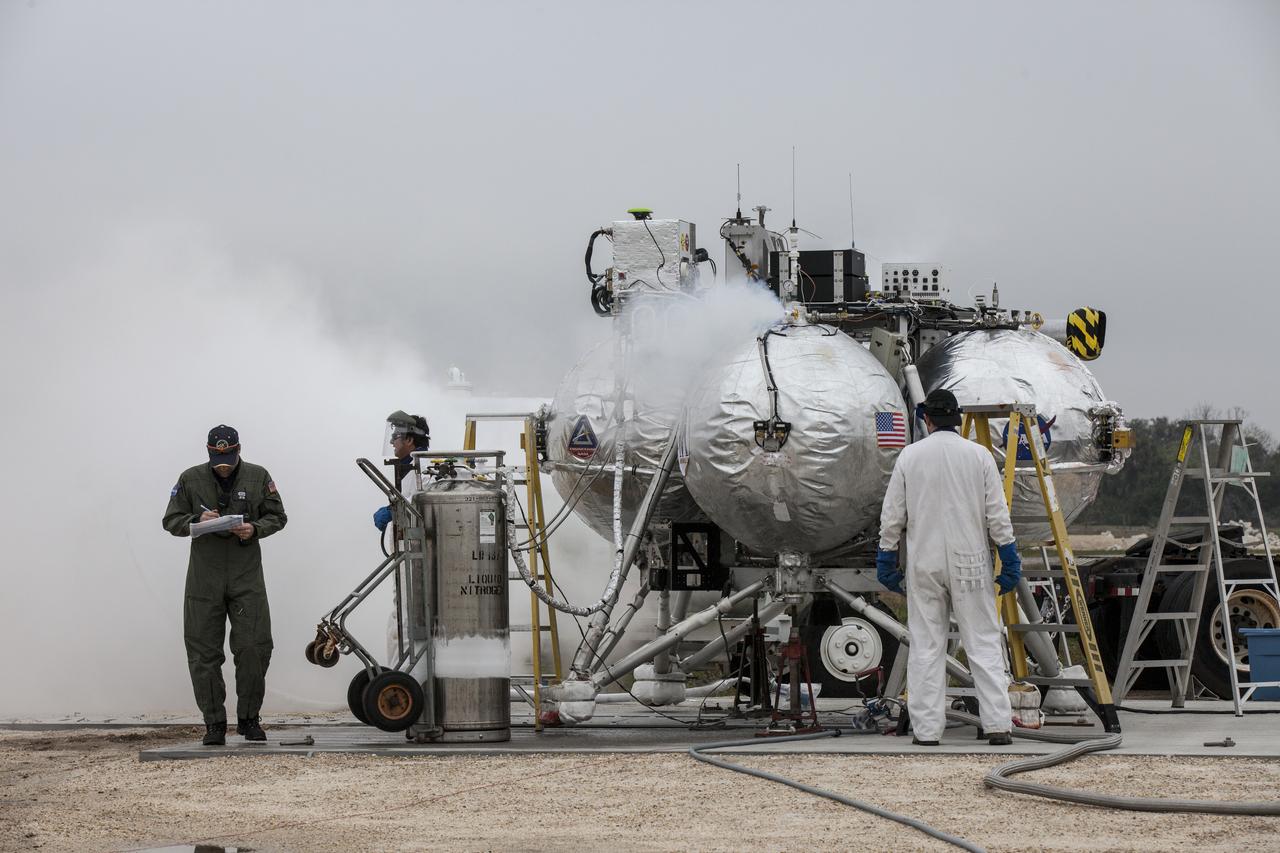
CAPE CANAVERAL, Fla. – Engineers and technicians prepare the Project Morpheus prototype lander for its sixth free flight test from a launch pad at the north end of the Shuttle Landing Facility at NASA’s Kennedy Space Center in Florida. The 82-second test began at 11:32 a.m. EST with the Morpheus lander launching from the ground over a flame trench and ascending to 465 feet. The lander flew forward, covering 633 feet while performing a 55-foot divert to emulate a hazard avoidance maneuver before descending and landing on a dedicated pad inside the automated landing and hazard avoidance technology, or ALHAT, hazard field. Morpheus landed 10 inches west of its intended target. Project Morpheus tests NASA’s ALHAT and an engine that runs on liquid oxygen and methane, or green propellants, into a fully-operational lander that could deliver cargo to other planetary surfaces. The landing facility provides the lander with the kind of field necessary for realistic testing, complete with rocks, craters and hazards to avoid. Morpheus’ ALHAT payload allows it to navigate to clear landing sites amidst rocks, craters and other hazards during its descent. Project Morpheus is being managed under the Advanced Exploration Systems, or AES, Division in NASA’s Human Exploration and Operations Mission Directorate. The efforts in AES pioneer new approaches for rapidly developing prototype systems, demonstrating key capabilities and validating operational concepts for future human missions beyond Earth orbit. For more information on Project Morpheus, visit http://morpheuslander.jsc.nasa.gov/. Photo credit: NASA/Kim Shiflett
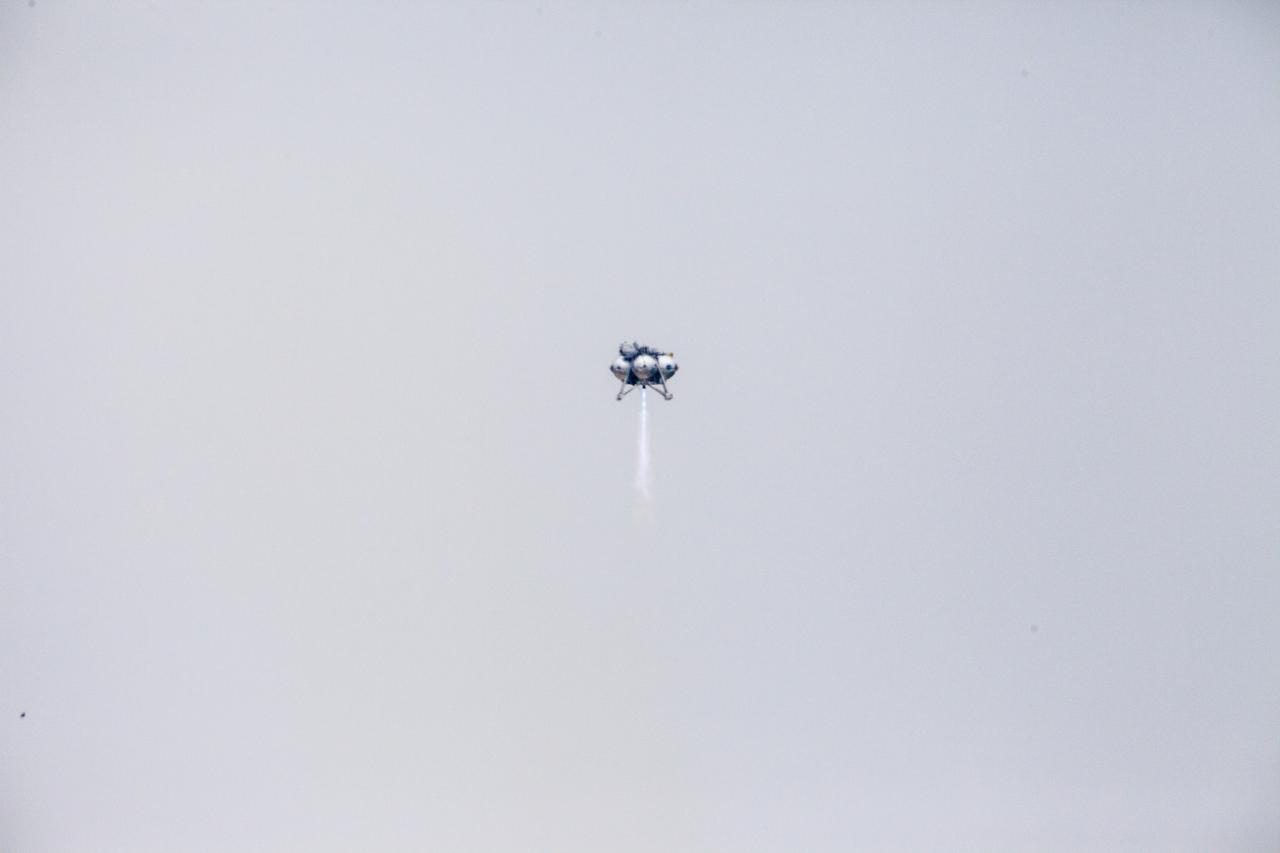
CAPE CANAVERAL, Fla. – The Project Morpheus prototype lander soars high after launching on its sixth free flight test at the north end of the Shuttle Landing Facility at NASA’s Kennedy Space Center in Florida. The 82-second test began at 11:32 a.m. EST with the Morpheus lander launching from the ground over a flame trench and ascending to 465 feet. The lander flew forward, covering 633 feet while performing a 55-foot divert to emulate a hazard avoidance maneuver before descending and landing on a dedicated pad inside the automated landing and hazard avoidance technology, or ALHAT, hazard field. Morpheus landed 10 inches west of its intended target. Project Morpheus tests NASA’s ALHAT and an engine that runs on liquid oxygen and methane, or green propellants, into a fully-operational lander that could deliver cargo to other planetary surfaces. The landing facility provides the lander with the kind of field necessary for realistic testing, complete with rocks, craters and hazards to avoid. Morpheus’ ALHAT payload allows it to navigate to clear landing sites amidst rocks, craters and other hazards during its descent. Project Morpheus is being managed under the Advanced Exploration Systems, or AES, Division in NASA’s Human Exploration and Operations Mission Directorate. The efforts in AES pioneer new approaches for rapidly developing prototype systems, demonstrating key capabilities and validating operational concepts for future human missions beyond Earth orbit. For more information on Project Morpheus, visit http://morpheuslander.jsc.nasa.gov/. Photo credit: NASA/Kim Shiflett
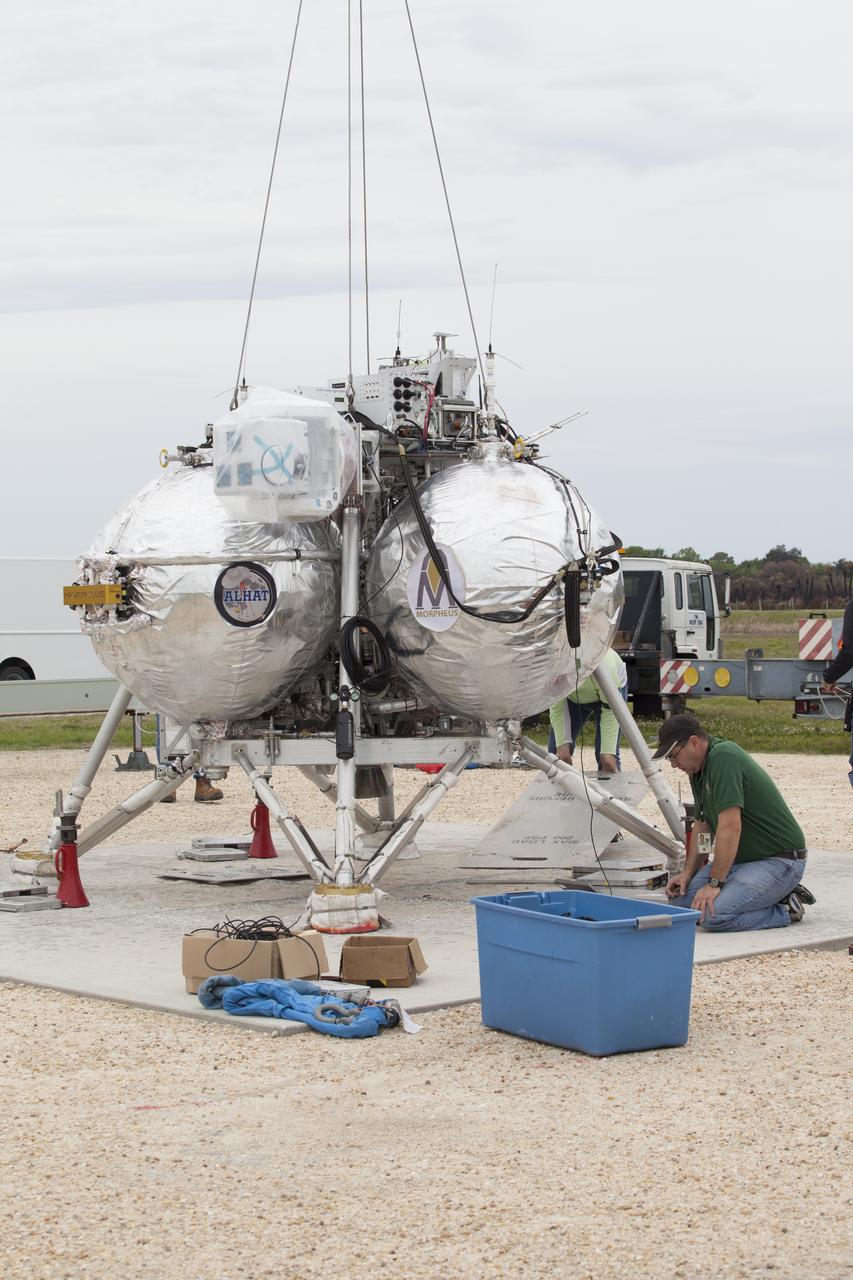
CAPE CANAVERAL, Fla. – Technicians watch as a crane lowers the Project Morpheus prototype lander onto a launch pad at a new launch site at the north end of the Shuttle Landing Facility at NASA's Kennedy Space Center in Florida. Preparations are underway for a tether test. The launch pad was moved to a different location at the landing facility to support the next phase of flight testing. Project Morpheus tests NASA’s automated landing and hazard avoidance technology, or ALHAT, and an engine that runs on liquid oxygen and methane, or green propellants, into a fully-operational lander that could deliver cargo to other planetary surfaces. The landing facility provides the lander with the kind of field necessary for realistic testing, complete with rocks, craters and hazards to avoid. Morpheus’ ALHAT payload allows it to navigate to clear landing sites amidst rocks, craters and other hazards during its descent. Project Morpheus is being managed under the Advanced Exploration Systems, or AES, Division in NASA’s Human Exploration and Operations Mission Directorate. The efforts in AES pioneer new approaches for rapidly developing prototype systems, demonstrating key capabilities and validating operational concepts for future human missions beyond Earth orbit. For more information on Project Morpheus, visit http://morpheuslander.jsc.nasa.gov/. Photo credit: NASA/Ben Smegelsky
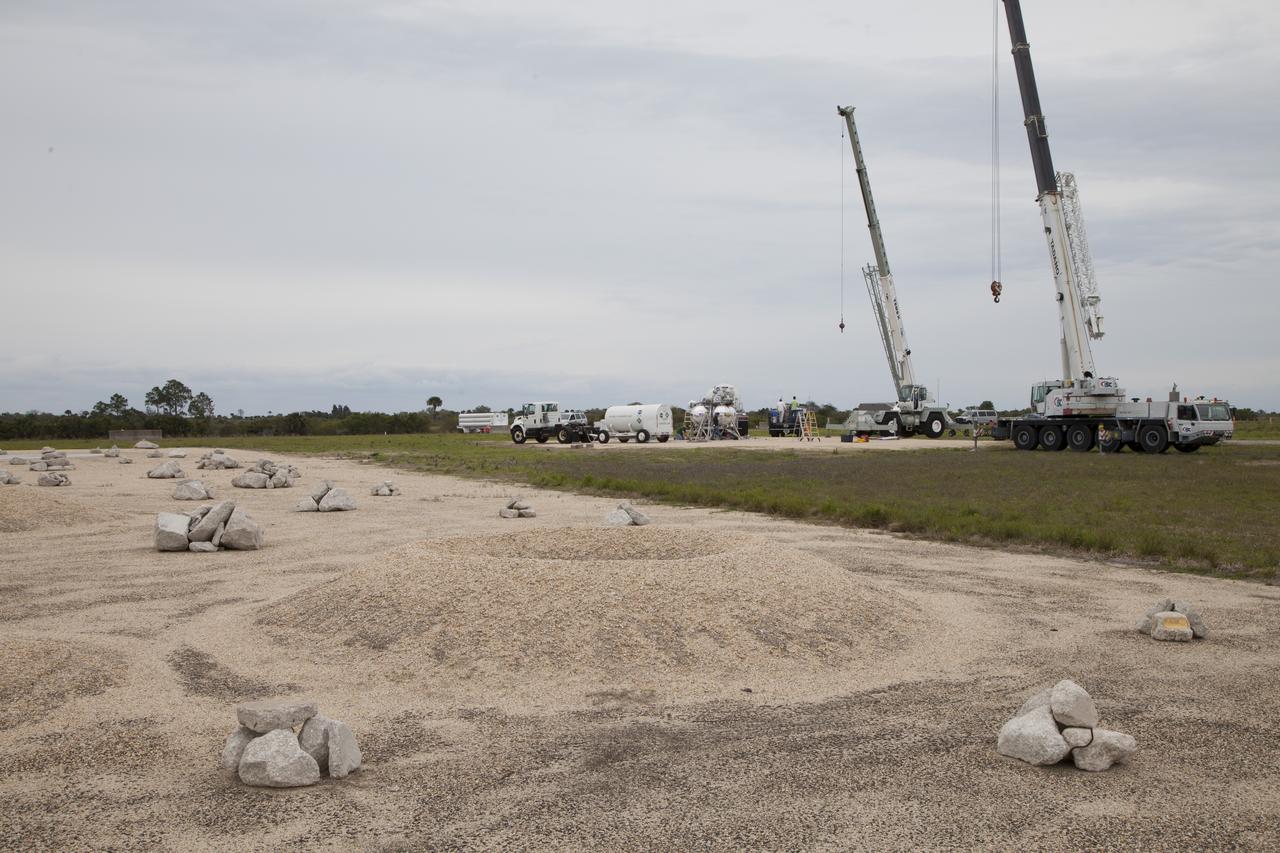
CAPE CANAVERAL, Fla. – NASA's Project Morpheus prototype lander is positioned near a new launch site at the north end of the Shuttle Landing Facility at NASA’s Kennedy Space Center in Florida for a tether test. The launch pad was moved to a different location at the landing facility to support the next phase of flight testing. Project Morpheus tests NASA’s automated landing and hazard avoidance technology, or ALHAT, and an engine that runs on liquid oxygen and methane, or green propellants, into a fully-operational lander that could deliver cargo to other planetary surfaces. In the foreground of the photo is the ALHAT field. The landing facility provides the lander with the kind of field necessary for realistic testing, complete with rocks, craters and hazards to avoid. Morpheus’ ALHAT payload allows it to navigate to clear landing sites amidst rocks, craters and other hazards during its descent. Project Morpheus is being managed under the Advanced Exploration Systems, or AES, Division in NASA’s Human Exploration and Operations Mission Directorate. The efforts in AES pioneer new approaches for rapidly developing prototype systems, demonstrating key capabilities and validating operational concepts for future human missions beyond Earth orbit. For more information on Project Morpheus, visit http://morpheuslander.jsc.nasa.gov/. Photo credit: NASA/Ben Smegelsky
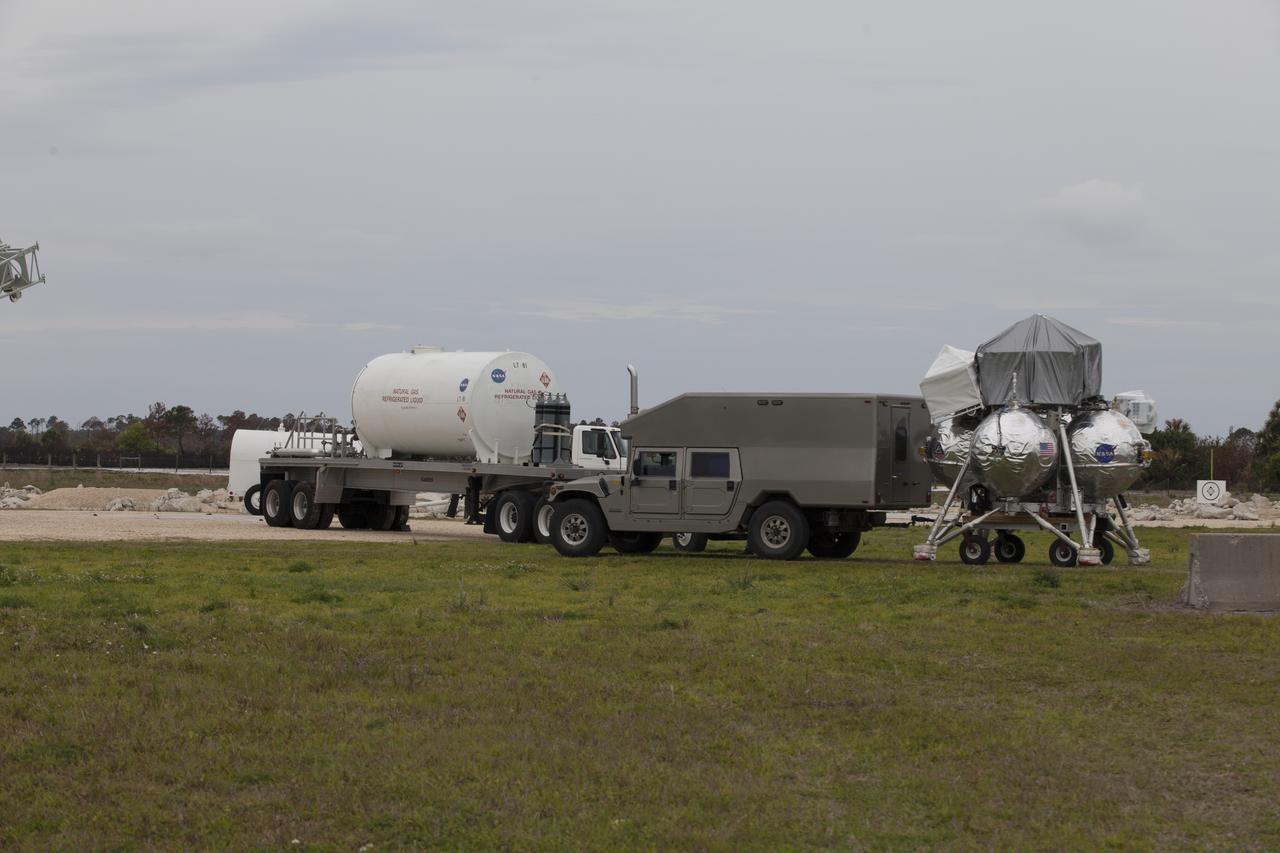
CAPE CANAVERAL, Fla. – NASA's Project Morpheus prototype lander is positioned near a new launch site at the north end of the Shuttle Landing Facility at NASA’s Kennedy Space Center in Florida for a tether test. The launch pad was moved to a different location at the landing facility to support the next phase of flight testing. Project Morpheus tests NASA’s automated landing and hazard avoidance technology, or ALHAT, and an engine that runs on liquid oxygen and methane, or green propellants, into a fully-operational lander that could deliver cargo to other planetary surfaces. The landing facility provides the lander with the kind of field necessary for realistic testing, complete with rocks, craters and hazards to avoid. Morpheus’ ALHAT payload allows it to navigate to clear landing sites amidst rocks, craters and other hazards during its descent. Project Morpheus is being managed under the Advanced Exploration Systems, or AES, Division in NASA’s Human Exploration and Operations Mission Directorate. The efforts in AES pioneer new approaches for rapidly developing prototype systems, demonstrating key capabilities and validating operational concepts for future human missions beyond Earth orbit. For more information on Project Morpheus, visit http://morpheuslander.jsc.nasa.gov/. Photo credit: NASA/Ben Smegelsky
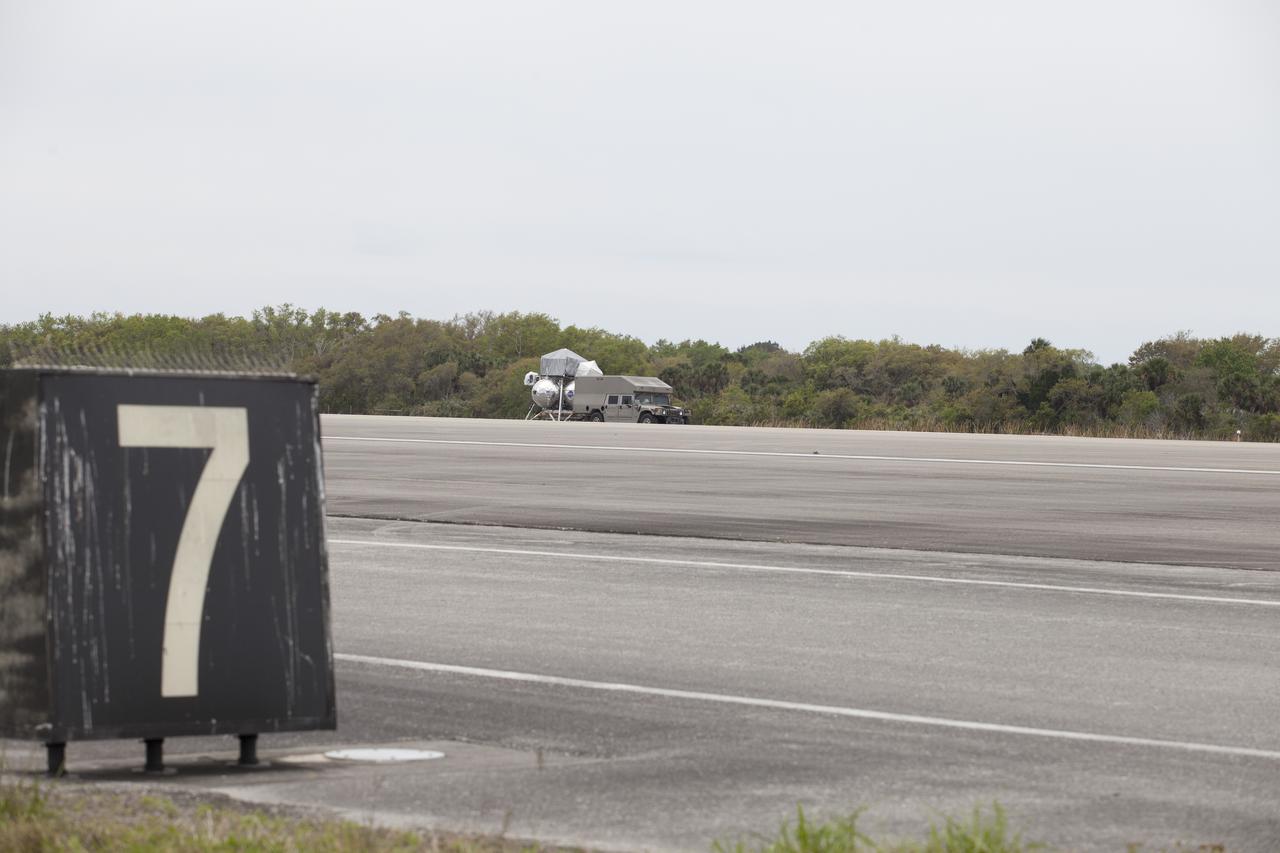
CAPE CANAVERAL, Fla. – NASA's Project Morpheus prototype lander is positioned near a new launch site at the north end of the Shuttle Landing Facility at NASA’s Kennedy Space Center in Florida for a tether test. The launch pad was moved to a different location at the landing facility to support the next phase of flight testing. Project Morpheus tests NASA’s automated landing and hazard avoidance technology, or ALHAT, and an engine that runs on liquid oxygen and methane, or green propellants, into a fully-operational lander that could deliver cargo to other planetary surfaces. The landing facility provides the lander with the kind of field necessary for realistic testing, complete with rocks, craters and hazards to avoid. Morpheus’ ALHAT payload allows it to navigate to clear landing sites amidst rocks, craters and other hazards during its descent. Project Morpheus is being managed under the Advanced Exploration Systems, or AES, Division in NASA’s Human Exploration and Operations Mission Directorate. The efforts in AES pioneer new approaches for rapidly developing prototype systems, demonstrating key capabilities and validating operational concepts for future human missions beyond Earth orbit. For more information on Project Morpheus, visit http://morpheuslander.jsc.nasa.gov/. Photo credit: NASA/Ben Smegelsky
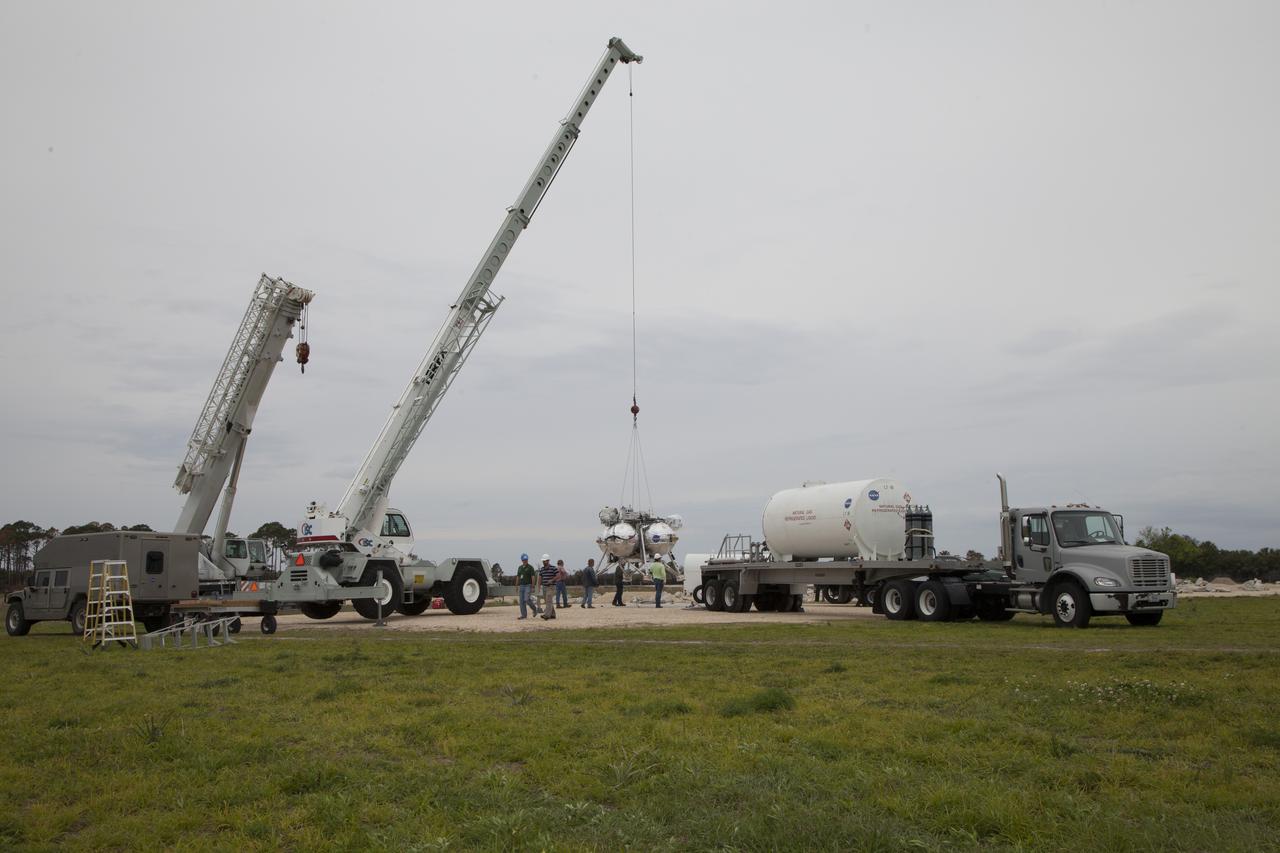
CAPE CANAVERAL, Fla. – Engineers and technicians monitor the progress as a crane lifts the Project Morpheus prototype lander off the ground for a tether test near a new launch site at the north end of the Shuttle Landing Facility at NASA's Kennedy Space Center in Florida. The launch pad was moved to a different location at the landing facility to support the next phase of flight testing. Project Morpheus tests NASA’s automated landing and hazard avoidance technology, or ALHAT, and an engine that runs on liquid oxygen and methane, or green propellants, into a fully-operational lander that could deliver cargo to other planetary surfaces. The landing facility provides the lander with the kind of field necessary for realistic testing, complete with rocks, craters and hazards to avoid. Morpheus’ ALHAT payload allows it to navigate to clear landing sites amidst rocks, craters and other hazards during its descent. Project Morpheus is being managed under the Advanced Exploration Systems, or AES, Division in NASA’s Human Exploration and Operations Mission Directorate. The efforts in AES pioneer new approaches for rapidly developing prototype systems, demonstrating key capabilities and validating operational concepts for future human missions beyond Earth orbit. For more information on Project Morpheus, visit http://morpheuslander.jsc.nasa.gov/. Photo credit: NASA/Ben Smegelsky
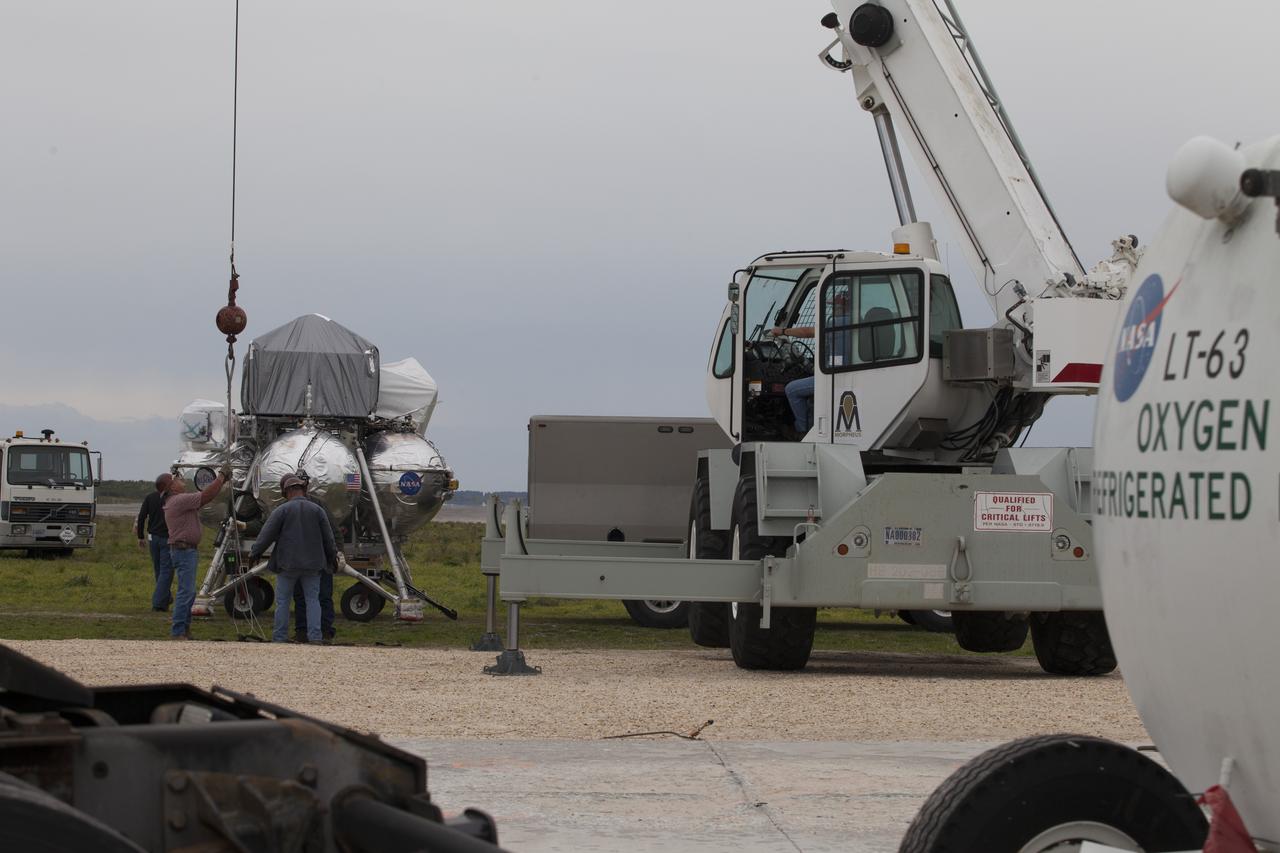
CAPE CANAVERAL, Fla. – Engineers and technicians prepare the Project Morpheus prototype lander for a tether test near a new launch site at the north end of the Shuttle Landing Facility at NASA's Kennedy Space Center in Florida. The launch pad was moved to a different location at the landing facility to support the next phase of flight testing. Project Morpheus tests NASA’s automated landing and hazard avoidance technology, or ALHAT, and an engine that runs on liquid oxygen and methane, or green propellants, into a fully-operational lander that could deliver cargo to other planetary surfaces. The landing facility provides the lander with the kind of field necessary for realistic testing, complete with rocks, craters and hazards to avoid. Morpheus’ ALHAT payload allows it to navigate to clear landing sites amidst rocks, craters and other hazards during its descent. Project Morpheus is being managed under the Advanced Exploration Systems, or AES, Division in NASA’s Human Exploration and Operations Mission Directorate. The efforts in AES pioneer new approaches for rapidly developing prototype systems, demonstrating key capabilities and validating operational concepts for future human missions beyond Earth orbit. For more information on Project Morpheus, visit http://morpheuslander.jsc.nasa.gov/. Photo credit: NASA/Ben Smegelsky
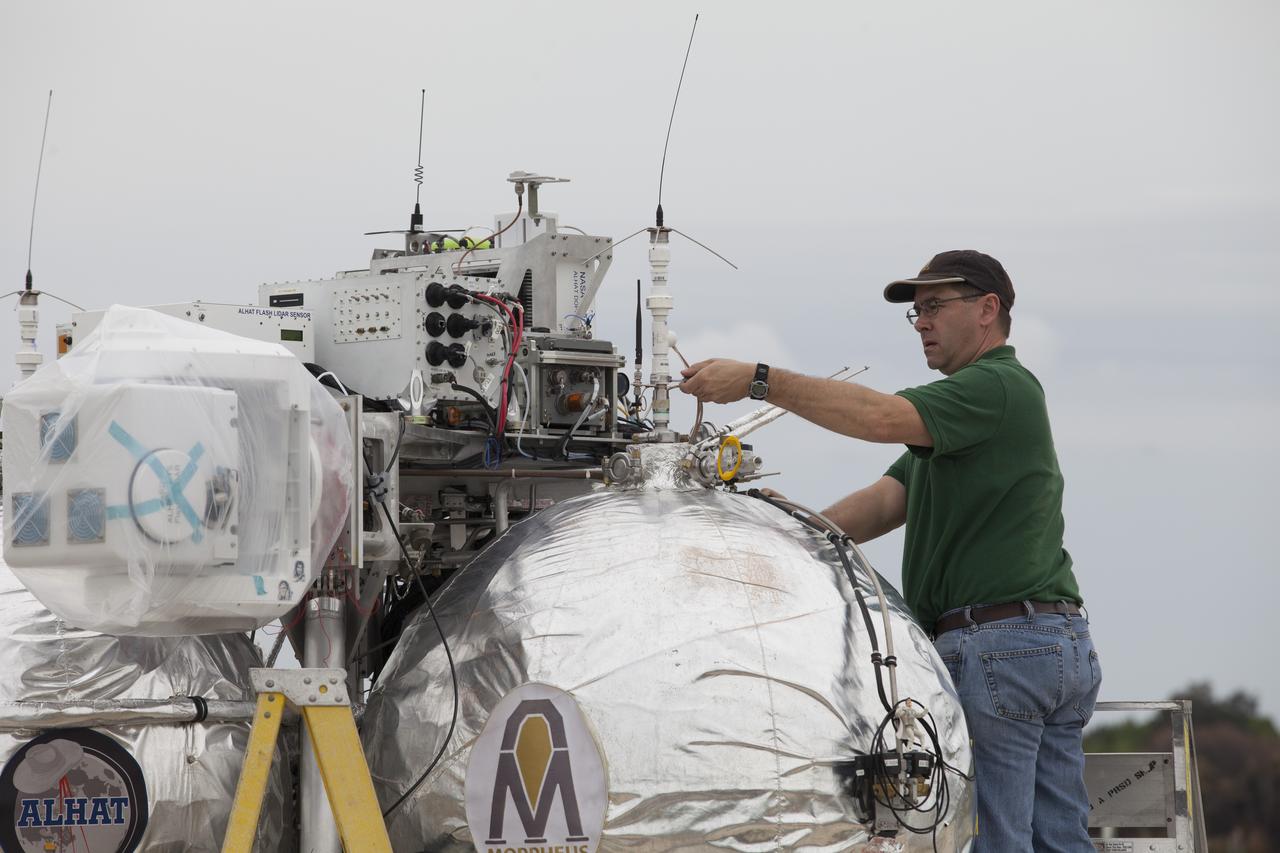
CAPE CANAVERAL, Fla. – A technician prepares the Project Morpheus prototype lander for a tether test near a new launch site at the north end of the Shuttle Landing Facility at NASA's Kennedy Space Center in Florida. The launch pad was moved to a different location at the landing facility to support the next phase of flight testing. Project Morpheus tests NASA’s automated landing and hazard avoidance technology, or ALHAT, and an engine that runs on liquid oxygen and methane, or green propellants, into a fully-operational lander that could deliver cargo to other planetary surfaces. The landing facility provides the lander with the kind of field necessary for realistic testing, complete with rocks, craters and hazards to avoid. Morpheus’ ALHAT payload allows it to navigate to clear landing sites amidst rocks, craters and other hazards during its descent. Project Morpheus is being managed under the Advanced Exploration Systems, or AES, Division in NASA’s Human Exploration and Operations Mission Directorate. The efforts in AES pioneer new approaches for rapidly developing prototype systems, demonstrating key capabilities and validating operational concepts for future human missions beyond Earth orbit. For more information on Project Morpheus, visit http://morpheuslander.jsc.nasa.gov/. Photo credit: NASA/Ben Smegelsky
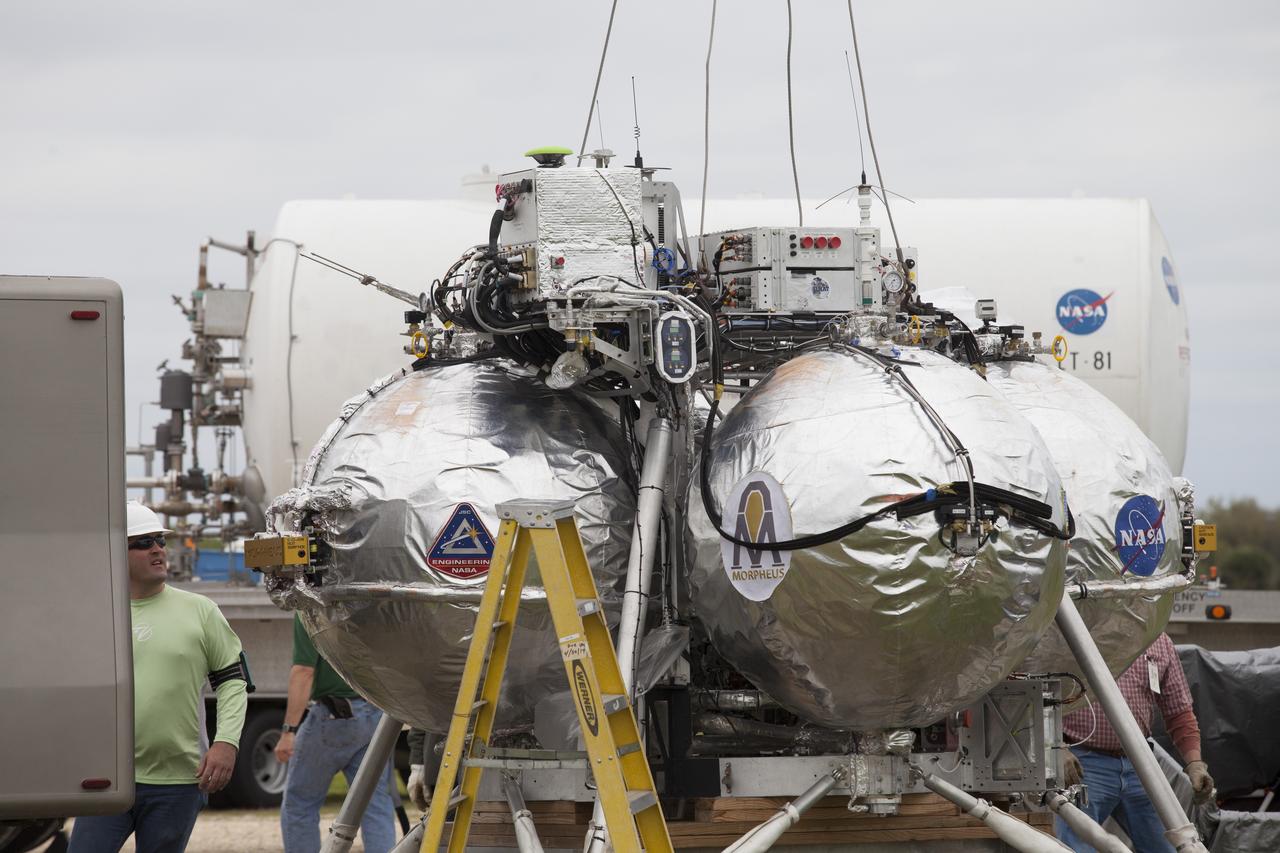
CAPE CANAVERAL, Fla. – Engineers and technicians prepare the Project Morpheus prototype lander for a tether test near a new launch site at the north end of the Shuttle Landing Facility at NASA's Kennedy Space Center in Florida. The launch pad was moved to a different location at the landing facility to support the next phase of flight testing. Project Morpheus tests NASA’s automated landing and hazard avoidance technology, or ALHAT, and an engine that runs on liquid oxygen and methane, or green propellants, into a fully-operational lander that could deliver cargo to other planetary surfaces. The landing facility provides the lander with the kind of field necessary for realistic testing, complete with rocks, craters and hazards to avoid. Morpheus’ ALHAT payload allows it to navigate to clear landing sites amidst rocks, craters and other hazards during its descent. Project Morpheus is being managed under the Advanced Exploration Systems, or AES, Division in NASA’s Human Exploration and Operations Mission Directorate. The efforts in AES pioneer new approaches for rapidly developing prototype systems, demonstrating key capabilities and validating operational concepts for future human missions beyond Earth orbit. For more information on Project Morpheus, visit http://morpheuslander.jsc.nasa.gov/. Photo credit: NASA/Ben Smegelsky
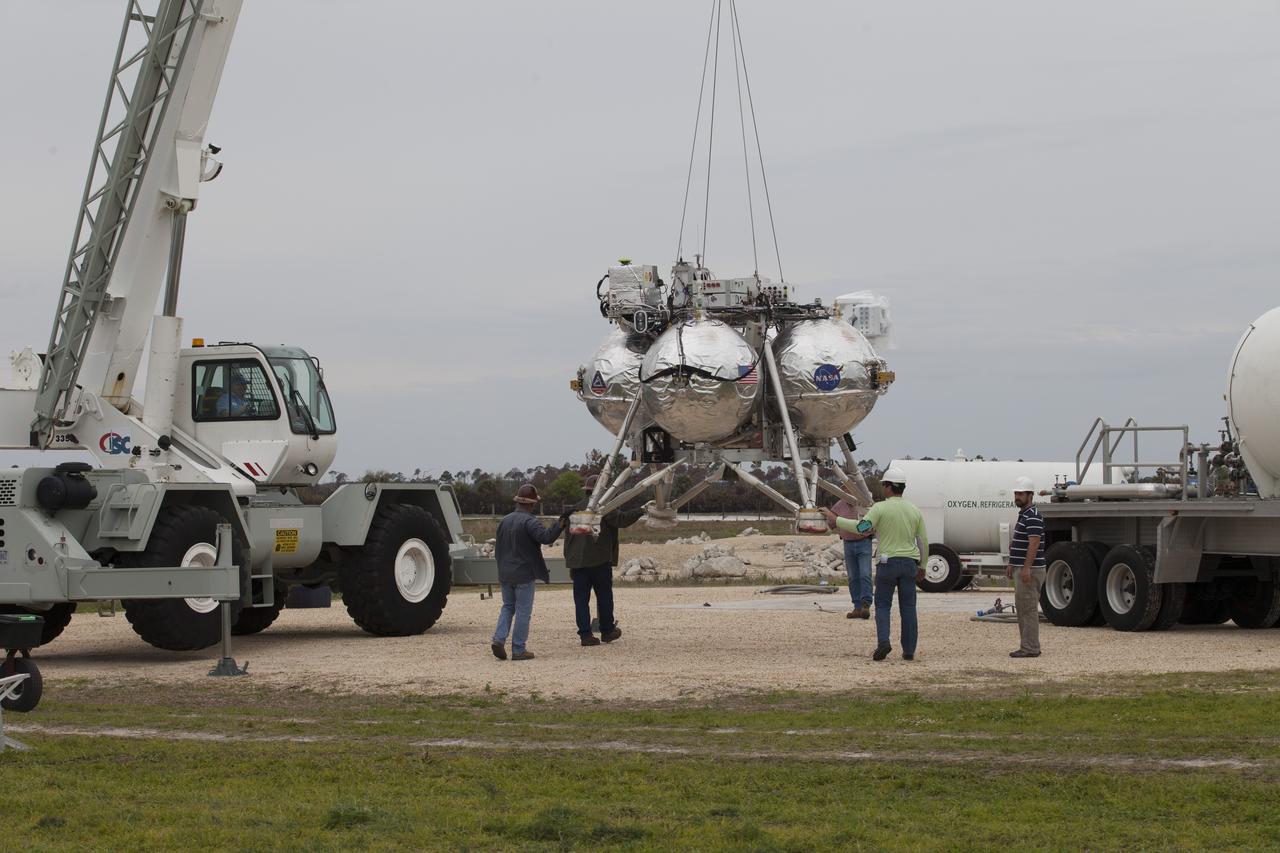
CAPE CANAVERAL, Fla. – Engineers and technicians monitor the progress as a crane lifts the Project Morpheus prototype lander off the ground for a tether test near a new launch site at the north end of the Shuttle Landing Facility at NASA's Kennedy Space Center in Florida. The launch pad was moved to a different location at the landing facility to support the next phase of flight testing. Project Morpheus tests NASA’s automated landing and hazard avoidance technology, or ALHAT, and an engine that runs on liquid oxygen and methane, or green propellants, into a fully-operational lander that could deliver cargo to other planetary surfaces. The landing facility provides the lander with the kind of field necessary for realistic testing, complete with rocks, craters and hazards to avoid. Morpheus’ ALHAT payload allows it to navigate to clear landing sites amidst rocks, craters and other hazards during its descent. Project Morpheus is being managed under the Advanced Exploration Systems, or AES, Division in NASA’s Human Exploration and Operations Mission Directorate. The efforts in AES pioneer new approaches for rapidly developing prototype systems, demonstrating key capabilities and validating operational concepts for future human missions beyond Earth orbit. For more information on Project Morpheus, visit http://morpheuslander.jsc.nasa.gov/. Photo credit: NASA/Ben Smegelsky
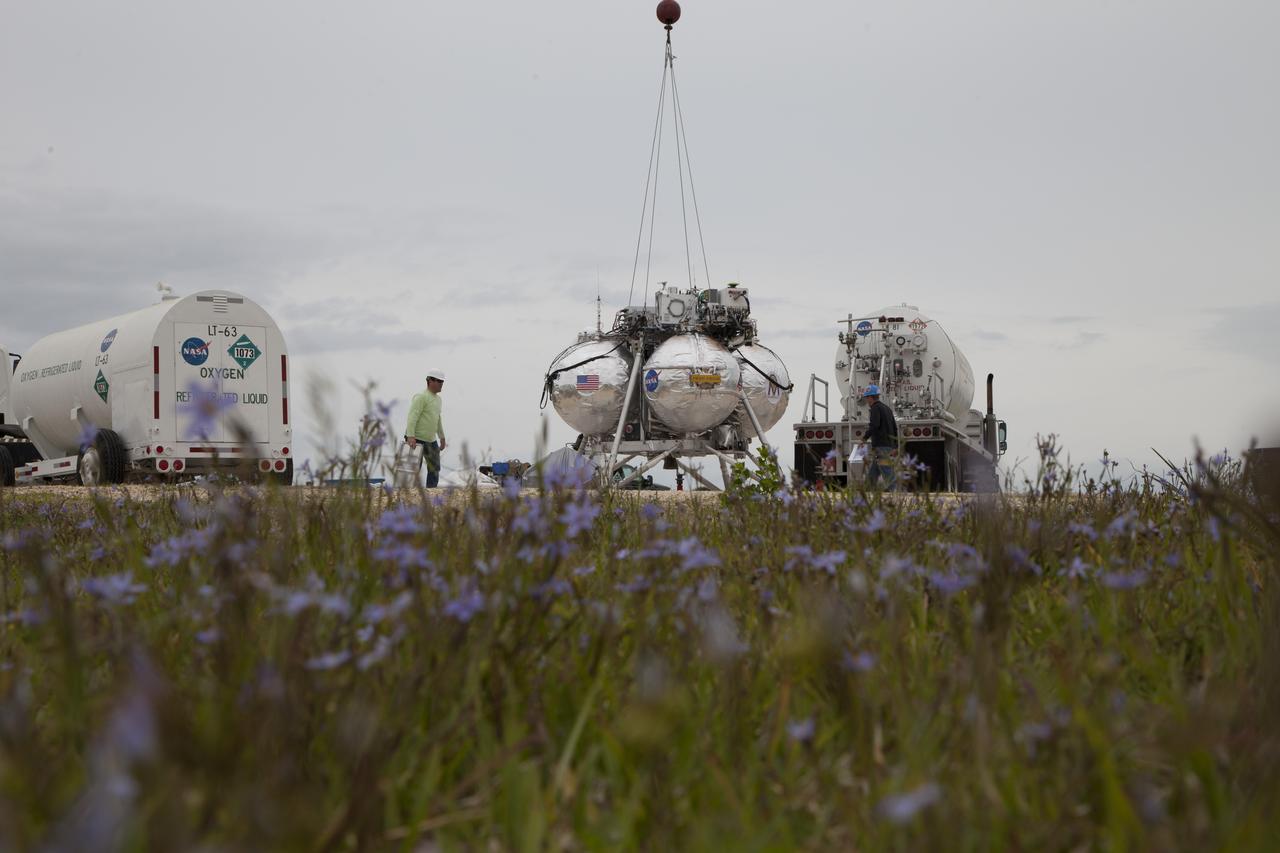
CAPE CANAVERAL, Fla. – A crane lowers the Project Morpheus prototype lander onto a launch pad at a new launch site at the north end of the Shuttle Landing Facility at NASA's Kennedy Space Center in Florida. Preparations are underway for a tether test. The launch pad was moved to a different location at the landing facility to support the next phase of flight testing. Project Morpheus tests NASA’s automated landing and hazard avoidance technology, or ALHAT, and an engine that runs on liquid oxygen and methane, or green propellants, into a fully-operational lander that could deliver cargo to other planetary surfaces. The landing facility provides the lander with the kind of field necessary for realistic testing, complete with rocks, craters and hazards to avoid. Morpheus’ ALHAT payload allows it to navigate to clear landing sites amidst rocks, craters and other hazards during its descent. Project Morpheus is being managed under the Advanced Exploration Systems, or AES, Division in NASA’s Human Exploration and Operations Mission Directorate. The efforts in AES pioneer new approaches for rapidly developing prototype systems, demonstrating key capabilities and validating operational concepts for future human missions beyond Earth orbit. For more information on Project Morpheus, visit http://morpheuslander.jsc.nasa.gov/. Photo credit: NASA/Ben Smegelsky
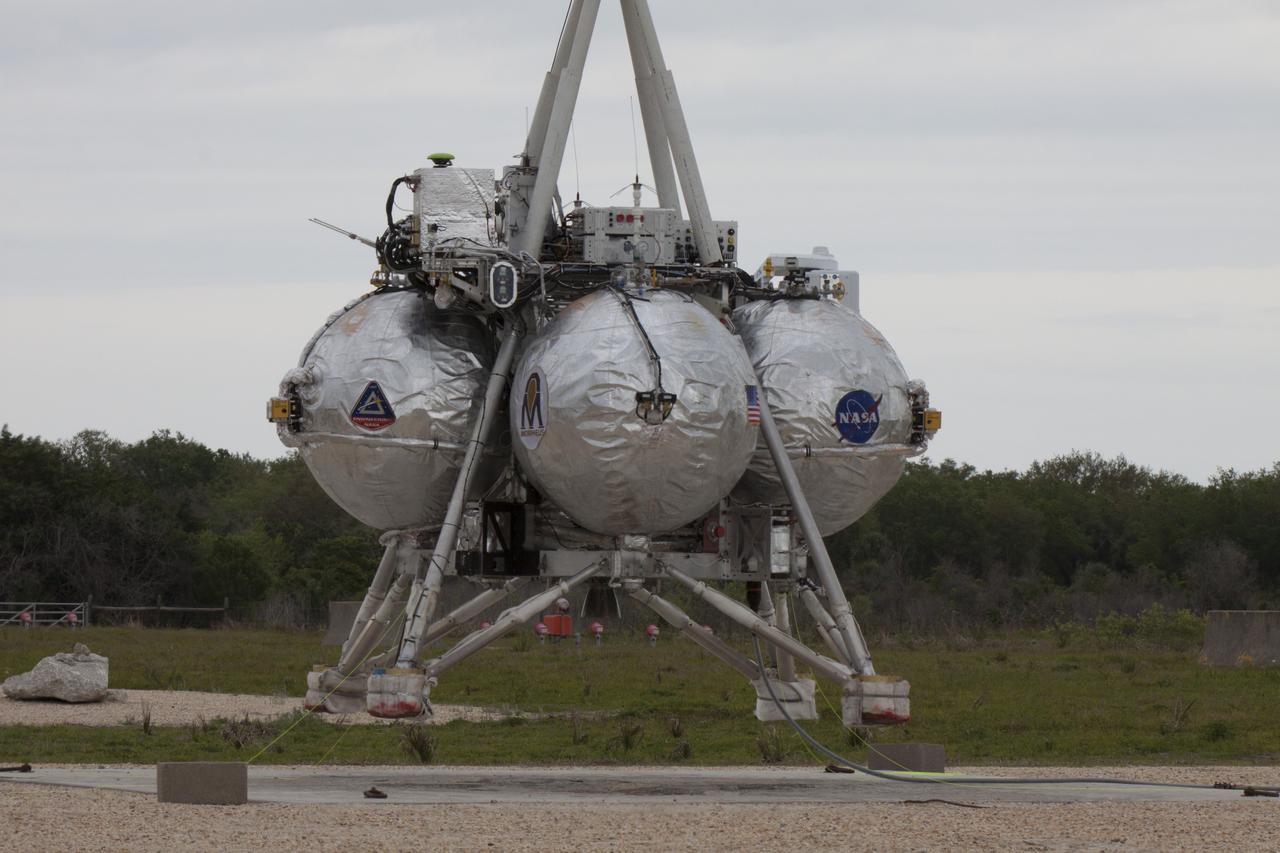
CAPE CANAVERAL, Fla. – NASA's Project Morpheus prototype lander is positioned near a new launch site at the north end of the Shuttle Landing Facility at NASA’s Kennedy Space Center in Florida for a tethered test. The test will be performed to verify the lander's recently installed autonomous landing and hazard avoidance technology, or ALHAT, sensors and integration system. The launch pad was moved to a different location at the landing facility to support the next phase of flight testing. Project Morpheus tests NASA’s ALHAT, and an engine that runs on liquid oxygen and methane, or green propellants, into a fully-operational lander that could deliver cargo to other planetary surfaces. The landing facility provides the lander with the kind of field necessary for realistic testing, complete with rocks, craters and hazards to avoid. Morpheus’ ALHAT payload allows it to navigate to clear landing sites amidst rocks, craters and other hazards during its descent. Project Morpheus is being managed under the Advanced Exploration Systems, or AES, Division in NASA’s Human Exploration and Operations Mission Directorate. The efforts in AES pioneer new approaches for rapidly developing prototype systems, demonstrating key capabilities and validating operational concepts for future human missions beyond Earth orbit. For more information on Project Morpheus, visit http://morpheuslander.jsc.nasa.gov/. Photo credit: NASA/Glenn Benson
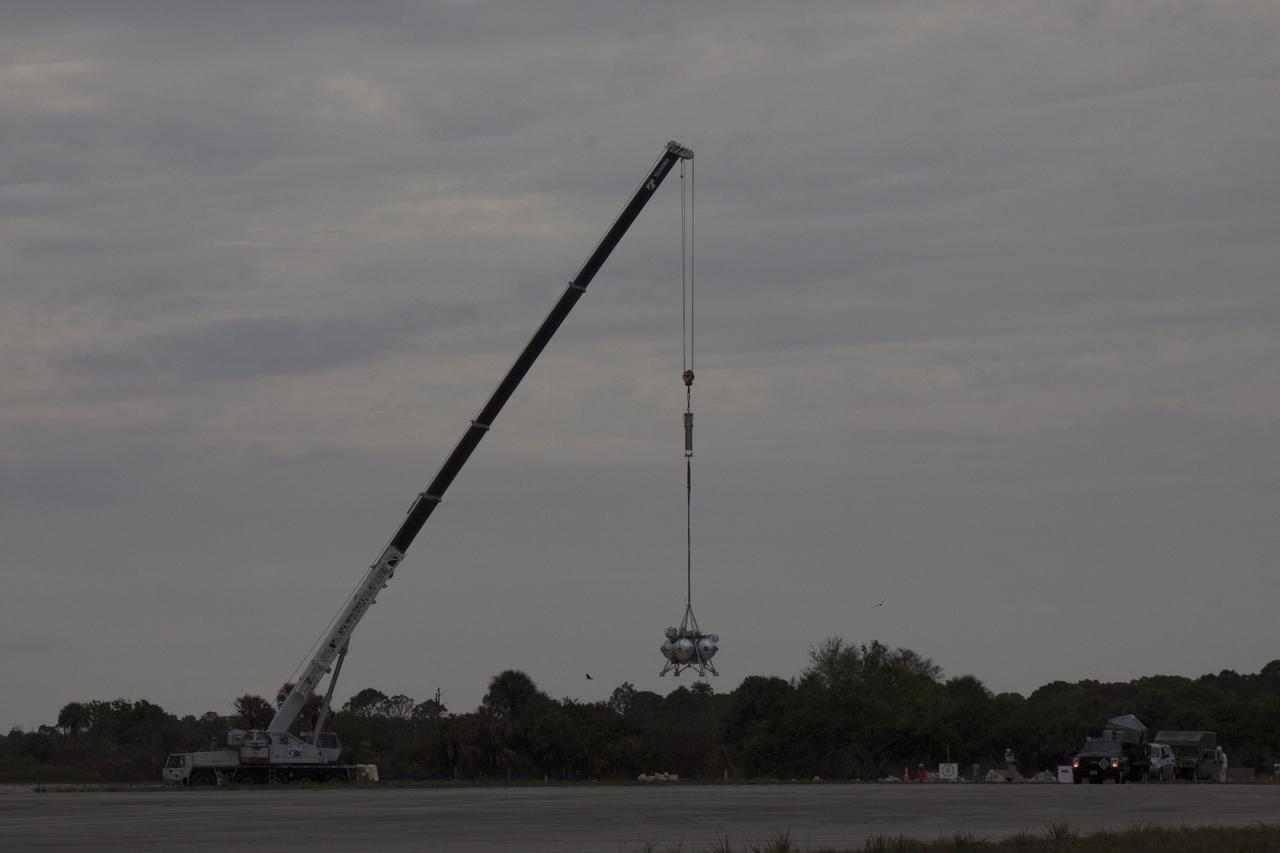
CAPE CANAVERAL, Fla. – NASA's Project Morpheus prototype lander is lifted by crane for a tethered test near a new launch site at the north end of the Shuttle Landing Facility at NASA’s Kennedy Space Center in Florida. The launch pad was moved to a different location at the landing facility to support the next phase of flight testing. The test was performed to verify the lander's recently installed autonomous landing and hazard avoidance technology, or ALHAT, sensors and integration systems. During the test, Morpheus was lifted by crane to 20 feet for an engine firing of about 74 seconds and then lowered to the ground. With the successful completion of the test, the Morpheus project team will begin preparing for the first free flight test with ALHAT. Morpheus tests NASA’s ALHAT, and an engine that runs on liquid oxygen and methane, or green propellants, into a fully-operational lander that could deliver cargo to other planetary surfaces. The landing facility provides the lander with the kind of field necessary for realistic testing, complete with rocks, craters and hazards to avoid. Morpheus’ ALHAT payload allows it to navigate to clear landing sites amidst rocks, craters and other hazards during its descent. Project Morpheus is being managed under the Advanced Exploration Systems, or AES, Division in NASA’s Human Exploration and Operations Mission Directorate. The efforts in AES pioneer new approaches for rapidly developing prototype systems, demonstrating key capabilities and validating operational concepts for future human missions beyond Earth orbit. For more information on Project Morpheus, visit http://morpheuslander.jsc.nasa.gov/. Photo credit: NASA/Glenn Benson
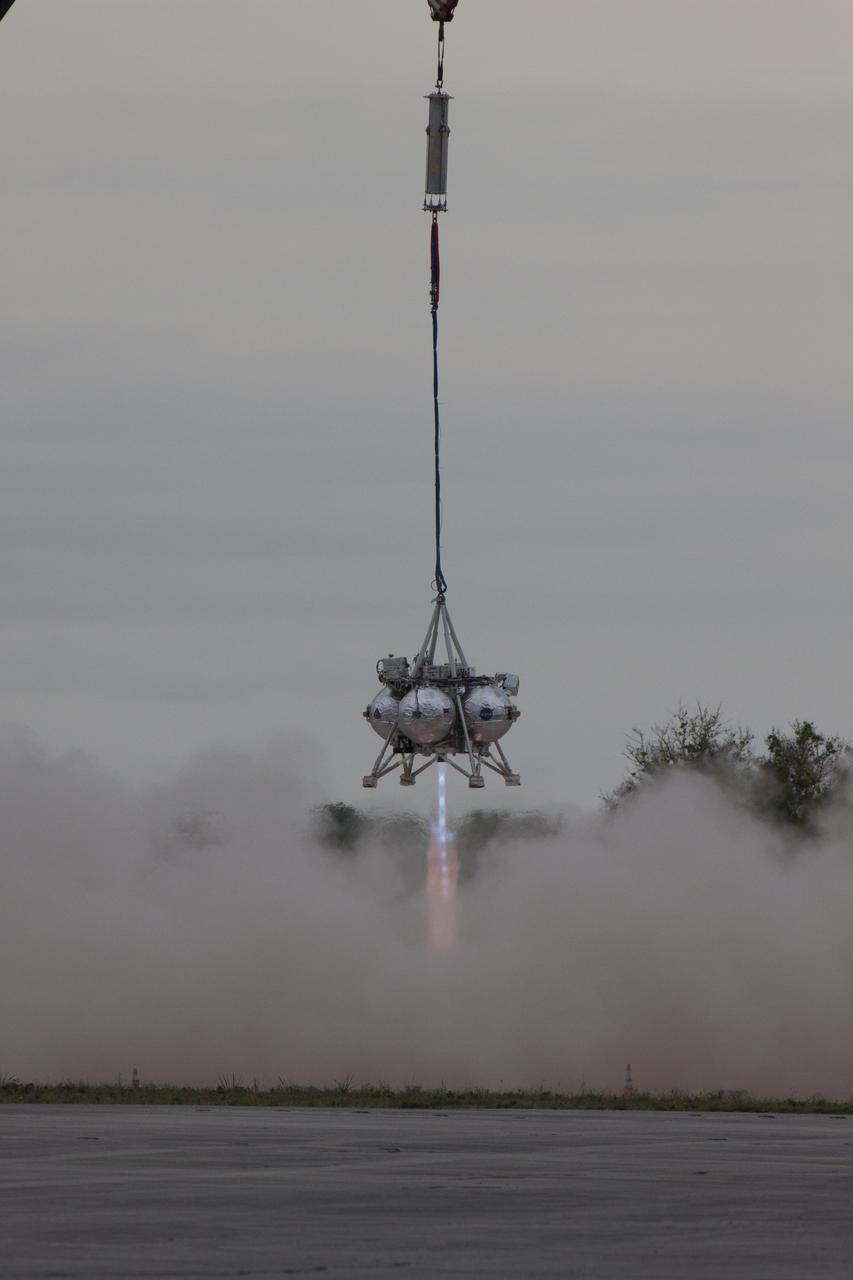
CAPE CANAVERAL, Fla. – NASA's Project Morpheus prototype lander is lifted by crane and its engine is ignited during a tethered test near a new launch site at the north end of the Shuttle Landing Facility at NASA's Kennedy Space Center in Florida. The launch pad was moved to a different location at the landing facility to support the next phase of flight testing. The test was performed to verify the lander's recently installed autonomous landing and hazard avoidance technology, or ALHAT, sensors and integration systems. During the test, Morpheus was lifted by crane to 20 feet for an engine firing of about 74 seconds and then lowered to the ground. With the successful completion of the test, the Morpheus project team will begin preparing for the first free flight test with ALHAT. Morpheus tests NASA’s ALHAT, and an engine that runs on liquid oxygen and methane, or green propellants, into a fully-operational lander that could deliver cargo to other planetary surfaces. The landing facility provides the lander with the kind of field necessary for realistic testing, complete with rocks, craters and hazards to avoid. Morpheus’ ALHAT payload allows it to navigate to clear landing sites amidst rocks, craters and other hazards during its descent. Project Morpheus is being managed under the Advanced Exploration Systems, or AES, Division in NASA’s Human Exploration and Operations Mission Directorate. The efforts in AES pioneer new approaches for rapidly developing prototype systems, demonstrating key capabilities and validating operational concepts for future human missions beyond Earth orbit. For more information on Project Morpheus, visit http://morpheuslander.jsc.nasa.gov/. Photo credit: NASA/Glenn Benson
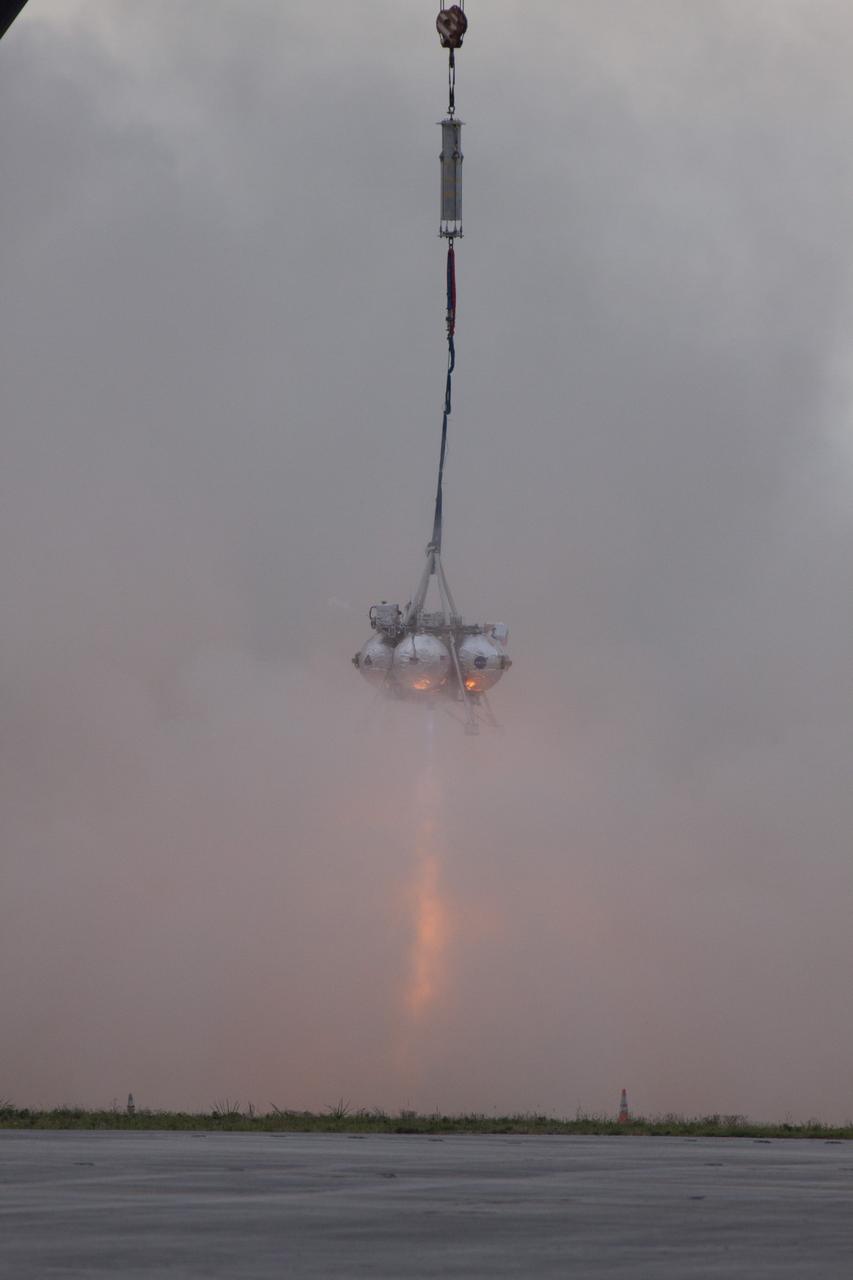
CAPE CANAVERAL, Fla. – NASA's Project Morpheus prototype lander is lifted by crane and its engine is ignited during a tethered test near a new launch site at the north end of the Shuttle Landing Facility at NASA's Kennedy Space Center in Florida. The launch pad was moved to a different location at the landing facility to support the next phase of flight testing. The test was performed to verify the lander's recently installed autonomous landing and hazard avoidance technology, or ALHAT, sensors and integration systems. During the test, Morpheus was lifted by crane to 20 feet for an engine firing of about 74 seconds and then lowered to the ground. With the successful completion of the test, the Morpheus project team will begin preparing for the first free flight test with ALHAT. Morpheus tests NASA’s ALHAT, and an engine that runs on liquid oxygen and methane, or green propellants, into a fully-operational lander that could deliver cargo to other planetary surfaces. The landing facility provides the lander with the kind of field necessary for realistic testing, complete with rocks, craters and hazards to avoid. Morpheus’ ALHAT payload allows it to navigate to clear landing sites amidst rocks, craters and other hazards during its descent. Project Morpheus is being managed under the Advanced Exploration Systems, or AES, Division in NASA’s Human Exploration and Operations Mission Directorate. The efforts in AES pioneer new approaches for rapidly developing prototype systems, demonstrating key capabilities and validating operational concepts for future human missions beyond Earth orbit. For more information on Project Morpheus, visit http://morpheuslander.jsc.nasa.gov/. Photo credit: NASA/Glenn Benson
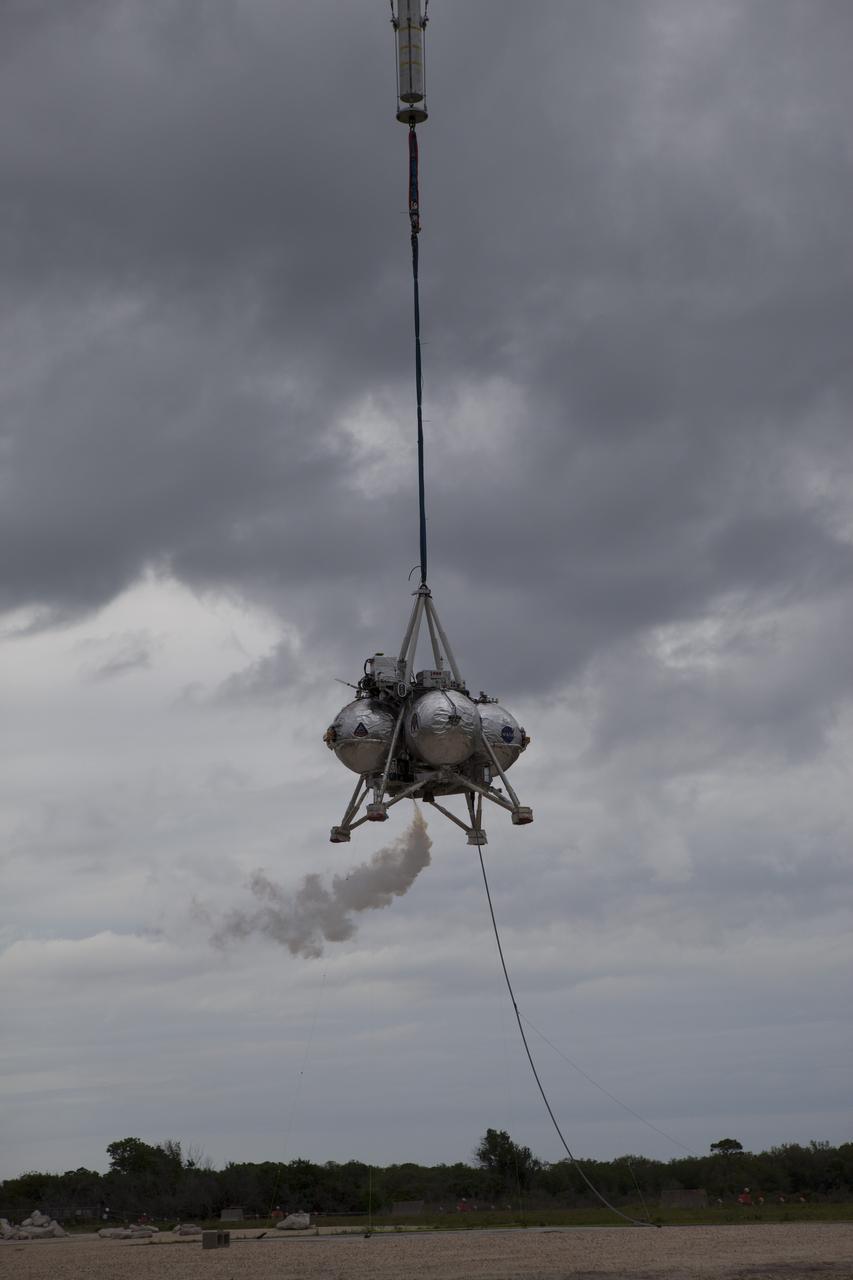
CAPE CANAVERAL, Fla. – NASA's Project Morpheus prototype lander is lifted by crane during a tethered test near a new launch site at the north end of the Shuttle Landing Facility at NASA's Kennedy Space Center in Florida. The launch pad was moved to a different location at the landing facility to support the next phase of flight testing. The test was performed to verify the lander's recently installed autonomous landing and hazard avoidance technology, or ALHAT, sensors and integration systems. During the test, Morpheus was lifted by crane to 20 feet for an engine firing of about 74 seconds and then lowered to the ground. With the successful completion of the test, the Morpheus project team will begin preparing for the first free flight test with ALHAT. Morpheus tests NASA’s ALHAT, and an engine that runs on liquid oxygen and methane, or green propellants, into a fully-operational lander that could deliver cargo to other planetary surfaces. The landing facility provides the lander with the kind of field necessary for realistic testing, complete with rocks, craters and hazards to avoid. Morpheus’ ALHAT payload allows it to navigate to clear landing sites amidst rocks, craters and other hazards during its descent. Project Morpheus is being managed under the Advanced Exploration Systems, or AES, Division in NASA’s Human Exploration and Operations Mission Directorate. The efforts in AES pioneer new approaches for rapidly developing prototype systems, demonstrating key capabilities and validating operational concepts for future human missions beyond Earth orbit. For more information on Project Morpheus, visit http://morpheuslander.jsc.nasa.gov/. Photo credit: NASA/Glenn Benson
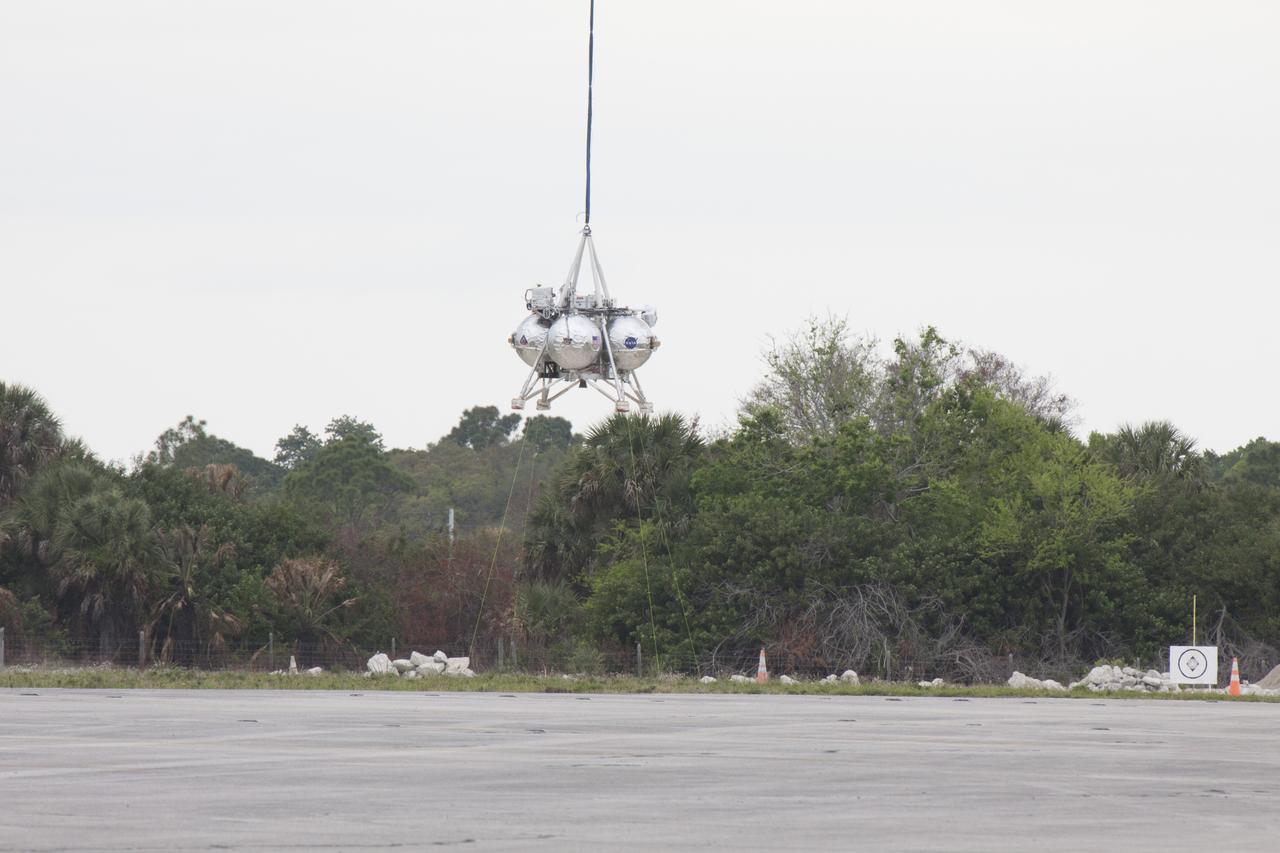
CAPE CANAVERAL, Fla. – NASA's Project Morpheus prototype lander is lifted by crane during a tethered test near a new launch site at the north end of the Shuttle Landing Facility at NASA's Kennedy Space Center in Florida. The launch pad was moved to a different location at the landing facility to support the next phase of flight testing. The test was performed to verify the lander's recently installed autonomous landing and hazard avoidance technology, or ALHAT, sensors and integration systems. During the test, Morpheus was lifted by crane to 20 feet for an engine firing of about 74 seconds and then lowered to the ground. With the successful completion of the test, the Morpheus project team will begin preparing for the first free flight test with ALHAT. Morpheus tests NASA’s ALHAT, and an engine that runs on liquid oxygen and methane, or green propellants, into a fully-operational lander that could deliver cargo to other planetary surfaces. The landing facility provides the lander with the kind of field necessary for realistic testing, complete with rocks, craters and hazards to avoid. Morpheus’ ALHAT payload allows it to navigate to clear landing sites amidst rocks, craters and other hazards during its descent. Project Morpheus is being managed under the Advanced Exploration Systems, or AES, Division in NASA’s Human Exploration and Operations Mission Directorate. The efforts in AES pioneer new approaches for rapidly developing prototype systems, demonstrating key capabilities and validating operational concepts for future human missions beyond Earth orbit. For more information on Project Morpheus, visit http://morpheuslander.jsc.nasa.gov/. Photo credit: NASA/Glenn Benson

CAPE CANAVERAL, Fla. – NASA's Project Morpheus prototype lander is lifted by crane and its engine is ignited during a tethered test near a new launch site at the north end of the Shuttle Landing Facility at NASA's Kennedy Space Center in Florida. The launch pad was moved to a different location at the landing facility to support the next phase of flight testing. The test was performed to verify the lander's recently installed autonomous landing and hazard avoidance technology, or ALHAT, sensors and integration systems. During the test, Morpheus was lifted by crane to 20 feet for an engine firing of about 74 seconds and then lowered to the ground. With the successful completion of the test, the Morpheus project team will begin preparing for the first free flight test with ALHAT. Morpheus tests NASA’s ALHAT, and an engine that runs on liquid oxygen and methane, or green propellants, into a fully-operational lander that could deliver cargo to other planetary surfaces. The landing facility provides the lander with the kind of field necessary for realistic testing, complete with rocks, craters and hazards to avoid. Morpheus’ ALHAT payload allows it to navigate to clear landing sites amidst rocks, craters and other hazards during its descent. Project Morpheus is being managed under the Advanced Exploration Systems, or AES, Division in NASA’s Human Exploration and Operations Mission Directorate. The efforts in AES pioneer new approaches for rapidly developing prototype systems, demonstrating key capabilities and validating operational concepts for future human missions beyond Earth orbit. For more information on Project Morpheus, visit http://morpheuslander.jsc.nasa.gov/. Photo credit: NASA/Glenn Benson
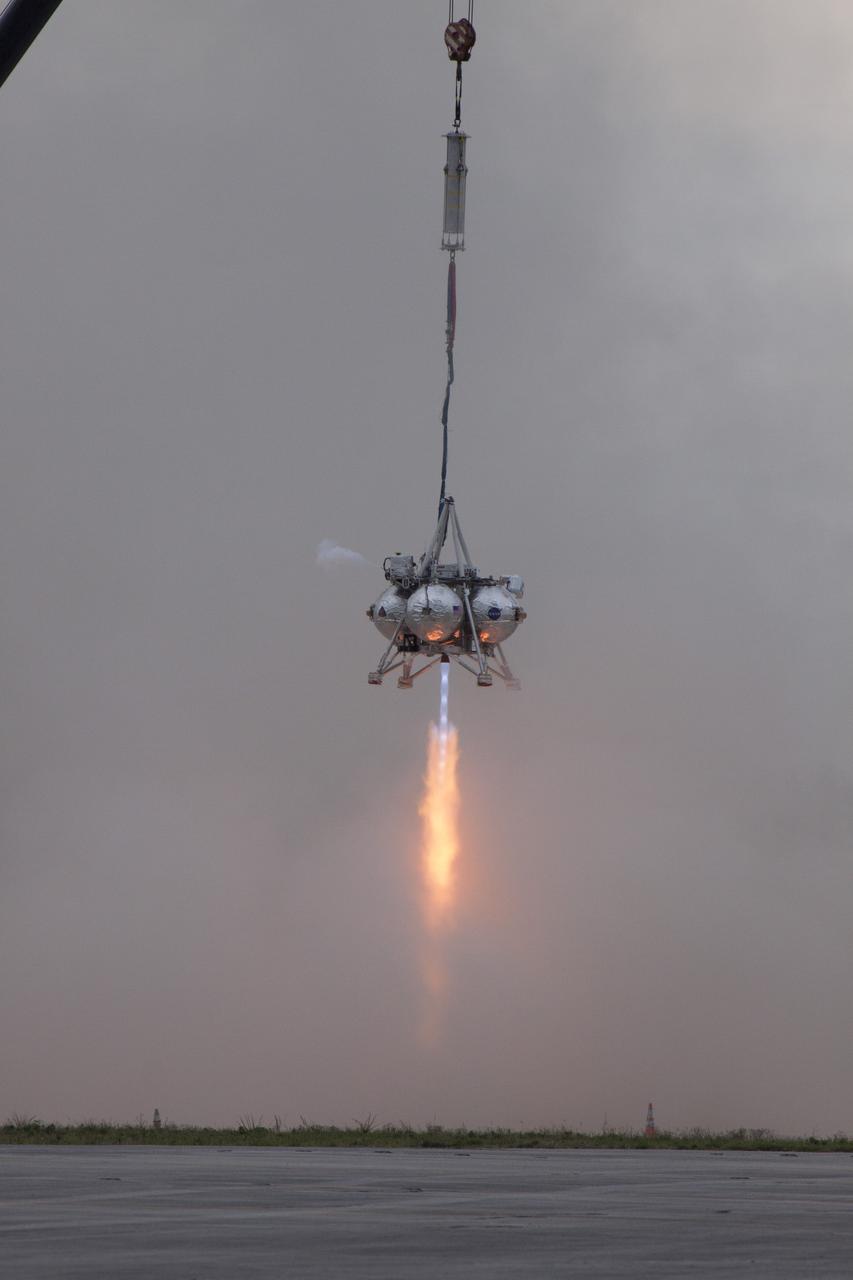
CAPE CANAVERAL, Fla. – NASA's Project Morpheus prototype lander is lifted by crane and its engine is ignited during a tethered test near a new launch site at the north end of the Shuttle Landing Facility at NASA's Kennedy Space Center in Florida. The launch pad was moved to a different location at the landing facility to support the next phase of flight testing. The test was performed to verify the lander's recently installed autonomous landing and hazard avoidance technology, or ALHAT, sensors and integration systems. During the test, Morpheus was lifted by crane to 20 feet for an engine firing of about 74 seconds and then lowered to the ground. With the successful completion of the test, the Morpheus project team will begin preparing for the first free flight test with ALHAT. Morpheus tests NASA’s ALHAT, and an engine that runs on liquid oxygen and methane, or green propellants, into a fully-operational lander that could deliver cargo to other planetary surfaces. The landing facility provides the lander with the kind of field necessary for realistic testing, complete with rocks, craters and hazards to avoid. Morpheus’ ALHAT payload allows it to navigate to clear landing sites amidst rocks, craters and other hazards during its descent. Project Morpheus is being managed under the Advanced Exploration Systems, or AES, Division in NASA’s Human Exploration and Operations Mission Directorate. The efforts in AES pioneer new approaches for rapidly developing prototype systems, demonstrating key capabilities and validating operational concepts for future human missions beyond Earth orbit. For more information on Project Morpheus, visit http://morpheuslander.jsc.nasa.gov/. Photo credit: NASA/Glenn Benson
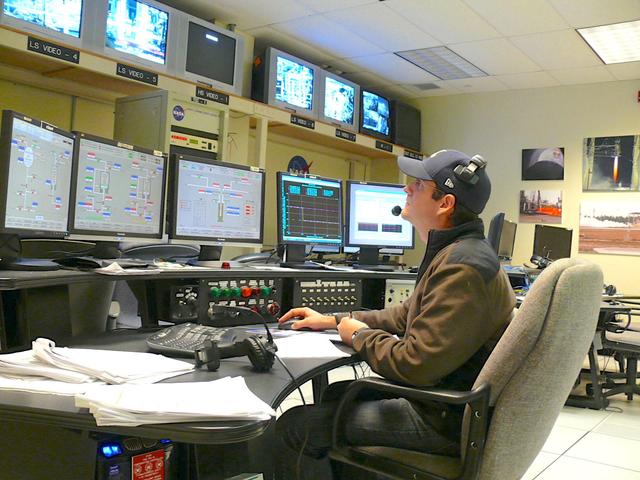
NASA engineer Andy Guymon studies data in the E-3 Test Stand Control Center at John C. Stennis Space Center during testing of NASA's Project Morpheus engine. Nov. 8. The test of the liquid oxygen, liquid methane engine was one of 27 conducted in Stennis' E Test Complex the week of Nov. 5.
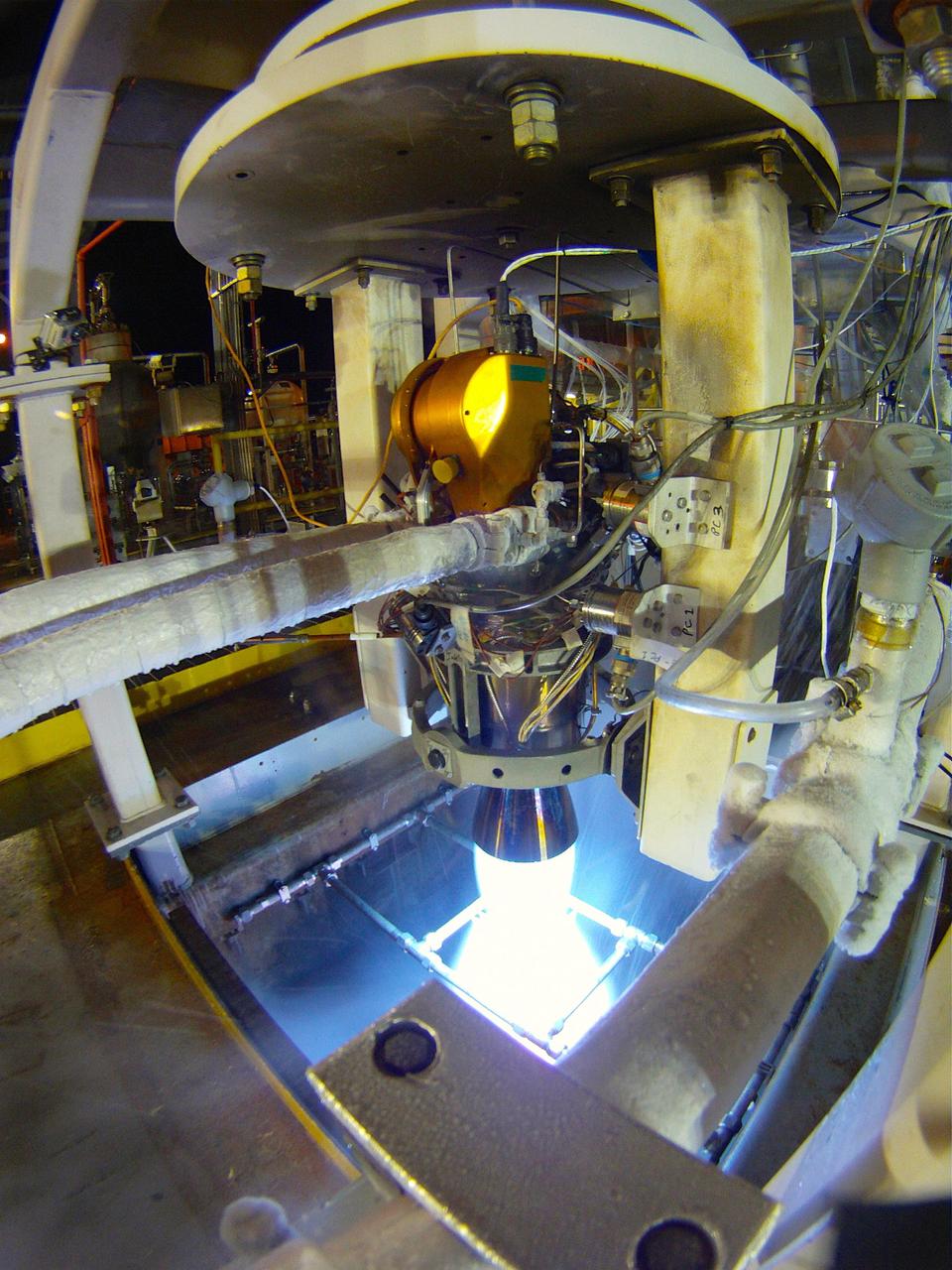
A test of NASA's liquid oxygen, liquid methane Project Morpheus engine is conducted Nov. 8 on the E-3 Test Stand at John C. Stennis Space Center. The test was one of 27 conducted in Stennis' E Test Complex the week of Nov. 5. Twenty-seven tests were conducted in a three-day period during the week, on three different rocket engines/components and on three E Complex test stands.
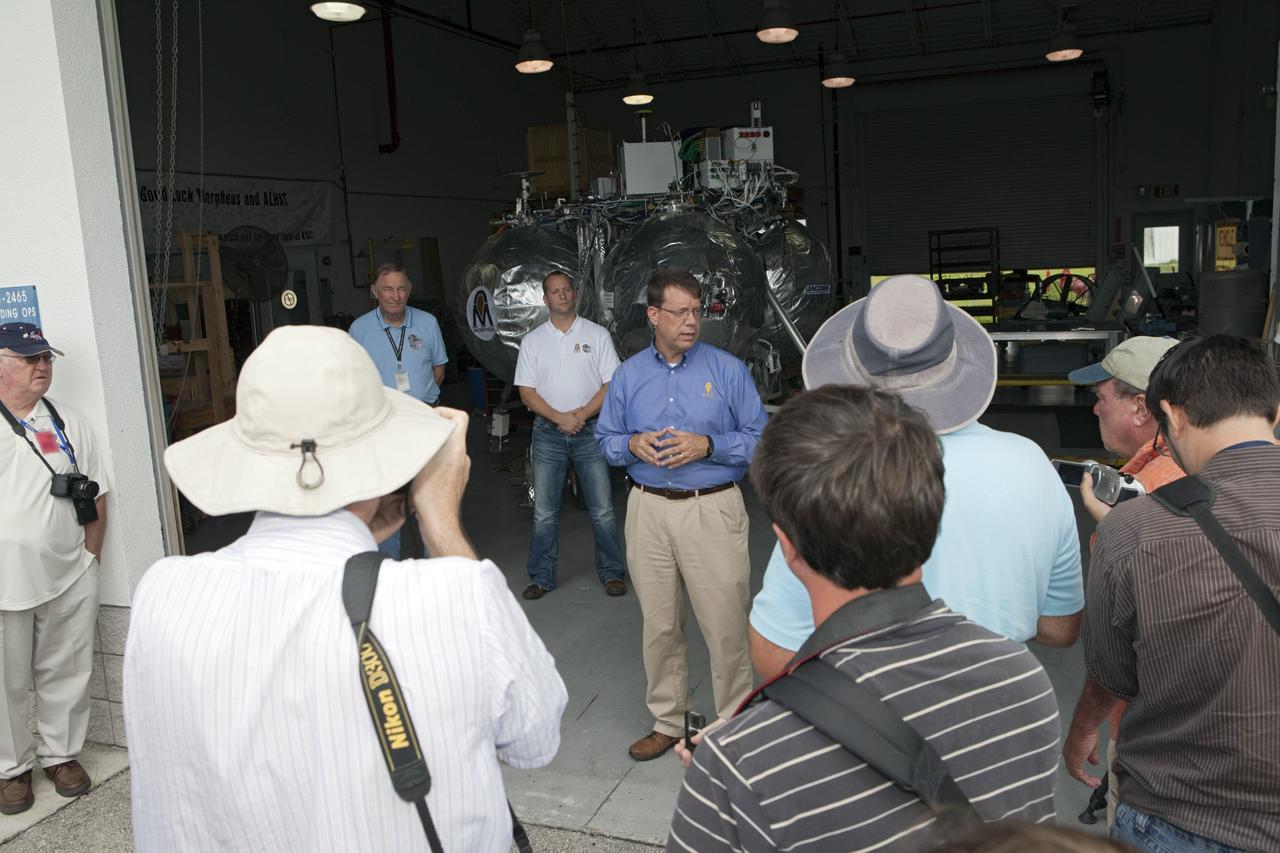
CAPE CANAVERAL, Fla. - At a hangar near the Shuttle Landing Facility, or SLF, at NASA’s Kennedy Space Center in Florida, members of the media view the Morpheus prototype lander and speak with Morpheus managers. In front is Gregory Gaddis, Kennedy Project Morpheus/ALHAT site manager. To his left, are Jon Olansen, Johnson Space Center Project Morpheus manager and Chirold Epp, JSC ALHAT project manager. Testing of the prototype lander had been ongoing at NASA’s Johnson Space Center in Houston in preparation for its first free-flight test at Kennedy Space Center. The SLF will provide the lander with the kind of field necessary for realistic testing, complete with rocks, craters and hazards to avoid. Morpheus utilizes an autonomous landing and hazard avoidance technology, or ALHAT, payload that will allow it to navigate to clear landing sites amidst rocks, craters and other hazards during its descent. Project Morpheus is one of 20 small projects comprising the Advanced Exploration Systems, or AES, program in NASA’s Human Exploration and Operations Mission Directorate. AES projects pioneer new approaches for rapidly developing prototype systems, demonstrating key capabilities and validating operational concepts for future human missions beyond Earth orbit. For more information on Project Morpheus, visit http://morpheuslander.jsc.nasa.gov/. Photo credit: NASA/Kim Shiflett

CAPE CANAVERAL, Fla. - NASA's Morpheus lander, a vertical test bed vehicle, is unloaded at the Kennedy Space Center in Florida. Morpheus is designed to demonstrate new green propellant propulsion systems and autonomous landing and an Autonomous Landing and Hazard Avoidance Technology, or ALHAT, system. Checkout of the prototype lander has been ongoing at NASA’s Johnson Space Center in Houston in preparation for its first free flight. The SLF site will provide the lander with the kind of field necessary for realistic testing. Project Morpheus is one of 20 small projects comprising the Advanced Exploration Systems, or AES, program in NASA’s Human Exploration and Operations Mission Directorate. AES projects pioneer new approaches for rapidly developing prototype systems, demonstrating key capabilities and validating operational concepts for future human missions beyond Earth orbit. For more information on Project Morpheus, visit http://www.nasa.gov/centers/johnson/exploration/morpheus/index.html Photo credit: NASA/ Charisse Nahser
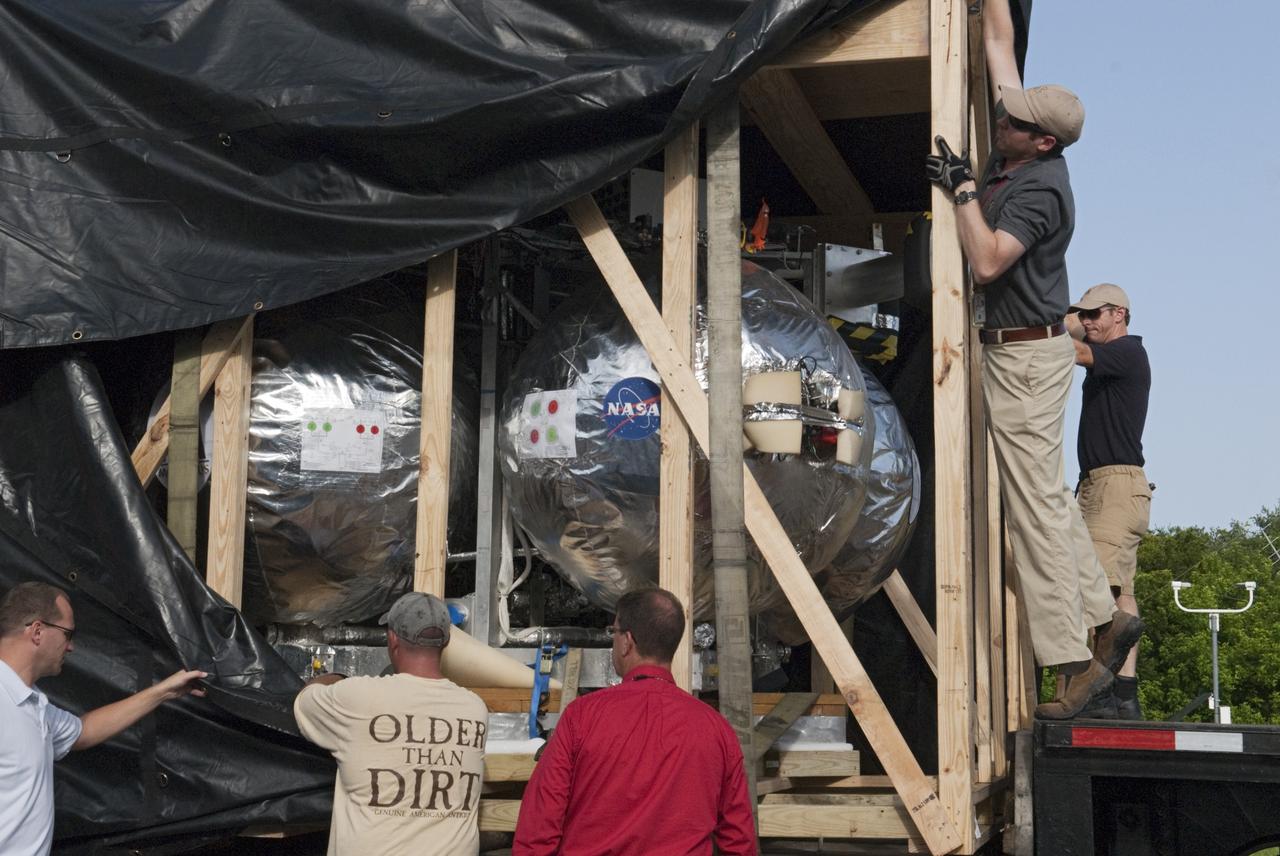
CAPE CANAVERAL, Fla. - NASA's Morpheus lander, a vertical test bed vehicle, is unloaded at the Kennedy Space Center in Florida. Morpheus is designed to demonstrate new green propellant propulsion systems and autonomous landing and an Autonomous Landing and Hazard Avoidance Technology, or ALHAT, system. Checkout of the prototype lander has been ongoing at NASA’s Johnson Space Center in Houston in preparation for its first free flight. The SLF site will provide the lander with the kind of field necessary for realistic testing. Project Morpheus is one of 20 small projects comprising the Advanced Exploration Systems, or AES, program in NASA’s Human Exploration and Operations Mission Directorate. AES projects pioneer new approaches for rapidly developing prototype systems, demonstrating key capabilities and validating operational concepts for future human missions beyond Earth orbit. For more information on Project Morpheus, visit http://www.nasa.gov/centers/johnson/exploration/morpheus/index.html Photo credit: NASA/ Charisse Nahser
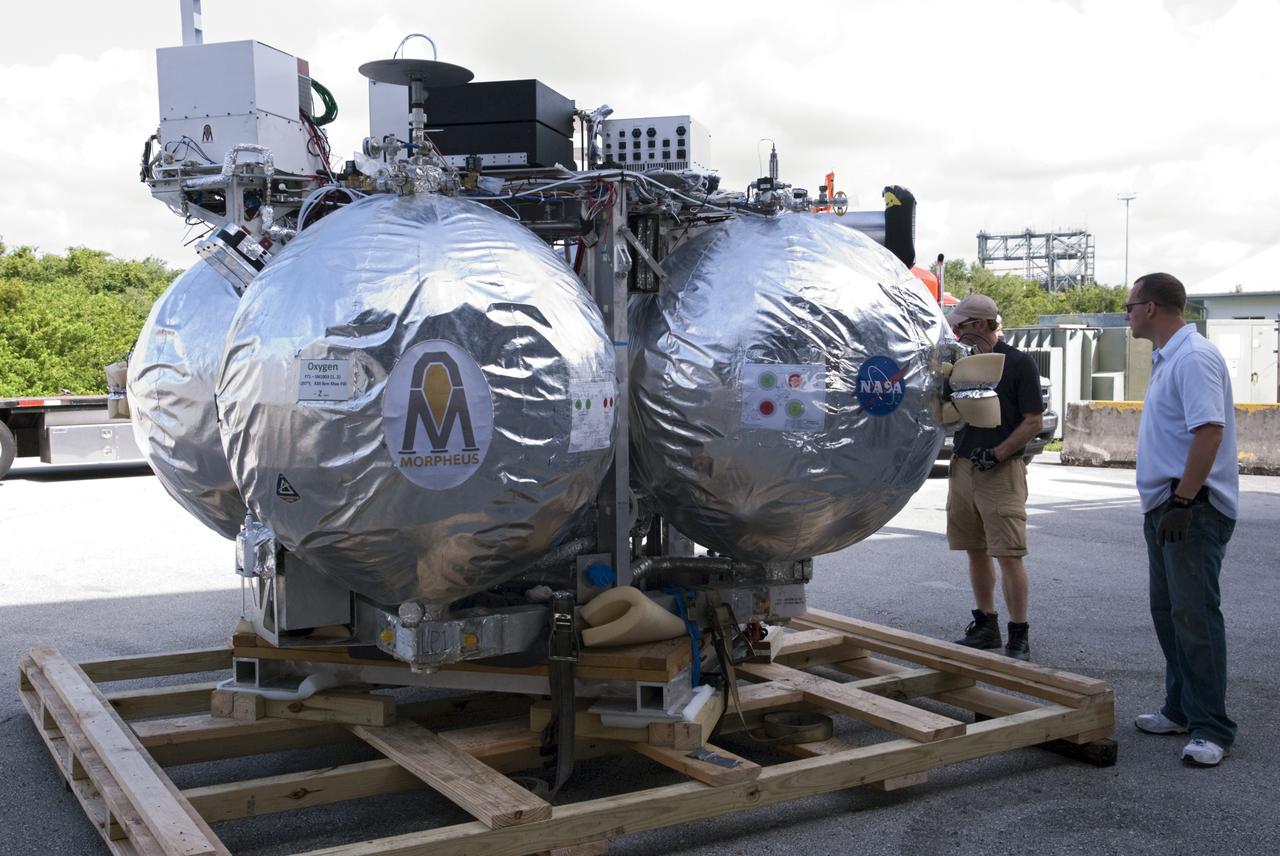
CAPE CANAVERAL, Fla. - NASA's Morpheus lander, a vertical test bed vehicle, is unloaded at the Kennedy Space Center in Florida. Morpheus is designed to demonstrate new green propellant propulsion systems and autonomous landing and an Autonomous Landing and Hazard Avoidance Technology, or ALHAT, system. Checkout of the prototype lander has been ongoing at NASA’s Johnson Space Center in Houston in preparation for its first free flight. The SLF site will provide the lander with the kind of field necessary for realistic testing. Project Morpheus is one of 20 small projects comprising the Advanced Exploration Systems, or AES, program in NASA’s Human Exploration and Operations Mission Directorate. AES projects pioneer new approaches for rapidly developing prototype systems, demonstrating key capabilities and validating operational concepts for future human missions beyond Earth orbit. For more information on Project Morpheus, visit http://www.nasa.gov/centers/johnson/exploration/morpheus/index.html Photo credit: NASA/ Charisse Nahser
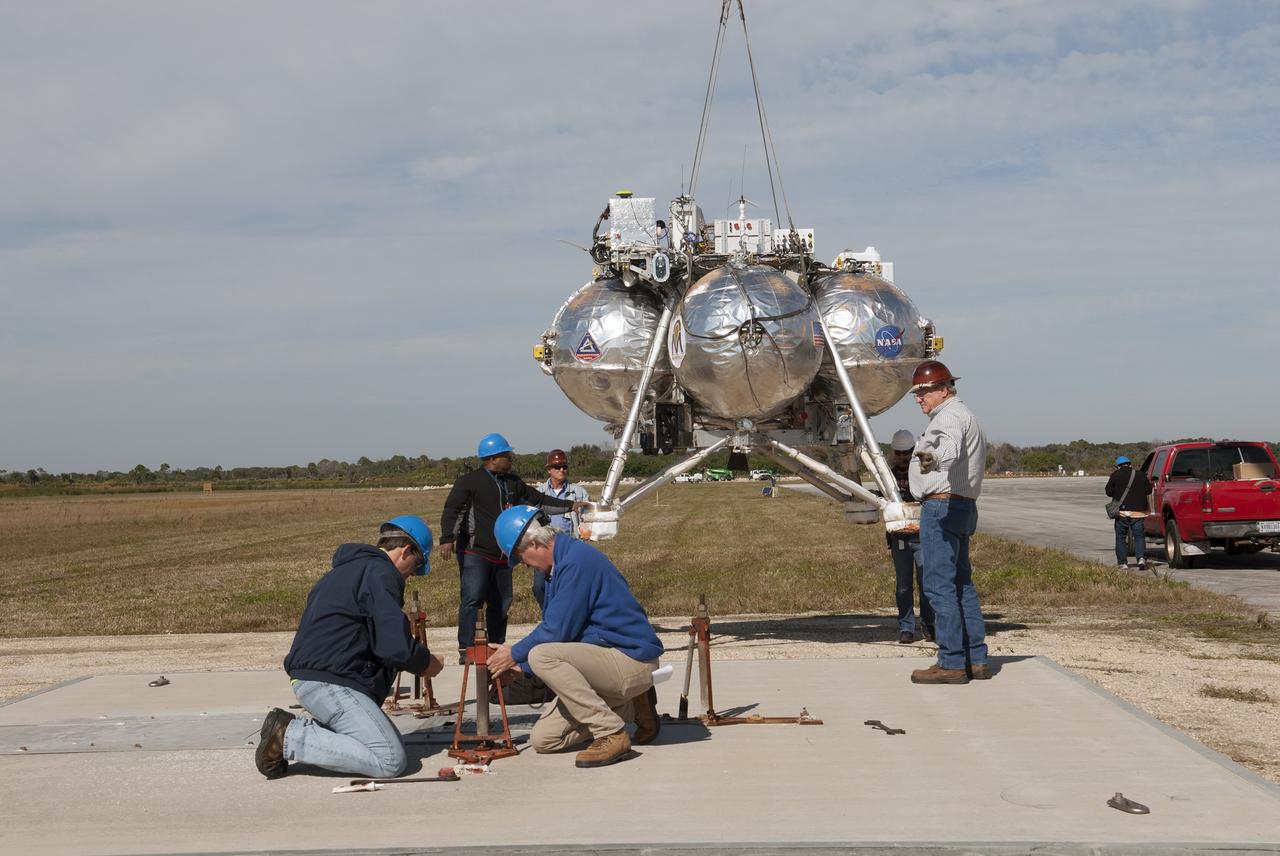
CAPE CANAVERAL, Fla. – Engineers and technicians prepare the launch pad for NASA's Project Morpheus prototype lander at the north end of the Shuttle Landing Facility at NASA's Kennedy Space Center in Florida. Morpheus is being prepared for free flight test number 15 at the SLF. The lander will take off from the ground over a flame trench and use its autonomous landing and hazard avoidance technology, or ALHAT sensors, to survey the hazard field to determine safe landing sites. Project Morpheus tests NASA’s ALHAT and an engine that runs on liquid oxygen and methane, which are green propellants. These new capabilities could be used in future efforts to deliver cargo to planetary surfaces. Project Morpheus is being managed under the Advanced Exploration Systems, or AES, Division in NASA’s Human Exploration and Operations Mission Directorate. For more information on Project Morpheus, visit http://morpheuslander.jsc.nasa.gov/. Photo credit: NASA/Jim Grossmann
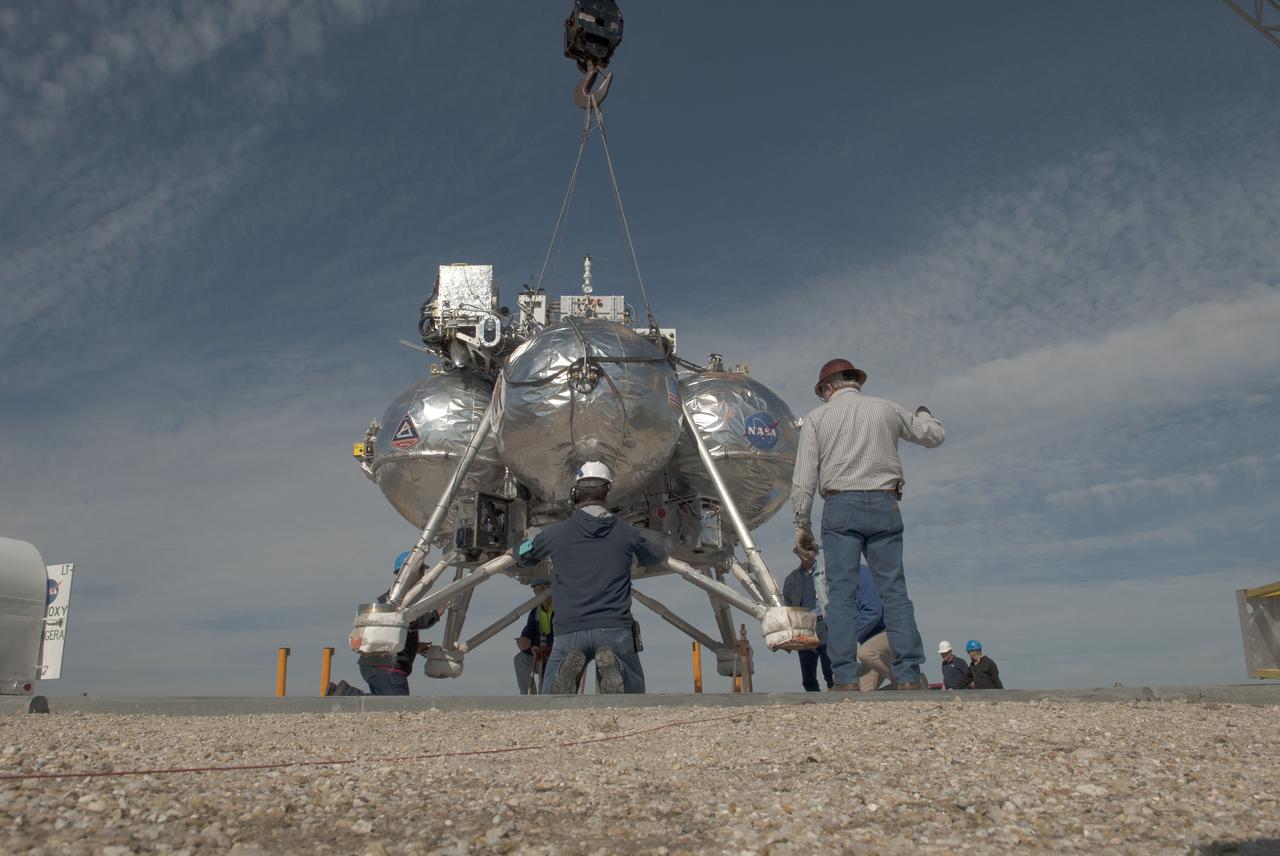
CAPE CANAVERAL, Fla. – Engineers and technicians prepare NASA's Project Morpheus prototype lander for free flight test number 15 on a launch pad at the north end of the Shuttle Landing Facility at NASA's Kennedy Space Center in Florida. Morpheus is being lowered by crane onto the launch pad. The lander will take off from the ground over a flame trench and use its autonomous landing and hazard avoidance technology, or ALHAT sensors, to survey the hazard field to determine safe landing sites. Project Morpheus tests NASA’s ALHAT and an engine that runs on liquid oxygen and methane, which are green propellants. These new capabilities could be used in future efforts to deliver cargo to planetary surfaces. Project Morpheus is being managed under the Advanced Exploration Systems, or AES, Division in NASA’s Human Exploration and Operations Mission Directorate. For more information on Project Morpheus, visit http://morpheuslander.jsc.nasa.gov/. Photo credit: NASA/Jim Grossmann
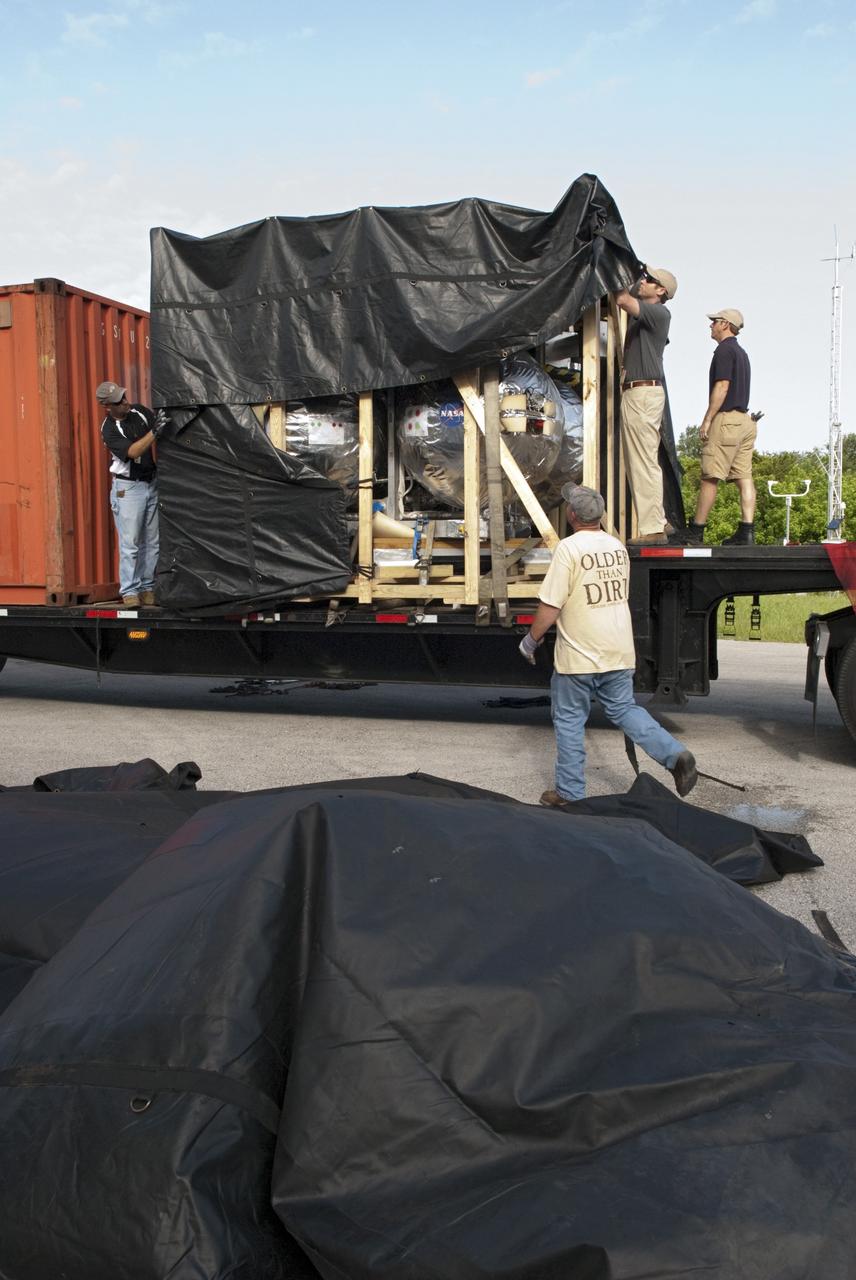
CAPE CANAVERAL, Fla. - NASA's Morpheus lander, a vertical test bed vehicle, is unloaded at the Kennedy Space Center in Florida. Morpheus is designed to demonstrate new green propellant propulsion systems and autonomous landing and an Autonomous Landing and Hazard Avoidance Technology, or ALHAT, system. Checkout of the prototype lander has been ongoing at NASA’s Johnson Space Center in Houston in preparation for its first free flight. The SLF site will provide the lander with the kind of field necessary for realistic testing. Project Morpheus is one of 20 small projects comprising the Advanced Exploration Systems, or AES, program in NASA’s Human Exploration and Operations Mission Directorate. AES projects pioneer new approaches for rapidly developing prototype systems, demonstrating key capabilities and validating operational concepts for future human missions beyond Earth orbit. For more information on Project Morpheus, visit http://www.nasa.gov/centers/johnson/exploration/morpheus/index.html Photo credit: NASA/ Charisse Nahser
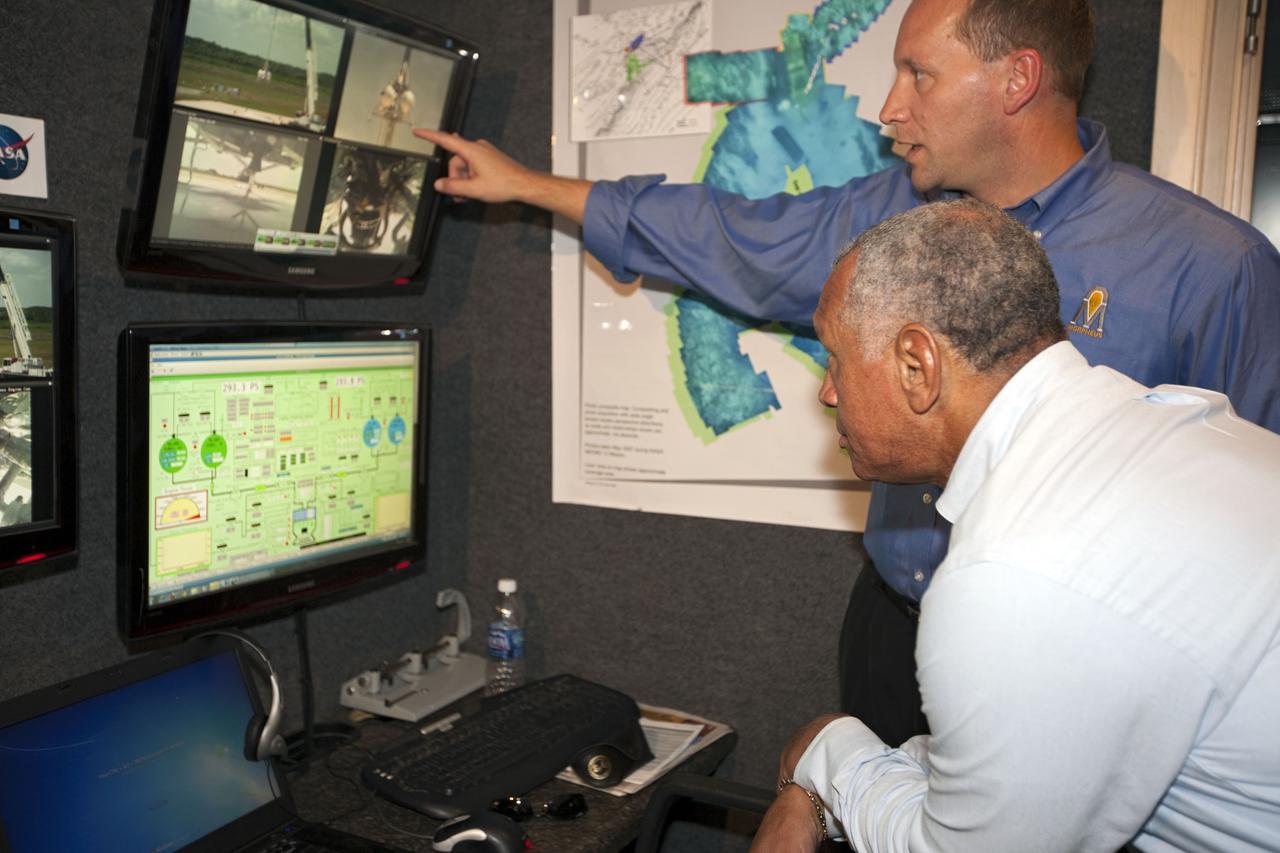
CAPE CANAVERAL, Fla. – At NASA’s Kennedy Space Center in Florida, NASA Administrator Charles Bolden joins Morpheus project manager Dr. Jon Olansen, pointing at monitor, in the control room at the Shuttle Landing Facility for the first tethered flight of the Morpheus lander. After undergoing testing at Johnson Space Center in Houston for nearly a year, Morpheus arrived at Kennedy on July 27 to begin about three months of tests. A field, replete with boulders, rocks, slopes, craters and hazards to avoid, was created at the north end of Kennedy's runway to provide a realistic landscape for test flights of the lander. Morpheus utilizes autonomous landing and hazard avoidance technology, or ALHAT, to navigate to a safe landing site during its descent. Project Morpheus is one of 20 small projects comprising the Advanced Exploration Systems, or AES, program in NASA's Human Exploration and Operations Mission Directorate. AES projects pioneer new approaches for rapidly developing prototype systems, demonstrating key capabilities and validating operational concepts for future human missions beyond Earth orbit. For more information on Project Morpheus, visit http://www.nasa.gov/centers/johnson/exploration/morpheus/index.html. Photo credit: NASA/Kim Shiflett
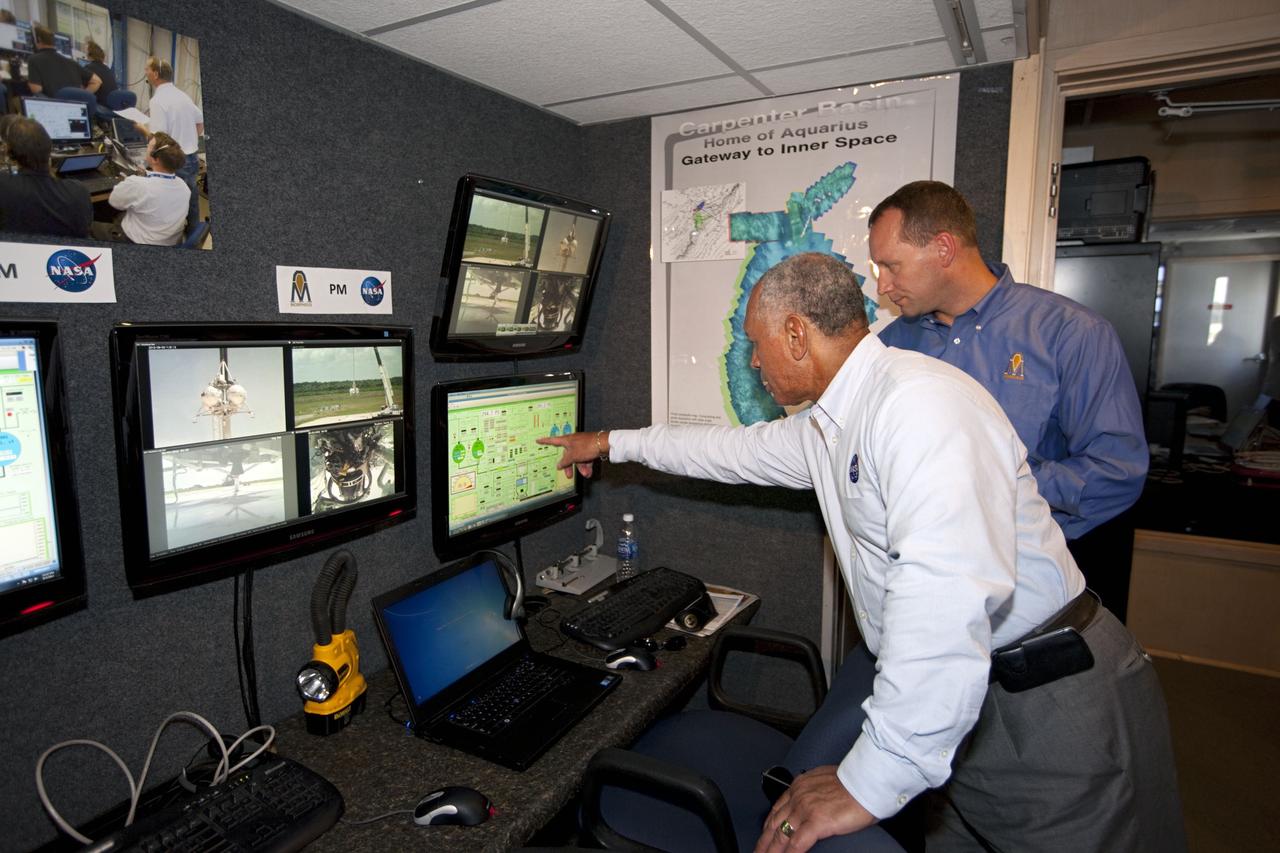
CAPE CANAVERAL, Fla. – At NASA’s Kennedy Space Center in Florida, NASA Administrator Charles Bolden, left, joins Dr. Jon Olansen, Morpheus project manager, in the control room at the Shuttle Landing Facility for the first tethered flight of the Morpheus lander. After undergoing testing at Johnson Space Center in Houston for nearly a year, Morpheus arrived at Kennedy on July 27 to begin about three months of tests. A field, replete with boulders, rocks, slopes, craters and hazards to avoid, was created at the north end of Kennedy's runway to provide a realistic landscape for test flights of the lander. Morpheus utilizes autonomous landing and hazard avoidance technology, or ALHAT, to navigate to a safe landing site during its descent. Project Morpheus is one of 20 small projects comprising the Advanced Exploration Systems, or AES, program in NASA's Human Exploration and Operations Mission Directorate. AES projects pioneer new approaches for rapidly developing prototype systems, demonstrating key capabilities and validating operational concepts for future human missions beyond Earth orbit. For more information on Project Morpheus, visit http://www.nasa.gov/centers/johnson/exploration/morpheus/index.html. Photo credit: NASA/Kim Shiflett
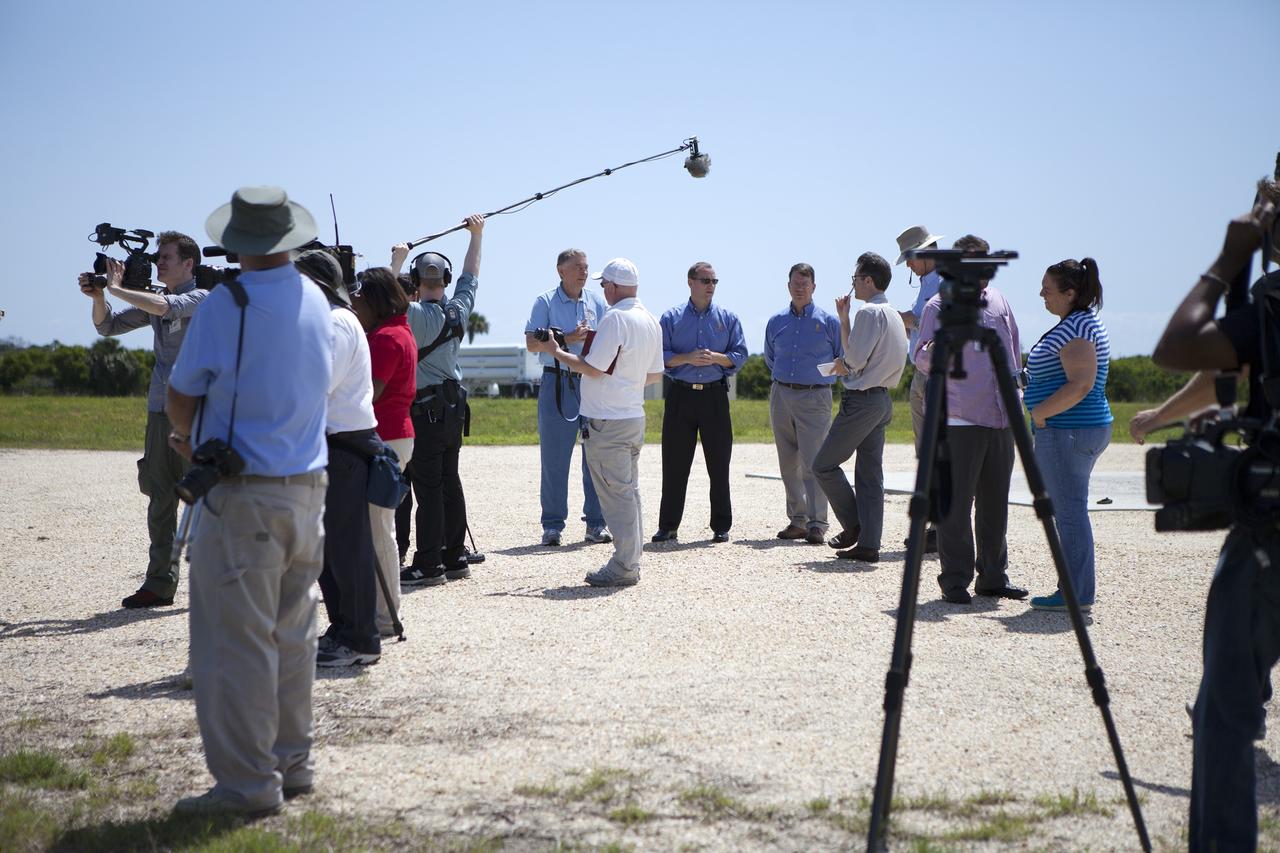
CAPE CANAVERAL, Fla. – From left behind the reporter in the white shirt, Chirold Epp, the Autonomous Landing and Hazard Avoidance Technology, or ALHAT, project manager, Jon Olansen, Morpheus project manager, and Greg Gaddis, Morpheus/ALHAT site director, speak to members of the media near the north end of the Shuttle Landing Facility at NASA's Kennedy Space Center in Florida. Media also viewed Morpheus inside a facility near the landing facility. Project Morpheus tests NASA’s ALHAT and an engine that runs on liquid oxygen and methane, which are green propellants. These new capabilities could be used in future efforts to deliver cargo to planetary surfaces. The landing facility provides the lander with the kind of field necessary for realistic testing, complete with rocks, craters and hazards to avoid. Morpheus’ ALHAT payload allows it to navigate to clear landing sites amidst rocks, craters and other hazards during its descent. Project Morpheus is being managed under the Advanced Exploration Systems, or AES, Division in NASA’s Human Exploration and Operations Mission Directorate. The efforts in AES pioneer new approaches for rapidly developing prototype systems, demonstrating key capabilities and validating operational concepts for future human missions beyond Earth orbit. For more information on Project Morpheus, visit http://morpheuslander.jsc.nasa.gov/. Photo credit: NASA/Frankie Martin
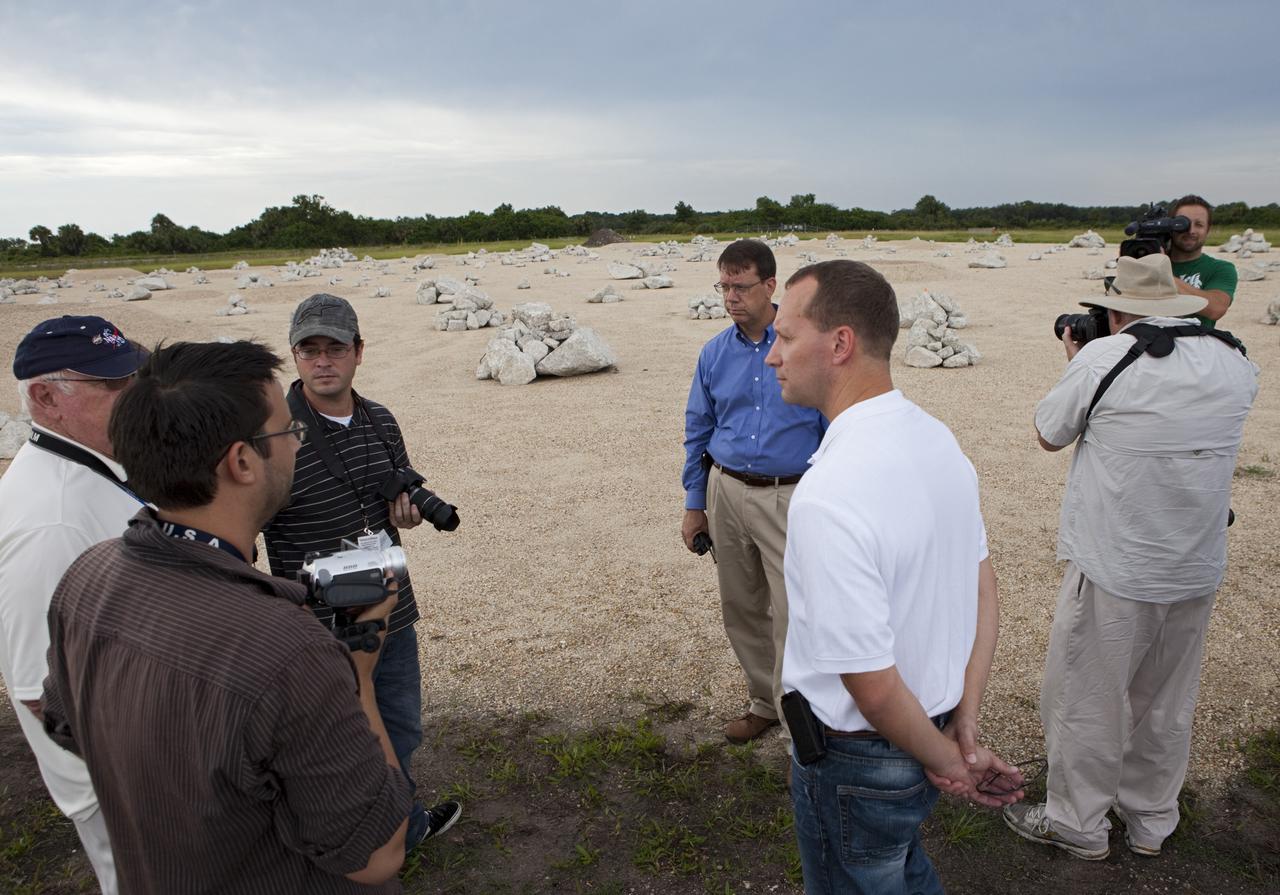
CAPE CANAVERAL, Fla. - At the Autonomous Landing and Hazard Avoidance Technology, or ALHAT, field at the north end of the Shuttle Landing Facility, or SLF, at NASA’s Kennedy Space Center in Florida, members of the media view the hazard field and speak with Morpheus managers. In the white shirt is Jon Olansen, Johnson Space Center Project Morpheus Manager. Behind Olansen is Gregory Gaddis, Kennedy Project Morpheus/ALHAT site manager. Testing of the prototype lander had been ongoing at NASA’s Johnson Space Center in Houston in preparation for its first free-flight test at Kennedy Space Center. The SLF will provide the lander with the kind of field necessary for realistic testing, complete with rocks, craters and hazards to avoid. Morpheus utilizes an autonomous landing and hazard avoidance technology, or ALHAT, payload that will allow it to navigate to clear landing sites amidst rocks, craters and other hazards during its descent. Project Morpheus is one of 20 small projects comprising the Advanced Exploration Systems, or AES, program in NASA’s Human Exploration and Operations Mission Directorate. AES projects pioneer new approaches for rapidly developing prototype systems, demonstrating key capabilities and validating operational concepts for future human missions beyond Earth orbit. For more information on Project Morpheus, visit http://morpheuslander.jsc.nasa.gov/. Photo credit: NASA/Kim Shiflett
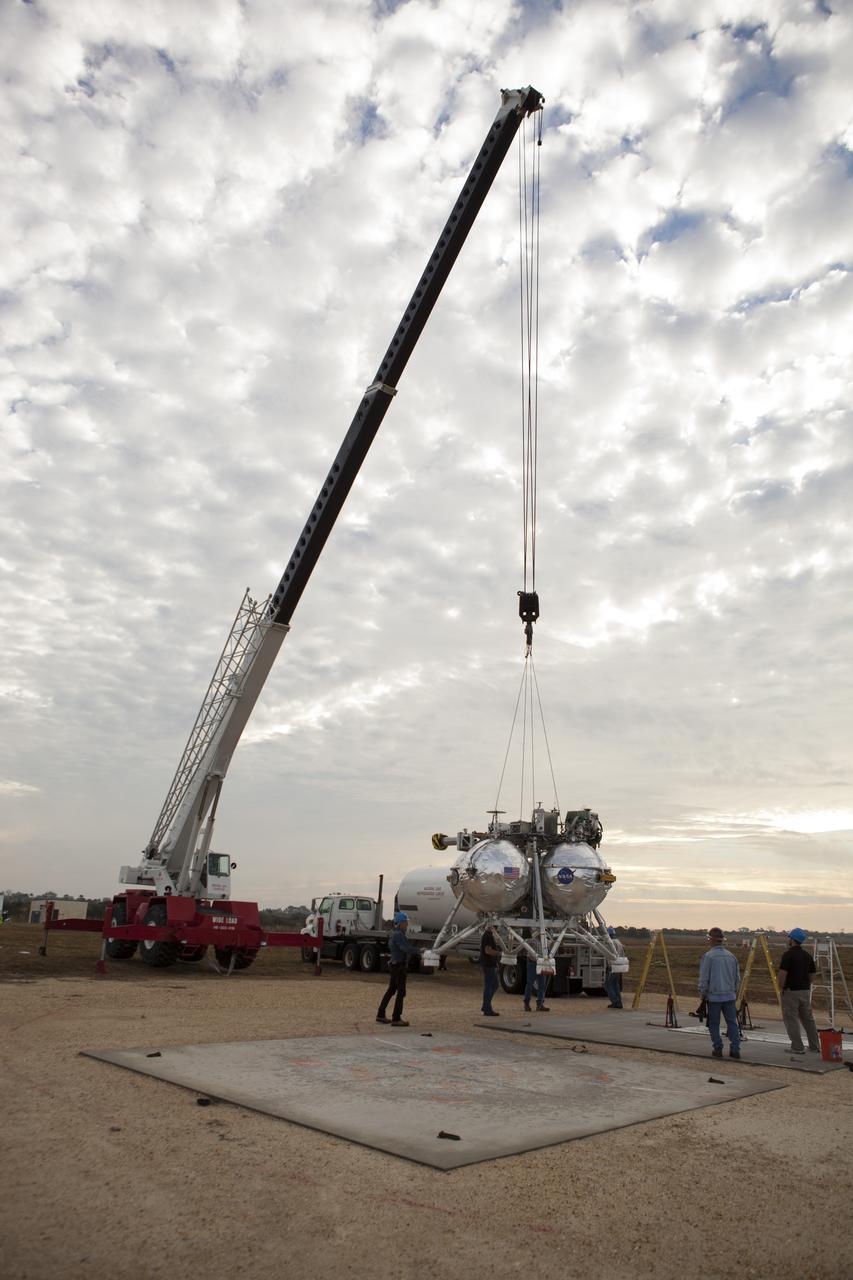
CAPE CANAVERAL, Fla. – Technicians and engineers monitor the progress as the Project Morpheus prototype lander is lifted by crane for positioning on a launch pad at the north end of the Shuttle Landing Facility at NASA’s Kennedy Space Center in Florida. The prototype lander is being prepared for its fourth free flight test at Kennedy. Morpheus will launch from the ground over a flame trench and then descend and land on a dedicated pad inside the autonomous landing and hazard avoidance technology, or ALHAT, hazard field. Project Morpheus tests NASA’s ALHAT and an engine that runs on liquid oxygen and methane, or green propellants, into a fully-operational lander that could deliver cargo to other planetary surfaces. The landing facility provides the lander with the kind of field necessary for realistic testing, complete with rocks, craters and hazards to avoid. Morpheus’ ALHAT payload allows it to navigate to clear landing sites amidst rocks, craters and other hazards during its descent. Project Morpheus is being managed under the Advanced Exploration Systems, or AES, Division in NASA’s Human Exploration and Operations Mission Directorate. The efforts in AES pioneer new approaches for rapidly developing prototype systems, demonstrating key capabilities and validating operational concepts for future human missions beyond Earth orbit. For more information on Project Morpheus, visit http://www.nasa.gov/centers/johnson/exploration/morpheus. Photo credit: NASA/Cory Huston
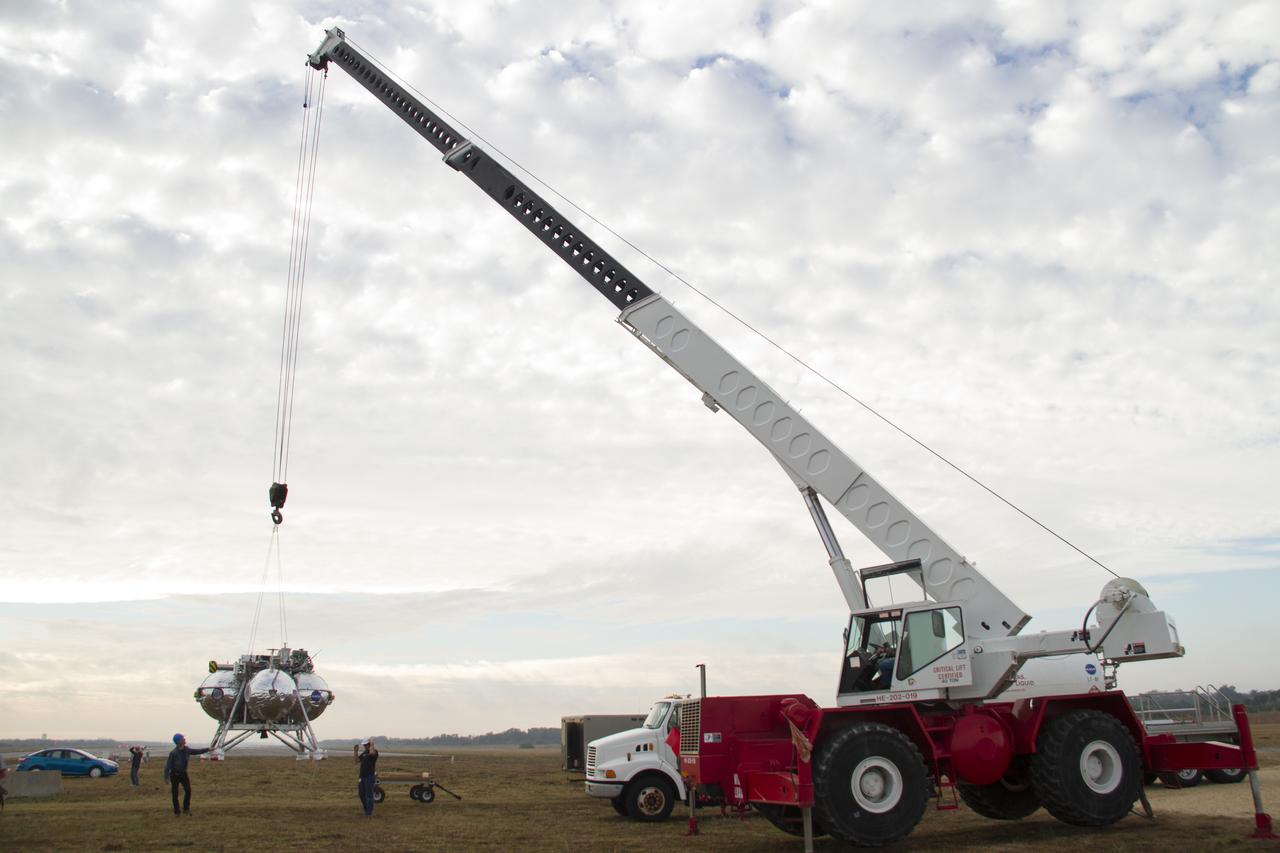
CAPE CANAVERAL, Fla. – The Project Morpheus prototype lander is being lifted by crane for positioning on a launch pad at the north end of the Shuttle Landing Facility at NASA’s Kennedy Space Center in Florida. The prototype lander is being prepared for its fourth free flight test at Kennedy. Morpheus will launch from the ground over a flame trench and then descend and land on a dedicated pad inside the autonomous landing and hazard avoidance technology, or ALHAT, hazard field. Project Morpheus tests NASA’s ALHAT and an engine that runs on liquid oxygen and methane, or green propellants, into a fully-operational lander that could deliver cargo to other planetary surfaces. The landing facility provides the lander with the kind of field necessary for realistic testing, complete with rocks, craters and hazards to avoid. Morpheus’ ALHAT payload allows it to navigate to clear landing sites amidst rocks, craters and other hazards during its descent. Project Morpheus is being managed under the Advanced Exploration Systems, or AES, Division in NASA’s Human Exploration and Operations Mission Directorate. The efforts in AES pioneer new approaches for rapidly developing prototype systems, demonstrating key capabilities and validating operational concepts for future human missions beyond Earth orbit. For more information on Project Morpheus, visit http://www.nasa.gov/centers/johnson/exploration/morpheus. Photo credit: NASA/Cory Huston
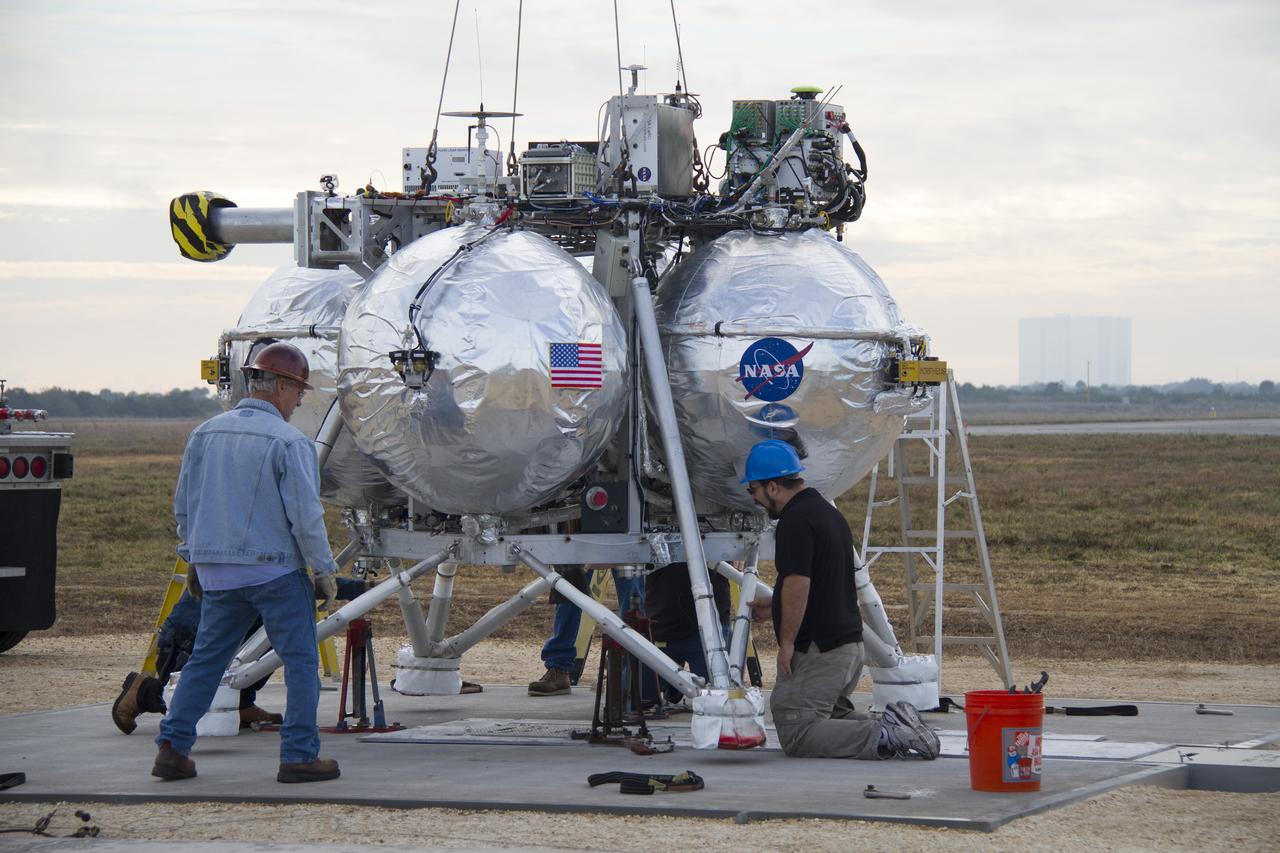
CAPE CANAVERAL, Fla. – Technicians monitor the progress as a crane lowers the Project Morpheus prototype for positioning on a launch pad at the north end of the Shuttle Landing Facility at NASA’s Kennedy Space Center in Florida. The prototype lander is being prepared for its fourth free flight test at Kennedy. Morpheus will launch from the ground over a flame trench and then descend and land on a dedicated pad inside the autonomous landing and hazard avoidance technology, or ALHAT, hazard field. Project Morpheus tests NASA’s ALHAT and an engine that runs on liquid oxygen and methane, or green propellants, into a fully-operational lander that could deliver cargo to other planetary surfaces. The landing facility provides the lander with the kind of field necessary for realistic testing, complete with rocks, craters and hazards to avoid. Morpheus’ ALHAT payload allows it to navigate to clear landing sites amidst rocks, craters and other hazards during its descent. Project Morpheus is being managed under the Advanced Exploration Systems, or AES, Division in NASA’s Human Exploration and Operations Mission Directorate. The efforts in AES pioneer new approaches for rapidly developing prototype systems, demonstrating key capabilities and validating operational concepts for future human missions beyond Earth orbit. For more information on Project Morpheus, visit http://www.nasa.gov/centers/johnson/exploration/morpheus. Photo credit: NASA/Cory Huston
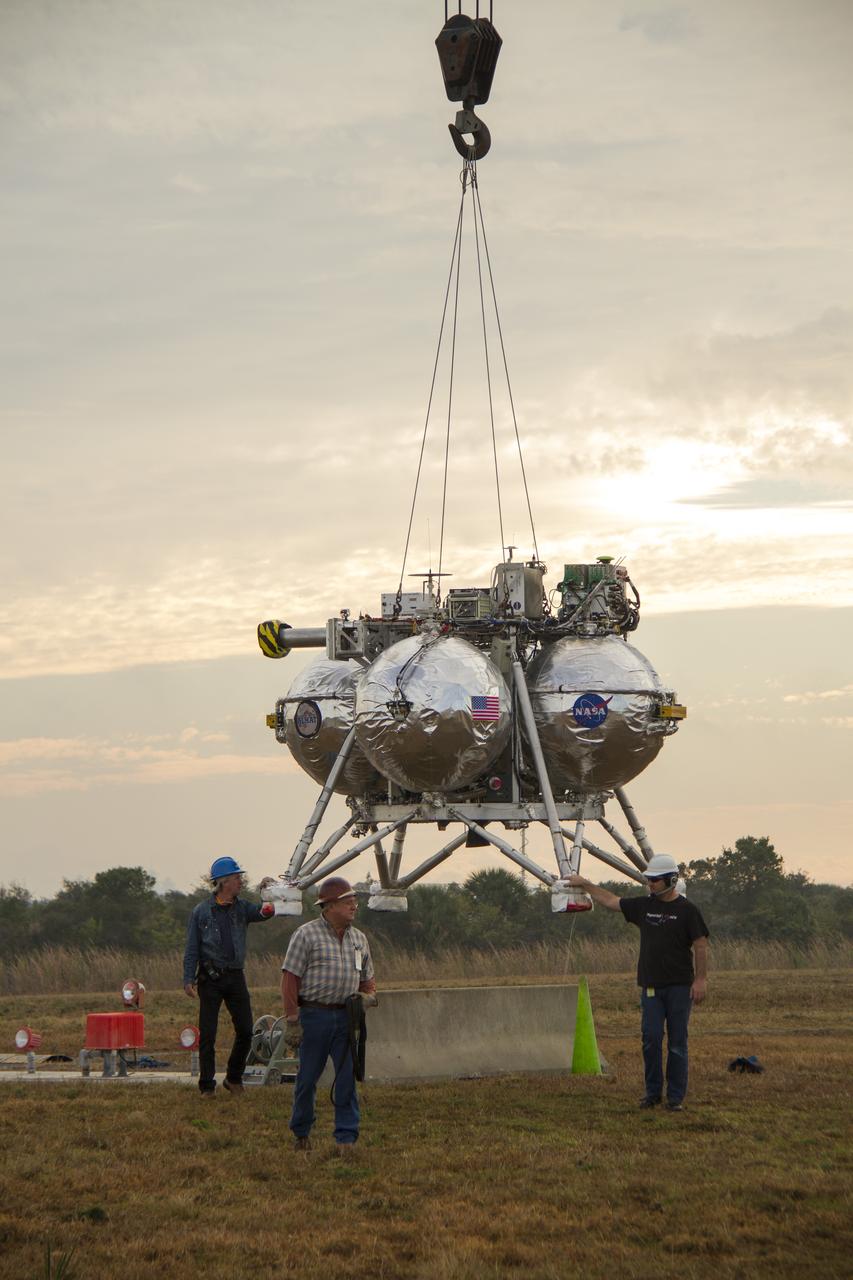
CAPE CANAVERAL, Fla. – Technicians monitor the progress as the Project Morpheus prototype lander is lifted by crane for positioning on a launch pad at the north end of the Shuttle Landing Facility at NASA’s Kennedy Space Center in Florida. The prototype lander is being prepared for its fourth free flight test at Kennedy. Morpheus will launch from the ground over a flame trench and then descend and land on a dedicated pad inside the autonomous landing and hazard avoidance technology, or ALHAT, hazard field. Project Morpheus tests NASA’s ALHAT and an engine that runs on liquid oxygen and methane, or green propellants, into a fully-operational lander that could deliver cargo to other planetary surfaces. The landing facility provides the lander with the kind of field necessary for realistic testing, complete with rocks, craters and hazards to avoid. Morpheus’ ALHAT payload allows it to navigate to clear landing sites amidst rocks, craters and other hazards during its descent. Project Morpheus is being managed under the Advanced Exploration Systems, or AES, Division in NASA’s Human Exploration and Operations Mission Directorate. The efforts in AES pioneer new approaches for rapidly developing prototype systems, demonstrating key capabilities and validating operational concepts for future human missions beyond Earth orbit. For more information on Project Morpheus, visit http://www.nasa.gov/centers/johnson/exploration/morpheus. Photo credit: NASA/Cory Huston
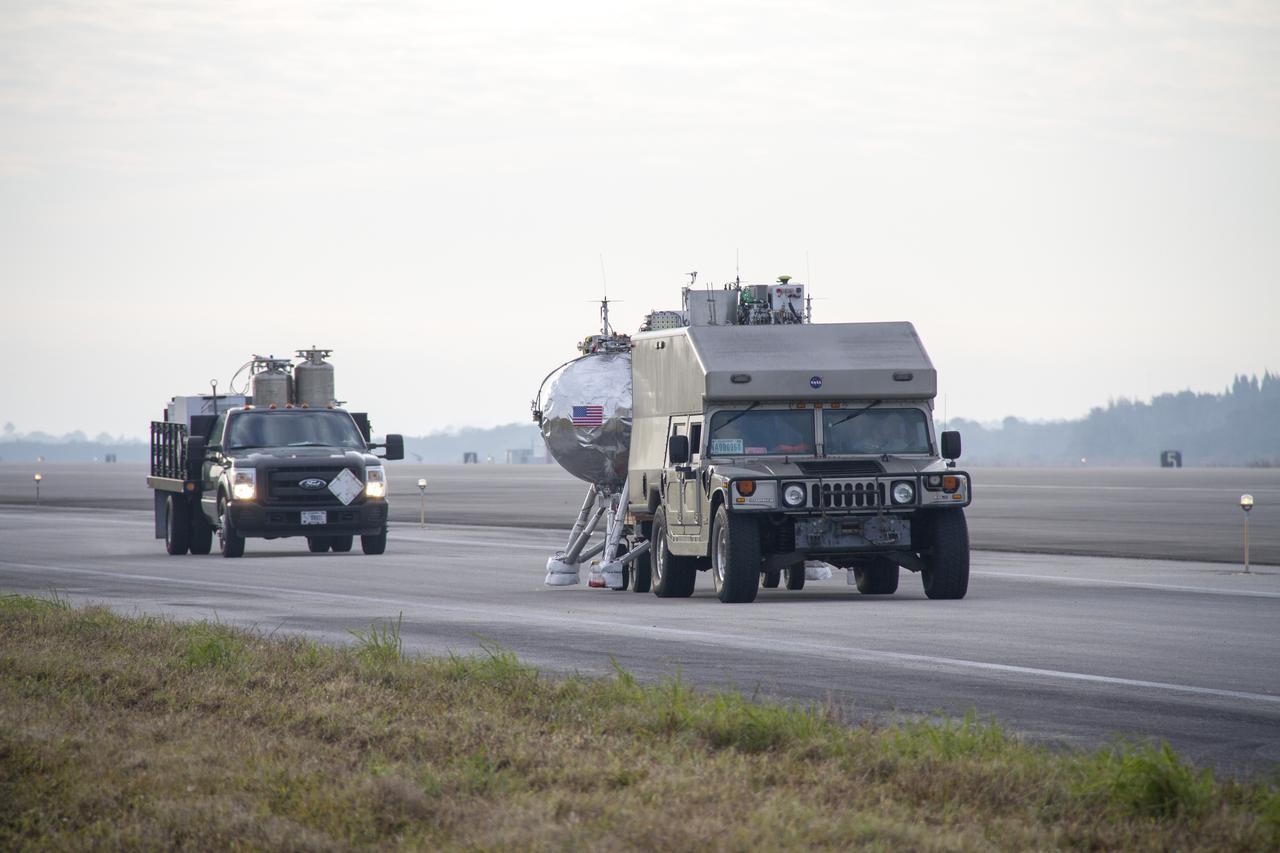
CAPE CANAVERAL, Fla. – The Project Morpheus prototype lander is transported to a launch pad at the north end of the Shuttle Landing Facility at NASA’s Kennedy Space Center in Florida. The prototype lander is being prepared for its fourth free flight test at Kennedy. Morpheus will launch from the ground over a flame trench and then descend and land on a dedicated pad inside the autonomous landing and hazard avoidance technology, or ALHAT, hazard field. Project Morpheus tests NASA’s ALHAT and an engine that runs on liquid oxygen and methane, or green propellants, into a fully-operational lander that could deliver cargo to other planetary surfaces. The landing facility provides the lander with the kind of field necessary for realistic testing, complete with rocks, craters and hazards to avoid. Morpheus’ ALHAT payload allows it to navigate to clear landing sites amidst rocks, craters and other hazards during its descent. Project Morpheus is being managed under the Advanced Exploration Systems, or AES, Division in NASA’s Human Exploration and Operations Mission Directorate. The efforts in AES pioneer new approaches for rapidly developing prototype systems, demonstrating key capabilities and validating operational concepts for future human missions beyond Earth orbit. For more information on Project Morpheus, visit http://www.nasa.gov/centers/johnson/exploration/morpheus. Photo credit: NASA/Cory Huston
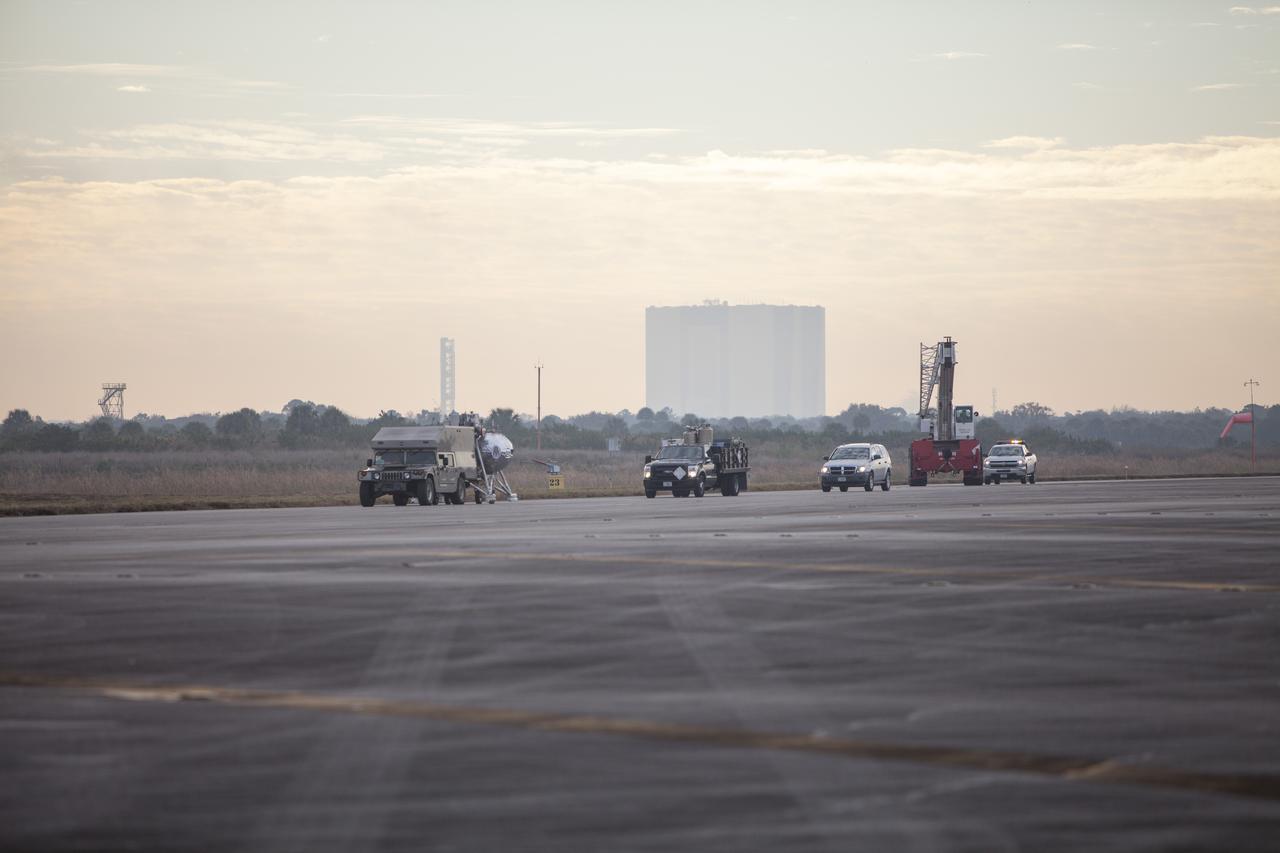
CAPE CANAVERAL, Fla. – The Project Morpheus prototype lander is transported to a launch pad at the north end of the Shuttle Landing Facility at NASA’s Kennedy Space Center in Florida. The prototype lander is being prepared for its fourth free flight test at Kennedy. Morpheus will launch from the ground over a flame trench and then descend and land on a dedicated pad inside the autonomous landing and hazard avoidance technology, or ALHAT, hazard field. Project Morpheus tests NASA’s ALHAT and an engine that runs on liquid oxygen and methane, or green propellants, into a fully-operational lander that could deliver cargo to other planetary surfaces. The landing facility provides the lander with the kind of field necessary for realistic testing, complete with rocks, craters and hazards to avoid. Morpheus’ ALHAT payload allows it to navigate to clear landing sites amidst rocks, craters and other hazards during its descent. Project Morpheus is being managed under the Advanced Exploration Systems, or AES, Division in NASA’s Human Exploration and Operations Mission Directorate. The efforts in AES pioneer new approaches for rapidly developing prototype systems, demonstrating key capabilities and validating operational concepts for future human missions beyond Earth orbit. For more information on Project Morpheus, visit http://www.nasa.gov/centers/johnson/exploration/morpheus. Photo credit: NASA/Cory Huston
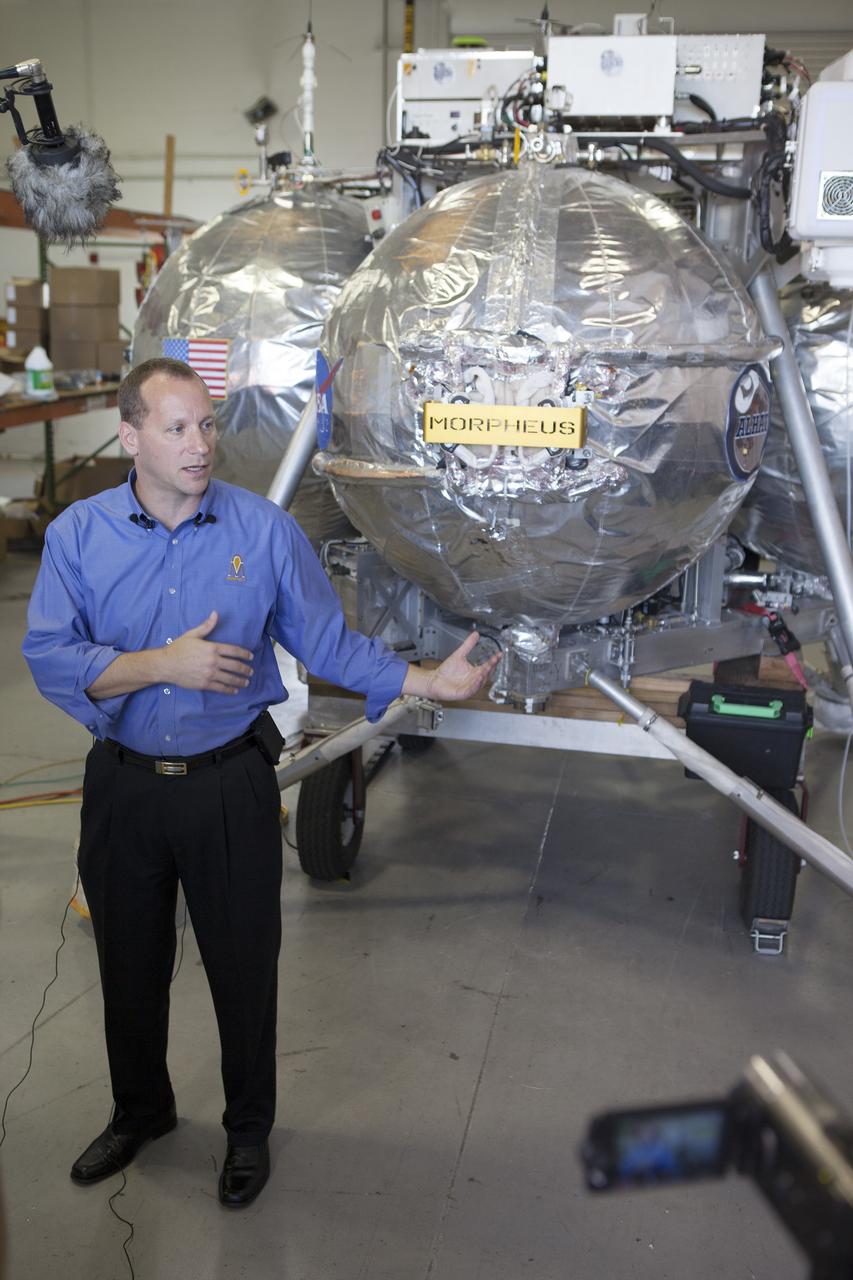
CAPE CANAVERAL, Fla. – Jon Olansen, Morpheus project manager, speaks to members of the media inside a facility near the Shuttle Landing Facility at NASA's Kennedy Space Center in Florida. Behind Olansen is the Project Morpheus prototype lander. Project Morpheus tests NASA’s autonomous landing and hazard avoidance technology, or ALHAT, sensors and an engine that runs on liquid oxygen and methane, which are green propellants. These new capabilities could be used in future efforts to deliver cargo to planetary surfaces. The landing facility provides the lander with the kind of field necessary for realistic testing, complete with rocks, craters and hazards to avoid. Morpheus’ ALHAT payload allows it to navigate to clear landing sites amidst rocks, craters and other hazards during its descent. Project Morpheus is being managed under the Advanced Exploration Systems, or AES, Division in NASA’s Human Exploration and Operations Mission Directorate. The efforts in AES pioneer new approaches for rapidly developing prototype systems, demonstrating key capabilities and validating operational concepts for future human missions beyond Earth orbit. For more information on Project Morpheus, visit http://morpheuslander.jsc.nasa.gov/. Photo credit: NASA/Frankie Martin
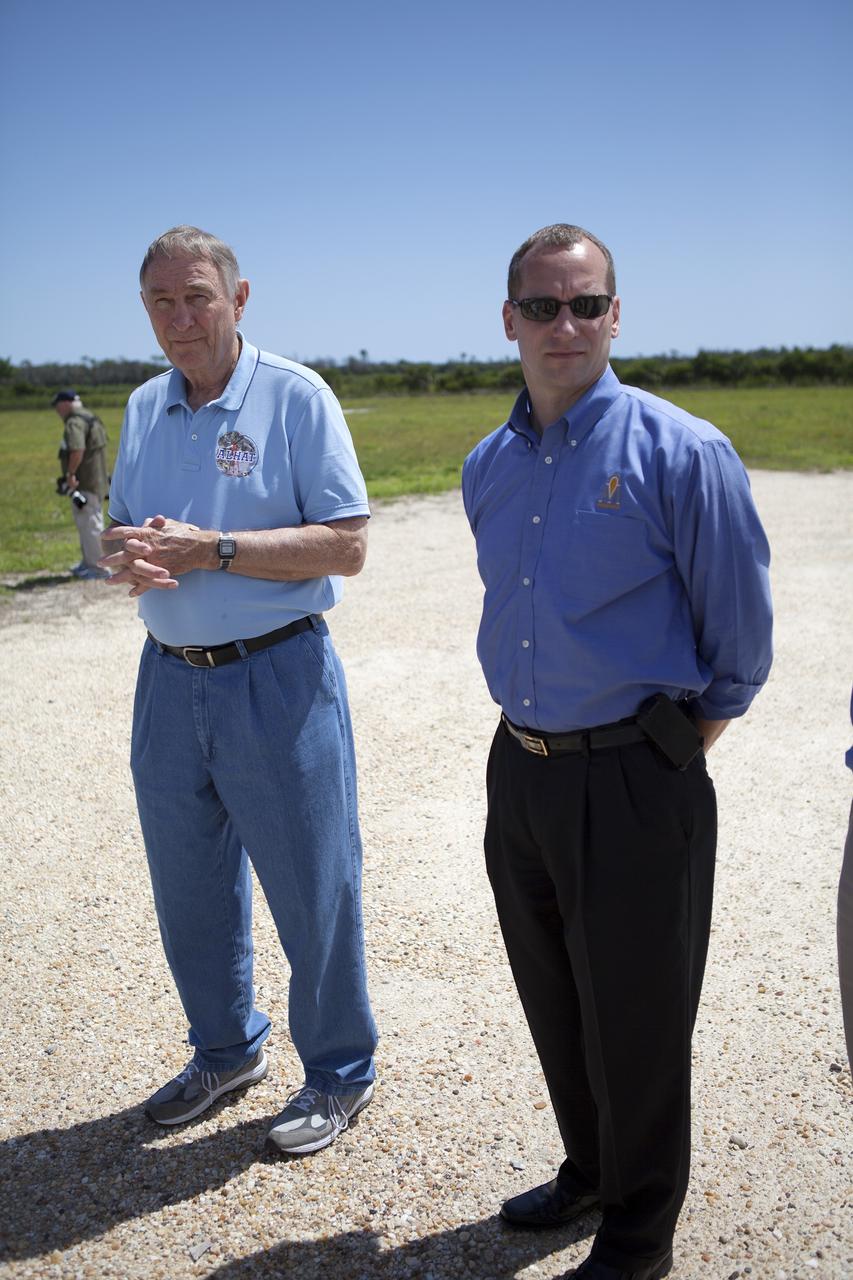
CAPE CANAVERAL, Fla. – From left, Chirold Epp, the Autonomous Landing and Hazard Avoidance Technology, or ALHAT, project manager, and Jon Olansen, Morpheus project manager, speak to members of the media near the north end of the Shuttle Landing Facility at NASA's Kennedy Space Center in Florida. Media also viewed Morpheus inside a facility near the landing facility. Project Morpheus tests NASA’s ALHAT and an engine that runs on liquid oxygen and methane, which are green propellants. These new capabilities could be used in future efforts to deliver cargo to planetary surfaces. The landing facility provides the lander with the kind of field necessary for realistic testing, complete with rocks, craters and hazards to avoid. Morpheus’ ALHAT payload allows it to navigate to clear landing sites amidst rocks, craters and other hazards during its descent. Project Morpheus is being managed under the Advanced Exploration Systems, or AES, Division in NASA’s Human Exploration and Operations Mission Directorate. The efforts in AES pioneer new approaches for rapidly developing prototype systems, demonstrating key capabilities and validating operational concepts for future human missions beyond Earth orbit. For more information on Project Morpheus, visit http://morpheuslander.jsc.nasa.gov/. Photo credit: NASA/Frankie Martin
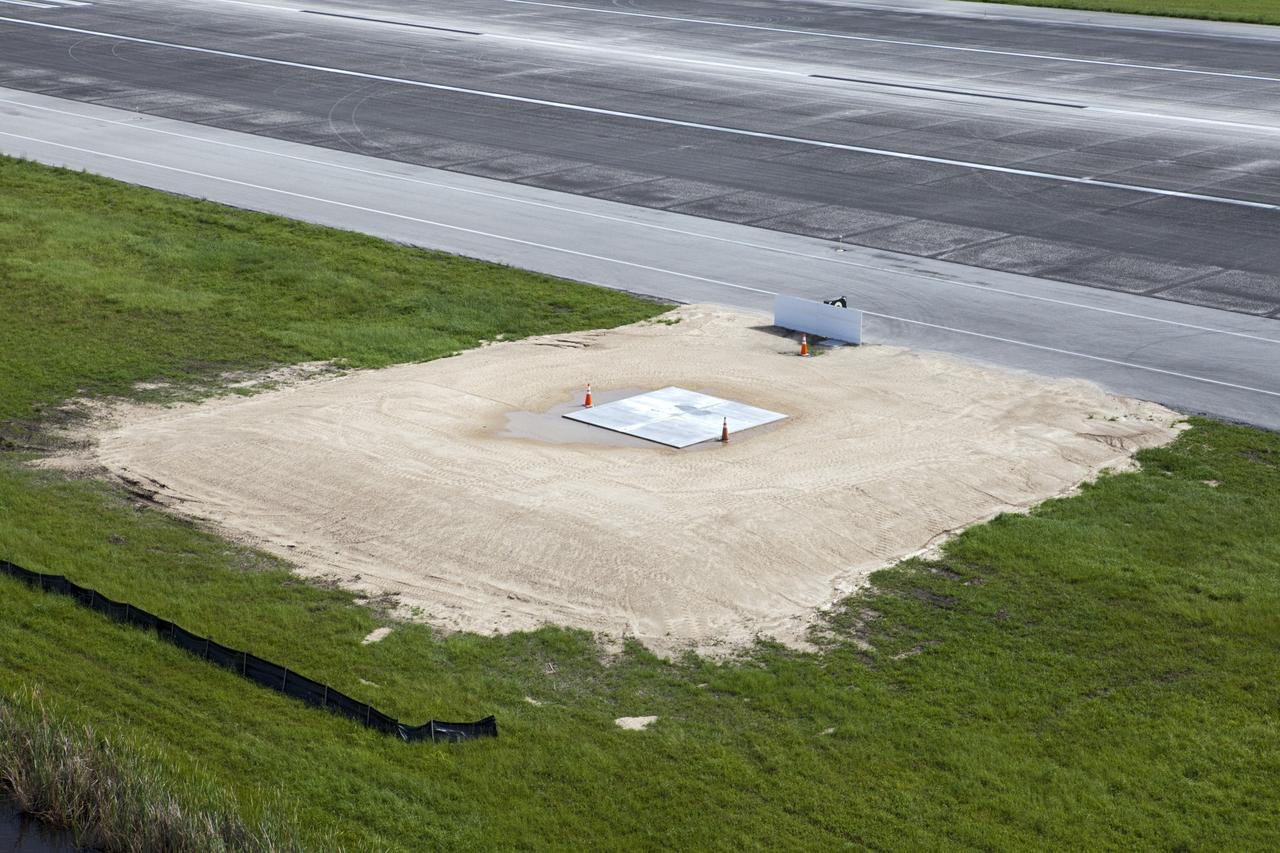
CAPE CANAVERAL, Fla. – This aerial view shows the launch platform for the Project Morpheus lander at the midfield point of the Shuttle Landing Facility, or SLF, at NASA’s Kennedy Space Center in Florida. At the north end of the runway is a rock and crater-filled planetary scape built so engineers can test the Autonomous Landing and Hazard Avoidance Technology, or ALHAT system on the Morpheus lander. Testing will demonstrate ALHAT’s ability to provide required navigation data negotiating the Morpheus lander away from risks during descent. Checkout of the prototype lander has been ongoing at NASA’s Johnson Space Center in Houston in preparation for its first free flight. The SLF site will provide the lander with the kind of field necessary for realistic testing. Project Morpheus is one of 20 small projects comprising the Advanced Exploration Systems, or AES, program in NASA’s Human Exploration and Operations Mission Directorate. AES projects pioneer new approaches for rapidly developing prototype systems, demonstrating key capabilities and validating operational concepts for future human missions beyond Earth orbit. For more information on Project Morpheus, visit http://www.nasa.gov/centers/johnson/exploration/morpheus/index.html Photo credit: NASA/Kim Shiflett
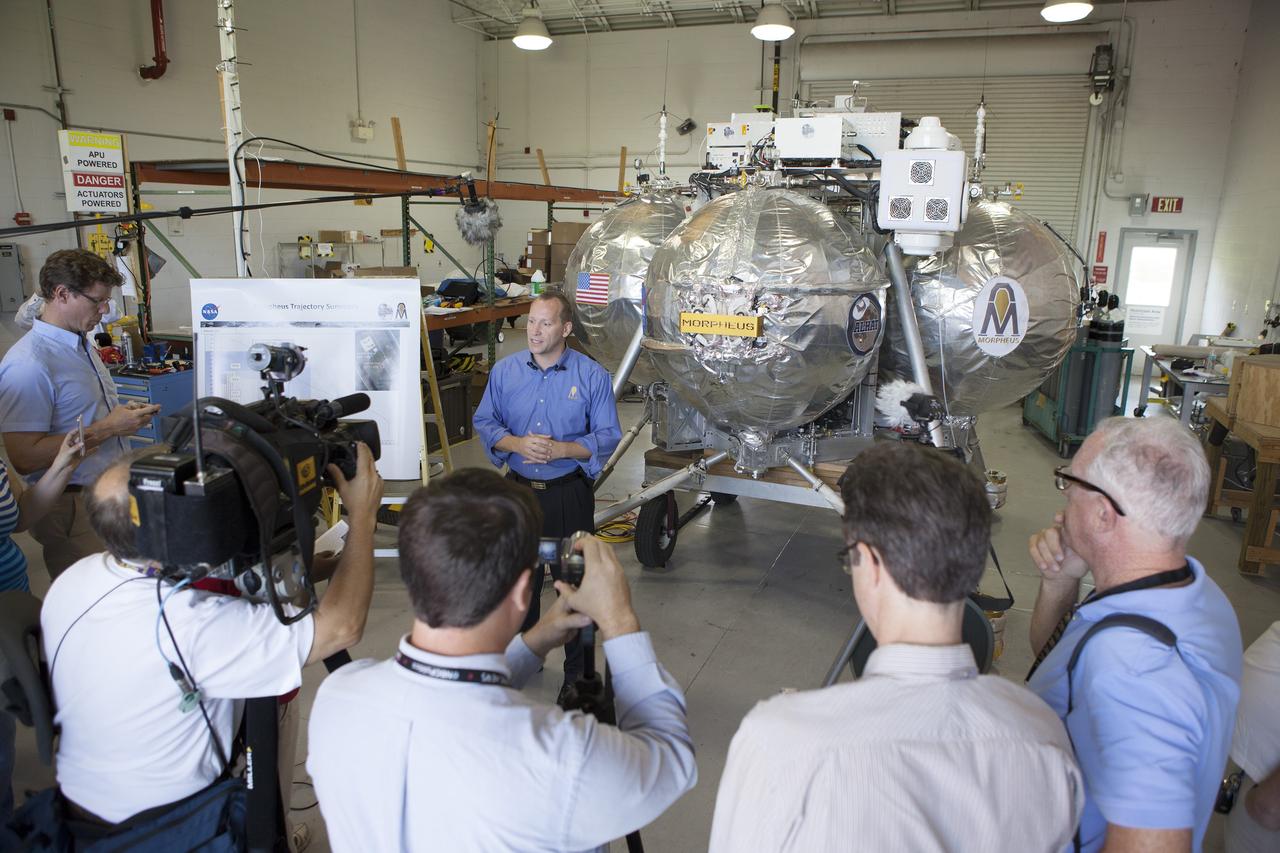
CAPE CANAVERAL, Fla. – Jon Olansen, Morpheus project manager, speaks to members of the media inside a facility near the Shuttle Landing Facility at NASA's Kennedy Space Center in Florida. Behind Olansen is the Project Morpheus prototype lander. Project Morpheus tests NASA’s autonomous landing and hazard avoidance technology, or ALHAT, sensors and an engine that runs on liquid oxygen and methane, which are green propellants. These new capabilities could be used in future efforts to deliver cargo to planetary surfaces. The landing facility provides the lander with the kind of field necessary for realistic testing, complete with rocks, craters and hazards to avoid. Morpheus’ ALHAT payload allows it to navigate to clear landing sites amidst rocks, craters and other hazards during its descent. Project Morpheus is being managed under the Advanced Exploration Systems, or AES, Division in NASA’s Human Exploration and Operations Mission Directorate. The efforts in AES pioneer new approaches for rapidly developing prototype systems, demonstrating key capabilities and validating operational concepts for future human missions beyond Earth orbit. For more information on Project Morpheus, visit http://morpheuslander.jsc.nasa.gov/. Photo credit: NASA/Frankie Martin
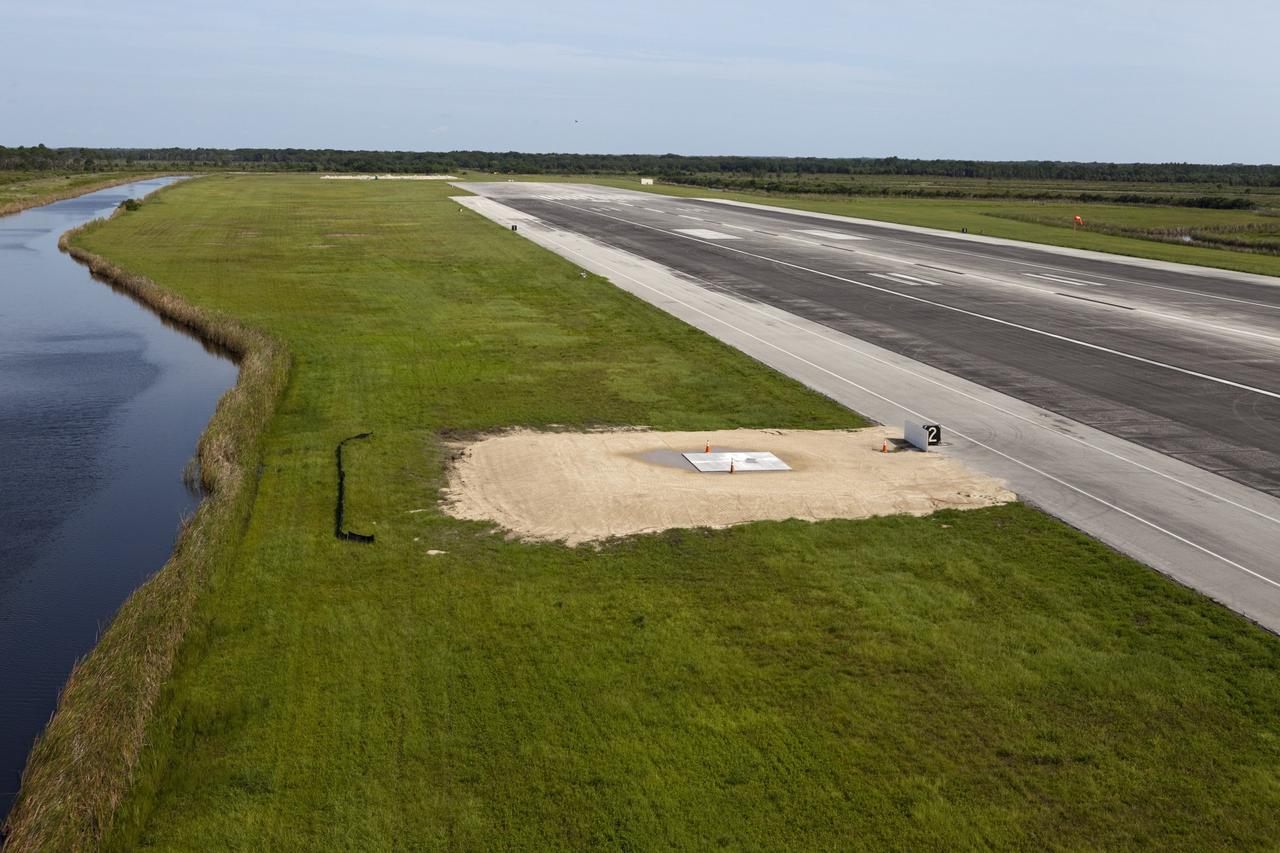
CAPE CANAVERAL, Fla. – This aerial view shows the launch platform for the Project Morpheus lander at the midfield point of the Shuttle Landing Facility, or SLF, at NASA’s Kennedy Space Center in Florida. At the north end of the runway is a rock and crater-filled planetary scape built so engineers can test the Autonomous Landing and Hazard Avoidance Technology, or ALHAT system on the Morpheus lander. Testing will demonstrate ALHAT’s ability to provide required navigation data negotiating the Morpheus lander away from risks during descent. Checkout of the prototype lander has been ongoing at NASA’s Johnson Space Center in Houston in preparation for its first free flight. The SLF site will provide the lander with the kind of field necessary for realistic testing. Project Morpheus is one of 20 small projects comprising the Advanced Exploration Systems, or AES, program in NASA’s Human Exploration and Operations Mission Directorate. AES projects pioneer new approaches for rapidly developing prototype systems, demonstrating key capabilities and validating operational concepts for future human missions beyond Earth orbit. For more information on Project Morpheus, visit http://www.nasa.gov/centers/johnson/exploration/morpheus/index.html Photo credit: NASA/Kim Shiflett
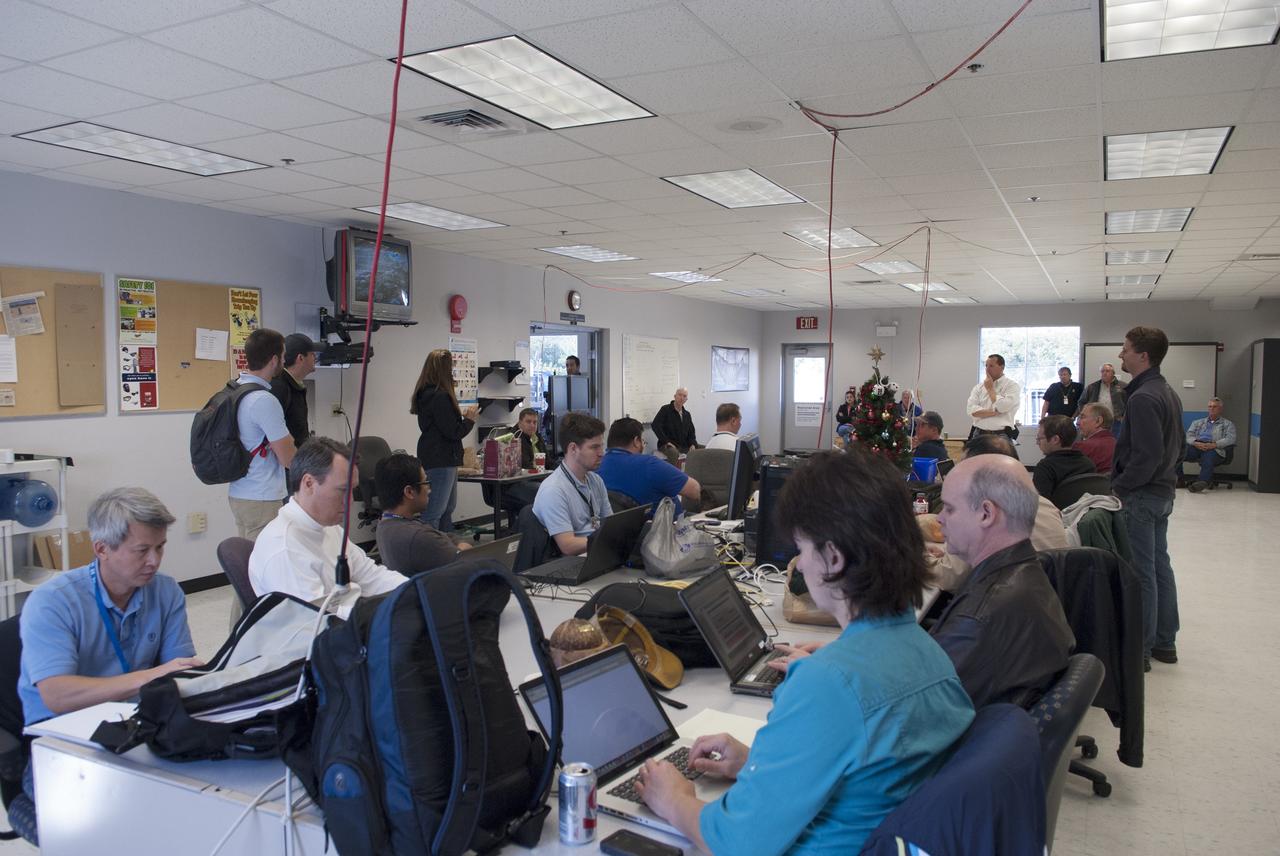
CAPE CANAVERAL, Fla. – Engineers and controllers in a mobile control room prepare for flight number 15 of NASA's Project Morpheus prototype lander at the north end of the Shuttle Landing Facility, or SLF, at NASA’s Kennedy Space Center in Florida. The lander will take off from the ground over a flame trench and use its autonomous landing and hazard avoidance technology, or ALHAT sensors, to survey the hazard field to determine safe landing sites. Project Morpheus tests NASA’s ALHAT and an engine that runs on liquid oxygen and methane, which are green propellants. These new capabilities could be used in future efforts to deliver cargo to planetary surfaces. Project Morpheus is being managed under the Advanced Exploration Systems, or AES, Division in NASA’s Human Exploration and Operations Mission Directorate. For more information on Project Morpheus, visit http://morpheuslander.jsc.nasa.gov/. Photo credit: NASA/Jim Grossmann
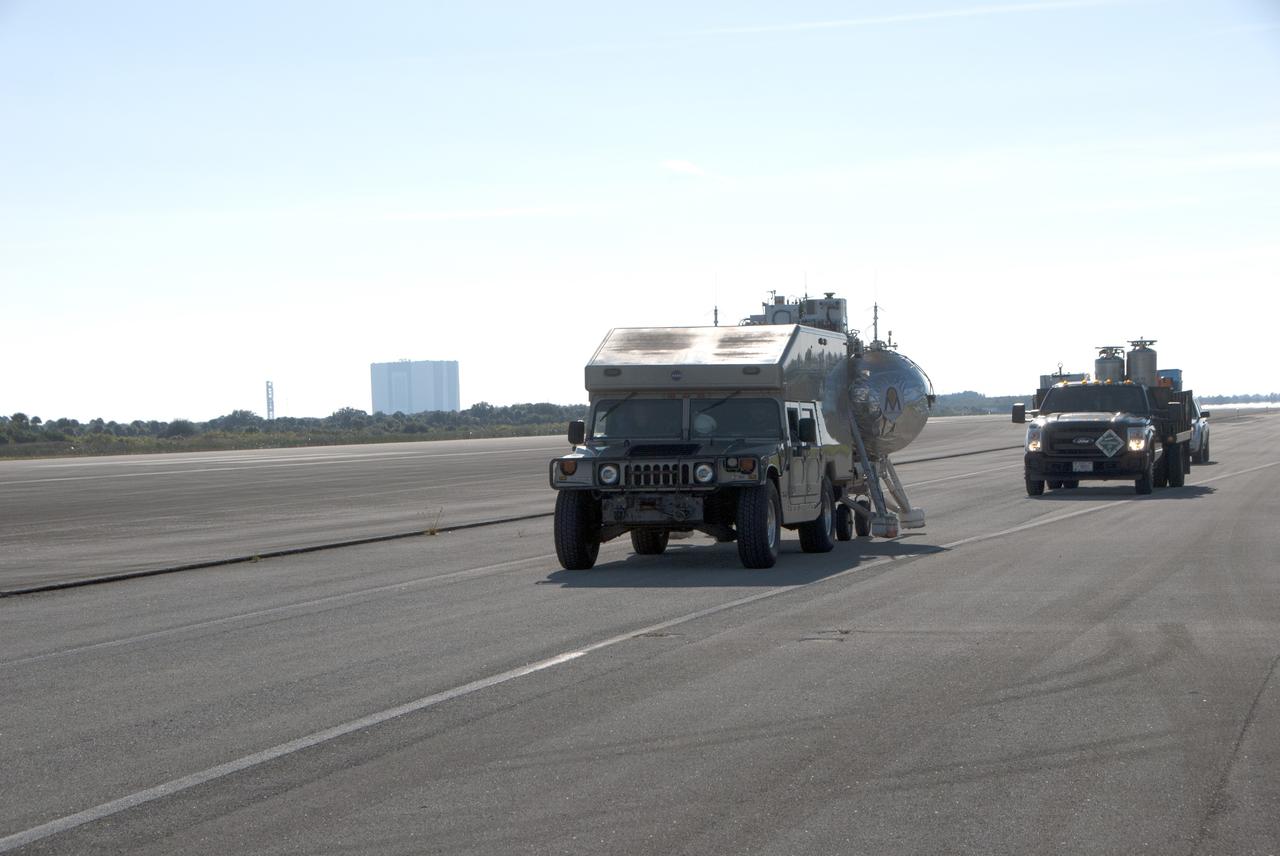
CAPE CANAVERAL, Fla. – NASA Project Morpheus prototype lander and support equipment are being transported to the north end of the Shuttle Landing Facility for free flight test number 15 at NASA’s Kennedy Space Center in Florida. The lander will take off from the ground over a flame trench and use its autonomous landing and hazard avoidance technology, or ALHAT sensors, to survey the hazard field to determine safe landing sites. Project Morpheus tests NASA’s ALHAT and an engine that runs on liquid oxygen and methane, which are green propellants. These new capabilities could be used in future efforts to deliver cargo to planetary surfaces. Project Morpheus is being managed under the Advanced Exploration Systems, or AES, Division in NASA’s Human Exploration and Operations Mission Directorate. For more information on Project Morpheus, visit http://morpheuslander.jsc.nasa.gov/. Photo credit: NASA/Jim Grossmann
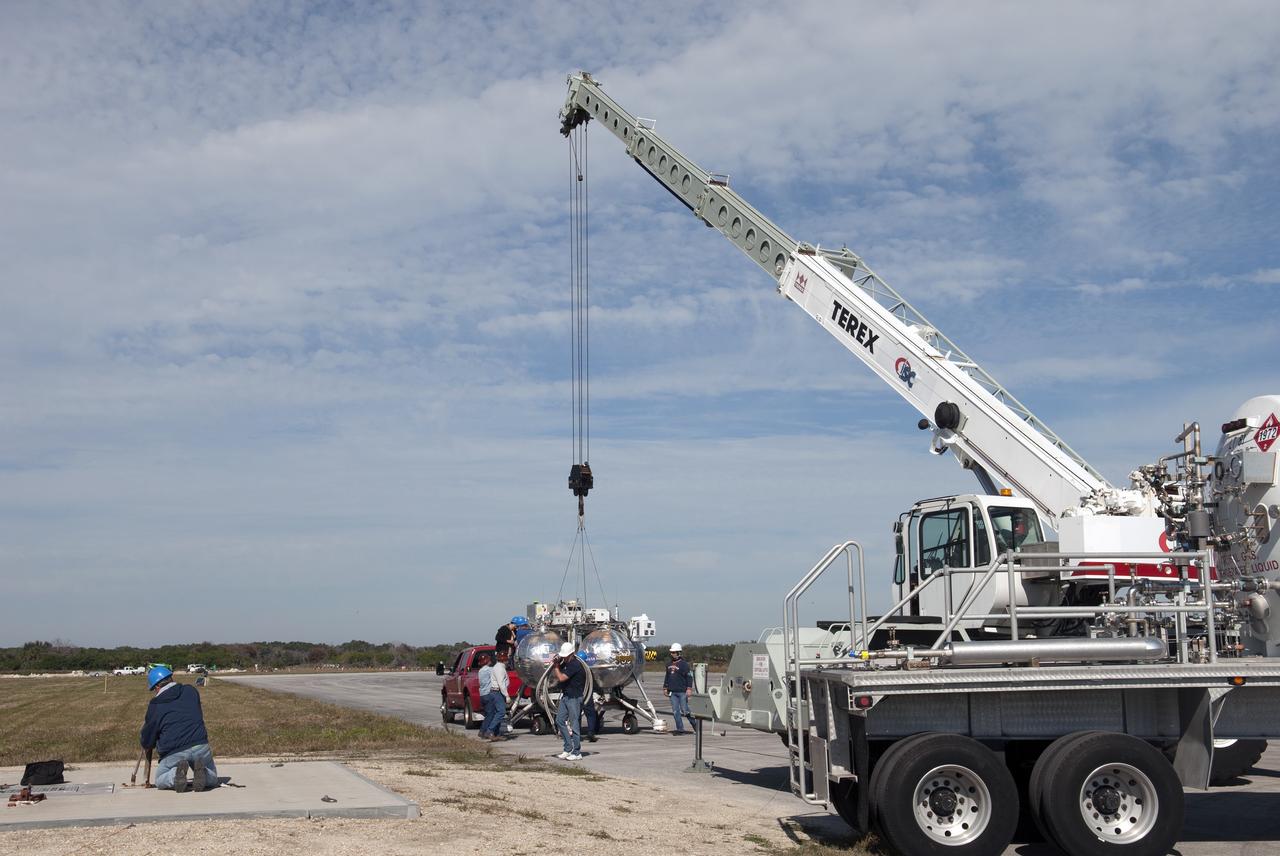
CAPE CANAVERAL, Fla. – NASA Project Morpheus prototype lander is being lifted by crane during preparations for free flight test number 15 at the north end of the Shuttle Landing Facility at NASA’s Kennedy Space Center in Florida. The lander will take off from the ground over a flame trench and use its autonomous landing and hazard avoidance technology, or ALHAT sensors, to survey the hazard field to determine safe landing sites. Project Morpheus tests NASA’s ALHAT and an engine that runs on liquid oxygen and methane, which are green propellants. These new capabilities could be used in future efforts to deliver cargo to planetary surfaces. Project Morpheus is being managed under the Advanced Exploration Systems, or AES, Division in NASA’s Human Exploration and Operations Mission Directorate. For more information on Project Morpheus, visit http://morpheuslander.jsc.nasa.gov/. Photo credit: NASA/Jim Grossmann
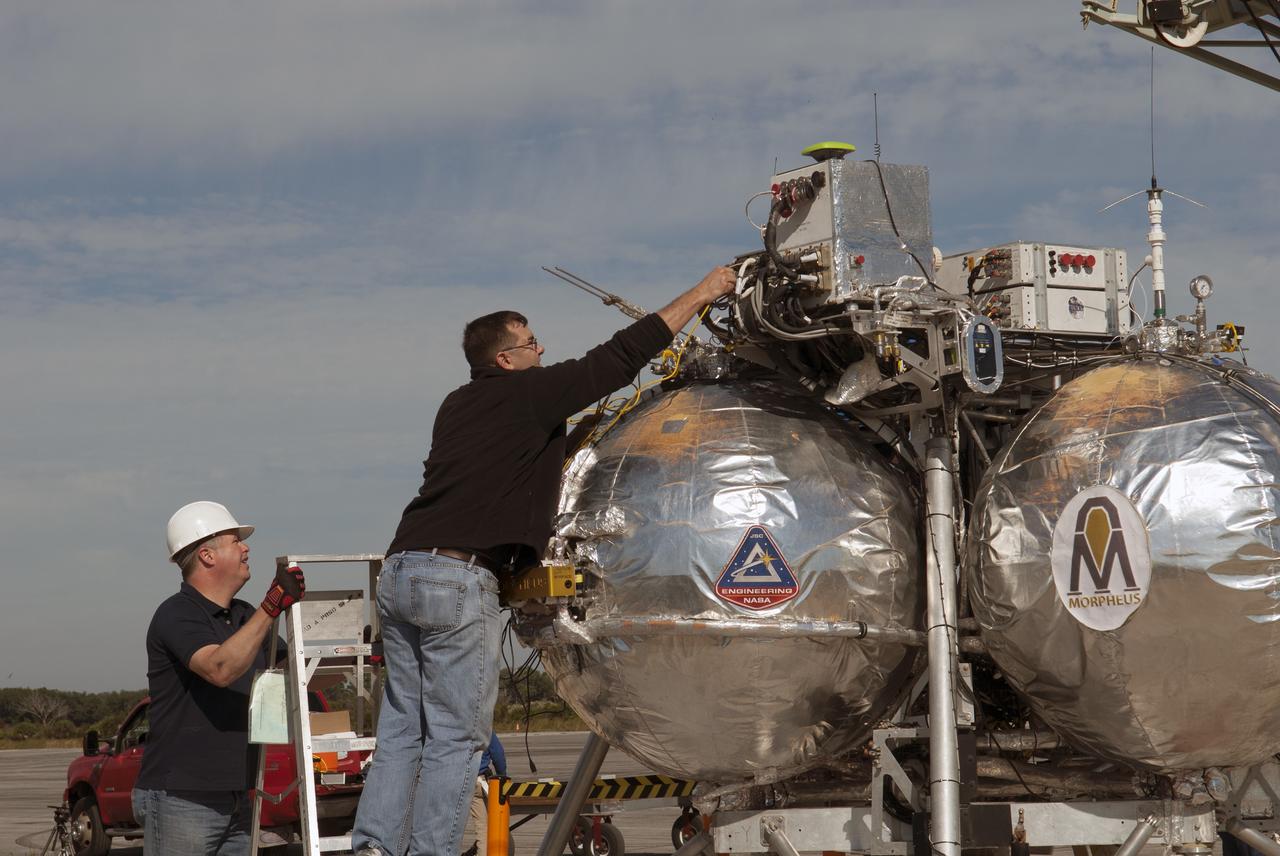
CAPE CANAVERAL, Fla. – Engineers and technicians prepare NASA's Project Morpheus prototype lander for free flight test number 15 at the north end of the Shuttle Landing Facility at NASA's Kennedy Space Center in Florida. The lander will take off from the ground over a flame trench and use its autonomous landing and hazard avoidance technology, or ALHAT sensors, to survey the hazard field to determine safe landing sites. Project Morpheus tests NASA’s ALHAT and an engine that runs on liquid oxygen and methane, which are green propellants. These new capabilities could be used in future efforts to deliver cargo to planetary surfaces. Project Morpheus is being managed under the Advanced Exploration Systems, or AES, Division in NASA’s Human Exploration and Operations Mission Directorate. For more information on Project Morpheus, visit http://morpheuslander.jsc.nasa.gov/. Photo credit: NASA/Jim Grossmann
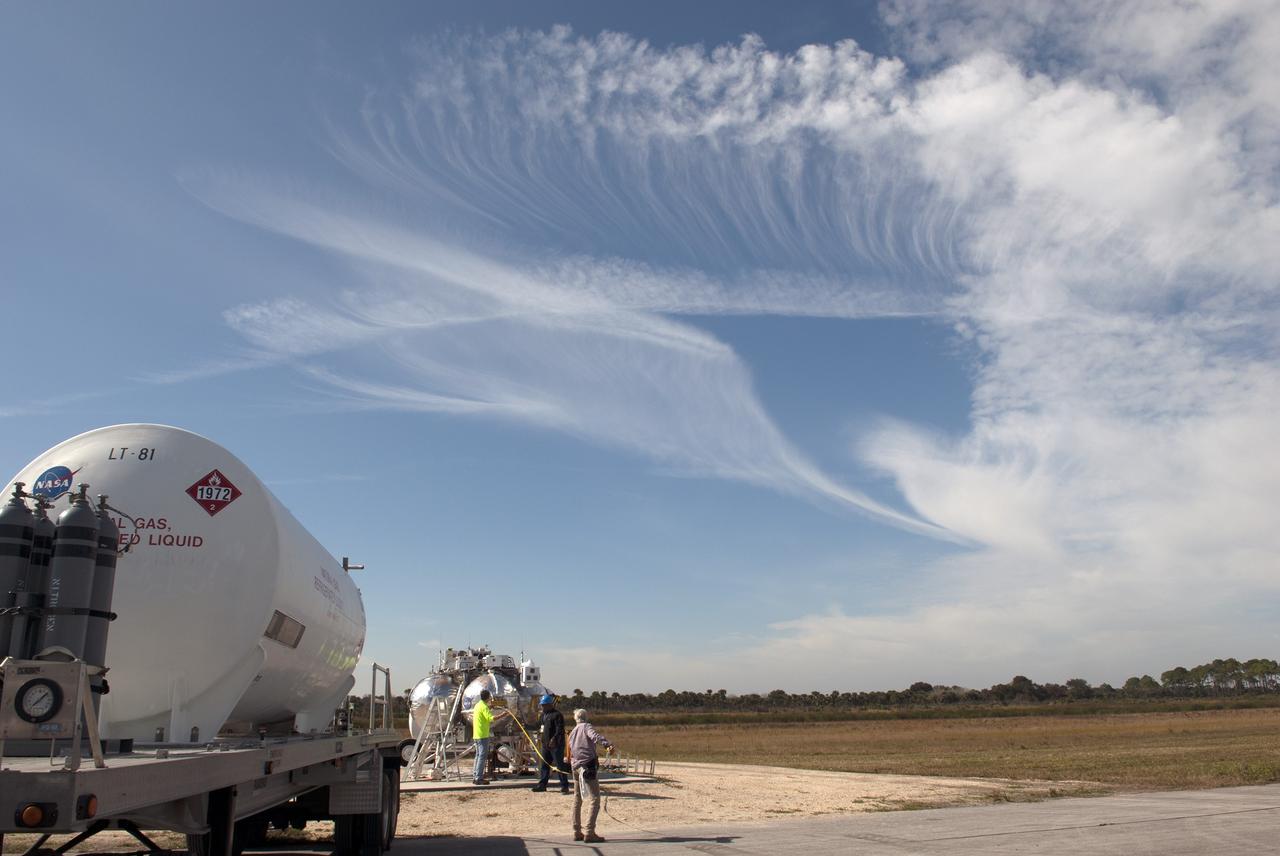
CAPE CANAVERAL, Fla. – Engineers and technicians prepare NASA's Project Morpheus prototype lander for free flight test number 15 at the north end of the Shuttle Landing Facility at NASA's Kennedy Space Center in Florida. The lander will take off from the ground over a flame trench and use its autonomous landing and hazard avoidance technology, or ALHAT sensors, to survey the hazard field to determine safe landing sites. Project Morpheus tests NASA’s ALHAT and an engine that runs on liquid oxygen and methane, which are green propellants. These new capabilities could be used in future efforts to deliver cargo to planetary surfaces. Project Morpheus is being managed under the Advanced Exploration Systems, or AES, Division in NASA’s Human Exploration and Operations Mission Directorate. For more information on Project Morpheus, visit http://morpheuslander.jsc.nasa.gov/. Photo credit: NASA/Jim Grossmann
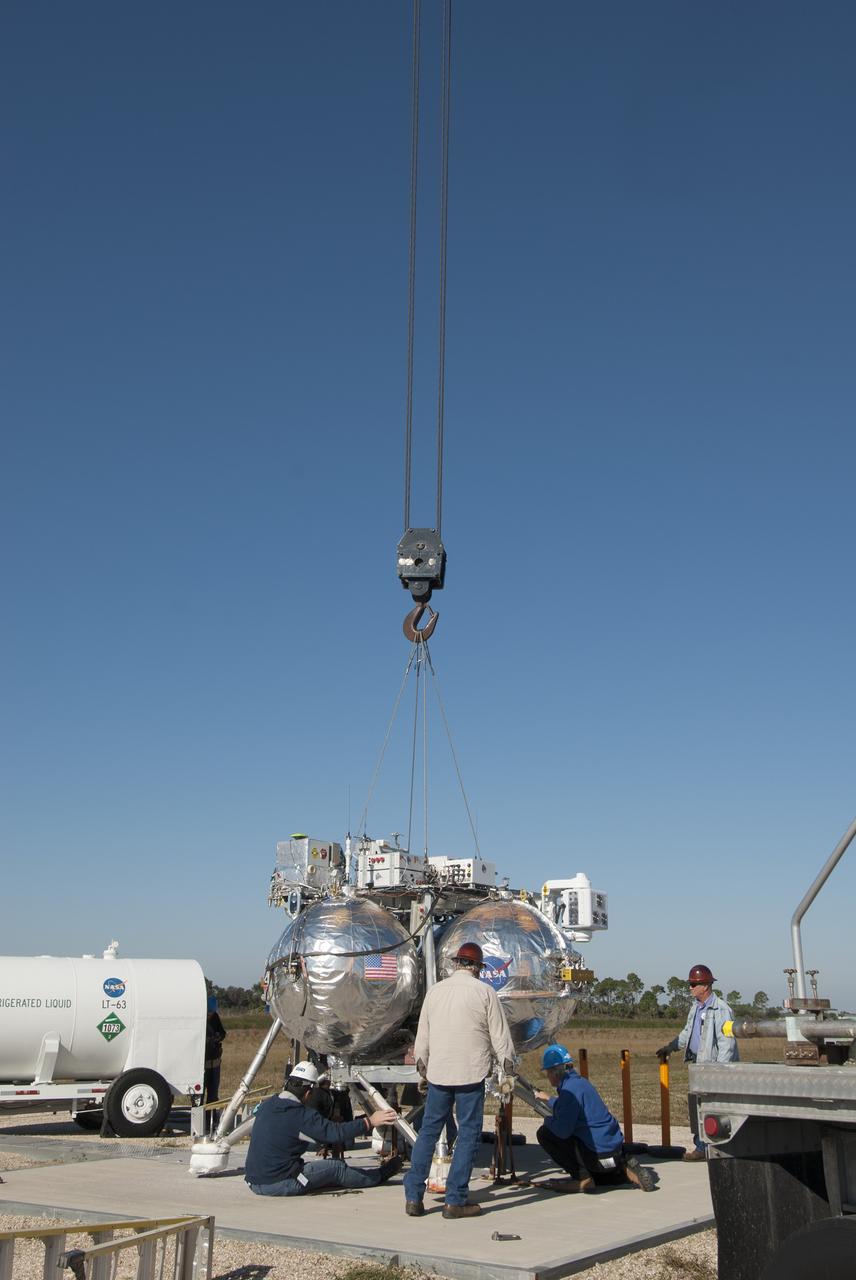
CAPE CANAVERAL, Fla. – Engineers and technicians prepare NASA's Project Morpheus prototype lander for free flight test number 15 on a launch pad at the north end of the Shuttle Landing Facility at NASA's Kennedy Space Center in Florida. The lander will take off from the ground over a flame trench and use its autonomous landing and hazard avoidance technology, or ALHAT sensors, to survey the hazard field to determine safe landing sites. Project Morpheus tests NASA’s ALHAT and an engine that runs on liquid oxygen and methane, which are green propellants. These new capabilities could be used in future efforts to deliver cargo to planetary surfaces. Project Morpheus is being managed under the Advanced Exploration Systems, or AES, Division in NASA’s Human Exploration and Operations Mission Directorate. For more information on Project Morpheus, visit http://morpheuslander.jsc.nasa.gov/. Photo credit: NASA/Jim Grossmann
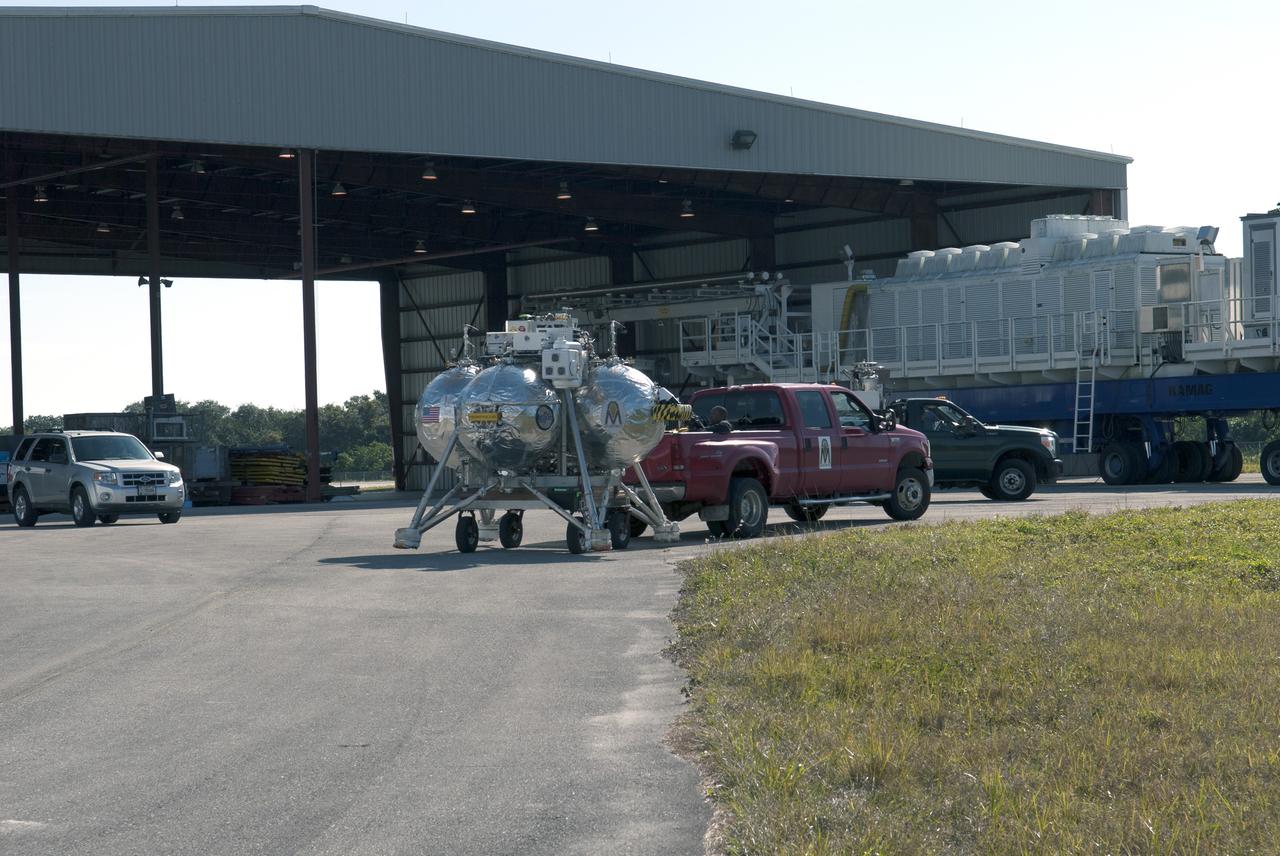
CAPE CANAVERAL, Fla. – NASA's Project Morpheus prototype lander is prepared for transport to the north end of the Shuttle Landing Facility for free flight test number 15 at NASA’s Kennedy Space Center in Florida. The lander will take off from the ground over a flame trench and use its autonomous landing and hazard avoidance technology, or ALHAT sensors, to survey the hazard field to determine safe landing sites. Project Morpheus tests NASA’s ALHAT and an engine that runs on liquid oxygen and methane, which are green propellants. These new capabilities could be used in future efforts to deliver cargo to planetary surfaces. Project Morpheus is being managed under the Advanced Exploration Systems, or AES, Division in NASA’s Human Exploration and Operations Mission Directorate. For more information on Project Morpheus, visit http://morpheuslander.jsc.nasa.gov/. Photo credit: NASA/Jim Grossmann
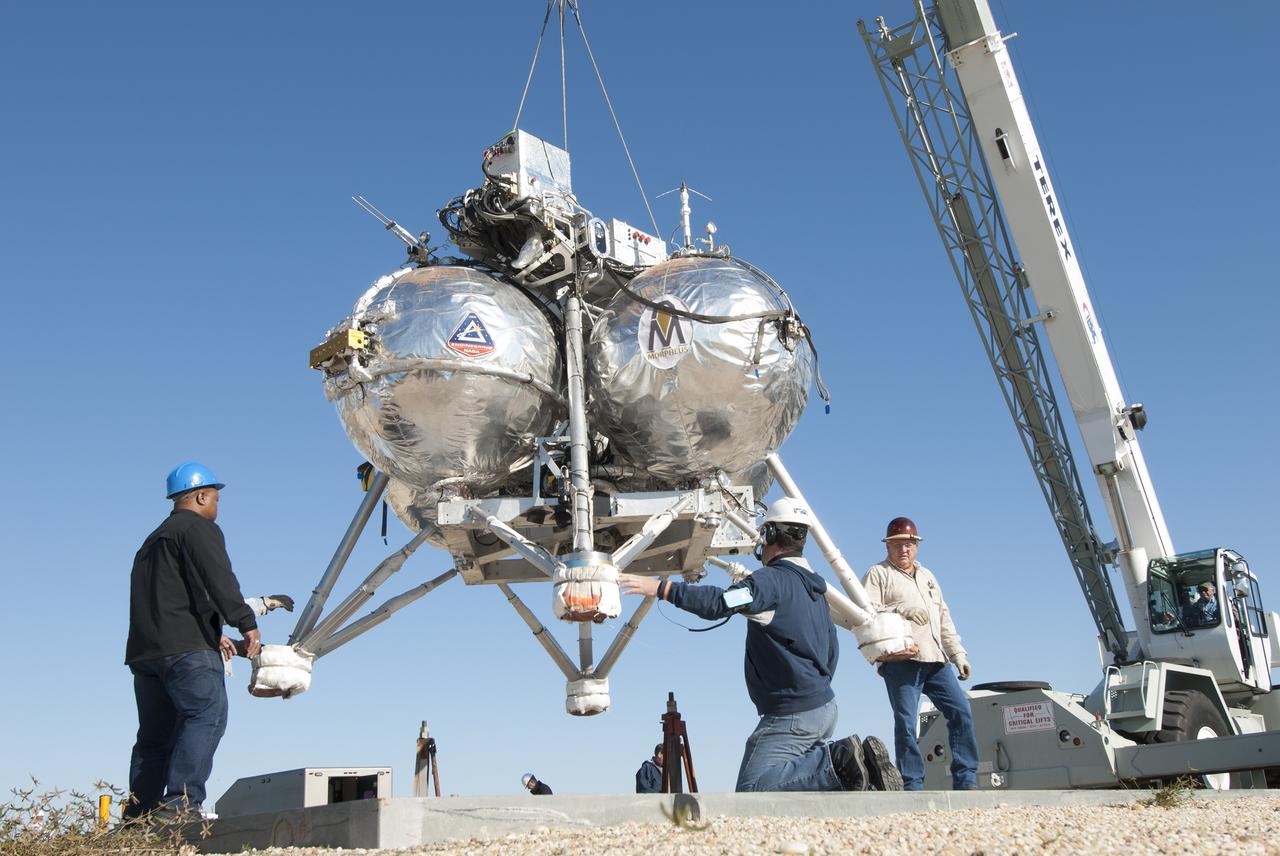
CAPE CANAVERAL, Fla. – NASA's Project Morpheus prototype lander is being lowered by crane onto a launch pad at the north end of the Shuttle Landing Facility in preparation for free flight test number 15 at NASA’s Kennedy Space Center in Florida. The lander will take off from the ground over a flame trench and use its autonomous landing and hazard avoidance technology, or ALHAT sensors, to survey the hazard field to determine safe landing sites. Project Morpheus tests NASA’s ALHAT and an engine that runs on liquid oxygen and methane, which are green propellants. These new capabilities could be used in future efforts to deliver cargo to planetary surfaces. Project Morpheus is being managed under the Advanced Exploration Systems, or AES, Division in NASA’s Human Exploration and Operations Mission Directorate. For more information on Project Morpheus, visit http://morpheuslander.jsc.nasa.gov/. Photo credit: NASA/Jim Grossmann
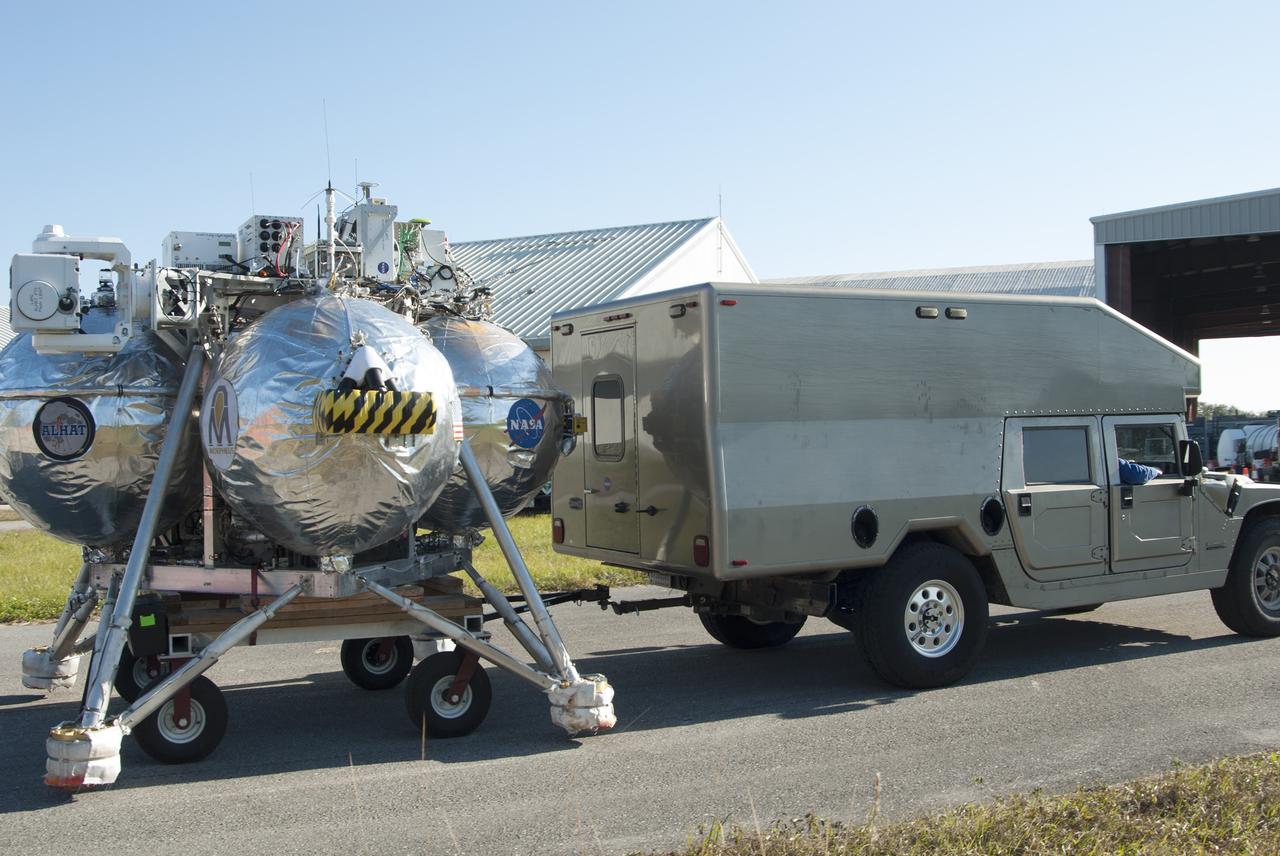
CAPE CANAVERAL, Fla. – NASA's Project Morpheus prototype lander is being transported from a hangar at the Shuttle Landing Facility, or SLF, for free flight test number 15 at the north end of the SLF at NASA’s Kennedy Space Center in Florida. The lander will take off from the ground over a flame trench and use its autonomous landing and hazard avoidance technology, or ALHAT sensors, to survey the hazard field to determine safe landing sites. Project Morpheus tests NASA’s ALHAT and an engine that runs on liquid oxygen and methane, which are green propellants. These new capabilities could be used in future efforts to deliver cargo to planetary surfaces. Project Morpheus is being managed under the Advanced Exploration Systems, or AES, Division in NASA’s Human Exploration and Operations Mission Directorate. For more information on Project Morpheus, visit http://morpheuslander.jsc.nasa.gov/. Photo credit: NASA/Jim Grossmann
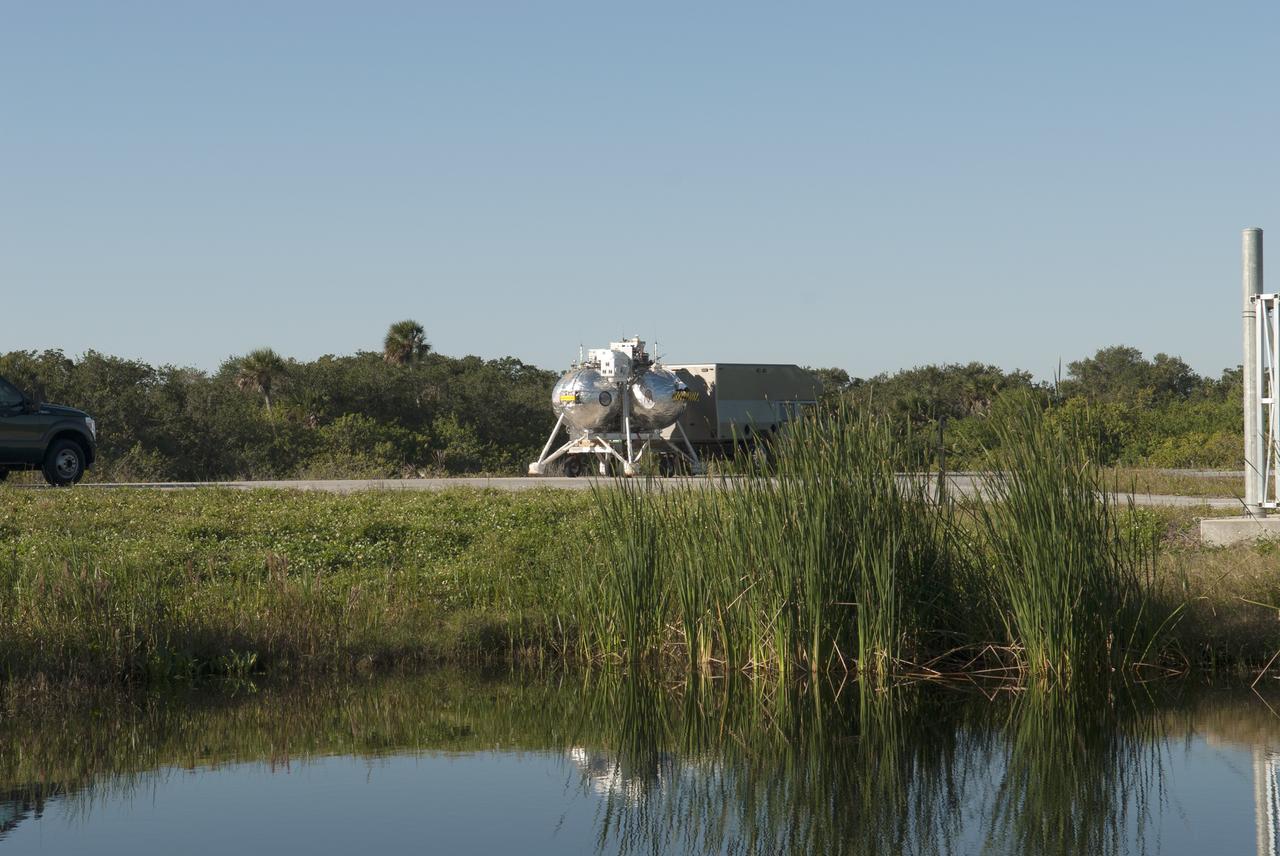
CAPE CANAVERAL, Fla. – NASA's Project Morpheus prototype lander is being transported to the north end of the Shuttle Landing Facility for free flight test number 15 at NASA’s Kennedy Space Center in Florida. The lander will take off from the ground over a flame trench and use its autonomous landing and hazard avoidance technology, or ALHAT sensors, to survey the hazard field to determine safe landing sites. Project Morpheus tests NASA’s ALHAT and an engine that runs on liquid oxygen and methane, which are green propellants. These new capabilities could be used in future efforts to deliver cargo to planetary surfaces. Project Morpheus is being managed under the Advanced Exploration Systems, or AES, Division in NASA’s Human Exploration and Operations Mission Directorate. For more information on Project Morpheus, visit http://morpheuslander.jsc.nasa.gov/. Photo credit: NASA/Jim Grossmann
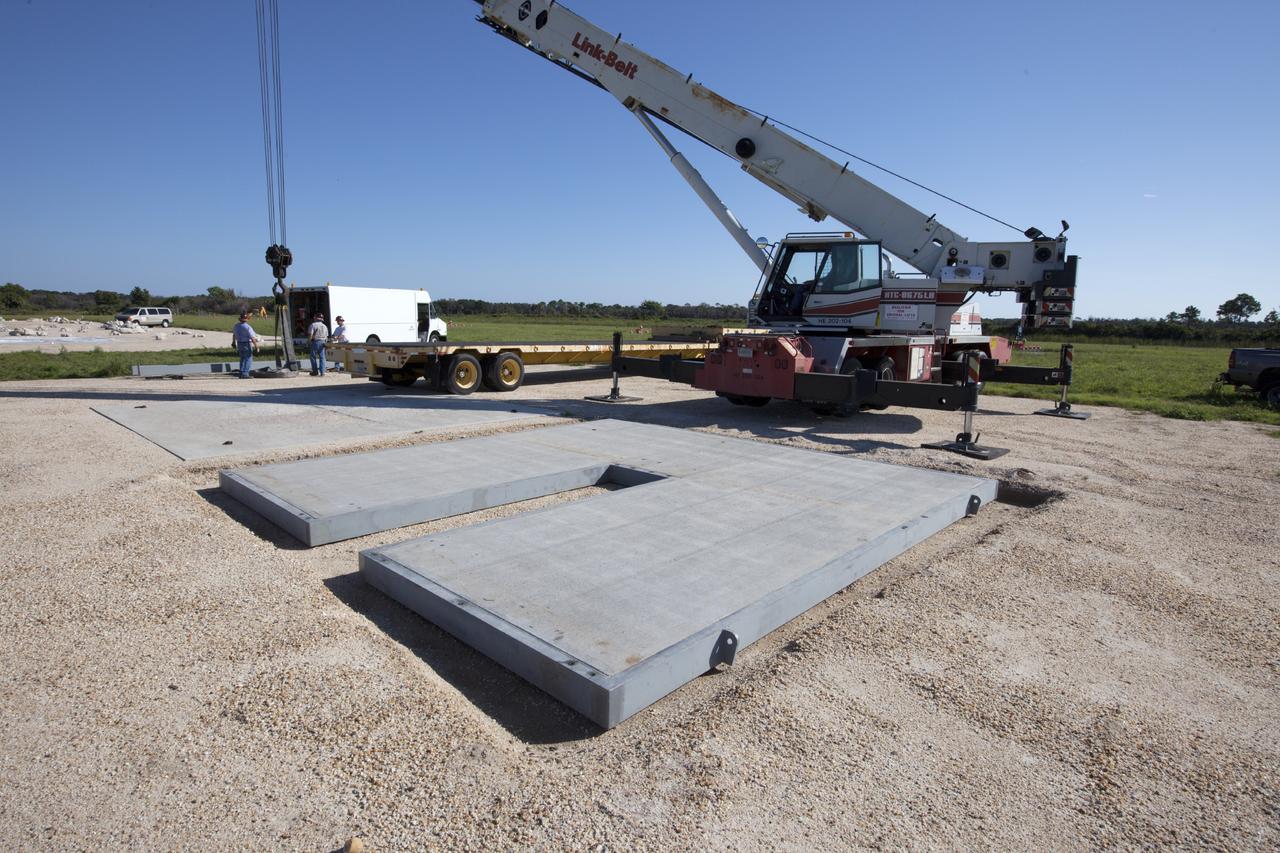
CAPE CANAVERAL, Fla. - At NASA’s Kennedy Space Center in Florida, the movable launch platform for the Project Morpheus lander is positioned on its new site adjacent to a hazard field created to support the project at the north end of the Shuttle Landing Facility, or SLF. Testing of the prototype lander has been ongoing at NASA’s Johnson Space Center in Houston in preparation for free flight. The lander is scheduled for delivery to Kennedy in October. The SLF will provide the lander with the kind of field necessary for realistic testing, complete with rocks, craters and hazards to avoid. Morpheus utilizes an autonomous landing and hazard avoidance technology, or ALHAT, payload that will allow it to navigate to clear landing sites amidst obstacles during its descent. Project Morpheus is one of 20 small projects comprising the Advanced Exploration Systems, or AES, program in NASA’s Human Exploration and Operations Mission Directorate. AES projects pioneer new approaches for rapidly developing prototype systems, demonstrating key capabilities and validating operational concepts for future human missions beyond Earth orbit. For more information on Project Morpheus, visit http://www.nasa.gov/centers/johnson/exploration/morpheus/index.html. Photo credit: NASA/Kim Shiflett
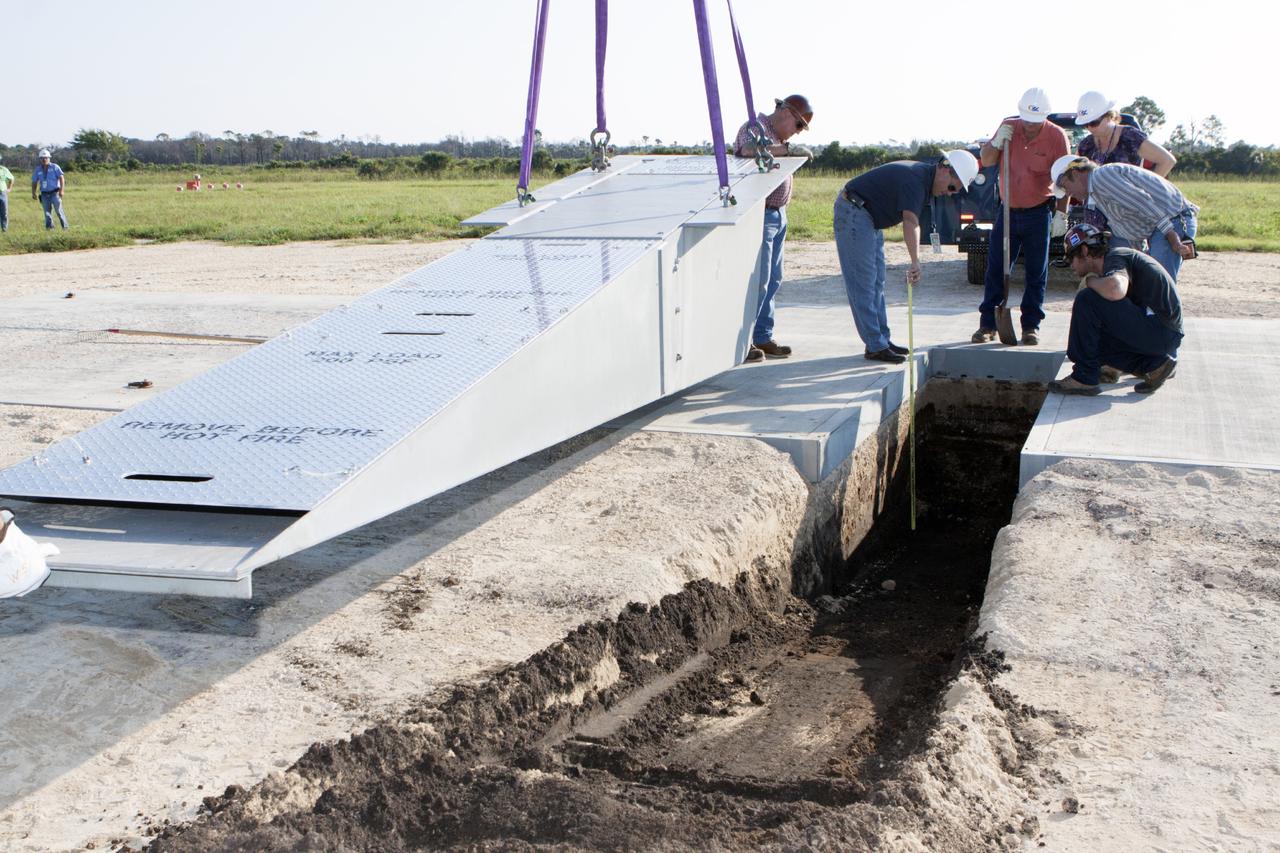
CAPE CANAVERAL, Fla. - Workers install a flame deflector at the Shuttle Landing Facility, or SLF, at NASA's Kennedy Space Center in Florida for the Project Morpheus lander. The site is adjacent to a hazard field created to support the project at the north end of the SLF. Testing of the prototype lander has been ongoing at NASA’s Johnson Space Center in Houston in preparation for a free flight at Kennedy later this year. The SLF will provide the lander with the kind of field necessary for realistic testing, complete with rocks, craters and hazards to avoid. Morpheus utilizes an autonomous landing and hazard avoidance technology, or ALHAT, payload that will allow it to navigate to clear landing sites amidst obstacles during its descent. Project Morpheus is one of 20 small projects comprising the Advanced Exploration Systems, or AES, program in NASA’s Human Exploration and Operations Mission Directorate. AES projects pioneer new approaches for rapidly developing prototype systems, demonstrating key capabilities and validating operational concepts for future human missions beyond Earth orbit. For more information on Project Morpheus, visit http://www.nasa.gov/centers/johnson/exploration/morpheus/index.html. Photo credit: NASA/Kim Shiflett
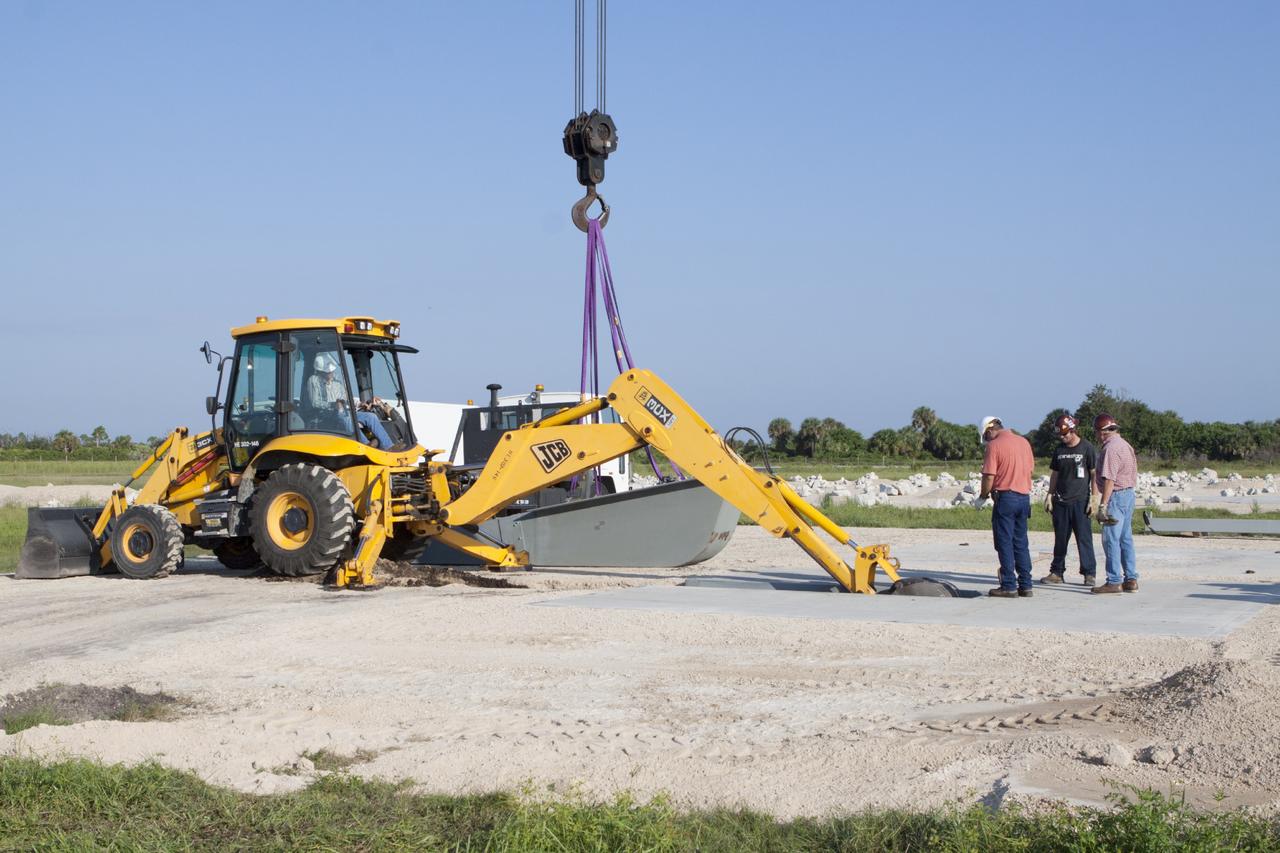
CAPE CANAVERAL, Fla. - Workers install a flame deflector at the Shuttle Landing Facility, or SLF, at NASA's Kennedy Space Center in Florida for the Project Morpheus lander. The site is adjacent to a hazard field created to support the project at the north end of the SLF. Testing of the prototype lander has been ongoing at NASA’s Johnson Space Center in Houston in preparation for a free flight at Kennedy later this year. The SLF will provide the lander with the kind of field necessary for realistic testing, complete with rocks, craters and hazards to avoid. Morpheus utilizes an autonomous landing and hazard avoidance technology, or ALHAT, payload that will allow it to navigate to clear landing sites amidst obstacles during its descent. Project Morpheus is one of 20 small projects comprising the Advanced Exploration Systems, or AES, program in NASA’s Human Exploration and Operations Mission Directorate. AES projects pioneer new approaches for rapidly developing prototype systems, demonstrating key capabilities and validating operational concepts for future human missions beyond Earth orbit. For more information on Project Morpheus, visit http://www.nasa.gov/centers/johnson/exploration/morpheus/index.html. Photo credit: NASA/Kim Shiflett
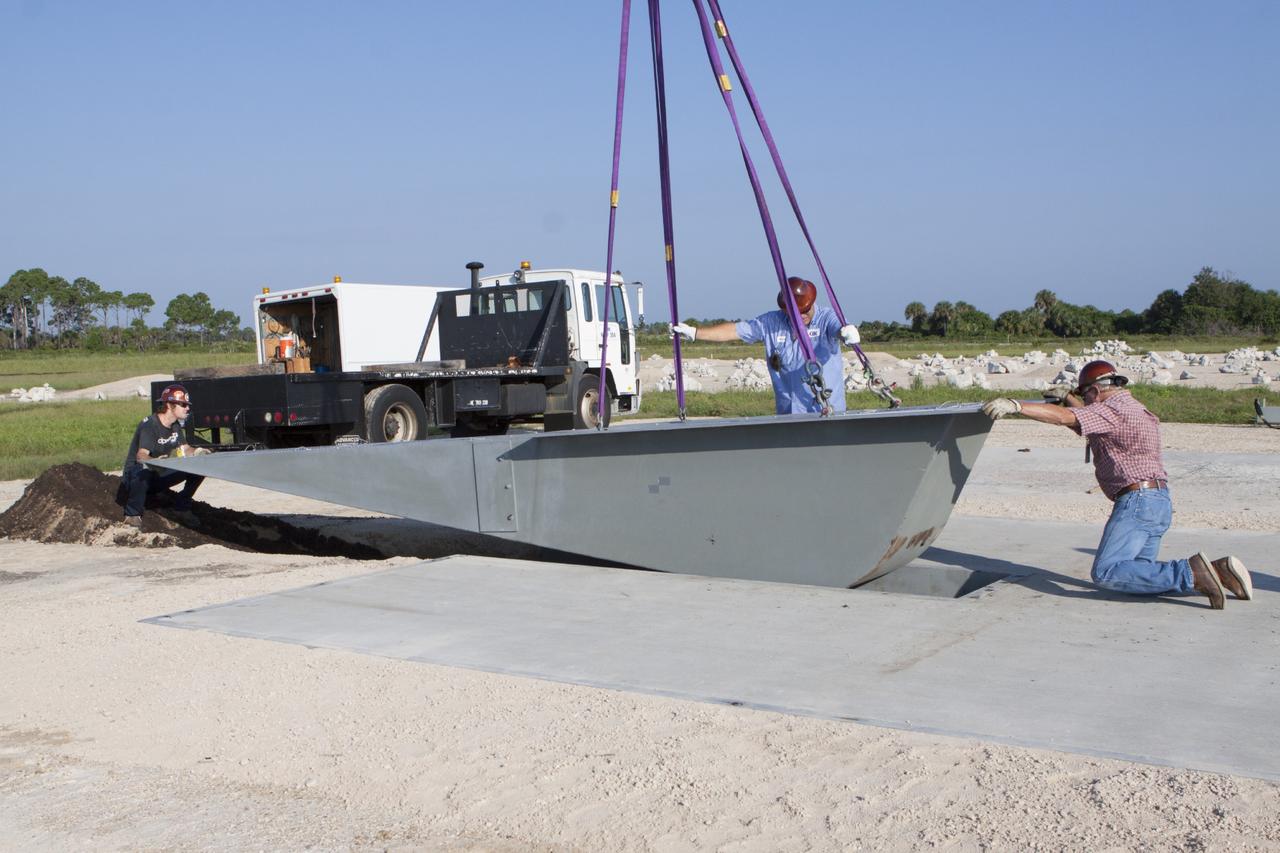
CAPE CANAVERAL, Fla. - Workers install a flame deflector at the Shuttle Landing Facility, or SLF, at NASA's Kennedy Space Center in Florida for the Project Morpheus lander. The site is adjacent to a hazard field created to support the project at the north end of the SLF. Testing of the prototype lander has been ongoing at NASA’s Johnson Space Center in Houston in preparation for a free flight at Kennedy later this year. The SLF will provide the lander with the kind of field necessary for realistic testing, complete with rocks, craters and hazards to avoid. Morpheus utilizes an autonomous landing and hazard avoidance technology, or ALHAT, payload that will allow it to navigate to clear landing sites amidst obstacles during its descent. Project Morpheus is one of 20 small projects comprising the Advanced Exploration Systems, or AES, program in NASA’s Human Exploration and Operations Mission Directorate. AES projects pioneer new approaches for rapidly developing prototype systems, demonstrating key capabilities and validating operational concepts for future human missions beyond Earth orbit. For more information on Project Morpheus, visit http://www.nasa.gov/centers/johnson/exploration/morpheus/index.html. Photo credit: NASA/Kim Shiflett
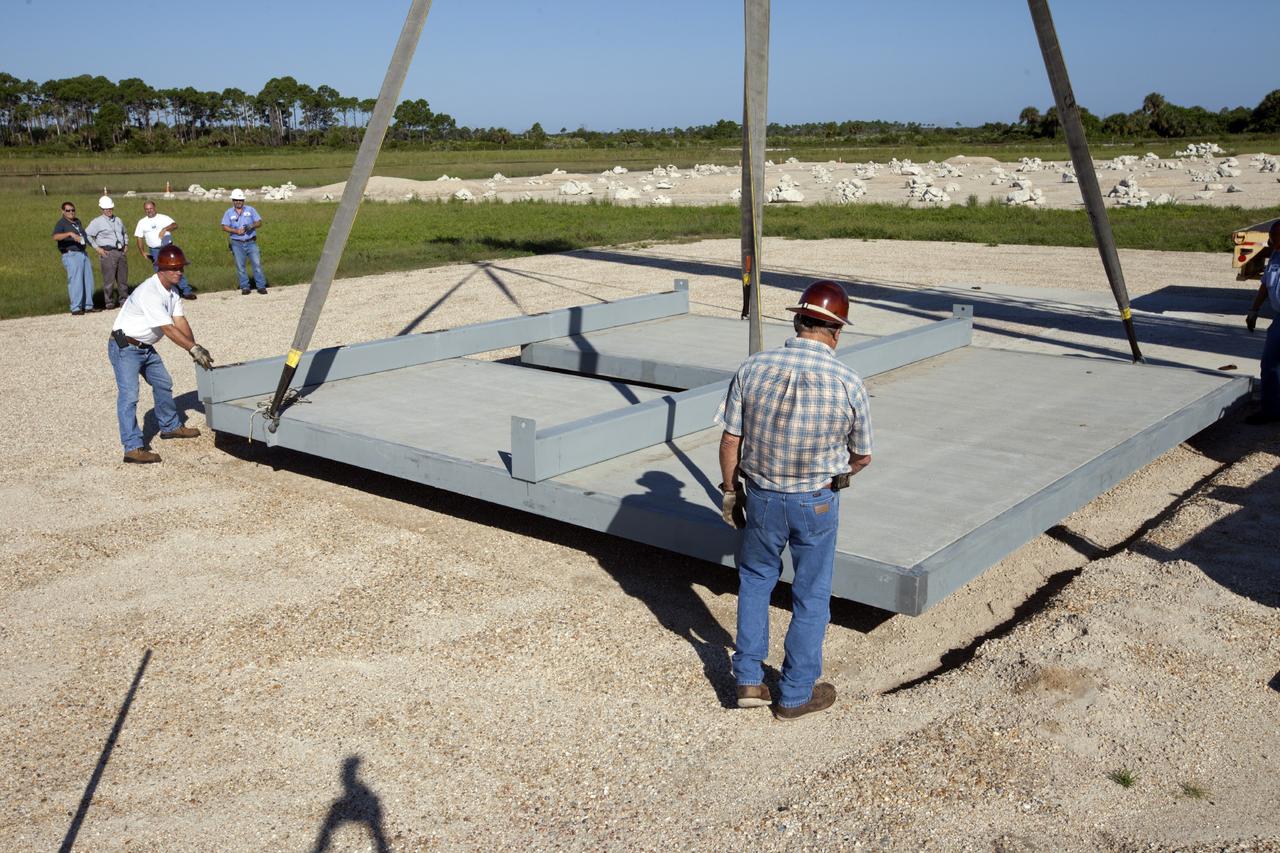
CAPE CANAVERAL, Fla. - At NASA’s Kennedy Space Center in Florida, workers lower the movable launch platform for the Project Morpheus lander onto its new site adjacent to a hazard field created to support the project at the north end of the Shuttle Landing Facility, or SLF. Testing of the prototype lander has been ongoing at NASA’s Johnson Space Center in Houston in preparation for free flight. The lander is scheduled for delivery to Kennedy in October. The SLF will provide the lander with the kind of field necessary for realistic testing, complete with rocks, craters and hazards to avoid. Morpheus utilizes an autonomous landing and hazard avoidance technology, or ALHAT, payload that will allow it to navigate to clear landing sites amidst obstacles during its descent. Project Morpheus is one of 20 small projects comprising the Advanced Exploration Systems, or AES, program in NASA’s Human Exploration and Operations Mission Directorate. AES projects pioneer new approaches for rapidly developing prototype systems, demonstrating key capabilities and validating operational concepts for future human missions beyond Earth orbit. For more information on Project Morpheus, visit http://www.nasa.gov/centers/johnson/exploration/morpheus/index.html. Photo credit: NASA/Kim Shiflett
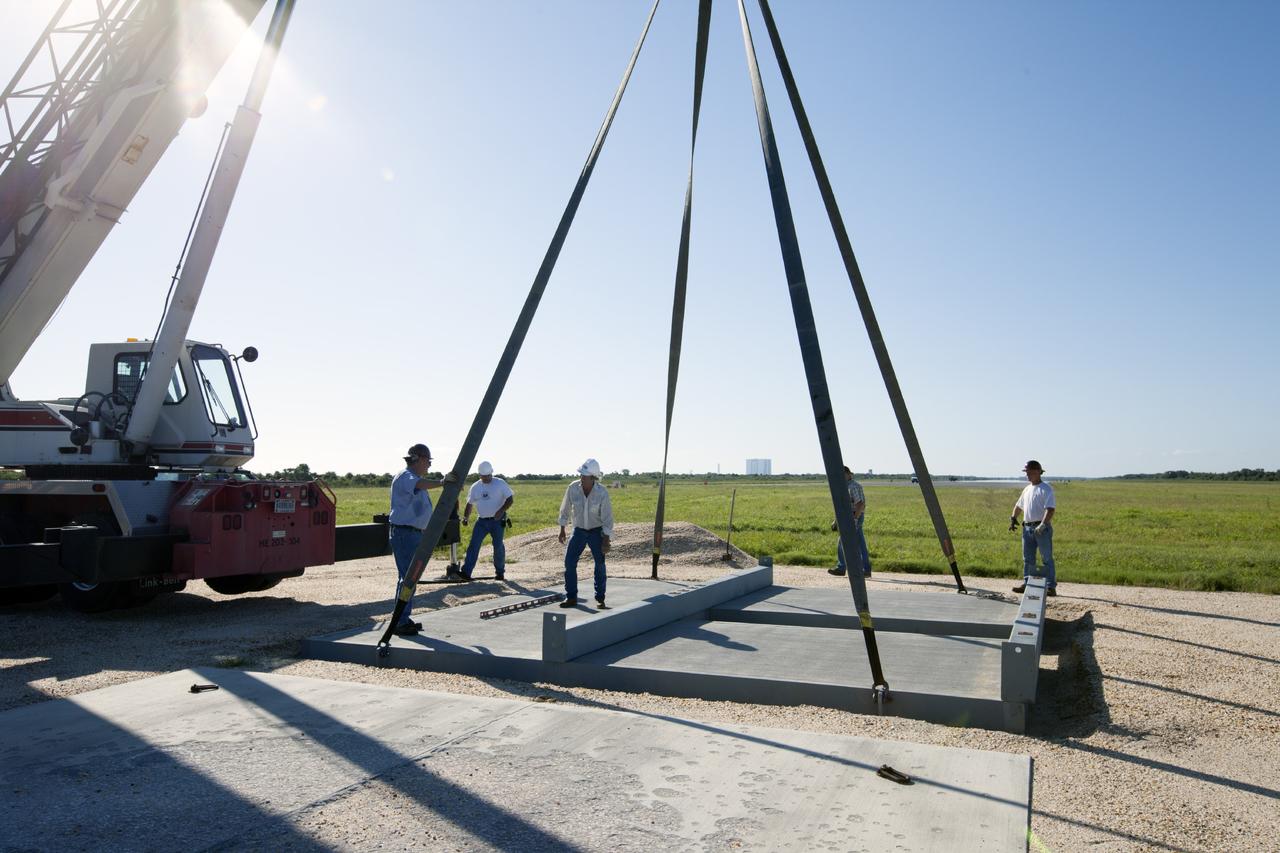
CAPE CANAVERAL, Fla. - At NASA’s Kennedy Space Center in Florida, workers position the movable launch platform for the Project Morpheus lander in its new site adjacent to a hazard field created to support the project at the north end of the Shuttle Landing Facility, or SLF. In the distance is the 525-foot-tall Vehicle Assembly Building. Testing of the prototype lander has been ongoing at NASA’s Johnson Space Center in Houston in preparation for free flight. The lander is scheduled for delivery to Kennedy in October. The SLF will provide the lander with the kind of field necessary for realistic testing, complete with rocks, craters and hazards to avoid. Morpheus utilizes an autonomous landing and hazard avoidance technology, or ALHAT, payload that will allow it to navigate to clear landing sites amidst obstacles during its descent. Project Morpheus is one of 20 small projects comprising the Advanced Exploration Systems, or AES, program in NASA’s Human Exploration and Operations Mission Directorate. AES projects pioneer new approaches for rapidly developing prototype systems, demonstrating key capabilities and validating operational concepts for future human missions beyond Earth orbit. For more information on Project Morpheus, visit http://www.nasa.gov/centers/johnson/exploration/morpheus/index.html. Photo credit: NASA/Kim Shiflett
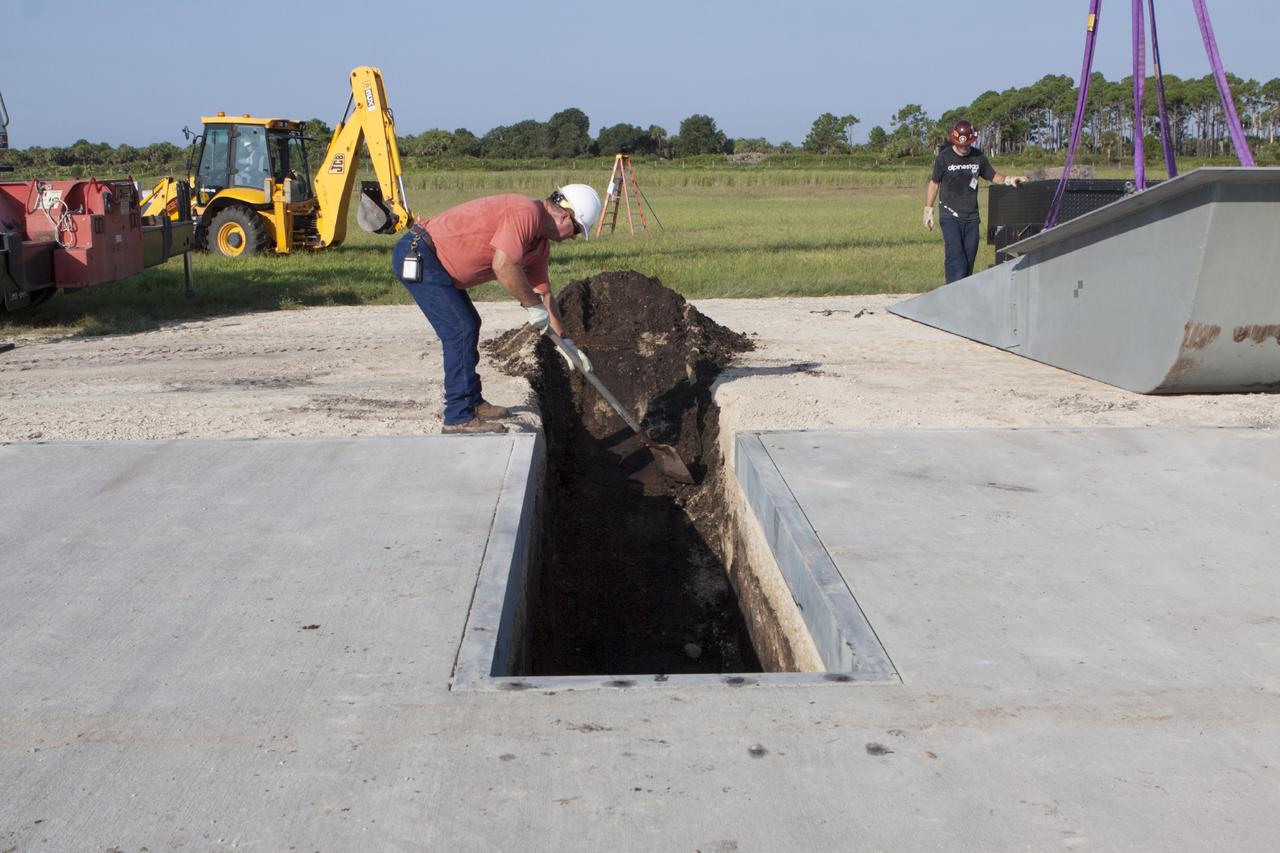
CAPE CANAVERAL, Fla. - Workers install a flame deflector at the Shuttle Landing Facility, or SLF, at NASA's Kennedy Space Center in Florida for the Project Morpheus lander. The site is adjacent to a hazard field created to support the project at the north end of the SLF. Testing of the prototype lander has been ongoing at NASA’s Johnson Space Center in Houston in preparation for a free flight at Kennedy later this year. The SLF will provide the lander with the kind of field necessary for realistic testing, complete with rocks, craters and hazards to avoid. Morpheus utilizes an autonomous landing and hazard avoidance technology, or ALHAT, payload that will allow it to navigate to clear landing sites amidst obstacles during its descent. Project Morpheus is one of 20 small projects comprising the Advanced Exploration Systems, or AES, program in NASA’s Human Exploration and Operations Mission Directorate. AES projects pioneer new approaches for rapidly developing prototype systems, demonstrating key capabilities and validating operational concepts for future human missions beyond Earth orbit. For more information on Project Morpheus, visit http://www.nasa.gov/centers/johnson/exploration/morpheus/index.html. Photo credit: NASA/Kim Shiflett
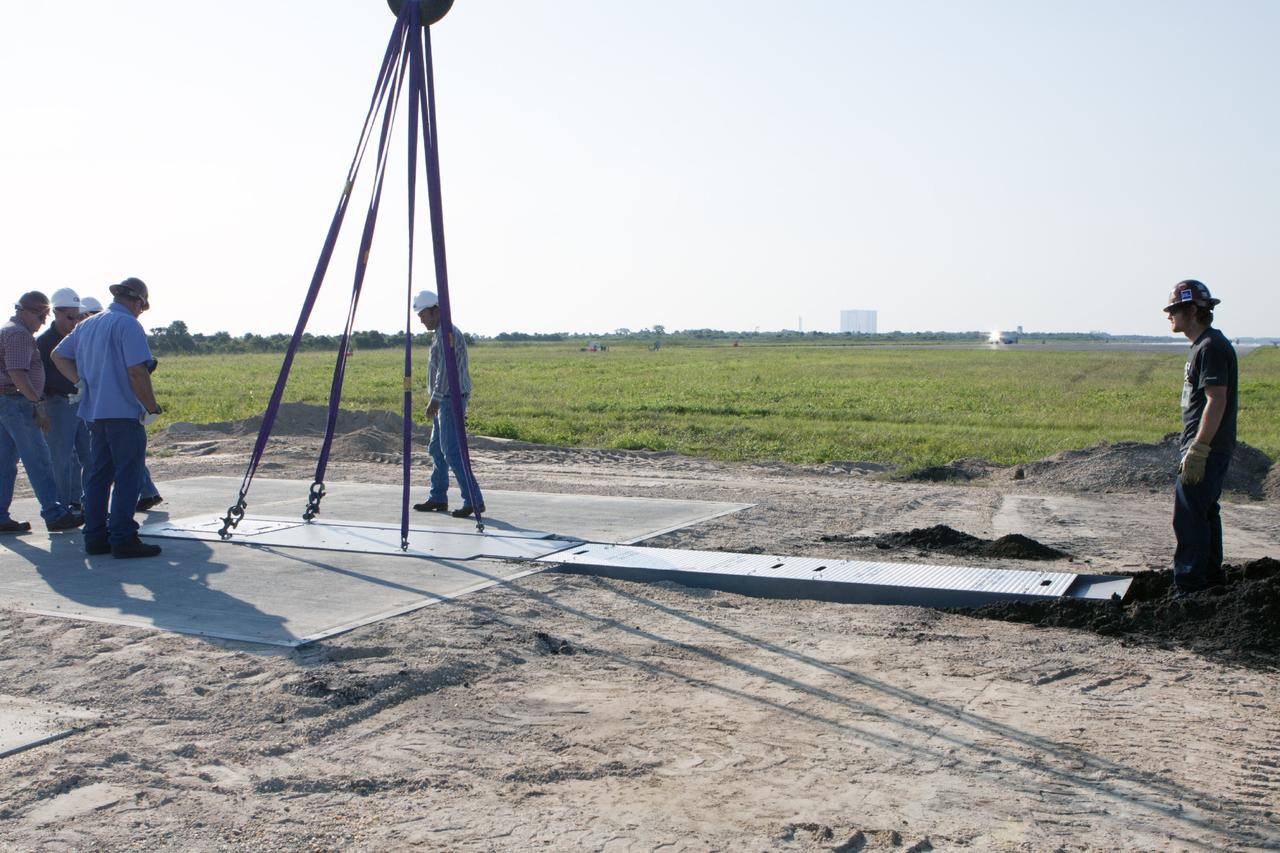
CAPE CANAVERAL, Fla. - Workers install a flame deflector at the Shuttle Landing Facility, or SLF, at NASA's Kennedy Space Center in Florida for the Project Morpheus lander. The site is adjacent to a hazard field created to support the project at the north end of the SLF. Testing of the prototype lander has been ongoing at NASA’s Johnson Space Center in Houston in preparation for a free flight at Kennedy later this year. The SLF will provide the lander with the kind of field necessary for realistic testing, complete with rocks, craters and hazards to avoid. Morpheus utilizes an autonomous landing and hazard avoidance technology, or ALHAT, payload that will allow it to navigate to clear landing sites amidst obstacles during its descent. Project Morpheus is one of 20 small projects comprising the Advanced Exploration Systems, or AES, program in NASA’s Human Exploration and Operations Mission Directorate. AES projects pioneer new approaches for rapidly developing prototype systems, demonstrating key capabilities and validating operational concepts for future human missions beyond Earth orbit. For more information on Project Morpheus, visit http://www.nasa.gov/centers/johnson/exploration/morpheus/index.html. Photo credit: NASA/Kim Shiflett
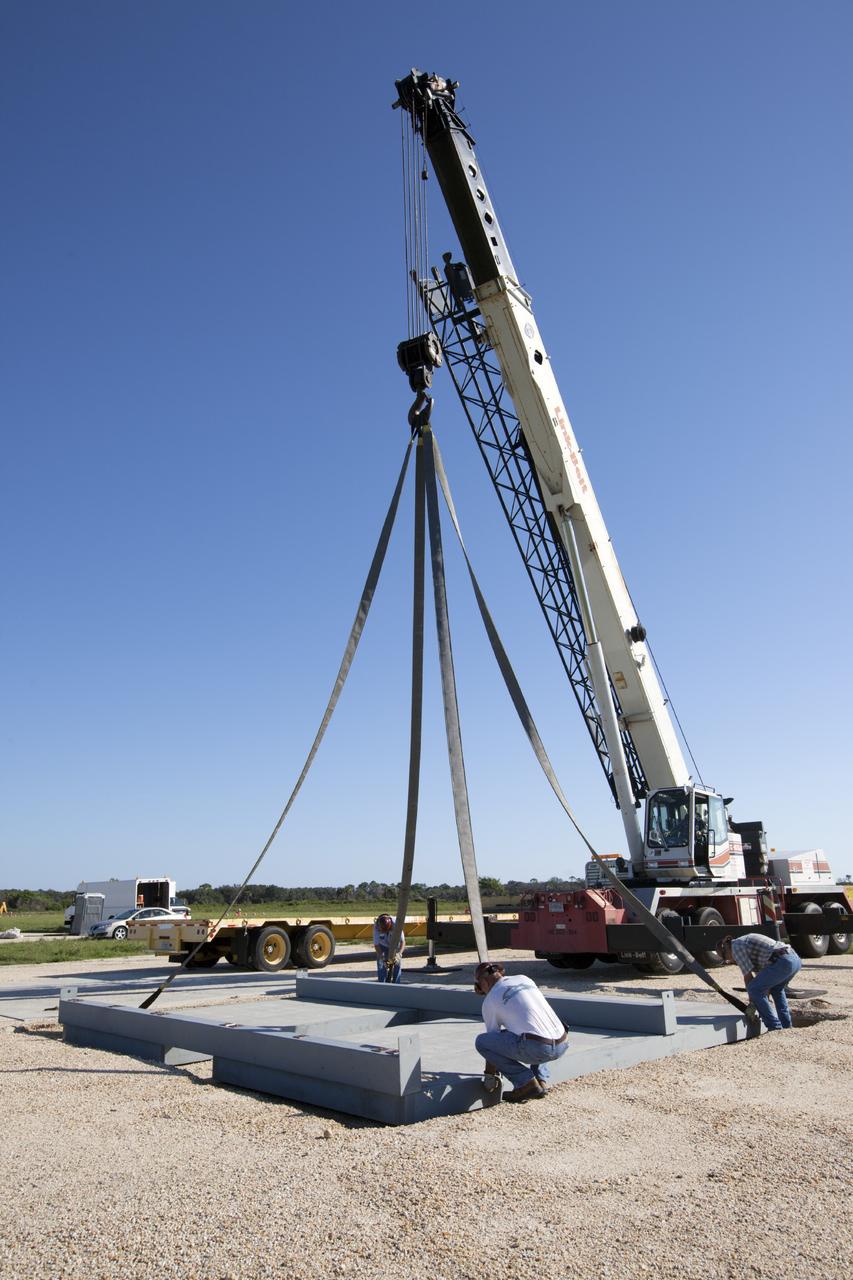
CAPE CANAVERAL, Fla. - At NASA’s Kennedy Space Center in Florida, workers release the movable launch platform for the Project Morpheus lander from the crane used to position it on its new site adjacent to a hazard field created to support the project at the north end of the Shuttle Landing Facility, or SLF. Testing of the prototype lander has been ongoing at NASA’s Johnson Space Center in Houston in preparation for free flight. The lander is scheduled for delivery to Kennedy in October. The SLF will provide the lander with the kind of field necessary for realistic testing, complete with rocks, craters and hazards to avoid. Morpheus utilizes an autonomous landing and hazard avoidance technology, or ALHAT, payload that will allow it to navigate to clear landing sites amidst obstacles during its descent. Project Morpheus is one of 20 small projects comprising the Advanced Exploration Systems, or AES, program in NASA’s Human Exploration and Operations Mission Directorate. AES projects pioneer new approaches for rapidly developing prototype systems, demonstrating key capabilities and validating operational concepts for future human missions beyond Earth orbit. For more information on Project Morpheus, visit http://www.nasa.gov/centers/johnson/exploration/morpheus/index.html. Photo credit: NASA/Kim Shiflett
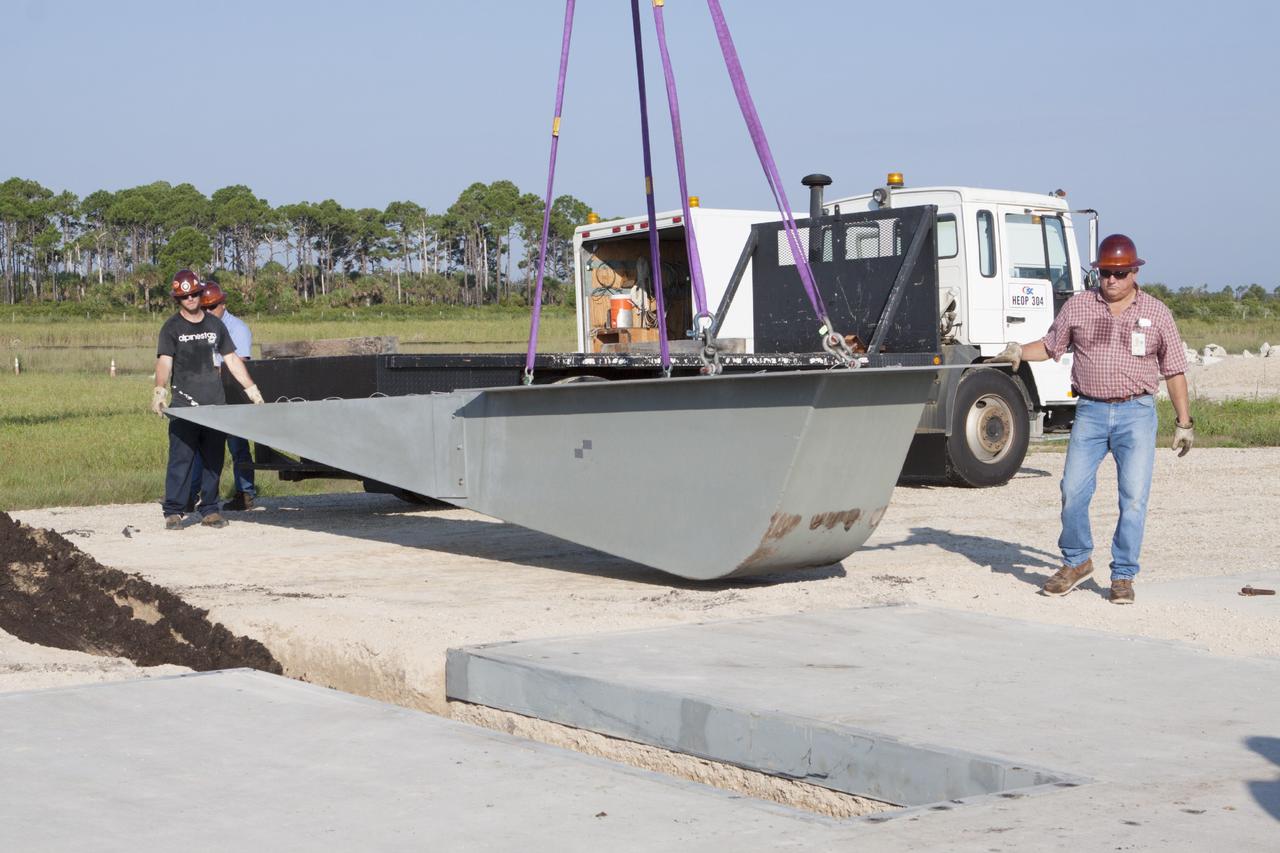
CAPE CANAVERAL, Fla. - Workers install a flame deflector at the Shuttle Landing Facility, or SLF, at NASA's Kennedy Space Center in Florida for the Project Morpheus lander. The site is adjacent to a hazard field created to support the project at the north end of the SLF. Testing of the prototype lander has been ongoing at NASA’s Johnson Space Center in Houston in preparation for a free flight at Kennedy later this year. The SLF will provide the lander with the kind of field necessary for realistic testing, complete with rocks, craters and hazards to avoid. Morpheus utilizes an autonomous landing and hazard avoidance technology, or ALHAT, payload that will allow it to navigate to clear landing sites amidst obstacles during its descent. Project Morpheus is one of 20 small projects comprising the Advanced Exploration Systems, or AES, program in NASA’s Human Exploration and Operations Mission Directorate. AES projects pioneer new approaches for rapidly developing prototype systems, demonstrating key capabilities and validating operational concepts for future human missions beyond Earth orbit. For more information on Project Morpheus, visit http://www.nasa.gov/centers/johnson/exploration/morpheus/index.html. Photo credit: NASA/Kim Shiflett
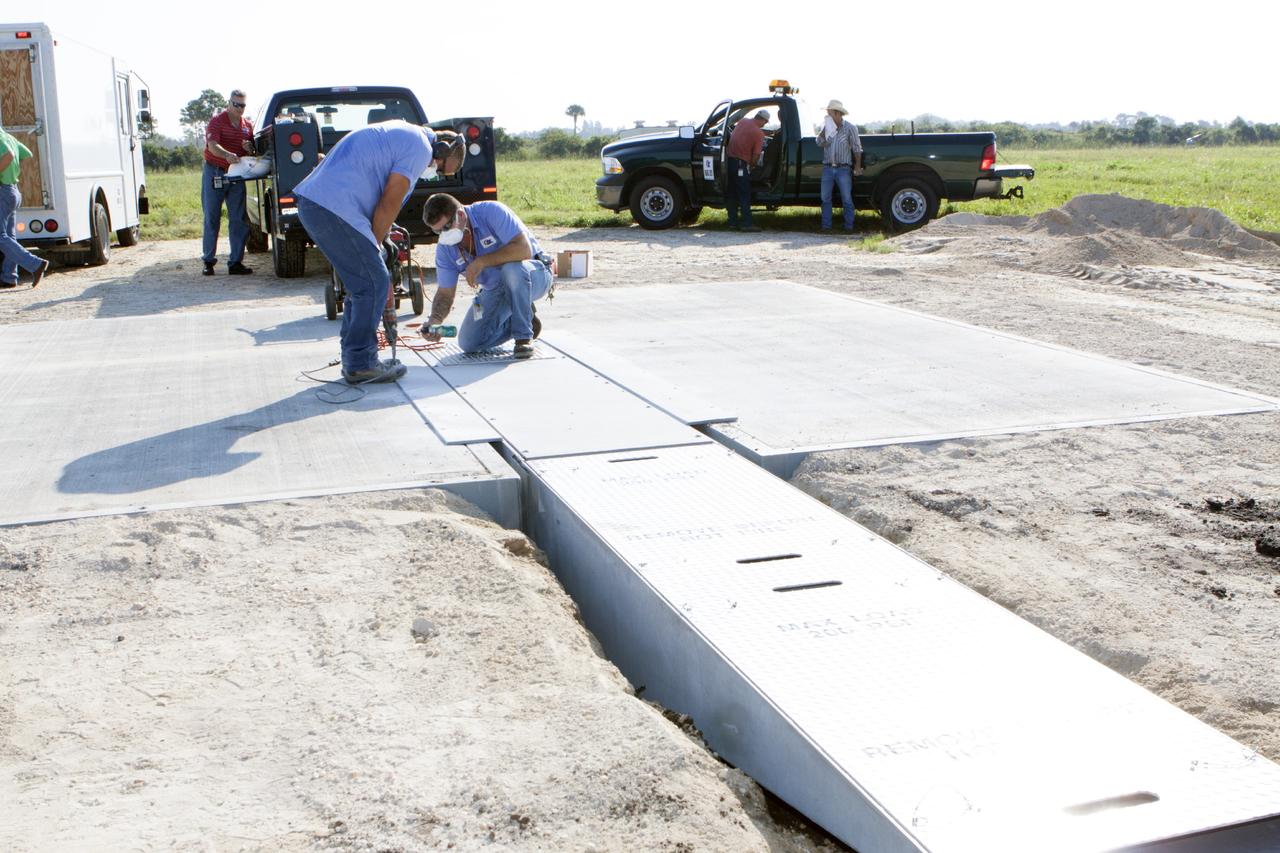
CAPE CANAVERAL, Fla. - Workers install a flame deflector at the Shuttle Landing Facility, or SLF, at NASA's Kennedy Space Center in Florida for the Project Morpheus lander. The site is adjacent to a hazard field created to support the project at the north end of the SLF. Testing of the prototype lander has been ongoing at NASA’s Johnson Space Center in Houston in preparation for a free flight at Kennedy later this year. The SLF will provide the lander with the kind of field necessary for realistic testing, complete with rocks, craters and hazards to avoid. Morpheus utilizes an autonomous landing and hazard avoidance technology, or ALHAT, payload that will allow it to navigate to clear landing sites amidst obstacles during its descent. Project Morpheus is one of 20 small projects comprising the Advanced Exploration Systems, or AES, program in NASA’s Human Exploration and Operations Mission Directorate. AES projects pioneer new approaches for rapidly developing prototype systems, demonstrating key capabilities and validating operational concepts for future human missions beyond Earth orbit. For more information on Project Morpheus, visit http://www.nasa.gov/centers/johnson/exploration/morpheus/index.html. Photo credit: NASA/Kim Shiflett
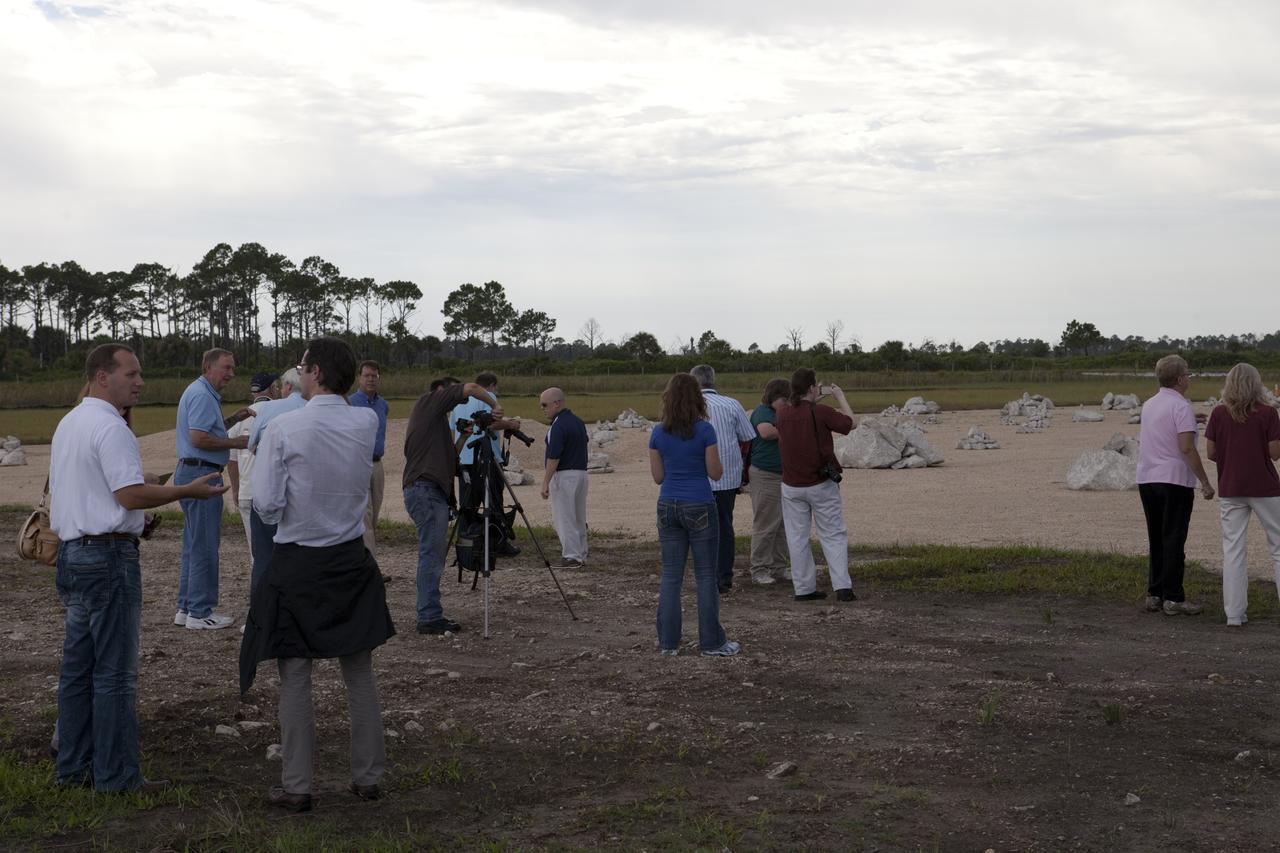
CAPE CANAVERAL, Fla. - At the Autonomous Landing and Hazard Avoidance Technology, or ALHAT, field at the north end of the Shuttle Landing Facility, or SLF, at NASA’s Kennedy Space Center in Florida, members of the media view the hazard field and speak with Morpheus managers. At far left, in the white shirt is Jon Olansen, Johnson Space Center Project Morpheus Manager. At left, in the blue shirt is Chirold Epp, JSC project manager for ALHAT. Testing of the prototype lander had been ongoing at NASA’s Johnson Space Center in Houston in preparation for its first free-flight test at Kennedy Space Center. The SLF will provide the lander with the kind of field necessary for realistic testing, complete with rocks, craters and hazards to avoid. Morpheus utilizes an autonomous landing and hazard avoidance technology, or ALHAT, payload that will allow it to navigate to clear landing sites amidst rocks, craters and other hazards during its descent. Project Morpheus is one of 20 small projects comprising the Advanced Exploration Systems, or AES, program in NASA’s Human Exploration and Operations Mission Directorate. AES projects pioneer new approaches for rapidly developing prototype systems, demonstrating key capabilities and validating operational concepts for future human missions beyond Earth orbit. For more information on Project Morpheus, visit http://morpheuslander.jsc.nasa.gov/. Photo credit: NASA/Kim Shiflett
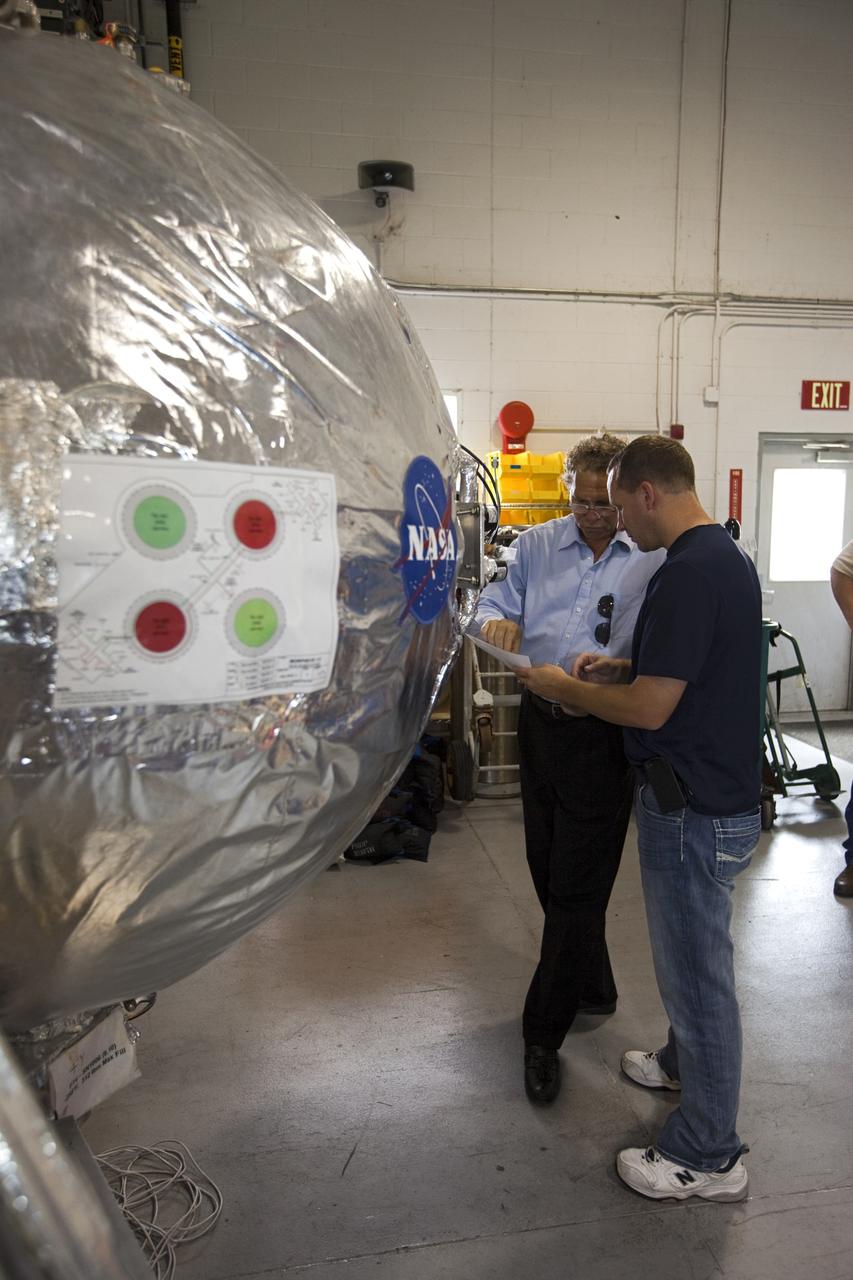
CAPE CANAVERAL, Fla. - Russell Romanella, director of Safety and Mission Assurance at NASA's Kennedy Space Center in Florida, left, is briefed on NASA's Morpheus lander, a vertical test bed vehicle. Morpheus is being checked out by technicians and engineers in a building at the Shuttle Landing Facility, or SLF, at Kennedy. Morpheus is designed to demonstrate new green propellant propulsion systems and autonomous landing and an Autonomous Landing and Hazard Avoidance Technology, or ALHAT, system. Checkout of the prototype lander has been ongoing at NASA’s Johnson Space Center in Houston in preparation for its first free flight. The SLF site will provide the lander with the kind of field necessary for realistic testing. Project Morpheus is one of 20 small projects comprising the Advanced Exploration Systems, or AES, program in NASA’s Human Exploration and Operations Mission Directorate. AES projects pioneer new approaches for rapidly developing prototype systems, demonstrating key capabilities and validating operational concepts for future human missions beyond Earth orbit. For more information on Project Morpheus, visit http://www.nasa.gov/centers/johnson/exploration/morpheus/index.html Photo credit: NASA/Dimitri Gerondidakis
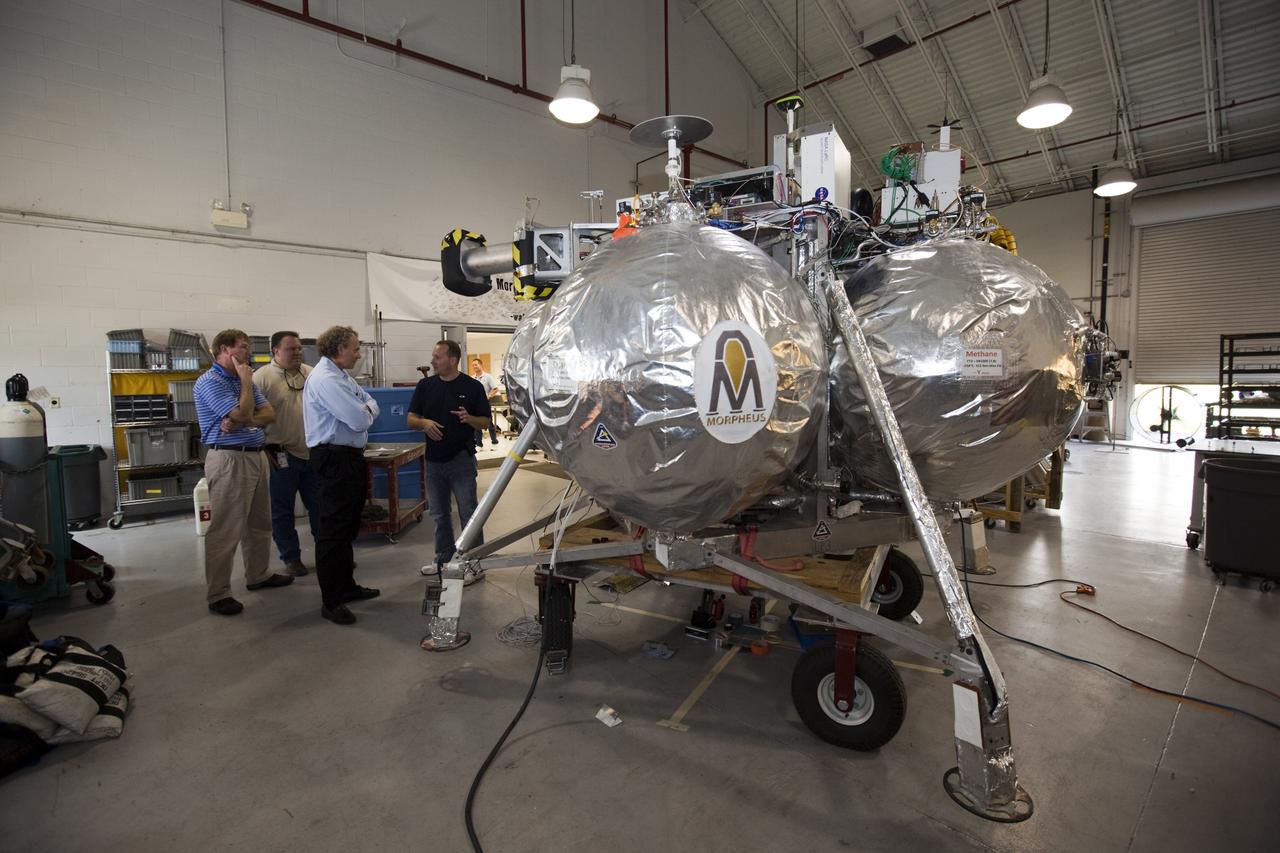
CAPE CANAVERAL, Fla. - Russell Romanella, director of Safety and Mission Assurance at NASA's Kennedy Space Center in Florida, right-center, is briefed on NASA's Morpheus lander, a vertical test bed vehicle. Morpheus is being checked out by technicians and engineers in a building at the Shuttle Landing Facility, or SLF, at Kennedy. Morpheus is designed to demonstrate new green propellant propulsion systems and autonomous landing and an Autonomous Landing and Hazard Avoidance Technology, or ALHAT, system. Checkout of the prototype lander has been ongoing at NASA’s Johnson Space Center in Houston in preparation for its first free flight. The SLF site will provide the lander with the kind of field necessary for realistic testing. Project Morpheus is one of 20 small projects comprising the Advanced Exploration Systems, or AES, program in NASA’s Human Exploration and Operations Mission Directorate. AES projects pioneer new approaches for rapidly developing prototype systems, demonstrating key capabilities and validating operational concepts for future human missions beyond Earth orbit. For more information on Project Morpheus, visit http://www.nasa.gov/centers/johnson/exploration/morpheus/index.html Photo credit: NASA/Dimitri Gerondidakis
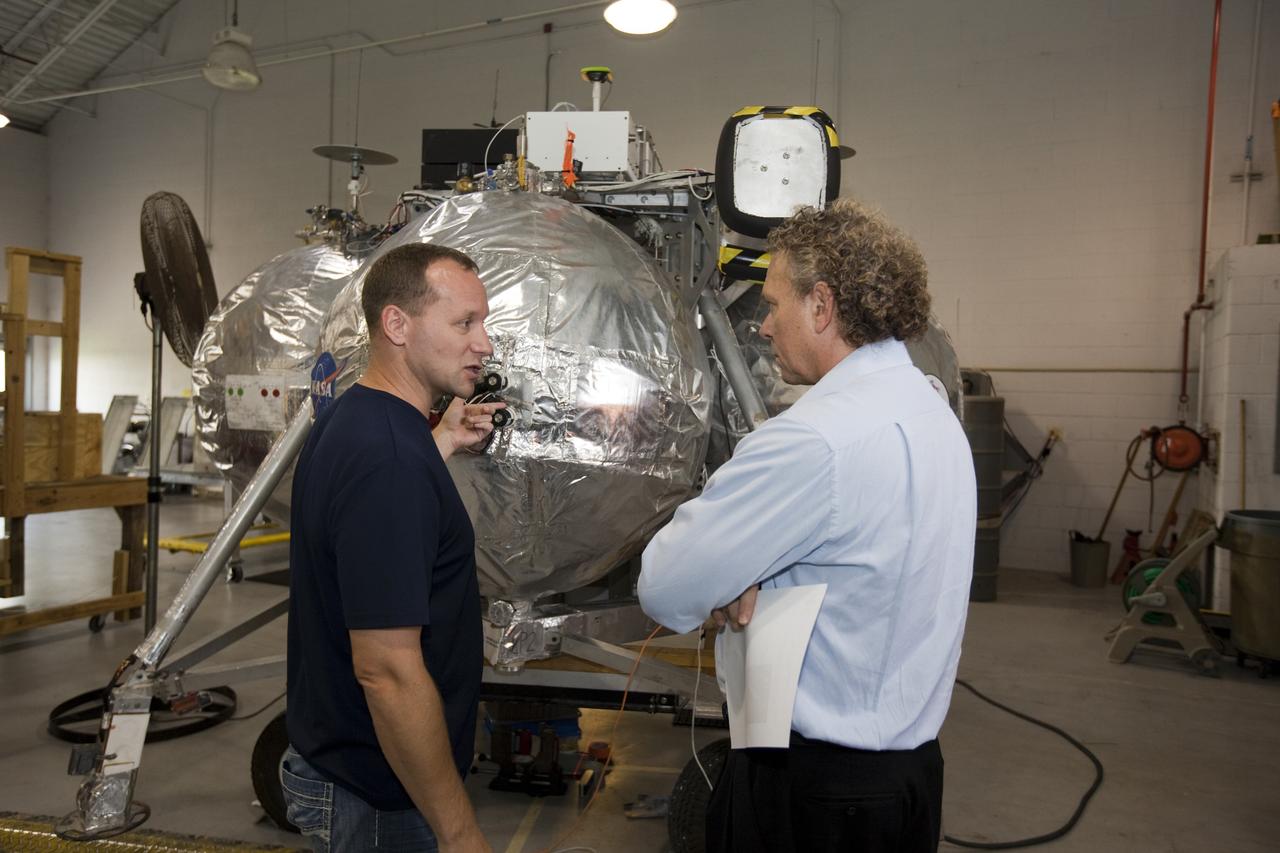
CAPE CANAVERAL, Fla. - Russell Romanella, director of Safety and Mission Assurance at NASA's Kennedy Space Center in Florida, right, is briefed on NASA's Morpheus lander, a vertical test bed vehicle. Morpheus is being checked out by technicians and engineers in a building at the Shuttle Landing Facility, or SLF, at Kennedy. Morpheus is designed to demonstrate new green propellant propulsion systems and autonomous landing and an Autonomous Landing and Hazard Avoidance Technology, or ALHAT, system. Checkout of the prototype lander has been ongoing at NASA’s Johnson Space Center in Houston in preparation for its first free flight. The SLF site will provide the lander with the kind of field necessary for realistic testing. Project Morpheus is one of 20 small projects comprising the Advanced Exploration Systems, or AES, program in NASA’s Human Exploration and Operations Mission Directorate. AES projects pioneer new approaches for rapidly developing prototype systems, demonstrating key capabilities and validating operational concepts for future human missions beyond Earth orbit. For more information on Project Morpheus, visit http://www.nasa.gov/centers/johnson/exploration/morpheus/index.html Photo credit: NASA/Dimitri Gerondidakis
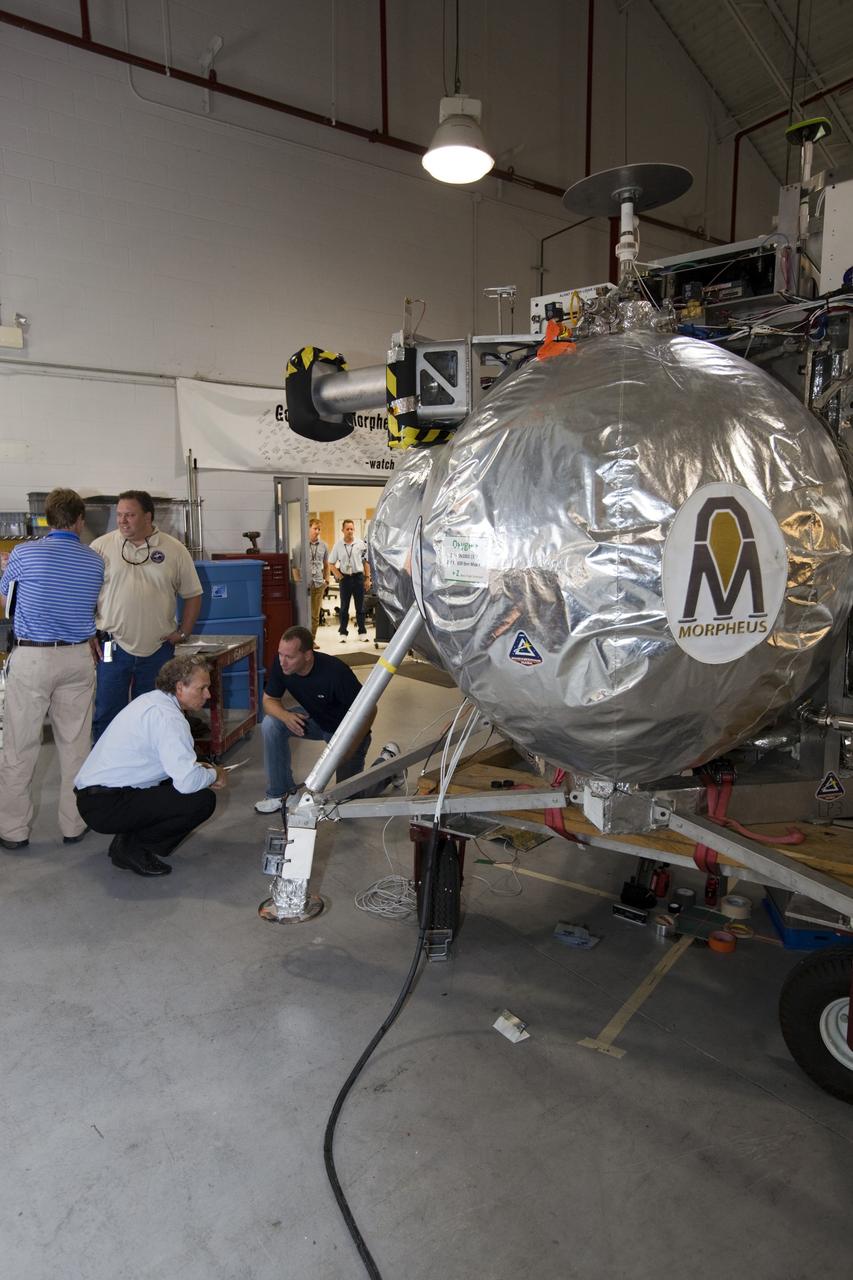
CAPE CANAVERAL, Fla. - Russell Romanella, director of Safety and Mission Assurance at NASA's Kennedy Space Center in Florida, kneeling on the left, is briefed on NASA's Morpheus lander, a vertical test bed vehicle. Morpheus is being checked out by technicians and engineers in a building at the Shuttle Landing Facility, or SLF, at Kennedy. Morpheus is designed to demonstrate new green propellant propulsion systems and autonomous landing and an Autonomous Landing and Hazard Avoidance Technology, or ALHAT, system. Checkout of the prototype lander has been ongoing at NASA’s Johnson Space Center in Houston in preparation for its first free flight. The SLF site will provide the lander with the kind of field necessary for realistic testing. Project Morpheus is one of 20 small projects comprising the Advanced Exploration Systems, or AES, program in NASA’s Human Exploration and Operations Mission Directorate. AES projects pioneer new approaches for rapidly developing prototype systems, demonstrating key capabilities and validating operational concepts for future human missions beyond Earth orbit. For more information on Project Morpheus, visit http://www.nasa.gov/centers/johnson/exploration/morpheus/index.html Photo credit: NASA/Dimitri Gerondidakis
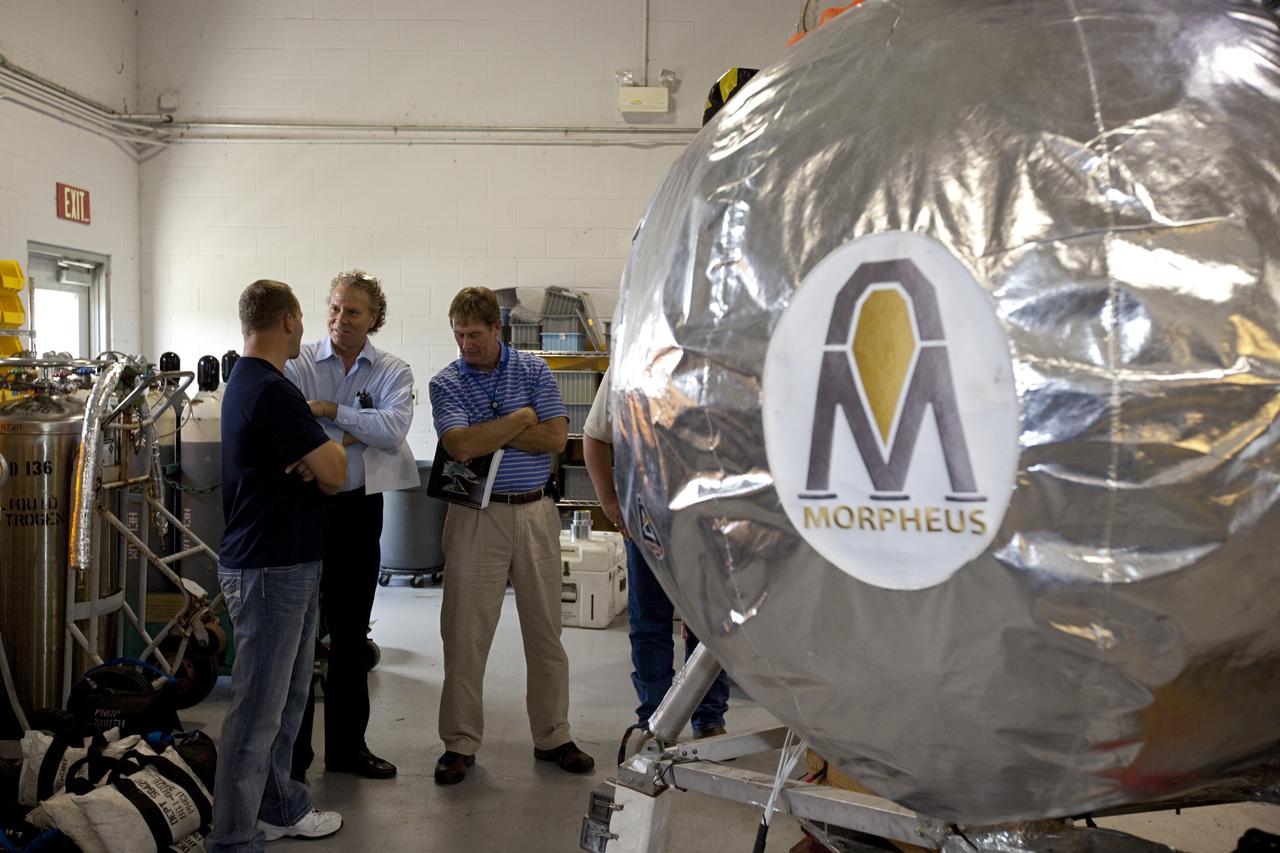
CAPE CANAVERAL, Fla. - Russell Romanella, director of Safety and Mission Assurance at NASA's Kennedy Space Center in Florida, center, is briefed on NASA's Morpheus lander, a vertical test bed vehicle. Morpheus is being checked out by technicians and engineers in a building at the Shuttle Landing Facility, or SLF, at Kennedy. Morpheus is designed to demonstrate new green propellant propulsion systems and autonomous landing and an Autonomous Landing and Hazard Avoidance Technology, or ALHAT, system. Checkout of the prototype lander has been ongoing at NASA’s Johnson Space Center in Houston in preparation for its first free flight. The SLF site will provide the lander with the kind of field necessary for realistic testing. Project Morpheus is one of 20 small projects comprising the Advanced Exploration Systems, or AES, program in NASA’s Human Exploration and Operations Mission Directorate. AES projects pioneer new approaches for rapidly developing prototype systems, demonstrating key capabilities and validating operational concepts for future human missions beyond Earth orbit. For more information on Project Morpheus, visit http://www.nasa.gov/centers/johnson/exploration/morpheus/index.html Photo credit: NASA/Dimitri Gerondidakis
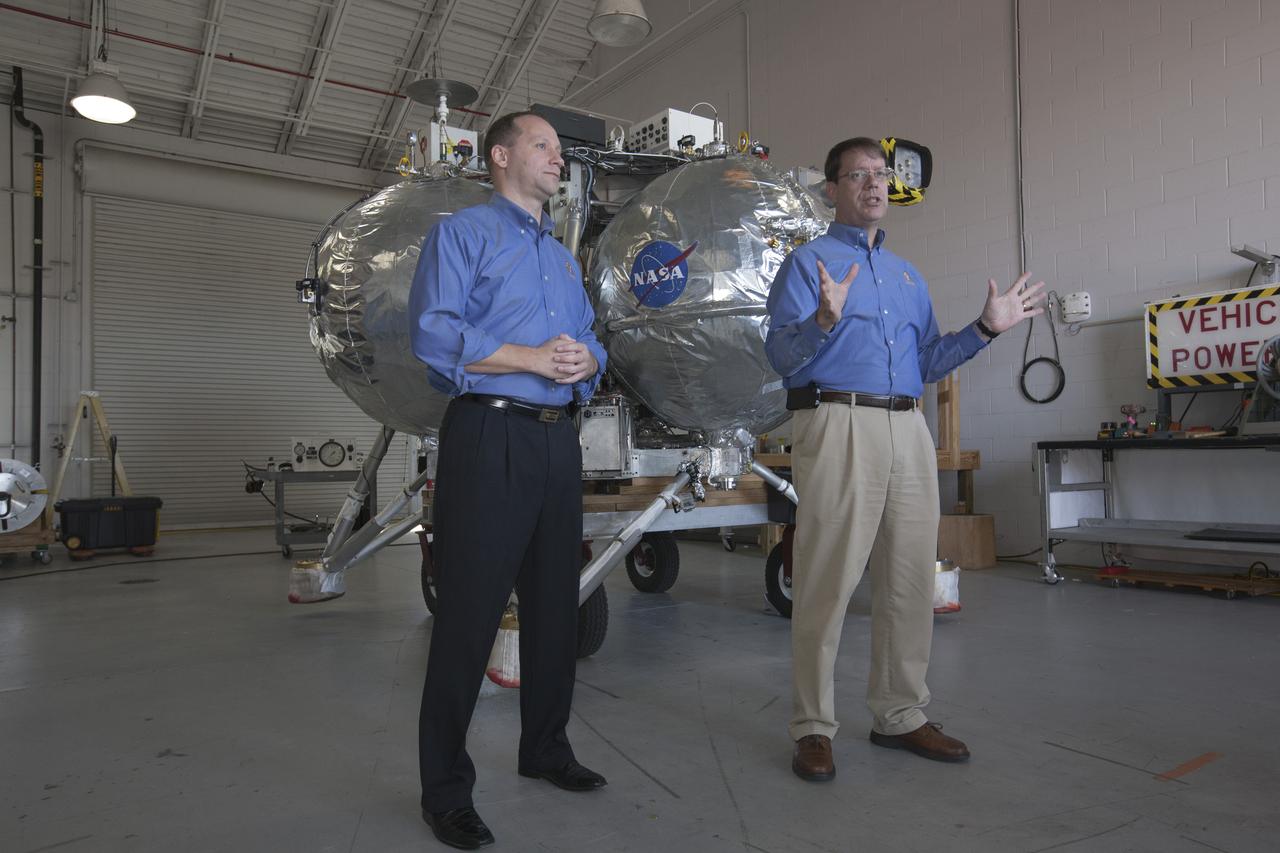
CAPE CANAVERAL, Fla. – Members of the news media view the Project Morpheus prototype lander inside a hangar near the Shuttle Landing Facility at NASA’s Kennedy Space Center in Florida. Speaking to the media, from left are Jon Olansen, Morpheus project manager at Johnson Space Center in Houston, and Greg Gaddis, the Kennedy Morpheus and ALHAT site manager. Morpheus successfully completed its third free flight test Jan. 16. The 57-second test began at 1:15 p.m. EST with the Morpheus lander launching from the ground over a flame trench and ascending about 187 feet, nearly doubling the target ascent velocity from the last test in December 2013. The lander flew forward, covering about 154 feet in 20 seconds before descending and landing within 11 inches of its target on a dedicated pad inside the autonomous landing and hazard avoidance technology, or ALHAT, hazard field. Project Morpheus tests NASA’s ALHAT and an engine that runs on liquid oxygen and methane, or green propellants, into a fully-operational lander that could deliver cargo to other planetary surfaces. The landing facility provides the lander with the kind of field necessary for realistic testing, complete with rocks, craters and hazards to avoid. Morpheus’ ALHAT payload allows it to navigate to clear landing sites amidst rocks, craters and other hazards during its descent. Project Morpheus is being managed under the Advanced Exploration Systems, or AES, Division in NASA’s Human Exploration and Operations Mission Directorate. The efforts in AES pioneer new approaches for rapidly developing prototype systems, demonstrating key capabilities and validating operational concepts for future human missions beyond Earth orbit. For more information on Project Morpheus, visit http://www.nasa.gov/centers/johnson/exploration/morpheus. Photo credit: NASA/Kim Shiflett
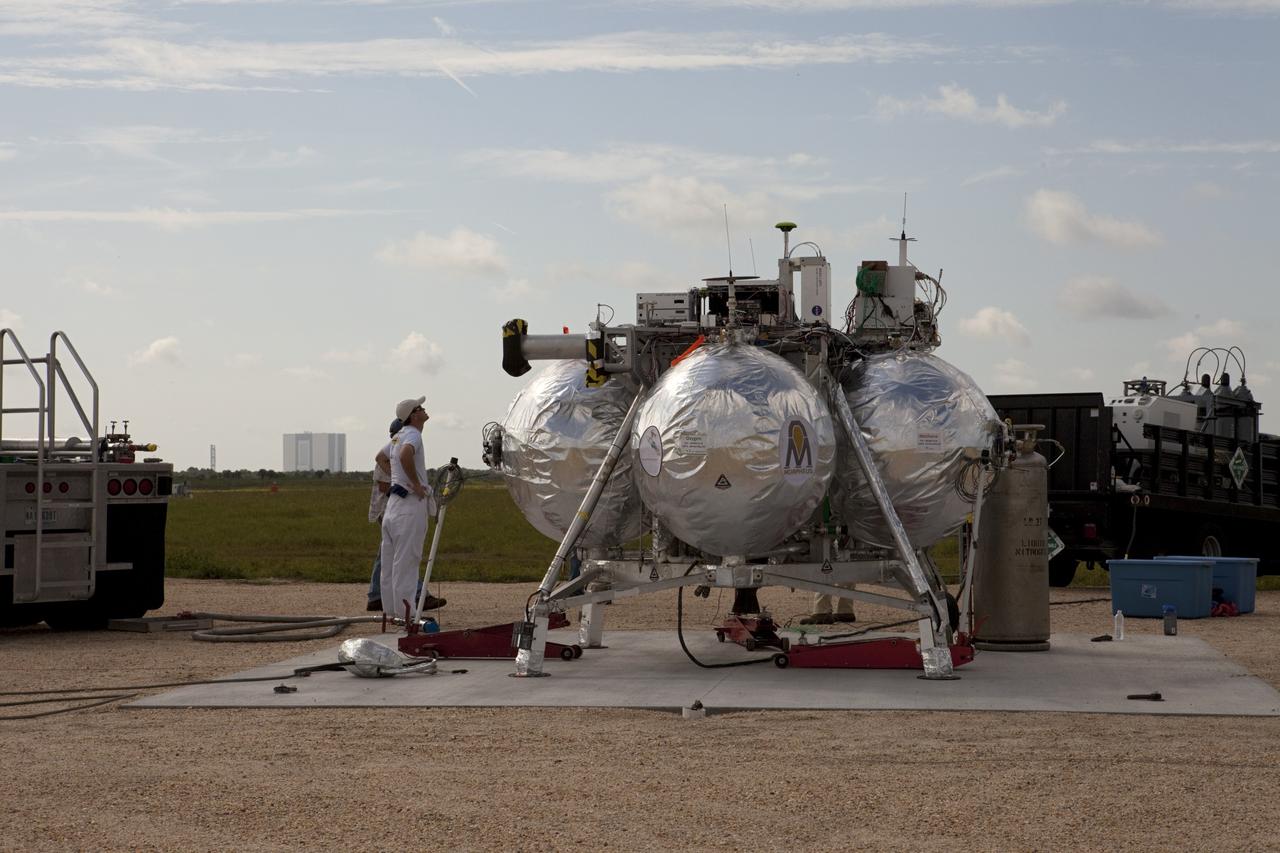
CAPE CANAVERAL, Fla. - At the north end of the Shuttle Landing Facility, or SLF, at the Kennedy Space Center in Florida, technicians check out NASA's Morpheus lander, a vertical test bed vehicle. A rock and crater-filled planetary scape, has been built so engineers can test the Autonomous Landing and Hazard Avoidance Technology, or ALHAT, system on the Project Morpheus lander. Checkout of the prototype lander has been ongoing at NASA’s Johnson Space Center in Houston in preparation for its first free flight. The SLF site will provide the lander with the kind of field necessary for realistic testing. Project Morpheus is one of 20 small projects comprising the Advanced Exploration Systems, or AES, program in NASA’s Human Exploration and Operations Mission Directorate. AES projects pioneer new approaches for rapidly developing prototype systems, demonstrating key capabilities and validating operational concepts for future human missions beyond Earth orbit. For more information on Project Morpheus, visit http://www.nasa.gov/centers/johnson/exploration/morpheus/index.html Photo credit: NASA/Kim Shiflett
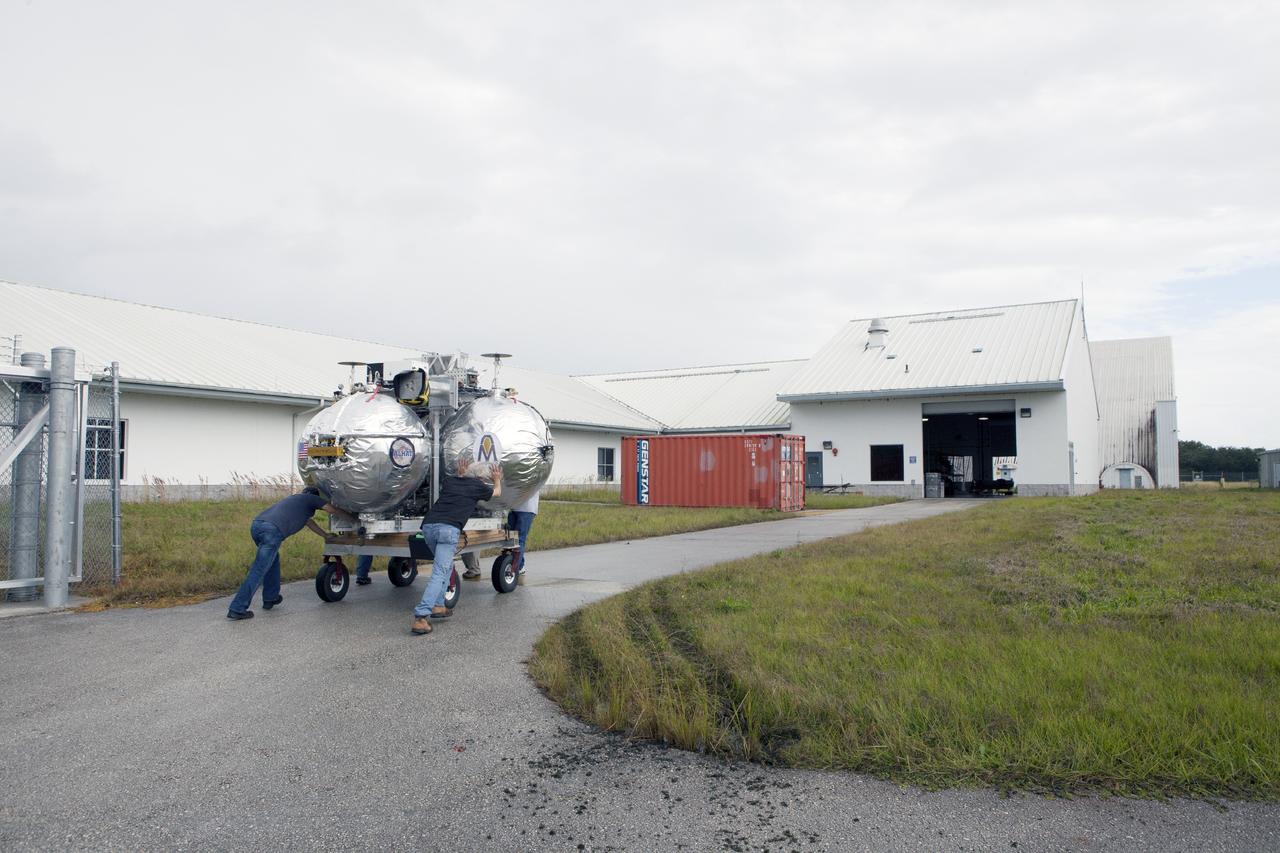
CAPE CANAVERAL, Fla. -- At NASA’s Kennedy Space Center in Florida, technicians move the Project Morpheus lander on a small transporter to a support building at the Shuttle Landing Facility, or SLF. Testing of the prototype lander has been ongoing at NASA’s Johnson Space Center in Houston in preparation for free flight testing at Kennedy. The SLF will provide the lander with the kind of field necessary for realistic testing, complete with rocks, craters and hazards to avoid. Morpheus utilizes an autonomous landing and hazard avoidance technology, or ALHAT, payload that will allow it to navigate to clear landing sites amidst rocks, craters and other hazards during its descent. Project Morpheus is one of 20 small projects comprising the Advanced Exploration Systems, or AES, program in NASA’s Human Exploration and Operations Mission Directorate. AES projects pioneer new approaches for rapidly developing prototype systems, demonstrating key capabilities and validating operational concepts for future human missions beyond Earth orbit. For more information on Project Morpheus, visit http://www.nasa.gov/centers/johnson/exploration/morpheus/index.html. Photo credit: NASA/Kim Shiflett
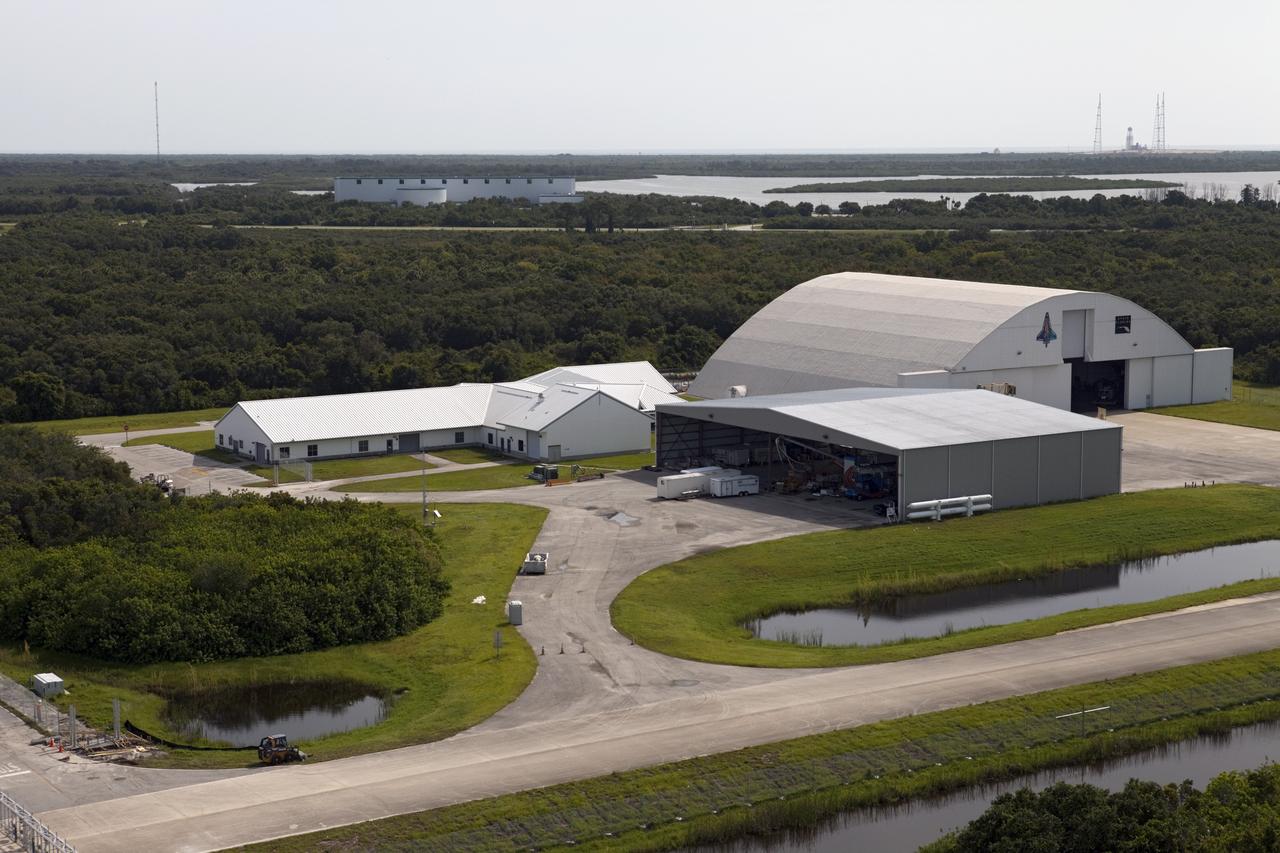
CAPE CANAVERAL, Fla. – This aerial view shows a 50,000-square-foot hangar located on the Shuttle Landing Facility at the Kennedy Space Center, Fla., providing shelter and storage for NASA and non-NASA aircraft and maintenance operations. Adjacent to the hangar is an operations building housing personnel who support operations at the 15,000-foot long concrete runway. At the north end of the runway, a rock and crater-filled planetary scape has been built so engineers can test the Autonomous Landing and Hazard Avoidance Technology, or ALHAT system on the Project Morpheus lander. Testing will demonstrate ALHAT’s ability to provide required navigation data negotiating the Morpheus lander away from risks during descent. Checkout of the prototype lander has been ongoing at NASA’s Johnson Space Center in Houston in preparation for its first free flight. The SLF site will provide the lander with the kind of field necessary for realistic testing. Project Morpheus is one of 20 small projects comprising the Advanced Exploration Systems, or AES, program in NASA’s Human Exploration and Operations Mission Directorate. AES projects pioneer new approaches for rapidly developing prototype systems, demonstrating key capabilities and validating operational concepts for future human missions beyond Earth orbit. For more information on Project Morpheus, visit http://www.nasa.gov/centers/johnson/exploration/morpheus/index.html Photo credit: NASA/Kim Shiflett
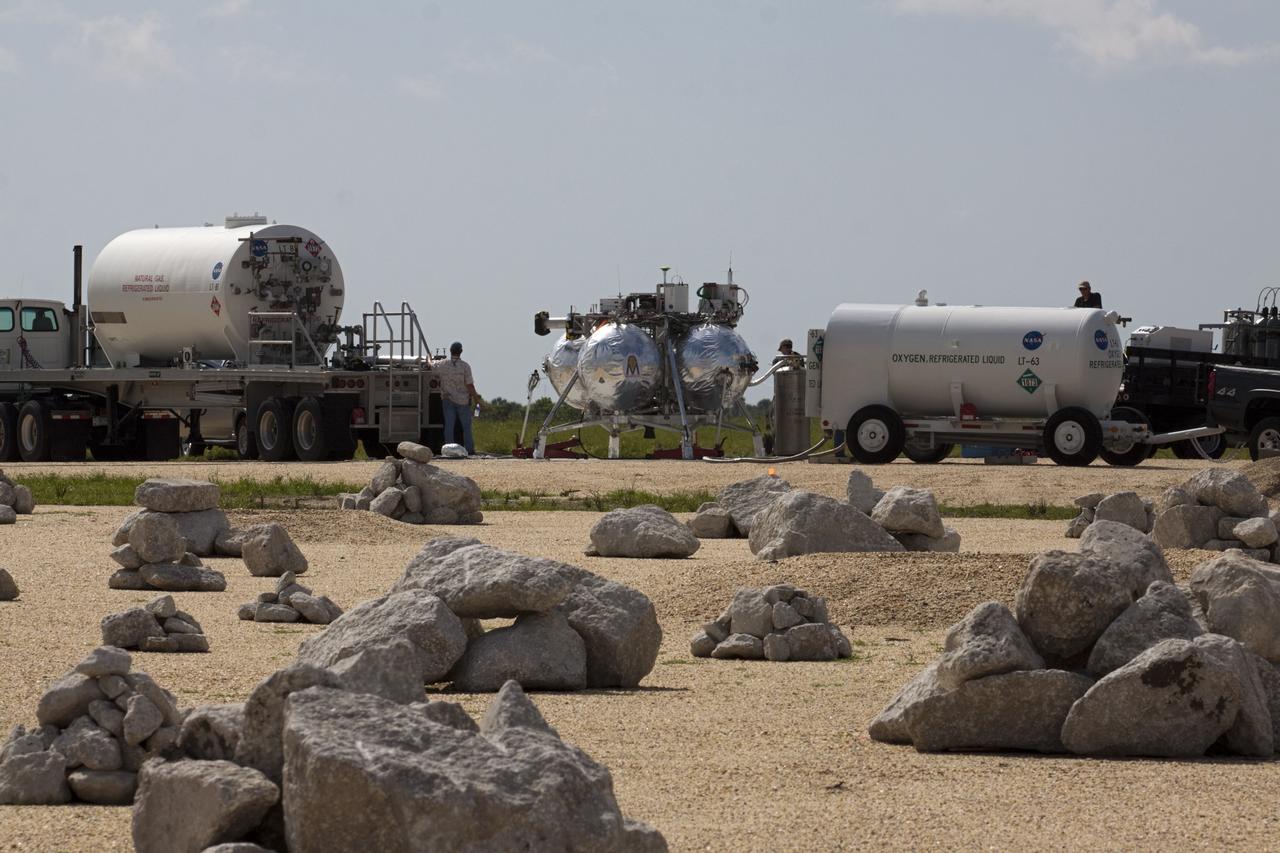
CAPE CANAVERAL, Fla. - At the north end of the Shuttle Landing Facility, or SLF, at the Kennedy Space Center in Florida, NASA's Morpheus lander, a vertical test bed vehicle, is being fueled. A rock and crater-filled planetary scape, seen in the foreground, has been built so engineers can test the Autonomous Landing and Hazard Avoidance Technology, or ALHAT, system on the Project Morpheus lander. Checkout of the prototype lander has been ongoing at NASA’s Johnson Space Center in Houston in preparation for its first free flight. The SLF site will provide the lander with the kind of field necessary for realistic testing. Project Morpheus is one of 20 small projects comprising the Advanced Exploration Systems, or AES, program in NASA’s Human Exploration and Operations Mission Directorate. AES projects pioneer new approaches for rapidly developing prototype systems, demonstrating key capabilities and validating operational concepts for future human missions beyond Earth orbit. For more information on Project Morpheus, visit http://www.nasa.gov/centers/johnson/exploration/morpheus/index.html Photo credit: NASA/Kim Shiflett
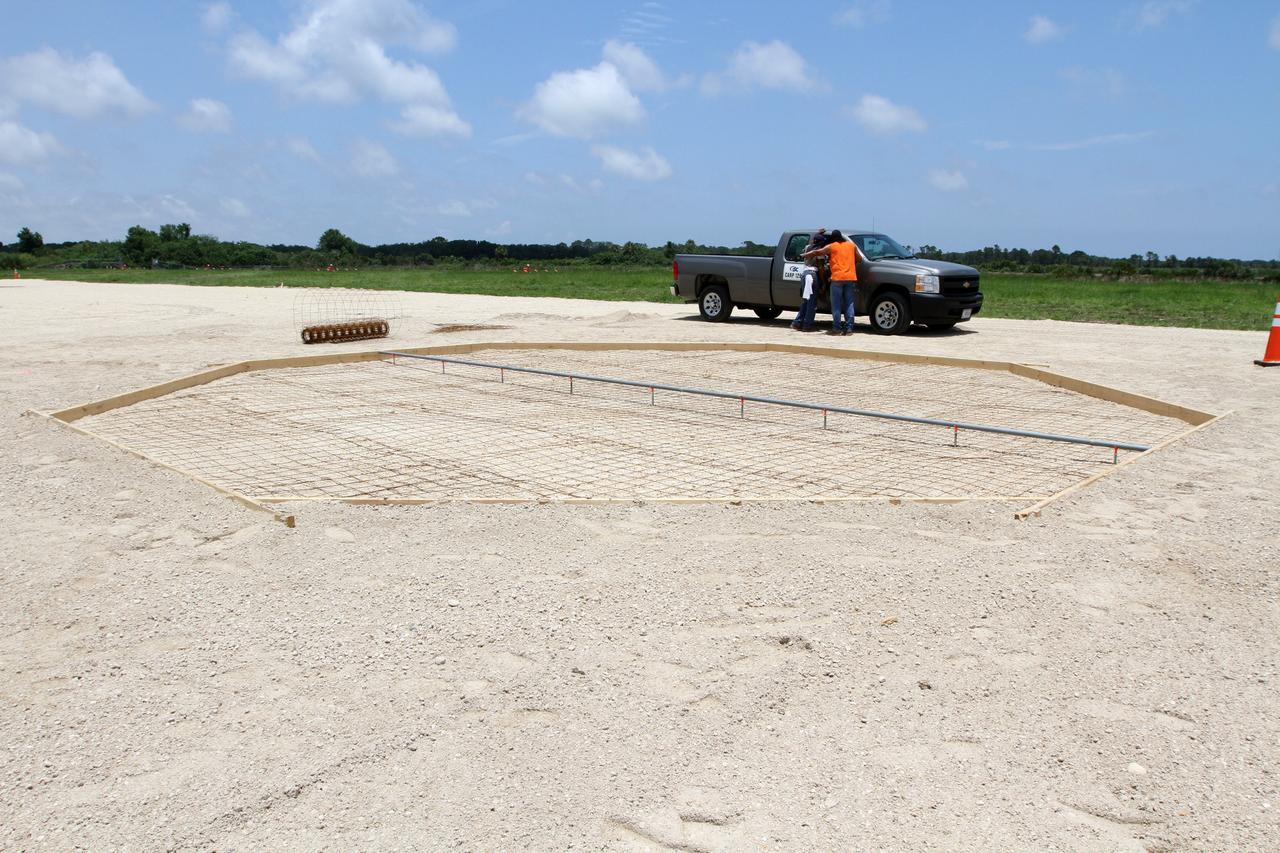
CAPE CANAVERAL, Fla. – The form for the concrete landing pad for the Project Morpheus lander is set near the Shuttle Landing Facility at NASA’s Kennedy Space Center in Florida. Testing of the prototype lander has been ongoing at NASA's Johnson Space Center in Houston in preparation for its first free flight. The SLF will provide the lander with the kind of field necessary for realistic testing, complete with rocks, craters and hazards to avoid. Morpheus utilizes an autonomous landing and hazard avoidance technology, or ALHAT, payload that will allow it to navigate to clear landing sites amidst rocks, craters and other hazards during its descent. Project Morpheus is one of 20 small projects comprising the Advanced Exploration Systems, or AES, program in NASA's Human Exploration and Operations Mission Directorate. AES projects pioneer new approaches for rapidly developing prototype systems, demonstrating key capabilities and validating operational concepts for future human missions beyond Earth orbit. For more information on Project Morpheus, visit http://www.nasa.gov/centers/johnson/exploration/morpheus/index.html. Photo credit: NASA/Kim Shiflett
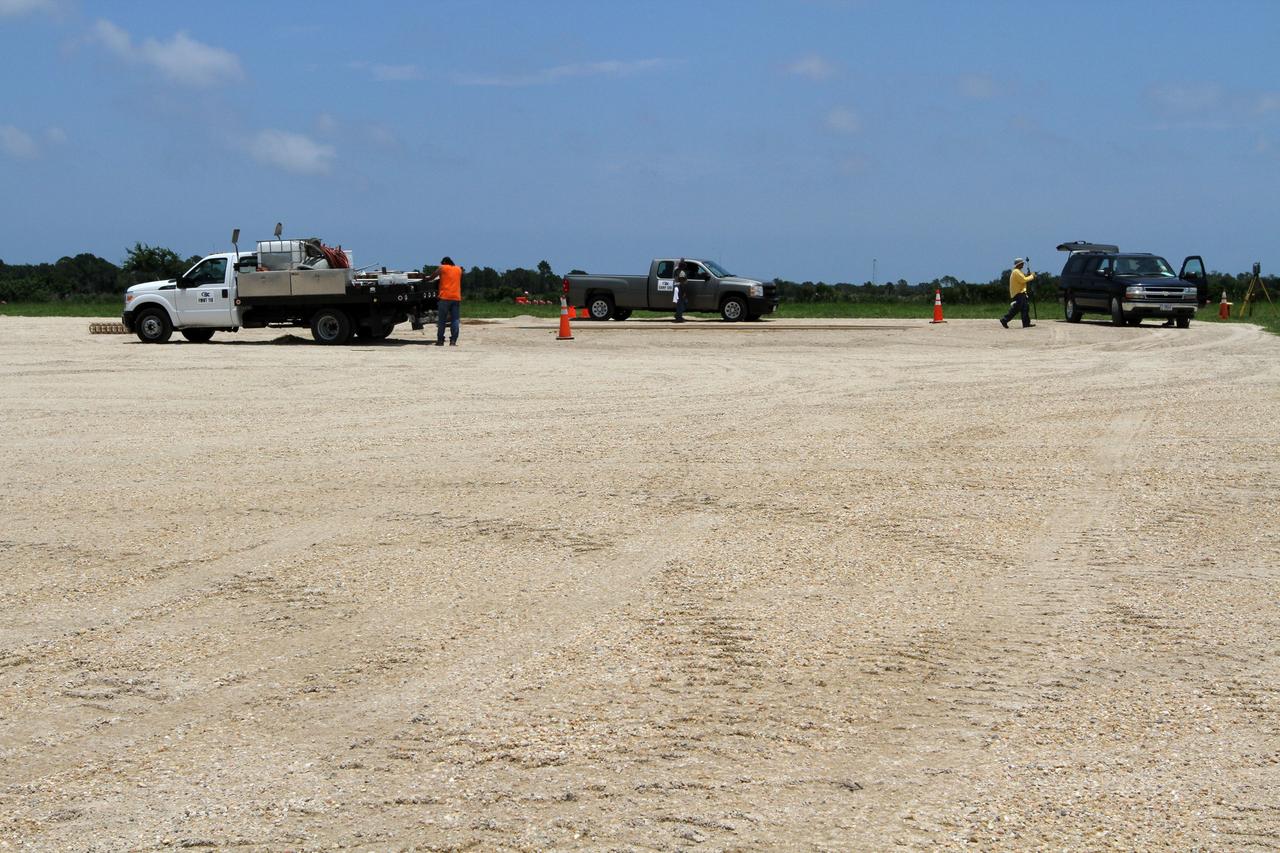
CAPE CANAVERAL, Fla. – Workers set the form for the concrete landing pad during construction of the hazard field for the Project Morpheus lander near the Shuttle Landing Facility at NASA’s Kennedy Space Center in Florida. Testing of the prototype lander has been ongoing at NASA's Johnson Space Center in Houston in preparation for its first free flight. The SLF will provide the lander with the kind of field necessary for realistic testing, complete with rocks, craters and hazards to avoid. Morpheus utilizes an autonomous landing and hazard avoidance technology, or ALHAT, payload that will allow it to navigate to clear landing sites amidst rocks, craters and other hazards during its descent. Project Morpheus is one of 20 small projects comprising the Advanced Exploration Systems, or AES, program in NASA's Human Exploration and Operations Mission Directorate. AES projects pioneer new approaches for rapidly developing prototype systems, demonstrating key capabilities and validating operational concepts for future human missions beyond Earth orbit. For more information on Project Morpheus, visit http://www.nasa.gov/centers/johnson/exploration/morpheus/index.html. Photo credit: NASA/Kim Shiflett
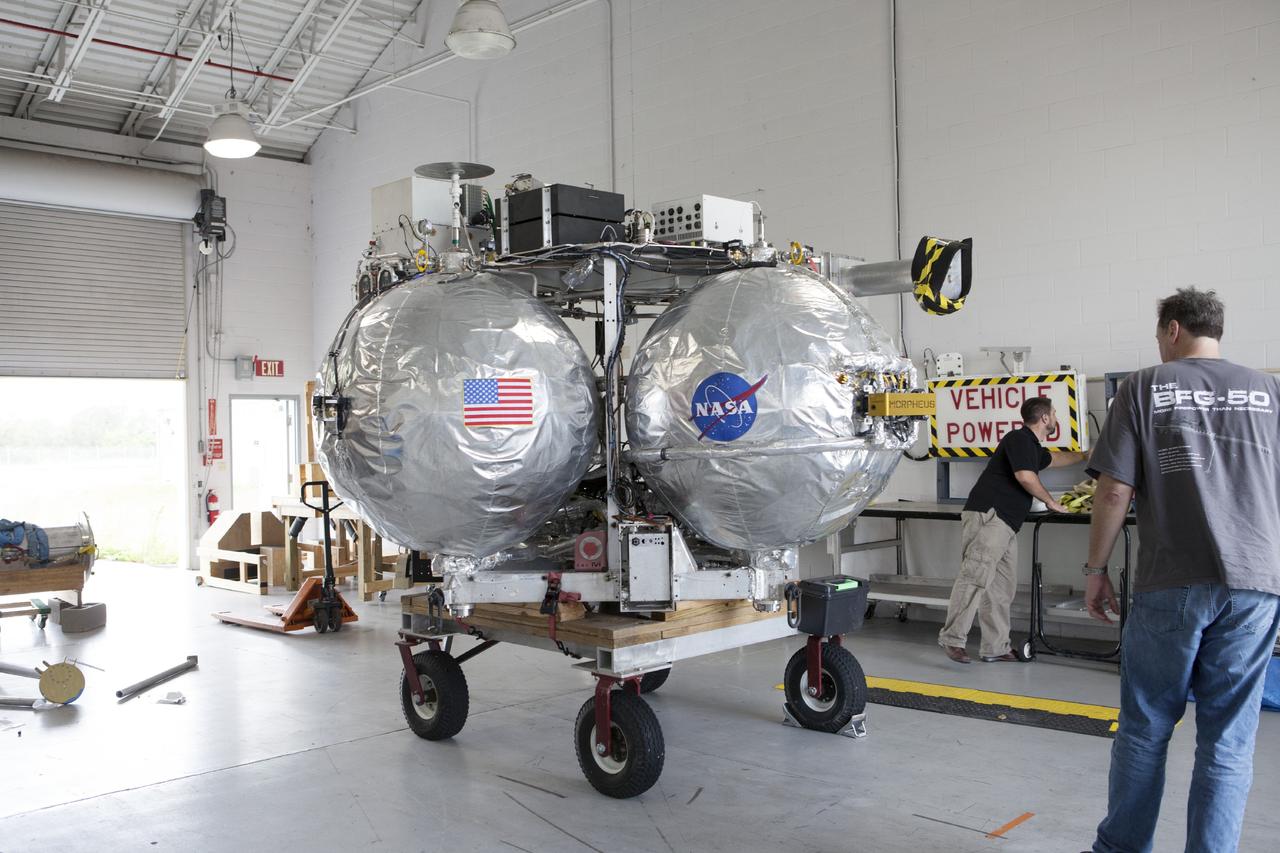
CAPE CANAVERAL, Fla. -- At NASA’s Kennedy Space Center in Florida, the Project Morpheus lander is moved into the bay of a support building at the Shuttle Landing Facility, or SLF. Testing of the prototype lander has been ongoing at NASA’s Johnson Space Center in Houston in preparation for free flight testing at Kennedy. The SLF will provide the lander with the kind of field necessary for realistic testing, complete with rocks, craters and hazards to avoid. Morpheus utilizes an autonomous landing and hazard avoidance technology, or ALHAT, payload that will allow it to navigate to clear landing sites amidst rocks, craters and other hazards during its descent. Project Morpheus is one of 20 small projects comprising the Advanced Exploration Systems, or AES, program in NASA’s Human Exploration and Operations Mission Directorate. AES projects pioneer new approaches for rapidly developing prototype systems, demonstrating key capabilities and validating operational concepts for future human missions beyond Earth orbit. For more information on Project Morpheus, visit http://www.nasa.gov/centers/johnson/exploration/morpheus/index.html. Photo credit: NASA/Kim Shiflett
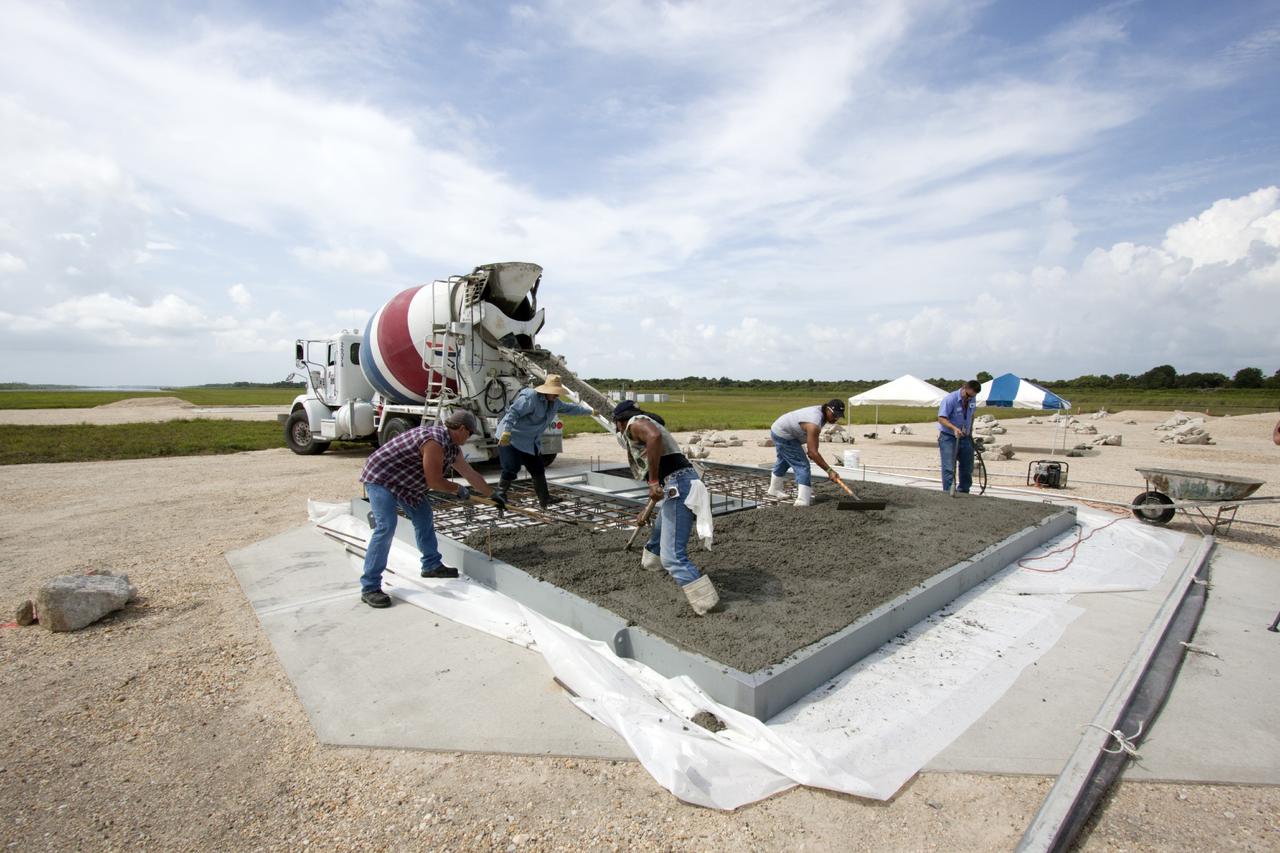
CAPE CANAVERAL, Fla. – At NASA’s Kennedy Space Center in Florida, technicians pour concrete onto the movable launch platform for the Project Morpheus lander at the north end of the Shuttle Landing Facility, or SLF. Testing of the prototype lander has been ongoing at NASA’s Johnson Space Center in Houston in preparation for free flight. The SLF will provide the lander with the kind of field necessary for realistic testing, complete with rocks, craters and hazards to avoid. Morpheus utilizes an autonomous landing and hazard avoidance technology, or ALHAT, payload that will allow it to navigate to clear landing sites amidst rocks, craters and other hazards during its descent. Project Morpheus is one of 20 small projects comprising the Advanced Exploration Systems, or AES, program in NASA’s Human Exploration and Operations Mission Directorate. AES projects pioneer new approaches for rapidly developing prototype systems, demonstrating key capabilities and validating operational concepts for future human missions beyond Earth orbit. For more information on Project Morpheus, visit http://www.nasa.gov/centers/johnson/exploration/morpheus/index.html. Photo credit: NASA/Jim Grossmann
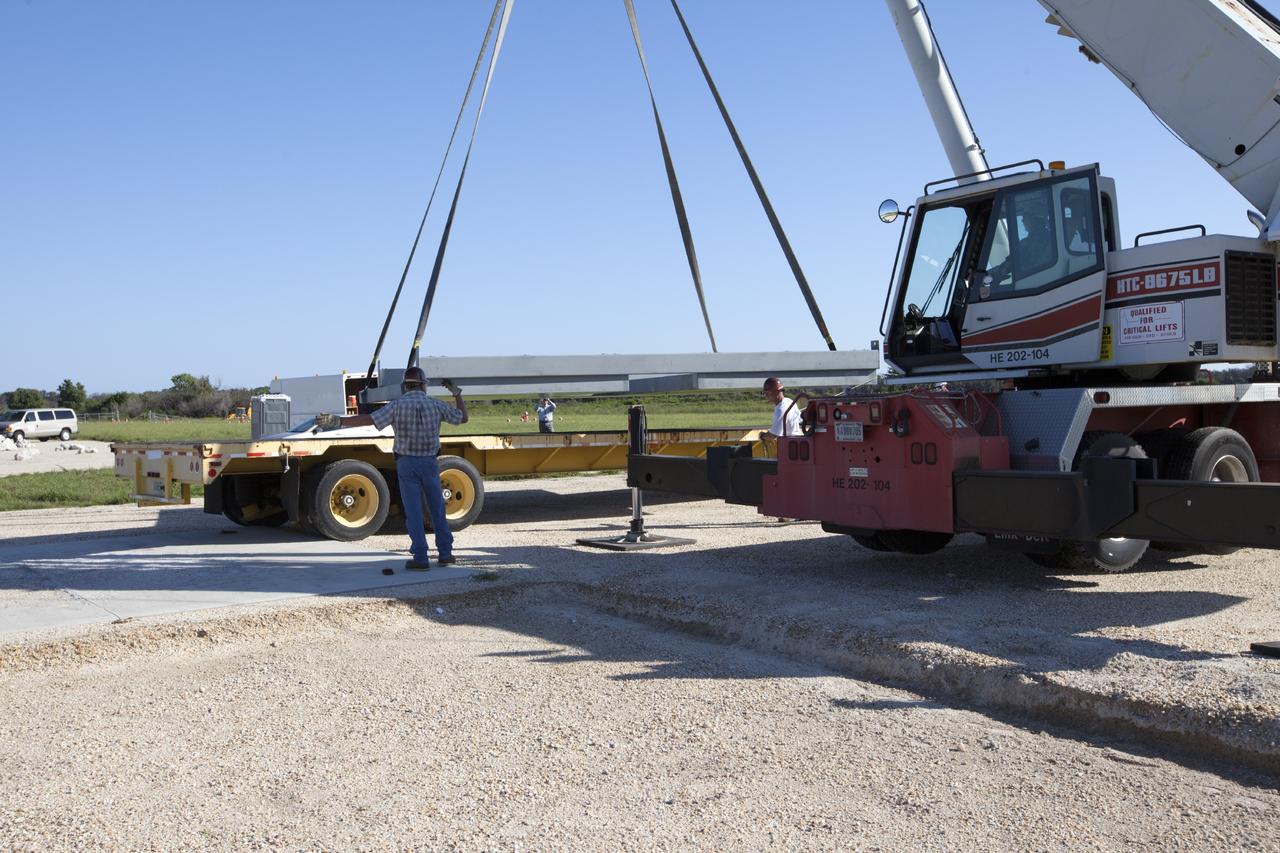
CAPE CANAVERAL, Fla. - At NASA’s Kennedy Space Center in Florida, workers enlist a crane to lift the movable launch platform for the Project Morpheus lander onto a flatbed truck for its move from the midfield to the north end of the Shuttle Landing Facility, or SLF. Testing of the prototype lander has been ongoing at NASA’s Johnson Space Center in Houston in preparation for free flight. The lander is scheduled for delivery to Kennedy in October. The SLF will provide the lander with the kind of field necessary for realistic testing, complete with rocks, craters and hazards to avoid. Morpheus utilizes an autonomous landing and hazard avoidance technology, or ALHAT, payload that will allow it to navigate to clear landing sites amidst obstacles during its descent. Project Morpheus is one of 20 small projects comprising the Advanced Exploration Systems, or AES, program in NASA’s Human Exploration and Operations Mission Directorate. AES projects pioneer new approaches for rapidly developing prototype systems, demonstrating key capabilities and validating operational concepts for future human missions beyond Earth orbit. For more information on Project Morpheus, visit http://www.nasa.gov/centers/johnson/exploration/morpheus/index.html. Photo credit: NASA/Kim Shiflett