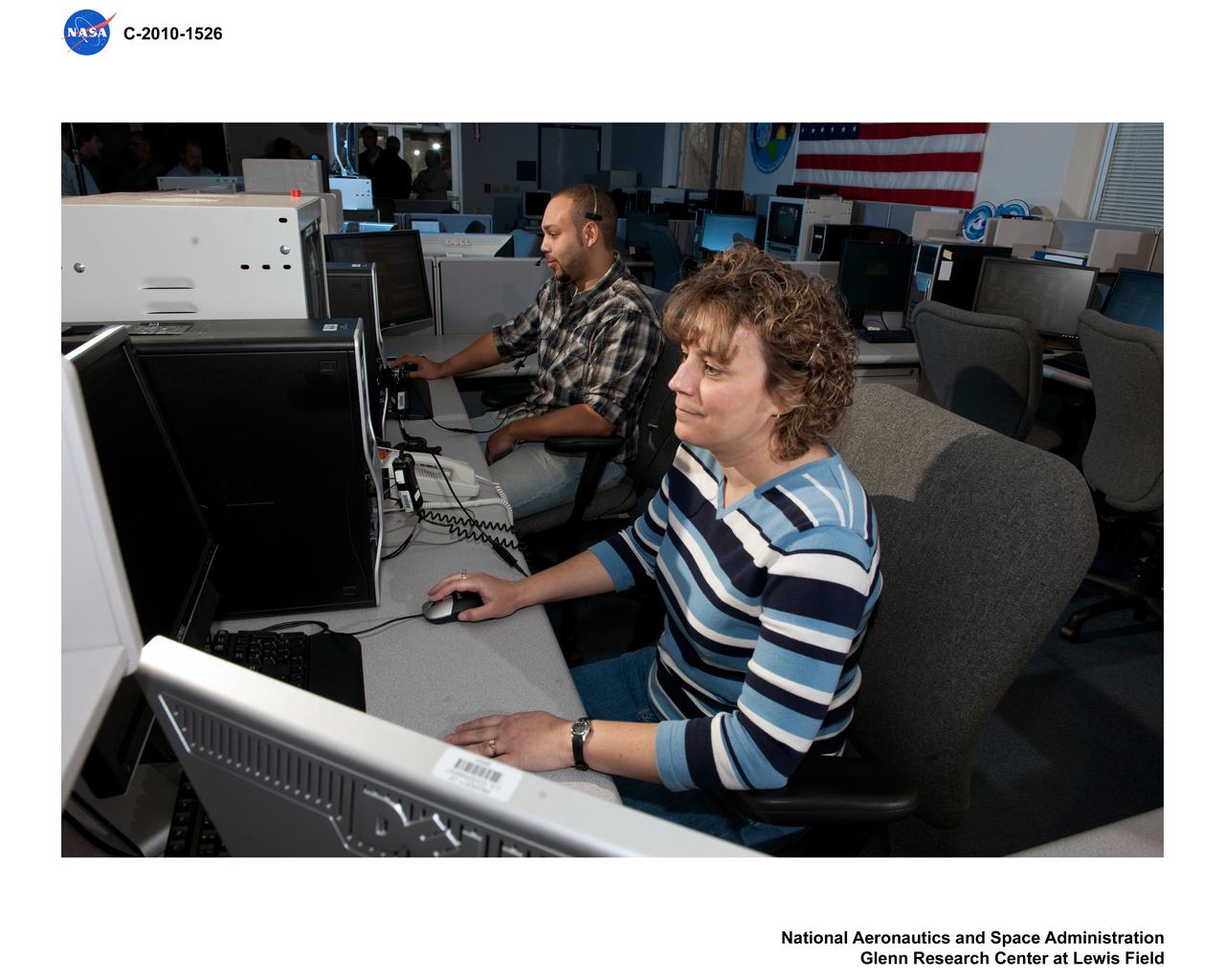
Project Personnel Conducting Flight Communication Operations in the Telescience Support Center
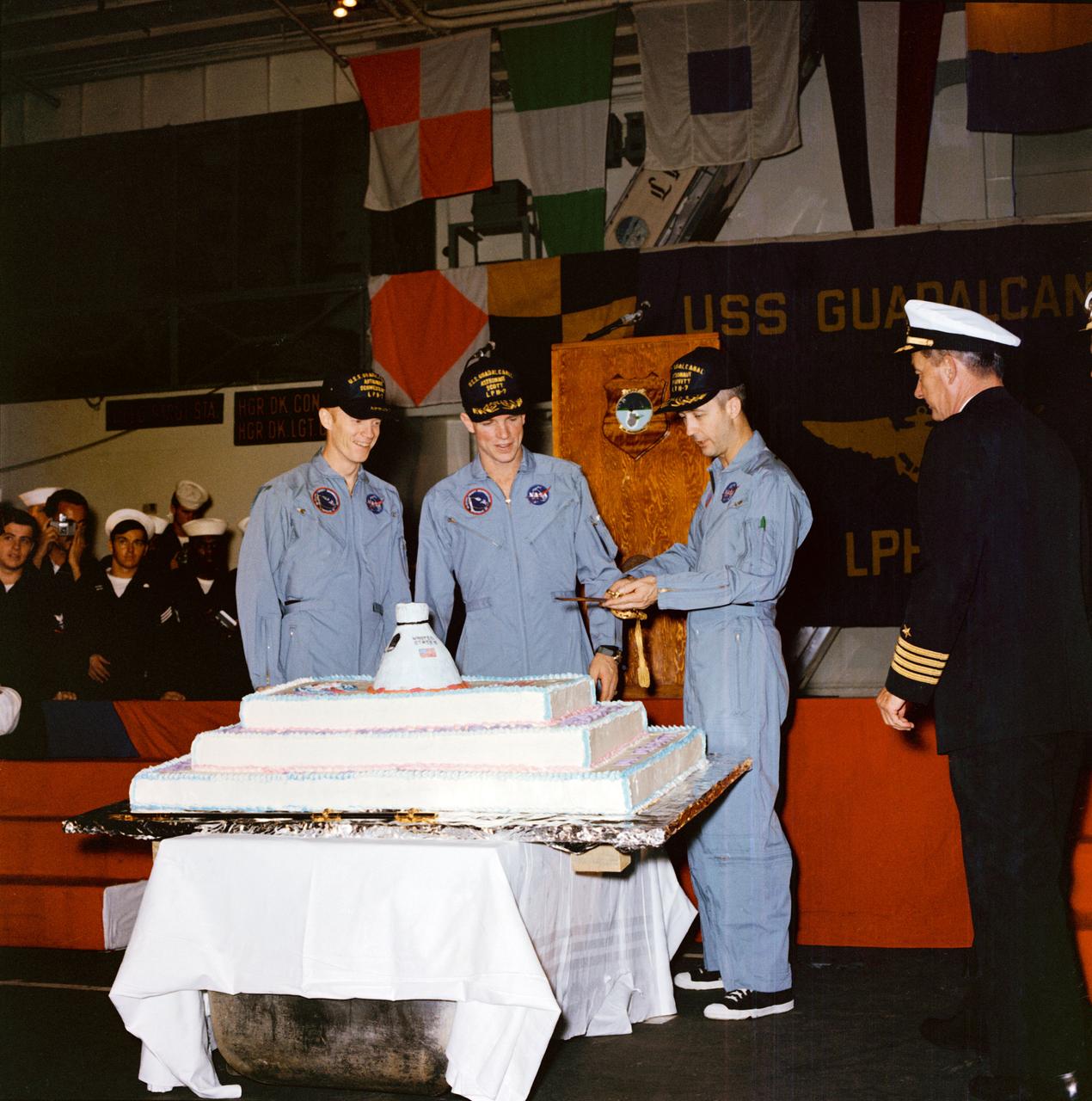
The Apollo 9 crew prepares to cut the 350-pound cake which was baked on the U.S.S. Guadalcanal in their honor. Left to right, are Astronauts Russell L. Schweickart, David R. Scott, and James A. McDivitt. Looking on at right is Capt. Roy M. Sudduth, commanding officer of the U.S.S. Guadalcanal.
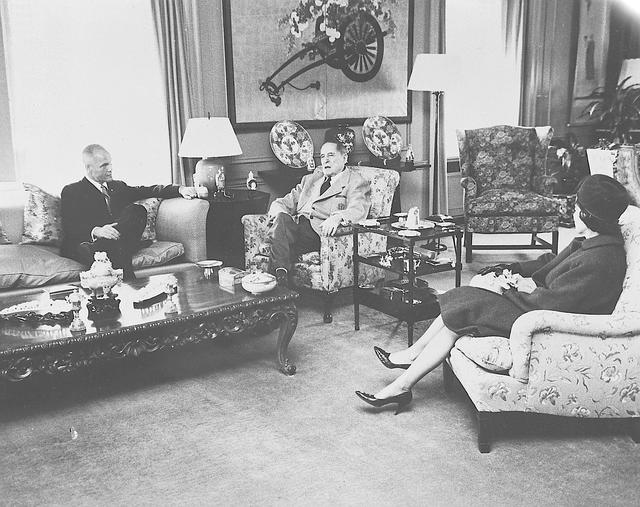
S62-02270 (1962) --- Astronaut John H. Glenn Jr. and wife visit with General Douglas McArthur in the Waldorf Astoria hotel. Photo credit: NASA
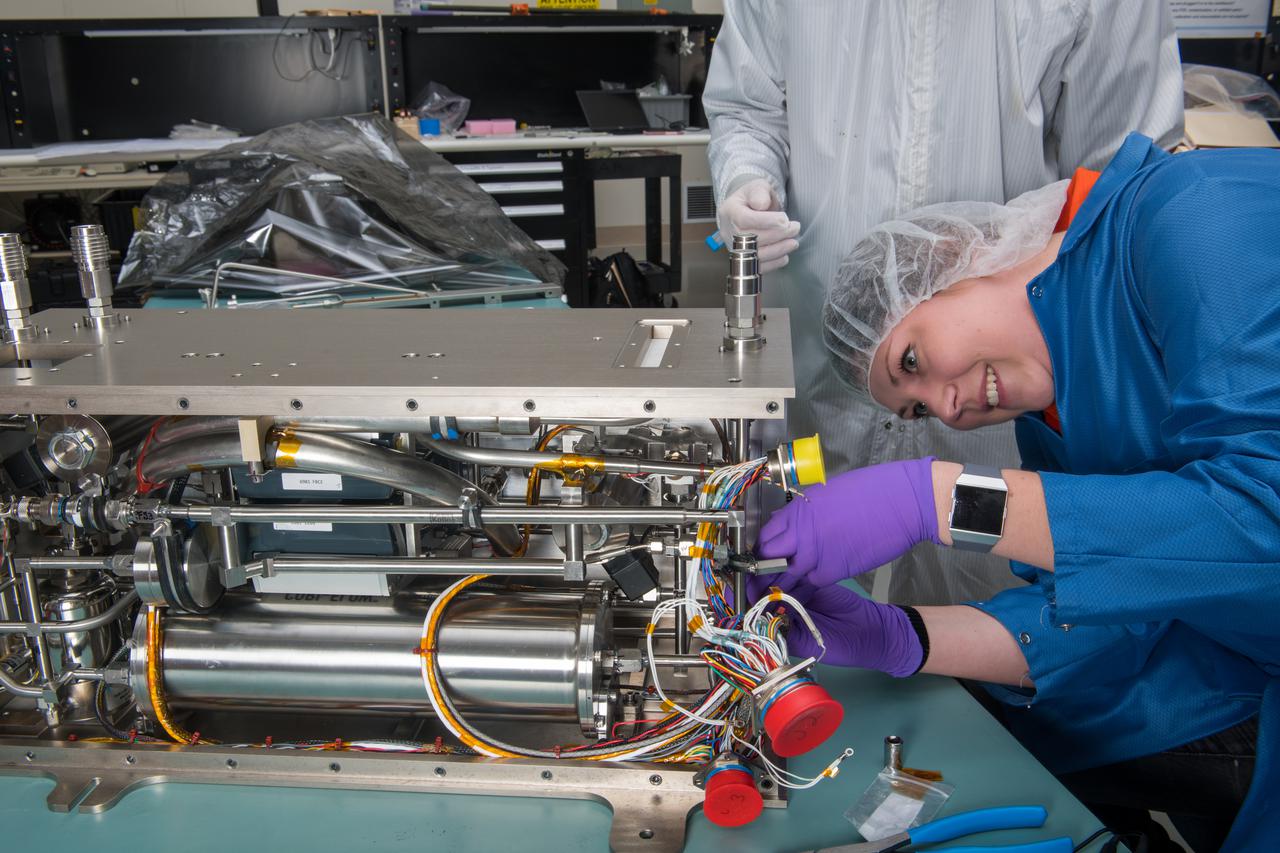
Flow Boiling and Condensation Experiment (FBCE) hardware. Project personnel perform engineering checks on the Fluid Module 1 prior to final hardware assembly.
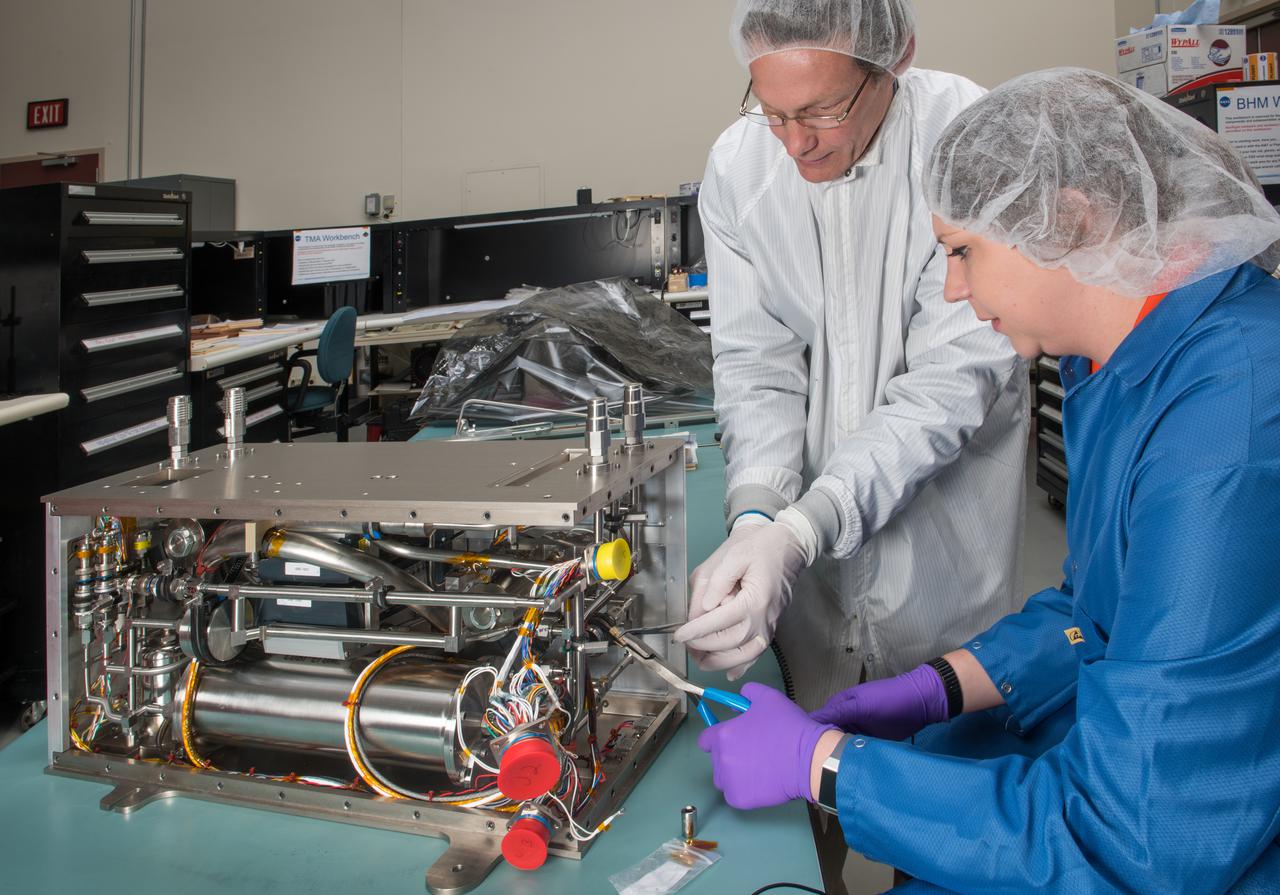
Flow Boiling and Condensation Experiment (FBCE) hardware. Project personnel perform engineering checks on the Fluid Module 1 prior to final hardware assembly.

STS-135 Space Shuttle's final crew of Astronauts Ferguson, Hurley, Magnus and Walheim visit Ames for a mission/project briefing and with a meet and greet of Ames personnel,
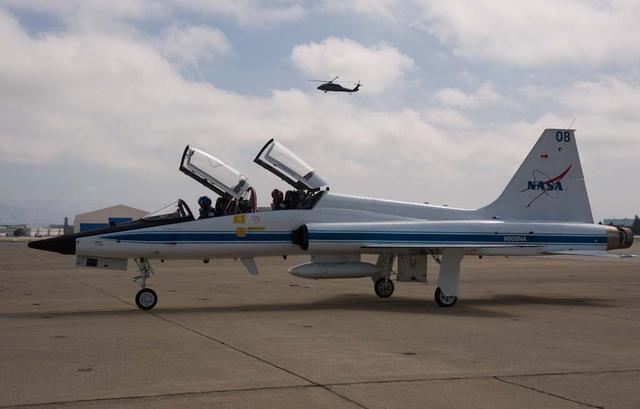
STS-135 Space Shuttle's final crew of Astronauts Ferguson, Hurley, Magnus and Walheim visit Ames for a mission/project briefing and with a meet and greet of Ames personnel, arrival in t-38 trainers
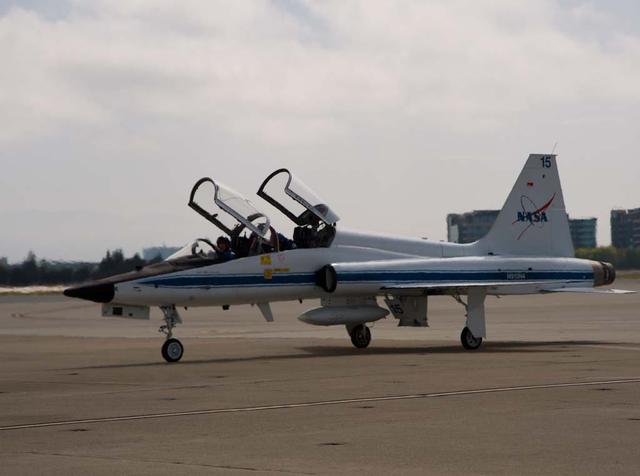
STS-135 Space Shuttle's final crew of Astronauts Ferguson, Hurley, Magnus and Walheim visit Ames for a mission/project briefing and with a meet and greet of Ames personnel, arrival in t-38 trainers
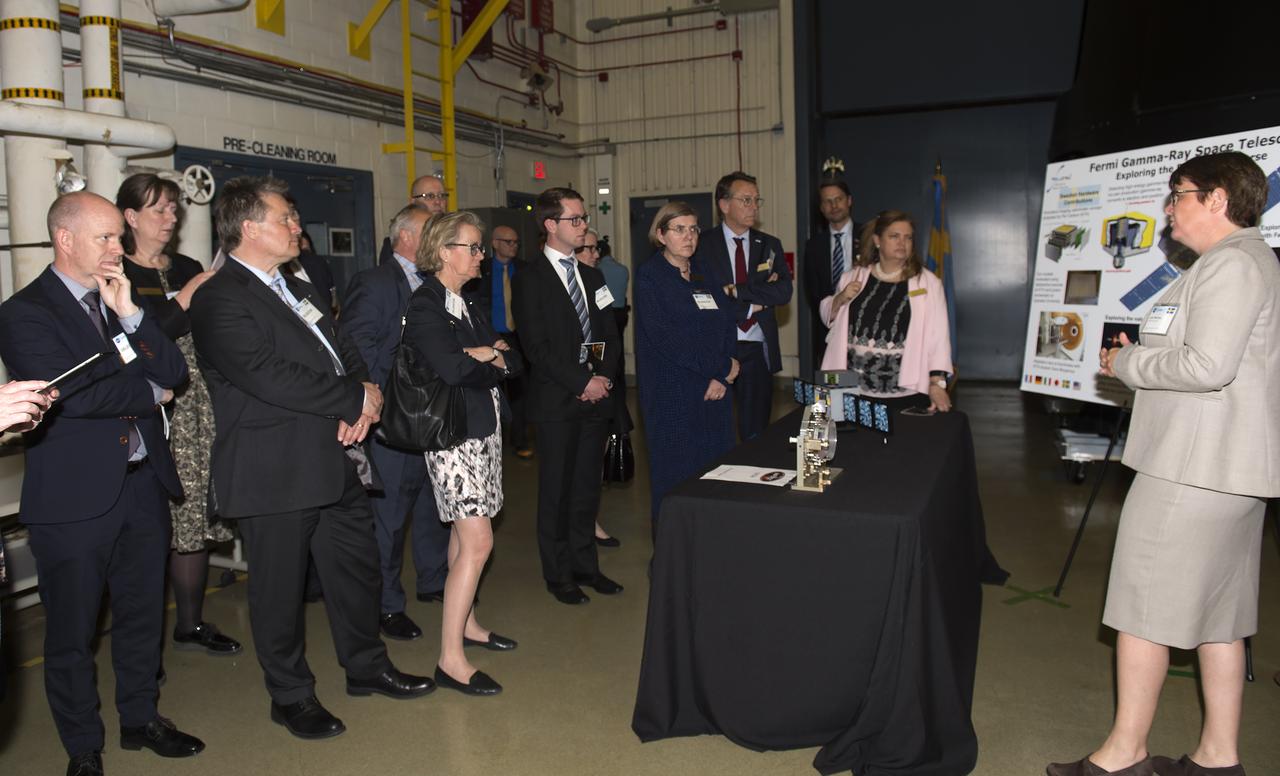
Swedish Delegation visit Goddard on May 3, 2017. Members of the Royal Swedish Academy of Engineering Sciences listen as Wide Field Infrared Survey Telescope (WFIRST) project personnel give an overview of the mission
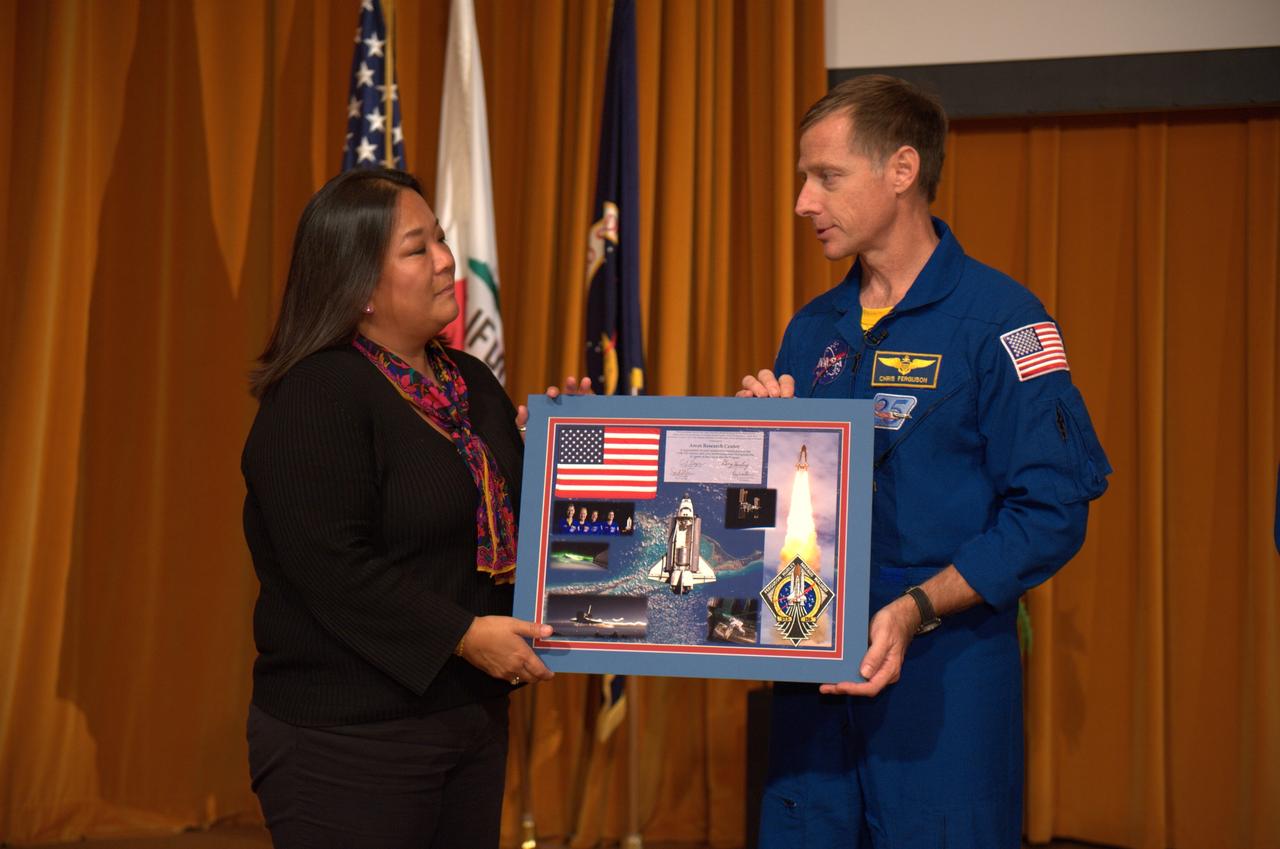
STS-135 Space Shuttle's final crew of Astronauts Ferguson, Hurley, Magnus and Walheim visit Ames for a mission/project briefing and with a meet and greet of Ames personnel. STS-135 Mission Commander Ferguson presents Deb Feng, Acting Deputy Center Director with a mission remembrance.
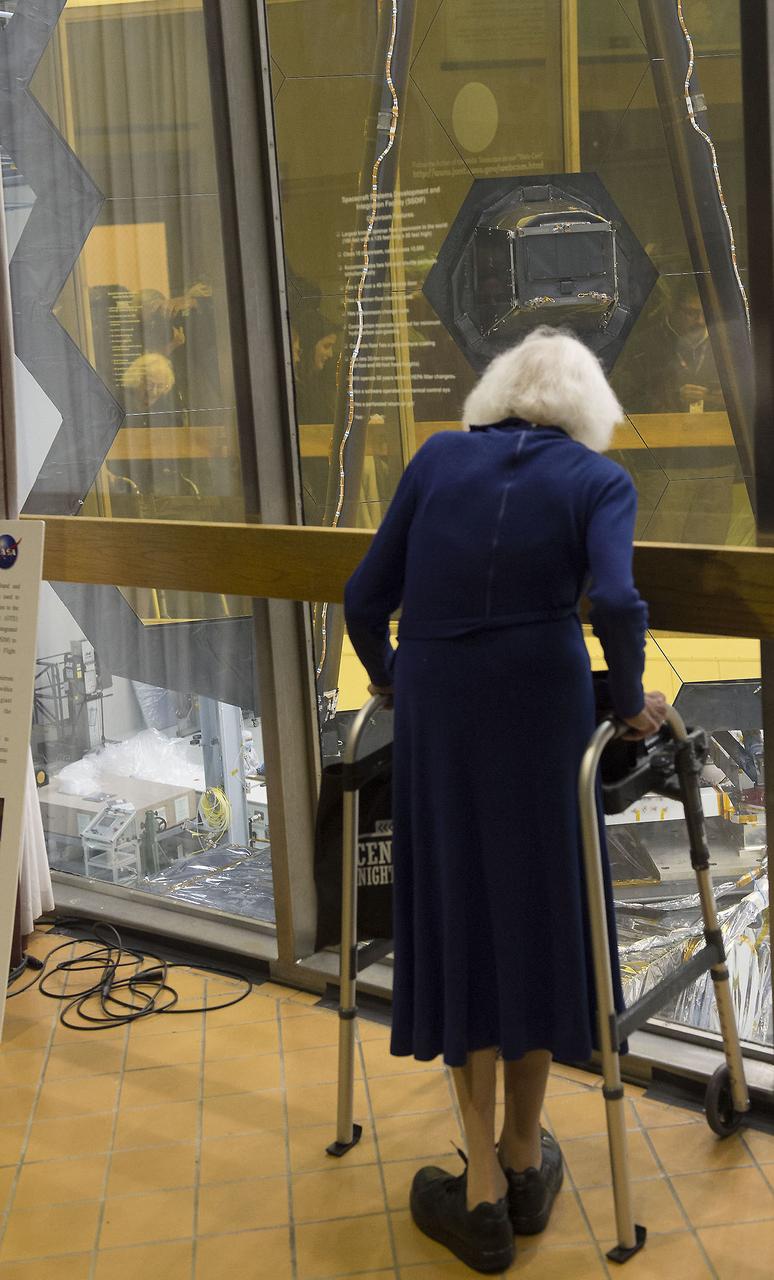
Employees viewed James Webb Space Telescope in B29 on March 31, 2017 prior to final phase of integration and testing before 2018 launch. Project personnel were on hand for Q&A and LIVE Facebook event. Pictured here is Nancy Grace Roman “Mother of Hubble” viewing JWST.
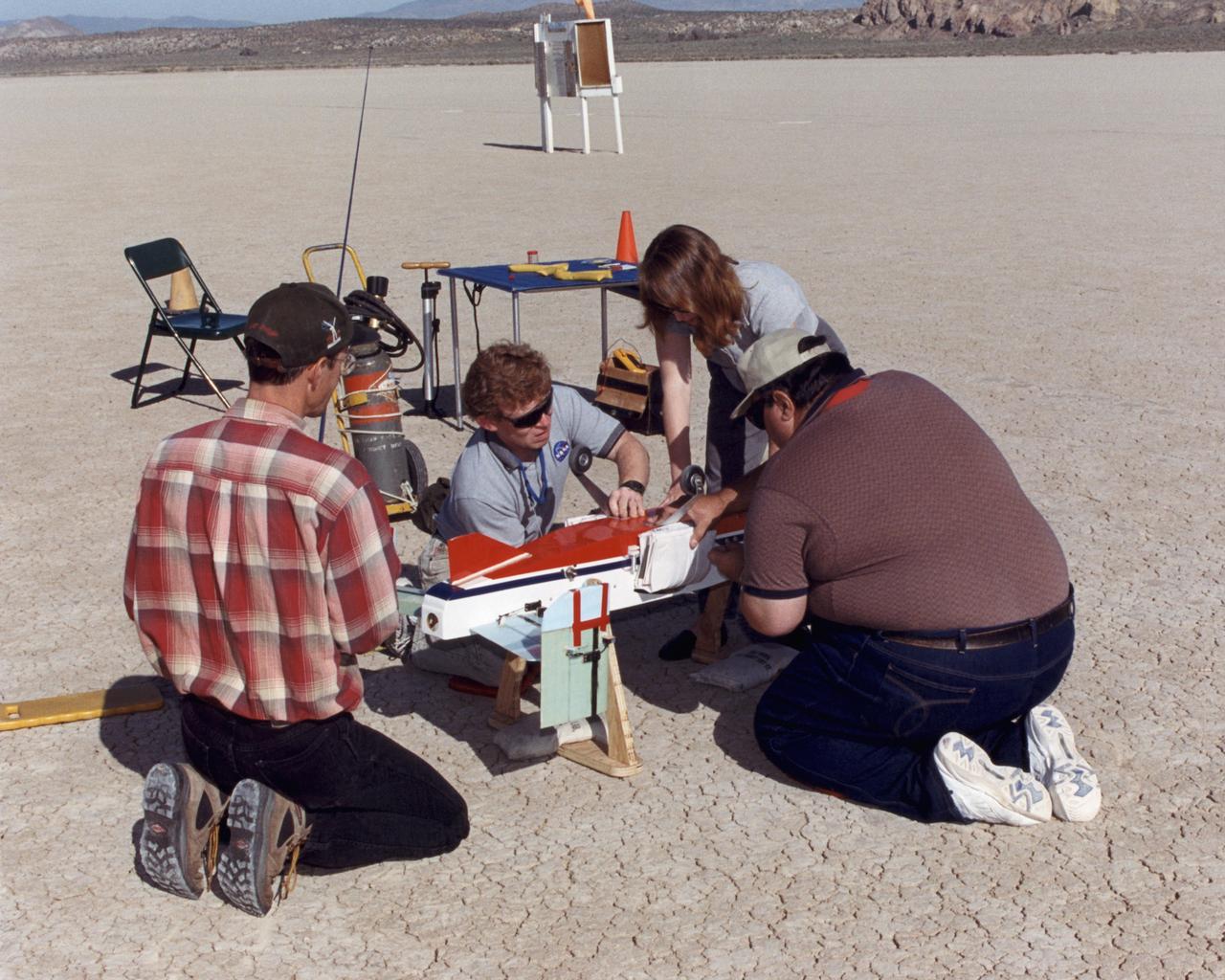
Inflatable Wing project personnel prepare a deployable, inflatable wing technology demonstrator experiment flown by the NASA Dryden Flight Research Center, Edwards, California. The inflatable wing project represented a basic flight research effort by Dryden personnel. Three successful flights of the I2000 inflatable wing aircraft occurred. During the flights, the team air-launched the radio-controlled (R/C) I2000 from an R/C utility airplane at an altitude of 800-1000 feet. As the I2000 separated from the carrier aircraft, its inflatable wings "popped-out," deploying rapidly via an on-board nitrogen bottle. The aircraft remained stable as it transitioned from wingless to winged flight. The unpowered I2000 glided down to a smooth landing under complete control.
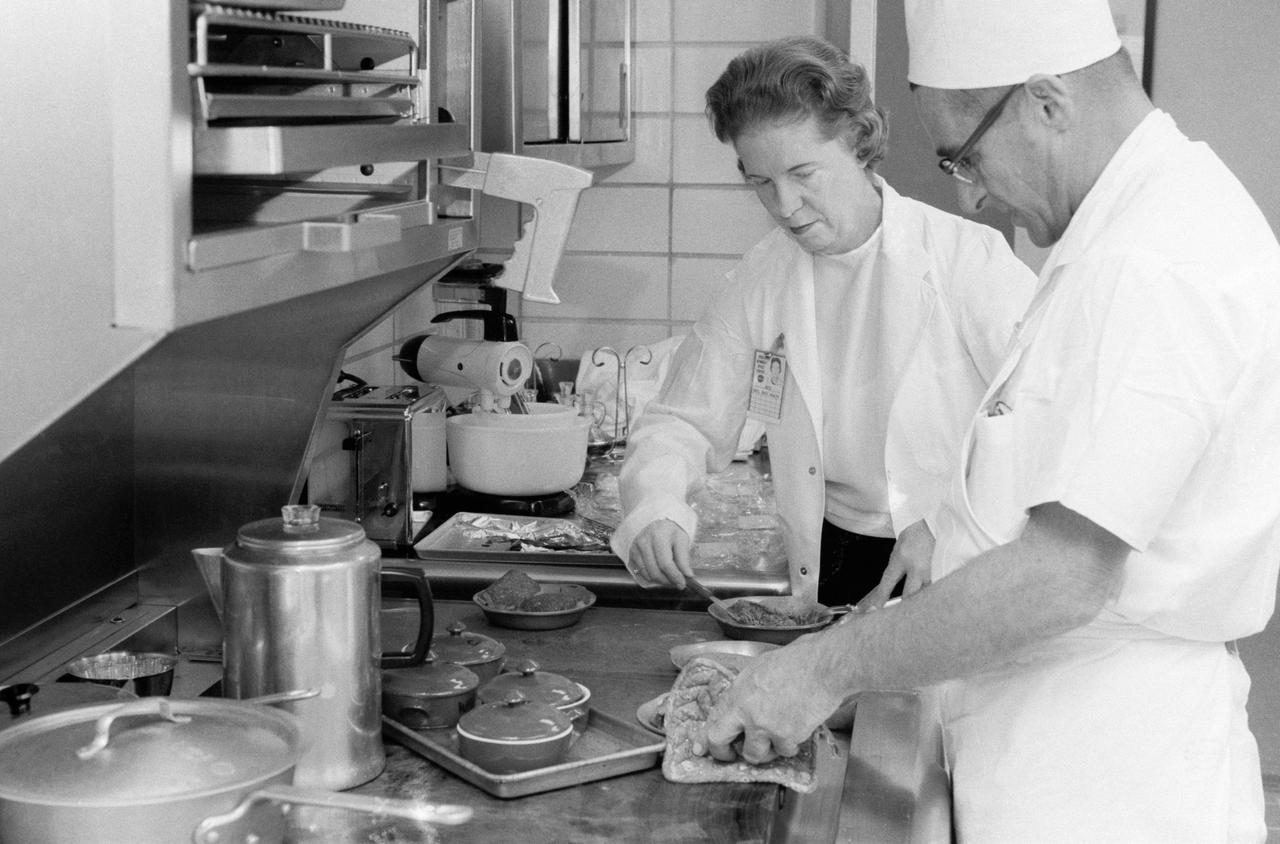
S65-56311 (2 Dec. 1965) --- Kennedy Space Center food specialists prepare an Earth-bound meal for Gemini-7 astronauts. Astronauts' diet is strictly controlled before and during spaceflights to avoid interfering with planned medical experiments. Photo credit: NASA
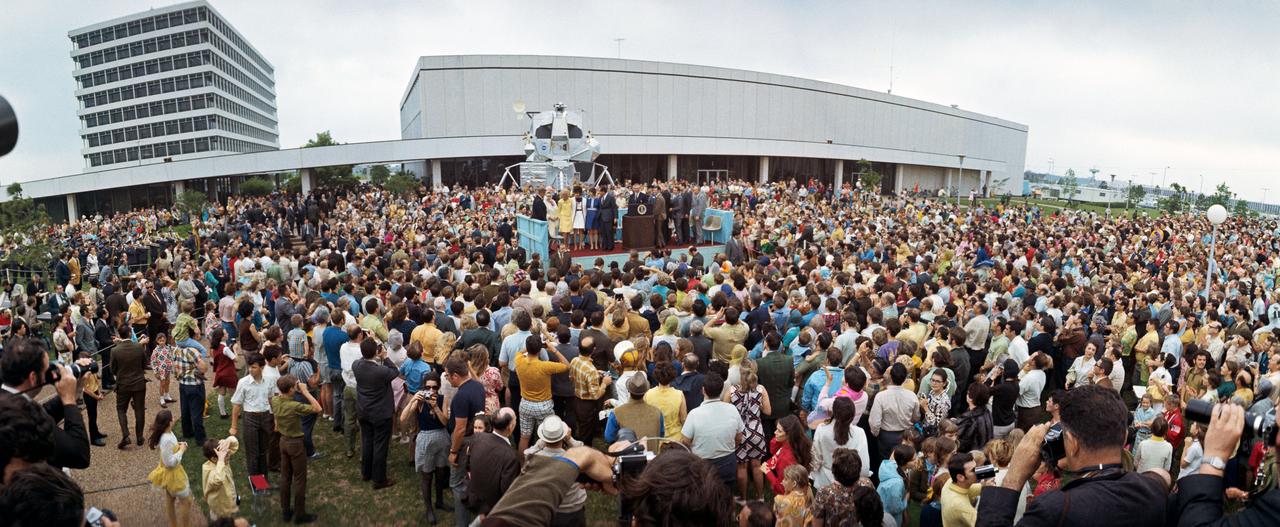
S70-35601 (18 April 1970) --- A wide-angle, overall view of the large crowd of people who were on hand to see President Richard M. Nixon present the Presidential Medal of Freedom to the Apollo 13 Mission Operations Team. The honor is the nation's highest civilian award. A temporary speaker's platform was erected beside Building 1 for the occasion.
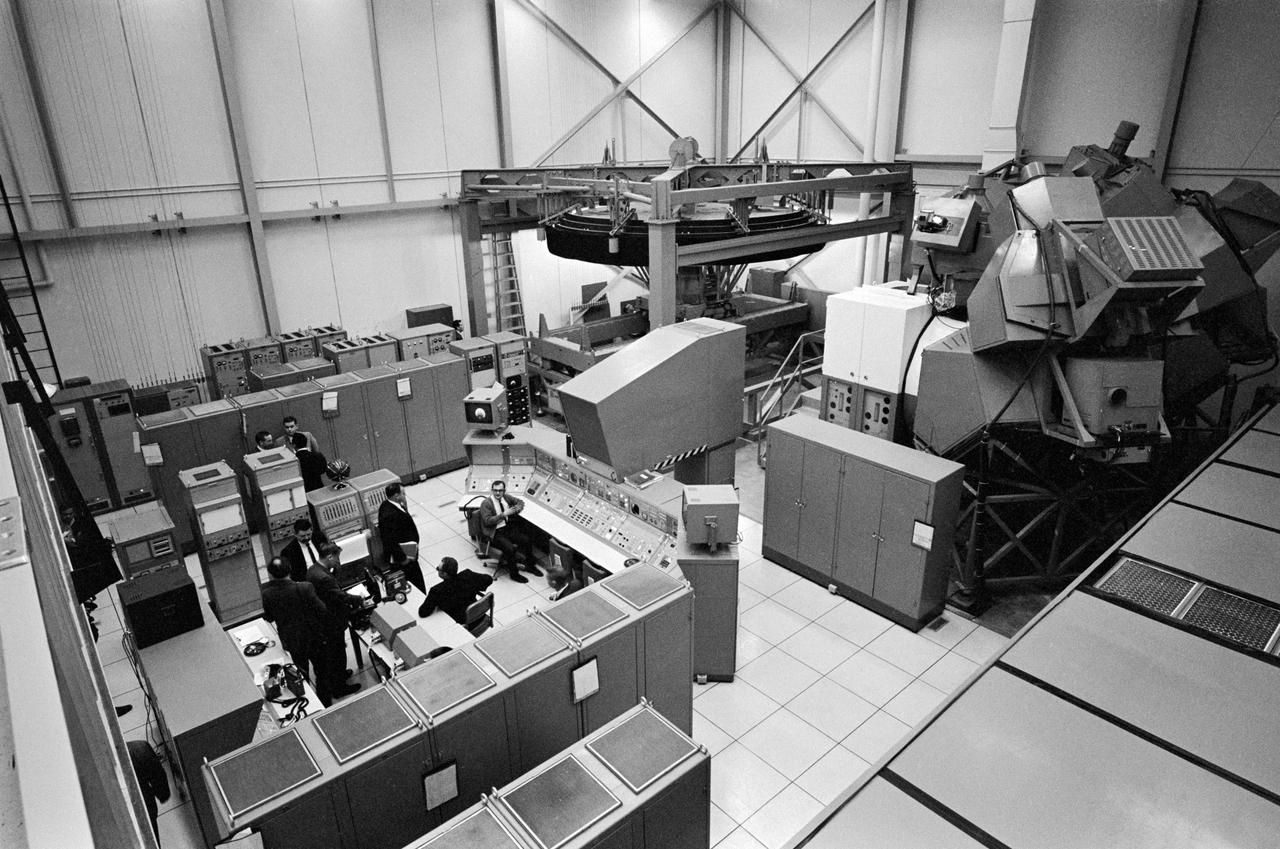
Overall view of the Lunar Module Mission Simulator, an astronaut training facility located in bldg 5.
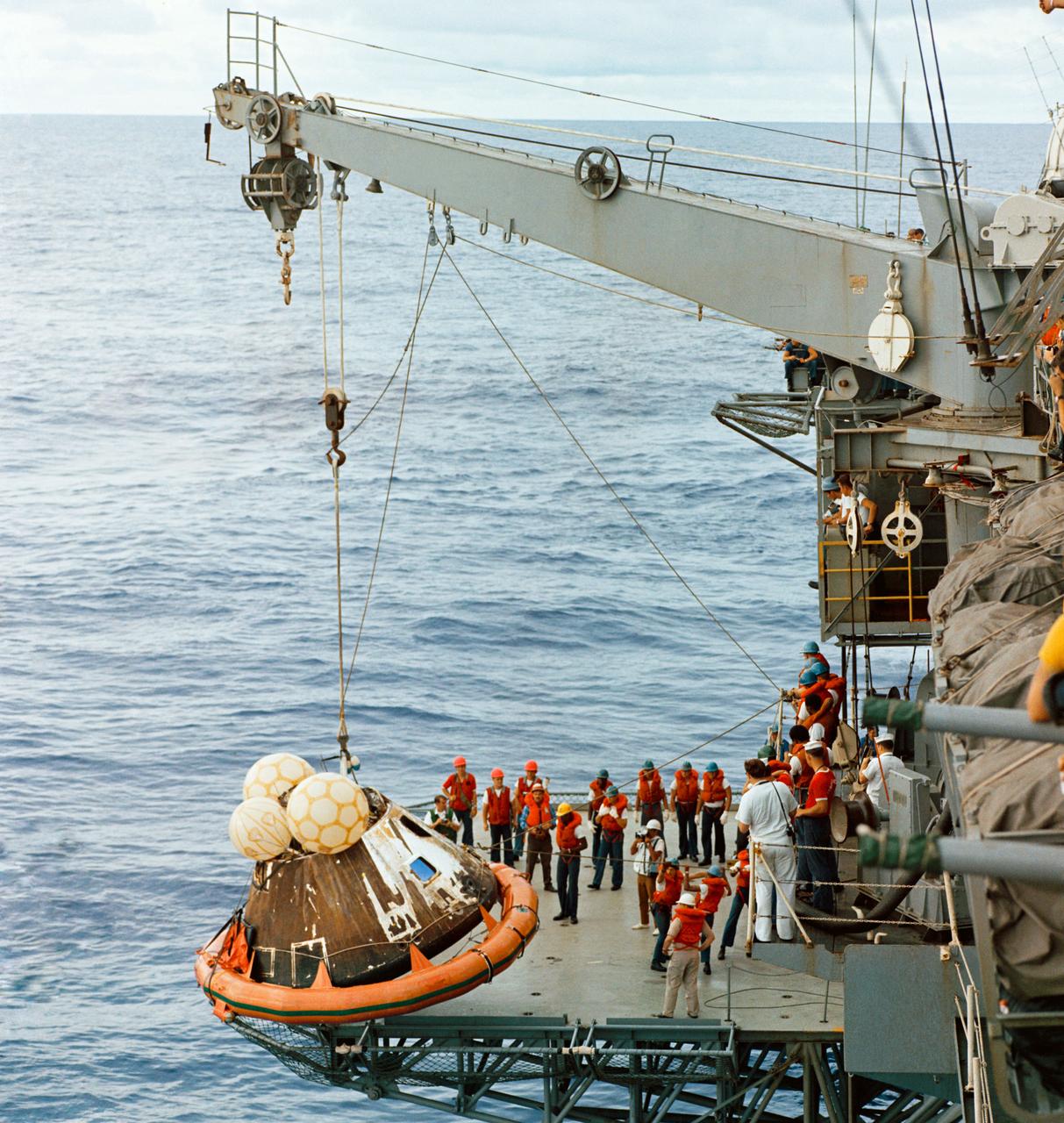
S70-15530 (17 April 1970) --- Crew men aboard the USS Iwo Jima, prime recovery ship for the Apollo 13 mission, hoist the Command Module (CM) aboard ship. The Apollo 13 crew men, astronauts James A. Lovell Jr., John L. Swigert Jr. and Fred W. Haise Jr., were already aboard the Iwo Jima when this photograph was taken. The CM, with the three tired crew men aboard, splashed down at 12:07:44 p.m. (CST), April 17, 1970, only about four miles from the recovery vessel in the South Pacific Ocean.
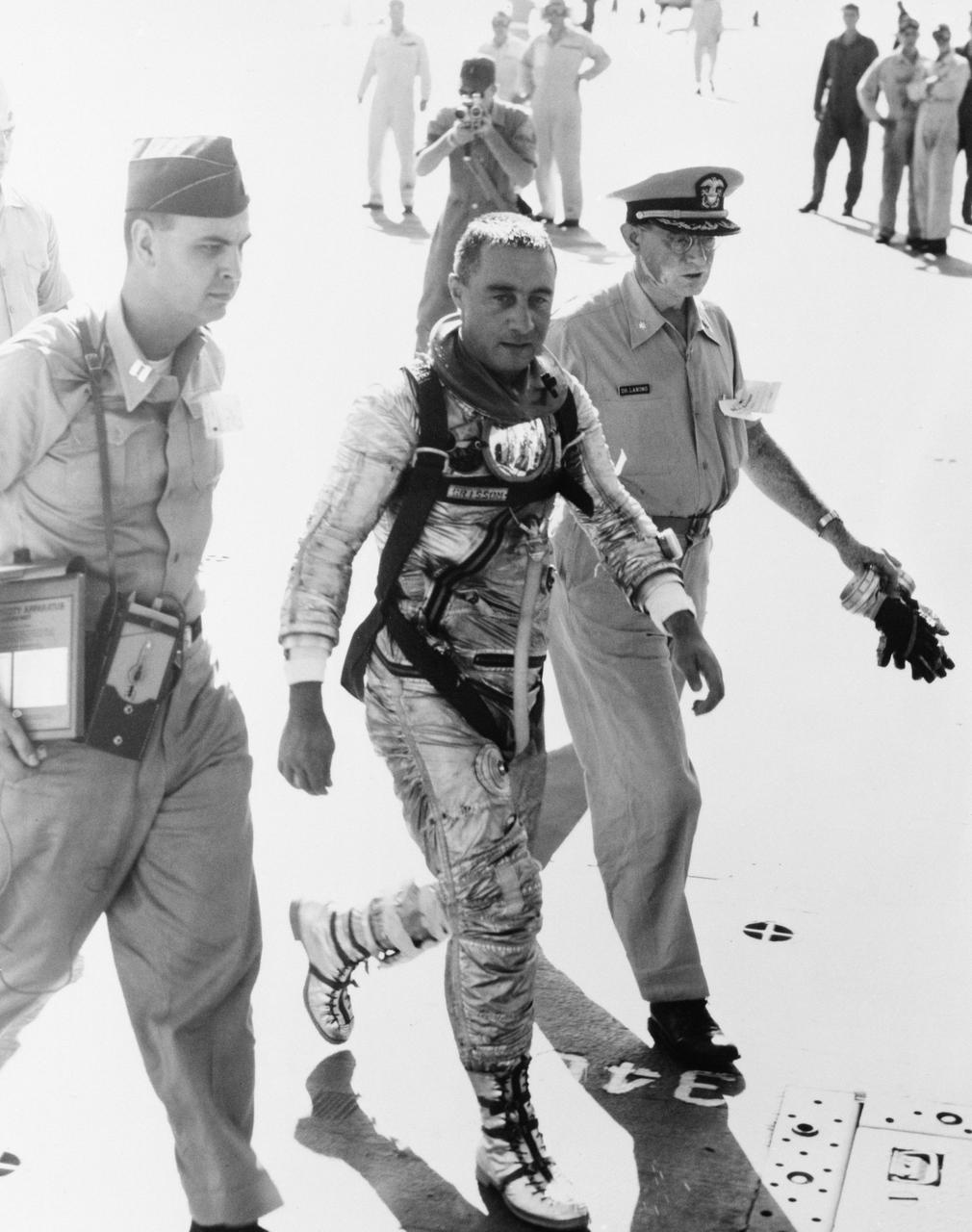
S61-02894 (21 July 1961) --- Astronaut Virgil I. (Gus) Grissom, pilot of the Mercury-Redstone 4 (MR-4) “Liberty Bell 7” spaceflight, arrives aboard the recovery ship, USS Randolph, following his 15-minute, 37-second suborbital space mission. He is flanked by military medical officers. Photo credit: NASA
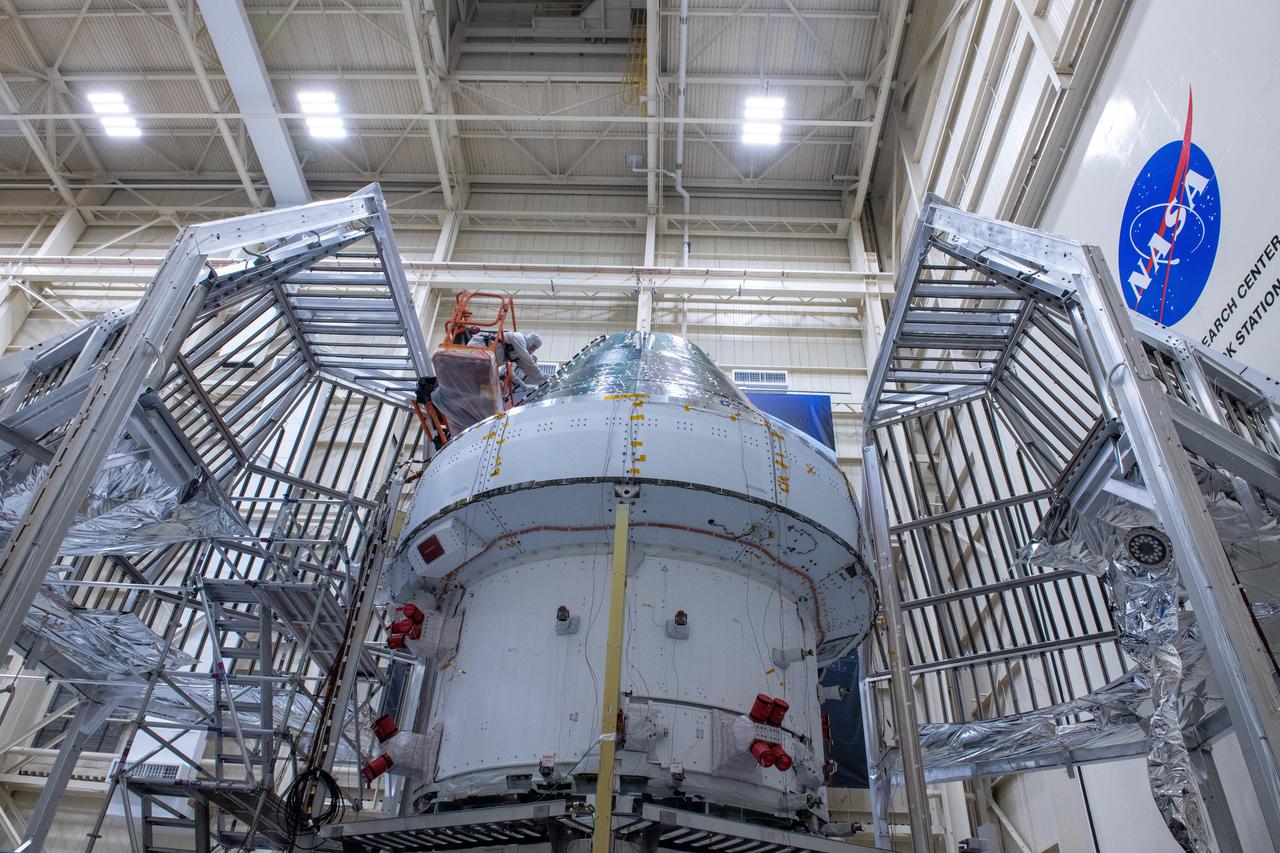
Orion - EM-1 - Artemis Spacecraft Arrival at Mansfield Lahm Airport, Transportation to Plum Brook Station and Installation in the Space Environment Complex, SEC Thermal Vacuum Chamber
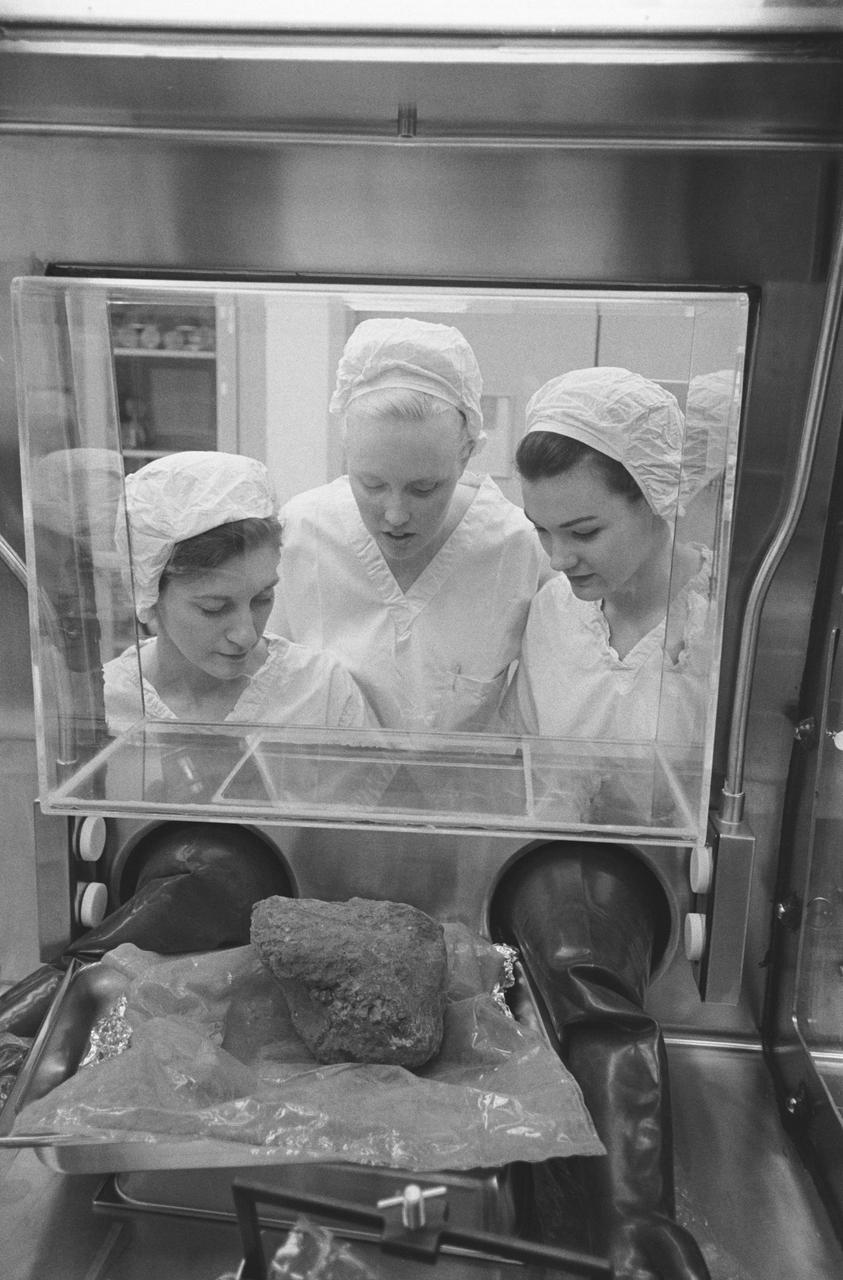
S71-21244 (24 Feb. 1971) --- Three Brown and Root/Northrop technicians in the Nonsterile Nitrogen Laboratory in the Lunar Receiving Laboratory (LRL) peer through glass at the much-discussed basketball size rock which Apollo 14 crewmen brought back from the Fra Mauro area of the moon. They are, left to right, Linda Tyler, Nancy L. Trent and Sandra Richards.
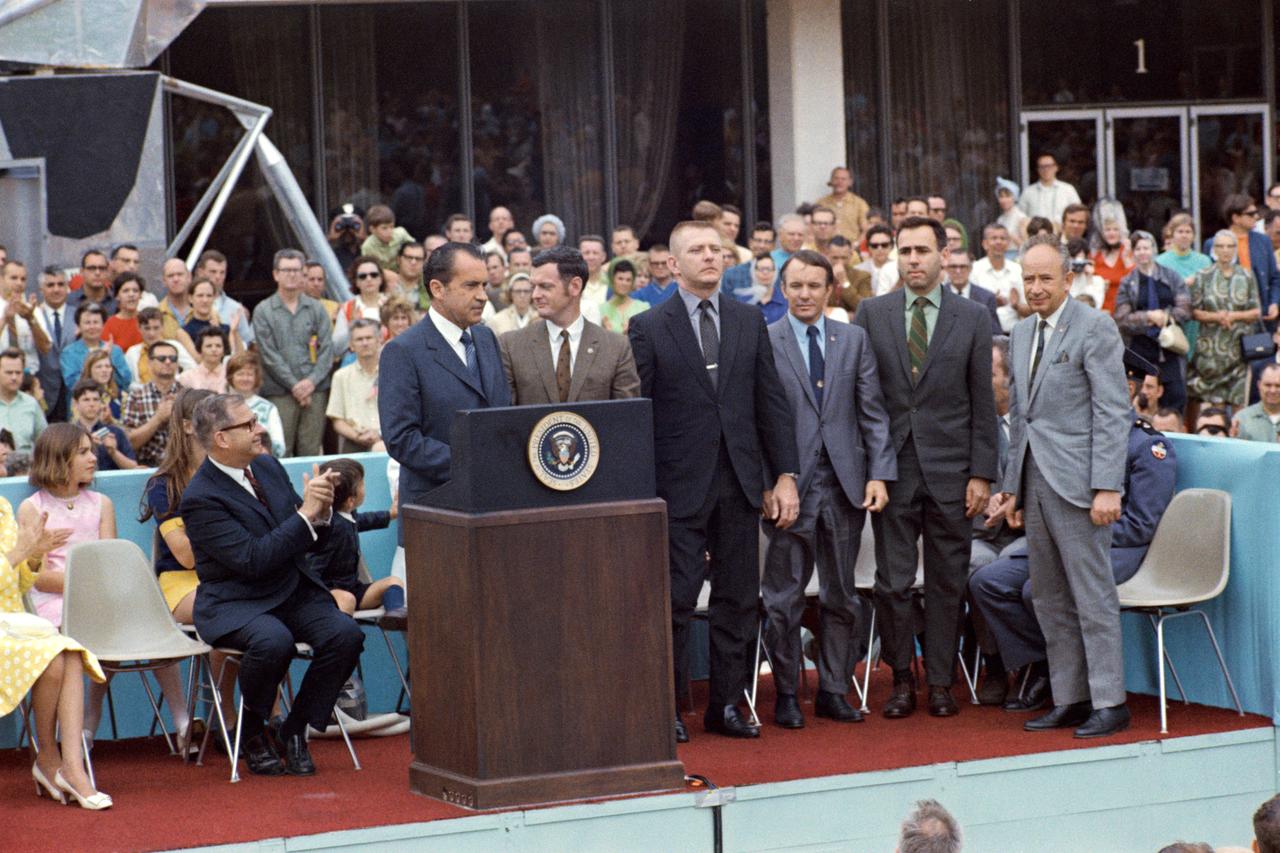
S70-35600 (18 April 1970) --- President Richard M. Nixon introduces Sigurd A. Sjoberg (far right), director of Flight Operations at Manned Spacecraft Center, and the four Apollo 13 flight directors during the President?s post-mission visit to the Manned Spacecraft Center. The flight directors are, from left to right, Glynn S. Lunney, Eugene A. Kranz, Gerald D. Griffin and Milton L. Windler. Dr. Thomas O. Paine, Administrator, National Aeronautics and Space Administration, is seated at left. President Nixon was on the site to present the Presidential Medal of Freedom - the nation?s highest civilian honor -to the Apollo 13 Mission Operations Team.
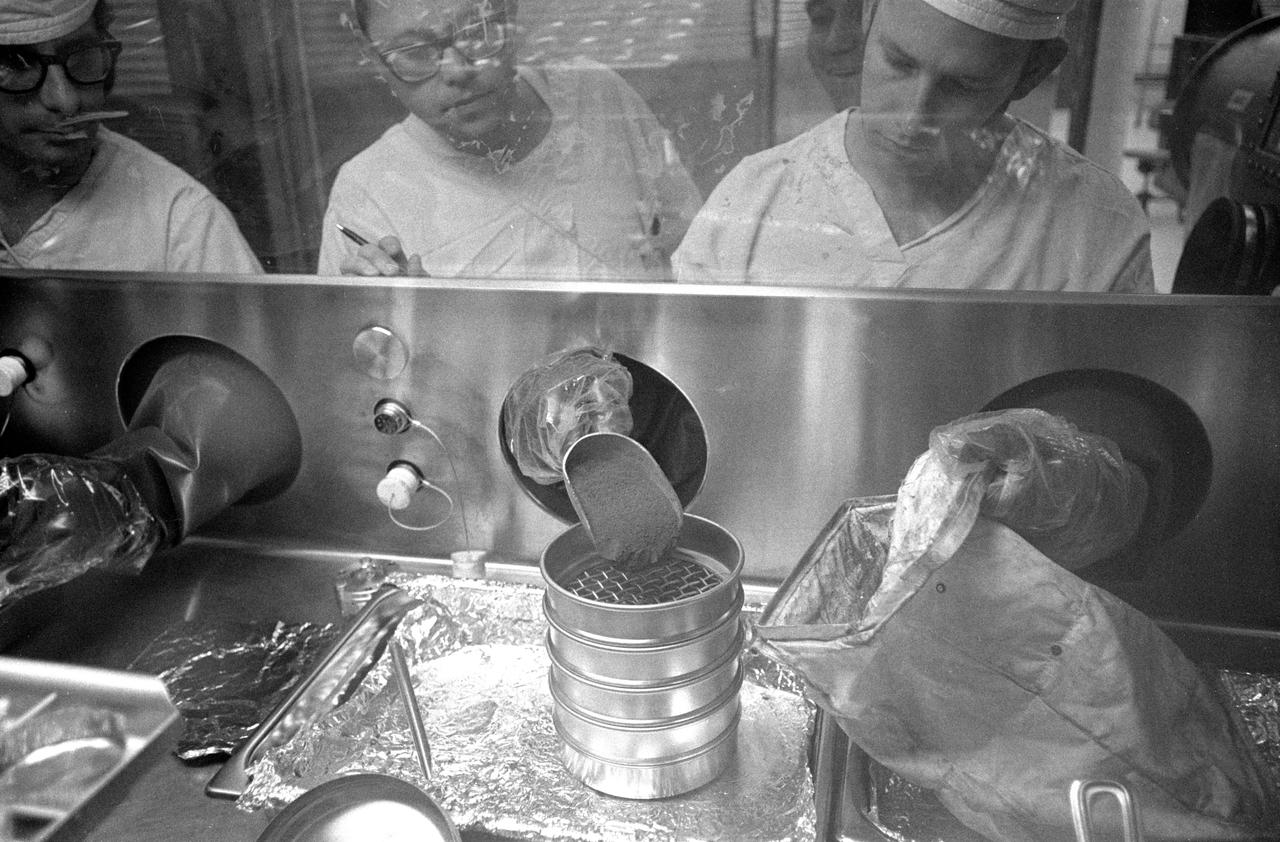
S71-19489 (18 Feb. 1971) --- Glove handlers work with freshly opened Apollo 14 lunar sample material in modularized cabinets in the Lunar Receiving Laboratory at the Manned Spacecraft Center. The glove operator on the right starts to pour fine lunar material which he has just taken from a tote bag. The powdery sample was among the last to be revealed of the 90-odd pounds of material brought back to Earth by the Apollo 14 crew members.
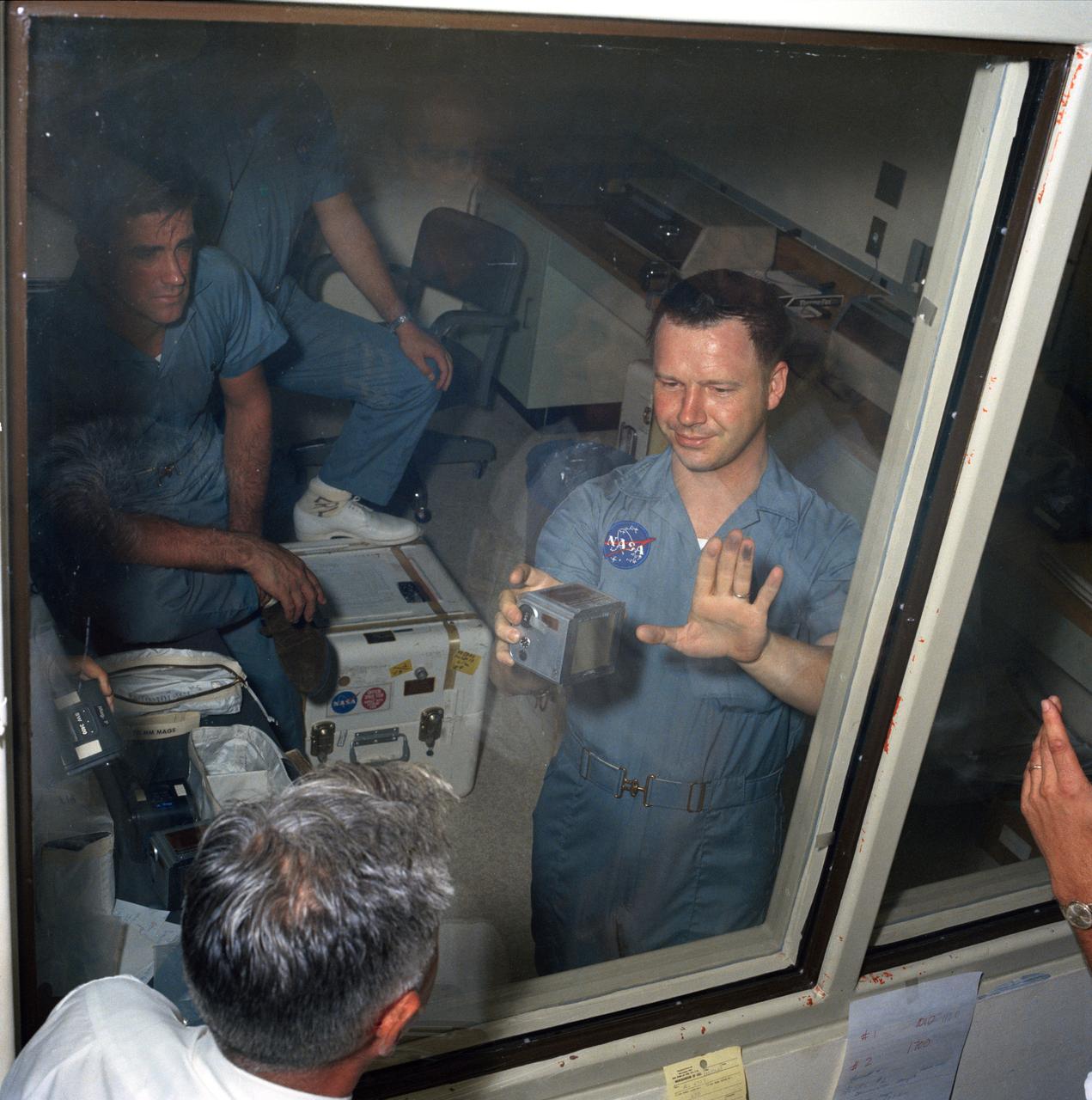
The first direct exposure to Lunar material for Crew Reception Personnel probably happened late Friday, 07/25/1969. Terry Slezak (displaying Moon dust on his left hand fingers), MSC photographic technician, was removing film magazines from the first of two (2) containers when the incident occurred. As he removed the plastic seal from Magazine "S", one of the 70mm magazines taken during Apollo XI Extravehicular Activity (EVA), it was apparent that the exterior of the cassette displayed traces of a black powdery substance. Apollo XI Commander Neil Armstrong reported during the mission that he had retrieved a 70mm cassette which had dropped to the Lunar surface. Seen in the backgound is John H. Boynton. ( S69-40054 ) MSC, Houston, TX
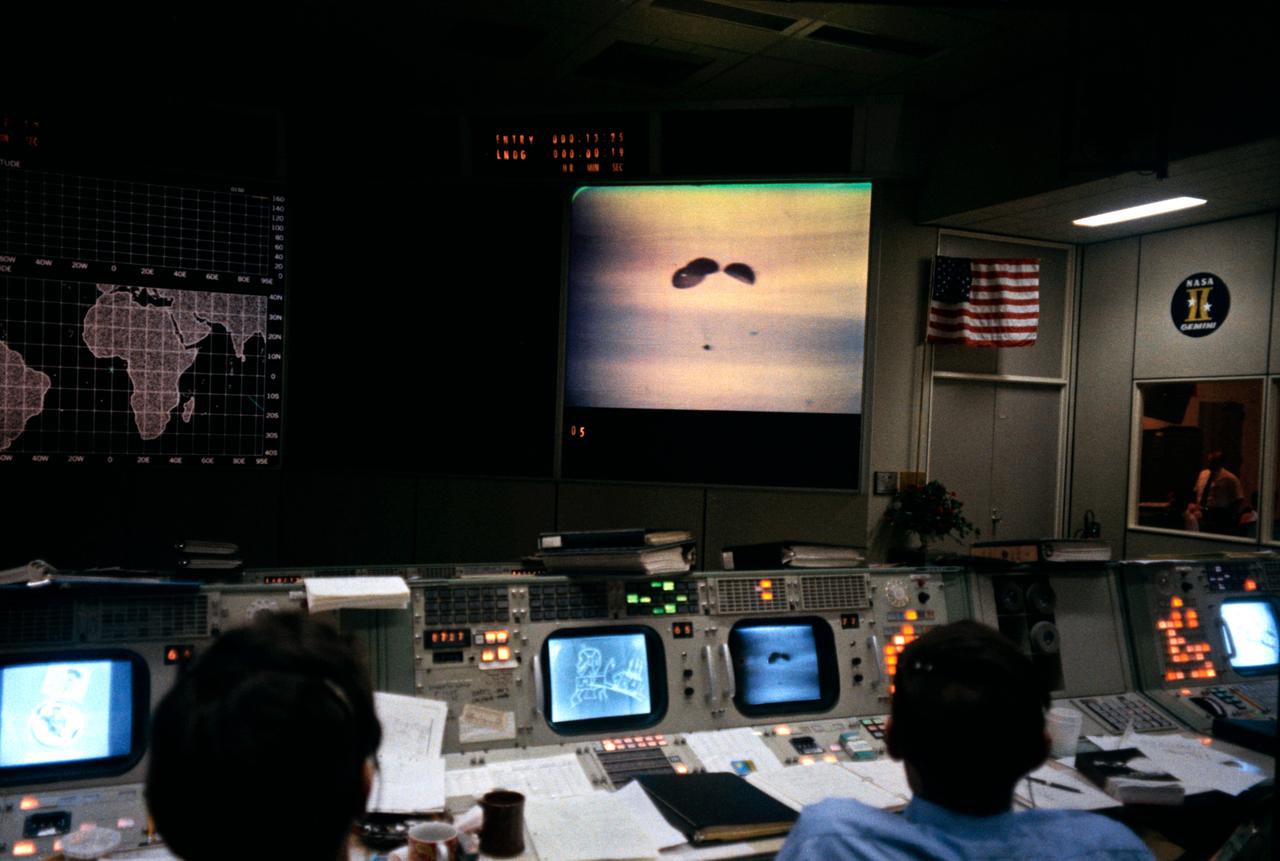
S70-35471 (17 April 1970) --- Two flight controllers man consoles in the Missions Operations Control Room (MOCR) of the Mission Control Center (MCC) at the Manned Spacecraft Center (MSC), Houston, Texas, just before splashdown occurred in the south Pacific Ocean. Though the MOCR does not appear to be crowded in this photo, there was a very large crowd of persons on hand for the splashdown and recovery operations coverage. Most of the group crowded around in the rear of the room. Apollo 13 splashdown occurred at 12:07:44 p.m. (CST), April 17, 1970.
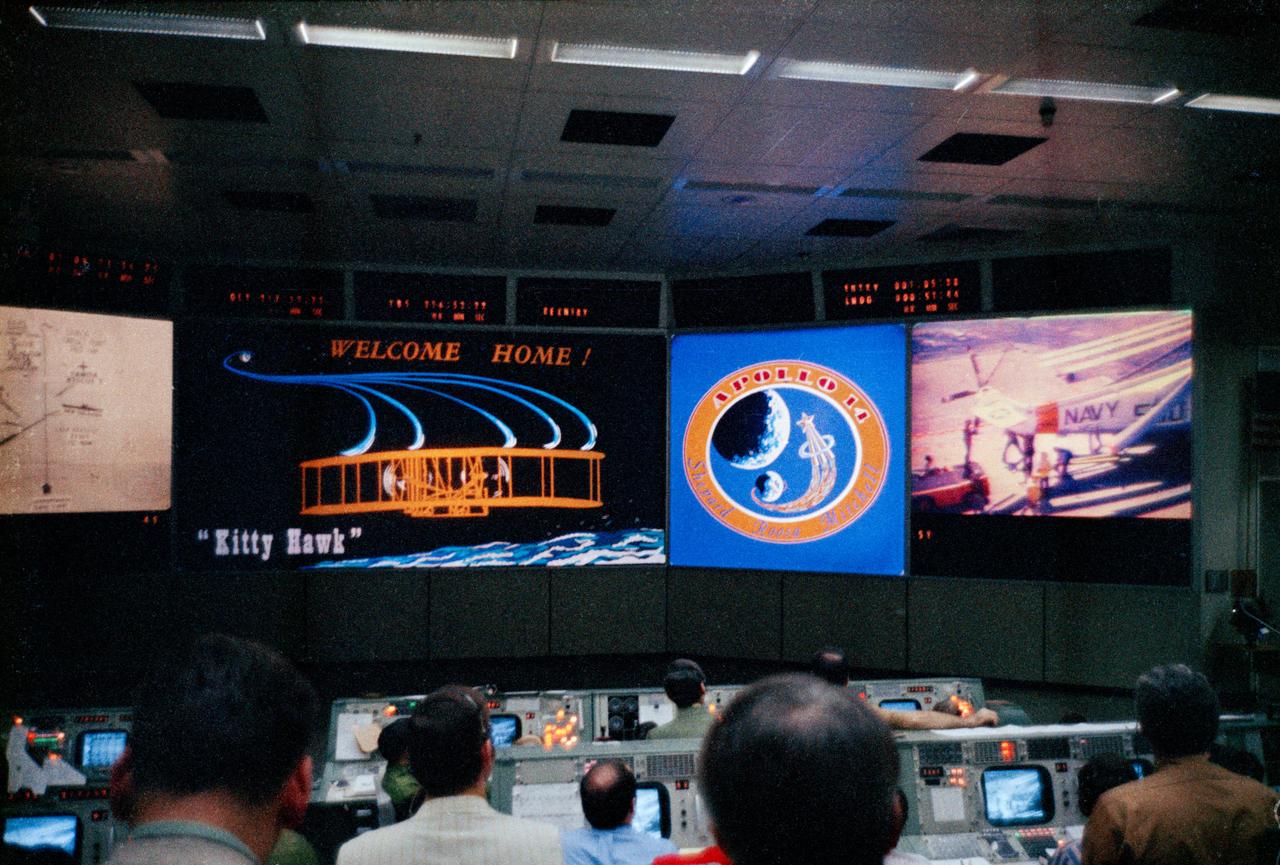
S71-18400 (9 Feb. 1971) --- Flight controllers in the Mission Operations Control Room (MOCR) of the Mission Control Center (MCC) view a colorful display which signals the successful splashdown and recovery of the crew of the Apollo 14 lunar landing mission. The MOCR's large screen at right shows a television shot aboard the USS New Orleans, Apollo 14 prime recovery ship.
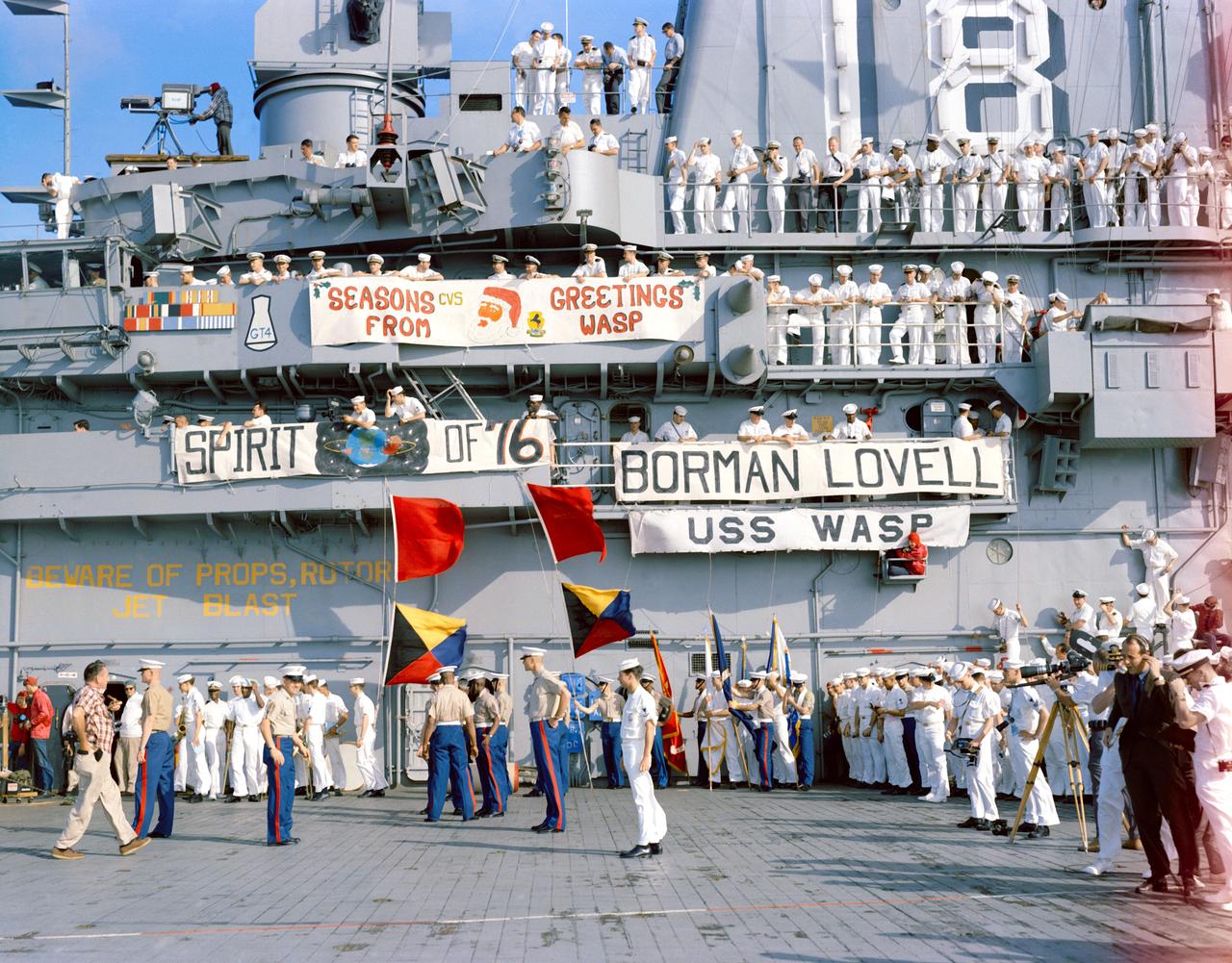
S65-63644 (18 Dec. 1965) --- Crewmen of the aircraft carrier USS Wasp gather on deck to watch the recovery of the National Aeronautics and Space Administration's Gemini-7 spacecraft and astronauts. Gemini-7, with astronauts Frank Borman, command pilot, and James A. Lovell Jr., pilot, splashed down in the western Atlantic at 9:05 a.m. (EST), Dec. 18, 1965, to conclude a record-breaking 14-day mission in space. Photo credit: NASA
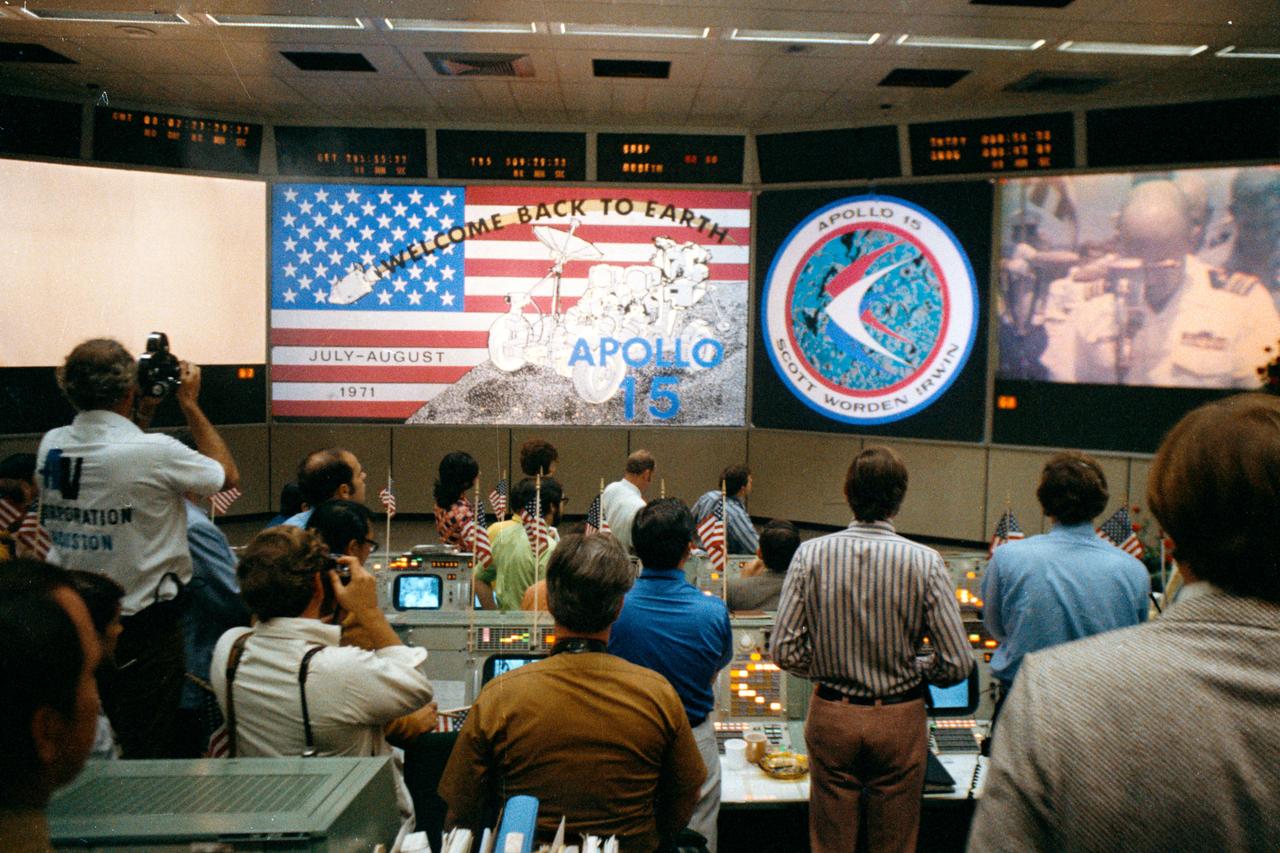
An overall view of activity in the Mission Operations Control Room in the Mission Control Center at the conclusion of the Apollo 15 lunar landing mission. The television monitor in the right background shows the welcome ceremonies aboard the prime recovery ship, U.S.S. Okinawa, in the mid-Pacific Ocean.
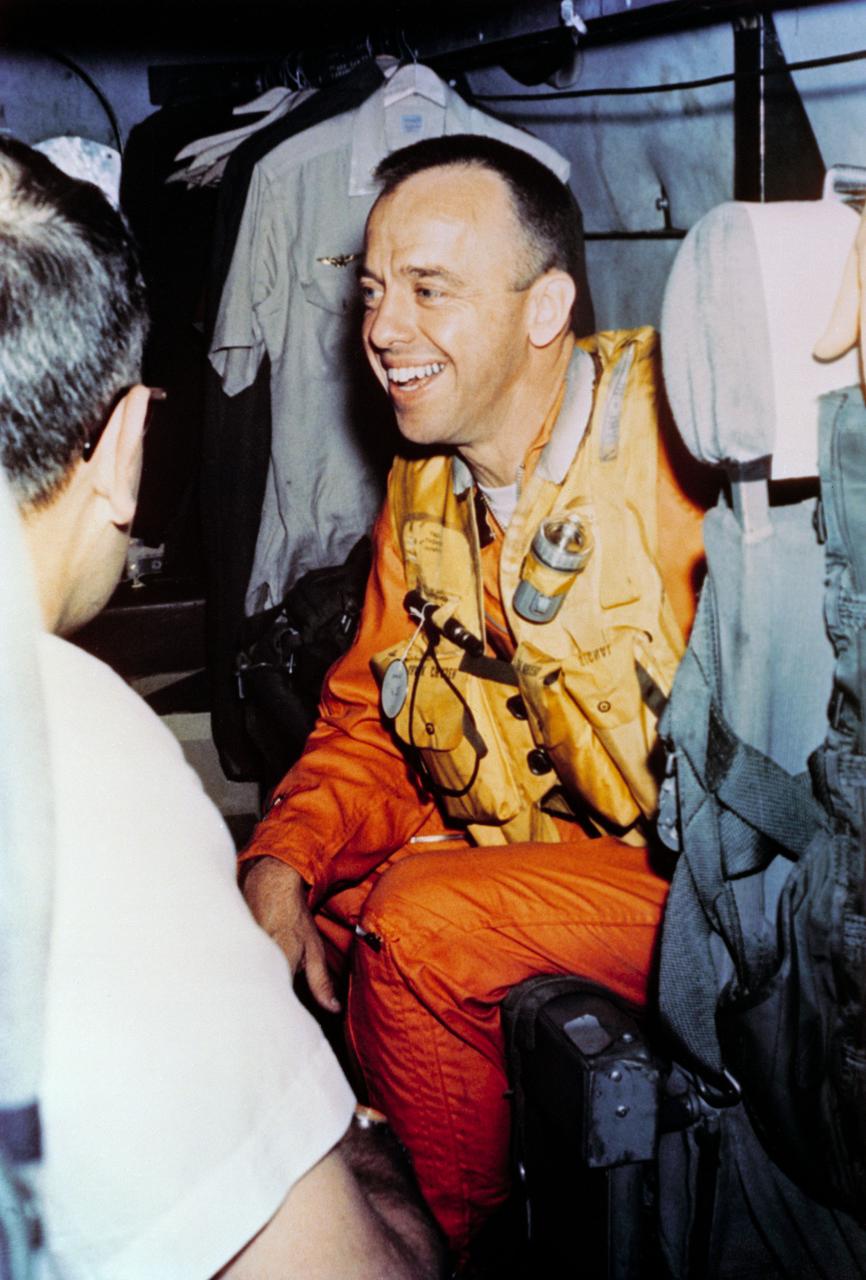
S88-31383 (5 May 1961) --- Astronaut Alan B. Shepard Jr., Mercury-Redstone 3 (MR-3) pilot, jokes with doctors while in-flight between the U.S. Navy Carrier Champlain and the Grand Bahama Islands. Shepard is the first American in space with the successful completion of the 15-minute suborbital mission. Photo credit: NASA or National Aeronautics and Space Administration
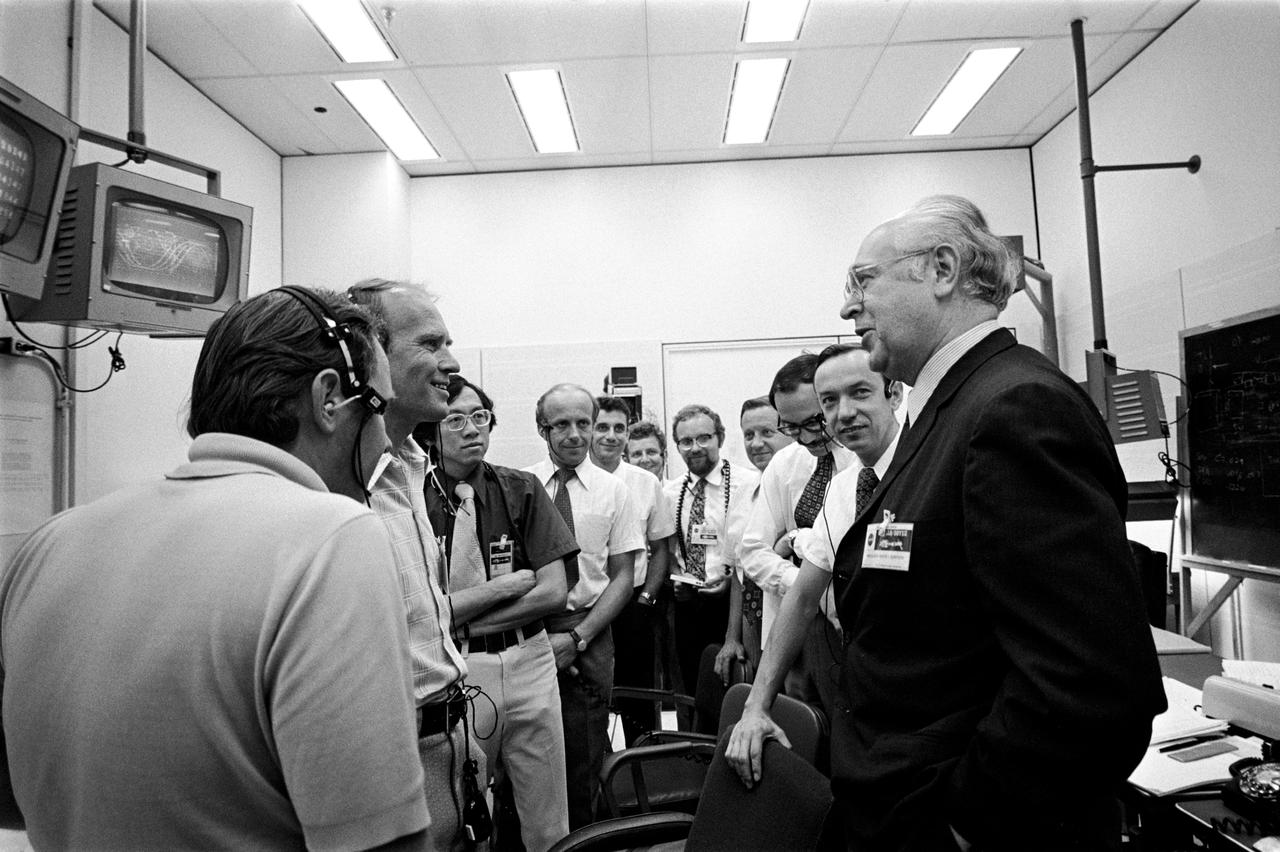
S75-28534 (17 July 1975) --- Anatoliy Dobrynin (right), Soviet Union ambassador to the United States, visits with a group of USSR ASTP flight controllers in the Mission Control Center during a tour of NASA's Johnson Space Center (JSC). Dobrynin was at JSC on the day the Soviet Soyuz and the American Apollo spacecraft docked in Earth orbit. The group also includes a couple of American ASTP flight controllers.
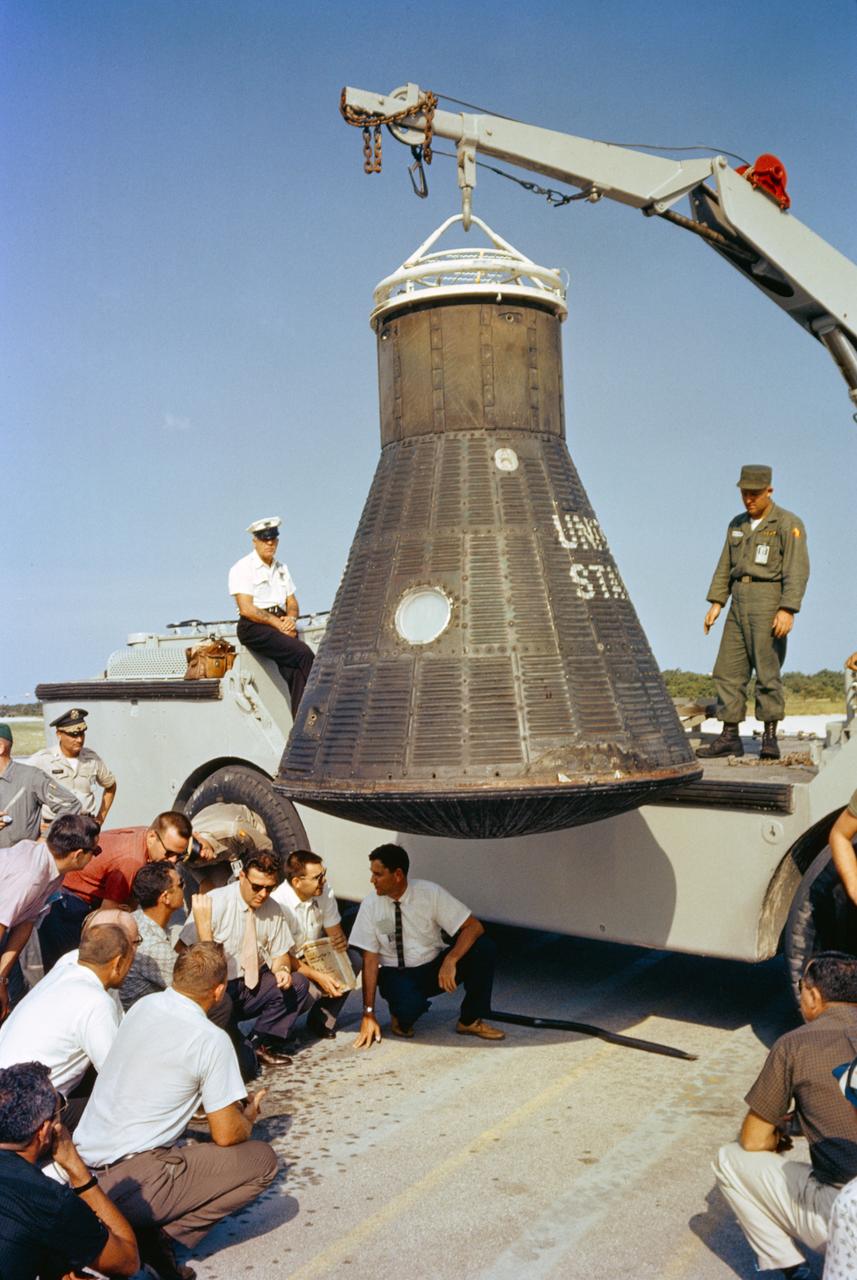
S64-14861 (1962) --- Department of Defense (DOD) recovery personnel and spacecraft technicians from NASA and McDonnell Aircraft Corp., inspect astronaut John Glenn's Mercury spacecraft, Friendship 7, following its return to Cape Canaveral after recovery in the Atlantic Ocean. Photo credit: NASA
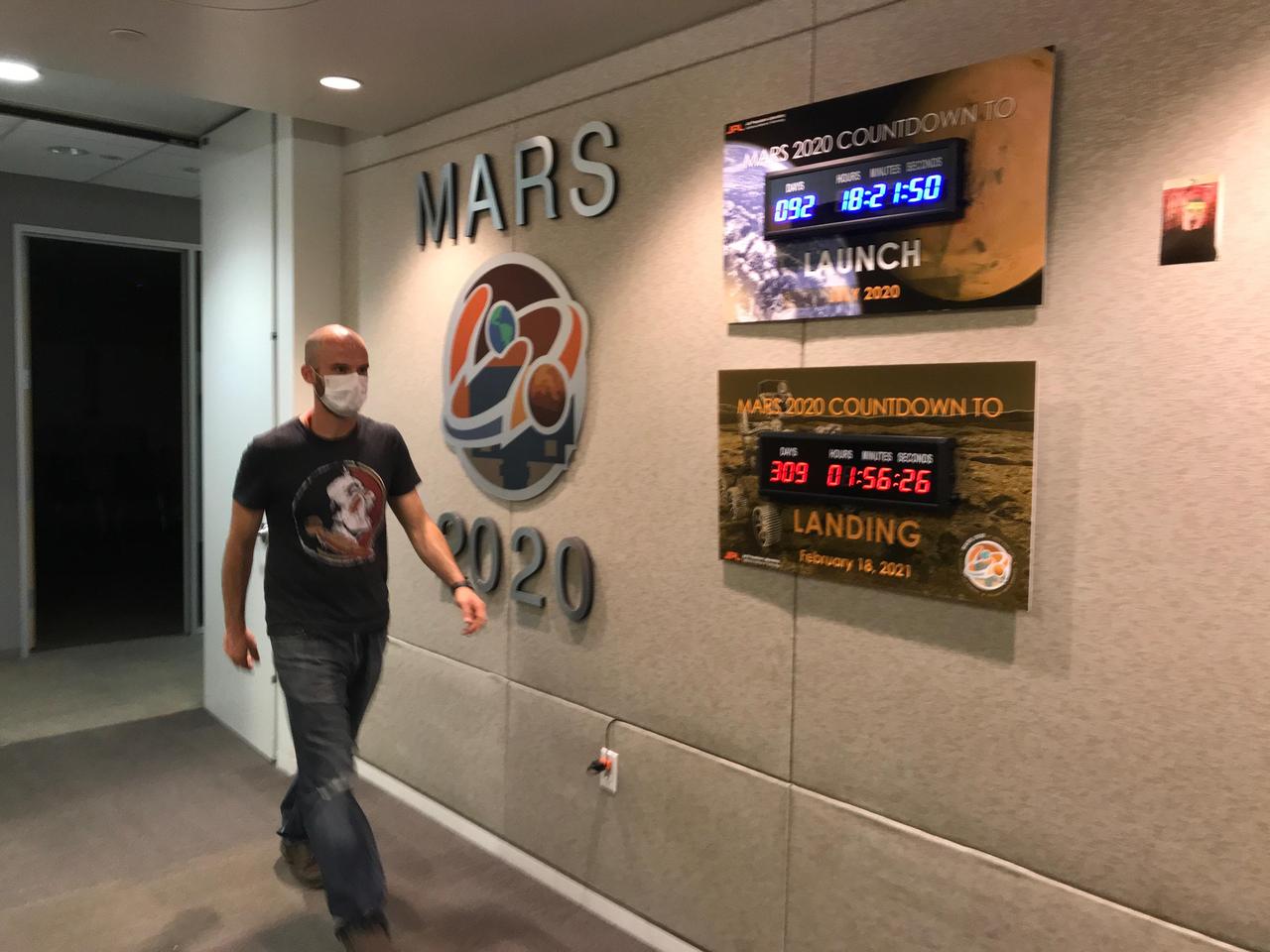
Ian Clark walks past mission countdown clocks in the Perseverance offices at NASA's Jet Propulsion Laboratory in Southern California. The Lab instituted a suite of safe@work procedures — based on the guidance of occupational safety medical personnel — to ensure those working at JPL are social distancing, wearing protective equipment and have ready access to hand sanitizer and other cleaning supplies during the coronavirus pandemic. Clark is one of a small subset of project personnel whose mission-essential job required physical access to the facility. He was on-Lab to supervise the assembly and cleaning of the sample tubes that will hold Martian sediment and rock for return to Earth on a future mission. https://photojournal.jpl.nasa.gov/catalog/PIA23830
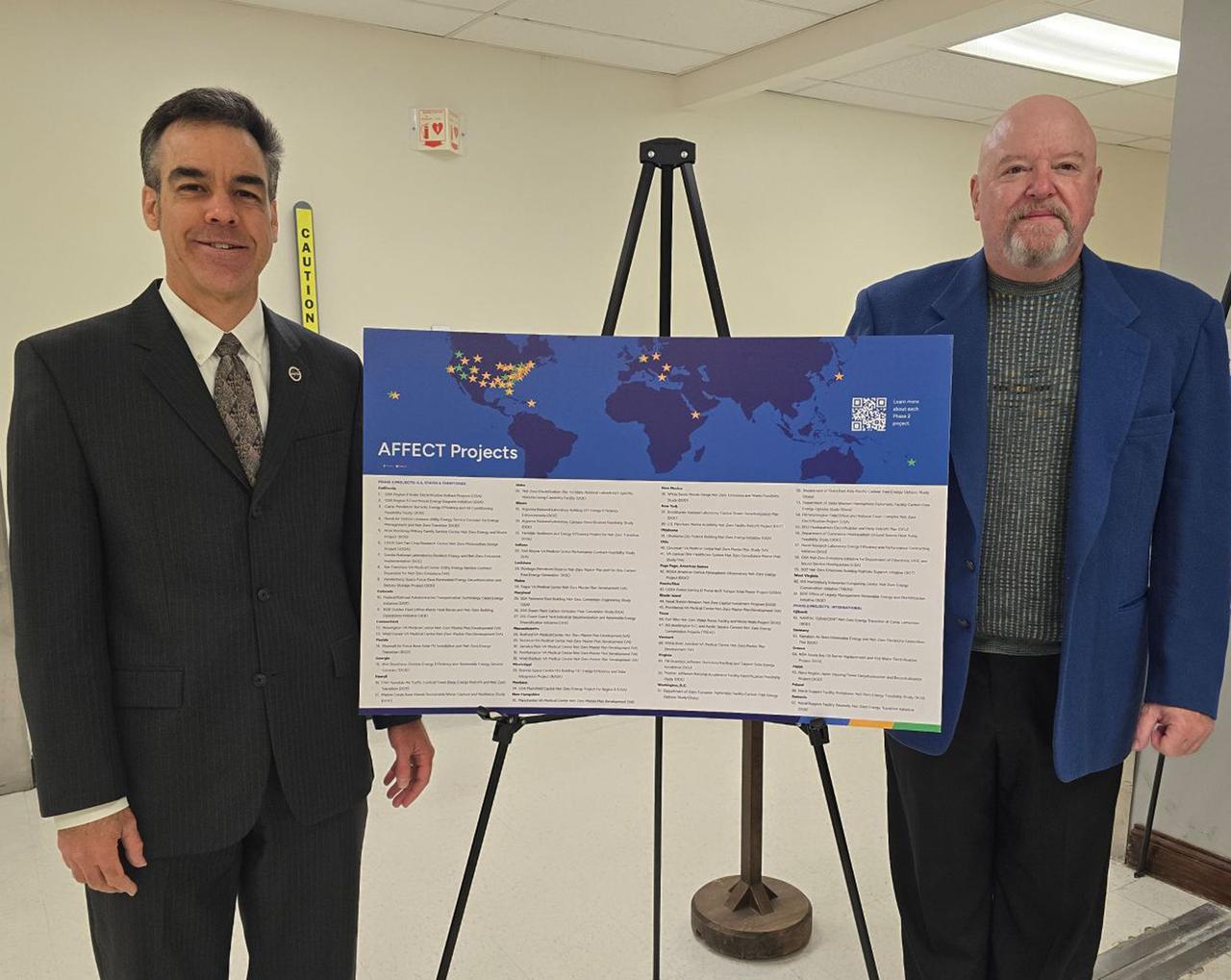
NASA Energy Program Manager for Facility Projects Wayne Thalasinos, left, stands with NASA Stennis Sustainability Team Lead Alvin Askew at the U.S. Department of Energy in Washington, D.C., on Oct. 30. The previous day, the Department of Energy announced NASA Stennis will receive a $1.95 million grant for an energy conservation project at the south Mississippi center. The Stennis Sustainability Team consists of NASA personnel and contract support. NASA members include Askew, Missy Ferguson and Teenia Perry. Contract members include Jordan McQueen (Synergy-Achieving Consolidated Operations and Maintenance); Michelle Bain (SACOM); Matt Medick (SACOM); Thomas Mitchell (SACOM); Lincoln Gros (SACOM), and Erik Tucker (Leidos).
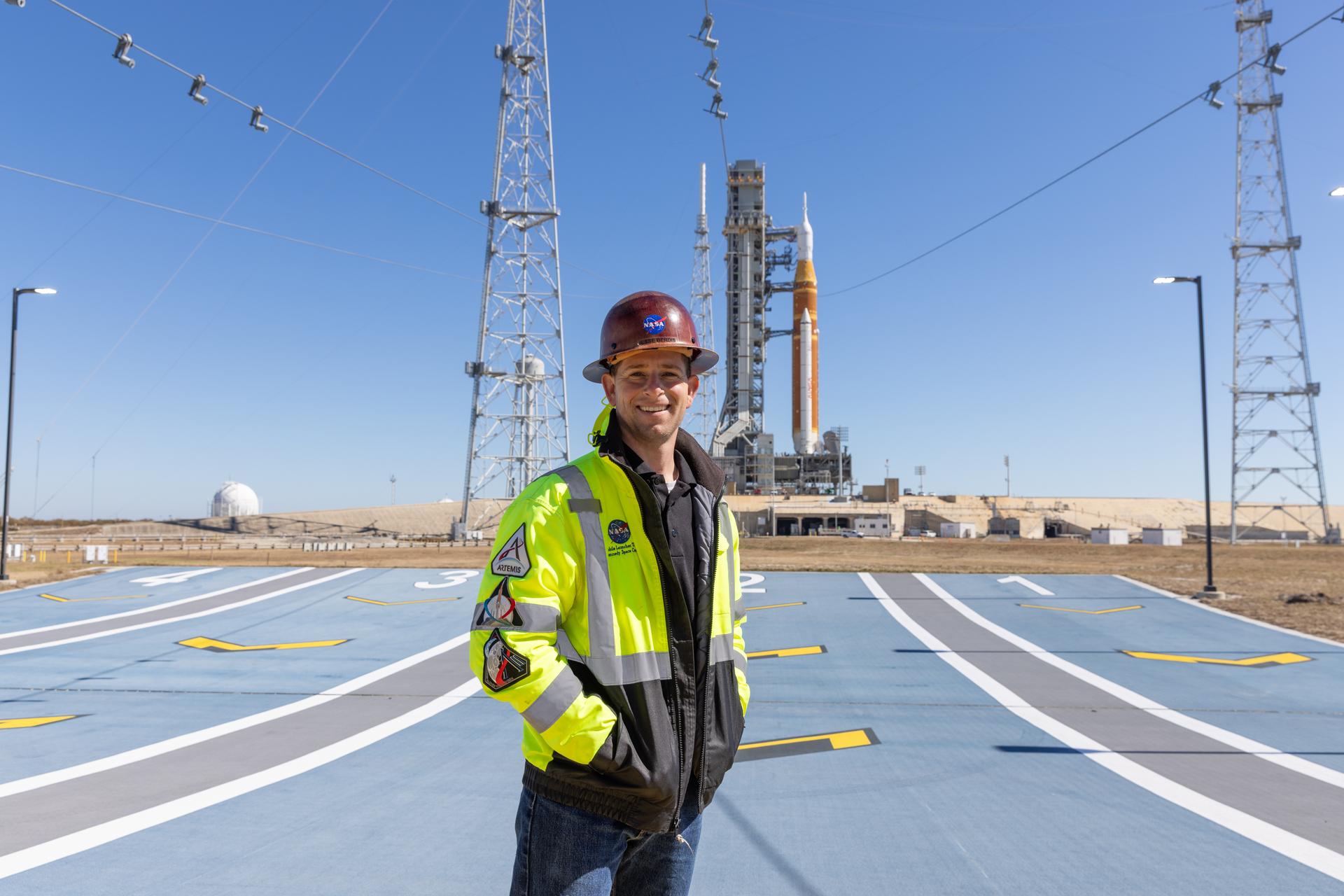
Jesse Berdis, Artemis II mobile launcher 1 deputy project manager, poses for a photo near the emergency egress system at Launch Complex 39B at NASA’s Kennedy Space Center in Florida on Friday, Feb. 6, 2026. The emergency egress system is an abort system for personnel to climb into four baskets of the mobile launcher to the base of the pad in the unlikely event of an emergency at the launch pad. Mobile launcher 1 supports the integration, testing, and checkouts of the SLS (Space Launch System) rocket and Orion spacecraft for the Artemis II mission.
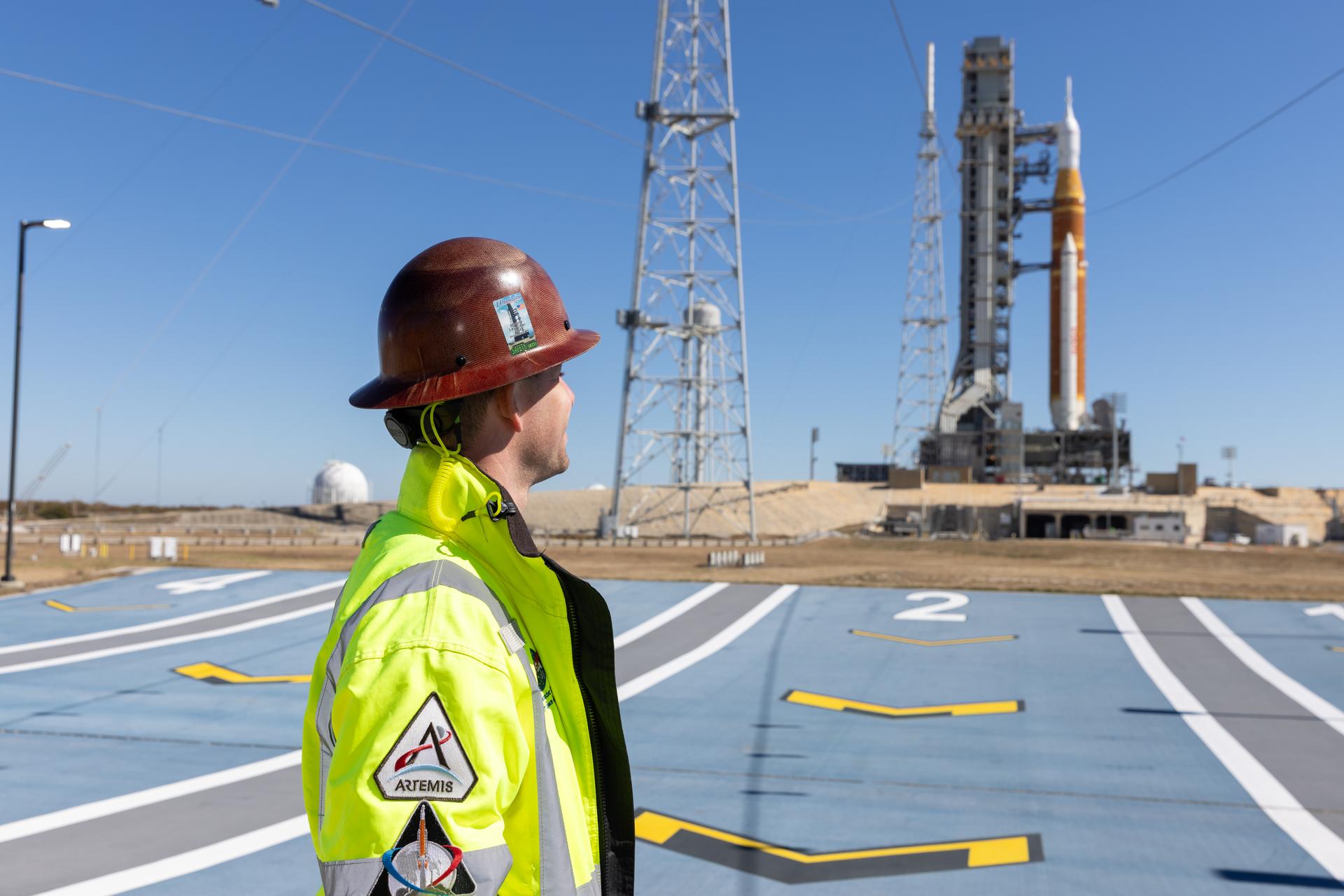
Jesse Berdis, Artemis II mobile launcher 1 deputy project manager, poses for a photo near the emergency egress system at Launch Complex 39B at NASA’s Kennedy Space Center in Florida on Friday, Feb. 6, 2026. The emergency egress system is an abort system for personnel to climb into four baskets of the mobile launcher to the base of the pad in the unlikely event of an emergency at the launch pad. Mobile launcher 1 supports the integration, testing, and checkouts of the SLS (Space Launch System) rocket and Orion spacecraft for the Artemis II mission.
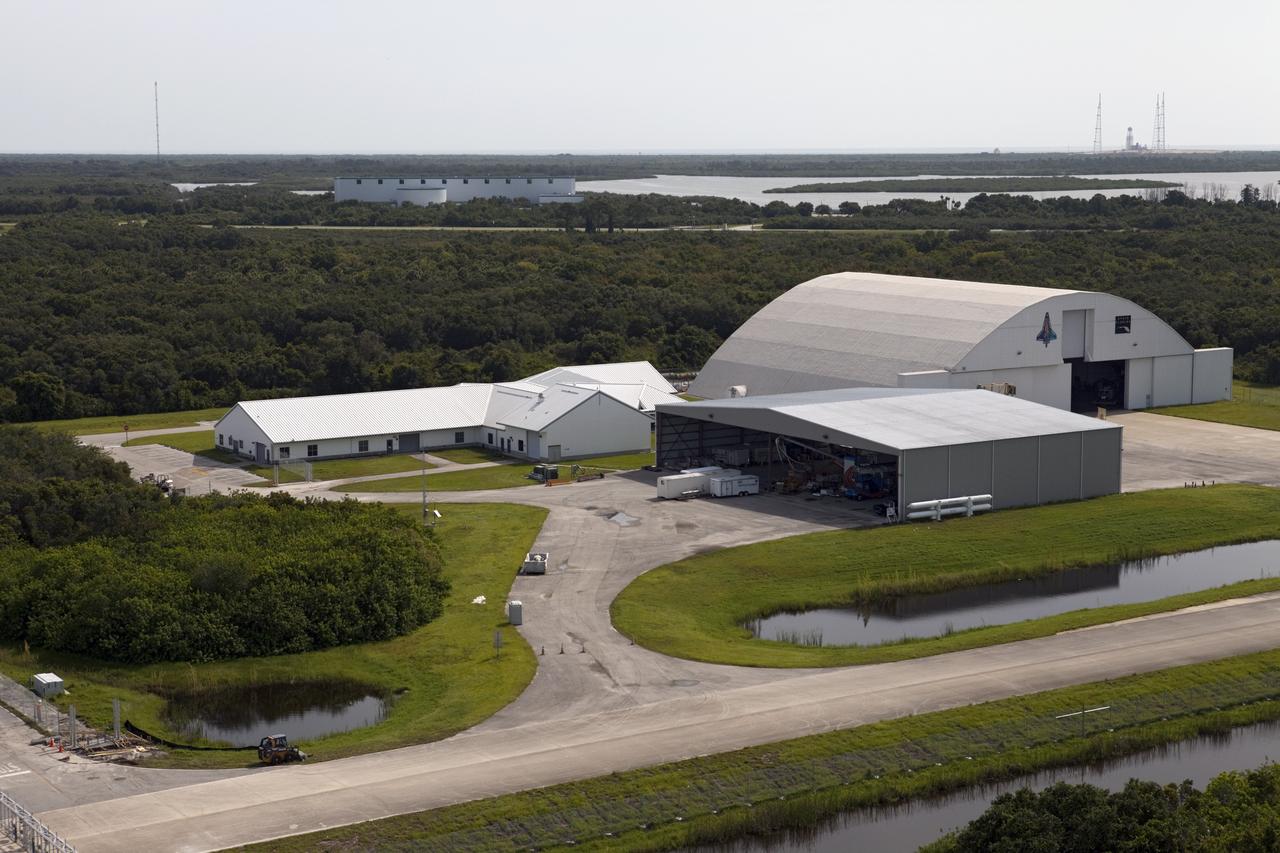
CAPE CANAVERAL, Fla. – This aerial view shows a 50,000-square-foot hangar located on the Shuttle Landing Facility at the Kennedy Space Center, Fla., providing shelter and storage for NASA and non-NASA aircraft and maintenance operations. Adjacent to the hangar is an operations building housing personnel who support operations at the 15,000-foot long concrete runway. At the north end of the runway, a rock and crater-filled planetary scape has been built so engineers can test the Autonomous Landing and Hazard Avoidance Technology, or ALHAT system on the Project Morpheus lander. Testing will demonstrate ALHAT’s ability to provide required navigation data negotiating the Morpheus lander away from risks during descent. Checkout of the prototype lander has been ongoing at NASA’s Johnson Space Center in Houston in preparation for its first free flight. The SLF site will provide the lander with the kind of field necessary for realistic testing. Project Morpheus is one of 20 small projects comprising the Advanced Exploration Systems, or AES, program in NASA’s Human Exploration and Operations Mission Directorate. AES projects pioneer new approaches for rapidly developing prototype systems, demonstrating key capabilities and validating operational concepts for future human missions beyond Earth orbit. For more information on Project Morpheus, visit http://www.nasa.gov/centers/johnson/exploration/morpheus/index.html Photo credit: NASA/Kim Shiflett
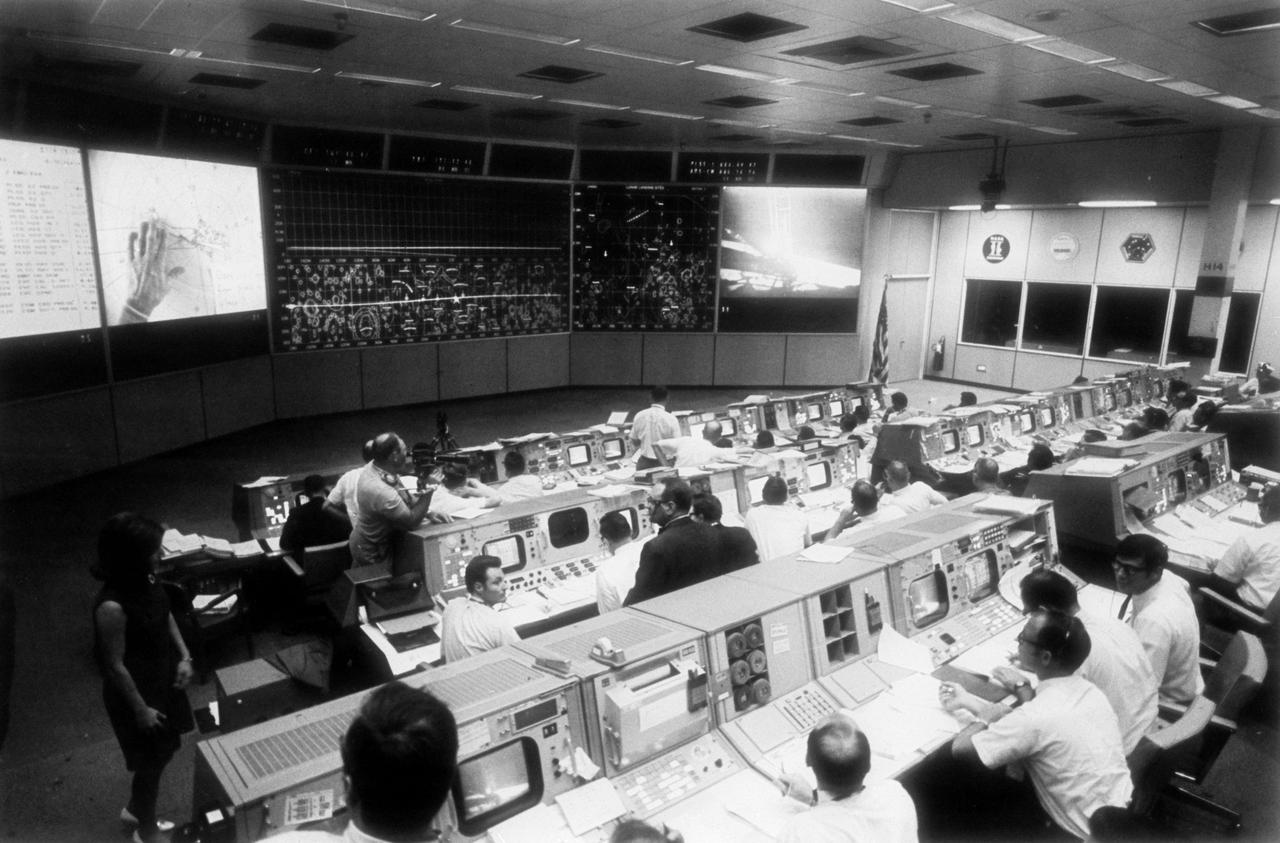
Overall view of the Mission Operations Control Room in the Mission Control Center, bldg 30, during the lunar surface extravehicular activity (EVA) of Apollo 11 Astronauts Neil A. Armstrong and Edwin E. Aldrin Jr.
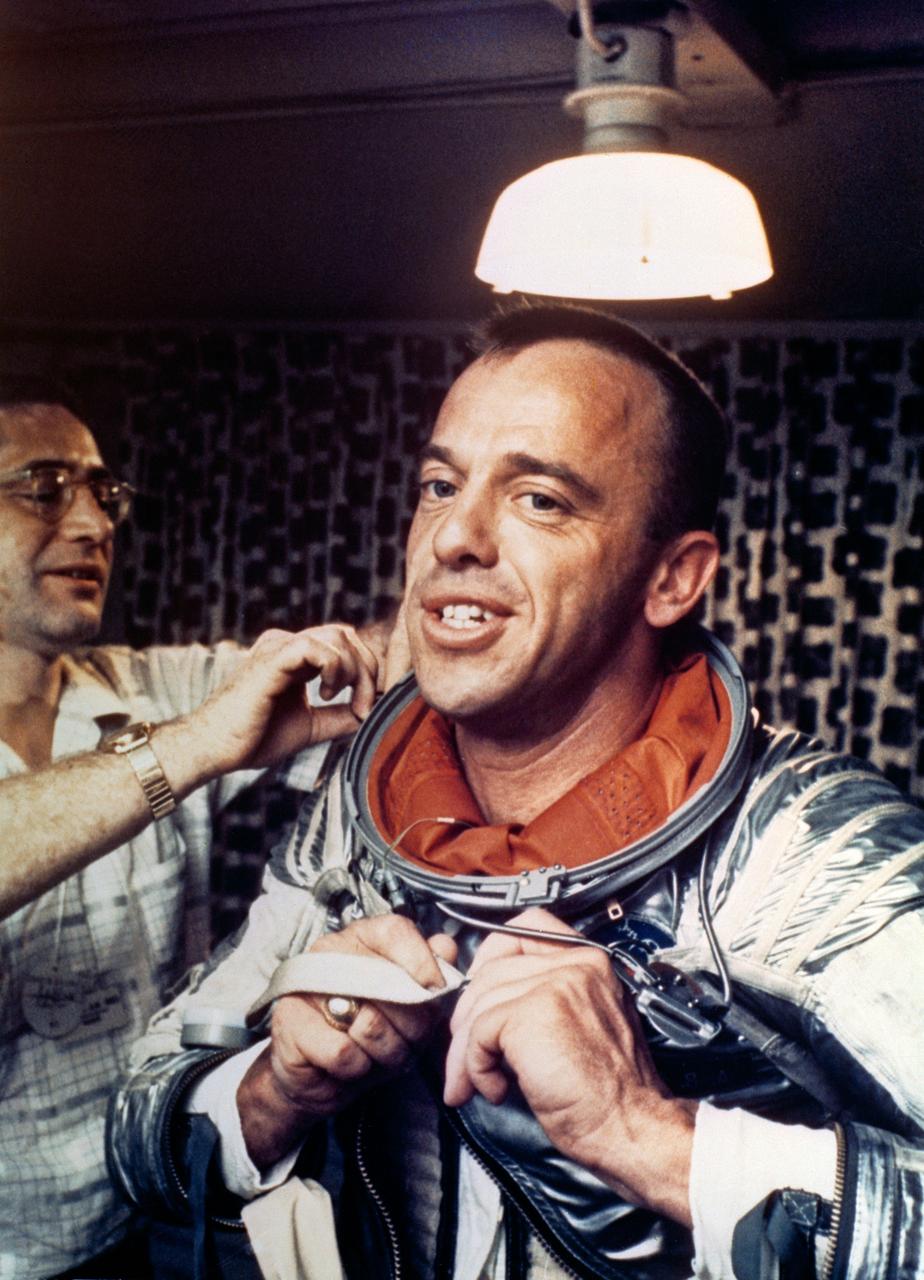
S88-31382 (5 May 1961) --- Astronaut Alan B. Shepard receives assistance in removing his spacesuit while on the U.S. Champlain after the recovery of his Mercury capsule. Photo credit: NASA or National Aeronautics and Space Administration
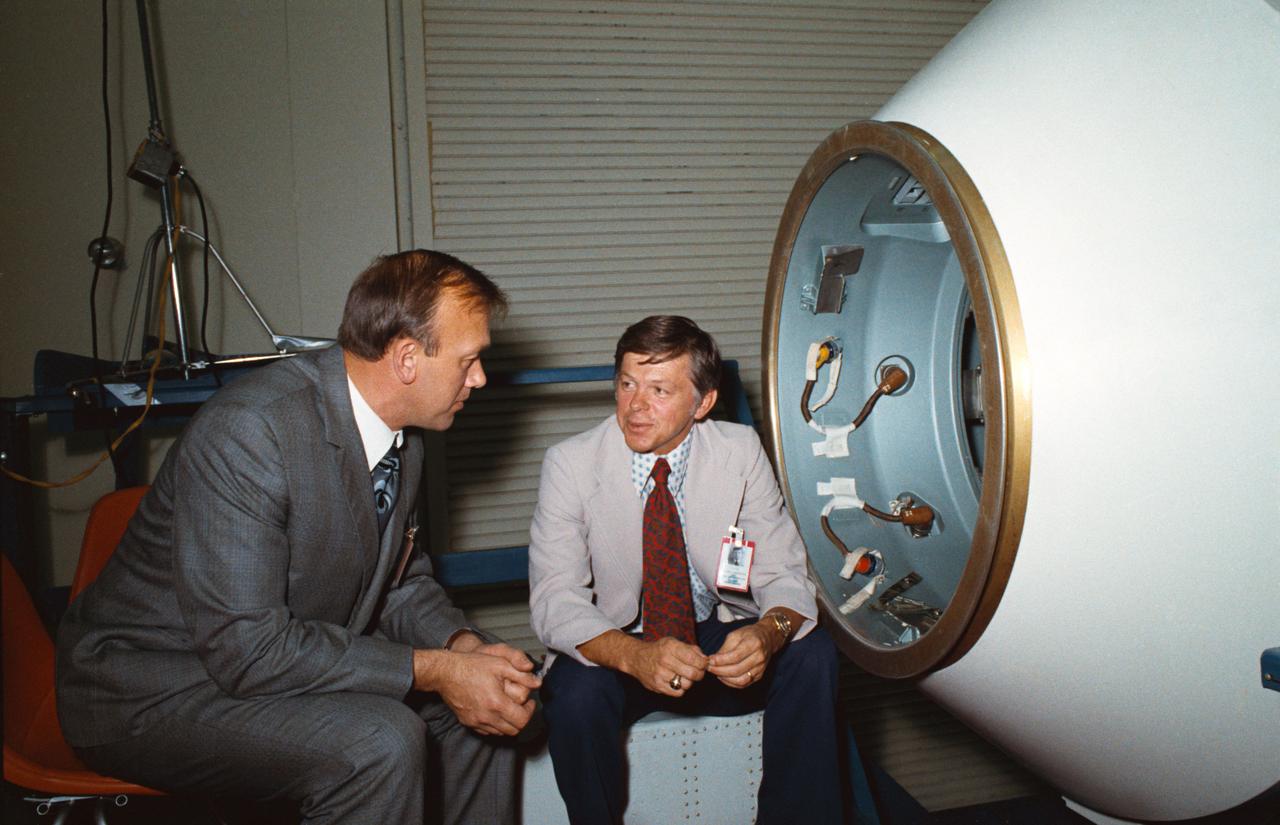
S74-32481 (November 1974) --- These two men are flight directors for the joint U.S.-USSR Apollo-Soyuz Test Project mission scheduled for July 1975. Cosmonaut Aleksey A. Yeliseyev (left) is the Soviet ASTP senior flight director; M.P. Frank is the American ASTP senior flight director. They are seated beside a Docking Module training mock-up in Building 35 at the Johnson Space Center. Cosmonaut Yeliseyev was head of a delegation of USSR flight controllers who were at JSC for two weeks of ASTP training.
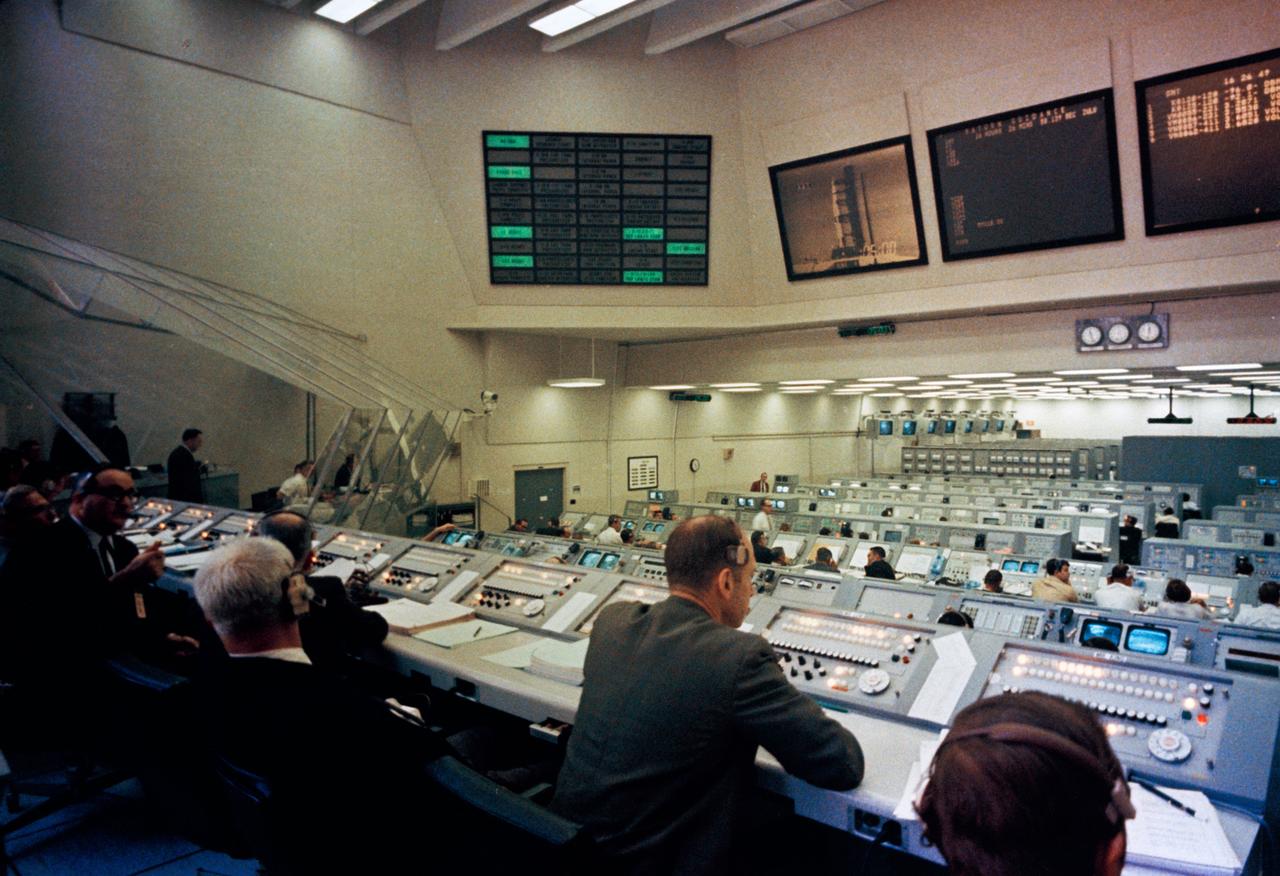
S69-25880 (23 Feb. 1969) --- Overall view of Firing Room 2 in the Launch Control Center, Launch Complex 39, Kennedy Space Center, during an Apollo 9 Countdown Demonstration Test. Astronauts James A. McDivitt, David R. Scott, and Russell L. Schweickart were participating in a training exercise in preparation for their scheduled 10-day Earth-orbital space mission.
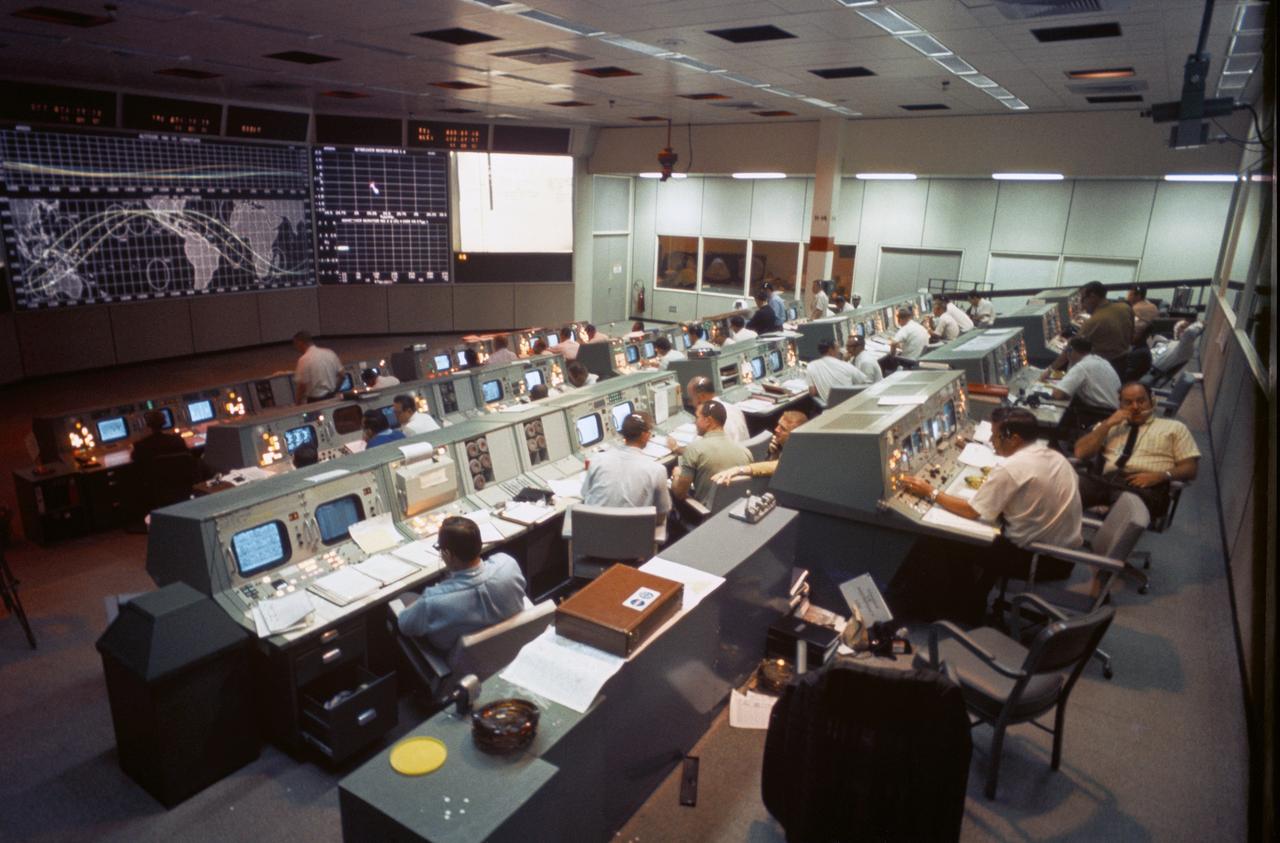
Overall view of activity in the Mission Operations Control Room in the Mission Control Center, Bldg 30, on the first day of the Apollo 7 space mission.
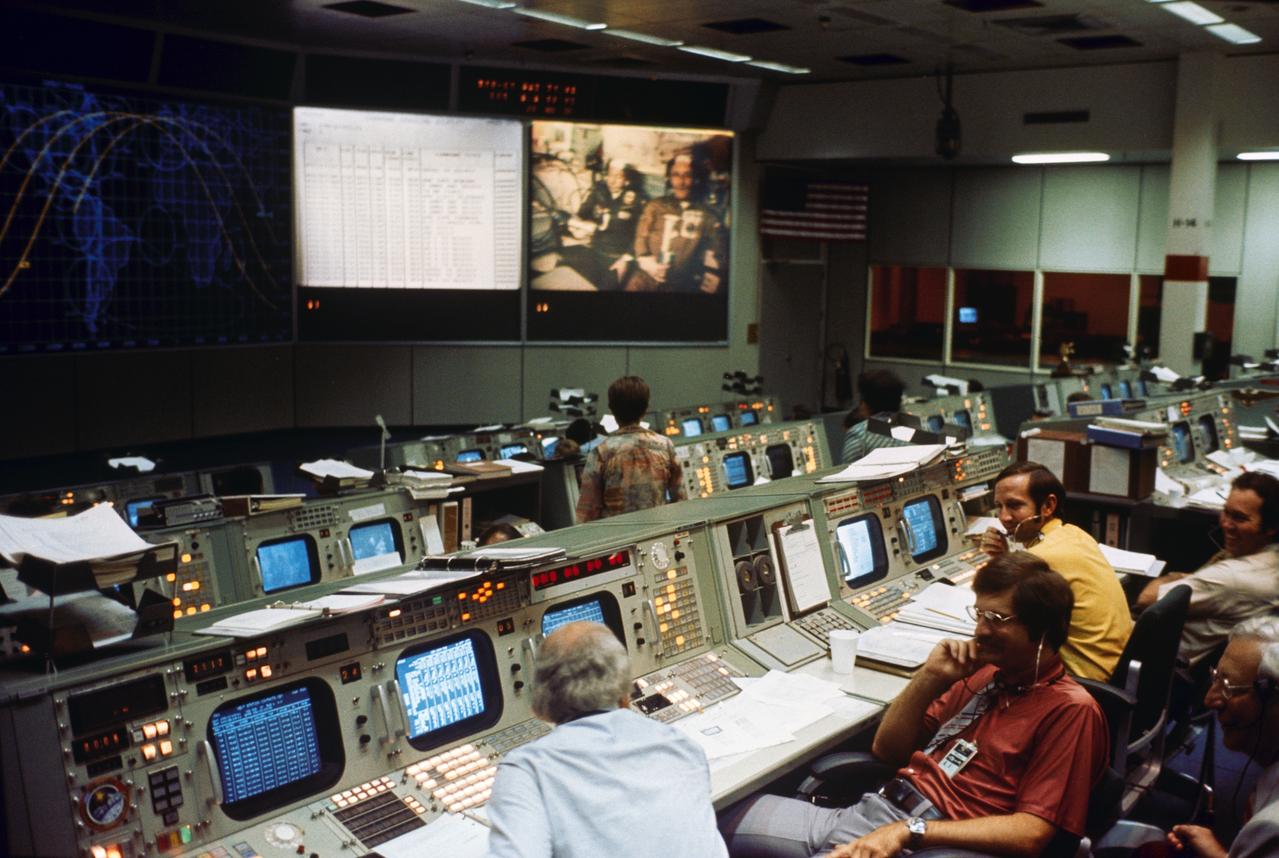
S75-28685 (17 July 1975) --- An overall view of activity in the Mission Operations Control Room in the Mission Control Center during joint U.S.-USSR Apollo Soyuz Test Project (ASTP) docking mission in Earth orbit. The large television monitor shows an interior view of the Soyuz Orbital Module with astronaut Thomas P. Stafford (in front) visiting with cosmonaut Aleksey A. Leonov. Neil B. Hutchinson (right hand to chin) is the flight director for this shift.

S68-26989 (4 April 1968) --- The Apollo 6 Spacecraft 020 Command Module is hoisted aboard the USS Okinawa.
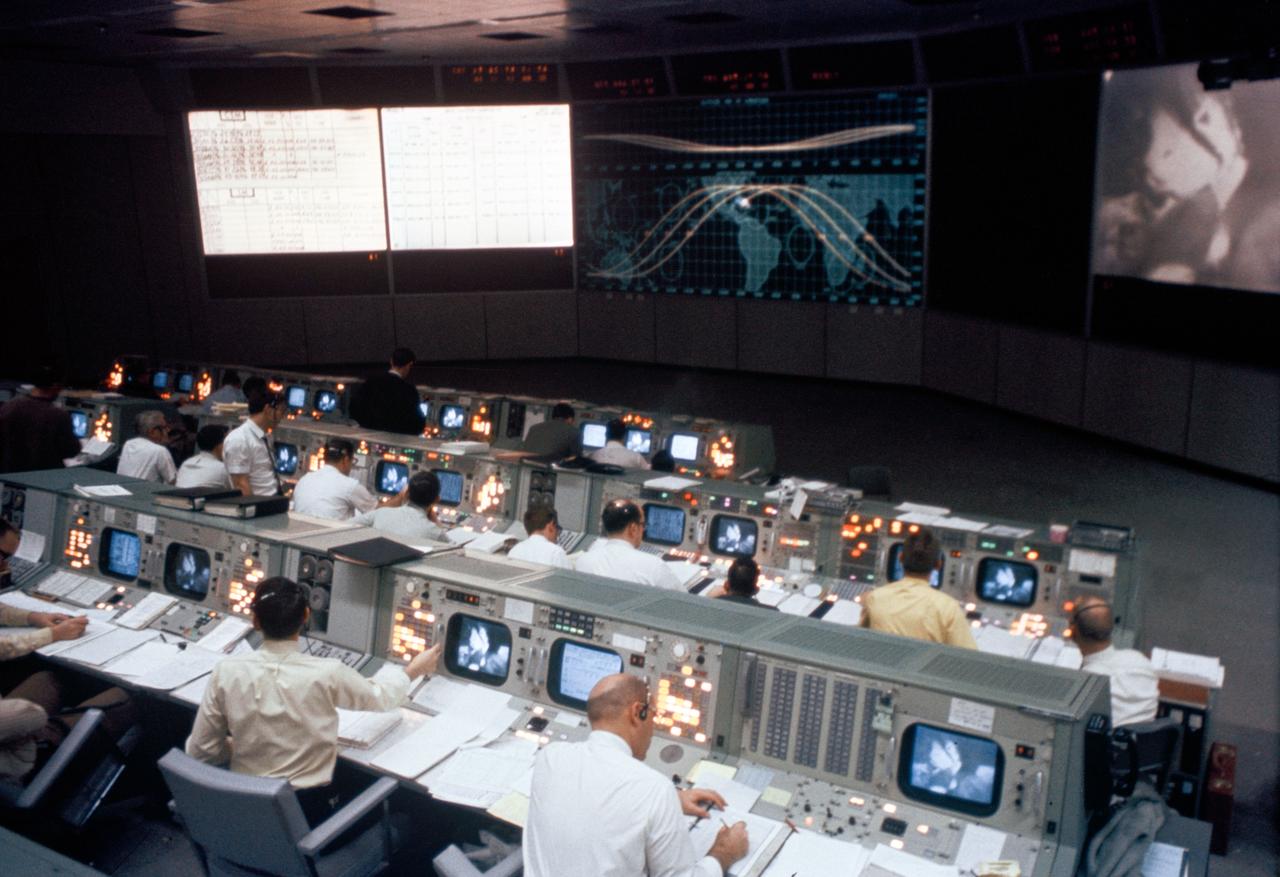
S69-26301 (March 1969) --- Overall view of the Mission Operations Control Room in the Mission Control Center, Building 30, during the Apollo 9 Earth-orbital mission. When this photograph was taken a live television transmission was being received from Apollo 9 as it orbited Earth.
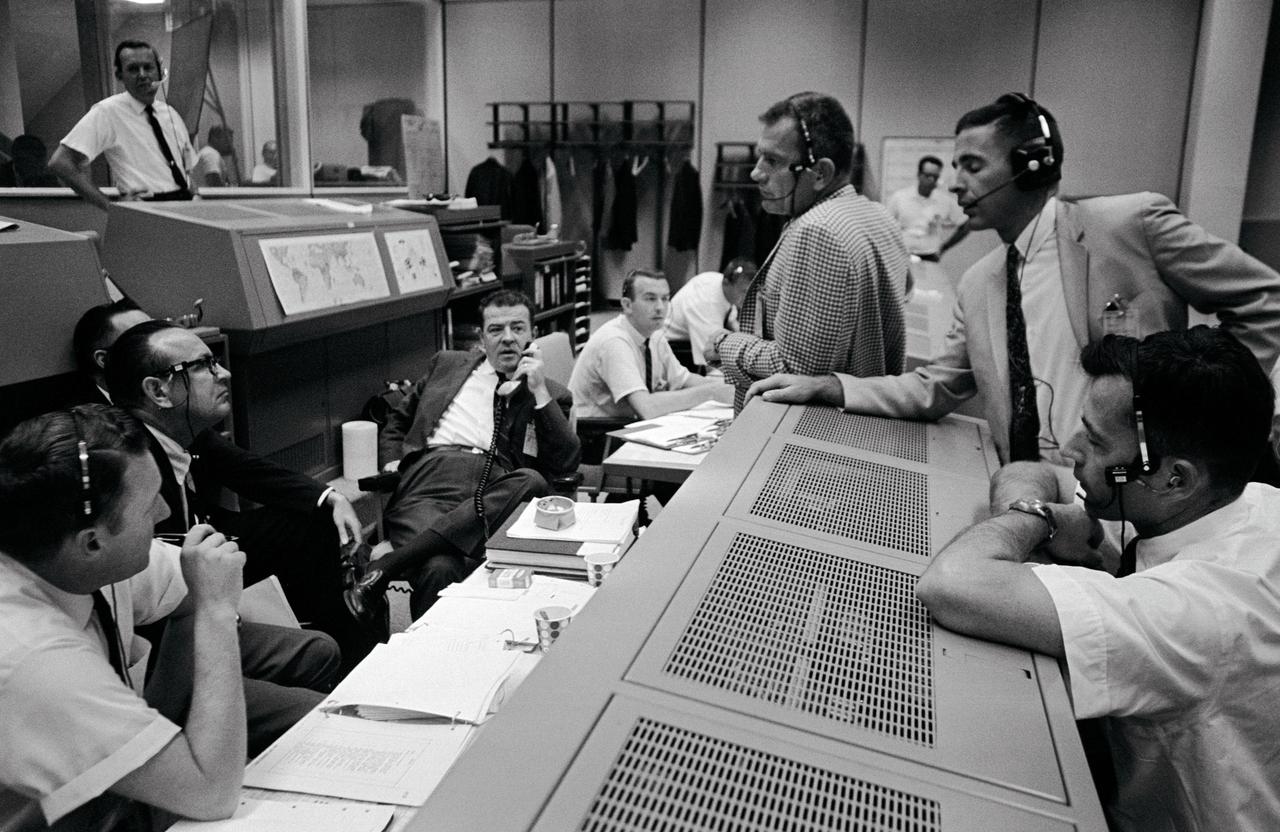
S66-52157 (12 Sept. 1966) --- Discussing the Gemini-11 spaceflight in the Mission Control Center are: (left to right) Christopher C. Kraft Jr., (wearing glasses), Director of Flight Operations; Charles W. Mathews (holding phone), Manager, Gemini Program Office; Dr. Donald K. Slayton (center, checked coat), Director of Flight Crew Operations; astronaut William A. Anders, and astronaut John W. Young. Photo credit: NASA
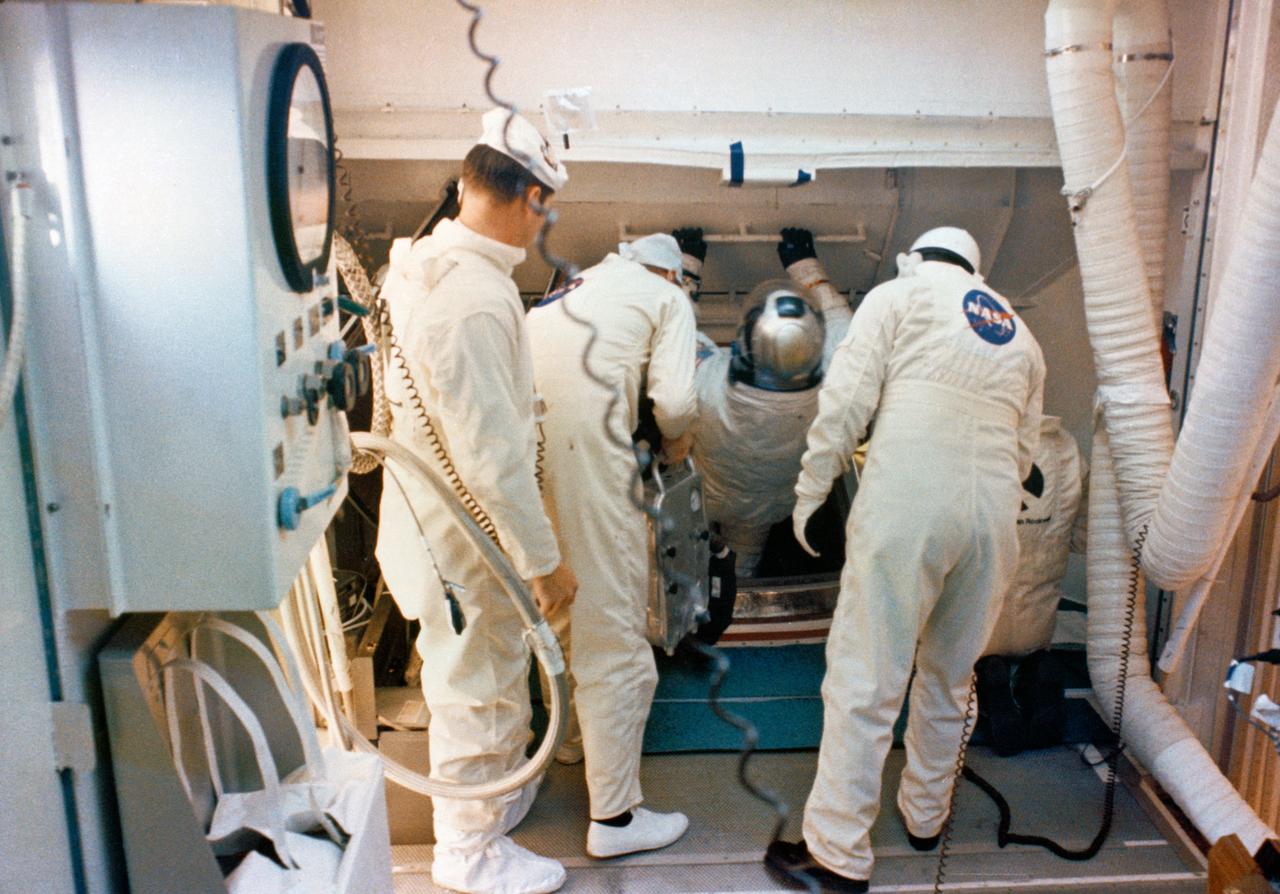
S69-25488 (23 Feb. 1969) --- Interior view of the White Room at Pad A, Launch Complex 39, Kennedy Space Center (KSC), during an Apollo 9 Countdown Demonstration Test (CDDT). Astronauts James A. McDivitt, commander; David R. Scott, command module pilot; and Russell L. Schweickart, lunar module pilot, were participating in a dress rehearsal in preparation for their scheduled 10-day Earth-orbital space mission.
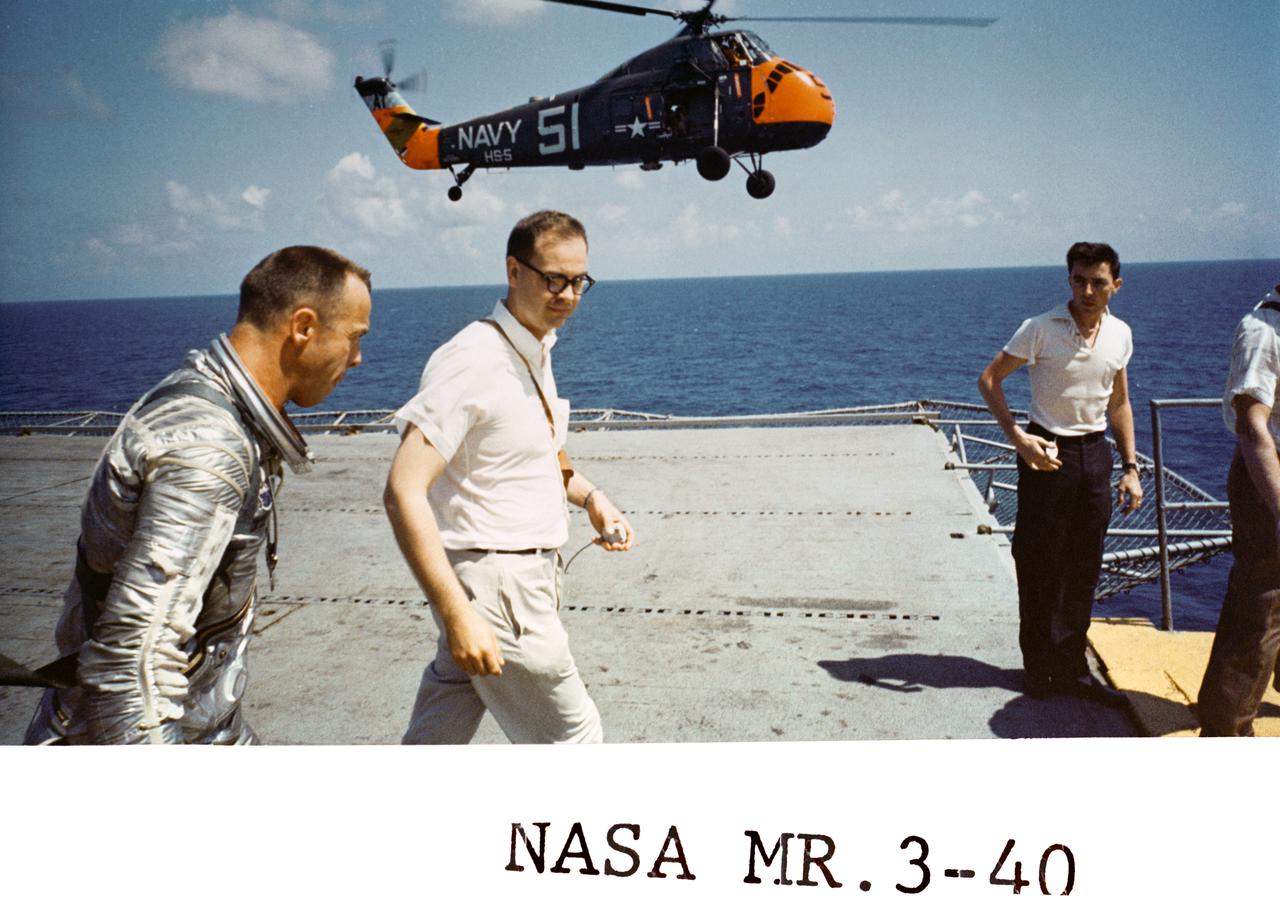
S88-31380 (5 May 1961) --- Astronaut Alan B. Shepard Jr., strides across the deck of the U.S. Navy Carrier Champlain following an inspection of his Freedom 7 capsule. Shepard had just completed the first manned U.S. space mission, a 15-minute suborbital flight. (NASA Hq. Photo No., MR3-40) Photo credit: NASA or National Aeronautics and Space Administration
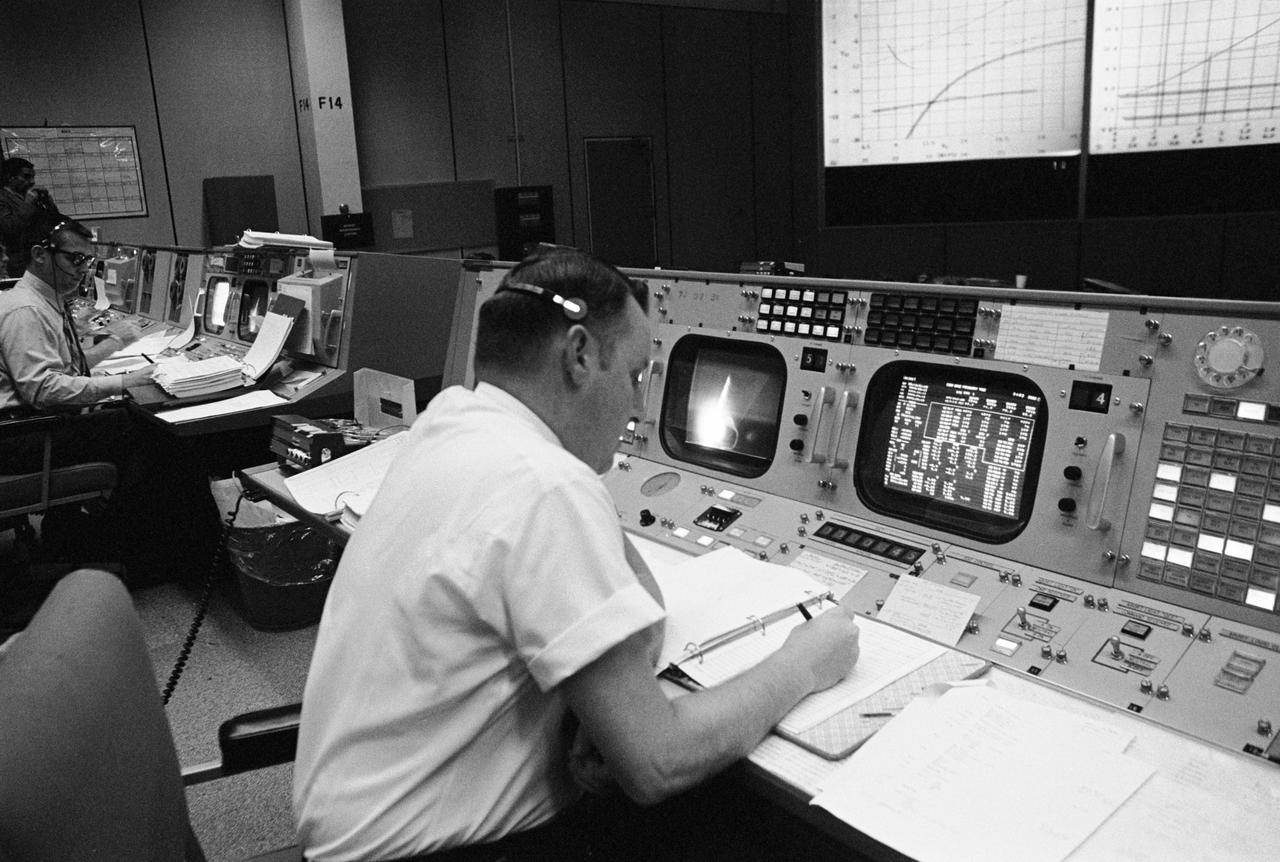
S68-55742 (21 Dec. 1968) --- Clifford E. Charlesworth, Apollo 8 "Green Team" flight director, is seated at his console in the Mission Operations Control Room in the Mission Control Center, Building 30, during the launch of the Apollo 8 (Spacecraft 103/Saturn 503) manned lunar orbit space mission.
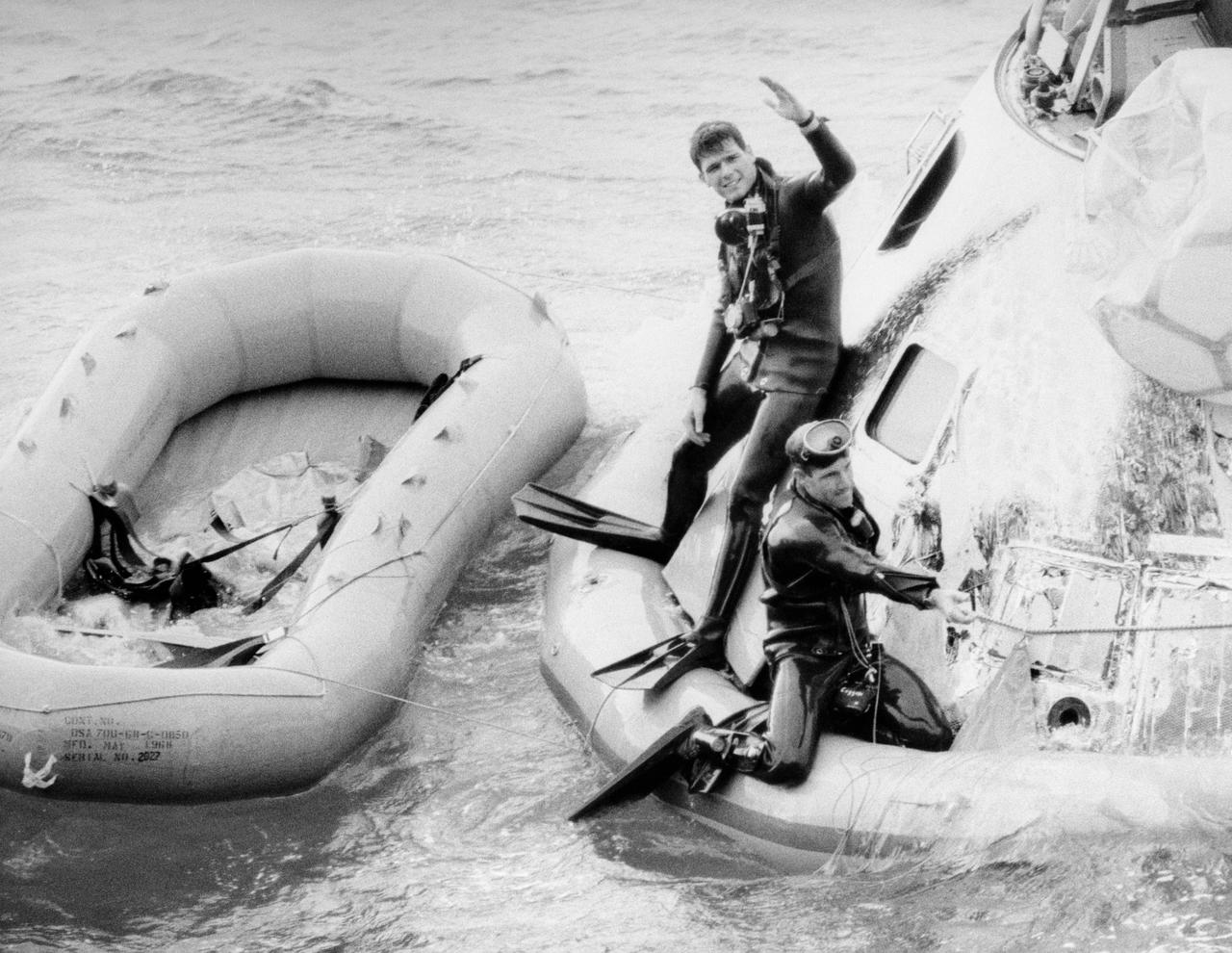
S69-15732 (27 Dec. 1968) --- A U.S. Navy frogman team participates in the Apollo 8 recovery operations. The Apollo crew, astronauts Frank Borman, James A. Lovell Jr., and William A. Anders, were recovered by helicopter and flown to the deck of the USS Yorktown, prime recovery ship for the historic Apollo 8 lunar orbit mission. Apollo 8 splashed down at 10:51 a.m. (EST), Dec. 27, 1968, about 1,000 miles south-southwest of Hawaii.
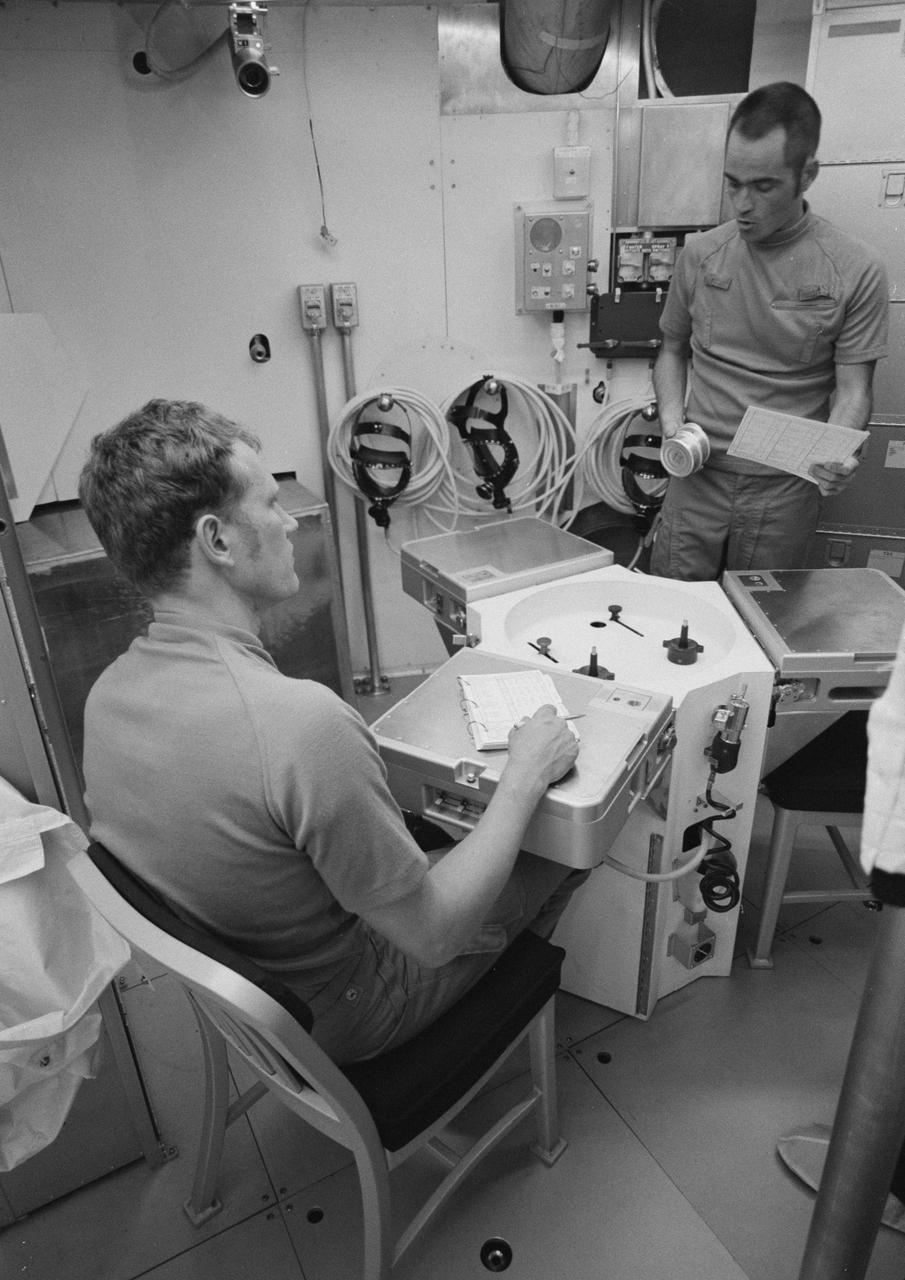
S72-41853 (15 June 1972) --- Two members of the three-man Skylab Medical Experiment Altitude Test (SMEAT) crew, that will spend up to 56 days in the Crew Systems Division's 20-foot altitude chamber at the Manned Spacecraft Center (MSC) beginning in mid-July, go over a menu in the food preparation area. Seated at the simulated wardroom food table is astronaut Karol J. Bobko, SMEAT pilot, and standing is astronaut Robert L. Crippen, SMEAT commander. Dr. William E. Thornton, SMEAT science pilot, the third crew member is not shown in this view. Photo credit: NASA
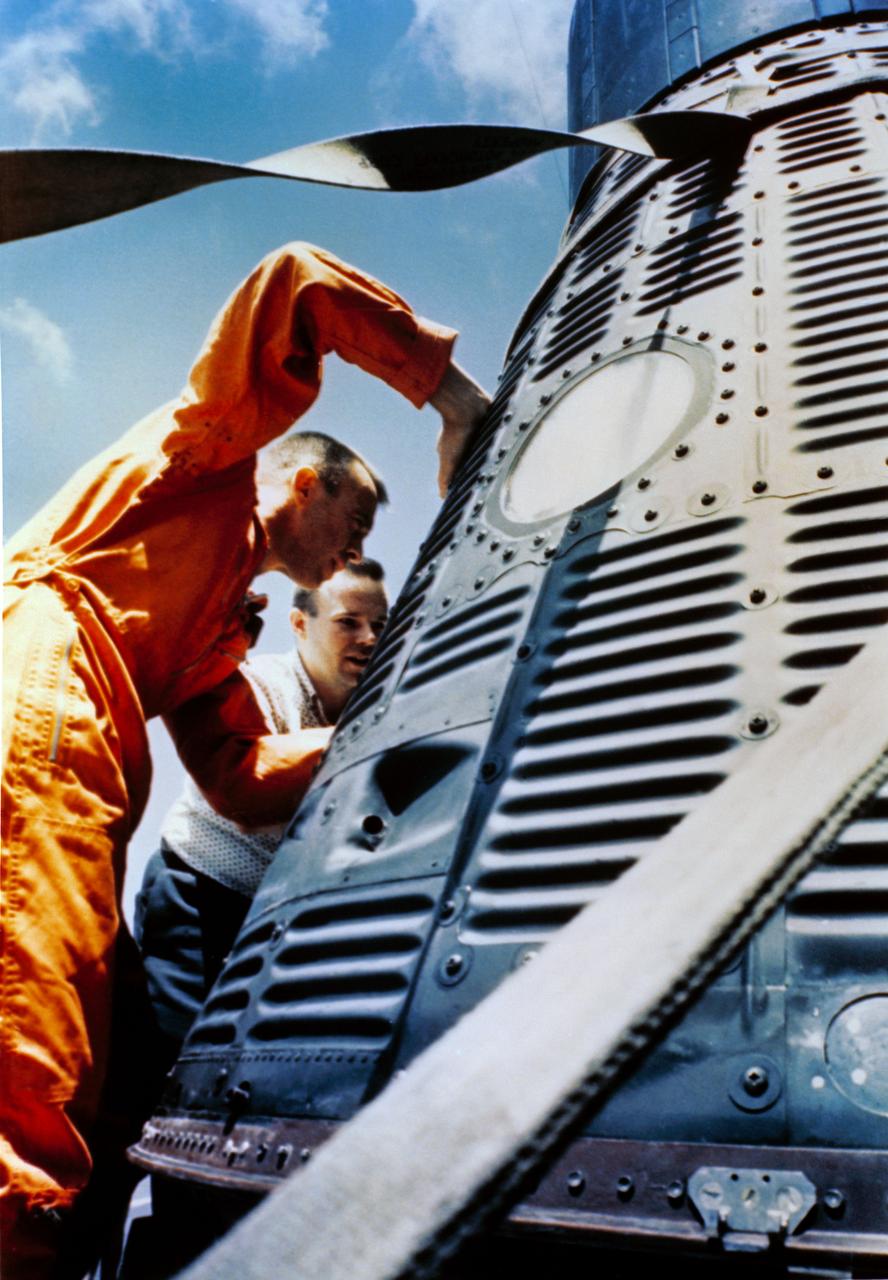
S88-31384 (5 May 1961) --- Astronaut Alan B. Shepard Jr., Mercury-Redstone 3 (MR-3) pilot, is pictured near his Freedom 7 capsule during a postflight inspection aboard the U.S. Navy Carrier Champlain after the recovery of his Mercury vehicle. Earlier Shepard had completed the historical 15-minute suborbital Mercury-Redstone 3 mission, marking the U.S. inaugural manned space mission. (NASA Hq. No. 61-MR3-107 or MR3-44) Photo credit: NASA or National Aeronautics and Space Administration
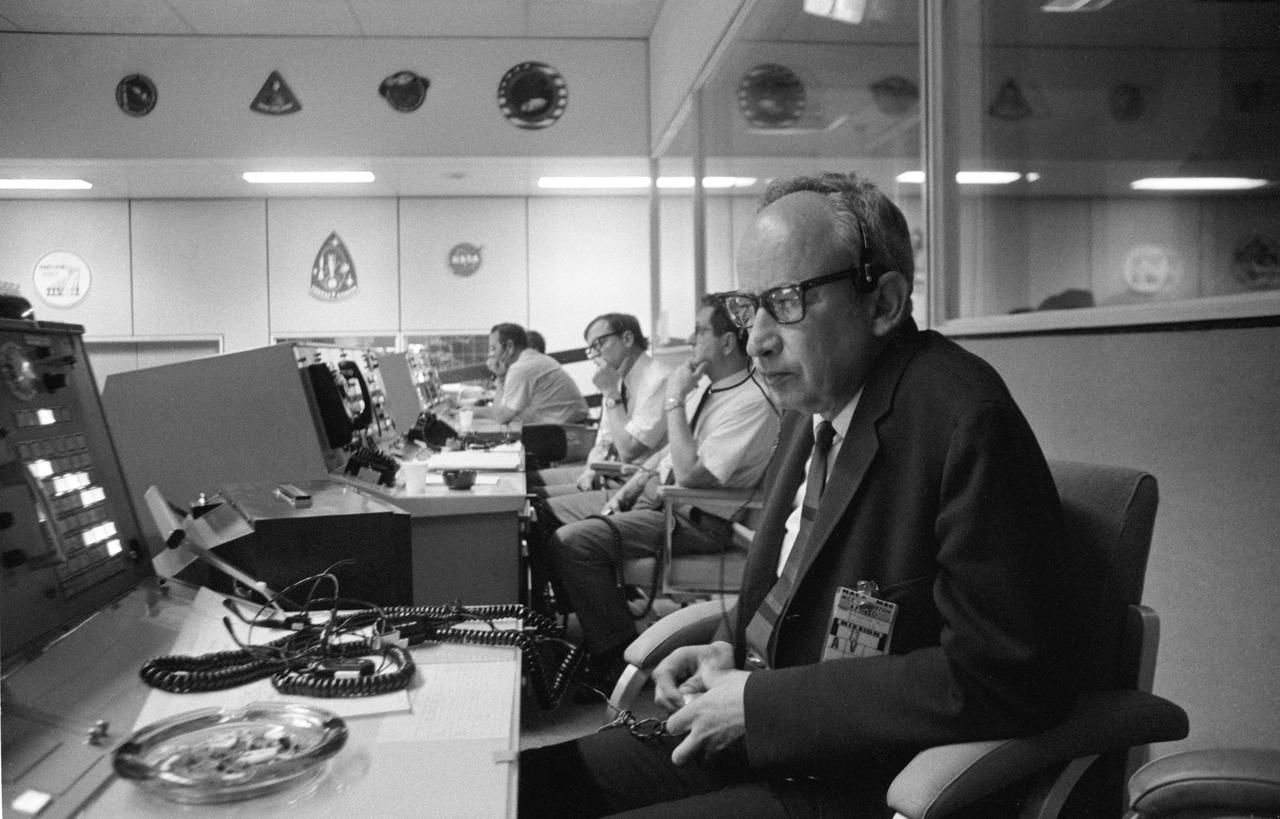
S70-34627 (11 April 1970) --- Sigurd A. Sjoberg, director of flight operations, at the Manned Spacecraft Center (MSC), views the Apollo 13 liftoff from a console in the MSC Mission Control Center (MCC), Building 30. Apollo 13 lifted off at 1:13 p.m. (CST) April 11, 1970. Photo credit: NASA
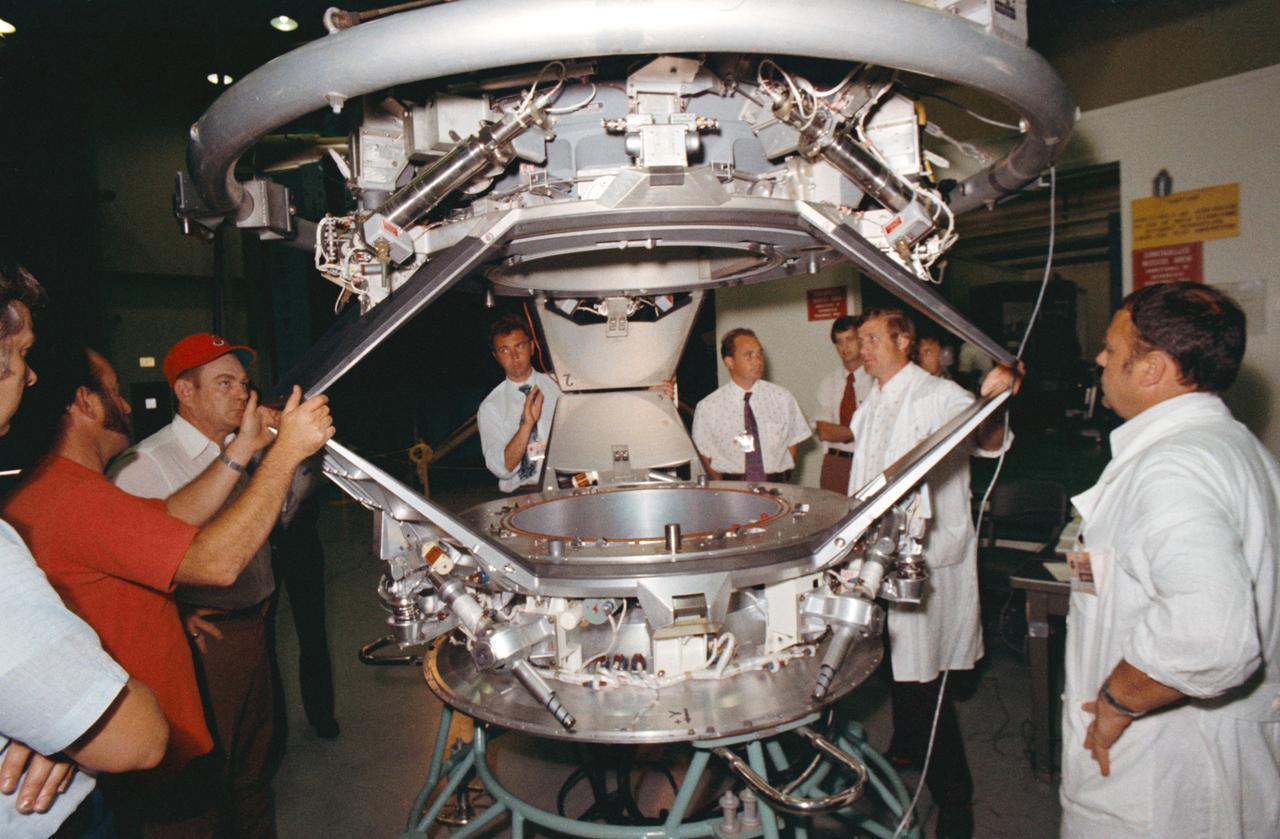
S74-25394 (10 July 1974) --- A group of American and Soviet engineers of the Apollo-Soyuz Test Project working group three examines an ASTP docking set-up following a docking mechanism fitness test conducted in Building 13 at the Johnson Space Center. Working Group No. 3 is concerned with ASTP docking problems and techniques. The joint U.S.-USSR ASTP docking mission in Earth orbit is scheduled for the summer of 1975. The Apollo docking mechanism is atop the Soyuz docking mechanism.
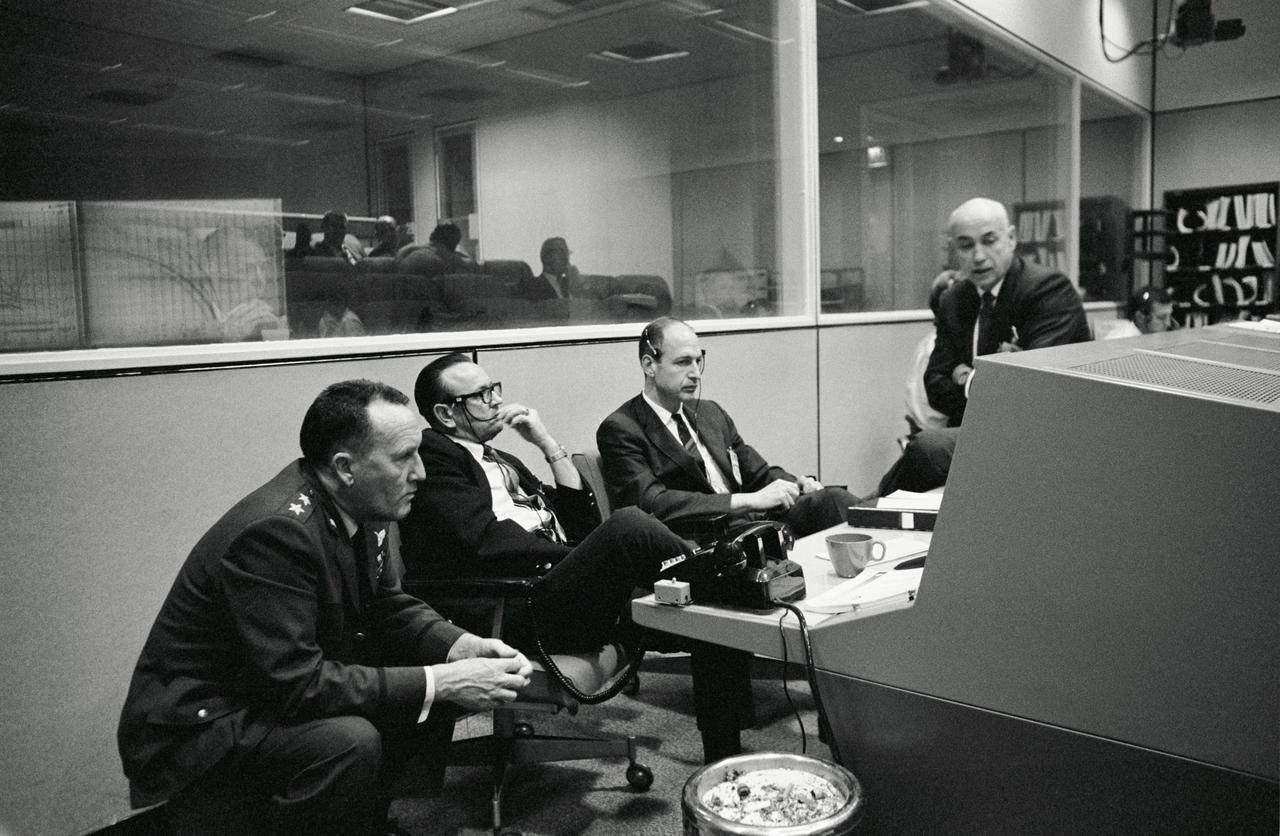
S68-20986 (4 April 1968) --- Scene at the flight operations director's console in the Mission Control Center, Building 30, during the Apollo 6 (Spacecraft 020/Saturn 520) unmanned space flight. Left to right, are Air Force Maj. Gen. Vincent G. Huston, DOD Manager, Manned Space Flight Operations, Andrews Air Force Base, Washington, D.C.; Dr. Christopher C. Kraft Jr., MSC director of flight operations; George M. Low, manager, MSC Apollo Spacecraft Program Office; and Dr. Robert R. Gilruth, MSC Director.
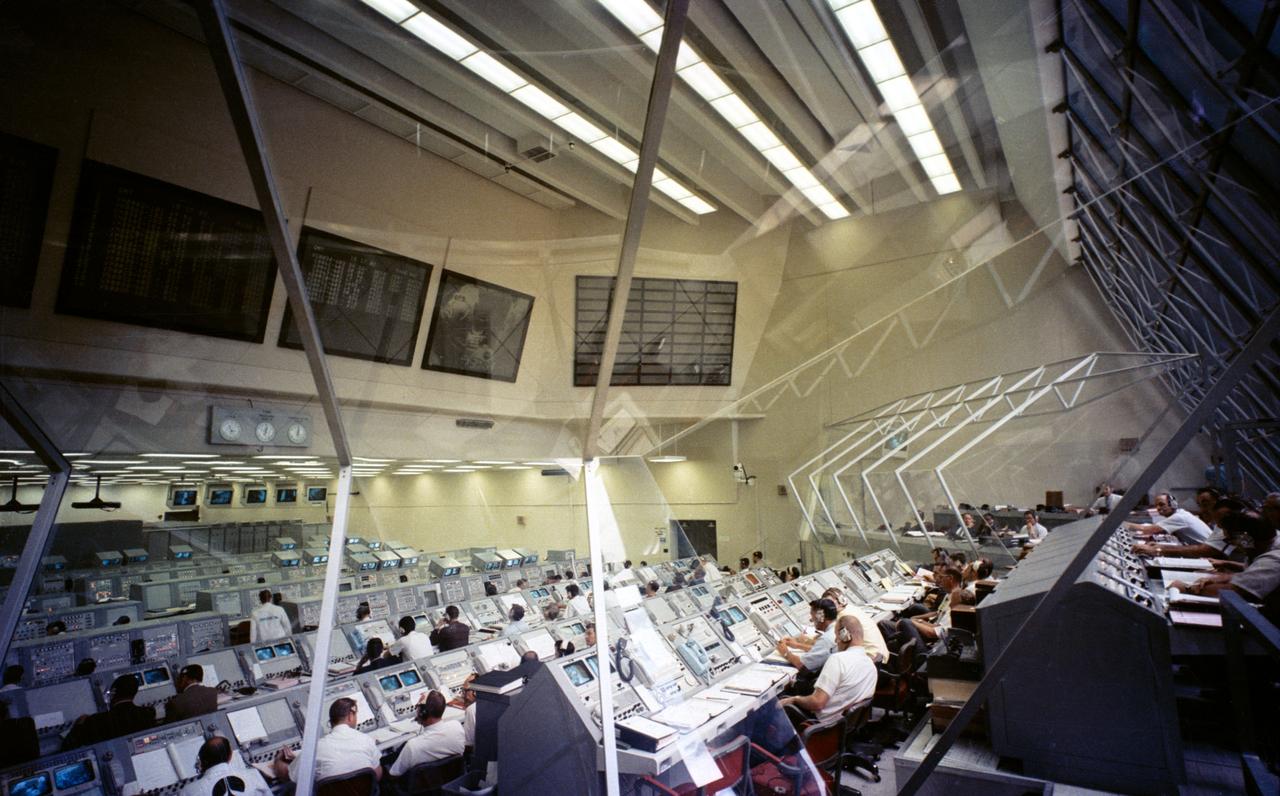
S69-34332 (13 May 1969) --- Overall view of Firing Room 3 of the Launch Control Center, Launch Complex 39, Kennedy Space Center, Florida, during an Apollo 10 Countdown Demonstration Test. The crew of the scheduled Apollo 10 lunar orbit mission will be astronauts Thomas P. Stafford, commander; John W. Young, command module pilot; and Eugene A. Cernan, lunar module pilot. The Launch Control Center is at the Vehicle Assembly Building. The Apollo 10 space vehicle will be launched from Pad 39B.
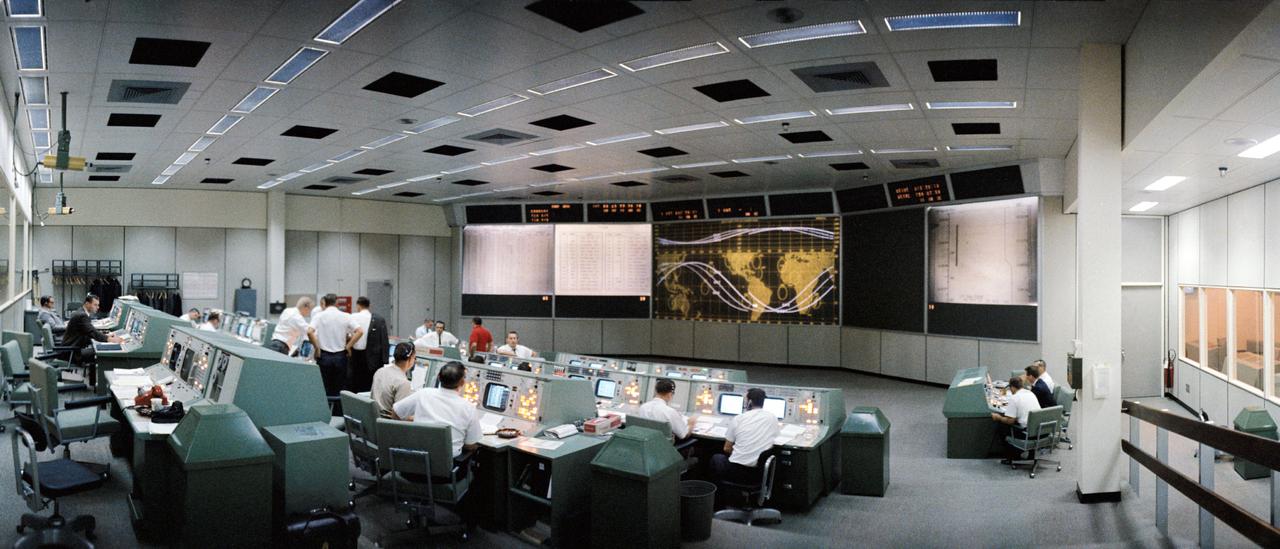
S65-45280 (21-29 Aug. 1965) --- Overall view of the Mission Control Center (MCC), Houston, Texas, during the Gemini-5 flight. Note the screen at the front of the MCC which is used to track the progress of the Gemini spacecraft.
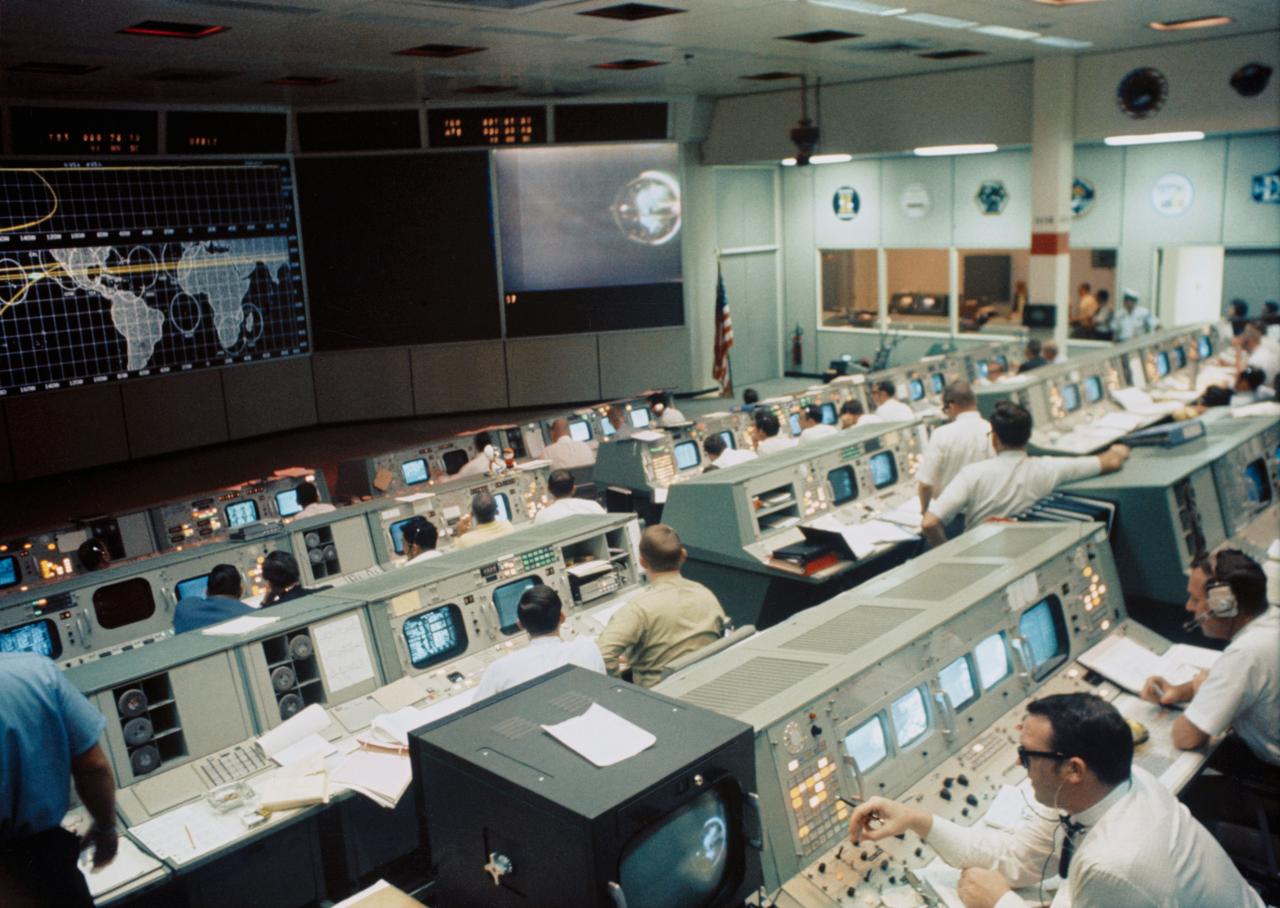
S69-34316 (18 May 1969) --- Overall view of the Mission Operations Control Room in the Mission Control Center, Building 30, on the first day of the Apollo 10 lunar orbit mission. A color television transmission was being received from Apollo 10. This picture was made following Command and Service Module/Lunar Module/Saturn IVB (CSM/LM-S-IVB) separation and prior to LM extraction from the S-IVB. The CSM were making the docking approach to the LM/S-IVB.

KENNEDY SPACE CENTER, FLA. - In the Launch Control Center, Robert Holl (left), Landing Recovery directo, and Donald Hammel, from the Shuttle Project Office, are in contact with the leaders of the “Mode VII” emergency landing simulation at Kennedy Space Center. The simulation is being managed and directed from the LCC. The purpose of the Mode VII is to exercise emergency preparedness personnel, equipment and facilities in rescuing astronauts from a downed orbiter and providing immediate medical attention. This simulation presents an orbiter that has crashed short of the Shuttle Landing Facility in a wooded area 2-1/2 miles south of Runway 33. Emergency crews are responding to the volunteer “astronauts” who are simulating various injuries inside the crew compartment mock-up. Rescuers must remove the crew, provide triage and transport to hospitals those who need further treatment. Local hospitals are participating in the exercise.
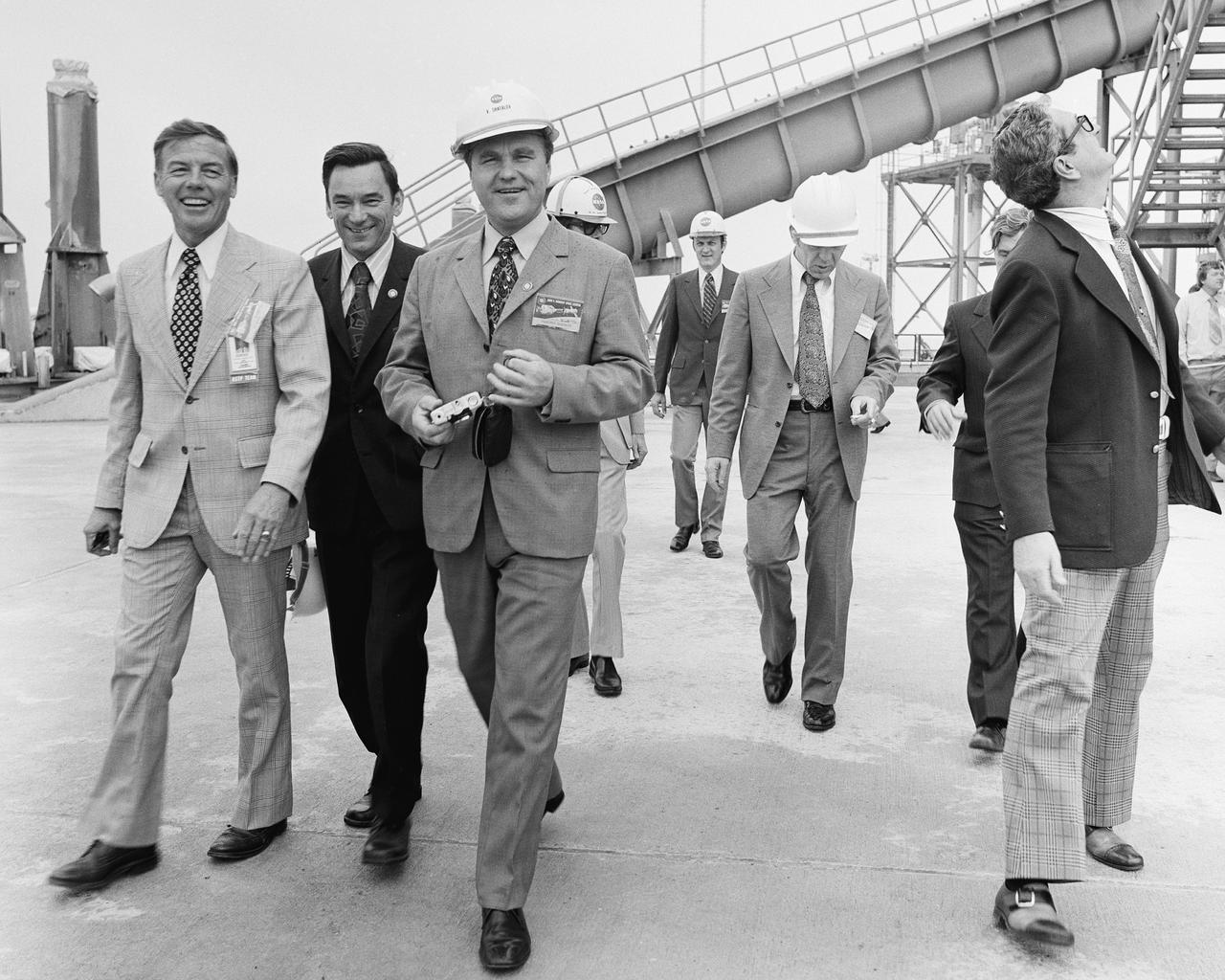
CAPE CANAVERAL, Fla. – KSC Director Lee Scherer, left, escorts a Soviet interpreter and Vladimir Shatalov, Soviet Cosmonaut Training Chief, on a tour of Pad 39B at the Spaceport. The Soviet and American personnel connected with July's Apollo Soyuz Test Project were at KSC February 8-10 to inspect equipment and tour facilities. The first international crewed spaceflight was a joint U.S.-U.S.S.R. rendezvous and docking mission. The Apollo-Soyuz Test Project, or ASTP, took its name from the spacecraft employed: the American Apollo and the Soviet Soyuz. The three-man Apollo crew lifted off from Kennedy Space Center aboard a Saturn IB rocket on July 15, 1975, to link up with the Soyuz that had launched a few hours earlier. A cylindrical docking module served as an airlock between the two spacecraft for transfer of the crew members. Photo credit: NASA
![CAPE CANAVERAL, Fla. – The Soviet and American crews for the July Apollo Soyuz Test Project [standing, center] addressed personnel assembled in a firing room at KSC on February 10. The crews for the joint manned space mission toured the Center during their three-day visit which also included inspection of ASTP equipment and facilities and a trip to Disney World. The first international crewed spaceflight was a joint U.S.-U.S.S.R. rendezvous and docking mission. The Apollo-Soyuz Test Project, or ASTP, took its name from the spacecraft employed: the American Apollo and the Soviet Soyuz. The three-man Apollo crew lifted off from Kennedy Space Center aboard a Saturn IB rocket on July 15, 1975, to link up with the Soyuz that had launched a few hours earlier. A cylindrical docking module served as an airlock between the two spacecraft for transfer of the crew members. Photo credit: NASA](https://images-assets.nasa.gov/image/KSC-108-75P-0057/KSC-108-75P-0057~medium.jpg)
CAPE CANAVERAL, Fla. – The Soviet and American crews for the July Apollo Soyuz Test Project [standing, center] addressed personnel assembled in a firing room at KSC on February 10. The crews for the joint manned space mission toured the Center during their three-day visit which also included inspection of ASTP equipment and facilities and a trip to Disney World. The first international crewed spaceflight was a joint U.S.-U.S.S.R. rendezvous and docking mission. The Apollo-Soyuz Test Project, or ASTP, took its name from the spacecraft employed: the American Apollo and the Soviet Soyuz. The three-man Apollo crew lifted off from Kennedy Space Center aboard a Saturn IB rocket on July 15, 1975, to link up with the Soyuz that had launched a few hours earlier. A cylindrical docking module served as an airlock between the two spacecraft for transfer of the crew members. Photo credit: NASA
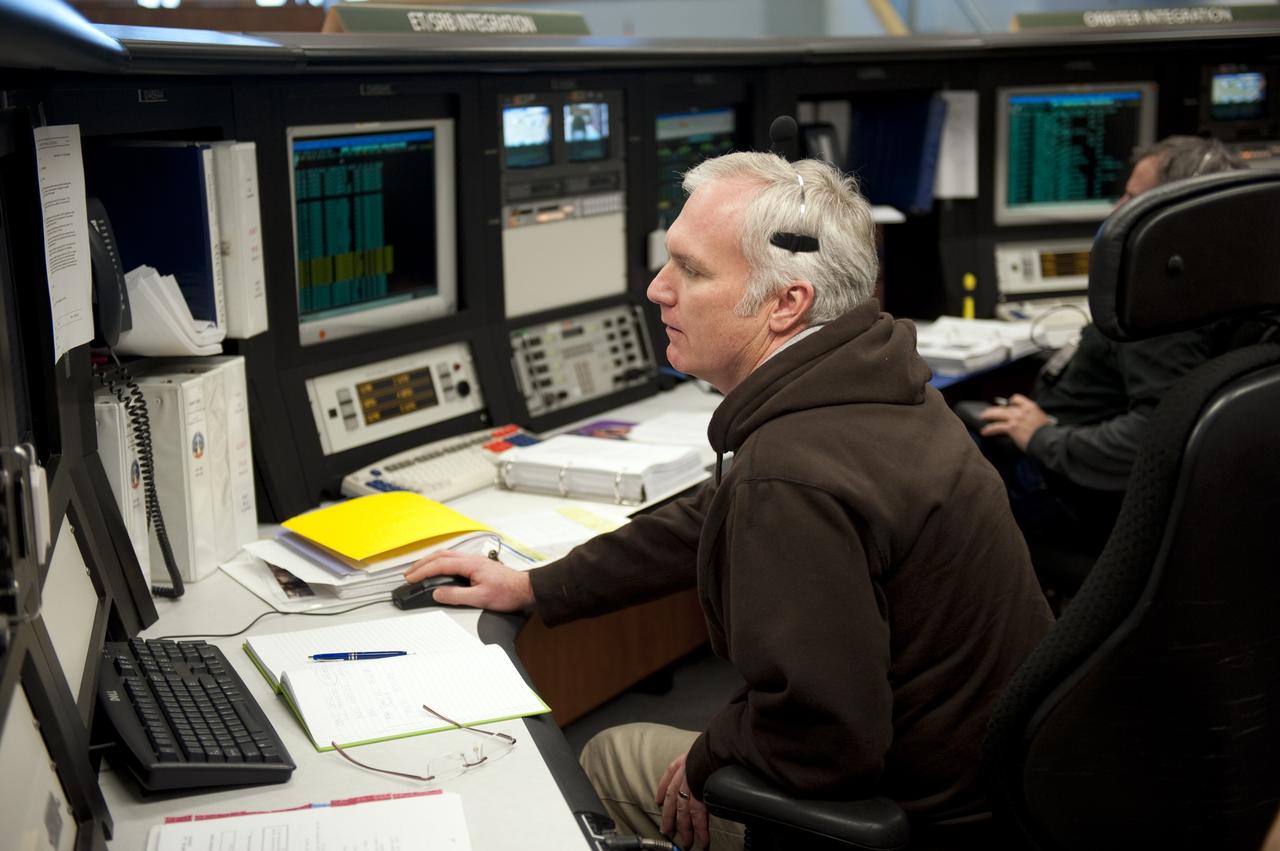
CAPE CANAVERAL, Fla. -- In the Launch Control Center at NASA's Kennedy Space Center in Florida, NASA Orbiter Project Engineer Todd Campbell sits at his console in Firing Room 4 along with other STS-133 launch team members to rehearse procedures for the liftoff of space shuttle Discovery's final mission. The team at Kennedy also participated in launch simulations with personnel at NASA's Johnson Space Center in Houston. Discovery's next launch opportunity to the International Space Station on the STS-133 mission is planned for no earlier than Feb. 24. For more information on STS-133, visit www.nasa.gov/mission_pages/shuttle/shuttlemissions/sts133/. Photo credit: NASA/Kim Shiflett
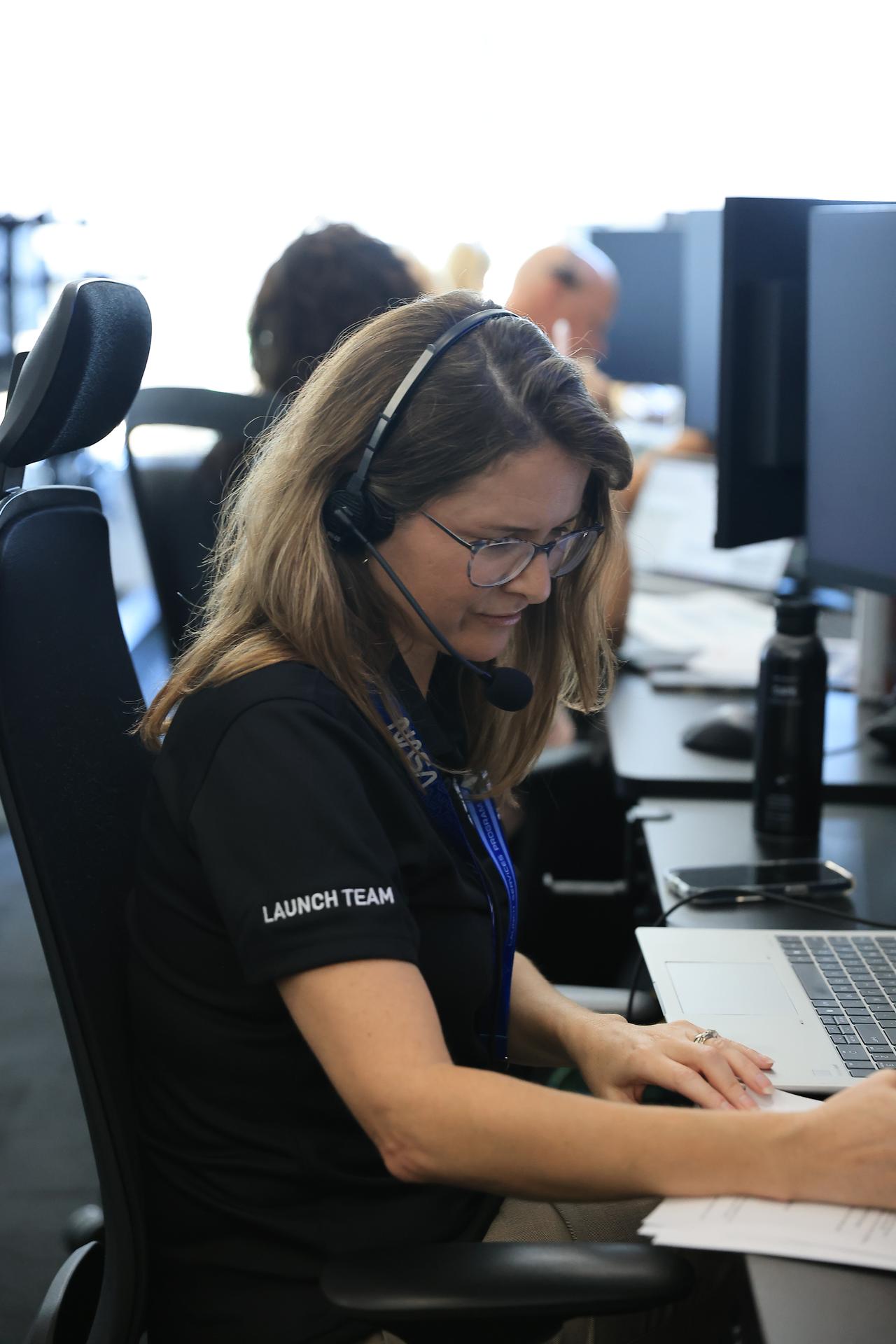
Jennifer Nufer, mission manager, Flight Projects Office with NASA’s Launch Services Program, participates in a mission dress rehearsal for NASA’s Nancy Grace Roman Space Telescope on Thursday, Aug. 20, 2026, inside SpaceX’s Hangar X at NASA Kennedy in Florida. Nufer and other specialists served as an assessment team for personnel who ran through a full end-to-end simulation of every major step they will experience on launch day except liftoff, including powering up the spacecraft, fueling the rocket, conducting weather briefings, and other operations.
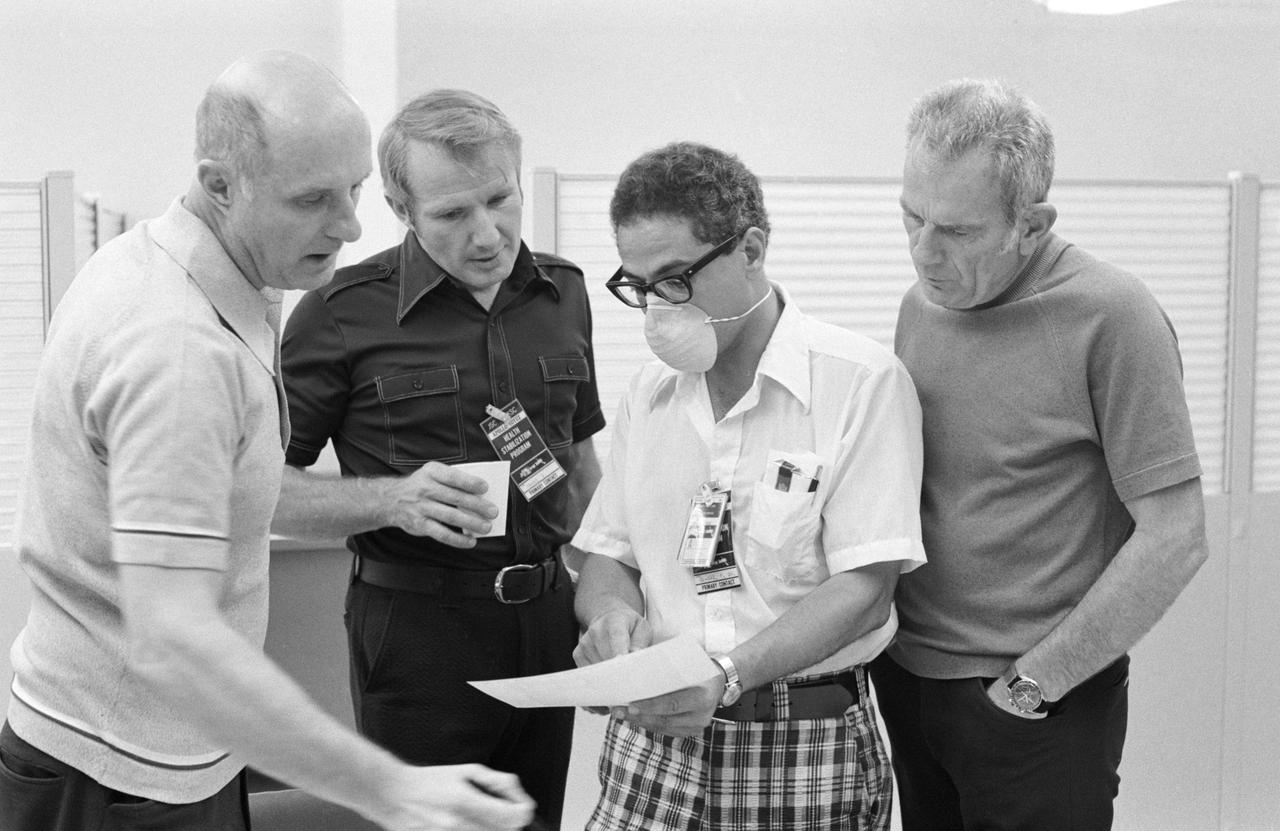
S75-28229 (8 July 1975) --- The three American ASTP prime crew astronauts participate in a photography mission briefing in Building 5 with Dr. Farouk El-Baz (wearing face mask) during Apollo-Soyuz Test Project preflight activity at NASA's Johnson Space Center. They are, left to right, Thomas P. Stafford, commander; Vance D. Brand, command module pilot; Dr. El-Baz; and Donald K. Slayton, docking module pilot. Dr. El-Baz is with the Center for Earth and Planetary Studies, National Air and Space Museum, Smithsonian Institution. The face mask is to protect the crewmen from possible exposure to disease prior to launch time. Photo credit: NASA
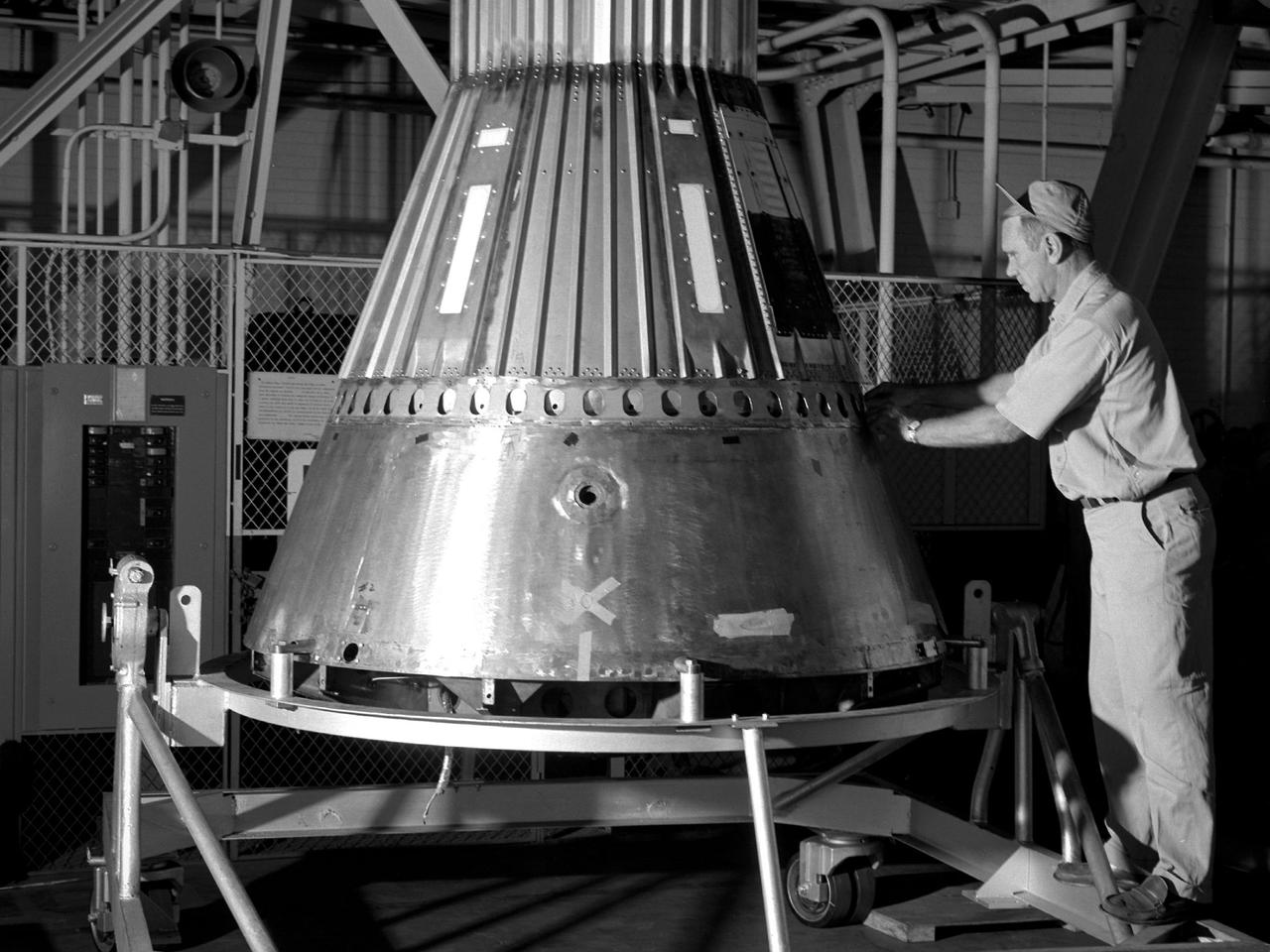
A NASA mechanic secures the afterbody to a Mercury capsule in the hangar at the Lewis Research Center. The capsule was one of two built at Lewis for the “Big Joe” launches scheduled for September 1959. The initial phase of Project Mercury consisted of a series of unmanned launches using the Air Force’s Redstone and Atlas boosters and the Langley-designed Little Joe boosters. The first Atlas launch, referred to as “Big Joe”, was a single attempt early in Project Mercury to use a full-scale Atlas booster to simulate the reentry of a mock-up Mercury capsule without actually placing it in orbit. The overall design of Big Joe had been completed by December 1958, and soon thereafter project manager Aleck Bond assigned NASA Lewis the task of designing the electronic instrumentation and automatic stabilization system. Lewis also constructed the capsule’s lower section, which contained a pressurized area with the electronics and two nitrogen tanks for the retrorockets. Lewis technicians were responsible for assembling the entire capsule: the General Electric heatshield, NASA Langley afterbody and recovery canister, and Lewis electronics and control systems. On June 9, 1959, the capsule was loaded on an air force transport aircraft and flown to Cape Canaveral. A team of 45 test operations personnel from Lewis followed the capsule to Florida and spent the ensuing months preparing it for launch. The launch took place in the early morning hours of September 9, 1959.
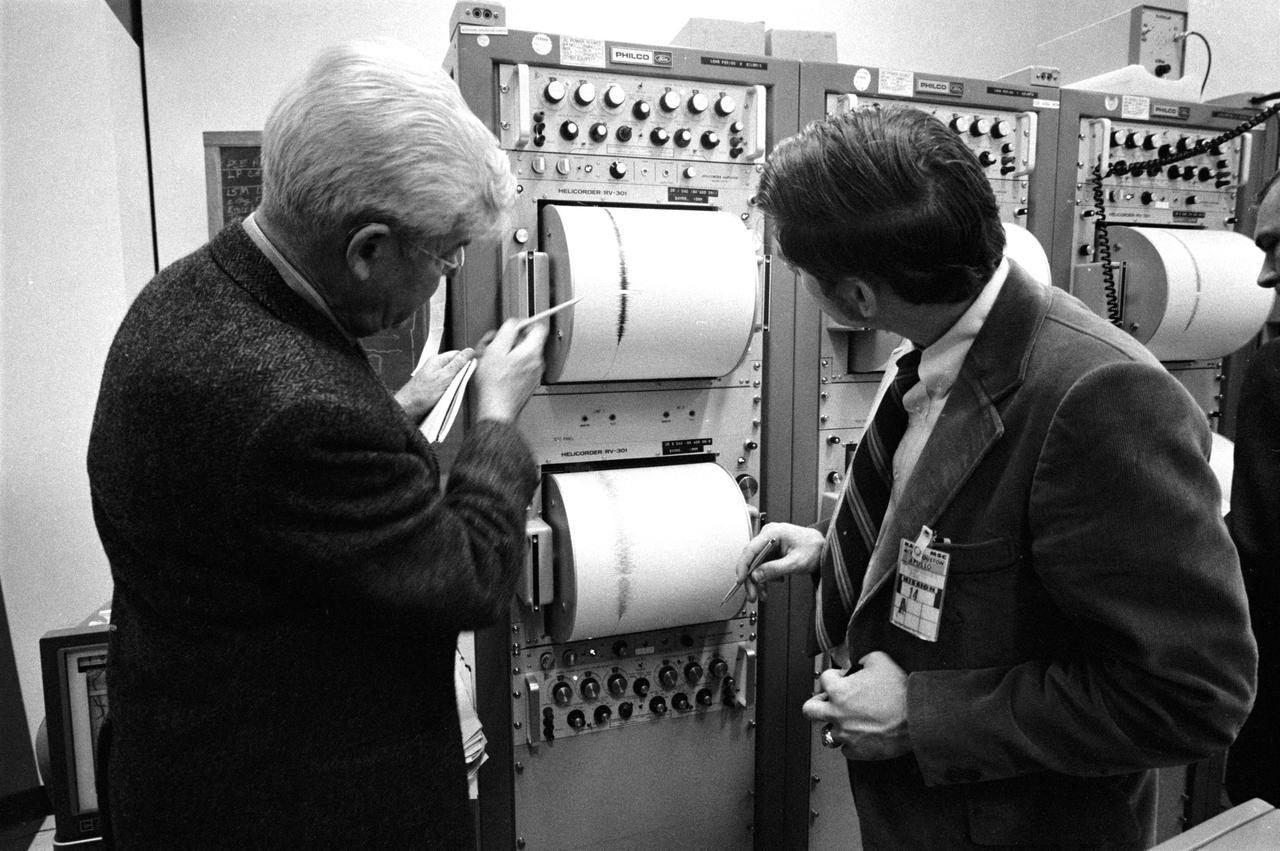
S71-17609 (4 Feb. 1971) --- These two individuals are examining a seismic reading in the Mission Control Center's ALSEP Room during the Apollo 14 S-IVB impact on the moon. Dr. Maurice Ewing (left) is the director of the Lamont-Doherty Geological Observatory at Columbia University. David Lammlein, a Columbia graduate student, is on the right. The Apollo 14 Saturn IVB stage impacted on the lunar surface at 1:40:54 a.m. (CST), Feb. 4, 1971, about 90 nautical miles south-southwest of the Apollo 12 passive seismometer. The energy release was comparable to 11 tons of TNT. Dr. Gary Latham of the Lamont-Doherty Geological Observatory is the principal investigator for the Passive Seismic Experiment, a component of the Apollo Lunar Surface Experiments Package.
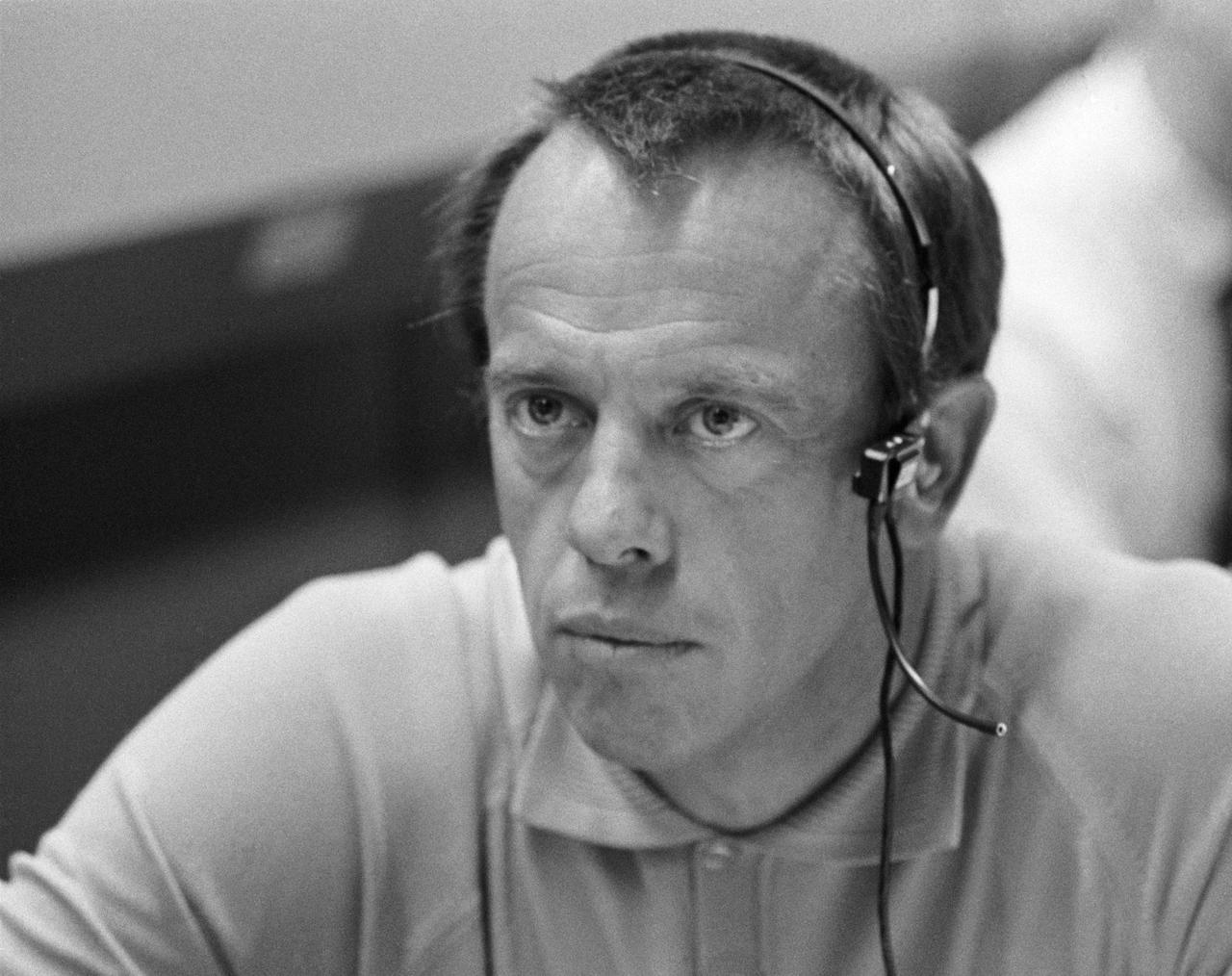
S70-34904 (14 April 1970) --- Astronaut Alan B. Shepard Jr., prime crew commander of the Apollo 14 mission, monitors communications between the Apollo 13 spacecraft and Mission Control Center. He is seated at a console in the Mission Operations Control Room of the MCC, Manned Spacecraft Center. The main concern of the moment was action taken by the three Apollo 13 crewmen - astronauts James A. Lovell Jr., John L. Swigert Jr. and Fred W. Haise Jr. - to make corrections inside the spacecraft following discovery of an oxygen cell failure several hours earlier.
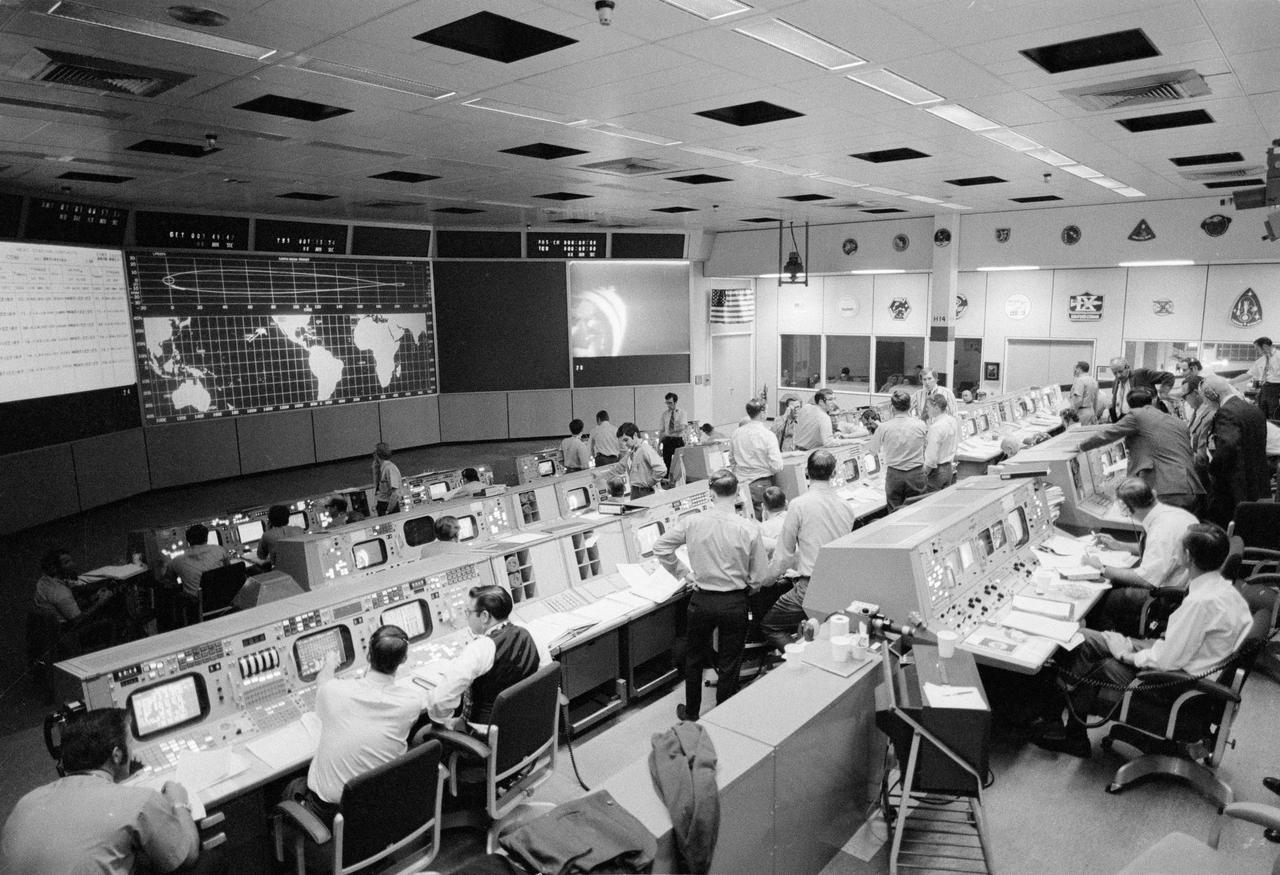
S71-16879 (31 Jan. 1971) --- Overall view of activity in the Mission Operations Control Room in the Mission Control Center during the Apollo 14 transposition and docking maneuvers. The Apollo 14 Lunar Module, still attached to the Saturn IVB stage, can be seen on the large television monitor. Due to difficulty with the docking mechanism six attempts were made before a successful "hard dock" of the Command Module with the Lunar Module was accomplished. Aboard the Command Module were astronauts Alan B. Shepard Jr., Stuart A. Roosa, and Edgar D. Mitchell.
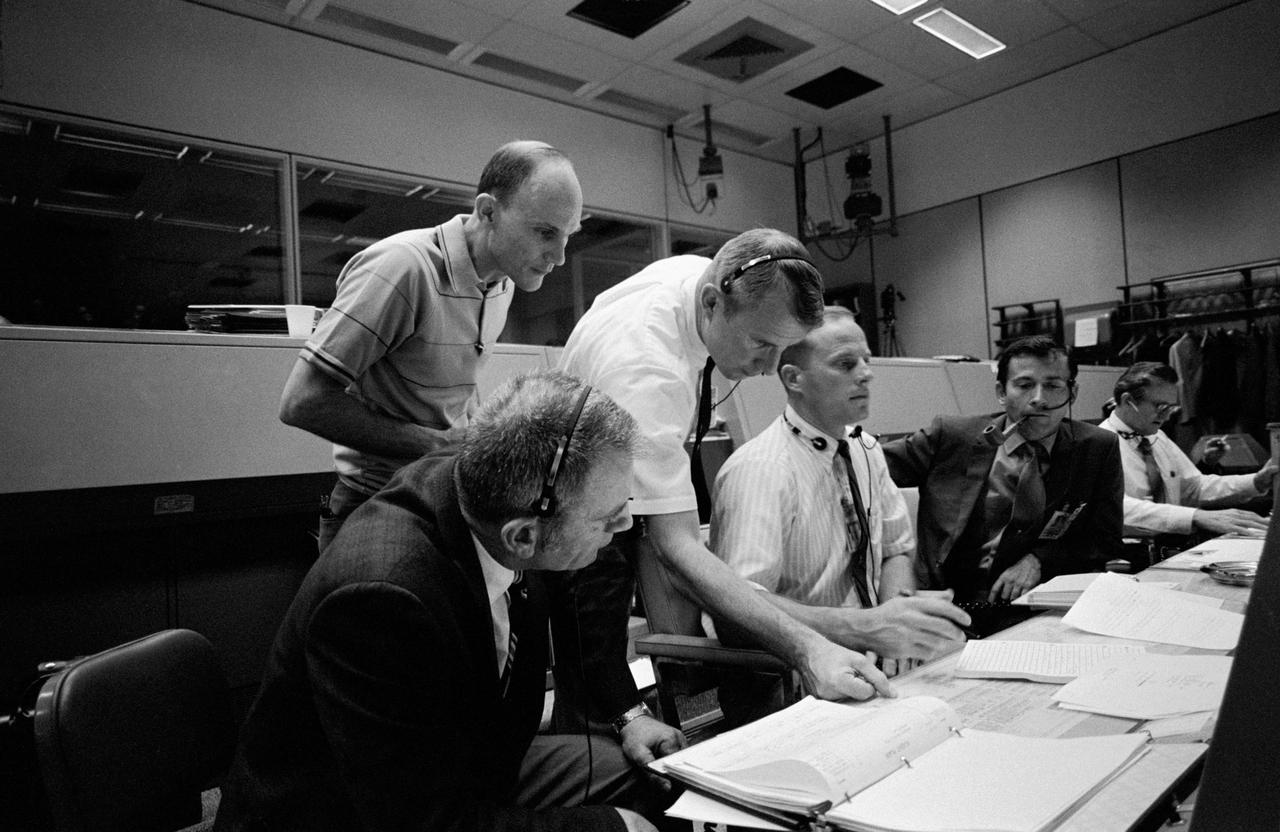
S70-34902 (14 April 1970) --- Several persons important to the Apollo 13 mission, at consoles in the Mission Operations Control Room (MOCR) of the Mission Control Center (MCC). Seated at consoles, from left to right, are astronauts Donald K. Slayton, director of flight crew operations; astronaut Jack R. Lousma, Shift 3 spacecraft communicator; and astronaut John W. Young, commander of the Apollo 13 backup crew. Standing, left to right, are astronaut Tom K. Mattingly II, who was replaced as Apollo 13 command module pilot after it was learned he may come down with measles, and astronaut Vance D. Brand, Shift 2 spacecraft communicator. Several hours earlier, in the late evening hours of April 13, crew members of the Apollo 13 mission reported to MCC that trouble had developed with an oxygen cell on their spacecraft.
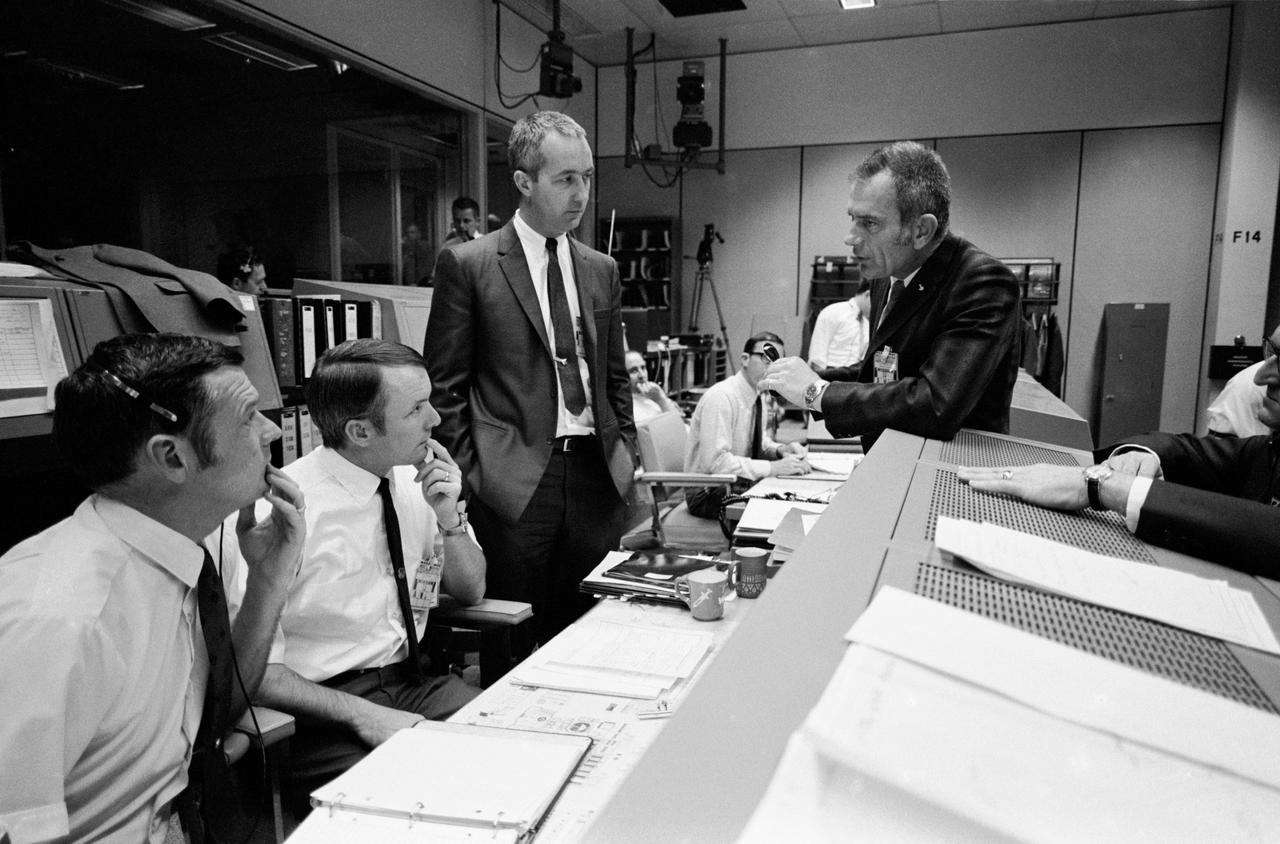
S70-35369 (16 April 1970) --- Discussion in the Mission Operations Control Room (MOCR) dealing with the Apollo 13 crewmen during their final day in space. From left to right are Glynn S. Lunney, Shift 4 flight director; Gerald D. Griffin, Shift 2 flight director; astronaut James A. McDivitt, manager, Apollo Spacecraft Program, MSC; Dr. Donald K. Slayton, director of Flight Crew Operations, MSC; and Dr. Willard R. Hawkins, M.D., Shift 1 flight surgeon.
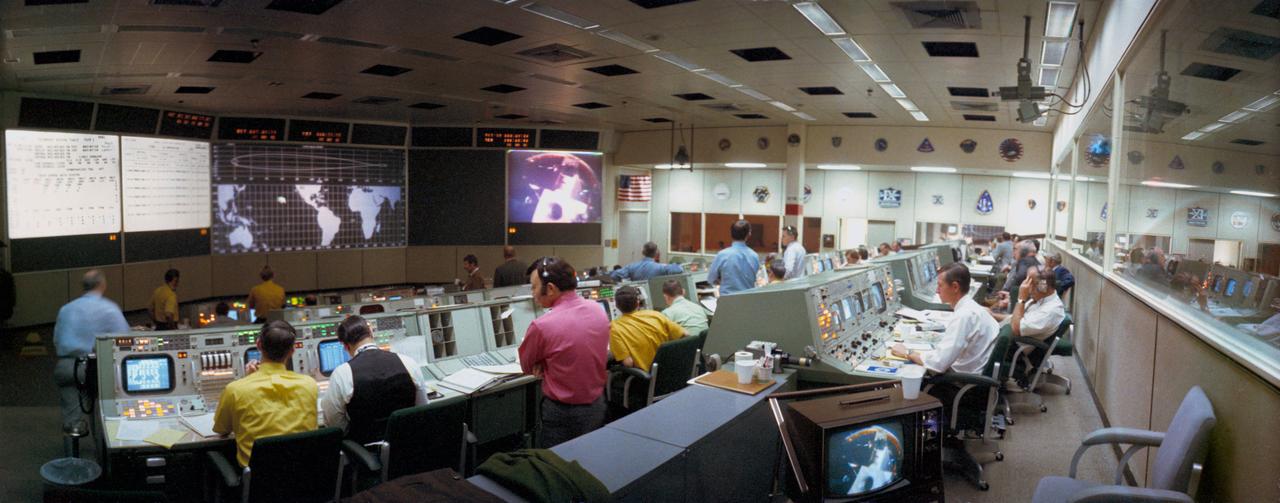
S71-17122 (31 Jan. 1971) --- A wide angle overall view of the Mission Operations Control Room (MOCR) in the Mission Control Center at the Manned spacecraft Center. This view was photographed during the first color television transmission from the Apollo 14 Command Module. Projected on the large screen at the right front of the MOCR is a view of the Apollo 14 Lunar Module, still attached to the Saturn IVB stage. The Command and Service Modules were approaching the LM/S-IVB during transposition and docking maneuvers.
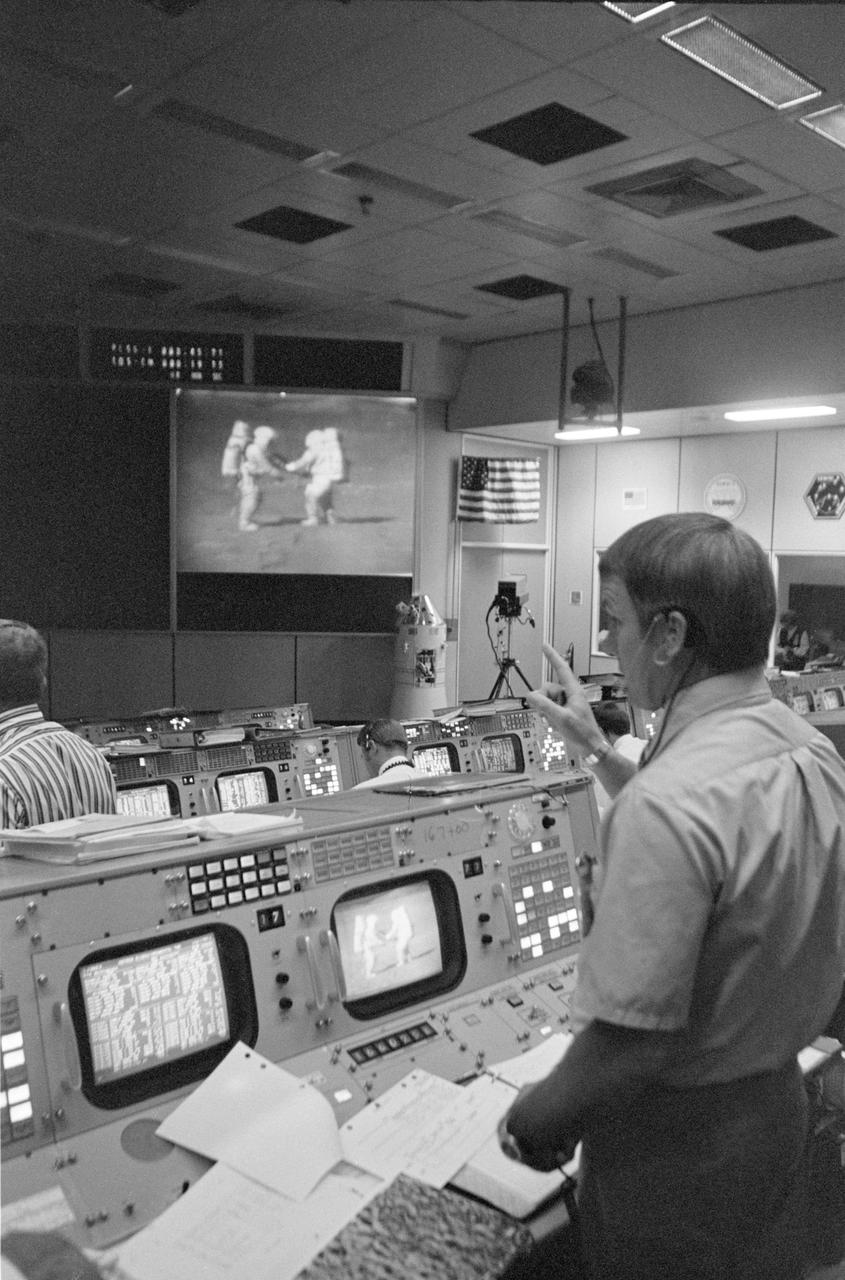
S71-41852 (2 Aug. 1971) --- Gerald D. Griffin, foreground, stands near his console in the Mission Operations Control Room (MOCR) during Apollo 15's third extravehicular activity (EVA) on the lunar surface. Griffin is Gold Team (Shift 1) flight director for the Apollo 15 mission. Astronauts David R. Scott and James B. Irwin can be seen on the large screen at the front of the MOCR as they participate in sample-gathering on the lunar surface.
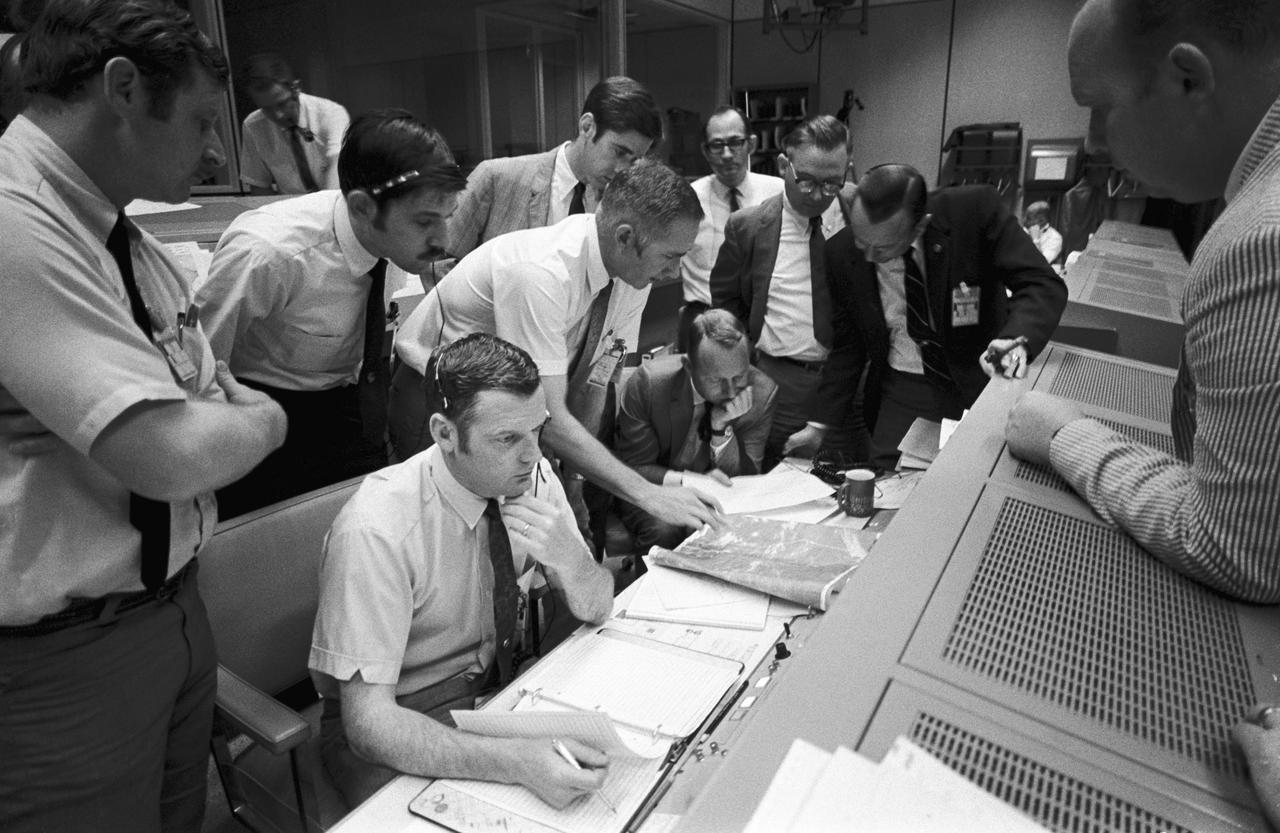
S70-35014 (15 April 1970) --- A group of flight controllers gathers around the console of Glenn S. Lunney (seated, nearest camera), Shift 4 flight director, in the Mission Operations Control Room (MOCR) of Mission Control Center (MCC), located in Building 30 at the Manned Spacecraft Center (MSC). Their attention is drawn to a weather map of the proposed landing site in the South Pacific Ocean. Among those looking on is Dr. Christopher C. Kraft, deputy director, MSC, standing in black suit, on right. When this photograph was taken, the Apollo 13 lunar landing mission had been canceled, and the problem-plagued Apollo 13 crew members were in trans-Earth trajectory attempting to bring their crippled spacecraft back home.
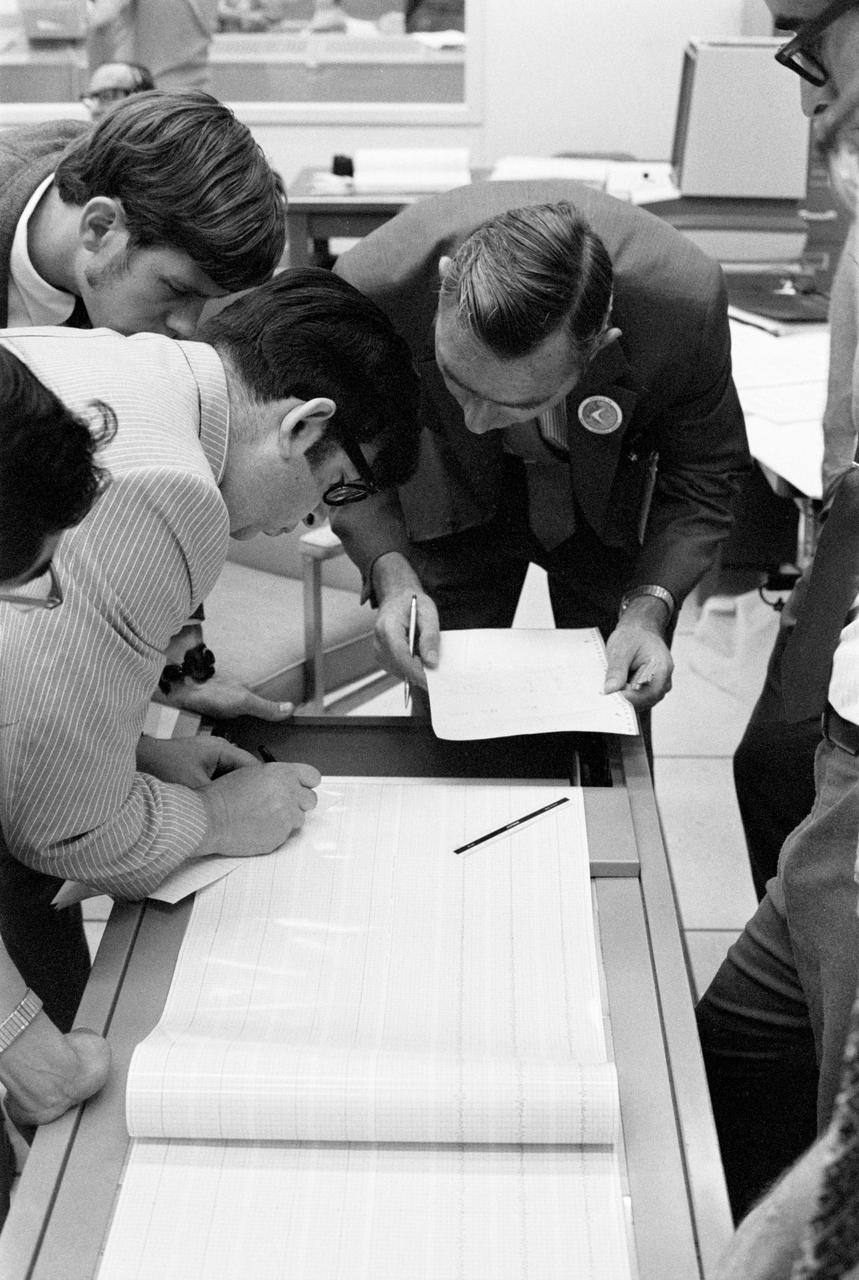
The seismometer reading from the impact made by the Apollo 15 Saturn S-IVB stage when it struck the lunar surface is studied by scientists in the Mission Control Center. Dr. Gary Latham (dark suit, wearing lapel button) of Columbia University is responsible for the design and experiment data analysis of the Passive Seismic Experiment of the Apollo Lunar Surface Experiment Package (ALSEP). The man on the left, writing, is Nafi Toksos of the Massachusetts Institute of Technology. Looking on at upper left is Dave Lamneline, also with Columbia.
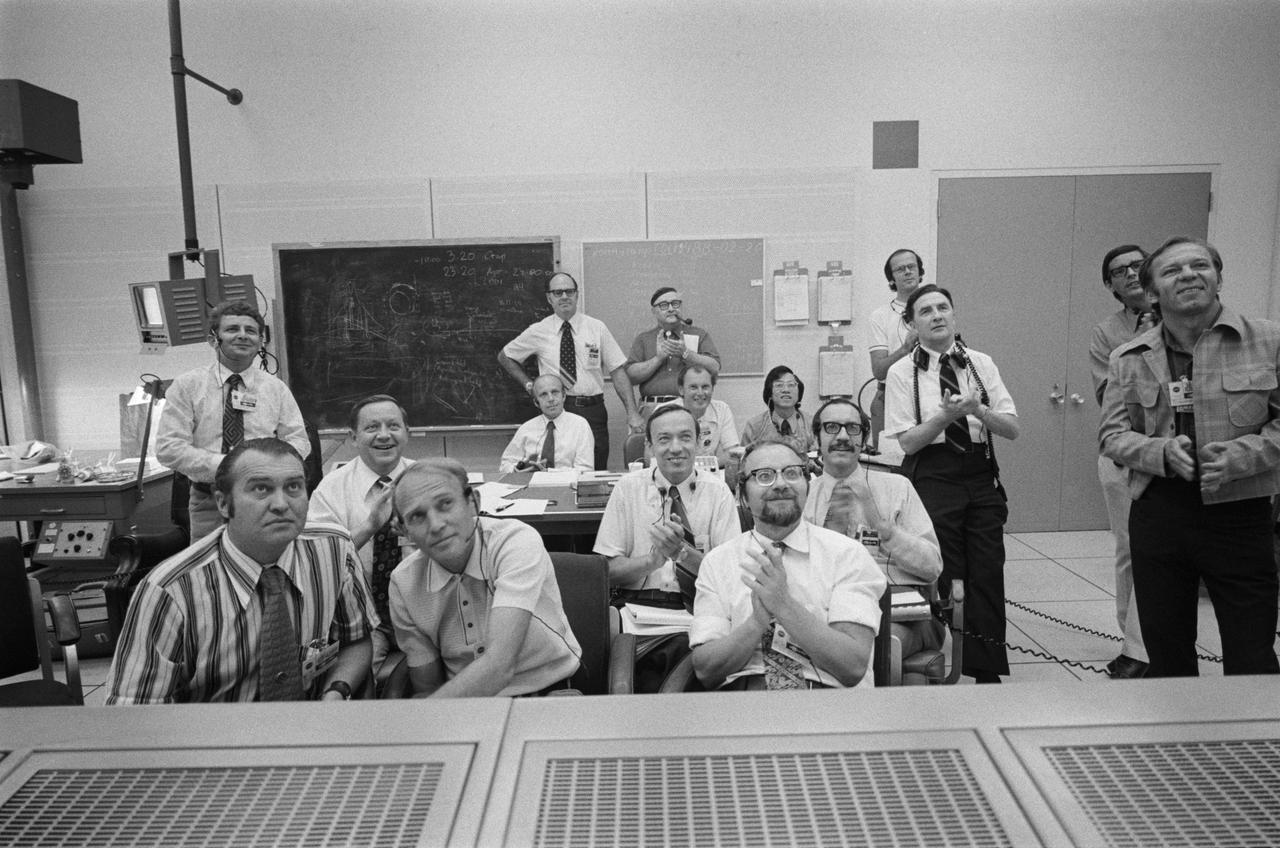
S75-28659 (21 July 1975) --- An overall view of the group of Soviet Union flight controllers who served at the Mission Control Center during the joint U.S.-USSR Apollo-Soyuz Test Project docking mission in Earth orbit. They are applauding the successful touchdown of the Soyuz spacecraft in Central Asia. The television monitor had just shown the land landing of the Soyuz descent vehicle.
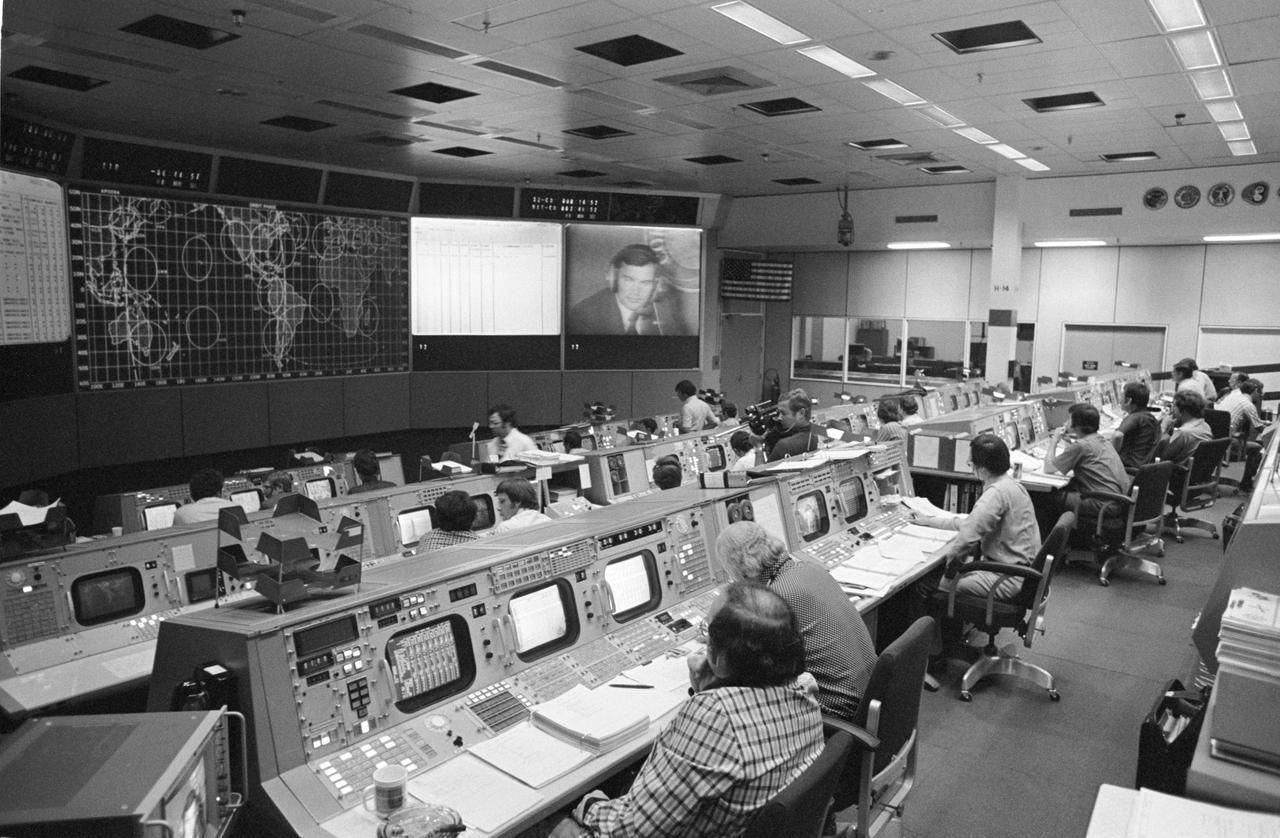
S75-28483 (15 July 1975) --- An overall view of the Mission Operations Control Room in the Mission Control Center on the first day of the Apollo-Soyuz Test Project docking mission in Earth orbit. The American ASTP flight controllers at NASA's Johnson Space Center were monitoring the progress of the Soviet ASTP launch when this photograph was taken. The television monitor shows cosmonaut Yuri V. Romanenko at his spacecraft communicator?s console in the ASTP mission control center in the Soviet Union. The American ASTP liftoff followed the Soviet ASTP launch by seven and one-half hours.
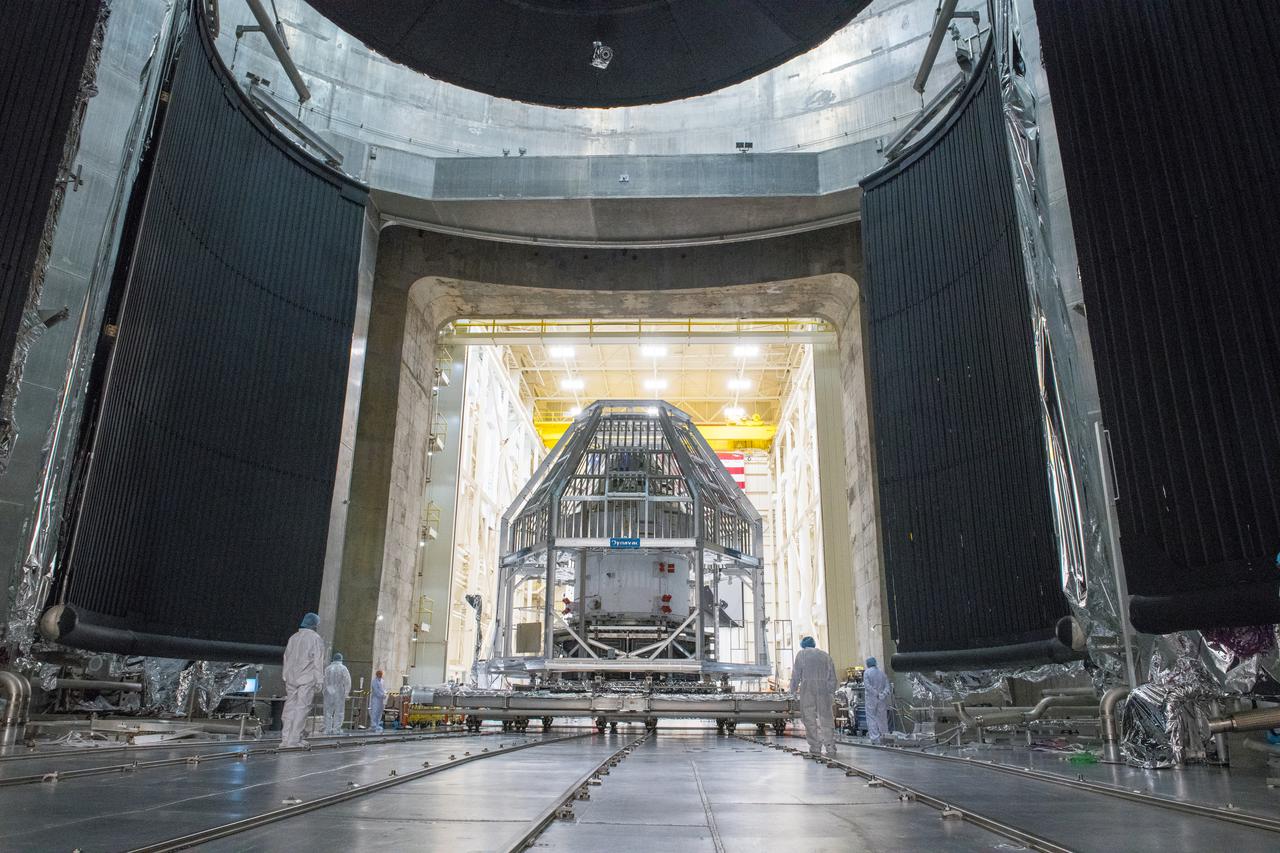
Orion - EM-1 - Artemis Spacecraft Installation in the Space Environment Complex, SEC Thermal Vacuum Chamber
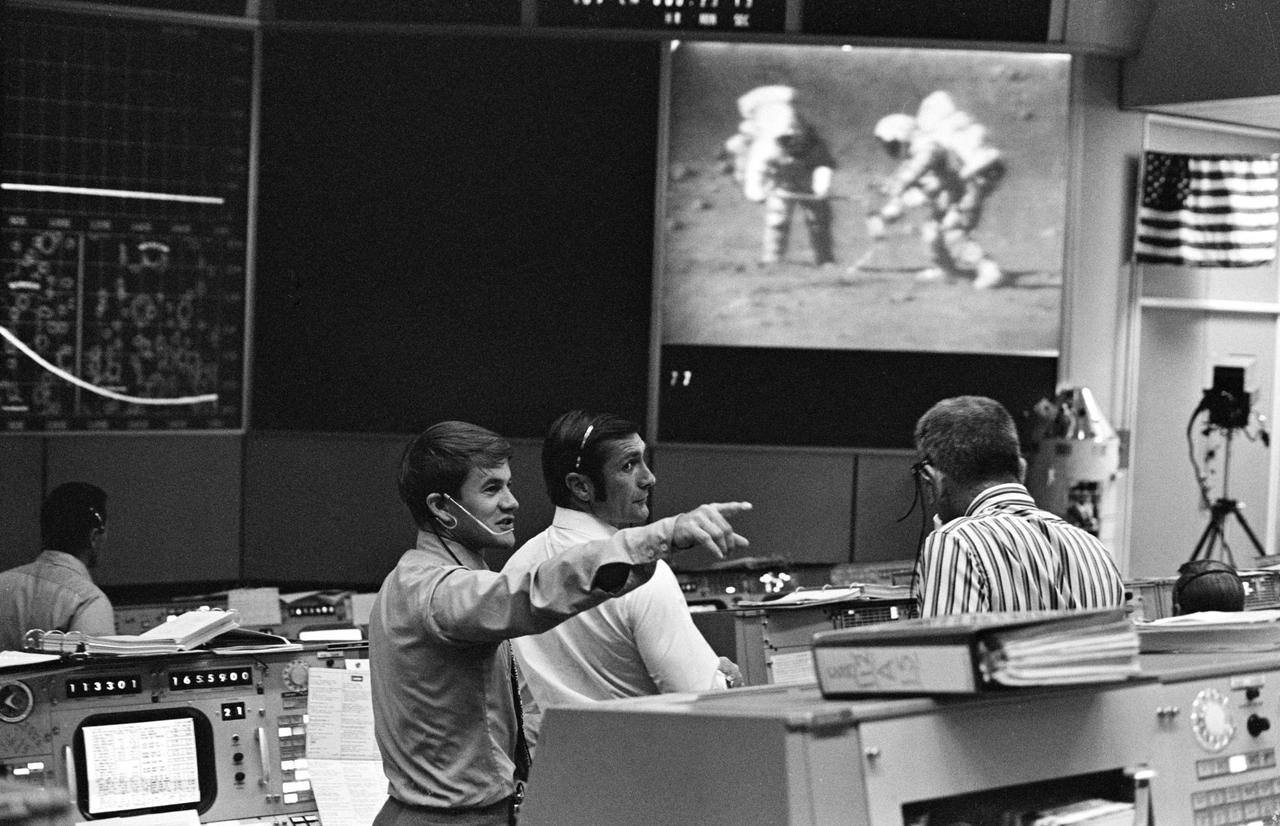
S71-41836 (2 Aug. 1971) --- Scientist-astronaut Joseph P. Allen, left, directs the attention of astronaut Richard F. Gordon Jr., to an occurrence out of view at right in the Mission Control Center's (MCC) Mission Operations Control Room (MOCR), while Dr. Donald K. (Deke) Slayton, on right with back to camera, views activity of Apollo 15 on a large screen at the front of the MOCR. Astronauts David R. Scott and James B. Irwin are seen on the screen performing tasks of the mission's third extravehicular activity (EVA), on Aug. 2, 1971. Dr. Slayton is director of Flight Crew Operations, NASA-MSC; Gordon is Apollo 15 backup commander; and Dr. Allen is an Apollo 15 spacecraft communicator.
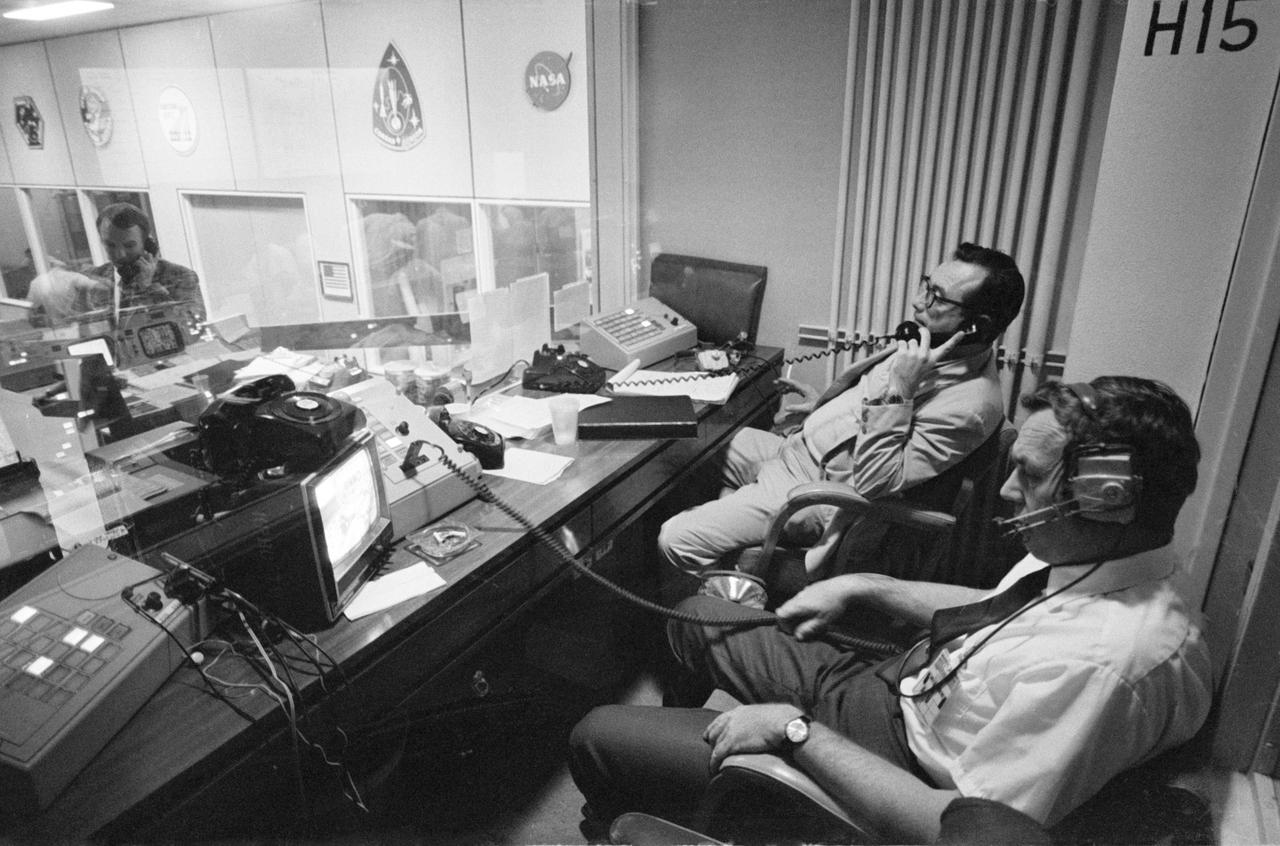
S70-35012 (15 April 1970) --- Two phases of busy activity during critical moments of the Apollo 13 mission are reflected in this view in the Mission Control Center, Building 30, Manned Spacecraft Center. In the foreground, Henry Simmons (left) of Newsweek magazine and John E. Riley, public information specialist, Public Affairs Office, MSC, man their positions in the Press Room. At extreme left of photo, Gerald D. Griffin, Shift 2 flight director, talks on telephone in Mission Operations Control Room. When this photograph was taken, the Apollo 13 lunar landing had been canceled, and the problem-plagued Apollo 13 crewmen were in trans-Earth trajectory attempting to bring their crippled spacecraft back home.
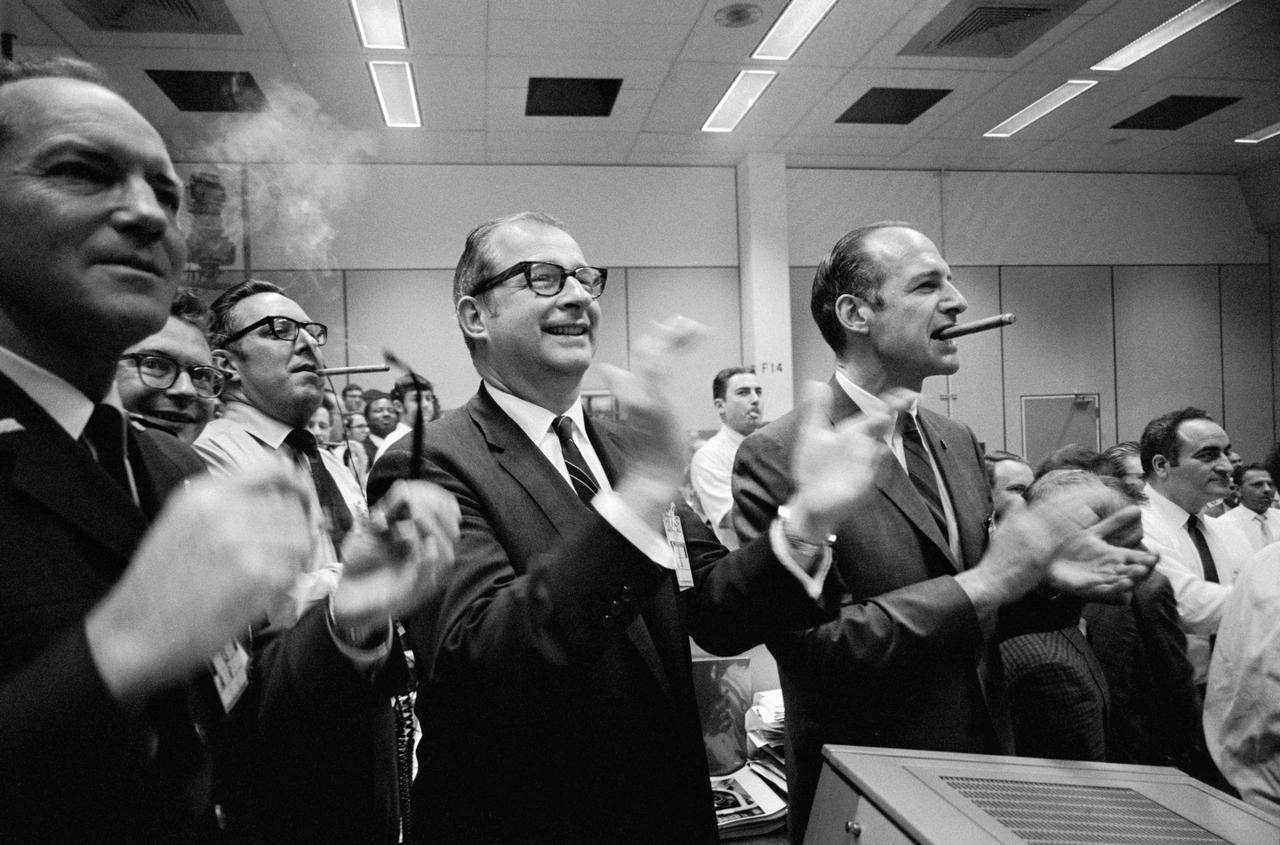
S70-35148 (17 April 1970) --- Staff members from NASA Headquarters (NASA HQ), Manned Spacecraft Center (MSC), and Dr. Thomas Paine (center of frame) applaud the successful splashdown of the Apollo 13 mission while Dr. George Low smokes a cigar (right), in the MSC Mission Control Center (MCC), located in Building 30. Apollo 13 crewmembers, astronauts James A. Lovell Jr., commander; John L. Swigert Jr., command module pilot; and Fred W. Haise Jr., lunar module pilot, splashed down at 12:07:44 p.m. (CST), April 17, 1970, in the south Pacific Ocean.

S70-35368 (16 April 1970) --- Overall view showing some of the feverish activity in the Mission Operations Control Room (MOCR) of the Mission Control Center (MCC) during the final 24 hours of the problem-plagued Apollo 13 mission. Here, flight controllers and several NASA/MSC officials confer at the flight director's console. When this picture was made, the Apollo 13 lunar landing had already been canceled, and the Apollo 13 crewmembers were in trans-Earth trajectory attempting to bring their crippled spacecraft back home.
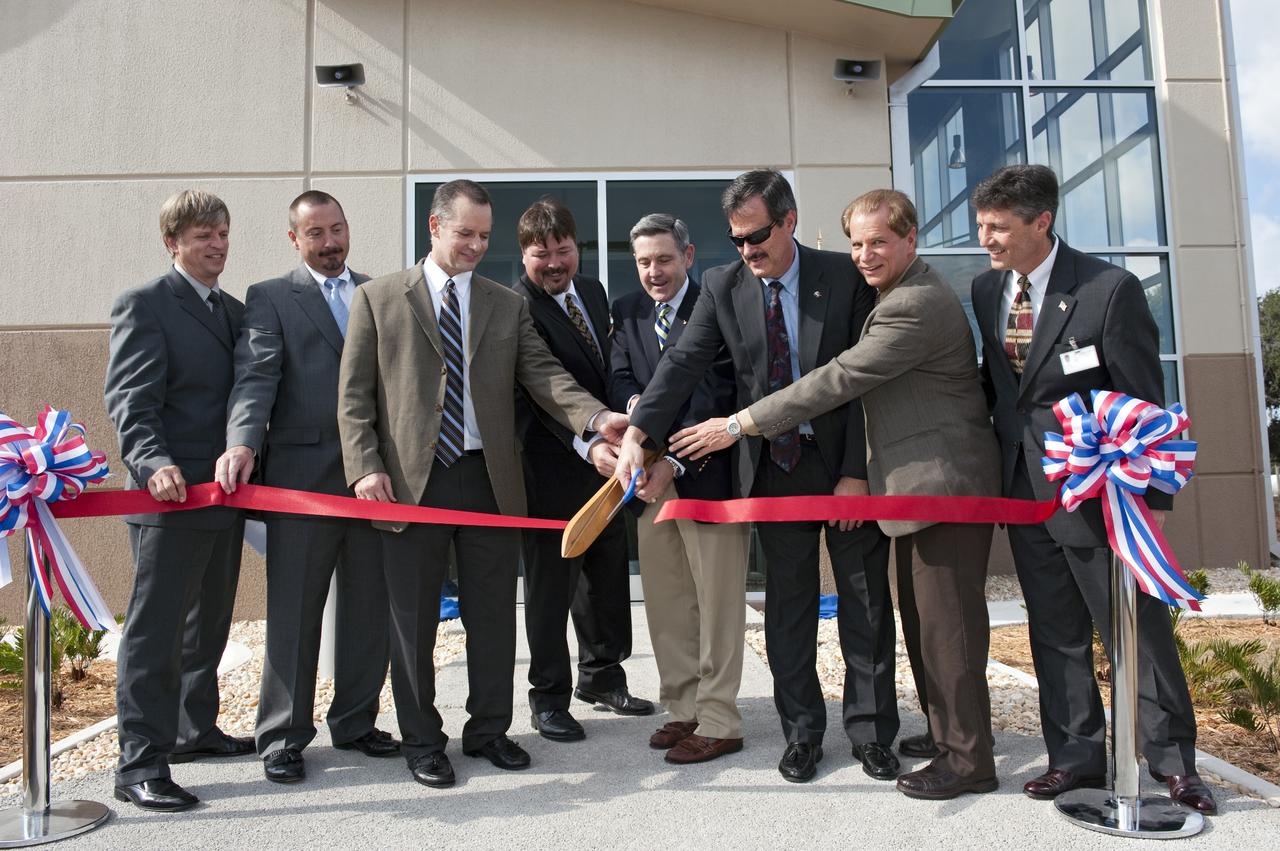
CAPE CANAVERAL, Fla. -- A traditional ribbon-cutting ceremony takes place outside the Propellants North Administration and Maintenance Facility at NASA's Kennedy Space Center in Florida. From left, are Thomas Wilczek, contracting officer technical representative/project manager for NASA Construction of Facilities; Bradley O’Toole, NASA contracting officer; James Wright, deputy assistant administrator for the Office of Strategic Infrastructure at NASA Headquarters; Frank Kline, NASA Construction of Facility project manager; Bob Cabana, Kennedy's center director; Mike Benik, director of Kennedy's Center Operations; Ward Davis, president of HW Davis Construction Inc.; and Rick Ferreira, chief operating officer of Jones Edmunds and Associates Inc. Propellants North consists of two buildings, one to store cryogenic fuel transfer equipment and one to house personnel who support fueling spacecraft. The recently rebuilt buildings will be NASA's first carbon neutral facility, which means it will produce enough energy on site from renewable sources to offset what it requires to operate. The facility also will reach for the U.S. Green Building Council's Leadership in Environmental and Energy Design (LEED) Platinum status, which is the highest LEED rating. Photo credit: NASA/Kim Shiflett
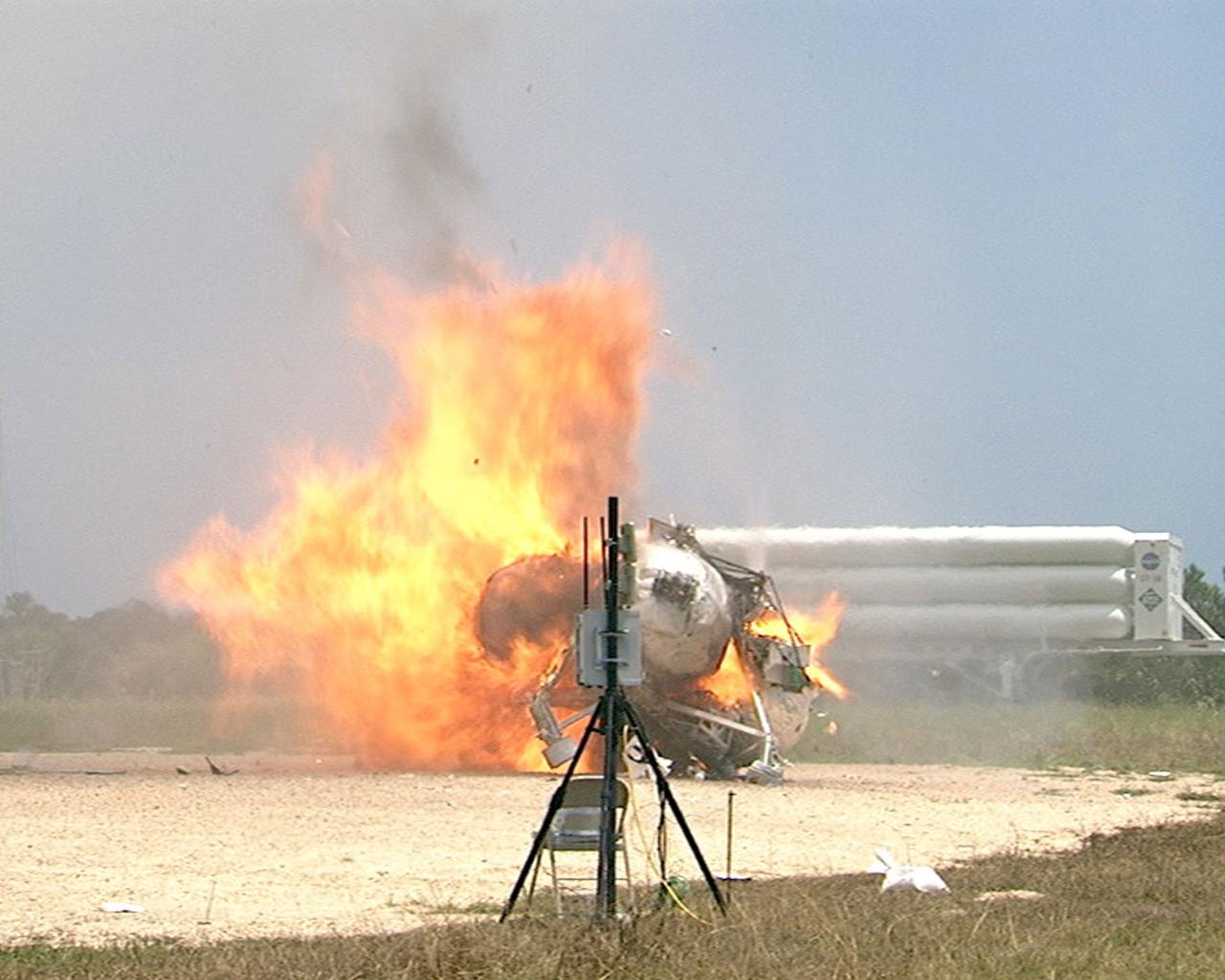
CAPE CANAVERAL, Fla. – During a free-flight test of the Project Morpheus vehicle at the Shuttle Landing Facility at NASA’s Kennedy Space Center in Florida, the vehicle lifted off the ground and then experienced a hardware component failure, which prevented it from maintaining stable flight. No one was injured and the resulting fire was extinguished by Kennedy fire personnel. Engineers are looking into the test data and the agency will release information as it becomes available. Failures such as these were anticipated prior to the test, and are part of the development process for any complex spaceflight hardware. Testing of the prototype lander had been ongoing at NASA’s Johnson Space Center in Houston in preparation for its first free-flight test at Kennedy Space Center. Morpheus was manufactured and assembled at JSC and Armadillo Aerospace. Morpheus is large enough to carry 1,100 pounds of cargo to the moon – for example, a humanoid robot, a small rover, or a small laboratory to convert moon dust into oxygen. The primary focus of the test is to demonstrate an integrated propulsion and guidance, navigation and control system that can fly a lunar descent profile to exercise the Autonomous Landing and Hazard Avoidance Technology, or ALHAT, safe landing sensors and closed-loop flight control. For more information on Project Morpheus, visit http://morpheuslander.jsc.nasa.gov/. Photo credit: NASA
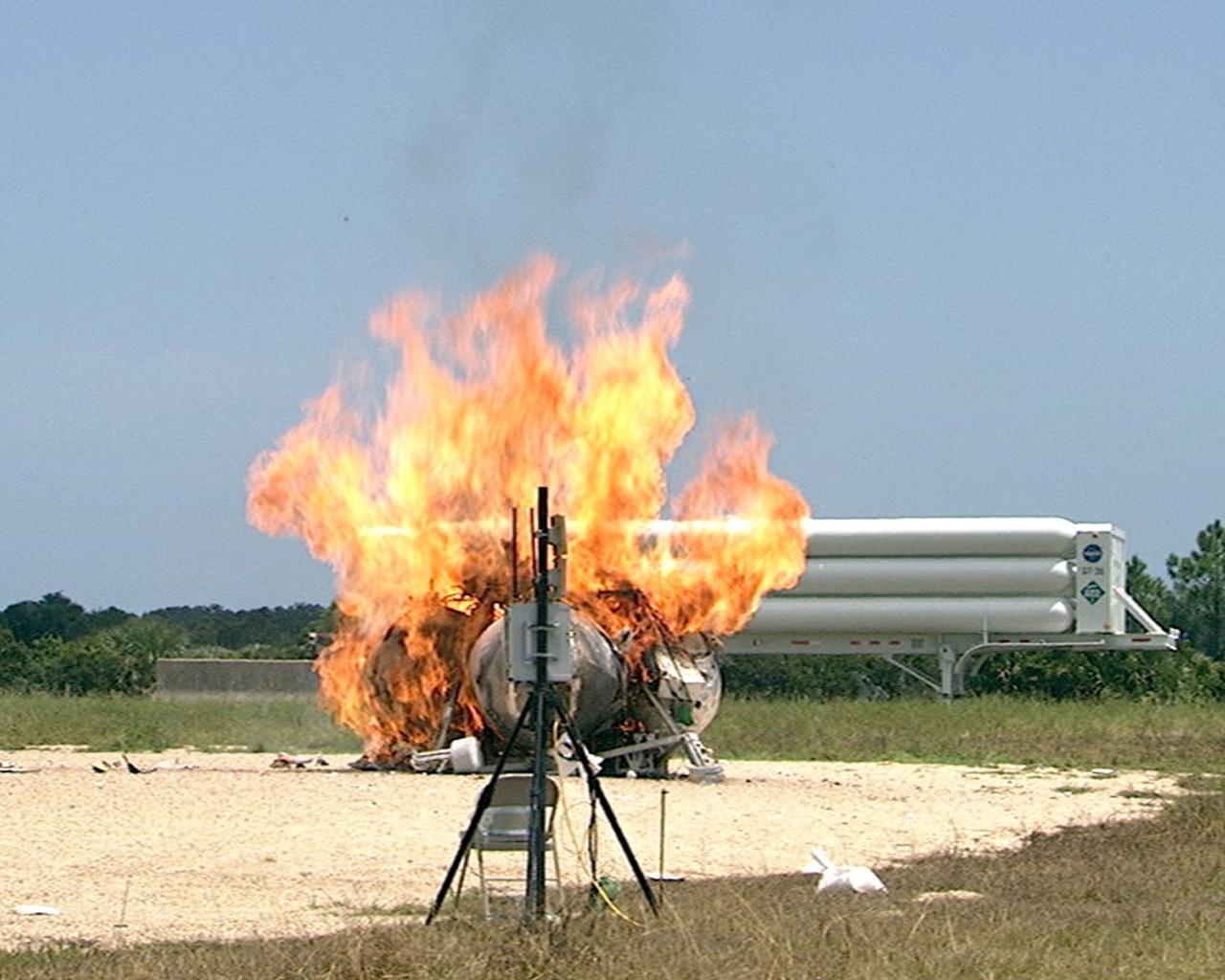
CAPE CANAVERAL, Fla. – During a free-flight test of the Project Morpheus vehicle at the Shuttle Landing Facility at NASA’s Kennedy Space Center in Florida, the vehicle lifted off the ground and then experienced a hardware component failure, which prevented it from maintaining stable flight. No one was injured and the resulting fire was extinguished by Kennedy fire personnel. Engineers are looking into the test data and the agency will release information as it becomes available. Failures such as these were anticipated prior to the test, and are part of the development process for any complex spaceflight hardware. Testing of the prototype lander had been ongoing at NASA’s Johnson Space Center in Houston in preparation for its first free-flight test at Kennedy Space Center. Morpheus was manufactured and assembled at JSC and Armadillo Aerospace. Morpheus is large enough to carry 1,100 pounds of cargo to the moon – for example, a humanoid robot, a small rover, or a small laboratory to convert moon dust into oxygen. The primary focus of the test is to demonstrate an integrated propulsion and guidance, navigation and control system that can fly a lunar descent profile to exercise the Autonomous Landing and Hazard Avoidance Technology, or ALHAT, safe landing sensors and closed-loop flight control. For more information on Project Morpheus, visit http://morpheuslander.jsc.nasa.gov/. Photo credit: NASA
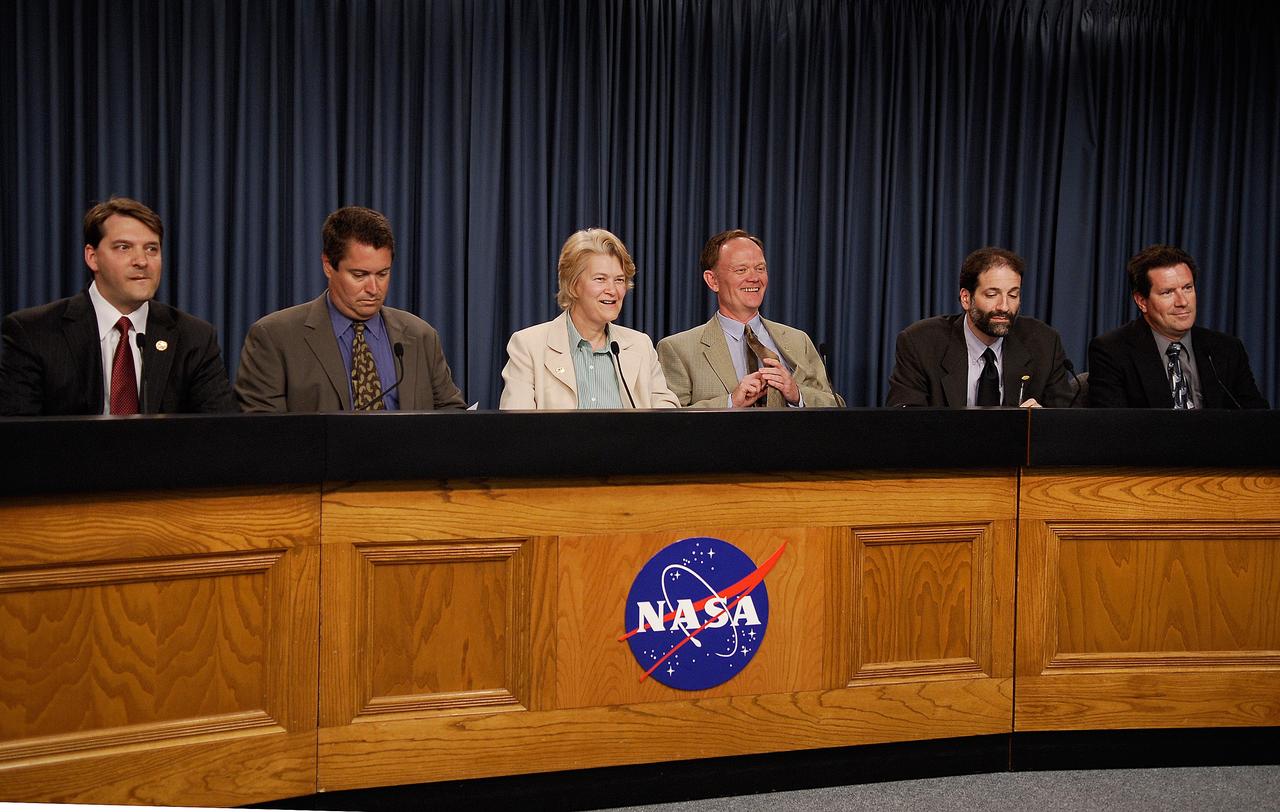
CAPE CANAVERAL, Fla. -- At NASA's Kennedy Space Center, key personnel brief the media on NASA's Gamma-Ray Large Area Space Telescope, or GLAST, launch scheduled for June 11. From left are Dr. Jon Morse, director of NASA's Astrophysics Division; Omar Baez, NASA launch director/launch manager at Kennedy; Kris Walsh, director of the Delta NASA and Commercial Programs with United Launch Alliance; Kevin Grady, GLAST project manager at NASA's Goddard Space Flight Center; Dr. Steven Ritz, GLAST project scientist/astrophysicist at Goddard; and Joel Tumbiolo, the U.S. Air Force Delta II launch weather officer with the 45th Weather Squadron at Cape Canaveral Air Force Station. GLAST is a powerful space observatory that will explore the Universe's ultimate frontier, where nature harnesses forces and energies far beyond anything possible on Earth; probe some of science's deepest questions, such as what our Universe is made of, and search for new laws of physics; explain how black holes accelerate jets of material to nearly light speed; and help crack the mystery of stupendously powerful explosions known as gamma-ray bursts. Photo credit: NASA/Kim Shiflett
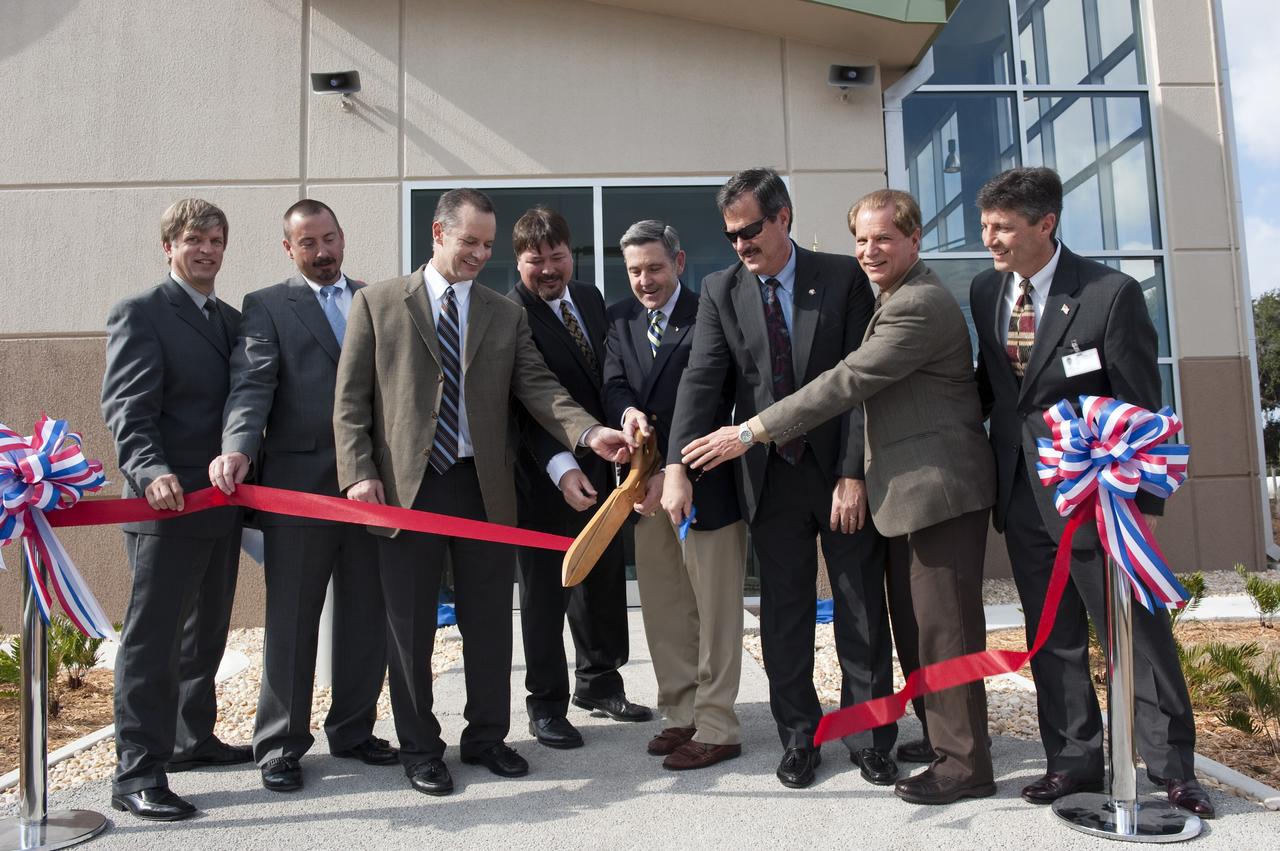
CAPE CANAVERAL, Fla. -- A traditional ribbon-cutting ceremony takes place outside the Propellants North Administration and Maintenance Facility at NASA's Kennedy Space Center in Florida. From left, are Thomas Wilczek, contracting officer technical representative/project manager for NASA Construction of Facilities; Bradley O’Toole, NASA contracting officer; James Wright, deputy assistant administrator for the Office of Strategic Infrastructure at NASA Headquarters; Frank Kline, NASA Construction of Facility project manager; Bob Cabana, Kennedy's center director; Mike Benik, director of Kennedy's Center Operations; Ward Davis, president of HW Davis Construction Inc.; and Rick Ferreira, chief operating officer of Jones Edmunds and Associates Inc. Propellants North consists of two buildings, one to store cryogenic fuel transfer equipment and one to house personnel who support fueling spacecraft. The recently rebuilt buildings will be NASA's first carbon neutral facility, which means it will produce enough energy on site from renewable sources to offset what it requires to operate. The facility also will reach for the U.S. Green Building Council's Leadership in Environmental and Energy Design (LEED) Platinum status, which is the highest LEED rating. Photo credit: NASA/Kim Shiflett
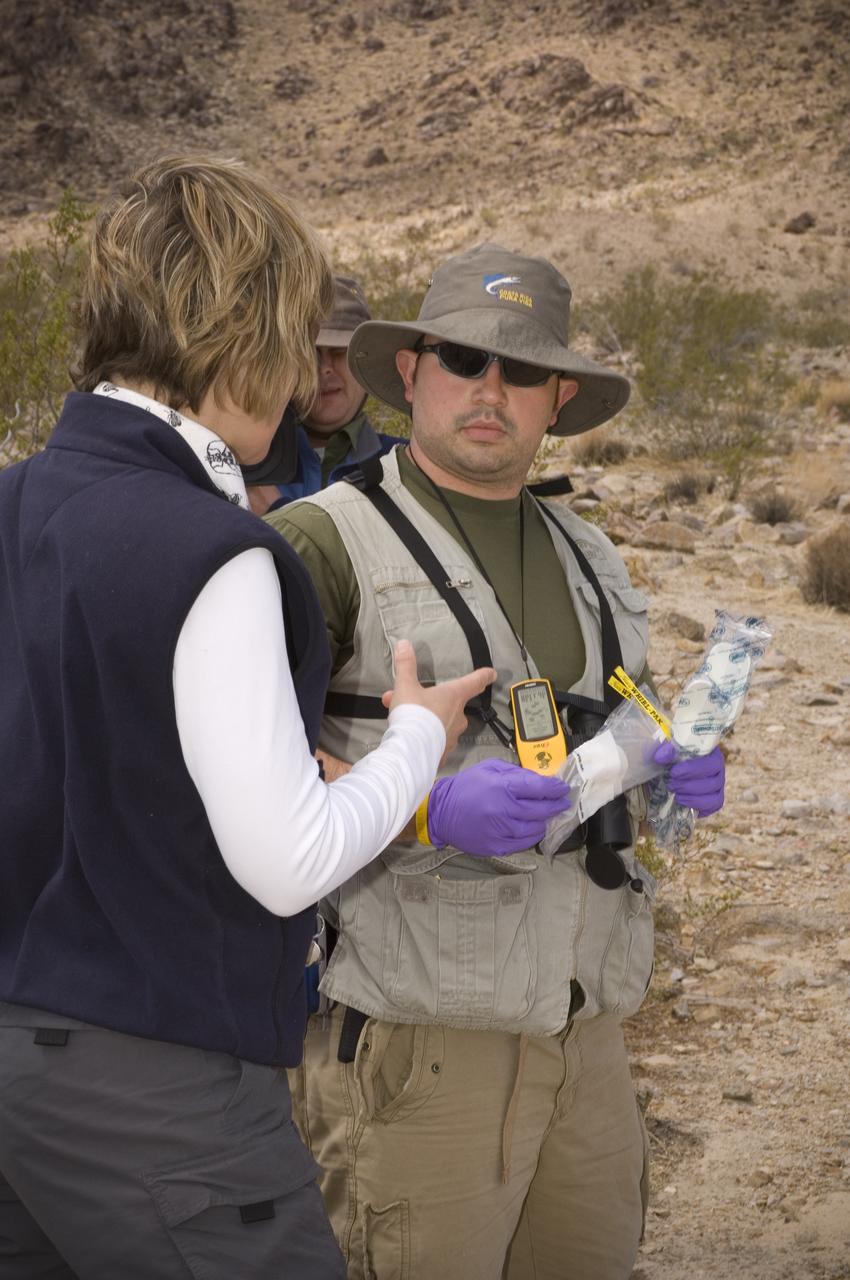
Spaceward Bound event in the Mojave Deser , CA (an outreach exercise) with Dr Chris McKay and Ames Education department personnel Brian Day, Barbara Bazar and a accompaning (learning for the the classroom) team of teachers will be studying side-by-side with NASA scientists who search for life in extreme environments, closely approximating what they expect to find on other planets. Why the Mojave -- an inhospitable, sun-drenched spot in the California Desert? This natural setting presents scientists with opportunities to study environments that are analogous to what explorers will find on the Moon and Mars. Teachers and scientists will perform scientific fieldwork in lunar geology, Mars astrobiology, Mars geology, and issues of temperature and solar inundation and radiation. for additional information and Outreach projects see http://quest.arc.nasa.gov/
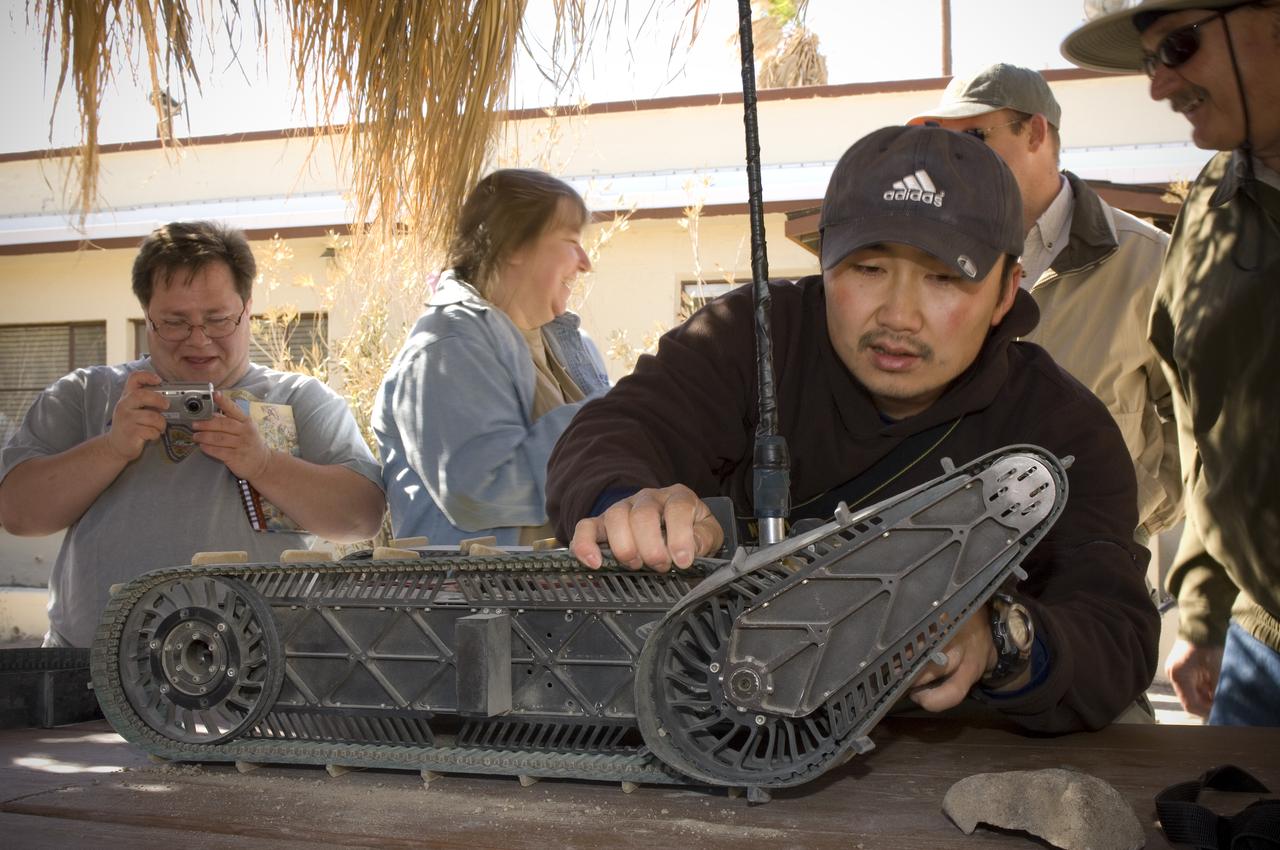
Spaceward Bound event in the Mojave Deser , CA (an outreach exercise) with Dr Chris McKay and Ames Education department personnel Brian Day, Barbara Bazar and a accompaning (learning for the the classroom) team of teachers will be studying side-by-side with NASA scientists who search for life in extreme environments, closely approximating what they expect to find on other planets. Why the Mojave -- an inhospitable, sun-drenched spot in the California Desert? This natural setting presents scientists with opportunities to study environments that are analogous to what explorers will find on the Moon and Mars. Teachers and scientists will perform scientific fieldwork in lunar geology, Mars astrobiology, Mars geology, and issues of temperature and solar inundation and radiation. for additional information and Outreach projects see http://quest.arc.nasa.gov/
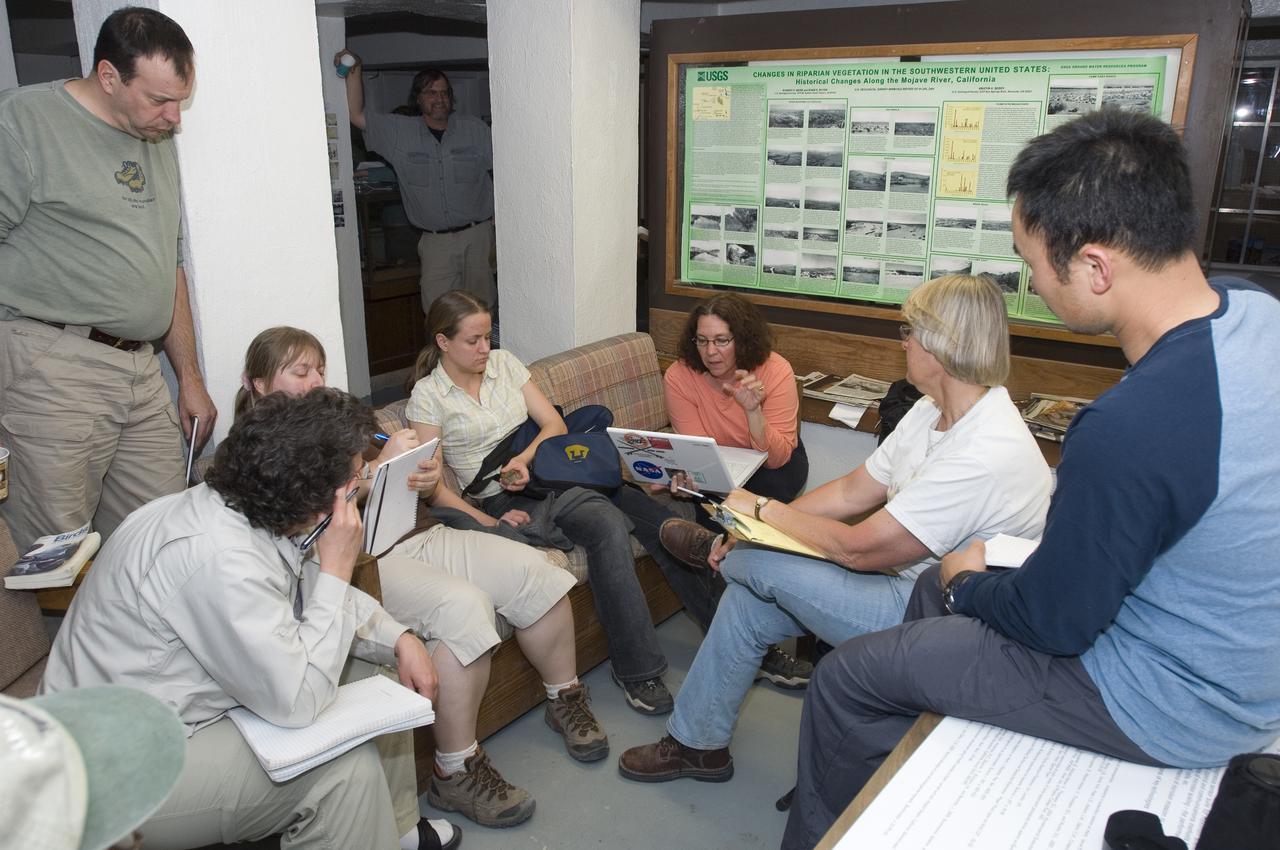
Spaceward Bound event in the Mojave Deser , CA (an outreach exercise) with Dr Chris McKay and Ames Education department personnel Brian Day, Barbara Bazar and a accompaning (learning for the the classroom) team of teachers will be studying side-by-side with NASA scientists who search for life in extreme environments, closely approximating what they expect to find on other planets. Why the Mojave -- an inhospitable, sun-drenched spot in the California Desert? This natural setting presents scientists with opportunities to study environments that are analogous to what explorers will find on the Moon and Mars. Teachers and scientists will perform scientific fieldwork in lunar geology, Mars astrobiology, Mars geology, and issues of temperature and solar inundation and radiation. for additional information and Outreach projects see http://quest.arc.nasa.gov/
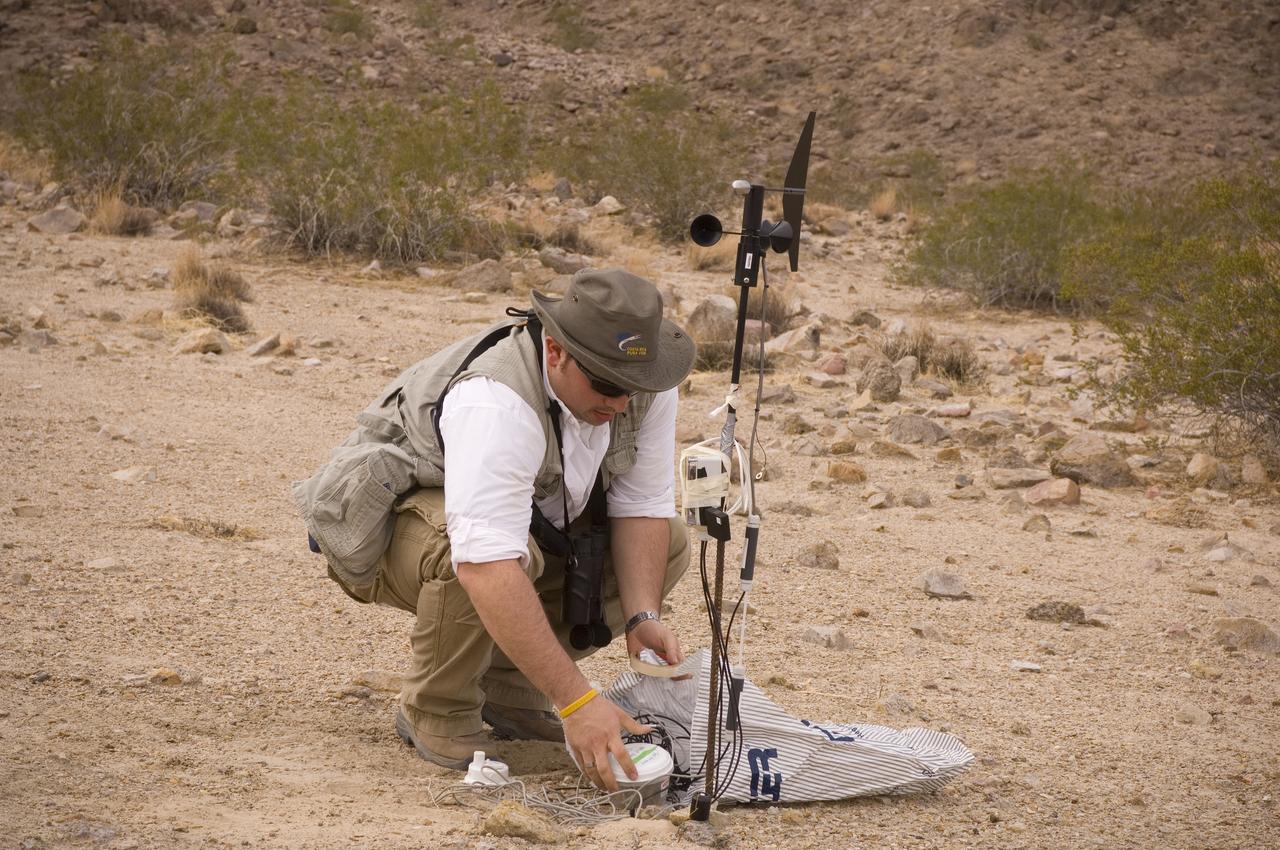
Spaceward Bound event in the Mojave Deser , CA (an outreach exercise) with Dr Chris McKay and Ames Education department personnel Brian Day, Barbara Bazar and a accompaning (learning for the the classroom) team of teachers will be studying side-by-side with NASA scientists who search for life in extreme environments, closely approximating what they expect to find on other planets. Why the Mojave -- an inhospitable, sun-drenched spot in the California Desert? This natural setting presents scientists with opportunities to study environments that are analogous to what explorers will find on the Moon and Mars. Teachers and scientists will perform scientific fieldwork in lunar geology, Mars astrobiology, Mars geology, and issues of temperature and solar inundation and radiation. for additional information and Outreach projects see http://quest.arc.nasa.gov/
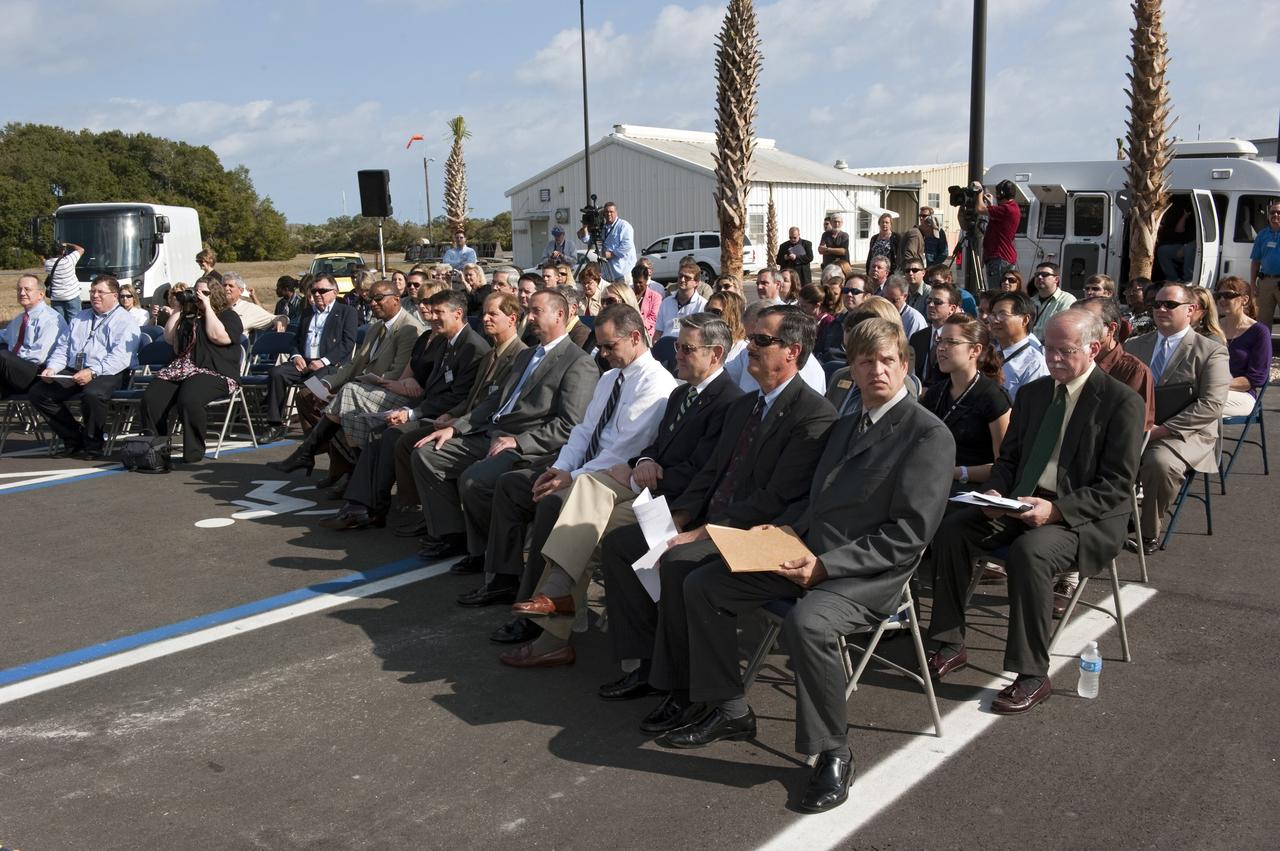
CAPE CANAVERAL, Fla. -- At NASA's Kennedy Space Center in Florida, an audience at the ribbon-cutting ceremony for the new environmentally friendly Propellants North Administration and Maintenance Facility listens to opening remarks made by Frank Kline, a NASA Construction of Facilities project manager. Propellants North consists of two buildings, one to store cryogenic fuel transfer equipment and one to house personnel who support fueling spacecraft. The recently rebuilt buildings will be NASA's first carbon neutral facility, which means it will produce enough energy on site from renewable sources to offset what it requires to operate. The facility also will reach for the U.S. Green Building Council's Leadership in Environmental and Energy Design (LEED) Platinum status, which is the highest LEED rating. Photo credit: NASA/Kim Shiflett
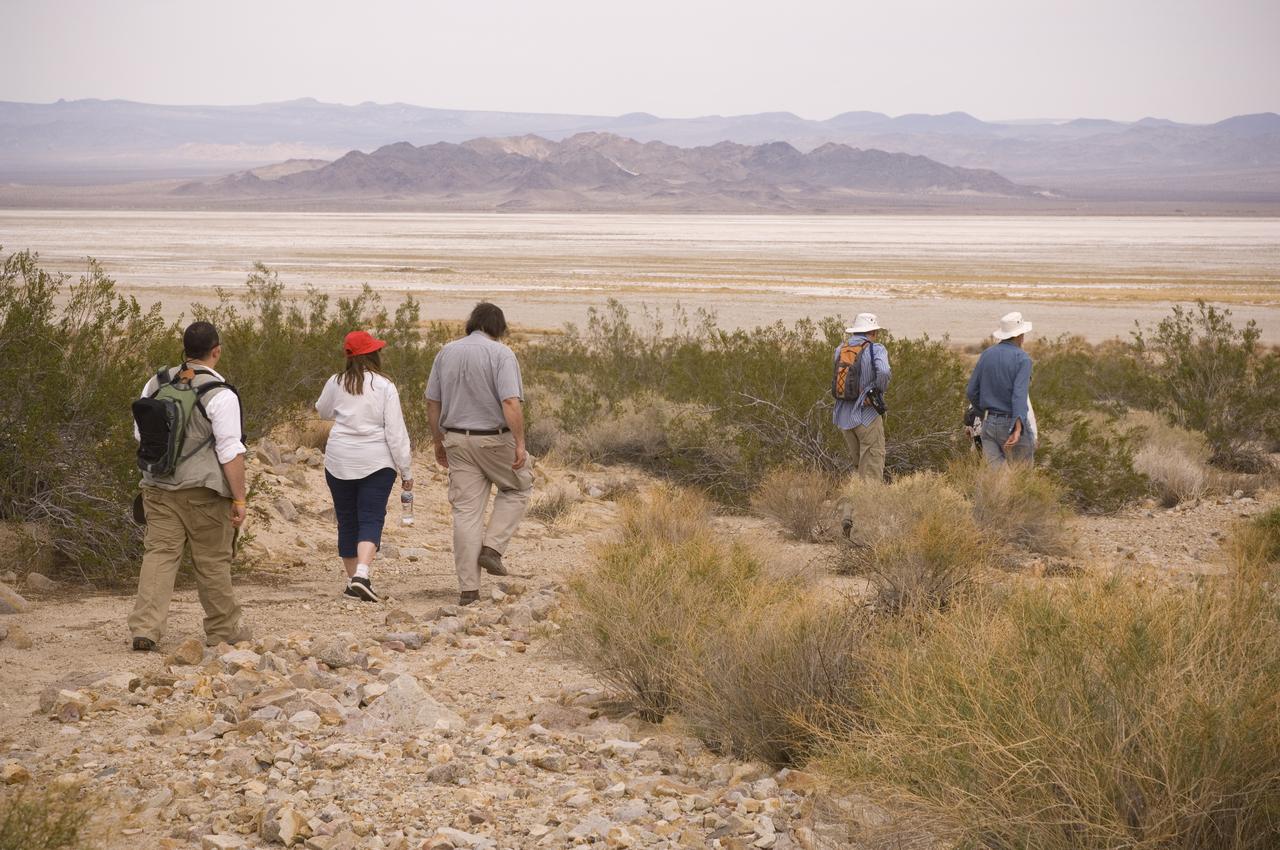
Spaceward Bound event in the Mojave Deser , CA (an outreach exercise) with Dr Chris McKay and Ames Education department personnel Brian Day, Barbara Bazar and a accompaning (learning for the the classroom) team of teachers will be studying side-by-side with NASA scientists who search for life in extreme environments, closely approximating what they expect to find on other planets. Why the Mojave -- an inhospitable, sun-drenched spot in the California Desert? This natural setting presents scientists with opportunities to study environments that are analogous to what explorers will find on the Moon and Mars. Teachers and scientists will perform scientific fieldwork in lunar geology, Mars astrobiology, Mars geology, and issues of temperature and solar inundation and radiation. for additional information and Outreach projects see http://quest.arc.nasa.gov/
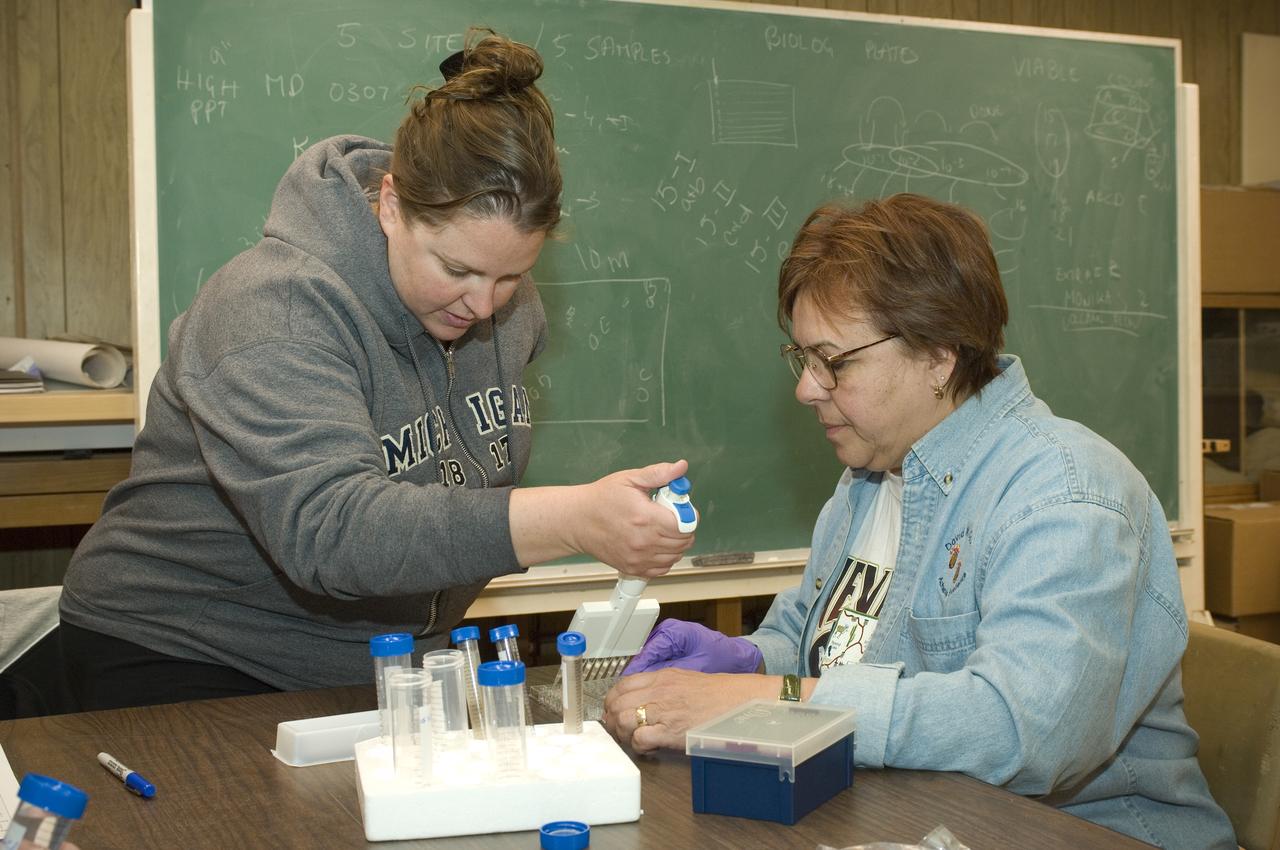
Spaceward Bound event in the Mojave Deser , CA (an outreach exercise) with Dr Chris McKay and Ames Education department personnel Brian Day, Barbara Bazar and a accompaning (learning for the the classroom) team of teachers will be studying side-by-side with NASA scientists who search for life in extreme environments, closely approximating what they expect to find on other planets. Why the Mojave -- an inhospitable, sun-drenched spot in the California Desert? This natural setting presents scientists with opportunities to study environments that are analogous to what explorers will find on the Moon and Mars. Teachers and scientists will perform scientific fieldwork in lunar geology, Mars astrobiology, Mars geology, and issues of temperature and solar inundation and radiation. for additional information and Outreach projects see http://quest.arc.nasa.gov/
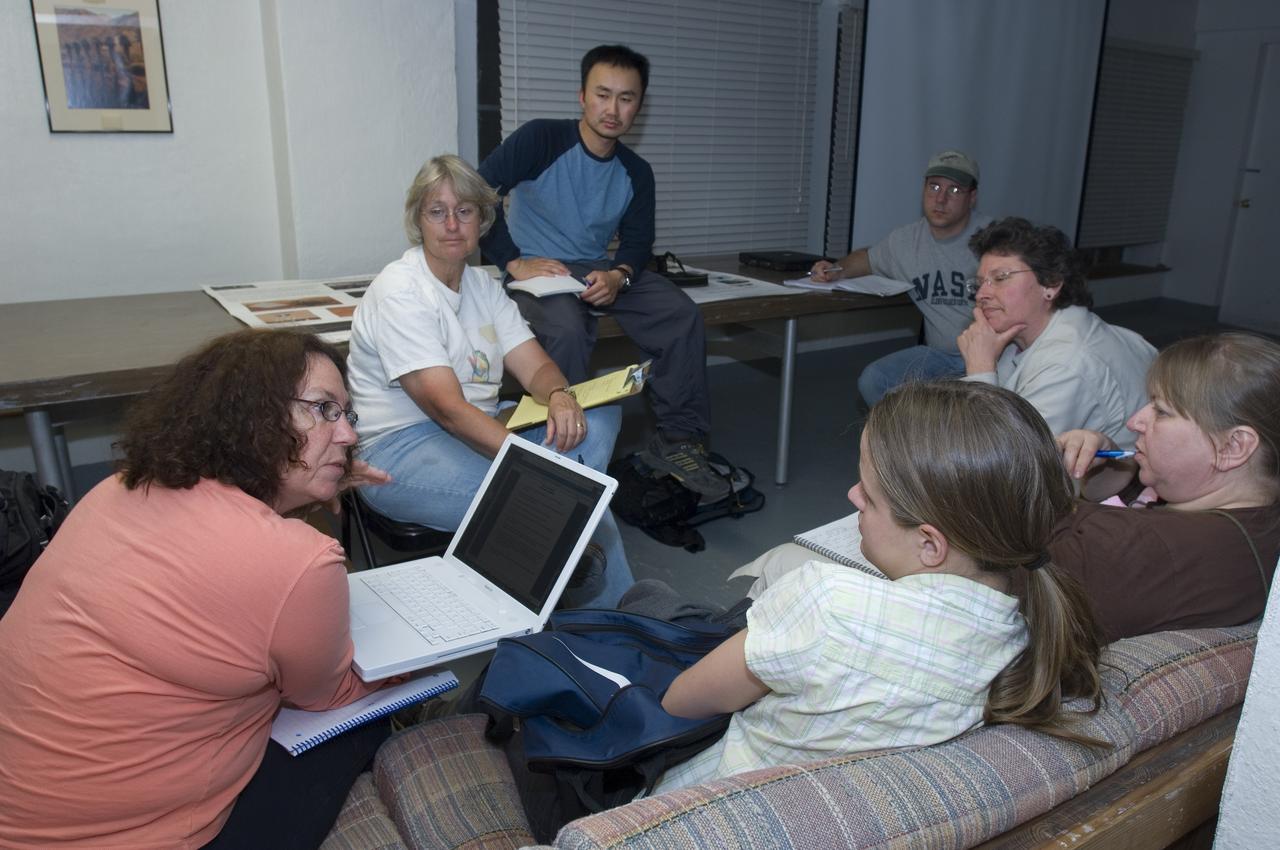
Spaceward Bound event in the Mojave Deser , CA (an outreach exercise) with Dr Chris McKay and Ames Education department personnel Brian Day, Barbara Bazar and a accompaning (learning for the the classroom) team of teachers will be studying side-by-side with NASA scientists who search for life in extreme environments, closely approximating what they expect to find on other planets. Why the Mojave -- an inhospitable, sun-drenched spot in the California Desert? This natural setting presents scientists with opportunities to study environments that are analogous to what explorers will find on the Moon and Mars. Teachers and scientists will perform scientific fieldwork in lunar geology, Mars astrobiology, Mars geology, and issues of temperature and solar inundation and radiation. for additional information and Outreach projects see http://quest.arc.nasa.gov/

KENNEDY SPACE CENTER, FLA. - In the RLV Hangar, a member of the Columbia Reconstruction Project Team (center front) talks to Adm. Harold Gehman, chairman of the Columbia Investigation Accident Board about the recovered tiles on the table. At her left is U.S. Representative Tom Feeney and behind her is U.S. Representative Dave Weldon, who accompanied Gehman and the board, who are visiting KSC as part of the ongoing investigation. Recovery efforts as of May 5 included 82,500 pieces of debris weighing 84,800 pounds, almost 40 percent of the total dry weight of the shuttle. About 25,000 personnel took part, utilizing almost 1.5 million total man-hours in the recovery effort and involving more than 130 federal, state and local agencies. The operation was also supported by more than 270 organizations that included businesses and volunteer groups.
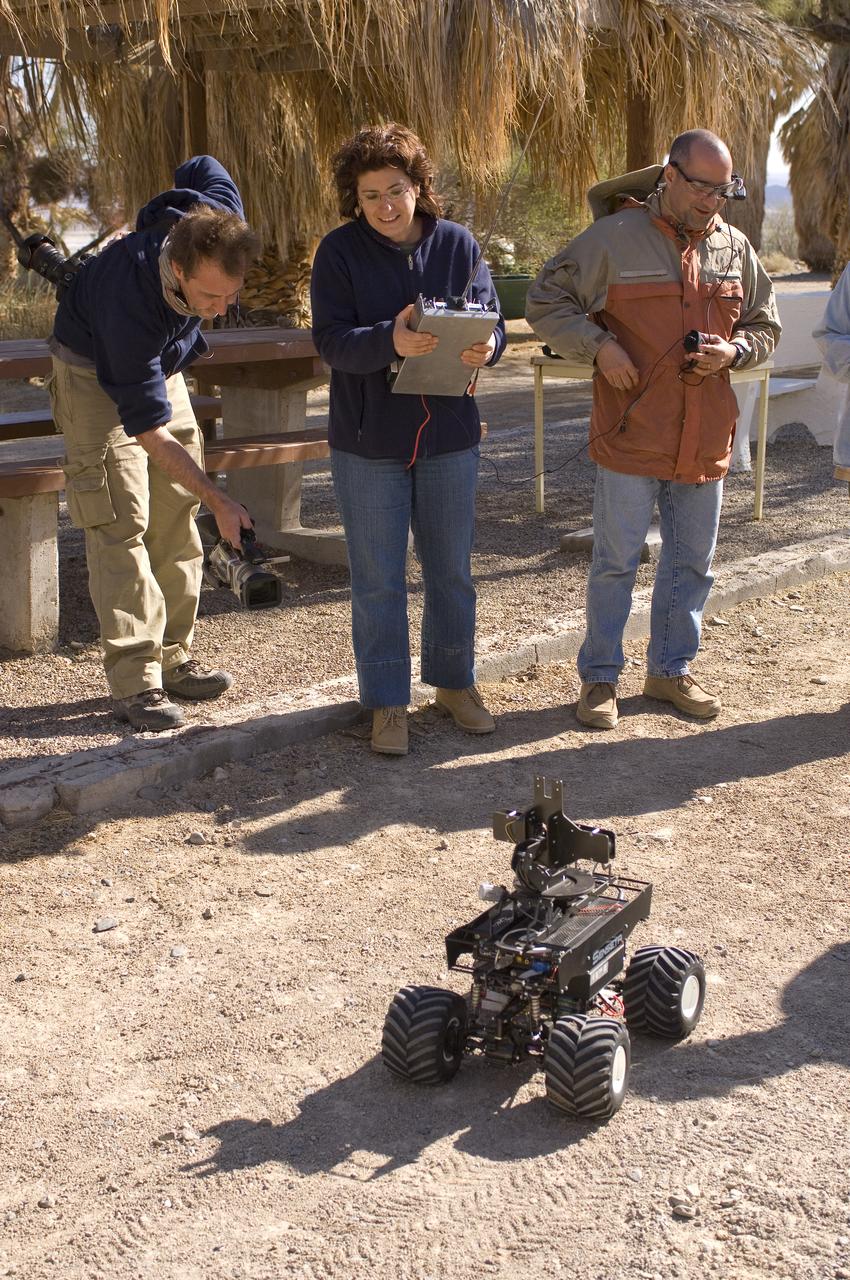
Spaceward Bound event in the Mojave Deser , CA (an outreach exercise) with Dr Chris McKay and Ames Education department personnel Brian Day, Barbara Bazar and a accompaning (learning for the the classroom) team of teachers will be studying side-by-side with NASA scientists who search for life in extreme environments, closely approximating what they expect to find on other planets. Why the Mojave -- an inhospitable, sun-drenched spot in the California Desert? This natural setting presents scientists with opportunities to study environments that are analogous to what explorers will find on the Moon and Mars. Teachers and scientists will perform scientific fieldwork in lunar geology, Mars astrobiology, Mars geology, and issues of temperature and solar inundation and radiation. for additional information and Outreach projects see http://quest.arc.nasa.gov/
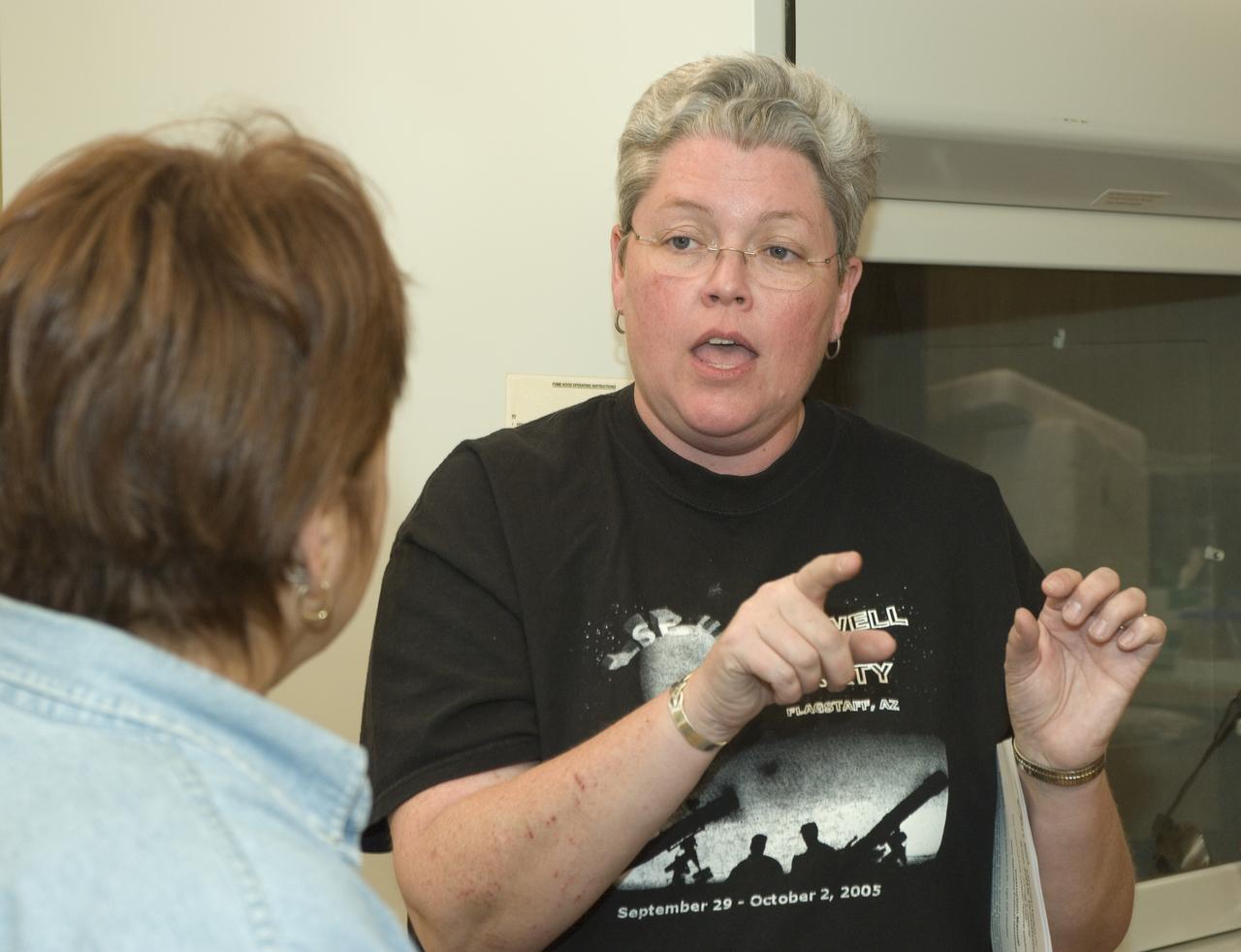
Spaceward Bound event in the Mojave Deser , CA (an outreach exercise) with Dr Chris McKay and Ames Education department personnel Brian Day, Barbara Bazar and a accompaning (learning for the the classroom) team of teachers will be studying side-by-side with NASA scientists who search for life in extreme environments, closely approximating what they expect to find on other planets. Why the Mojave -- an inhospitable, sun-drenched spot in the California Desert? This natural setting presents scientists with opportunities to study environments that are analogous to what explorers will find on the Moon and Mars. Teachers and scientists will perform scientific fieldwork in lunar geology, Mars astrobiology, Mars geology, and issues of temperature and solar inundation and radiation. for additional information and Outreach projects see http://quest.arc.nasa.gov/
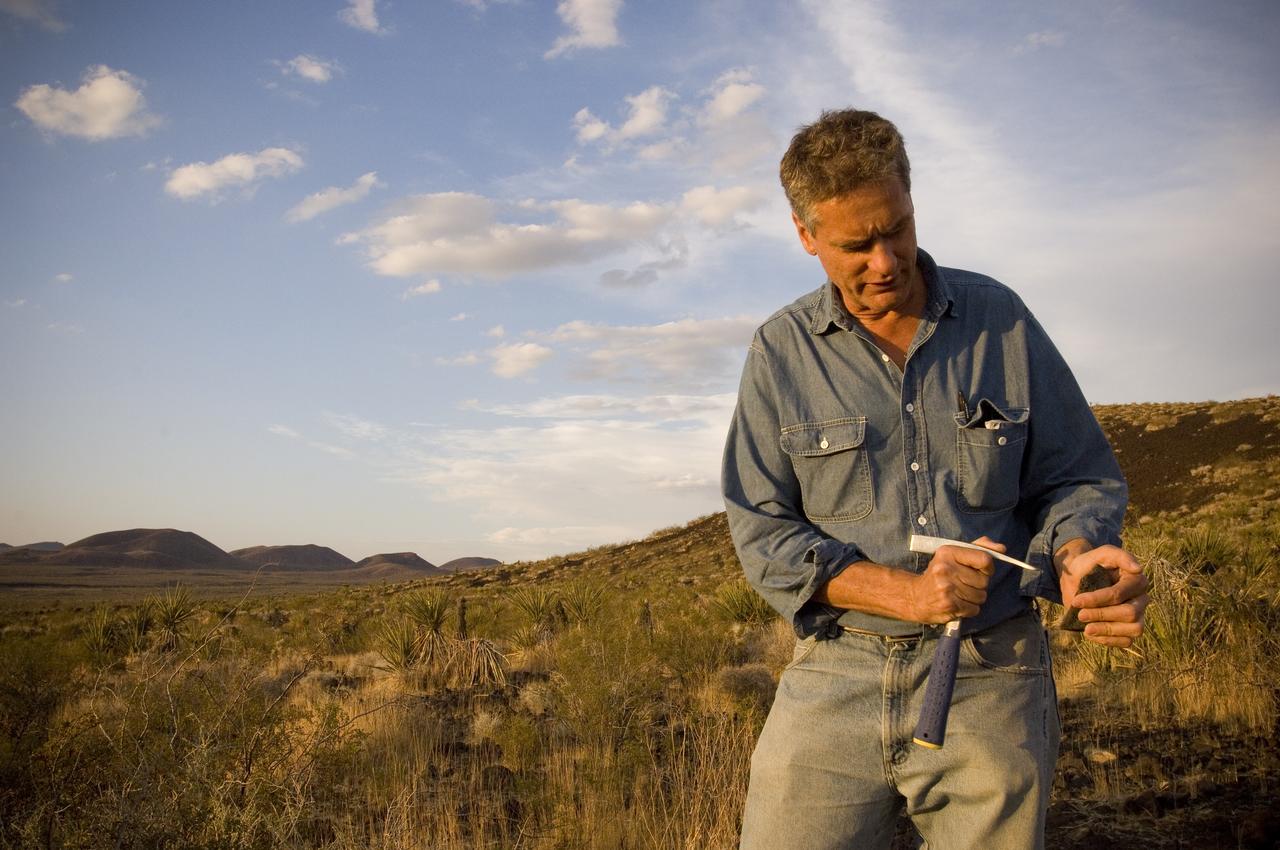
Spaceward Bound event in the Mojave Deser , CA (an outreach exercise) with Dr Chris McKay and Ames Education department personnel Brian Day, Barbara Bazar and a accompaning (learning for the the classroom) team of teachers will be studying side-by-side with NASA scientists who search for life in extreme environments, closely approximating what they expect to find on other planets. Why the Mojave -- an inhospitable, sun-drenched spot in the California Desert? This natural setting presents scientists with opportunities to study environments that are analogous to what explorers will find on the Moon and Mars. Teachers and scientists will perform scientific fieldwork in lunar geology, Mars astrobiology, Mars geology, and issues of temperature and solar inundation and radiation. for additional information and Outreach projects see http://quest.arc.nasa.gov/
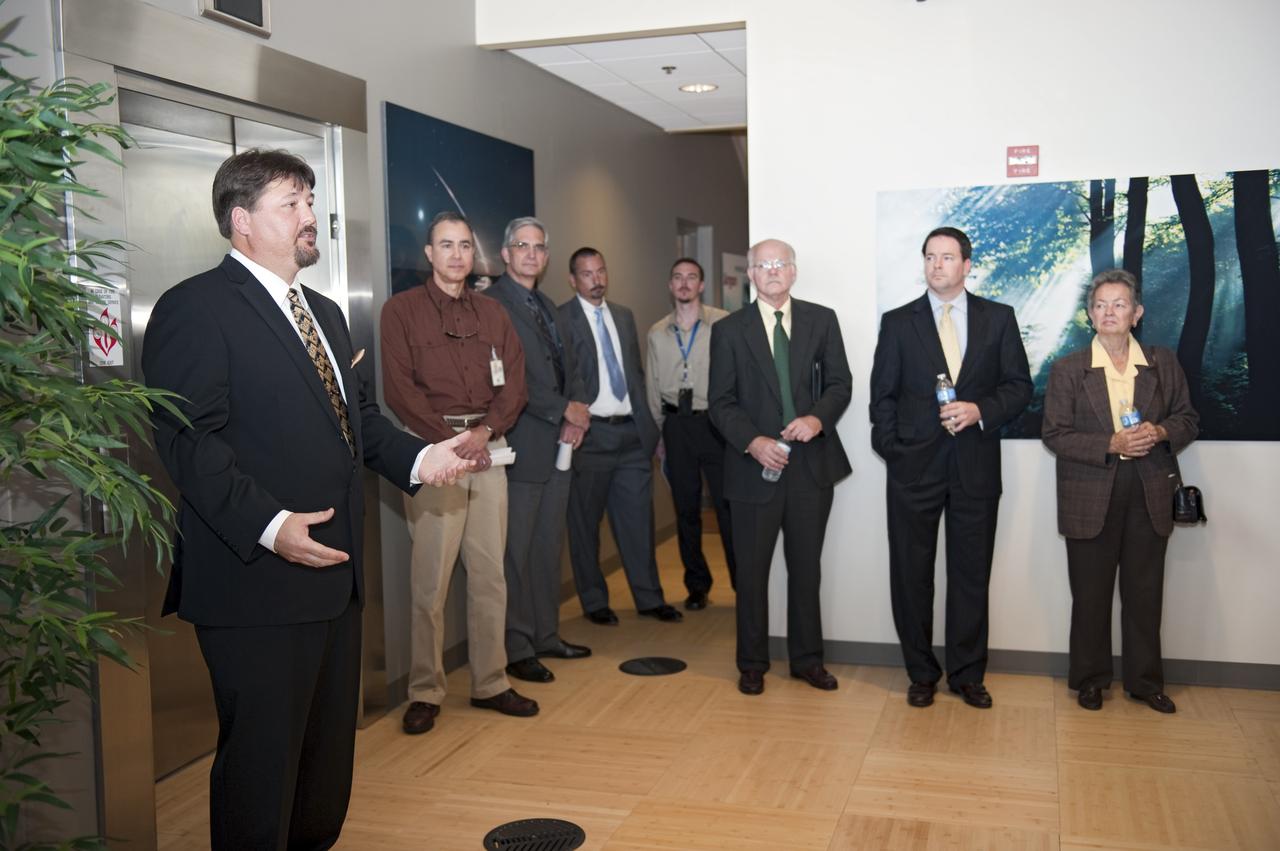
CAPE CANAVERAL, Fla. -- Frank Kline, Construction of Facilities project manager at NASA's Kennedy Space Center in Florida, far left, shows off the environmentally friendly features of the new Propellants North Administration and Maintenance Facility. Propellants North consists of two buildings, one to store cryogenic fuel transfer equipment and one to house personnel who support fueling spacecraft. The recently rebuilt buildings will be NASA's first carbon neutral facility, which means it will produce enough energy on site from renewable sources to offset what it requires to operate. The facility also will reach for the U.S. Green Building Council's Leadership in Environmental and Energy Design (LEED) Platinum status, which is the highest LEED rating. Photo credit: NASA/Kim Shiflett
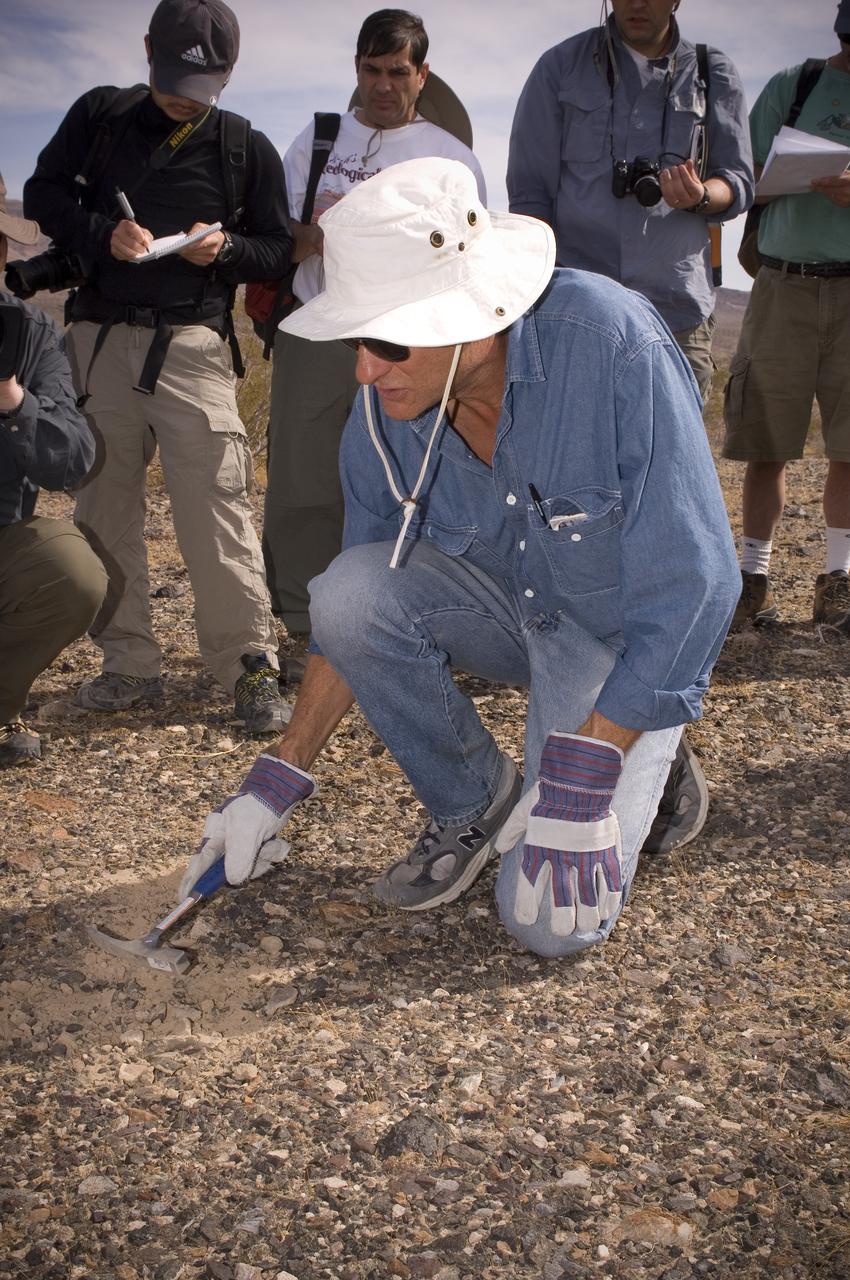
Spaceward Bound event in the Mojave Deser , CA (an outreach exercise) with Dr Chris McKay and Ames Education department personnel Brian Day, Barbara Bazar and a accompaning (learning for the the classroom) team of teachers will be studying side-by-side with NASA scientists who search for life in extreme environments, closely approximating what they expect to find on other planets. Why the Mojave -- an inhospitable, sun-drenched spot in the California Desert? This natural setting presents scientists with opportunities to study environments that are analogous to what explorers will find on the Moon and Mars. Teachers and scientists will perform scientific fieldwork in lunar geology, Mars astrobiology, Mars geology, and issues of temperature and solar inundation and radiation. for additional information and Outreach projects see http://quest.arc.nasa.gov/
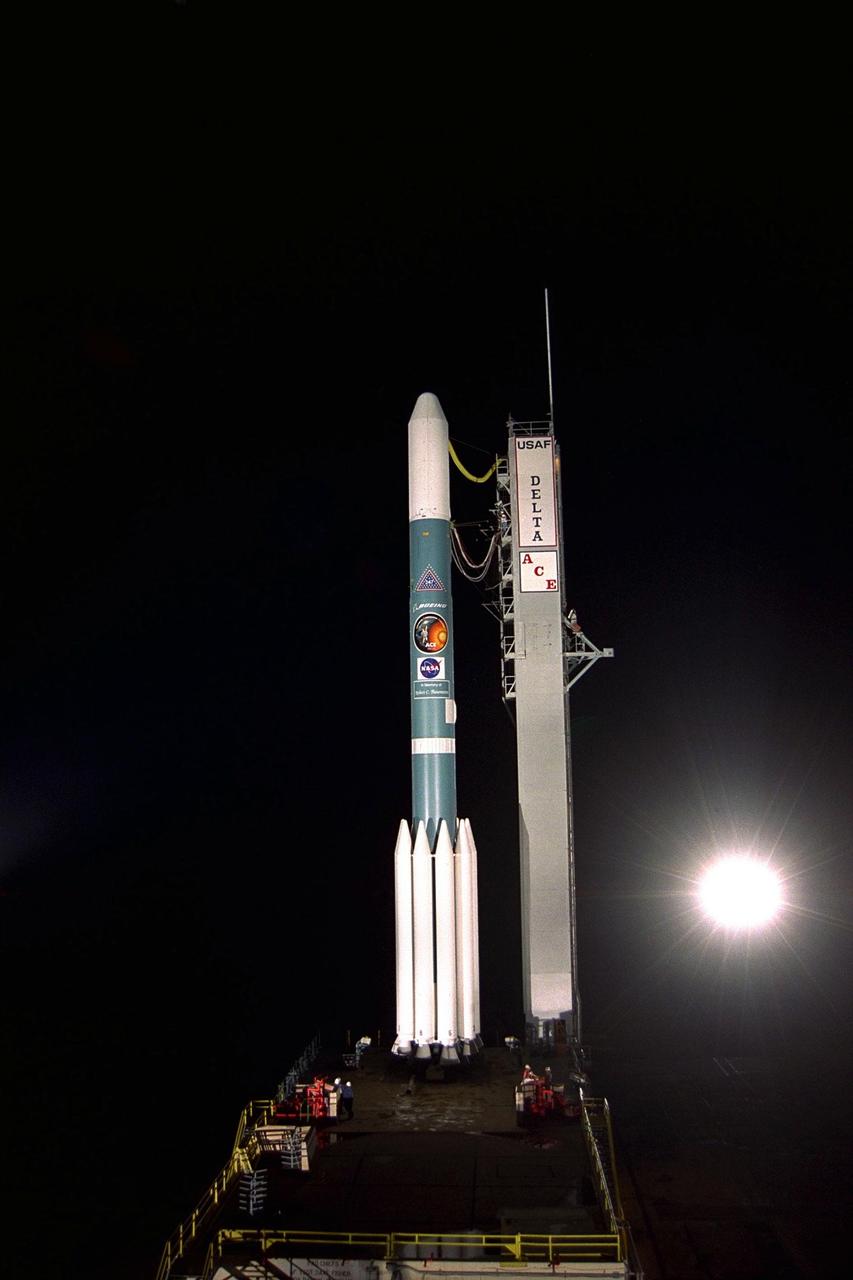
The Boeing Delta II expendable launch vehicle carrying the Advanced Composition Explorer (ACE) undergoes final preparations for liftoff in the predawn hours of Aug. 25, 1997, at Launch Complex 17A, Cape Canaveral Air Station. This is the second Delta launch under the Boeing name and the first from Cape Canaveral. The first launch attempt on Aug. 24 was scrubbed by Air Force range safety personnel because two commercial fishing vessels were within the Delta’s launch danger area. ACE with its combination of nine sensors and instruments will investigate the origin and evolution of solar phenomenon, the formation of solar corona, solar flares and acceleration of the solar wind. ACE was built for NASA by the Johns Hopkins Applied Physics Laboratory and is managed by the Explorer Project Office at NASA’s Goddard Space Flight Center. The lead scientific institution is the California Institute of Technology
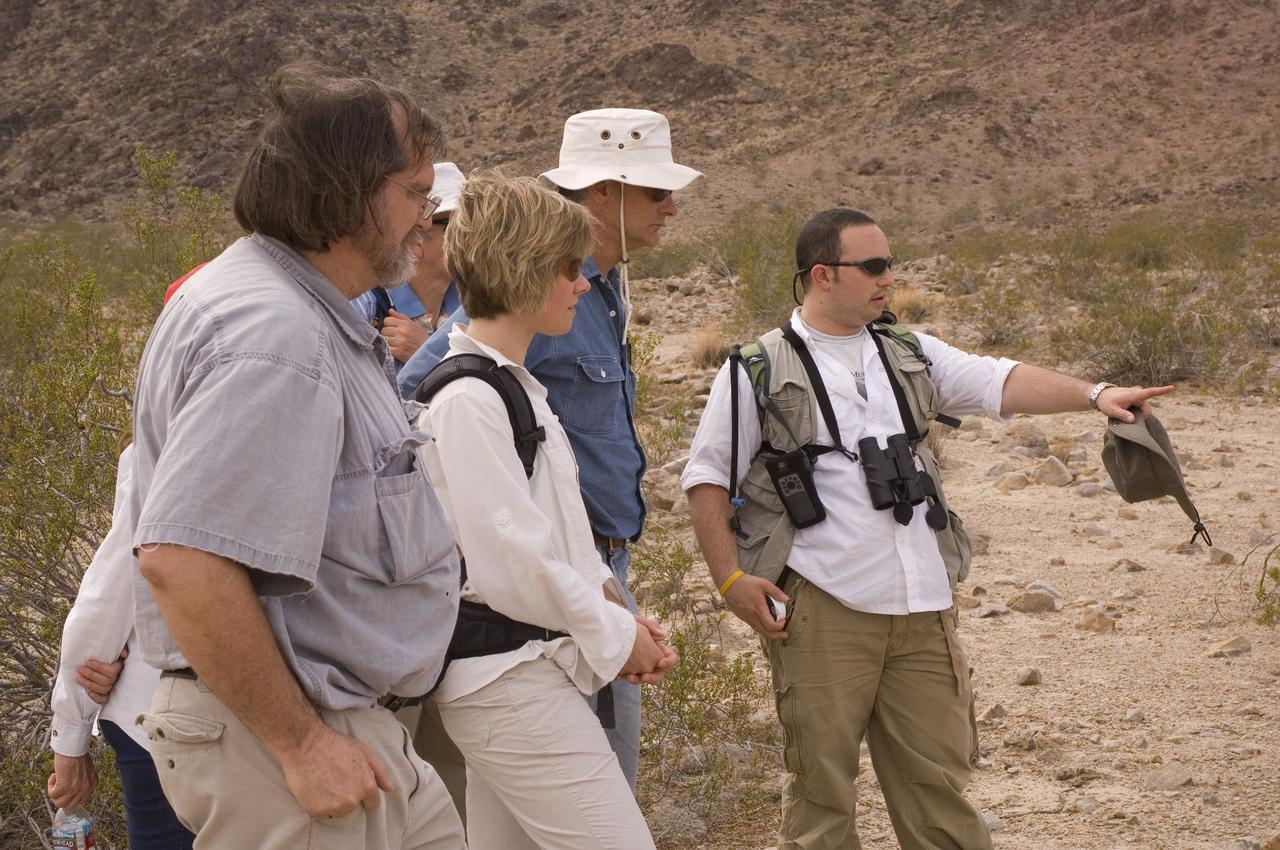
Spaceward Bound event in the Mojave Deser , CA (an outreach exercise) with Dr Chris McKay and Ames Education department personnel Brian Day, Barbara Bazar and a accompaning (learning for the the classroom) team of teachers will be studying side-by-side with NASA scientists who search for life in extreme environments, closely approximating what they expect to find on other planets. Why the Mojave -- an inhospitable, sun-drenched spot in the California Desert? This natural setting presents scientists with opportunities to study environments that are analogous to what explorers will find on the Moon and Mars. Teachers and scientists will perform scientific fieldwork in lunar geology, Mars astrobiology, Mars geology, and issues of temperature and solar inundation and radiation. for additional information and Outreach projects see http://quest.arc.nasa.gov/
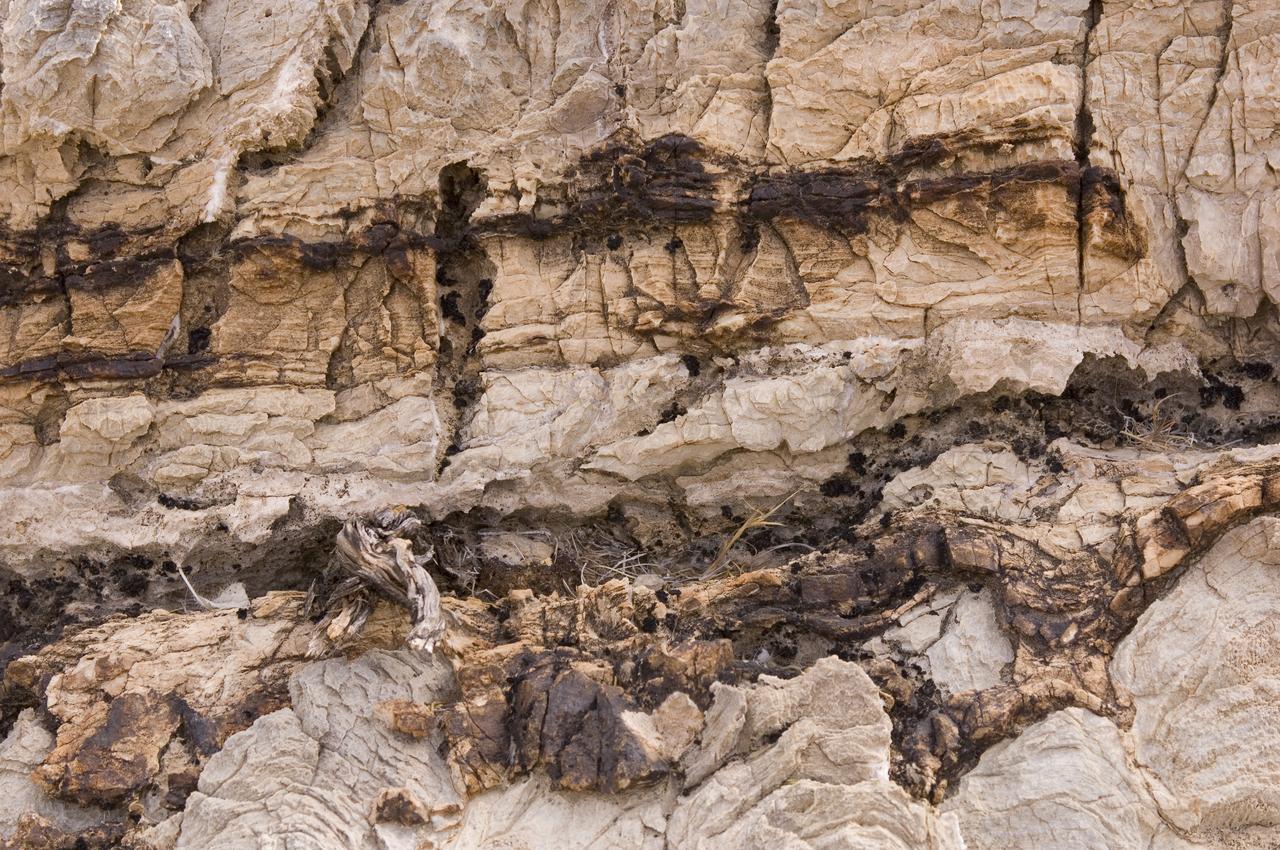
Spaceward Bound event in the Mojave Desert , CA (an outreach exercise) with Dr Chris McKay and Ames Education department personnel Brian Day, Barbara Bazar and a accompaning (learning for the the classroom) team of teachers will be studying side-by-side with NASA scientists who search for life in extreme environments, closely approximating what they expect to find on other planets. Why the Mojave -- an inhospitable, sun-drenched spot in the California Desert? This natural setting presents scientists with opportunities to study environments that are analogous to what explorers will find on the Moon and Mars. Teachers and scientists will perform scientific fieldwork in lunar geology, Mars astrobiology, Mars geology, and issues of temperature and solar inundation and radiation. for additional information and Outreach projects see http://quest.arc.nasa.gov/