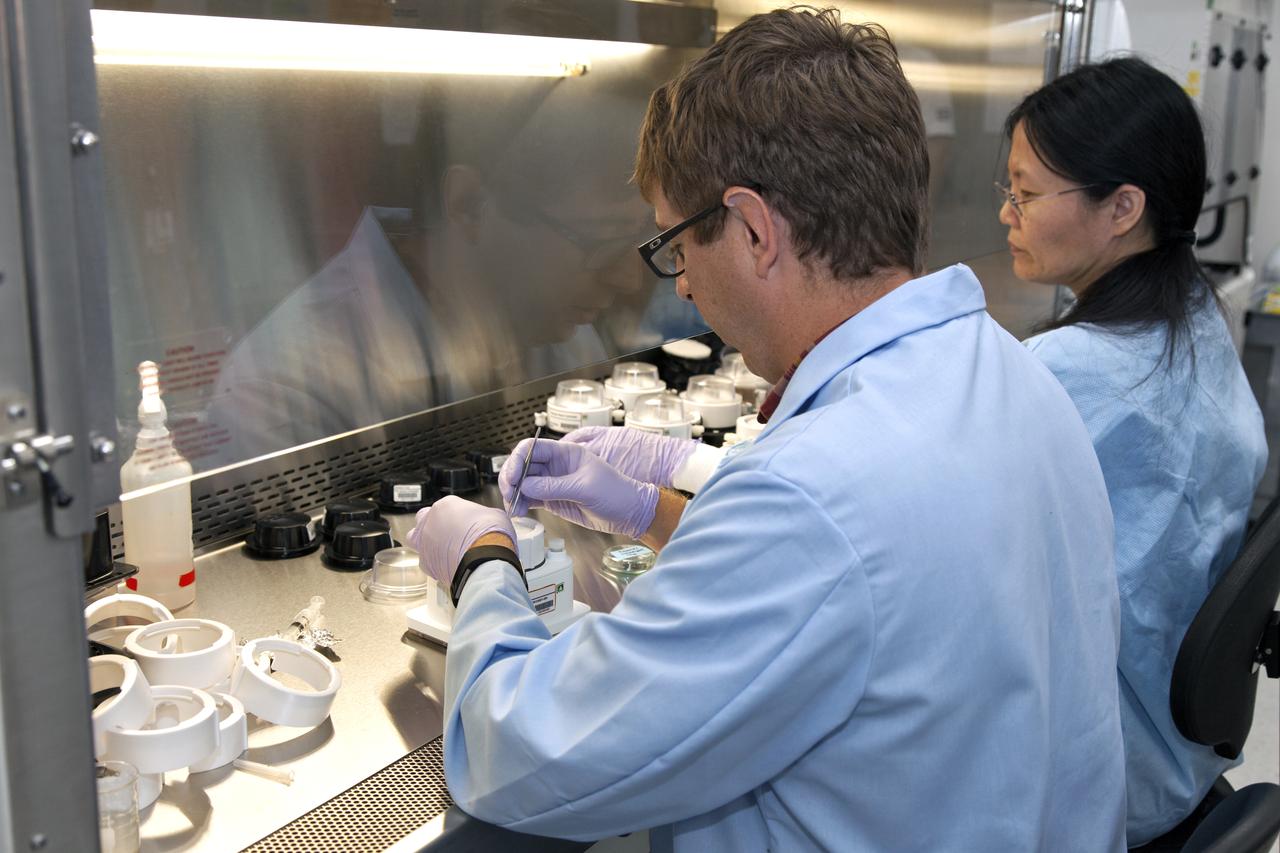
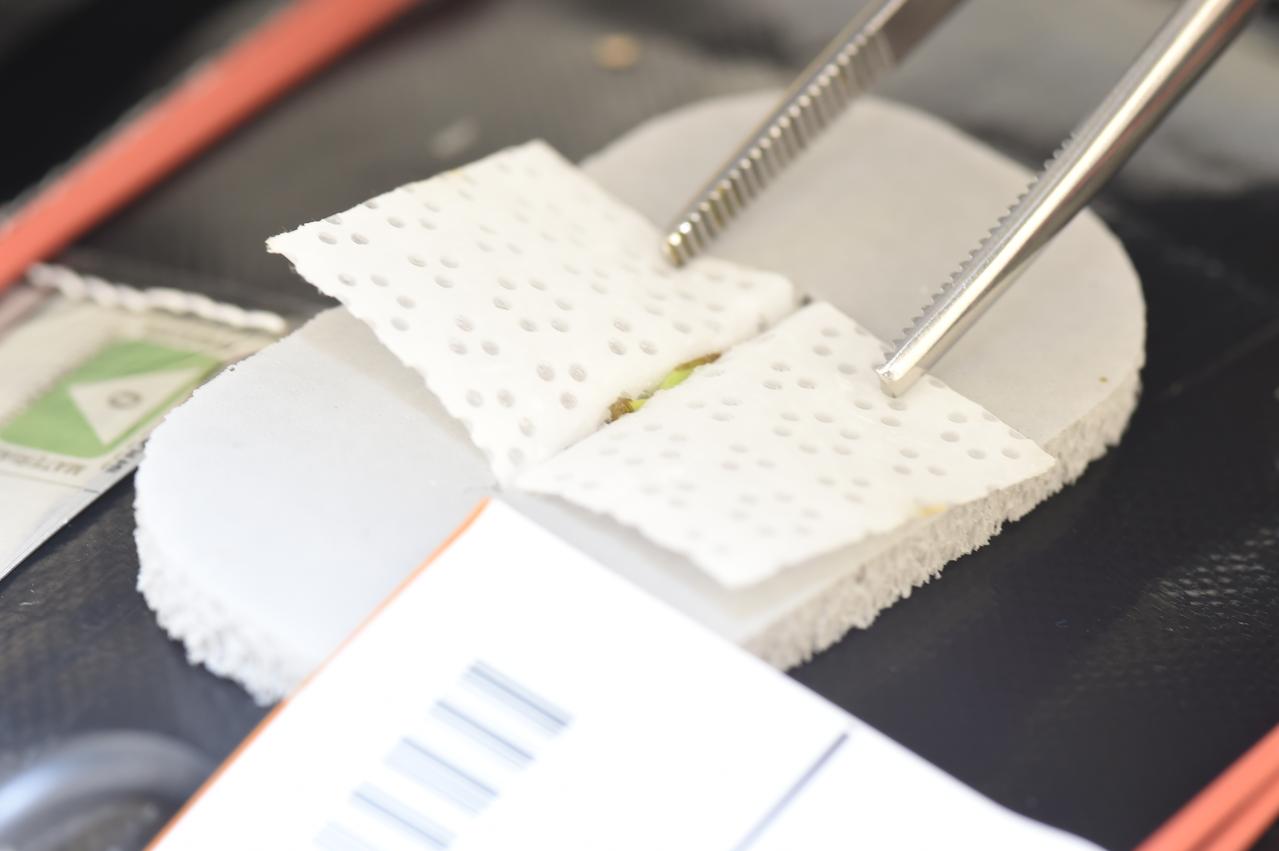
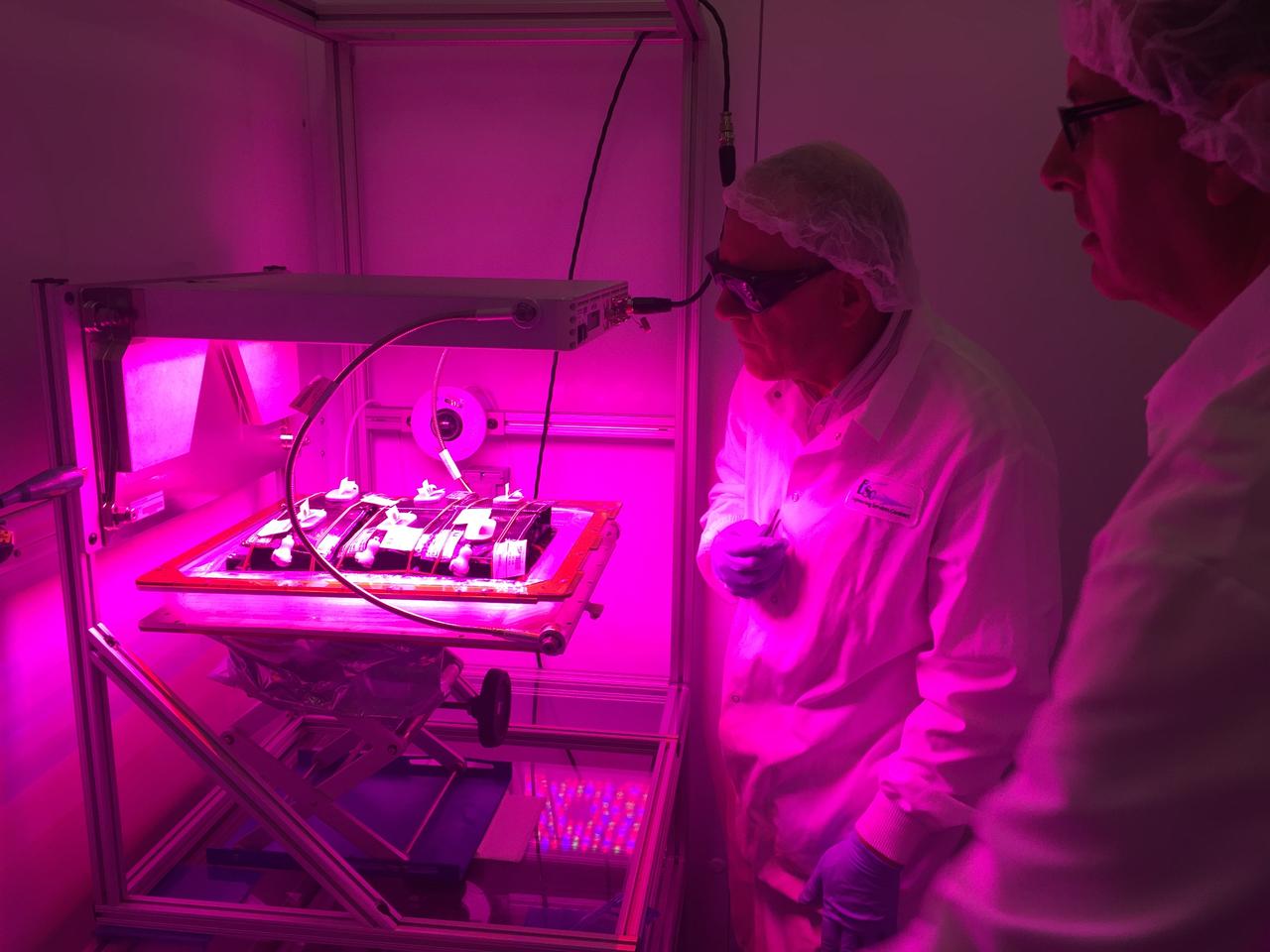
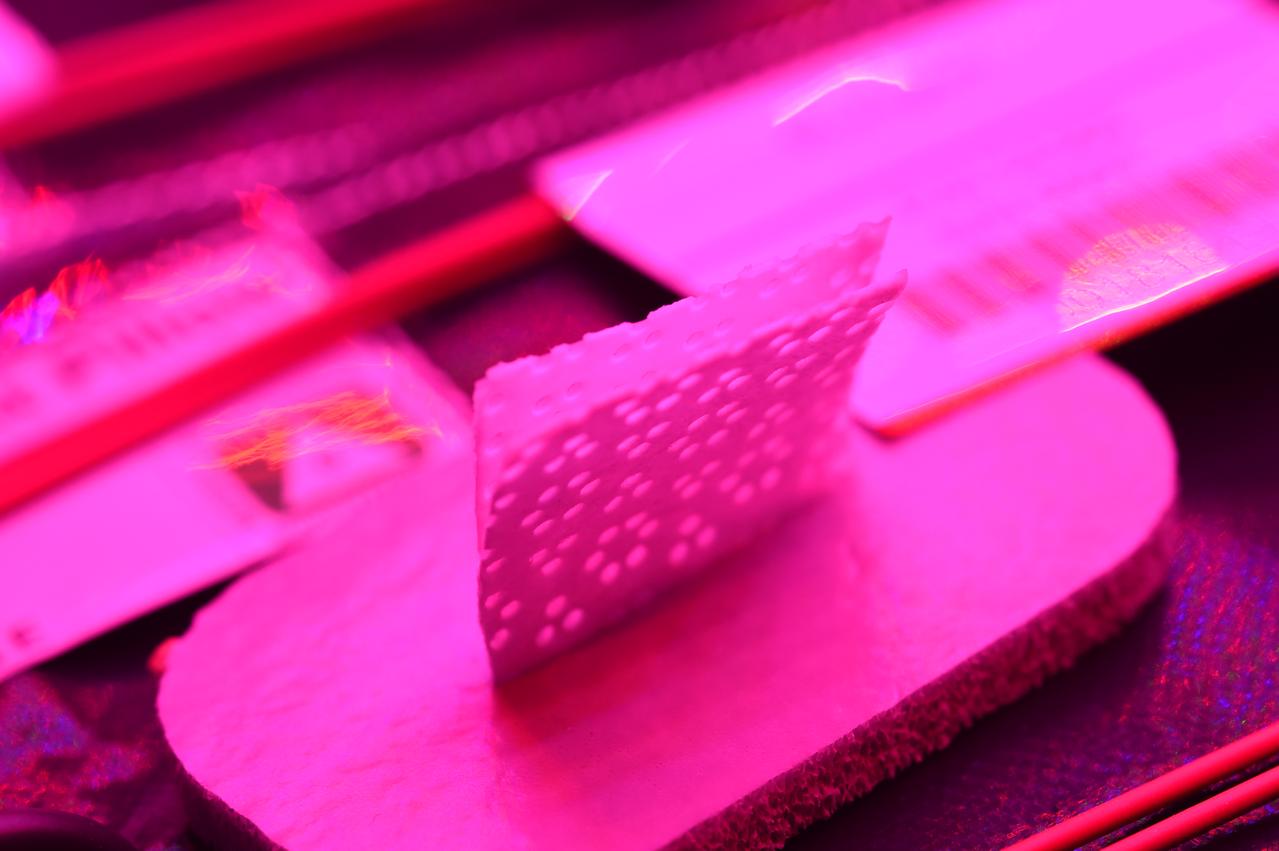
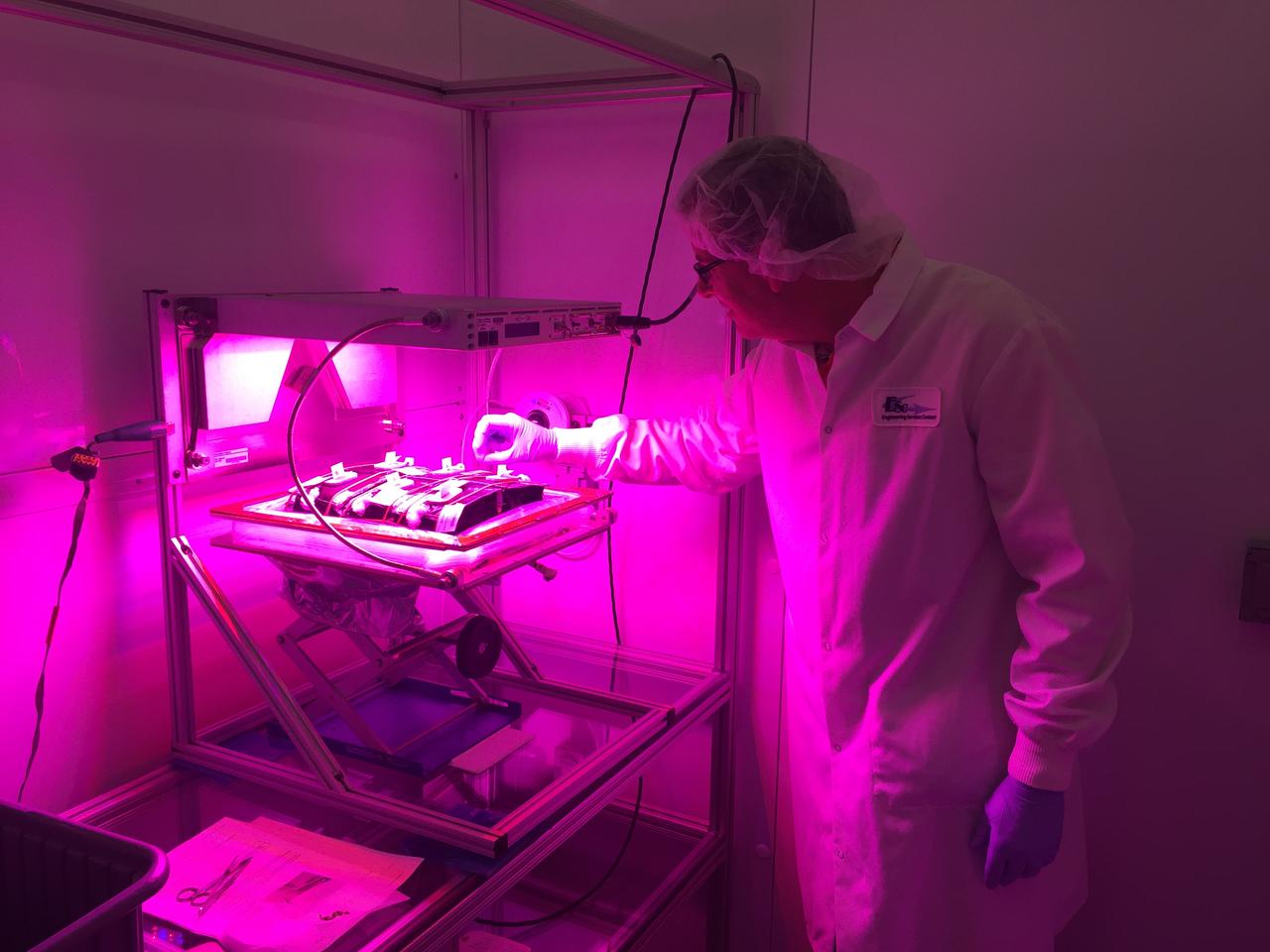
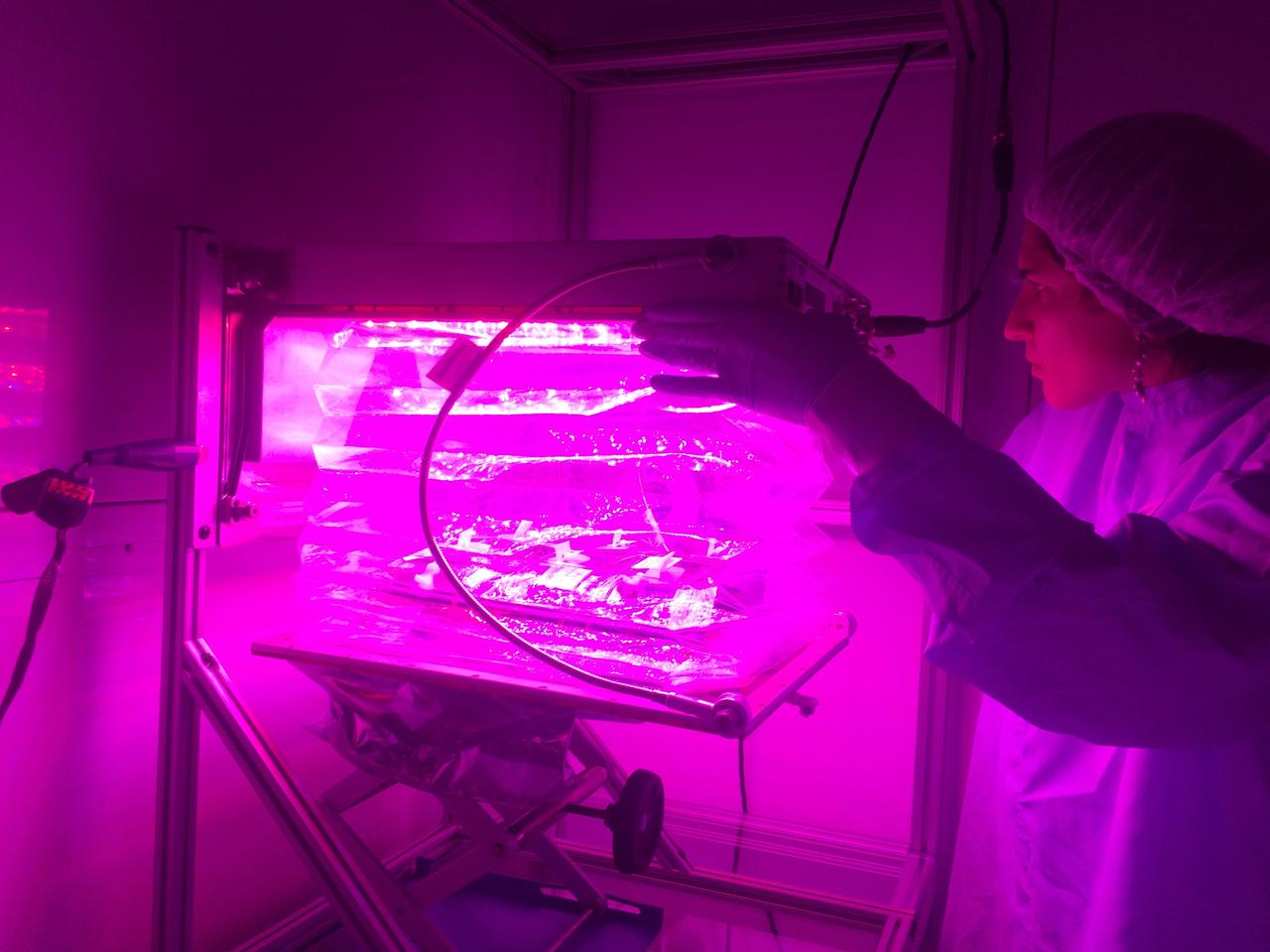
From left, Matthew Romeyn and Dr. Ye Zhang, project scientists, place seeds in Veggie Passive Orbital Nutrient Delivery System (PONDS) units inside a laboratory at the Space Station Processing Facility at NASA’s Kennedy Space Center in Florida. Veggie PONDS is a direct follow-on to the Veg-01 and Veg-03 hardware and plant growth validation tests. The primary goal of this newly developed plant growing system, Veggie PONDS, is to demonstrate uniform plant growth. PONDS units have features that are designed to mitigate microgravity effects on water distribution, increase oxygen exchange and provide sufficient room for root zone growth. PONDS is planned for use during Veg-04 and Veg-05 on the International Space Station after the Veggie PONDS Validation flights on SpaceX-14 and OA-9.
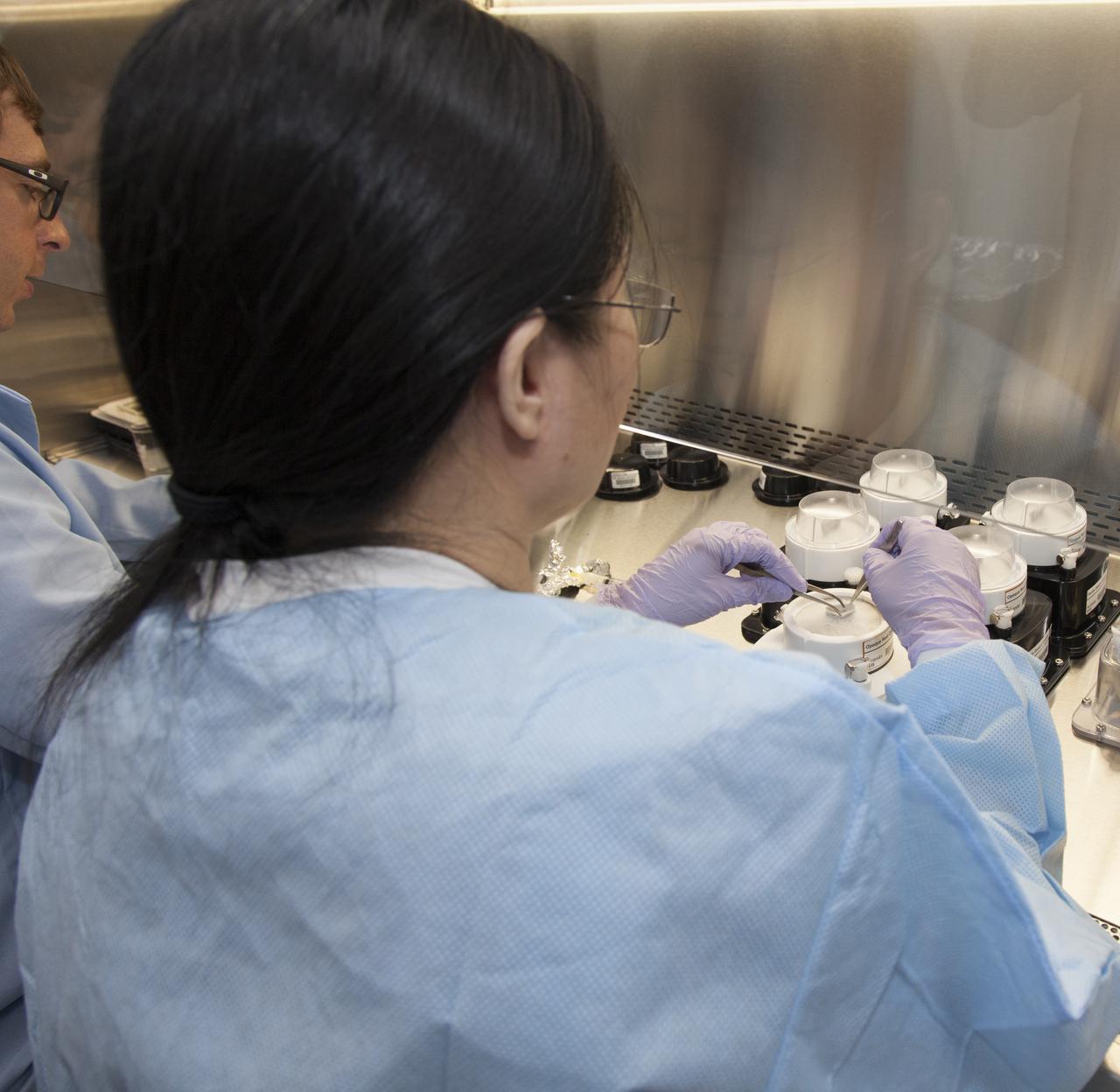
Dr. Ye Zhang, a project scientists, places seeds in Veggie Passive Orbital Nutrient Delivery System (PONDS) units inside a laboratory at the Space Station Processing Facility at NASA's Kennedy Space Center in Florida. Veggie PONDS is a direct follow-on to the Veg-01 and Veg-03 hardware and plant growth validation tests. The primary goal of this newly developed plant growing system, Veggie PONDS, is to demonstrate uniform plant growth. PONDS units have features that are designed to mitigate microgravity effects on water distribution, increase oxygen exchange and provide sufficient room for root zone growth. PONDS is planned for use during Veg-04 and Veg-05 on the International Space Station after the Veggie PONDS Validation flights on SpaceX-14 and OA-9.
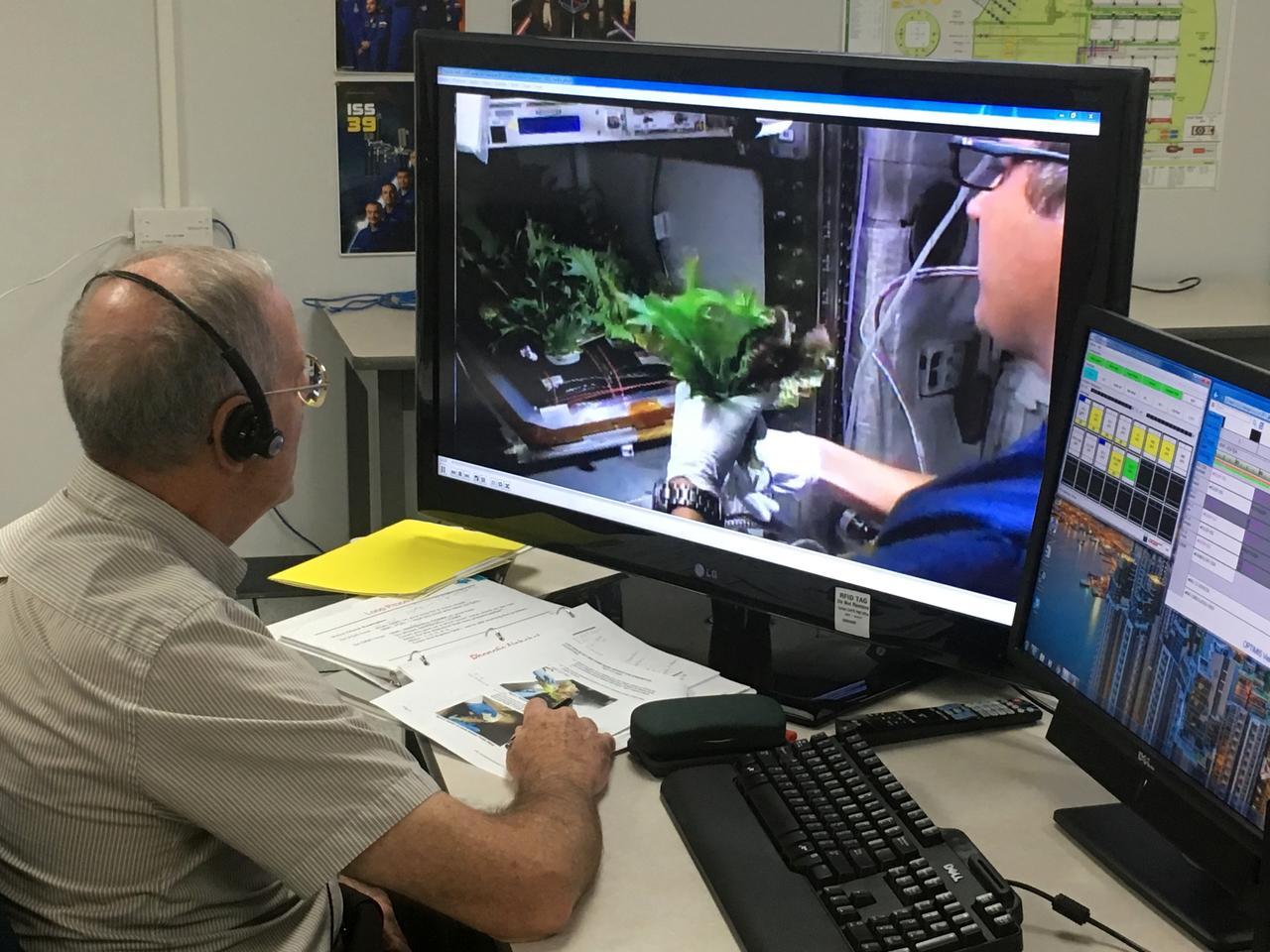
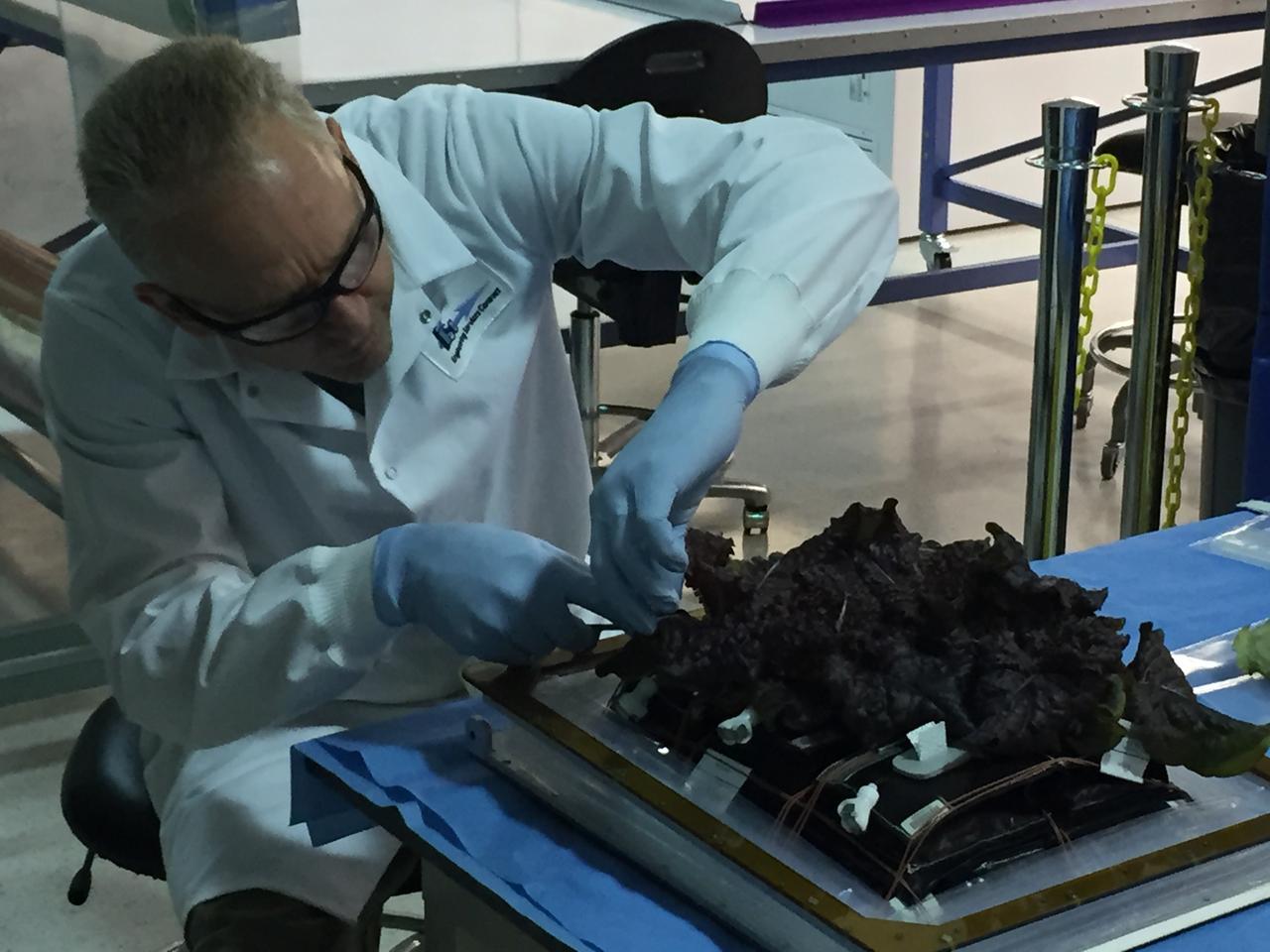
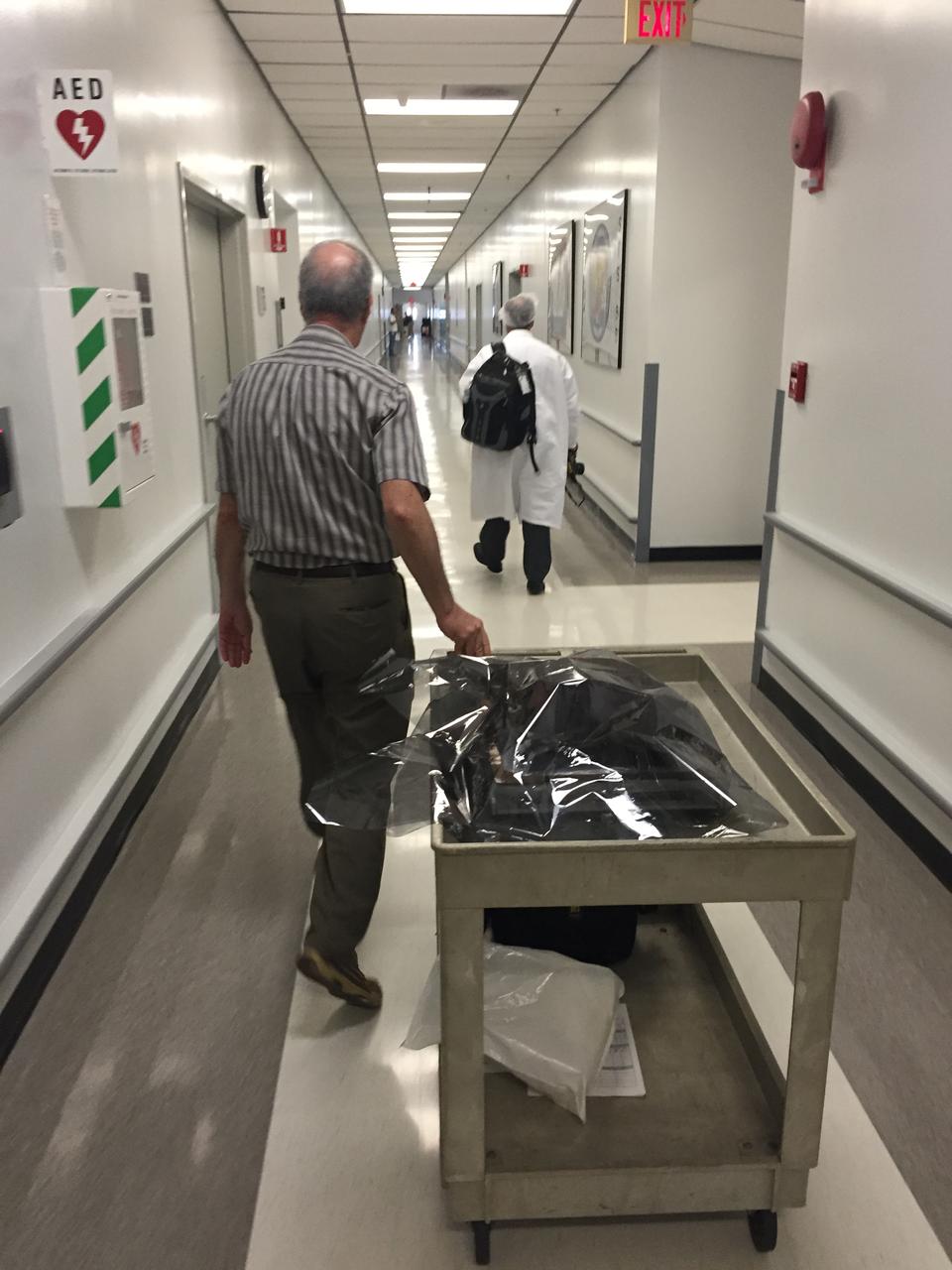
Charles Spern, project manager on the Engineering Services Contract, communicates instructions for the Veggie system to astronaut Joe Acaba on the International Space Station. Spern is in the Experiment Monitoring Room in the Space Station Processing Facility at Kennedy Space Center in Florida. Three different varieties of plants from the Veg-03D plant experiment were harvested.
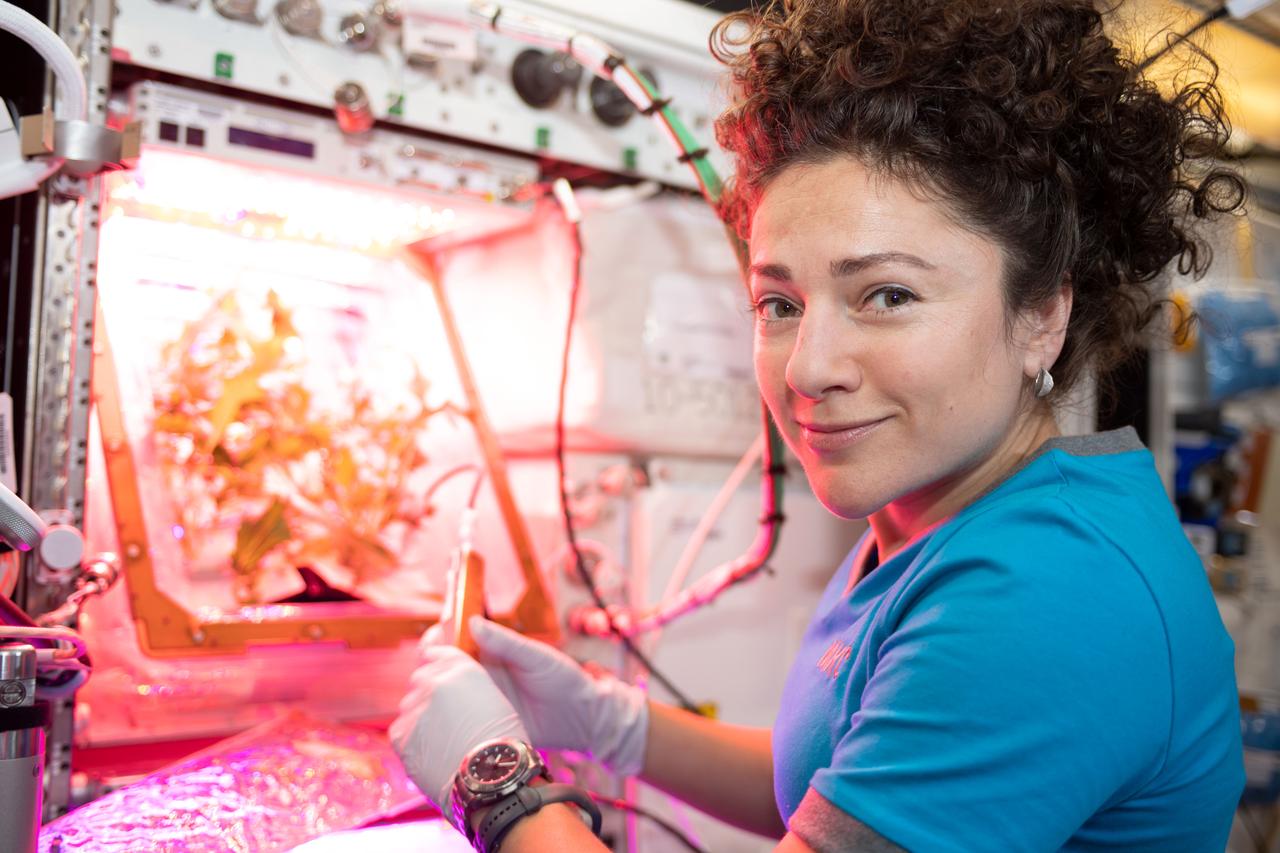
iss061e014149 (Oct. 27, 2019) --- NASA astronaut Jessica Meir waters plant pillows where Mizuna mustard greens are raised as part of the Veg-04B experiment. This investigation is part of a phased research project to address the need for a continuous fresh food production system in space and focuses on the effects of light quality and fertilizer on a leafy crop. Taste is assessed by the crew.
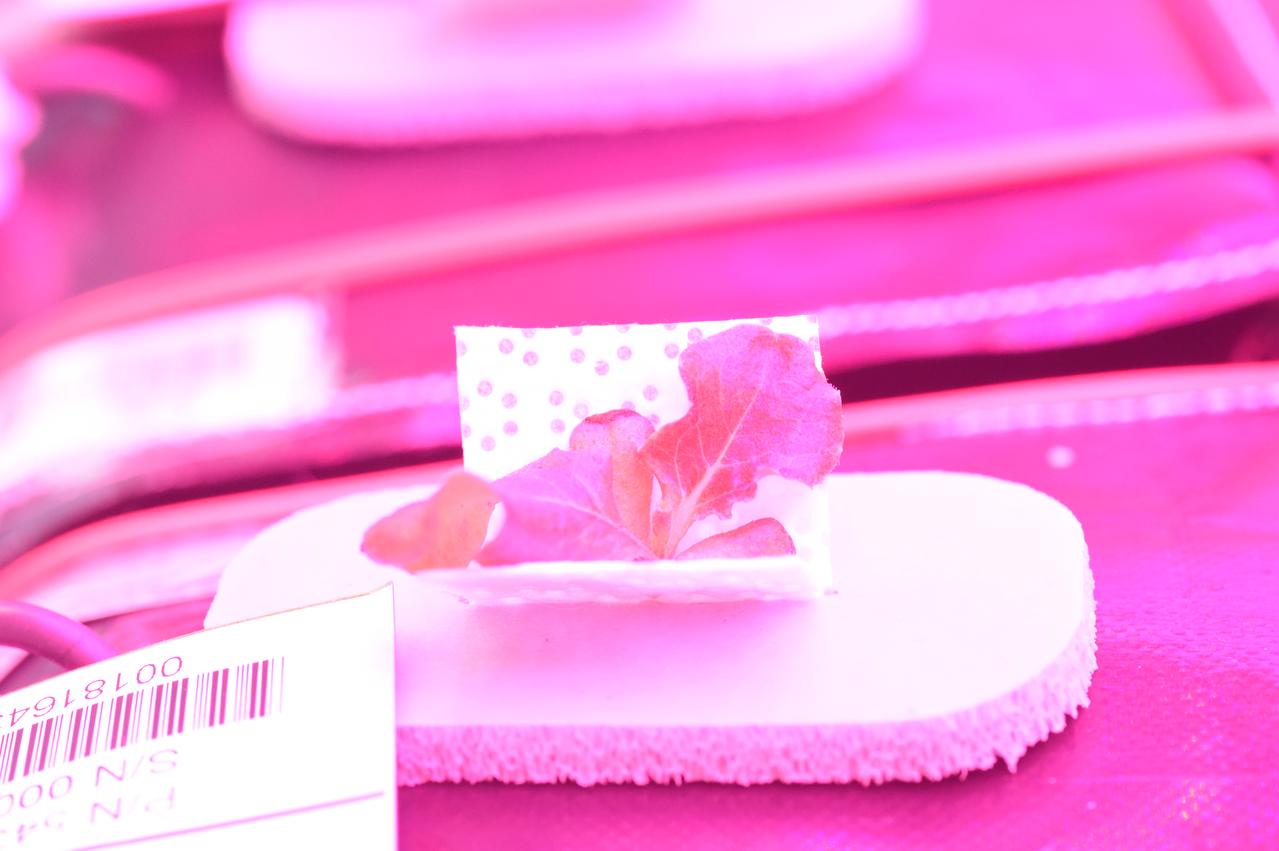
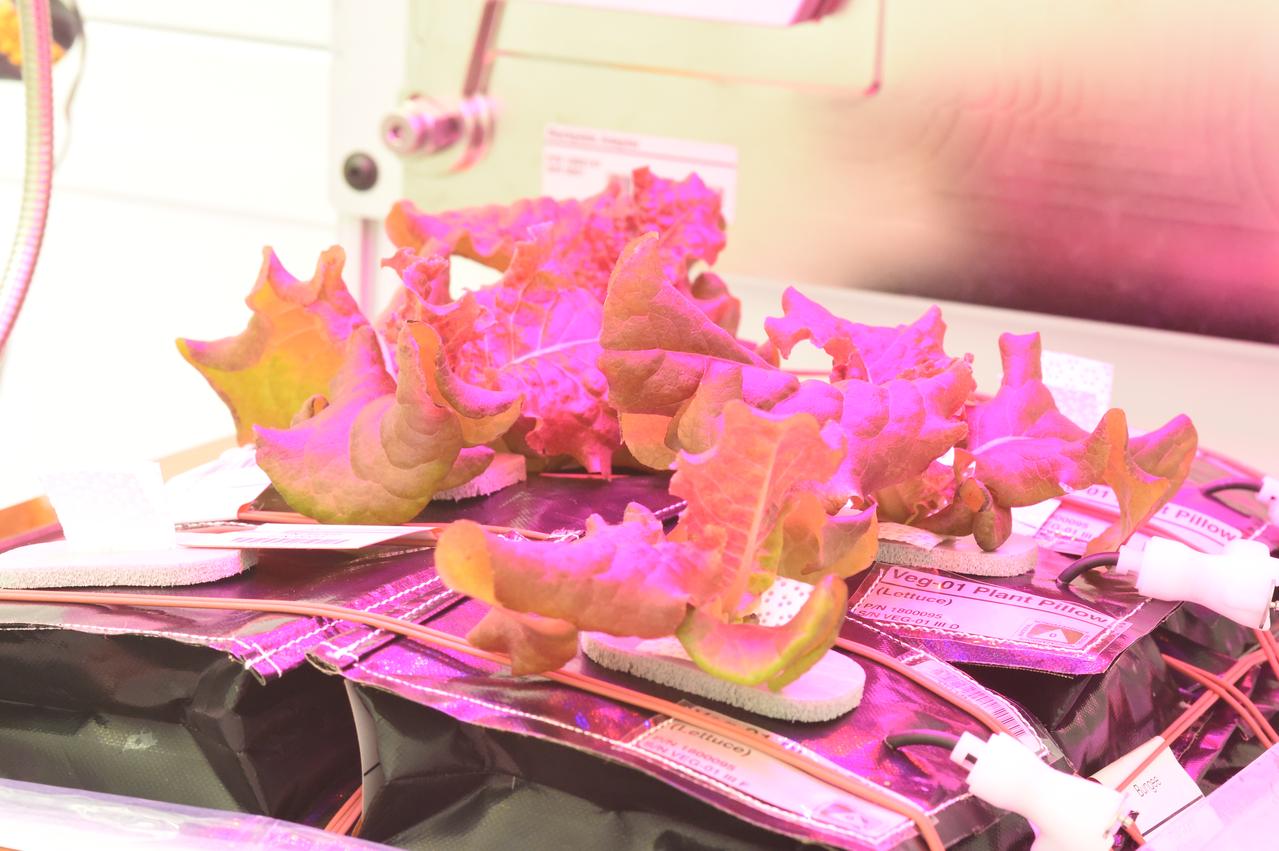
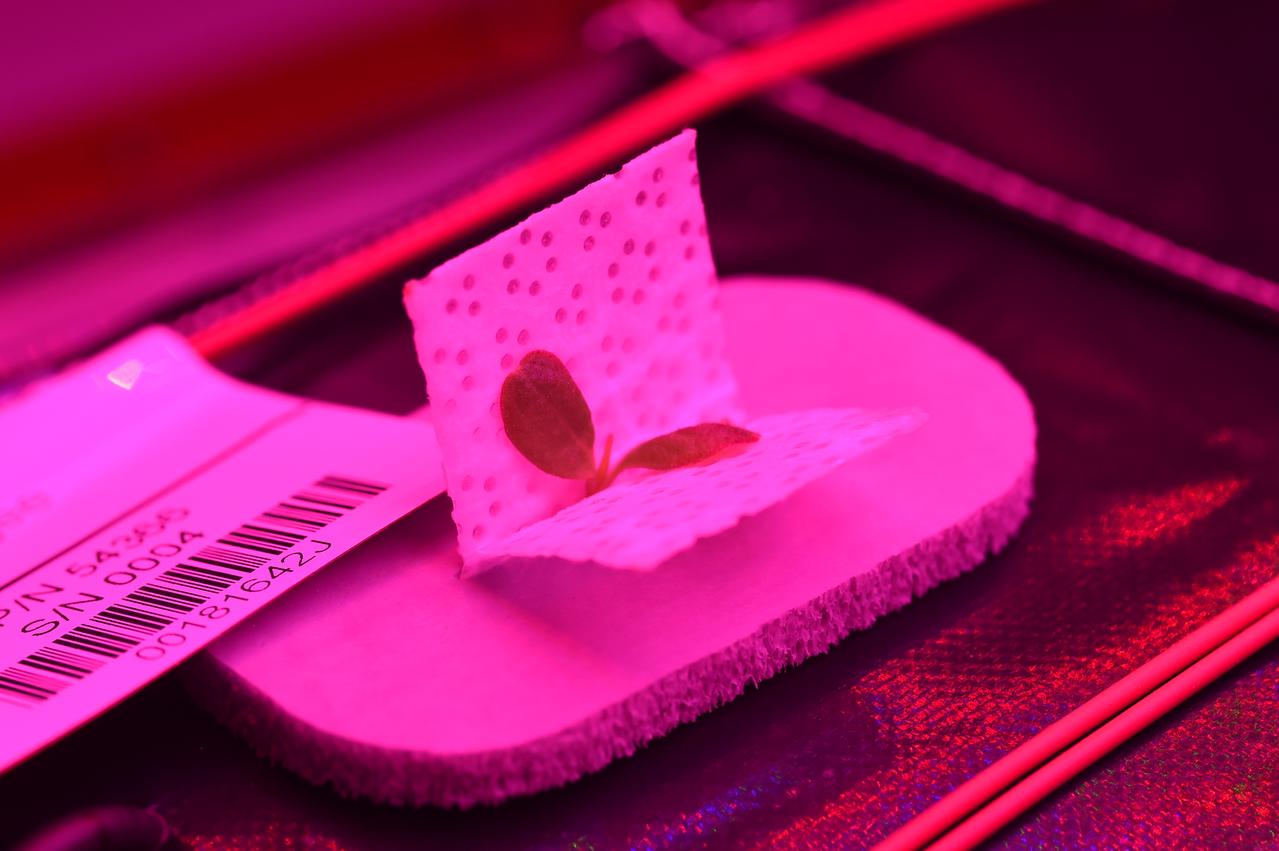
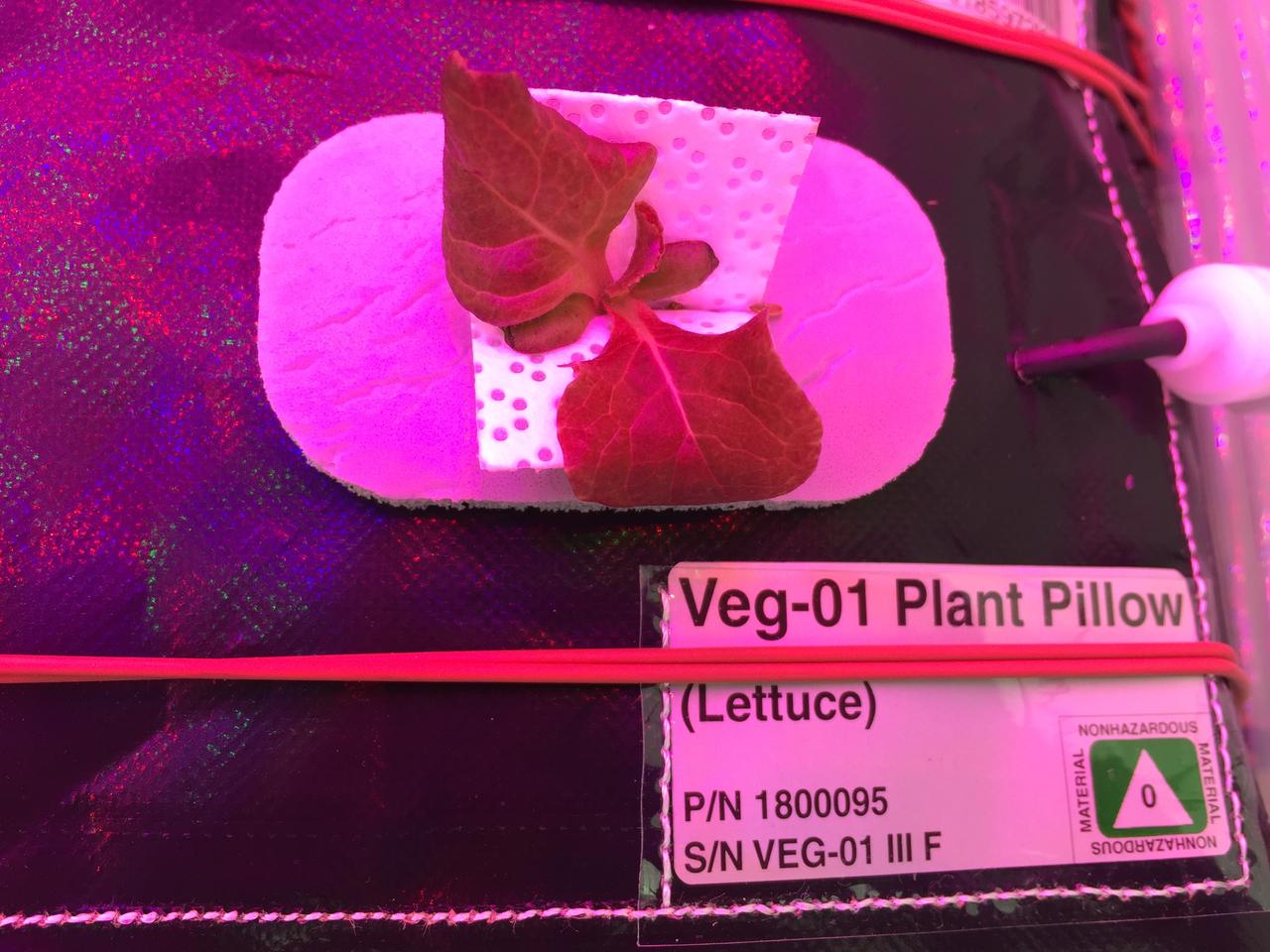
Astronaut Scott Kelly initiated VEG-01 B, the second crop of lettuce, on July, 8, 2015, and both Kelly and Astronaut Kjell Lindgren cared for the plants. The crop grew for 33 days. VEG-01 B included one set of six plant pillows planted with red romaine lettuce seeds. On Aug. 10, 2015, the crew harvested and consumed leaves from each plant. This was the first crop grown and consumed in NASA hardware. They harvested the rest of the plant tissue and froze it in the station’s Minus Eighty-Degree Laboratory Freezer for ISS (MELFI) for return to Earth for further study including microbial analysis, antioxidant capacity, mineral analysis and anthocyanin concentration.
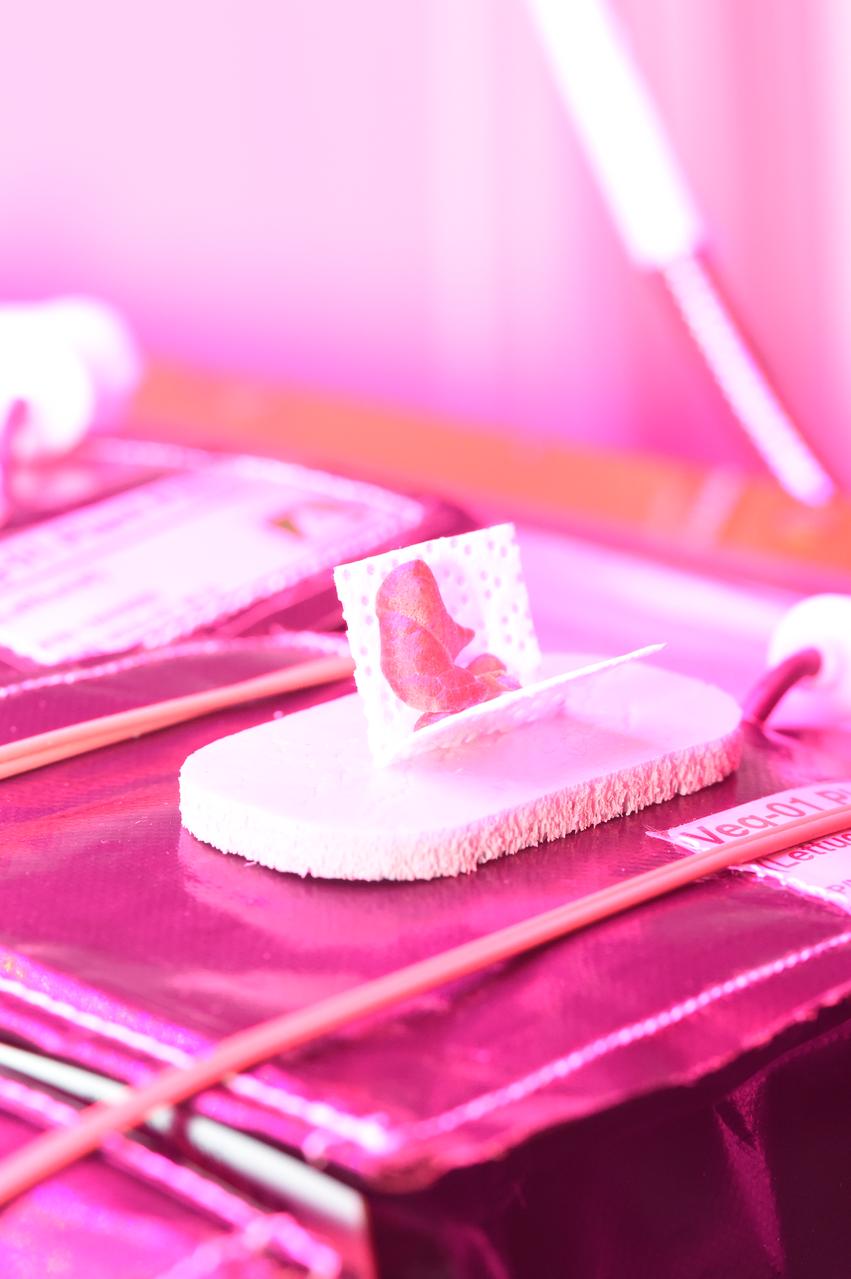
Astronaut Scott Kelly initiated VEG-01 B, the second crop of lettuce, on July, 8, 2015, and both Kelly and Astronaut Kjell Lindgren cared for the plants. The crop grew for 33 days. VEG-01 B included one set of six plant pillows planted with red romaine lettuce seeds. On Aug. 10, 2015, the crew harvested and consumed leaves from each plant. This was the first crop grown and consumed in NASA hardware. They harvested the rest of the plant tissue and froze it in the station’s Minus Eighty-Degree Laboratory Freezer for ISS (MELFI) for return to Earth for further study including microbial analysis, antioxidant capacity, mineral analysis and anthocyanin concentration.

Astronaut Scott Kelly initiated VEG-01 B, the second crop of lettuce, on July, 8, 2015, and both Kelly and Astronaut Kjell Lindgren cared for the plants. The crop grew for 33 days. VEG-01 B included one set of six plant pillows planted with red romaine lettuce seeds. On Aug. 10, 2015, the crew harvested and consumed leaves from each plant. This was the first crop grown and consumed in NASA hardware. They harvested the rest of the plant tissue and froze it in the station’s Minus Eighty-Degree Laboratory Freezer for ISS (MELFI) for return to Earth for further study including microbial analysis, antioxidant capacity, mineral analysis and anthocyanin concentration.
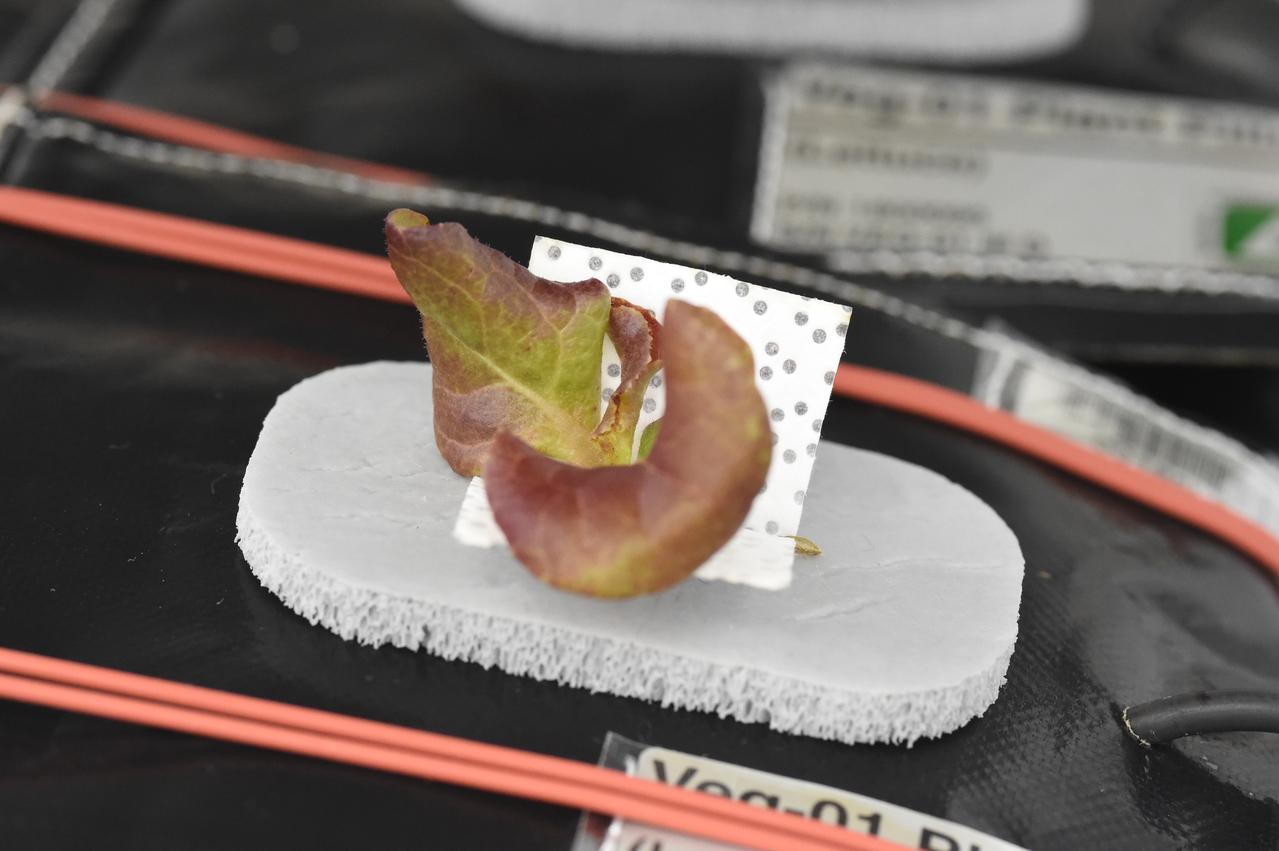
Astronaut Scott Kelly initiated VEG-01 B, the second crop of lettuce, on July, 8, 2015, and both Kelly and Astronaut Kjell Lindgren cared for the plants. The crop grew for 33 days. VEG-01 B included one set of six plant pillows planted with red romaine lettuce seeds. On Aug. 10, 2015, the crew harvested and consumed leaves from each plant. This was the first crop grown and consumed in NASA hardware. They harvested the rest of the plant tissue and froze it in the station’s Minus Eighty-Degree Laboratory Freezer for ISS (MELFI) for return to Earth for further study including microbial analysis, antioxidant capacity, mineral analysis and anthocyanin concentration.
Astronaut Scott Kelly initiated VEG-01 B, the second crop of lettuce, on July, 8, 2015, and both Kelly and Astronaut Kjell Lindgren cared for the plants. The crop grew for 33 days. VEG-01 B included one set of six plant pillows planted with red romaine lettuce seeds. On Aug. 10, 2015, the crew harvested and consumed leaves from each plant. This was the first crop grown and consumed in NASA hardware. They harvested the rest of the plant tissue and froze it in the station’s Minus Eighty-Degree Laboratory Freezer for ISS (MELFI) for return to Earth for further study including microbial analysis, antioxidant capacity, mineral analysis and anthocyanin concentration.
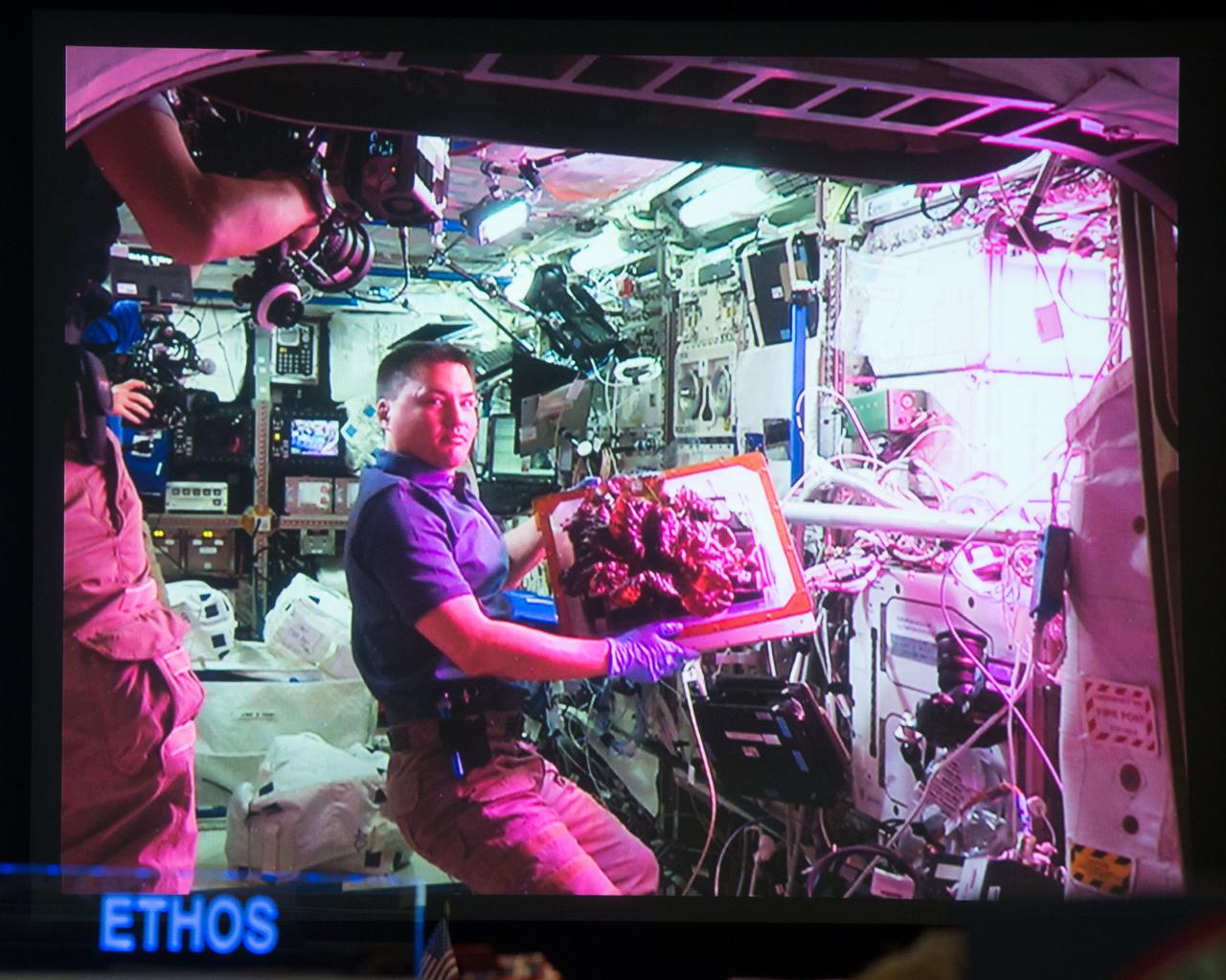
Astronaut Scott Kelly initiated VEG-01 B, the second crop of lettuce, on July, 8, 2015, and both Kelly and Astronaut Kjell Lindgren cared for the plants. The crop grew for 33 days. VEG-01 B included one set of six plant pillows planted with red romaine lettuce seeds. On Aug. 10, 2015, the crew harvested and consumed leaves from each plant. This was the first crop grown and consumed in NASA hardware. They harvested the rest of the plant tissue and froze it in the station’s Minus Eighty-Degree Laboratory Freezer for ISS (MELFI) for return to Earth for further study including microbial analysis, antioxidant capacity, mineral analysis and anthocyanin concentration.
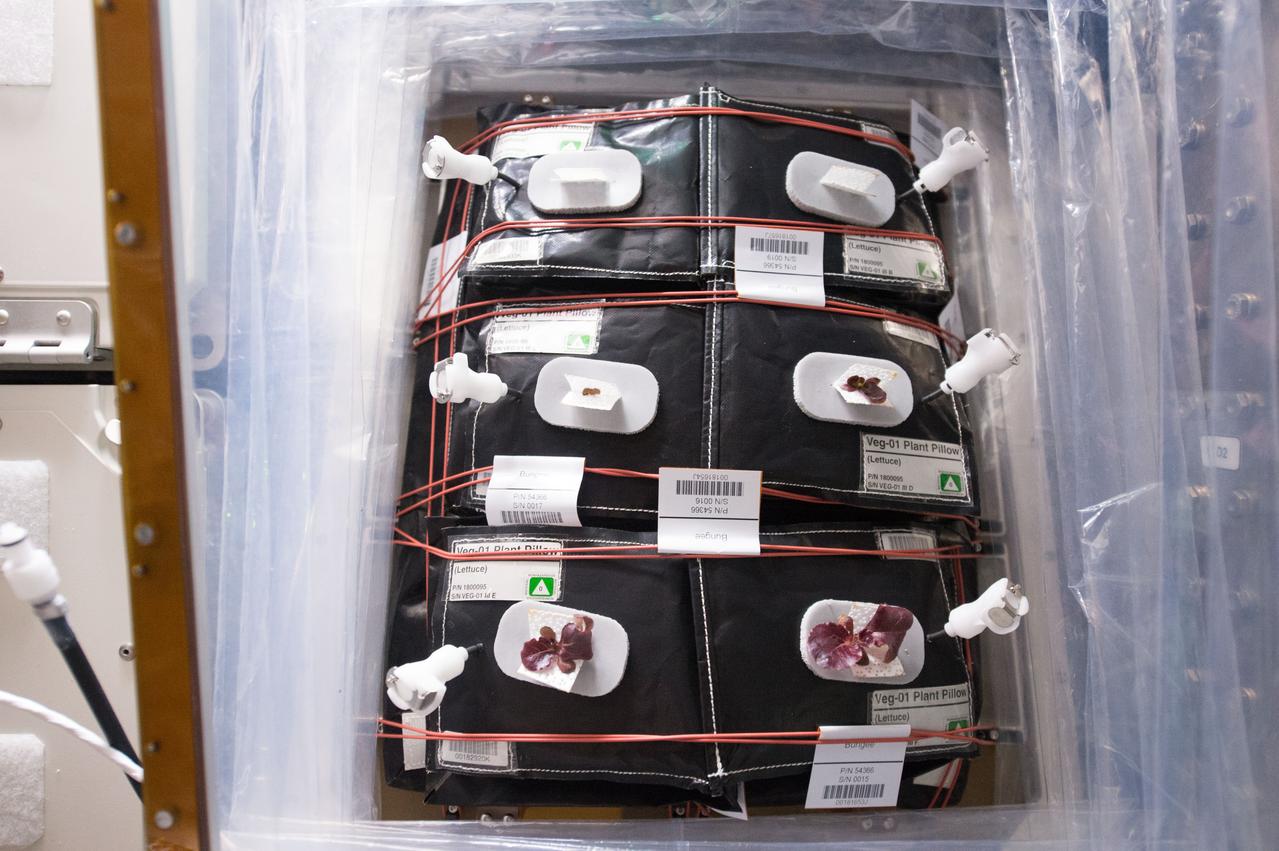
Astronaut Scott Kelly initiated VEG-01 B, the second crop of lettuce, on July, 8, 2015, and both Kelly and Astronaut Kjell Lindgren cared for the plants. The crop grew for 33 days. VEG-01 B included one set of six plant pillows planted with red romaine lettuce seeds. On Aug. 10, 2015, the crew harvested and consumed leaves from each plant. This was the first crop grown and consumed in NASA hardware. They harvested the rest of the plant tissue and froze it in the station’s Minus Eighty-Degree Laboratory Freezer for ISS (MELFI) for return to Earth for further study including microbial analysis, antioxidant capacity, mineral analysis and anthocyanin concentration.

Astronaut Scott Kelly initiated VEG-01 B, the second crop of lettuce, on July, 8, 2015, and both Kelly and Astronaut Kjell Lindgren cared for the plants. The crop grew for 33 days. VEG-01 B included one set of six plant pillows planted with red romaine lettuce seeds. On Aug. 10, 2015, the crew harvested and consumed leaves from each plant. This was the first crop grown and consumed in NASA hardware. They harvested the rest of the plant tissue and froze it in the station’s Minus Eighty-Degree Laboratory Freezer for ISS (MELFI) for return to Earth for further study including microbial analysis, antioxidant capacity, mineral analysis and anthocyanin concentration.
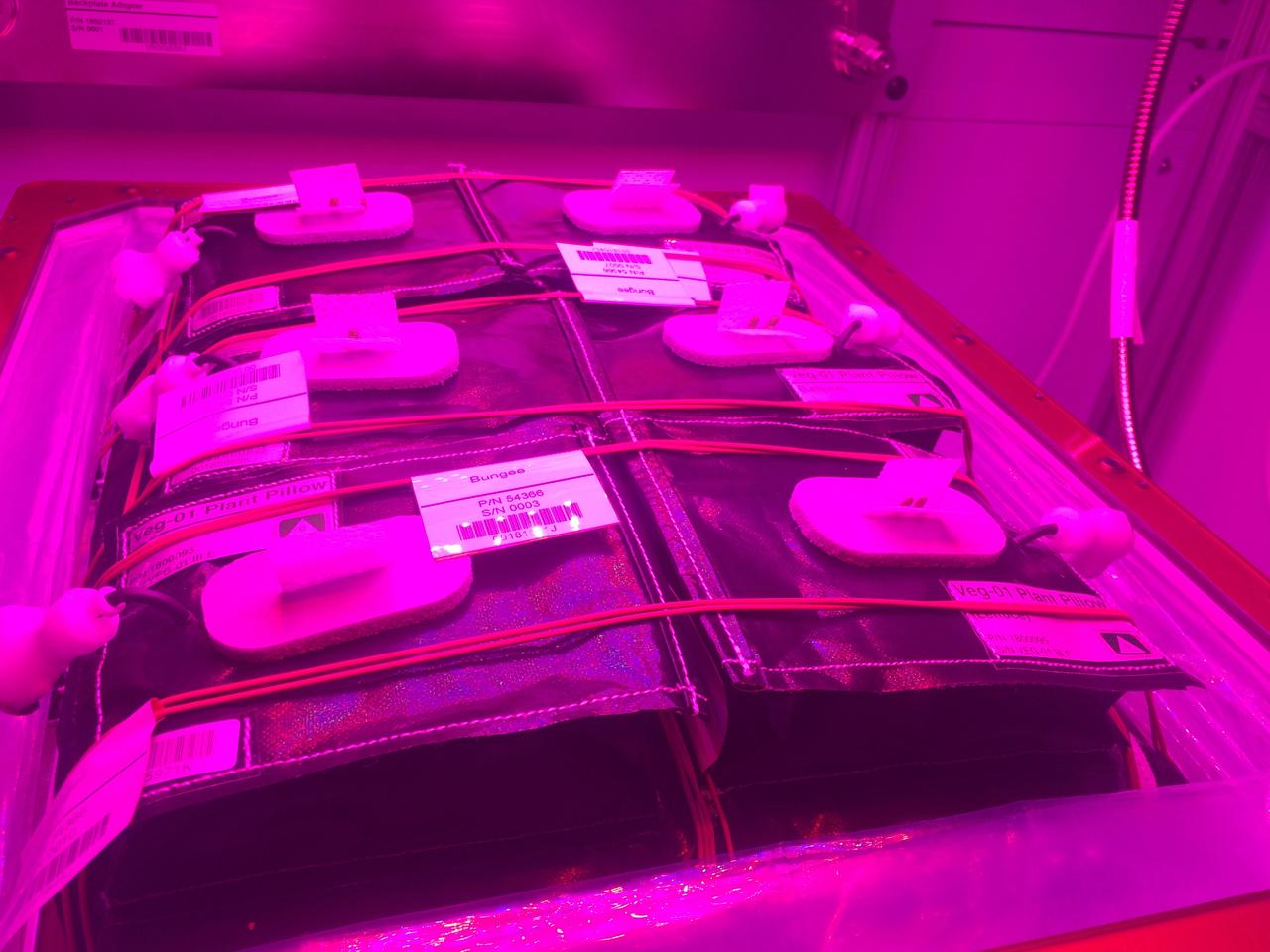
Astronaut Scott Kelly initiated VEG-01 B, the second crop of lettuce, on July, 8, 2015, and both Kelly and Astronaut Kjell Lindgren cared for the plants. The crop grew for 33 days. VEG-01 B included one set of six plant pillows planted with red romaine lettuce seeds. On Aug. 10, 2015, the crew harvested and consumed leaves from each plant. This was the first crop grown and consumed in NASA hardware. They harvested the rest of the plant tissue and froze it in the station’s Minus Eighty-Degree Laboratory Freezer for ISS (MELFI) for return to Earth for further study including microbial analysis, antioxidant capacity, mineral analysis and anthocyanin concentration.

Astronaut Scott Kelly initiated VEG-01 B, the second crop of lettuce, on July, 8, 2015, and both Kelly and Astronaut Kjell Lindgren cared for the plants. The crop grew for 33 days. VEG-01 B included one set of six plant pillows planted with red romaine lettuce seeds. On Aug. 10, 2015, the crew harvested and consumed leaves from each plant. This was the first crop grown and consumed in NASA hardware. They harvested the rest of the plant tissue and froze it in the station’s Minus Eighty-Degree Laboratory Freezer for ISS (MELFI) for return to Earth for further study including microbial analysis, antioxidant capacity, mineral analysis and anthocyanin concentration.
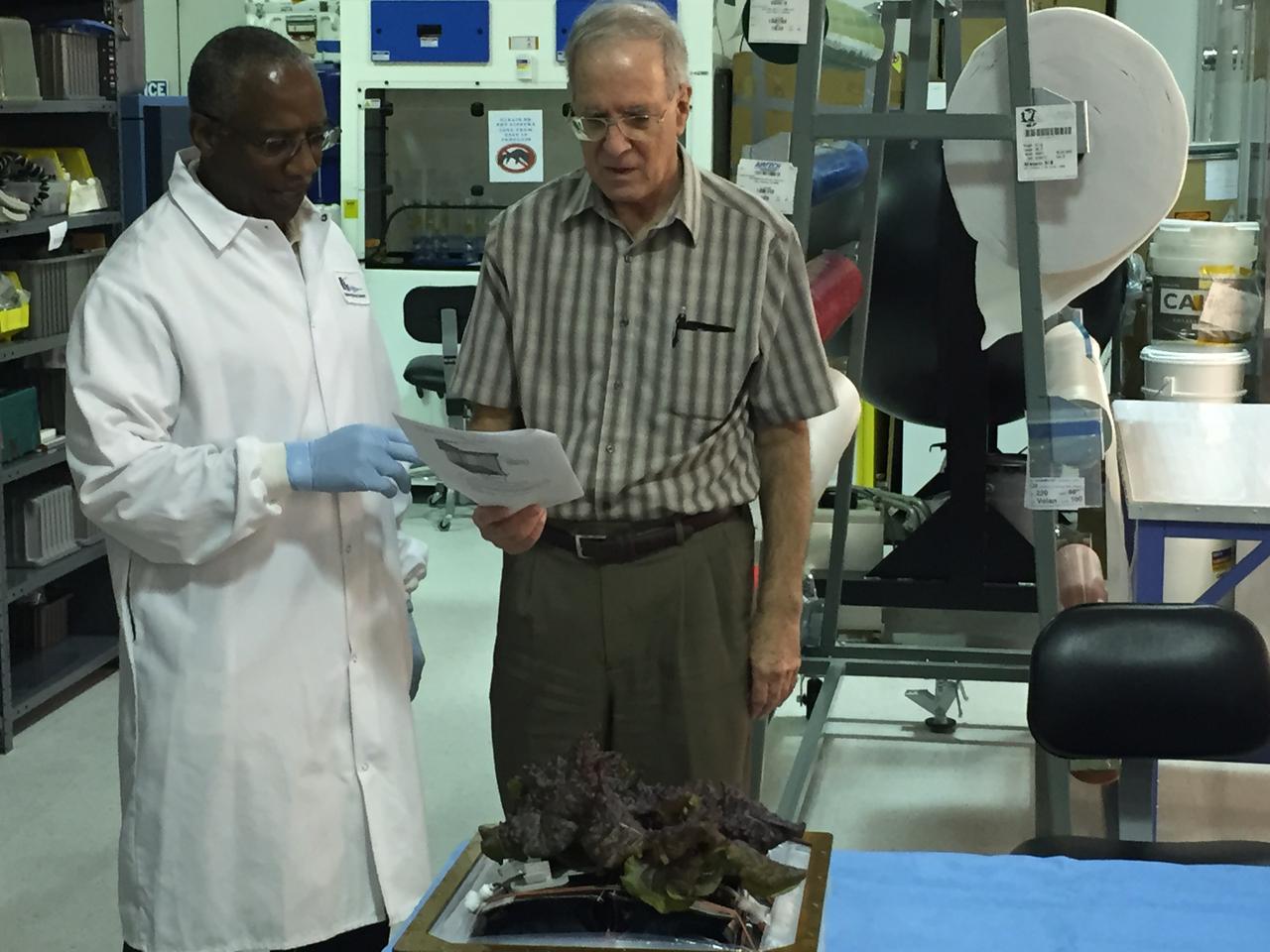
Astronaut Scott Kelly initiated VEG-01 B, the second crop of lettuce, on July, 8, 2015, and both Kelly and Astronaut Kjell Lindgren cared for the plants. The crop grew for 33 days. VEG-01 B included one set of six plant pillows planted with red romaine lettuce seeds. On Aug. 10, 2015, the crew harvested and consumed leaves from each plant. This was the first crop grown and consumed in NASA hardware. They harvested the rest of the plant tissue and froze it in the station’s Minus Eighty-Degree Laboratory Freezer for ISS (MELFI) for return to Earth for further study including microbial analysis, antioxidant capacity, mineral analysis and anthocyanin concentration.
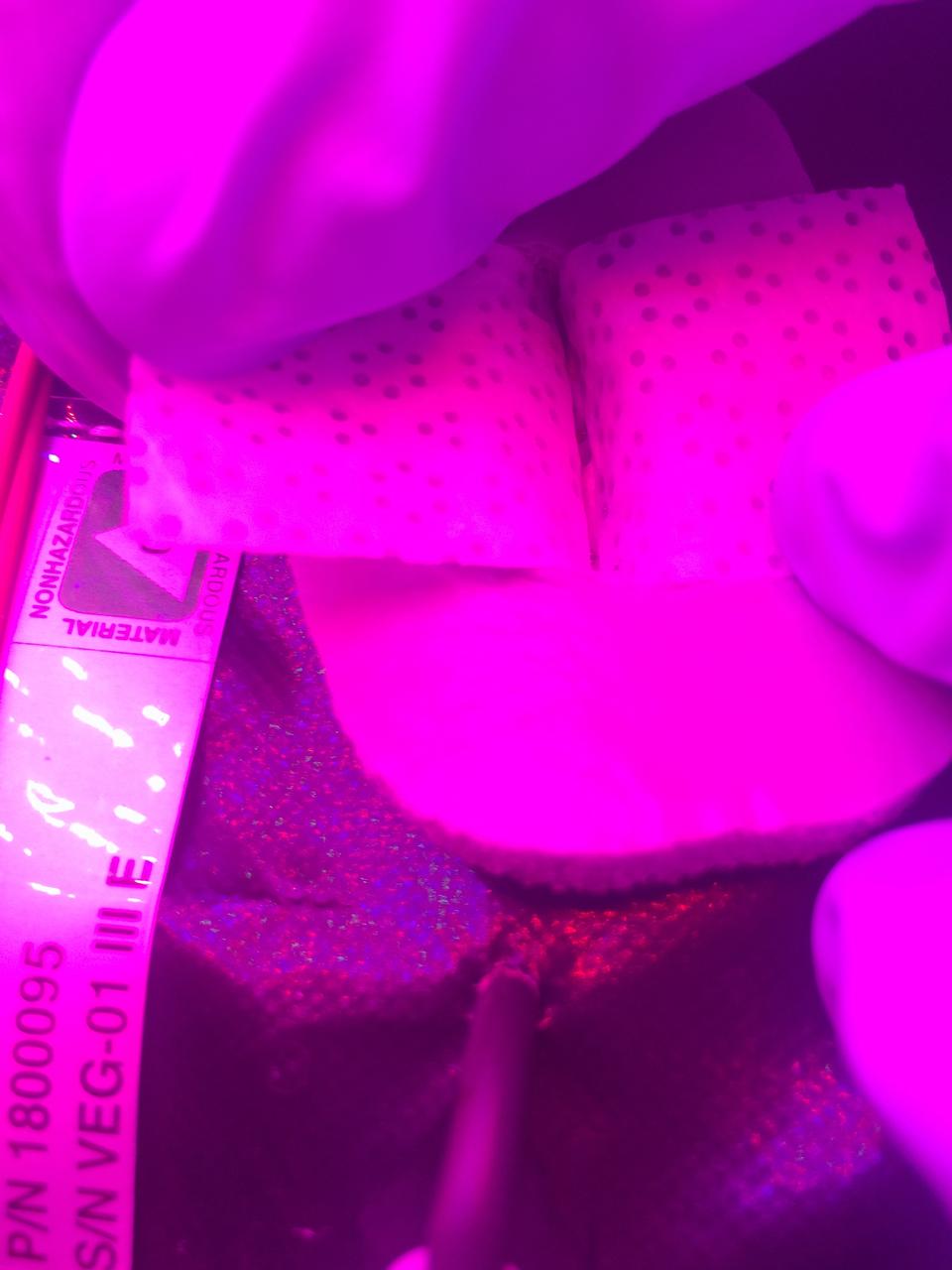
Astronaut Scott Kelly initiated VEG-01 B, the second crop of lettuce, on July, 8, 2015, and both Kelly and Astronaut Kjell Lindgren cared for the plants. The crop grew for 33 days. VEG-01 B included one set of six plant pillows planted with red romaine lettuce seeds. On Aug. 10, 2015, the crew harvested and consumed leaves from each plant. This was the first crop grown and consumed in NASA hardware. They harvested the rest of the plant tissue and froze it in the station’s Minus Eighty-Degree Laboratory Freezer for ISS (MELFI) for return to Earth for further study including microbial analysis, antioxidant capacity, mineral analysis and anthocyanin concentration.
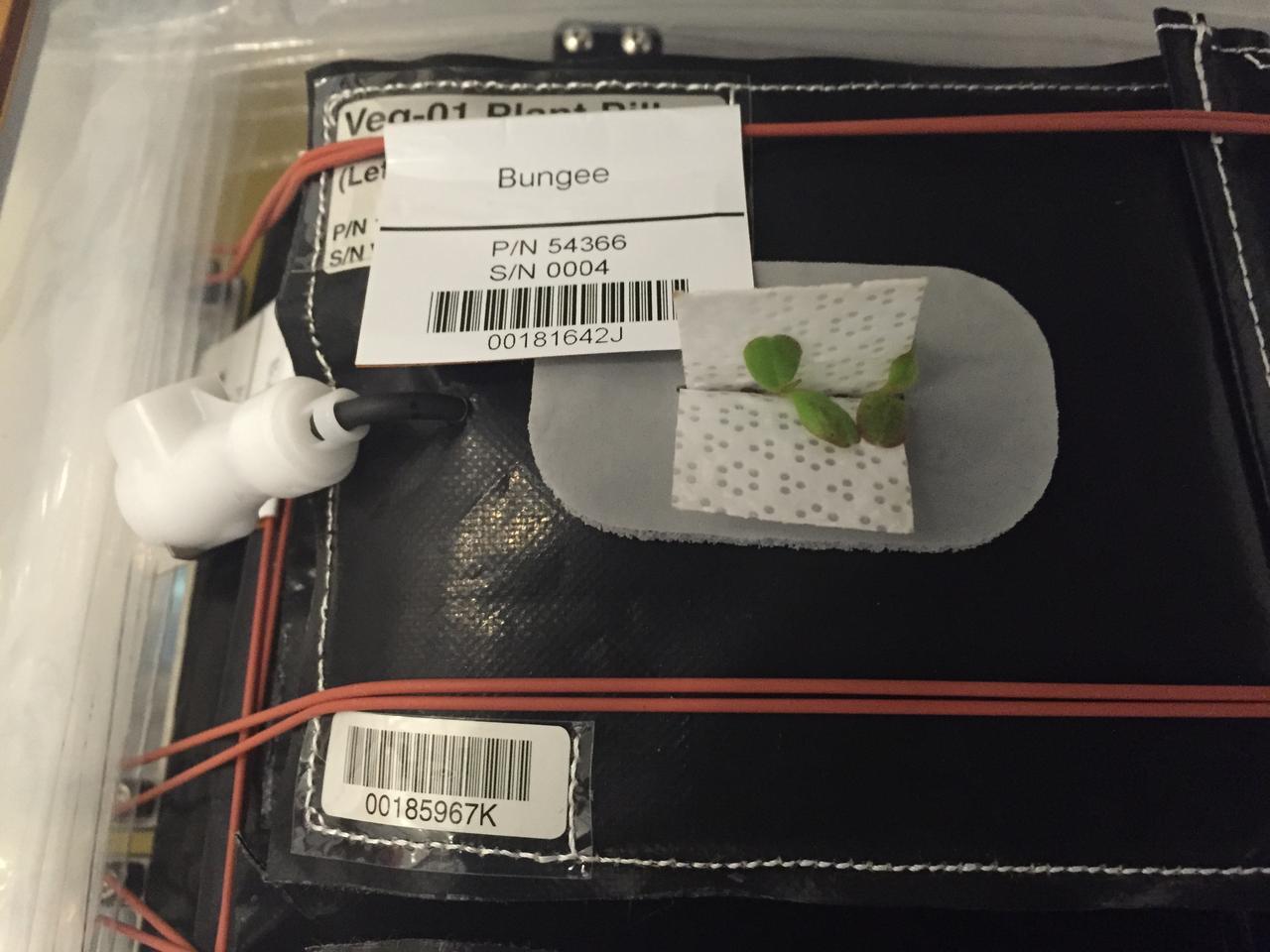
Astronaut Scott Kelly initiated VEG-01 B, the second crop of lettuce, on July, 8, 2015, and both Kelly and Astronaut Kjell Lindgren cared for the plants. The crop grew for 33 days. VEG-01 B included one set of six plant pillows planted with red romaine lettuce seeds. On Aug. 10, 2015, the crew harvested and consumed leaves from each plant. This was the first crop grown and consumed in NASA hardware. They harvested the rest of the plant tissue and froze it in the station’s Minus Eighty-Degree Laboratory Freezer for ISS (MELFI) for return to Earth for further study including microbial analysis, antioxidant capacity, mineral analysis and anthocyanin concentration.
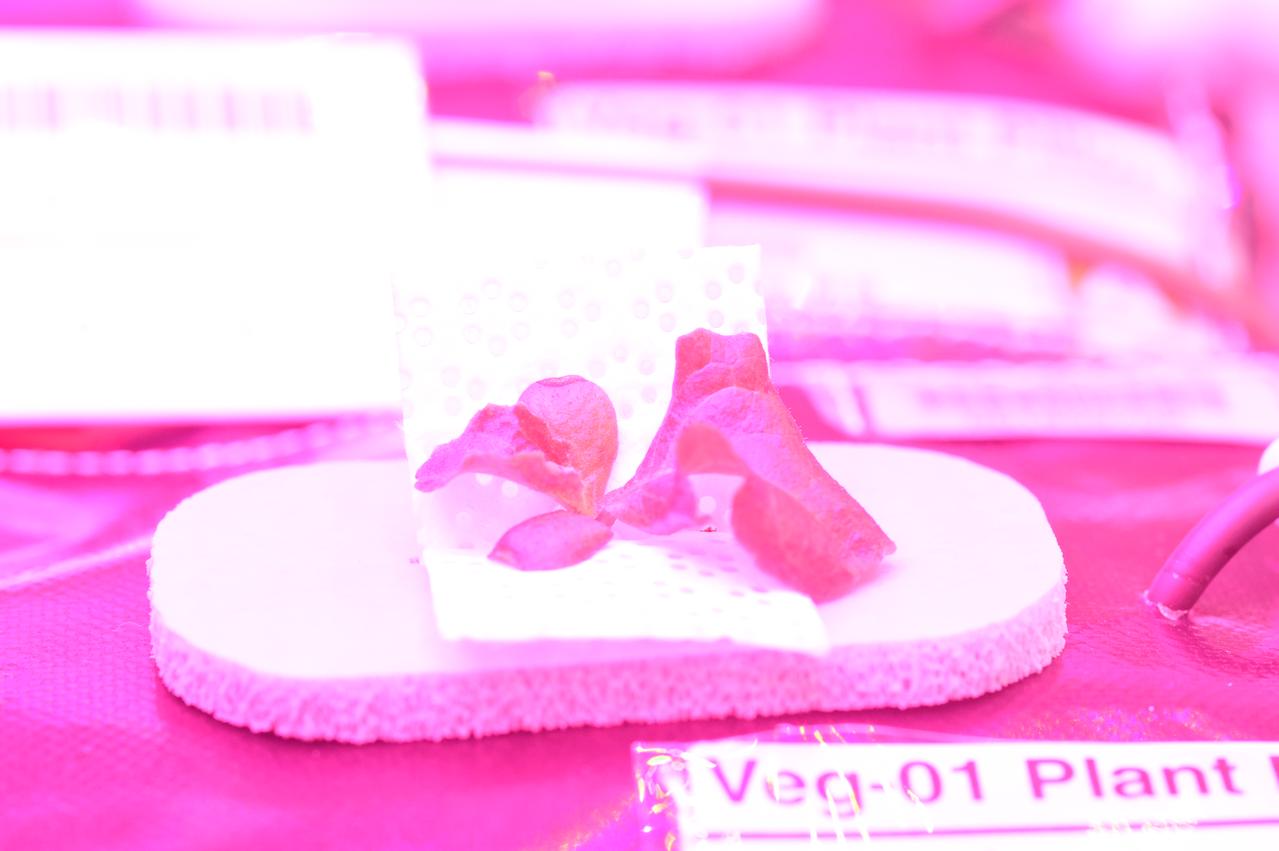
Astronaut Scott Kelly initiated VEG-01 B, the second crop of lettuce, on July, 8, 2015, and both Kelly and Astronaut Kjell Lindgren cared for the plants. The crop grew for 33 days. VEG-01 B included one set of six plant pillows planted with red romaine lettuce seeds. On Aug. 10, 2015, the crew harvested and consumed leaves from each plant. This was the first crop grown and consumed in NASA hardware. They harvested the rest of the plant tissue and froze it in the station’s Minus Eighty-Degree Laboratory Freezer for ISS (MELFI) for return to Earth for further study including microbial analysis, antioxidant capacity, mineral analysis and anthocyanin concentration.
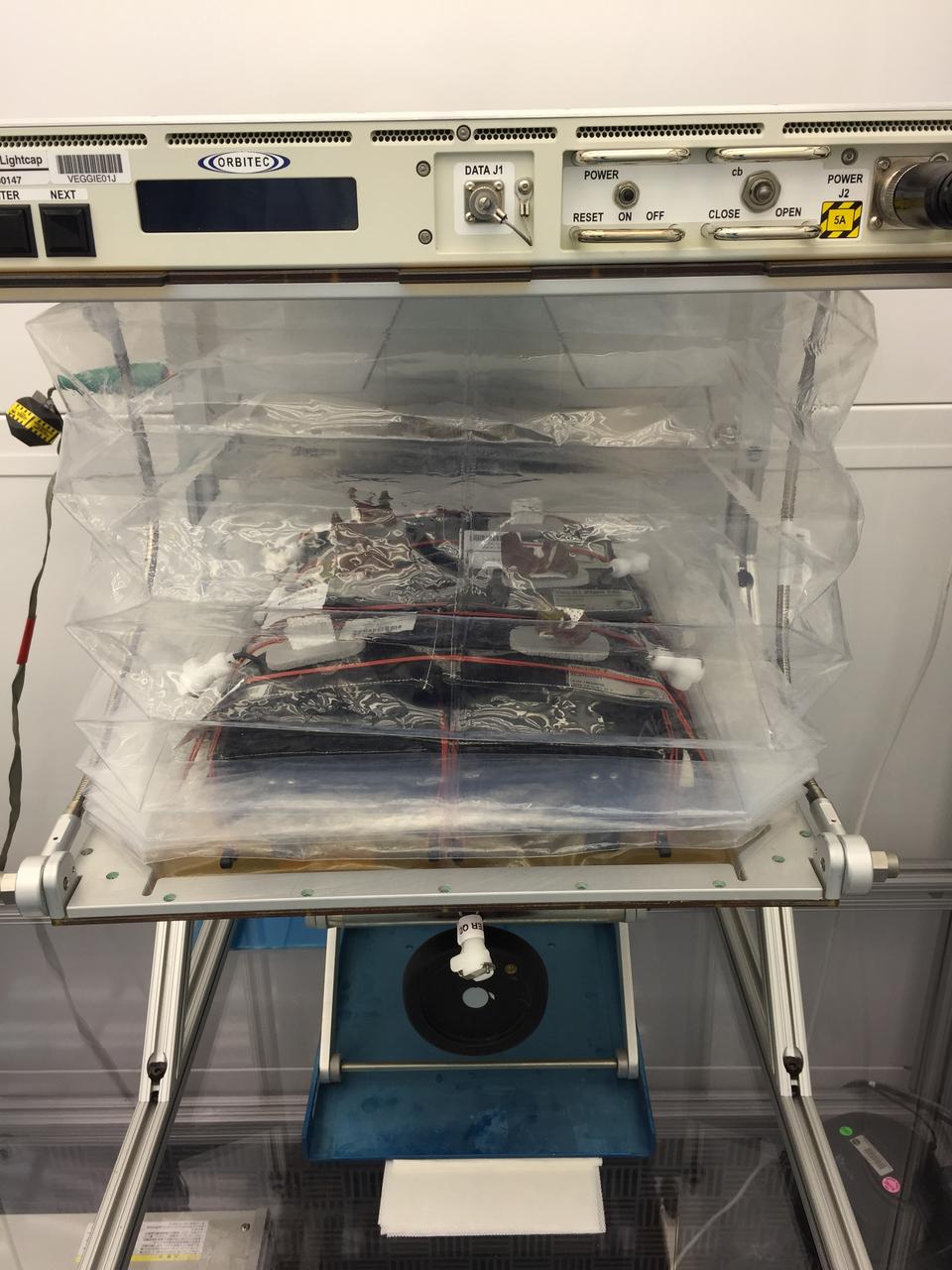
Astronaut Scott Kelly initiated VEG-01 B, the second crop of lettuce, on July, 8, 2015, and both Kelly and Astronaut Kjell Lindgren cared for the plants. The crop grew for 33 days. VEG-01 B included one set of six plant pillows planted with red romaine lettuce seeds. On Aug. 10, 2015, the crew harvested and consumed leaves from each plant. This was the first crop grown and consumed in NASA hardware. They harvested the rest of the plant tissue and froze it in the station’s Minus Eighty-Degree Laboratory Freezer for ISS (MELFI) for return to Earth for further study including microbial analysis, antioxidant capacity, mineral analysis and anthocyanin concentration.

Astronaut Scott Kelly initiated VEG-01 B, the second crop of lettuce, on July, 8, 2015, and both Kelly and Astronaut Kjell Lindgren cared for the plants. The crop grew for 33 days. VEG-01 B included one set of six plant pillows planted with red romaine lettuce seeds. On Aug. 10, 2015, the crew harvested and consumed leaves from each plant. This was the first crop grown and consumed in NASA hardware. They harvested the rest of the plant tissue and froze it in the station’s Minus Eighty-Degree Laboratory Freezer for ISS (MELFI) for return to Earth for further study including microbial analysis, antioxidant capacity, mineral analysis and anthocyanin concentration.
Astronaut Scott Kelly initiated VEG-01 B, the second crop of lettuce, on July, 8, 2015, and both Kelly and Astronaut Kjell Lindgren cared for the plants. The crop grew for 33 days. VEG-01 B included one set of six plant pillows planted with red romaine lettuce seeds. On Aug. 10, 2015, the crew harvested and consumed leaves from each plant. This was the first crop grown and consumed in NASA hardware. They harvested the rest of the plant tissue and froze it in the station’s Minus Eighty-Degree Laboratory Freezer for ISS (MELFI) for return to Earth for further study including microbial analysis, antioxidant capacity, mineral analysis and anthocyanin concentration.

Astronaut Scott Kelly initiated VEG-01 B, the second crop of lettuce, on July, 8, 2015, and both Kelly and Astronaut Kjell Lindgren cared for the plants. The crop grew for 33 days. VEG-01 B included one set of six plant pillows planted with red romaine lettuce seeds. On Aug. 10, 2015, the crew harvested and consumed leaves from each plant. This was the first crop grown and consumed in NASA hardware. They harvested the rest of the plant tissue and froze it in the station’s Minus Eighty-Degree Laboratory Freezer for ISS (MELFI) for return to Earth for further study including microbial analysis, antioxidant capacity, mineral analysis and anthocyanin concentration.
Astronaut Scott Kelly initiated VEG-01 B, the second crop of lettuce, on July, 8, 2015, and both Kelly and Astronaut Kjell Lindgren cared for the plants. The crop grew for 33 days. VEG-01 B included one set of six plant pillows planted with red romaine lettuce seeds. On Aug. 10, 2015, the crew harvested and consumed leaves from each plant. This was the first crop grown and consumed in NASA hardware. They harvested the rest of the plant tissue and froze it in the station’s Minus Eighty-Degree Laboratory Freezer for ISS (MELFI) for return to Earth for further study including microbial analysis, antioxidant capacity, mineral analysis and anthocyanin concentration.
Astronaut Scott Kelly initiated VEG-01 B, the second crop of lettuce, on July, 8, 2015, and both Kelly and Astronaut Kjell Lindgren cared for the plants. The crop grew for 33 days. VEG-01 B included one set of six plant pillows planted with red romaine lettuce seeds. On Aug. 10, 2015, the crew harvested and consumed leaves from each plant. This was the first crop grown and consumed in NASA hardware. They harvested the rest of the plant tissue and froze it in the station’s Minus Eighty-Degree Laboratory Freezer for ISS (MELFI) for return to Earth for further study including microbial analysis, antioxidant capacity, mineral analysis and anthocyanin concentration.
Astronaut Scott Kelly initiated VEG-01 B, the second crop of lettuce, on July, 8, 2015, and both Kelly and Astronaut Kjell Lindgren cared for the plants. The crop grew for 33 days. VEG-01 B included one set of six plant pillows planted with red romaine lettuce seeds. On Aug. 10, 2015, the crew harvested and consumed leaves from each plant. This was the first crop grown and consumed in NASA hardware. They harvested the rest of the plant tissue and froze it in the station’s Minus Eighty-Degree Laboratory Freezer for ISS (MELFI) for return to Earth for further study including microbial analysis, antioxidant capacity, mineral analysis and anthocyanin concentration.

Astronaut Scott Kelly initiated VEG-01 B, the second crop of lettuce, on July, 8, 2015, and both Kelly and Astronaut Kjell Lindgren cared for the plants. The crop grew for 33 days. VEG-01 B included one set of six plant pillows planted with red romaine lettuce seeds. On Aug. 10, 2015, the crew harvested and consumed leaves from each plant. This was the first crop grown and consumed in NASA hardware. They harvested the rest of the plant tissue and froze it in the station’s Minus Eighty-Degree Laboratory Freezer for ISS (MELFI) for return to Earth for further study including microbial analysis, antioxidant capacity, mineral analysis and anthocyanin concentration.
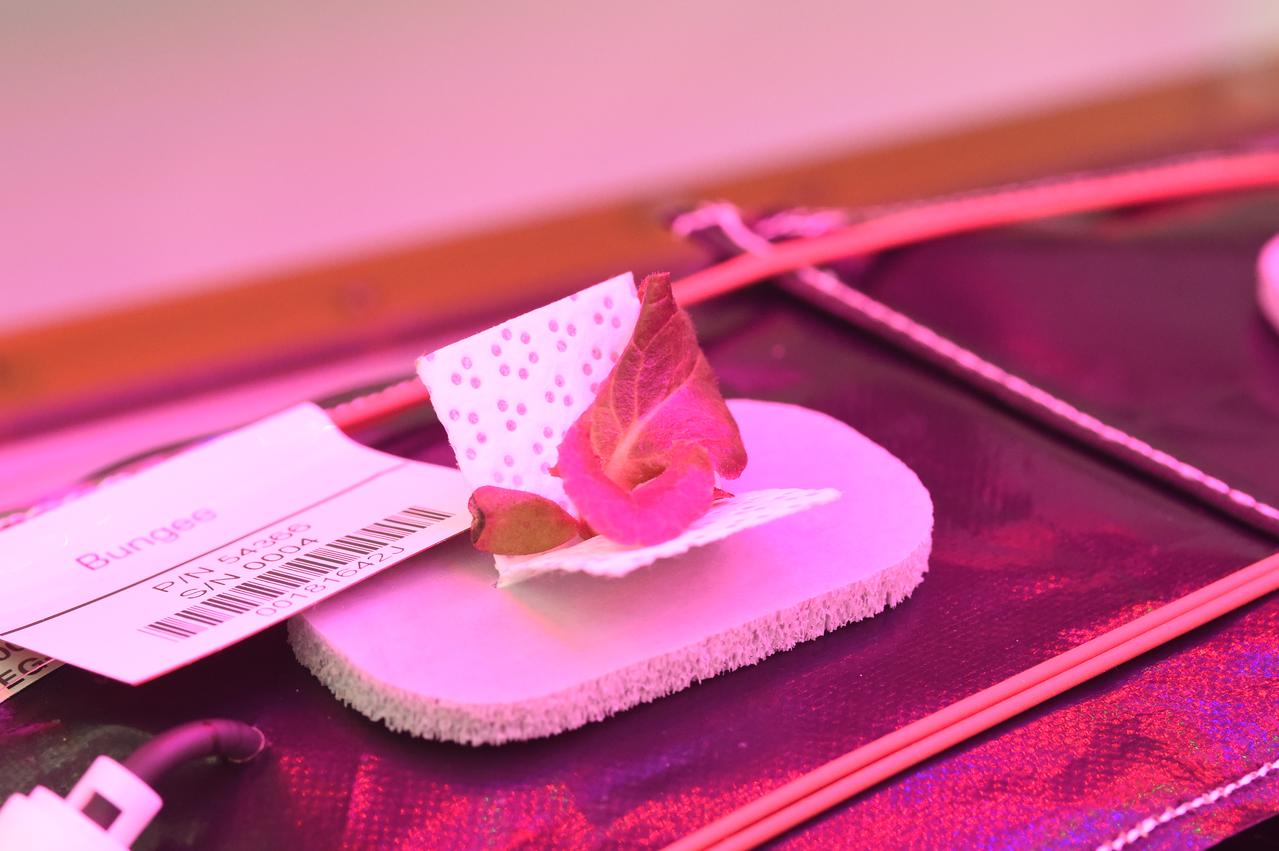
Astronaut Scott Kelly initiated VEG-01 B, the second crop of lettuce, on July, 8, 2015, and both Kelly and Astronaut Kjell Lindgren cared for the plants. The crop grew for 33 days. VEG-01 B included one set of six plant pillows planted with red romaine lettuce seeds. On Aug. 10, 2015, the crew harvested and consumed leaves from each plant. This was the first crop grown and consumed in NASA hardware. They harvested the rest of the plant tissue and froze it in the station’s Minus Eighty-Degree Laboratory Freezer for ISS (MELFI) for return to Earth for further study including microbial analysis, antioxidant capacity, mineral analysis and anthocyanin concentration.
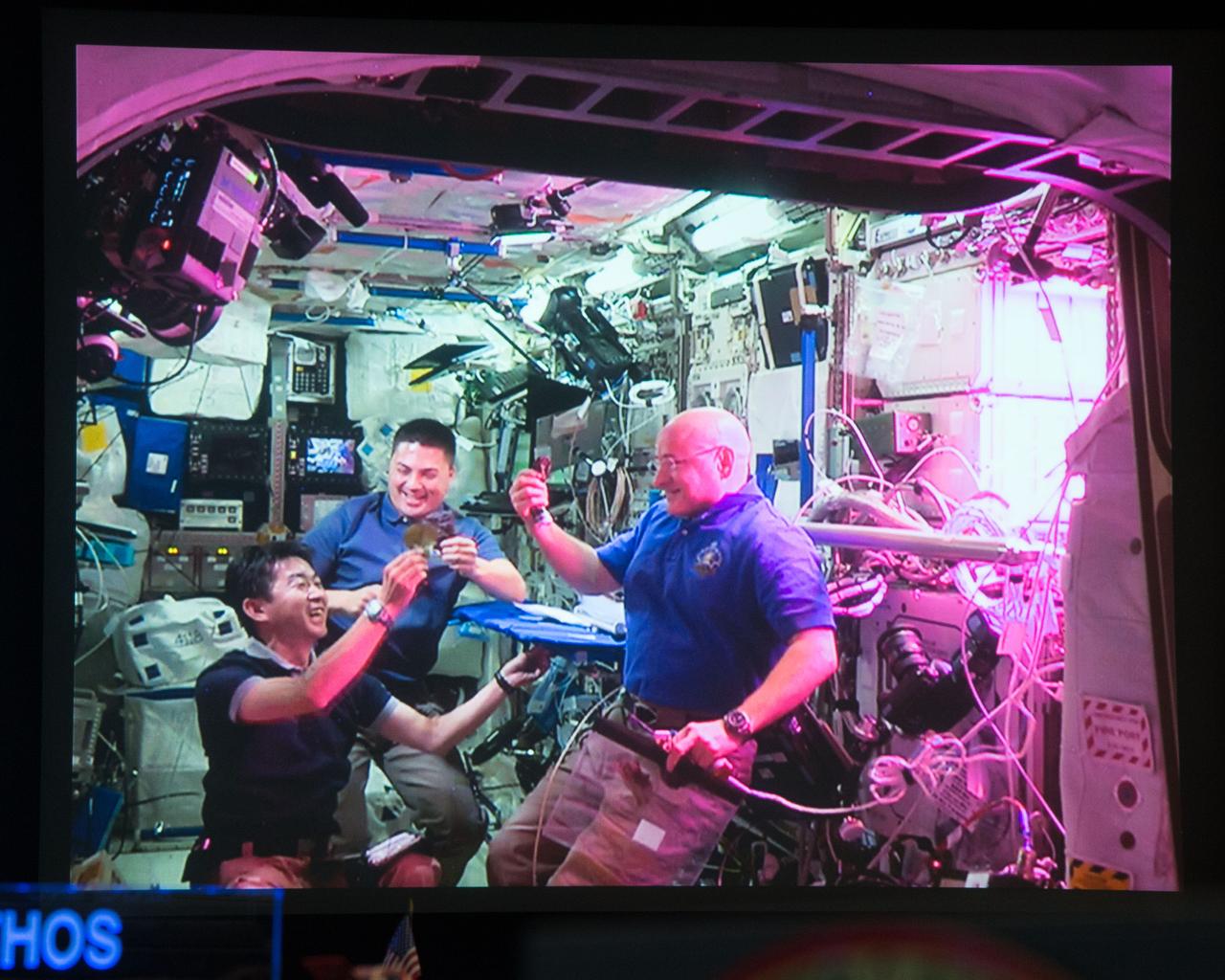
Astronaut Scott Kelly initiated VEG-01 B, the second crop of lettuce, on July, 8, 2015, and both Kelly and Astronaut Kjell Lindgren cared for the plants. The crop grew for 33 days. VEG-01 B included one set of six plant pillows planted with red romaine lettuce seeds. On Aug. 10, 2015, the crew harvested and consumed leaves from each plant. This was the first crop grown and consumed in NASA hardware. They harvested the rest of the plant tissue and froze it in the station’s Minus Eighty-Degree Laboratory Freezer for ISS (MELFI) for return to Earth for further study including microbial analysis, antioxidant capacity, mineral analysis and anthocyanin concentration.

Astronaut Scott Kelly initiated VEG-01 B, the second crop of lettuce, on July, 8, 2015, and both Kelly and Astronaut Kjell Lindgren cared for the plants. The crop grew for 33 days. VEG-01 B included one set of six plant pillows planted with red romaine lettuce seeds. On Aug. 10, 2015, the crew harvested and consumed leaves from each plant. This was the first crop grown and consumed in NASA hardware. They harvested the rest of the plant tissue and froze it in the station’s Minus Eighty-Degree Laboratory Freezer for ISS (MELFI) for return to Earth for further study including microbial analysis, antioxidant capacity, mineral analysis and anthocyanin concentration.

Astronaut Scott Kelly initiated VEG-01 B, the second crop of lettuce, on July, 8, 2015, and both Kelly and Astronaut Kjell Lindgren cared for the plants. The crop grew for 33 days. VEG-01 B included one set of six plant pillows planted with red romaine lettuce seeds. On Aug. 10, 2015, the crew harvested and consumed leaves from each plant. This was the first crop grown and consumed in NASA hardware. They harvested the rest of the plant tissue and froze it in the station’s Minus Eighty-Degree Laboratory Freezer for ISS (MELFI) for return to Earth for further study including microbial analysis, antioxidant capacity, mineral analysis and anthocyanin concentration.

Astronaut Scott Kelly initiated VEG-01 B, the second crop of lettuce, on July, 8, 2015, and both Kelly and Astronaut Kjell Lindgren cared for the plants. The crop grew for 33 days. VEG-01 B included one set of six plant pillows planted with red romaine lettuce seeds. On Aug. 10, 2015, the crew harvested and consumed leaves from each plant. This was the first crop grown and consumed in NASA hardware. They harvested the rest of the plant tissue and froze it in the station’s Minus Eighty-Degree Laboratory Freezer for ISS (MELFI) for return to Earth for further study including microbial analysis, antioxidant capacity, mineral analysis and anthocyanin concentration.

Astronaut Scott Kelly initiated VEG-01 B, the second crop of lettuce, on July, 8, 2015, and both Kelly and Astronaut Kjell Lindgren cared for the plants. The crop grew for 33 days. VEG-01 B included one set of six plant pillows planted with red romaine lettuce seeds. On Aug. 10, 2015, the crew harvested and consumed leaves from each plant. This was the first crop grown and consumed in NASA hardware. They harvested the rest of the plant tissue and froze it in the station’s Minus Eighty-Degree Laboratory Freezer for ISS (MELFI) for return to Earth for further study including microbial analysis, antioxidant capacity, mineral analysis and anthocyanin concentration.
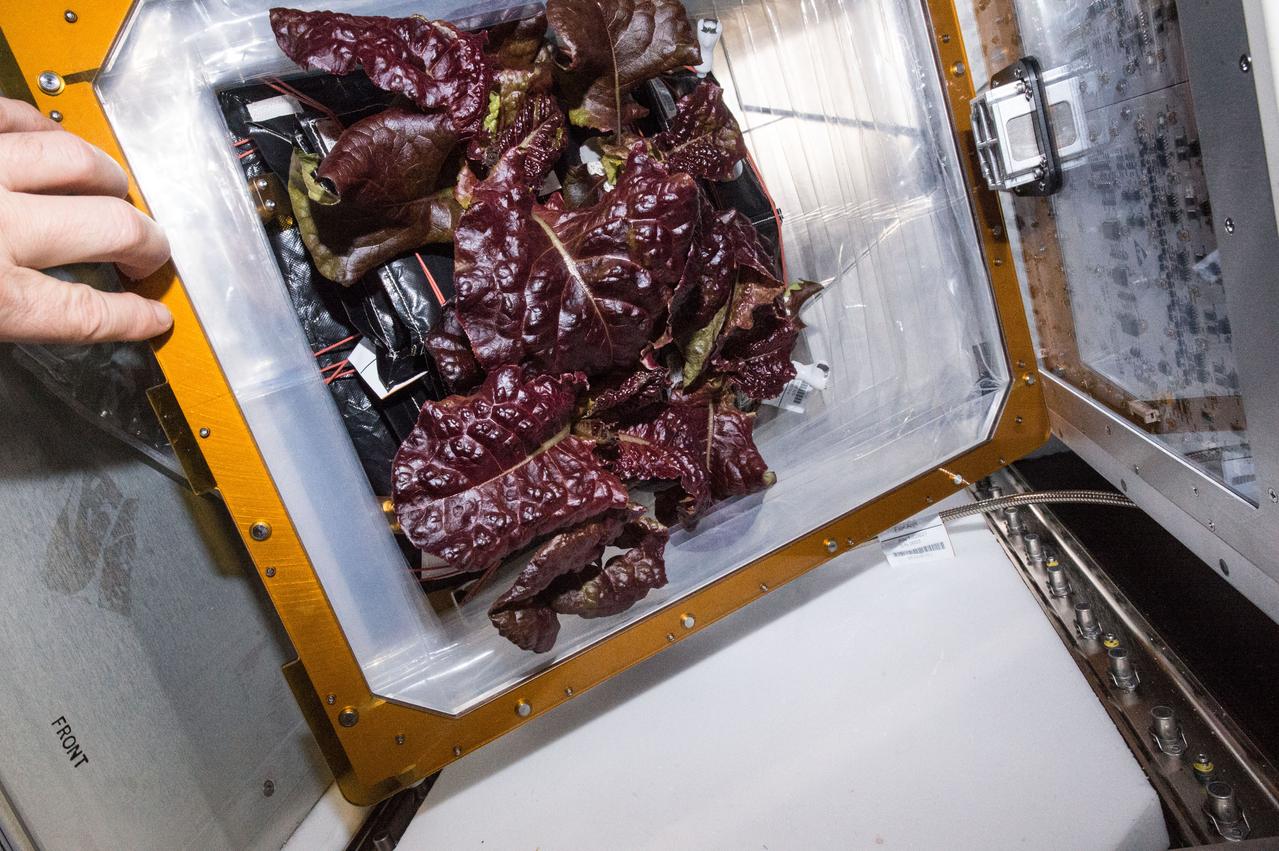
Astronaut Scott Kelly initiated VEG-01 B, the second crop of lettuce, on July, 8, 2015, and both Kelly and Astronaut Kjell Lindgren cared for the plants. The crop grew for 33 days. VEG-01 B included one set of six plant pillows planted with red romaine lettuce seeds. On Aug. 10, 2015, the crew harvested and consumed leaves from each plant. This was the first crop grown and consumed in NASA hardware. They harvested the rest of the plant tissue and froze it in the station’s Minus Eighty-Degree Laboratory Freezer for ISS (MELFI) for return to Earth for further study including microbial analysis, antioxidant capacity, mineral analysis and anthocyanin concentration.

Astronaut Scott Kelly initiated VEG-01 B, the second crop of lettuce, on July, 8, 2015, and both Kelly and Astronaut Kjell Lindgren cared for the plants. The crop grew for 33 days. VEG-01 B included one set of six plant pillows planted with red romaine lettuce seeds. On Aug. 10, 2015, the crew harvested and consumed leaves from each plant. This was the first crop grown and consumed in NASA hardware. They harvested the rest of the plant tissue and froze it in the station’s Minus Eighty-Degree Laboratory Freezer for ISS (MELFI) for return to Earth for further study including microbial analysis, antioxidant capacity, mineral analysis and anthocyanin concentration.
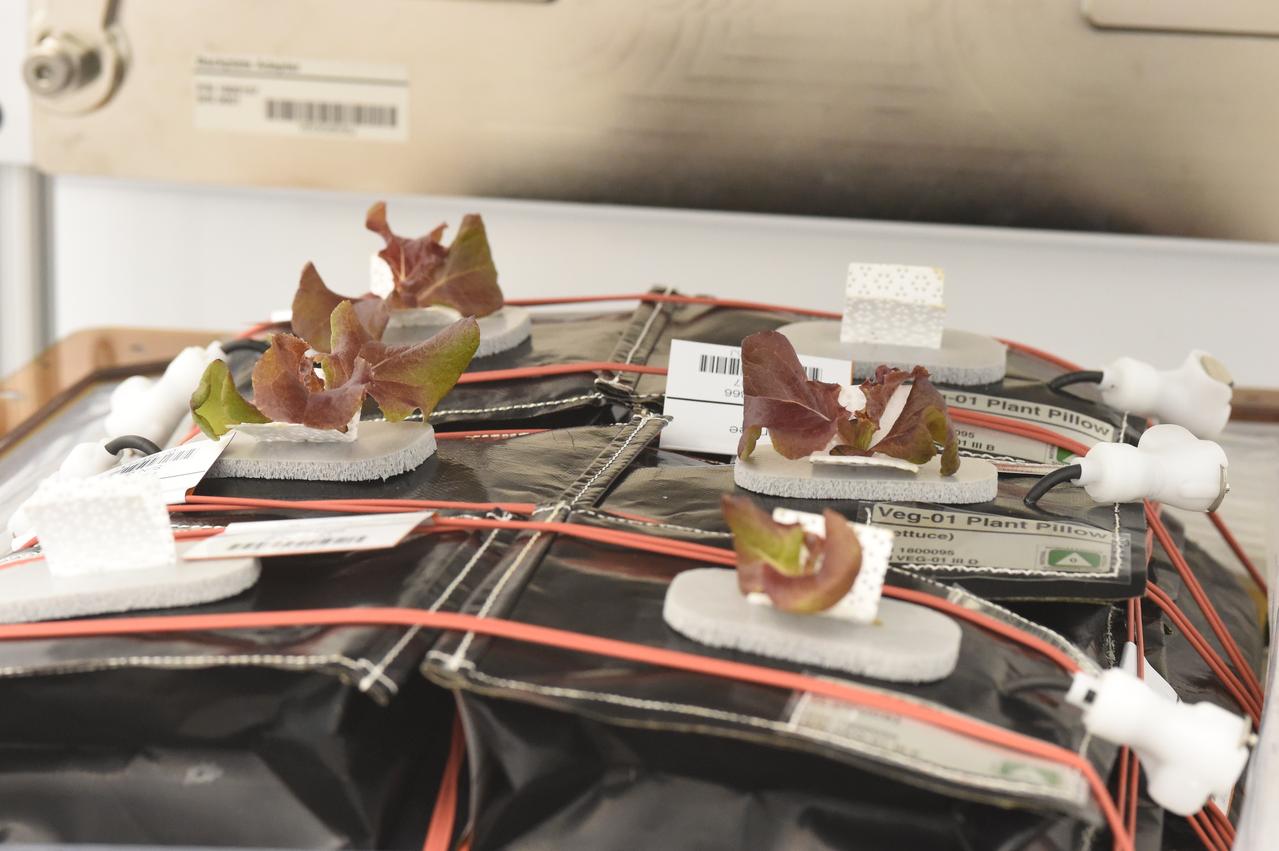
Astronaut Scott Kelly initiated VEG-01 B, the second crop of lettuce, on July, 8, 2015, and both Kelly and Astronaut Kjell Lindgren cared for the plants. The crop grew for 33 days. VEG-01 B included one set of six plant pillows planted with red romaine lettuce seeds. On Aug. 10, 2015, the crew harvested and consumed leaves from each plant. This was the first crop grown and consumed in NASA hardware. They harvested the rest of the plant tissue and froze it in the station’s Minus Eighty-Degree Laboratory Freezer for ISS (MELFI) for return to Earth for further study including microbial analysis, antioxidant capacity, mineral analysis and anthocyanin concentration.
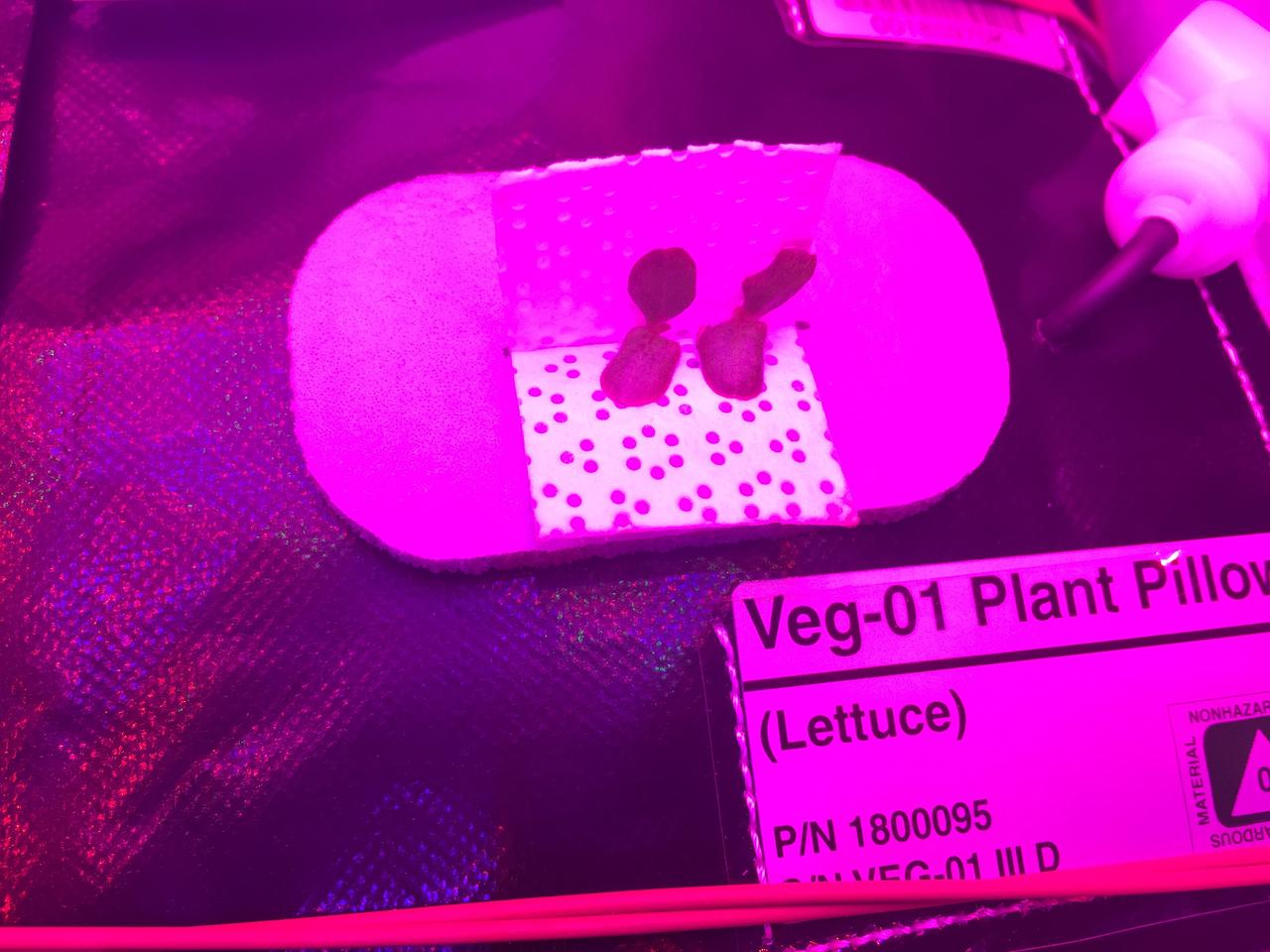
Astronaut Scott Kelly initiated VEG-01 B, the second crop of lettuce, on July, 8, 2015, and both Kelly and Astronaut Kjell Lindgren cared for the plants. The crop grew for 33 days. VEG-01 B included one set of six plant pillows planted with red romaine lettuce seeds. On Aug. 10, 2015, the crew harvested and consumed leaves from each plant. This was the first crop grown and consumed in NASA hardware. They harvested the rest of the plant tissue and froze it in the station’s Minus Eighty-Degree Laboratory Freezer for ISS (MELFI) for return to Earth for further study including microbial analysis, antioxidant capacity, mineral analysis and anthocyanin concentration.
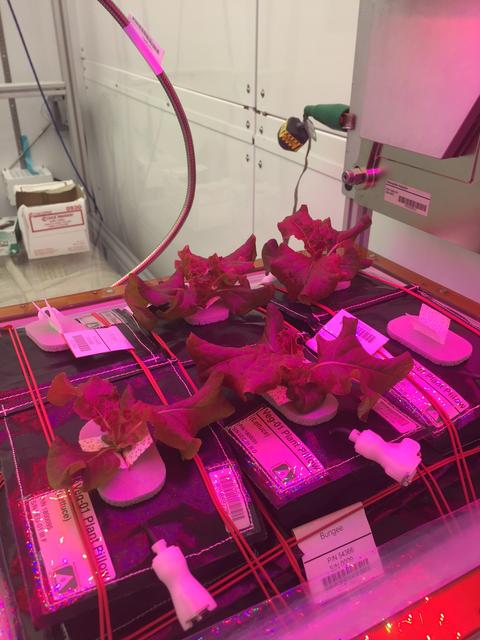
Astronaut Scott Kelly initiated VEG-01 B, the second crop of lettuce, on July, 8, 2015, and both Kelly and Astronaut Kjell Lindgren cared for the plants. The crop grew for 33 days. VEG-01 B included one set of six plant pillows planted with red romaine lettuce seeds. On Aug. 10, 2015, the crew harvested and consumed leaves from each plant. This was the first crop grown and consumed in NASA hardware. They harvested the rest of the plant tissue and froze it in the station’s Minus Eighty-Degree Laboratory Freezer for ISS (MELFI) for return to Earth for further study including microbial analysis, antioxidant capacity, mineral analysis and anthocyanin concentration.

Astronaut Scott Kelly initiated VEG-01 B, the second crop of lettuce, on July, 8, 2015, and both Kelly and Astronaut Kjell Lindgren cared for the plants. The crop grew for 33 days. VEG-01 B included one set of six plant pillows planted with red romaine lettuce seeds. On Aug. 10, 2015, the crew harvested and consumed leaves from each plant. This was the first crop grown and consumed in NASA hardware. They harvested the rest of the plant tissue and froze it in the station’s Minus Eighty-Degree Laboratory Freezer for ISS (MELFI) for return to Earth for further study including microbial analysis, antioxidant capacity, mineral analysis and anthocyanin concentration.
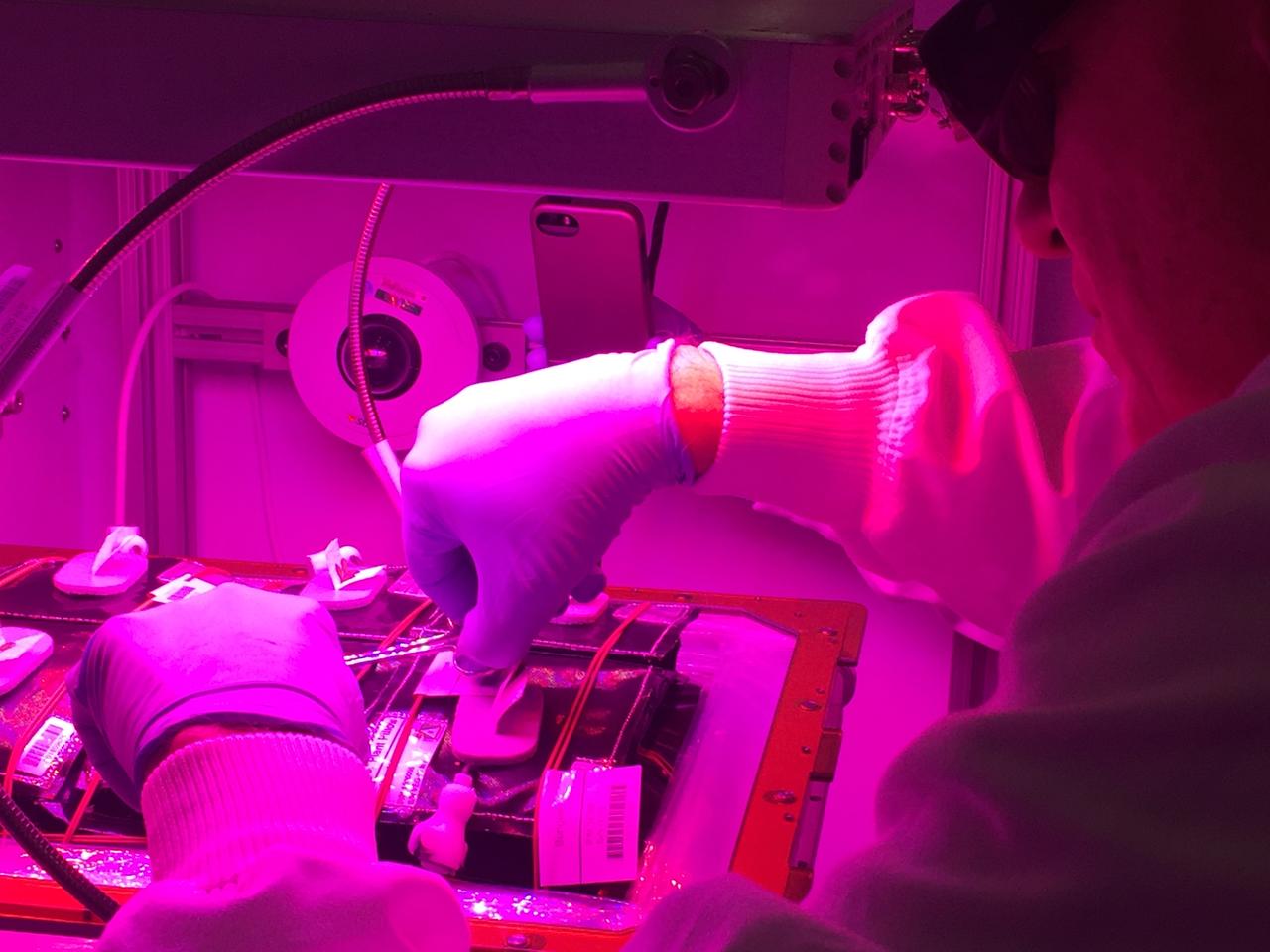
Astronaut Scott Kelly initiated VEG-01 B, the second crop of lettuce, on July, 8, 2015, and both Kelly and Astronaut Kjell Lindgren cared for the plants. The crop grew for 33 days. VEG-01 B included one set of six plant pillows planted with red romaine lettuce seeds. On Aug. 10, 2015, the crew harvested and consumed leaves from each plant. This was the first crop grown and consumed in NASA hardware. They harvested the rest of the plant tissue and froze it in the station’s Minus Eighty-Degree Laboratory Freezer for ISS (MELFI) for return to Earth for further study including microbial analysis, antioxidant capacity, mineral analysis and anthocyanin concentration.

Astronaut Scott Kelly initiated VEG-01 B, the second crop of lettuce, on July, 8, 2015, and both Kelly and Astronaut Kjell Lindgren cared for the plants. The crop grew for 33 days. VEG-01 B included one set of six plant pillows planted with red romaine lettuce seeds. On Aug. 10, 2015, the crew harvested and consumed leaves from each plant. This was the first crop grown and consumed in NASA hardware. They harvested the rest of the plant tissue and froze it in the station’s Minus Eighty-Degree Laboratory Freezer for ISS (MELFI) for return to Earth for further study including microbial analysis, antioxidant capacity, mineral analysis and anthocyanin concentration.

Astronaut Scott Kelly initiated VEG-01 B, the second crop of lettuce, on July, 8, 2015, and both Kelly and Astronaut Kjell Lindgren cared for the plants. The crop grew for 33 days. VEG-01 B included one set of six plant pillows planted with red romaine lettuce seeds. On Aug. 10, 2015, the crew harvested and consumed leaves from each plant. This was the first crop grown and consumed in NASA hardware. They harvested the rest of the plant tissue and froze it in the station’s Minus Eighty-Degree Laboratory Freezer for ISS (MELFI) for return to Earth for further study including microbial analysis, antioxidant capacity, mineral analysis and anthocyanin concentration.
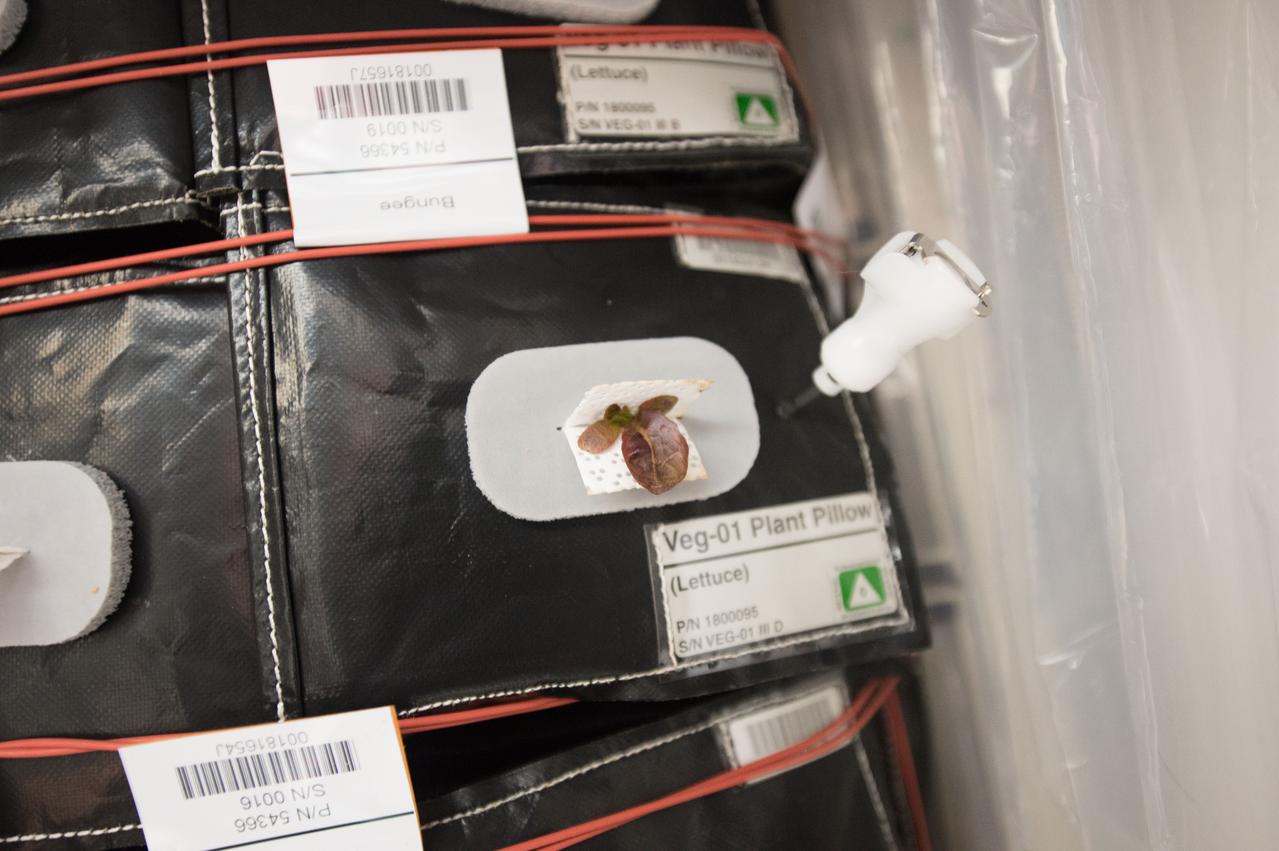
Astronaut Scott Kelly initiated VEG-01 B, the second crop of lettuce, on July, 8, 2015, and both Kelly and Astronaut Kjell Lindgren cared for the plants. The crop grew for 33 days. VEG-01 B included one set of six plant pillows planted with red romaine lettuce seeds. On Aug. 10, 2015, the crew harvested and consumed leaves from each plant. This was the first crop grown and consumed in NASA hardware. They harvested the rest of the plant tissue and froze it in the station’s Minus Eighty-Degree Laboratory Freezer for ISS (MELFI) for return to Earth for further study including microbial analysis, antioxidant capacity, mineral analysis and anthocyanin concentration.

Astronaut Scott Kelly initiated VEG-01 B, the second crop of lettuce, on July, 8, 2015, and both Kelly and Astronaut Kjell Lindgren cared for the plants. The crop grew for 33 days. VEG-01 B included one set of six plant pillows planted with red romaine lettuce seeds. On Aug. 10, 2015, the crew harvested and consumed leaves from each plant. This was the first crop grown and consumed in NASA hardware. They harvested the rest of the plant tissue and froze it in the station’s Minus Eighty-Degree Laboratory Freezer for ISS (MELFI) for return to Earth for further study including microbial analysis, antioxidant capacity, mineral analysis and anthocyanin concentration.
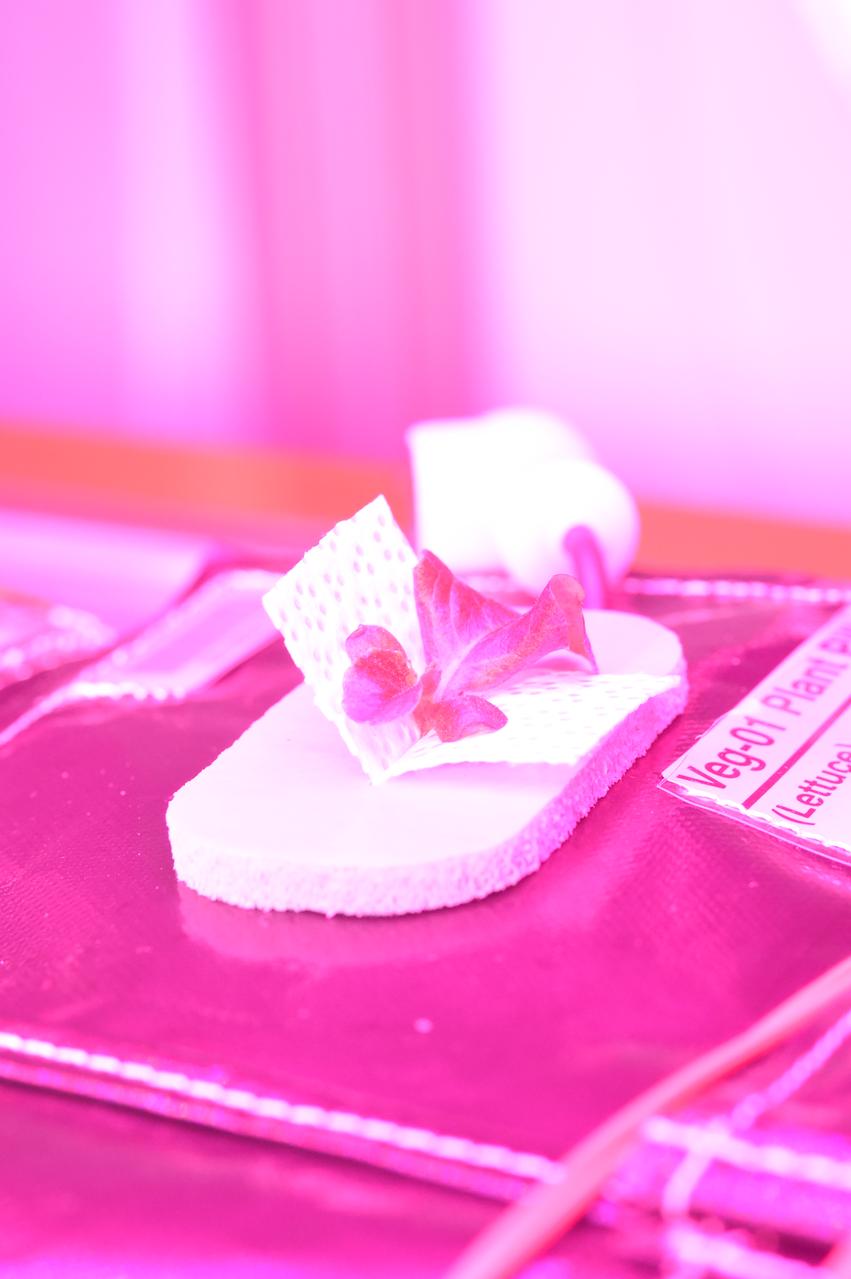
Astronaut Scott Kelly initiated VEG-01 B, the second crop of lettuce, on July, 8, 2015, and both Kelly and Astronaut Kjell Lindgren cared for the plants. The crop grew for 33 days. VEG-01 B included one set of six plant pillows planted with red romaine lettuce seeds. On Aug. 10, 2015, the crew harvested and consumed leaves from each plant. This was the first crop grown and consumed in NASA hardware. They harvested the rest of the plant tissue and froze it in the station’s Minus Eighty-Degree Laboratory Freezer for ISS (MELFI) for return to Earth for further study including microbial analysis, antioxidant capacity, mineral analysis and anthocyanin concentration.
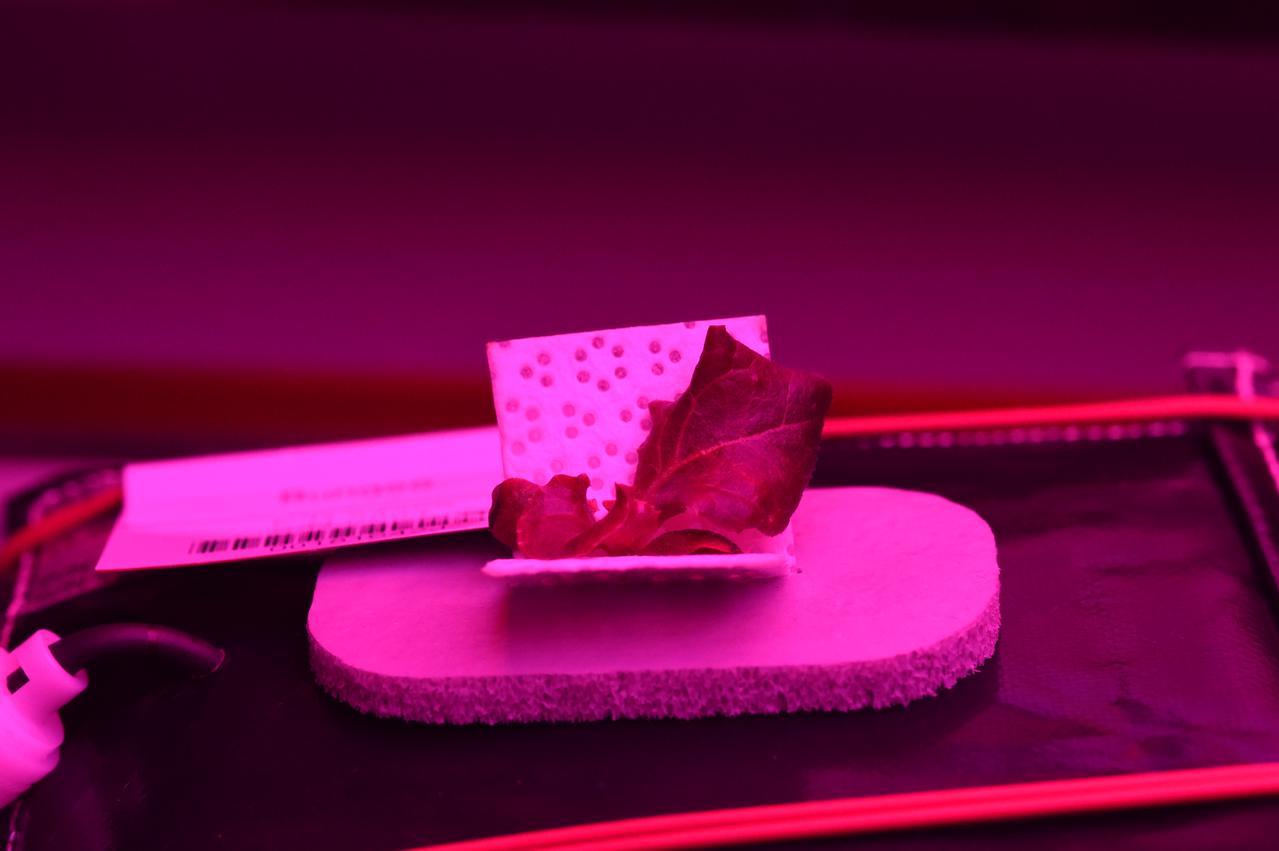
Astronaut Scott Kelly initiated VEG-01 B, the second crop of lettuce, on July, 8, 2015, and both Kelly and Astronaut Kjell Lindgren cared for the plants. The crop grew for 33 days. VEG-01 B included one set of six plant pillows planted with red romaine lettuce seeds. On Aug. 10, 2015, the crew harvested and consumed leaves from each plant. This was the first crop grown and consumed in NASA hardware. They harvested the rest of the plant tissue and froze it in the station’s Minus Eighty-Degree Laboratory Freezer for ISS (MELFI) for return to Earth for further study including microbial analysis, antioxidant capacity, mineral analysis and anthocyanin concentration.
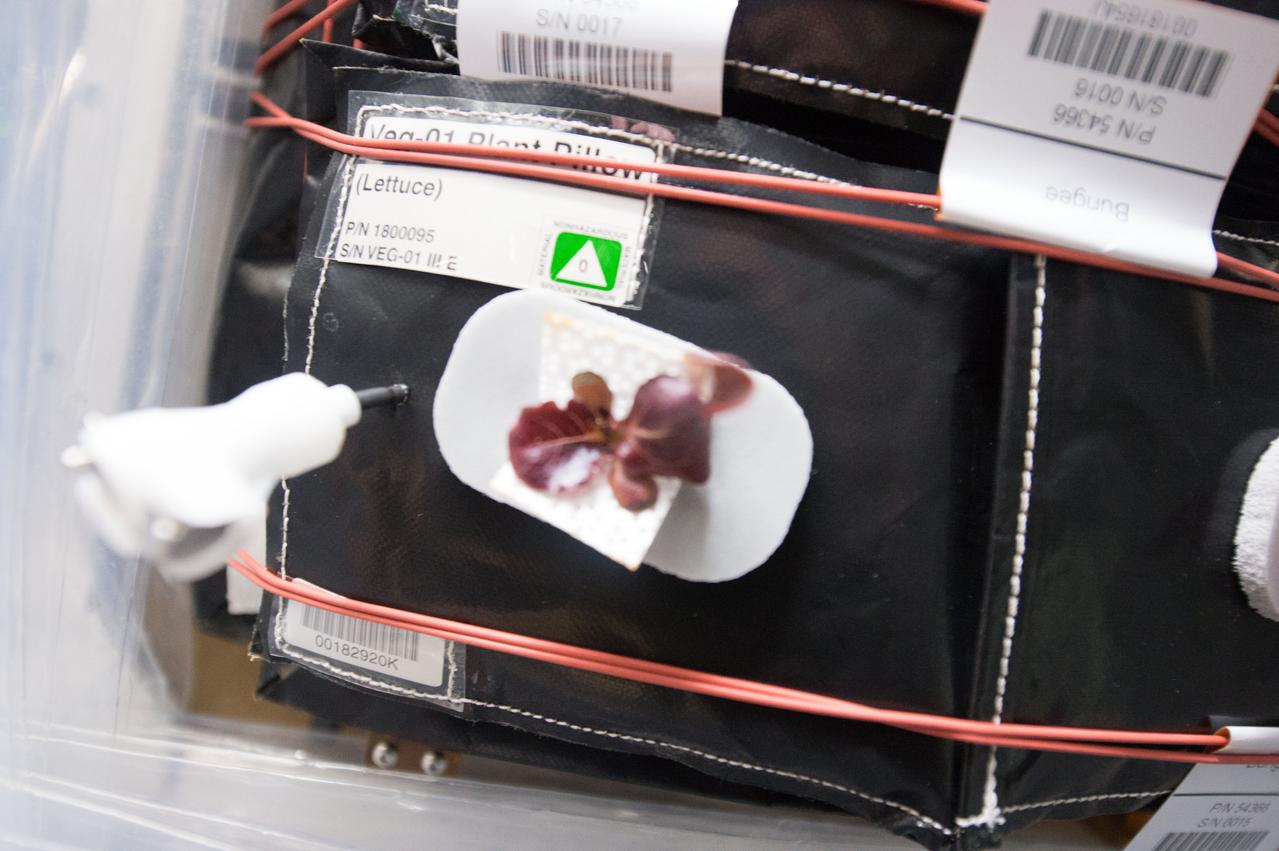
Astronaut Scott Kelly initiated VEG-01 B, the second crop of lettuce, on July, 8, 2015, and both Kelly and Astronaut Kjell Lindgren cared for the plants. The crop grew for 33 days. VEG-01 B included one set of six plant pillows planted with red romaine lettuce seeds. On Aug. 10, 2015, the crew harvested and consumed leaves from each plant. This was the first crop grown and consumed in NASA hardware. They harvested the rest of the plant tissue and froze it in the station’s Minus Eighty-Degree Laboratory Freezer for ISS (MELFI) for return to Earth for further study including microbial analysis, antioxidant capacity, mineral analysis and anthocyanin concentration.

Astronaut Scott Kelly initiated VEG-01 B, the second crop of lettuce, on July, 8, 2015, and both Kelly and Astronaut Kjell Lindgren cared for the plants. The crop grew for 33 days. VEG-01 B included one set of six plant pillows planted with red romaine lettuce seeds. On Aug. 10, 2015, the crew harvested and consumed leaves from each plant. This was the first crop grown and consumed in NASA hardware. They harvested the rest of the plant tissue and froze it in the station’s Minus Eighty-Degree Laboratory Freezer for ISS (MELFI) for return to Earth for further study including microbial analysis, antioxidant capacity, mineral analysis and anthocyanin concentration.

Astronaut Scott Kelly initiated VEG-01 B, the second crop of lettuce, on July, 8, 2015, and both Kelly and Astronaut Kjell Lindgren cared for the plants. The crop grew for 33 days. VEG-01 B included one set of six plant pillows planted with red romaine lettuce seeds. On Aug. 10, 2015, the crew harvested and consumed leaves from each plant. This was the first crop grown and consumed in NASA hardware. They harvested the rest of the plant tissue and froze it in the station’s Minus Eighty-Degree Laboratory Freezer for ISS (MELFI) for return to Earth for further study including microbial analysis, antioxidant capacity, mineral analysis and anthocyanin concentration.

Astronaut Scott Kelly initiated VEG-01 B, the second crop of lettuce, on July, 8, 2015, and both Kelly and Astronaut Kjell Lindgren cared for the plants. The crop grew for 33 days. VEG-01 B included one set of six plant pillows planted with red romaine lettuce seeds. On Aug. 10, 2015, the crew harvested and consumed leaves from each plant. This was the first crop grown and consumed in NASA hardware. They harvested the rest of the plant tissue and froze it in the station’s Minus Eighty-Degree Laboratory Freezer for ISS (MELFI) for return to Earth for further study including microbial analysis, antioxidant capacity, mineral analysis and anthocyanin concentration.

Astronaut Scott Kelly initiated VEG-01 B, the second crop of lettuce, on July, 8, 2015, and both Kelly and Astronaut Kjell Lindgren cared for the plants. The crop grew for 33 days. VEG-01 B included one set of six plant pillows planted with red romaine lettuce seeds. On Aug. 10, 2015, the crew harvested and consumed leaves from each plant. This was the first crop grown and consumed in NASA hardware. They harvested the rest of the plant tissue and froze it in the station’s Minus Eighty-Degree Laboratory Freezer for ISS (MELFI) for return to Earth for further study including microbial analysis, antioxidant capacity, mineral analysis and anthocyanin concentration.

Astronaut Scott Kelly initiated VEG-01 B, the second crop of lettuce, on July, 8, 2015, and both Kelly and Astronaut Kjell Lindgren cared for the plants. The crop grew for 33 days. VEG-01 B included one set of six plant pillows planted with red romaine lettuce seeds. On Aug. 10, 2015, the crew harvested and consumed leaves from each plant. This was the first crop grown and consumed in NASA hardware. They harvested the rest of the plant tissue and froze it in the station’s Minus Eighty-Degree Laboratory Freezer for ISS (MELFI) for return to Earth for further study including microbial analysis, antioxidant capacity, mineral analysis and anthocyanin concentration.

Astronaut Scott Kelly initiated VEG-01 B, the second crop of lettuce, on July, 8, 2015, and both Kelly and Astronaut Kjell Lindgren cared for the plants. The crop grew for 33 days. VEG-01 B included one set of six plant pillows planted with red romaine lettuce seeds. On Aug. 10, 2015, the crew harvested and consumed leaves from each plant. This was the first crop grown and consumed in NASA hardware. They harvested the rest of the plant tissue and froze it in the station’s Minus Eighty-Degree Laboratory Freezer for ISS (MELFI) for return to Earth for further study including microbial analysis, antioxidant capacity, mineral analysis and anthocyanin concentration.
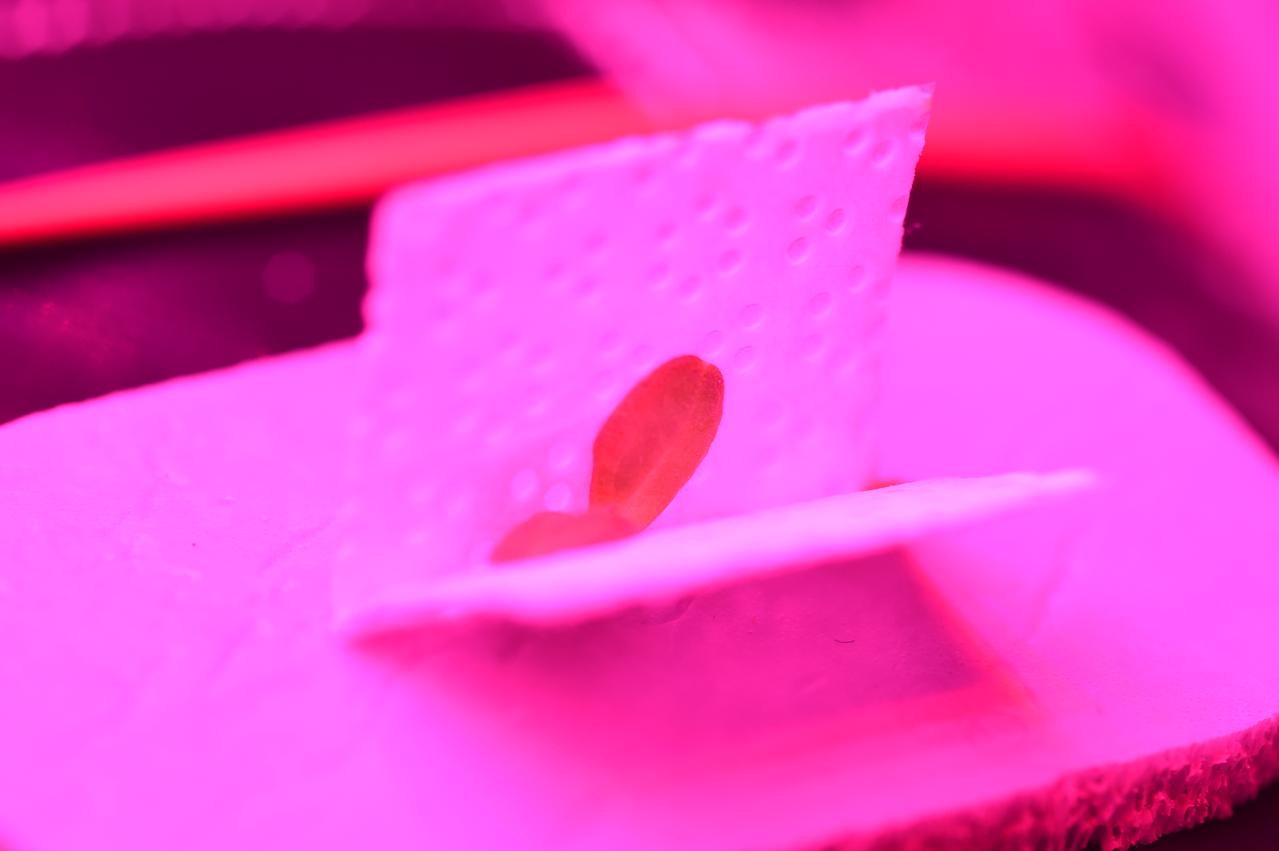
Astronaut Scott Kelly initiated VEG-01 B, the second crop of lettuce, on July, 8, 2015, and both Kelly and Astronaut Kjell Lindgren cared for the plants. The crop grew for 33 days. VEG-01 B included one set of six plant pillows planted with red romaine lettuce seeds. On Aug. 10, 2015, the crew harvested and consumed leaves from each plant. This was the first crop grown and consumed in NASA hardware. They harvested the rest of the plant tissue and froze it in the station’s Minus Eighty-Degree Laboratory Freezer for ISS (MELFI) for return to Earth for further study including microbial analysis, antioxidant capacity, mineral analysis and anthocyanin concentration.

Astronaut Scott Kelly initiated VEG-01 B, the second crop of lettuce, on July, 8, 2015, and both Kelly and Astronaut Kjell Lindgren cared for the plants. The crop grew for 33 days. VEG-01 B included one set of six plant pillows planted with red romaine lettuce seeds. On Aug. 10, 2015, the crew harvested and consumed leaves from each plant. This was the first crop grown and consumed in NASA hardware. They harvested the rest of the plant tissue and froze it in the station’s Minus Eighty-Degree Laboratory Freezer for ISS (MELFI) for return to Earth for further study including microbial analysis, antioxidant capacity, mineral analysis and anthocyanin concentration.
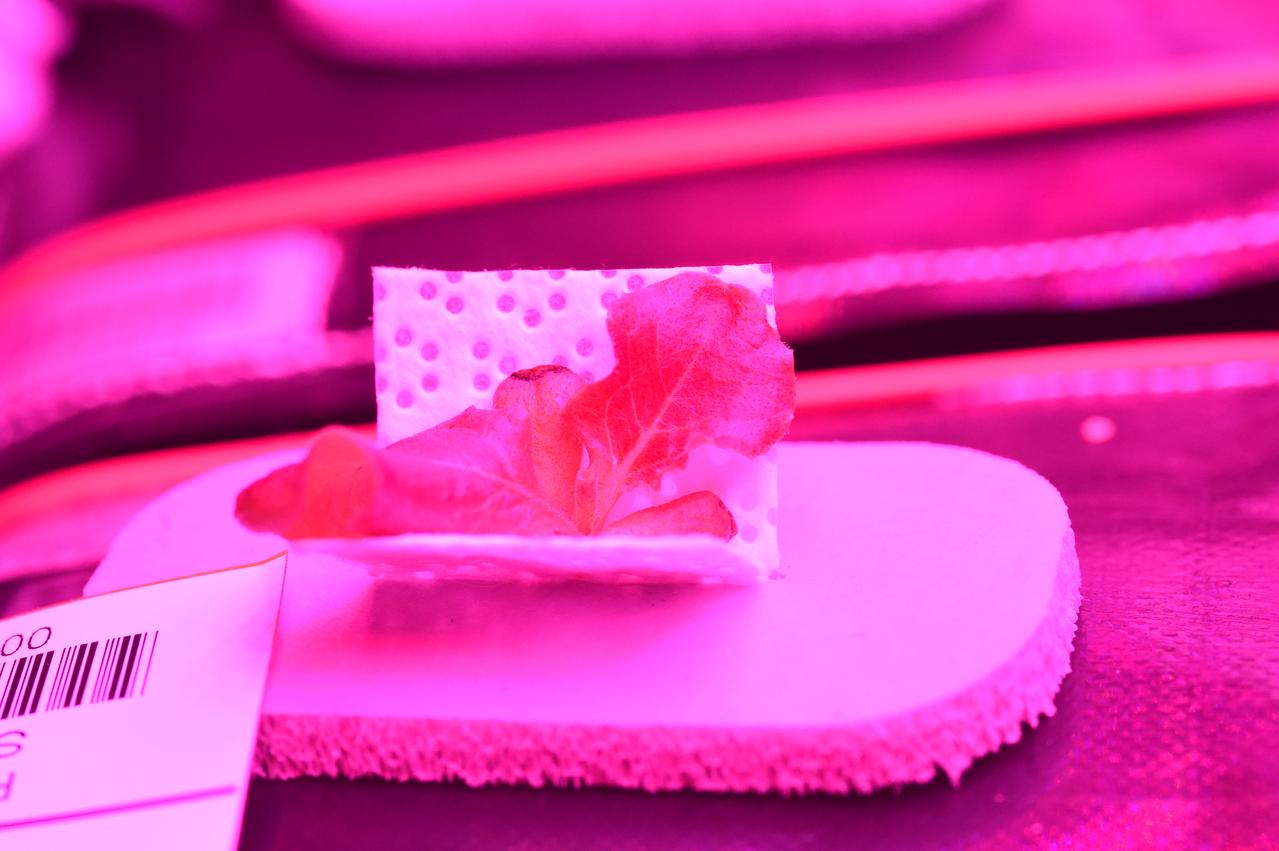
Astronaut Scott Kelly initiated VEG-01 B, the second crop of lettuce, on July, 8, 2015, and both Kelly and Astronaut Kjell Lindgren cared for the plants. The crop grew for 33 days. VEG-01 B included one set of six plant pillows planted with red romaine lettuce seeds. On Aug. 10, 2015, the crew harvested and consumed leaves from each plant. This was the first crop grown and consumed in NASA hardware. They harvested the rest of the plant tissue and froze it in the station’s Minus Eighty-Degree Laboratory Freezer for ISS (MELFI) for return to Earth for further study including microbial analysis, antioxidant capacity, mineral analysis and anthocyanin concentration.

Astronaut Scott Kelly initiated VEG-01 B, the second crop of lettuce, on July, 8, 2015, and both Kelly and Astronaut Kjell Lindgren cared for the plants. The crop grew for 33 days. VEG-01 B included one set of six plant pillows planted with red romaine lettuce seeds. On Aug. 10, 2015, the crew harvested and consumed leaves from each plant. This was the first crop grown and consumed in NASA hardware. They harvested the rest of the plant tissue and froze it in the station’s Minus Eighty-Degree Laboratory Freezer for ISS (MELFI) for return to Earth for further study including microbial analysis, antioxidant capacity, mineral analysis and anthocyanin concentration.
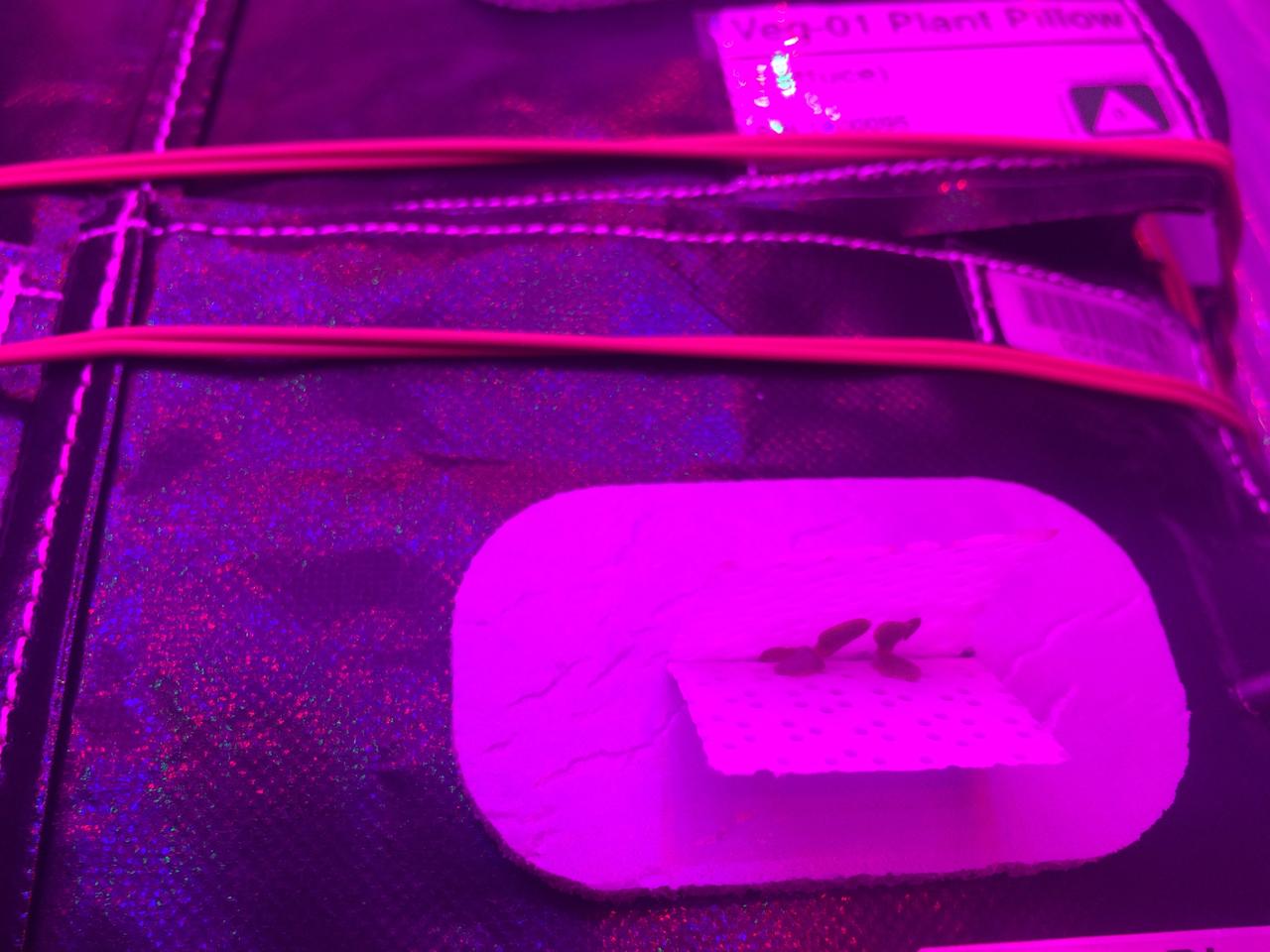
Astronaut Scott Kelly initiated VEG-01 B, the second crop of lettuce, on July, 8, 2015, and both Kelly and Astronaut Kjell Lindgren cared for the plants. The crop grew for 33 days. VEG-01 B included one set of six plant pillows planted with red romaine lettuce seeds. On Aug. 10, 2015, the crew harvested and consumed leaves from each plant. This was the first crop grown and consumed in NASA hardware. They harvested the rest of the plant tissue and froze it in the station’s Minus Eighty-Degree Laboratory Freezer for ISS (MELFI) for return to Earth for further study including microbial analysis, antioxidant capacity, mineral analysis and anthocyanin concentration.
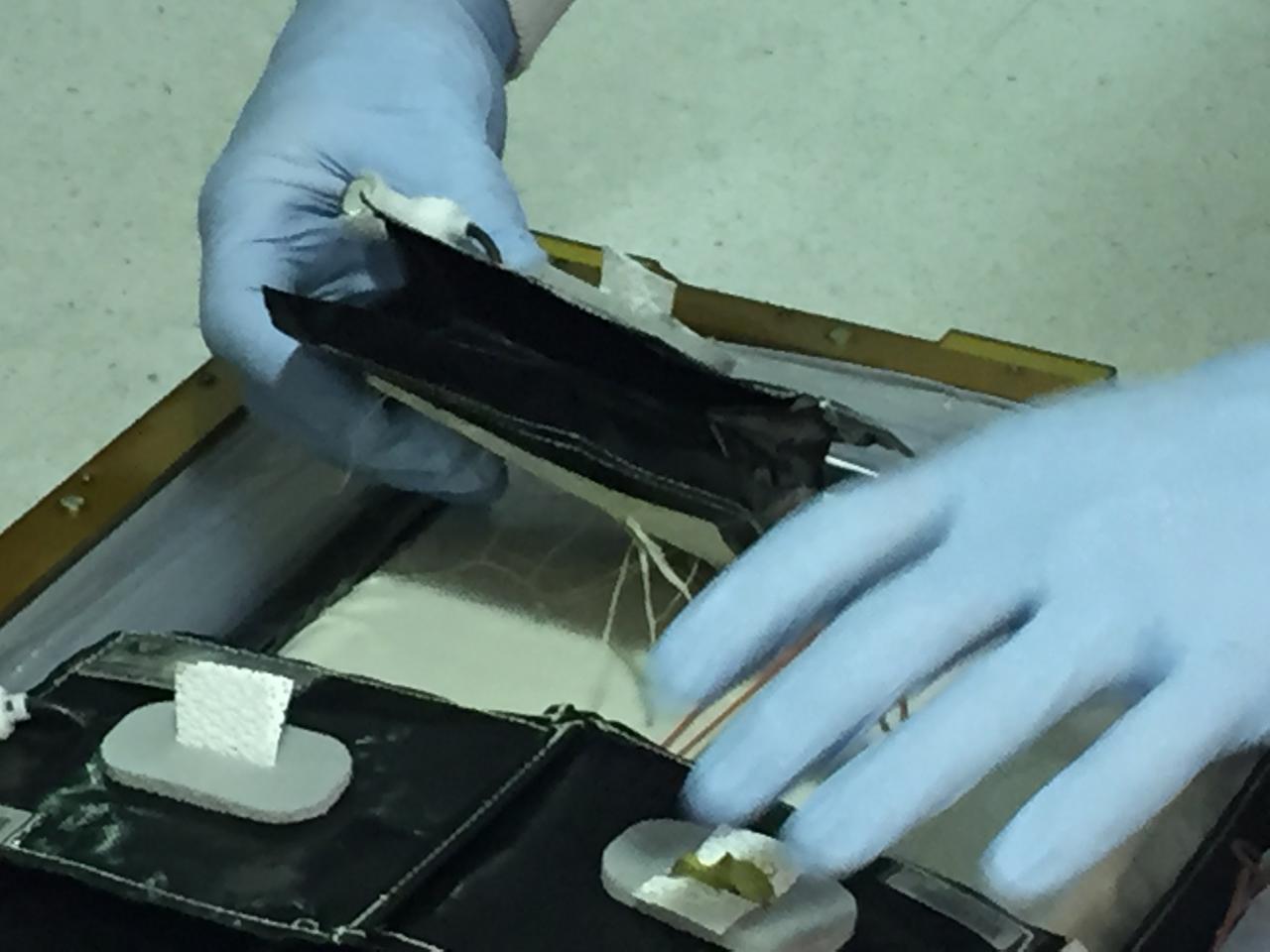
Astronaut Scott Kelly initiated VEG-01 B, the second crop of lettuce, on July, 8, 2015, and both Kelly and Astronaut Kjell Lindgren cared for the plants. The crop grew for 33 days. VEG-01 B included one set of six plant pillows planted with red romaine lettuce seeds. On Aug. 10, 2015, the crew harvested and consumed leaves from each plant. This was the first crop grown and consumed in NASA hardware. They harvested the rest of the plant tissue and froze it in the station’s Minus Eighty-Degree Laboratory Freezer for ISS (MELFI) for return to Earth for further study including microbial analysis, antioxidant capacity, mineral analysis and anthocyanin concentration.

Astronaut Scott Kelly initiated VEG-01 B, the second crop of lettuce, on July, 8, 2015, and both Kelly and Astronaut Kjell Lindgren cared for the plants. The crop grew for 33 days. VEG-01 B included one set of six plant pillows planted with red romaine lettuce seeds. On Aug. 10, 2015, the crew harvested and consumed leaves from each plant. This was the first crop grown and consumed in NASA hardware. They harvested the rest of the plant tissue and froze it in the station’s Minus Eighty-Degree Laboratory Freezer for ISS (MELFI) for return to Earth for further study including microbial analysis, antioxidant capacity, mineral analysis and anthocyanin concentration.
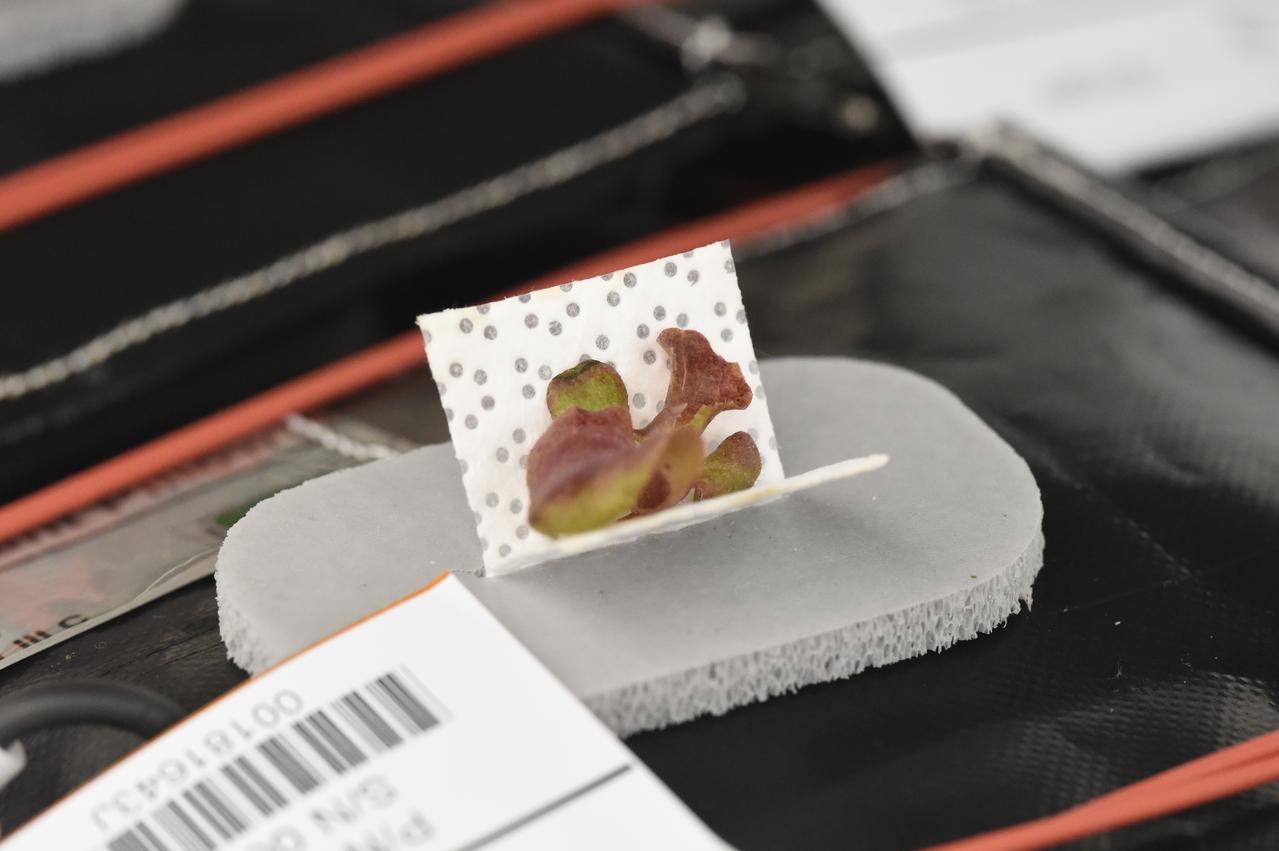
Astronaut Scott Kelly initiated VEG-01 B, the second crop of lettuce, on July, 8, 2015, and both Kelly and Astronaut Kjell Lindgren cared for the plants. The crop grew for 33 days. VEG-01 B included one set of six plant pillows planted with red romaine lettuce seeds. On Aug. 10, 2015, the crew harvested and consumed leaves from each plant. This was the first crop grown and consumed in NASA hardware. They harvested the rest of the plant tissue and froze it in the station’s Minus Eighty-Degree Laboratory Freezer for ISS (MELFI) for return to Earth for further study including microbial analysis, antioxidant capacity, mineral analysis and anthocyanin concentration.
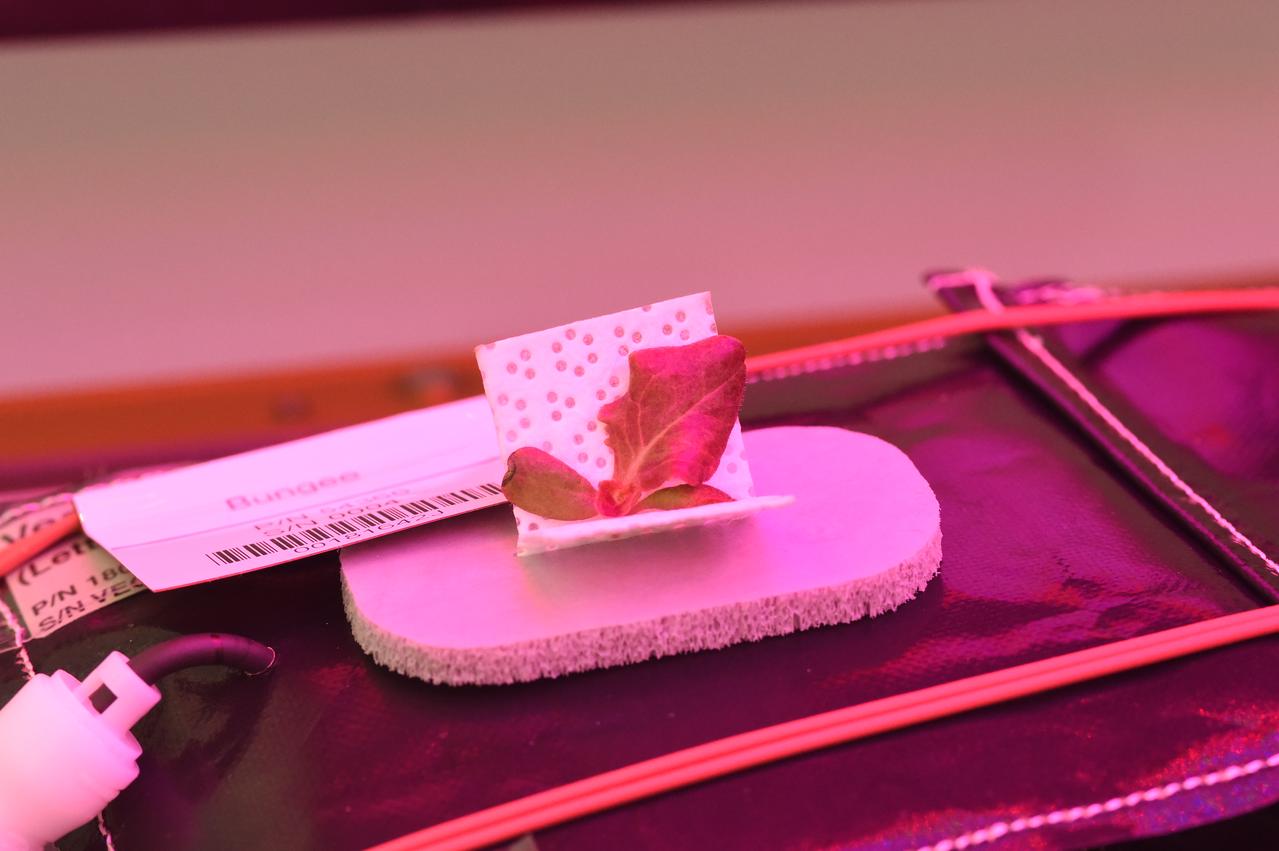
Astronaut Scott Kelly initiated VEG-01 B, the second crop of lettuce, on July, 8, 2015, and both Kelly and Astronaut Kjell Lindgren cared for the plants. The crop grew for 33 days. VEG-01 B included one set of six plant pillows planted with red romaine lettuce seeds. On Aug. 10, 2015, the crew harvested and consumed leaves from each plant. This was the first crop grown and consumed in NASA hardware. They harvested the rest of the plant tissue and froze it in the station’s Minus Eighty-Degree Laboratory Freezer for ISS (MELFI) for return to Earth for further study including microbial analysis, antioxidant capacity, mineral analysis and anthocyanin concentration.
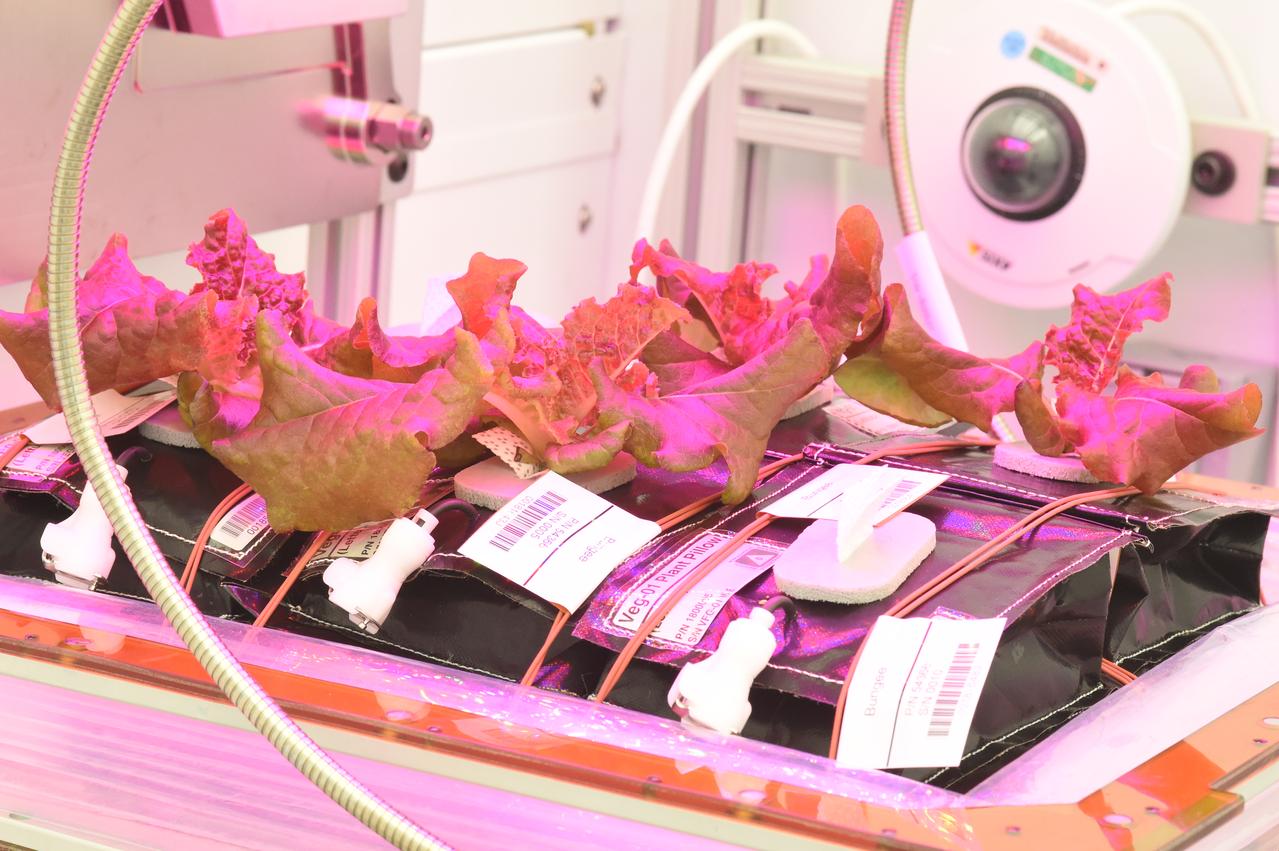
Astronaut Scott Kelly initiated VEG-01 B, the second crop of lettuce, on July, 8, 2015, and both Kelly and Astronaut Kjell Lindgren cared for the plants. The crop grew for 33 days. VEG-01 B included one set of six plant pillows planted with red romaine lettuce seeds. On Aug. 10, 2015, the crew harvested and consumed leaves from each plant. This was the first crop grown and consumed in NASA hardware. They harvested the rest of the plant tissue and froze it in the station’s Minus Eighty-Degree Laboratory Freezer for ISS (MELFI) for return to Earth for further study including microbial analysis, antioxidant capacity, mineral analysis and anthocyanin concentration.
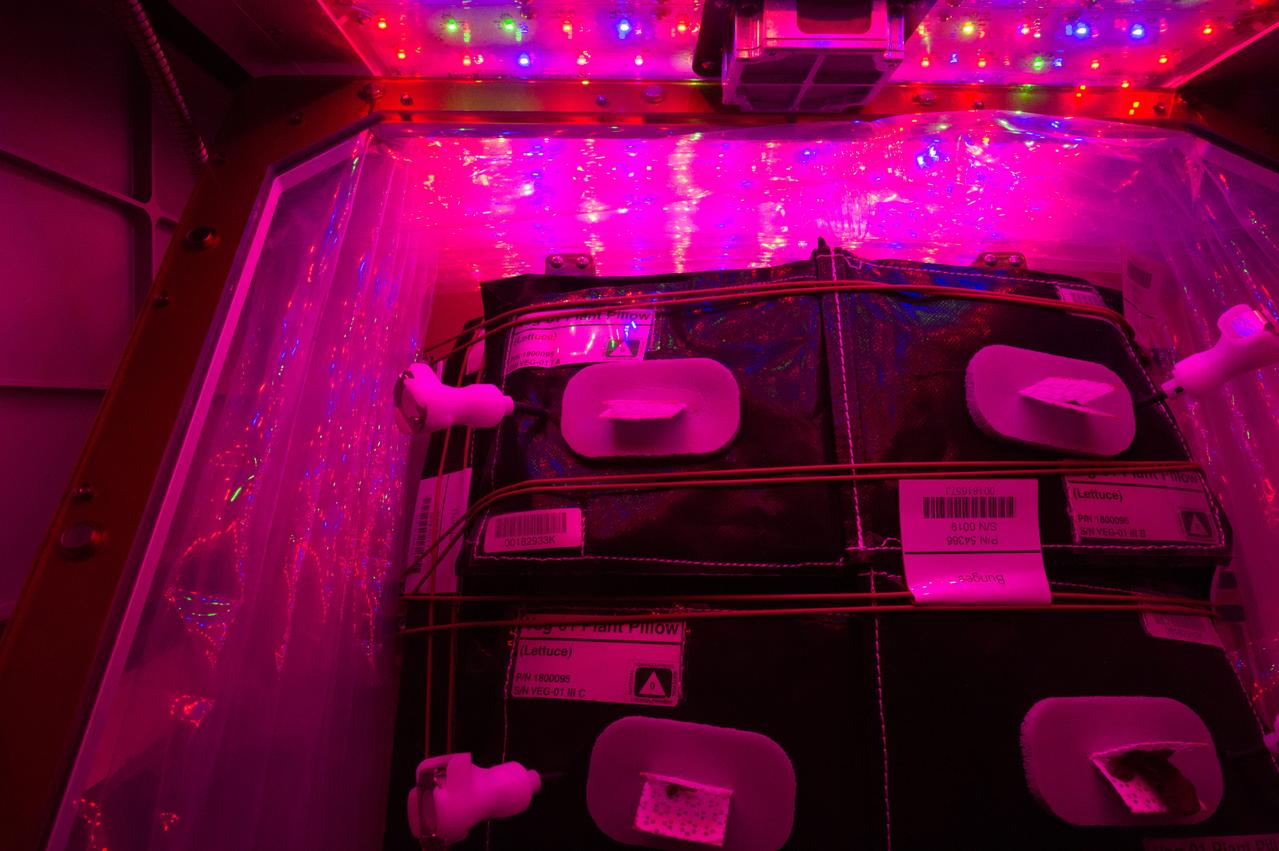
Astronaut Scott Kelly initiated VEG-01 B, the second crop of lettuce, on July, 8, 2015, and both Kelly and Astronaut Kjell Lindgren cared for the plants. The crop grew for 33 days. VEG-01 B included one set of six plant pillows planted with red romaine lettuce seeds. On Aug. 10, 2015, the crew harvested and consumed leaves from each plant. This was the first crop grown and consumed in NASA hardware. They harvested the rest of the plant tissue and froze it in the station’s Minus Eighty-Degree Laboratory Freezer for ISS (MELFI) for return to Earth for further study including microbial analysis, antioxidant capacity, mineral analysis and anthocyanin concentration.
Astronaut Scott Kelly initiated VEG-01 B, the second crop of lettuce, on July, 8, 2015, and both Kelly and Astronaut Kjell Lindgren cared for the plants. The crop grew for 33 days. VEG-01 B included one set of six plant pillows planted with red romaine lettuce seeds. On Aug. 10, 2015, the crew harvested and consumed leaves from each plant. This was the first crop grown and consumed in NASA hardware. They harvested the rest of the plant tissue and froze it in the station’s Minus Eighty-Degree Laboratory Freezer for ISS (MELFI) for return to Earth for further study including microbial analysis, antioxidant capacity, mineral analysis and anthocyanin concentration.

Astronaut Scott Kelly initiated VEG-01 B, the second crop of lettuce, on July, 8, 2015, and both Kelly and Astronaut Kjell Lindgren cared for the plants. The crop grew for 33 days. VEG-01 B included one set of six plant pillows planted with red romaine lettuce seeds. On Aug. 10, 2015, the crew harvested and consumed leaves from each plant. This was the first crop grown and consumed in NASA hardware. They harvested the rest of the plant tissue and froze it in the station’s Minus Eighty-Degree Laboratory Freezer for ISS (MELFI) for return to Earth for further study including microbial analysis, antioxidant capacity, mineral analysis and anthocyanin concentration.
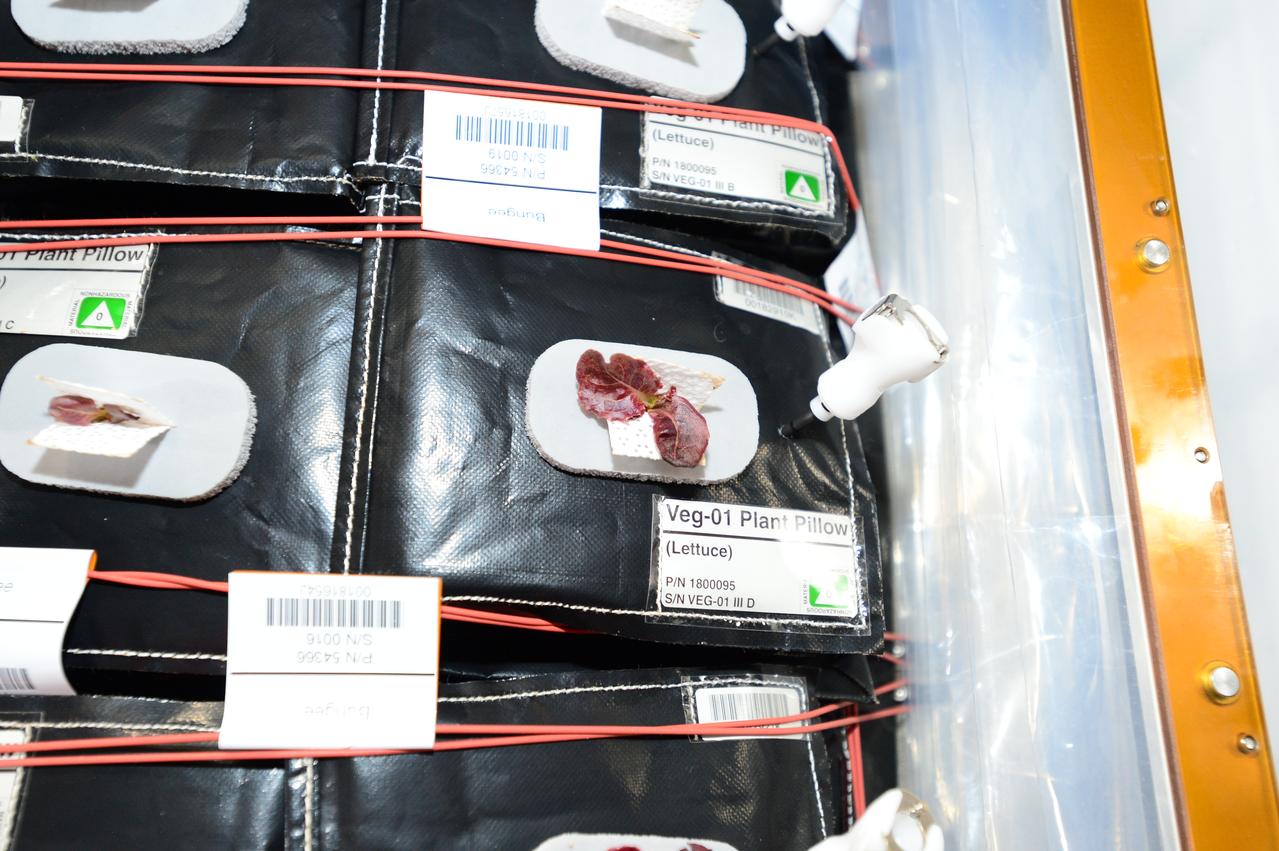
Astronaut Scott Kelly initiated VEG-01 B, the second crop of lettuce, on July, 8, 2015, and both Kelly and Astronaut Kjell Lindgren cared for the plants. The crop grew for 33 days. VEG-01 B included one set of six plant pillows planted with red romaine lettuce seeds. On Aug. 10, 2015, the crew harvested and consumed leaves from each plant. This was the first crop grown and consumed in NASA hardware. They harvested the rest of the plant tissue and froze it in the station’s Minus Eighty-Degree Laboratory Freezer for ISS (MELFI) for return to Earth for further study including microbial analysis, antioxidant capacity, mineral analysis and anthocyanin concentration.
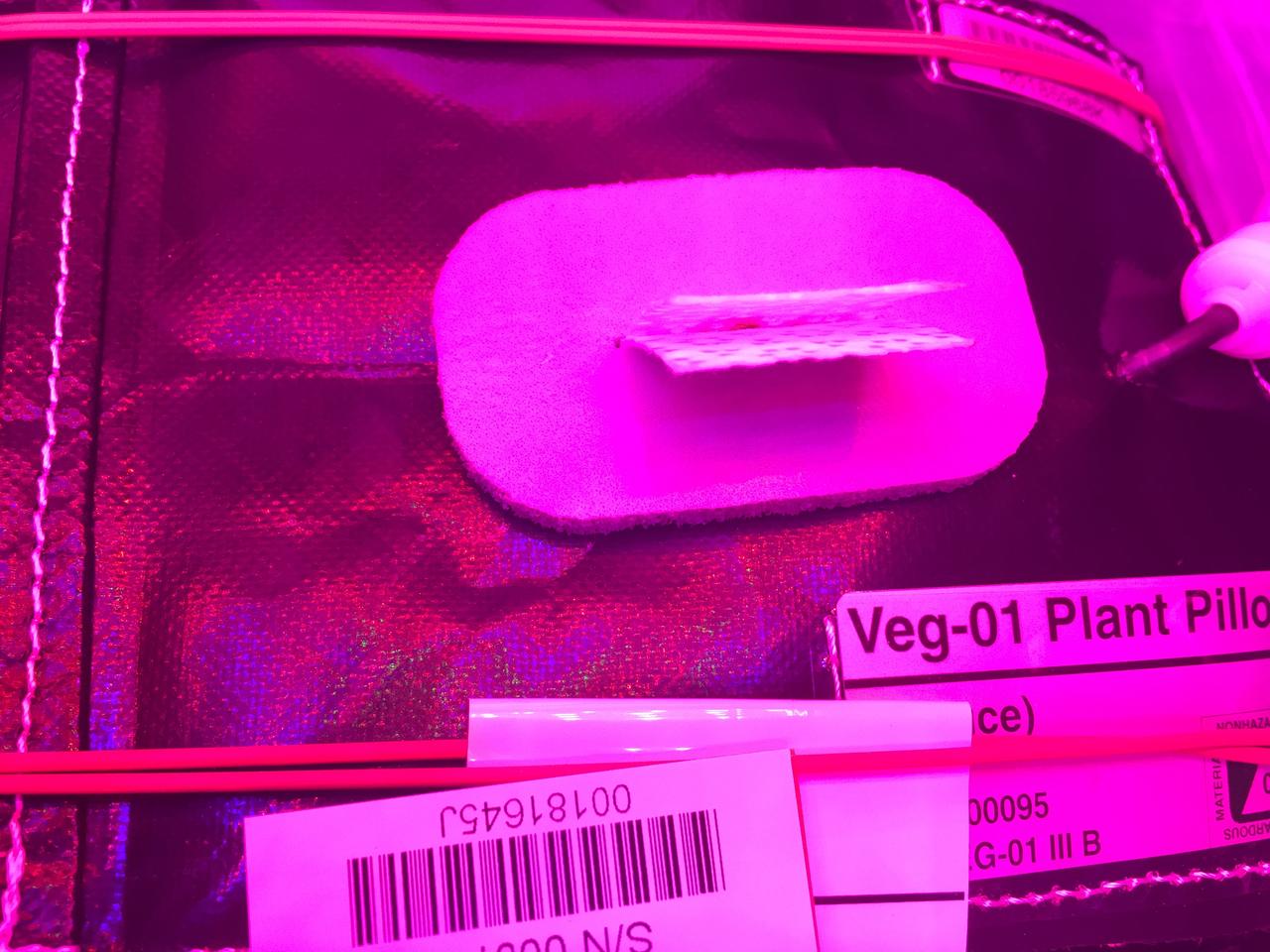
Astronaut Scott Kelly initiated VEG-01 B, the second crop of lettuce, on July, 8, 2015, and both Kelly and Astronaut Kjell Lindgren cared for the plants. The crop grew for 33 days. VEG-01 B included one set of six plant pillows planted with red romaine lettuce seeds. On Aug. 10, 2015, the crew harvested and consumed leaves from each plant. This was the first crop grown and consumed in NASA hardware. They harvested the rest of the plant tissue and froze it in the station’s Minus Eighty-Degree Laboratory Freezer for ISS (MELFI) for return to Earth for further study including microbial analysis, antioxidant capacity, mineral analysis and anthocyanin concentration.
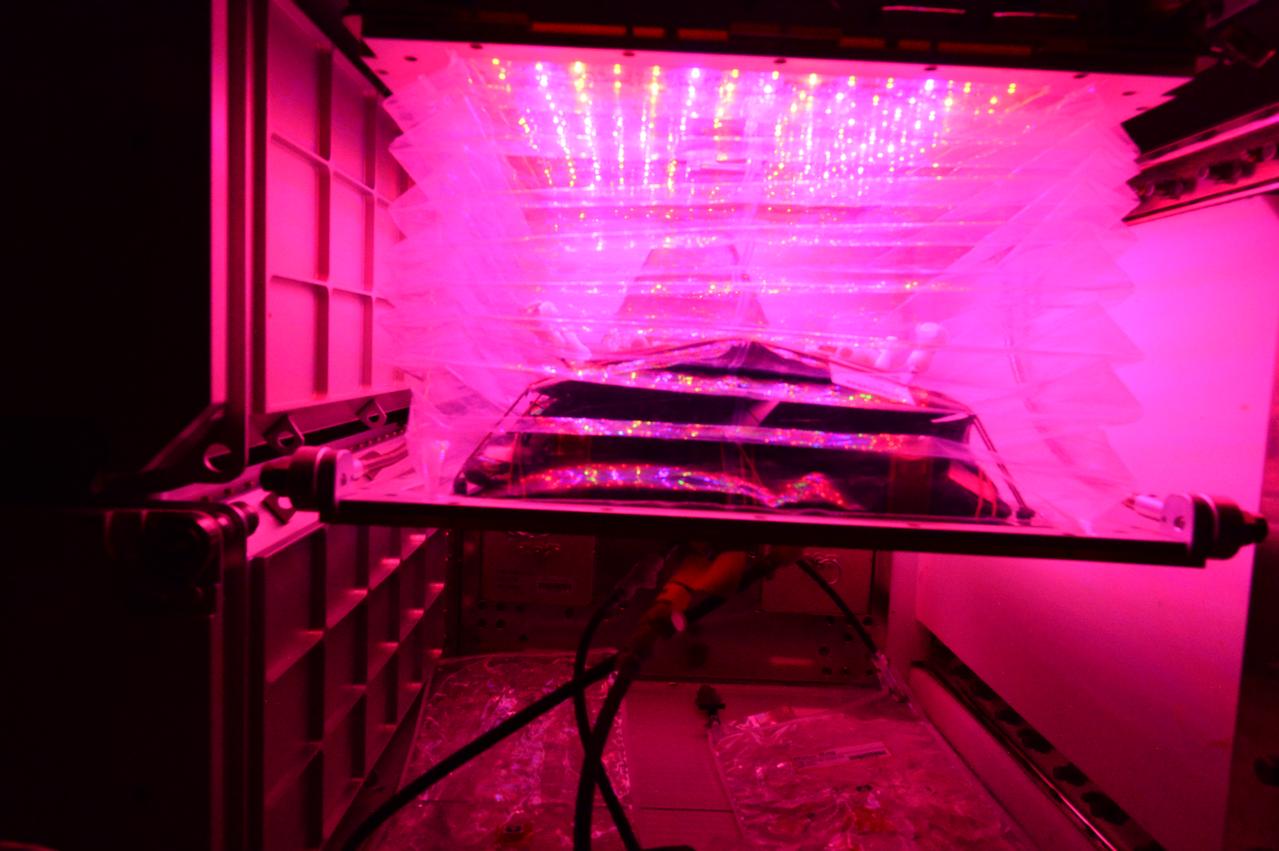
Astronaut Scott Kelly initiated VEG-01 B, the second crop of lettuce, on July, 8, 2015, and both Kelly and Astronaut Kjell Lindgren cared for the plants. The crop grew for 33 days. VEG-01 B included one set of six plant pillows planted with red romaine lettuce seeds. On Aug. 10, 2015, the crew harvested and consumed leaves from each plant. This was the first crop grown and consumed in NASA hardware. They harvested the rest of the plant tissue and froze it in the station’s Minus Eighty-Degree Laboratory Freezer for ISS (MELFI) for return to Earth for further study including microbial analysis, antioxidant capacity, mineral analysis and anthocyanin concentration.
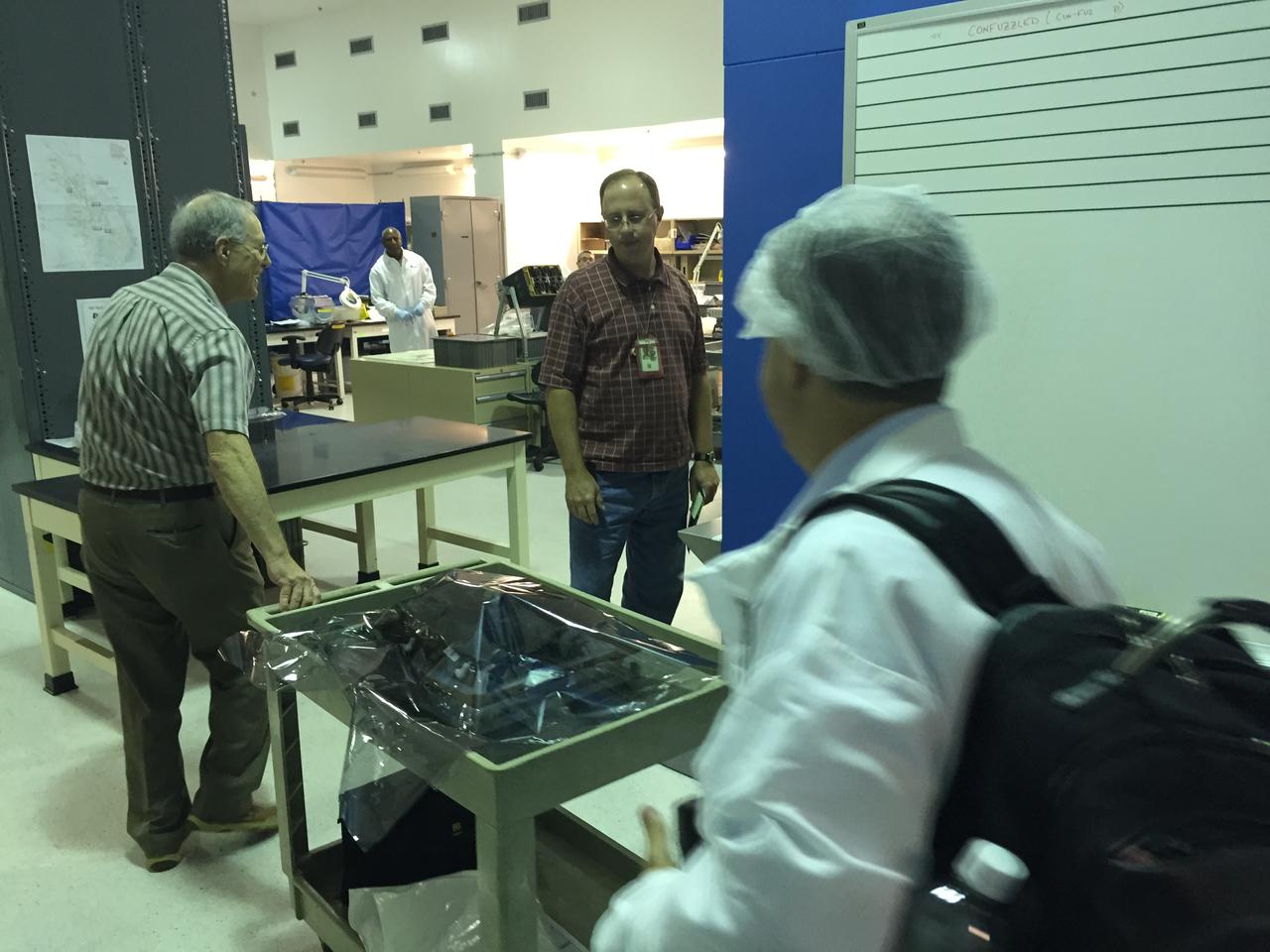
Astronaut Scott Kelly initiated VEG-01 B, the second crop of lettuce, on July, 8, 2015, and both Kelly and Astronaut Kjell Lindgren cared for the plants. The crop grew for 33 days. VEG-01 B included one set of six plant pillows planted with red romaine lettuce seeds. On Aug. 10, 2015, the crew harvested and consumed leaves from each plant. This was the first crop grown and consumed in NASA hardware. They harvested the rest of the plant tissue and froze it in the station’s Minus Eighty-Degree Laboratory Freezer for ISS (MELFI) for return to Earth for further study including microbial analysis, antioxidant capacity, mineral analysis and anthocyanin concentration.
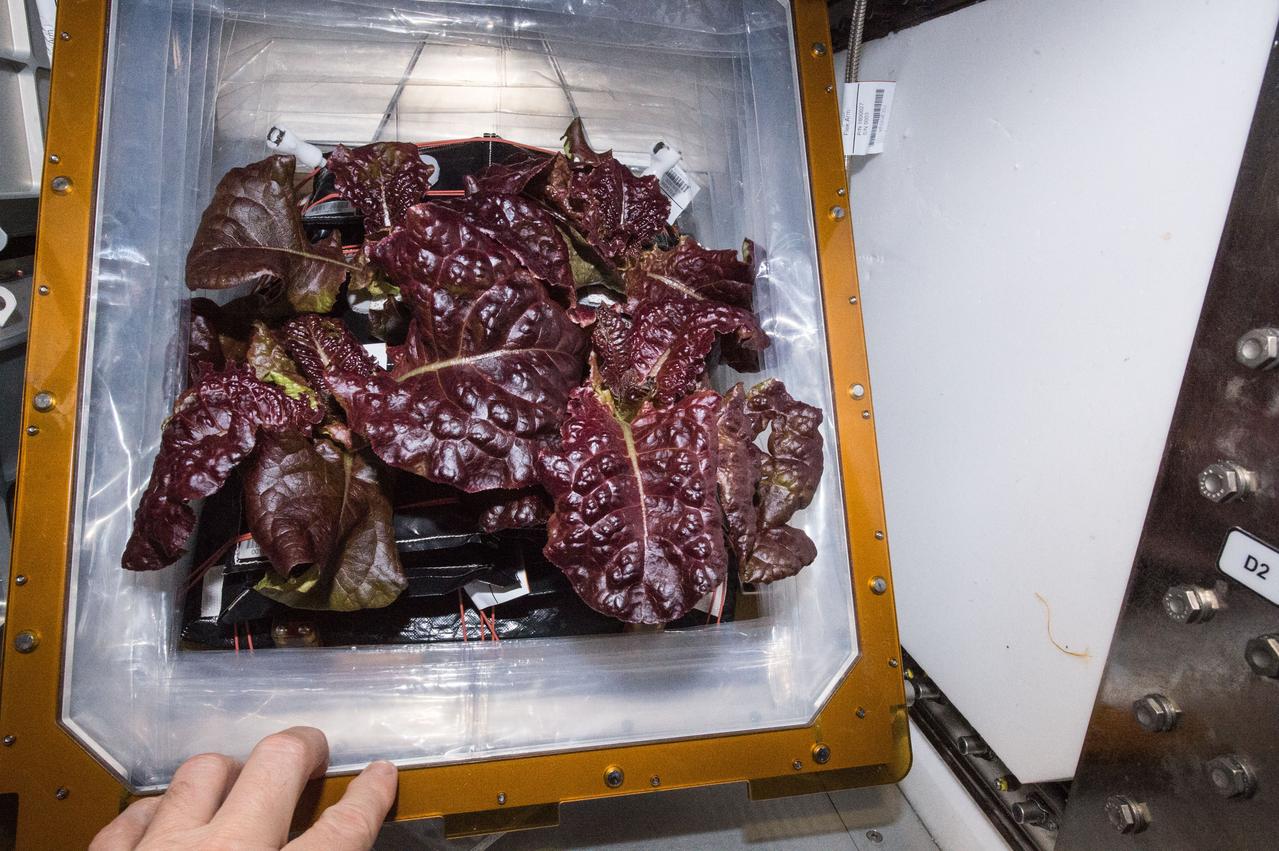
Astronaut Scott Kelly initiated VEG-01 B, the second crop of lettuce, on July, 8, 2015, and both Kelly and Astronaut Kjell Lindgren cared for the plants. The crop grew for 33 days. VEG-01 B included one set of six plant pillows planted with red romaine lettuce seeds. On Aug. 10, 2015, the crew harvested and consumed leaves from each plant. This was the first crop grown and consumed in NASA hardware. They harvested the rest of the plant tissue and froze it in the station’s Minus Eighty-Degree Laboratory Freezer for ISS (MELFI) for return to Earth for further study including microbial analysis, antioxidant capacity, mineral analysis and anthocyanin concentration.
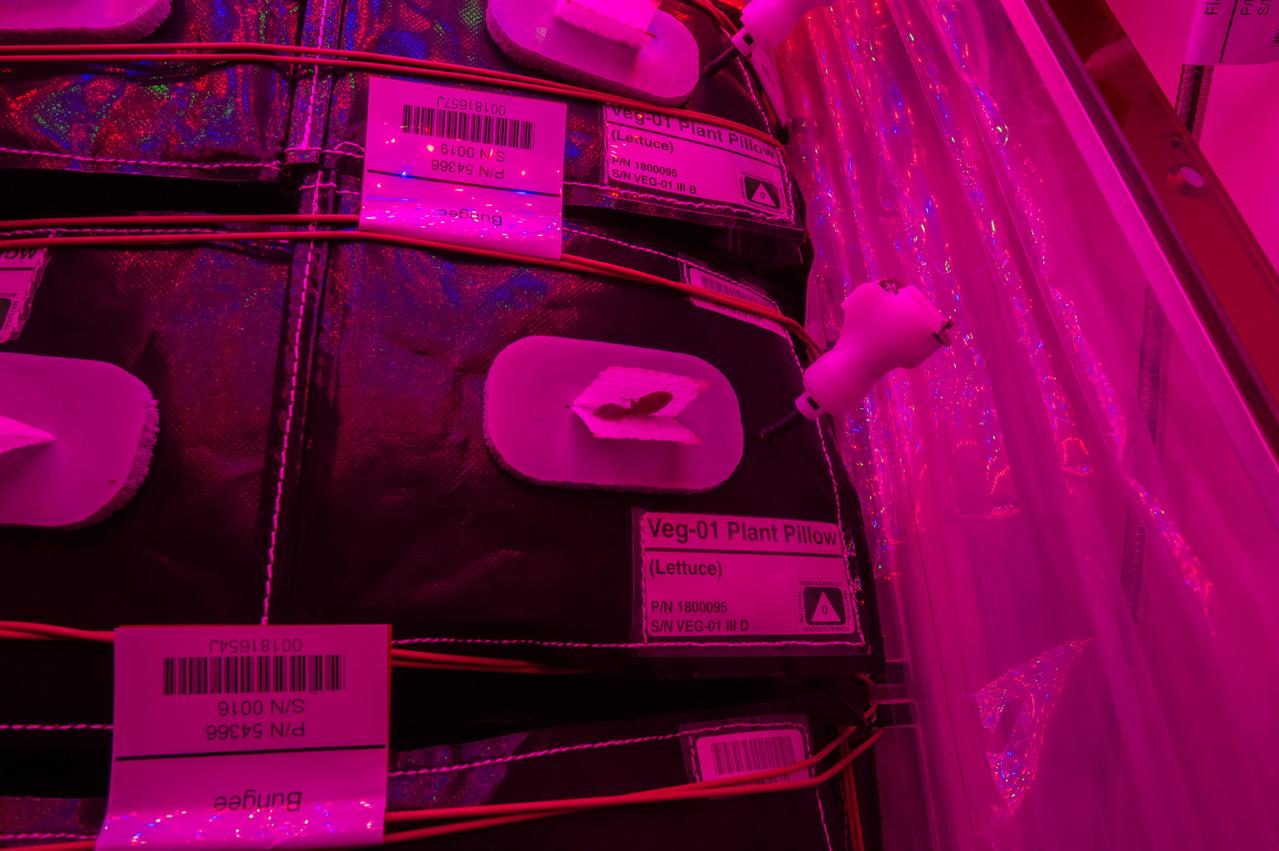
Astronaut Scott Kelly initiated VEG-01 B, the second crop of lettuce, on July, 8, 2015, and both Kelly and Astronaut Kjell Lindgren cared for the plants. The crop grew for 33 days. VEG-01 B included one set of six plant pillows planted with red romaine lettuce seeds. On Aug. 10, 2015, the crew harvested and consumed leaves from each plant. This was the first crop grown and consumed in NASA hardware. They harvested the rest of the plant tissue and froze it in the station’s Minus Eighty-Degree Laboratory Freezer for ISS (MELFI) for return to Earth for further study including microbial analysis, antioxidant capacity, mineral analysis and anthocyanin concentration.

Astronaut Scott Kelly initiated VEG-01 B, the second crop of lettuce, on July, 8, 2015, and both Kelly and Astronaut Kjell Lindgren cared for the plants. The crop grew for 33 days. VEG-01 B included one set of six plant pillows planted with red romaine lettuce seeds. On Aug. 10, 2015, the crew harvested and consumed leaves from each plant. This was the first crop grown and consumed in NASA hardware. They harvested the rest of the plant tissue and froze it in the station’s Minus Eighty-Degree Laboratory Freezer for ISS (MELFI) for return to Earth for further study including microbial analysis, antioxidant capacity, mineral analysis and anthocyanin concentration.
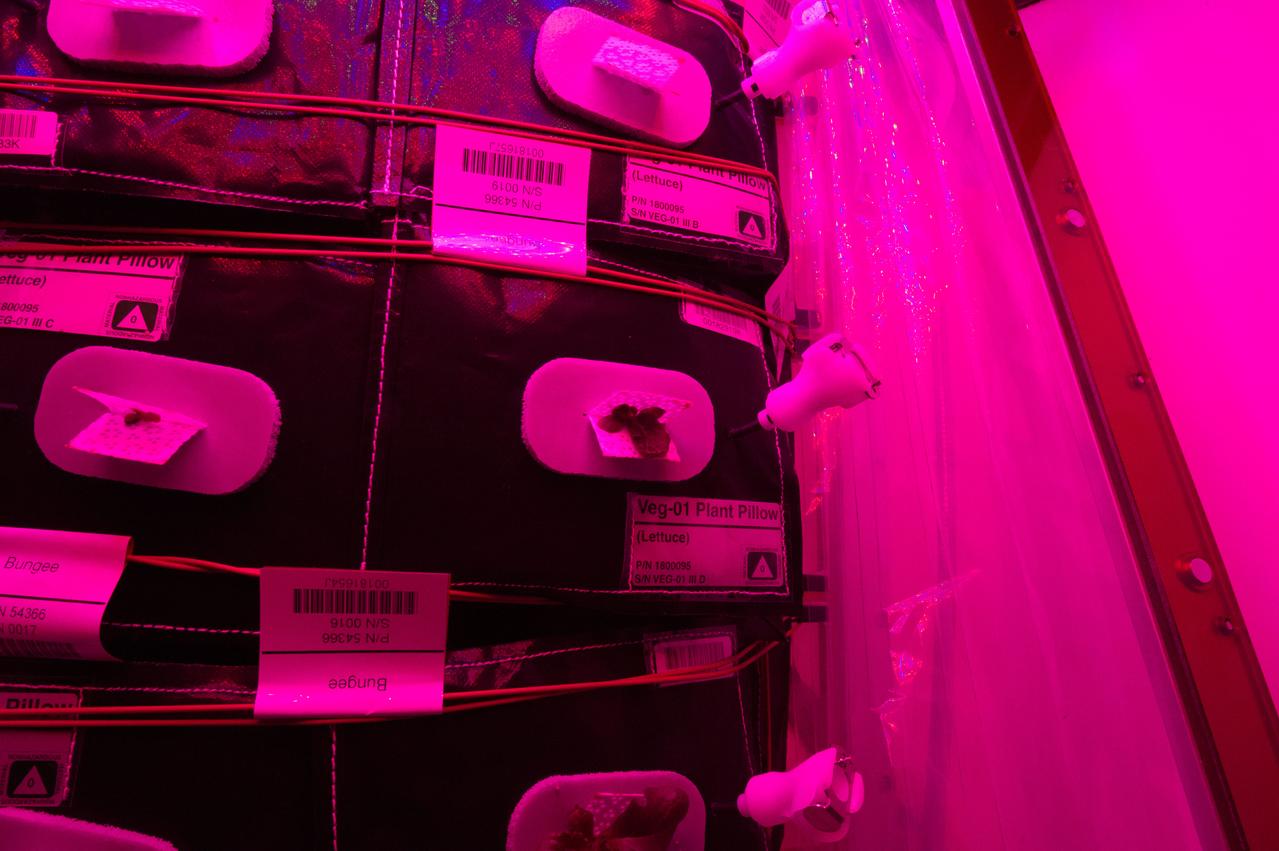
Astronaut Scott Kelly initiated VEG-01 B, the second crop of lettuce, on July, 8, 2015, and both Kelly and Astronaut Kjell Lindgren cared for the plants. The crop grew for 33 days. VEG-01 B included one set of six plant pillows planted with red romaine lettuce seeds. On Aug. 10, 2015, the crew harvested and consumed leaves from each plant. This was the first crop grown and consumed in NASA hardware. They harvested the rest of the plant tissue and froze it in the station’s Minus Eighty-Degree Laboratory Freezer for ISS (MELFI) for return to Earth for further study including microbial analysis, antioxidant capacity, mineral analysis and anthocyanin concentration.
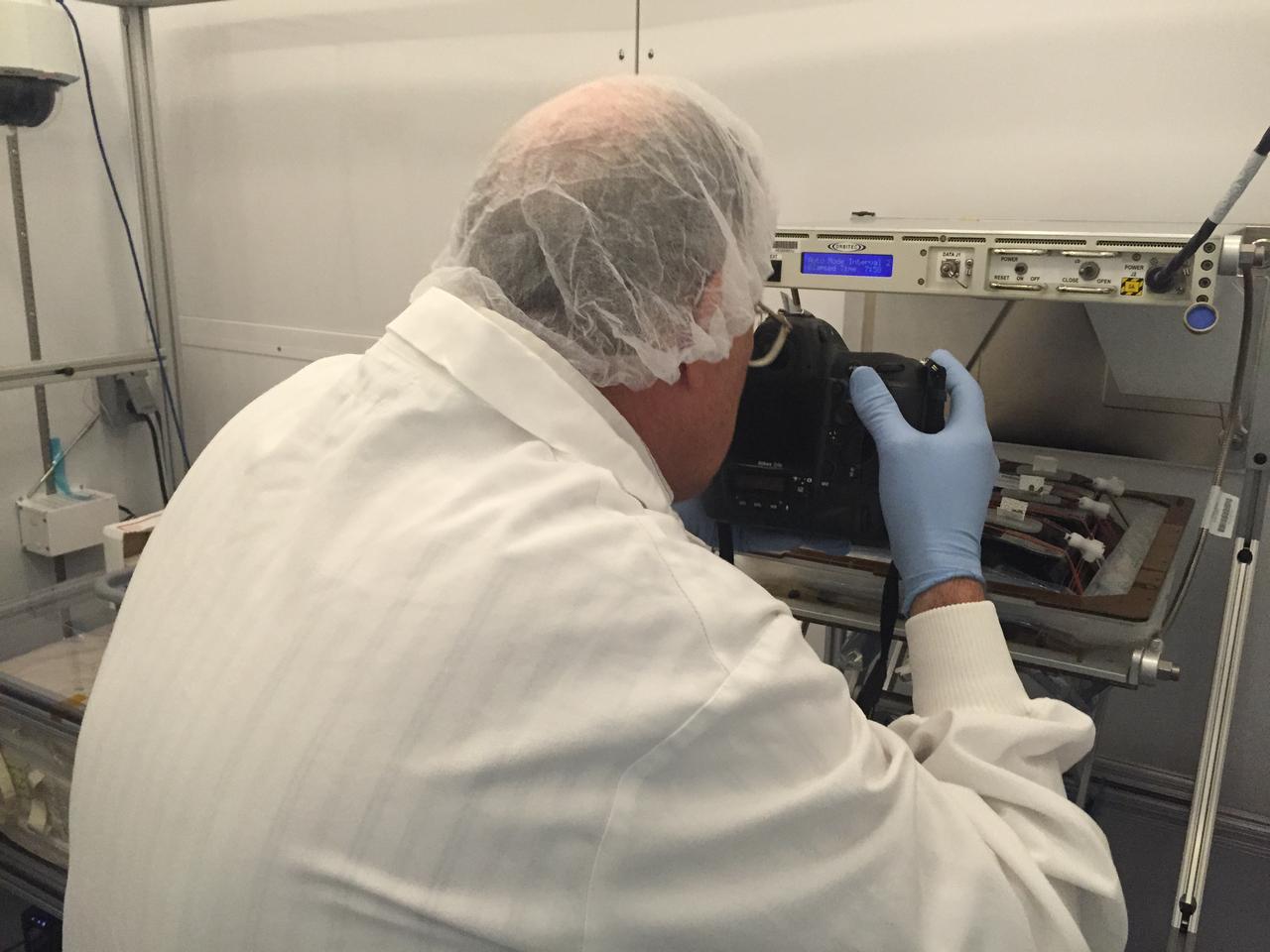
Astronaut Scott Kelly initiated VEG-01 B, the second crop of lettuce, on July, 8, 2015, and both Kelly and Astronaut Kjell Lindgren cared for the plants. The crop grew for 33 days. VEG-01 B included one set of six plant pillows planted with red romaine lettuce seeds. On Aug. 10, 2015, the crew harvested and consumed leaves from each plant. This was the first crop grown and consumed in NASA hardware. They harvested the rest of the plant tissue and froze it in the station’s Minus Eighty-Degree Laboratory Freezer for ISS (MELFI) for return to Earth for further study including microbial analysis, antioxidant capacity, mineral analysis and anthocyanin concentration.

Astronaut Scott Kelly initiated VEG-01 B, the second crop of lettuce, on July, 8, 2015, and both Kelly and Astronaut Kjell Lindgren cared for the plants. The crop grew for 33 days. VEG-01 B included one set of six plant pillows planted with red romaine lettuce seeds. On Aug. 10, 2015, the crew harvested and consumed leaves from each plant. This was the first crop grown and consumed in NASA hardware. They harvested the rest of the plant tissue and froze it in the station’s Minus Eighty-Degree Laboratory Freezer for ISS (MELFI) for return to Earth for further study including microbial analysis, antioxidant capacity, mineral analysis and anthocyanin concentration.
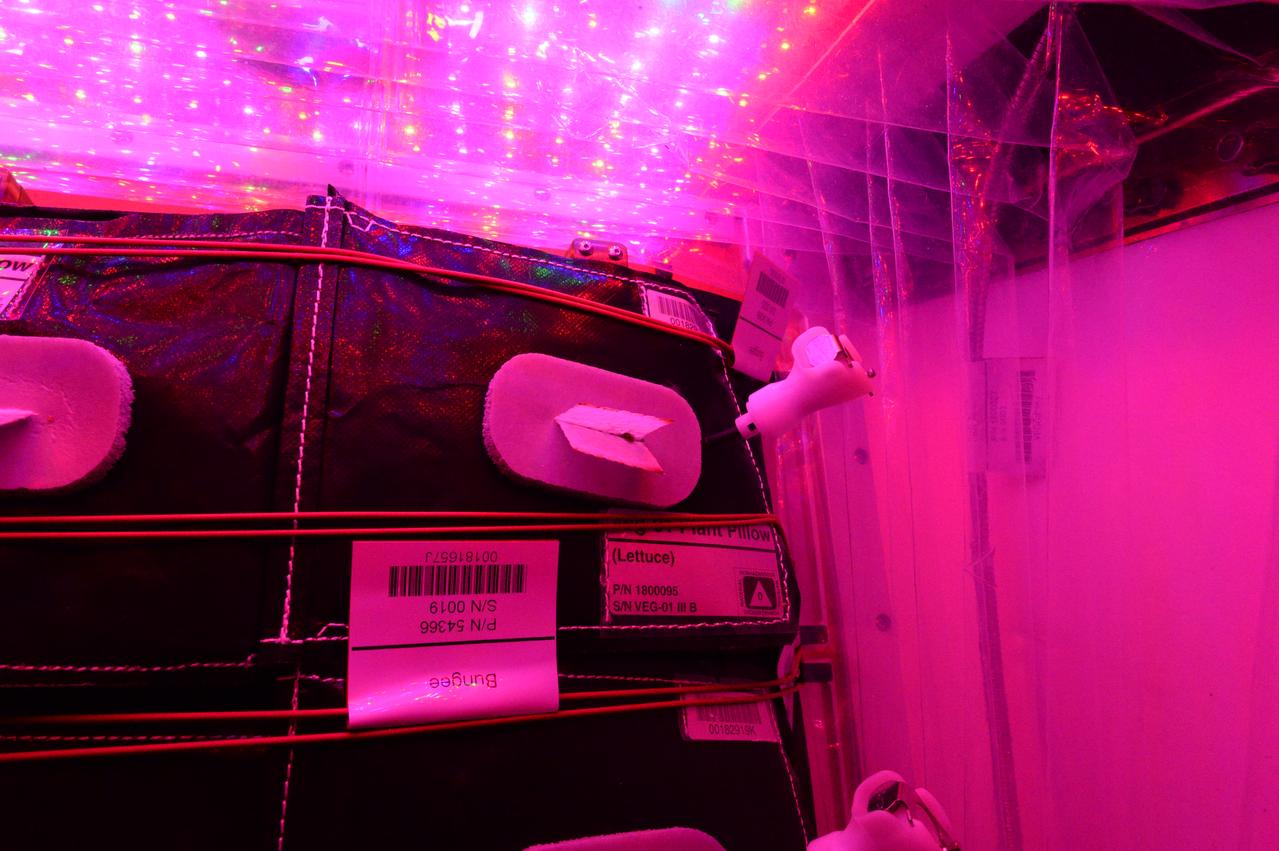
Astronaut Scott Kelly initiated VEG-01 B, the second crop of lettuce, on July, 8, 2015, and both Kelly and Astronaut Kjell Lindgren cared for the plants. The crop grew for 33 days. VEG-01 B included one set of six plant pillows planted with red romaine lettuce seeds. On Aug. 10, 2015, the crew harvested and consumed leaves from each plant. This was the first crop grown and consumed in NASA hardware. They harvested the rest of the plant tissue and froze it in the station’s Minus Eighty-Degree Laboratory Freezer for ISS (MELFI) for return to Earth for further study including microbial analysis, antioxidant capacity, mineral analysis and anthocyanin concentration.
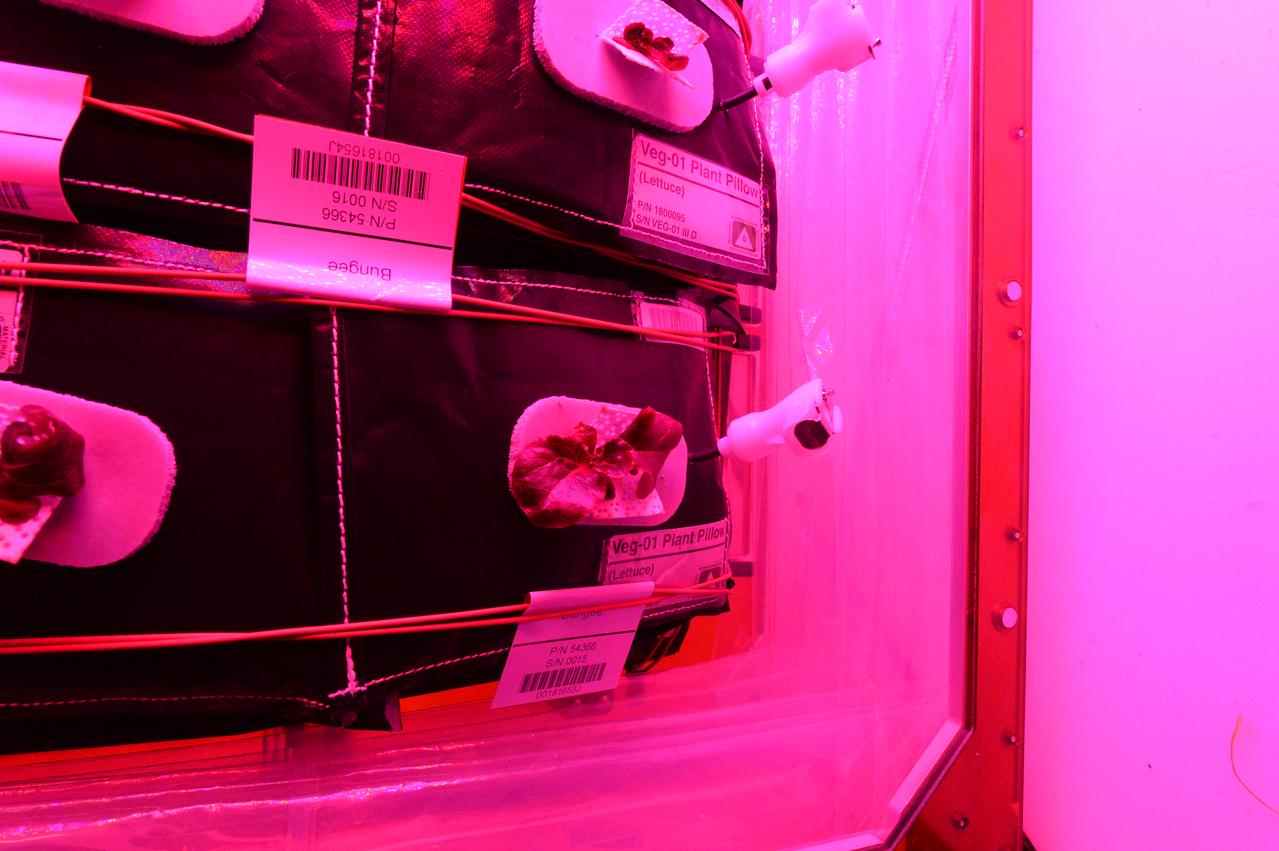
Astronaut Scott Kelly initiated VEG-01 B, the second crop of lettuce, on July, 8, 2015, and both Kelly and Astronaut Kjell Lindgren cared for the plants. The crop grew for 33 days. VEG-01 B included one set of six plant pillows planted with red romaine lettuce seeds. On Aug. 10, 2015, the crew harvested and consumed leaves from each plant. This was the first crop grown and consumed in NASA hardware. They harvested the rest of the plant tissue and froze it in the station’s Minus Eighty-Degree Laboratory Freezer for ISS (MELFI) for return to Earth for further study including microbial analysis, antioxidant capacity, mineral analysis and anthocyanin concentration.
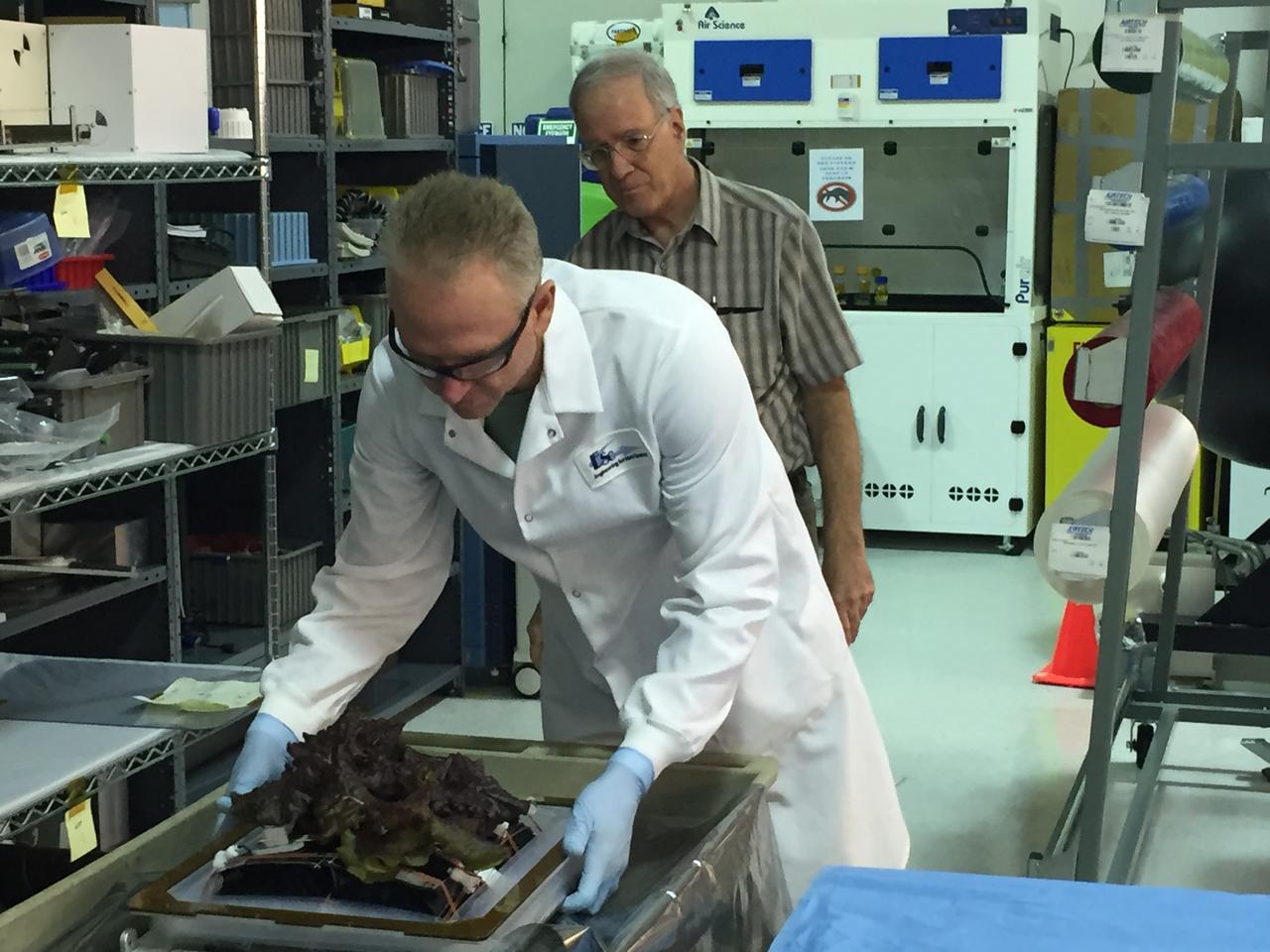
Astronaut Scott Kelly initiated VEG-01 B, the second crop of lettuce, on July, 8, 2015, and both Kelly and Astronaut Kjell Lindgren cared for the plants. The crop grew for 33 days. VEG-01 B included one set of six plant pillows planted with red romaine lettuce seeds. On Aug. 10, 2015, the crew harvested and consumed leaves from each plant. This was the first crop grown and consumed in NASA hardware. They harvested the rest of the plant tissue and froze it in the station’s Minus Eighty-Degree Laboratory Freezer for ISS (MELFI) for return to Earth for further study including microbial analysis, antioxidant capacity, mineral analysis and anthocyanin concentration.
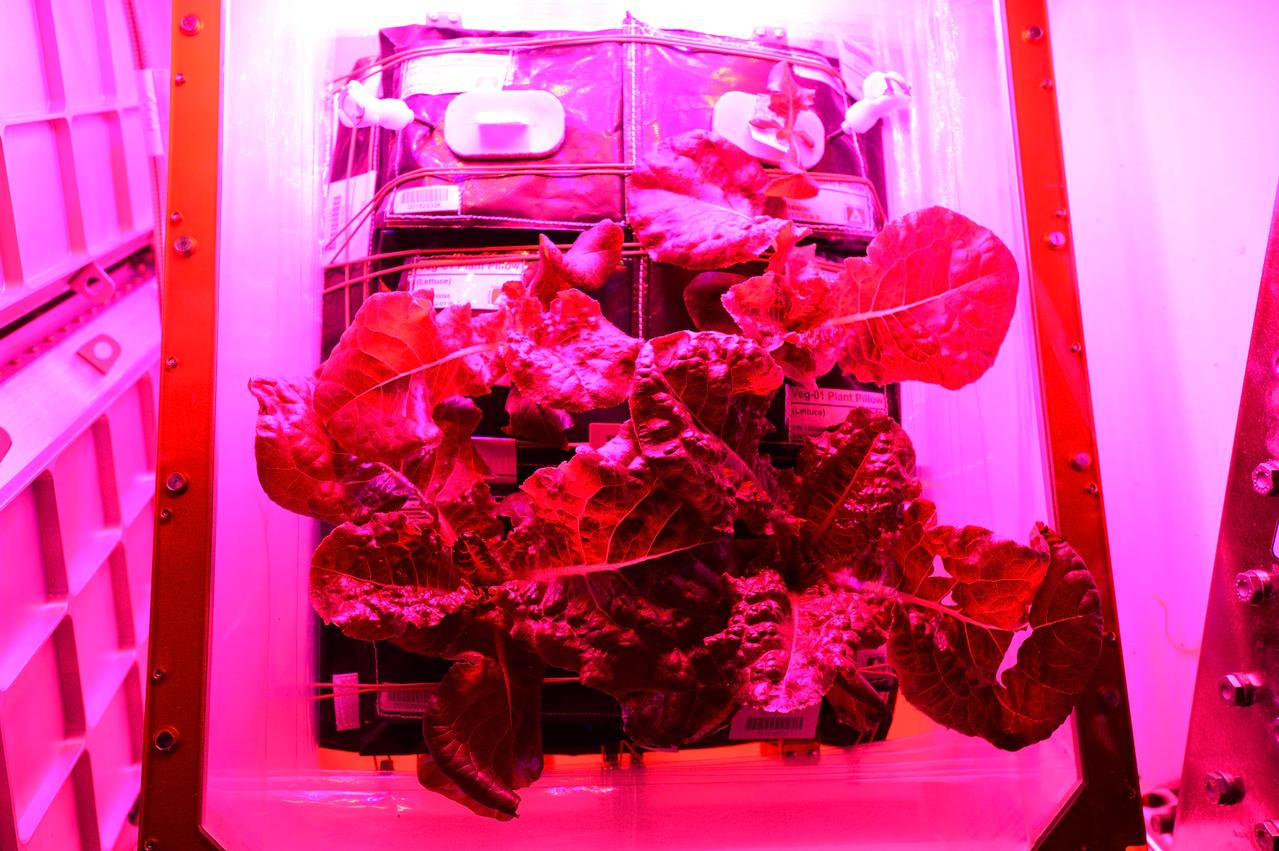
Astronaut Scott Kelly initiated VEG-01 B, the second crop of lettuce, on July, 8, 2015, and both Kelly and Astronaut Kjell Lindgren cared for the plants. The crop grew for 33 days. VEG-01 B included one set of six plant pillows planted with red romaine lettuce seeds. On Aug. 10, 2015, the crew harvested and consumed leaves from each plant. This was the first crop grown and consumed in NASA hardware. They harvested the rest of the plant tissue and froze it in the station’s Minus Eighty-Degree Laboratory Freezer for ISS (MELFI) for return to Earth for further study including microbial analysis, antioxidant capacity, mineral analysis and anthocyanin concentration.

Astronaut Scott Kelly initiated VEG-01 B, the second crop of lettuce, on July, 8, 2015, and both Kelly and Astronaut Kjell Lindgren cared for the plants. The crop grew for 33 days. VEG-01 B included one set of six plant pillows planted with red romaine lettuce seeds. On Aug. 10, 2015, the crew harvested and consumed leaves from each plant. This was the first crop grown and consumed in NASA hardware. They harvested the rest of the plant tissue and froze it in the station’s Minus Eighty-Degree Laboratory Freezer for ISS (MELFI) for return to Earth for further study including microbial analysis, antioxidant capacity, mineral analysis and anthocyanin concentration.

Astronaut Scott Kelly initiated VEG-01 B, the second crop of lettuce, on July, 8, 2015, and both Kelly and Astronaut Kjell Lindgren cared for the plants. The crop grew for 33 days. VEG-01 B included one set of six plant pillows planted with red romaine lettuce seeds. On Aug. 10, 2015, the crew harvested and consumed leaves from each plant. This was the first crop grown and consumed in NASA hardware. They harvested the rest of the plant tissue and froze it in the station’s Minus Eighty-Degree Laboratory Freezer for ISS (MELFI) for return to Earth for further study including microbial analysis, antioxidant capacity, mineral analysis and anthocyanin concentration.
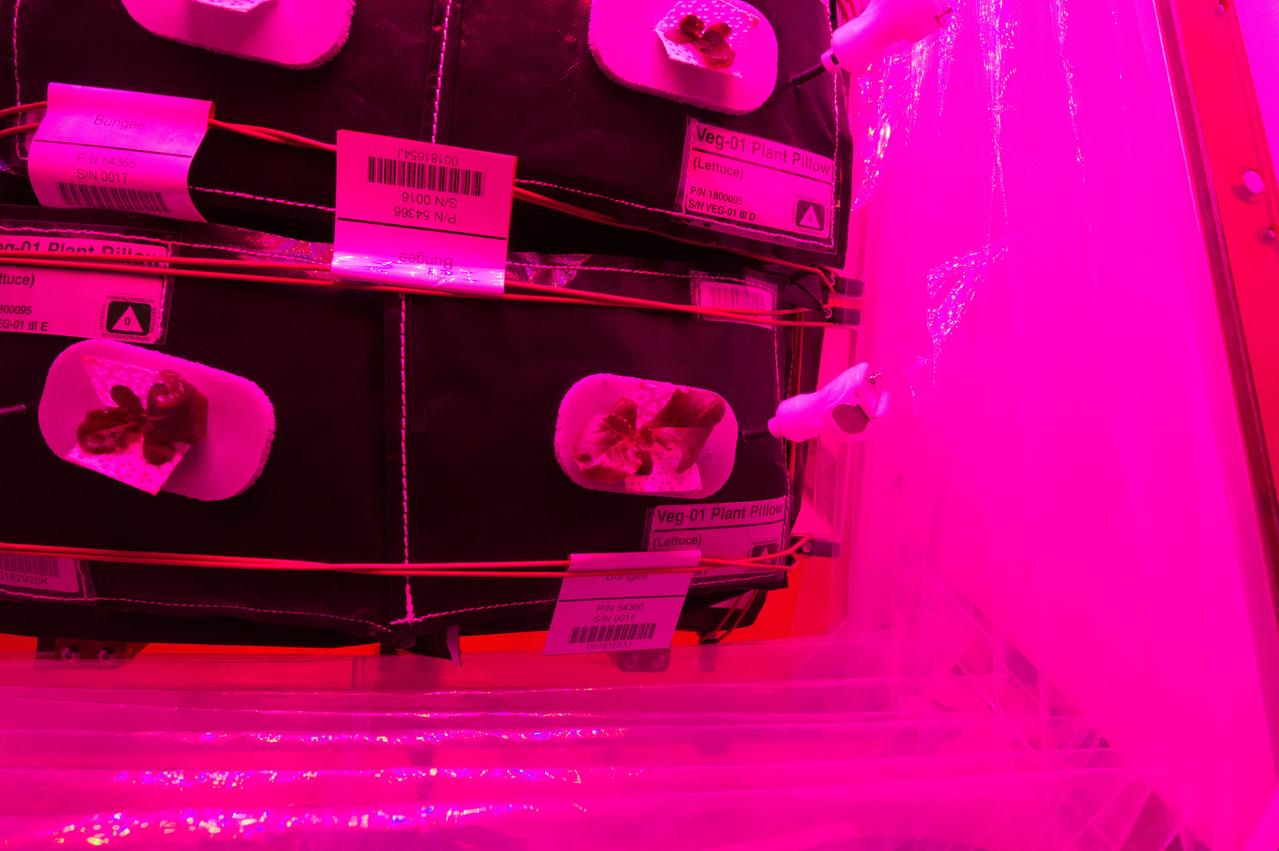
Astronaut Scott Kelly initiated VEG-01 B, the second crop of lettuce, on July, 8, 2015, and both Kelly and Astronaut Kjell Lindgren cared for the plants. The crop grew for 33 days. VEG-01 B included one set of six plant pillows planted with red romaine lettuce seeds. On Aug. 10, 2015, the crew harvested and consumed leaves from each plant. This was the first crop grown and consumed in NASA hardware. They harvested the rest of the plant tissue and froze it in the station’s Minus Eighty-Degree Laboratory Freezer for ISS (MELFI) for return to Earth for further study including microbial analysis, antioxidant capacity, mineral analysis and anthocyanin concentration.

Astronaut Scott Kelly initiated VEG-01 B, the second crop of lettuce, on July, 8, 2015, and both Kelly and Astronaut Kjell Lindgren cared for the plants. The crop grew for 33 days. VEG-01 B included one set of six plant pillows planted with red romaine lettuce seeds. On Aug. 10, 2015, the crew harvested and consumed leaves from each plant. This was the first crop grown and consumed in NASA hardware. They harvested the rest of the plant tissue and froze it in the station’s Minus Eighty-Degree Laboratory Freezer for ISS (MELFI) for return to Earth for further study including microbial analysis, antioxidant capacity, mineral analysis and anthocyanin concentration.

Astronaut Scott Kelly initiated VEG-01 B, the second crop of lettuce, on July, 8, 2015, and both Kelly and Astronaut Kjell Lindgren cared for the plants. The crop grew for 33 days. VEG-01 B included one set of six plant pillows planted with red romaine lettuce seeds. On Aug. 10, 2015, the crew harvested and consumed leaves from each plant. This was the first crop grown and consumed in NASA hardware. They harvested the rest of the plant tissue and froze it in the station’s Minus Eighty-Degree Laboratory Freezer for ISS (MELFI) for return to Earth for further study including microbial analysis, antioxidant capacity, mineral analysis and anthocyanin concentration.
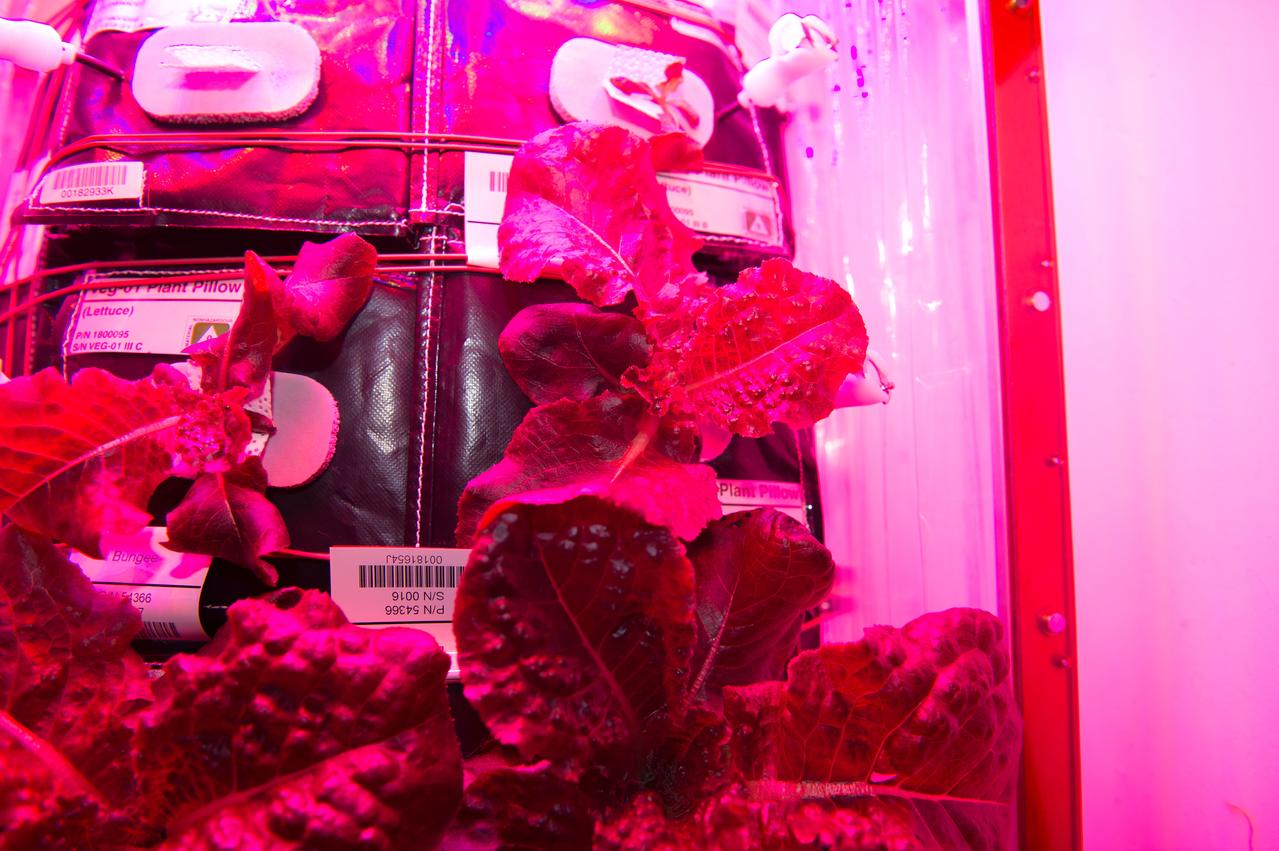
Astronaut Scott Kelly initiated VEG-01 B, the second crop of lettuce, on July, 8, 2015, and both Kelly and Astronaut Kjell Lindgren cared for the plants. The crop grew for 33 days. VEG-01 B included one set of six plant pillows planted with red romaine lettuce seeds. On Aug. 10, 2015, the crew harvested and consumed leaves from each plant. This was the first crop grown and consumed in NASA hardware. They harvested the rest of the plant tissue and froze it in the station’s Minus Eighty-Degree Laboratory Freezer for ISS (MELFI) for return to Earth for further study including microbial analysis, antioxidant capacity, mineral analysis and anthocyanin concentration.
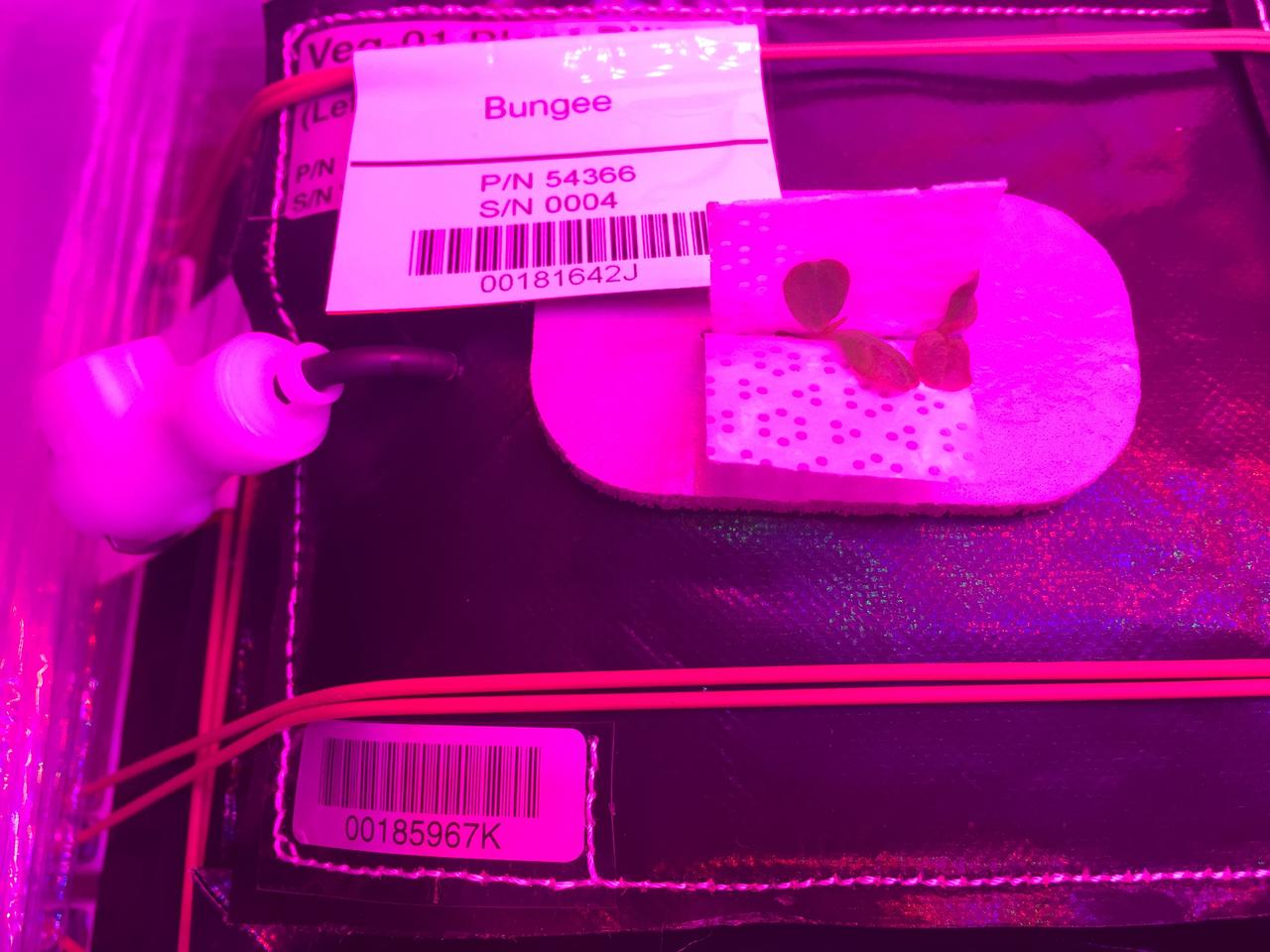
Astronaut Scott Kelly initiated VEG-01 B, the second crop of lettuce, on July, 8, 2015, and both Kelly and Astronaut Kjell Lindgren cared for the plants. The crop grew for 33 days. VEG-01 B included one set of six plant pillows planted with red romaine lettuce seeds. On Aug. 10, 2015, the crew harvested and consumed leaves from each plant. This was the first crop grown and consumed in NASA hardware. They harvested the rest of the plant tissue and froze it in the station’s Minus Eighty-Degree Laboratory Freezer for ISS (MELFI) for return to Earth for further study including microbial analysis, antioxidant capacity, mineral analysis and anthocyanin concentration.
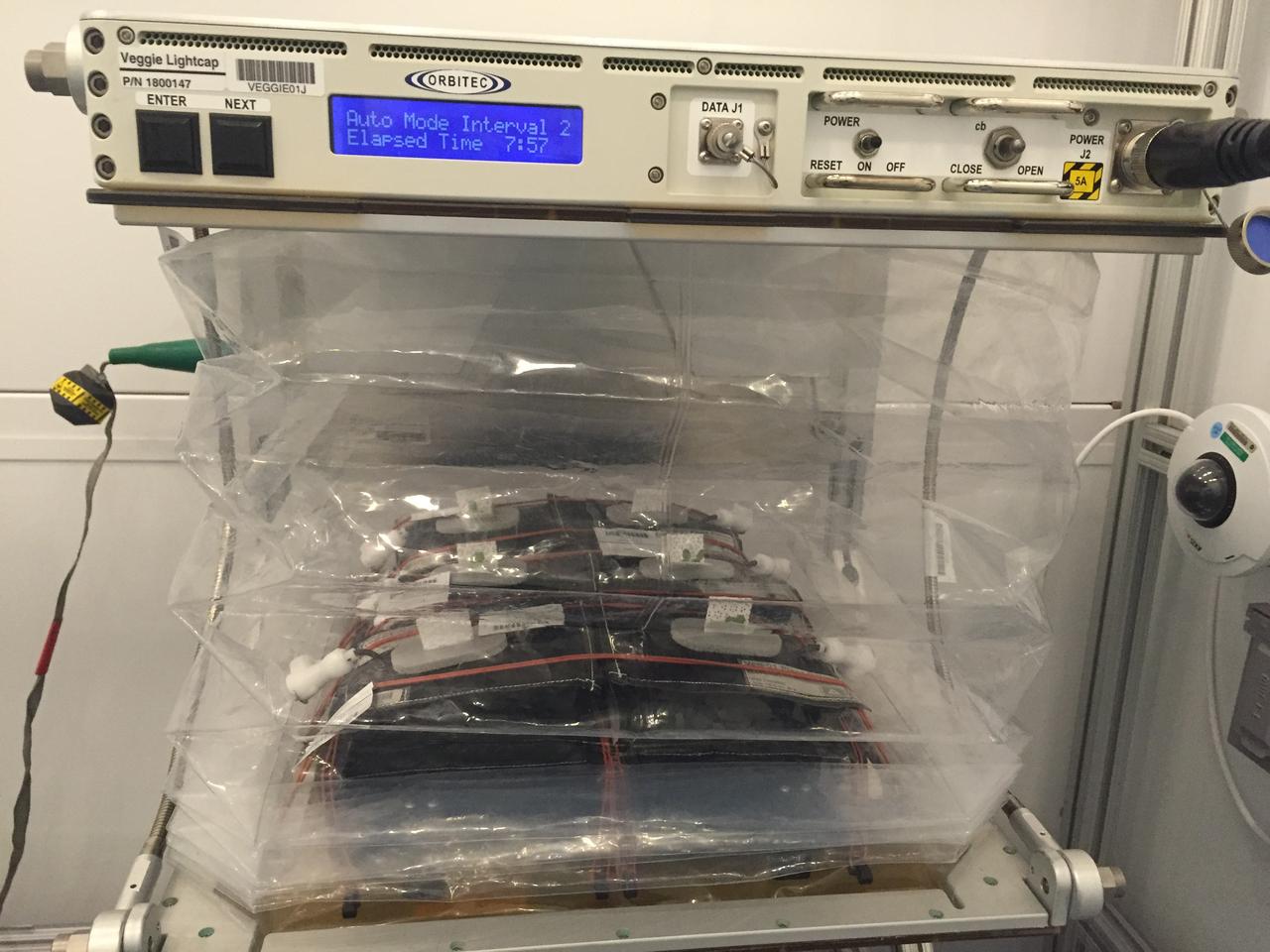
Astronaut Scott Kelly initiated VEG-01 B, the second crop of lettuce, on July, 8, 2015, and both Kelly and Astronaut Kjell Lindgren cared for the plants. The crop grew for 33 days. VEG-01 B included one set of six plant pillows planted with red romaine lettuce seeds. On Aug. 10, 2015, the crew harvested and consumed leaves from each plant. This was the first crop grown and consumed in NASA hardware. They harvested the rest of the plant tissue and froze it in the station’s Minus Eighty-Degree Laboratory Freezer for ISS (MELFI) for return to Earth for further study including microbial analysis, antioxidant capacity, mineral analysis and anthocyanin concentration.

Astronaut Scott Kelly initiated VEG-01 B, the second crop of lettuce, on July, 8, 2015, and both Kelly and Astronaut Kjell Lindgren cared for the plants. The crop grew for 33 days. VEG-01 B included one set of six plant pillows planted with red romaine lettuce seeds. On Aug. 10, 2015, the crew harvested and consumed leaves from each plant. This was the first crop grown and consumed in NASA hardware. They harvested the rest of the plant tissue and froze it in the station’s Minus Eighty-Degree Laboratory Freezer for ISS (MELFI) for return to Earth for further study including microbial analysis, antioxidant capacity, mineral analysis and anthocyanin concentration.
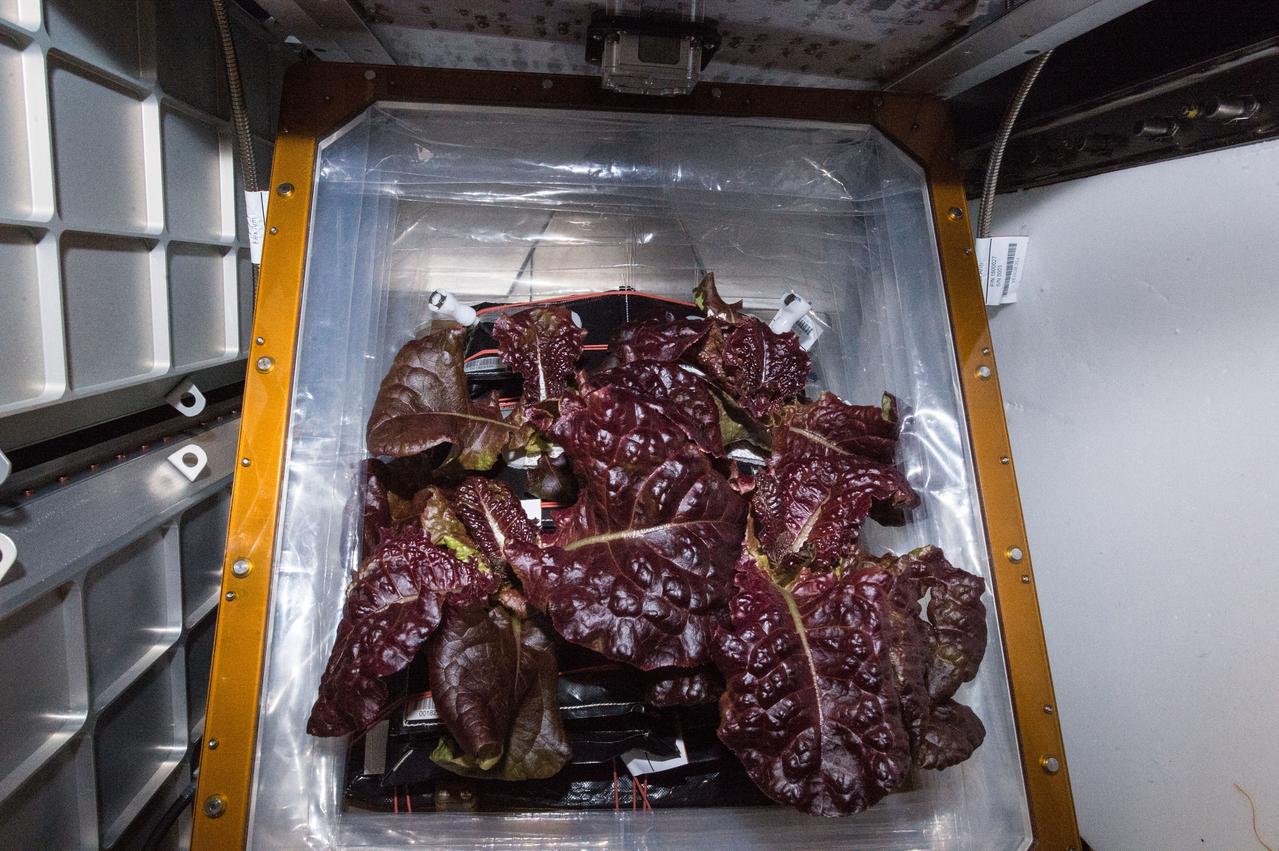
Astronaut Scott Kelly initiated VEG-01 B, the second crop of lettuce, on July, 8, 2015, and both Kelly and Astronaut Kjell Lindgren cared for the plants. The crop grew for 33 days. VEG-01 B included one set of six plant pillows planted with red romaine lettuce seeds. On Aug. 10, 2015, the crew harvested and consumed leaves from each plant. This was the first crop grown and consumed in NASA hardware. They harvested the rest of the plant tissue and froze it in the station’s Minus Eighty-Degree Laboratory Freezer for ISS (MELFI) for return to Earth for further study including microbial analysis, antioxidant capacity, mineral analysis and anthocyanin concentration.

Astronaut Scott Kelly initiated VEG-01 B, the second crop of lettuce, on July, 8, 2015, and both Kelly and Astronaut Kjell Lindgren cared for the plants. The crop grew for 33 days. VEG-01 B included one set of six plant pillows planted with red romaine lettuce seeds. On Aug. 10, 2015, the crew harvested and consumed leaves from each plant. This was the first crop grown and consumed in NASA hardware. They harvested the rest of the plant tissue and froze it in the station’s Minus Eighty-Degree Laboratory Freezer for ISS (MELFI) for return to Earth for further study including microbial analysis, antioxidant capacity, mineral analysis and anthocyanin concentration.
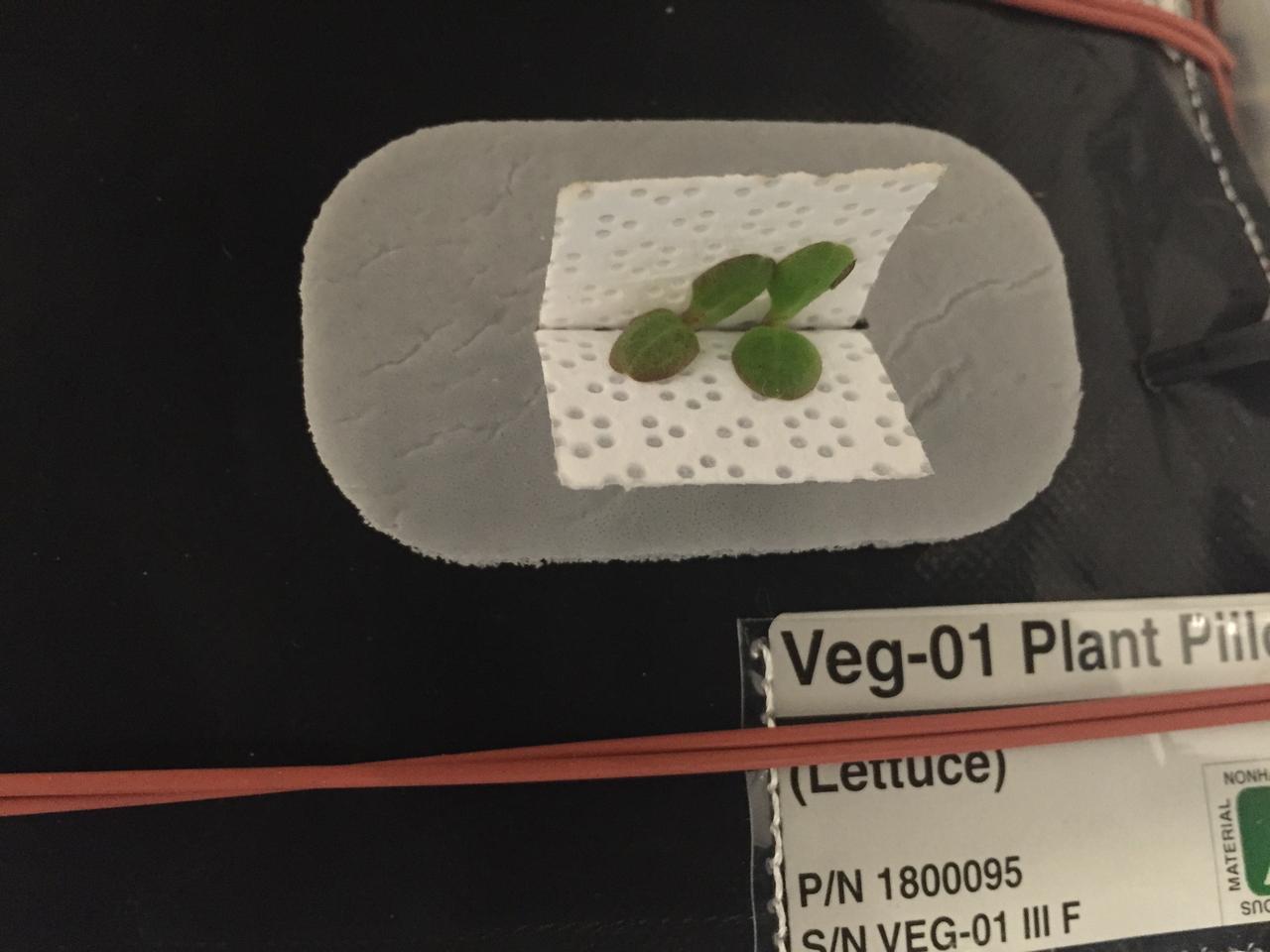
Astronaut Scott Kelly initiated VEG-01 B, the second crop of lettuce, on July, 8, 2015, and both Kelly and Astronaut Kjell Lindgren cared for the plants. The crop grew for 33 days. VEG-01 B included one set of six plant pillows planted with red romaine lettuce seeds. On Aug. 10, 2015, the crew harvested and consumed leaves from each plant. This was the first crop grown and consumed in NASA hardware. They harvested the rest of the plant tissue and froze it in the station’s Minus Eighty-Degree Laboratory Freezer for ISS (MELFI) for return to Earth for further study including microbial analysis, antioxidant capacity, mineral analysis and anthocyanin concentration.
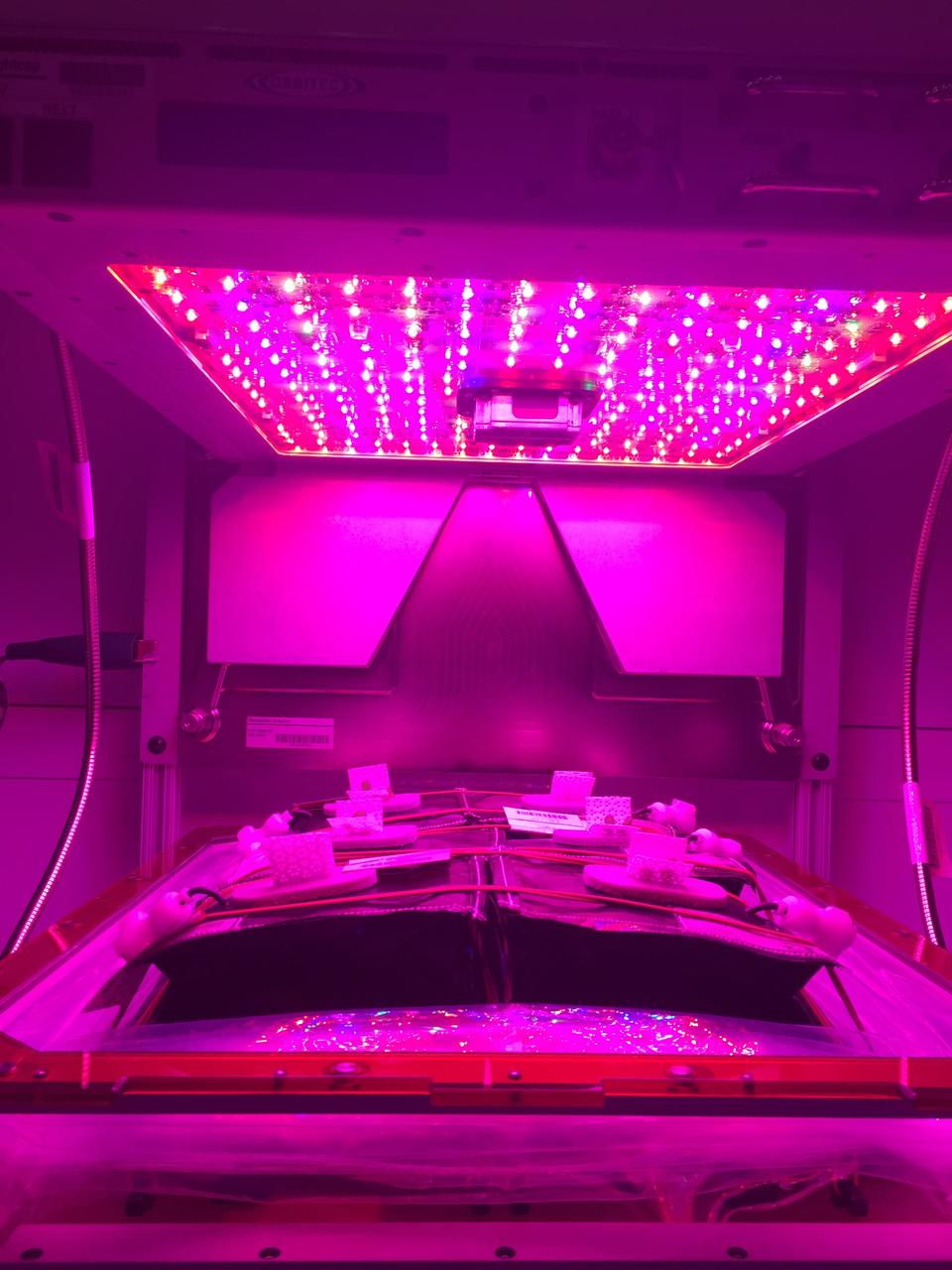
Astronaut Scott Kelly initiated VEG-01 B, the second crop of lettuce, on July, 8, 2015, and both Kelly and Astronaut Kjell Lindgren cared for the plants. The crop grew for 33 days. VEG-01 B included one set of six plant pillows planted with red romaine lettuce seeds. On Aug. 10, 2015, the crew harvested and consumed leaves from each plant. This was the first crop grown and consumed in NASA hardware. They harvested the rest of the plant tissue and froze it in the station’s Minus Eighty-Degree Laboratory Freezer for ISS (MELFI) for return to Earth for further study including microbial analysis, antioxidant capacity, mineral analysis and anthocyanin concentration.
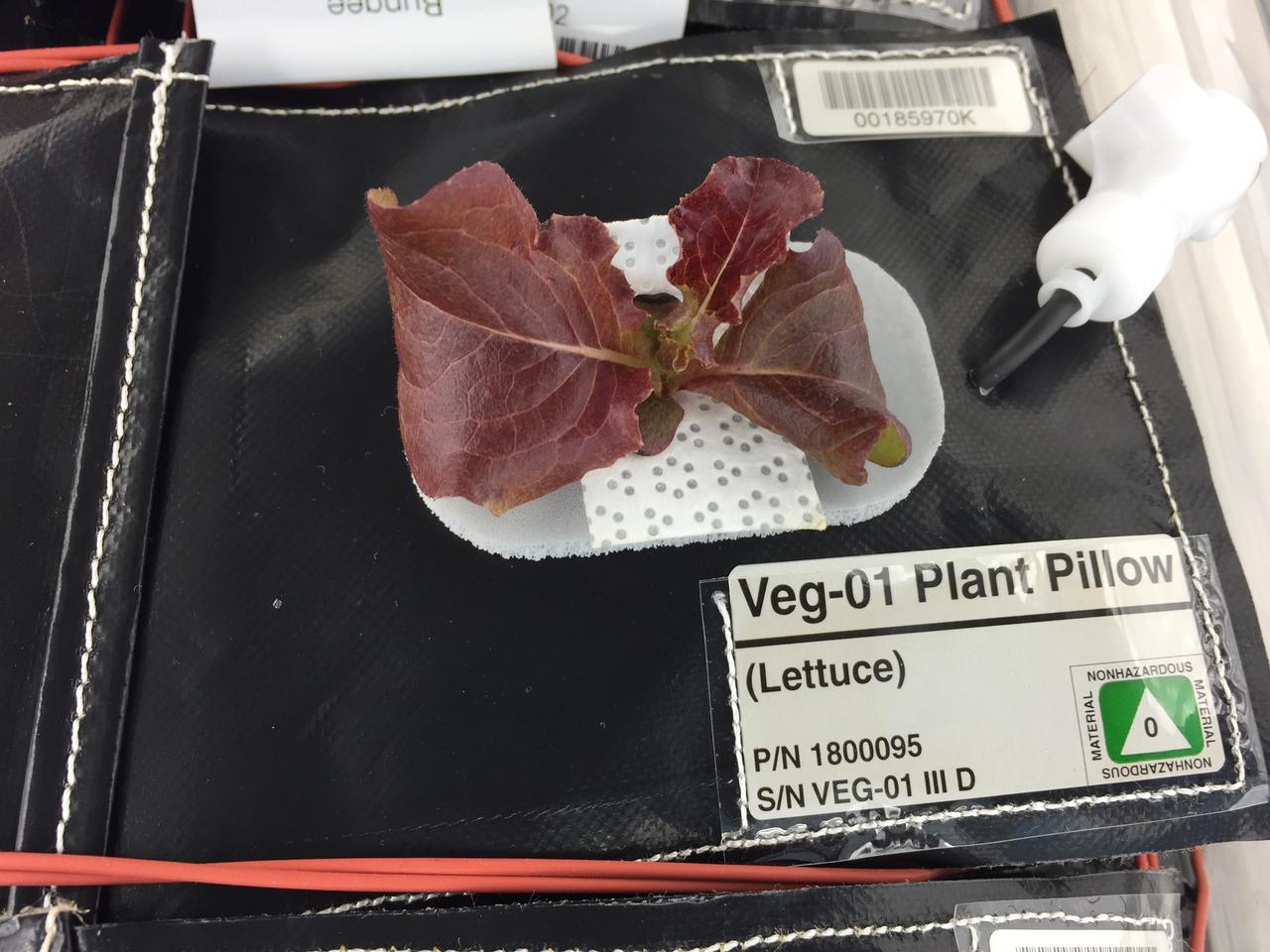
Astronaut Scott Kelly initiated VEG-01 B, the second crop of lettuce, on July, 8, 2015, and both Kelly and Astronaut Kjell Lindgren cared for the plants. The crop grew for 33 days. VEG-01 B included one set of six plant pillows planted with red romaine lettuce seeds. On Aug. 10, 2015, the crew harvested and consumed leaves from each plant. This was the first crop grown and consumed in NASA hardware. They harvested the rest of the plant tissue and froze it in the station’s Minus Eighty-Degree Laboratory Freezer for ISS (MELFI) for return to Earth for further study including microbial analysis, antioxidant capacity, mineral analysis and anthocyanin concentration.
Astronaut Scott Kelly initiated VEG-01 B, the second crop of lettuce, on July, 8, 2015, and both Kelly and Astronaut Kjell Lindgren cared for the plants. The crop grew for 33 days. VEG-01 B included one set of six plant pillows planted with red romaine lettuce seeds. On Aug. 10, 2015, the crew harvested and consumed leaves from each plant. This was the first crop grown and consumed in NASA hardware. They harvested the rest of the plant tissue and froze it in the station’s Minus Eighty-Degree Laboratory Freezer for ISS (MELFI) for return to Earth for further study including microbial analysis, antioxidant capacity, mineral analysis and anthocyanin concentration.
Astronaut Scott Kelly initiated VEG-01 B, the second crop of lettuce, on July, 8, 2015, and both Kelly and Astronaut Kjell Lindgren cared for the plants. The crop grew for 33 days. VEG-01 B included one set of six plant pillows planted with red romaine lettuce seeds. On Aug. 10, 2015, the crew harvested and consumed leaves from each plant. This was the first crop grown and consumed in NASA hardware. They harvested the rest of the plant tissue and froze it in the station’s Minus Eighty-Degree Laboratory Freezer for ISS (MELFI) for return to Earth for further study including microbial analysis, antioxidant capacity, mineral analysis and anthocyanin concentration.
Astronaut Scott Kelly initiated VEG-01 B, the second crop of lettuce, on July, 8, 2015, and both Kelly and Astronaut Kjell Lindgren cared for the plants. The crop grew for 33 days. VEG-01 B included one set of six plant pillows planted with red romaine lettuce seeds. On Aug. 10, 2015, the crew harvested and consumed leaves from each plant. This was the first crop grown and consumed in NASA hardware. They harvested the rest of the plant tissue and froze it in the station’s Minus Eighty-Degree Laboratory Freezer for ISS (MELFI) for return to Earth for further study including microbial analysis, antioxidant capacity, mineral analysis and anthocyanin concentration.

Astronaut Scott Kelly initiated VEG-01 B, the second crop of lettuce, on July, 8, 2015, and both Kelly and Astronaut Kjell Lindgren cared for the plants. The crop grew for 33 days. VEG-01 B included one set of six plant pillows planted with red romaine lettuce seeds. On Aug. 10, 2015, the crew harvested and consumed leaves from each plant. This was the first crop grown and consumed in NASA hardware. They harvested the rest of the plant tissue and froze it in the station’s Minus Eighty-Degree Laboratory Freezer for ISS (MELFI) for return to Earth for further study including microbial analysis, antioxidant capacity, mineral analysis and anthocyanin concentration.
Astronaut Scott Kelly initiated VEG-01 B, the second crop of lettuce, on July, 8, 2015, and both Kelly and Astronaut Kjell Lindgren cared for the plants. The crop grew for 33 days. VEG-01 B included one set of six plant pillows planted with red romaine lettuce seeds. On Aug. 10, 2015, the crew harvested and consumed leaves from each plant. This was the first crop grown and consumed in NASA hardware. They harvested the rest of the plant tissue and froze it in the station’s Minus Eighty-Degree Laboratory Freezer for ISS (MELFI) for return to Earth for further study including microbial analysis, antioxidant capacity, mineral analysis and anthocyanin concentration.
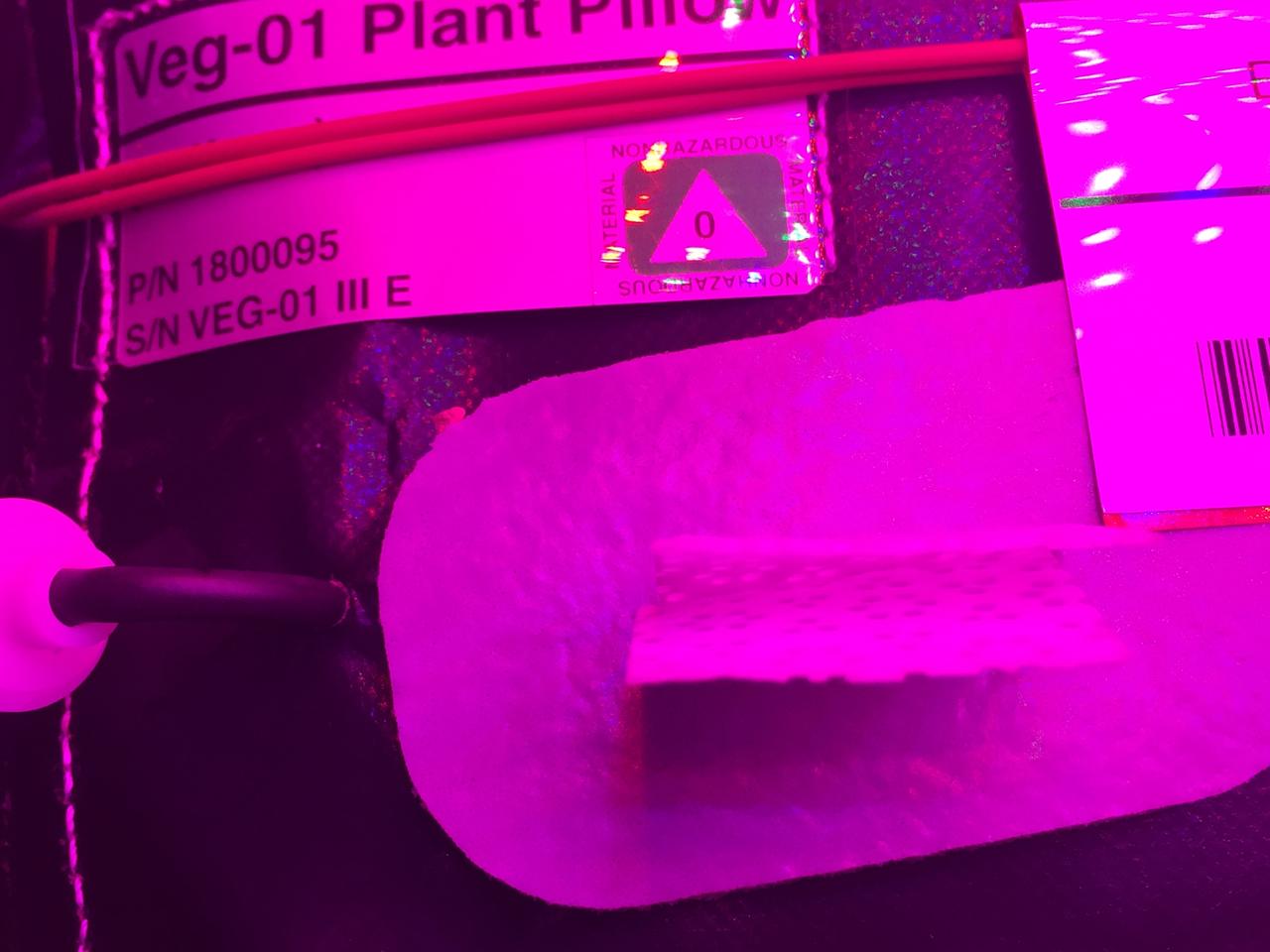
Astronaut Scott Kelly initiated VEG-01 B, the second crop of lettuce, on July, 8, 2015, and both Kelly and Astronaut Kjell Lindgren cared for the plants. The crop grew for 33 days. VEG-01 B included one set of six plant pillows planted with red romaine lettuce seeds. On Aug. 10, 2015, the crew harvested and consumed leaves from each plant. This was the first crop grown and consumed in NASA hardware. They harvested the rest of the plant tissue and froze it in the station’s Minus Eighty-Degree Laboratory Freezer for ISS (MELFI) for return to Earth for further study including microbial analysis, antioxidant capacity, mineral analysis and anthocyanin concentration.
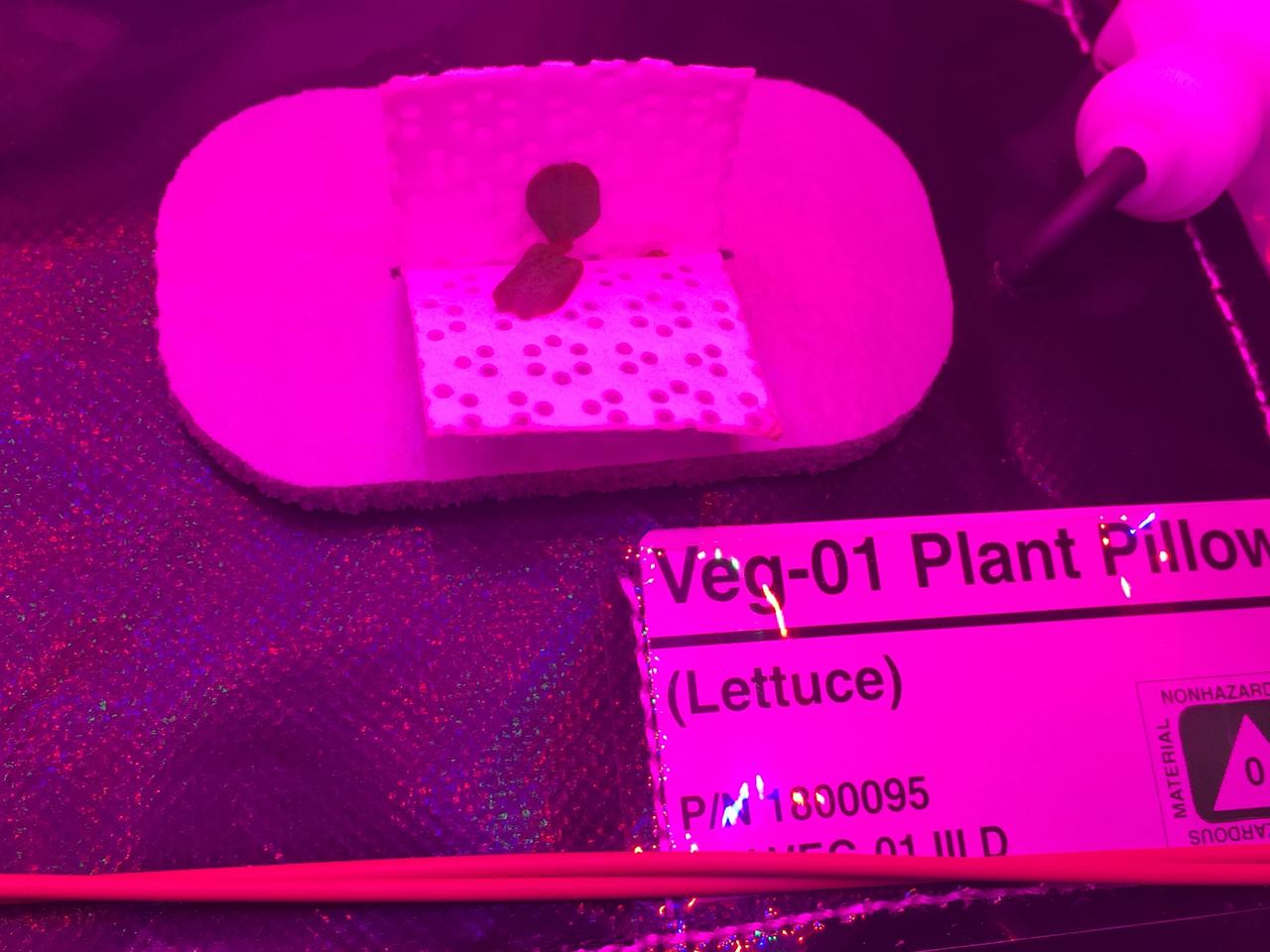
Astronaut Scott Kelly initiated VEG-01 B, the second crop of lettuce, on July, 8, 2015, and both Kelly and Astronaut Kjell Lindgren cared for the plants. The crop grew for 33 days. VEG-01 B included one set of six plant pillows planted with red romaine lettuce seeds. On Aug. 10, 2015, the crew harvested and consumed leaves from each plant. This was the first crop grown and consumed in NASA hardware. They harvested the rest of the plant tissue and froze it in the station’s Minus Eighty-Degree Laboratory Freezer for ISS (MELFI) for return to Earth for further study including microbial analysis, antioxidant capacity, mineral analysis and anthocyanin concentration.