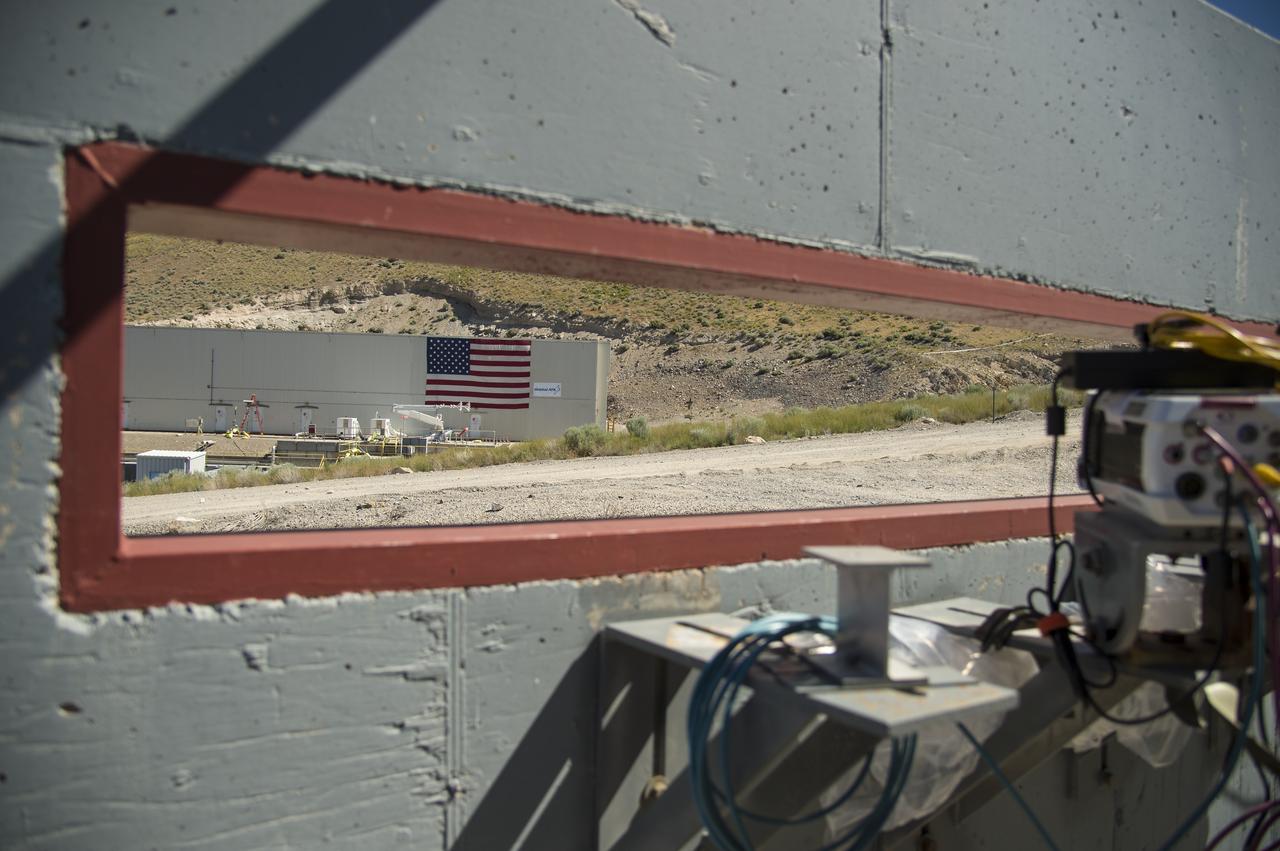
The test area where the second and final qualification motor (QM-2) test for the Space Launch System’s booster is seen through the window of a camera bunker, Sunday, June 26, 2016, at Orbital ATK Propulsion Systems test facilities in Promontory, Utah. The test is scheduled for Tuesday, June 28 at 10:05 a.m. EDT (8:05 a.m. MDT). Photo Credit: (NASA/Bill Ingalls)
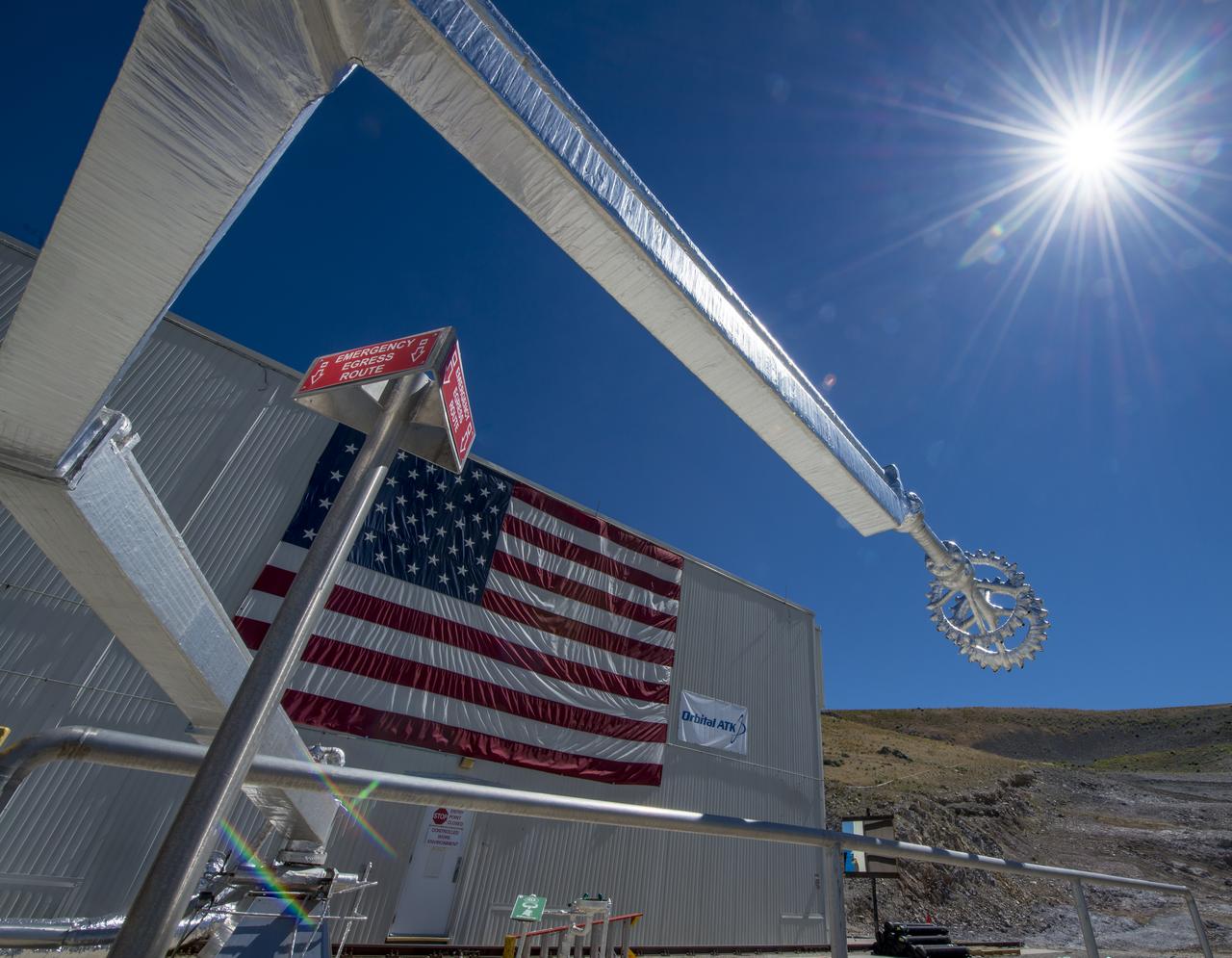
The quench system arm and nozzle are seen at the test area where the second and final qualification motor (QM-2) test for the Space Launch System’s booster will take place, Sunday, June 26, 2016, at Orbital ATK Propulsion Systems test facilities in Promontory, Utah. The test is scheduled for Tuesday, June 28 at 10:05 a.m. EDT (8:05 a.m. MDT). Photo Credit: (NASA/Bill Ingalls)
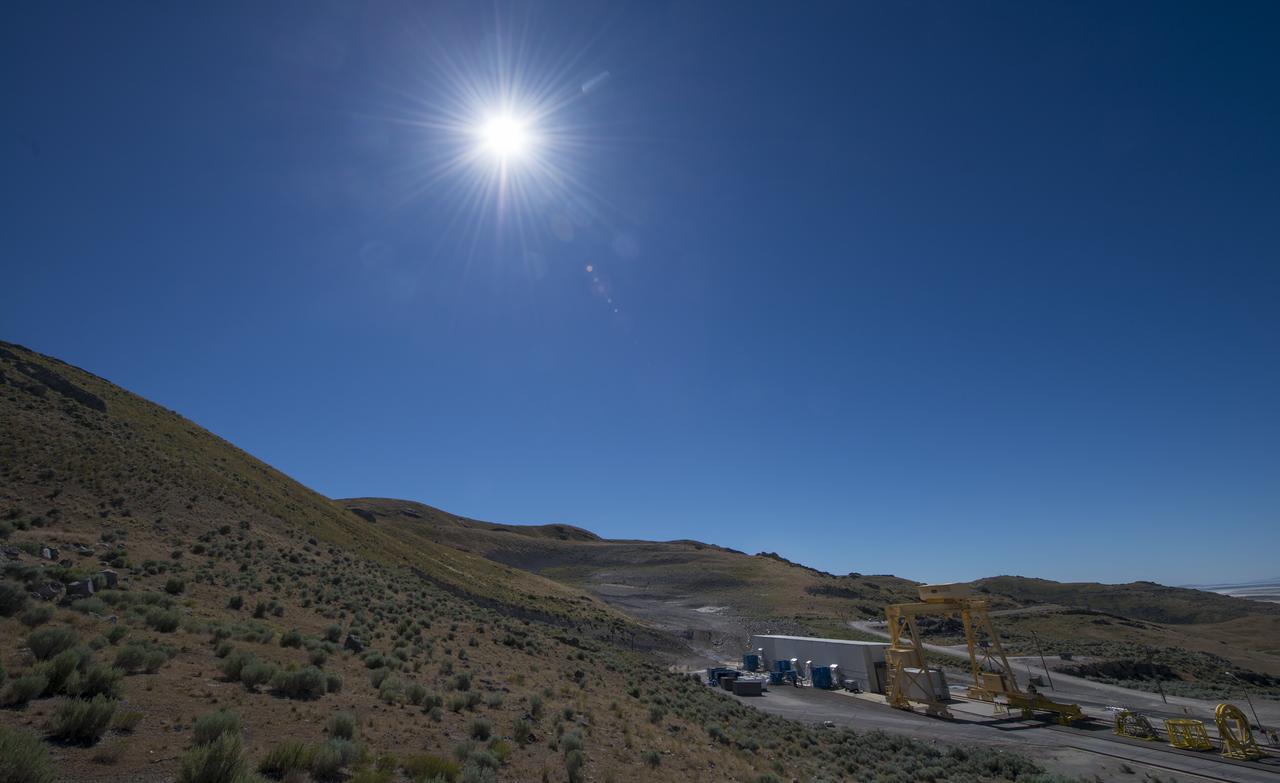
The test area where the second and final qualification motor (QM-2) test for the Space Launch System’s booster is seen Sunday, June 26, 2016, at Orbital ATK Propulsion Systems test facilities in Promontory, Utah. The test is scheduled for Tuesday, June 28 at 10:05 a.m. EDT (8:05 a.m. MDT). Photo Credit: (NASA/Bill Ingalls)
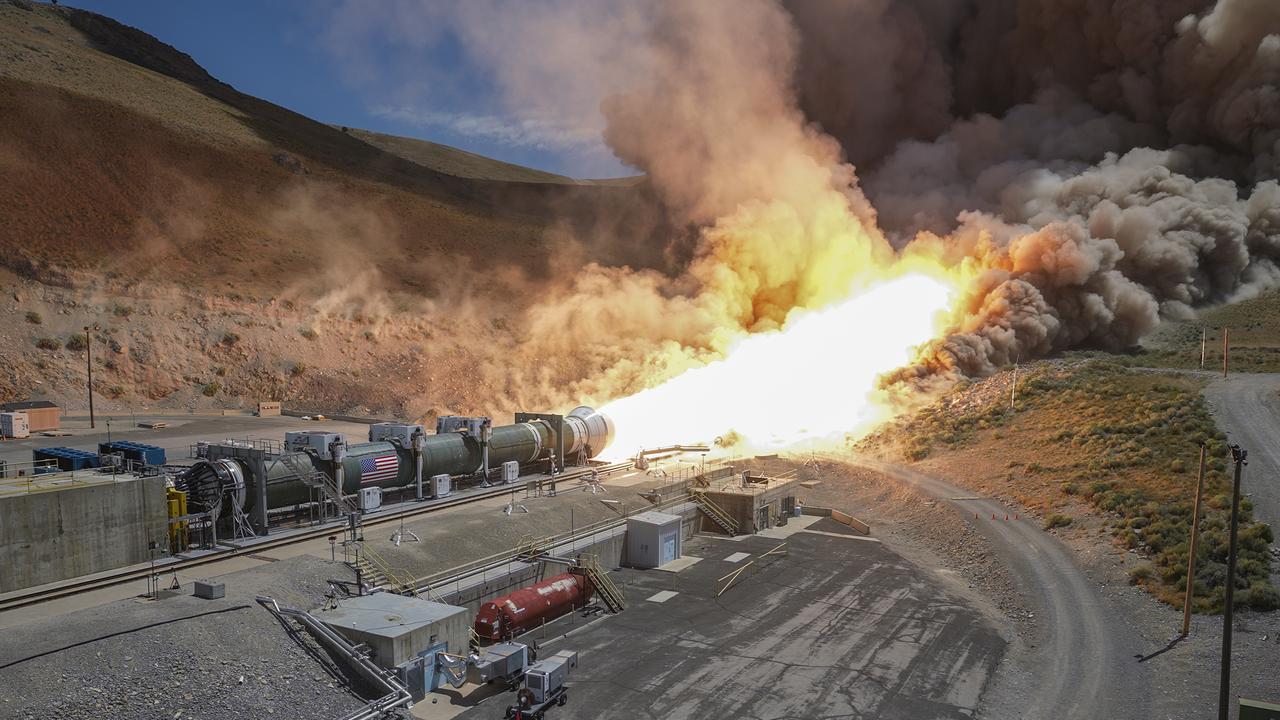
Teams from NASA and Northrop Grumman fire a ground-based version of a booster for the agency’s SLS (Space Launch System) rocket June 26. Secured horizontally in a test stand at Northrop Grumman’s test facility in Promontory, Utah, the single five-segment booster motor fired for more than two minutes and produced 3.9 million pounds of thrust. The booster for this test, known as Demonstration Motor-1 (DM-1), is the result of the Booster Obsolescence Life Extension (BOLE) project. This test was the first full-scale ground test of a new five-segment solid rocket motor. Teams from NASA and Northrop Grumman fire a ground-based version of a booster for the agency’s SLS (Space Launch System) rocket June 26. Secured horizontally in a test stand at Northrop Grumman’s test facility in Promontory, Utah, the single five-segment booster motor fired for more than two minutes and produced 3.9 million pounds of thrust. The booster for this test, known as Demonstration Motor-1 (DM-1), is the result of the Booster Obsolescence Life Extension (BOLE) project. This test was the first full-scale ground test of a new five-segment solid rocket motor. During the test, there was an abnormal event approximately 15 seconds before the end of the motor firing. Despite this event, NASA achieved several of the test’s primary objectives and received valuable data on technical risks identified ahead of the test. Testing this evolved booster for the SLS will help evaluate improvements and new materials in the boosters. The BOLE effort was launched to transition to a more efficient, lower cost commercial solution for the boosters for the SLS rocket. Through the Artemis campaign, NASA will send astronauts to explore the Moon for scientific discovery, economic benefits, and to build the foundation for the first crewed missions to Mars – for the benefit of all. For more information, contact NASA Marshall’s Office of Communications at 256-544-0034.
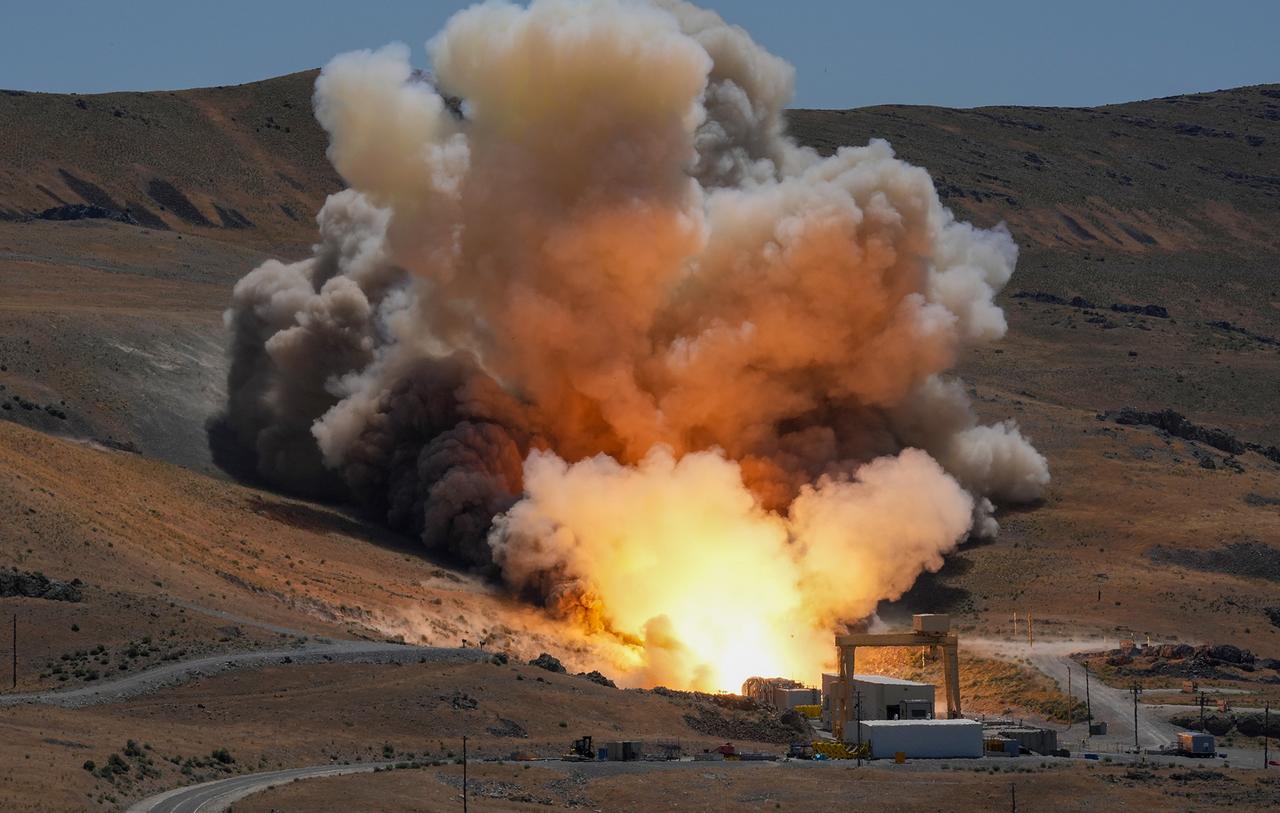
Teams from NASA and Northrop Grumman fire a ground-based version of a booster for the agency’s SLS (Space Launch System) rocket June 26. Secured horizontally in a test stand at Northrop Grumman’s test facility in Promontory, Utah, the single five-segment booster motor fired for more than two minutes and produced 3.9 million pounds of thrust. The booster for this test, known as Demonstration Motor-1 (DM-1), is the result of the Booster Obsolescence Life Extension (BOLE) project. This test was the first full-scale ground test of a new five-segment solid rocket motor. During the test, there was an abnormal event approximately 15 seconds before the end of the motor firing. Despite this event, NASA achieved several of the test’s primary objectives and received valuable data on technical risks identified ahead of the test. Testing this evolved booster for the SLS will help evaluate improvements and new materials in the boosters. The BOLE effort was launched to transition to a more efficient, lower cost commercial solution for the boosters for the SLS rocket. Through the Artemis campaign, NASA will send astronauts to explore the Moon for scientific discovery, economic benefits, and to build the foundation for the first crewed missions to Mars – for the benefit of all. For more information, contact NASA Marshall’s Office of Communications at 256-544-0034.
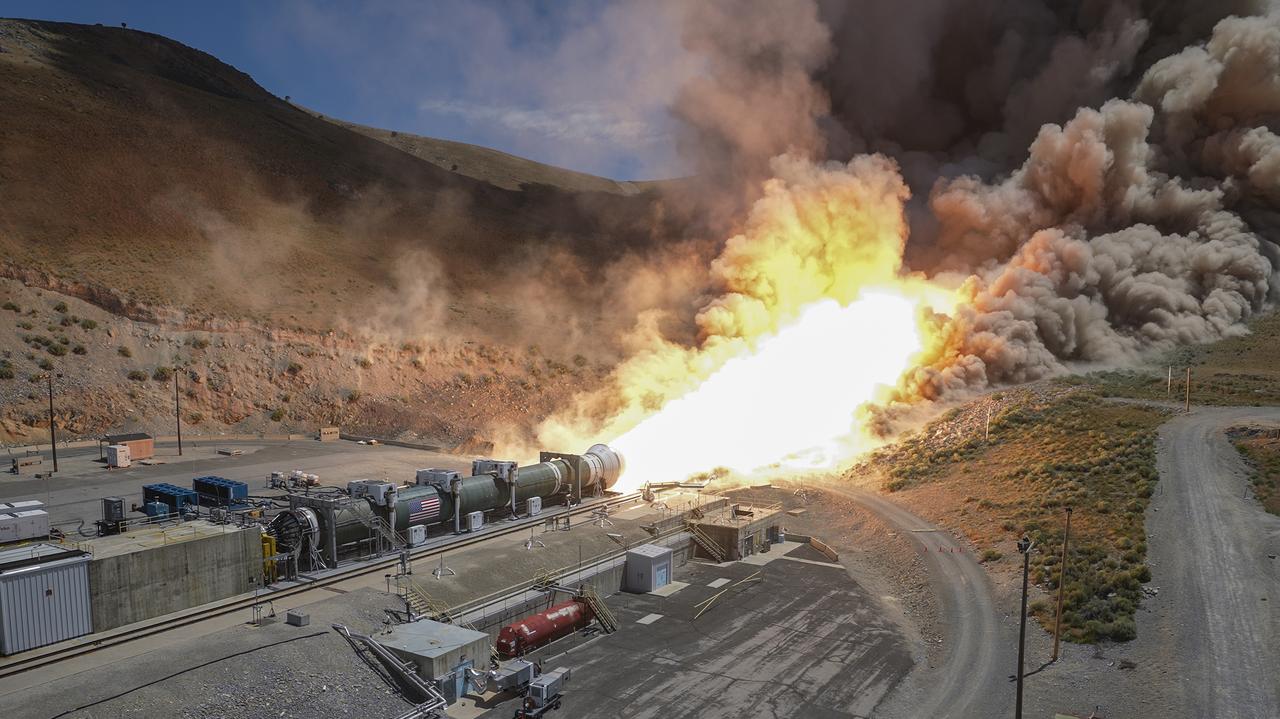
Teams from NASA and Northrop Grumman fire a ground-based version of a booster for the agency’s SLS (Space Launch System) rocket June 26. Secured horizontally in a test stand at Northrop Grumman’s test facility in Promontory, Utah, the single five-segment booster motor fired for more than two minutes and produced 3.9 million pounds of thrust. The booster for this test, known as Demonstration Motor-1 (DM-1), is the result of the Booster Obsolescence Life Extension (BOLE) project. This test was the first full-scale ground test of a new five-segment solid rocket motor. During the test, there was an abnormal event approximately 15 seconds before the end of the motor firing. Despite this event, NASA achieved several of the test’s primary objectives and received valuable data on technical risks identified ahead of the test. Testing this evolved booster for the SLS will help evaluate improvements and new materials in the boosters. The BOLE effort was launched to transition to a more efficient, lower cost commercial solution for the boosters for the SLS rocket. Through the Artemis campaign, NASA will send astronauts to explore the Moon for scientific discovery, economic benefits, and to build the foundation for the first crewed missions to Mars – for the benefit of all. For more information, contact NASA Marshall’s Office of Communications at 256-544-0034.

NASA Mars Exploration Rover Opportunity captured this vista of Victoria Crater from the viewpoint of Cape Verde, one of the promontories that are part of the scalloped rim of the crater.

This anaglyph from from NASA Mars Exploration Rover Opportunity is of Victoria crater is looking southeast from Duck Bay towards the dramatic promontory called Cabo Frio. 3D glasses are necessary to view this image.

This anaglyph from from NASA Mars Exploration Rover Opportunity is of Victoria crater, looking north from Duck Bay towards the dramatic promontory called Cape Verde. 3D glasses are necessary to view this image.
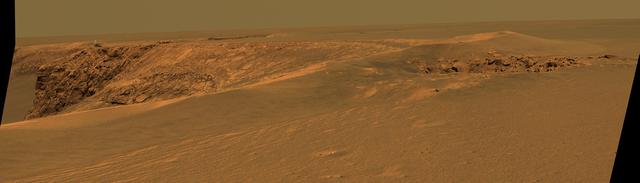
This image superimposes an artist concept of NASA Mars Exploration Rover Opportunity atop the Cabo Frio promontory on the rim of Victoria Crater in the Meridiani Planum region of Mars. It is done to give a sense of scale.
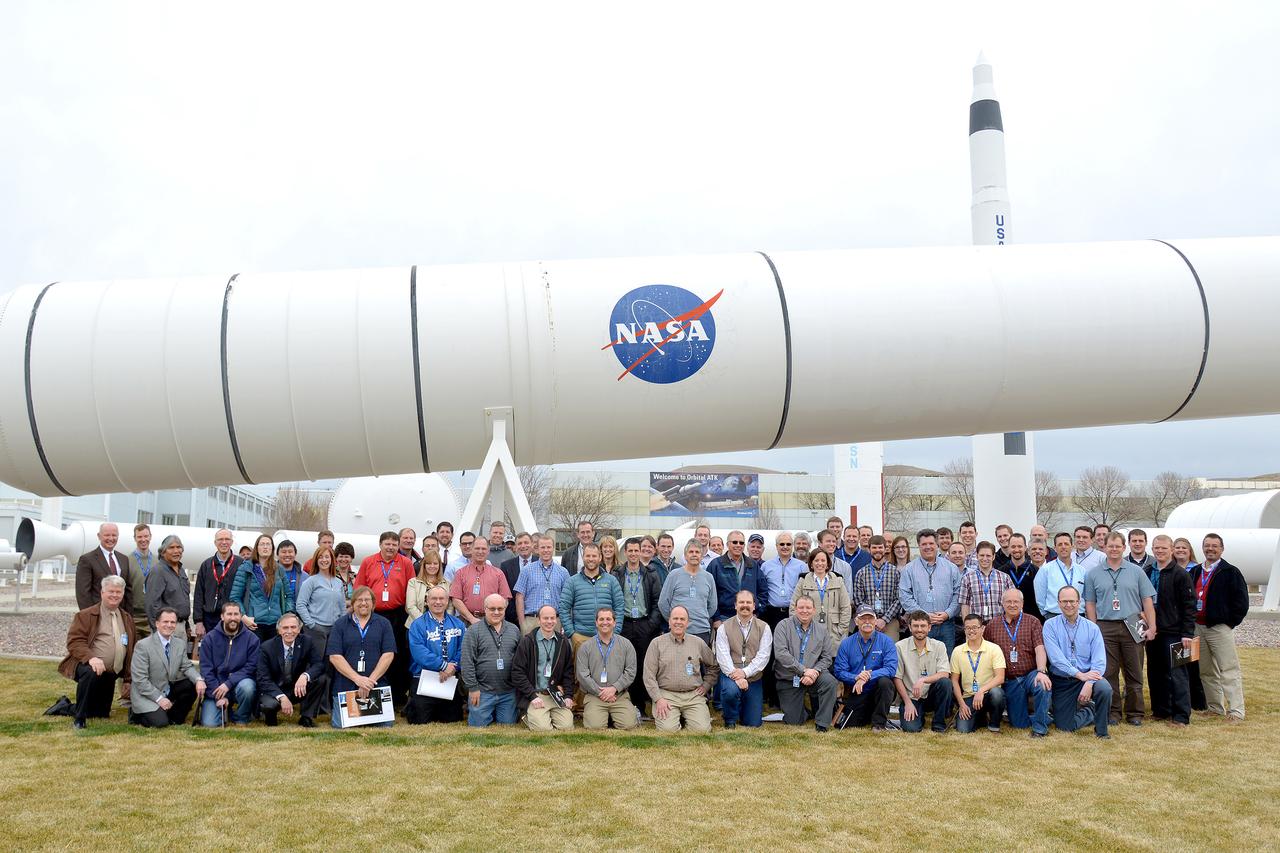
The Orion team congratulates the Orbital ATK team in Promontory, Utah on their efforts in making Exploration Flight Test-1 (EFT-1) a success on March 11, 2015. Part of Batch image transfer from Flickr.
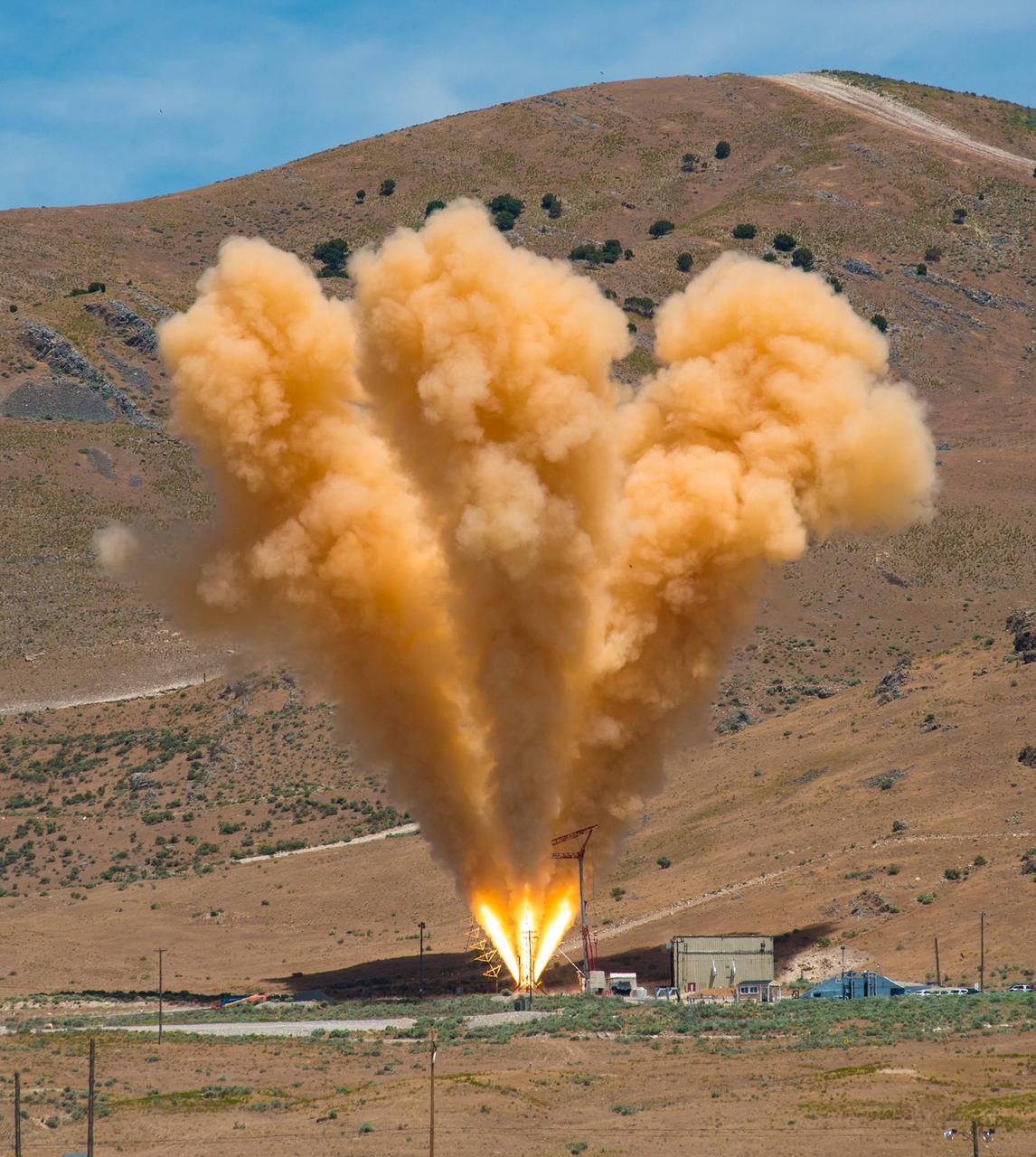
The abort motor for Orion’s launch abort system fired for five seconds in a test at the Promontory, Utah facility of manufacturer Orbital ATK on June 15, 2017. Part of Batch images transfer from Flickr.

This 34 by 59 km sub-scene, acquired on July 5, 2000, covers the eastern part of the Strait of Gibraltar, separating Spain from Morocco. The promontory on the eastern side of the conspicuous Spanish port is the Rock of Gibraltar. The Rock of Gibraltar was once one of the two classical Pillars of Hercules, crowned with silver columns by Phoenician mariners to mark the limits of safe navigation for the ancient Mediterranean peoples. The rocky promontory still commands the western entrance to the Mediterranean Sea, separated from North Africa only by the narrow Strait of Gibraltar. A British colony, Gibraltar occupies a narrow strip of land at the southernmost tip of the Iberian Peninsula. It is separated from the Spanish mainland by a neutral zone contained on a narrow, sandy isthmus. The rocky limestone and shale ridge known as the Rock rises abruptly from the sea, to a maximum elevation of 426 meters (1,398 feet). Because of its strategic location and formidable topography, Gibraltar serves mainly as a British fortress. The Rock has traditionally been a symbol of British naval strength. Most of its sparse land is taken up by air and naval installations, and the civilian population is small. The image is centered at 36 degrees north latitude, 5.5 degrees west longitude. http://photojournal.jpl.nasa.gov/catalog/PIA11167
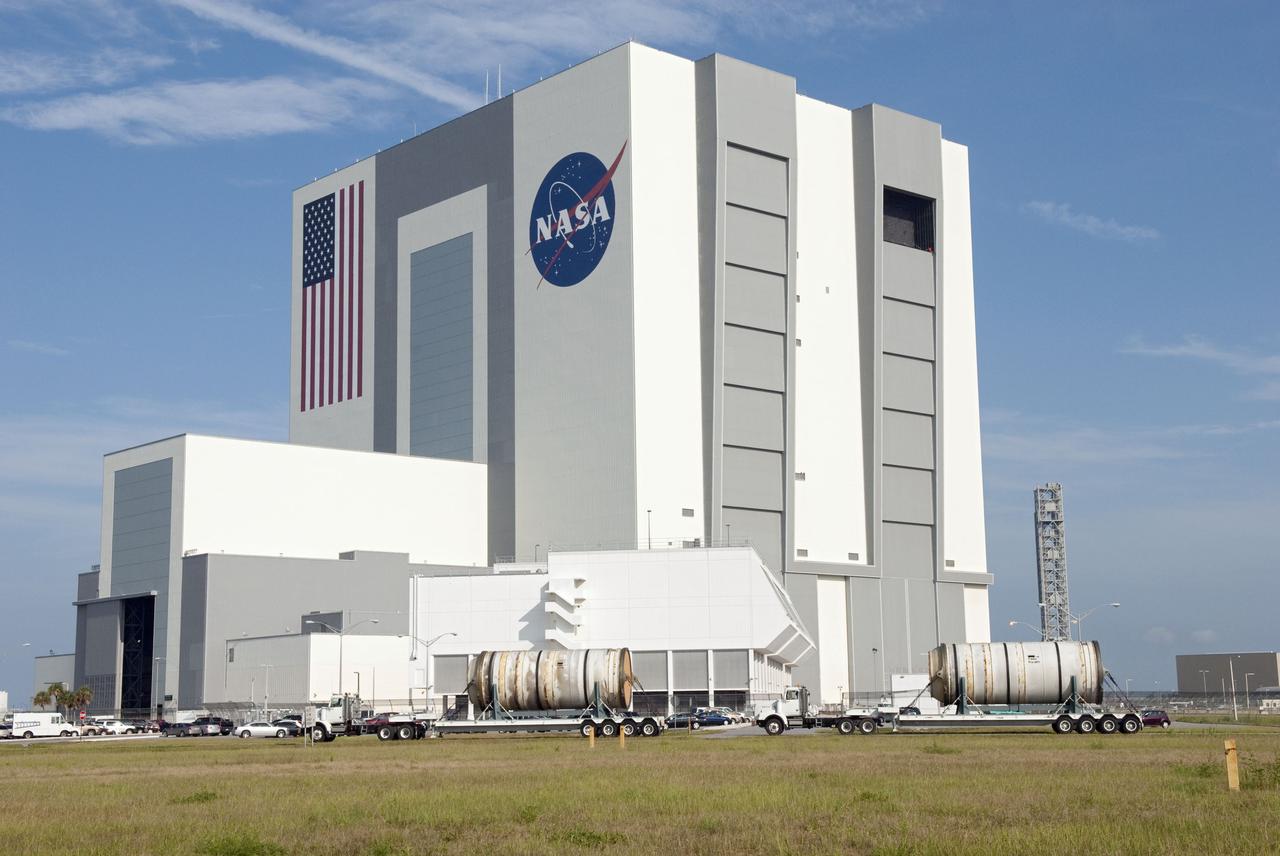
CAPE CANAVERAL, Fla. -- At NASA's Kennedy Space Center in Florida, spent solid rocket booster segments used for the STS-132 mission are being transported from Hangar AF to the Locomotive Maintenance Facility. They will be loaded onto railcars and returned to the ATK solid rocket booster plant in Promontory, Utah. Photo credit: NASA_Jim Grossmann
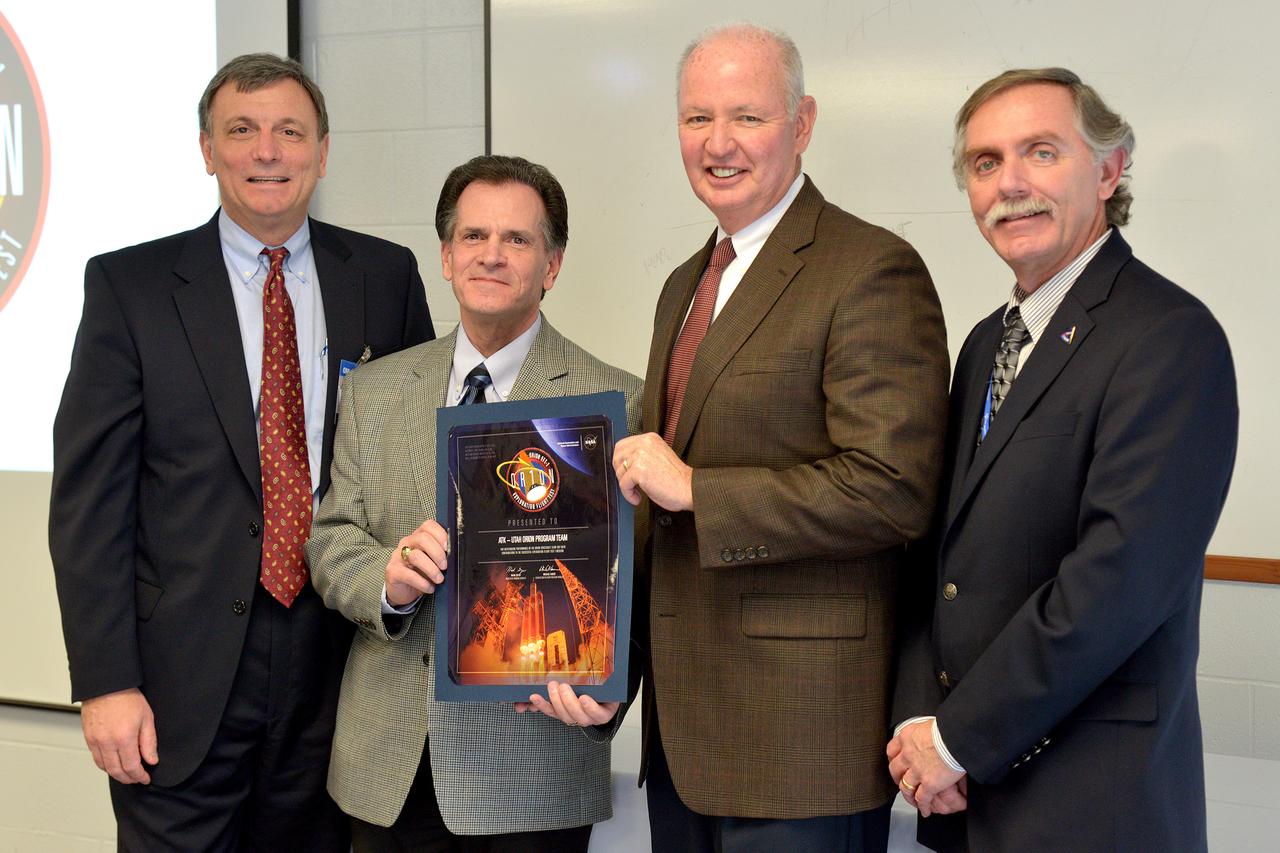
The Orion team congratulates the Orbital ATK team in Promontory, Utah on their efforts in making Exploration Flight Test-1 (EFT-1) a success on March 11, 2015. An award is presented to the ATK-Utah Orion Program Team. Part of Batch image transfer from Flickr.
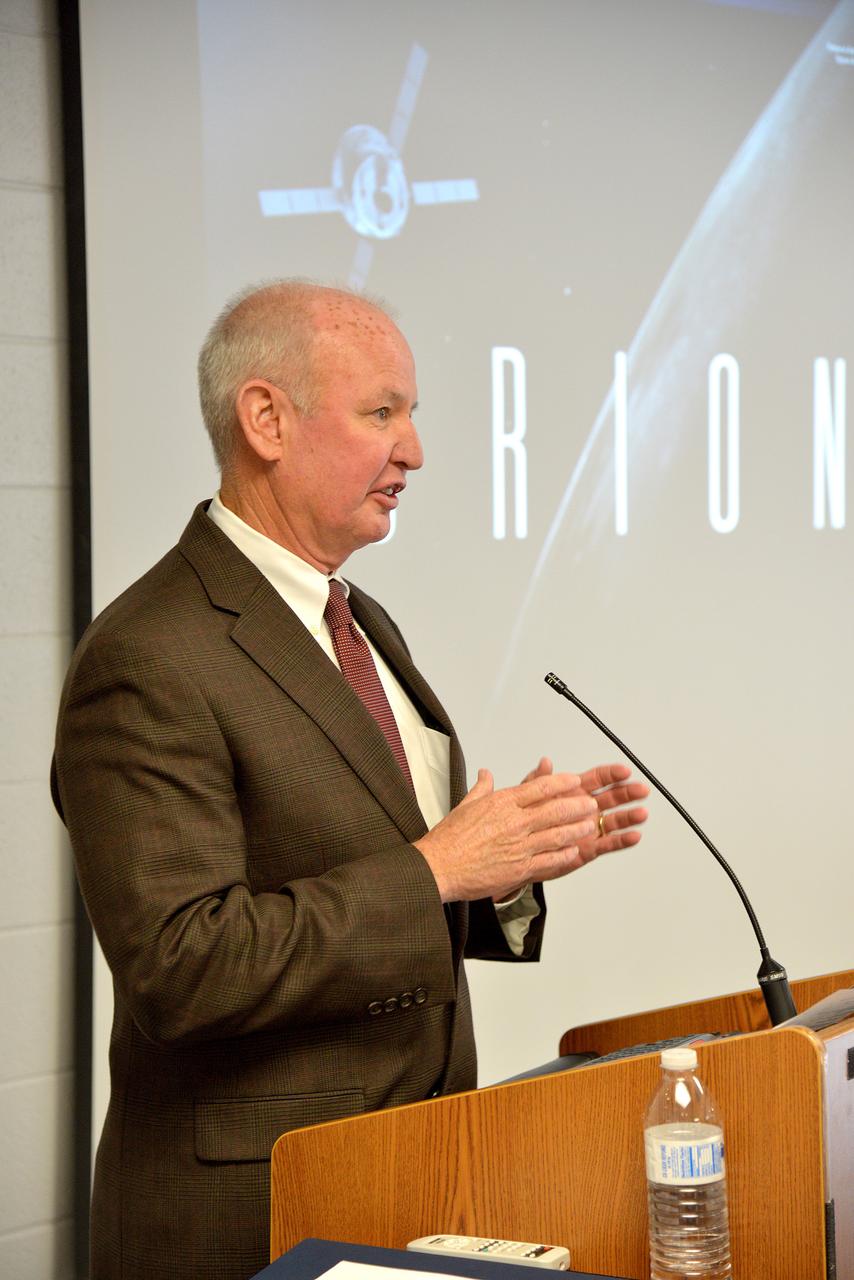
The Orion team (including Orion Program Manager Mark Geyer) congratulates the Orbital ATK team in Promontory, Utah on their efforts in making Exploration Flight Test-1 (EFT-1) a success on March 11, 2015. Part of Batch image transfer from Flickr.

A test firing of the Qualification Motor-1 Solid Rocket Motor which will power the Space Launch System and Orion on Artemis I takes place in Promontory, Utah on March 11, 2015. Part of Batch image transfer from Flickr.
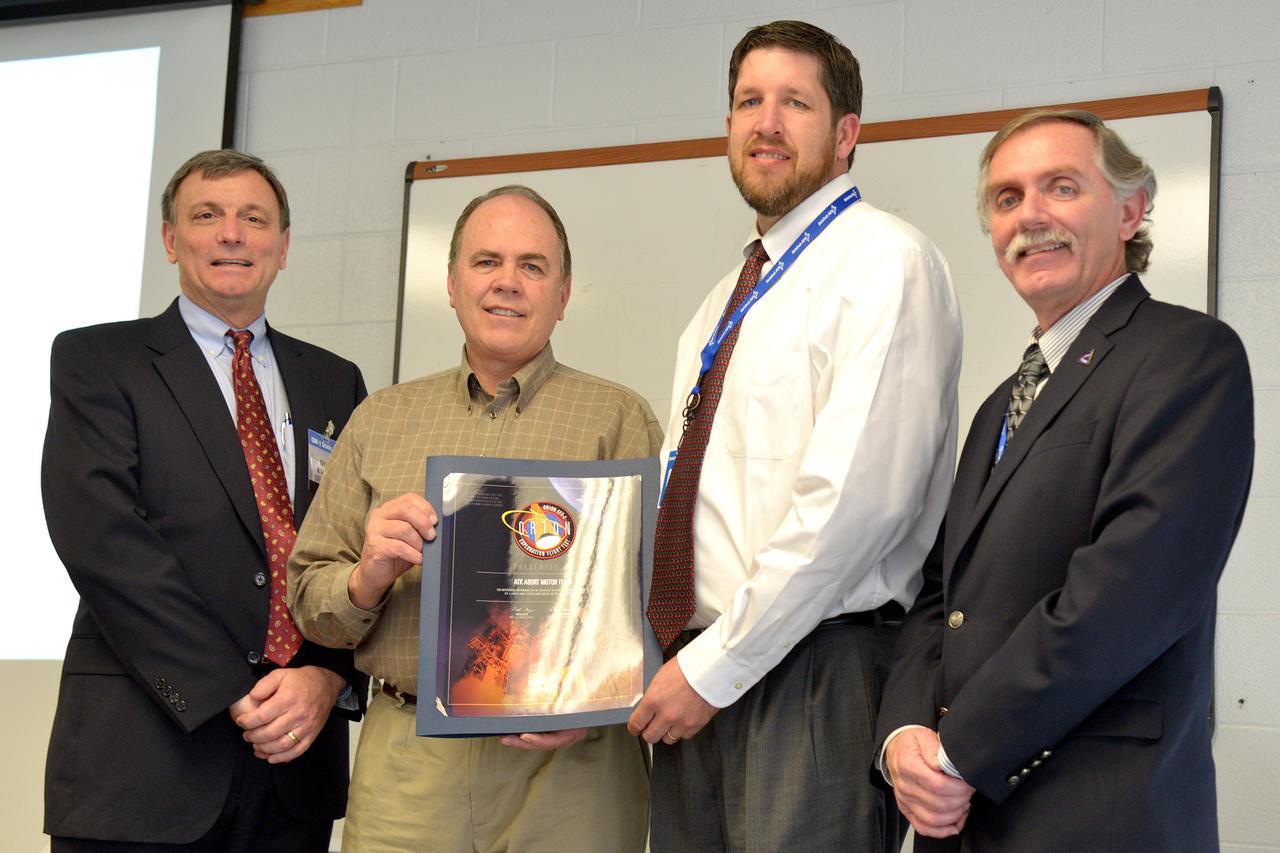
The Orion team congratulates the Orbital ATK team in Promontory, Utah on their efforts in making Exploration Flight Test-1 (EFT-1) a success on March 11, 2015. An award is presented to the ATK Abort Motor Team. Part of Batch image transfer from Flickr.
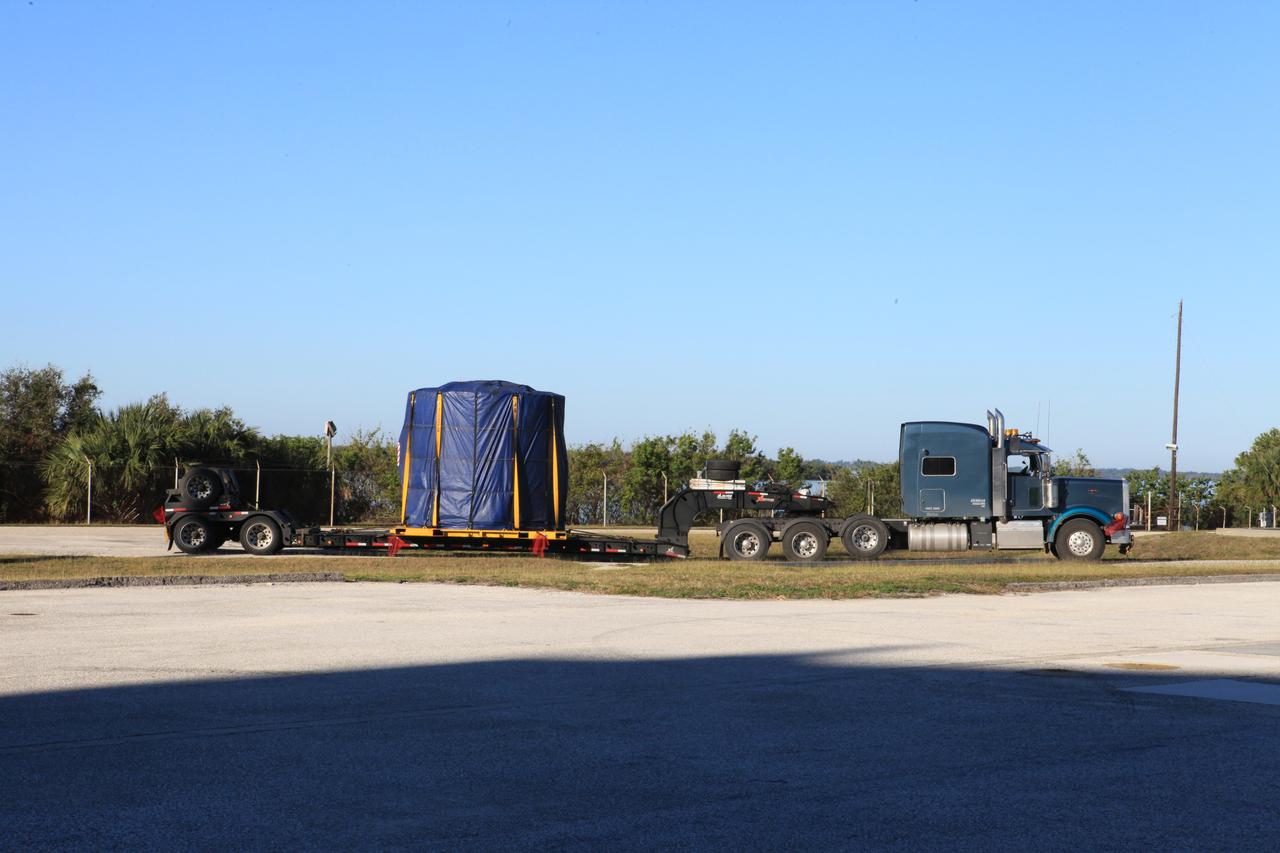
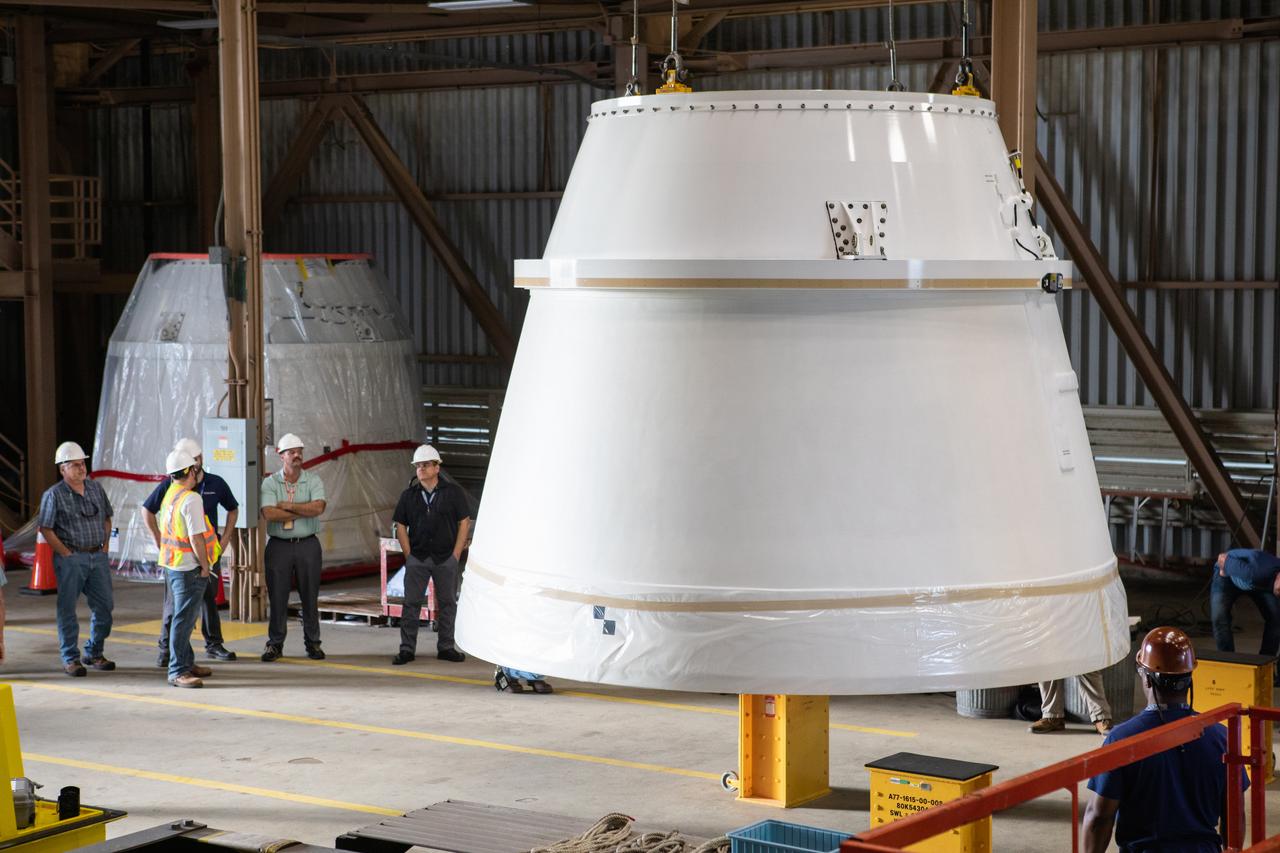
The left-hand forward skirt for NASA's Space Launch System (SLS) solid rocket boosters arrives by flatbed truck from booster prime contractor Orbital ATK in Promontory, Utah, to Cape Canaveral Air Force Station in Florida. The forward skirt will be delivered to the Hangar AF facility where refurbishment will continue. The forward skirt will be inspected and prepared for use on the left-hand solid rocket booster for Exploration Mission 1. NASA's Orion spacecraft will fly atop the SLS rocket on its first uncrewed flight test.

The Strait of Gibraltar separates Spain from Morocco. This image, acquired on July 5, 2000, covers an area 34 kilometers (21 miles) wide and 59 kilometers (37 miles) long in three bands of the reflected visible and infrared wavelength region. The promontory on the eastern side of the conspicuous Spanish port is the Rock of Gibraltar. Once one of the two classical Pillars of Hercules, the Rock was crowned with silver columns by Phoenician mariners to mark the limits of safe navigation for the ancient Mediterranean peoples. The rocky promontory still commands the western entrance to the Mediterranean Sea. The rocky limestone and shale ridge rises abruptly from the sea, to a maximum elevation of 426 meters (1,398 feet). A British colony, Gibraltar occupies a narrow strip of land at the southernmost tip of the Iberian Peninsula. It is separated from the Spanish mainland by a neutral zone contained on a narrow, sandy isthmus. Because of its strategic location and formidable topography, Gibraltar serves mainly as a British fortress. Most of its sparse land is taken up by air and naval installations, and the civilian population is small. http://photojournal.jpl.nasa.gov/catalog/PIA02657
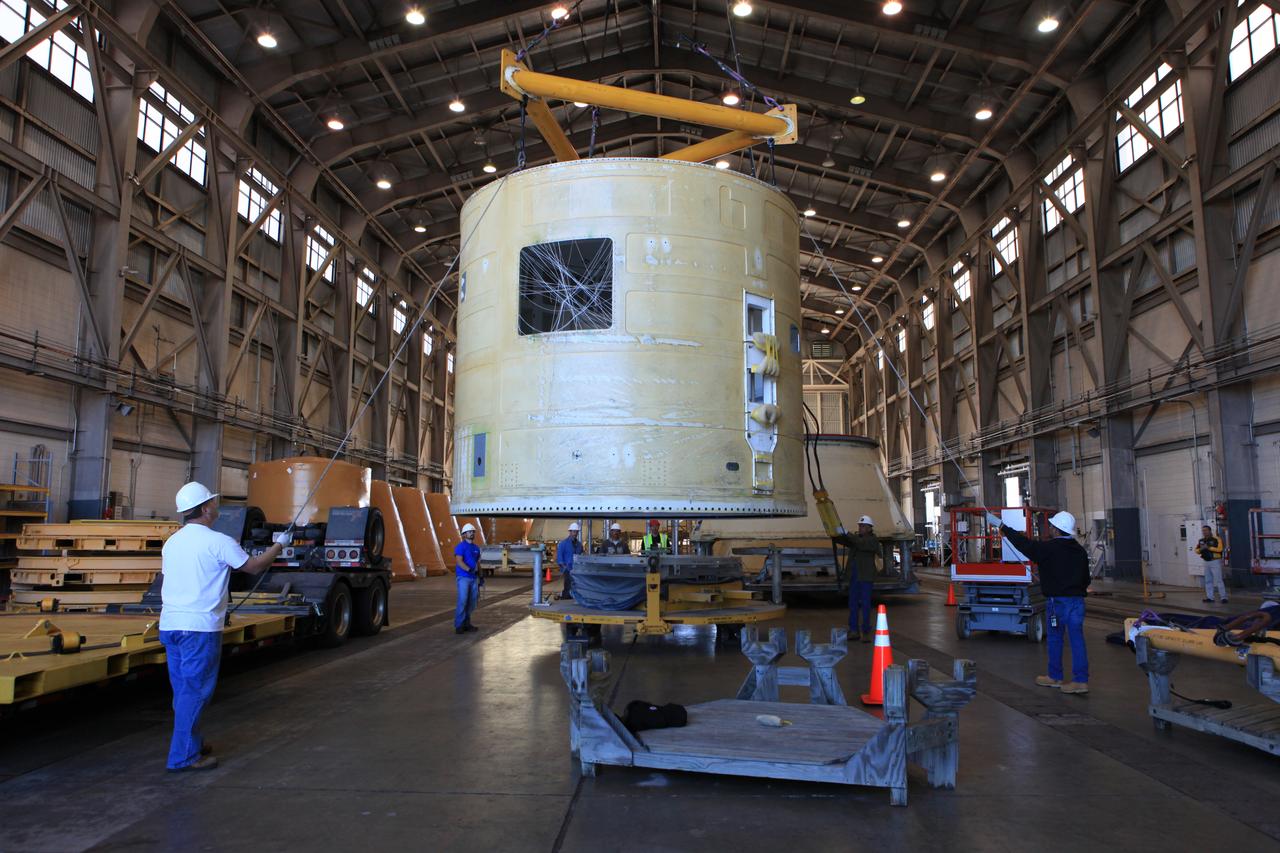
Technicians with Orbital ATK assist as a crane moves the left-hand forward skirt for NASA's Space Launch System (SLS) solid rocket boosters to a stand inside the Hangar AF facility at Cape Canaveral Air Force Station in Florida. The forward skirt was transported from booster prime contractor Orbital ATK in Promontory, Utah. The forward skirt will be staged in Hangar AF where refurbishment will continue. It will be inspected and prepared for use on the left-hand solid rocket booster for Exploration Mission 1. NASA's Orion spacecraft will fly atop the SLS rocket on its first uncrewed flight test.
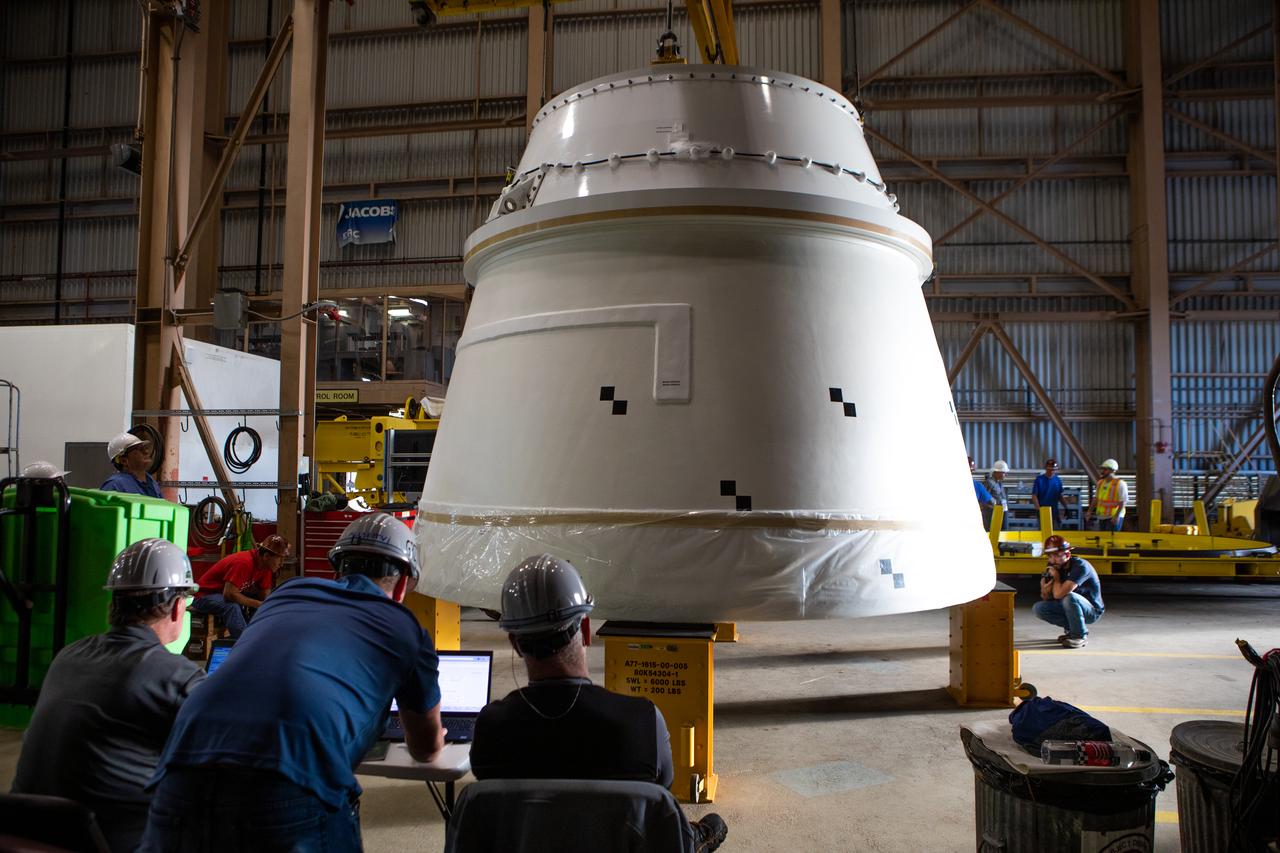
The Northrop Grumman-manufactured right aft exit cone, the second of two for the Space Launch System’s solid rocket boosters, is in view inside the Rotation, Processing and Surge Facility at NASA’s Kennedy Space Center in Florida on Dec. 9, 2019. Both aft exit cones were shipped from Promontory, Utah. They will be checked out and prepared for the Artemis I uncrewed test flight. The aft exit cones sit at the bottommost part of the twin boosters. The cones help provide added thrust for the boosters, while protecting the aft skirts from the thermal environment during launch.
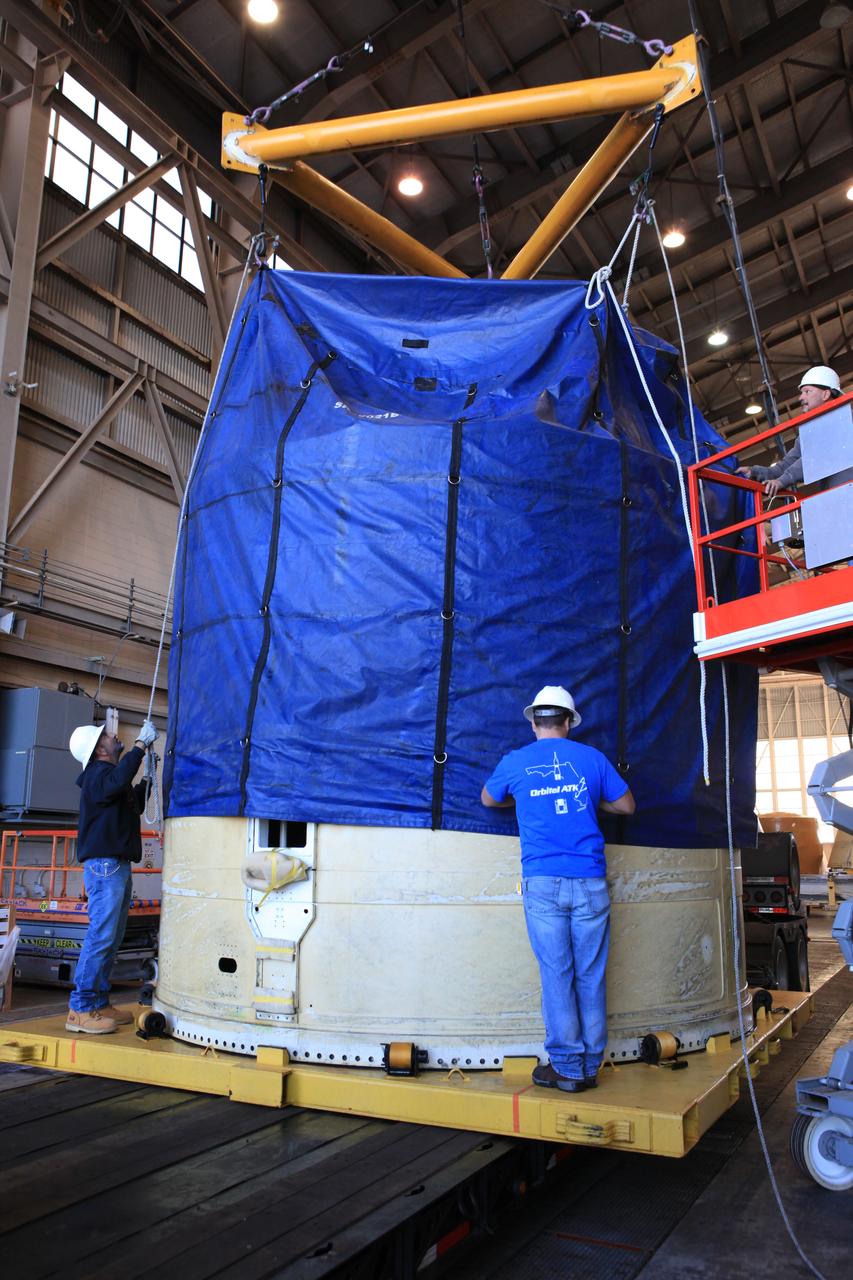
Technicians with Orbital ATK help remove the protective covering from the left-hand forward skirt for NASA's Space Launch System (SLS) solid rocket boosters inside the Hangar AF facility at Cape Canaveral Air Force Station in Florida. The forward skirt was transported from booster prime contractor Orbital ATK in Promontory, Utah. The forward skirt will be staged in Hangar AF where refurbishment will continue. It will be inspected and prepared for use on the left-hand solid rocket booster for Exploration Mission 1. NASA's Orion spacecraft will fly atop the SLS rocket on its first uncrewed flight test.
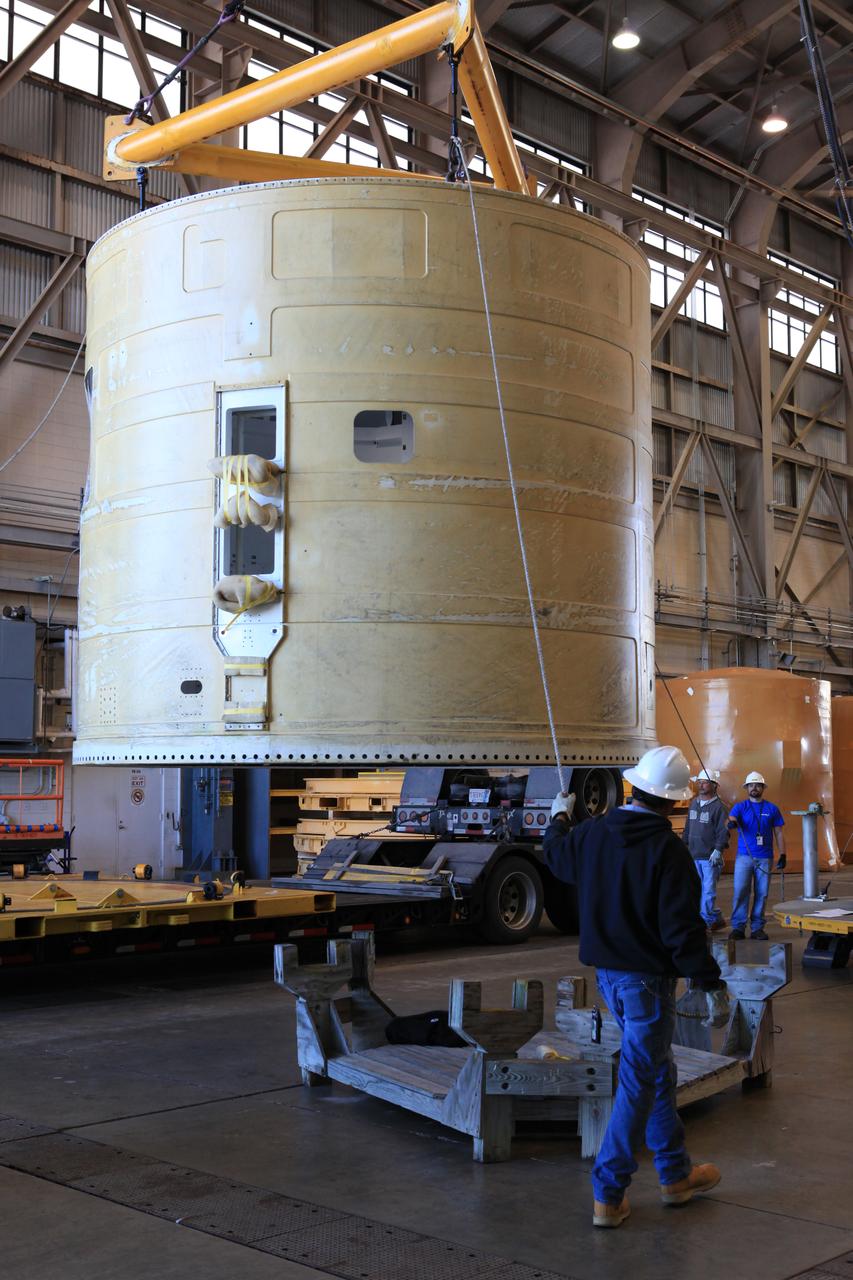
Technicians with Orbital ATK assist as a crane lifts the left-hand forward skirt for NASA's Space Launch System (SLS) solid rocket boosters away from a flatbed truck inside the Hangar AF facility at Cape Canaveral Air Force Station in Florida. The forward skirt was transported from booster prime contractor Orbital ATK in Promontory, Utah. The forward skirt will be staged in Hangar AF where refurbishment will continue. It will be inspected and prepared for use on the left-hand solid rocket booster for Exploration Mission 1. NASA's Orion spacecraft will fly atop the SLS rocket on its first uncrewed flight test.
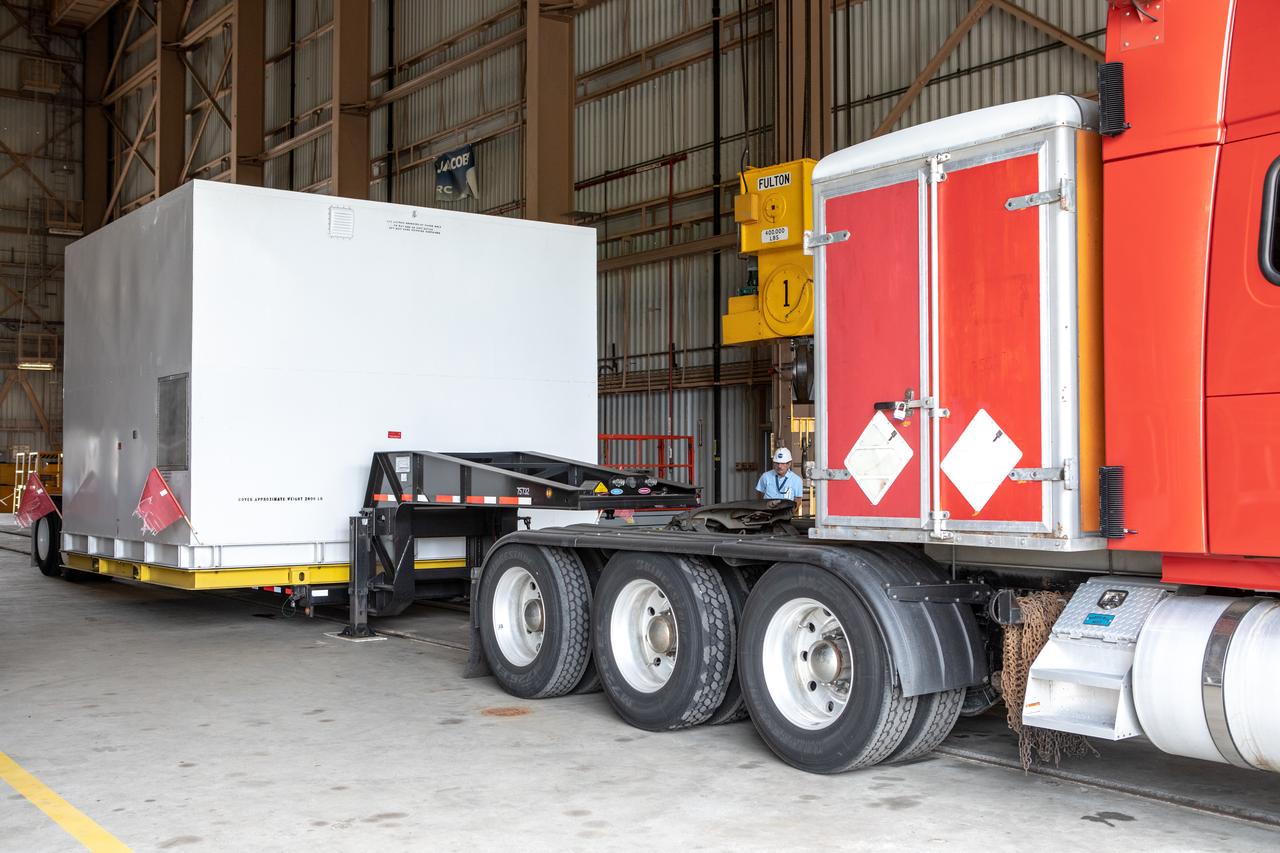
The first of two Northrop Grumman aft exit cones for the Space Launch System’s solid rocket boosters arrives by truck in its shipping container at the Rotation, Processing and Surge Facility at NASA's Kennedy Space Center in Florida on Nov. 4, 2019. The aft exit cone was shipped from Promontory, Utah. It will be checked out and prepared for the Artemis I uncrewed test flight. The aft exit cones sit at the bottommost part of the twin boosters. They are attached to the aft skirts, which contain the booster separation motors. The exit cones help to protect the aft skirts during launch.
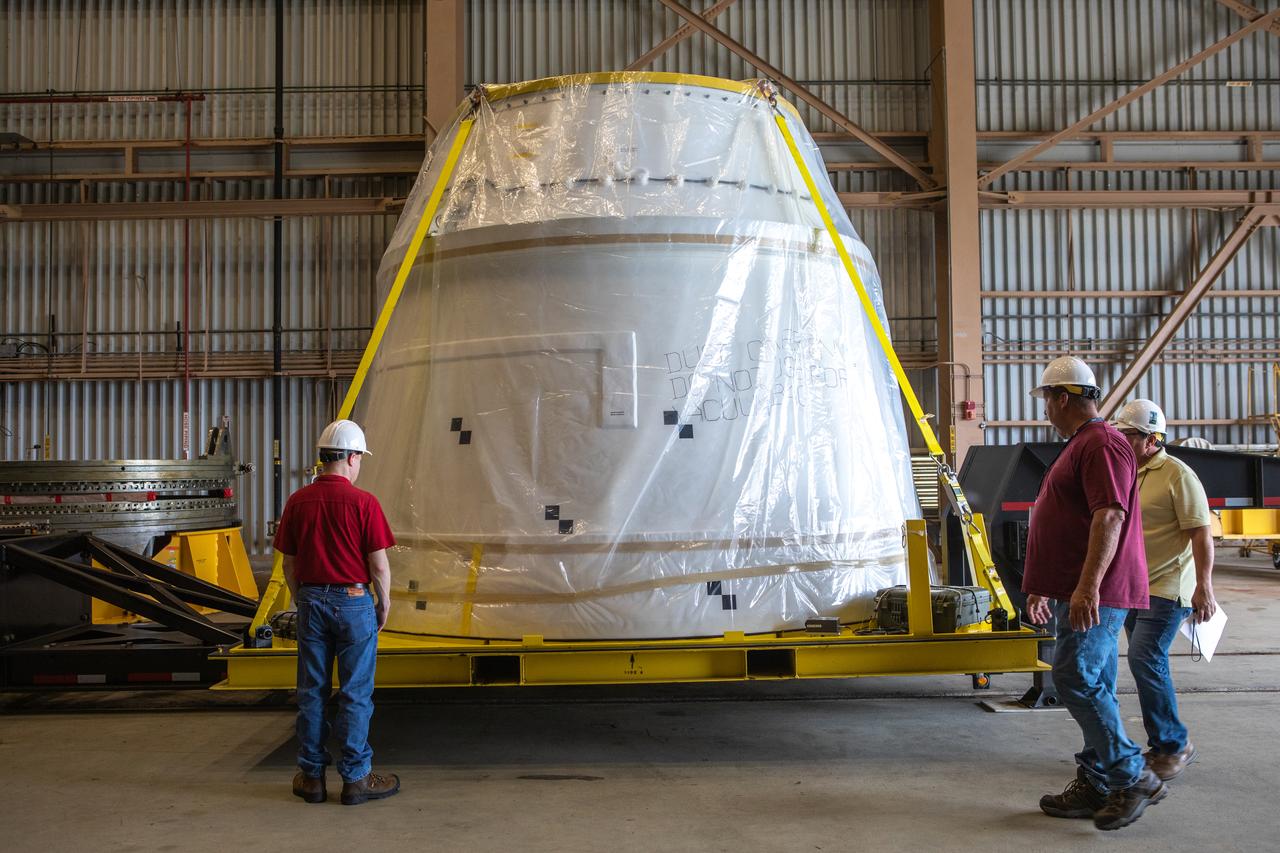
The shipping container cover has been removed from the first Northrop Grumman aft exit cone to arrive for the Space Launch System’s solid rocket boosters inside the Rotation, Processing and Surge Facility at NASA’s Kennedy Space Center in Florida on Nov. 4, 2019. The aft exit cone was shipped from Promontory, Utah. It will be checked out and prepared for the Artemis I uncrewed test flight. The aft exit cones sit at the bottommost part of the twin boosters. They are attached to the aft skirts, which contain the booster separation motors. The exit cones help to protect the aft skirts during launch.
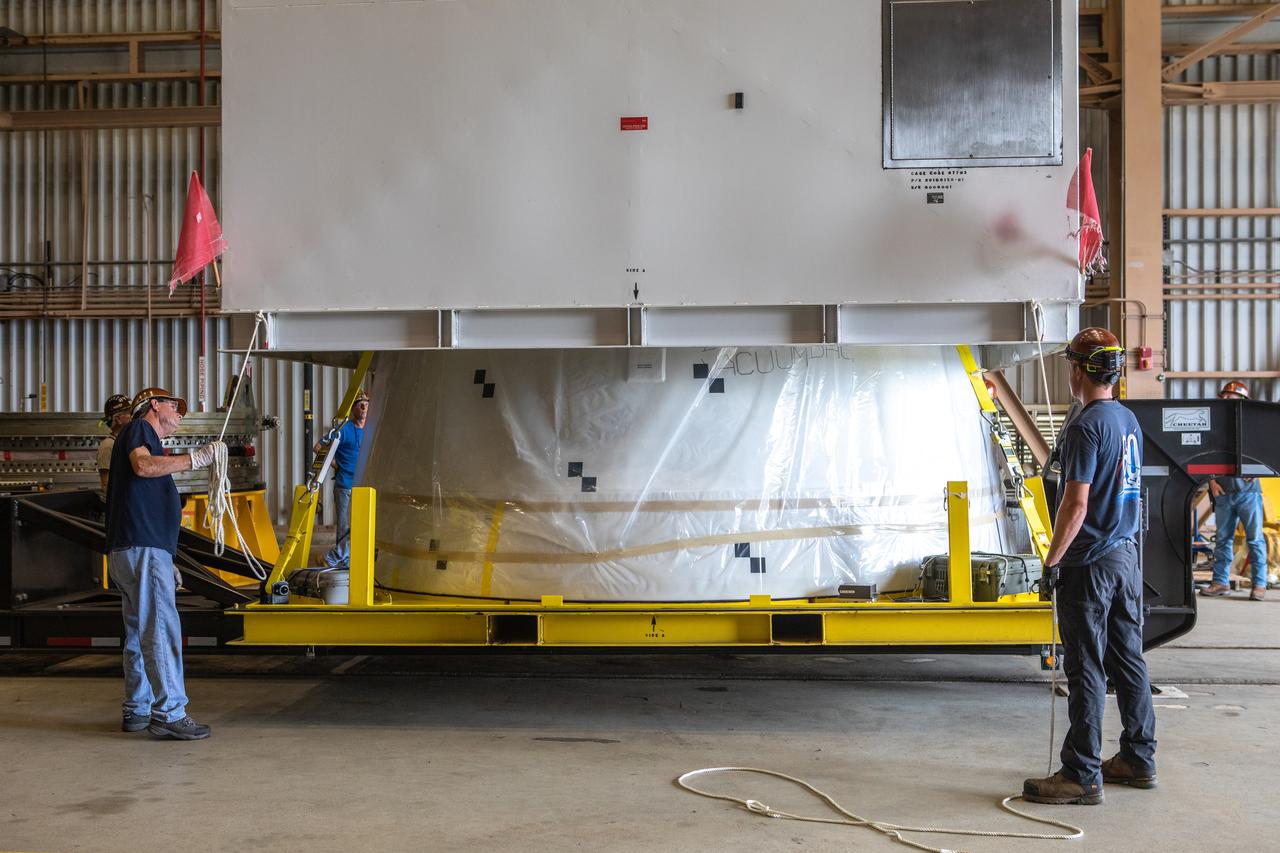
Workers assist with removal of the shipping container cover from the first Northrop Grumman aft exit cone to arrive for the Space Launch System’s solid rocket boosters inside the Rotation, Processing and Surge Facility at NASA’s Kennedy Space Center in Florida on Nov. 4, 2019. The aft exit cone was shipped from Promontory, Utah. It will be checked out and prepared for the Artemis I uncrewed test flight. The aft exit cones sit at the bottommost part of the twin boosters. They are attached to the aft skirts, which contain the booster separation motors. The exit cones help to protect the aft skirts during launch.
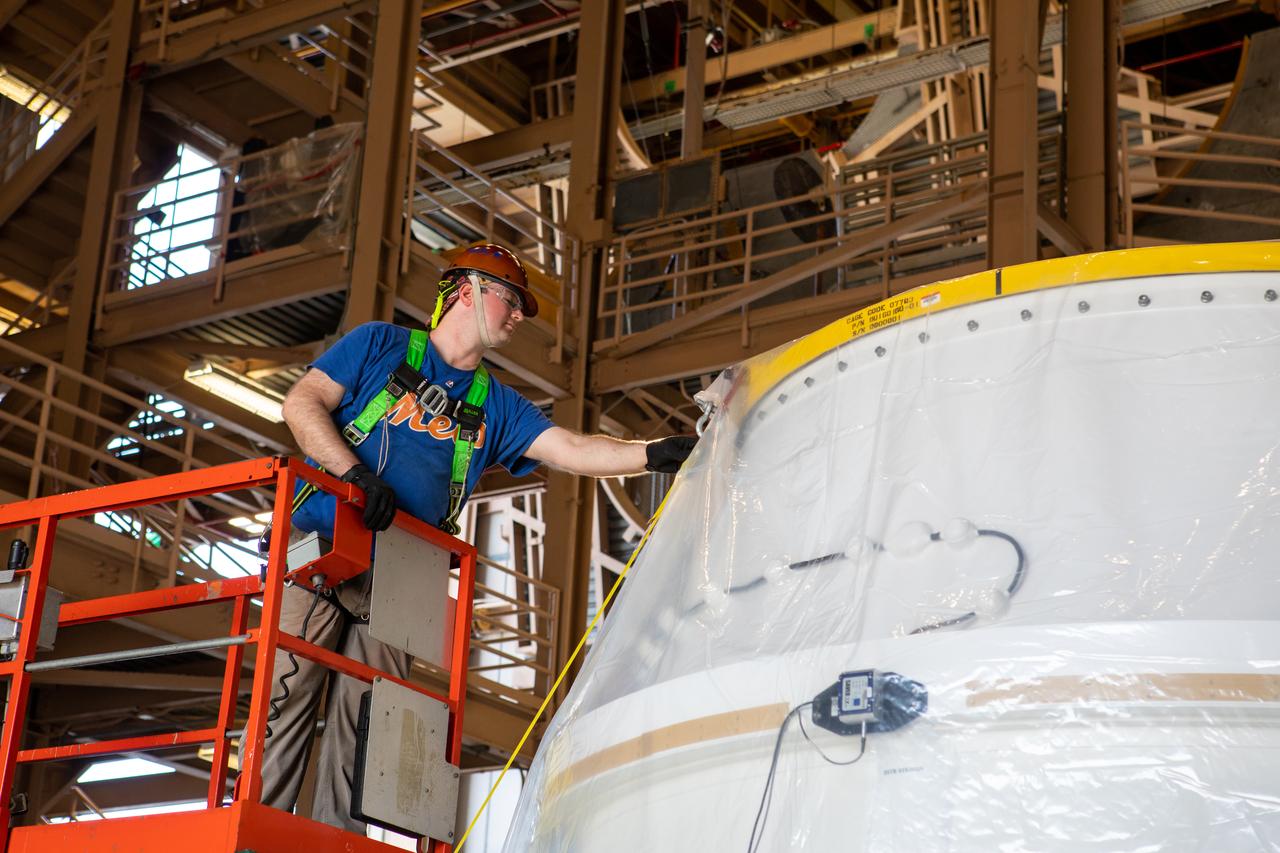
A worker removes one of the securing straps from the second of two Northrop Grumman-manufactured aft exit cones to arrive for the Space Launch System’s solid rocket boosters inside the Rotation, Processing and Surge Facility at NASA’s Kennedy Space Center in Florida on Dec. 9, 2019. The right aft exit cone was shipped from Promontory, Utah. It will be checked out and prepared for the Artemis I uncrewed test flight. The aft exit cones sit at the bottommost part of the twin boosters. The cones help provide added thrust for the boosters, while protecting the aft skirts from the thermal environment during launch.
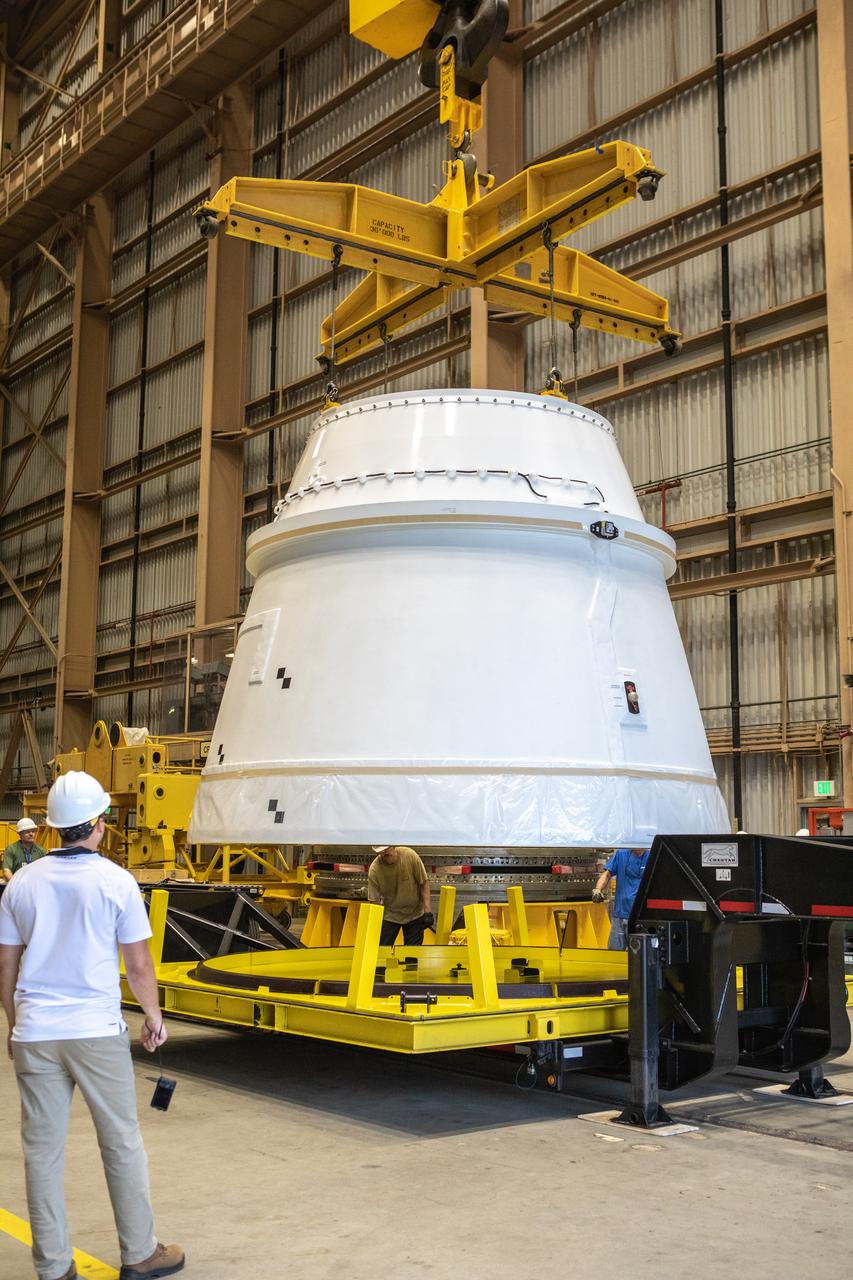
A crane is used to lift the first Northrop Grumman aft exit cone to arrive for the Space Launch System’s solid rocket boosters away from its shipping base inside the Rotation, Processing and Surge Facility at NASA’s Kennedy Space Center in Florida on Nov. 4, 2019. The aft exit cone was shipped from Promontory, Utah. It will be checked out and prepared for the Artemis I uncrewed test flight. The aft exit cones sit at the bottommost part of the twin boosters. They are attached to the aft skirts, which contain the booster separation motors. The exit cones help to protect the aft skirts during launch.
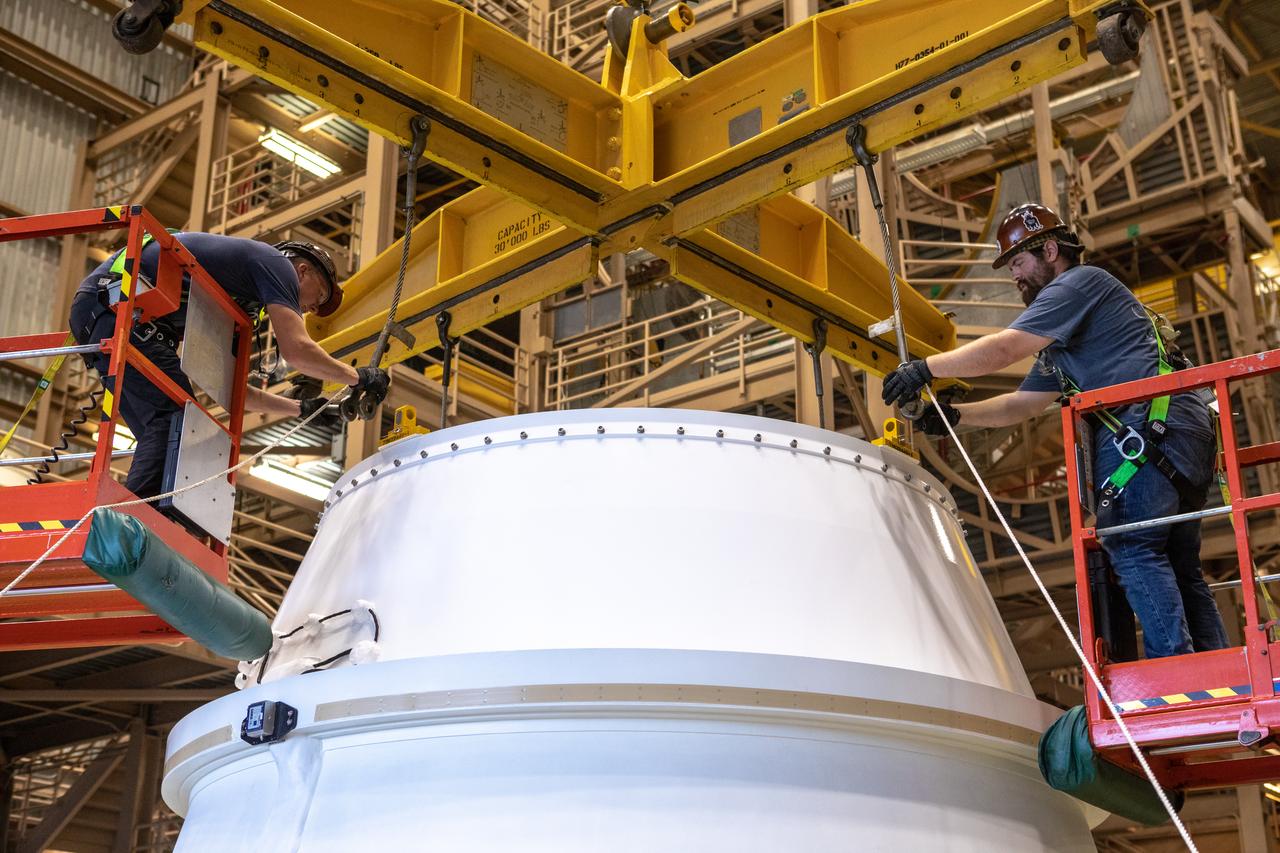
Workers attach a crane to the first Northrop Grumman aft exit cone to arrive for the Space Launch System’s solid rocket boosters inside the Rotation, Processing and Surge Facility at NASA’s Kennedy Space Center in Florida on Nov. 4, 2019. The aft exit cone was shipped from Promontory, Utah. It will be checked out and prepared for the Artemis I uncrewed test flight. The aft exit cones sit at the bottommost part of the twin boosters. They are attached to the aft skirts, which contain the booster separation motors. The exit cones help to protect the aft skirts during launch.
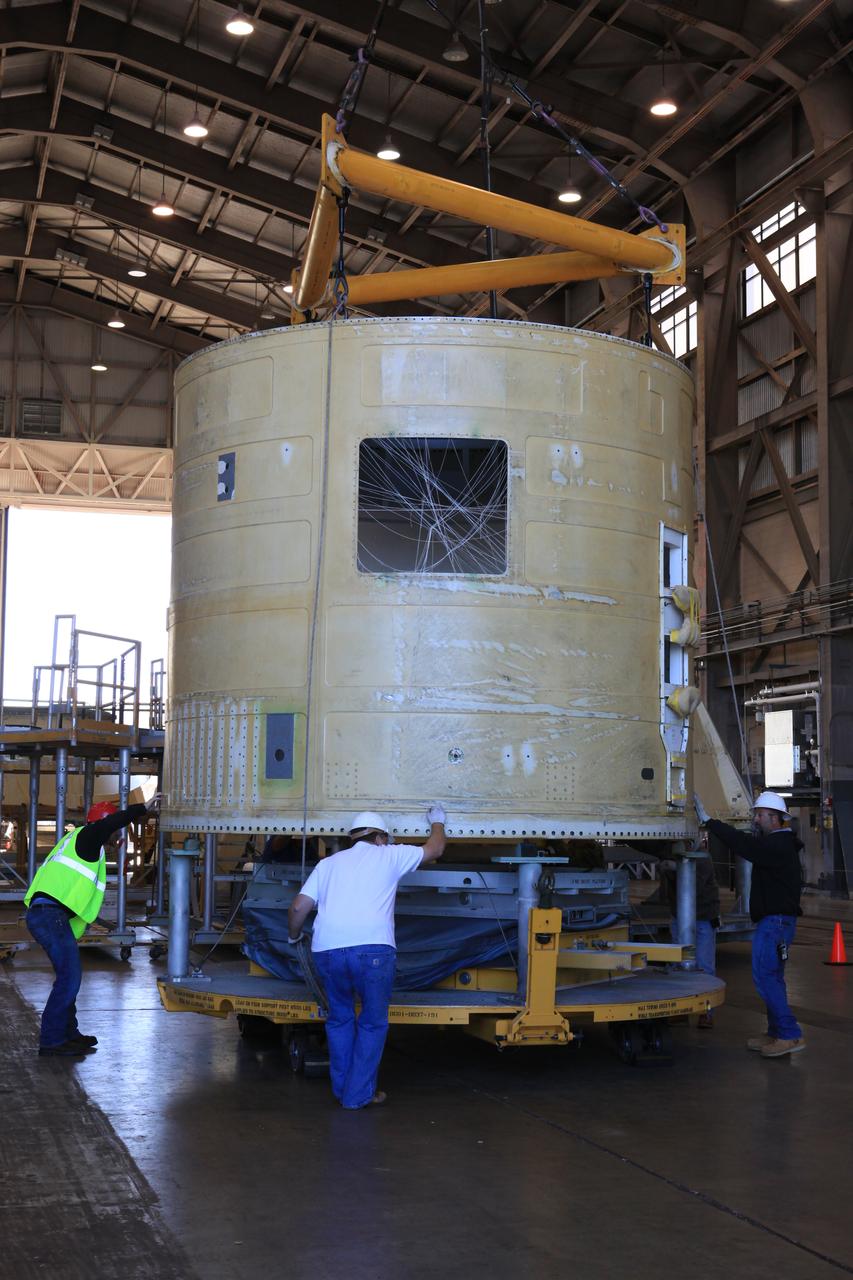
Technicians with Orbital ATK assist as a crane lowers the left-hand forward skirt for NASA's Space Launch System (SLS) solid rocket boosters onto a stand inside the Hangar AF facility at Cape Canaveral Air Force Station in Florida. The forward skirt was transported from booster prime contractor Orbital ATK in Promontory, Utah. The forward skirt will be staged in Hangar AF where refurbishment will continue. It will be inspected and prepared for use on the left-hand solid rocket booster for Exploration Mission 1. NASA's Orion spacecraft will fly atop the SLS rocket on its first uncrewed flight test.
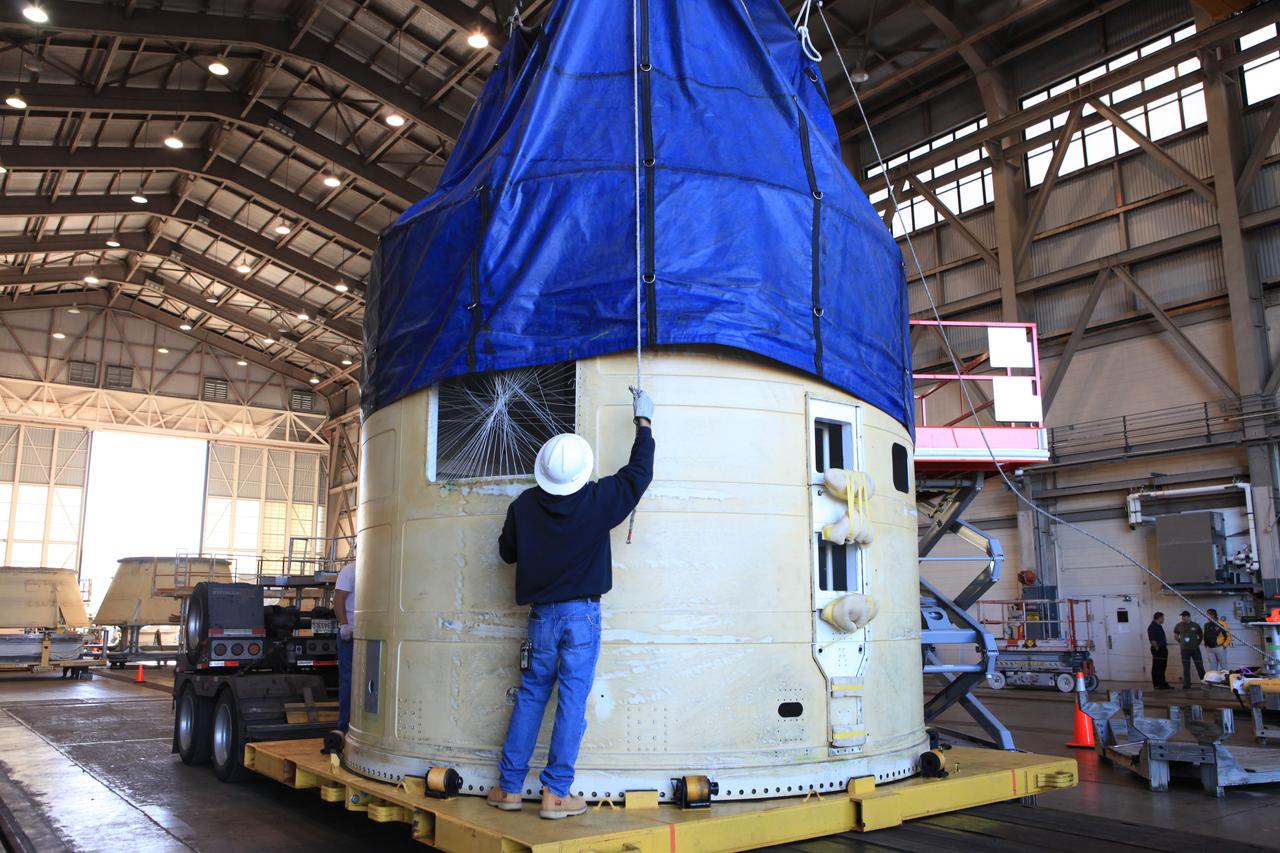
Technicians with Orbital ATK assist as a crane is used to lift the protective covering off of the left-hand forward skirt for NASA's Space Launch System (SLS) solid rocket boosters inside the Hangar AF facility at Cape Canaveral Air Force Station in Florida. The forward skirt was transported from booster prime contractor Orbital ATK in Promontory, Utah. The forward skirt will be staged in Hangar AF where refurbishment will continue. It will be inspected and prepared for use on the left-hand solid rocket booster for Exploration Mission 1. NASA's Orion spacecraft will fly atop the SLS rocket on its first uncrewed flight test.
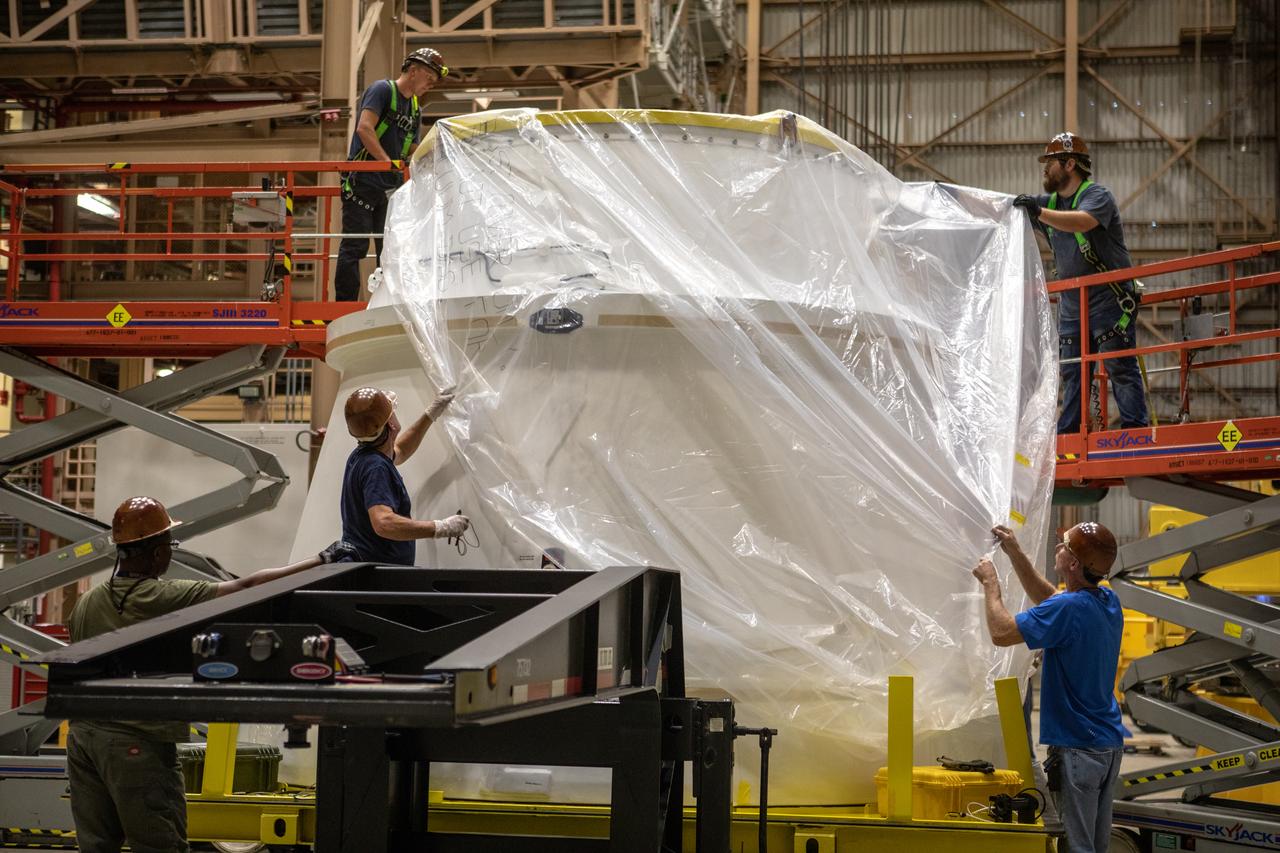
Workers remove the protective cover from the first Northrop Grumman aft exit cone to arrive for the Space Launch System’s solid rocket boosters inside the Rotation, Processing and Surge Facility at NASA’s Kennedy Space Center in Florida on Nov. 4, 2019. The aft exit cone was shipped from Promontory, Utah. It will be checked out and prepared for the Artemis I uncrewed test flight. The aft exit cones sit at the bottommost part of the twin boosters. They are attached to the aft skirts, which contain the booster separation motors. The exit cones help to protect the aft skirts during launch.
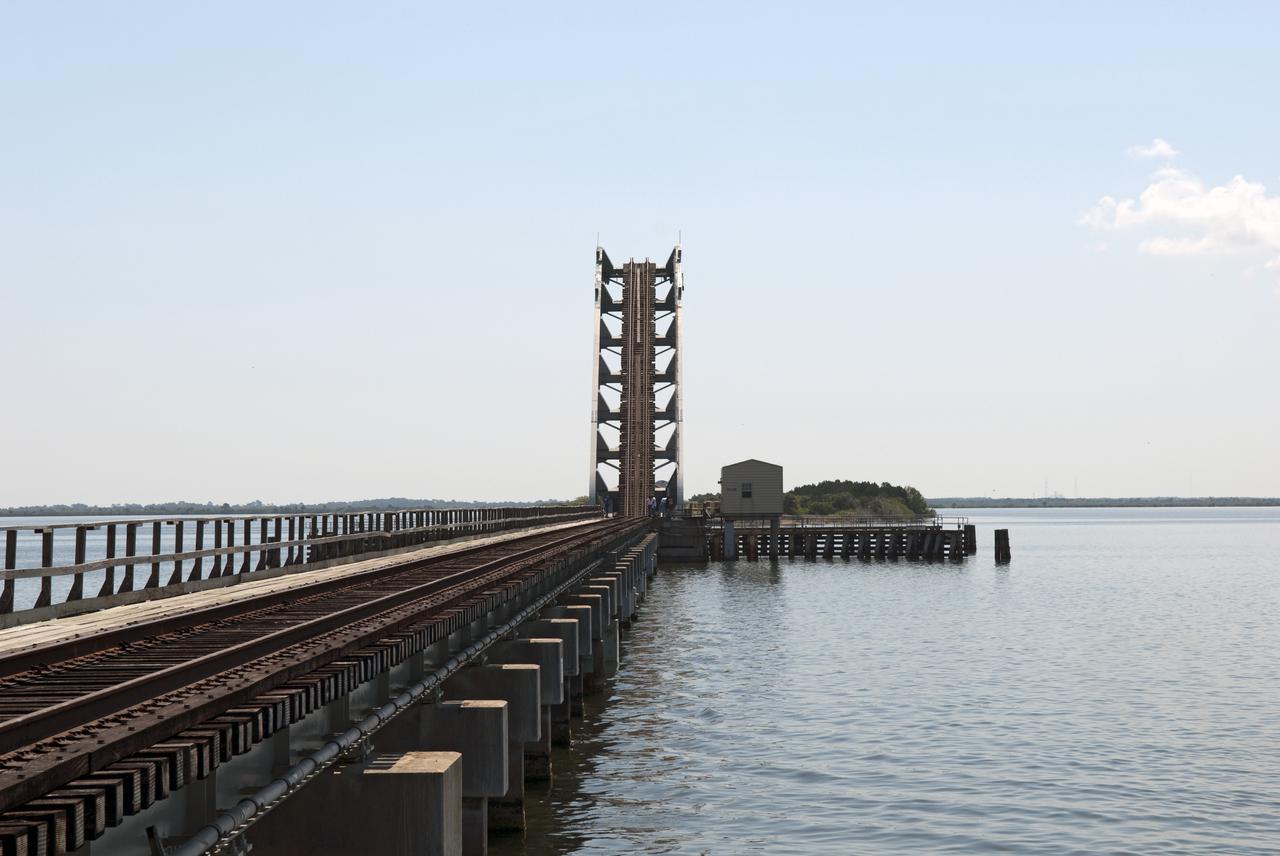
CAPE CANAVERAL, Fla. - The NASA Railroad draw bridge over the Indian River begins to close for the train carrying the last space shuttle solid rocket booster segments to NASA's Kennedy Space Center. Six cars transported the segments along the Florida East Coast Railway, which began at the ATK solid rocket booster plant in Promontory, Utah. The booster segments will be used for shuttle Atlantis on what currently is planned as the 'launch on need,' or potential rescue mission for the final shuttle flight, Endeavour's STS-134 mission. For information, visit www.nasa.gov_shuttle. Photo credit: NASA_Jim Grossmann
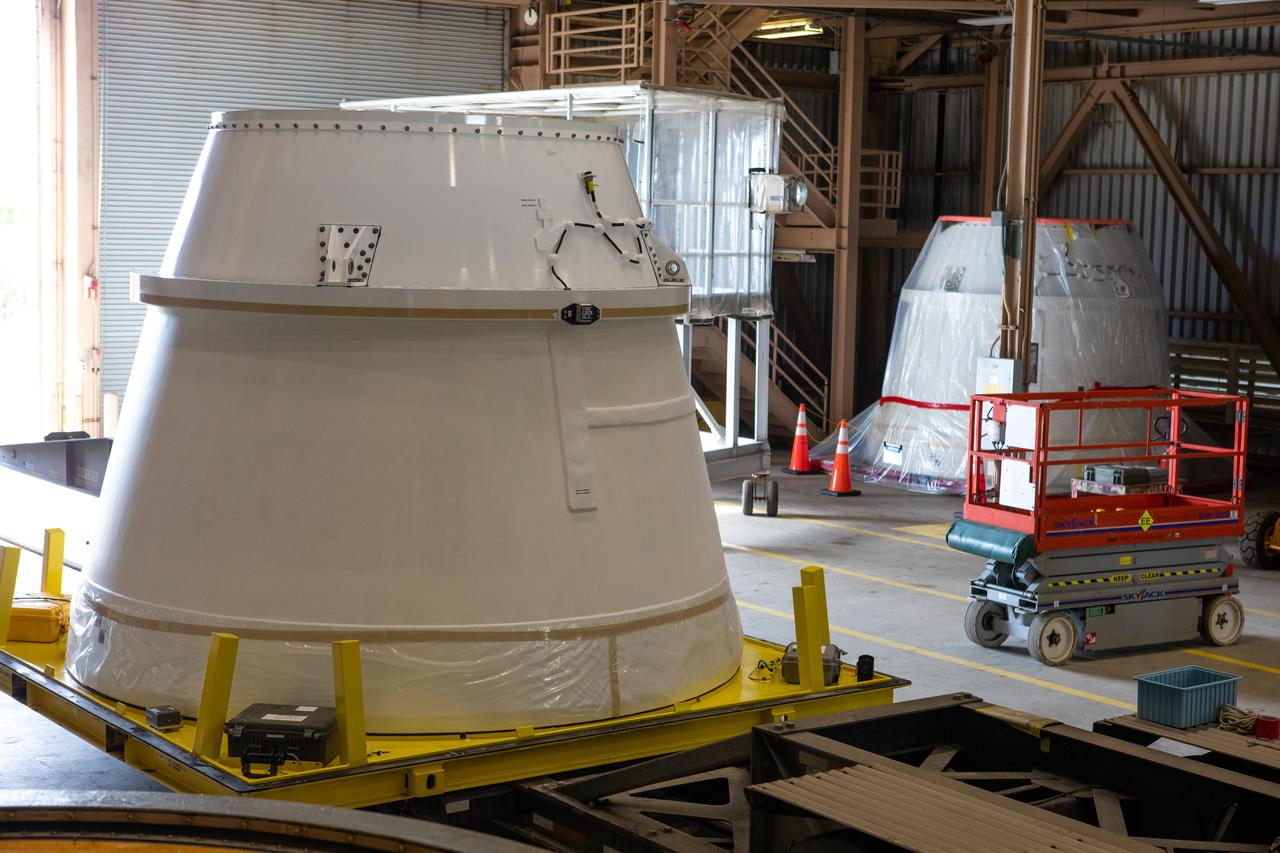
Both of the Northrop Grumman-manufactured aft exit cones for the Space Launch System’s solid rocket boosters are in view inside the Rotation, Processing and Surge Facility at NASA’s Kennedy Space Center in Florida on Dec. 9, 2019. Both arrived from Promontory, Utah. The right aft exit cone is in the foreground, and the left aft exit cone is in the background. They will be checked out and prepared for the Artemis I uncrewed test flight. The aft exit cones sit at the bottommost part of the twin boosters. The cones help provide added thrust for the boosters, while protecting the aft skirts from the thermal environment during launch.
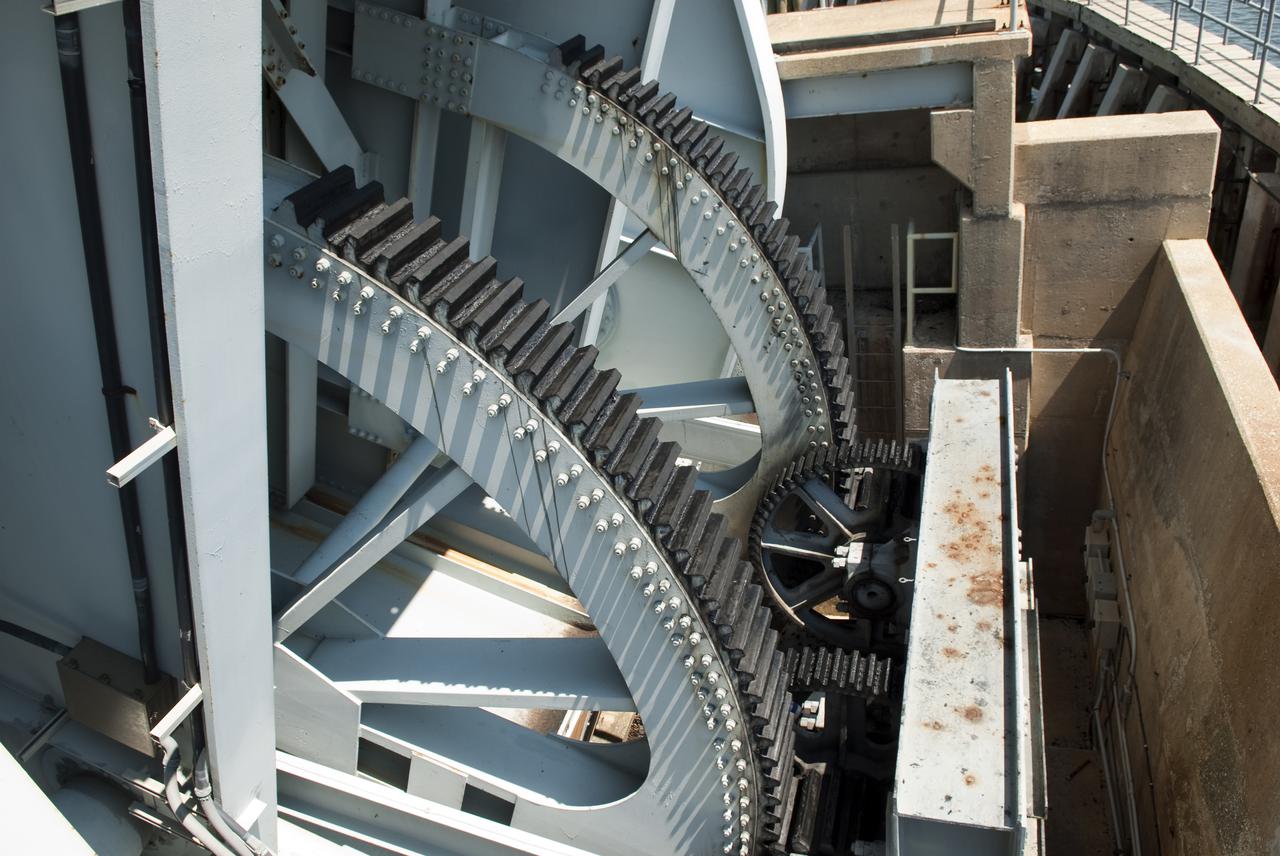
CAPE CANAVERAL, Fla. - Gears close the NASA Railroad draw bridge over the Indian River for the train carrying the last space shuttle solid rocket booster segments to NASA's Kennedy Space Center. Six cars transported the segments along the Florida East Coast Railway, which began at the ATK solid rocket booster plant in Promontory, Utah. The booster segments will be used for shuttle Atlantis on what currently is planned as the 'launch on need,' or potential rescue mission for the final shuttle flight, Endeavour's STS-134 mission. For information, visit www.nasa.gov_shuttle. Photo credit: NASA_Jim Grossmann
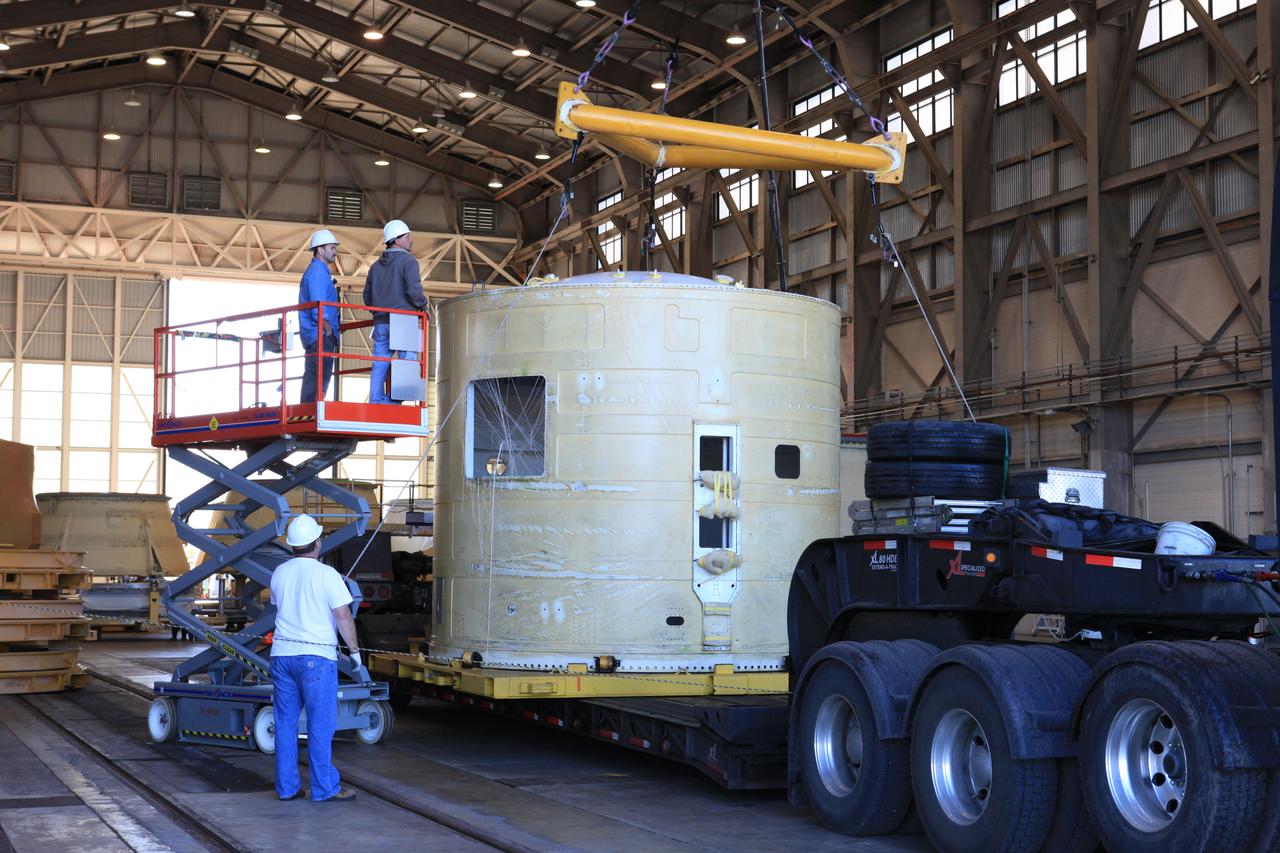
Inside the Hangar AF facility at Cape Canaveral Air Force Station in Florida, technicians with Orbital ATK monitor the progress as a crane is attached to the left-hand forward skirt for NASA's Space Launch System (SLS) solid rocket boosters. The forward skirt was transported from booster prime contractor Orbital ATK in Promontory, Utah. The forward skirt will be staged in Hangar AF where refurbishment will continue. It will be inspected and prepared for use on the left-hand solid rocket booster for Exploration Mission 1. NASA's Orion spacecraft will fly atop the SLS rocket on its first uncrewed flight test.
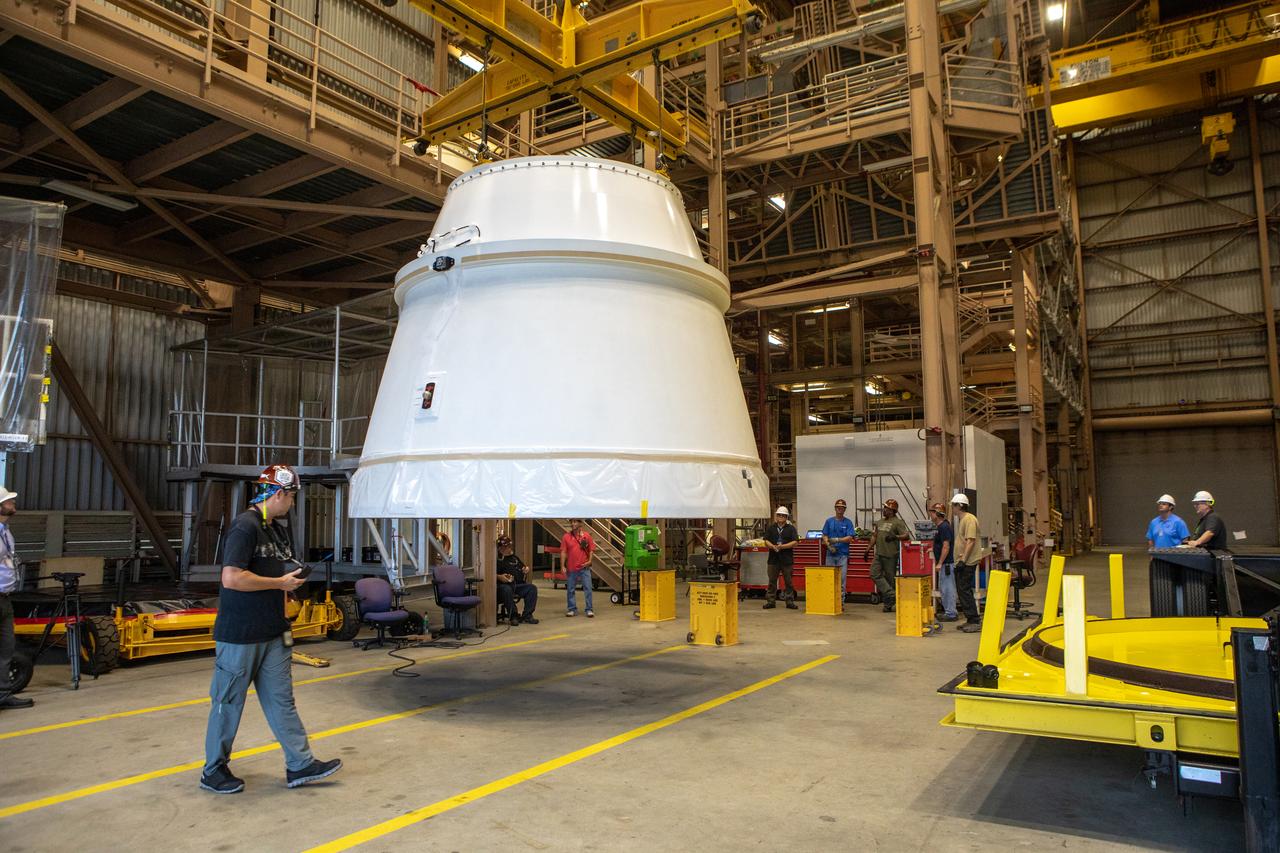
The first Northrop Grumman aft exit cone to arrive for the Space Launch System’s solid rocket boosters is moved by crane inside the Rotation, Processing and Surge Facility at NASA’s Kennedy Space Center in Florida on Nov. 4, 2019. The aft exit cone was shipped from Promontory, Utah. It will be checked out and prepared for the Artemis I uncrewed test flight. The aft exit cones sit at the bottommost part of the twin boosters. They are attached to the aft skirts, which contain the booster separation motors. The exit cones help to protect the aft skirts during launch.
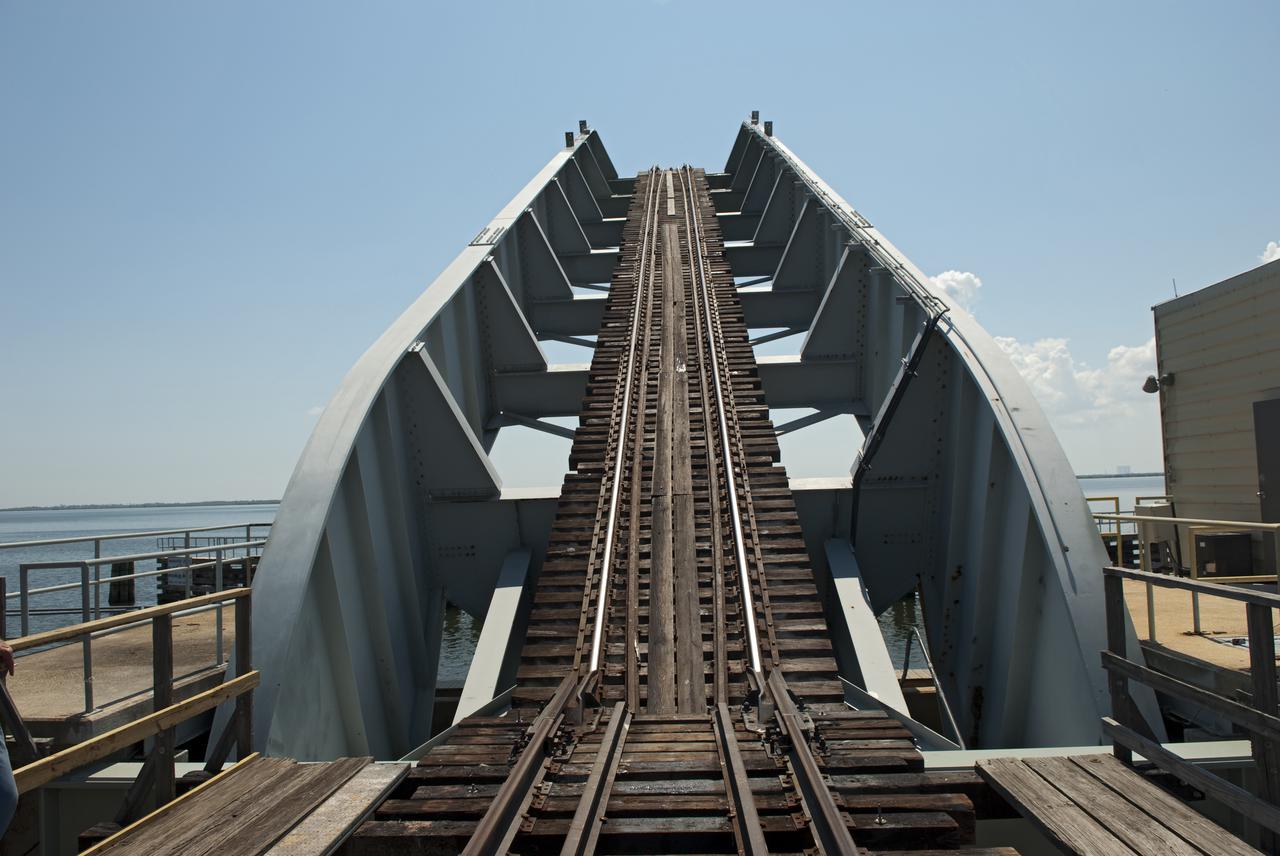
CAPE CANAVERAL, Fla. - The NASA Railroad draw bridge over the Indian River begins to close for the train carrying the last space shuttle solid rocket booster segments to NASA's Kennedy Space Center. Six cars transported the segments along the Florida East Coast Railway, which began at the ATK solid rocket booster plant in Promontory, Utah. The booster segments will be used for shuttle Atlantis on what currently is planned as the 'launch on need,' or potential rescue mission for the final shuttle flight, Endeavour's STS-134 mission. For information, visit www.nasa.gov_shuttle. Photo credit: NASA_Jim Grossmann
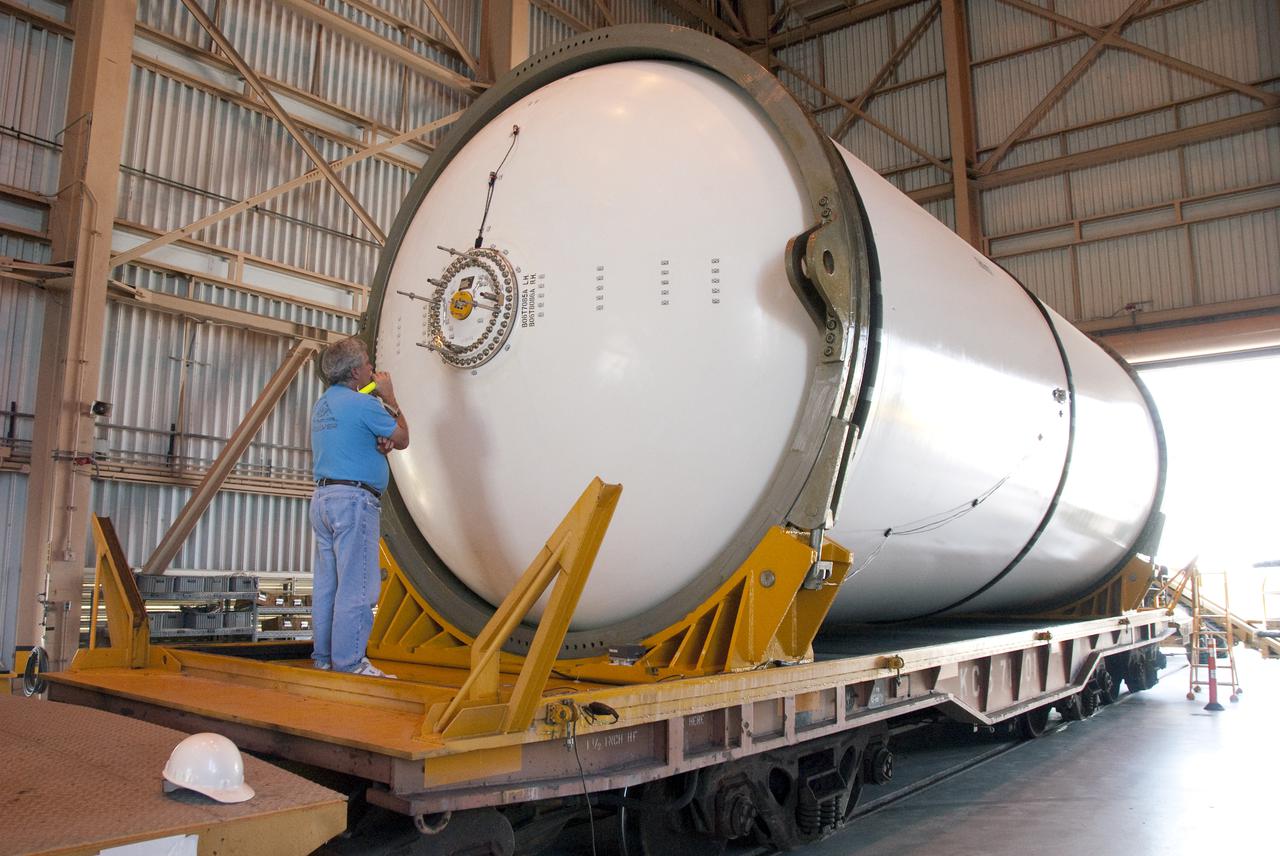
CAPE CANAVERAL, Fla. -- In the Rotation, Processing and Surge Facility, or RSPF, at NASA's Kennedy Space Center in Florida, workers perform the propellant grain inspection of the final solid rocket booster segments, which is a required safety analysis. The booster segments were manufactured at the ATK solid rocket booster plant in Promontory, Utah, and traveled to Kennedy along the Florida East Coast Railway. The booster segments will be stacked and then mated to space shuttle Atlantis and its external fuel tank in the Vehicle Assembly Building. The segments will be used for what currently is planned as the 'launch on need,' or potential rescue mission for the final shuttle flight, Endeavour's STS-134 mission. For information, visit www.nasa.gov_shuttle. Photo credit: NASA_Cory Huston
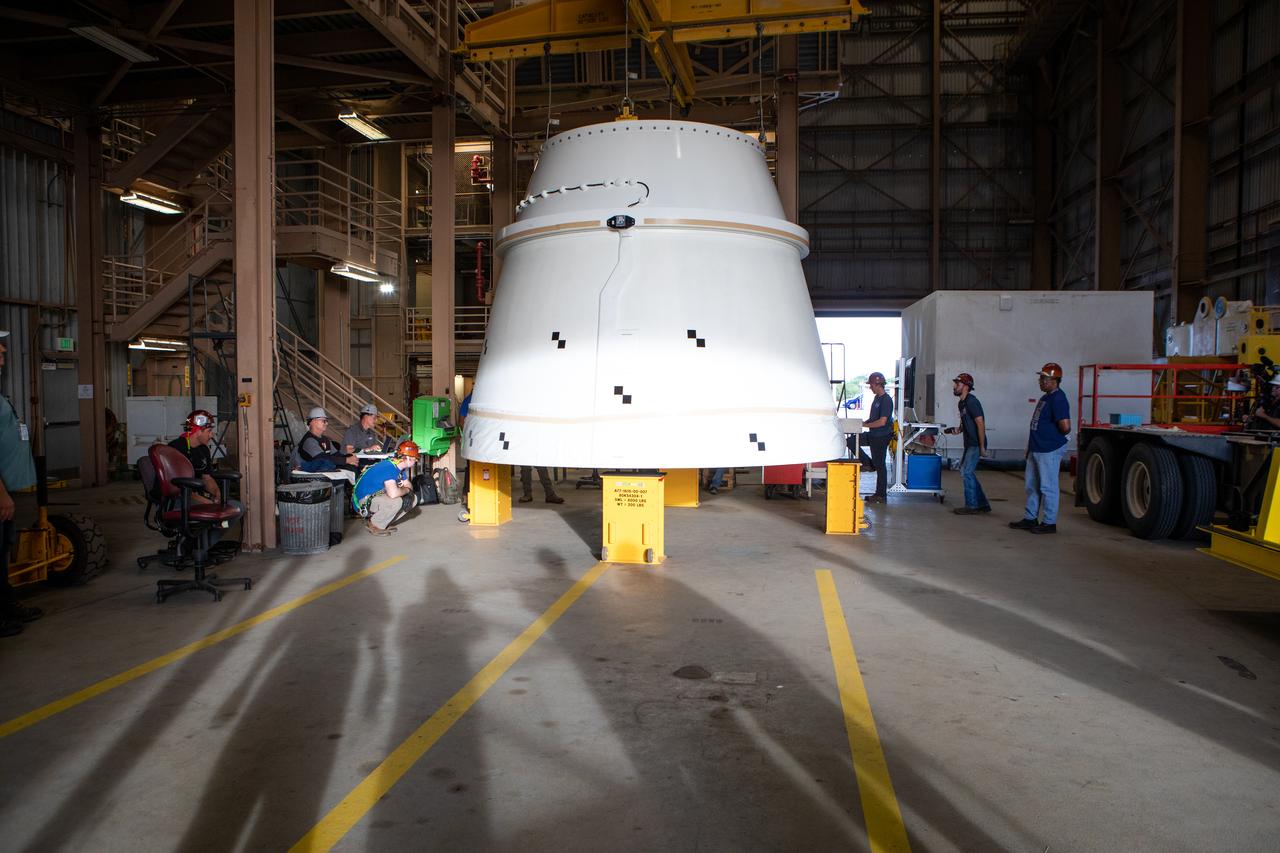
The Northrop Grumman-manufactured right aft exit cone, the second of two for the Space Launch System’s solid rocket boosters, is in view inside the Rotation, Processing and Surge Facility at NASA’s Kennedy Space Center in Florida on Dec. 9, 2019. The aft exit cone was shipped from Promontory, Utah. It will be checked out and prepared for the Artemis I uncrewed test flight. The aft exit cones sit at the bottommost part of the twin boosters. The cones help provide added thrust for the boosters, while protecting the aft skirts from the thermal environment during launch.
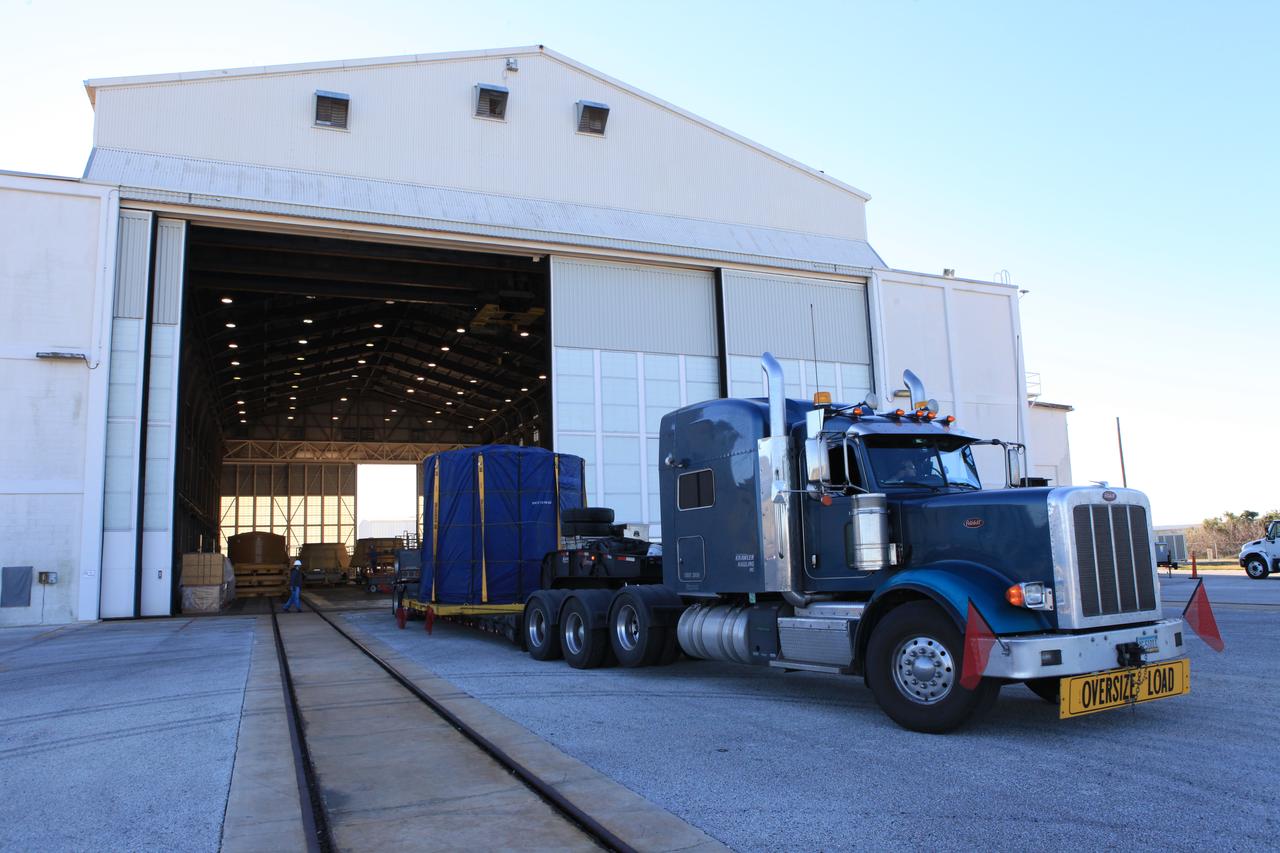
A flatbed truck carrying the left-hand forward skirt for NASA's Space Launch System (SLS) solid rocket boosters arrives at the Hangar AF facility at Cape Canaveral Air Force Station in Florida. The forward skirt was transported from booster prime contractor Orbital ATK in Promontory, Utah. The forward skirt will be staged in Hangar AF where refurbishment will continue. It will be inspected and prepared for use on the left-hand solid rocket booster for Exploration Mission 1. NASA's Orion spacecraft will fly atop the SLS rocket on its first uncrewed flight test.
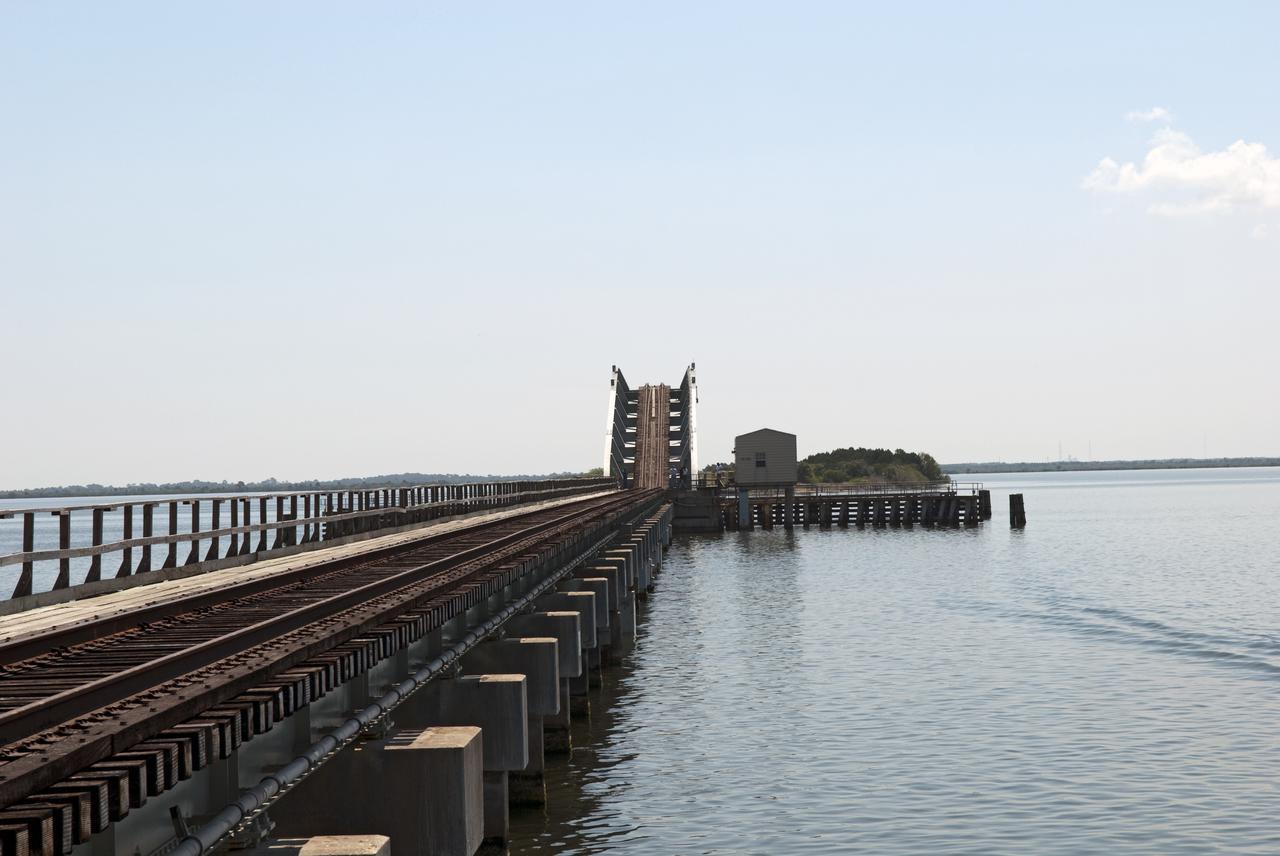
CAPE CANAVERAL, Fla. - The NASA Railroad draw bridge over the Indian River begins to close for the train carrying the last space shuttle solid rocket booster segments to NASA's Kennedy Space Center. Six cars transported the segments along the Florida East Coast Railway, which began at the ATK solid rocket booster plant in Promontory, Utah. The booster segments will be used for shuttle Atlantis on what currently is planned as the 'launch on need,' or potential rescue mission for the final shuttle flight, Endeavour's STS-134 mission. For information, visit www.nasa.gov_shuttle. Photo credit: NASA_Jim Grossmann
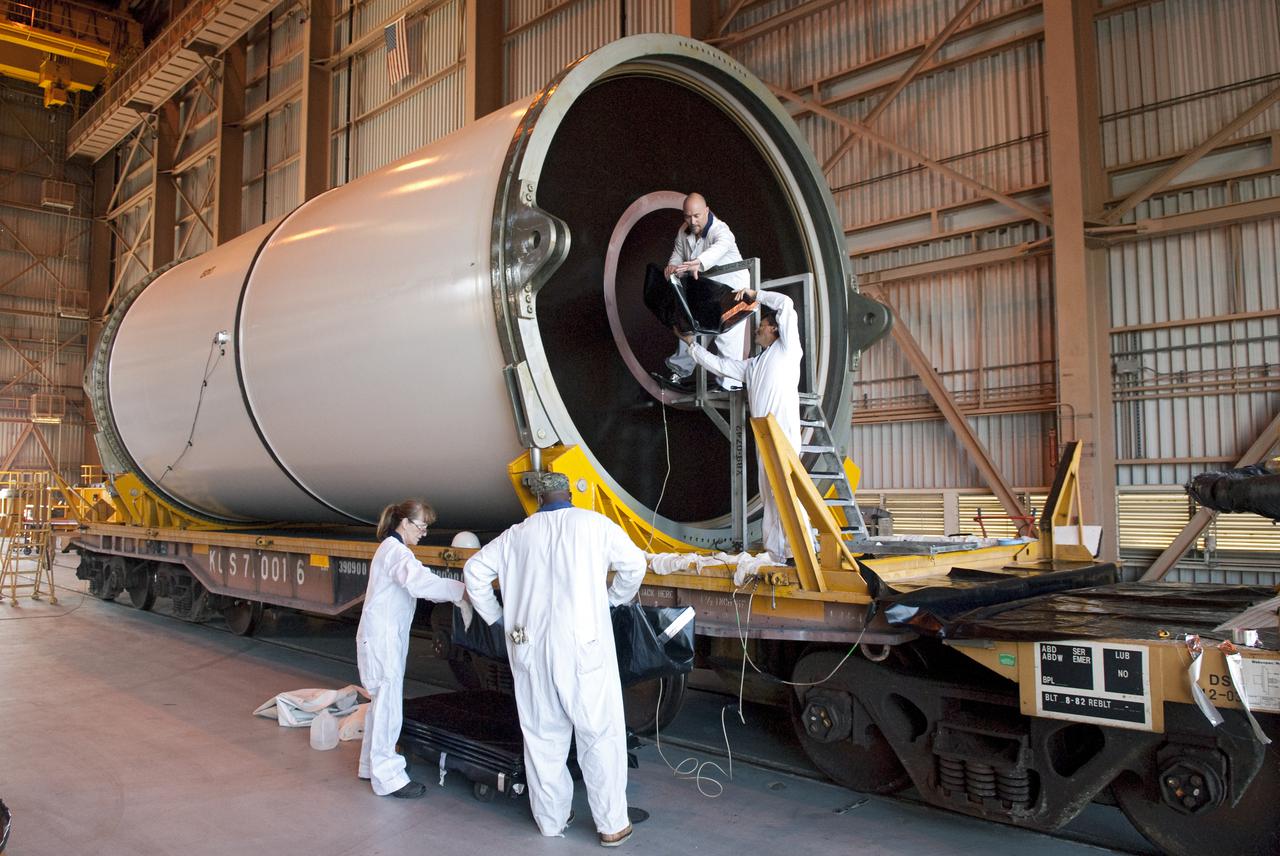
CAPE CANAVERAL, Fla. -- In the Rotation, Processing and Surge Facility, or RSPF, at NASA's Kennedy Space Center in Florida, workers prepare for the propellant grain inspection of the final solid rocket booster segments, which is a required safety analysis. The booster segments were manufactured at the ATK solid rocket booster plant in Promontory, Utah, and traveled to Kennedy along the Florida East Coast Railway. The booster segments will be stacked and then mated to space shuttle Atlantis and its external fuel tank in the Vehicle Assembly Building. The segments will be used for what currently is planned as the 'launch on need,' or potential rescue mission for the final shuttle flight, Endeavour's STS-134 mission. For information, visit www.nasa.gov_shuttle. Photo credit: NASA_Cory Huston
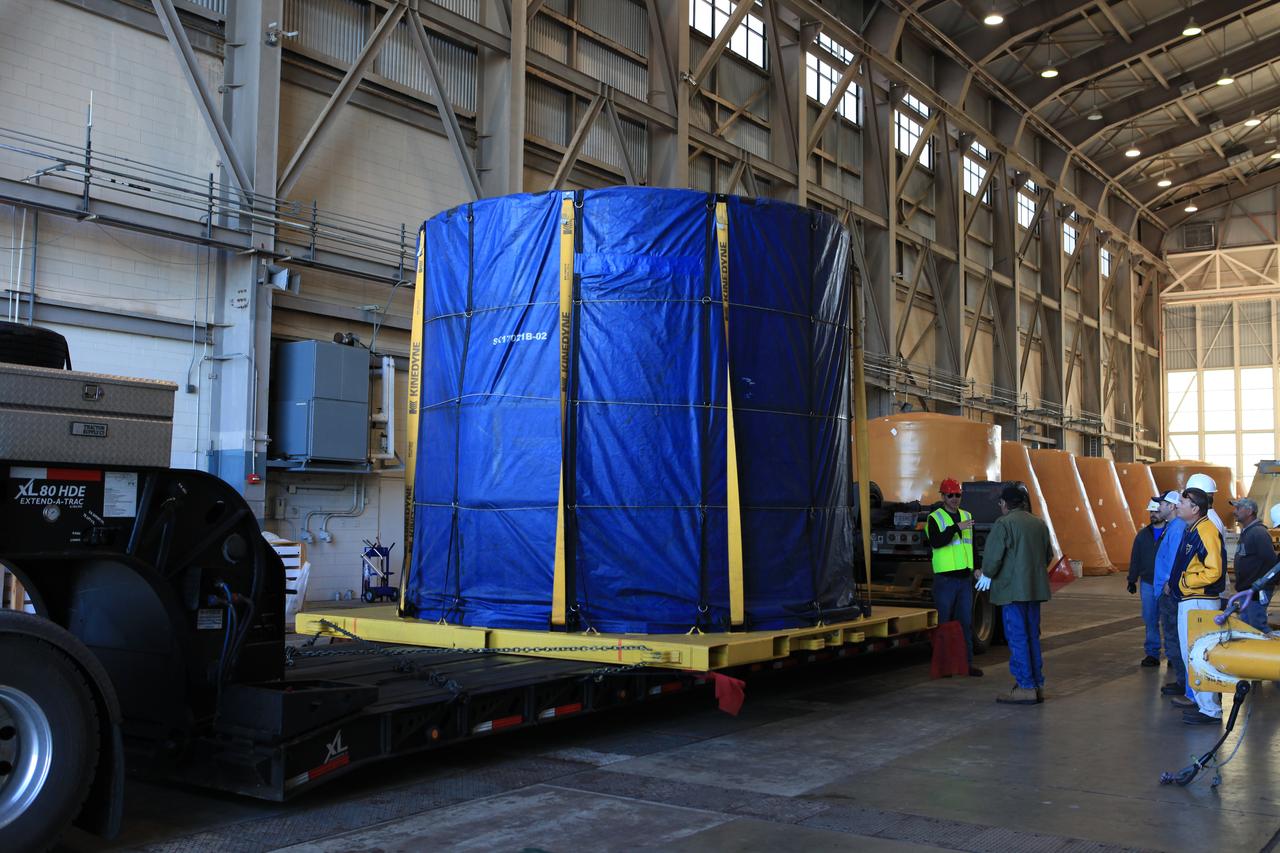
A flatbed truck carrying the left-hand forward skirt for NASA's Space Launch System (SLS) solid rocket boosters backs into the Hangar AF facility at Cape Canaveral Force Station in Florida. The forward skirt was transported from booster prime contractor Orbital ATK in Promontory, Utah. The forward skirt will be staged in Hangar AF where refurbishment will continue. It will be inspected and prepared for use on the left-hand solid rocket booster for Exploration Mission 1. NASA's Orion spacecraft will fly atop the SLS rocket on its first uncrewed flight test.
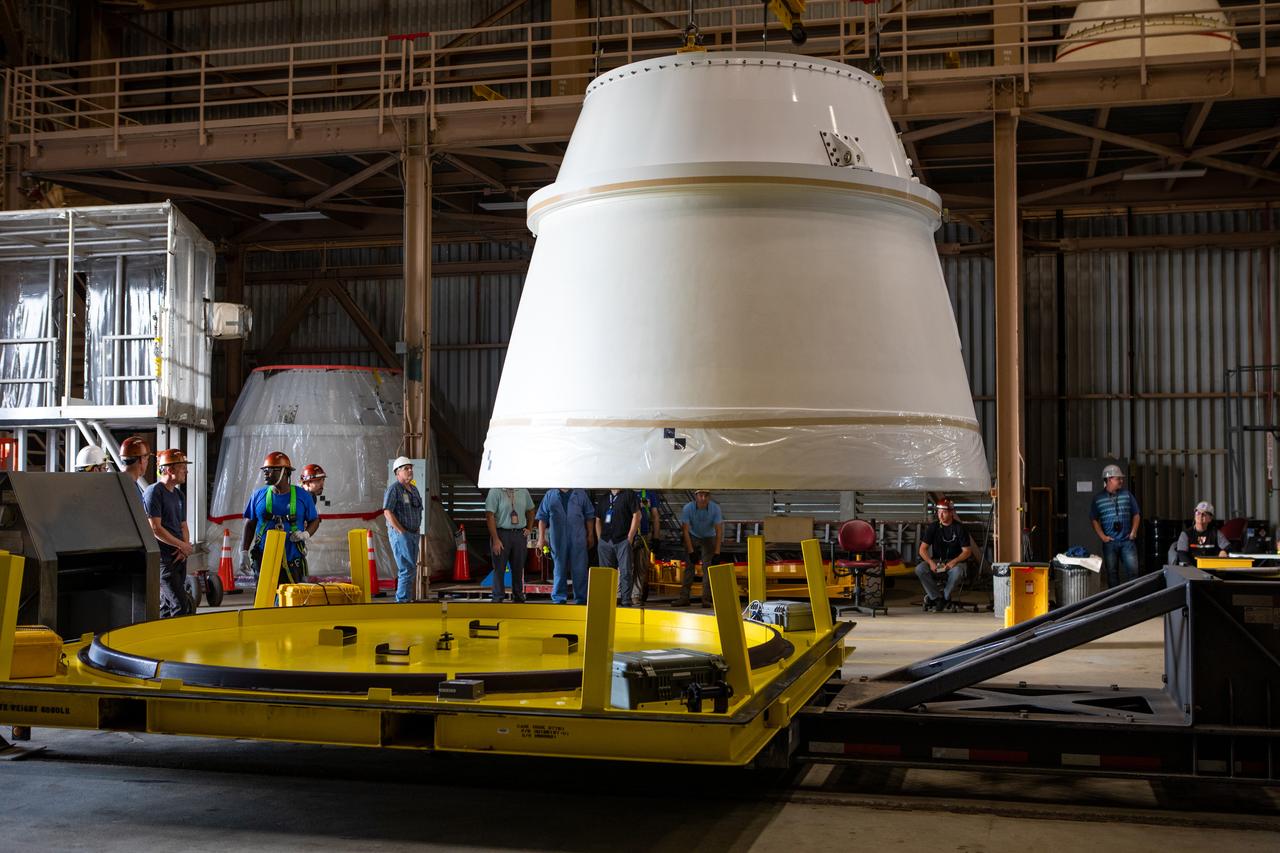
A crane is used to lift the Northrop Grumman right-manufactured aft exit cone for the Space Launch System’s solid rocket boosters away from its shipping base for securing on a processing stand inside the Rotation, Processing and Surge Facility at NASA’s Kennedy Space Center in Florida on Dec. 9, 2019. The right and left aft exit cones were shipped from Promontory, Utah. They will be checked out and prepared for the Artemis I uncrewed test flight. The aft exit cones sit at the bottommost part of the twin boosters. The cones help provide added thrust for the boosters, while protecting the aft skirts from the thermal environment during launch.
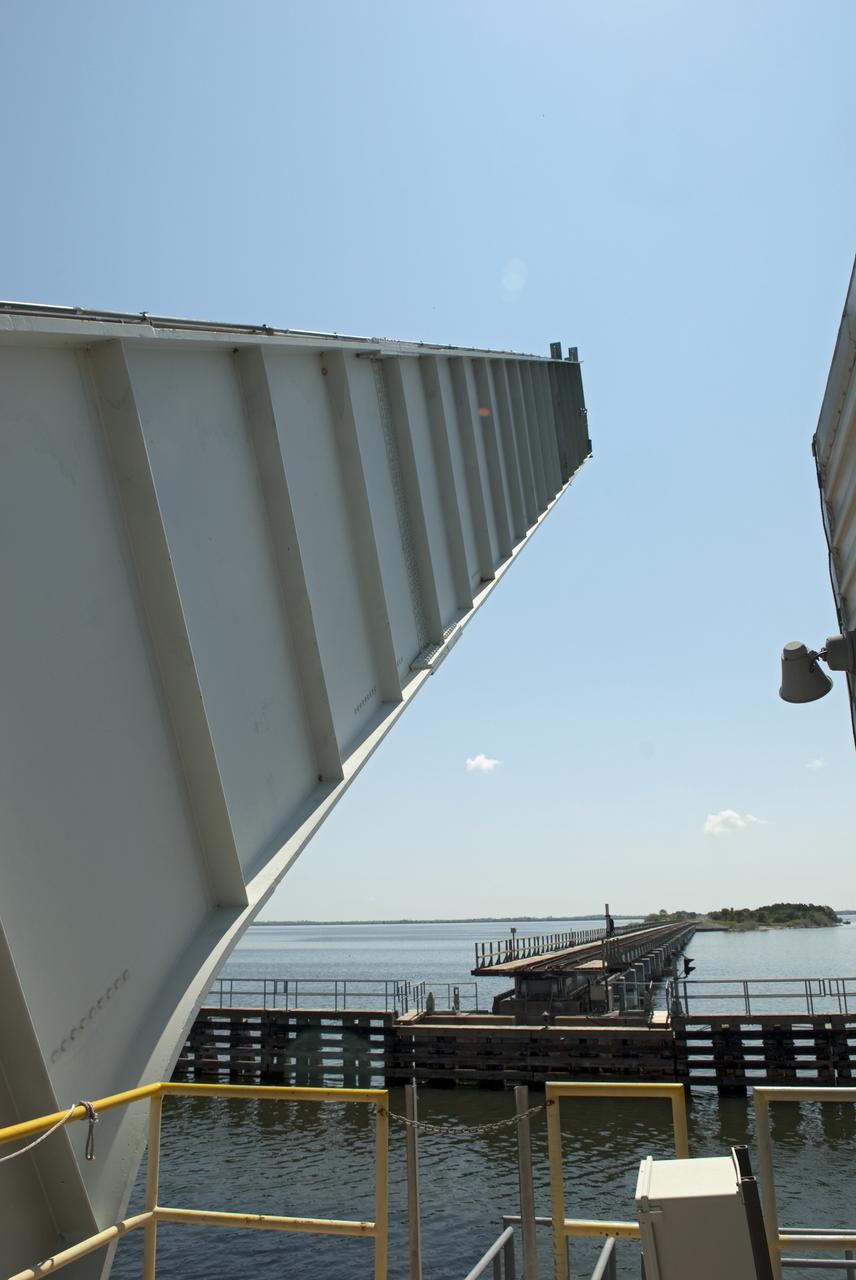
CAPE CANAVERAL, Fla. - The NASA Railroad draw bridge over the Indian River begins to close for the train carrying the last space shuttle solid rocket booster segments to NASA's Kennedy Space Center. Six cars transported the segments along the Florida East Coast Railway, which began at the ATK solid rocket booster plant in Promontory, Utah. The booster segments will be used for shuttle Atlantis on what currently is planned as the 'launch on need,' or potential rescue mission for the final shuttle flight, Endeavour's STS-134 mission. For information, visit www.nasa.gov_shuttle. Photo credit: NASA_Jim Grossmann
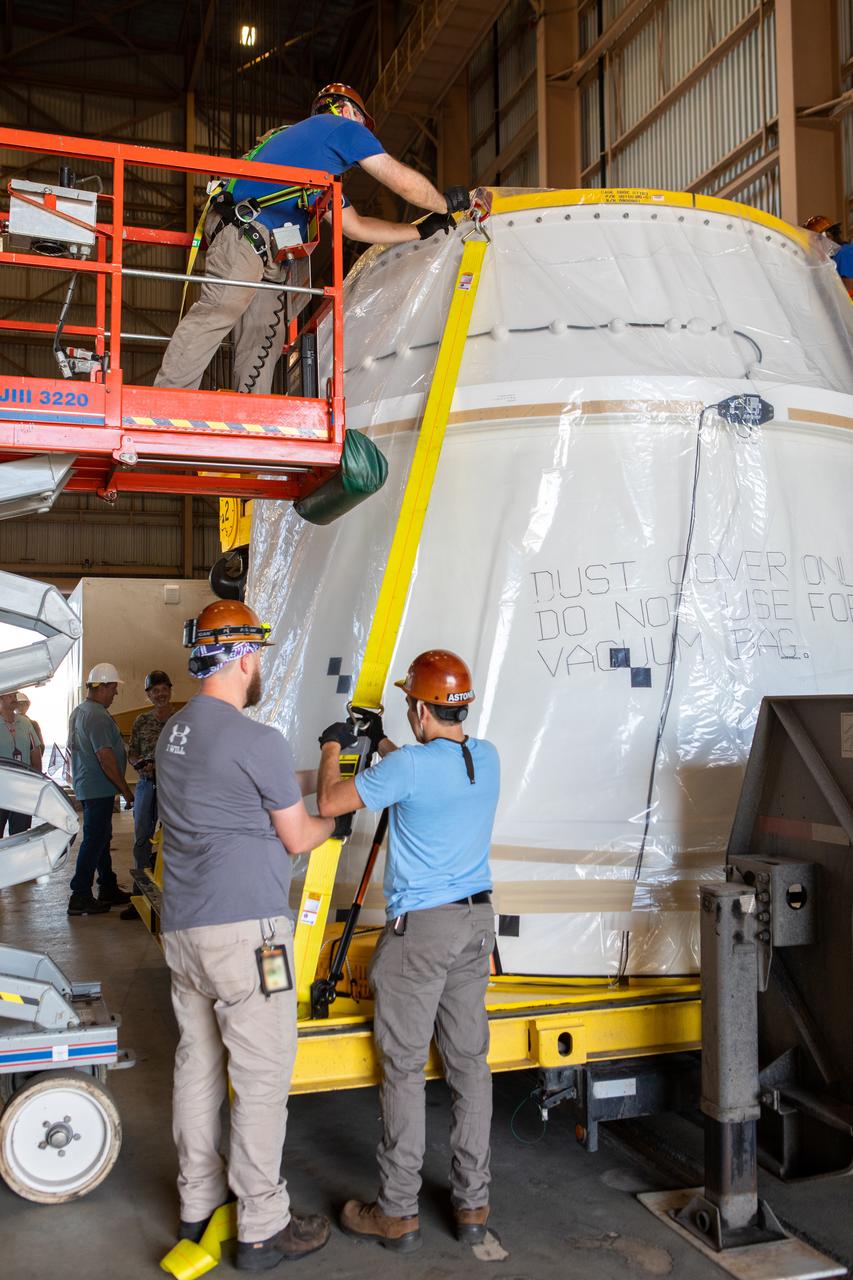
Workers remove the securing straps from the second of two Northrop Grumman-manufactured aft exit cones to arrive for the Space Launch System’s solid rocket boosters inside the Rotation, Processing and Surge Facility at NASA’s Kennedy Space Center in Florida on Dec. 9, 2019. The right aft exit cone was shipped from Promontory, Utah. It will be checked out and prepared for the Artemis I uncrewed test flight. The aft exit cones sit at the bottommost part of the twin boosters. The cones help provide added thrust for the boosters, while protecting the aft skirts from the thermal environment during launch.
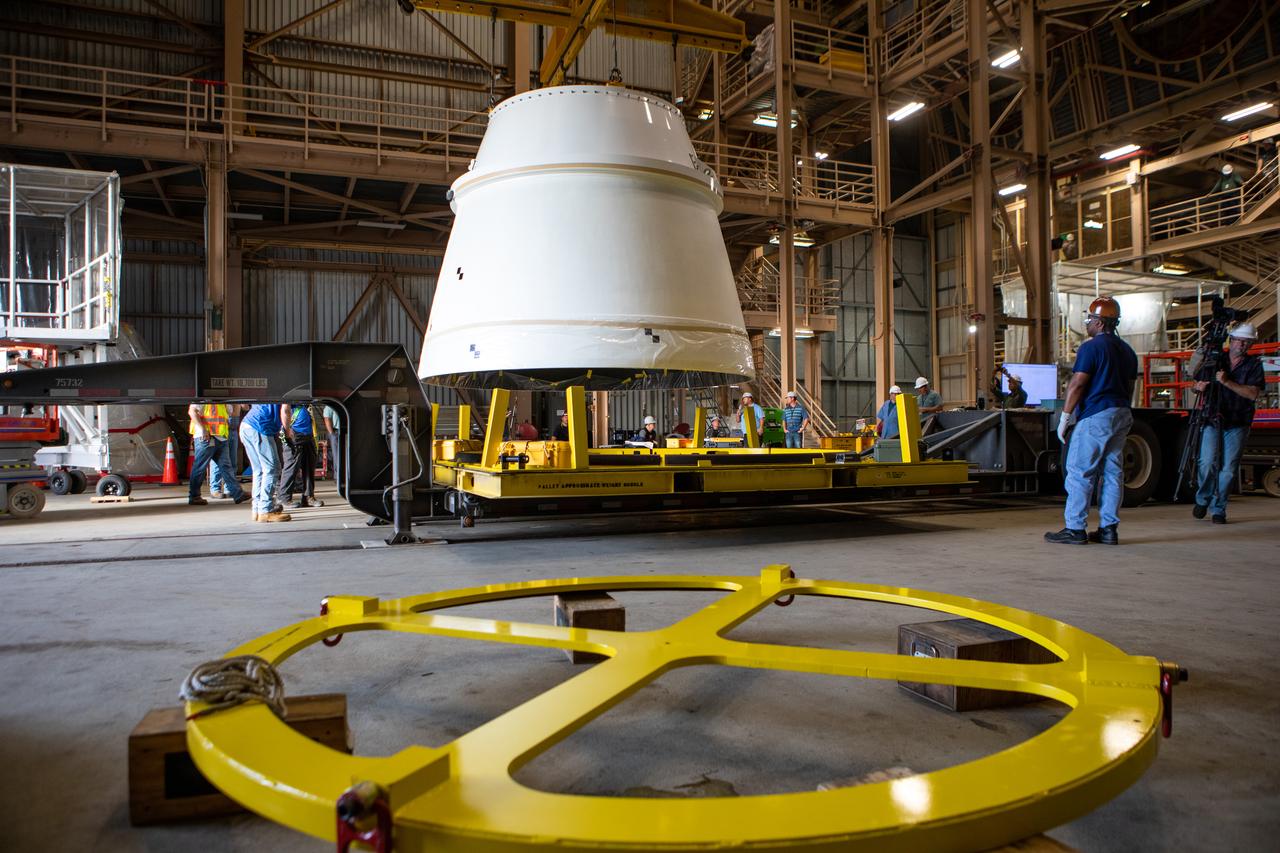
A crane is used to lift the Northrop Grumman-manufactured right aft exit cone for the Space Launch System’s solid rocket boosters away from its shipping base inside the Rotation, Processing and Surge Facility at NASA’s Kennedy Space Center in Florida on Dec. 9, 2019. The right and left aft exit cones were shipped from Promontory, Utah. They will be checked out and prepared for the Artemis I uncrewed test flight. The aft exit cones sit at the bottommost part of the twin boosters. The cones help provide added thrust for the boosters, while protecting the aft skirts from the thermal environment during launch.
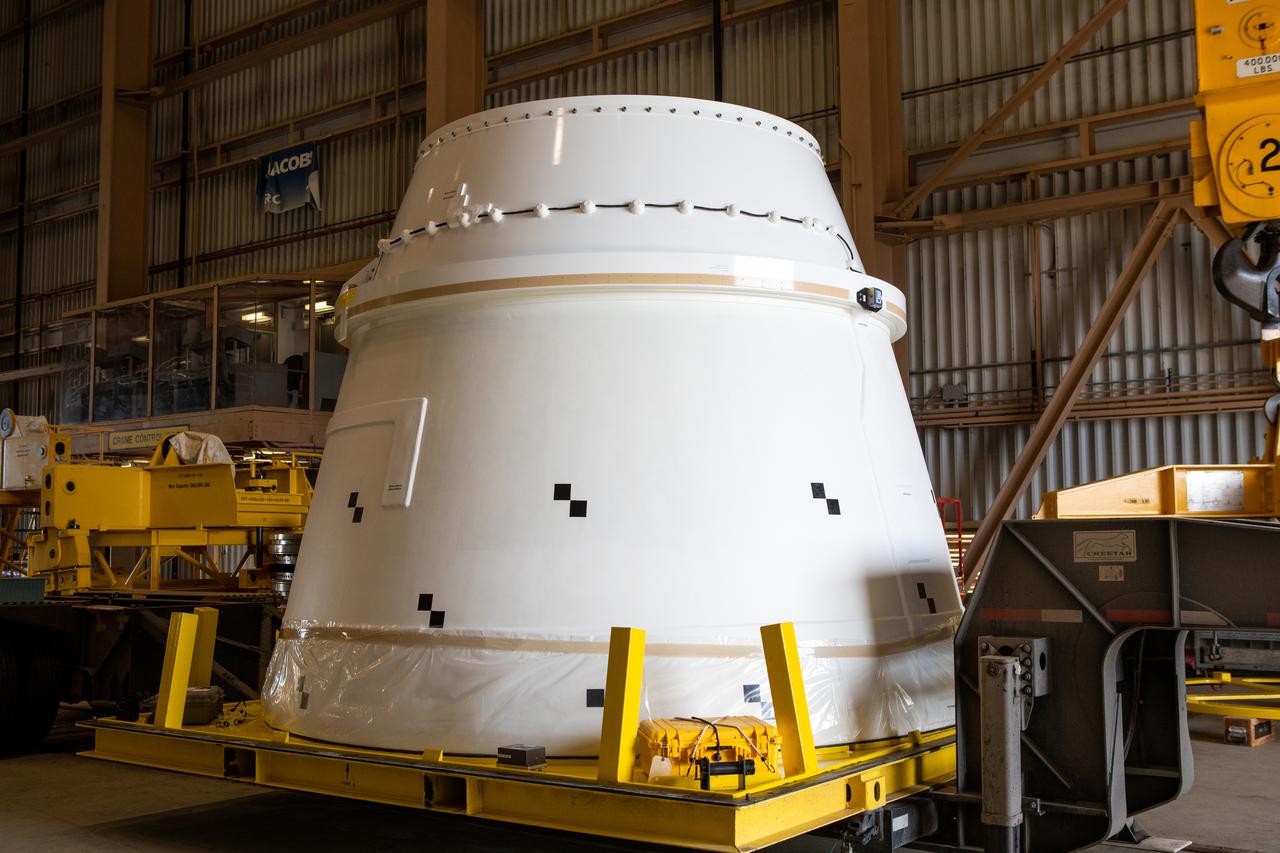
The Northrop Grumman-manufactured right aft exit cone, the second of two for the Space Launch System’s solid rocket boosters, is in view inside the Rotation, Processing and Surge Facility at NASA’s Kennedy Space Center in Florida on Dec. 9, 2019. The aft exit cone was shipped from Promontory, Utah. It will be checked out and prepared for the Artemis I uncrewed test flight. The aft exit cones sit at the bottommost part of the twin boosters. The cones help provide added thrust for the boosters, while protecting the aft skirts from the thermal environment during launch.
The second of two Northrop Grumman-manufactured aft exit cones to arrive for the Space Launch System’s solid rocket boosters is moved by crane inside the Rotation, Processing and Surge Facility at NASA’s Kennedy Space Center in Florida on Dec. 9, 2019. Both aft exit cone were shipped from Promontory, Utah. The left aft exit cone is in view in the background. They will be checked out and prepared for the Artemis I uncrewed test flight. The aft exit cones sit at the bottommost part of the twin boosters. The cones help provide added thrust for the boosters, while protecting the aft skirts from the thermal environment during launch.
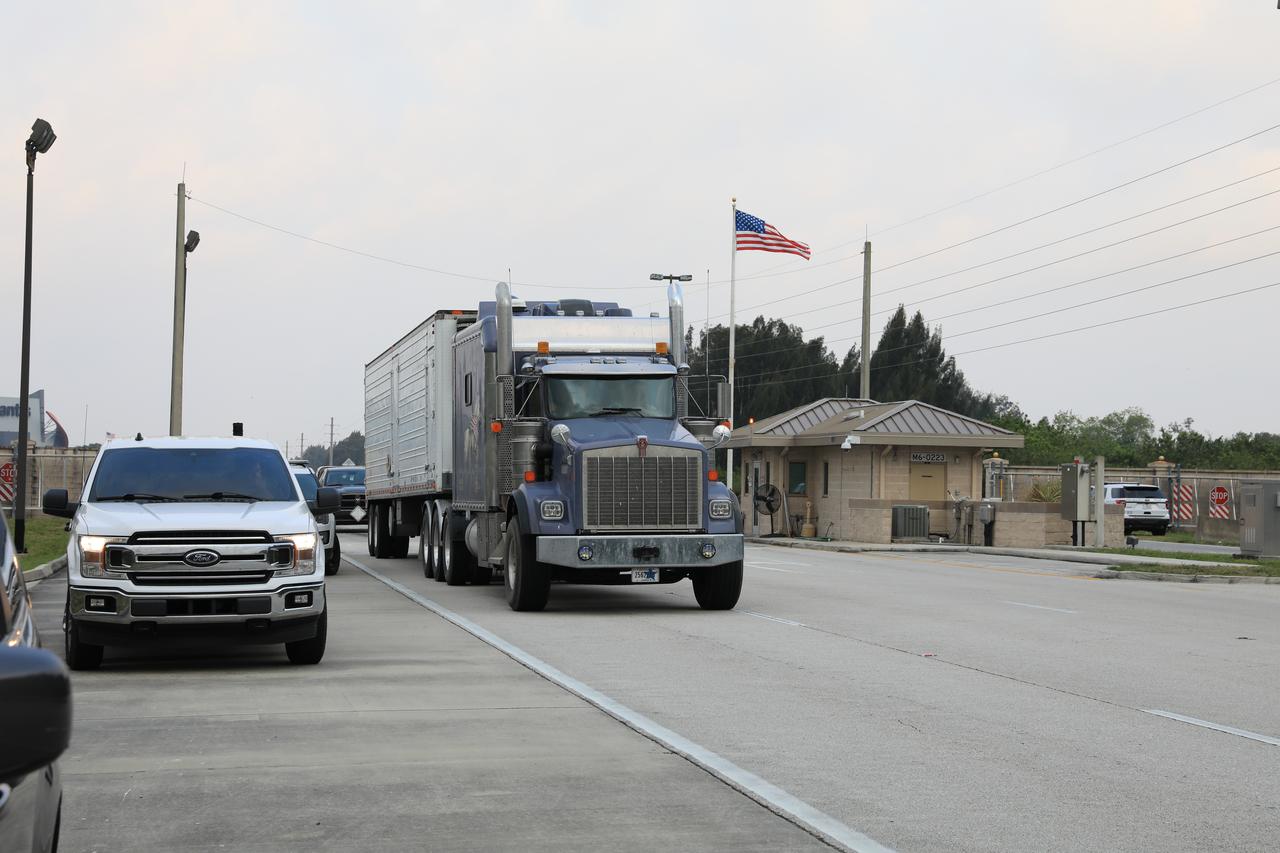
The launch abort motor for Orion’s launch abort system (LAS) for Artemis II, enclosed in its shipping container, arrives at NASA’s Kennedy Space Center in Florida on April 13, 2020. The motor arrived from Northrop Grumman in Promontory, Utah, and was transported to the Launch Abort System Facility where it will undergo testing in preparation for the second Artemis mission. The launch abort motor is one of three motors on the LAS. The LAS will be positioned atop the Orion crew module and is designed to protect astronauts if a problem arises during launch by pulling the spacecraft away from a failing rocket. Artemis II will take the first humans in orbit around the Moon in the 21st century.
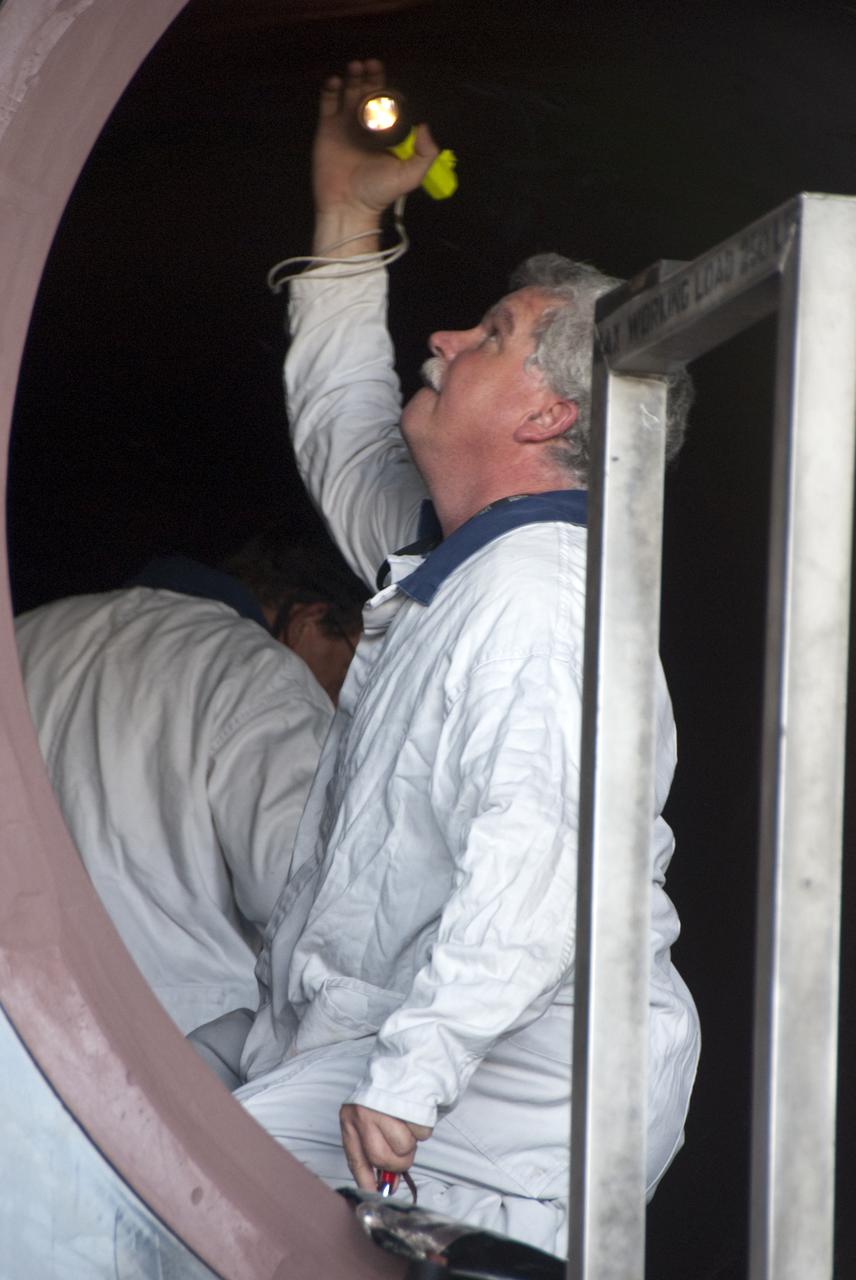
CAPE CANAVERAL, Fla. -- In the Rotation, Processing and Surge Facility, or RSPF, at NASA's Kennedy Space Center in Florida, a worker performs the propellant grain inspection of the final solid rocket booster segments, which is a required safety analysis. The booster segments were manufactured at the ATK solid rocket booster plant in Promontory, Utah, and traveled to Kennedy along the Florida East Coast Railway. The booster segments will be stacked and then mated to space shuttle Atlantis and its external fuel tank in the Vehicle Assembly Building. The segments will be used for what currently is planned as the 'launch on need,' or potential rescue mission for the final shuttle flight, Endeavour's STS-134 mission. For information, visit www.nasa.gov_shuttle. Photo credit: NASA_Cory Huston
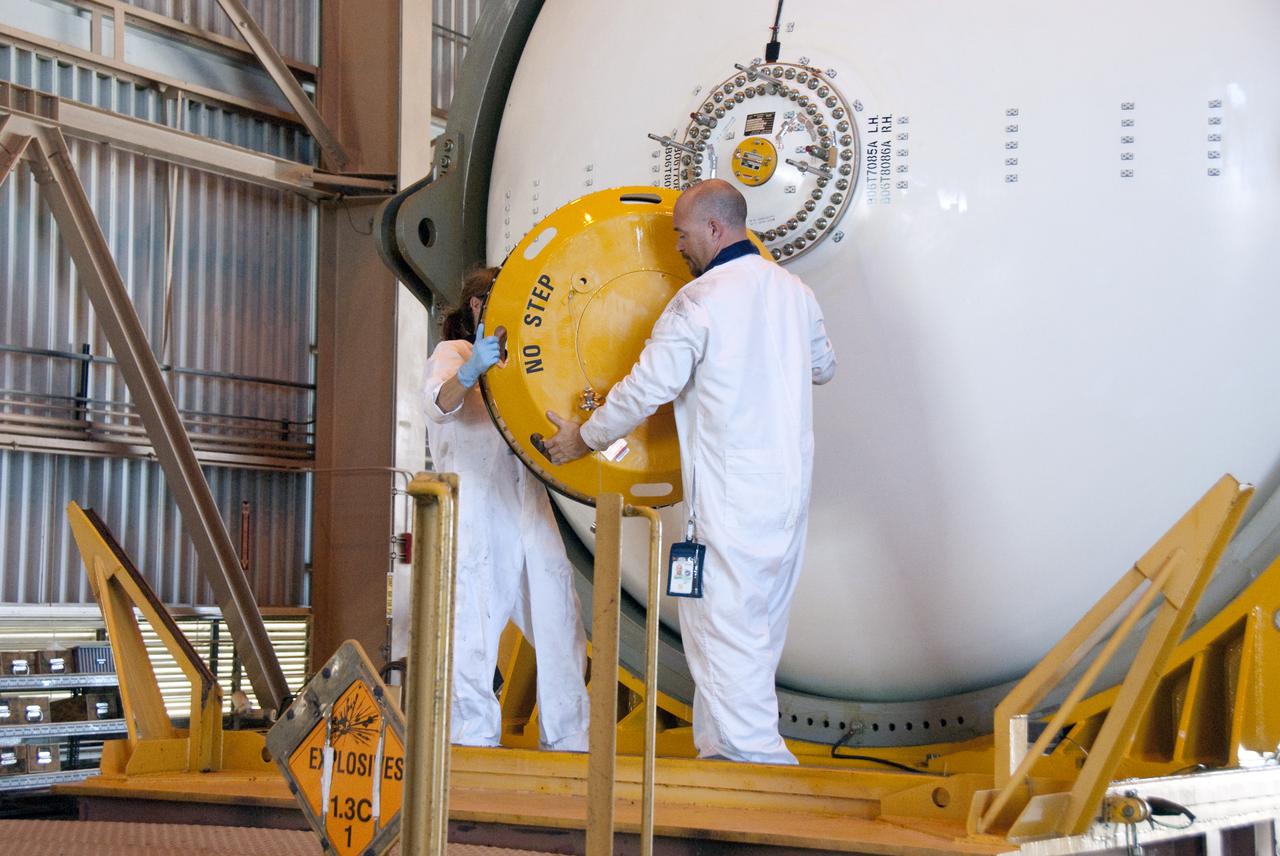
CAPE CANAVERAL, Fla. -- In the Rotation, Processing and Surge Facility, or RSPF, at NASA's Kennedy Space Center in Florida, workers perform the propellant grain inspection of the final solid rocket booster segments, which is a required safety analysis. The booster segments were manufactured at the ATK solid rocket booster plant in Promontory, Utah, and traveled to Kennedy along the Florida East Coast Railway. The booster segments will be stacked and then mated to space shuttle Atlantis and its external fuel tank in the Vehicle Assembly Building. The segments will be used for what currently is planned as the 'launch on need,' or potential rescue mission for the final shuttle flight, Endeavour's STS-134 mission. For information, visit www.nasa.gov_shuttle. Photo credit: NASA_Cory Huston
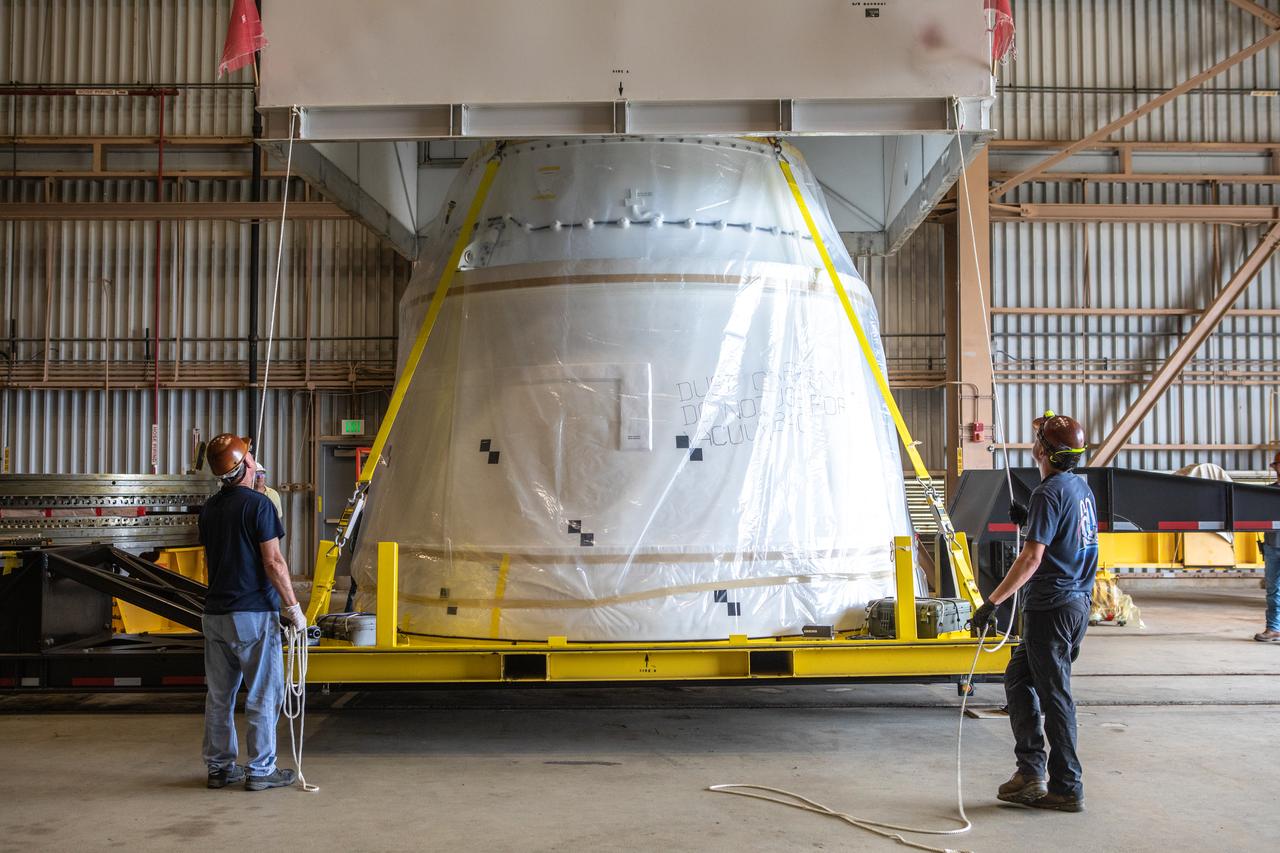
Workers assist with removal of the shipping container cover from the first Northrop Grumman aft exit cone to arrive for the Space Launch System’s solid rocket boosters inside the Rotation, Processing and Surge Facility at NASA’s Kennedy Space Center in Florida on Nov. 4, 2019. The aft exit cone was shipped from Promontory, Utah. It will be checked out and prepared for the Artemis I uncrewed test flight. The aft exit cones sit at the bottommost part of the twin boosters. They are attached to the aft skirts, which contain the booster separation motors. The exit cones help to protect the aft skirts during launch.
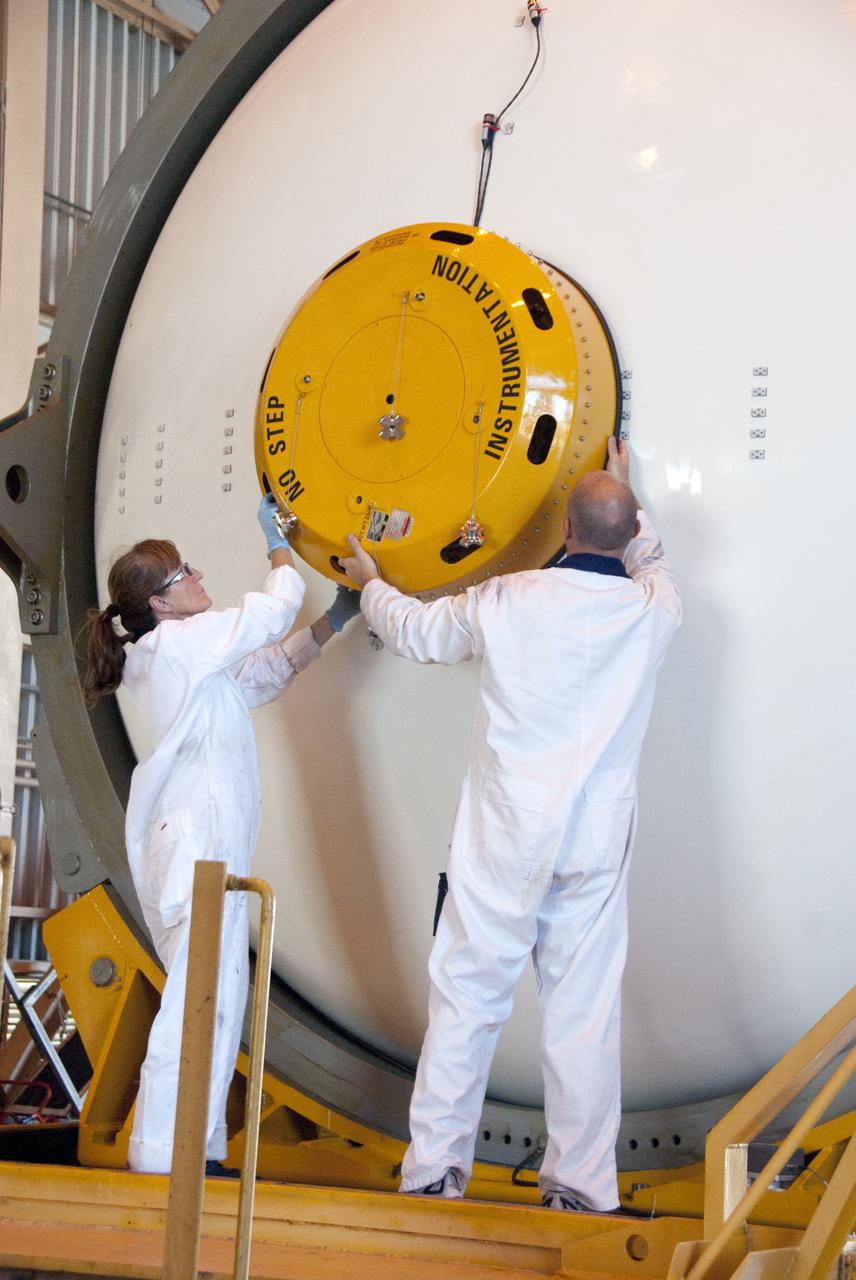
CAPE CANAVERAL, Fla. -- In the Rotation, Processing and Surge Facility, or RSPF, at NASA's Kennedy Space Center in Florida, workers perform the propellant grain inspection of the final solid rocket booster segments, which is a required safety analysis. The booster segments were manufactured at the ATK solid rocket booster plant in Promontory, Utah, and traveled to Kennedy along the Florida East Coast Railway. The booster segments will be stacked and then mated to space shuttle Atlantis and its external fuel tank in the Vehicle Assembly Building. The segments will be used for what currently is planned as the 'launch on need,' or potential rescue mission for the final shuttle flight, Endeavour's STS-134 mission. For information, visit www.nasa.gov_shuttle. Photo credit: NASA_Cory Huston
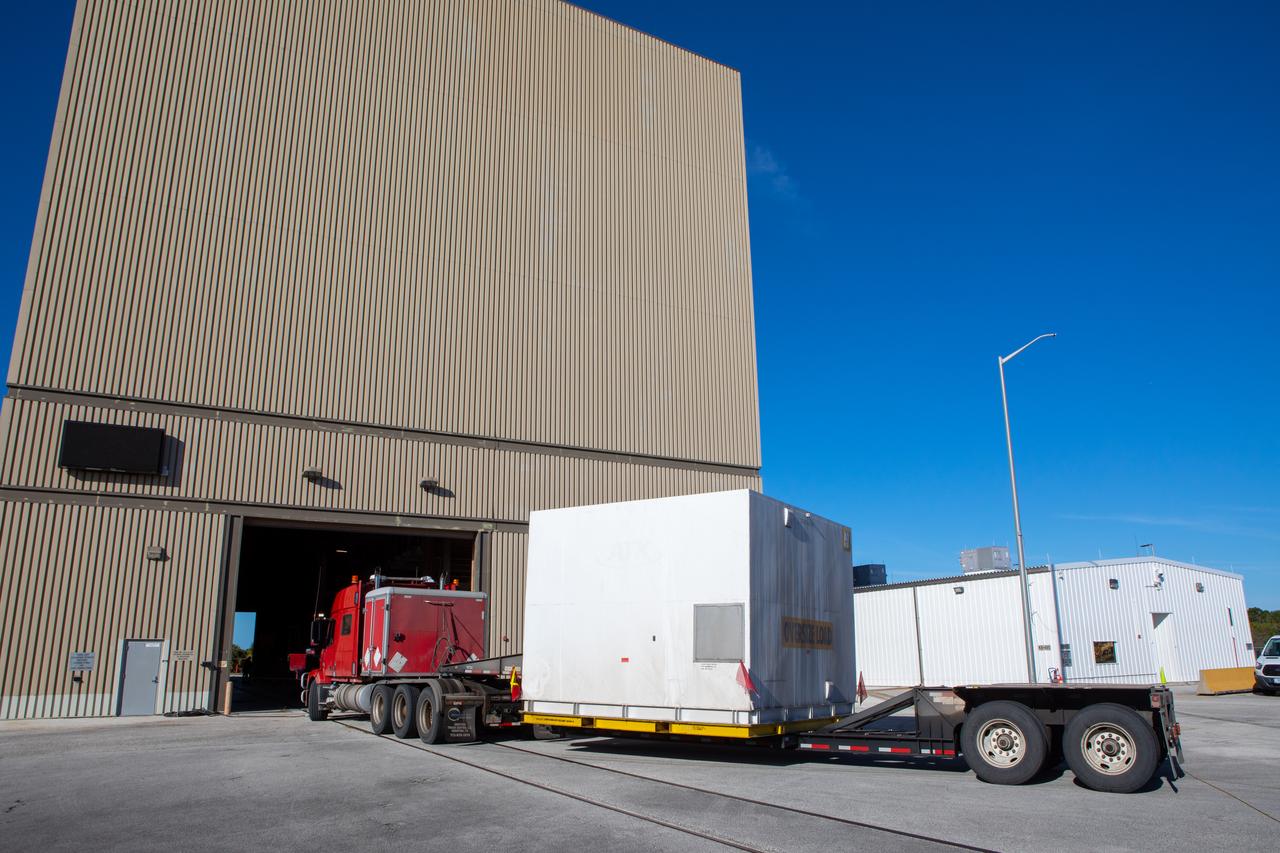
The second of two Northrop Grumman-manufactured aft exit cones for the Space Launch System’s solid rocket boosters arrives by truck in its shipping container at the Rotation, Processing and Surge Facility at NASA's Kennedy Space Center in Florida on Dec. 9, 2019. The right aft exit cone was shipped from Promontory, Utah. It will be checked out and prepared for the Artemis I uncrewed test flight. The aft exit cones sit at the bottommost part of the twin boosters. The cones help provide added thrust for the boosters, while protecting the aft skirts from the thermal environment during launch.
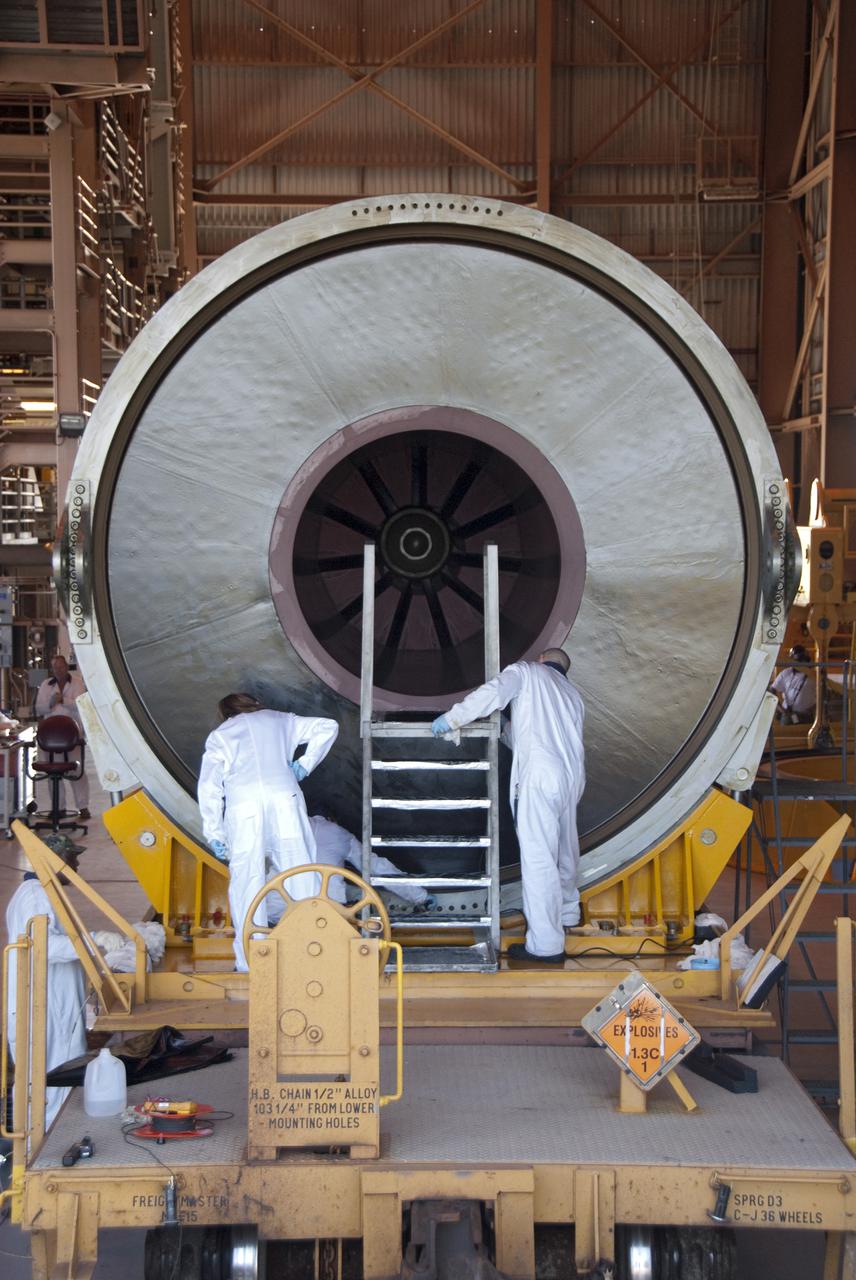
CAPE CANAVERAL, Fla. -- In the Rotation, Processing and Surge Facility, or RSPF, at NASA's Kennedy Space Center in Florida, workers prepare for the propellant grain inspection of the final solid rocket booster segments, which is a required safety analysis. The booster segments were manufactured at the ATK solid rocket booster plant in Promontory, Utah, and traveled to Kennedy along the Florida East Coast Railway. The booster segments will be stacked and then mated to space shuttle Atlantis and its external fuel tank in the Vehicle Assembly Building. The segments will be used for what currently is planned as the 'launch on need,' or potential rescue mission for the final shuttle flight, Endeavour's STS-134 mission. For information, visit www.nasa.gov_shuttle. Photo credit: NASA_Cory Huston
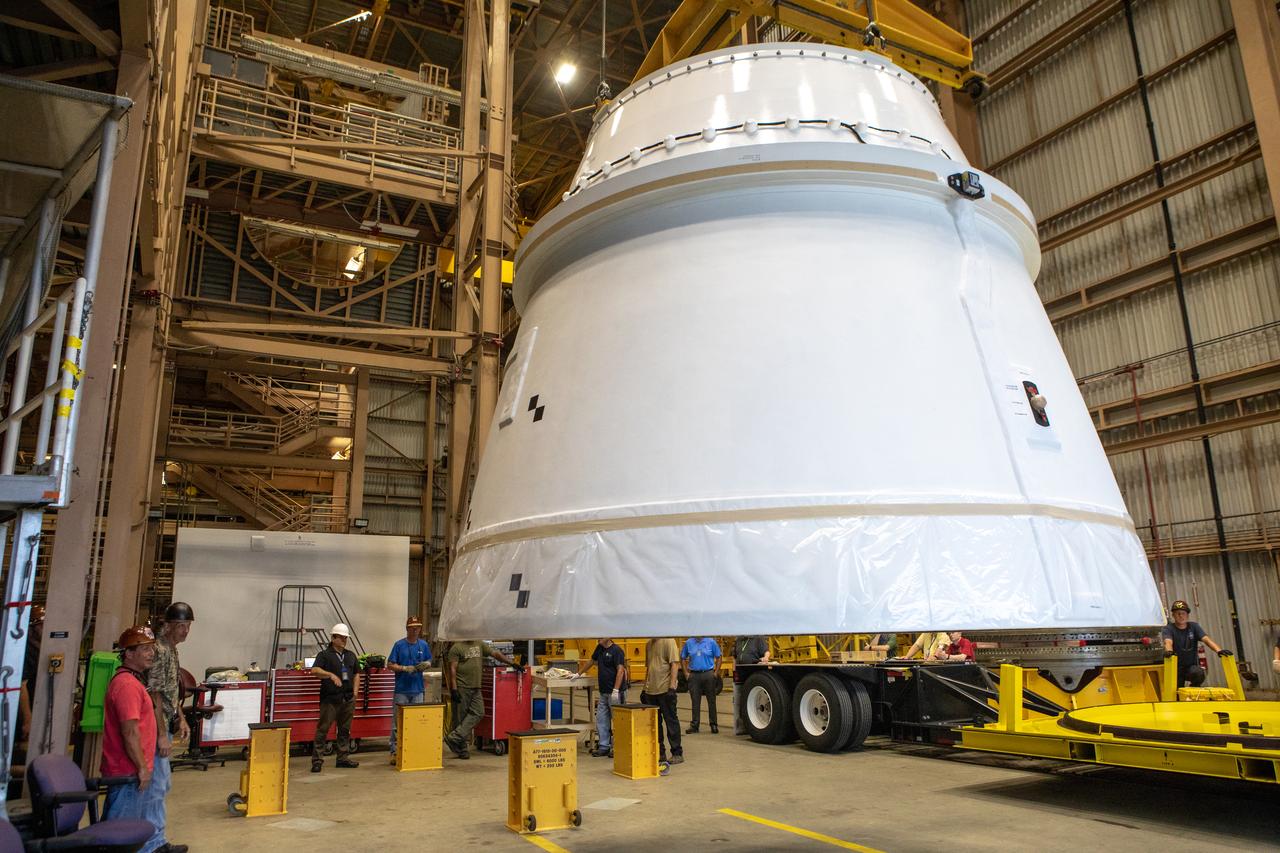
The first Northrop Grumman aft exit cone to arrive for the Space Launch System’s solid rocket boosters is moved by crane inside the Rotation, Processing and Surge Facility at NASA’s Kennedy Space Center in Florida on Nov. 4, 2019. The aft exit cone was shipped from Promontory, Utah. It will be checked out and prepared for the Artemis I uncrewed test flight. The aft exit cones sit at the bottommost part of the twin boosters. They are attached to the aft skirts, which contain the booster separation motors. The exit cones help to protect the aft skirts during launch.
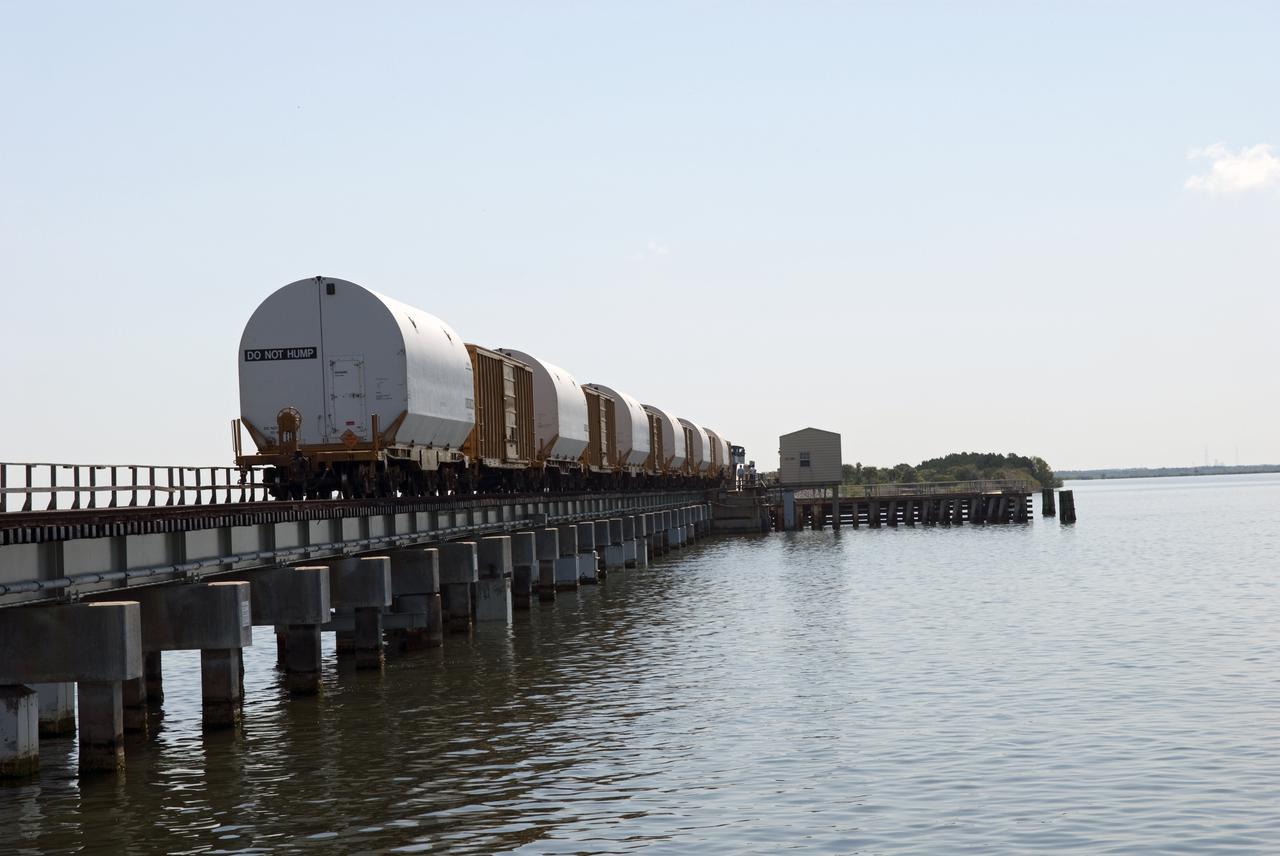
CAPE CANAVERAL, Fla. - The NASA Railroad train transports the last space shuttle solid rocket booster segments over the Indian River on the 13-mile trip from the Jay Jay Rail Yard in Titusville, Fla., to NASA's Kennedy Space Center. Six cars transported the segments along the Florida East Coast Railway, which began at the ATK solid rocket booster plant in Promontory, Utah. The booster segments will be used for shuttle Atlantis on what currently is planned as the 'launch on need,' or potential rescue mission for the final shuttle flight, Endeavour's STS-134 mission. For information, visit www.nasa.gov_shuttle. Photo credit: NASA_Jim Grossmann
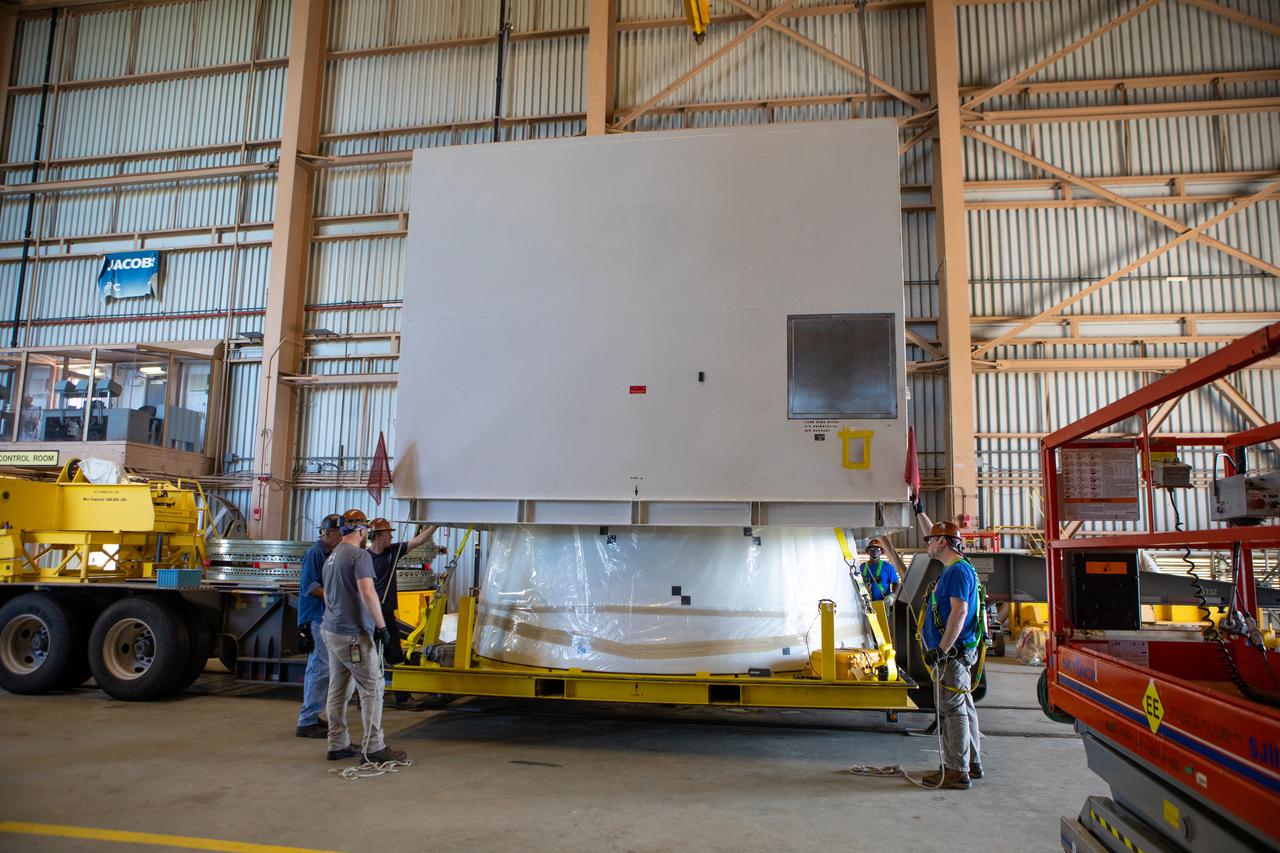
Workers assist with removal of the shipping container cover from the second Northrop Grumman-manufactured aft exit cone to arrive for the Space Launch System’s solid rocket boosters inside the Rotation, Processing and Surge Facility at NASA’s Kennedy Space Center in Florida on Dec. 9, 2019. The right aft exit cone was shipped from Promontory, Utah. It will be checked out and prepared for the Artemis I uncrewed test flight. The aft exit cones sit at the bottommost part of the twin boosters. The cones help provide added thrust for the boosters, while protecting the aft skirts from the thermal environment during launch.
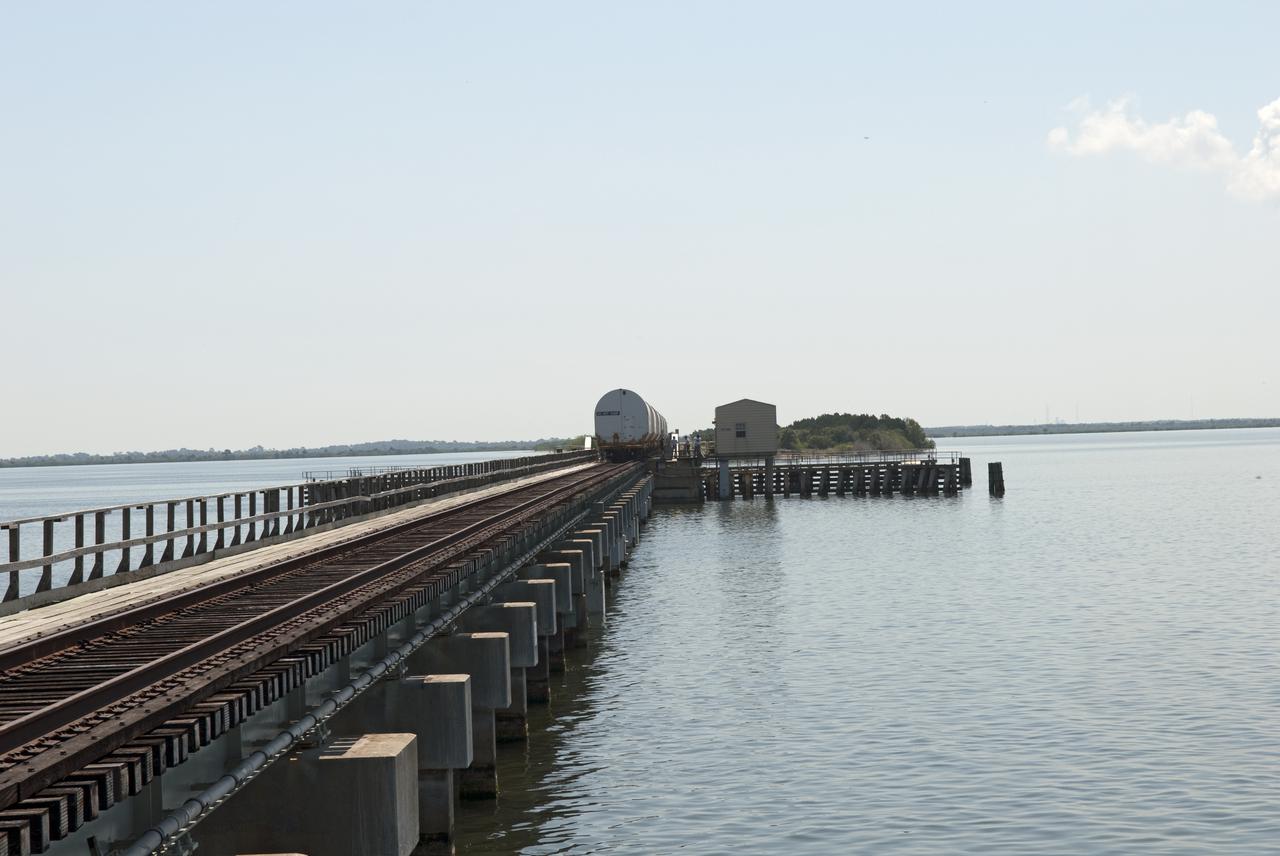
CAPE CANAVERAL, Fla. - The NASA Railroad train transports the last space shuttle solid rocket booster segments over the Indian River on the 13-mile trip from the Jay Jay Rail Yard in Titusville, Fla., to NASA's Kennedy Space Center. Six cars transported the segments along the Florida East Coast Railway, which began at the ATK solid rocket booster plant in Promontory, Utah. The booster segments will be used for shuttle Atlantis on what currently is planned as the 'launch on need,' or potential rescue mission for the final shuttle flight, Endeavour's STS-134 mission. For information, visit www.nasa.gov_shuttle. Photo credit: NASA_Jim Grossmann
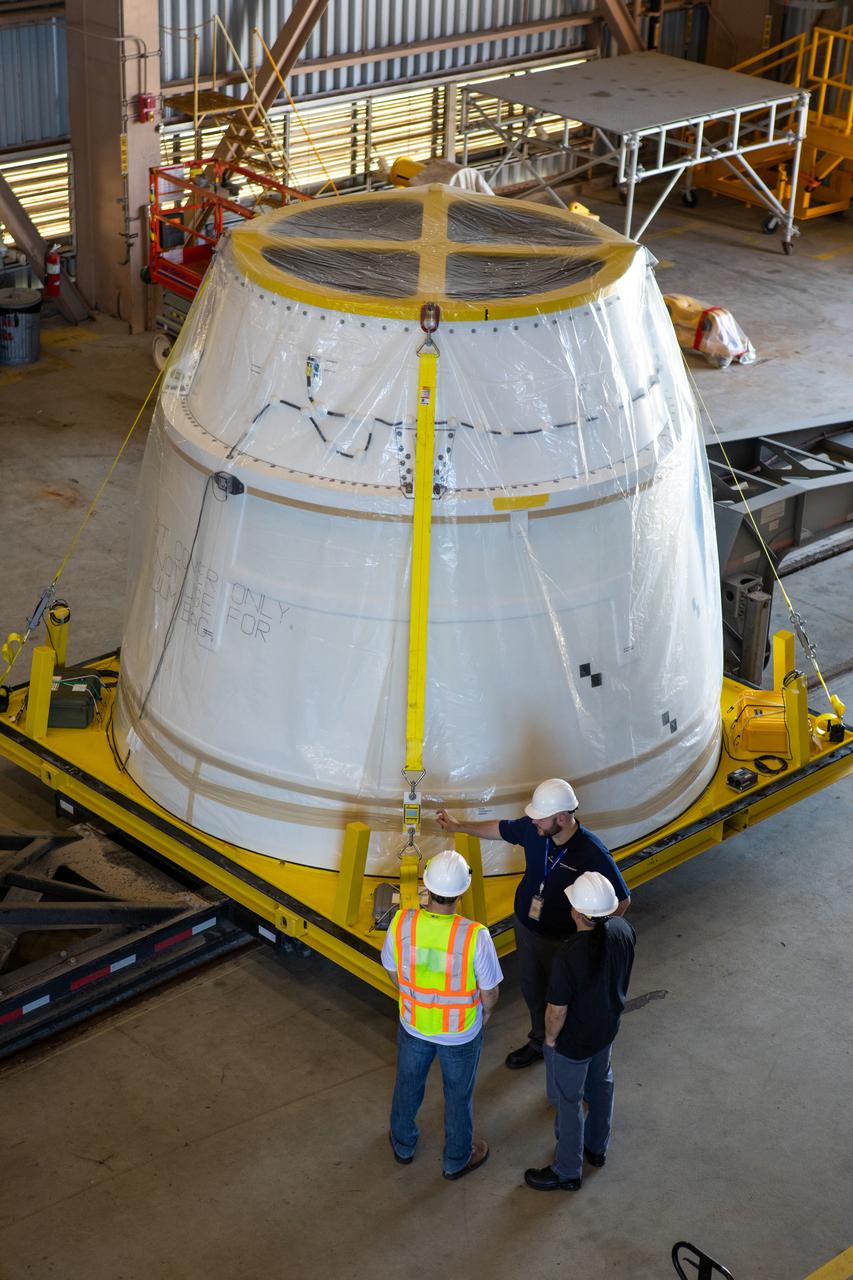
The shipping container has been removed from the second of two Northrop Grumman-manufactured aft exit cones to arrive for the Space Launch System’s solid rocket boosters inside the Rotation, Processing and Surge Facility at NASA’s Kennedy Space Center in Florida on Dec. 9, 2019. The right aft exit cone was shipped from Promontory, Utah. It will be checked out and prepared for the Artemis I uncrewed test flight. The aft exit cones sit at the bottommost part of the twin boosters. The cones help provide added thrust for the boosters, while protecting the aft skirts from the thermal environment during launch.
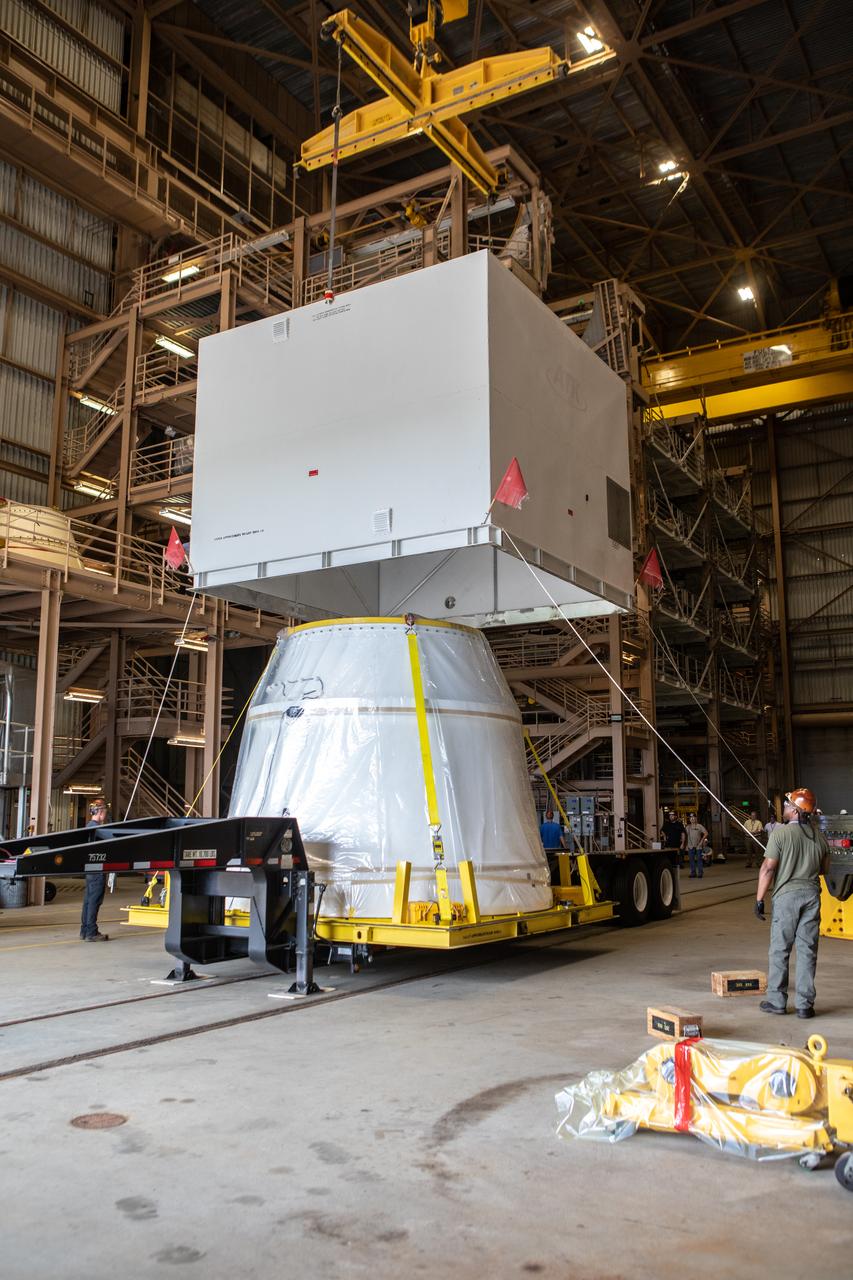
Workers assist as a crane is used to lift up the shipping container cover from the first Northrop Grumman aft exit cone to arrive for the Space Launch System’s solid rocket boosters inside the Rotation, Processing and Surge Facility at NASA’s Kennedy Space Center in Florida on Nov. 4, 2019. The aft exit cone was shipped from Promontory, Utah. It will be checked out and prepared for the Artemis I uncrewed test flight. The aft exit cones sit at the bottommost part of the twin boosters. They are attached to the aft skirts, which contain the booster separation motors. The exit cones help to protect the aft skirts during launch.
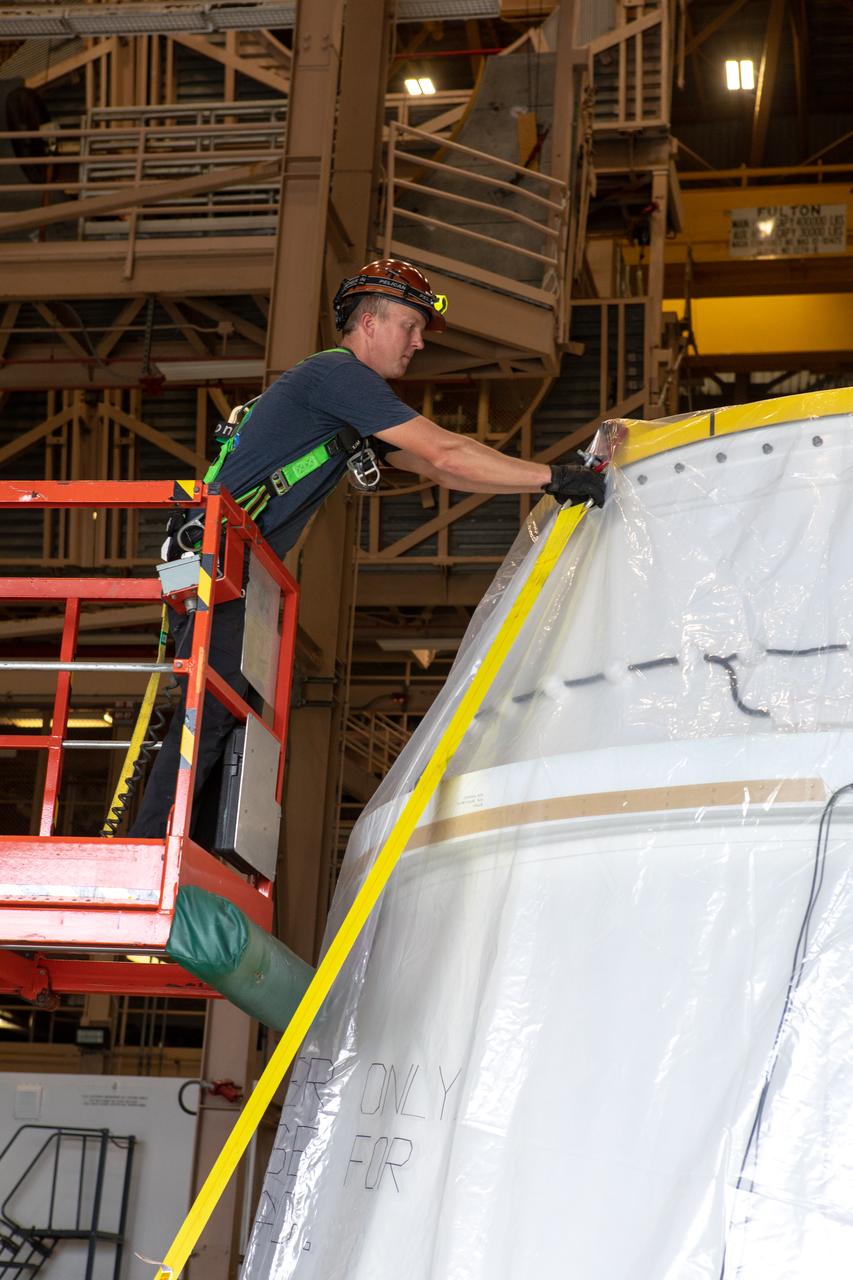
A worker removes one of the securing straps from the first Northrop Grumman aft exit cone to arrive for the Space Launch System’s solid rocket boosters inside the Rotation, Processing and Surge Facility at NASA’s Kennedy Space Center in Florida on Nov. 4, 2019. The aft exit cone was shipped from Promontory, Utah. It will be checked out and prepared for the Artemis I uncrewed test flight. The aft exit cones sit at the bottommost part of the twin boosters. They are attached to the aft skirts, which contain the booster separation motors. The exit cones help to protect the aft skirts during launch.
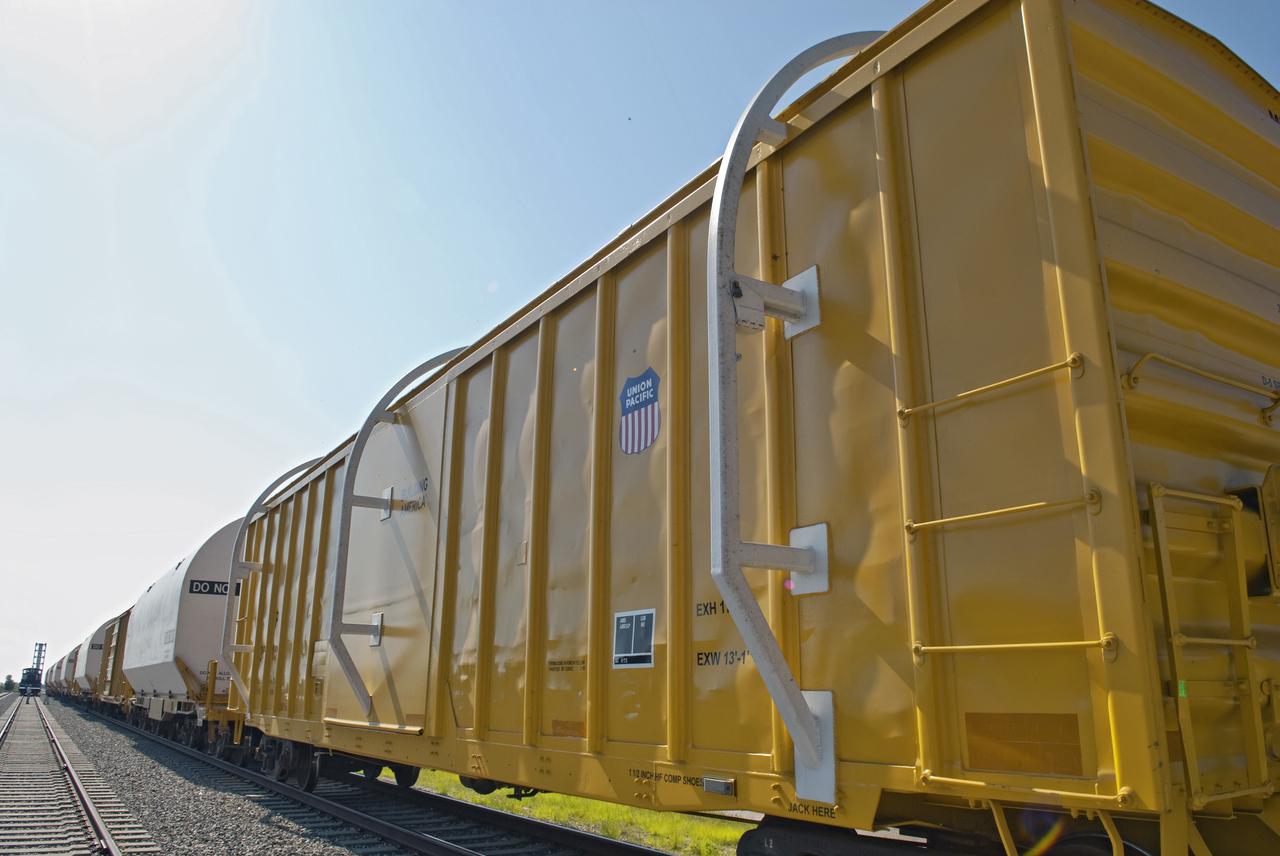
CAPE CANAVERAL, Fla. - At the Jay Jay Rail Yard in Titusville, Fla., the NASA Railroad train is ready to carry the last space shuttle solid rocket booster segments into NASA's Kennedy Space Center. The white railings on the orange spacer cars ensure clearance on their journey. Six cars transported the segments along the Florida East Coast Railway, which began at the ATK solid rocket booster plant in Promontory, Utah. The booster segments will be used for shuttle Atlantis on what currently is planned as the 'launch on need,' or potential rescue mission for the final shuttle flight, Endeavour's STS-134 mission. For information, visit www.nasa.gov_shuttle. Photo credit: NASA_Jim Grossmann
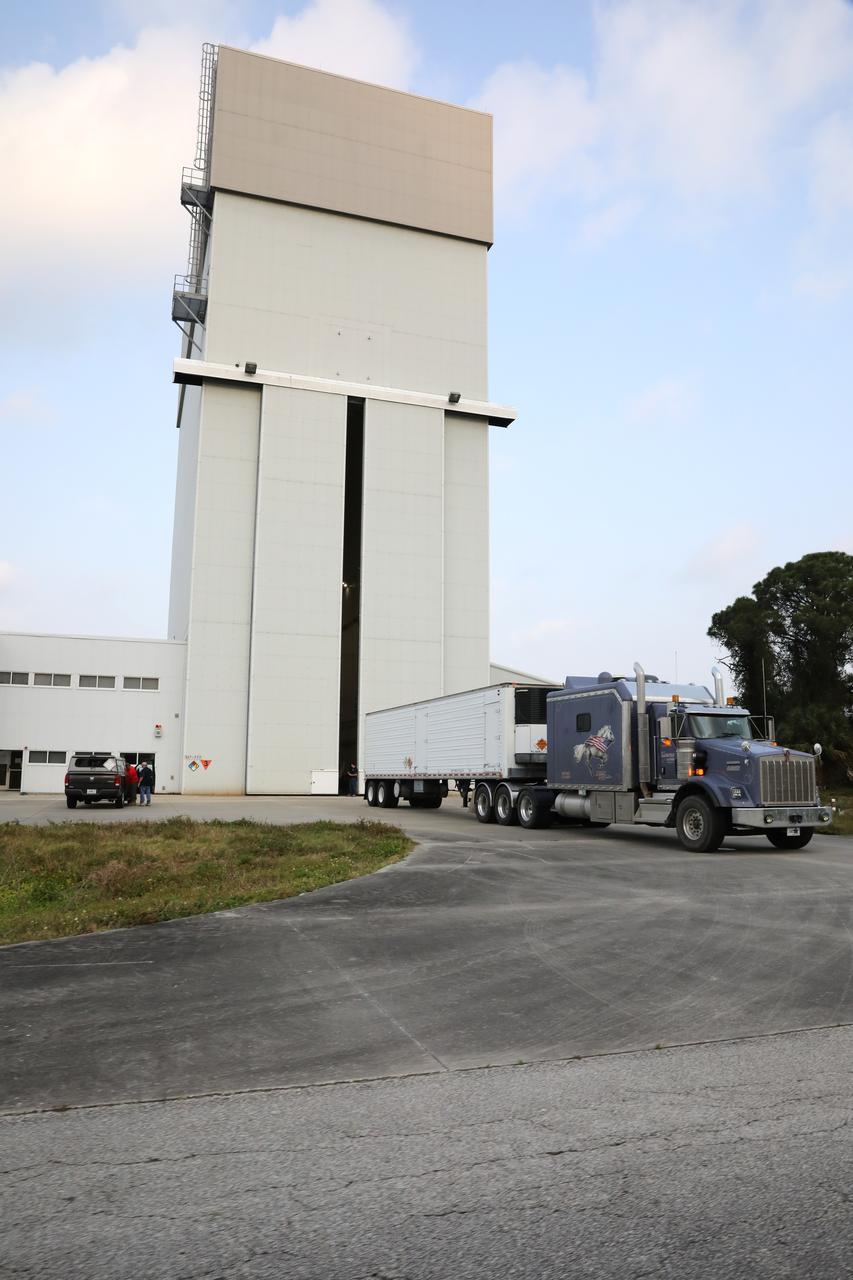
The launch abort motor for Orion’s launch abort system (LAS) for Artemis II, enclosed in its shipping container, arrives at NASA’s Kennedy Space Center in Florida on April 13, 2020. The motor arrived from Northrop Grumman in Promontory, Utah, and was transported to the Launch Abort System Facility where it will undergo testing in preparation for the second Artemis mission. The launch abort motor is one of three motors on the LAS. The LAS will be positioned atop the Orion crew module and is designed to protect astronauts if a problem arises during launch by pulling the spacecraft away from a failing rocket. Artemis II will take the first humans in orbit around the Moon in the 21st century.
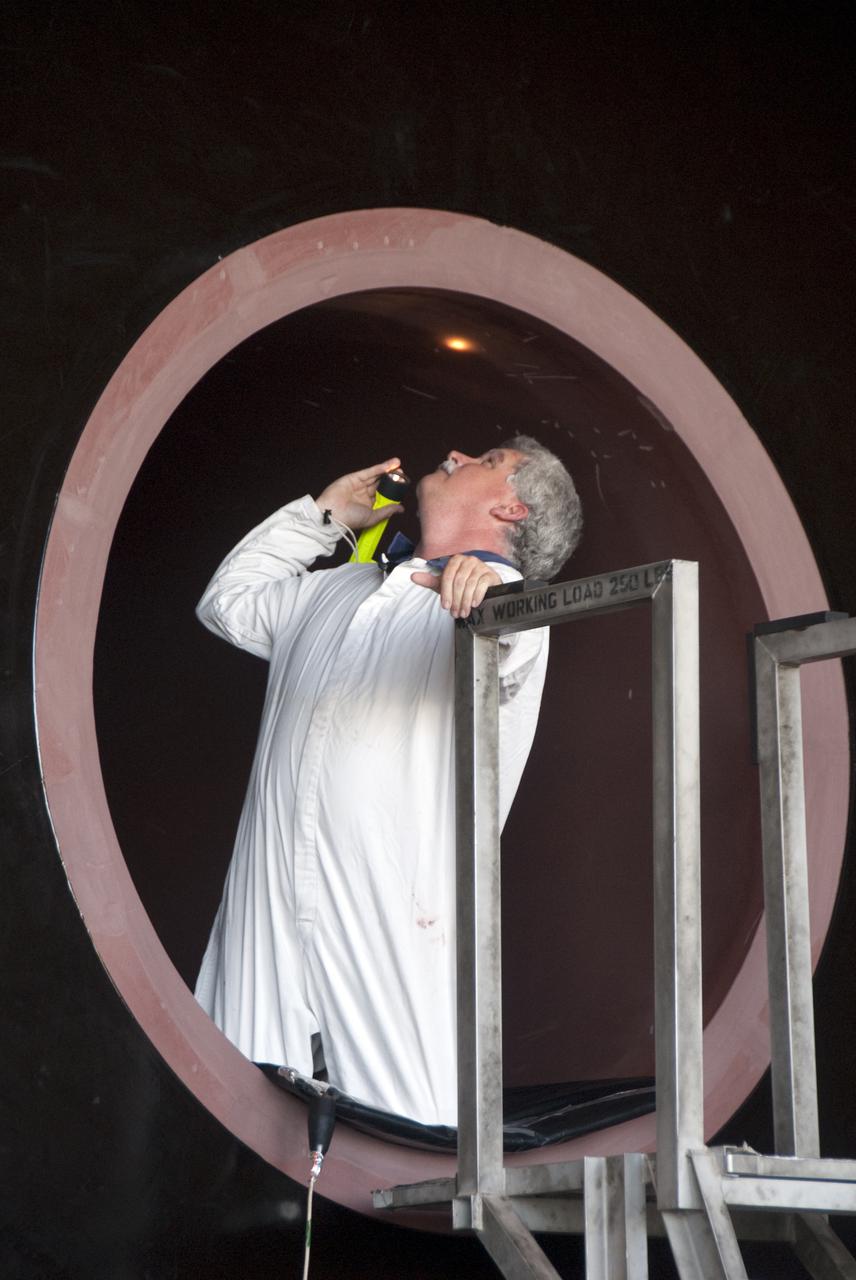
CAPE CANAVERAL, Fla. -- In the Rotation, Processing and Surge Facility, or RSPF, at NASA's Kennedy Space Center in Florida, a worker performs the propellant grain inspection of the final solid rocket booster segments, which is a required safety analysis. The booster segments were manufactured at the ATK solid rocket booster plant in Promontory, Utah, and traveled to Kennedy along the Florida East Coast Railway. The booster segments will be stacked and then mated to space shuttle Atlantis and its external fuel tank in the Vehicle Assembly Building. The segments will be used for what currently is planned as the 'launch on need,' or potential rescue mission for the final shuttle flight, Endeavour's STS-134 mission. For information, visit www.nasa.gov_shuttle. Photo credit: NASA_Cory Huston
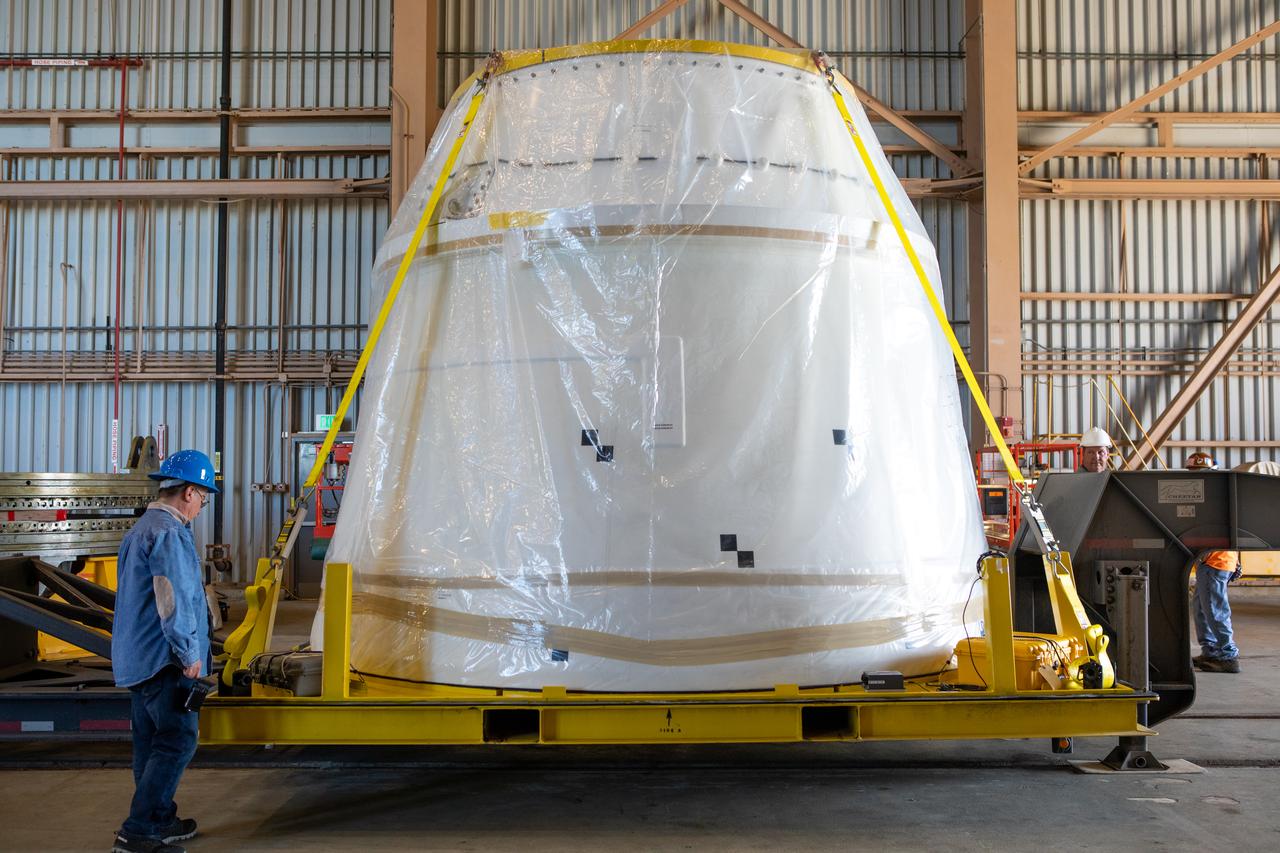
The shipping container has been removed from the second of two Northrop Grumman-manufactured aft exit cones to arrive for the Space Launch System’s solid rocket boosters inside the Rotation, Processing and Surge Facility at NASA’s Kennedy Space Center in Florida on Dec. 9, 2019. The right aft exit cone was shipped from Promontory, Utah. It will be checked out and prepared for the Artemis I uncrewed test flight. The aft exit cones sit at the bottommost part of the twin boosters. The cones help provide added thrust for the boosters, while protecting the aft skirts from the thermal environment during launch.
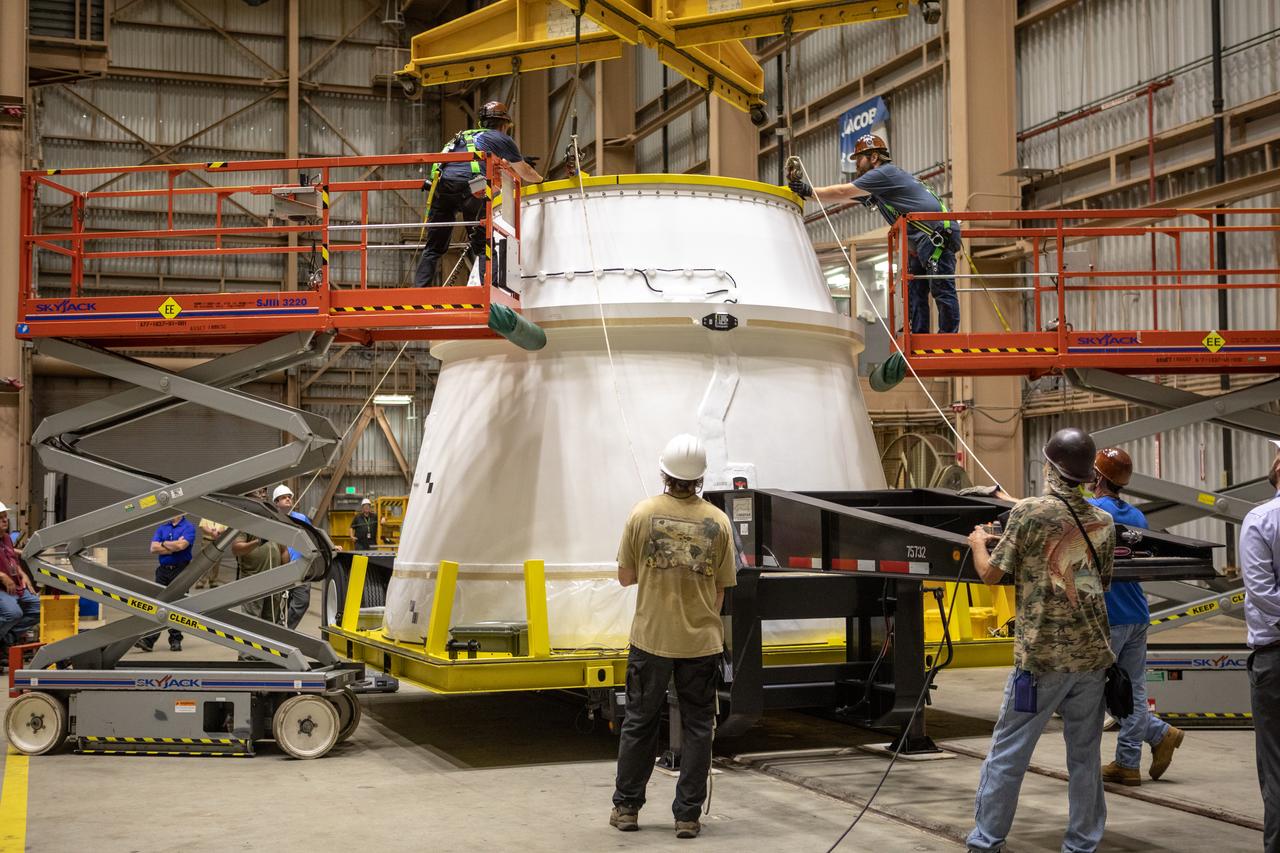
Workers attach a crane to the first Northrop Grumman aft exit cone to arrive for the Space Launch System’s solid rocket boosters inside the Rotation, Processing and Surge Facility at NASA’s Kennedy Space Center in Florida on Nov. 4, 2019. The aft exit cone was shipped from Promontory, Utah. It will be checked out and prepared for the Artemis I uncrewed test flight. The aft exit cones sit at the bottommost part of the twin boosters. They are attached to the aft skirts, which contain the booster separation motors. The exit cones help to protect the aft skirts during launch.
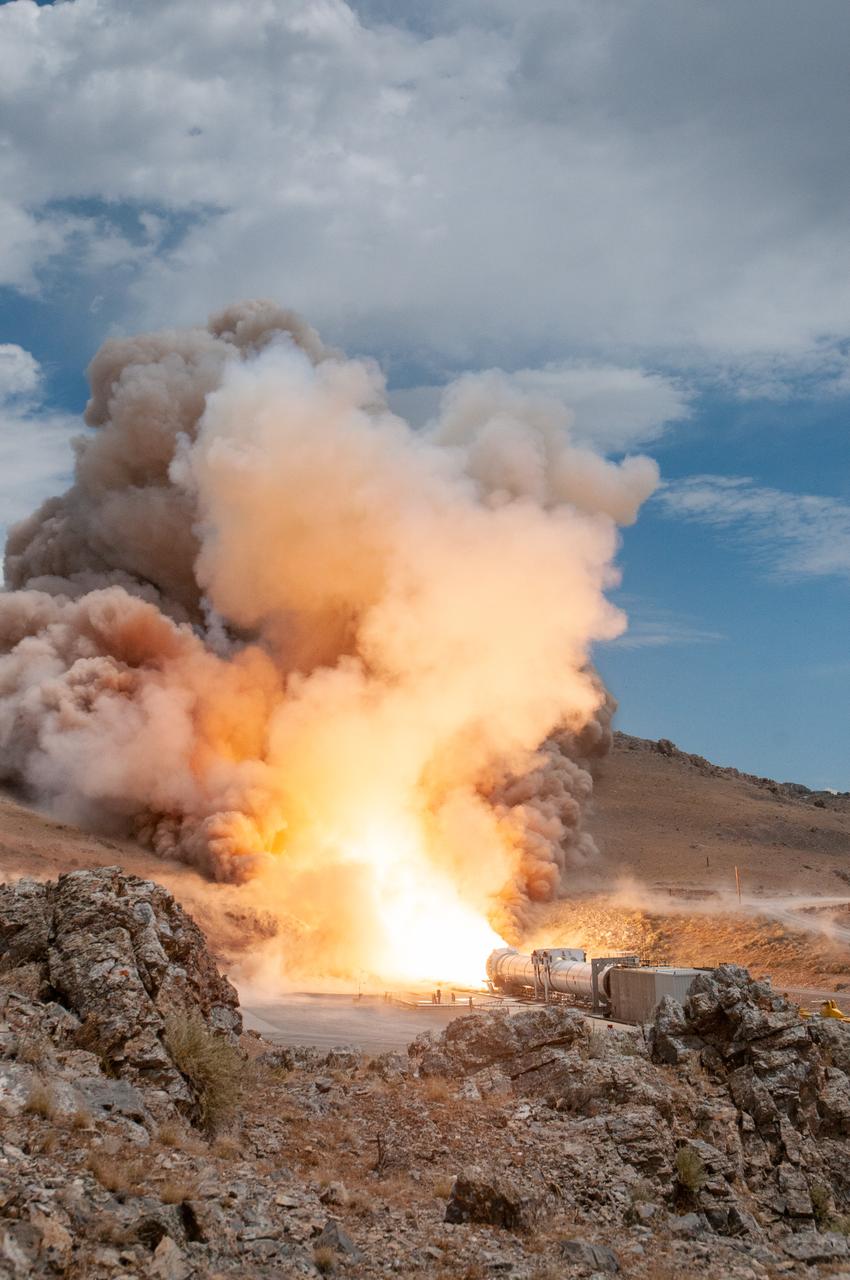
NASA and Northrop Grumman completed a solid rocket booster motor ground test for future flights of the agency’s Space Launch System rocket at Northrop Grumman’s test facility in Promontory, Utah, July 21. The booster motor, called Flight Support Booster-2 (FSB-2), fired for a little over two minutes and produced more than 3.6 million pounds of thrust. Test data will be used to evaluate improvements and new materials in the boosters for missions after Artemis III. When SLS launches the Artemis missions to the Moon, its two five-segment solid rocket boosters produce more than 75% of the initial thrust. The SLS boosters are the largest, most powerful boosters ever built for flight. For more information about SLS, visit nasa.gov/sls
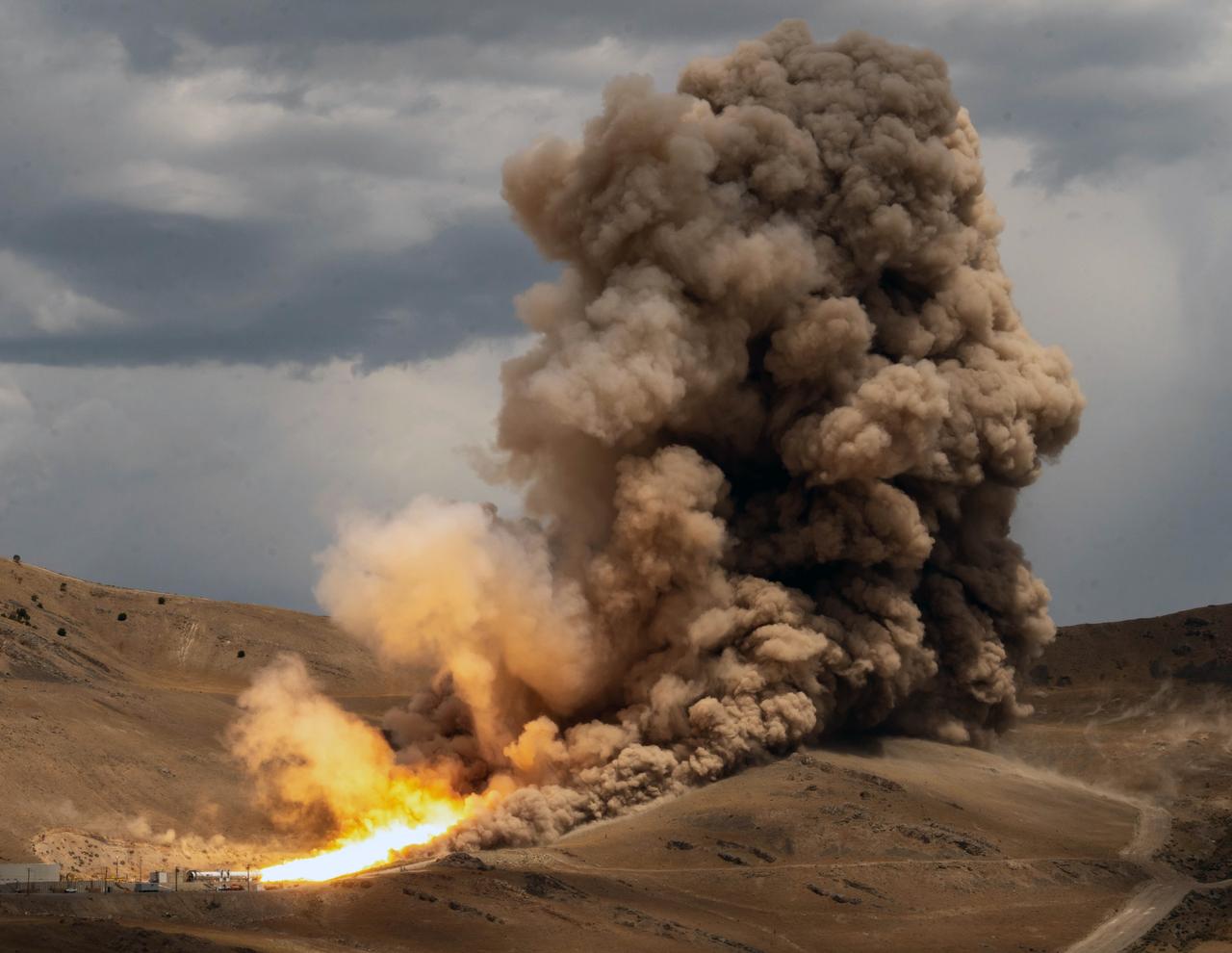
NASA and Northrop Grumman completed a solid rocket booster motor ground test for future flights of the agency’s Space Launch System rocket at Northrop Grumman’s test facility in Promontory, Utah, July 21. The booster motor, called Flight Support Booster-2 (FSB-2), fired for a little over two minutes and produced more than 3.6 million pounds of thrust. Test data will be used to evaluate improvements and new materials in the boosters for missions after Artemis III. When SLS launches the Artemis missions to the Moon, its two five-segment solid rocket boosters produce more than 75% of the initial thrust. The SLS boosters are the largest, most powerful boosters ever built for flight. For more information about SLS, visit nasa.gov/sls
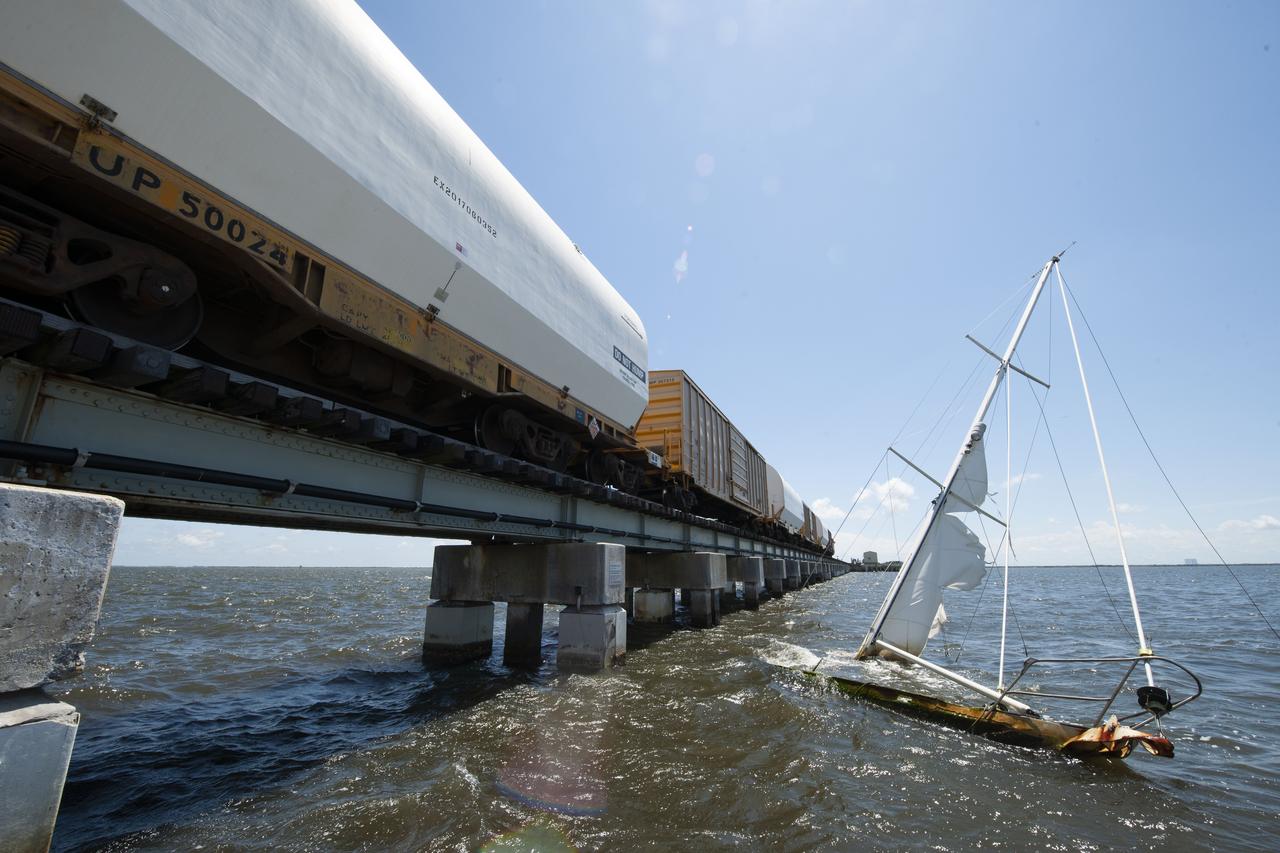
Twin rocket boosters for NASA’s Space Launch System (SLS) that will power Artemis missions to the Moon have arrived at the agency’s Kennedy Space Center in Florida. The two motor segments, each comprised of five segments, arrived at Kennedy’s Rotation, Processing and Surge Facility (RPSF) on June 15, 2020, by train from a Northrop Grumman manufacturing facility in Promontory, Utah. The booster segments will remain in the RPSF for inspection prior to processing until it’s time to move them to the Vehicle Assembly Building for stacking on the mobile launcher. This is the first piece of flight hardware to arrive at Kennedy by train for the Artemis program, but NASA’s Exploration Ground Systems (EGS) can expect to receive additional hardware soon, including the Launch Vehicle Service Adapter and the rocket’s core stage. NASA is working toward an Artemis I launch date in 2021, keeping the program moving at the best possible pace toward the earliest possible opportunity.
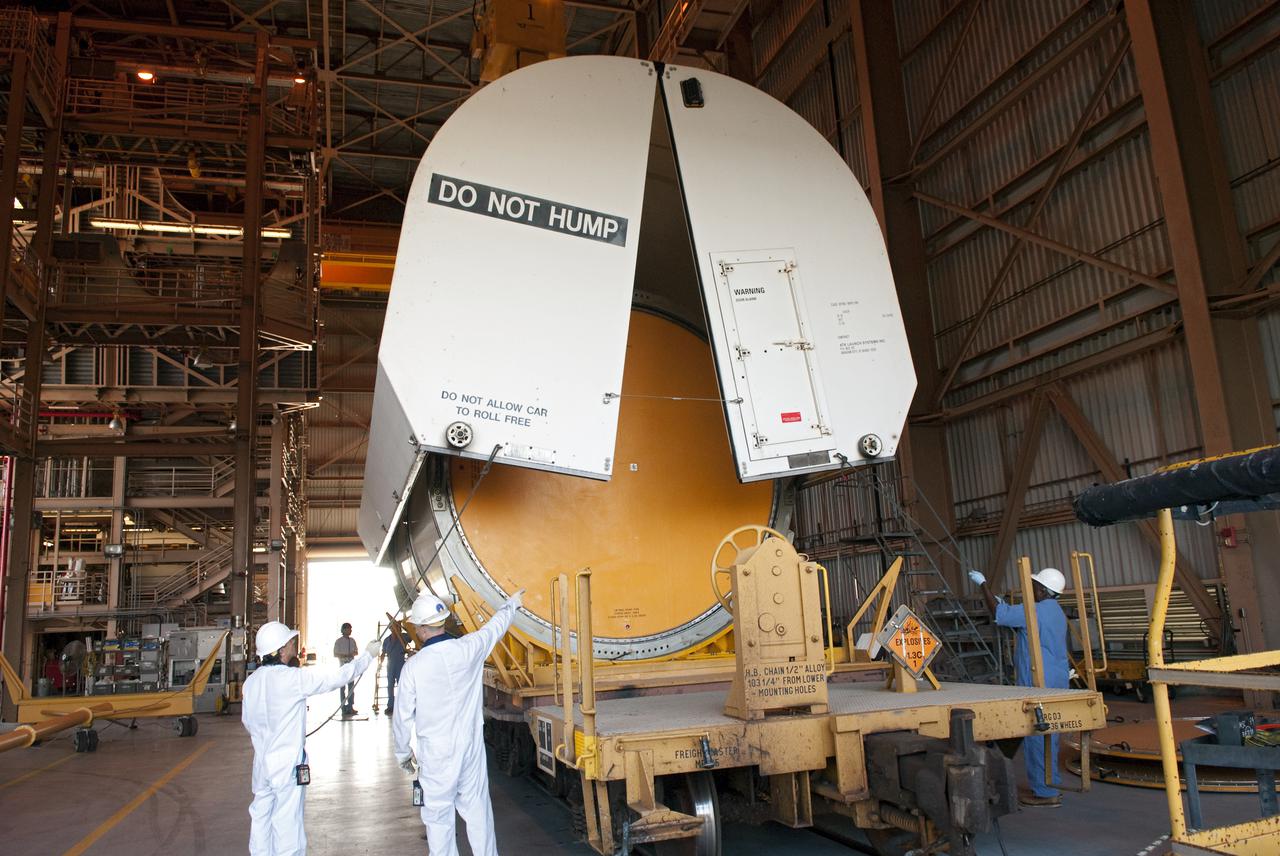
CAPE CANAVERAL, Fla. -- In the Rotation, Processing and Surge Facility, or RSPF, at NASA's Kennedy Space Center in Florida, workers prepare for the propellant grain inspection and truing of the final solid rocket booster segments, which is a required safety analysis. The booster segments were manufactured at the ATK solid rocket booster plant in Promontory, Utah, and traveled to Kennedy along the Florida East Coast Railway. The booster segments will be stacked and then mated to space shuttle Atlantis and its external fuel tank in the Vehicle Assembly Building. The segments will be used for what currently is planned as the 'launch on need,' or potential rescue mission for the final shuttle flight, Endeavour's STS-134 mission. For information, visit www.nasa.gov_shuttle. Photo credit: NASA_Cory Huston
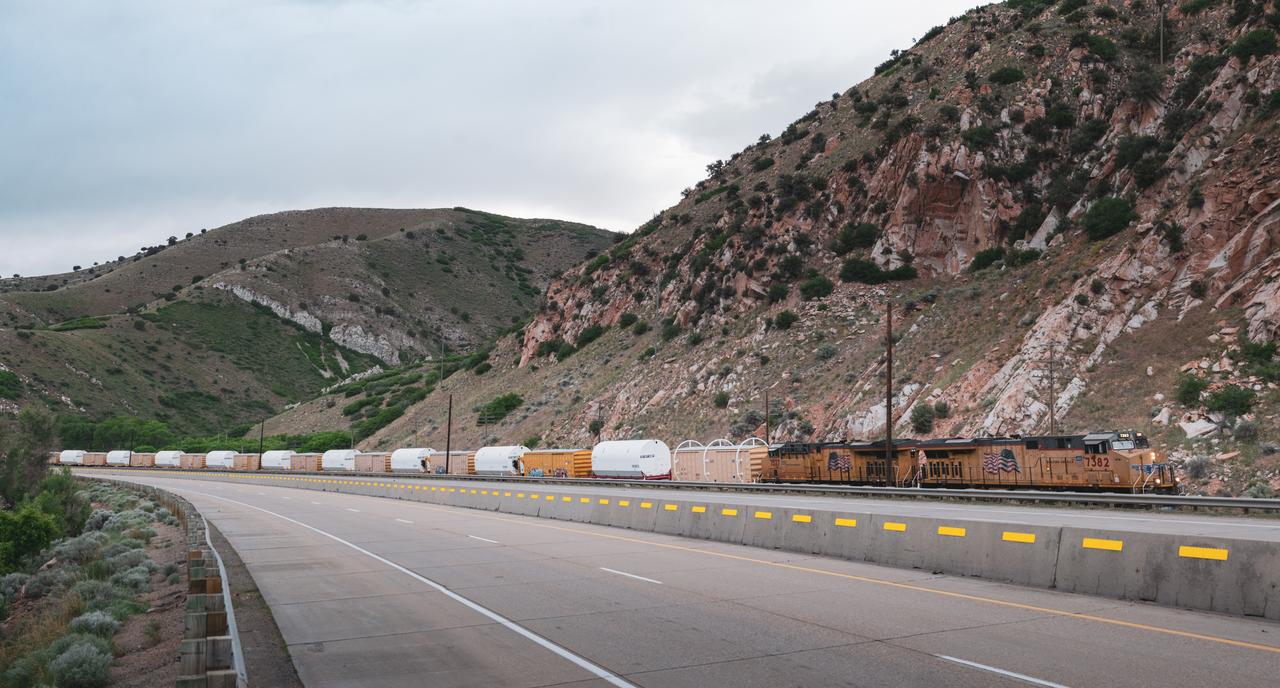
The two solid rocket boosters that will power NASA’s Space Launch System (SLS) for Artemis missions to the Moon are on their way to the agency’s Kennedy Space Center in Florida after departing from a Northrop Grumman manufacturing facility in Promontory, Utah, on June 5, 2020. The boosters – each comprised of five motor segments – are scheduled to arrive at Kennedy’s Rotation, Processing and Surge Facility, where teams with NASA’s Exploration Ground Systems will process the segments before moving them to the Vehicle Assembly Building for stacking on the mobile launcher. Under the Artemis program, NASA will land the first woman and the next man on the Moon by 2024. The first in a series of increasingly complex missions, Artemis I will test the Orion spacecraft and SLS as an integrated system ahead of crewed flights to the Moon.
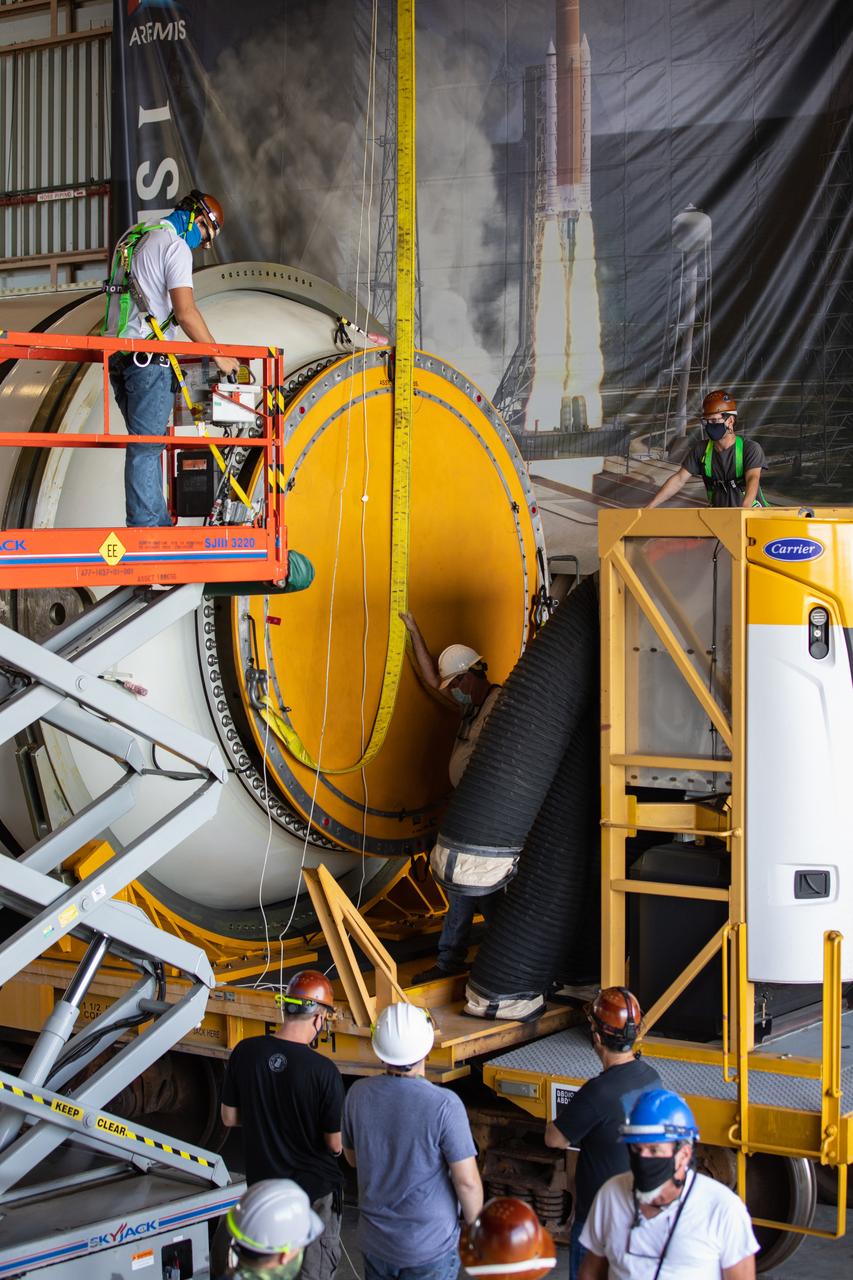
Technicians ready two NASA Space Launch System (SLS) solid rocket boosters for mating to the rocket’s two aft skirts on June 16, 2020, inside Kennedy Space Center’s Rotation, Processing and Surge Facility. Together, the twin boosters provide more than 75 percent of the total SLS thrust at launch. Manufactured by Northrop Grumman in Promontory, Utah, the boosters arrived at Kennedy via train. The cross-country journey was an important milestone for the agency’s Artemis I launch. The first in a series of increasingly complex missions, Artemis I will test the Orion spacecraft and SLS as an integrated system prior to crewed missions to the Moon. Once the boosters are mated with the aft skirts, they will be moved to the Vehicle Assembly Building for stacking on the mobile launcher.
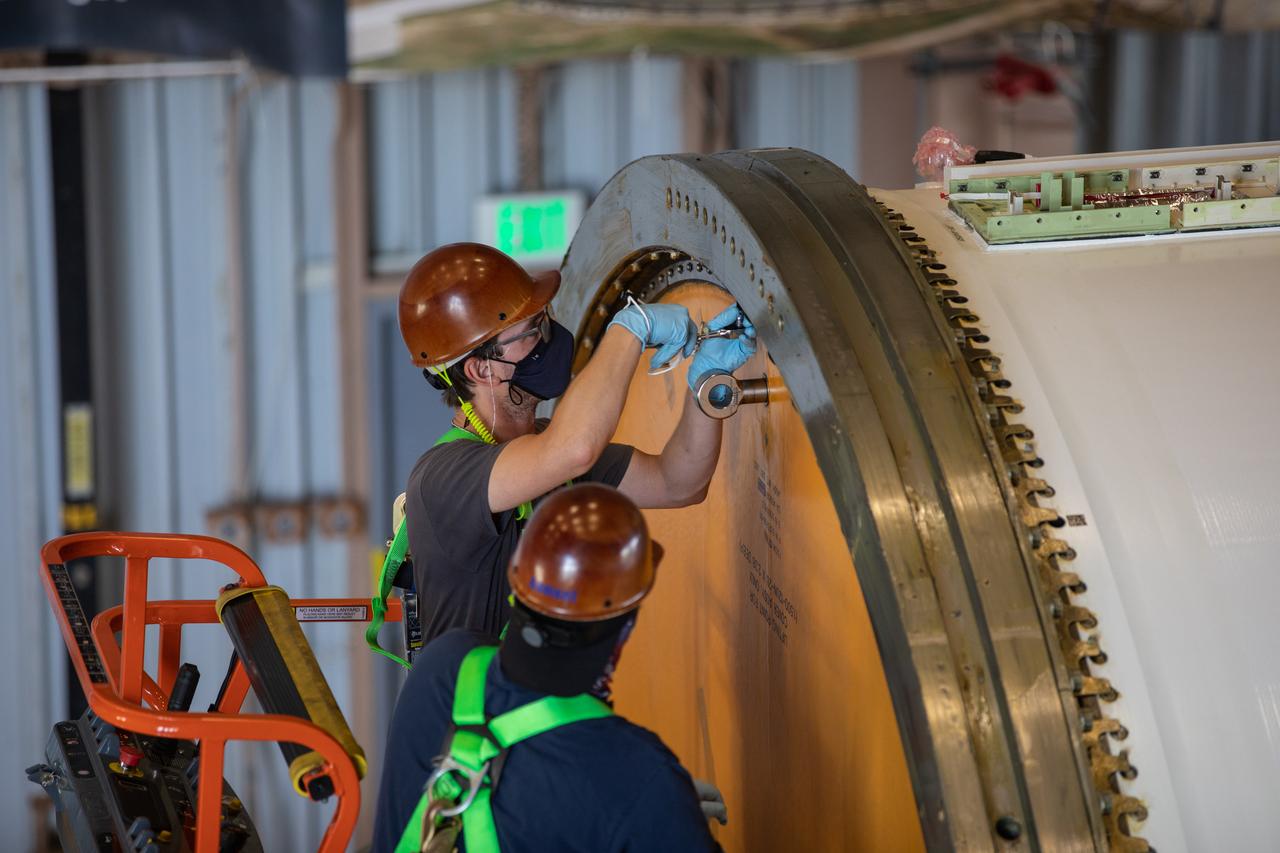
Technicians ready two NASA Space Launch System (SLS) solid rocket boosters for mating to the rocket’s two aft skirts on June 16, 2020, inside Kennedy Space Center’s Rotation, Processing and Surge Facility. Together, the twin boosters provide more than 75 percent of the total SLS thrust at launch. Manufactured by Northrop Grumman in Promontory, Utah, the boosters arrived at Kennedy via train. The cross-country journey was an important milestone for the agency’s Artemis I launch. The first in a series of increasingly complex missions, Artemis I will test the Orion spacecraft and SLS as an integrated system prior to crewed missions to the Moon. Once the boosters are mated with the aft skirts, they will be moved to the Vehicle Assembly Building for stacking on the mobile launcher.
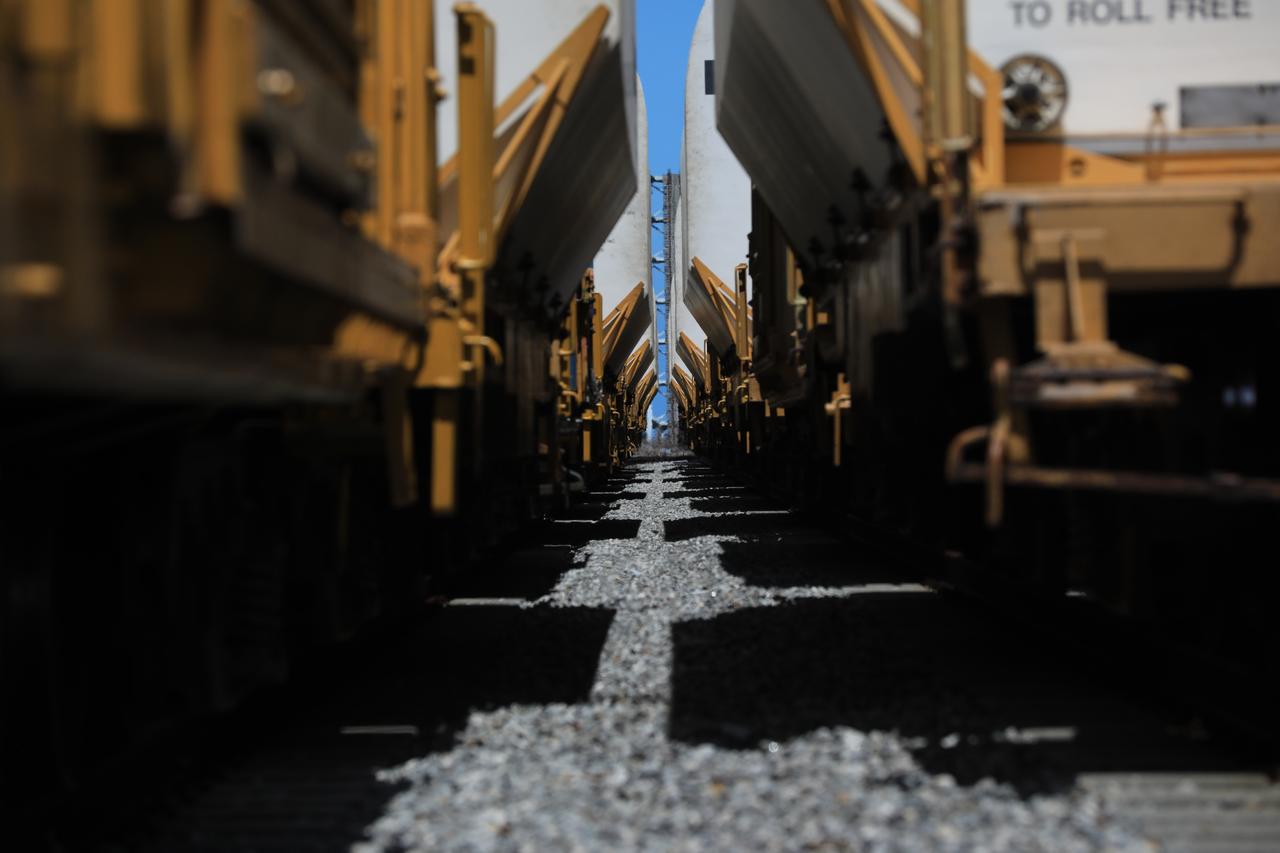
The train carrying the two solid rocket boosters that will power NASA’s Space Launch System (SLS) for Artemis missions to the Moon arrives at the Jay Jay rail yard – the connecting link between Kennedy Space Center and the Florida East Coast railway – in Titusville, Florida, on June 12, 2020. The boosters, each comprised of five motor segments, traveled from a Northrop Grumman manufacturing facility in Promontory, Utah, to Kennedy’s Rotation, Processing and Surge Facility, where teams with NASA’s Exploration Ground Systems will process the segments before moving them to the Vehicle Assembly Building for stacking on the mobile launcher. Under the Artemis program, NASA will land the first woman and the next man on the Moon by 2024. The first in a series of increasingly complex missions, Artemis I will test the Orion spacecraft and SLS as an integrated system ahead of crewed flights to the Moon.
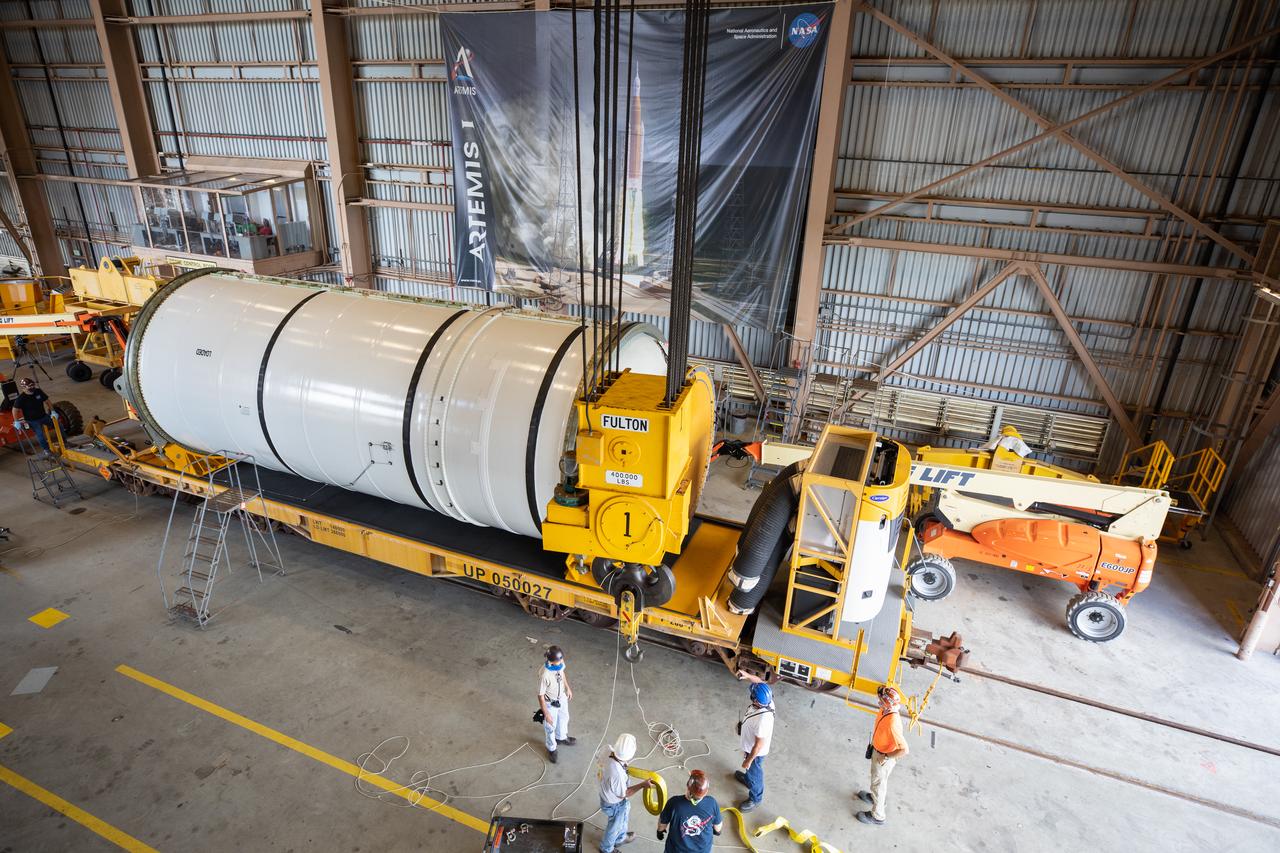
Technicians ready two NASA Space Launch System (SLS) solid rocket boosters for mating to the rocket’s two aft skirts on June 16, 2020, inside Kennedy Space Center’s Rotation, Processing and Surge Facility. Together, the twin boosters provide more than 75 percent of the total SLS thrust at launch. Manufactured by Northrop Grumman in Promontory, Utah, the boosters arrived at Kennedy via train. The cross-country journey was an important milestone for the agency’s Artemis I launch. The first in a series of increasingly complex missions, Artemis I will test the Orion spacecraft and SLS as an integrated system prior to crewed missions to the Moon. Once the boosters are mated with the aft skirts, they will be moved to the Vehicle Assembly Building for stacking on the mobile launcher.

The two solid rocket boosters that will power NASA’s Space Launch System (SLS) for Artemis missions to the Moon are on their way to the agency’s Kennedy Space Center in Florida after departing from a Northrop Grumman manufacturing facility in Promontory, Utah, on June 5, 2020. The boosters – each comprised of five motor segments – are scheduled to arrive at Kennedy’s Rotation, Processing and Surge Facility, where teams with NASA’s Exploration Ground Systems will process the segments before moving them to the Vehicle Assembly Building for stacking on the mobile launcher. Under the Artemis program, NASA will land the first woman and the next man on the Moon by 2024. The first in a series of increasingly complex missions, Artemis I will test the Orion spacecraft and SLS as an integrated system ahead of crewed flights to the Moon.
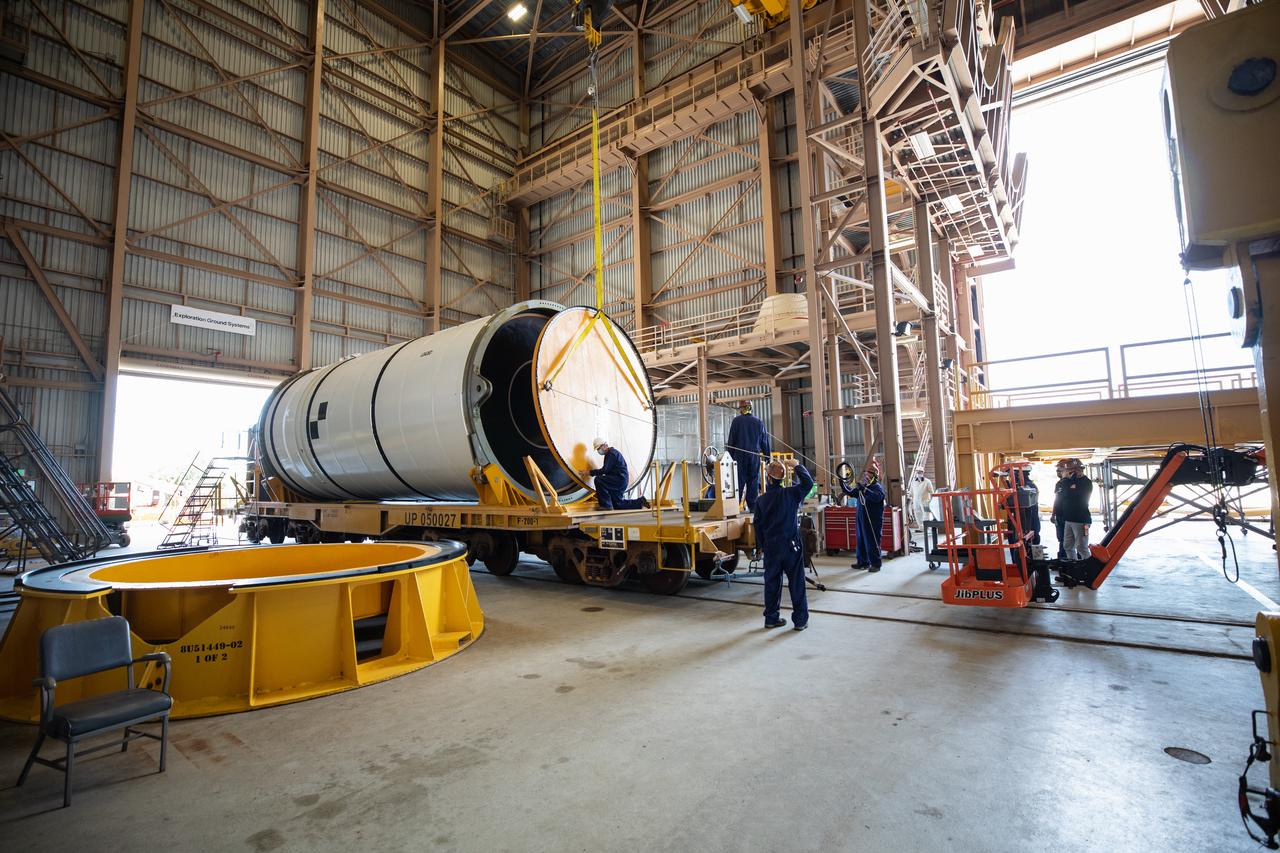
Technicians ready two NASA Space Launch System (SLS) solid rocket boosters for mating to the rocket’s two aft skirts on June 16, 2020, inside Kennedy Space Center’s Rotation, Processing and Surge Facility. Together, the twin boosters provide more than 75 percent of the total SLS thrust at launch. Manufactured by Northrop Grumman in Promontory, Utah, the boosters arrived at Kennedy via train. The cross-country journey was an important milestone for the agency’s Artemis I launch. The first in a series of increasingly complex missions, Artemis I will test the Orion spacecraft and SLS as an integrated system prior to crewed missions to the Moon. Once the boosters are mated with the aft skirts, they will be moved to the Vehicle Assembly Building for stacking on the mobile launcher.
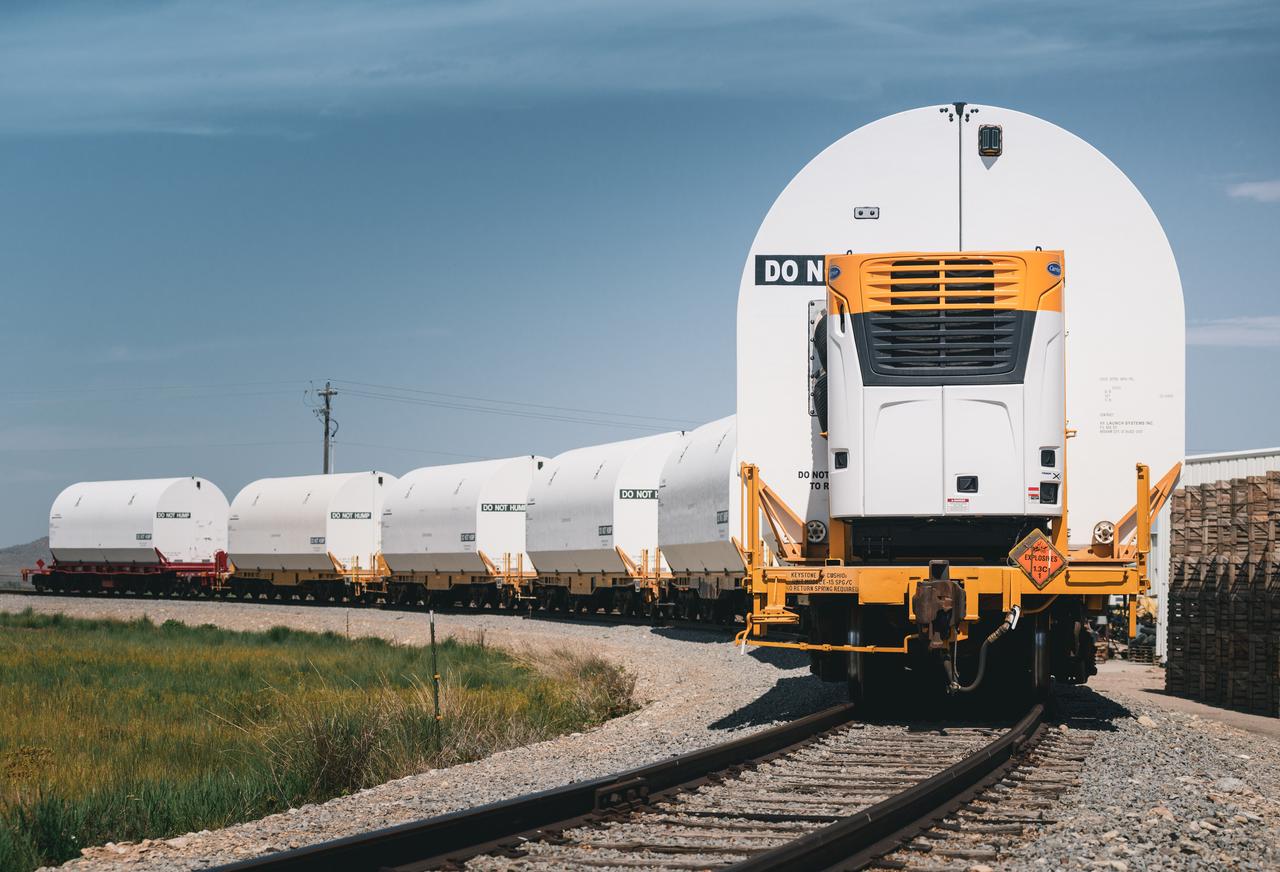
The two solid rocket boosters that will power NASA’s Space Launch System (SLS) for Artemis missions to the Moon are on their way to the agency’s Kennedy Space Center in Florida after departing from a Northrop Grumman manufacturing facility in Promontory, Utah, on June 5, 2020. The boosters – each comprised of five motor segments – are scheduled to arrive at Kennedy’s Rotation, Processing and Surge Facility, where teams with NASA’s Exploration Ground Systems will process the segments before moving them to the Vehicle Assembly Building for stacking on the mobile launcher. Under the Artemis program, NASA will land the first woman and the next man on the Moon by 2024. The first in a series of increasingly complex missions, Artemis I will test the Orion spacecraft and SLS as an integrated system ahead of crewed flights to the Moon.
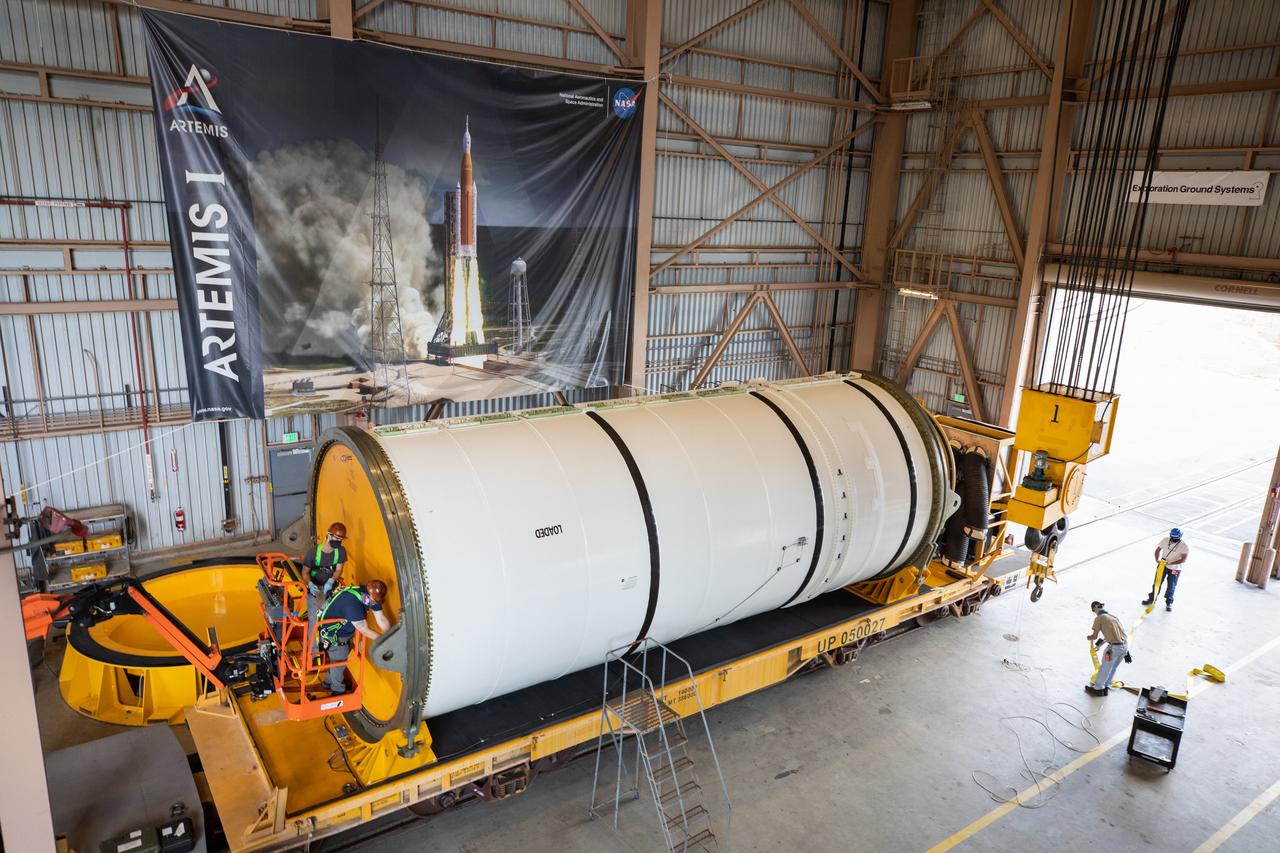
Technicians ready two NASA Space Launch System (SLS) solid rocket boosters for mating to the rocket’s two aft skirts on June 16, 2020, inside Kennedy Space Center’s Rotation, Processing and Surge Facility. Together, the twin boosters provide more than 75 percent of the total SLS thrust at launch. Manufactured by Northrop Grumman in Promontory, Utah, the boosters arrived at Kennedy via train. The cross-country journey was an important milestone for the agency’s Artemis I launch. The first in a series of increasingly complex missions, Artemis I will test the Orion spacecraft and SLS as an integrated system prior to crewed missions to the Moon. Once the boosters are mated with the aft skirts, they will be moved to the Vehicle Assembly Building for stacking on the mobile launcher.
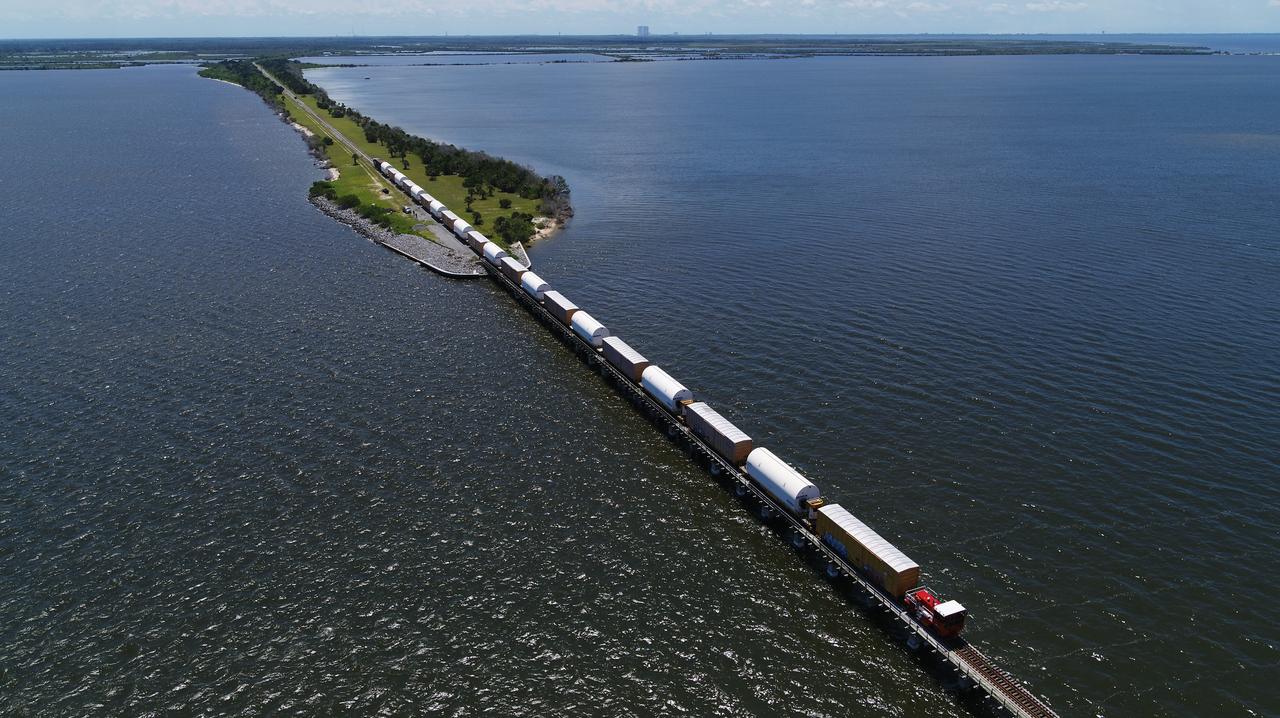
Twin rocket boosters for NASA’s Space Launch System (SLS) that will power Artemis missions to the Moon have arrived at the agency’s Kennedy Space Center in Florida. The two motor segments, each comprised of five segments, arrived at Kennedy’s Rotation, Processing and Surge Facility (RPSF) on June 15, 2020, by train from a Northrop Grumman manufacturing facility in Promontory, Utah. The booster segments will remain in the RPSF for inspection prior to processing until it’s time to move them to the Vehicle Assembly Building for stacking on the mobile launcher. This is the first piece of flight hardware to arrive at Kennedy by train for the Artemis program, but NASA’s Exploration Ground Systems (EGS) can expect to receive additional hardware soon, including the Launch Vehicle Service Adapter and the rocket’s core stage. NASA is working toward an Artemis I launch date in 2021, keeping the program moving at the best possible pace toward the earliest possible opportunity.
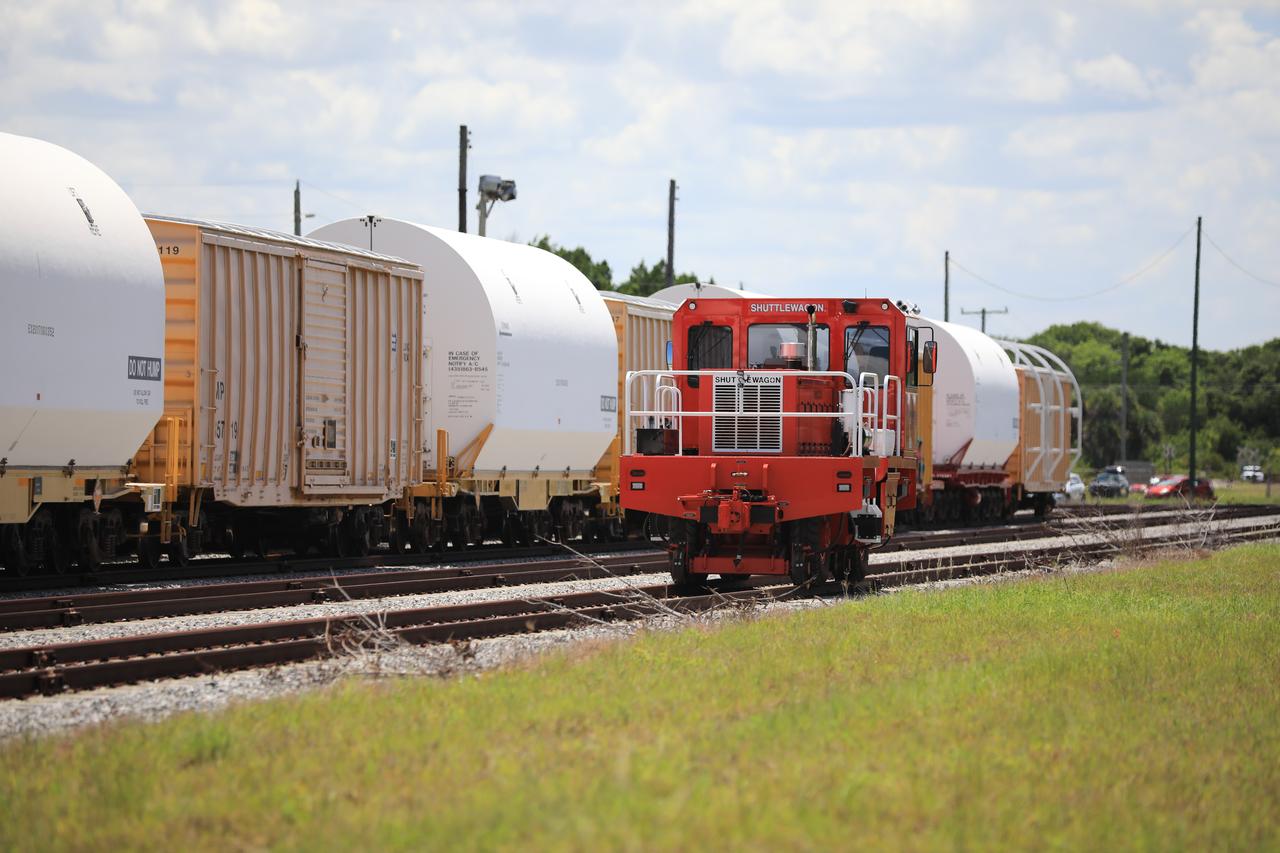
The train carrying the two solid rocket boosters that will power NASA’s Space Launch System (SLS) for Artemis missions to the Moon arrives at the Jay Jay rail yard – the connecting link between Kennedy Space Center and the Florida East Coast railway – in Titusville, Florida, on June 12, 2020. The boosters, each comprised of five motor segments, traveled from a Northrop Grumman manufacturing facility in Promontory, Utah, to Kennedy’s Rotation, Processing and Surge Facility, where teams with NASA’s Exploration Ground Systems will process the segments before moving them to the Vehicle Assembly Building for stacking on the mobile launcher. Under the Artemis program, NASA will land the first woman and the next man on the Moon by 2024. The first in a series of increasingly complex missions, Artemis I will test the Orion spacecraft and SLS as an integrated system ahead of crewed flights to the Moon.
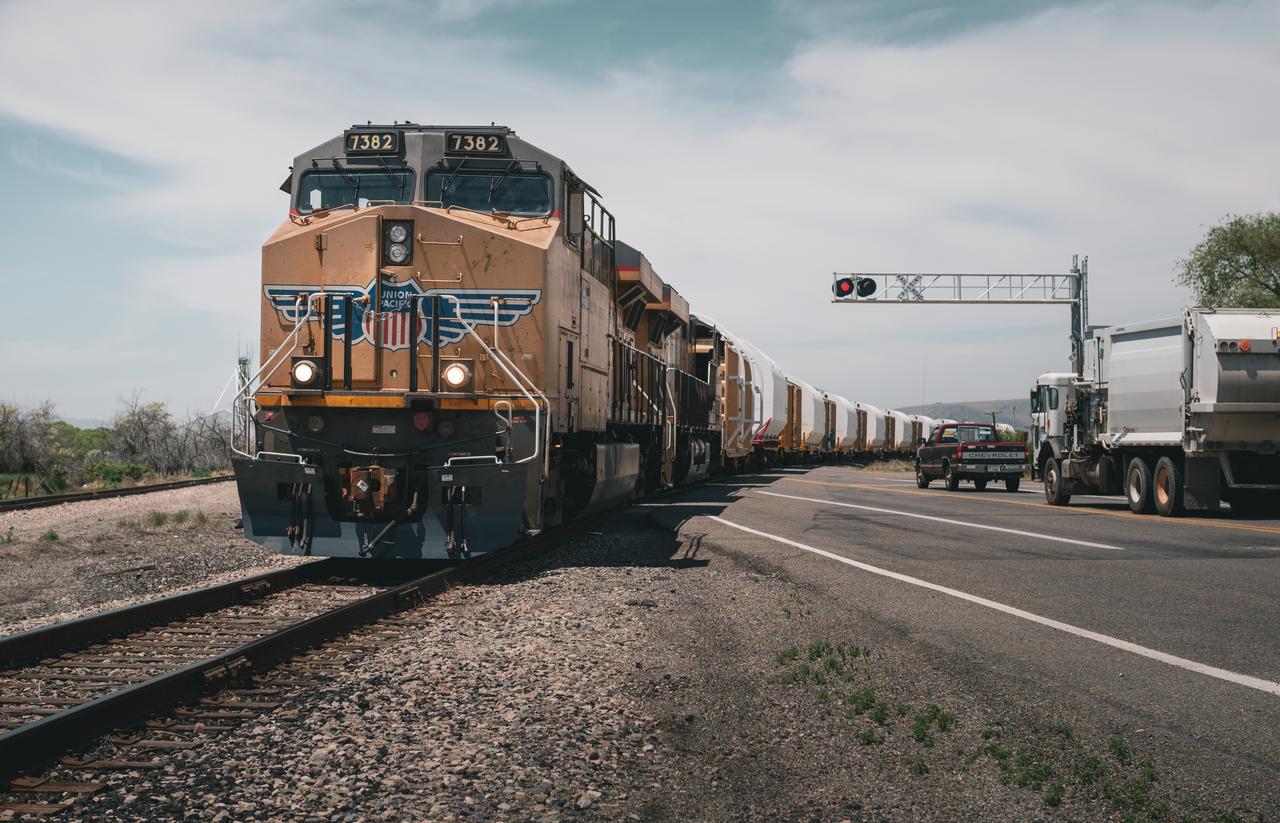
The two solid rocket boosters that will power NASA’s Space Launch System (SLS) for Artemis missions to the Moon are on their way to the agency’s Kennedy Space Center in Florida after departing from a Northrop Grumman manufacturing facility in Promontory, Utah, on June 5, 2020. The boosters – each comprised of five motor segments – are scheduled to arrive at Kennedy’s Rotation, Processing and Surge Facility, where teams with NASA’s Exploration Ground Systems will process the segments before moving them to the Vehicle Assembly Building for stacking on the mobile launcher. Under the Artemis program, NASA will land the first woman and the next man on the Moon by 2024. The first in a series of increasingly complex missions, Artemis I will test the Orion spacecraft and SLS as an integrated system ahead of crewed flights to the Moon.
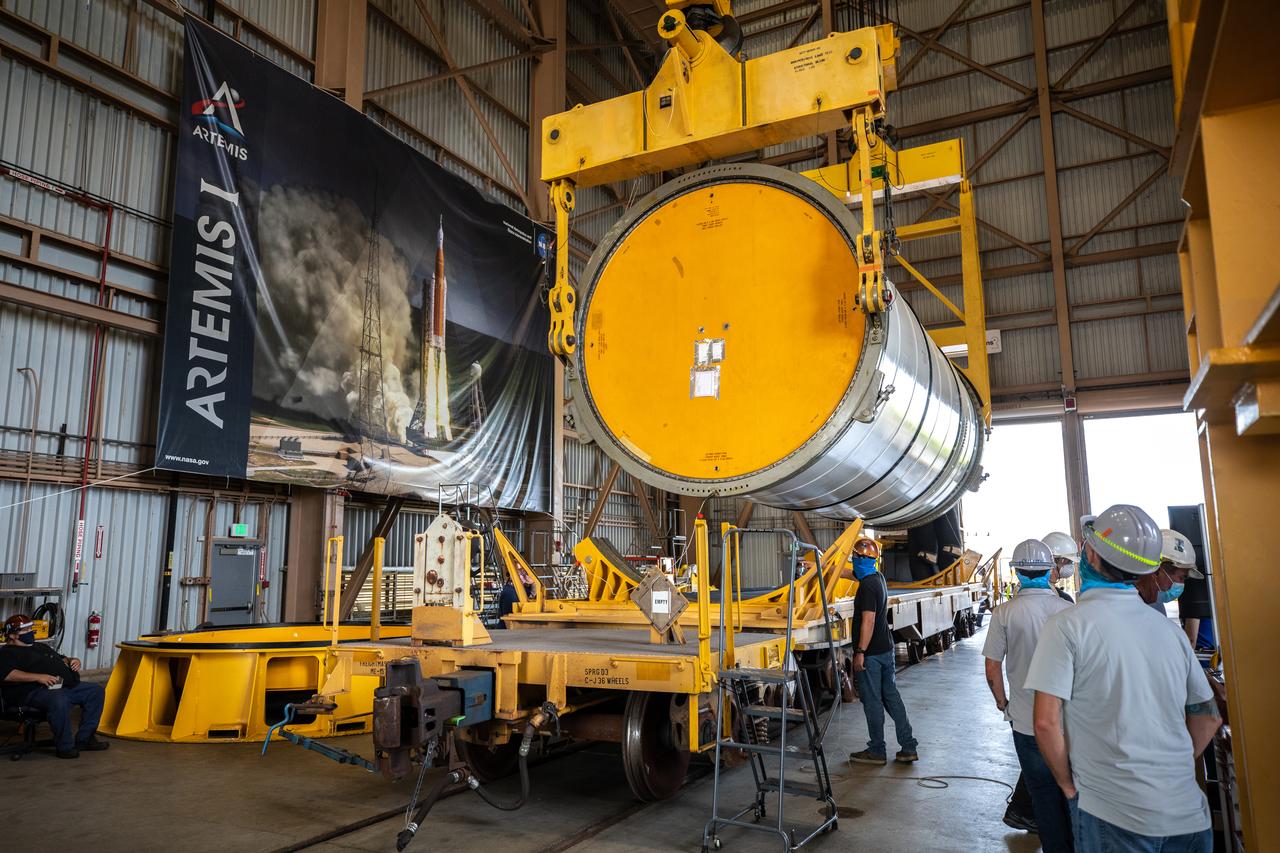
Technicians ready two NASA Space Launch System (SLS) solid rocket boosters for mating to the rocket’s two aft skirts on June 19, 2020, inside Kennedy Space Center’s Rotation, Processing and Surge Facility. Together, the twin boosters provide more than 75 percent of the total SLS thrust at launch. Manufactured by Northrop Grumman in Promontory, Utah, the boosters arrived at Kennedy via train. The cross-country journey was an important milestone for the agency’s Artemis I launch. The first in a series of increasingly complex missions, Artemis I will test the Orion spacecraft and SLS as an integrated system prior to crewed missions to the Moon. Once the boosters are mated with the aft skirts, they will be moved to the Vehicle Assembly Building for stacking on the mobile launcher.
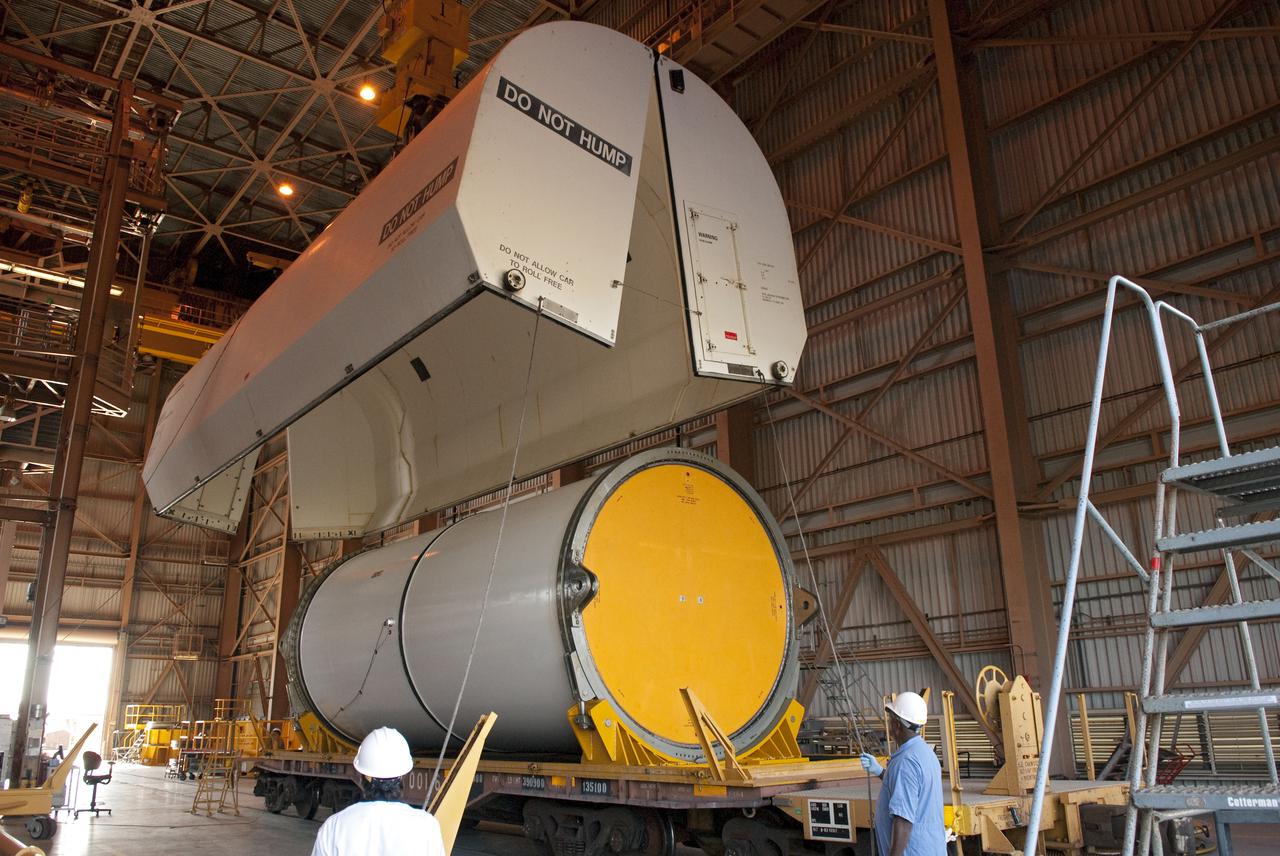
CAPE CANAVERAL, Fla. -- In the Rotation, Processing and Surge Facility, or RSPF, at NASA's Kennedy Space Center in Florida, workers prepare for the propellant grain inspection and truing of the final solid rocket booster segments, which is a required safety analysis. The booster segments were manufactured at the ATK solid rocket booster plant in Promontory, Utah, and traveled to Kennedy along the Florida East Coast Railway. The booster segments will be stacked and then mated to space shuttle Atlantis and its external fuel tank in the Vehicle Assembly Building. The segments will be used for what currently is planned as the 'launch on need,' or potential rescue mission for the final shuttle flight, Endeavour's STS-134 mission. For information, visit www.nasa.gov_shuttle. Photo credit: NASA_Cory Huston
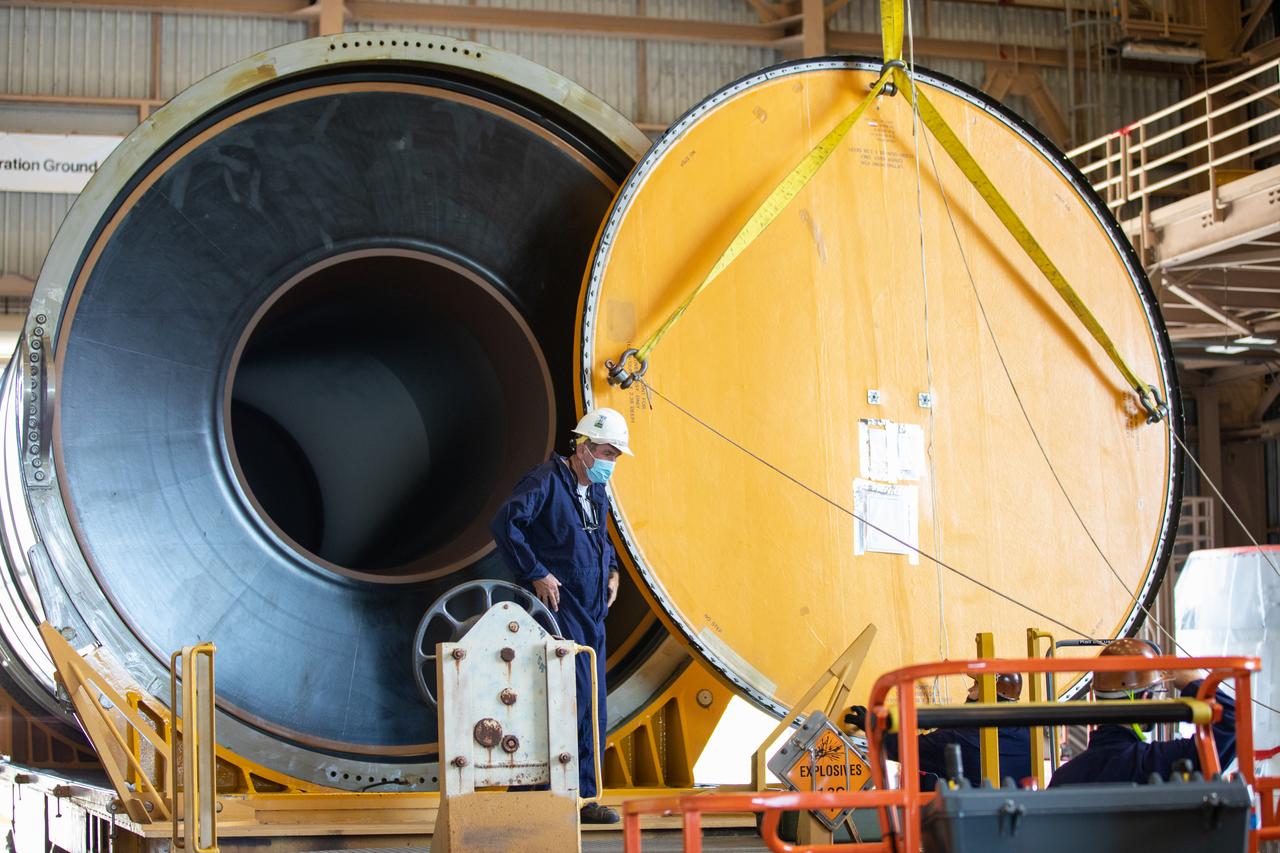
Technicians ready two NASA Space Launch System (SLS) solid rocket boosters for mating to the rocket’s two aft skirts on June 16, 2020, inside Kennedy Space Center’s Rotation, Processing and Surge Facility. Together, the twin boosters provide more than 75 percent of the total SLS thrust at launch. Manufactured by Northrop Grumman in Promontory, Utah, the boosters arrived at Kennedy via train. The cross-country journey was an important milestone for the agency’s Artemis I launch. The first in a series of increasingly complex missions, Artemis I will test the Orion spacecraft and SLS as an integrated system prior to crewed missions to the Moon. Once the boosters are mated with the aft skirts, they will be moved to the Vehicle Assembly Building for stacking on the mobile launcher.
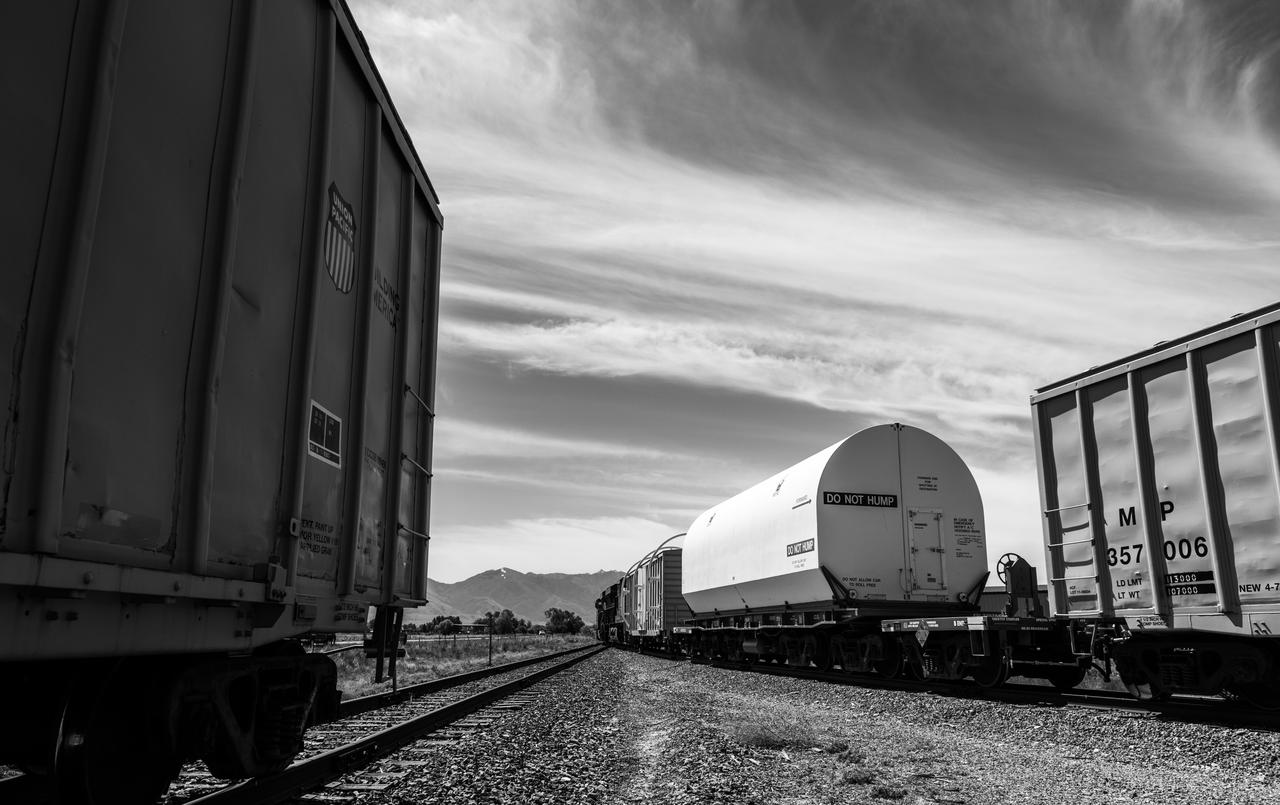
The two solid rocket boosters that will power NASA’s Space Launch System (SLS) for Artemis missions to the Moon are on their way to the agency’s Kennedy Space Center in Florida after departing from a Northrop Grumman manufacturing facility in Promontory, Utah, on June 5, 2020. The boosters – each comprised of five motor segments – are scheduled to arrive at Kennedy’s Rotation, Processing and Surge Facility, where teams with NASA’s Exploration Ground Systems will process the segments before moving them to the Vehicle Assembly Building for stacking on the mobile launcher. Under the Artemis program, NASA will land the first woman and the next man on the Moon by 2024. The first in a series of increasingly complex missions, Artemis I will test the Orion spacecraft and SLS as an integrated system ahead of crewed flights to the Moon.
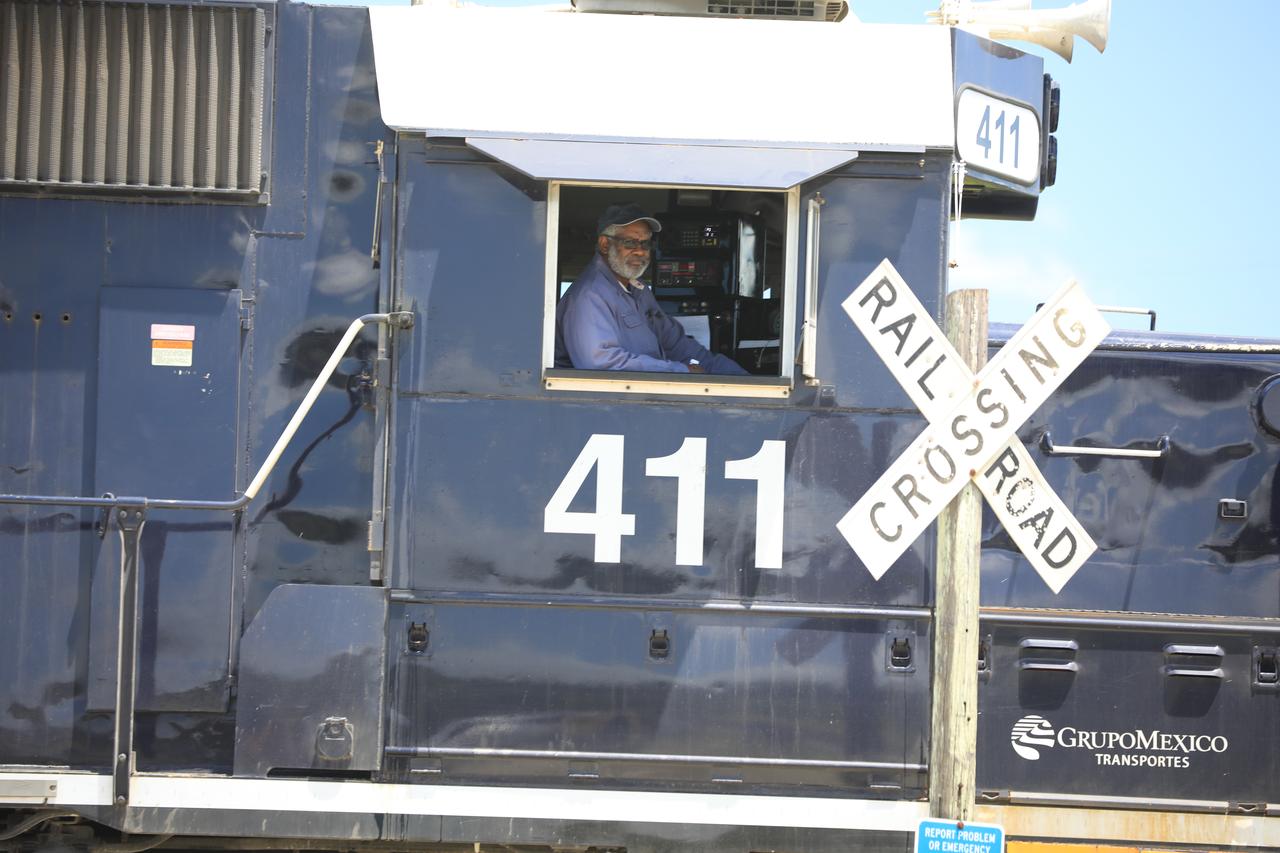
The train carrying the two solid rocket boosters that will power NASA’s Space Launch System (SLS) for Artemis missions to the Moon arrives at the Jay Jay rail yard – the connecting link between Kennedy Space Center and the Florida East Coast railway – in Titusville, Florida, on June 12, 2020. The boosters, each comprised of five motor segments, traveled from a Northrop Grumman manufacturing facility in Promontory, Utah, to Kennedy’s Rotation, Processing and Surge Facility, where teams with NASA’s Exploration Ground Systems will process the segments before moving them to the Vehicle Assembly Building for stacking on the mobile launcher. Under the Artemis program, NASA will land the first woman and the next man on the Moon by 2024. The first in a series of increasingly complex missions, Artemis I will test the Orion spacecraft and SLS as an integrated system ahead of crewed flights to the Moon.
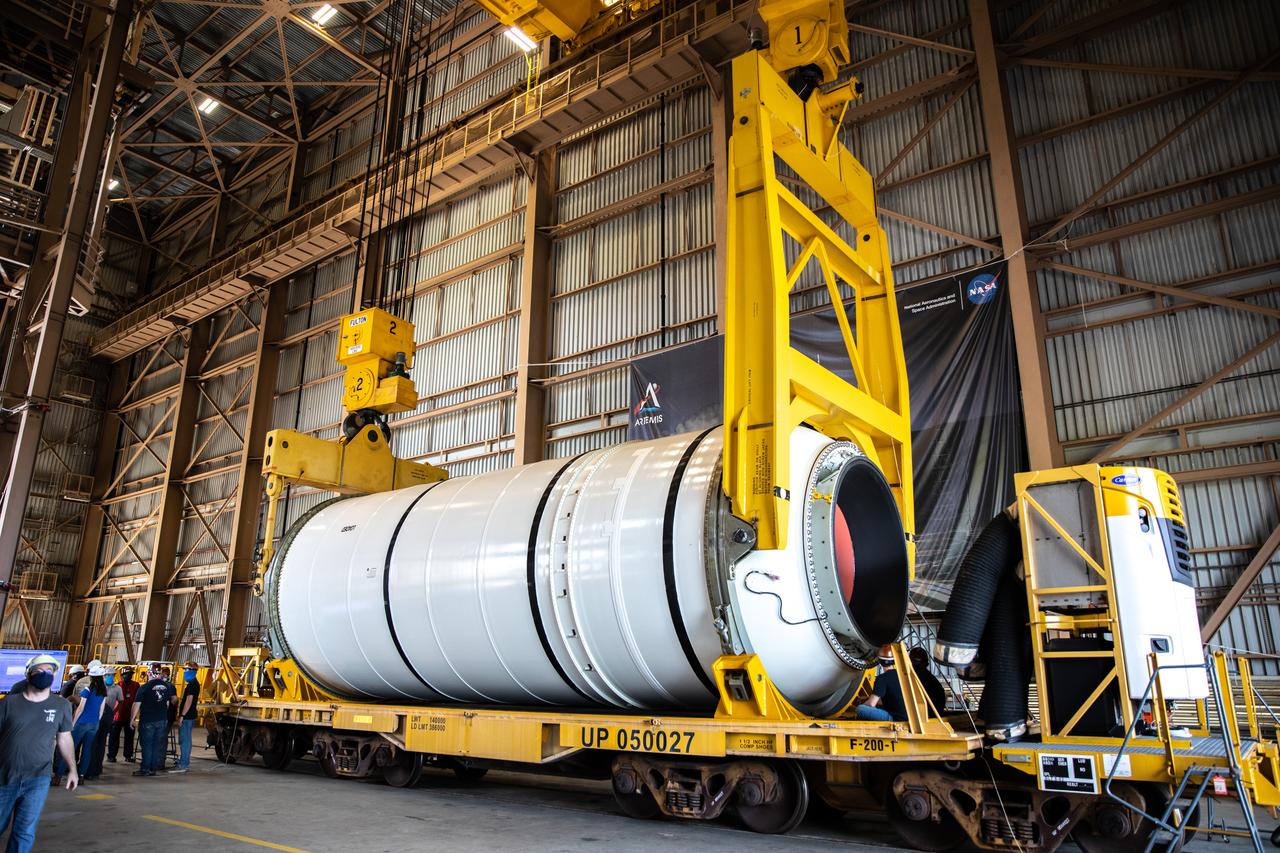
Technicians ready two NASA Space Launch System (SLS) solid rocket boosters for mating to the rocket’s two aft skirts on June 19, 2020, inside Kennedy Space Center’s Rotation, Processing and Surge Facility. Together, the twin boosters provide more than 75 percent of the total SLS thrust at launch. Manufactured by Northrop Grumman in Promontory, Utah, the boosters arrived at Kennedy via train. The cross-country journey was an important milestone for the agency’s Artemis I launch. The first in a series of increasingly complex missions, Artemis I will test the Orion spacecraft and SLS as an integrated system prior to crewed missions to the Moon. Once the boosters are mated with the aft skirts, they will be moved to the Vehicle Assembly Building for stacking on the mobile launcher.
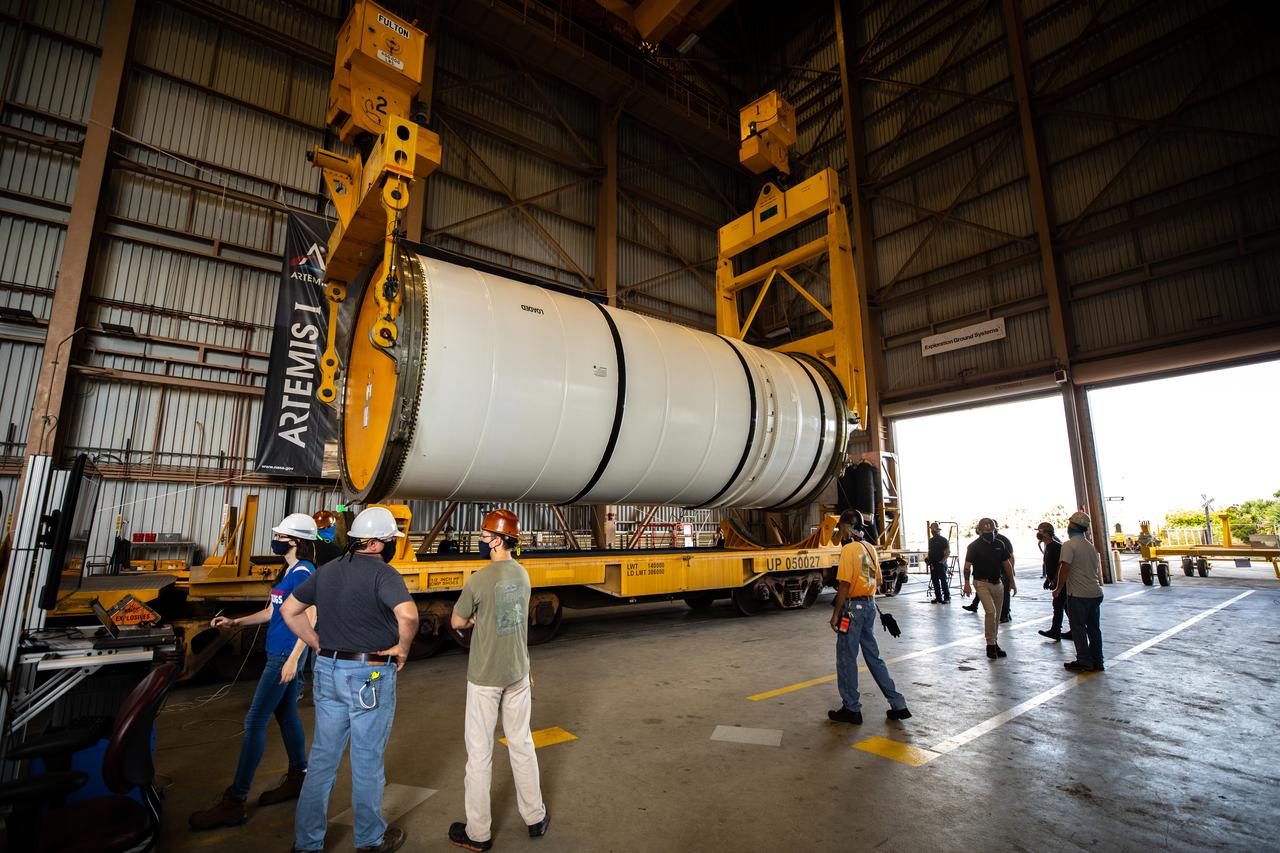
Technicians ready two NASA Space Launch System (SLS) solid rocket boosters for mating to the rocket’s two aft skirts on June 19, 2020, inside Kennedy Space Center’s Rotation, Processing and Surge Facility. Together, the twin boosters provide more than 75 percent of the total SLS thrust at launch. Manufactured by Northrop Grumman in Promontory, Utah, the boosters arrived at Kennedy via train. The cross-country journey was an important milestone for the agency’s Artemis I launch. The first in a series of increasingly complex missions, Artemis I will test the Orion spacecraft and SLS as an integrated system prior to crewed missions to the Moon. Once the boosters are mated with the aft skirts, they will be moved to the Vehicle Assembly Building for stacking on the mobile launcher.
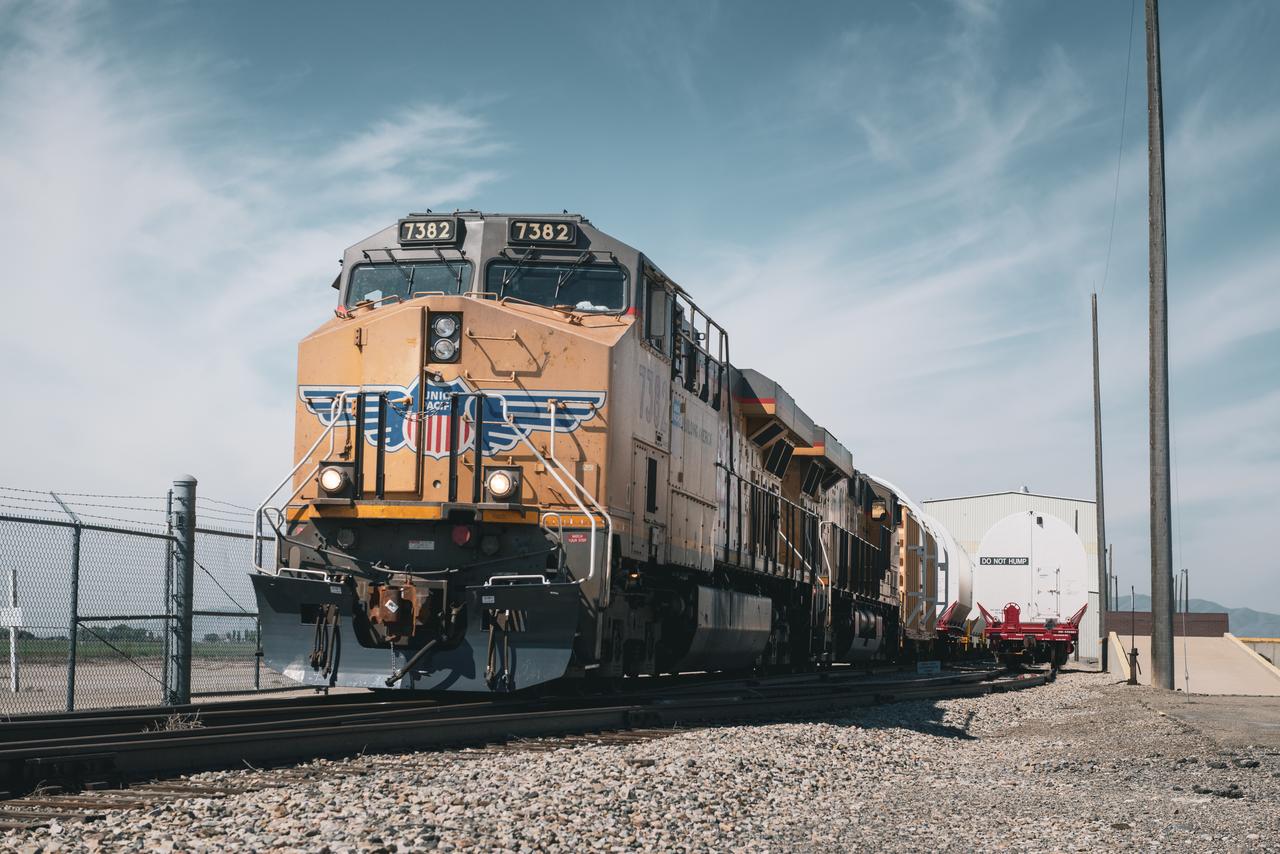
The two solid rocket boosters that will power NASA’s Space Launch System (SLS) for Artemis missions to the Moon are on their way to the agency’s Kennedy Space Center in Florida after departing from a Northrop Grumman manufacturing facility in Promontory, Utah, on June 5, 2020. The boosters – each comprised of five motor segments – are scheduled to arrive at Kennedy’s Rotation, Processing and Surge Facility, where teams with NASA’s Exploration Ground Systems will process the segments before moving them to the Vehicle Assembly Building for stacking on the mobile launcher. Under the Artemis program, NASA will land the first woman and the next man on the Moon by 2024. The first in a series of increasingly complex missions, Artemis I will test the Orion spacecraft and SLS as an integrated system ahead of crewed flights to the Moon.
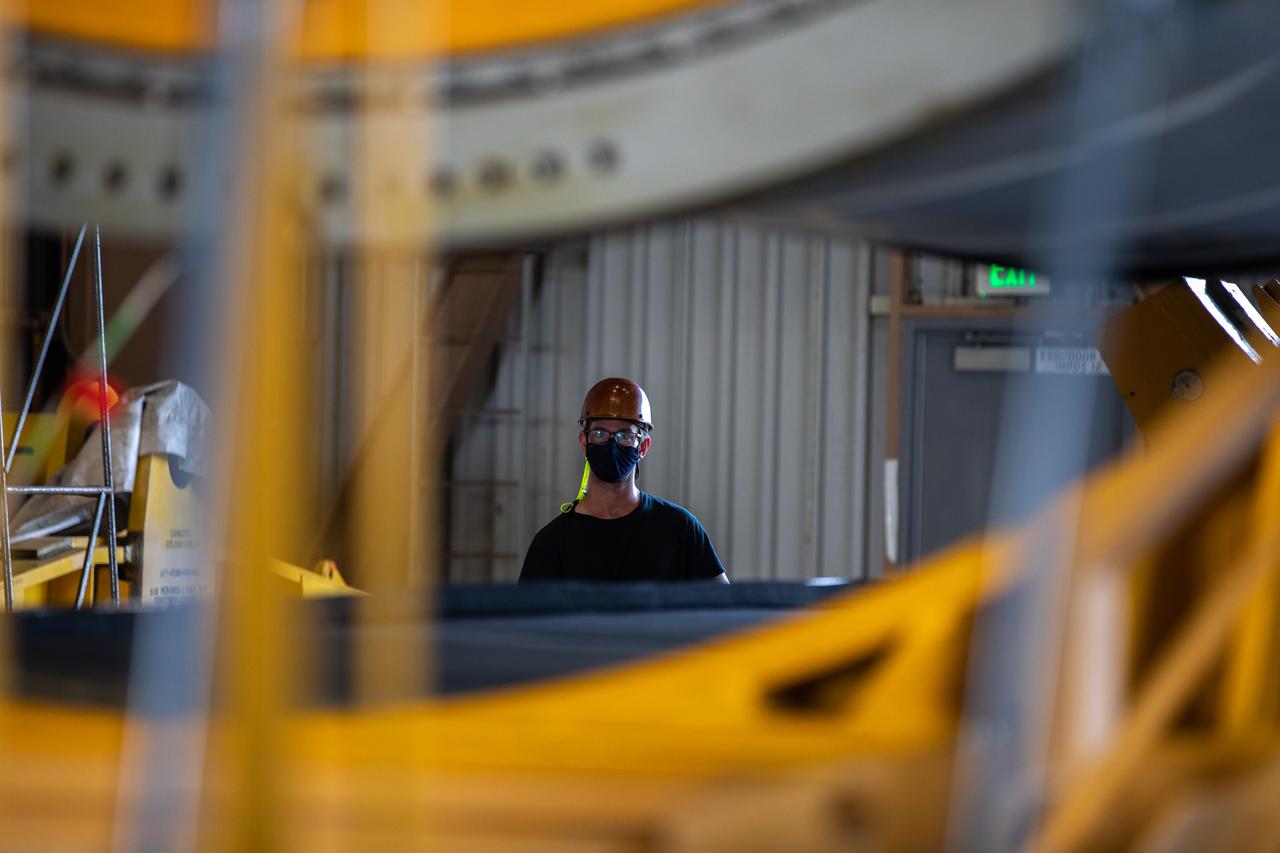
Technicians ready two NASA Space Launch System (SLS) solid rocket boosters for mating to the rocket’s two aft skirts on June 19, 2020, inside Kennedy Space Center’s Rotation, Processing and Surge Facility. Together, the twin boosters provide more than 75 percent of the total SLS thrust at launch. Manufactured by Northrop Grumman in Promontory, Utah, the boosters arrived at Kennedy via train. The cross-country journey was an important milestone for the agency’s Artemis I launch. The first in a series of increasingly complex missions, Artemis I will test the Orion spacecraft and SLS as an integrated system prior to crewed missions to the Moon. Once the boosters are mated with the aft skirts, they will be moved to the Vehicle Assembly Building for stacking on the mobile launcher.
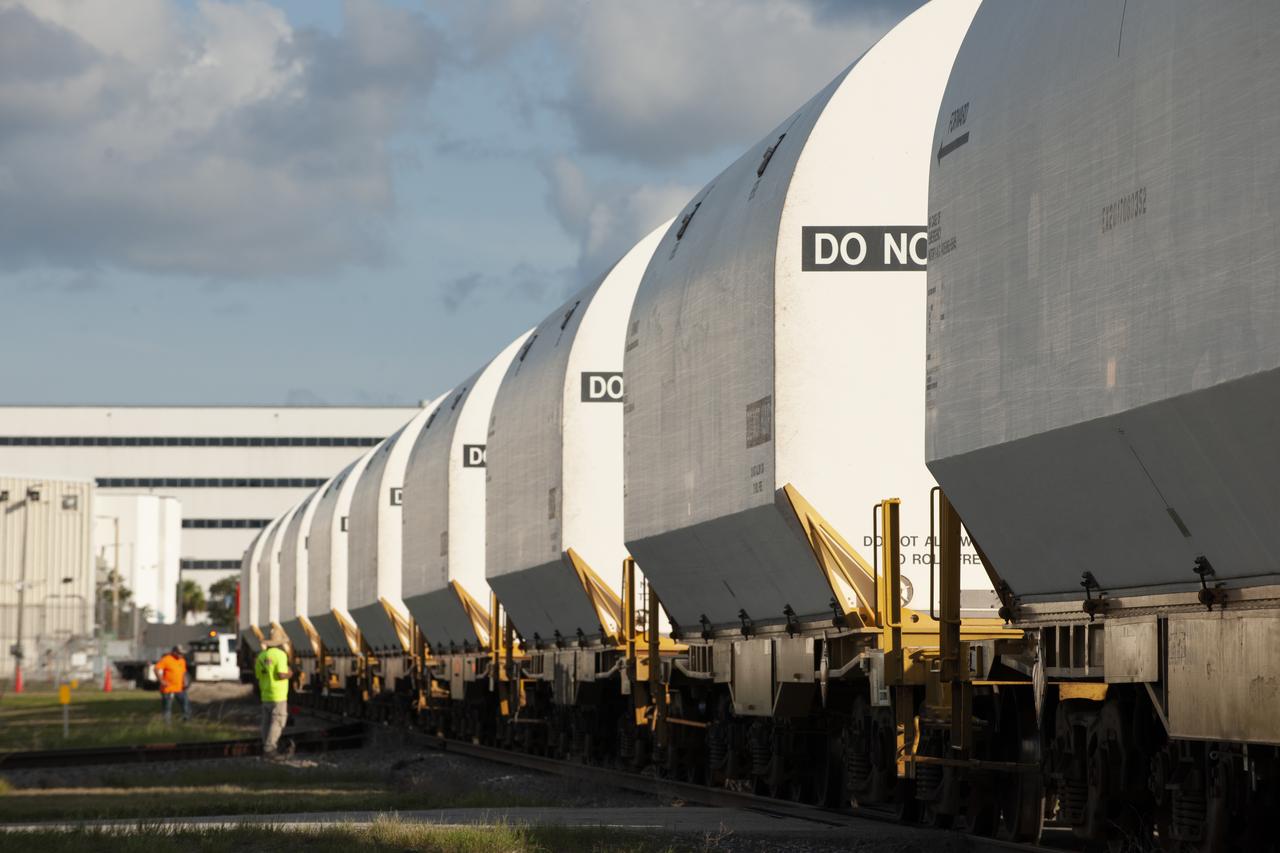
Twin rocket boosters for NASA’s Space Launch System (SLS) that will power Artemis missions to the Moon have arrived at the agency’s Kennedy Space Center in Florida. The two motor segments, each comprised of five segments, arrived at Kennedy’s Rotation, Processing and Surge Facility (RPSF) on June 15, 2020, by train from a Northrop Grumman manufacturing facility in Promontory, Utah. The booster segments will remain in the RPSF for inspection prior to processing until it’s time to move them to the Vehicle Assembly Building for stacking on the mobile launcher. This is the first piece of flight hardware to arrive at Kennedy by train for the Artemis program, but NASA’s Exploration Ground Systems (EGS) can expect to receive additional hardware soon, including the Launch Vehicle Service Adapter and the rocket’s core stage. NASA is working toward an Artemis I launch date in 2021, keeping the program moving at the best possible pace toward the earliest possible opportunity.
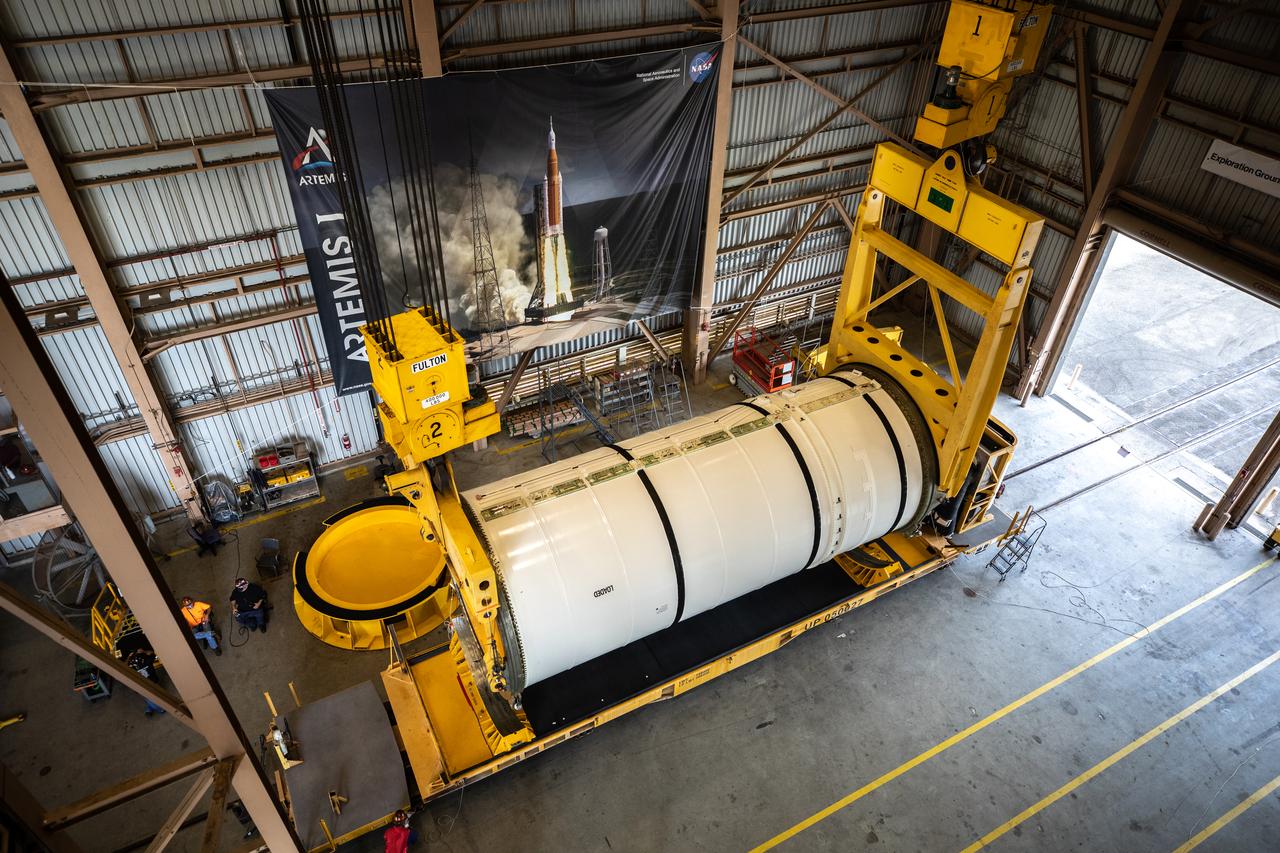
Technicians ready two NASA Space Launch System (SLS) solid rocket boosters for mating to the rocket’s two aft skirts on June 19, 2020, inside Kennedy Space Center’s Rotation, Processing and Surge Facility. Together, the twin boosters provide more than 75 percent of the total SLS thrust at launch. Manufactured by Northrop Grumman in Promontory, Utah, the boosters arrived at Kennedy via train. The cross-country journey was an important milestone for the agency’s Artemis I launch. The first in a series of increasingly complex missions, Artemis I will test the Orion spacecraft and SLS as an integrated system prior to crewed missions to the Moon. Once the boosters are mated with the aft skirts, they will be moved to the Vehicle Assembly Building for stacking on the mobile launcher.
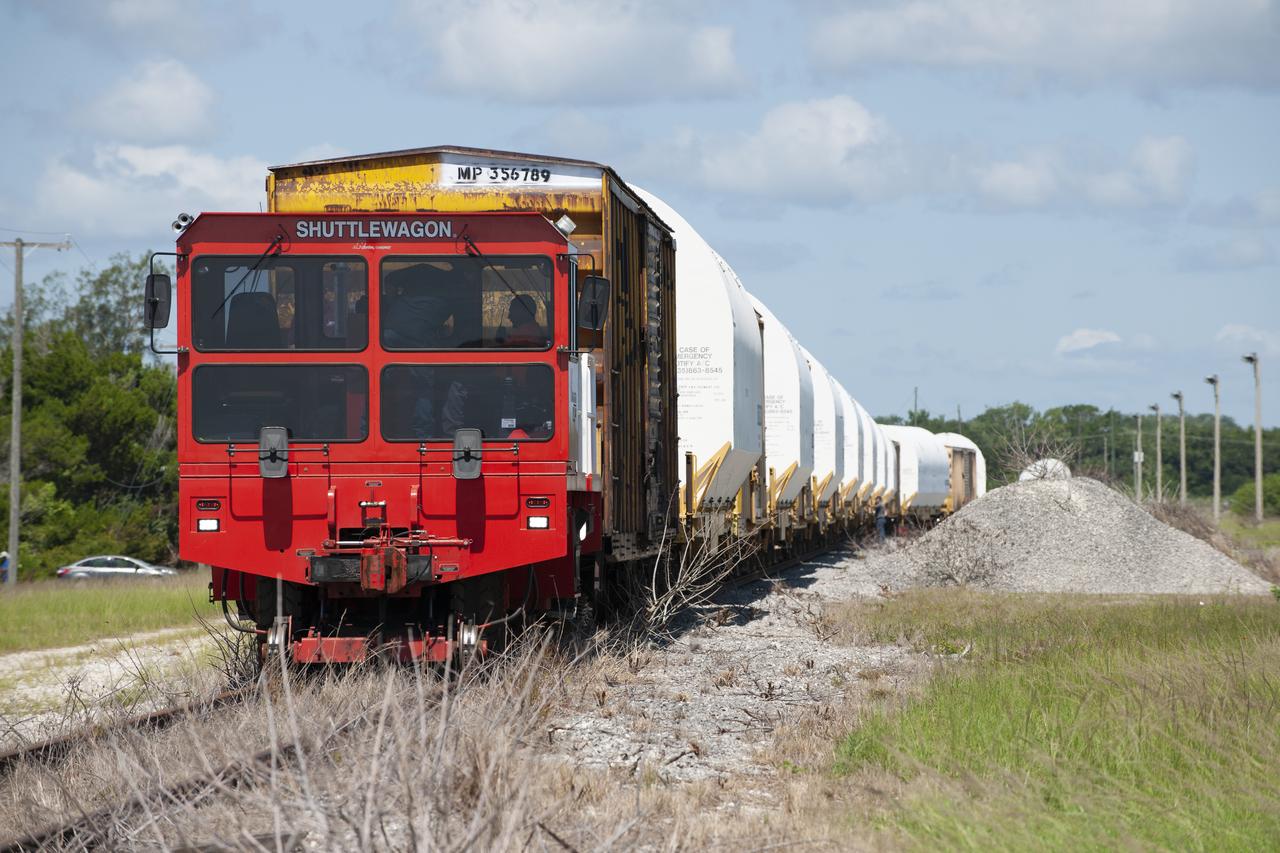
Twin rocket boosters for NASA’s Space Launch System (SLS) that will power Artemis missions to the Moon have arrived at the agency’s Kennedy Space Center in Florida. The two motor segments, each comprised of five segments, arrived at Kennedy’s Rotation, Processing and Surge Facility (RPSF) on June 15, 2020, by train from a Northrop Grumman manufacturing facility in Promontory, Utah. The booster segments will remain in the RPSF for inspection prior to processing until it’s time to move them to the Vehicle Assembly Building for stacking on the mobile launcher. This is the first piece of flight hardware to arrive at Kennedy by train for the Artemis program, but NASA’s Exploration Ground Systems (EGS) can expect to receive additional hardware soon, including the Launch Vehicle Service Adapter and the rocket’s core stage. NASA is working toward an Artemis I launch date in 2021, keeping the program moving at the best possible pace toward the earliest possible opportunity.
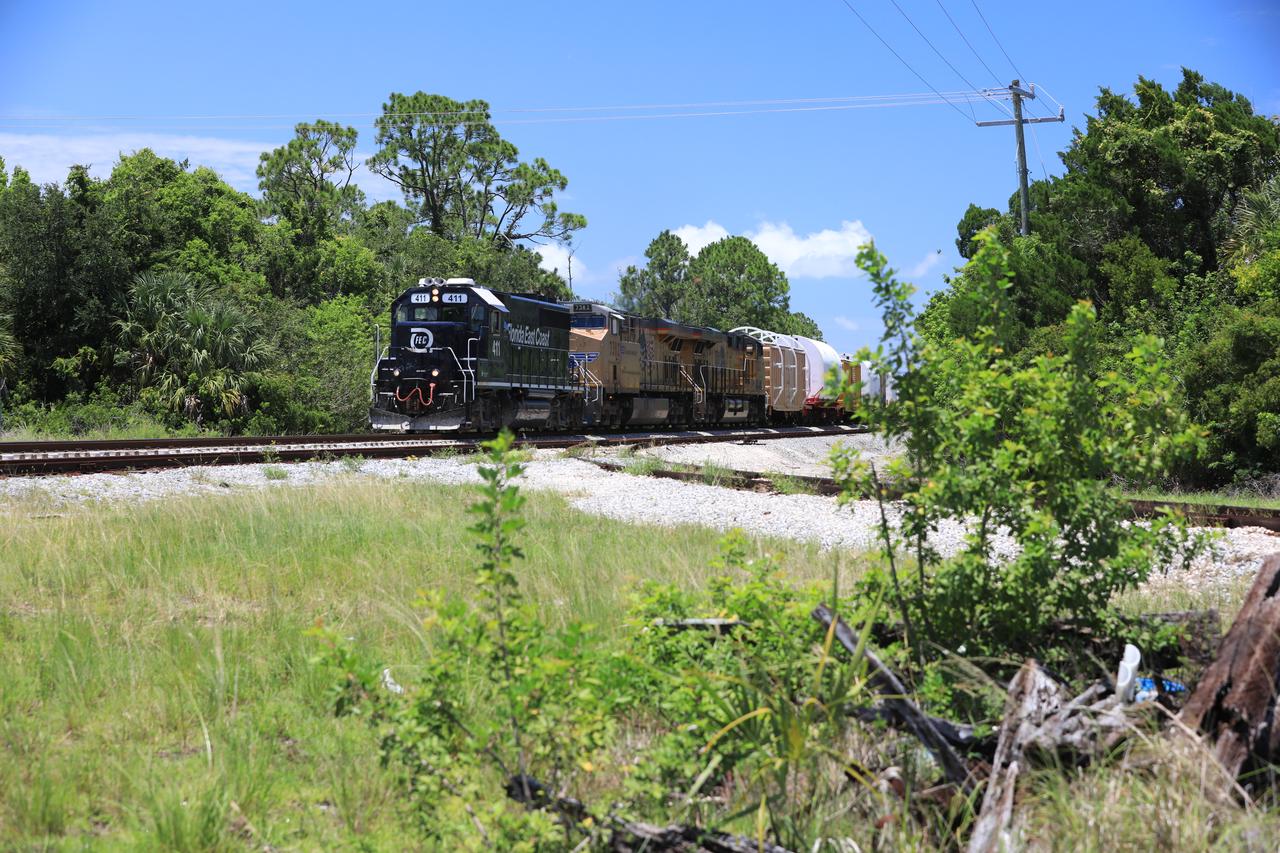
The train carrying the two solid rocket boosters that will power NASA’s Space Launch System (SLS) for Artemis missions to the Moon arrives at the Jay Jay rail yard – the connecting link between Kennedy Space Center and the Florida East Coast railway – in Titusville, Florida, on June 12, 2020. The boosters, each comprised of five motor segments, traveled from a Northrop Grumman manufacturing facility in Promontory, Utah, to Kennedy’s Rotation, Processing and Surge Facility, where teams with NASA’s Exploration Ground Systems will process the segments before moving them to the Vehicle Assembly Building for stacking on the mobile launcher. Under the Artemis program, NASA will land the first woman and the next man on the Moon by 2024. The first in a series of increasingly complex missions, Artemis I will test the Orion spacecraft and SLS as an integrated system ahead of crewed flights to the Moon.

STS085-505-078 (7 - 19 August 1997) --- This large-format photograph, taken from the Earth-orbiting Space Shuttle Discovery with a 250mm lens, shows most of Lebanon, from the Israeli border to just south of Tripoli. The main distinction is that between the forested coastal mountain ranges which receive rainfall regularly off the Mediterranean, and the yellow-brown "rainshadow" deserts inland (east) of the mountains. Damascus, capital of Syria lies just outside the view bottom right. The biblical and classical cities of Acre (bottom), Tyre, Sidon and Beirut (top, on promontory) all lie on the coast. The Bekaa valley and the Litani River lie inland of the Lebanon Mountains east of Beirut. The agricultural area in the south of the photograph is part of Israel and borders the Golan Heights.