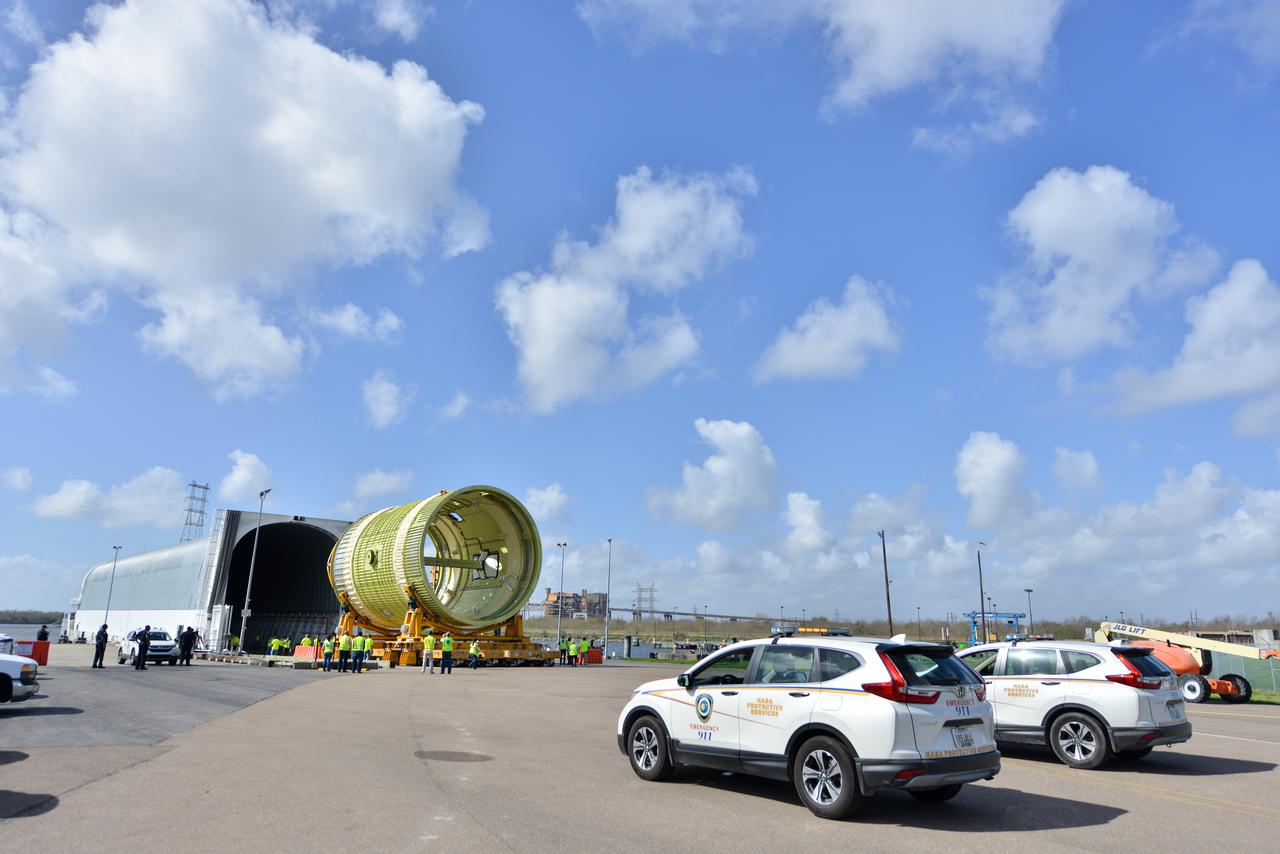
Michoud Protective Services escorts Intertank STA to Pegasus.
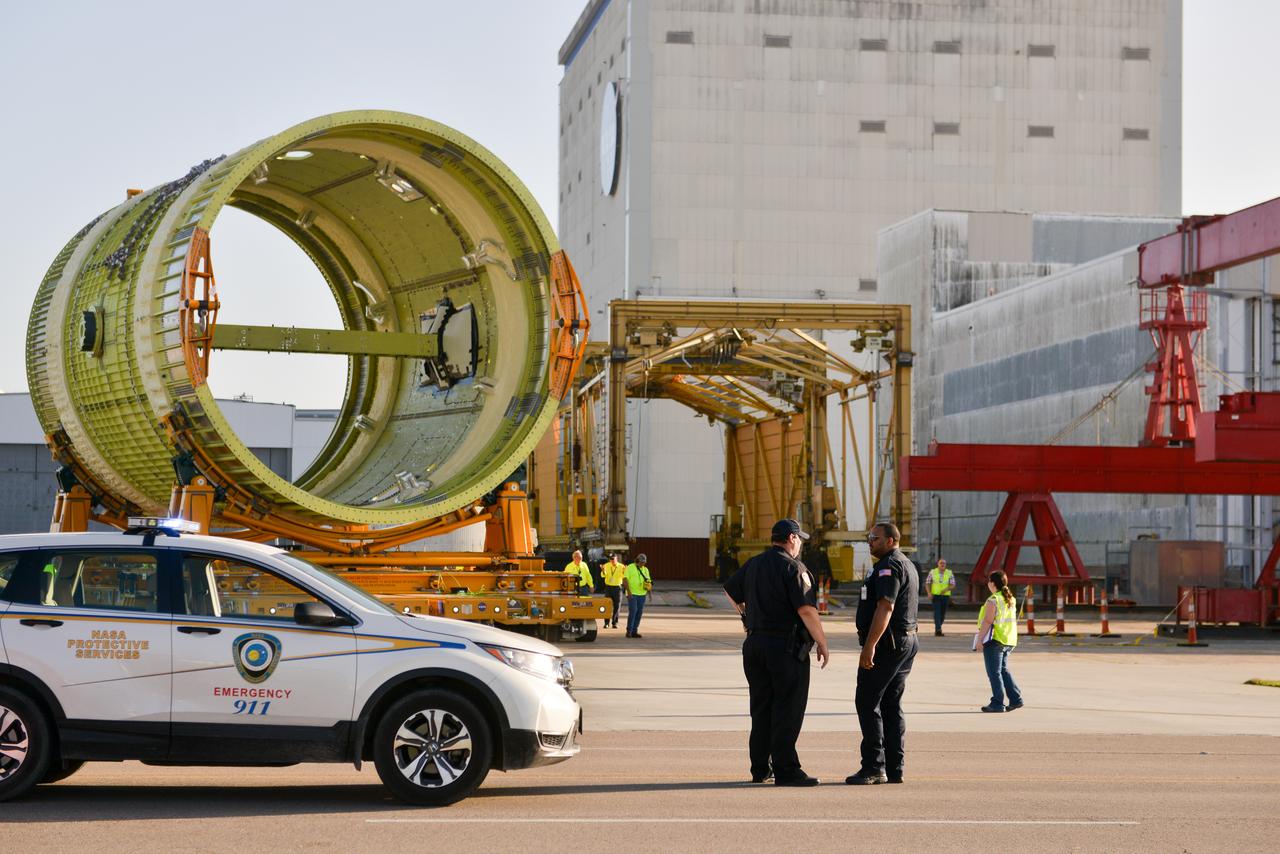
Intertank STA en route to Pegasus, while the Michoud Protective Services guides the route.
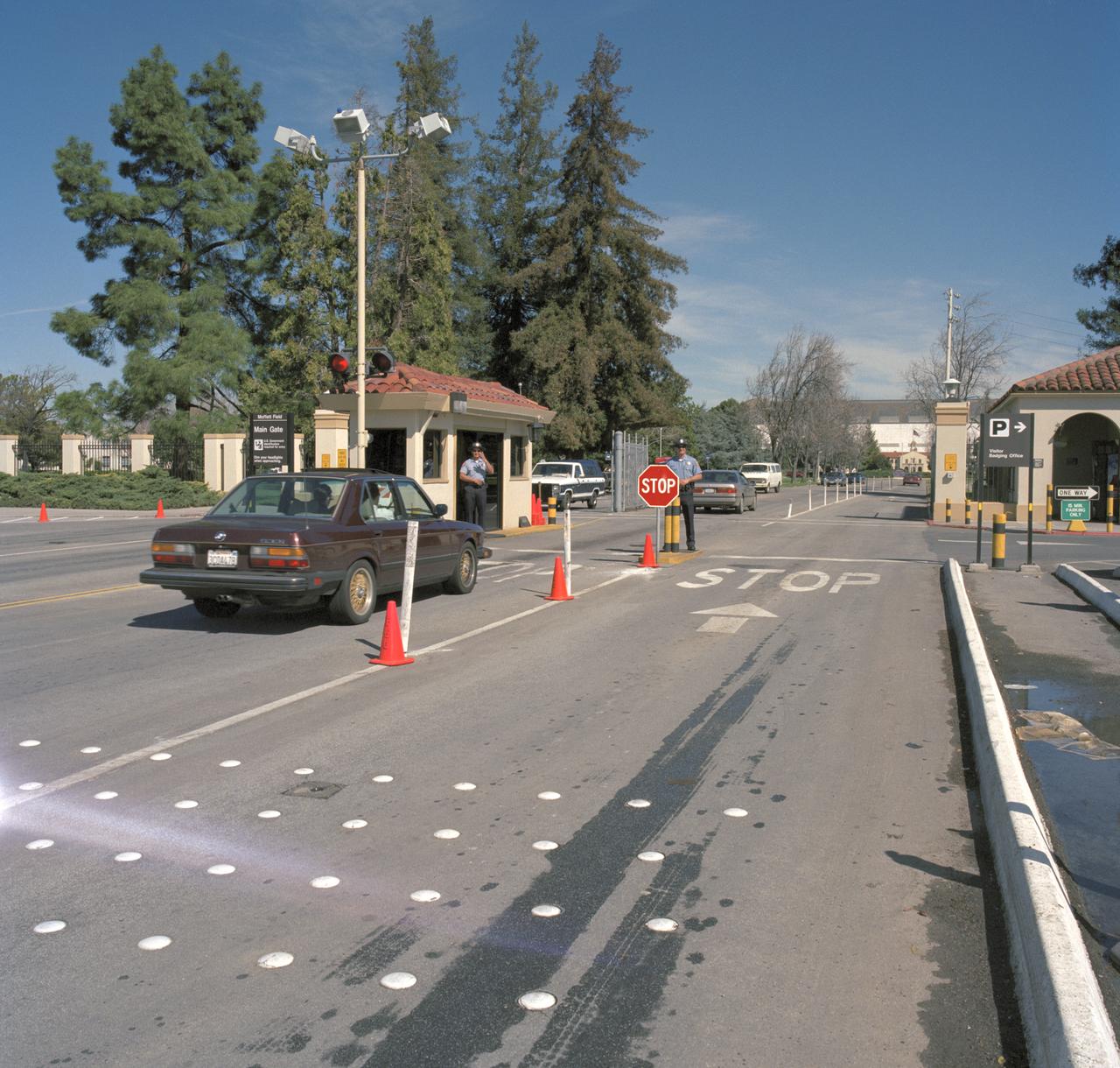
Protective Services Office (Code JP) Personnel On Duty. Main Gate Guards Rubin Cablgas and Robert Burja
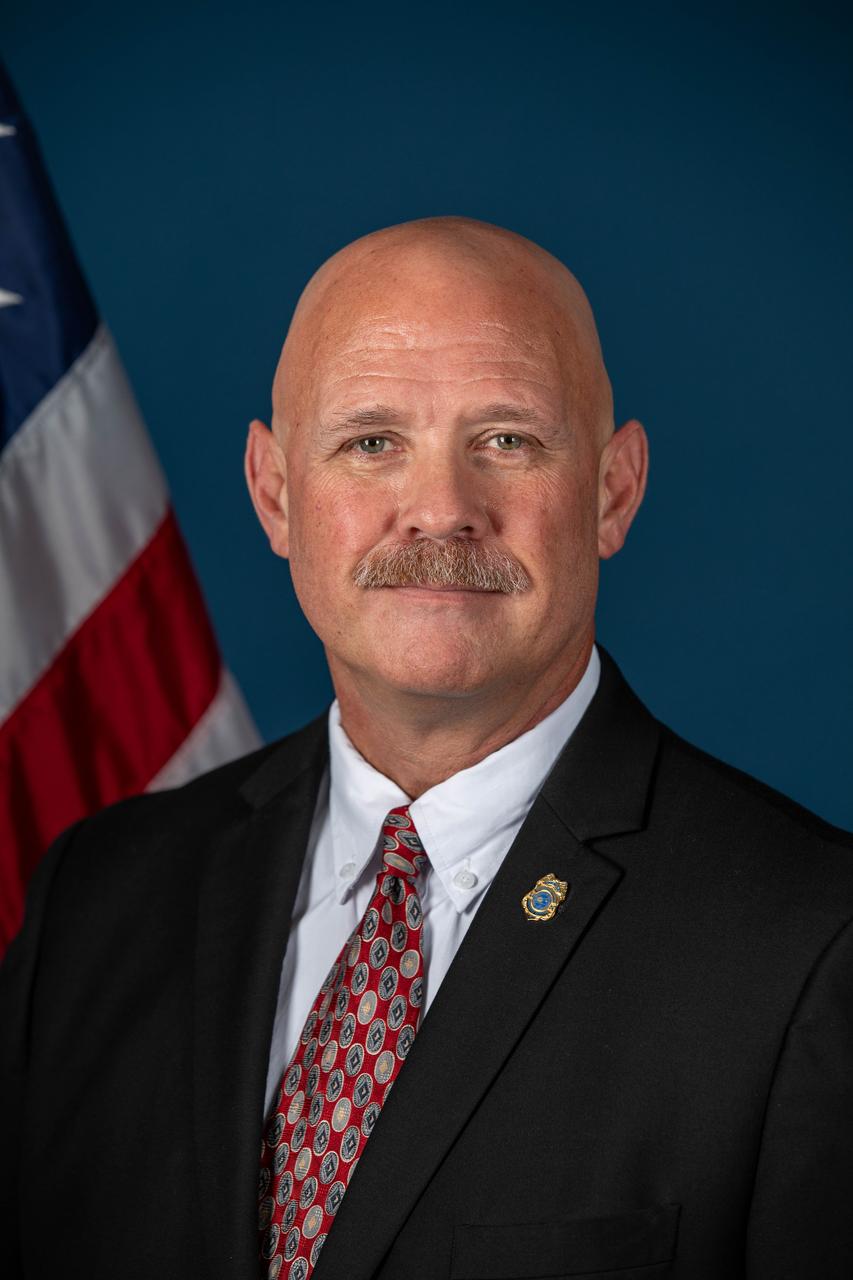
Official portrait of Sean Sanders, special agent, NASA Protective Services Office at the agency's Kennedy Space Center in Florida.
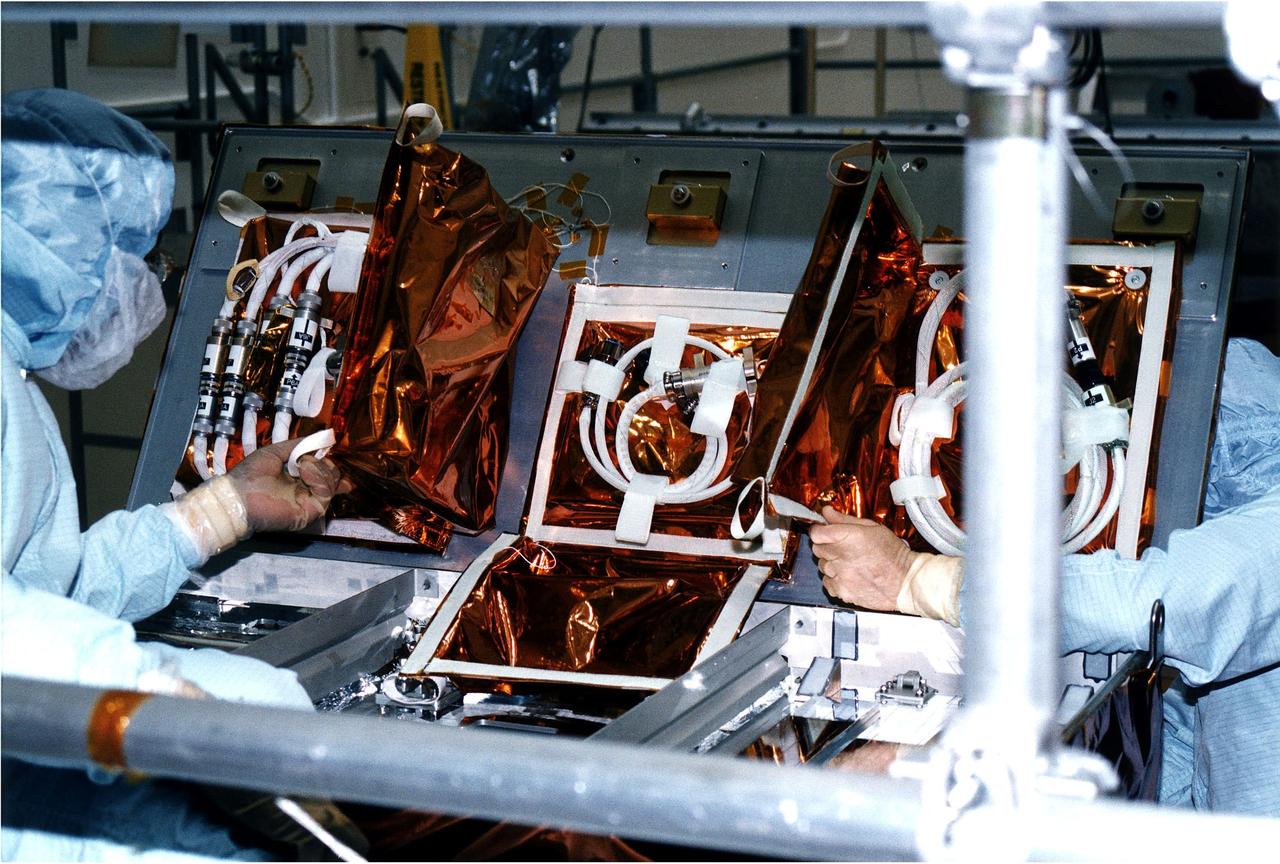
KENNEDY SPACE CENTER, FLA. - Workers in KSC's Vertical Processing Facility stow cable and adapters into a protective enclosure for the second Hubble Space Telescope servicing mission, STS-82. Liftoff aboard Discovery is targeted Feb. 11 with a crew of seven.

Protective Services: Security Police
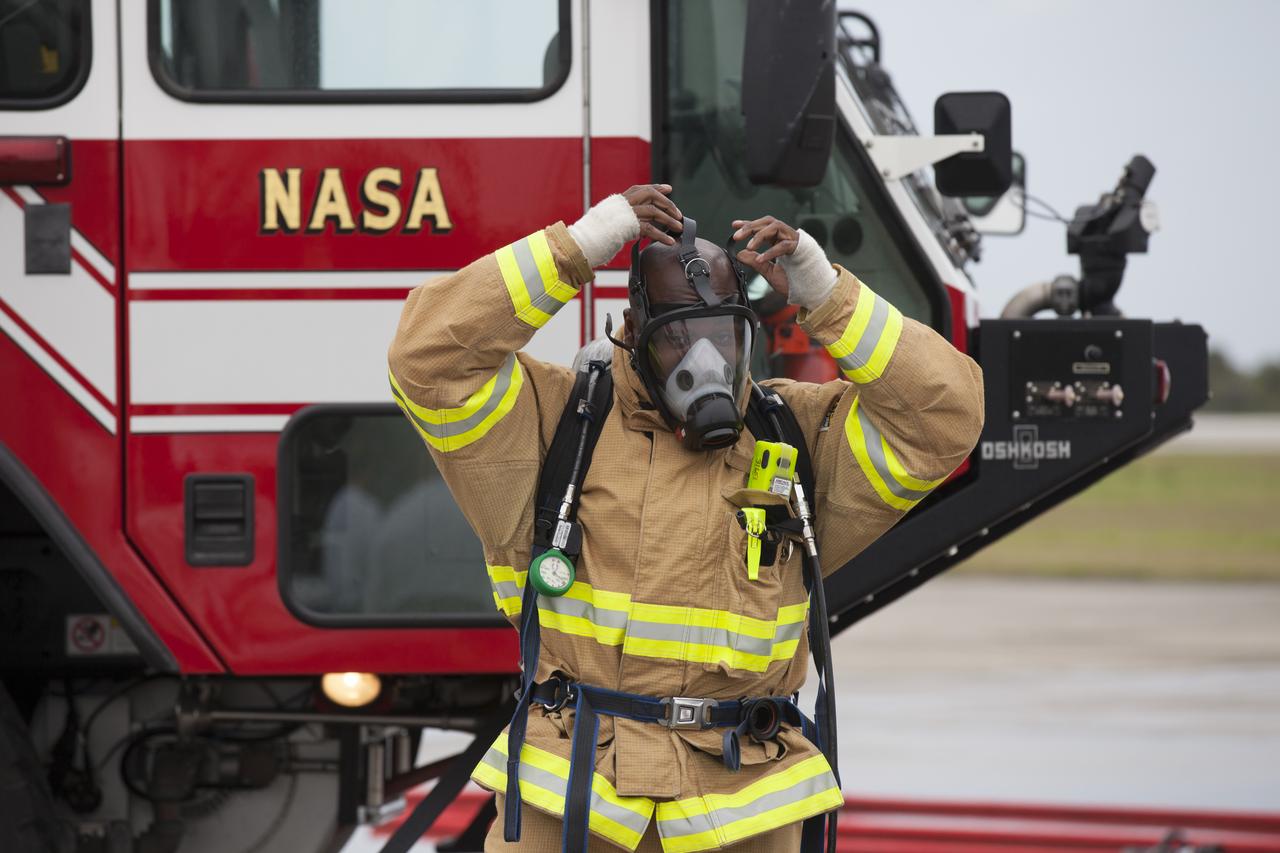
CAPE CANAVERAL, Fla. - Special Rescue Operations firefighters with NASA Fire Rescue Services in the Protective Services Office at NASA’s Kennedy Space Center in Florida practice firefighting skills at the Shuttle Landing Facility. A firefighter dons protective gear to prepare for the training simulation. Kennedy’s firefighters recently achieved Pro Board Certification in aerial fire truck operations and completed vehicle extrication training using the Jaws of Life. The Protective Services Office is one step closer to achieving certification in vehicle machinery extrication and other rescue skills. Kennedy’s firefighters are with G4S Government Solutions Inc., on the Kennedy Protective Services Contract. Photo credit: NASA/Kim Shiflett
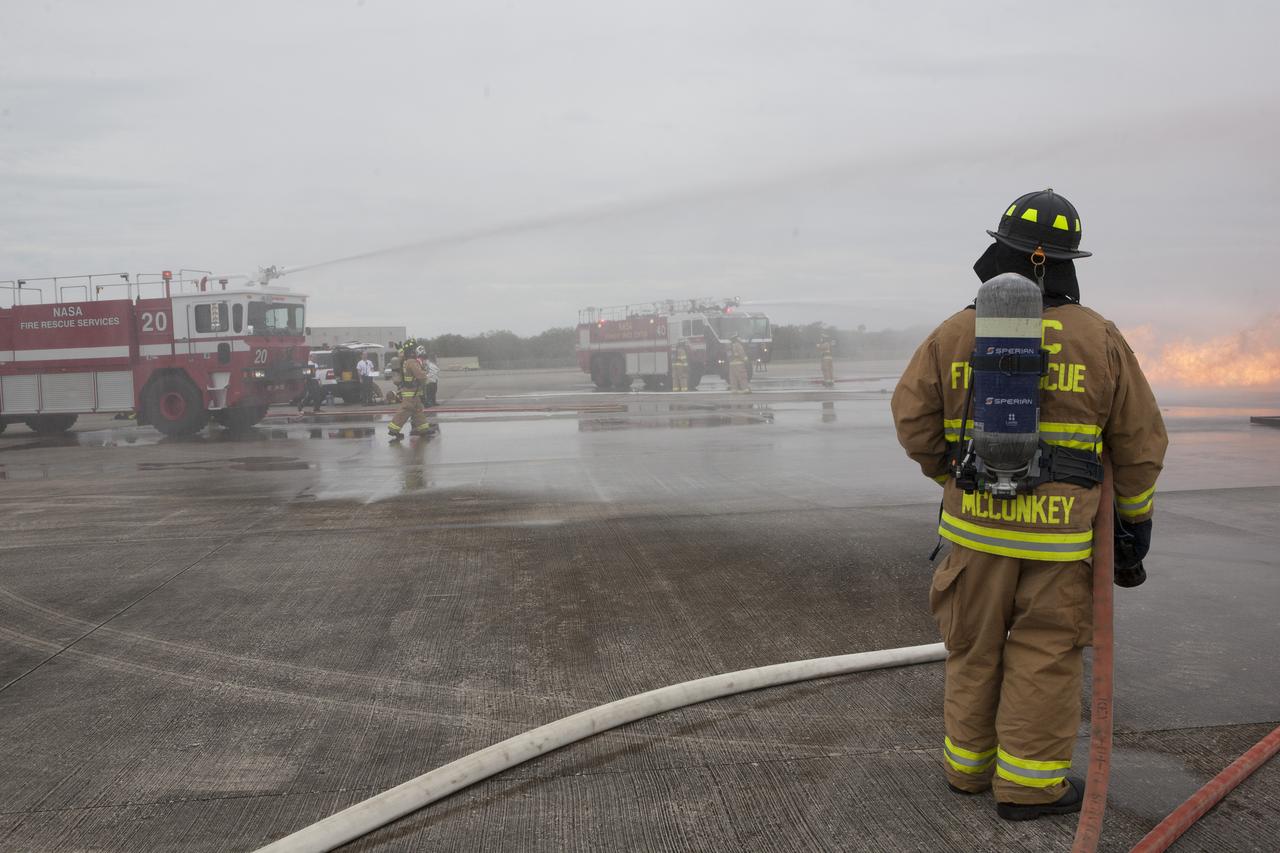
CAPE CANAVERAL, Fla. - Special Rescue Operations firefighters with NASA Fire Rescue Services in the Protective Services Office at NASA’s Kennedy Space Center in Florida prepare to participate in a training exercise at the Shuttle Landing Facility. A small fire is burning near a mock-up of a plane during the training exercise. Kennedy’s firefighters recently achieved Pro Board Certification in aerial fire truck operations and completed vehicle extrication training using the Jaws of Life. The Protective Services Office is one step closer to achieving certification in vehicle machinery extrication and other rescue skills. Kennedy’s firefighters are with G4S Government Solutions Inc., on the Kennedy Protective Services Contract. Photo credit: NASA/Kim Shiflett
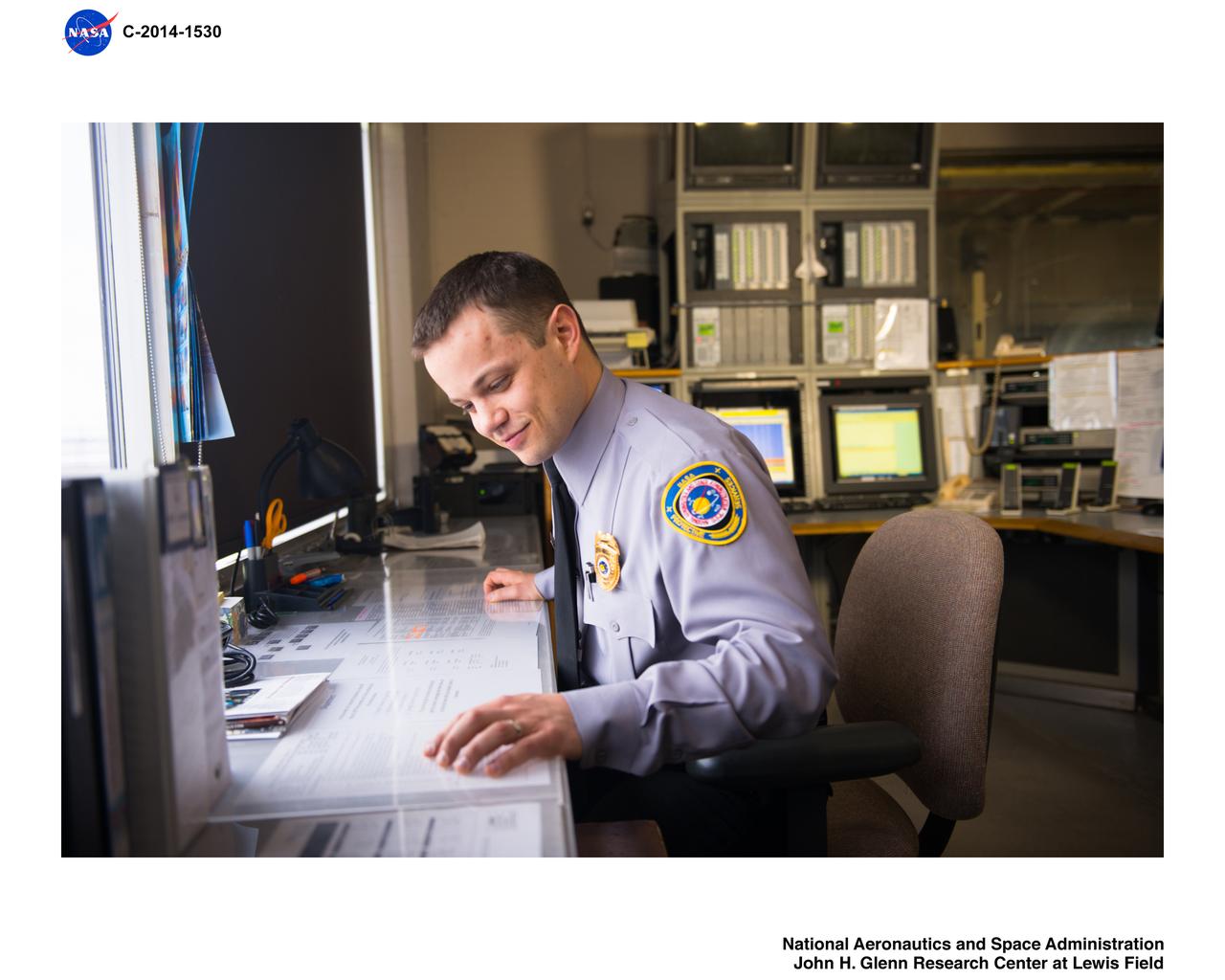
The Core Functions that make up Code C - Office of Protective Services
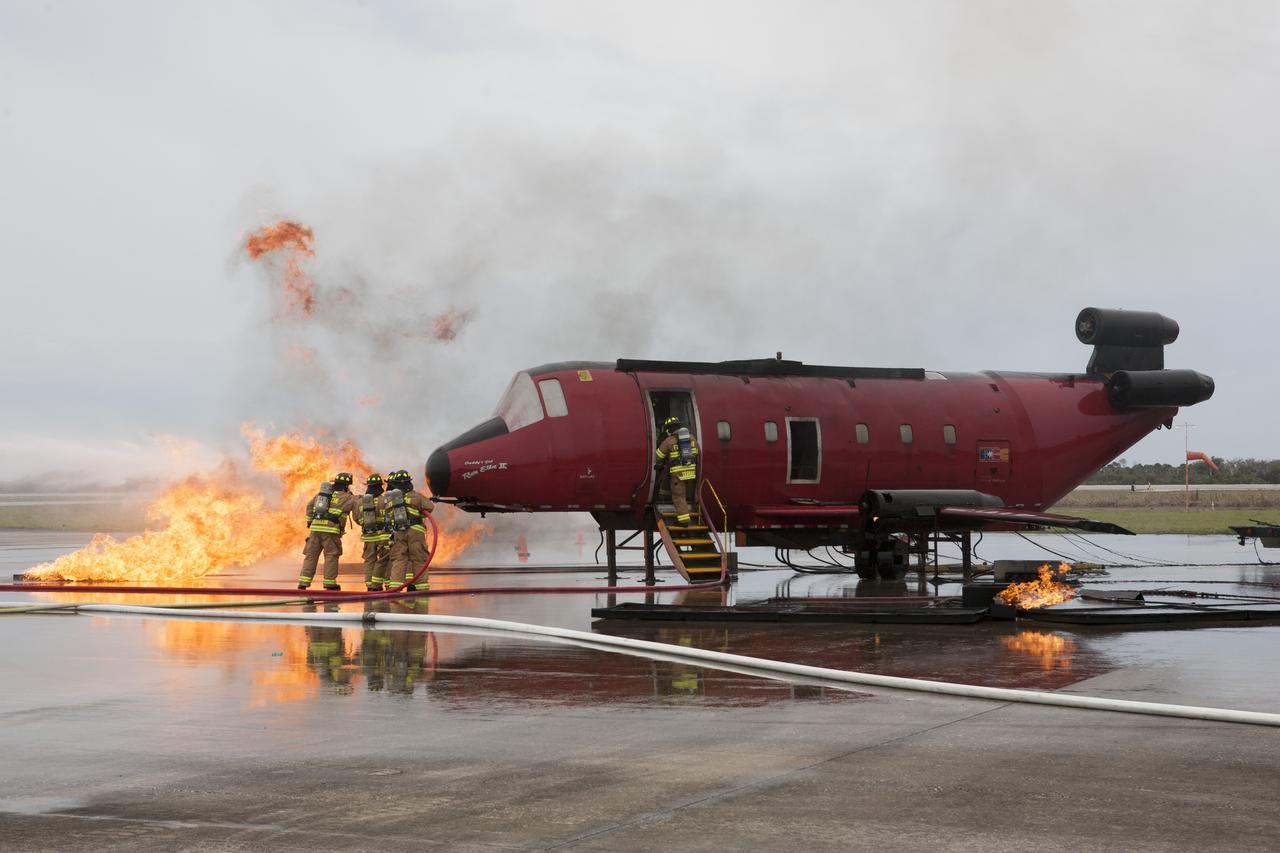
CAPE CANAVERAL, Fla. - Special Rescue Operations firefighters with NASA Fire Rescue Services in the Protective Services Office at NASA’s Kennedy Space Center in Florida participate in a training exercise at the Shuttle Landing Facility. Firefighters, wearing protective gear, use hoses to put out a fire burning near the mock-up of a small plane as another firefighter checks inside the plane. Kennedy’s firefighters recently achieved Pro Board Certification in aerial fire truck operations and completed vehicle extrication training using the Jaws of Life. The Protective Services Office is one step closer to achieving certification in vehicle machinery extrication and other rescue skills. Kennedy’s firefighters are with G4S Government Solutions Inc., on the Kennedy Protective Services Contract. Photo credit: NASA/Kim Shiflett
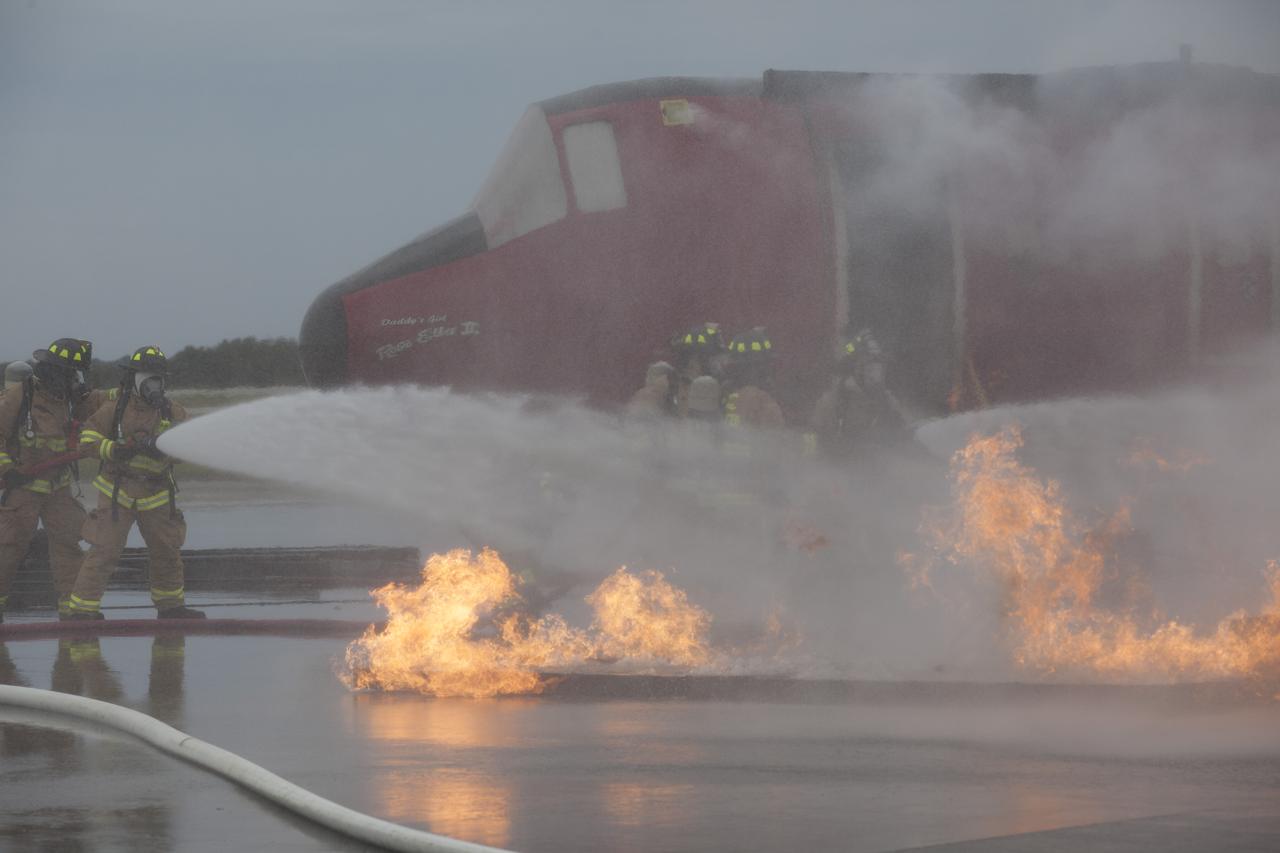
CAPE CANAVERAL, Fla. - Special Rescue Operations firefighters with NASA Fire Rescue Services in the Protective Services Office at NASA’s Kennedy Space Center in Florida participate in a training exercise at the Shuttle Landing Facility. Firefighters, wearing protective gear, use hoses to put out a fire burning close to a mock-up of a small plane. Kennedy’s firefighters recently achieved Pro Board Certification in aerial fire truck operations and completed vehicle extrication training using the Jaws of Life. The Protective Services Office is one step closer to achieving certification in vehicle machinery extrication and other rescue skills. Kennedy’s firefighters are with G4S Government Solutions Inc., on the Kennedy Protective Services Contract. Photo credit: NASA/Kim Shiflett
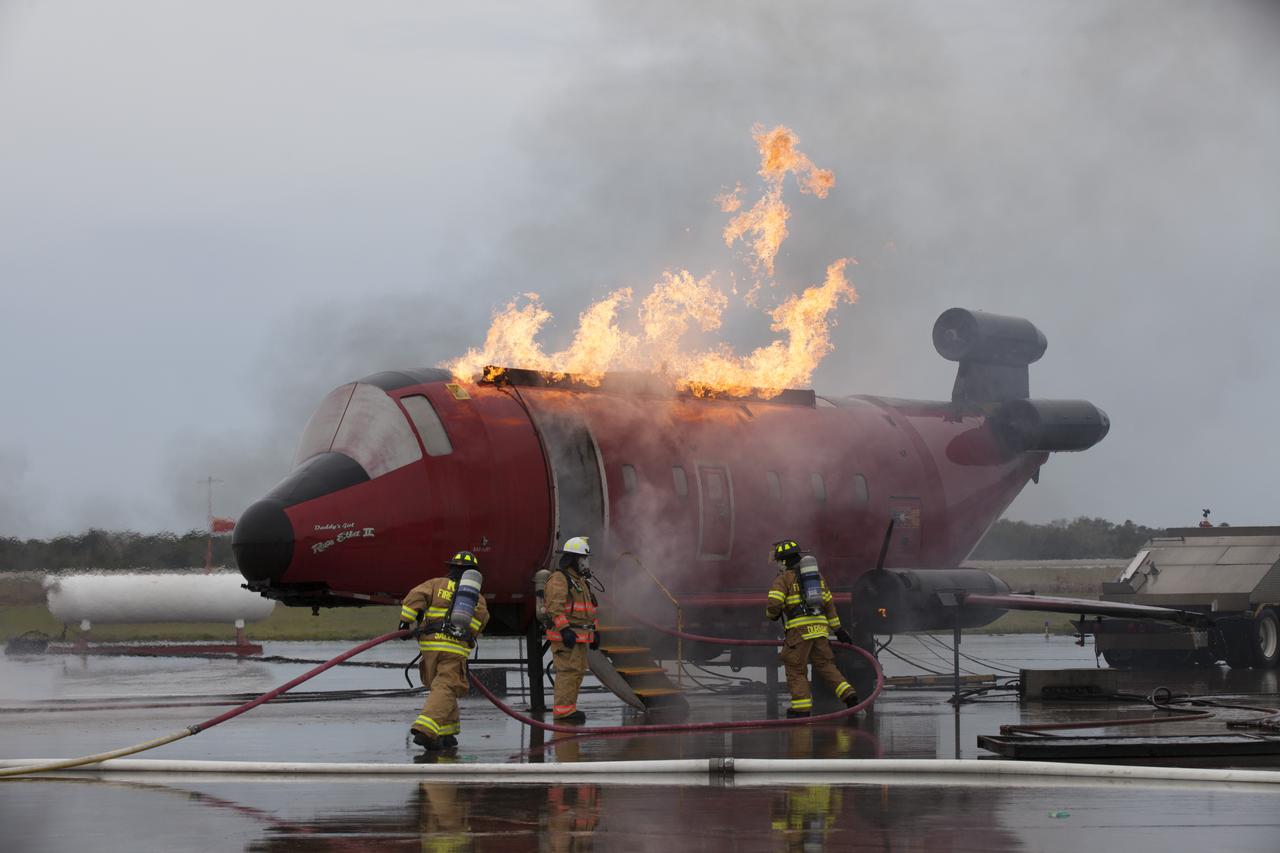
CAPE CANAVERAL, Fla. - Special Rescue Operations firefighters with NASA Fire Rescue Services in the Protective Services Office at NASA’s Kennedy Space Center in Florida participate in a training exercise at the Shuttle Landing Facility. Firefighters, wearing protective gear, use hoses to put out a fire burning on a mock-up of a small plane. Kennedy’s firefighters recently achieved Pro Board Certification in aerial fire truck operations and completed vehicle extrication training using the Jaws of Life. The Protective Services Office is one step closer to achieving certification in vehicle machinery extrication and other rescue skills. Kennedy’s firefighters are with G4S Government Solutions Inc., on the Kennedy Protective Services Contract. Photo credit: NASA/Kim Shiflett
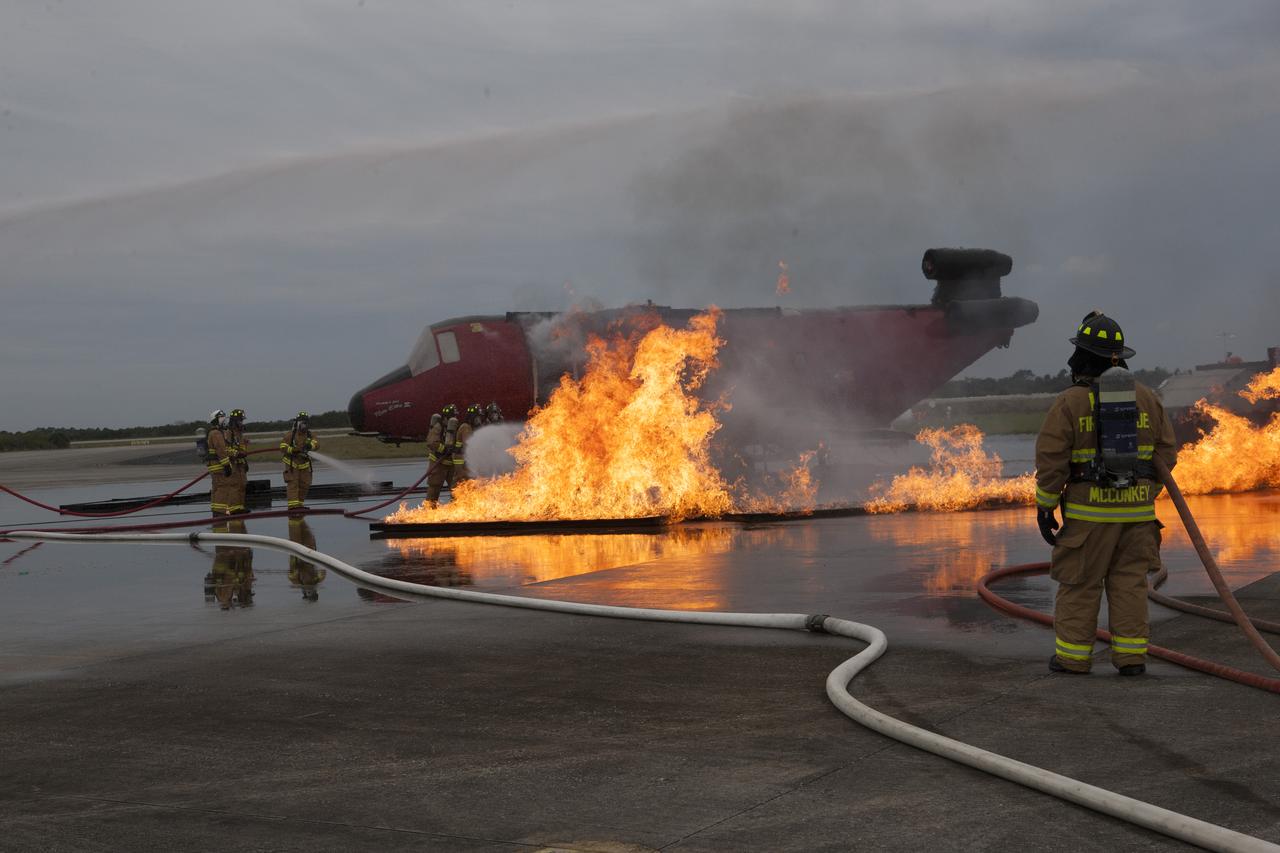
CAPE CANAVERAL, Fla. - Special Rescue Operations firefighters with NASA Fire Rescue Services in the Protective Services Office at NASA’s Kennedy Space Center in Florida participate in a training exercise at the Shuttle Landing Facility. Firefighters, wearing protective gear, use hoses to put out a fire burning near the mock-up of a small plane. Kennedy’s firefighters recently achieved Pro Board Certification in aerial fire truck operations and completed vehicle extrication training using the Jaws of Life. The Protective Services Office is one step closer to achieving certification in vehicle machinery extrication and other rescue skills. Kennedy’s firefighters are with G4S Government Solutions Inc., on the Kennedy Protective Services Contract. Photo credit: NASA/Kim Shiflett
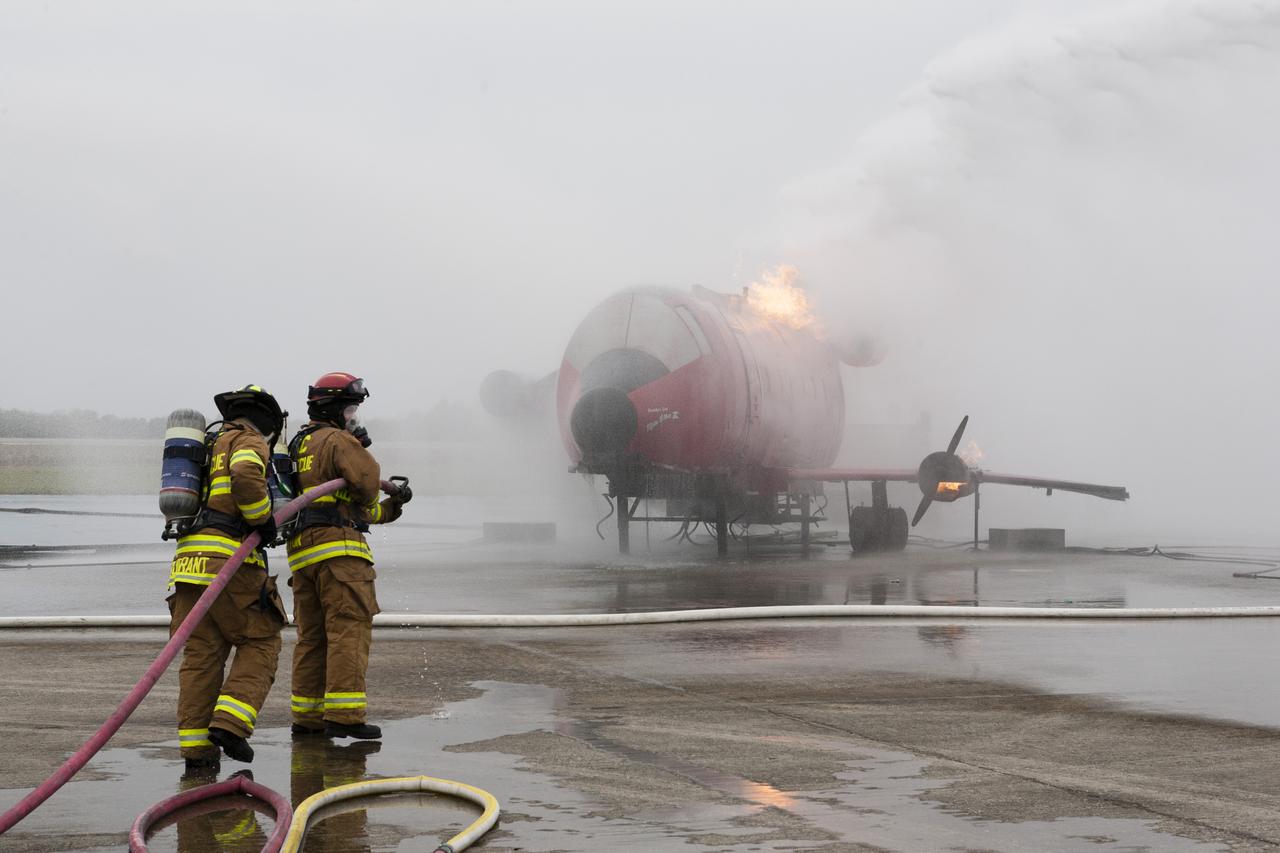
CAPE CANAVERAL, Fla. - During a training exercise, Special Rescue Operations firefighters with NASA Fire Rescue Services in the Protective Services Office at NASA’s Kennedy Space Center in Florida use hoses to put out a fire burning on a mock-up of a small plane at the Shuttle Landing Facility. They are wearing protective gear for the training exercise. Kennedy’s firefighters recently achieved Pro Board Certification in aerial fire truck operations and completed vehicle extrication training using the Jaws of Life. The Protective Services Office is one step closer to achieving certification in vehicle machinery extrication and other rescue skills. Kennedy’s firefighters are with G4S Government Solutions Inc., on the Kennedy Protective Services Contract. Photo credit: NASA/Kim Shiflett
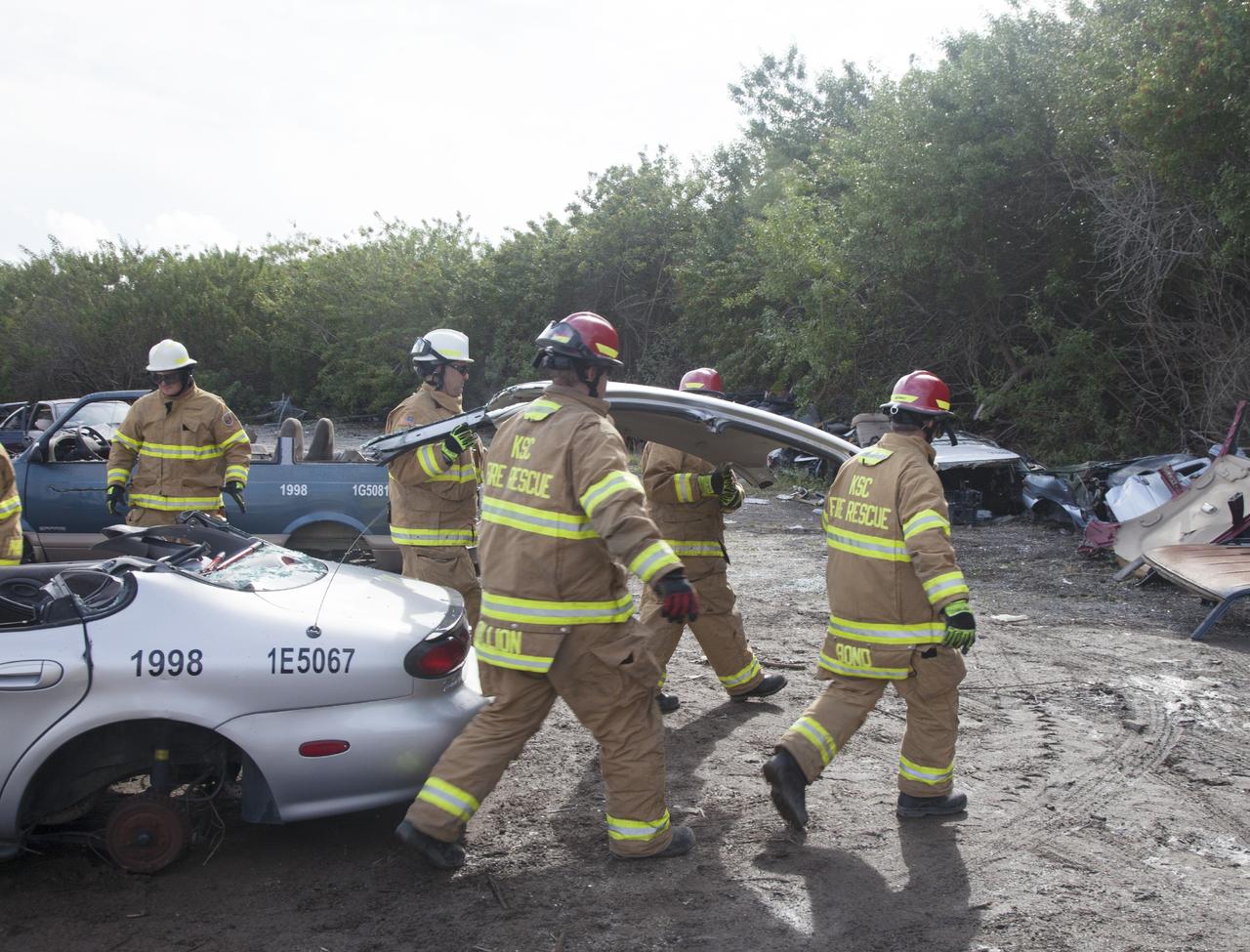
CAPE CANAVERAL, Fla. – Special Rescue Operations firefighters with NASA Fire Rescue Services in the Protective Services Office at NASA’s Kennedy Space Center in Florida practice vehicle extrication training at an auto salvage yard near the center. Firefighters carry away the roof of the car that was removed using a special hydraulic cutting tool and reciprocating saw. Other firefighters used axes and special tools to punch through and clear away the windshield and windows. They will use the Jaws of Life to simulate the rescue of a trapped and injured person. Kennedy’s firefighters recently achieved Pro Board Certification in aerial fire truck operations. With the completion of vehicle extrication and Jaws of Life training, the Protective Services Office is one step closer to achieving certification in vehicle machinery extrication. Kennedy’s firefighters are with G4S Government Solutions Inc., on the Kennedy Protective Services Contract. Photo credit: NASA/Daniel Casper
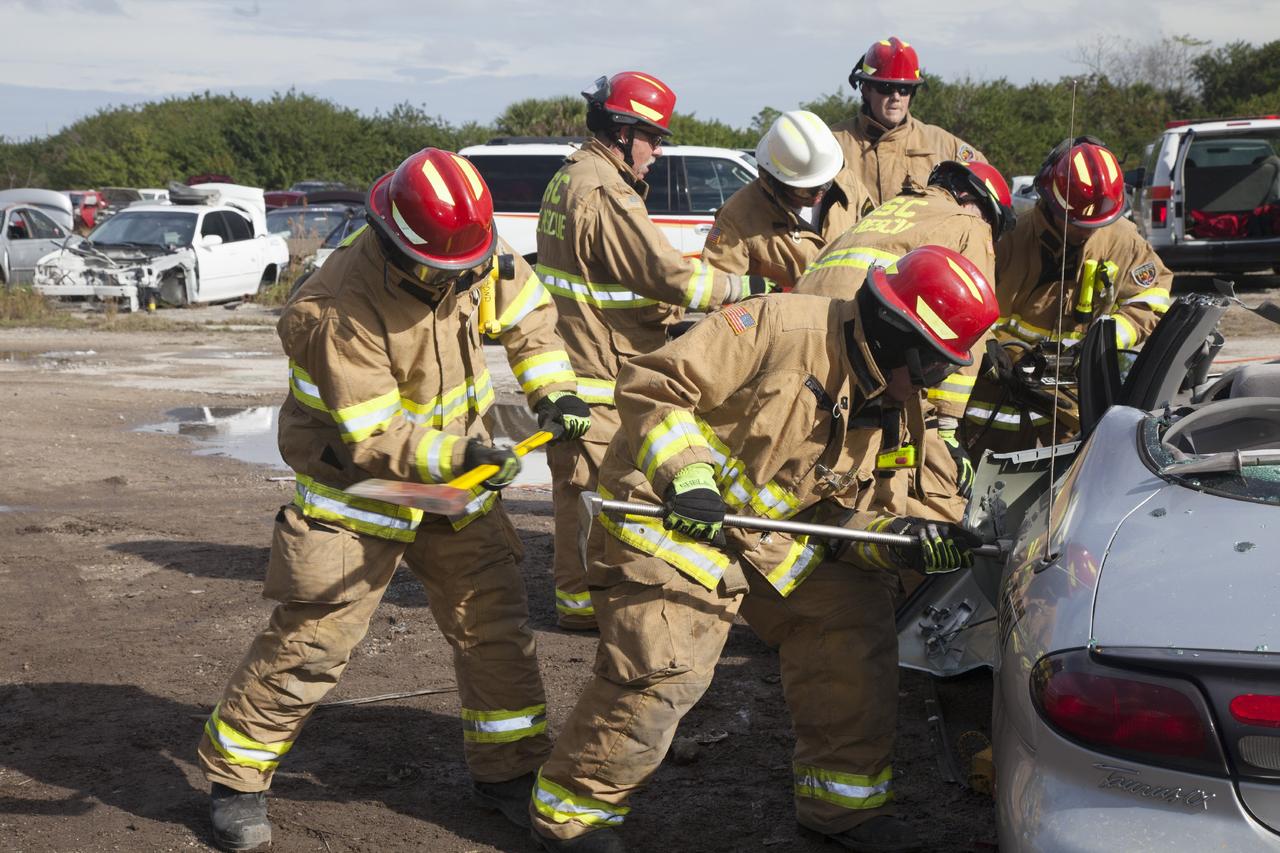
CAPE CANAVERAL, Fla. – Special Rescue Operations firefighters with NASA Fire Rescue Services in the Protective Services Office at NASA’s Kennedy Space Center in Florida practice vehicle extrication training at an auto salvage yard near the center. In the foreground, a firefighter with an axe assists as another firefighter uses a special tool to punch through the door of the vehicle. A special hydraulic cutting tool and reciprocating saw were used to cut through and remove the roof. In the background, other firefighters are practicing with the Jaws of Life to simulate the rescue of a trapped and injured person. Kennedy’s firefighters recently achieved Pro Board Certification in aerial fire truck operations. With the completion of vehicle extrication and Jaws of Life training, the Protective Services Office is one step closer to achieving certification in vehicle machinery extrication. Kennedy’s firefighters are with G4S Government Solutions Inc., on the Kennedy Protective Services Contract. Photo credit: NASA/Daniel Casper
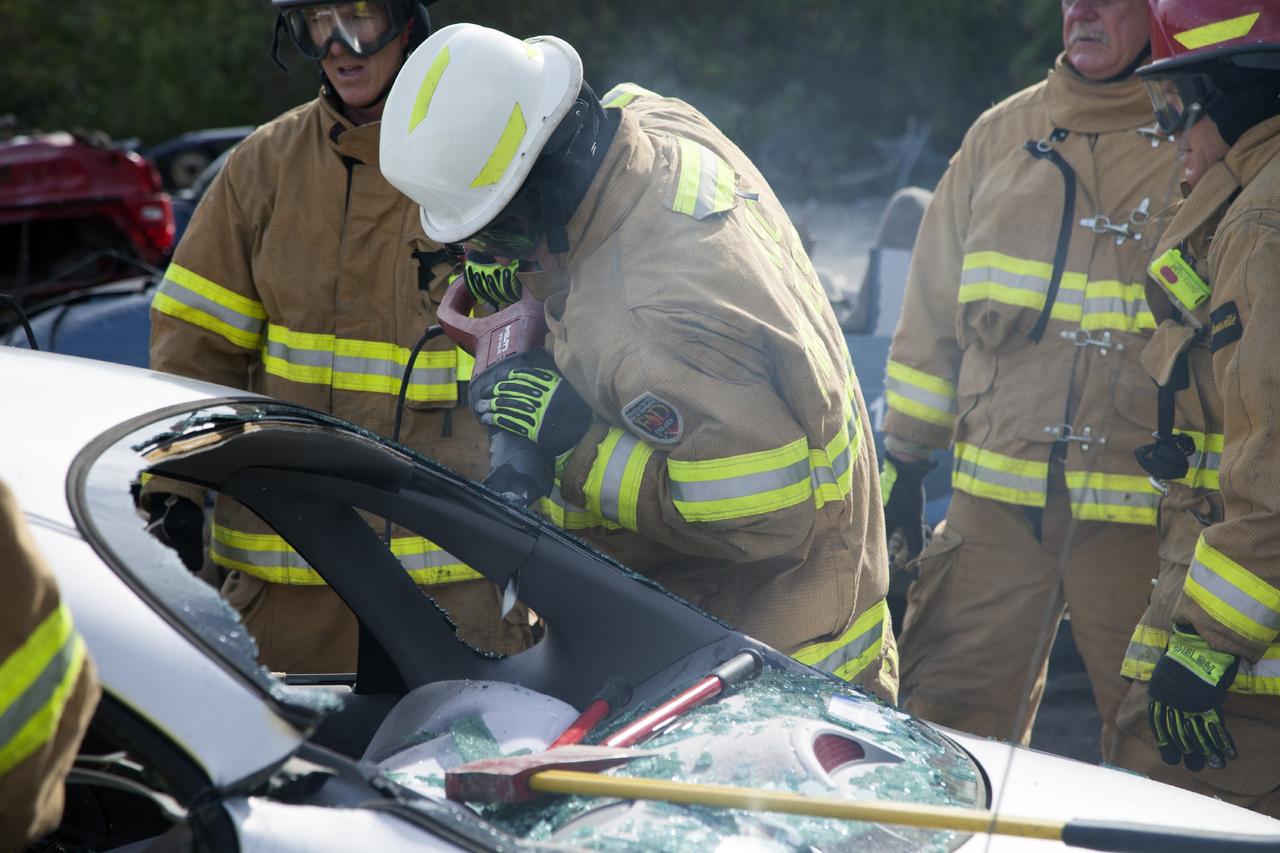
CAPE CANAVERAL, Fla. – Special Rescue Operations firefighters with NASA Fire Rescue Services in the Protective Services Office at NASA’s Kennedy Space Center in Florida practice vehicle extrication training at an auto salvage yard near the center. A firefighter uses a reciprocating saw to cut through a section of the car to remove the roof. Other firefighters used axes and special tools to punch through and clear away the windshield and windows. They will use the Jaws of Life to simulate the rescue of a trapped and injured person. Kennedy’s firefighters recently achieved Pro Board Certification in aerial fire truck operations. With the completion of vehicle extrication and Jaws of Life training, the Protective Services Office is one step closer to achieving certification in vehicle machinery extrication. Kennedy’s firefighters are with G4S Government Solutions Inc., on the Kennedy Protective Services Contract. Photo credit: NASA/Daniel Casper
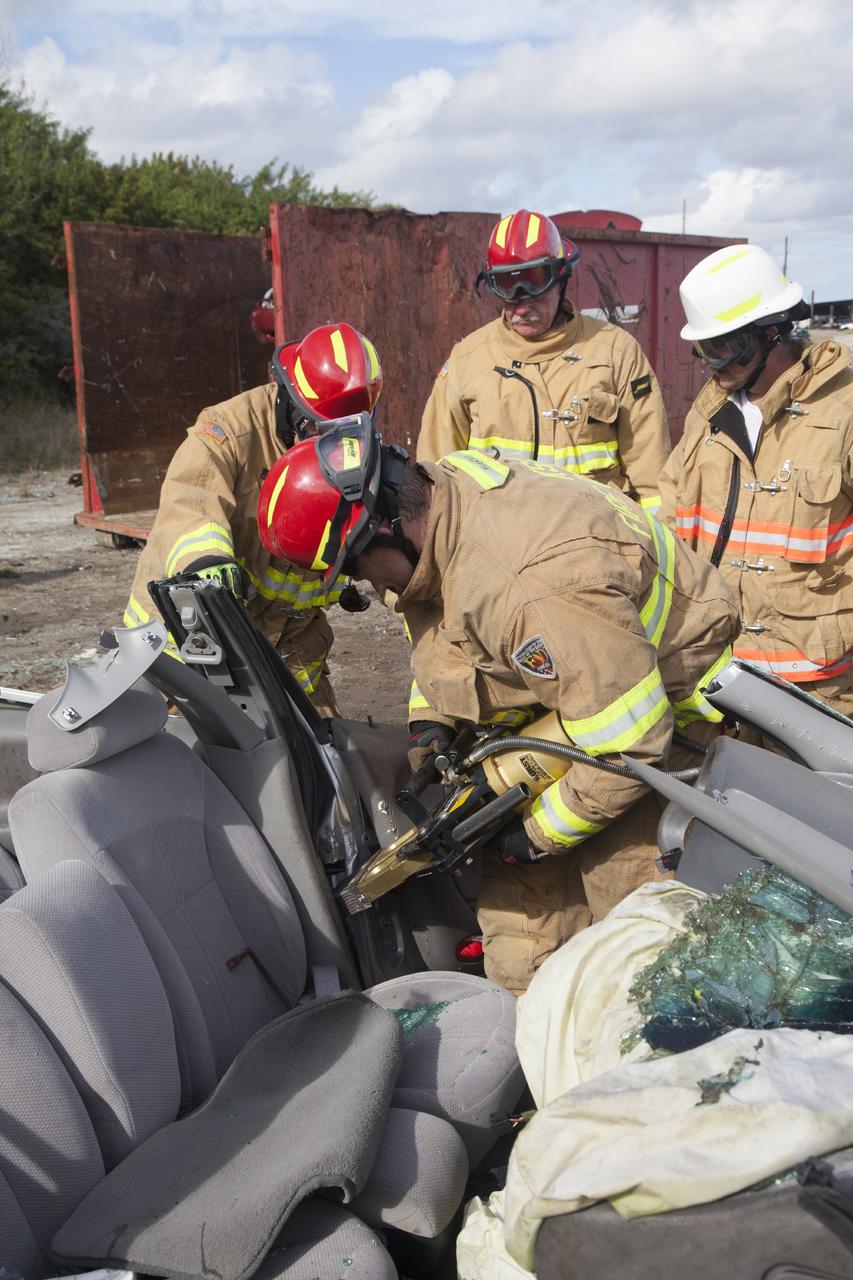
CAPE CANAVERAL, Fla. – Special Rescue Operations firefighters with NASA Fire Rescue Services in the Protective Services Office at NASA’s Kennedy Space Center in Florida practice vehicle extrication training at an auto salvage yard near the center. A firefighter uses the Jaws of Life to finish removing the door from the vehicle and simulate the rescue of a trapped and injured person. A special hydraulic cutting tool and reciprocating saw were used to cut through and remove the roof. An axe and other special tools were used to punch through and clear away the windshield and windows. Kennedy’s firefighters recently achieved Pro Board Certification in aerial fire truck operations. With the completion of vehicle extrication and Jaws of Life training, the Protective Services Office is one step closer to achieving certification in vehicle machinery extrication. Kennedy’s firefighters are with G4S Government Solutions Inc., on the Kennedy Protective Services Contract. Photo credit: NASA/Daniel Casper
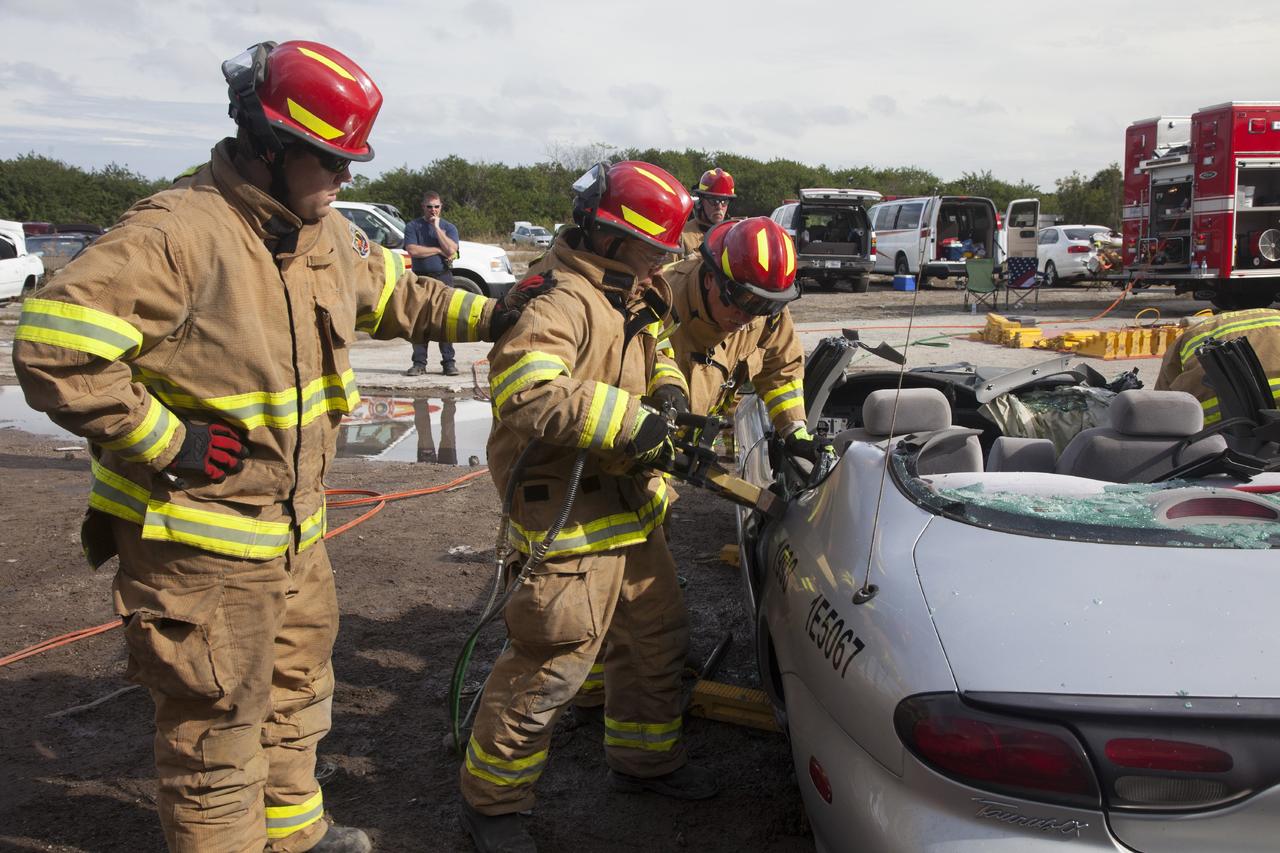
CAPE CANAVERAL, Fla. – Special Rescue Operations firefighters with NASA Fire Rescue Services in the Protective Services Office at NASA’s Kennedy Space Center in Florida practice vehicle extrication training at an auto salvage yard near the center. Two firefighters assist as another firefighter uses the Jaws of Life on the car to simulate the rescue of a trapped and injured person. A special hydraulic cutting tool and reciprocating saw were used to remove the roof of the vehicle. Other firefighters used axes and special tools to punch through and clear away the windshield and the windows. Kennedy’s firefighters recently achieved Pro Board Certification in aerial fire truck operations. With the completion of vehicle extrication and Jaws of Life training, the Protective Services Office is one step closer to achieving certification in vehicle machinery extrication. Kennedy’s firefighters are with G4S Government Solutions Inc., on the Kennedy Protective Services Contract. Photo credit: NASA/Daniel Casper
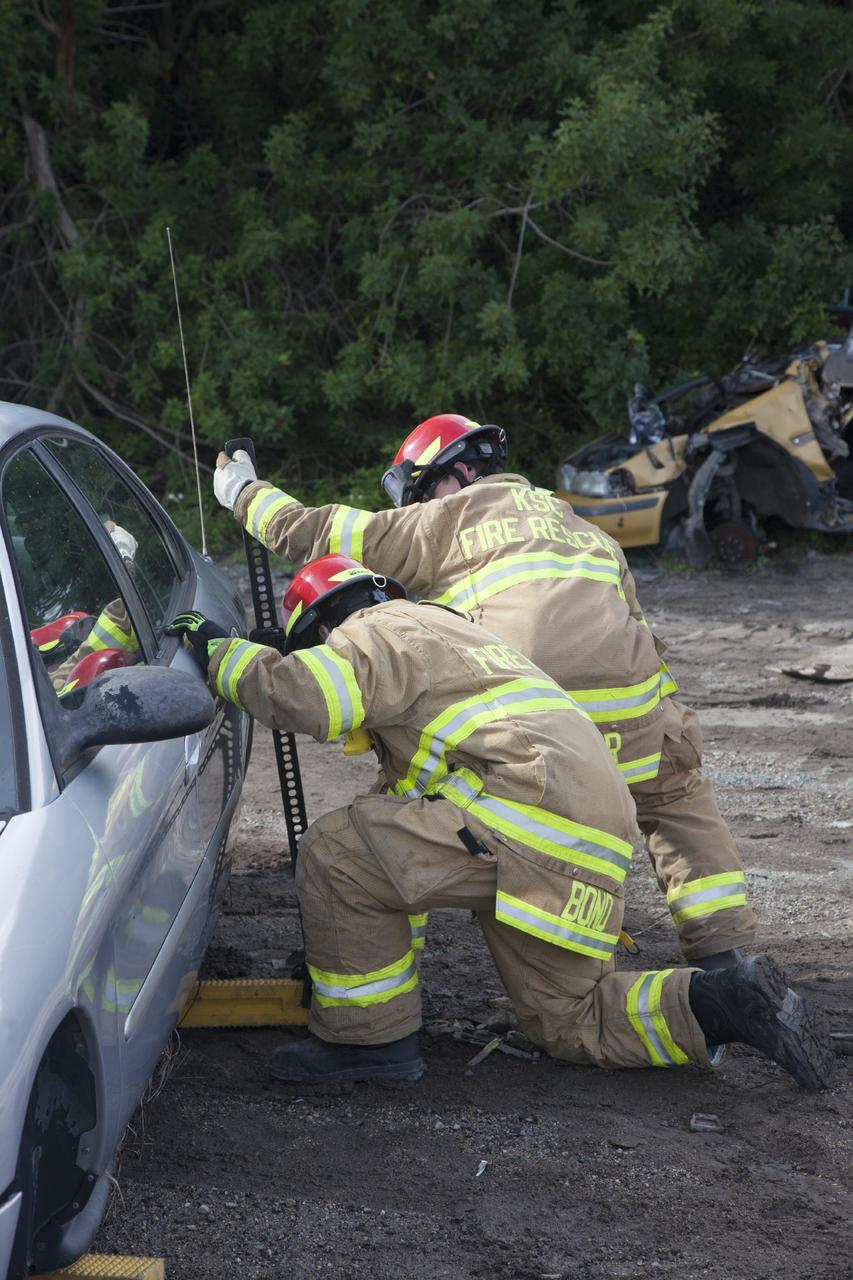
CAPE CANAVERAL, Fla. – Special Rescue Operations firefighters with NASA Fire Rescue Services in the Protective Services Office at NASA’s Kennedy Space Center in Florida practice vehicle extrication training at an auto salvage yard near the center. Two firefighters insert blocks under the vehicle to stabilize it. They will use the Jaws of Life on the vehicle to simulate the rescue of a trapped and injured person. Other rescue equipment includes axes, tools to punch through and clear away the windshield and windows and a hydraulic cutting tool that is used to remove the roof of a car. Kennedy’s firefighters recently achieved Pro Board Certification in aerial fire truck operations. With the completion of vehicle extrication and Jaws of Life training, the Protective Services Office is one step closer to achieving certification in vehicle machinery extrication. Kennedy’s firefighters are with G4S Government Solutions Inc., on the Kennedy Protective Services Contract. Photo credit: NASA/Daniel Casper
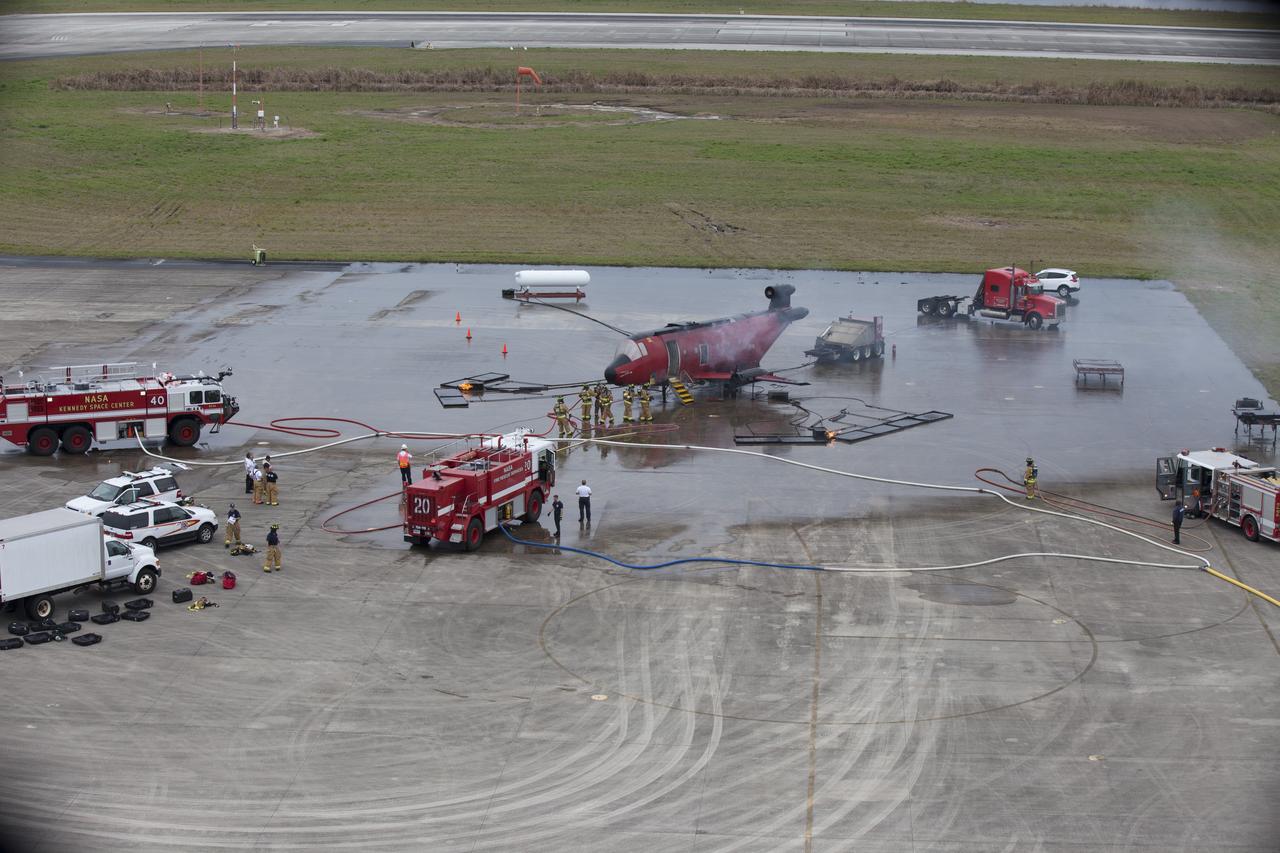
CAPE CANAVERAL, Fla. - Special Rescue Operations firefighters with NASA Fire Rescue Services in the Protective Services Office at NASA’s Kennedy Space Center in Florida participate in a training exercise at the Shuttle Landing Facility. Firefighters use fire trucks and hoses to extinguish flames burning on and around a mock-up of a small plane. Kennedy’s firefighters recently achieved Pro Board Certification in aerial fire truck operations and completed vehicle extrication training using the Jaws of Life. The Protective Services Office is one step closer to achieving certification in vehicle machinery extrication and other rescue skills. Kennedy’s firefighters are with G4S Government Solutions Inc., on the Kennedy Protective Services Contract. Photo credit: NASA/Kim Shiflett
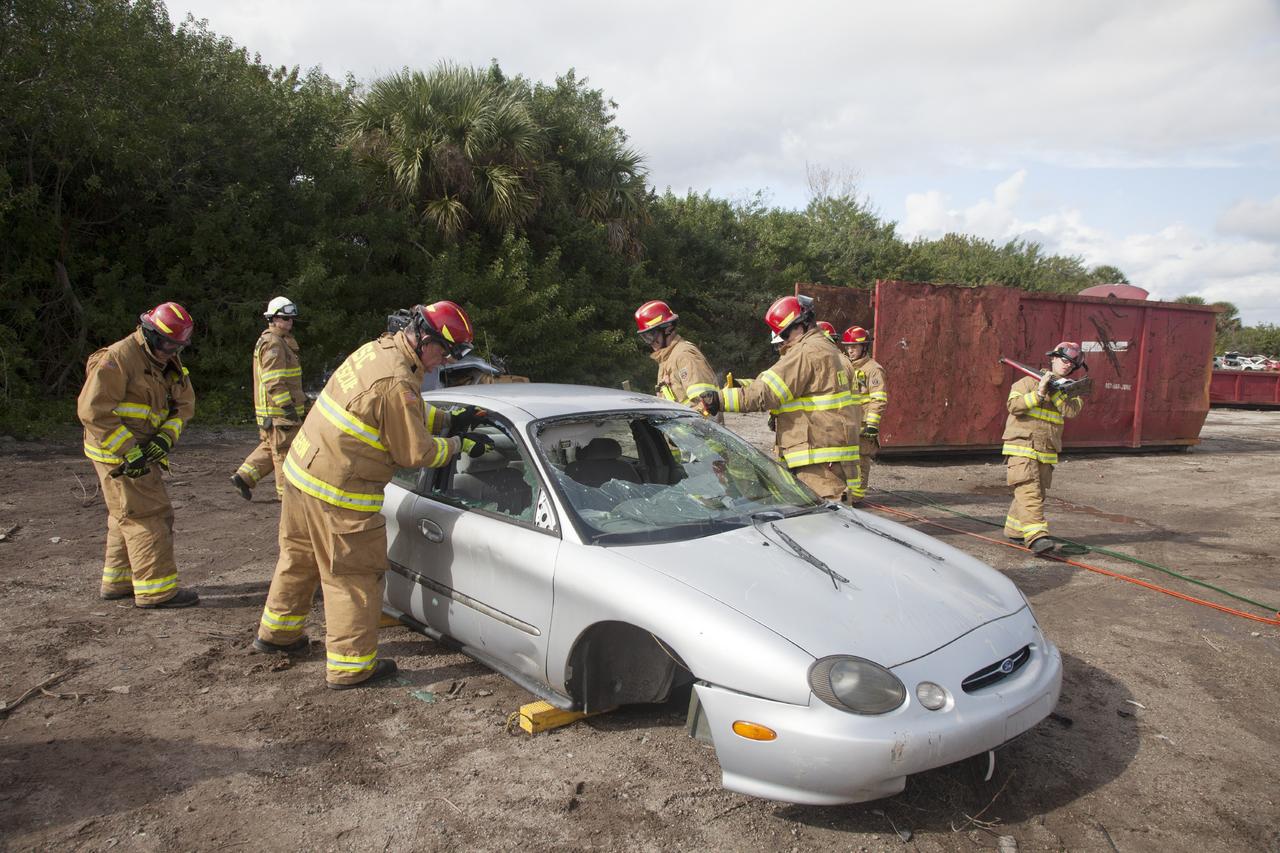
CAPE CANAVERAL, Fla. – Special Rescue Operations firefighters with NASA Fire Rescue Services in the Protective Services Office at NASA’s Kennedy Space Center in Florida practice vehicle extrication training at an auto salvage yard near the center. Stabilizing blocks have been placed underneath the car. Firefighters practiced knocking out the windshield and windows with axes and other tools. They will use the Jaws of Life on the vehicle to simulate the rescue of a trapped and injured person. Other rescue equipment includes a hydraulic cutting tool that is used to remove the roof of a car. Kennedy’s firefighters recently achieved Pro Board Certification in aerial fire truck operations. With the completion of vehicle extrication and Jaws of Life training, the Protective Services Office is one step closer to achieving certification in vehicle machinery extrication. Kennedy’s firefighters are with G4S Government Solutions Inc., on the Kennedy Protective Services Contract. Photo credit: NASA/Daniel Casper
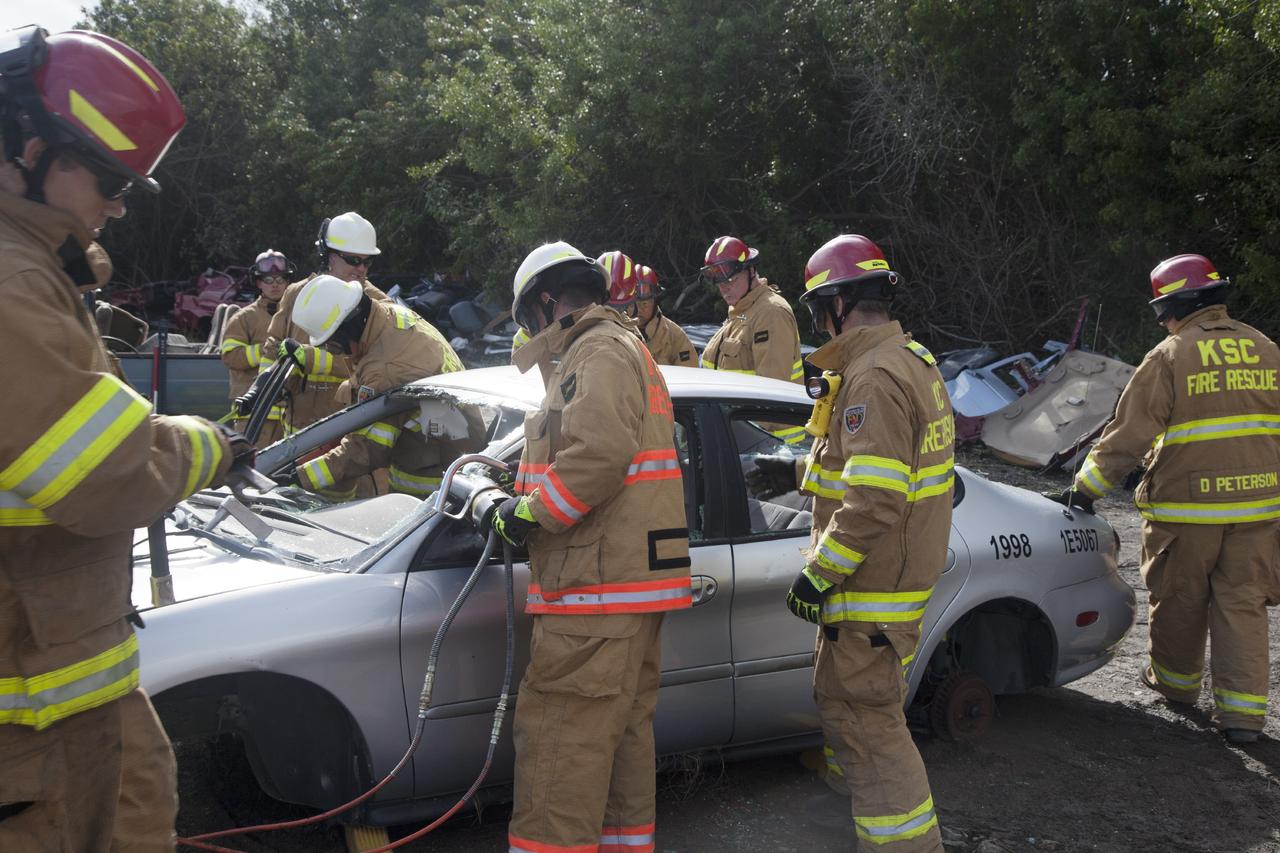
CAPE CANAVERAL, Fla. – Special Rescue Operations firefighters with NASA Fire Rescue Services in the Protective Services Office at NASA’s Kennedy Space Center in Florida practice vehicle extrication training at an auto salvage yard near the center. A firefighter uses a special hydraulic tool to cut through a section of the car to remove the roof, while other firefighters clear the windows and prepare to use the Jaws of Life to simulate the rescue of a trapped and injured person. Other rescue equipment being used includes axes and tools to punch through and clear away windshields and windows. Kennedy’s firefighters recently achieved Pro Board Certification in aerial fire truck operations. With the completion of vehicle extrication and Jaws of Life training, the Protective Services Office is one step closer to achieving certification in vehicle machinery extrication. Kennedy’s firefighters are with G4S Government Solutions Inc., on the Kennedy Protective Services Contract. Photo credit: NASA/Daniel Casper
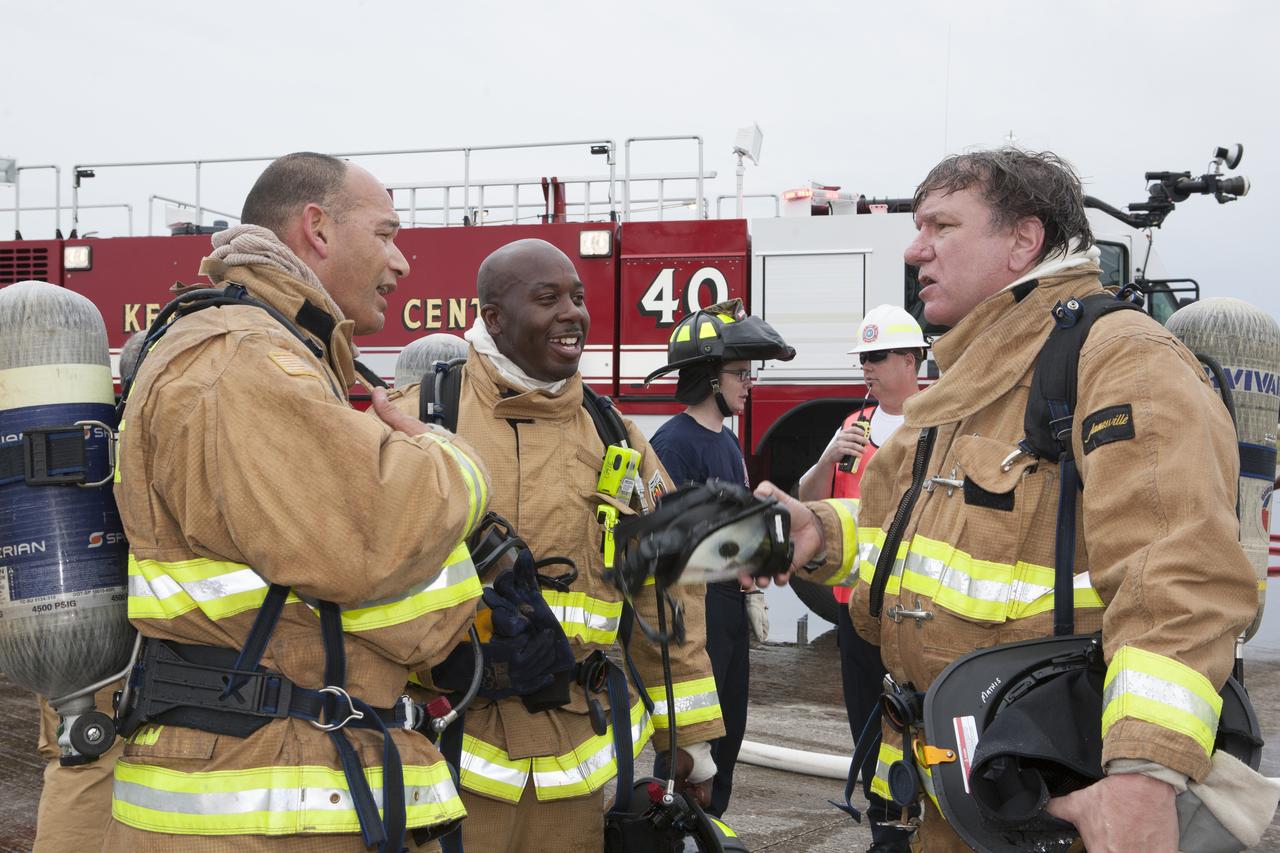
CAPE CANAVERAL, Fla. - Special Rescue Operations firefighters with NASA Fire Rescue Services in the Protective Services Office at NASA’s Kennedy Space Center in Florida review procedures after participating in a training exercise at the Shuttle Landing Facility. During the training simulation, firefighters used fire trucks and hoses to extinguish flames burning on and around a mock-up of a small plane. Kennedy’s firefighters recently achieved Pro Board Certification in aerial fire truck operations and completed vehicle extrication training using the Jaws of Life. The Protective Services Office is one step closer to achieving certification in vehicle machinery extrication and other rescue skills. Kennedy’s firefighters are with G4S Government Solutions Inc., on the Kennedy Protective Services Contract. Photo credit: NASA/Kim Shiflett
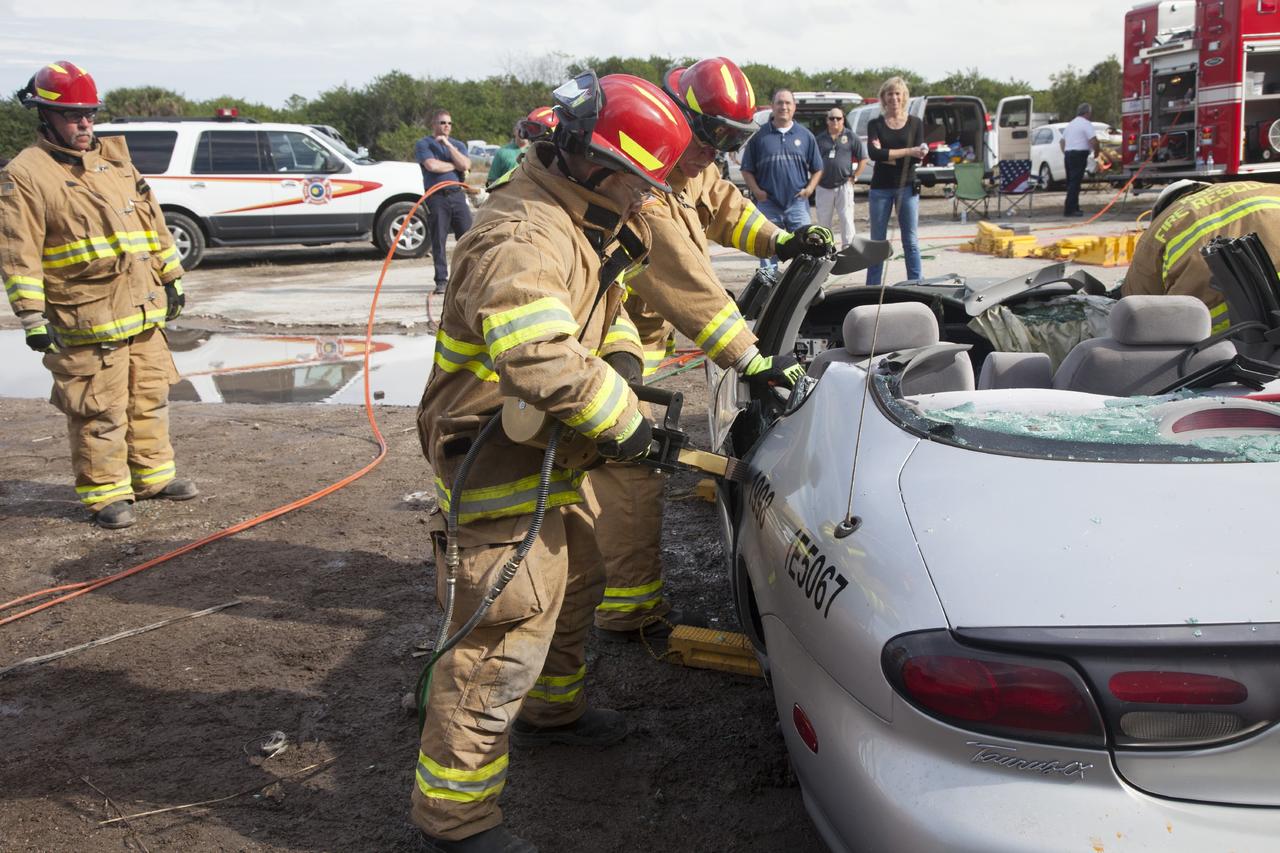
CAPE CANAVERAL, Fla. – Special Rescue Operations firefighters with NASA Fire Rescue Services in the Protective Services Office at NASA’s Kennedy Space Center in Florida practice vehicle extrication training at an auto salvage yard near the center. Firefighters have removed the roof of the car using a special hydraulic cutting tool and reciprocating saw. Other firefighters have used axes and special tools to punch through and clear away the windshield and windows. Another firefighter uses the Jaws of Life on the car to simulate the rescue of a trapped and injured person. Kennedy’s firefighters recently achieved Pro Board Certification in aerial fire truck operations. With the completion of vehicle extrication and Jaws of Life training, the Protective Services Office is one step closer to achieving certification in vehicle machinery extrication. Kennedy’s firefighters are with G4S Government Solutions Inc., on the Kennedy Protective Services Contract. Photo credit: NASA/Daniel Casper
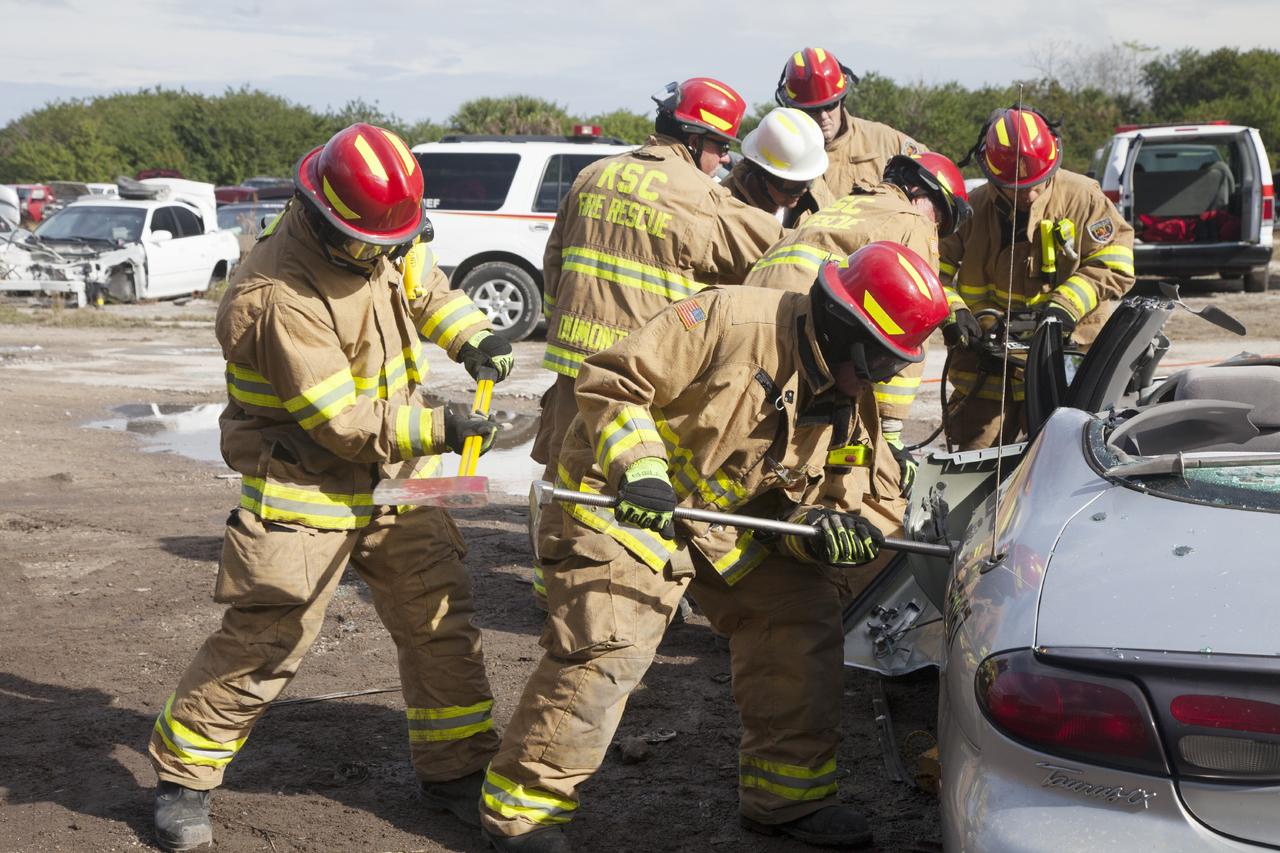
CAPE CANAVERAL, Fla. – Special Rescue Operations firefighters with NASA Fire Rescue Services in the Protective Services Office at NASA’s Kennedy Space Center in Florida practice vehicle extrication training at an auto salvage yard near the center. In the foreground, a firefighter with an axe assists as another firefighter uses a special tool to punch through the door of the vehicle. A special hydraulic cutting tool and reciprocating saw were used to cut through and remove the roof. In the background, other firefighters are practicing with the Jaws of Life to simulate the rescue of a trapped and injured person. Kennedy’s firefighters recently achieved Pro Board Certification in aerial fire truck operations. With the completion of vehicle extrication and Jaws of Life training, the Protective Services Office is one step closer to achieving certification in vehicle machinery extrication. Kennedy’s firefighters are with G4S Government Solutions Inc., on the Kennedy Protective Services Contract. Photo credit: NASA/Daniel Casper
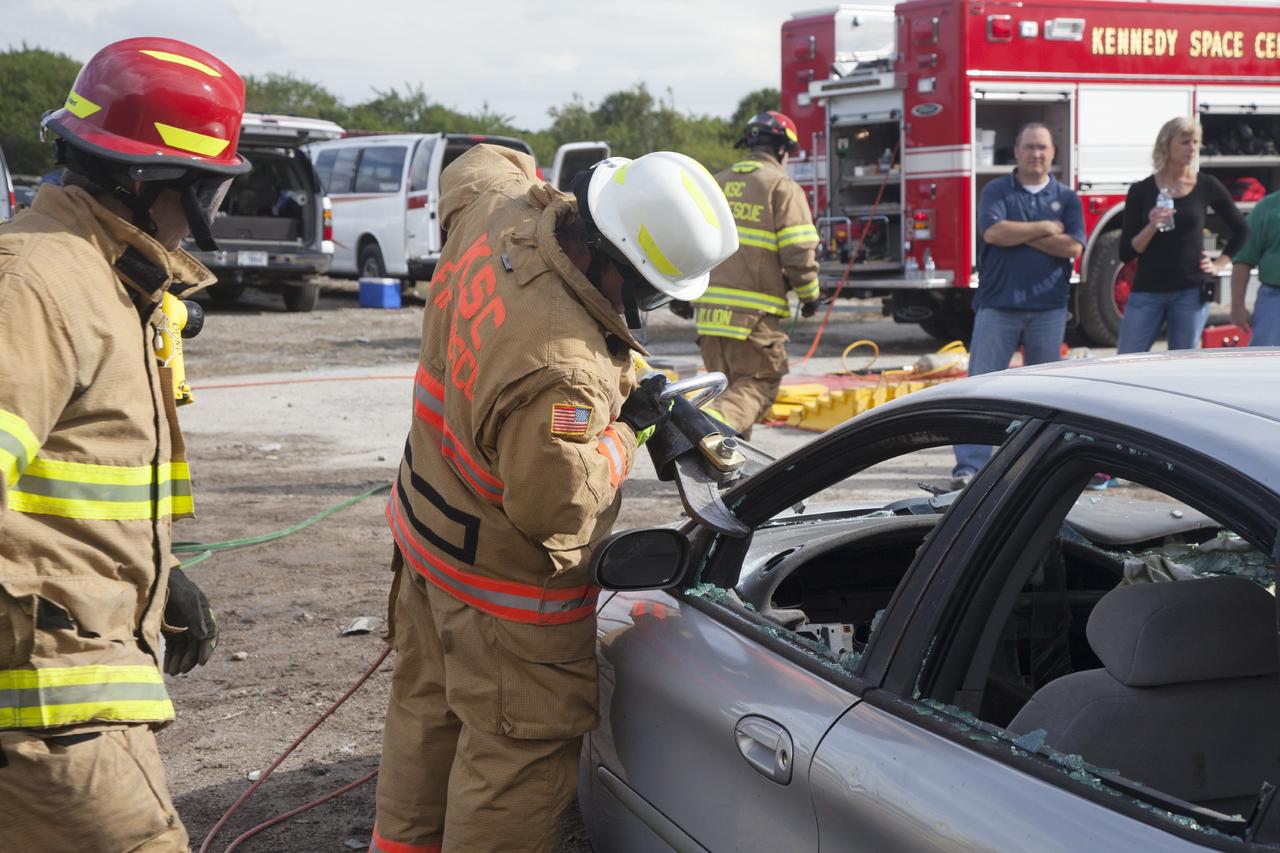
CAPE CANAVERAL, Fla. – Special Rescue Operations firefighters with NASA Fire Rescue Services in the Protective Services Office at NASA’s Kennedy Space Center in Florida practice vehicle extrication training at an auto salvage yard near the center. A firefighter uses a special hydraulic tool to cut through the vehicle in order to remove the roof. They will use the Jaws of Life on the vehicle to simulate the rescue of a trapped and injured person. Other rescue equipment includes axes and tools to punch through and clear away windshields and windows. Kennedy’s firefighters recently achieved Pro Board Certification in aerial fire truck operations. With the completion of vehicle extrication and Jaws of Life training, the Protective Services Office is one step closer to achieving certification in vehicle machinery extrication. Kennedy’s firefighters are with G4S Government Solutions Inc., on the Kennedy Protective Services Contract. Photo credit: NASA/Daniel Casper
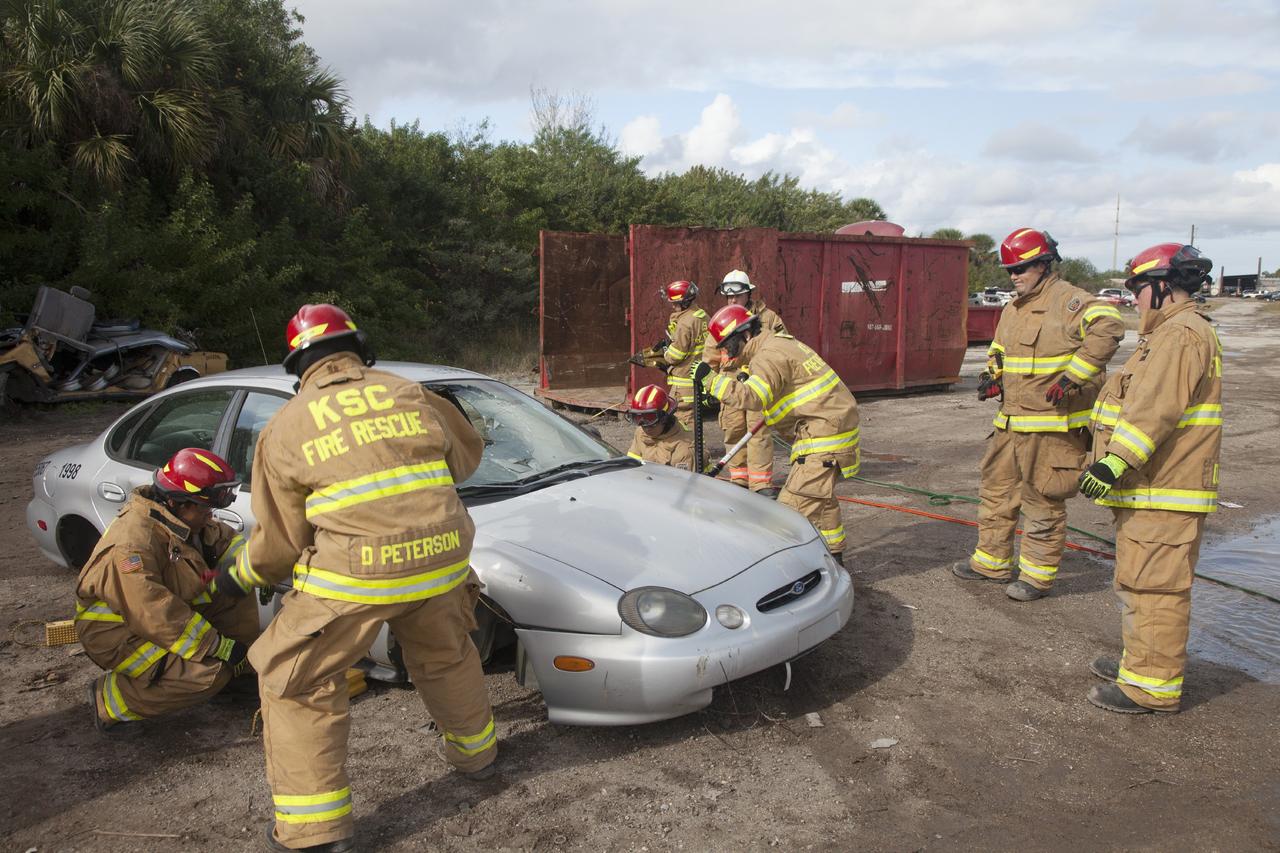
CAPE CANAVERAL, Fla. – Special Rescue Operations firefighters with NASA Fire Rescue Services in the Protective Services Office at NASA’s Kennedy Space Center in Florida practice vehicle extrication training at an auto salvage yard near the center. The firefighters used the Jaws of Life on the vehicle to simulate the rescue of a trapped and injured person. Other equipment used includes axes, tools to punch through and clear away the windshield and windows and a hydraulic cutting tool that is used to remove the roof of a car. Kennedy’s firefighters recently achieved Pro Board Certification in aerial fire truck operations. With the completion of vehicle extrication and Jaws of Life training, the Protective Services Office is one step closer to achieving certification in vehicle machinery extrication. Kennedy’s firefighters are with G4S Government Solutions Inc., on the Kennedy Protective Services Contract. Photo credit: NASA/Daniel Casper
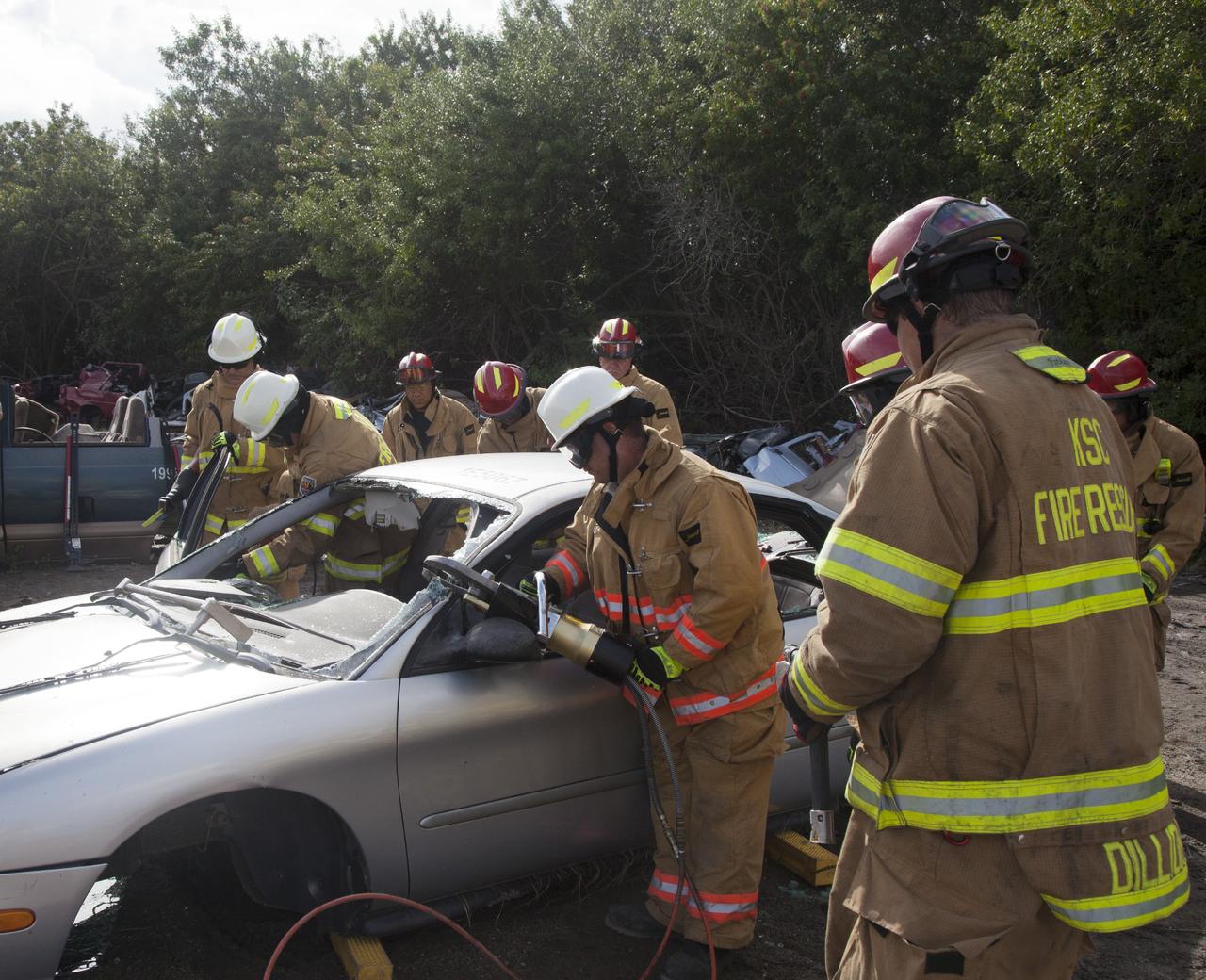
CAPE CANAVERAL, Fla. – Special Rescue Operations firefighters with NASA Fire Rescue Services in the Protective Services Office at NASA’s Kennedy Space Center in Florida practice vehicle extrication training at an auto salvage yard near the center. A firefighter uses a special hydraulic tool to cut through a section of the car to remove the roof, while other firefighters clear the windows and prepare to use the Jaws of Life to simulate the rescue of a trapped and injured person. Other rescue equipment being used includes axes and tools to punch through and clear away windshields and windows. Kennedy’s firefighters recently achieved Pro Board Certification in aerial fire truck operations. With the completion of vehicle extrication and Jaws of Life training, the Protective Services Office is one step closer to achieving certification in vehicle machinery extrication. Kennedy’s firefighters are with G4S Government Solutions Inc., on the Kennedy Protective Services Contract. Photo credit: NASA/Daniel Casper
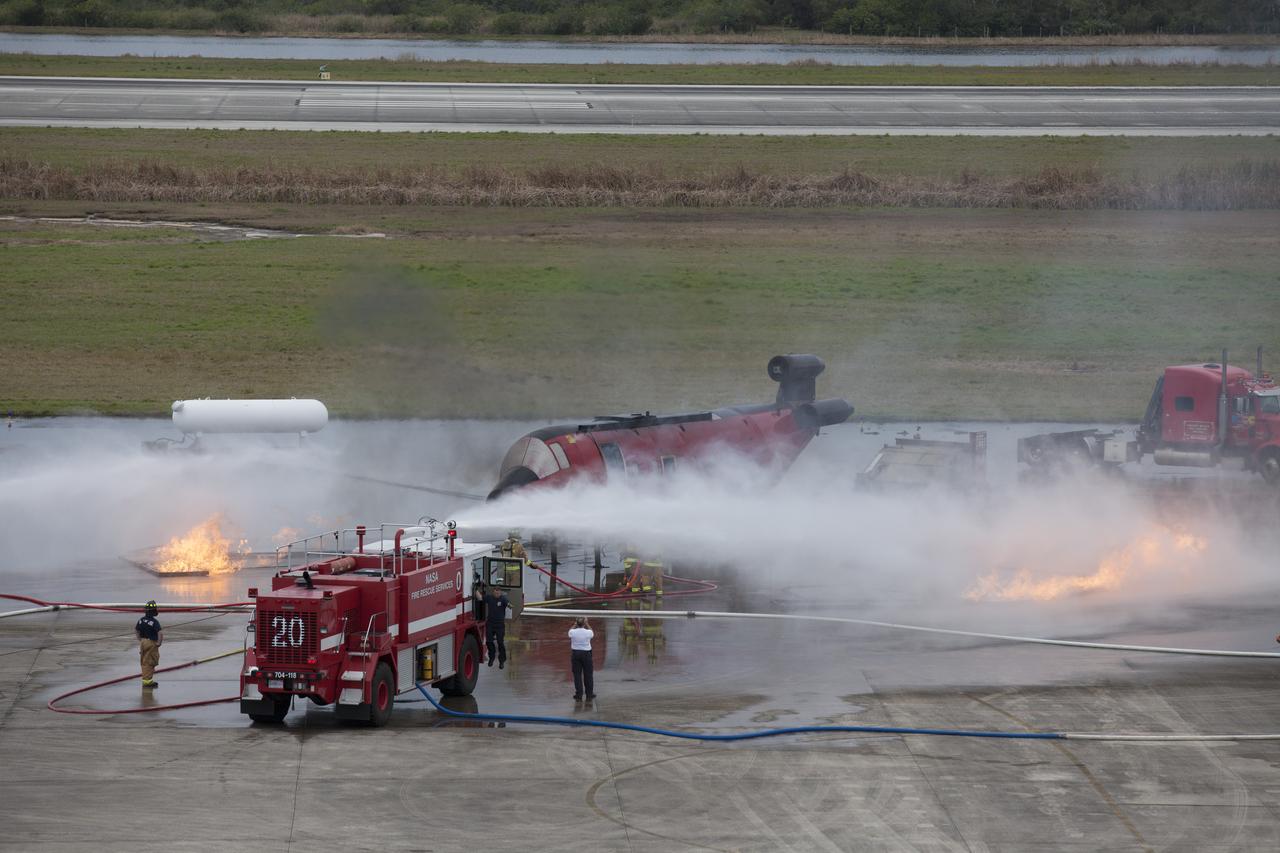
CAPE CANAVERAL, Fla. - Special Rescue Operations firefighters with NASA Fire Rescue Services in the Protective Services Office at NASA’s Kennedy Space Center in Florida participate in a training exercise at the Shuttle Landing Facility. Firefighters use a fire truck to put out a fire burning close to a mock-up of a small plane and a truck. Kennedy’s firefighters recently achieved Pro Board Certification in aerial fire truck operations and completed vehicle extrication training using the Jaws of Life. The Protective Services Office is one step closer to achieving certification in vehicle machinery extrication and other rescue skills. Kennedy’s firefighters are with G4S Government Solutions Inc., on the Kennedy Protective Services Contract. Photo credit: NASA/Kim Shiflett
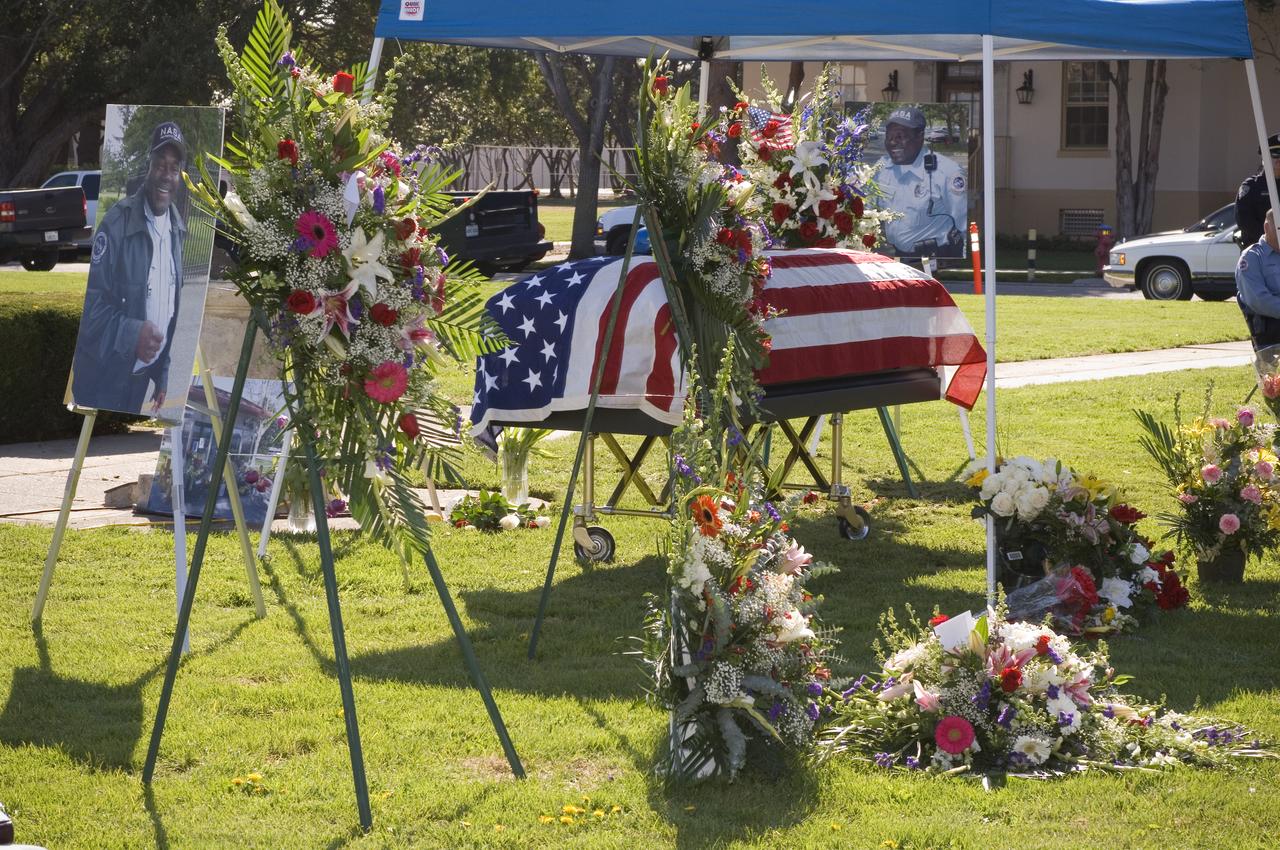
Memorial services for Ames Security Guard Johnny Green. funeral services on the NRP parade ground. Eugolies presented b Chris Christensen, Deputy Center Director, Ames Research Center, Robert Dlci, Cief, Protective Services, Roger Higby, Lt., Ames Protectives serices, Cynthia Green, Daughter, Sloan Thompson, Granddaughter - Awarding of California Commendation Medal, Col. Amos Bagdasarian 129th Rescue Wing, CA Ang, Military Shadow Box, CPO Mike Di Santo, USN, Presentation of American Flags, Robert Dolci
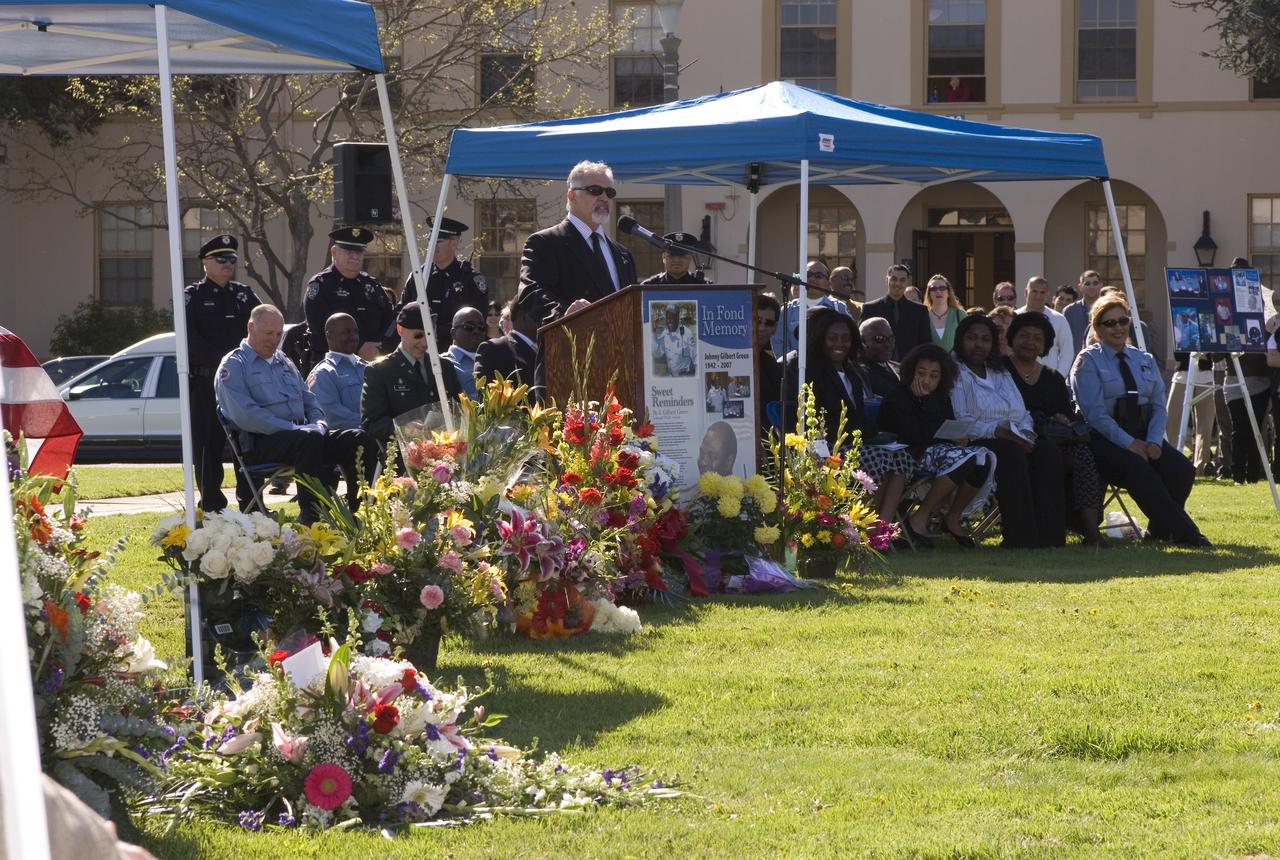
Memorial services for Ames Security Guard Johnny Green. funeral services on the NRP parade ground. Eugolies presented b Chris Christensen, Deputy Center Director, Ames Research Center, Robert Dlci, Cief, Protective Services, Roger Higby, Lt., Ames Protectives serices, Cynthia Green, Daughter, Sloan Thompson, Granddaughter - Awarding of California Commendation Medal, Col. Amos Bagdasarian 129th Rescue Wing, CA Ang, Military Shadow Box, CPO Mike Di Santo, USN, Presentation of American Flags, Robert Dolci
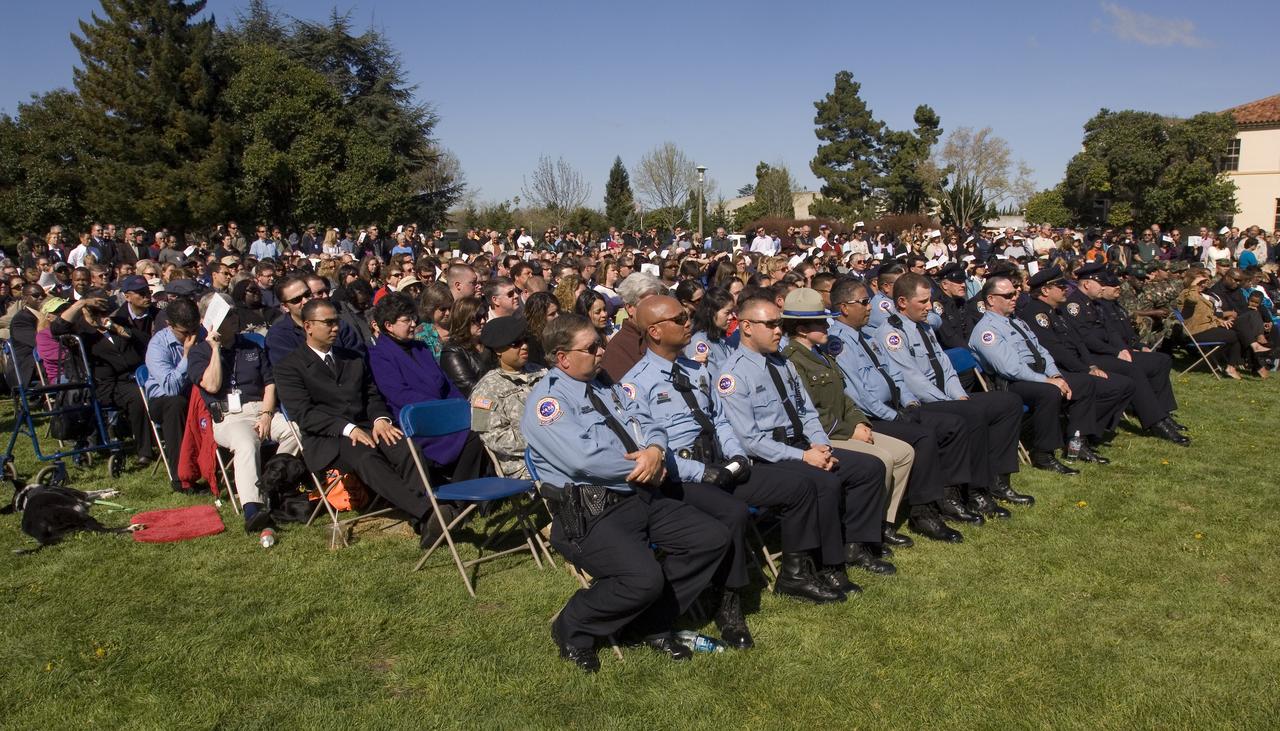
Memorial services for Ames Security Guard Johnny Green. funeral services on the NRP parade ground. Eugolies presented b Chris Christensen, Deputy Center Director, Ames Research Center, Robert Dlci, Cief, Protective Services, Roger Higby, Lt., Ames Protectives serices, Cynthia Green, Daughter, Sloan Thompson, Granddaughter - Awarding of California Commendation Medal, Col. Amos Bagdasarian 129th Rescue Wing, CA Ang, Military Shadow Box, CPO Mike Di Santo, USN, Presentation of American Flags, Robert Dolci
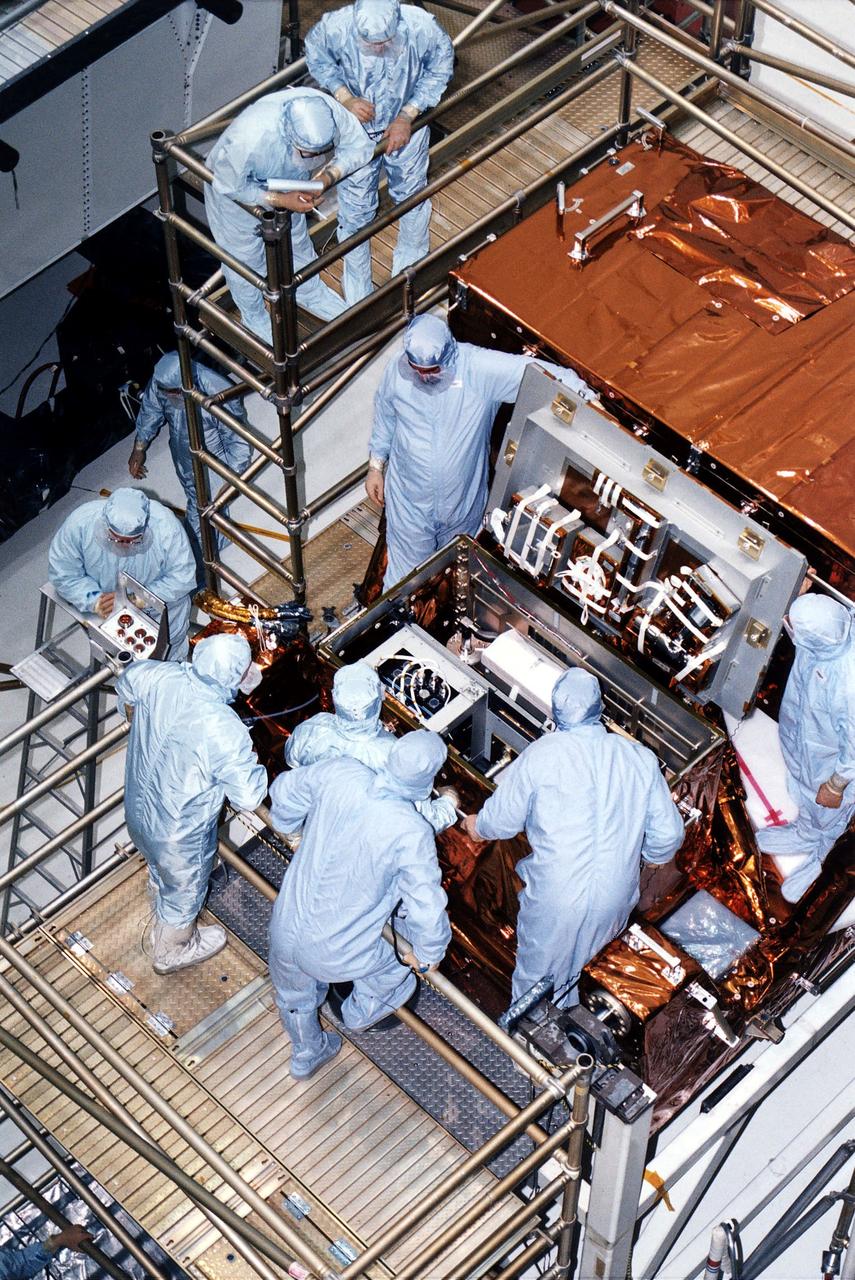
KENNEDY SPACE CENTER, FLA. - STS-82 crew members and workers at KSC's Vertical Processing Facility look at hardware in the Multipurpose ORU (Orbital Replacement Unit) Protective Enclsoure, also called MOPE. The crew is participating in the Crew Equipment Integration Test (CEIT). Liftoff of STS-82, the second Hubble Space Telescope (HST) servicing mission, is scheduled Feb. 11 aboard Discovery with a crew of seven.
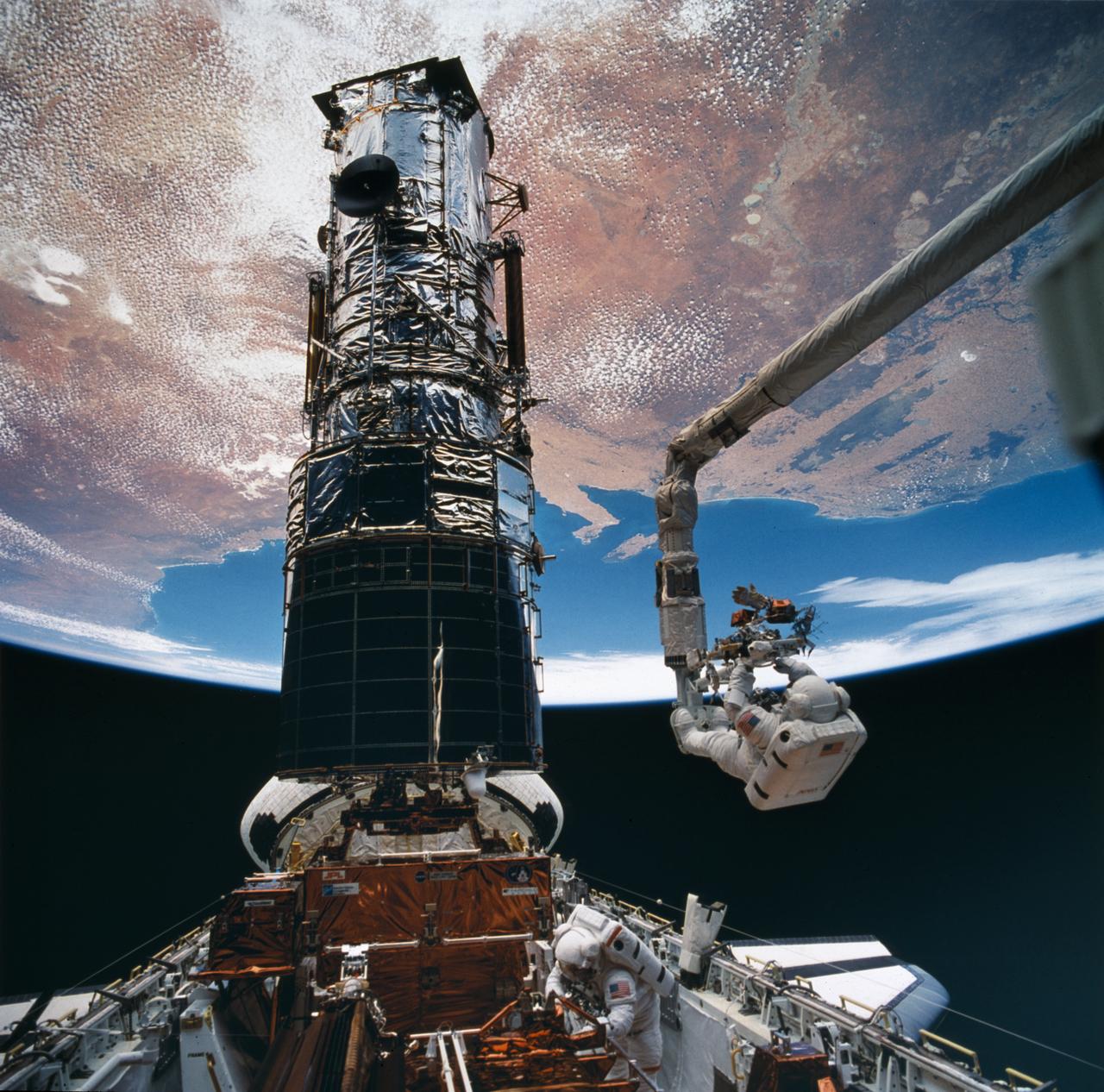
Astronaut Story Musgrave, anchored to the end of the remote manipulator arm, prepares to be elevated to the top of the towering Hubble Space Telescope (HST) to install protective covers on magnetometers. Astornaut Jeffrey Hoffman assisted Musgrave with the final servicing tasks.
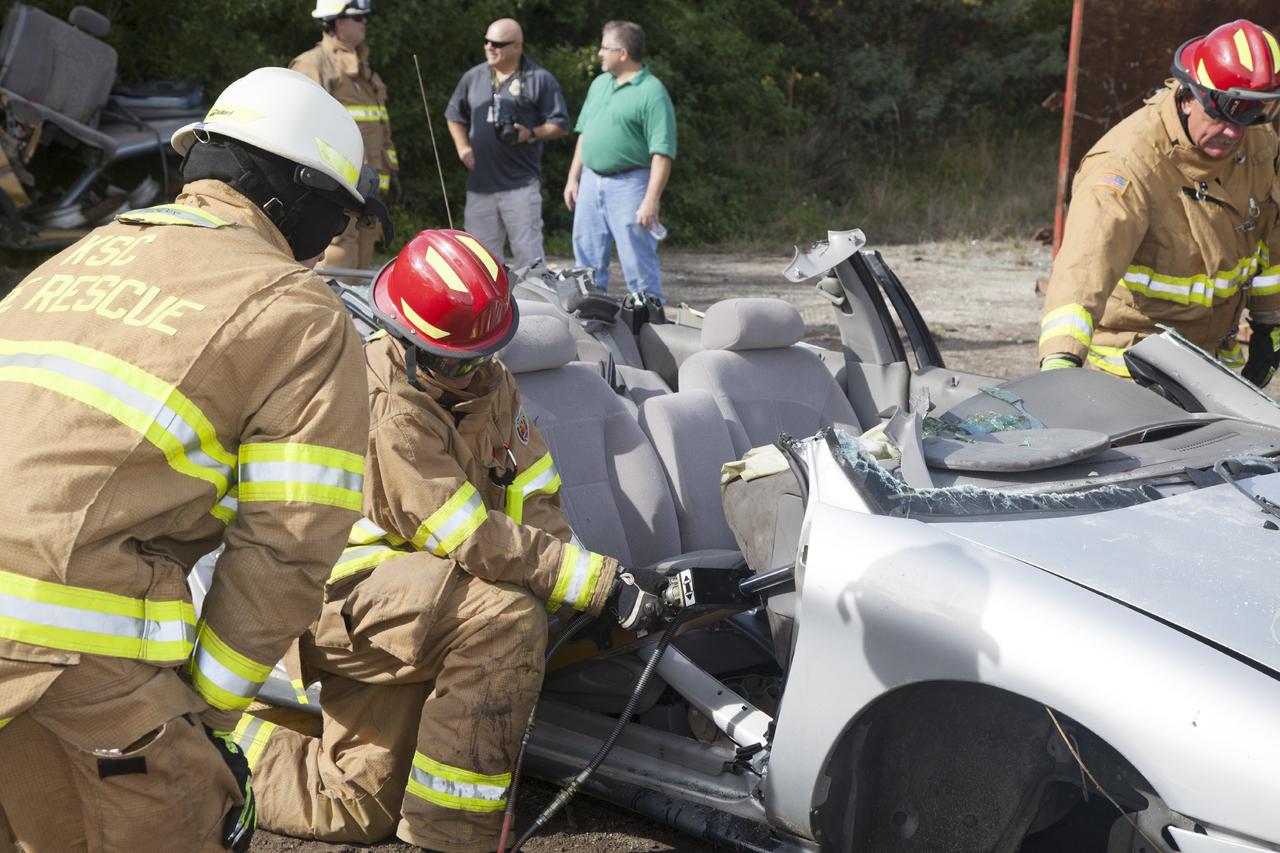
CAPE CANAVERAL, Fla. – Special Rescue Operations firefighters with NASA Fire Rescue Services in the Protective Services Office at NASA’s Kennedy Space Center in Florida practice vehicle extrication training at an auto salvage yard near the center. A firefighter uses a spreader to push the dashboard away from the seat. They used the Jaws of Life to remove the door from the vehicle and simulate the rescue of a trapped and injured person. A special hydraulic cutting tool and reciprocating saw were used to cut through and remove the roof. An axe and other special tools were used to punch through and clear away the windshield and windows. Kennedy’s firefighters recently achieved Pro Board Certification in aerial fire truck operations. With the completion of vehicle extrication and Jaws of Life training, the Protective Services Office is one step closer to achieving certification in vehicle machinery extrication. Kennedy’s firefighters are with G4S Government Solutions Inc., on the Kennedy Protective Services Contract. Photo credit: NASA/Daniel Casper
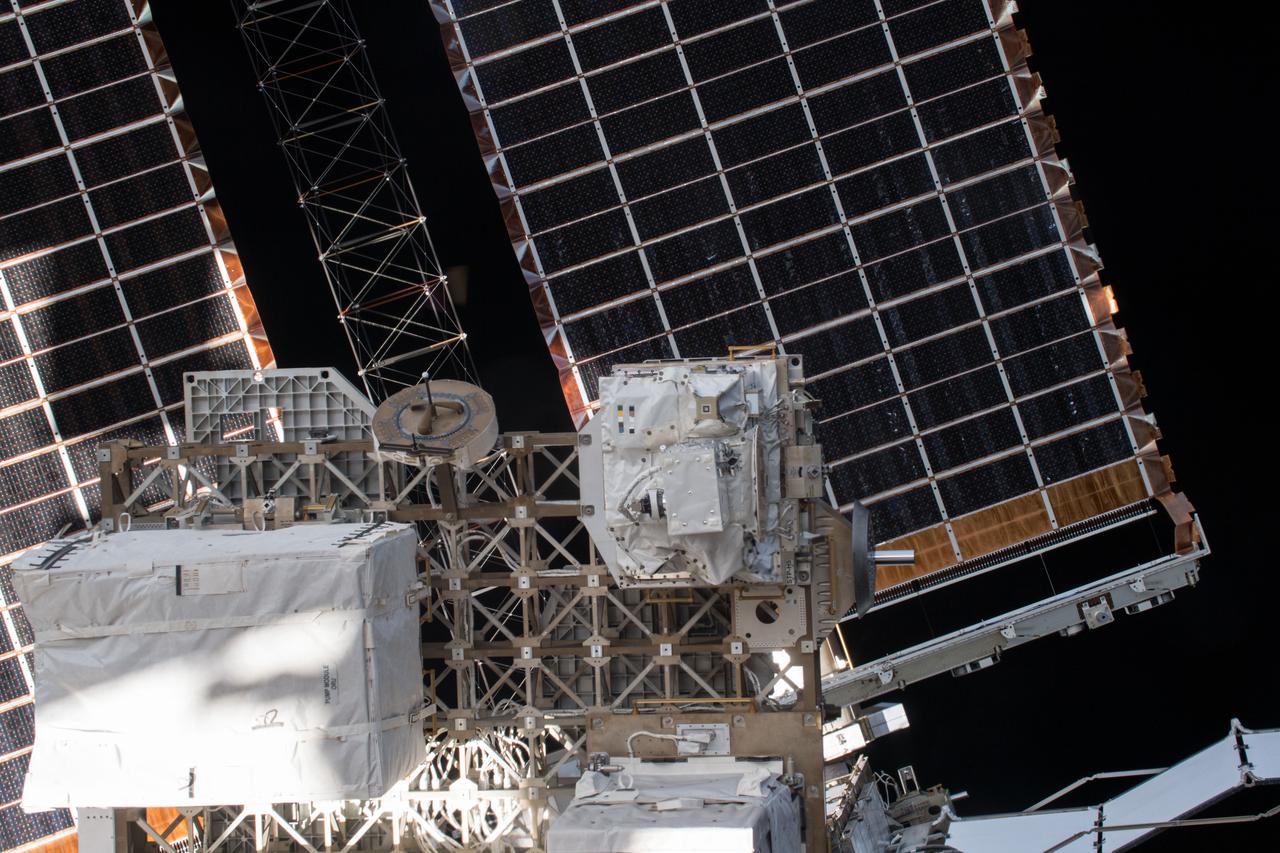
iss054e004101 (Dec. 26, 2017) --- Space Test Program - Houston 5 - Innovative Coatings Experiment (STP-H5-ICE) in front of International Space Station (ISS) solar panels. A spacecraft’s exterior coating protects against extreme temperatures, shields the spacecraft from radiation, prevents contamination, and guides cameras that help robots or humans capture and service the spacecraft. STP-H5-ICE studies different paints and coatings that protect spacecraft exteriors.
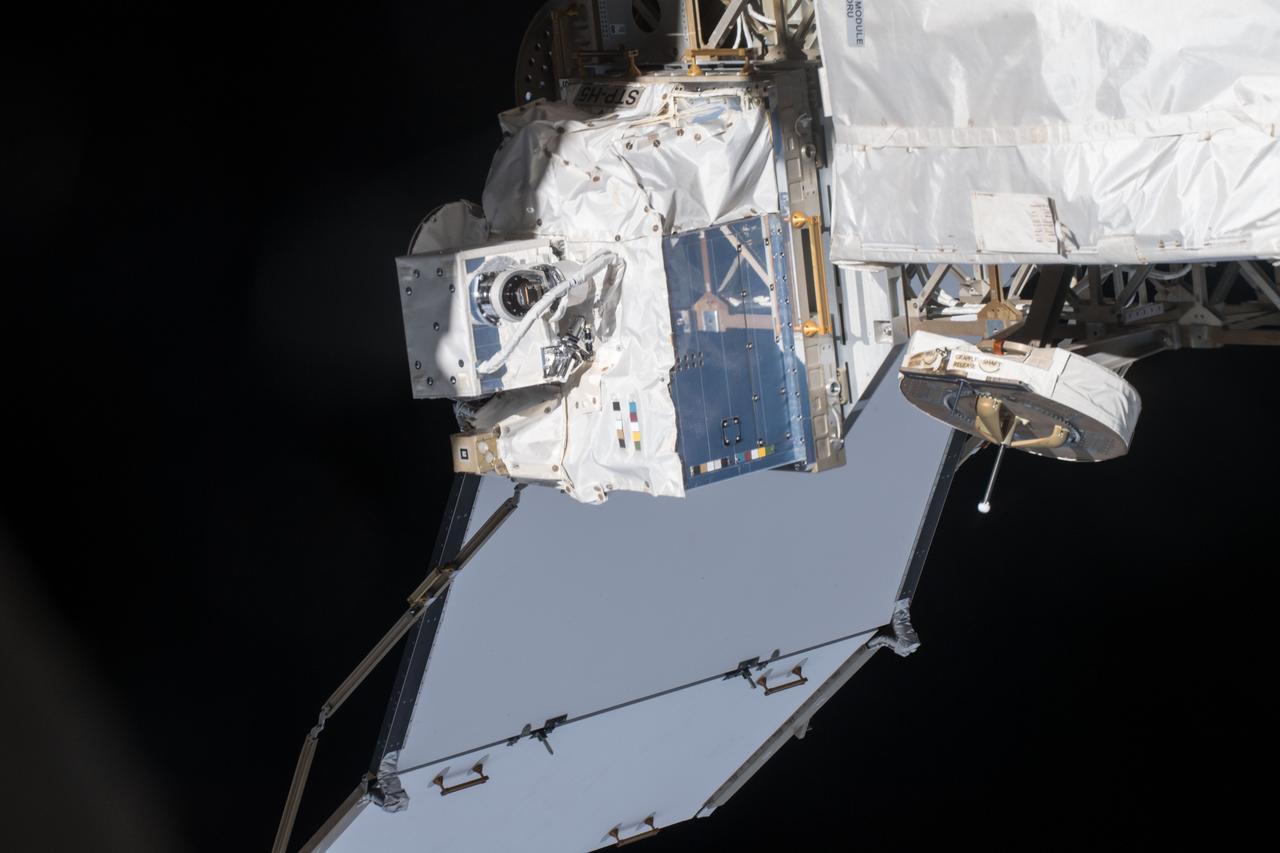
iss054e004116 (Dec. 26, 2017) --- Space Test Program - Houston 5 - Innovative Coatings Experiment (STP-H5-ICE) in front of International Space Station (ISS) radiator. A spacecraft’s exterior coating protects against extreme temperatures, shields the spacecraft from radiation, prevents contamination, and guides cameras that help robots or humans capture and service the spacecraft. STP-H5-ICE studies different paints and coatings that protect spacecraft exteriors.
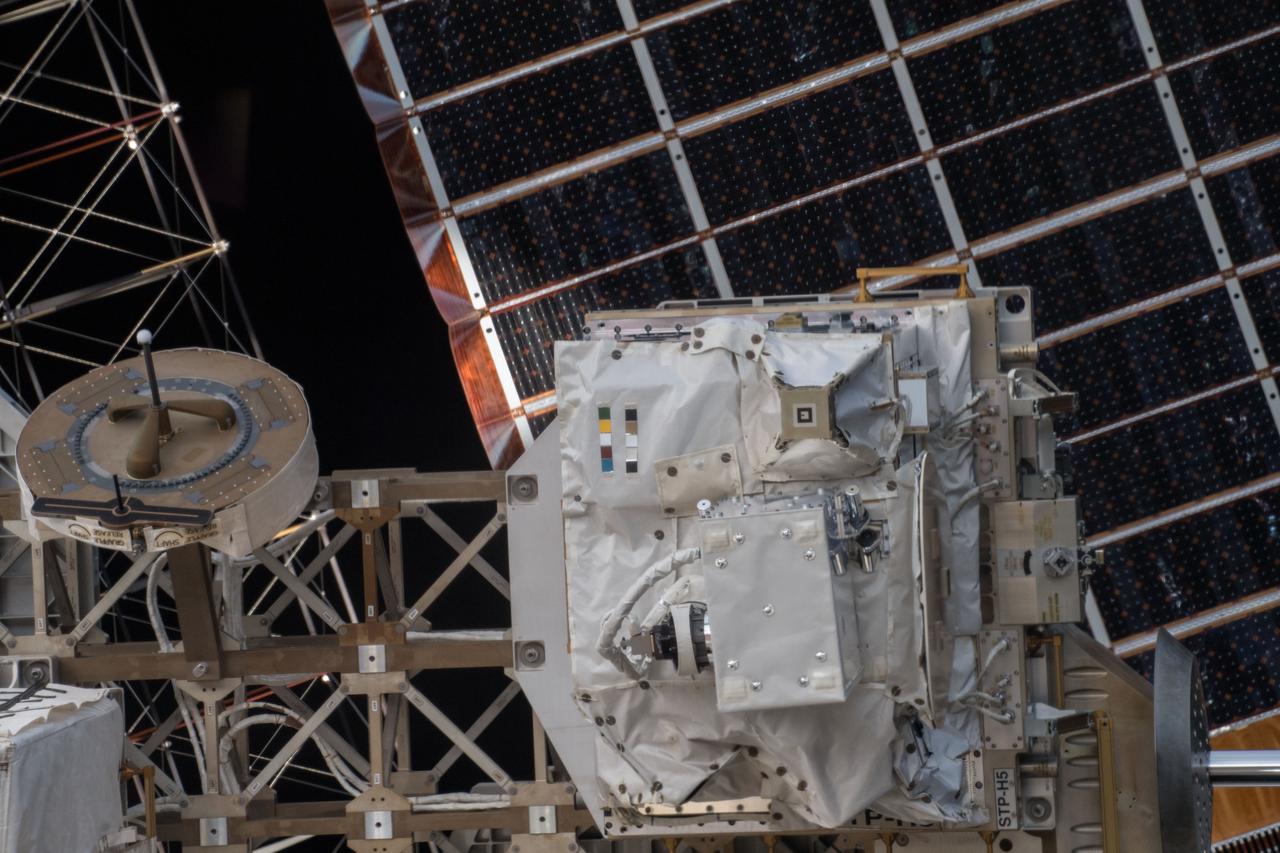
iss054e004105 (Dec. 26, 2017) --- Space Test Program - Houston 5 - Innovative Coatings Experiment (STP-H5-ICE) in front of International Space Station (ISS) solar panels. A spacecraft’s exterior coating protects against extreme temperatures, shields the spacecraft from radiation, prevents contamination, and guides cameras that help robots or humans capture and service the spacecraft. STP-H5-ICE studies different paints and coatings that protect spacecraft exteriors.
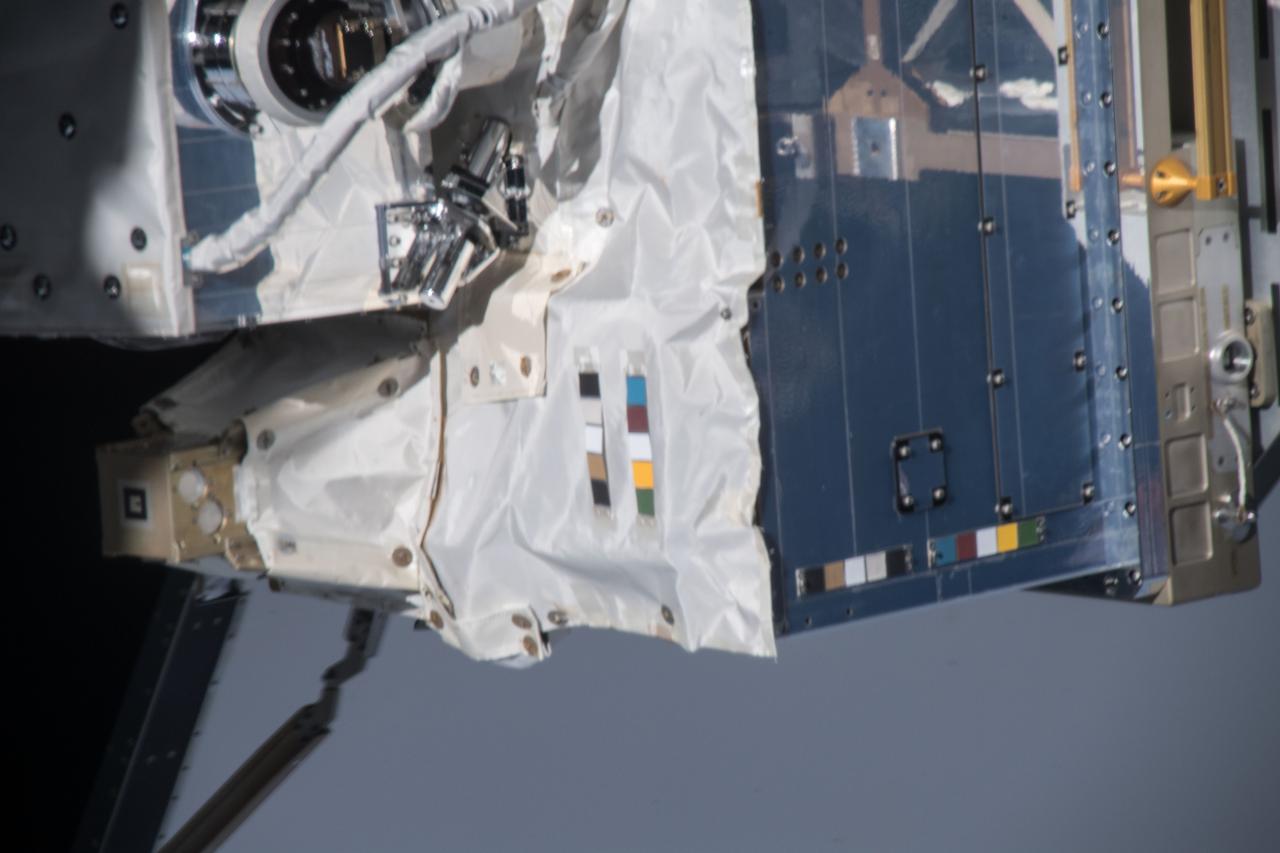
iss054e004119 (Dec. 26, 2017) --- Space Test Program - Houston 5 - Innovative Coatings Experiment (STP-H5-ICE) with International Space Station (ISS) radiator in the background. A spacecraft’s exterior coating protects against extreme temperatures, shields the spacecraft from radiation, prevents contamination, and guides cameras that help robots or humans capture and service the spacecraft. STP-H5-ICE studies different paints and coatings that protect spacecraft exteriors.
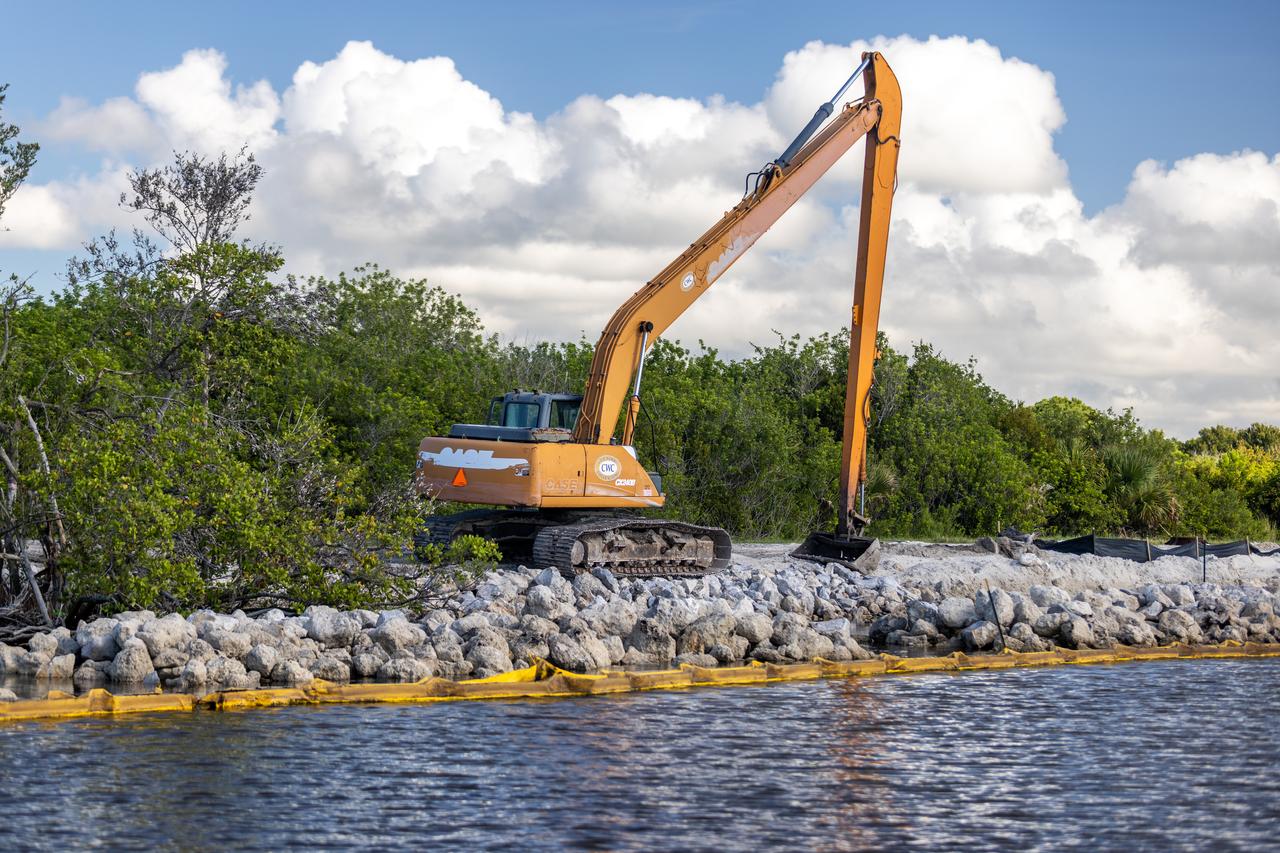
NASA Kennedy Space Center’s Spaceport Integration and Services organization is leading a restoration project at KARS Park on Hall Road in Merritt Island, Florida. As part of this project, a wavebreak is being created about 20 feet offshore to allow mangroves and other plants to propagate into the gap, providing protection for the shoreline.
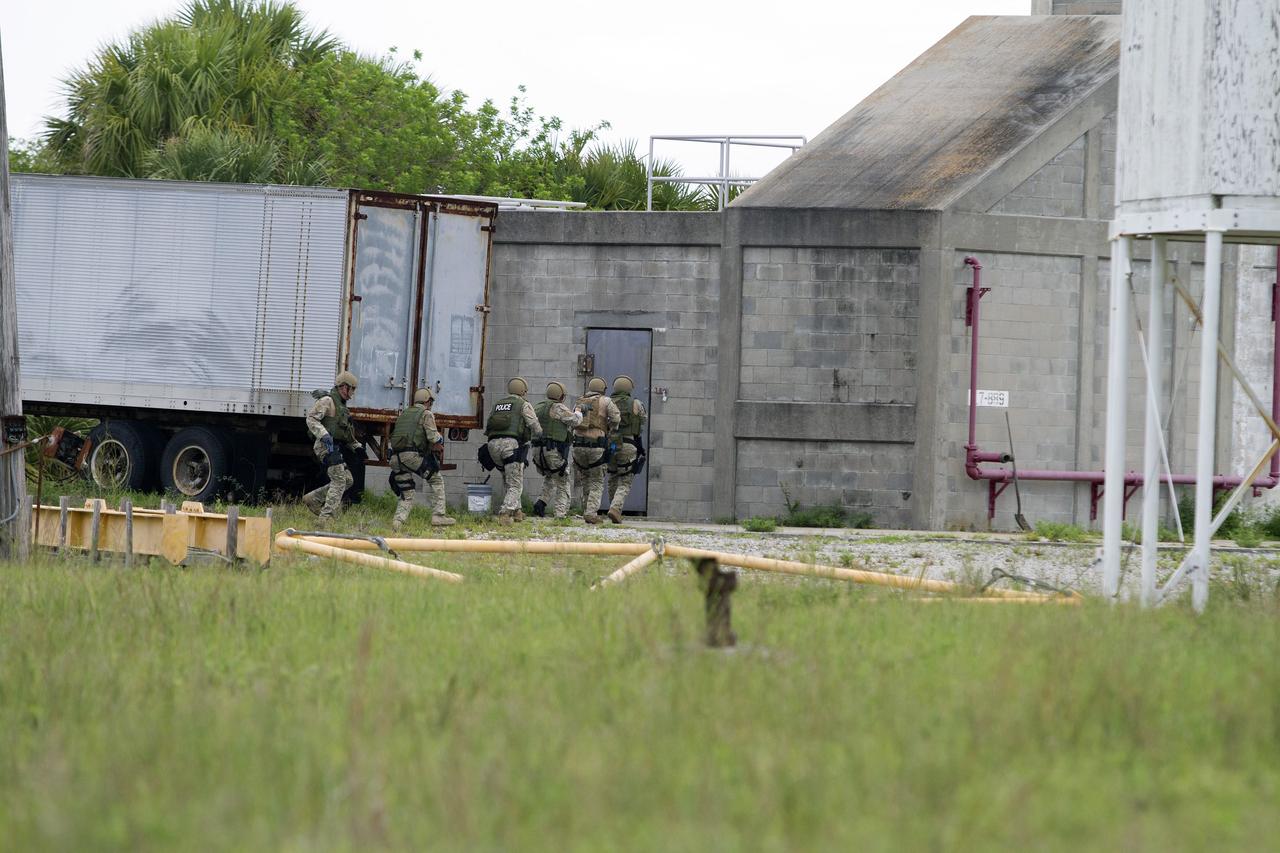
CAPE CANAVERAL, Fla. – Emergency Response Team officers from the Protective Services branch of NASA's Kennedy Space Center in Florida prepare to enter an objective during a training exercise simulating a situation the team could confront at the center. Photo credit: NASA/Dan Casper
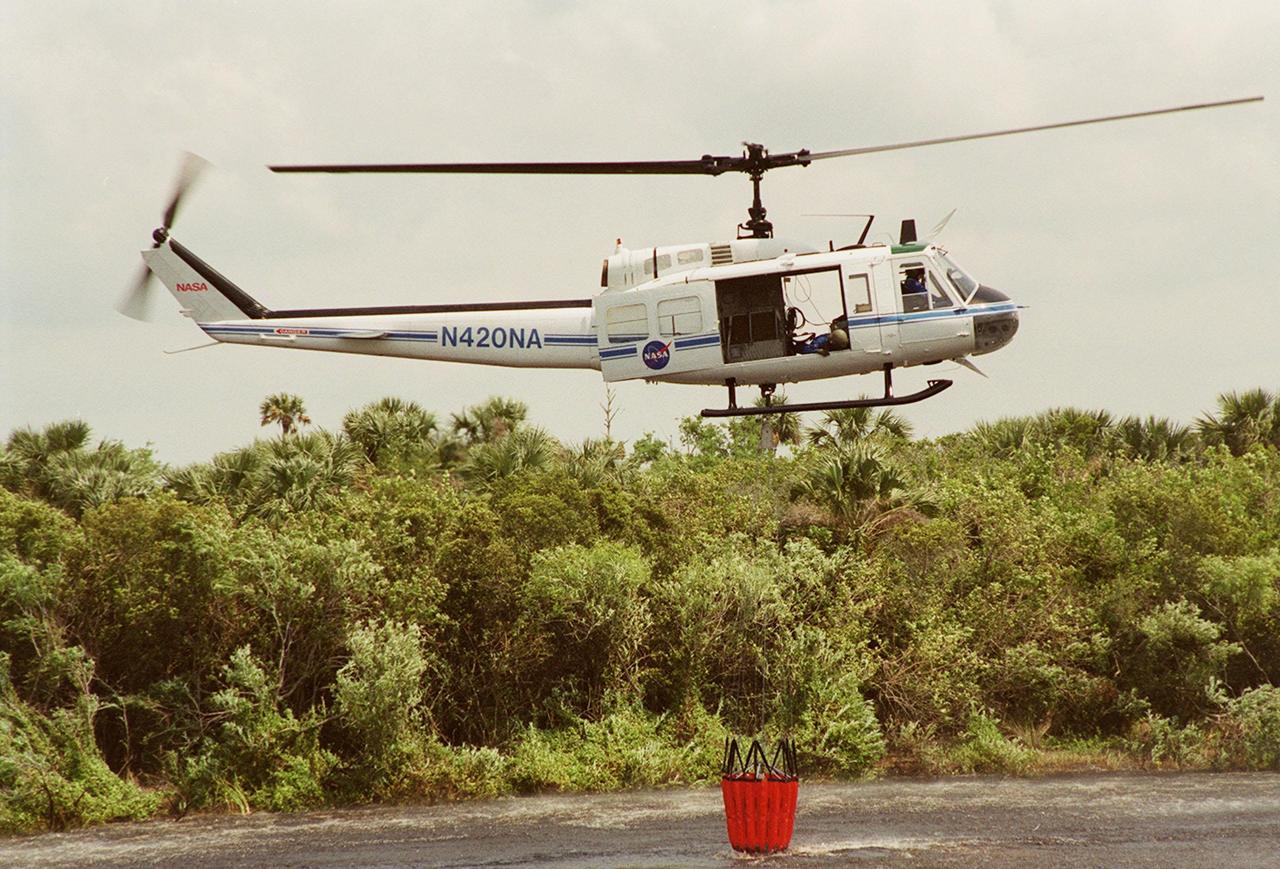
KENNEDY SPACE CENTER, FLA. -- A NASA helicopter lifts a high-impact-resistant flexible plastic bucket filled with water. The container will be used for fire protection on property and buildings at Kennedy Space Center.. Known as the "Bambi" bucket, it will also support the Fish and Wildlife Service for controlled burns plus any wild fires in the area.
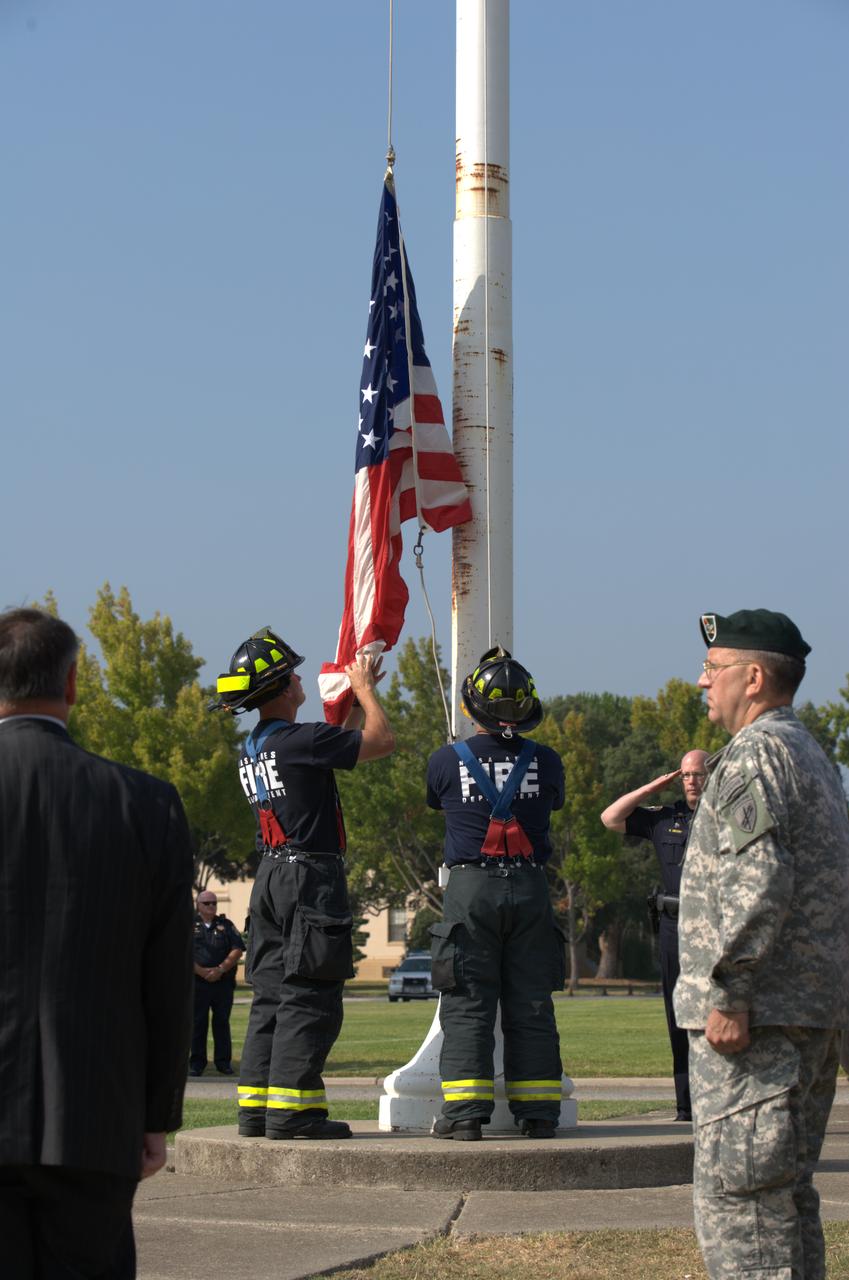
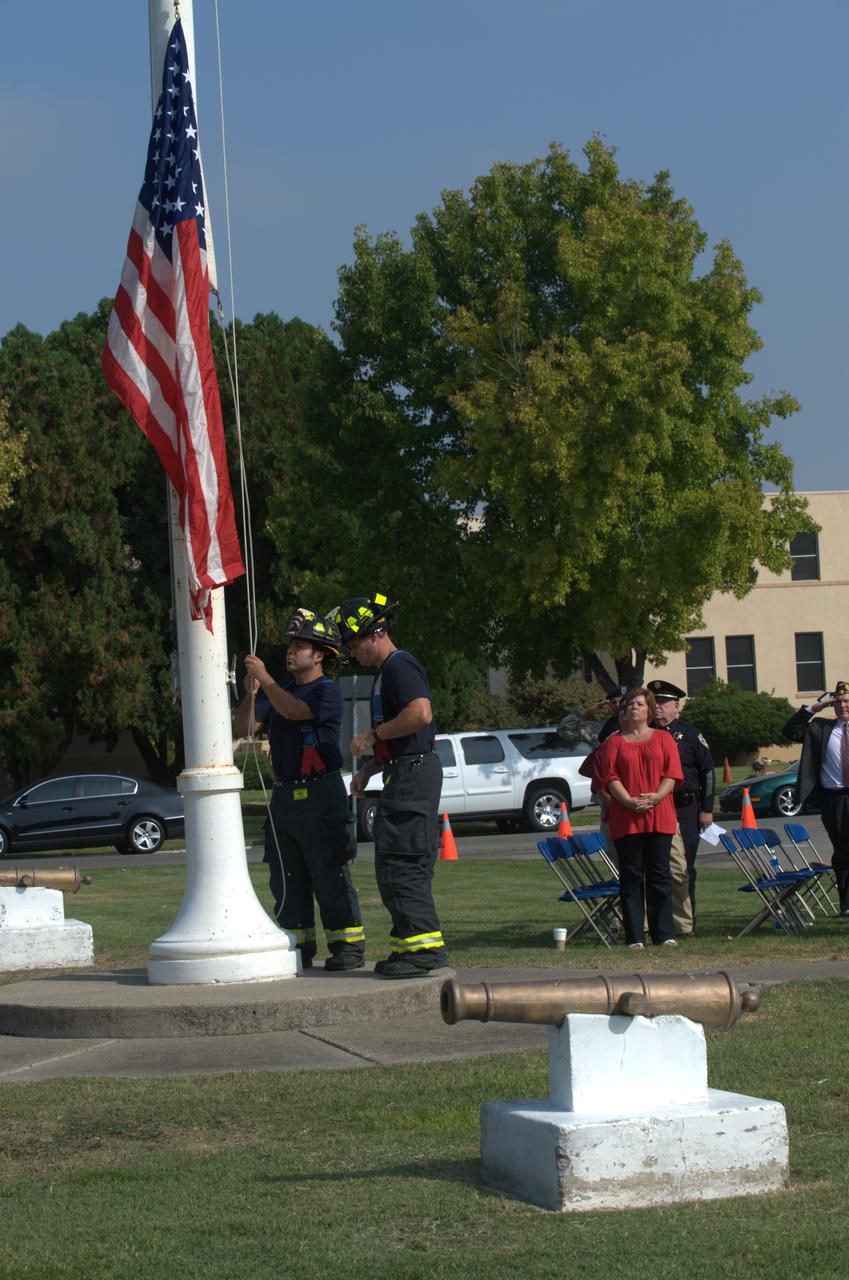
September 11th remembrance ceremony held in front of NASA Research Park Bldg-17 (Lunar Science Institute) hosted by the American Legion, Post 881, Moffett Field. Flag detail - Lt Randy Vincent - NASA Protective Services, Ty Locatelli, Carlos Pinedo - NASA Fire Department
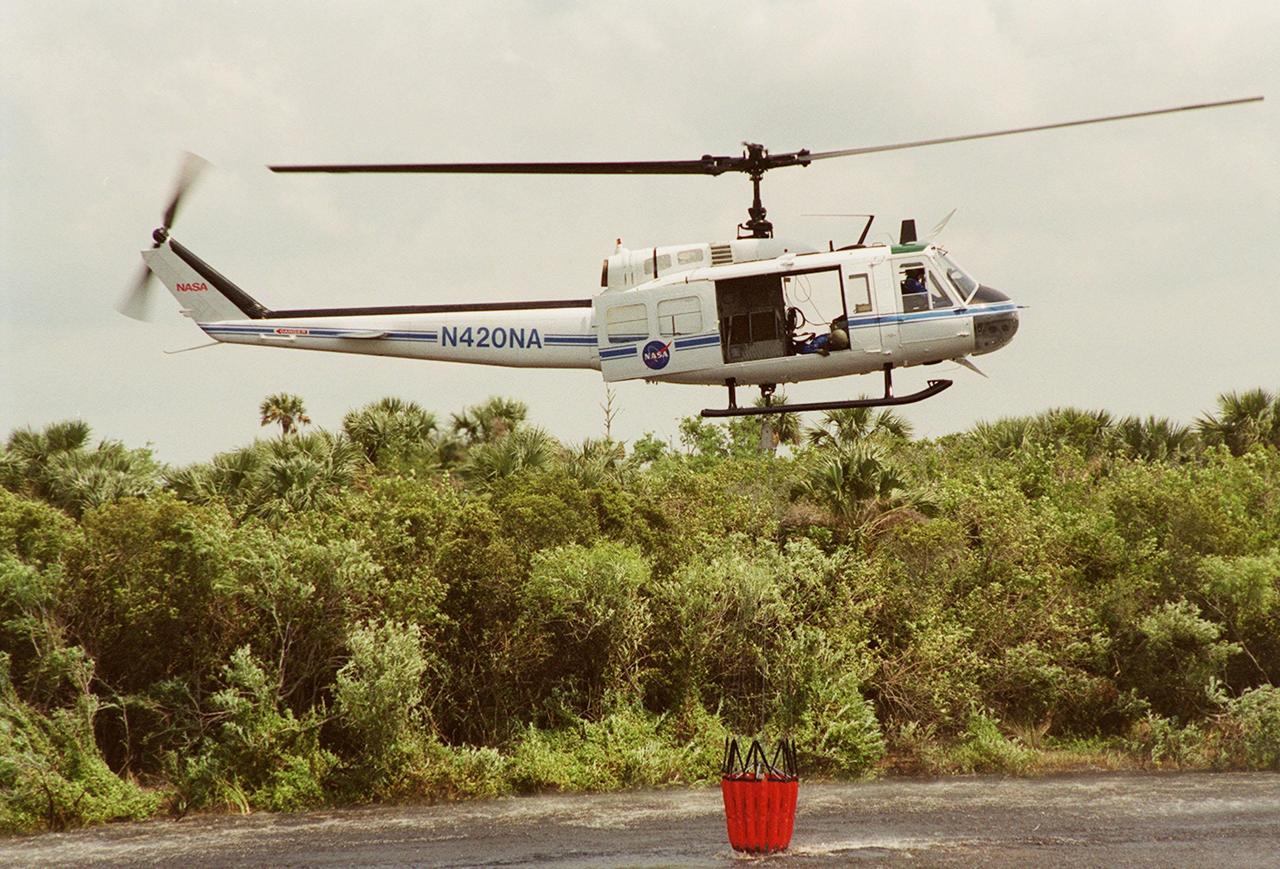
KENNEDY SPACE CENTER, FLA. -- A NASA helicopter lifts a high-impact-resistant flexible plastic bucket filled with water. The container will be used for fire protection on property and buildings at Kennedy Space Center.. Known as the "Bambi" bucket, it will also support the Fish and Wildlife Service for controlled burns plus any wild fires in the area.
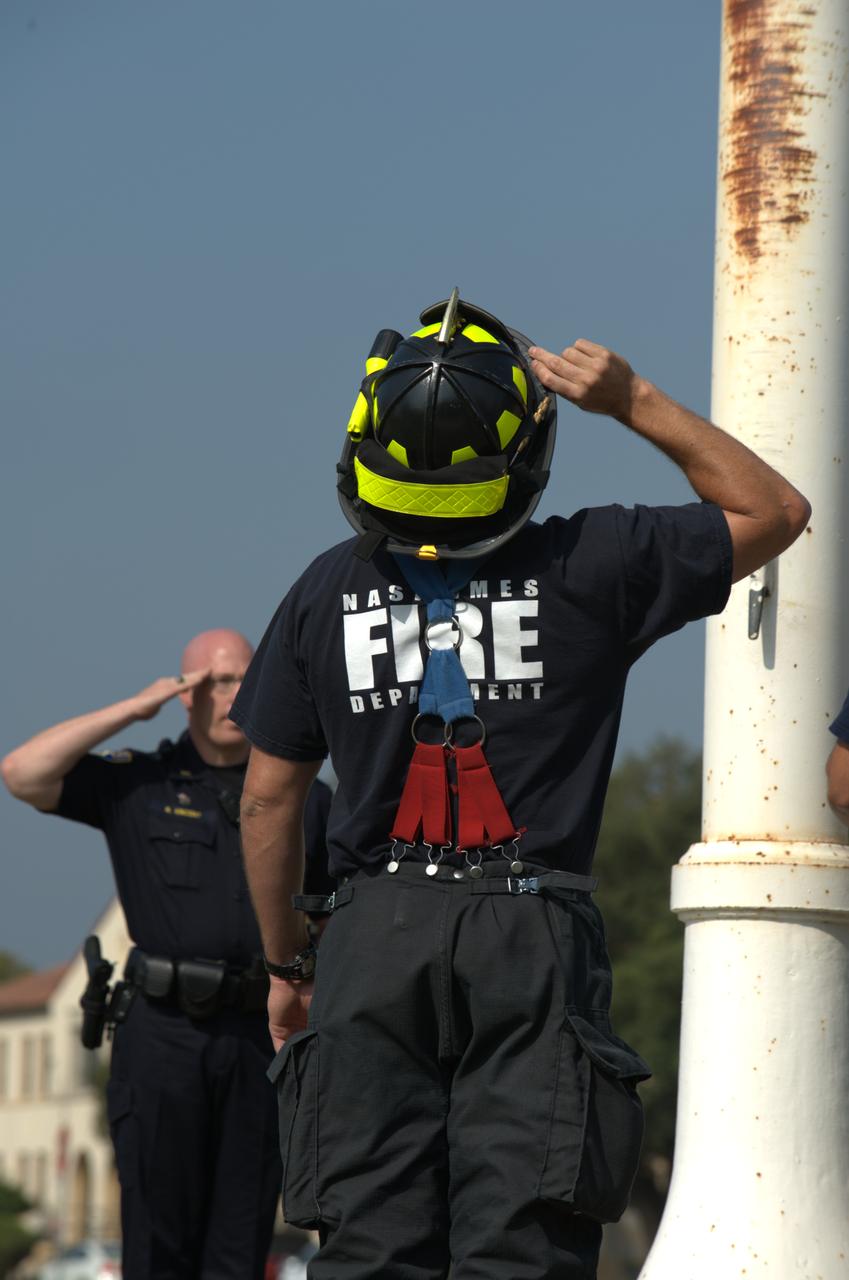
September 11th remembrance ceremony held in front of NASA Research Park Bldg-17 (Lunar Science Institute) hosted by the American Legion, Post 881, Moffett Field. Flag detail - Lt Randy Vincent - NASA Protective Services, Ty Locatelli, Carlos Pinedo - NASA Fire Department
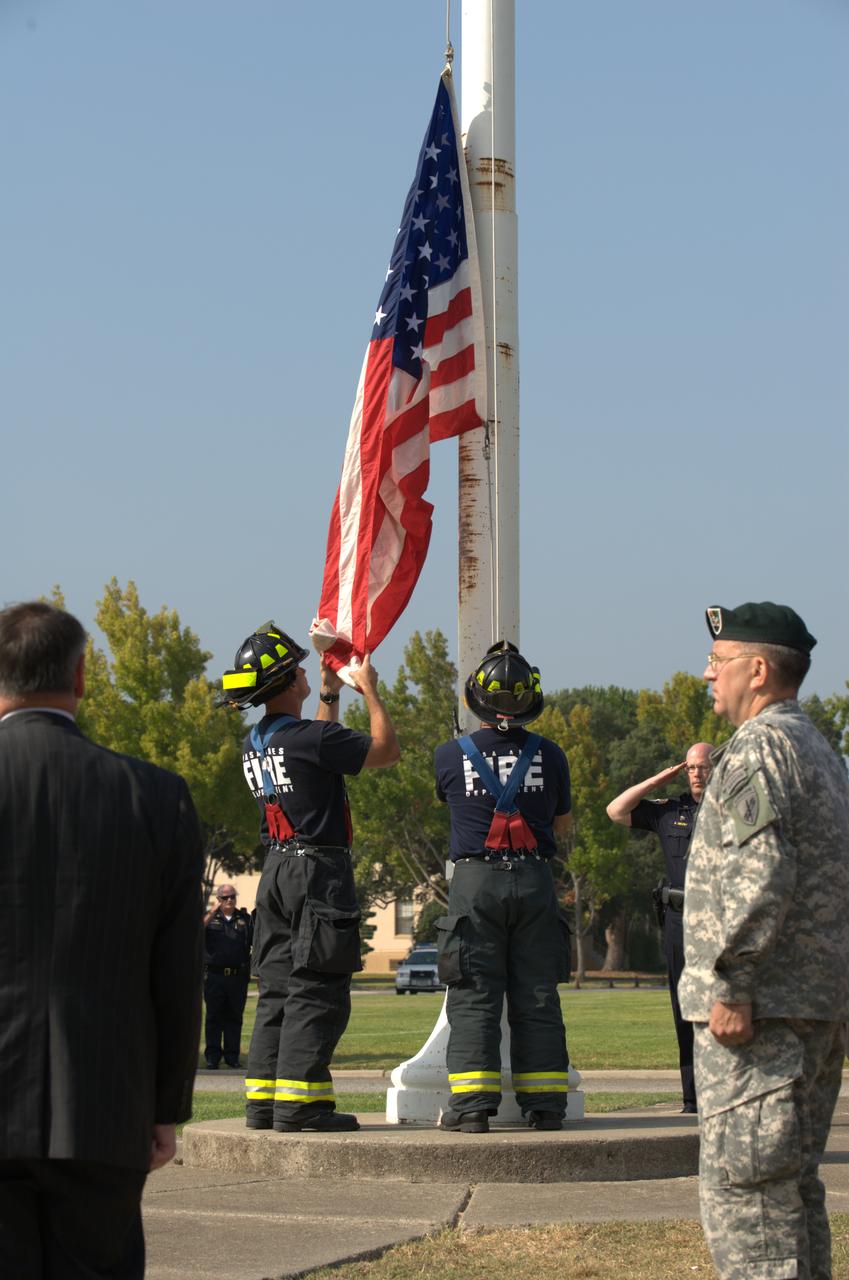
September 11th remembrance ceremony held in front of NASA Research Park Bldg-17 (Lunar Science Institute) hosted by the American Legion, Post 881, Moffett Field. Flag detail - Lt Randy Vincent - NASA Protective Services, Ty Locatelli, Carlos Pinedo - NASA Fire Department

September 11th remembrance ceremony held in front of NASA Research Park Bldg-17 (Lunar Science Institute) hosted by the American Legion, Post 881, Moffett Field. Flag detail - Lt Randy Vincent - NASA Protective Services, Ty Locatelli, Carlos Pinedo - NASA Fire Department
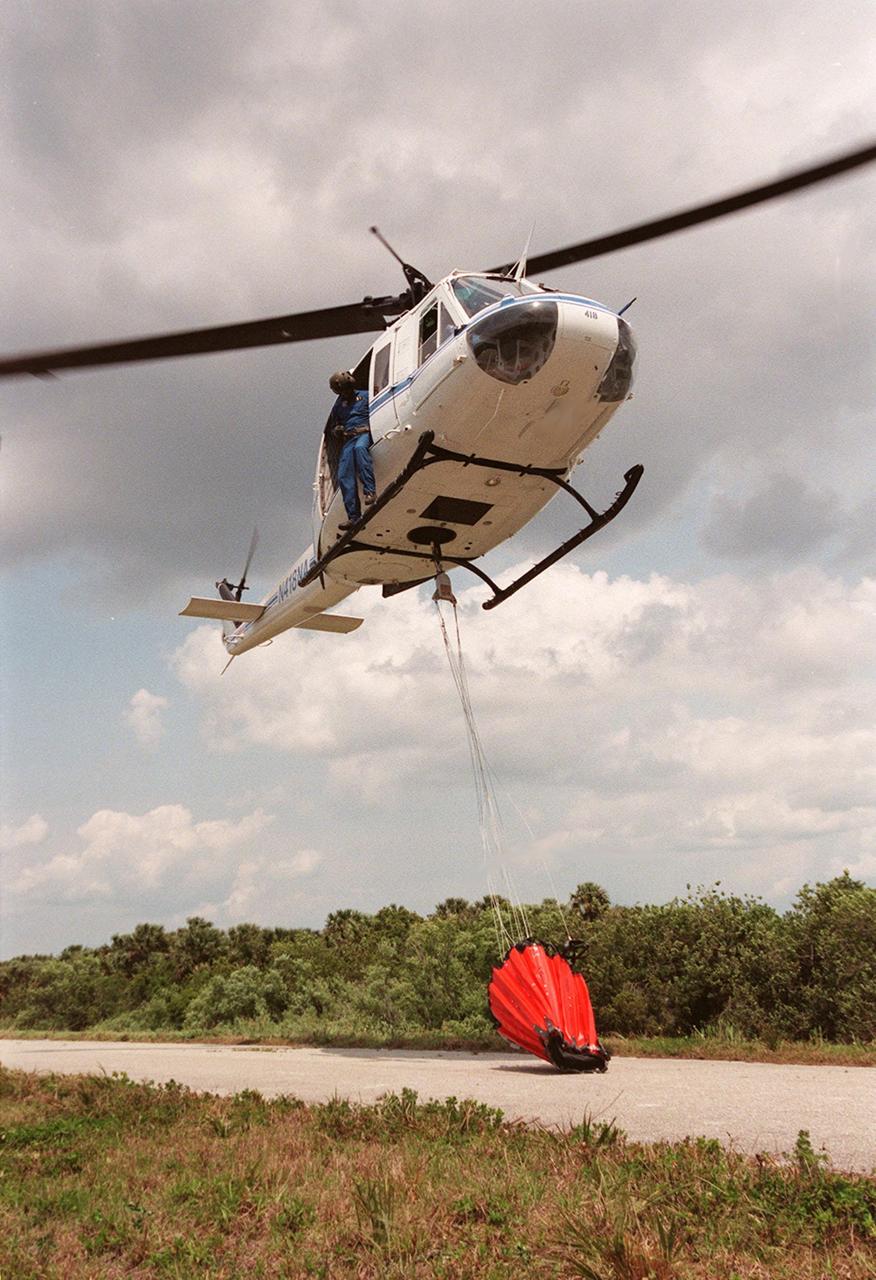
KENNEDY SPACE CENTER, FLA. -- A NASA helicopter lifts a high-impact-resistant flexible plastic bucket that will be used for fire protection on property and buildings at Kennedy Space Center. Known as the "Bambi" bucket, the 324-gallon container will also support the Fish and Wildlife Service for controlled burns plus any wild fires in the area
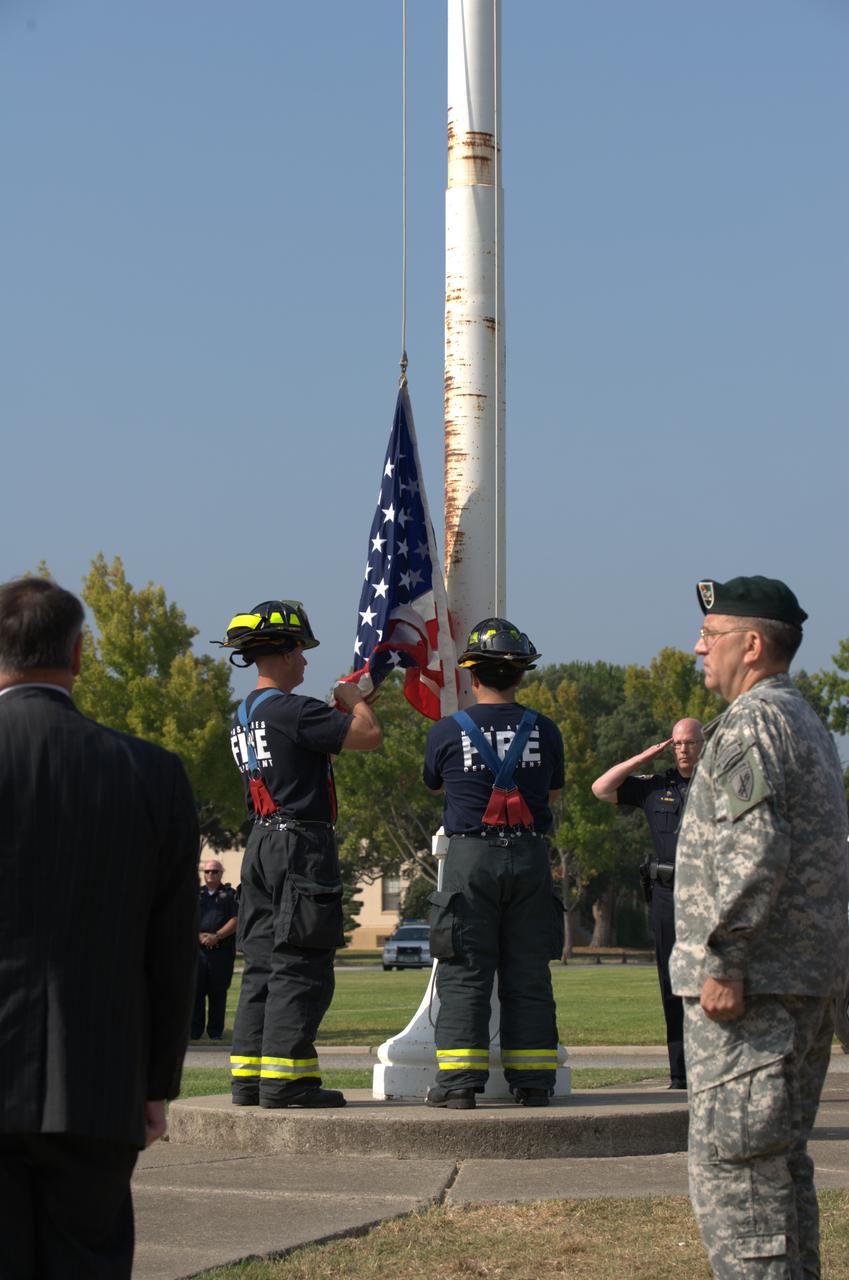
September 11th remembrance ceremony held in front of NASA Research Park Bldg-17 (Lunar Science Institute) hosted by the American Legion, Post 881, Moffett Field. Flag detail - Lt Randy Vincent - NASA Protective Services, Ty Locatelli, Carlos Pinedo - NASA Fire Department
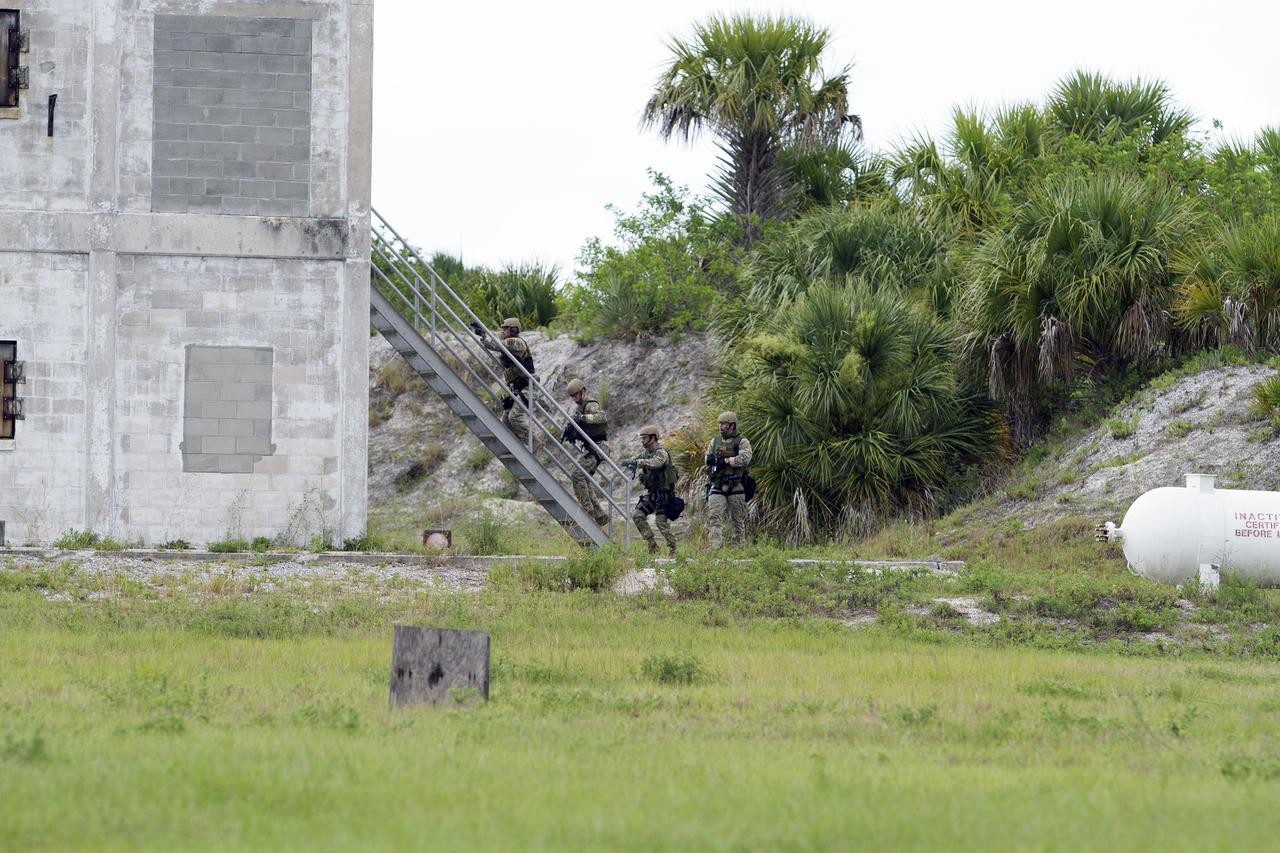
CAPE CANAVERAL, Fla. – Emergency Response Team officers from the Protective Services branch of NASA's Kennedy Space Center in Florida enter an objective during a training exercise simulating a situation the team could confront at the center. Photo credit: NASA/Dan Casper
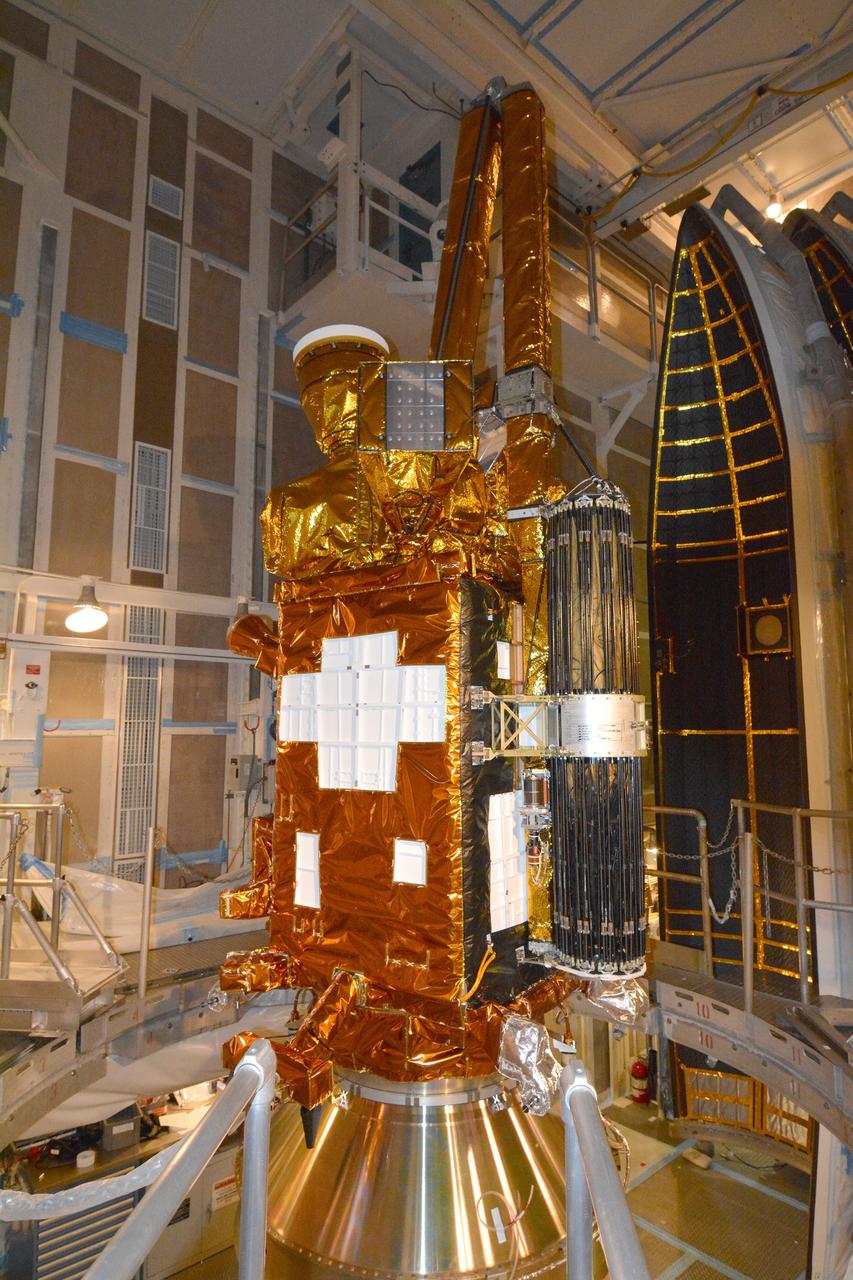
VANDENBERG AFB, California – NASA's SMAP spacecraft inside the service structure at Space Launch Complex-2 at Vandenberg AFB, California, as the payload fairing is prepared for attachment to the rocket to protect the spacecraft during launch and ascent. For more, go to www.nasa.gov/smap Photo credit: NASA/Randy Beaudoin
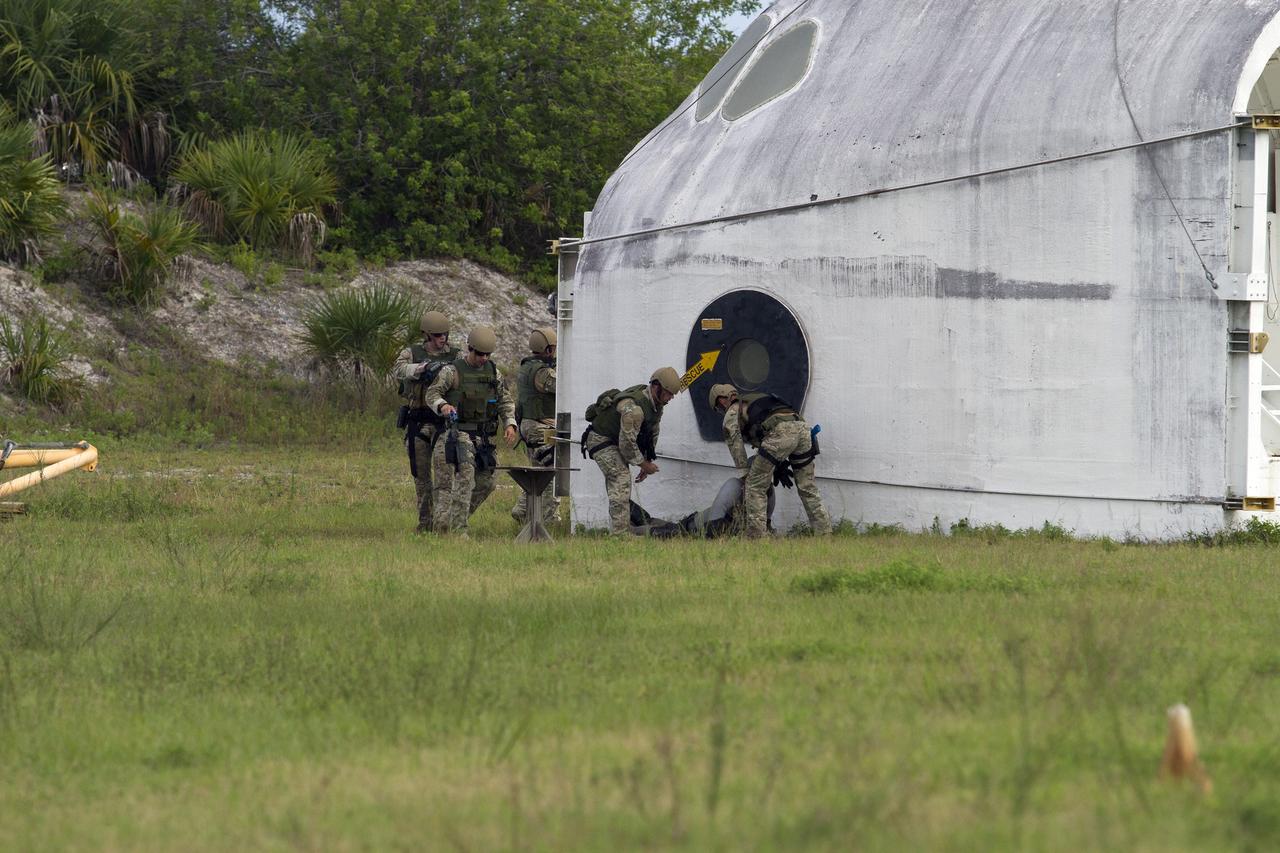
CAPE CANAVERAL, Fla. – Emergency Response Team officers from the Protective Services branch of NASA's Kennedy Space Center in Florida operate near an objective during a training exercise simulating a situation the team could confront at the center. Photo credit: NASA/Dan Casper
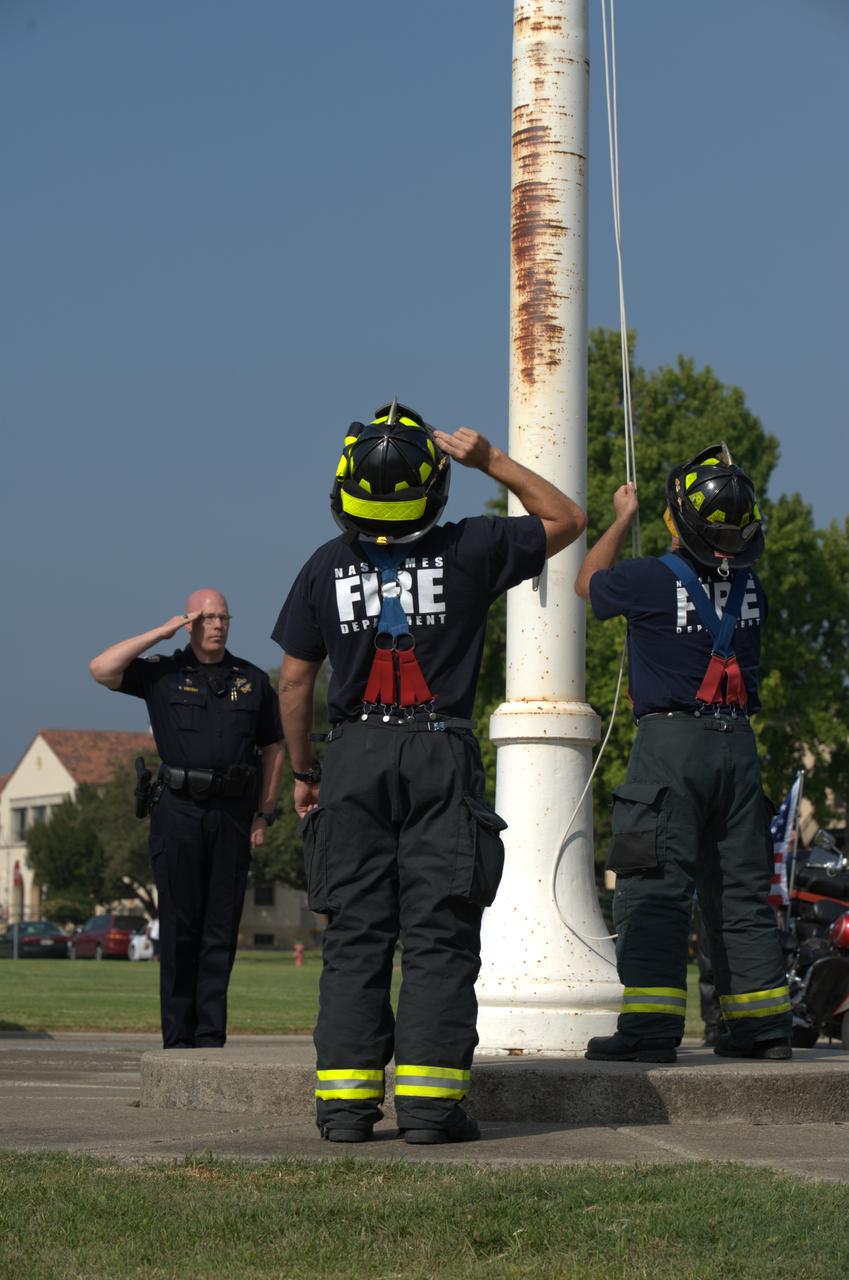
September 11th remembrance ceremony held in front of NASA Research Park Bldg-17 (Lunar Science Institute) hosted by the American Legion, Post 881, Moffett Field. Flag detail - Lt Randy Vincent - NASA Protective Services, Ty Locatelli, Carlos Pinedo - NASA Fire Department
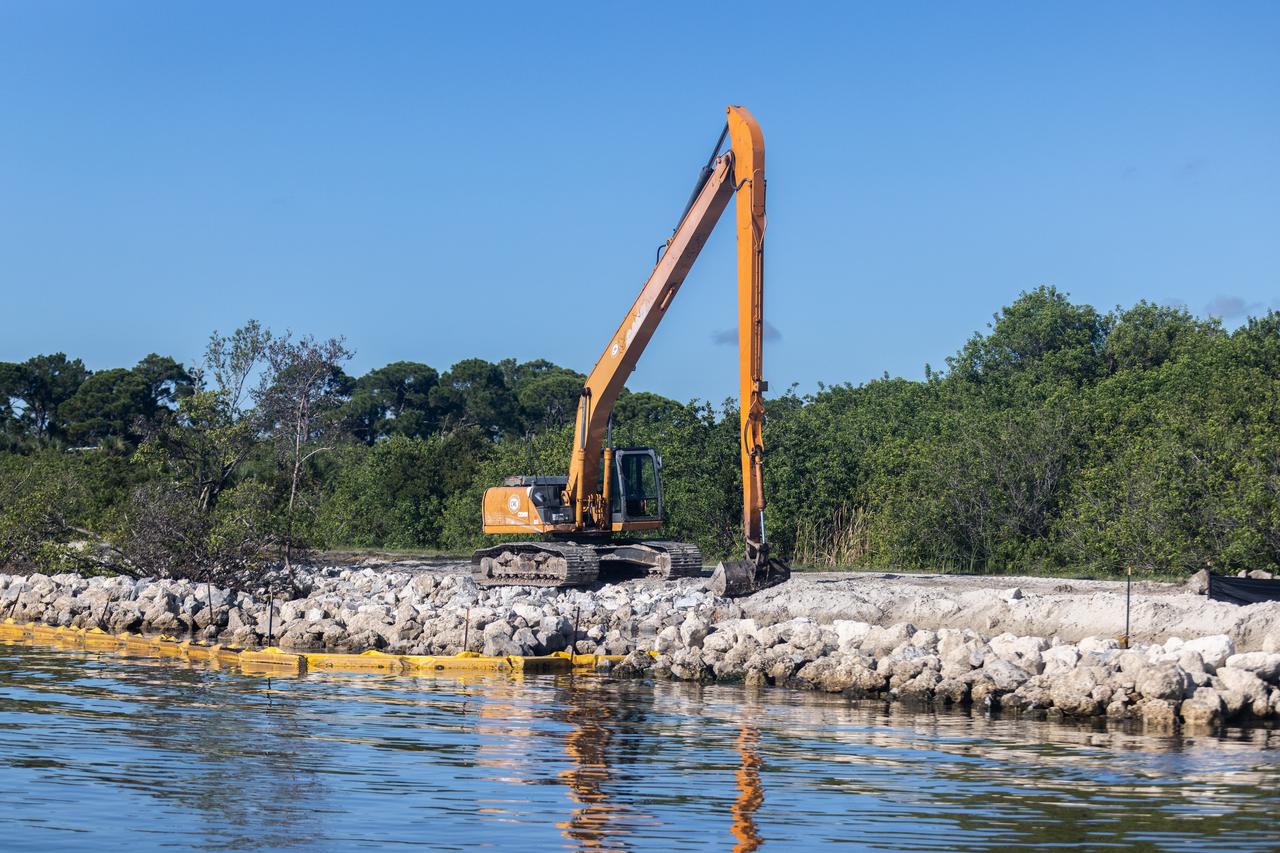
NASA Kennedy Space Center’s Spaceport Integration and Services organization is leading a restoration project at KARS Park on Hall Road in Merritt Island, Florida. As part of this project, a wavebreak is being created about 20 feet offshore to allow mangroves and other plants to propagate into the gap, providing protection for the shoreline.
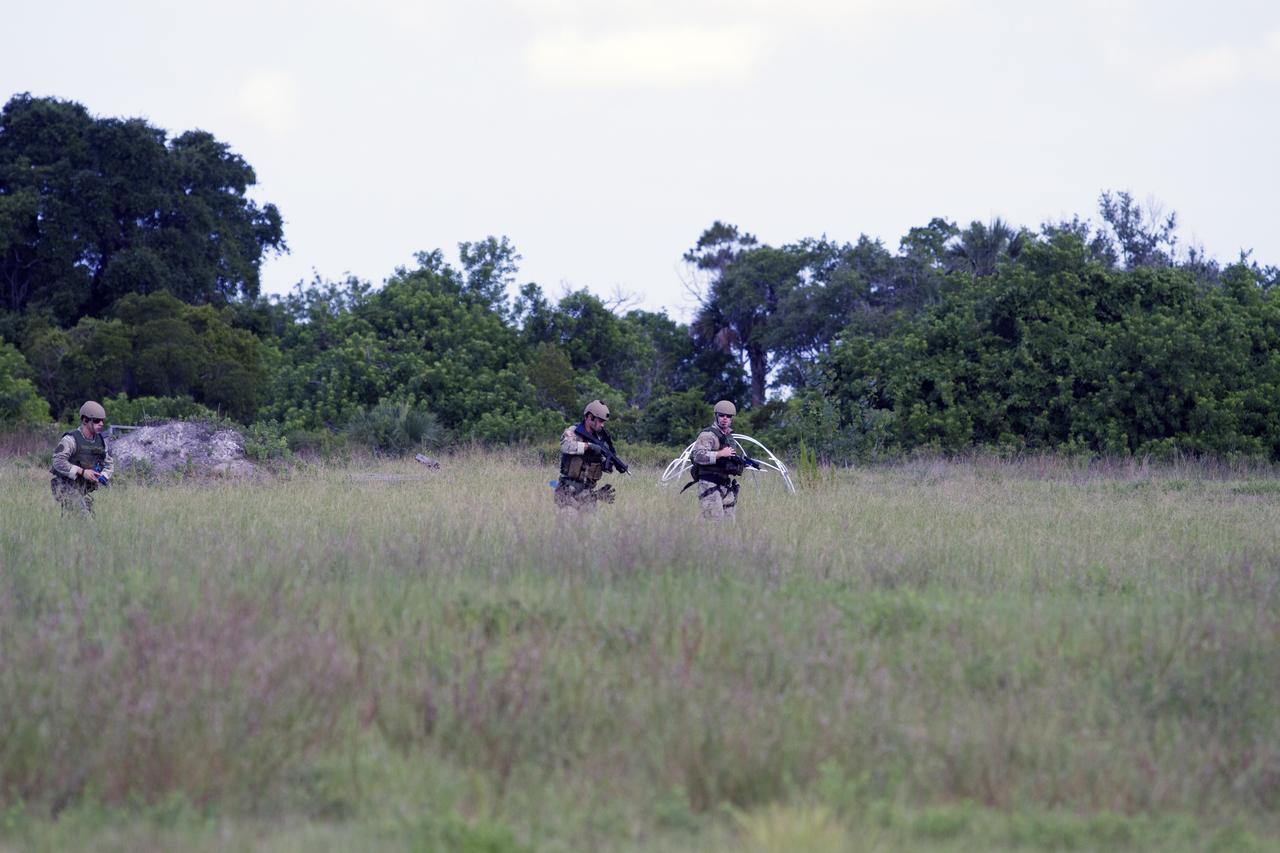
CAPE CANAVERAL, Fla. – Emergency Response Team officers from the Protective Services branch of NASA's Kennedy Space Center in Florida move through a field on their way to an objective during a training exercise simulating a situation the team could confront at the center. Photo credit: NASA/Dan Casper
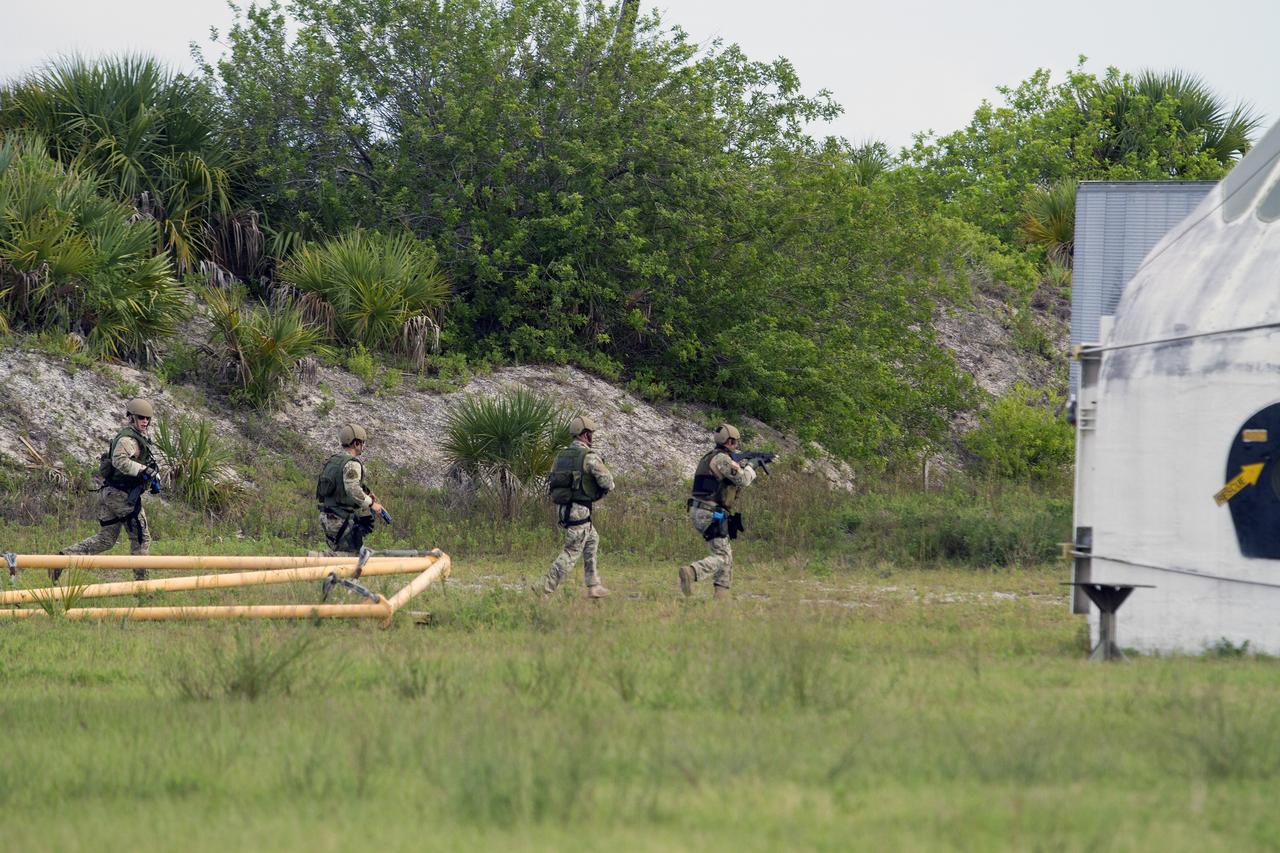
CAPE CANAVERAL, Fla. – Emergency Response Team officers from the Protective Services branch of NASA's Kennedy Space Center in Florida move toward an objective during a training exercise simulating a situation the team could confront at the center. Photo credit: NASA/Dan Casper
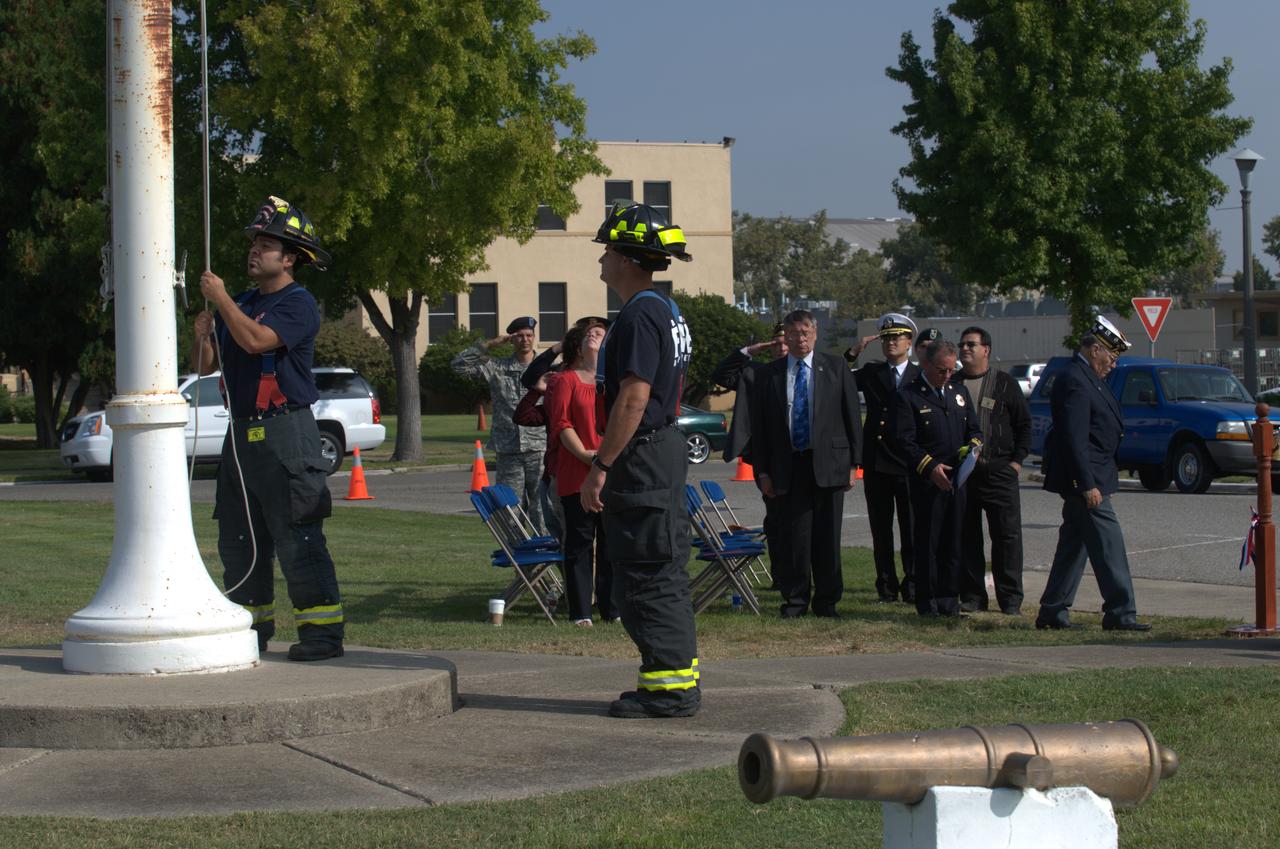
September 11th remembrance ceremony held in front of NASA Research Park Bldg-17 (Lunar Science Institute) hosted by the American Legion, Post 881, Moffett Field. Flag detail - Lt Randy Vincent - NASA Protective Services, Ty Locatelli, Carlos Pinedo - NASA Fire Department
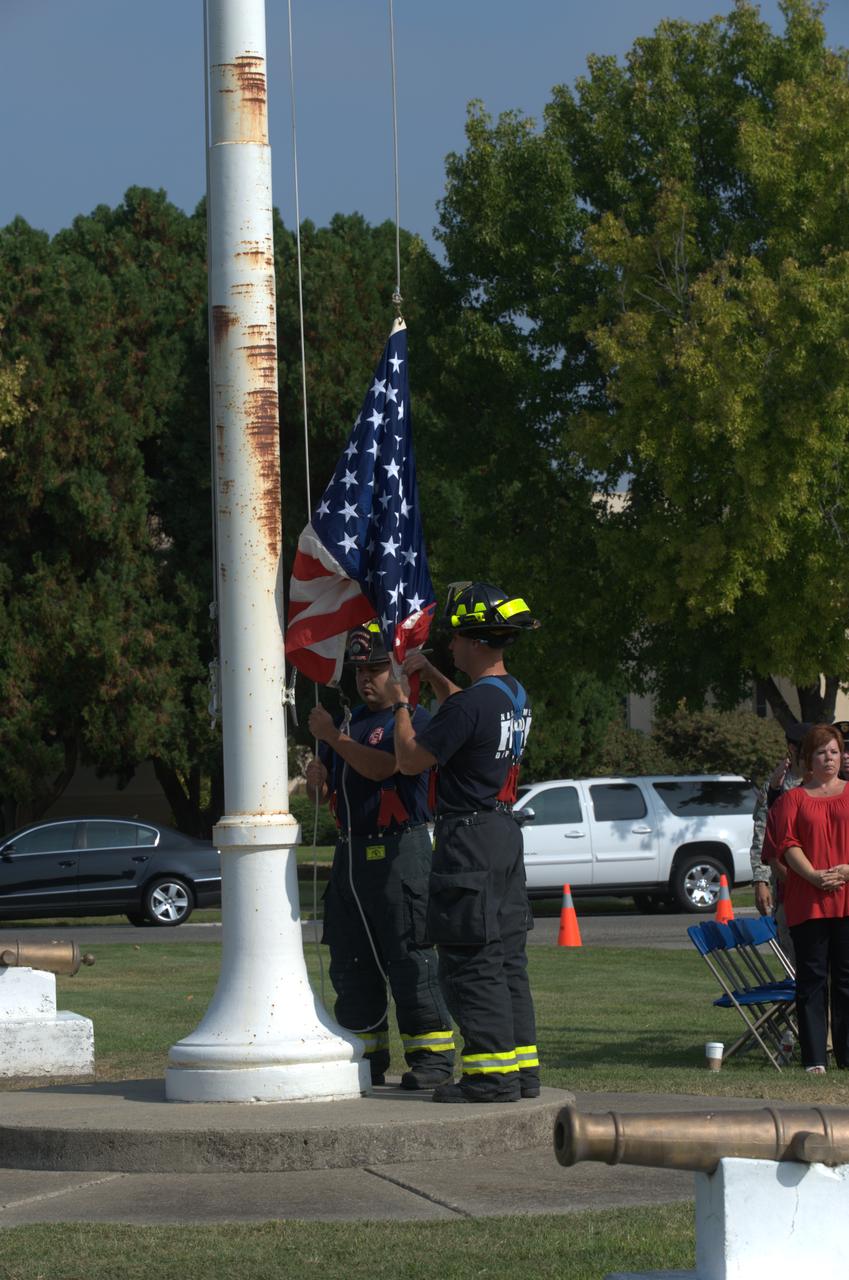
September 11th remembrance ceremony held in front of NASA Research Park Bldg-17 (Lunar Science Institute) hosted by the American Legion, Post 881, Moffett Field. Flag detail - Lt Randy Vincent - NASA Protective Services, Ty Locatelli, Carlos Pinedo - NASA Fire Department
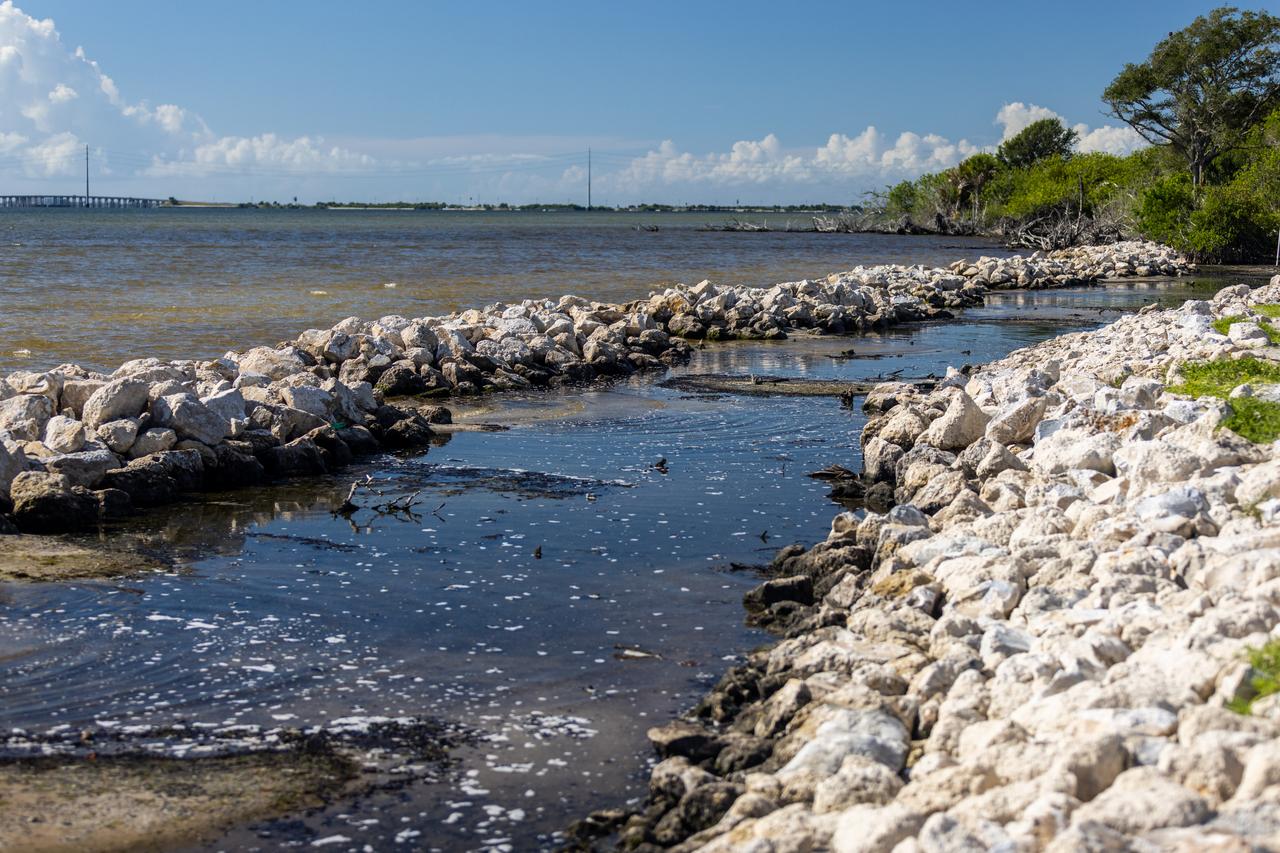
NASA Kennedy Space Center’s Spaceport Integration and Services organization is leading a restoration project at KARS Park on Hall Road in Merritt Island, Florida. As part of this project, a wavebreak is being created about 20 feet offshore to allow mangroves and other plants to propagate into the gap, providing protection for the shoreline.
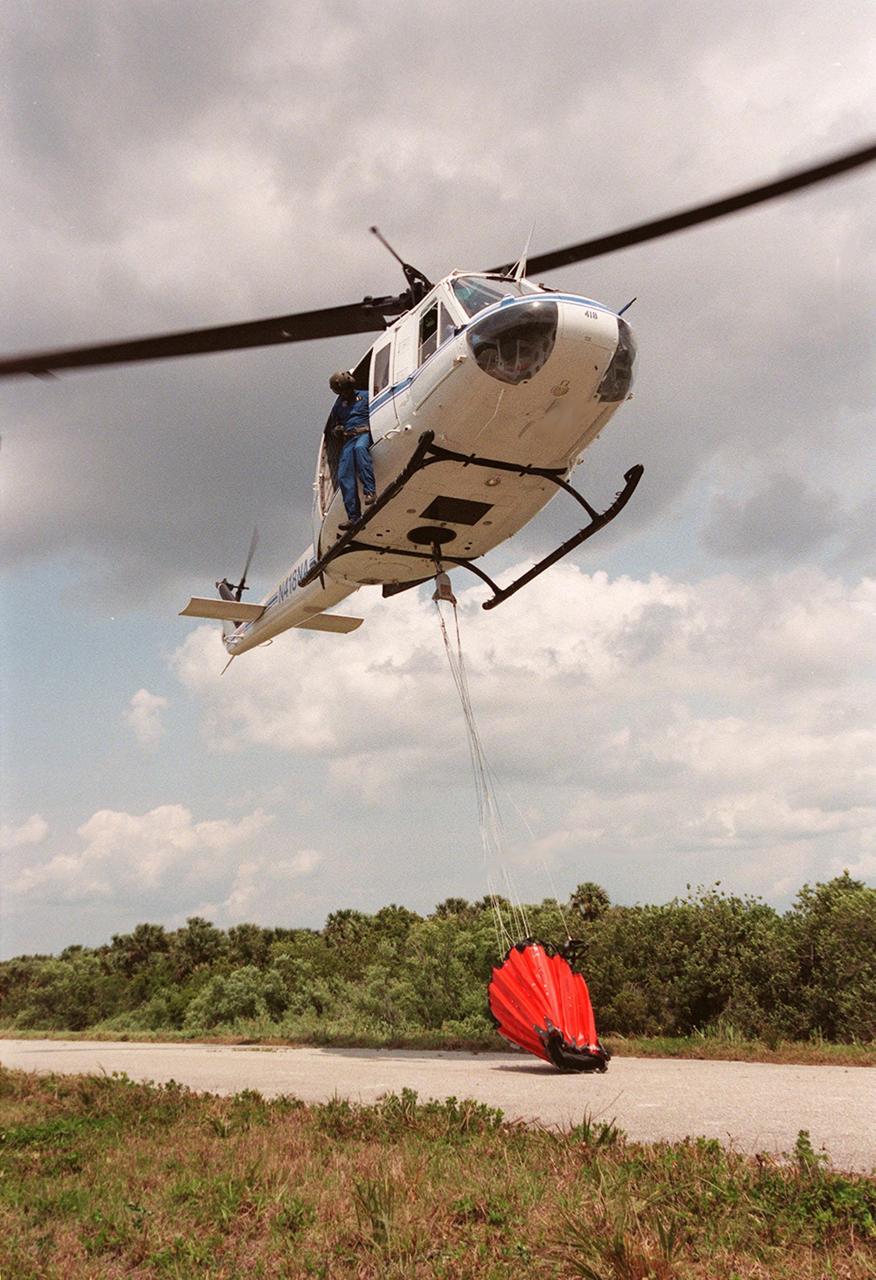
KENNEDY SPACE CENTER, FLA. -- A NASA helicopter lifts a high-impact-resistant flexible plastic bucket that will be used for fire protection on property and buildings at Kennedy Space Center. Known as the "Bambi" bucket, the 324-gallon container will also support the Fish and Wildlife Service for controlled burns plus any wild fires in the area
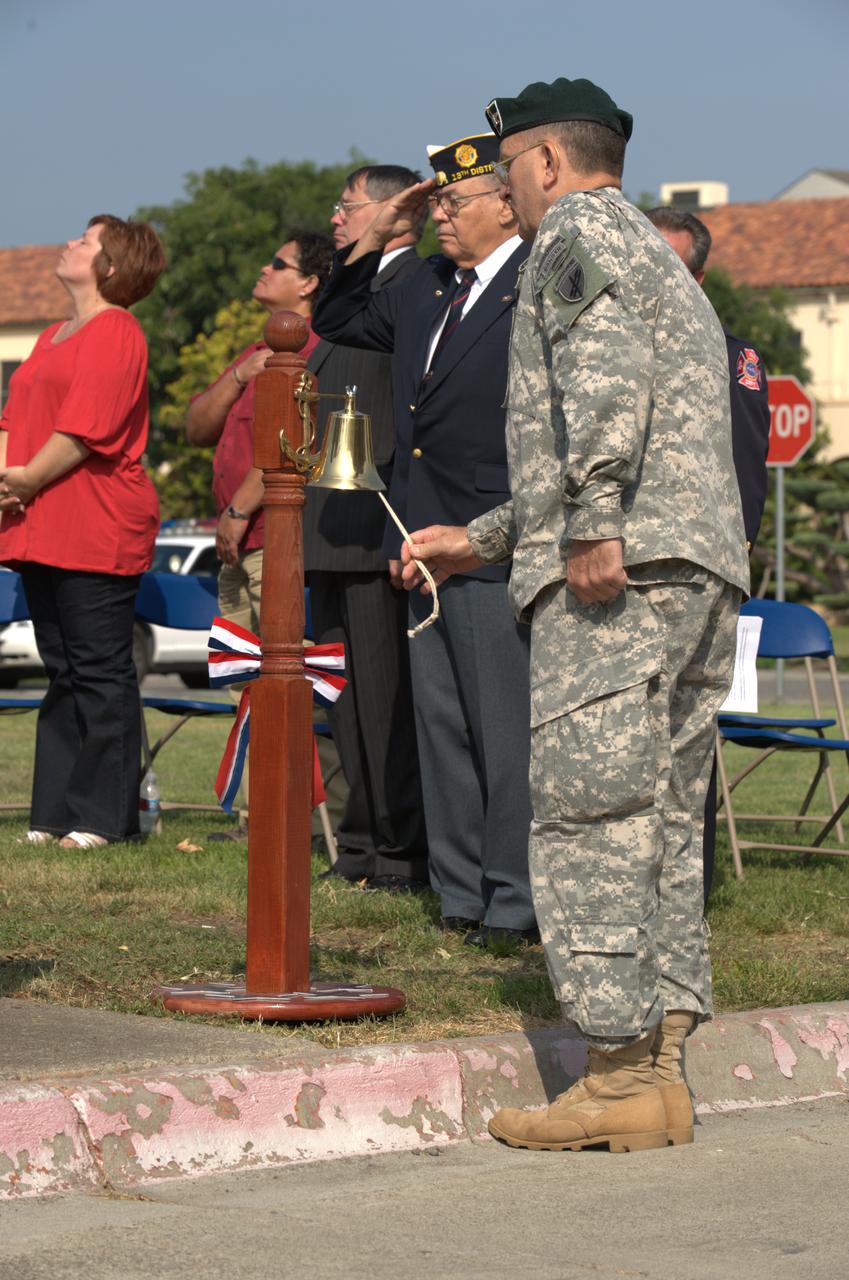
September 11th remembrance ceremony held in front of NASA Research Park Bldg-17 (Lunar Science Institute) hosted by the American Legion, Post 881, Moffett Field. Flag detail - Lt Randy Vincent - NASA Protective Services, Ty Locatelli, Carlos Pinedo - NASA Fire Department
September 11th remembrance ceremony held in front of NASA Research Park Bldg-17 (Lunar Science Institute) hosted by the American Legion, Post 881, Moffett Field. Flag detail - Lt Randy Vincent - NASA Protective Services, Ty Locatelli, Carlos Pinedo - NASA Fire Department
September 11th remembrance ceremony held in front of NASA Research Park Bldg-17 (Lunar Science Institute) hosted by the American Legion, Post 881, Moffett Field. Flag detail - Lt Randy Vincent - NASA Protective Services, Ty Locatelli, Carlos Pinedo - NASA Fire Department
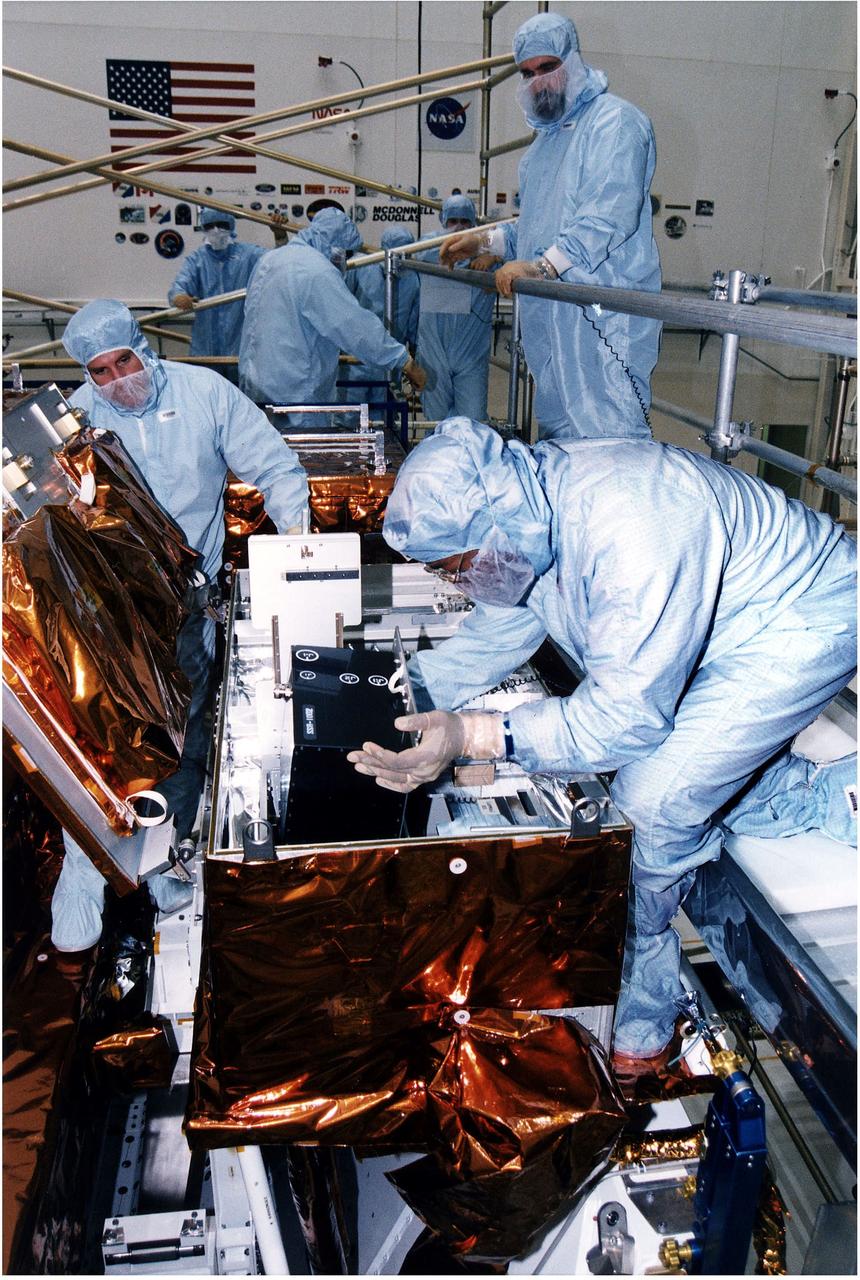
KENNEDY SPACE CENTER, FLA. - Workers in KSC's Vertical Processing Facility install a solid state recorder into a transport assembly in its protective enclosure as part of the prelaunch preparations for STS-82, the second Hubble Space Telescope servicing mission. The digital solid state recorder will replace one of three engineering/science tape recorders on Hubble. The solid state recorder has no moving parts to wear out. It also is more flexible than a reel-to-reel recorder and can store 10 times as much data. Liftoff aboard Discovery is targeted Feb. 11 with a crew of seven.
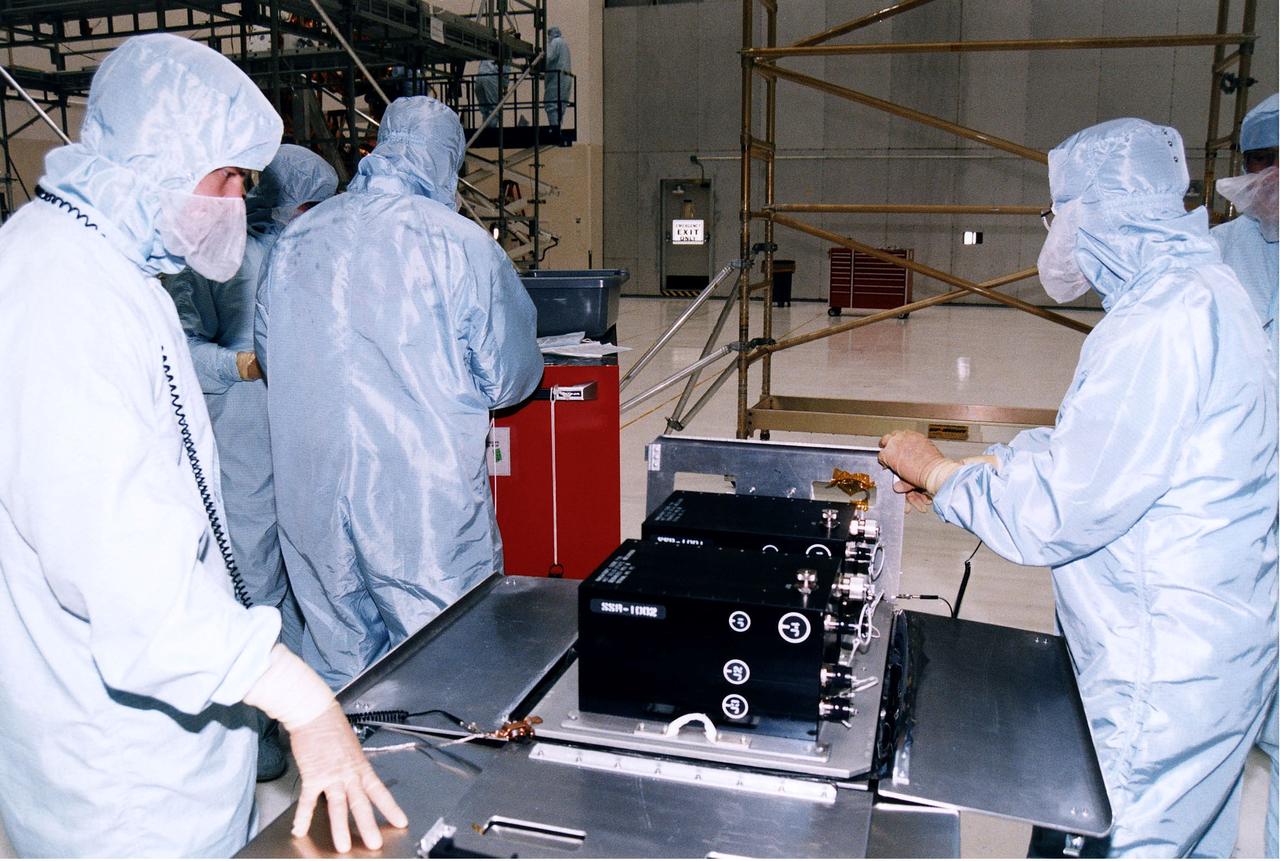
KENNEDY SPACE CENTER, FLA. - Workers in KSC's Vertical Processing Facility prepare a solid state recorder for installation in a protective enclosure as part of the prelaunch preparations for STS-82, the second Hubble Space Telescope servicing mission. The digital solid state recorder will replace one of three engineering/science tape recorders on Hubble. The solid state recorder has no moving parts to wear out. It also is more flexible than a reel-to-reel recorder and can store 10 times as much data. Liftoff aboard Discovery is targeted Feb. 11 with a crew of seven.
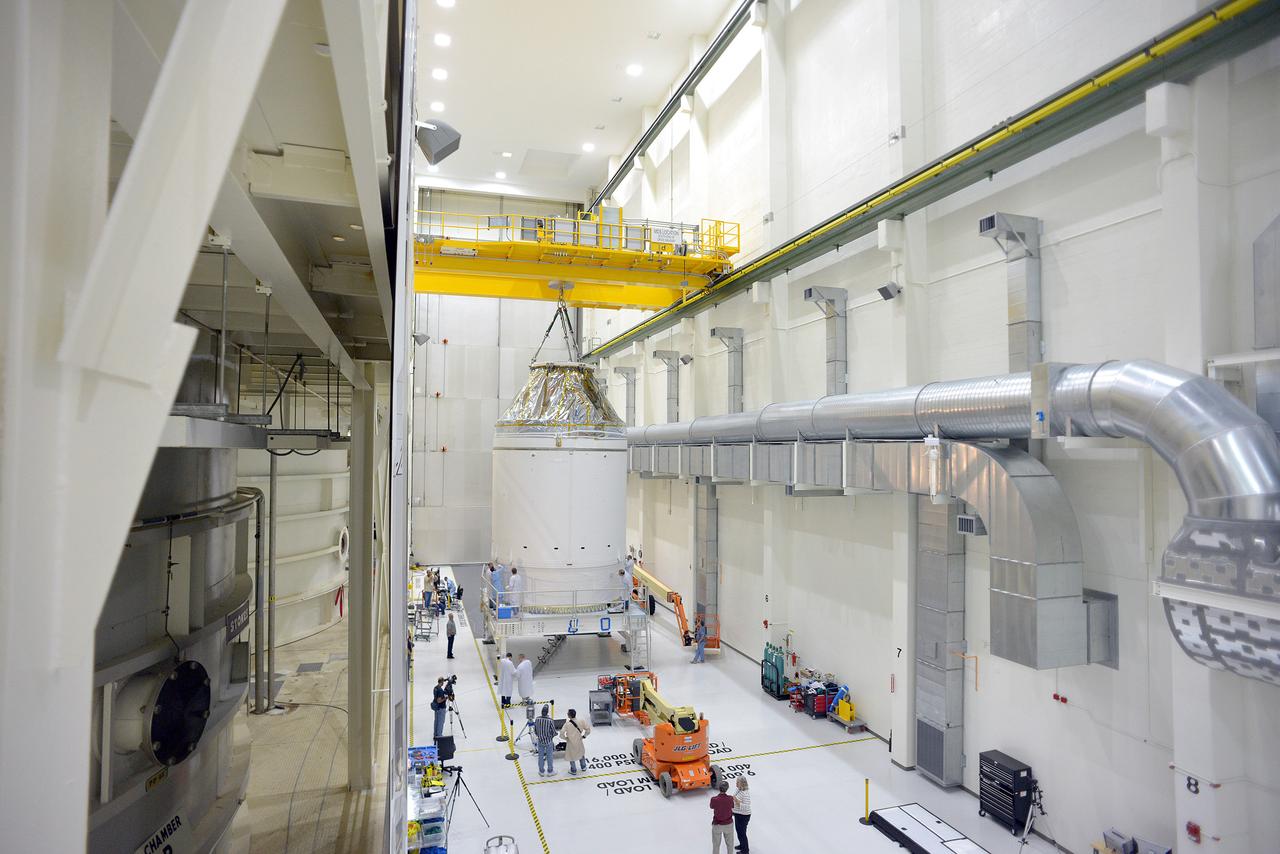
Technicians and engineers put finishing touches on the Orion Exploration Flight Test-1 (EFT-1) crew module and service module stack in the Operations and Checkout (O&C) Building at Kennedy Space Center on Sept. 7, 2014. The crew module is covered by protective foil as it and the service module are lifted for the installation of the Orion-to-stage adapter ring. Part of Batch image transfer from Flickr.
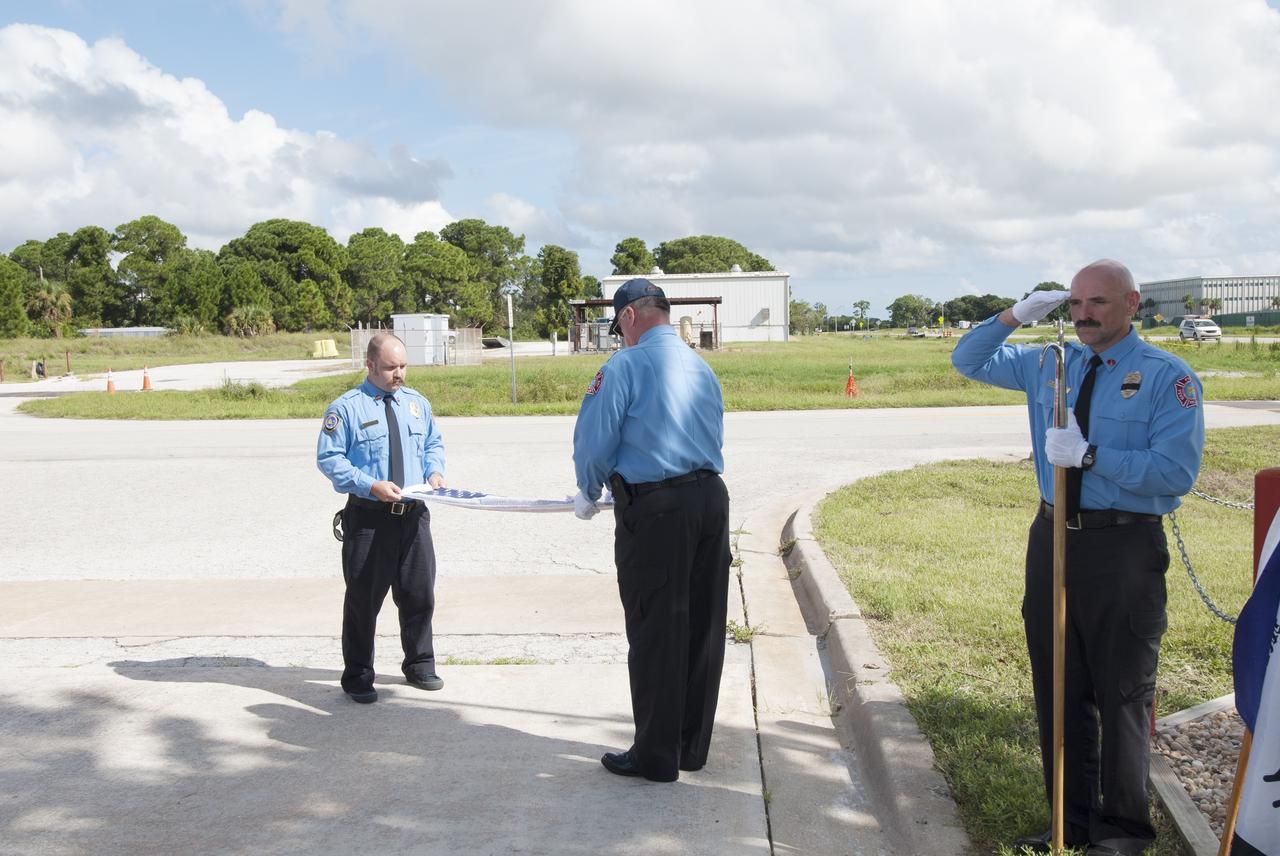
Cape Canaveral, Fla. – At Fire Station 1 at NASA’s Kennedy Space Center in Florida, Gabe Wingard and Steve Dudgeon, both with NASA's Protective Services, fold the commemorative flag during a ceremony held by Kennedy’s Fire and Rescue personnel. Kennedy Fire and Rescue Services commemorated the 13th anniversary of 9/11 with a ceremony that included a minute of silence at 10:28 a.m., which was the moment of collapse of the north tower of the World Trade Center. Photo credit: Jim Grossmann
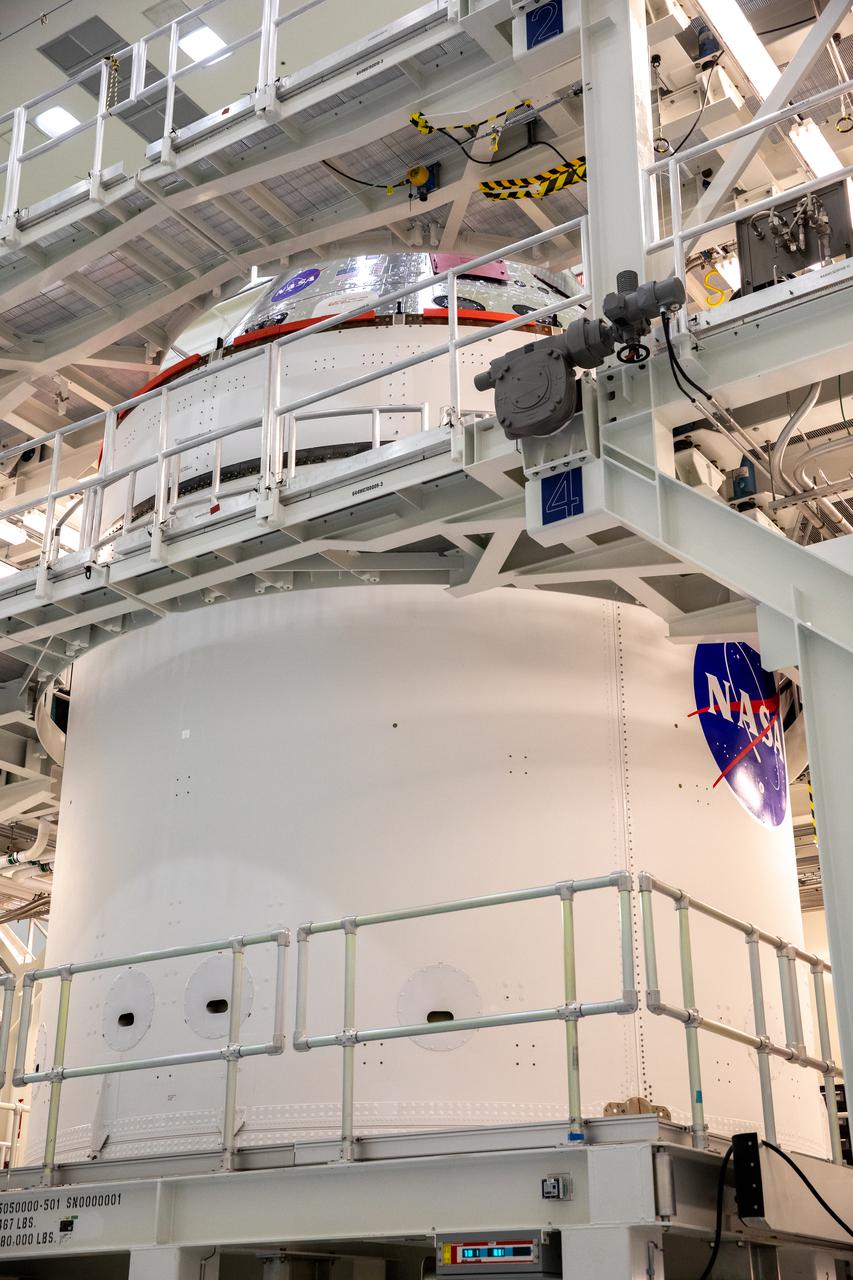
NASA’s famous “meatball” insignia is affixed to the Artemis I Orion spacecraft adapter jettison fairings, which protect the European built service module, Jan. 20, 2021, inside the Multi-Payload Processing Facility at NASA’s Kennedy Space Center in Florida. Shown inside its servicing stand, ground processing begins on Orion, with the Exploration Ground Systems and Jacobs teams performing checkouts and fueling the spacecraft with commodities as part of preparations ahead of the Artemis I mission.
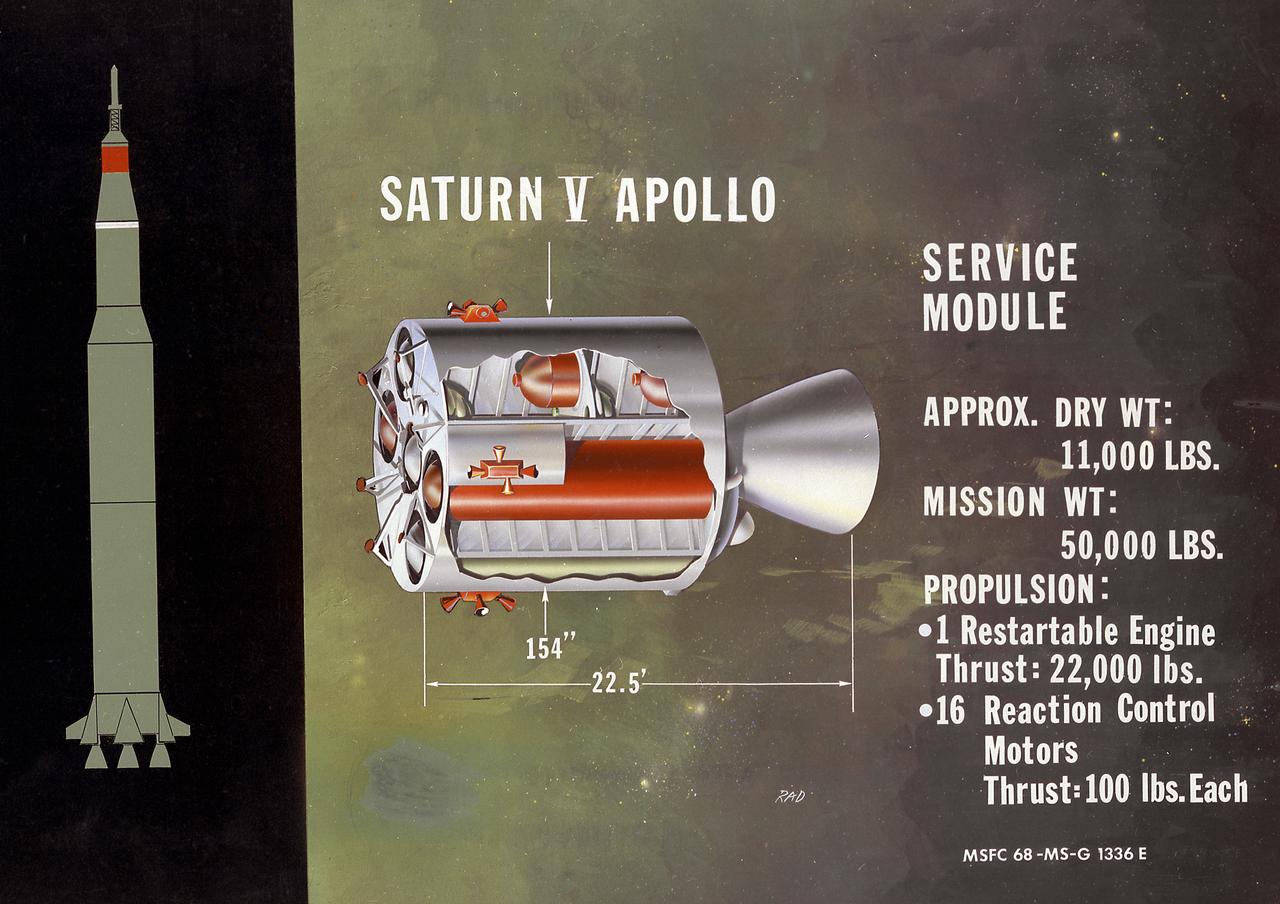
This is a cutaway illustration of the Saturn V service module configuration. Packed with plumbing and tanks, the service module was the command module's constant companion until just before reentry. All components not needed during the last few minutes of flight, and therefore requiring no protection against reentry heat, were transported in this module. It carried oxygen for most of the trip, fuel cells to generate electricity (along with the oxygen and hydrogen to run them); small engines to control pitch, roll, and yaw; and a large engine to propel the spacecraft into, and out of, lunar orbit.

NASA’s famous “meatball” insignia is affixed to the Artemis I Orion spacecraft adapter jettison fairings, which protect the European built service module, Jan. 20, 2021, inside the Multi-Payload Processing Facility at NASA’s Kennedy Space Center in Florida. Shown inside its servicing stand, ground processing begins on Orion, with the Exploration Ground Systems and Jacobs teams performing checkouts and fueling the spacecraft with commodities as part of preparations ahead of the Artemis I mission.
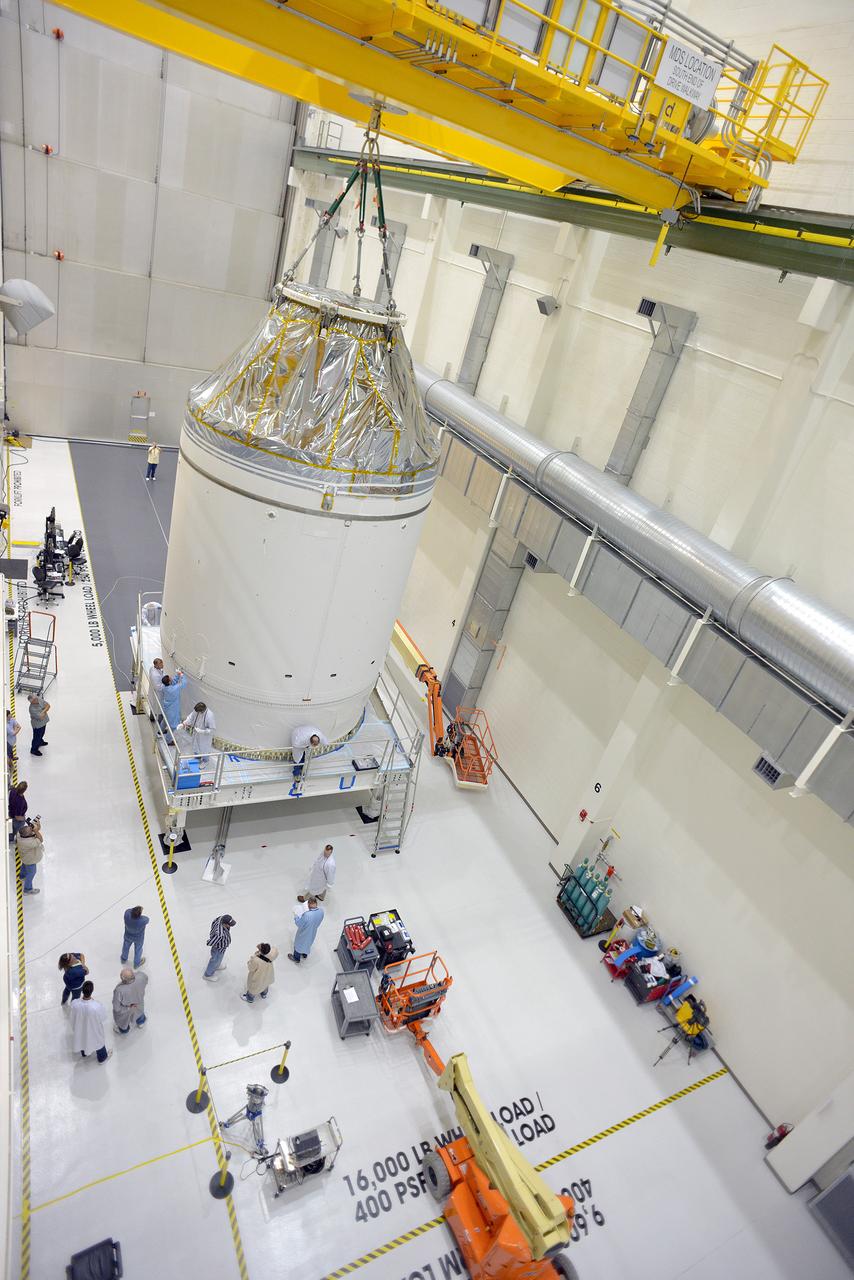
Technicians and engineers put finishing touches on the Orion Exploration Flight Test-1 (EFT-1) crew module and service module stack in the Operations and Checkout (O&C) Building at Kennedy Space Center on Sept. 7, 2014. The crew module is covered by protective foil as it and the service module are lifted for the installation of the Orion-to-stage adapter ring. Part of Batch image transfer from Flickr.

CAPE CANAVERAL, Fla. - In the Payload Hazardous Servicing Facility at NASA’s Kennedy Space Center, an overhead crane lifts the Flight Support System carrier with the Soft Capture Mechanism under protective cover. The carrier is one of four associated with the STS-125 mission to service the Hubble Space Telescope. It will be installed in the payload canister for transfer to Launch Pad 39A. At the pad, all the carriers will be loaded into space shuttle Atlantis’ payload bay. Launch of Atlantis is targeted for Oct. 10. Photo credit: NASA/Cory Huston
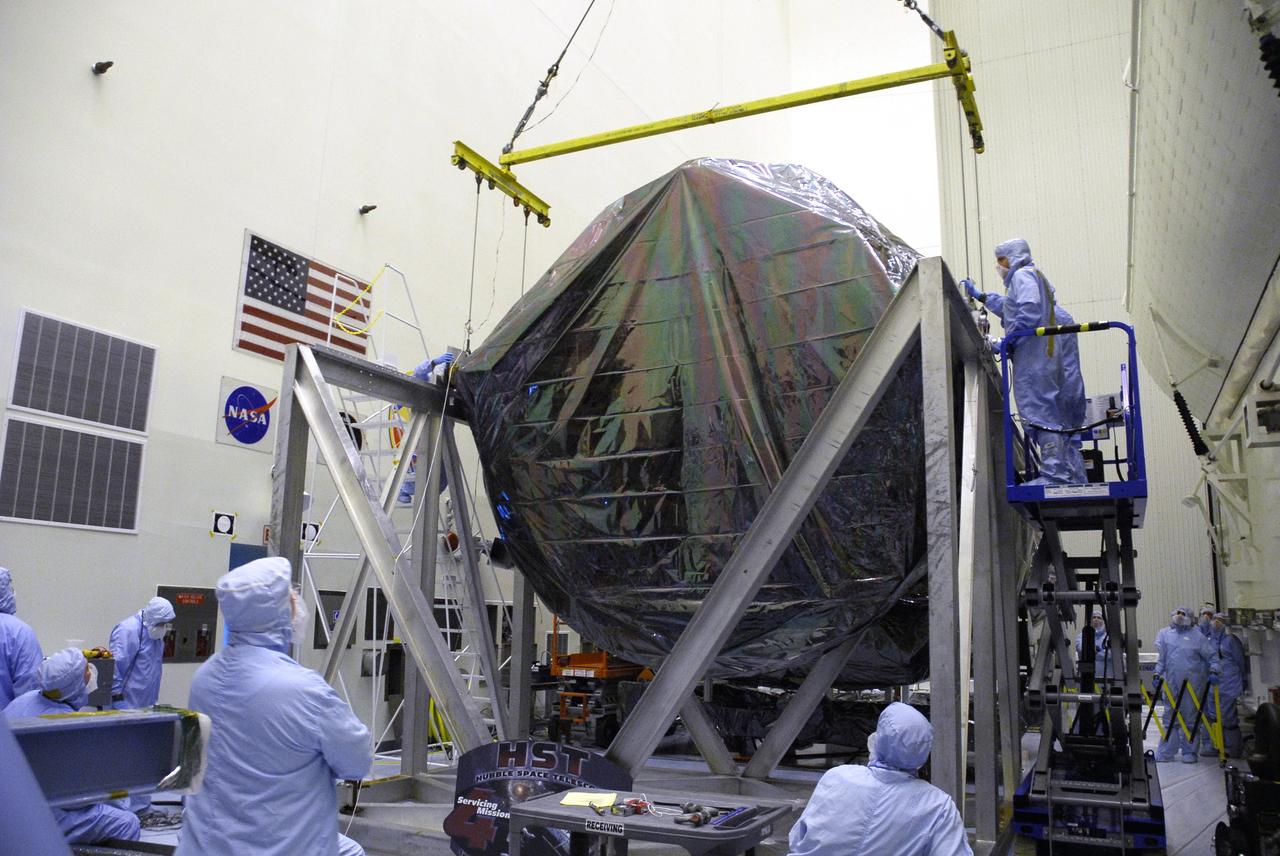
CAPE CANAVERAL, Fla. - In the Payload Hazardous Servicing Facility at NASA’s Kennedy Space Center, an overhead crane lifts the Flight Support System carrier with the Soft Capture Mechanism under protective cover. The carrier is one of four associated with the STS-125 mission to service the Hubble Space Telescope. It will be installed in the payload canister for transfer to Launch Pad 39A. At the pad, all the carriers will be loaded into space shuttle Atlantis’ payload bay. Launch of Atlantis is targeted for Oct. 10. Photo credit: NASA/Cory Huston
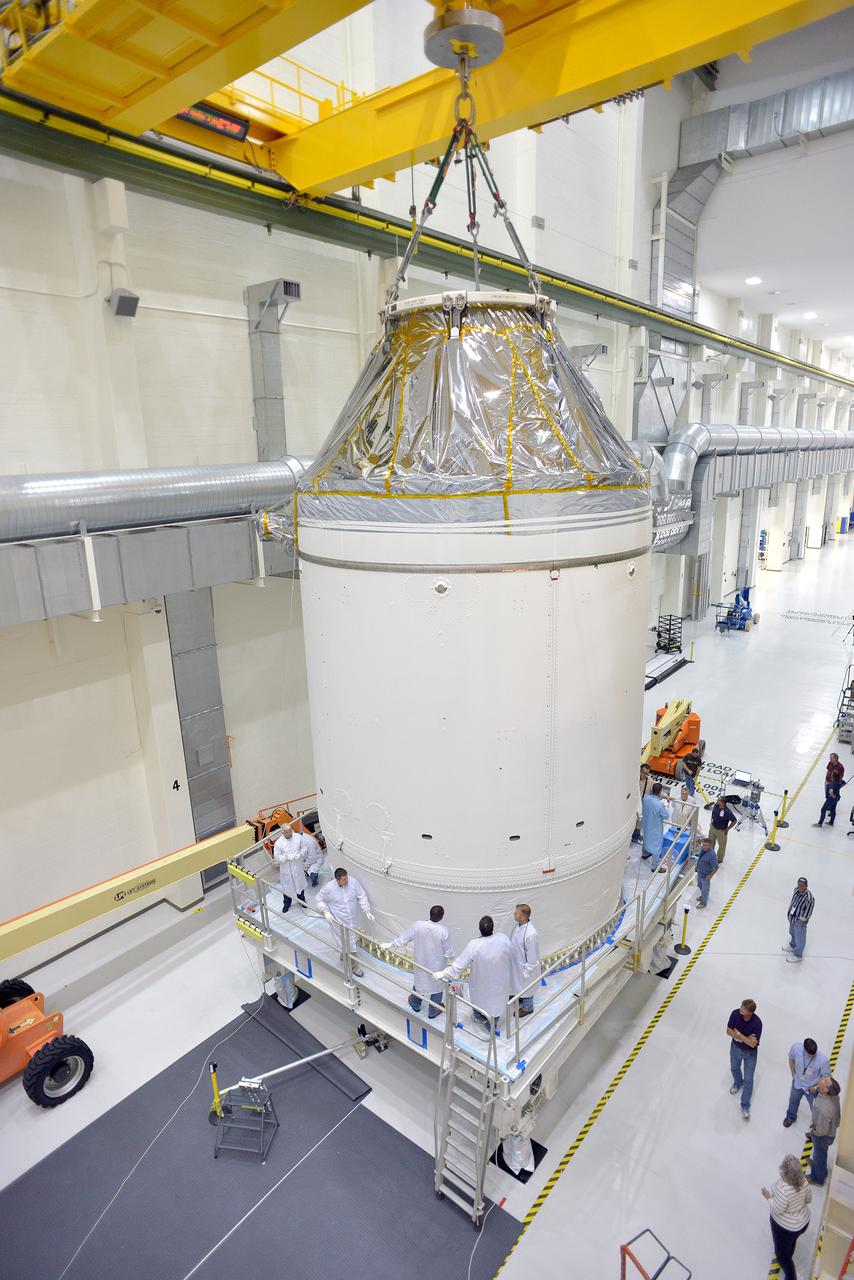
Technicians and engineers put finishing touches on the Orion Exploration Flight Test-1 (EFT-1) crew module and service module stack in the Operations and Checkout (O&C) Building at Kennedy Space Center on Sept. 7, 2014. The crew module is covered by protective foil as it and the service module are lifted for the installation of the Orion-to-stage adapter ring. Part of Batch image transfer from Flickr.
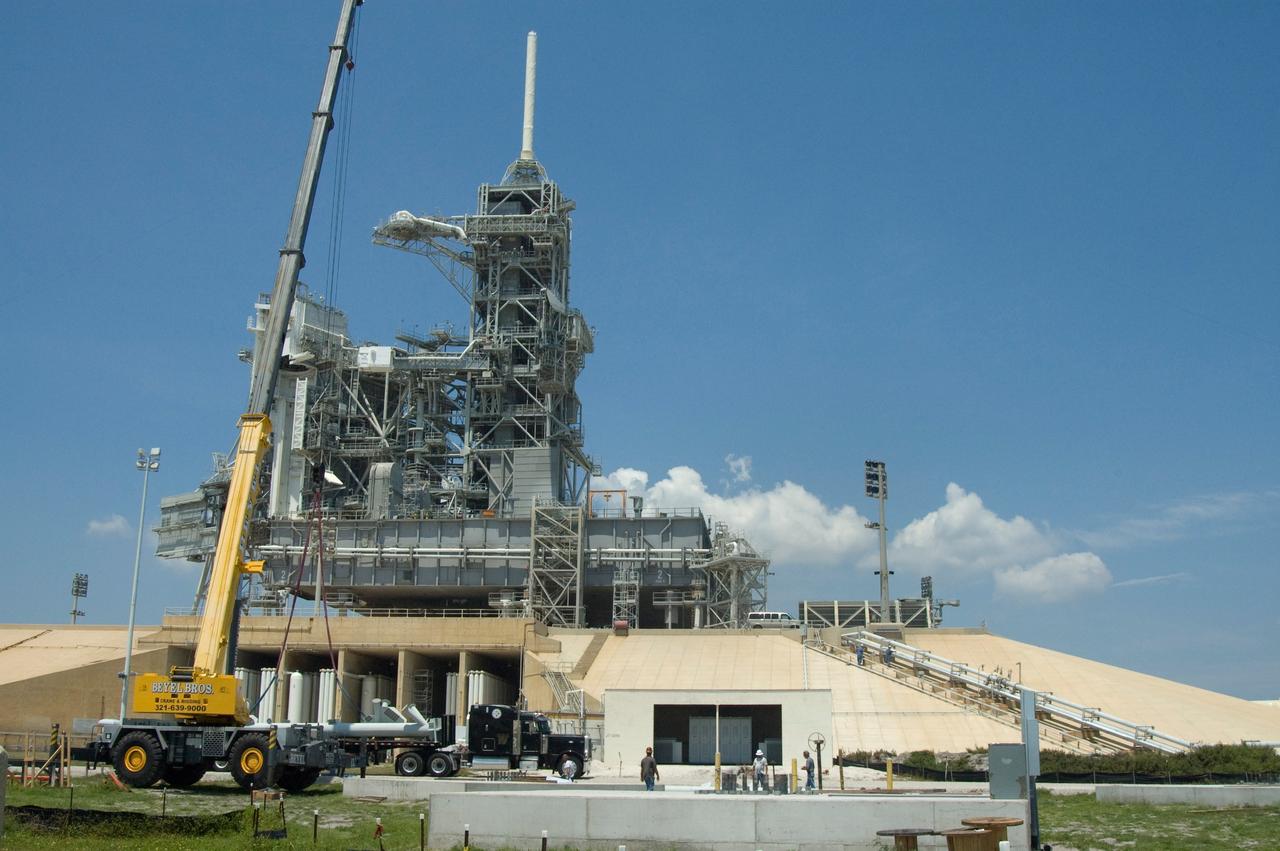
CAPE CANAVERAL, Fla. -- On Launch Pad 39B at NASA's Kennedy Space Center, a crane is removing parts of the lightning mast to be erected on towers being built for the Constellation Program and Ares/Orion launches. Behind it are the fixed and rotating service structures on top of the pad. An 80-foot lightning mast is on top of the fixed service structure as part of the former lightning protection system. Pad B will be the site of the first Ares vehicle launch, including Ares I-X which is scheduled for April 2009. Photo credit: NASA/Jim Grossmann
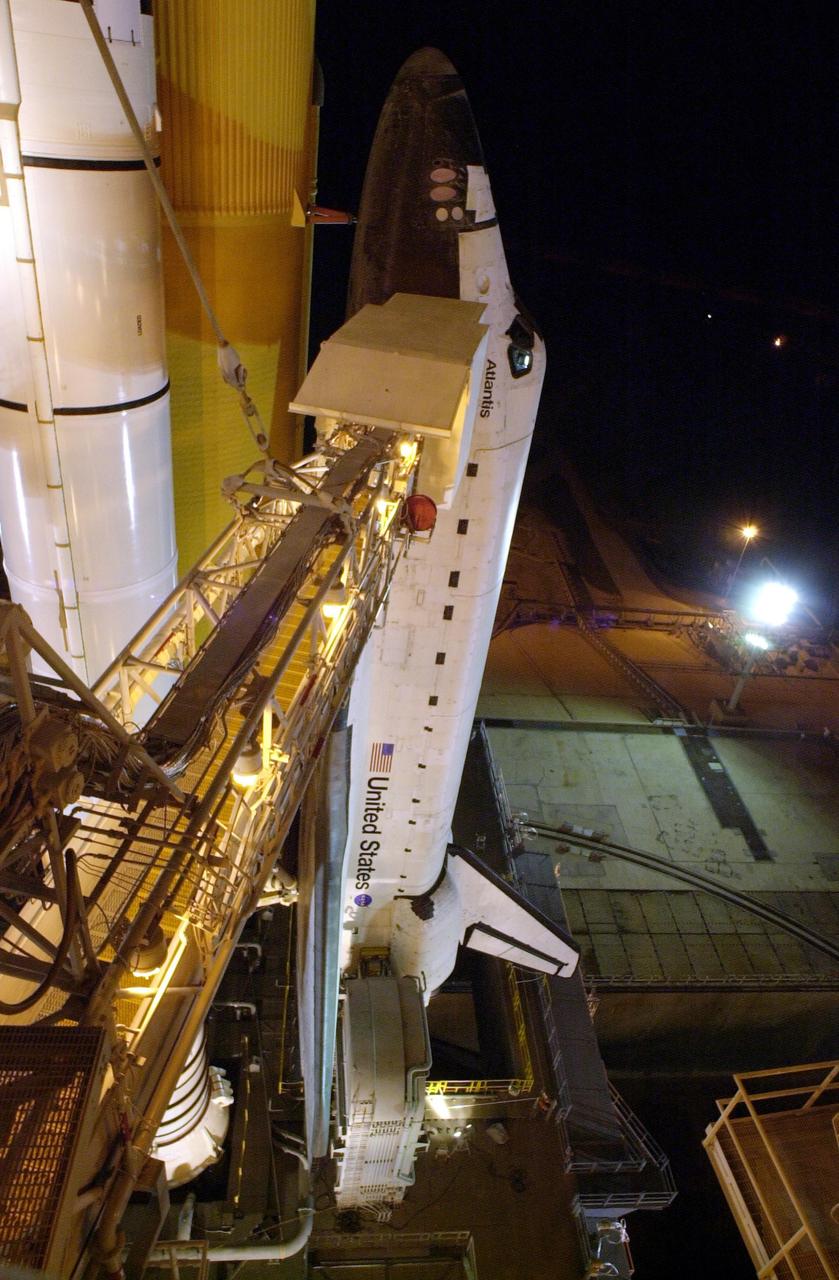
KENNEDY SPACE CENTER, FLA. -- With the Rotating Service Structure rolled back, Space Shuttle Atlantis stands ready for launch on mission STS-110. The Orbiter Access Arm extends from the Fixed Service Structure (FSS) to the crew compartment hatch, through which the STS-110 crew will enter Atlantis. The RSS provides protected access to the orbiter for changeout and servicing of payloads at the pad. The structure has access platforms at five levels to provide access to the payload bay. The FSS provides access to the orbiter and the RSS. . Mission STS-110 is scheduled to launch April 4 on its 11-day mission to the International Space Station
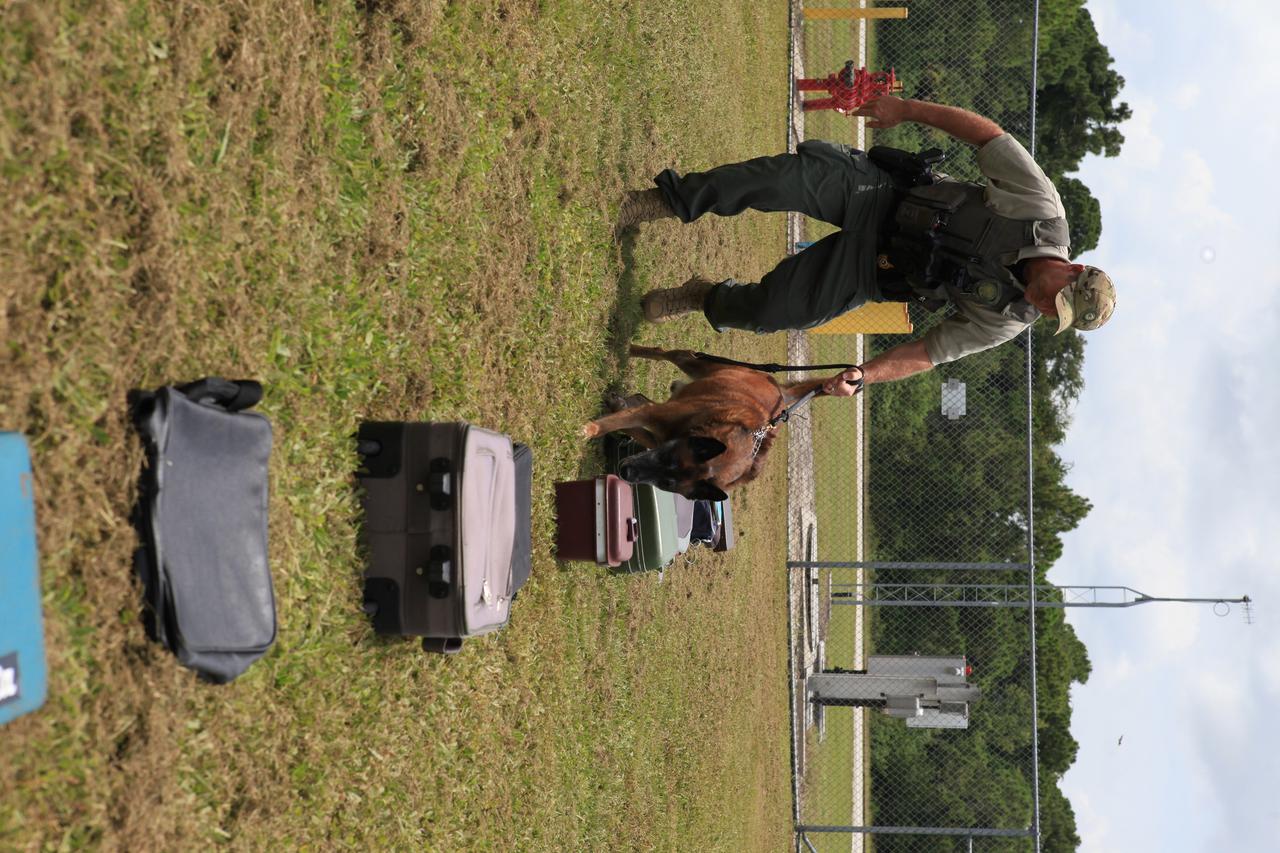
K-9 Handler Officer Scott O’Rourke watches as K-9 LJ works his way through a row of bags and containers to locate one with a suspicious substance during a training exercise on July 10, 2019, at Kennedy Space Center’s Protective Services Office in Florida. The center’s specially trained K-9s support the center 24/7, 365 days. Their main goal is to protect the Kennedy workforce and assets. Normal activities include sweeps of designated facilities, parking lots and random vehicle inspections at entrance gates. During rocket launches, they are out and about performing sweeps of facilities and launch site viewing areas. They cover Kennedy and the Merritt Island National Wildlife Refuge.
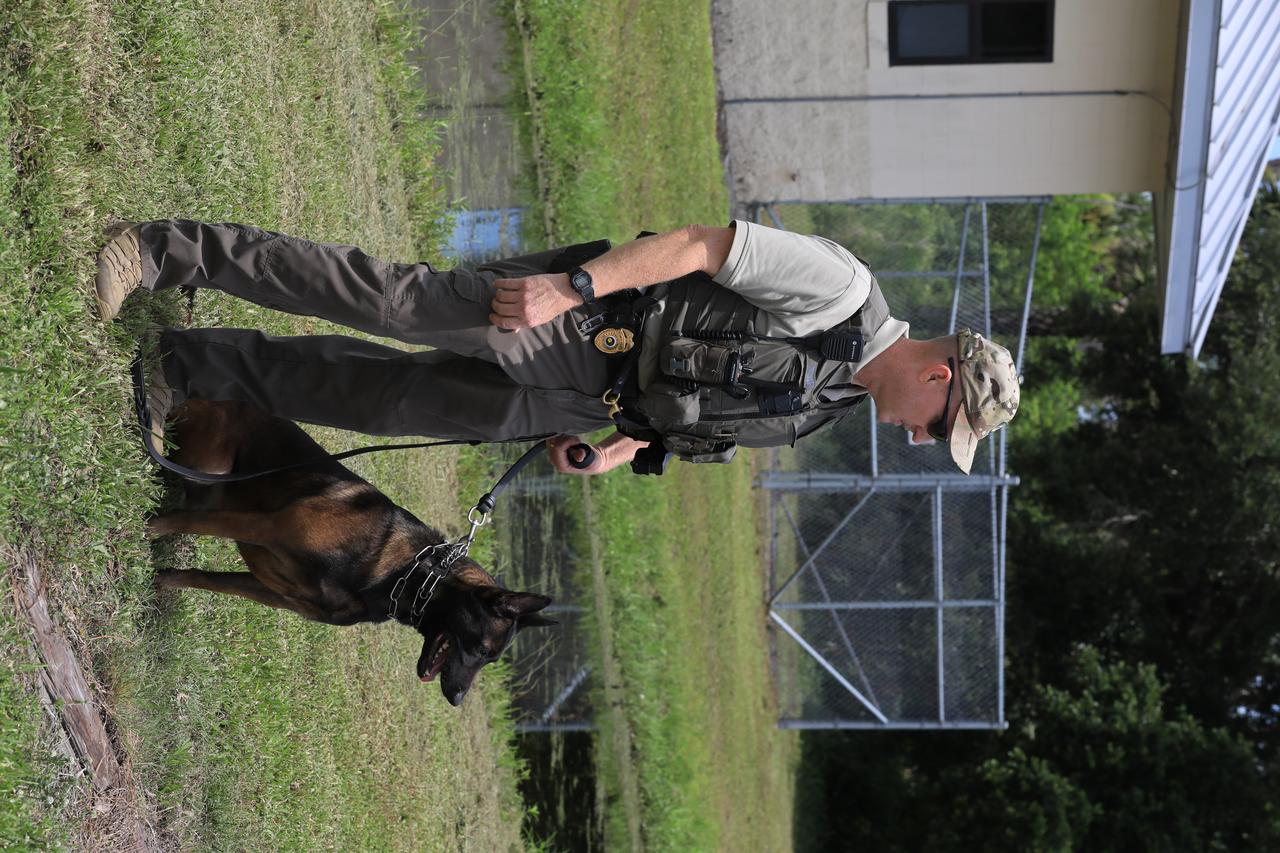
K-9 Spike is ready for the next training exercise with his Handler Officer John McGee at Kennedy Space Center’s Protective Services Office in Florida on July 10, 2019. The center’s specially trained K-9s support the center 24/7, 365 days. Their main goal is to protect the Kennedy workforce and assets. Normal activities include sweeps of designated facilities, parking lots and random vehicle inspections at entrance gates. During rocket launches, they are out and about performing sweeps of facilities and launch site viewing areas. They cover Kennedy and the Merritt Island National Wildlife Refuge.
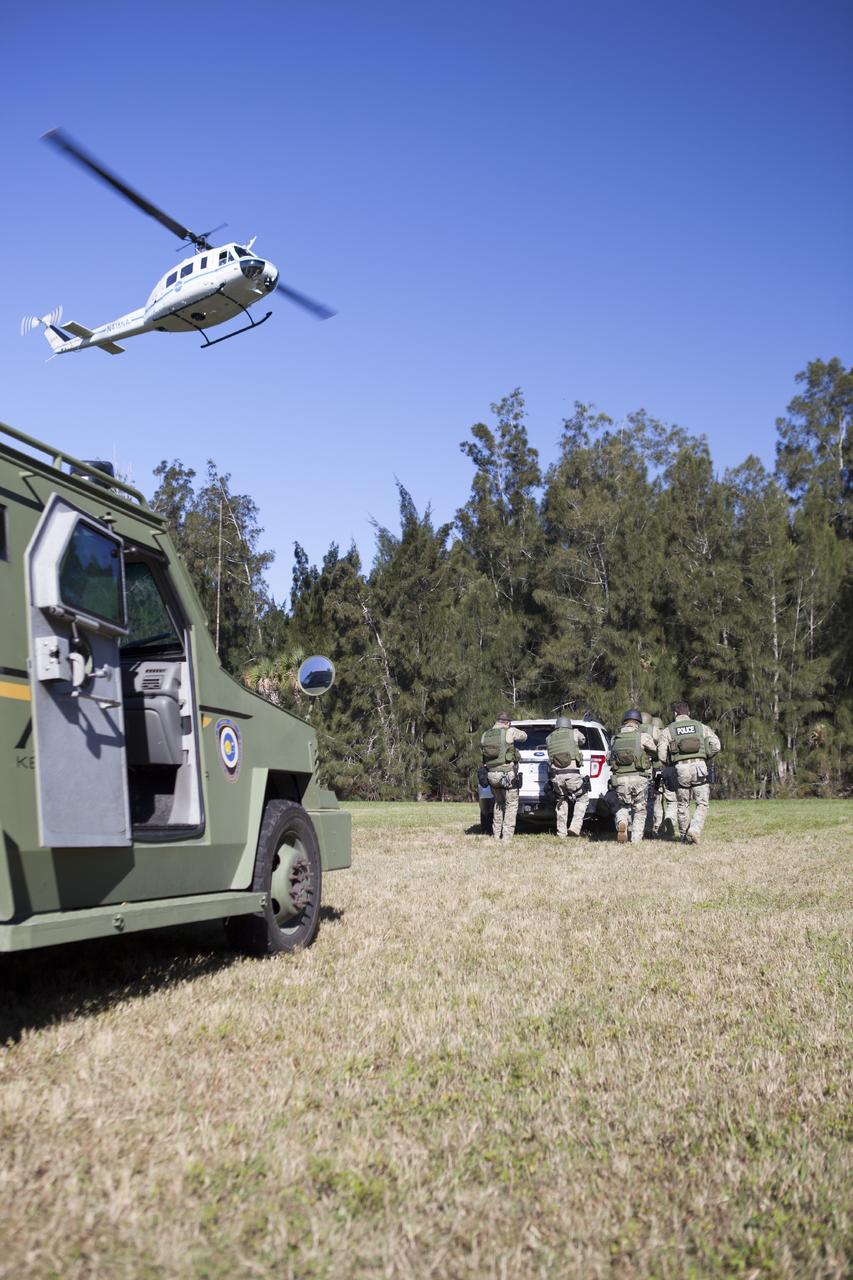
CAPE CANAVERAL, Fla. – At NASA’s Protective Services Training Academy at Kennedy Space Center in Florida, a helicopter hovers above members of the Emergency Response Team, or ERT, as they participate in specialized training simulations. They are wearing full protective gear and carrying non-lethal firearms for the training exercises in order to keep their skills current. Recently, eight members of the ERT competed in the 31st Annual SWAT Roundup International competition in Orlando, Fla., and received recognition by placing in the top five overall. In keeping with NASA’s commitment to safety and security of workforce and assets, the ERT is part of Kennedy’s security team and is trained to respond in the event of an emergency at the center. Photo credit: NASA/Dimitri Gerondidakis
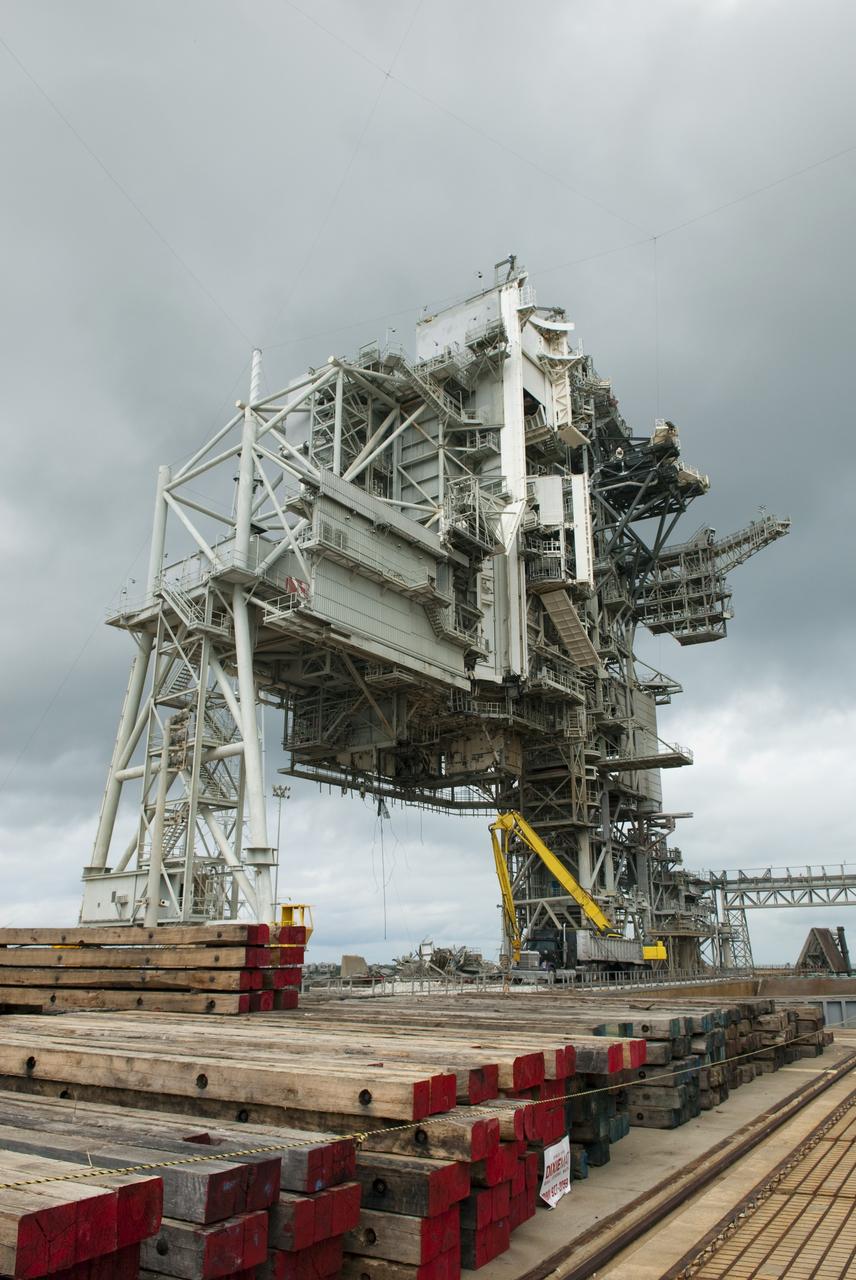
CAPE CANAVERAL, Fla. -- At NASA's Kennedy Space Center in Florida, crews are dismantling the rotating service structure (RSS) on Launch Pad 39B. Sand, reinforcing steel and large wooden mats were put down under the RSS to protect the structure's concrete from falling debris during deconstruction. Starting in 2009, the structure at the pad was no longer needed for NASA's Space Shuttle Program, so it is being restructured for future use. The new design will feature a "clean pad" for rockets to come with their own launcher, making it more versatile for a number of vehicles. The new lightning protection system, consisting of three lightning towers and a wire catenary system will remain. Photo credit: NASA/Jim Grossmann
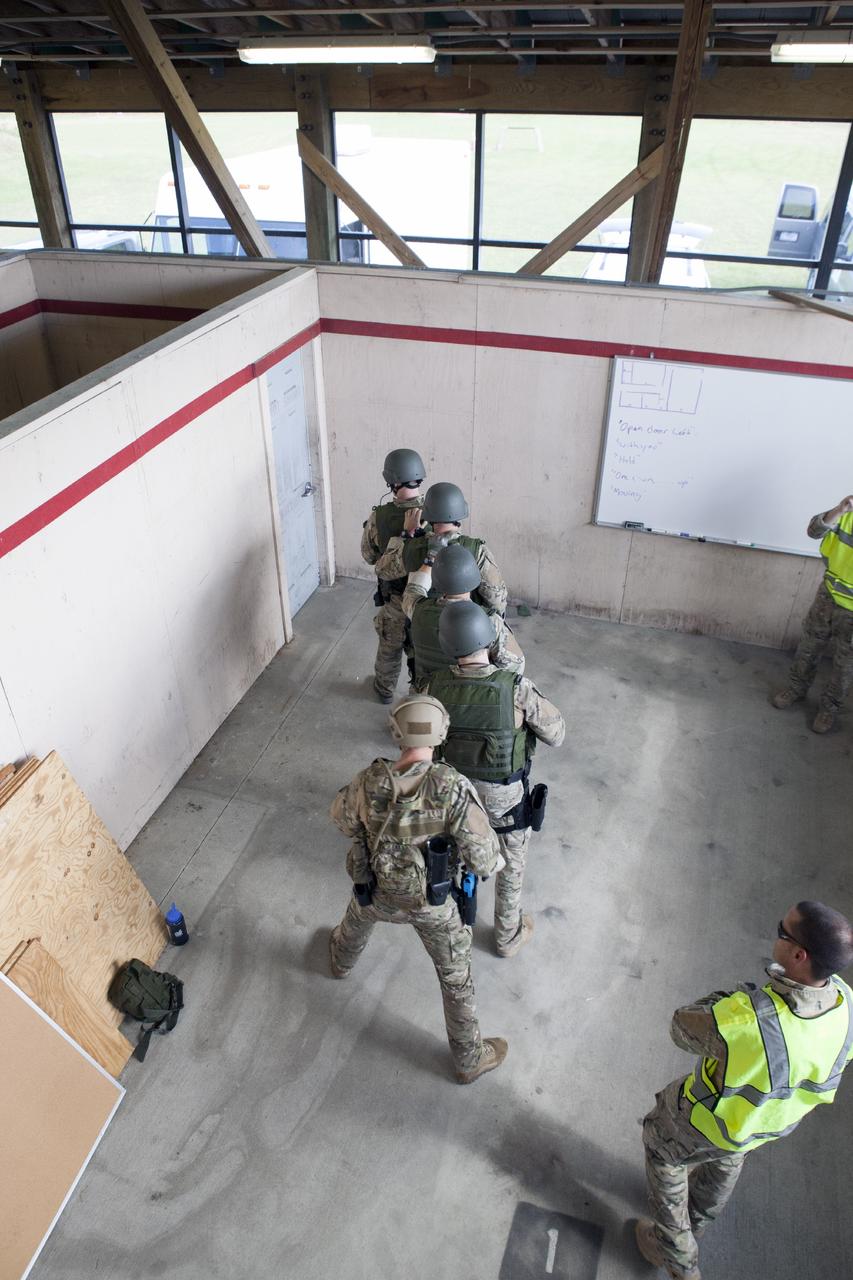
CAPE CANAVERAL, Fla. – At NASA’s Protective Services Training Academy at Kennedy Space Center in Florida, members of the Emergency Response Team, or ERT, participate in specialized training simulations in order to keep their skills current. They are wearing full protective gear and carrying non-lethal firearms, which are denoted in blue, for the training exercises. Recently, eight members of the ERT competed in the 31st Annual SWAT Roundup International competition in Orlando, Fla., and received recognition by placing in the top five overall. In keeping with NASA’s commitment to safety and security of workforce and assets, the ERT is part of Kennedy’s security team and is trained to respond in the event of an emergency at the center. Photo credit: NASA/Dimitri Gerondidakis
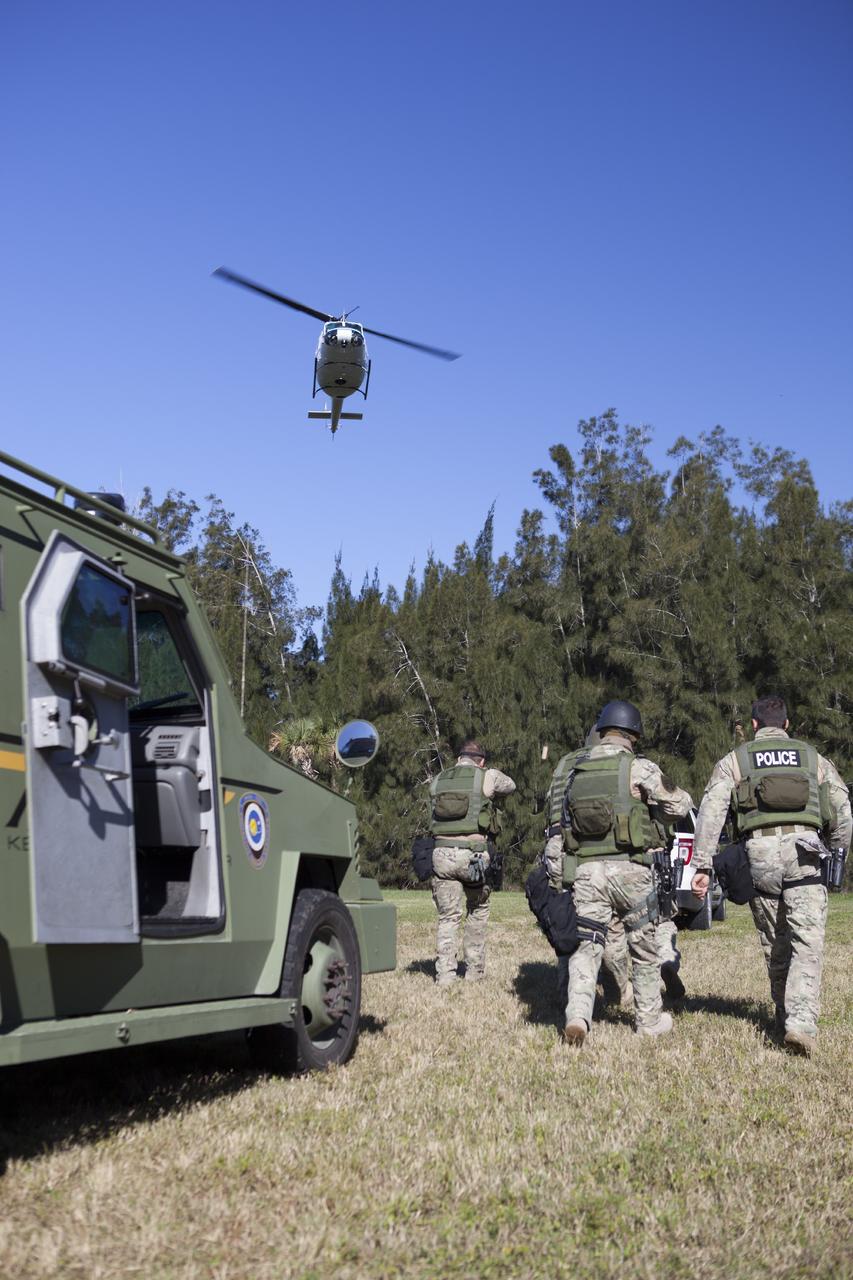
CAPE CANAVERAL, Fla. – At NASA’s Protective Services Training Academy at Kennedy Space Center in Florida, members of the Emergency Response Team, or ERT, participate in specialized training simulations as a helicopter hovers above. They are wearing full protective gear and carrying non-lethal firearms for the training exercises in order to keep their skills current. Recently, eight members of the ERT competed in the 31st Annual SWAT Roundup International competition in Orlando, Fla., and received recognition by placing in the top five overall. In keeping with NASA’s commitment to safety and security of workforce and assets, the ERT is part of Kennedy’s security team and is trained to respond in the event of an emergency at the center. Photo credit: NASA/Dimitri Gerondidakis
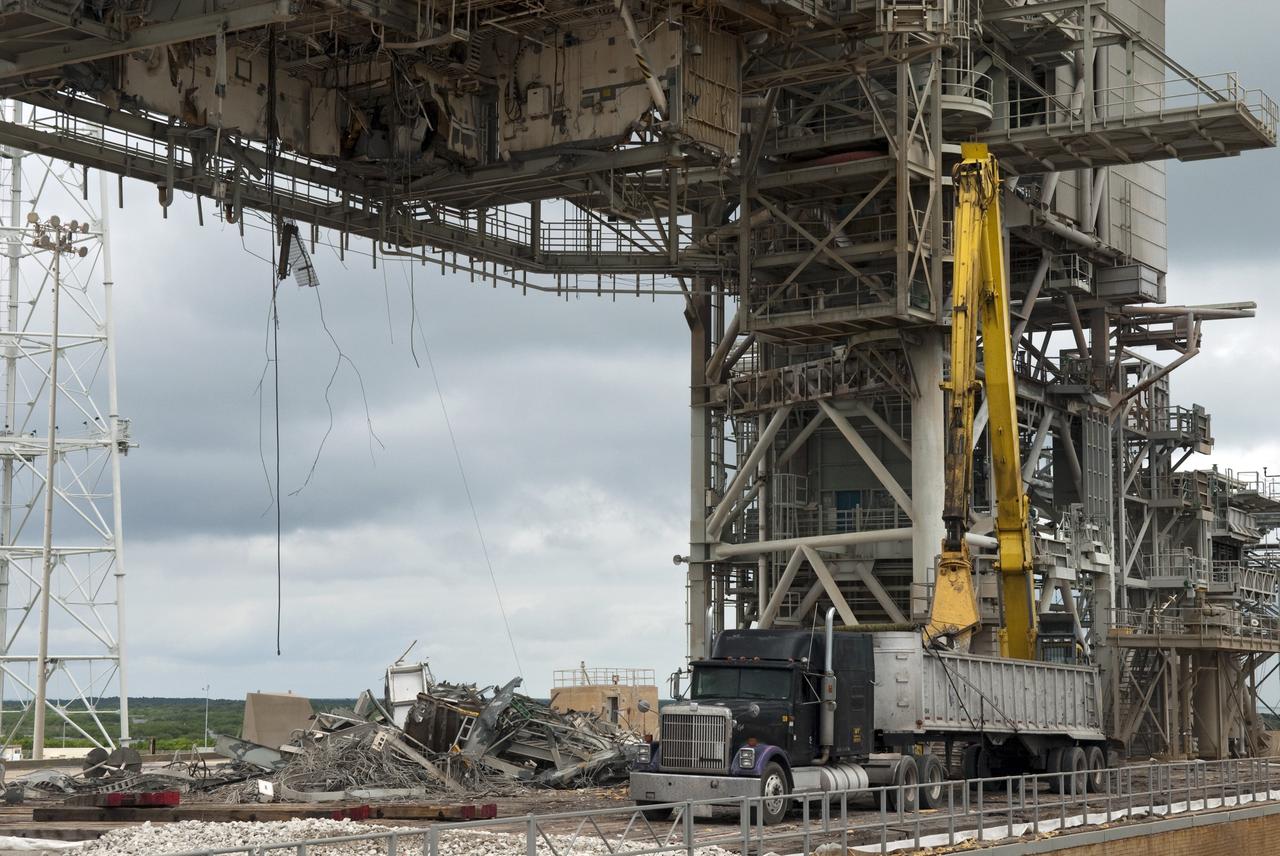
CAPE CANAVERAL, Fla. -- At NASA's Kennedy Space Center in Florida, the rotating service structure (RSS) on Launch Pad 39B is being dismantled. Sand, reinforcing steel and large wooden mats were put down under the RSS to protect the structure's concrete from falling debris during deconstruction. Starting in 2009, the structure at the pad was no longer needed for NASA's Space Shuttle Program, so it is being restructured for future use. The new design will feature a "clean pad" for rockets to come with their own launcher, making it more versatile for a number of vehicles. The new lightning protection system, consisting of three lightning towers and a wire catenary system will remain. Photo credit: NASA/Jim Grossmann
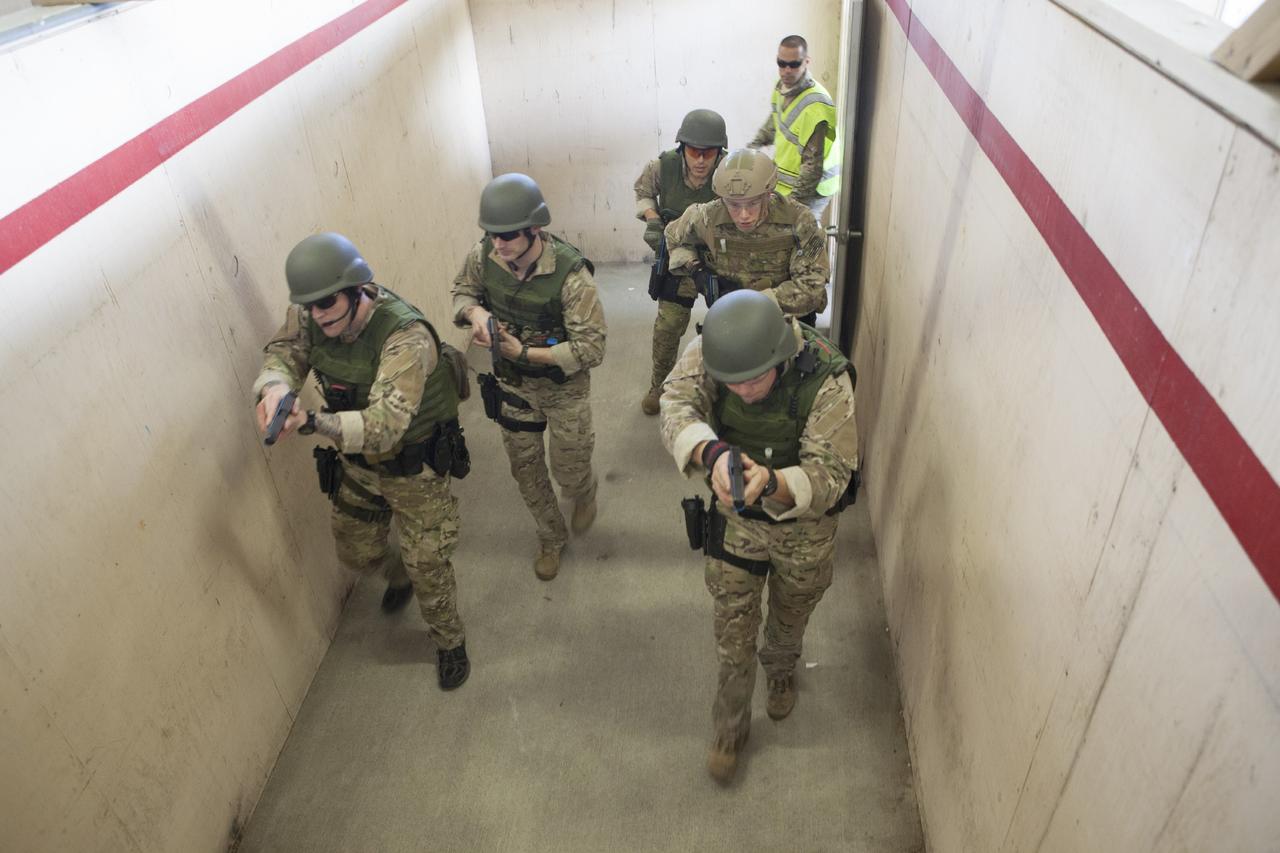
CAPE CANAVERAL, Fla. – At NASA’s Protective Services Training Academy at Kennedy Space Center in Florida, members of the Emergency Response Team, or ERT, participate in specialized training simulations in order to keep their skills current. They are wearing full protective gear and carrying non-lethal firearms, which are denoted in blue, for the training exercises. Recently, eight members of the ERT competed in the 31st Annual SWAT Roundup International competition in Orlando, Fla., and received recognition by placing in the top five overall. In keeping with NASA’s commitment to safety and security of workforce and assets, the ERT is part of Kennedy’s security team and is trained to respond in the event of an emergency at the center. Photo credit: NASA/Dimitri Gerondidakis
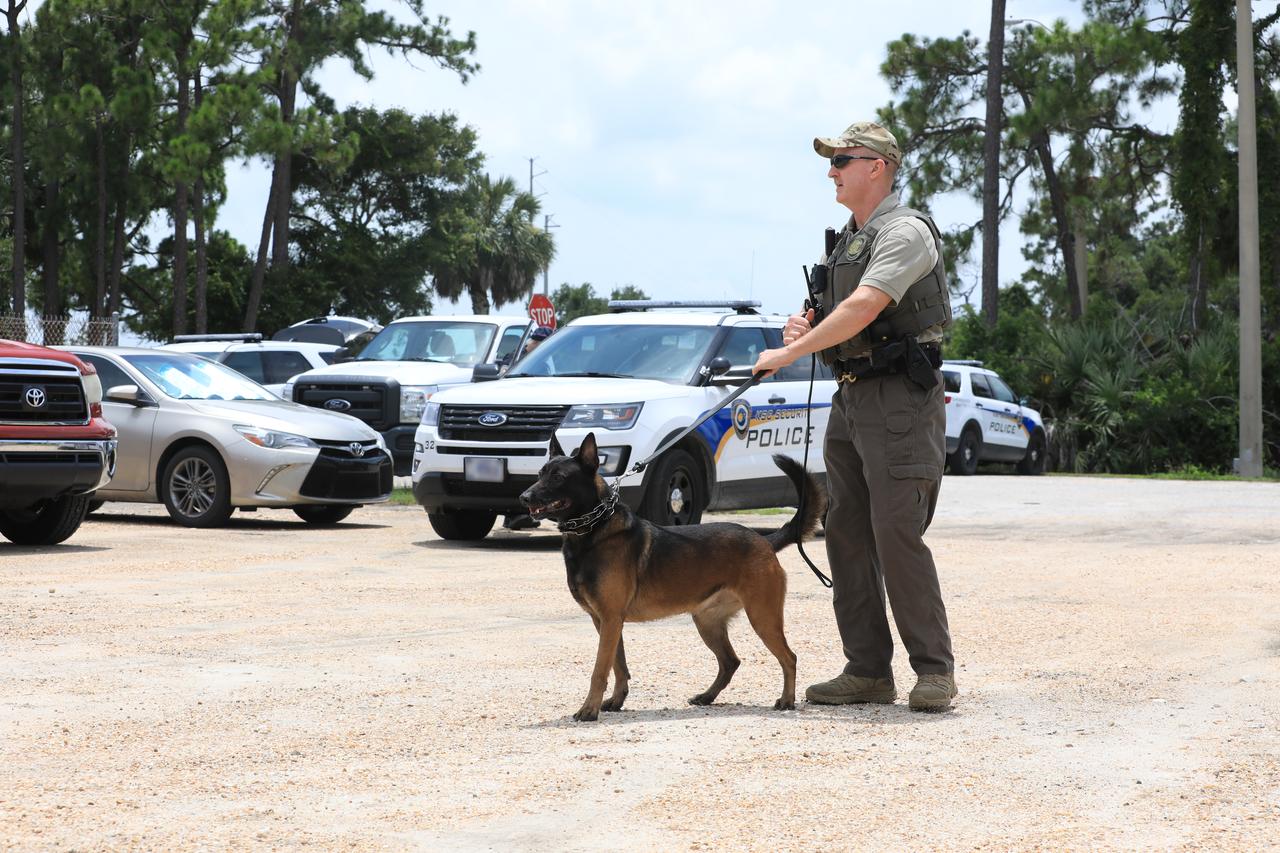
K-9 Spike stands alert and ready for the next training exercise with his Handler Officer John McGee at Kennedy Space Center’s Protective Services Office in Florida on July 10, 2019. The center’s specially trained K-9s support the center 24/7, 365 days. Their main goal is to protect the Kennedy workforce and assets. Normal activities include sweeps of designated facilities, parking lots and random vehicle inspections at entrance gates. During rocket launches, they are out and about performing sweeps of facilities and launch site viewing areas. They cover Kennedy and the Merritt Island National Wildlife Refuge.
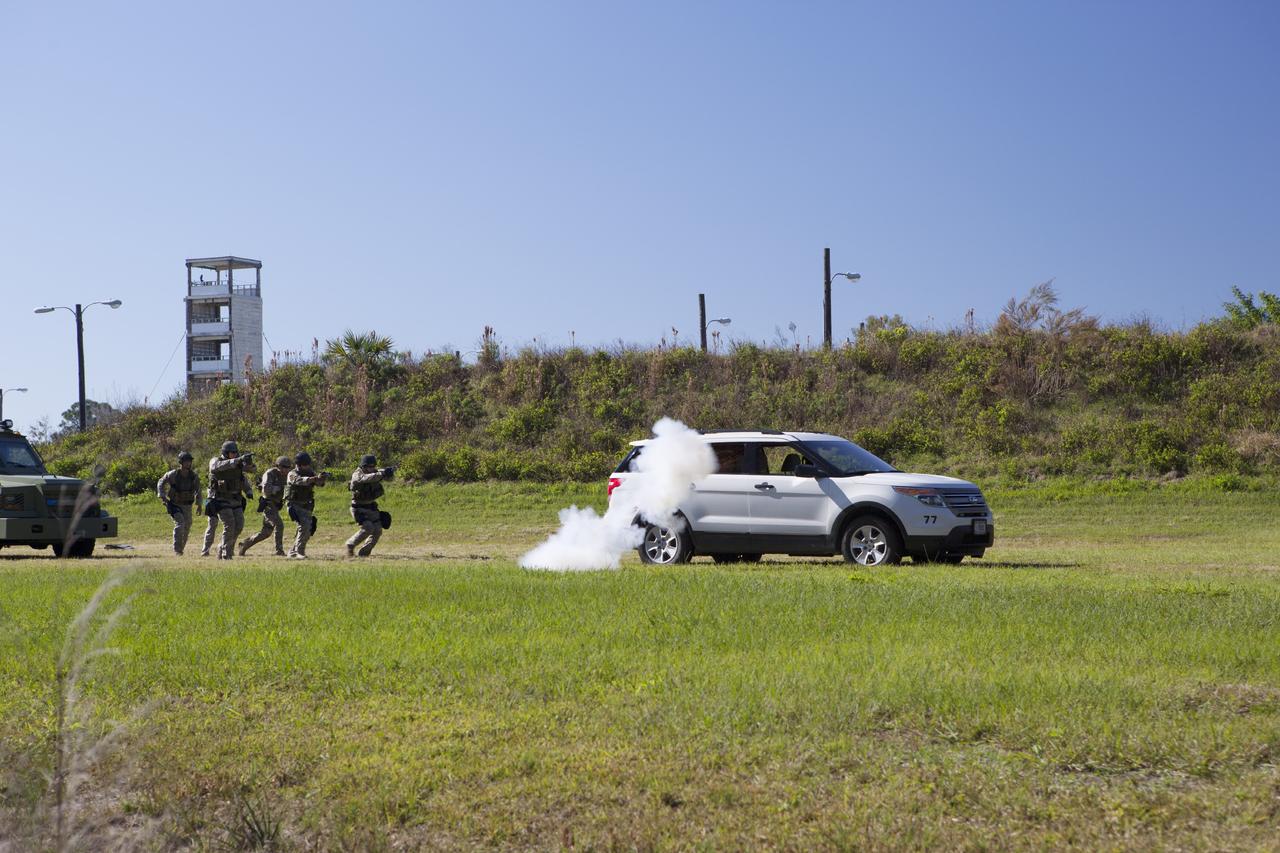
CAPE CANAVERAL, Fla. – At NASA’s Protective Services Training Academy at Kennedy Space Center in Florida, members of the Emergency Response Team, or ERT, participate in specialized training simulations which includes the use of flash bang diversionary devices. They are wearing full protective gear and carrying non-lethal firearms, for the training exercises in order to keep their skills current. Recently, eight members of the ERT competed in the 31st Annual SWAT Roundup International competition in Orlando, Fla., and received recognition by placing in the top five overall. In keeping with NASA’s commitment to safety and security of workforce and assets, the ERT is part of Kennedy’s security team and is trained to respond in the event of an emergency at the center. Photo credit: NASA/Dimitri Gerondidakis

CAPE CANAVERAL, Fla. -- At NASA's Kennedy Space Center in Florida, the rotating service structure (RSS) on Launch Pad 39B is being dismantled. Sand, reinforcing steel and large wooden mats were put down under the RSS to protect the structure's concrete from falling debris during deconstruction. Starting in 2009, the structure at the pad was no longer needed for NASA's Space Shuttle Program, so it is being restructured for future use. The new design will feature a "clean pad" for rockets to come with their own launcher, making it more versatile for a number of vehicles. The new lightning protection system, consisting of three lightning towers and a wire catenary system will remain. Photo credit: NASA/Jim Grossmann
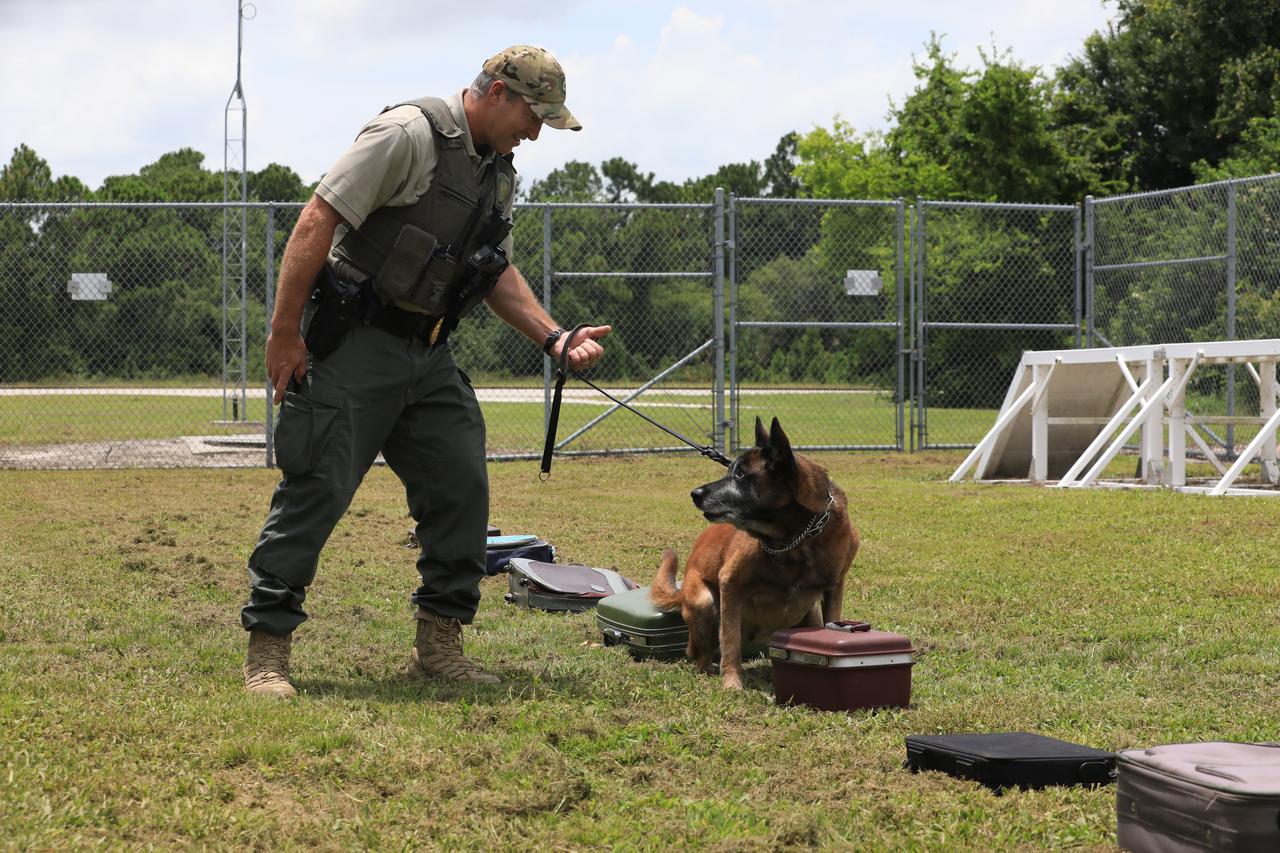
K-9 Handler Officer Scott O’Rourke watches as K-9 LJ stops at the container with a suspicious substance during a training exercise on July 10, 2019, at Kennedy Space Center’s Protective Services Office in Florida. The center’s specially trained K-9s support the center 24/7, 365 days. Their main goal is to protect the Kennedy workforce and assets. Normal activities include sweeps of designated facilities, parking lots and random vehicle inspections at entrance gates. During rocket launches, they are out and about performing sweeps of facilities and launch site viewing areas. They cover Kennedy and the Merritt Island National Wildlife Refuge.
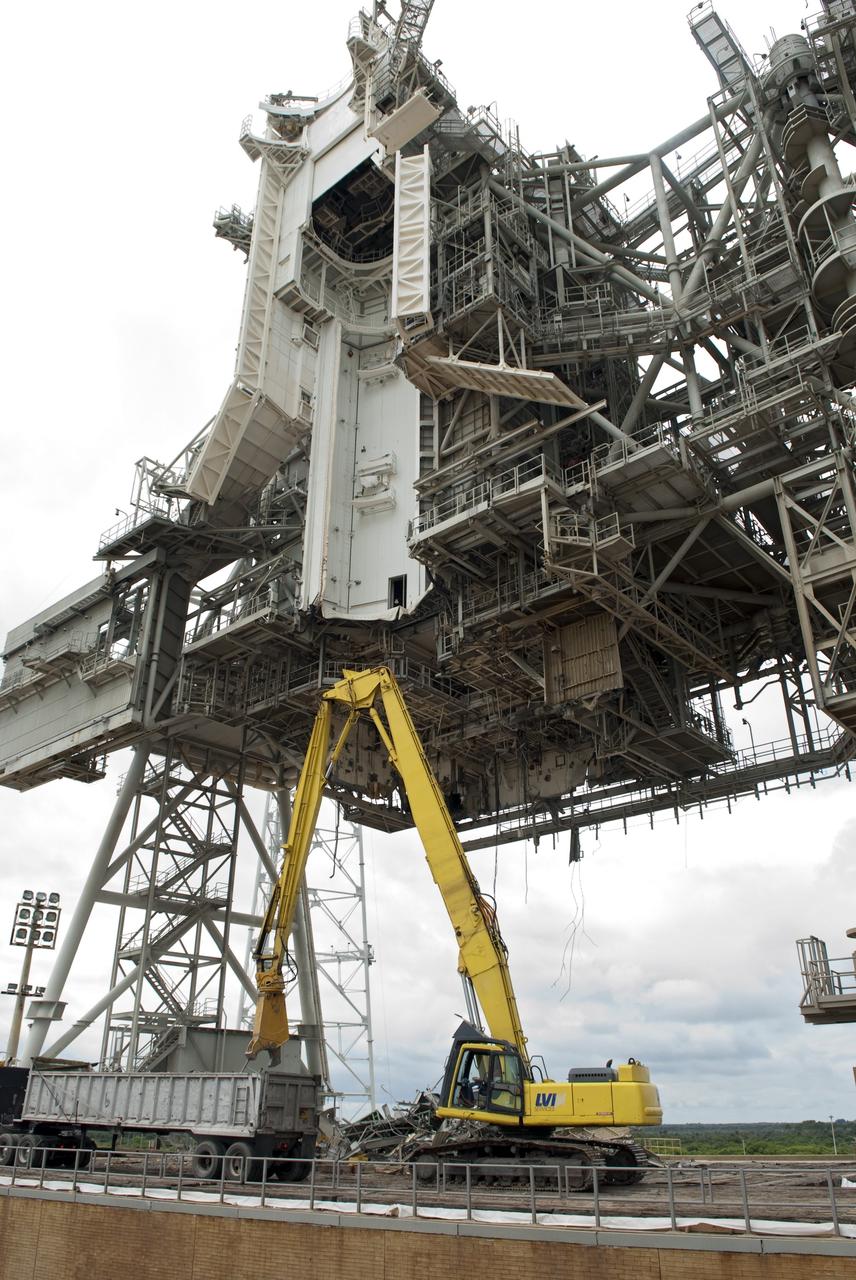
CAPE CANAVERAL, Fla. -- At NASA's Kennedy Space Center in Florida, crews are dismantling the rotating service structure (RSS) on Launch Pad 39B. Sand, reinforcing steel and large wooden mats were put down under the RSS to protect the structure's concrete from falling debris during deconstruction. Starting in 2009, the structure at the pad was no longer needed for NASA's Space Shuttle Program, so it is being restructured for future use. The new design will feature a "clean pad" for rockets to come with their own launcher, making it more versatile for a number of vehicles. The new lightning protection system, consisting of three lightning towers and a wire catenary system will remain. Photo credit: NASA/Jim Grossmann
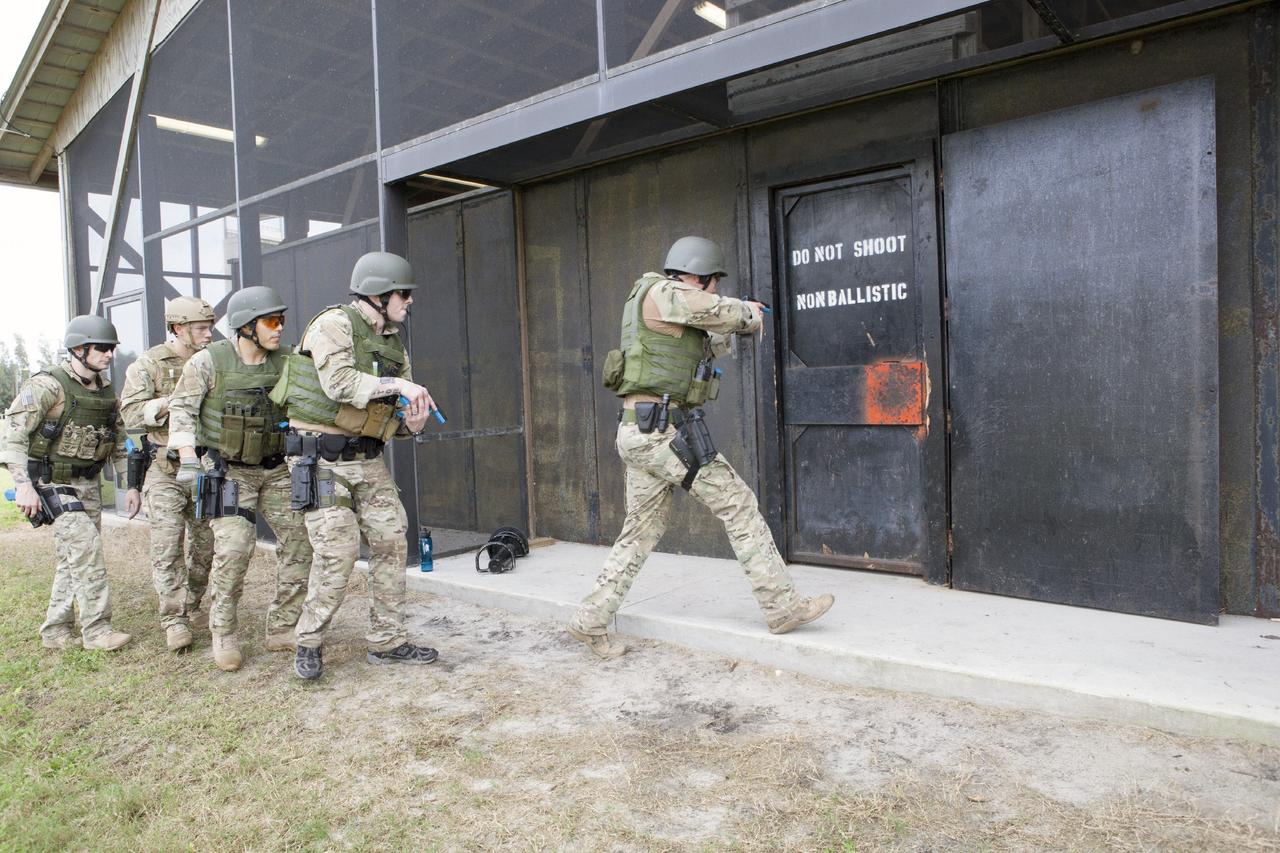
CAPE CANAVERAL, Fla. – At NASA’s Protective Services Training Academy at Kennedy Space Center in Florida, members of the Emergency Response Team, or ERT, participate in specialized training simulations in order to keep their skills current. They are wearing full protective gear and carrying non-lethal firearms, which are denoted in blue, for the training exercises. Recently, eight members of the ERT competed in the 31st Annual SWAT Roundup International competition in Orlando, Fla., and received recognition by placing in the top five overall. In keeping with NASA’s commitment to safety and security of workforce and assets, the ERT is part of Kennedy’s security team and is trained to respond in the event of an emergency at the center. Photo credit: NASA/Dimitri Gerondidakis
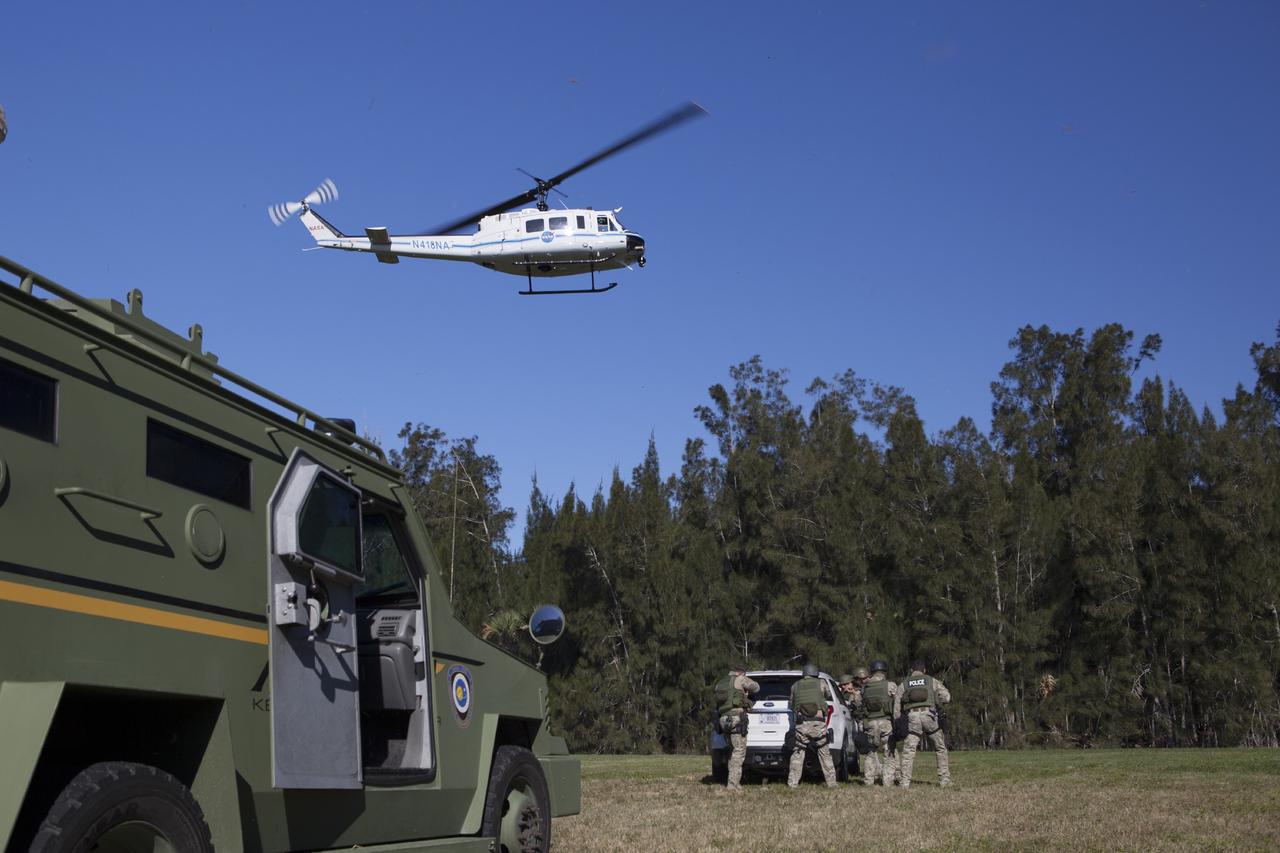
CAPE CANAVERAL, Fla. – At NASA’s Protective Services Training Academy at Kennedy Space Center in Florida, a helicopter hovers above members of the Emergency Response Team, or ERT, as they participate in specialized training simulations. They are wearing full protective gear and carrying non-lethal firearms for the training exercises in order to keep their skills current. Recently, eight members of the ERT competed in the 31st Annual SWAT Roundup International competition in Orlando, Fla., and received recognition by placing in the top five overall. In keeping with NASA’s commitment to safety and security of workforce and assets, the ERT is part of Kennedy’s security team and is trained to respond in the event of an emergency at the center. Photo credit: NASA/Dimitri Gerondidakis
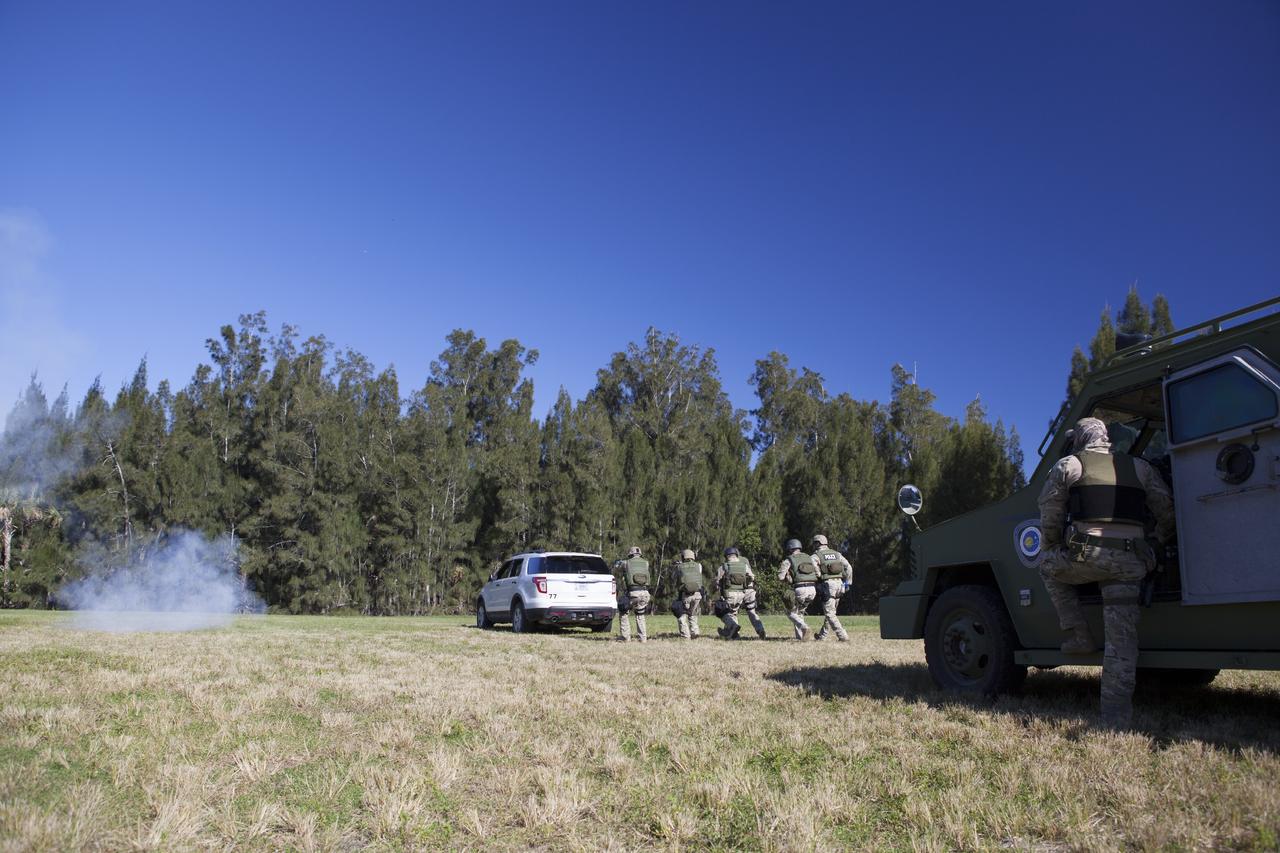
CAPE CANAVERAL, Fla. – At NASA’s Protective Services Training Academy at Kennedy Space Center in Florida, members of the Emergency Response Team, or ERT, participate in specialized training simulations which includes the use of flash bang diversionary devices. They are wearing full protective gear and carrying non-lethal firearms for the training exercises in order to keep their skills current. Recently, eight members of the ERT competed in the 31st Annual SWAT Roundup International competition in Orlando, Fla., and received recognition by placing in the top five overall. In keeping with NASA’s commitment to safety and security of workforce and assets, the ERT is part of Kennedy’s security team and is trained to respond in the event of an emergency at the center. Photo credit: NASA/Dimitri Gerondidakis
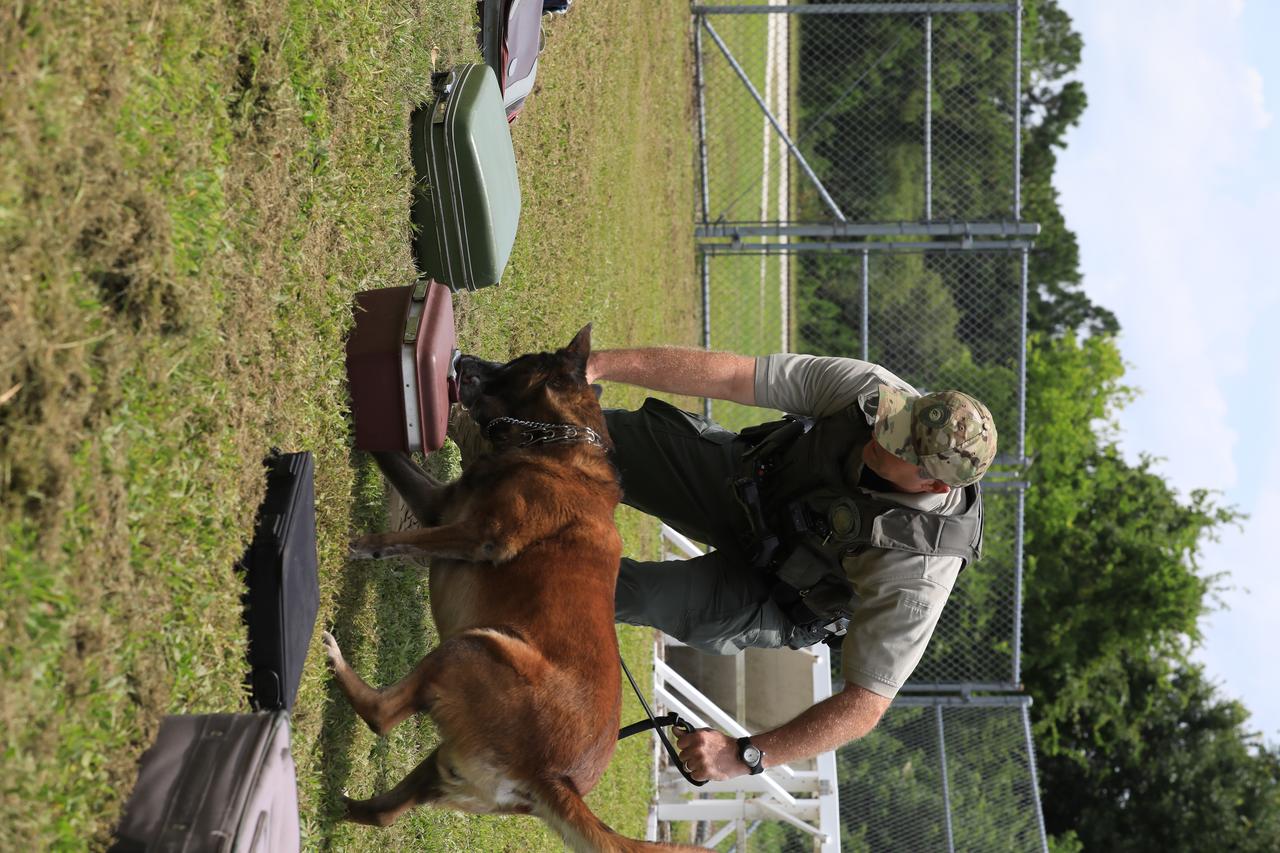
K-9 Handler Officer Scott O’Rourke watches as K-9 LJ selects the container with a suspicious substance during a training exercise on July 10, 2019, at Kennedy Space Center’s Protective Services Office in Florida. The center’s specially trained K-9s support the center 24/7, 365 days. Their main goal is to protect the Kennedy workforce and assets. Normal activities include sweeps of designated facilities, parking lots and random vehicle inspections at entrance gates. During rocket launches, they are out and about performing sweeps of facilities and launch site viewing areas. They cover Kennedy and the Merritt Island National Wildlife Refuge.
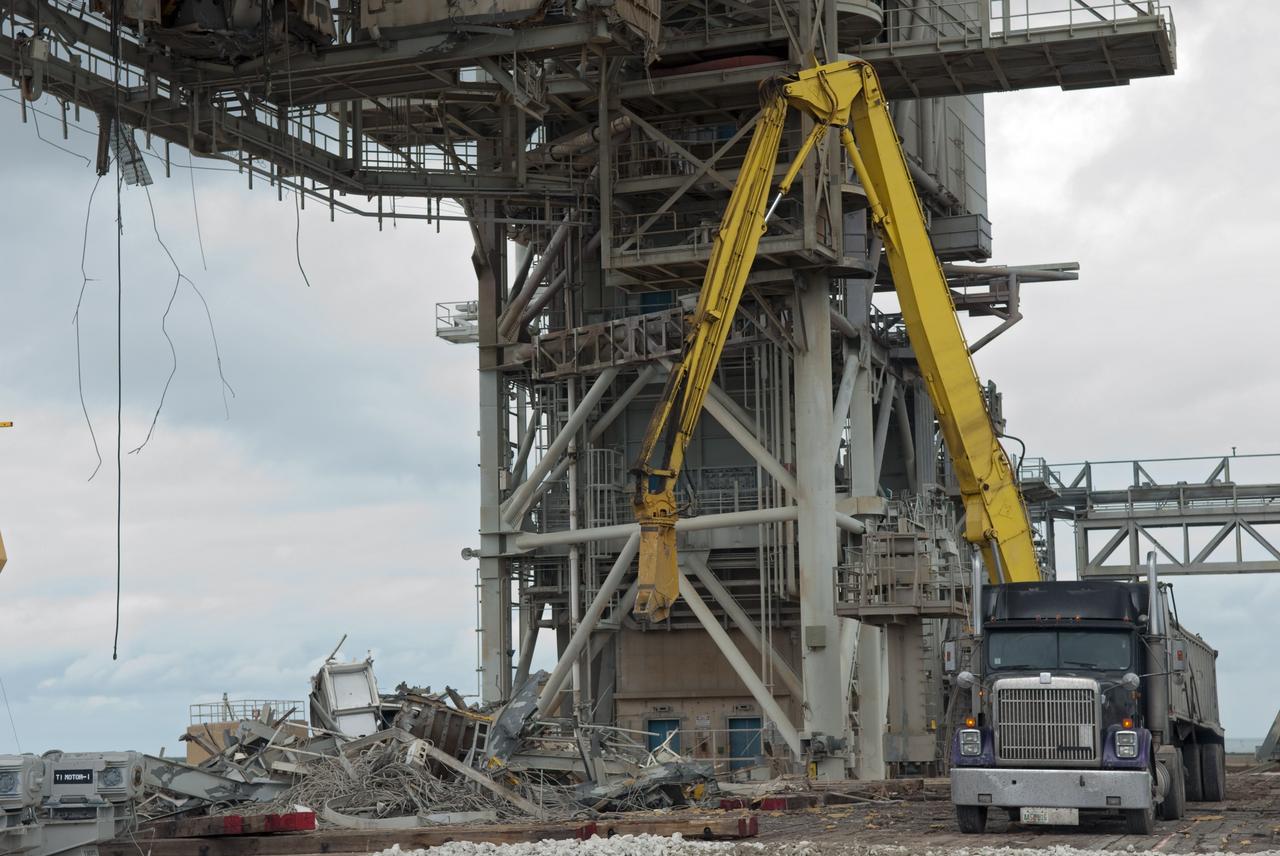
CAPE CANAVERAL, Fla. -- At NASA's Kennedy Space Center in Florida, the rotating service structure (RSS) on Launch Pad 39B is being dismantled. Sand, reinforcing steel and large wooden mats were put down under the RSS to protect the structure's concrete from falling debris during deconstruction. Starting in 2009, the structure at the pad was no longer needed for NASA's Space Shuttle Program, so it is being restructured for future use. The new design will feature a "clean pad" for rockets to come with their own launcher, making it more versatile for a number of vehicles. The new lightning protection system, consisting of three lightning towers and a wire catenary system will remain. Photo credit: NASA/Jim Grossmann
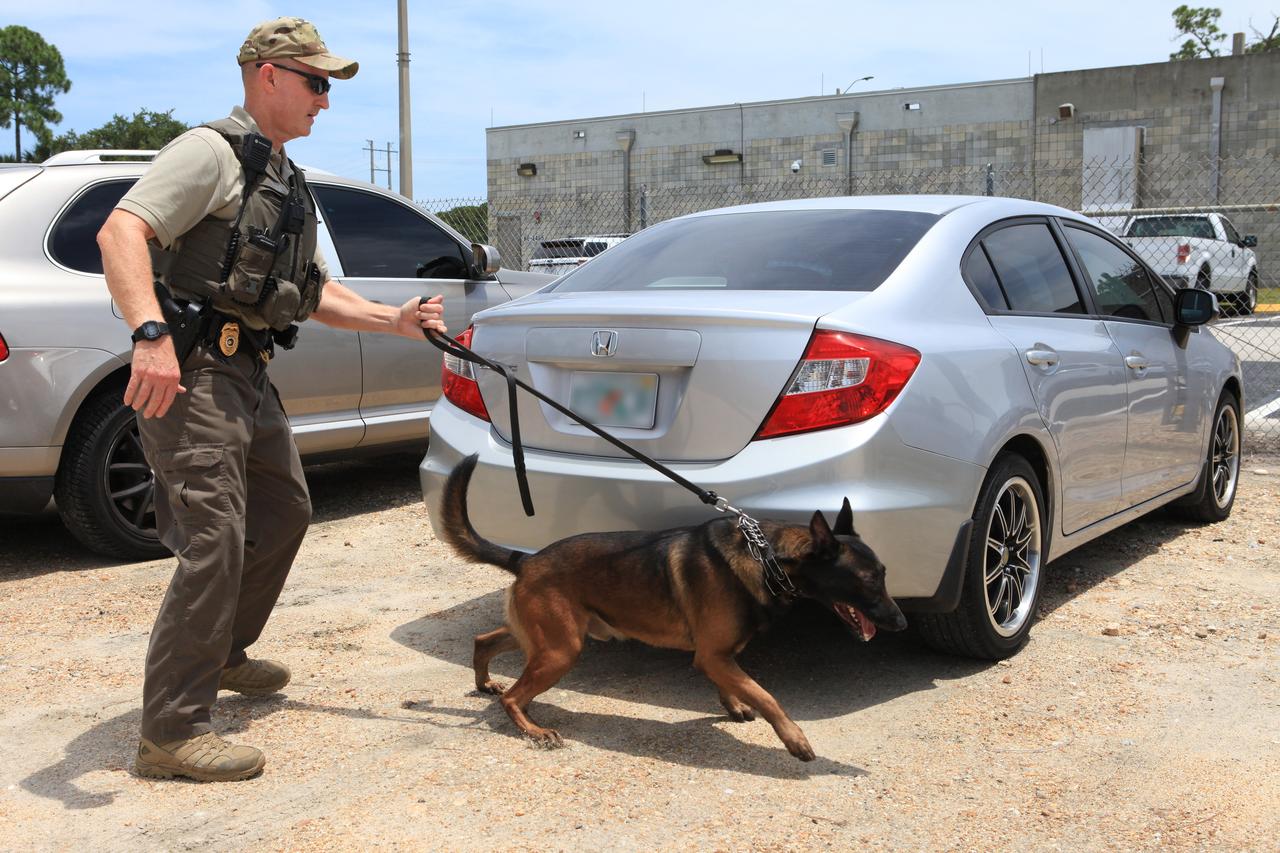
K-9 Handler Officer John McGee watches as K-9 Spike works his way through a row of cars during a training exercise on July 10, 2019, at Kennedy Space Center’s Protective Services Office in Florida. The center’s specially trained K-9s support the center 24/7, 365 days. Their main goal is to protect the Kennedy workforce and assets. Normal activities include sweeps of designated facilities, parking lots and random vehicle inspections at entrance gates. During rocket launches, they are out and about performing sweeps of facilities and launch site viewing areas. They cover Kennedy and the Merritt Island National Wildlife Refuge.
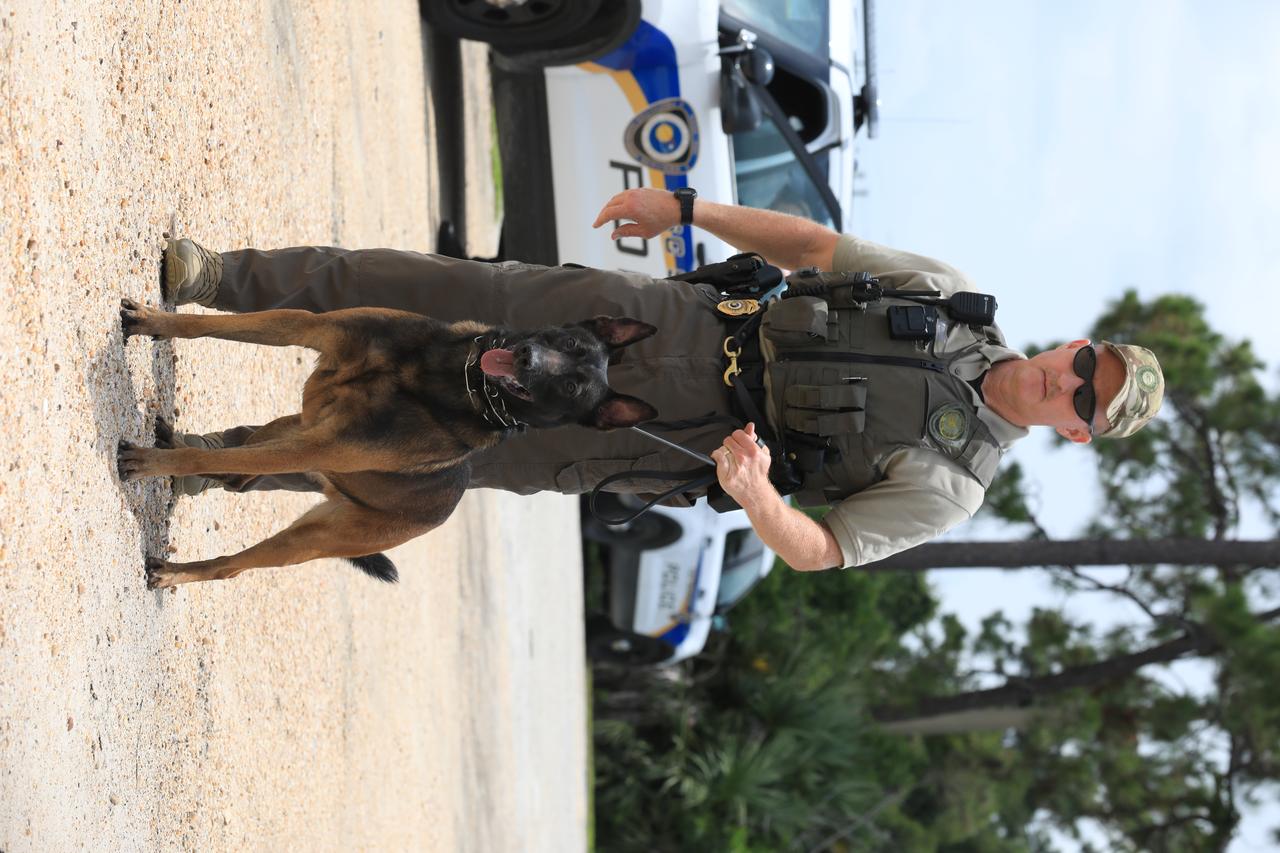
K-9 Spike stands alert and ready for the next training exercise with his Handler Officer John McGee at Kennedy Space Center’s Protective Services Office in Florida on July 10, 2019. The center’s specially trained K-9s support the center 24/7, 365 days. Their main goal is to protect the Kennedy workforce and assets. Normal activities include sweeps of designated facilities, parking lots and random vehicle inspections at entrance gates. During rocket launches, they are out and about performing sweeps of facilities and launch site viewing areas. They cover Kennedy and the Merritt Island National Wildlife Refuge.
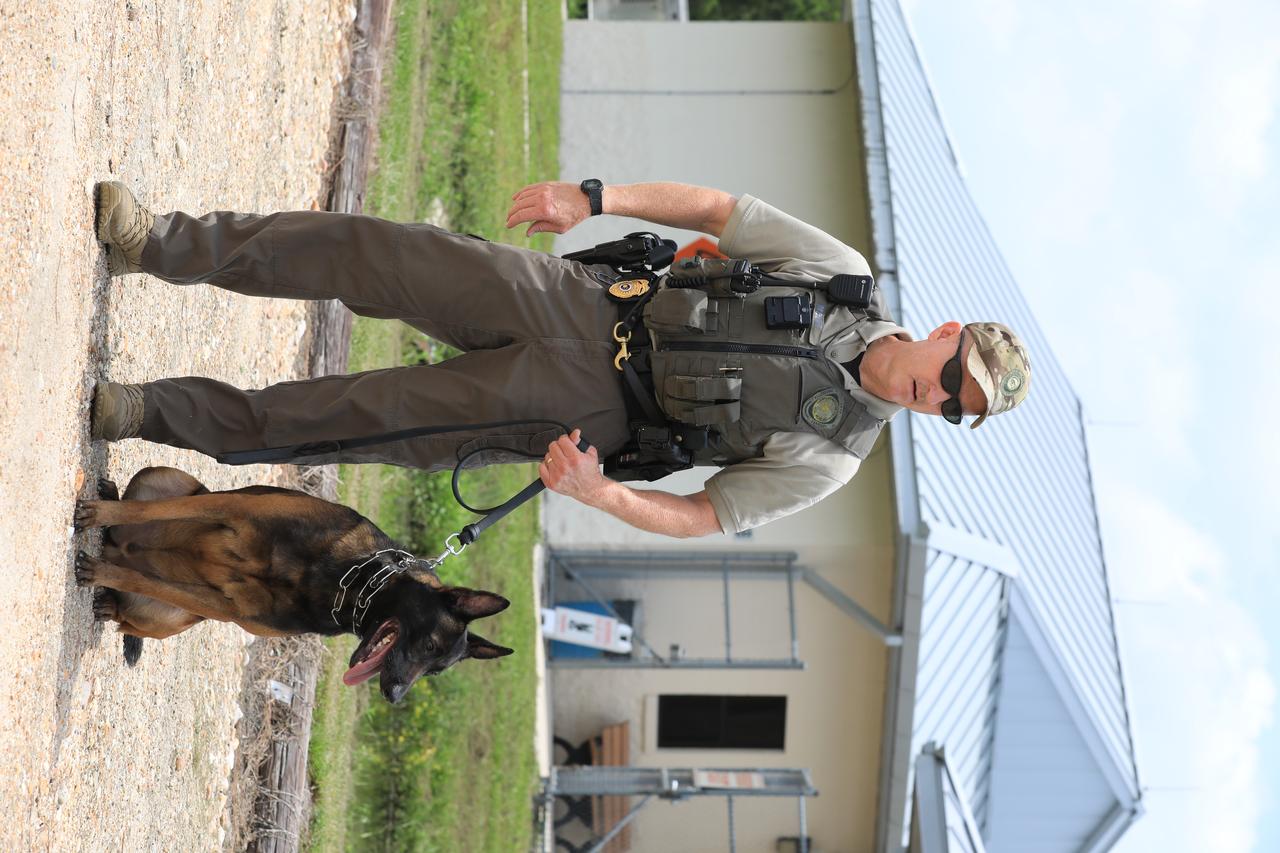
K-9 Spike is ready for the next training exercise with his Handler Officer John McGee at Kennedy Space Center’s Protective Services Office in Florida on July 10, 2019. The center’s specially trained K-9s support the center 24/7, 365 days. Their main goal is to protect the Kennedy workforce and assets. Normal activities include sweeps of designated facilities, parking lots and random vehicle inspections at entrance gates. During rocket launches, they are out and about performing sweeps of facilities and launch site viewing areas. They cover Kennedy and the Merritt Island National Wildlife Refuge.

CAPE CANAVERAL, Fla. – At NASA’s Protective Services Training Academy at Kennedy Space Center in Florida, members of the Emergency Response Team, or ERT, participate in specialized training simulations in order to keep their skills current. They are wearing full protective gear and carrying non-lethal firearms, denoted in blue, for the training exercises. Recently, eight members of the ERT competed in the 31st Annual SWAT Roundup International competition in Orlando, Fla., and received recognition by placing in the top five overall. In keeping with NASA’s commitment to safety and security of workforce and assets, the ERT is part of Kennedy’s security team and is trained to respond in the event of an emergency at the center. Photo credit: NASA/Dimitri Gerondidakis
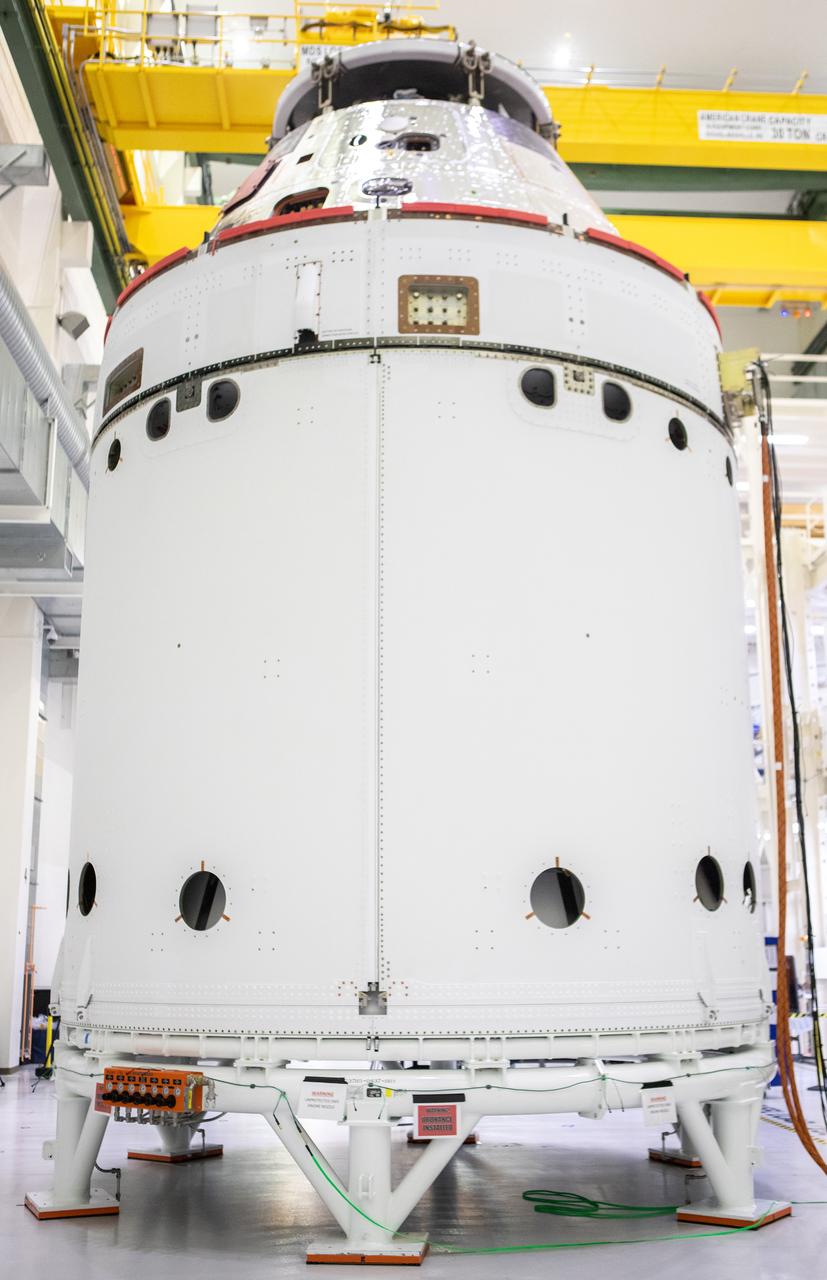
The spacecraft adapter jettison fairing panels are secured onto Orion’s European Service Module (ESM) on Oct. 27, 2020, inside the Neil Armstrong Operations and Checkout Building (O&C) at NASA’s Kennedy Space Center in Florida. The three panels were inspected and moved into place for installation by technicians with Lockheed Martin. Recently, teams from across the globe installed the four solar array wings, which are housed inside the protective covering of the fairings. The fairing panels will encapsulate the ESM to protect it from harsh environments such as heat, wind, and acoustics as the spacecraft is propelled out of Earth’s atmosphere atop the Space Launch System rocket during NASA’s Artemis I mission.