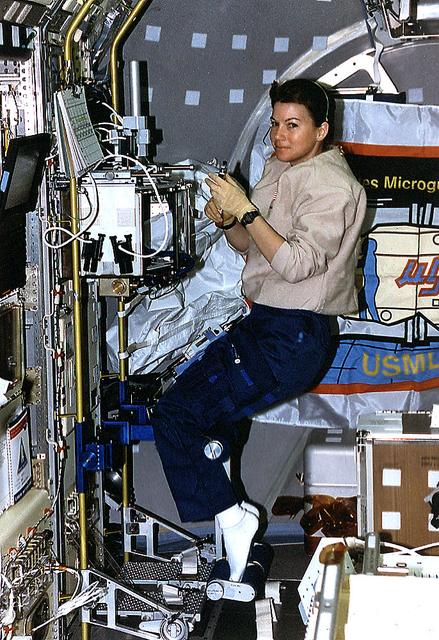
Onboard Space Shuttle Columbia (STS-73) Mission Specialists Catherine Cady Coleman works at the glovebox facility in support of the Protein Crystal Growth Glovebox (PCG-GBX) experiment in the United States Microgravity Laboratory 2 (USML-2) Spacelab science module.
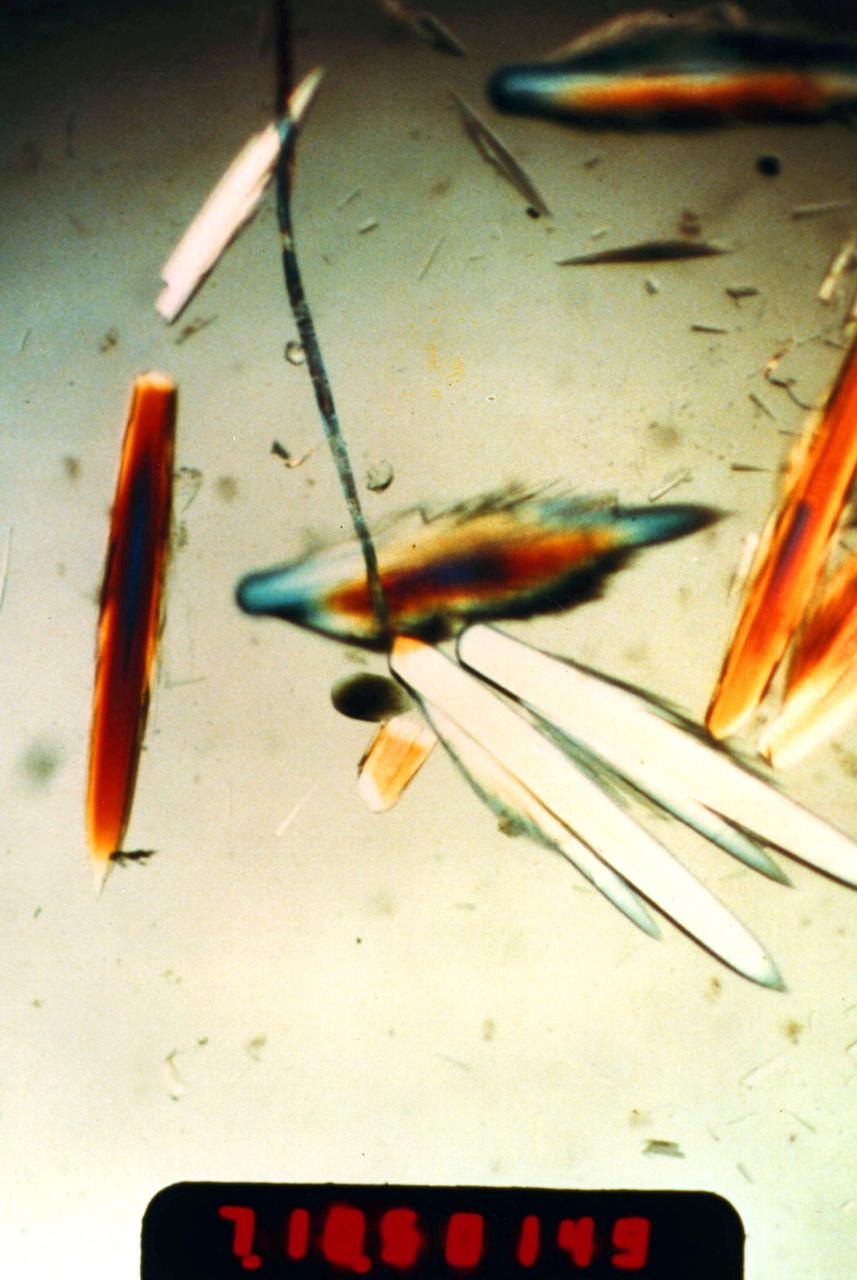
Horse Serum Albumin crystals grown during the USML-1 (STS-50) mission's Protein Crystal Growth Glovebox Experiment. These crystals were grown using a vapor diffusion technique at 22 degrees C. The crystals were allowed to grow for nine days while in orbit. Crystals of 1.0 mm in length were produced. The most abundant blood serum protein, regulates blood pressure and transports ions, metabolites, and therapeutic drugs. Principal Investigator was Edward Meehan.
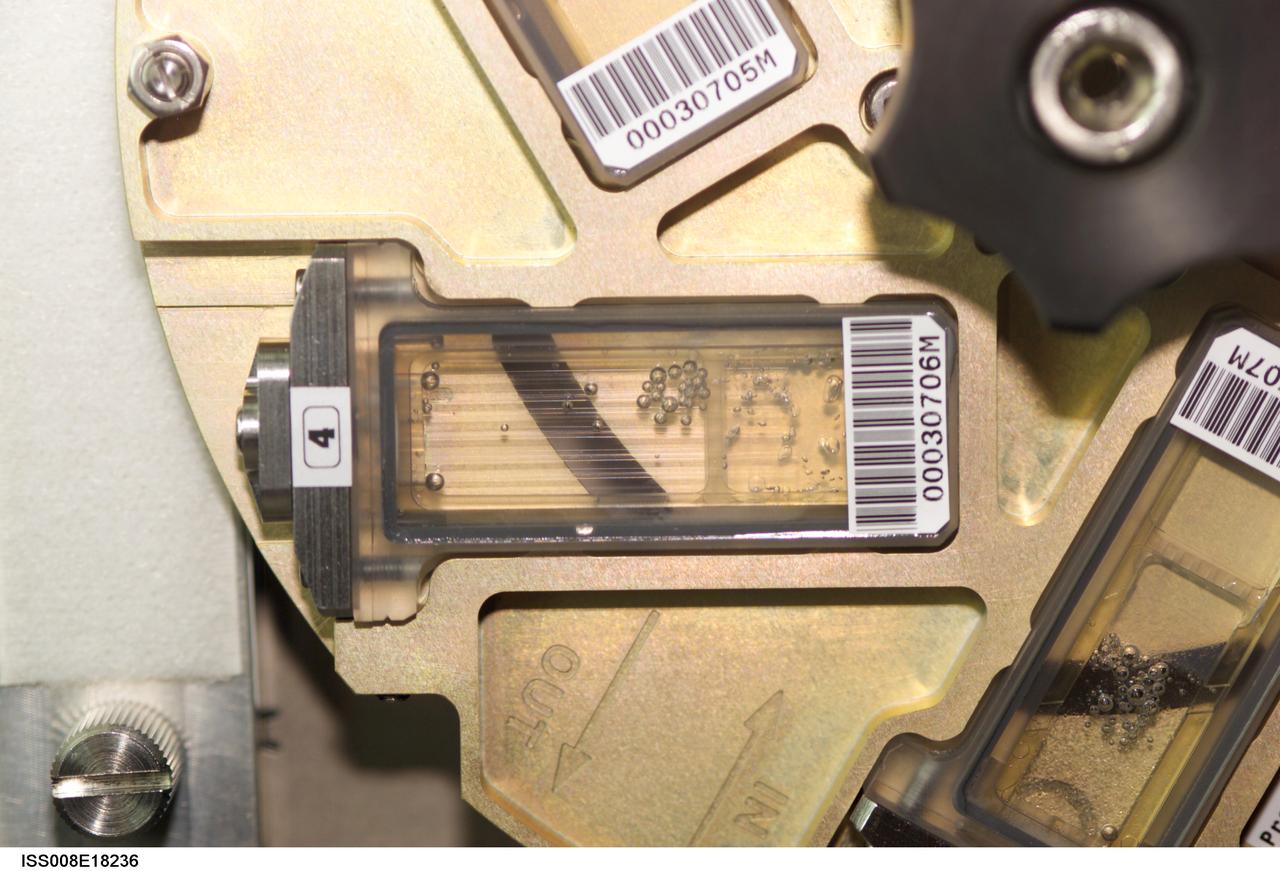
iss008e18236 (3/3/2004) --- Close-up view of a PromISS 3 (Protein Crystal Growth Monitoring by Digital Holographic Microscope) experiment sample. The experiment was conducted by the Expedition 8 crew in the Microgravity Science Glovebox (MSG) located in the Destiny U.S. Laboratory aboard the International Space Station (ISS).
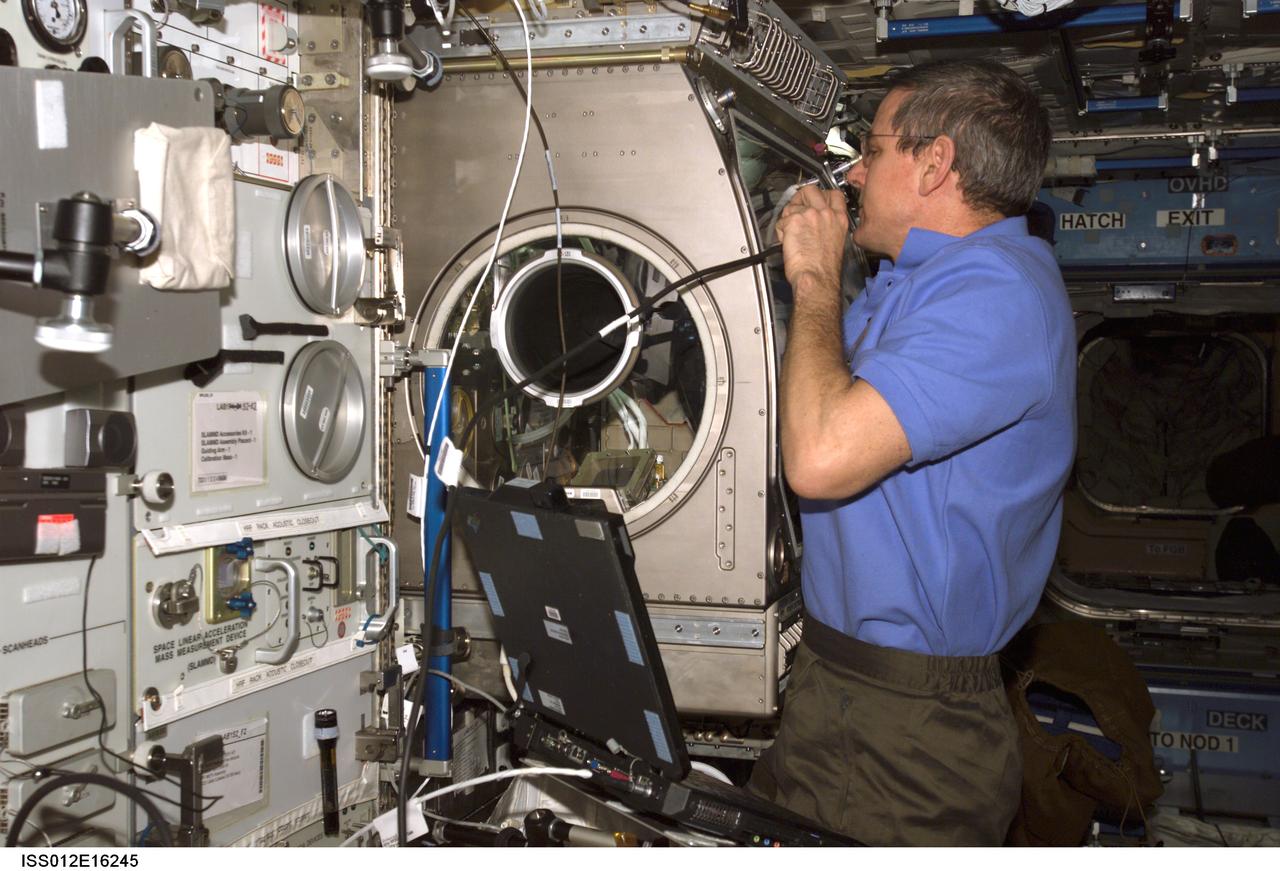
ISS012-E-16245 (19 Jan. 2006) --- Astronaut William S. (Bill) McArthur, Expedition 12 commander and NASA space station science officer, configures the Microgravity Science Glovebox (MSG) facility to prepare for the installation and activation of the Protein Crystal Growth Monitoring by Digital Holographic Microscope (PromISS) experiment in the Destiny laboratory on the International Space Station.
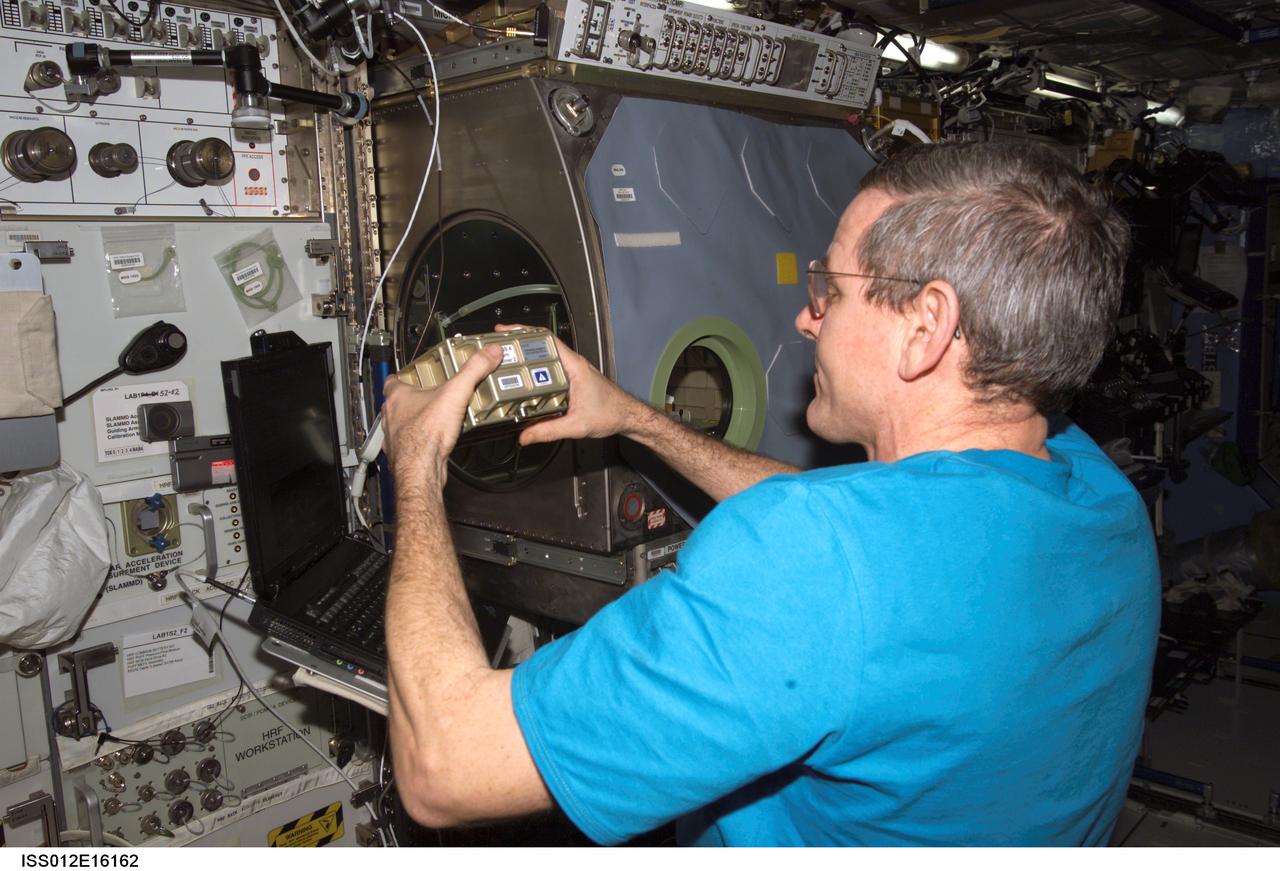
ISS012-E-16162 (18 Jan. 2006) --- Astronaut William S. (Bill) McArthur, Expedition 12 commander and NASA space station science officer, configures the Microgravity Science Glovebox (MSG) facility to prepare for the installation and activation of the Protein Crystal Growth Monitoring by Digital Holographic Microscope (PromISS) experiment in the Destiny laboratory on the International Space Station.
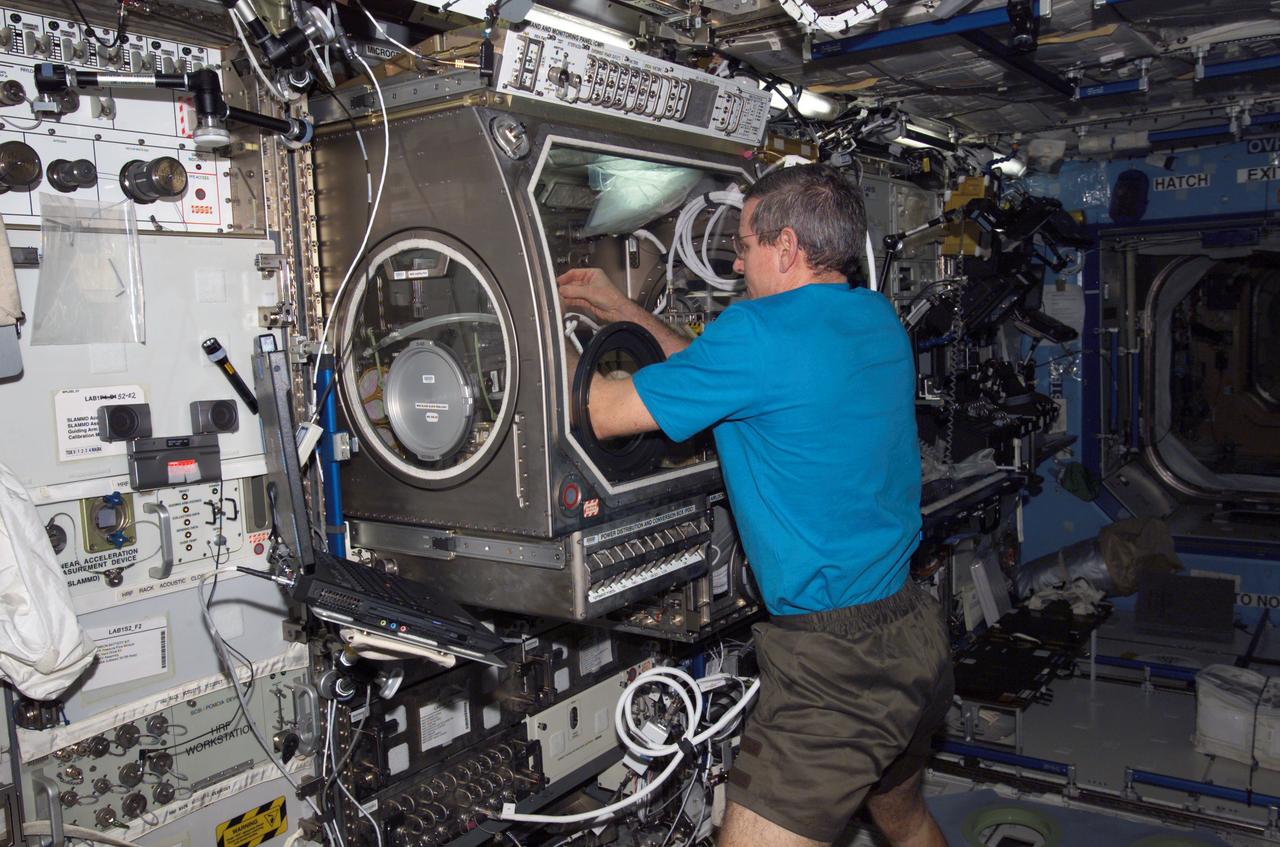
ISS012-E-16184 (18 Jan. 2006) --- Astronaut William S. (Bill) McArthur, Jr., Expedition 12 commander and NASA space station science officer, sets up the Protein Crystal Growth Monitoring by Digital Holographic Microscope (PromISS) experiment hardware inside the Microgravity Science Glovebox (MSG) facility in the Destiny laboratory on the International Space Station.
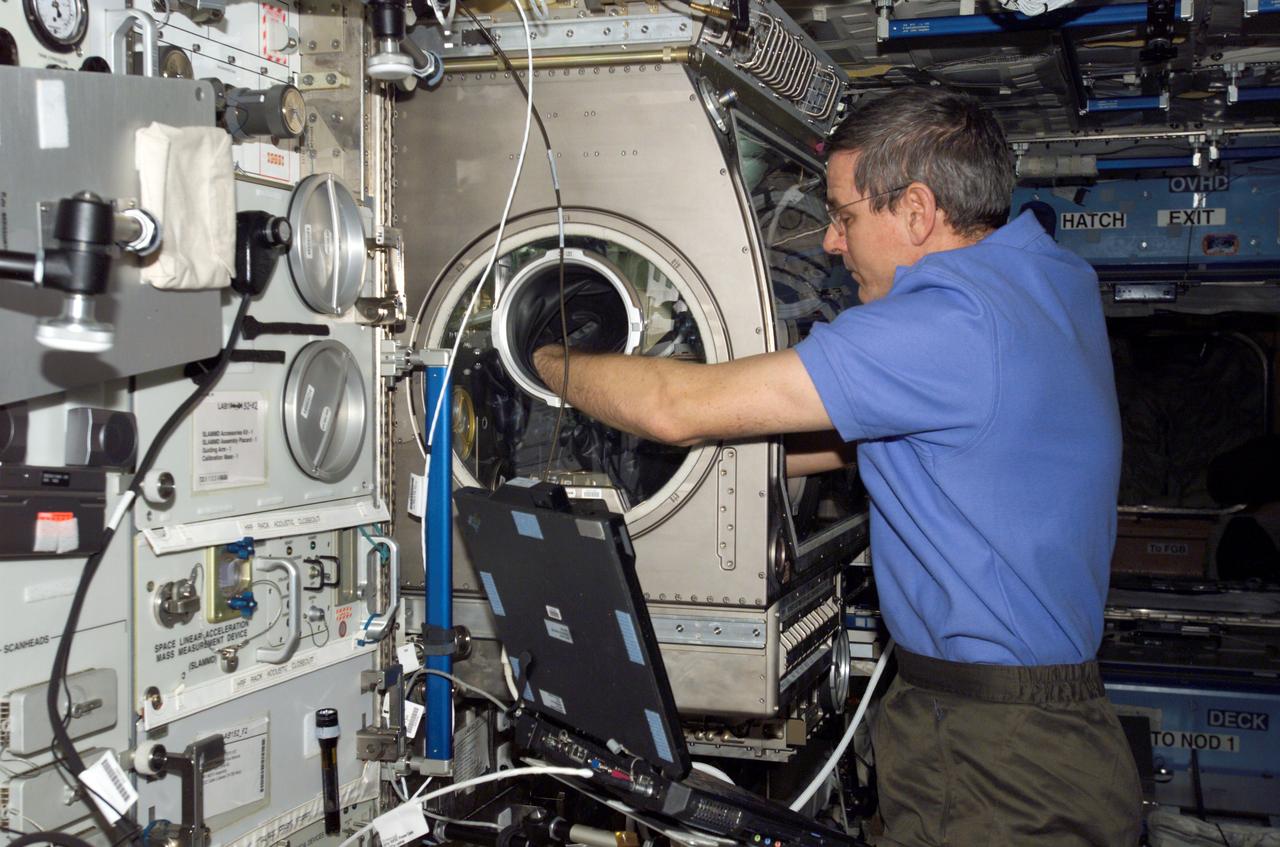
ISS012-E-16237 (19 Jan. 2006) --- Astronaut William S. (Bill) McArthur, Expedition 12 commander and NASA space station science officer, configures the Microgravity Science Glovebox (MSG) facility to prepare for the installation and activation of the Protein Crystal Growth Monitoring by Digital Holographic Microscope (PromISS) experiment in the Destiny laboratory on the International Space Station.
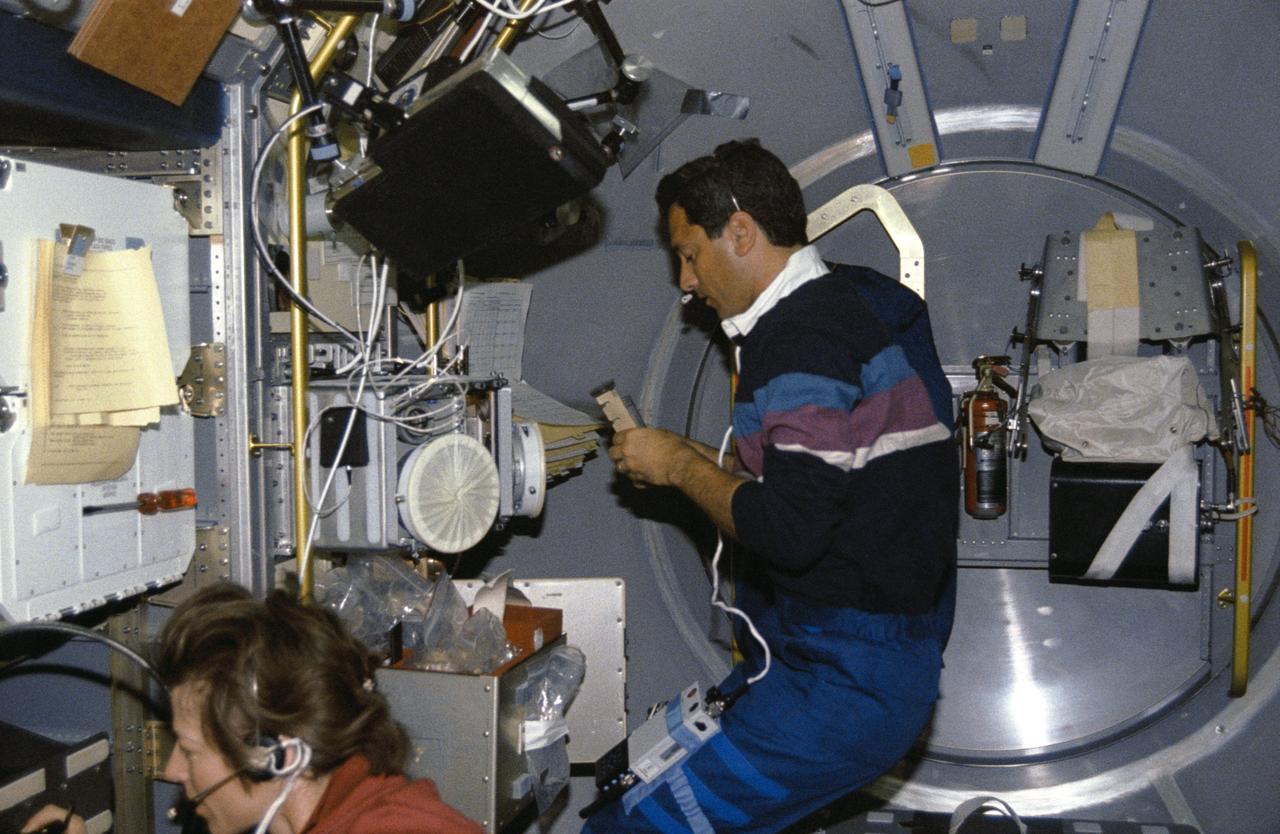
STS050-254-007 (25 June-9 July 1992) --- Lawrence J. DeLucas, payload specialist, handles a Protein Crystal Growth (PCG) sample at the multipurpose glovebox aboard the Earth-orbiting Space Shuttle Columbia. Astronaut Bonnie J. Dunbar, payload commander, communicates with ground controllers about the Solid Surface Combustion Experiment (SSCE), one of the United States Microgravity Laboratory 1’s (USML-1) three experiments on Rack 10. Five other crew members joined the pair for a record-setting 14-days of scientific data gathering.
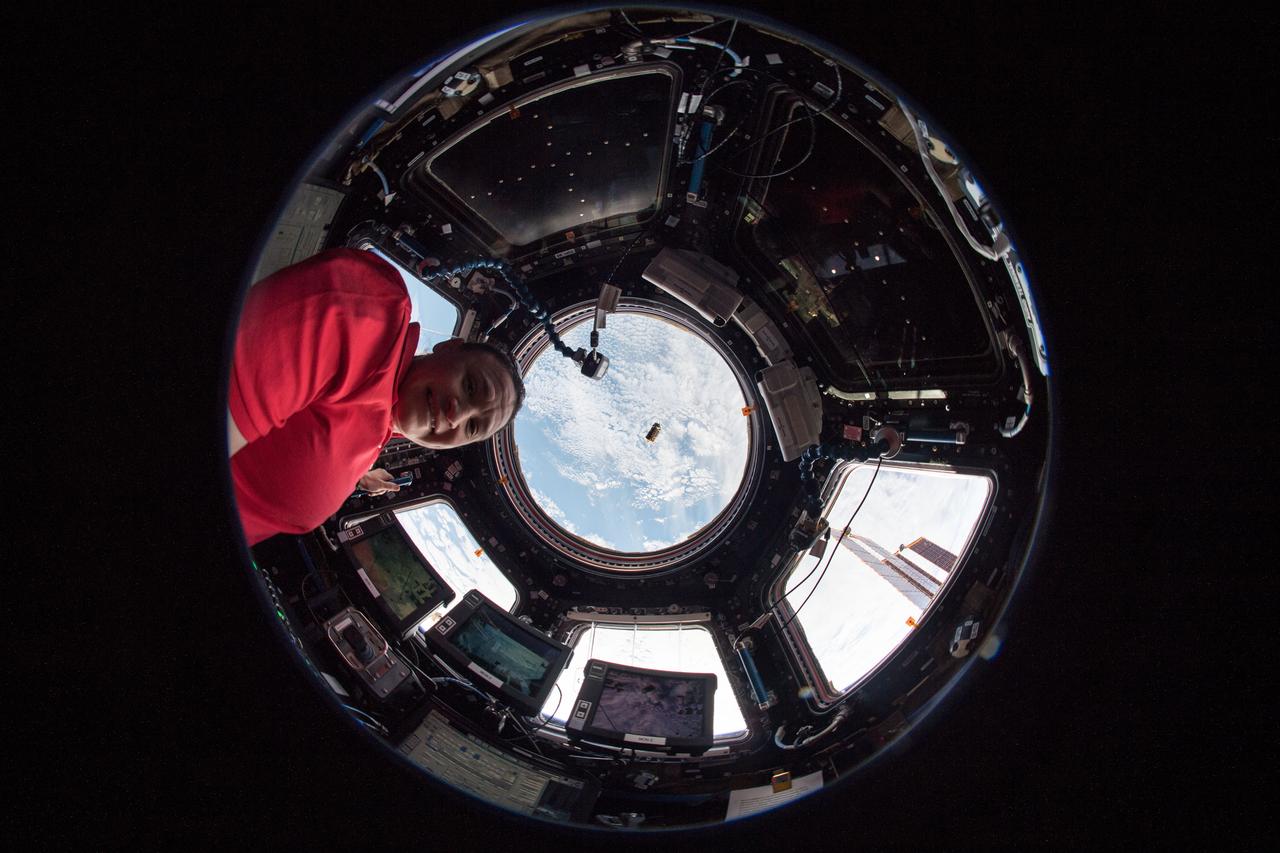
iss056e195892 (Sept. 27, 2018) --- Flight Engineer Serena Auñón-Chancellor of NASA monitors the arrival of the H-II Transfer Vehicle-7 (HTV-7) before it was captured during Expedition 56 by Commander Drew Feustel operating the Canadarm2 robotic arm. The HTV-7 from the Japan Aerospace Exploration Agency (JAXA) delivered six new lithium-ion batteries and adapter plates to upgrade the International Space Station's power systems. The Japanese resupply ship also delivered science experiments and research hardware including a new sample holder for the Electrostatic Levitation Furnace (JAXA-ELF), a protein crystal growth experiment at low temperatures (JAXA LT PCG), an investigation that looks at the effect of microgravity on bone marrow (MARROW), a Life Sciences Glovebox, and additional EXPRESS Racks.