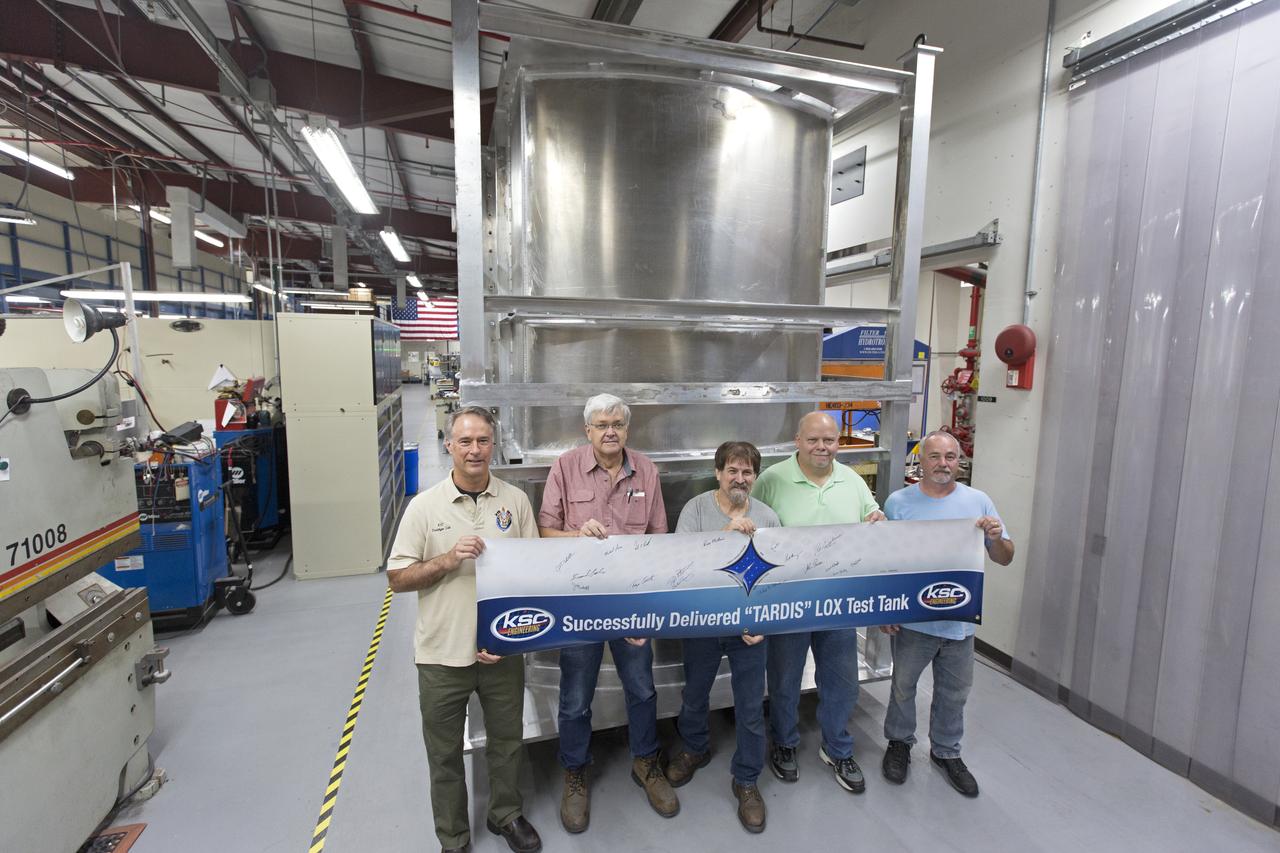
Inside the Prototype Development Laboratory at NASA's Kennedy Space Center in Florida, engineers and technicians hold a banner marking the successful delivery of a liquid oxygen test tank called Tardis. From left, are Todd Steinrock, chief, Fabrication and Development Branch, Prototype Development Lab; David McLaughlin, electrical engineering technician; Phil Stroda, mechanical engineering technician; Perry Dickey, lead electrical engineering technician; and Harold McAmis, lead mechanical engineering technician. Engineers and technicians worked together to develop the tank and build it at the lab to support cryogenic testing at Johnson Space Center's White Sands Test Facility in Las Cruces, New Mexico. The 12-foot-tall, 3,810-pound aluminum tank will be shipped to White Sands for testing.
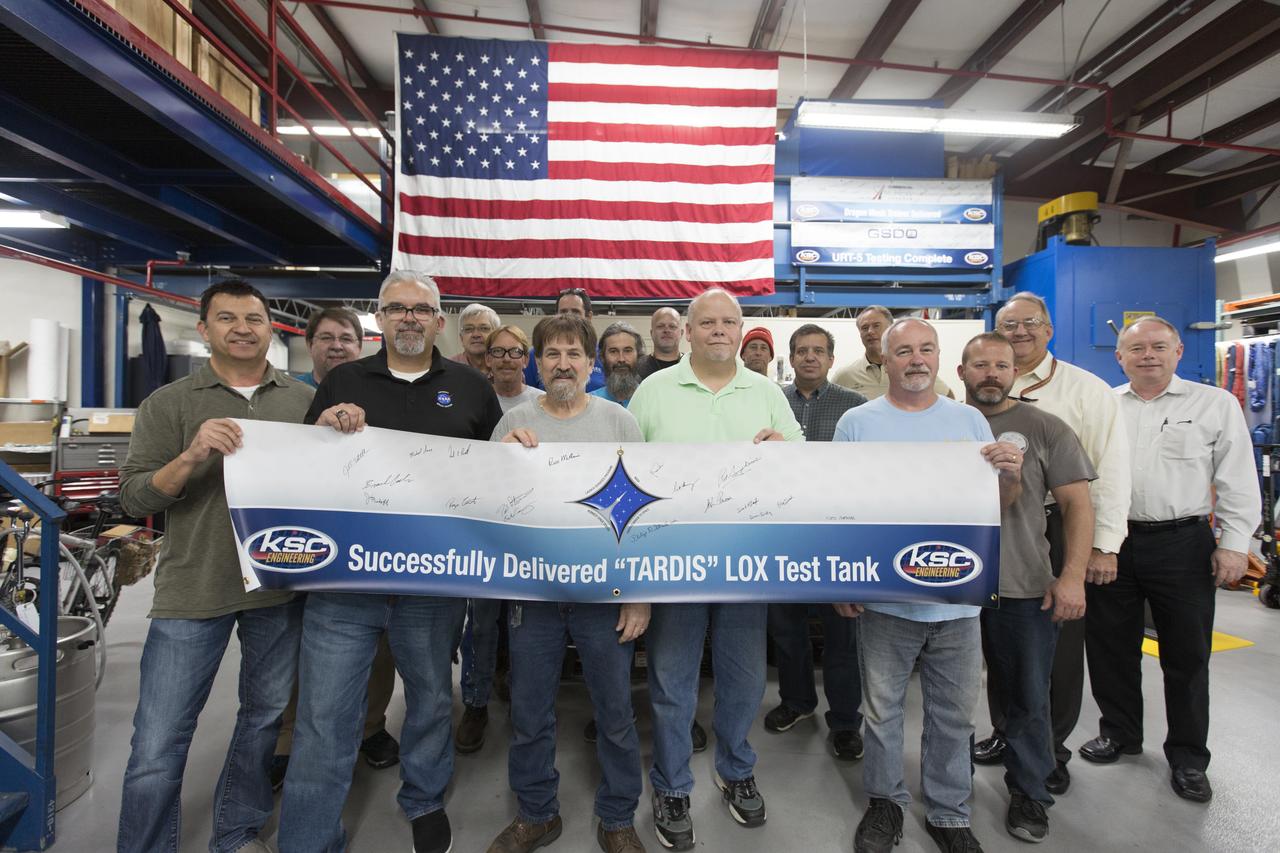
Inside the Prototype Development Laboratory at NASA's Kennedy Space Center in Florida, workers in the lab hold a banner marking the successful delivery of a liquid oxygen test tank called Tardis. Engineers and technicians worked together to develop the tank to build it at the lab to support cryogenic testing at Johnson Space Center's White Sands Test Facility in Las Cruces, New Mexico. The 12-foot-tall, 3,810-pound aluminum tank will be shipped to White Sands for testing.
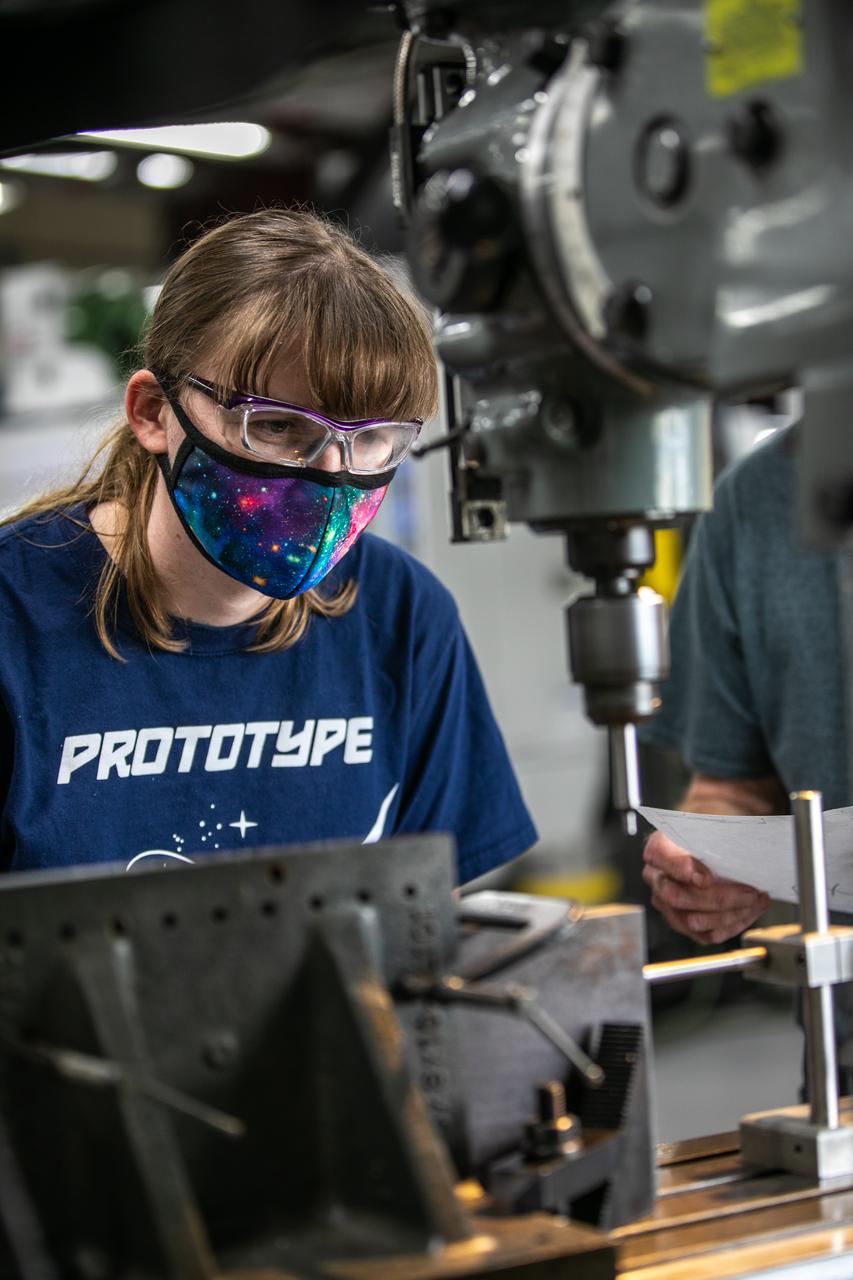
Katie Mortensen, a mechanical engineering technician, machines test article materials inside the Prototype Development Laboratory at NASA’s Kennedy Space Center in Florida on Oct. 21, 2020. The prototype laboratory designs, fabricates, and tests prototypes, test articles and test support equipment. It has a long history of providing fast solutions to complex operations problems. The lab’s teams of engineers use specialized equipment to produce exacting, one-of-a-kind items made from a range of materials depending on the design. The lab supports projects at Kennedy and at the agency level.
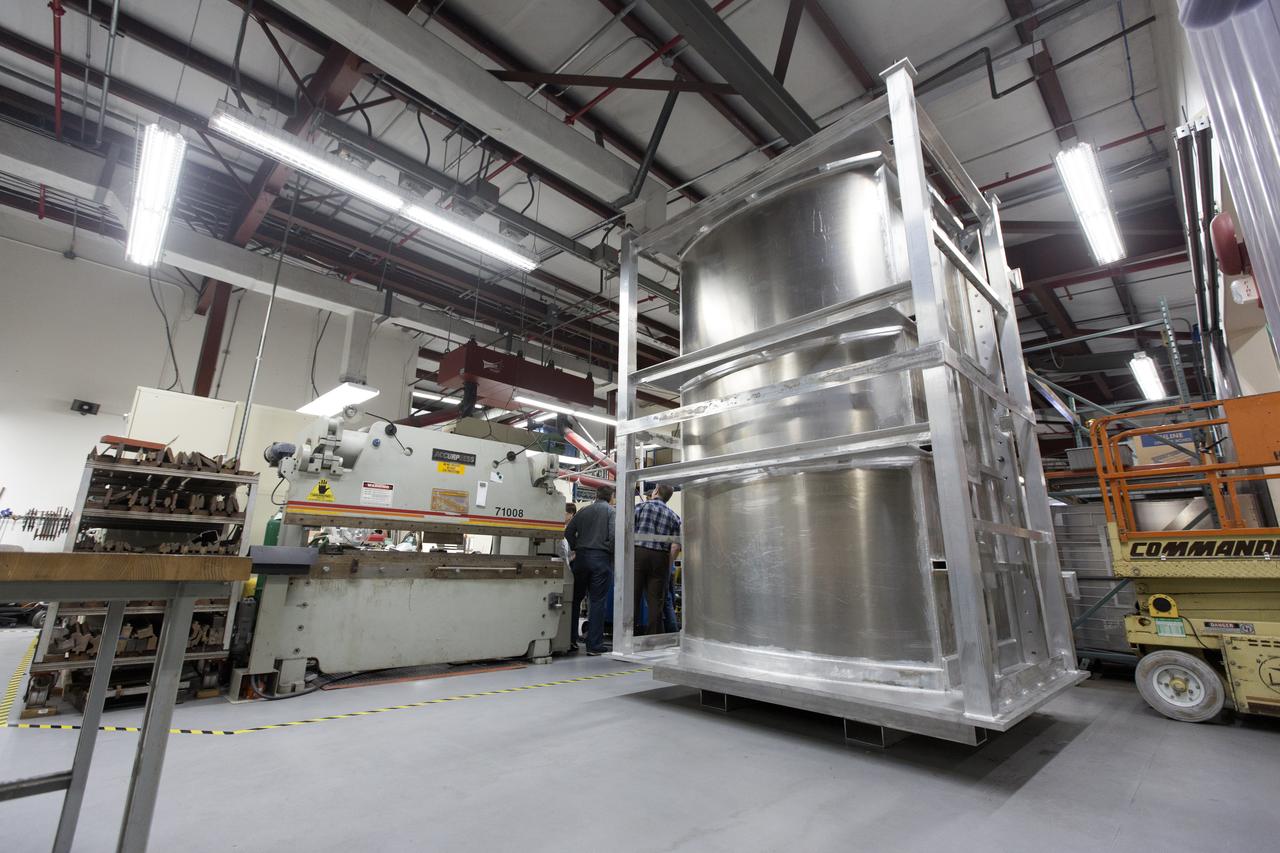
A liquid oxygen test tank was completed in the Prototype Development Laboratory at NASA's Kennedy Space Center in Florida. A banner signing event marked the successful delivery of the tank called Tardis. Engineers and technicians worked together to develop the tank and build it at the lab to support cryogenic testing at Johnson Space Center's White Sands Test Facility in Las Cruces, New Mexico. The 12-foot-tall, 3,810-pound aluminum tank will be shipped to White Sands for testing.
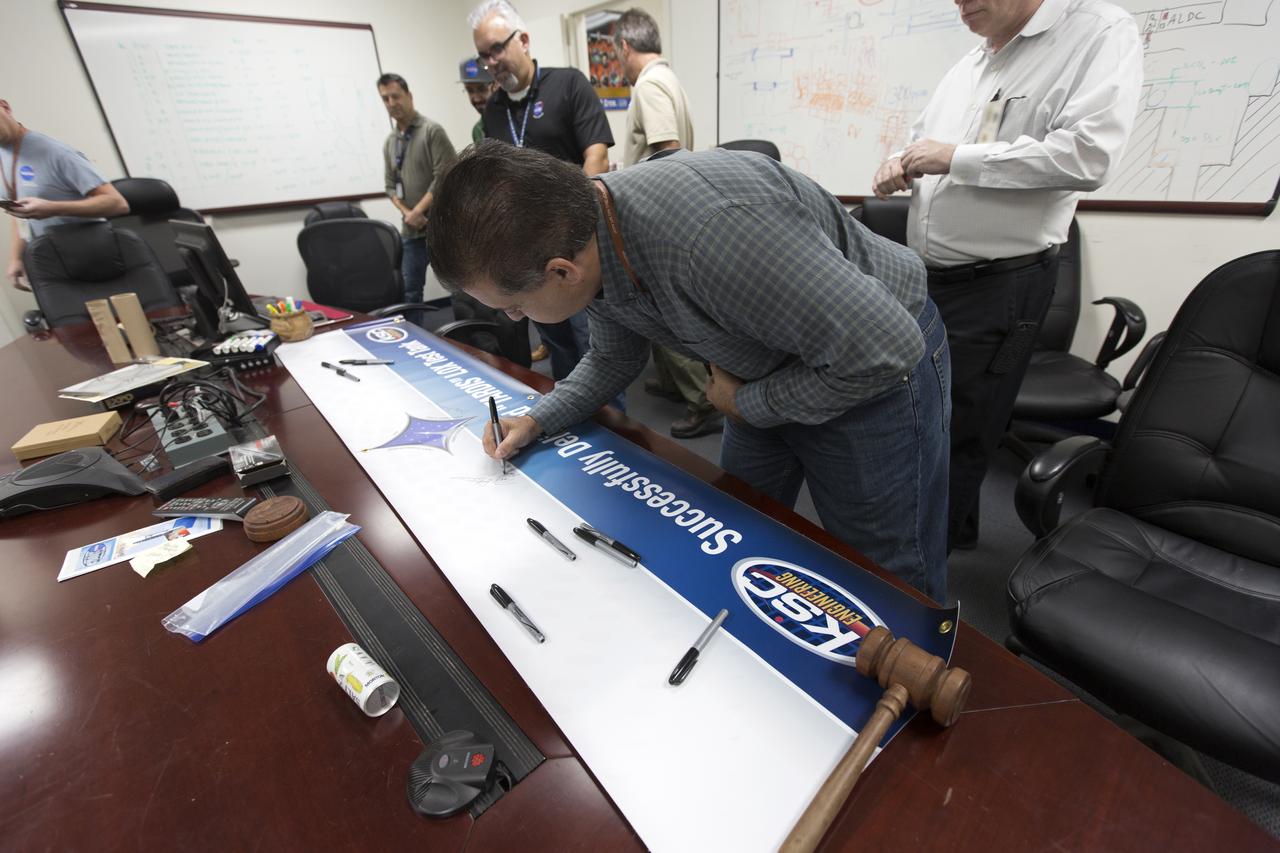
Workers sign the banner marking the successful delivery of a liquid oxygen test tank, called Tardis, in the Prototype Development Laboratory at NASA's Kennedy Space Center in Florida. Engineers and technicians worked together to develop the tank and build it at the lab to support cryogenic testing at Johnson Space Center's White Sands Test Facility in Las Cruces, New Mexico. The 12-foot-tall, 3,810-pound aluminum tank will be shipped to White Sands for testing.
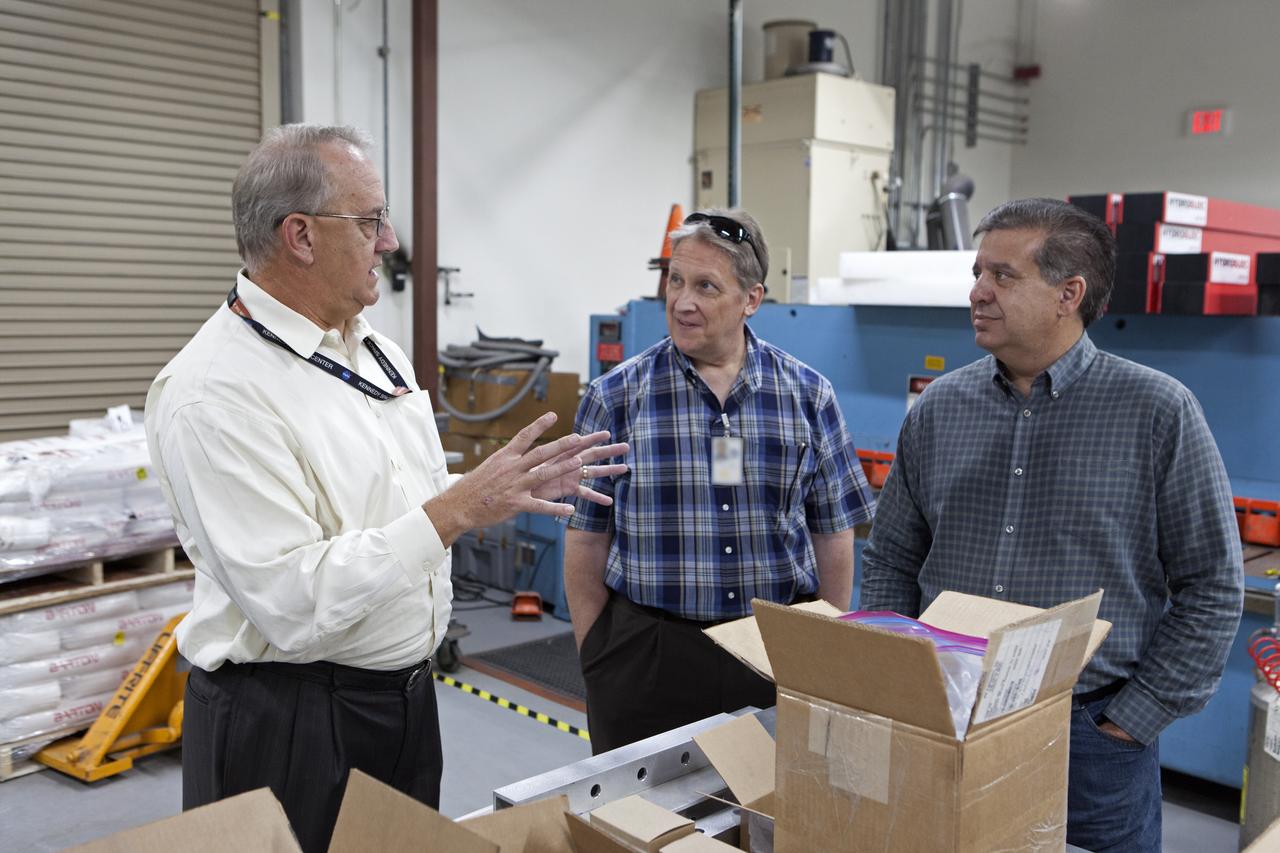
NASA Kennedy Space Center's Engineering Director Pat Simpkins, at left, talks with Michael E. Johnson, a project engineer; and Emilio Cruz, deputy division chief in the Laboratories, Development and Testing Division, inside the Prototype Development Laboratory. A banner signing event was held to mark the successful delivery of a liquid oxygen test tank, called Tardis. Engineers and technicians worked together to develop the tank and build it at the lab to support cryogenic testing at Johnson Space Center's White Sands Test Facility in Las Cruces, New Mexico. The 12-foot-tall, 3,810-pound aluminum tank will be shipped to White Sands for testing.
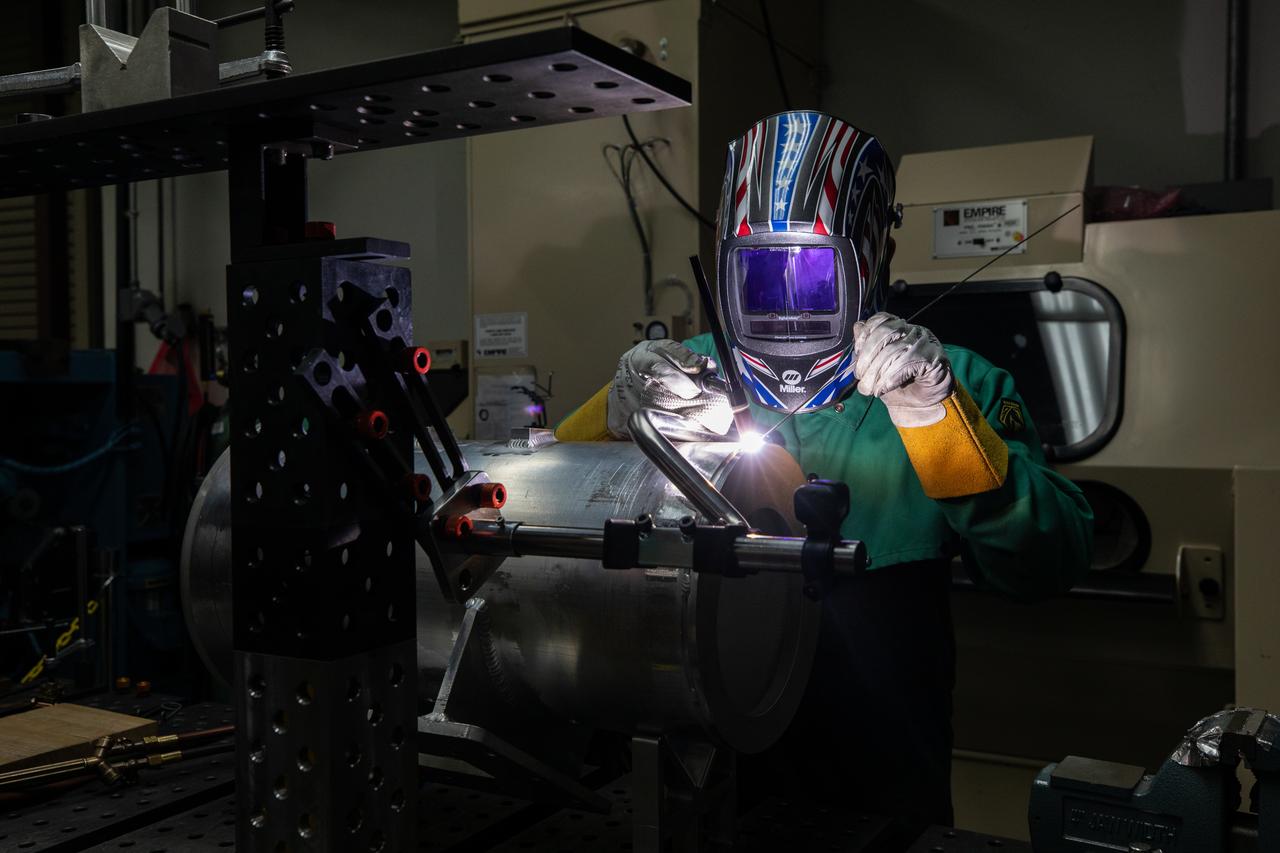
Spencer Wells, a mechanical engineering technician, welds a part of a camera enclosure which will be used at Launch Complex 39B inside the Prototype Development Laboratory at NASA’s Kennedy Space Center in Florida on Oct. 21, 2020. The prototype laboratory designs, fabricates, and tests prototypes, test articles and test support equipment. It has a long history of providing fast solutions to complex operations problems. The lab’s teams of engineers use specialized equipment to produce exacting, one-of-a-kind items made from a range of materials depending on the design. The lab supports projects at Kennedy and at the agency level.
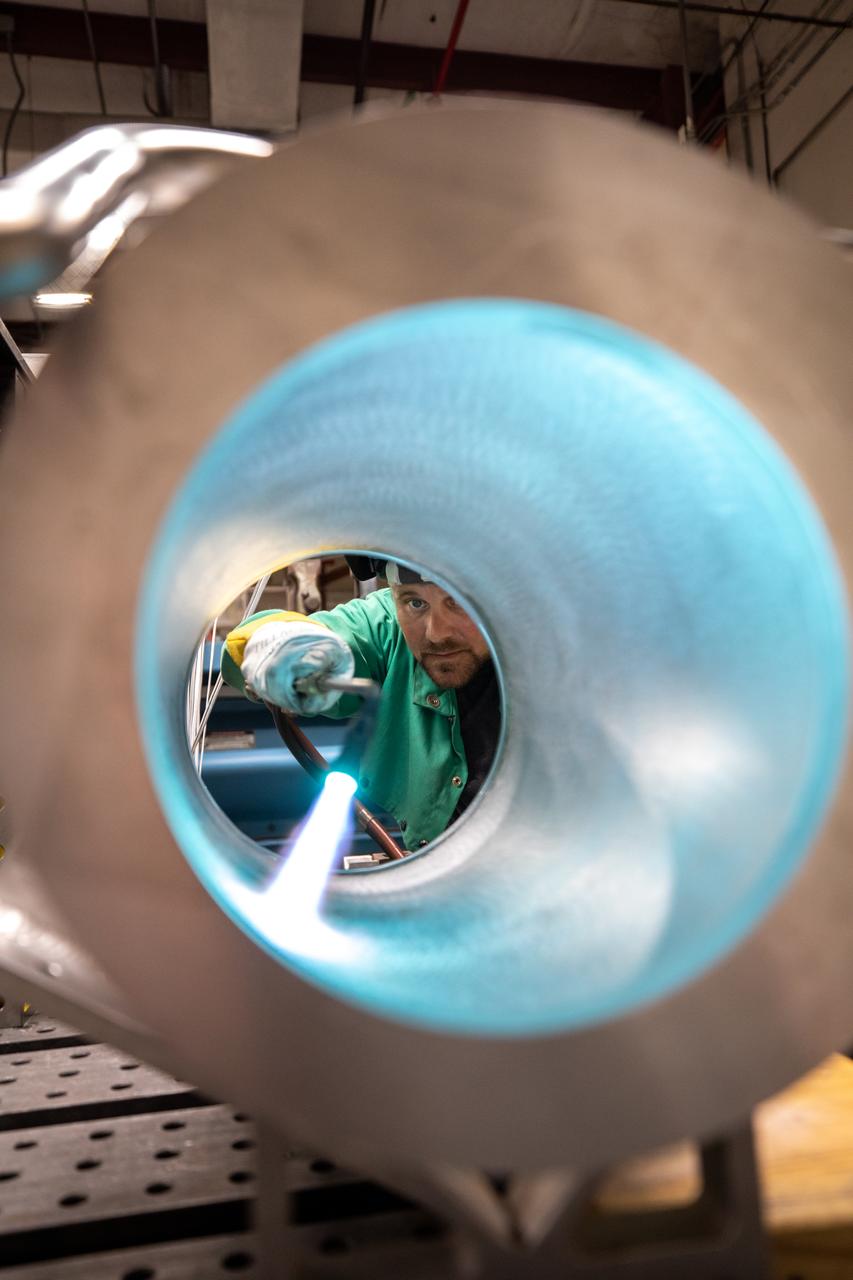
Spencer Wells, a mechanical engineering technician, examines the interior of a camera enclosure for Launch Complex 39B inside the Prototype Development Laboratory at NASA’s Kennedy Space Center in Florida on Oct. 21, 2020. The prototype laboratory designs, fabricates, and tests prototypes, test articles and test support equipment. It has a long history of providing fast solutions to complex operations problems. The lab’s teams of engineers use specialized equipment to produce exacting, one-of-a-kind items made from a range of materials depending on the design. The lab supports projects at Kennedy and at the agency level.
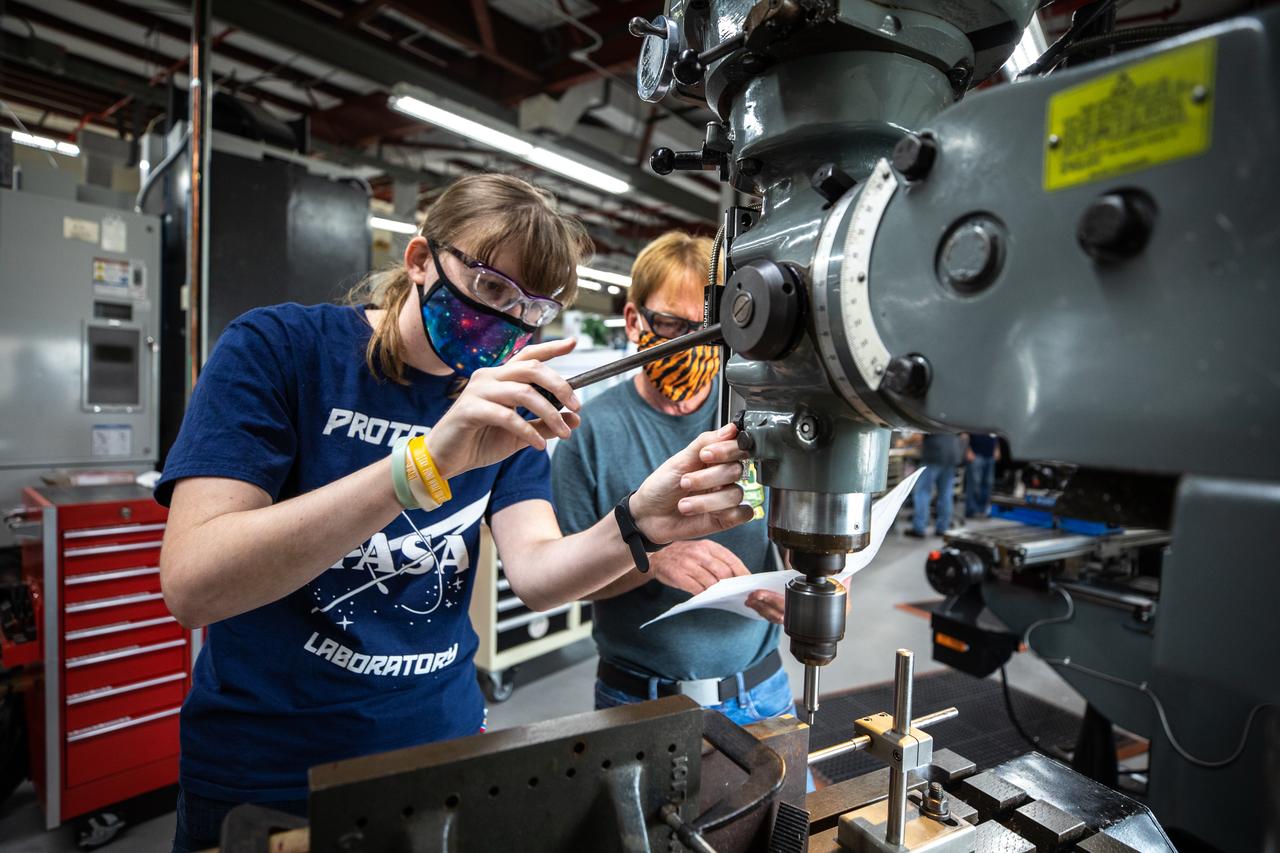
From left, mechanical engineering technicians Katie Mortensen and Jim Niehoff machine test article material inside the Prototype Development Laboratory at NASA’s Kennedy Space Center in Florida on Oct. 21, 2020. The prototype laboratory designs, fabricates, and tests prototypes, test articles and test support equipment. It has a long history of providing fast solutions to complex operations problems. The lab’s teams of engineers use specialized equipment to produce exacting, one-of-a-kind items made from a range of materials depending on the design. The lab supports projects at Kennedy and at the agency level.
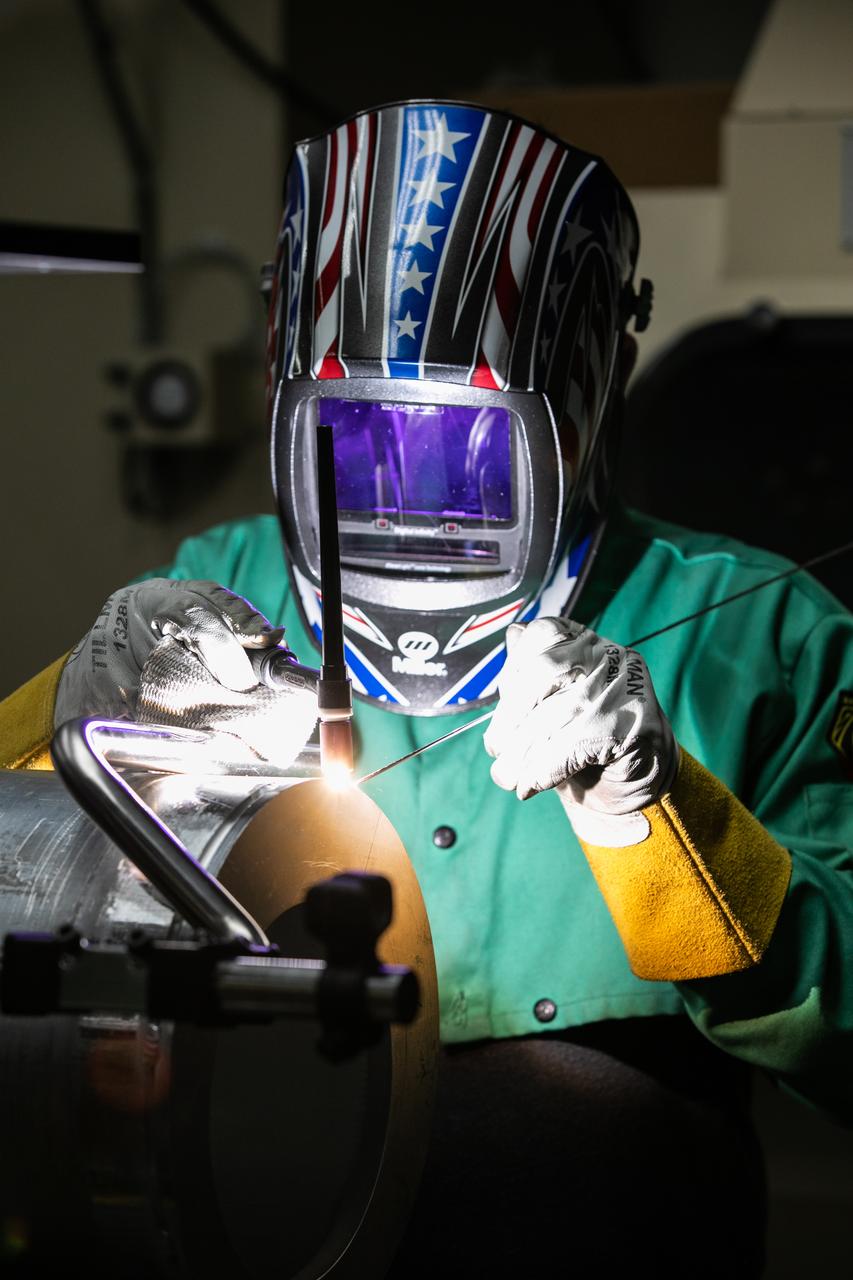
Spencer Wells, a mechanical engineering technician, welds a part of a camera enclosure which will be used at Launch Complex 39B inside the Prototype Development Laboratory at NASA’s Kennedy Space Center in Florida on Oct. 21, 2020. The prototype laboratory designs, fabricates, and tests prototypes, test articles and test support equipment. It has a long history of providing fast solutions to complex operations problems. The lab’s teams of engineers use specialized equipment to produce exacting, one-of-a-kind items made from a range of materials depending on the design. The lab supports projects at Kennedy and at the agency level.
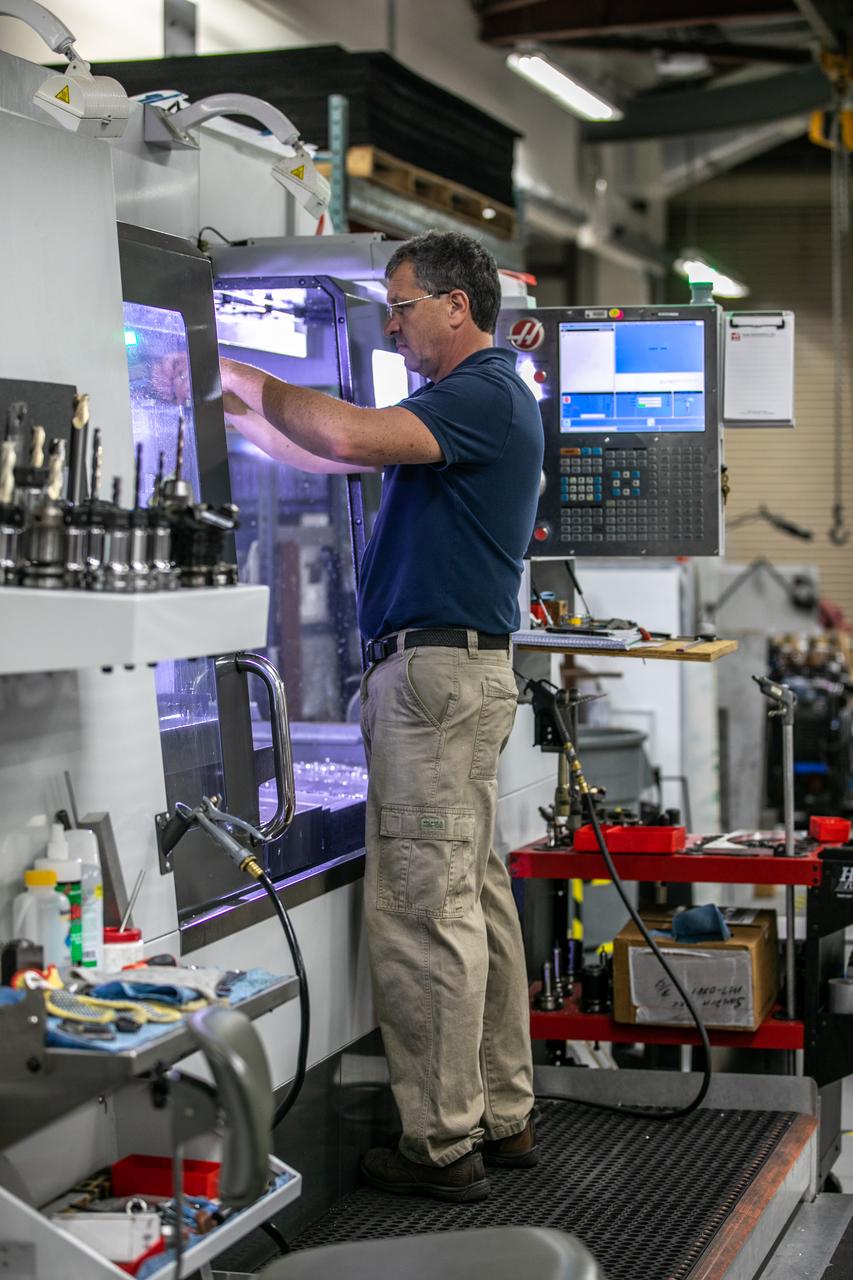
Tim Evans, a mechanical engineering technician, uses a computer numerical control (CNC) machine to machine a part for a Launch Pad 39B camera enclosure inside the Prototype Development Laboratory at NASA’s Kennedy Space Center in Florida on Oct. 21, 2020. The prototype laboratory designs, fabricates, and tests prototypes, test articles and test support equipment. It has a long history of providing fast solutions to complex operations problems. The lab’s teams of engineers use specialized equipment to produce exacting, one-of-a-kind items made from a range of materials depending on the design. The lab supports projects at Kennedy and at the agency level.
NASA Kennedy Space Center's Engineering Directorate held a banner signing event in the Prototype Development Laboratory to mark the successful delivery of a liquid oxygen test tank, called Tardis. Engineers and technicians worked together to develop the tank and build it to support cryogenic testing at Johnson Space Center's White Stands Test Facility in Las Cruces, New Mexico. The 12-foot-tall, 3,810-pound aluminum tank will be shipped to White Sands for testing.
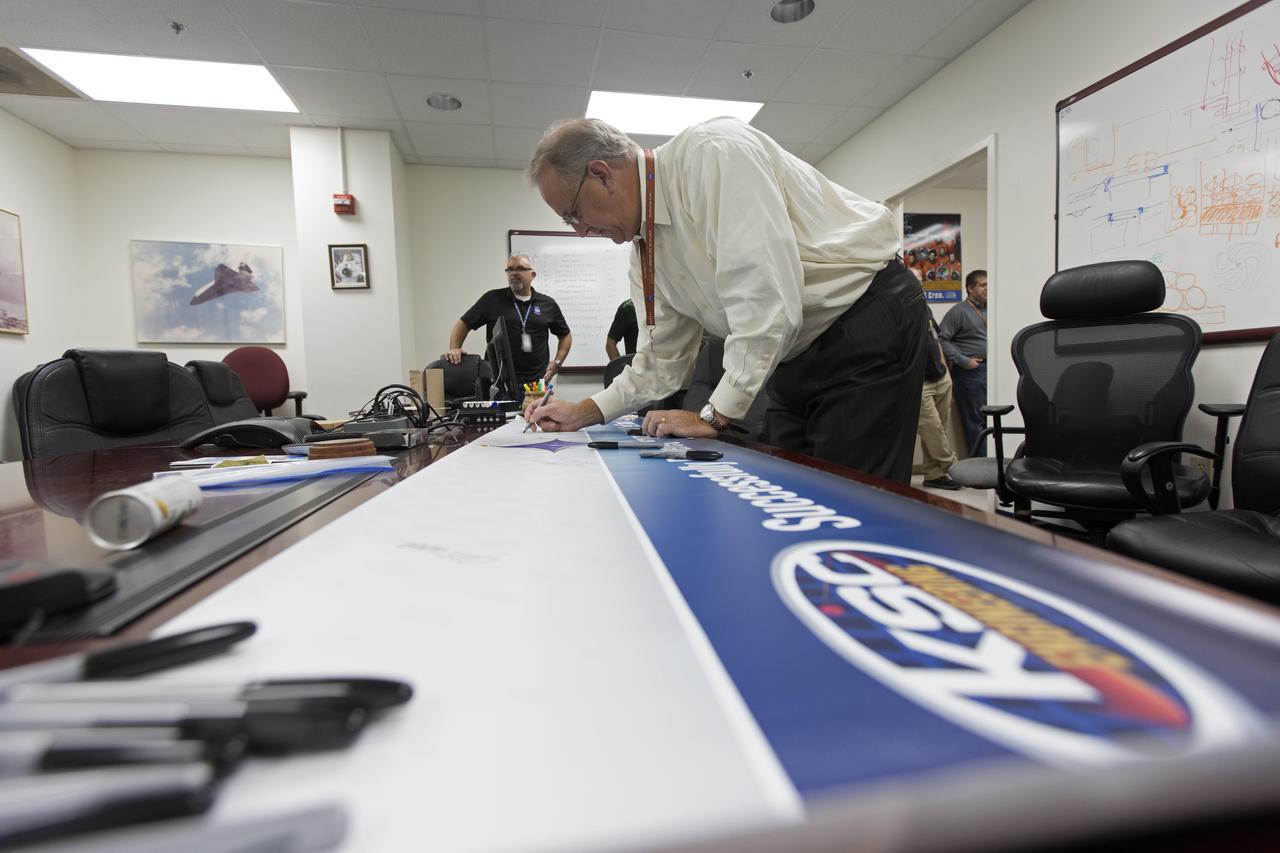
NASA Kennedy Space Center's Engineering Director Pat Simpkins signs the banner marking the successful delivery of a liquid oxygen test tank, called Tardis, in the Prototype Development Laboratory at NASA's Kennedy Space Center in Florida. Engineers and technicians worked together to develop the tank and build it to support cryogenic testing at Johnson Space Center's White Stands Test Facility in Las Cruces, New Mexico. The 12-foot-tall, 3,810-pound aluminum tank will be shipped to White Sands for testing.
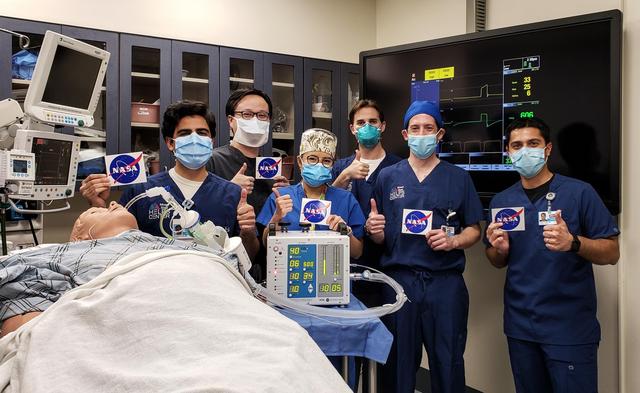
After testing a ventilator prototype developed by NASA's Jet Propulsion Laboratory, doctors in the Department of Anesthesiology and the Human Simulation Lab at the Icahn School of Medicine at Mount Sinai in New York City give a thumbs up. Developed in response to the coronavirus outbreak, the device, called VITAL (Ventilator Intervention Technology Accessible Locally), requires far fewer parts than traditional ventilators, making it cheaper to build and ideal for rapid manufacture. Lying on the bed is a human patient simulator used to test the device. https://photojournal.jpl.nasa.gov/catalog/PIA23772
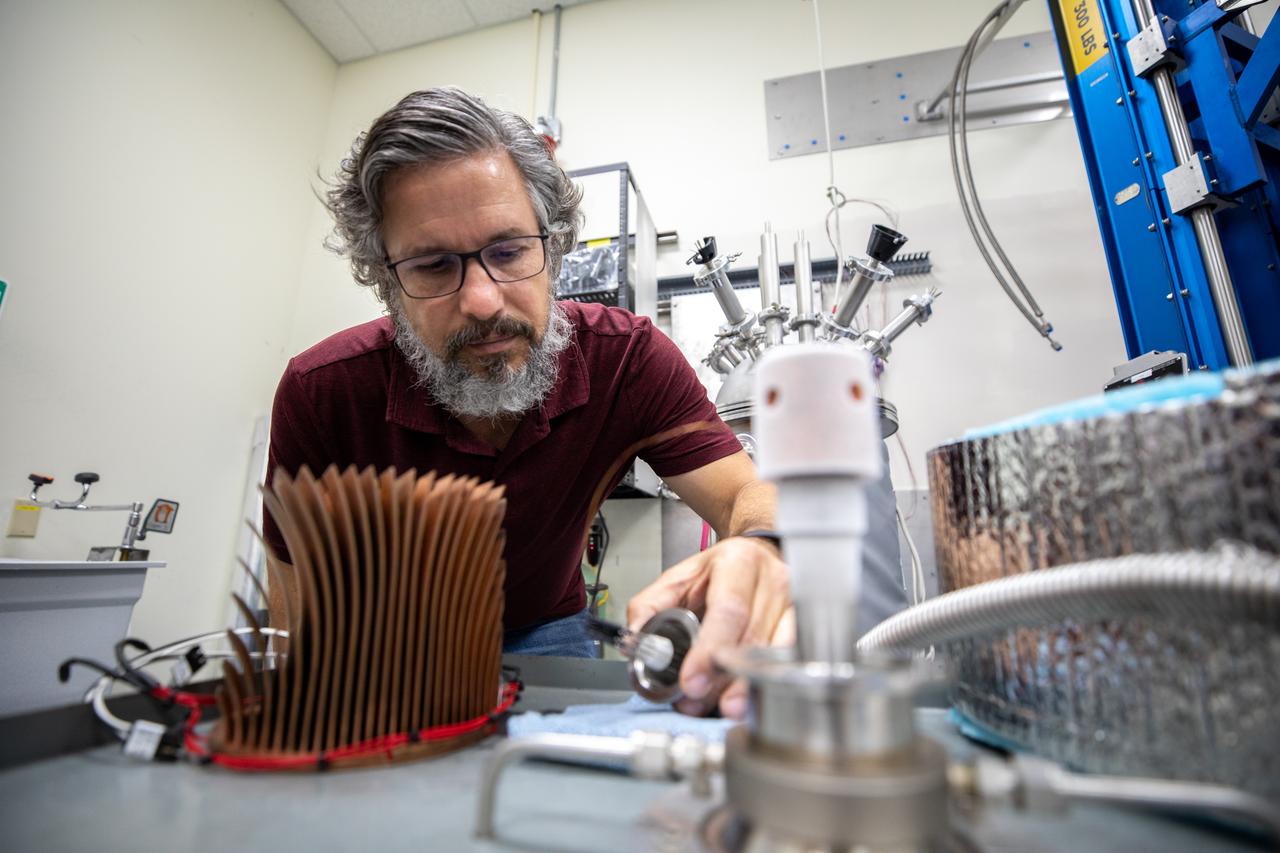
Jared Sass, NASA engineer, monitors a test inside the Cryogenics Test Laboratory at NASA’s Kennedy Space Center in Florida on Oct. 21, 2020. Established in 2000, the Cryogenics Test Laboratory provides a one-of-a kind capability for research, development and application of cross-cutting technologies to meet the needs of industry and government. The test lab provides cryogenic expertise, experimental testing, technical standards development, prototype construction and practical problem-solving for technology development with research institutions and commercial partners.
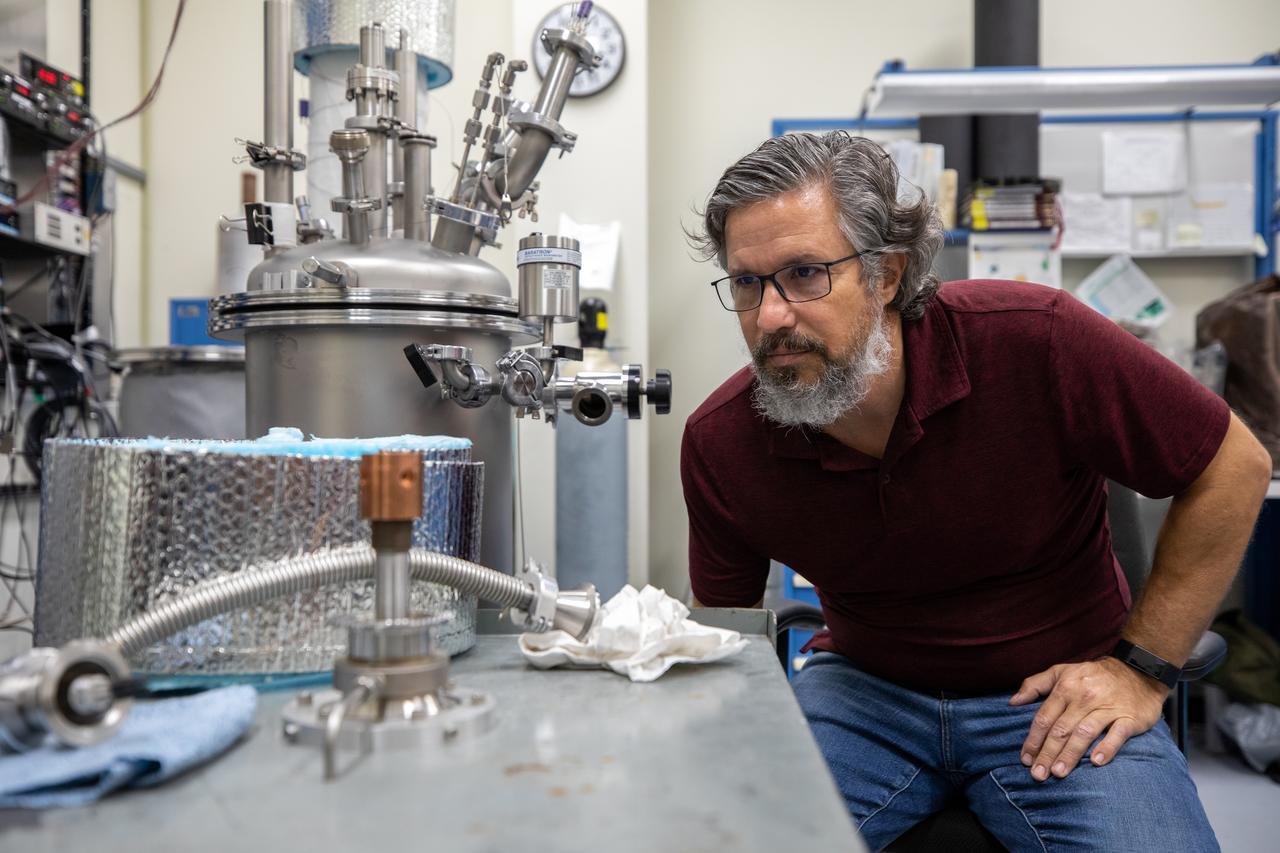
Jared Sass, NASA engineer, monitors a test inside the Cryogenics Test Laboratory at NASA’s Kennedy Space Center in Florida on Oct. 21, 2020. Established in 2000, the Cryogenics Test Laboratory provides a one-of-a kind capability for research, development and application of cross-cutting technologies to meet the needs of industry and government. The test lab provides cryogenic expertise, experimental testing, technical standards development, prototype construction and practical problem-solving for technology development with research institutions and commercial partners.
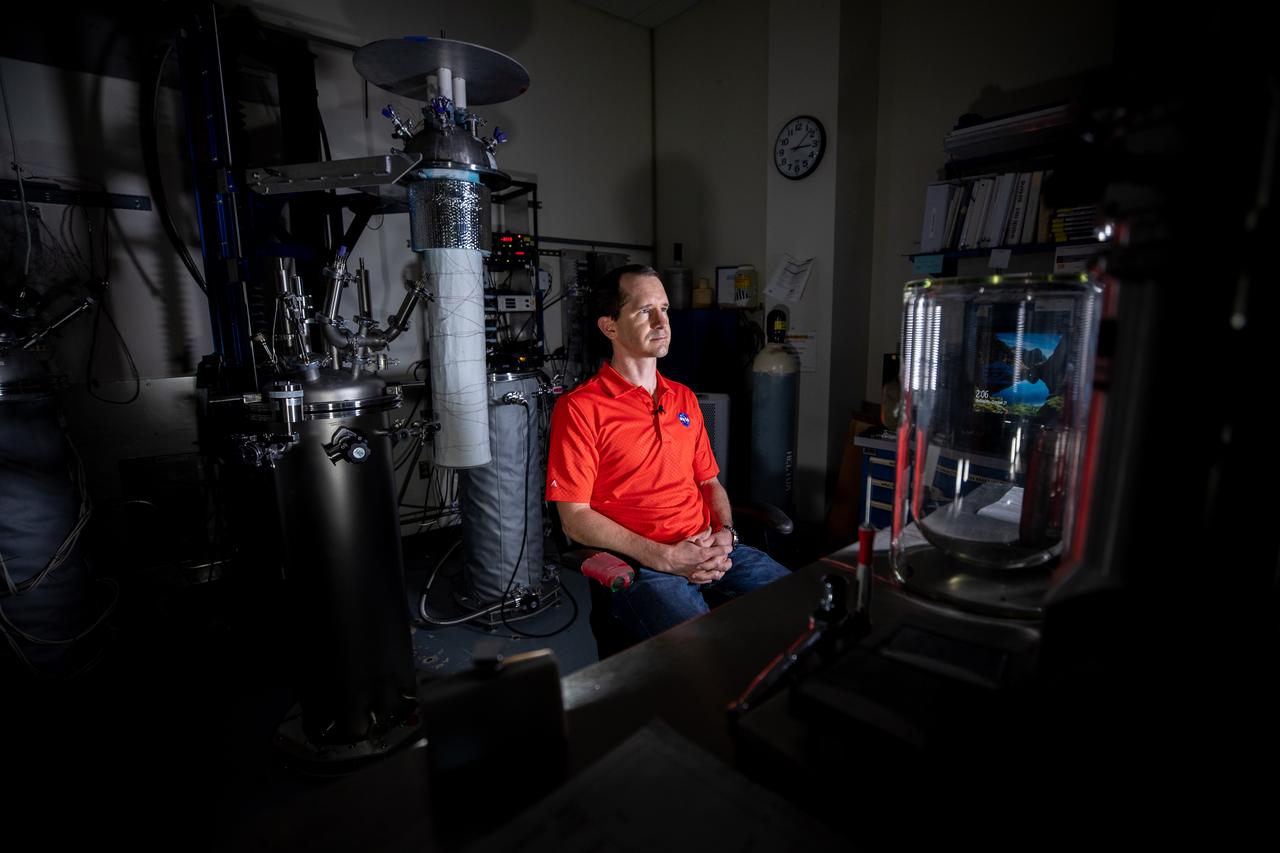
Adam Swanger, NASA engineer, is inside the Cryogenics Test Laboratory at NASA’s Kennedy Space Center in Florida on Oct. 21, 2020. Established in 2000, the Cryogenics Test Laboratory provides a one-of-a kind capability for research, development and application of cross-cutting technologies to meet the needs of industry and government. The test lab provides cryogenic expertise, experimental testing, technical standards development, prototype construction and practical problem-solving for technology development with research institutions and commercial partners.
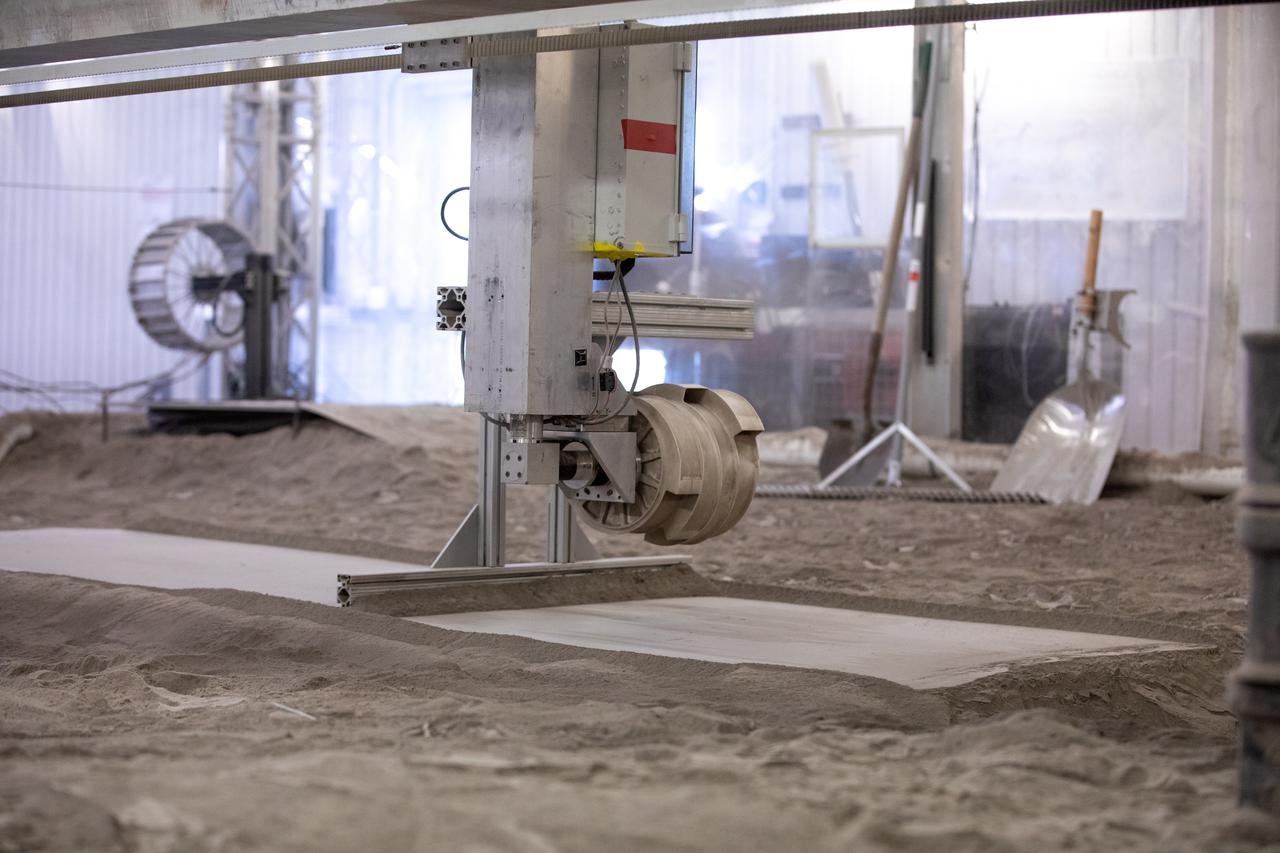
A team at NASA’s Kennedy Space Center in Florida tests small- and medium-sized bucket drums July 16, 2021, in the Granular Mechanics and Regolith Operations Lab’s “big bin” during prototype development for the pilot excavator, a robotic mission designed for lunar operations. The bucket drum excavated lunar regolith simulant. The Swamp Works team leveled and compacted the simulant before excavation as well as measured penetration during the excavator testing. Robotics engineers Jason Schuler and Austin Langton worked inside the bin, teaming up with software engineer Kurt Leucht, who worked just outside of it.
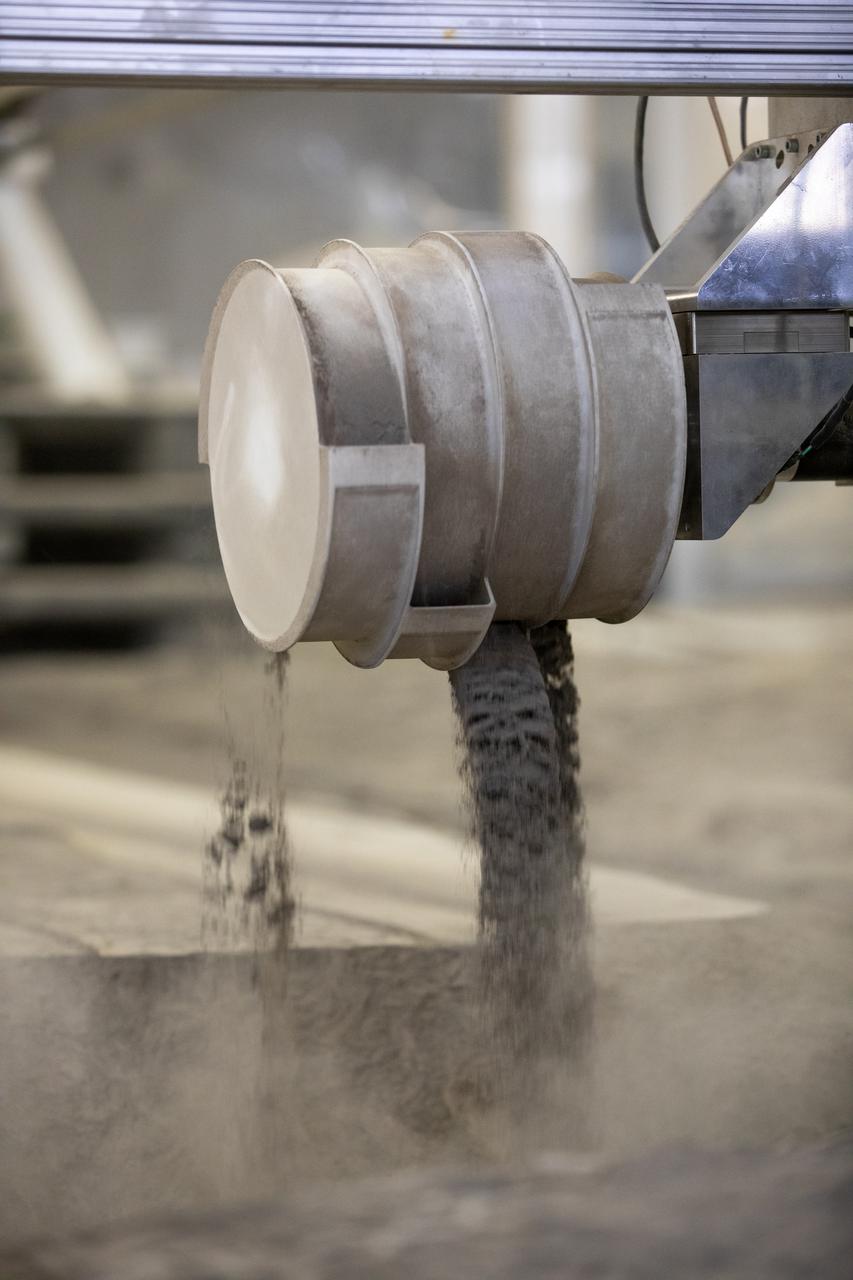
A team at NASA’s Kennedy Space Center in Florida tests small- and medium-sized bucket drums July 16, 2021, in the Granular Mechanics and Regolith Operations Lab’s “big bin” during prototype development for the pilot excavator, a robotic mission designed for lunar operations. The bucket drum excavated lunar regolith simulant. The Swamp Works team leveled and compacted the simulant before excavation as well as measured penetration during the excavator testing. Robotics engineers Jason Schuler and Austin Langton worked inside the bin, teaming up with software engineer Kurt Leucht, who worked just outside of it.
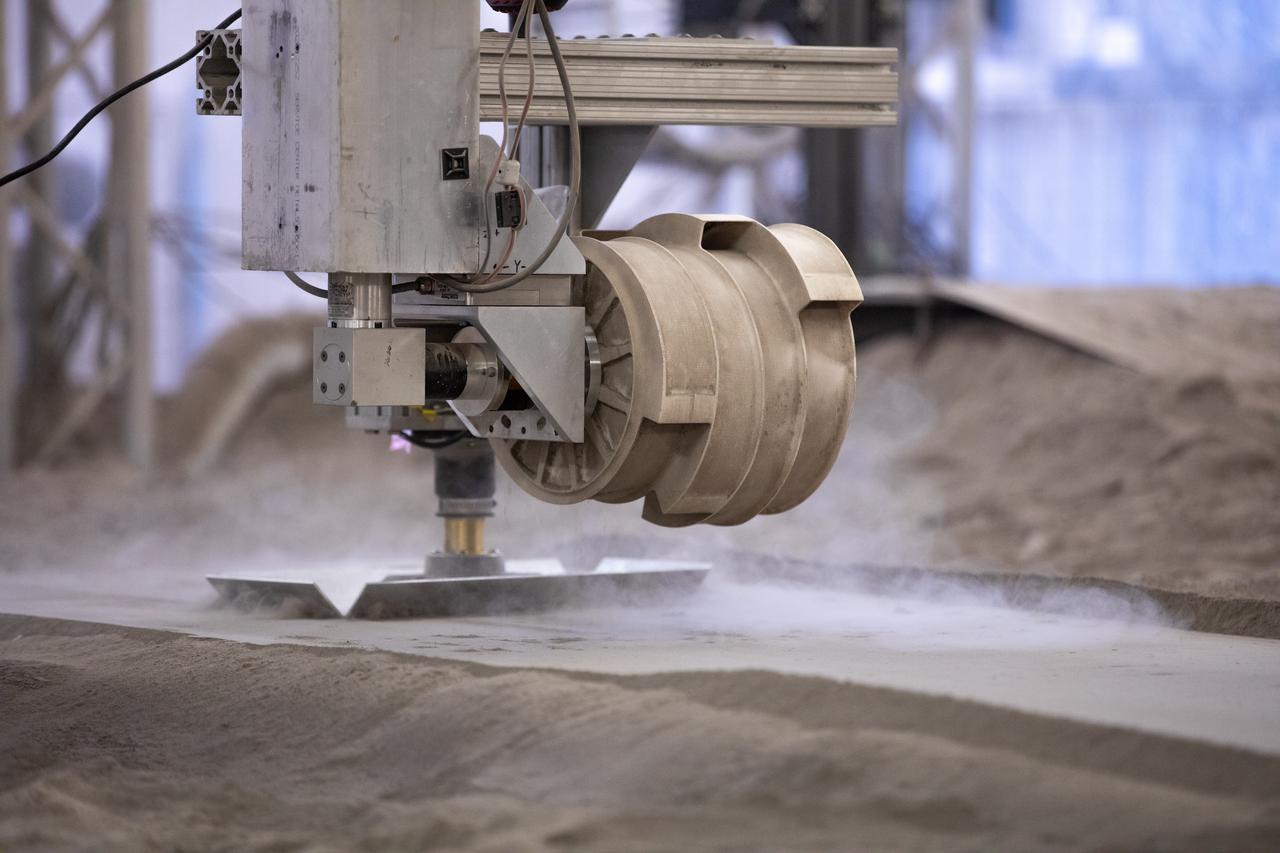
A team at NASA’s Kennedy Space Center in Florida tests small- and medium-sized bucket drums July 16, 2021, in the Granular Mechanics and Regolith Operations Lab’s “big bin” during prototype development for the pilot excavator, a robotic mission designed for lunar operations. The bucket drum excavated lunar regolith simulant. The Swamp Works team leveled and compacted the simulant before excavation as well as measured penetration during the excavator testing. Robotics engineers Jason Schuler and Austin Langton worked inside the bin, teaming up with software engineer Kurt Leucht, who worked just outside of it.
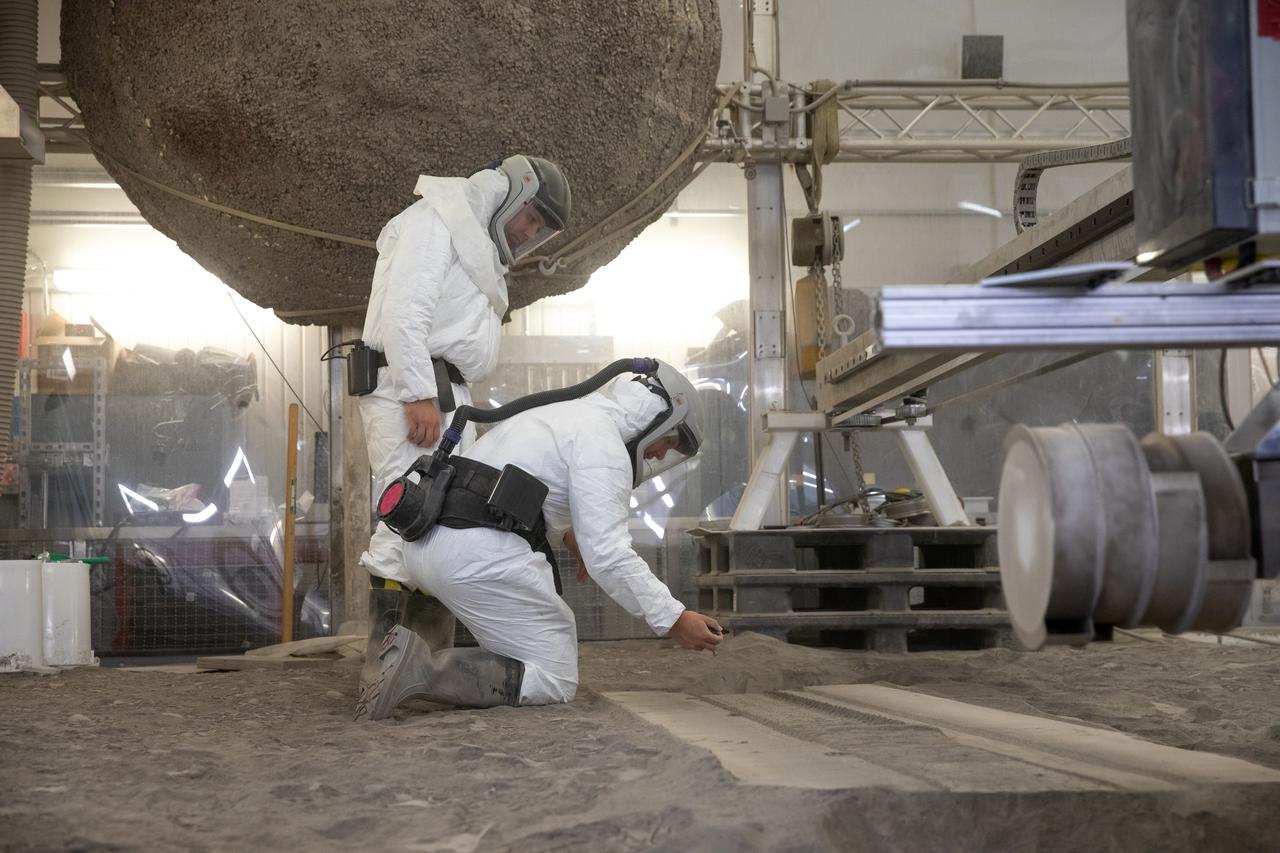
A team at NASA’s Kennedy Space Center in Florida tests small- and medium-sized bucket drums July 16, 2021, in the Granular Mechanics and Regolith Operations Lab’s “big bin” during prototype development for the pilot excavator, a robotic mission designed for lunar operations. The bucket drum excavated lunar regolith simulant. The Swamp Works team leveled and compacted the simulant before excavation as well as measured penetration during the excavator testing. Robotics engineers Jason Schuler and Austin Langton worked inside the bin, teaming up with software engineer Kurt Leucht, who worked just outside of it.
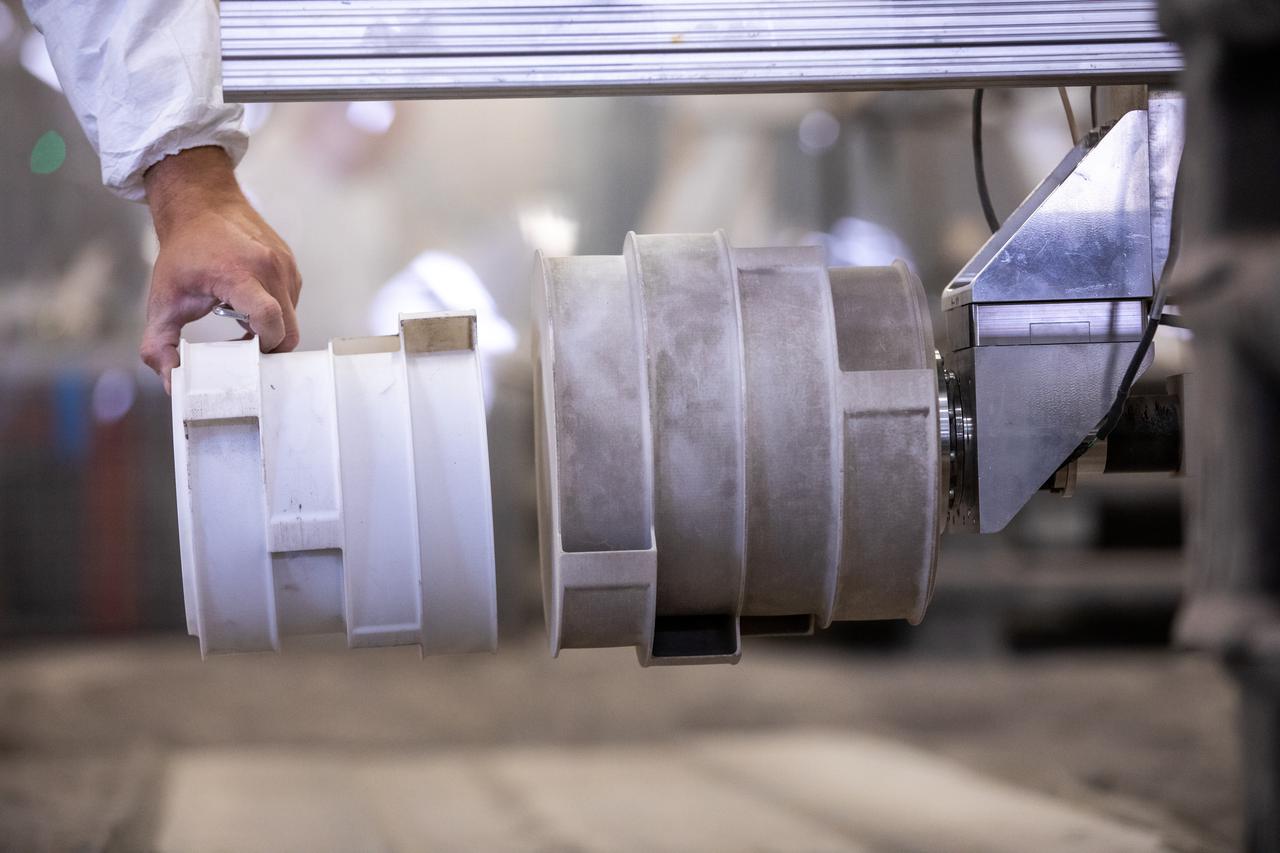
A team at NASA’s Kennedy Space Center in Florida tests small- and medium-sized bucket drums July 16, 2021, in the Granular Mechanics and Regolith Operations Lab’s “big bin” during prototype development for the pilot excavator, a robotic mission designed for lunar operations. The bucket drum excavated lunar regolith simulant. The Swamp Works team leveled and compacted the simulant before excavation as well as measured penetration during the excavator testing. Robotics engineers Jason Schuler and Austin Langton worked inside the bin, teaming up with software engineer Kurt Leucht, who worked just outside of it.
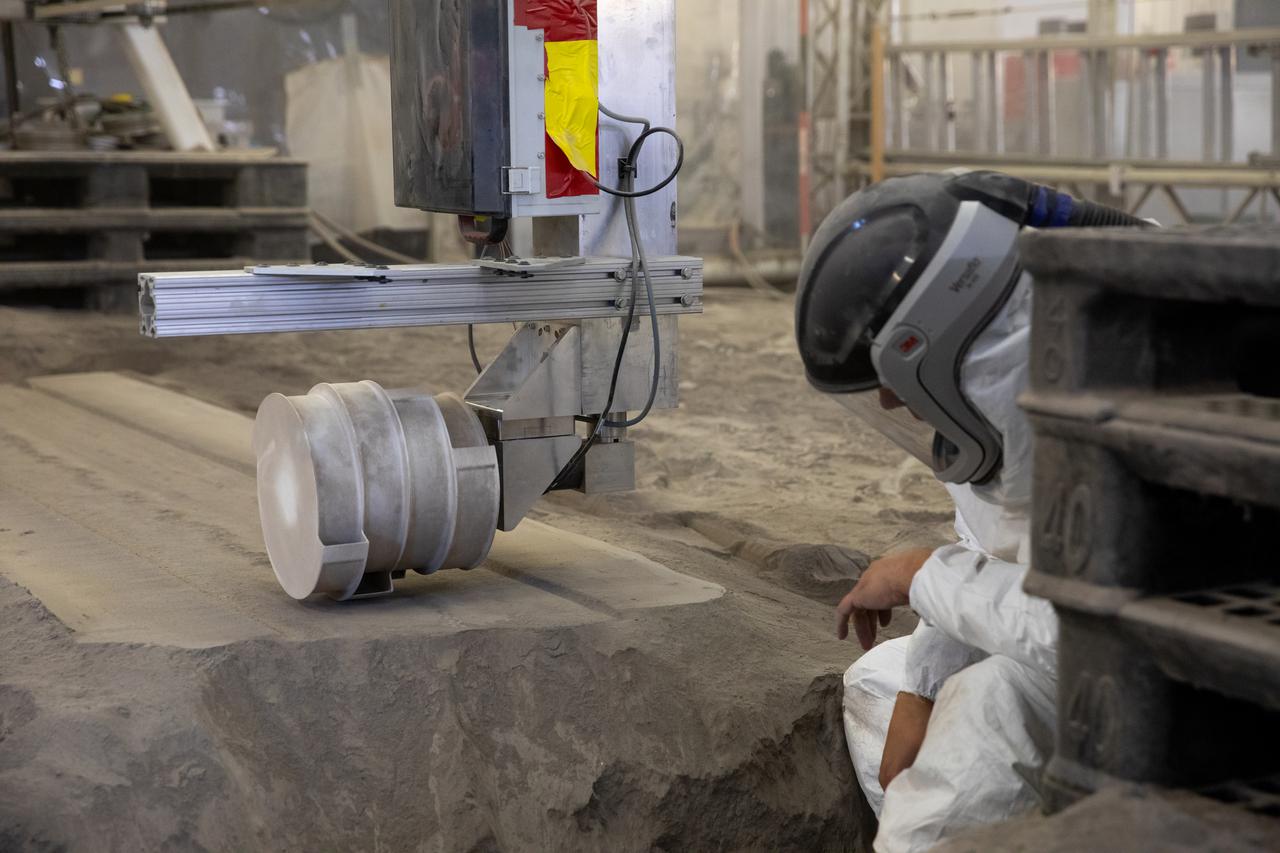
A team at NASA’s Kennedy Space Center in Florida tests small- and medium-sized bucket drums July 16, 2021, in the Granular Mechanics and Regolith Operations Lab’s “big bin” during prototype development for the pilot excavator, a robotic mission designed for lunar operations. The bucket drum excavated lunar regolith simulant. The Swamp Works team leveled and compacted the simulant before excavation as well as measured penetration during the excavator testing. Robotics engineers Jason Schuler and Austin Langton worked inside the bin, teaming up with software engineer Kurt Leucht, who worked just outside of it.
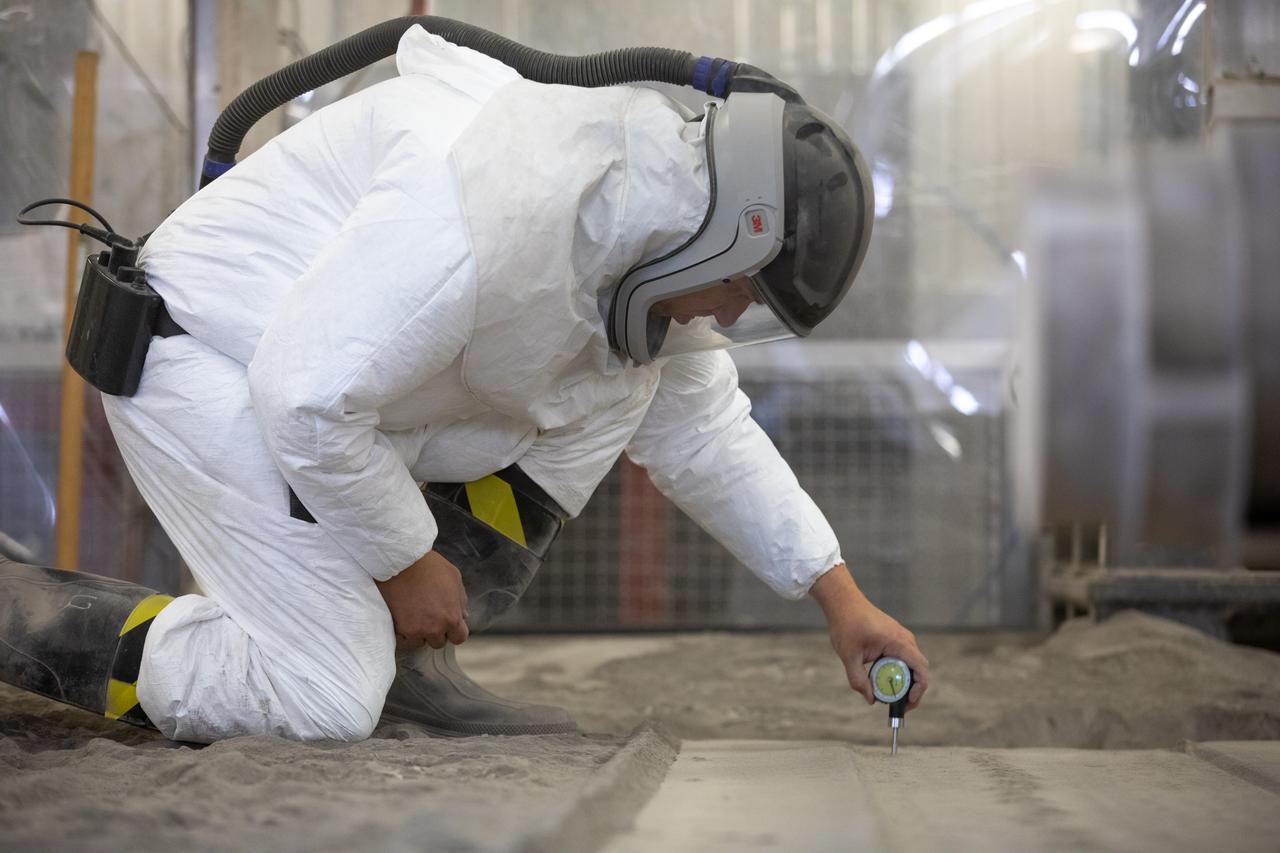
A team at NASA’s Kennedy Space Center in Florida tests small- and medium-sized bucket drums July 16, 2021, in the Granular Mechanics and Regolith Operations Lab’s “big bin” during prototype development for the pilot excavator, a robotic mission designed for lunar operations. The bucket drum excavated lunar regolith simulant. The Swamp Works team leveled and compacted the simulant before excavation as well as measured penetration during the excavator testing. Robotics engineers Jason Schuler and Austin Langton worked inside the bin, teaming up with software engineer Kurt Leucht, who worked just outside of it.
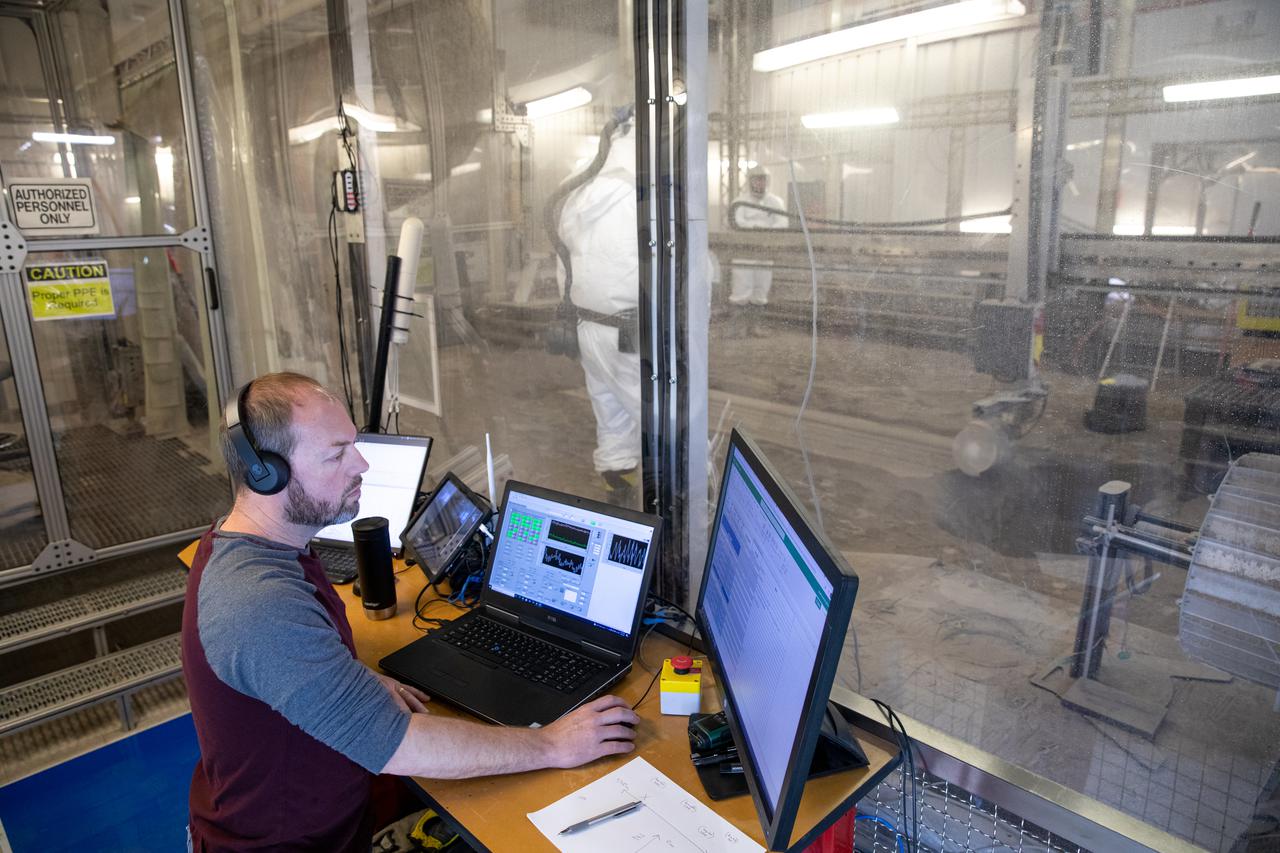
A team at NASA’s Kennedy Space Center in Florida tests small- and medium-sized bucket drums July 16, 2021, in the Granular Mechanics and Regolith Operations Lab’s “big bin” during prototype development for the pilot excavator, a robotic mission designed for lunar operations. The bucket drum excavated lunar regolith simulant. The Swamp Works team leveled and compacted the simulant before excavation as well as measured penetration during the excavator testing. Robotics engineers Jason Schuler and Austin Langton worked inside the bin, teaming up with software engineer Kurt Leucht, who worked just outside of it.
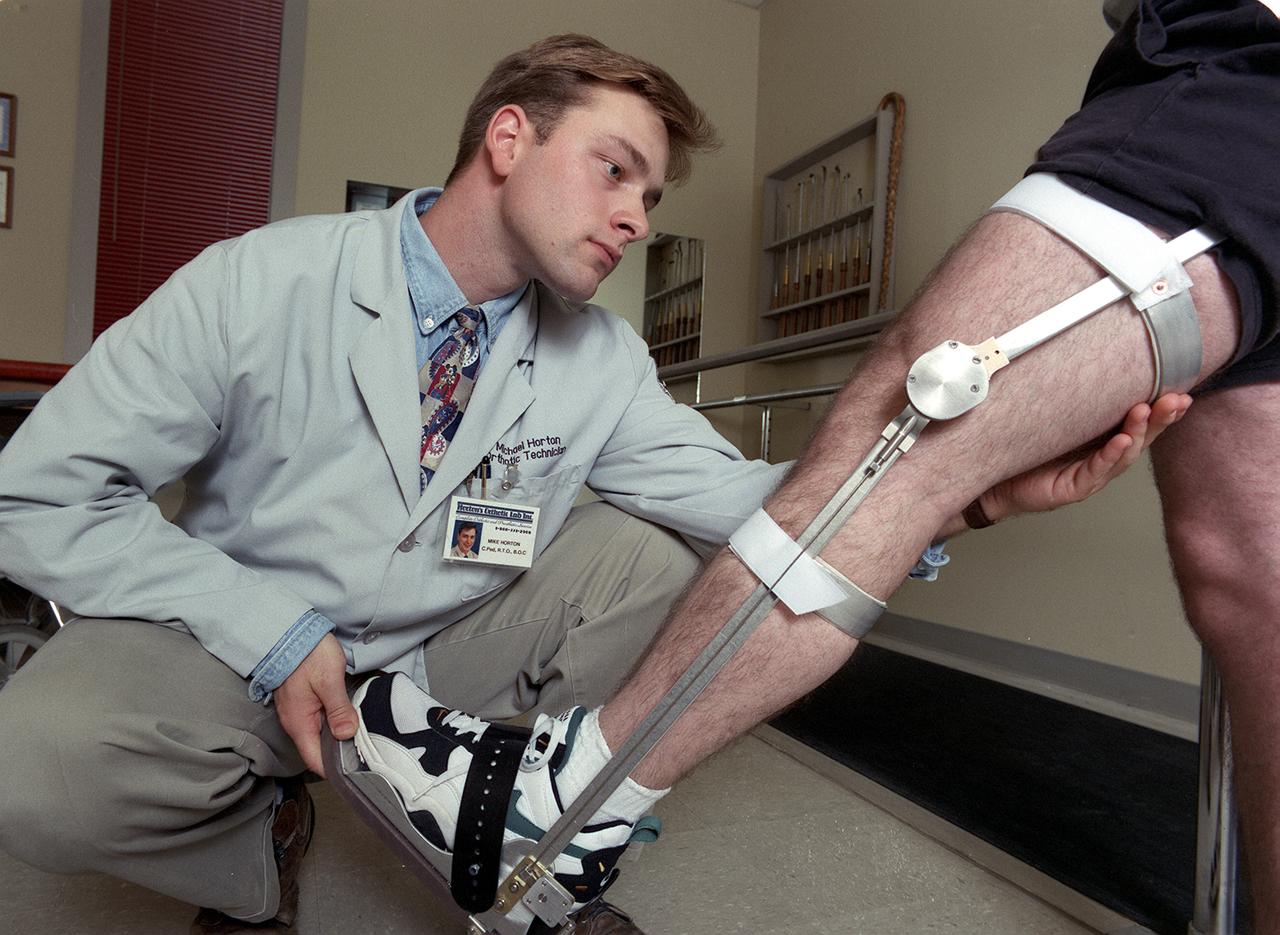
A knee brace that uses Space Shuttle propulsion technology has moved a step closer to being available to help knee injury and stroke patients and may possibly benefit patients with birth defects, spinal cord injuries, and post-polio conditions. After years of hard work, inventors at NASA's Marshall Space Flight Center (MSFC) in Huntsville, Alabama, have turned over the final design and prototype to industry partners at Horton's Orthotic Lab in Little Rock, Arkansas for further clinical testing. The device, called the Selectively Lockable Knee Brace, may mean faster, less painful rehabilitation for patients by allowing the knee to move when weight is not on the heel. Devices currently on the market lock the knee in a rigid, straight-leg position, or allow continuous free motion. Pictured here is a knee brace prototype being tested and fitted at Horton's Orthotic Lab. The knee brace is just one example of how space technology is being used to improve the lives of people on Earth. NASA's MSFC inventors Michael Shadoan and Neill Myers are space propulsion engineers who use the same mechanisms and materials to build systems for rockets that they used to design and develop the knee brace.

In 1946 the Lewis Flight Propulsion Laboratory became the NACA’s official icing research center. In addition to the Icing Research Tunnel, the lab possessed several aircraft modified for icing work, including a Consolidated B-24M Liberator and a North American XB-25E Mitchell, seen here. The XB-25E’s frequent engine fires allegedly resulted in its “Flamin’ Maimie” nickname. The aircraft’s nose art, visible in this photograph, includes a leather-jacketed mechanic with an extinguisher fleeing a fiery woman. North American developed the B-25 in the mid-1930s as a transport aircraft, but it was hurriedly reconfigured as a medium bomber for World War II. This XB-25E was a single prototype designed in 1942 specifically to test an exhaust gas ice prevention system developed by NACA researcher Lewis Rodert. The system circulated the engines’ hot bleed air to the wings, windshield, and tail. The XB-25E was utilized at the NACA’s Ames Aeronautical Laboratory for two years before being transferred to Cleveland in July 1944. NACA Lewis mechanics modified the aircraft further by installing electrical heating in the front fuselage, propellers, inboard sing, cowls, and antennae. Lewis pilots flew the B-24M and XB-25E into perilous weather conditions all across the country to study both deicing technologies and the physics of ice-producing clouds. These dangerous flights led to advances in weather sensing instruments and flight planning.
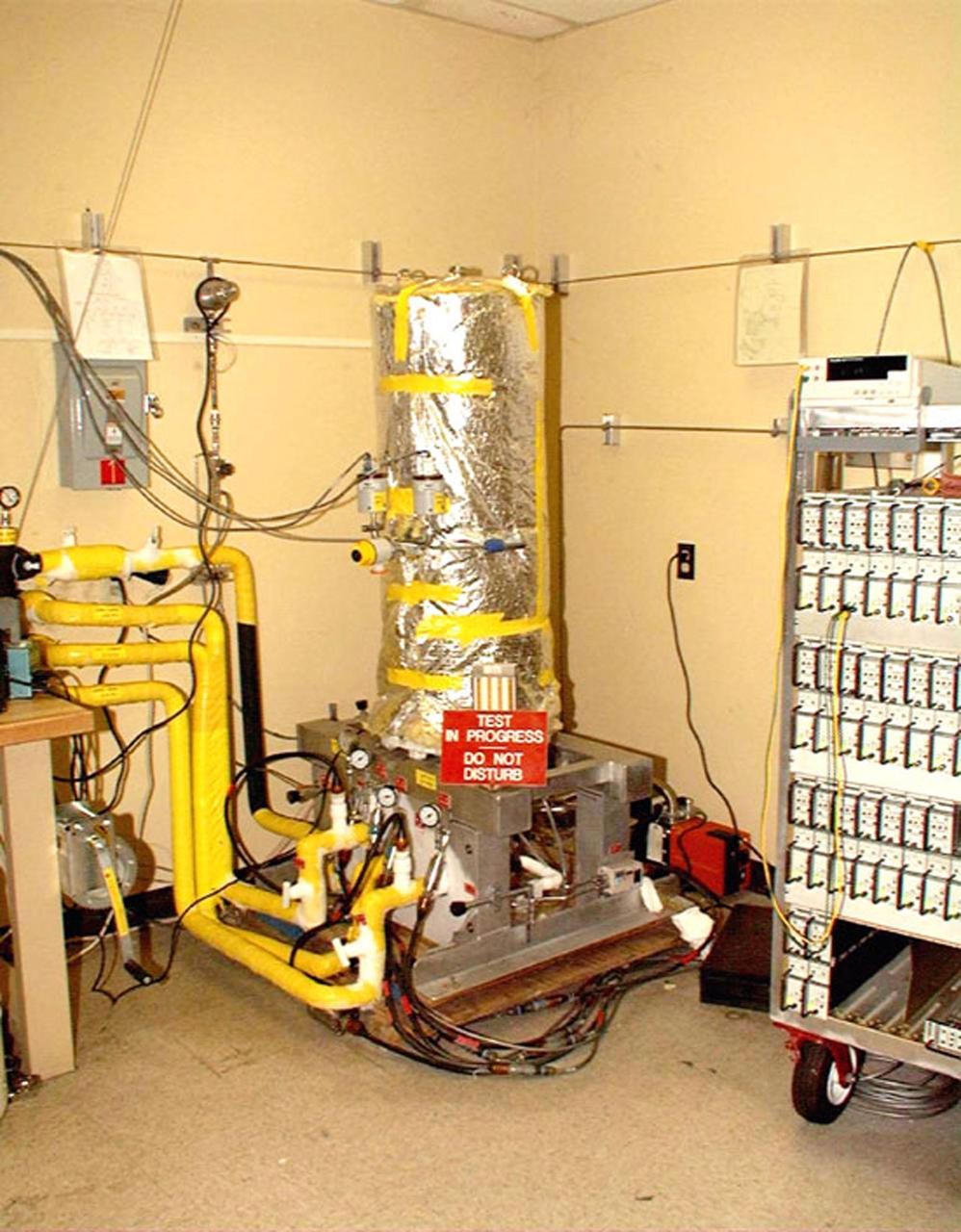
Materials are being tested in the Kennedy Space Center's cryogenics test bed laboratory. The cryogenics laboratory is expanding to a larger test bed facility in order to offer research and development capabilities that will benefit projects originating from KSC, academia and private industry. Located in KSC's industrial area, the lab is equipped with a liquid nitrogen flow test area to test and evaluate cryogenic valves, flow-meters and other handling equipment in field conditions. A 6,000-gallon tank supplies liquid to low-flow and high-flow test sections. KSC engineers and scientists can also build system prototypes and then field test and analyze them with the center's unique equipment. Expanded cryogenic infrastructure will posture the Space Coast to support biological and medical researchers who use liquid nitrogen to preserve and store human and animal cells and to destroy cancer tissue using cryosurgery; hospitals that use superconductive magnets cooled in liquid helium for magnetic resonance imaging (MRI); the food industry, which uses liquid nitrogen for freezing and long-term storage; as well as the next generation of reusable launch vehicles currently in development
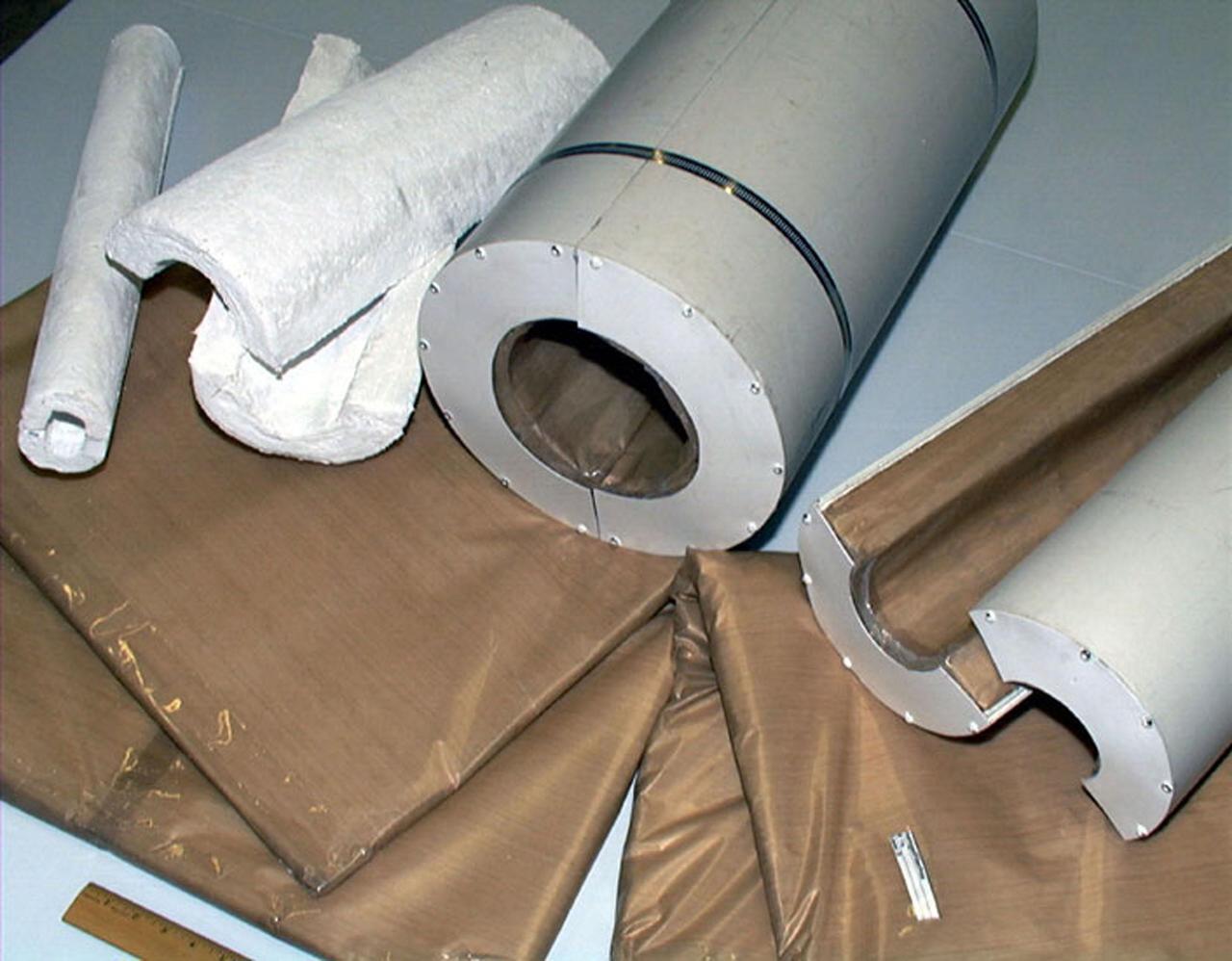
Various materials are ready for testing in the Kennedy Space Center's cryogenics test bed laboratory. The cryogenics laboratory is expanding to a larger test bed facility in order to offer research and development capabilities that will benefit projects originating from KSC, academia and private industry. Located in KSC's industrial area, the lab is equipped with a liquid nitrogen flow test area to test and evaluate cryogenic valves, flow-meters and other handling equipment in field conditions. A 6,000-gallon tank supplies liquid to low-flow and high-flow test sections. KSC engineers and scientists can also build system prototypes and then field test and analyze them with the center's unique equipment. Expanded cryogenic infrastructure will posture the Space Coast to support biological and medical researchers who use liquid nitrogen to preserve and store human and animal cells and to destroy cancer tissue using cryosurgery; hospitals that use superconductive magnets cooled in liquid helium for magnetic resonance imaging (MRI); the food industry, which uses liquid nitrogen for freezing and long-term storage; as well as the next generation of reusable launch vehicles currently in development
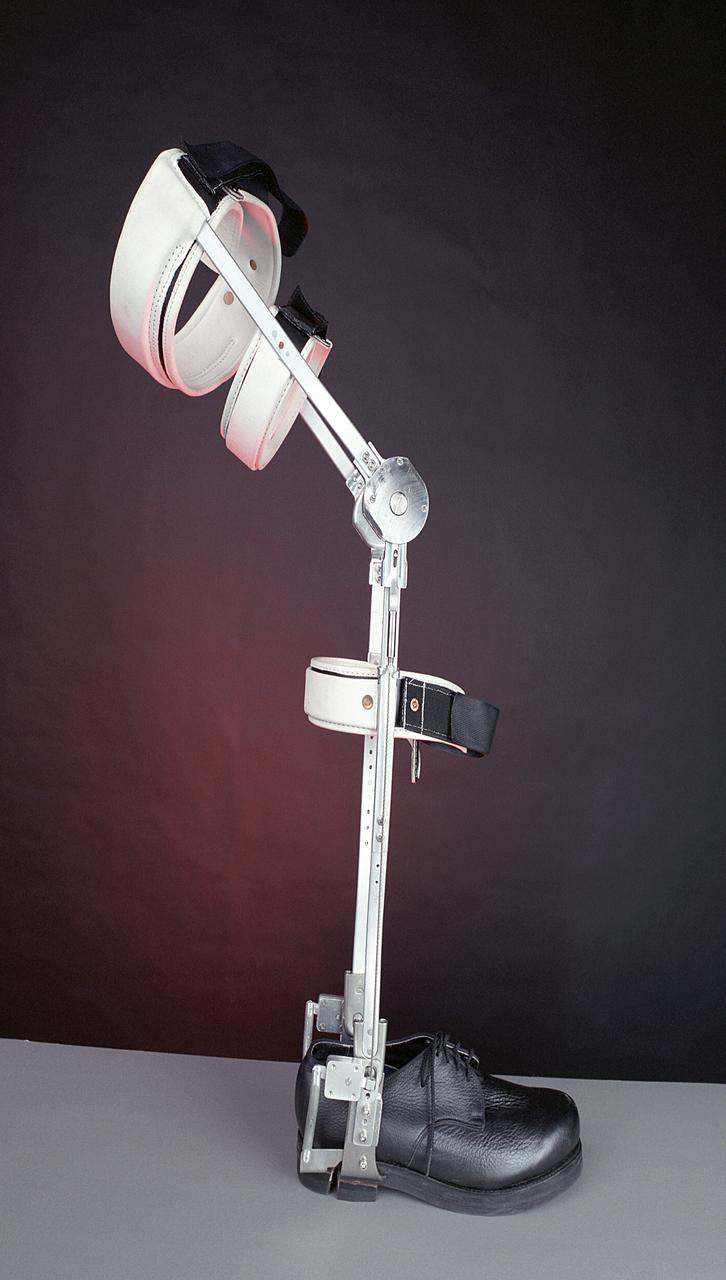
A knee brace that uses Space Shuttle propulsion technology has moved a step closer to being available to help knee injury and stroke patients and may possibly benefit patients with birth defects, spinal cord injuries, and post-polio conditions. After years of hard work, inventors at NASA's Marshall Space Flight Center (MSFC) in Huntsville, Alabama, have turned over the final design and prototype to industry partners at Horton's Orthotic Lab in Little Rock, Arkansas for further clinical testing. The device, called the Selectively Lockable Knee Brace, may mean faster, less painful rehabilitation for patients by allowing the knee to move when weight is not on the heel. Devices currently on the market lock the knee in a rigid, straight-leg position, or allow continuous free motion. The knee brace is just one example of how space technology is being used to improve the lives of people on Earth. NASA's MSFC inventors Michael Shadoan and Neill Myers are space propulsion engineers who use the same mechanisms and materials to build systems for rockets that they used to design and develop the knee brace.

This photograph depicts an air-breathing rocket engine prototype in the test bay at the General Applied Science Lab facility in Ronkonkoma, New York. Air-breathing engines, known as rocket based, combined-cycle engines, get their initial take-off power from specially designed rockets, called air-augmented rockets, that boost performance about 15 percent over conventional rockets. When the vehicle's velocity reaches twice the speed of sound, the rockets are turned off and the engine relies totally on oxygen in the atmosphere to burn hydrogen fuel, as opposed to a rocket that must carry its own oxygen, thus reducing weight and flight costs. Once the vehicle has accelerated to about 10 times the speed of sound, the engine converts to a conventional rocket-powered system to propel the craft into orbit or sustain it to suborbital flight speed. NASA's Advanced Space Transportation Program at Marshall Space Flight Center, along with several industry partners and collegiate forces, is developing this technology to make space transportation affordable for everyone from business travelers to tourists. The goal is to reduce launch costs from today's price tag of $10,000 per pound to only hundreds of dollars per pound. NASA's series of hypersonic flight demonstrators currently include three air-breathing vehicles: the X-43A, X-43B and X-43C.