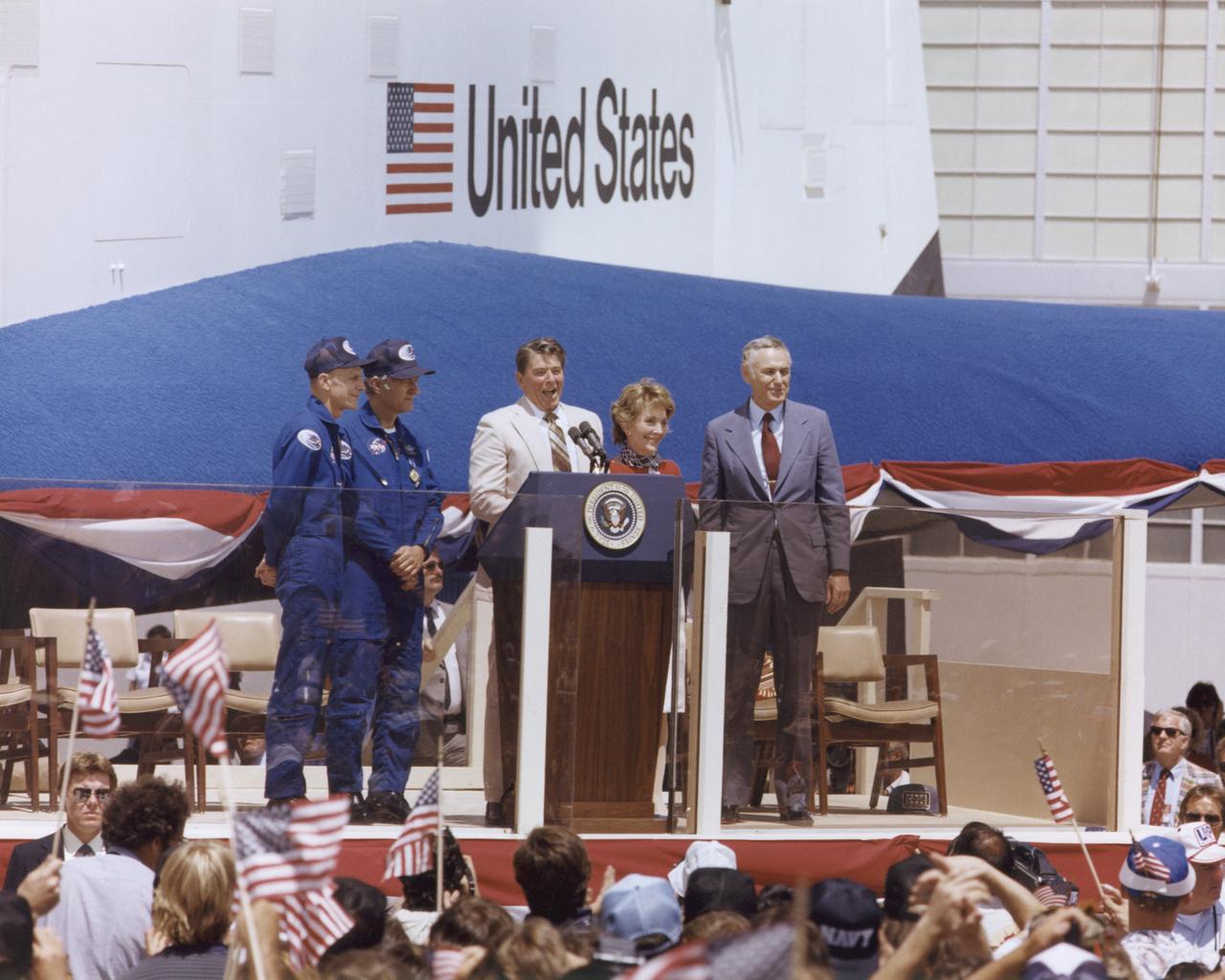
President Ronald Reagan speaks to a crowd of more than 45,000 people at NASA's Dryden Flight Research Center following the landing of STS-4 on July 4, 1982. To the right of the President are Mrs. Reagan and NASA Administrator James M. Beggs. To the left are STS-4 Columbia astronauts Thomas K. Mattingly and Henry W. Hartsfield, Jr. Prototype Space Shuttle Enterprise is in the background.
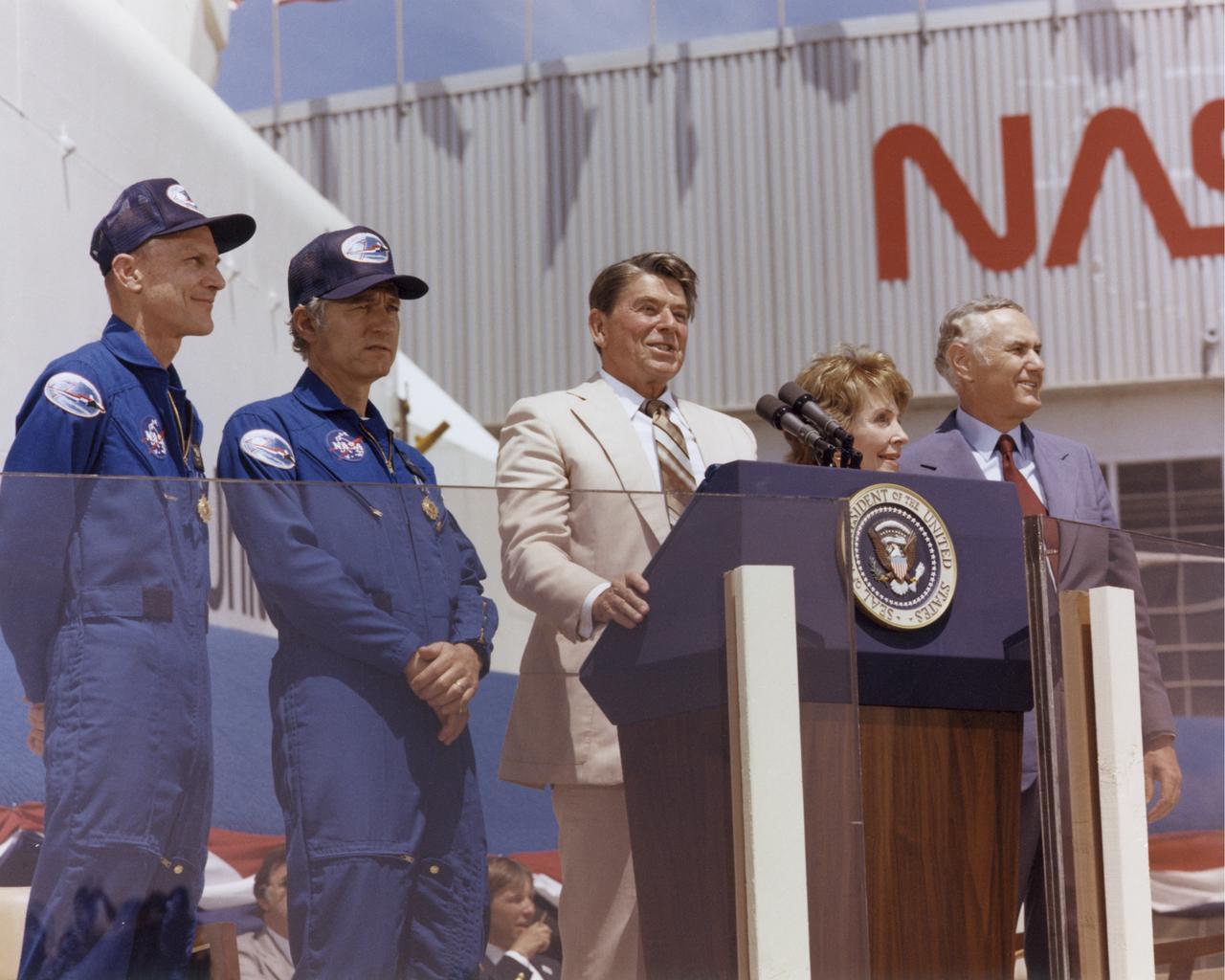
President Ronald Reagan speaks to a crowd of more than 45,000 people at NASA's Dryden Flight Research Center following the landing of STS-4 on July 4, 1982. To the right of the President are Mrs. Reagan and NASA Administrator James M. Beggs. To the left are STS-4 Columbia astronauts Thomas K. Mattingly and Henry W. Hartsfield, Jr. Prototype Space Shuttle Enterprise is in the background.
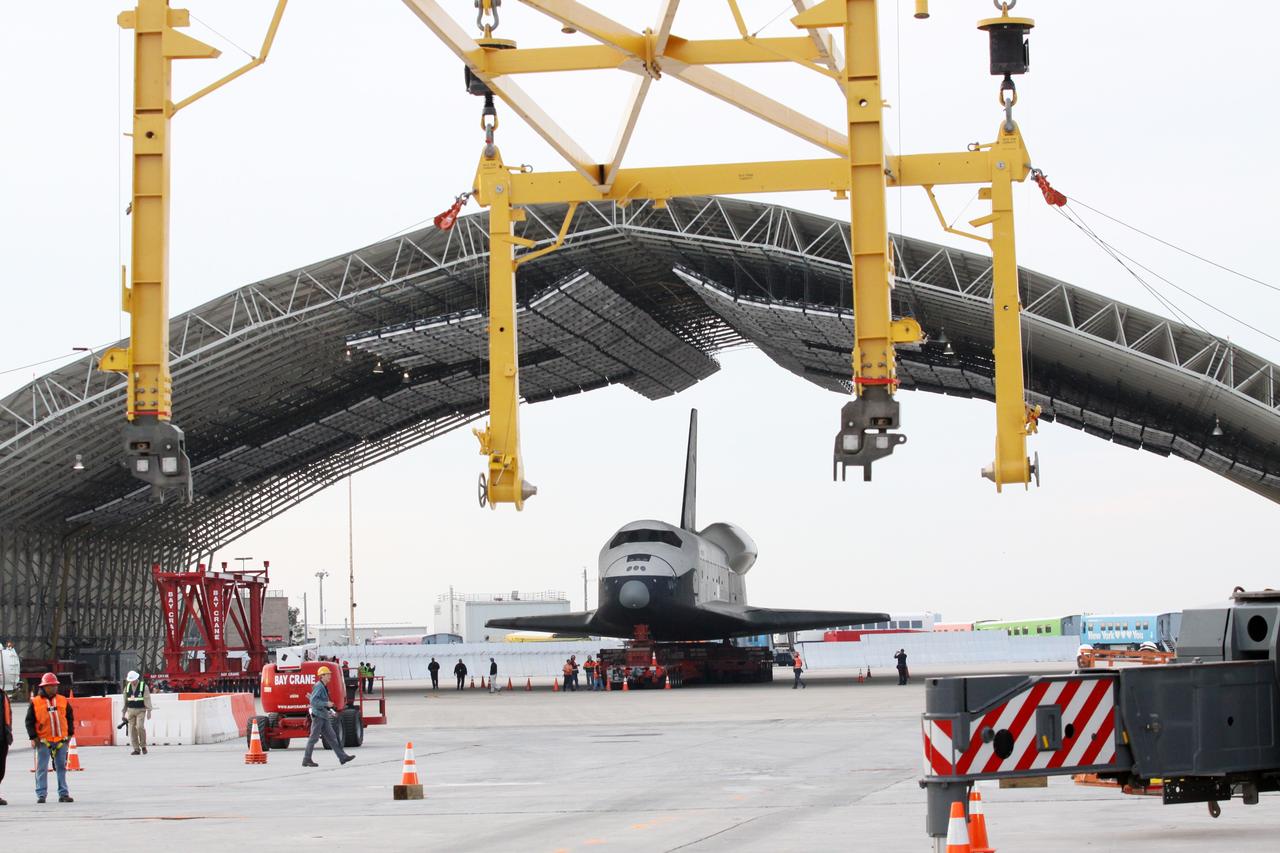
NEW YORK – Space shuttle Enterprise is backed into a protective hangar at John F. Kennedy International Airport in New York City. Enterprise, a prototype built to test aspects of the space shuttle design, will be displayed at the Intrepid Sea, Air and Space Museum in New York. Photo credit: NASA/Kim Shiflett
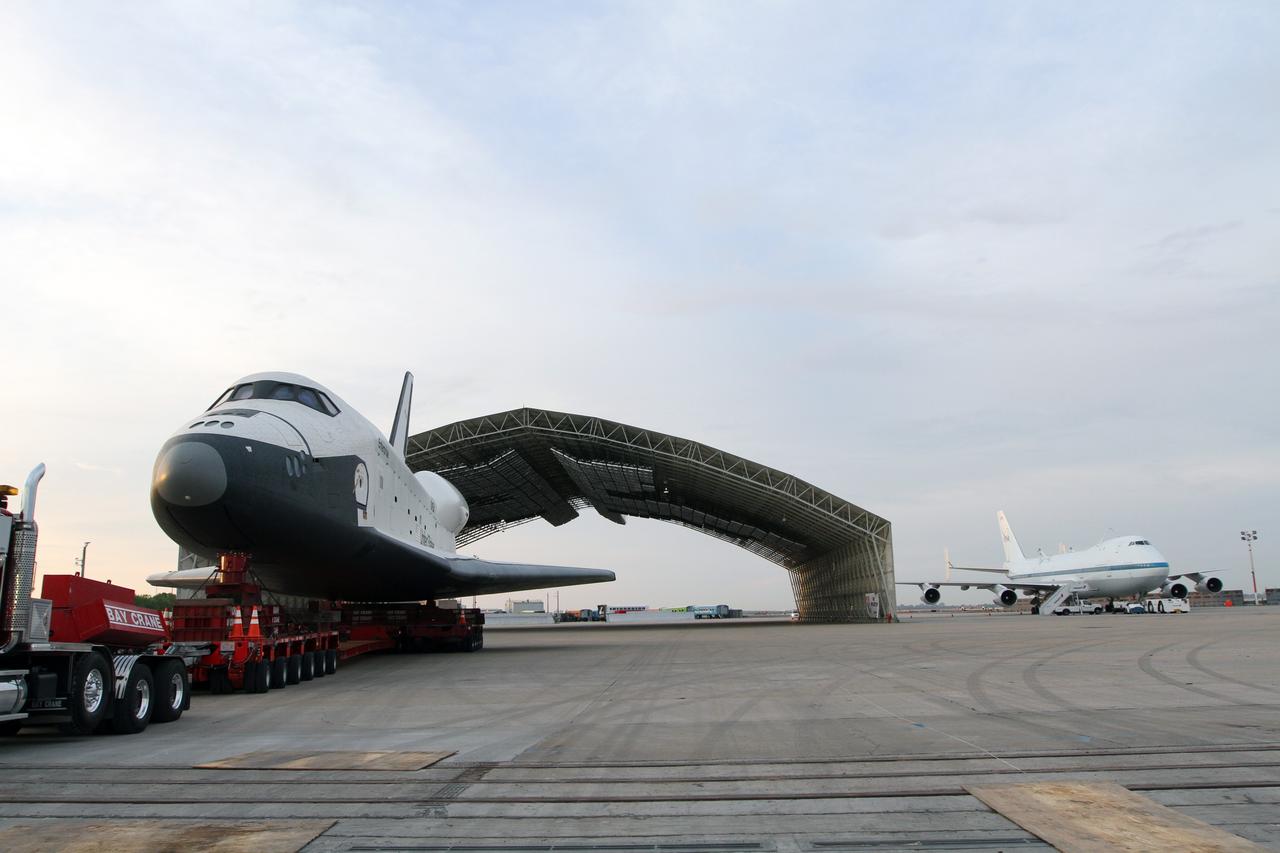
NEW YORK – Space shuttle Enterprise is rolled into a protective hangar at John F. Kennedy International Airport in New York City. Enterprise, a prototype built to test aspects of the space shuttle design, will be displayed at the Intrepid Sea, Air and Space Museum in New York. Photo credit: NASA/Kim Shiflett
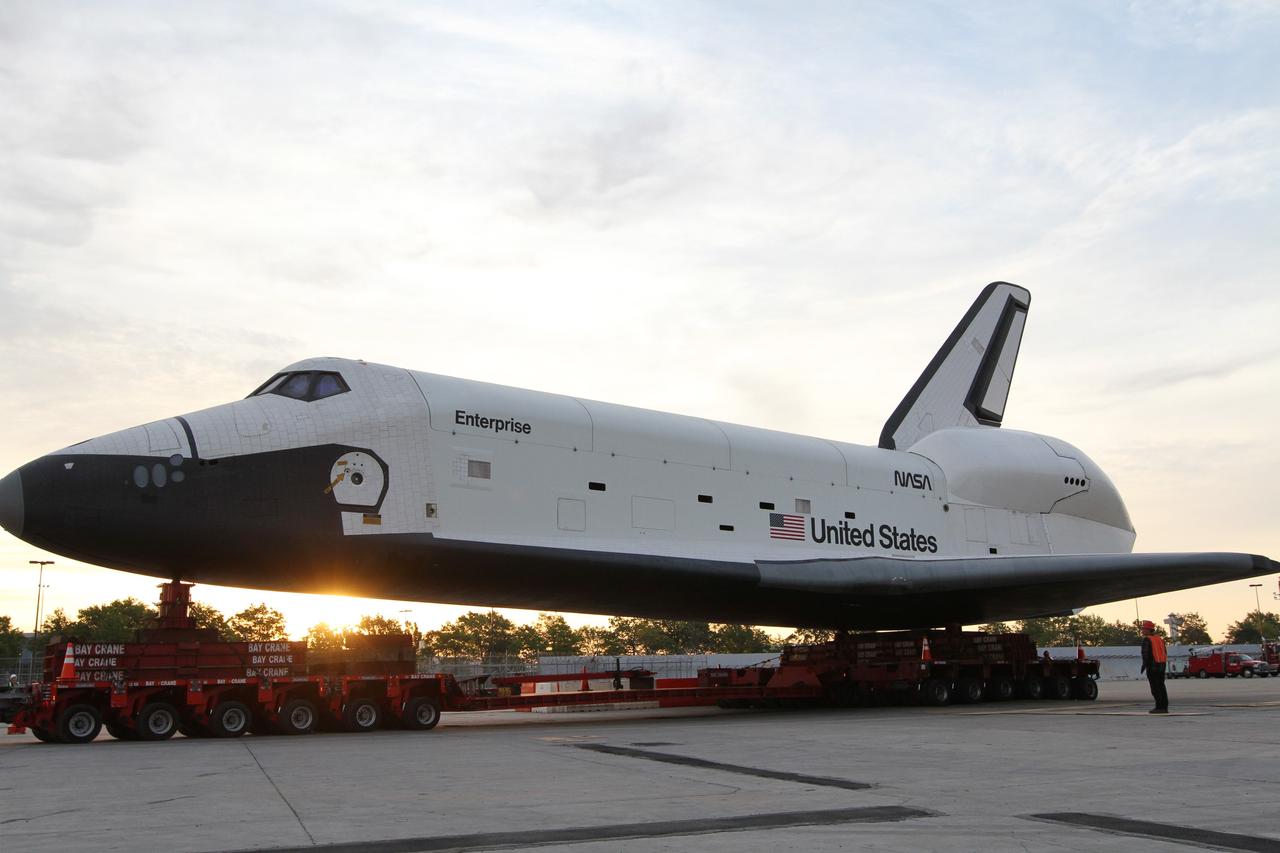
NEW YORK – Space shuttle Enterprise is rolled into a protective hangar at John F. Kennedy International Airport in New York City. Enterprise, a prototype built to test aspects of the space shuttle design, will be displayed at the Intrepid Sea, Air and Space Museum in New York. Photo credit: NASA/Kim Shiflett
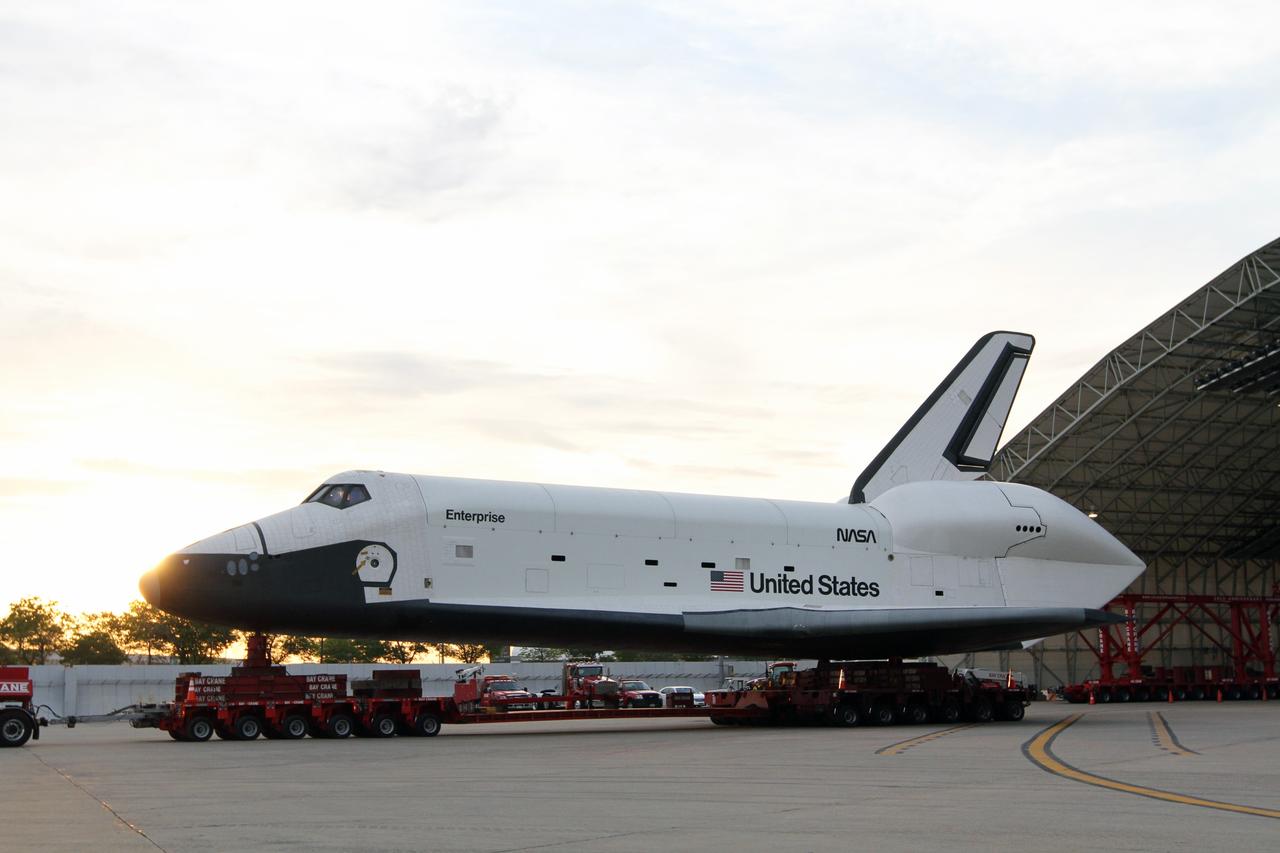
NEW YORK – Space shuttle Enterprise is rolled into a protective hangar at John F. Kennedy International Airport in New York City. Enterprise, a prototype built to test aspects of the space shuttle design, will be displayed at the Intrepid Sea, Air and Space Museum in New York. Photo credit: NASA/Kim Shiflett
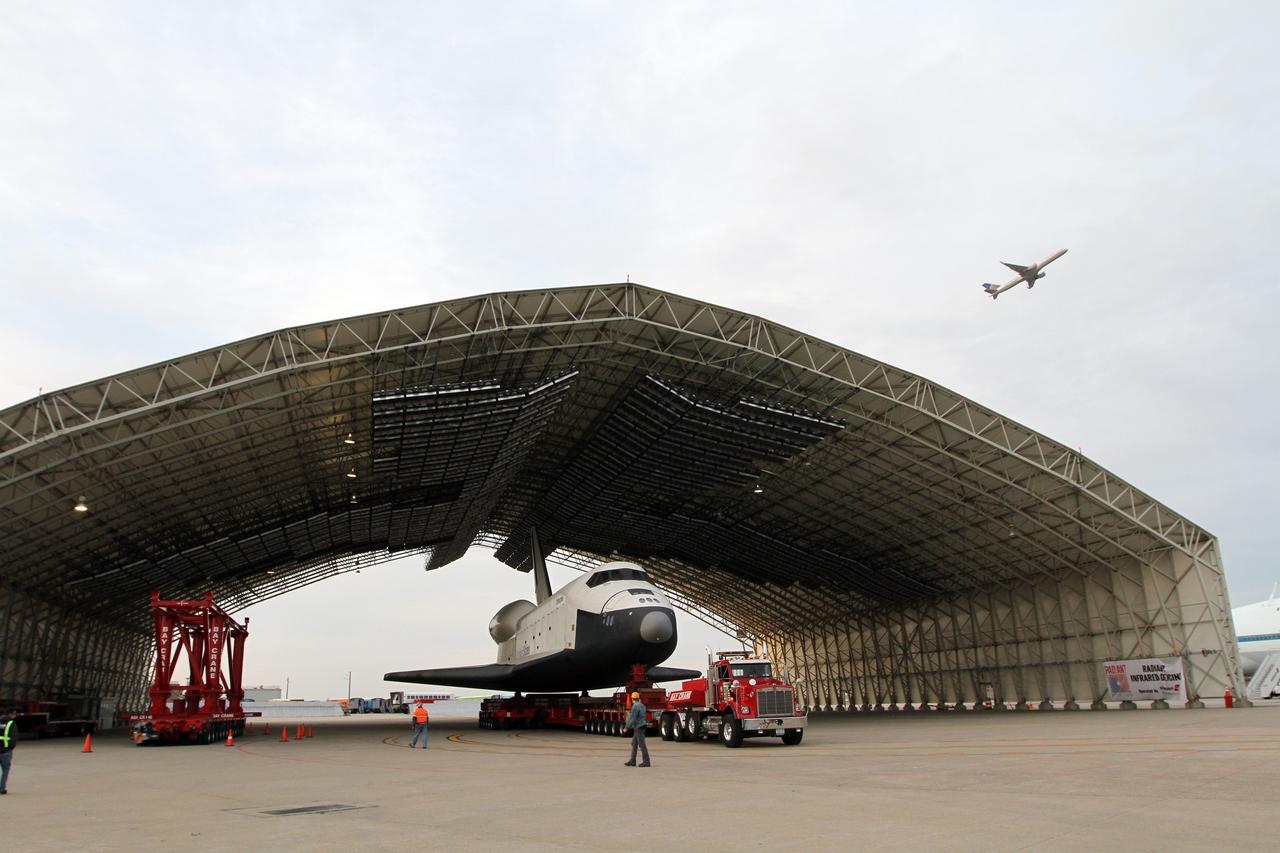
NEW YORK – Space shuttle Enterprise is rolled into a protective hangar at John F. Kennedy International Airport in New York City. Enterprise, a prototype built to test aspects of the space shuttle design, will be displayed at the Intrepid Sea, Air and Space Museum in New York. Photo credit: NASA/Kim Shiflett
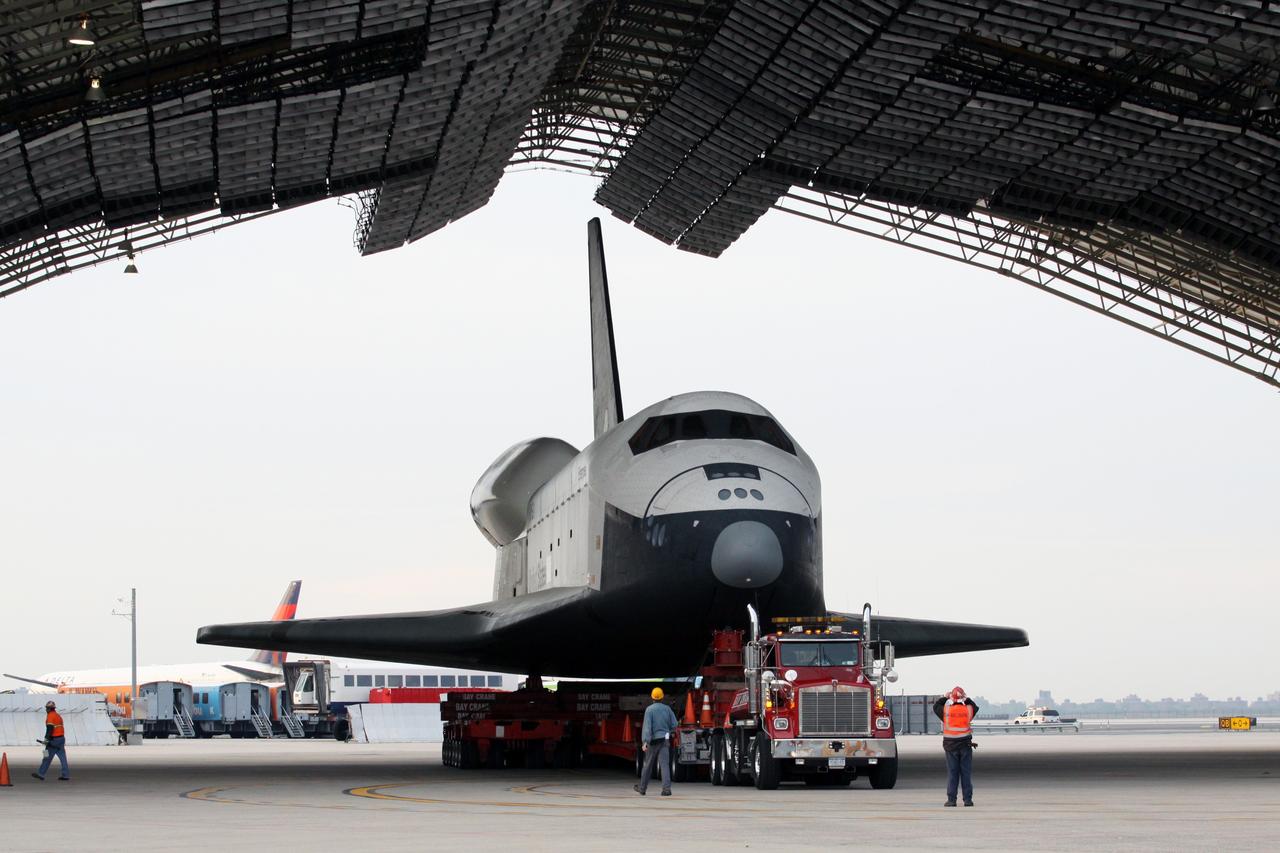
NEW YORK – Space shuttle Enterprise is backed into a protective hangar at John F. Kennedy International Airport in New York City. Enterprise, a prototype built to test aspects of the space shuttle design, will be displayed at the Intrepid Sea, Air and Space Museum in New York. Photo credit: NASA/Kim Shiflett
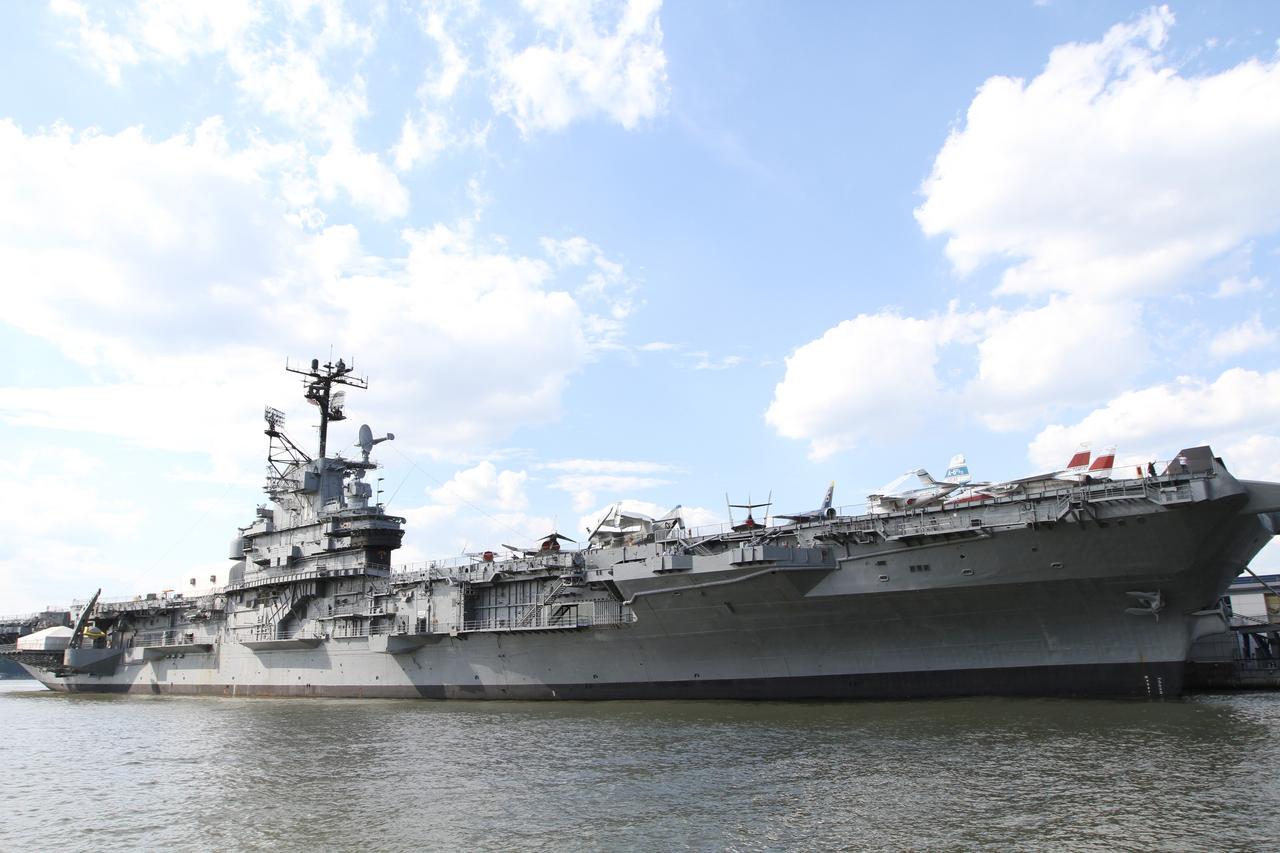
NEW YORK –The Intrepid Sea, Air and Space Museum in New York City will be the new home of the space shuttle Enterprise. The prototype shuttle will be put on display July 19 on the flight deck of the retired aircraft carrier. Enterprise is to be placed inside a protective pavilion. Photo credit: NASA/Kim Shiflett
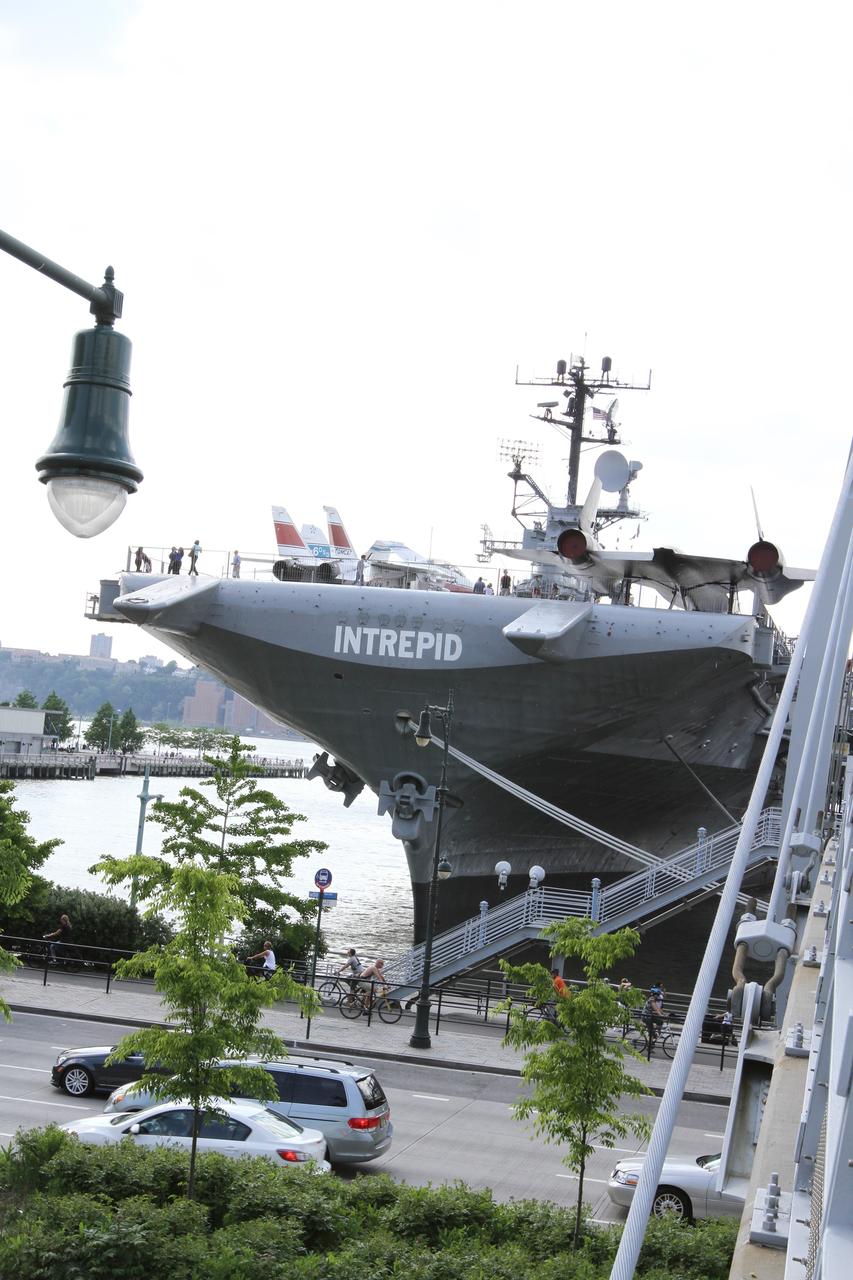
NEW YORK –The Intrepid Sea, Air and Space Museum in New York City will be the new home of the space shuttle Enterprise. The prototype shuttle will be put on display July 19 on the flight deck of the retired aircraft carrier. Enterprise is to be placed inside a protective pavilion. Photo credit: NASA/Kim Shiflett

NEW YORK –The Intrepid Sea, Air and Space Museum in New York City will be the new home of the space shuttle Enterprise. The prototype shuttle will be put on display July 19 on the flight deck of the retired aircraft carrier. Enterprise is to be placed inside a protective pavilion. Photo credit: NASA/Kim Shiflett
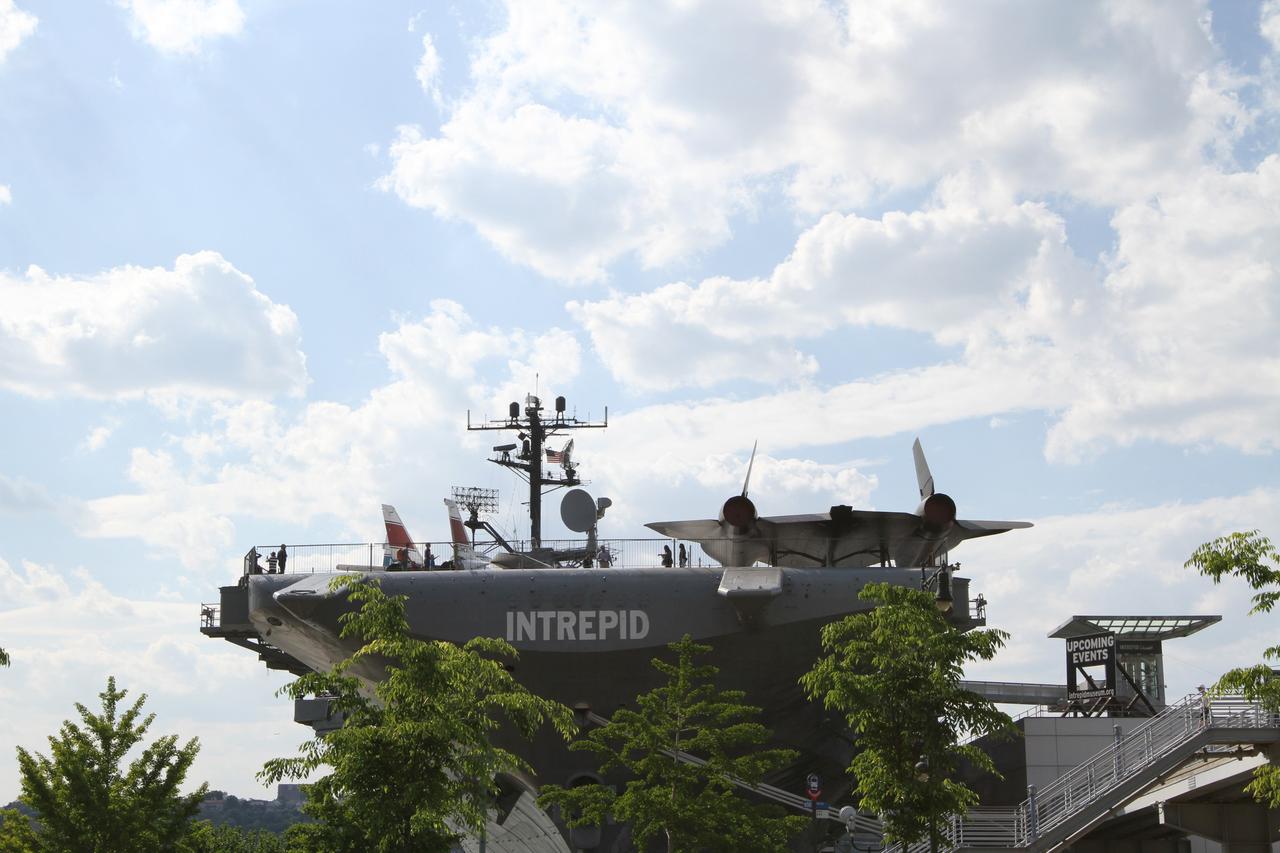
NEW YORK –The Intrepid Sea, Air and Space Museum in New York City will be the new home of the space shuttle Enterprise. The prototype shuttle will be put on display July 19 on the flight deck of the retired aircraft carrier. Enterprise is to be placed inside a protective pavilion. Photo credit: NASA/Kim Shiflett
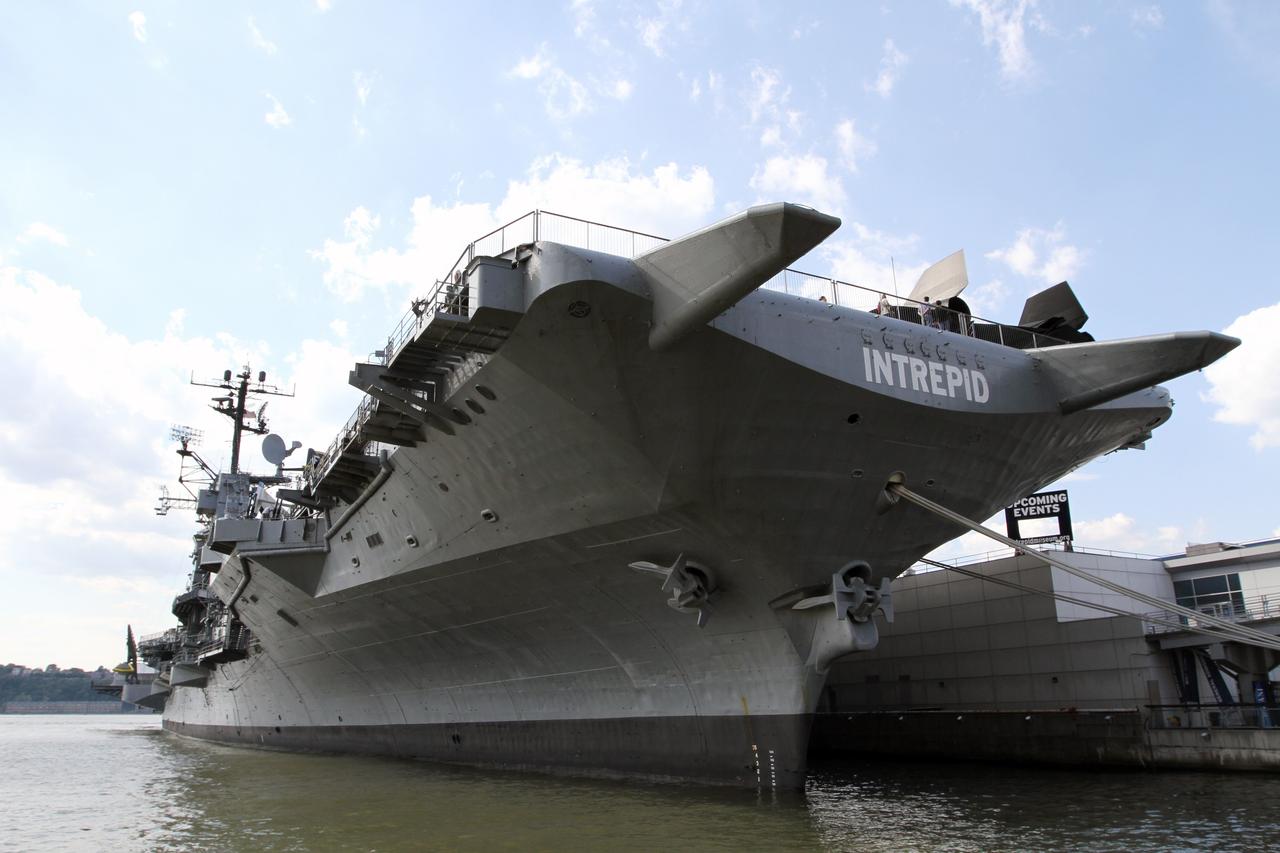
NEW YORK –The Intrepid Sea, Air and Space Museum in New York City will be the new home of the space shuttle Enterprise. The prototype shuttle will be put on display July 19 on the flight deck of the retired aircraft carrier. Enterprise is to be placed inside a protective pavilion. Photo credit: NASA/Kim Shiflett
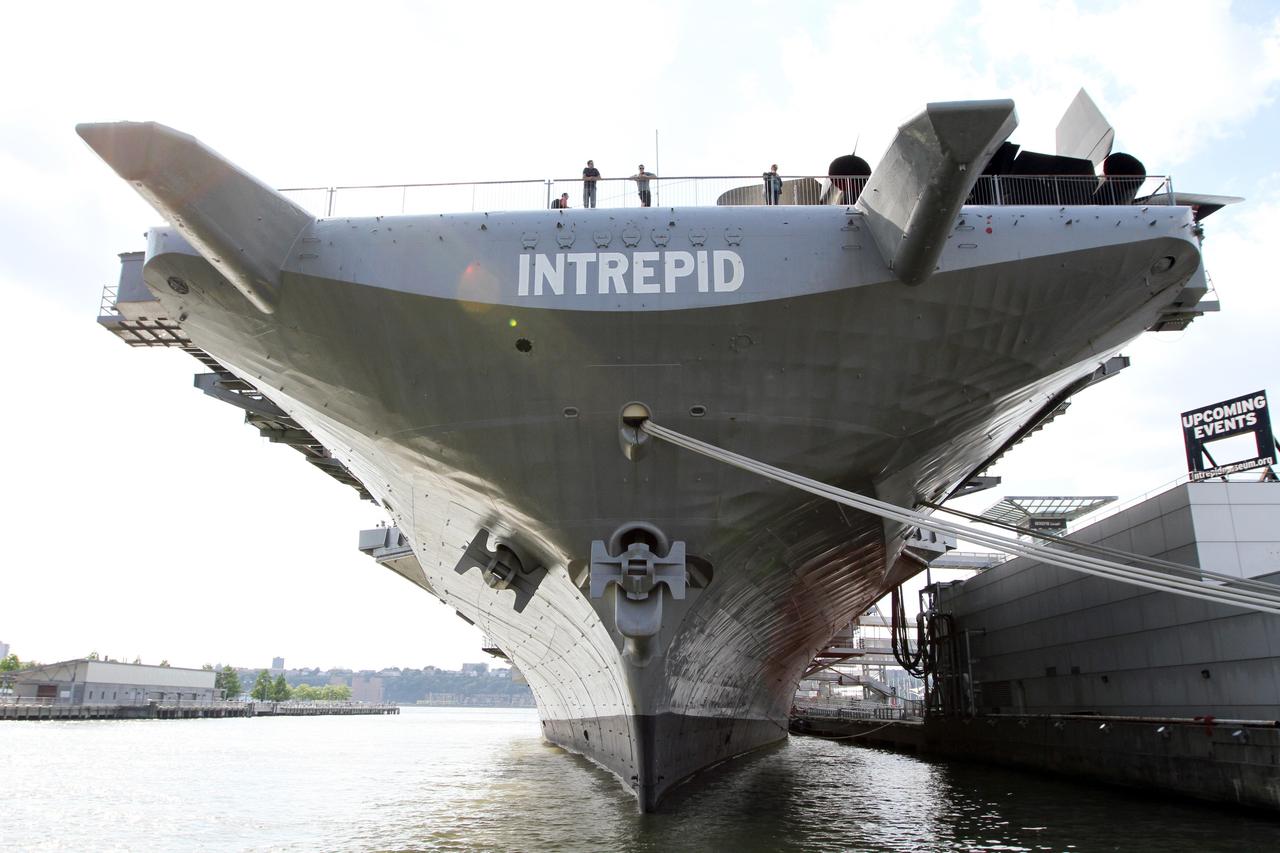
NEW YORK –The Intrepid Sea, Air and Space Museum in New York City will be the new home of the space shuttle Enterprise. The prototype shuttle will be put on display July 19 on the flight deck of the retired aircraft carrier. Enterprise is to be placed inside a protective pavilion. Photo credit: NASA/Kim Shiflett
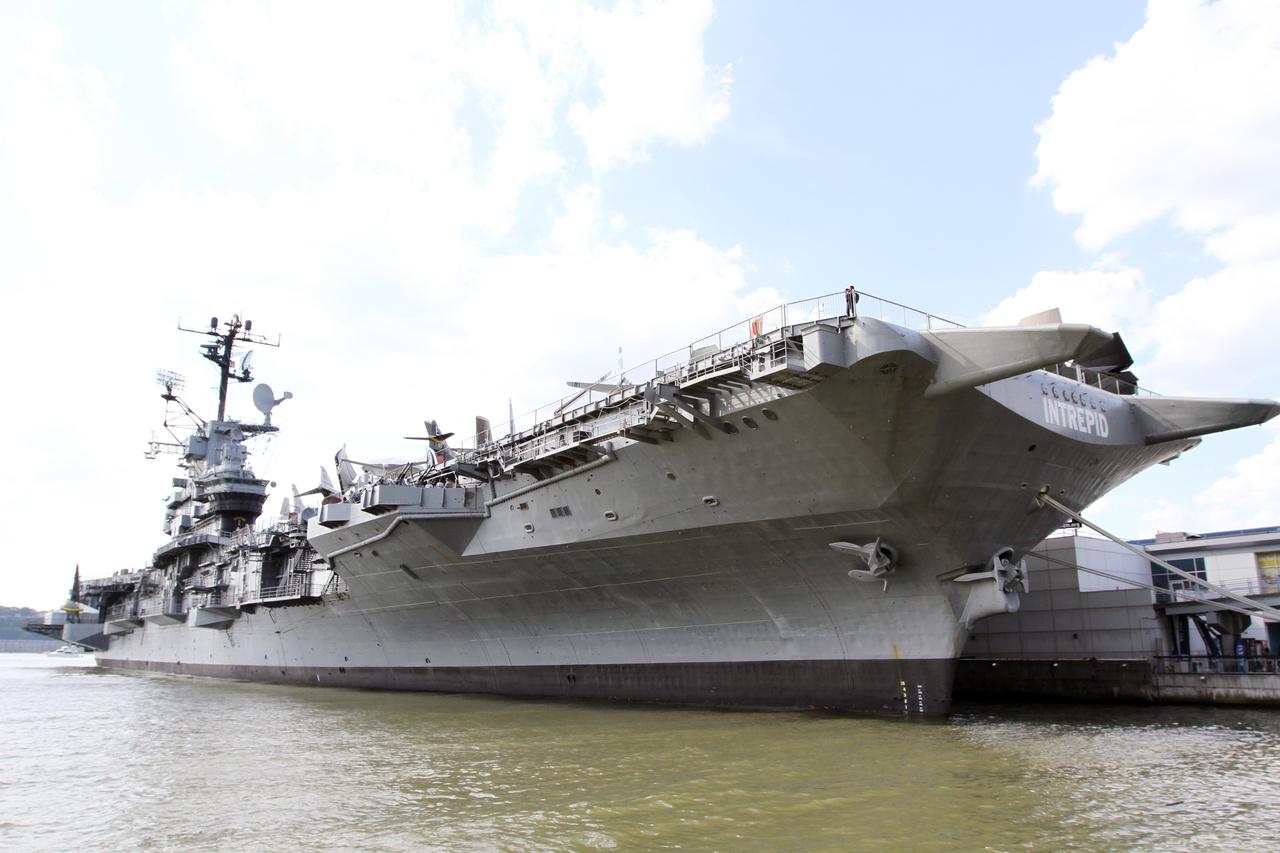
NEW YORK –The Intrepid Sea, Air and Space Museum in New York City will be the new home of the space shuttle Enterprise. The prototype shuttle will be put on display July 19 on the flight deck of the retired aircraft carrier. Enterprise is to be placed inside a protective pavilion. Photo credit: NASA/Kim Shiflett
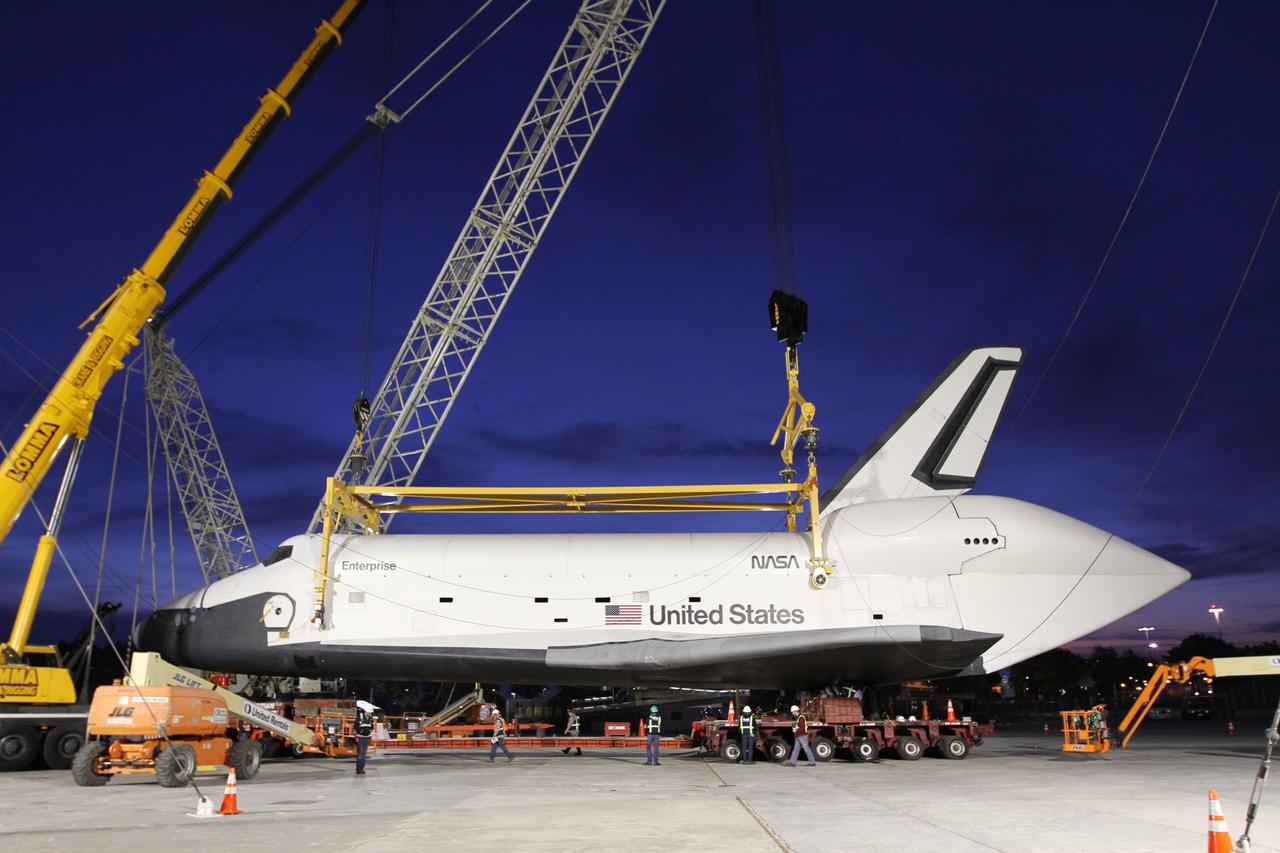
NEW YORK – Space shuttle Enterprise is lowered onto a specialized truck bed so the prototype spacecraft can be moved into a hangar. The work took place at John F. Kennedy International Airport in New York City. Enterprise, a prototype built to test aspects of the space shuttle design, will be displayed at the Intrepid Sea, Air and Space Museum in New York. Photo credit: NASA/Kim Shiflett
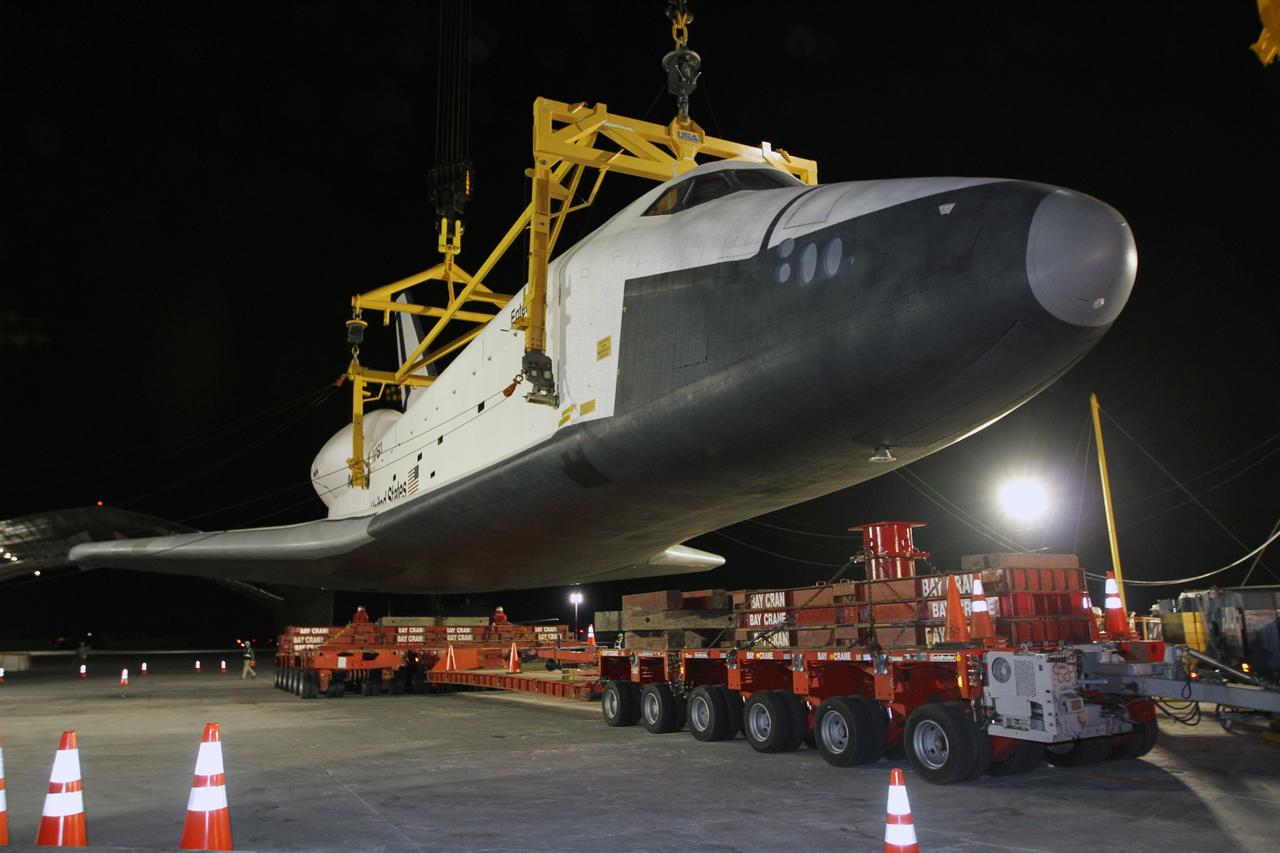
NEW YORK – Space shuttle Enterprise is lowered onto a specialized truck bed so the prototype spacecraft can be moved into a hangar. The work took place at John F. Kennedy International Airport in New York City. Enterprise, a prototype built to test aspects of the space shuttle design, will be displayed at the Intrepid Sea, Air and Space Museum in New York. Photo credit: NASA/Kim Shiflett
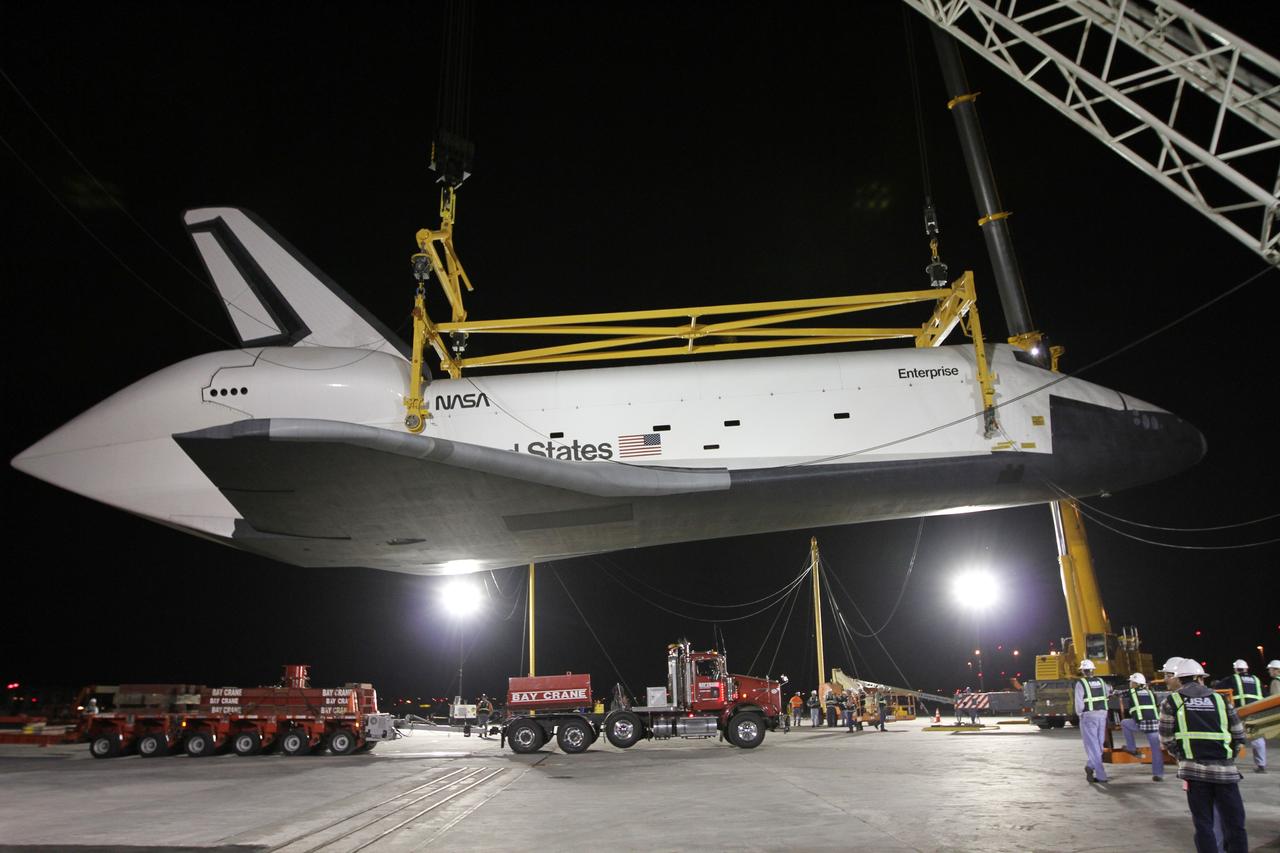
NEW YORK – A specialized truck bed is moved into place beneath space shuttle Enterprise so the prototype spacecraft can be moved into a hangar. The work took place at John F. Kennedy International Airport in New York City. Enterprise, a prototype built to test aspects of the space shuttle design, will be displayed at the Intrepid Sea, Air and Space Museum in New York. Photo credit: NASA/Kim Shiflett
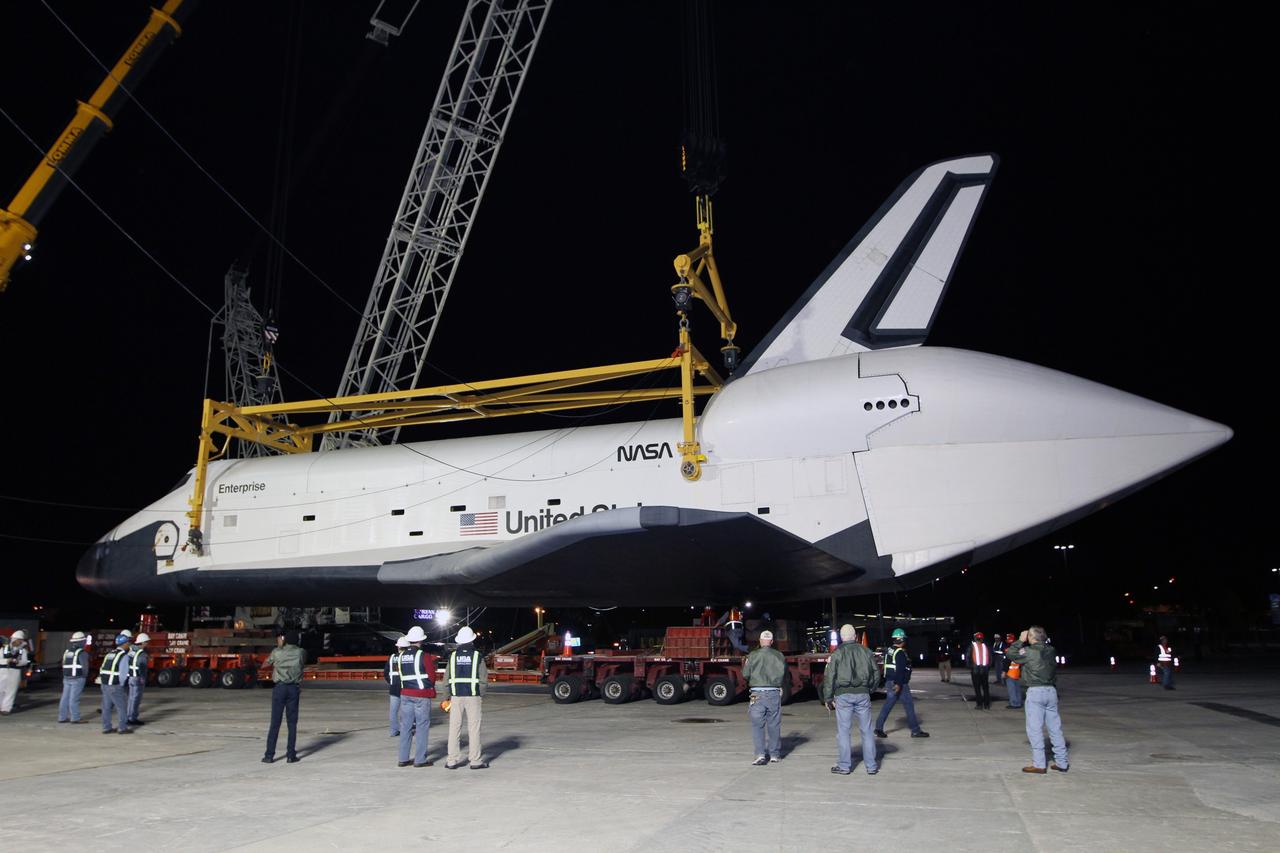
NEW YORK – Space shuttle Enterprise is lowered onto a specialized truck bed so the prototype spacecraft can be moved into a hangar. The work took place at John F. Kennedy International Airport in New York City. Enterprise, a prototype built to test aspects of the space shuttle design, will be displayed at the Intrepid Sea, Air and Space Museum in New York. Photo credit: NASA/Kim Shiflett
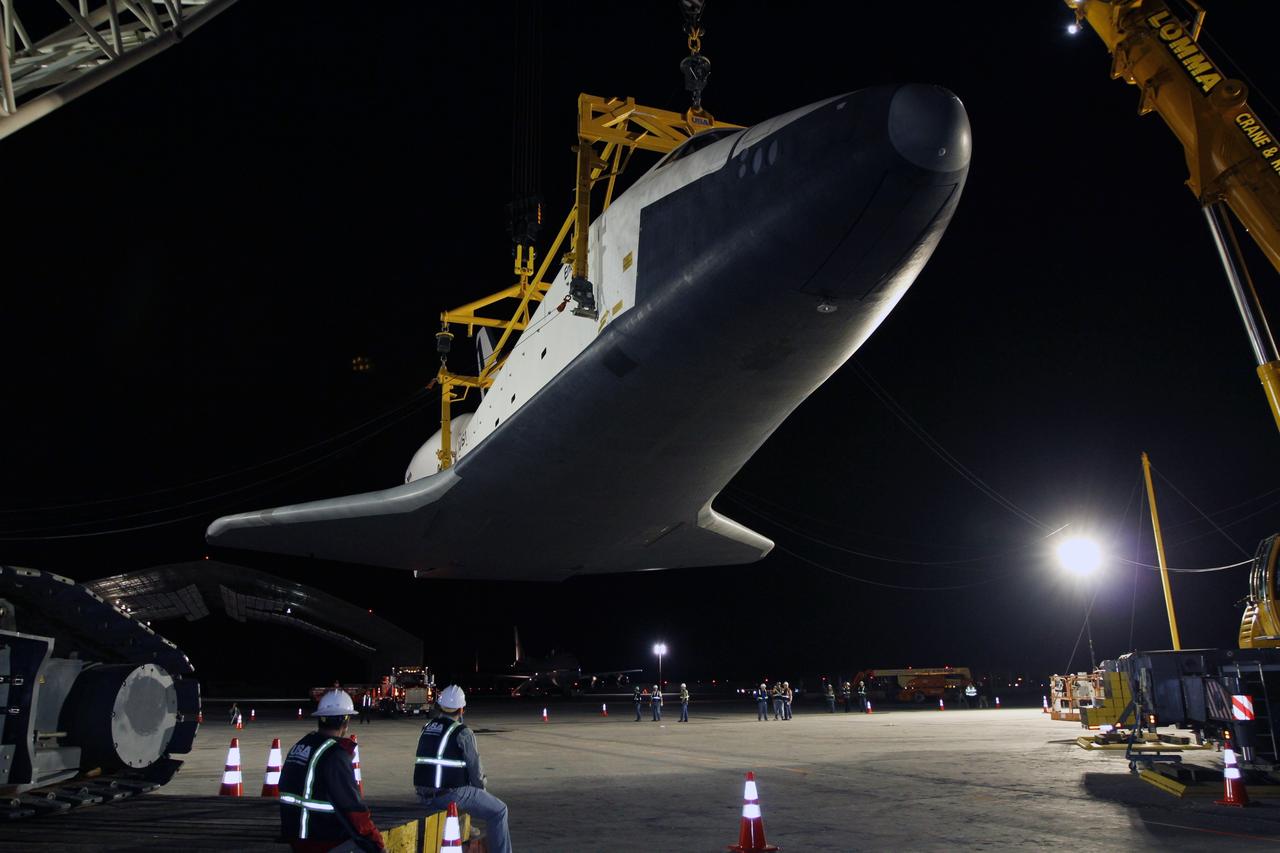
NEW YORK – Space shuttle Enterprise hangs in a specialized sling as a crew continues demate operations for the prototype spacecraft. The work took place at John F. Kennedy International Airport in New York City. Enterprise, a prototype built to test aspects of the space shuttle design, will be displayed at the Intrepid Sea, Air and Space Museum in New York. Photo credit: NASA/Kim Shiflett
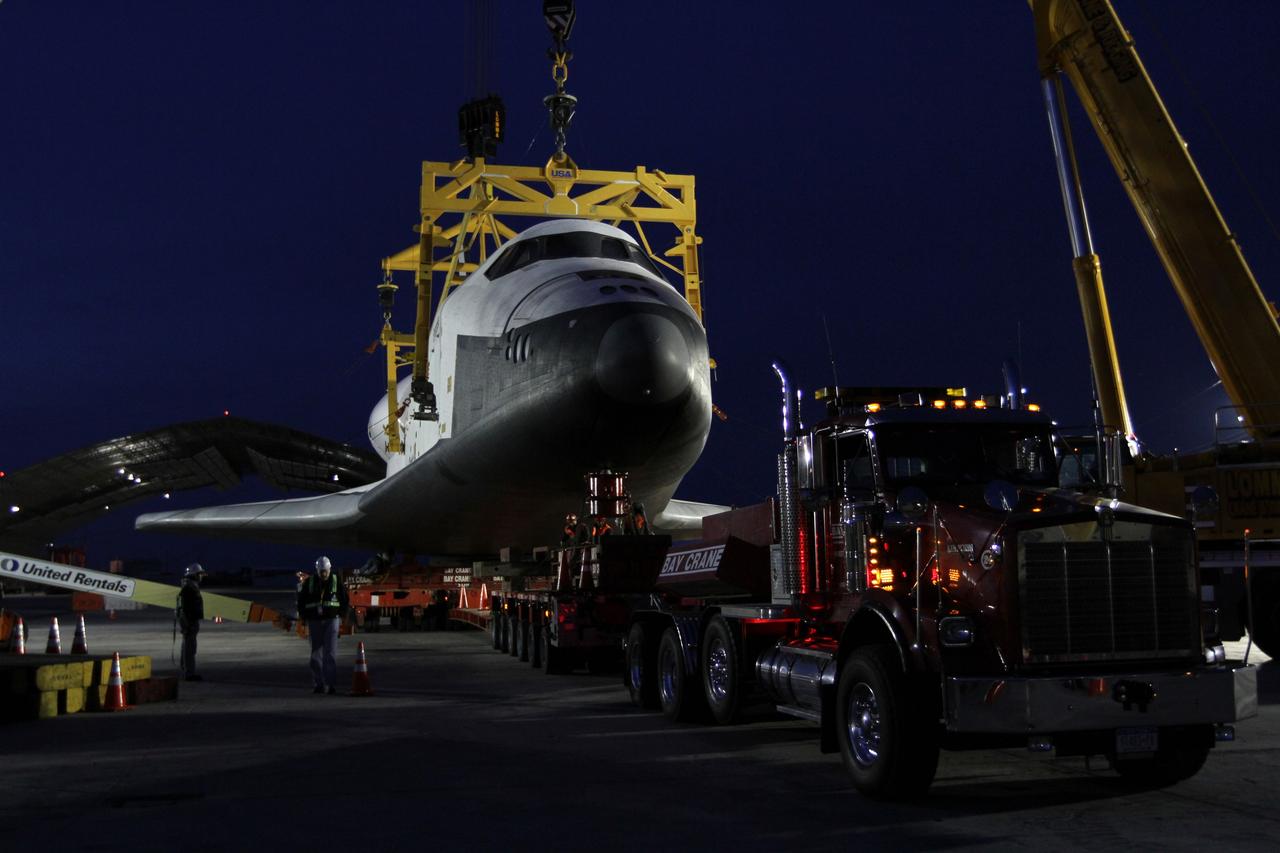
NEW YORK – Space shuttle Enterprise is lowered onto a specialized truck bed so the prototype spacecraft can be moved into a hangar. The work took place at John F. Kennedy International Airport in New York City. Enterprise, a prototype built to test aspects of the space shuttle design, will be displayed at the Intrepid Sea, Air and Space Museum in New York. Photo credit: NASA/Kim Shiflett
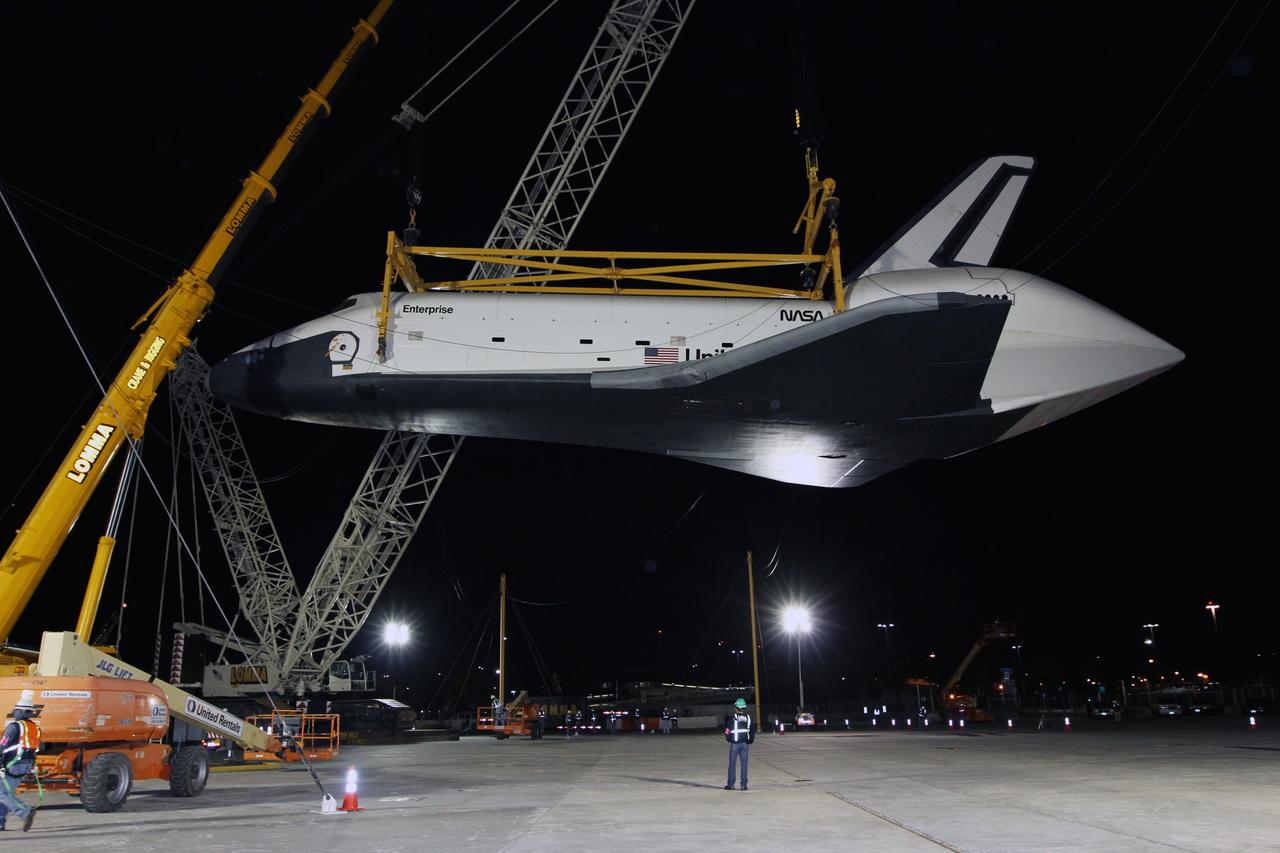
NEW YORK – Space shuttle Enterprise hangs in a specialized sling as a crew continues demate operations for the prototype spacecraft. The work took place at John F. Kennedy International Airport in New York City. Enterprise, a prototype built to test aspects of the space shuttle design, will be displayed at the Intrepid Sea, Air and Space Museum in New York. Photo credit: NASA/Kim Shiflett
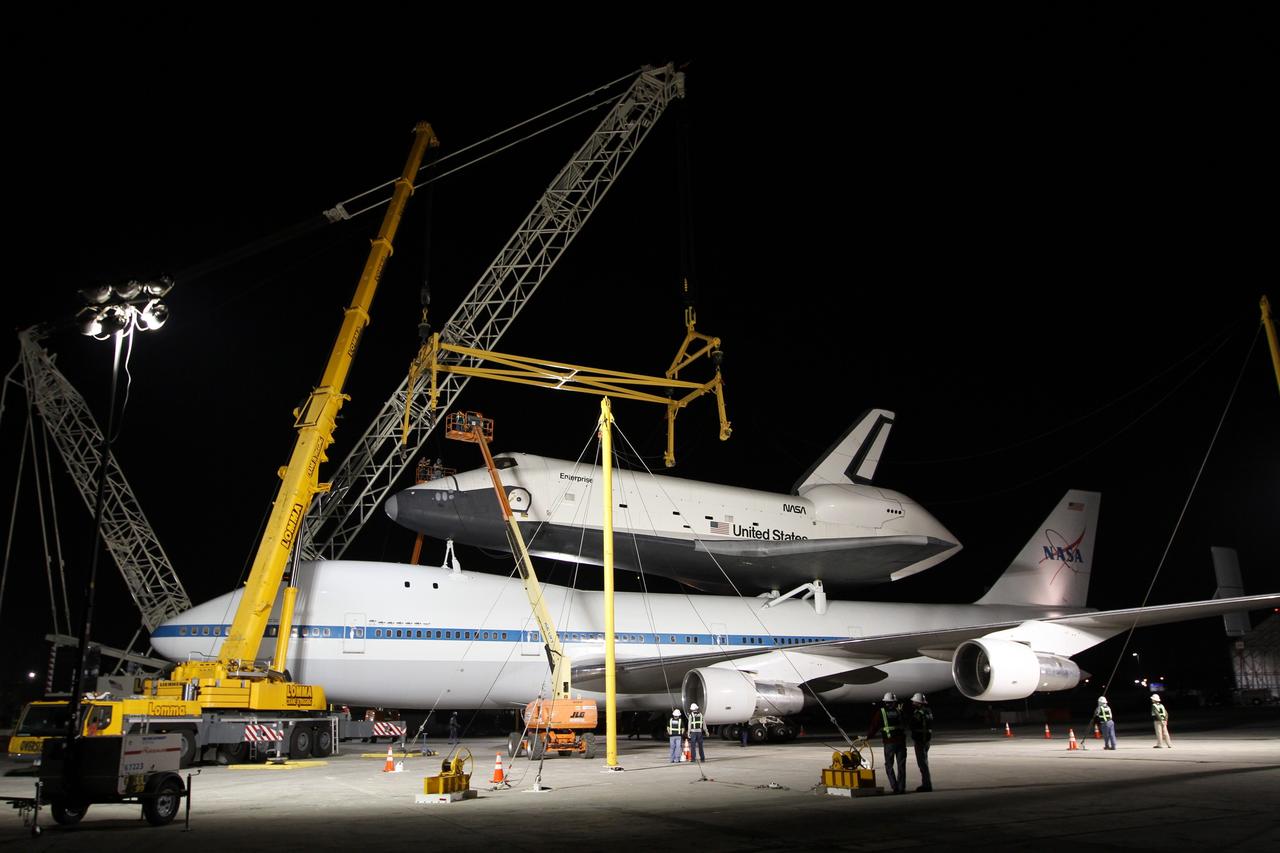
NEW YORK – A metal sling designed for lifting a space shuttle is positioned over space shuttle Enterprise and NASA's shuttle carrier aircraft. The work took place at John F. Kennedy International Airport in New York City. Enterprise, a prototype built to test aspects of the space shuttle design, will be displayed at the Intrepid Sea, Air and Space Museum in New York. Photo credit: NASA/Kim Shiflett
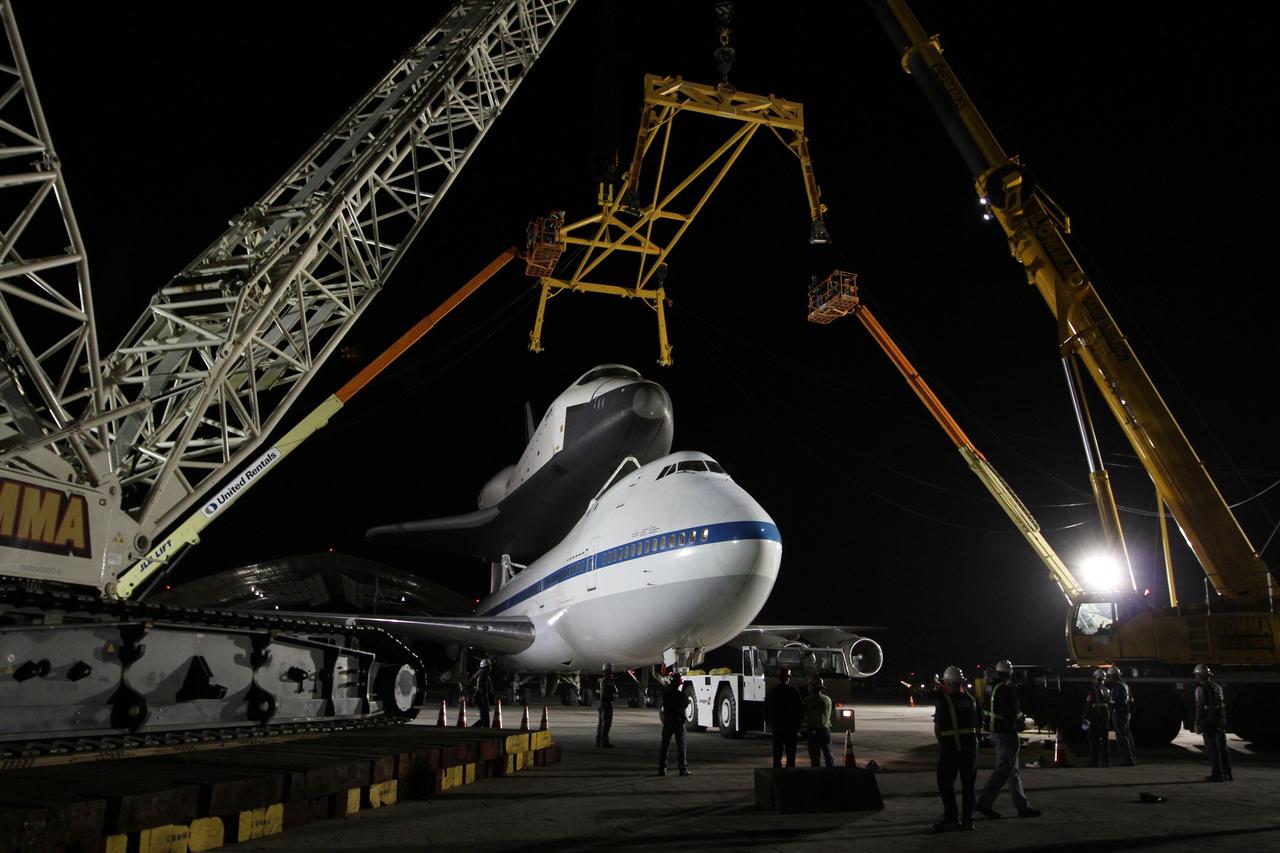
NEW YORK – Cranes and other equipment wait as NASA's shuttle carrier aircraft and space shuttle Enterprise are moved into place so the shuttle can be taken off the top of the aircraft. The work took place at John F. Kennedy International Airport in New York City. Enterprise, a prototype built to test aspects of the space shuttle design, will be displayed at the Intrepid Sea, Air and Space Museum in New York. Photo credit: NASA/Kim Shiflett
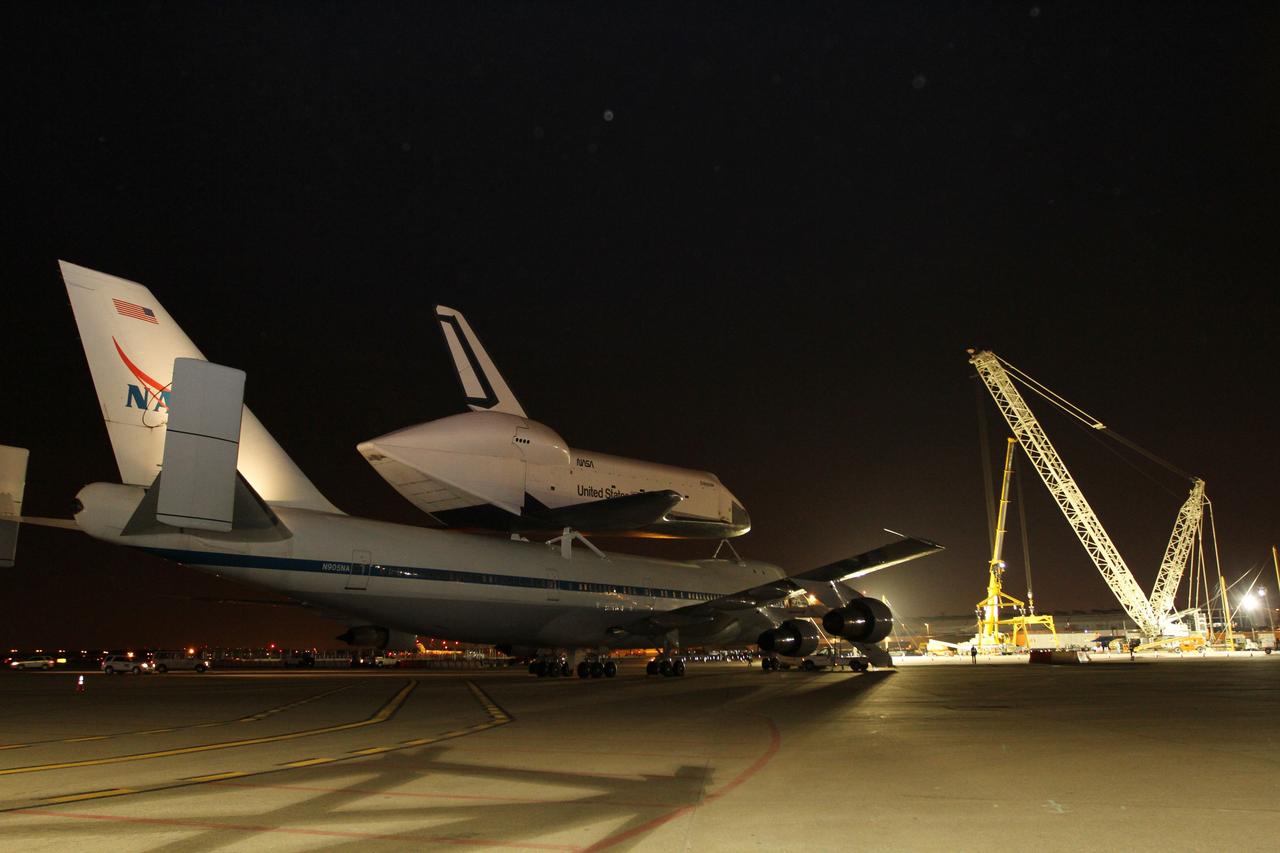
NEW YORK – Cranes and other equipment wait as NASA's shuttle carrier aircraft and space shuttle Enterprise are moved into place so the shuttle can be taken off the top of the aircraft. The work took place at John F. Kennedy International Airport in New York City. Enterprise, a prototype built to test aspects of the space shuttle design, will be displayed at the Intrepid Sea, Air and Space Museum in New York. Photo credit: NASA/Kim Shiflett
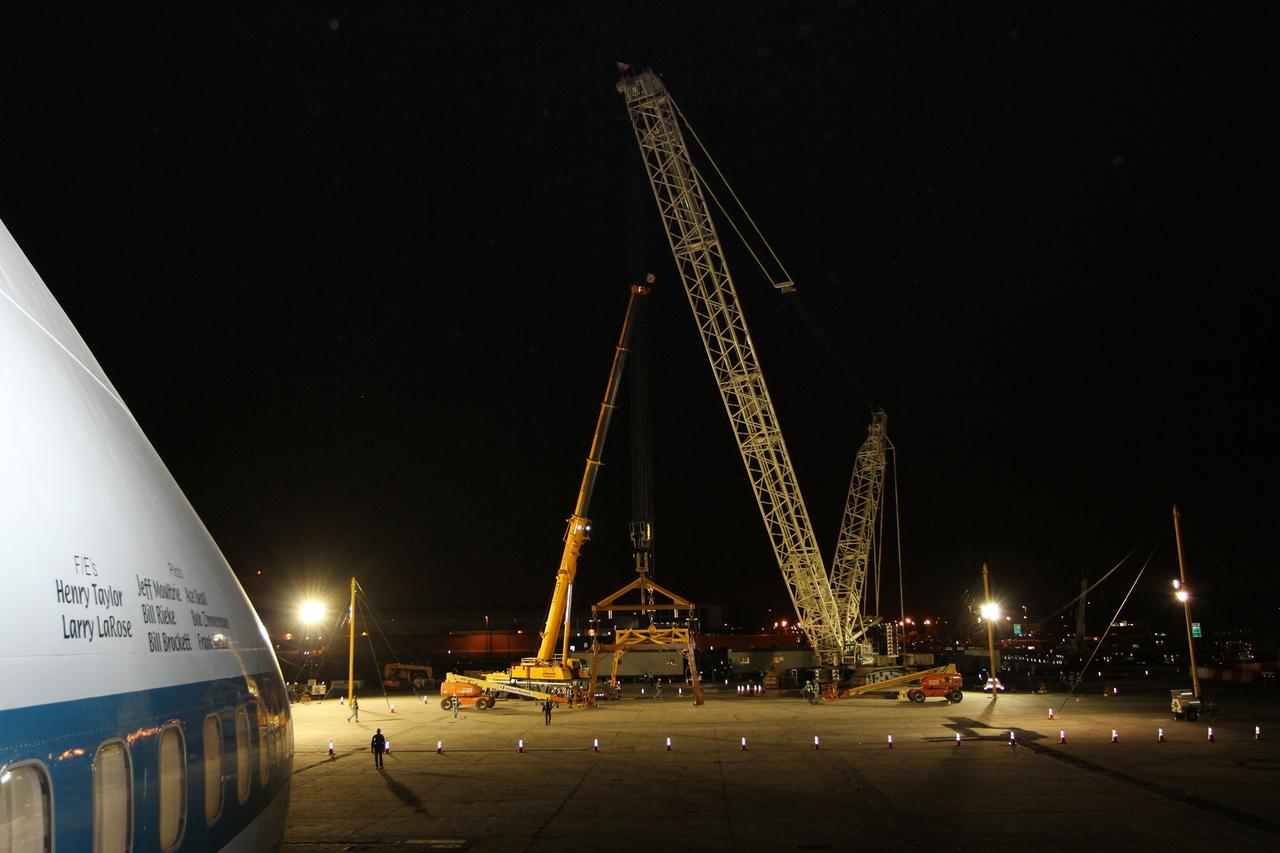
NEW YORK – Cranes and other equipment wait as NASA's shuttle carrier aircraft and space shuttle Enterprise are moved into place so the shuttle can be taken off the top of the aircraft. The work took place at John F. Kennedy International Airport in New York City. Enterprise, a prototype built to test aspects of the space shuttle design, will be displayed at the Intrepid Sea, Air and Space Museum in New York. Photo credit: NASA/Kim Shiflett
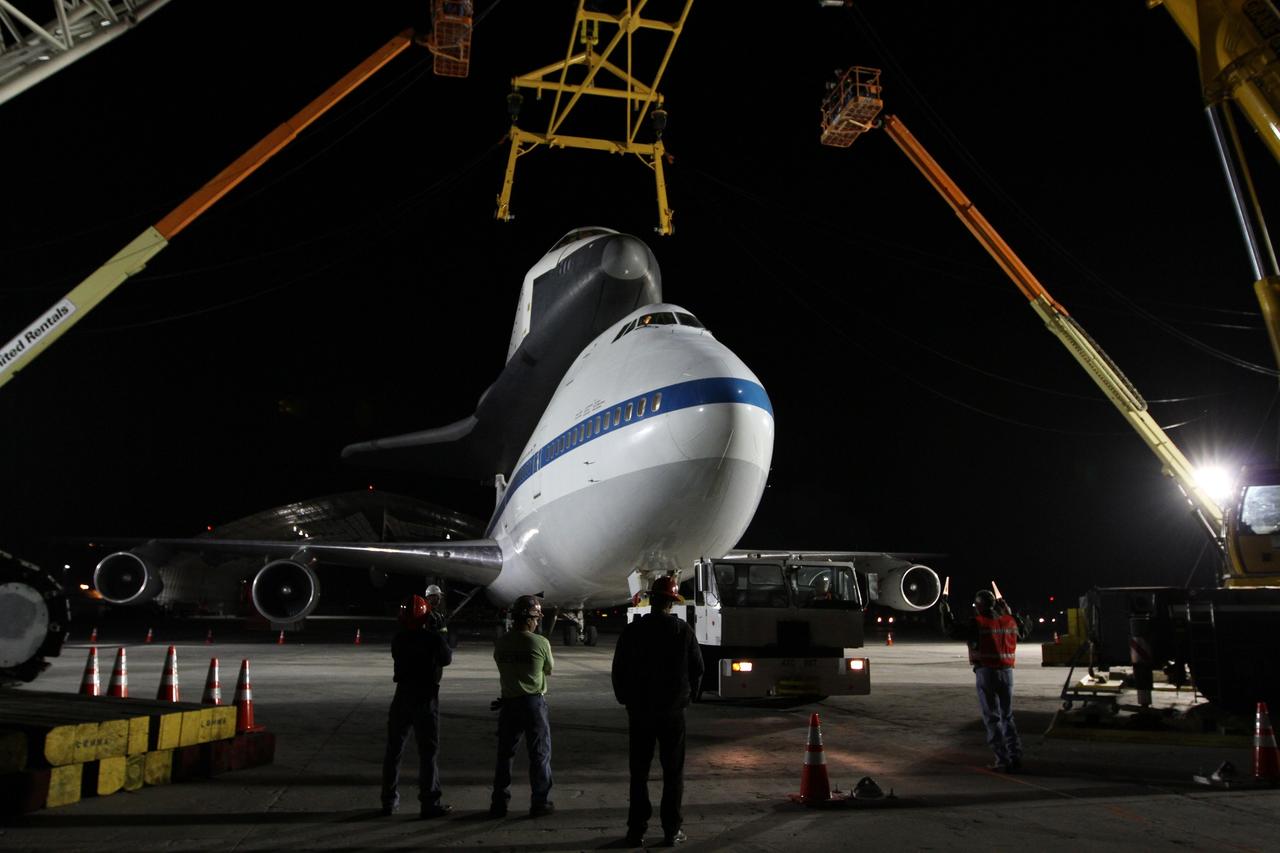
NEW YORK – Cranes and other equipment wait as NASA's shuttle carrier aircraft and space shuttle Enterprise are moved into place so the shuttle can be taken off the top of the aircraft. The work took place at John F. Kennedy International Airport in New York City. Enterprise, a prototype built to test aspects of the space shuttle design, will be displayed at the Intrepid Sea, Air and Space Museum in New York. Photo credit: NASA/Kim Shiflett
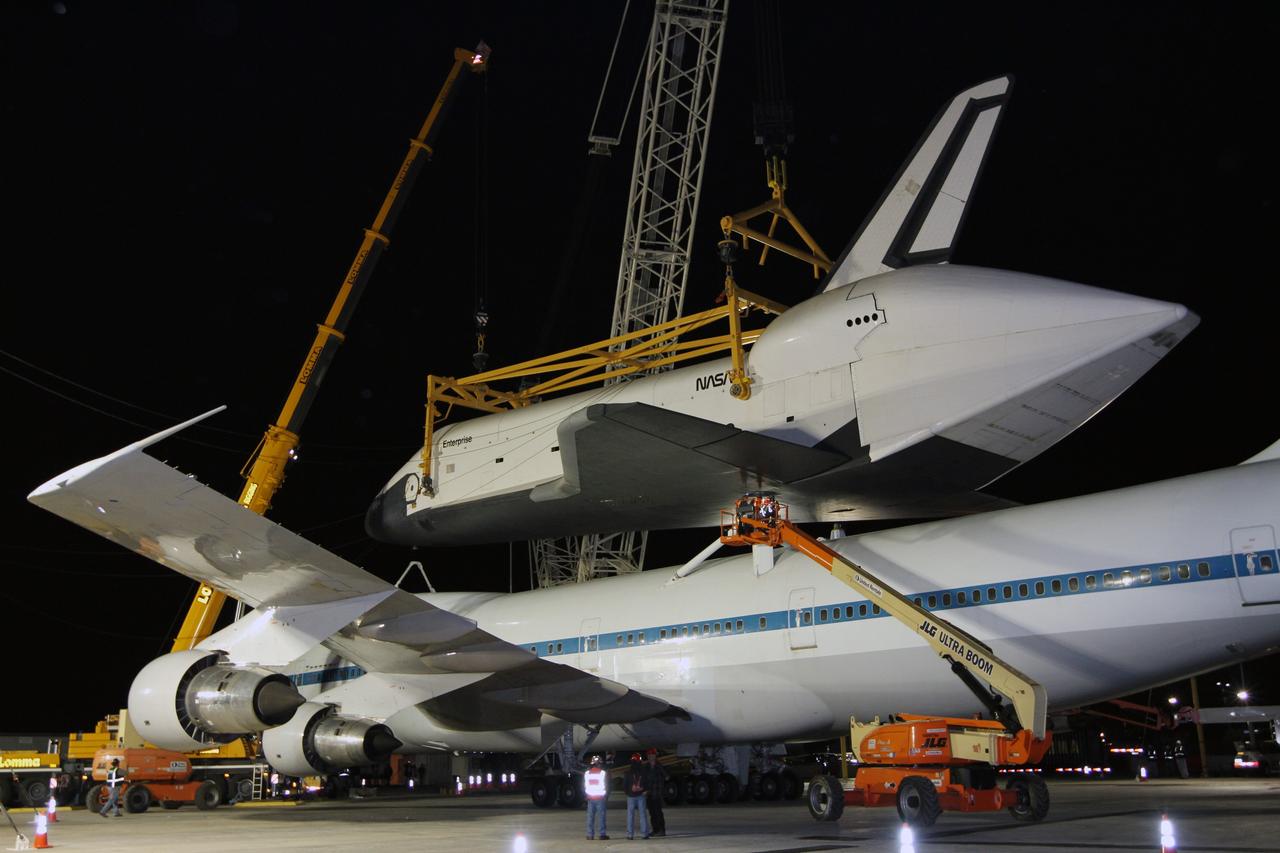
NEW YORK – Technicians detach space shuttle Enterprise from the top of NASA's shuttle carrier aircraft. The work took place at John F. Kennedy International Airport in New York City. Enterprise, a prototype built to test aspects of the space shuttle design, will be displayed at the Intrepid Sea, Air and Space Museum in New York. Photo credit: NASA/Kim Shiflett
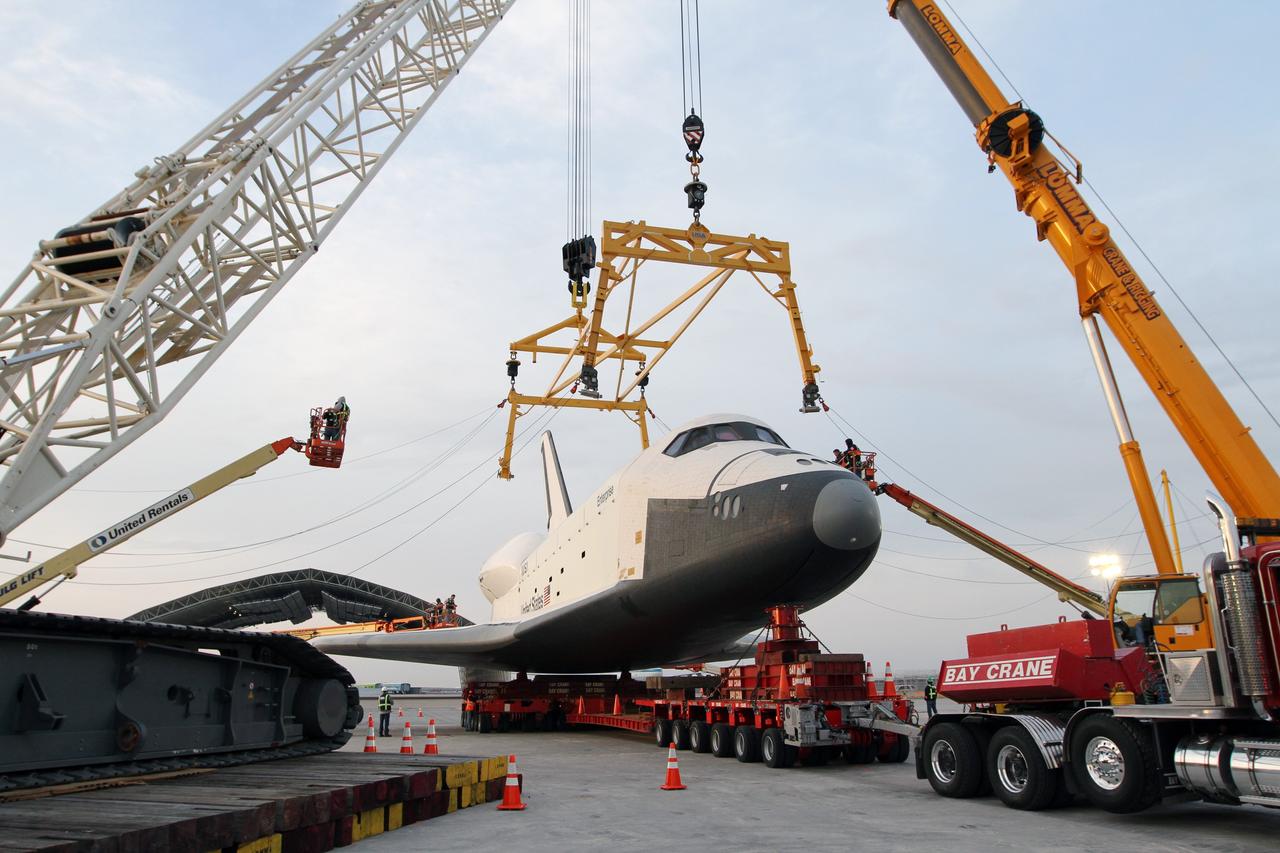
NEW YORK – Technicians lift the metal sling from space shuttle Enterprise after its removal from the top of NASA's shuttle carrier aircraft. The work took place at John F. Kennedy International Airport in New York City. Enterprise, a prototype built to test aspects of the space shuttle design, will be displayed at the Intrepid Sea, Air and Space Museum in New York. Photo credit: NASA/Kim Shiflett
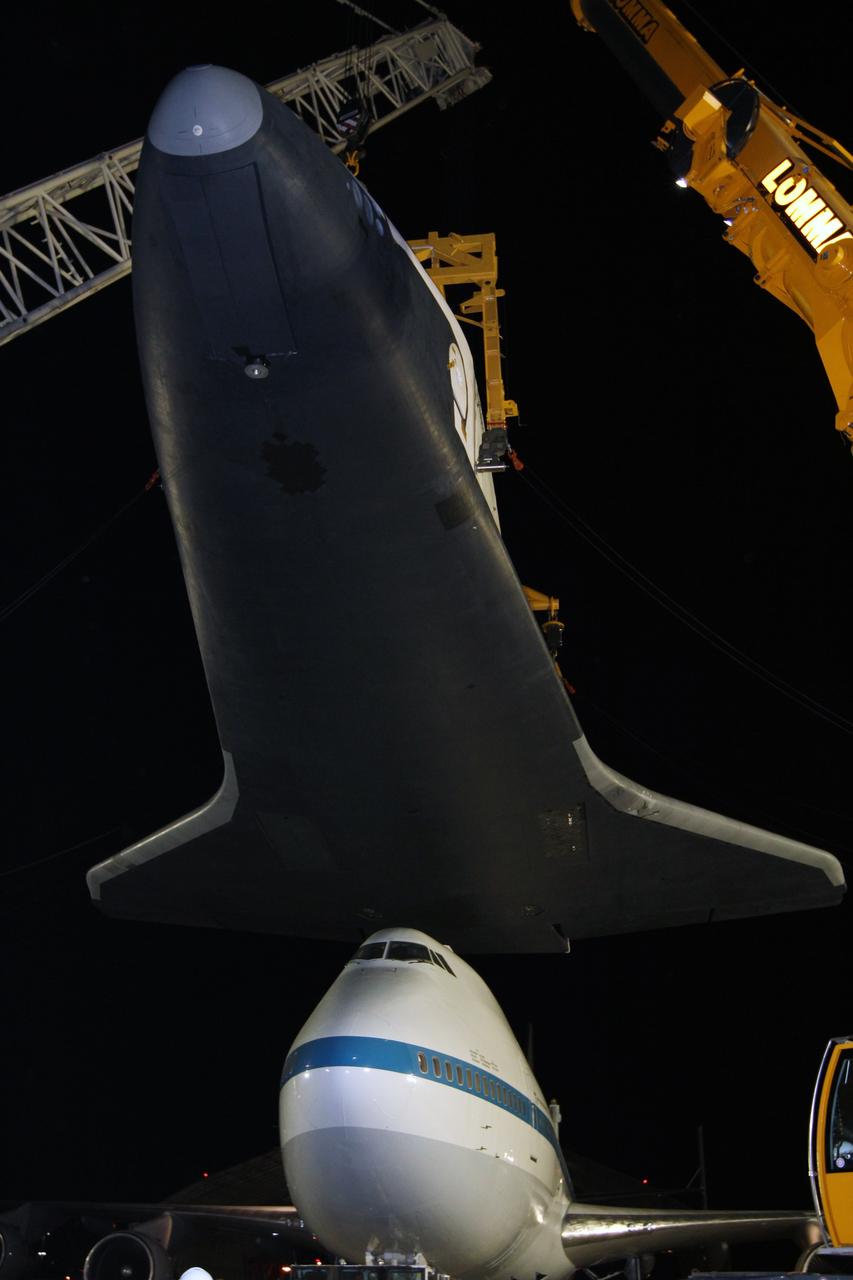
NEW YORK – Cranes carefully detach space shuttle Enterprise from the top of NASA's shuttle carrier aircraft. The work took place at John F. Kennedy International Airport in New York City. Enterprise, a prototype built to test aspects of the space shuttle design, will be displayed at the Intrepid Sea, Air and Space Museum in New York. Photo credit: NASA/Kim Shiflett

NEW YORK – Cranes carefully detach space shuttle Enterprise from the top of NASA's shuttle carrier aircraft. The work took place at John F. Kennedy International Airport in New York City. Enterprise, a prototype built to test aspects of the space shuttle design, will be displayed at the Intrepid Sea, Air and Space Museum in New York. Photo credit: NASA/Kim Shiflett
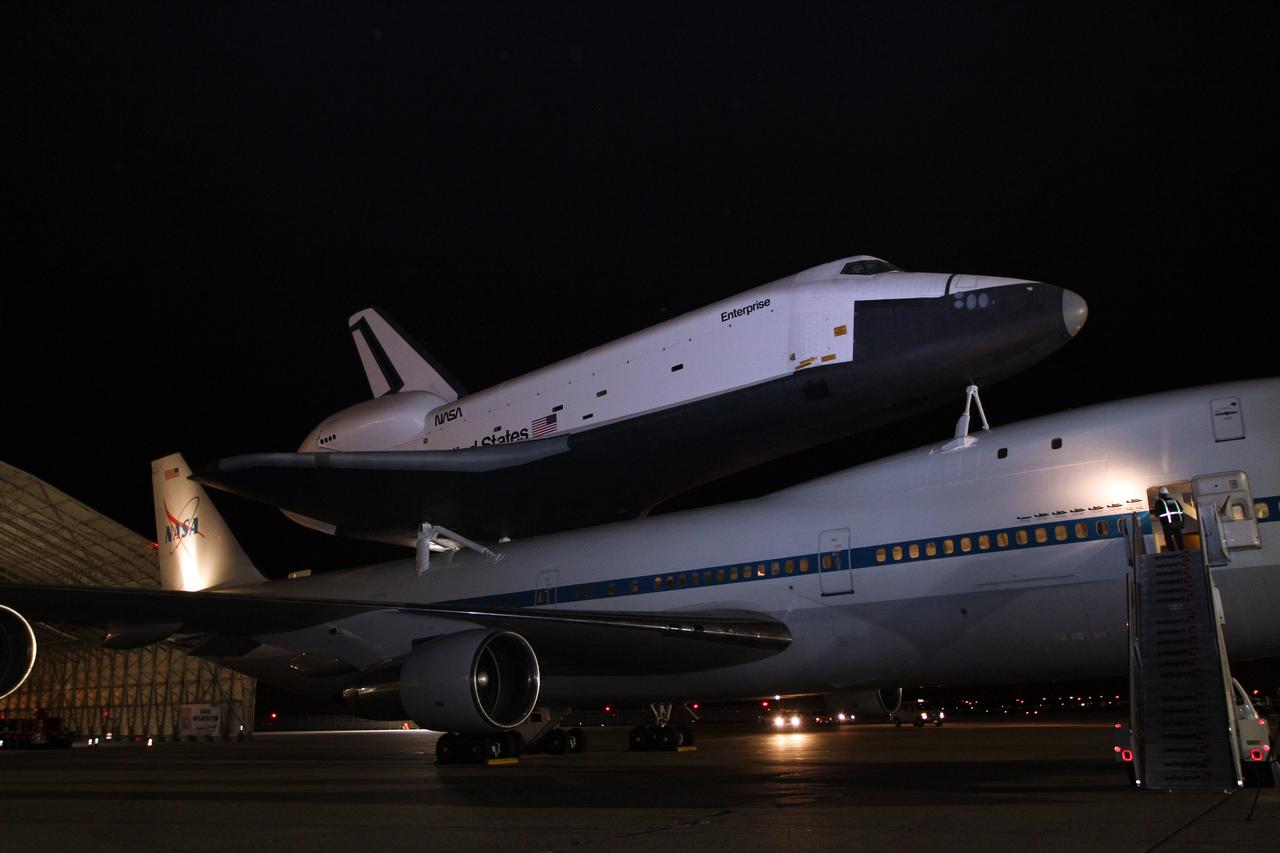
NEW YORK – Technicians ready the NASA's shuttle carrier aircraft for the removal of space shuttle Enterprise. The work took place at John F. Kennedy International Airport in New York City. Enterprise, a prototype built to test aspects of the space shuttle design, will be displayed at the Intrepid Sea, Air and Space Museum in New York. Photo credit: NASA/Kim Shiflett
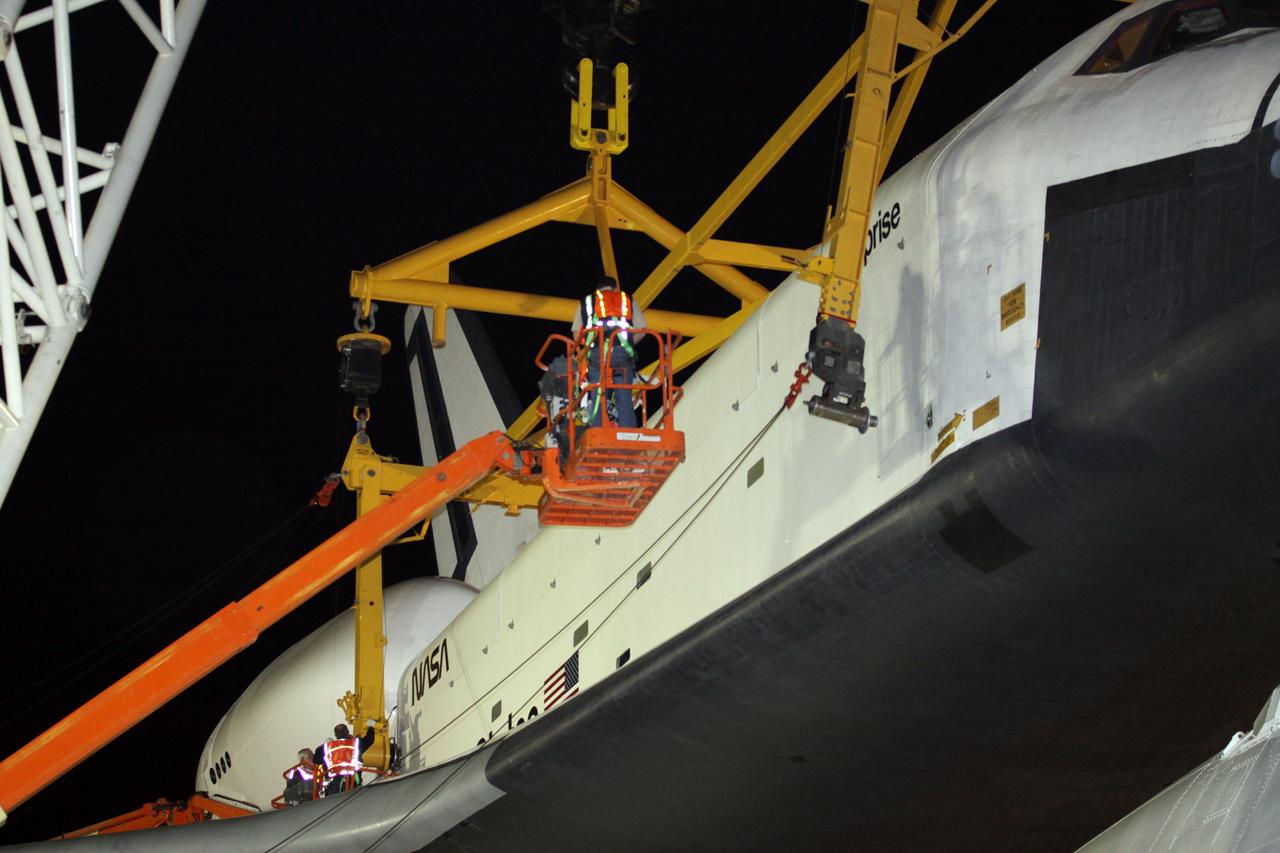
NEW YORK – Technicians attach the metal sling to the side of space shuttle Enterprise so it can be removed from the top of NASA's shuttle carrier aircraft. The work took place at John F. Kennedy International Airport in New York City. Enterprise, a prototype built to test aspects of the space shuttle design, will be displayed at the Intrepid Sea, Air and Space Museum in New York. Photo credit: NASA/Kim Shiflett
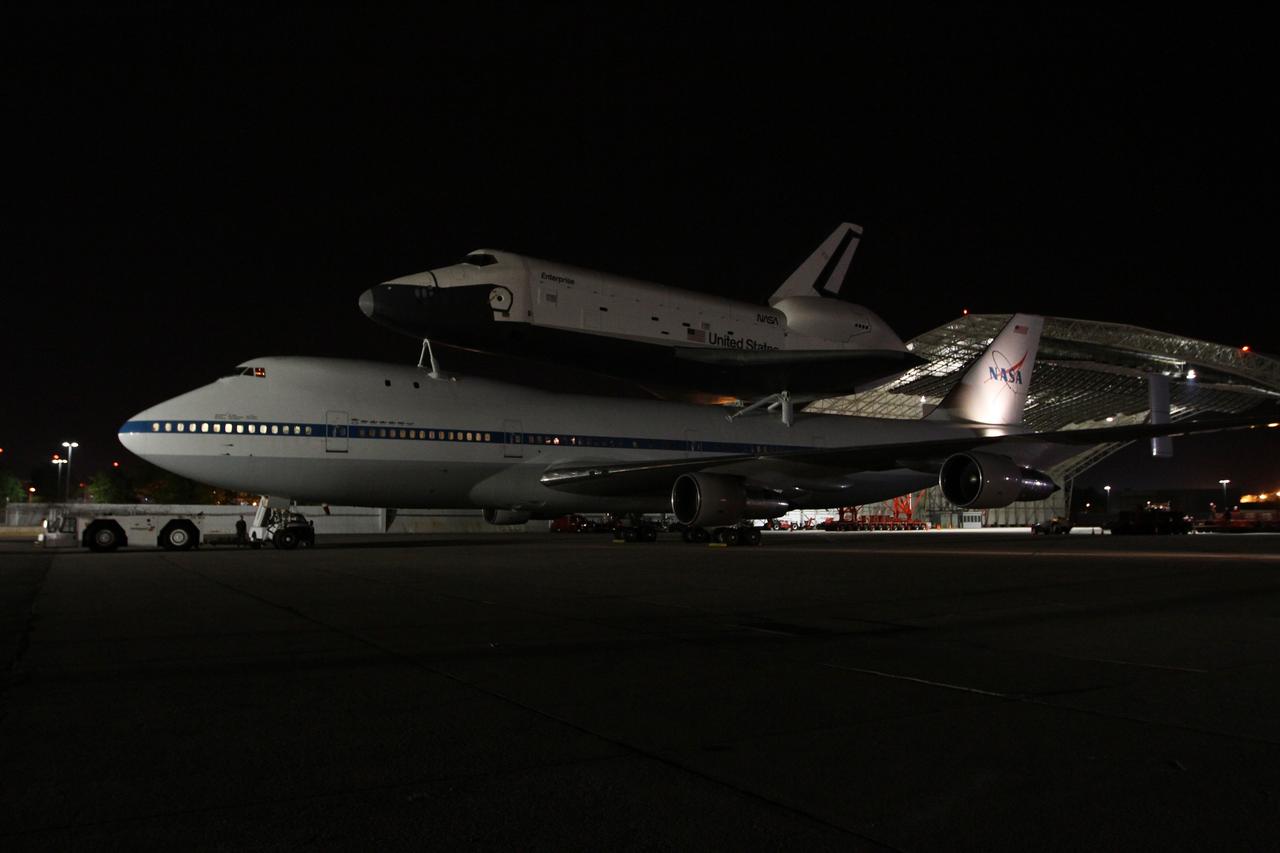
NEW YORK – NASA's shuttle carrier aircraft is moved into place so the space shuttle Enterprise can be removed. The work took place at John F. Kennedy International Airport in New York City. Enterprise, a prototype built to test aspects of the space shuttle design, will be displayed at the Intrepid Sea, Air and Space Museum in New York. Photo credit: NASA/Kim Shiflett
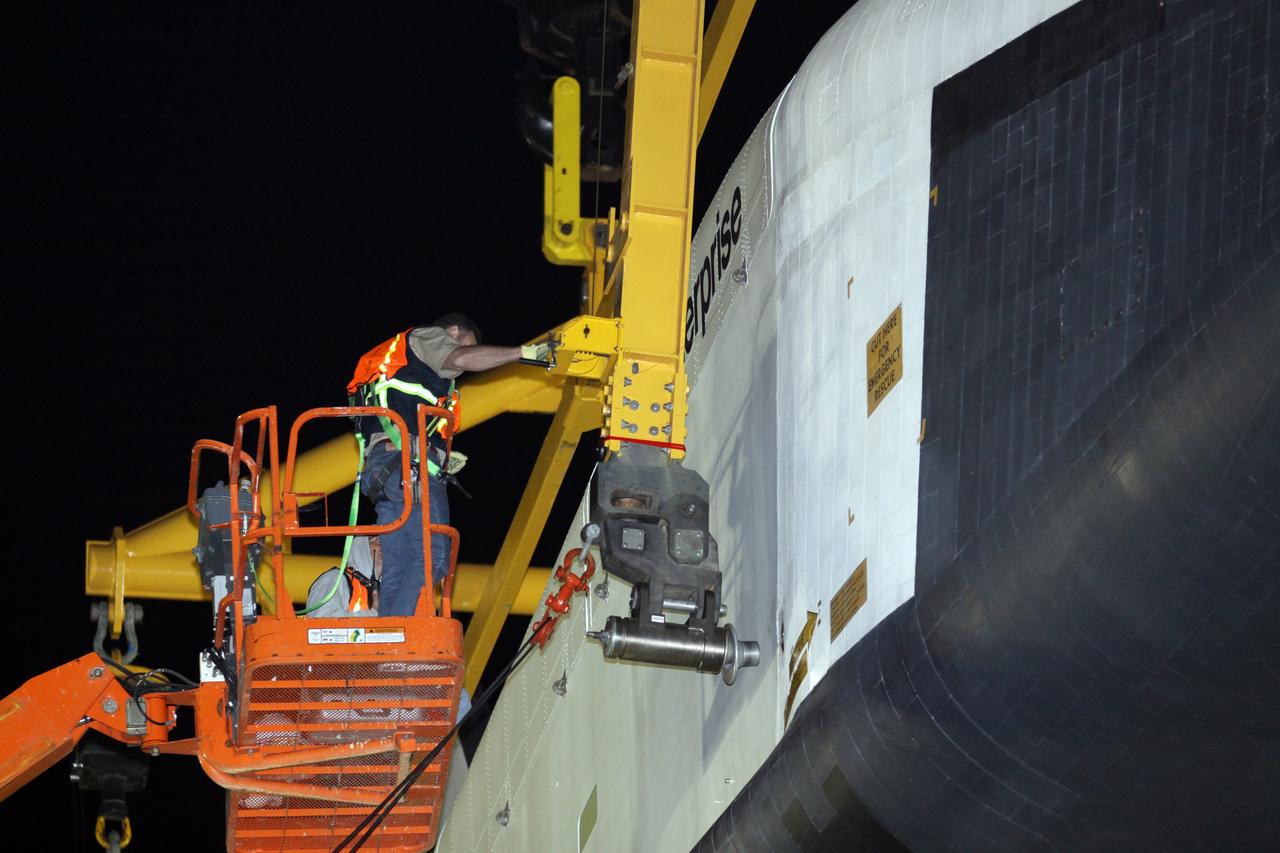
NEW YORK – Technicians attach the metal sling to the side of space shuttle Enterprise so it can be removed from the top of NASA's shuttle carrier aircraft. The work took place at John F. Kennedy International Airport in New York City. Enterprise, a prototype built to test aspects of the space shuttle design, will be displayed at the Intrepid Sea, Air and Space Museum in New York. Photo credit: NASA/Kim Shiflett
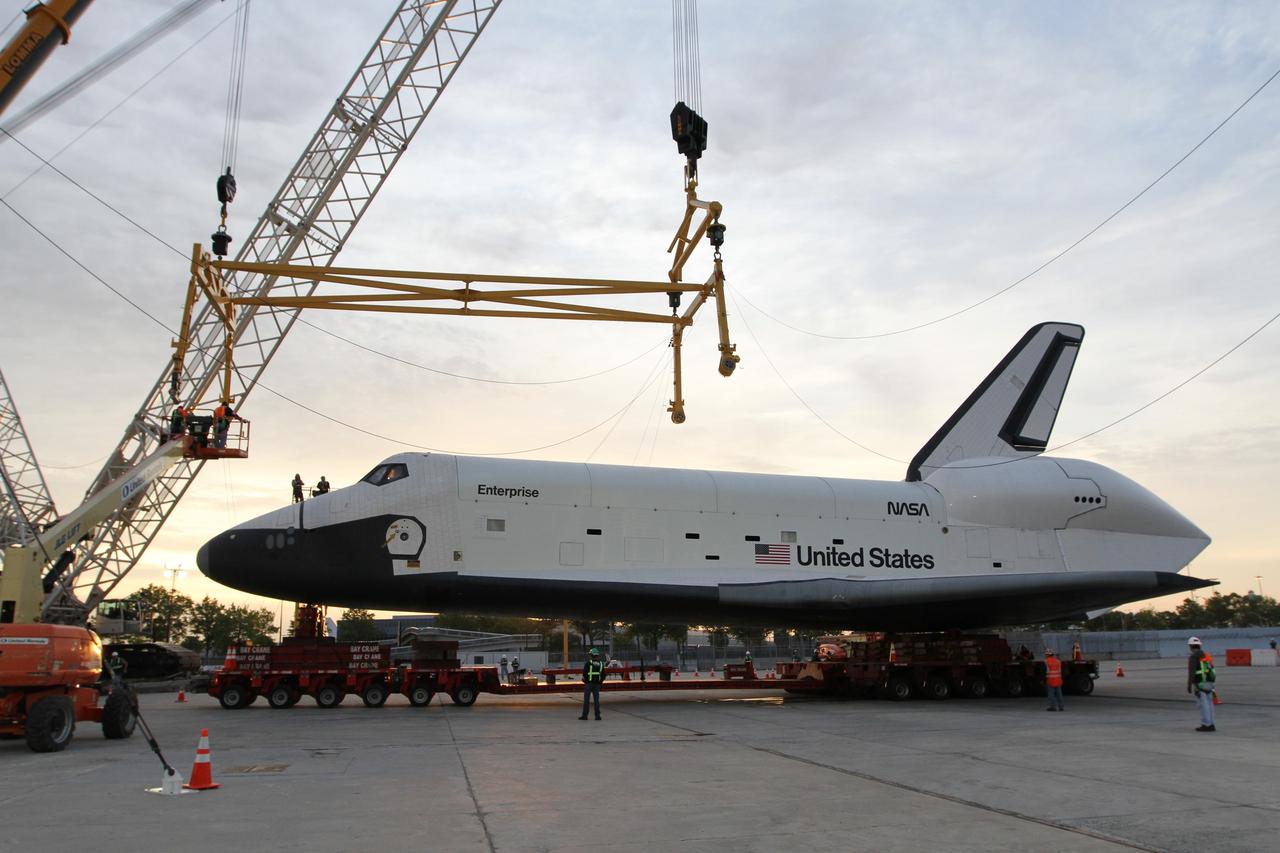
NEW YORK – Technicians lift the metal sling from space shuttle Enterprise after its removal from the top of NASA's shuttle carrier aircraft. The work took place at John F. Kennedy International Airport in New York City. Enterprise, a prototype built to test aspects of the space shuttle design, will be displayed at the Intrepid Sea, Air and Space Museum in New York. Photo credit: NASA/Kim Shiflett
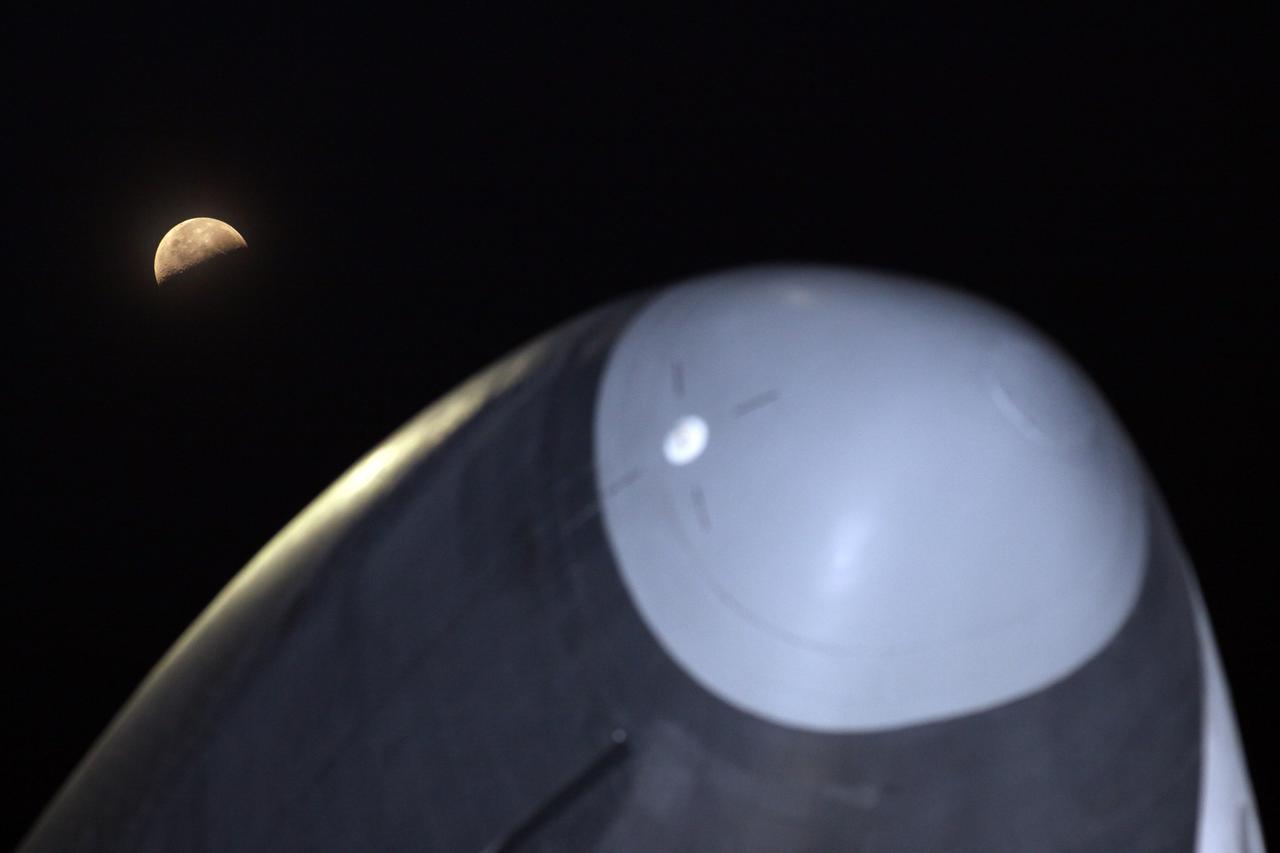
NEW YORK – The moon could be seen beneath space shuttle Enterprise's nose as the shuttle was lowered onto a truck for transport to a protective hangar at John F. Kennedy International Airport in New York City. Enterprise, a prototype built to test aspects of the space shuttle design, will be displayed at the Intrepid Sea, Air and Space Museum in New York. Photo credit: NASA/Kim Shiflett
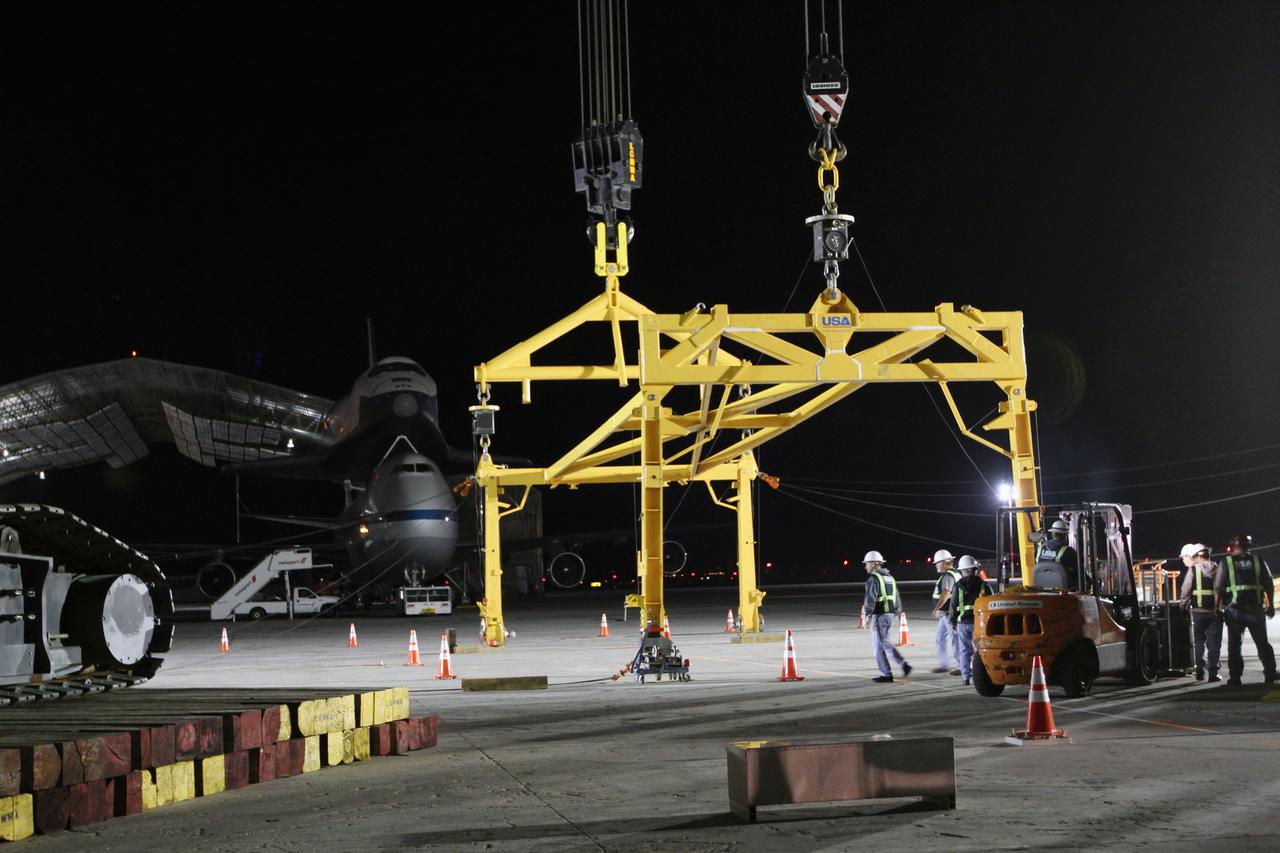
NEW YORK – Technicians ready the metal sling that will be used to lift space shuttle Enterprise from the top of NASA's shuttle carrier aircraft. The work took place at John F. Kennedy International Airport in New York City. Enterprise, a prototype built to test aspects of the space shuttle design, will be displayed at the Intrepid Sea, Air and Space Museum in New York. Photo credit: NASA/Kim Shiflett
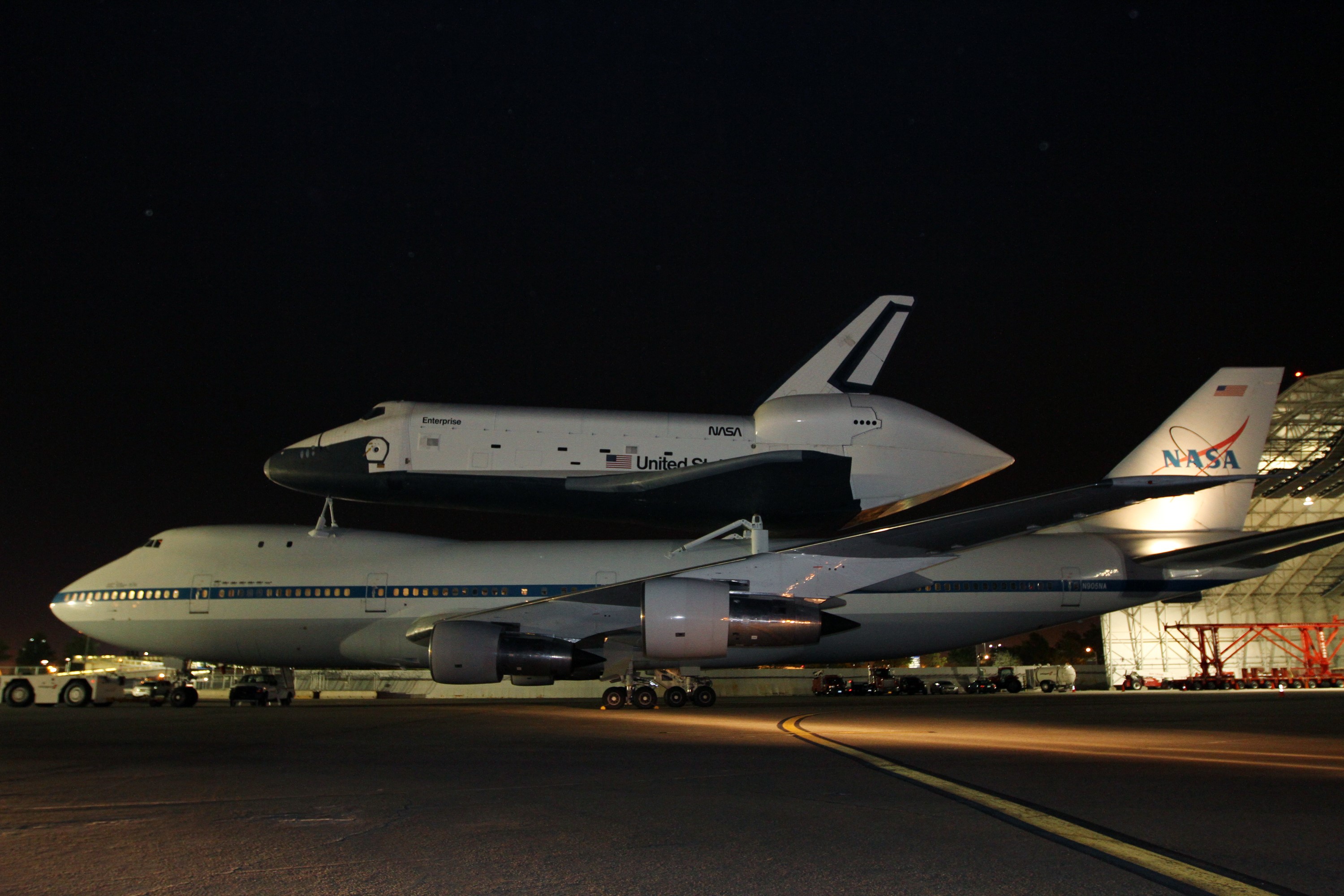
NEW YORK – NASA's shuttle carrier aircraft is moved into place so the space shuttle Enterprise can be removed. The work took place at John F. Kennedy International Airport in New York City. Enterprise, a prototype built to test aspects of the space shuttle design, will be displayed at the Intrepid Sea, Air and Space Museum in New York. Photo credit: NASA/Kim Shiflett
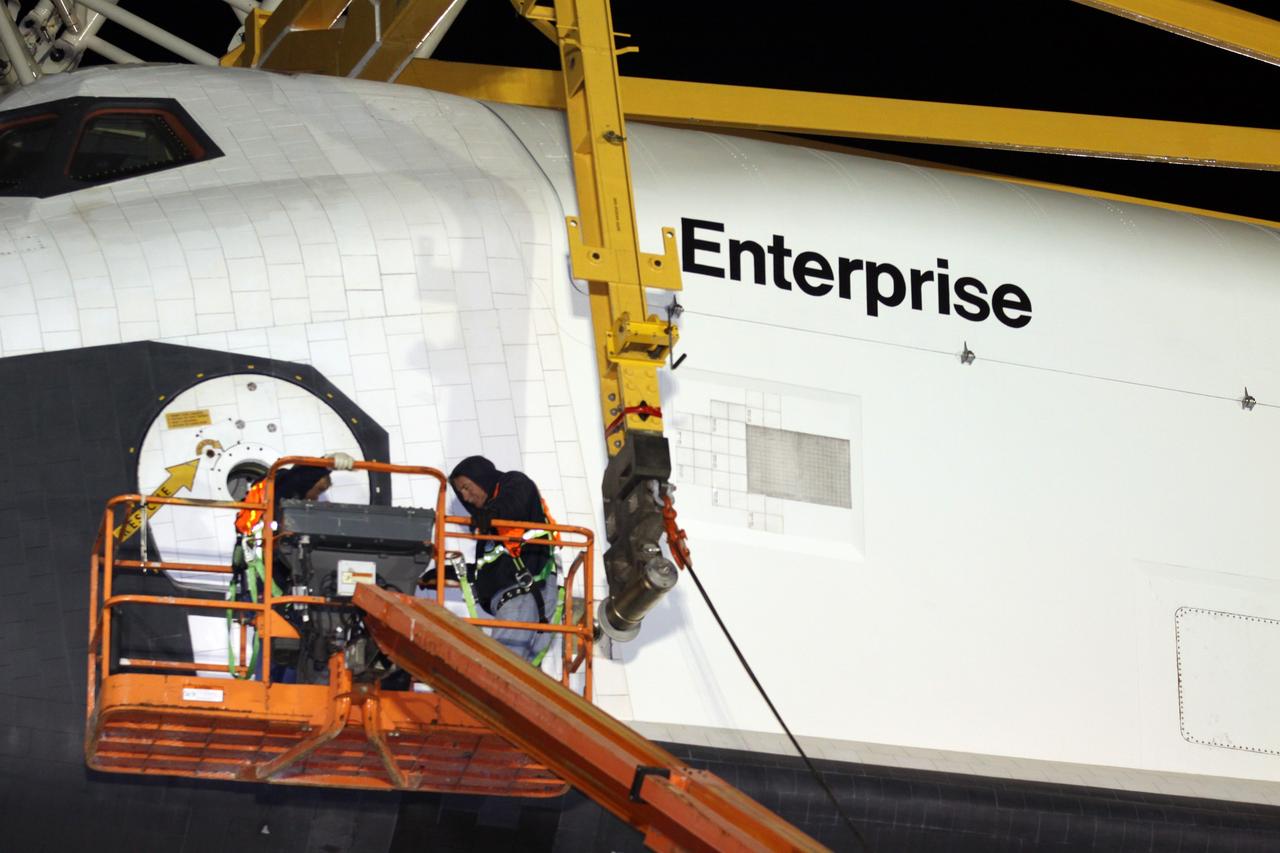
NEW YORK – Technicians attach the metal sling to the side of space shuttle Enterprise so it can be removed from the top of NASA's shuttle carrier aircraft. The work took place at John F. Kennedy International Airport in New York City. Enterprise, a prototype built to test aspects of the space shuttle design, will be displayed at the Intrepid Sea, Air and Space Museum in New York. Photo credit: NASA/Kim Shiflett
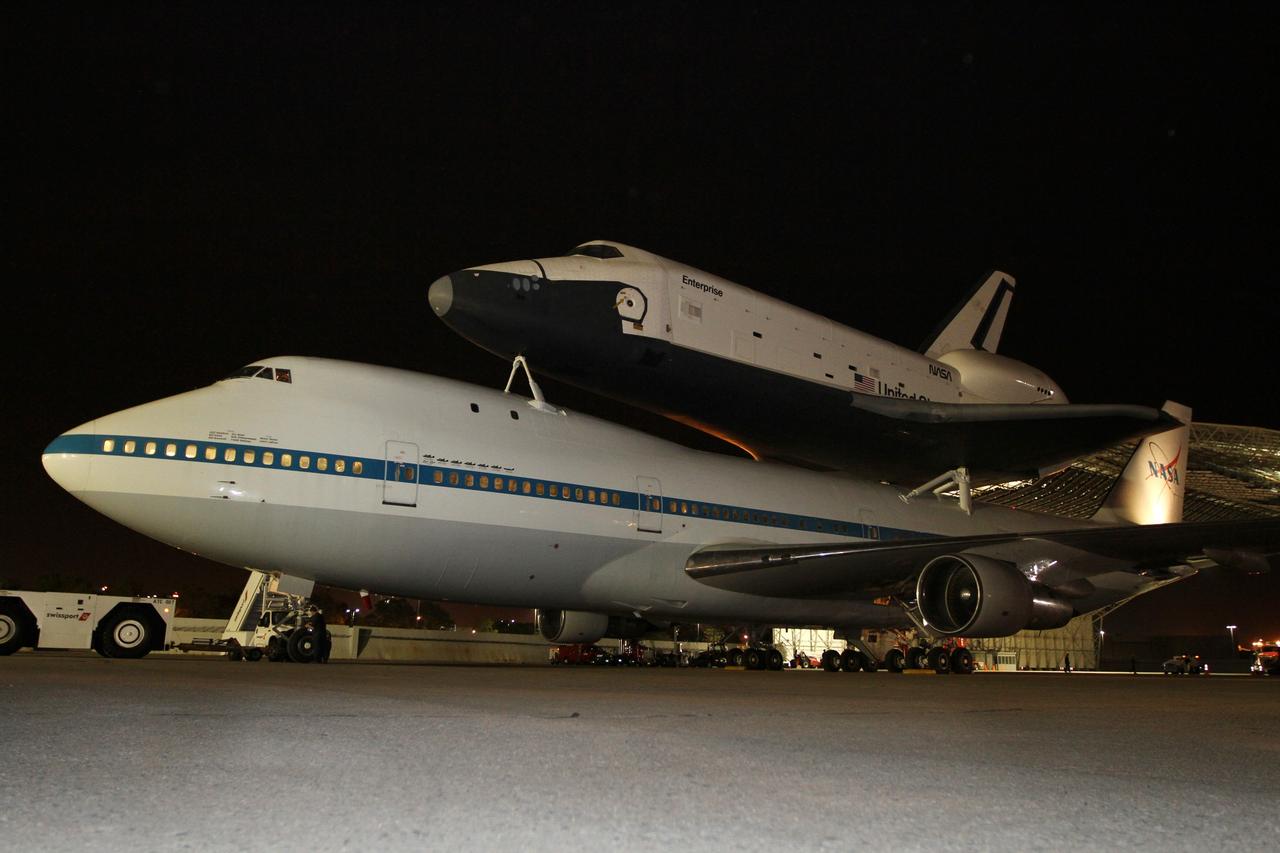
NEW YORK – NASA's shuttle carrier aircraft is moved into place so the space shuttle Enterprise can be removed. The work took place at John F. Kennedy International Airport in New York City. Enterprise, a prototype built to test aspects of the space shuttle design, will be displayed at the Intrepid Sea, Air and Space Museum in New York. Photo credit: NASA/Kim Shiflett
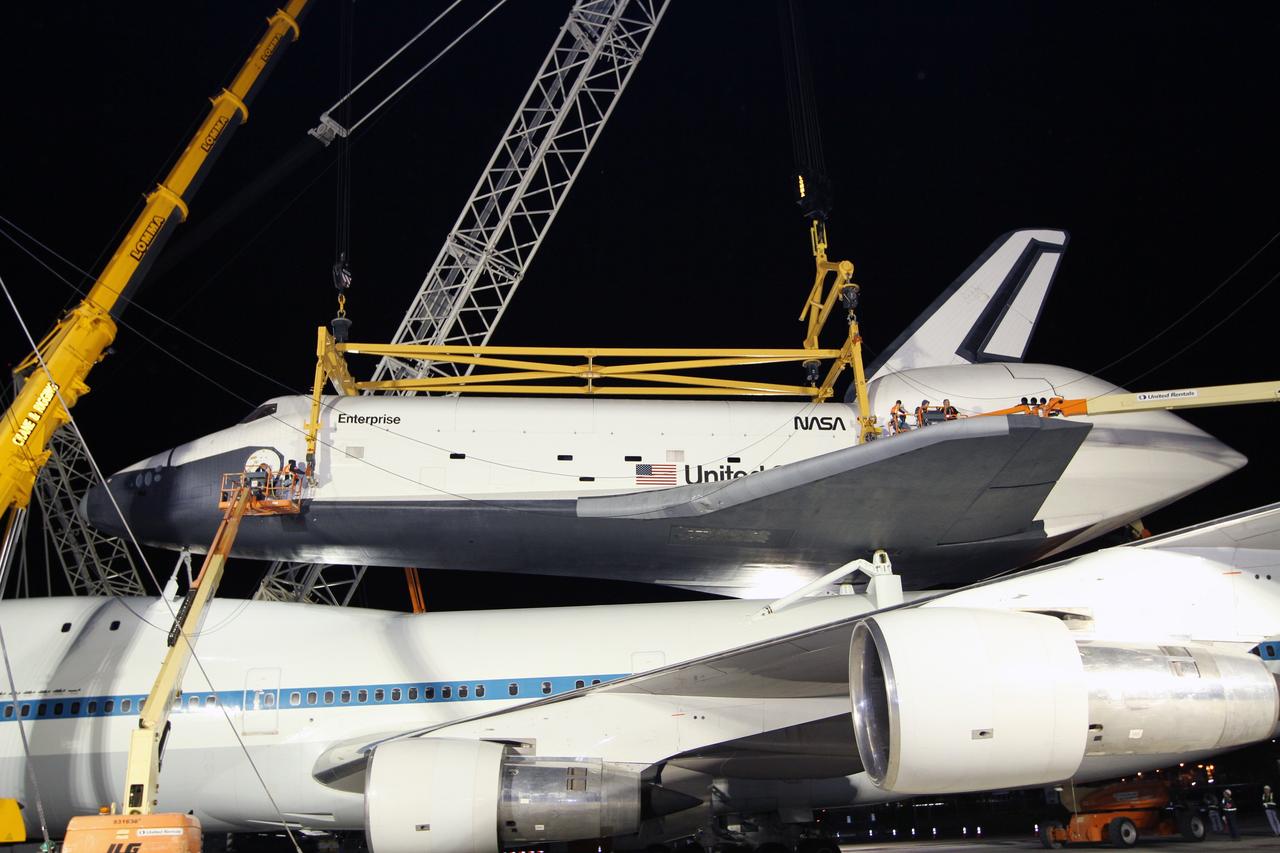
NEW YORK – Technicians attach the metal sling to the side of space shuttle Enterprise so it can be removed from the top of NASA's shuttle carrier aircraft. The work took place at John F. Kennedy International Airport in New York City. Enterprise, a prototype built to test aspects of the space shuttle design, will be displayed at the Intrepid Sea, Air and Space Museum in New York. Photo credit: NASA/Kim Shiflett
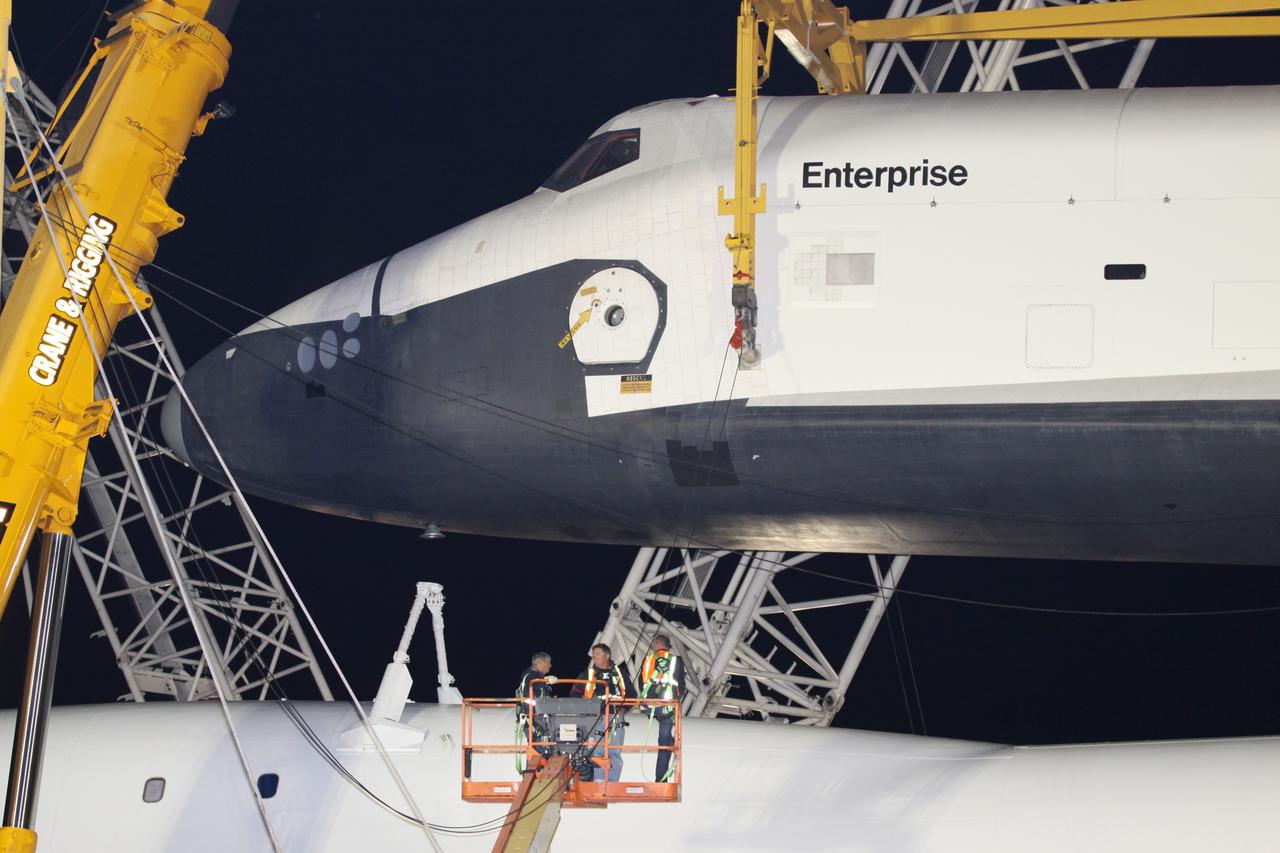
NEW YORK – Cranes lift space shuttle Enterprise from the top of NASA's shuttle carrier aircraft as technicians watch the progress. The work took place at John F. Kennedy International Airport in New York, NY. Enterprise, a prototype built to test aspects of the space shuttle design, will be displayed at the Intrepid Sea, Air and Space Museum in New York. Photo credit: NASA/Kim Shiflett
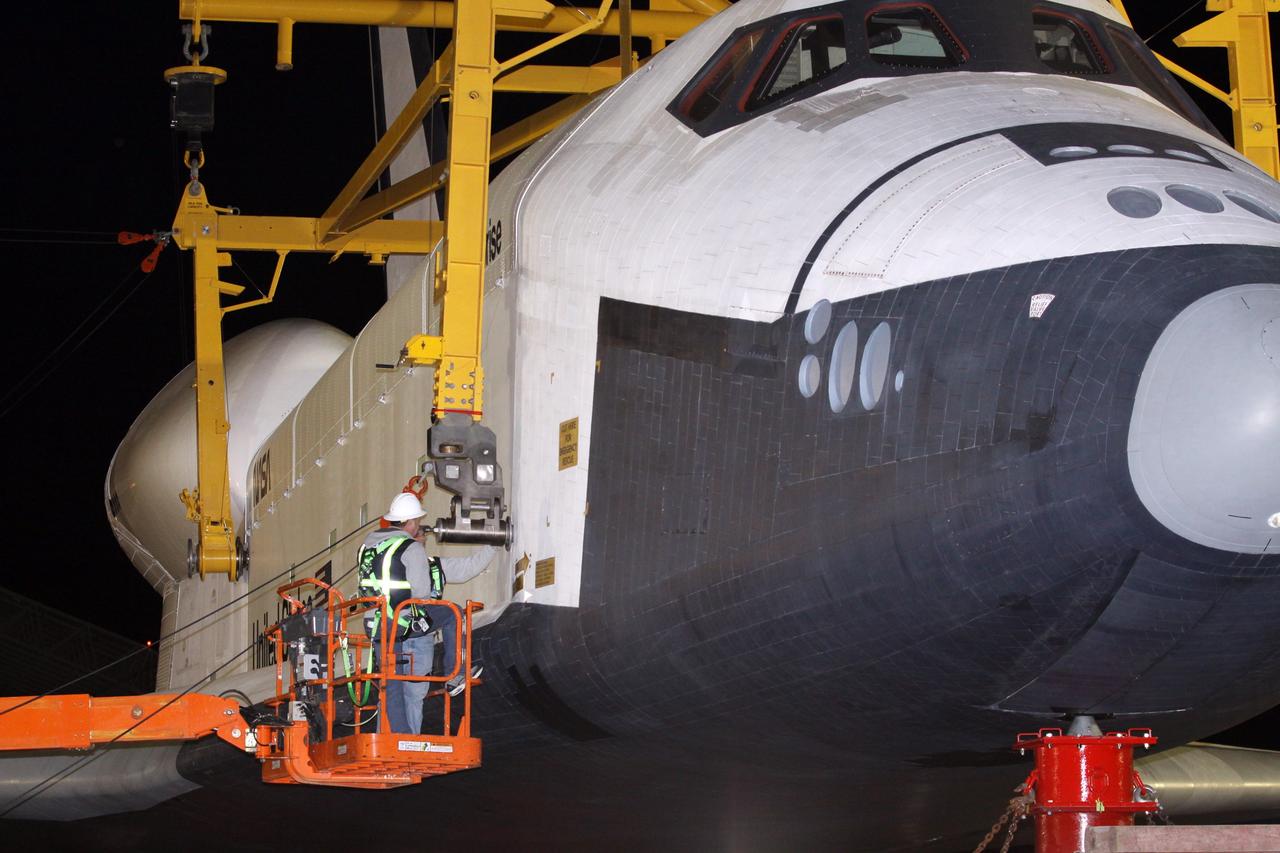
NEW YORK – A technician detaches a metal sling from space shuttle Enterprise as the shuttle was lowered onto a truck for transport to a protective hangar at John F. Kennedy International Airport in New York City. Enterprise, a prototype built to test aspects of the space shuttle design, will be displayed at the Intrepid Sea, Air and Space Museum in New York. Photo credit: NASA/Kim Shiflett
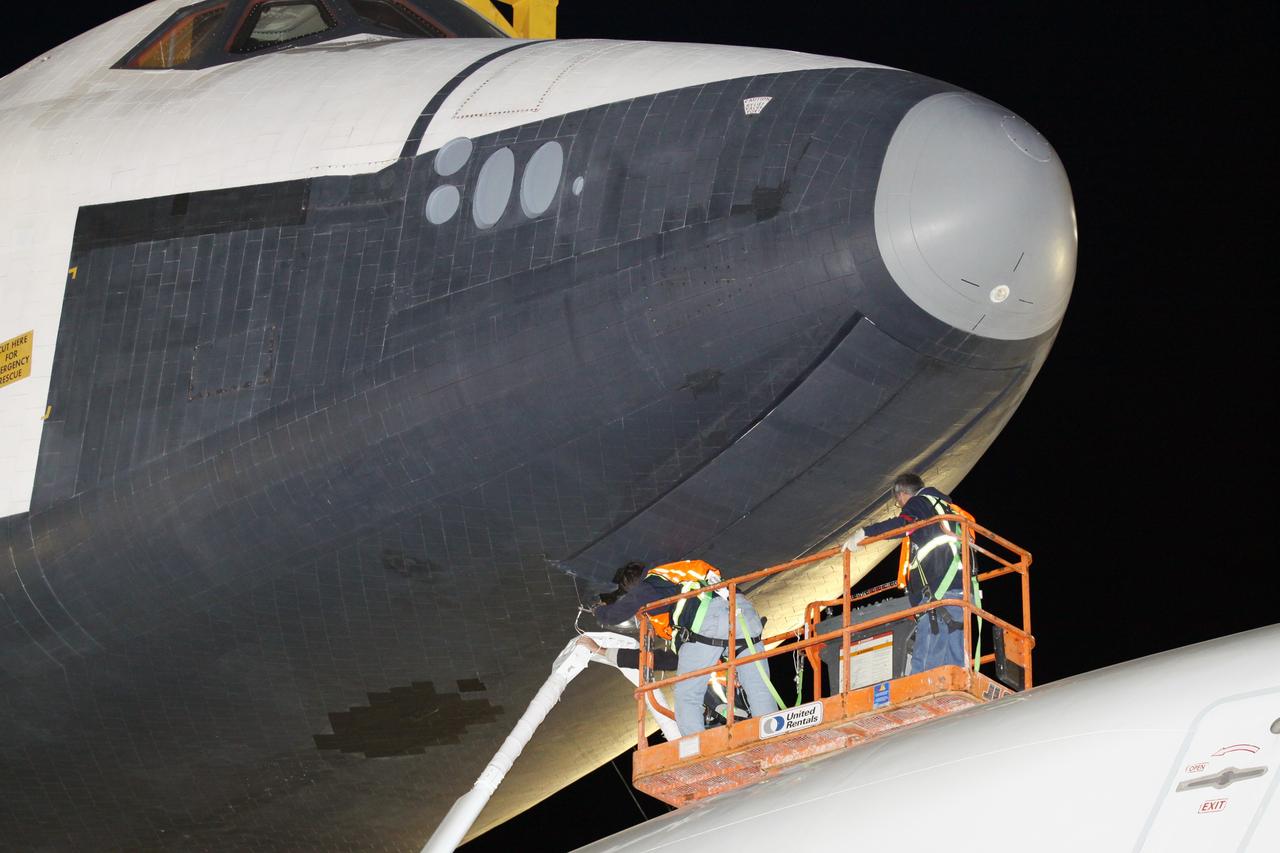
NEW YORK – Technicians detach space shuttle Enterprise from the top of NASA's shuttle carrier aircraft. The work took place at John F. Kennedy International Airport in New York City. Enterprise, a prototype built to test aspects of the space shuttle design, will be displayed at the Intrepid Sea, Air and Space Museum in New York. Photo credit: NASA/Kim Shiflett
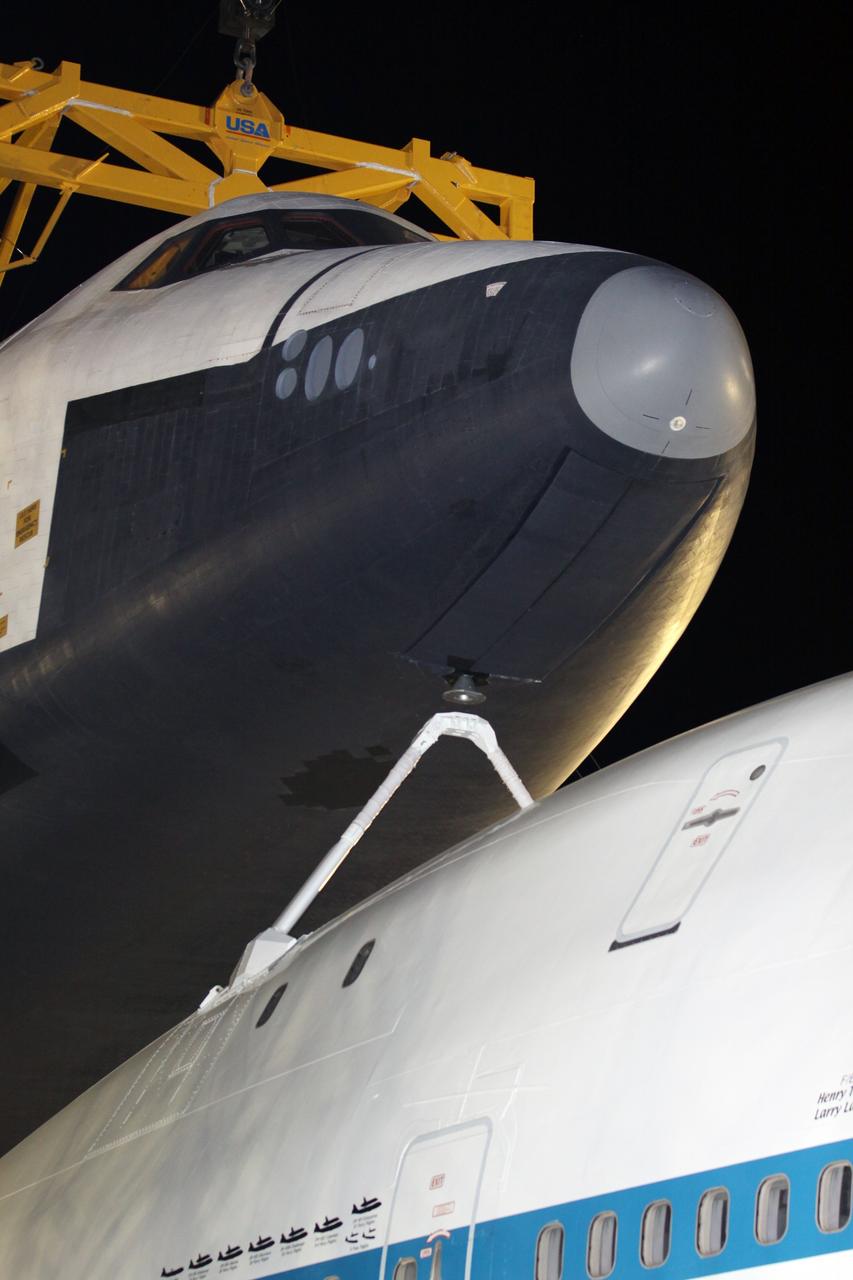
NEW YORK – Cranes lift space shuttle Enterprise from the top of NASA's shuttle carrier aircraft. The work took place at John F. Kennedy International Airport in New York City. Enterprise, a prototype built to test aspects of the space shuttle design, will be displayed at the Intrepid Sea, Air and Space Museum in New York. Photo credit: NASA/Kim Shiflett
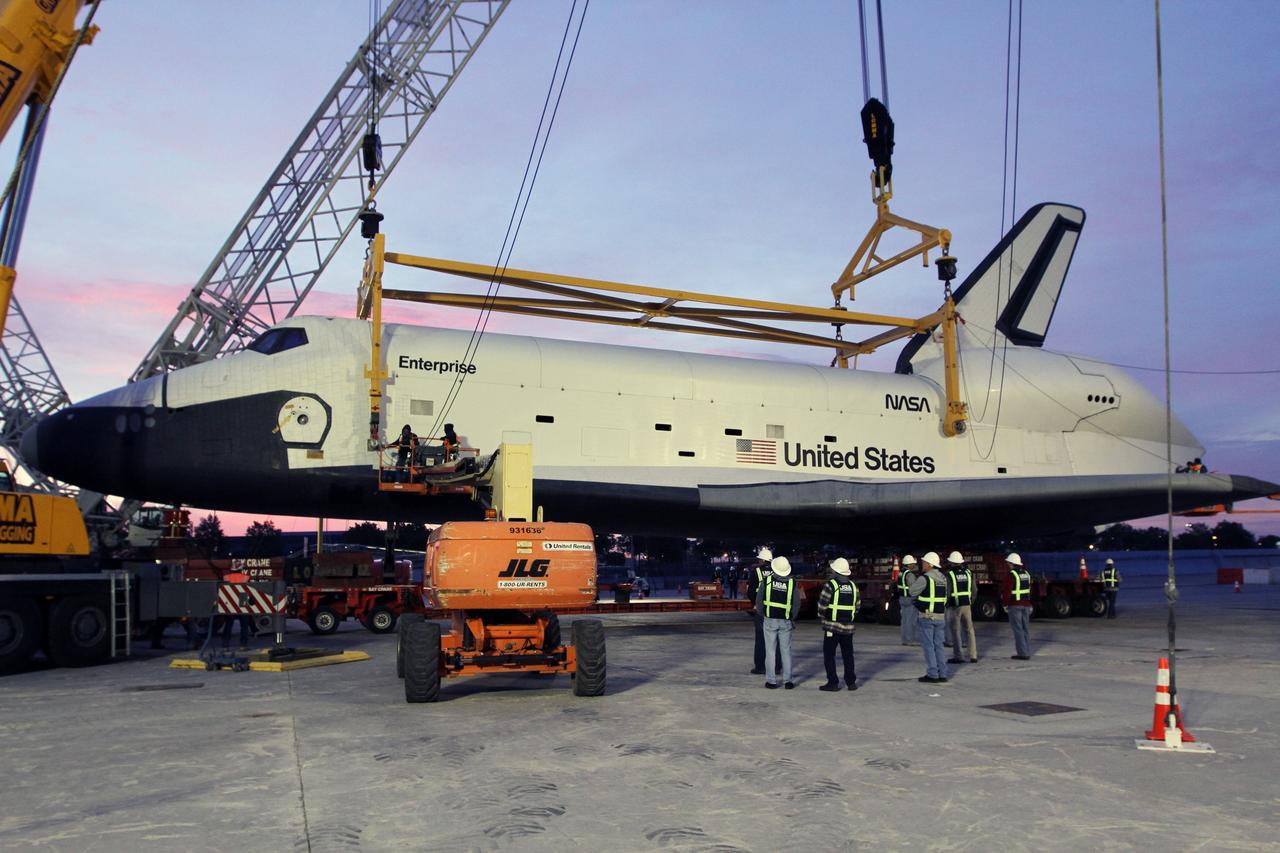
NEW YORK – Technicians detach the metal sling from the side of space shuttle Enterprise after its removal from the top of NASA's shuttle carrier aircraft. The work took place at John F. Kennedy International Airport in New York City. Enterprise, a prototype built to test aspects of the space shuttle design, will be displayed at the Intrepid Sea, Air and Space Museum in New York. Photo credit: NASA/Kim Shiflett
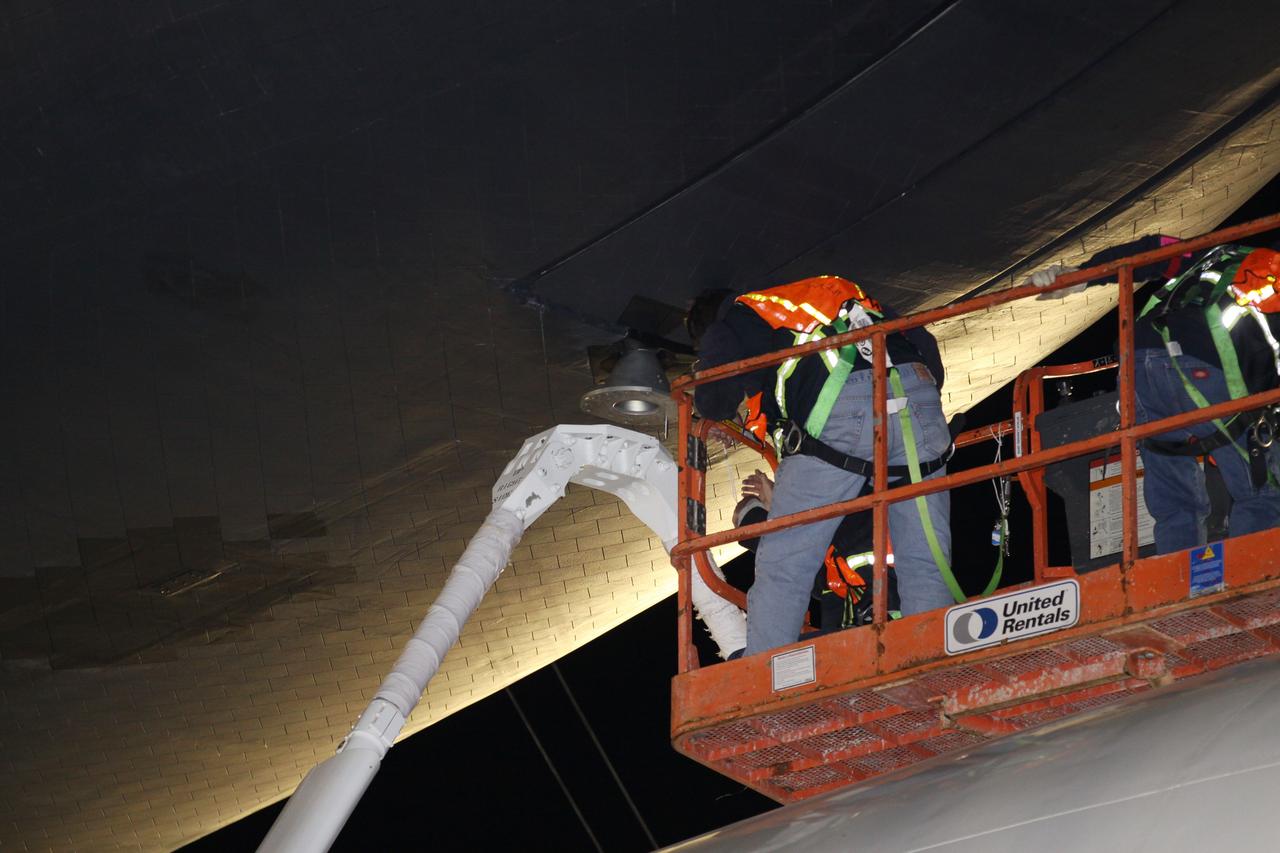
NEW YORK – Technicians detach space shuttle Enterprise from the top of NASA's shuttle carrier aircraft. The work took place at John F. Kennedy International Airport in New York City. Enterprise, a prototype built to test aspects of the space shuttle design, will be displayed at the Intrepid Sea, Air and Space Museum in New York. Photo credit: NASA/Kim Shiflett
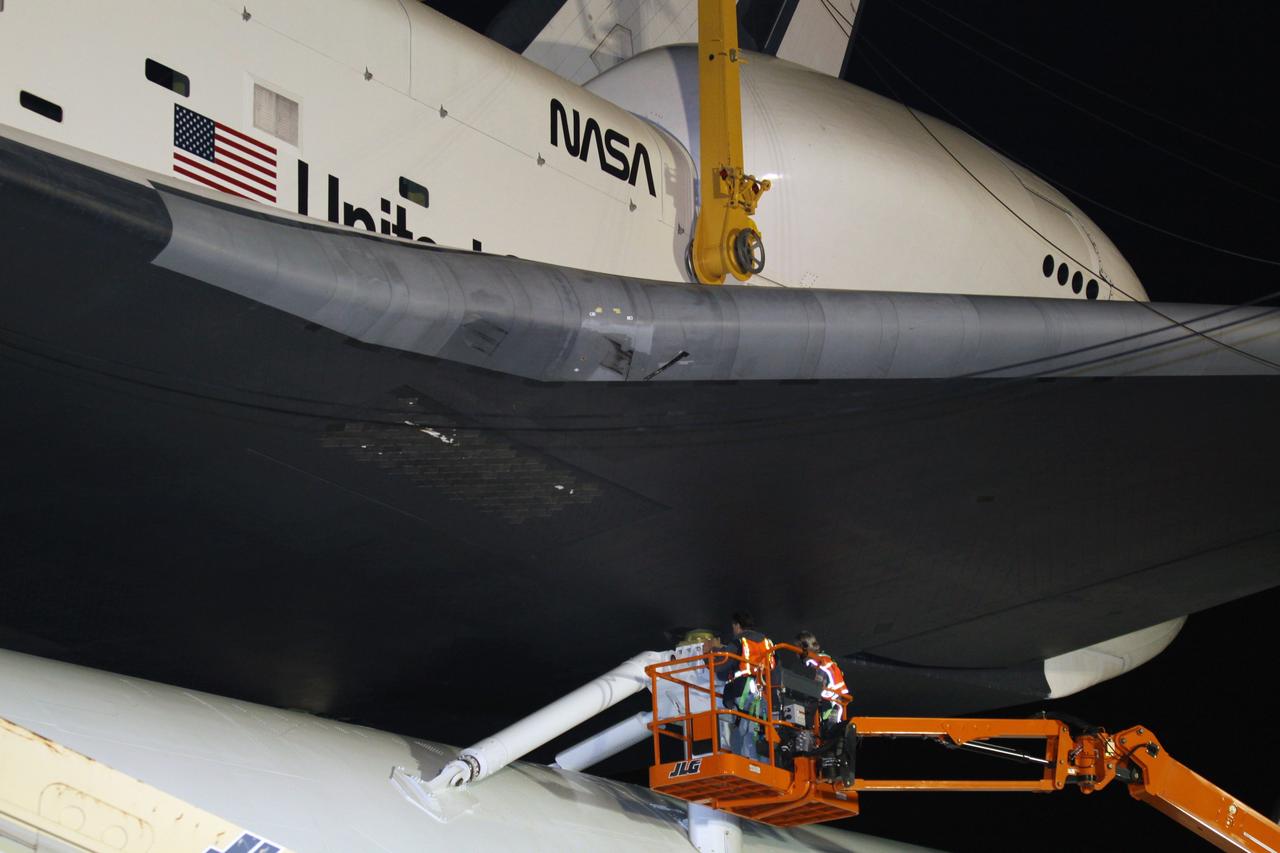
NEW YORK – Technicians detach space shuttle Enterprise from the top of NASA's shuttle carrier aircraft. The work took place at John F. Kennedy International Airport in New York City. Enterprise, a prototype built to test aspects of the space shuttle design, will be displayed at the Intrepid Sea, Air and Space Museum in New York. Photo credit: NASA/Kim Shiflett
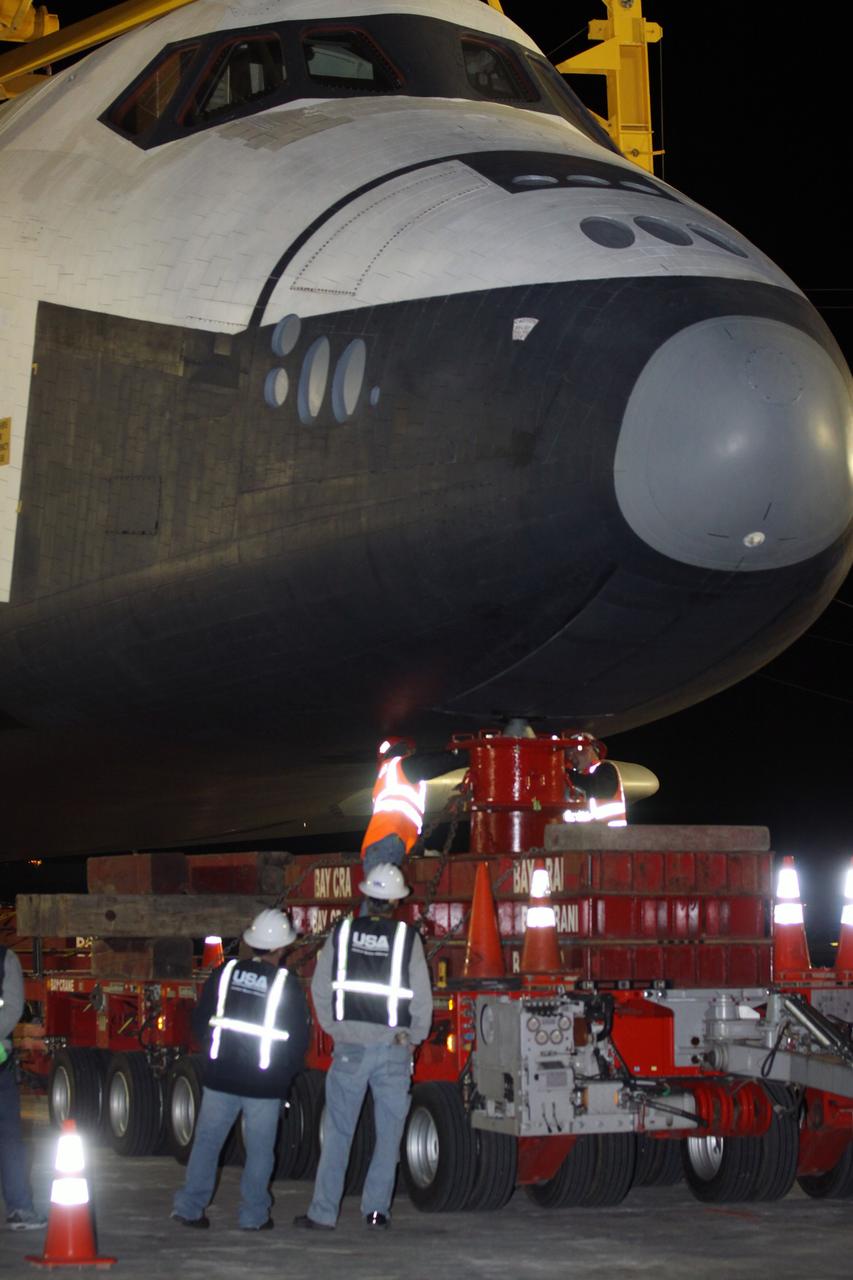
NEW YORK – A technician attaches a fixture beneath space shuttle Enterprise's nose as the shuttle was lowered onto a truck for transport to a protective hangar at John F. Kennedy International Airport in New York City. Enterprise, a prototype built to test aspects of the space shuttle design, will be displayed at the Intrepid Sea, Air and Space Museum in New York. Photo credit: NASA/Kim Shiflett
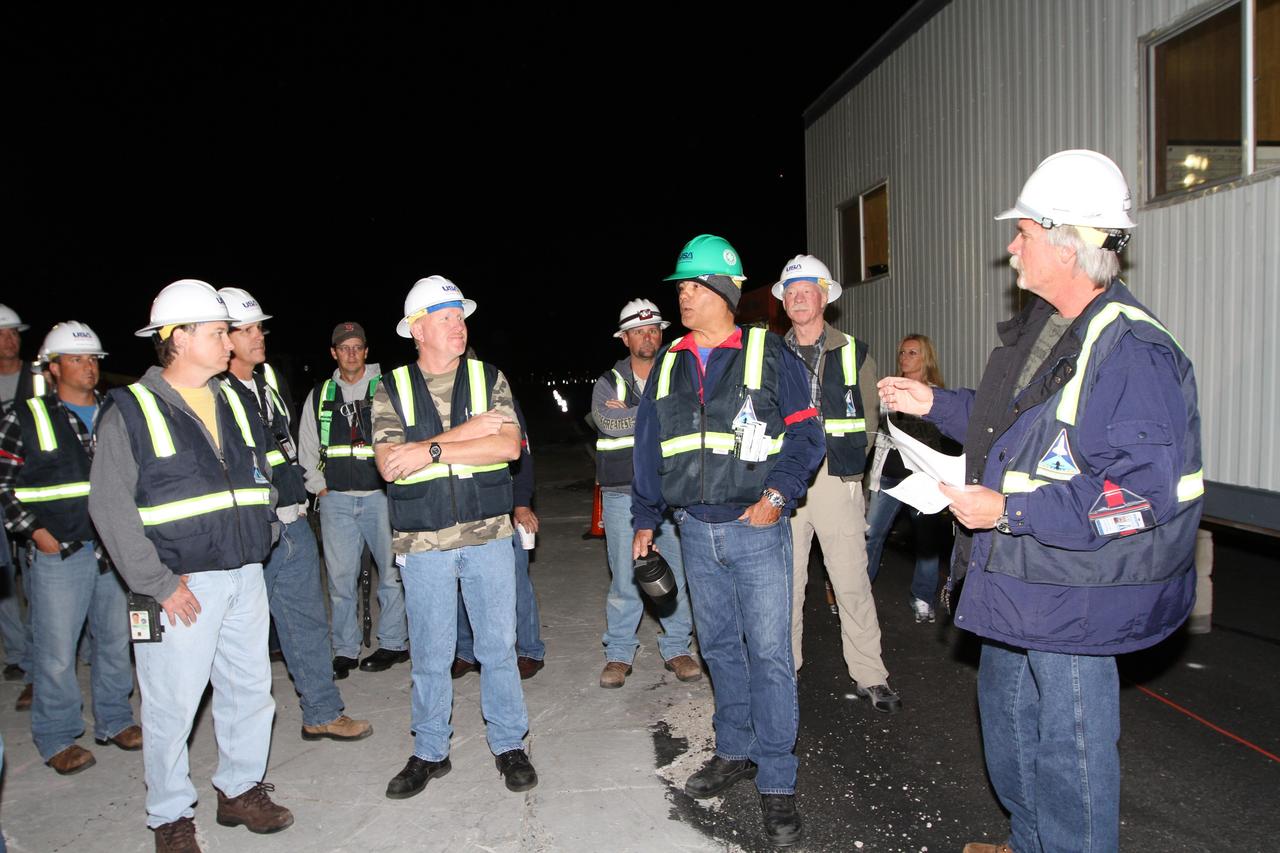
NEW YORK – Technicians review plans for lifting the space shuttle Enterprise from the top of NASA's shuttle carrier aircraft. The work took place at John F. Kennedy International Airport in New York City. Enterprise, a prototype built to test aspects of the space shuttle design, will be displayed at the Intrepid Sea, Air and Space Museum in New York. Photo credit: NASA/Kim Shiflett
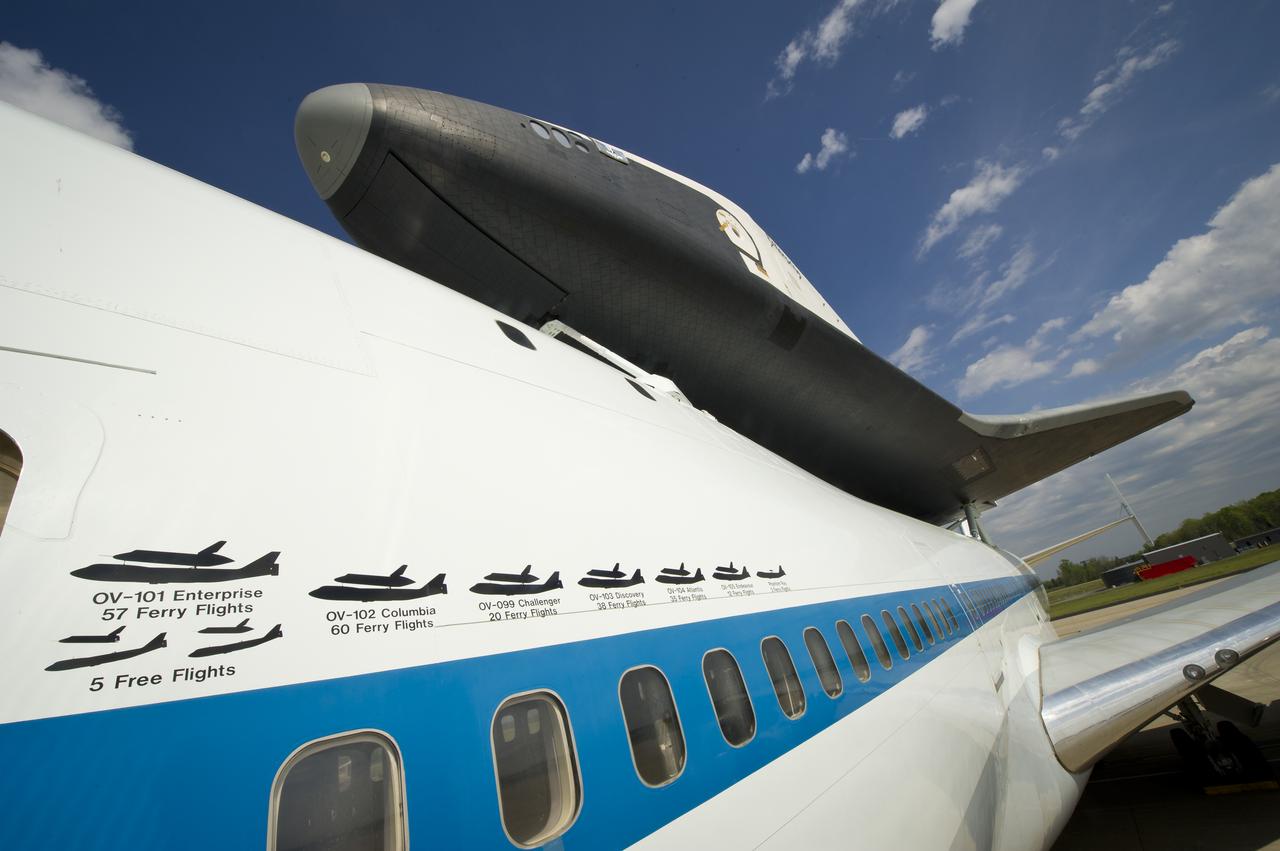
The space shuttle Enterprise is seen mated on top of the NASA 747 Shuttle Carrier Aircraft (SCA) at Washington Dulles International Airport, Saturday, April 21, 2012, in Sterling, Va. Painted graphics line the side of NASA 905 depicting the various ferry flights the Shuttle Carrier Aircraft has supported during the Space Shuttle Program, including the tests using the space shuttle prototype Enterprise. Space Shuttle Transition and Retirement engineers Saturday completed the final steps to ready Space Shuttle Enterprise for its flight to New York’s John F. Kennedy International Airport while managers continue to evaluate the expected weather that has postponed delivery past Monday. Enterprise, the first orbiter built for the Space Shuttle Program, was used primarily for ground and flight tests within the atmosphere. The initial testing period named Approach and Landing Test (ALT) included a flight on February 18, 1977 atop a Shuttle Carrier Aircraft (SCA) to measure structural loads and ground handling and braking characteristics of the mated system. Enterprise will go on permanent display at the Intrepid Sea Air and Space Museum in New York in June. Photo Credit: (NASA/Bill Ingalls)

The Space Shuttle Enterprise, the nation's prototype space shuttle orbiter, before departing NASA's Dryden Flight Research Center, Edwards, California, at 11:00 a.m., 16 May 1983, on the first leg of its trek to the Paris Air Show at Le Bourget Airport, Paris, France. Seen here atop the huge 747 Shuttle Carrier Aircraft (SCA), the first stop for the Enterprise was Peterson AFB, Colorado Springs, Colorado. Piloting the 747 on the Europe trip were Joe Algranti, Johnson Space Center Chief Pilot, Astronaut Dick Scobee, and NASA Dryden Chief Pilot Tom McMurtry. Flight engineers for that portion of the flight were Dryden's Ray Young and Johnson Space Center's Skip Guidry. The Enterprise, named after the spacecraft of Star Trek fame, was originally carried and launched by the 747 during the Approach and Landing Tests (ALT) at Dryden Flight Research Center.

The Space Shuttle Enterprise, the nation's prototype space shuttle orbiter, departed NASA's Dryden Flight Research Center, Edwards, California, at 11:00 a.m., 16 May 1983, on the first leg of its trek to the Paris Air Show at Le Bourget Airport, Paris, France. Carried by the huge 747 Shuttle Carrier Aircraft (SCA), the first stop for the Enterprise was Peterson AFB, Colorado Springs, Colorado. Piloting the 747 on the Europe trip were Joe Algranti, Johnson Space Center Chief Pilot, Astronaut Dick Scobee, and NASA Dryden Chief Pilot Tom McMurtry. Flight engineers for that portion of the flight were Dryden's Ray Young and Johnson Space Center's Skip Guidry. The Enterprise, named after the spacecraft of Star Trek fame, was originally carried and launched by the 747 during the Approach and Landing Tests (ALT) at Dryden Flight Research Center.
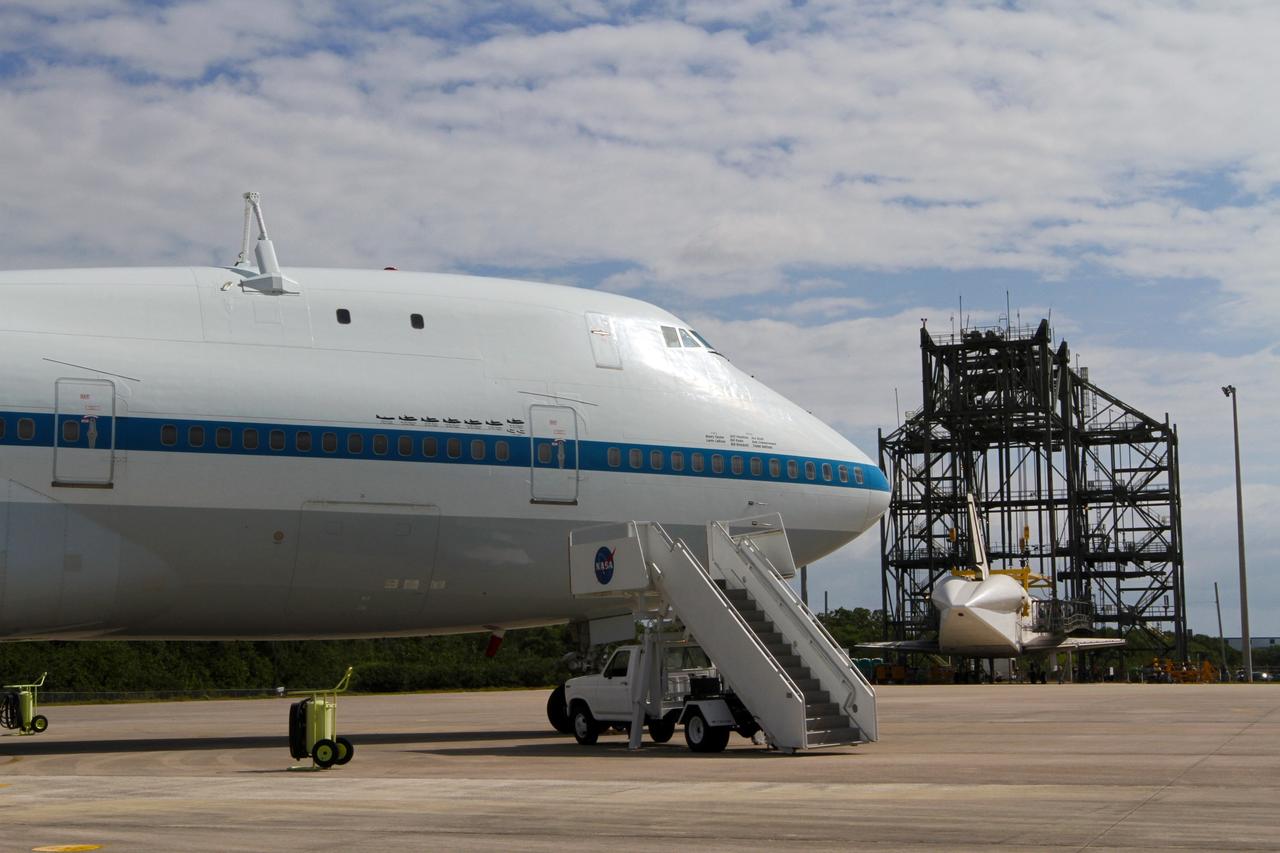
CAPE CANAVERAL, Fla. – At the Shuttle Landing Facility at NASA’s Kennedy Space Center in Florida, painted graphics line the side of NASA 905 depicting the various ferry flights the Shuttle Carrier Aircraft has supported during the Space Shuttle Program, including the tests using the space shuttle prototype Enterprise, and the names of the pilots and flight engineers who have flown it. Operations are under way at the mate-demate device, in the background, to lift Discovery on top of the aircraft. The device, known as the MDD, is a large gantry-like steel structure used to hoist a shuttle off the ground and position it onto the back of the aircraft, or SCA. The SCA is a Boeing 747 jet, originally manufactured for commercial use, which was modified by NASA to transport the shuttles between destinations on Earth. The SCA designated NASA 905 is assigned to the remaining ferry missions, delivering the shuttles to their permanent public display sites. NASA 905 is scheduled to ferry Discovery to the Washington Dulles International Airport in Virginia on April 17, after which the shuttle will be placed on display in the Smithsonian's National Air and Space Museum Steven F. Udvar-Hazy Center. For more information on the SCA, visit http://www.nasa.gov/centers/dryden/news/FactSheets/FS-013-DFRC.html. For more information on shuttle transition and retirement activities, visit http://www.nasa.gov/transition. Photo credit: NASA/Kim Shiflett
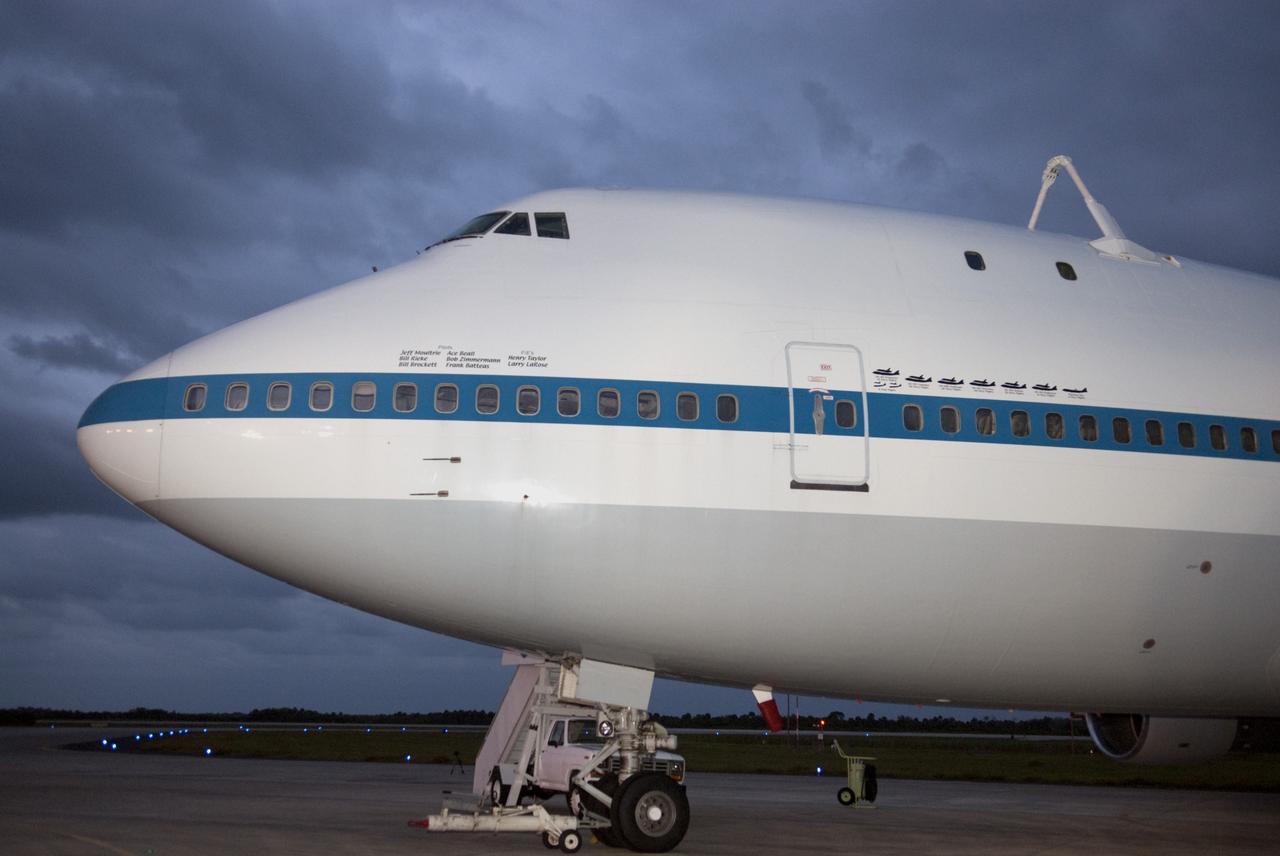
CAPE CANAVERAL, Fla. – Painted graphics line the side of NASA 905 depicting the various ferry flights the Shuttle Carrier Aircraft has supported during the Space Shuttle Program, including the tests using the space shuttle prototype Enterprise. The aircraft, known as an SCA, will ferry space shuttle Discovery to the Washington Dulles International Airport in Sterling, Va., on April 17. The SCA is a modified Boeing 747 jet airliner, originally manufactured for commercial use. One of two SCAs employed over the course of the Space Shuttle Program, NASA 905 is assigned to the remaining ferry missions, delivering the shuttles to their permanent public display sites. NASA 911 was decommissioned at the NASA Dryden Flight Research Center in California in February. Discovery will be placed on permanent public display in the Smithsonian's National Air and Space Museum Steven F. Udvar-Hazy Center in Chantilly, Va. For more information on the SCA, visit http://www.nasa.gov/centers/dryden/news/FactSheets/FS-013-DFRC.html. For more information on shuttle transition and retirement activities, visit http://www.nasa.gov/shuttle. Photo credit: NASA/Tim Jacobs
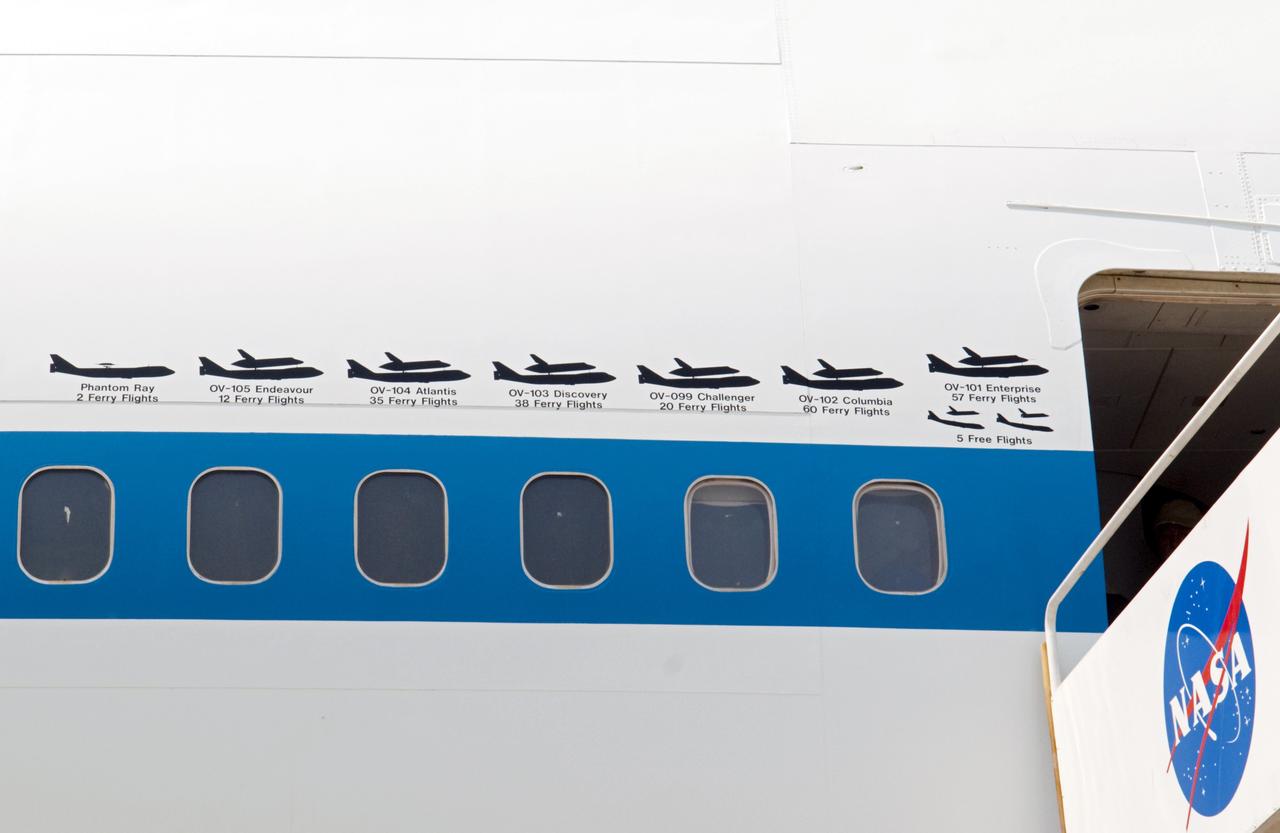
CAPE CANAVERAL, Fla. – Painted graphics line the side of NASA 905 depicting the various ferry flights the Shuttle Carrier Aircraft has supported during the Space Shuttle Program, including the tests using the space shuttle prototype Enterprise. The aircraft, known as an SCA, is at Kennedy to prepare for shuttle Discovery’s ferry flight to the Washington Dulles International Airport in Sterling, Va., on April 17. The SCA is a modified Boeing 747 jet airliner, originally manufactured for commercial use. One of two SCAs employed over the course of the Space Shuttle Program, NASA 905 is assigned to the remaining ferry missions, delivering the shuttles to their permanent public display sites. NASA 911 was decommissioned at the NASA Dryden Flight Research Center in California in February. Discovery will be placed on permanent public display in the Smithsonian's National Air and Space Museum Steven F. Udvar-Hazy Center in Chantilly, Va. For more information on the SCA, visit http://www.nasa.gov/centers/dryden/news/FactSheets/FS-013-DFRC.html. For more information on shuttle transition and retirement activities, visit http://www.nasa.gov/shuttle. Photo credit: NASA/Ben Smegelsky
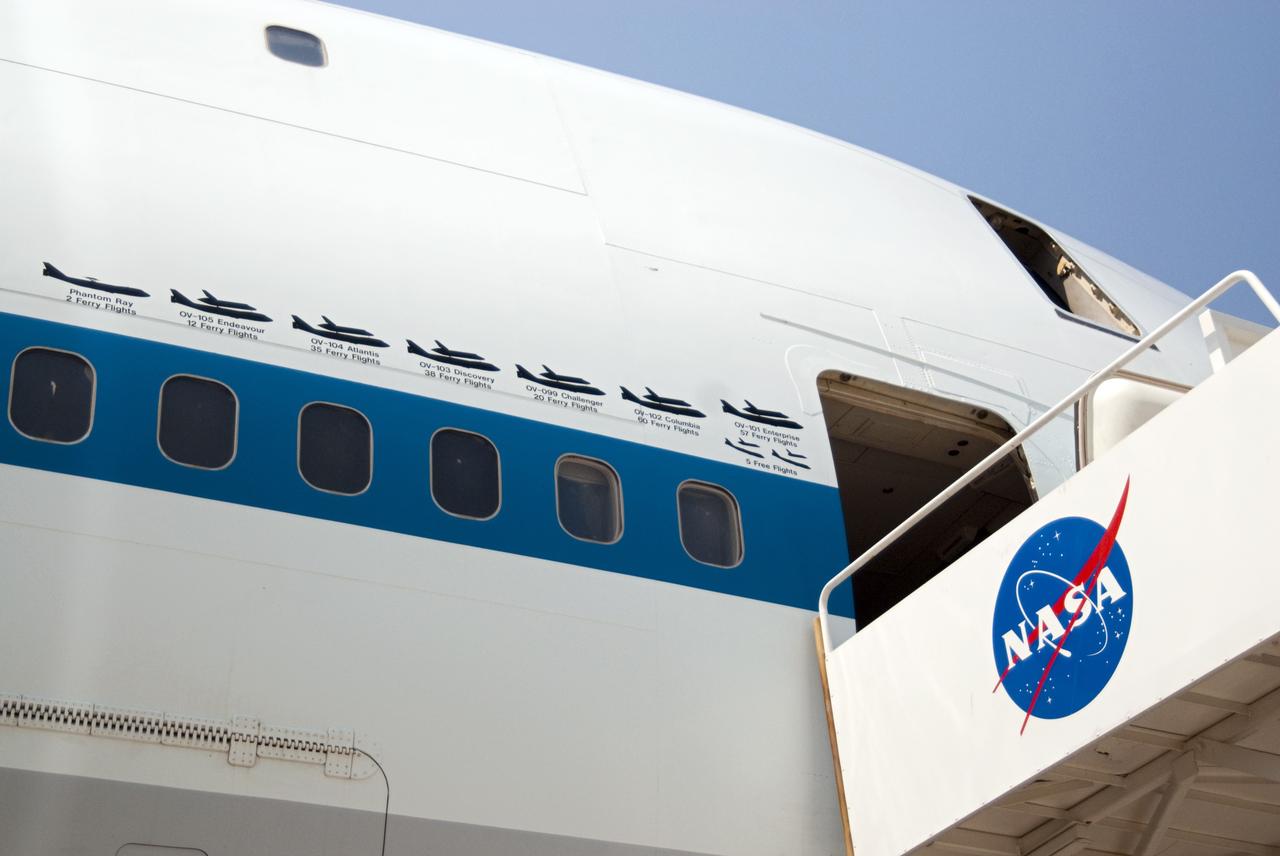
CAPE CANAVERAL, Fla. – Painted graphics line the side of NASA 905 depicting the various ferry flights the Shuttle Carrier Aircraft has supported during the Space Shuttle Program, including the tests using the space shuttle prototype Enterprise. The aircraft, known as an SCA, is at Kennedy to prepare for shuttle Discovery’s ferry flight to the Washington Dulles International Airport in Sterling, Va., on April 17. The SCA is a modified Boeing 747 jet airliner, originally manufactured for commercial use. One of two SCAs employed over the course of the Space Shuttle Program, NASA 905 is assigned to the remaining ferry missions, delivering the shuttles to their permanent public display sites. NASA 911 was decommissioned at the NASA Dryden Flight Research Center in California in February. Discovery will be placed on permanent public display in the Smithsonian's National Air and Space Museum Steven F. Udvar-Hazy Center in Chantilly, Va. For more information on the SCA, visit http://www.nasa.gov/centers/dryden/news/FactSheets/FS-013-DFRC.html. For more information on shuttle transition and retirement activities, visit http://www.nasa.gov/shuttle. Photo credit: NASA/Ben Smegelsky
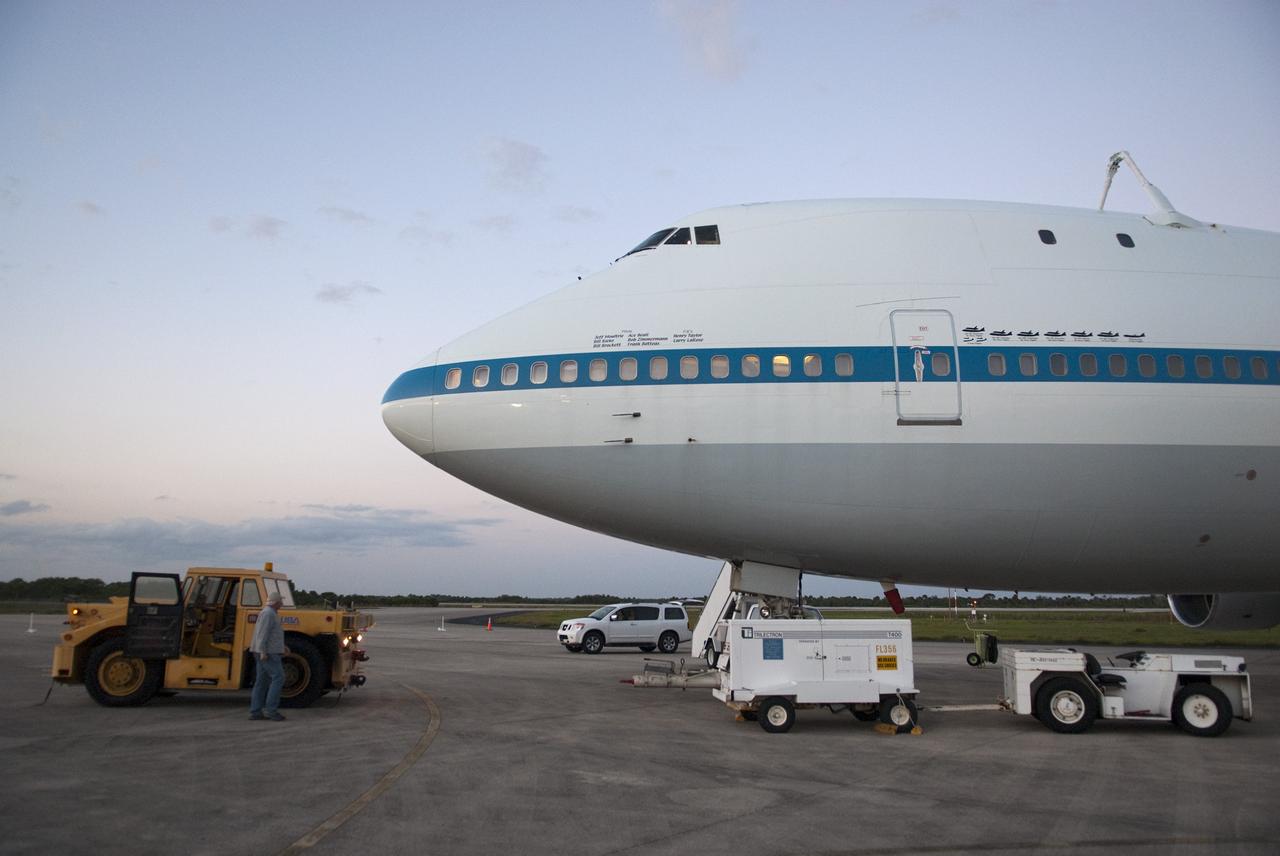
CAPE CANAVERAL, Fla. – At the Shuttle Landing Facility at NASA’s Kennedy Space Center in Florida, painted graphics line the side of NASA 905 depicting the various ferry flights the Shuttle Carrier Aircraft has supported during the Space Shuttle Program, including the tests using the space shuttle prototype Enterprise, and the names of the pilots and flight engineers who have flown it. This SCA, designated NASA 905, is a Boeing 747 jet originally manufactured for commercial use, which was modified by NASA to transport the shuttles between destinations on Earth. NASA 905 is assigned to the remaining ferry missions, delivering the shuttles to their permanent public display sites. Discovery’s new home will be the Smithsonian's National Air and Space Museum Steven F. Udvar-Hazy Center in Chantilly, Va. For more information on the SCA, visit http://www.nasa.gov/centers/dryden/news/FactSheets/FS-013-DFRC.html. For more information on shuttle transition and retirement activities, visit http://www.nasa.gov/transition. Photo credit: NASA/Tim Jacobs
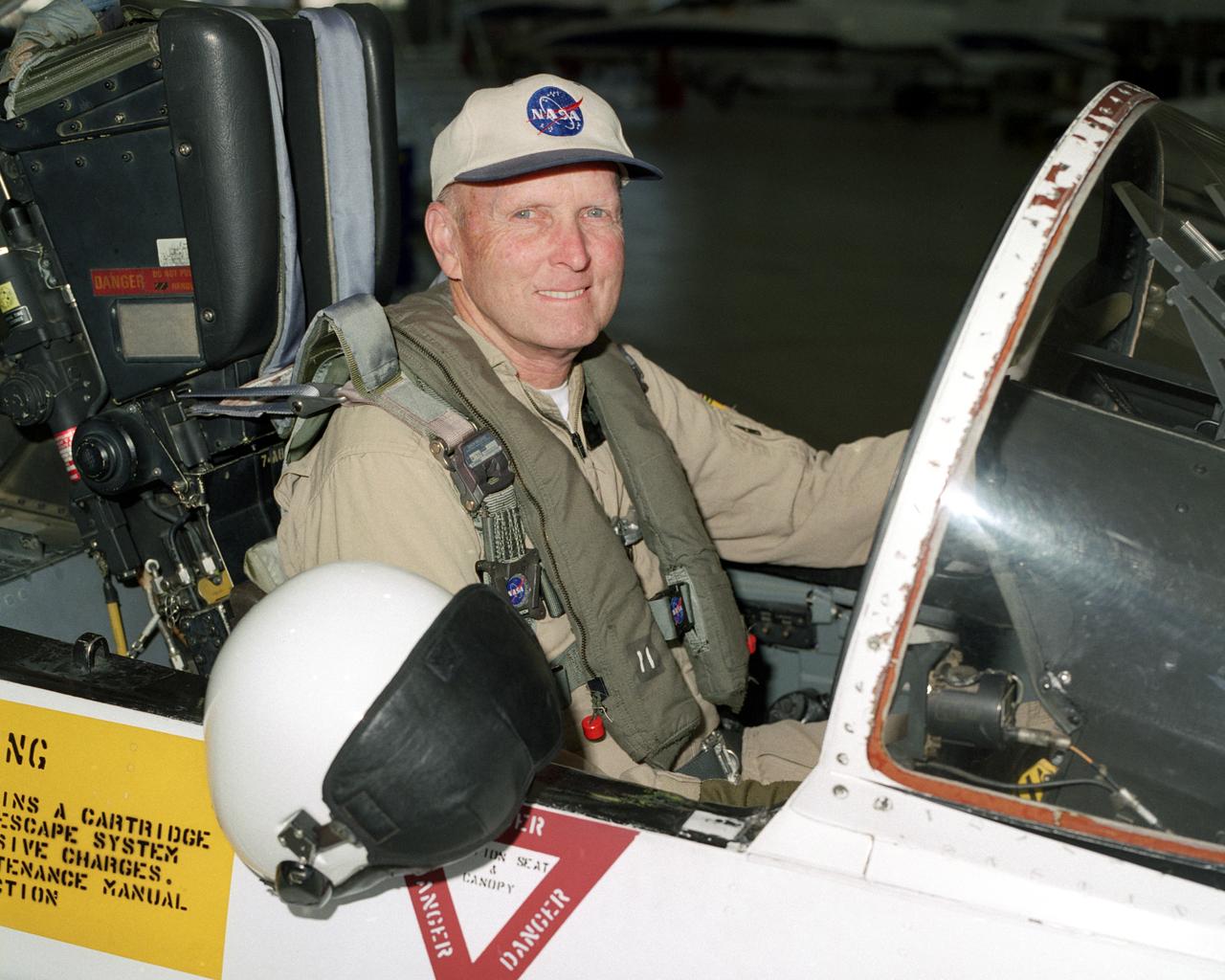
Former NASA astronaut C. Gordon Fullerton, seated in the cockpit of an F/A-18, is a research pilot at NASA's Dryden Flight Research Center, Edwards, Calif. Since transferring to Dryden in 1986, his assignments have included a variety of flight research and support activities piloting NASA's B-52 launch aircraft, the 747 Shuttle Carrier Aircraft (SCA), and other multi-engine and high performance aircraft. He flew a series of development air launches of the X-38 prototype Crew Return Vehicle and in the launches for the X-43A Hyper-X project. Fullerton also flies Dryden's DC-8 Airborne Science aircraft in support a variety of atmospheric physics, ground mapping and meteorology studies. Fullerton also was project pilot on the Propulsion Controlled Aircraft program, during which he successfully landed both a modified F-15 and an MD-11 transport with all control surfaces neutralized, using only engine thrust modulation for control. Fullerton also evaluated the flying qualities of the Russian Tu-144 supersonic transport during two flights in 1998, one of only two non-Russian pilots to fly that aircraft. With more than 15,000 hours of flying time, Fullerton has piloted 135 different types of aircraft in his career. As an astronaut, Fullerton served on the support crews for the Apollo 14, 15, 16, and 17 lunar missions. In 1977, Fullerton was on one of the two flight crews that piloted the Space Shuttle prototype Enterprise during the Approach and Landing Test Program at Dryden. Fullerton was the pilot on the STS-3 Space Shuttle orbital flight test mission in 1982, and commanded the STS-51F Spacelab 2 mission in 1985. He has logged 382 hours in space flight. In July 1988, he completed a 30-year career with the U.S. Air Force and retired as a colonel.
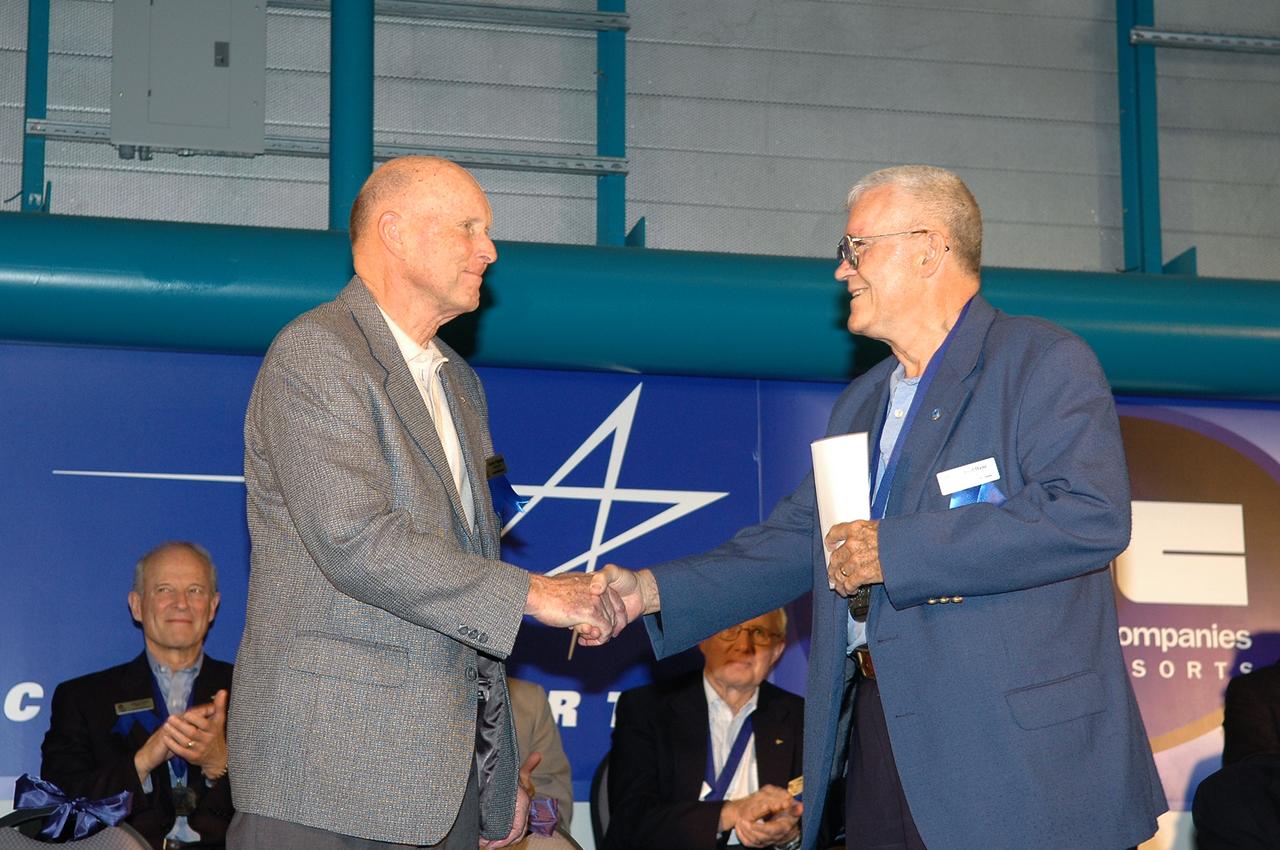
Former astronaut Gordon Fullerton (left), currently chief research pilot at NASA's Dryden Flight Research Center at Edwards Air Force Base, is congratulated by former astronaut Fred Haise (right) upon Fullerton's induction into the Astronaut Hall of Fame at the Kennedy Space Center (KSC) in Florida on April 30, 2005. Fullerton and Haise were one of two flight crews who flew the Approach and Landing Tests of the prototype Space Shuttle orbiter Enterprise at Dryden in 1977. Fullerton, who had served on the support crews for four Apollo moon landing missions in the early 1970s, went on to fly two Shuttle missions, STS-3 in 1982 and STS-51F in 1985. STS-3 became the only Shuttle mission to date to land at White Sands, N.M., and STS-51F was completed successfully despite the failure of one of the Shuttle's main engines during ascent to orbit. Haise, a member of the crew on the ill-fated Apollo 13 mission, was also a research pilot at NASA Dryden during his pre-astronaut career. Former astronauts Joseph Allen and Bruce McCandless were also inducted during the 2005 ceremonies at the KSC Visitor Center. In addition to honoring former members of NASA's astronaut corps who have made significant contributions to the advancement of space flight, the annual induction ceremonies serve as a fund-raiser for the Astronaut Scholarship Foundation. The foundation funded 17 $10,000 scholarships to college students studying science and engineering in 2004.
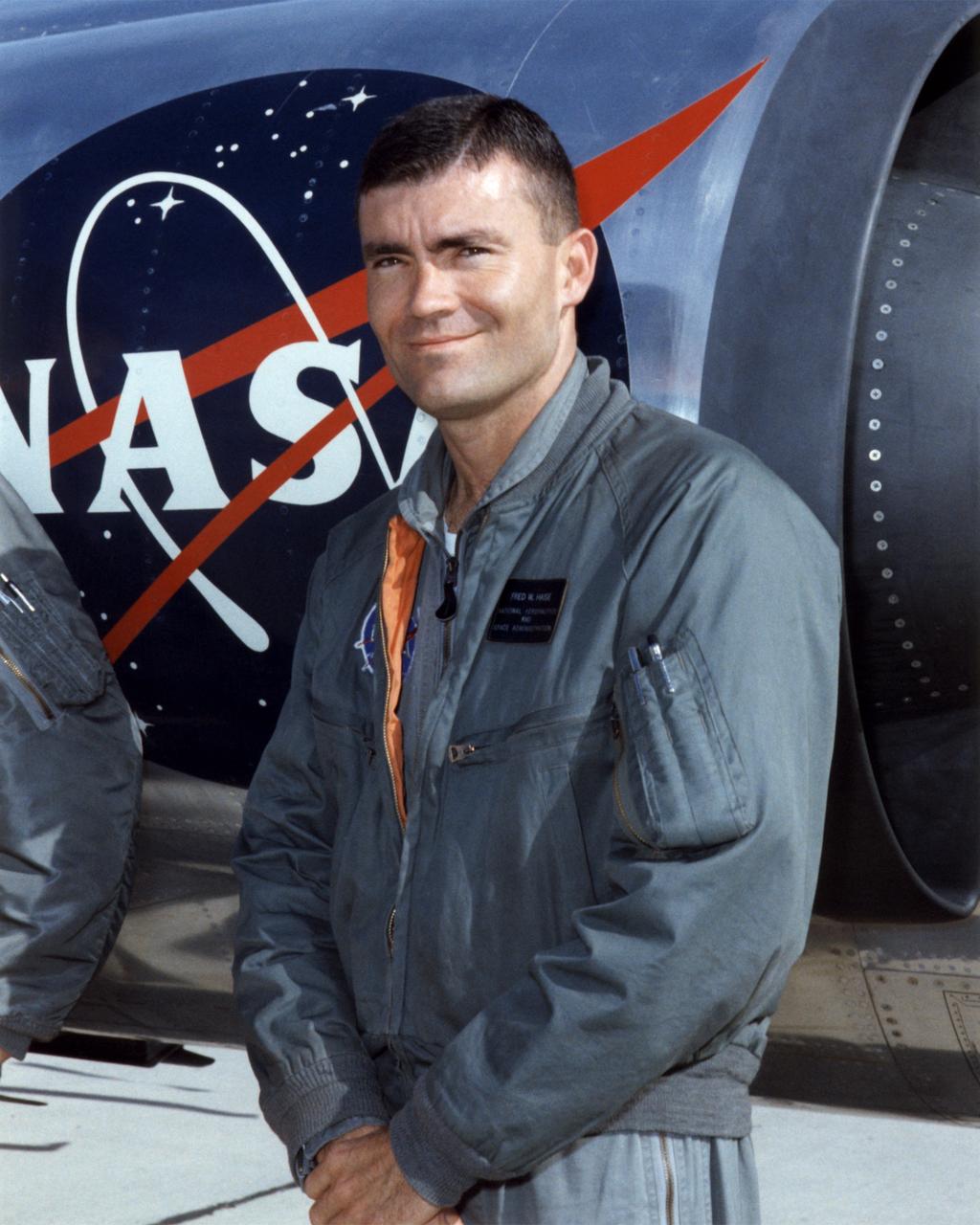
Fred W. Haise Jr. was a research pilot and an astronaut for the National Aeronautics and Space Administration from 1959 to 1979. He began flying at the Lewis Research Center in Cleveland, Ohio (today the Glenn Research Center), in 1959. He became a research pilot at the NASA Flight Research Center (FRC), Edwards, Calif., in 1963, serving NASA in that position for three years until being selected to be an astronaut in 1966 His best-known assignment at the FRC (later redesignated the Dryden Flight Research Center) was as a lifting body pilot. Shortly after flying the M2-F1 on a car tow to about 25 feet on April 22, 1966, he was assigned as an astronaut to the Johnson Space Center in Houston, Texas. While at the FRC he had also flown a variety of other research and support aircraft, including the variable-stability T-33A to simulate the M2-F2 heavyweight lifting body, some light aircraft including the Piper PA-30 to evaluate their handling qualities, the Apache helicopter, the Aero Commander, the Cessna 310, the Douglas F5D, the Lockheed F-104 and T-33, the Cessna T-37, and the Douglas C-47. After becoming an astronaut, Haise served as a backup crewmember for the Apollo 8, 11, and 16 missions. He flew on the aborted Apollo 13 lunar mission in 1970, spending 142 hours and 54 minutes in space before returning safely to Earth. In 1977, he was the commander of three free flights of the Space Shuttle prototype Enterprise when it flew its Approach and Landing Tests at Edwards Air Force Base, Calif. Meanwhile, from April 1973 to January 1976, Haise served as the Technical Assistant to the Manager of the Space Shuttle Orbiter Project. In 1979, he left NASA to become the Vice President for Space Programs with the Grumman Aerospace Corporation. He then served as President of Grumman Technical Services, an operating division of Northrop Grumman Corporation, from January 1992 until his retirement. Haise was born in Biloxi, Miss., on November 14, 1933. He underwent flight traini
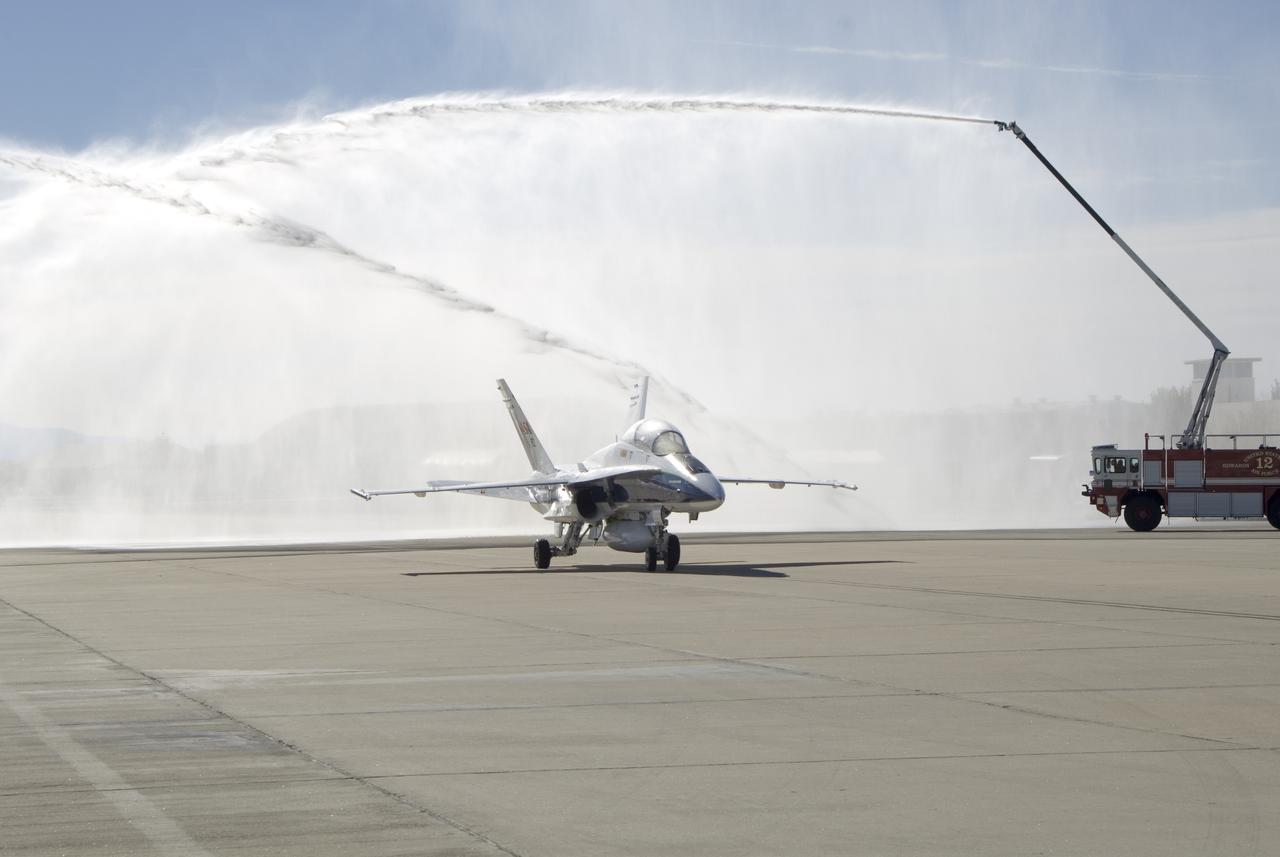
Long-time NASA Dryden research pilot and former astronaut C. Gordon Fullerton capped an almost 50-year flying career, including more than 38 years with NASA, with a final flight in a NASA F/A-18 on Dec. 21, 2007. Fullerton and Dryden research pilot Jim Smolka flew a 90-minute pilot proficiency formation aerobatics flight with another Dryden F/A-18 and a Dryden T-38 before concluding with two low-level formation flyovers of Dryden before landing. Fullerton was honored with a water-cannon spray arch provided by two fire trucks from the Edwards Air Force Base fire department as he taxied the F/A-18 up to the Dryden ramp, and was then greeted by his wife Marie and several hundred Dryden staff after his final flight. Fullerton began his flying career with the U.S. Air Force in 1958 after earning bachelor's and master's degrees in mechanical engineering from the California Institute of Technology. Initially trained as a fighter pilot, he later transitioned to multi-engine bombers and became a bomber operations test pilot after attending the Air Force Aerospace Research Pilot School at Edwards Air Force Base, Calif. He then was assigned to the flight crew for the planned Air Force Manned Orbital Laboratory in 1966. Upon cancellation of that program, the Air Force assigned Fullerton to NASA's astronaut corps in 1969. He served on the support crews for the Apollo 14, 15, 16 and 17 lunar missions, and was later assigned to one of the two flight crews that piloted the space shuttle prototype Enterprise during the Approach and Landing Test program at Dryden. He then logged some 382 hours in space when he flew on two early space shuttle missions, STS-3 on Columbia in 1982 and STS-51F on Challenger in 1985. He joined the flight crew branch at NASA Dryden after leaving the astronaut corps in 1986. During his 21 years at Dryden, Fullerton was project pilot on a number of high-profile research efforts, including the Propulsion Controlled Aircraft, the high-speed landing tests of
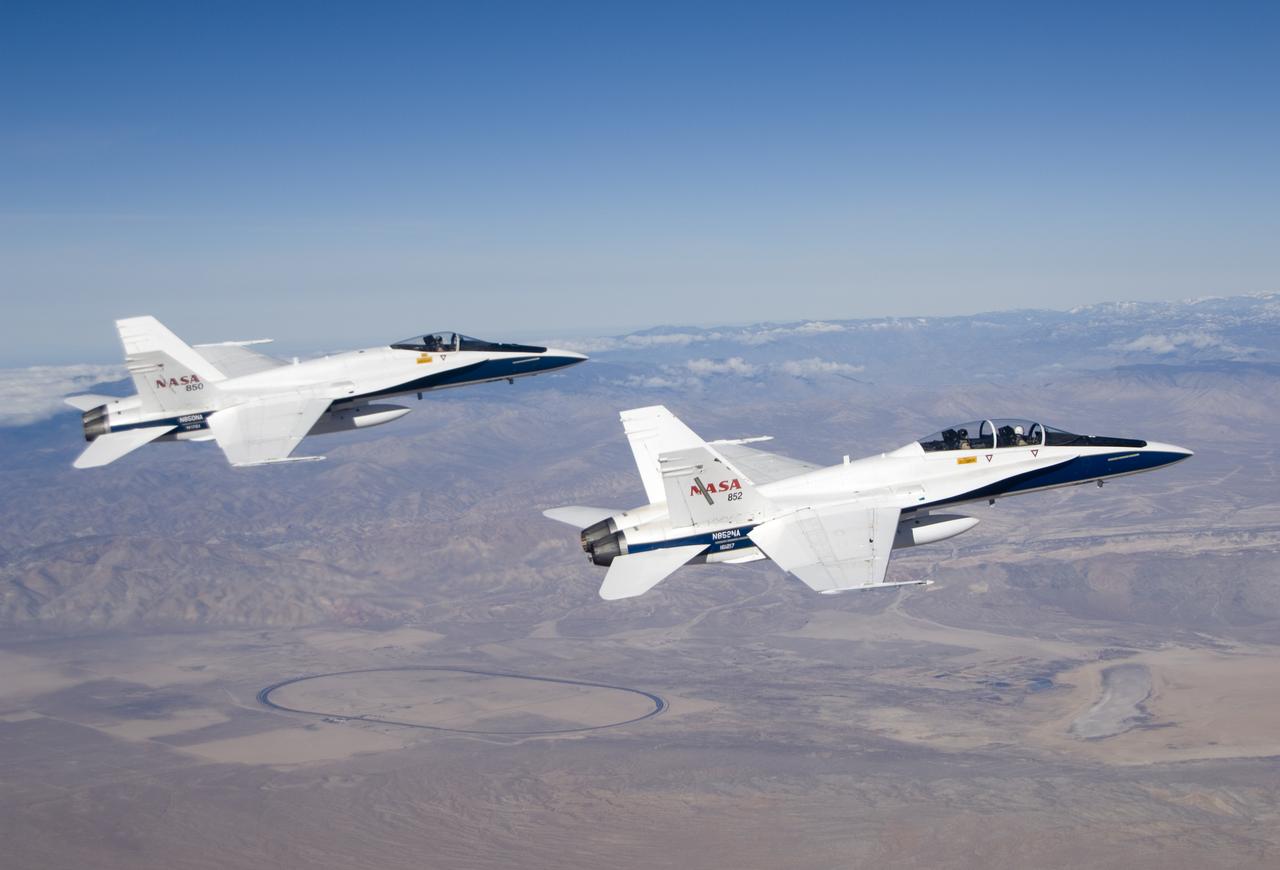
Long-time NASA Dryden research pilot and former astronaut C. Gordon Fullerton capped an almost 50-year flying career, including more than 38 years with NASA, with a final flight in a NASA F/A-18 on Dec. 21, 2007. Fullerton and Dryden research pilot Jim Smolka flew a 90-minute pilot proficiency formation aerobatics flight with another Dryden F/A-18 and a Dryden T-38 before concluding with two low-level formation flyovers of Dryden before landing. Fullerton was honored with a water-cannon spray arch provided by two fire trucks from the Edwards Air Force Base fire department as he taxied the F/A-18 up to the Dryden ramp, and was then greeted by his wife Marie and several hundred Dryden staff after his final flight. Fullerton began his flying career with the U.S. Air Force in 1958 after earning bachelor's and master's degrees in mechanical engineering from the California Institute of Technology. Initially trained as a fighter pilot, he later transitioned to multi-engine bombers and became a bomber operations test pilot after attending the Air Force Aerospace Research Pilot School at Edwards Air Force Base, Calif. He then was assigned to the flight crew for the planned Air Force Manned Orbital Laboratory in 1966. Upon cancellation of that program, the Air Force assigned Fullerton to NASA's astronaut corps in 1969. He served on the support crews for the Apollo 14, 15, 16 and 17 lunar missions, and was later assigned to one of the two flight crews that piloted the space shuttle prototype Enterprise during the Approach and Landing Test program at Dryden. He then logged some 382 hours in space when he flew on two early space shuttle missions, STS-3 on Columbia in 1982 and STS-51F on Challenger in 1985. He joined the flight crew branch at NASA Dryden after leaving the astronaut corps in 1986. During his 21 years at Dryden, Fullerton was project pilot on a number of high-profile research efforts, including the Propulsion Controlled Aircraft, the high-speed landing tests of sp
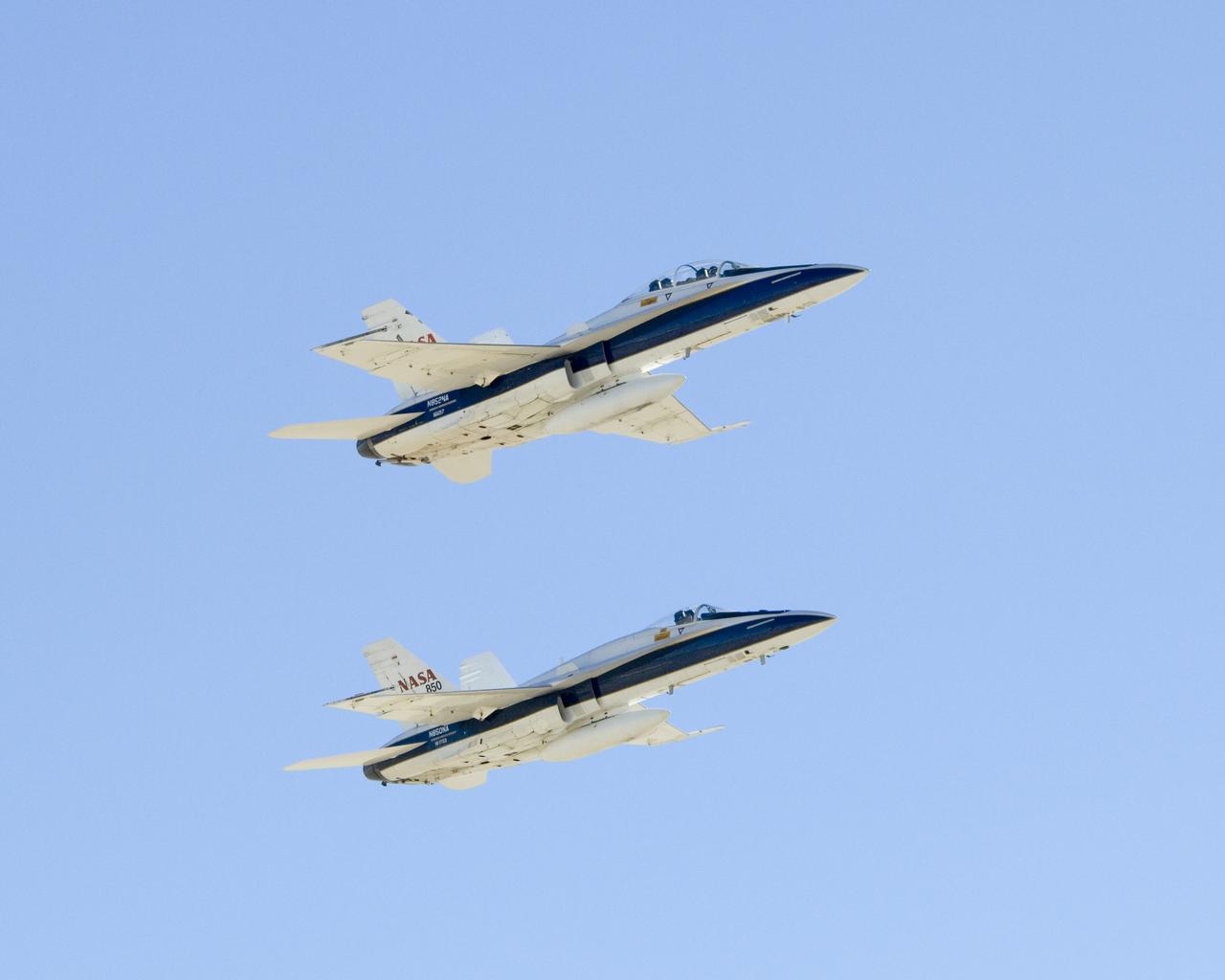
Long-time NASA Dryden research pilot and former astronaut C. Gordon Fullerton capped an almost 50-year flying career, including more than 38 years with NASA, with a final flight in a NASA F/A-18 on Dec. 21, 2007. Fullerton and Dryden research pilot Jim Smolka flew a 90-minute pilot proficiency formation aerobatics flight with another Dryden F/A-18 and a Dryden T-38 before concluding with two low-level formation flyovers of Dryden before landing. Fullerton was honored with a water-cannon spray arch provided by two fire trucks from the Edwards Air Force Base fire department as he taxied the F/A-18 up to the Dryden ramp, and was then greeted by his wife Marie and several hundred Dryden staff after his final flight. Fullerton began his flying career with the U.S. Air Force in 1958 after earning bachelor's and master's degrees in mechanical engineering from the California Institute of Technology. Initially trained as a fighter pilot, he later transitioned to multi-engine bombers and became a bomber operations test pilot after attending the Air Force Aerospace Research Pilot School at Edwards Air Force Base, Calif. He then was assigned to the flight crew for the planned Air Force Manned Orbital Laboratory in 1966. Upon cancellation of that program, the Air Force assigned Fullerton to NASA's astronaut corps in 1969. He served on the support crews for the Apollo 14, 15, 16 and 17 lunar missions, and was later assigned to one of the two flight crews that piloted the space shuttle prototype Enterprise during the Approach and Landing Test program at Dryden. He then logged some 382 hours in space when he flew on two early space shuttle missions, STS-3 on Columbia in 1982 and STS-51F on Challenger in 1985. He joined the flight crew branch at NASA Dryden after leaving the astronaut corps in 1986. During his 21 years at Dryden, Fullerton was project pilot on a number of high-profile research efforts, including the Propulsion Controlled Aircraft, the high-speed landing tests of
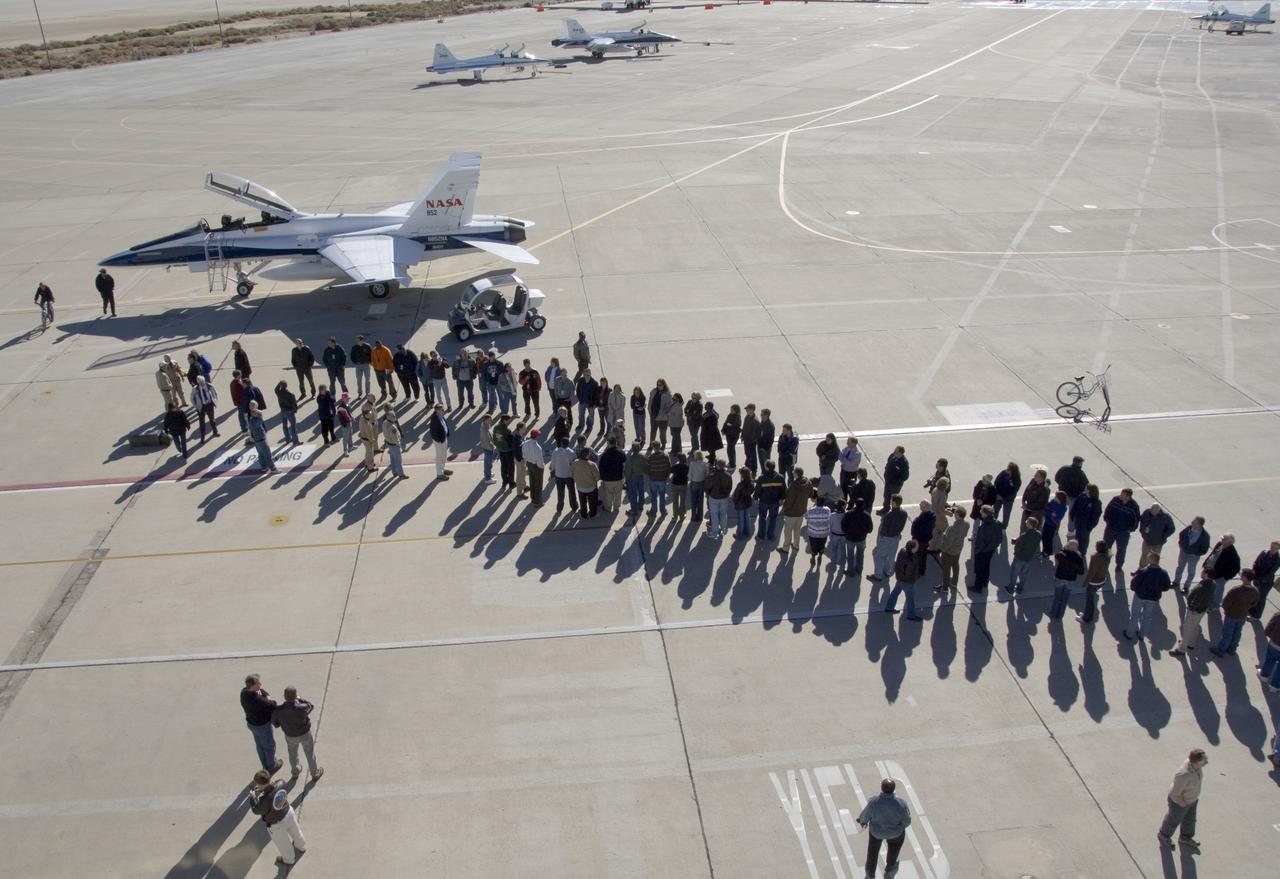
Long-time NASA Dryden research pilot and former astronaut C. Gordon Fullerton capped an almost 50-year flying career, including more than 38 years with NASA, with a final flight in a NASA F/A-18 on Dec. 21, 2007. Fullerton and Dryden research pilot Jim Smolka flew a 90-minute pilot proficiency formation aerobatics flight with another Dryden F/A-18 and a Dryden T-38 before concluding with two low-level formation flyovers of Dryden before landing. Fullerton was honored with a water-cannon spray arch provided by two fire trucks from the Edwards Air Force Base fire department as he taxied the F/A-18 up to the Dryden ramp, and was then greeted by his wife Marie and several hundred Dryden staff after his final flight. Fullerton began his flying career with the U.S. Air Force in 1958 after earning bachelor's and master's degrees in mechanical engineering from the California Institute of Technology. Initially trained as a fighter pilot, he later transitioned to multi-engine bombers and became a bomber operations test pilot after attending the Air Force Aerospace Research Pilot School at Edwards Air Force Base, Calif. He then was assigned to the flight crew for the planned Air Force Manned Orbital Laboratory in 1966. Upon cancellation of that program, the Air Force assigned Fullerton to NASA's astronaut corps in 1969. He served on the support crews for the Apollo 14, 15, 16 and 17 lunar missions, and was later assigned to one of the two flight crews that piloted the space shuttle prototype Enterprise during the Approach and Landing Test program at Dryden. He then logged some 382 hours in space when he flew on two early space shuttle missions, STS-3 on Columbia in 1982 and STS-51F on Challenger in 1985. He joined the flight crew branch at NASA Dryden after leaving the astronaut corps in 1986. During his 21 years at Dryden, Fullerton was project pilot on a number of high-profile research efforts, including the Propulsion Controlled Aircraft, the high-speed landing tests of
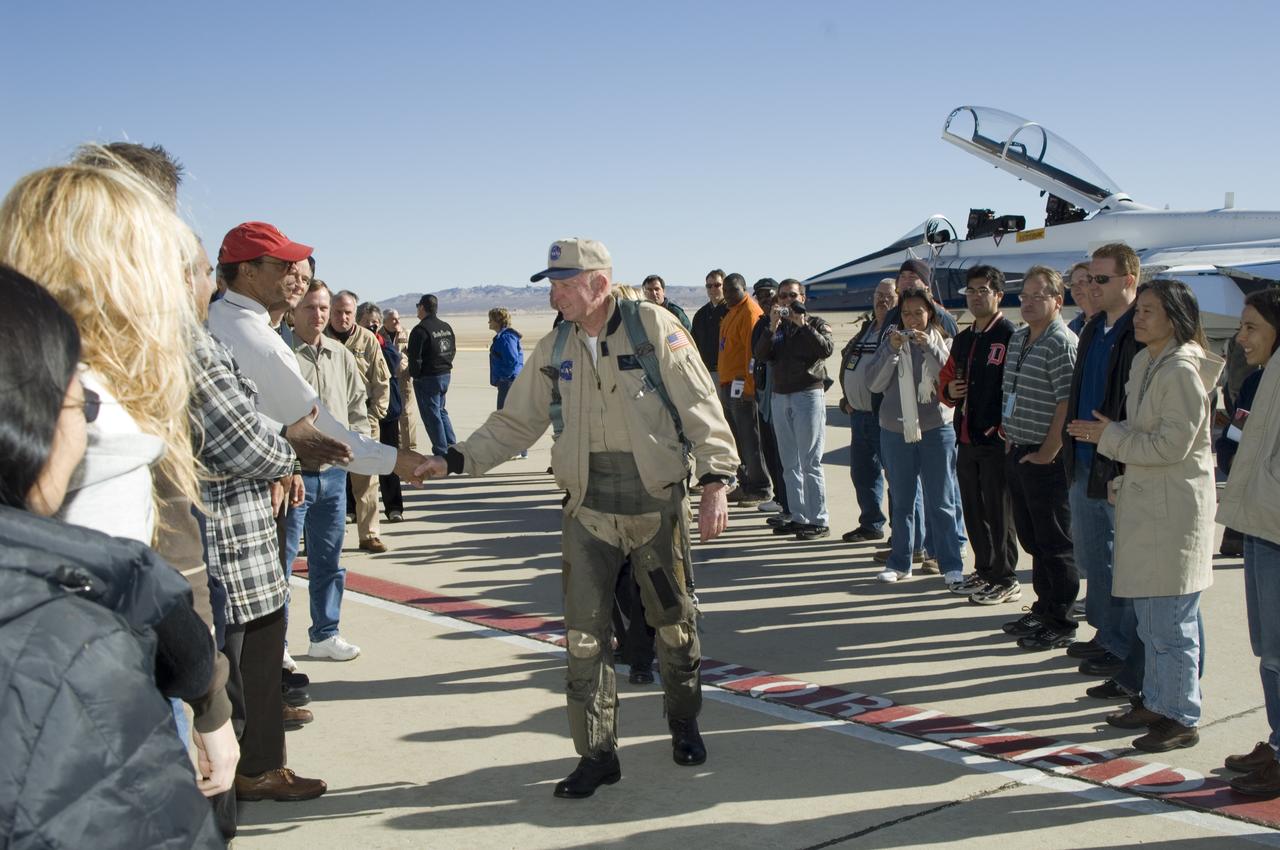
Long-time NASA Dryden research pilot and former astronaut C. Gordon Fullerton capped an almost 50-year flying career, including more than 38 years with NASA, with a final flight in a NASA F/A-18 on Dec. 21, 2007. Fullerton and Dryden research pilot Jim Smolka flew a 90-minute pilot proficiency formation aerobatics flight with another Dryden F/A-18 and a Dryden T-38 before concluding with two low-level formation flyovers of Dryden before landing. Fullerton was honored with a water-cannon spray arch provided by two fire trucks from the Edwards Air Force Base fire department as he taxied the F/A-18 up to the Dryden ramp, and was then greeted by his wife Marie and several hundred Dryden staff after his final flight. Fullerton began his flying career with the U.S. Air Force in 1958 after earning bachelor's and master's degrees in mechanical engineering from the California Institute of Technology. Initially trained as a fighter pilot, he later transitioned to multi-engine bombers and became a bomber operations test pilot after attending the Air Force Aerospace Research Pilot School at Edwards Air Force Base, Calif. He then was assigned to the flight crew for the planned Air Force Manned Orbital Laboratory in 1966. Upon cancellation of that program, the Air Force assigned Fullerton to NASA's astronaut corps in 1969. He served on the support crews for the Apollo 14, 15, 16 and 17 lunar missions, and was later assigned to one of the two flight crews that piloted the space shuttle prototype Enterprise during the Approach and Landing Test program at Dryden. He then logged some 382 hours in space when he flew on two early space shuttle missions, STS-3 on Columbia in 1982 and STS-51F on Challenger in 1985. He joined the flight crew branch at NASA Dryden after leaving the astronaut corps in 1986. During his 21 years at Dryden, Fullerton was project pilot on a number of high-profile research efforts, including the Propulsion Controlled Aircraft, the high-speed landing tests of
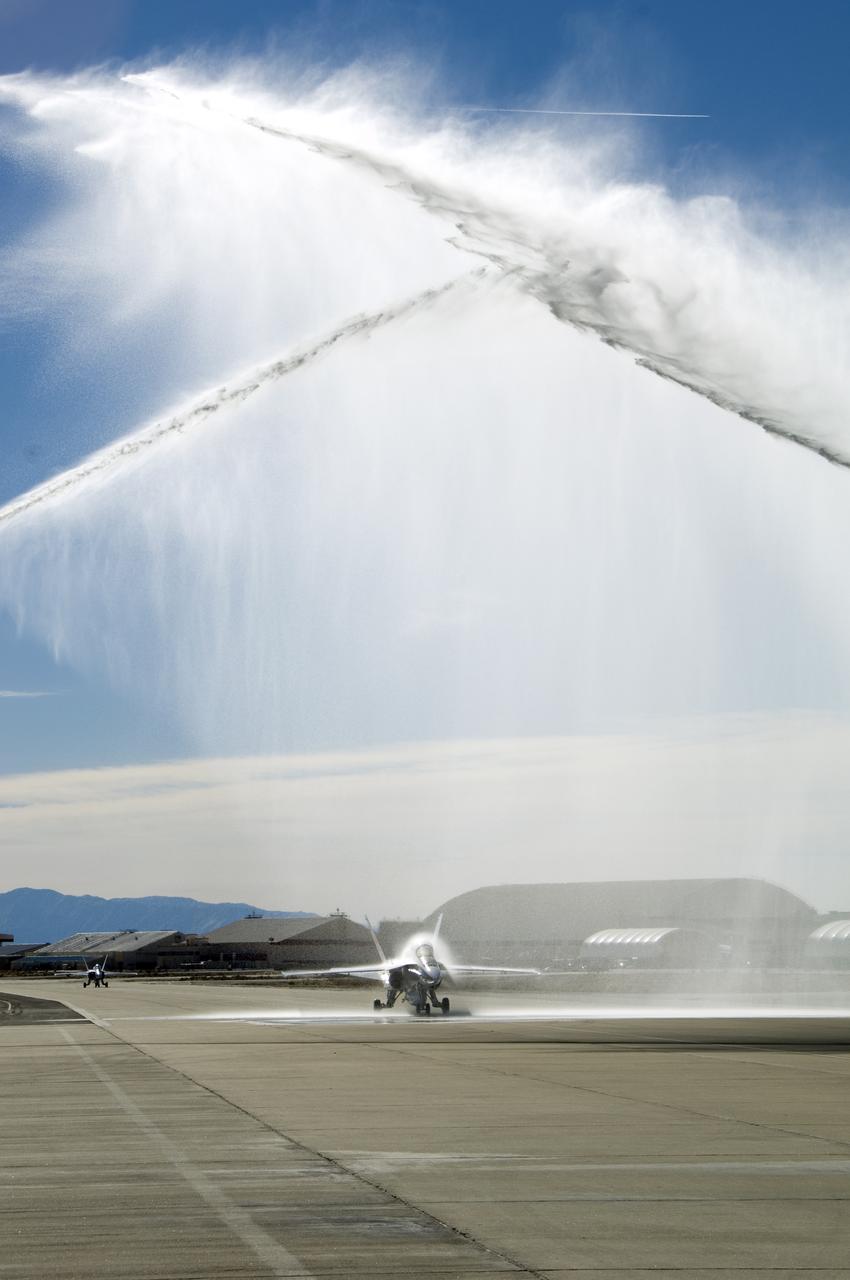
Long-time NASA Dryden research pilot and former astronaut C. Gordon Fullerton capped an almost 50-year flying career, including more than 38 years with NASA, with a final flight in a NASA F/A-18 on Dec. 21, 2007. Fullerton and Dryden research pilot Jim Smolka flew a 90-minute pilot proficiency formation aerobatics flight with another Dryden F/A-18 and a Dryden T-38 before concluding with two low-level formation flyovers of Dryden before landing. Fullerton was honored with a water-cannon spray arch provided by two fire trucks from the Edwards Air Force Base fire department as he taxied the F/A-18 up to the Dryden ramp, and was then greeted by his wife Marie and several hundred Dryden staff after his final flight. Fullerton began his flying career with the U.S. Air Force in 1958 after earning bachelor's and master's degrees in mechanical engineering from the California Institute of Technology. Initially trained as a fighter pilot, he later transitioned to multi-engine bombers and became a bomber operations test pilot after attending the Air Force Aerospace Research Pilot School at Edwards Air Force Base, Calif. He then was assigned to the flight crew for the planned Air Force Manned Orbital Laboratory in 1966. Upon cancellation of that program, the Air Force assigned Fullerton to NASA's astronaut corps in 1969. He served on the support crews for the Apollo 14, 15, 16 and 17 lunar missions, and was later assigned to one of the two flight crews that piloted the space shuttle prototype Enterprise during the Approach and Landing Test program at Dryden. He then logged some 382 hours in space when he flew on two early space shuttle missions, STS-3 on Columbia in 1982 and STS-51F on Challenger in 1985. He joined the flight crew branch at NASA Dryden after leaving the astronaut corps in 1986. During his 21 years at Dryden, Fullerton was project pilot on a number of high-profile research efforts, including the Propulsion Controlled Aircraft, the high-speed landing tests of