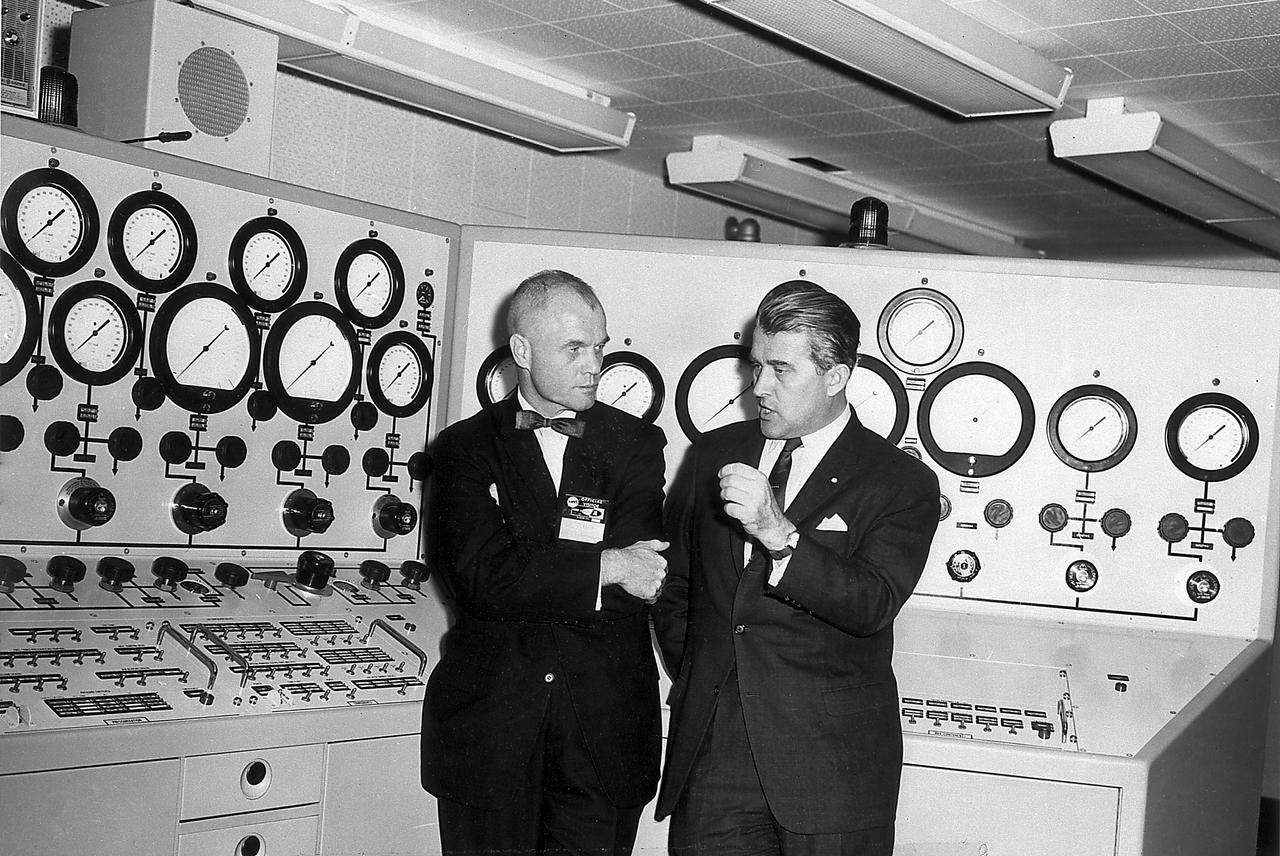
Dr. von Braun briefs Astronaut John Glenn in the control room of the Vehicle Test Section, Quality Assurance Division, Marshall Space Flight Center (MSFC), November 28, 1962.
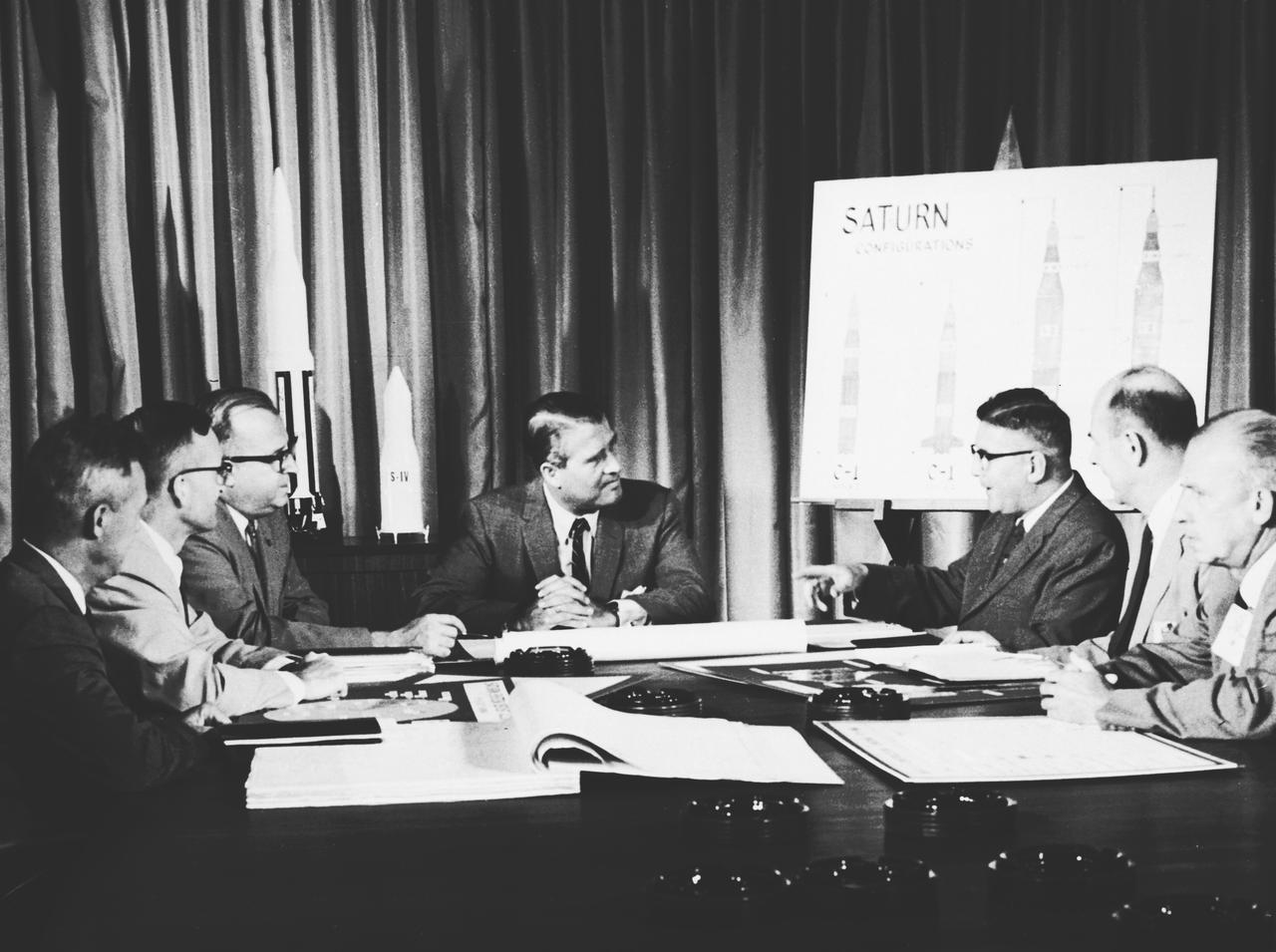
Dr. von Braun is shown in this photograph, which was probably taken in the early 1960s, with members of his management team. Pictured from left to right are, Werner Kuers, Director of the Manufacturing Engineering Division; Dr. Walter Haeussermarn, Director of the Astrionics Division; Dr. William Mrazek, Propulsion and Vehicle Engineering Division; Dr. von Braun; Dieter Grau, Director of the Quality Assurance Division; Dr. Oswald Lange, Director of the Saturn Systems Office; and Erich Neubert , Associate Deputy Director for Research and Development.

In recognition of Black History Month, the Black Employee Strategy Team hosted a panel discussion featuring some of the future leaders of NASA’s Kennedy Space Center on Feb. 13, 2019. Participants from left, are Tamiko Fletcher, Kennedy’s chief security information officer in IT Security; Anthony Harris, chief, Facility Systems Branch in Safety and Mission Assurance; Charmel Anderson-Jones, senior cross program quality engineer in the Safety and Mission Assurance Directorate, Exploration Ground Systems Division; and Malcolm Boston, contracting officer representative in the Launch Services Program. They shared personal testimony about their journey toward NASA employment, leadership styles and keys to their success.

In recognition of Black History Month, the Black Employee Strategy Team hosted a panel discussion featuring some of the future leaders of NASA’s Kennedy Space Center on Feb. 13, 2019. Participants from left, are Tamiko Fletcher, Kennedy’s chief security information officer in IT Security; Anthony Harris, chief, Facility Systems Branch in Safety and Mission Assurance; Charmel Anderson-Jones, senior cross program quality engineer in the Safety and Mission Assurance Directorate, Exploration Ground Systems Division; and Malcolm Boston, contracting officer representative in the Launch Services Program. They shared personal testimony about their journey toward NASA employment, leadership styles and keys to their success.
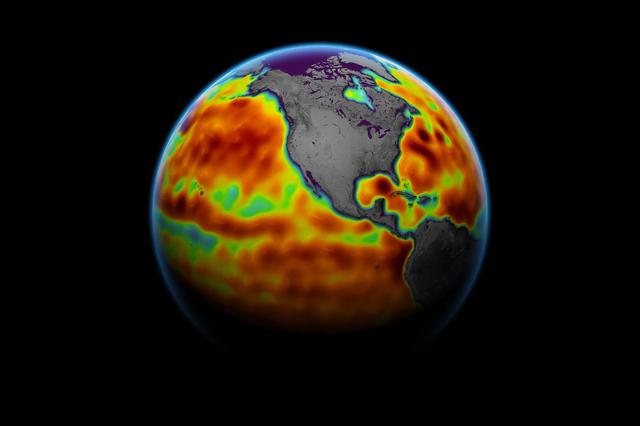
This map shows sea level measured by the Sentinel-6 Michael Freilich satellite from June 5 to15. Red areas are regions where sea level is higher than normal, and blue areas indicate areas where it's lower than normal. The measurements are part of a set of data streams that become available to the public hours to a couple of days after the satellite collects them. The difference in when the products become available balances accuracy with delivery timeliness for tasks like forecasting the weather or helping to monitor the formation of hurricanes. The satellite, named after former NASA Earth Science Division Director Michael Freilich, collects its measurements for about 90% of the world's oceans. The spacecraft is one of two satellites that compose the Copernicus Sentinel-6/Jason-CS (Continuity of Service) mission. The second satellite, Sentinel-6B, is slated for launch in 2025. Together, they are the latest in a series of spacecraft starting with TOPEX/Poseidon in 1992 and continuing with the Jason series of satellites that have been gathering precise ocean height measurements for nearly 30 years. Shortly after launch in Nov. 2020, Sentinel-6 Michael Freilich moved into position, trailing the current reference sea level satellite Jason-3 by 30 seconds. Scientists and engineers then spent time cross-calibrating the data collected by both satellites to ensure the continuity of measurements between the two. Once assured of the data quality, Sentinel-6 Michael Freilich will then become the primary sea level satellite. https://photojournal.jpl.nasa.gov/catalog/PIA24533