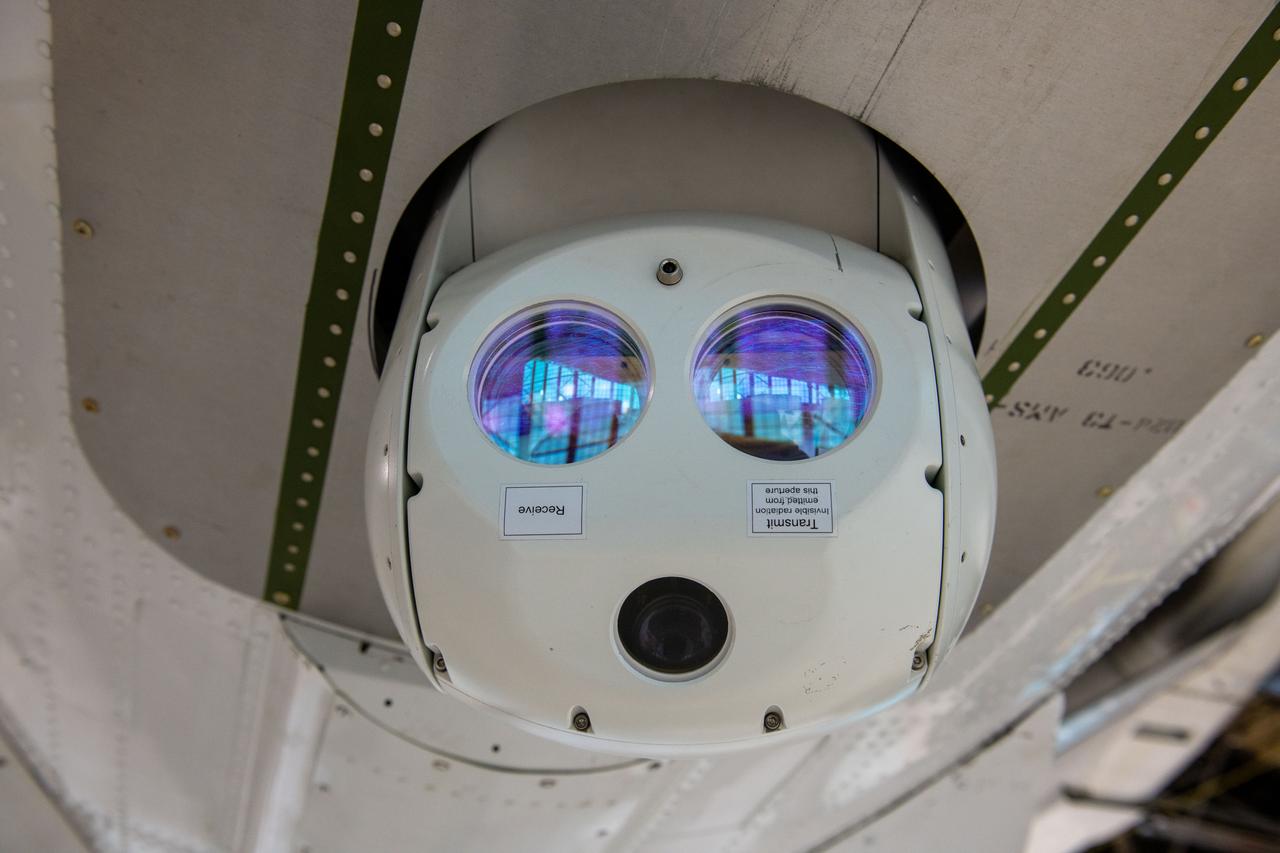
Convergent Aeronautics Solutions (CAS) Quantum Technologies (QTech)

iss065e343729 (9/2/2021) --- A view aboard the International Space Station Columbus module with the Ice Cube #8 and #9 BioCubes. The Ice Cube #8 investigation uses quantum technology to produce high-resolution, high-precision measurements of the local magnetic field to create a high-resolution map of the Earth’s magnetic field. Ice Cube #9 seeks to analize the Skin Microbiome of Diabetic Foot Ulcers . The Ice Cube #8 investigation uses quantum technology to produce high-resolution, high-precision measurements of the local magnetic field to create a high-resolution map of the Earth’s magnetic field.
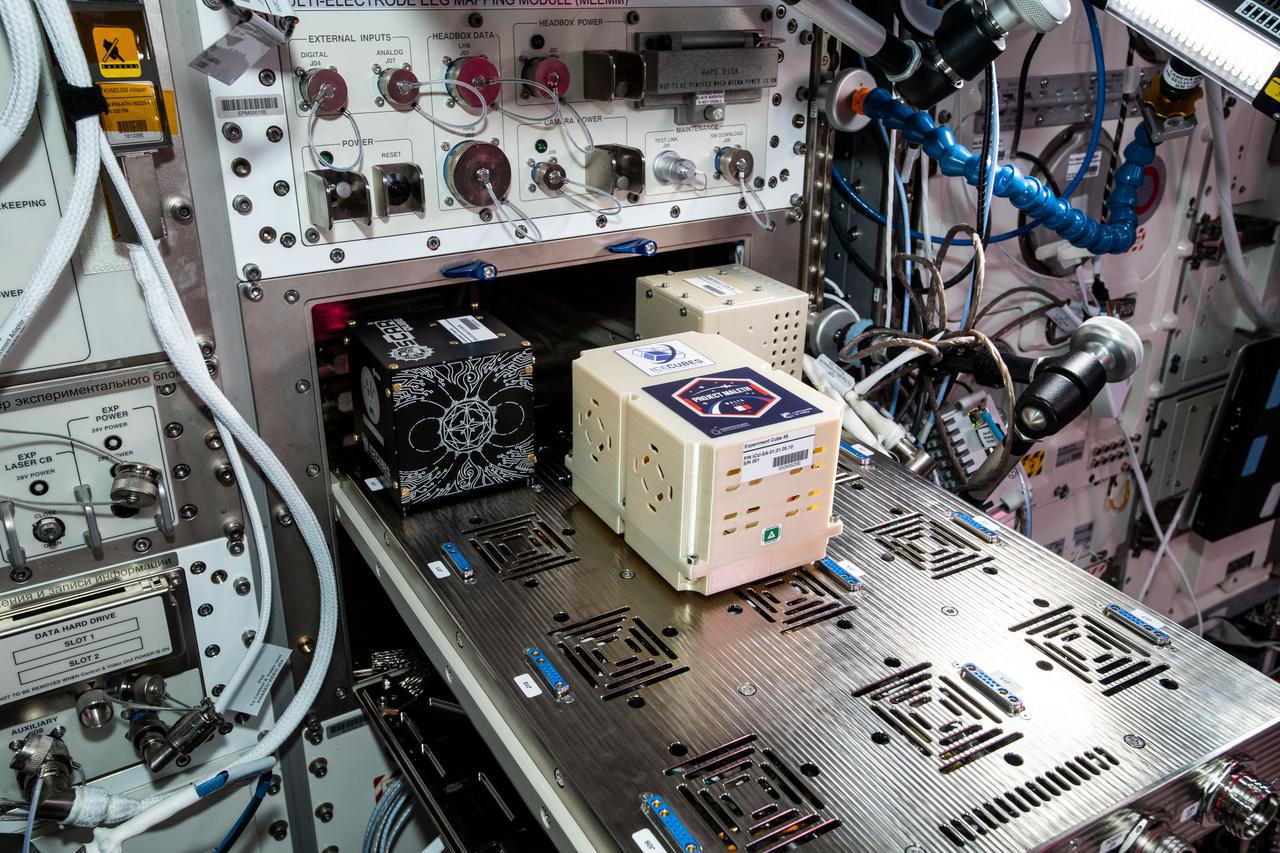
iss065e343736 (9/2/2021) --- A view aboard the International Space Station Columbus module with the Ice Cube #8 and #9 BioCubes. The Ice Cube #8 investigation uses quantum technology to produce high-resolution, high-precision measurements of the local magnetic field to create a high-resolution map of the Earth’s magnetic field. Ice Cube #9 seeks to analize the Skin Microbiome of Diabetic Foot Ulcers . The Ice Cube #8 investigation uses quantum technology to produce high-resolution, high-precision measurements of the local magnetic field to create a high-resolution map of the Earth’s magnetic field.
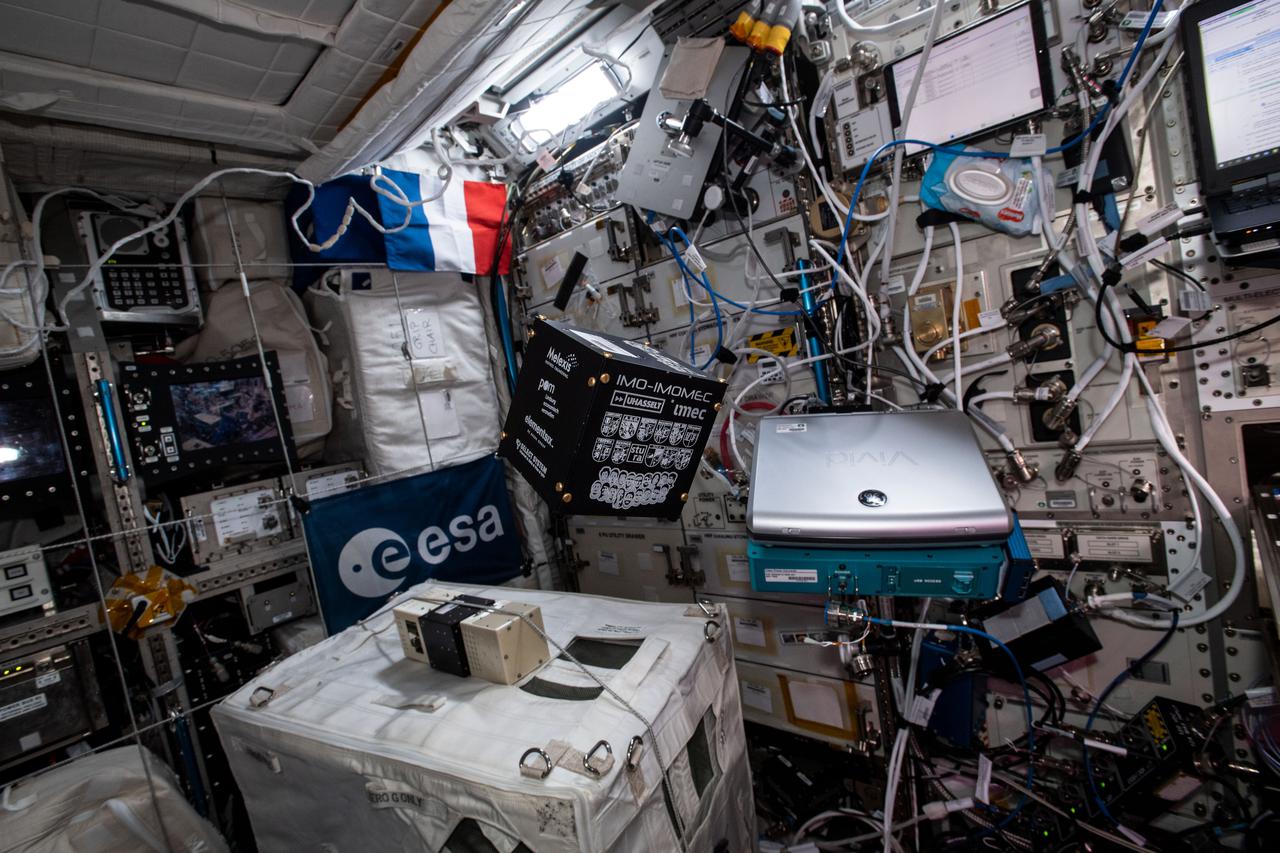
iss065e343710 (9/2/2021) --- A view aboard the International Space Station Columbus module with the Ice Cube #8 BioCube. The Ice Cube #8 investigation uses quantum technology to produce high-resolution, high-precision measurements of the local magnetic field to create a high-resolution map of the Earth’s magnetic field.
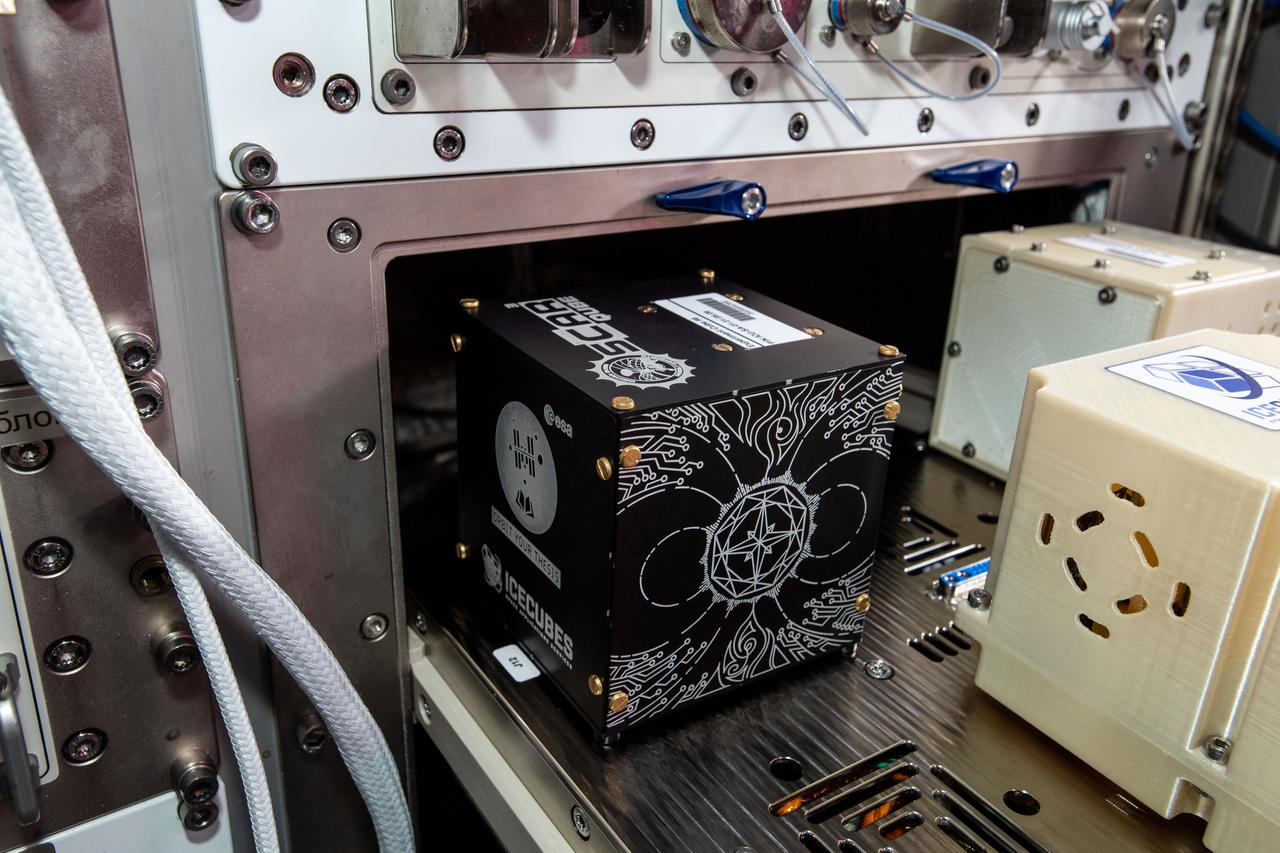
iss065e343732 (9/2/2021) --- A view aboard the International Space Station Columbus module with the Ice Cube #8 BioCube. The Ice Cube #8 investigation uses quantum technology to produce high-resolution, high-precision measurements of the local magnetic field to create a high-resolution map of the Earth’s magnetic field.
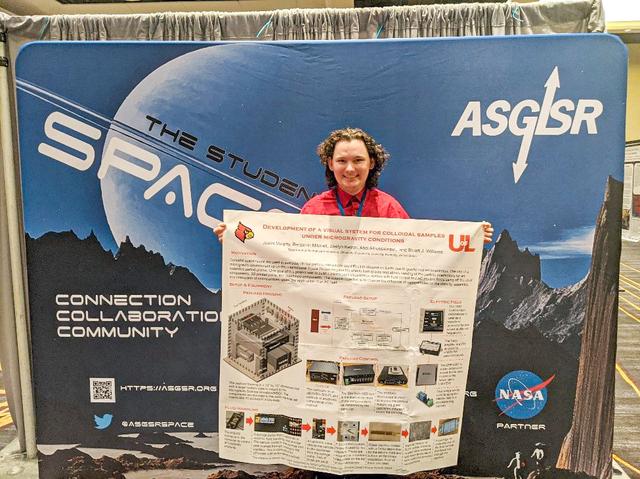
jsc2024e016255 (2/6/2024) --- Justin Murphy is an undergraduate Mechanical Engineering student (graduated May 2023) who has worked on the “Nano Halo” project and gave a poster presentation of his payload at ASGSR 2022 in Houston, Texas. The Nano Particle Haloing Suspension project tests controlled assembly of nanoparticles that could have applications in an enhanced solar cell generation technology known as quantum-dot solar synthesis. Image courtesy of the University of Louisville.
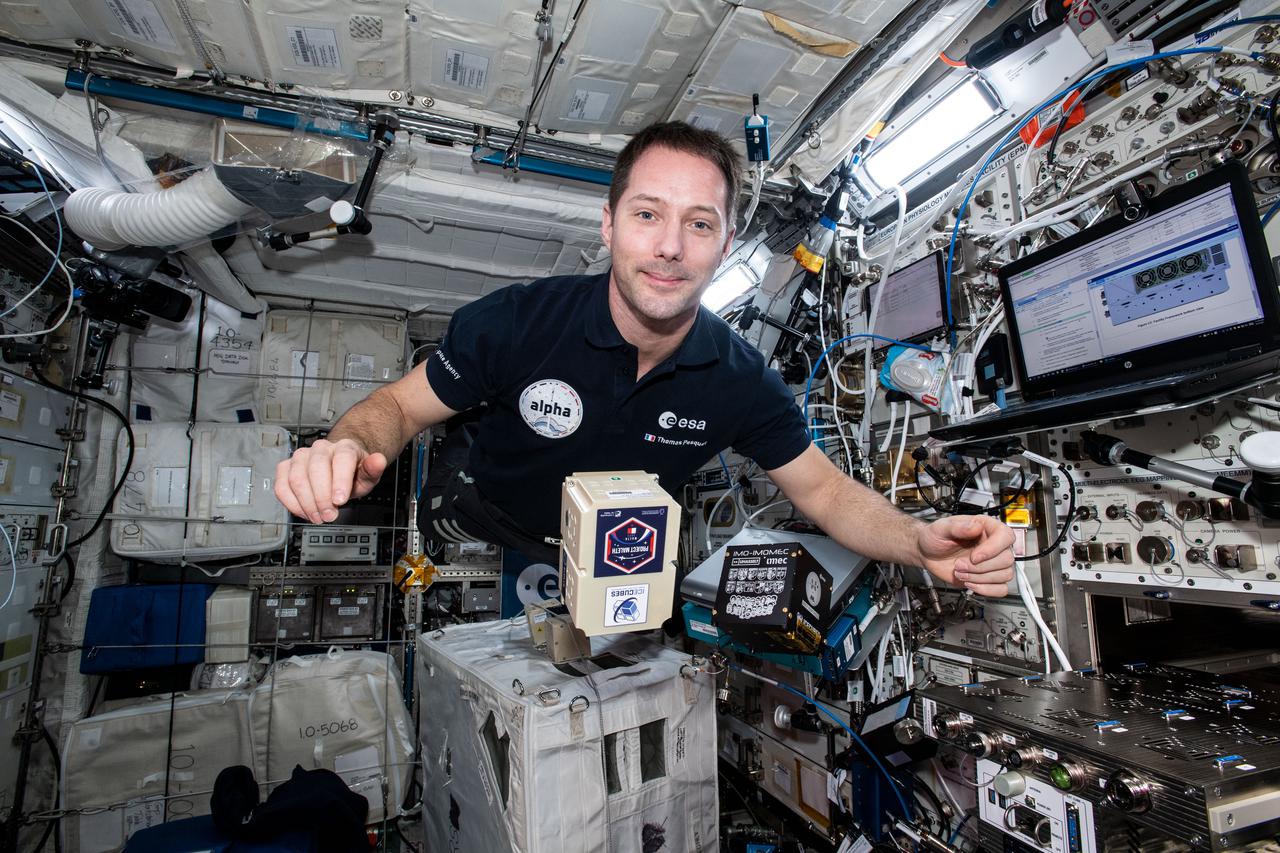
iss065e343728 (9/2/2021) --- European Space Agency (ESA) astronaut Thomas Pesquet is pictured aboard the International Space Station Columbus module with the Ice Cube #8 and #9 BioCubes. The Ice Cube #8 investigation uses quantum technology to produce high-resolution, high-precision measurements of the local magnetic field to create a high-resolution map of the Earth’s magnetic field. Ice Cube #9 seeks to analize the Skin Microbiome of Diabetic Foot Ulcers
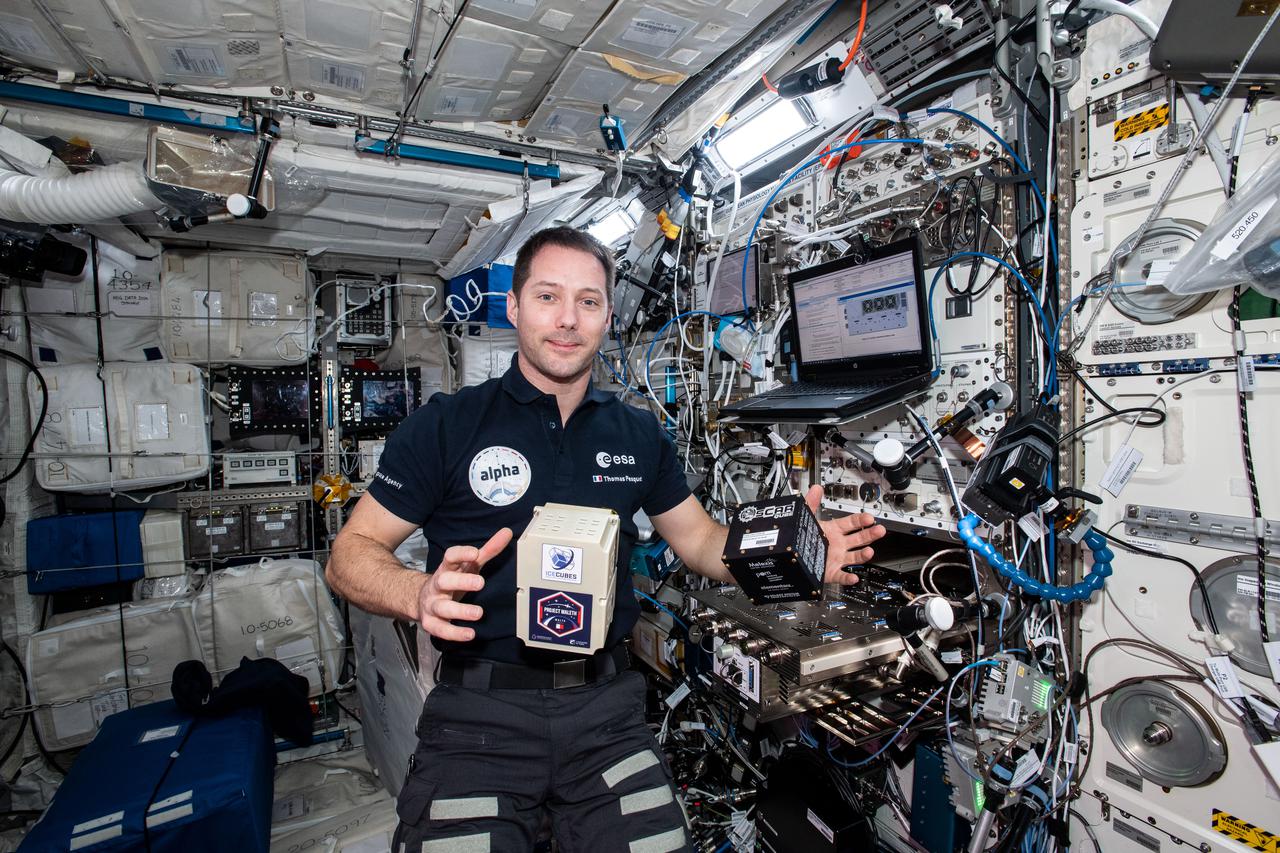
iss065e343725 (9/2/2021) --- European Space Agency (ESA) astronaut Thomas Pesquet is pictured aboard the International Space Station Columbus module with the Ice Cube #8 and #9 BioCubes. The Ice Cube #8 investigation uses quantum technology to produce high-resolution, high-precision measurements of the local magnetic field to create a high-resolution map of the Earth’s magnetic field. Ice Cube #9 seeks to analize the Skin Microbiome of Diabetic Foot Ulcers
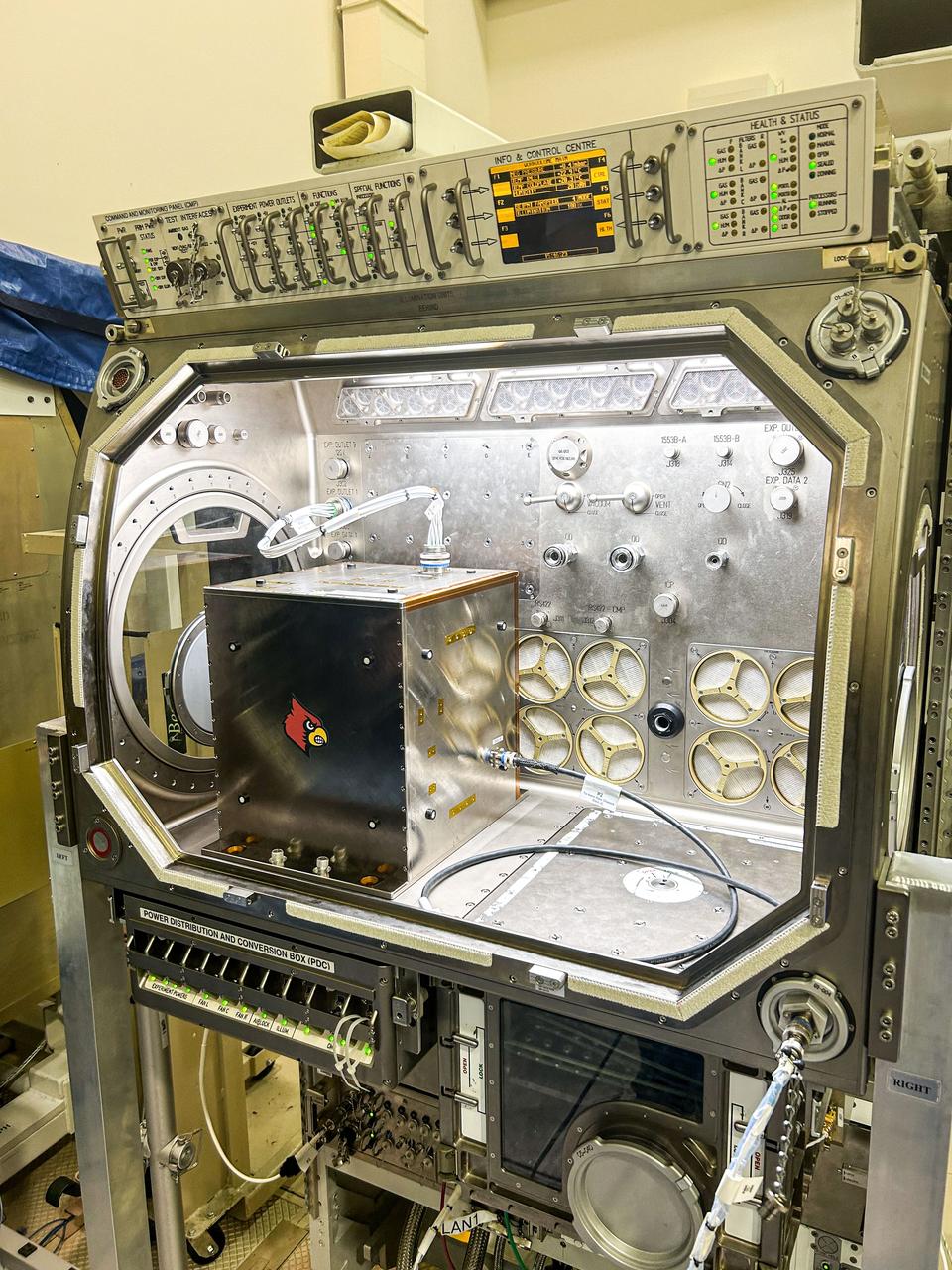
jsc2024e016253 (1/8/2024) --- The Nano Particle Haloing Suspension payload undergoes a fitting test at NASA's Marshall Space Flight Center in the Microgravity Science Glovebox replica. This payload tests controlled assembly of nanoparticles in a solution of zirconia and titanium-dioxide coated silica. Effective demonstration could lead to applications in an enhanced solar cell generation technology known as quantum-dot solar synthesis. Image courtesy of the University of Louisville.
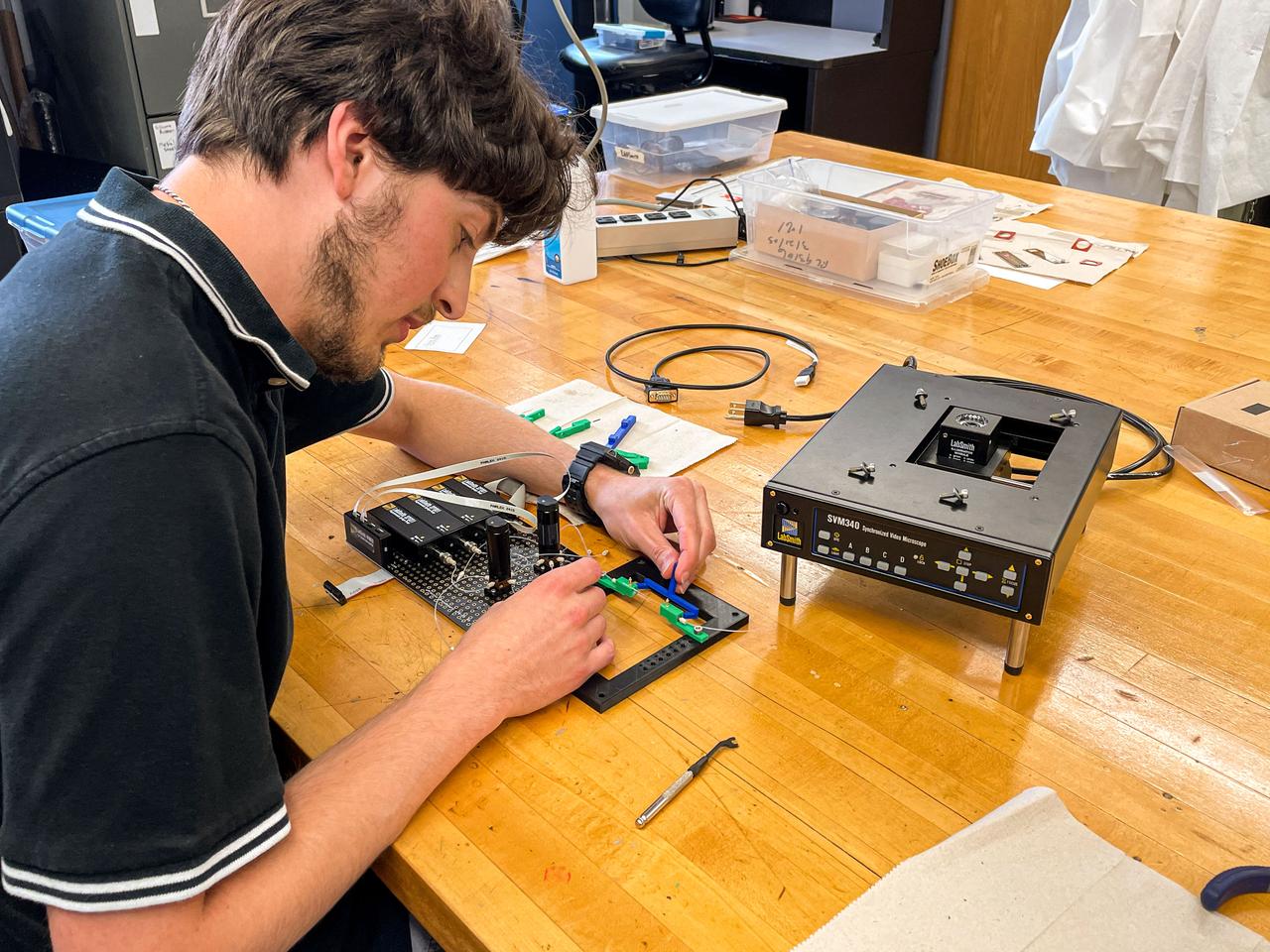
jsc2024e016254 (7/30/2021) --- A capstone student assembles the microscope and fluid breadboard for the Nano Particle Haloing Suspension payload. This payload tests controlled assembly of nanoparticles in a solution of zirconia and titanium-dioxide coated silica. Effective demonstration could lead to applications in an enhanced solar cell generation technology known as quantum-dot solar synthesis. Image courtesy of the University of Louisville.
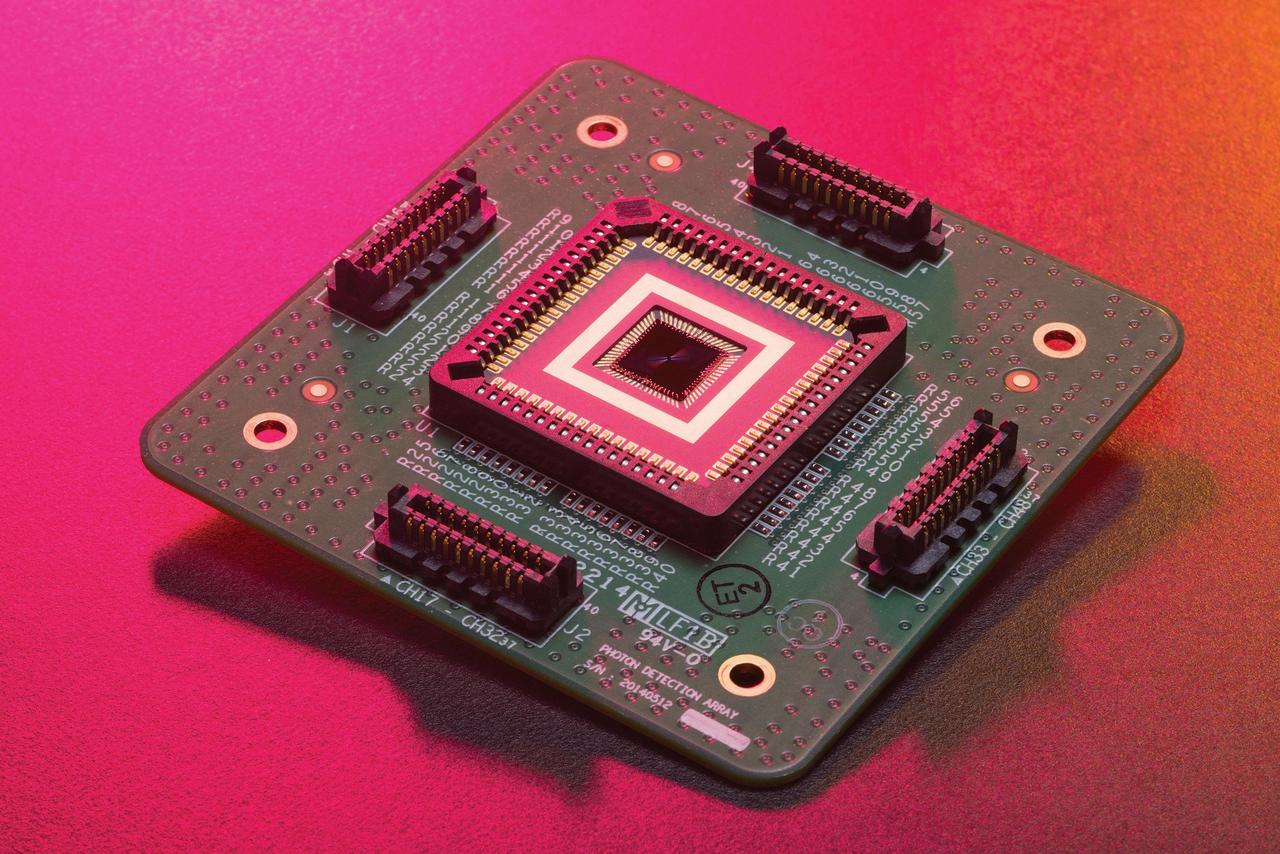
Shown here is a prototype of the Deep Space Optical Communications, or DSOC, ground receiver detector built by the Microdevices Laboratory at NASA's Jet Propulsion Laboratory in Southern California. The prototype superconducting nanowire single-photon detector was used by JPL technologists to help develop the detector that – from a station on Earth – will receive near-infrared laser signals from the DSOC flight transceiver traveling with NASA's Psyche mission in deep space. DSOC will test key technologies that could enable high-bandwidth optical, or laser, communications from Mars distances. Bolted to the side of the spacecraft and operating for the first two years of Psyche's journey to the asteroid of the same name, the DSOC flight laser transceiver will transmit high-rate data to Caltech's Palomar Observatory in San Diego County, California, which houses the 200-inch (5.1-meter) Hale Telescope. The downlink detector converts optical signals to electrical signals, which can be processed and decoded. The detector is designed to be both sensitive enough to detect single photons (quantum particles of light) and able to detect many photons arriving all at once. At its farthest point during the technology demonstration's operations period, the transceiver will be up to 240 million miles (390 million kilometers) away, meaning that by the time its weak laser pulses arrive at Earth, the detector will need to efficiently detect a trickle of single photons. But when the spacecraft is closer to Earth and the flight transceiver is delivering its highest bit rate to Palomar, the detector is capable of detecting very high numbers of photons without becoming overwhelmed. Because data is encoded in the timing of the laser pulses, the detector must also be able to determine the time of a photon's arrival with a precision of 100 picoseconds (one picosecond is one trillionth of a second). DSOC is the latest in a series of optical communication technology demonstrations funded by NASA's Technology Demonstrations Missions (TDM) program and the agency's Space Communications and Navigation (SCaN) program. JPL, a division of Caltech in Pasadena, California, manages DSOC for TDM within NASA's Space Technology Mission Directorate and SCaN within the agency's Space Operations Mission Directorate. https://photojournal.jpl.nasa.gov/catalog/PIA25840
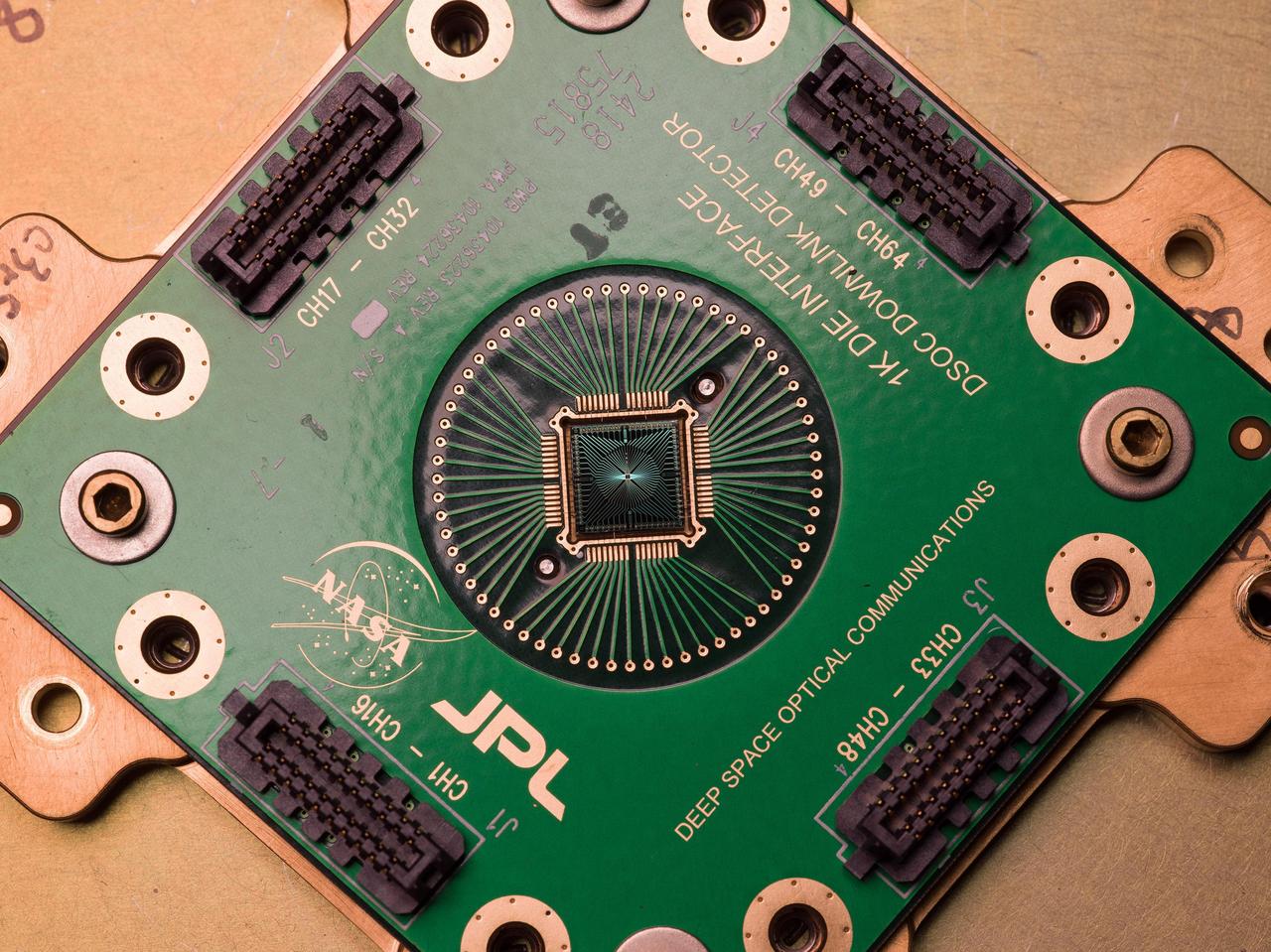
Shown here is an identical copy of the Deep Space Optical Communications, or DSOC, superconducting nanowire single-photon detector that is coupled to the 200-inch (5.1-meter) Hale Telescope located at Caltech's Palomar Observatory in San Diego County, California. Built by the Microdevices Laboratory at NASA's Jet Propulsion Laboratory in Southern California, the detector is designed to receive near-infrared laser signals from the DSOC flight transceiver traveling with NASA's Psyche mission in deep space as a part of the technology demonstration. DSOC will test key technologies that could enable high-bandwidth optical, or laser, communications from Mars distances. Bolted to the side of the spacecraft and operating for the first two years of Psyche's journey to the asteroid of the same name, the DSOC flight laser transceiver will transmit high-rate data to Caltech's Palomar Observatory in San Diego County, California, which houses the 200-inch (5.1-meter) Hale Telescope. The downlink detector converts optical signals to electrical signals, which can be processed and decoded. The detector is designed to be both sensitive enough to detect single photons (quantum particles of light) and able to detect many photons arriving all at once. At its farthest point during the technology demonstration's operations period, the transceiver will be up to 240 million miles (390 million kilometers) away, meaning that by the time its weak laser pulses arrive at Earth, the detector will need to efficiently detect a trickle of single photons. But when the spacecraft is closer to Earth and the flight transceiver is delivering its highest bit rate to Palomar, the detector is capable of detecting very high numbers of photons without becoming overwhelmed. Because data is encoded in the timing of the laser pulses, the detector must also be able to determine the time of a photon's arrival with a precision of 100 picoseconds (one picosecond is one trillionth of a second). To sense single photons, the detector must be in a superconducting state (when electrical current flows with zero resistance), so it is cryogenically cooled to less than minus 458 degrees Fahrenheit (or 1 Kelvin), which is close to absolute zero, or the lowest temperature possible. A photon absorbed in the detector disrupts its superconducting state, creating a measurable electrical pulse as current leaves the detector. DSOC is the latest in a series of optical communication technology demonstrations funded by NASA's Technology Demonstrations Missions (TDM) program and the agency's Space Communications and Navigation (SCaN) program. JPL, a division of Caltech in Pasadena, California, manages DSOC for TDM within NASA's Space Technology Mission Directorate and SCaN within the agency's Space Operations Mission Directorate. https://photojournal.jpl.nasa.gov/catalog/PIA26141