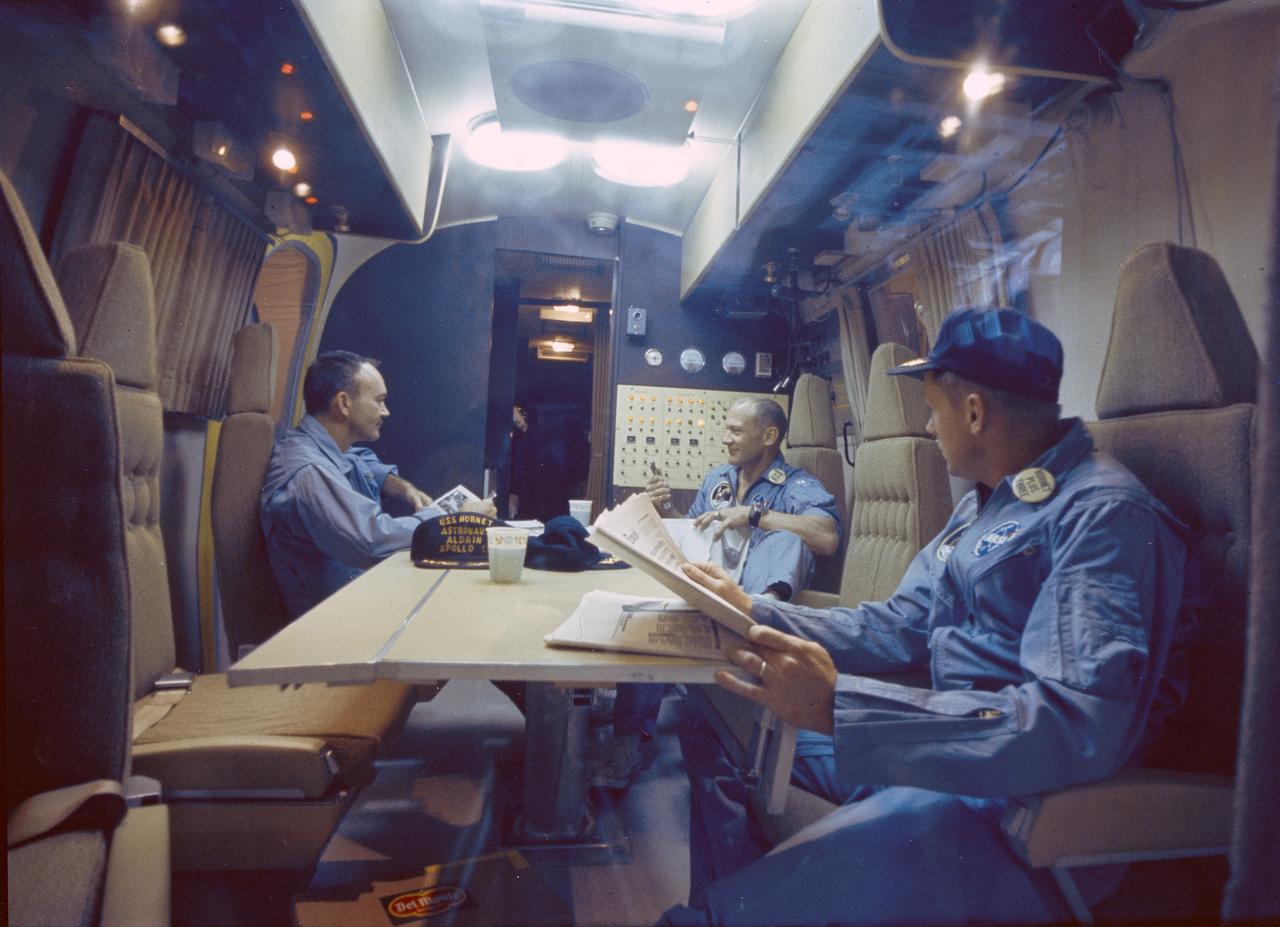
The Apollo 11 mission, the first manned lunar mission, launched from the Kennedy Space Center, Florida via a Saturn V launch vehicle on July 16, 1969 and safely returned to Earth on July 24, 1969. The Saturn V vehicle was developed by the Marshall Space Flight Center (MSFC) under the direction of Dr. Wernher von Braun. Aboard were Neil A. Armstrong, commander; Michael Collins, Command Module pilot; and Edwin E. Aldrin Jr., Lunar Module pilot. The Command Module (CM), piloted by Michael Collins remained in a parking orbit around the Moon while the Lunar Module (LM), named “Eagle’’, carrying astronauts Neil Armstrong and Edwin Aldrin, landed on the Moon. Armstrong was the first human to ever stand on the lunar surface, followed by Edwin (Buzz) Aldrin. The surface exploration was concluded in 2½ hours, in which the crew collected 47 pounds of lunar surface material for analysis back on Earth. Upon splash down in the Pacific Ocean, Navy para-rescue men recovered the capsule housing the 3-man Apollo 11 crew. The crew was taken to safety aboard the USS Hornet, where they were quartered in a mobile quarantine facility. Shown here is the Apollo 11 crew inside the quarantine facility. With the success of Apollo 11, the national objective to land men on the Moon and return them safely to Earth had been accomplished.
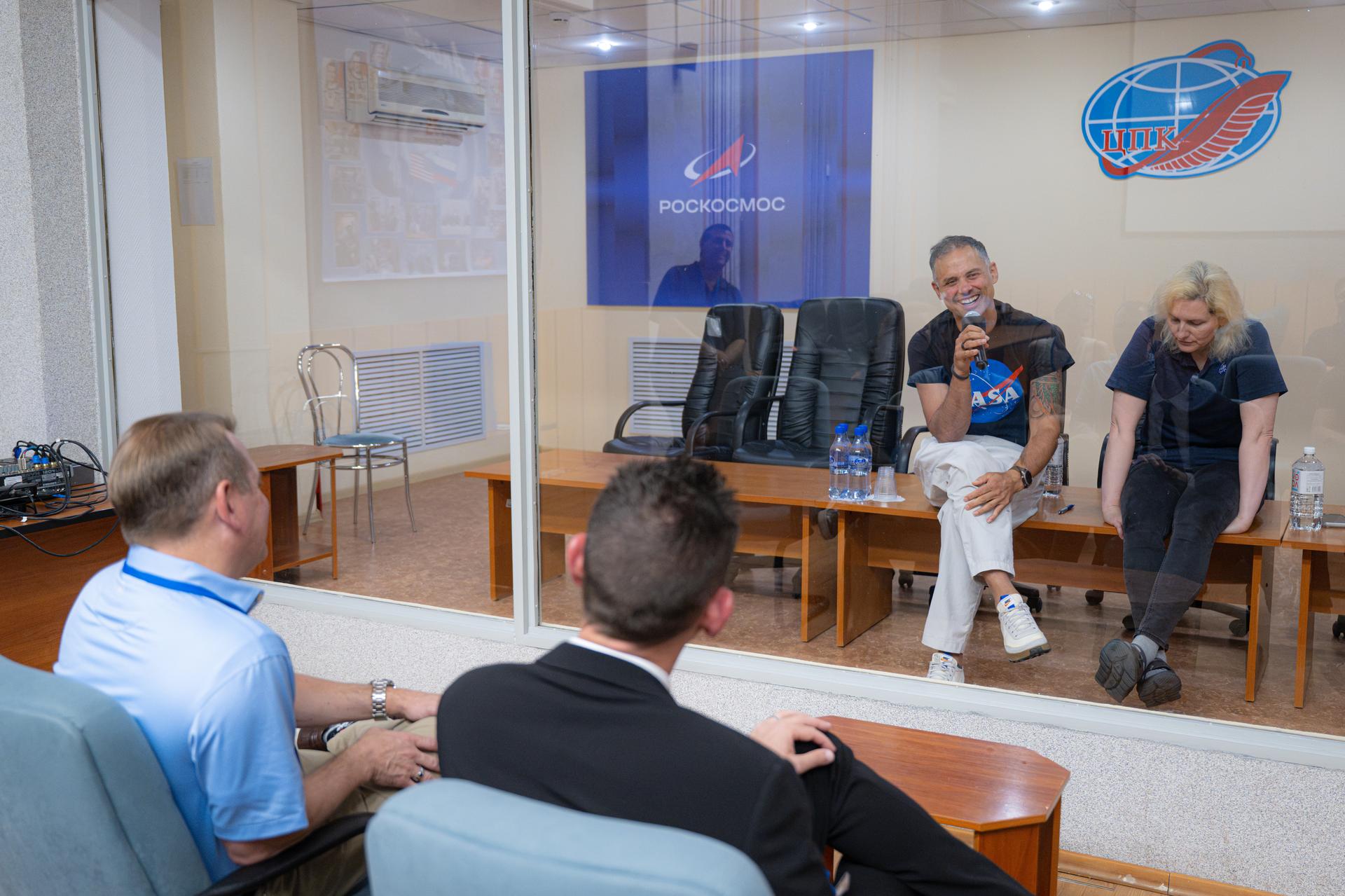
NASA Administrator Jared Isaacman, center, and NASA Deputy Administrator Matt Anderson, left, listen as NASA astronaut and Expedition 75 crewmember Anil Menon, third from left, and Deniz Burnham, Expedition 75 backup crewmember, right, speak from quarantine, Monday, July 13, 2026, at the Cosmonaut Hotel in Baikonur, Kazakhstan. Expedition 75 crewmembers NASA astronaut Anil Menon and Roscosmos cosmonauts Pyotr Dubrov and Anna Kikina are scheduled to launch aboard the Soyuz MS-29 spacecraft to the International Space Station on July 14. Photo Credit: (NASA/John Kraus)
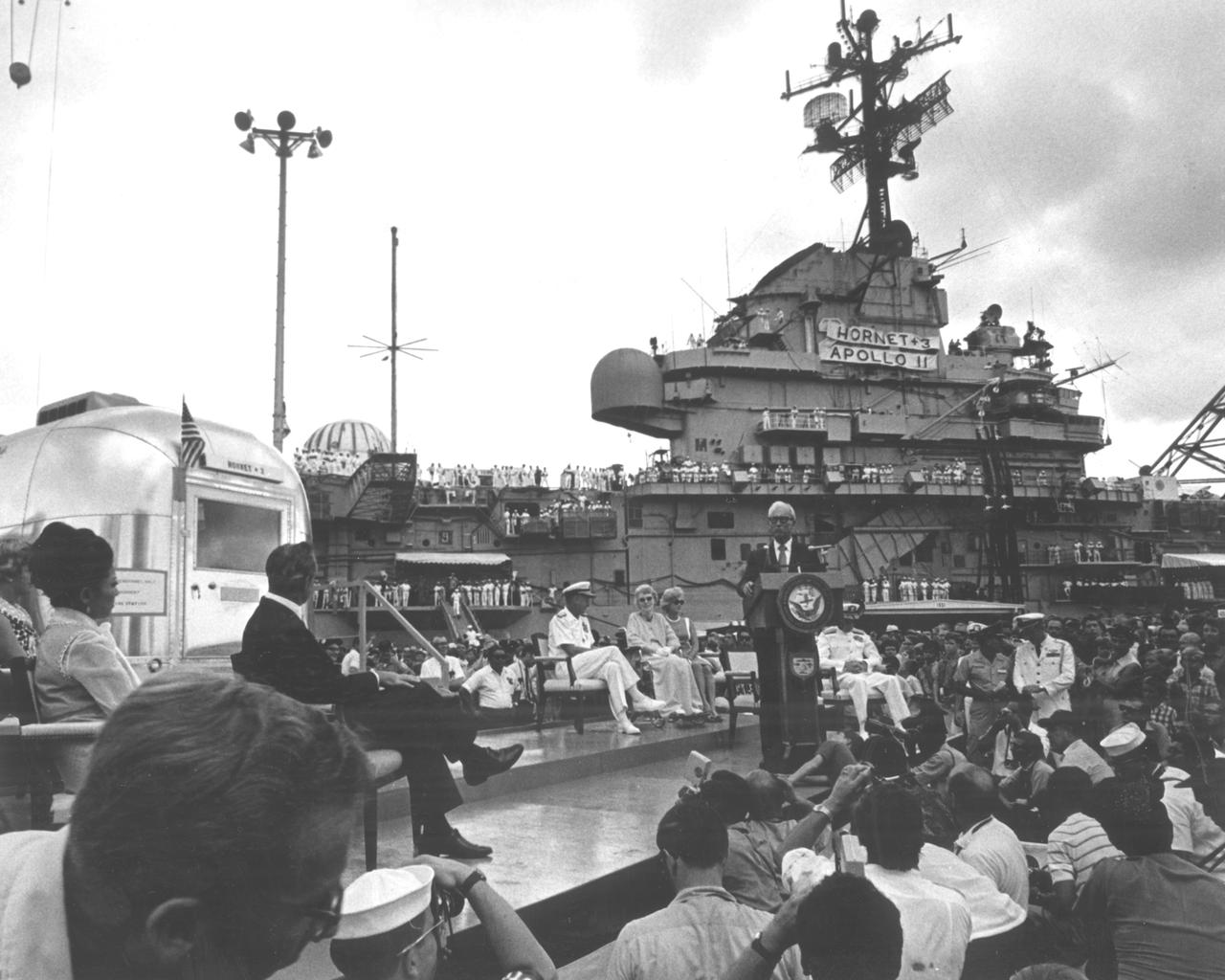
The Apollo 11 mission, the first manned lunar mission, launched from the Kennedy Space Center, Florida via the Marshall Space Flight Center (MSFC) developed Saturn V launch vehicle on July 16, 1969 and safely returned to Earth on July 24, 1969. Aboard the space craft were astronauts Neil A. Armstrong, commander; Michael Collins, Command Module (CM) pilot; and Edwin E. Aldrin Jr., Lunar Module (LM) pilot. The CM, piloted by Michael Collins remained in a parking orbit around the Moon while the LM, named “Eagle’’, carrying astronauts Neil Armstrong and Edwin Aldrin, landed on the Moon. During 2½ hours of surface exploration, the crew collected 47 pounds of lunar surface material for analysis back on Earth. The recovery operation took place in the Pacific Ocean where Navy para-rescue men recovered the capsule housing the 3-man Apollo 11 crew. The crew was airlifted to safety aboard the U.S.S. Hornet recovery ship, where they were quartered in a Mobile Quarantine Facility (MQF) for 21 days. The recovery vessel docked in Pearl Harbor Hawaii, where the occupied MQF was transferred for transport to the to NASA Manned Spacecraft Center (MSC) Lunar Receiving Laboratory in Houston, Texas. In this photo the quarantined astronauts are addressed by Hawaiian Governor John Burns upon their arrival at Pearl Harbor.
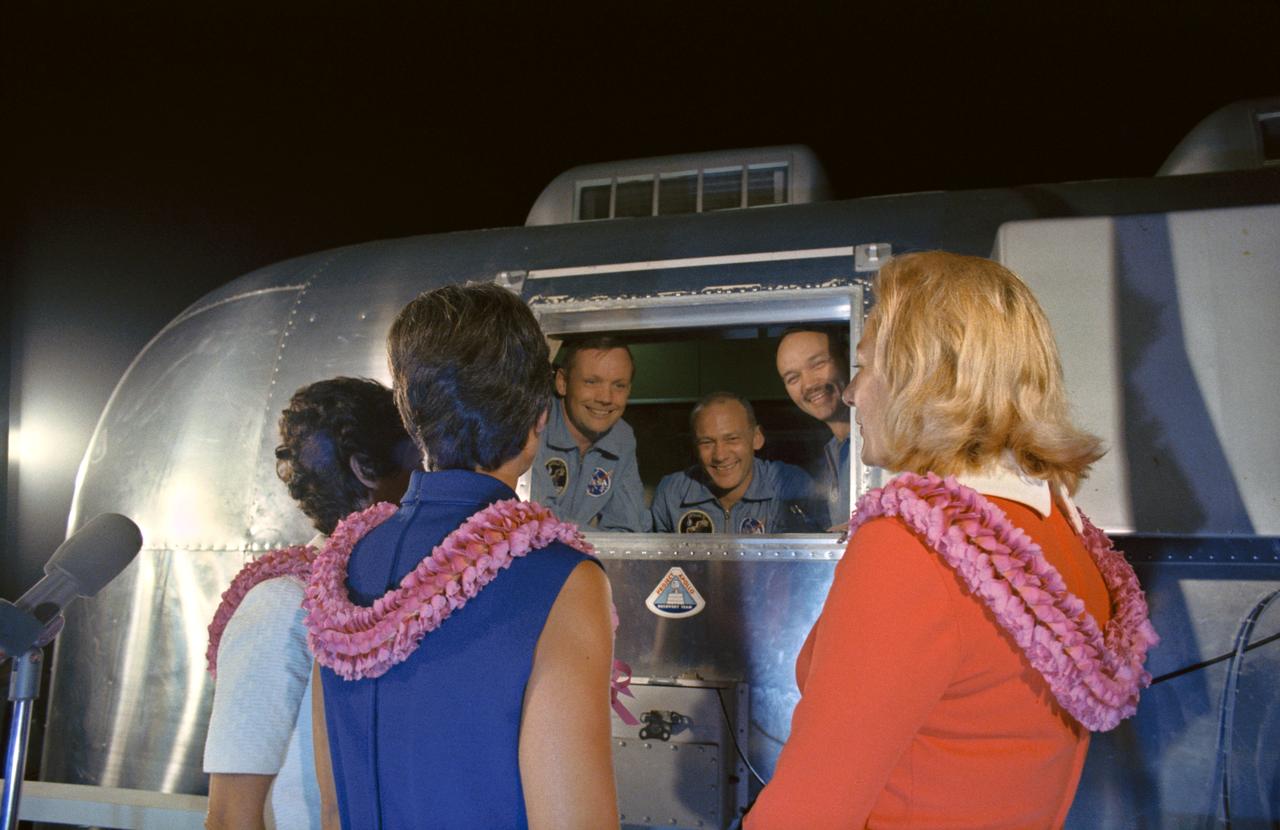
S69-40147 (27 July 1969) --- The Apollo 11 crewmen, still under a 21-day quarantine, are greeted by their wives. They arrived at Ellington Air Force Base very early Sunday after a flight aboard a U.S. Air Force C-141 transport from Hawaii. Looking through the window of a Mobile Quarantine Facility (MQF) are (left to right) astronauts Neil A. Armstrong, Edwin E. Aldrin Jr., and Michael Collins. The wives are (left to right) Mrs. Pat Collins, Mrs. Jan Armstrong, and Mrs. Joan Aldrin. The crew of the historic Apollo 11 lunar landing mission remained in the MQF until they arrived to the Crew Reception Area of the Lunar Receiving Laboratory at the Manned Spacecraft Center (MSC). The astronauts will be released from quarantine on Aug. 11, 1969.
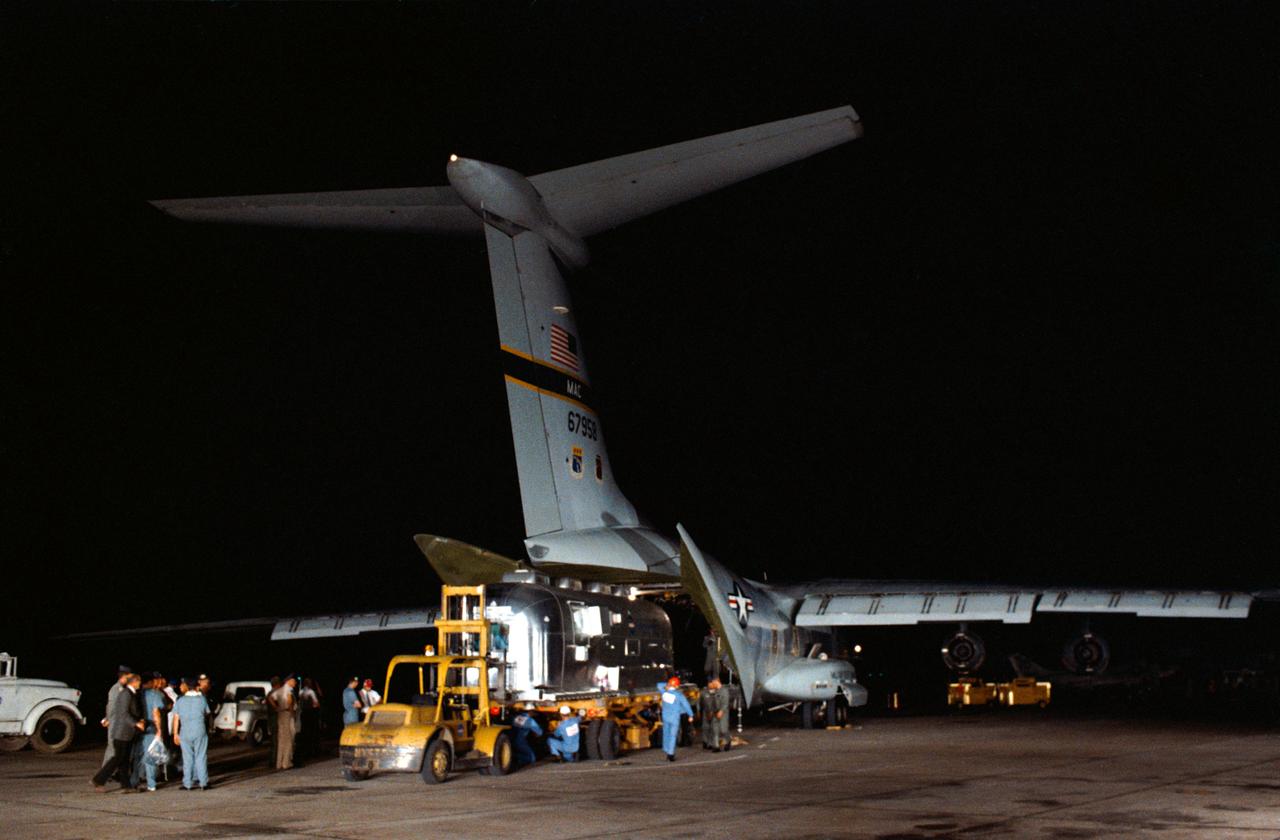
S69-40132 (27 July 1969) --- A Mobile Quarantine Facility (MQF), with the three Apollo 11 crewmembers inside, is unloaded from a United States Air Force C-141 transport at Ellington Air Force Base very early Sunday after a flight from Hawaii. A large crowd was present to welcome astronauts Neil A. Armstrong, Michael Collins, and Edwin E. Aldrin Jr. back to Houston following their historic lunar landing mission. The crew remained in the MQF until they arrived at the Crew Reception Area of the Lunar Receiving Laboratory (LRL) at the Manned Spacecraft Center (MSC). The crew will be released from quarantine on Aug. 11, 1969.

S69-60644 (29 Nov. 1969) --- A Mobile Quarantine Facility (MQF), with the crew men of the Apollo 12 lunar landing mission aboard, arrived at the Manned Spacecraft Center (MSC) Saturday morning, Nov. 29, 1969. Astronauts Charles Conrad Jr., Richard F. Gordon Jr., and Alan L. Bean were on their way to the Lunar Receiving Laboratory (LRL) where they will remain in quarantines until Dec. 10, 1969. Minutes earlier the three astronauts had arrived at Ellington Air Force Base from Hawaii aboard a U.S. Air Force C-141 transport. The crewmen were confined to the MQF from splashdown until they arrived at the LRL.

S69-40152 (27 July 1969) --- A Mobile Quarantine Facility (MQF), with the three Apollo 11 crewmen inside, is unloaded from a United States Air Force C-141 transport at Ellington Air Force Base very early Sunday after a flight from Hawaii. A large crowd was present to welcome astronauts Neil A. Armstrong, Michael Collins, and Edwin E. Aldrin Jr. back to Houston following their historic lunar landing mission. The crew remained in the MQF until they arrived at the Crew Reception Area of the Lunar Receiving Laboratory (LRL) at the Manned Spacecraft Center (MSC). The crew will be released from quarantine on Aug. 11, 1969.

The smiling Apollo 12 astronauts peer out of the window of the mobile quarantine facility aboard the recovery ship, USS Hornet. Pictured (Left to right) are Spacecraft Commander, Charles Conrad; Command Module (CM) Pilot, Richard Gordon; and Lunar Module (LM) Pilot, Alan L. Bean. The crew were housed in the quarantine facility immediately after the Pacific recovery operation took place. The second manned lunar landing mission, Apollo 12 launched from launch pad 39-A at Kennedy Space Center in Florida on November 14, 1969 via a Saturn V launch vehicle. The Saturn V vehicle was developed by the Marshall Space Flight Center (MSFC) under the direction of Dr. Wernher von Braun. The LM, Intrepid, landed astronauts Conrad and Bean on the lunar surface in what’s known as the Ocean of Storms while astronaut Richard Gordon piloted the CM, Yankee Clipper, in a parking orbit around the Moon. Lunar soil activities included the deployment of the Apollo Lunar Surface Experiments Package (ALSEP), finding the unmanned Surveyor 3 that landed on the Moon on April 19, 1967, and collecting 75 pounds (34 kilograms) of rock samples. Apollo 12 returned safely to Earth on November 24, 1969.
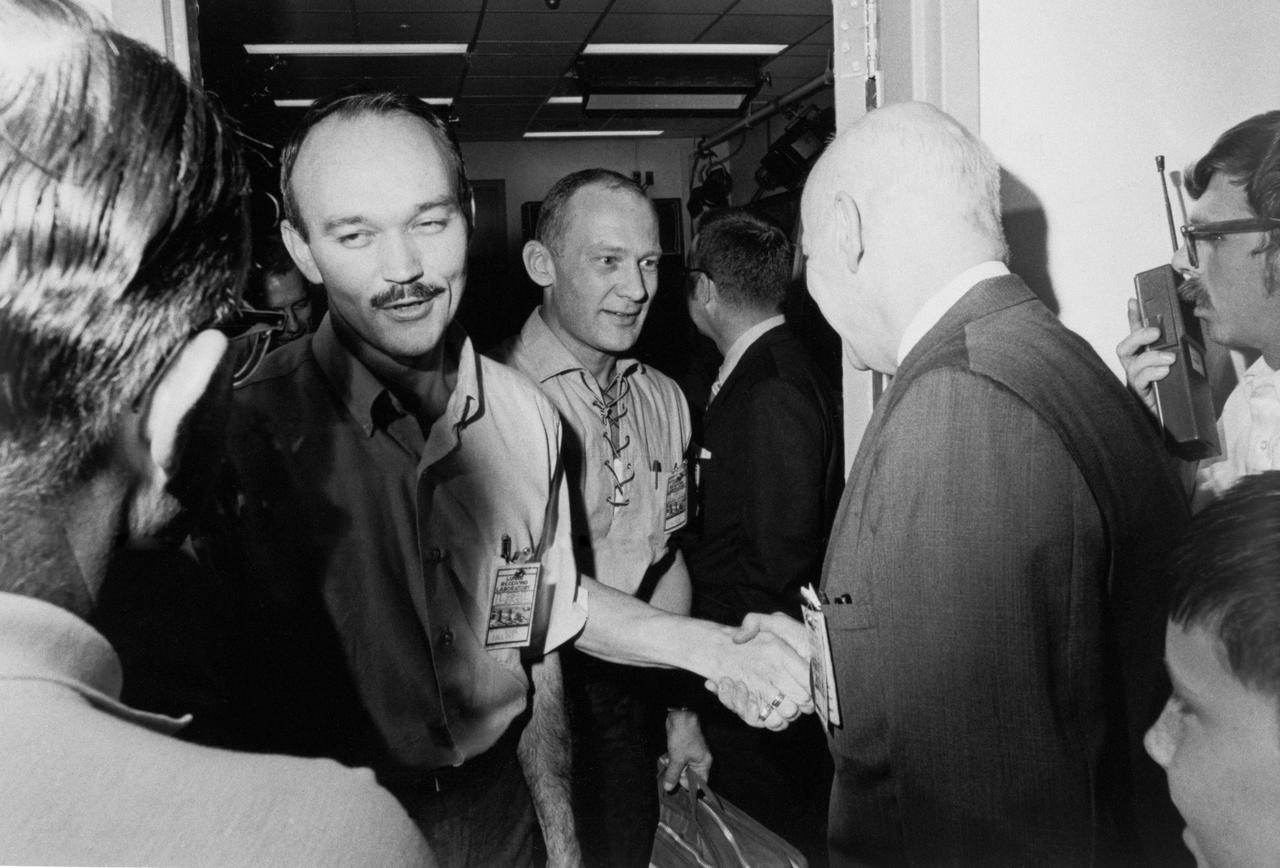
S69-41359 (10 Aug. 1969) --- Astronauts Michael Collins (left) and Edwin E. Aldrin Jr., are greeted by Dr. Robert R. Gilruth, director, Manned Spacecraft Center (MSC), and others upon their release from quarantine. The Apollo 11 crew left the Crew Reception Area (CRA) of the Lunar Receiving Laboratory (LRL) at 9 p.m., Aug. 10, 1969. While astronauts Neil A. Armstrong, commander, and Aldrin, lunar module pilot, descended in the Lunar Module (LM) "Eagle" to explore the Sea of Tranquility region of the moon, astronaut Collins, command module pilot, remained with the Command and Service Modules (CSM) "Columbia" in lunar orbit.
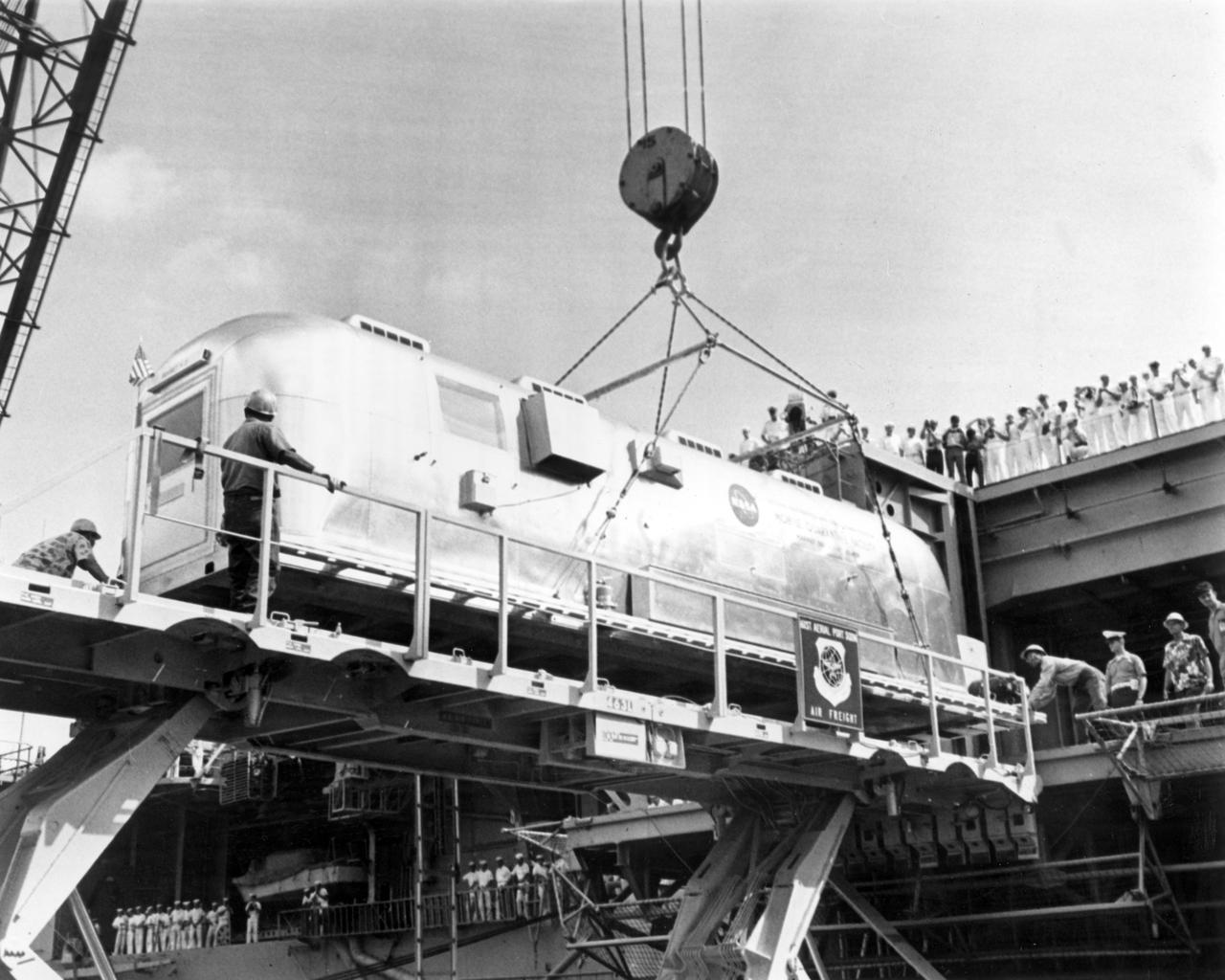
The Apollo 11 mission, the first manned lunar mission, launched from the Kennedy Space Center, Florida via the Marshall Space Flight Center (MSFC) developed Saturn V launch vehicle on July 16, 1969 and safely returned to Earth on July 24, 1969. Aboard the space craft were astronauts Neil A. Armstrong, commander; Michael Collins, Command Module (CM) pilot; and Edwin E. Aldrin Jr., Lunar Module (LM) pilot. The CM, piloted by Michael Collins remained in a parking orbit around the Moon while the LM, named “Eagle’’, carrying astronauts Neil Armstrong and Edwin Aldrin, landed on the Moon. During 2½ hours of surface exploration, the crew collected 47 pounds of lunar surface material for analysis back on Earth. The recovery operation took place in the Pacific Ocean where Navy para-rescue men recovered the capsule housing the 3-man Apollo 11 crew. The crew was airlifted to safety aboard the U.S.S. Hornet recovery ship, where they were quartered in a Mobile Quarantine Facility (MQF) which served as their home for 21 days. In this photo taken at Pearl Harbor, Hawaii, the quarantined housing facility is being lowered from the U.S.S. Hornet, onto a trailer for transport to Hickam Field. From there, it was loaded aboard an Air Force C-141 jet and flown back to Ellington Air Force Base Texas, and then on to the NASA Manned Spacecraft Center (MSC) Lunar Receiving Laboratory in Houston, Texas.
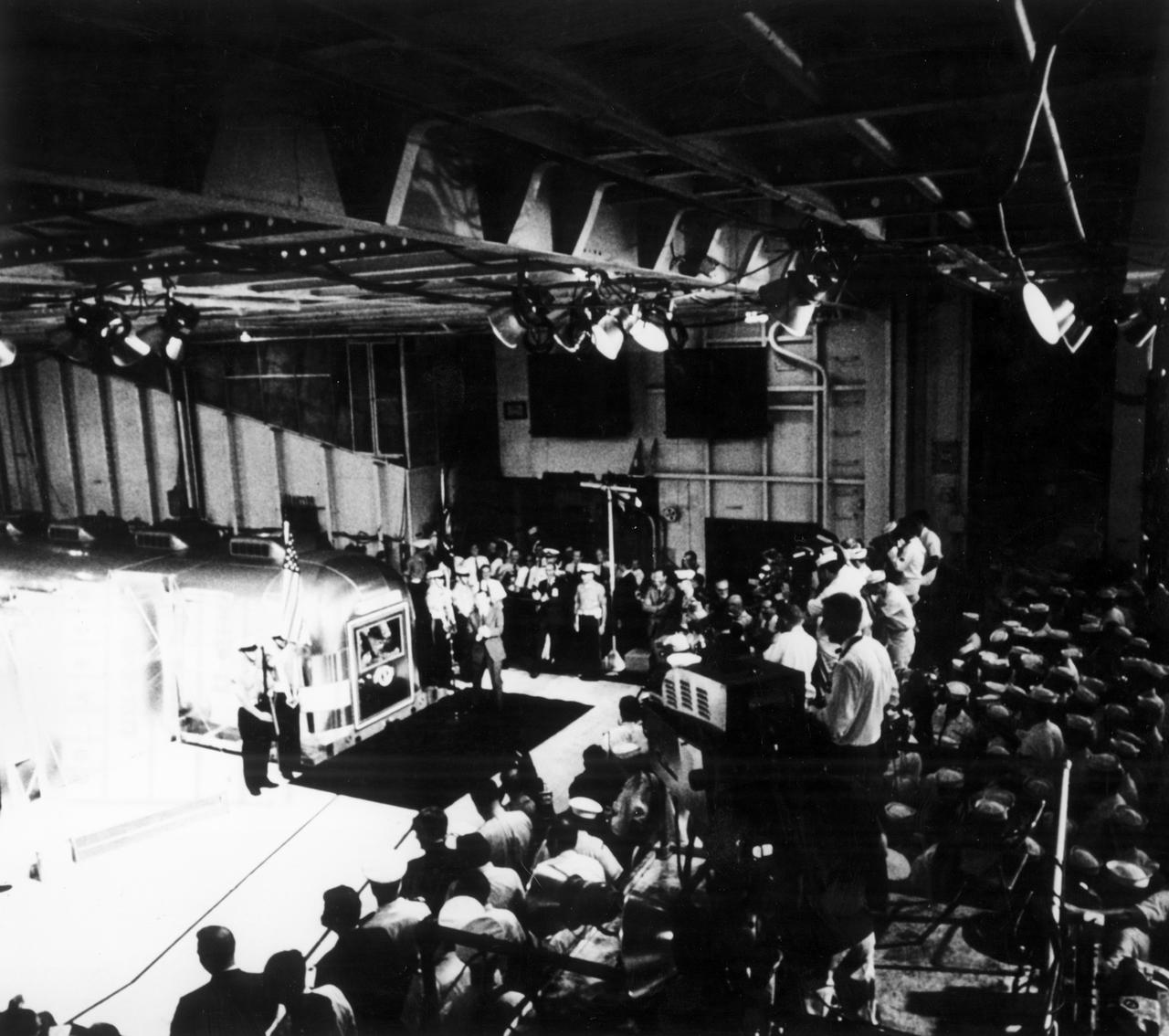
The Apollo 11 mission, the first manned lunar mission, launched from the Kennedy Space Center, Florida via the Marshall Space Flight Center (MSFC) developed Saturn V launch vehicle on July 16, 1969 and safely returned to Earth on July 24, 1969. Aboard the space craft were astronauts Neil A. Armstrong, commander; Michael Collins, Command Module (CM) pilot; and Edwin E. Aldrin Jr., Lunar Module (LM) pilot. The CM, piloted by Michael Collins remained in a parking orbit around the Moon while the LM, named “Eagle’’, carrying astronauts Neil Armstrong and Edwin Aldrin, landed on the Moon. During 2½ hours of surface exploration, the crew collected 47 pounds of lunar surface material for analysis back on Earth. The recovery operation took place in the Pacific Ocean where Navy para-rescue men recovered the capsule housing the 3-man Apollo 11 crew. The crew was airlifted to safety aboard the U.S.S. Hornet recovery ship, where they were quartered in a Mobile Quarantine Facility (MQF). In this photograph, the U.S.S. Hornet crew looks on as the quarantined Apollo 11 crew is addressed by U.S. President Richard Milhous Nixon via microphone and intercom. The president was aboard the recovery vessel awaiting return of the astronauts. With the success of Apollo 11, the national objective to land men on the Moon and return them safely to Earth had been accomplished.
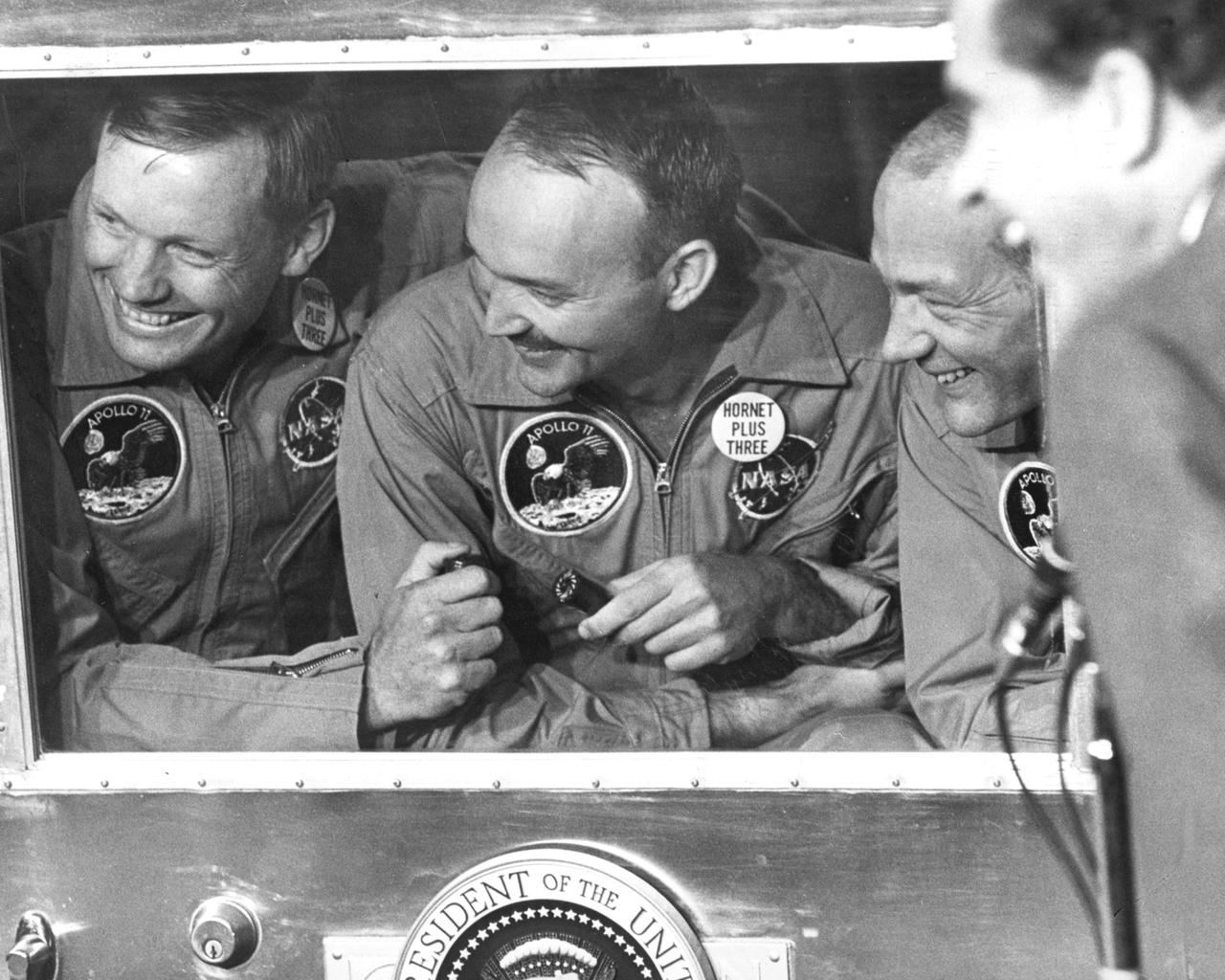
The Apollo 11 mission, the first manned lunar mission, launched from the Kennedy Space Center, Florida via the Saturn V launch vehicle on July 16, 1969 and safely returned to Earth on July 24, 1969. The Saturn V vehicle was developed by the Marshall Space Flight Center (MSFC) under the direction of Dr. Wernher von Braun. Aboard were Neil A. Armstrong, commander; Michael Collins, Command Module (CM) pilot; and Edwin E. Aldrin Jr., Lunar Module (LM) pilot. The CM, piloted by Michael Collins remained in a parking orbit around the Moon while the LM, named “Eagle’’, carrying astronauts Neil Armstrong and Edwin Aldrin, landed on the Moon. Armstrong was the first human to ever stand on the lunar surface, followed by Edwin (Buzz) Aldrin. During 2½ hours of surface exploration, the crew collected 47 pounds of lunar surface material for analysis back on Earth. The recovery operation took place in the Pacific Ocean where Navy para-rescue men recovered the capsule housing the 3-man Apollo 11 crew. The crew was airlifted to safety aboard the U.S.S. Hornet, where they were quartered in a Mobile Quarantine Facility (MQF). Here the quarantined Apollo 11 crew members (l to r) Armstrong, Collins, and Aldrin, and U.S. President Richard Milhous Nixon share laughs over a comment made by fellow astronaut Frank Borman, Apollo 8 commander. The president was aboard the recovery vessel awaiting return of the astronauts. With the success of Apollo 11, the national objective to land men on the Moon and return them safely to Earth had been accomplished.
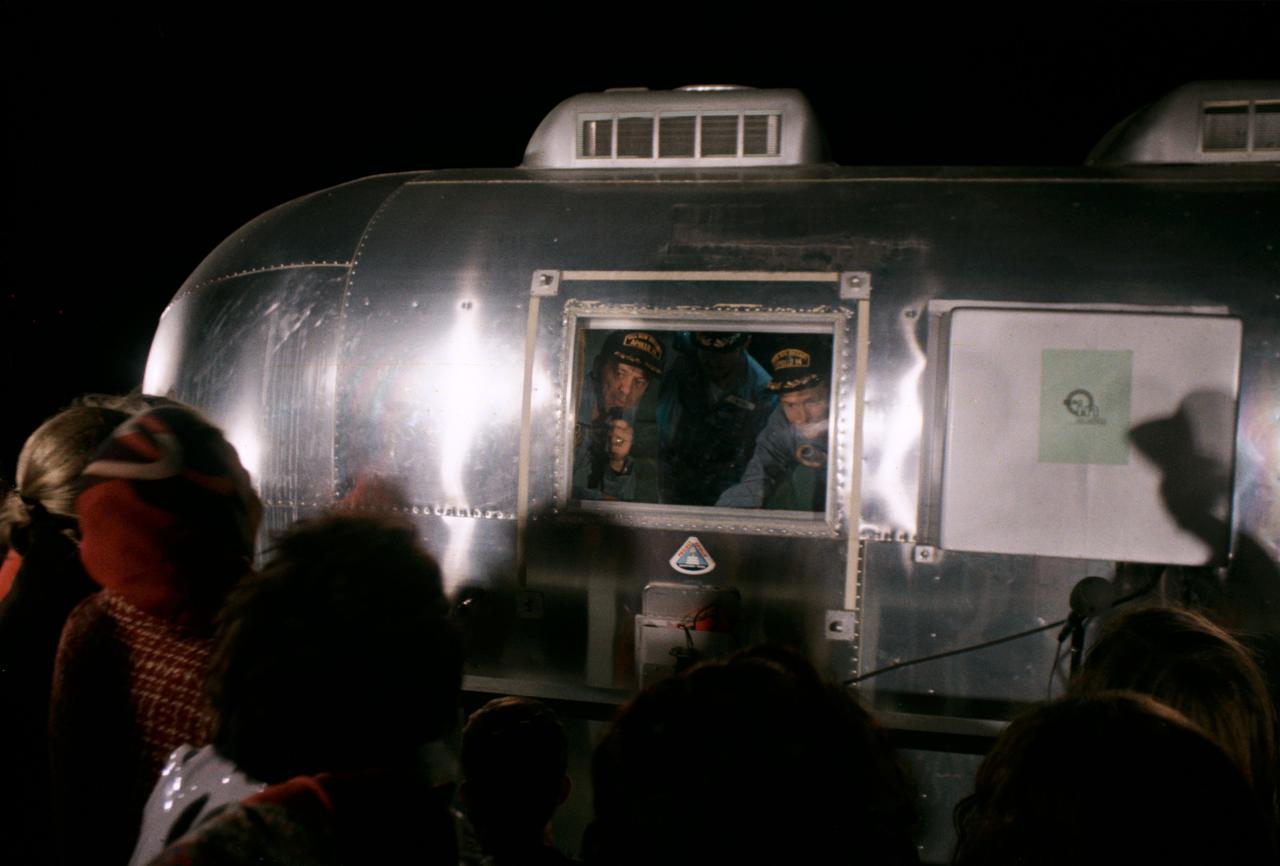
S71-19508 (12 Feb. 1971) --- Separated by aluminum and glass of their Mobile Quarantine Facility (MQF), the Apollo 14 crew members visit with their families and friends upon arriving at Ellington Air Force Base in the early morning hours of Feb. 12, 1971. Looking through the MQF window are astronauts Alan B. Shepard Jr. (left), commander; Stuart A. Roosa (right), command module pilot; and Edgar D. Mitchell, lunar module pilot. The crew men were brought to Houston aboard a C-141 transport plane from Pago Pago, American Samoa. The USS New Orleans had transported the crew to American Samoa from the recovery site in the South Pacific.

S71-18557 (9 Feb. 1971) --- Sealed inside a Mobile Quarantine Facility (MQF), Apollo 14 astronauts greet newsmen and crew men aboard the USS New Orleans, Apollo 14 prime recovery ship. They are from left to right, astronauts Stuart A. Roosa, command module pilot; Alan B. Shepard Jr., commander; and Edgar D. Mitchell, lunar module pilot. Apollo 14 splashdown occurred at 3:04:39 p.m. (CST), Feb. 9, 1971, in the South Pacific Ocean, approximately 765 nautical miles from American Samoa.
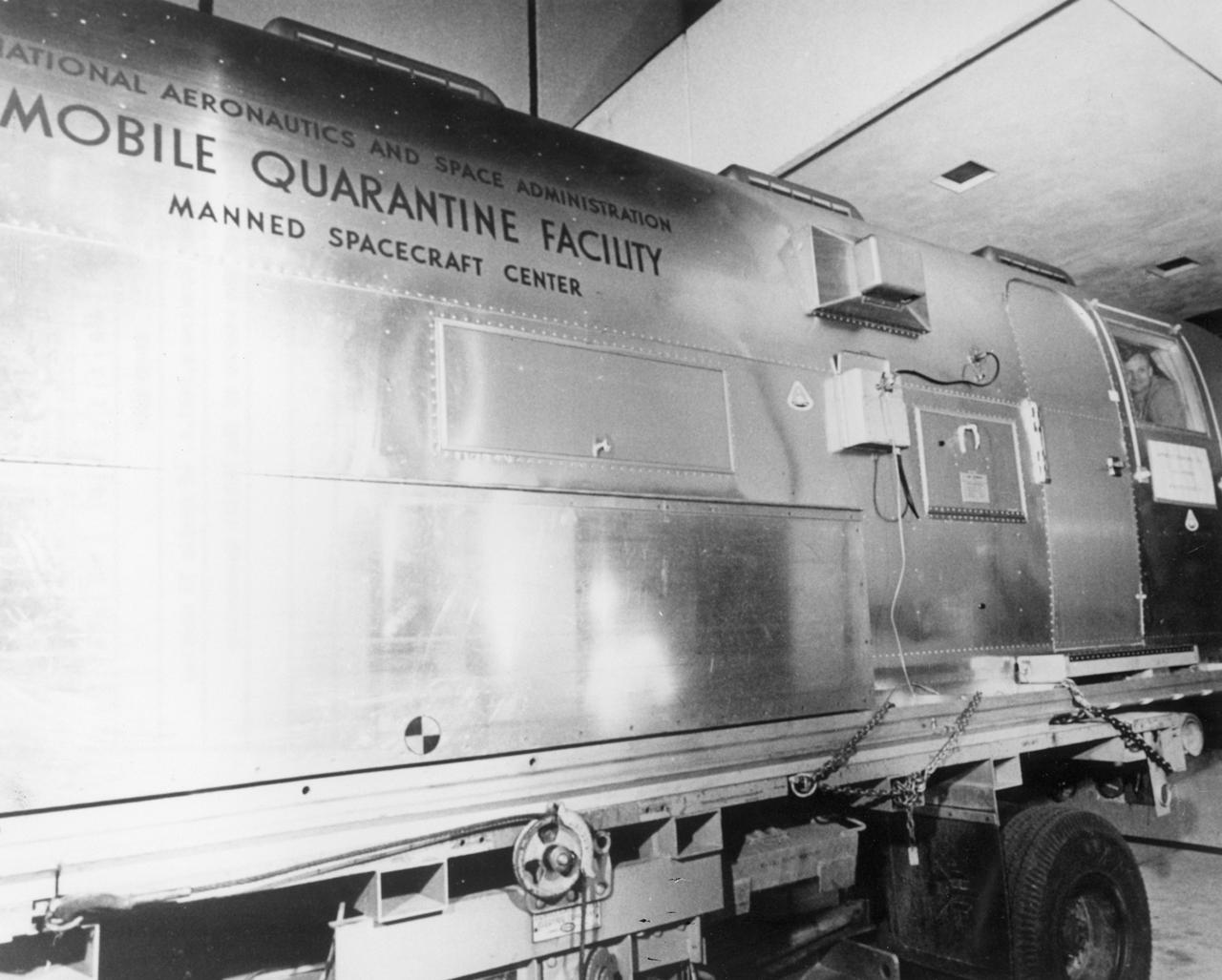
The Apollo 11 mission, the first manned lunar mission, launched from the Kennedy Space Center, Florida via the Marshall Space Flight Center (MSFC) developed Saturn V launch vehicle on July 16, 1969 and safely returned to Earth on July 24, 1969. Aboard the space craft were astronauts Neil A. Armstrong, commander; Michael Collins, Command Module (CM) pilot; and Edwin E. Aldrin Jr., Lunar Module (LM) pilot. The CM, piloted by Michael Collins remained in a parking orbit around the Moon while the LM, named “Eagle’’, carrying astronauts Neil Armstrong and Edwin Aldrin, landed on the Moon. During 2½ hours of surface exploration, the crew collected 47 pounds of lunar surface material for analysis back on Earth. The recovery operation took place in the Pacific Ocean where Navy para-rescue men recovered the capsule housing the 3-man Apollo 11 crew. The crew was airlifted to safety aboard the U.S.S. Hornet, where they were quartered in a Mobile Quarantine Facility (MQF) which served as their home until they reached the NASA Manned Spacecraft Center (MSC) Lunar Receiving Laboratory in Houston, Texas. In this close up of the MQF, commander Armstrong can be seen through the facility window after its arrival at the MSC.
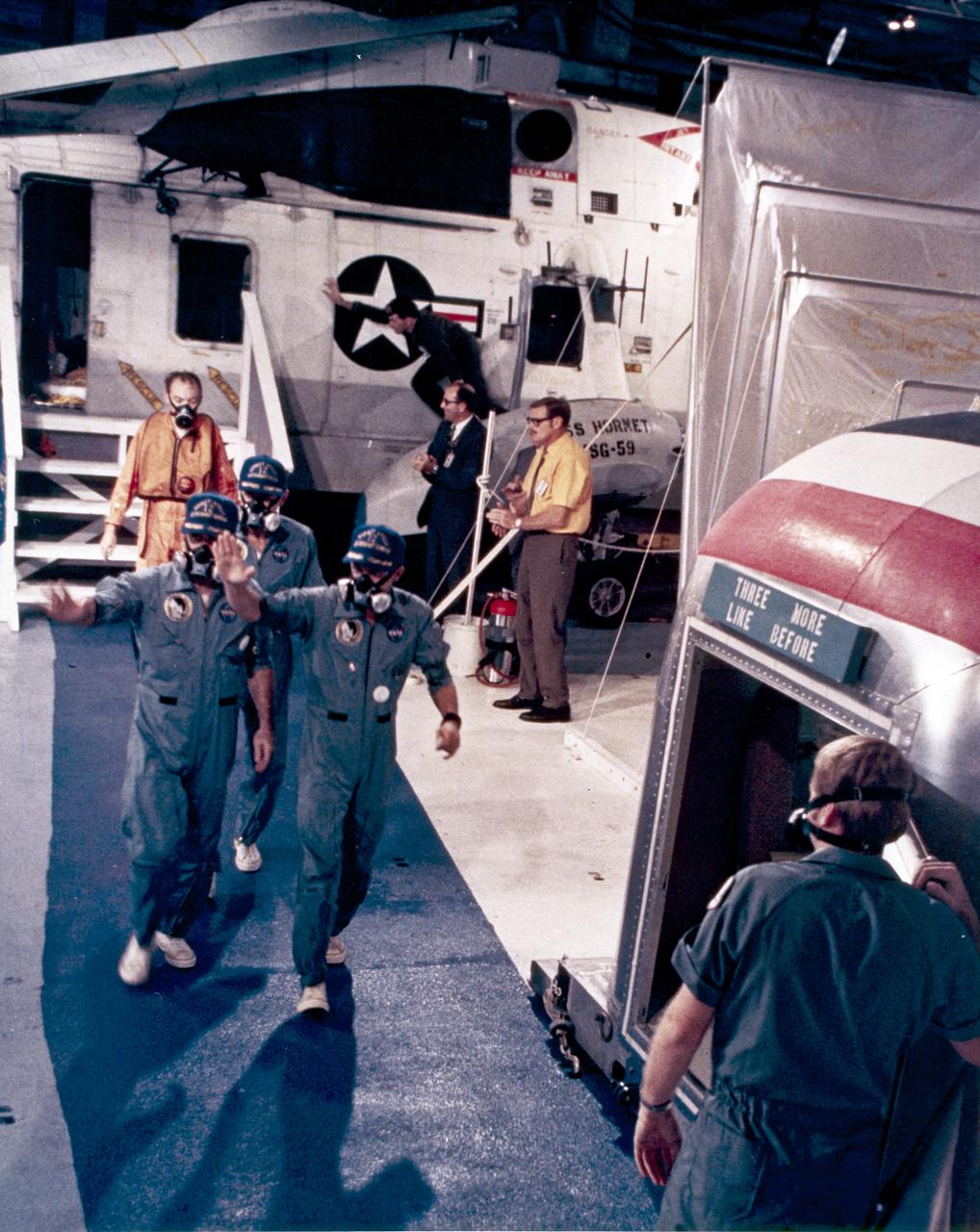
Aboard the recovery ship, USS Hornet, Apollo 12 astronauts wave to the crowd as they enter the mobile quarantine facility. The recovery operation took place in the Pacific Ocean after the splashdown of the Command Module capsule. Navy para-rescue men recovered the capsule housing the 3-man Apollo 12 crew. The second manned lunar landing mission, Apollo 12 launched from launch pad 39-A at Kennedy Space Center in Florida on November 14, 1969 via a Saturn V launch vehicle. The Saturn V was developed by the Marshall Space Flight Center (MSFC) under the direction of Dr. Wernher von Braun. Aboard Apollo 12 was a crew of three astronauts: Alan L. Bean, pilot of the Lunar Module (LM), Intrepid; Richard Gordon, pilot of the Command Module (CM), Yankee Clipper; and Spacecraft Commander Charles Conrad. The LM, Intrepid, landed astronauts Conrad and Bean on the lunar surface in what’s known as the Ocean of Storms while astronaut Richard Gordon piloted the CM, Yankee Clipper, in a parking orbit around the Moon. Lunar soil activities included the deployment of the Apollo Lunar Surface Experiments Package (ALSEP), finding the unmanned Surveyor 3 that landed on the Moon on April 19, 1967, and collecting 75 pounds (34 kilograms) of rock samples. Apollo 12 safely returned to Earth on November 24, 1969.
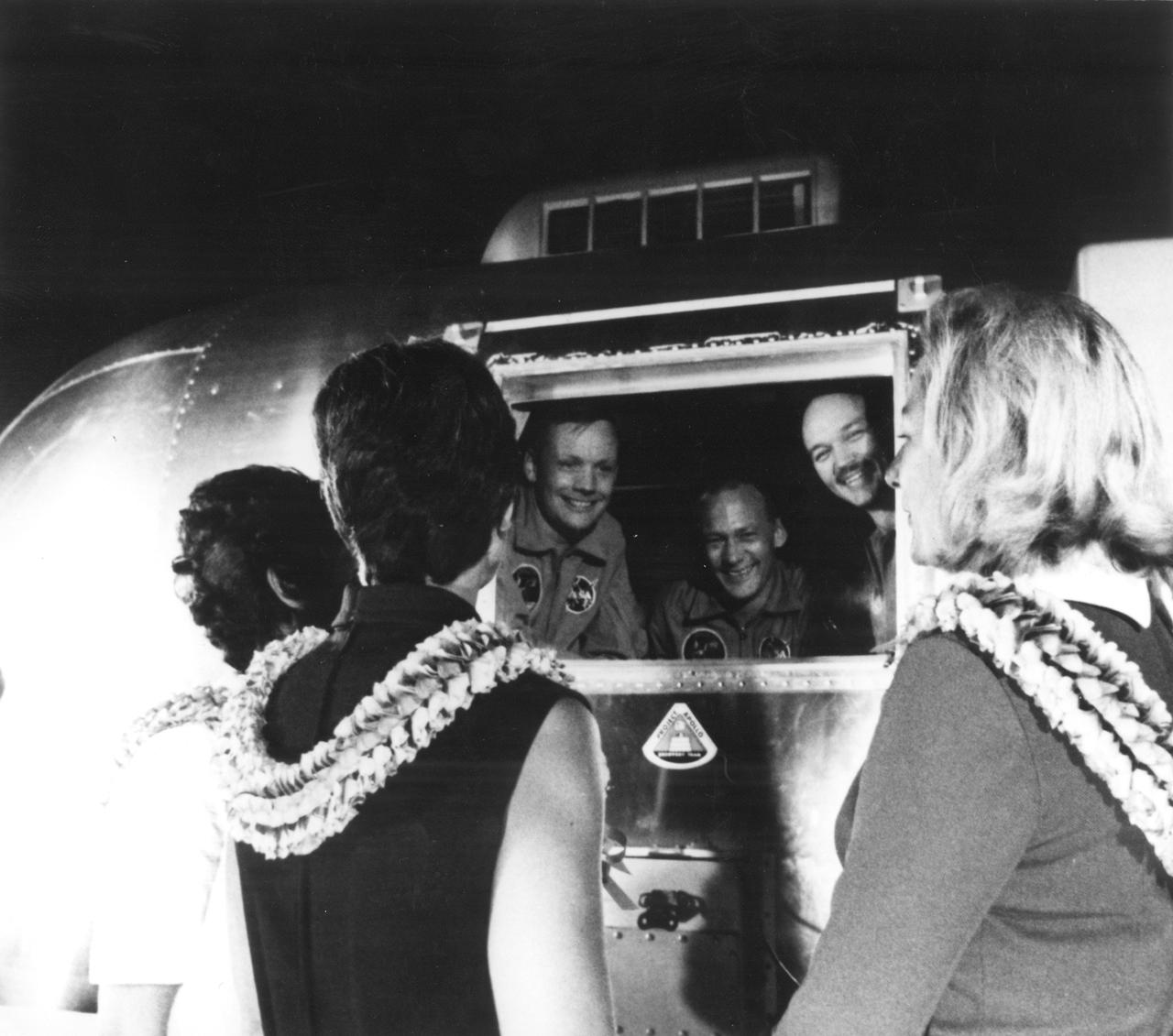
The Apollo 11 mission, the first manned lunar mission, launched from the Kennedy Space Center, Florida via the Marshall Space Flight Center (MSFC) developed Saturn V launch vehicle on July 16, 1969 and safely returned to Earth on July 24, 1969. Aboard the space craft were astronauts Neil A. Armstrong, commander; Michael Collins, Command Module (CM) pilot; and Edwin E. Aldrin Jr., Lunar Module (LM) pilot. The CM, piloted by Michael Collins remained in a parking orbit around the Moon while the LM, named “Eagle’’, carrying astronauts Neil Armstrong and Edwin Aldrin, landed on the Moon. During 2½ hours of surface exploration, the crew collected 47 pounds of lunar surface material for analysis back on Earth. The recovery operation took place in the Pacific Ocean where Navy para-rescue men recovered the capsule housing the 3-man Apollo 11 crew. The crew was airlifted to safety aboard the U.S.S. Hornet, where they were quartered in a Mobile Quarantine Facility (MQF) which served as their home until they reached the NASA Manned Spacecraft Center (MSC) Lunar Receiving Laboratory in Houston, Texas. On arrival at Ellington Air Force base near the MSC, the crew, still under a 21 day quarantine in the MQF are greeted by their wives. Looking out of the facility are (L-R) Armstrong, Aldrin, and Collins. Wives are (L-R) Pat Collins, Jan Armstrong, and Joan Aldrin.
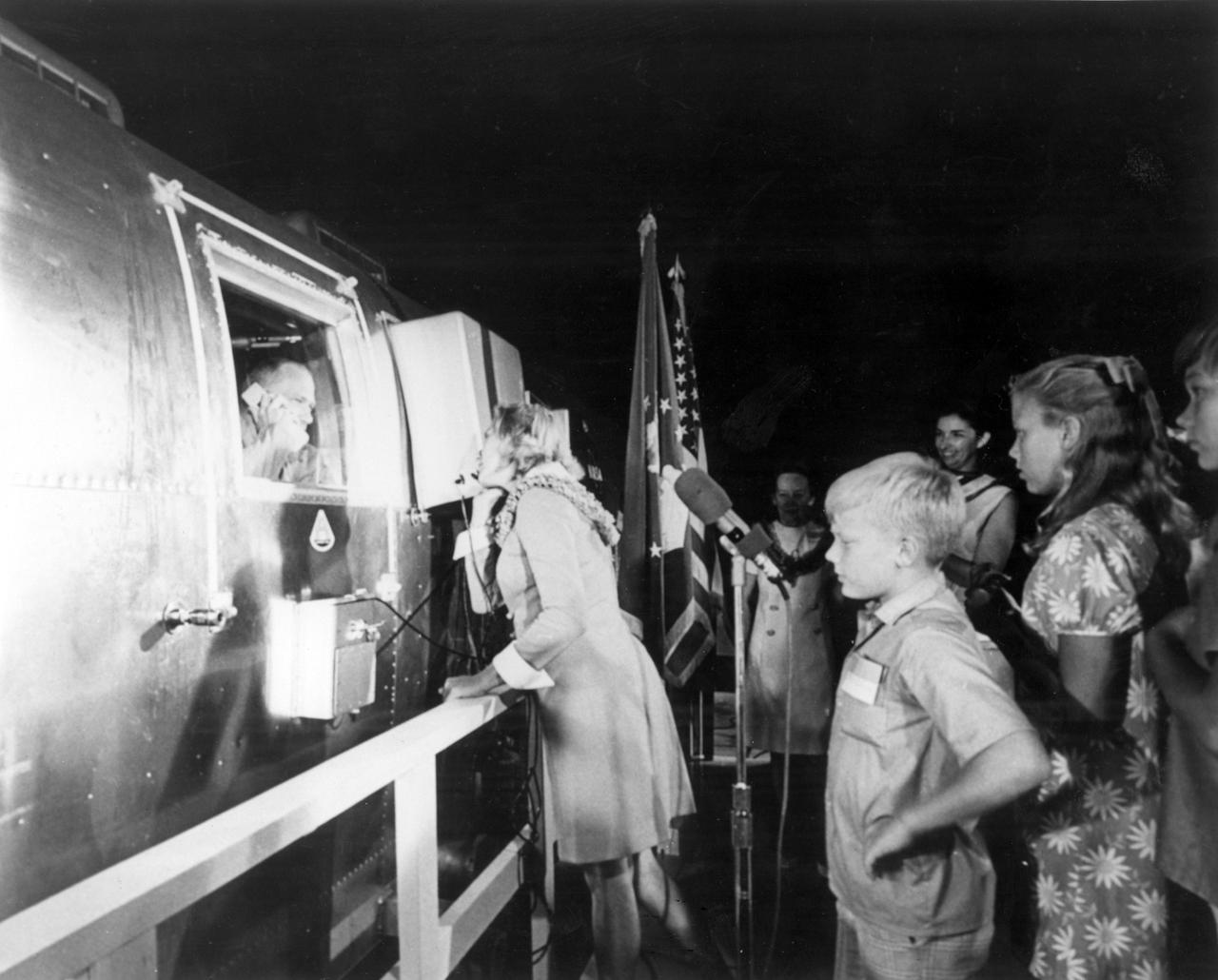
The Apollo 11 mission, the first manned lunar mission, launched from the Kennedy Space Center, Florida via the Marshall Space Flight Center (MSFC) developed Saturn V launch vehicle on July 16, 1969 and safely returned to Earth on July 24, 1969. Aboard the space craft were astronauts Neil A. Armstrong, commander; Michael Collins, Command Module (CM) pilot; and Edwin E. (Buzz) Aldrin Jr., Lunar Module (LM) pilot. The CM, piloted by Michael Collins remained in a parking orbit around the Moon while the LM, named “Eagle’’, carrying astronauts Neil Armstrong and Edwin Aldrin, landed on the Moon. During 2½ hours of surface exploration, the crew collected 47 pounds of lunar surface material for analysis back on Earth. The recovery operation took place in the Pacific Ocean where Navy para-rescue men recovered the capsule housing the 3-man Apollo 11 crew. The crew was airlifted to safety aboard the U.S.S. Hornet, where they were quartered in a Mobile Quarantine Facility (MQF) which served as their home until they reached the NASA Manned Spacecraft Center (MSC) Lunar Receiving Laboratory in Houston, Texas. On arrival at Ellington Air Force base near the MSC, the crew, still under a 21 day quarantine in the MQF, were greeted by their wives. Pictured here is Joan Aldrin, wife of Buzz Aldrin, speaking with her husband via telephone patch.
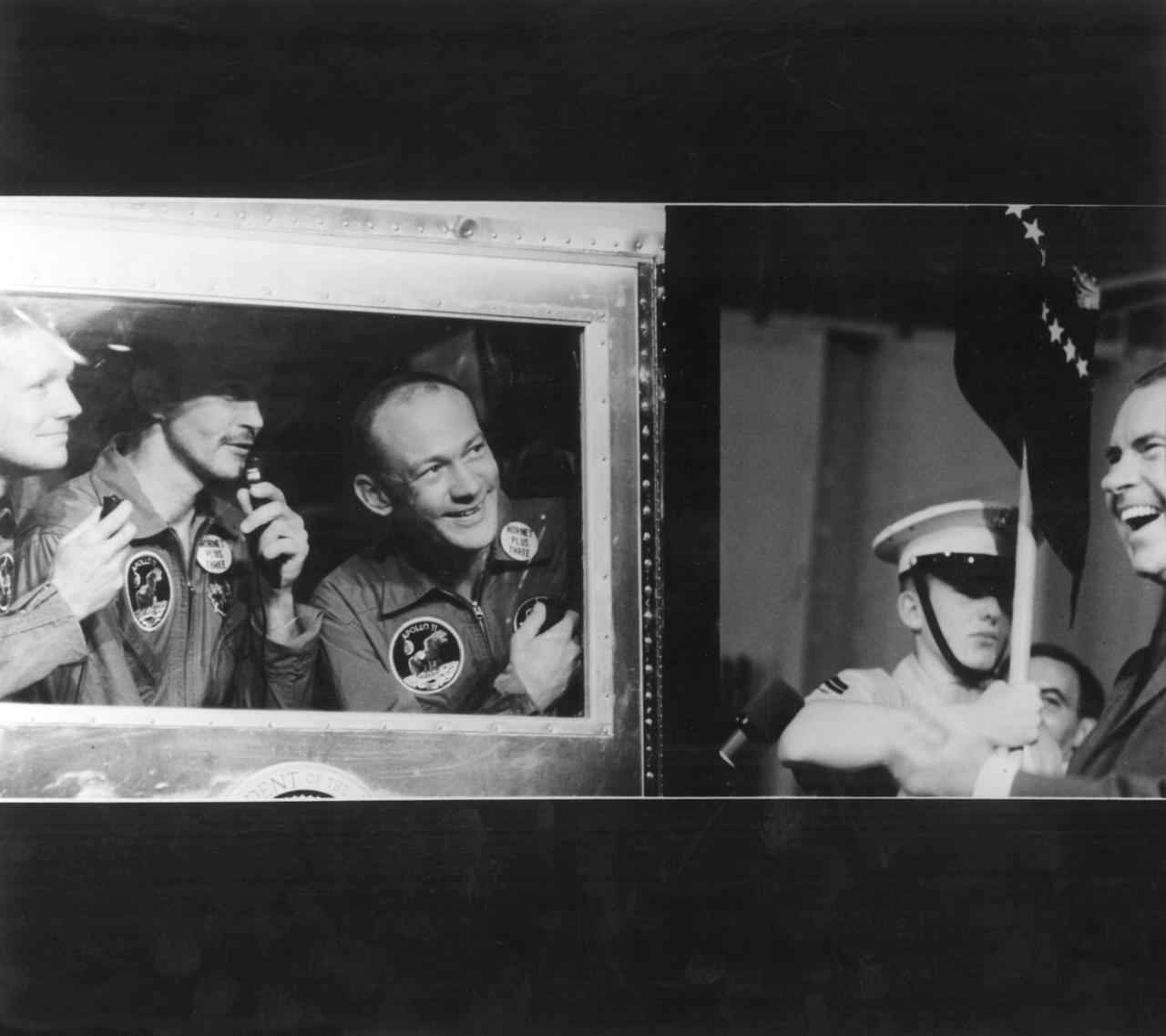
The Apollo 11 mission, the first manned lunar mission, launched from the Kennedy Space Center, Florida via the Marshall Space Flight Center (MSFC) developed Saturn V launch vehicle on July 16, 1969 and safely returned to Earth on July 24, 1969. Aboard the space craft were astronauts Neil A. Armstrong, commander; Michael Collins, Command Module (CM) pilot; and Edwin E. Aldrin Jr., Lunar Module (LM) pilot. The CM, piloted by Michael Collins remained in a parking orbit around the Moon while the LM, named “Eagle’’, carrying astronauts Neil Armstrong and Edwin Aldrin, landed on the Moon. During 2½ hours of surface exploration, the crew collected 47 pounds of lunar surface material for analysis back on Earth. The recovery operation took place in the Pacific Ocean where Navy para-rescue men recovered the capsule housing the 3-man Apollo 11 crew. The crew was airlifted to safety aboard the U.S.S. Hornet, where they were quartered in a Mobile Quarantine Facility (MQF) for 21 days. Here, U.S. President Richard Milhous Nixon gets a good laugh at something being said by Astronaut Collins (center) as astronauts Armstrong (left), and Aldrin (right) listen. The president was aboard the recovery vessel awaiting return of the astronauts. With the success of Apollo 11, the national objective to land men on the Moon and return them safely to Earth had been accomplished.
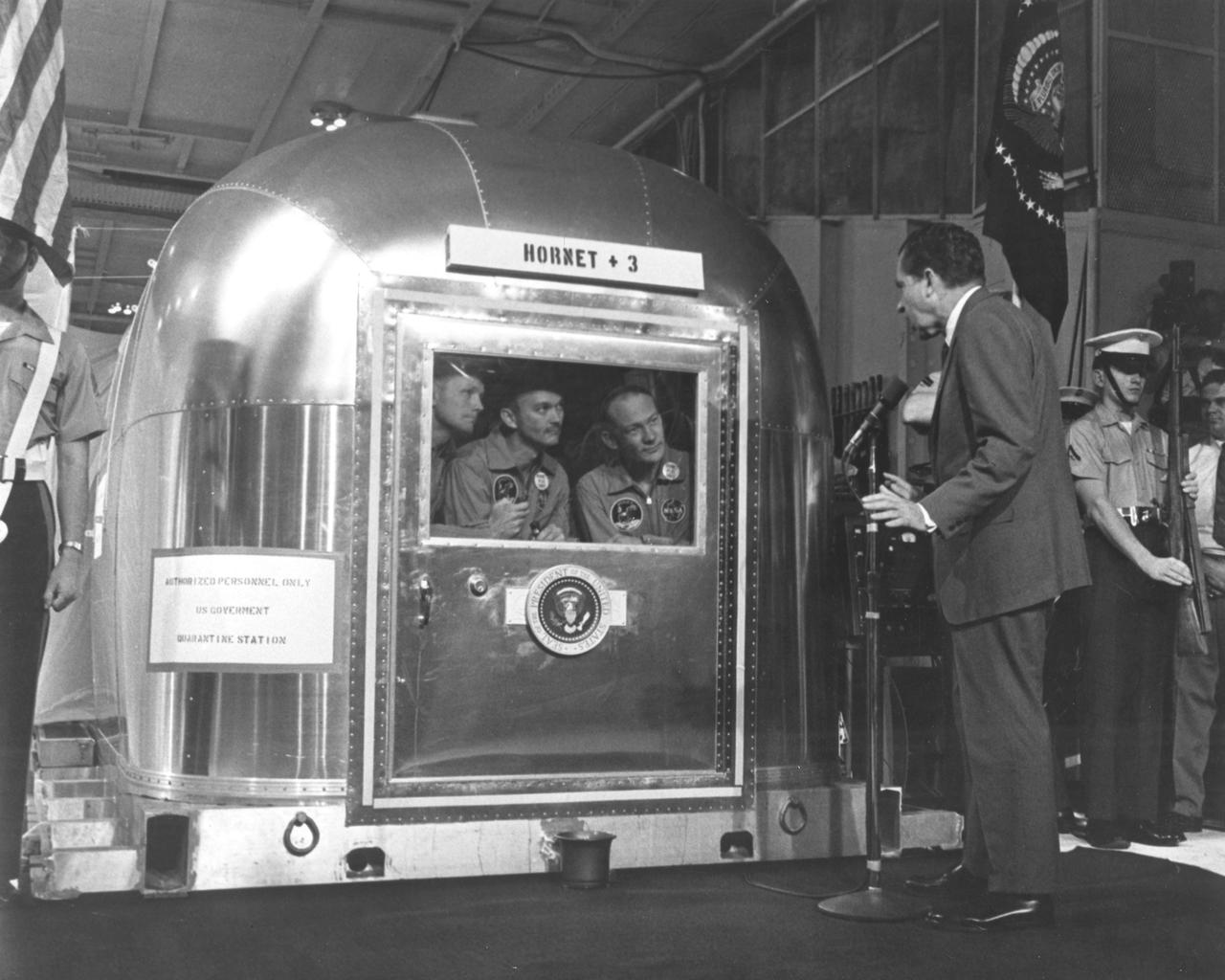
The Apollo 11 mission, the first manned lunar mission, launched from the Kennedy Space Center, Florida via the Saturn V launch vehicle on July 16, 1969 and safely returned to Earth on July 24, 1969. The Saturn V vehicle was developed by the Marshall Space Flight Center (MSFC) under the direction of Dr. Wernher von Braun. Aboard were Neil A. Armstrong, commander; Michael Collins, Command Module (CM) pilot; and Edwin E. Aldrin Jr., Lunar Module (LM) pilot. The CM, piloted by Michael Collins remained in a parking orbit around the Moon while the LM, named “Eagle’’, carrying astronauts Neil Armstrong and Edwin Aldrin, landed on the Moon. Armstrong was the first human to ever stand on the lunar surface, followed by Edwin (Buzz) Aldrin. During 2½ hours of surface exploration, the crew collected 47 pounds of lunar surface material for analysis back on Earth. The recovery operation took place in the Pacific Ocean where Navy para-rescue men recovered the capsule housing the 3-man Apollo 11 crew. The crew was airlifted by helicopter and taken to safety aboard the U.S.S. Hornet, where they were quartered in a Mobile Quarantine Facility (MQF). Shown here are the Apollo 11 crew members (L to R) Neil Armstrong, Michael Collins, and Edwin Aldrin inside the MQF as U.S. President Richard Milhous Nixon speaks to them via intercom. The president was aboard the recovery vessel awaiting return of the astronauts. With the success of Apollo 11, the national objective to land men on the Moon and return them safely to Earth had been accomplished.
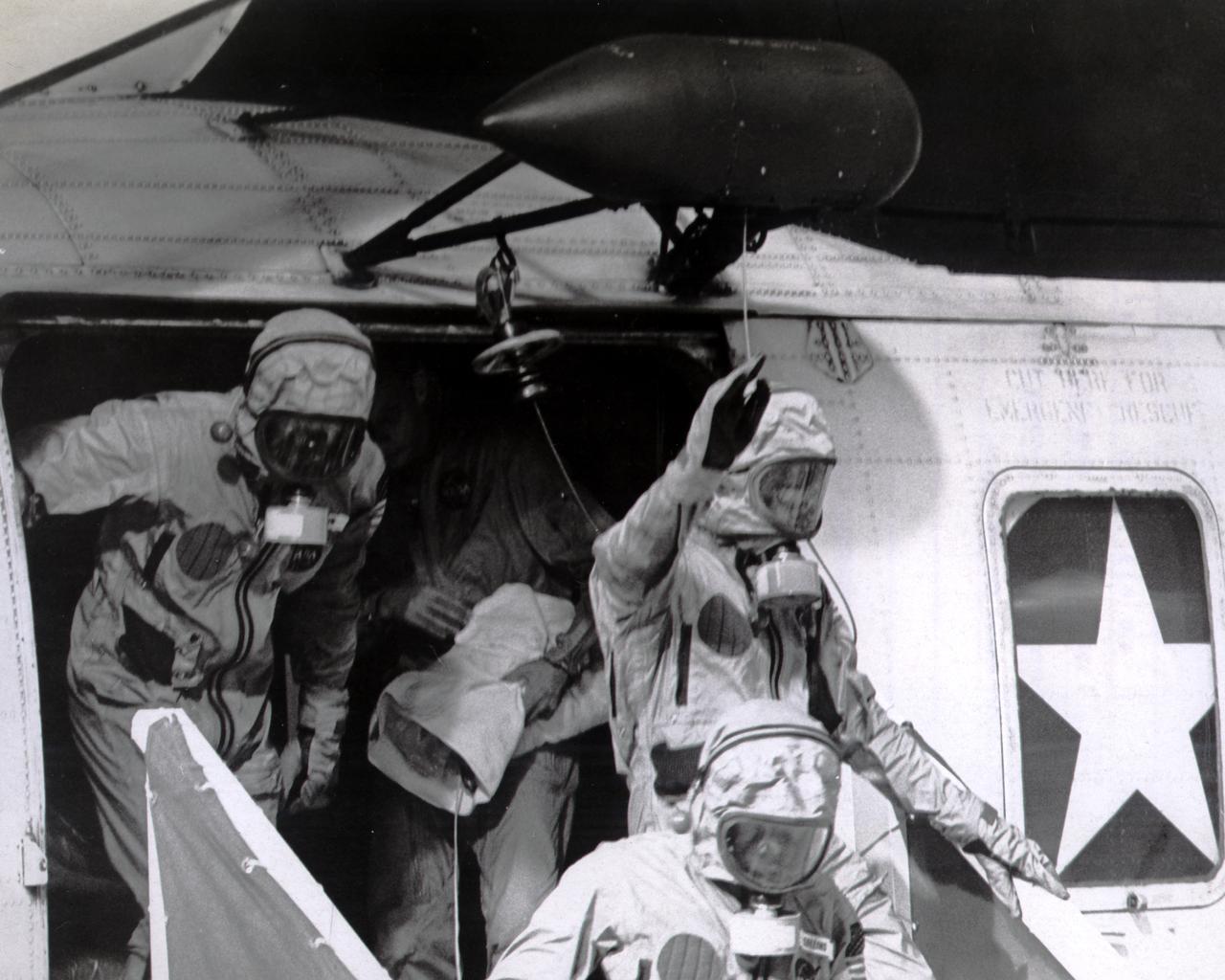
Donned in biological isolation garments, the Apollo 11 crew members, (L-R) Edwin Aldrin, Neil Armstrong (waving), and Michael Collins exit the recovery pick up helicopter to board the U.S.S. Hornet aircraft carrier after splashdown. The recovery operation took place in the Pacific Ocean where Navy para-rescue men recovered the capsule housing the 3-man Apollo 11 crew. The crew was airlifted to safety aboard the U.S.S. Hornet, where they were quartered in a Mobile Quarantine Facility (MQF). This portable facility served as their home until they reached the NASA Manned Spacecraft Center (MSC) Lunar Receiving Laboratory in Houston, Texas. The Apollo 11 mission, the first manned lunar mission, launched from the Kennedy Space Center (KSC), Florida via the Saturn V launch vehicle on July 16, 1969 and safely returned to Earth on July 24, 1969. Aboard were Neil A. Armstrong, commander; Michael Collins, Command Module (CM) pilot; and Edwin E. Aldrin Jr., Lunar Module (LM) pilot. The CM, piloted by Michael Collins remained in a parking orbit around the Moon while the LM, named “Eagle’’, carrying astronauts Neil Armstrong and Edwin Aldrin, landed on the Moon. Armstrong was the first human to ever stand on the lunar surface, followed by Aldrin. During 2½ hours of surface exploration, the crew collected 47 pounds of lunar surface material for analysis back on Earth. With the success of Apollo 11, the national objective to land men on the Moon and return them safely to Earth had been accomplished. The Saturn V vehicle was developed by the Marshall Space Flight Center (MSFC) under the direction of Dr. Werher von Braun.
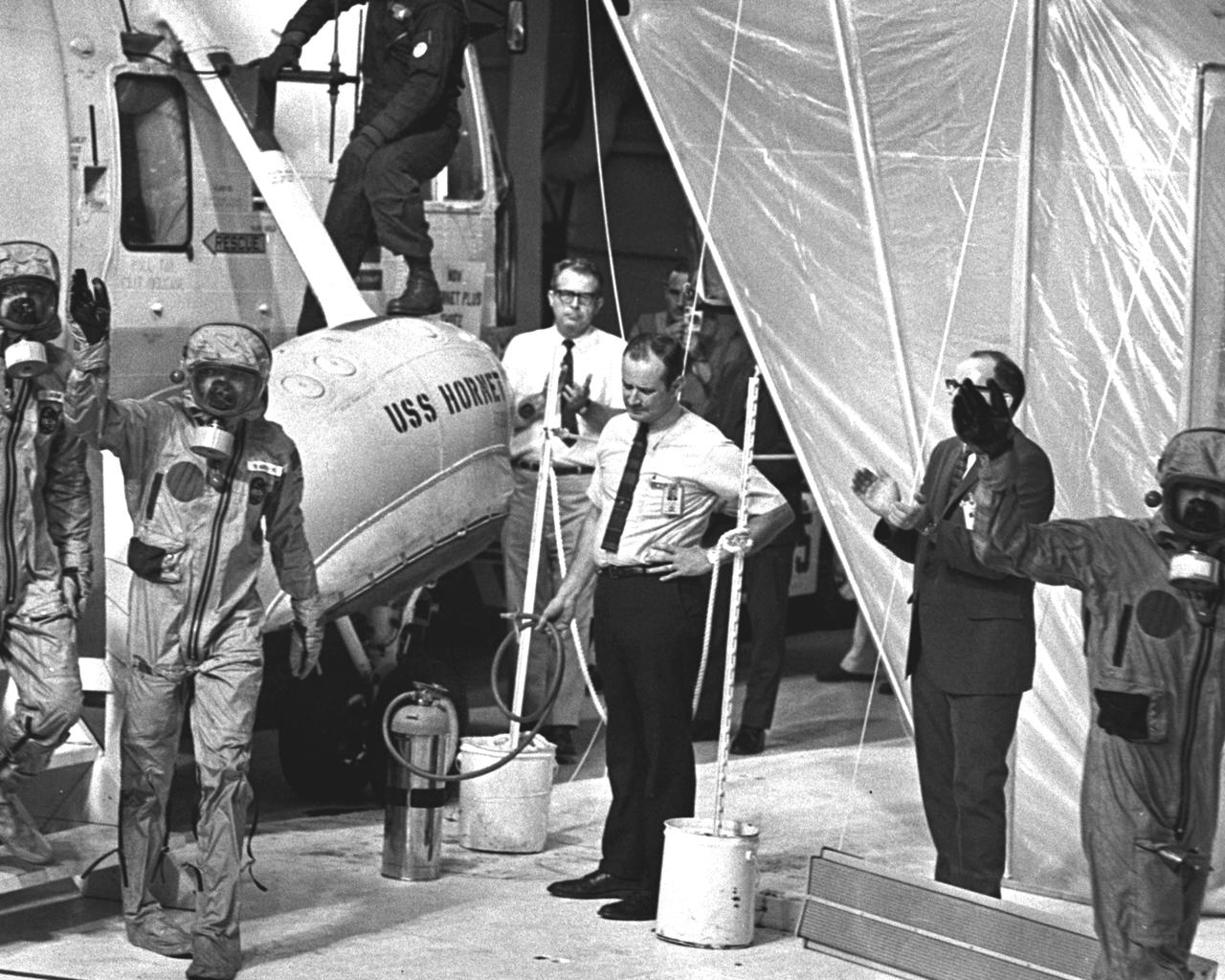
The Apollo 11 mission, the first manned lunar mission, launched from the Kennedy Space Center, Florida via the Saturn V launch vehicle on July 16, 1969 and safely returned to Earth on July 24, 1969. The Saturn V vehicle was developed by the Marshall Space Flight Center (MSFC) under the direction of Dr. Wernher von Braun. Aboard were Neil A. Armstrong, commander; Michael Collins, Command Module (CM) pilot; and Edwin E. Aldrin Jr., Lunar Module (LM) pilot. The CM, piloted by Michael Collins remained in a parking orbit around the Moon while the LM, named “Eagle’’, carrying astronauts Neil Armstrong and Edwin Aldrin, landed on the Moon. Armstrong was the first human to ever stand on the lunar surface, Aldrin. During 2½ hours of surface exploration, the crew collected 47 pounds of lunar surface material for analysis back on Earth. The recovery operation took place in the Pacific Ocean where Navy para-rescue men recovered the capsule housing the 3-man Apollo 11 crew. The crew was airlifted to safety aboard the U.S.S. Hornet, where they were quartered in a Mobile Quarantine Facility (MQF). Donned in biological isolation garments, the Apollo 11 crew members wave to well wishers as they leave the pick up helicopter making their way to the MQF. This portable facility served as their home until they reached the NASA Manned Spacecraft Center (MSC) Lunar Receiving Laboratory in Houston, Texas. With the success of Apollo 11, the national objective to land men on the Moon and return them safely to Earth had been accomplished.
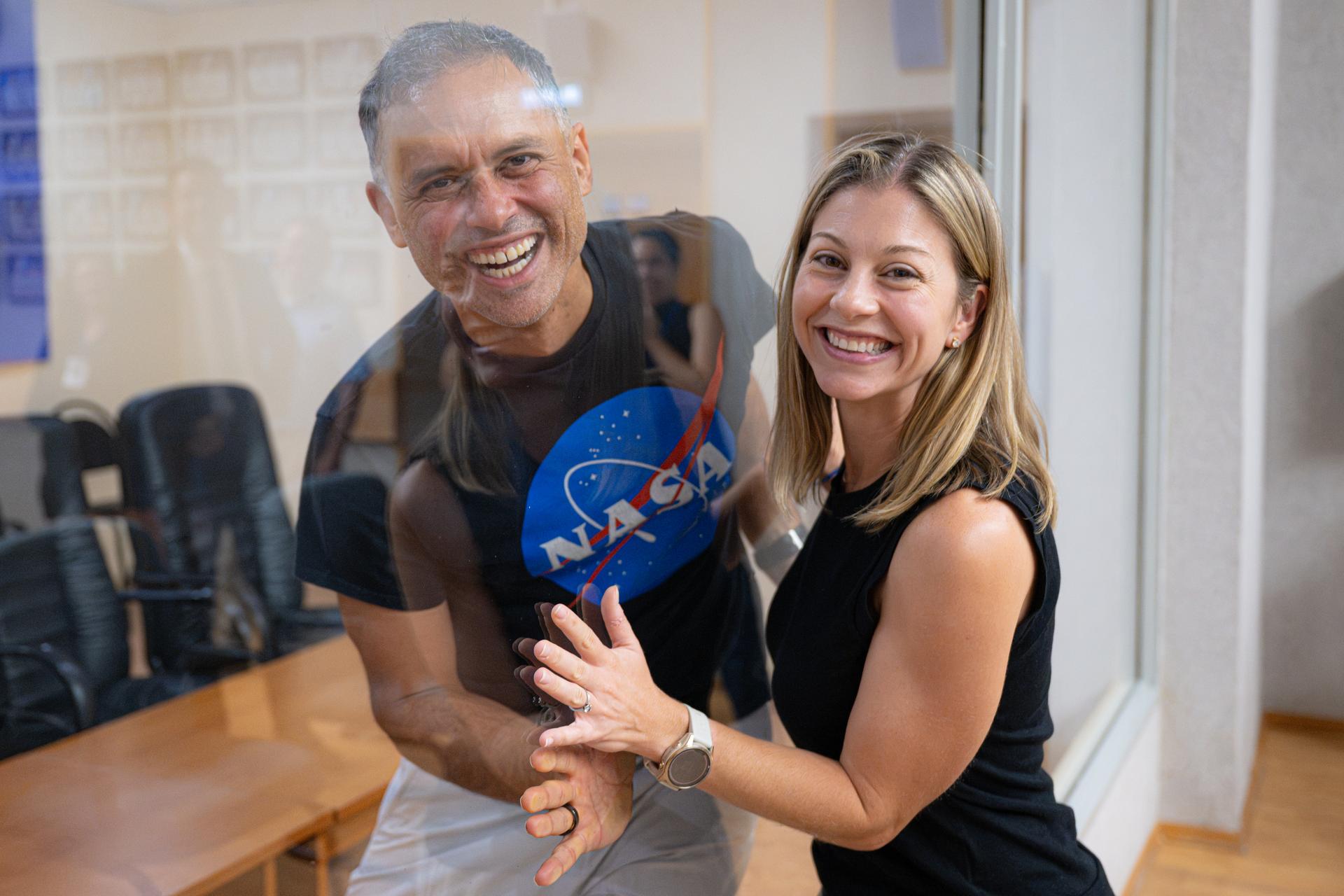
NASA astronaut and Expedition 75 crewmember Anil Menon, left, and his wife, NASA astronaut candidate Anna Menon, right, pose for a photograph between glass, Monday, July 13, 2026, at the Cosmonaut Hotel in Baikonur, Kazakhstan. Expedition 75 crewmembers NASA astronaut Anil Menon and Roscosmos cosmonauts Pyotr Dubrov and Anna Kikina are scheduled to launch aboard the Soyuz MS-29 spacecraft to the International Space Station on July 14. Photo Credit: (NASA/John Kraus)
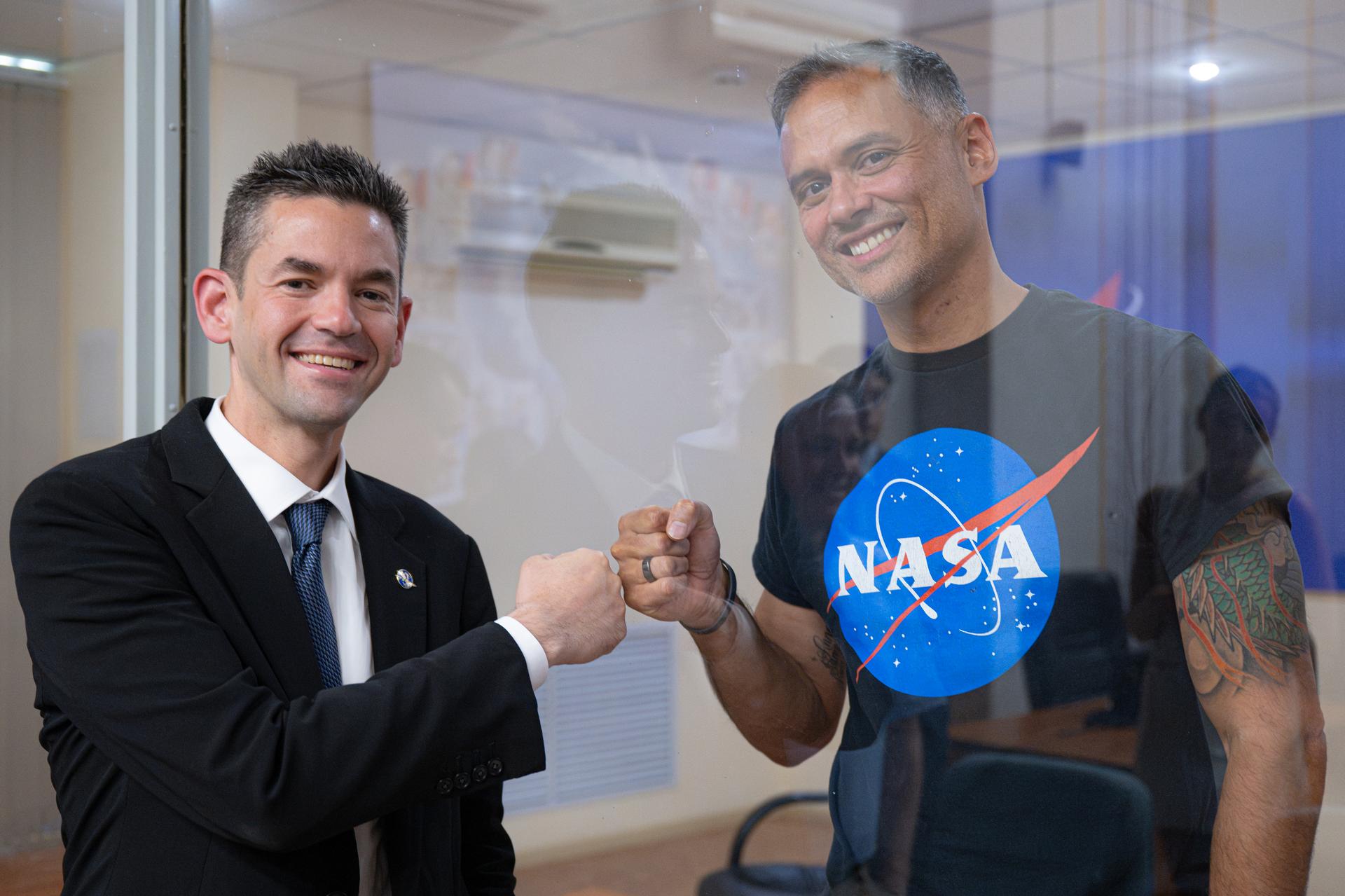
NASA Administrator Jared Isaacman, left, and NASA astronaut and Expedition 75 crewmember Anil Menon, right, pose for a photograph between glass, Monday, July 13, 2026, at the Cosmonaut Hotel in Baikonur, Kazakhstan. Expedition 75 crewmembers NASA astronaut Anil Menon and Roscosmos cosmonauts Pyotr Dubrov and Anna Kikina are scheduled to launch aboard the Soyuz MS-29 spacecraft to the International Space Station on July 14. Photo Credit: (NASA/John Kraus)
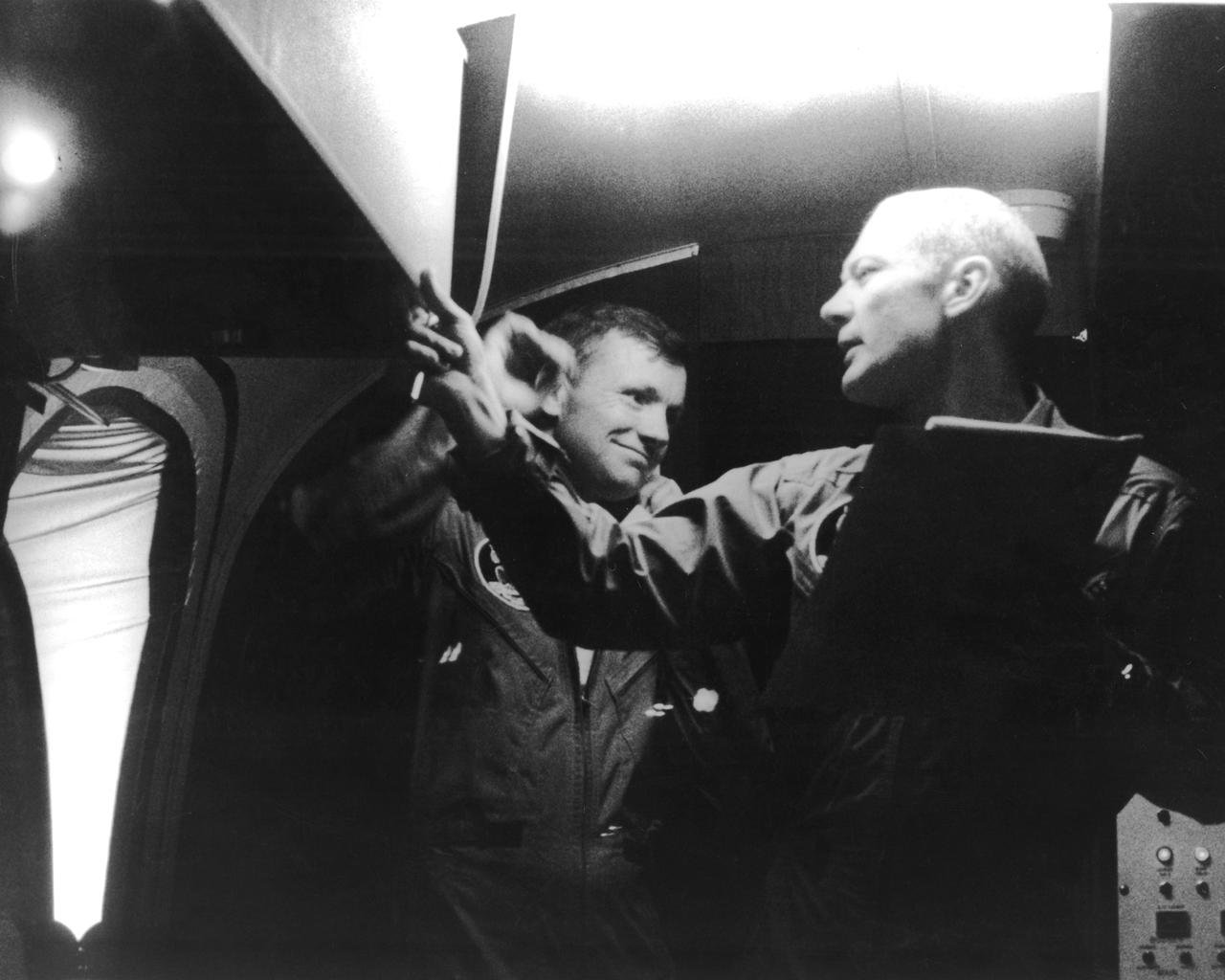
The Apollo 11 mission, the first manned lunar mission, launched aboard the Saturn V launch vehicle from the Kennedy Space Center, Florida on July 16, 1969 and safely returned to Earth on July 24, 1969. Aboard were astronauts Neil A. Armstrong, commander; Michael Collins, Command Module (CM) pilot; and Edwin E. Aldrin Jr., Lunar Module (LM) pilot. The CM, piloted by Michael Collins, remained in a parking orbit around the Moon while the LM, named “Eagle’’, carrying astronauts Neil Armstrong and Edwin Aldrin, landed on the Moon. Armstrong was the first human to ever stand on the lunar surface, followed by Edwin (Buzz) Aldrin. The surface exploration was concluded in 2½ hours. Once the crew collected 47 pounds of lunar surface material for analysis back on Earth, the LM redocked with the CM for the crew’s return to Earth. Following splash down in the Pacific Ocean, Navy para-rescue men recovered the capsule housing the 3-man crew. The crew was airlifted to safety aboard the U.S.S. Hornet, where they were quartered in a Mobile Quarantine Facility (MQF). Astronaut Collins took this snapshot of astronauts Armstrong (center) and Aldrin inside of the MQF.
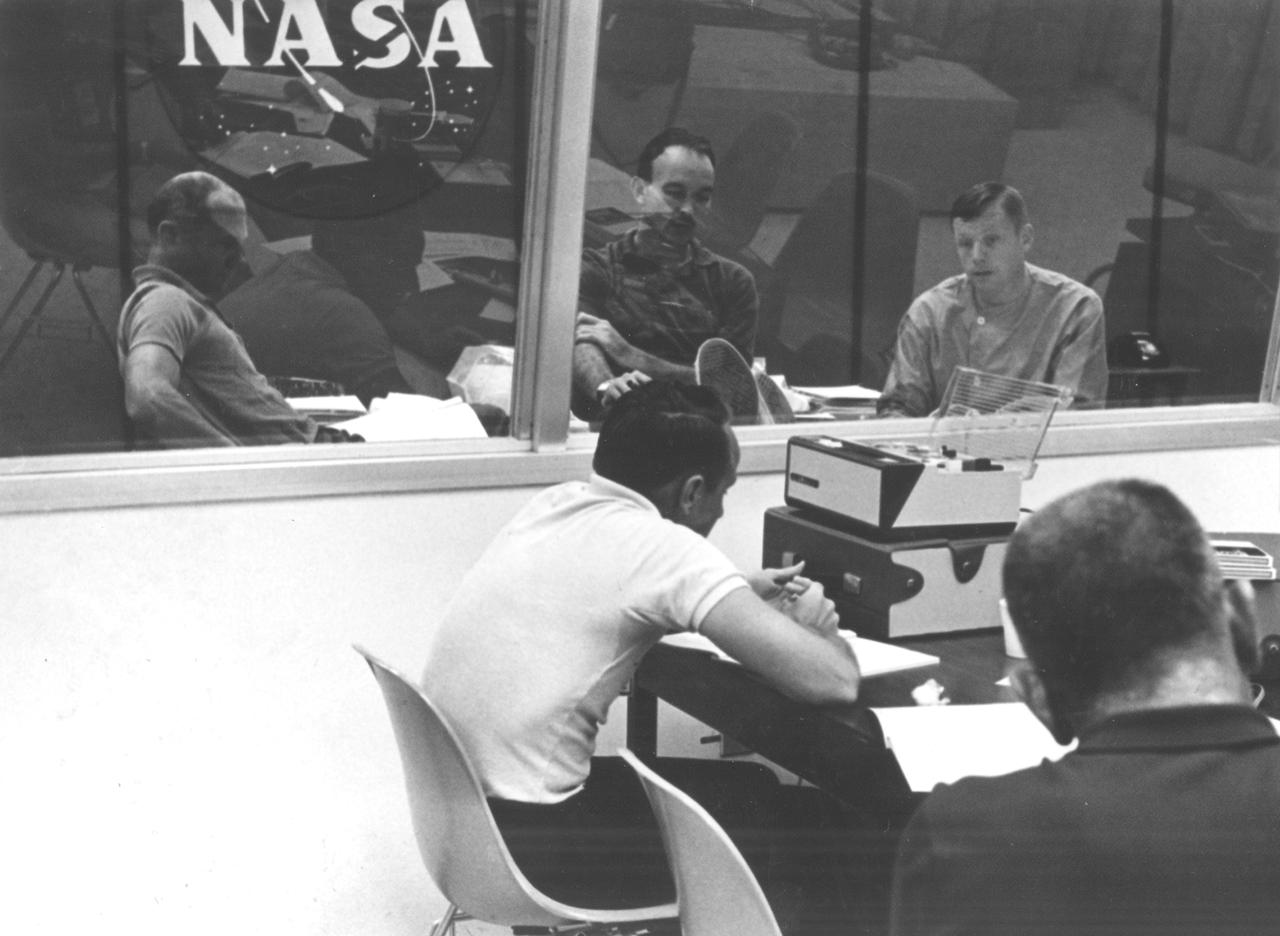
The Apollo 11 mission, the first manned lunar mission, launched from the Kennedy Space Center, Florida via the Marshall Space Flight Center (MSFC) developed Saturn V launch vehicle on July 16, 1969 and safely returned to Earth on July 24, 1969. Aboard the space craft were astronauts Neil A. Armstrong, commander; Michael Collins, Command Module (CM) pilot; and Edwin E. Aldrin Jr., Lunar Module (LM) pilot. The CM, piloted by Michael Collins remained in a parking orbit around the Moon while the LM, named “Eagle’’, carrying astronauts Neil Armstrong and Edwin Aldrin, landed on the Moon. During 2½ hours of surface exploration, the crew collected 47 pounds of lunar surface material for analysis back on Earth. The recovery operation took place in the Pacific Ocean where Navy para-rescue men recovered the capsule housing the 3-man Apollo 11 crew. The crew was airlifted to safety aboard the U.S.S. Hornet, where they were quartered in a Mobile Quarantine Facility (MQF) which served as their home until they reached the NASA Manned Spacecraft Center (MSC) Lunar Receiving Laboratory in Houston, Texas. The three are seen here at the MSC, still inside the MQF, undergoing their first debriefing on Sunday, August 3, 1969. Behind the glass are (L-R): Edwin Aldrin, Michael Collins, and Neil Armstrong.
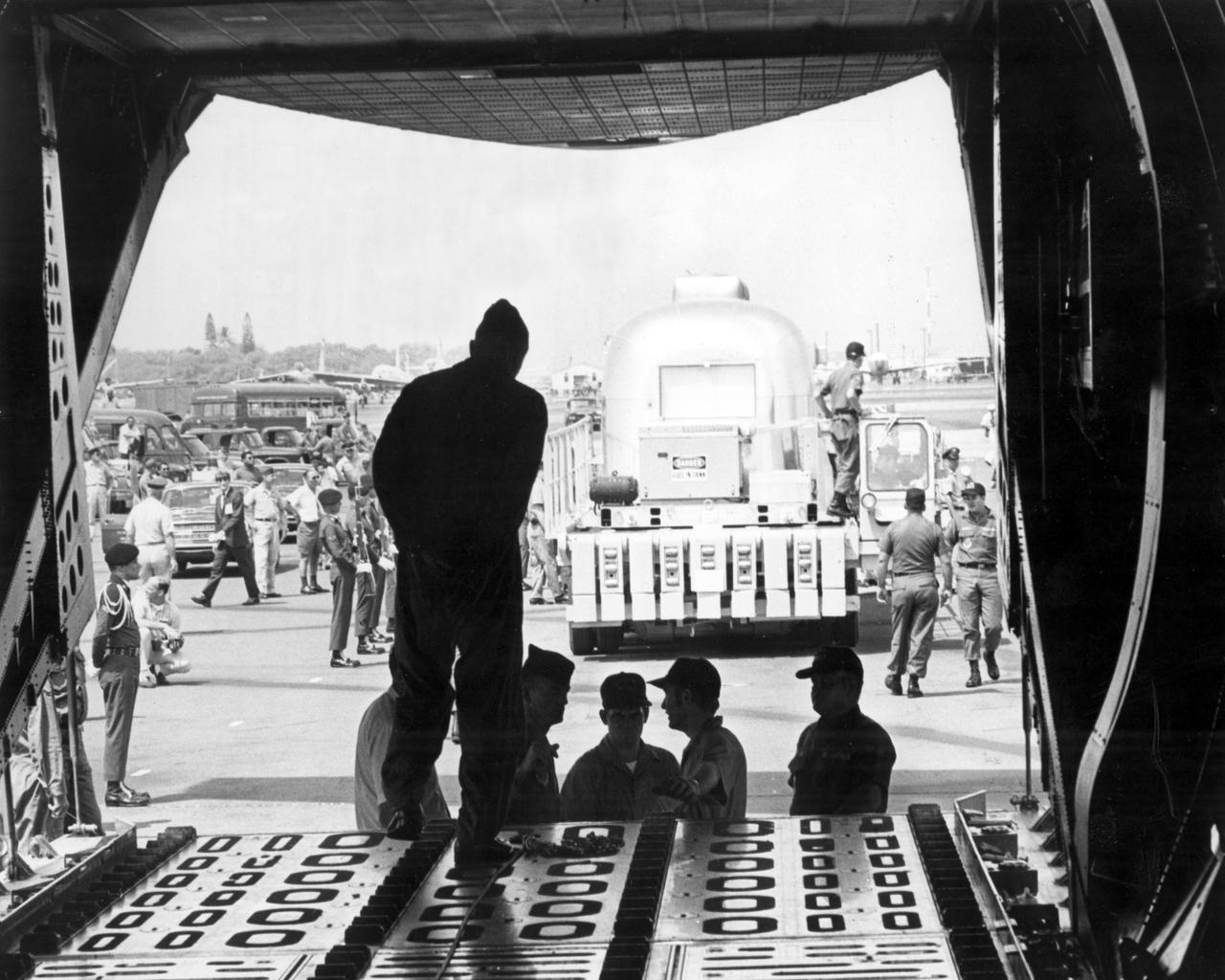
The Apollo 11 mission, the first manned lunar mission, launched from the Kennedy Space Center, Florida via the Marshall Space Flight Center (MSFC) developed Saturn V launch vehicle on July 16, 1969 and safely returned to Earth on July 24, 1969. Aboard the space craft were astronauts Neil A. Armstrong, commander; Michael Collins, Command Module (CM) pilot; and Edwin E. Aldrin Jr., Lunar Module (LM) pilot. The CM, piloted by Michael Collins remained in a parking orbit around the Moon while the LM, named “Eagle’’, carrying astronauts Neil Armstrong and Edwin Aldrin, landed on the Moon. During 2½ hours of surface exploration, the crew collected 47 pounds of lunar surface material for analysis back on Earth. The recovery operation took place in the Pacific Ocean where Navy para-rescue men recovered the capsule housing the 3-man Apollo 11 crew. The crew was airlifted to safety aboard the U.S.S. Hornet, where they were quartered in a Mobile Quarantine Facility (MQF) which served as their home until they reached the NASA Manned Spacecraft Center (MSC) Lunar Receiving Laboratory in Houston, Texas. In this photo taken at Pearl Harbor, Hawaii, the inhabited MQF is prepared for loading into an Air Force C-141 jet transport for the flight back to Ellington Air Force Base Texas and then on to the MSC.
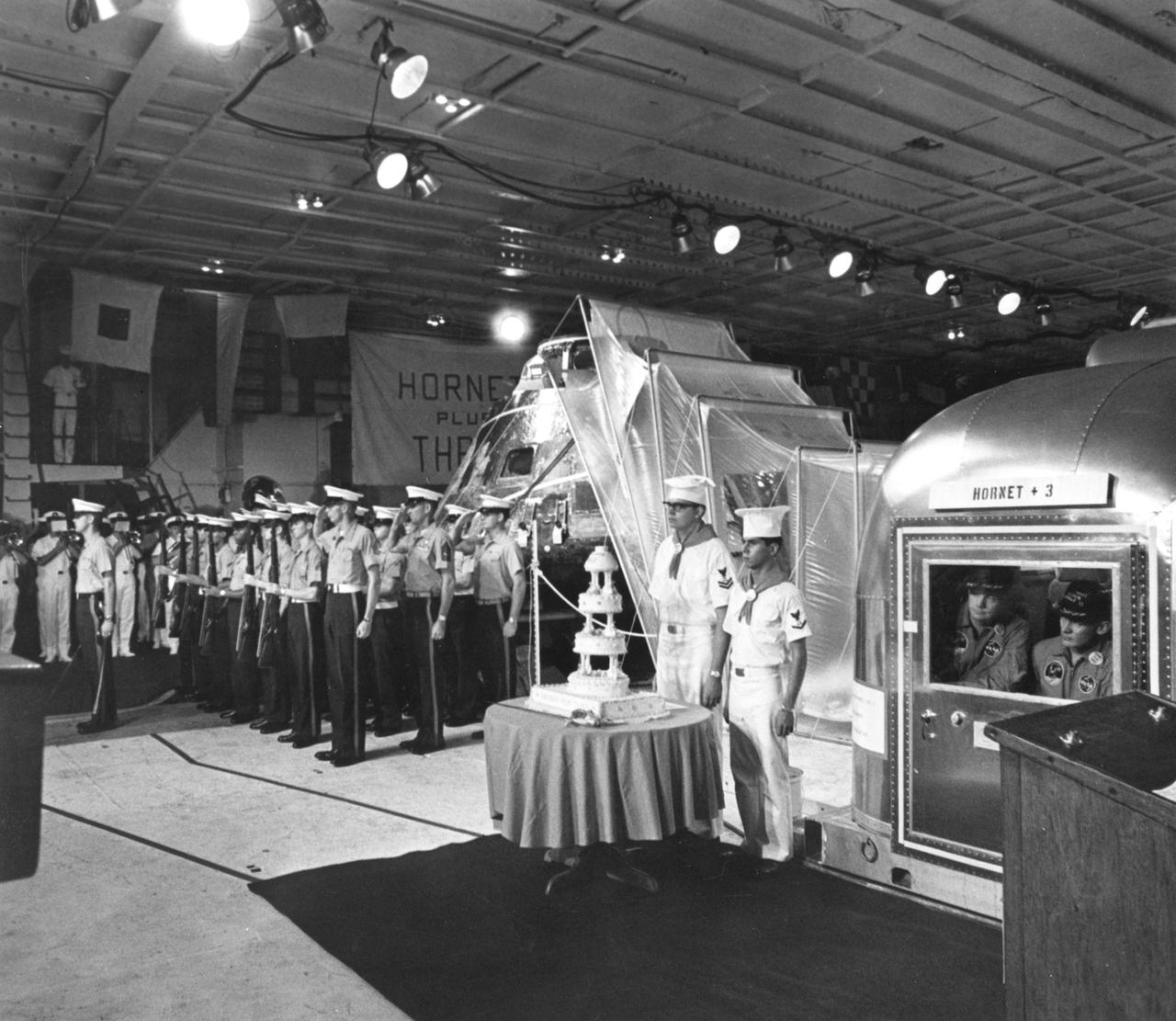
The Apollo 11 mission, the first manned lunar mission, launched from the Kennedy Space Center, Florida via the Space Flight Center (MSFC) developed Saturn V launch vehicle on July 16, 1969 and safely returned to Earth on July 24, 1969. Aboard the space craft were astronauts Neil A. Armstrong, commander; Michael Collins, Command Module (CM) pilot; and Edwin E. Aldrin Jr., Lunar Module (LM) pilot. The CM, piloted by Michael Collins remained in a parking orbit around the Moon while the LM, named “Eagle’’, carrying astronauts Neil Armstrong and Edwin Aldrin, landed on the Moon. During 2½ hours of surface exploration, the crew collected 47 pounds of lunar surface material for analysis back on Earth. The recovery operation took place in the Pacific Ocean where Navy para-rescue men recovered the capsule housing the 3-man Apollo 11 crew. The crew was airlifted to safety aboard the U.S.S. Hornet recovery ship, where they were quartered in a Mobile Quarantine Facility (MQF) which served as their home for 21 days following the mission. In this photograph, the Hornet crew and honor guard snap to attention to begin the official cake cutting ceremony for the Apollo 11 astronauts. Astronauts Armstrong and Aldrin are visible in the window of the MQF.
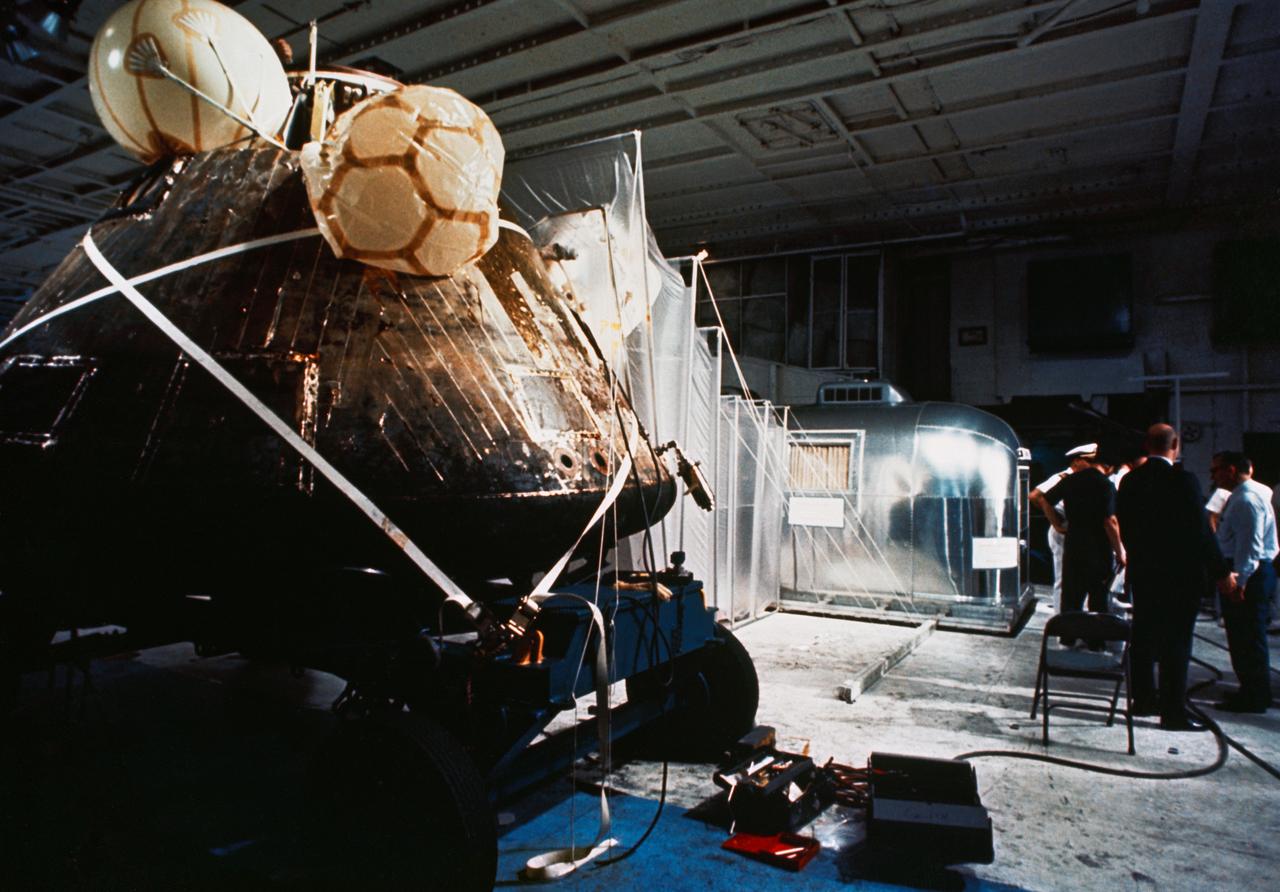
S69-40758 (24 July 1969) --- The Apollo 11 spacecraft Command Module (CM) and the Mobile Quarantine Facility (MQF) are photographed aboard the USS Hornet, prime recovery ship for the historic first lunar landing mission. The three crewmen are already in the MQF. Apollo 11 with astronauts Neil A. Armstrong, Michael Collins and Edwin E. Aldrin Jr. aboard splashed down at 11:49 a.m. (CDT), July 24, 1969, about 812 nautical miles southwest of Hawaii and only 12 nautical miles from the USS Hornet. While astronauts Armstrong, commander, and Aldrin, lunar module pilot, descended in the Lunar Module (LM) "Eagle" to explore the Sea of Tranquility region of the moon, astronaut Collins, command module pilot, remained with the Command and Service Modules (CSM) "Columbia" in lunar orbit.
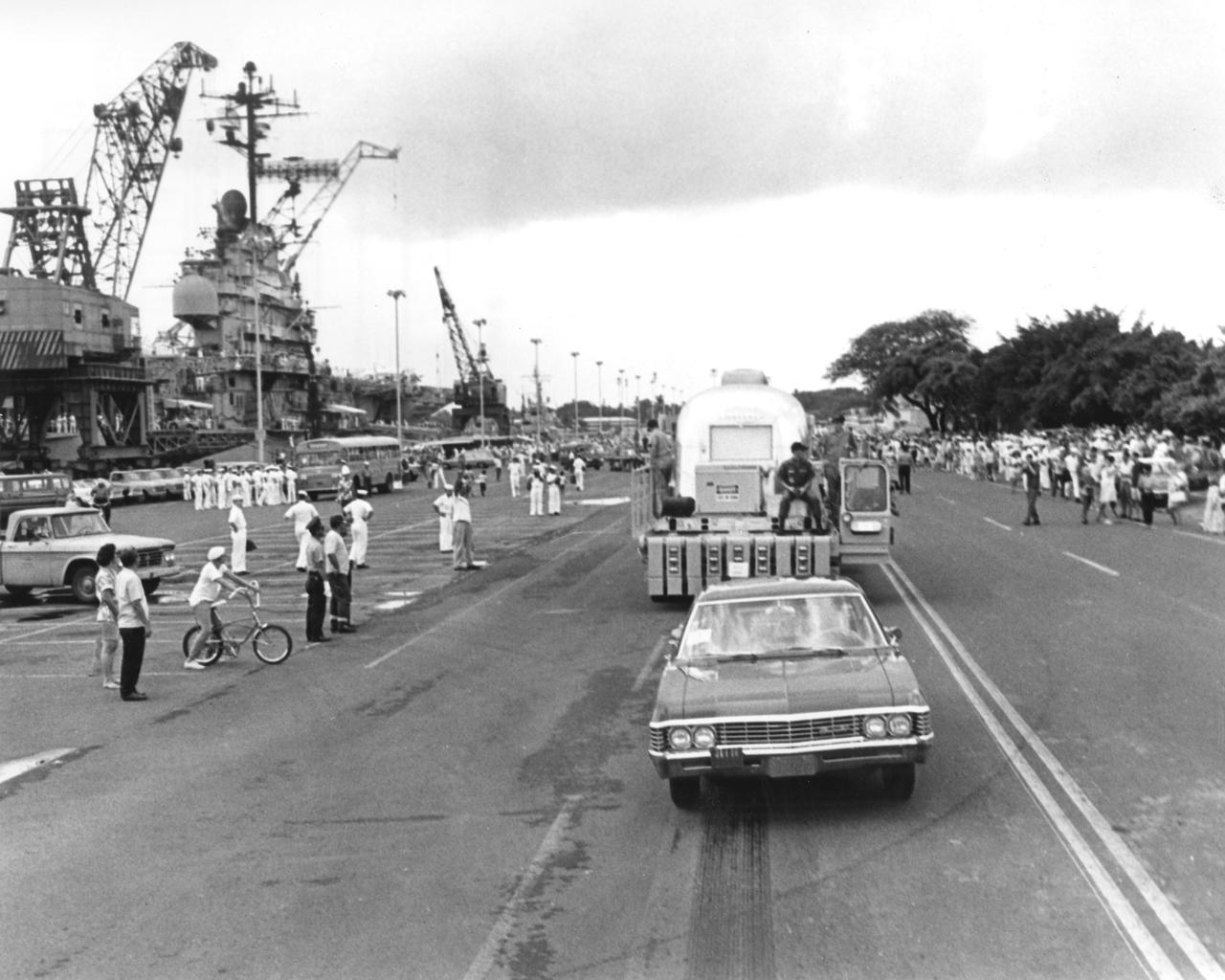
The Apollo 11 mission, the first manned lunar mission, launched from the Kennedy Space Center, Florida via the Marshall Space Flight Center (MSFC) developed Saturn V launch vehicle on July 16, 1969 and safely returned to Earth on July 24, 1969. Aboard the space craft were astronauts Neil A. Armstrong, commander; Michael Collins, Command Module (CM) pilot; and Edwin E. Aldrin Jr., Lunar Module (LM) pilot. The CM, piloted by Michael Collins remained in a parking orbit around the Moon while the LM, named “Eagle’’, carrying astronauts Neil Armstrong and Edwin Aldrin, landed on the Moon. During 2½ hours of surface exploration, the crew collected 47 pounds of lunar surface material for analysis back on Earth. The recovery operation took place in the Pacific Ocean where Navy para-rescue men recovered the capsule housing the 3-man Apollo 11 crew. The crew was airlifted to safety aboard the U.S.S. Hornet recovery ship, where they were quartered in a Mobile Quarantine Facility (MQF) which served as their home until they reached the NASA Manned Spacecraft Center (MSC) Lunar Receiving Laboratory in Houston, Texas. The occupied MQF was unloaded from the U.S.S. Hornet in Pearl Harbor, Hawaii. In this photo, the facility is moved from the Hornet’s dock enroute to Hickam Field where it was loaded aboard an Air Force C-141 jet transport for the flight back to Ellington Air Force Base Texas, and then on to the MSC.
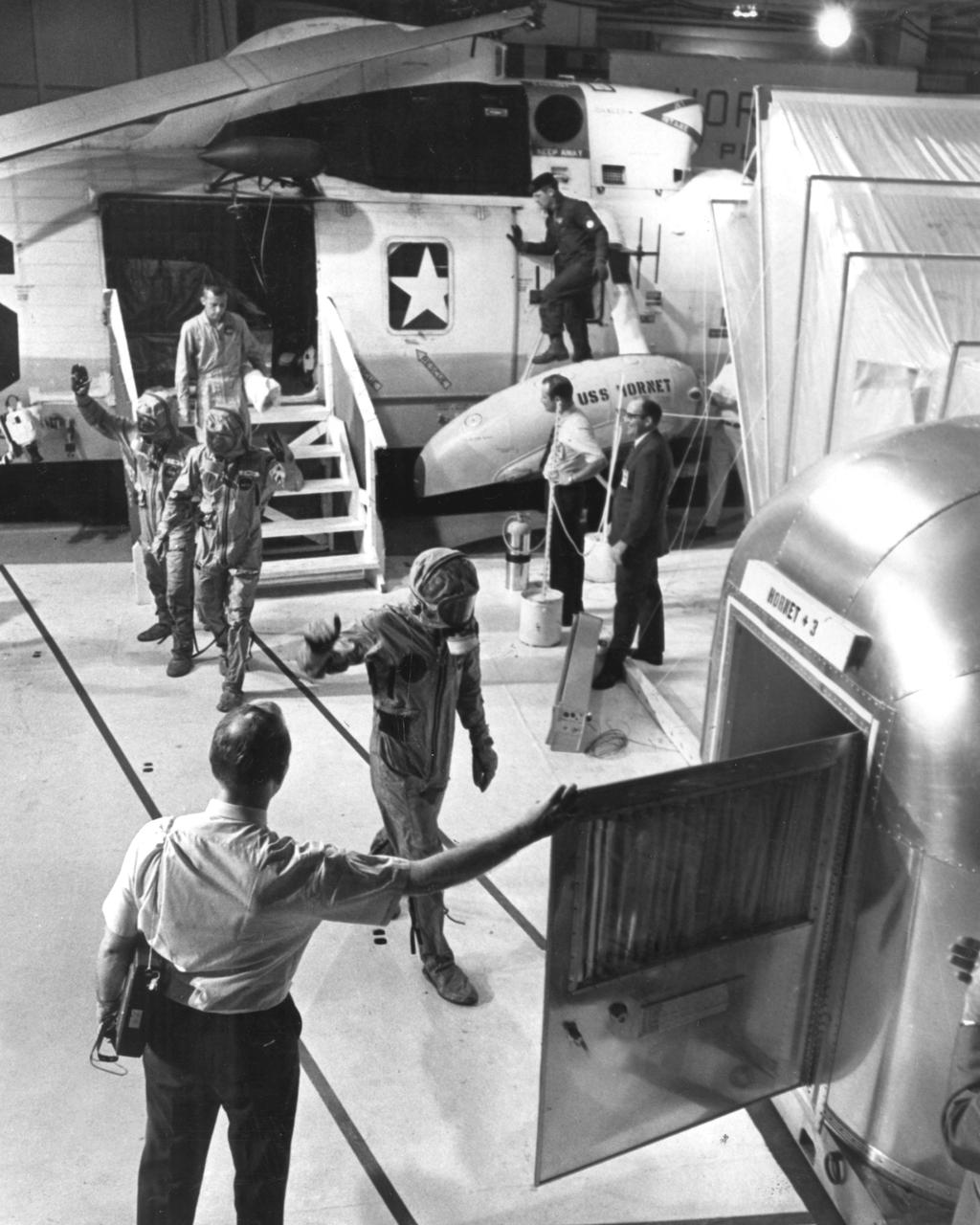
The Apollo 11 mission, the first manned lunar mission, launched from the Kennedy Space Center, Florida via the Saturn V launch vehicle on July 16, 1969 and safely returned to Earth on July 24, 1969. The Saturn V vehicle was developed by the Marshall Space Flight Center (MSFC) under the direction of Dr. Wernher von Braun. Aboard the craft were astronauts Neil A. Armstrong, commander; Michael Collins, Command Module (CM) pilot; and Edwin E. Aldrin Jr., Lunar Module (LM) pilot. The CM, piloted by Michael Collins remained in a parking orbit around the Moon while the LM, named “Eagle’’, carrying astronauts Neil Armstrong and Edwin Aldrin, landed on the Moon. Armstrong was the first human to ever stand on the lunar surface followed by Aldrin. During 2½ hours of surface exploration, the crew collected 47 pounds of lunar surface material for analysis back on Earth. The recovery operation took place in the Pacific Ocean where Navy para-rescue men recovered the capsule housing the 3-man Apollo 11 crew. The crew was airlifted to safety aboard the U.S.S. Hornet, where they were quartered in a Mobile Quarantine Facility (MQF). Donned in biological isolation garments, the Apollo 11 crew members (front to rear) Armstrong, Collins, and Aldrin leave the pick up helicopter making their way to the MQF. This portable facility served as their home until they reached the NASA Manned Spacecraft Center Lunar Receiving Laboratory in Houston, Texas. With the success of Apollo 11 mission the national objective to land men on the Moon and return them safely to Earth had been accomplished.
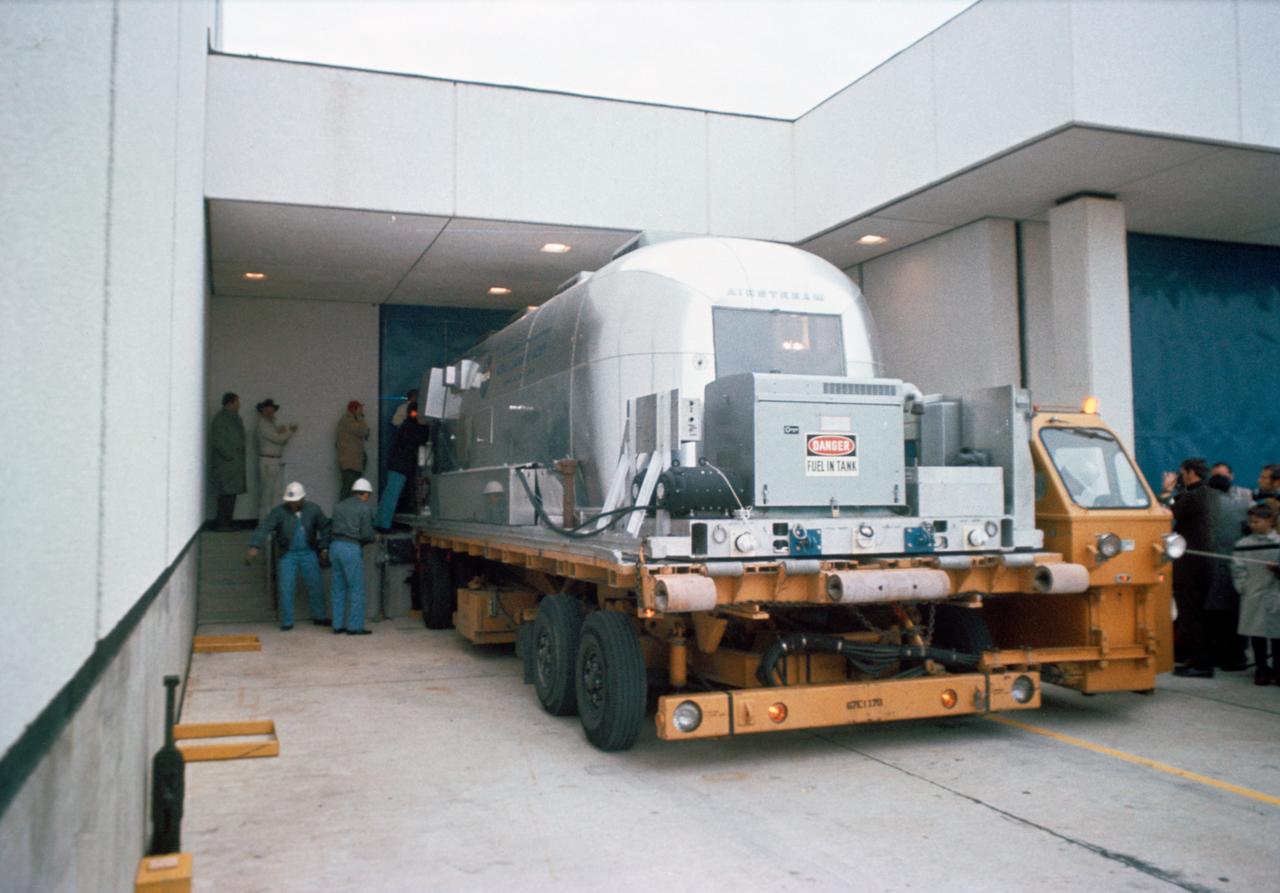
A Mobile Quarantine Facility (MQF), with the crew of the Apollo XII Lunar Landing Mission aboard, is shown on arriving at JSC, Saturday morning, 11/29/1969.
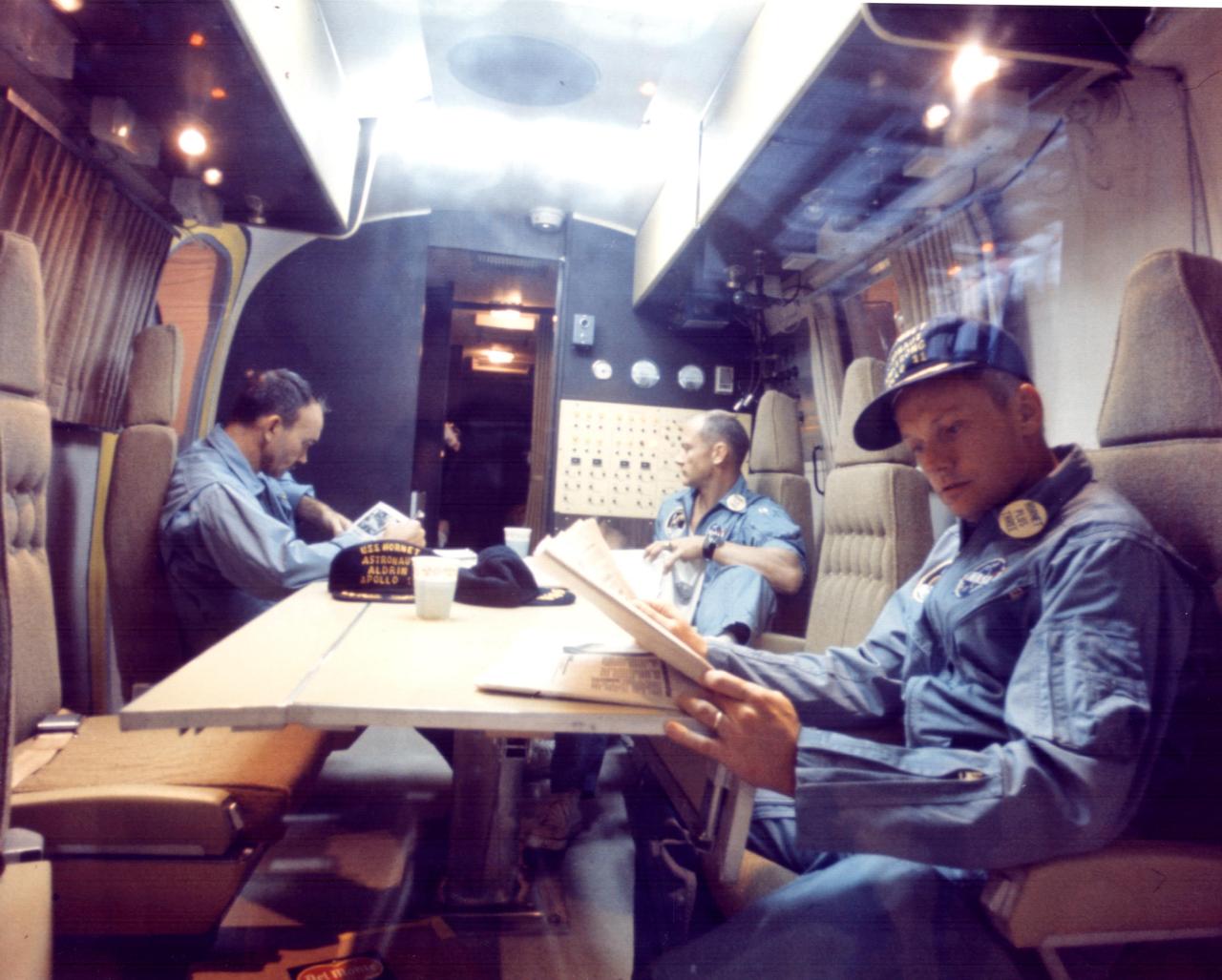
KENNEDY SPACE CENTER, FLA. - Within the Mobile Quarantine Facility, Apollo 11 astronauts (left to right) Michael Collins, Edwin E. Aldrin Jr. and Neil A. Armstrong relax following their successful lunar landing mission. They spent two-and-one-half days in the quarantine trailer enroute from the USS Hornet, prime recovery ship, to the Lunar Receiving Laboratory at the Manned Spacecraft Center in Houston. The Hornet docked at Pearl Harbor where the trailer was transferred to a jet aircraft for the flight to Houston.

Expedition 72 crew members, in quarantine behind glass: NASA astronaut Don Pettit, left, Roscosmos cosmonauts Alexey Ovchinin, and Ivan Vagner, and backup crew members Alexey Zubritskiy, Sergey Ryzhikov, both of Roscosmos, and Jonny Kim of NASA, right, are seen in quarantine, behind glass, during a press conference, Tuesday, Sept. 10, 2024 a the Cosmonaut Hotel in Baikonur, Kazakhstan. Pettit, Ovchinin, and Vagner, are scheduled to launch aboard their Soyuz MS-26 spacecraft on September 11. Photo Credit: (NASA/Bill Ingalls)

Expedition 72 crew members, in quarantine behind glass: NASA astronaut Don Pettit, left, Roscosmos cosmonauts Alexey Ovchinin, and Ivan Vagner, and backup crew members Alexey Zubritskiy, Sergey Ryzhikov, both of Roscosmos, and Jonny Kim of NASA, right, are seen in quarantine, behind glass, during a press conference, Tuesday, Sept. 10, 2024 a the Cosmonaut Hotel in Baikonur, Kazakhstan. Pettit, Ovchinin, and Vagner, are scheduled to launch aboard their Soyuz MS-26 spacecraft on September 11. Photo Credit: (NASA/Bill Ingalls)
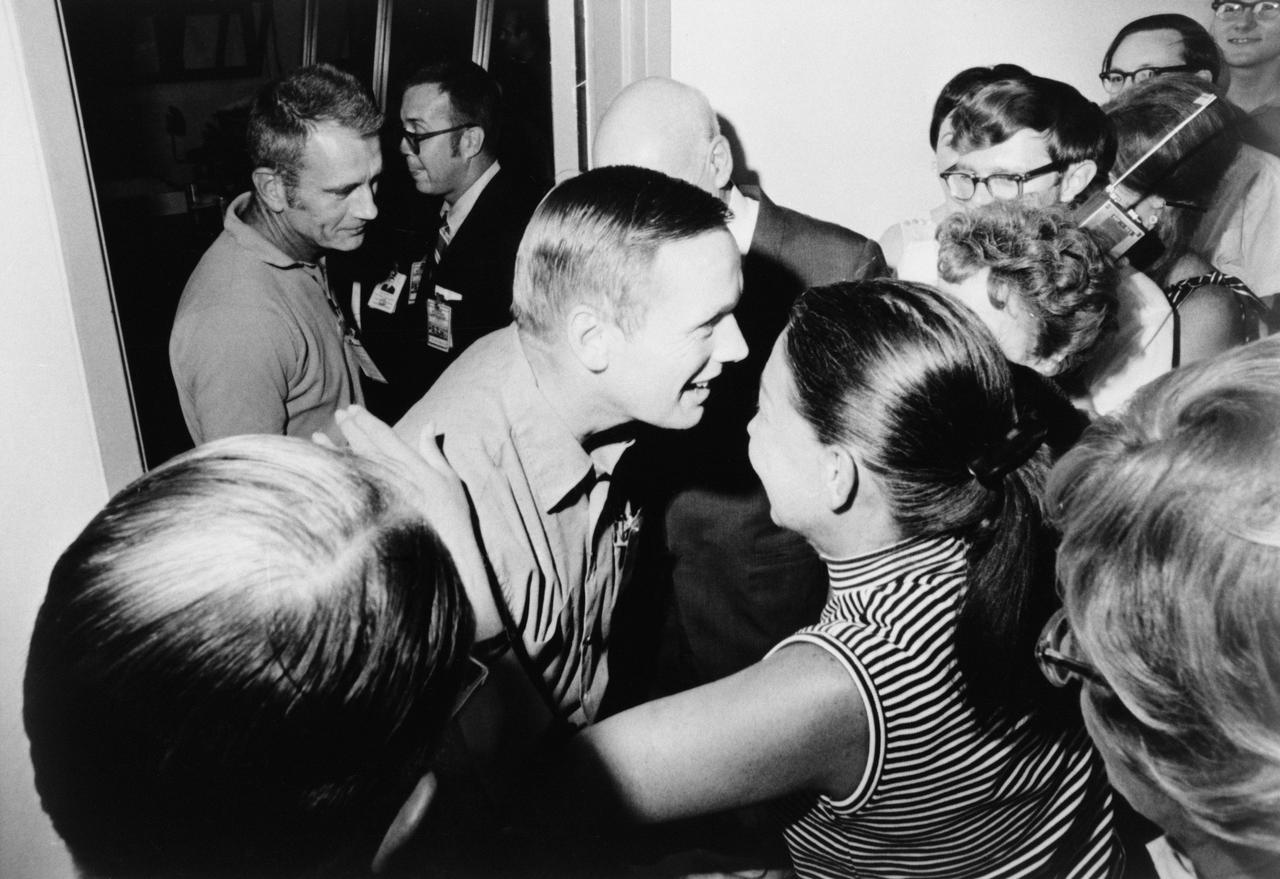
Astronaut Neil A. Armstrong (center), is greeted by friends in the crew reception area of the Lunar Receiving Laboratory. Dr. Gilruth is pictured just to right of Armstrong. Donald K. Slayton, Director of Space Flight Crew Operations, is behind ArmstrongThe Apollo 11 crew left the crew reception area of the Lunar Receiving Laboratory at 9 p.m., Aug. 10, 1969.

S71-23602 (17 March 1971) --- Left to right: Everett Gibson, Gary McCollom, unidentified man in control room of Lunar Receiving Lab (LRL) during Apollo 14 quarantine period. Photo credit: NASA
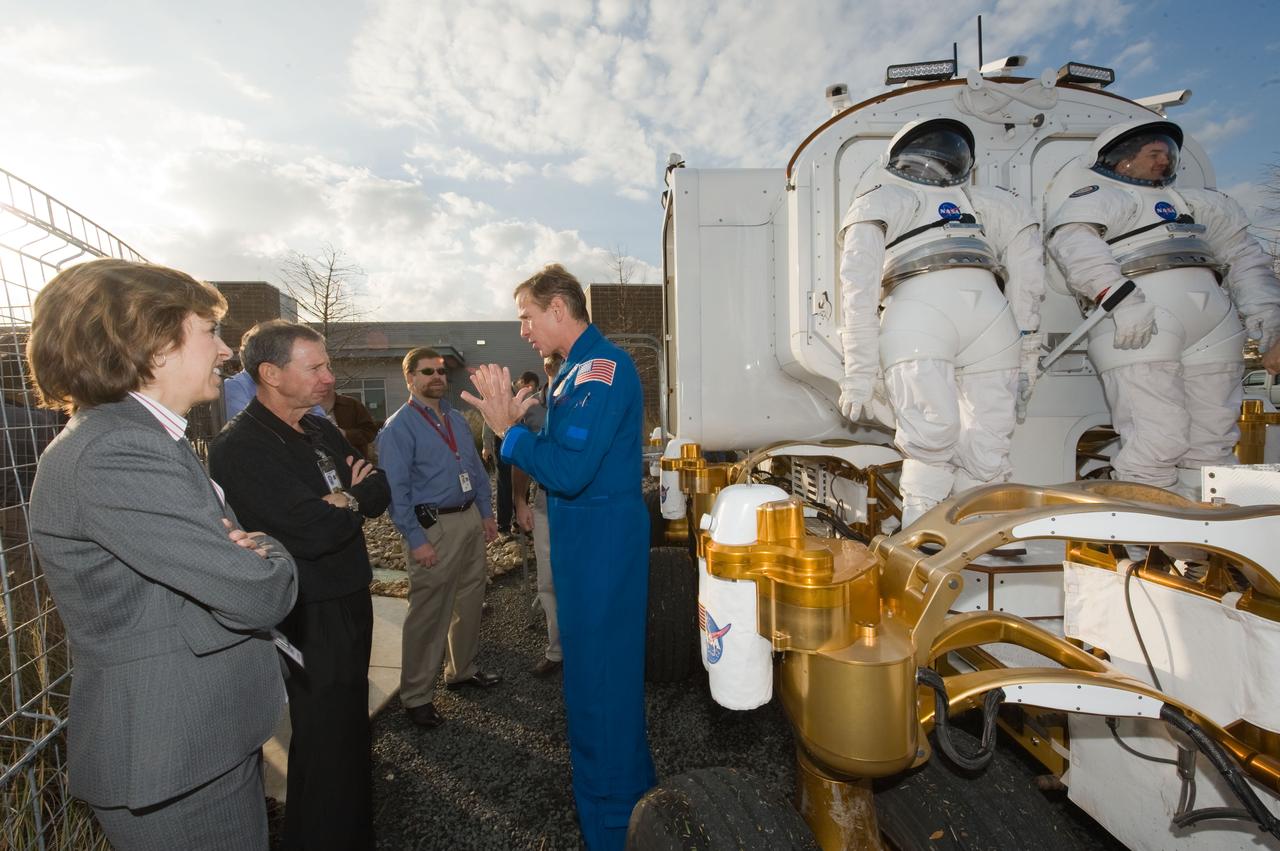
NASA Administrator Mike Griffen having breakfast with the STS-119 crew, then receiving a tour of the Small Pressurized Rover demonstration. Photo Date: January 9, 2009 Location: Bldg. 27 - Astronaut Quarantine. Photographer: R.Markowitz, x37739

S69-40217 (27 July 1969) --- Neil A. Armstrong, commander of the Apollo 11 flight, greets his son Mark, on telephone intercom system, while his wife Jan and another son Eric look on. Armstrong had just arrived in early morning with the Mobile Quarantine Facility (MQF) at Ellington Air Force Base. Armstrong and fellow astronauts will remain in the MQF until arrival and confinement in the Crew Reception Area (CRA) of the Lunar Receiving Laboratory (LRL) at the Manned Spacecraft Center (MSC). Quarantine period will end on Aug. 11, 1969.

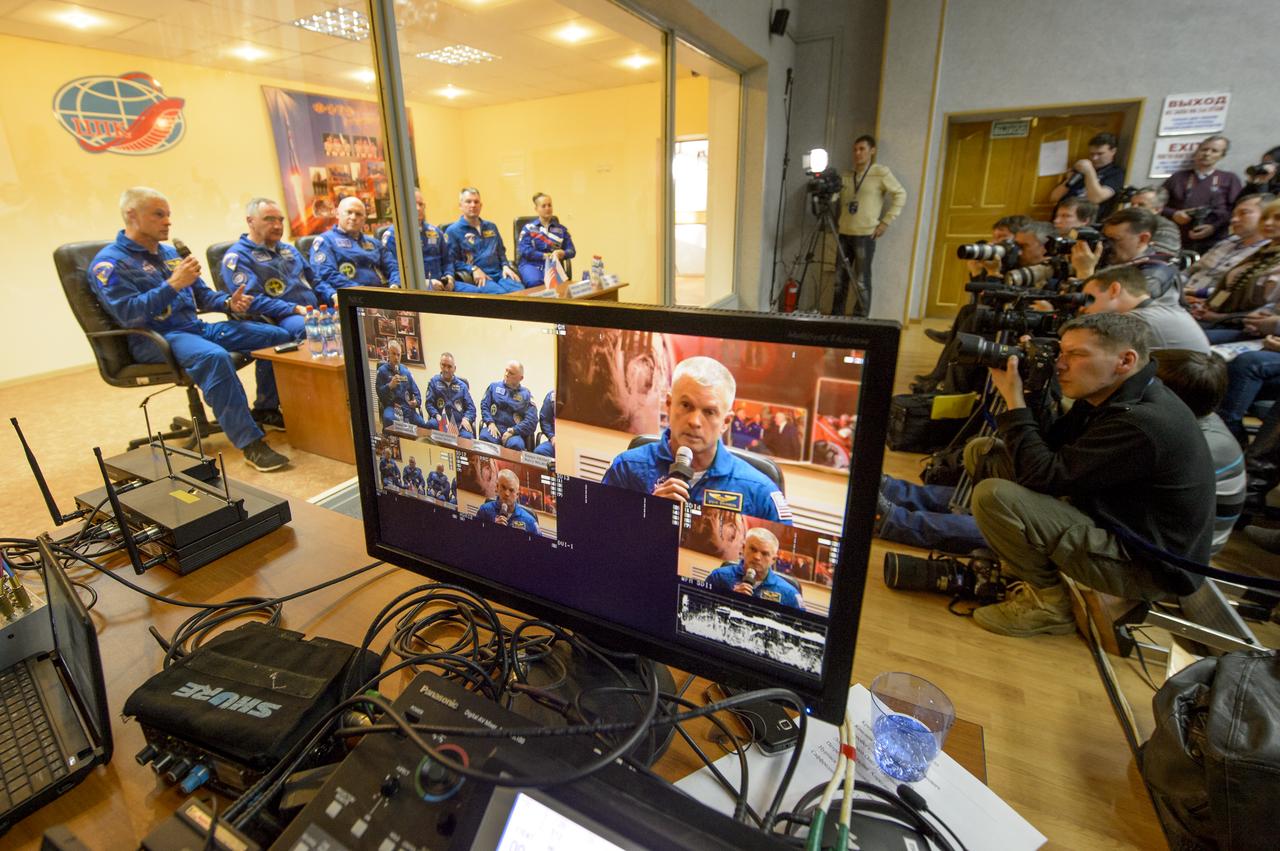
Expedition 39 flight engineer Oleg Artemyev is seen in quarantine, behind glass, during the final press conference be Monday, March 24, 2014, at the Cosmonaut Hotel in Baikonur, Kazakhstan. The mission to the International Space Station is set to launch March 26 from the Baikonur Cosmodrome. Photo Credit: (NASA/Joel Kowsky)
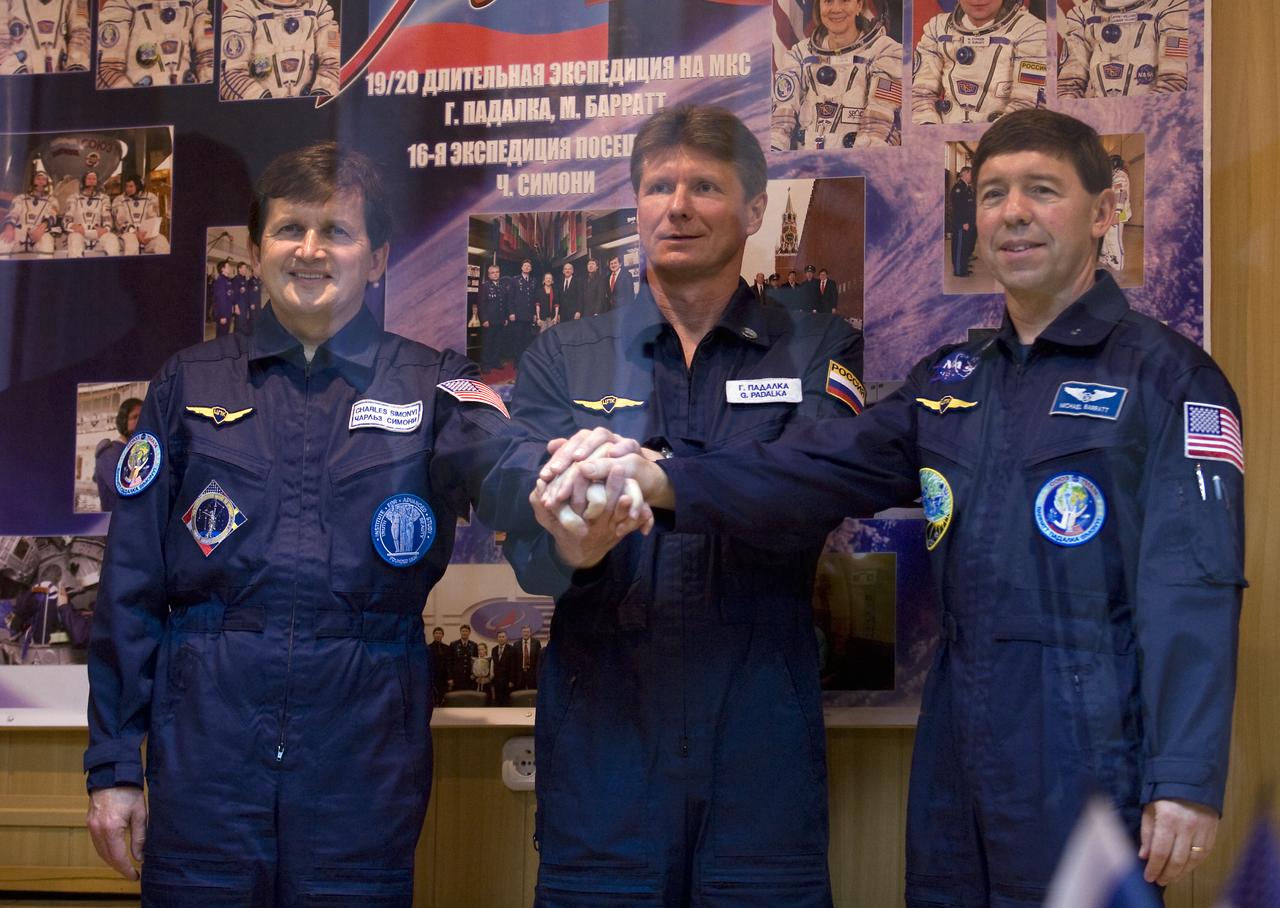
Spaceflight Participant Charles Simonyi, left, Expedition 19 Commander Gennady I. Padalka, center, and Flight Engineer Michael R. Barratt are seen in quarantine behind glass as they pose for photographs on Wednesday, March 25, 2009 at the Cosmonaut Hotel in Baikonur, Kazakhstan. Photo Credit: (NASA/Bill Ingalls)
Expedition 39 flight engineer Steve Swanson of NASA is seen in quarantine, behind glass, during the final press conference be Monday, March 24, 2014, at the Cosmonaut Hotel in Baikonur, Kazakhstan. The mission to the International Space Station is set to launch March 26 from the Baikonur Cosmodrome. Photo Credit: (NASA/Bill Ingalls)
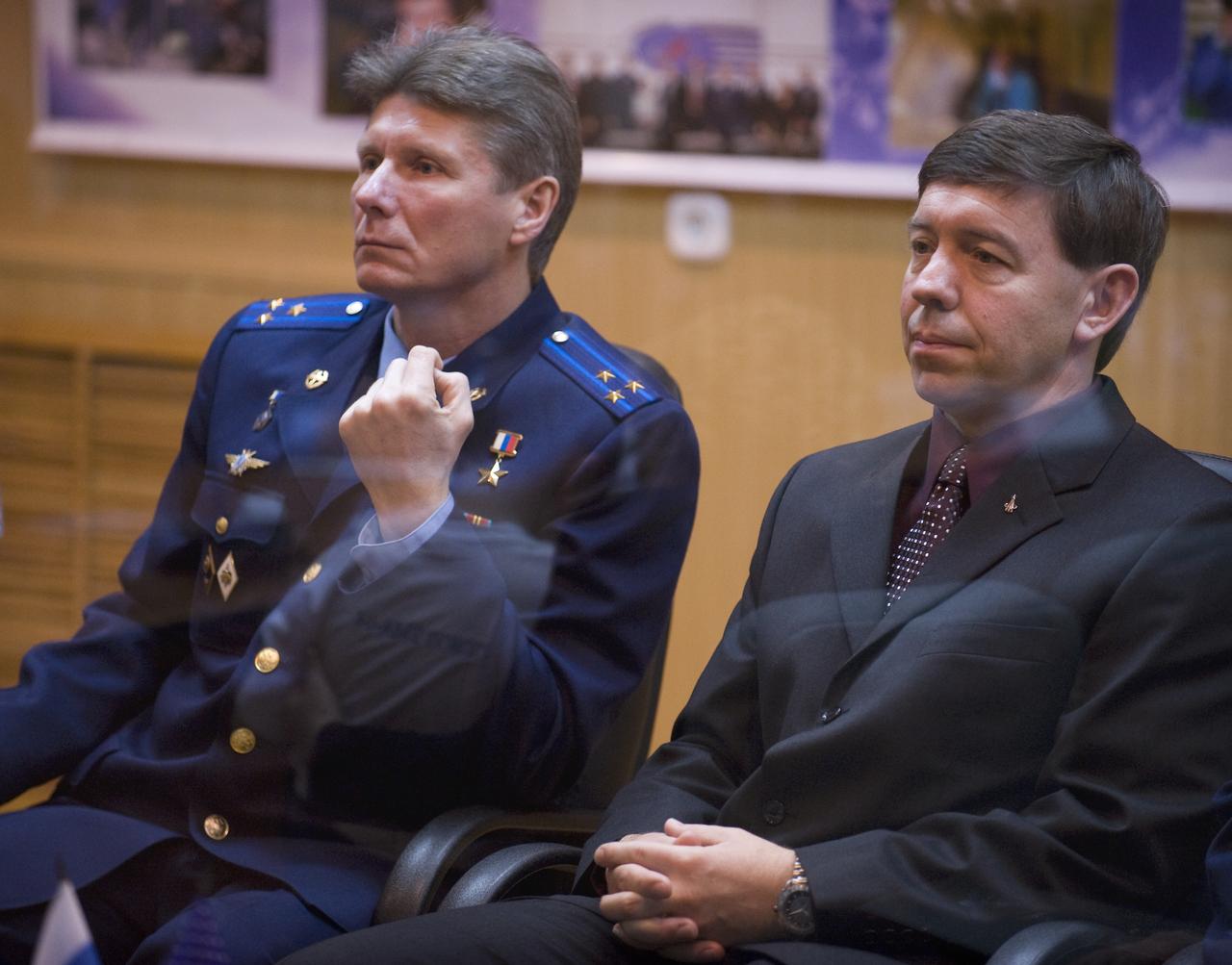
Expedition 19 Commander Gennady I. Padalka, left, and Flight Engineer Michael R. Barratt are seen in quarantine behind glass during the State Commission meeting on Wednesday, March 25, 2009 in Baikonur, Kazakhstan. Photo Credit: (NASA/Bill Ingalls)
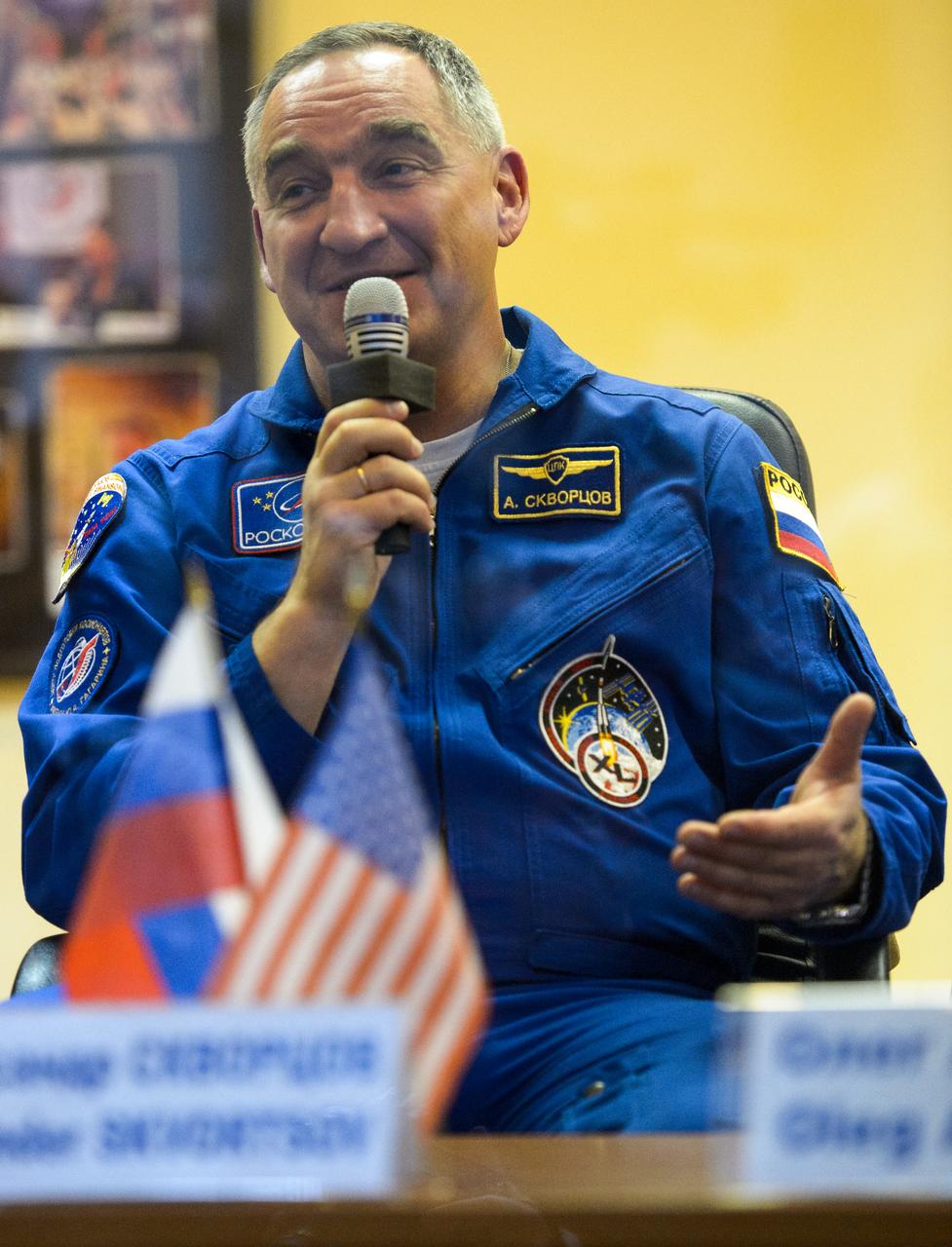
Expedition 39 Soyuz commander Aleksandr Skvortsov is seen in quarantine, behind glass, during the final press conference be Monday, March 24, 2014, at the Cosmonaut Hotel in Baikonur, Kazakhstan. The mission to the International Space Station is set to launch March 26 from the Baikonur Cosmodrome. Photo Credit: (NASA/Joel Kowsky)
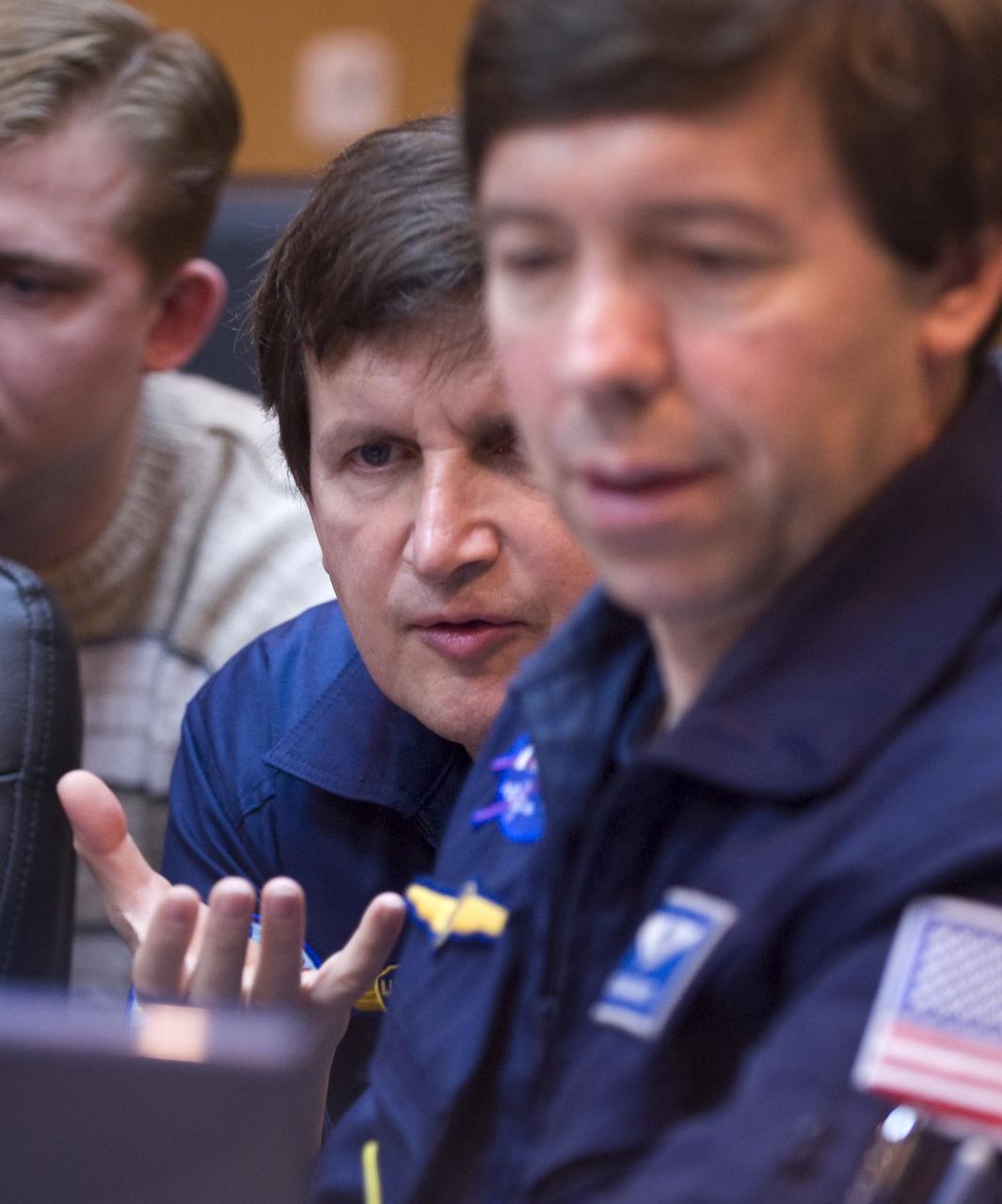
Spaceflight Participant Charles Simonyi and Expedition 19 Flight Engineer Michael R. Barratt, foreground, along with cosmonaut instructors are seen through a quarantine windowed room as they participate in Soyuz rendezvous and docking training at the Cosmonaut Hotel, Saturday, March 21, 2009 in Baikonur, Kazakhstan. (Photo Credit: NASA/Bill Ingalls)
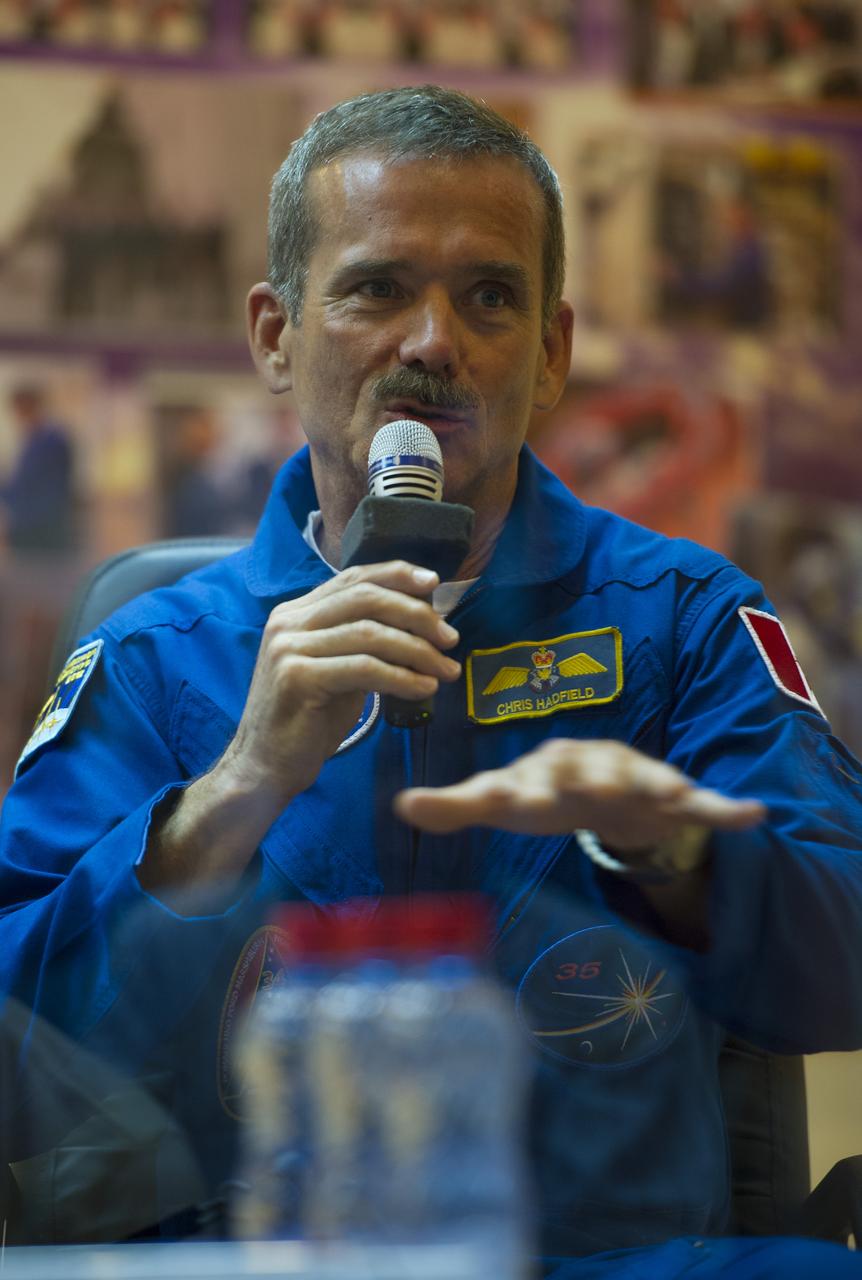
Quarantined Expedition 32 Canadian backup crewmember Chris Hadfield answers reporters questions from behind glass during a prelaunch press conference held at the Cosmonaut Hotel on Friday, July 13, 2012 in Baikonur, Kazakhstan. Photo Credit (NASA/Carla Cioffi)
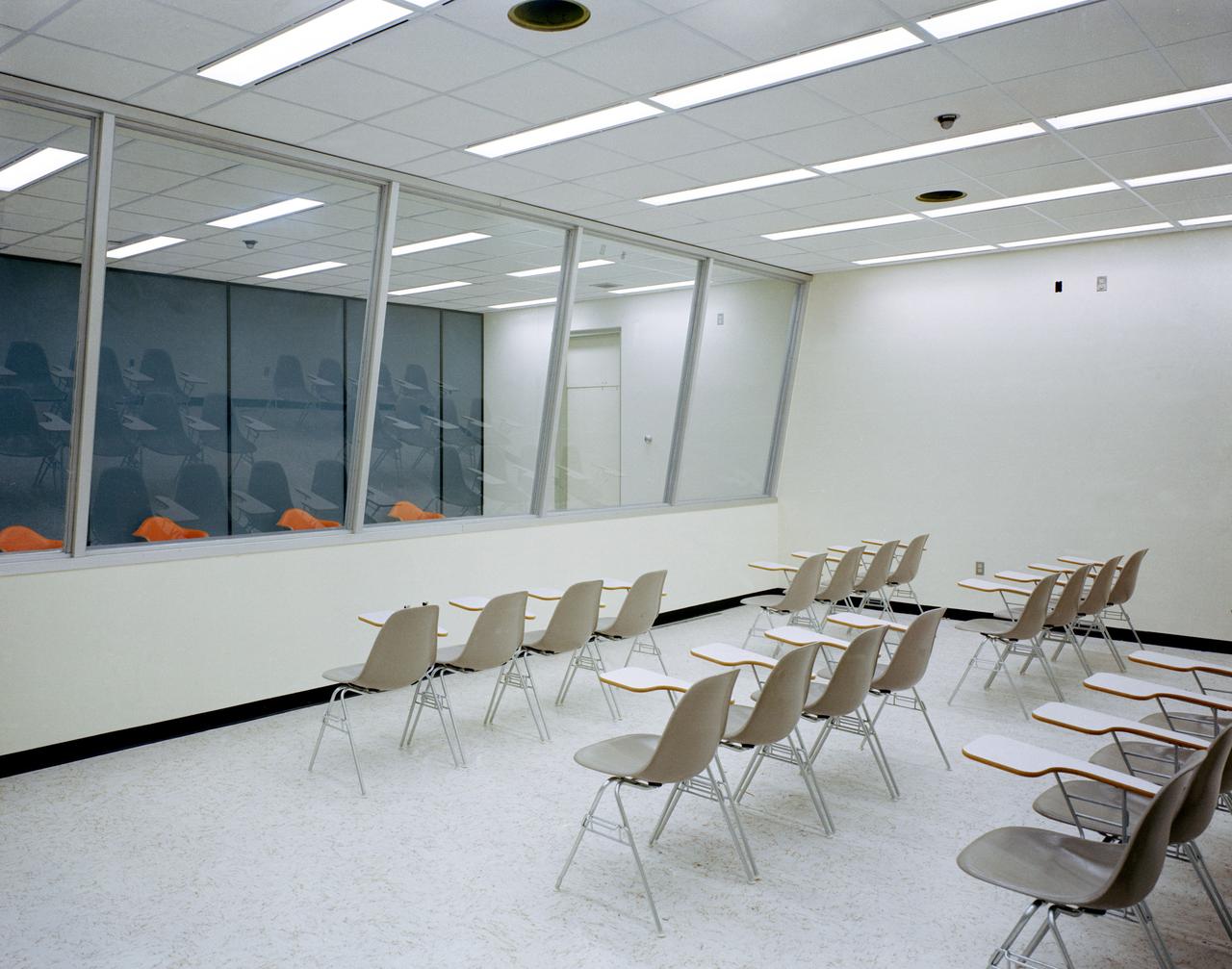
Room 190 of the Support and Administrative Facilities, CRA, LRL, Bldg 37. The room is a debriefing room which facilitates indirect contact with the Astronauts and CRA Medical Staff during quarantine periods. Also called the Press Room. MSC, Houston, TX
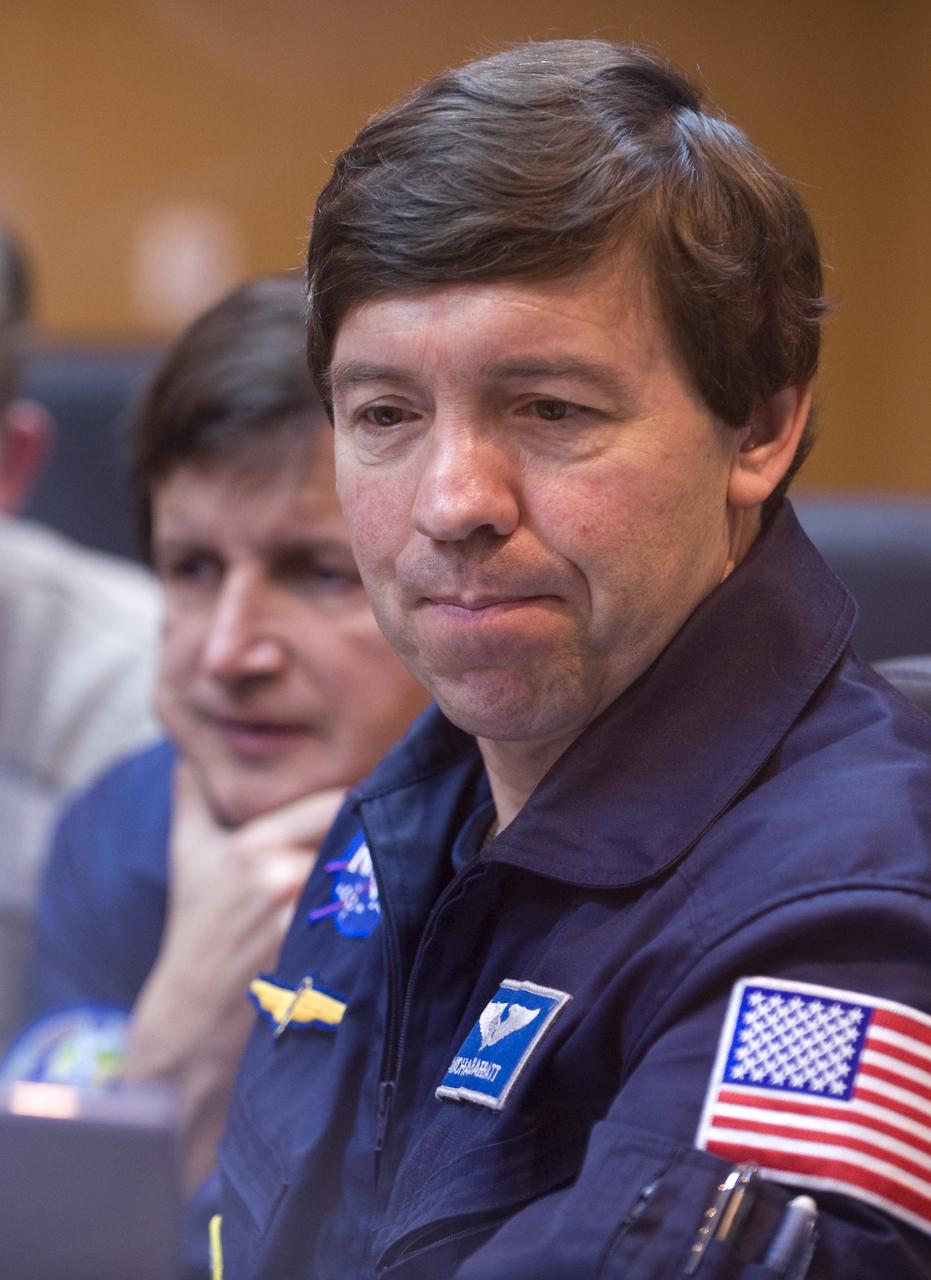
Expedition 19 Flight Engineer Michael R. Barratt and Spaceflight Participant Charles Simonyi, background, are seen through a quarantine windowed room as they participate in Soyuz rendezvous and docking training at the Cosmonaut Hotel, Saturday, March 21, 2009 in Baikonur, Kazakhstan. (Photo Credit: NASA/Bill Ingalls)
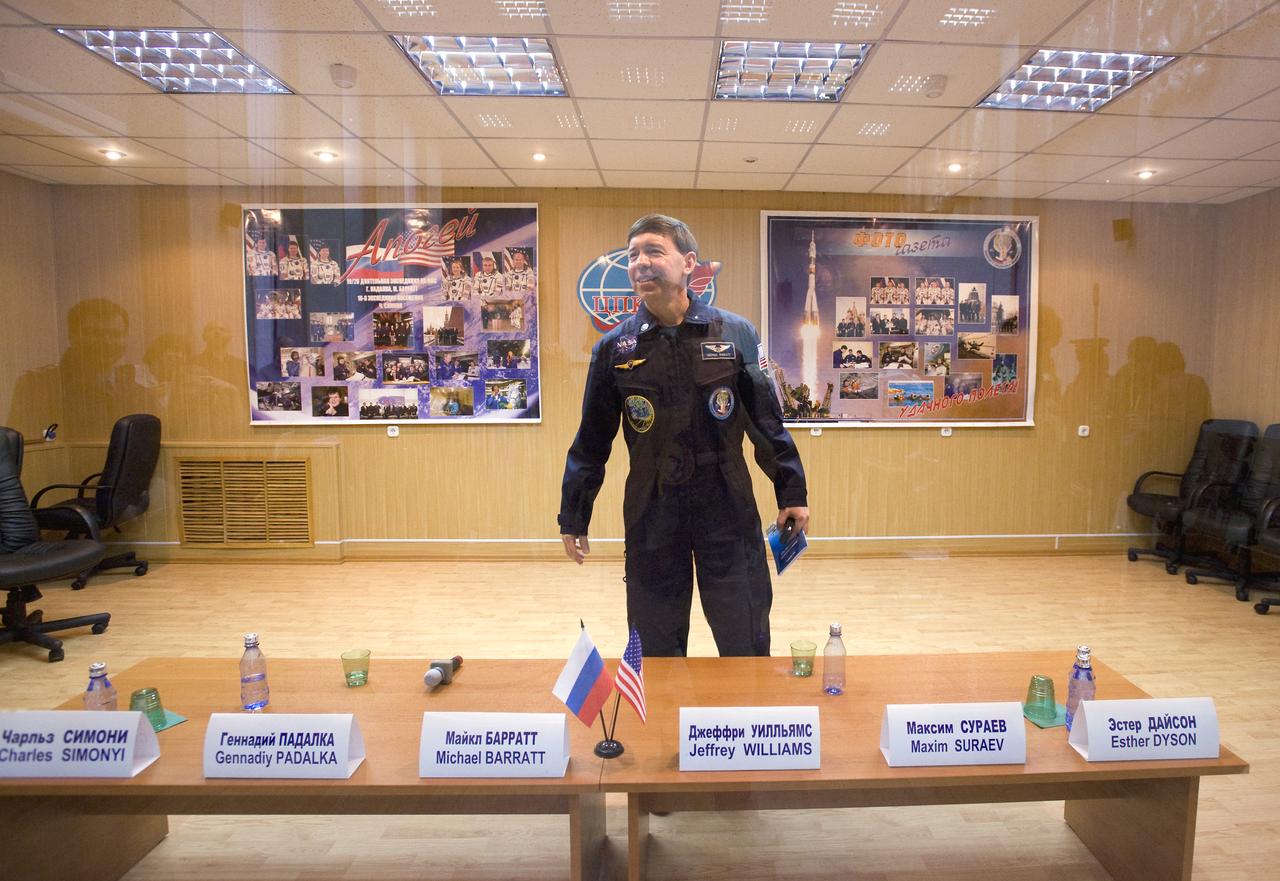
Expedition 19 Flight Engineer Michael R. Barratt smiles at his family from a quarantined glass room after a press conference on Wednesday, March 25, 2009 at the Cosmonaut Hotel in Baikonur, Kazakhstan. Photo Credit: (NASA/Bill Ingalls)
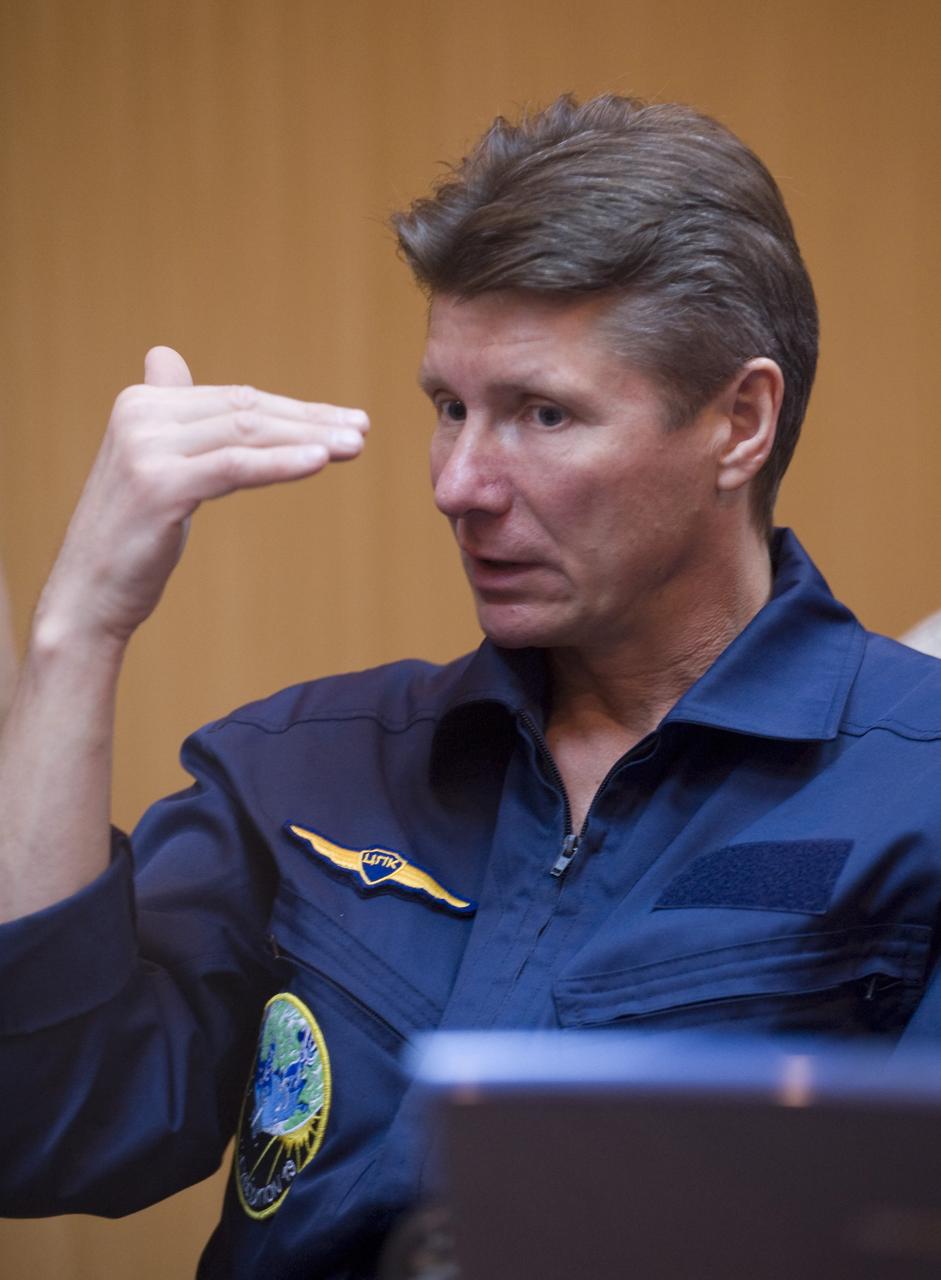
Expedition 19 Commander Gennady I. Padalka is seen through a quarantine windowed room as he and other crew memebers participate in Soyuz rendezvous and docking training at the Cosmonaut Hotel, Saturday, March 21, 2009 in Baikonur, Kazakhstan. (Photo Credit: NASA/Bill Ingalls)
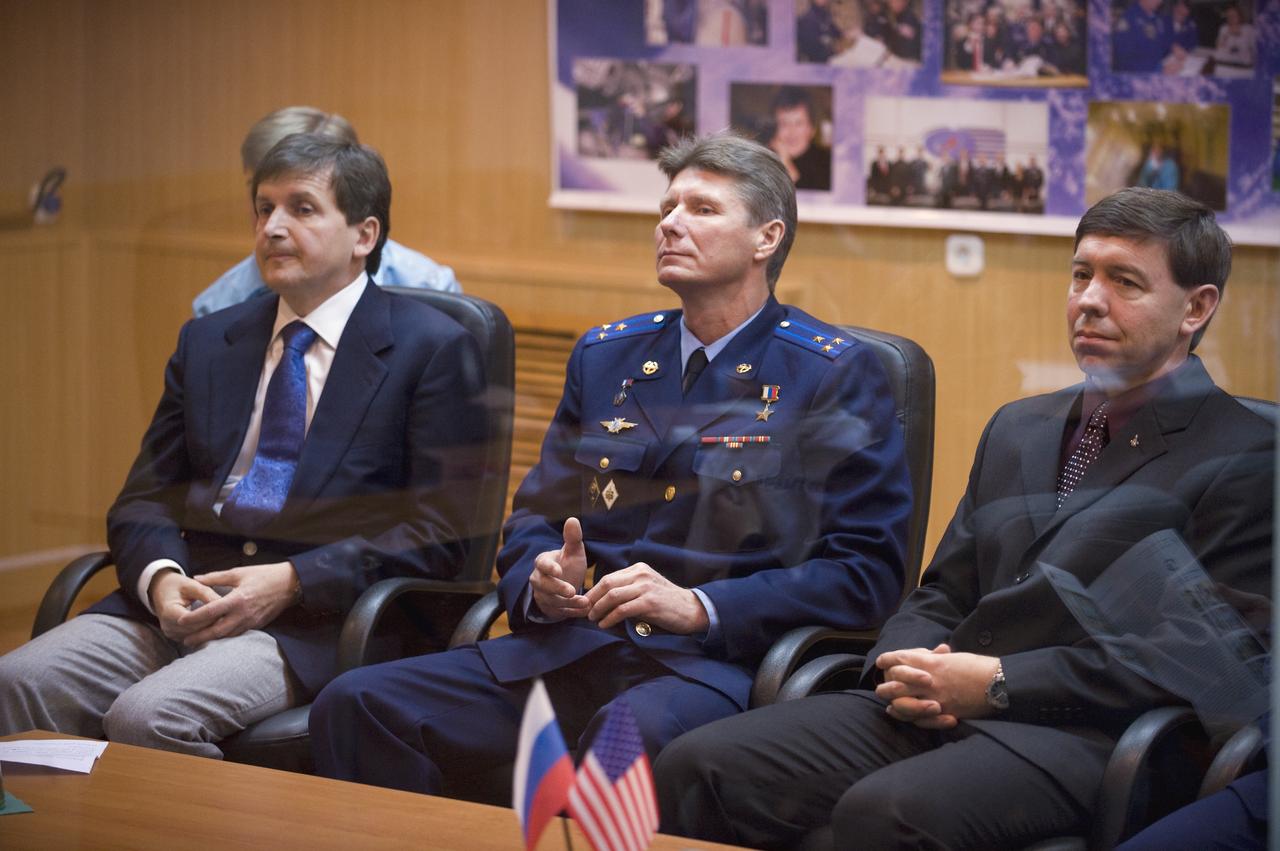
Spaceflight Participant Charles Simonyi, left, Expedition 19 Commander Gennady I. Padalka, center, and Flight Engineer Michael R. Barratt are seen in quarantine behind glass during the State Commission meeting on Wednesday, March 25, 2009 in Baikonur, Kazakhstan. Photo Credit: (NASA/Bill Ingalls)
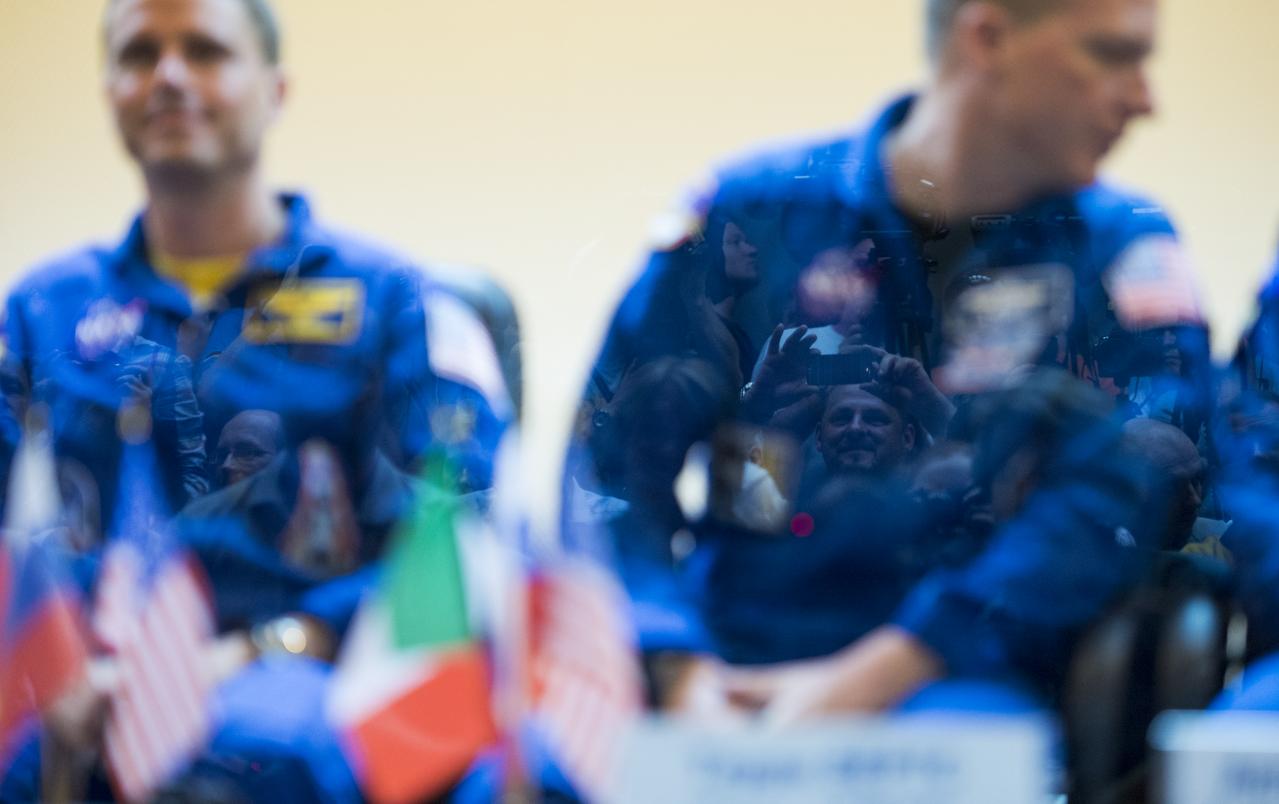
A man taking a picture with a cell phone is seen reflected in the glass separating the quarantined crew during a press conference on Tuesday, May 27, 2014, at the Cosmonaut Hotel in Baikonur, Kazakhstan. The mission to the International Space Station is set to launch May 29 from the Baikonur Cosmodrome. Photo Credit: (NASA/Joel Kowsky)
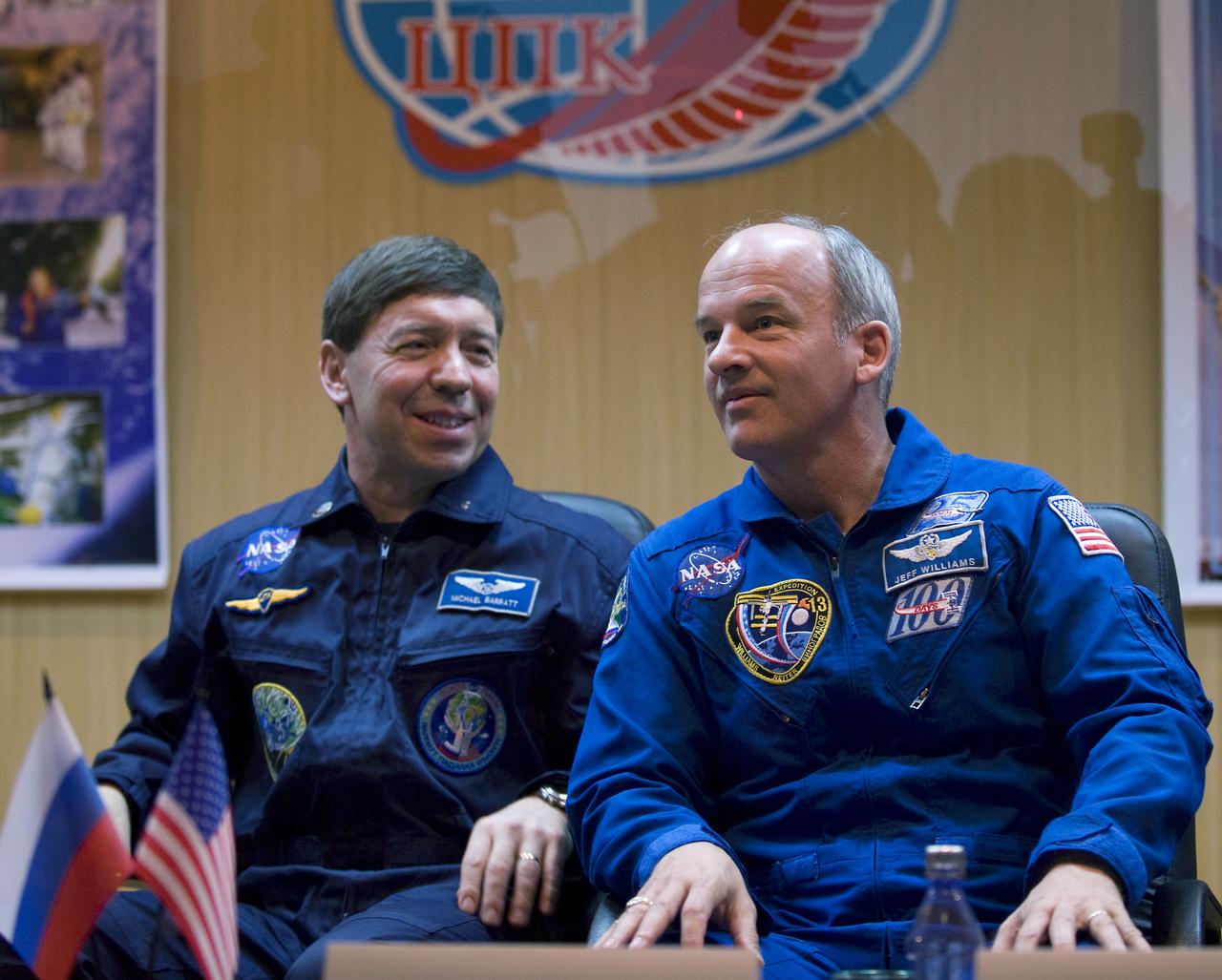
Expedition 19 Flight Engineer Michael R. Barratt, left, and backup commander Jeffrey Williams are seen in quarantine behind glass during a press conference on Wednesday, March 25, 2009 at the Cosmonaut Hotel in Baikonur, Kazakhstan. Photo Credit: (NASA/Bill Ingalls)
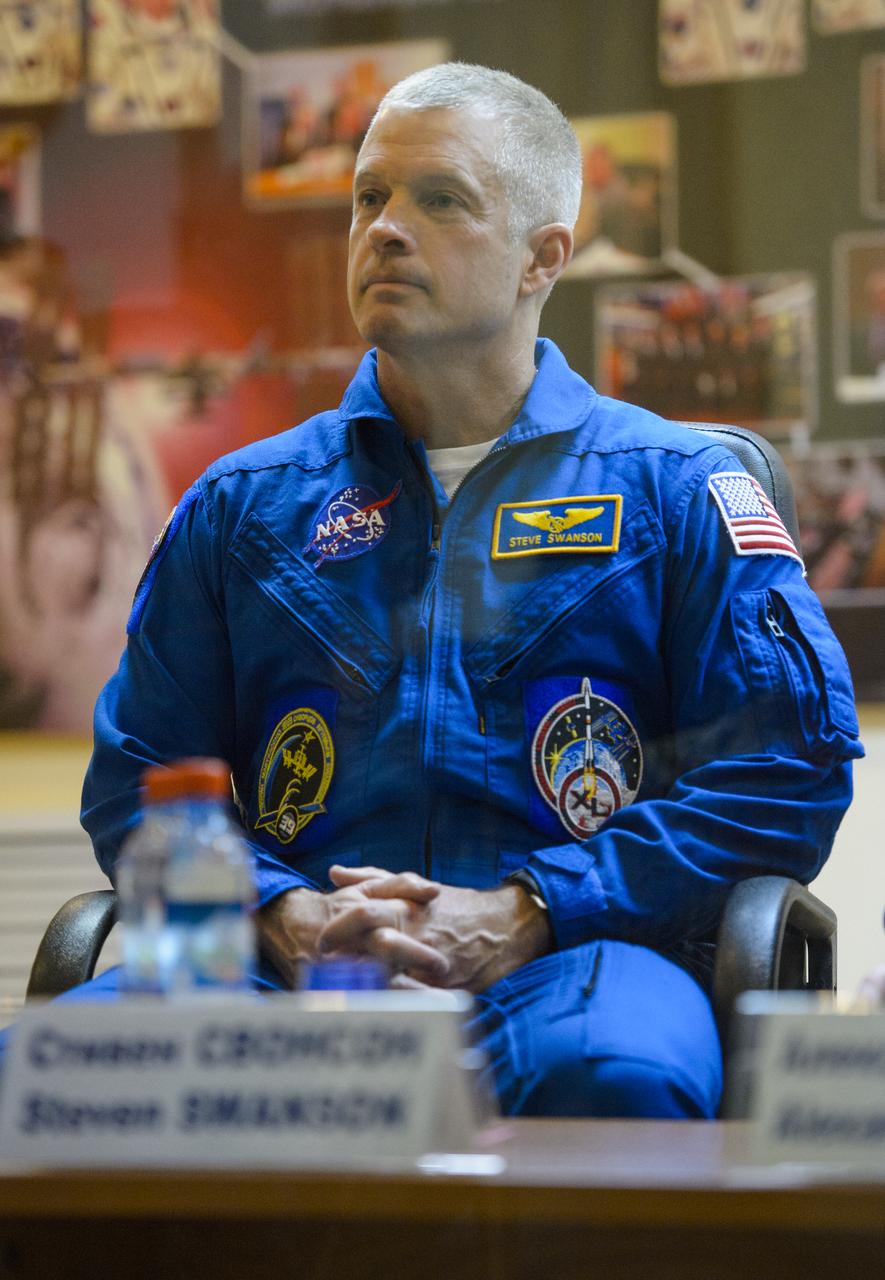
Expedition 39 flight engineer Steve Swanson of NASA is seen in quarantine, behind glass, during the final press conference be Monday, March 24, 2014, at the Cosmonaut Hotel in Baikonur, Kazakhstan. The mission to the International Space Station is set to launch March 26 from the Baikonur Cosmodrome. Photo Credit: (NASA/Joel Kowsky)
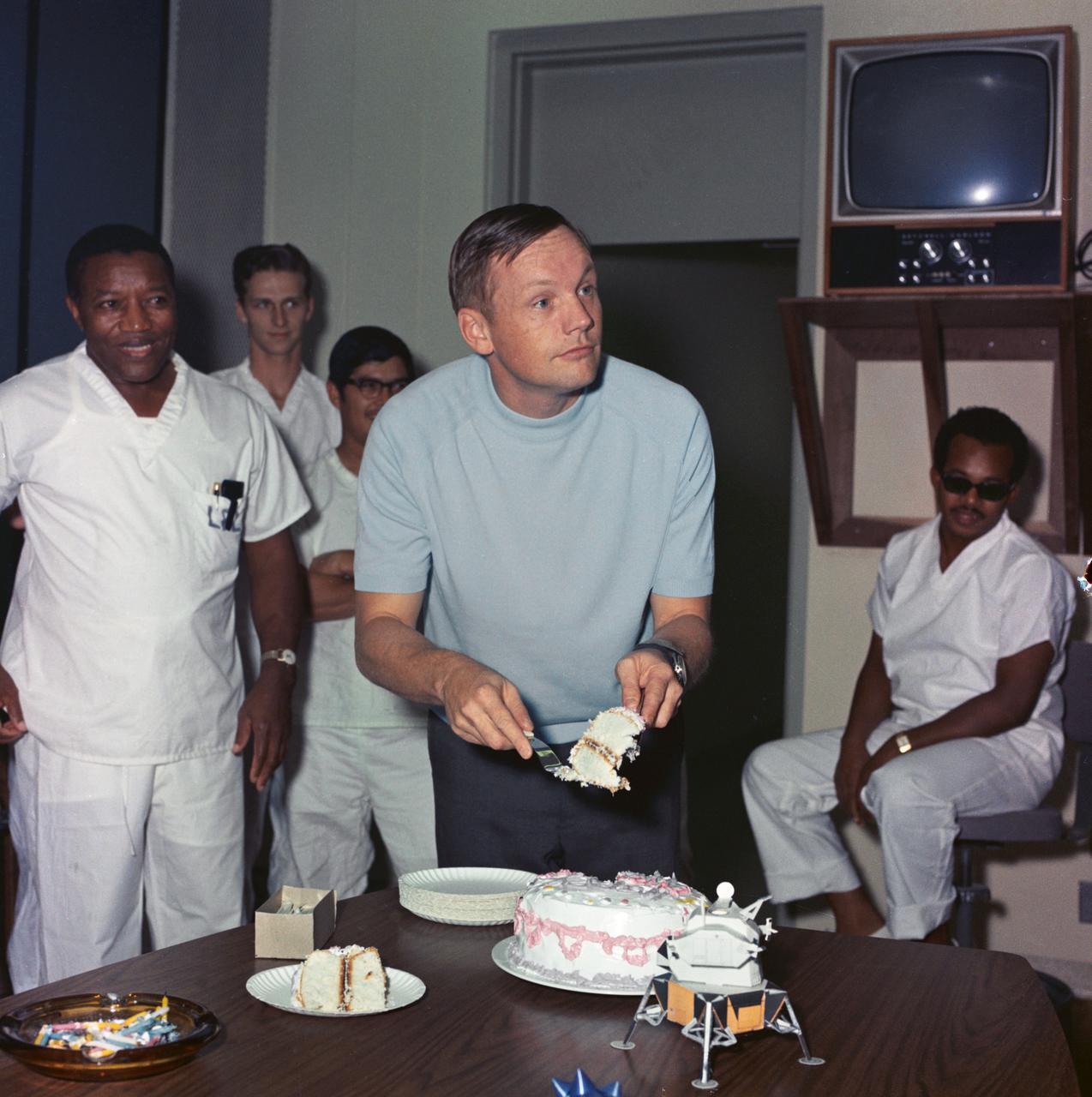
S69-40958 (5 August 1969) --- Astronaut Neil A. Armstrong, commander of the historic Apollo 11 lunar landing mission, and the first man to set foot on the Moon, cuts his birthday cake as he celebrated his 39th birthday. The crew still confined to the Crew Reception Area (CRA) of the Manned Spacecraft Center's (MSC) Lunar Receiving Laboratory (LRL). Armstrong was born on August 5, 1930, in Wapakoneta, Ohio. The cake was described as "standard two-layer, plain vanilla" on which was placed 39 candles. Eighteen of the persons quarantined with Armstrong assembled and sang happy birthday; and a champagne toast was offered. CRA support personnel are in the background. Astronauts Armstrong; Michael Collins, command module pilot; and Edwin E. Aldrin Jr., lunar module pilot, will be released from quarantine on August 11, 1969.
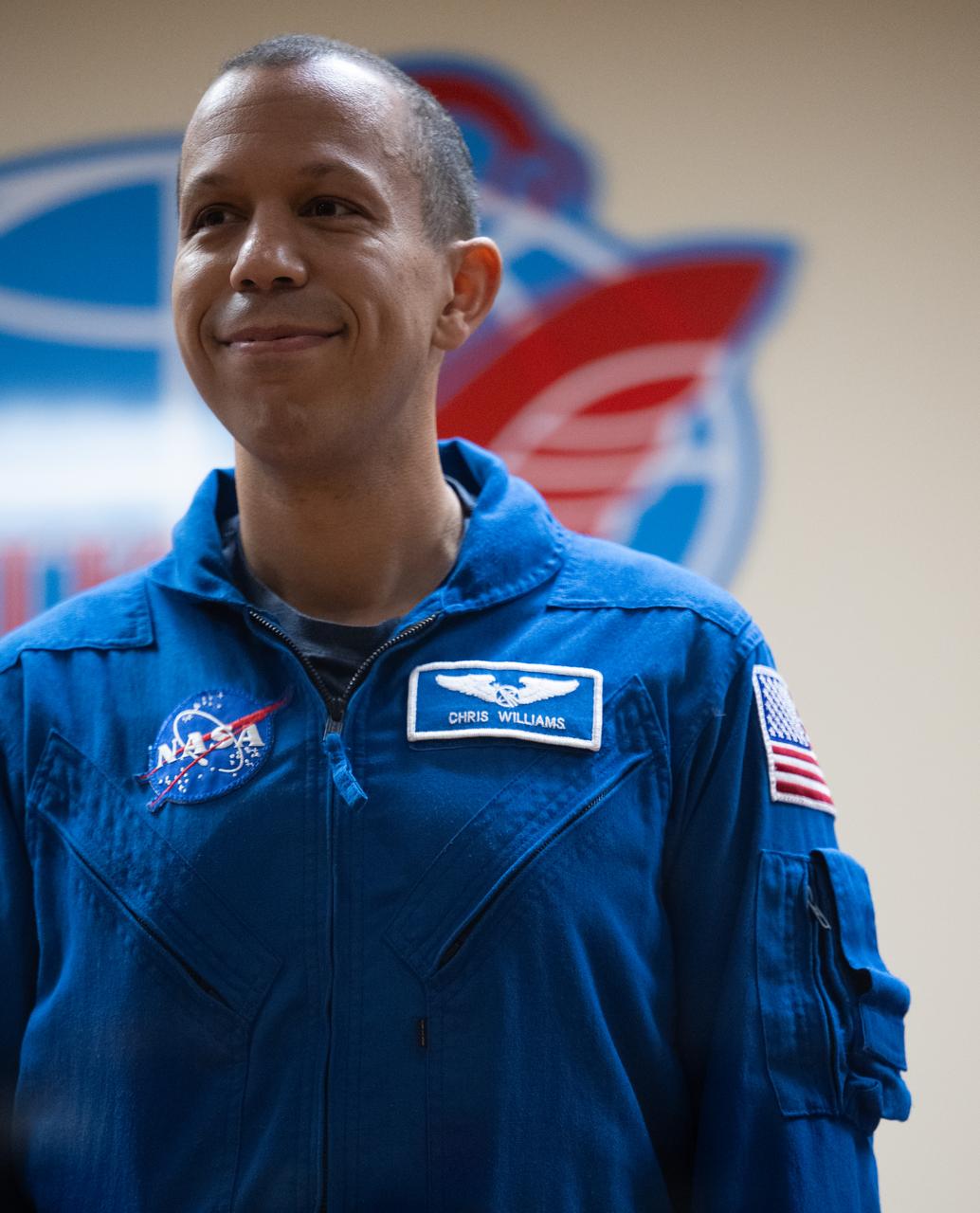
Expedition 73 backup crewmember Chris Williams of NASA seen in quarantine, behind glass, during a press conference, Monday, April 7, 2025 a the Cosmonaut Hotel in Baikonur, Kazakhstan. Expedition 73 crew members: NASA astronaut Jonny Kim, and Roscosmos cosmonauts Sergey Ryzhikov and Alexey Zubritskiy, are scheduled to launch aboard their Soyuz MS-27 spacecraft on April 8. Photo Credit: (NASA/Joel Kowsky)
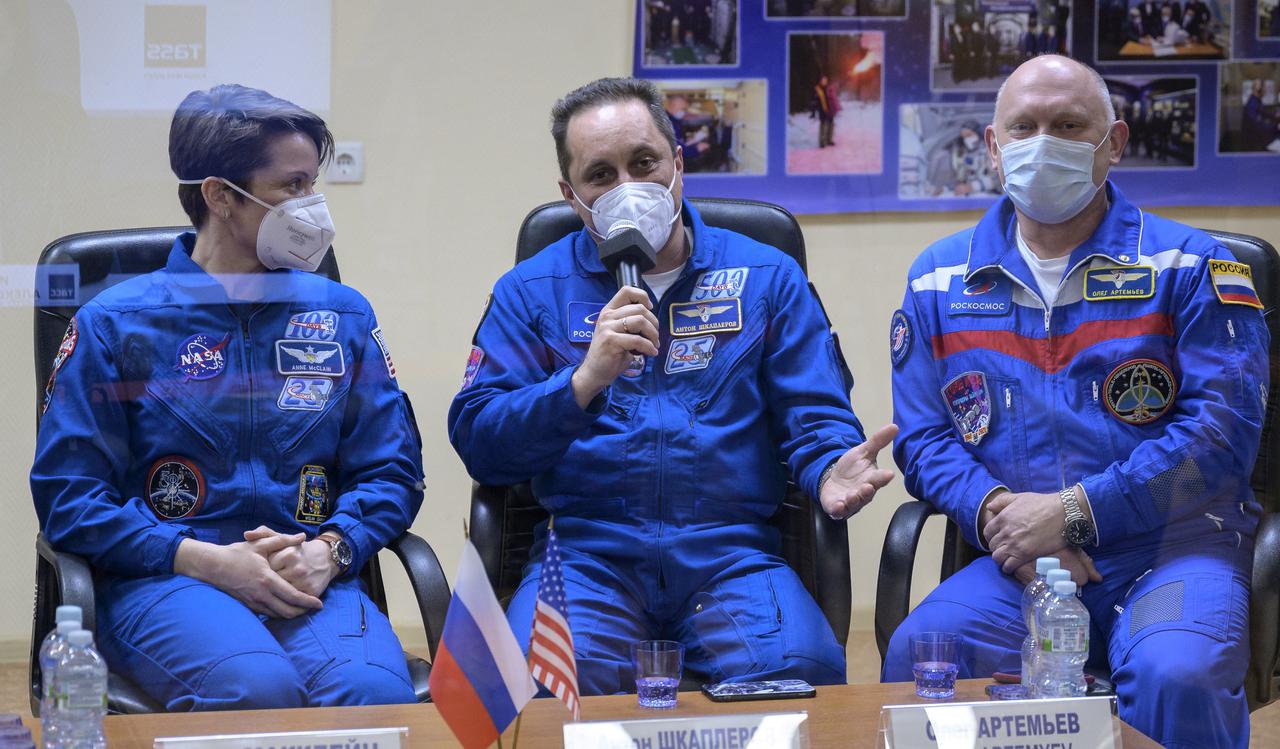
Expedition 65 backup crew members NASA astronaut Anne McClain, left, and Russian cosmonauts Anton Shkaplerov of Roscosmos, and Oleg Artemyev of Roscosmos, right, are seen in quarantine, behind glass, during a press conference, Thursday, April 8, 2021 a the Cosmonaut Hotel in Baikonur, Kazakhstan. Expedition 65 NASA astronaut Mark Vande Hei, Roscosmos cosmonauts Pyotr Dubrov and Oleg Novitskiy are scheduled to launch to the International Space Station aboard the Soyuz MS-18 spacecraft on April 9. Photo Credit: (NASA/Bill Ingalls)
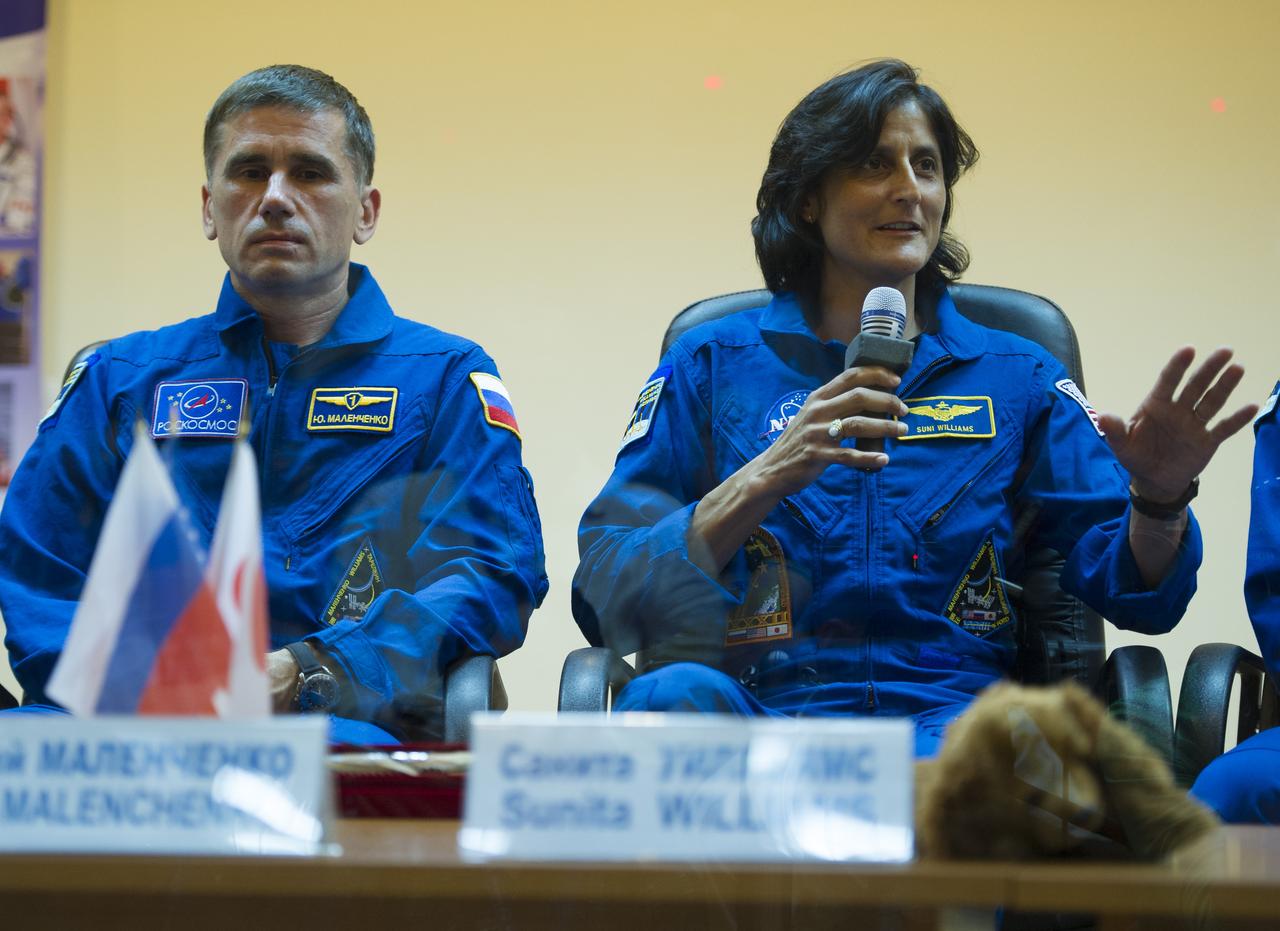
Quarantined Expedition 32 Flight Engineer Sunita Williams, right, answers reporters questions from behind glass during a prelaunch press conference held at the Cosmonaut Hotel on Friday, July 13, 2012 in Baikonur, Kazakhstan. Seated next to her is Soyuz Commander Yuri Malenchenko. The launch of the Soyuz spacecraft with Williams, Malenchenko, and JAXA Flight Engineer Akihiko Hoshide is scheduled for 8:40 a.m. local time on Sunday, July 15. Photo Credit (NASA/Carla Cioffi)
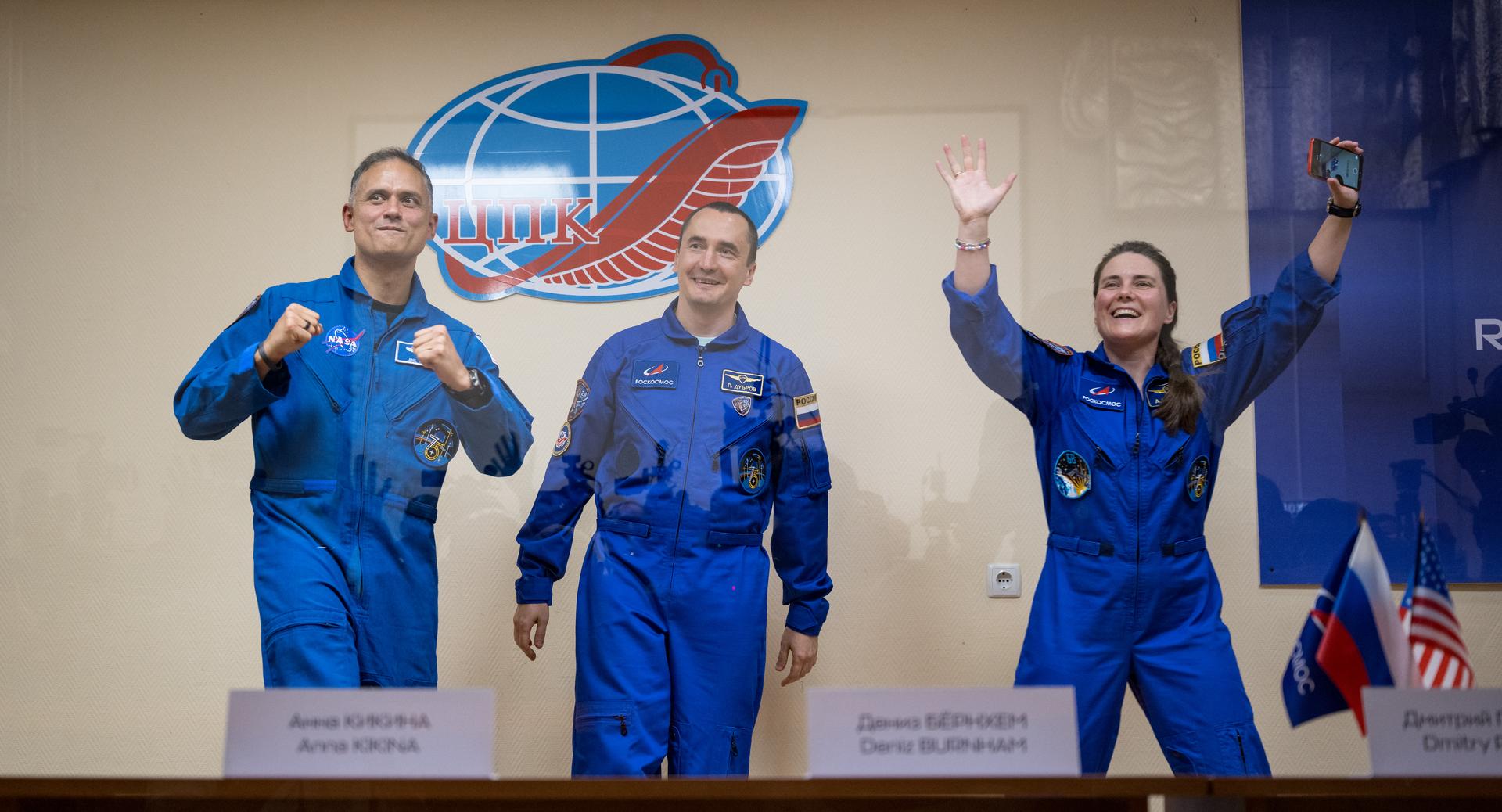
Expedition 75 crewmembers: NASA astronaut Anil Menon, left, Roscosmos cosmonauts Pyotr Dubrov, and Anna Kikina, right, are seen in quarantine, behind glass, during a press conference, Monday, July 13, 2026 a the Cosmonaut Hotel in Baikonur, Kazakhstan. Menon, Dubrov, and Kikina are scheduled to launch aboard the Soyuz MS-29 spacecraft to the International Space Station on July 14. Photo Credit: (NASA/Bill Ingalls)
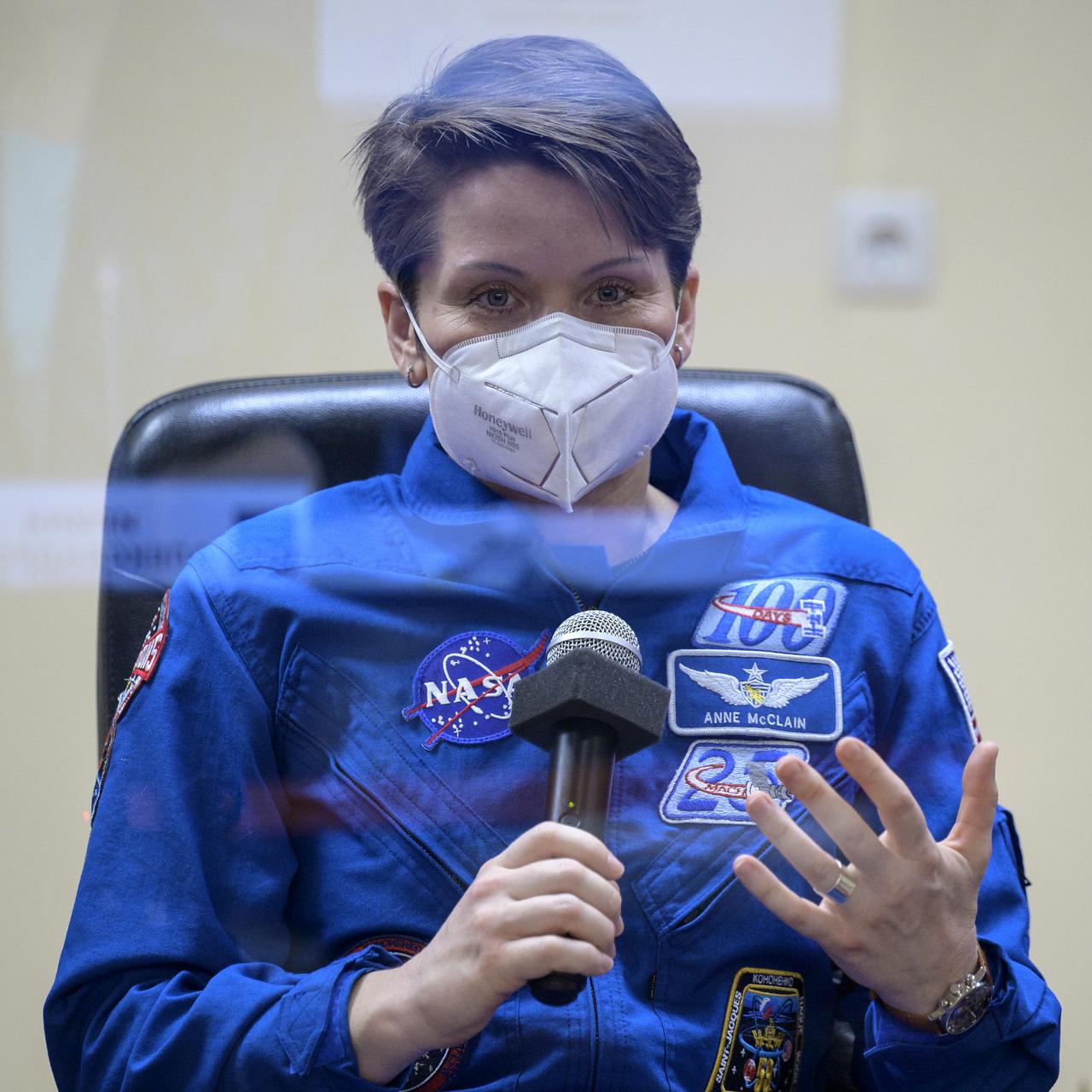
Expedition 65 backup crew member Anne McClain of NASA is seen in quarantine, behind glass, during a press conference, Thursday, April 8, 2021 a the Cosmonaut Hotel in Baikonur, Kazakhstan. Expedition 65 NASA astronaut Mark Vande Hei, Roscosmos cosmonauts Pyotr Dubrov and Oleg Novitskiy are scheduled to launch to the International Space Station aboard the Soyuz MS-18 spacecraft on April 9. Photo Credit: (NASA/Bill Ingalls)
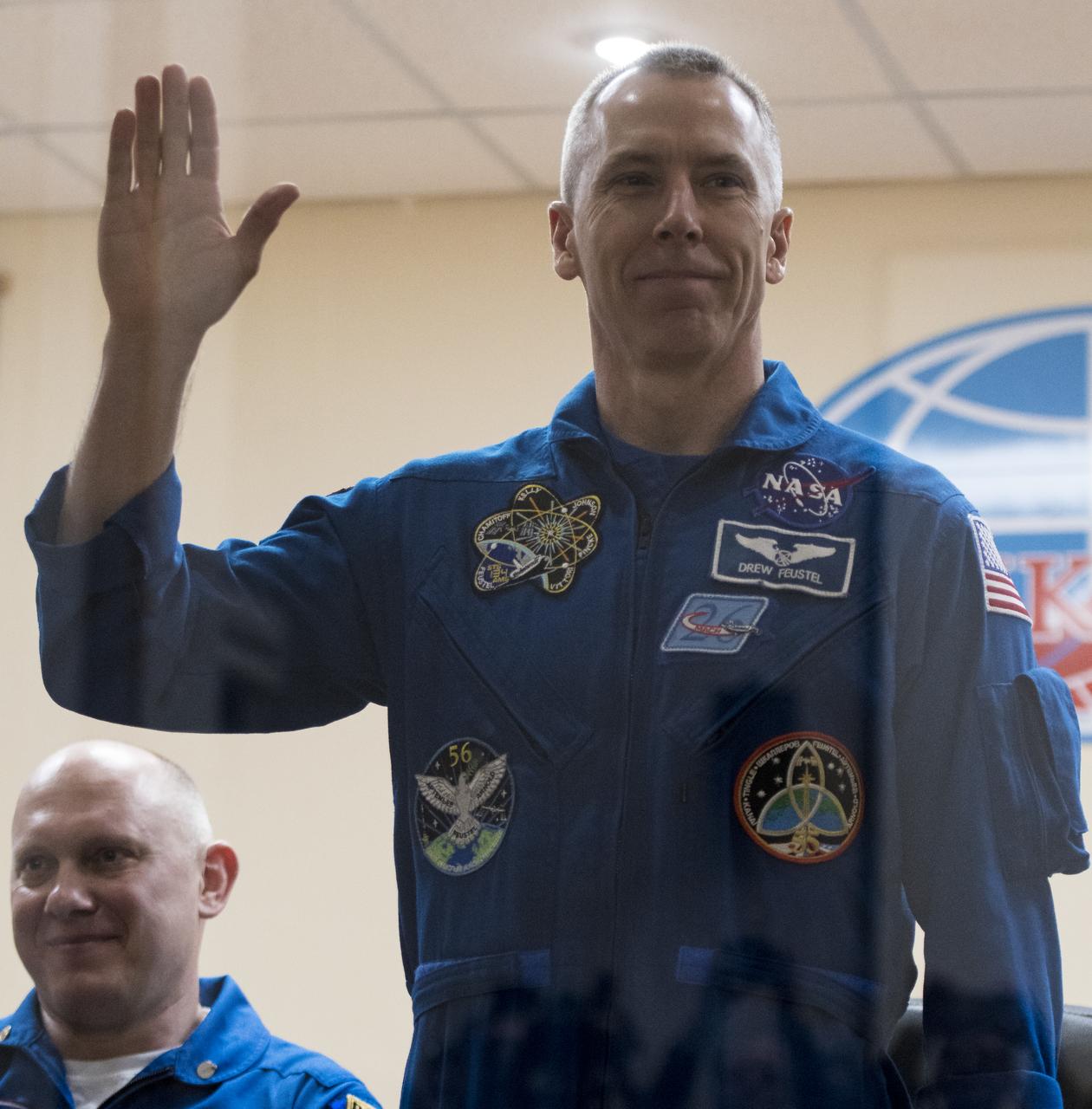
Expedition 55 flight engineer Drew Feustel is seen in quarantine, behind glass, during a press conference, Tuesday, March 20, 2018 a the Cosmonaut Hotel in Baikonur, Kazakhstan. Feustel, Soyuz Commander Oleg Artemyev of Roscosmos, and flight engineer Ricky Arnold of NASA are scheduled to launch to the International Space Station aboard the Soyuz MS-08 spacecraft on Wednesday, March, 21. Photo Credit: (NASA/Joel Kowsky)
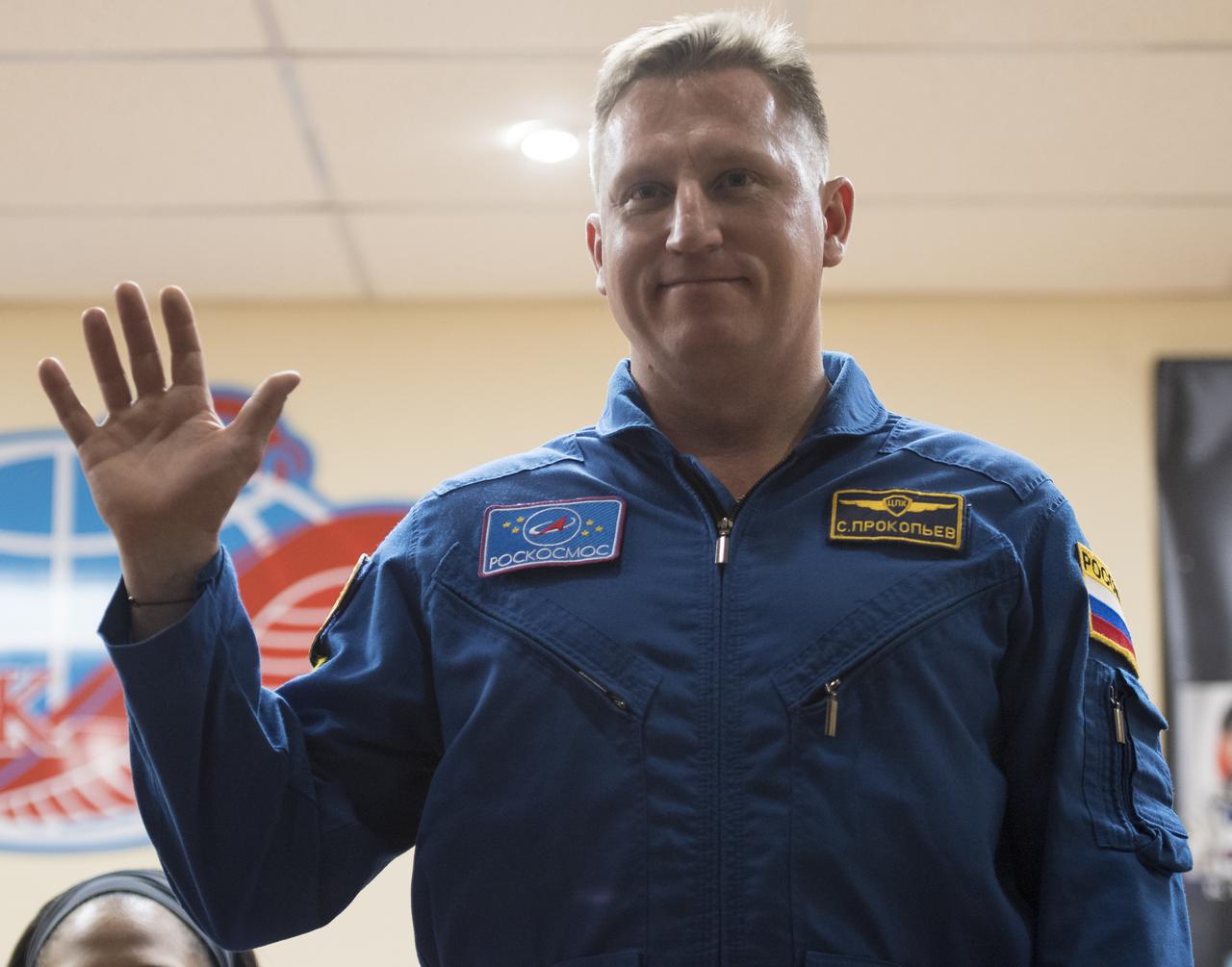
Expedition 54 backup crew member Sergey Prokopev is seen in quarantine, behind glass, during a press conference, Saturday, Dec. 16, 2017 at the Cosmonaut Hotel in Baikonur, Kazakhstan. Expedition 54 prime crew members Soyuz Commander Anton Shkaplerov of Roscosmos, flight engineer Scott Tingle of NASA, and flight engineer Norishige Kanai of the Japan Aerospace Exploration Agency (JAXA) are scheduled to launch to the International Space Station aboard the Soyuz spacecraft from the Baikonur Cosmodrome on December 17. Photo Credit: (NASA/Joel Kowsky)
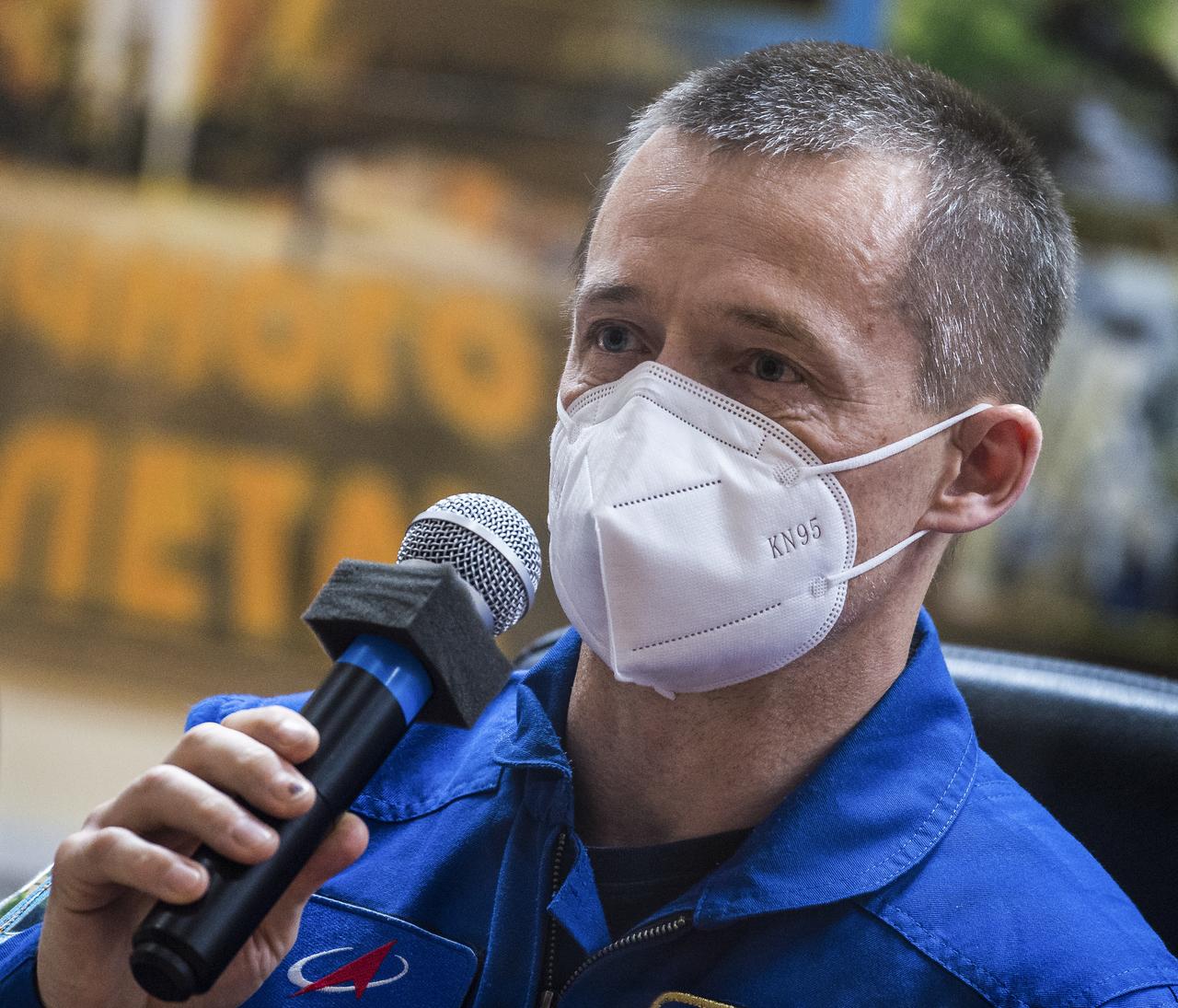
Expedition 64 Russian cosmonaut Sergey Ryzhikov of Roscosmos is seen in quarantine, behind glass, during a press conference, Tuesday, Oct. 13, 2020, at the Cosmonaut Hotel in Baikonur, Kazakhstan. Ryzhikov, fellow cosmonaut Sergey Kud-Sverchkov and NASA astronaut Kate Rubins are scheduled to launch to the International Space Station aboard the Soyuz MS-17 spacecraft on October 14. Photo Credit: (NASA/GCTC/Andrey Shelepin)
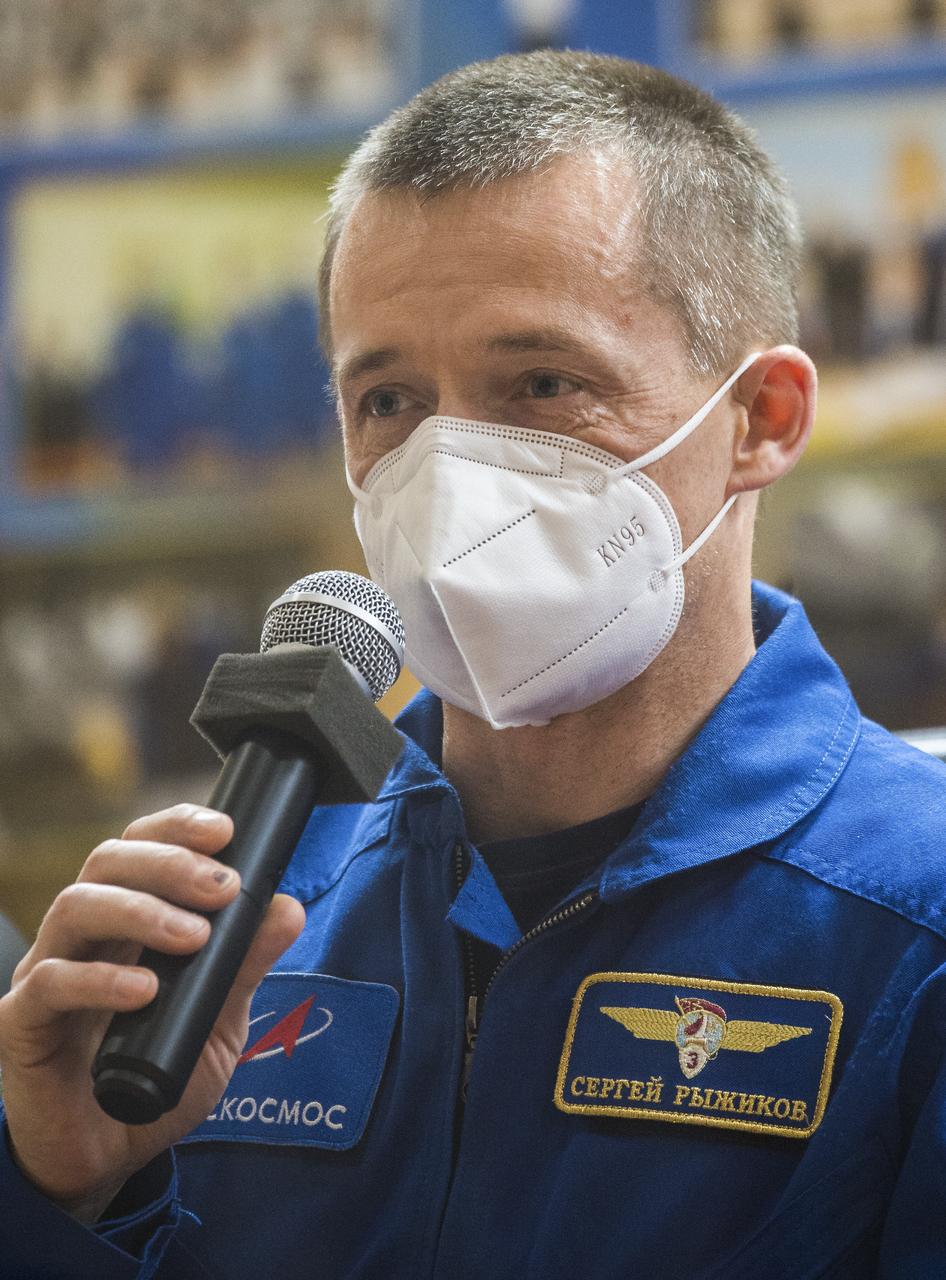
Expedition 64 Russian cosmonaut Sergey Ryzhikov of Roscosmos is seen in quarantine, behind glass, during a press conference, Tuesday, Oct. 13, 2020, at the Cosmonaut Hotel in Baikonur, Kazakhstan. Ryzhikov, fellow cosmonaut Sergey Kud-Sverchkov and NASA astronaut Kate Rubins are scheduled to launch to the International Space Station aboard the Soyuz MS-17 spacecraft on October 14. Photo Credit: (NASA/GCTC/Andrey Shelepin)
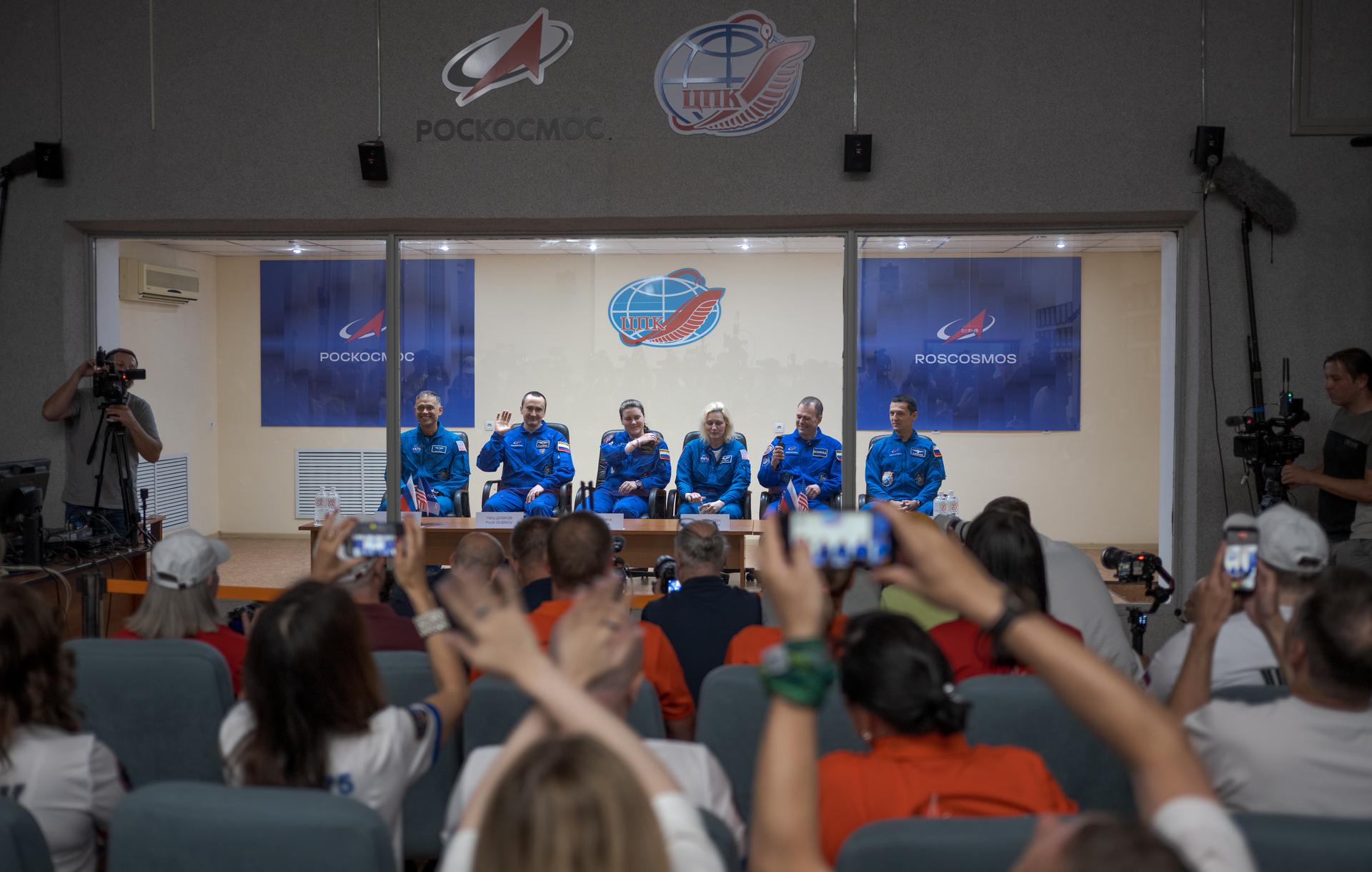
Expedition 75 crewmembers: NASA astronaut Anil Menon, left, Roscosmos cosmonauts Pyotr Dubrov, and Anna Kikina, along with backup crewmemebers: NASA astronaut Deniz Burnham, Roscosmos cosmonauts Dmitry Petelin, and Konstantin Borisov, right, are seen in quarantine, behind glass, during a press conference, Monday, July 13, 2026 a the Cosmonaut Hotel in Baikonur, Kazakhstan. Menon, Dubrov, and Kikina are scheduled to launch aboard the Soyuz MS-29 spacecraft to the International Space Station on July 14. Photo Credit: (NASA/Bill Ingalls)
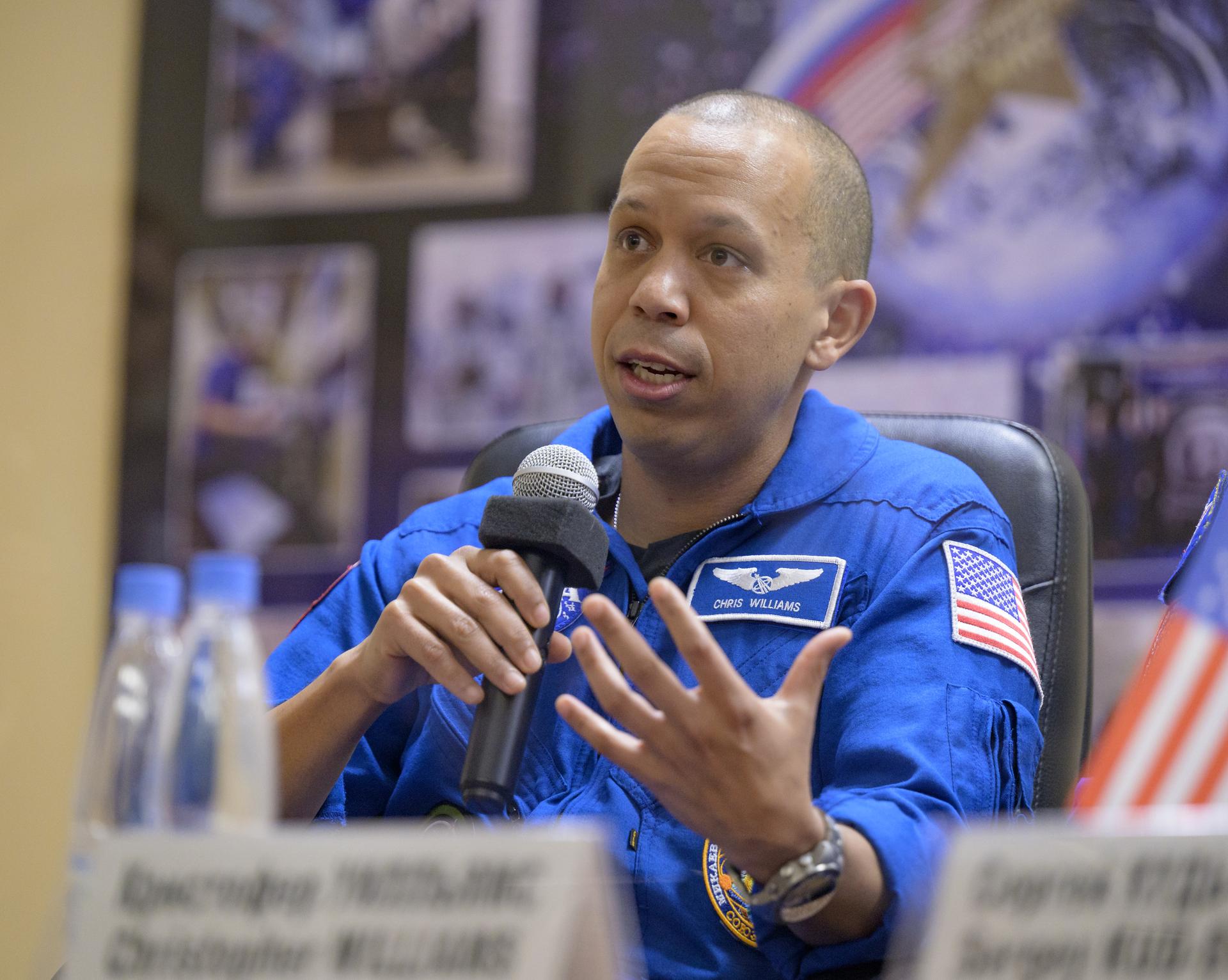
NASA astronaut Chris Williams is seen in quarantine, behind glass, during a press conference, Wednesday, Nov. 26, 2025 at the Cosmonaut Hotel in Baikonur, Kazakhstan. Expedition 74 crewmembers: Williams, Roscosmos cosmonauts Sergey Kud-Sverchkov and Sergei Mikaev, are scheduled to launch aboard their Soyuz MS-28 spacecraft on November 27. Photo Credit: (NASA/Bill Ingalls)
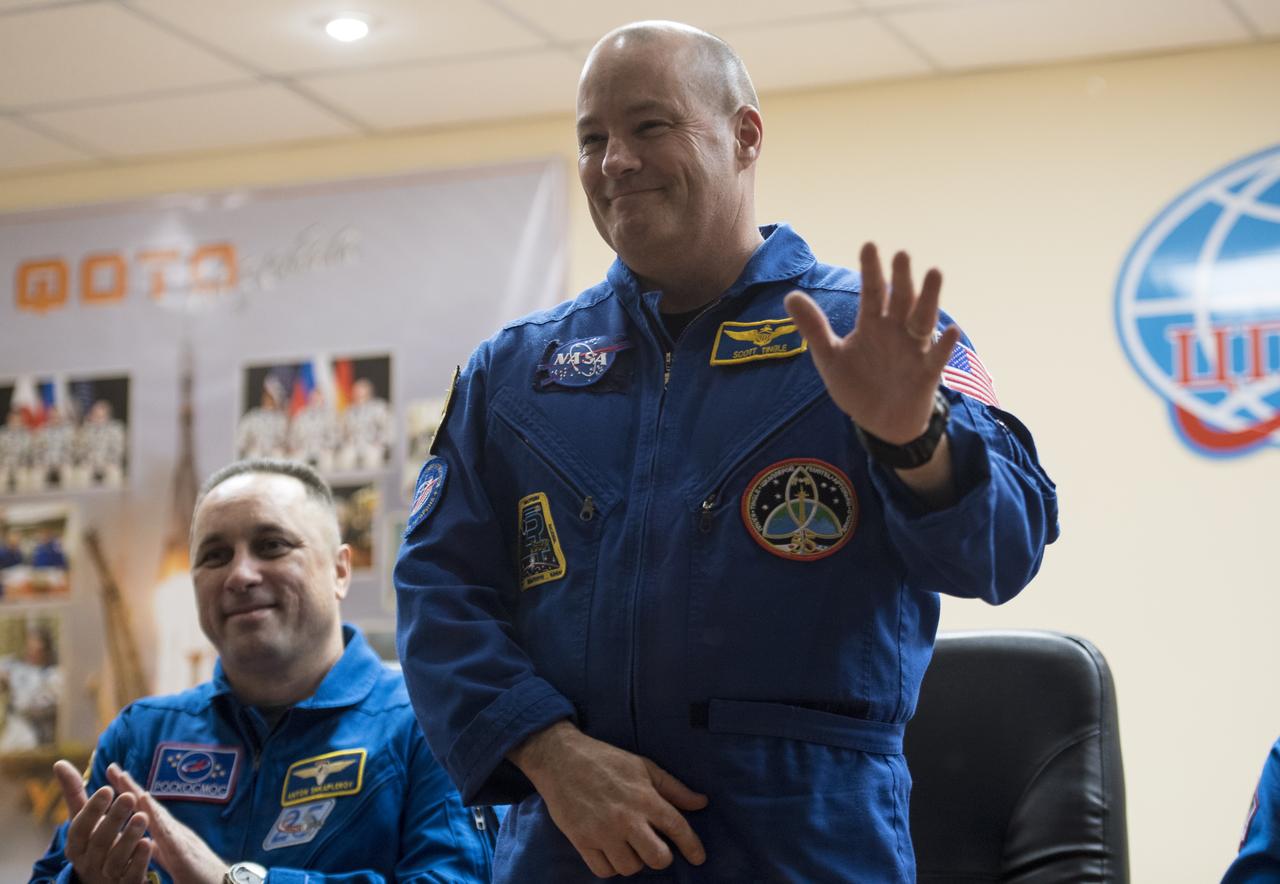
Expedition 54 flight engineer Scott Tingle is seen in quarantine, behind glass, during a press conference, Saturday, Dec. 16, 2017 at the Cosmonaut Hotel in Baikonur, Kazakhstan. Tingle, Soyuz Commander Anton Shkaplerov of Roscosmos, and flight engineer Norishige Kanai of the Japan Aerospace Exploration Agency (JAXA) are scheduled to launch to the International Space Station aboard the Soyuz spacecraft from the Baikonur Cosmodrome on December 17. Photo Credit: (NASA/Joel Kowsky)
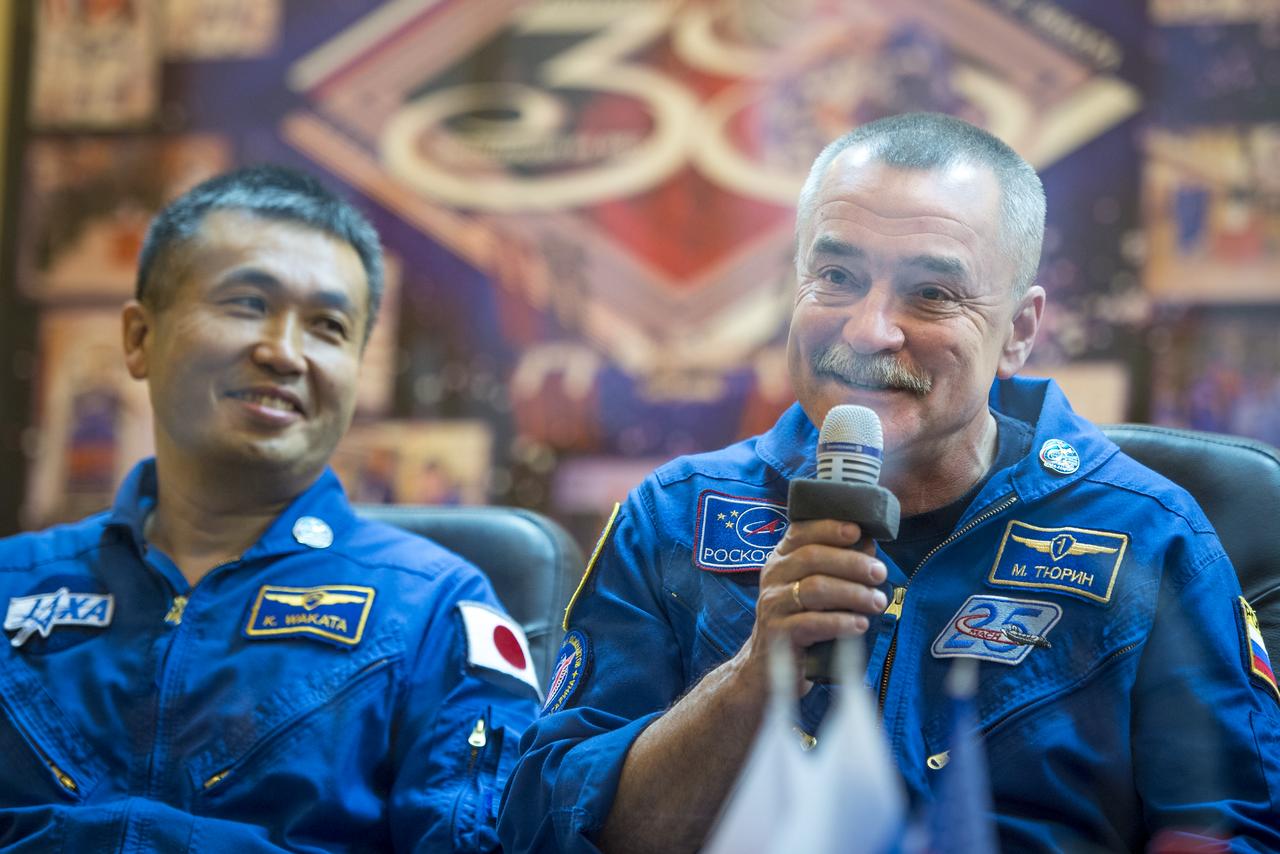
Expedition 38 Soyuz Commander Mikhail Tyurin of Roscosmos, right, talks as Flight Engineer Koichi Wakata of the Japan Aerospace Exploration Agency, listens, from quarantine behind glass, during the final press conference held a day ahead of their launch with fellow crew mate, Flight Engineer Rick Mastracchio of NASA, to the International Space Station, Wednesday, Nov. 6, 2013 at the Cosmonaut Hotel in Baikonur, Kazakhstan. Photo Credit: (NASA/Bill Ingalls)
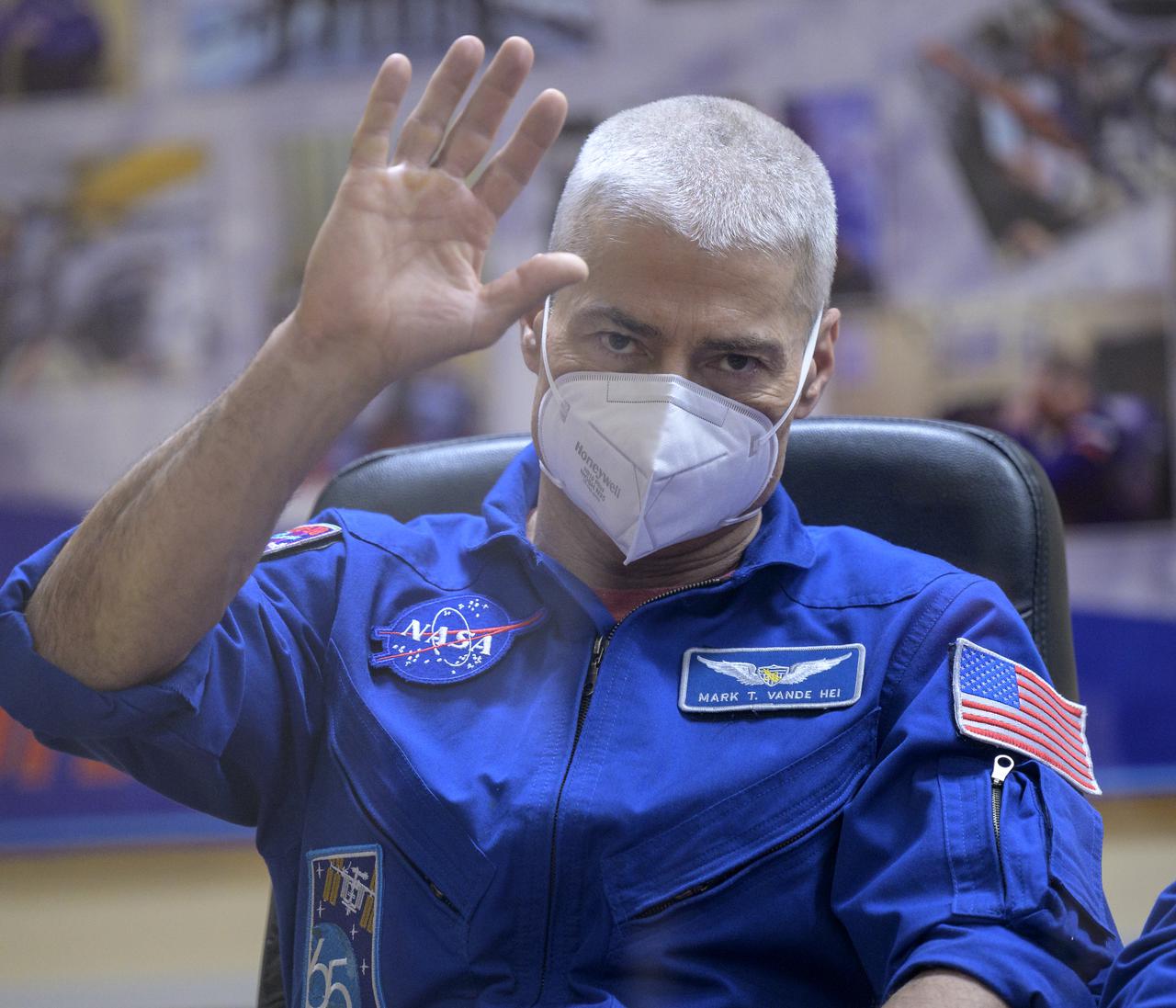
Expedition 65 NASA astronaut Mark Vande Hei is seen in quarantine, behind glass, during a press conference, Thursday, April 8, 2021 a the Cosmonaut Hotel in Baikonur, Kazakhstan. Expedition 65 Roscosmos cosmonauts Pyotr Dubrov, Oleg Novitskiy and NASA’s Vande Hei are scheduled to launch to the International Space Station aboard the Soyuz MS-18 spacecraft on April 9. Photo Credit: (NASA/Bill Ingalls)
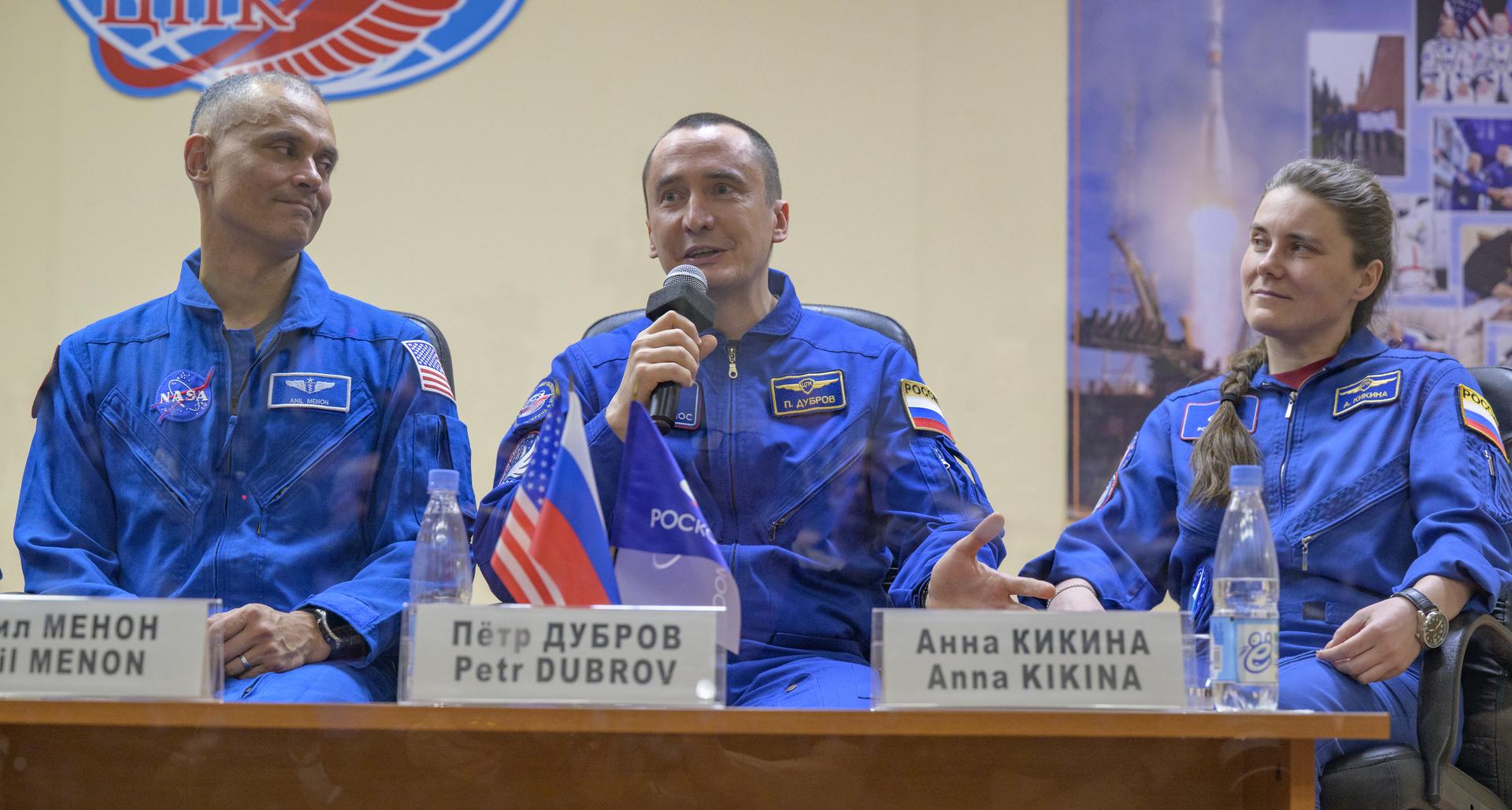
Expedition 74 backup crew members Anil Menon of NASA, left, and Roscosmos cosmonauts Petr Dubrov, and Anna Kikina are seen in quarantine, behind glass, during a press conference, Wednesday, Nov. 26, 2025 at the Cosmonaut Hotel in Baikonur, Kazakhstan. Expedition 74 crewmembers: NASA astronaut Chris Williams, Roscosmos cosmonauts Sergey Kud-Sverchkov and Sergei Mikaev, are scheduled to launch aboard their Soyuz MS-28 spacecraft on November 27. Photo Credit: (NASA/Bill Ingalls)
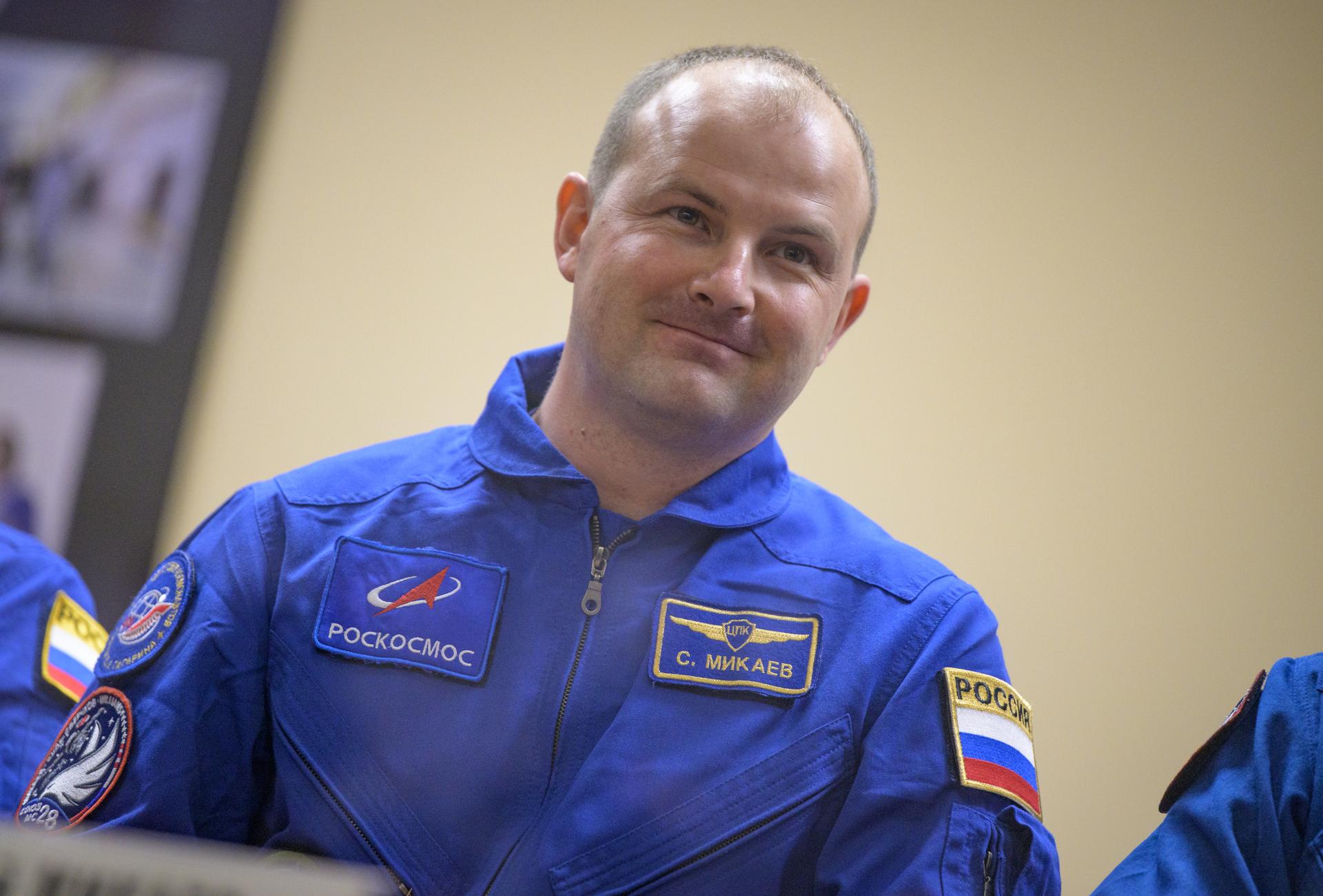
Roscosmos cosmonaut Sergei Mikaev is seen in quarantine, behind glass, during a press conference, Wednesday, Nov. 26, 2025 at the Cosmonaut Hotel in Baikonur, Kazakhstan. Expedition 74 crewmembers: NASA astronaut Chris Williams, Roscosmos cosmonauts Sergey Kud-Sverchkov and Sergei Mikaev, are scheduled to launch aboard their Soyuz MS-28 spacecraft on November 27. Photo Credit: (NASA/Bill Ingalls)
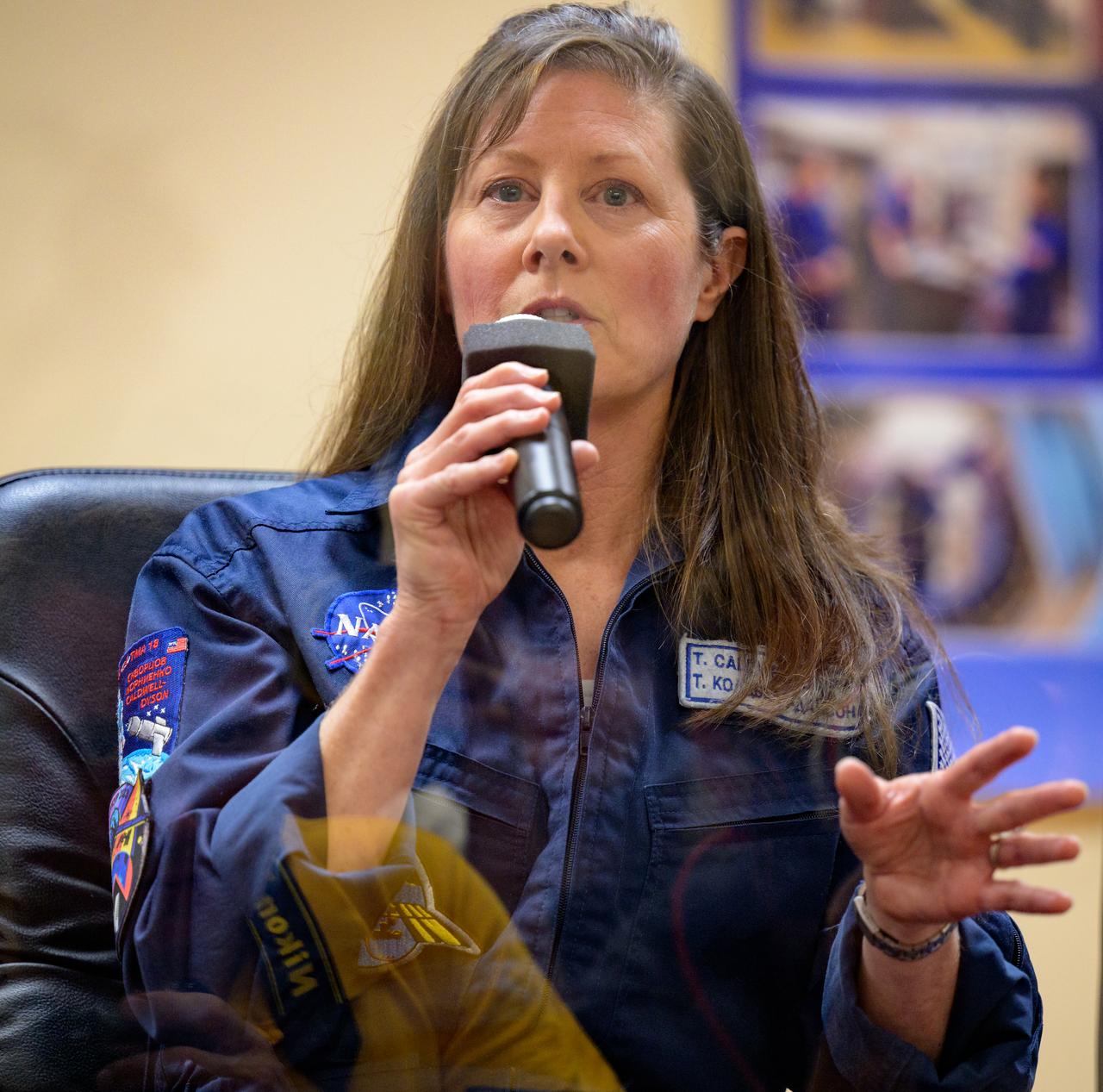
Expedition 70 backup astronaut Tracy Dyson is seen in quarantine behind glass during a press conference, Thursday, Sept. 14, 2023 at the Cosmonaut Hotel in Baikonur, Kazakhstan. Expedition 70 NASA astronaut Loral O'Hara, Roscosmos cosmonauts Oleg Kononenko, and Nikolai Chub are scheduled to launch aboard their Soyuz MS-24 spacecraft on Sept. 15. Photo Credit: (NASA/Bill Ingalls)
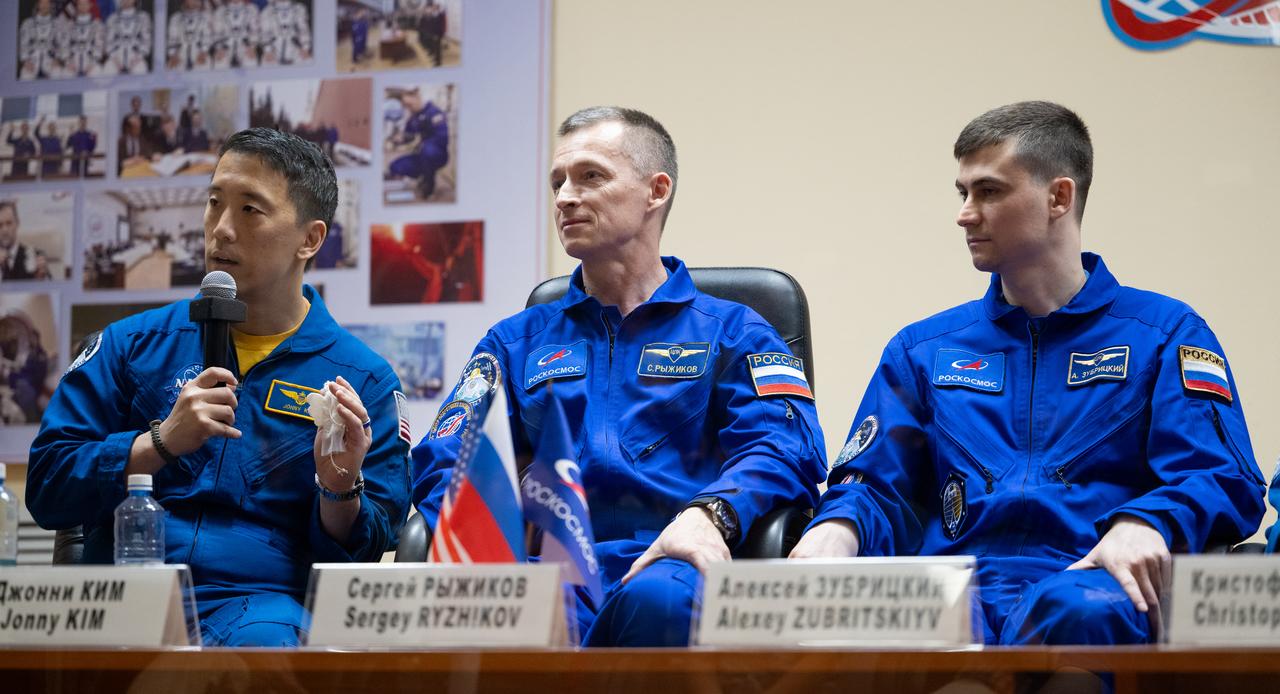
NASA astronaut Jonny Kim, left, and Roscosmos cosmonauts Sergey Ryzhikov and Alexey Zubritskiy seen in quarantine, behind glass, during a press conference, Monday, April 7, 2025 a the Cosmonaut Hotel in Baikonur, Kazakhstan. Kim, Ryzhikov, Zubritskiy are scheduled to launch aboard their Soyuz MS-27 spacecraft on April 8. Photo Credit: (NASA/Joel Kowsky)
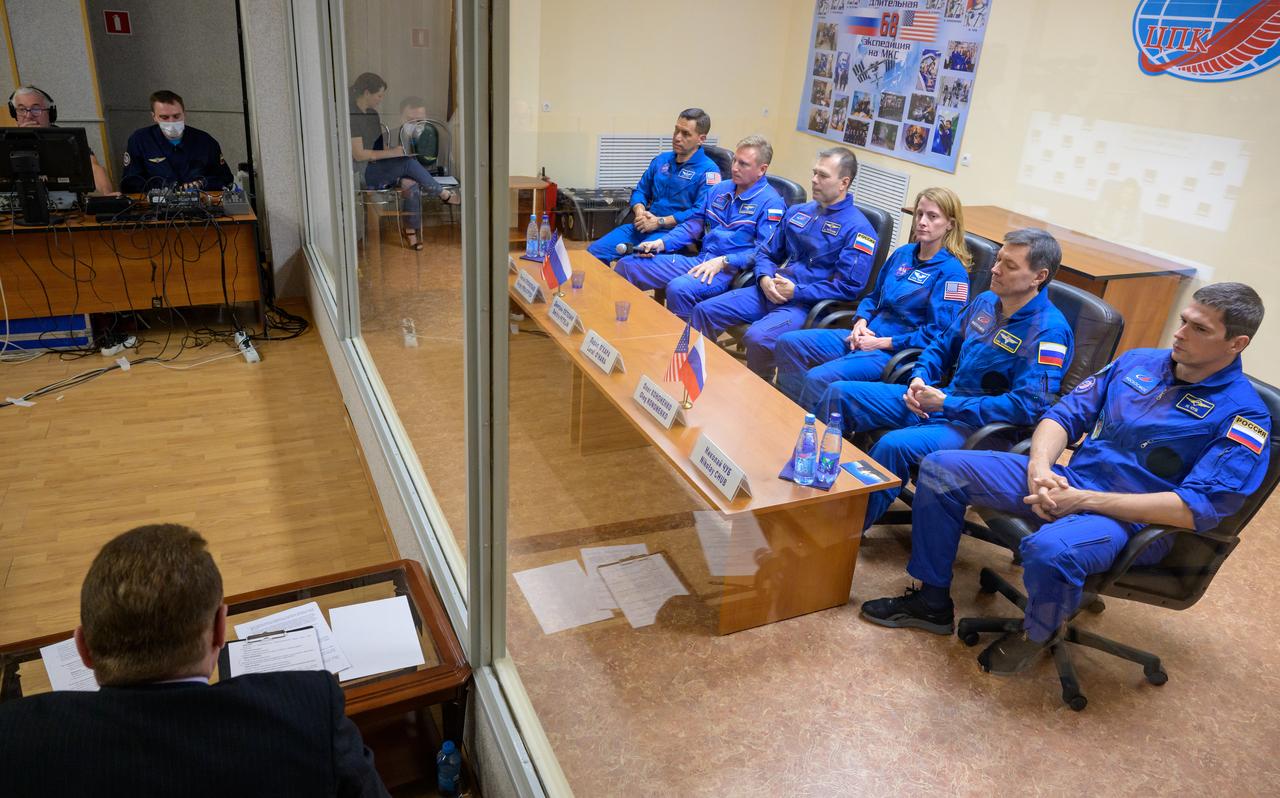
Expedition 68 astronaut Frank Rubio of NASA, left, cosmonauts Sergey Prokopyev and Dmitri Petelin of Roscosmos, along with Expedition 68 backup crewmembers Loral O'Hara of NASA, Oleg Kononenko and Nikolai Chub of Roscosmos, right, are seen in quarantine, behind glass, during a press conference, Tuesday, Sept. 20, 2022, at the Cosmonaut Hotel in Baikonur, Kazakhstan. Rubio, Prokoyev, and Petelin are scheduled to launch to the International Space Station aboard the Soyuz MS-22 spacecraft on Sept. 21. Photo Credit: (NASA/Bill Ingalls)
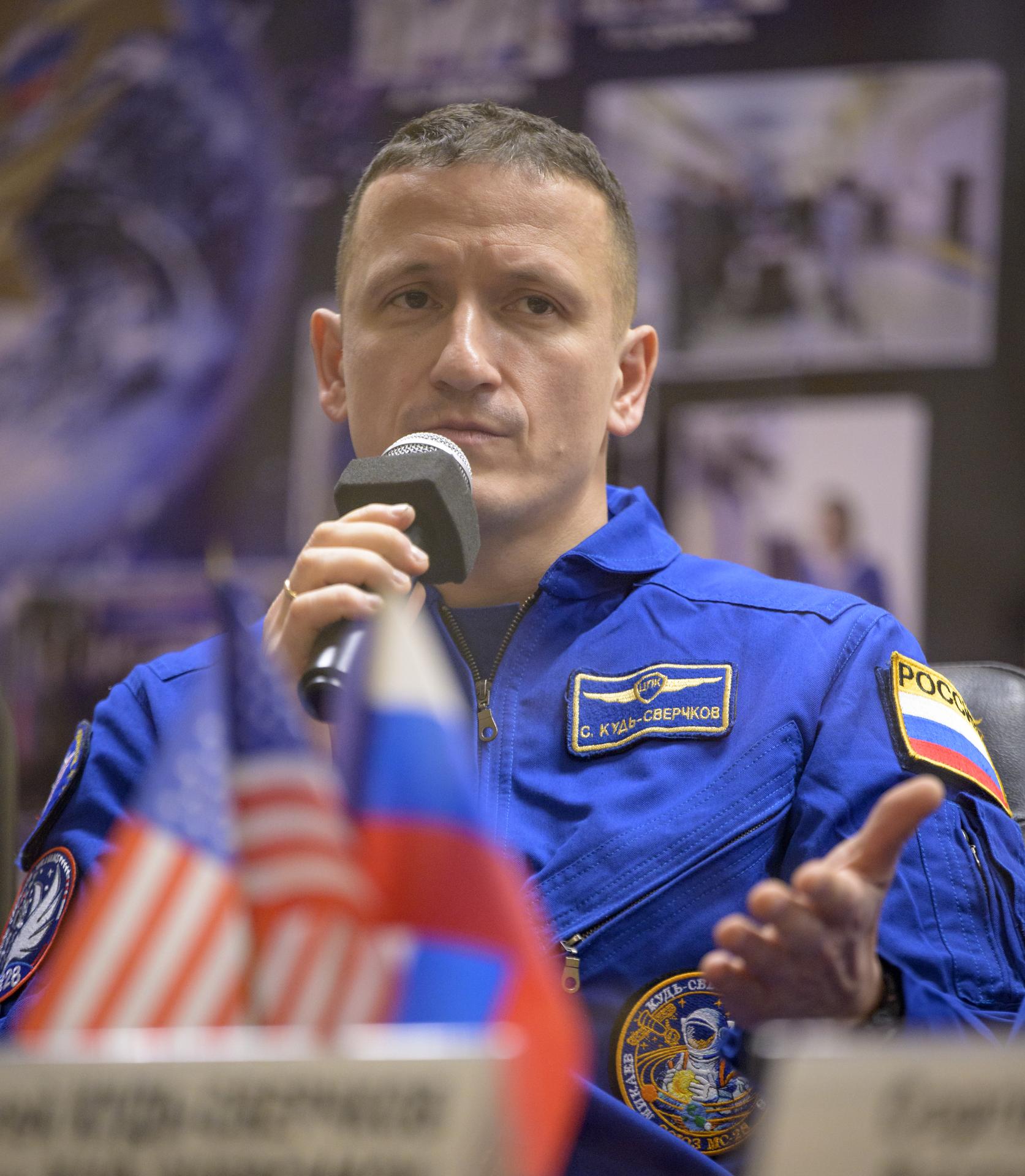
Roscosmos cosmonaut Sergey Kud-Sverchkov is seen in quarantine, behind glass, during a press conference, Wednesday, Nov. 26, 2025 at the Cosmonaut Hotel in Baikonur, Kazakhstan. Expedition 74 crewmembers: NASA astronaut Chris Williams, Roscosmos cosmonauts Sergey Kud-Sverchkov and Sergei Mikaev, are scheduled to launch aboard their Soyuz MS-28 spacecraft on November 27. Photo Credit: (NASA/Bill Ingalls)
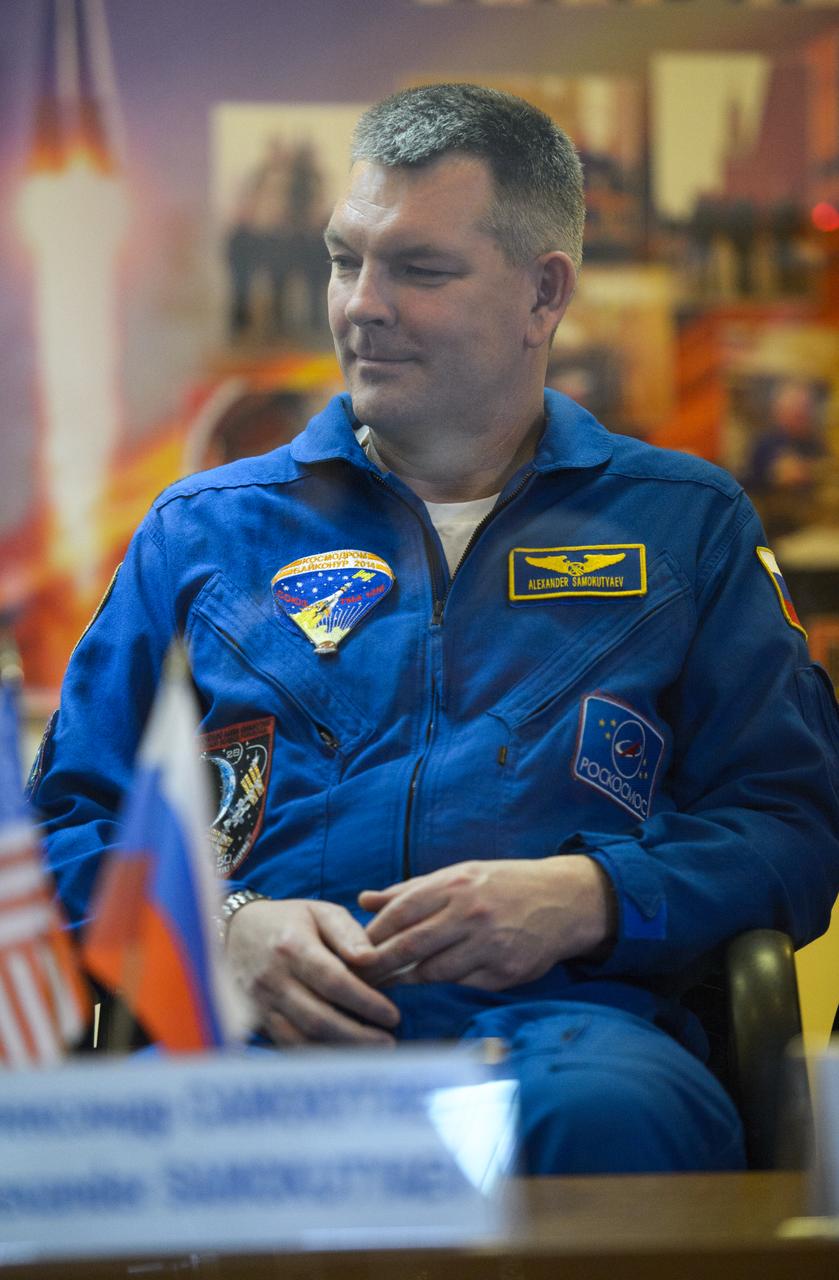
Expedition 39 backup crew member Aleksandr Samokutyaev of the Russian Federal Space Agency, Roscosmos, is seen in quarantine, behind glass, during the final press conference held ahead of the launch of Expedition 39 prime crew members; Soyuz Commander Alexander Skvortsov of the Russian Federal Space Agency, Flight Engineer Steve Swanson of NASA, and Flight Engineer Oleg Artemyev of Roscosmos, to the International Space Station, Monday, March 24, 2014 at the Cosmonaut Hotel in Baikonur, Kazakhstan. Photo Credit: (NASA/Bill Ingalls)
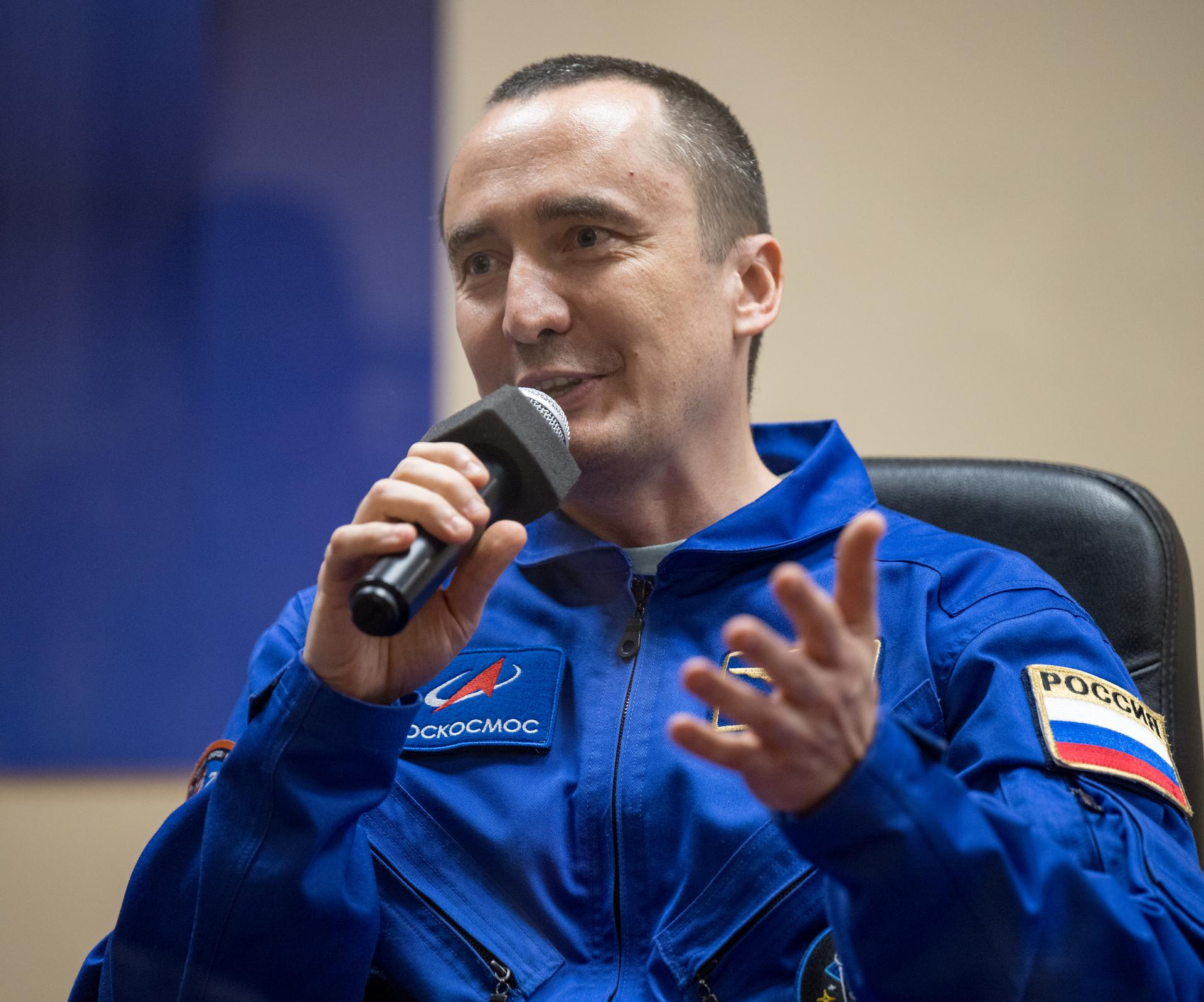
Roscosmos cosmonaut Pyotr Dubrov is seen in quarantine, behind glass, during a press conference, Monday, July 13, 2026 a the Cosmonaut Hotel in Baikonur, Kazakhstan. Expedition 75 crewmembers: NASA astronaut Anil Menon, Roscosmos cosmonauts Pyotr Dubrov and Anna Kikina are scheduled to launch aboard the Soyuz MS-29 spacecraft to the International Space Station on July 14. Photo Credit: (NASA/Bill Ingalls)
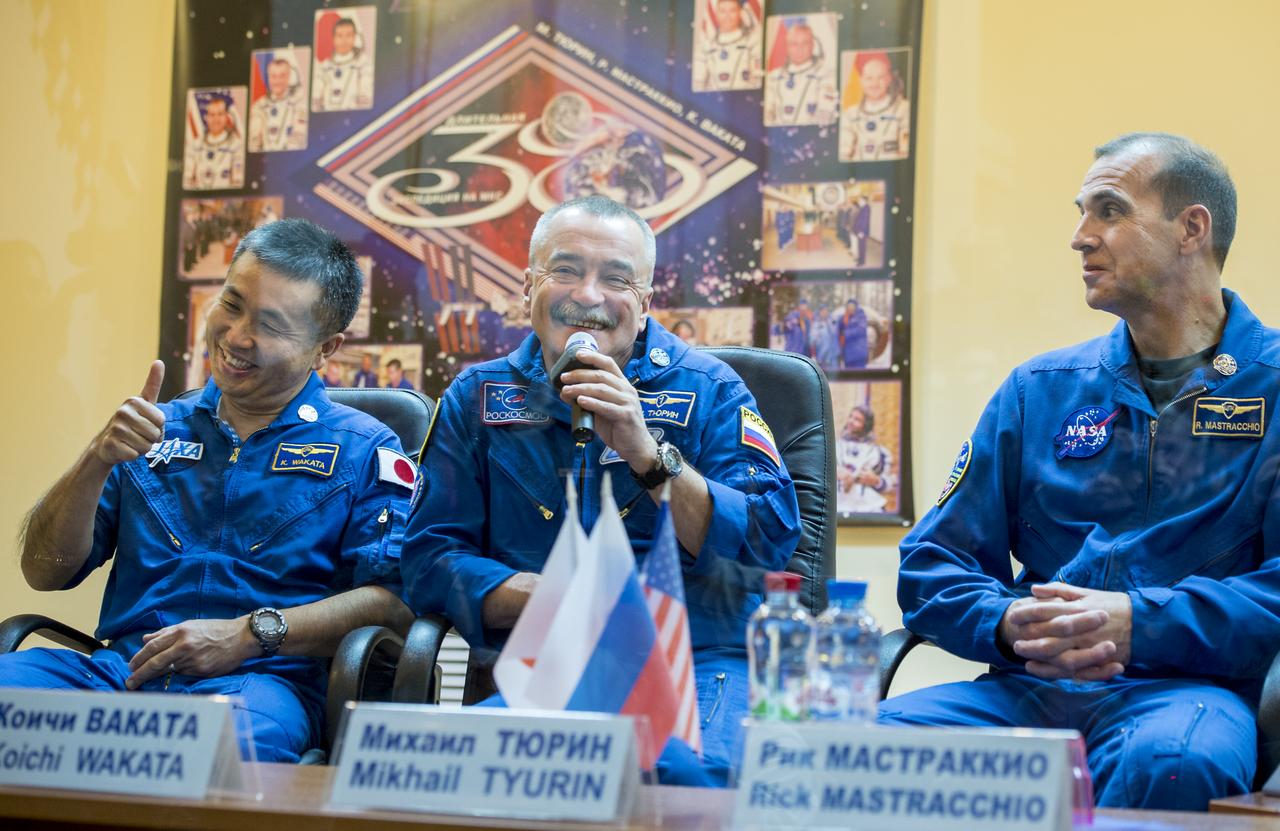
Expedition 38 Soyuz Commander Mikhail Tyurin of Roscosmos, center, talks as Flight Engineer Koichi Wakata of the Japan Aerospace Exploration Agency, left, and, Flight Engineer Rick Mastracchio of NASA listen, while quarantine behind glass, during the final press conference held a day ahead of their launch to the International Space Station, Wednesday, Nov. 6, 2013 at the Cosmonaut Hotel in Baikonur, Kazakhstan. Photo Credit: (NASA/Bill Ingalls)
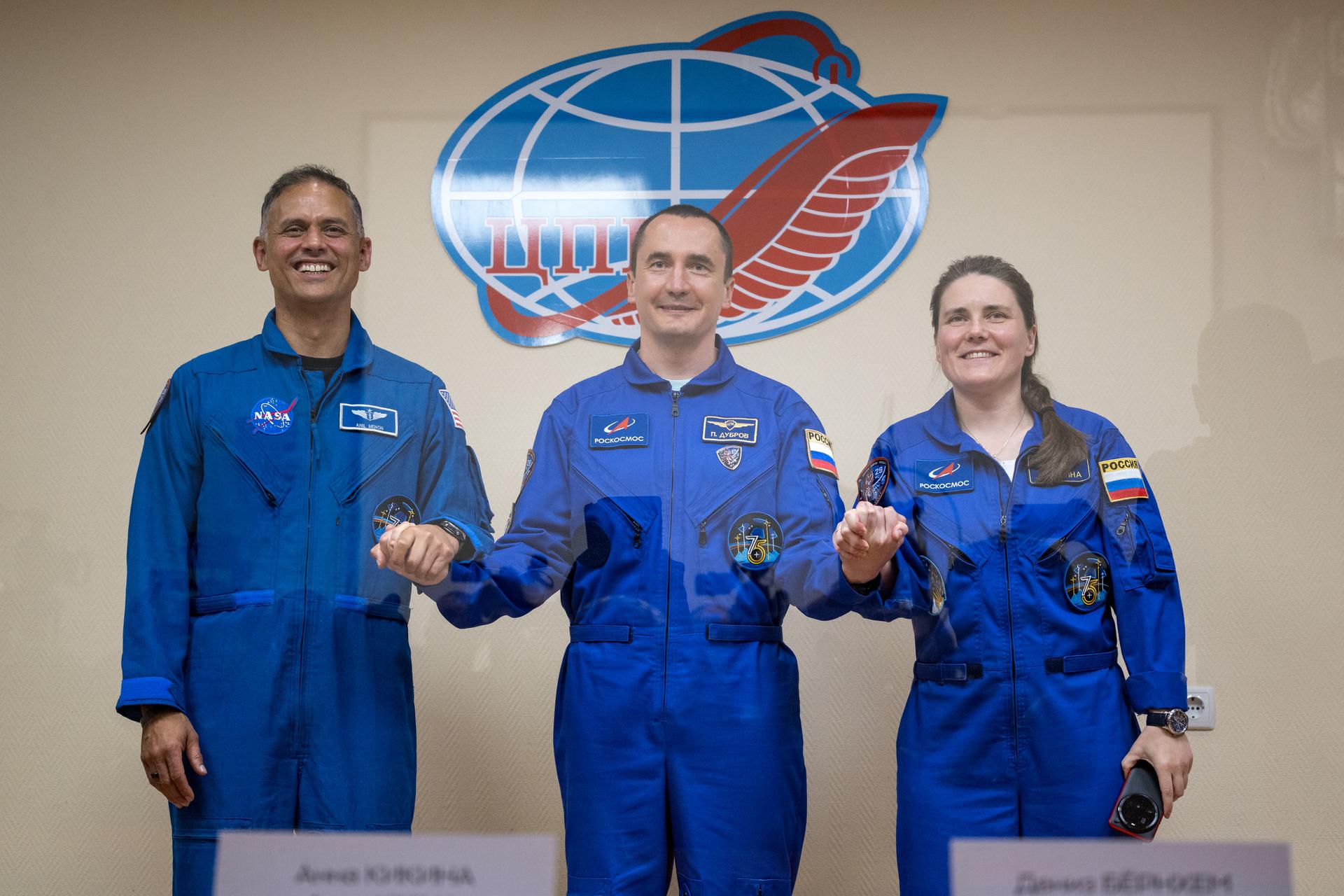
Expedition 75 crewmembers: NASA astronaut Anil Menon, left, Roscosmos cosmonauts Pyotr Dubrov, and Anna Kikina, right, are seen in quarantine, behind glass, during a press conference, Monday, July 13, 2026 a the Cosmonaut Hotel in Baikonur, Kazakhstan. Menon, Dubrov, and Kikina are scheduled to launch aboard the Soyuz MS-29 spacecraft to the International Space Station on July 14. Photo Credit: (NASA/Bill Ingalls)
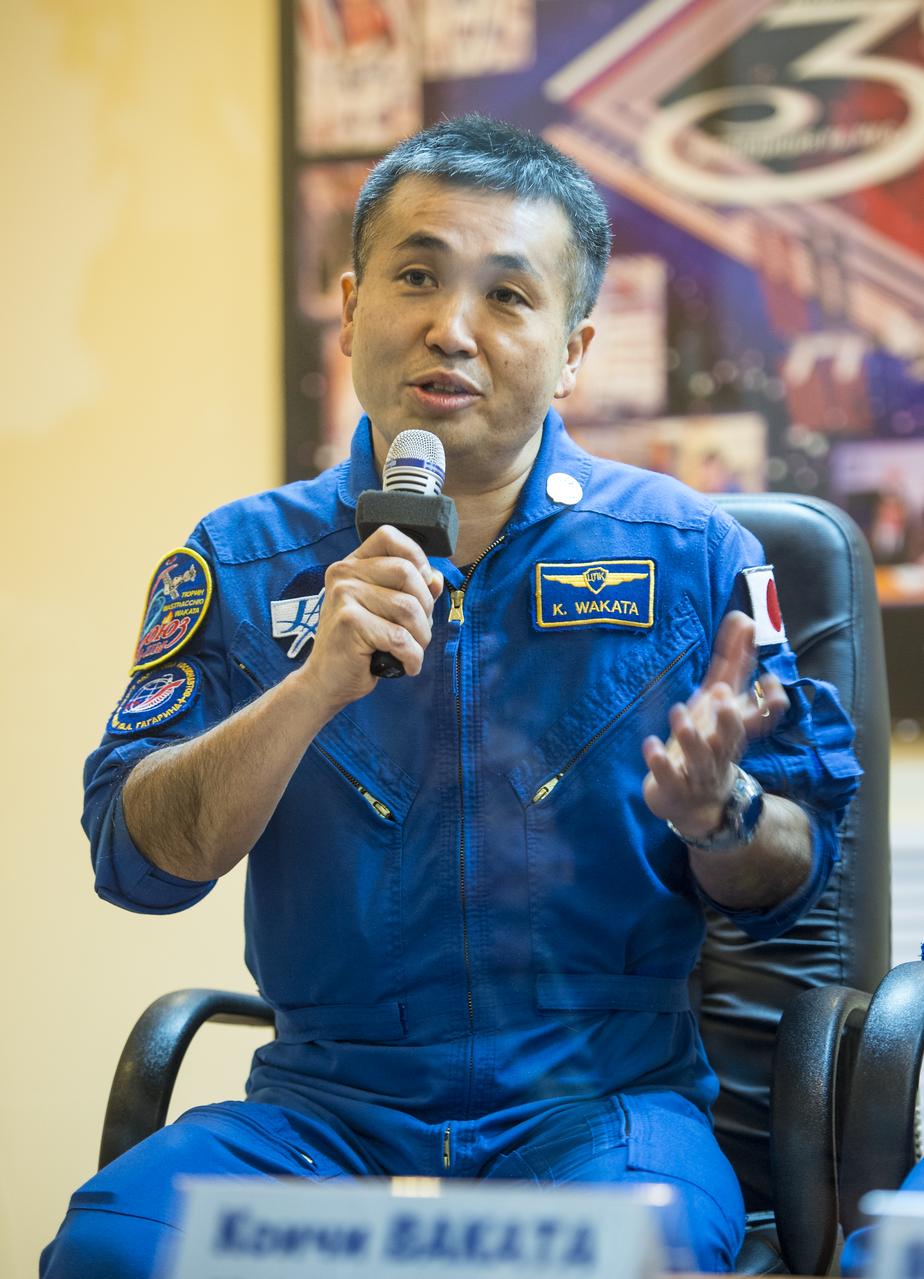
Expedition 38 Flight Engineer Koichi Wakata of the Japan Aerospace Exploration Agency is seen in quarantine, behind glass, during the final press conference held a day ahead of his launch with fellow crew mates, Expedition 38 Soyuz Commander Mikhail Tyurin of Roscosmos, and, Flight Engineer Rick Mastracchio of NASA, to the International Space Station, Wednesday, Nov. 6, 2013 at the Cosmonaut Hotel in Baikonur, Kazakhstan. Photo Credit: (NASA/Bill Ingalls)
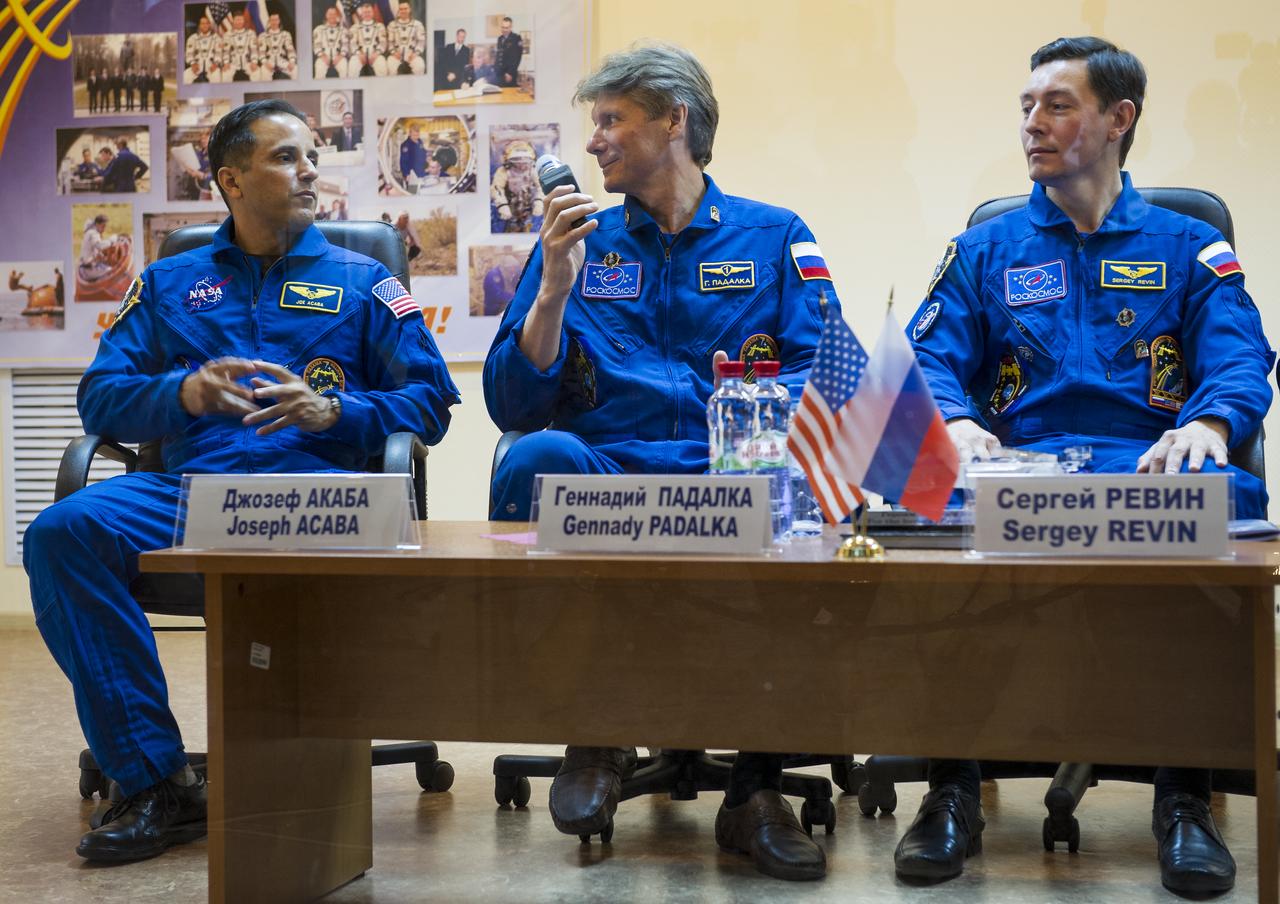
Quarantined Expedition 31 prime crew members, from left, NASA Flight Engineer Joe Acaba, Russian Soyuz Commander Gennady Padalka, and Russian Flight Engineer Sergei Revin answer reporters questions from behind glass during a prelaunch press conference held at the Cosmonaut Hotel on Monday, May 14, 2012 in Baikonur, Kazakhstan. The launch of the Soyuz spacecraft with the crew of three is scheduled for 9:01 a.m. local time on Tuesday, May 15. Photo Credit (NASA/Bill Ingalls)
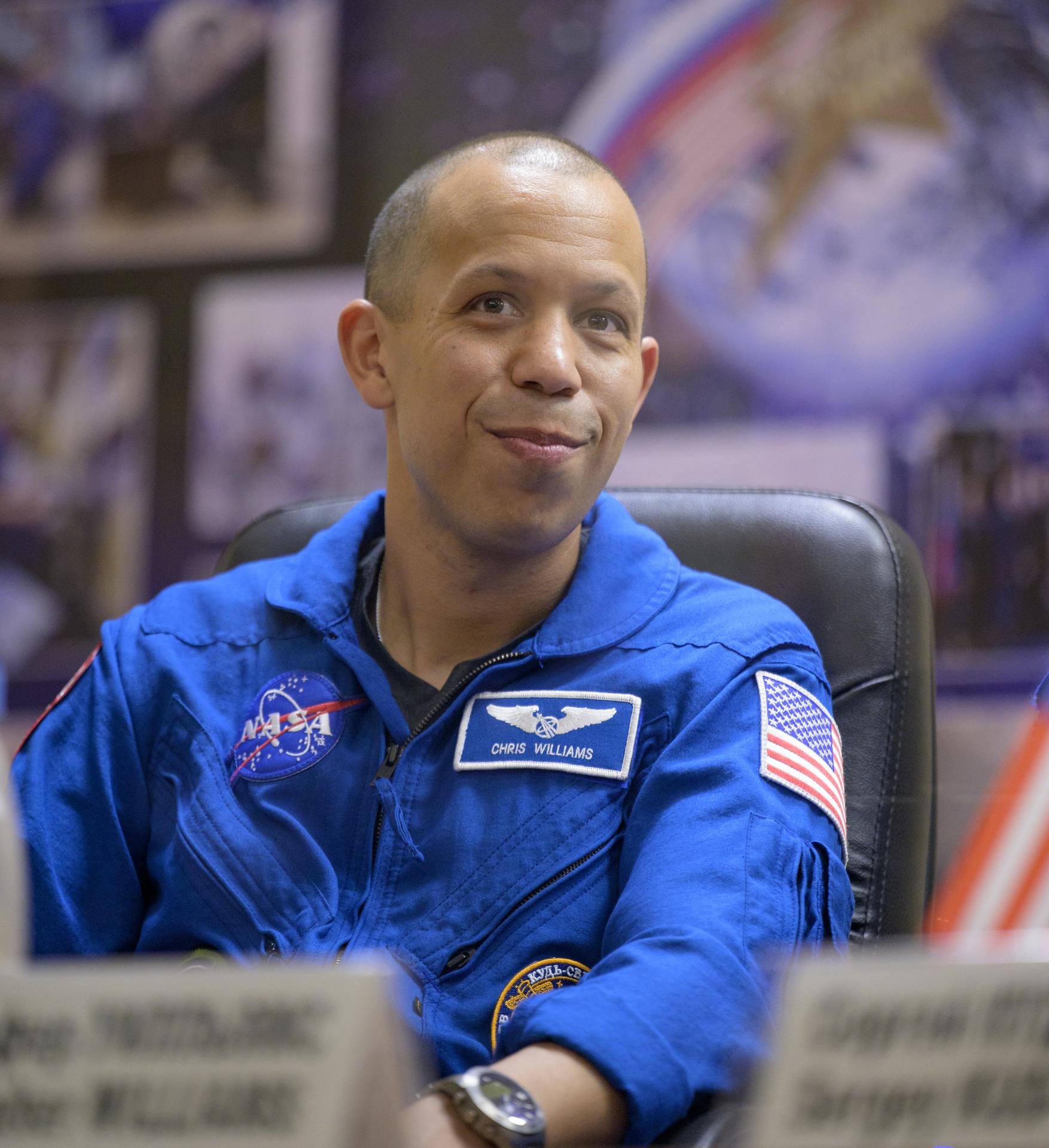
NASA astronaut Chris Williams is seen in quarantine, behind glass, during a press conference, Wednesday, Nov. 26, 2025 at the Cosmonaut Hotel in Baikonur, Kazakhstan. Expedition 74 crewmembers: Williams, Roscosmos cosmonauts Sergey Kud-Sverchkov and Sergei Mikaev, are scheduled to launch aboard their Soyuz MS-28 spacecraft on November 27. Photo Credit: (NASA/Bill Ingalls)
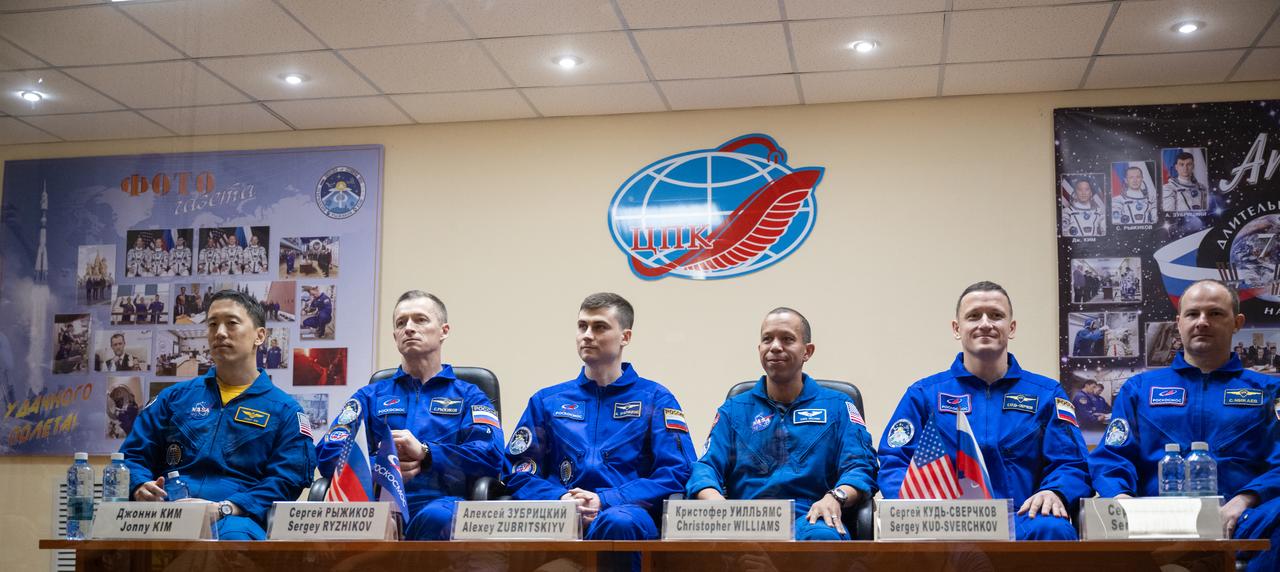
Expedition 73 crewmembers NASA astronaut Jonny Kim, left, and Roscosmos cosmonauts Sergey Ryzhikov and Alexey Zubritskiy and backup crewmembers Chris Williams of NASA, Sergey Kud-Skverchkov, and Sergey Mikaev of Roscosmos are seen in quarantine, behind glass, during a press conference, Monday, April 7, 2025 a the Cosmonaut Hotel in Baikonur, Kazakhstan. Kim, Ryzhikov, Zubritskiy are scheduled to launch aboard their Soyuz MS-27 spacecraft on April 8. Photo Credit: (NASA/Joel Kowsky)
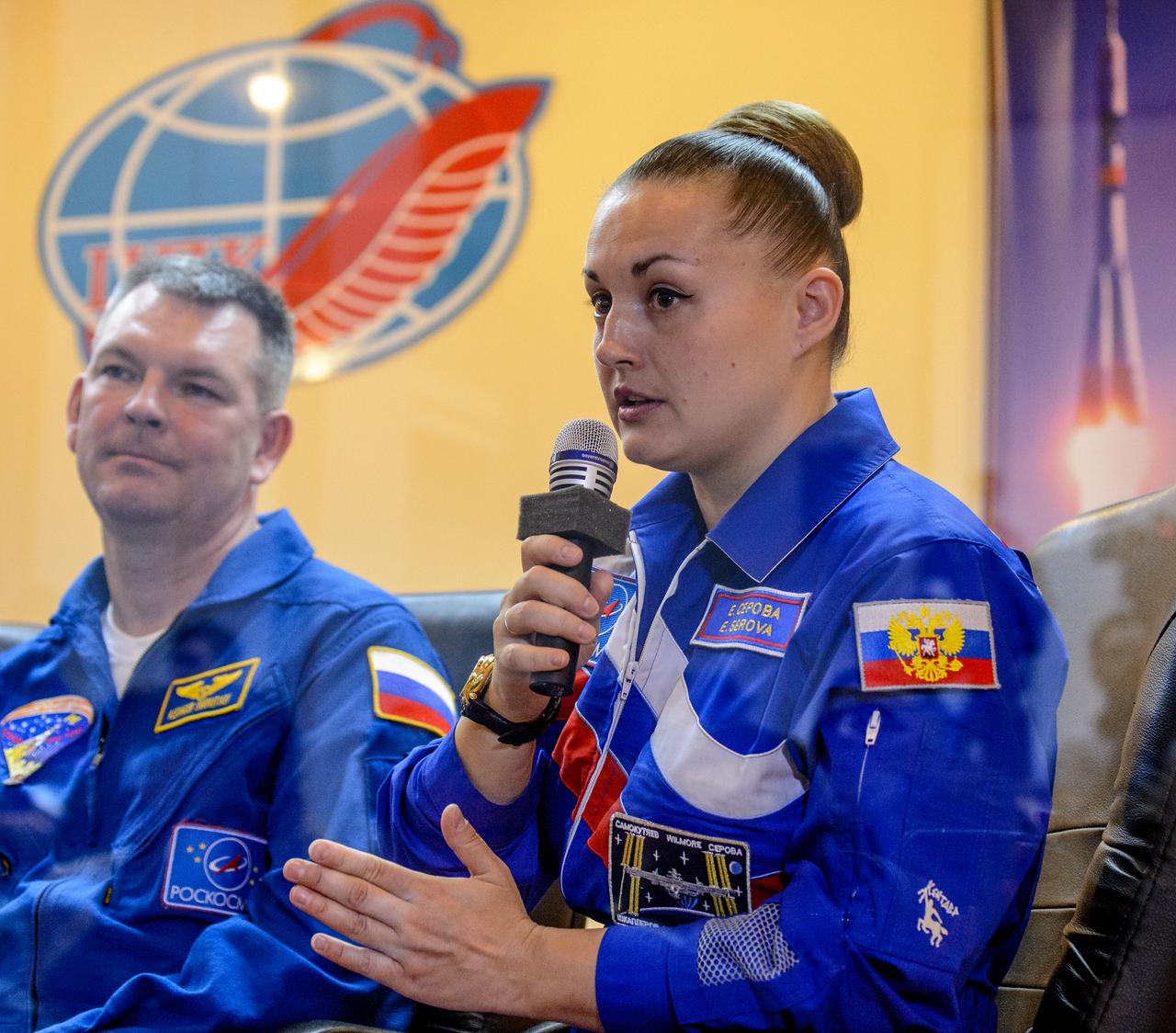
Expedition 39 backup crew member Elena Serova of the Russian Federal Space Agency, Roscosmos, is seen in quarantine, behind glass, during the final press conference held ahead of the launch of Expedition 39 prime crew members; Soyuz Commander Alexander Skvortsov of the Russian Federal Space Agency, Flight Engineer Steve Swanson of NASA, and Flight Engineer Oleg Artemyev of Roscosmos, to the International Space Station, Monday, March 24, 2014 at the Cosmonaut Hotel in Baikonur, Kazakhstan. Photo Credit: (NASA/Bill Ingalls)
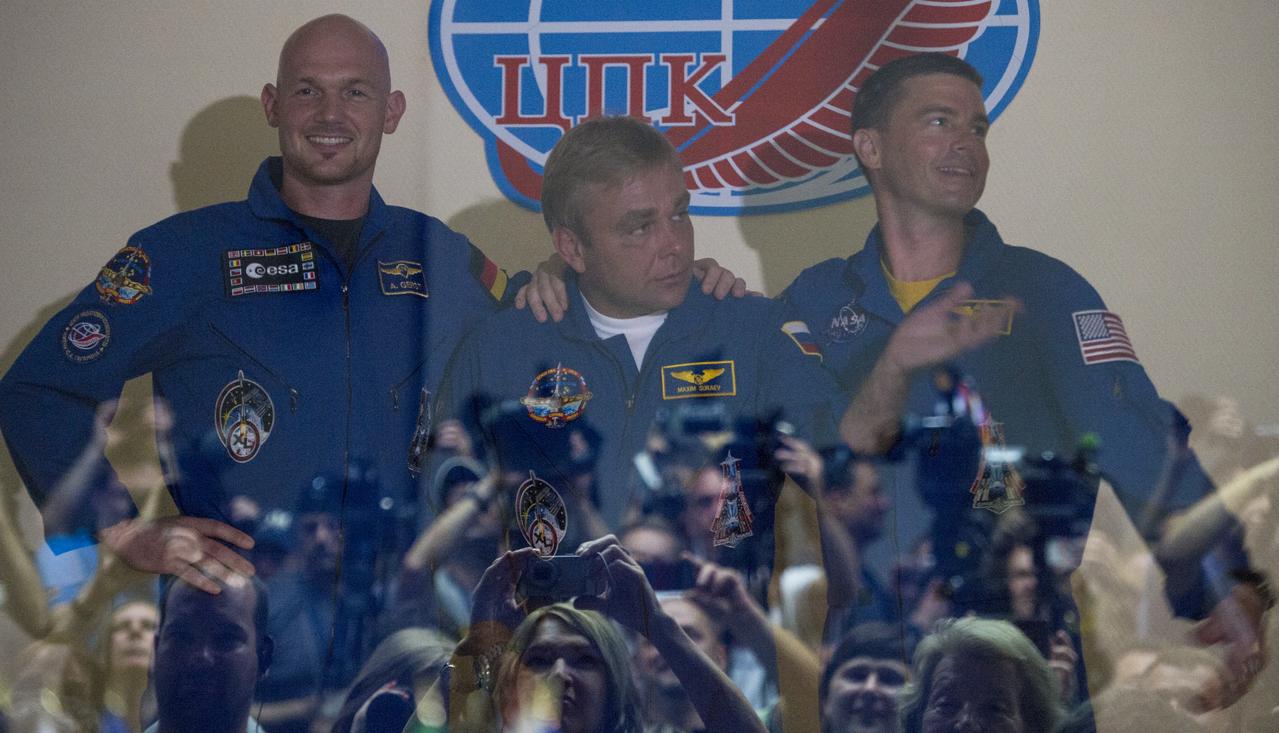
A reflection of the audience can been seen in the quarantine glass as Expedition 40 Flight Engineer Alexander Gerst of the European Space Agency, ESA, left, Soyuz Commander Maxim Suraev of the Russian Federal Space Agency, Roscosmos, center, and Flight Engineer Reid Wiseman of NASA, right, pose for a group picture at the conclusion of a press conference, Tuesday, May 27, 2014, at the Cosmonaut Hotel in Baikonur, Kazakhstan. The mission to the International Space Station is set to launch May 29 from the Baikonur Cosmodrome. Photo Credit: (NASA/Joel Kowsky)
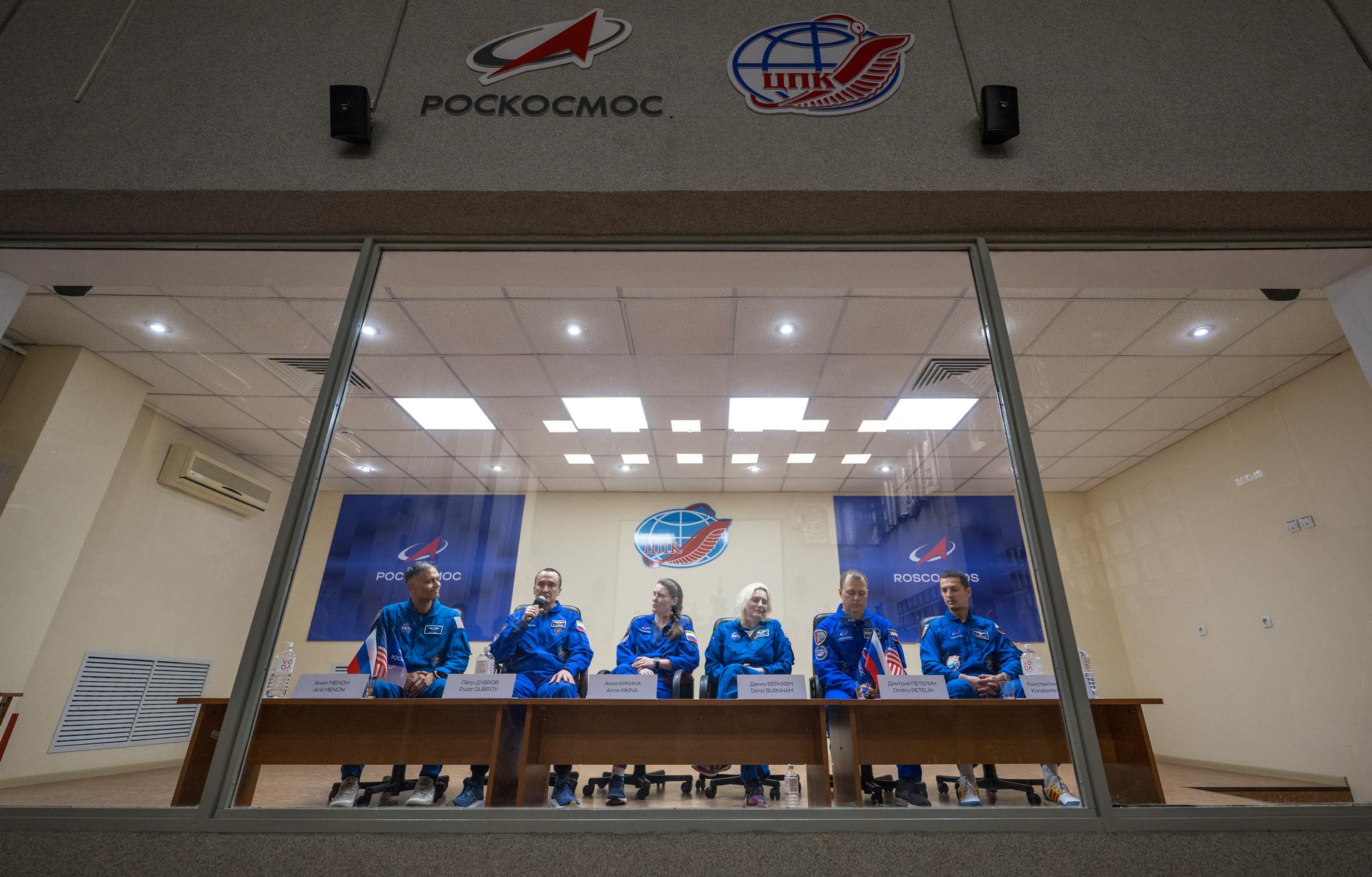
Expedition 75 crewmembers: NASA astronaut Anil Menon, left, Roscosmos cosmonauts Pyotr Dubrov and Anna Kikina, along with backup crewmemebers: NASA astronaut Deniz Burnham, Roscosmos cosmonauts Dmitry Petelin, and Konstantin Borisov, right, are seen in quarantine, behind glass, during a press conference, Monday, July 13, 2026 a the Cosmonaut Hotel in Baikonur, Kazakhstan. Menon, Dubrov, and Kikina are scheduled to launch aboard the Soyuz MS-29 spacecraft to the International Space Station on July 14. Photo Credit: (NASA/Bill Ingalls)
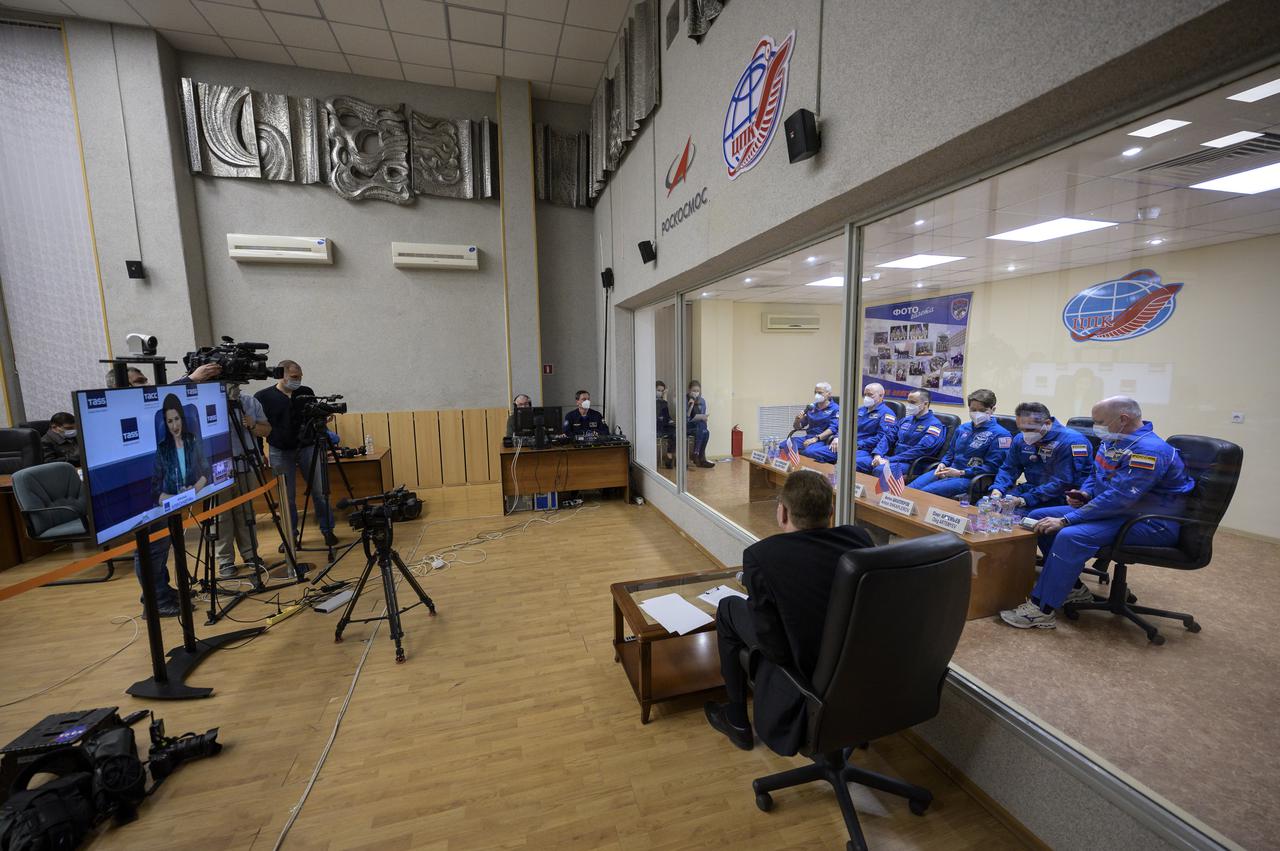
Expedition 65 NASA astronaut Mark Vande Hei, left, Roscosmos cosmonauts Oleg Novitskiy and Pyotr Dubrov, along with backup crew members Anne McClain of NASA, and Roscosmos cosmonauts Anton Shkaplerov and Oleg Artemyev, right, are seen in quarantine, behind glass, during a press conference, Thursday, April 8, 2021 a the Cosmonaut Hotel in Baikonur, Kazakhstan. The prime crew is scheduled to launch to the International Space Station aboard the Soyuz MS-18 spacecraft on April 9. Photo Credit: (NASA/Bill Ingalls)
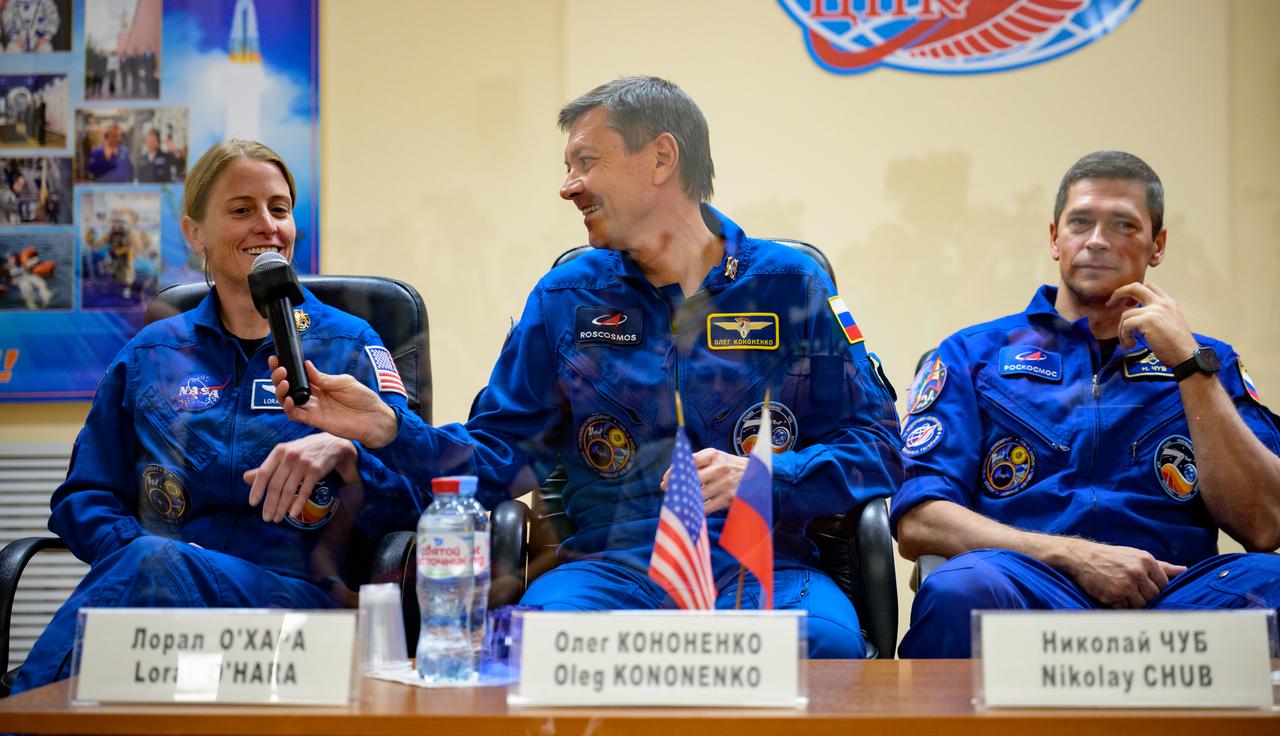
Expedition 70 NASA astronaut Loral O'Hara, left, Roscosmos cosmonauts Oleg Kononenko, and Nikolai Chub, right, are seen in quarantine behind glass during a press conference, Thursday, Sept. 14, 2023 at the Cosmonaut Hotel in Baikonur, Kazakhstan. O'Hara, Kononenko, Chub are scheduled to launch aboard their Soyuz MS-24 spacecraft on Sept. 15. Photo Credit: (NASA/Bill Ingalls)
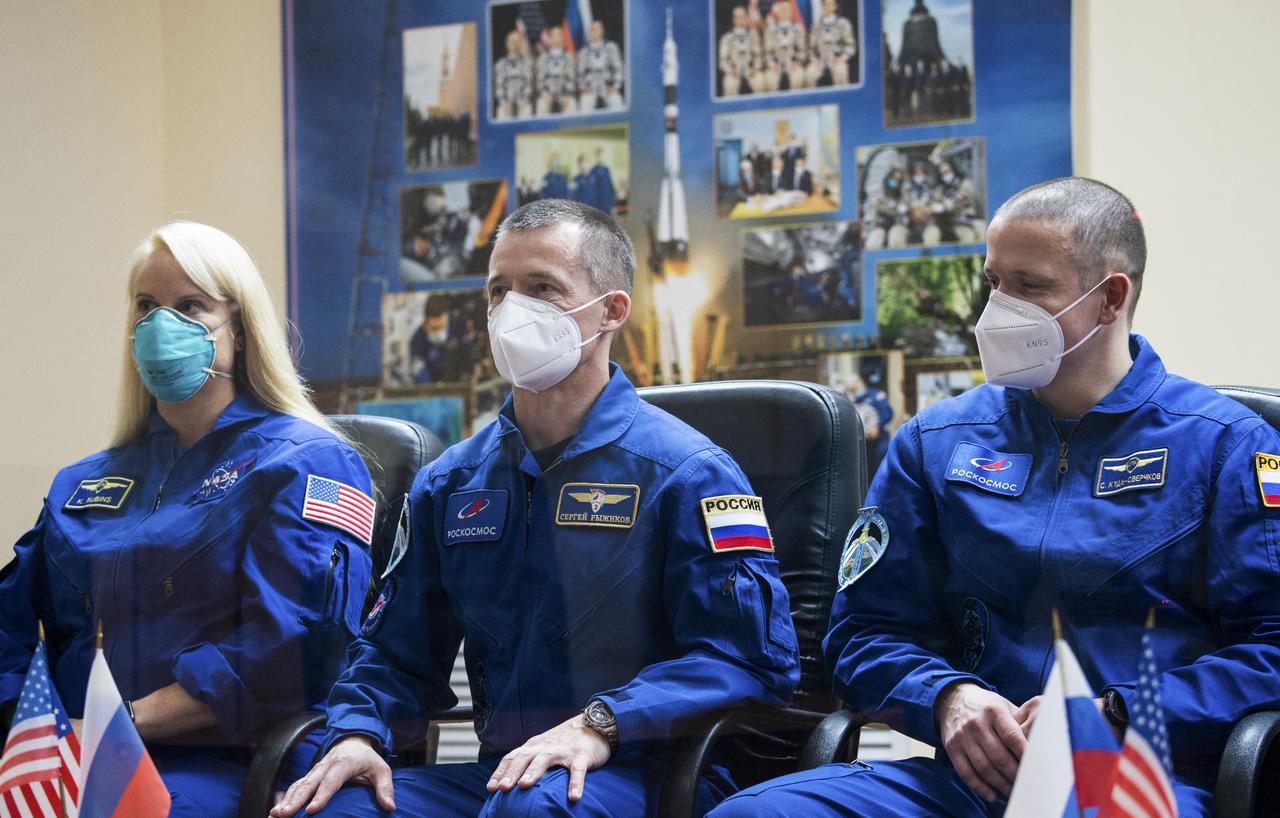
Expedition 64 prime crew members NASA astronaut Kate Rubins, left, and Russian cosmonauts Sergey Ryzhikov, center, and Sergey Kud-Sverchkov, right, of Roscosmos, are seen in quarantine, behind glass, during a press conference, Tuesday, Oct. 13, 2020, at the Cosmonaut Hotel in Baikonur, Kazakhstan. Rubins, Ryzhikov, and Kud-Sverchkov are scheduled to launch to the International Space Station aboard the Soyuz MS-17 spacecraft on October 14. Photo Credit: (NASA/GCTC/Andrey Shelepin)
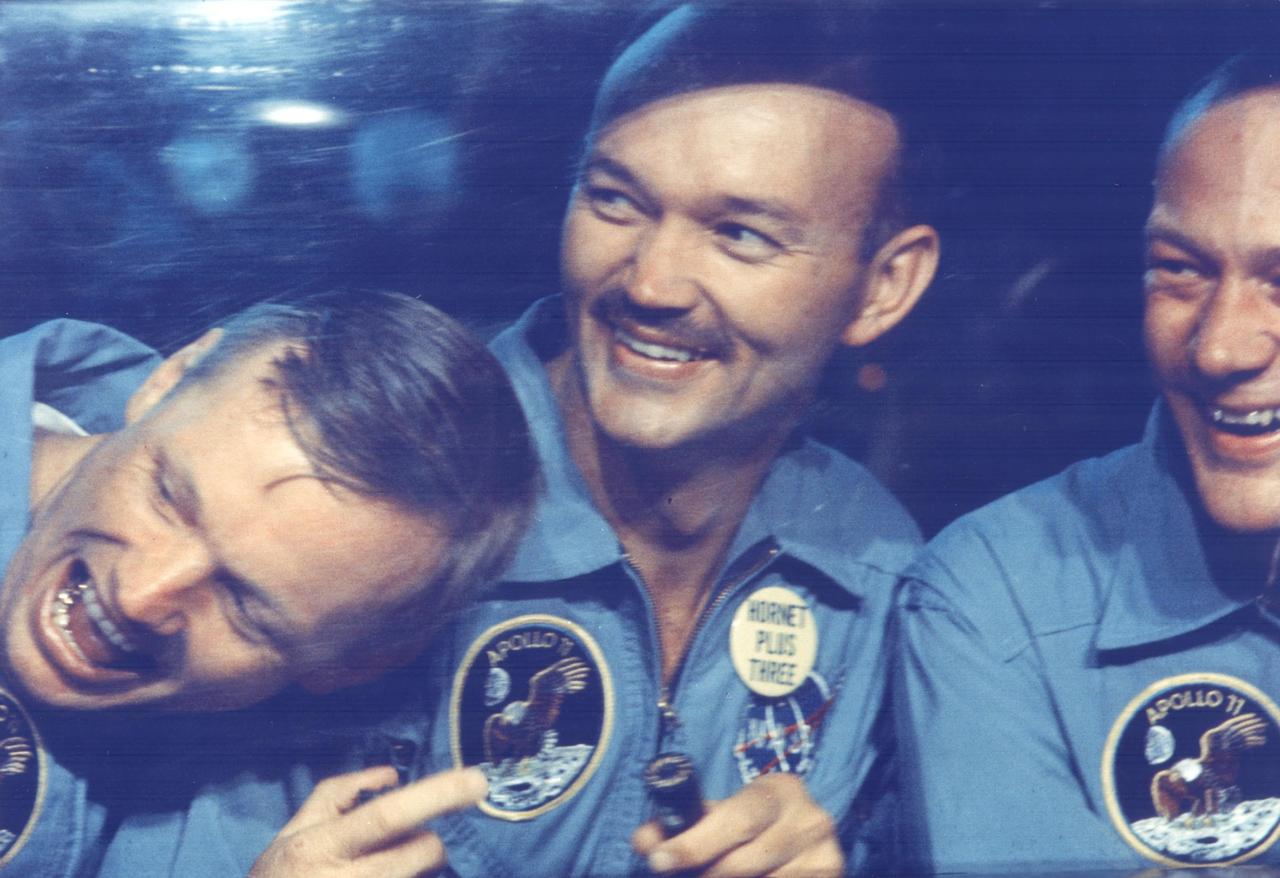
KENNEDY SPACE CENTER, FLA. - The Apollo 11 astronauts, left to right, Neil A. Armstrong, Michael Collins and Edwin E. Aldrin Jr. share jokes with well-wishers on the other side of the window of their Mobile Quarantine Facility aboard the USS Hornet. The astronauts splashed down at 12:50 p.m. EDT at the completion of their historical eight-day first manned lunar landing.
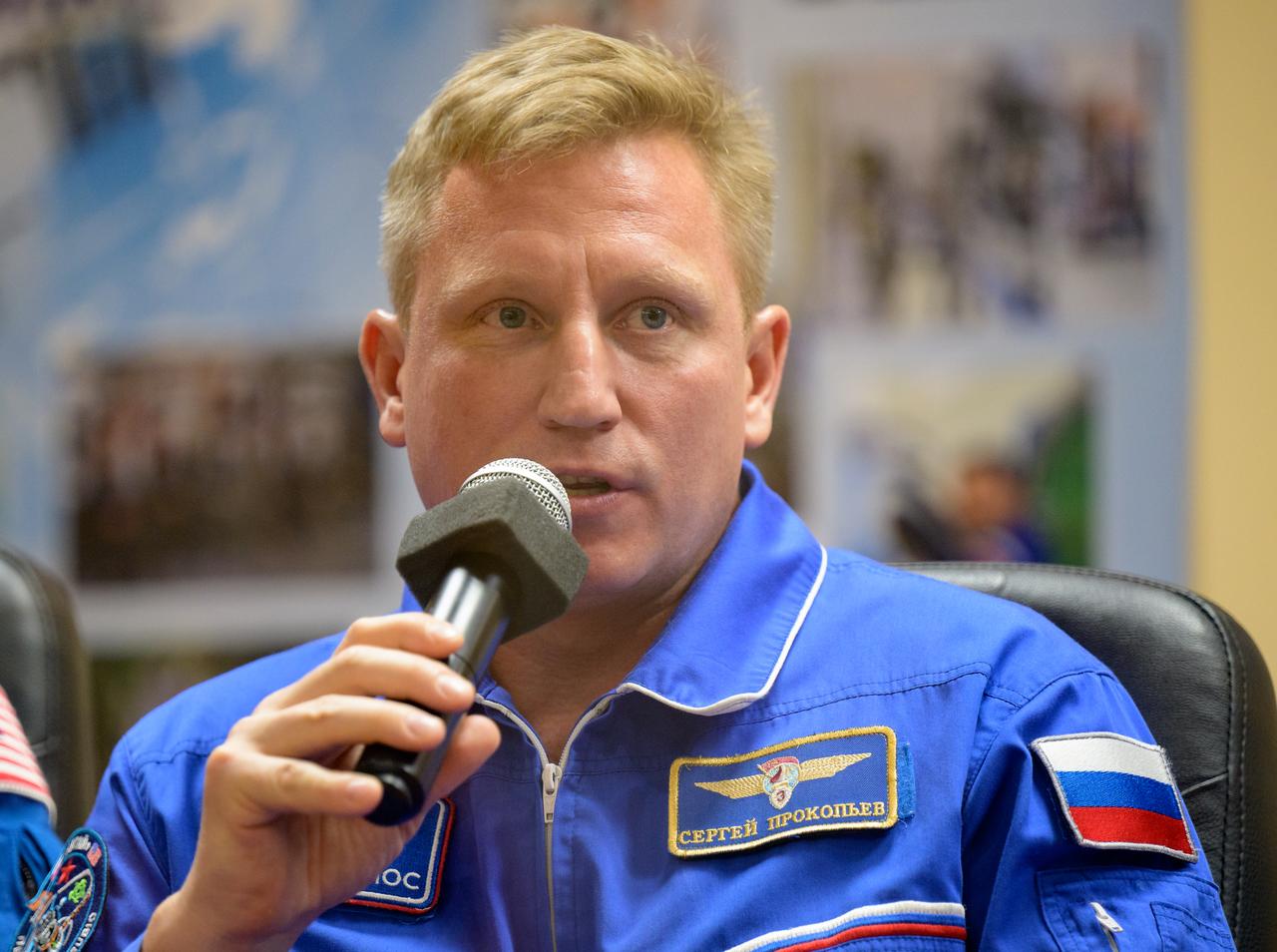
Expedition 68 cosmonaut Sergey Prokopyev of Roscosmos is seen in quarantine, behind glass, during a press conference, Tuesday, Sept. 20, 2022, at the Cosmonaut Hotel in Baikonur, Kazakhstan. Prokopyev, Frank Rubio of NASA, and Dmitri Petelin of Roscosmos are scheduled to launch to the International Space Station aboard the Soyuz MS-22 spacecraft on Sept. 21. Photo Credit: (NASA/Bill Ingalls)
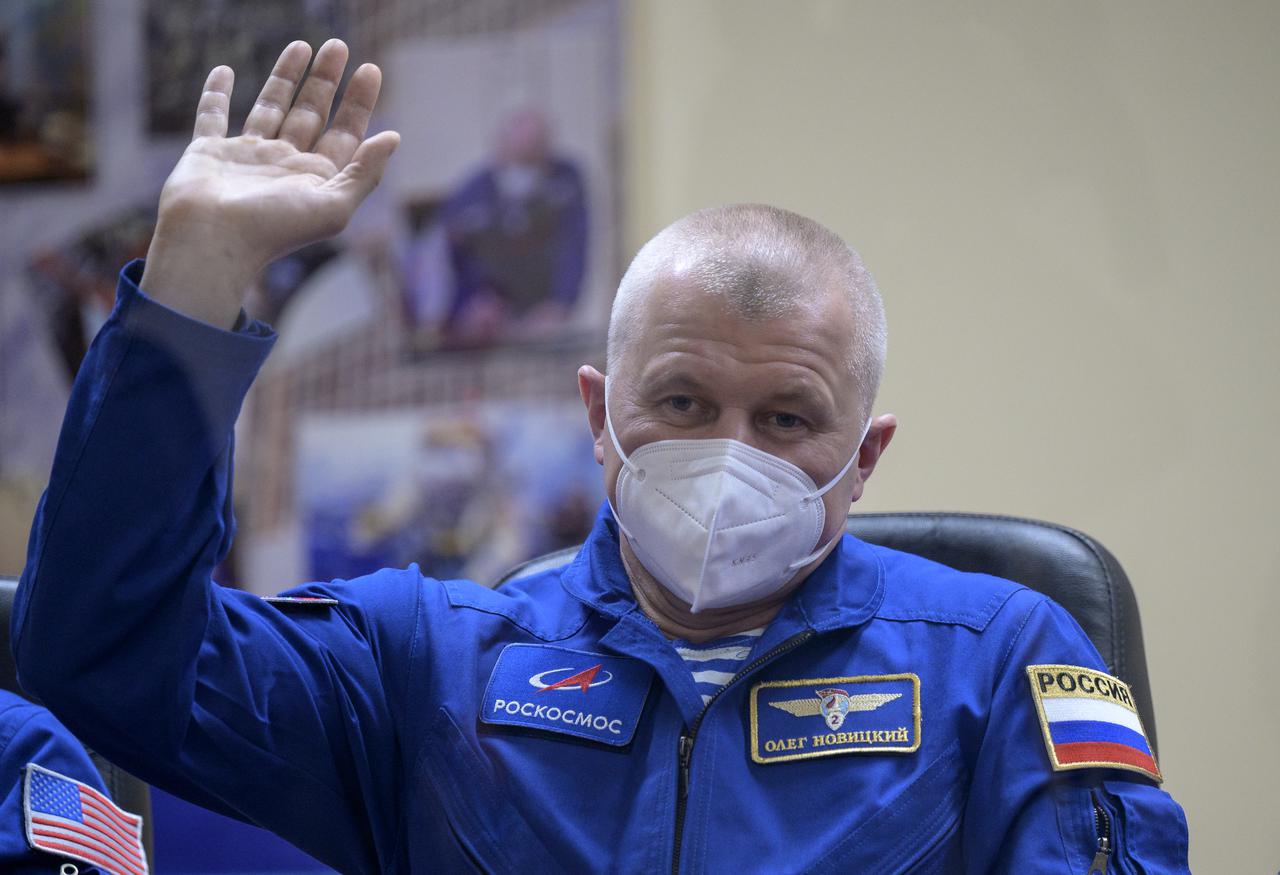
Expedition 65 Roscosmos cosmonaut Oleg Novitskiy is seen in quarantine, behind glass, during a press conference, Thursday, April 8, 2021 a the Cosmonaut Hotel in Baikonur, Kazakhstan. Expedition 65 NASA astronaut Mark Vande Hei, Roscosmos cosmonauts Pyotr Dubrov and Novitskiy are scheduled to launch to the International Space Station aboard the Soyuz MS-18 spacecraft on April 9. Photo Credit: (NASA/Bill Ingalls)
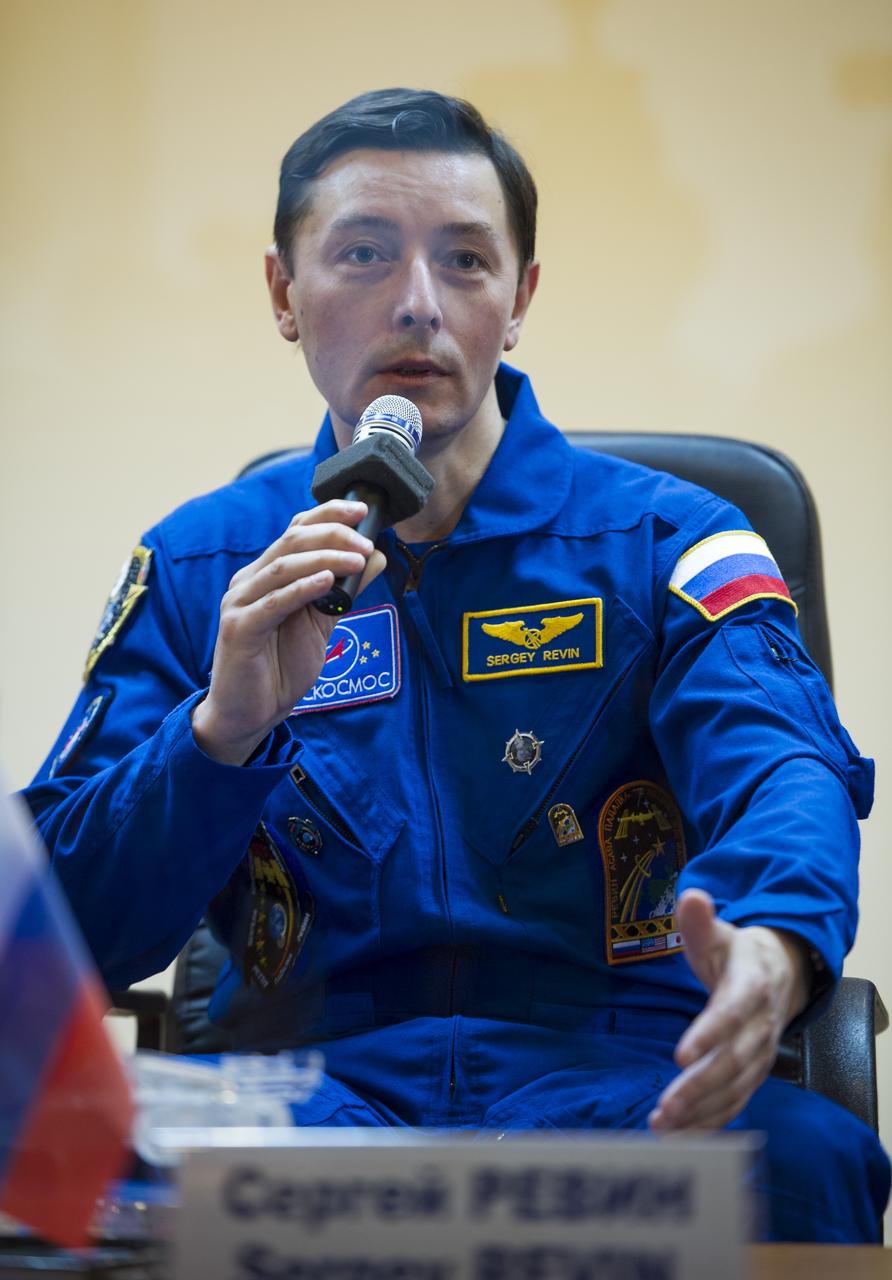
Quarantined Expedition 31 Flight Engineer Sergei Revin of Russia answers reporters questions from behind glass during a prelaunch press conference held at the Cosmonaut Hotel on Monday, May 14, 2012 in Baikonur, Kazakhstan. The launch of the Soyuz spacecraft with Revin, Soyuz Commander Gennady Padalka, and NASA Flight Engineer Joe Acaba is scheduled for 9:01 a.m. local time on Tuesday, May 15. Photo Credit (NASA/Bill Ingalls)
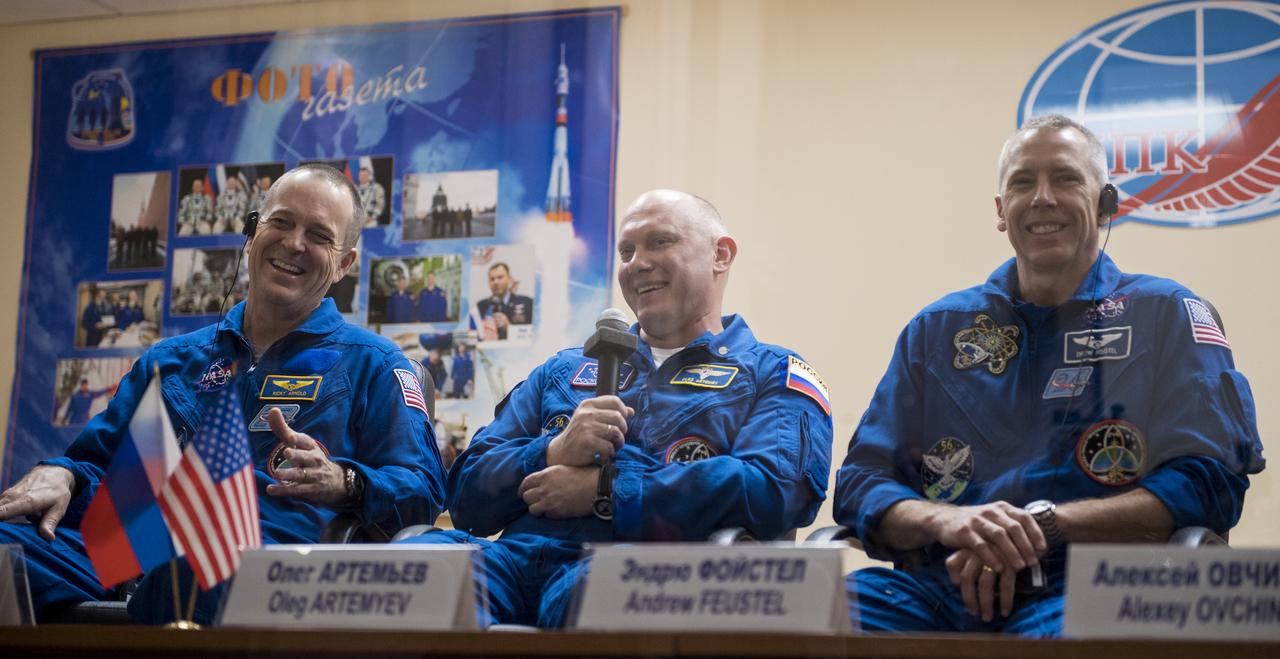
Expedition 55 prime crew members Ricky Arnold of NASA, left, Oleg Artemyev of Roscosmos, center, and Drew Feustel of NASA, right, are seen in quarantine, behind glass, during a press conference, Tuesday, March 20, 2018 a the Cosmonaut Hotel in Baikonur, Kazakhstan. Expedition 55 Soyuz Commander Oleg Artemyev of Roscosmos, Ricky Arnold and Drew Feustel of NASA are scheduled to launch to the International Space Station aboard the Soyuz MS-08 spacecraft on Wednesday, March, 21. Photo Credit: (NASA/Joel Kowsky)
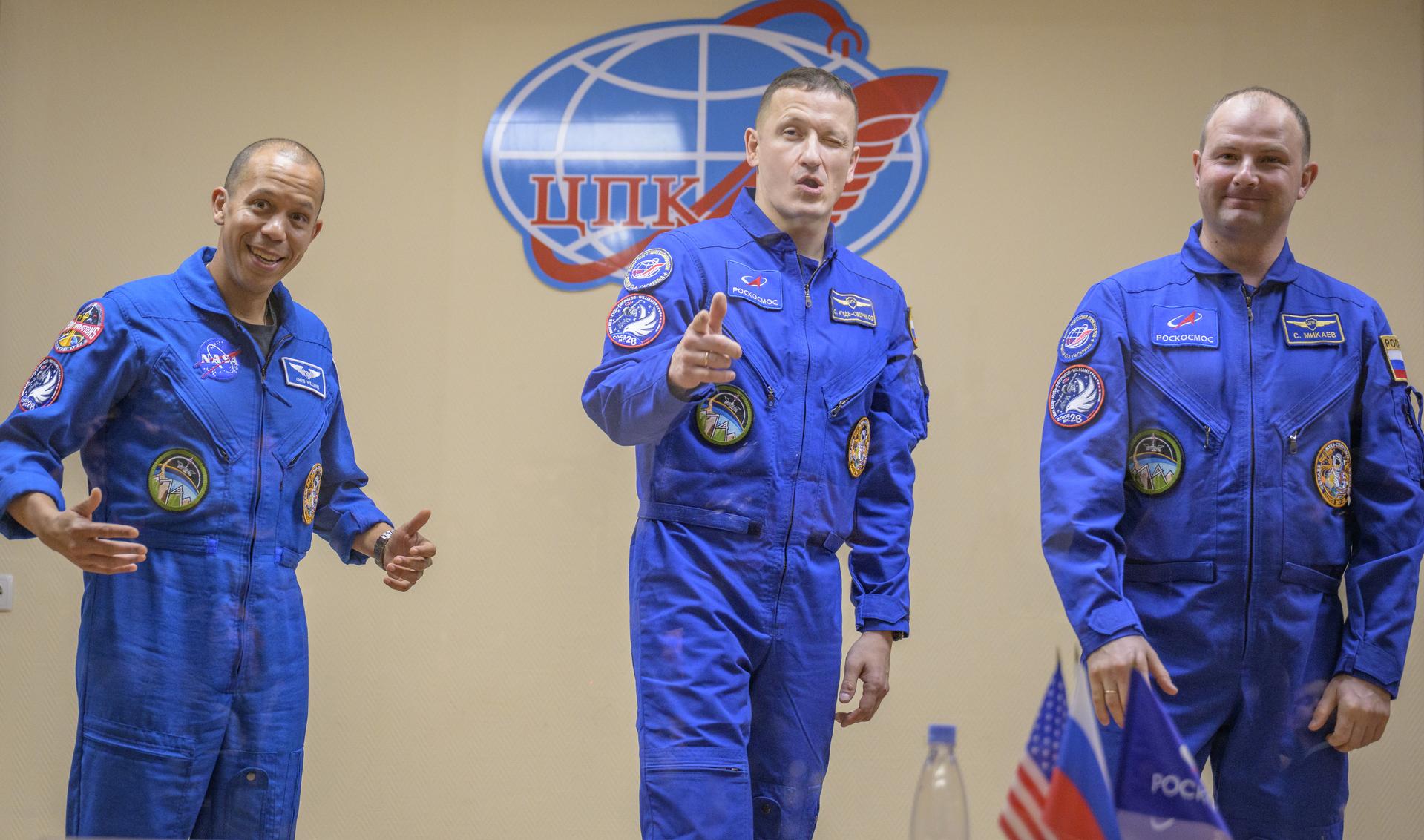
NASA astronaut Chris Williams, left, and Roscosmos cosmonauts Sergey Kud-Sverchkov, and Sergei Mikaev, right, are seen in quarantine, behind glass, at the conclusion of a press conference, Wednesday, Nov. 26, 2025 at the Cosmonaut Hotel in Baikonur, Kazakhstan. Expedition 74 crewmembers: NASA astronaut Chris Williams, Roscosmos cosmonauts Sergey Kud-Sverchkov and Sergei Mikaev, are scheduled to launch aboard their Soyuz MS-28 spacecraft on November 27. Photo Credit: (NASA/Bill Ingalls)
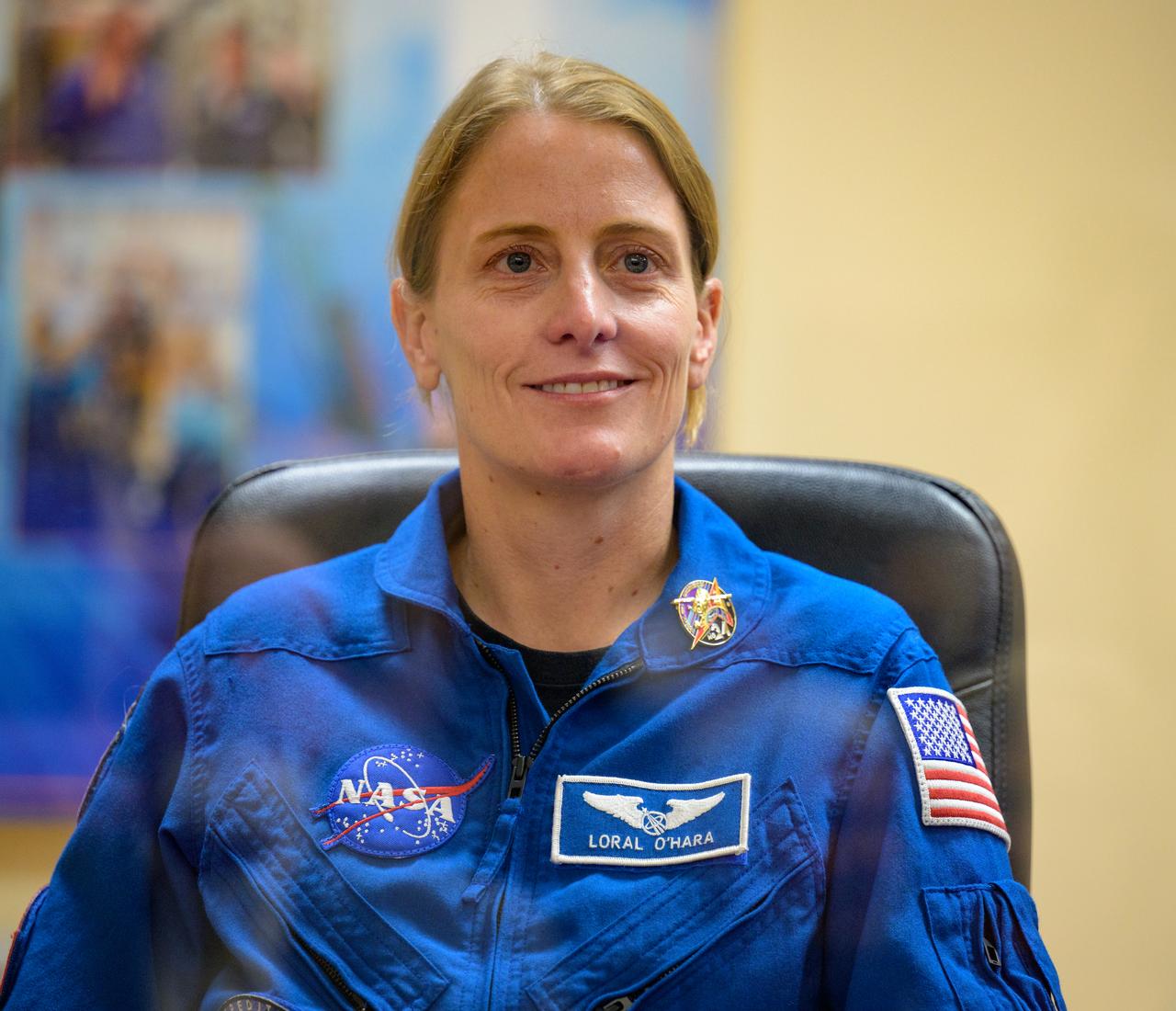
Expedition 70 astronaut Loral O'Hara is seen in quarantine behind glass during a press conference, Thursday, Sept. 14, 2023 at the Cosmonaut Hotel in Baikonur, Kazakhstan. Expedition 70 NASA astronaut Loral O'Hara, Roscosmos cosmonauts Oleg Kononenko, and Nikolai Chub are scheduled to launch aboard their Soyuz MS-24 spacecraft on Sept. 15. Photo Credit: (NASA/Bill Ingalls)
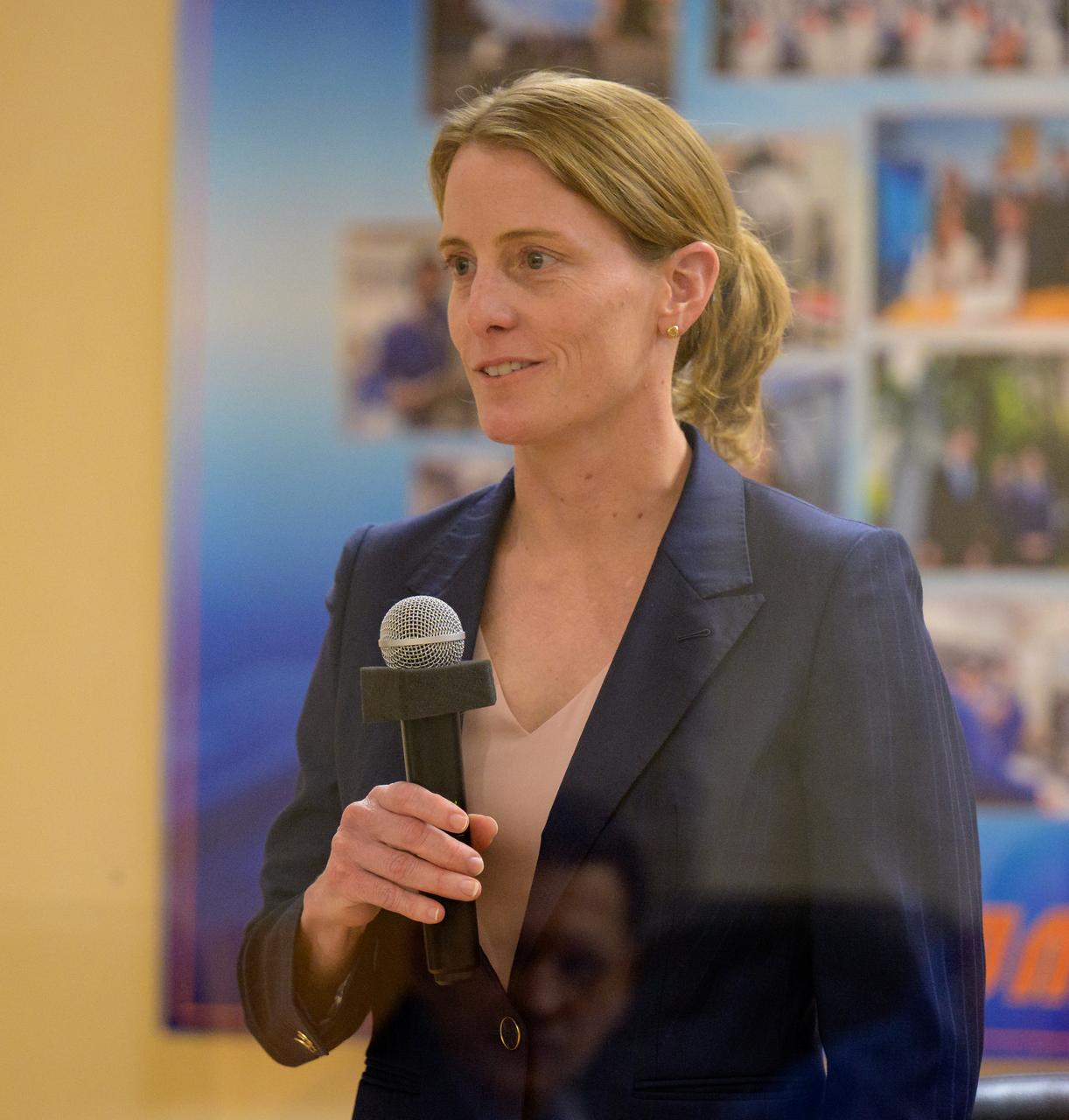
Expedition 70 astronaut Loral O'Hara is seen in quarantine behind glass during the State Commission meeting to approve the Soyuz launch of Expedition 70 to the international Space Station, Thursday, Sept. 14, 2023 at the Cosmonaut Hotel in Baikonur, Kazakhstan. O'Hara and Roscosmos cosmonauts Oleg Kononenko, and Nikolai Chub are scheduled to launch aboard their Soyuz MS-24 spacecraft on Sept. 15. Photo Credit: (NASA/Bill Ingalls)
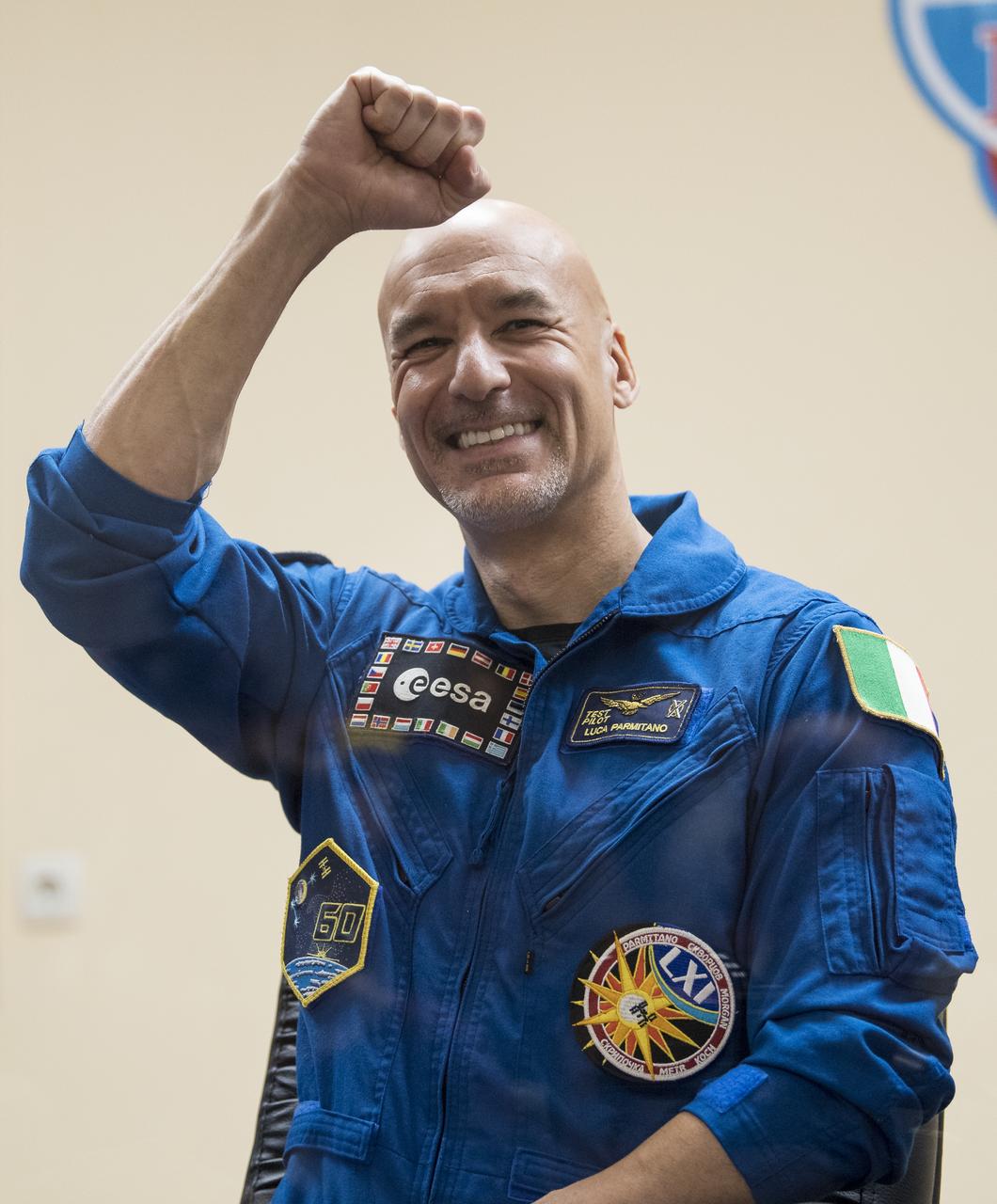
Expedition 60 flight engineer Luca Parmitano of ESA (European Space Agency) is seen in quarantine, behind glass, during a press conference, Friday, July 19, 2019 at the Cosmonaut Hotel in Baikonur, Kazakhstan. Parmitano, Soyuz Commander Alexander Skvortsov of Roscosmos, and flight engineer Andrew Morgan of NASA are scheduled to launch to the International Space Station aboard the Soyuz MS-13 spacecraft at 12:28 p.m. Eastern time (9:28 p.m. Baikonur time) on Saturday, July 20. Photo Credit: (NASA/Joel Kowsky)

Expedition 70 cosmonaut Nikolai Chub, is seen in quarantine behind glass during the State Commission meeting to approve the Soyuz launch of Expedition 70 to the international Space Station, Thursday, Sept. 14, 2023 at the Cosmonaut Hotel in Baikonur, Kazakhstan. Expedition 70 NASA astronaut Loral O'Hara, Roscosmos cosmonauts Oleg Kononenko, and Nikolai Chub are scheduled to launch aboard their Soyuz MS-24 spacecraft on Sept. 15. Photo Credit: (NASA/Bill Ingalls)
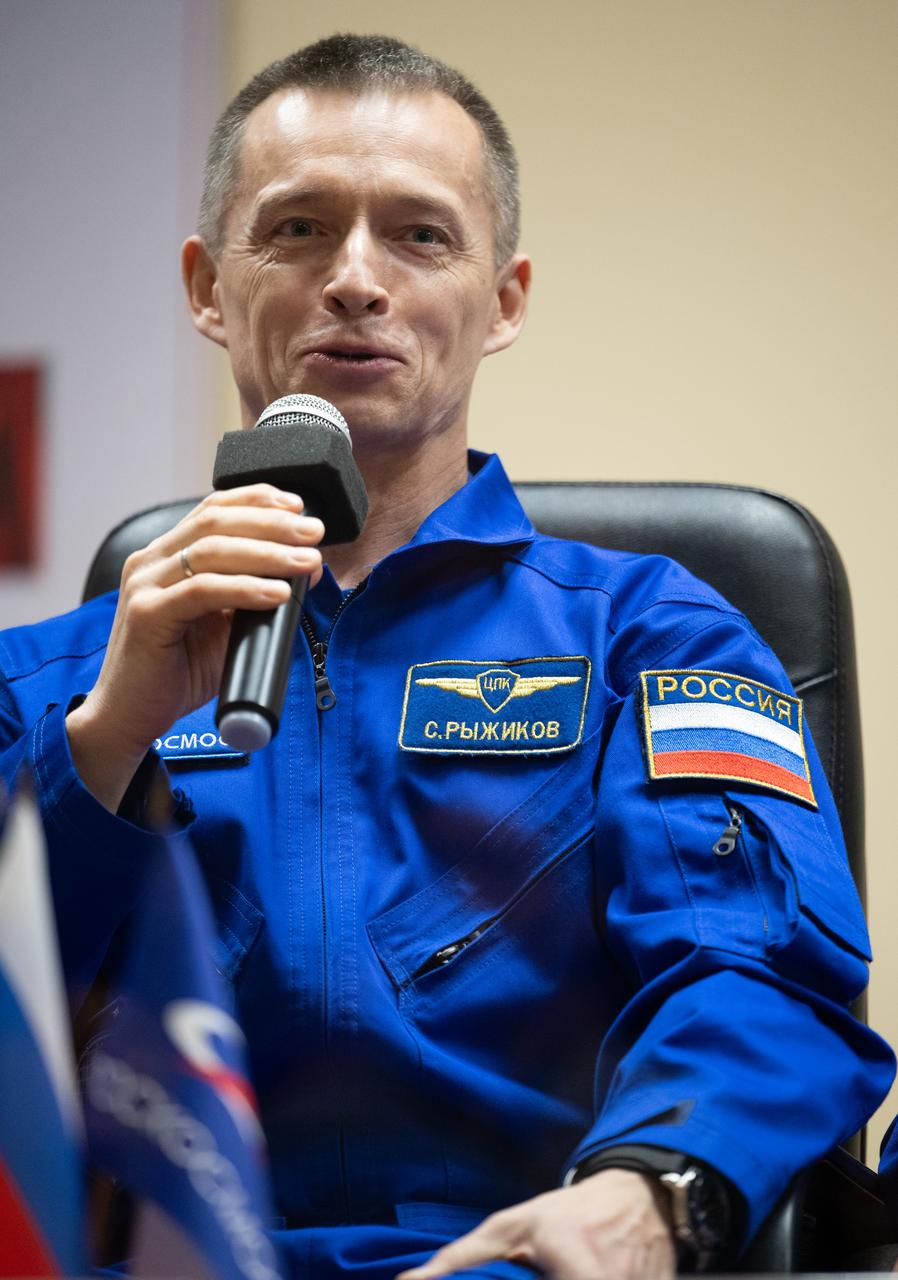
Roscosmos cosmonaut Sergey Ryzhikov is seen in quarantine, behind glass, during a press conference, Monday, April 7, 2025 a the Cosmonaut Hotel in Baikonur, Kazakhstan. Expedition 73 crew members: NASA astronaut Jonny Kim, and Roscosmos cosmonauts Sergey Ryzhikov and Alexey Zubritskiy, are scheduled to launch aboard their Soyuz MS-27 spacecraft on April 8. Photo Credit: (NASA/Joel Kowsky)