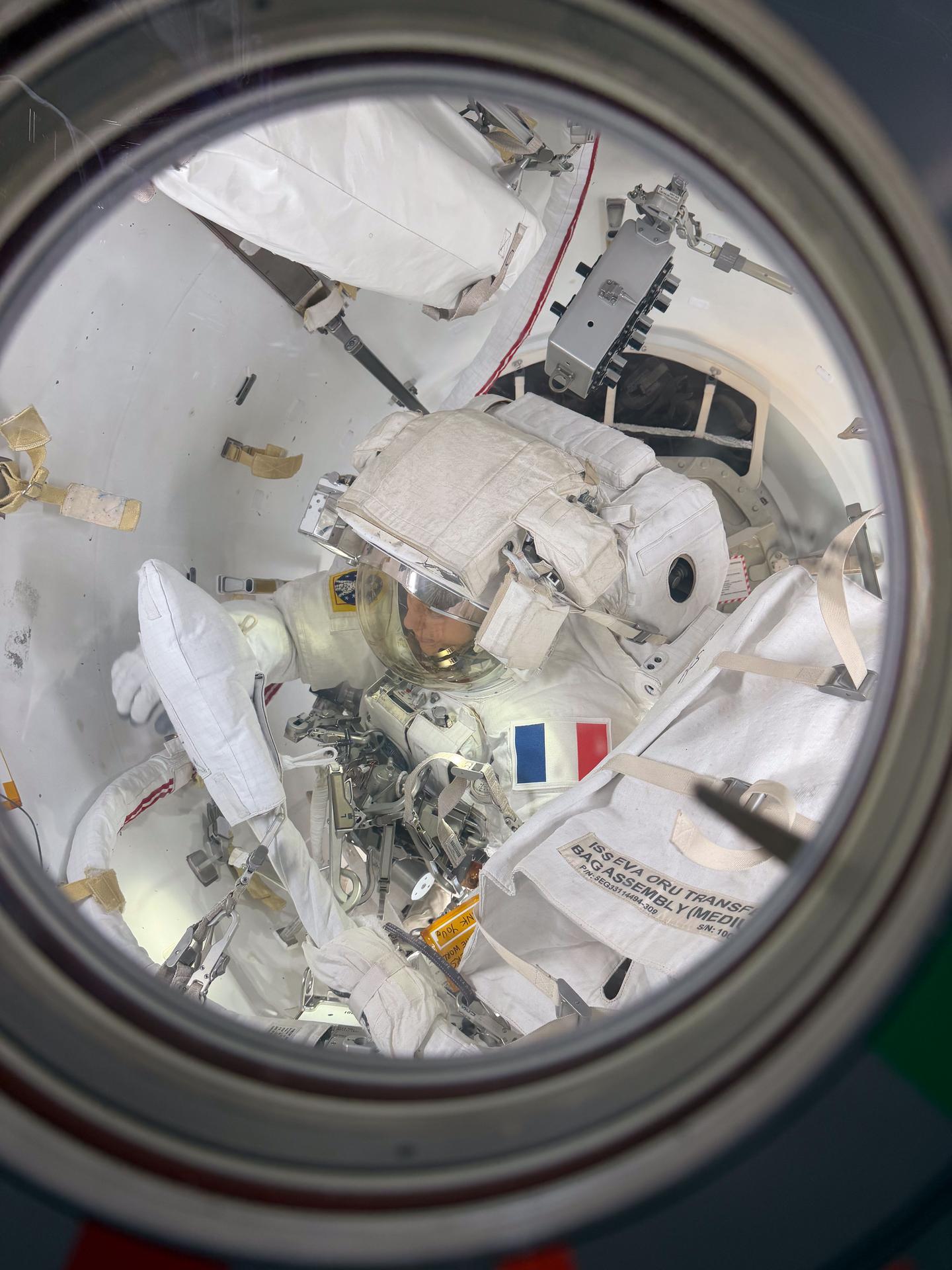
iss075e0047252 (Aug. 18. 2026) --- ESA (European Space Agency) astronaut and Expedition 75 flight engineer Sophie Adenot is pictured inside the International Space Station's Quest airlock as she nears the end of a six‑hour, 23‑minute spacewalk. Adenot and Expedition 75 flight engineer Anil Menon of NASA (out of frame) worked together to disconnect a failed high‑speed antenna and secure it with a long‑duration tie‑down on the orbital outpost’s Z1 truss segment. Credit: NASA/Jack Hathaway
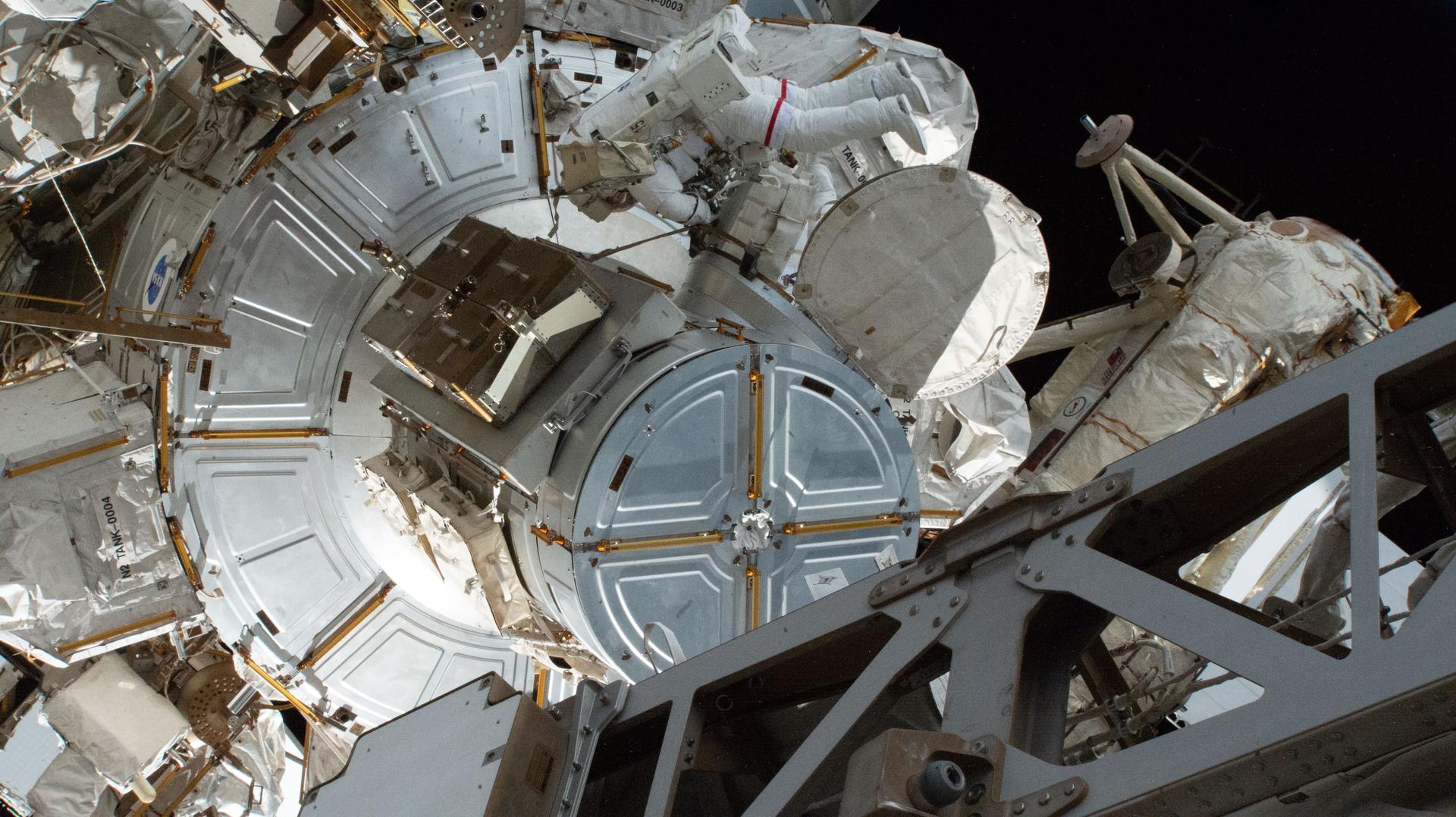
iss075e0041132 (Aug. 18, 2026) --- Expedition 75 flight engineer Anil Menon of NASA exits the International Space Station’s Quest airlock after beginning a six‑hour and 23‑minute spacewalk. Menon and Expedition 75 flight engineer Sophie Adenot of ESA (European Space Agency) disconnected a failed high‑speed antenna and then secured it with a long‑duration tie‑down on the orbital outpost’s Z1 truss segment. A spare antenna will be installed in its place on the Z1 during a future spacewalk. Credit: NASA
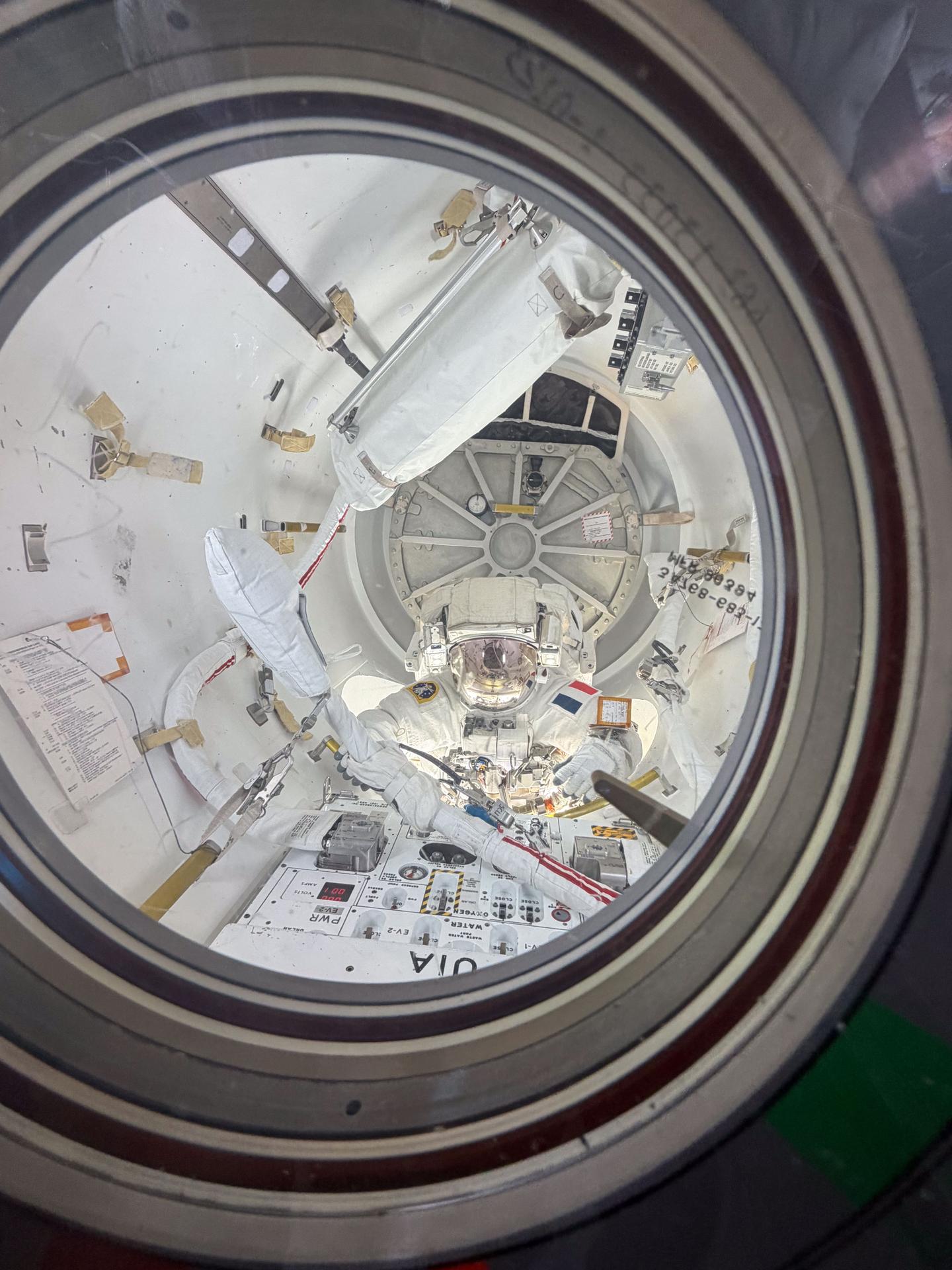
iss075e0047220 (Aug. 18. 2026) --- ESA (European Space Agency) astronaut and Expedition 75 flight engineer Sophie Adenot is pictured inside the International Space Station's Quest airlock with her helmet visor down as she nears the end of a six‑hour, 23‑minute spacewalk. Adenot and Expedition 75 flight engineer Anil Menon of NASA (out of frame) worked together to disconnect a failed high‑speed antenna and secure it with a long‑duration tie‑down on the orbital outpost’s Z1 truss segment. Credit: NASA/Jack Hathaway
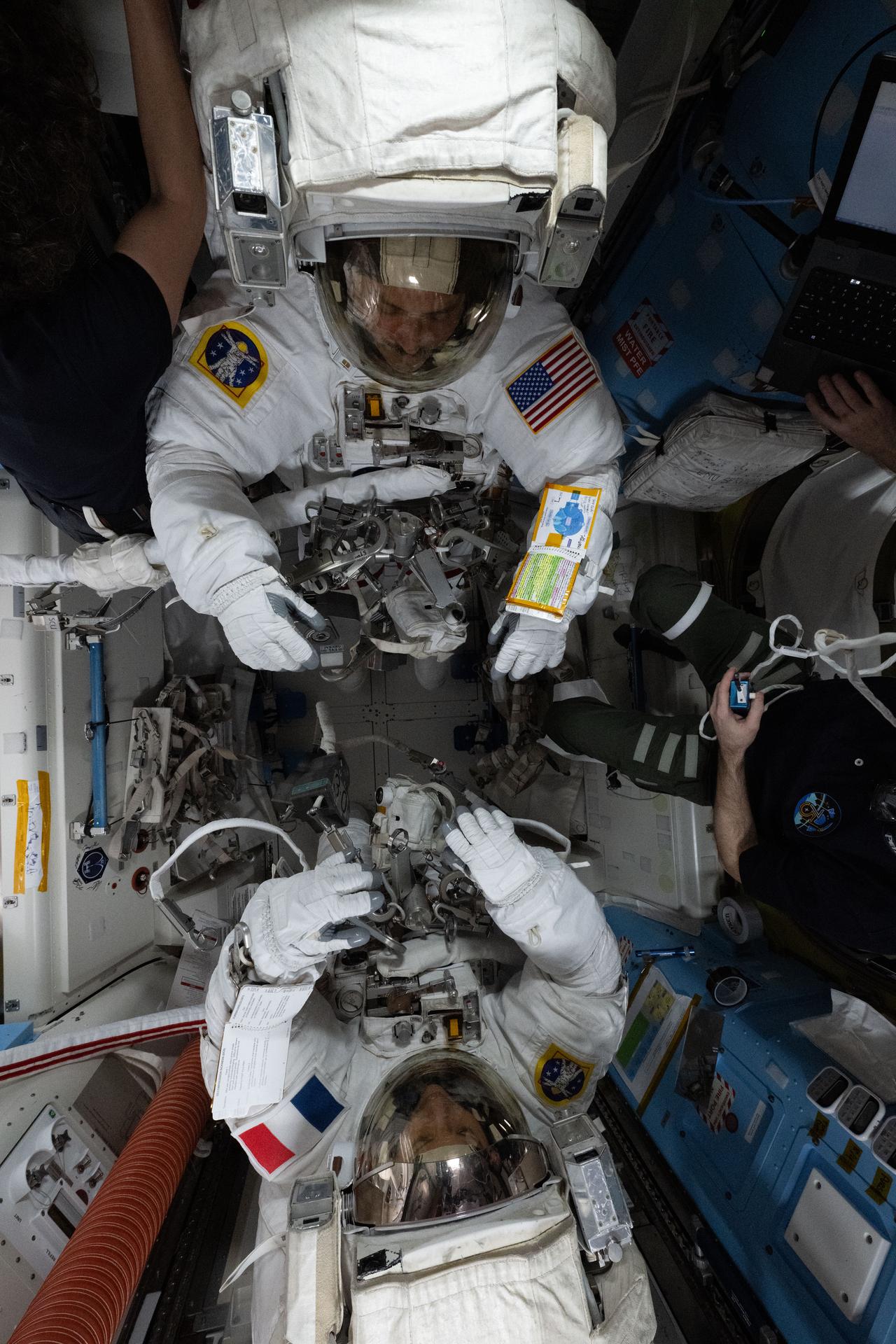
iss075e0042791 (Aug. 18, 2026) --- From top, Expedition 75 flight engineers Anil Menon of NASA and Sophie Adenot of ESA (European Space Agency) are suited up inside the International Space Station’s Quest airlock preparing for a spacewalk. The duo spent six hours and 23 minutes in the vacuum of space disconnecting a failed high‑speed antenna and then securing it with a long‑duration tie‑down on the orbital outpost’s Z1 truss segment. A spare antenna will be installed in its place on the Z1 during a future spacewalk. Credit: NASA/Jessica Meir
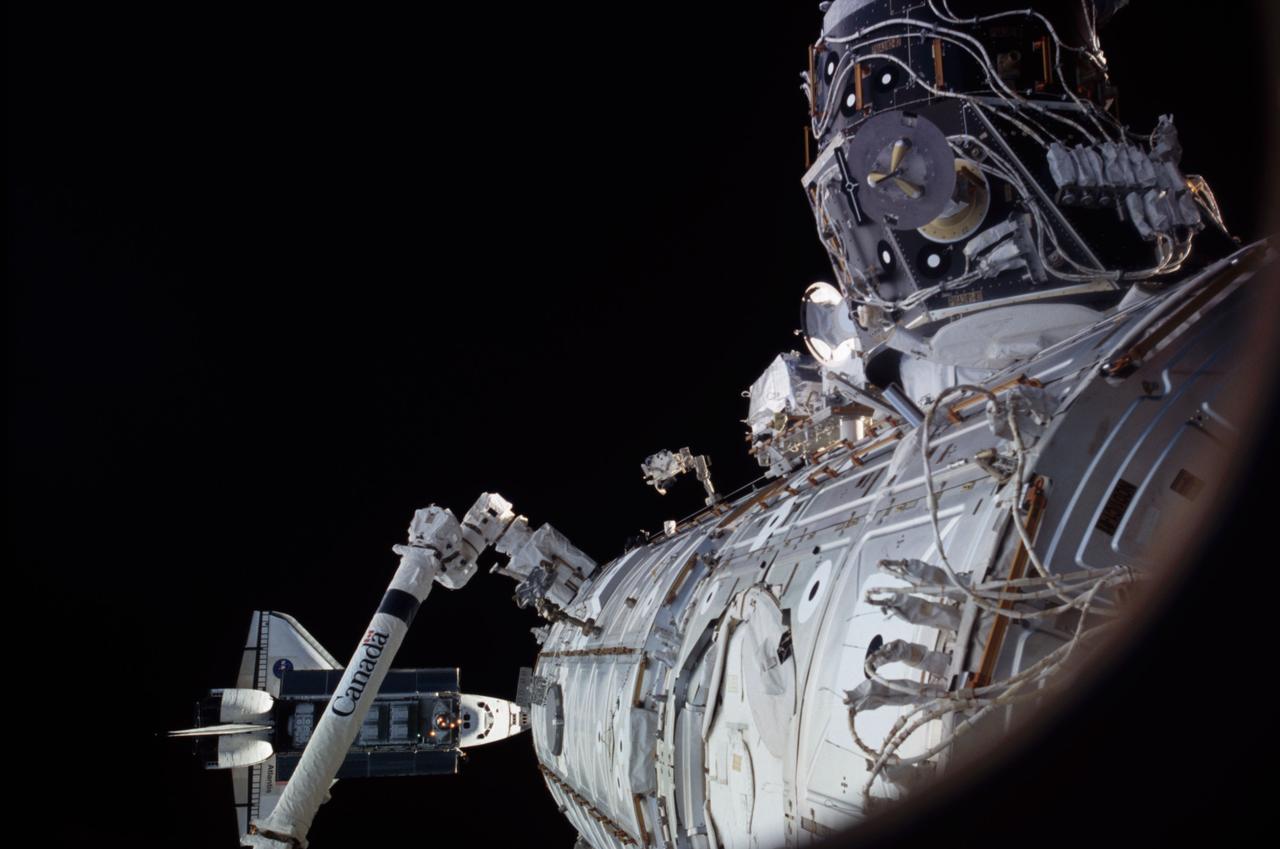
ISS002-422-025 (13 July 2001) --- Partially obscured by the Canadarm2, or Space Station Remote Manipulator System (SSRMS), arm the Space Shuttle Atlantis (background) moves toward the International Space Station (ISS) during rendezvous operations. Atlantis commander Steven W. Lindsey smoothly docked the shuttle with the orbiting outpost about 240 statute miles above the northeastern coast of South America. With both spacecraft moving at about 17,500 mph, Lindsey moved Atlantis to the station at a relative speed of about a tenth of a foot per second. Docking occurred at 10:08 p.m. (CDT), July 13, 2001. Atlantis brought to the station a new airlock, called Quest, which can be seen in the aft cargo bay.

NASA’s X-59 quiet supersonic research aircraft accelerates down the runway Tuesday, Oct. 28, 2025, at U.S. Air Force Plant 42 in Palmdale, California, ahead of its first flight. This moment marks the start of flight testing for NASA’s Quesst mission, which aims to demonstrate quiet supersonic flight over land.

NASA’s X-59 quiet supersonic research aircraft accelerates down the runway Tuesday, Oct. 28, 2025, at U.S. Air Force Plant 42 in Palmdale, California, ahead of its first flight. This moment marks the start of flight testing for NASA’s Quesst mission, which aims to demonstrate quiet supersonic flight over land.

NASA’s X-59 quiet supersonic research aircraft accelerates down the runway Tuesday, Oct. 28, 2025, at U.S. Air Force Plant 42 in Palmdale, California, ahead of its first flight. This moment marks the start of flight testing for NASA’s Quesst mission, which aims to demonstrate quiet supersonic flight over land.
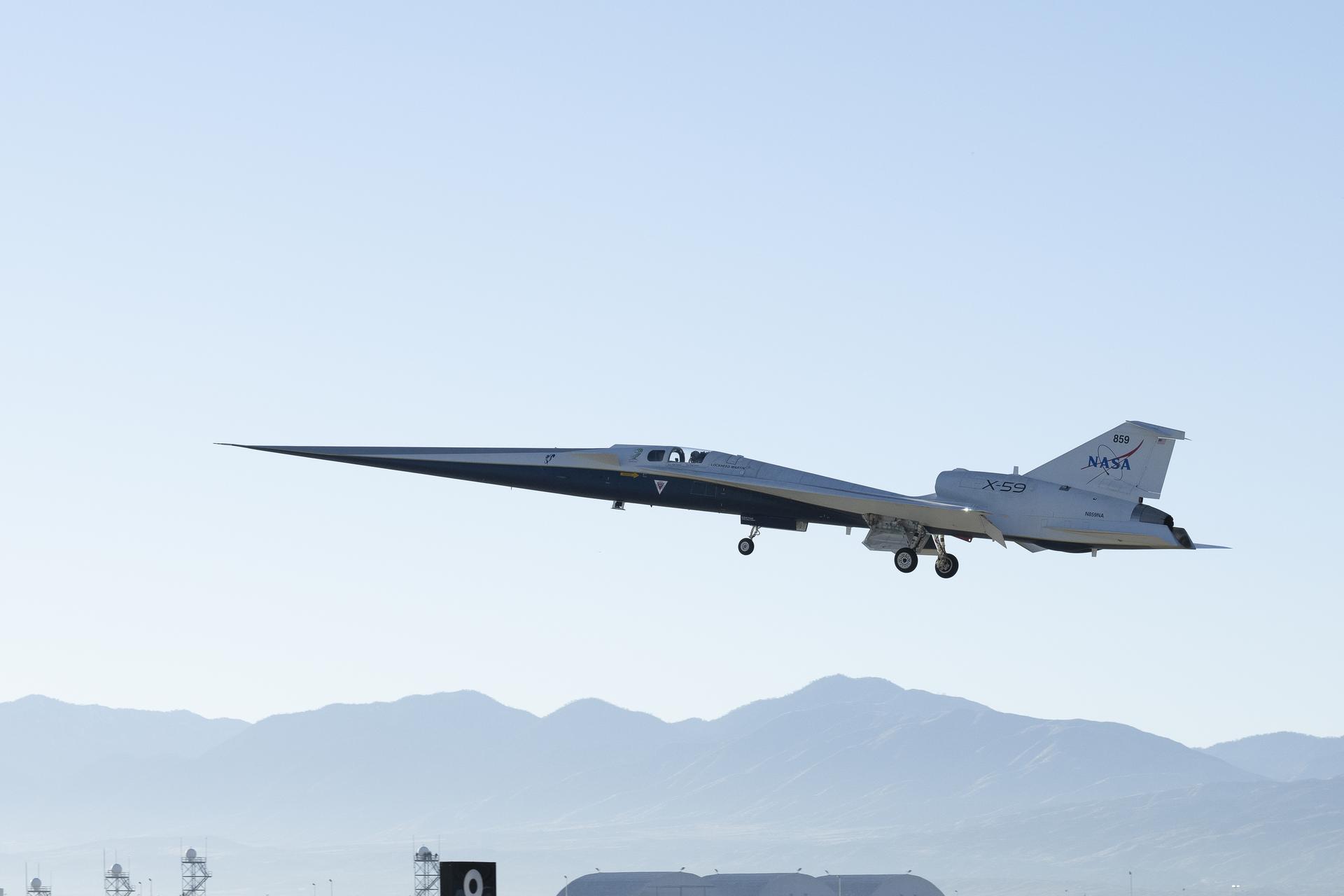
NASA’s X-59 quiet supersonic research aircraft lifts off for its first flight Tuesday, Oct. 28, 2025, from U.S. Air Force Plant 42 in Palmdale, California. The aircraft’s first flight marks the start of flight testing for NASA’s Quesst mission, the result of years of design, integration, and ground testing and begins a new chapter in NASA’s aeronautics research legacy.
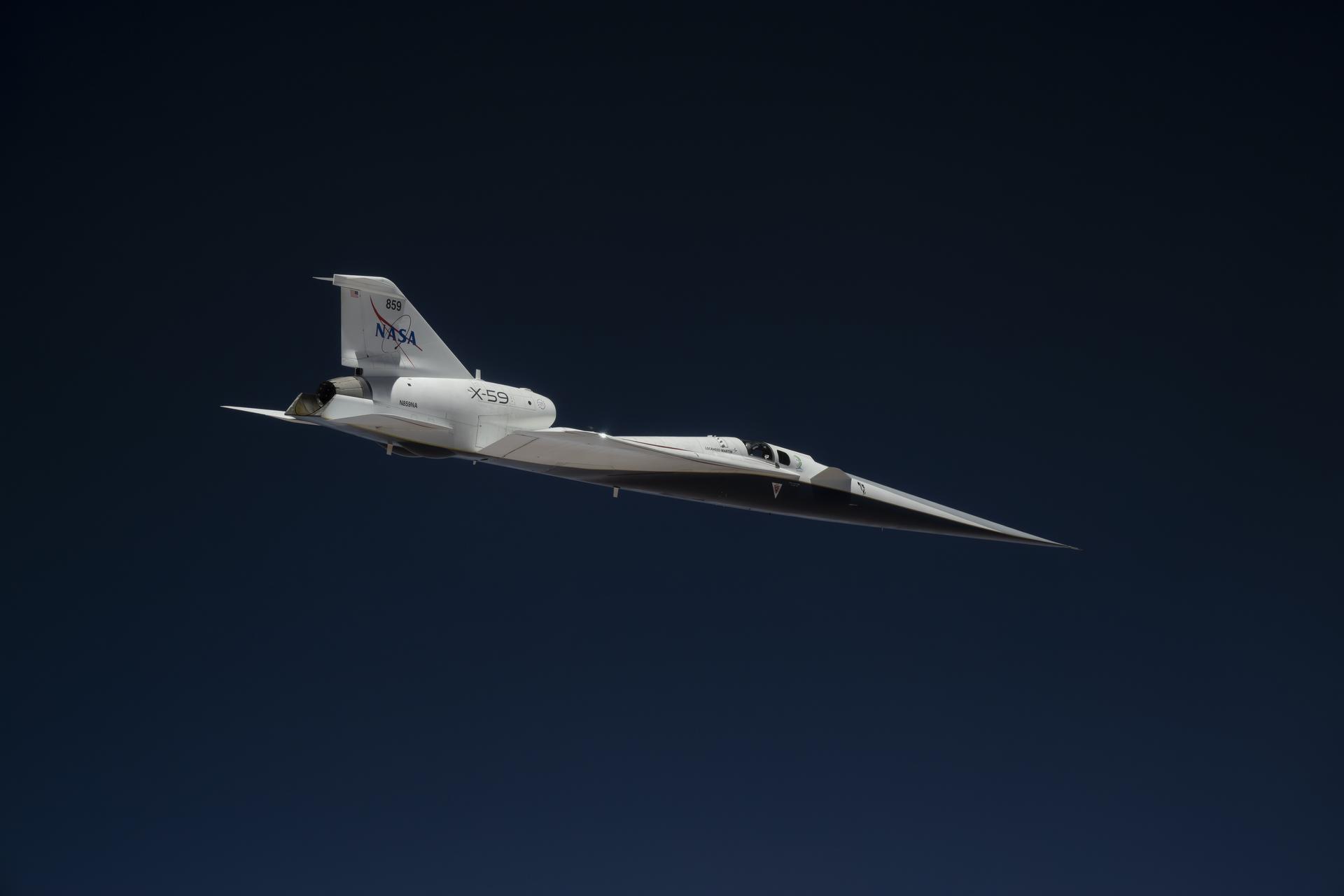
NASA’s X-59 quiet supersonic research aircraft flies along the Bell X-1 Supersonic Corridor in California during continued flight testing on Wednesday, June 10, 2026, in support of NASA’s Quesst mission. Initial supersonic flights help the team evaluate the aircraft’s performance as it progresses toward the speed and altitude planned for future community overflights.
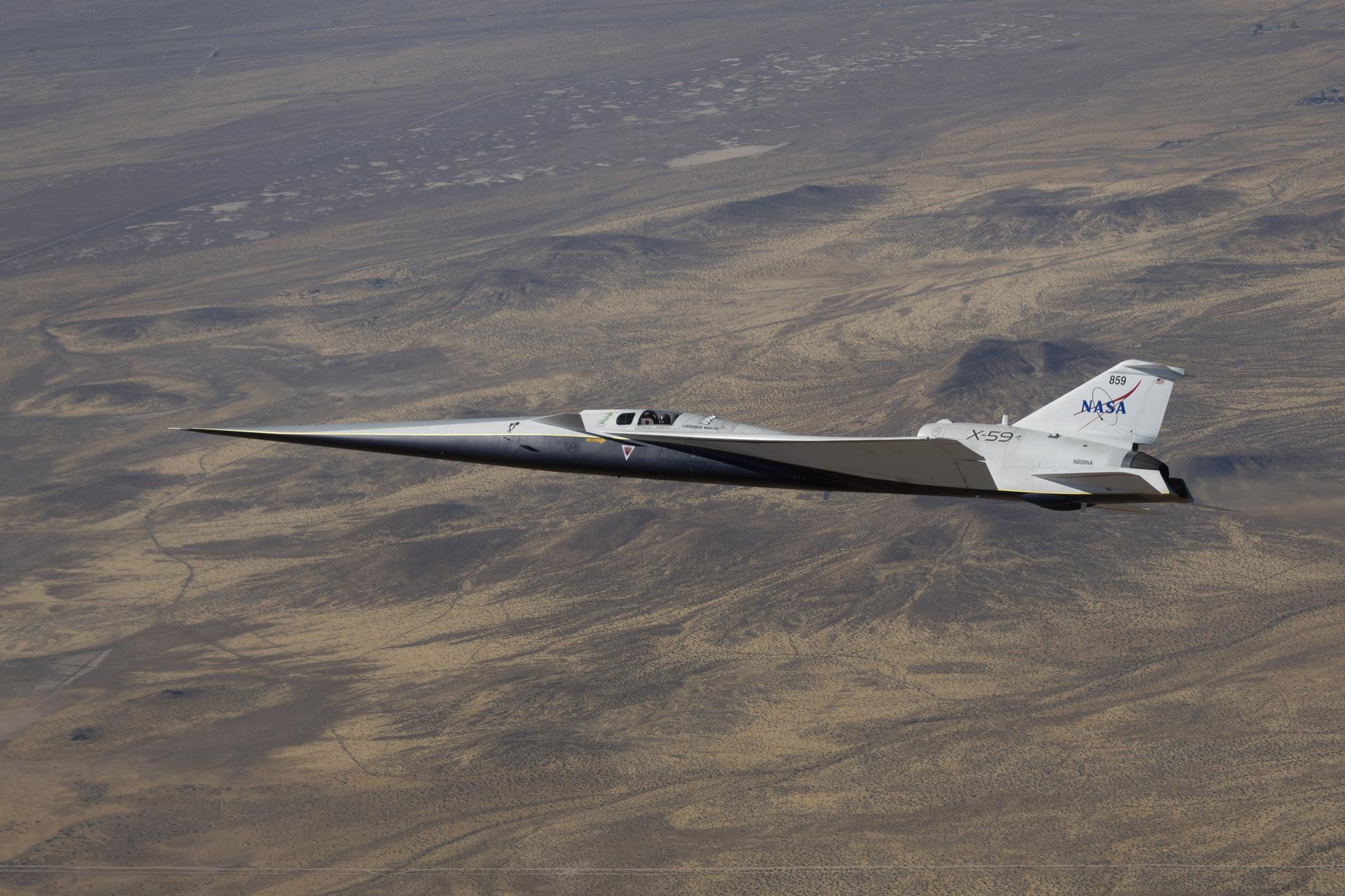
NASA’s X-59 quiet supersonic research aircraft completed its first dual-flight day on Thursday, April 30, at the agency’s Armstrong Flight Research Center in Edwards, California. This image shows the X-59 flying over the Mojave Desert during the aircraft’s second flight of the day, and its 12th overall. The X-59 flew test points at altitudes ranging from 12,000 to 43,000 feet and speeds from approximately 528 to 627 mph, or Mach 0.8 to Mach 0.95. The increased tempo of test flights allows the team to collect more data over a shorter period of time.
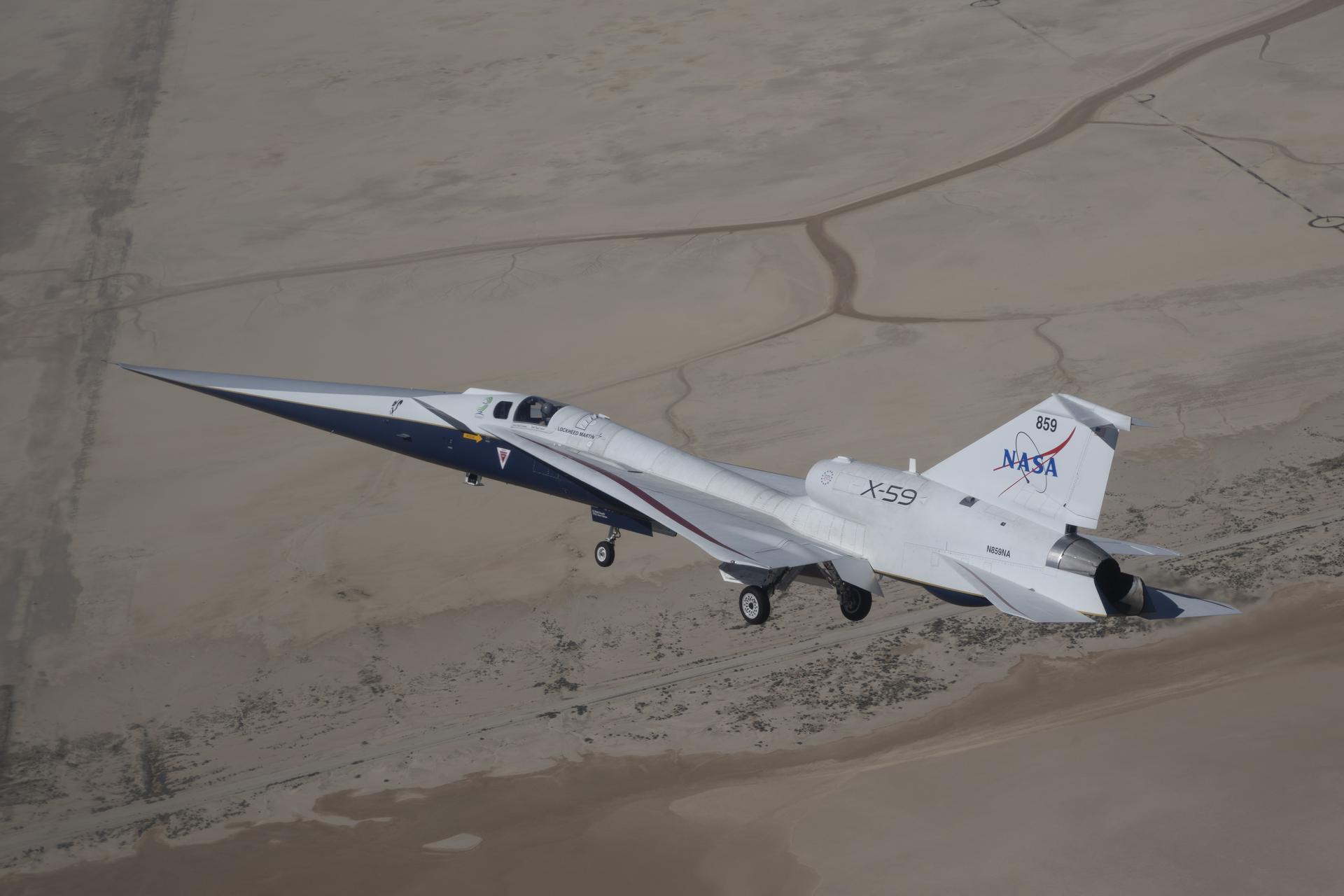
NASA’s X-59 quiet supersonic aircraft flies its second flight Friday, March 20, 2026, near NASA’s Armstrong Flight Research Center in Edwards, California. The X-59 is central to NASA’s Quesst mission, which aims to demonstrate quiet supersonic flight by reducing the loud sonic boom to a softer sonic “thump,” potentially enabling faster commercial air travel over land.
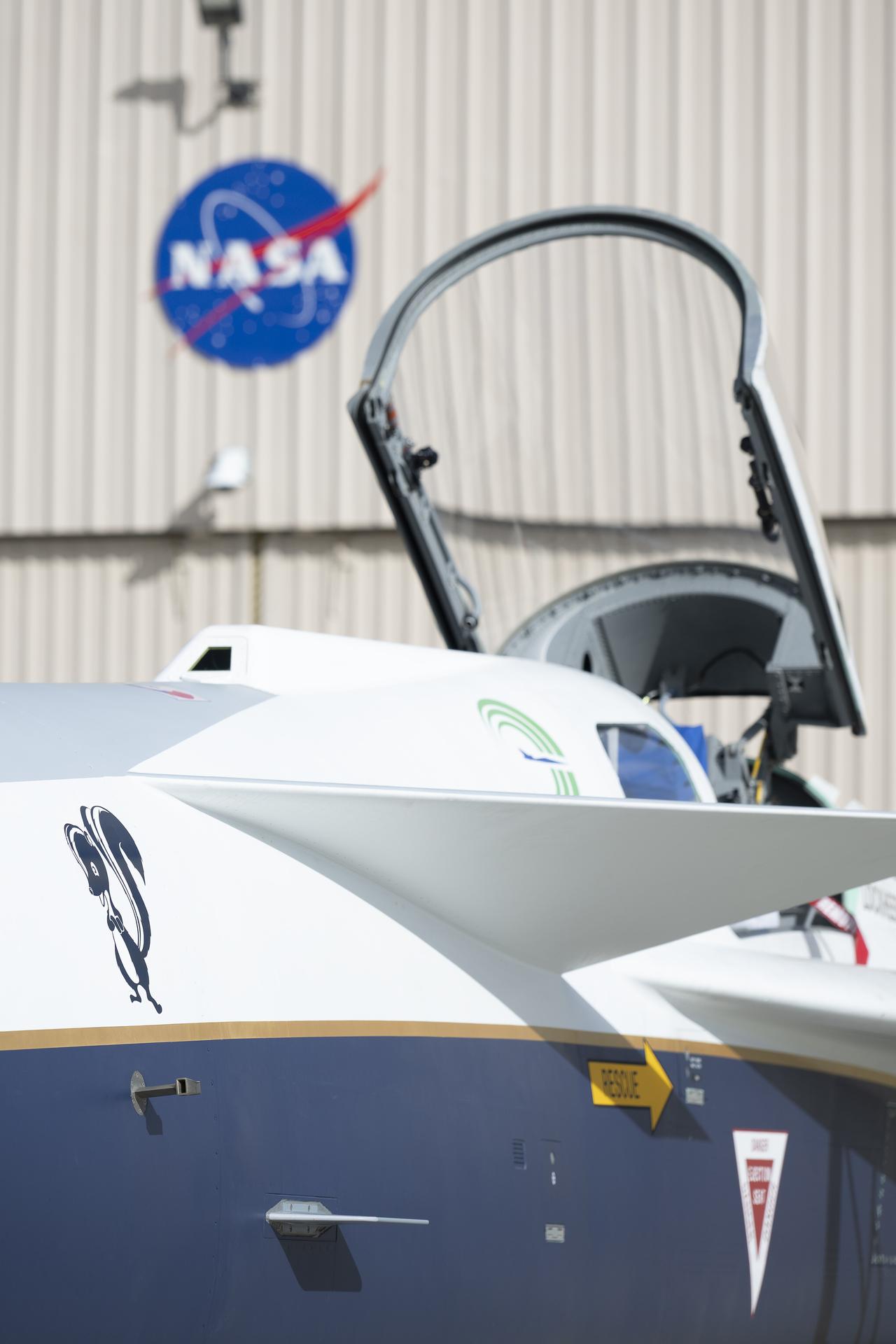
NASA’s X-59 quiet supersonic research aircraft sits outside Hangar 4826 at NASA’s Armstrong Flight Research Center in Edwards, California, on Nov. 19, 2025. The aircraft’s arrival at NASA Armstrong on Oct. 28, 2025, marked its transition into flight operations in support of NASA’s Quesst mission to gather data on quiet supersonic flight.
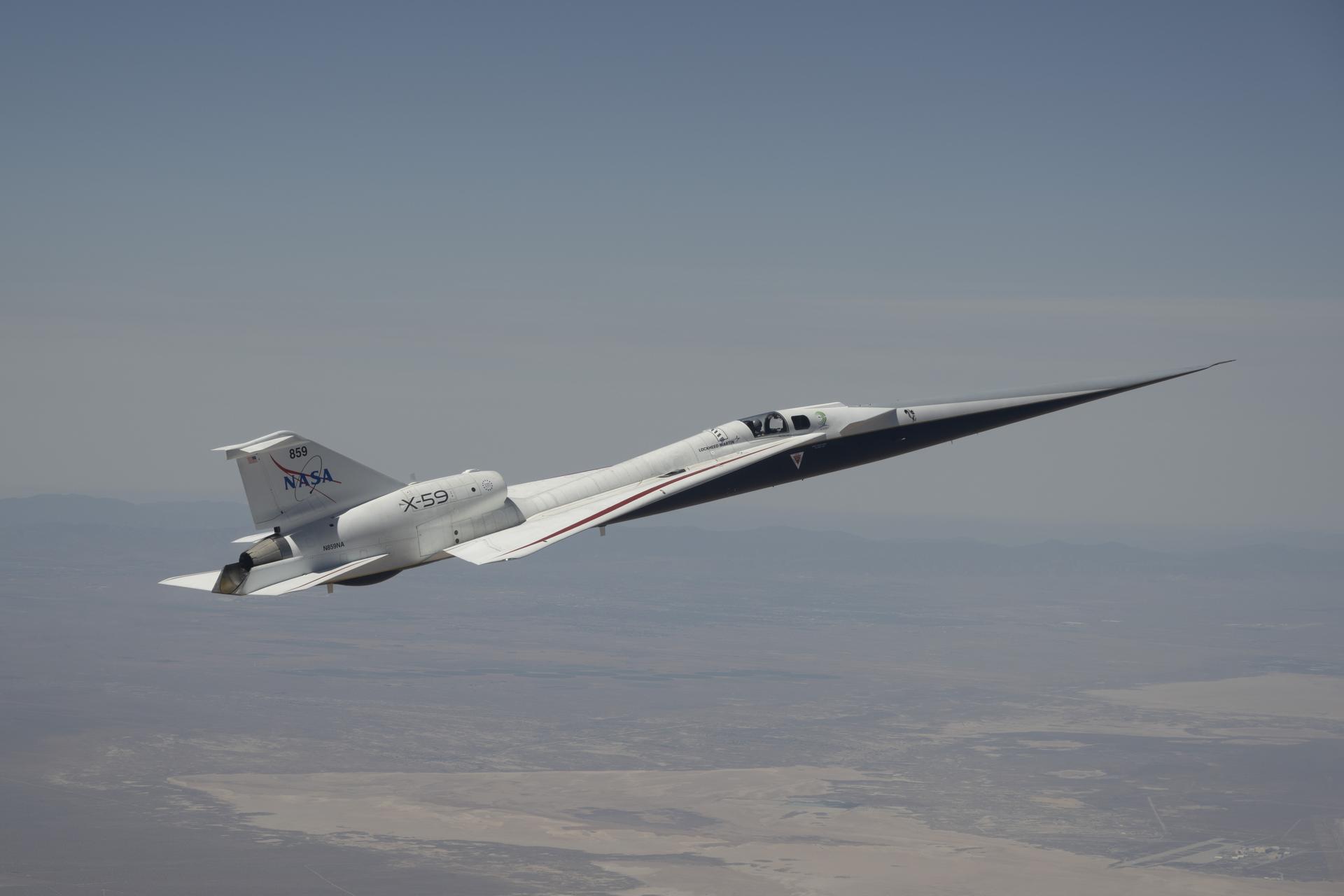
NASA’s X-59 quiet supersonic research aircraft flies above mountains near NASA’s Armstrong Flight Research Center in Edwards, California, on Tuesday, May 12, 2026. NASA continues expanding the aircraft’s flight envelope to evaluate its performance across a range of flight conditions ahead of flight tests at speeds faster than the speed of sound in support of the agency’s Quesst mission.

NASA’s X-59 quiet supersonic research aircraft lifts off for its first flight Tuesday, Oct. 28, 2025, from U.S. Air Force Plant 42 in Palmdale, California. The aircraft’s first flight marks the start of flight testing for NASA’s Quesst mission, the result of years of design, integration, and ground testing and begins a new chapter in NASA’s aeronautics research legacy.

NASA’s X-59 quiet supersonic research aircraft took off for its first flight Tuesday, Oct. 28, 2025, from U.S. Air Force Plant 42 in Palmdale, California. The aircraft’s first flight marks the start of flight testing for NASA’s Quesst mission and begins a new chapter in NASA’s aeronautics research legacy.

NASA’s X-59 quiet supersonic research aircraft flies above Palmdale and Edwards, California, during its first flight Tuesday, Oct. 28, 2025. The aircraft is headed to NASA’s Armstrong Flight Research Center in Edwards, where it will begin flight testing for NASA’s Quesst mission, which aims to demonstrate quiet supersonic flight over land.
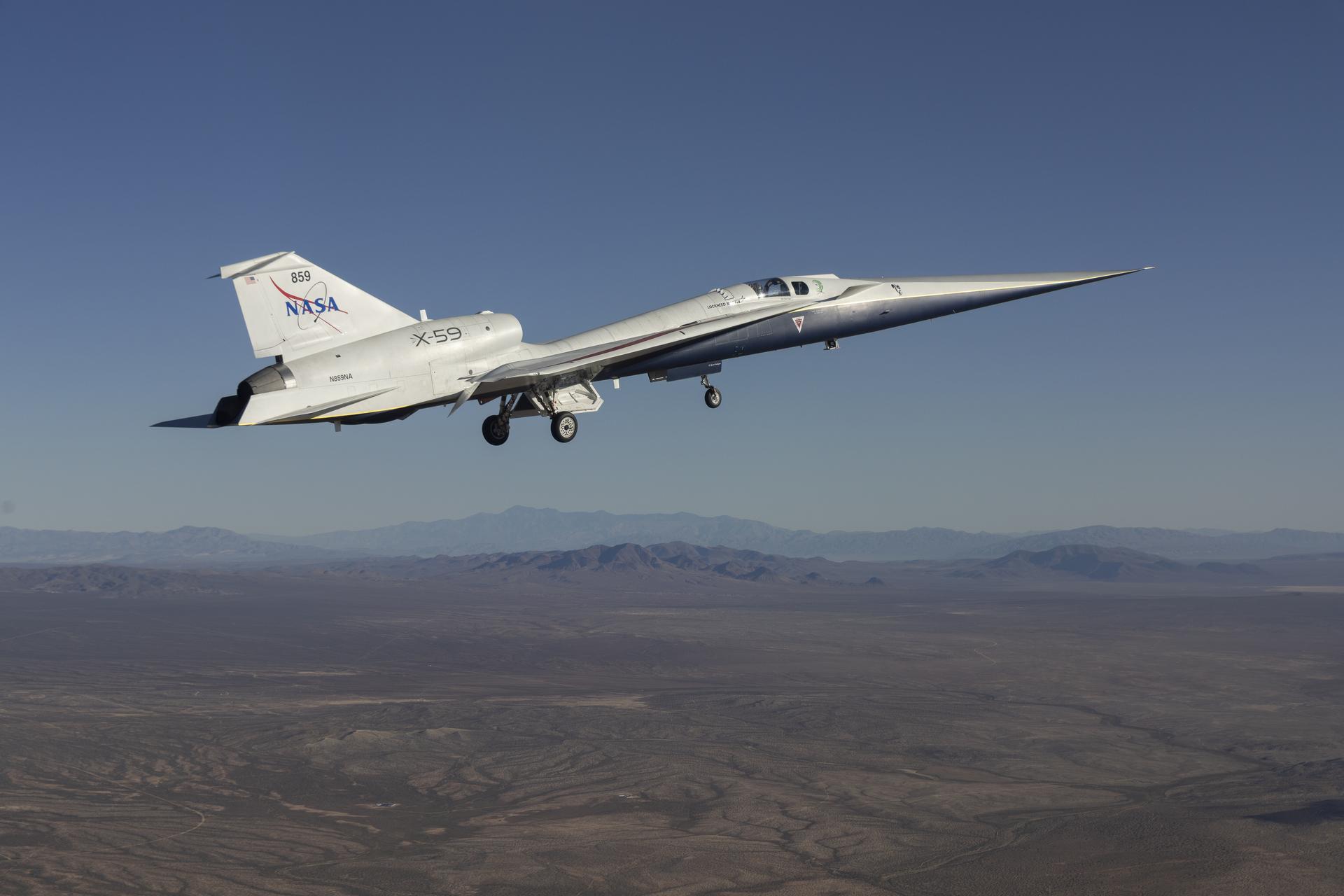
NASA’s X-59 quiet supersonic research aircraft lifts off for its first flight Tuesday, Oct. 28, 2025, from U.S. Air Force Plant 42 in Palmdale, California. The aircraft’s first flight marks the start of flight testing for NASA’s Quesst mission, the result of years of design, integration, and ground testing and begins a new chapter in NASA’s aeronautics research legacy.

NASA's F-15B Aeronautics Research Test Bed performs a calibration flight of the shock-sensing probe over Edwards, California, on Aug. 6, 2024. The probe will measure shock waves from NASA's X-59.
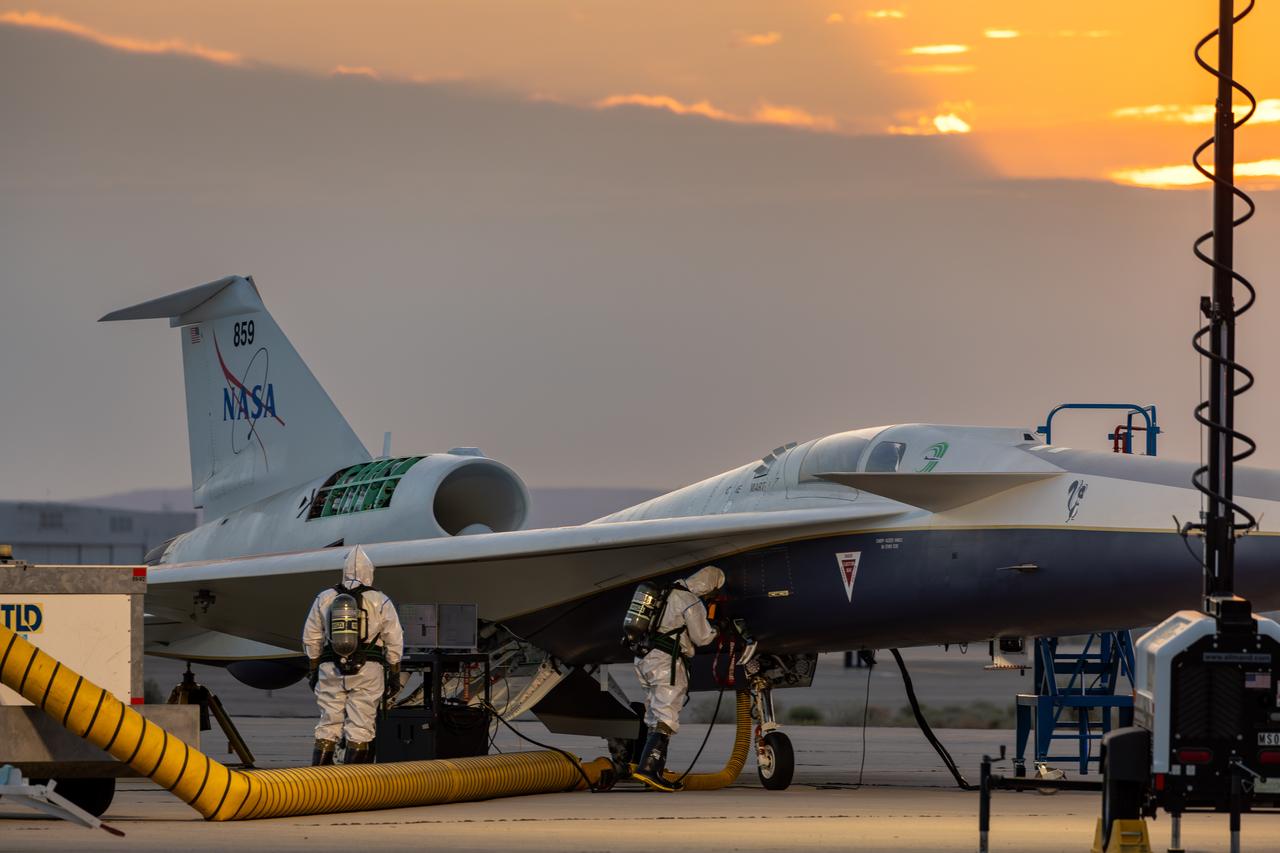
Maintainers perform a hydrazine safety check on the agency’s quiet supersonic X-59 aircraft at U.S. Air Force Plant 42 in Palmdale, California, on Aug. 18, 2025. Hydrazine is a highly toxic chemical, but it serves as a critical backup to restart the engine in flight, if necessary, and is one of several safety features being validated ahead of the aircraft’s first flight.

NASA’s X-59 quiet supersonic research aircraft lifts off for its first flight Tuesday, Oct. 28, 2025, from U.S. Air Force Plant 42 in Palmdale, California. The aircraft’s first flight marks the start of flight testing for NASA’s Quesst mission, the result of years of design, integration, and ground testing and begins a new chapter in NASA’s aeronautics research legacy.

NASA Aeronautics and center leadership gather inside the viewing area of the main control room at NASA’s Armstrong Flight Research Center in Edwards, California, on Tuesday, Oct. 28, 2025. The group watches in real time as flight controllers and engineers receive updates from the aircraft during its historic first flight in support of the agency’s Quesst mission.

NASA Aeronautics and center leadership gather inside the viewing area of the main control room at NASA’s Armstrong Flight Research Center in Edwards, California, on Tuesday, Oct. 28, 2025. The group watches in real time as flight controllers and engineers receive updates from the aircraft during its historic first flight in support of the agency’s Quesst mission.
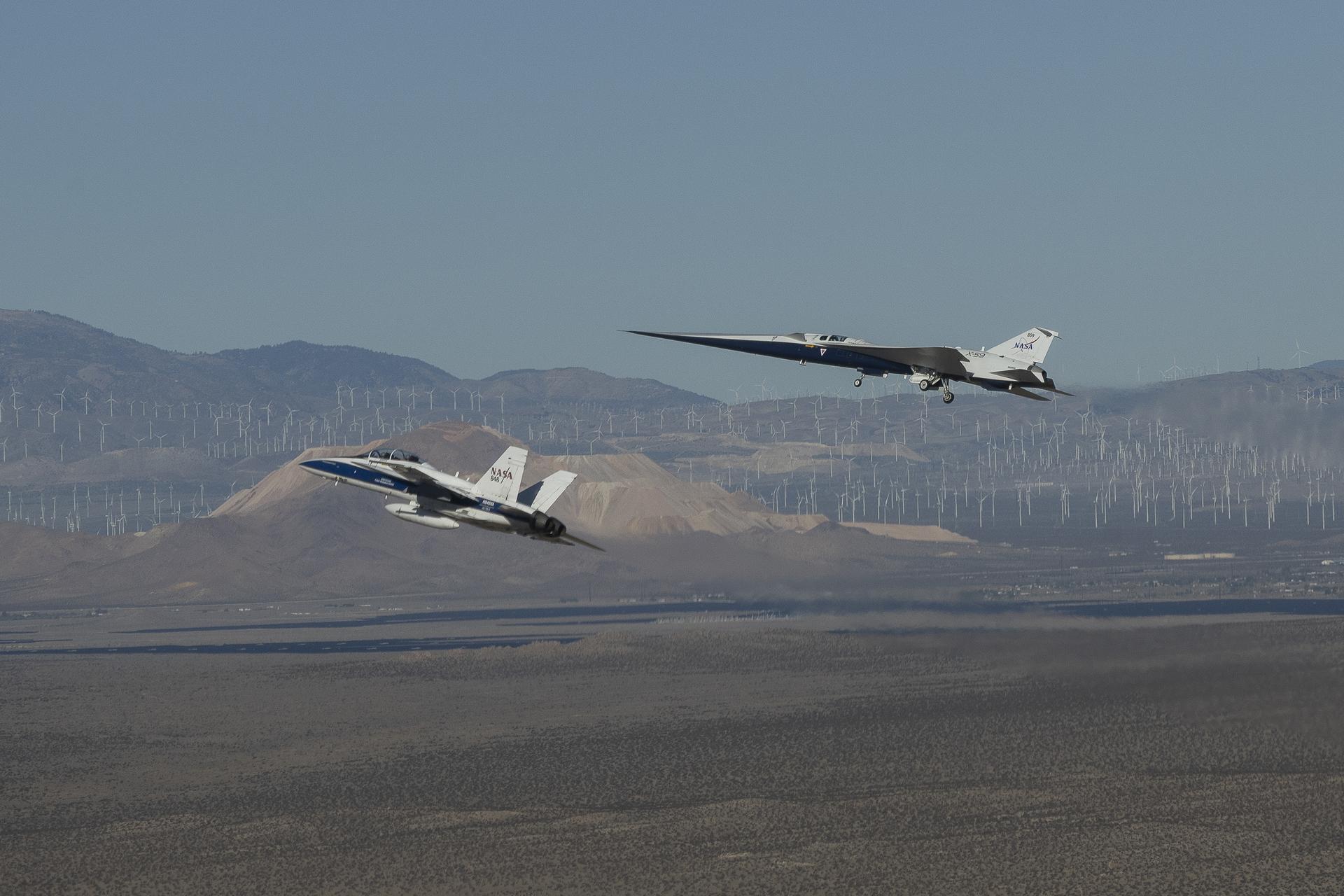
NASA’s X-59 quiet supersonic research aircraft flies above Palmdale and Edwards, California, during its first flight Tuesday, Oct. 28, 2025, accompanied by a NASA F/A-18 research aircraft. A NASA F-15 research aircraft (not pictured) captured the image as the X-59 traveled to NASA’s Armstrong Flight Research Center in Edwards, California, where it will begin flight testing for NASA’s Quesst mission, which aims to demonstrate quiet supersonic flight over land.
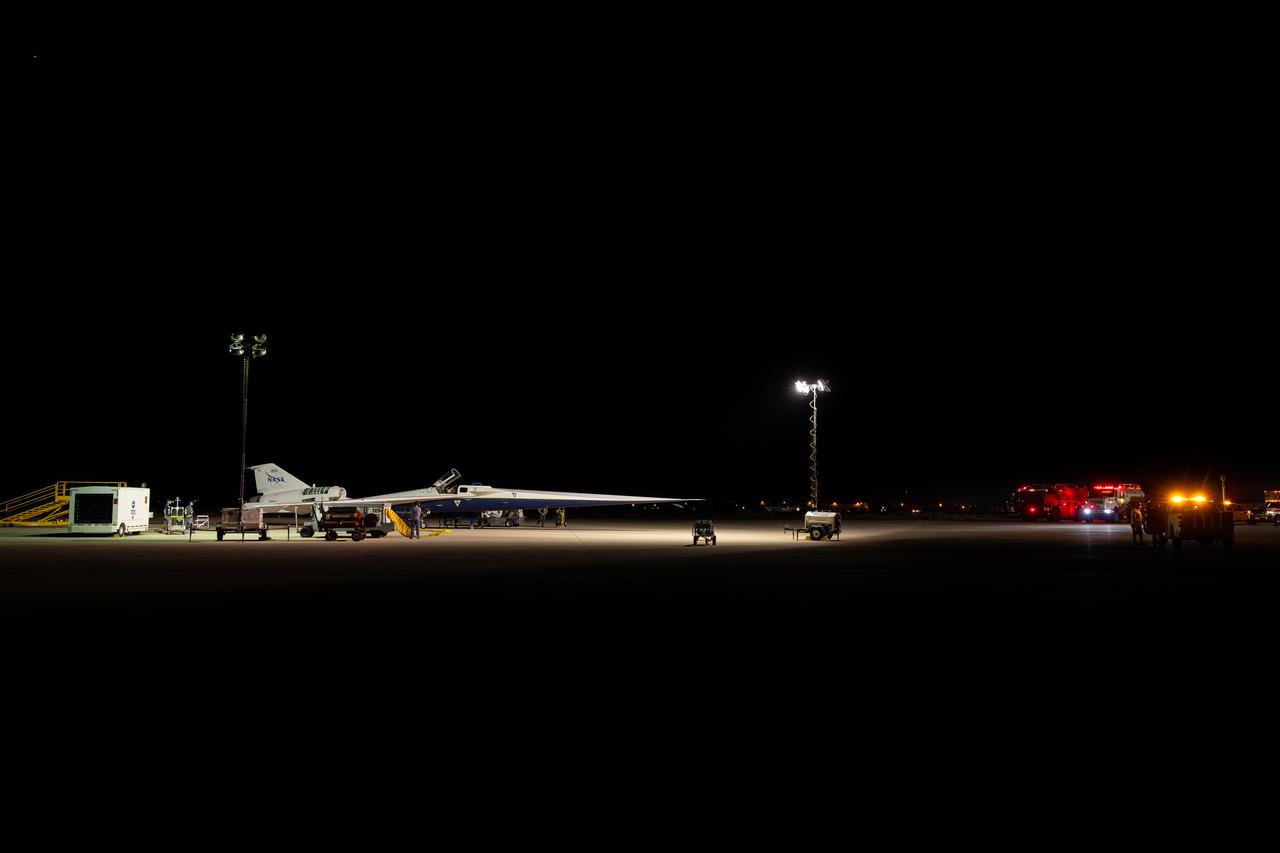
NASA’s X-59 quiet supersonic research aircraft is seen at dawn with firetrucks and safety personnel nearby during a hydrazine safety check at U.S. Air Force Plant 42 in Palmdale, California, on Aug. 18, 2025. The operation highlights the extensive precautions built into the aircraft’s safety procedures for a system that serves as a critical safeguard, ensuring the engine can be restarted in flight as the X-59 prepares for its first flight.
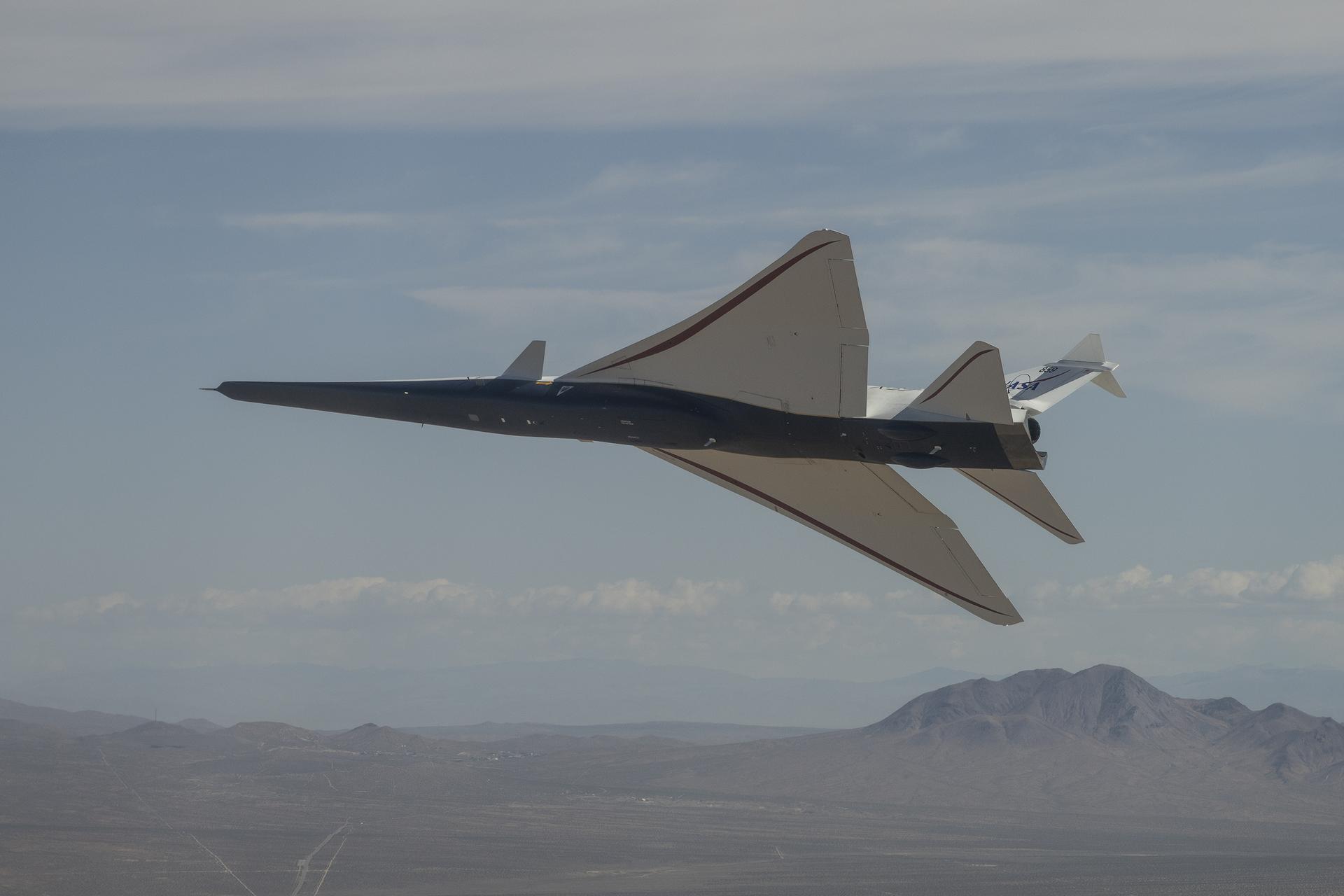
NASA’s X-59 quiet supersonic research aircraft flies above NASA’s Armstrong Flight Research Center in Edwards, California, during testing focused on lower-speed and lower-altitude flight conditions in support of NASA’s Quesst mission. NASA continues two-flight days during envelope expansion testing as teams work to better understand how the aircraft responds throughout its operating range.
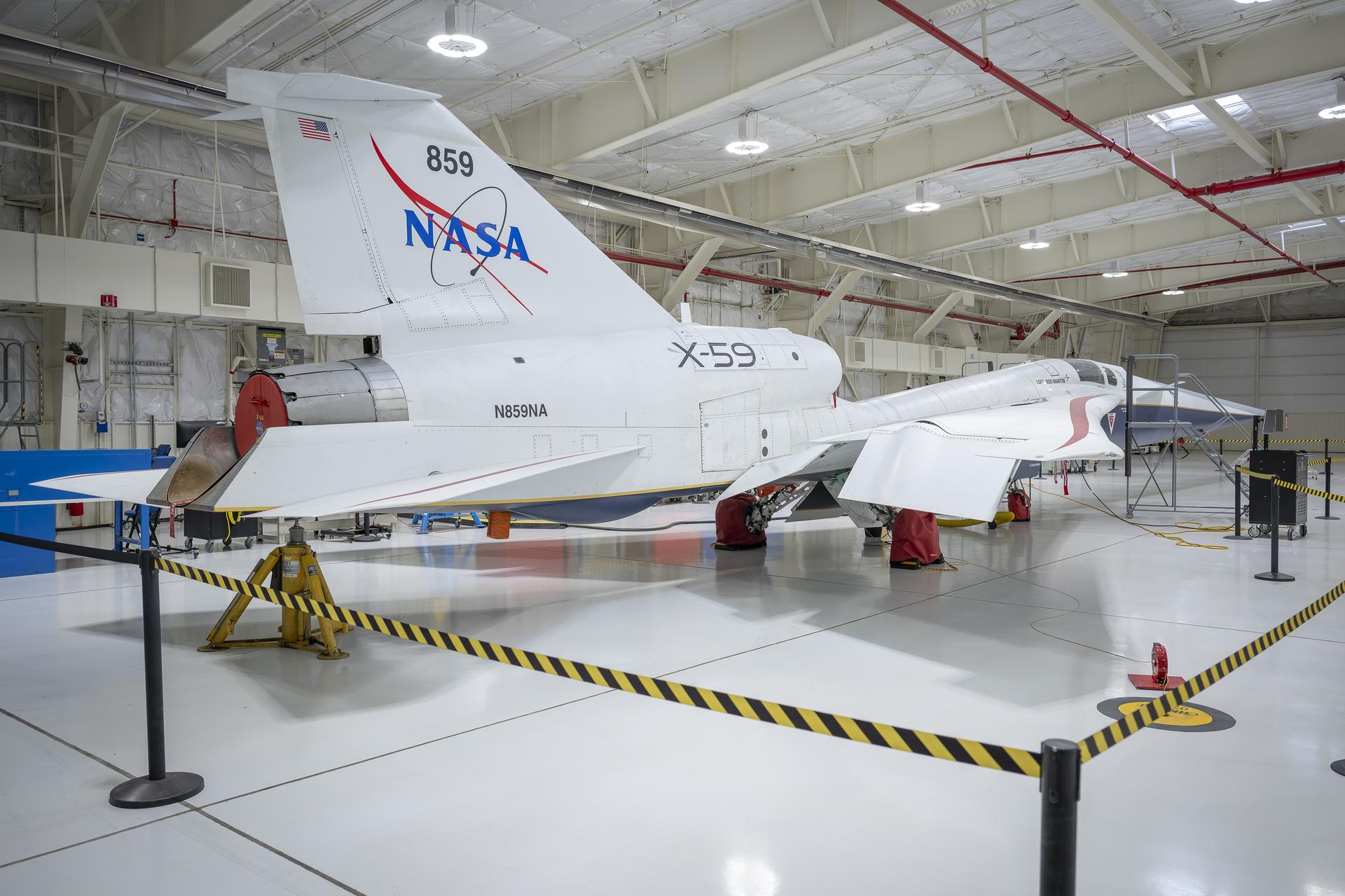
NASA’s X-59 quiet supersonic research aircraft sits inside Hangar 4826 at NASA’s Armstrong Flight Research Center in Edwards, California, on Nov. 18, 2025. Following its first flight on Oct. 25, 2025, in support of NASA’s Quesst mission, the aircraft entered scheduled maintenance as part of its transition into flight operations. Quesst aims to demonstrate quiet supersonic flight and reduce the disruptive sonic boom to a quieter sonic thump.

NASA’s X-59 in Flight with F/A-18 Research Aircraft Monitoring
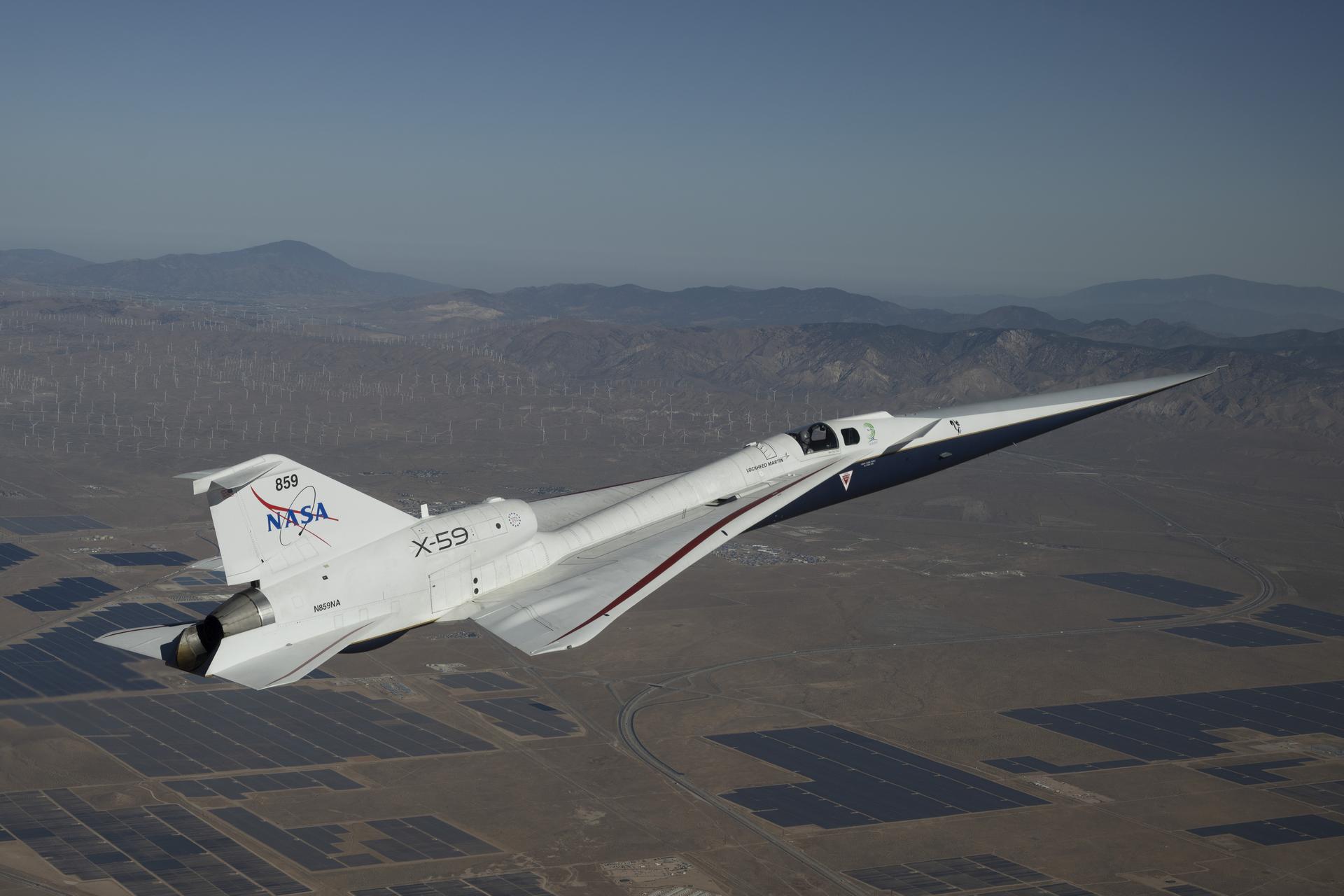
NASA’s X-59 quiet supersonic research aircraft flies along the Bell X-1 Supersonic Corridor in California during continued flight testing on Wednesday, June 10, 2026, in support of NASA’s Quesst mission. Initial supersonic flights help the team evaluate the aircraft’s performance as it progresses toward the speed and altitude planned for future community overflights.

NASA’s X-59 quiet supersonic research aircraft lifts off for its first flight Tuesday, Oct. 28, 2025, from U.S. Air Force Plant 42 in Palmdale, California. The aircraft’s first flight marks the start of flight testing for NASA’s Quesst mission, the result of years of design, integration, and ground testing and begins a new chapter in NASA’s aeronautics research legacy.
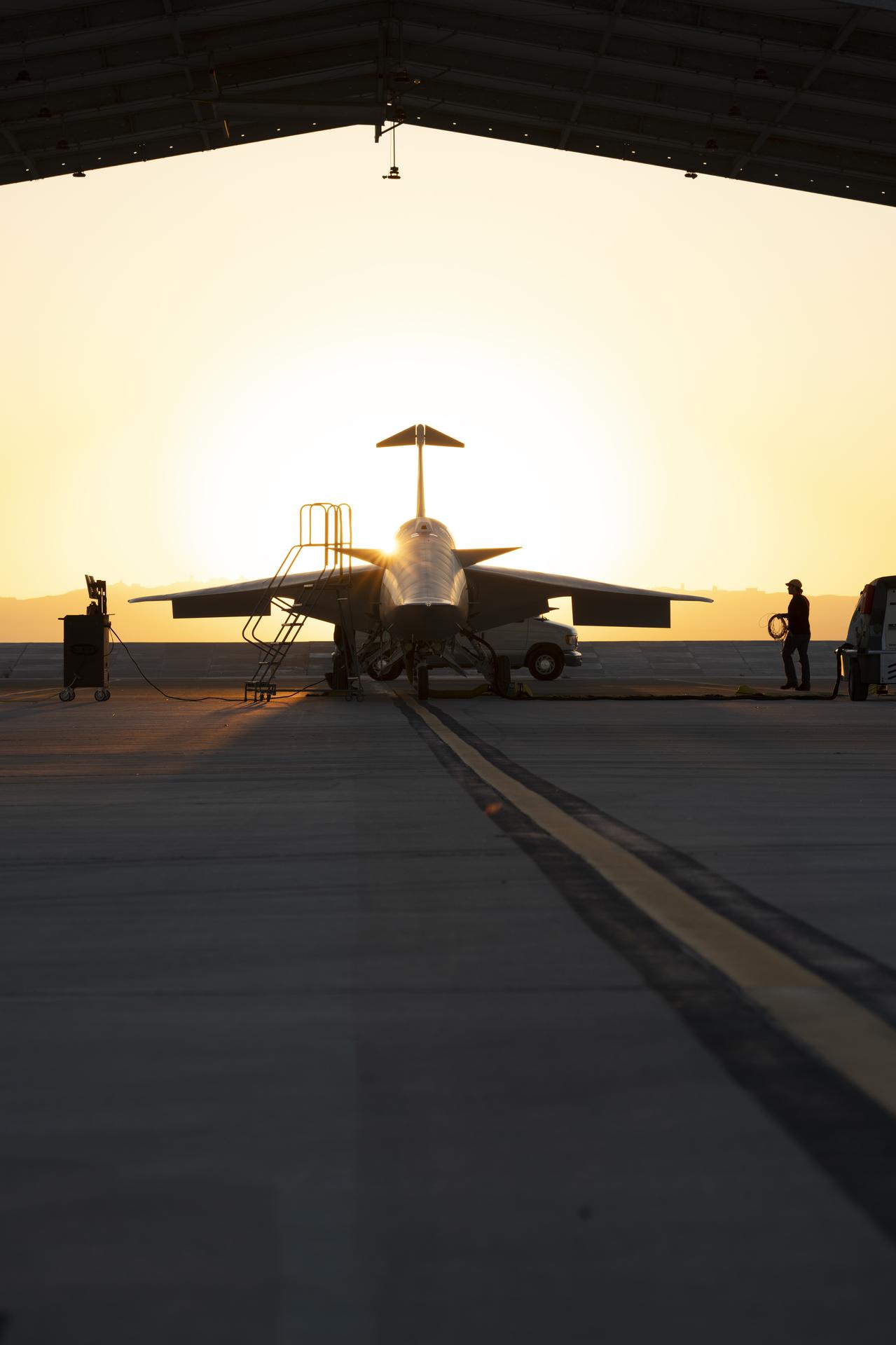
NASA’s X-59 quiet supersonic research aircraft sits in a run stall during sunrise on Tuesday, March 20, 2026, near NASA’s Armstrong Flight Research Center in Edwards, California, ahead of its second flight.
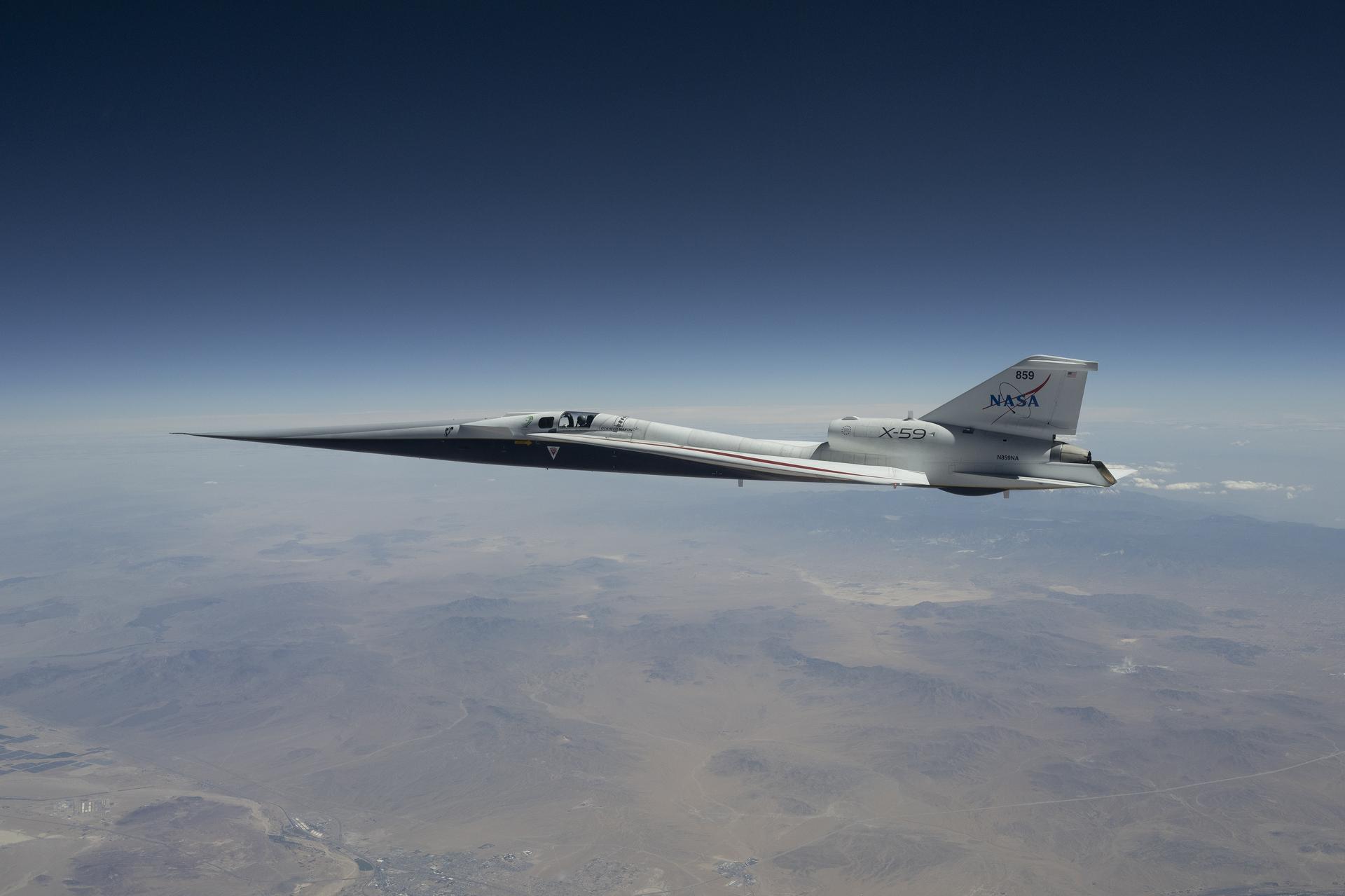
NASA’s X-59 quiet supersonic research aircraft completed its first dual-flight day on Thursday, April 30, at the agency’s Armstrong Flight Research Center in Edwards, California. This image shows the X-59 flying over the Mojave Desert during the aircraft’s second flight of the day, and its 12th overall. The X-59 flew test points at altitudes ranging from 12,000 to 43,000 feet and speeds from approximately 528 to 627 mph, or Mach 0.8 to Mach 0.95. The increased tempo of test flights allows the team to collect more data over a shorter period of time.
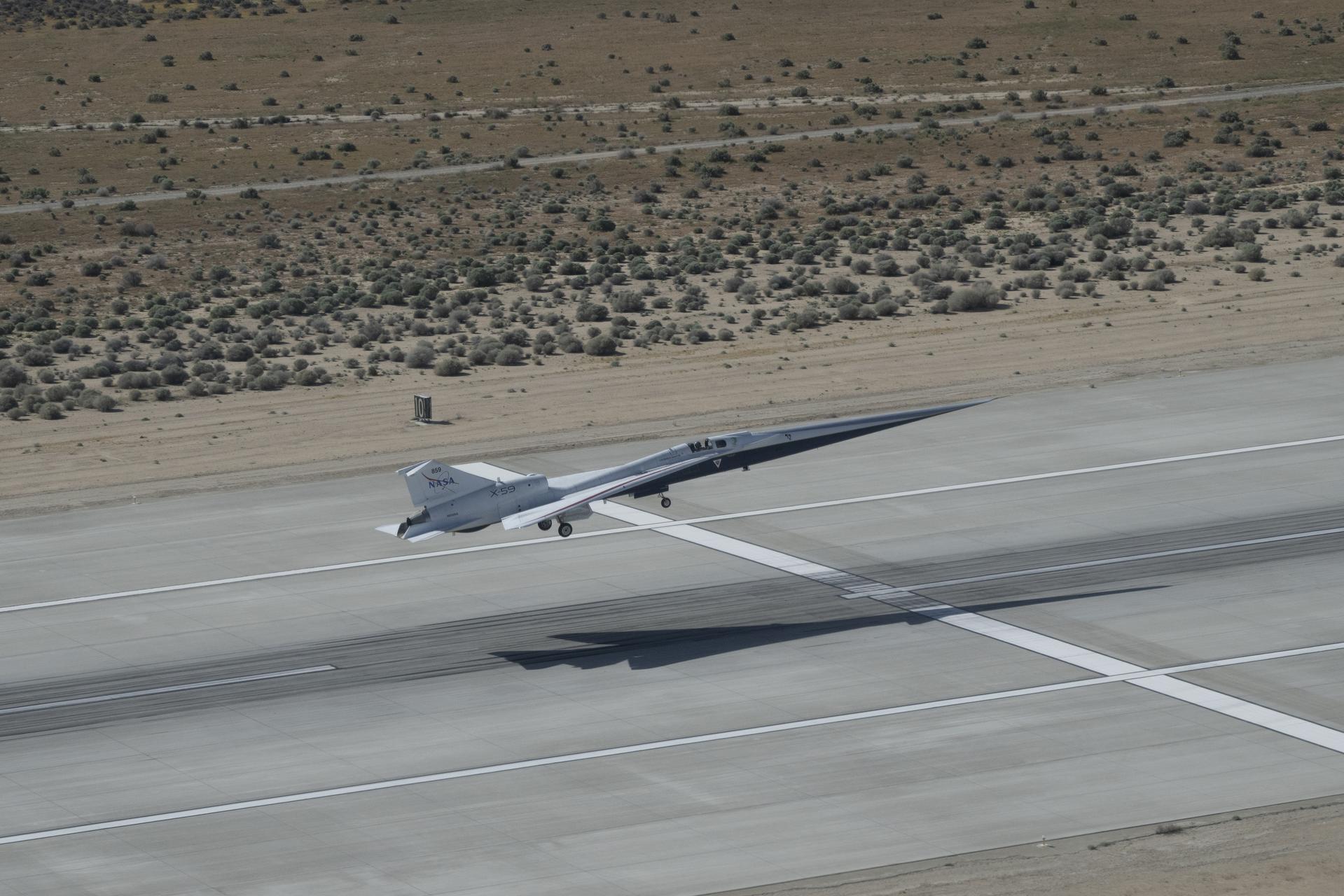
NASA’s X-59 quiet supersonic research aircraft takes off from Edwards Air Force Base near NASA’s Armstrong Flight Research Center in Edwards, California, on Thursday, March 26, 2026. The flight supports NASA’s Quesst mission to demonstrate supersonic flight that produces a quieter sonic “thump” instead of a loud sonic boom.
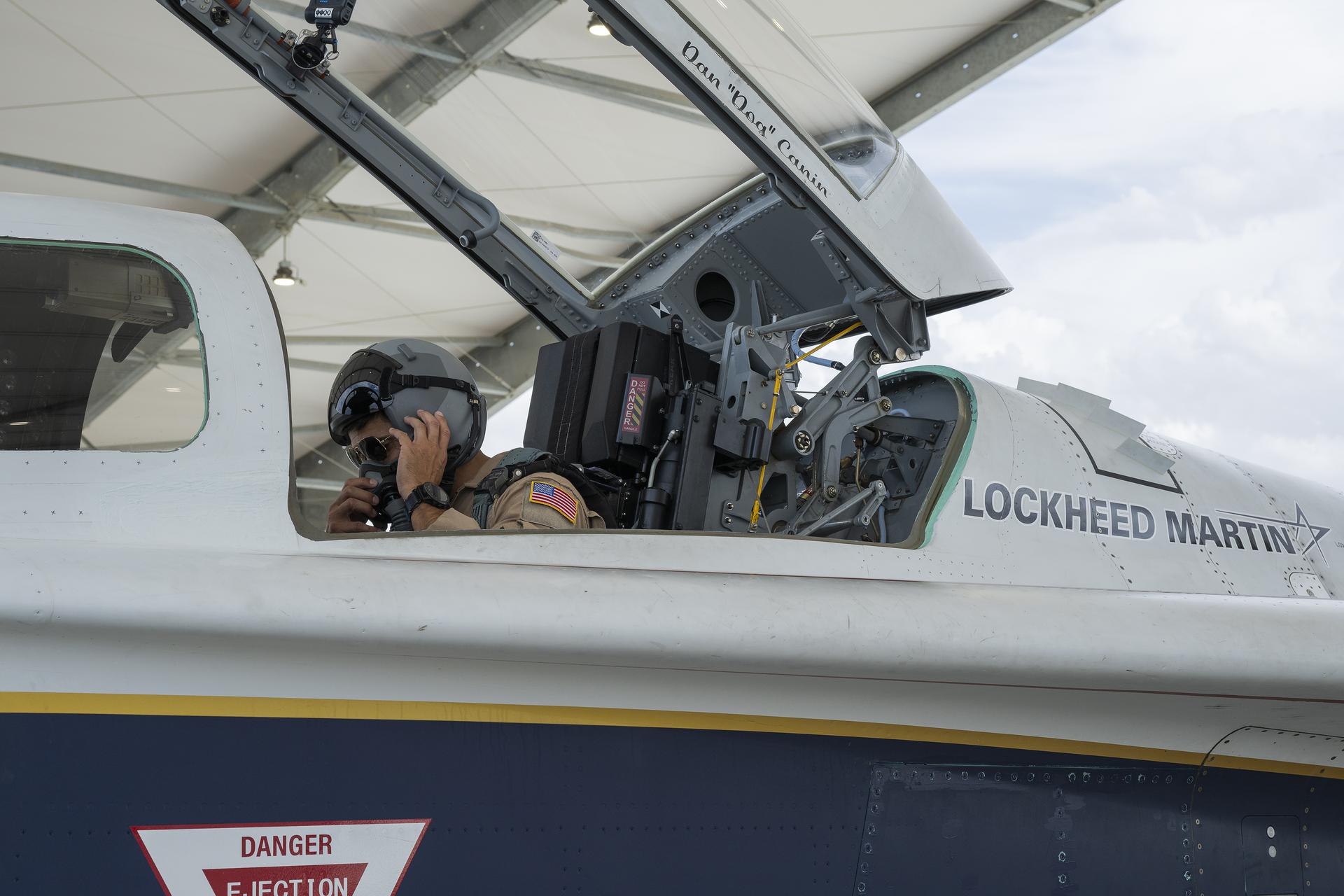
Mike Lippert, one of NASA’s X‑59 test pilots, sits in the cockpit of the agency’s X‑59 quiet supersonic research aircraft for the first time during an engine run at NASA’s Armstrong Flight Research Center in Edwards, California, on Thursday, Aug. 27, 2026. Lippert is the third X‑59 pilot supporting NASA’s Quesst mission, which will demonstrate quiet supersonic flight over U.S. communities and gather public feedback on the aircraft’s quieter sonic “thump.”
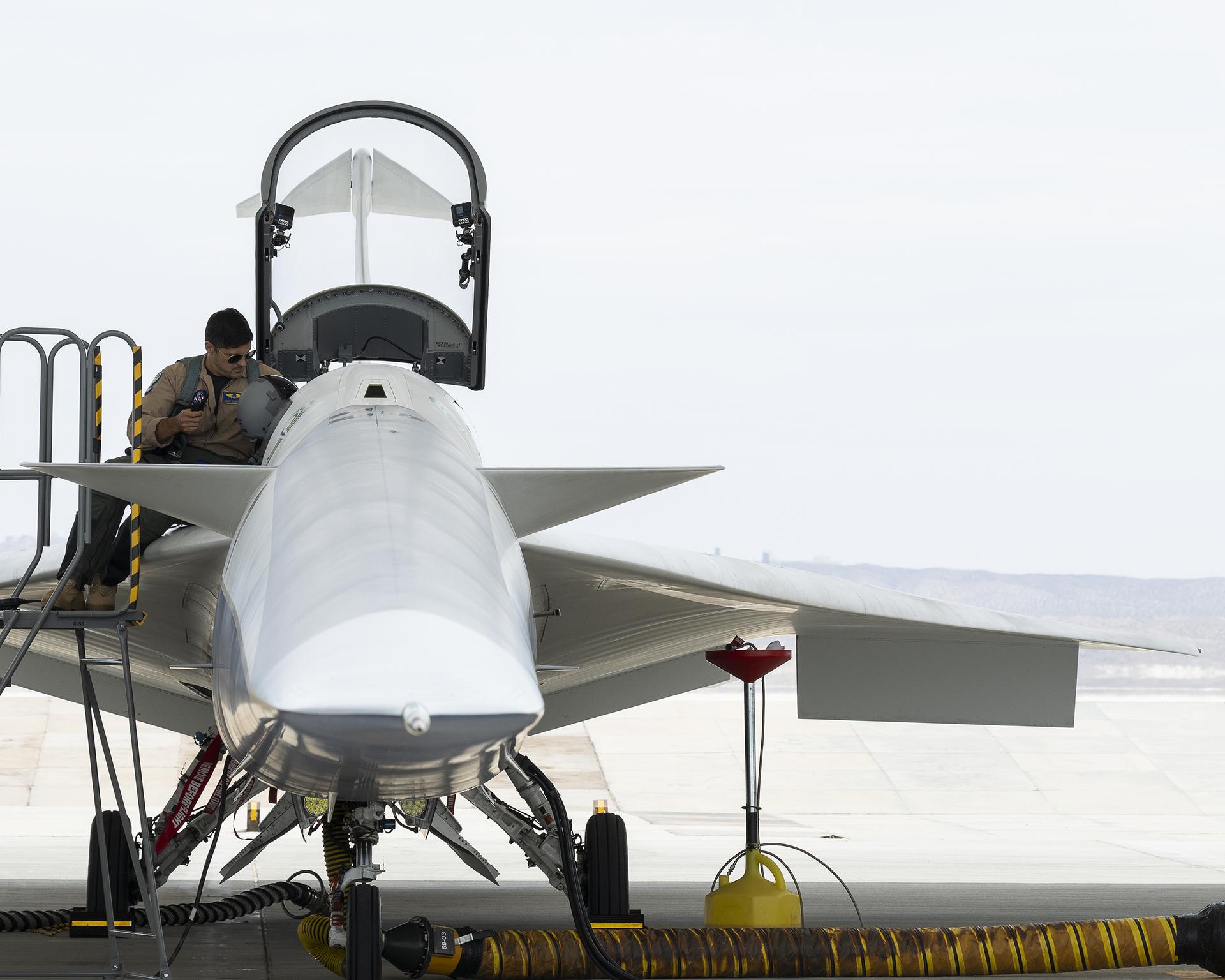
Mike Lippert, one of NASA’s X‑59 test pilots, climbs into the aircraft’s cockpit for the first time during an engine run at NASA’s Armstrong Flight Research Center in Edwards, California, on Thursday, Aug. 27, 2026. Lippert is the third X‑59 pilot supporting NASA’s Quesst mission, which will demonstrate quiet supersonic flight over U.S. communities and gather public feedback on the aircraft’s quieter sonic “thump.”
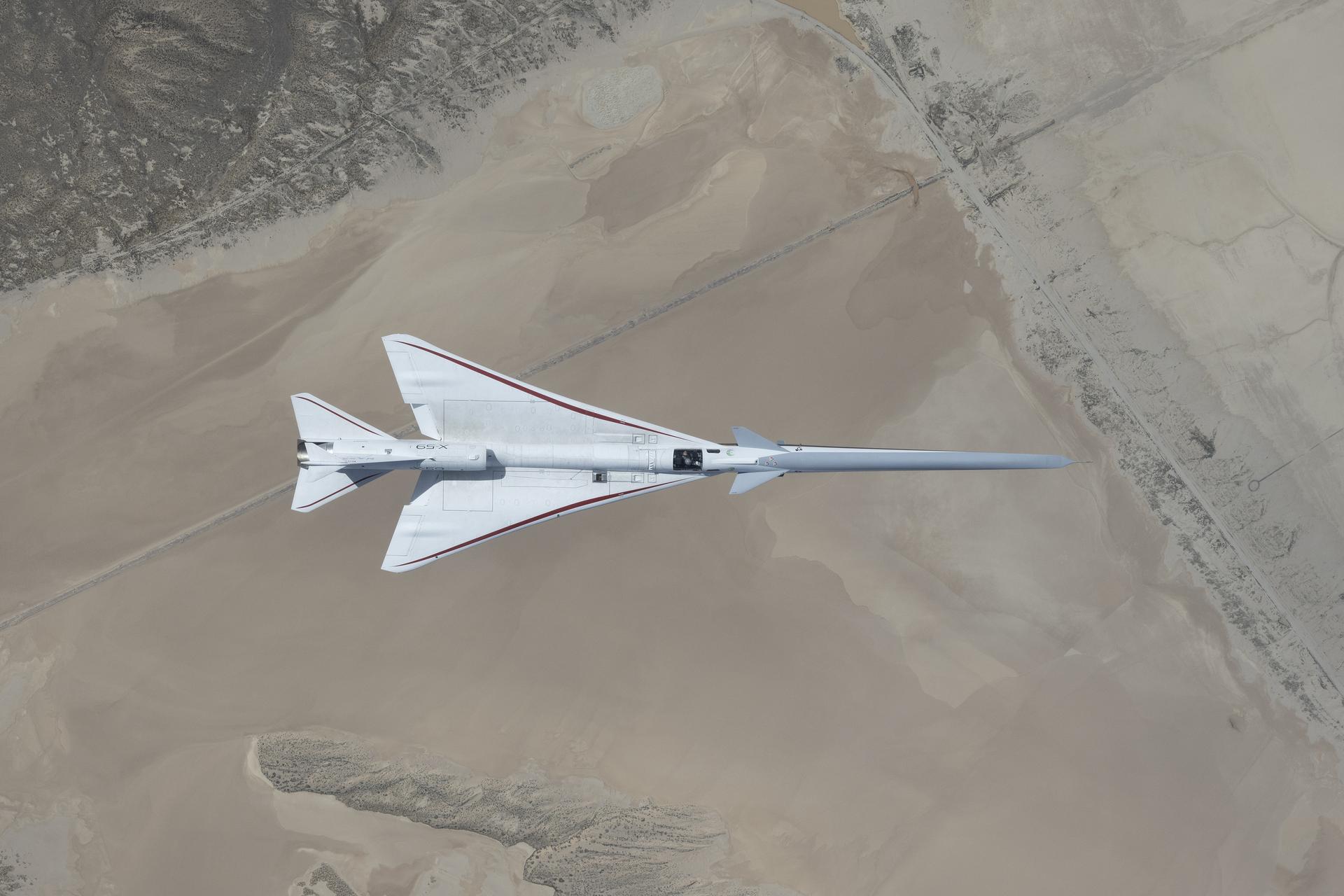
NASA’s X-59 quiet supersonic jet flies over the Mojave Desert during its third flight on Thursday, March 26, 2026, from NASA’s Armstrong Flight Research Center in Edwards, California. The aircraft departed and landed at Edwards Air Force Base, completing its approximate one-hour flight and providing the team with significant data for future flights.

NASA’s X-59 quiet supersonic research aircraft lifts off for its first flight Tuesday, Oct. 28, 2025, from U.S. Air Force Plant 42 in Palmdale, California. The aircraft’s first flight marks the start of flight testing for NASA’s Quesst mission, the result of years of design, integration, and ground testing and begins a new chapter in NASA’s aeronautics research legacy.

NASA’s X-59 quiet supersonic research aircraft flies above Palmdale and Edwards, California, during its first flight Tuesday, Oct. 28, 2025. The aircraft is headed to NASA’s Armstrong Flight Research Center in Edwards, where it will begin flight testing for NASA’s Quesst mission, which aims to demonstrate quiet supersonic flight over land.

NASA’s X-59 quiet supersonic research aircraft begins its taxi Tuesday, Oct. 28, 2025, from Lockheed Martin’s Skunk Works facility to U.S. Air Force Plant 42’s runway in Palmdale, California. The aircraft taxied into position and waited for clearance before taking off for the first time.
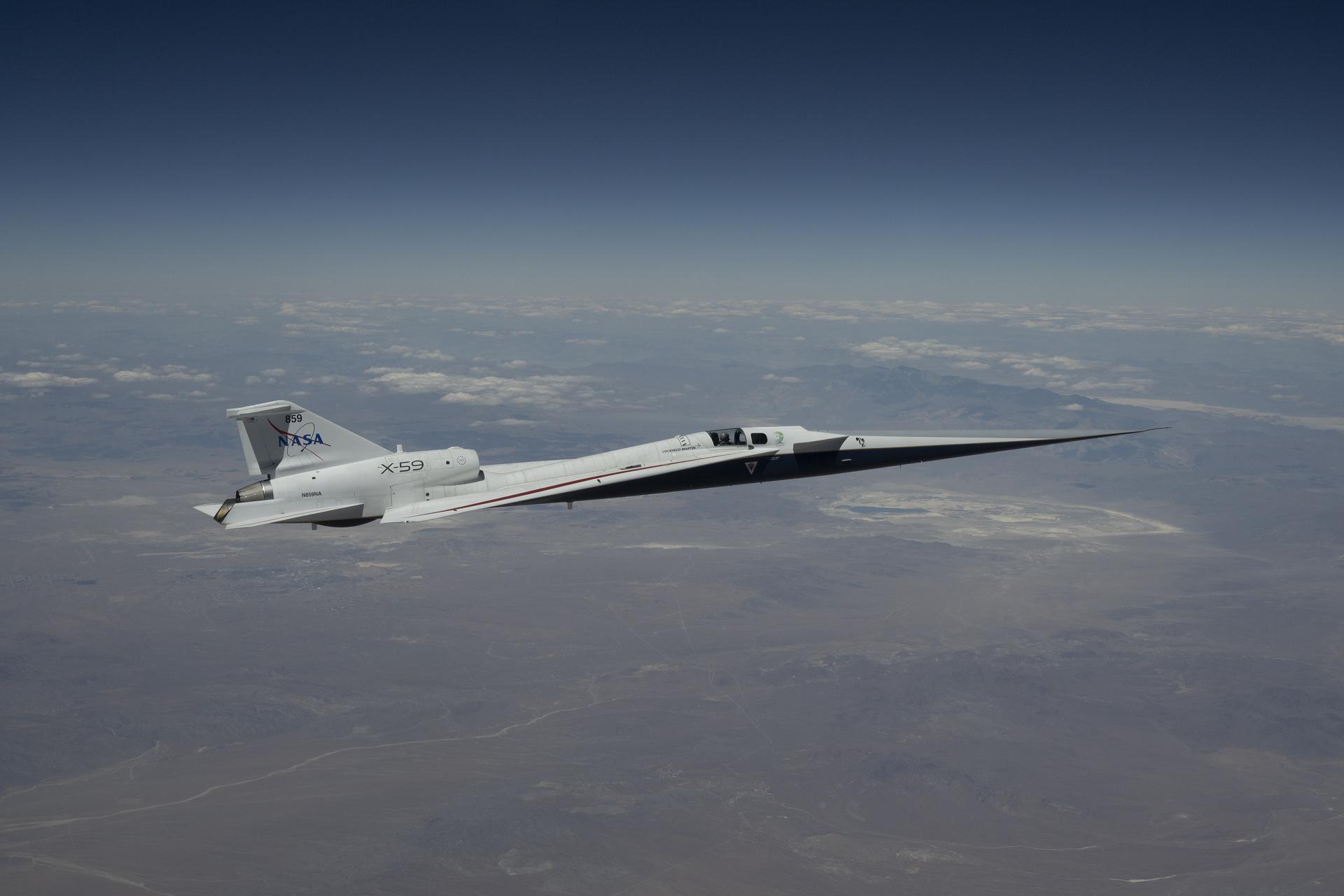
NASA’s X-59 quiet supersonic research aircraft completed its first dual-flight day on Thursday, April 30, at the agency’s Armstrong Flight Research Center in Edwards, California. This image shows the X-59 flying over the Mojave Desert during the aircraft’s second flight of the day, and its 12th overall. The X-59 flew test points at altitudes ranging from 12,000 to 43,000 feet and speeds from approximately 528 to 627 mph, or Mach 0.8 to Mach 0.95. The increased tempo of test flights allows the team to collect more data over a shorter period of time.

NASA’s X-59 quiet supersonic research aircraft sits inside Hangar 4826 at NASA’s Armstrong Flight Research Center in Edwards, California, on Nov. 18, 2025. Following its first flight on Oct. 25, 2025, in support of NASA’s Quesst mission, the aircraft entered scheduled maintenance as part of its transition into flight operations. Quesst aims to demonstrate quiet supersonic flight and reduce the disruptive sonic boom to a quieter sonic thump.

NASA's F-15B Aeronautics Research Test Bed performs a calibration flight of the shock-sensing probe over Edwards, California, on Aug. 6, 2024. The probe will measure shock waves from NASA's X-59.

NASA Aeronautics and center leadership gather inside the viewing area of the main control room at NASA’s Armstrong Flight Research Center in Edwards, California, on Tuesday, Oct. 28, 2025. The group watches in real time as flight controllers and engineers receive updates from the aircraft during its historic first flight in support of the agency’s Quesst mission.

NASA Aeronautics and center leadership gather inside the viewing area of the main control room at NASA’s Armstrong Flight Research Center in Edwards, California, on Tuesday, Oct. 28, 2025. The group watches in real time as flight controllers and engineers receive updates from the aircraft during its historic first flight in support of the agency’s Quesst mission.
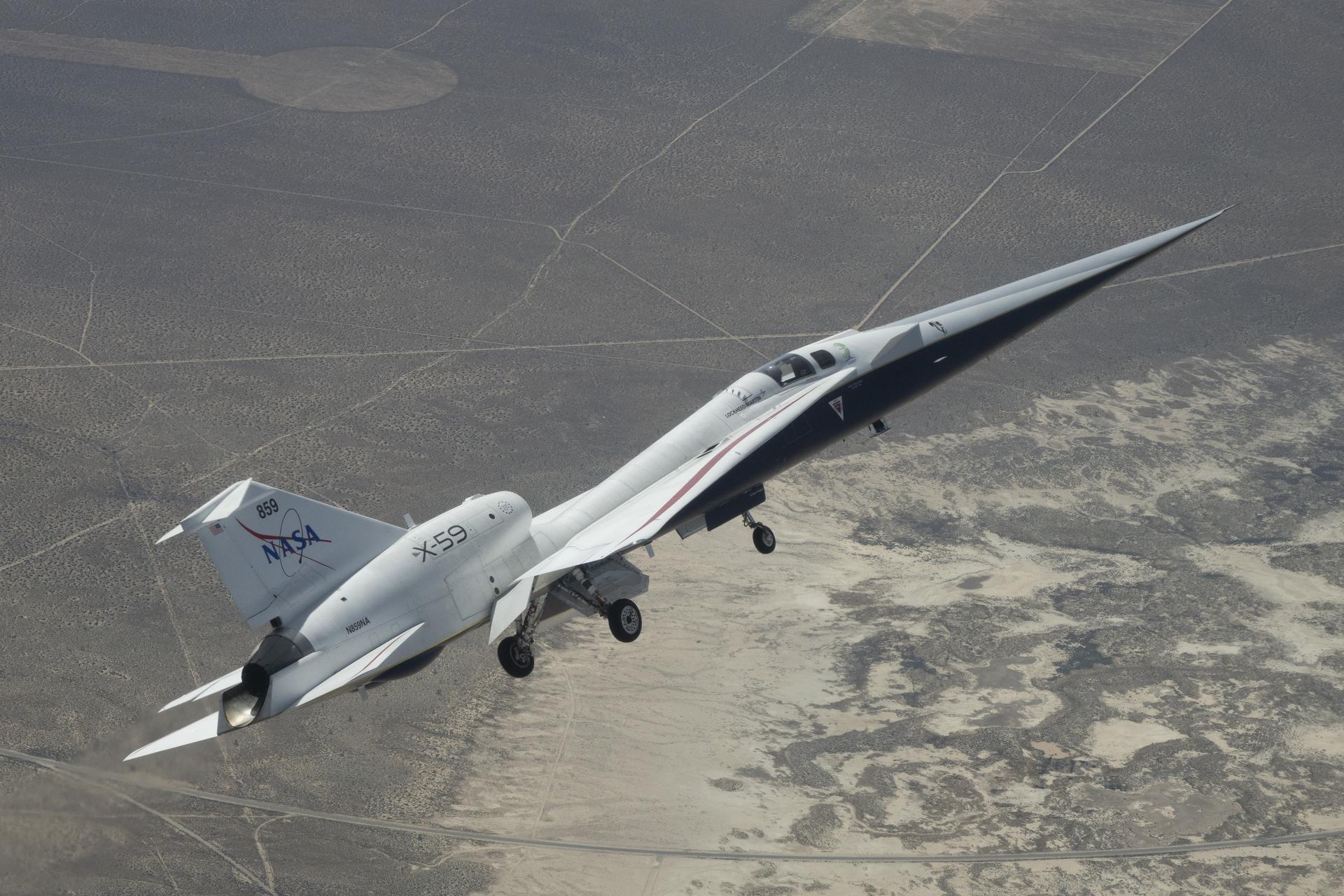
NASA’s X-59 quiet supersonic jet flies over the Mojave Desert during its third flight on Thursday, March 26, 2026, from NASA’s Armstrong Flight Research Center in Edwards, California. The aircraft departed and landed at Edwards Air Force Base, completing its approximate one-hour flight and providing the team with significant data for future flights.

NASA Aeronautics and center leadership gather inside the viewing area of the main control room at NASA’s Armstrong Flight Research Center in Edwards, California, on Tuesday, Oct. 28, 2025. The group watches in real time as flight controllers and engineers receive updates from the aircraft during its historic first flight in support of the agency’s Quesst mission.

NASA’s X-59 in Flight with F/A-18 Research Aircraft Monitoring

NASA Aeronautics and center leadership gather inside the viewing area of the main control room at NASA’s Armstrong Flight Research Center in Edwards, California, on Tuesday, Oct. 28, 2025. The group watches in real time as flight controllers and engineers receive updates from the aircraft during its historic first flight in support of the agency’s Quesst mission.

NASA Aeronautics and center leadership gather inside the viewing area of the main control room at NASA’s Armstrong Flight Research Center in Edwards, California, on Tuesday, Oct. 28, 2025. The group watches in real time as flight controllers and engineers receive updates from the aircraft during its historic first flight in support of the agency’s Quesst mission.
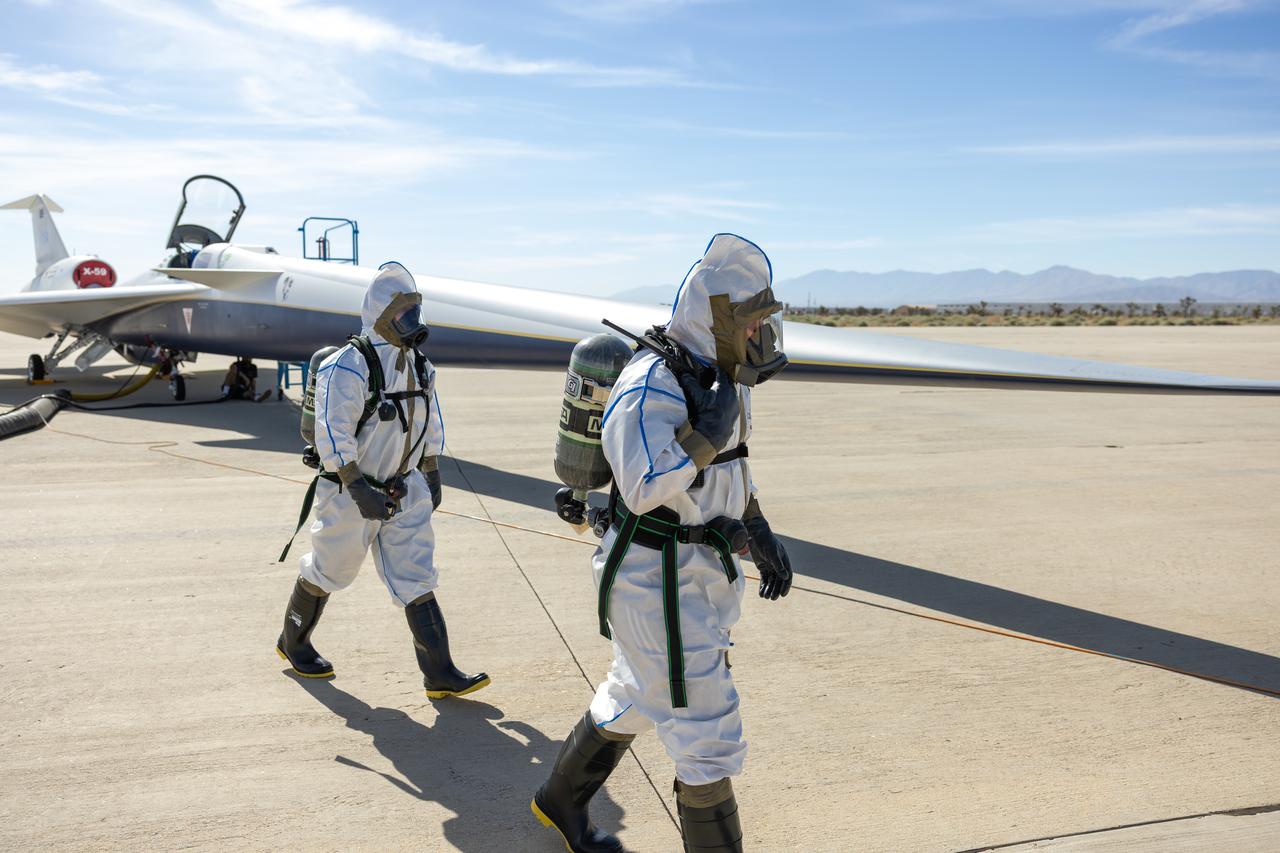
Maintainers perform a hydrazine safety check on NASA’s quiet supersonic X-59 aircraft at U.S. Air Force Plant 42 in Palmdale, California, on Aug. 18, 2025. Hydrazine is a highly toxic chemical, but it serves as a critical backup to restart the engine in flight, if necessary, which is one of several safety features being validated ahead of the aircraft’s first flight.
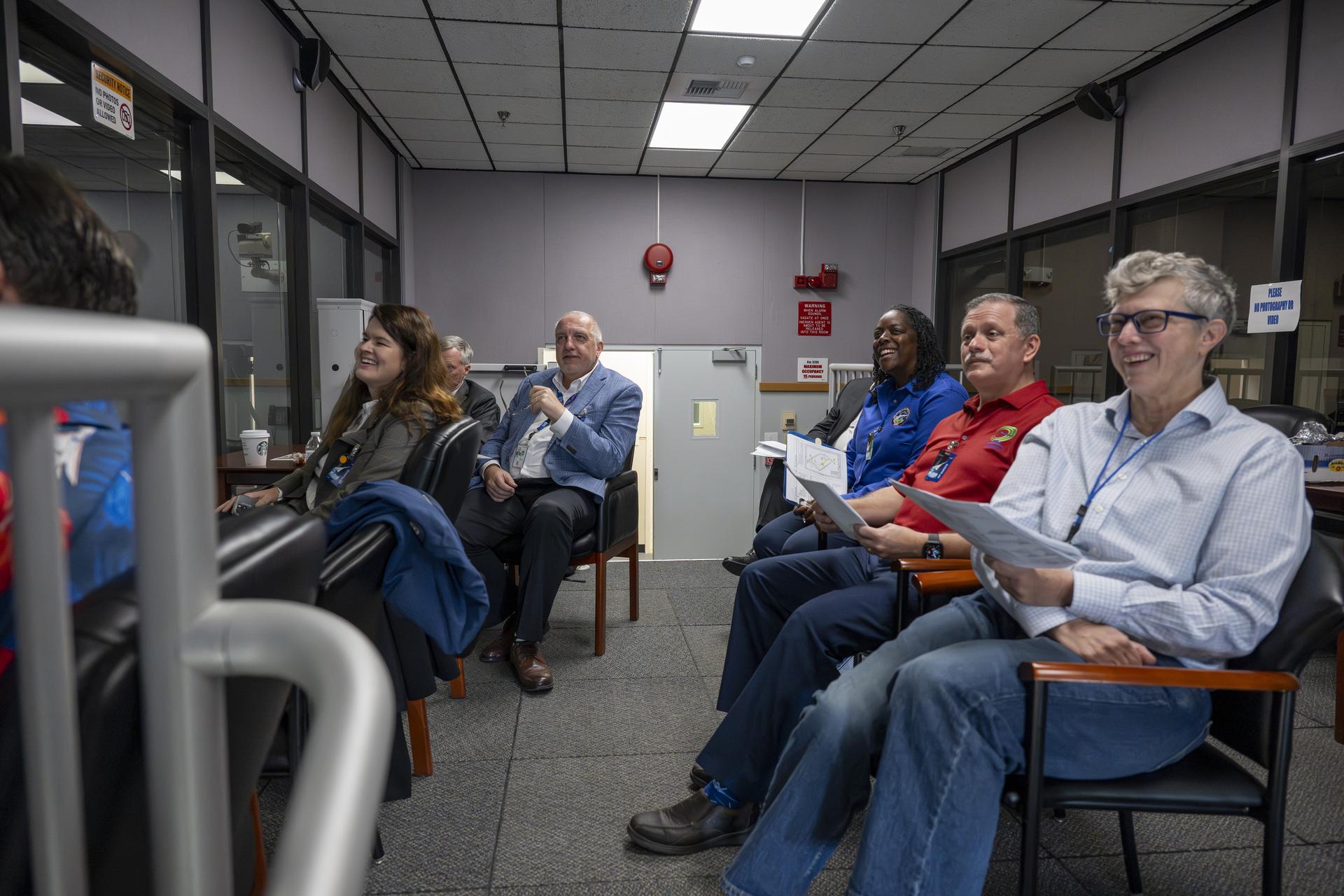
NASA Aeronautics and center leadership gather inside the viewing area of the main control room at NASA’s Armstrong Flight Research Center in Edwards, California, on Tuesday, Oct. 28, 2025. The group watches in real time as flight controllers and engineers receive updates from the aircraft during its historic first flight in support of the agency’s Quesst mission.
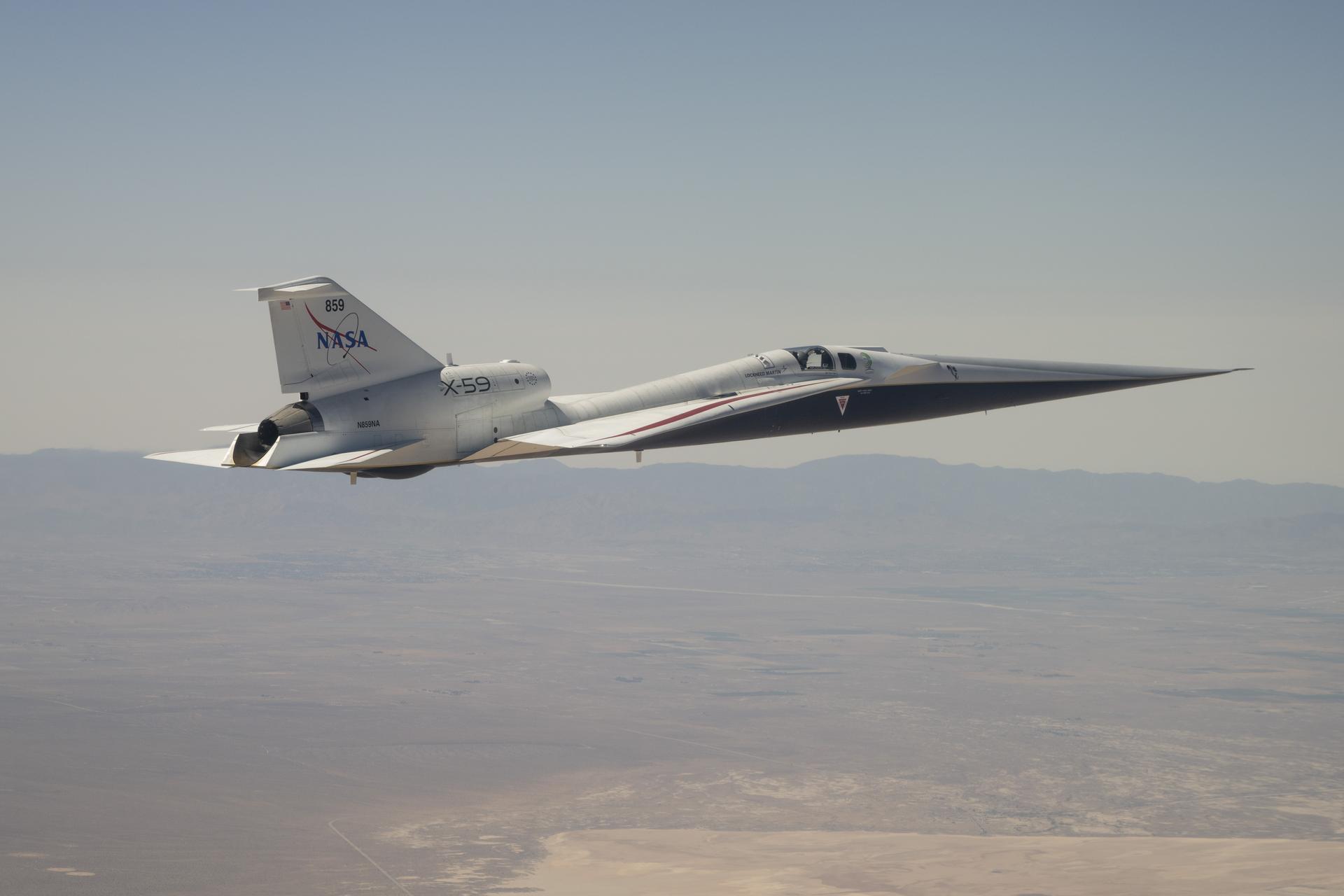
NASA’s X-59 quiet supersonic research aircraft flies above mountains near NASA’s Armstrong Flight Research Center in Edwards, California, on Tuesday, May 12, 2026. NASA continues expanding the aircraft’s flight envelope to evaluate its performance across a range of flight conditions ahead of flight tests at speeds faster than the speed of sound in support of the agency’s Quesst mission.
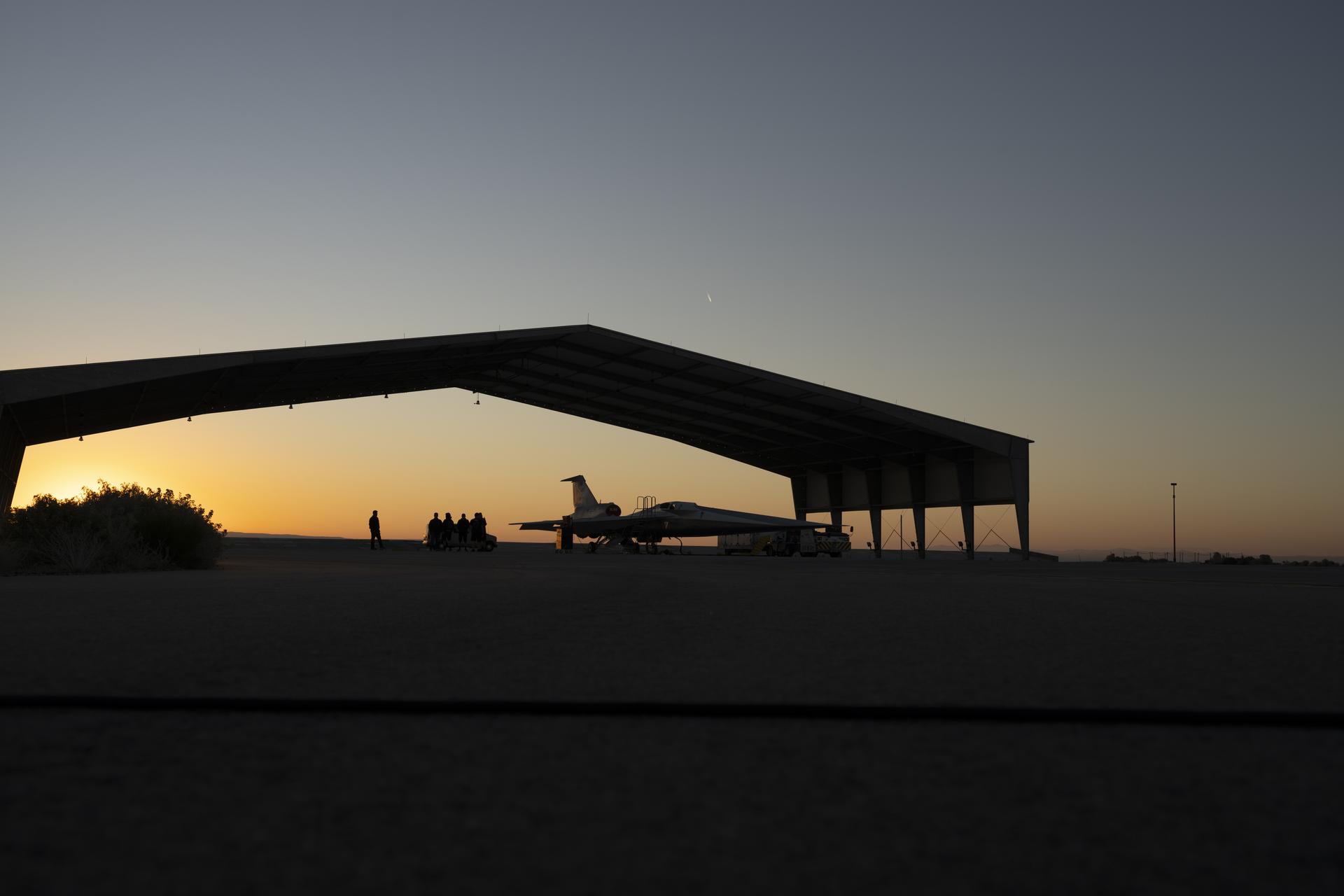
NASA’s X-59 quiet supersonic research aircraft sits in a run stall during sunrise on Tuesday, March 20, 2026, near NASA’s Armstrong Flight Research Center in Edwards, California, ahead of its second flight.
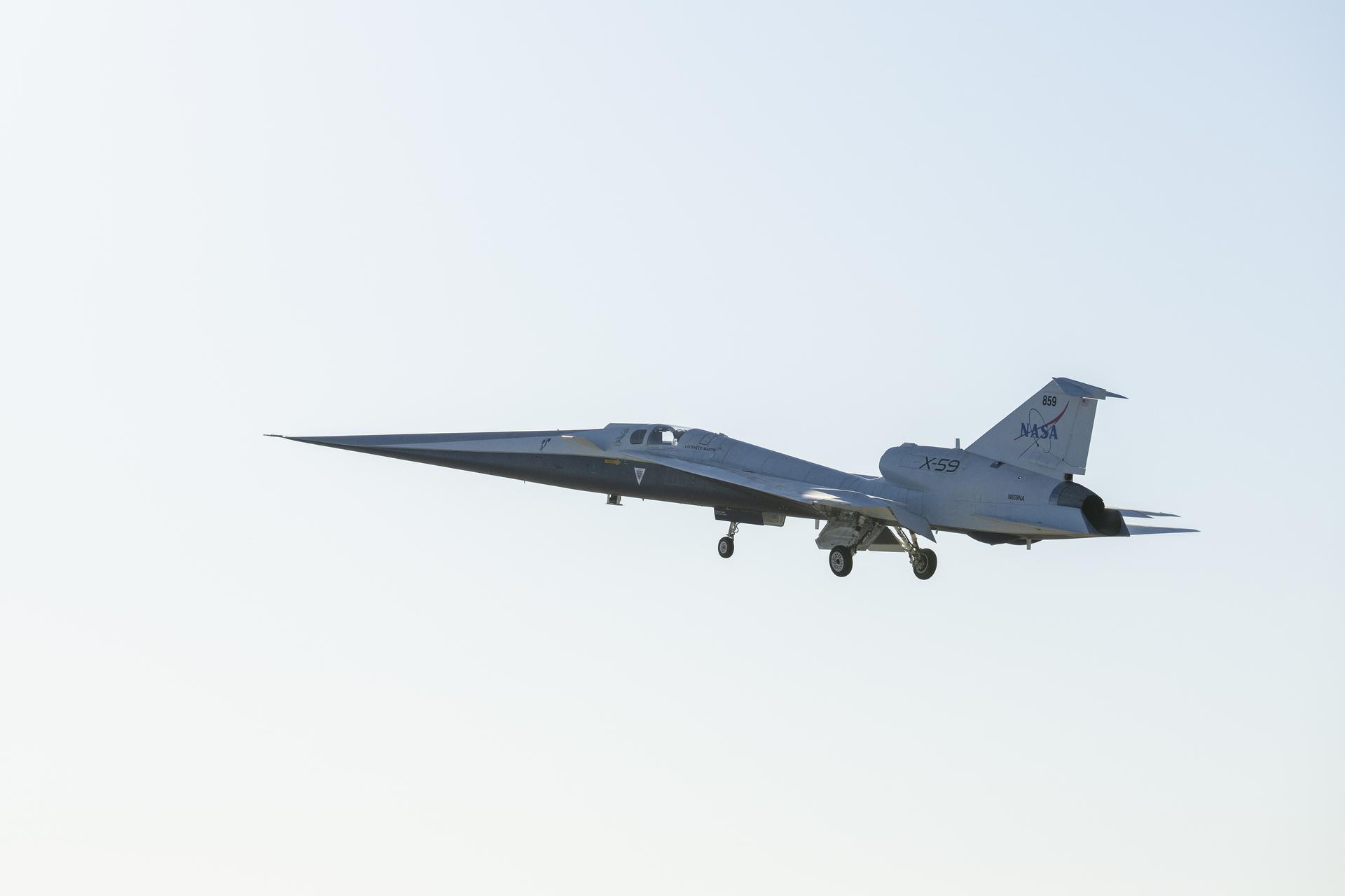
NASA’s X-59 quiet supersonic research aircraft took off for its first flight Tuesday, Oct. 28, 2025, from U.S. Air Force Plant 42 in Palmdale, California. The aircraft’s first flight marks the start of flight testing for NASA’s Quesst mission and begins a new chapter in NASA’s aeronautics research legacy.
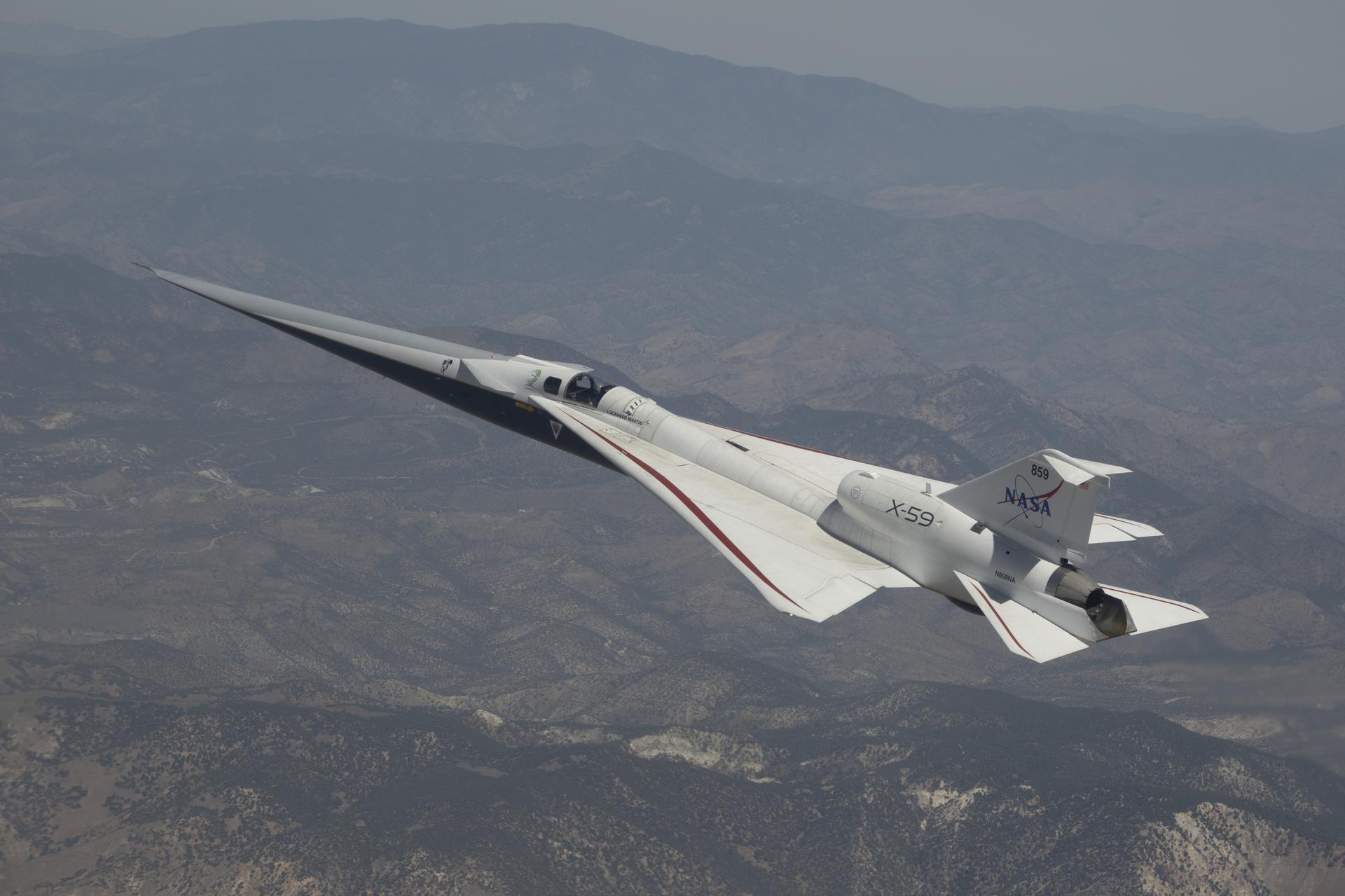
NASA’s X-59 quiet supersonic research aircraft flies above mountains near NASA’s Armstrong Flight Research Center in Edwards, California, on Tuesday, May 12, 2026. NASA continues expanding the aircraft’s flight envelope to evaluate its performance across a range of flight conditions ahead of flight tests at speeds faster than the speed of sound in support of the agency’s Quesst mission.
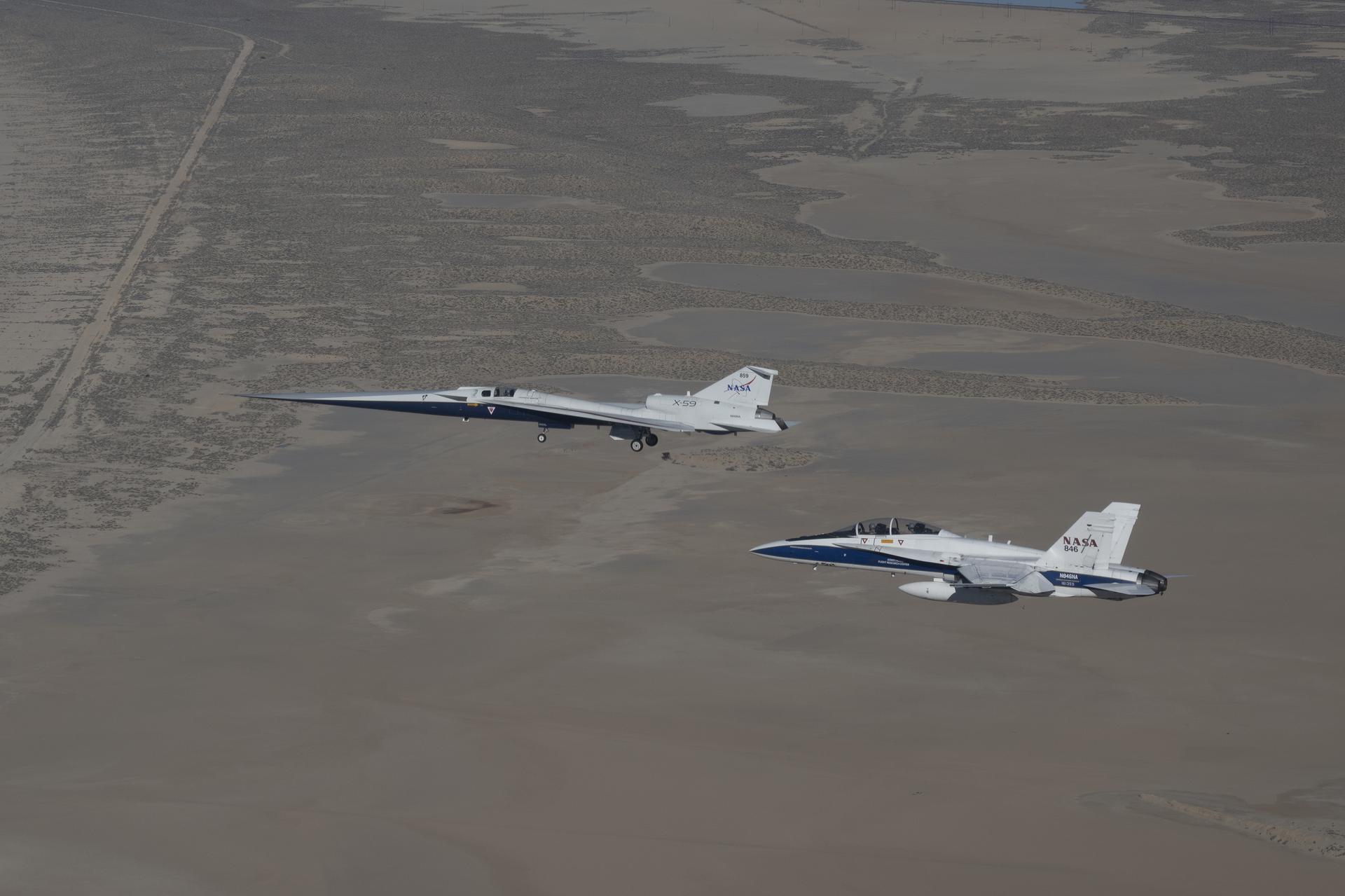
NASA’s X-59 in Flight with F/A-18 Research Aircraft Monitoring

NASA’s X-59 quiet supersonic research aircraft sits outside Hangar 4826 at NASA’s Armstrong Flight Research Center in Edwards, California, on Nov. 19, 2025. The aircraft’s arrival at NASA Armstrong on Oct. 28, 2025, marked its transition into flight operations in support of NASA’s Quesst mission to gather data on quiet supersonic flight.

NASA’s X-59 quiet supersonic research aircraft sits inside Hangar 4826 at NASA’s Armstrong Flight Research Center in Edwards, California, on Nov. 18, 2025. Following its first flight on Oct. 25, 2025, in support of NASA’s Quesst mission, the aircraft entered scheduled maintenance as part of its transition into flight operations. Quesst aims to demonstrate quiet supersonic flight and reduce the disruptive sonic boom to a quieter sonic thump.

NASA’s X-59 quiet supersonic research aircraft sits outside Hangar 4826 at NASA’s Armstrong Flight Research Center in Edwards, California, on Nov. 19, 2025. The aircraft’s arrival at NASA Armstrong on Oct. 28, 2025, marked its transition into flight operations in support of NASA’s Quesst mission to gather data on quiet supersonic flight.
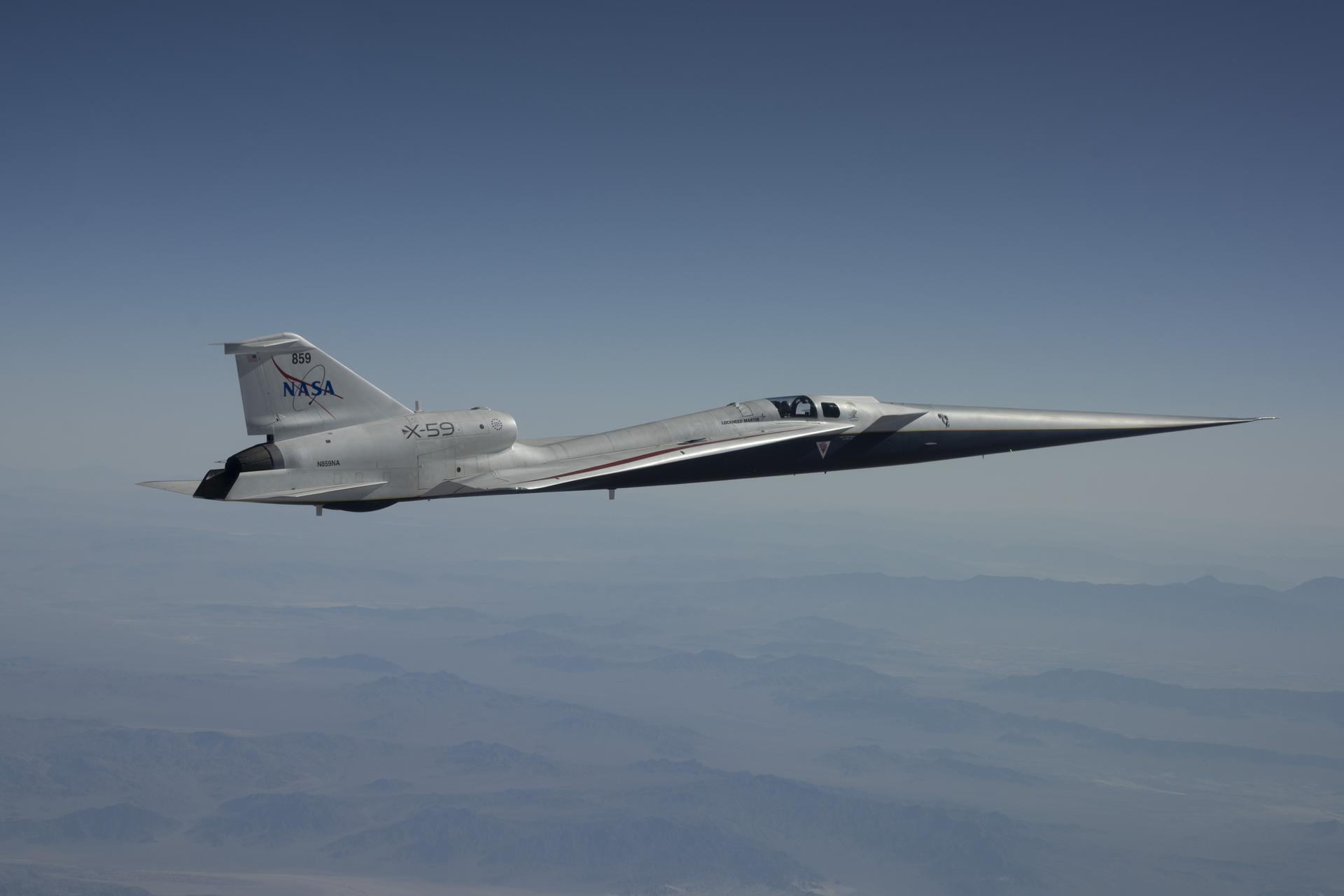
NASA’s X-59 quiet supersonic research aircraft continues flight testing at supersonic speeds on Wednesday, June 10, 2026, along the Bell X-1 Supersonic Corridor in California in support of NASA’s Quesst mission. Initial supersonic flights help the team evaluate the aircraft’s performance as testing progresses toward the speed and altitude planned for future community overflights.

NASA Aeronautics and center leadership gather inside the viewing area of the main control room at NASA’s Armstrong Flight Research Center in Edwards, California, on Tuesday, Oct. 28, 2025. The group watches in real time as flight controllers and engineers receive updates from the aircraft during its historic first flight in support of the agency’s Quesst mission.
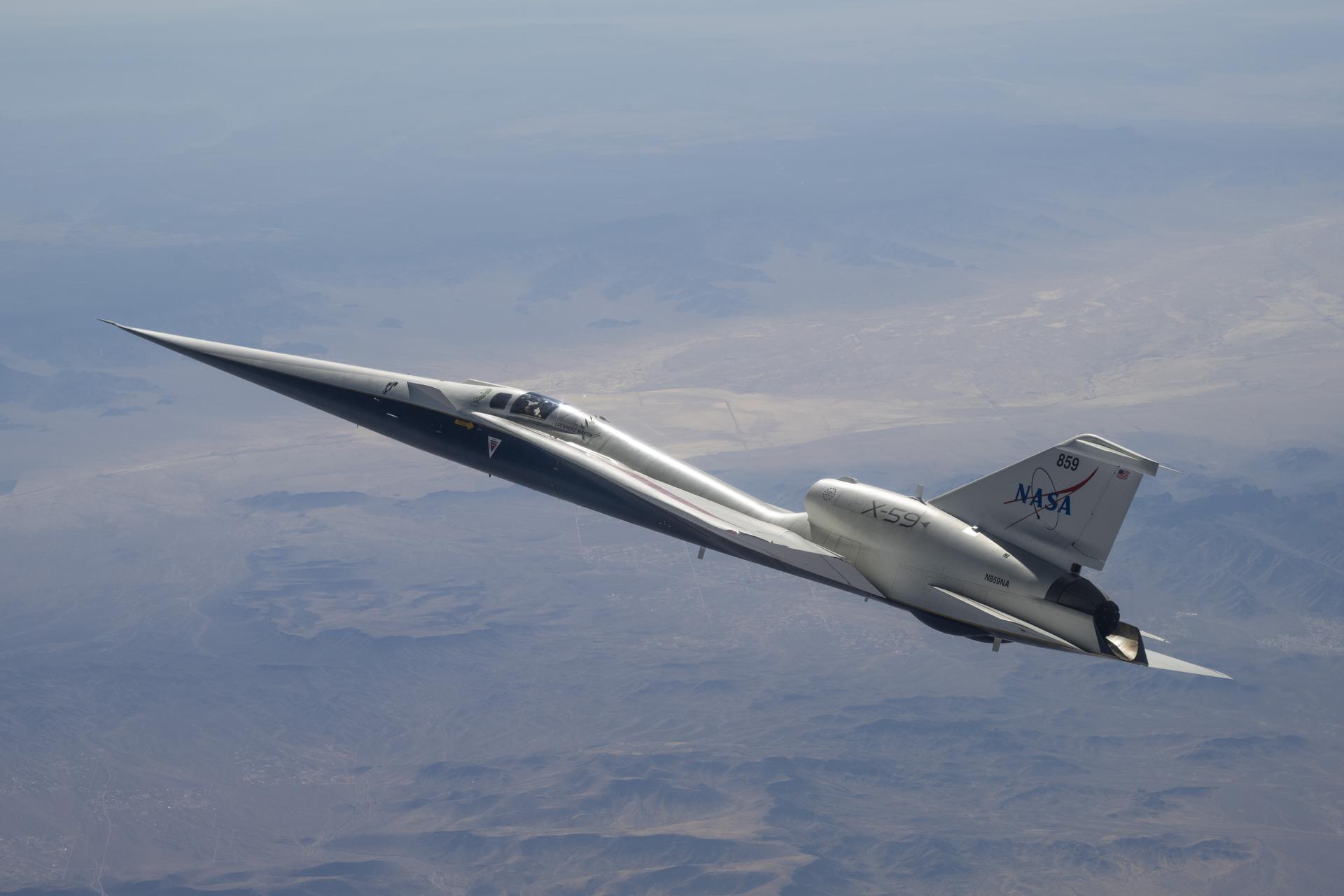
NASA’s X-59 quiet supersonic research aircraft continues flight testing at supersonic speeds on Wednesday, June 10, 2026, along the Bell X-1 Supersonic Corridor in California in support of NASA’s Quesst mission. Initial supersonic flights help the team evaluate the aircraft’s performance as testing progresses toward the speed and altitude planned for future community overflights.

NASA’s X-59 in Flight with F/A-18 Research Aircraft Monitoring

NASA’s X-59 quiet supersonic research aircraft lifts off for its first flight Tuesday, Oct. 28, 2025, from U.S. Air Force Plant 42 in Palmdale, California. The aircraft’s first flight marks the start of flight testing for NASA’s Quesst mission, the result of years of design, integration, and ground testing and begins a new chapter in NASA’s aeronautics research legacy.
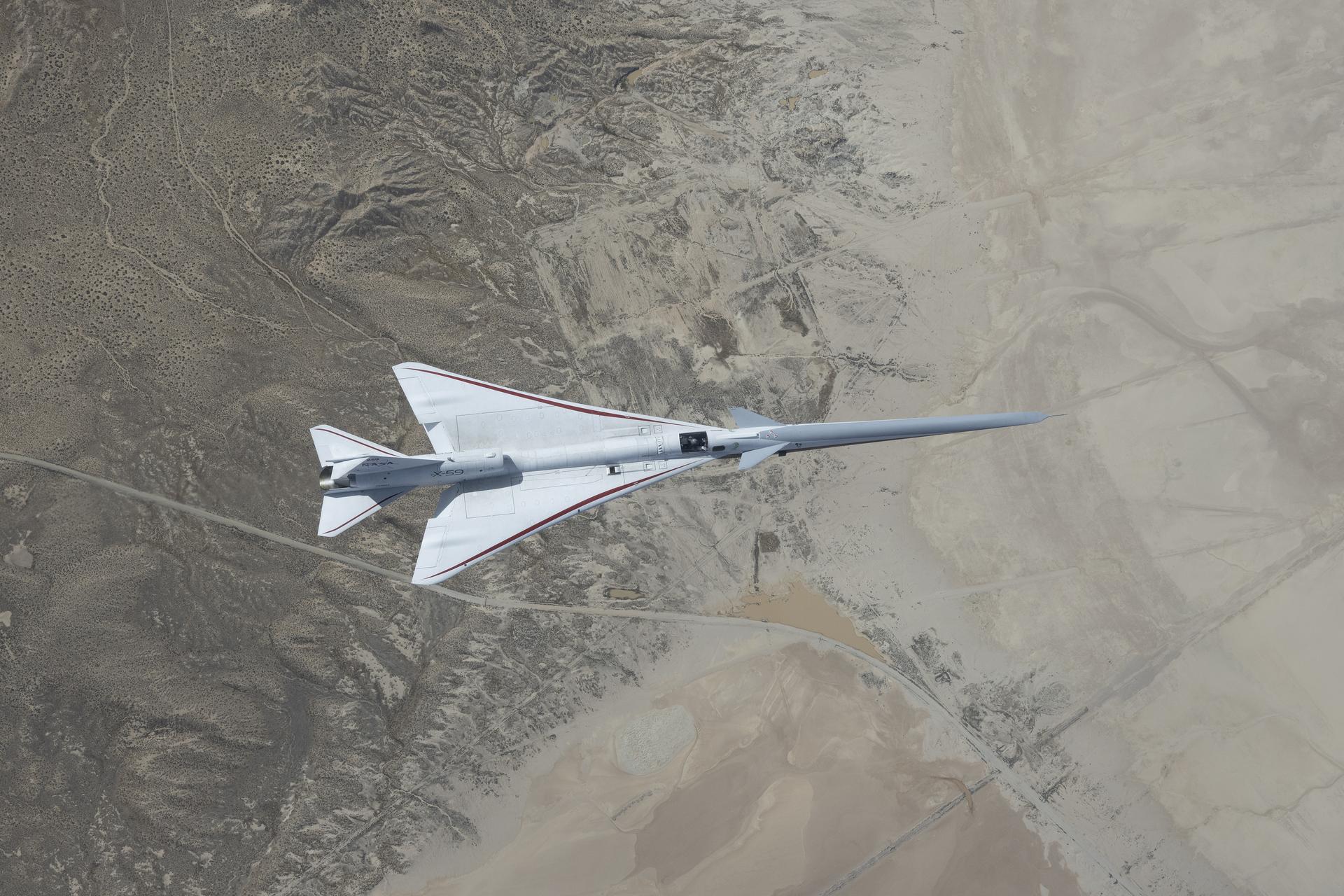
NASA’s X-59 quiet supersonic jet flies over the Mojave Desert during its third flight on Thursday, March 26, 2026, from NASA’s Armstrong Flight Research Center in Edwards, California. The aircraft departed and landed at Edwards Air Force Base, completing its approximate one-hour flight and providing the team with significant data for future flights.
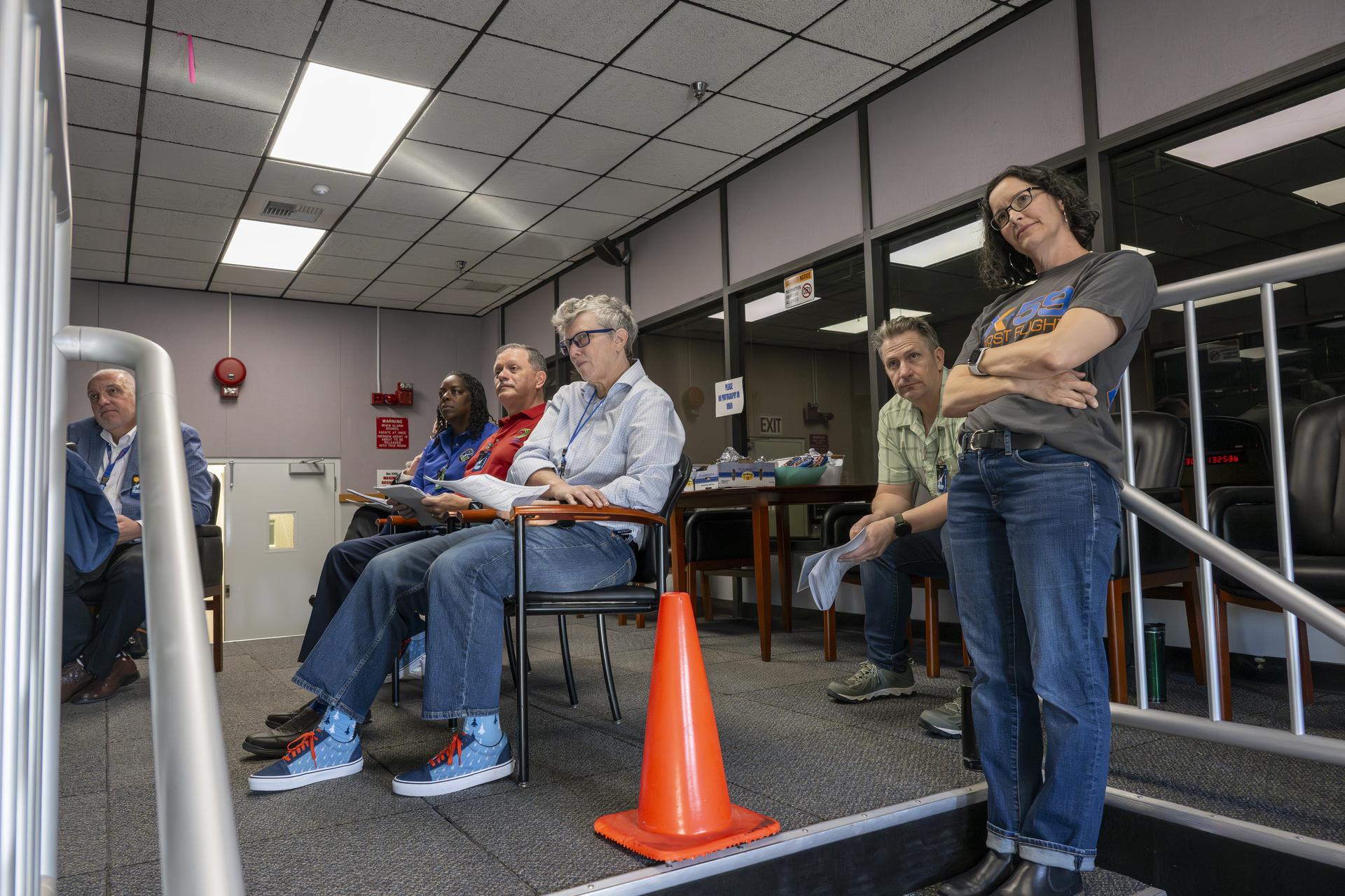
NASA Aeronautics and center leadership gather inside the viewing area of the main control room at NASA’s Armstrong Flight Research Center in Edwards, California, on Tuesday, Oct. 28, 2025. The group watches in real time as flight controllers and engineers receive updates from the aircraft during its historic first flight in support of the agency’s Quesst mission.
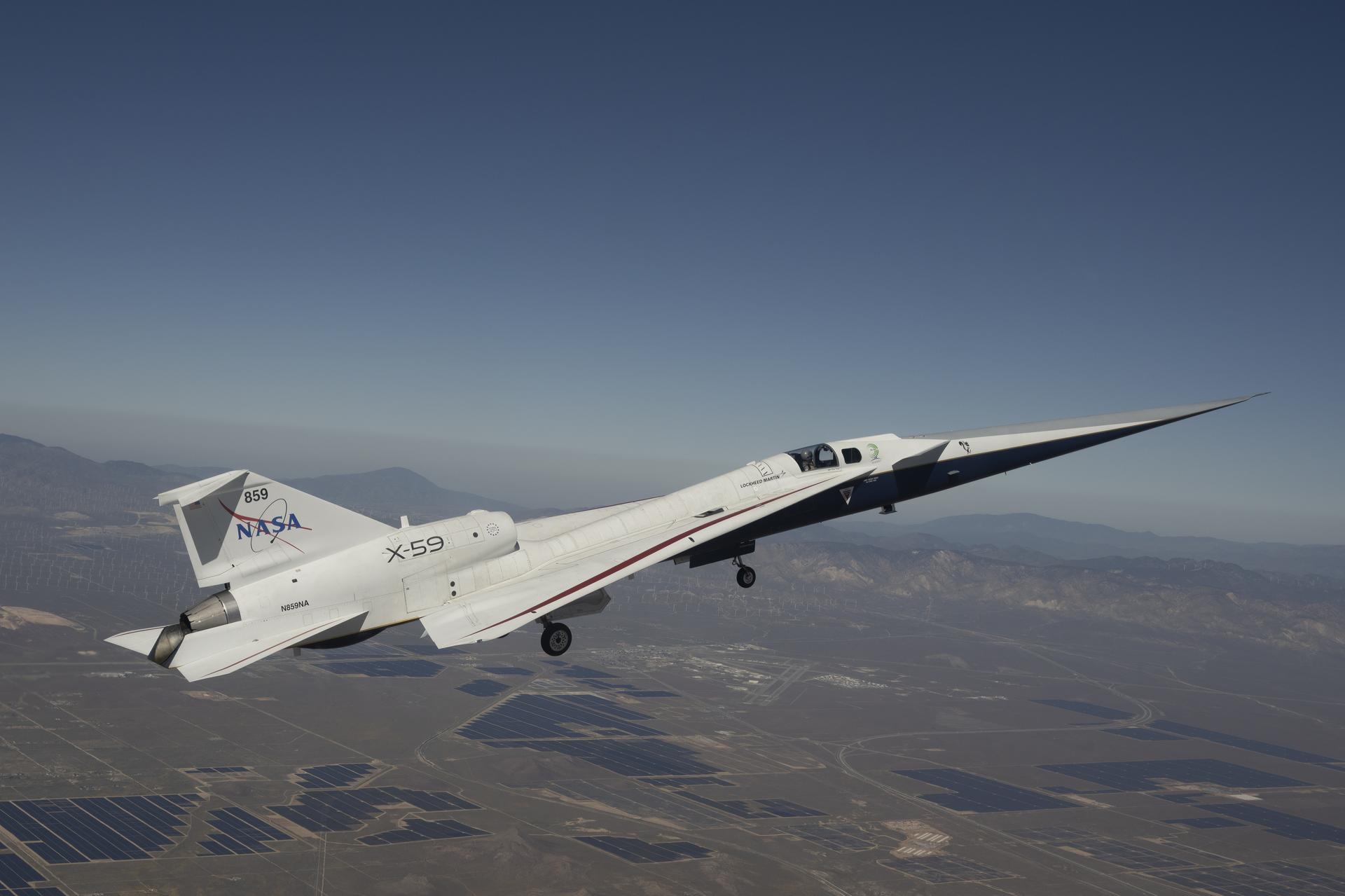
NASA’s X-59 quiet supersonic aircraft flies its second flight Friday, March 20, 2026, near NASA’s Armstrong Flight Research Center in Edwards, California. The X-59 is central to NASA’s Quesst mission, which aims to demonstrate quiet supersonic flight by reducing the loud sonic boom to a softer sonic “thump,” potentially enabling faster commercial air travel over land.

NASA’s X-59 quiet supersonic research aircraft flies above Palmdale and Edwards, California, during its first flight Tuesday, Oct. 28, 2025. The aircraft is headed to NASA’s Armstrong Flight Research Center in Edwards, where it will begin flight testing for NASA’s Quesst mission, which aims to demonstrate quiet supersonic flight over land.
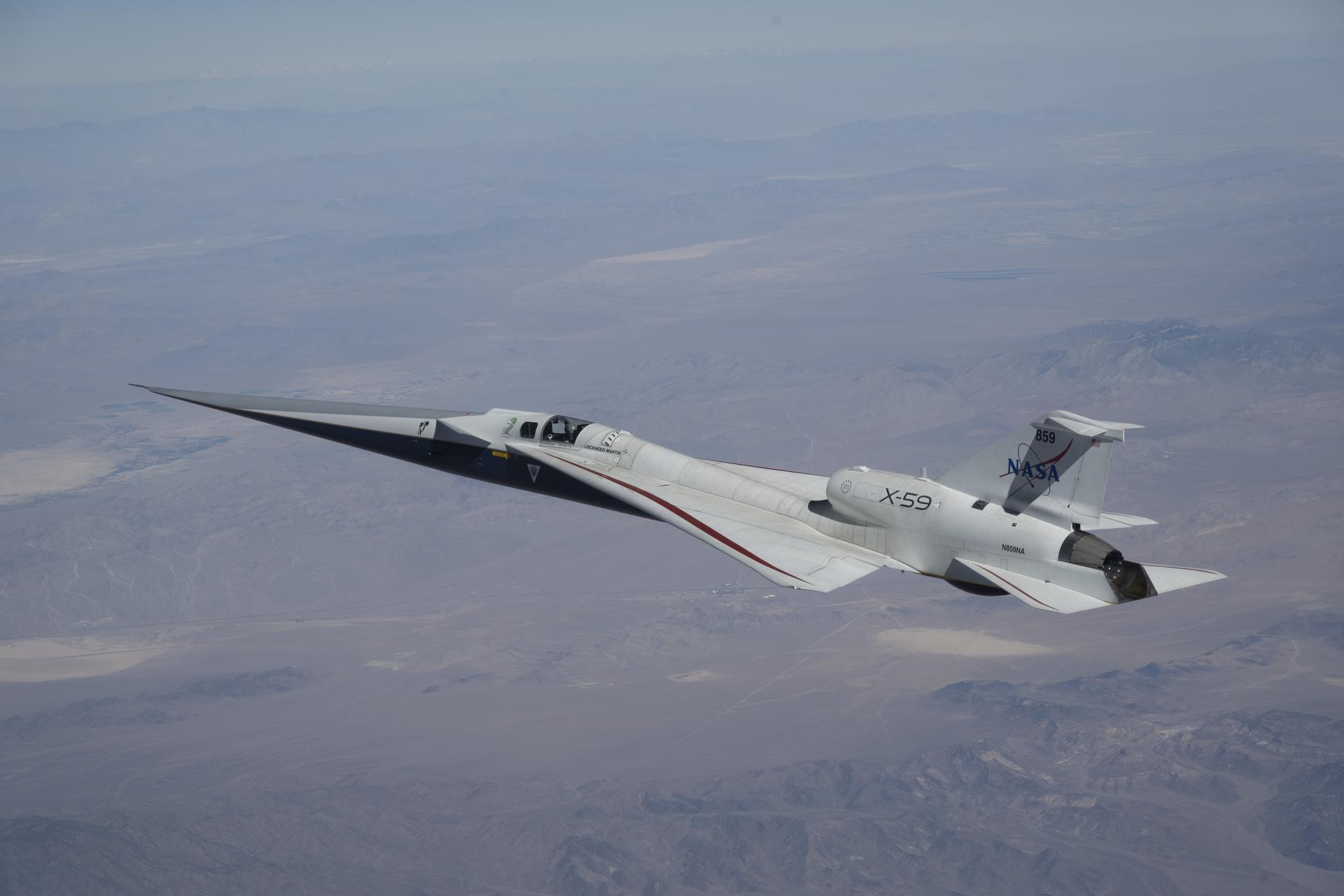
NASA’s X-59 quiet supersonic research aircraft continues flight testing at supersonic speeds on Wednesday, June 10, 2026, along the Bell X-1 Supersonic Corridor in California in support of NASA’s Quesst mission. Initial supersonic flights help the team evaluate the aircraft’s performance as testing progresses toward the speed and altitude planned for future community overflights.
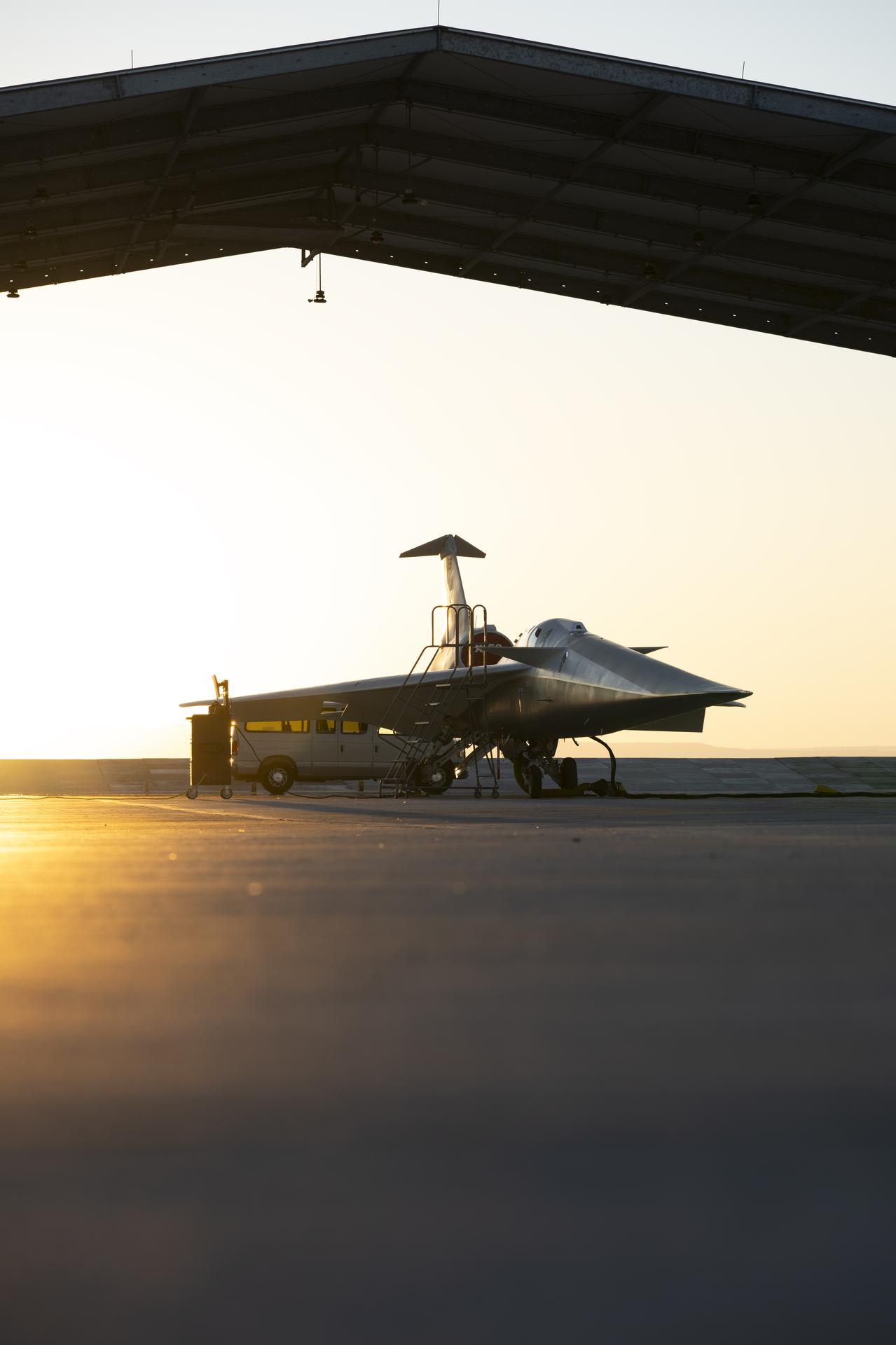
NASA’s X-59 quiet supersonic research aircraft sits in a run stall during sunrise on Tuesday, March 20, 2026, near NASA’s Armstrong Flight Research Center in Edwards, California, ahead of its second flight.

NASA’s X-59 quiet supersonic research aircraft lifts off for its first flight Tuesday, Oct. 28, 2025, from U.S. Air Force Plant 42 in Palmdale, California. The aircraft’s first flight marks the start of flight testing for NASA’s Quesst mission, the result of years of design, integration, and ground testing and begins a new chapter in NASA’s aeronautics research legacy.
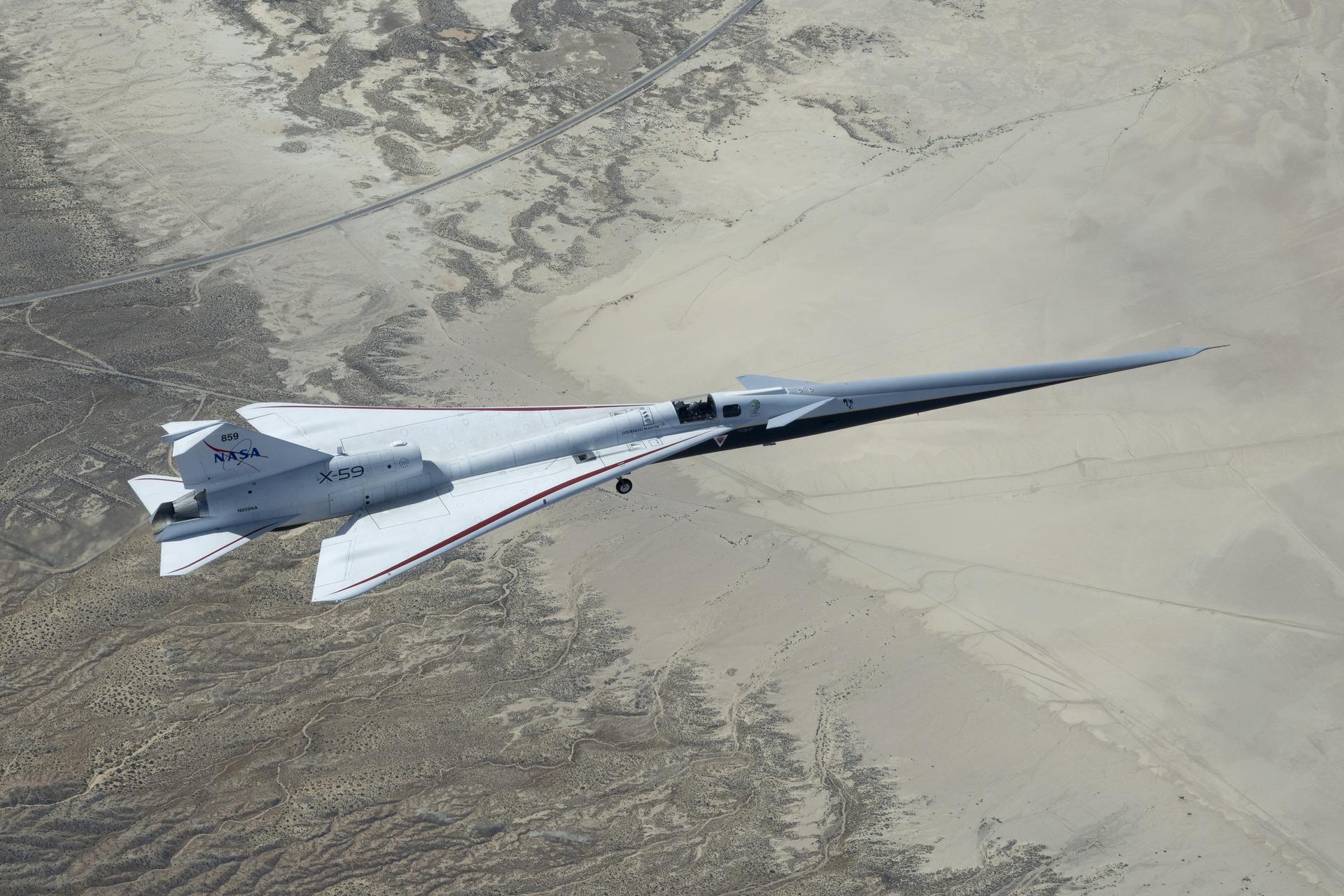
NASA’s X-59 quiet supersonic jet flies over the Mojave Desert during its third flight on Thursday, March 26, 2026, from NASA’s Armstrong Flight Research Center in Edwards, California. The aircraft departed and landed at Edwards Air Force Base, completing its approximate one-hour flight and providing the team with significant data for future flights.
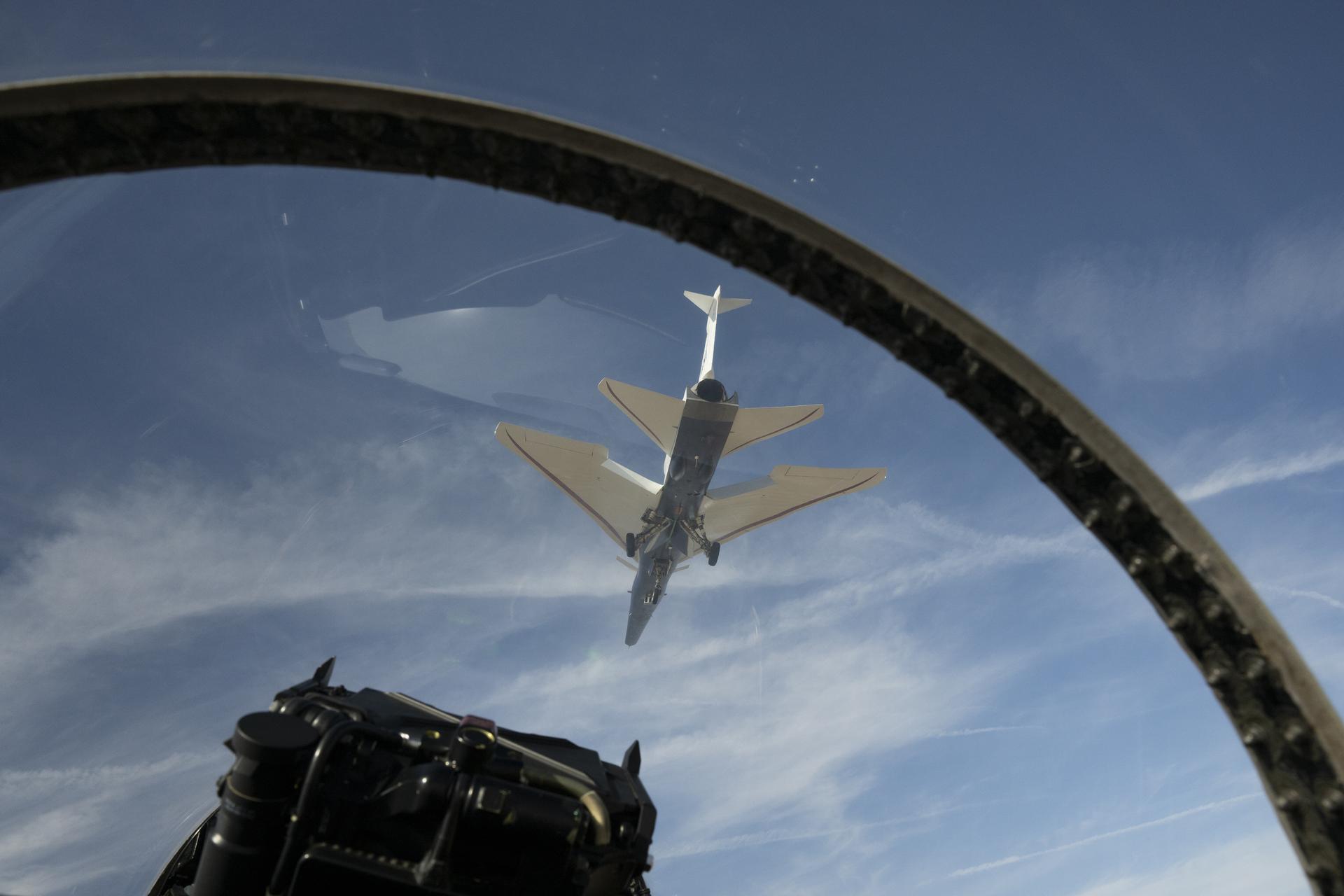
NASA’s X-59 quiet supersonic jet flies over the Mojave Desert during its third flight on Thursday, March 26, 2026, from NASA’s Armstrong Flight Research Center in Edwards, California. The aircraft departed and landed at Edwards Air Force Base, completing its approximate one-hour flight and providing the team with significant data for future flights.

NASA’s X-59 in Flight with F/A-18 Research Aircraft Monitoring
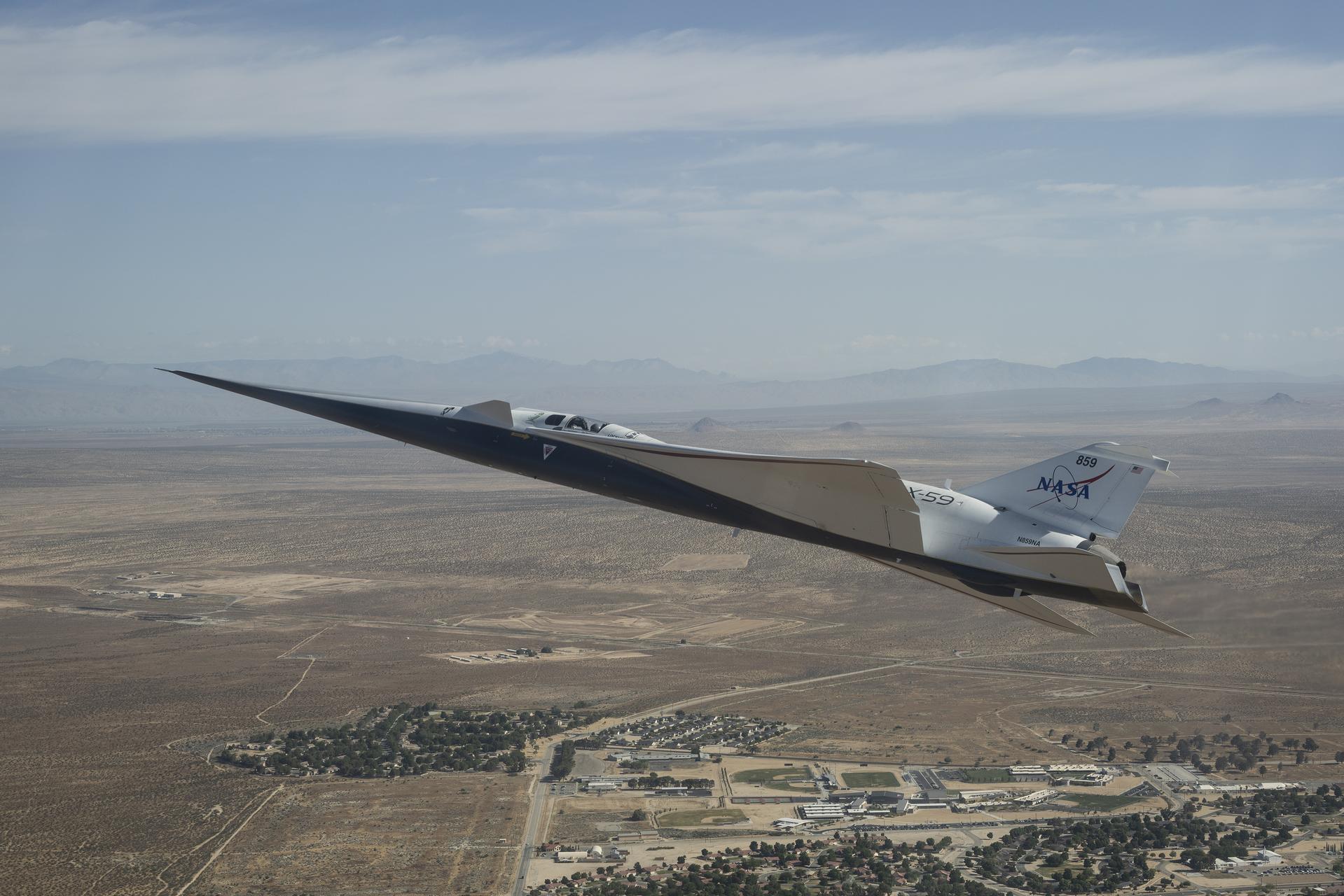
NASA’s X-59 quiet supersonic research aircraft flies above NASA’s Armstrong Flight Research Center in Edwards, California, during testing focused on lower-speed and lower-altitude flight conditions in support of NASA’s Quesst mission. NASA continues two-flight days during envelope expansion testing as teams work to better understand how the aircraft responds throughout its operating range.

NASA Aeronautics and center leadership gather inside the viewing area of the main control room at NASA’s Armstrong Flight Research Center in Edwards, California, on Tuesday, Oct. 28, 2025. The group watches in real time as flight controllers and engineers receive updates from the aircraft during its historic first flight in support of the agency’s Quesst mission.
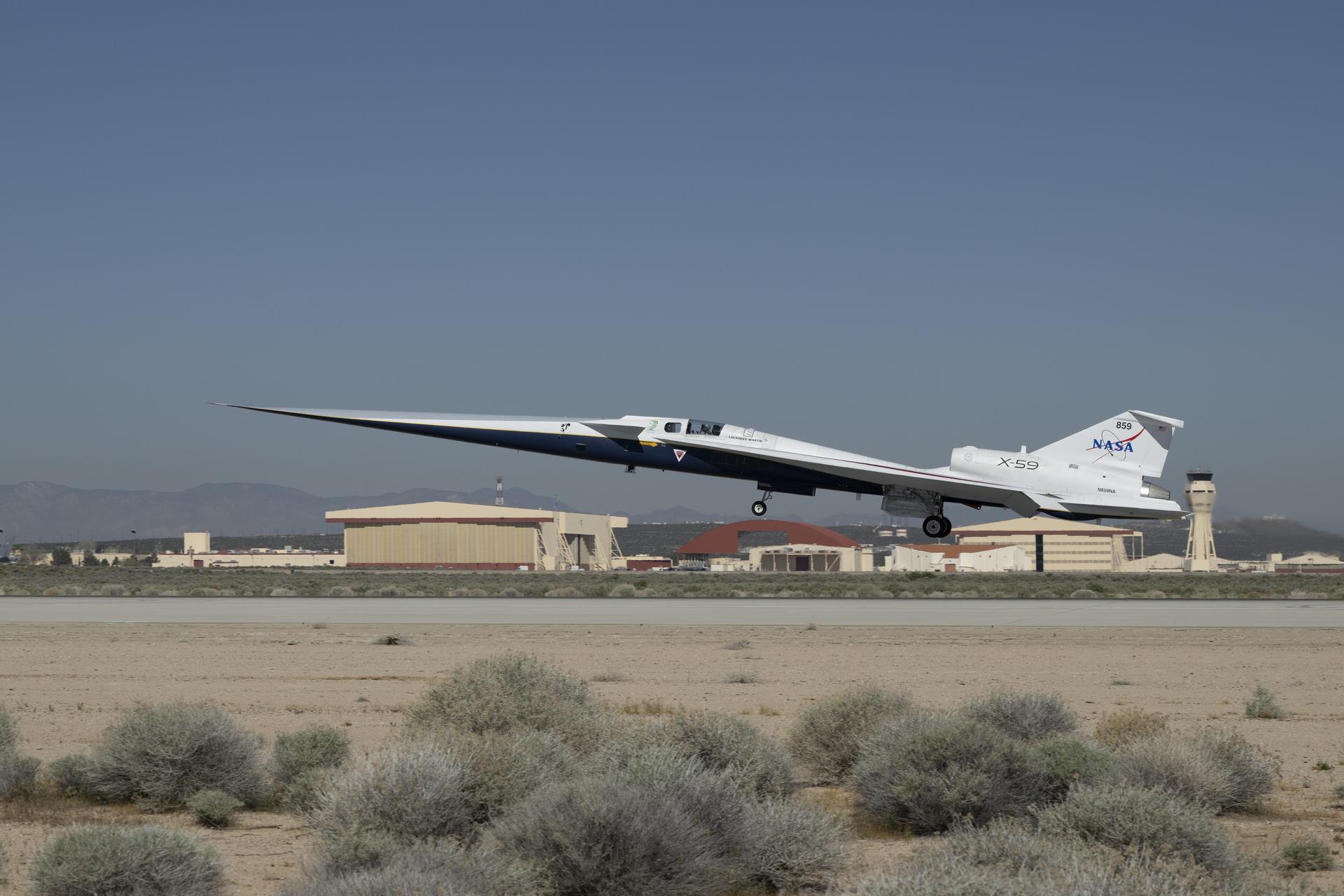
NASA’s X-59 quiet supersonic aircraft takes off for its second flight Friday, March 20, 2026, near NASA’s Armstrong Flight Research Center in Edwards, California. The X-59 is central to NASA’s Quesst mission, which aims to demonstrate quiet supersonic flight by reducing the loud sonic boom to a softer sonic “thump,” potentially enabling faster commercial air travel over land.
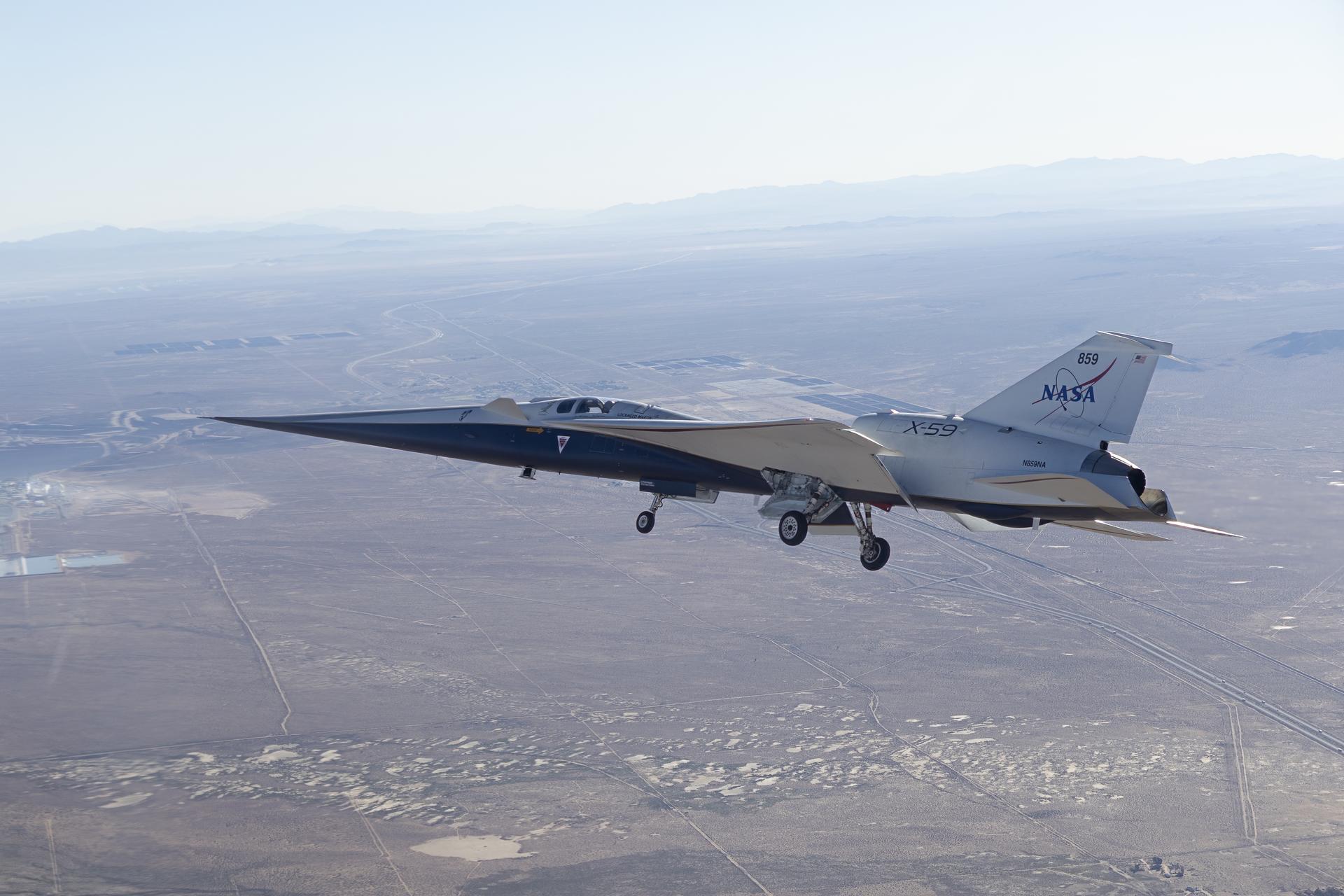
NASA’s X-59 quiet supersonic research aircraft cruises above Palmdale and Edwards, California, during its first flight, Tuesday, Oct. 28, 2025. The aircraft traveled to NASA’s Armstrong Flight Research Center in Edwards, California.

NASA’s X-59 quiet supersonic research aircraft lifts off for its first flight Tuesday, Oct. 28, 2025, from U.S. Air Force Plant 42 in Palmdale, California. The aircraft’s first flight marks the start of flight testing for NASA’s Quesst mission, the result of years of design, integration, and ground testing and begins a new chapter in NASA’s aeronautics research legacy.
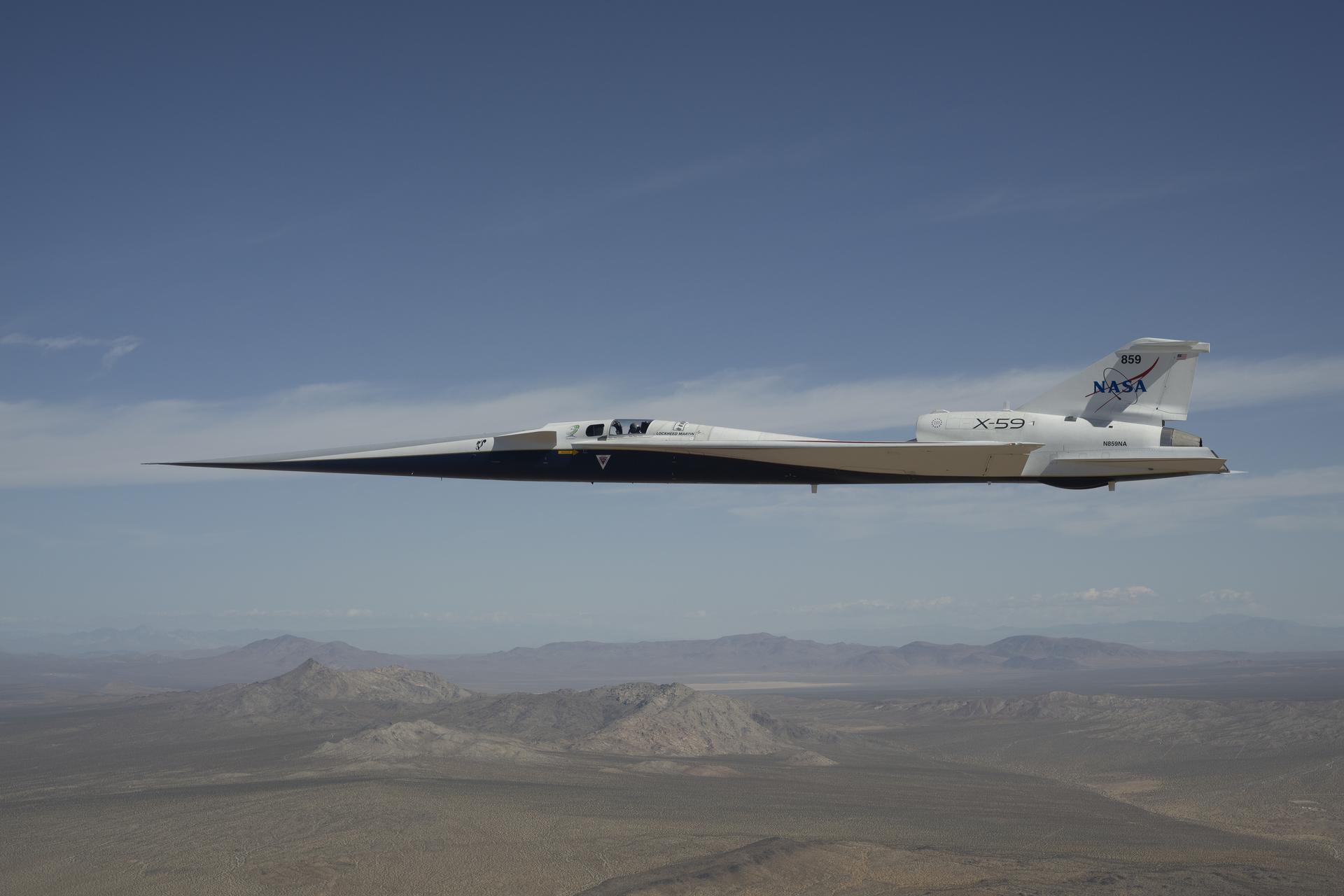
NASA’s X-59 quiet supersonic research aircraft flies above NASA’s Armstrong Flight Research Center in Edwards, California, during testing focused on lower-speed and lower-altitude flight conditions in support of NASA’s Quesst mission. NASA continues two-flight days during envelope expansion testing as teams work to better understand how the aircraft responds throughout its operating range.
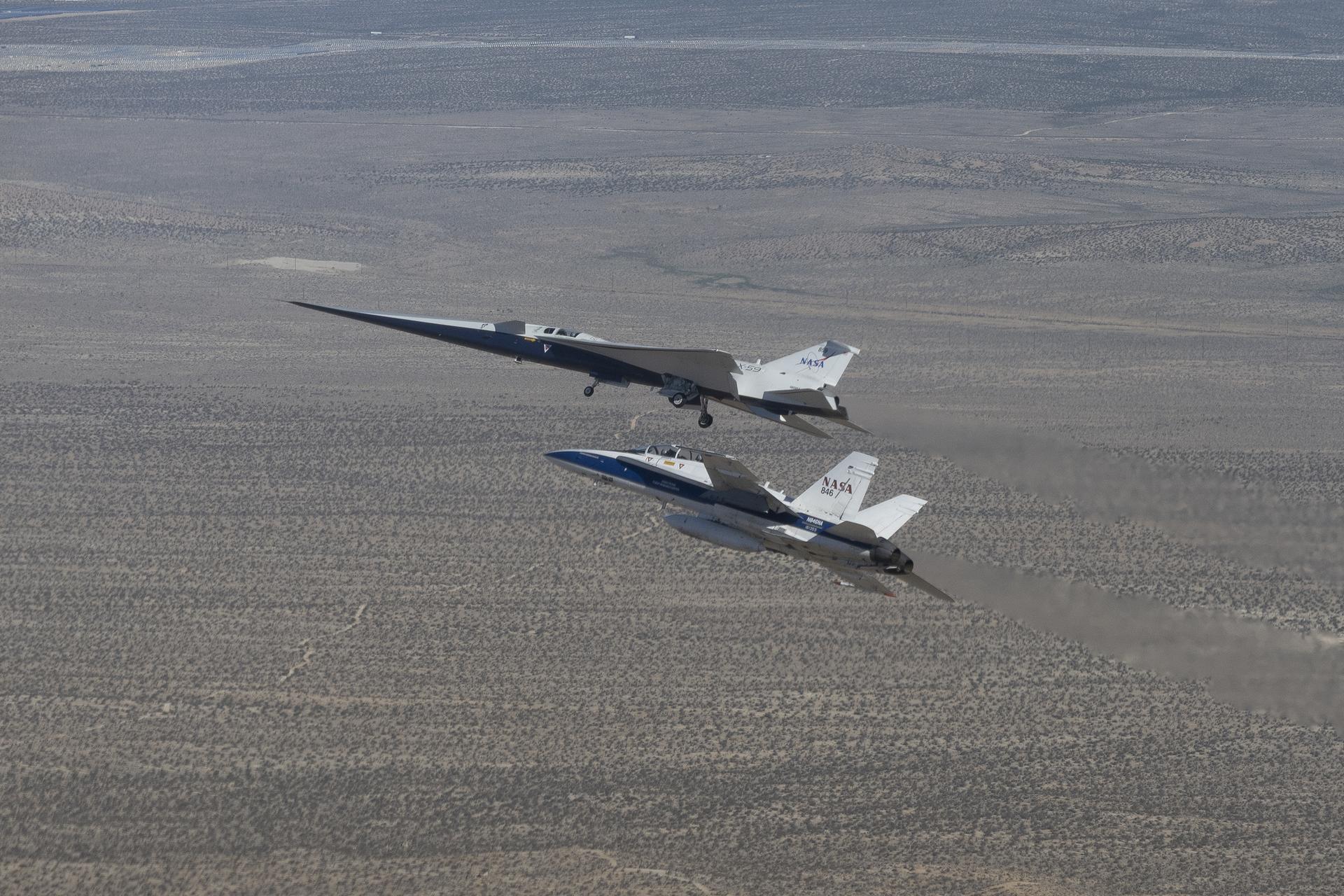
NASA’s X-59 in Flight with F/A-18 Research Aircraft Monitoring
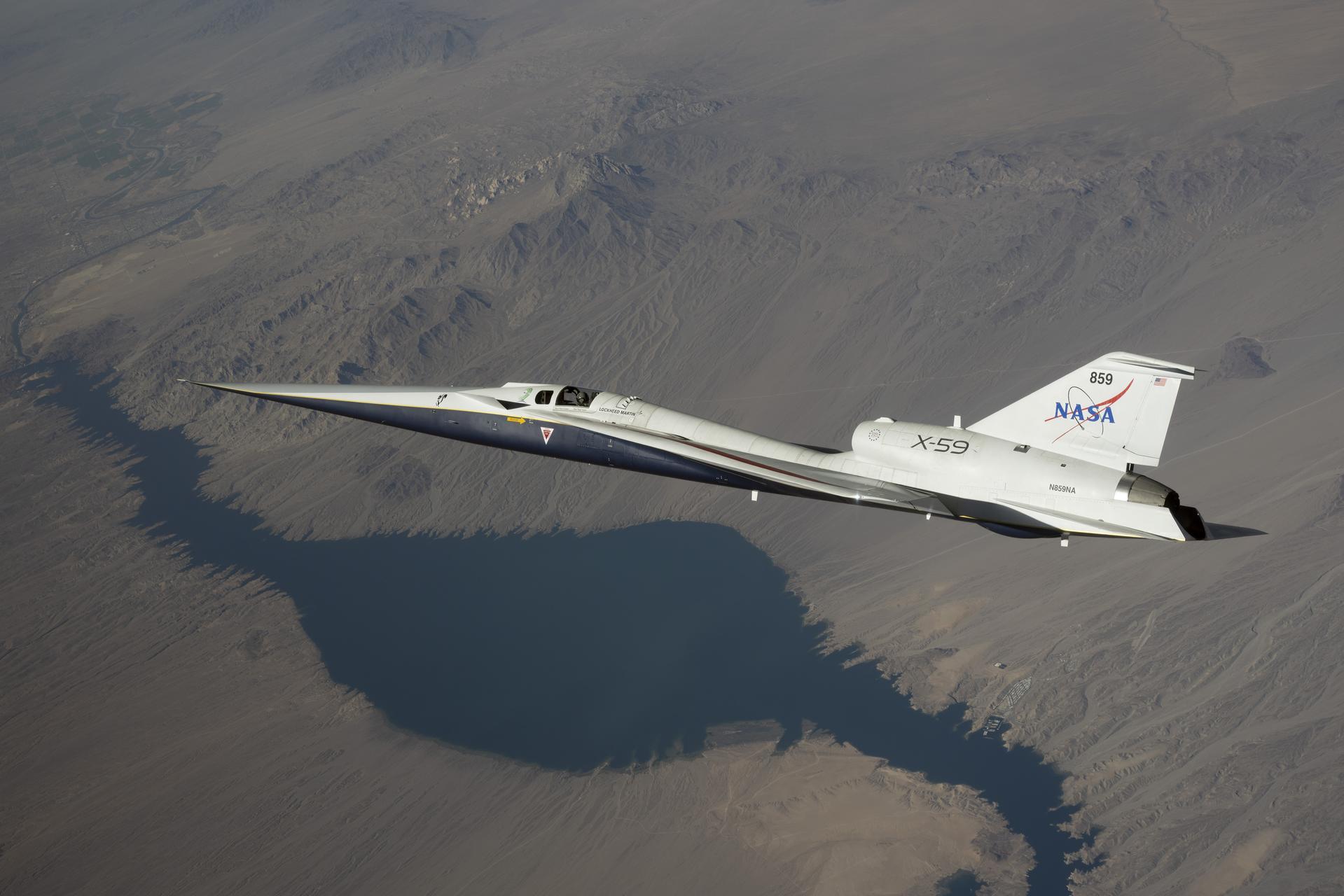
NASA’s X-59 quiet supersonic research aircraft flies along the Bell X-1 Supersonic Corridor in California during continued flight testing on Wednesday, June 10, 2026, in support of NASA’s Quesst mission. Initial supersonic flights help the team evaluate the aircraft’s performance as it progresses toward the speed and altitude planned for future community overflights.
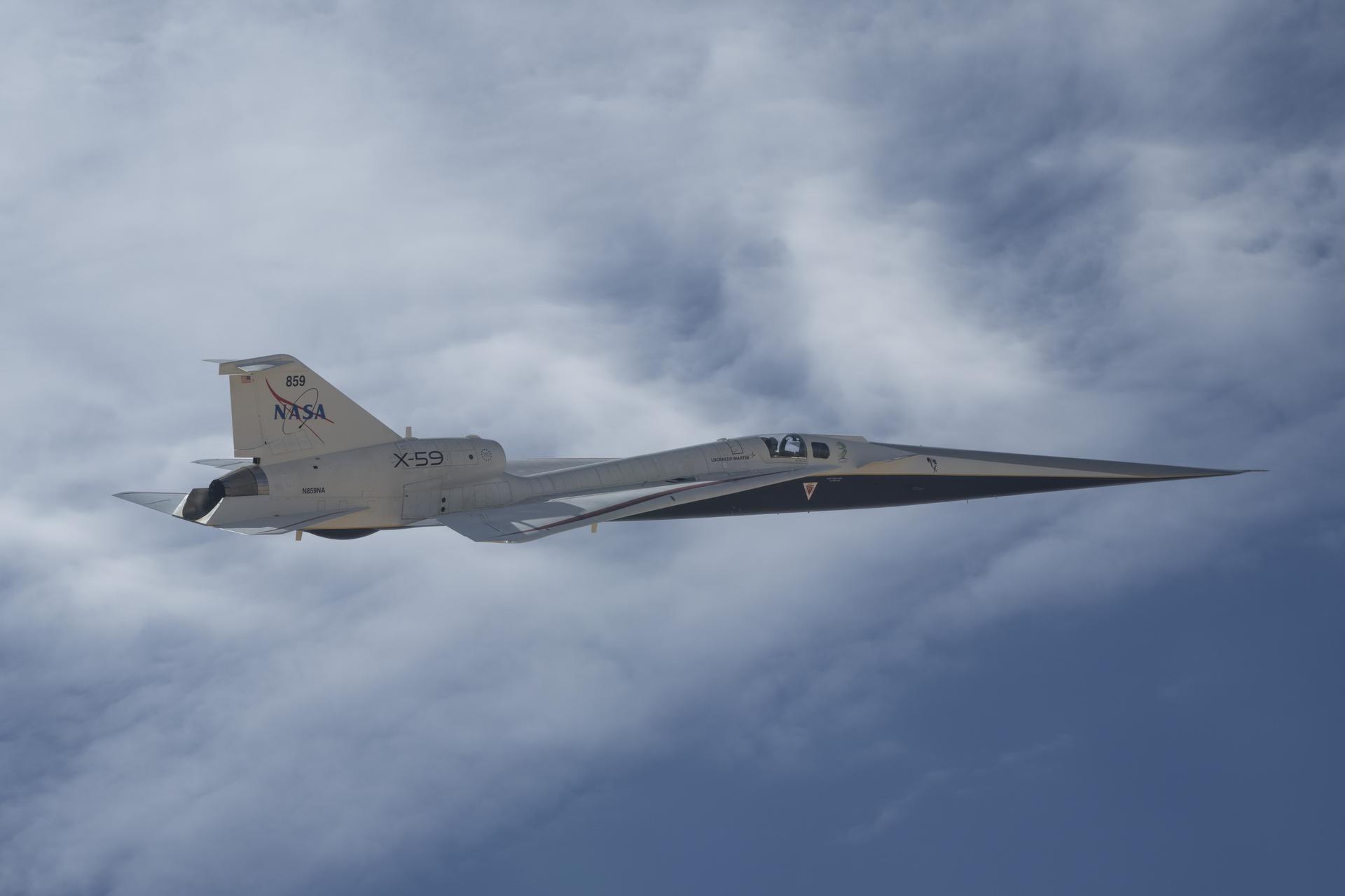
NASA’s X-59 quiet supersonic research aircraft flies near NASA’s Armstrong Flight Research Center in Edwards, California, on Tuesday, May 12, 2026. NASA continues expanding the aircraft’s flight envelope to evaluate its performance across a range of flight conditions ahead of flight tests at speeds faster than the speed of sound in support of the agency’s Quesst mission.
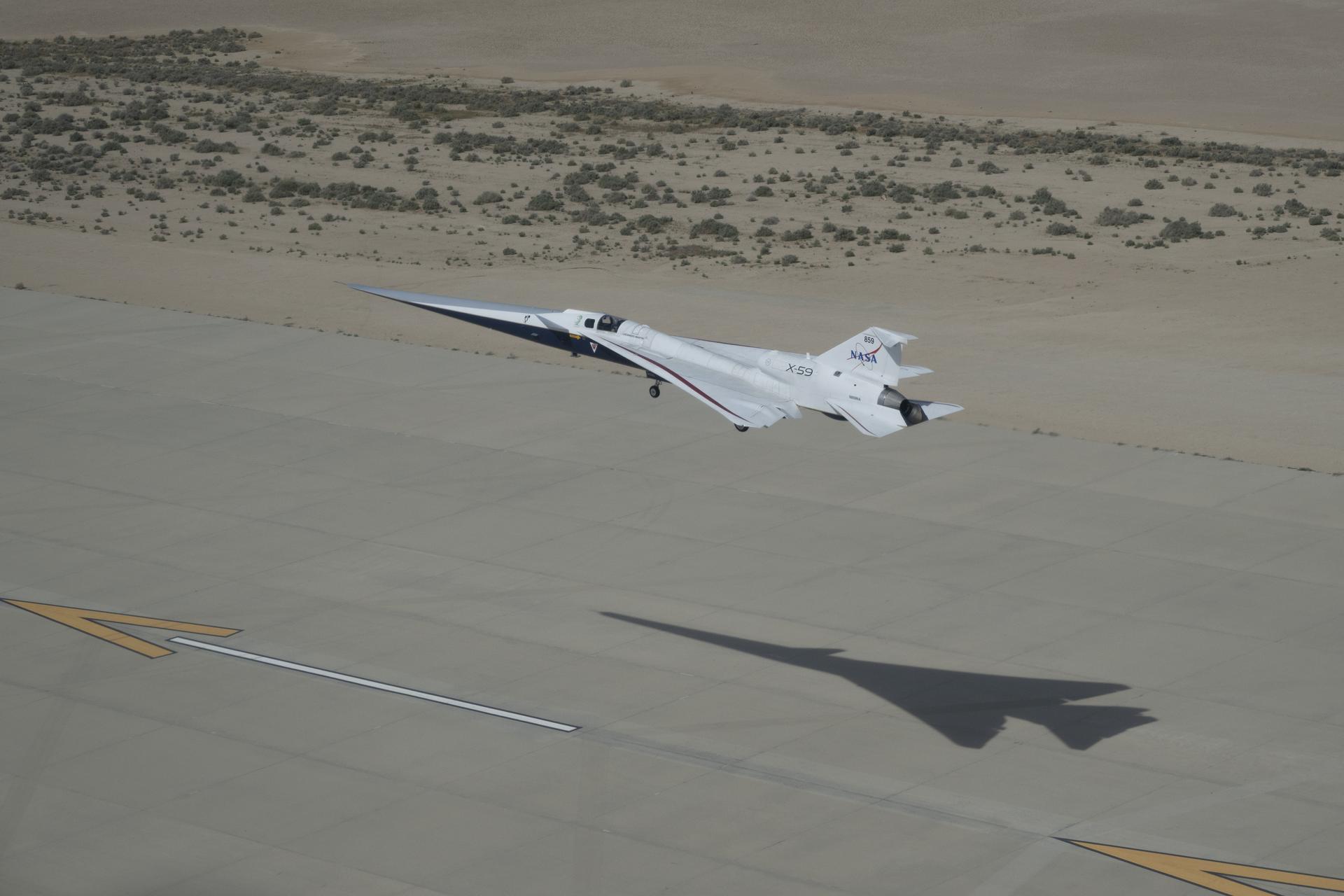
NASA’s X-59 quiet supersonic research aircraft approaches landing at Edwards Air Force Base in California on Thursday, March 26, 2026. The flight supports NASA’s Quesst mission to demonstrate supersonic flight that produces a quieter sonic “thump” instead of a loud sonic boom.

NASA’s X-59 in Flight with F/A-18 Research Aircraft Monitoring
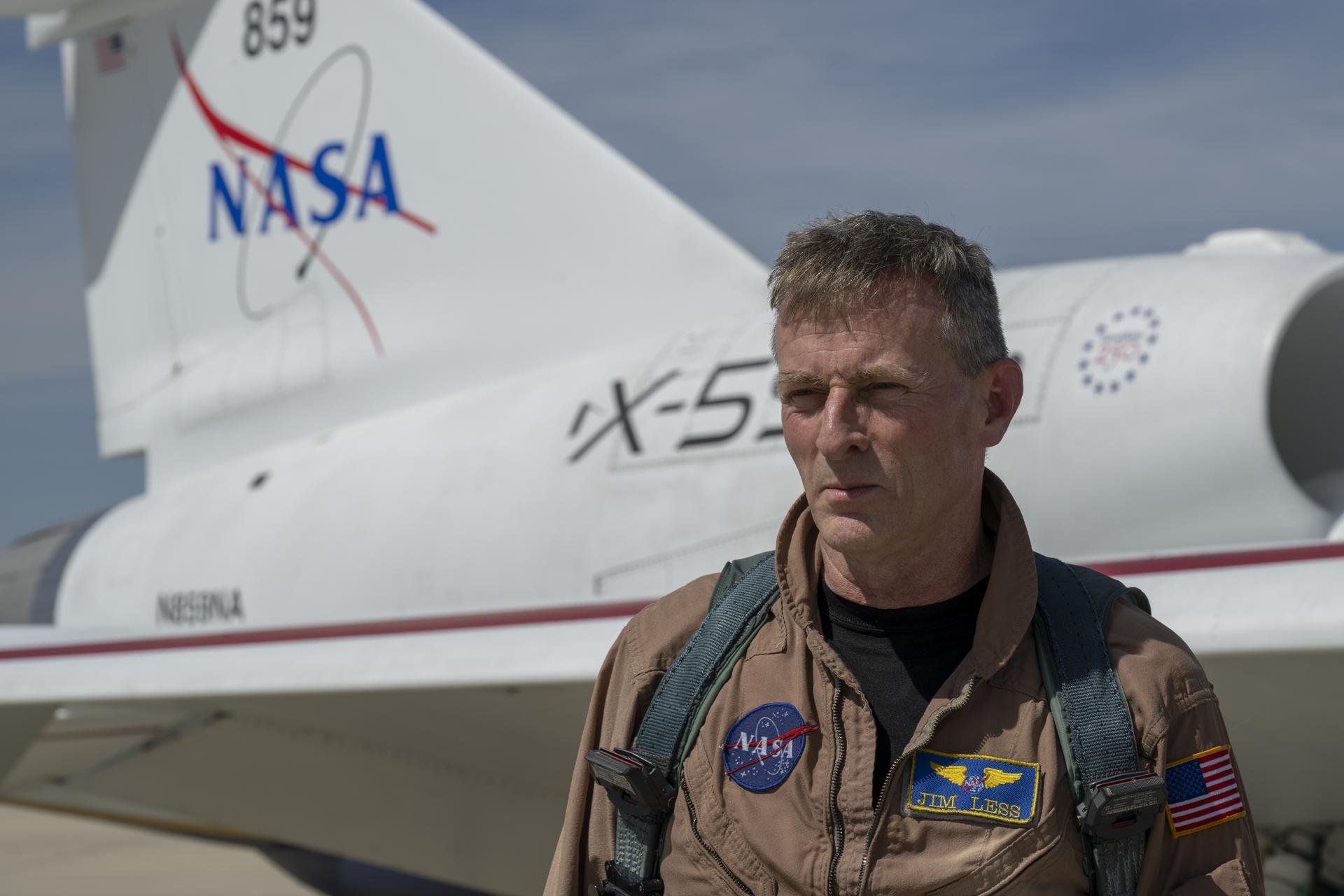
NASA test pilot Jim “Clue” Less is seen after completing his first flight of the X-59 and the aircraft’s second flight overall at Edwards Air Force Base in California on Thursday, March 26, 2026. The flight supports NASA’s Quesst mission to demonstrate supersonic flight that produces a quieter sonic “thump” instead of a loud sonic boom.
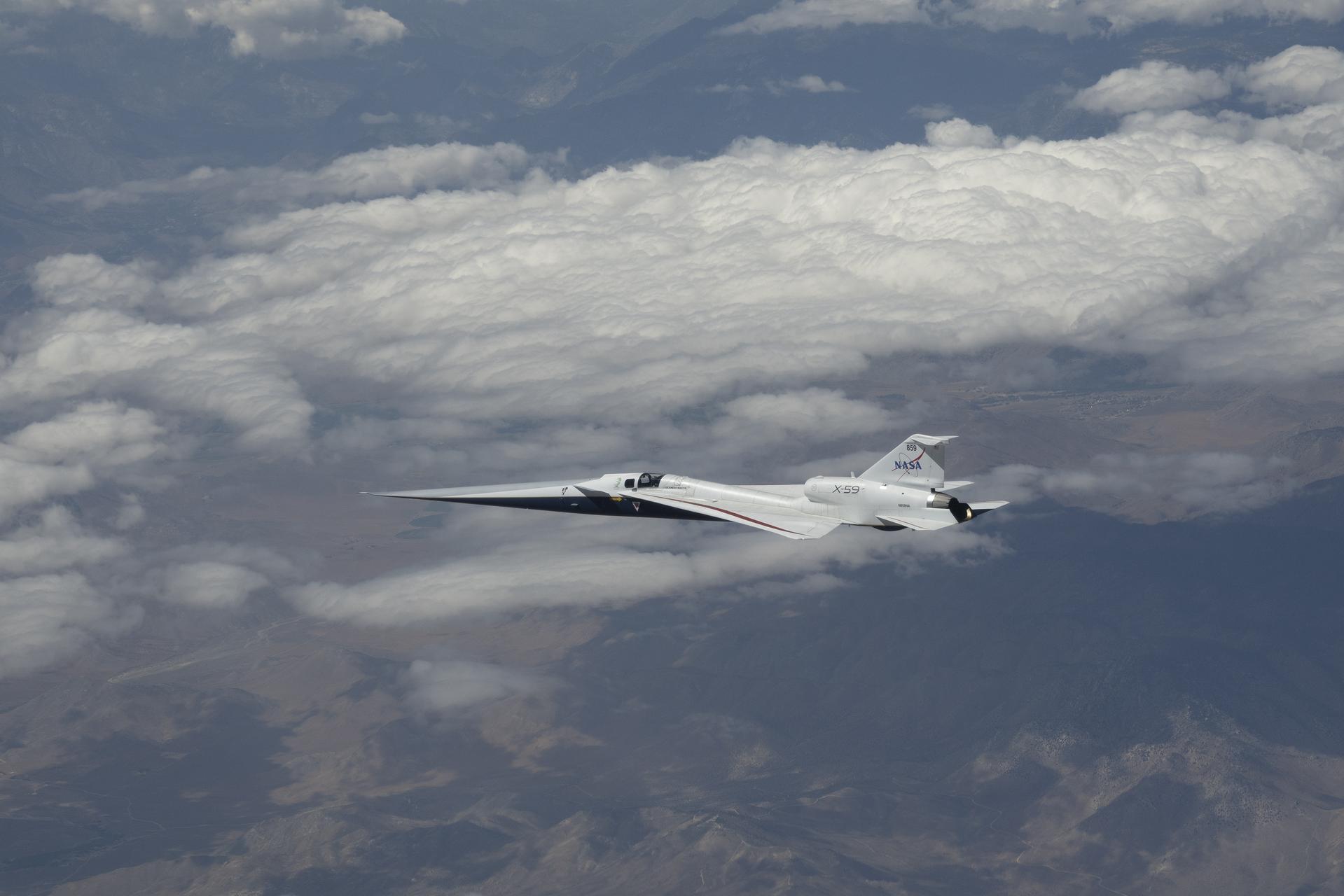
NASA’s X-59 quiet supersonic research aircraft completed its first dual-flight day on Thursday, April 30, at the agency’s Armstrong Flight Research Center in Edwards, California. This image shows the X-59 flying over the Mojave Desert during the aircraft’s second flight of the day, and its 12th overall. The X-59 flew test points at altitudes ranging from 12,000 to 43,000 feet and speeds from approximately 528 to 627 mph, or Mach 0.8 to Mach 0.95. The increased tempo of test flights allows the team to collect more data over a shorter period of time.

NASA's F-15B Aeronautics Research Test Bed performs a calibration flight of the shock-sensing probe over Edwards, California, on Aug. 6, 2024. The probe will measure shock waves from NASA's X-59.

NASA’s X-59 quiet supersonic research aircraft sits outside Hangar 4826 at NASA’s Armstrong Flight Research Center in Edwards, California, on Nov. 19, 2025. The aircraft’s arrival at NASA Armstrong on Oct. 28, 2025, marked its transition into flight operations in support of NASA’s Quesst mission to gather data on quiet supersonic flight.

NASA’s X-59 quiet supersonic research aircraft flies above Palmdale and Edwards, California, during its first flight Tuesday, Oct. 28, 2025. The aircraft is headed to NASA’s Armstrong Flight Research Center in Edwards, where it will begin flight testing for NASA’s Quesst mission, which aims to demonstrate quiet supersonic flight over land.

NASA test pilot Jim “Clue” Less is seen after completing his first flight of the X-59 and the aircraft’s second flight overall at Edwards Air Force Base in California on Thursday, March 26, 2026. The flight supports NASA’s Quesst mission to demonstrate supersonic flight that produces a quieter sonic “thump” instead of a loud sonic boom.

NASA’s X-59 in Flight with F/A-18 Research Aircraft Monitoring

NASA’s X-59 quiet supersonic research aircraft sits inside Hangar 4826 at NASA’s Armstrong Flight Research Center in Edwards, California, on Nov. 18, 2025. Following its first flight on Oct. 25, 2025, in support of NASA’s Quesst mission, the aircraft entered scheduled maintenance as part of its transition into flight operations. Quesst aims to demonstrate quiet supersonic flight and reduce the disruptive sonic boom to a quieter sonic thump.

NASA’s X-59 quiet supersonic research aircraft flies above Palmdale and Edwards, California, during its first flight Tuesday, Oct. 28, 2025. The aircraft is headed to NASA’s Armstrong Flight Research Center in Edwards, where it will begin flight testing for NASA’s Quesst mission, which aims to demonstrate quiet supersonic flight over land.
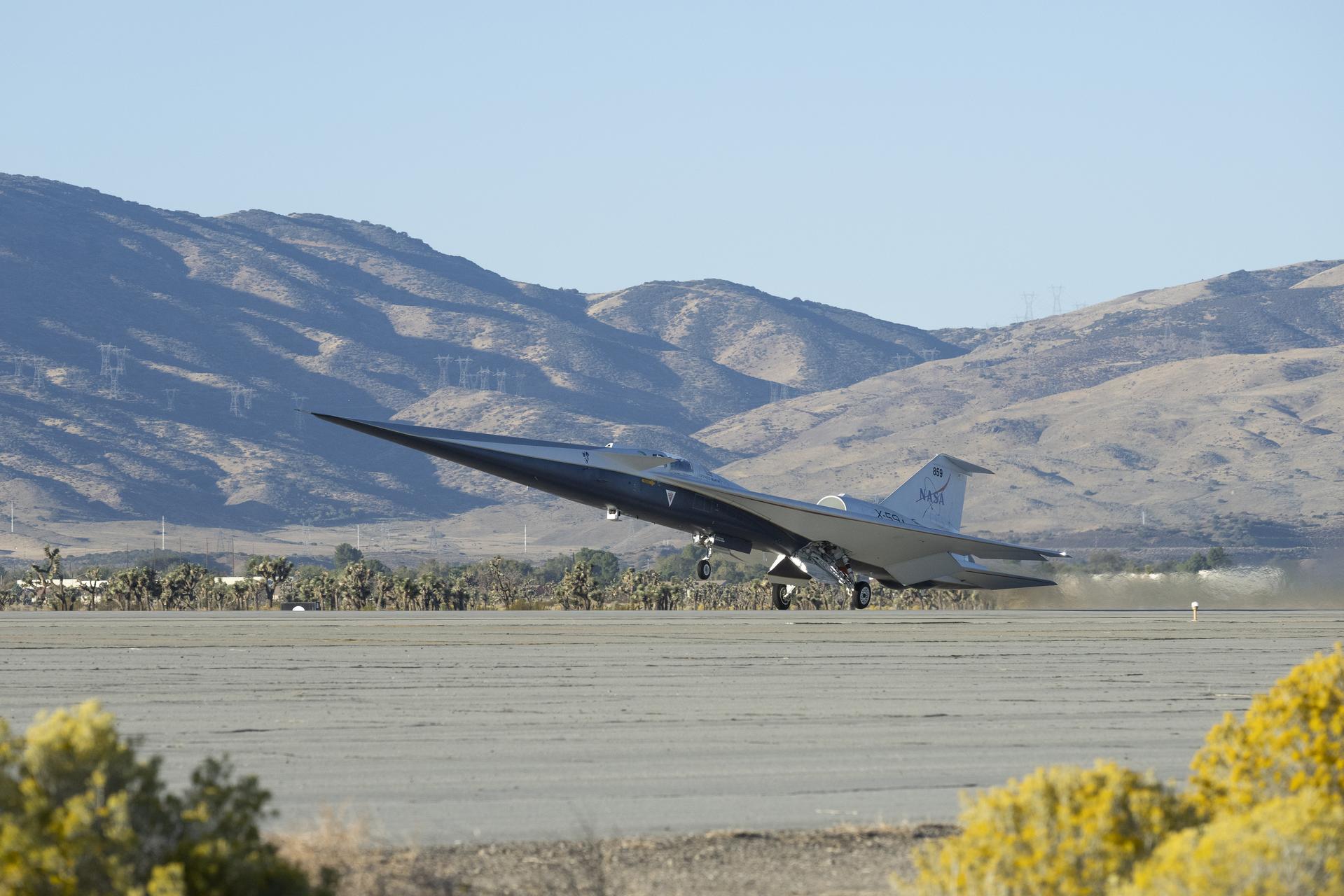
NASA’s X-59 quiet supersonic research aircraft lifts off for its first flight Tuesday, Oct. 28, 2025, from U.S. Air Force Plant 42 in Palmdale, California. The aircraft’s first flight marks the start of flight testing for NASA’s Quesst mission, the result of years of design, integration, and ground testing and begins a new chapter in NASA’s aeronautics research legacy.

NASA Aeronautics and center leadership gather inside the viewing area of the main control room at NASA’s Armstrong Flight Research Center in Edwards, California, on Tuesday, Oct. 28, 2025. The group watches in real time as flight controllers and engineers receive updates from the aircraft during its historic first flight in support of the agency’s Quesst mission.
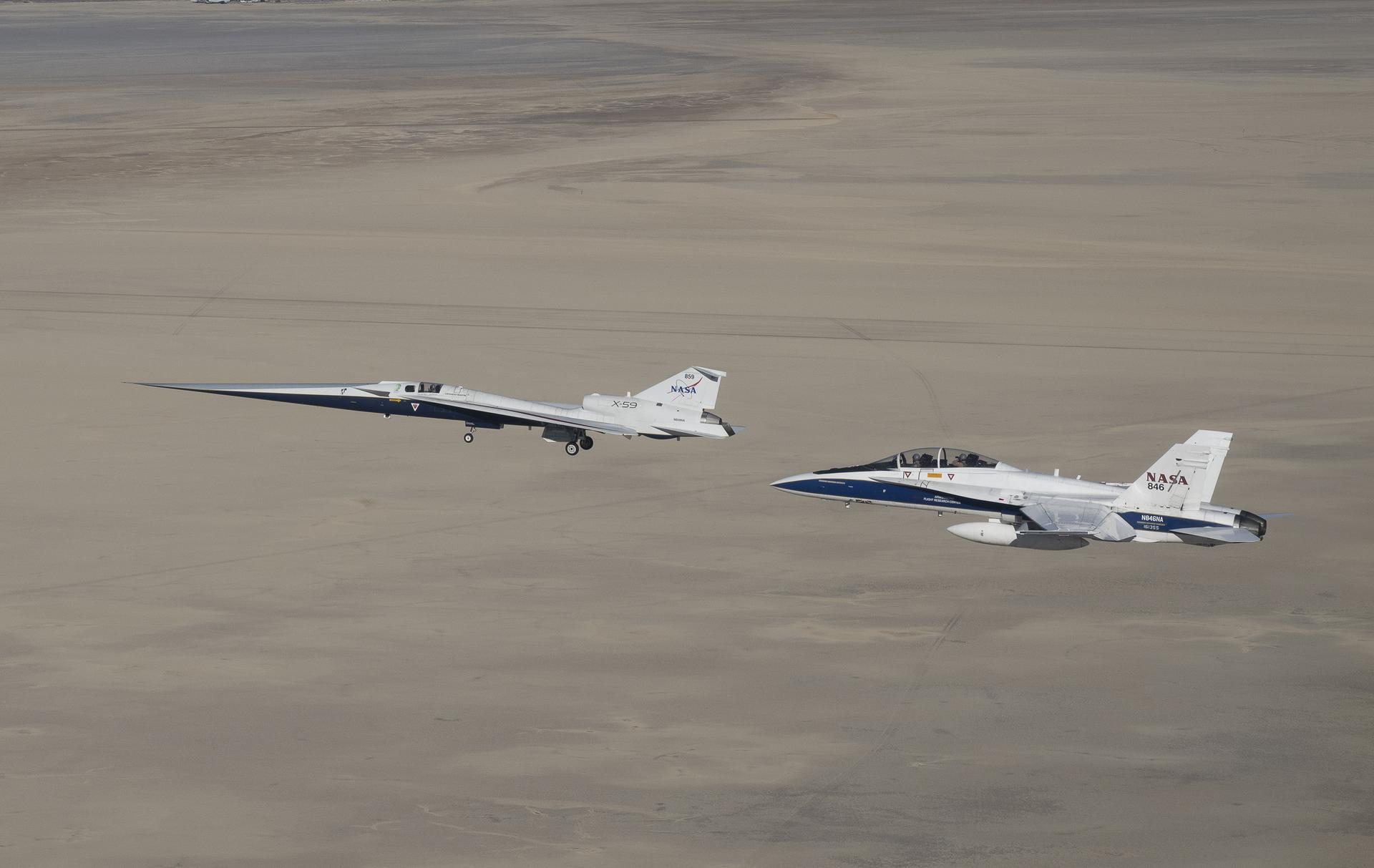
NASA’s X-59 quiet supersonic research aircraft flies above Palmdale and Edwards, California, during its first flight Tuesday, Oct. 28, 2025, accompanied by a NASA F/A-18 research aircraft. A NASA F-15 research aircraft (not pictured) captured the image as the X-59 traveled to NASA’s Armstrong Flight Research Center in Edwards, California, where it will begin flight testing for NASA’s Quesst mission, which aims to demonstrate quiet supersonic flight over land.
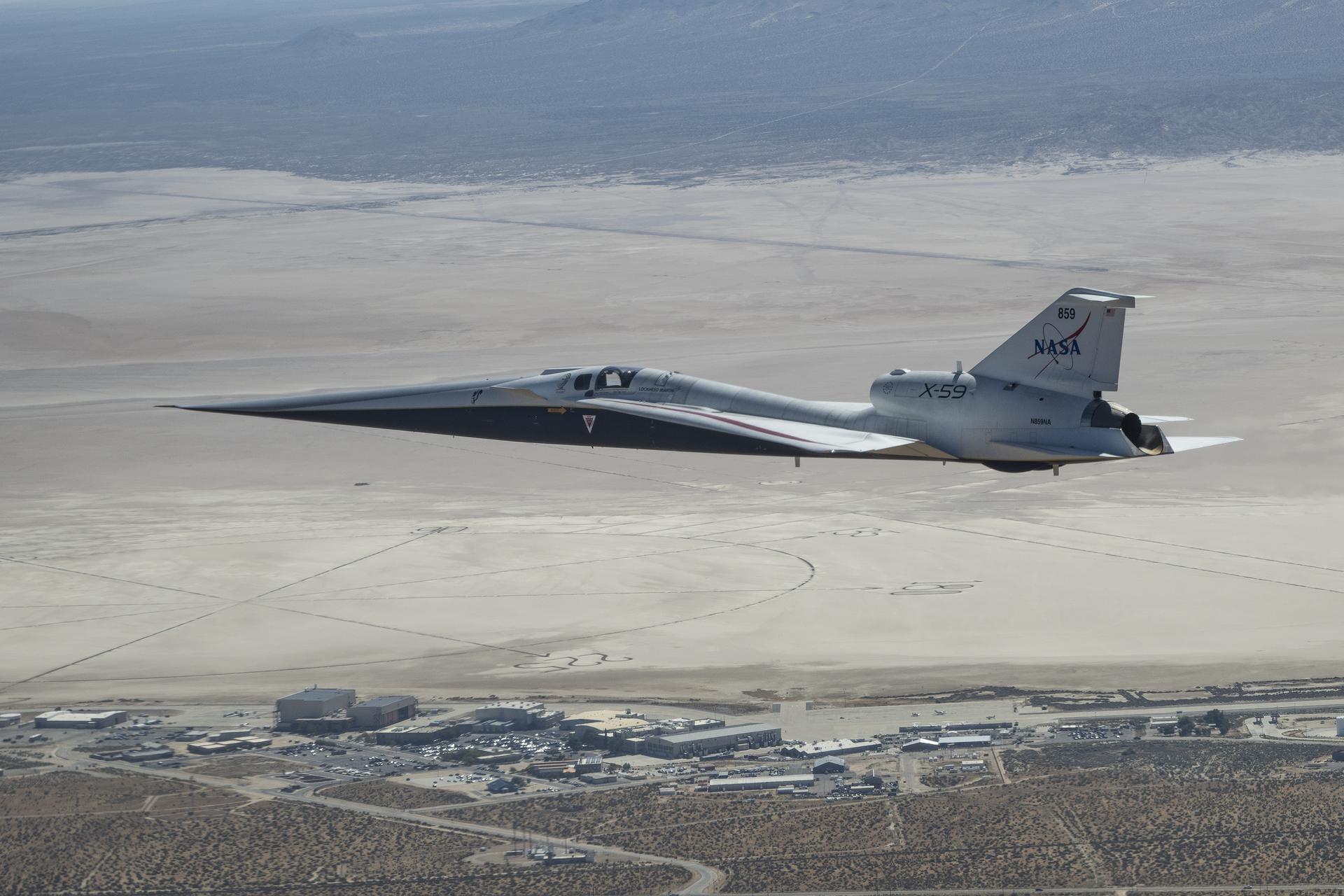
NASA’s X-59 quiet supersonic research aircraft flies above NASA’s Armstrong Flight Research Center in Edwards, California, during testing focused on lower-speed and lower-altitude flight conditions in support of NASA’s Quesst mission. NASA continues two-flight days during envelope expansion testing as teams work to better understand how the aircraft responds throughout its operating range.
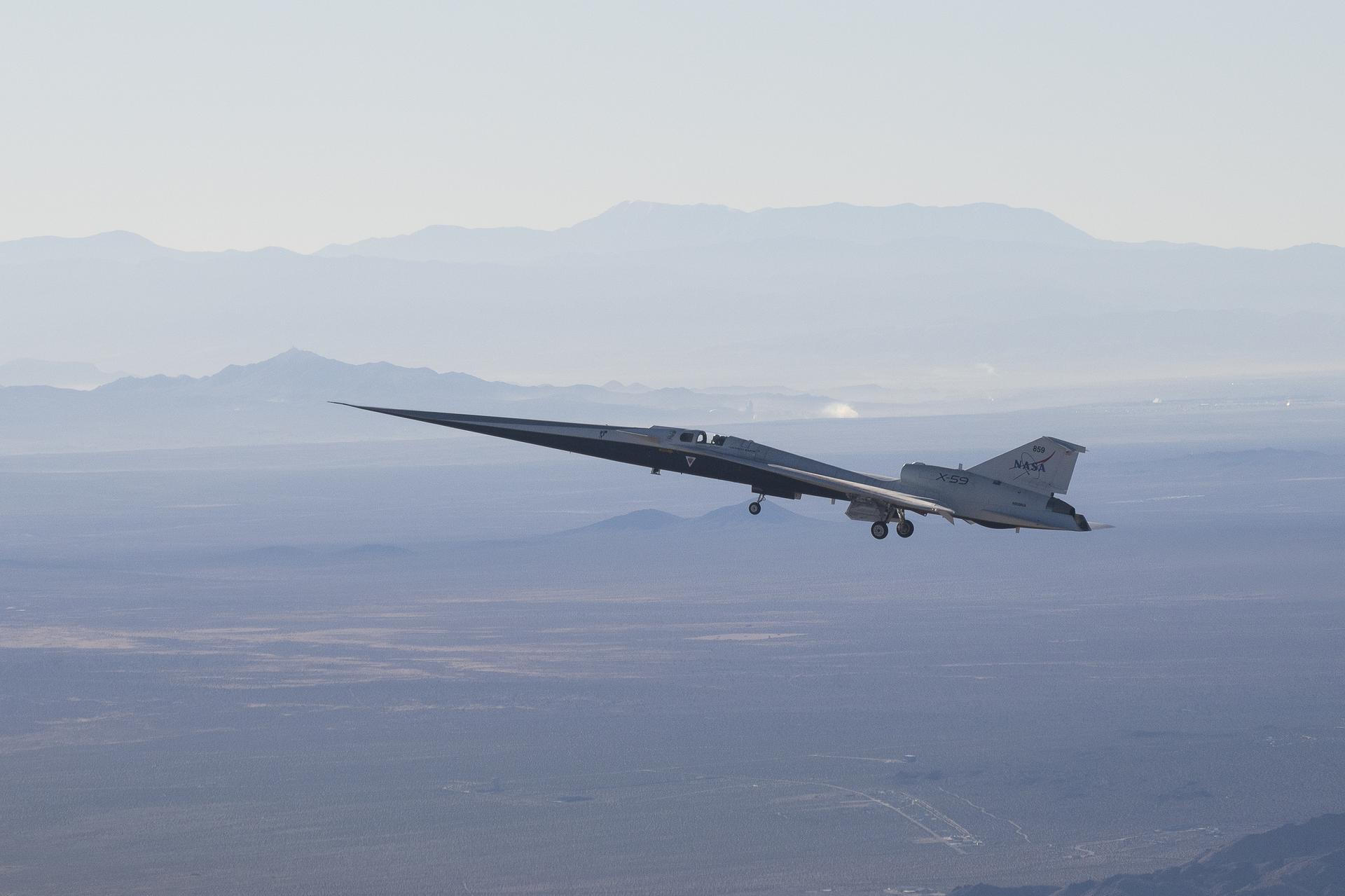
NASA’s X-59 quiet supersonic research aircraft flies above Palmdale and Edwards, California, on its first flight Tuesday, Oct. 28, 2025. The aircraft traveled to NASA’s Armstrong Flight Research Center in Edwards, California, where it will begin flight testing for NASA’s Quesst mission, which aims to demonstrate quiet supersonic flight over land.
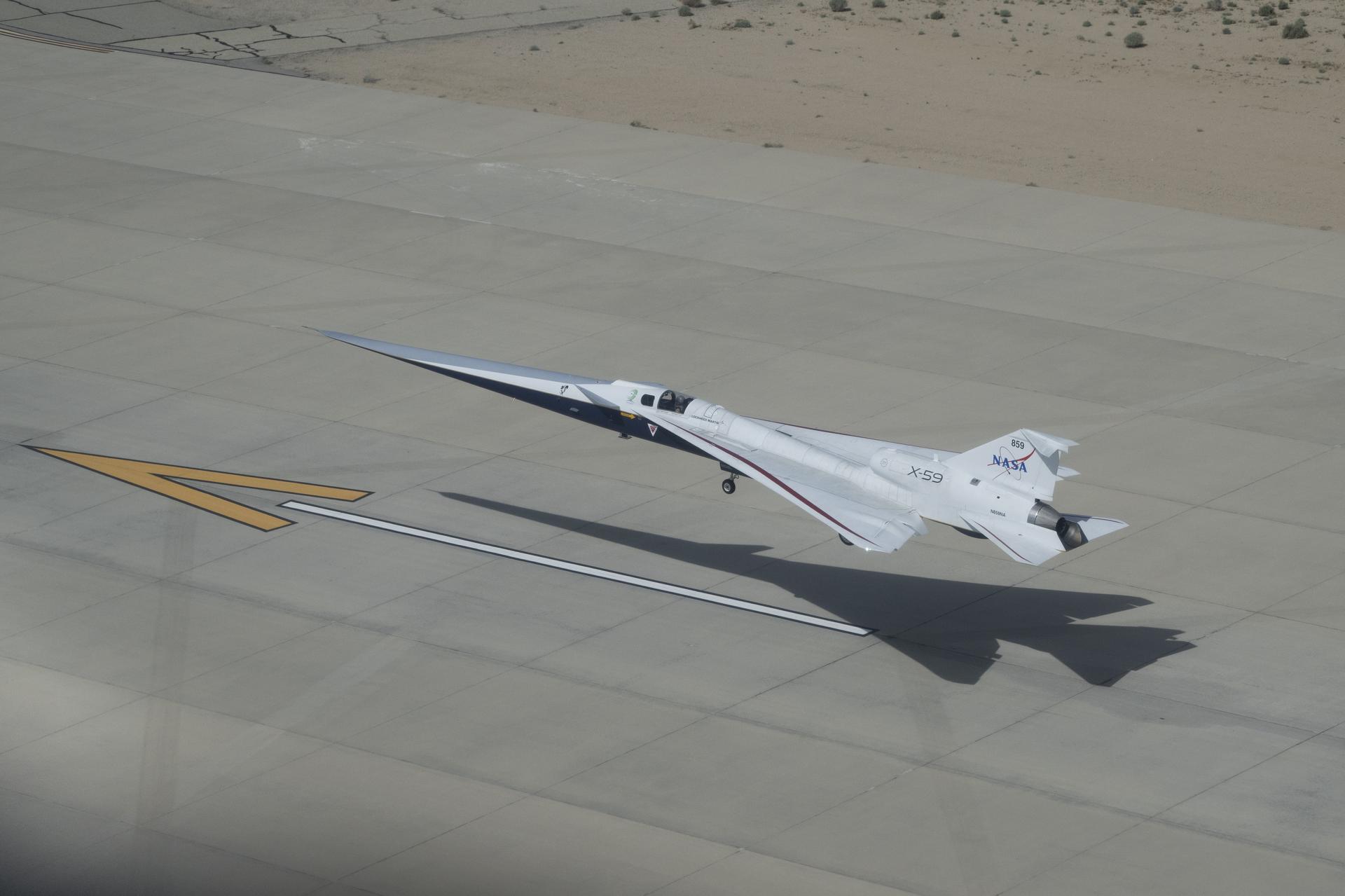
NASA’s X-59 quiet supersonic research aircraft approaches landing at Edwards Air Force Base in California on Thursday, March 26, 2026. The flight supports NASA’s Quesst mission to demonstrate supersonic flight that produces a quieter sonic “thump” instead of a loud sonic boom.