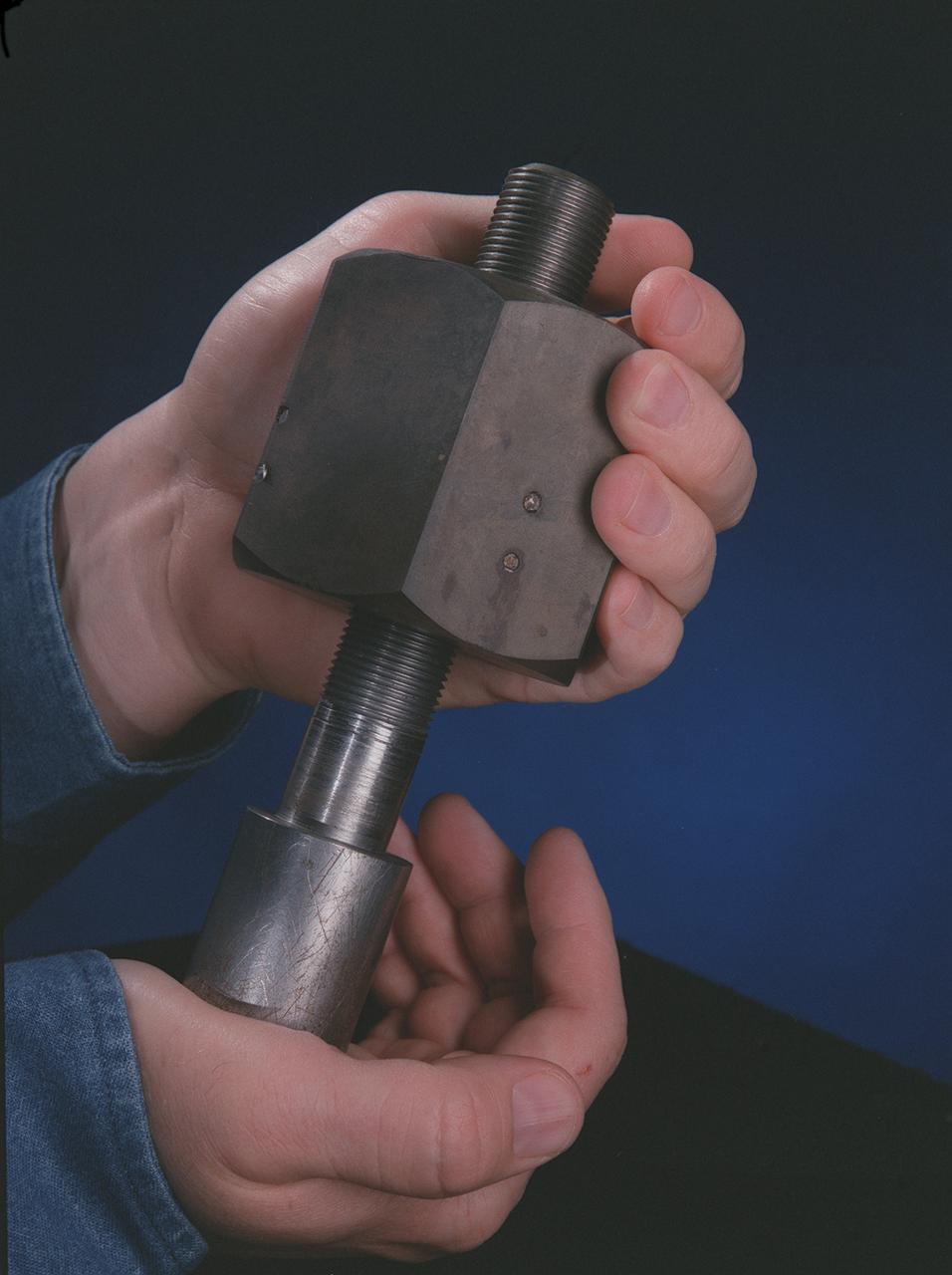
Marshall Space Flight Center (MSFC) has developed a specially-designed nut, called the Quick-Connect Nut, for quick and easy assembly of components in the harsh environment of space, as in assembly of International Space Station. The design permits nuts to be installed simply by pushing them onto standard bolts, then giving a quick twist. To remove, they are unscrewed like conventional nuts. Possible applications include the mining industry for erecting support barriers, assembling underwater oil drilling platforms, fire-fighting equipment, scaffolding, assembly-line machinery, industrial cranes, and even changing lug nuts on race cars. The speed of assembly can make the difference between life and death in different aspects of life on Earth.
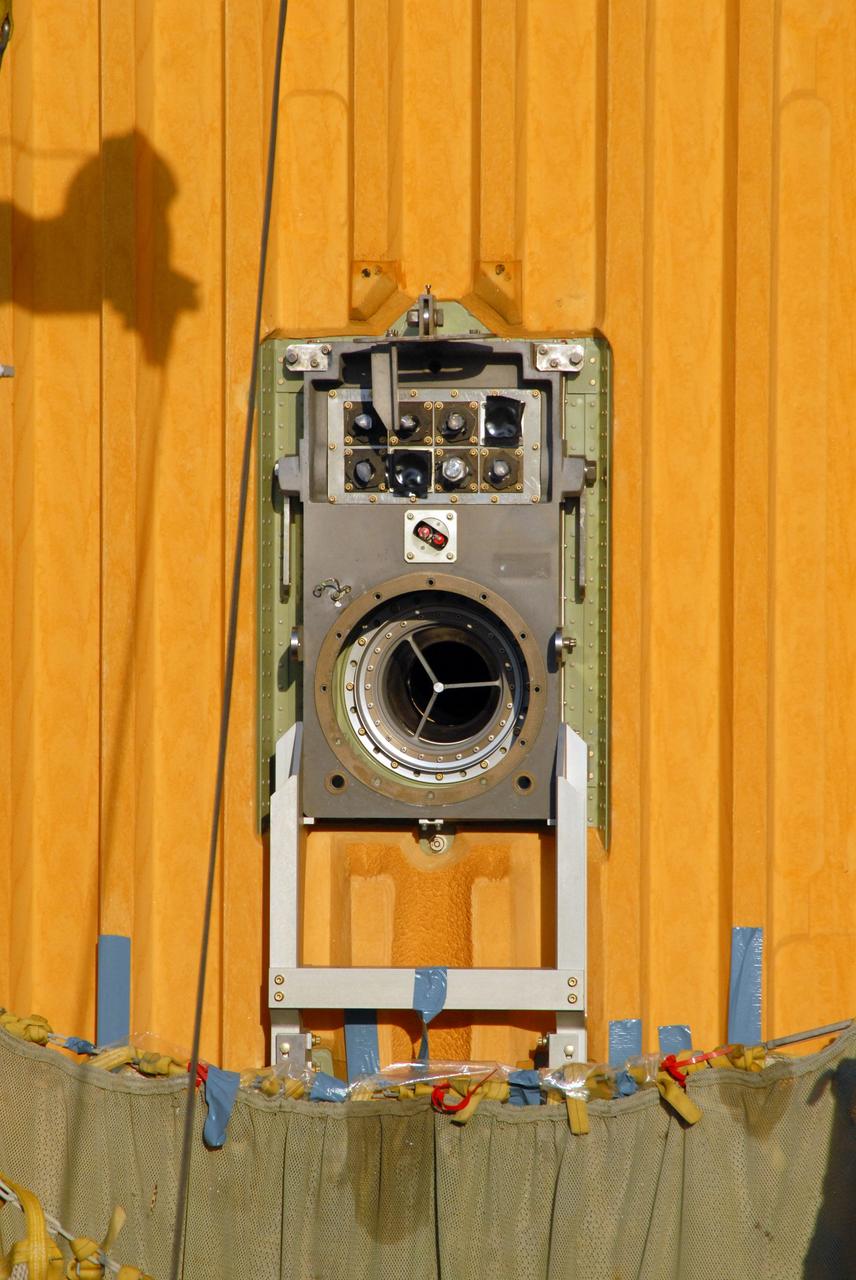
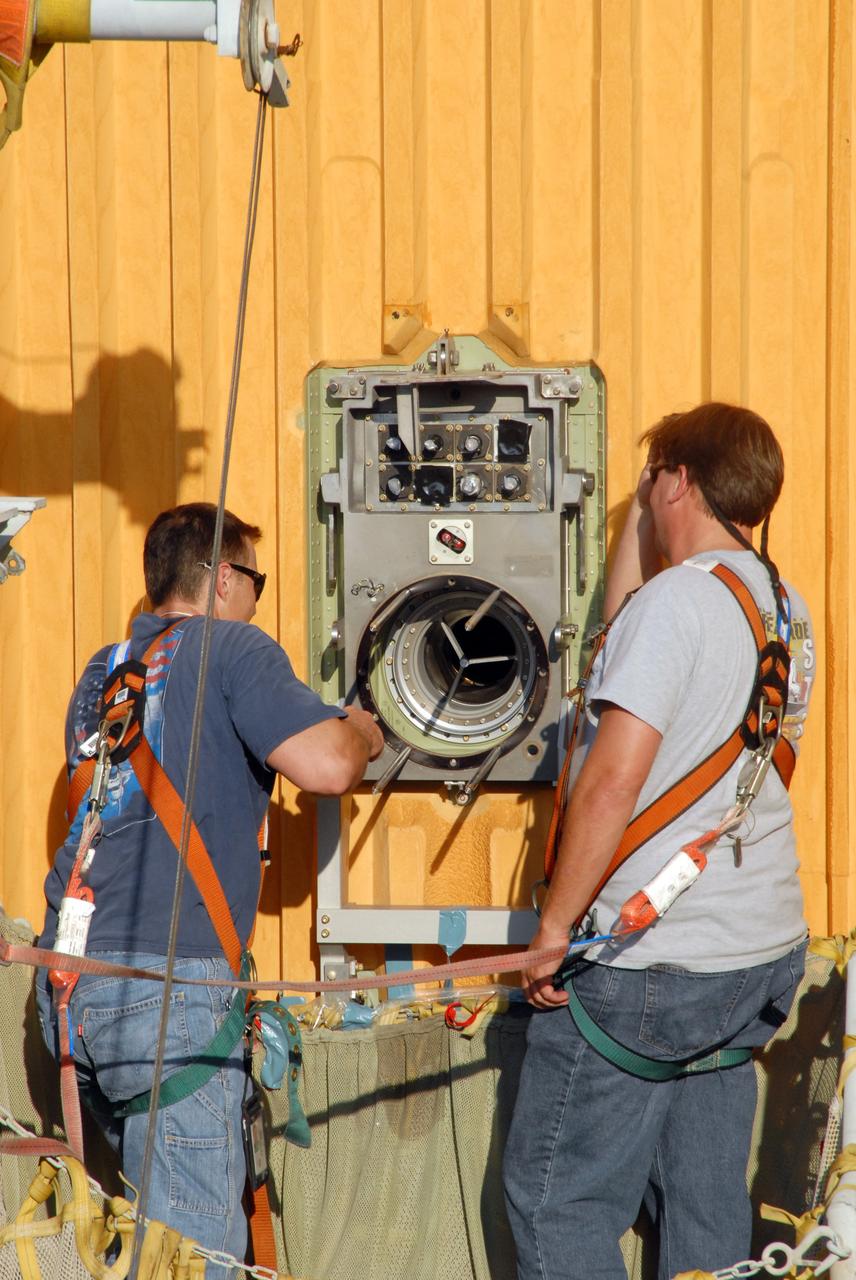
CAPE CANAVERAL, Fla. – Seen in the photo is the Ground Umbilical Carrier Plate, or GUCP, on space shuttle Endeavour's external fuel tank. Workers have removed the 7-inch quick disconnect to change out seals in the internal connection points. A leak of hydrogen at the location during tanking June 12 for the STS-127 mission caused the mission to be scrubbed at 12:26 a.m. June 13. The GUCP is the overboard vent to the pad and the flare stack where the vented hydrogen is burned off. Endeavour is scheduled to launch on its STS-127 mission on June 17 at 5:40 a.m. EDT. Photo credit: NASA/Tim Jacobs
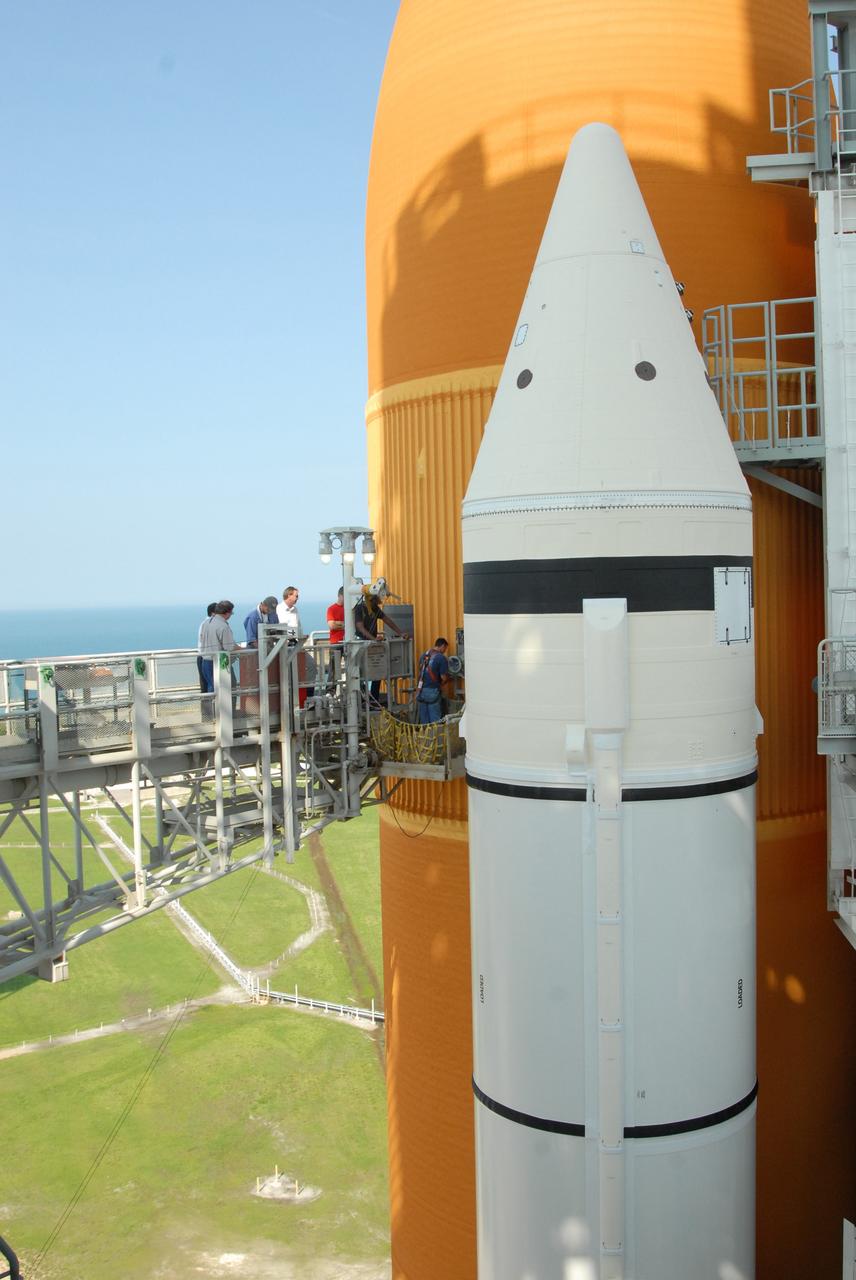
CAPE CANAVERAL, Fla. – On Launch Pad 39A at NASA's Kennedy Space Center in Florida, workers prepare to remove the 7-inch quick disconnect and flight seal from the Ground Umbilical Carrier Plate, or GUCP, on space shuttle Endeavour's external fuel tank. Teams are removing the hardware to change out seals in the internal connection points. A leak of hydrogen at the location during tanking June 12 for the STS-127 mission caused the mission to be scrubbed at 12:26 a.m. June 13. The GUCP is the overboard vent to the pad and the flare stack where the vented hydrogen is burned off. Endeavour is scheduled to launch on its STS-127 mission on June 17 at 5:40 a.m. EDT. Photo credit: NASA/Tim Jacobs
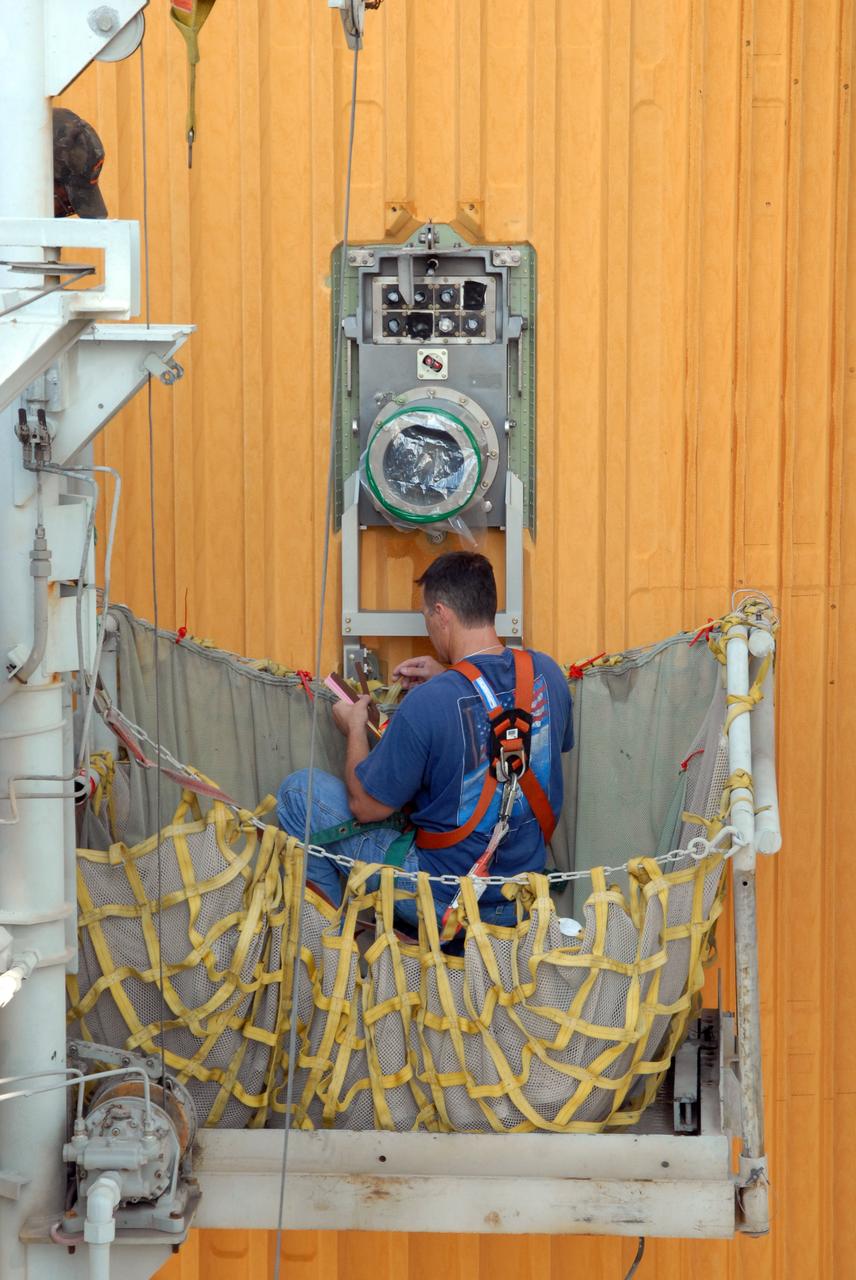
CAPE CANAVERAL, Fla. – On Launch Pad 39A at NASA's Kennedy Space Center in Florida, a worker prepares to remove the 7-inch quick disconnect and flight seal from the Ground Umbilical Carrier Plate, or GUCP, on space shuttle Endeavour's external fuel tank. Teams are removing the hardware to change out seals in the internal connection points. A leak of hydrogen at the location during tanking June 12 for the STS-127 mission caused the mission to be scrubbed at 12:26 a.m. June 13. The GUCP is the overboard vent to the pad and the flare stack where the vented hydrogen is burned off. Endeavour is scheduled to launch on its STS-127 mission on June 17 at 5:40 a.m. EDT. Photo credit: NASA/Tim Jacobs
CAPE CANAVERAL, Fla. – Seen in the photo is the 7-inch quick disconnect that will be repaired on the hydrogen vent line to the Ground Umbilical Carrier Plate on space shuttle Endeavour's external fuel tank on Launch Pad 39A at NASA's Kennedy Space Center in Florida. Teams are removing the hardware to change out seals in the internal connection points. A leak of hydrogen at the location during tanking June 12 for the STS-127 mission caused the mission to be scrubbed at 12:26 a.m. June 13. The GUCP is the overboard vent to the pad and the flare stack where the vented hydrogen is burned off. Endeavour is scheduled to launch on its STS-127 mission on June 17 at 5:40 a.m. EDT. Photo credit: NASA/Tim Jacobs
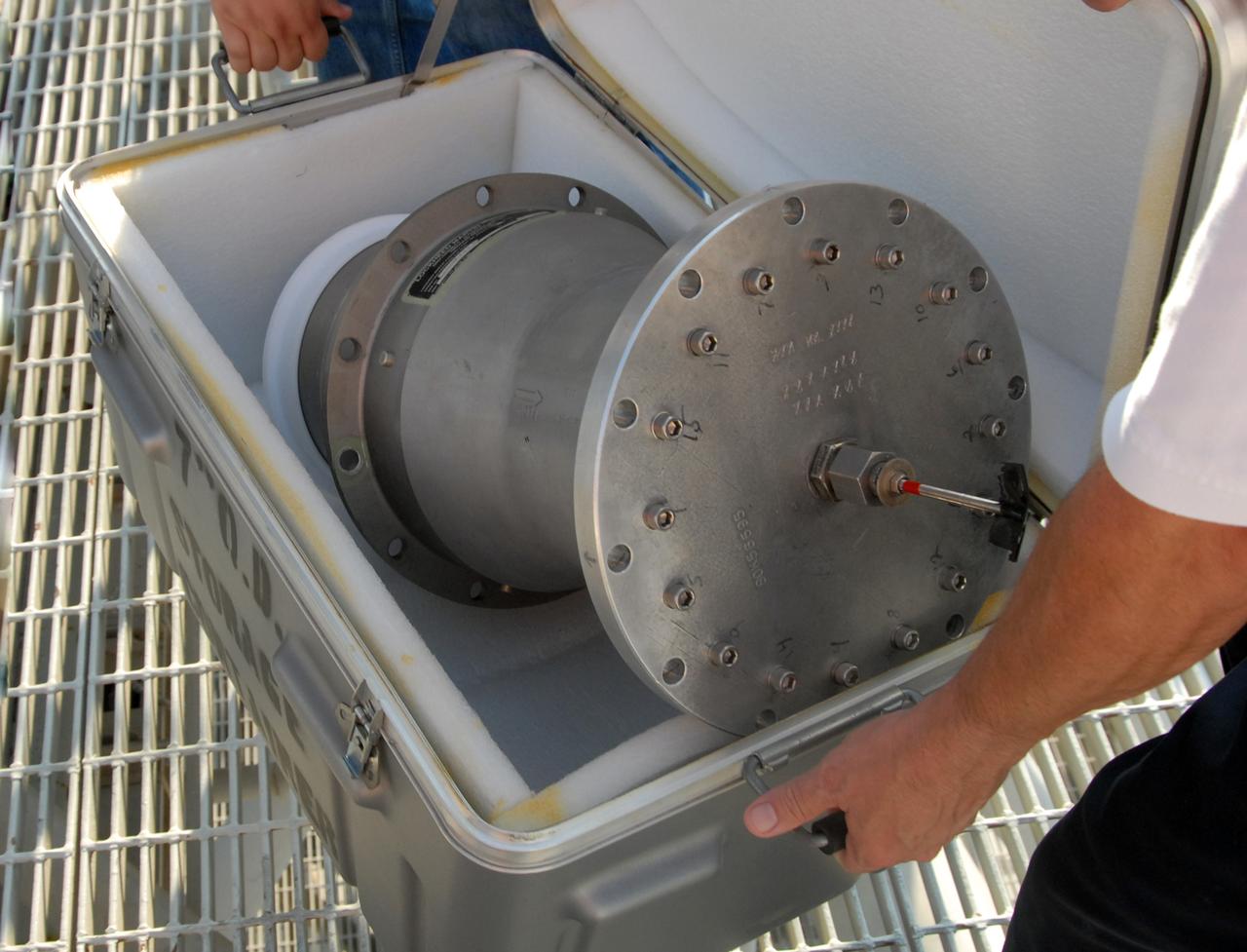
CAPE CANAVERAL, Fla. – On Launch Pad 39A at NASA's Kennedy Space Center in Florida, a worker has removed the 7-inch quick disconnect from the Ground Umbilical Carrier Plate, or GUCP, on space shuttle Endeavour's external fuel tank. Teams are removing the hardware to change out seals in the internal connection points. A leak of hydrogen at the location during tanking June 12 for the STS-127 mission caused the mission to be scrubbed at 12:26 a.m. June 13. The GUCP is the overboard vent to the pad and the flare stack where the vented hydrogen is burned off. Endeavour is scheduled to launch on its STS-127 mission on June 17 at 5:40 a.m. EDT. Photo credit: NASA/Tim Jacobs
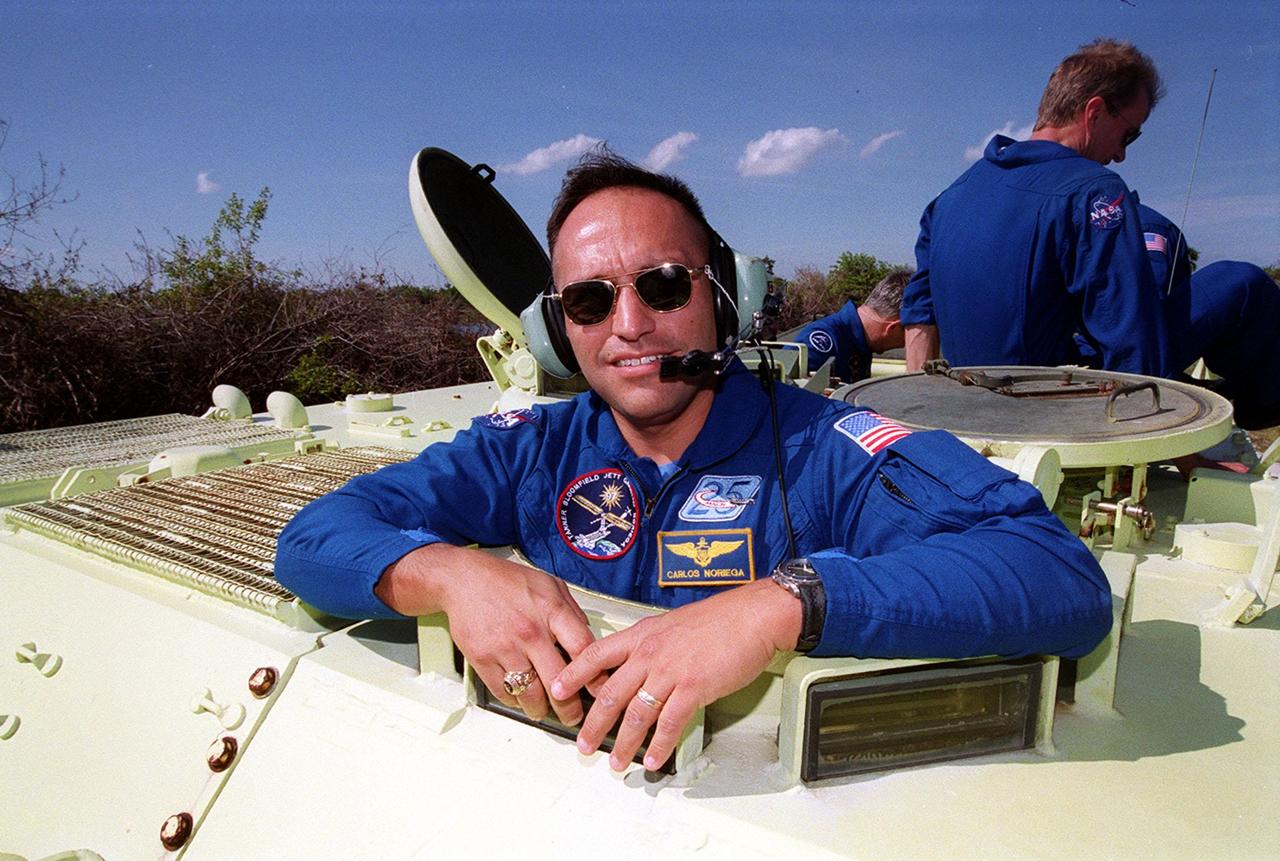
Mission Specialist Carlos Noriega (front) gets ready to take the wheel of an M-113. In the rear can be seen Mission Specialists Marc Garneau (left) and Joe Tanner (right). Learning to drive the armored vehicle is part of emergency egress training during Terminal Countdown Demonstration Test (TCDT) activities. The tracked vehicle could be used by the crew in the event of an emergency at the pad during which the crew must make a quick exit from the area. The TCDT, also includes a simulated launch countdown and opportunities to inspect the mission payloads in the orbiter’s payload bay. Mission STS-97is the sixth construction flight to the International Space Station. Its payload includes the P6 Integrated Truss Structure and a photovoltaic (PV) module, with giant solar arrays that will provide power to the Station. The mission includes two spacewalks to complete the solar array connections. STS-97 is scheduled to launch Nov. 30 at 10:05 p.m. EST
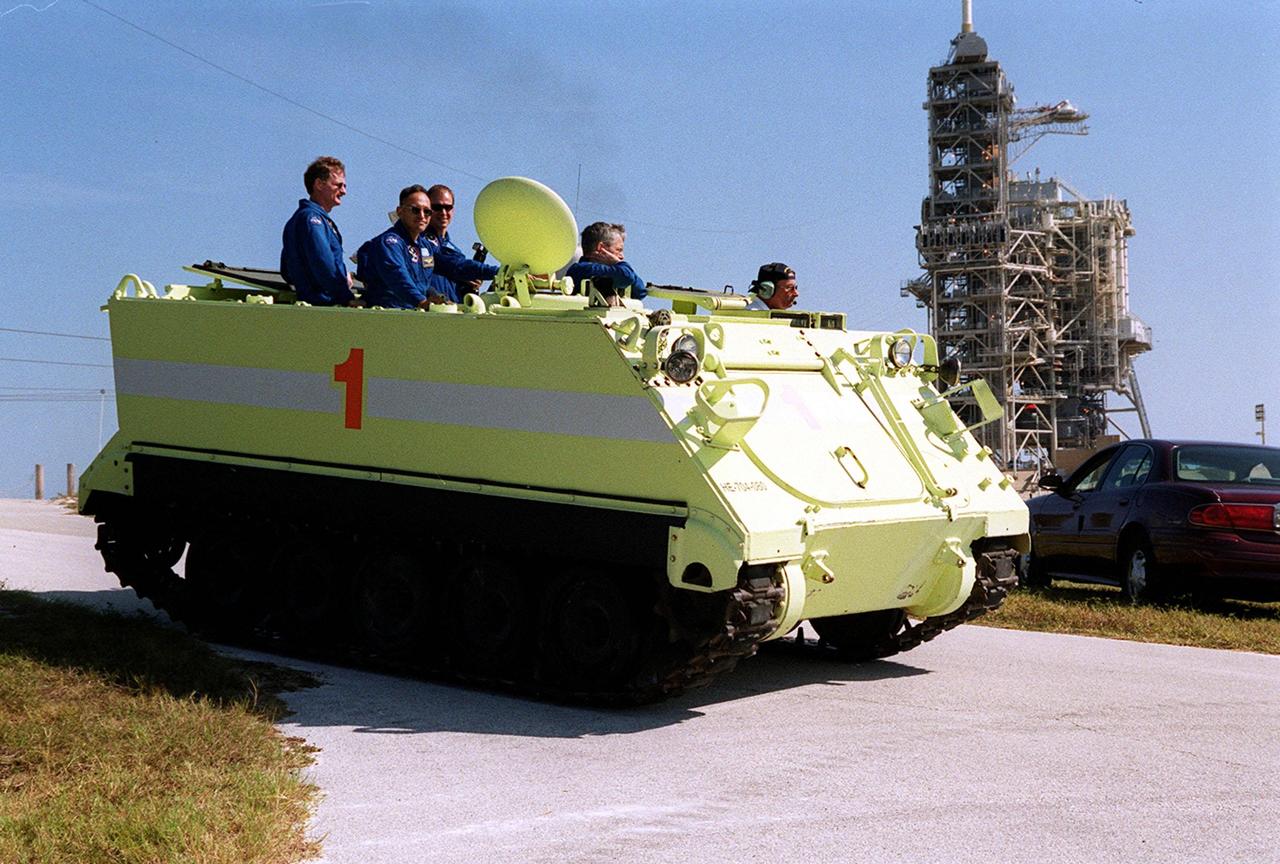
During Terminal Countdown Demonstration Test (TCDT) activities, the STS-97 crew ride as passengers in the M-113 while trainer Capt. George Hoggard (at right) drives away from Launch Pad 39B. Seen left to right are Mission Specialists Joe Tanner and Carlos Noriega; Pilot Mike Bloomfield; and Mission Specialist Marc Garneau, who is with the Canadian Space Agency. Learning to drive the armored vehicle is part of emergency egress training during TCDT. The tracked vehicle could be used by the crew in the event of an emergency at the pad during which the crew must make a quick exit from the area. The TCDT also provides simulated countdown exercises and opportunities to inspect the mission payloads in the orbiter’s payload bay. Mission STS-97is the sixth construction flight to the International Space Station. Its payload includes the P6 Integrated Truss Structure and a photovoltaic (PV) module, with giant solar arrays that will provide power to the Station. The mission includes two spacewalks to complete the solar array connections. STS-97 is scheduled to launch Nov. 30 at 10:05 p.m. EST
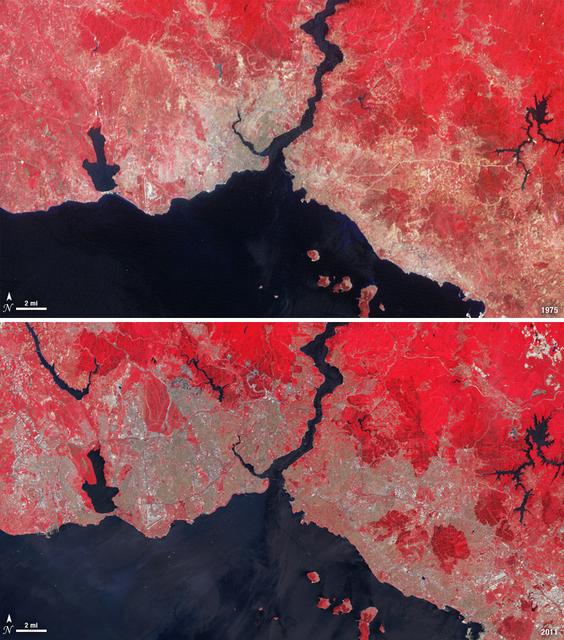
Istanbul has been a bustling trade city for thousands of years. In this 1975 image, taken by Landsat, the city centers on the Golden Horn the estuary that flows into the Bosporus Straight at the center of the scene. Shown in false color, vegetation is red, urban areas are gray, and water appears black. A bridge built in 1973 to connect the Asian and European sides of Istanbul is barely visible. By 2011, Istanbul's population had exploded from 2 to 13 million people, and the city has gone through a dramatic expansion. This Landsat 5 image shows densely packed urban areas stretching along the Sea of Marmara and up the Bosporus Straight where a second bridge built in 1988 now crosses the water. ---- NASA and the U.S. Department of the Interior through the U.S. Geological Survey (USGS) jointly manage Landsat, and the USGS preserves a 40-year archive of Landsat images that is freely available over the Internet. The next Landsat satellite, now known as the Landsat Data Continuity Mission (LDCM) and later to be called Landsat 8, is scheduled for launch in 2013. In honor of Landsat’s 40th anniversary in July 2012, the USGS released the LandsatLook viewer – a quick, simple way to go forward and backward in time, pulling images of anywhere in the world out of the Landsat archive. <b><a href="http://www.nasa.gov/audience/formedia/features/MP_Photo_Guidelines.html" rel="nofollow">NASA image use policy.</a></b> <b><a href="http://www.nasa.gov/centers/goddard/home/index.html" rel="nofollow">NASA Goddard Space Flight Center</a></b> enables NASA’s mission through four scientific endeavors: Earth Science, Heliophysics, Solar System Exploration, and Astrophysics. Goddard plays a leading role in NASA’s accomplishments by contributing compelling scientific knowledge to advance the Agency’s mission. <b>Follow us on <a href="http://twitter.com/NASA_GoddardPix" rel="nofollow">Twitter</a></b> <b>Like us on <a href="http://www.facebook.com/pages/Greenbelt-MD/NASA-Goddard/395013845897?ref=tsd" rel="nofollow">Facebook</a></b> <b>Find us on <a href="http://instagrid.me/nasagoddard/?vm=grid" rel="nofollow">Instagram</a></b>