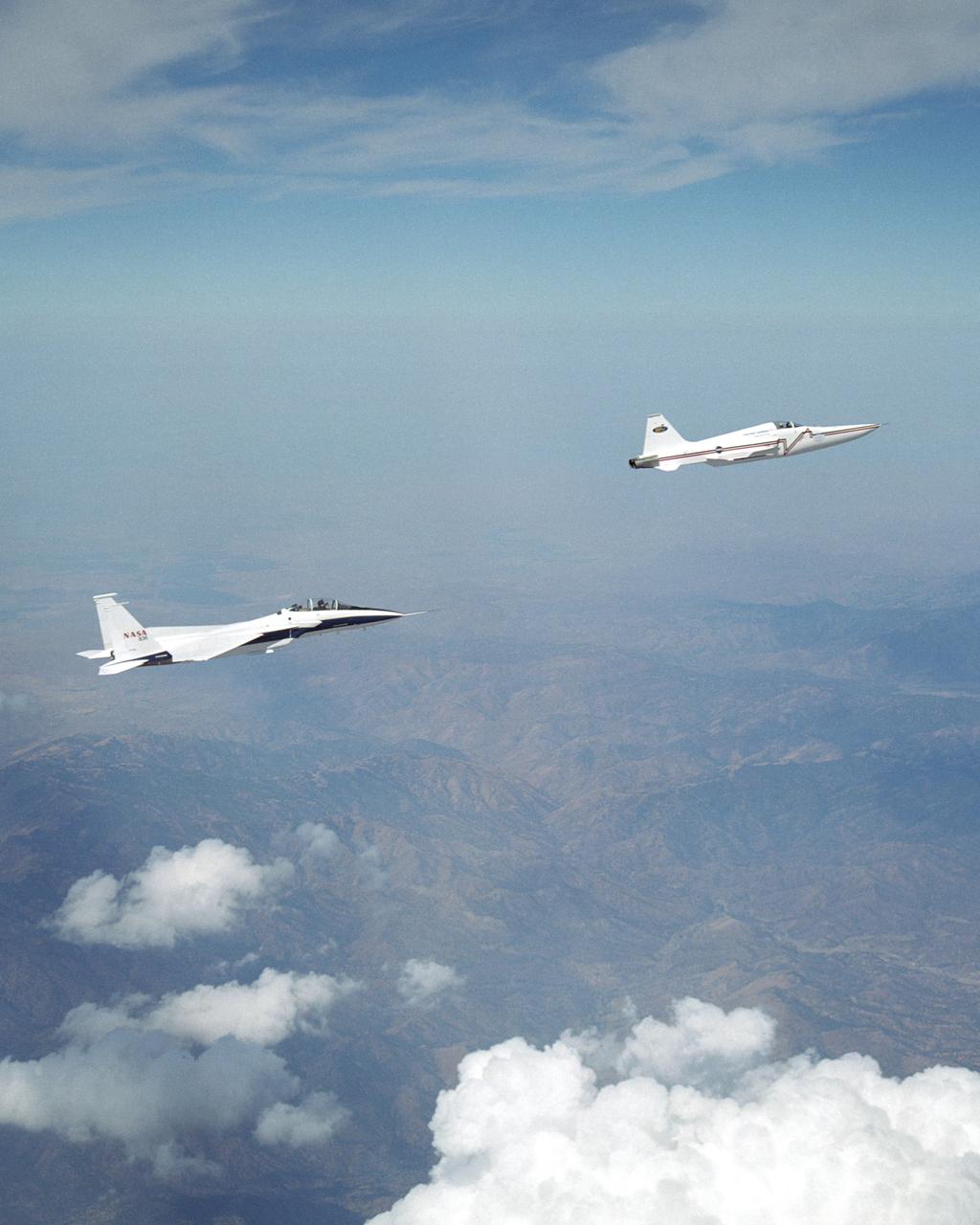
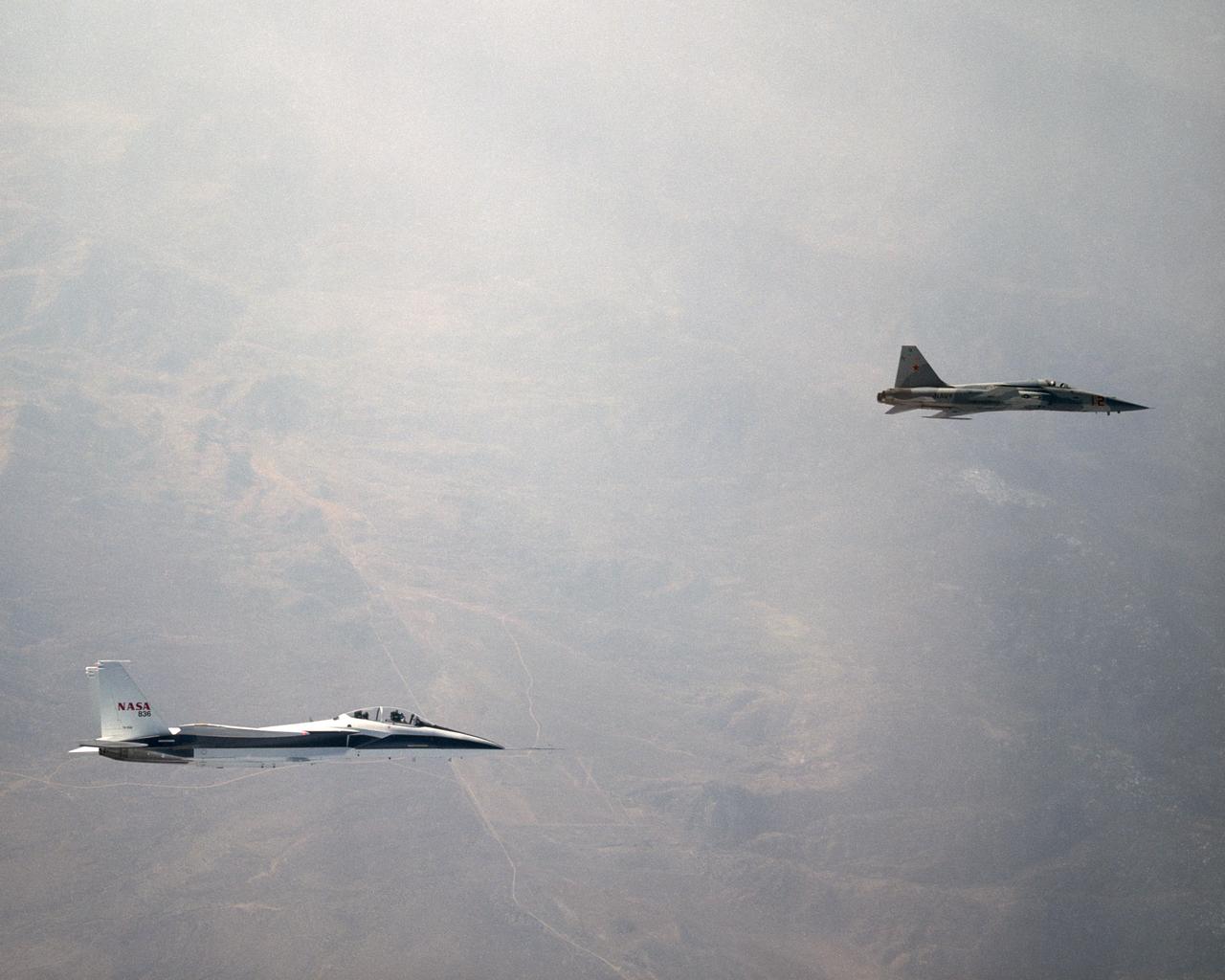
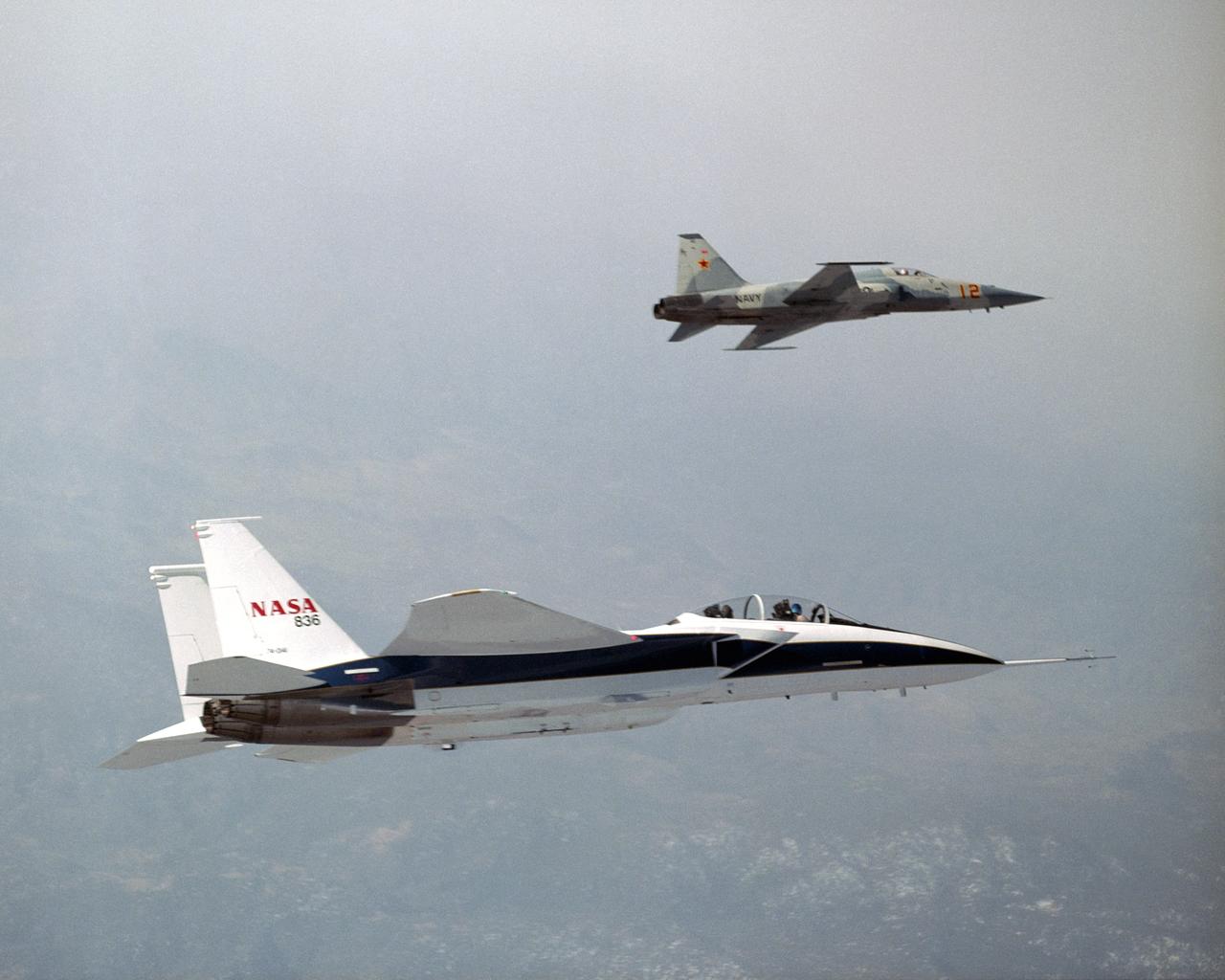
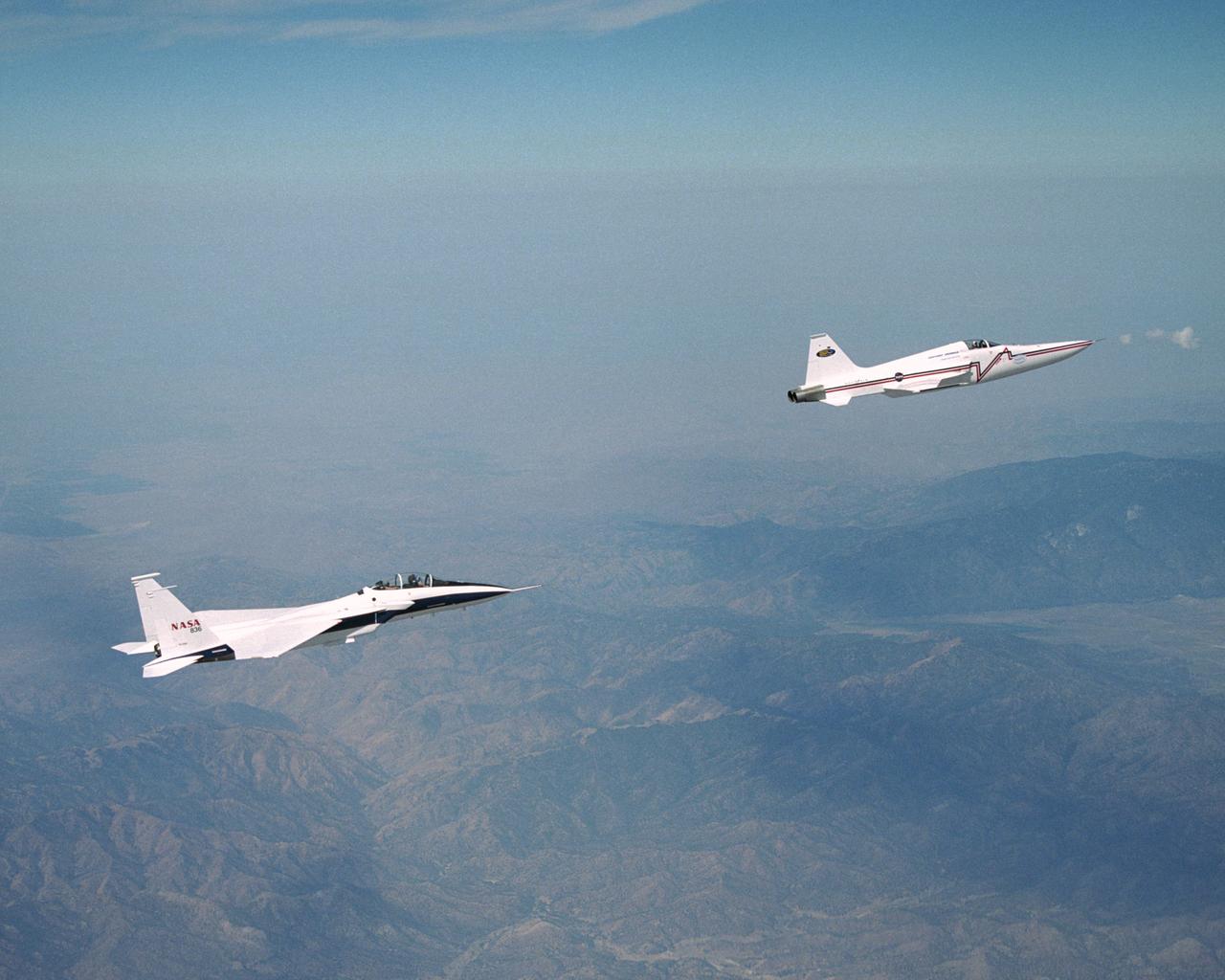
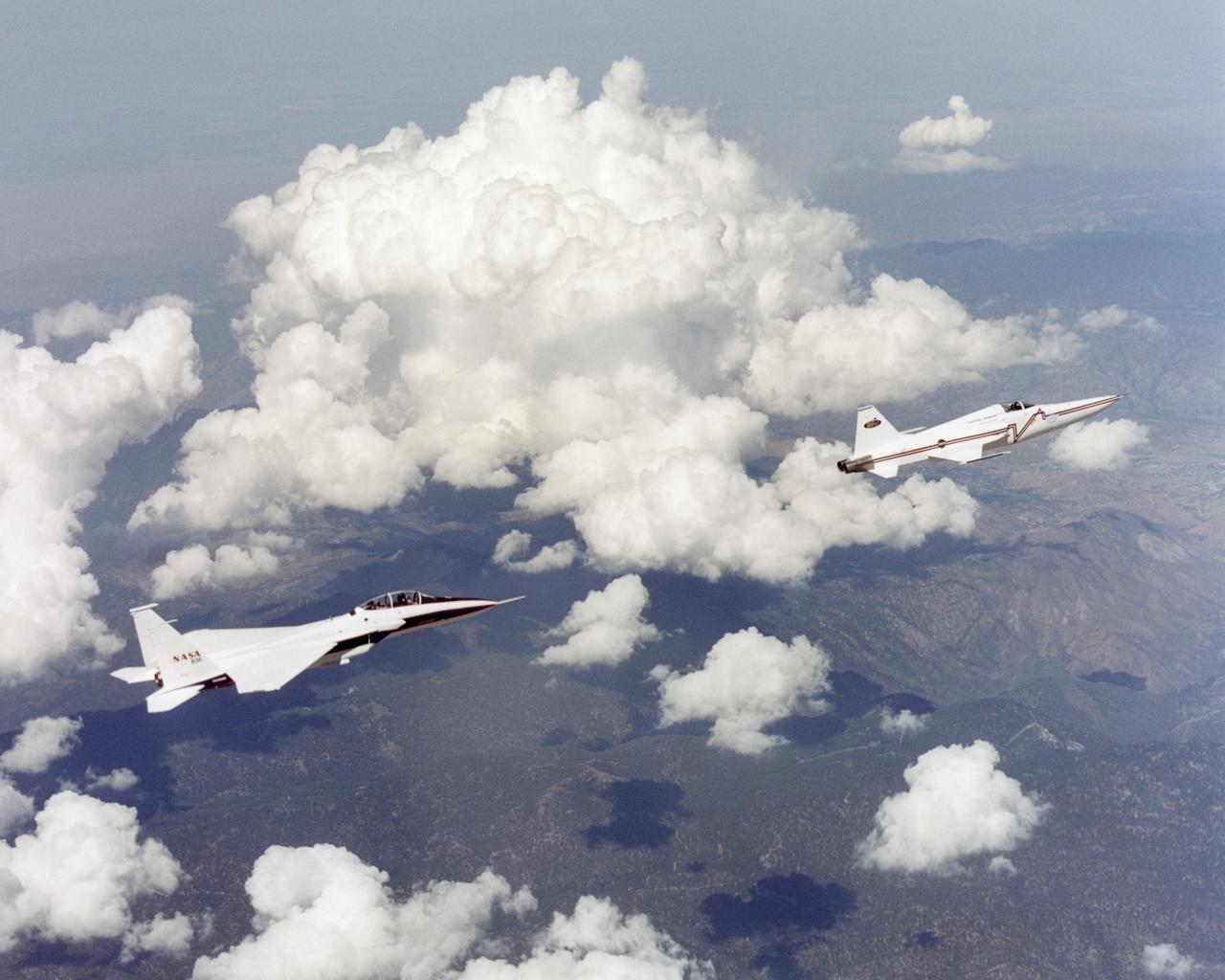
NASA's F-15B research testbed jet from the NASA Dryden Flight Research Center flew in the supersonic shockwave of a Northrop Grumman Corp. modified F-5E in support of the Shaped Sonic Boom Demonstration (SSBD) project, which is part of the DARPA's Quiet Supersonic Platform (QSP) program.
NASA's F-15B research testbed jet from the NASA Dryden Flight Research Center flew in the supersonic shockwave of a Northrop Grumman Corp. modified F-5E in support of the Shaped Sonic Boom Demonstration (SSBD) project, which is part of DARPA's Quiet Supers
NASA's F-15B research testbed jet from NASA's Dryden Flight Research Center flew in the supersonic shockwave of a Northrop Grumman Corp. modified U.S. Navy F-5E jet in support of the Shaped Sonic Boom Demonstration (SSBD) project, which is part of the DARPA's Quiet Supersonic Platform (QSP) program. On Aug. 27, 2003, the F-5 SSBD aircraft demonstrated a method to reduce the intensity of sonic booms.
NASA's F-15B from the Dryden Flight Research Center flew in the supersonic shockwave of a modified U.S. Navy F-5E jet in support of the Shaped Sonic Boom Demonstration (SSBD) project. On Aug. 27, 2003, the F-5 SSBD aircraft demonstrated a method to reduce
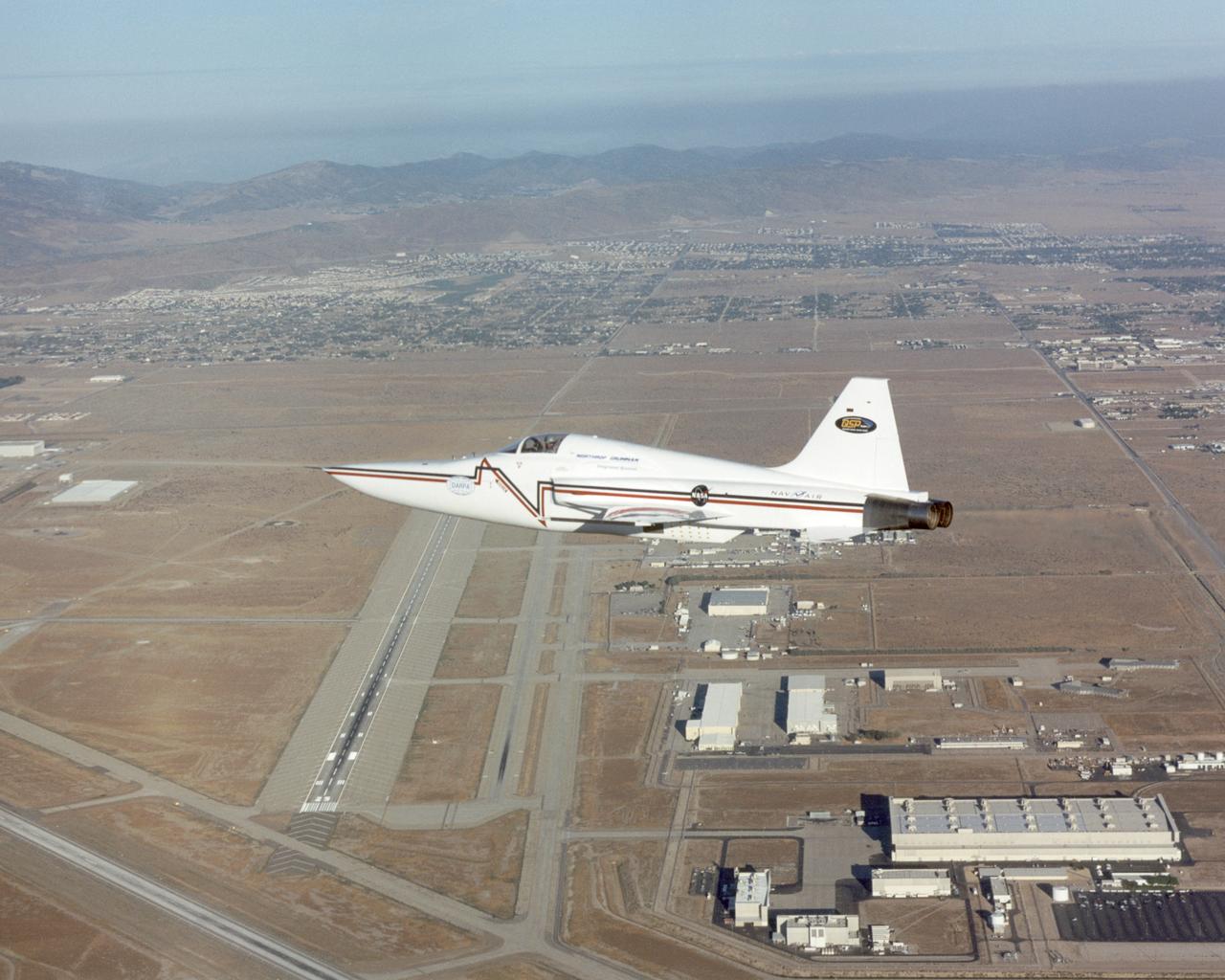
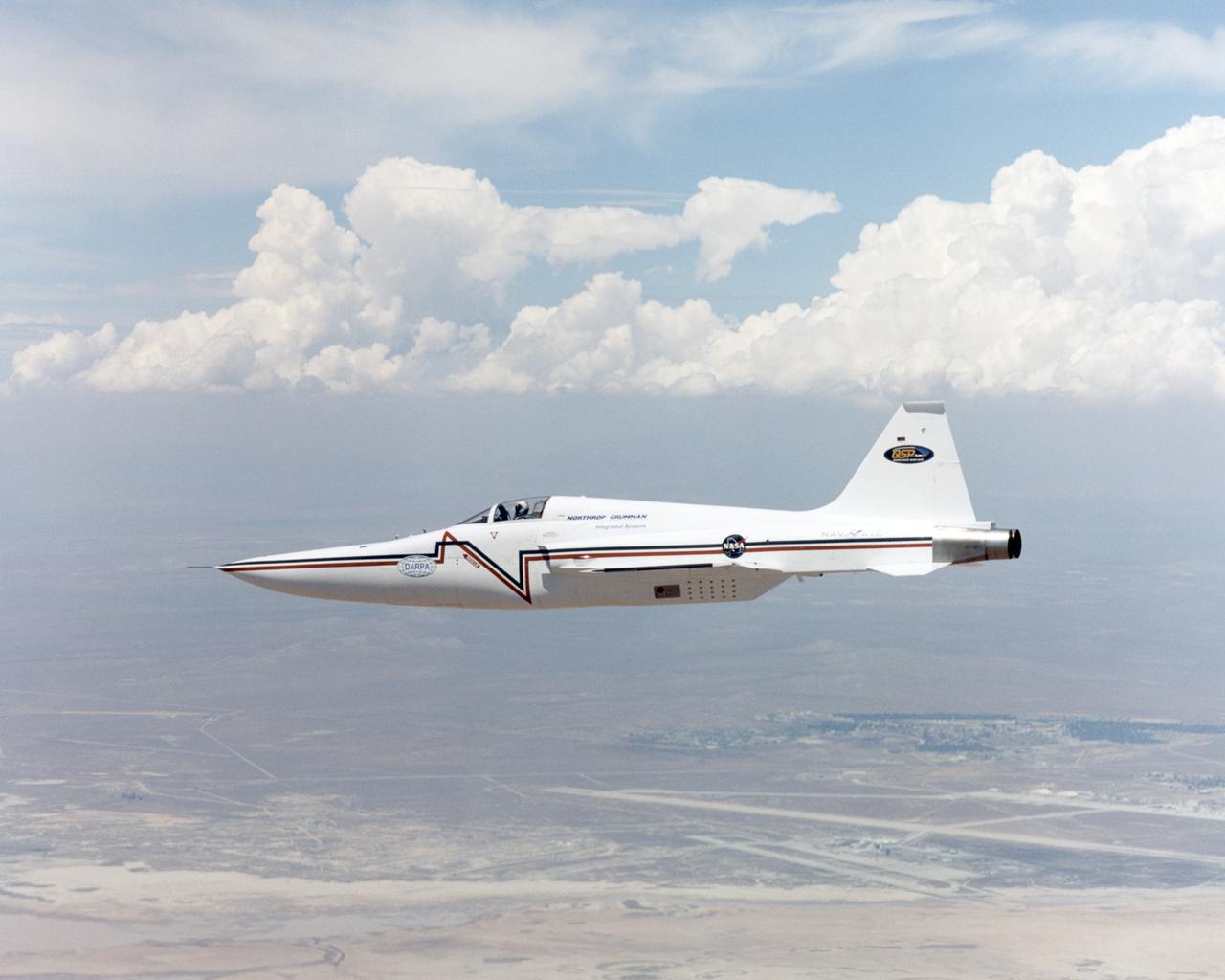
Northrop Grumman Corporation's modified U.S. Navy F-5E Shaped Sonic Boom Demonstration (SSBD) aircraft flies over the company's Palmdale, California facilities on Aug. 2, 2003. NASA Dryden provided range, air and ground data-gathering support for the SSBD project, which is part of DARPA's Quiet Supersonic Platform (QSP) program.
Northrop Grumman Corporation's modified U.S. Navy F-5E Shaped Sonic Boom Demonstration (SSBD) aircraft flies over the company's Palmdale, Calif. facilities on Aug. 2, 2003
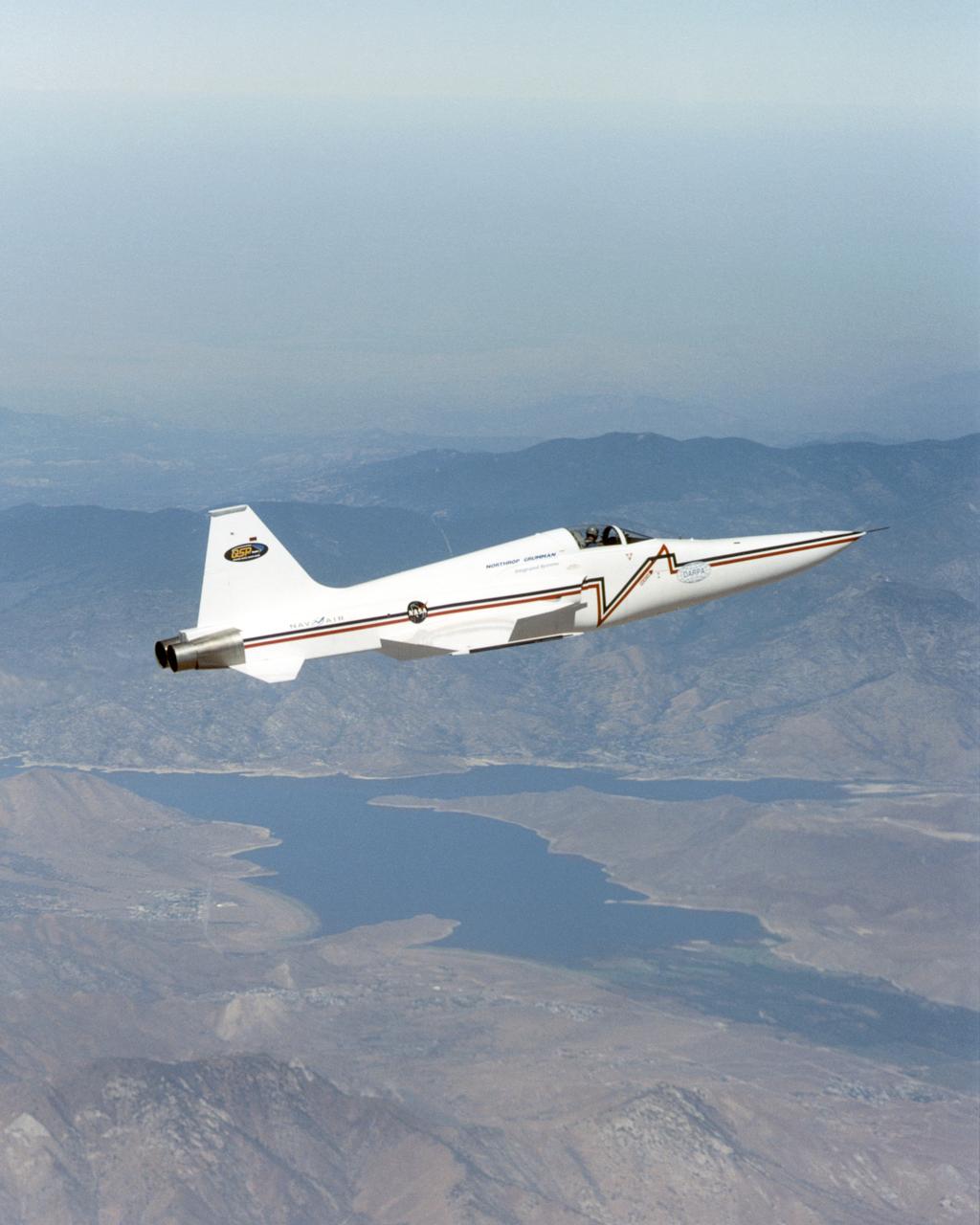
Northrop Grumman Corporation's modified U.S. Navy F-5E Shaped Sonic Boom Demonstration (SSBD) aircraft flies over Lake Isabella, California on Aug. 4, 2003. NASA Dryden provided range, air and ground data-gathering support for the SSBD project, which is part of DARPA's Quiet Supersonic Platform (QSP) program.
Northrop Grumman Corporation's modified U.S. Navy F-5E Shaped Sonic Boom Demonstration (SSBD) aircraft flies over Lake Isabella, Calif., on Aug. 4, 2003
NASA's F-15B Research Testbed aircraft recently flew in the supersonic shock wave of a U.S. Navy F-5E in support of the F-5 Shaped Sonic Boom Demonstration (SSBD) project, part of the Defense Advanced Research Projects Agency's (DARPA) Quiet Supersonic Platform (QSP) program.  The flights originated from the NASA Dryden Flight Research Center at Edwards, California. Four flights were flown in order to measure the F-5E's near-field (close-up) sonic boom signature at Mach 1.4, during which more than 50 shockwave patterns were measured at distances as close as 100 feet below the F-5E.
NASA's F-15B Research Testbed aircraft flies in the supersonic shock wave of a U.S. Navy F-5E as part of the F-5 Shaped Sonic Boom Demonstration (SSBD) project.
NASA's F-15B Research Testbed aircraft recently flew in the supersonic shock wave of a U.S. Navy F-5E in support of the F-5 Shaped Sonic Boom Demonstration (SSBD) project, part of the Defense Advanced Research Projects Agency's (DARPA) Quiet Supersonic Platform (QSP) program.  The flights originated from the NASA Dryden Flight Research Center at Edwards, California. Four flights were flown in order to measure the F-5E's near-field (close-up) sonic boom signature at Mach 1.4, during which more than 50 shockwave patterns were measured at distances as close as 100 feet below the F-5E.
NASA's F-15B Research Testbed aircraft flies in the supersonic shock wave of a U.S. Navy F-5E as part of the F-5 Shaped Sonic Boom Demonstration (SSBD) project.
NASA's F-15B research testbed jet from NASA's Dryden Flight Research Center flew in the supersonic shockwave of a Northrop Grumman Corp. modified U.S. Navy F-5E jet in support of the Shaped Sonic Boom Demonstration (SSBD) project, which is part of the DARPA's Quiet Supersonic Platform (QSP) program.  The project is an effort to lessen sonic booms.  During the recent demonstration, the F-15B flew behind the modified F-5E sonic boom demonstrator aircraft in order to measure the aircraft's sonic boom characteristics.  Flying behind and below the F-5E, and using its specially-instrumented nose boom, the F-15B recorded many shockwave patterns from the F-5E at various distances and orientations from the aircraft.
NASA's F-15B research testbed jet flew in the supersonic shockwave of a Northrop Grumman Corp. - modified U.S. Navy F-5E jet in support of the Shaped Sonic Boom Demonstration project.
NASA's F-15B research testbed jet from NASA's Dryden Flight Research Center flew in the supersonic shockwave of a Northrop Grumman Corp. modified U.S. Navy F-5E jet in support of the Shaped Sonic Boom Demonstration (SSBD) project, which is part of the DARPA's Quiet Supersonic Platform (QSP) program.  The project is an effort to lessen sonic booms.  During the recent demonstration, the F-15B flew behind the modified F-5E sonic boom demonstrator aircraft in order to measure the aircraft's sonic boom characteristics.  Flying behind and below the F-5E, and using its specially-instrumented nose boom, the F-15B recorded many shockwave patterns from the F-5E at various distances and orientations from the aircraft.
NASA's F-15B research testbed jet flew in the supersonic shockwave of a Northrop Grumman Corp. - modified U.S. Navy F-5E jet in support of the Shaped Sonic Boom Demonstration project.
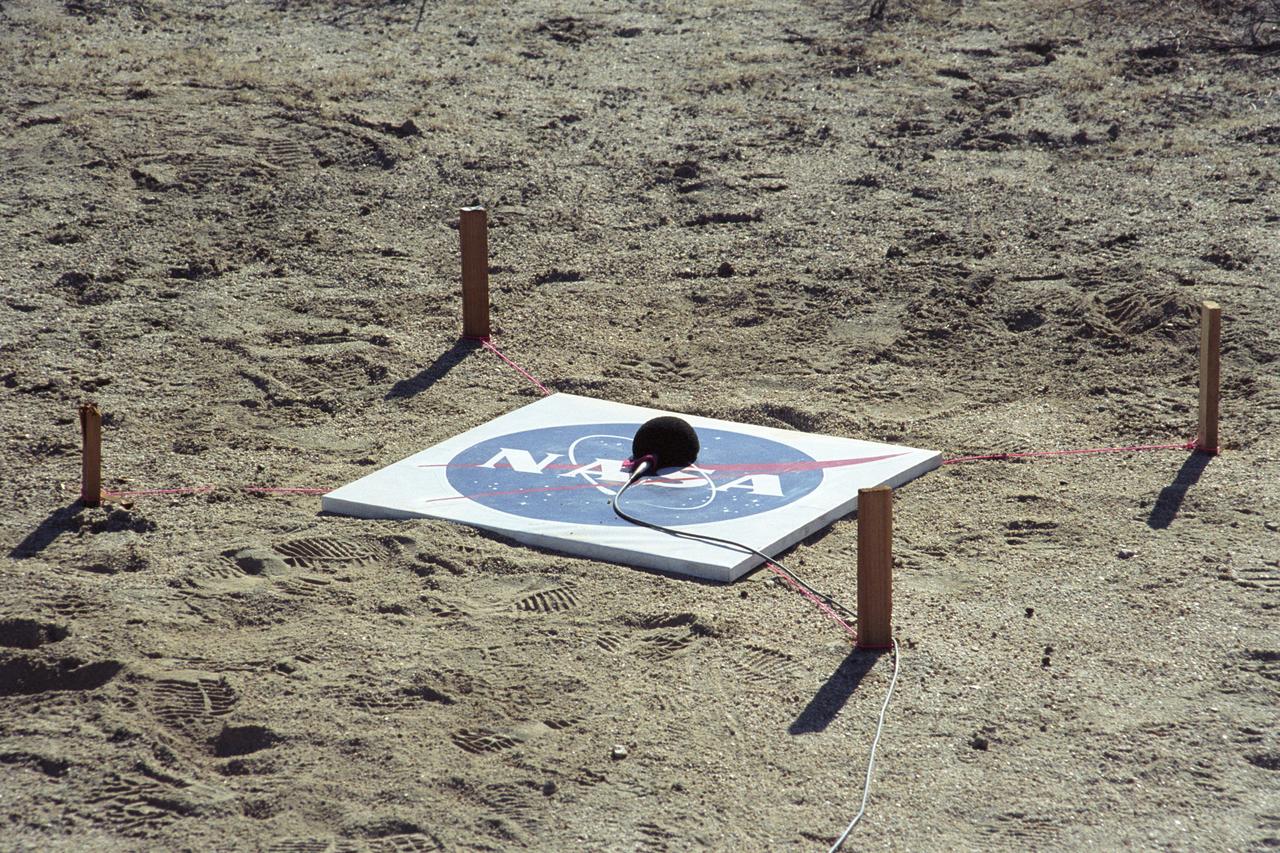
One of many microphones arrayed under the path of the F-5E SSBE (Shaped Sonic Boom Experiment) aircraft to record sonic booms. The SSBE (Shaped Sonic Boom Experiment) was formerly known as the Shaped Sonic Boom Demonstration, or SSBD, and is part of DARPA's Quiet Supersonic Platform (QSP) program. On August 27, 2003, the F-5E SSBD aircraft demonstrated a method to reduce the intensity of sonic booms.
One of many microphones arrayed under the path of the F-5E SSBE aircraft to record sonic booms
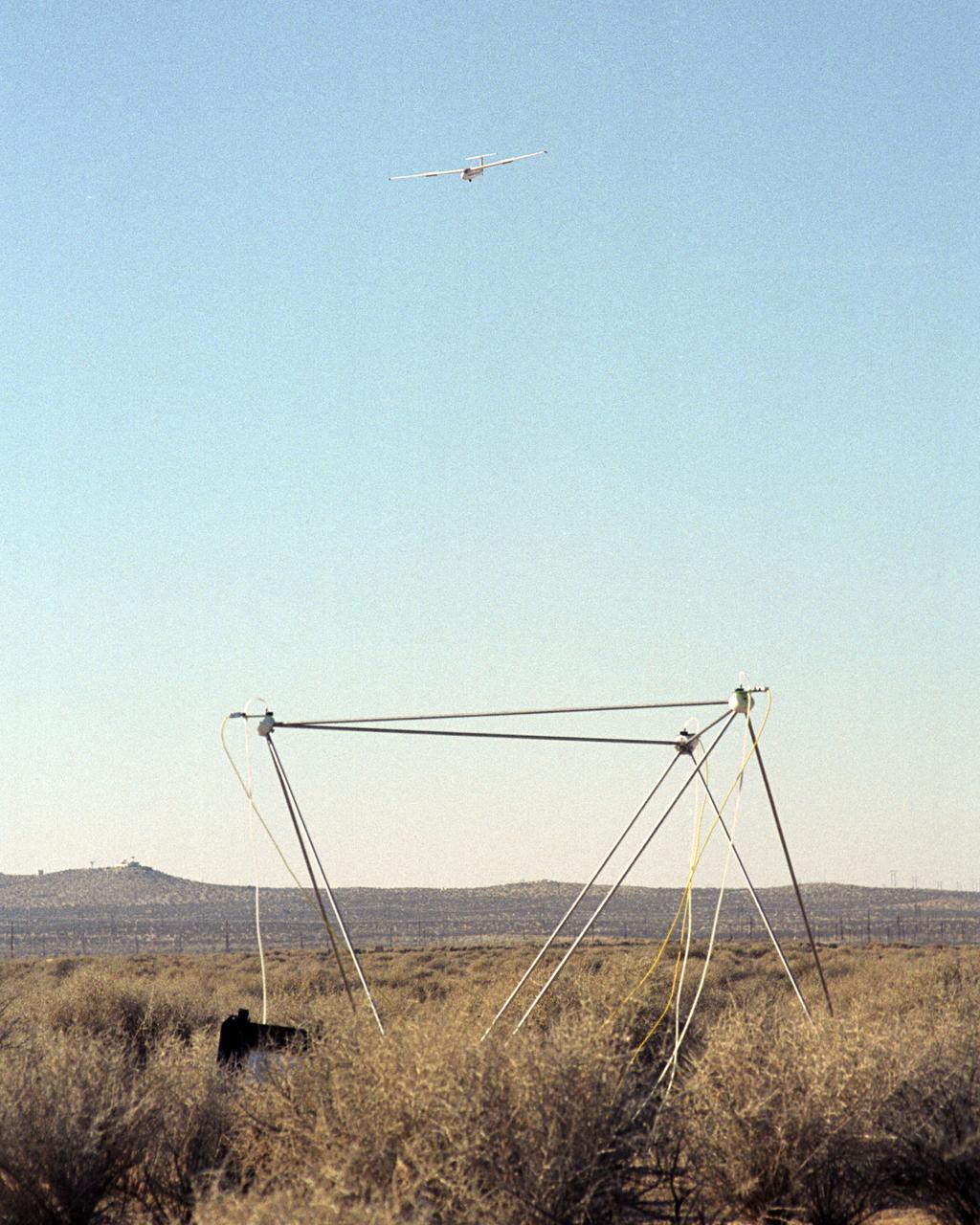
A United States Air Force Test Pilot School Blanik L-23 glider carrying a microphone and a pressure transducer flies near a BADS (Boom Amplitudes Direction System) sensor following flight at an altitude of 10 thousand feet under the path of the F-5E SSBE aircraft. The SSBE (Shaped Sonic Boom Experiment) was formerly known as the Shaped Sonic Boom Demonstration, or SSBD, and is part of DARPA's Quiet Supersonic Platform (QSP) program. On August 27, 2003, the F-5E SSBD aircraft demonstrated a method to reduce the intensity of sonic booms.
A Blanik L-23 glider carrying a microphone and a pressure transducer flies near a BADS sensor following flight under the path of the F-5E SSBE aircraft
Northrop-Grumman Corporation's modified U.S. Navy F-5E Shaped Sonic Boom Demonstration (SSBD) aircraft.
Northrop-Grumman Corporation's modified U.S. Navy F-5E Shaped Sonic Boom Demonstration (SSBD) aircraft
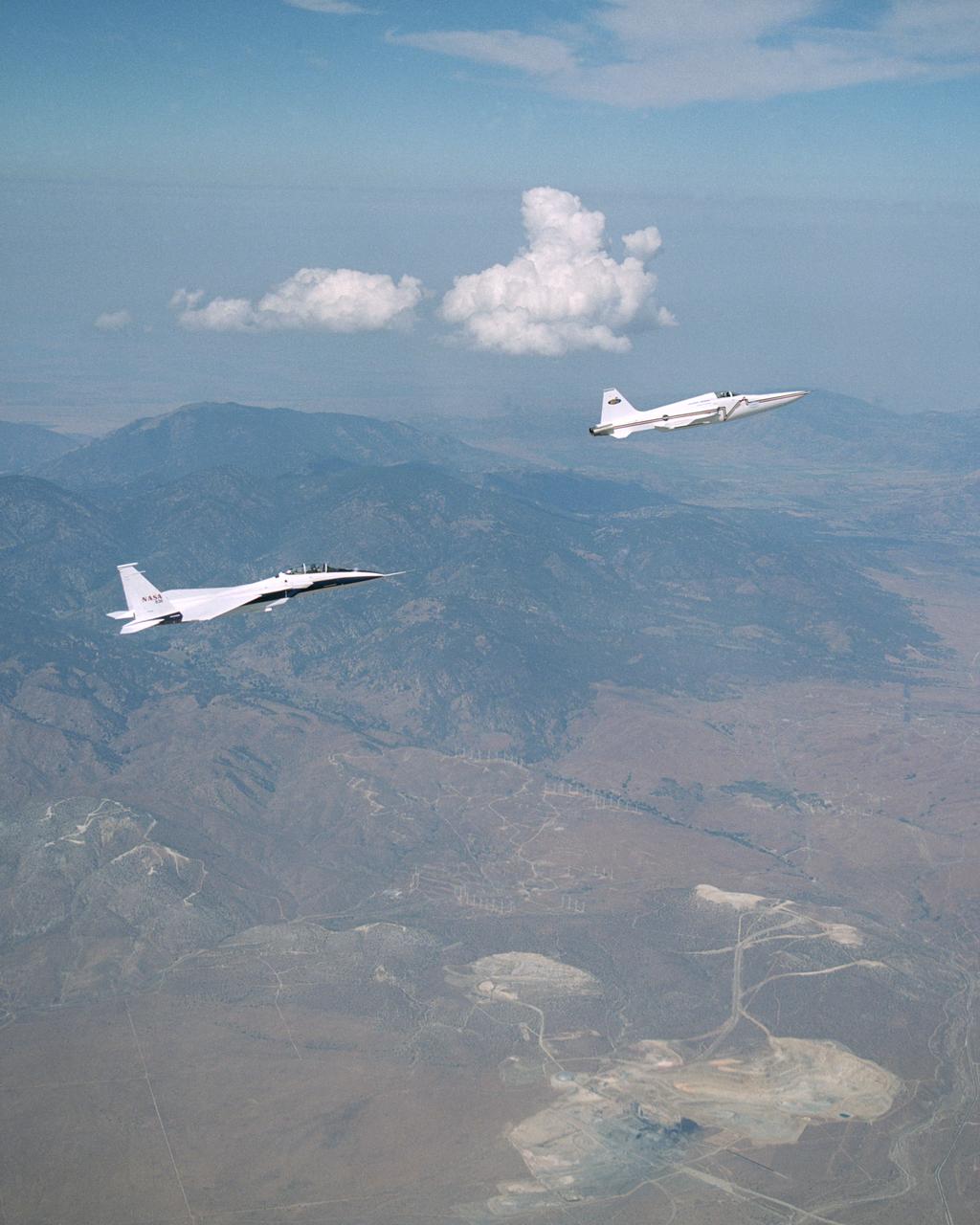
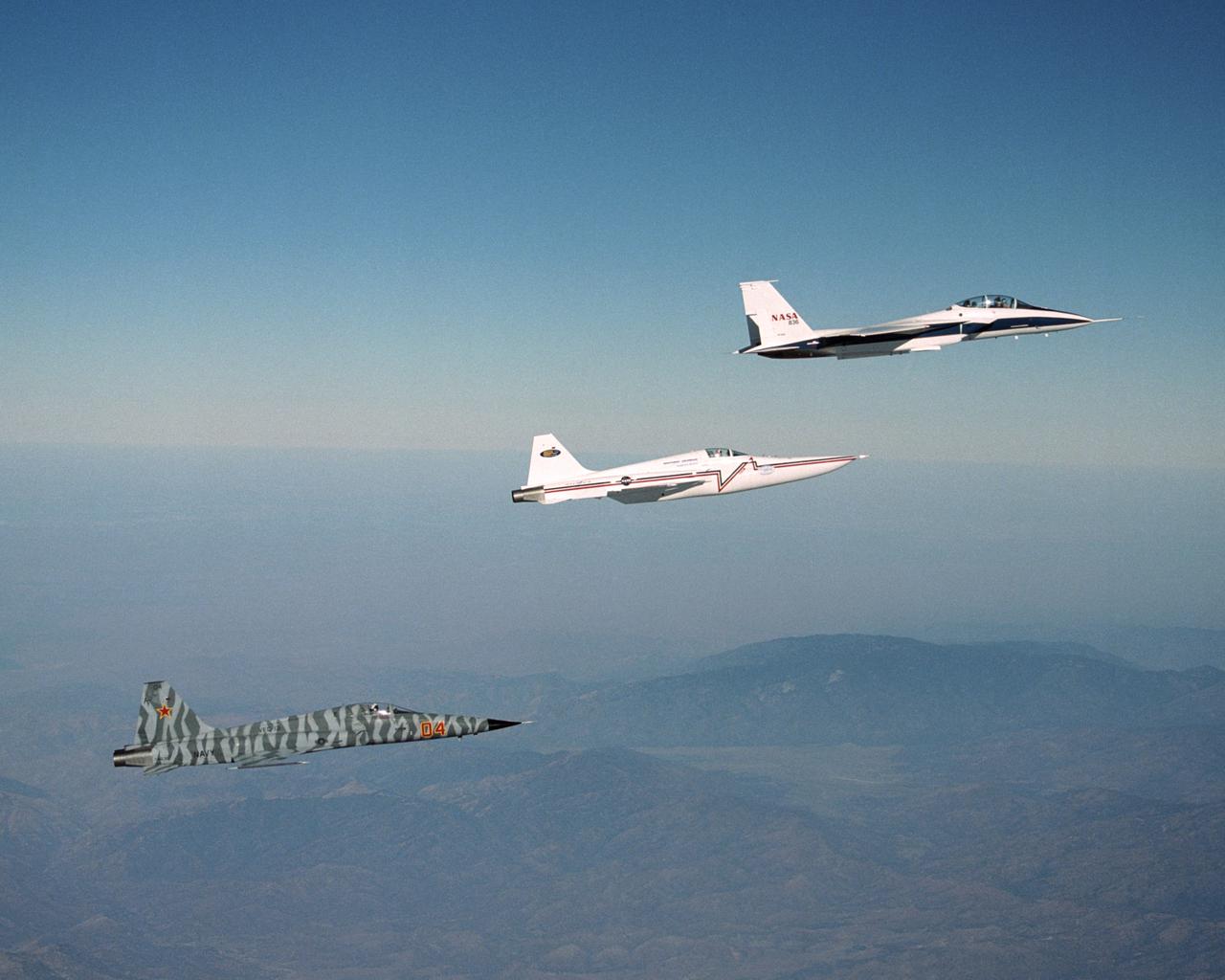
In a role-reversal, Northrop Grumman Corp.'s modified F-5E Shaped Sonic Boom Demonstration (SSBD) aircraft flies off the wing of NASA's F-15B Research testbed aircraft. The F-15B, from NASA's Dryden Flight Research Center, flew in the supersonic shockwave of the F-5E as part of the SSBD project. Following the two aircraft is an unmodified U.S. Navy F-5E used for baseline sonic boom measurements.
Northrop Grumman Corp.'s modified F-5E Shaped Sonic Boom Demonstration (SSBD) aircraft flies off the wing of NASA's F-15B Research testbed aircraft.