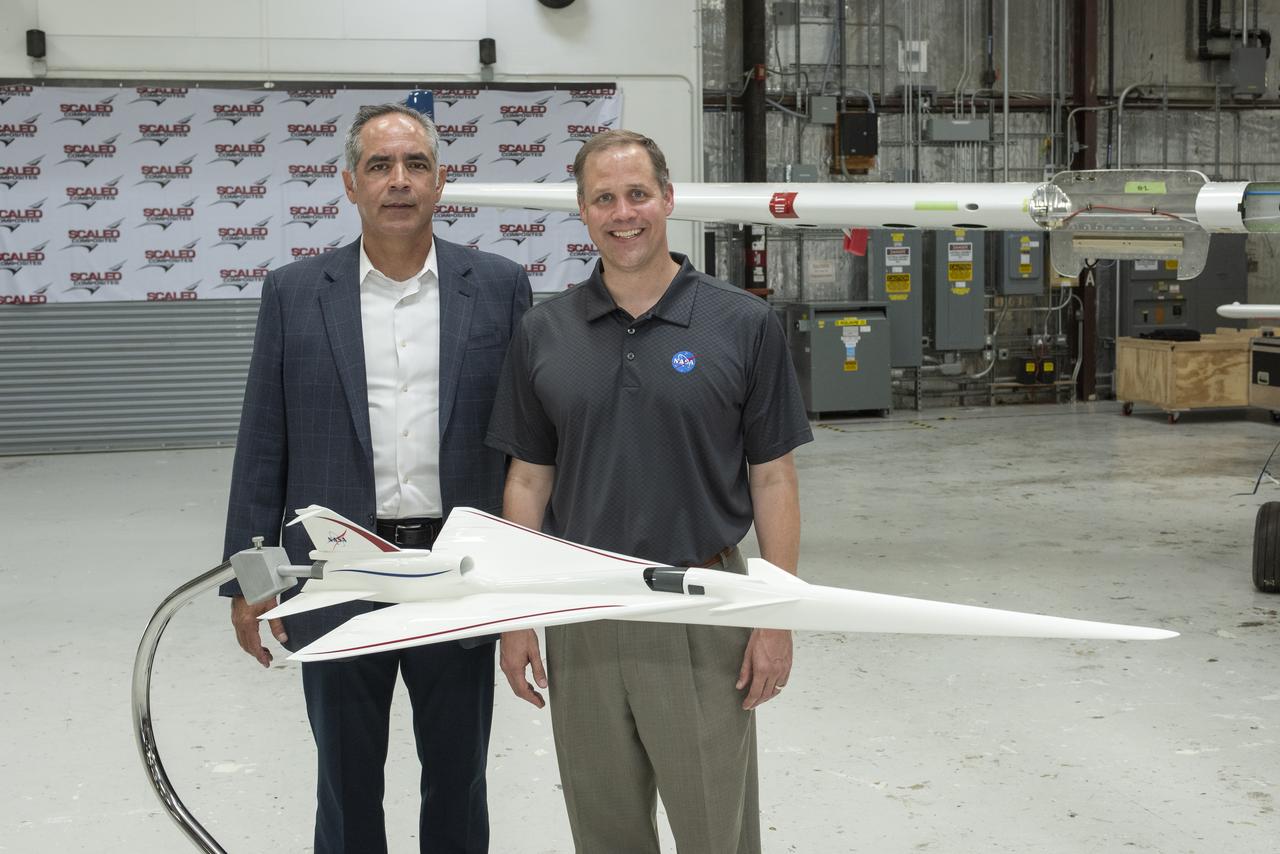
NASA Administrator Bridenstine stands with AFRC center director McBride by model NASA's Supersonic X-Plane, X-59 Quiet Supersonic Technology or QueSST. Bridenstine spoke at press event at Mojave Air and Space Port in California. The goal of X-59 is to quiet the sound when aircraft pierce the speed of sound and make a loud sonic boom on the ground.
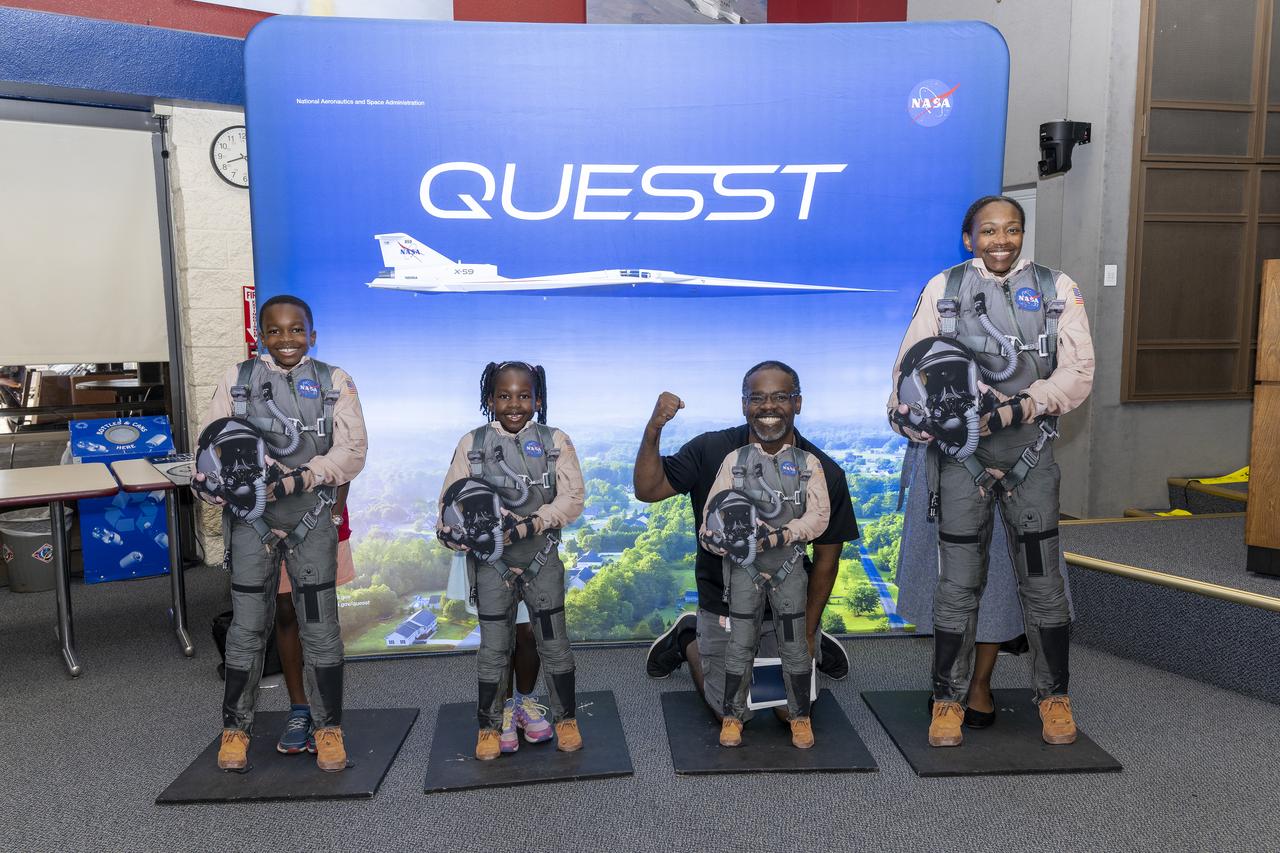
During Bring Kids to Work Day at NASA’s Armstrong Flight Research Center in Edwards, California, on June 17, 2025, participants pose with flight suit cutouts in front of NASA’s Quesst display. NASA's Quesst mission, which features the agency’s X-59 quiet supersonic experimental aircraft, will demonstrate technology to fly supersonic, or faster than the speed of sound, without generating loud sonic booms.
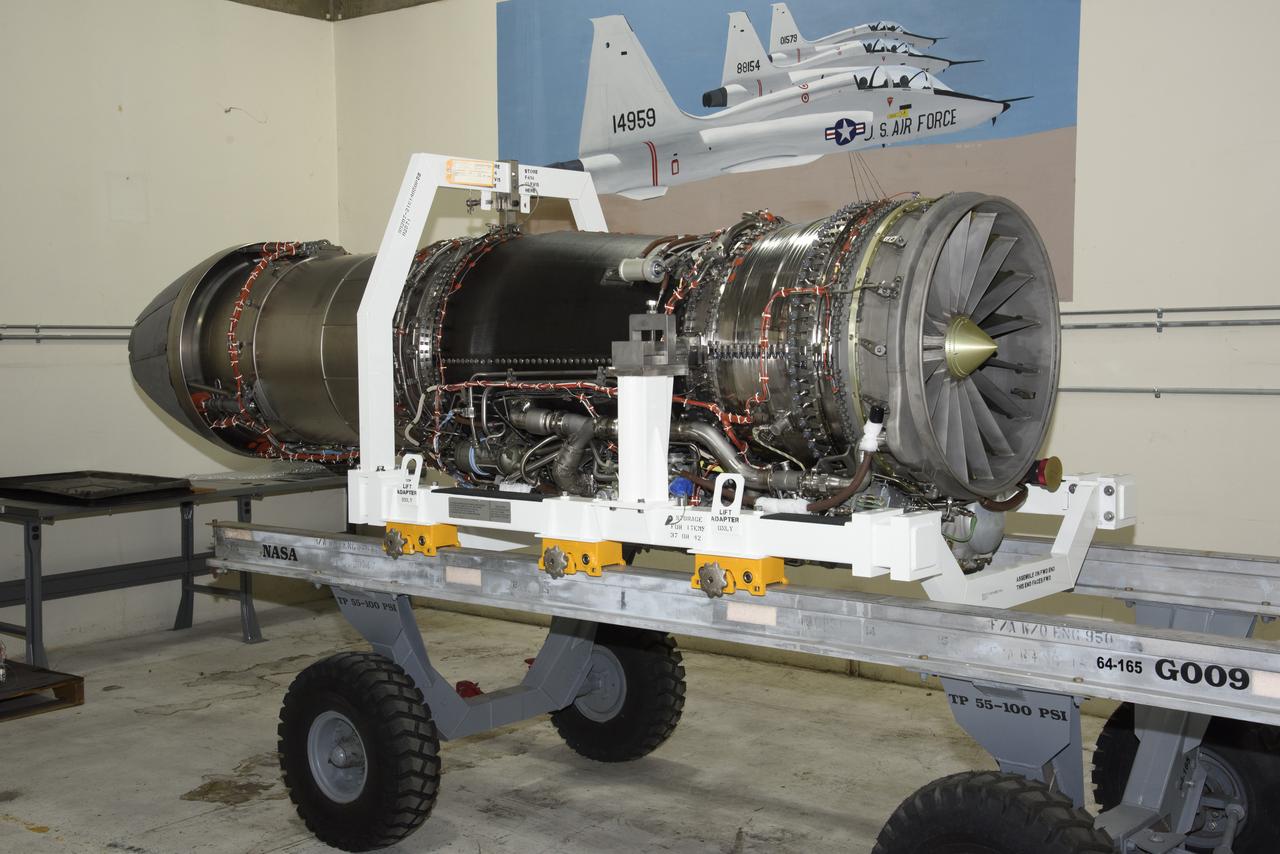
The F414-GE-100 engine, which will power NASA’s X-59 Quiet SuperSonic Technology X-plane (QueSST) in flight, is unboxed at NASA’s Armstrong Flight Research Center in Edwards, California. The engine, one of two delivered by GE, is approximately 13 feet long, and will power X-59 on missions to gather information about how the public perceives the sounds of quieter supersonic flight.
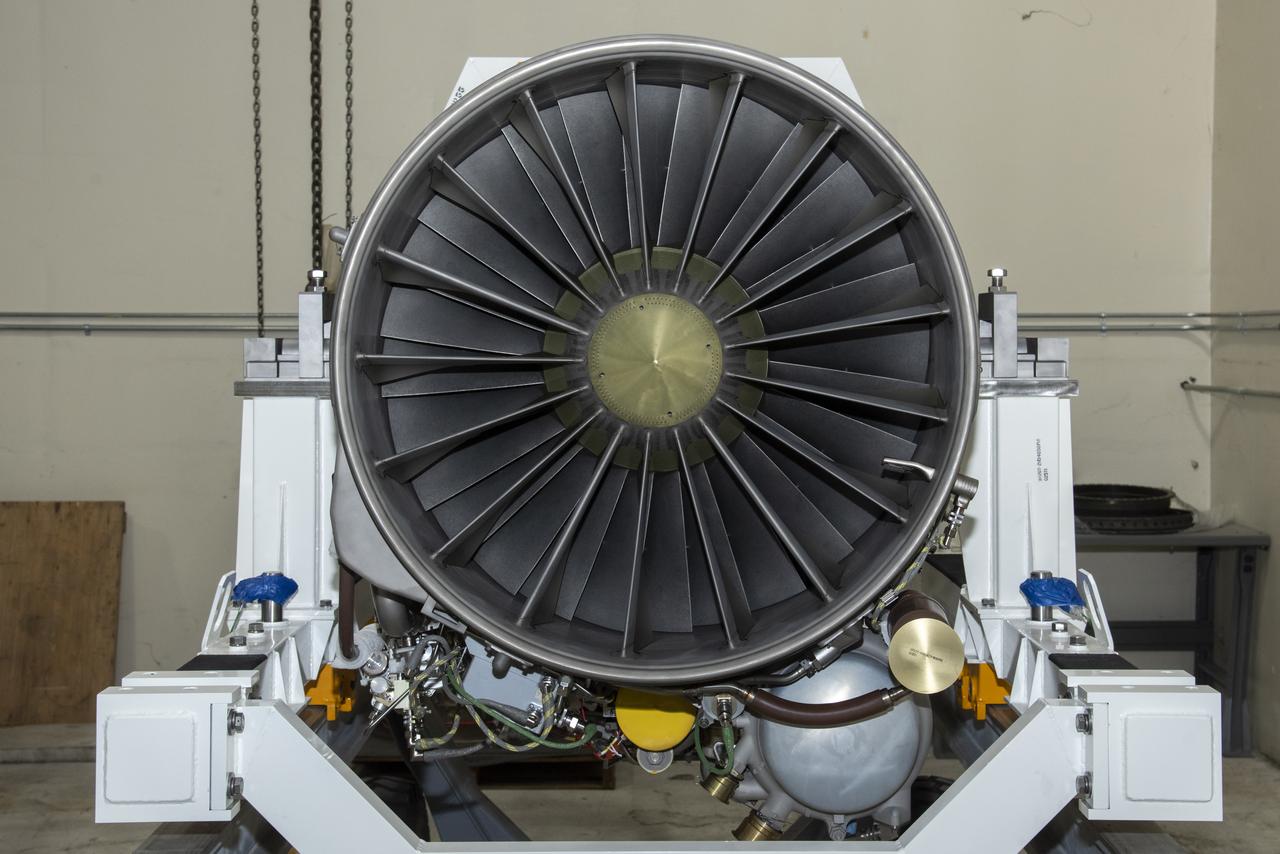
The F414-GE-100 engine, which will power NASA’s X-59 Quiet SuperSonic Technology X-plane (QueSST) in flight, is unboxed at NASA’s Armstrong Flight Research Center in Edwards, California. The engine, one of two delivered by GE, is approximately 13 feet long, and will power X-59 on missions to gather information about how the public perceives the sounds of quieter supersonic flight.
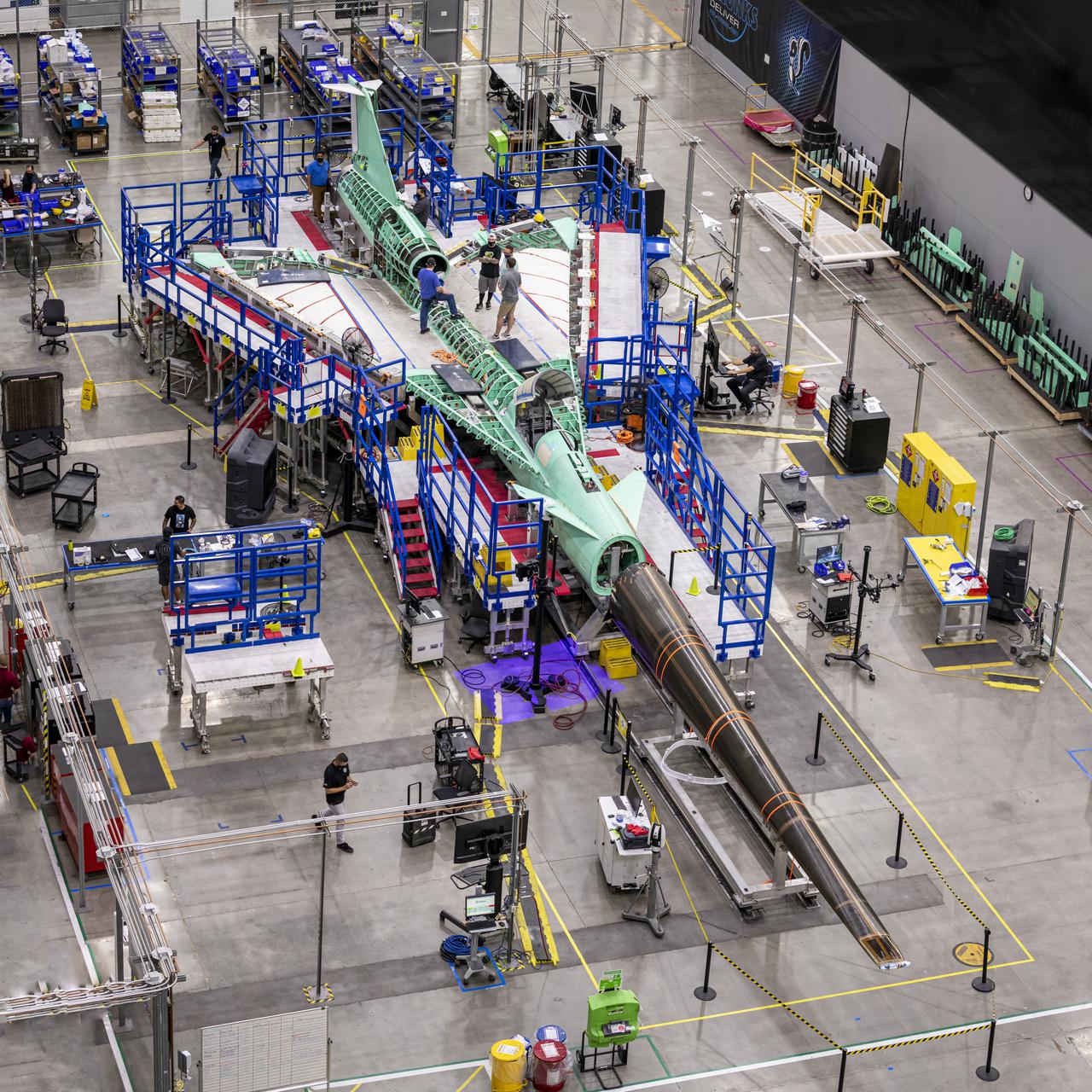
The X-59 Quiet SuperSonic Technology (QueSST) aircraft is taking shape at the Lockheed Martin Skunk Works facility in Palmdale, California. The team positioned the X-59 QueSST's nose at the front of the aircraft. As one of the more recognizable features of the X-59, the nose makes up almost a third of the aircraft length and will be essential in shaping shock waves during supersonic flight, resulting in quiet sonic thumps instead of loud sonic booms. The nose was attached and then removed from the front of the aircraft in preparation for its shipment to Fort Worth, Texas where it will undergo additional testing. The X-59 will fly at supersonic speeds above communities as part of the Low-Boom Flight Demonstration mission, during which NASA will gather community feedback to the sound of quiet supersonic flight. These findings will be shared with regulators to inform decisions on current restrictions of supersonic flight over land. Lockheed Martin Photography By Garry Tice 1011 Lockheed Way, Palmdale, Ca. 93599 Event: Manufacturing Area From Above Date: 8/18/2021 Additional Info:

NASA’s F-15D research aircraft is positioned behind the X-59 during electromagnetic compatibility testing at U.S. Air Force Plant 42 in Palmdale, California. During this test, the F-15D’s radar and avionics were turned on one at a time while engineers evaluated each signal’s interaction with the X-59 for possible interference. NASA’s Quesst mission will demonstrate quiet supersonic technology that will provide data to help determine an acceptable sound limit in the sky.
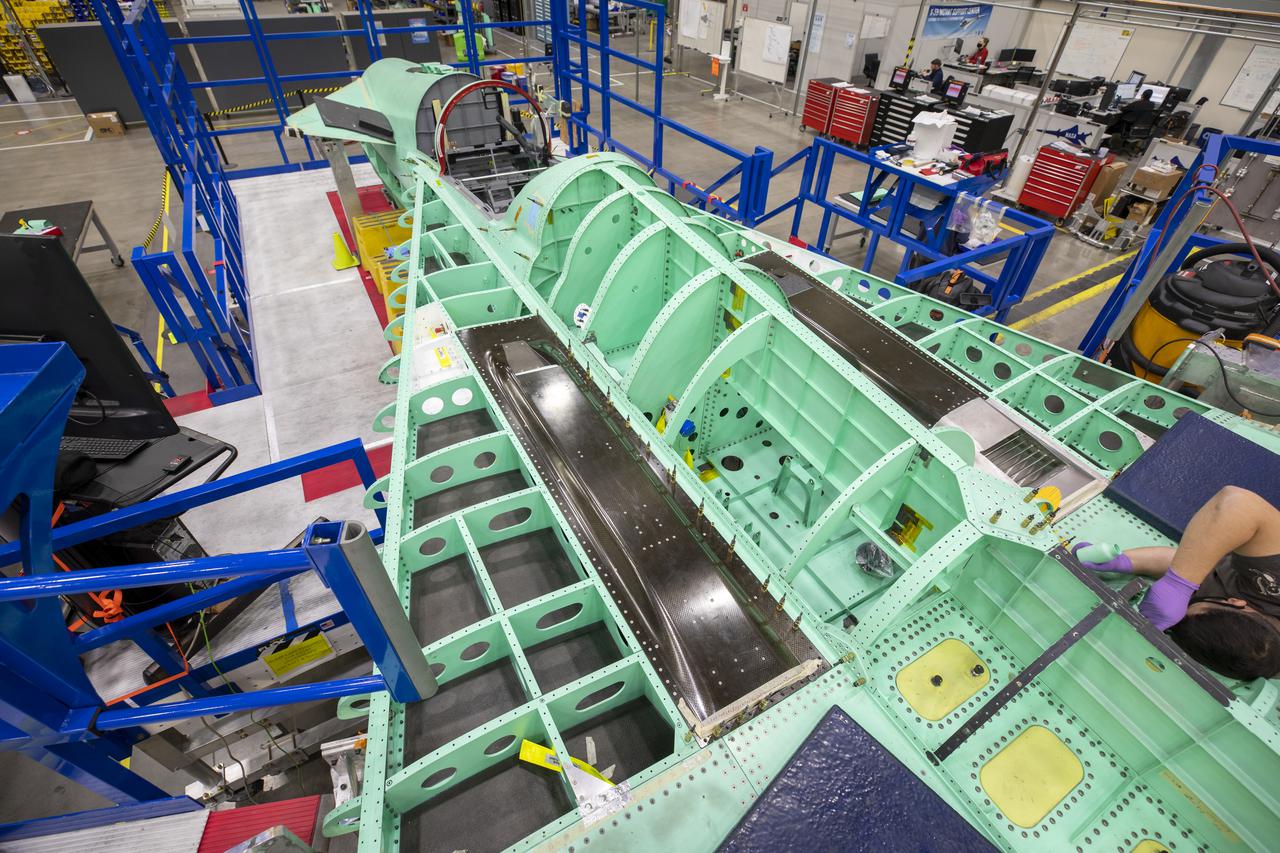
NASA is targeting 2022 for the first flight of the X-59 Quiet SuperSonic Technology (QueSST) research aircraft. Its mission – fly over communities to collect data that could cut passenger travel time in half without disturbing people on the ground. NASA’s X-59 is equipped with supersonic technologies that aid in lowering the sound of the sonic boom. In this picture, the black rectangle panels are the air intakes for the environmental control system (ECS) that regulates the temperature, cabin pressure, and air distribution. The silver grate located at the rear of one of the ECS panels is the exhaust — both of these sections are traditionally housed on the underside of the plane. By placing these features on top of the X-59 wing, the wing blocks and prevents the ECS exhaust from interacting with the shock waves on the bottom of the aircraft. This unique design approach to re-shaping the shock wave pattern substantially reduces the sonic boom to more of a sonic “thump” when it reaches the ground. Lockheed Martin Photography By Garry Tice 1011 Lockheed Way, Palmdale, Ca. 93599 Event: SEG 210 Forebody Date: 1/19/2021 Additional Info:
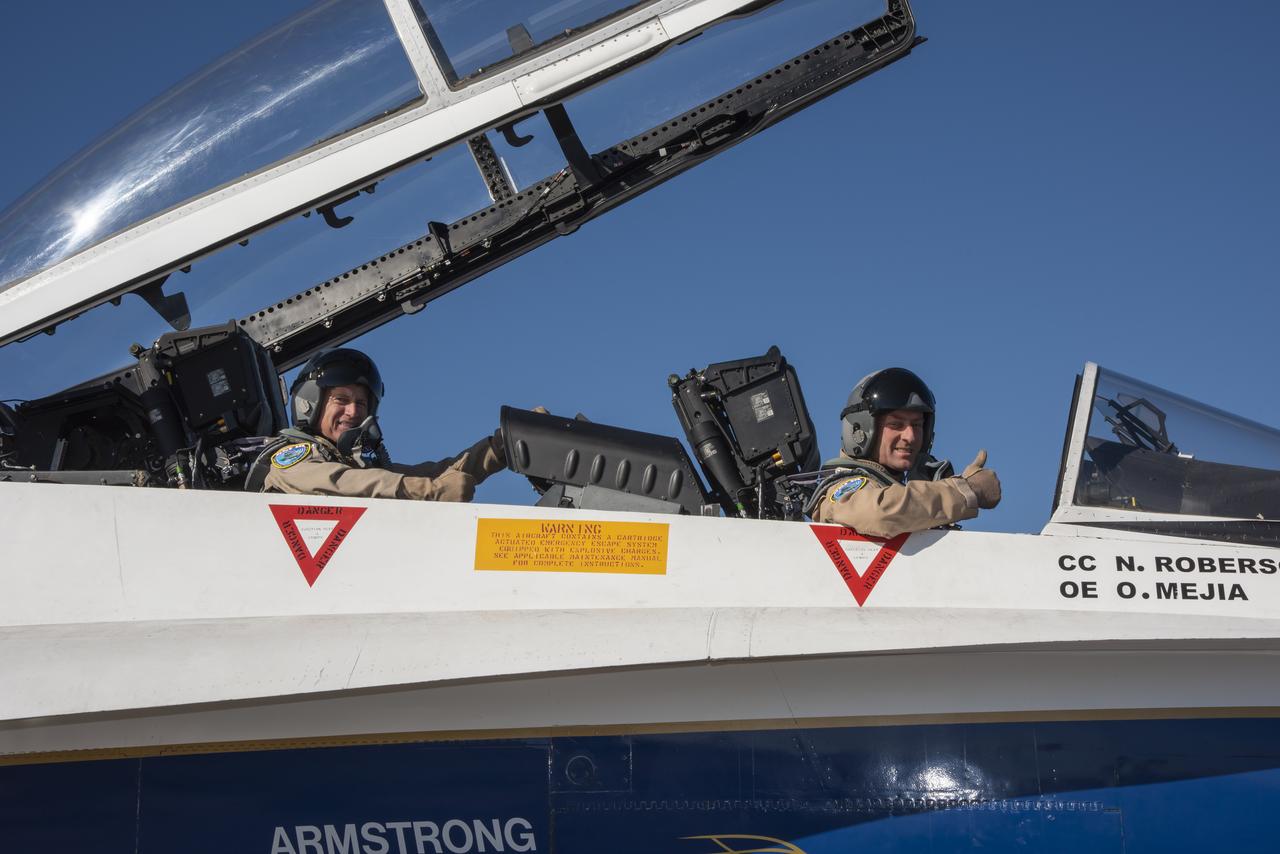
NASA Armstrong Flight Research Center test pilots Jim "Clue" Less (front) and Wayne "Ringo" Ringelberg (back) taxi out in a NASA F/A-18 at Ellington Field in Houston, Texas, in preparation of a training flight for the Quiet Supersonic Flights 2018 series, or QSF18. The QSF18 flights will provide NASA with feedback necessary to validate community response techniques for future quiet supersonic research flights for the X-59 Quiet SuperSonic Technology, or QueSST.