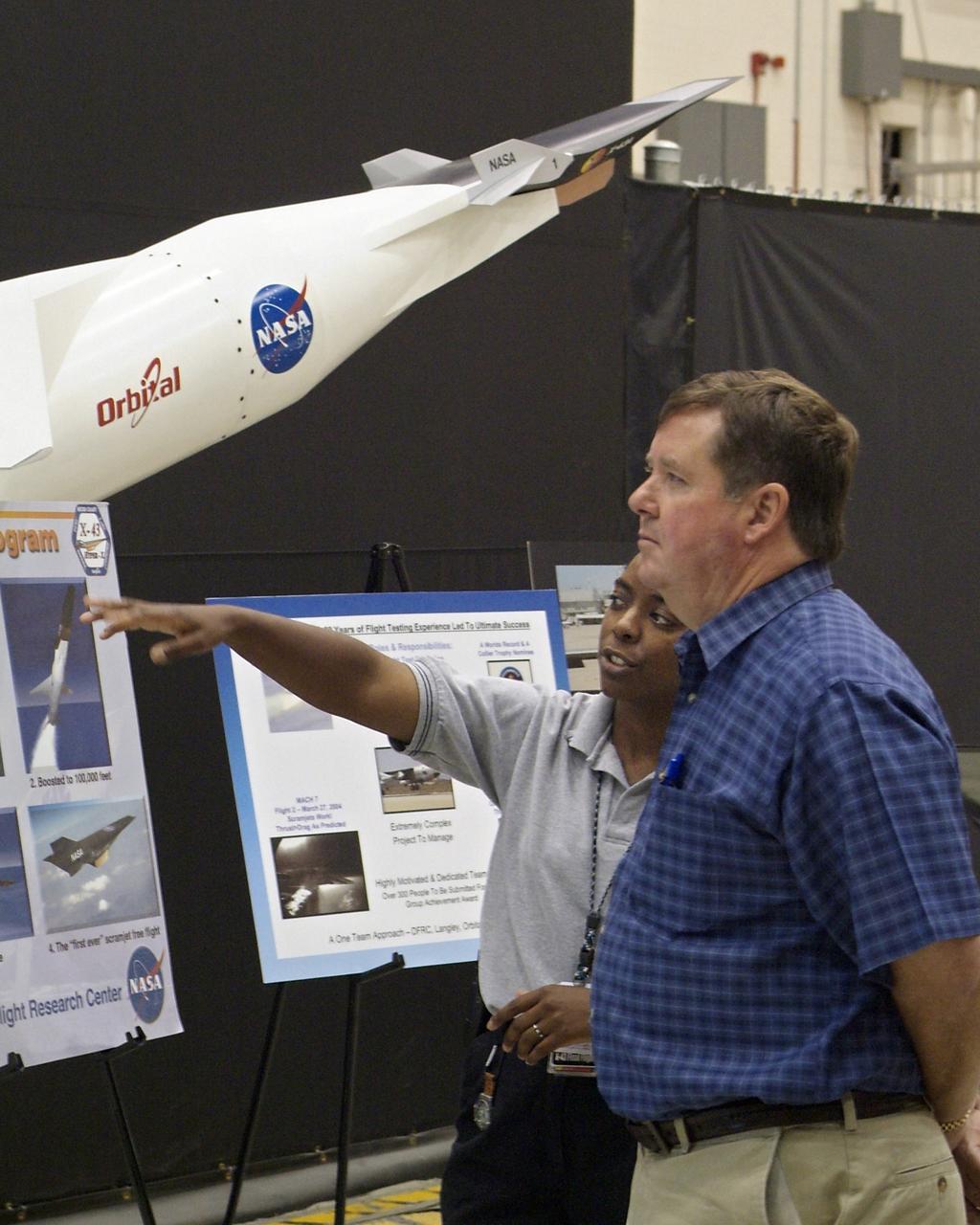
Rep. Ken Calvert, (R-Calif.), chairman of the House Subcommittee on Space and Aeronautics, received an update on the mission of NASA's Dryden Flight Research Center during a visit on June 2, 2005. Rep. Calvert, accompanied by several staff members, was briefed by center management on the Dryden's role as a flight research institution, and then reviewed some of the center's recent, current and upcoming flight research projects during a tour of the facility. During the afternoon, Rep. Calvert received similar briefings on a variety of projects at several aerospace development firms at the Civilian Flight Test Center in Mojave. Rep. Calvert's tour of NASA Dryden was the second in a series of visits to all 10 NASA field centers to better acquaint him with the roles and responsibilities of each center.
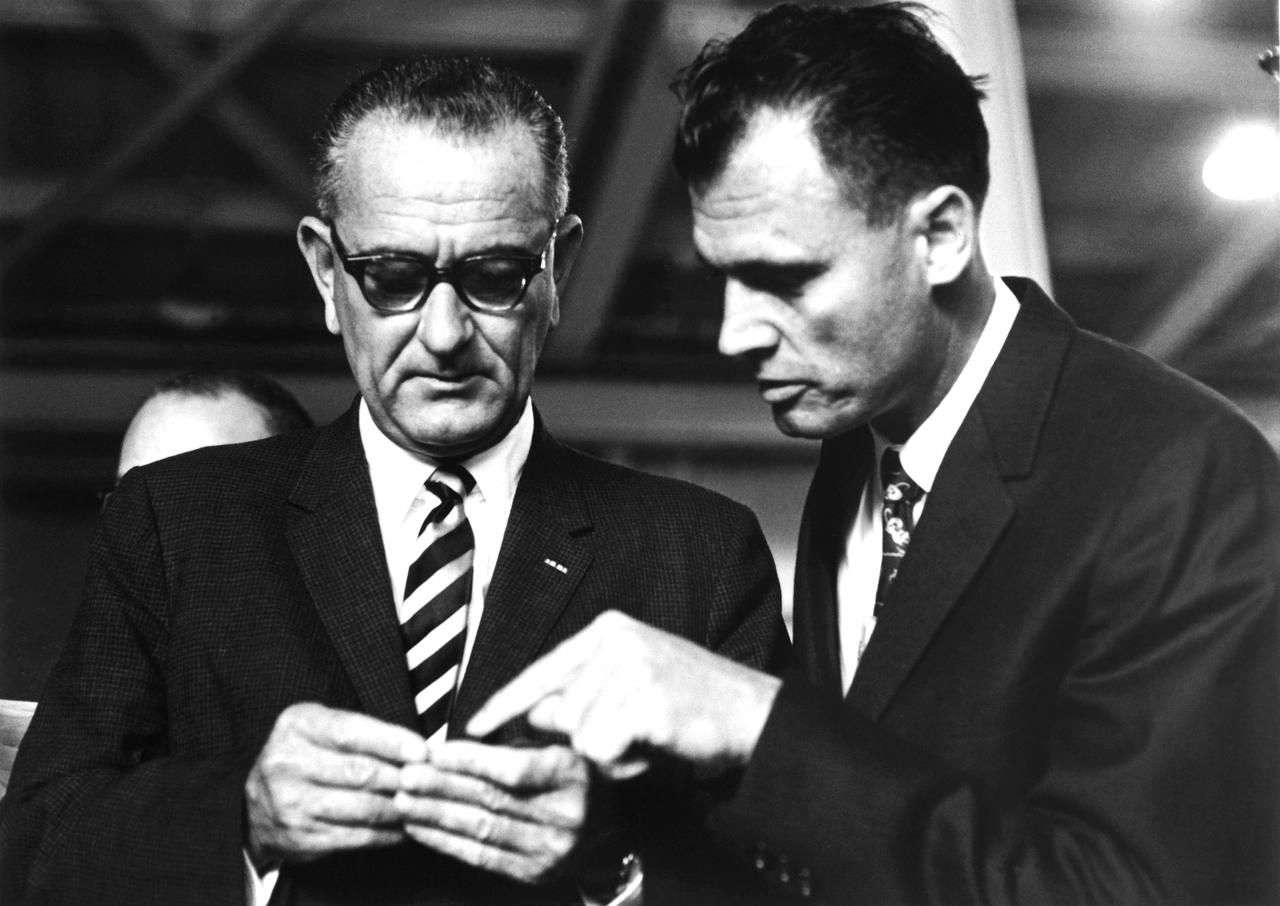
Vice President Lyndon Johnson (L) discusses tektites with Dr. Dean Chapman, Ames (R) during a tour of NASA Ames Research Center, Moffett Field, Calif.
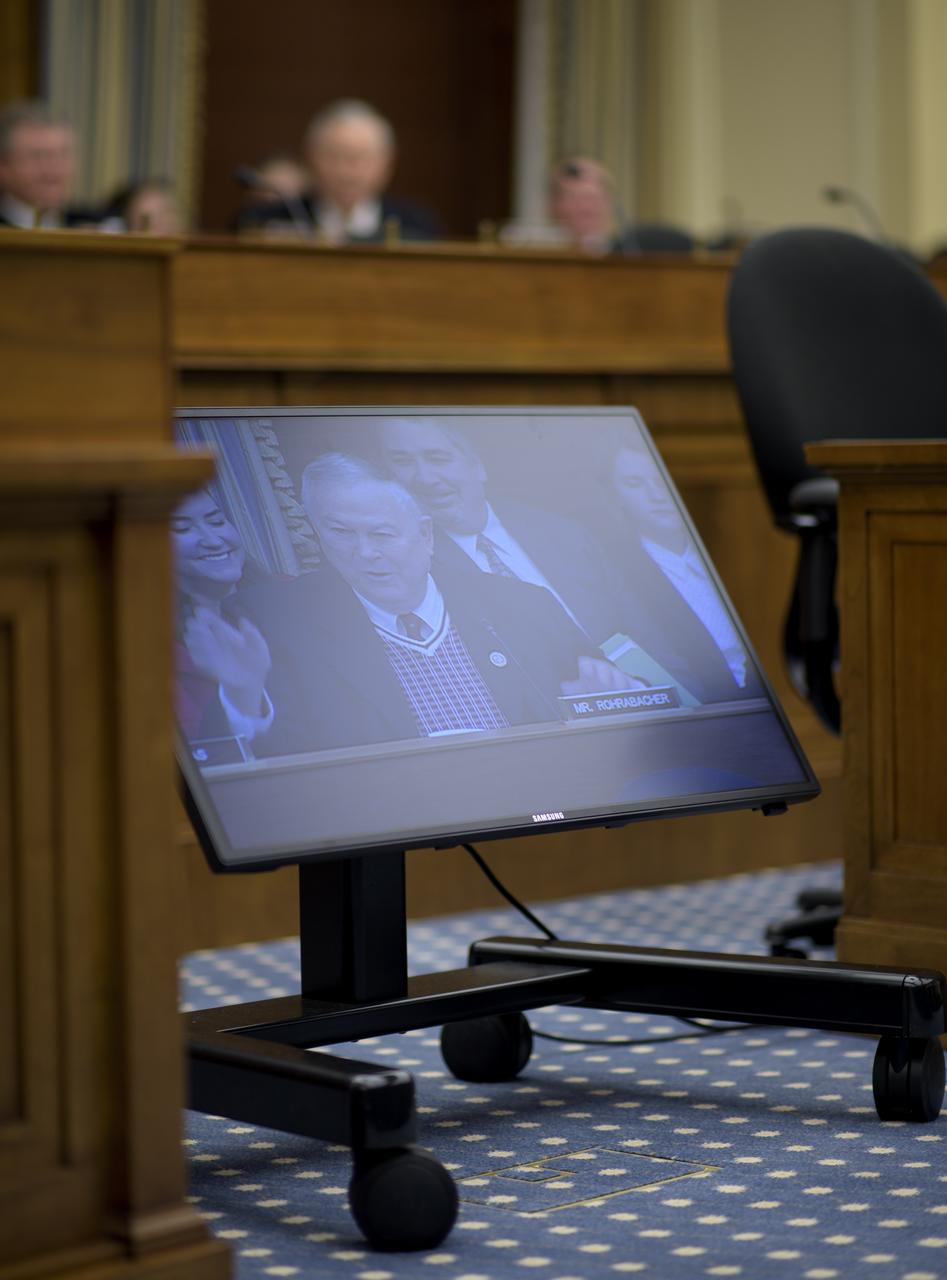
Rep. Dana Rohrabacher, R-Calif., is seen on a monitor during a House Committee on Science, Space, and Technology, Subcommittee on Space, hearing overview of the NASA Budget for Fiscal Year 2019, Wednesday, March 7, 2018, at the Rayburn House Office Building in Washington. Photo Credit: (NASA/Bill Ingalls)
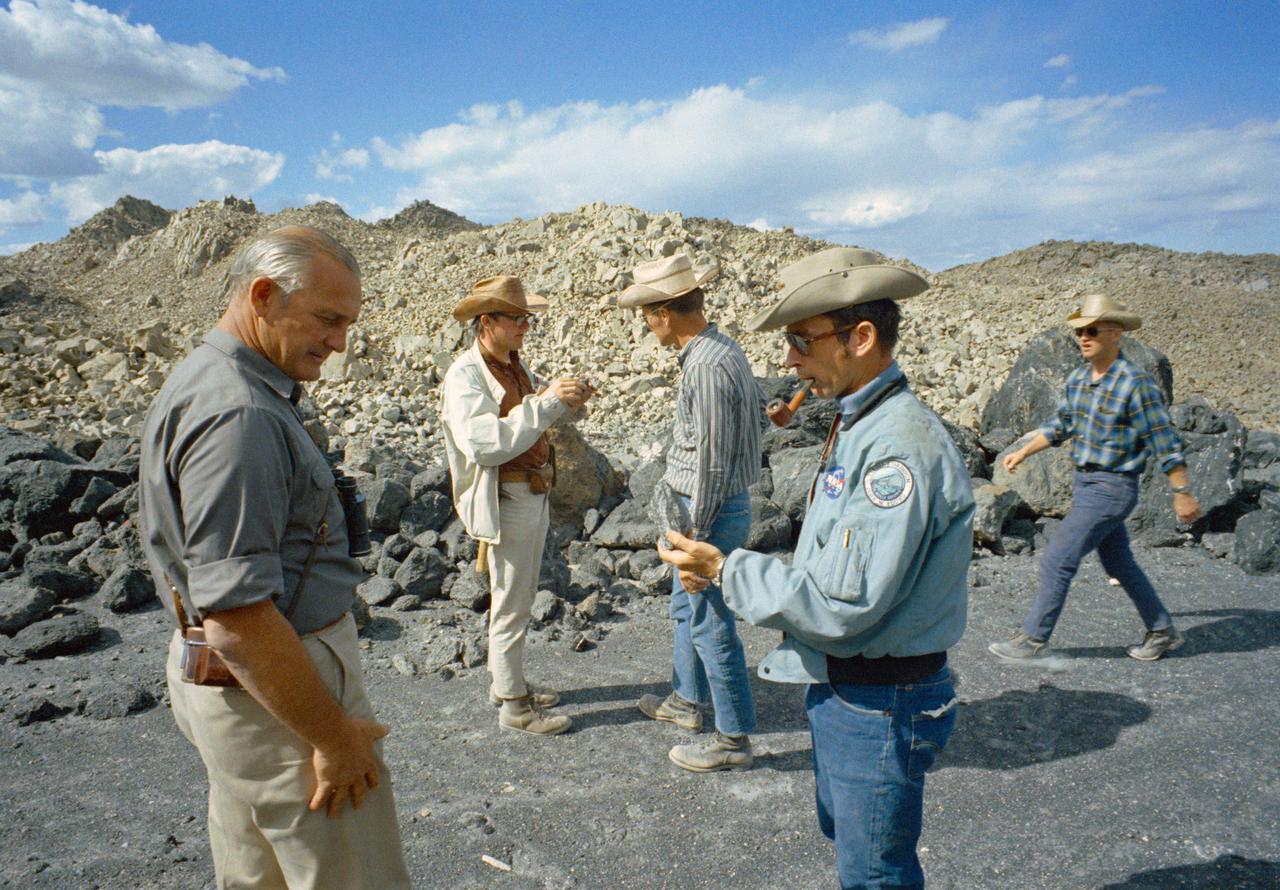
S71-36874 (10 June 1971) --- University of Texas geologist/professor William R. Muelhberger (left) talks with astronaut John W. Young, Apollo 16 commander, during an Apollo 16 geology field trip to Mono Crater, Calif. Astronaut Charles Duke, lunar module pilot, is seen at frame center, talking to geologist David Wones (second left). Astronaut Anthony England, Apollo 16 spacecraft communicator (CAPCOM), is at right. Photo credit: NASA
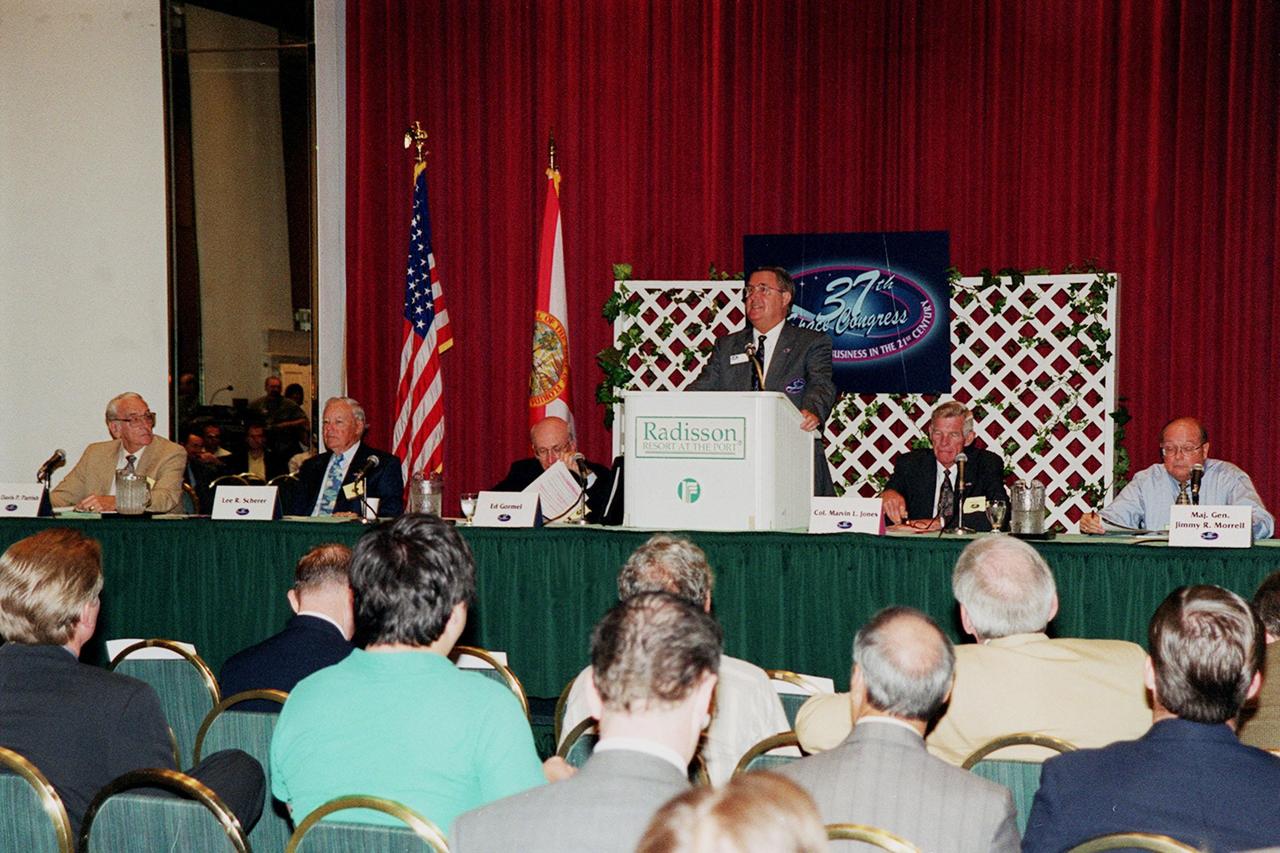
A panel session on the first day of the 37th Space Congress presents "50 Years of Space Exploration." Seated from left are Davis P. Parrish, Col., USAF (ret.); Lee R. Scherer, a senior executive with General Dynamics Commercial Services Group, San Diego, Calif., and former director, KSC; Edmond F. Gormel, executive director of Joint Performance Management Office, KSC; Marvin L. Jones, Col. USAF (ret.)and director of Installation Operations, KSC; and Jimmy R. Morrell, Maj. Gen., USAF (ret.). At the podium is Charles Murphy, Space Congress general chairman. Sponsored by the Canaveral Council of Technical Societies, the 37th Space Congress featured the theme "Space Means Business in the 21st Century." The event was held at the Radisson Resort at the Port in Cape Canaveral
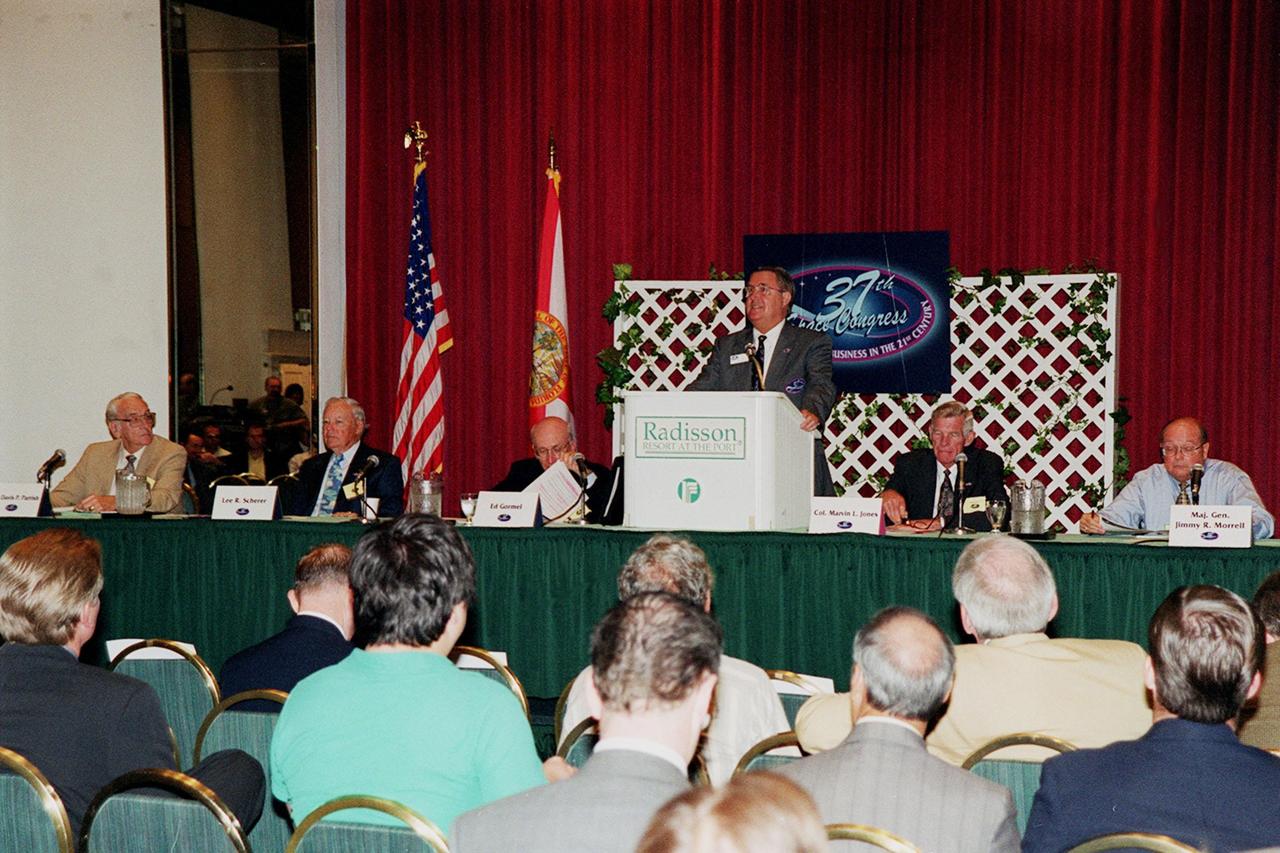
A panel session on the first day of the 37th Space Congress presents "50 Years of Space Exploration." Seated from left are Davis P. Parrish, Col., USAF (ret.); Lee R. Scherer, a senior executive with General Dynamics Commercial Services Group, San Diego, Calif., and former director, KSC; Edmond F. Gormel, executive director of Joint Performance Management Office, KSC; Marvin L. Jones, Col. USAF (ret.)and director of Installation Operations, KSC; and Jimmy R. Morrell, Maj. Gen., USAF (ret.). At the podium is Charles Murphy, Space Congress general chairman. Sponsored by the Canaveral Council of Technical Societies, the 37th Space Congress featured the theme "Space Means Business in the 21st Century." The event was held at the Radisson Resort at the Port in Cape Canaveral
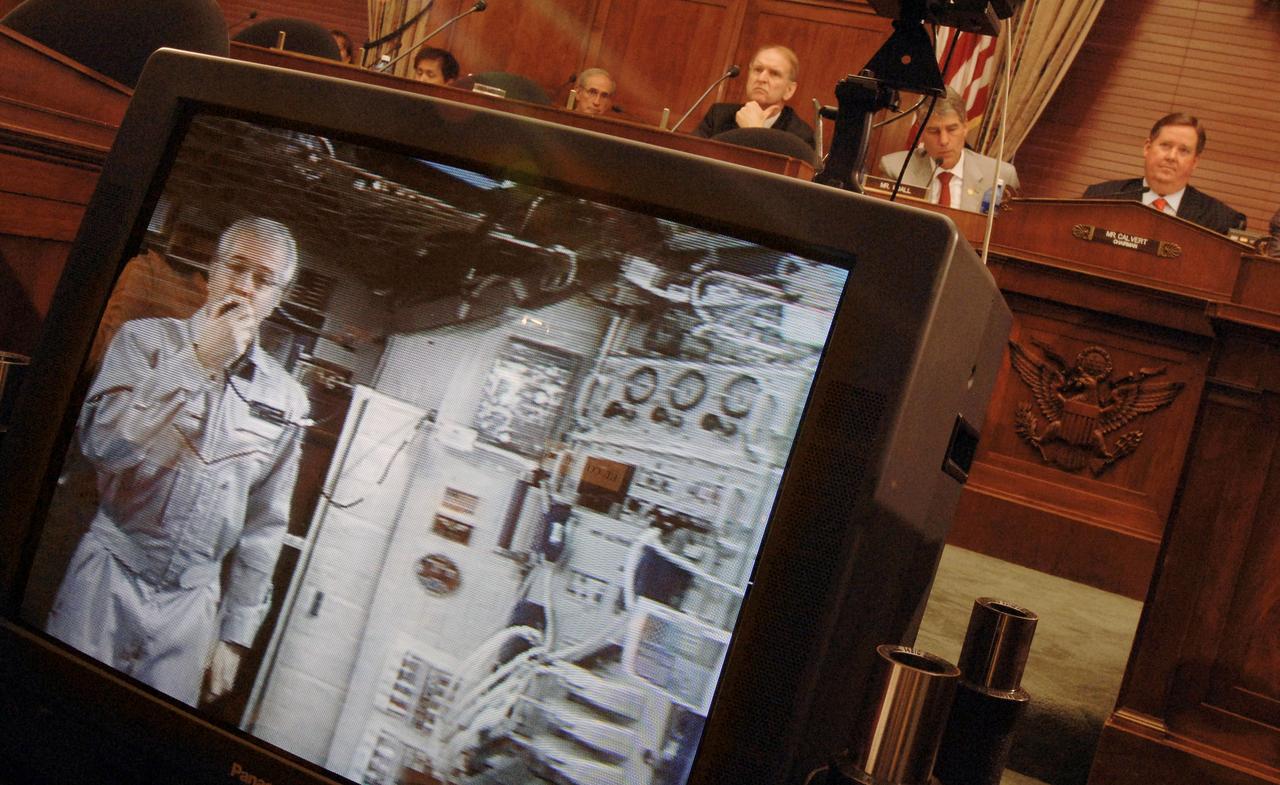
JSC2005-E-22364 (14 June 2005) --- Astronaut John L. Phillips, Expedition 11 NASA ISS science officer and flight engineer, testifies via video screen before the House Subcommittee on Space and Aeronautics chaired by Rep. Ken Calvert (R-Calif.), as he orbited Earth onboard the International Space Station (ISS) at a speed of five miles a second. Phillips was approximately 220 statute miles above Earth, but his radio transmissions were routed to a Tracking and Data Relay Satellite (TDRS) in geostationary orbit at an altitude of about 22,300 miles. Photo credit: NASA/Bill Ingalls.
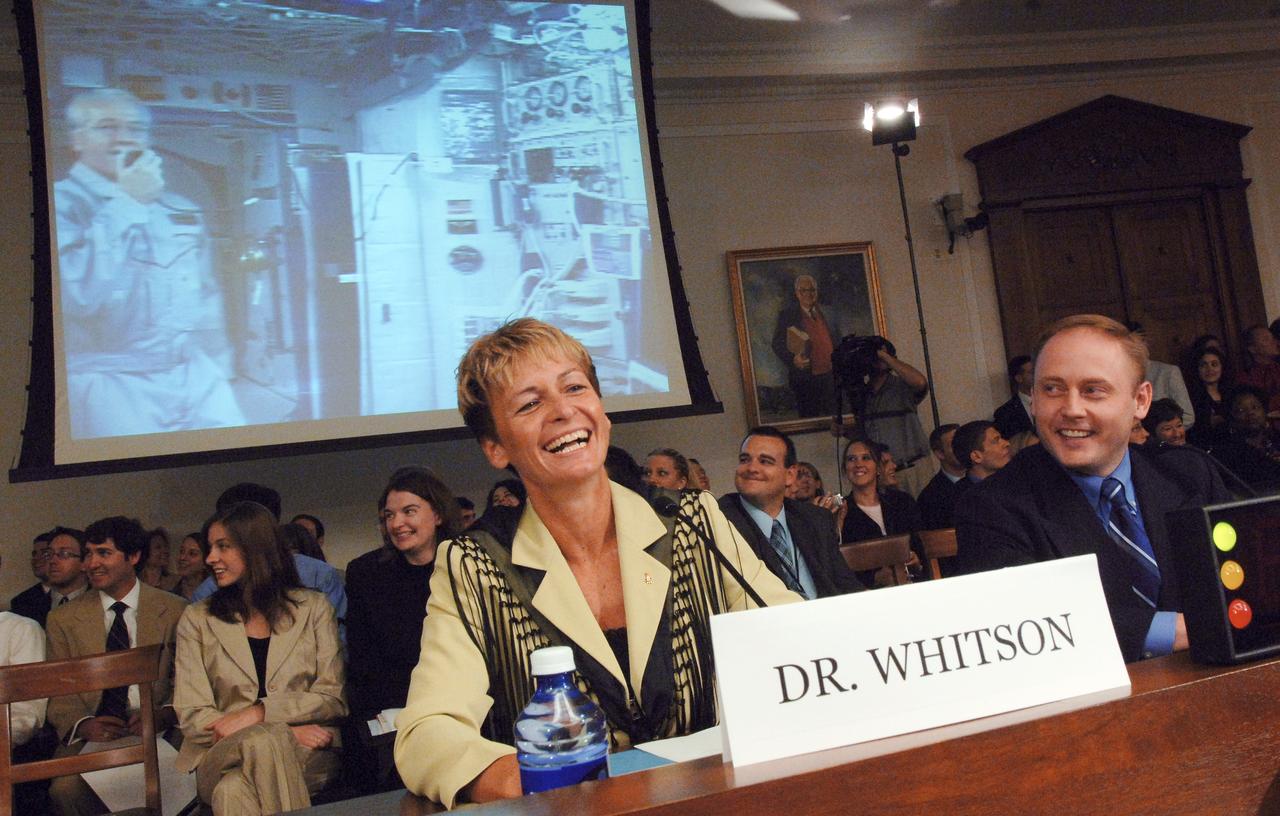
JSC2005-E-22363 (14 June 2005) --- Astronauts Peggy A. Whitson (left) and Edward M. (Mike) Fincke, former Station residents, share a laugh during the House Subcommittee on Space and Aeronautics hearing chaired by Rep. Ken Calvert (R-Calif.), as current Station astronaut John L. Phillips, Expedition 11 NASA ISS science officer and flight engineer, testifies via video screen in the background. Phillips was approximately 220 statute miles above Earth, but his radio transmissions were routed to a Tracking and Data Relay Satellite (TDRS) in geostationary orbit at an altitude of about 22,300 miles. Photo credit: NASA/Bill Ingalls.

Ronnie Rigney (r), chief of the Propulsion Test Office in the Project Directorate at Stennis Space Center, stands with agency colleagues to receive the prestigious American Institute of Aeronautics and Astronautics George M. Low Space Transportation Award on Sept. 12. Rigney accepted the award on behalf of the NASA and contractor team at Stennis for their support of the Space Shuttle Program that ended last summer. From 1975 to 2009, Stennis Space Center tested every main engine used to power 135 space shuttle missions. Stennis continued to provide flight support services through the end of the Space Shuttle Program in July 2011. The center also supported transition and retirement of shuttle hardware and assets through September 2012. The 2012 award was presented to the space shuttle team 'for excellence in the conception, development, test, operation and retirement of the world's first and only reusable space transportation system.' Joining Rigney for the award ceremony at the 2012 AIAA Conference in Pasadena, Calif., were: (l to r) Allison Zuniga, NASA Headquarters; Michael Griffin, former NASA administrator; Don Noah, Johnson Space Center in Houston; Steve Cash, Marshall Space Flight Center in Huntsville, Ala.; and Pete Nickolenko, Kennedy Space Center in Florida.

Ronnie Rigney (r), chief of the Propulsion Test Office in the Project Directorate at Stennis Space Center, stands with agency colleagues to receive the prestigious American Institute of Aeronautics and Astronautics George M. Low Space Transportation Award on Sept. 12. Rigney accepted the award on behalf of the NASA and contractor team at Stennis for their support of the Space Shuttle Program that ended last summer. From 1975 to 2009, Stennis Space Center tested every main engine used to power 135 space shuttle missions. Stennis continued to provide flight support services through the end of the Space Shuttle Program in July 2011. The center also supported transition and retirement of shuttle hardware and assets through September 2012. The 2012 award was presented to the space shuttle team 'for excellence in the conception, development, test, operation and retirement of the world's first and only reusable space transportation system.' Joining Rigney for the award ceremony at the 2012 AIAA Conference in Pasadena, Calif., were: (l to r) Allison Zuniga, NASA Headquarters; Michael Griffin, former NASA administrator; Don Noah, Johnson Space Center in Houston; Steve Cash, Marshall Space Flight Center in Huntsville, Ala.; and Pete Nickolenko, Kennedy Space Center in Florida.
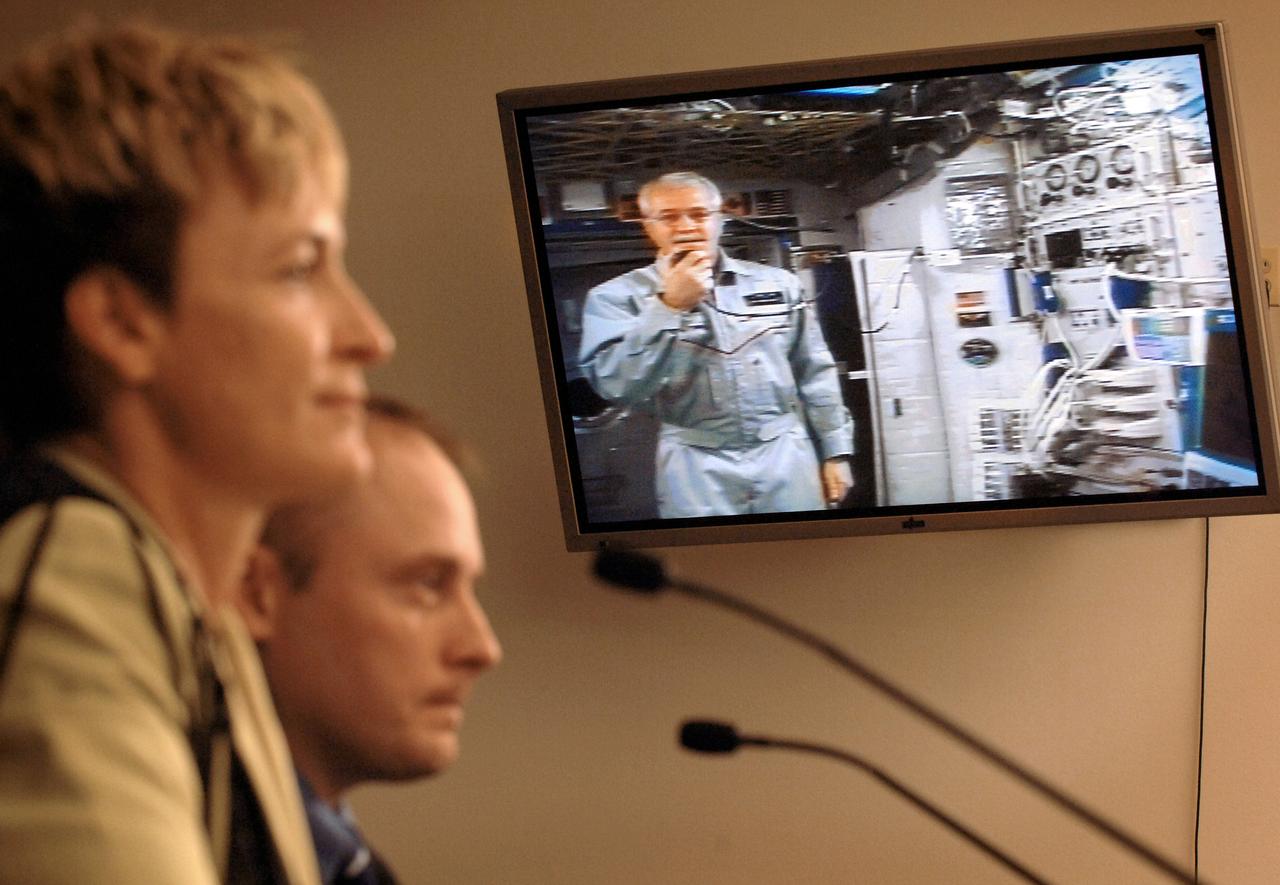
JSC2005-E-22365 (14 June 2005) --- Astronaut John L. Phillips, Expedition 11 NASA space station science officer and flight engineer, testifies via video screen before the House Subcommittee on Space and Aeronautics chaired by Rep. Ken Calvert (R-Calif.), as he orbited Earth onboard the international space station at a speed of five miles a second. Phillips was approximately 220 statute miles above Earth, but his radio transmissions were routed to a Tracking and Data Relay Satellite (TDRS) in geostationary orbit at an altitude of about 22,300 miles. Astronauts Peggy A. Whitson and Edward M. (Mike) Fincke, former station residents, are visible at left. Photo credit: NASA/Bill Ingalls.
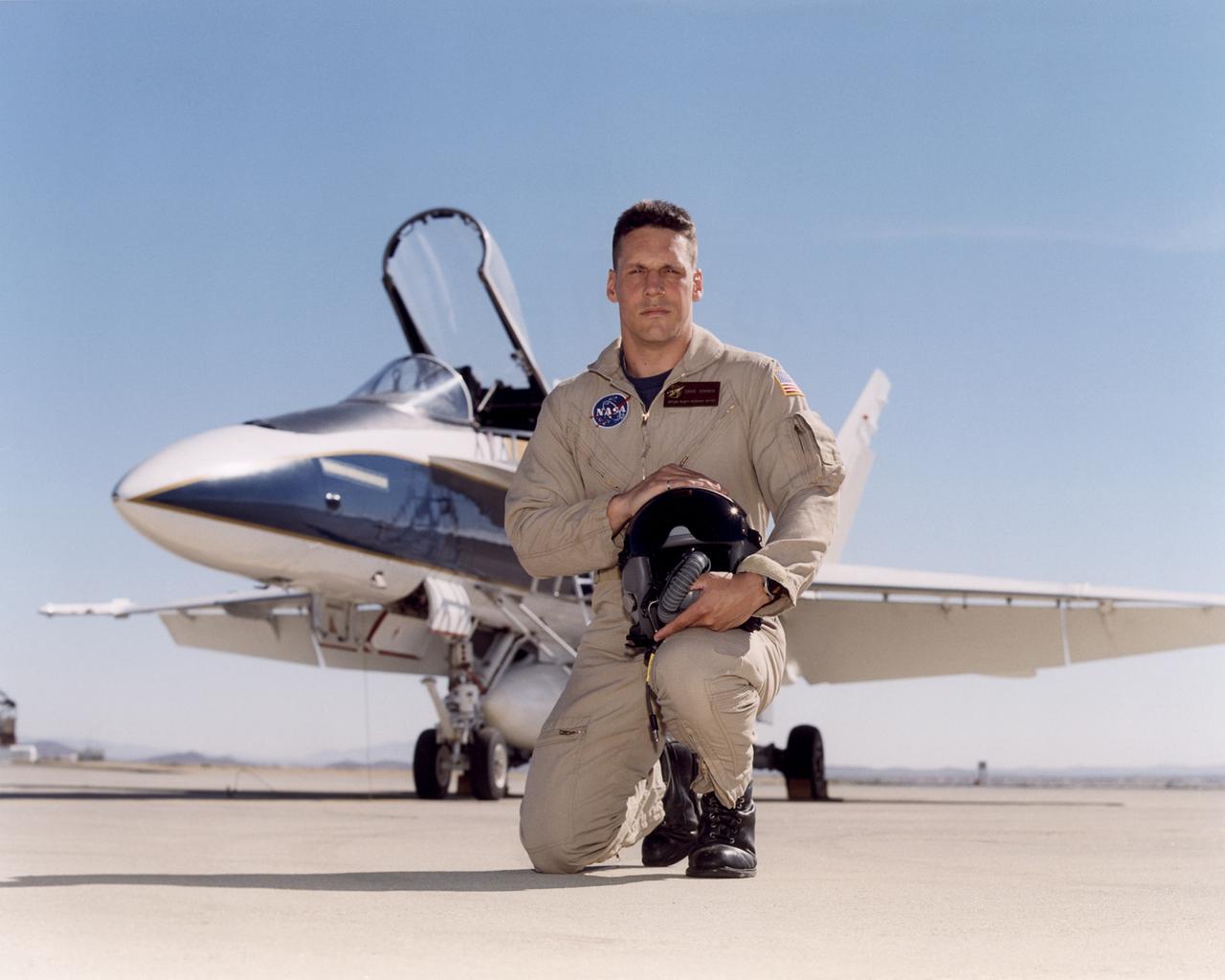
Craig R. Bomben became a pilot in the Flight Crew Branch of NASA's Dryden Flight Research Center, Edwards, Calif., in June 2001. His flying duties include a variety of research and support activities while piloting the F/A-18, DC-8, T-34C and King Air aircraft. He has more than 17 years and 3,800 hours of military and civilian flight experience in over 50 different aircraft types. Bomben came to NASA Dryden from a U.S. Navy assignment to the Personnel Exchange Program, Canada. He served as a test pilot in the Canadian Armed Forces located in Cold Lake, Alberta. He participated in numerous developmental programs to include CT-133 airborne ejection seat testing, F/A-18 weapons flutter testing and F/A-18 night vision goggles integration. Bomben performed U.S. Navy fleet service in 1995 as a strike-fighter department head. He completed two overseas deployments onboard the USS George Washington and USS Stennis. As a combat strike leader, he headed numerous multi-national missions over Iraq in support of Operation Southern Watch. Bomben graduated from the U.S. Naval Test Pilot School in 1992 and was subsequently assigned to the Naval Weapons Test Squadron at Pt. Mugu, Calif. During this tour he developed the F-14D bombsight and worked on various other F-14D and F/A-18 weapon systems developmental programs. Bomben is a 1985 graduate of Washington State University with a bachelor of science degree in electrical engineering. He graduated from naval flight training in 1987 and was recognized as a Commodore List graduate. His first assignment was to Naval Air Station Pensacola, Fla., where he was an instructor in the T-2B Buckeye. When selected to fly the F/A-18 in 1989, he joined a fleet squadron and deployed aboard the USS Forrestal. Bomben is married to the former Aissa Asuncion. They live in Lancaster, Calif., with their 3 children.
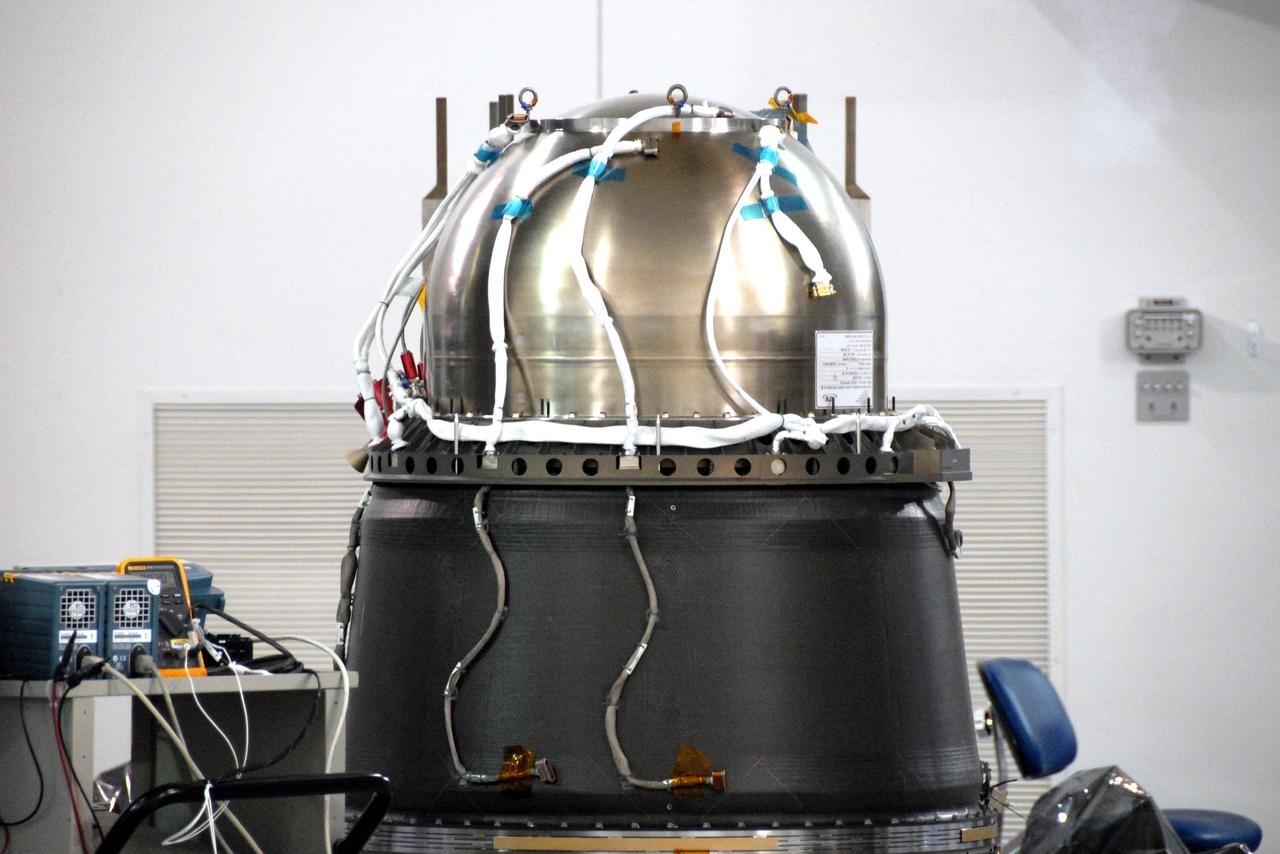
VANDENBERG AIR FORCE BASE, Calif. – At Vandenberg Air Force Base in California, the Star-27 kick motor and nozzle for NASA's Interstellar Boundary Explorer, or IBEX, spacecraft have been inserted into the adapter cone. The IBEX satellite will make the first map of the boundary between the Solar System and interstellar space. IBEX is the first mission designed to detect the edge of the Solar System. As the solar wind from the sun flows out beyond Pluto, it collides with the material between the stars, forming a shock front. IBEX contains two neutral atom imagers designed to detect particles from the termination shock at the boundary between the Solar System and interstellar space. IBEX also will study galactic cosmic rays, energetic particles from beyond the Solar System that pose a health and safety hazard for humans exploring beyond Earth orbit. IBEX will make these observations from a highly elliptical orbit that takes it beyond the interference of the Earth's magnetosphere. IBEX is targeted for launch from the Pegasus XL rocket on Oct. 5. Photo credit: NASA/R. Bledsoe
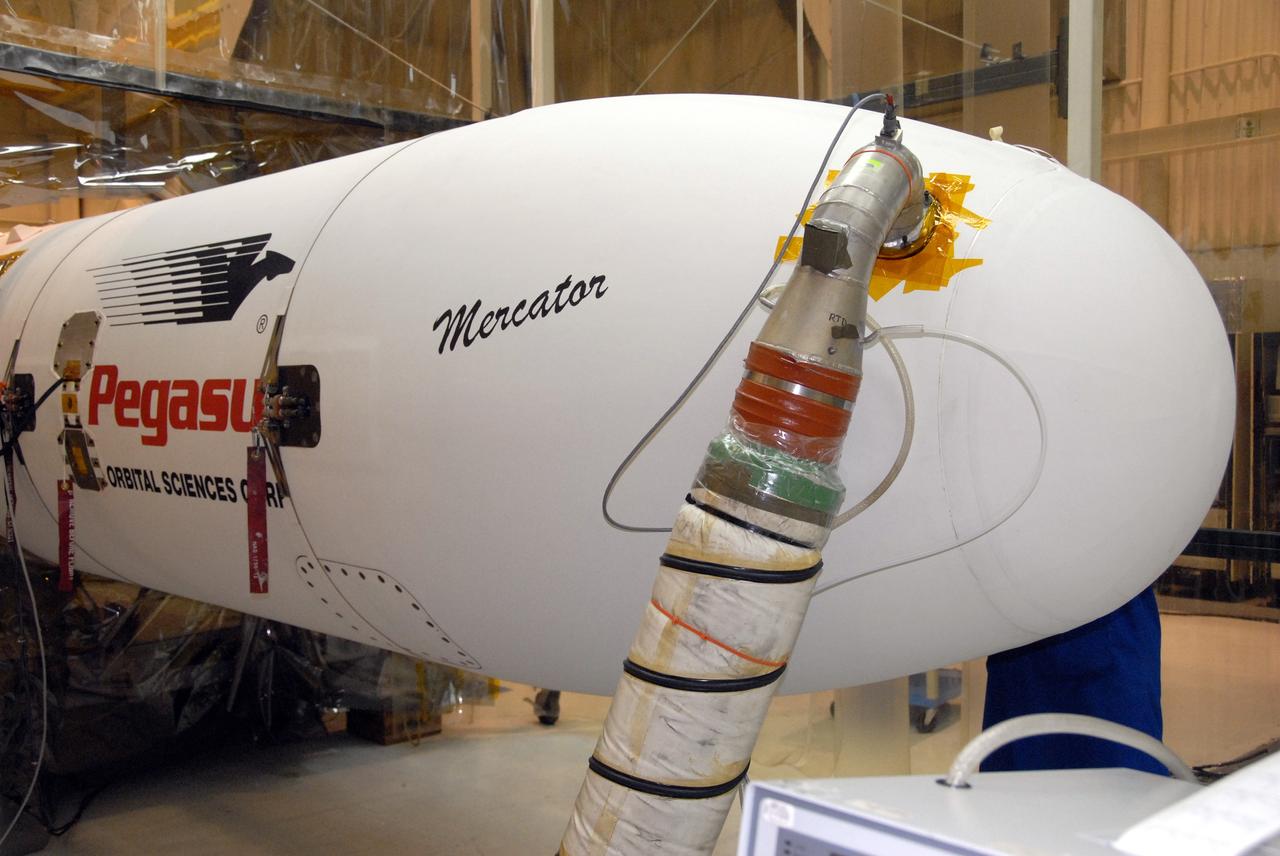
VANDENBERG AIR FORCE BASE, Calif. – In Hangar 1555 on Vandenberg Air Force Base in California, the name “Mercator” is displayed on the nose of the Pegasus XL rocket. The rocket is the launch vehicle for NASA’s Interstellar Boundary Explorer, or IBEX, spacecraft. The IBEX satellite will make the first map of the boundary between the Solar System and interstellar space. The name Mercator was chosen in honor of Gerardus Mercator, the Flemish cartographer (or map maker). In addition to the many maps that he made, he also invented a technique to create terrestrial and celestial globes out of paper mache, allowing for greater production than the carved wooden or brass globes that were previously used. IBEX is targeted for launch from the Kwajalein Atoll, a part of the Marshall Islands in the Pacific Ocean, on Oct. 19. IBEX will be launched aboard the Pegasus rocket dropped from under the wing of an L-1011 aircraft flying over the Pacific Ocean. The Pegasus will carry the spacecraft approximately 130 miles above Earth and place it in orbit. Photo credit: NASA/R. Bledsoe, VAFB
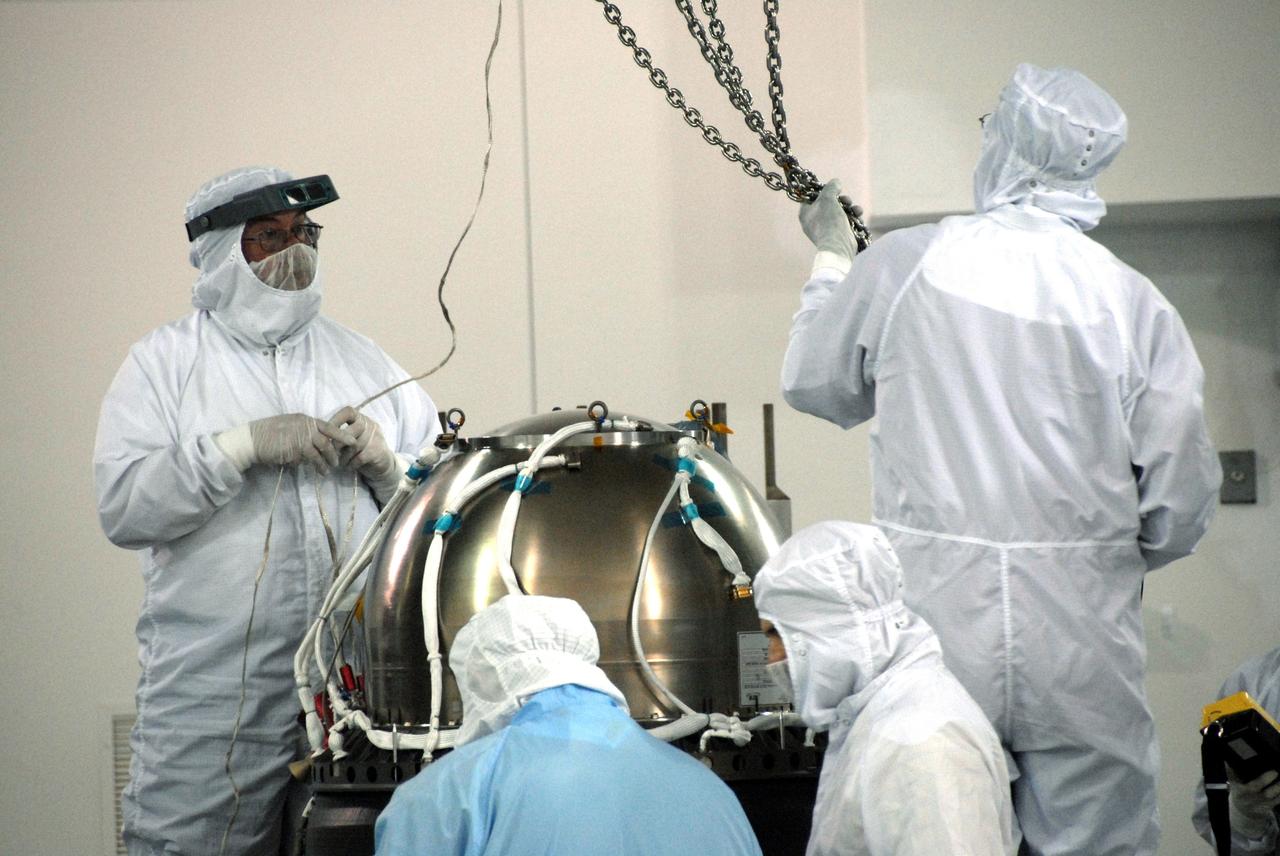
VANDENBERG AIR FORCE BASE, Calif. – At Vandenberg Air Force Base in California, technicians detach the cables from NASA's Interstellar Boundary Explorer, or IBEX, spacecraft Star-27 kick motor and nozzle after their insertion into the adapter cone. The IBEX satellite will make the first map of the boundary between the Solar System and interstellar space. IBEX is the first mission designed to detect the edge of the Solar System. As the solar wind from the sun flows out beyond Pluto, it collides with the material between the stars, forming a shock front. IBEX contains two neutral atom imagers designed to detect particles from the termination shock at the boundary between the Solar System and interstellar space. IBEX also will study galactic cosmic rays, energetic particles from beyond the Solar System that pose a health and safety hazard for humans exploring beyond Earth orbit. IBEX will make these observations from a highly elliptical orbit that takes it beyond the interference of the Earth's magnetosphere. IBEX is targeted for launch from the Pegasus XL rocket on Oct. 5. Photo credit: NASA/R. Bledsoe
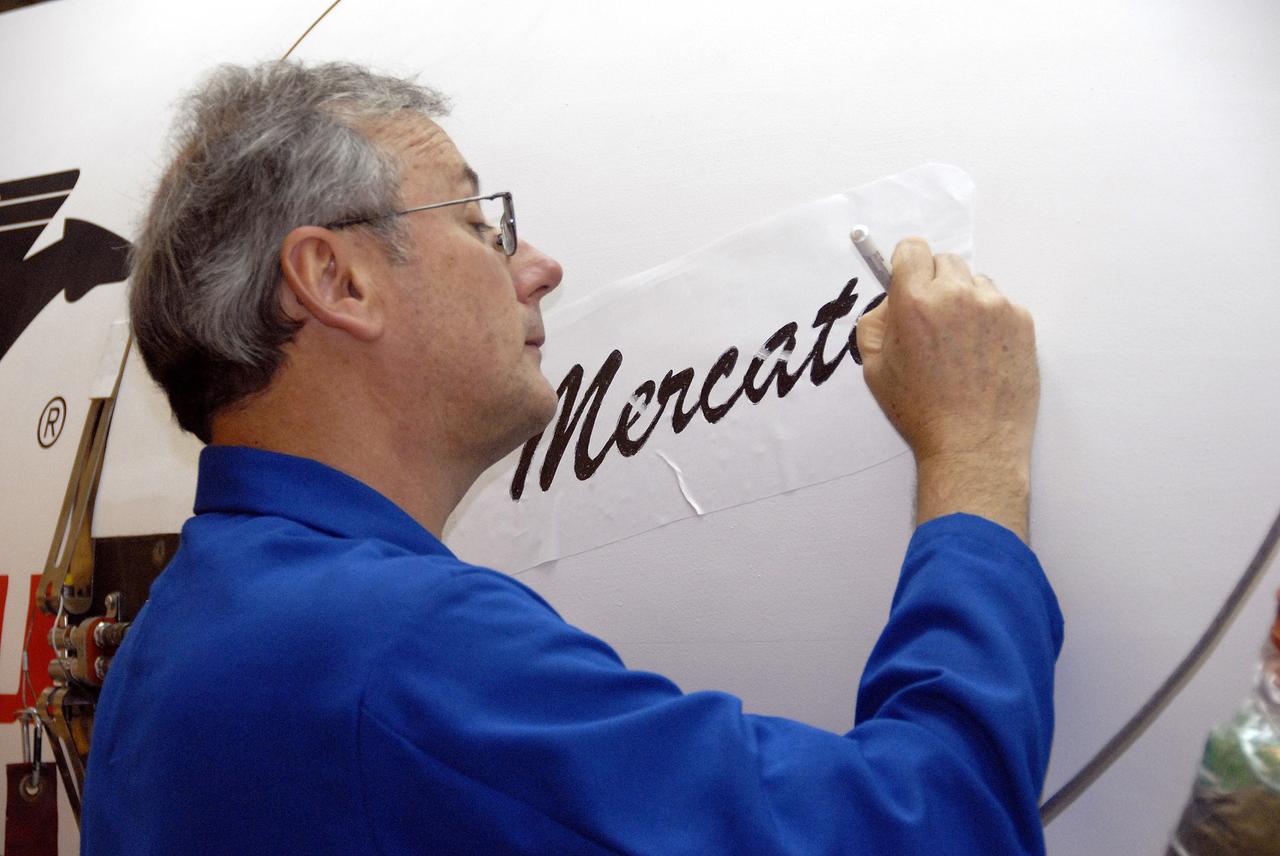
VANDENBERG AIR FORCE BASE, Calif. – In Hangar 1555 on Vandenberg Air Force Base in California, a worker paints the name “Mercator” on the nose of the Pegasus XL rocket. The rocket is the launch vehicle for NASA’s Interstellar Boundary Explorer, or IBEX, spacecraft. The IBEX satellite will make the first map of the boundary between the Solar System and interstellar space. The name Mercator was chosen in honor of Gerardus Mercator, the Flemish cartographer (or map maker). In addition to the many maps that he made, he also invented a technique to create terrestrial and celestial globes out of paper mache, allowing for greater production than the carved wooden or brass globes that were previously used. IBEX is targeted for launch from the Kwajalein Atoll, a part of the Marshall Islands in the Pacific Ocean, on Oct. 19. IBEX will be launched aboard the Pegasus rocket dropped from under the wing of an L-1011 aircraft flying over the Pacific Ocean. The Pegasus will carry the spacecraft approximately 130 miles above Earth and place it in orbit. Photo credit: NASA/R. Bledsoe, VAFB
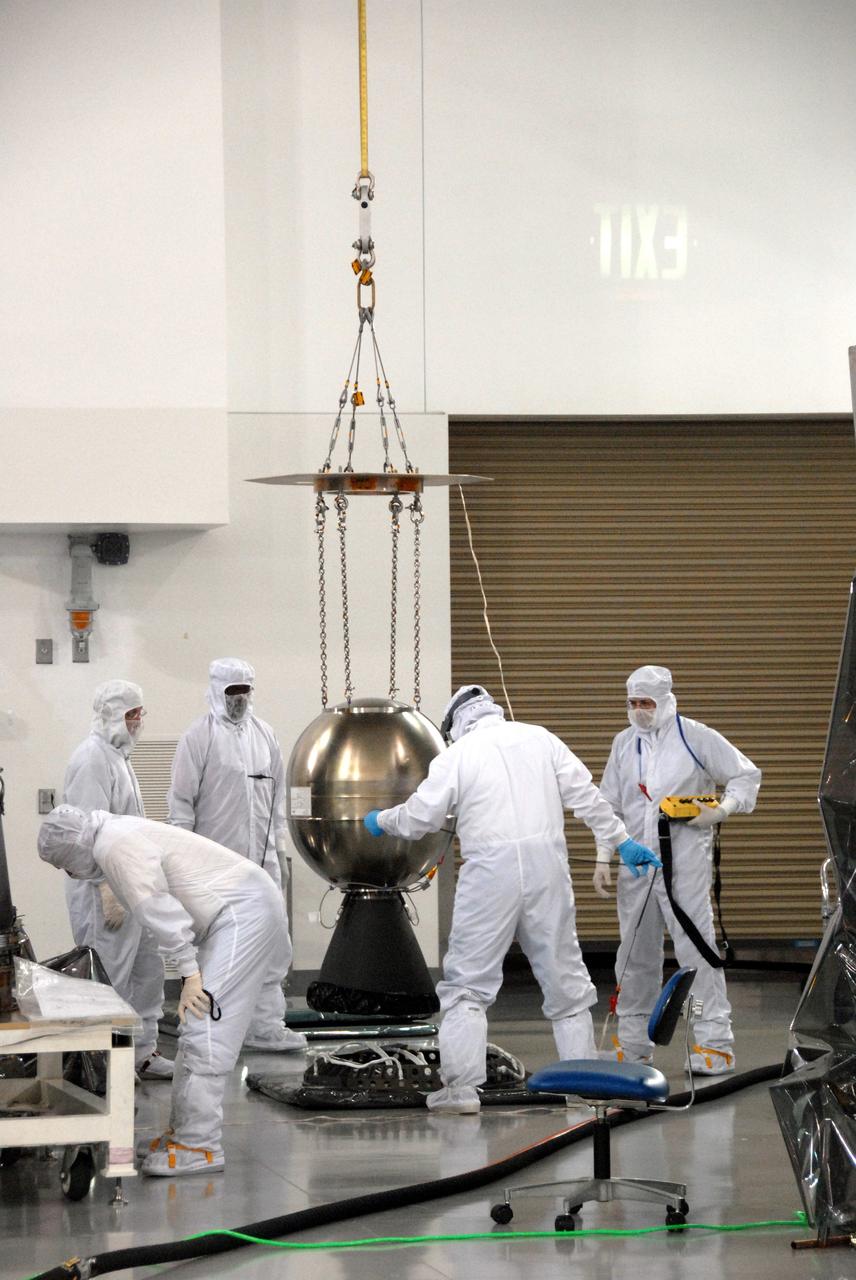
VANDENBERG AIR FORCE BASE, Calif. – At Vandenberg Air Force Base in California, the Star-27 kick motor and nozzle for NASA's Interstellar Boundary Explorer, or IBEX, spacecraft is being hoisted before insertion into the adapter cone. The IBEX satellite will make the first map of the boundary between the Solar System and interstellar space. IBEX is the first mission designed to detect the edge of the Solar System. As the solar wind from the sun flows out beyond Pluto, it collides with the material between the stars, forming a shock front. IBEX contains two neutral atom imagers designed to detect particles from the termination shock at the boundary between the Solar System and interstellar space. IBEX also will study galactic cosmic rays, energetic particles from beyond the Solar System that pose a health and safety hazard for humans exploring beyond Earth orbit. IBEX will make these observations from a highly elliptical orbit that takes it beyond the interference of the Earth's magnetosphere. IBEX is targeted for launch from the Pegasus XL rocket on Oct. 5. Photo credit: NASA/R. Bledsoe
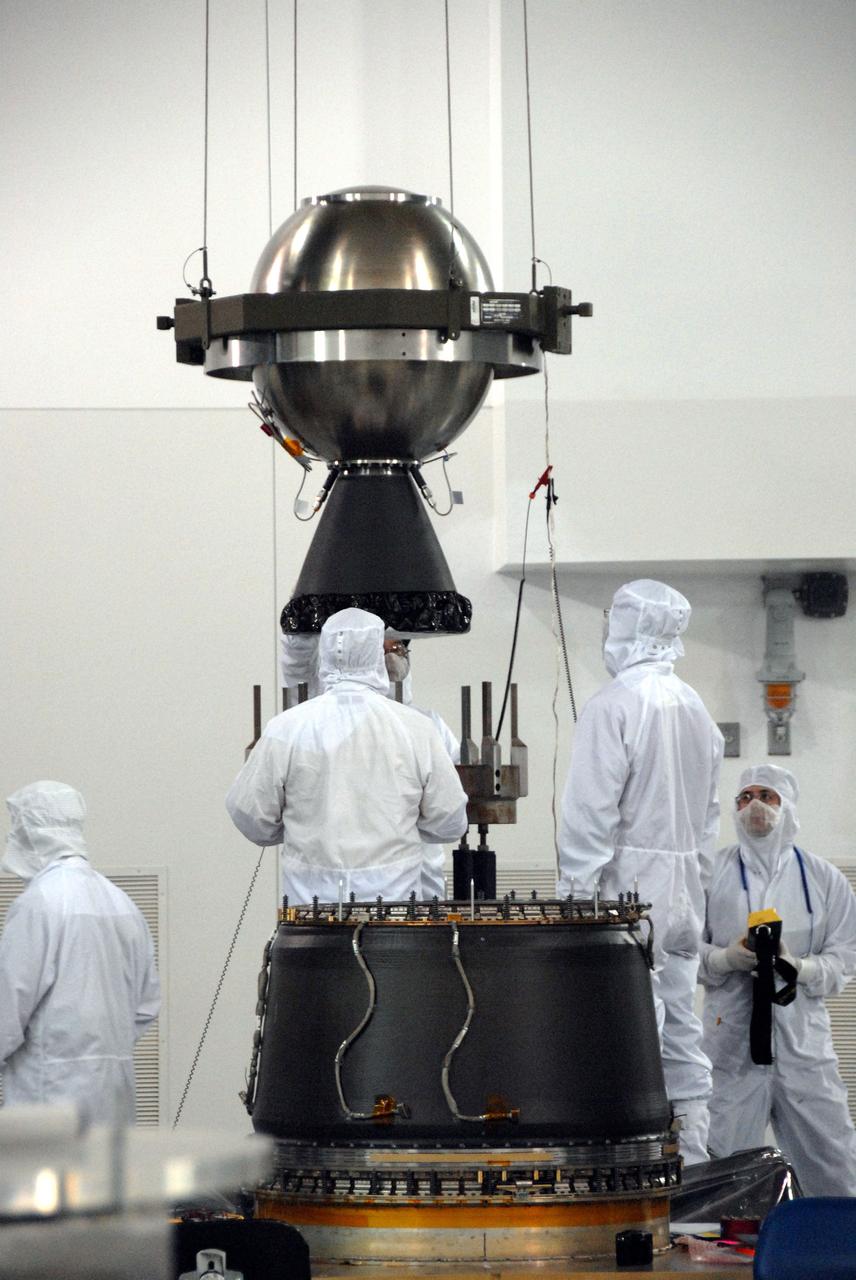
VANDENBERG AIR FORCE BASE, Calif. – At Vandenberg Air Force Base in California, technicians help guide the Star-27 kick motor and nozzle for NASA's Interstellar Boundary Explorer, or IBEX, mission spacecraft. The motor will be lifted and moved to the waiting adapter cone. The IBEX satellite will make the first map of the boundary between the Solar System and interstellar space. IBEX is the first mission designed to detect the edge of the Solar System. As the solar wind from the sun flows out beyond Pluto, it collides with the material between the stars, forming a shock front. IBEX contains two neutral atom imagers designed to detect particles from the termination shock at the boundary between the Solar System and interstellar space. IBEX also will study galactic cosmic rays, energetic particles from beyond the Solar System that pose a health and safety hazard for humans exploring beyond Earth orbit. IBEX will make these observations from a highly elliptical orbit that takes it beyond the interference of the Earth's magnetosphere. IBEX is targeted for launch from the Pegasus XL rocket on Oct. 5. Photo credit: NASA/R. Bledsoe
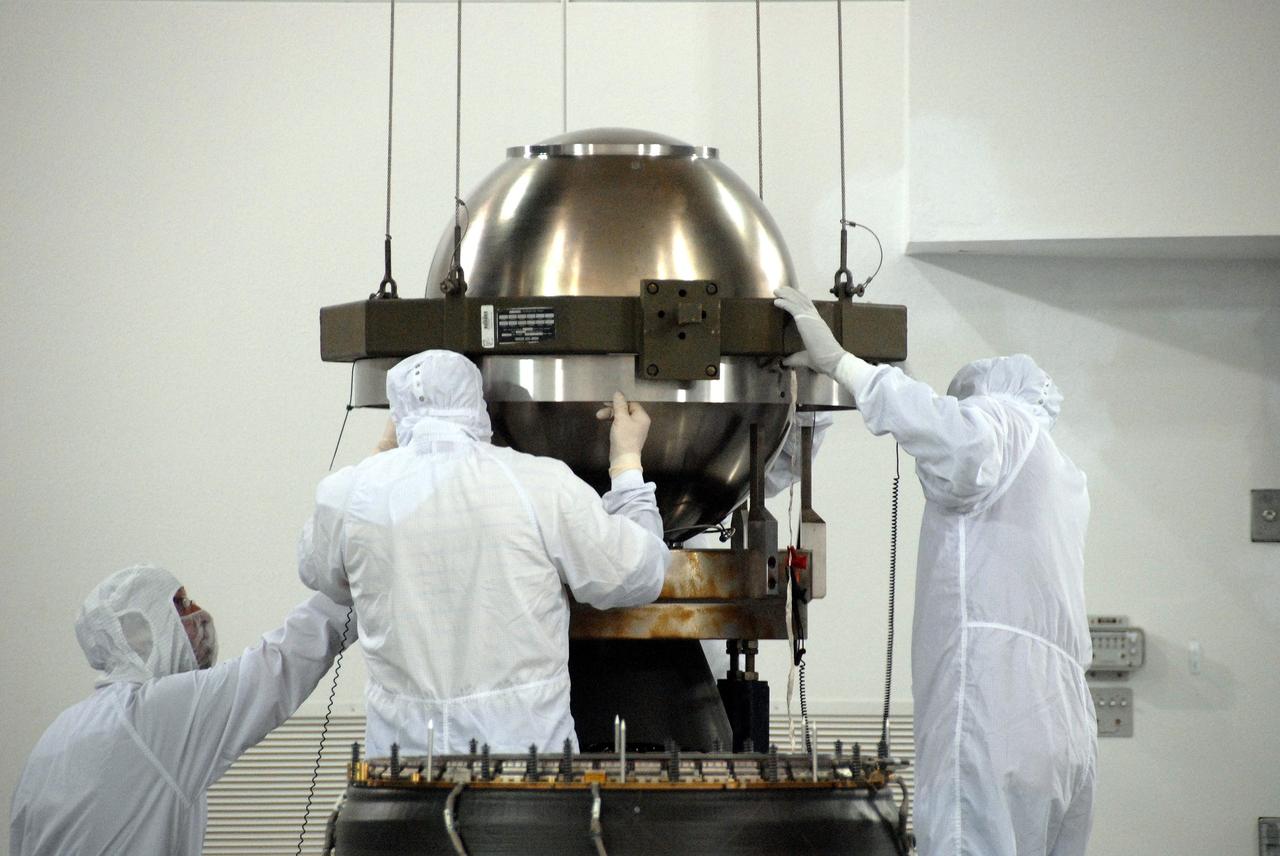
VANDENBERG AIR FORCE BASE, Calif. – At Vandenberg Air Force Base in California, technicians help guide the Star-27 kick motor and nozzle for NASA's Interstellar Boundary Explorer, or IBEX, mission spacecraft. The motor/nozzle will be inserted in the adapter cone (bottom of the foreground). The IBEX satellite will make the first map of the boundary between the Solar System and interstellar space. IBEX is the first mission designed to detect the edge of the Solar System. As the solar wind from the sun flows out beyond Pluto, it collides with the material between the stars, forming a shock front. IBEX contains two neutral atom imagers designed to detect particles from the termination shock at the boundary between the Solar System and interstellar space. IBEX also will study galactic cosmic rays, energetic particles from beyond the Solar System that pose a health and safety hazard for humans exploring beyond Earth orbit. IBEX will make these observations from a highly elliptical orbit that takes it beyond the interference of the Earth's magnetosphere. IBEX is targeted for launch from the Pegasus XL rocket on Oct. 5. Photo credit: NASA/R. Bledsoe
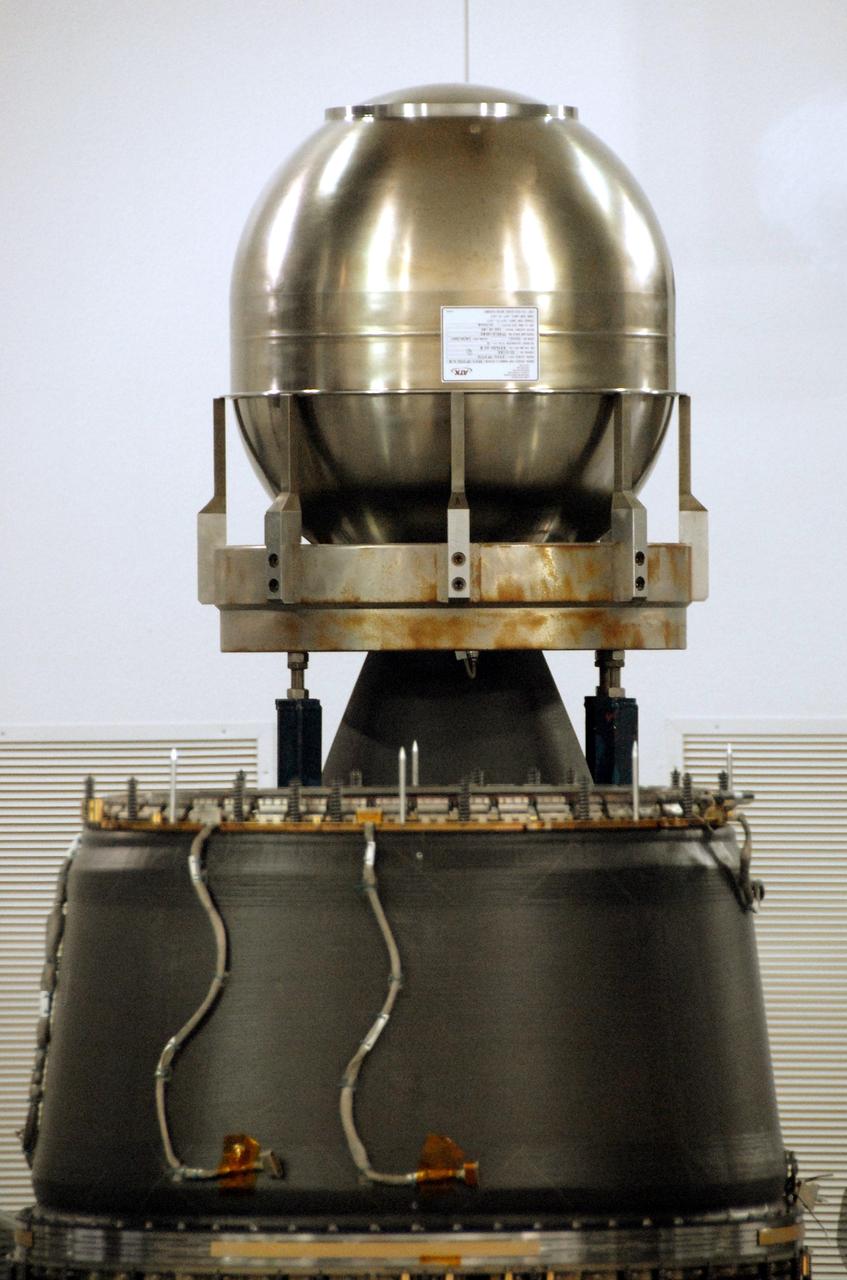
VANDENBERG AIR FORCE BASE, Calif. – At Vandenberg Air Force Base in California, the Star-27 kick motor and nozzle for NASA's Interstellar Boundary Explorer, or IBEX, spacecraft are “on top” and part of the IBEX flight system, known as the adapter cone, is in the foreground/bottom. The Star-27 motor has a silver tank that contains the solid propellant. The nozzle fits down inside the adapter cone. The IBEX satellite will make the first map of the boundary between the Solar System and interstellar space. IBEX is the first mission designed to detect the edge of the Solar System. As the solar wind from the sun flows out beyond Pluto, it collides with the material between the stars, forming a shock front. IBEX contains two neutral atom imagers designed to detect particles from the termination shock at the boundary between the Solar System and interstellar space. IBEX also will study galactic cosmic rays, energetic particles from beyond the Solar System that pose a health and safety hazard for humans exploring beyond Earth orbit. IBEX will make these observations from a highly elliptical orbit that takes it beyond the interference of the Earth's magnetosphere. IBEX is targeted for launch from the Pegasus XL rocket on Oct. 5. Photo credit: NASA/R. Bledsoe
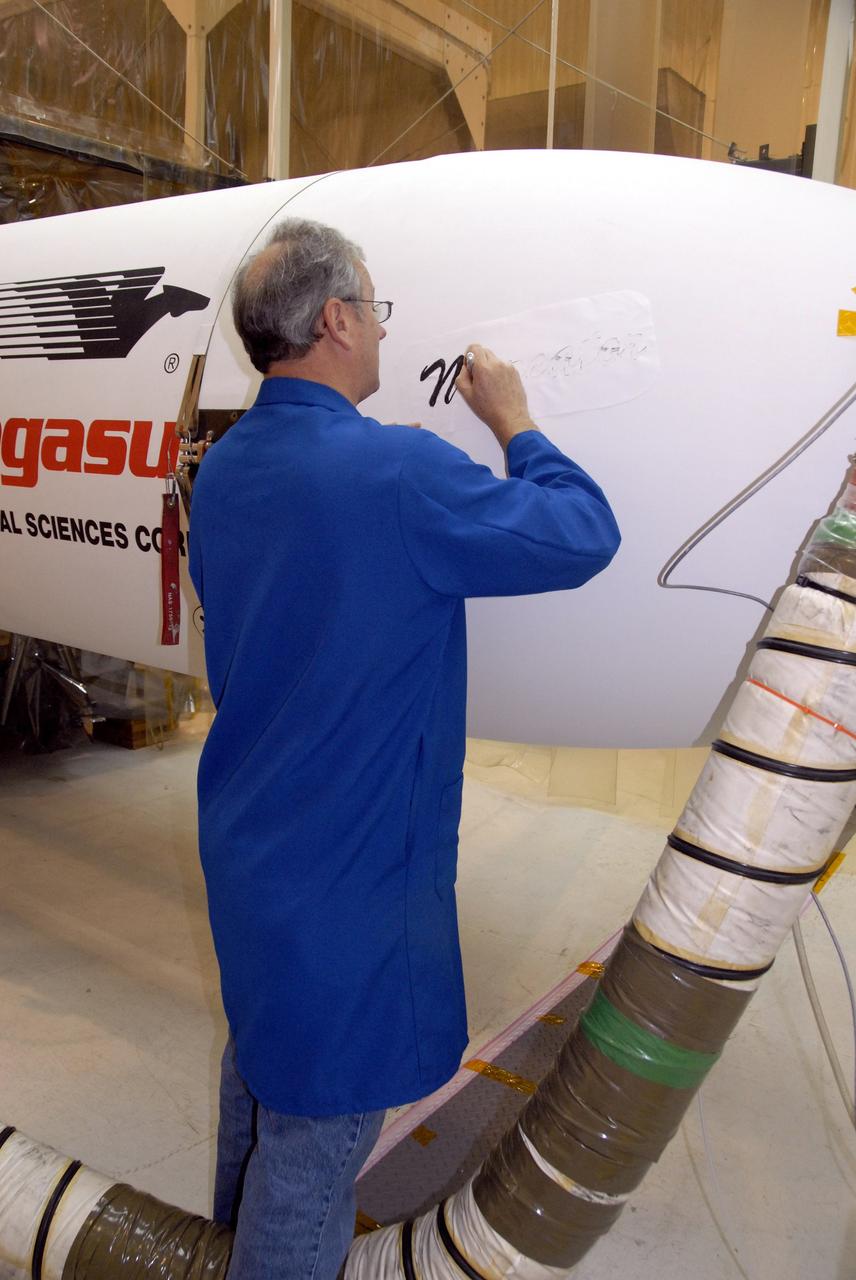
VANDENBERG AIR FORCE BASE, Calif. – In Hangar 1555 on Vandenberg Air Force Base in California, a worker begins painting the name “Mercator” on the nose of the Pegasus XL rocket. The rocket is the launch vehicle for NASA’s Interstellar Boundary Explorer, or IBEX, spacecraft. The IBEX satellite will make the first map of the boundary between the Solar System and interstellar space. The name Mercator was chosen in honor of Gerardus Mercator, the Flemish cartographer (or map maker). In addition to the many maps that he made, he also invented a technique to create terrestrial and celestial globes out of paper mache, allowing for greater production than the carved wooden or brass globes that were previously used. IBEX is targeted for launch from the Kwajalein Atoll, a part of the Marshall Islands in the Pacific Ocean, on Oct. 19. IBEX will be launched aboard the Pegasus rocket dropped from under the wing of an L-1011 aircraft flying over the Pacific Ocean. The Pegasus will carry the spacecraft approximately 130 miles above Earth and place it in orbit. Photo credit: NASA/R. Bledsoe, VAFB

VANDENBERG AIR FORCE BASE, Calif. – The name “Mercator” is boldly displayed on the nose of the Pegasus XL rocket. The rocket is the launch vehicle for NASA’s Interstellar Boundary Explorer, or IBEX, spacecraft. The IBEX satellite will make the first map of the boundary between the Solar System and interstellar space. The name Mercator was chosen in honor of Gerardus Mercator, the Flemish cartographer (or map maker). In addition to the many maps that he made, he also invented a technique to create terrestrial and celestial globes out of paper mache, allowing for greater production than the carved wooden or brass globes that were previously used. IBEX is targeted for launch from the Kwajalein Atoll, a part of the Marshall Islands in the Pacific Ocean, on Oct. 19. IBEX will be launched aboard the Pegasus rocket dropped from under the wing of an L-1011 aircraft flying over the Pacific Ocean. The Pegasus will carry the spacecraft approximately 130 miles above Earth and place it in orbit. Photo credit: NASA/R. Bledsoe, VAFB
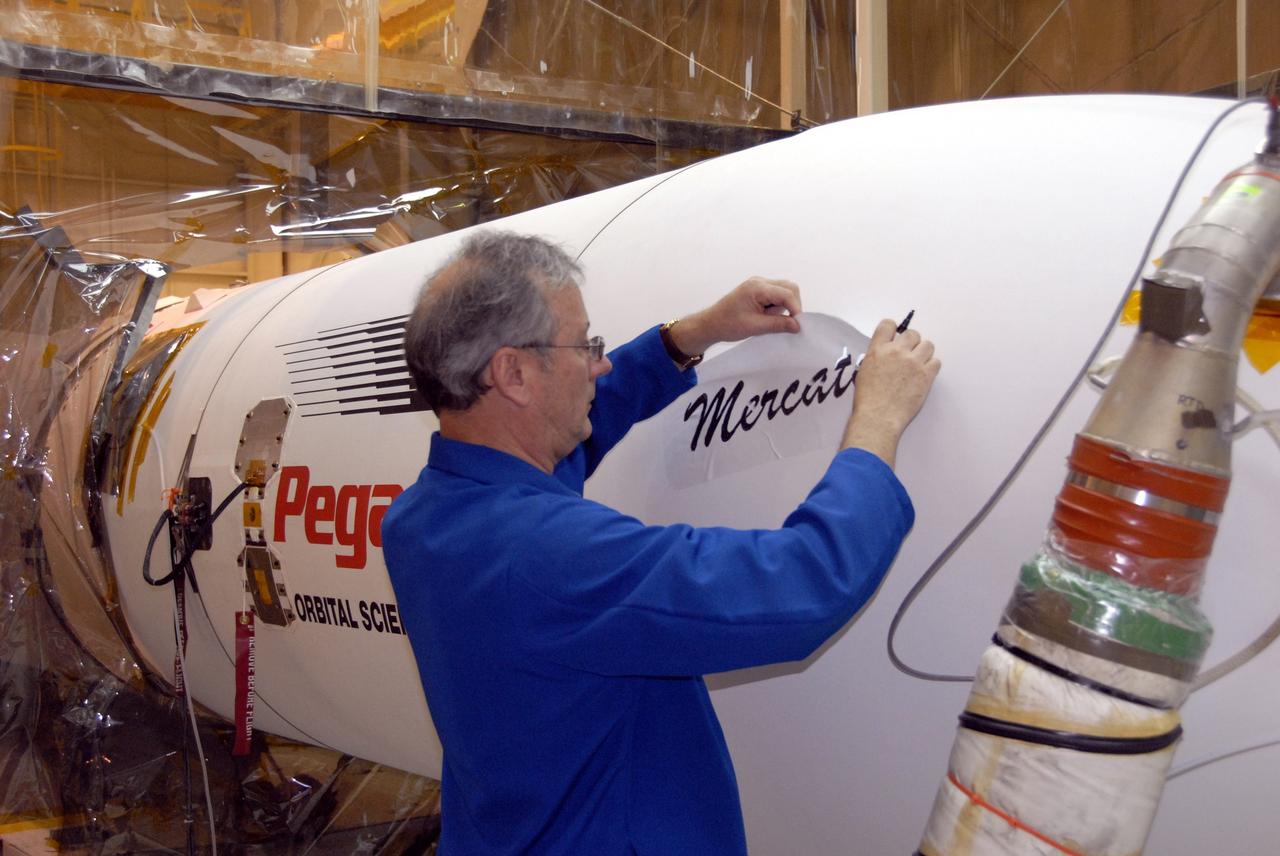
VANDENBERG AIR FORCE BASE, Calif. – In Hangar 1555 on Vandenberg Air Force Base in California, a worker paints the name “Mercator” on the nose of the Pegasus XL rocket. The rocket is the launch vehicle for NASA’s Interstellar Boundary Explorer, or IBEX, spacecraft. The IBEX satellite will make the first map of the boundary between the Solar System and interstellar space. The name Mercator was chosen in honor of Gerardus Mercator, the Flemish cartographer (or map maker). In addition to the many maps that he made, he also invented a technique to create terrestrial and celestial globes out of paper mache, allowing for greater production than the carved wooden or brass globes that were previously used. IBEX is targeted for launch from the Kwajalein Atoll, a part of the Marshall Islands in the Pacific Ocean, on Oct. 19. IBEX will be launched aboard the Pegasus rocket dropped from under the wing of an L-1011 aircraft flying over the Pacific Ocean. The Pegasus will carry the spacecraft approximately 130 miles above Earth and place it in orbit. Photo credit: NASA/R. Bledsoe, VAFB