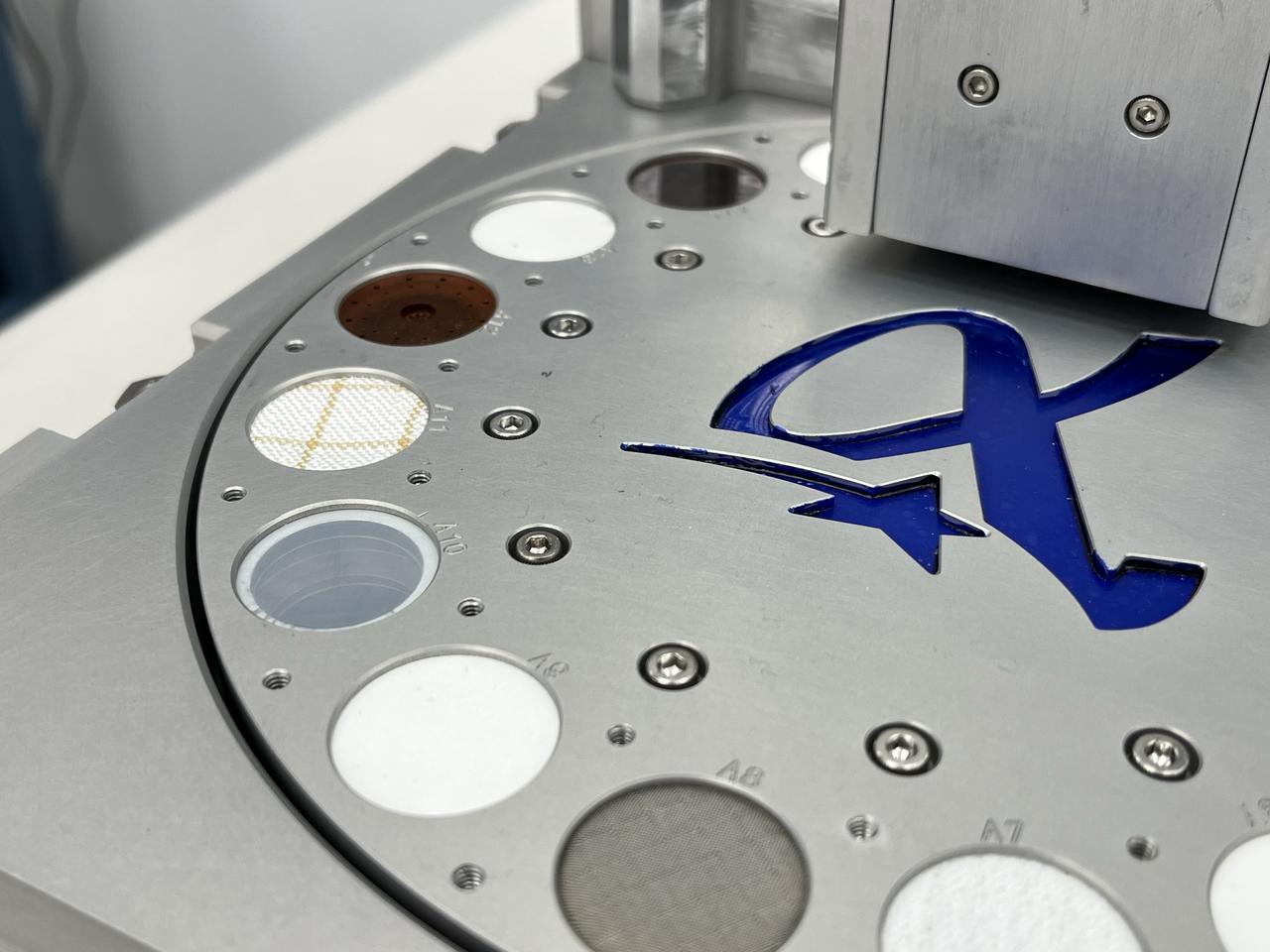
A science instrument flying aboard the next delivery for NASA’s CLPS (Commercial Lunar Payload Services) initiative is planning to study how different materials react to the lunar environment. Regolith Adherence Characterization, or RAC, is one of 10 payloads set to be carried to the Moon by the Blue Ghost 1 lunar lander in 2025. Developed by Aegis Aerospace, RAC’s wheels feature a series of different sample materials, helping researchers to better understand how lunar dust repels or attaches to each. Investigations and demonstrations, such as RAC, launched on CLPS flights will help NASA study Earth’s nearest neighbor under Artemis and pave the way for future crewed missions on the Moon. NASA’s Marshall Space Flight Center in Huntsville, Alabama, manages the development for seven of the 10 CLPS payloads that will be carried on Firefly’s Blue Ghost lunar lander.
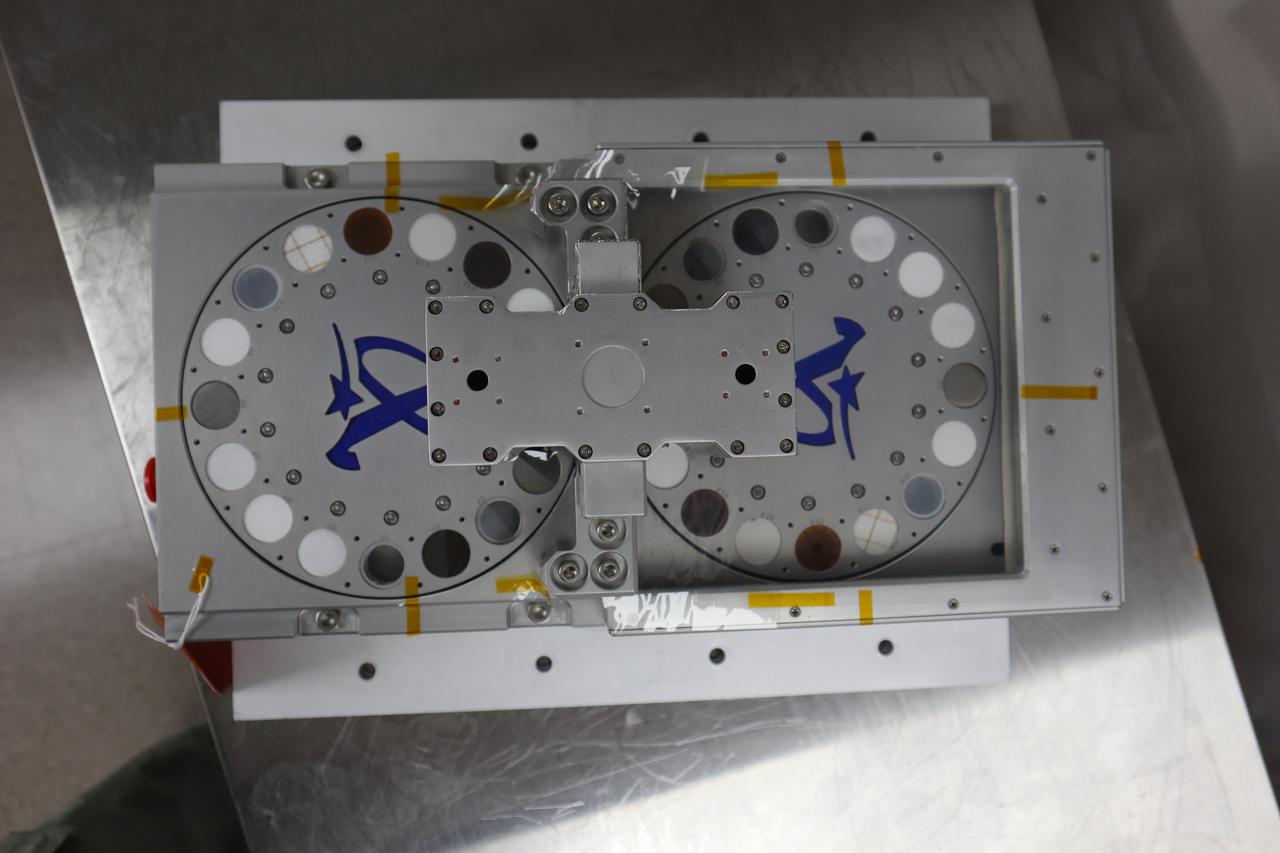
A science instrument flying aboard the next delivery for NASA’s CLPS (Commercial Lunar Payload Services) initiative is planning to study how different materials react to the lunar environment. Regolith Adherence Characterization, or RAC, is one of 10 payloads set to be carried to the Moon by the Blue Ghost 1 lunar lander in 2025. Developed by Aegis Aerospace, RAC’s wheels feature a series of different sample materials, helping researchers to better understand how lunar dust repels or attaches to each. Investigations and demonstrations, such as RAC, launched on CLPS flights will help NASA study Earth’s nearest neighbor under Artemis and pave the way for future crewed missions on the Moon. NASA’s Marshall Space Flight Center in Huntsville, Alabama, manages the development for seven of the 10 CLPS payloads that will be carried on Firefly’s Blue Ghost lunar lander.
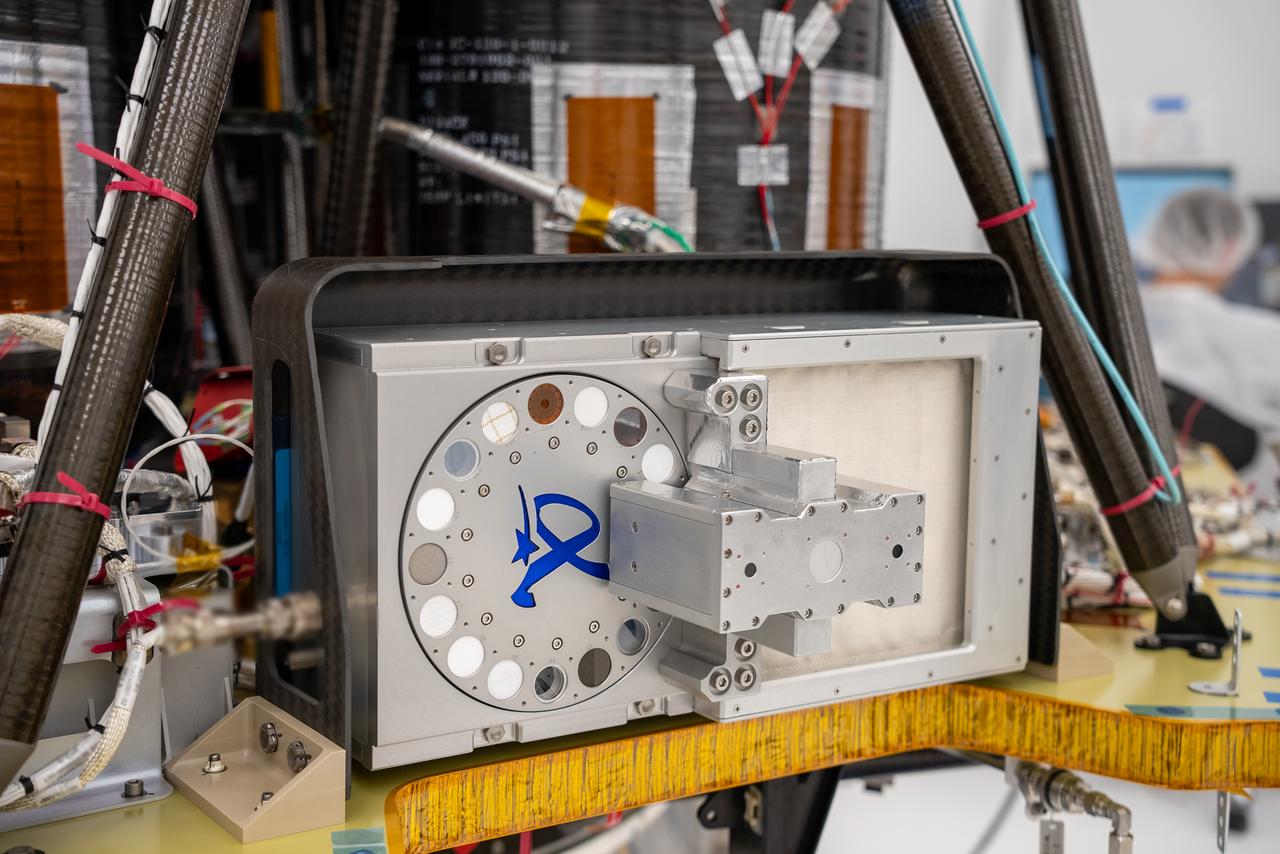
A science instrument flying aboard the next delivery for NASA’s CLPS (Commercial Lunar Payload Services) initiative is planning to study how different materials react to the lunar environment. Regolith Adherence Characterization, or RAC, is one of 10 payloads set to be carried to the Moon by the Blue Ghost 1 lunar lander in 2025. Developed by Aegis Aerospace, RAC’s wheels feature a series of different sample materials, helping researchers to better understand how lunar dust repels or attaches to each. Investigations and demonstrations, such as RAC, launched on CLPS flights will help NASA study Earth’s nearest neighbor under Artemis and pave the way for future crewed missions on the Moon. NASA’s Marshall Space Flight Center in Huntsville, Alabama, manages the development for seven of the 10 CLPS payloads that will be carried on Firefly’s Blue Ghost lunar lander.
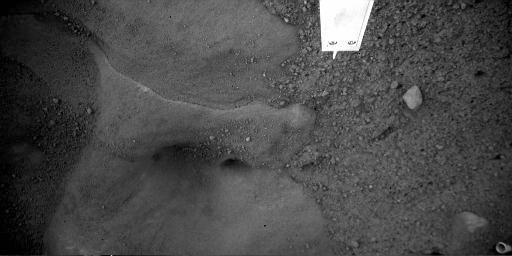
This image of Snow Queen, was taken by the Robotic Arm Camera RAC aboard NASA Phoenix Mars Lander.

This image shows a microscopic view of fine-grained material at the tip of the Robotic Arm scoop as seen by the Robotic Arm Camera RAC aboard NASA Phoenix Mars Lander on June 20, 2008, the 26th Martian day, or sol, of the mission.
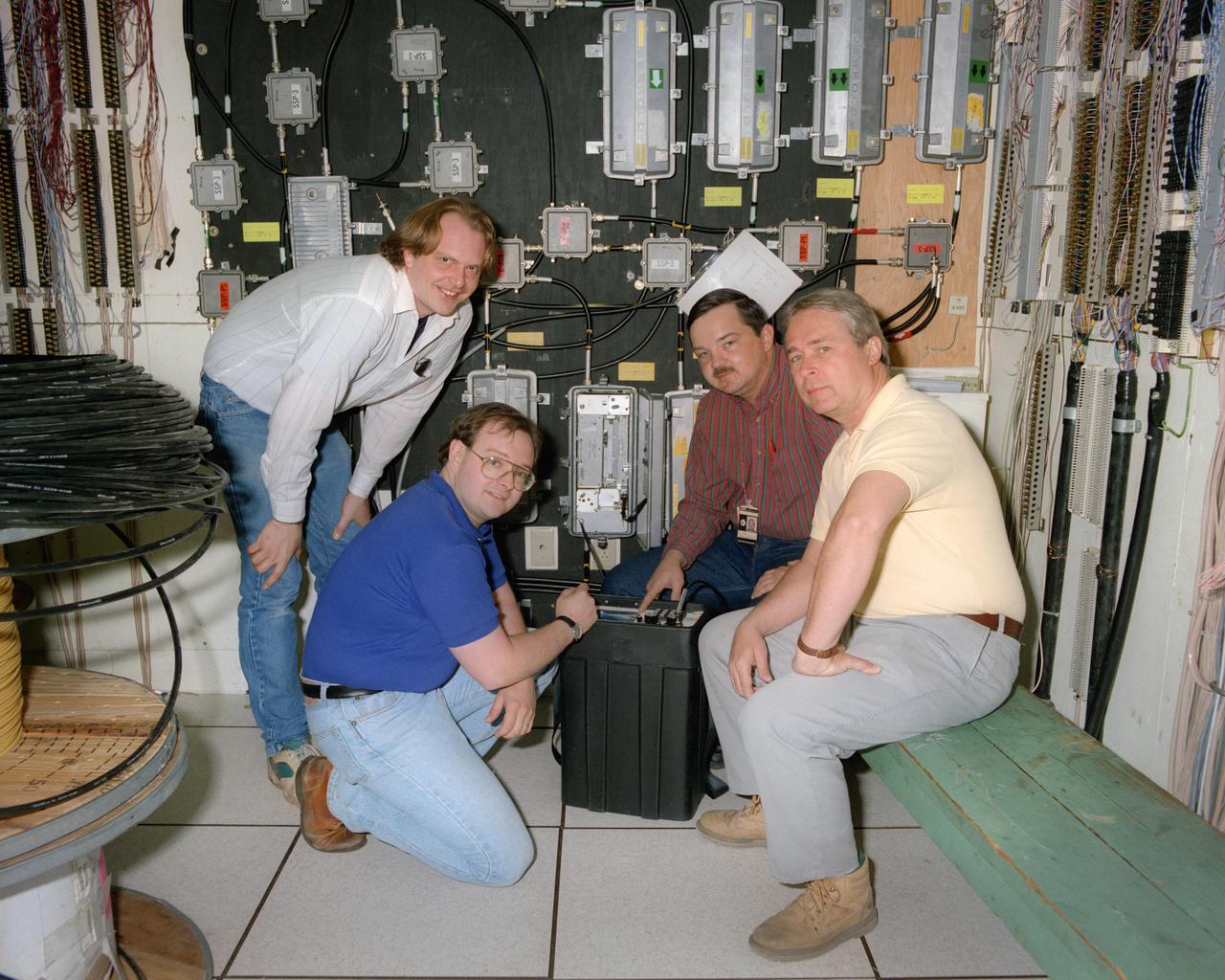
Pictured is the Communications room in the RAC building, Research Analysis Center. This is the hub for the CATV and Lynk system and also the telephone system as seen from the twisted pair wires. The test gear LAN 450 is on the floor and is a spectrum analyzer made specifically for CATV. The Large boxes on the wall are Trunk amps and the smaller boxes are Splitters or combiners.
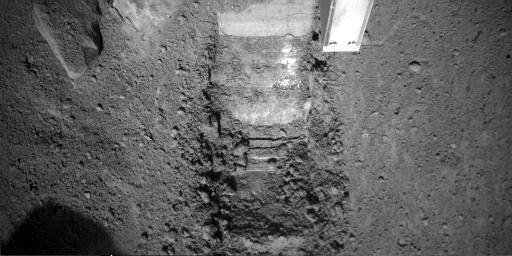
This image was taken by NASA's Phoenix Mars Lander's Robotic Arm Camera (RAC) on the ninth Martian day of the mission, or Sol 9 (June 3, 2008). The center of the image shows a trench informally called "Dodo" after the second dig. "Dodo" is located within the previously determined digging area, informally called "Knave of Hearts." The light square to the right of the trench is the Robotic Arm's Thermal and Electrical Conductivity Probe (TECP). The Robotic Arm has scraped to a bright surface which indicated the Arm has reached a solid structure underneath the surface, which has been seen in other images as well. http://photojournal.jpl.nasa.gov/catalog/PIA10763
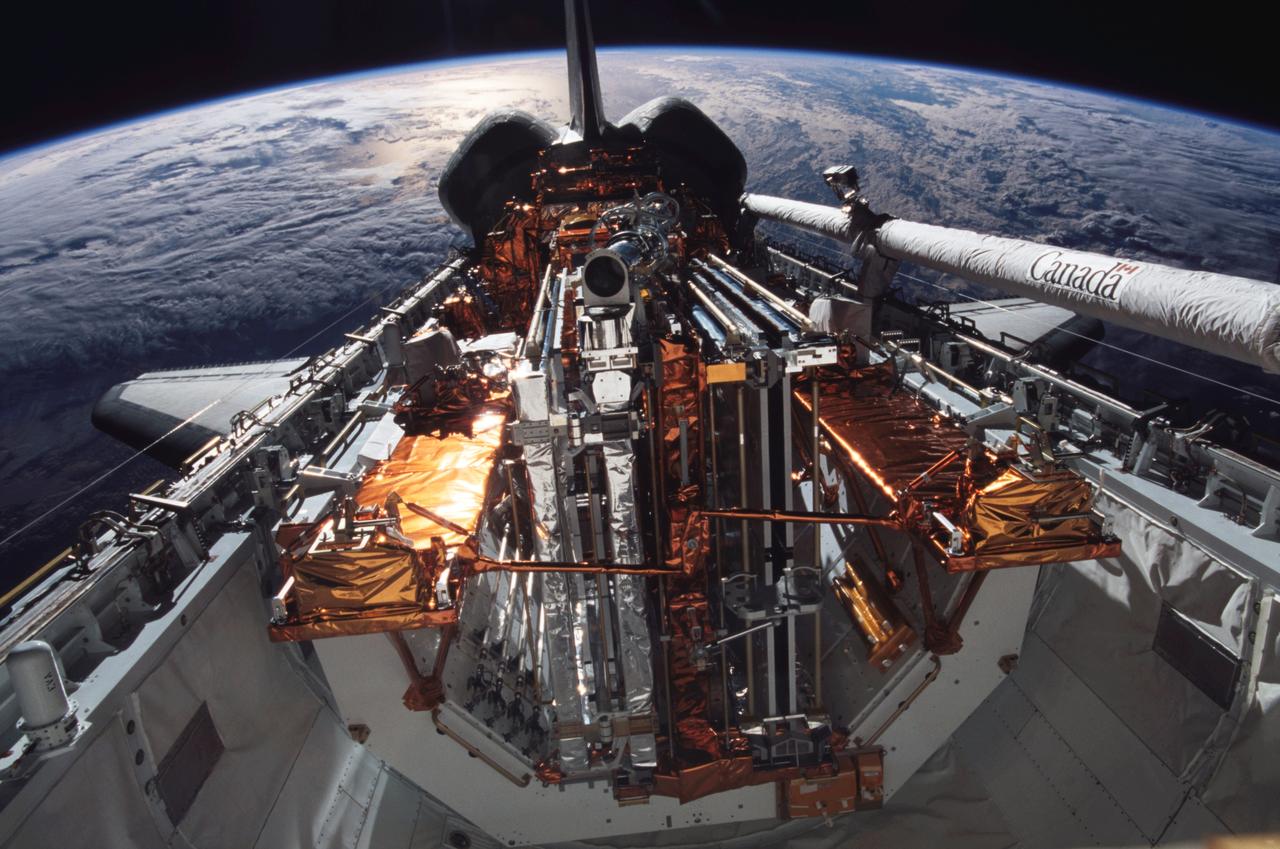
STS109-329-021 (1-12 March 2002) --- The horizon of a blue and white Earth and the blackness of space form the backdrop for this view of the cargo bay of the Space Shuttle Columbia, as seen through windows on the aft flight deck during the STS-109 mission. Pictured in the cargo bay is the Rigid Array Carrier (RAC) holding the new Hubble Solar Arrays. In its stowed position at right center of the frame is the Canadian-built Remote Manipulator System (RMS) arm.
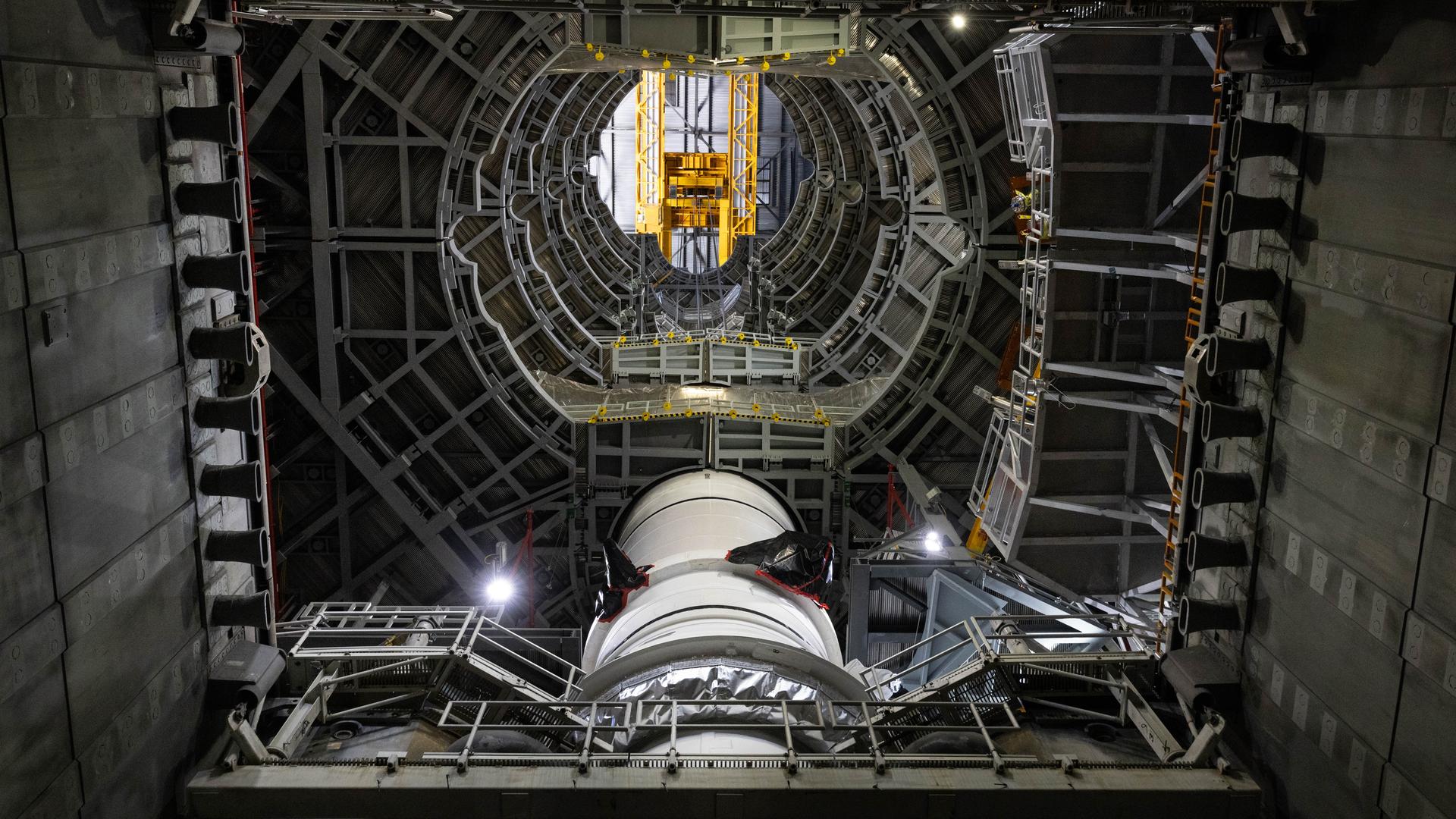
In High Bay 3 of the Vehicle Assembly Building at NASA’s Kennedy Space Center in Florida, the right aft center booster segment for Artemis III is lowered onto its aft assembly segment to prepare for integration on the mobile launcher for the SLS (Space Launch System) rocket on Wednesday, Aug. 12, 2026. The twin boosters, comprising of five segments each manufactured by Northrop Grumman in Utah, will provide more than 75 percent of the SLS rocket’s total thrust at launch. The Artemis III mission will launch crew in the Orion spacecraft on top of the SLS rocket to test rendezvous and docking capabilities between Orion and commercial spacecraft needed to land astronauts on the Moon.
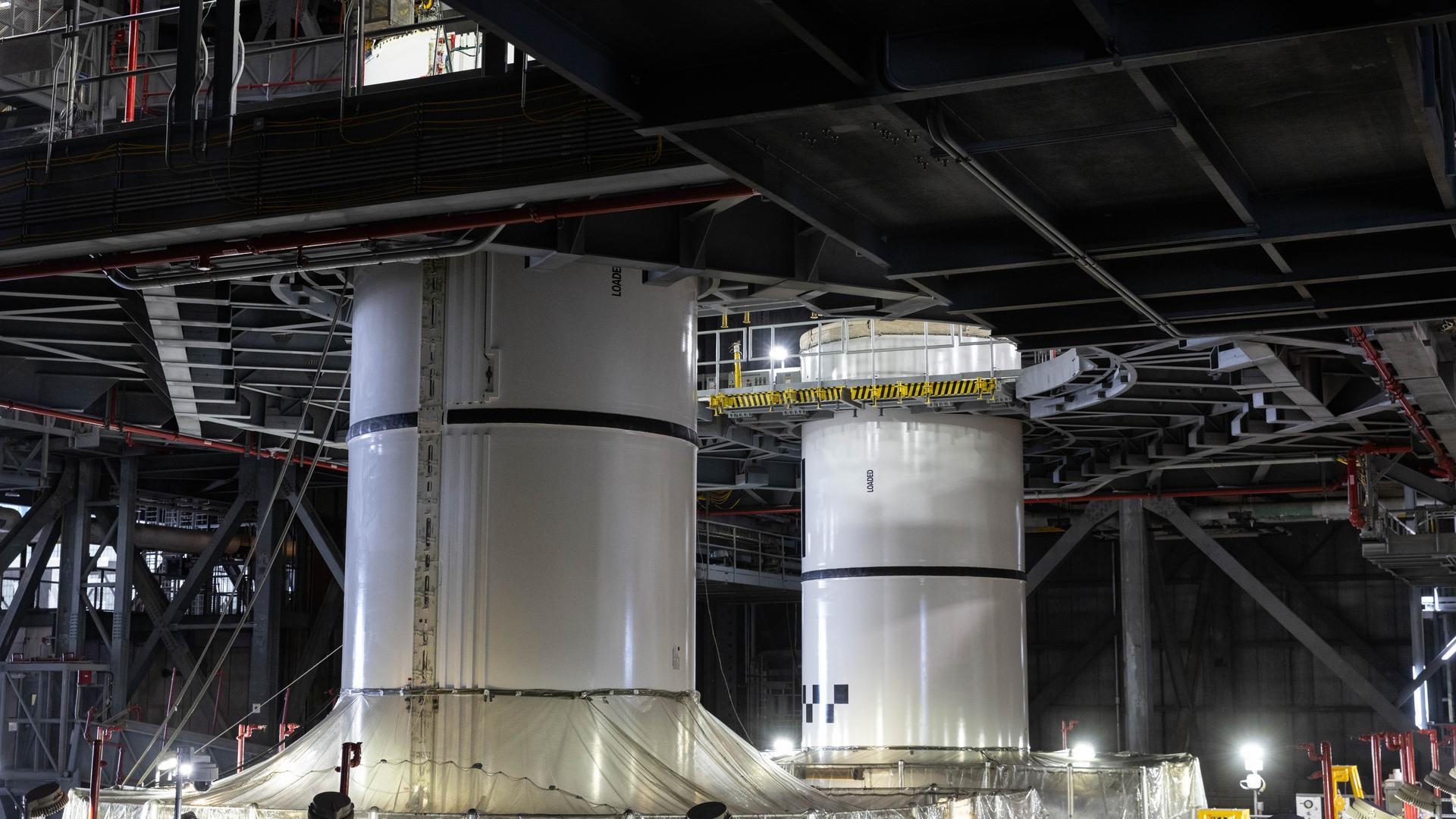
In High Bay 3 of the Vehicle Assembly Building at NASA’s Kennedy Space Center in Florida, the left and right aft center booster segments for Artemis III are lowered onto their aft assembly segments for integration on the mobile launcher for the SLS (Space Launch System) rocket on Wednesday, Aug. 12, 2026. The twin boosters, comprising of five segments each manufactured by Northrop Grumman in Utah, will provide more than 75 percent of the SLS rocket’s total thrust at launch. The Artemis III mission will launch crew in the Orion spacecraft on top of the SLS rocket to test rendezvous and docking capabilities between Orion and commercial spacecraft needed to land astronauts on the Moon.
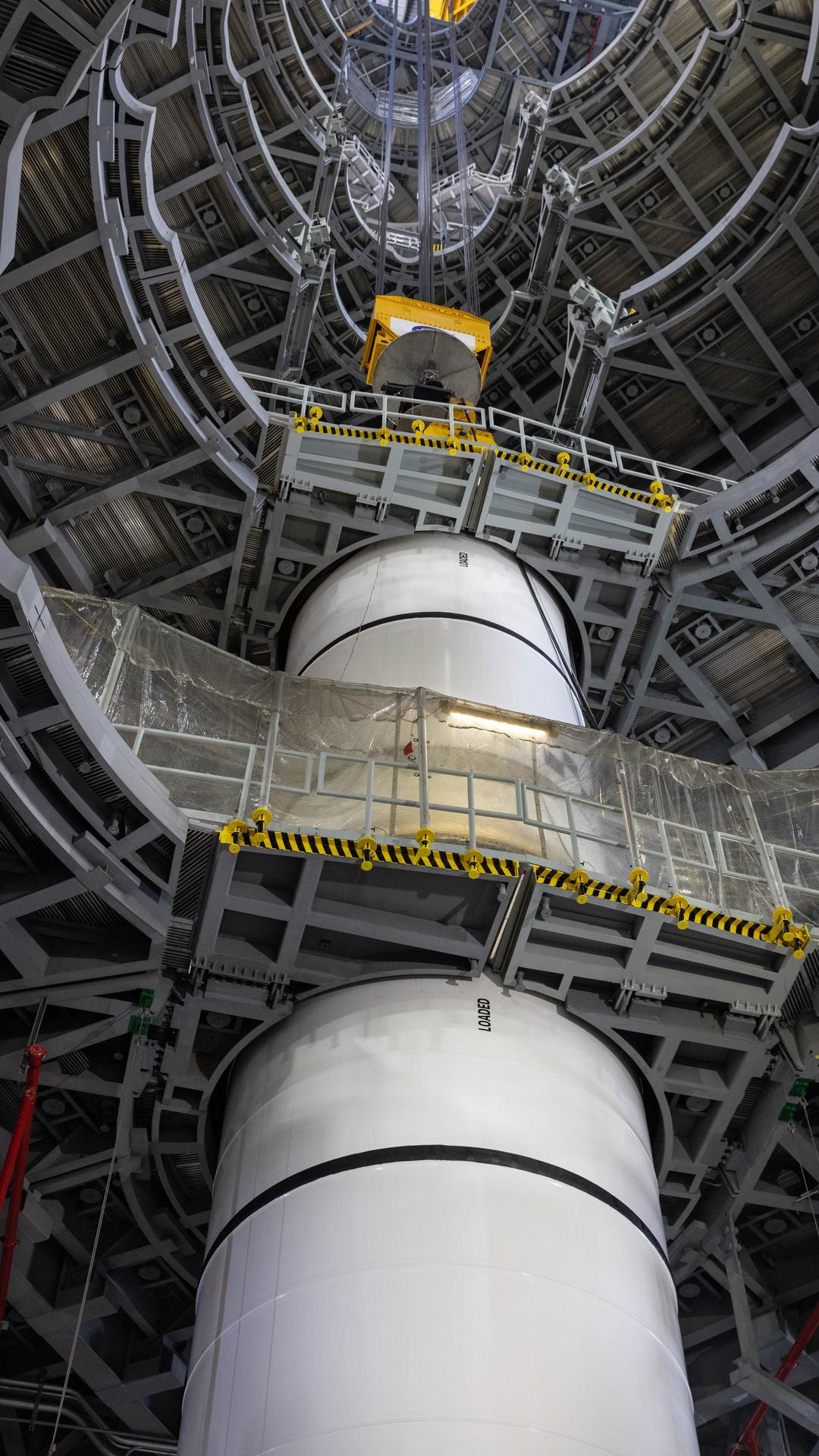
In High Bay 3 of the Vehicle Assembly Building at NASA’s Kennedy Space Center in Florida, the right aft center booster segment for Artemis III is lowered onto its aft assembly segment to prepare for integration on the mobile launcher for the SLS (Space Launch System) rocket on Wednesday, Aug. 12, 2026. The twin boosters, comprising of five segments each manufactured by Northrop Grumman in Utah, will provide more than 75 percent of the SLS rocket’s total thrust at launch. The Artemis III mission will launch crew in the Orion spacecraft on top of the SLS rocket to test rendezvous and docking capabilities between Orion and commercial spacecraft needed to land astronauts on the Moon.
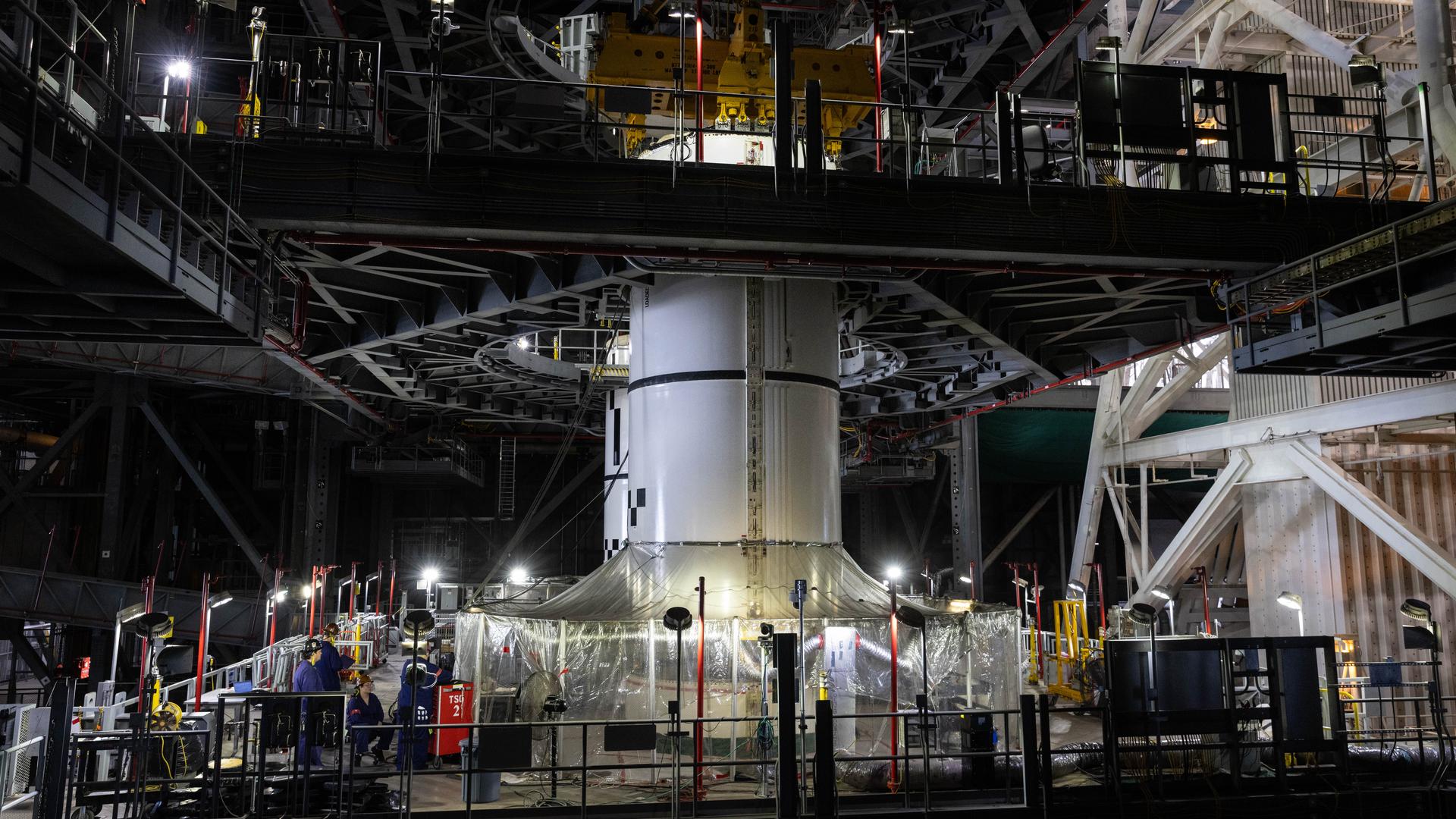
In High Bay 3 of the Vehicle Assembly Building at NASA’s Kennedy Space Center in Florida, the right aft center booster segment for Artemis III is lowered onto its aft assembly segment to prepare for integration on the mobile launcher for the SLS (Space Launch System) rocket on Wednesday, Aug. 12, 2026. The twin boosters, comprising of five segments each manufactured by Northrop Grumman in Utah, will provide more than 75 percent of the SLS rocket’s total thrust at launch. The Artemis III mission will launch crew in the Orion spacecraft on top of the SLS rocket to test rendezvous and docking capabilities between Orion and commercial spacecraft needed to land astronauts on the Moon.
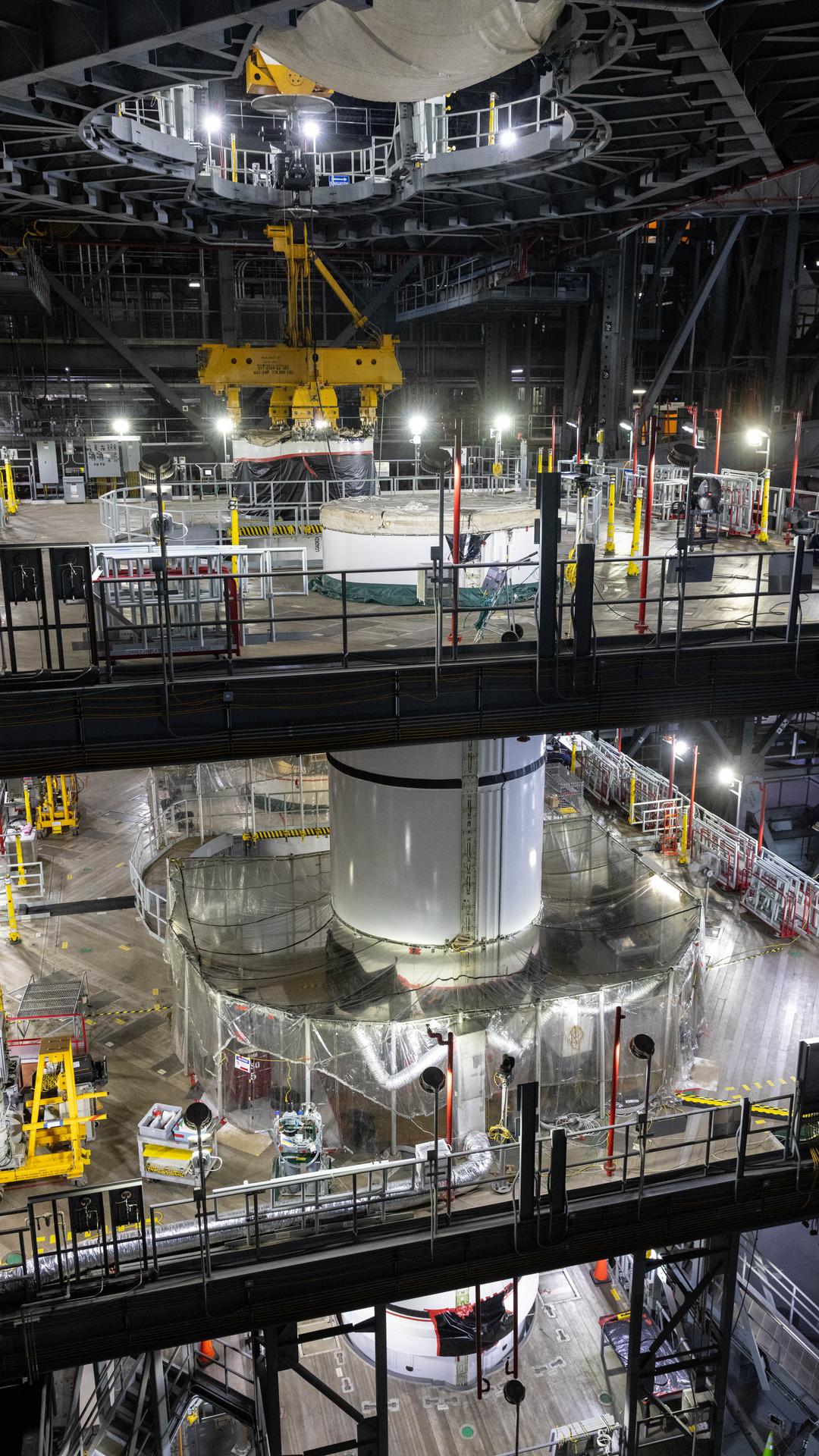
In High Bay 3 of the Vehicle Assembly Building at NASA’s Kennedy Space Center in Florida, the left and right aft center booster segments for Artemis III are lowered onto their aft assembly segments for integration on the mobile launcher for the SLS (Space Launch System) rocket on Wednesday, Aug. 12, 2026. The twin boosters, comprising of five segments each manufactured by Northrop Grumman in Utah, will provide more than 75 percent of the SLS rocket’s total thrust at launch. The Artemis III mission will launch crew in the Orion spacecraft on top of the SLS rocket to test rendezvous and docking capabilities between Orion and commercial spacecraft needed to land astronauts on the Moon.
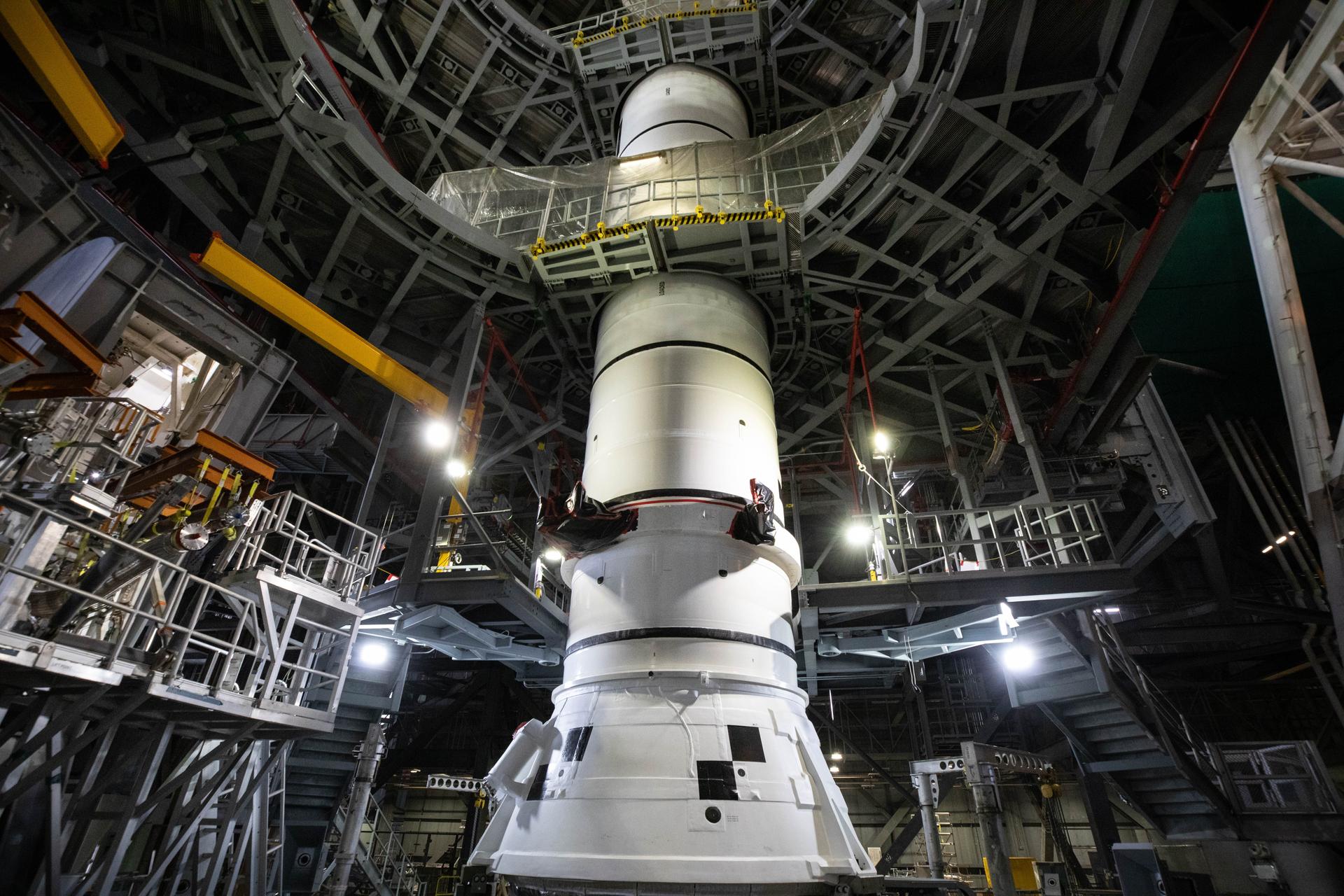
In High Bay 3 of the Vehicle Assembly Building at NASA’s Kennedy Space Center in Florida, the left aft center booster segment for Artemis III is lowered onto its aft assembly segment to prepare for integration on the mobile launcher for the SLS (Space Launch System) rocket on Wednesday, Aug. 12, 2026. The twin boosters, comprising of five segments each manufactured by Northrop Grumman in Utah, will provide more than 75 percent of the SLS rocket’s total thrust at launch. The Artemis III mission will launch crew in the Orion spacecraft on top of the SLS rocket to test rendezvous and docking capabilities between Orion and commercial spacecraft needed to land astronauts on the Moon.
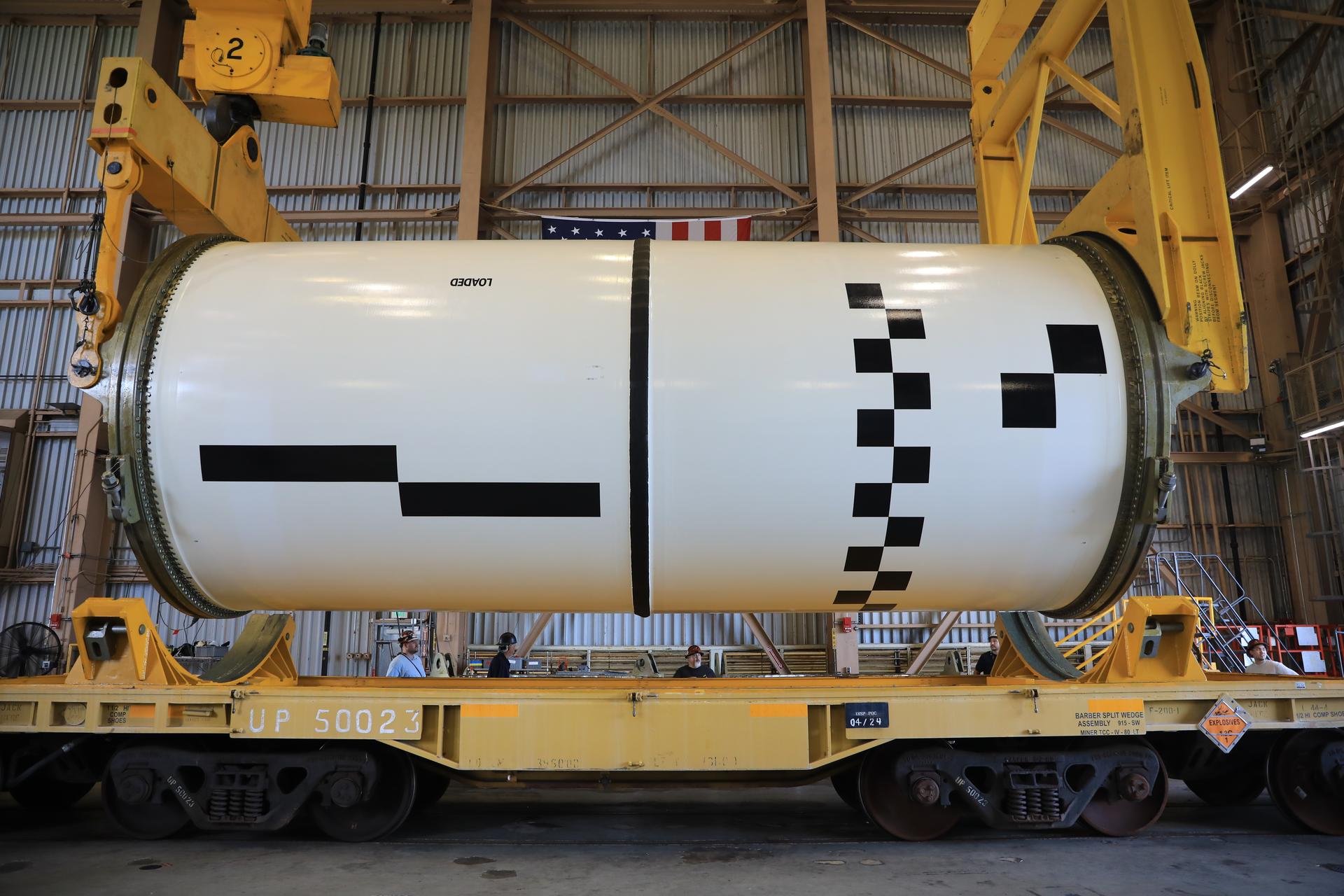
Technicians use a massive crane to rotate and lift the right-hand aft center assembly solid rocket booster segment for NASA’s Artemis III SLS (Space Launch System) rocket onto a work stand at the Rotation, Processing, and Surge Facility at the agency’s Kennedy Space Center in Florida on Wednesday, July 29, 2026. The twin boosters, comprising five segments each manufactured by Northrop Grumman in Utah, will provide more than 75 percent of the SLS rocket’s total thrust at launch. The Artemis III mission will launch crew in the Orion spacecraft on top of the SLS rocket to test rendezvous and docking capabilities between Orion and commercial spacecraft needed to land astronauts on the Moon.
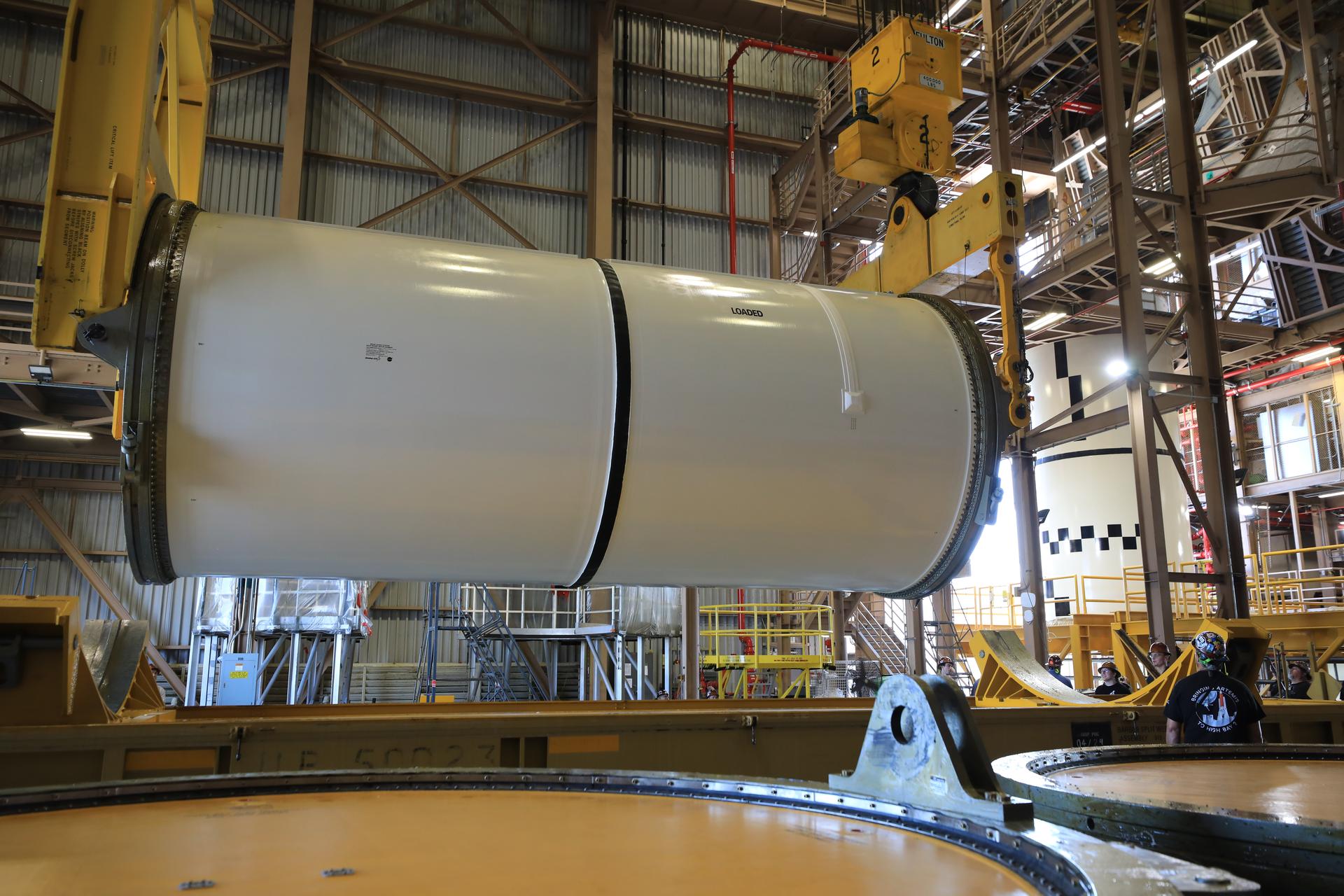
Technicians use a massive crane to rotate and lift the right-hand aft center assembly solid rocket booster segment for NASA’s Artemis III SLS (Space Launch System) rocket onto a work stand at the Rotation, Processing, and Surge Facility at the agency’s Kennedy Space Center in Florida on Wednesday, July 29, 2026, with the left-hand aft center assembly already vertical on its work stand. The twin boosters, comprising five segments each manufactured by Northrop Grumman in Utah, will provide more than 75 percent of the SLS rocket’s total thrust at launch. The Artemis III mission will launch crew in the Orion spacecraft on top of the SLS rocket to test rendezvous and docking capabilities between Orion and commercial spacecraft needed to land astronauts on the Moon.
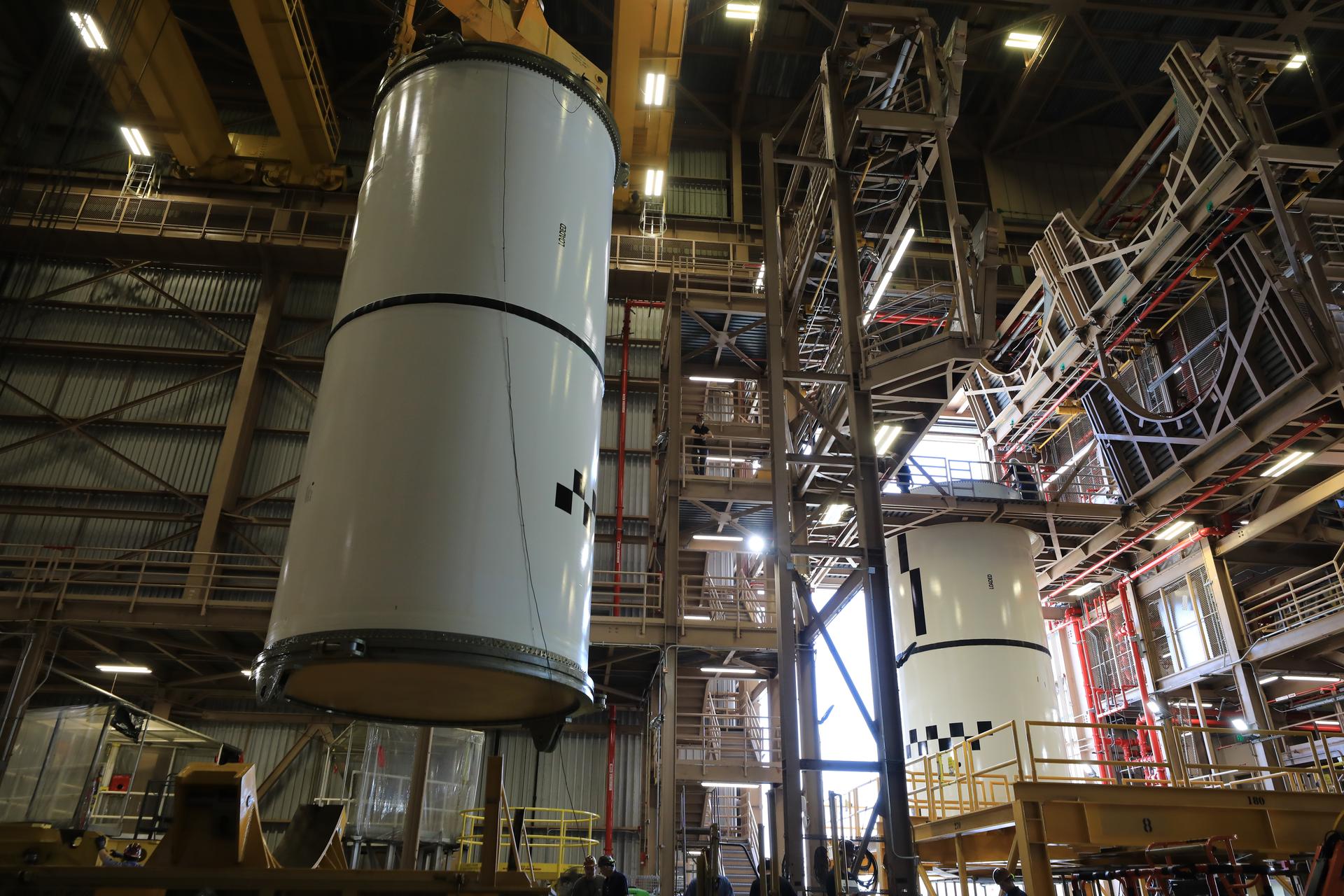
Technicians use a massive crane to rotate and lift the right-hand aft center assembly solid rocket booster segment for NASA’s Artemis III SLS (Space Launch System) rocket onto a work stand at the Rotation, Processing, and Surge Facility at the agency’s Kennedy Space Center in Florida on Wednesday, July 29, 2026, with the left-hand aft center assembly already vertical on its work stand. The twin boosters, comprising five segments each manufactured by Northrop Grumman in Utah, will provide more than 75 percent of the SLS rocket’s total thrust at launch. The Artemis III mission will launch crew in the Orion spacecraft on top of the SLS rocket to test rendezvous and docking capabilities between Orion and commercial spacecraft needed to land astronauts on the Moon.
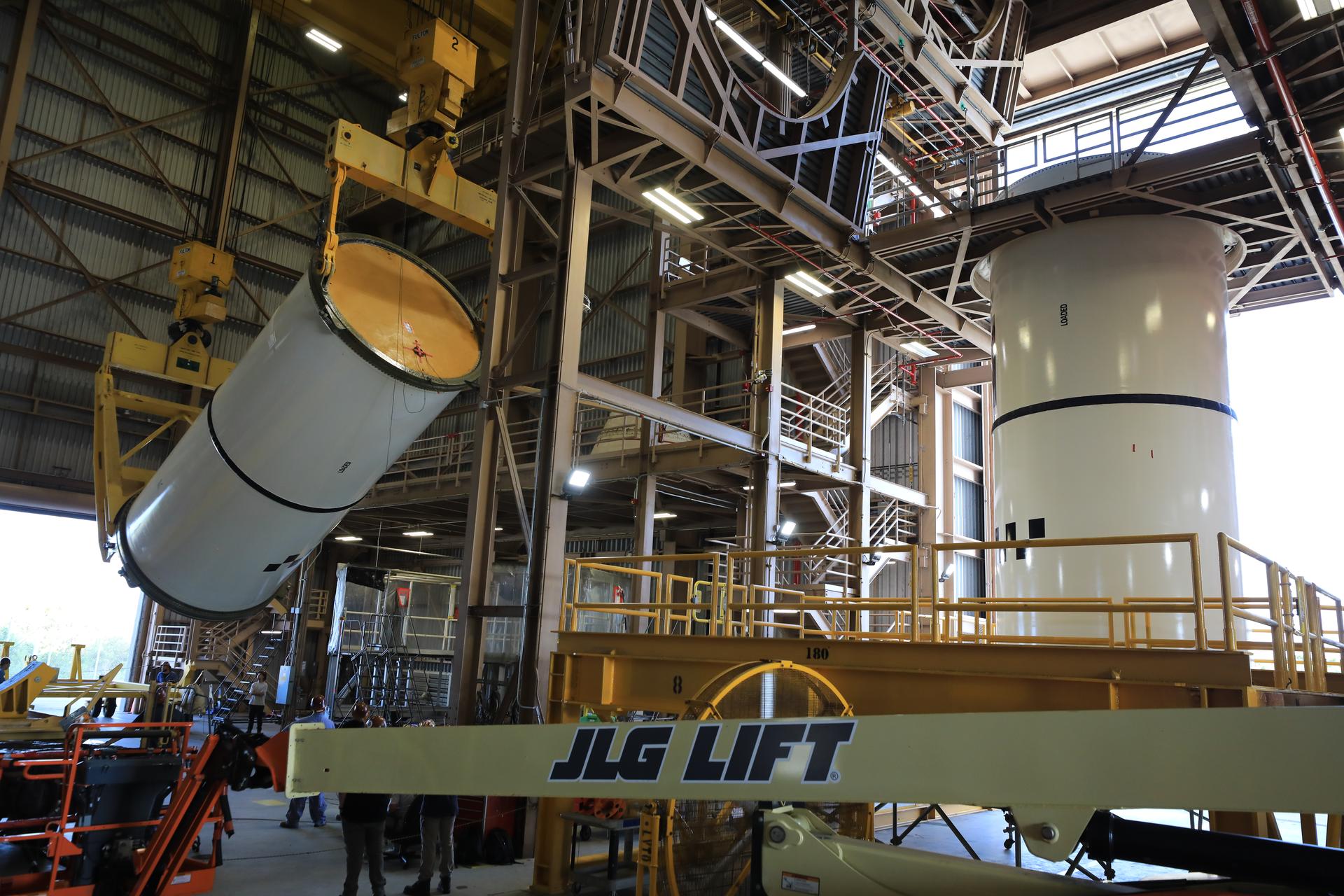
Technicians use a massive crane to rotate and lift the right-hand aft center assembly solid rocket booster segment for NASA’s Artemis III SLS (Space Launch System) rocket onto a work stand at the Rotation, Processing, and Surge Facility at the agency’s Kennedy Space Center in Florida on Wednesday, July 29, 2026, with the left-hand aft center assembly already vertical on its work stand. The twin boosters, comprising five segments each manufactured by Northrop Grumman in Utah, will provide more than 75 percent of the SLS rocket’s total thrust at launch. The Artemis III mission will launch crew in the Orion spacecraft on top of the SLS rocket to test rendezvous and docking capabilities between Orion and commercial spacecraft needed to land astronauts on the Moon.
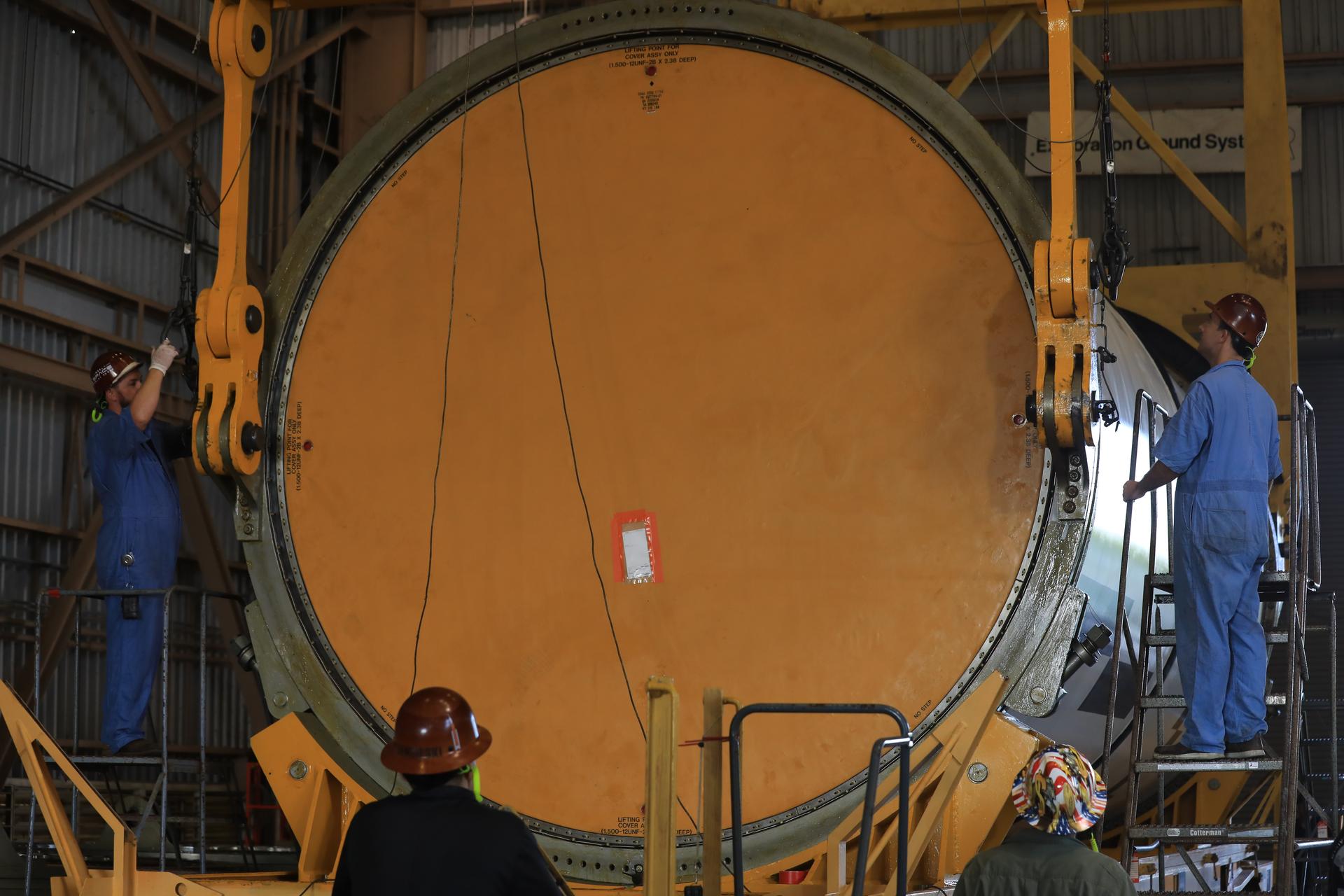
Technicians use a massive crane to rotate and lift the right-hand aft center assembly solid rocket booster segment for NASA’s Artemis III SLS (Space Launch System) rocket onto a work stand at the Rotation, Processing, and Surge Facility at the agency’s Kennedy Space Center in Florida on Wednesday, July 29, 2026. The twin boosters, comprising five segments each manufactured by Northrop Grumman in Utah, will provide more than 75 percent of the SLS rocket’s total thrust at launch. The Artemis III mission will launch crew in the Orion spacecraft on top of the SLS rocket to test rendezvous and docking capabilities between Orion and commercial spacecraft needed to land astronauts on the Moon.

Technicians use a massive crane to rotate and lift the right-hand aft center assembly solid rocket booster segment for NASA’s Artemis III SLS (Space Launch System) rocket onto a work stand at the Rotation, Processing, and Surge Facility at the agency’s Kennedy Space Center in Florida on Wednesday, July 29, 2026. The twin boosters, comprising five segments each manufactured by Northrop Grumman in Utah, will provide more than 75 percent of the SLS rocket’s total thrust at launch. The Artemis III mission will launch crew in the Orion spacecraft on top of the SLS rocket to test rendezvous and docking capabilities between Orion and commercial spacecraft needed to land astronauts on the Moon.
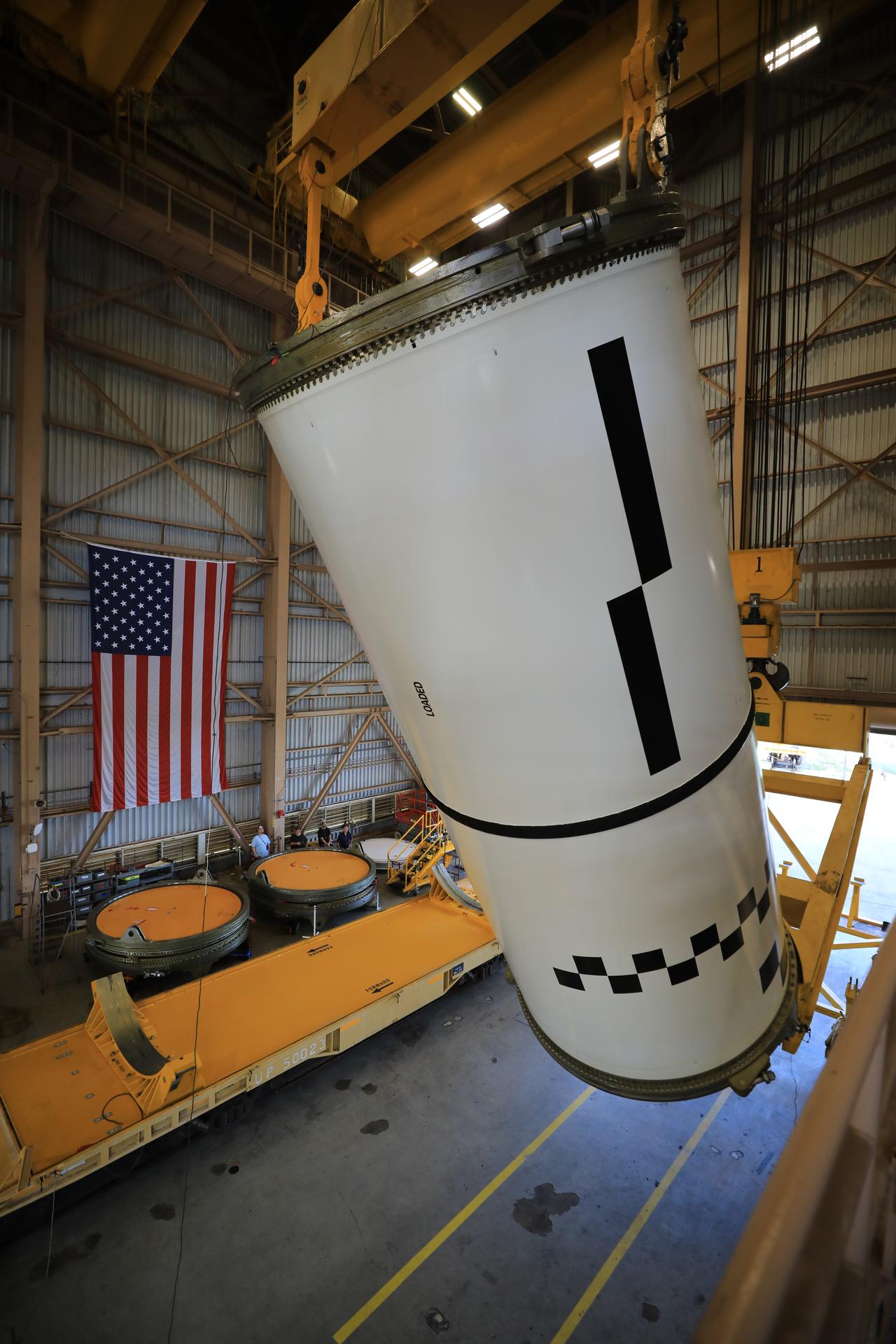
Technicians use a massive crane to rotate and lift the right-hand aft center assembly solid rocket booster segment for NASA’s Artemis III SLS (Space Launch System) rocket onto a work stand at the Rotation, Processing, and Surge Facility at the agency’s Kennedy Space Center in Florida on Wednesday, July 29, 2026. The twin boosters, comprising five segments each manufactured by Northrop Grumman in Utah, will provide more than 75 percent of the SLS rocket’s total thrust at launch. The Artemis III mission will launch crew in the Orion spacecraft on top of the SLS rocket to test rendezvous and docking capabilities between Orion and commercial spacecraft needed to land astronauts on the Moon.
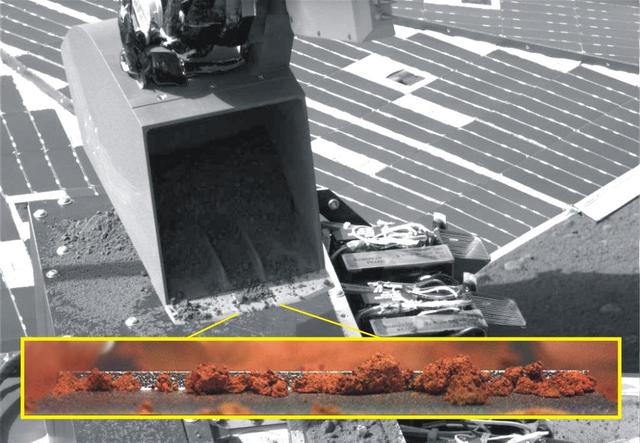
Rosy Red Soil in Scoop