Artist concept of the Johnson Space Center Amateur Radio Club logo.
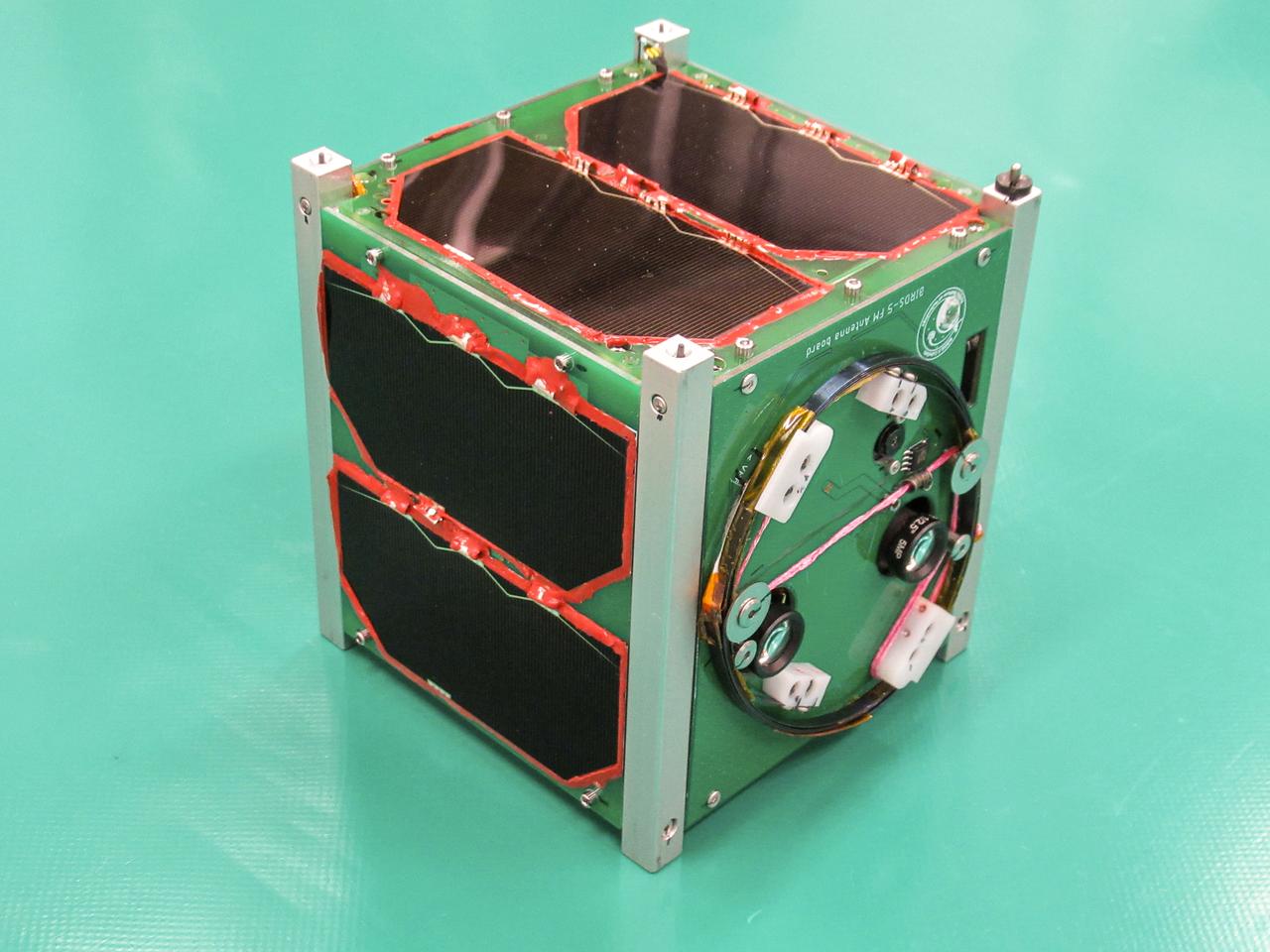
JSC2024E043924 (4/14/2025) --- The CosmoGirl-Sat CubeSat from Japan Aerospace Exploration Agency (JAXA) shows deep blue solar panels at the front of the spacecraft that power three sunken camera lenses (seen on the top of the satellite), amongst a plethora of other subsystems. CosmoGirl-Sat is developed by the Cosmo Women’s Amateur Radio Club, and its primary mission is to transmit imagery to a ground station on Earth. Image courtesy of Cosmo Girls Amateur Radio Club.
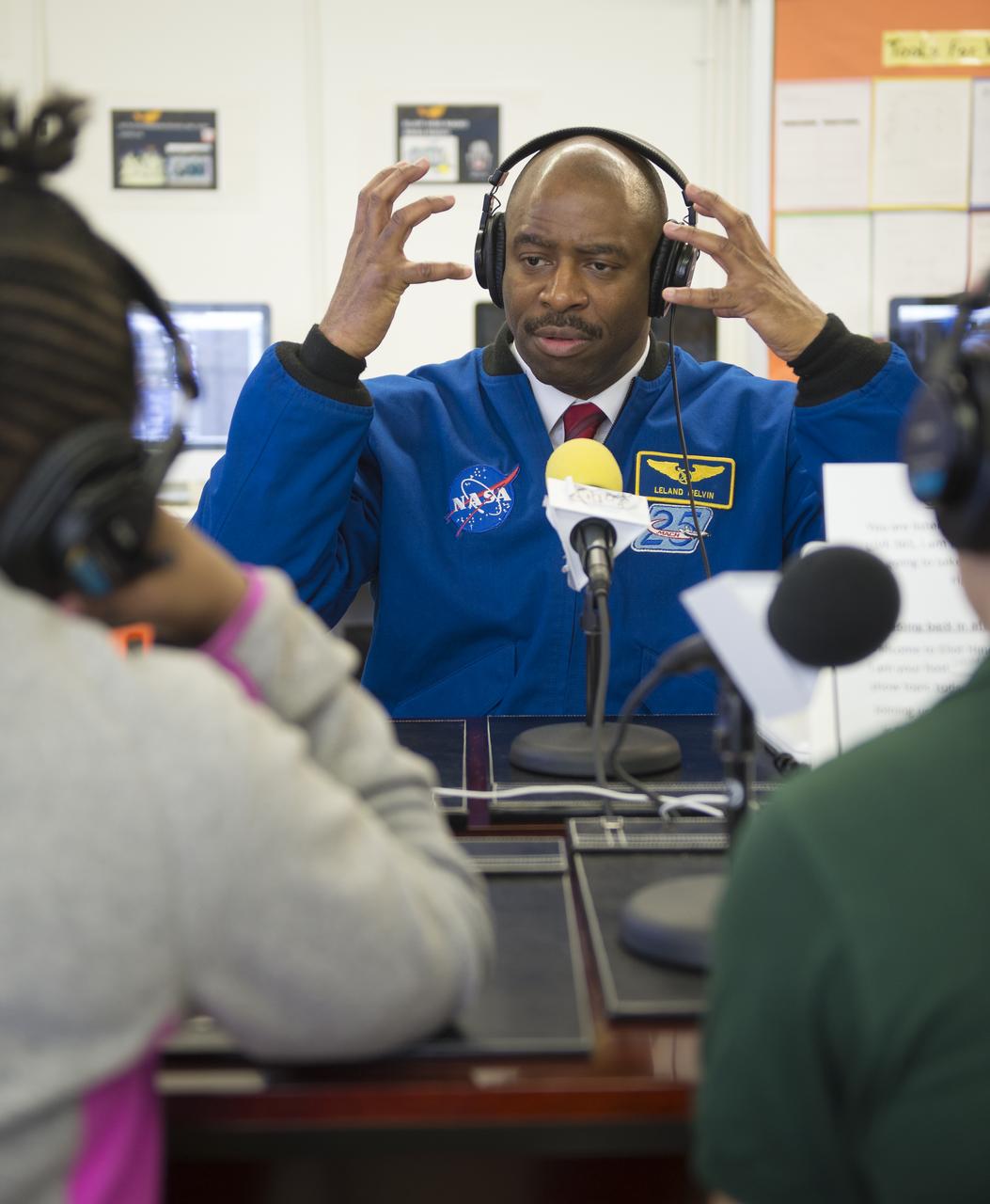
Leland Melvin, NASA Associate Administrator for Education and former astronaut, is interviewed by sixth grade students from the Broadcast Media Class at Eliot Hine Middle School on Friday, March 1, 2013 in Washington. The radio club program, Eliot Hine Radio, is broadcast live on the internet. Photo Credit: (NASA/Carla Cioffi)
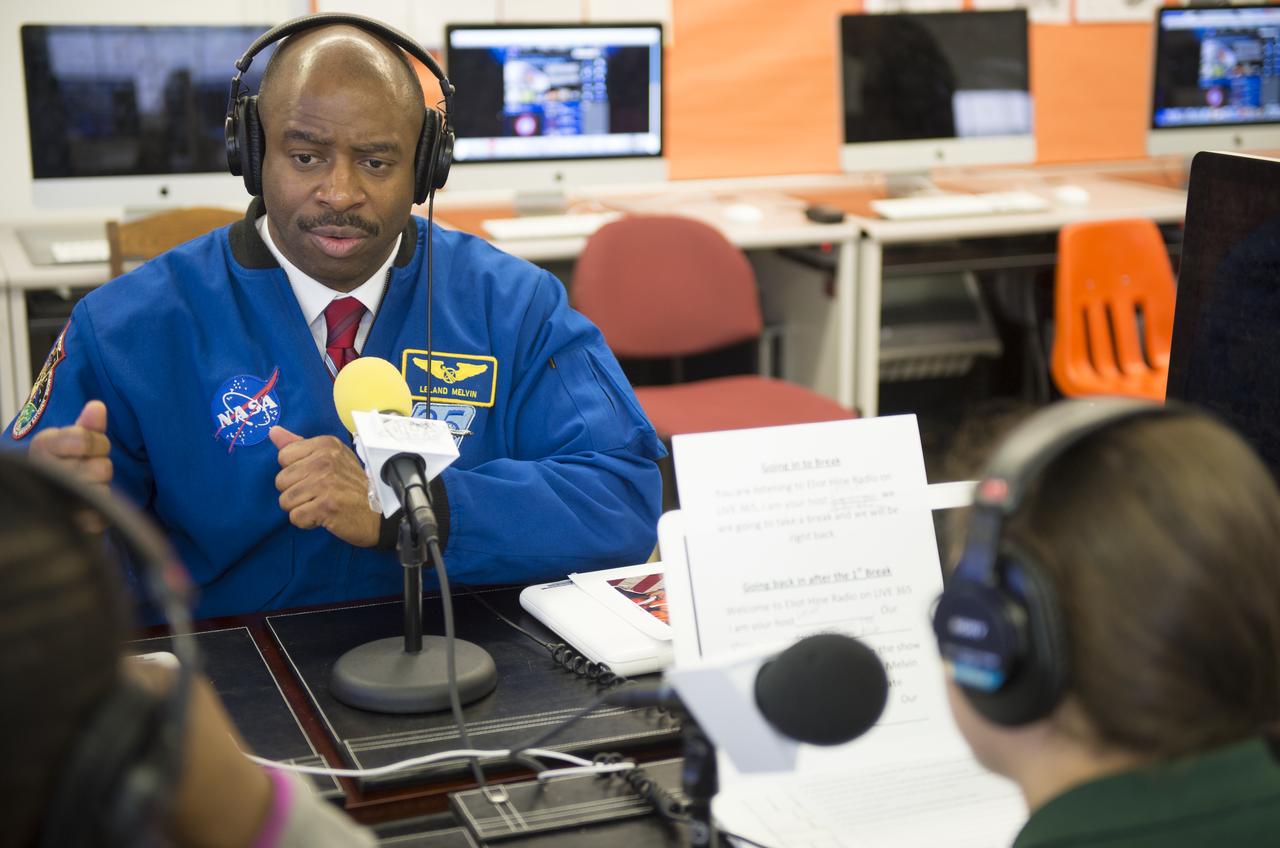
Leland Melvin, NASA Associate Administrator for Education and former astronaut, is interviewed by sixth grade students from the Broadcast Media Class at Eliot Hine Middle School on Friday, March 1, 2013 in Washington. The radio club program, Eliot Hine Radio, is broadcast live on the internet. Photo Credit: (NASA/Carla Cioffi)
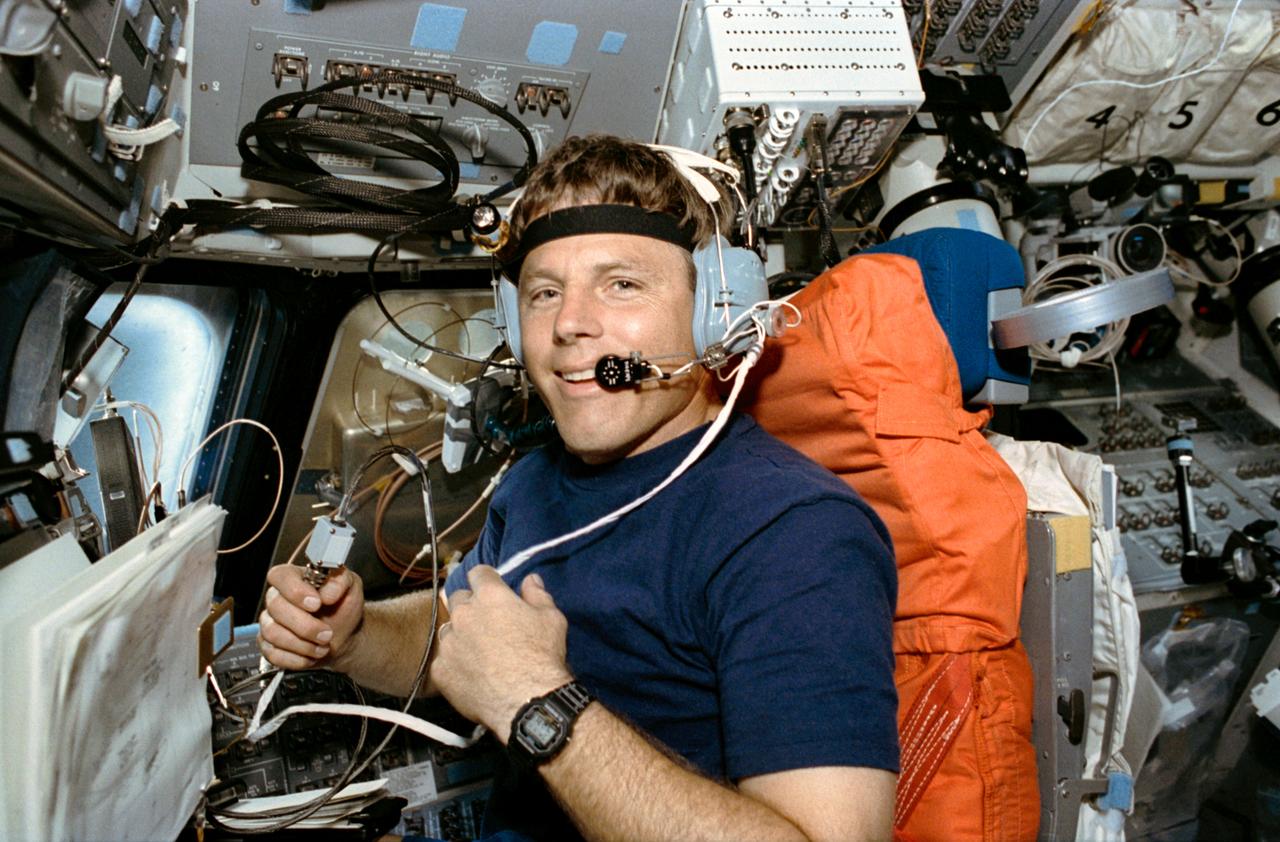
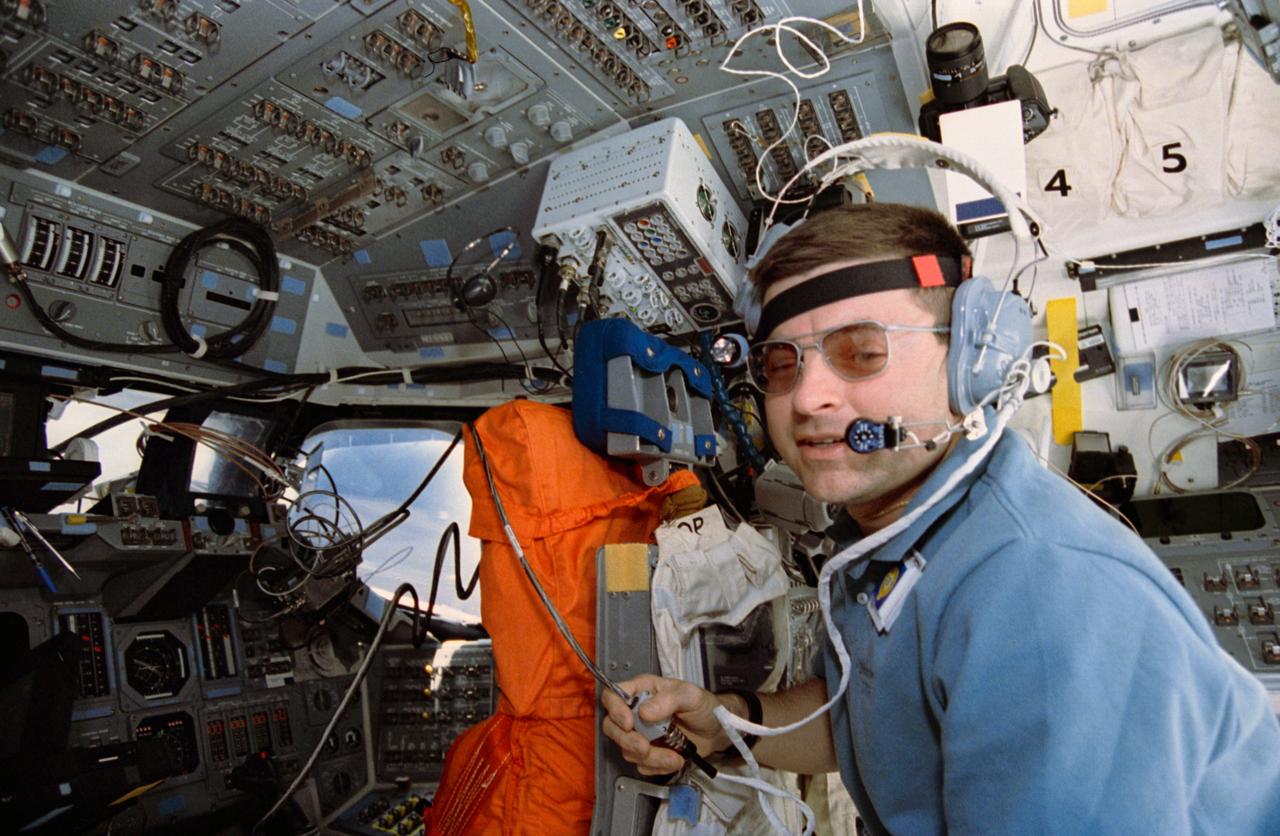
STS056-04-004 (8-17 April 1993) --- Aboard Discovery, Astronaut Stephen S. Oswald, Pilot, talks to amateur radio operators on Earth via the Shuttle Amateur Radio Experiment (SAREX). SAREX was established by NASA, the American Radio League/Amateur Radio Satellite Corporation and the Johnson Space Center Amateur Radio Club to encourage public participation in the space program through a program to demonstrate the effectiveness of conducting short-wave radio transmissions between the Shuttle and ground-based radio operators at low-cost ground stations with amateur and digital techniques. As on several previous missions, SAREX was used on this flight as an educational opportunity for students around the world to learn about space firsthand by speaking directly to astronauts aboard the Shuttle.
Space Shuttle Discovery (STS-56) onboard photo of Pilot Stephen S. Oswald (wearing a headset) uses the Shuttle Amateur Radio Experiment II (SAREX-II) while sitting at the pilot's station on the forward flight deck. Oswald smiled from behind the microphone as he talks to amateur radio operators on Earth via the SAREX equipment. SAREX cables and the interface module freefloat in front of Oswald. The anterna located in the forward flight deck window is visible in the background. SAREX was established by NASA, the American Radio League/Amateur Radio Satellite Corporation and the Johnson Space Center (JSC) Amateur Radio Club to encourage public participation in the space program through a program to demonstrate the effectiveness of conducting short-wave radio transmissions between the Shuttle and ground-based radio operators at low-cost ground stations with amateur and digital techniques.
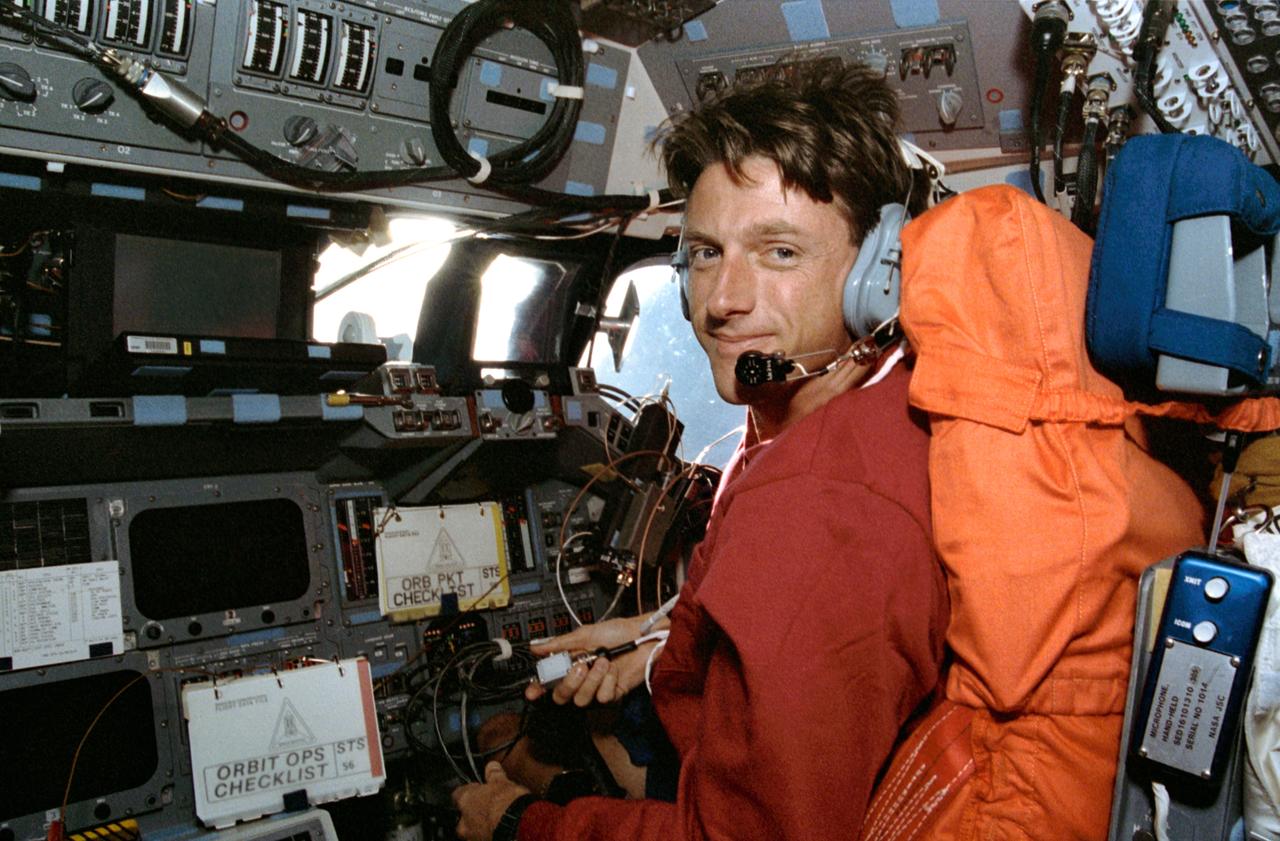
STS056-30-001 (8-17 April 1993) --- Aboard Discovery, astronaut C. Michael Foale, (call letters KB5UAC), talks to amateur radio operators on Earth via the Shuttle Amateur Radio Experiment (SAREX). SAREX was established by NASA, the American Radio League/Amateur Radio Satellite Corporation and the Johnson Space Center Amateur Radio Club to encourage public participation in the space program through an endeavor to demonstrate the effectiveness of conducting short-wave radio transmissions. These transmissions occur between the Shuttle and ground-based radio operators at low cost ground stations with amateur and digital techniques. As on several previous missions, SAREX was used on this flight as an educational opportunity for students around the world to learn about space firsthand by speaking directly to astronauts aboard the Shuttle.
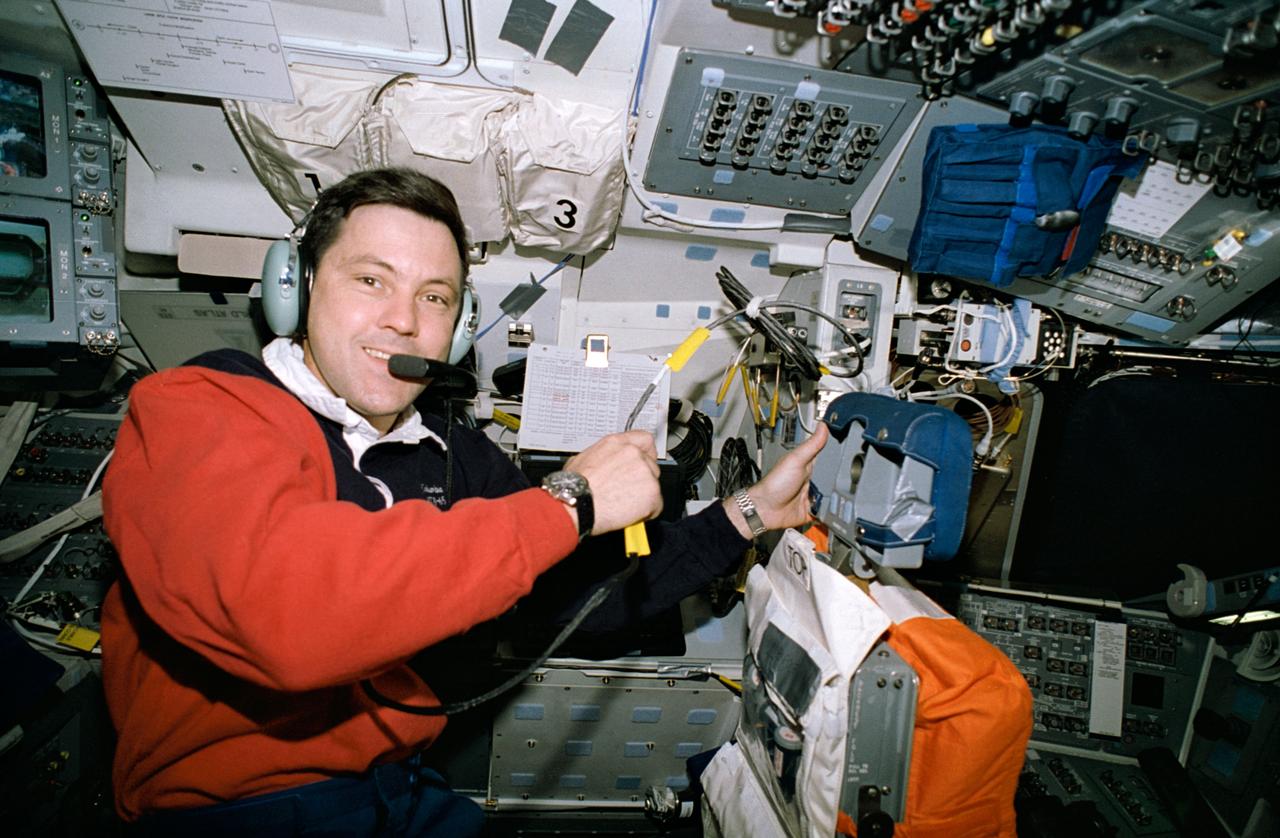
STS065-44-014 (8-23 July 1994) --- Astronaut Robert D. Cabana, mission commander, is seen on the Space Shuttle Columbia's flight deck with the Shuttle Amateur Radio Experiment (SAREX). SAREX was established by NASA, the American Radio League/Amateur Radio Satellite Corporation and the Johnson Space Center (JSC) Amateur Radio Club to encourage public participation in the space program through a project to demonstrate the effectiveness of conducting short-wave radio transmissions between the Shuttle and ground-based radio operators at low-cost ground stations with amateur and digital techniques. As on several previous missions, SAREX was used on this flight as an educational opportunity for students around the world to learn about space firsthand by speaking directly to astronauts aboard the Shuttle.
STS056-30-022 (8-17 April 1993) --- Aboard Discovery, astronaut Kenneth D. Cameron (call letters N5AWP), talks to amateur radio operators on Earth via the Shuttle Amateur Radio Experiment (SAREX). SAREX was established by NASA, the American Radio League\Amateur Satellite Corporation and the Johnson Space Center Amateur Radio Club to encourage public participation in the space program. It is part of an endeavor to demonstrate the effectiveness of conducting short-wave radio transmissions between the Shuttle and ground-based radio operators at low cost ground stations with amateur and digital techniques. As on several previous missions, SAREX was used on this flight as an educational opportunity for students around the world to learn about space firsthand by speaking directly to astronauts aboard the Shuttle.