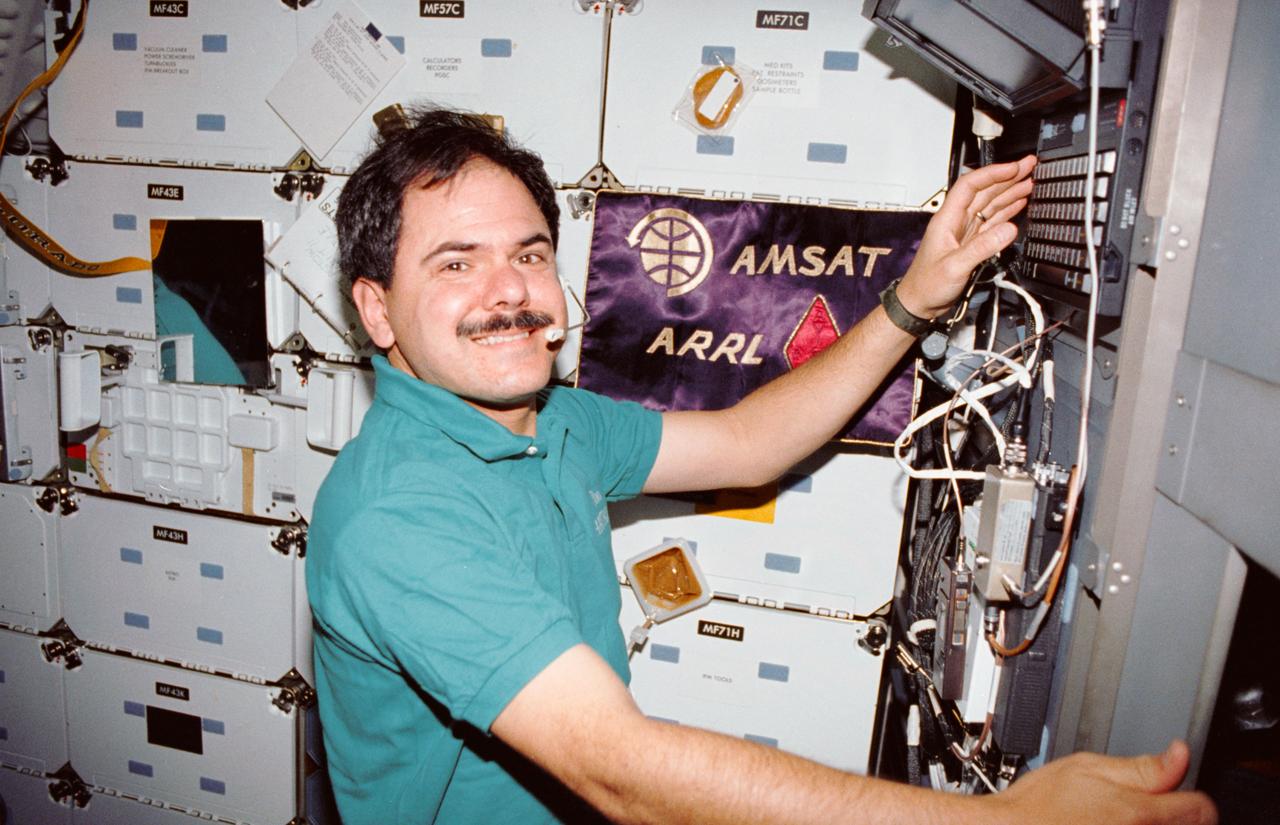
STS-35 Payload Specialist Ronald A. Parise enters data into the payload and general support computer (PGSC) in preparation for Earth communication via the Shuttle Amateur Radio Experiment (SAREX) aboard Columbia, Orbiter Vehicle (OV) 102. The SAREX equipment is secured to the middeck starboard sleep station. SAREX provided radio transmissions between ground based amateur radio operators around the world and Parise, a licensed amateur radio operator. The experiment enabled students to communicate with an astronaut in space, as Parise (call-sign WA4SIR) devoted some of his off-duty time to that purpose. Displayed on the forward lockers beside Parise is a AMSAT (Amateur Radio Satellite Corporation) / ARRL (American Radio Relay League) banner. Food items and checklists are attached to the lockers. In locker position MF43G, the Development Test Objective (DTO) Trash Compaction and Retention System Demonstration extended duration orbiter (EDO) compactor is visible.
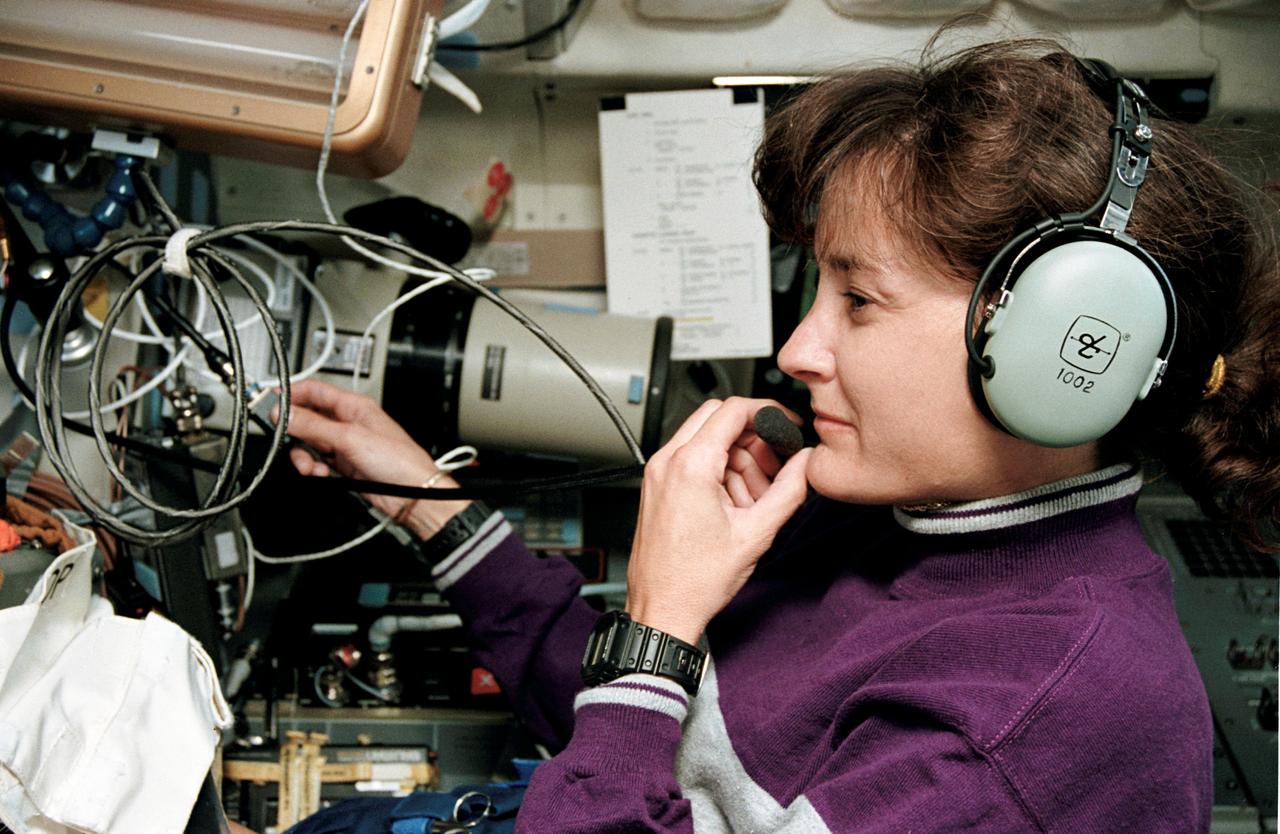
STS059-16-028 (9-20 April 1994) --- Onboard the Space Shuttle Endeavour, astronaut Linda M. Godwin talks to students via the Shuttle Amateur Radio Experiment (SAREX). The payload commander, as well as several other STS-59 crew members spent some off-duty time using the amateur radio equipment to communicate with "Hams" and students on Earth.
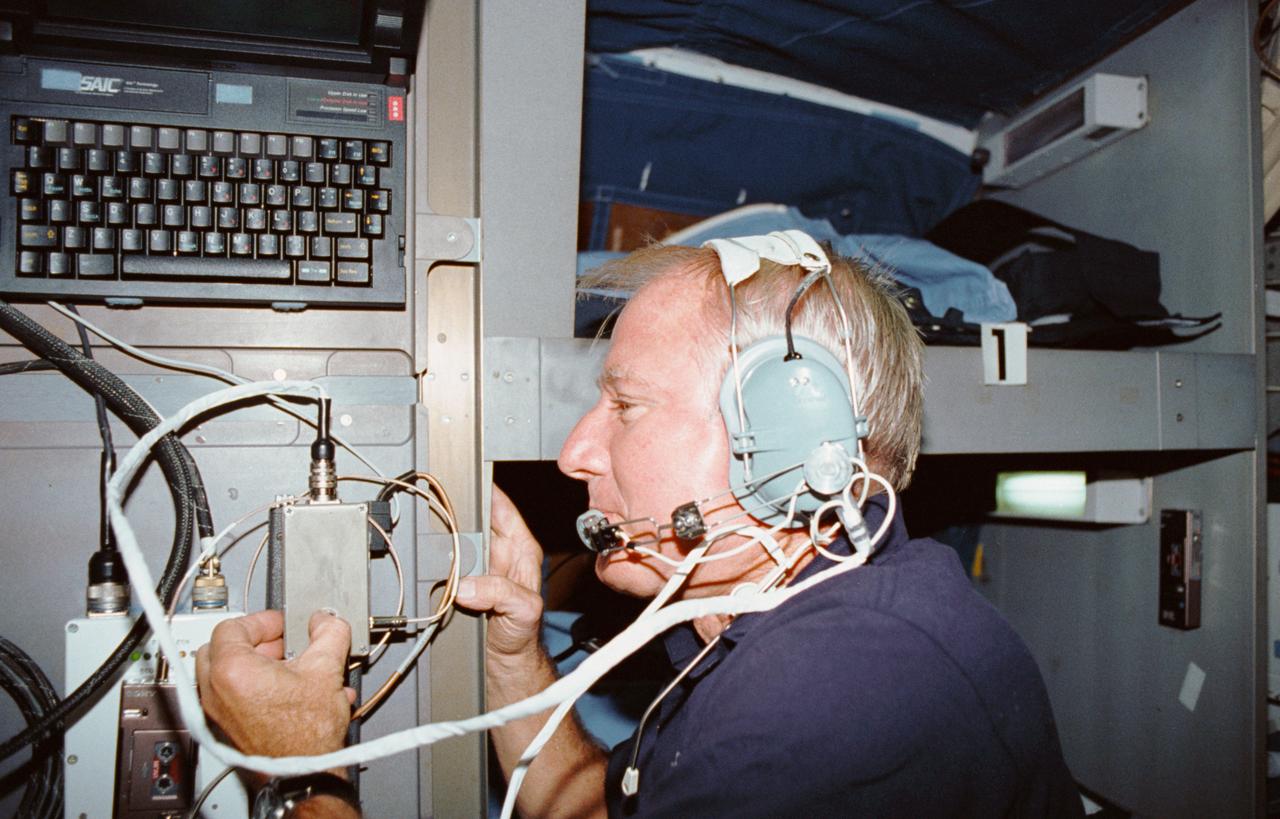
STS035-05-036 (2-10 Dec 1990) --- STS-35 Commander Vance D. Brand, wearing headset, communicates with family members using Shuttle Amateur Radio Experiment (SAREX) on Columbia's, Orbiter Vehicle (OV) 102's, middeck. SAREX and its portable laptop computer mounted on the outside of the middeck sleep station allowed the STS-35 crewmembers to "visit" and briefly share some of their in space experiences with family members. It also provided radio transmissions between ground based amateur radio operators around the world and OV-102. The experiment enabled students from all over the United States to have a chance to communicate with a crewmember in space.
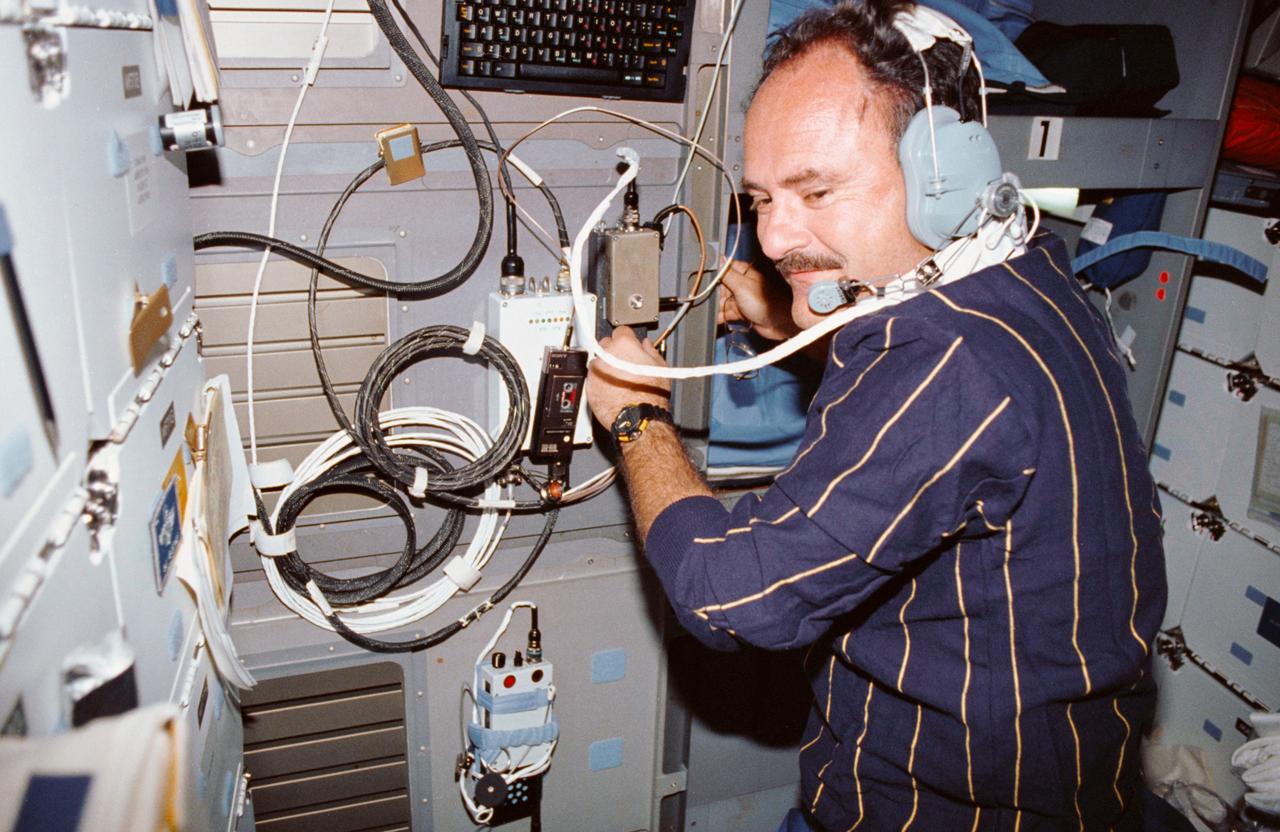
STS035-15-010 (2-11 Dec 1990) --- Astronaut John M. (Mike) Lounge, STS-35 mission specialist, communicates with family members from the middeck of Space Shuttle Columbia in Earth orbit. The STS-35 Shuttle amateur radio experiment (SAREX), allowed the Astro 1 crewmembers to "visit" and briefly share some of their in space experiences with family members. The picture was made with a 35mm camera. Note: Used by Astronomer Ronald A. Parise on his off-duty hours, SAREX provided radio transmissions between ground based amateur radio operators around the world and the Shuttle. Parise is a payload specialist who is also a licensed amateur radio operator (call-sign WA4SIR). The experiment enabled students from all over the United States to have a chance to communicate with an astronaut in space.
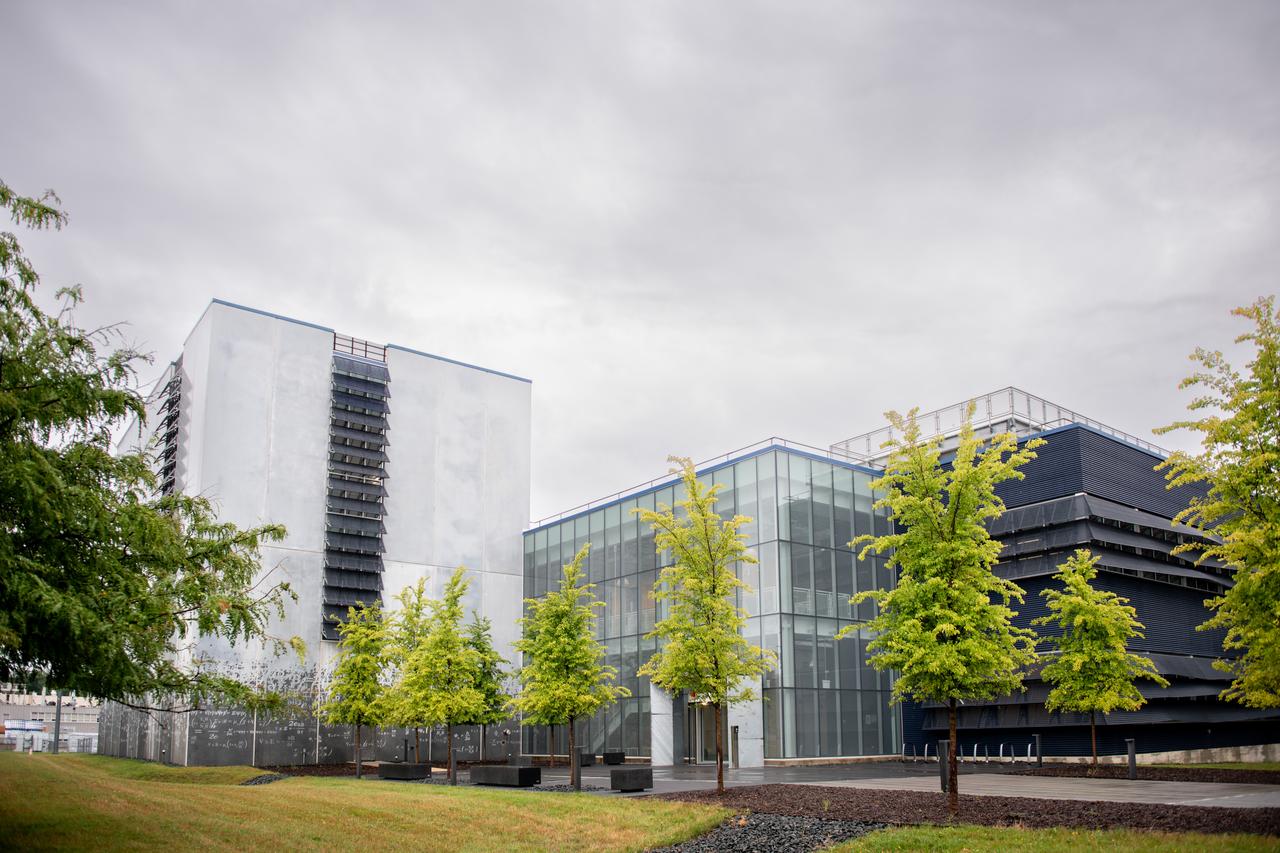
NASA’s Glenn Research Center opened the doors to a brand-new mission-focused facility that will support the agency’s Artemis and Advanced Air Mobility missions. On Aug. 30, NASA management and local officials cut the ribbon to the Aerospace Communications Facility (ACF), a new building designed for advanced radio frequency (RF) and optical communication technology research and development. Photo Credit: (NASA/Sara Lowthian-Hanna)

STS055-203-034 (26 April-6 May 1993) --- Astronaut Steven R. Nagel, STS-55 mission commander, has found an isolated station in the D-2 science module from which to talk to students on Earth. Like many before it, the seven member crew participated in communications with students and licensed radio operators via the Shuttle Amateur Radio Experiment (SAREX). Photo credit: NASA
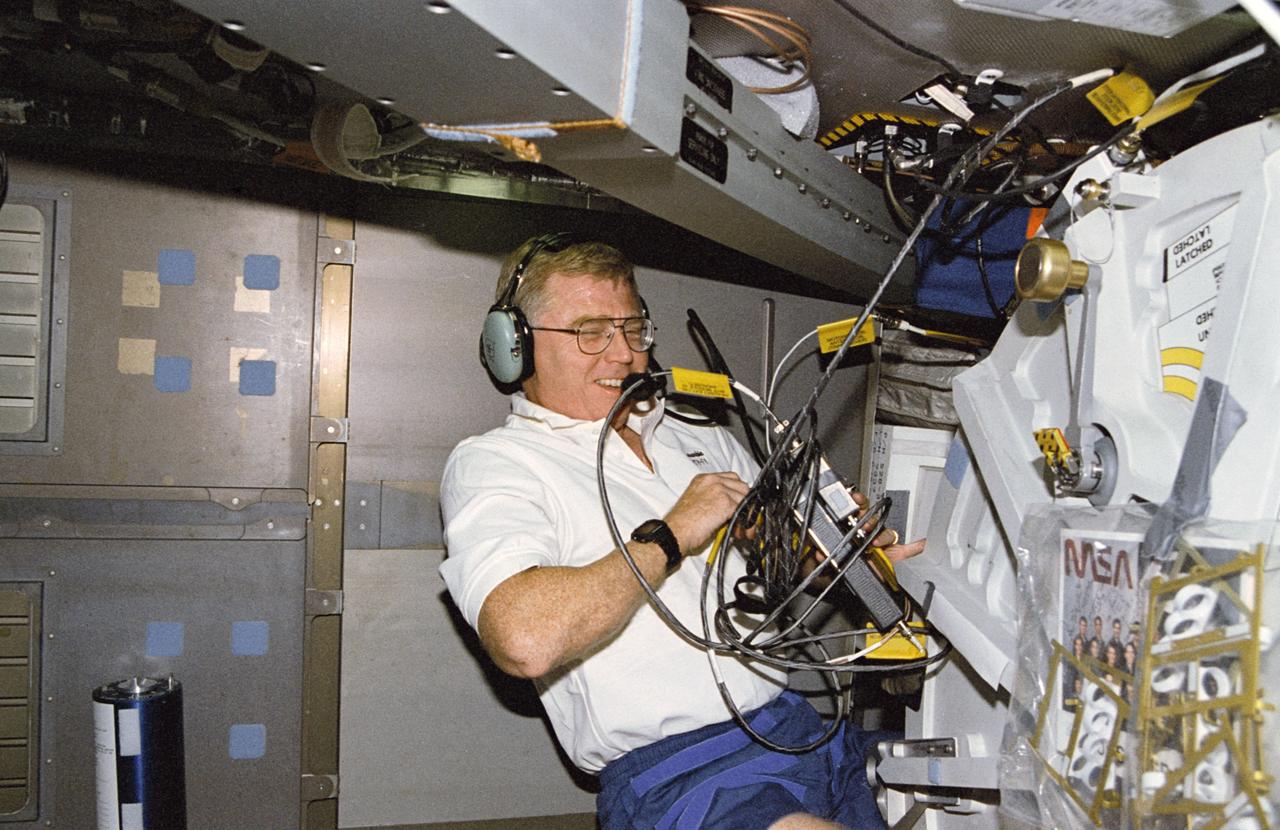
STS078-429-017 (20 June-7 July 1996) --- Aboard the middeck of the Earth-orbiting space shuttle Columbia, astronaut Charles J. Brady, mission specialist and a licensed amateur radio operator or "ham", talks to students on Earth. Some of the crew members devoted some of their off-duty time to continue a long-standing Shuttle tradition of communicating with students and other hams between their shifts of assigned duty. Brady joined four other NASA astronauts and two international payload specialists for almost 17-days of research in support of the Life and Microgravity Spacelab (LMS-1) mission.
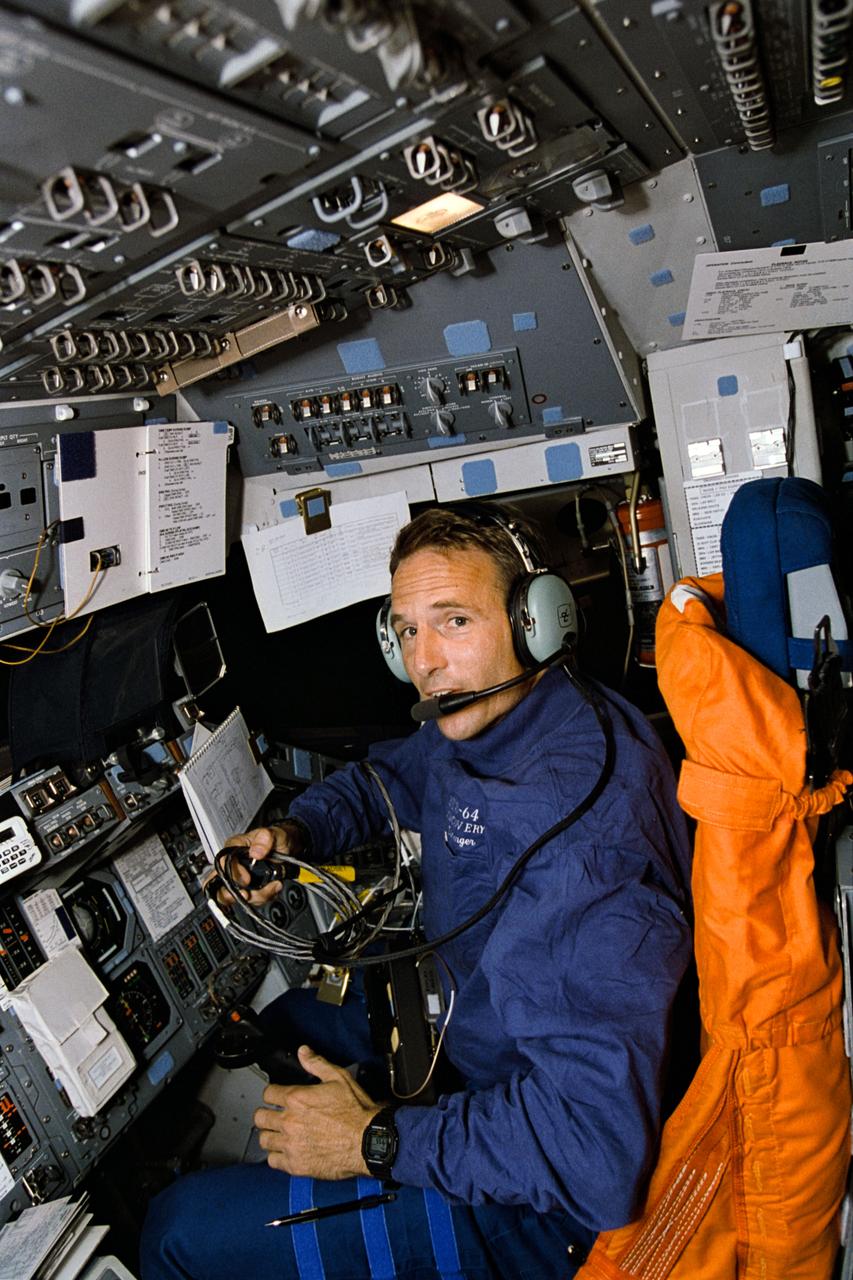
STS064-20-026 (9-20 Sept. 1994) --- Astronaut Jerry M. Linenger, STS-64 mission specialist, uses the Shuttle Amateur Radio Experiment (SAREX) to communicate with students on Earth. Various members of the crew made contact with a number of other "hams" around the world during the almost 11-day mission in Earth orbit. Photo credit: NASA or National Aeronautics and Space Administration
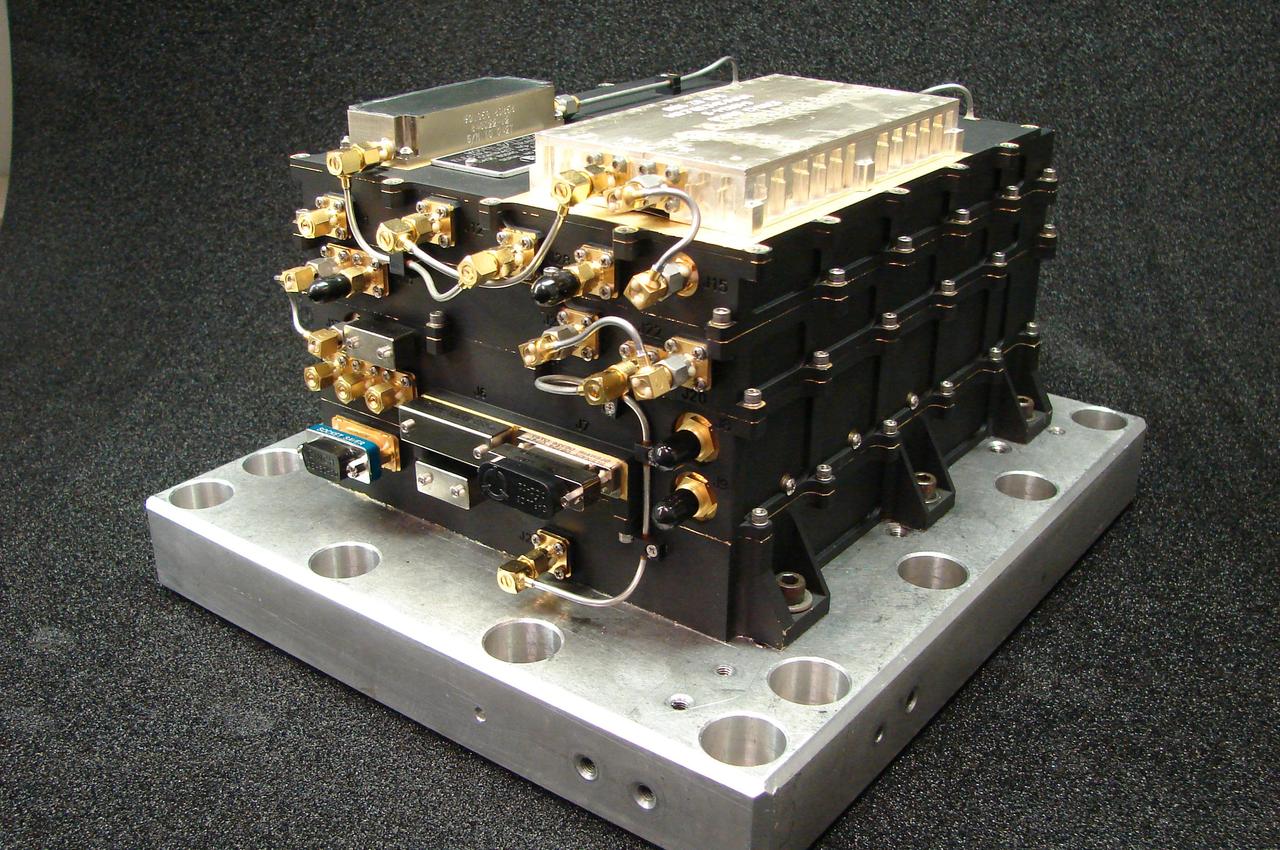
This radio hardware, the Electra UHF Transceiver on NASA MAVEN mission to Mars, is designed to provide communication relay support for robots on the surface of Mars.
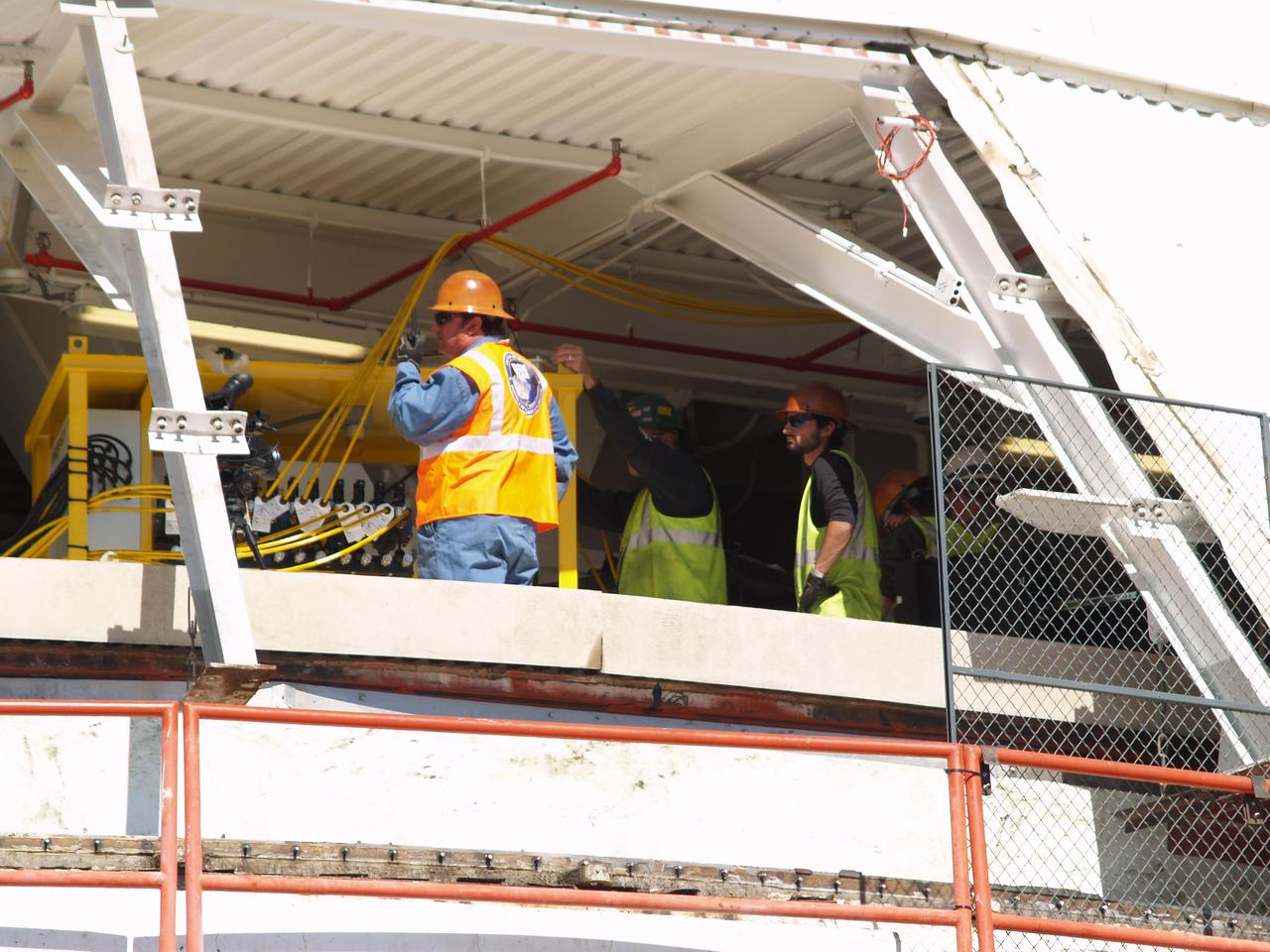
A worker at NASA Deep Space Network Goldstone Deep Space Communications Complex radios to his colleagues that 12 jacks are ready to lift the upper section of the giant Mars antenna.
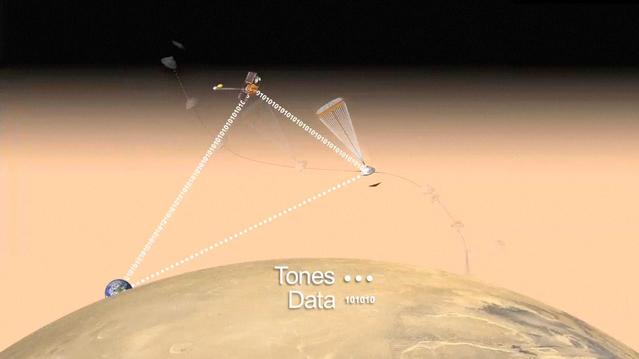
This frame from an artist animation depicts how NASA Curiosity rover will communicate with Earth during landing. As the rover descends to Mars, it will send out basic radio-frequency tones that go directly to Earth.
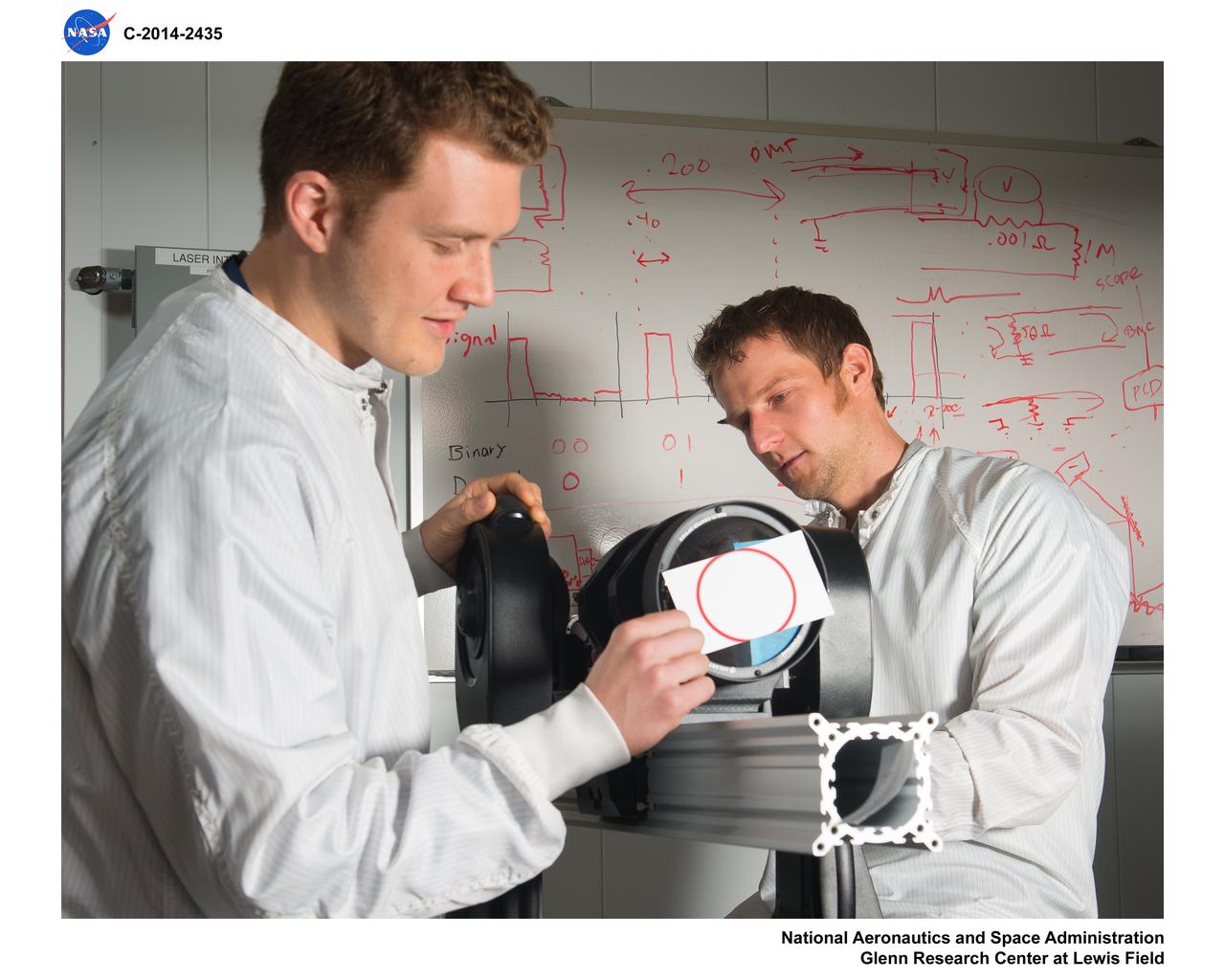
Integrated Radio and Optical Communication; iROC
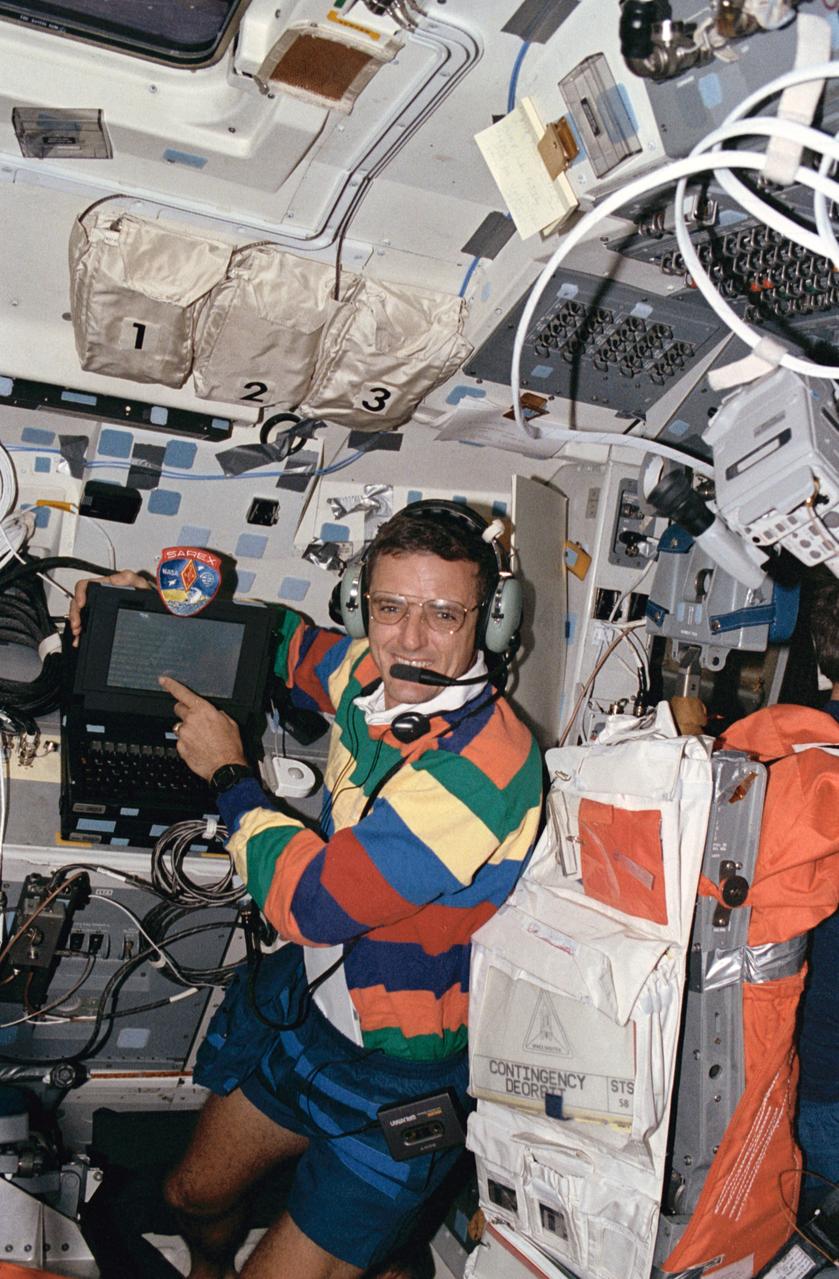
STS058-21-011 (24 Oct 1993) --- From the flight deck of the Earth-orbiting Space Shuttle Columbia, astronaut William S. McArthur talks to students on Earth. The mission specialist's activity was part of the Shuttle Amateur Radio Experiment (SAREX), a frequent payload on Shuttle missions which serves to enlighten students around the world on the topic of space travel. McArthur (call letters KC5ACR) is one of three licensed amateur radio operators on the seven-member flight.
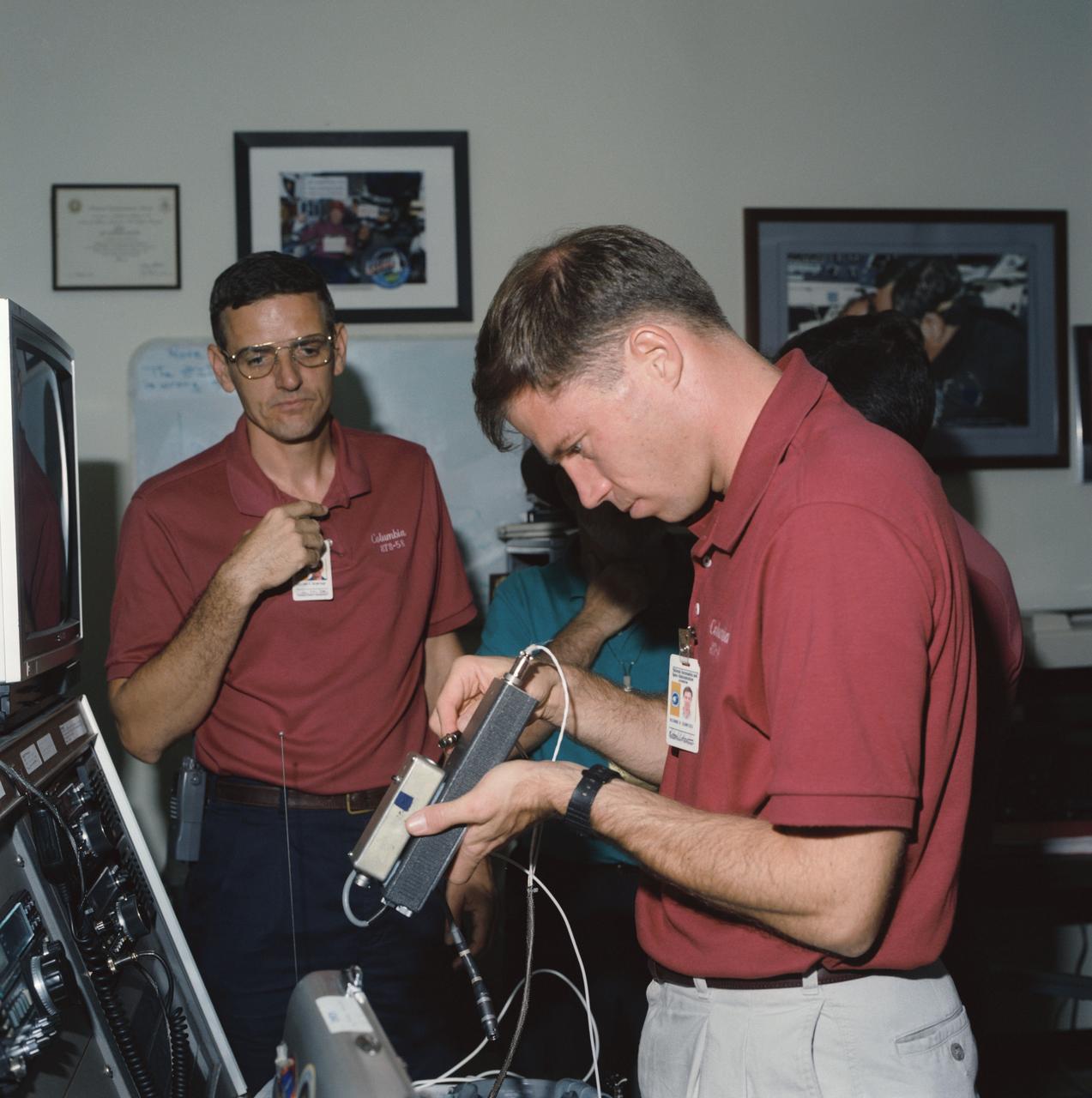
S93-45068 (22 Sept 1993) --- Two members of the STS-58 Spacelab Life Sciences (SLS-2) crew, train with amateur radio equipment at the Johnson Space Center (JSC). They are William S. McArthur (left), mission specialist, and Richard A. Searfoss, pilot. The STS-58 flight will carry the Shuttle Amateur Radio Experiment (SAREX) payload, configuration C, which includes FM voice and packet. Three of the seven crewmembers are licensed amateur radio operators. Searfoss' call letters are KC5CKM; McArthur, KC5ACR; and payload specialist Martin J. Fettman, KC5AXA. Licensed students at a number of schools around the country will have the opportunity to talk directly with the astronauts during the 14-day flight.
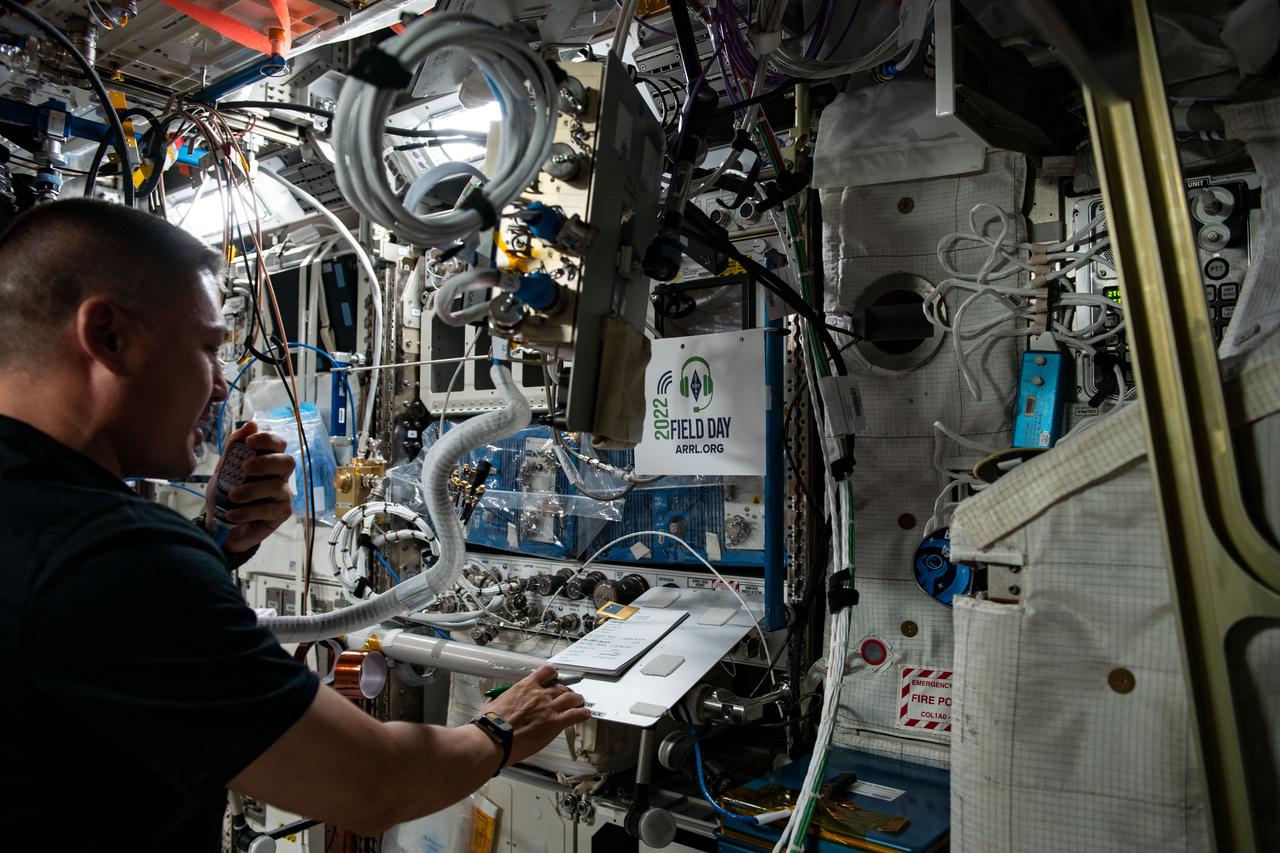
iss067e175034 (June 25, 2022) --- Expedition 67 Flight Engineer and NASA astronaut Kjell Lindgren participates in a ham radio session in commemoration of the Amateur Radio Relay League's 2022 Field Day supporting public service, emergency preparedness, community outreach, and technical skills all in a single event.
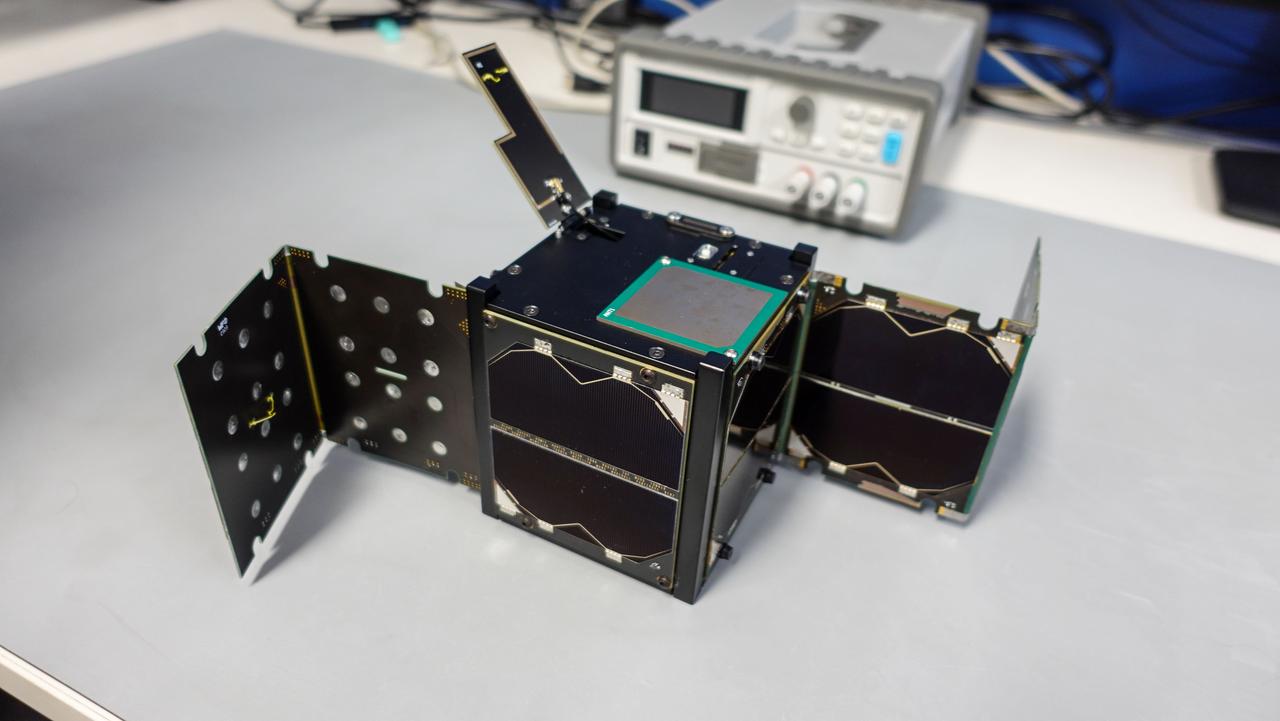
jsc2024e043923 (4/9/2024) -- Binar-3 (EM) undergoing deployment testing of the radio-communication system and the solar panels...Image Credit: Binar Space Program.
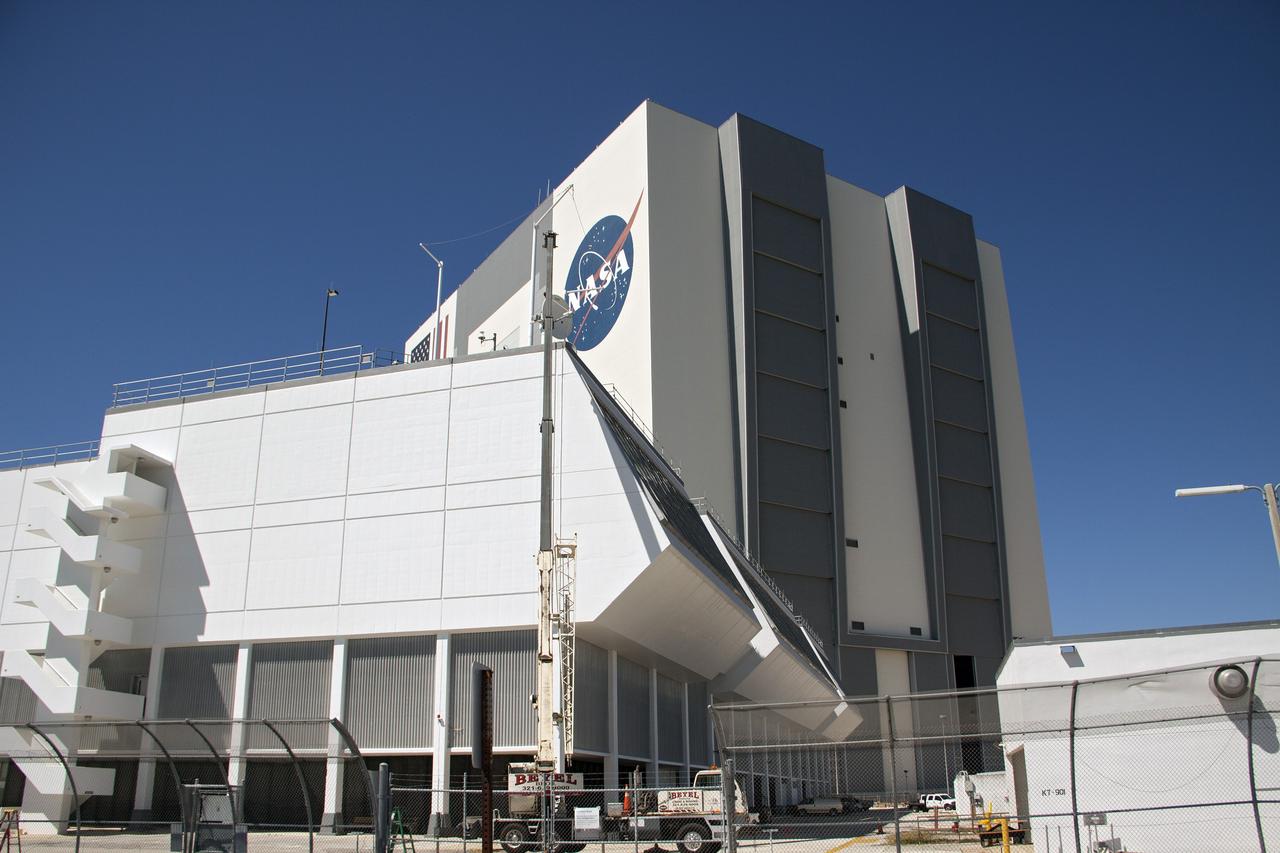
CAPE CANAVERAL, Fla. – A telemetry antenna and tracker camera is attached to the roof of the Launch Control Center, or LCC, in Launch Complex 39 at NASA's Kennedy Space Center in Florida. This antenna and camera system is the first of three to be installed on the LCC roof for the Radio Frequency and Telemetry Station RFTS, which will be used to monitor radio frequency communications from a launch vehicle at Launch Pad 39A or B as well as provide radio frequency relay for a launch vehicle in the Vehicle Assembly Building. The RFTS replaces the shuttle-era communications and tracking labs at Kennedy. The modern RFTS checkout station is designed to primarily support NASA's Space Launch System, or SLS, and Orion spacecraft, but can support multi-user radio frequency tests as the space center transitions to support a variety of rockets and spacecraft. For more information on the modernization efforts at Kennedy, visit the Ground Systems Development and Operations, or GSDO, website at http://go.nasa.gov/groundsystems. Photo credit: NASA/Jim Grossmann
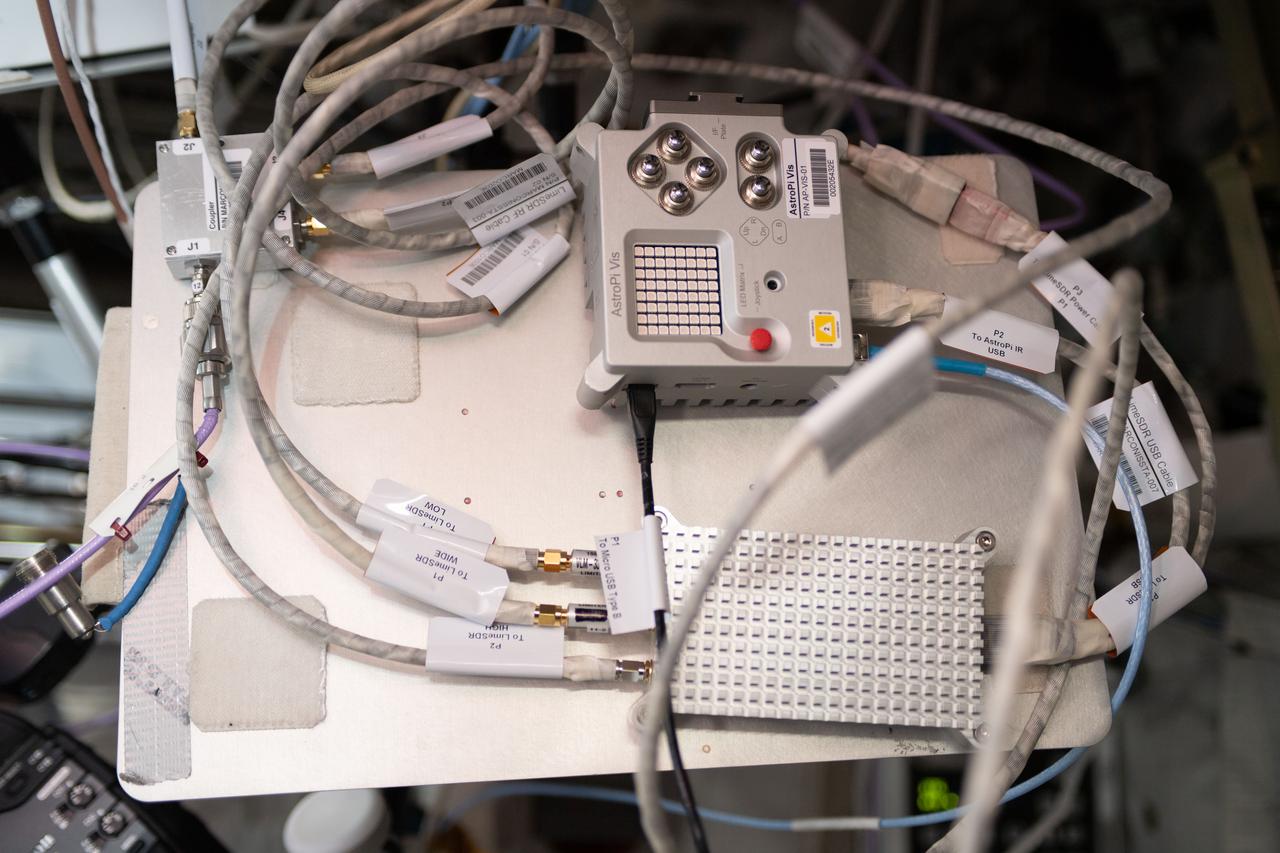
iss056e136189 (8/13/2020) --- A view of the Marconissta setup connected to the Amateur Radio on International Space Station (ARISS) antennas in the Columbus Module aboard the International Space Station (ISS). MarconISSta is a radio spectrum analyzer payload launched to ISS. MarconISSta monitors parts of the radio frequency spectrum in VHF, UHF, L, and S band in order to analyze current use and availability of bands for satellite communication.
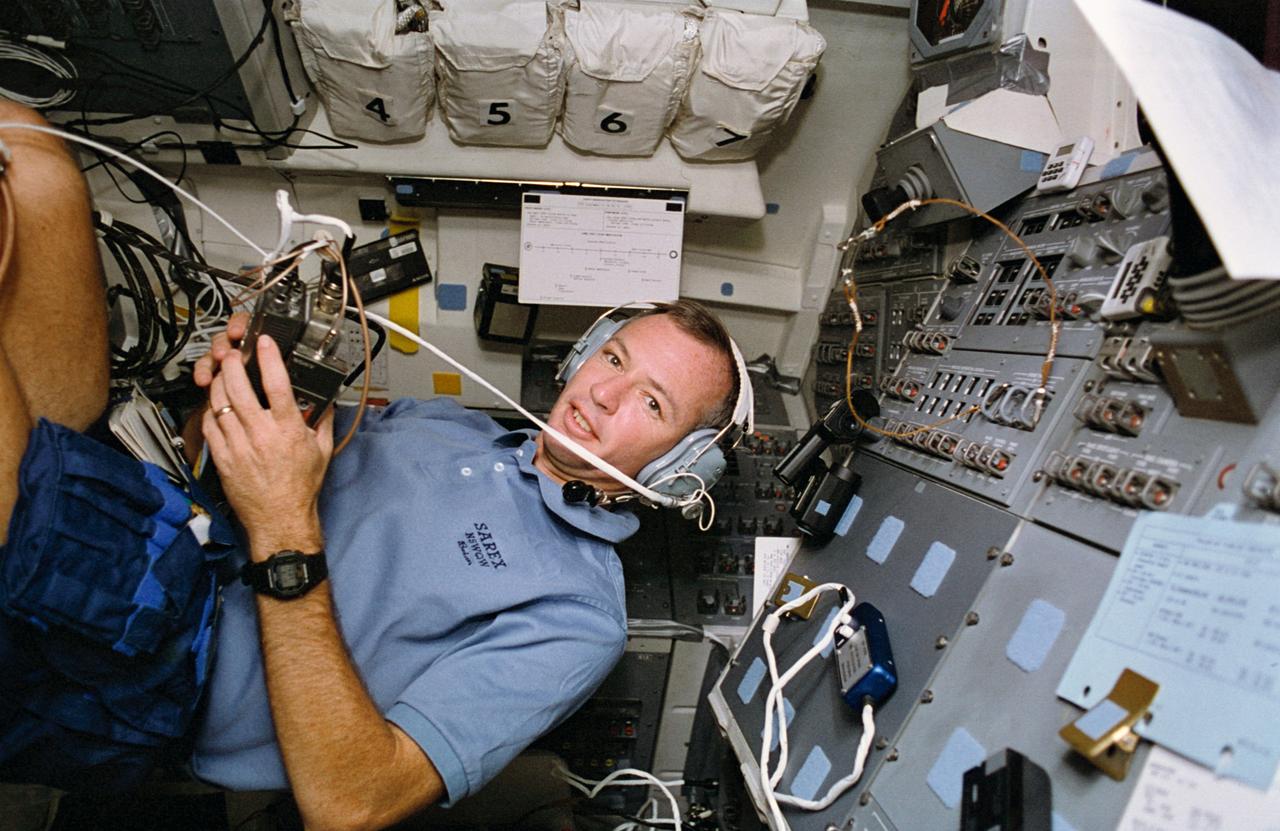
STS057-40-028 (21 June-1 July 1993) --- Astronaut Brian Duffy, pilot, talks to amateur radio operators on Earth from the flight deck of the Earth-orbiting Space Shuttle Endeavour. The space to Earth communications was part of the Shuttle amateur radio experiment (SAREX), which has been included on a number of Space Shuttle missions. Duffy, a licensed amateur radio operator using call letters N5WQW, was among crewmembers talking to students at various points on the ground.
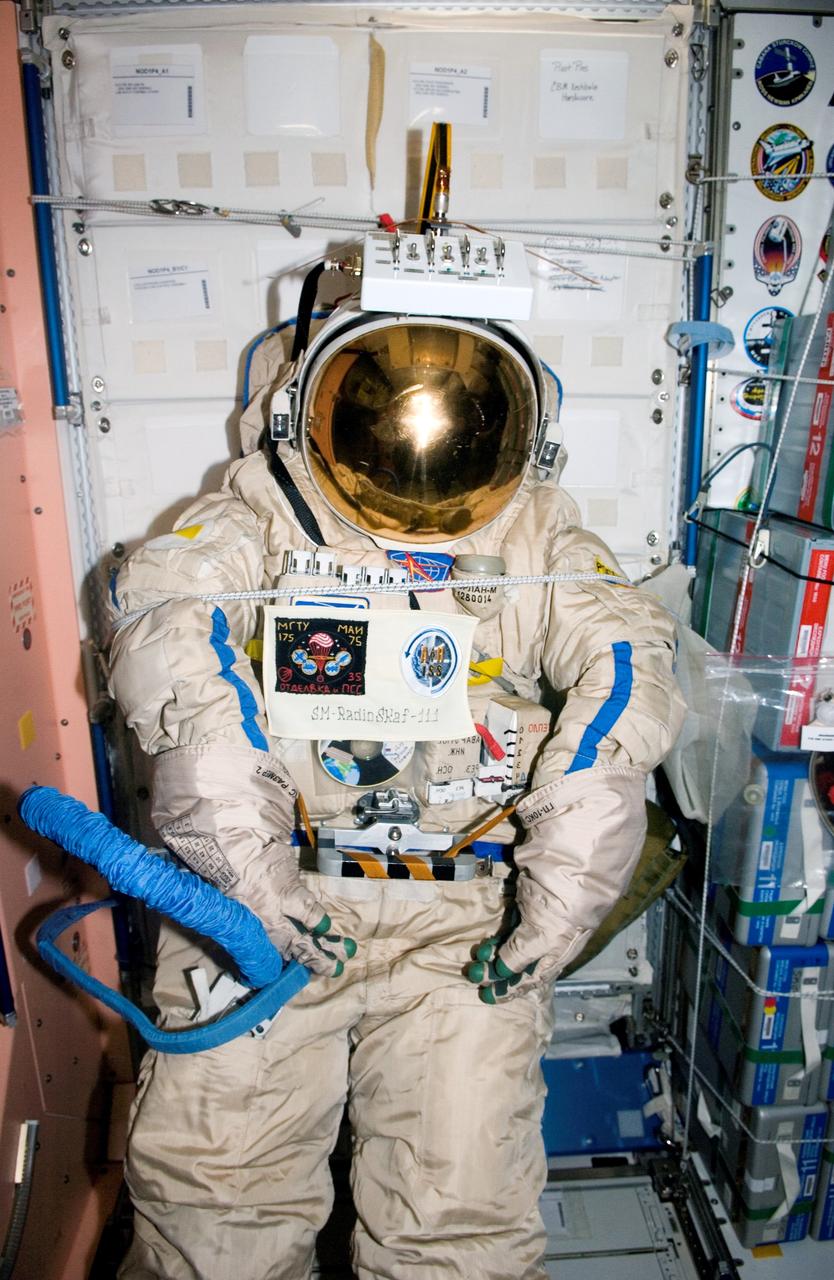
ISS012-E-15666 (24 Jan. 2006) --- An old Russian Orlan spacesuit is photographed in the Unity node of the International Space Station, which will be released by hand from the space station during a spacewalk Feb. 3, 2006. Outfitted with a special radio transmitter and other gear, the spacesuit comprises a Russian experiment called SuitSat. It will fly free from the station as a satellite in orbit for several weeks of scientific research and radio tracking, including communications by amateur radio operators. Eventually, it will enter the atmosphere and be destroyed.
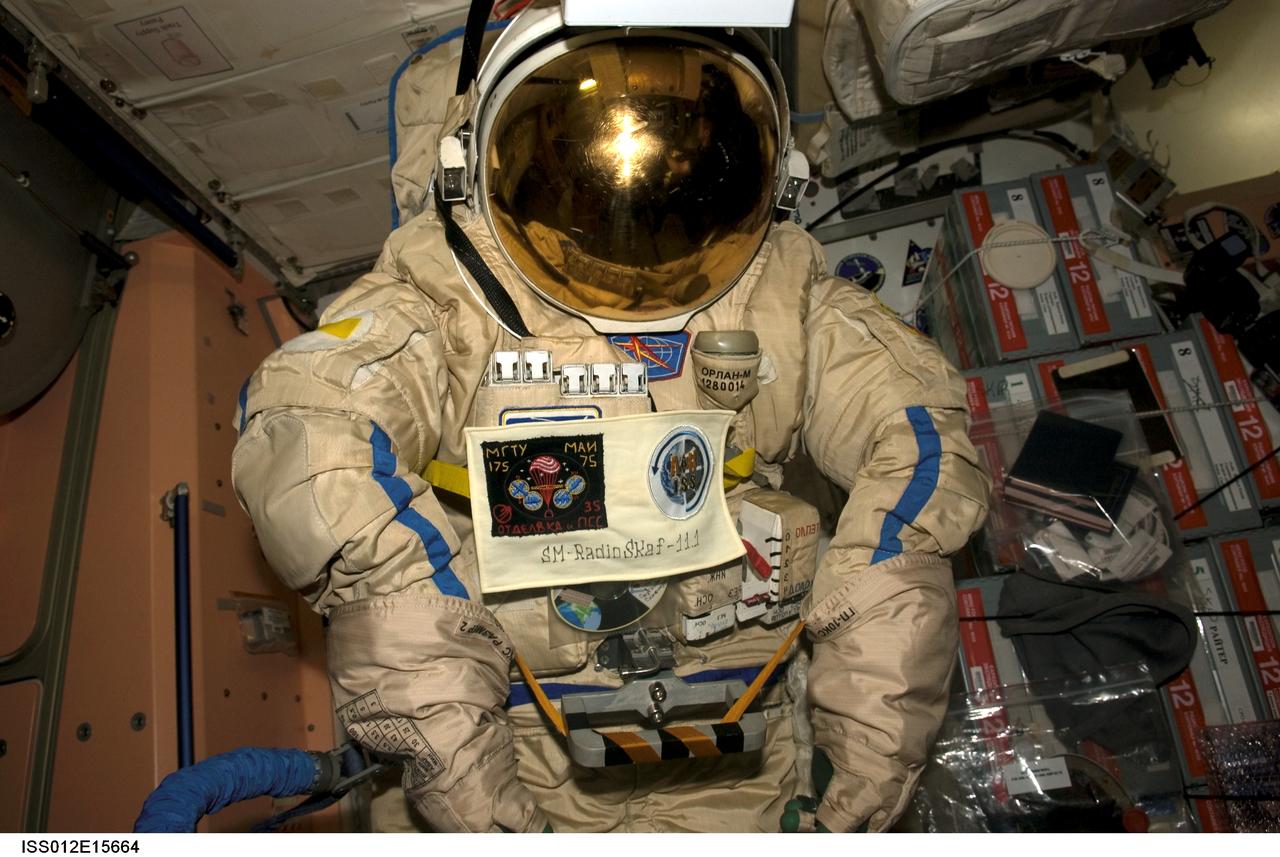
ISS012-E-15664 (24 Jan. 2006) --- An old Russian Orlan spacesuit is photographed in the Unity node of the International Space Station, which will be released by hand from the space station during a spacewalk Feb. 3, 2006. Outfitted with a special radio transmitter and other gear, the spacesuit comprises a Russian experiment called SuitSat. It will fly free from the station as a satellite in orbit for several weeks of scientific research and radio tracking, including communications by amateur radio operators. Eventually, it will enter the atmosphere and be destroyed.
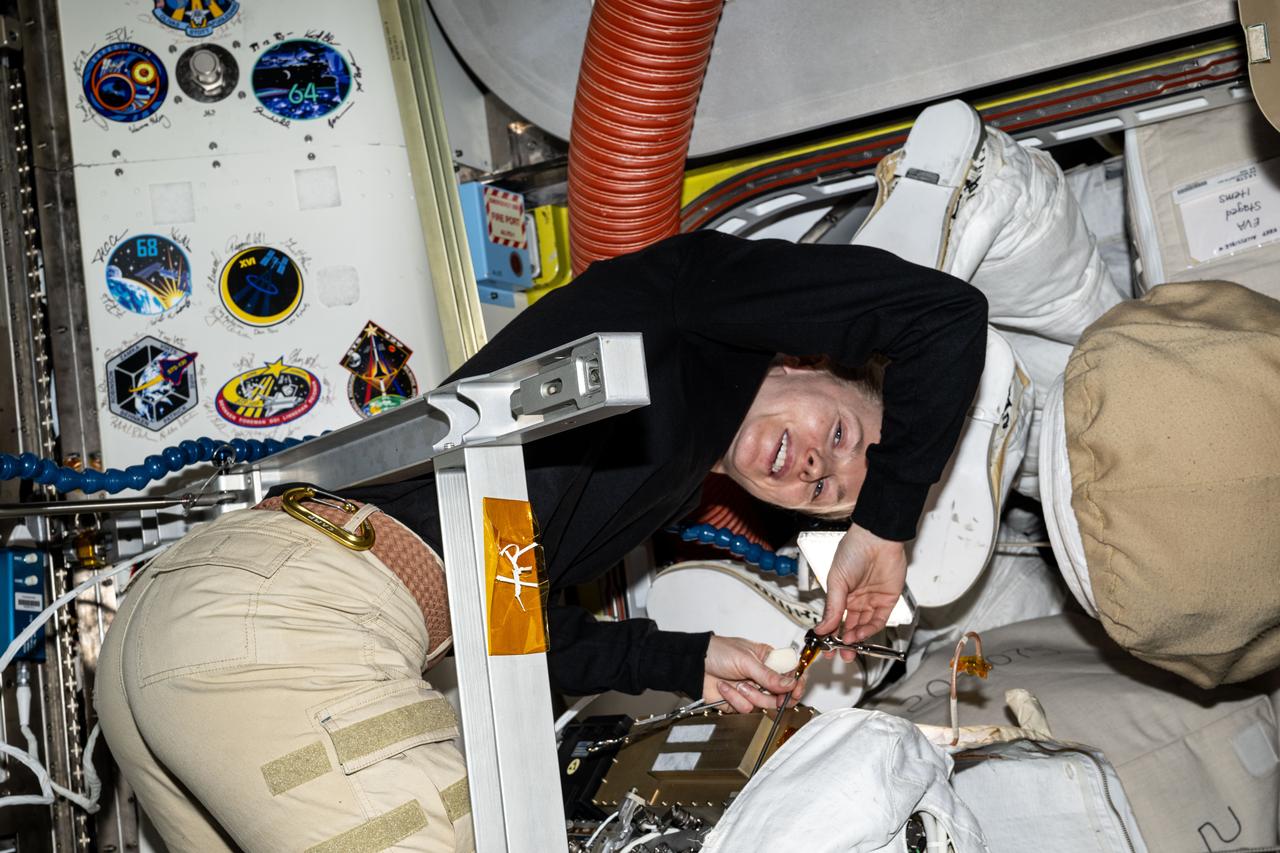
iss073e0917417 (Oct. 21, 2025) --- NASA astronaut and Expedition 73 Flight Engineer Zena Cardman performs communications maintenance swapping radios and checking their peformance on a pair of spacesuits inside the International Space Station's Quest airlock.
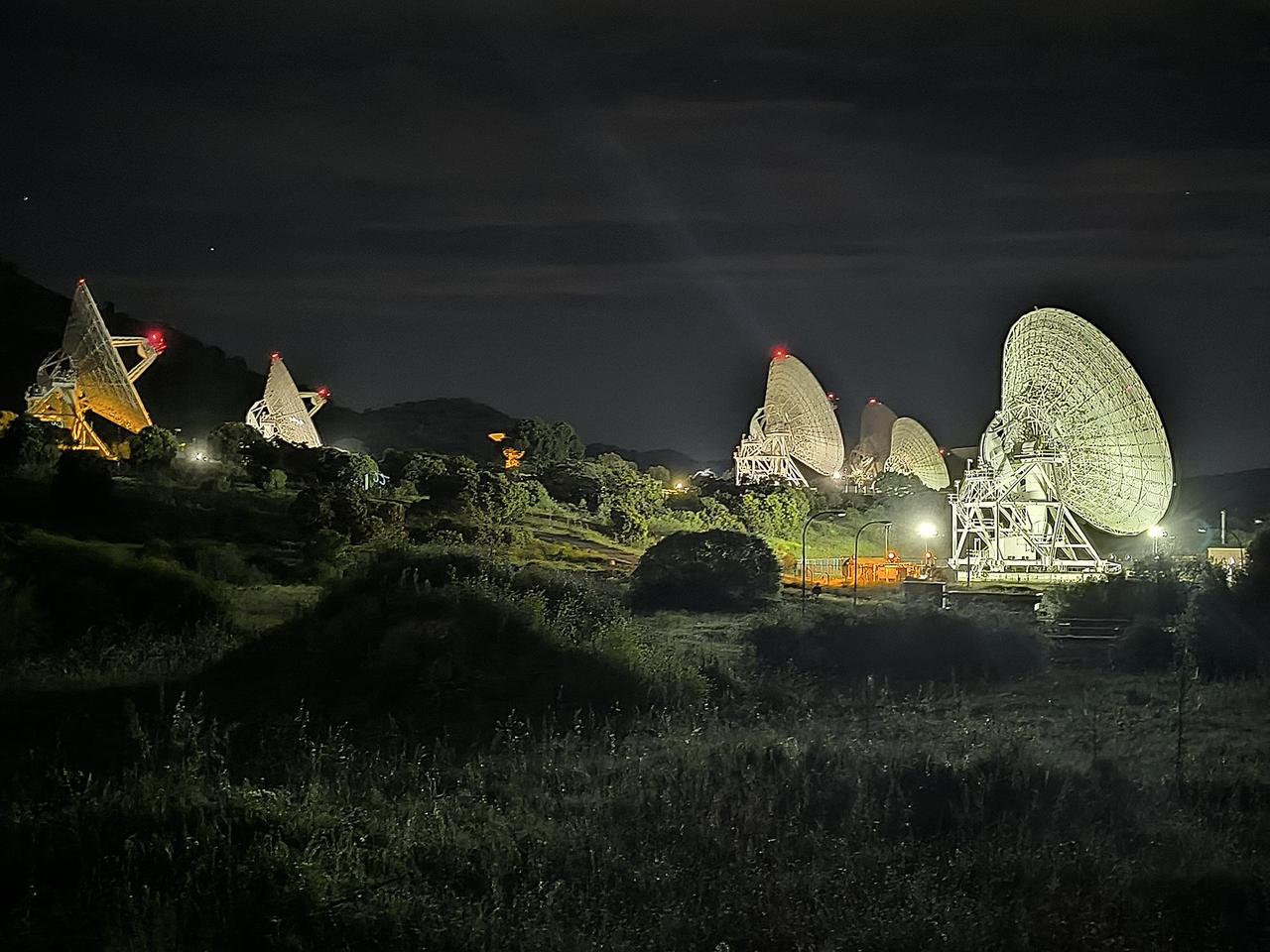
In a historic first, all six radio frequency antennas at the Madrid Deep Space Communication Complex – part of NASA's Deep Space Network (DSN) – carried out a test to receive data from the agency's Voyager 1 spacecraft at the same time on April 20, 2024. Known as "arraying," combining the receiving power of several antennas allows the DSN to collect the very faint signals from faraway spacecraft. A five-antenna array is currently needed to downlink science data from the spacecraft's Plasma Wave System (PWS) instrument. As Voyager gets further way, six antennas will be needed. The Voyager team is currently working to fix an issue on the spacecraft that has prevented it from sending back science data since November. Though the antennas located at the DSN's three complexes – Goldstone in California, Canberra in Australia, and Madrid – have been arrayed before, this is the first instance of six antennas being arrayed at once. Madrid is the only deep space communication complex currently with six operational antennas (the other two complexes have four apiece). Each complex consists of one 70-meter (230-foot) antenna and several 34-meter (112-foot) antennas. Voyager 1 is over 15 billion miles (24 billion kilometers) away, so its signal on Earth is far fainter than any other spacecraft with which the DSN communicates. It currently takes Voyager 1's signal over 22 ½ hours to travel from the spacecraft to Earth. To better receive Voyager 1's radio communications, a large antenna – or an array of multiple smaller antennas – can be used. Voyager 1 and its twin, Voyager 2, are the only spacecraft ever to fly in interstellar space (the space between stars). https://photojournal.jpl.nasa.gov/catalog/PIA26147
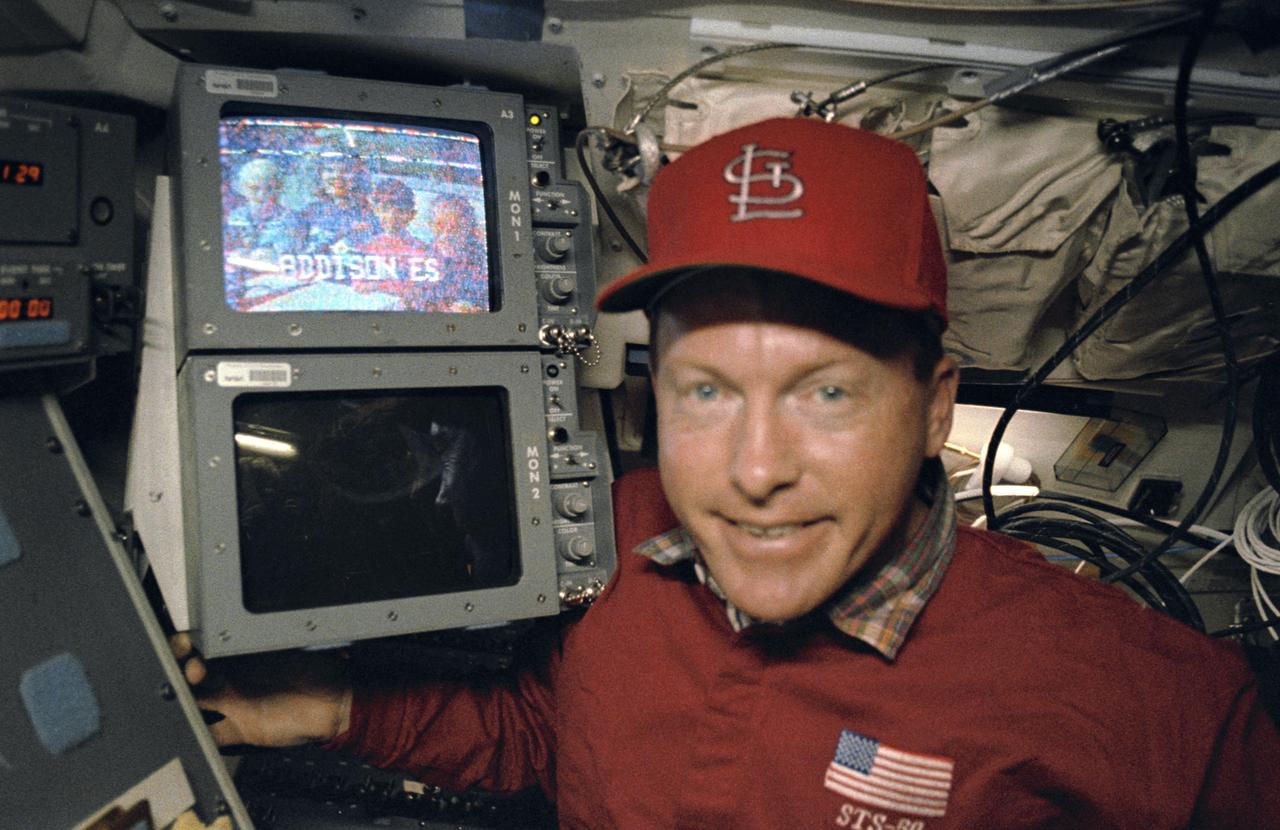
STS50-39-006 (25 June-9 July 1992) --- Astronaut Richard N. Richards, STS-50 mission commander, stands by a monitor displaying a group of elementary pupils (Addison Elementary School, Marietta Georgia) who were among the many students and others on Earth who communicated with members aboard the Earth-orbiting Space Shuttle Columbia. The Shuttle Amateur Radio Experiment (SAREX) has flown on a number of STS missions now, allowing hundreds of students and "hams" the chance to communicate with licensed radio operators in space. Richards is KB5SIW and astronaut Ellen S. Baker, the crew's other licensed operator, is KB5SIX.
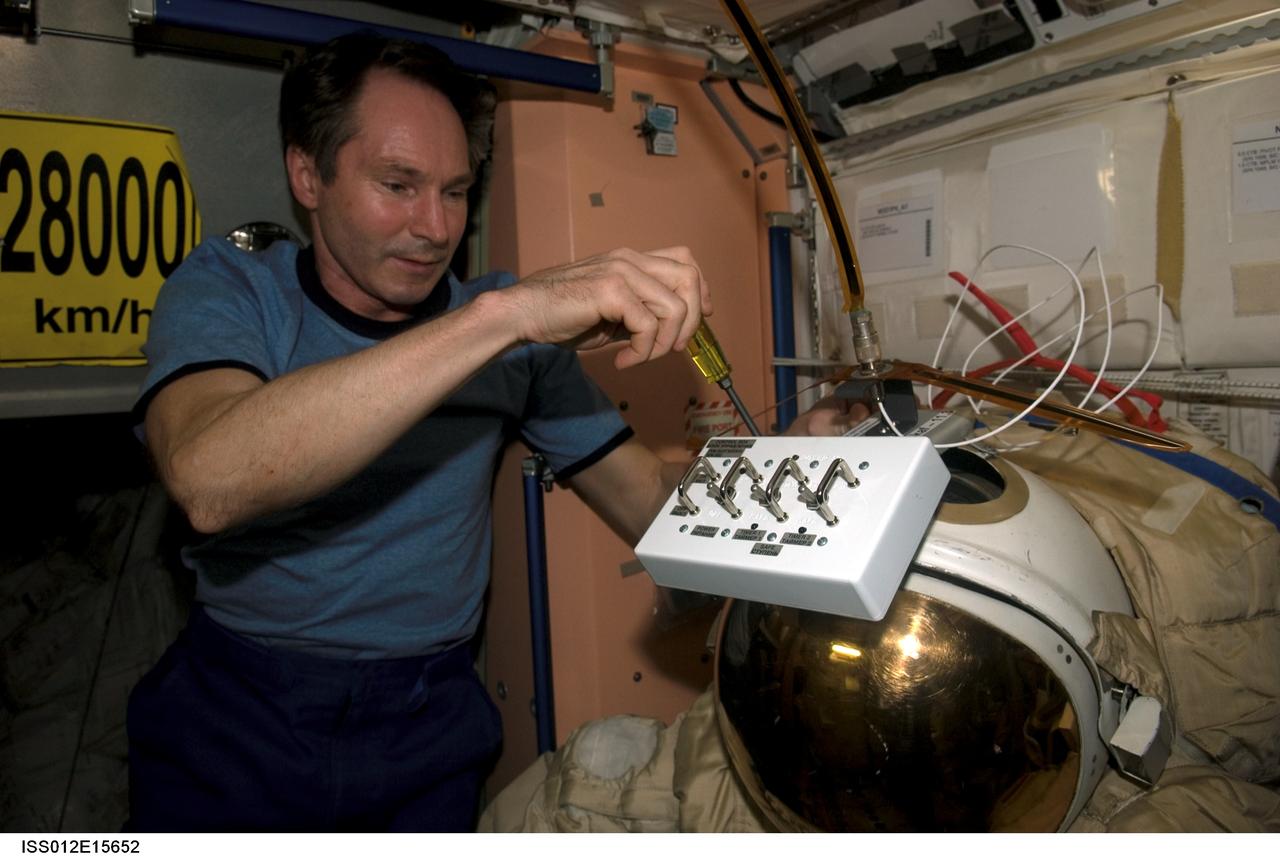
ISS012-E-15652 (24 Jan. 2006) --- In the Unity node of the International Space Station, cosmonaut Valery I. Tokarev, Expedition 12 flight engineer representing Russia's Federal Space Agency, puts finishing touches on an old Russian Orlan spacesuit that will be released by hand from the space station during a spacewalk Feb. 3, 2006. Outfitted with a special radio transmitter and other gear, the spacesuit comprises a Russian experiment called SuitSat. It will fly free from the station as a satellite in orbit for several weeks of scientific research and radio tracking, including communications by amateur radio operators. Eventually, it will enter the atmosphere and be destroyed.
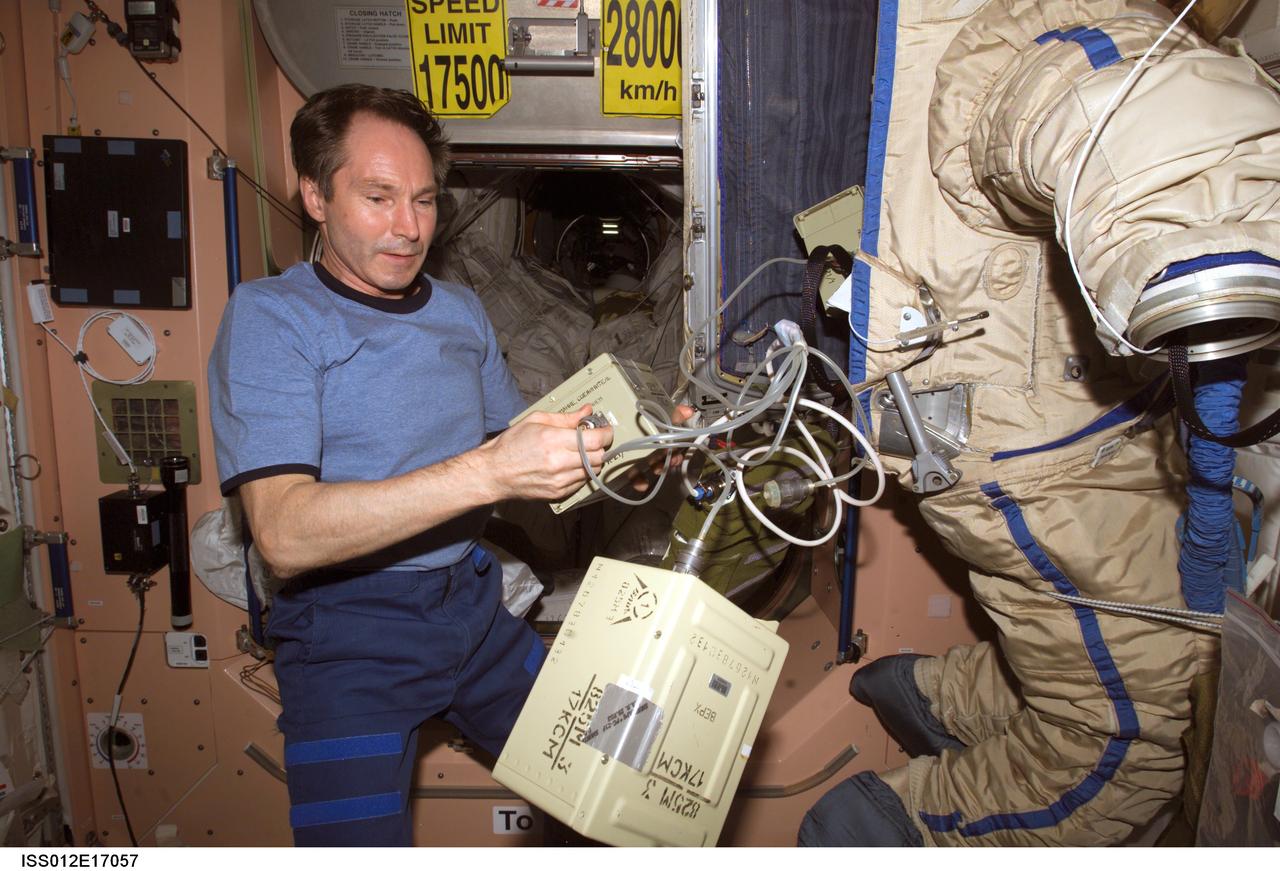
ISS012-E-17057 (24 Jan. 2006) --- In the Unity node of the International Space Station, cosmonaut Valery I. Tokarev, Expedition 12 flight engineer representing Russia's Federal Space Agency, puts finishing touches on an old Russian Orlan spacesuit that will be released by hand from the space station during a spacewalk Feb. 3, 2006. Outfitted with a special radio transmitter and other gear, the spacesuit comprises a Russian experiment called SuitSat. It will fly free from the station as a satellite in orbit for several weeks of scientific research and radio tracking, including communications by amateur radio operators. Eventually, it will enter the atmosphere and be destroyed.
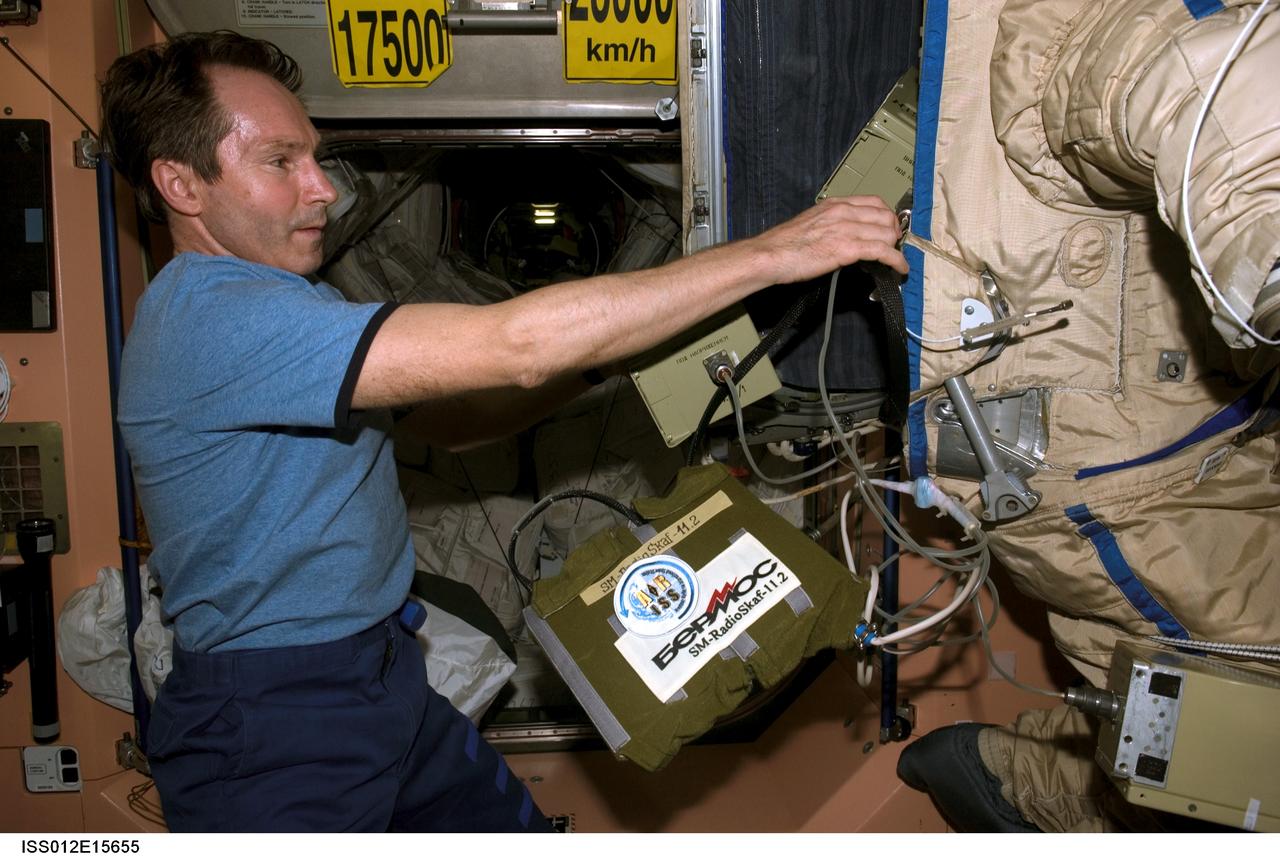
ISS012-E-15655 (24 Jan. 2006) --- In the Unity node of the International Space Station, cosmonaut Valery I. Tokarev, Expedition 12 flight engineer representing Russia's Federal Space Agency, puts finishing touches on an old Russian Orlan spacesuit that will be released by hand from the space station during a spacewalk Feb. 3, 2006. Outfitted with a special radio transmitter and other gear, the spacesuit comprises a Russian experiment called SuitSat. It will fly free from the station as a satellite in orbit for several weeks of scientific research and radio tracking, including communications by amateur radio operators. Eventually, it will enter the atmosphere and be destroyed.
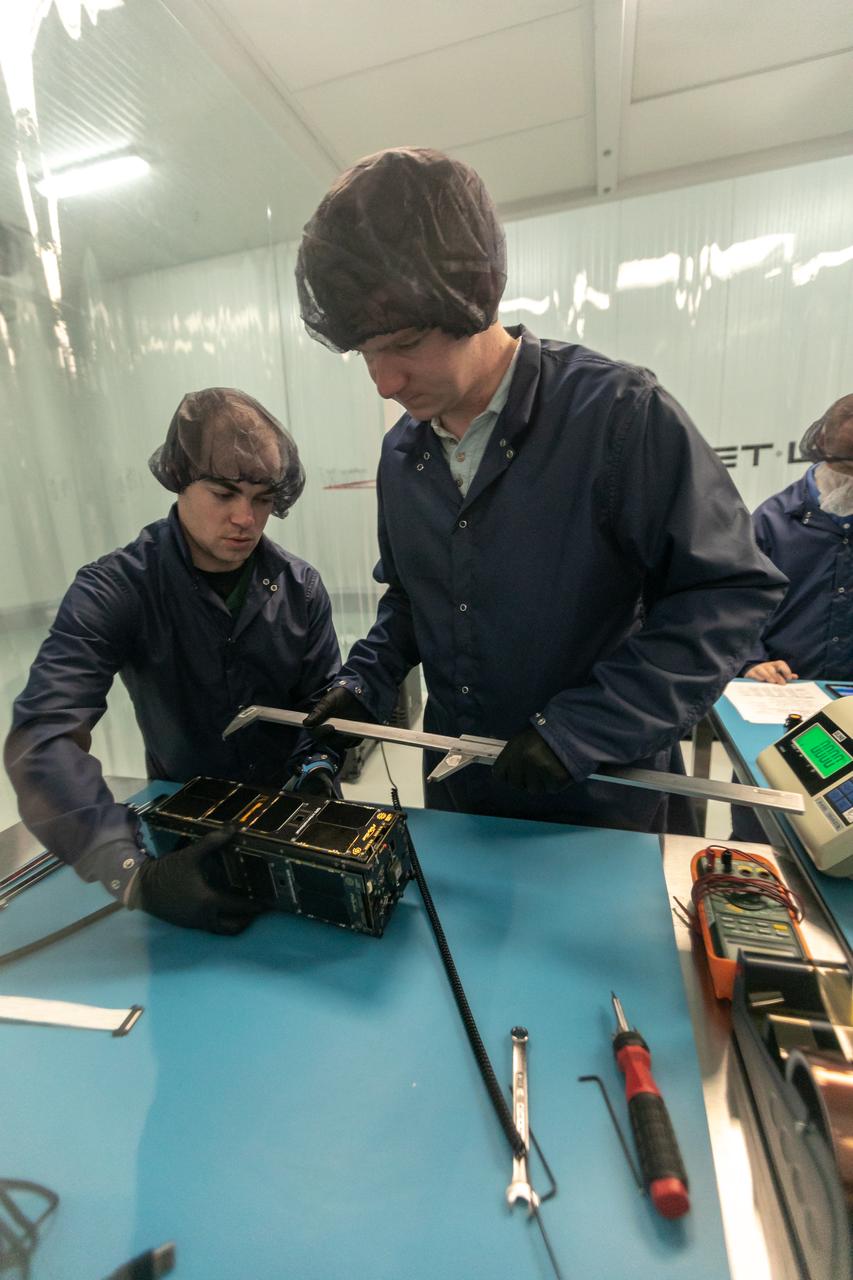
Plasma fluctuations in the upper atmosphere can distort radio signals as they pass into space, damaging radio communication with satellites. The ISX (Ionospheric Scintillation Explorer) mission will study these effects by measuring and comparing digital TV signals produced on the ground. Developed as a collaboration between SRI International and PolySat at Cal Poly, San Luis Obispo, the ISX mission will attempt to improve our understanding of these plasma irregularities and help model space weather predictions in the future.
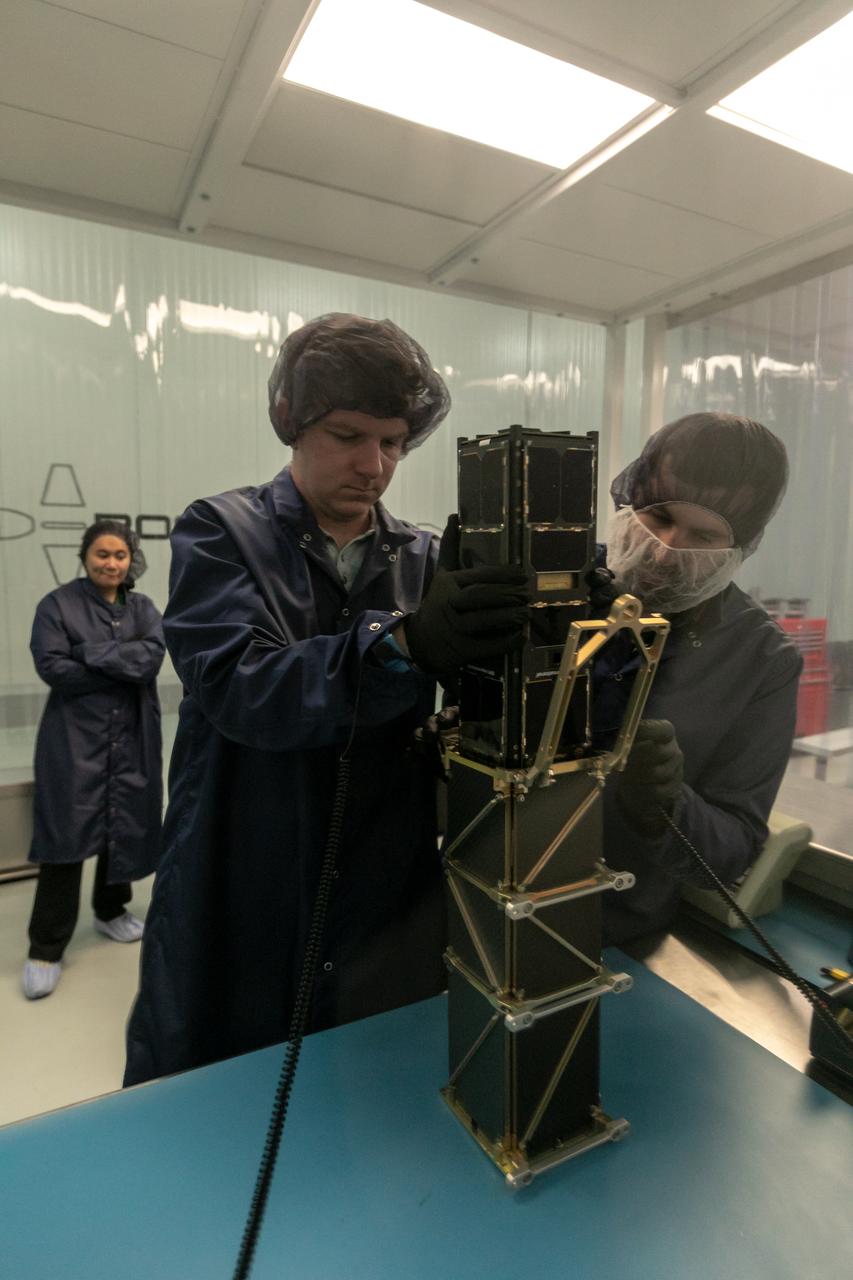
Plasma fluctuations in the upper atmosphere can distort radio signals as they pass into space, damaging radio communication with satellites. The ISX (Ionospheric Scintillation Explorer) mission will study these effects by measuring and comparing digital TV signals produced on the ground. Developed as a collaboration between SRI International and PolySat at Cal Poly, San Luis Obispo, the ISX mission will attempt to improve our understanding of these plasma irregularities and help model space weather predictions in the future.
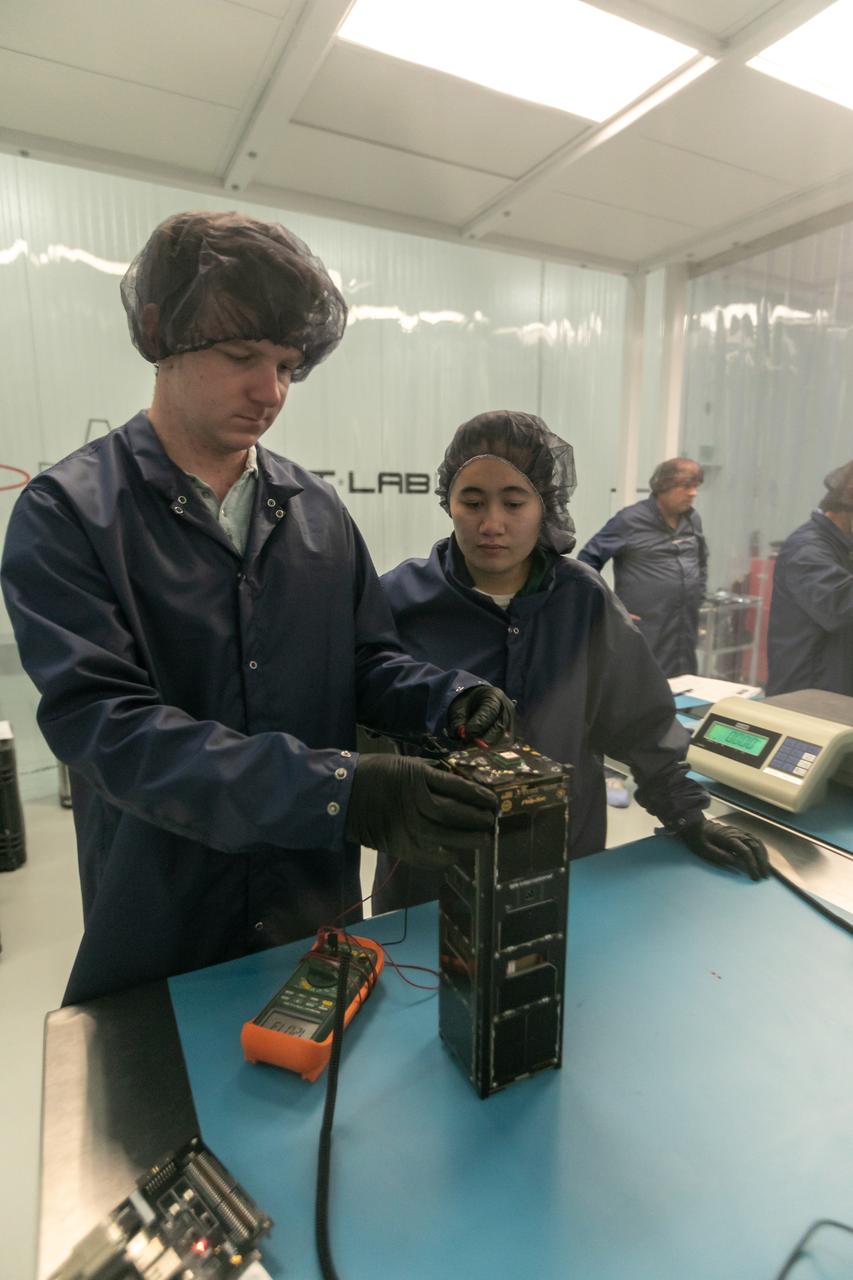
Plasma fluctuations in the upper atmosphere can distort radio signals as they pass into space, damaging radio communication with satellites. The ISX (Ionospheric Scintillation Explorer) mission will study these effects by measuring and comparing digital TV signals produced on the ground. Developed as a collaboration between SRI International and PolySat at Cal Poly, San Luis Obispo, the ISX mission will attempt to improve our understanding of these plasma irregularities and help model space weather predictions in the future.
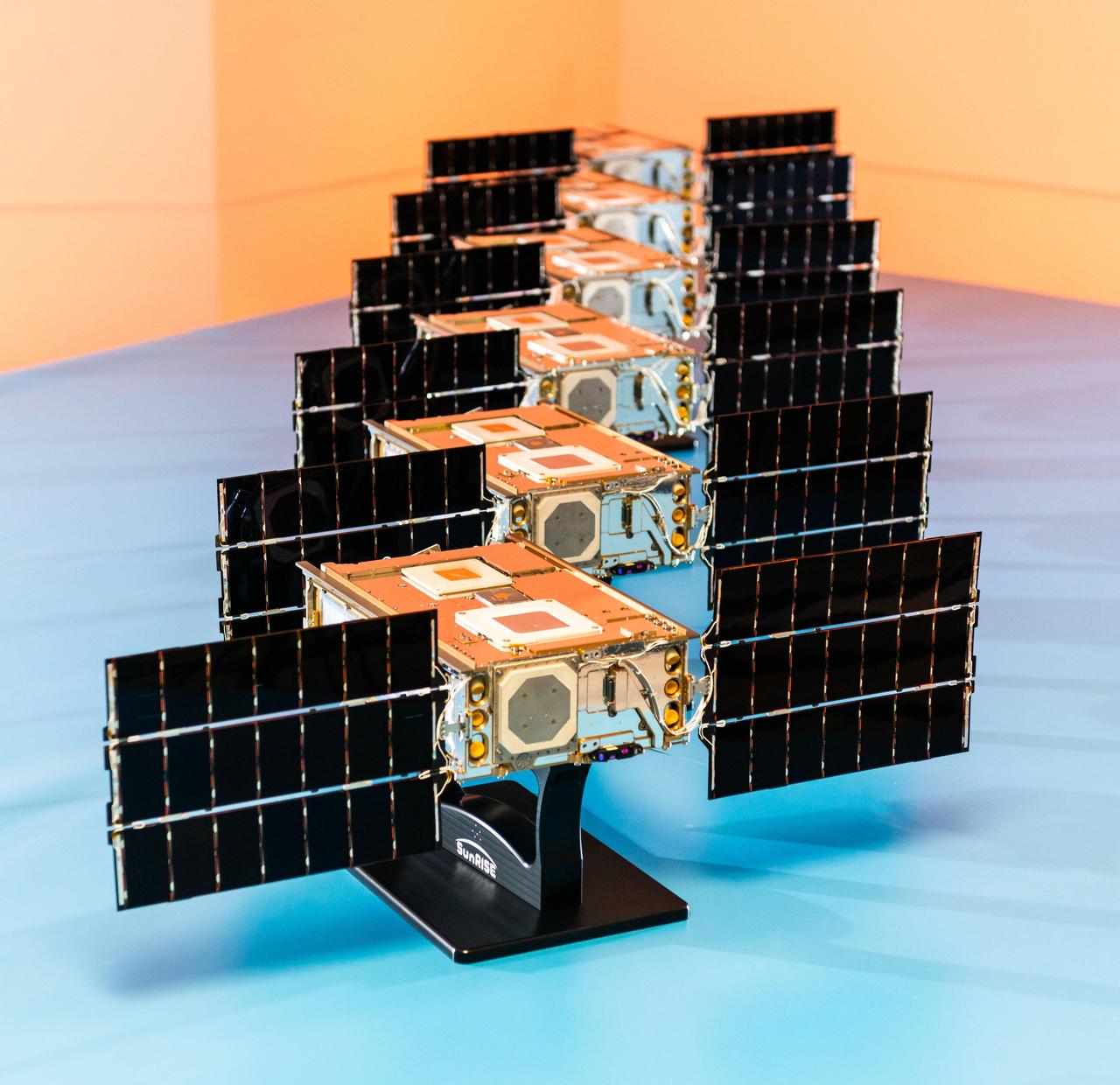
Shown here at Utah State University's Space Dynamics Laboratory in Logan, Utah, in November, 2023, the six satellites that make up NASA's Sun Radio Interferometer Space Experiment (SunRISE) mission are each only about the size of a cereal box, flanked by small solar panels. Once in space, the six SmallSats fly about 6 miles (10 kilometers) apart and each deploy four radio antennas that extend 10 feet (2.5 meters). Using a technique called interferometry, the six satellites will effectively act like one big radio receiver and detect solar radio bursts, or eruptions of radio waves in the outer atmosphere of the Sun. In the places where these radio bursts arise, scientists also see eruptions of accelerated particles, which can damage spacecraft electronics, including on communications satellites in Earth orbit, and pose a health threat to astronauts. Keeping track of solar radio bursts and pinpointing their location could help warn humans of approaching accelerated particles. https://photojournal.jpl.nasa.gov/catalog/PIA25789
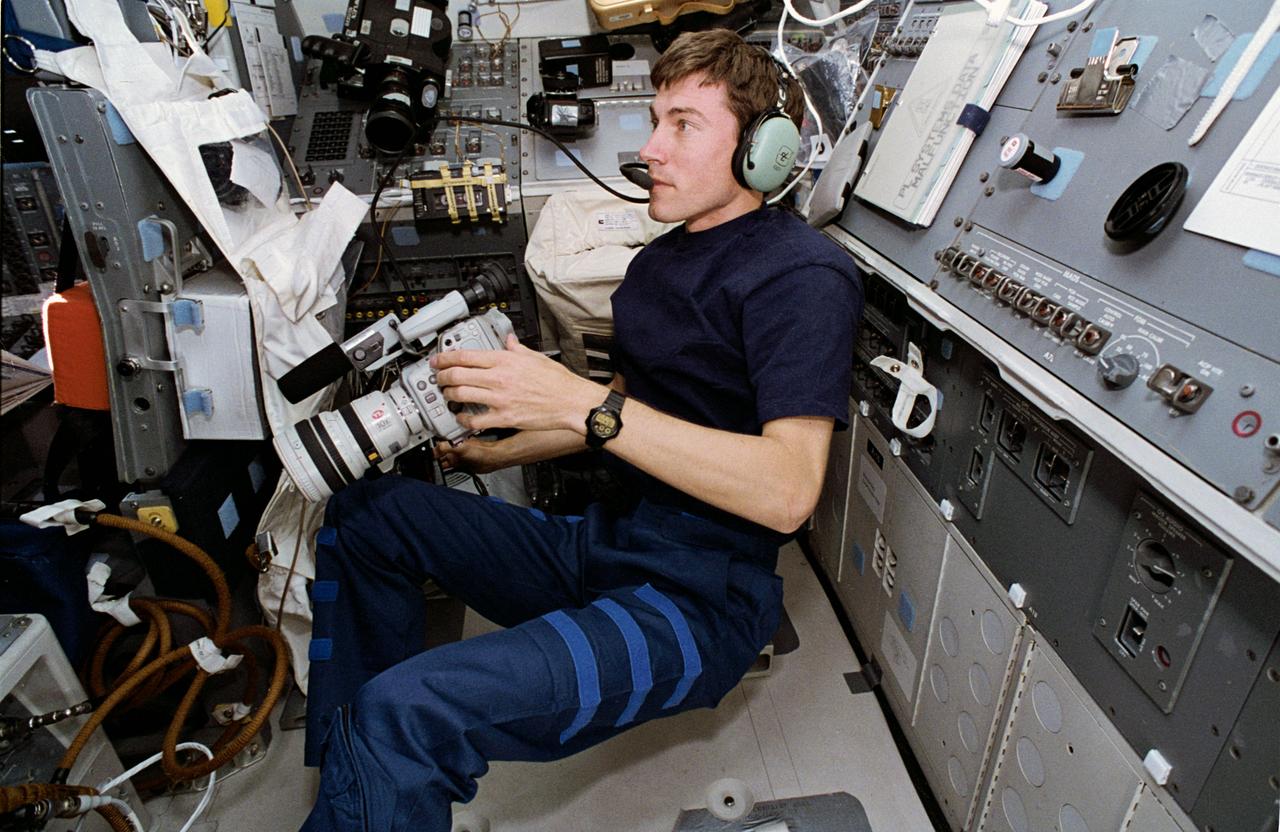
STS60-29-009 (10 Feb 1994) --- On the Space Shuttle Discovery's aft flight deck, Russian cosmonaut Sergei K. Krikalev prepares for one chore while performing another. Using the Shuttle Amateur Radio Experiment (SAREX) gear, the mission specialist was talking with students in Maine. He holds a camcorder, which was later called into action to record inflight activities. Krikalev joined five NASA astronauts for eight days in space aboard Discovery.
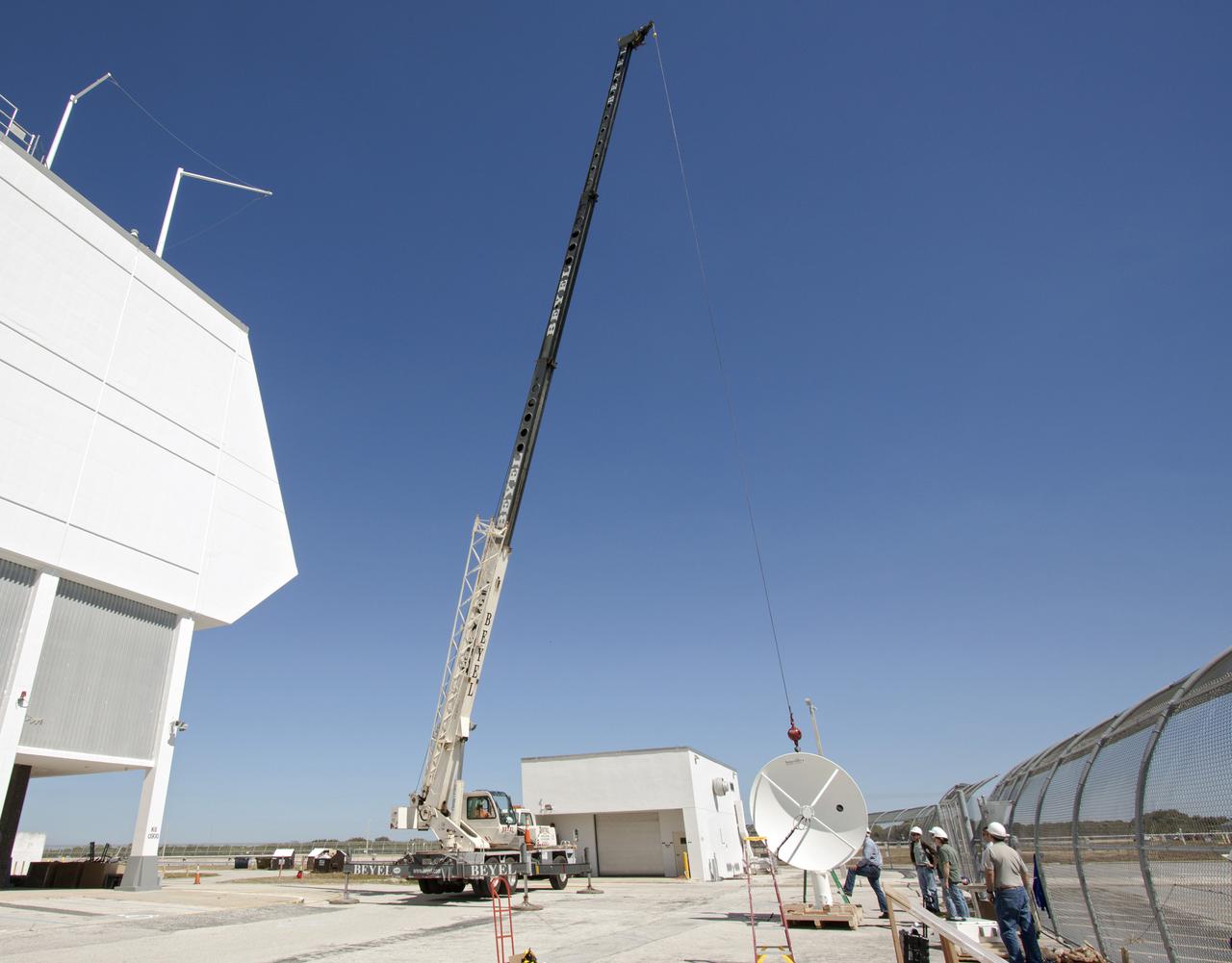
CAPE CANAVERAL, Fla. – Workers use a crane to install a new parabolic telemetry antenna and tracker camera to the roof of the Launch Control Center, or LCC, in Launch Complex 39 at NASA's Kennedy Space Center in Florida. This antenna and camera system is the first of three that will be installed on the LCC roof for the Radio Frequency and Telemetry Station RFTS, which will be used to monitor radio frequency communications from a launch vehicle at Launch Pad 39A or B as well as provide radio frequency relay for a launch vehicle in the Vehicle Assembly Building. The RFTS replaces the shuttle-era communications and tracking labs at Kennedy. The modern RFTS checkout station is designed to primarily support NASA's Space Launch System, or SLS, and Orion spacecraft, but can support multi-user radio frequency tests as the space center transitions to support a variety of rockets and spacecraft. For more information on the modernization efforts at Kennedy, visit the Ground Systems Development and Operations, or GSDO, website at http:__go.nasa.gov_groundsystems. Photo credit: NASA_Jim Grossmann
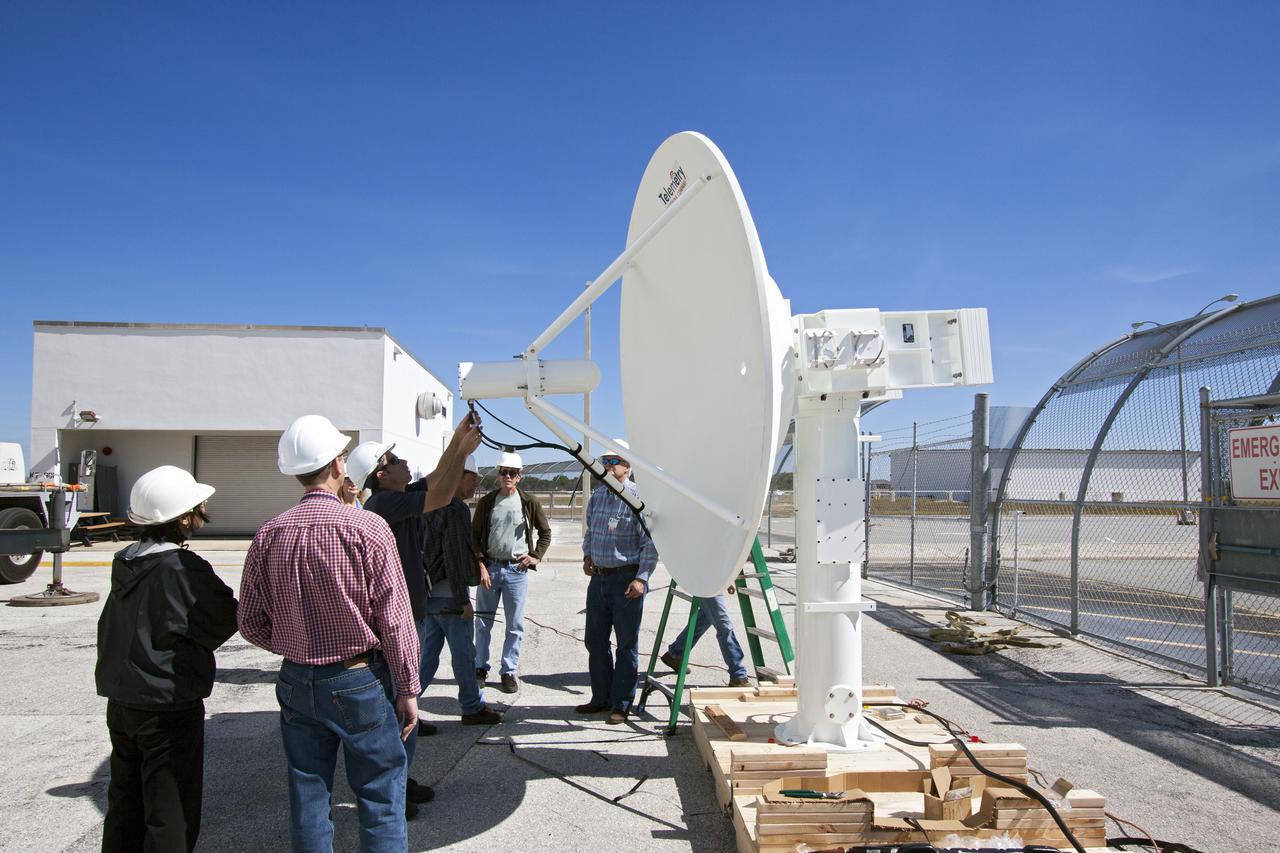
CAPE CANAVERAL, Fla. – Workers prepare to install a new parabolic telemetry antenna and tracker camera to the roof of the Launch Control Center, or LCC, in Launch Complex 39 at NASA's Kennedy Space Center in Florida. This antenna and camera system is the first of three that will be installed on the LCC roof for the Radio Frequency and Telemetry Station RFTS, which will be used to monitor radio frequency communications from a launch vehicle at Launch Pad 39A or B as well as provide radio frequency relay for a launch vehicle in the Vehicle Assembly Building. The RFTS replaces the shuttle-era communications and tracking labs at Kennedy. The modern RFTS checkout station is designed to primarily support NASA's Space Launch System, or SLS, and Orion spacecraft, but can support multi-user radio frequency tests as the space center transitions to support a variety of rockets and spacecraft. For more information on the modernization efforts at Kennedy, visit the Ground Systems Development and Operations, or GSDO, website at http:__go.nasa.gov_groundsystems. Photo credit: NASA_Jim Grossmann
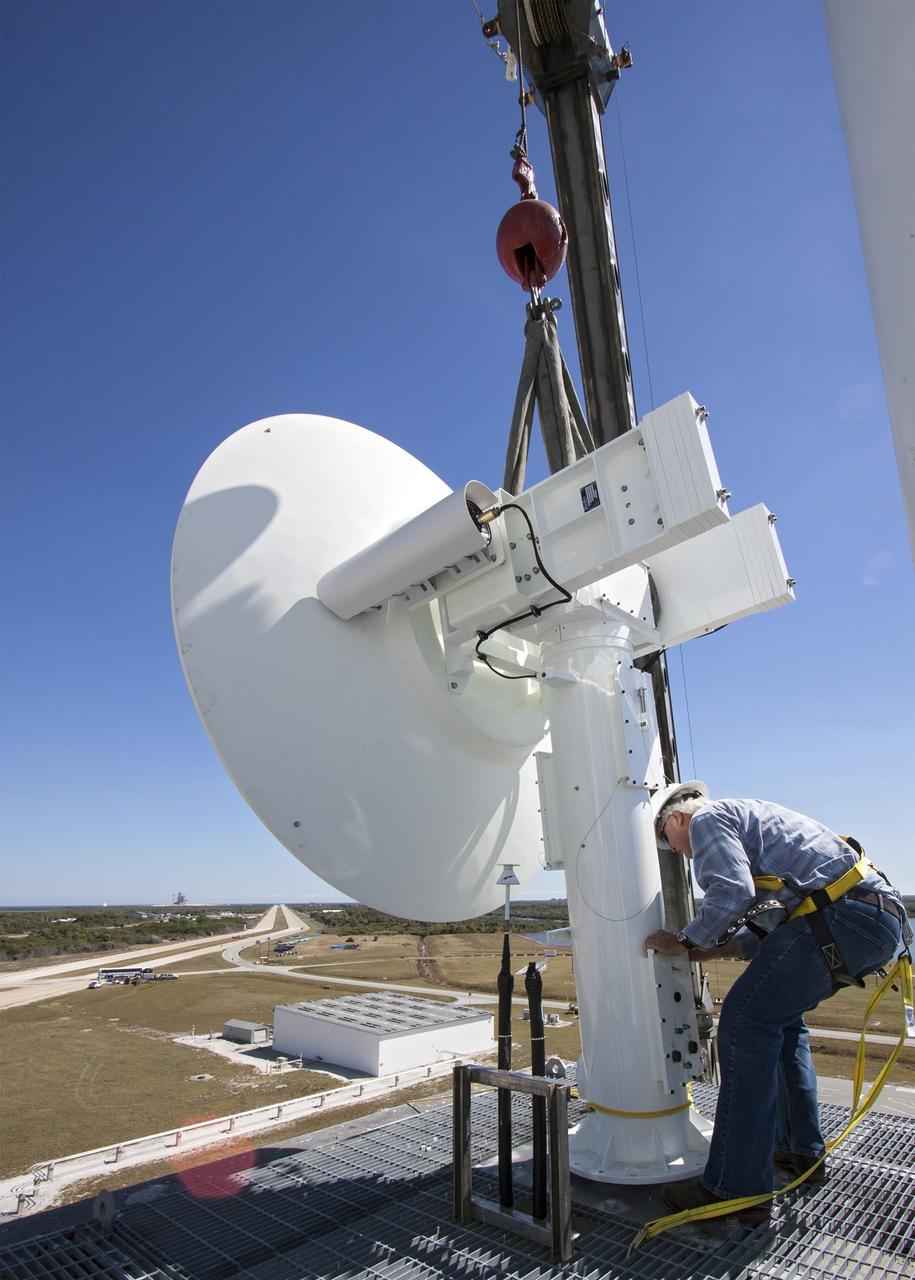
CAPE CANAVERAL, Fla. – With the help of a crane, a worker helps guide a parabolic telemetry antenna and tracker camera to the roof of the Launch Control Center, or LCC, in Launch Complex 39 at NASA's Kennedy Space Center in Florida. This antenna and camera system is the first of three that will be installed on the LCC roof for the Radio Frequency and Telemetry Station RFTS, which will be used to monitor radio frequency communications from a launch vehicle at Launch Pad 39A or B as well as provide radio frequency relay for a launch vehicle in the Vehicle Assembly Building. The RFTS replaces the shuttle-era communications and tracking labs at Kennedy. The modern RFTS checkout station is designed to primarily support NASA's Space Launch System, or SLS, and Orion spacecraft, but can support multi-user radio frequency tests as the space center transitions to support a variety of rockets and spacecraft. For more information on the modernization efforts at Kennedy, visit the Ground Systems Development and Operations, or GSDO, website at http://go.nasa.gov/groundsystems. Photo credit: NASA/Jim Grossmann
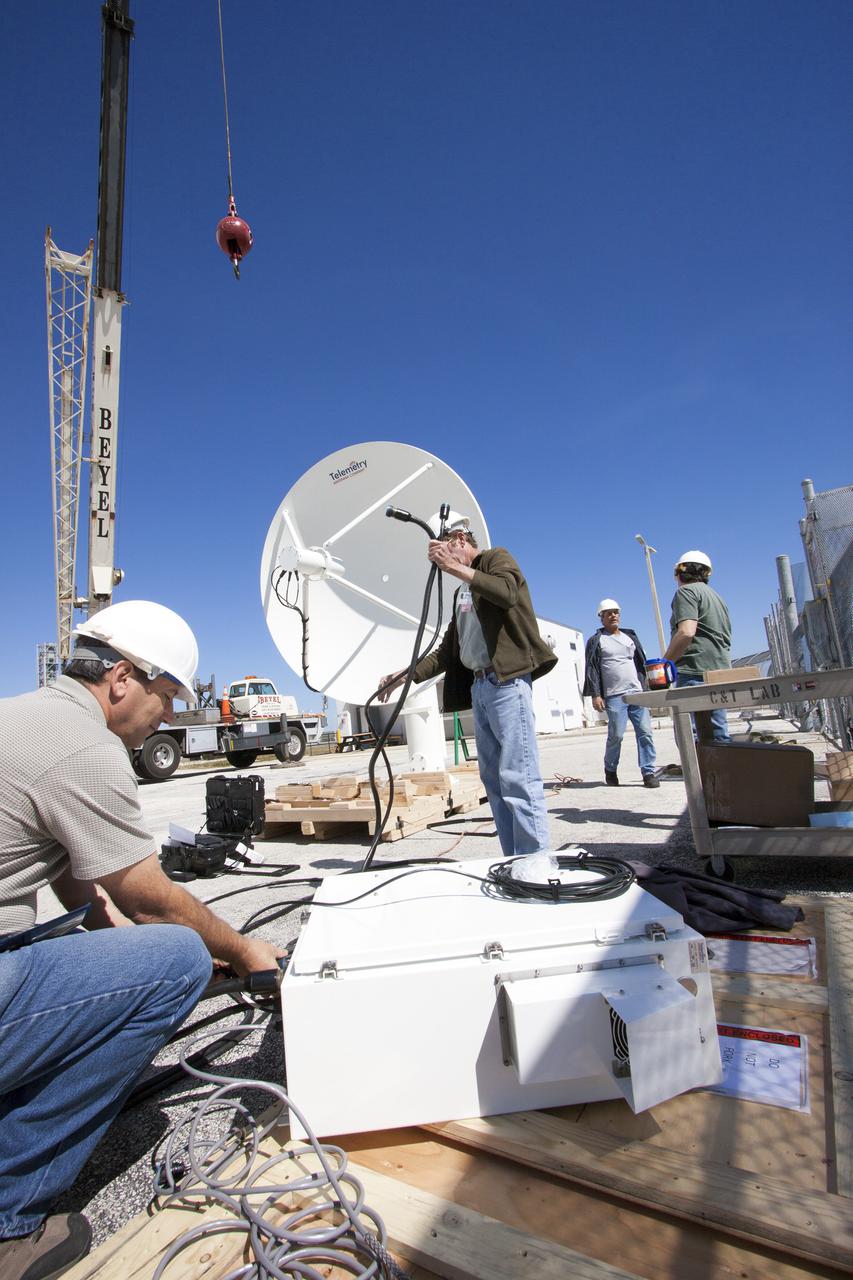
CAPE CANAVERAL, Fla. – Workers prepare to install a new parabolic telemetry antenna and tracker camera via crane to the roof of the Launch Control Center, or LCC, in Launch Complex 39 at NASA's Kennedy Space Center in Florida. This antenna and camera system is the first of three that will be installed on the LCC roof for the Radio Frequency and Telemetry Station RFTS, which will be used to monitor radio frequency communications from a launch vehicle at Launch Pad 39A or B as well as provide radio frequency relay for a launch vehicle in the Vehicle Assembly Building. The RFTS replaces the shuttle-era communications and tracking labs at Kennedy. The modern RFTS checkout station is designed to primarily support NASA's Space Launch System, or SLS, and Orion spacecraft, but can support multi-user radio frequency tests as the space center transitions to support a variety of rockets and spacecraft. For more information on the modernization efforts at Kennedy, visit the Ground Systems Development and Operations, or GSDO, website at http:__go.nasa.gov_groundsystems. Photo credit: NASA_Jim Grossmann
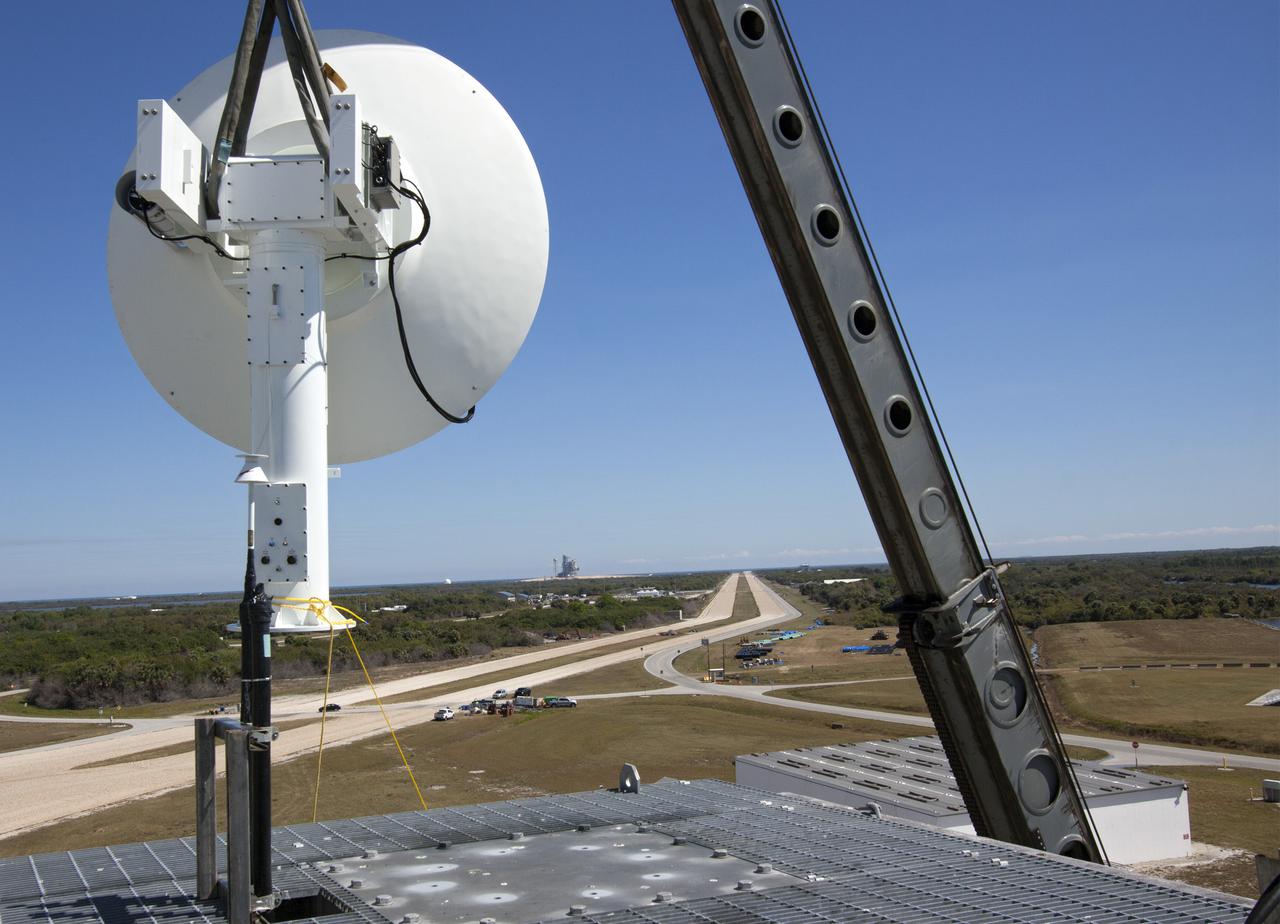
CAPE CANAVERAL, Fla. – A crane lifts a new parabolic telemetry antenna and tracker camera to the roof of the Launch Control Center, or LCC, in Launch Complex 39 at NASA's Kennedy Space Center in Florida. This antenna and camera system is the first of three that will be installed on the LCC roof for the Radio Frequency and Telemetry Station RFTS, which will be used to monitor radio frequency communications from a launch vehicle at Launch Pad 39A or B as well as provide radio frequency relay for a launch vehicle in the Vehicle Assembly Building. The RFTS replaces the shuttle-era communications and tracking labs at Kennedy. The modern RFTS checkout station is designed to primarily support NASA's Space Launch System, or SLS, and Orion spacecraft, but can support multi-user radio frequency tests as the space center transitions to support a variety of rockets and spacecraft. For more information on the modernization efforts at Kennedy, visit the Ground Systems Development and Operations, or GSDO, website at http:__go.nasa.gov_groundsystems. Photo credit: NASA_Jim Grossmann

CAPE CANAVERAL, Fla. – A crane lifts a new parabolic telemetry antenna and tracker camera to the roof of the Launch Control Center, or LCC, in Launch Complex 39 at NASA's Kennedy Space Center in Florida. This antenna and camera system is the first of three that will be installed on the LCC roof for the Radio Frequency and Telemetry Station RFTS, which will be used to monitor radio frequency communications from a launch vehicle at Launch Pad 39A or B as well as provide radio frequency relay for a launch vehicle in the Vehicle Assembly Building. The RFTS replaces the shuttle-era communications and tracking labs at Kennedy. The modern RFTS checkout station is designed to primarily support NASA's Space Launch System, or SLS, and Orion spacecraft, but can support multi-user radio frequency tests as the space center transitions to support a variety of rockets and spacecraft. For more information on the modernization efforts at Kennedy, visit the Ground Systems Development and Operations, or GSDO, website at http:__go.nasa.gov_groundsystems. Photo credit: NASA_Jim Grossmann
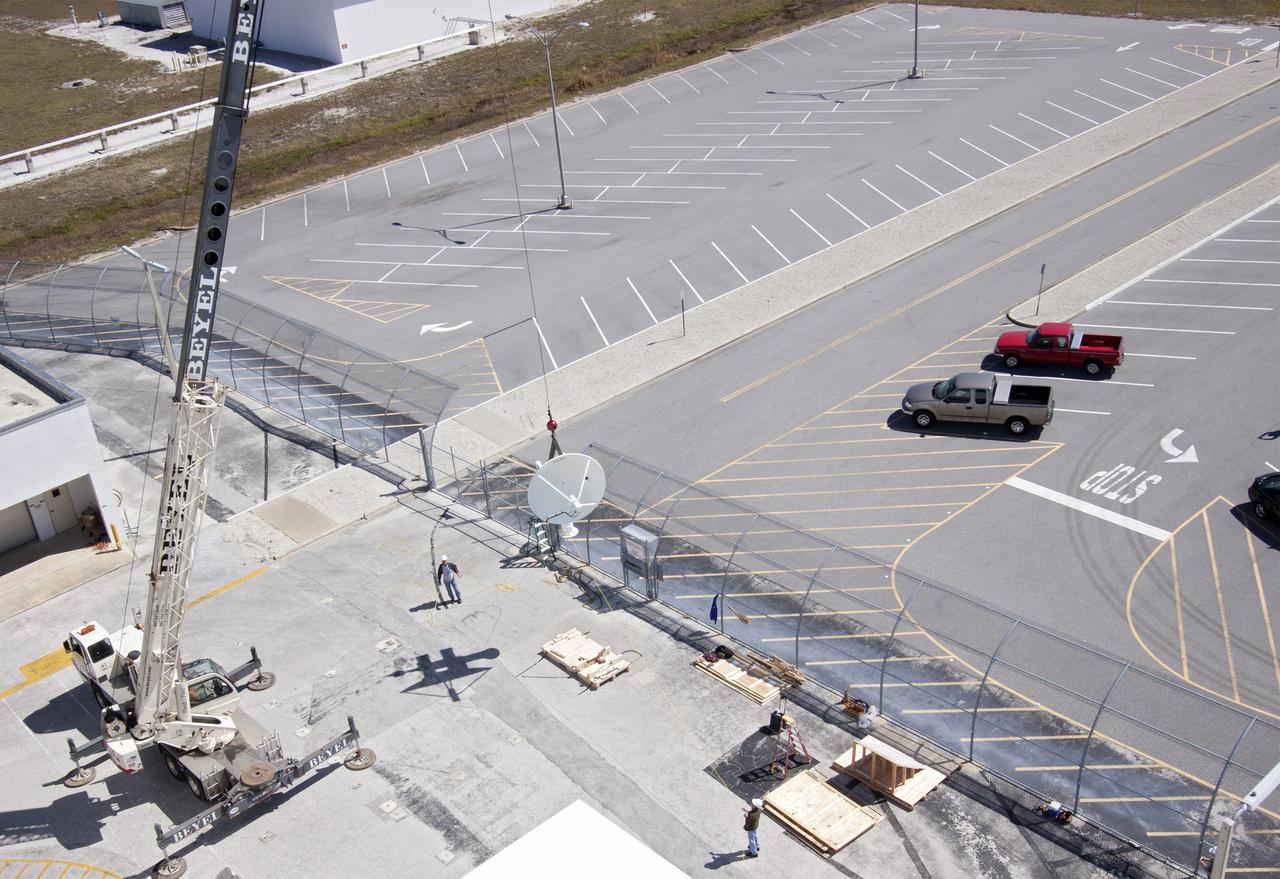
CAPE CANAVERAL, Fla. – Workers use a crane to install a new parabolic telemetry antenna and tracker camera to the roof of the Launch Control Center, or LCC, in Launch Complex 39 at NASA's Kennedy Space Center in Florida. This antenna and camera system is the first of three that will be installed on the LCC roof for the Radio Frequency and Telemetry Station RFTS, which will be used to monitor radio frequency communications from a launch vehicle at Launch Pad 39A or B as well as provide radio frequency relay for a launch vehicle in the Vehicle Assembly Building. The RFTS replaces the shuttle-era communications and tracking labs at Kennedy. The modern RFTS checkout station is designed to primarily support NASA's Space Launch System, or SLS, and Orion spacecraft, but can support multi-user radio frequency tests as the space center transitions to support a variety of rockets and spacecraft. For more information on the modernization efforts at Kennedy, visit the Ground Systems Development and Operations, or GSDO, website at http:__go.nasa.gov_groundsystems. Photo credit: NASA_Jim Grossmann

Deep Space Station 13 (DSS-13) at NASA's Goldstone Deep Space Communications Complex near Barstow, California – part of the agency's Deep Space Network – is a 34-meter (112-foot) experimental antenna that has been retrofitted with an optical terminal (the boxy instrument below the center of the antenna's dish). Since November 2023, DSS-13 has been tracking the downlink laser of the Deep Space Optical Communications (DSOC) experiment that is aboard NASA's Psyche mission, which launched on Oct. 13, 2023. In a first, the antenna also synchronously received radio-frequency signals from the spacecraft as it travels through deep space on its way to investigate the metal-rich asteroid Psyche. The laser signal collected by the camera is then transmitted through optical fiber that feeds into a cryogenically cooled semiconducting nanowire single photon detector. Designed and built by JPL's Microdevices Laboratory, the detector is identical to the one used at Caltech's Palomar Observatory, in San Diego County, California, that acts as DSOC's downlink ground station. Goldstone is one of three complexes that comprise NASA's Deep Space Network, which provides radio communications for all of the agency's interplanetary spacecraft and is also utilized for radio astronomy and radar observations of the solar system and the universe. NASA's Jet Propulsion Laboratory, a division of Caltech in Pasadena, California, manages the DSN for the agency. https://photojournal.jpl.nasa.gov/catalog/PIA26148
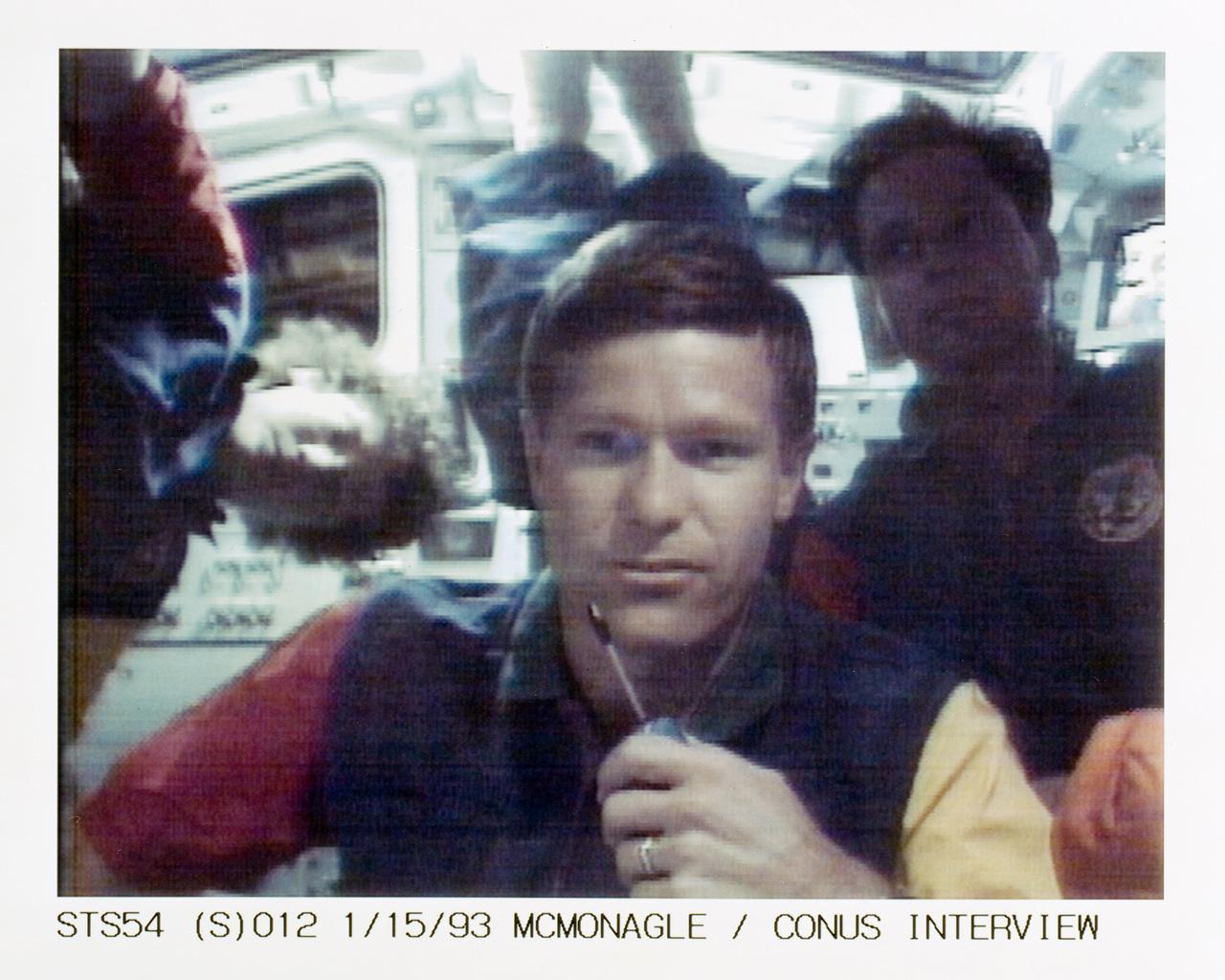
STS054-S-012 (15 Jan 1993) --- McMonagle talks to a radio station from the flight deck of Endeavour while, in the background, several crewmates await their turns to communicate with other stations. The scene was recorded at 13:54:14:13 GMT, Jan. 15, 1993.
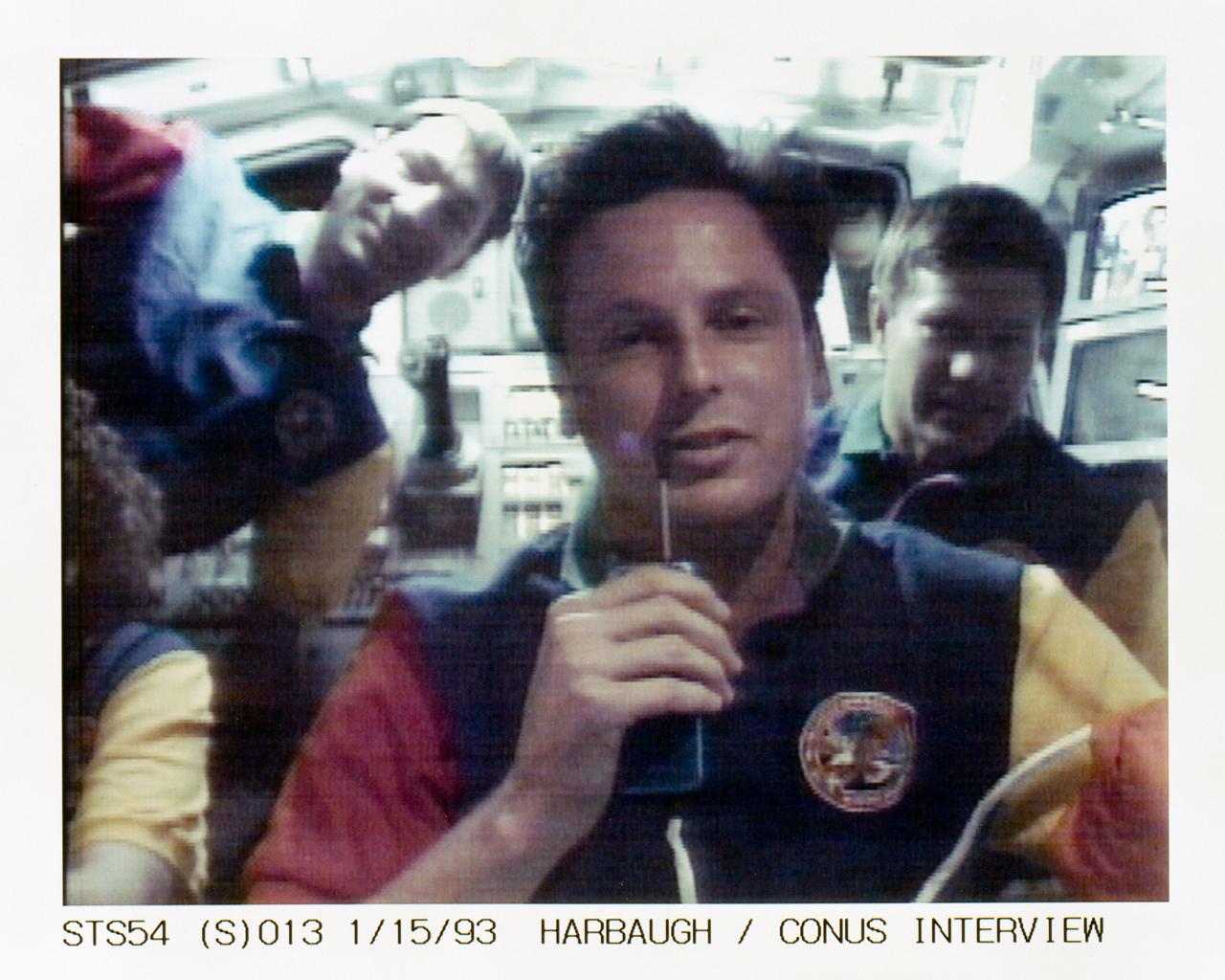
STS054-S-013 (15 Jan 1993) --- Harbaugh talks to a radio station from the flight deck of Endeavour while, in the background, several crewmates await their turns to communicate with other stations. The scene was recorded at 13:57:20:20 GMT, Jan. 15, 1993.
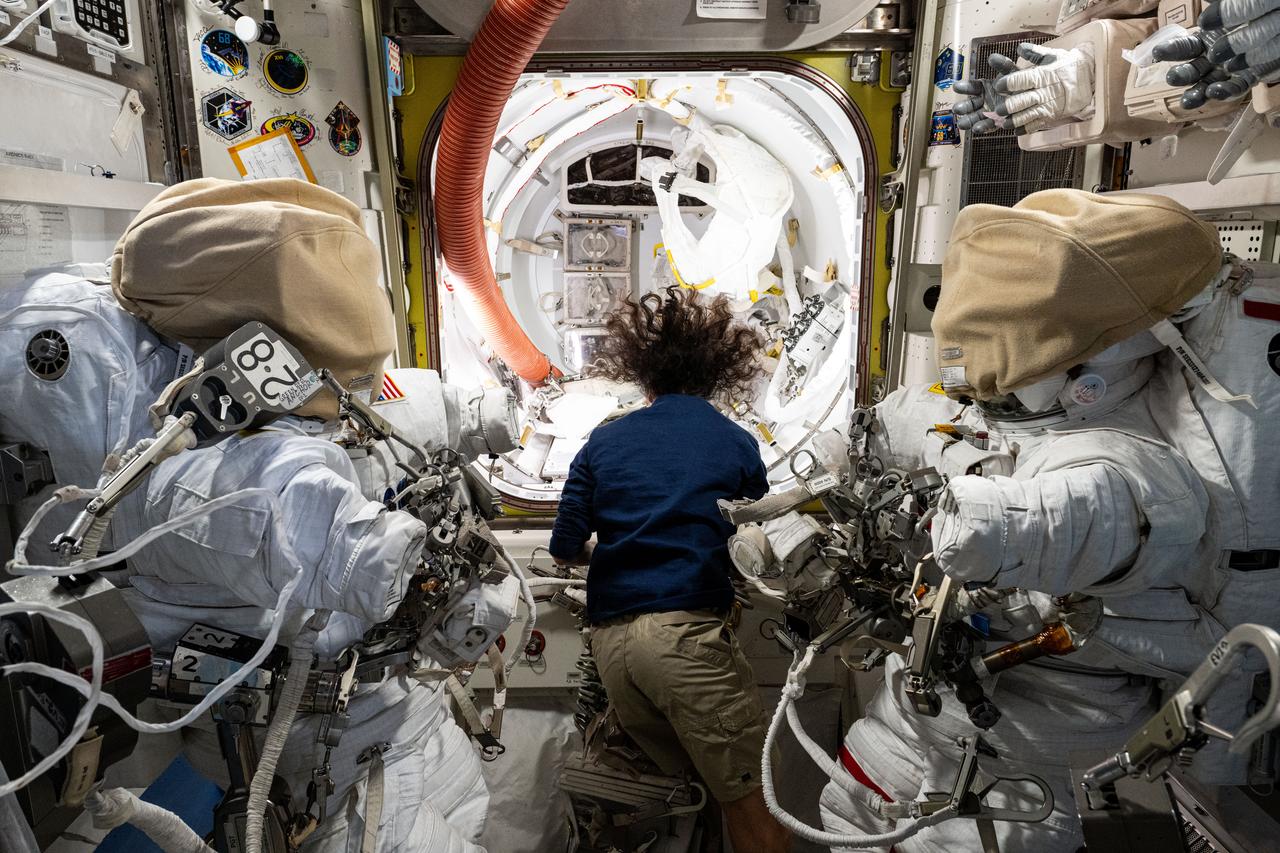
iss072e572188 (Jan. 28, 2025) --- NASA astronaut and Expedition 72 Commander Suni Williams works in the Quest airlock readying a pair of spacesuits that she and NASA astronaut Nick Hague will wear durimg a spacewalk to remove radio communications hardware and search for microbes outside the International Space Station.
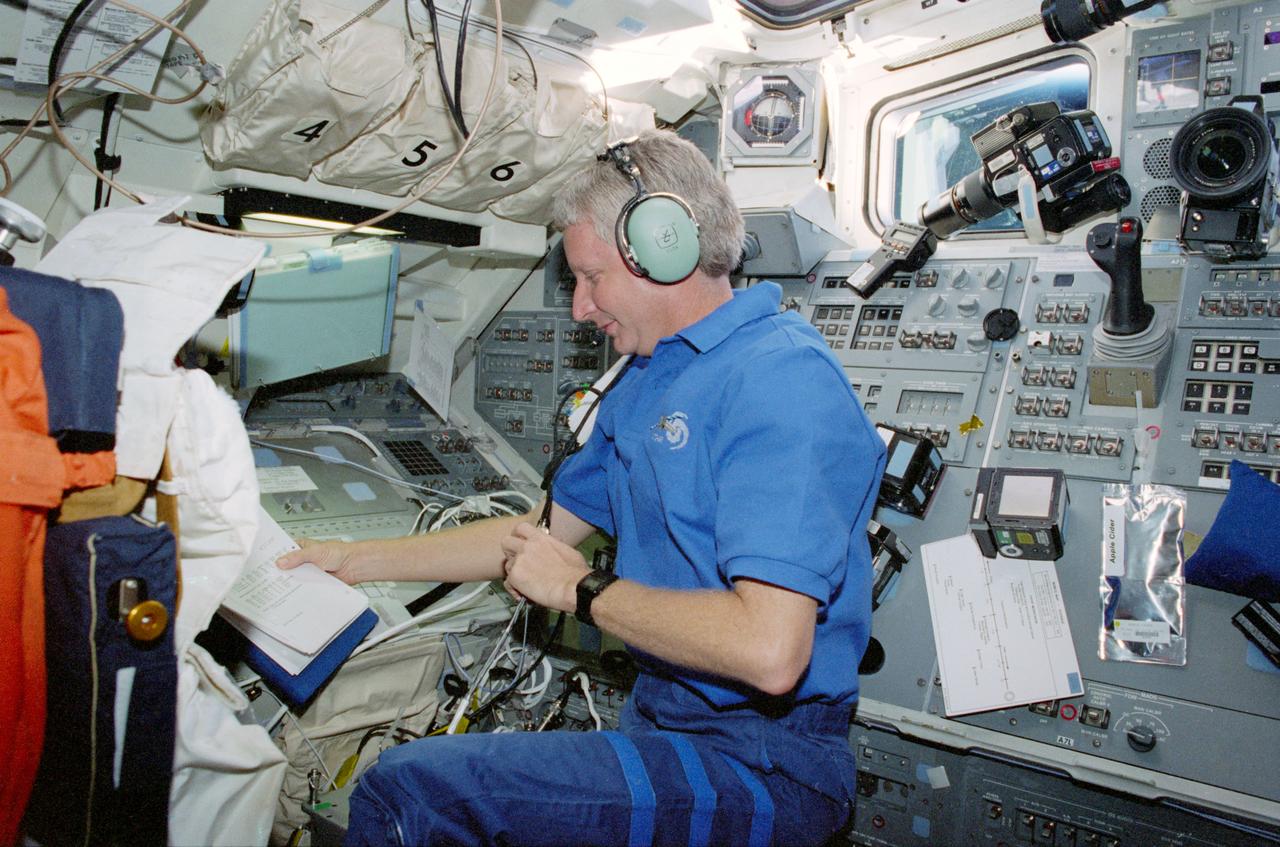
STS093-348-006 (22-27 July 1999) --- Astronaut Steven A. Hawley, mission specialist, communicates with students using the Shuttle Amateur Radio Experiment-2 (SAREX II) equipment on the flight deck of the Earth-orbiting Space Shuttle Columbia.
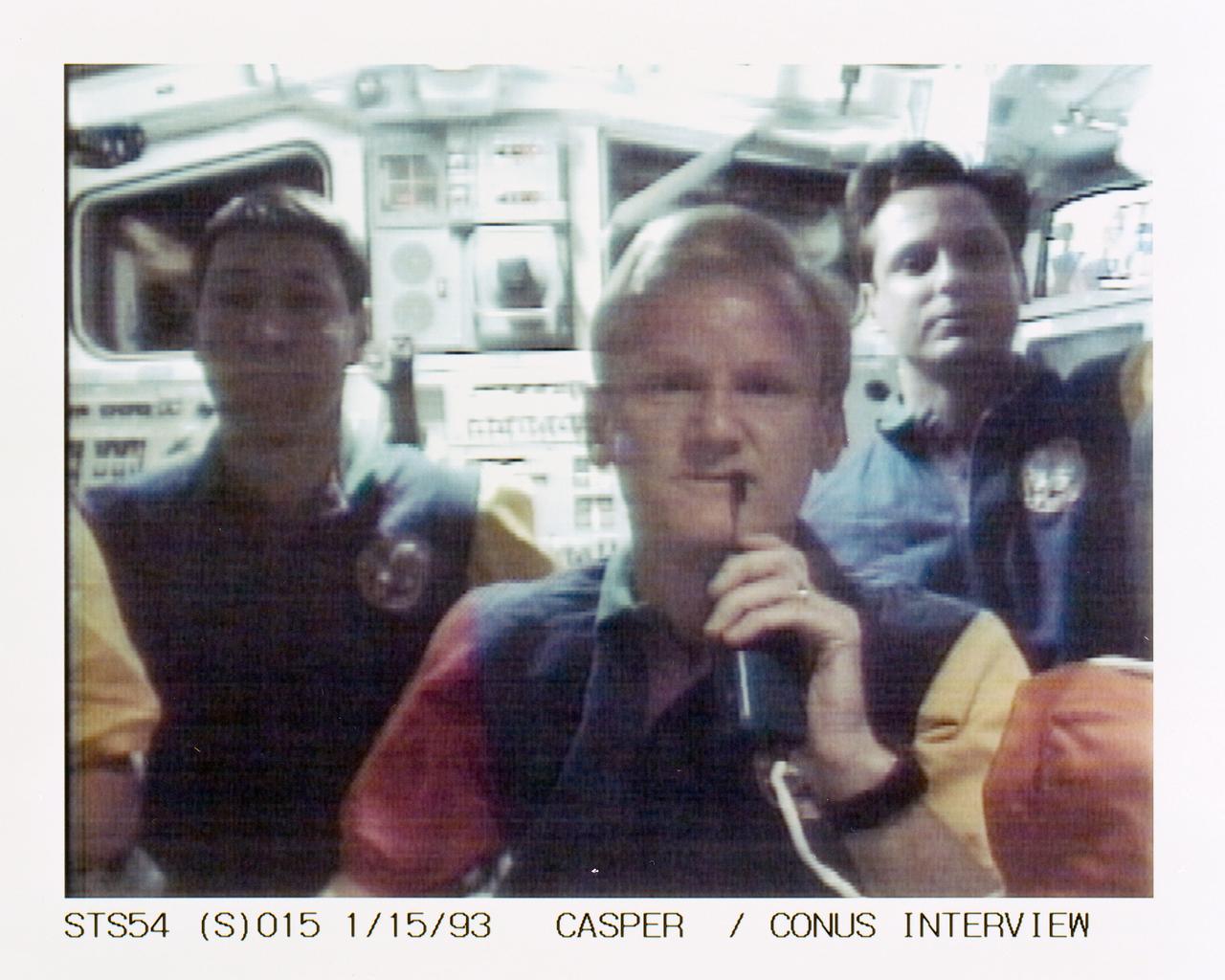
STS054-S-015 (15 Jan 1993) --- Casper talks to a radio station from the flight deck of Endeavour while, in the background, Runco, left, and Harbaugh await their turns to communicate with other stations. The scene was recorded at 13:45:54:05 GMT, Jan. 15, 1993.
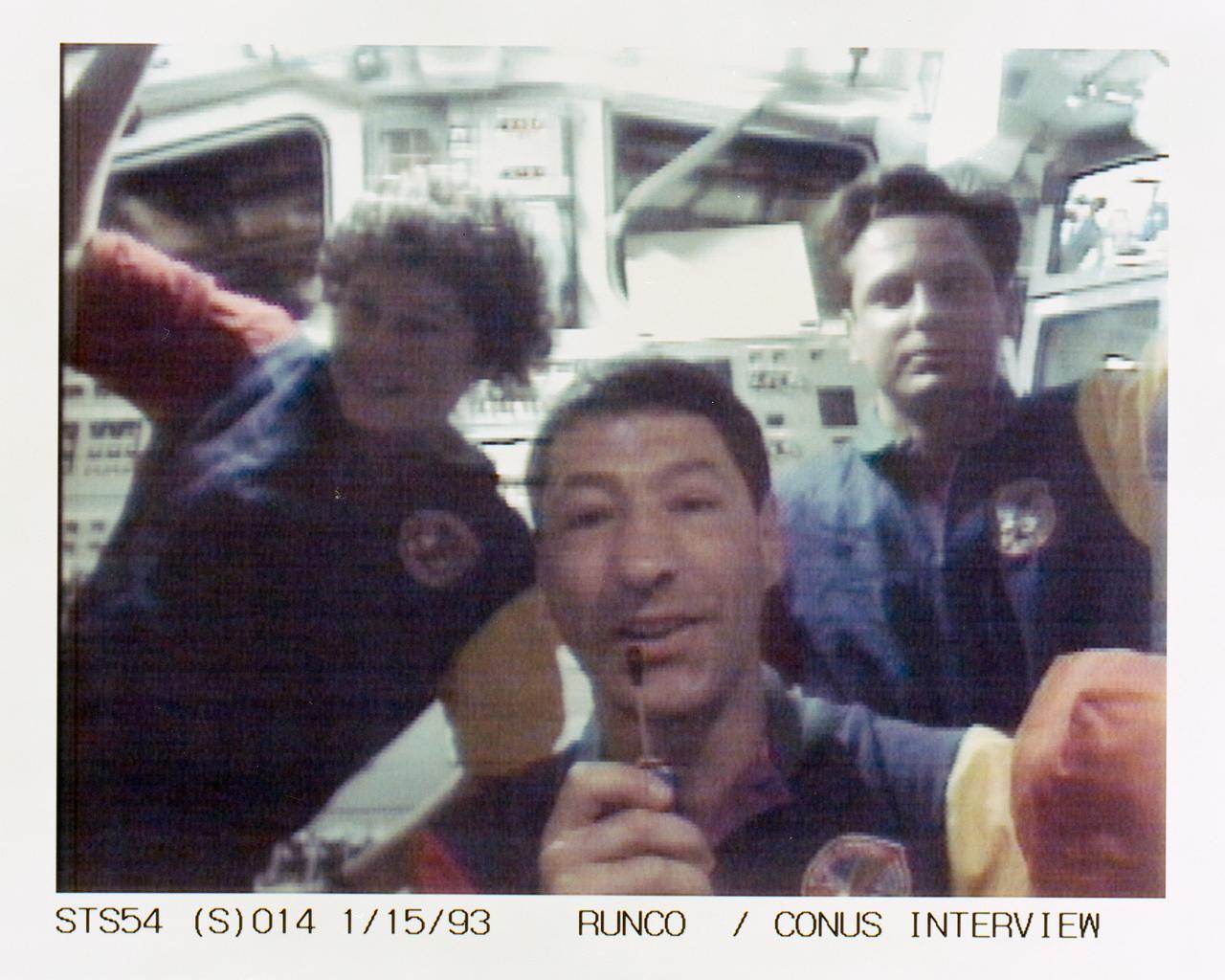
STS054-S-014 (15 Jan 1993) --- Runco talks to a radio station from the flight deck of Endeavour while, in the background, several crewmates await their turns to communicate with other stations. The scene was recorded at 13:48:45:11 GMT, Jan. 15, 1993.
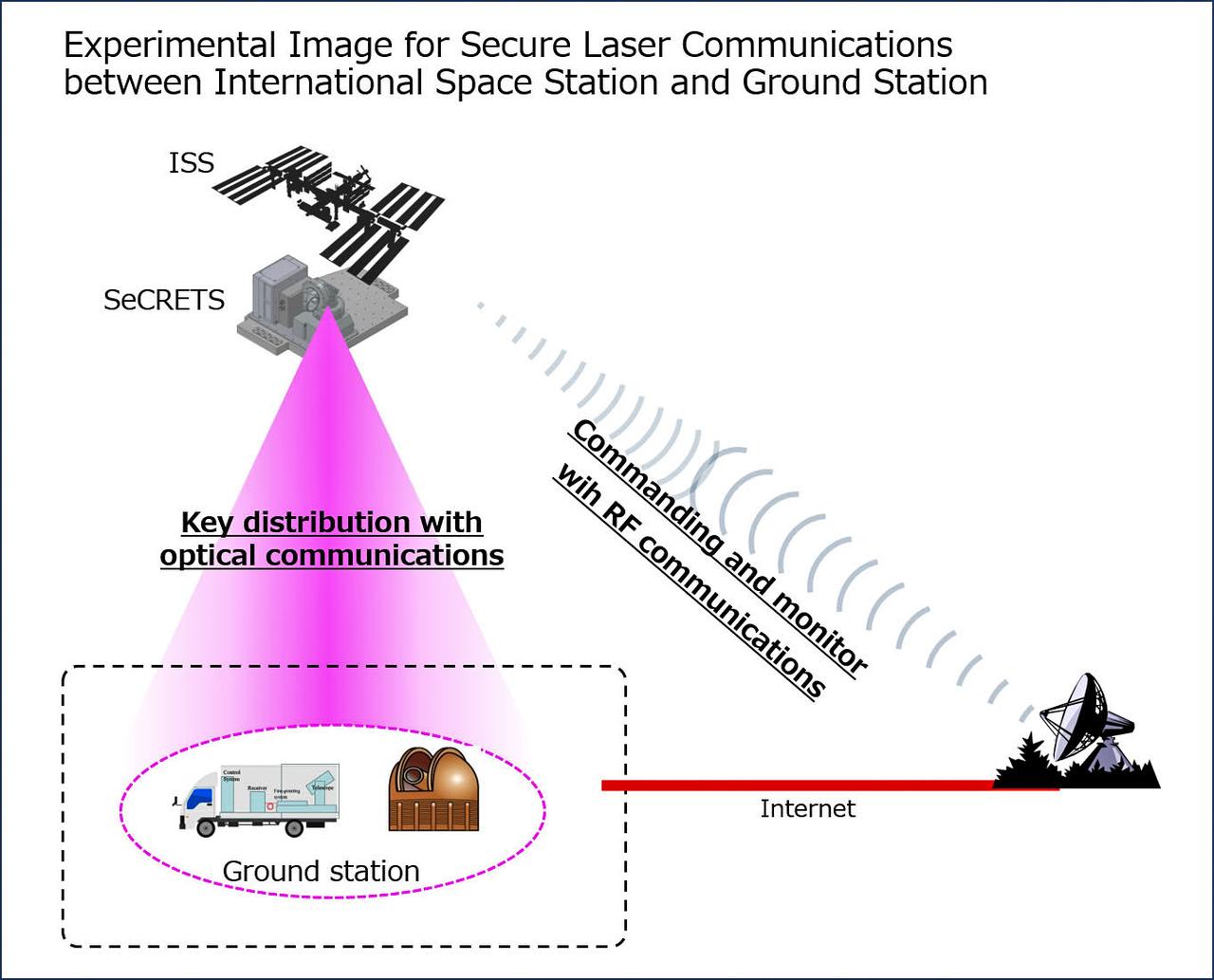
jsc2022e087162 (11/16/2022) --- For Secure Laser Communications between International Space Station and Ground Station (SeCRETS) investigation, the cryptographic keys (random numbers) sent from the transmitter are sent in the free space optical communication path and received by the detector installed on the ground. In this key sharing, the information exchange of error correction and key distillation via the International Space Station Radio Frequency lines. Image courtesy of JAXA.
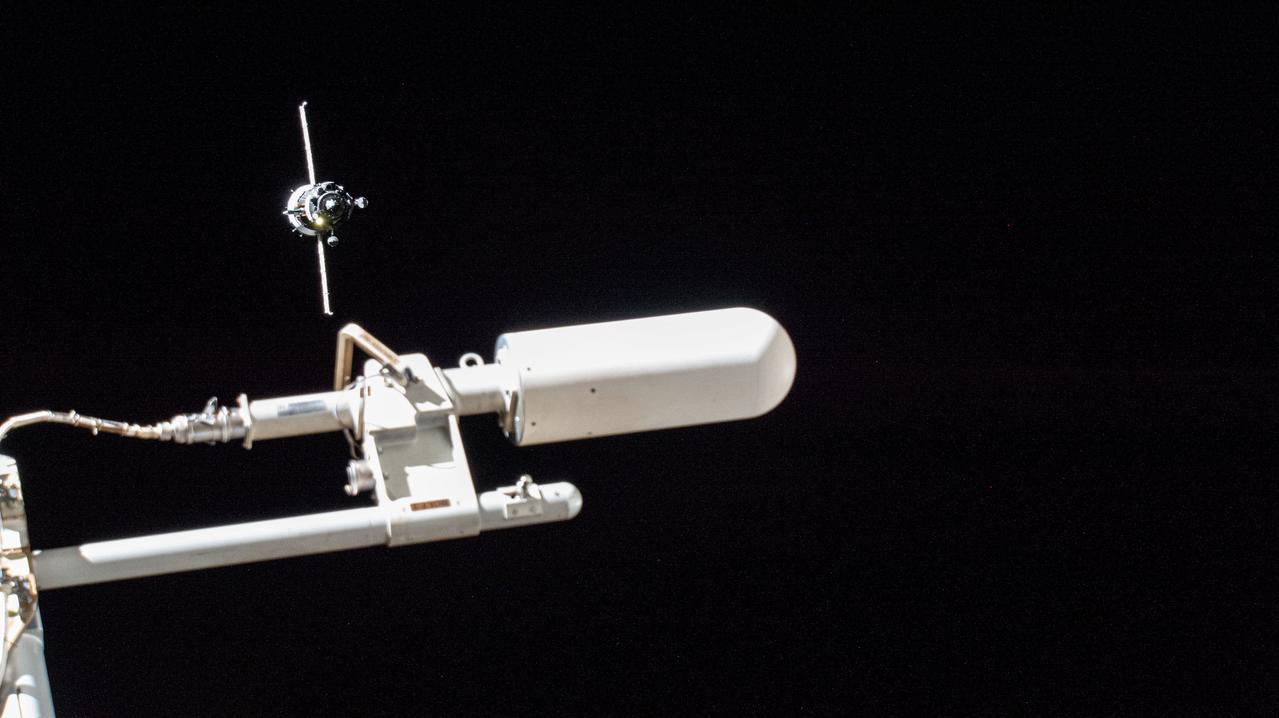
iss066e173086 (March 18, 2022) --- The Soyuz MS-21 crew ship (upper left), carrying cosmonauts Oleg Artemyev, Sergey Korsakov, and Denis Matveev, approaches the International Space Station for a docking to the International Space Station's Prichal docking module. In the foreground, is a UHF antenna used for space-to-space communications and the primary means of radio communication with spacewalking astronauts.
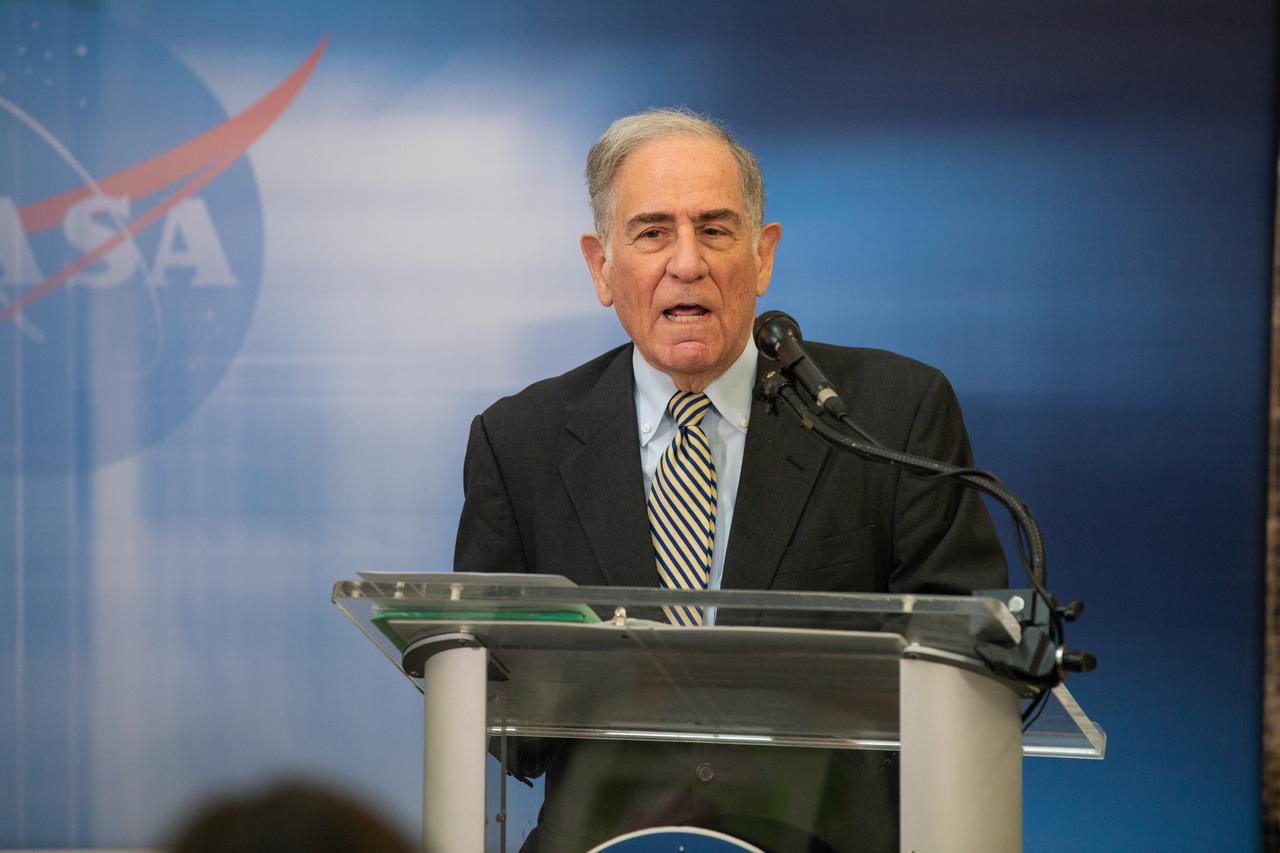
Vic Ratner, former radio broadcaster for ABC Radio, shares a few remarks after he is inducted as a 2019 Chronicler during a ceremony at Kennedy Space Center’s NASA News Center in Florida on May 3, 2019. Also honored as Chroniclers were journalists Jim Banke and Todd Halvorson, and photographer Peter Cosgrove. The Chroniclers recognizes retirees of the news and communications business who have helped spread news of American space exploration from Kennedy for 10 years or more. The group of four was selected by a committee of their peers on March 25. Their names were engraved on brass strips and added to The Chroniclers wall display in the news center and were unveiled during the ceremony.
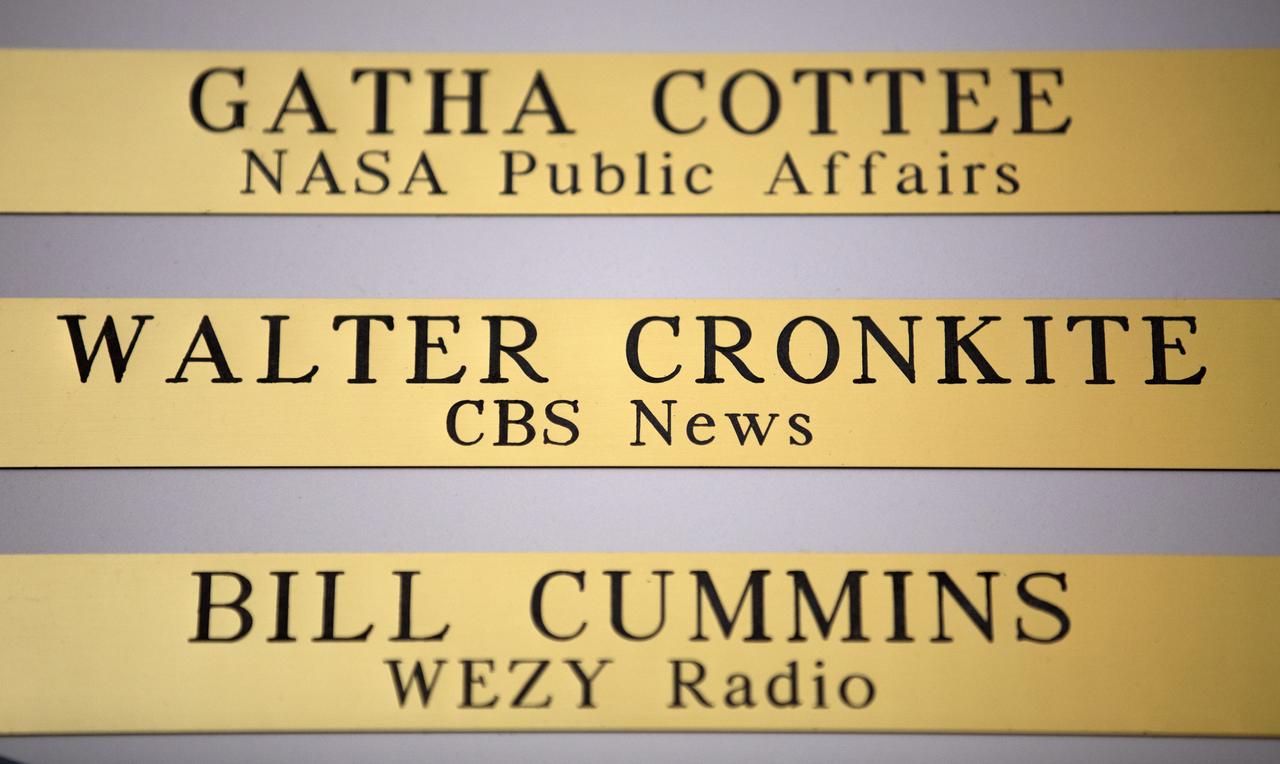
Brass plaques engraved with the names of Gatha Cottee of NASA Public Affairs, Walter Cronkite of CBS News and Bill Cummins of WEZY Radio are among the list of "The Chroniclers," a roll of honor on the wall at the NASA News Center at Kennedy Space Center in Florida. In this facility reporters from television, radio, print and online media outlets have monitored countless launches, landings and other space events in order to deliver the news to the world. The Chroniclers program recognizes retirees of the news and communications business who helped spread news of American space exploration from Kennedy Space Center for ten years or more.
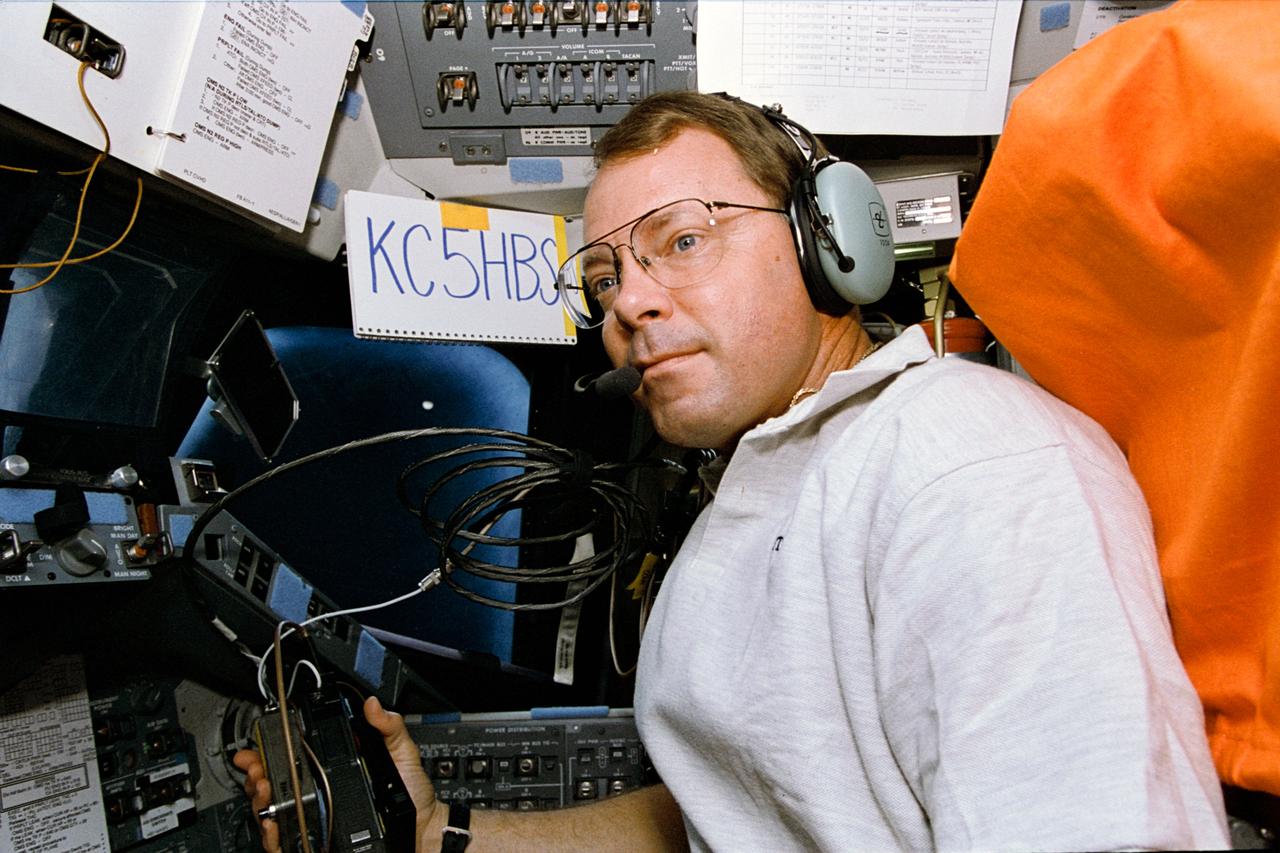
STS064-04-009 (9-20 Sept. 1994) --- Astronaut L. Blaine Hammond, STS-64 pilot, talks to students on Earth via the Shuttle Amateur Radio Experiment (SAREX) on the space shuttle Discovery's flight deck. The recently licensed "Ham" operator and several other crew members throughout the mission were connected with schools around the world with the aid of a number of amateur radio operators. Hammond joined five other NASA astronauts for almost 11 days in Earth orbit aboard Discovery. Photo credit: NASA or National Aeronautics and Space Administration
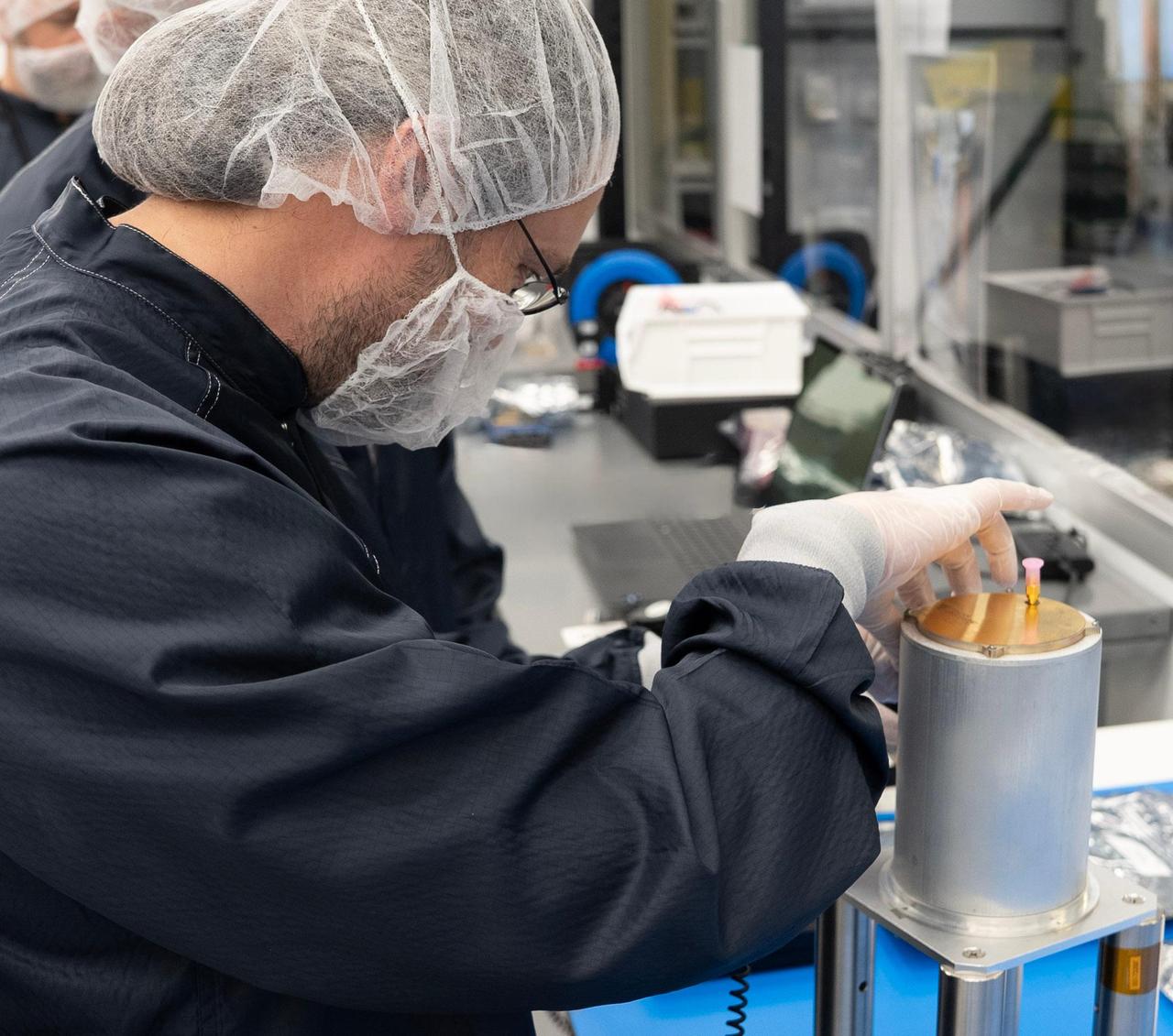
Engineer Emmanuel Decrossas of NASA's Jet Propulsion Laboratory in Southern California makes an adjustment to an antenna's connector, part of a NASA telecommunications payload called User Terminal, at Firefly Aerospace's facility in Cedar Park, Texas, in August 2025. Figure A (https://photojournal.jpl.nasa.gov/figures/PIA26596_figA.jpg) shows members of the team from JPL and NASA (dark blue) and Firefly (white) with the User Terminal antenna, radio, and other components on the bench behind them. Managed by JPL, the User Terminal will test a new, low-cost lunar communications system that future missions to the Moon's far side could use to transfer data to and from Earth via lunar relay satellite. The User Terminal payload will be installed atop Firefly's Blue Ghost Mission 2 lunar lander, which is slated to launch to the Moon's far side in 2026 under NASA's CLPS (Commercial Lunar Payload Services) initiative. NASA's Apollo missions brought large and powerful telecommunications systems to the lunar near-side surface to communicate directly with Earth. But spacecraft on the far side will not have that option because only the near side of the Moon is visible to Earth. Sending messages between the Moon and Earth via a relay orbiter enables communication with the lunar far side and improves it at the Moon's poles. The User Terminal will for the first time test such a setup for NASA by using a compact, lightweight software defined radio, antenna, and related hardware to communicate with a satellite that Blue Ghost Mission 2 is delivering to lunar orbit: ESA's (the European Space Agency's) Lunar Pathfinder. The User Terminal radio and antenna installed on the Blue Ghost lander will be used to commission Lunar Pathfinder, sending test data back and forth. After the lander ceases operations as planned at the end of a single lunar day (about 14 Earth days), a separate User Terminal radio and antenna installed on LuSEE-Night – another payload on the lander – will send LuSEE-Night's data to Lunar Pathfinder, which will relay the information to a commercial network of ground stations on Earth. LuSEE-Night is a radio telescope that expected to operate for at least 1½ years; it is a joint effort by NASA, the U.S. Department of Energy, and University of California, Berkeley's Space Sciences Laboratory. Additionally, User Terminal will be able to communicate with another satellite that's being delivered to lunar orbit by Blue Ghost Mission 2: Firefly's own Elytra Dark orbital vehicle. The hardware on the lander is only part of the User Terminal project, which was also designed to implement a new S-band two-way protocol, or standard, for short-range space communications between entities on the lunar surface (such as rovers and landers) and lunar orbiters, enabling reliable data transfer between them. The standard is a new version of a space communications protocol called Proximity-1 that was initially developed more than two decades ago for use at Mars by an international standard body called the Consultative Committee for Space Data Systems (CCSDS), of which NASA is a member agency. The User Terminal team made recommendations to CCSDS on the development of the new lunar S-band standard, which was specified in 2024. The new standard will enable lunar orbiters and surface spacecraft from various entities – NASA and other civil space agencies as well as industry and academia – to communicate with each other, a concept known as interoperability. At Mars, NASA rovers communicate with various Red Planet orbiters using the Ultra-High Frequency (UHF) radio band version of the Proximity-1 standard. On the Moon's far side, use of UHF is reserved for radio astronomy science; so a new lunar standard was needed using a different frequency range, S-band, as were more efficient modulation and coding schemes to better fit the available frequency spectrum specified by the new standard. User Terminal is funded by NASA's Exploration Science Strategy and Integration Office, part of the agency's Science Mission Directorate, which manages the CLPS initiative. JPL manages the project and supported development of the new S-band radio standard and the payload in coordination with Vulcan Wireless in Carlsbad, California, which built the radio. Caltech in Pasadena manages JPL for NASA. https://photojournal.jpl.nasa.gov/catalog/PIA26596
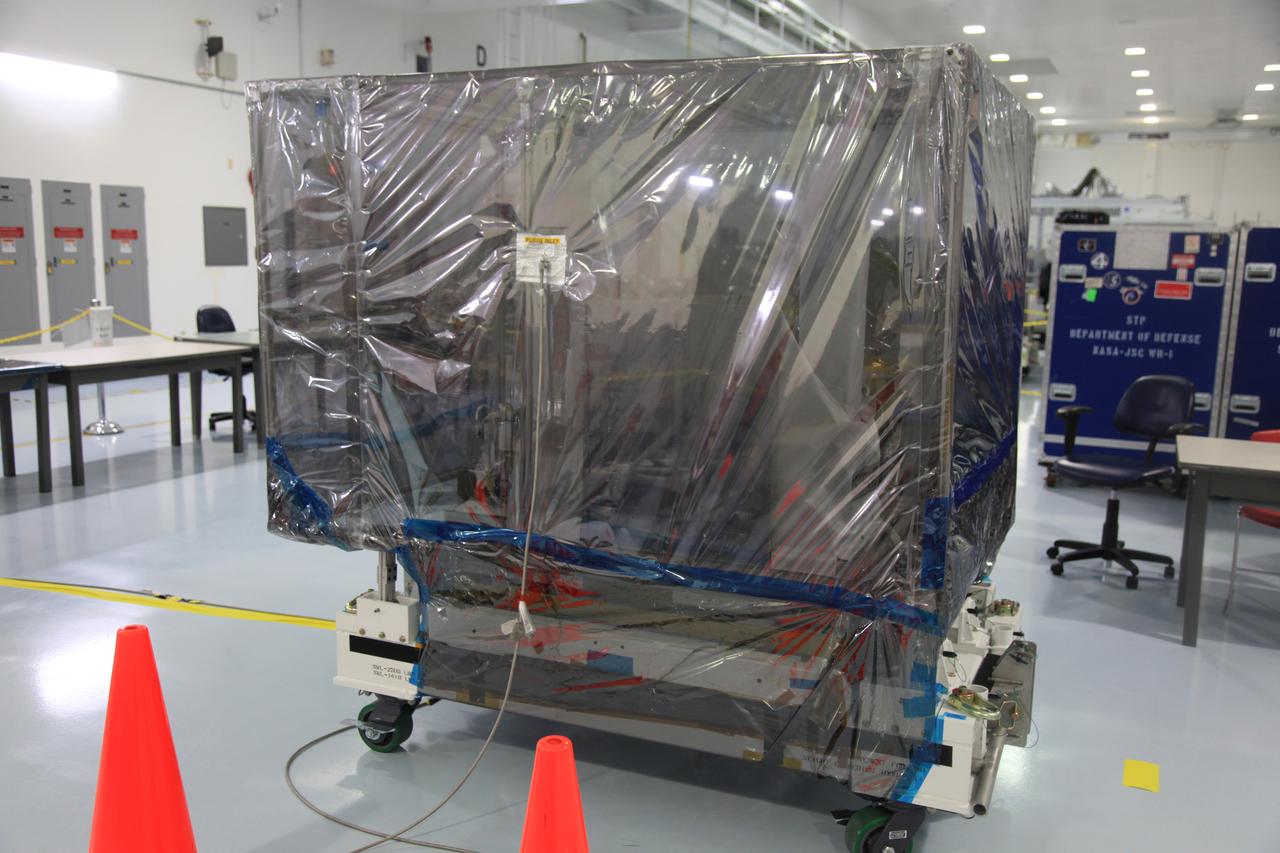
The Space Test Program-Houston 6 (STP-H6) payload is inside the Space Station Processing Facility high bay at NASA’s Kennedy Space Center in Florida on March 19, 2019. It is being prepared for its move to the SpaceX facility where it will be will be stowed in the trunk of the Dragon spacecraft for delivery to the International Space Station on SpaceX’s 17th Commercial Resupply Services mission (CRS-17) for NASA. STP-H6 is an x-ray communication investigation that will be used to perform a space-based demonstration of a new technology for generating beams of modulated x-rays. This technology may be useful for providing efficient communication to deep space probes, or communicating with hypersonic vehicles where plasma sheaths prevent traditional radio communications. CRS-17 is scheduled to launch from Space Launch Complex 40 on Cape Canaveral Air Force Station in late April.
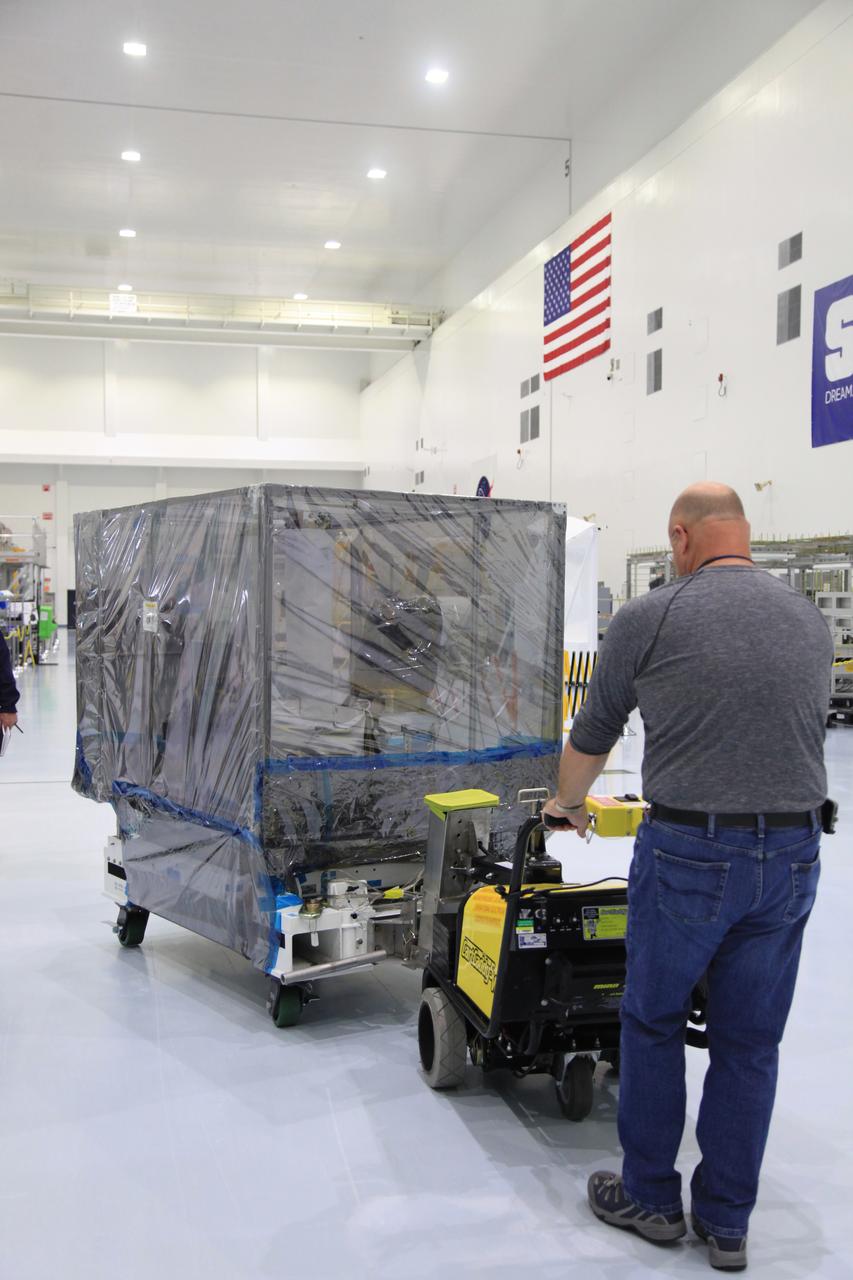
The Space Test Program-Houston 6 (STP-H6) payload is being moved out of the Space Station Processing Facility high bay at NASA’s Kennedy Space Center in Florida on March 19, 2019. The payload will be moved to the SpaceX facility where it will be stowed in the trunk of the Dragon spacecraft for delivery to the International Space Station on SpaceX’s 17th Commercial Resupply Services mission (CRS-17) for NASA. STP-H6 is an x-ray communication investigation that will be used to perform a space-based demonstration of a new technology for generating beams of modulated x-rays. This technology may be useful for providing efficient communication to deep space probes, or communicating with hypersonic vehicles where plasma sheaths prevent traditional radio communications. CRS-17 is scheduled to launch from Space Launch Complex 40 on Cape Canaveral Air Force Station in late April.
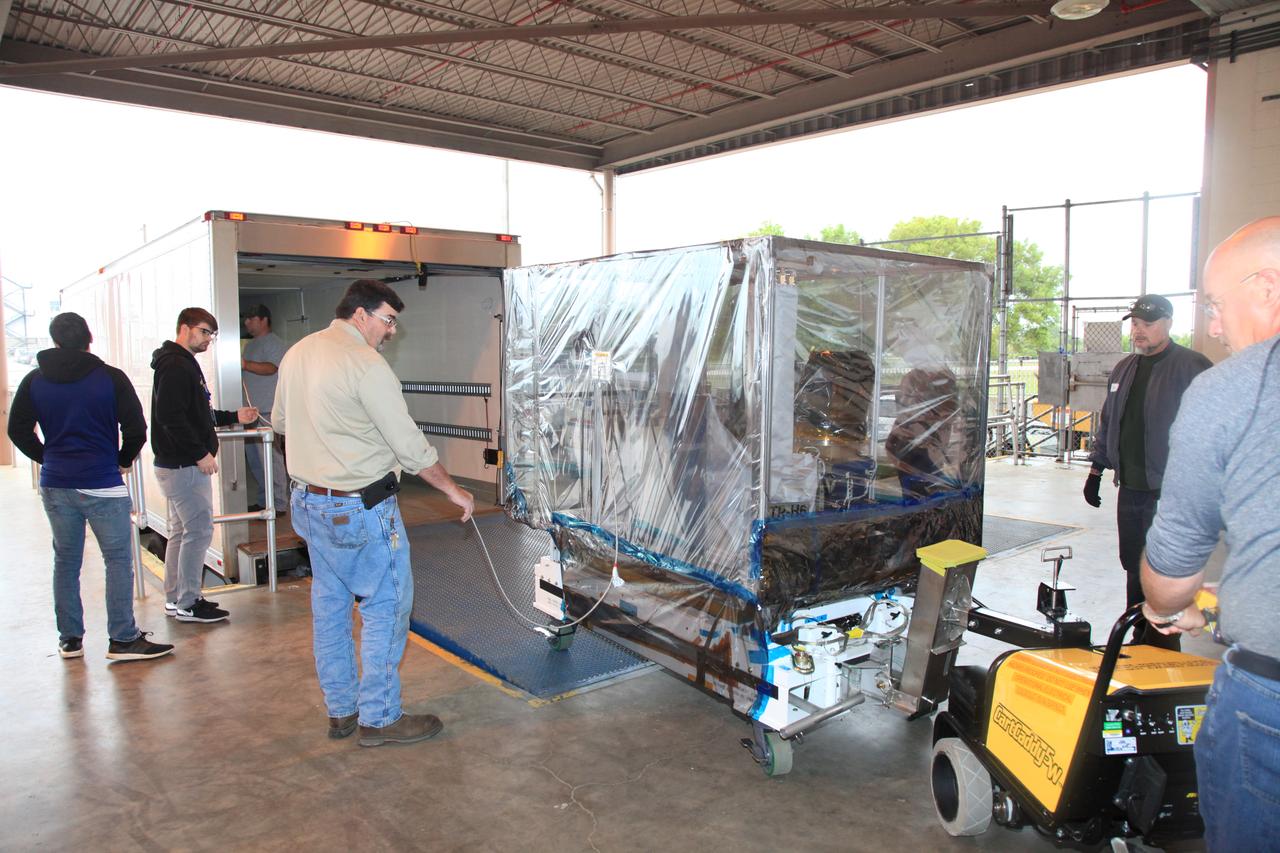
The Space Test Program-Houston 6 (STP-H6) payload is being loaded into a transport truck at the Space Station Processing Facility at NASA’s Kennedy Space Center in Florida on March 19, 2019. The payload will be moved to the SpaceX facility where it will be stowed in the trunk of the Dragon spacecraft for delivery to the International Space Station on SpaceX’s 17th Commercial Resupply Services mission (CRS-17) for NASA. STP-H6 is an x-ray communication investigation that will be used to perform a space-based demonstration of a new technology for generating beams of modulated x-rays. This technology may be useful for providing efficient communication to deep space probes, or communicating with hypersonic vehicles where plasma sheaths prevent traditional radio communications. CRS-17 is scheduled to launch from Space Launch Complex 40 on Cape Canaveral Air Force Station in late April.
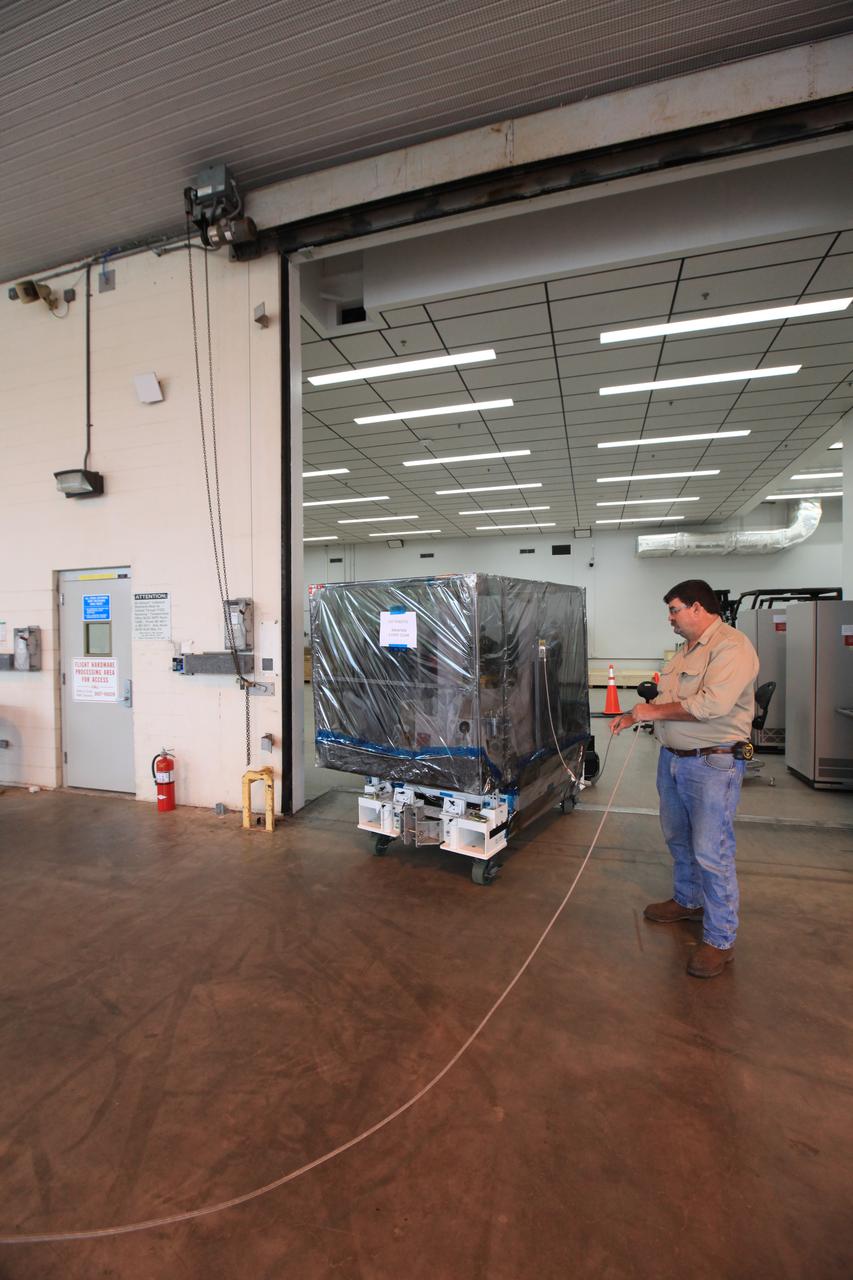
The Space Test Program-Houston 6 (STP-H6) payload is moved out of the Space Station Processing Facility at NASA’s Kennedy Space Center in Florida on March 19, 2019. The payload will be moved to the SpaceX facility where it will be stowed in the trunk of the Dragon spacecraft for delivery to the International Space Station on SpaceX’s 17th Commercial Resupply Services mission (CRS-17) for NASA. STP-H6 is an x-ray communication investigation that will be used to perform a space-based demonstration of a new technology for generating beams of modulated x-rays. This technology may be useful for providing efficient communication to deep space probes, or communicating with hypersonic vehicles where plasma sheaths prevent traditional radio communications. CRS-17 is scheduled to launch from Space Launch Complex 40 on Cape Canaveral Air Force Station in late April.
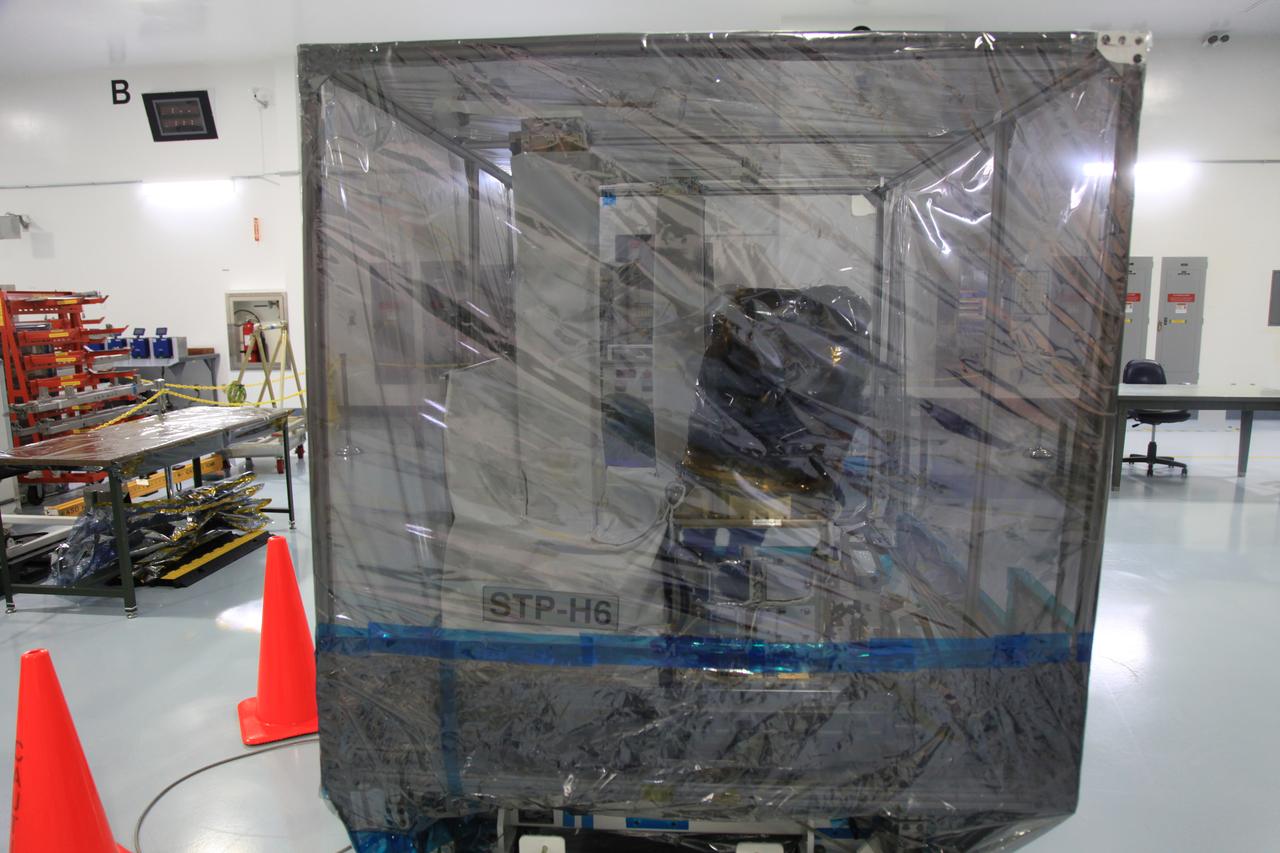
The Space Test Program-Houston 6 (STP-H6) payload is inside the Space Station Processing Facility high bay at NASA’s Kennedy Space Center in Florida on March 19, 2019. It is being prepared for its move to the SpaceX facility where it will be will be stowed in the trunk of the Dragon spacecraft for delivery to the International Space Station on SpaceX’s 17th Commercial Resupply Services mission (CRS-17) for NASA. STP-H6 is an x-ray communication investigation that will be used to perform a space-based demonstration of a new technology for generating beams of modulated x-rays. This technology may be useful for providing efficient communication to deep space probes, or communicating with hypersonic vehicles where plasma sheaths prevent traditional radio communications. CRS-17 is scheduled to launch from Space Launch Complex 40 on Cape Canaveral Air Force Station in late April.
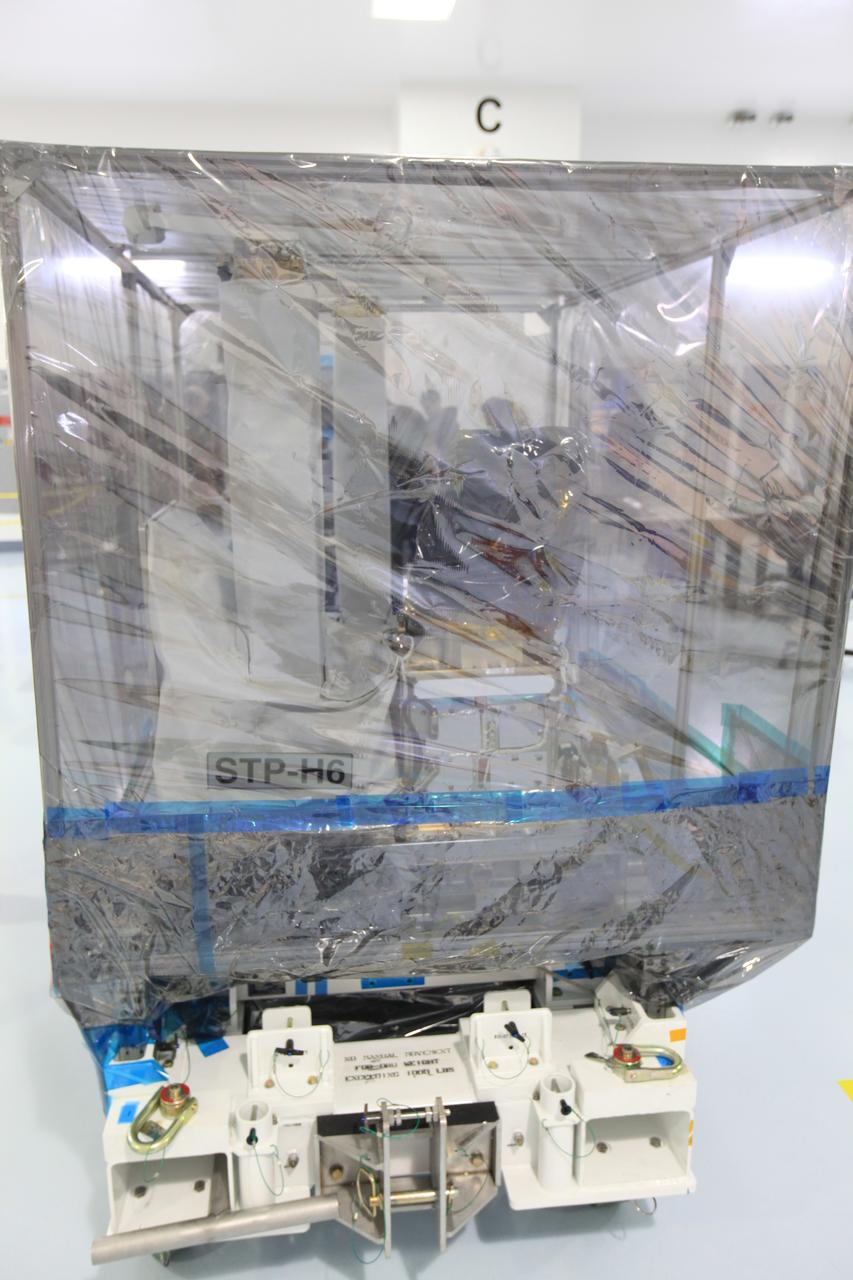
The Space Test Program-Houston 6 (STP-H6) payload is inside the Space Station Processing Facility high bay at NASA’s Kennedy Space Center in Florida on March 19, 2019. It is being prepared for its move to the SpaceX facility where it will be will be stowed in the trunk of the Dragon spacecraft for delivery to the International Space Station on SpaceX’s 17th Commercial Resupply Services mission (CRS-17) for NASA. STP-H6 is an x-ray communication investigation that will be used to perform a space-based demonstration of a new technology for generating beams of modulated x-rays. This technology may be useful for providing efficient communication to deep space probes, or communicating with hypersonic vehicles where plasma sheaths prevent traditional radio communications. CRS-17 is scheduled to launch from Space Launch Complex 40 on Cape Canaveral Air Force Station in late April.
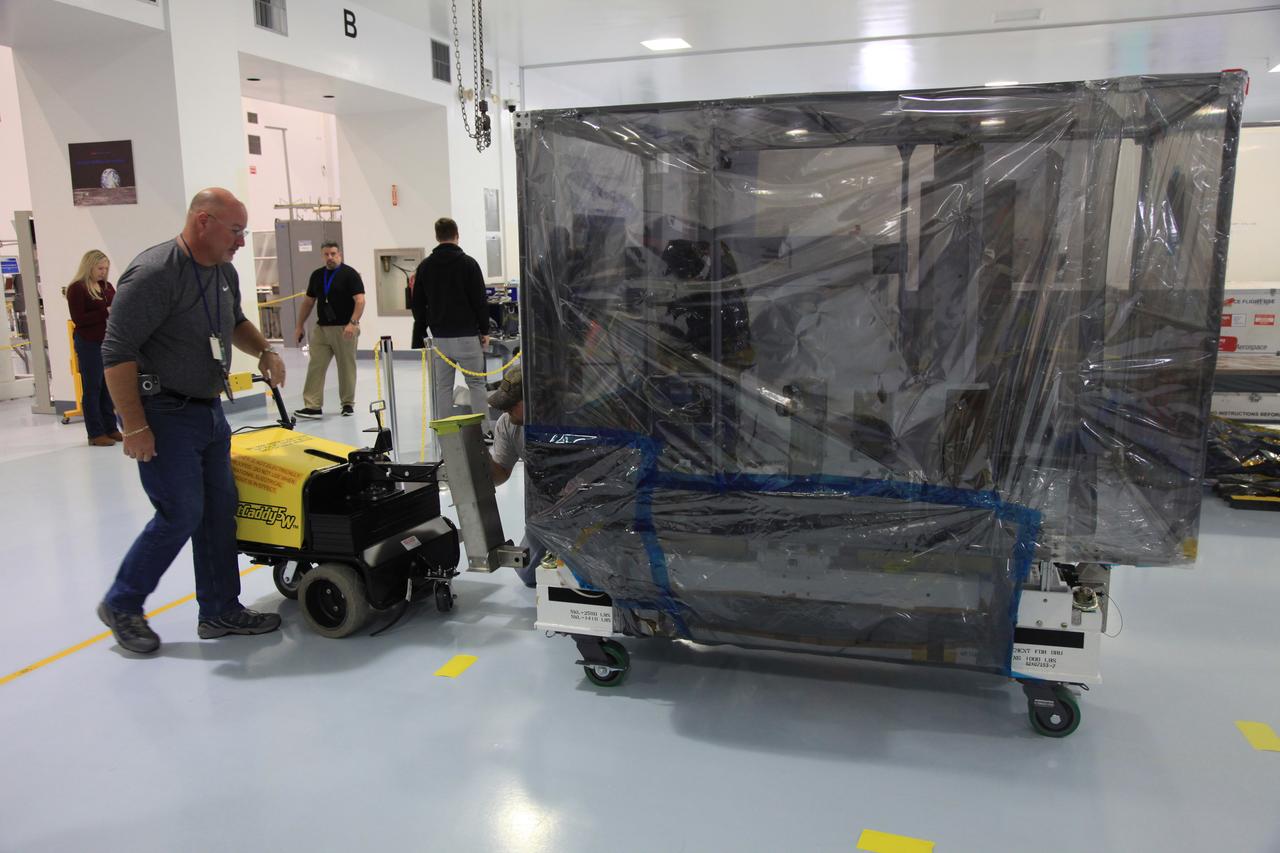
The Space Test Program-Houston 6 (STP-H6) payload is being prepared for its move from the Space Station Processing Facility high bay at NASA’s Kennedy Space Center in Florida on March 19, 2019. The payload will be moved to the SpaceX facility where it will be stowed in the trunk of the Dragon spacecraft for delivery to the International Space Station on SpaceX’s 17th Commercial Resupply Services mission (CRS-17) for NASA. STP-H6 is an x-ray communication investigation that will be used to perform a space-based demonstration of a new technology for generating beams of modulated x-rays. This technology may be useful for providing efficient communication to deep space probes, or communicating with hypersonic vehicles where plasma sheaths prevent traditional radio communications. CRS-17 is scheduled to launch from Space Launch Complex 40 on Cape Canaveral Air Force Station in late April.
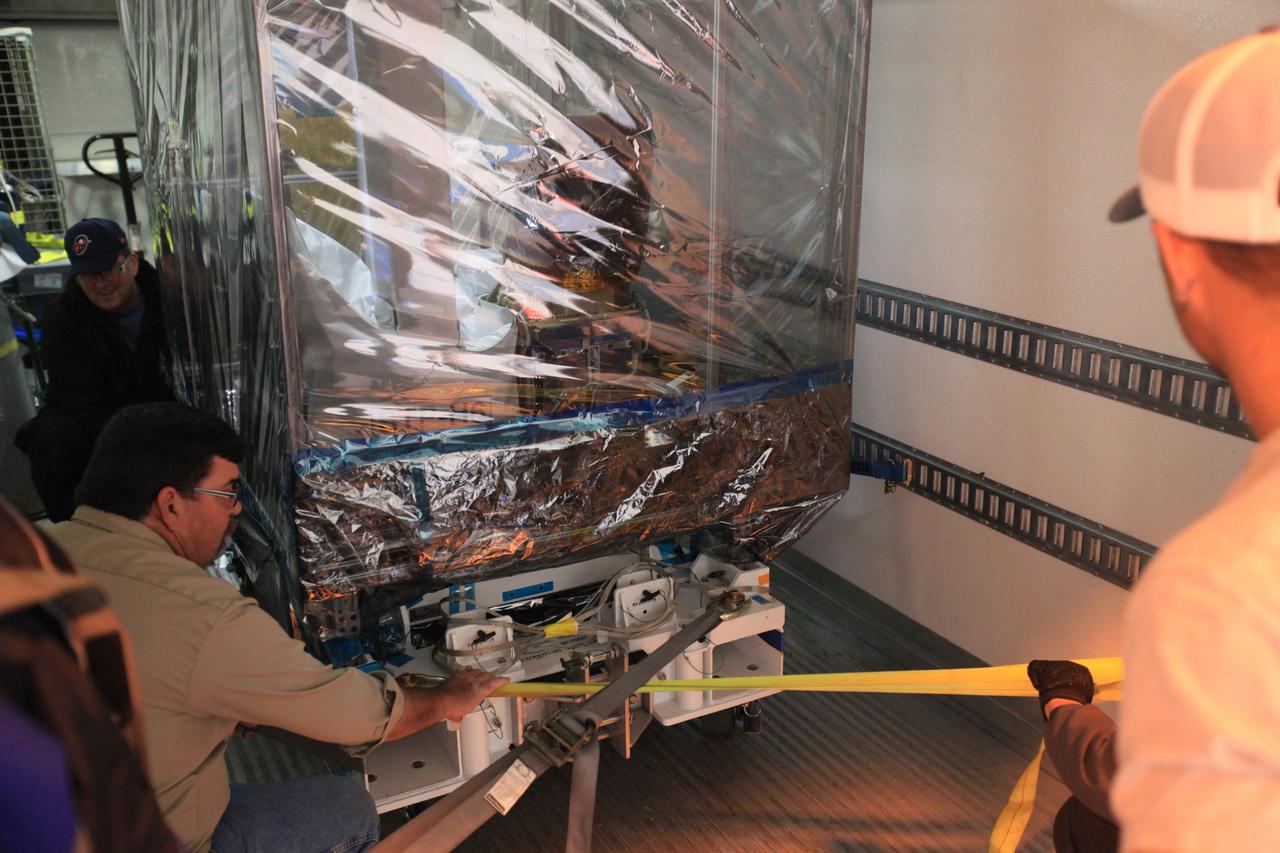
Technicians secure the Space Test Program-Houston 6 (STP-H6) inside a transport truck at the Space Station Processing Facility at NASA’s Kennedy Space Center in Florida on March 19, 2019. The payload will be moved to the SpaceX facility where it will be stowed in the trunk of the Dragon spacecraft for delivery to the International Space Station on SpaceX’s 17th Commercial Resupply Services mission (CRS-17) for NASA. STP-H6 is an x-ray communication investigation that will be used to perform a space-based demonstration of a new technology for generating beams of modulated x-rays. This technology may be useful for providing efficient communication to deep space probes, or communicating with hypersonic vehicles where plasma sheaths prevent traditional radio communications. CRS-17 is scheduled to launch from Space Launch Complex 40 on Cape Canaveral Air Force Station in late April.
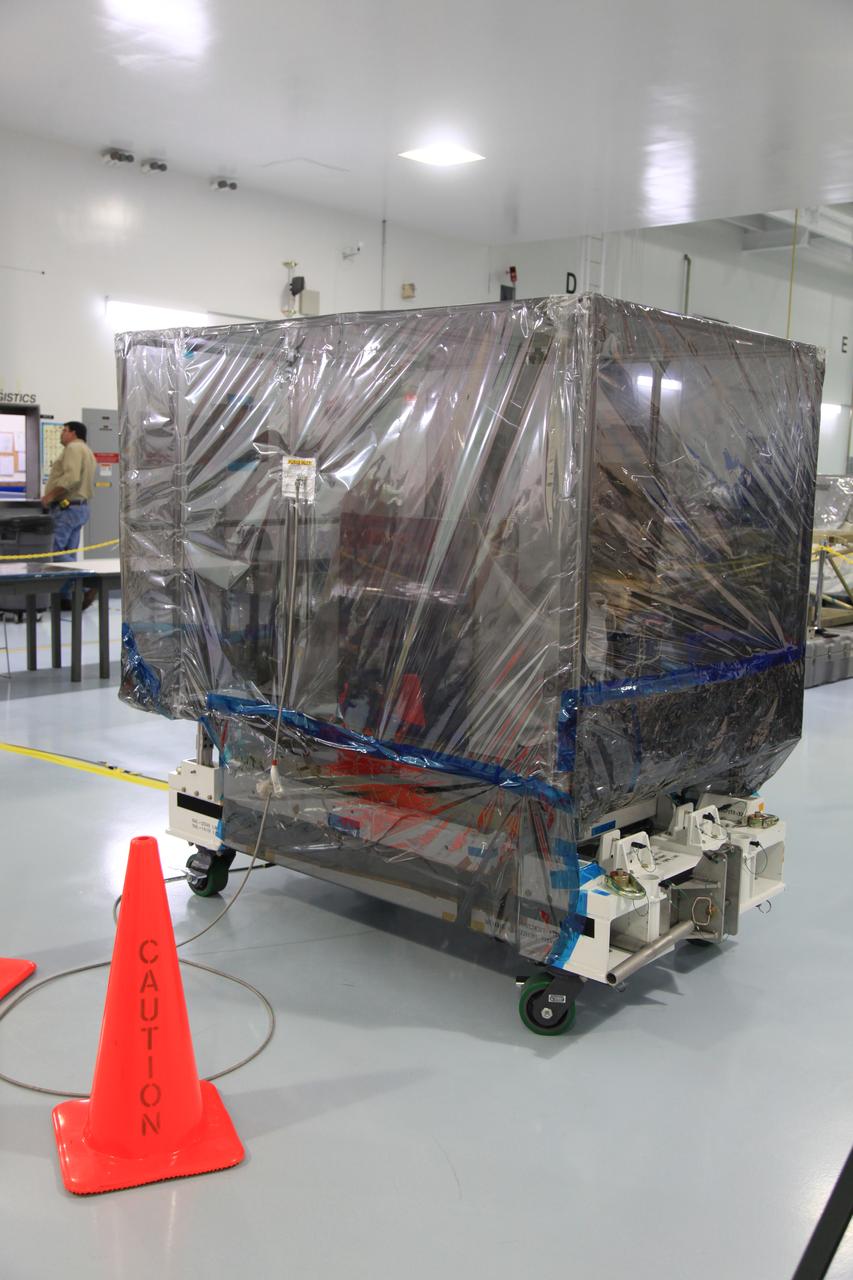
The Space Test Program-Houston 6 (STP-H6) payload is inside the Space Station Processing Facility high bay at NASA’s Kennedy Space Center in Florida on March 19, 2019. It is being prepared for its move to the SpaceX facility where it will be will be stowed in the trunk of the Dragon spacecraft for delivery to the International Space Station on SpaceX’s 17th Commercial Resupply Services mission (CRS-17) for NASA. STP-H6 is an x-ray communication investigation that will be used to perform a space-based demonstration of a new technology for generating beams of modulated x-rays. This technology may be useful for providing efficient communication to deep space probes, or communicating with hypersonic vehicles where plasma sheaths prevent traditional radio communications. CRS-17 is scheduled to launch from Space Launch Complex 40 on Cape Canaveral Air Force Station in late April.
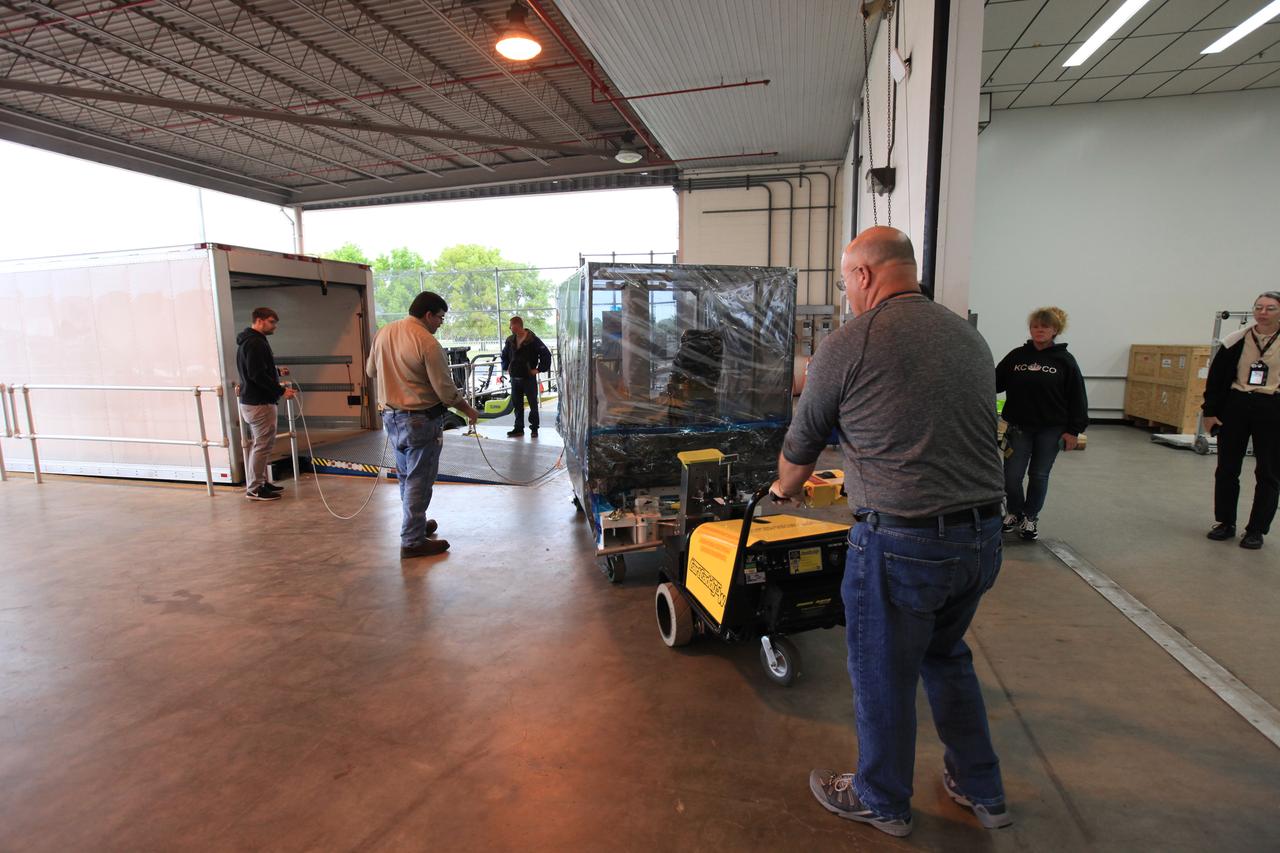
The Space Test Program-Houston 6 (STP-H6) payload is moved to a transport truck at the Space Station Processing Facility at NASA’s Kennedy Space Center in Florida on March 19, 2019. The payload will be moved to the SpaceX facility where it will be stowed in the trunk of the Dragon spacecraft for delivery to the International Space Station on SpaceX’s 17th Commercial Resupply Services mission (CRS-17) for NASA. STP-H6 is an x-ray communication investigation that will be used to perform a space-based demonstration of a new technology for generating beams of modulated x-rays. This technology may be useful for providing efficient communication to deep space probes, or communicating with hypersonic vehicles where plasma sheaths prevent traditional radio communications. CRS-17 is scheduled to launch from Space Launch Complex 40 on Cape Canaveral Air Force Station in late April.
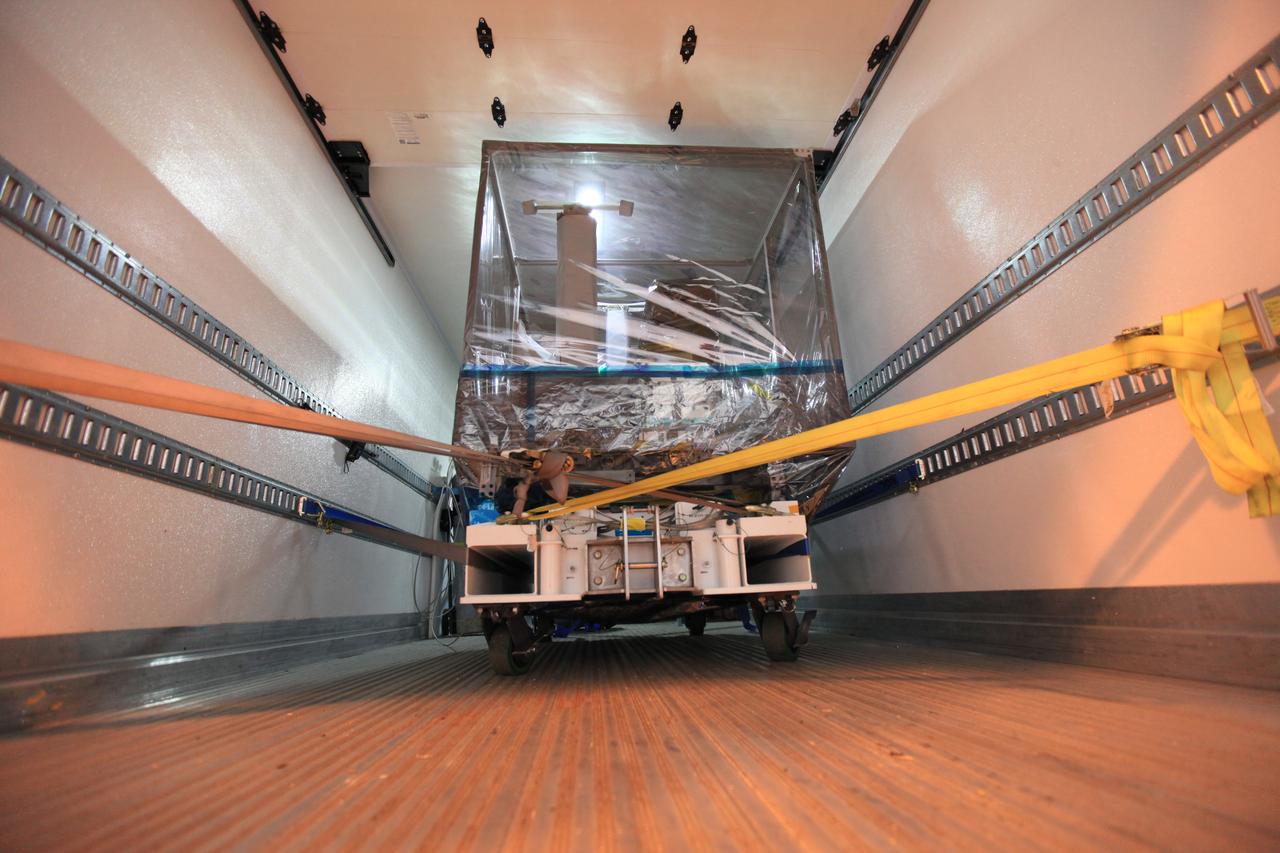
The Space Test Program-Houston 6 (STP-H6) payload is secured inside a truck at the Space Station Processing Facility at NASA’s Kennedy Space Center in Florida on March 19, 2019. The payload will be moved to the SpaceX facility where it will be stowed in the trunk of the Dragon spacecraft for delivery to the International Space Station on SpaceX’s 17th Commercial Resupply Services mission (CRS-17) for NASA. STP-H6 is an x-ray communication investigation that will be used to perform a space-based demonstration of a new technology for generating beams of modulated x-rays. This technology may be useful for providing efficient communication to deep space probes, or communicating with hypersonic vehicles where plasma sheaths prevent traditional radio communications. CRS-17 is scheduled to launch from Space Launch Complex 40 on Cape Canaveral Air Force Station in late April.
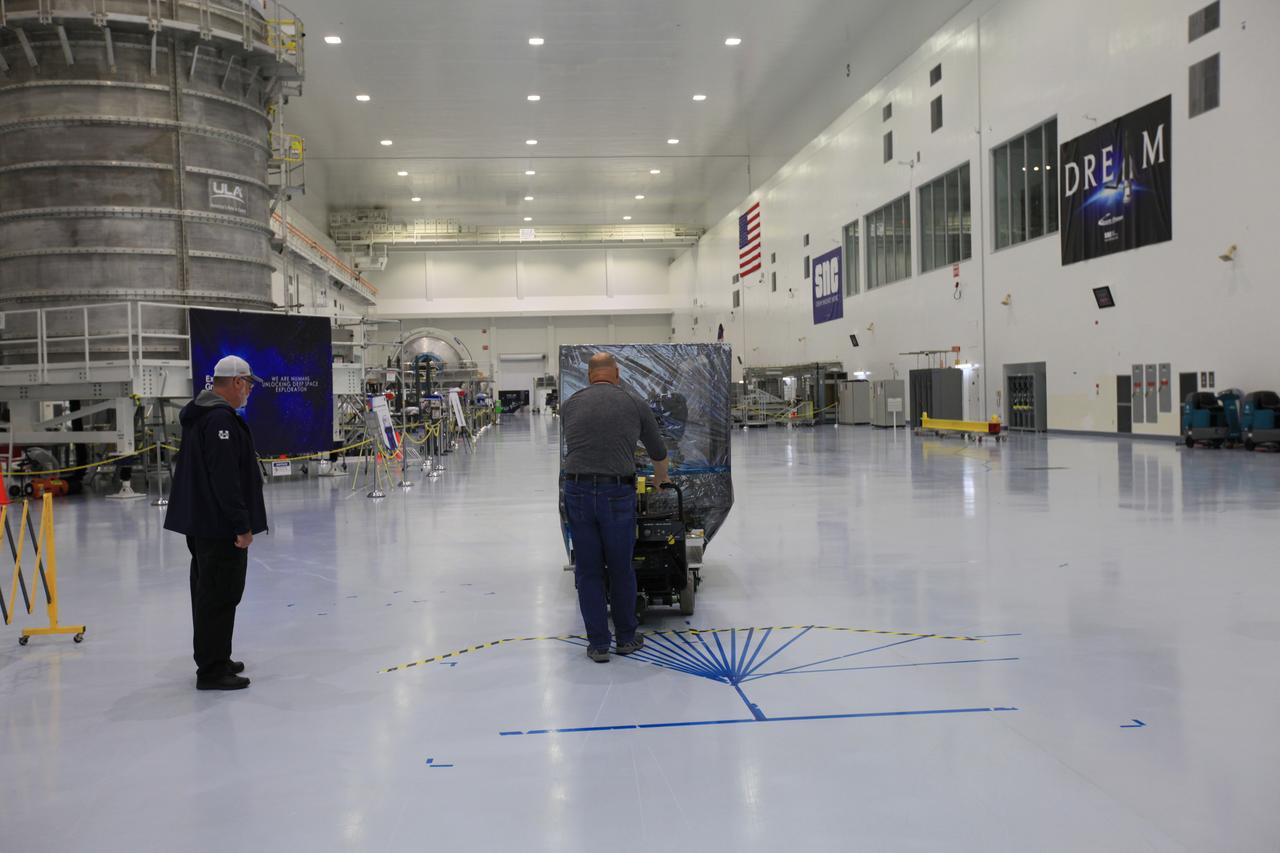
The Space Test Program-Houston 6 (STP-H6) payload is being moved out of the Space Station Processing Facility high bay at NASA’s Kennedy Space Center in Florida on March 19, 2019. The payload will be moved to the SpaceX facility where it will be stowed in the trunk of the Dragon spacecraft for delivery to the International Space Station on SpaceX’s 17th Commercial Resupply Services mission (CRS-17) for NASA. STP-H6 is an x-ray communication investigation that will be used to perform a space-based demonstration of a new technology for generating beams of modulated x-rays. This technology may be useful for providing efficient communication to deep space probes, or communicating with hypersonic vehicles where plasma sheaths prevent traditional radio communications. CRS-17 is scheduled to launch from Space Launch Complex 40 on Cape Canaveral Air Force Station in late April.

STS047-45-003 (12-20 Sept 1992) --- Payload specialist Mamoru Mohri communicates with students from the aft flight deck of the Earth-orbiting Space Shuttle Endeavour. The communications were an extension of the Shuttle Amateur Radio Experiment (SAREX), which has flown on a number of previous flights. Dr. Mohri represents Japan's National Space Development Agency (NASDA), joining six NASA astronauts for eight-days in space in support of the Spacelab-J mission. Several of the crew members were able to talk with students and other "ham" operators during the mission.
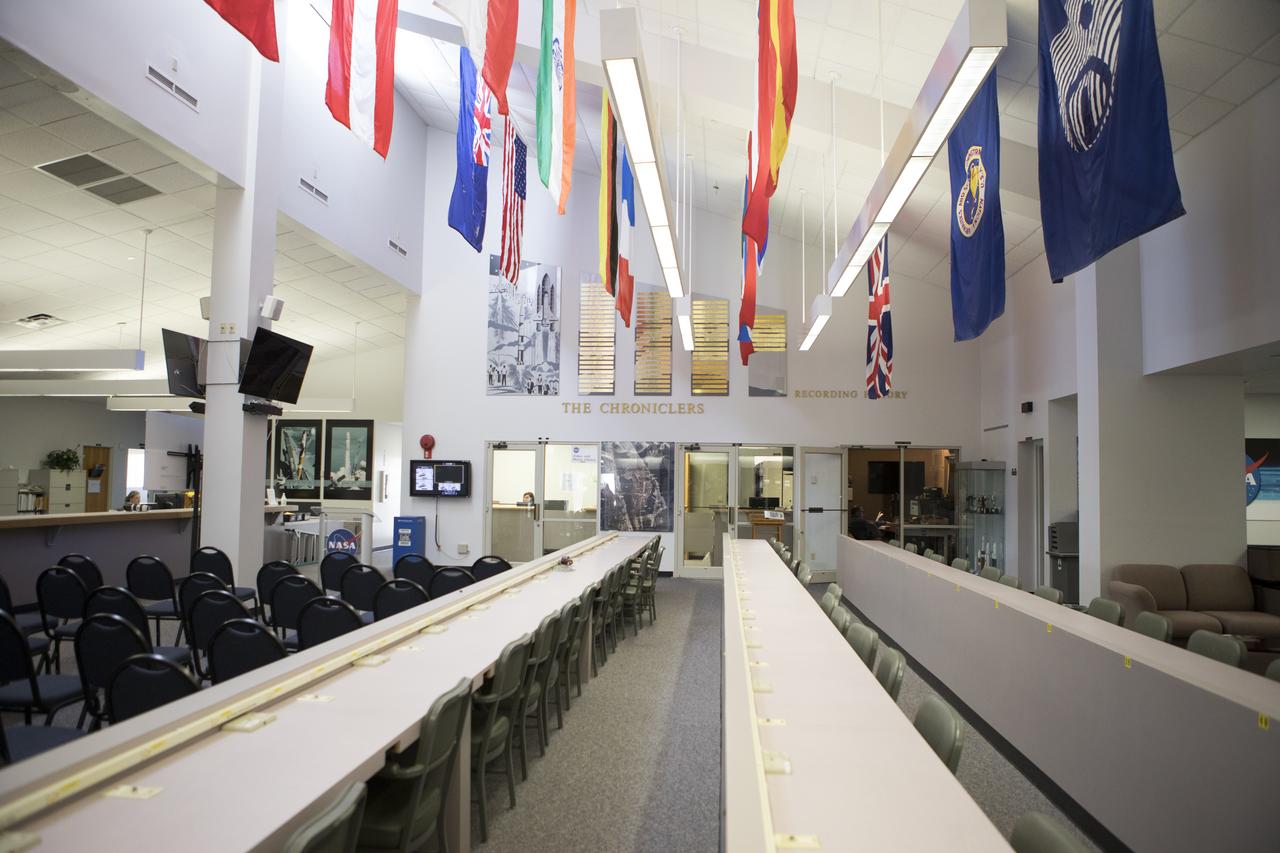
Brass plaques engraved with the names of "The Chroniclers" adorn the wall at the NASA News Center at Kennedy Space Center in Florida. In the foreground are rows of stations where reporters from television, radio, print and online media outlets have monitored countless launches, landings and other space events in order to deliver the news to the world. The Chroniclers program recognizes retirees of the news and communications business who helped spread news of American space exploration from Kennedy Space Center for ten years or more.
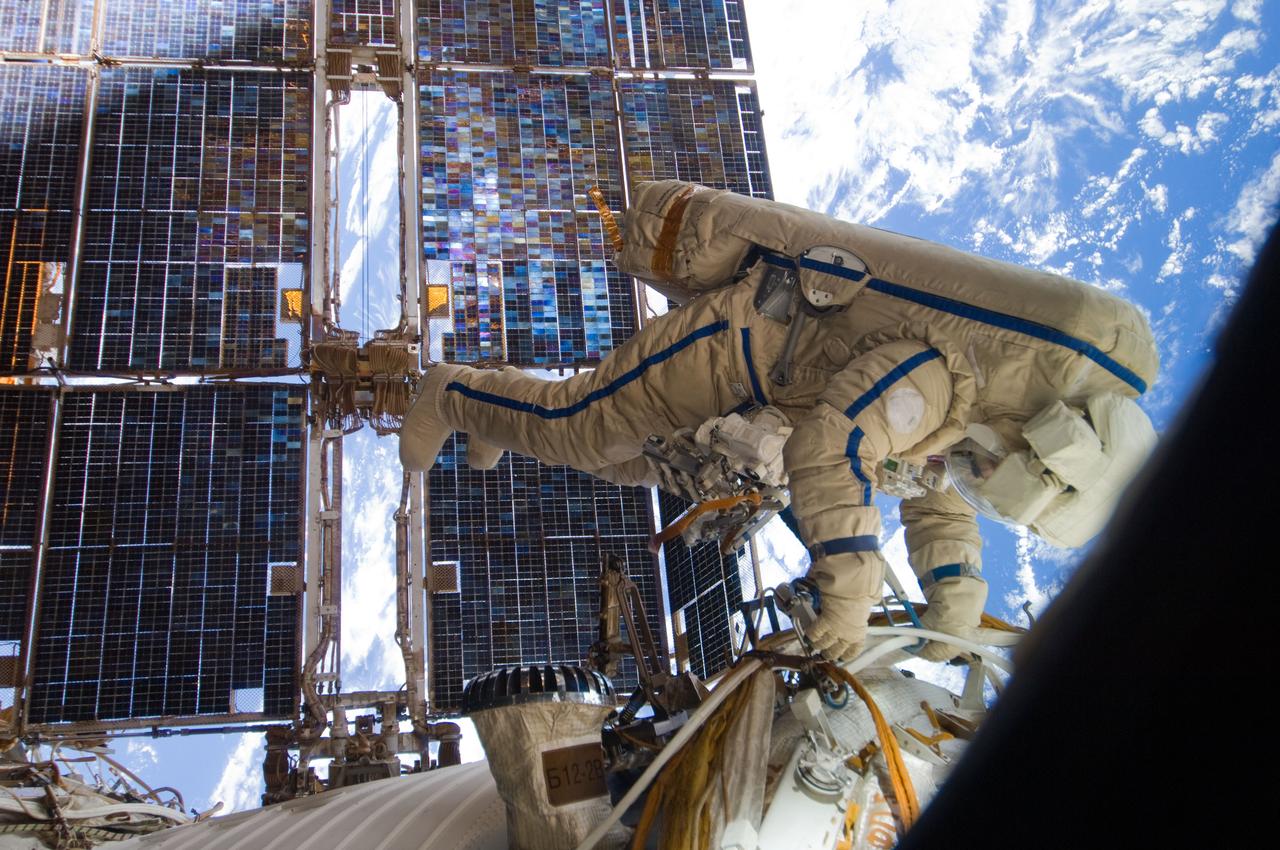
ISS028-E-020716 (3 Aug. 2011) --- Russian cosmonauts Sergei Volkov and Alexander Samokutyaev (out of frame), both Expedition 28 flight engineers, attired in Russian Orlan spacesuits, participate in a session of extravehicular activity (EVA) on the Russian segment of the International Space Station. During the six-hour, 23-minute spacewalk, Volkov and Samokutyaev moved a cargo boom from one airlock to another, installed a prototype laser communications system and deployed an amateur radio micro-satellite.

STS98-E-5035 (9 February 2001) --- Astronaut Thomas D. Jones, mission specialist, communicates on a radio during rendezvous operations between the Space Shuttle Atlantis and the International Space Station (ISS). Atlantis went on to dock with the station on schedule at 10:51 a.m. (CST), Feb. 9. A digital still camera was used to record the scene.
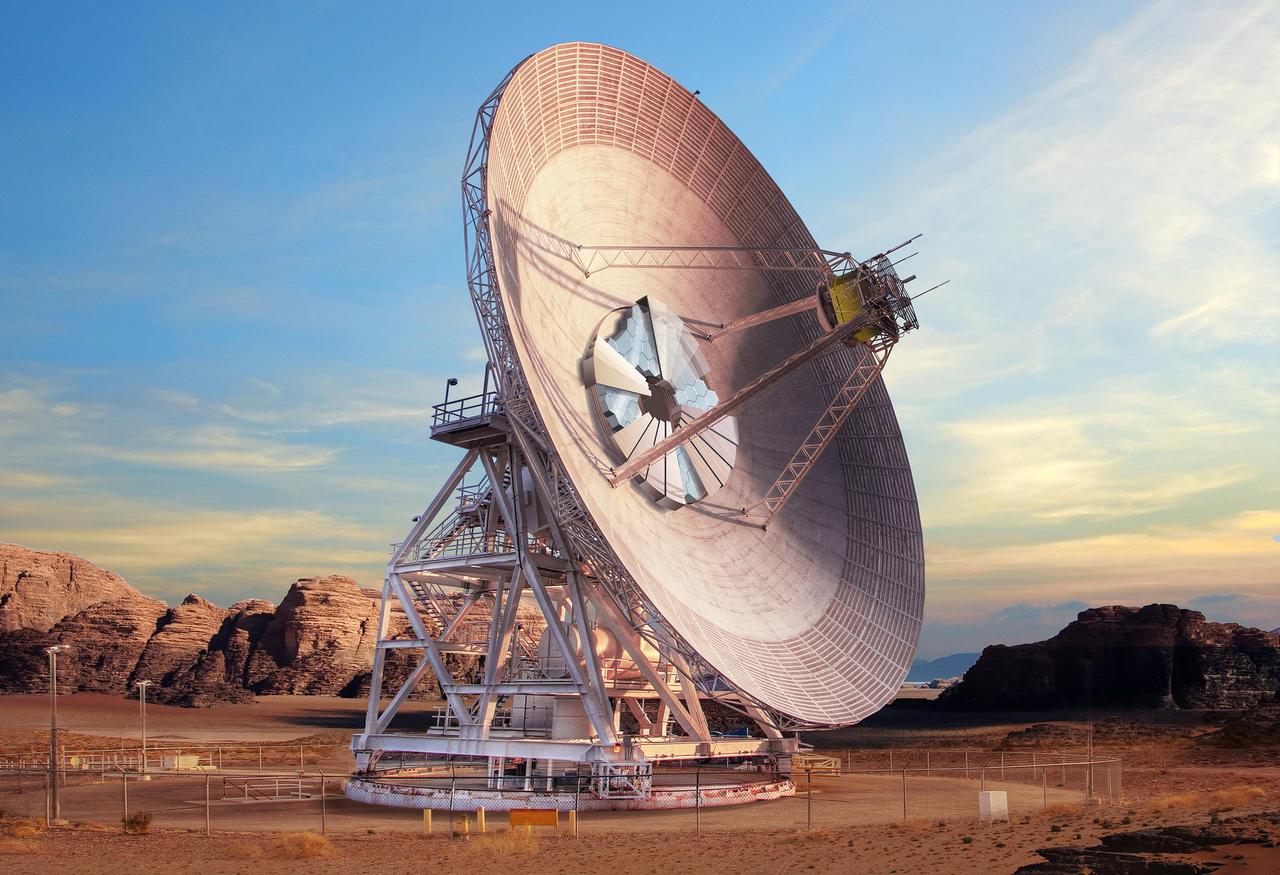
This artist's concept shows what Deep Space Station-23, a new antenna dish at the Deep Space Network's complex in Goldstone, California, will look like when complete in several years. DSS-23 will communicate with NASA's deep space missions using radio waves and lasers. Retractable covers will be able to fan out across the mirrors at the center of the dish to protect them from the elements. https://photojournal.jpl.nasa.gov/catalog/PIA23617
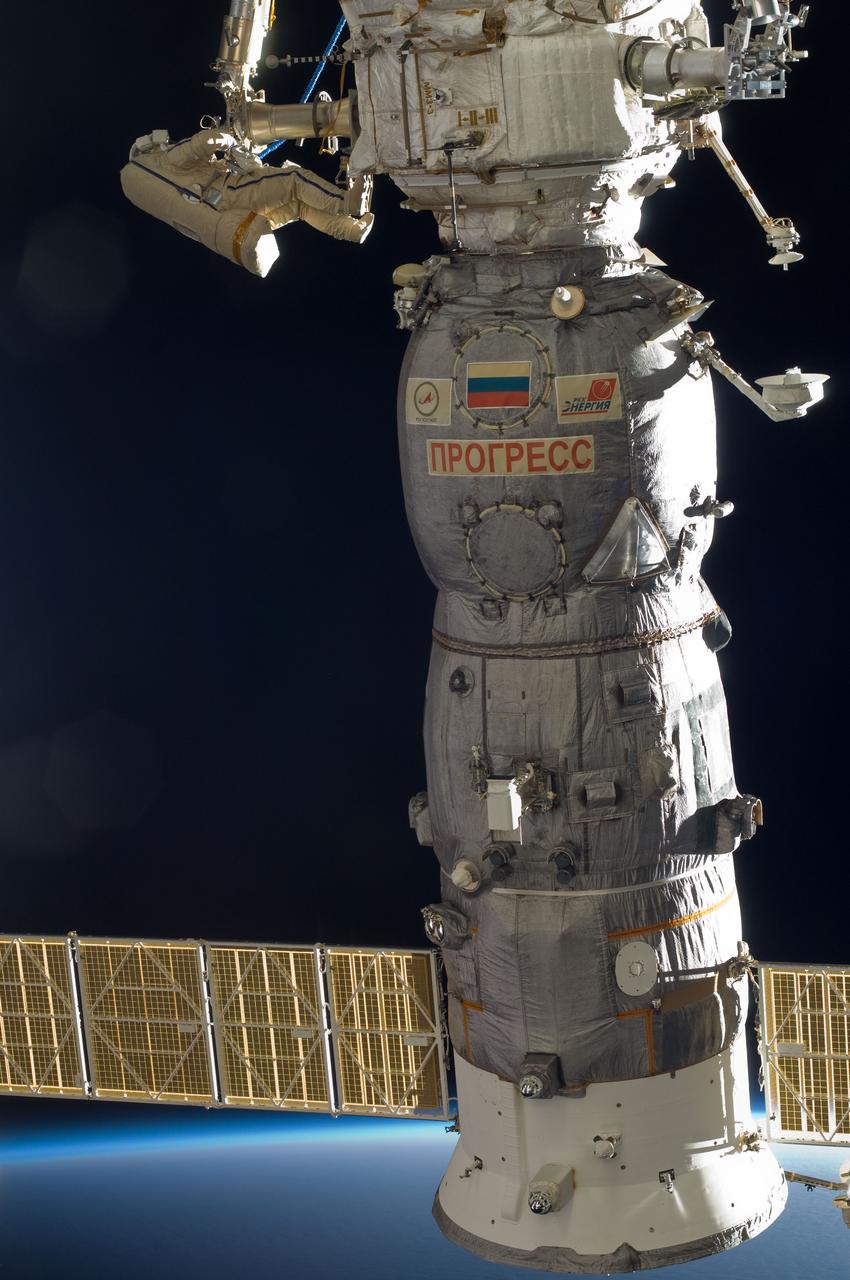
ISS028-E-020969 (3 Aug. 2011) --- Russian cosmonauts Sergei Volkov and Alexander Samokutyaev (out of frame), both Expedition 28 flight engineers, attired in Russian Orlan spacesuits, participate in a session of extravehicular activity (EVA) on the Russian segment of the International Space Station. During the six-hour, 23-minute spacewalk, Volkov and Samokutyaev moved a cargo boom from one airlock to another, installed a prototype laser communications system and deployed an amateur radio micro-satellite.
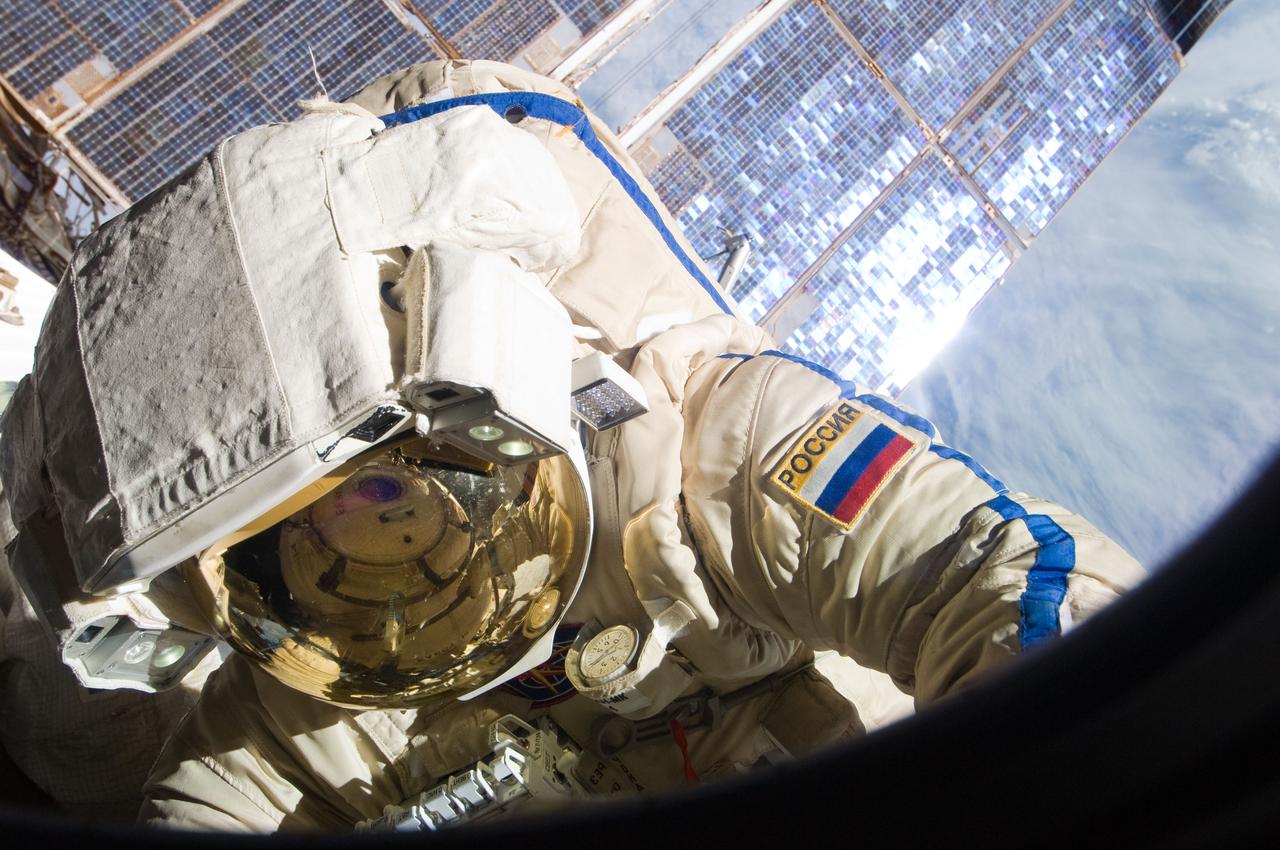
ISS028-E-020778 (3 Aug. 2011) --- Russian cosmonauts Sergei Volkov and Alexander Samokutyaev (out of frame), both Expedition 28 flight engineers, attired in Russian Orlan spacesuits, participate in a session of extravehicular activity (EVA) on the Russian segment of the International Space Station. During the six-hour, 23-minute spacewalk, Volkov and Samokutyaev moved a cargo boom from one airlock to another, installed a prototype laser communications system and deployed an amateur radio micro-satellite.
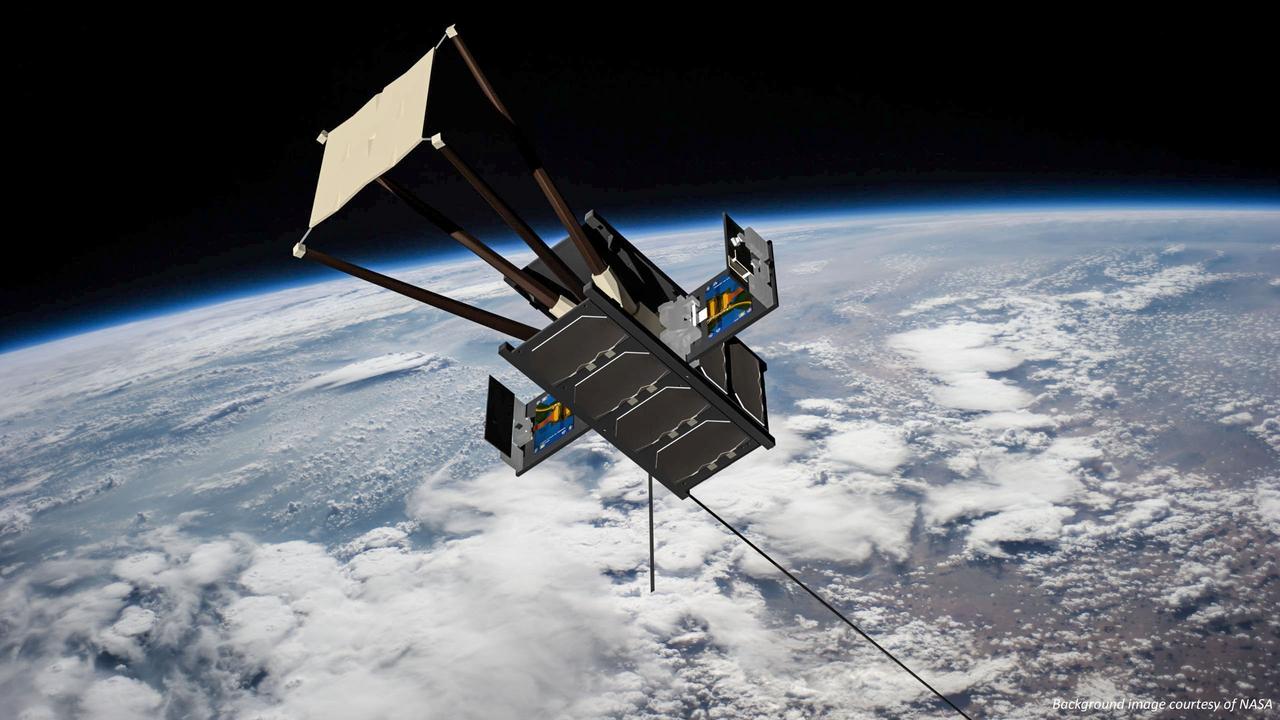
jsc2020e049615 (11/25/2020) --- A CAD model of the OPUSAT-II after deploying the deployment mechanism. The Osaka Prefecture University Satellite-II (OPUSAT-II) has two main missions, the transmission of High-speed data in an amateur radio band and the deployment of a two-dimensional deployable plate for high communications efficiency and high storage performance to demonstrate for use in the next generation of satellites. Image Credit:Osaka Prefecture University
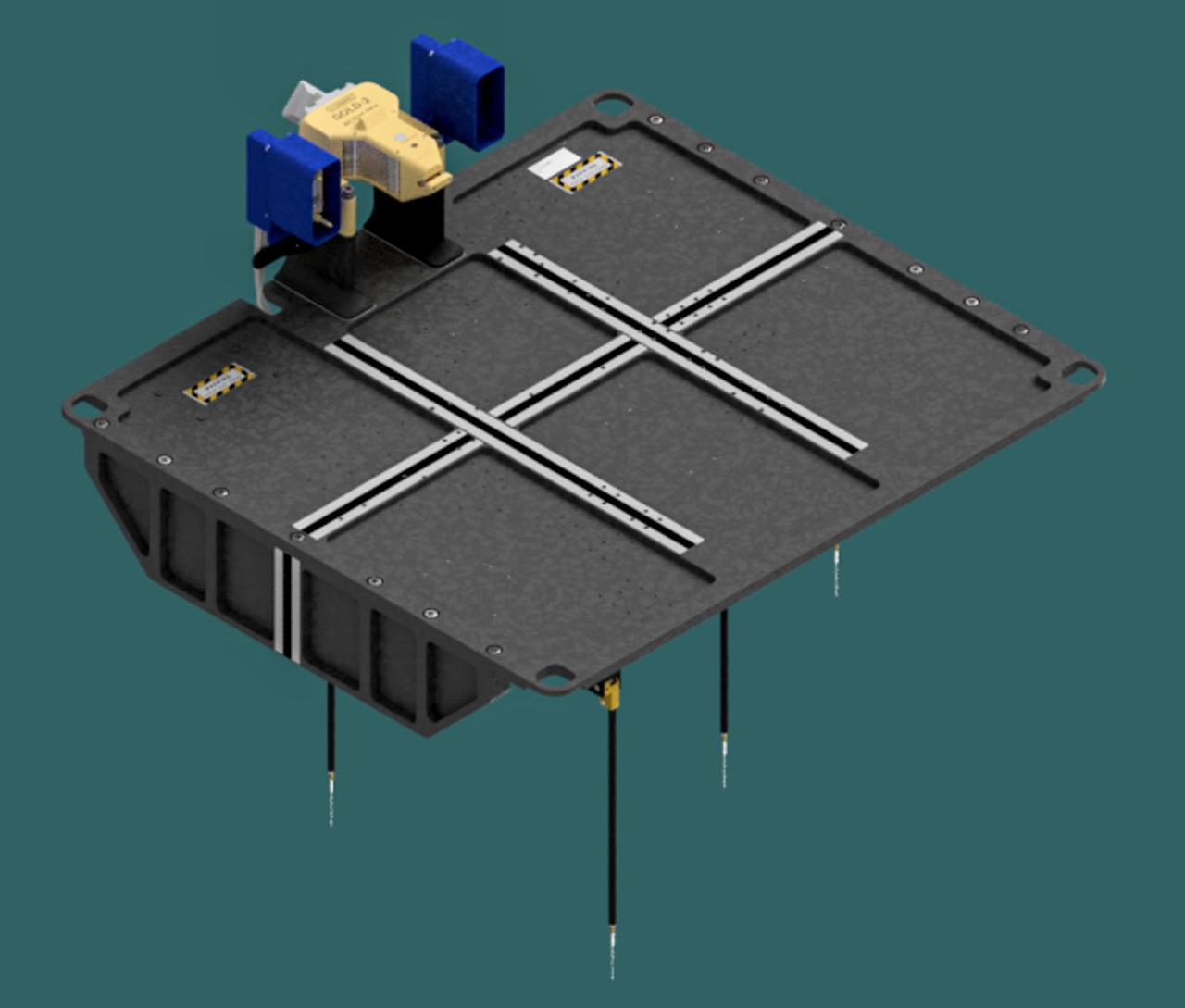
jsc2023e046374 (7/25/2023) --- Artistic rendering of the rear side of the Multi-Needle Langmuir Probe (m-NLP). The m-NLP measures plasma density in the ionosphere, where Earth's atmosphere meets the beginning of space. Researchers aim to study electrically charged particles and increase their understanding of how particle phenomena affects radio communications and global navigation satellite system (GNSS) signals. Image courtesy of the University of Oslo, Maren C. Lithun.
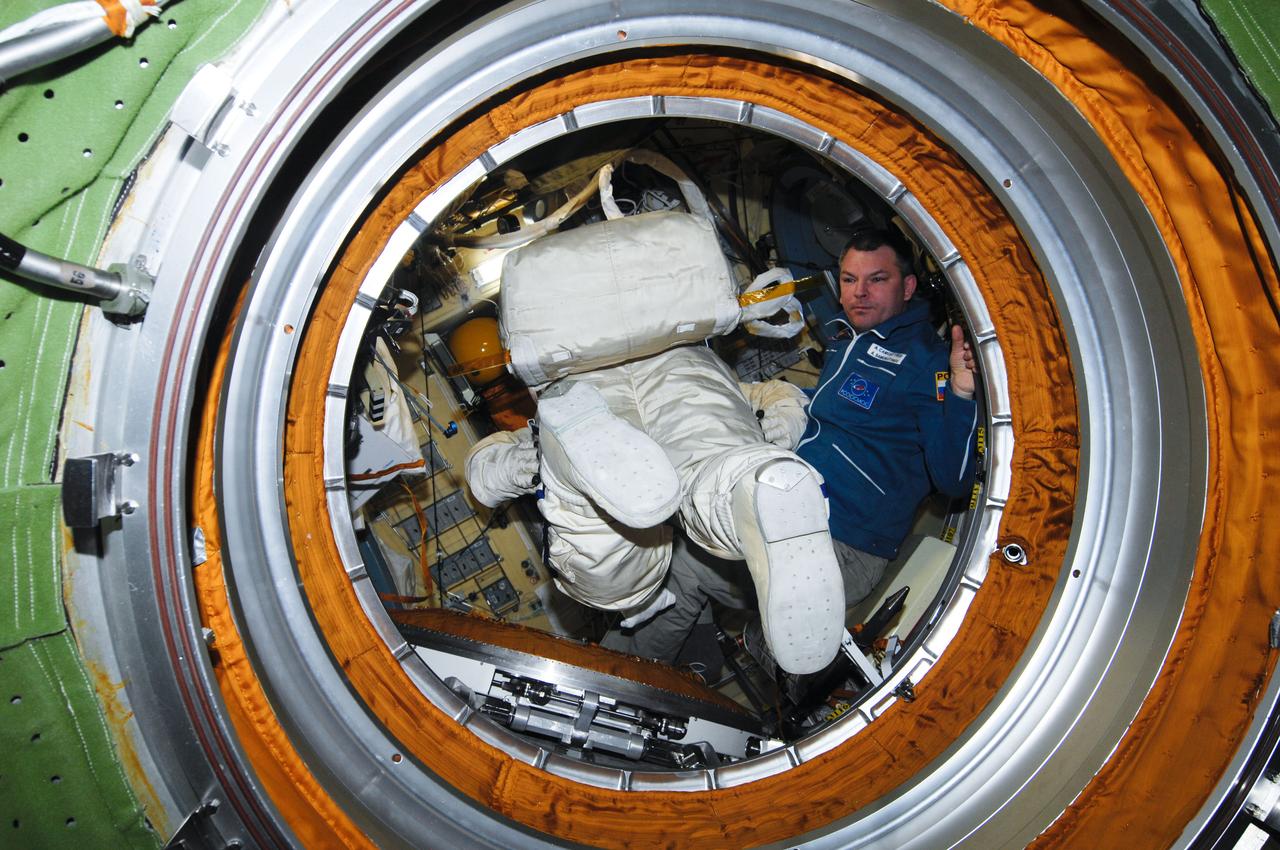
ISS028-E-019437 (29 July 2011) --- Russian cosmonaut Alexander Samokutyaev, Expedition 28 flight engineer, works with Russian Orlan-MK spacesuits in the Pirs Docking Compartment of the International Space Station in preparation for a spacewalk scheduled for Aug. 3, 2011. During the six-hour excursion Samokutyaev and Russian cosmonaut Sergei Volkov (out of frame), flight engineer, will move a cargo boom from one airlock to another, install a prototype laser communications system and deploy an amateur radio micro-satellite.
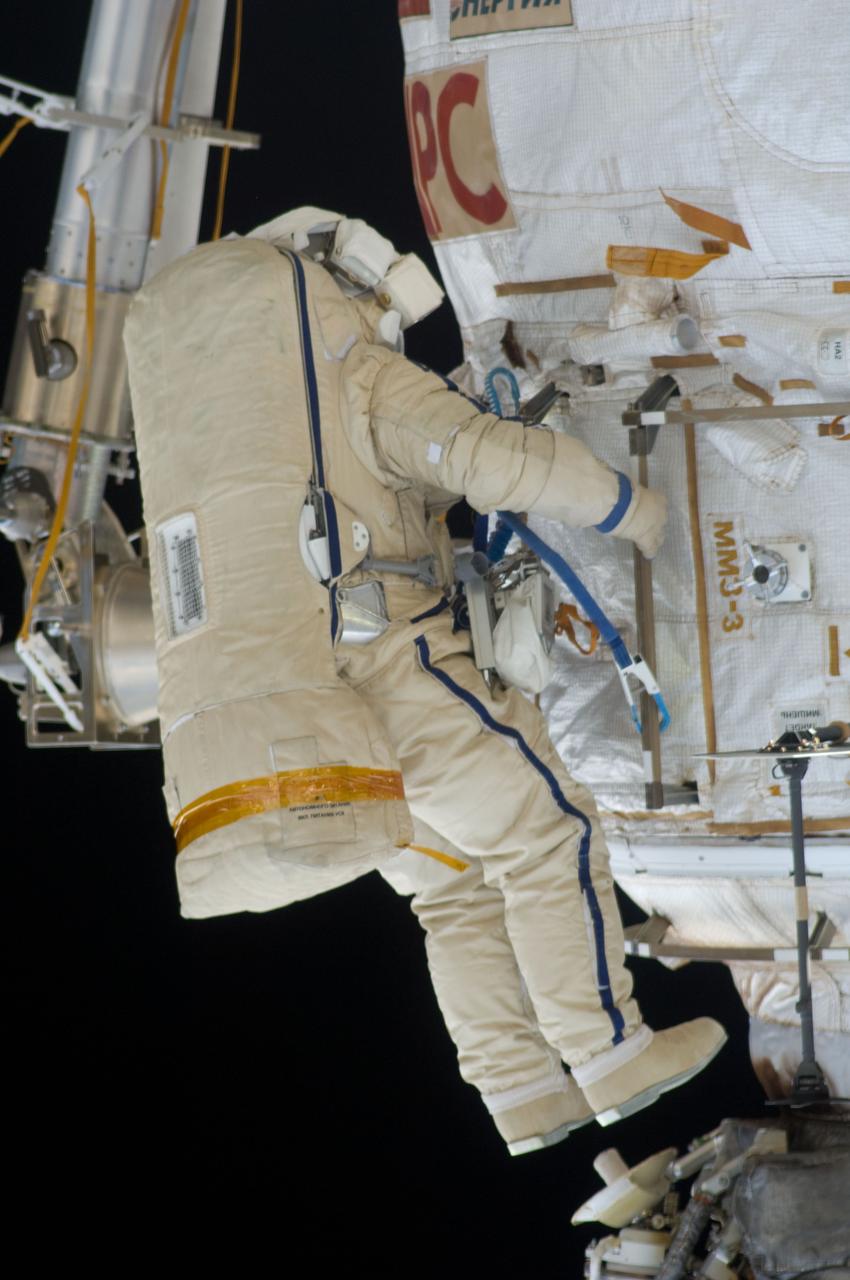
ISS028-E-020928 (3 Aug. 2011) --- Russian cosmonauts Sergei Volkov and Alexander Samokutyaev (out of frame), both Expedition 28 flight engineers, attired in Russian Orlan spacesuits, participate in a session of extravehicular activity (EVA) on the Russian segment of the International Space Station. During the six-hour, 23-minute spacewalk, Volkov and Samokutyaev moved a cargo boom from one airlock to another, installed a prototype laser communications system and deployed an amateur radio micro-satellite.
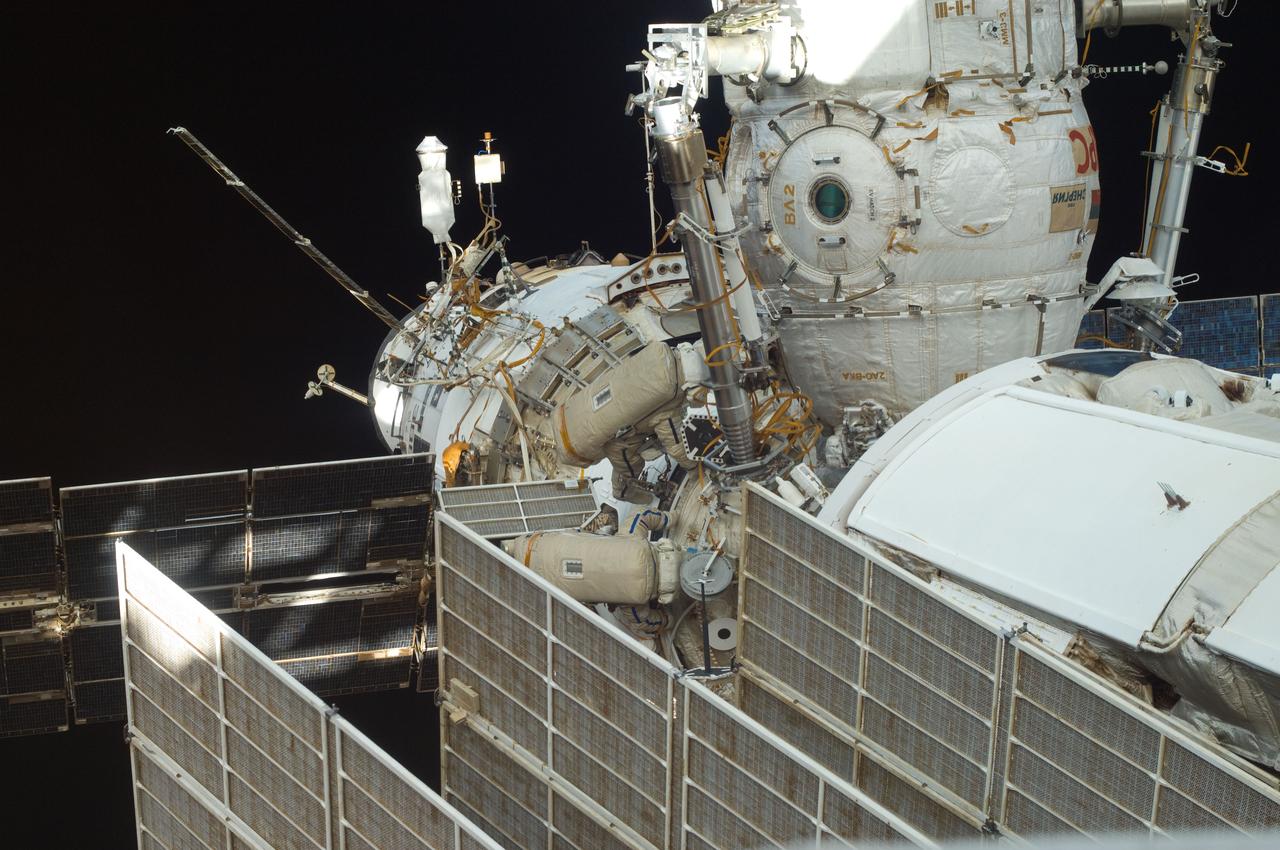
ISS028-E-020962 (3 Aug. 2011) --- Russian cosmonauts Sergei Volkov and Alexander Samokutyaev, both Expedition 28 flight engineers, attired in Russian Orlan spacesuits, participate in a session of extravehicular activity (EVA) on the Russian segment of the International Space Station. During the six-hour, 23-minute spacewalk, Volkov and Samokutyaev moved a cargo boom from one airlock to another, installed a prototype laser communications system and deployed an amateur radio micro-satellite.
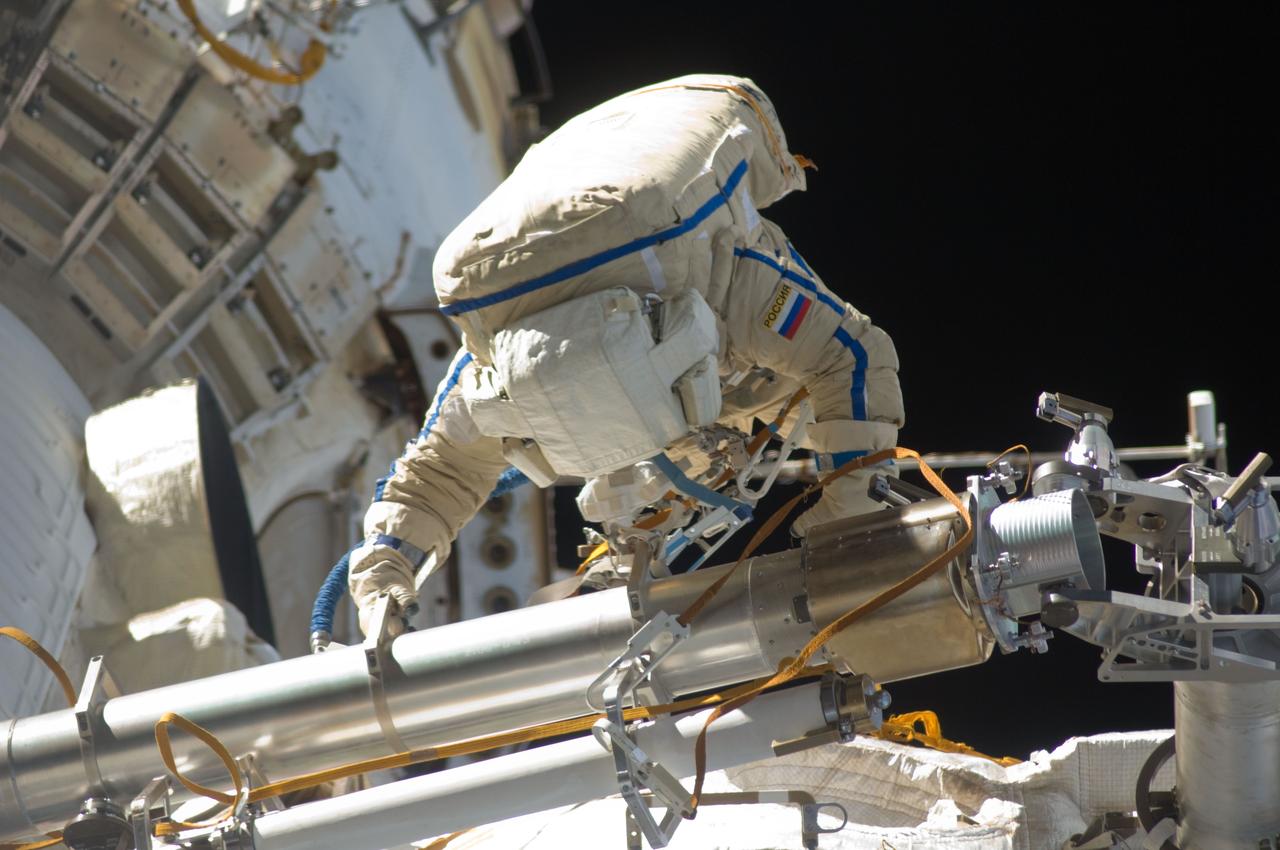
ISS028-E-020926 (3 Aug. 2011) --- Russian cosmonauts Sergei Volkov and Alexander Samokutyaev (out of frame), both Expedition 28 flight engineers, attired in Russian Orlan spacesuits, participate in a session of extravehicular activity (EVA) on the Russian segment of the International Space Station. During the six-hour, 23-minute spacewalk, Volkov and Samokutyaev moved a cargo boom from one airlock to another, installed a prototype laser communications system and deployed an amateur radio micro-satellite.
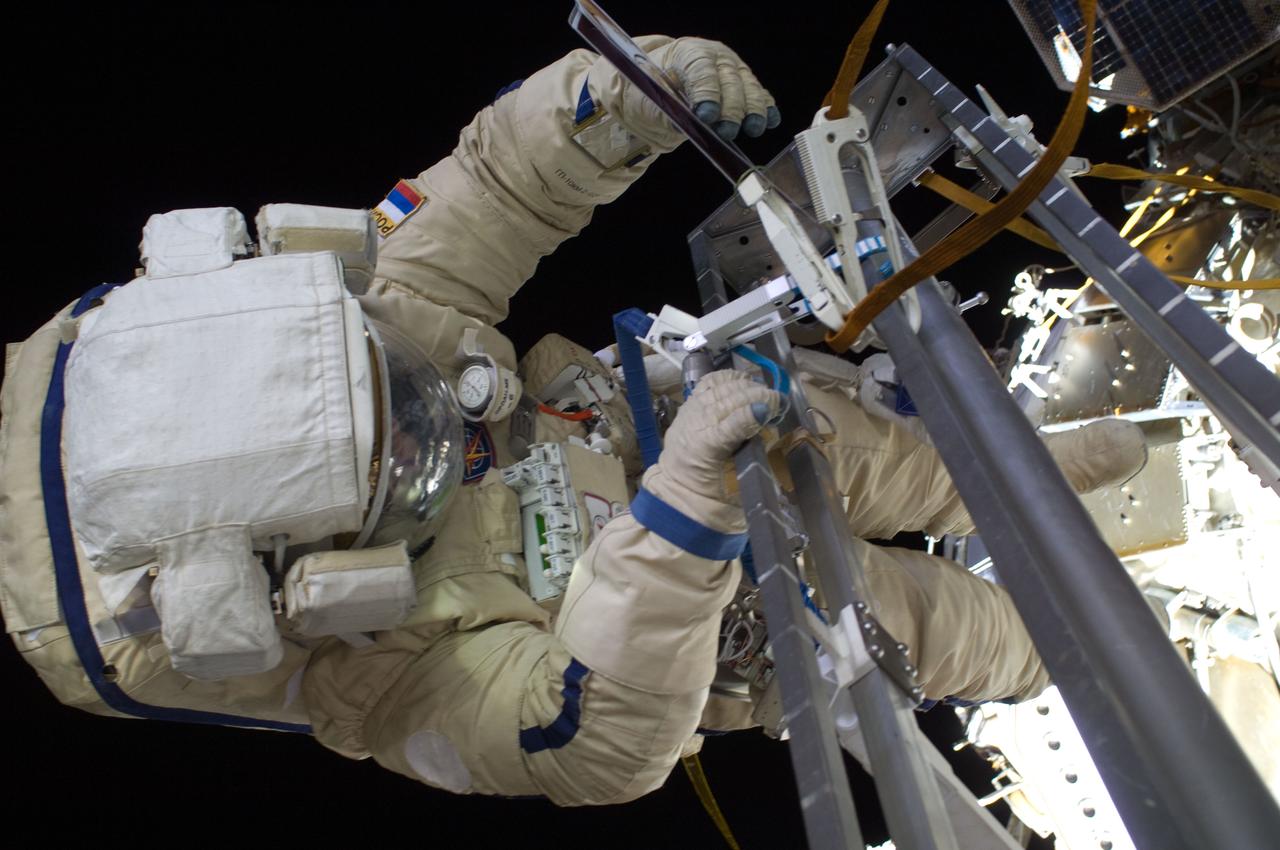
ISS028-E-020581 (3 Aug. 2011) --- Russian cosmonauts Alexander Samokutyaev and Sergei Volkov (out of frame), both Expedition 28 flight engineers, attired in Russian Orlan spacesuits, participate in a session of extravehicular activity on the Russian segment of the International Space Station. During the six-hour, 23-minute spacewalk, Volkov and Samokutyaev moved a cargo boom from one airlock to another, installed a prototype laser communications system and deployed an amateur radio micro-satellite.
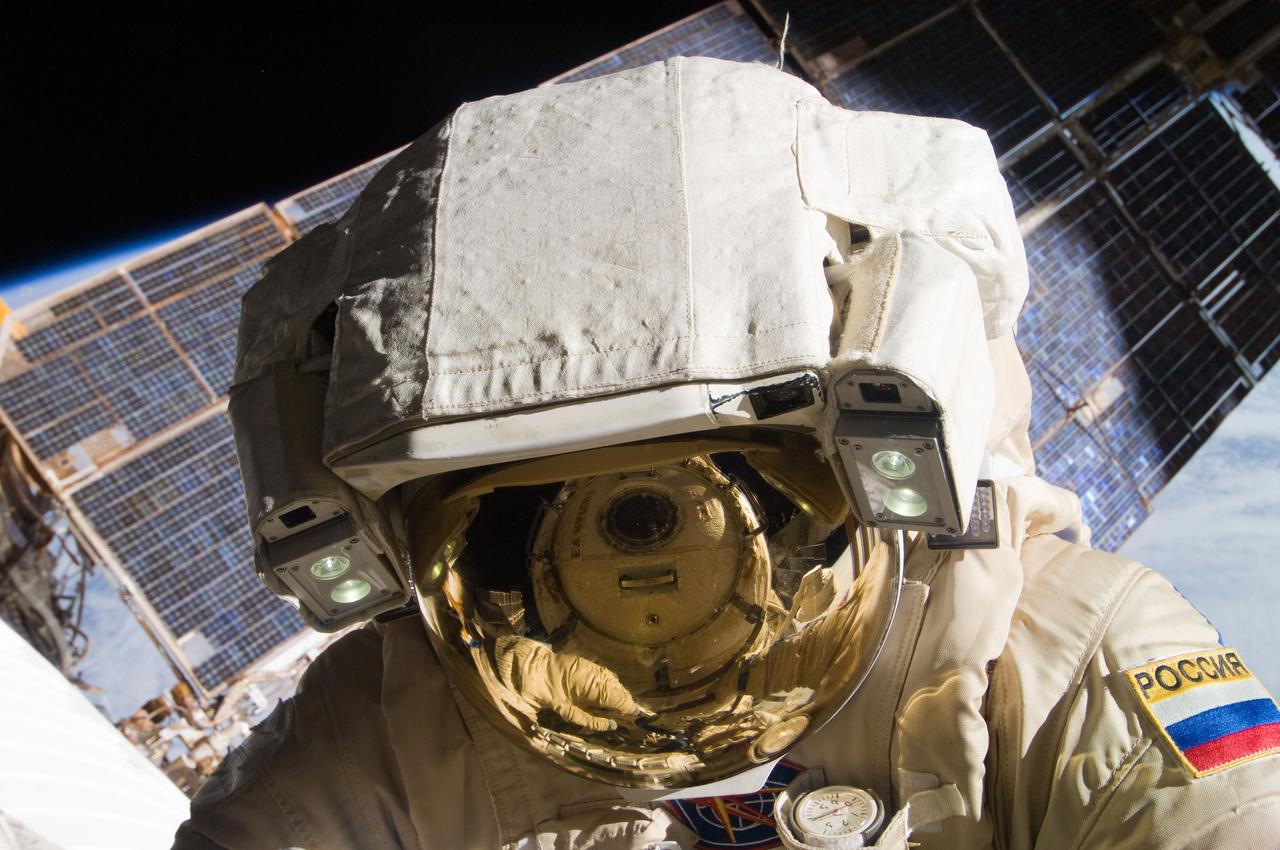
ISS028-E-020792 (3 Aug. 2011) --- Russian cosmonauts Sergei Volkov and Alexander Samokutyaev (out of frame), both Expedition 28 flight engineers, attired in Russian Orlan spacesuits, participate in a session of extravehicular activity (EVA) on the Russian segment of the International Space Station. During the six-hour, 23-minute spacewalk, Volkov and Samokutyaev moved a cargo boom from one airlock to another, installed a prototype laser communications system and deployed an amateur radio micro-satellite.
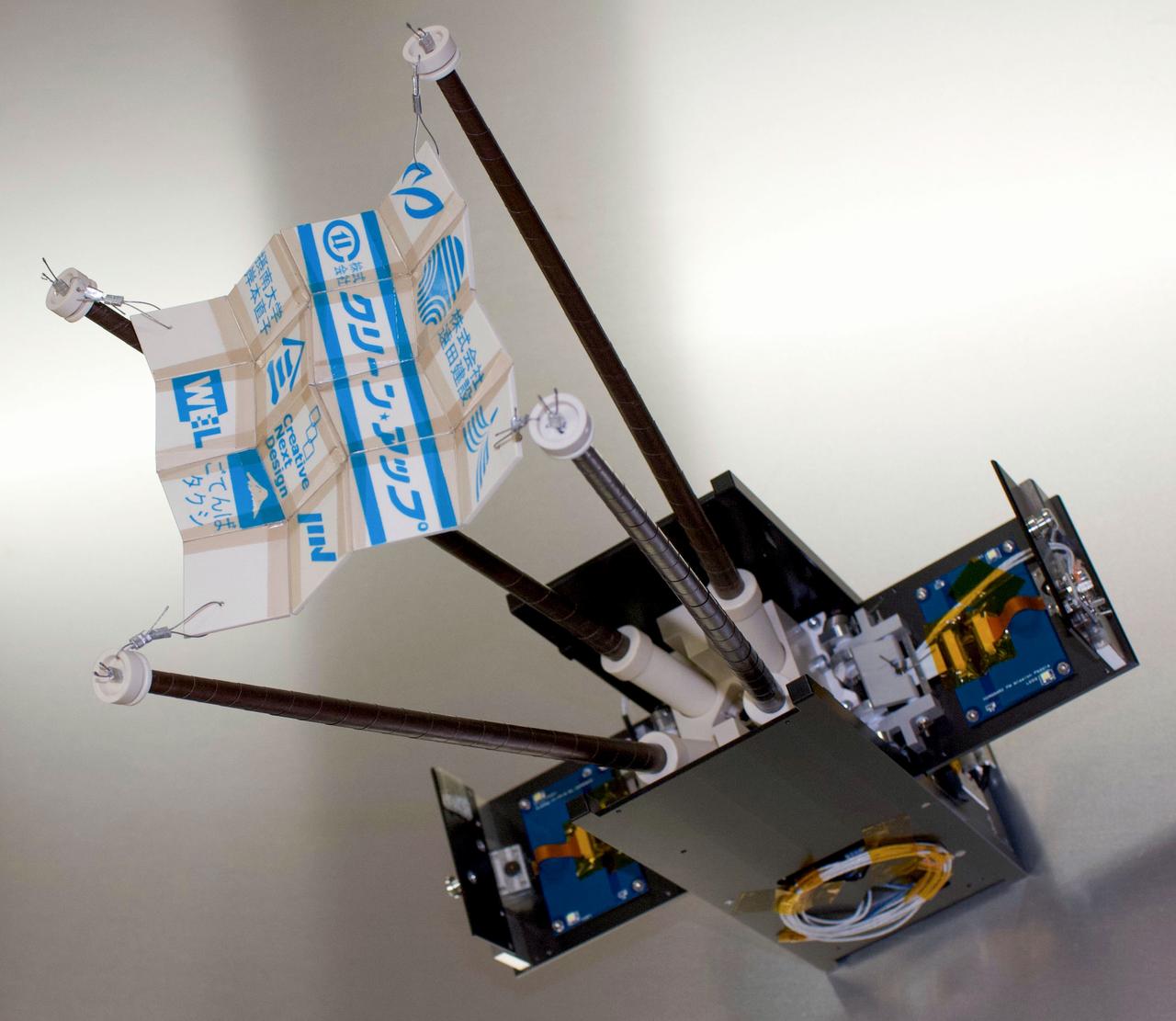
jsc2020e049617 (6/20/2020) --- A preflight view of the OPUSAT-II flight unit. The Osaka Prefecture University Satellite-II (OPUSAT-II) has two main missions, the transmission of High-speed data in an amateur radio band and the deployment of a two-dimensional deployable plate for high communications efficiency and high storage performance to demonstrate for use in the next generation of satellites. Image Credit:Takehiro Aoshima
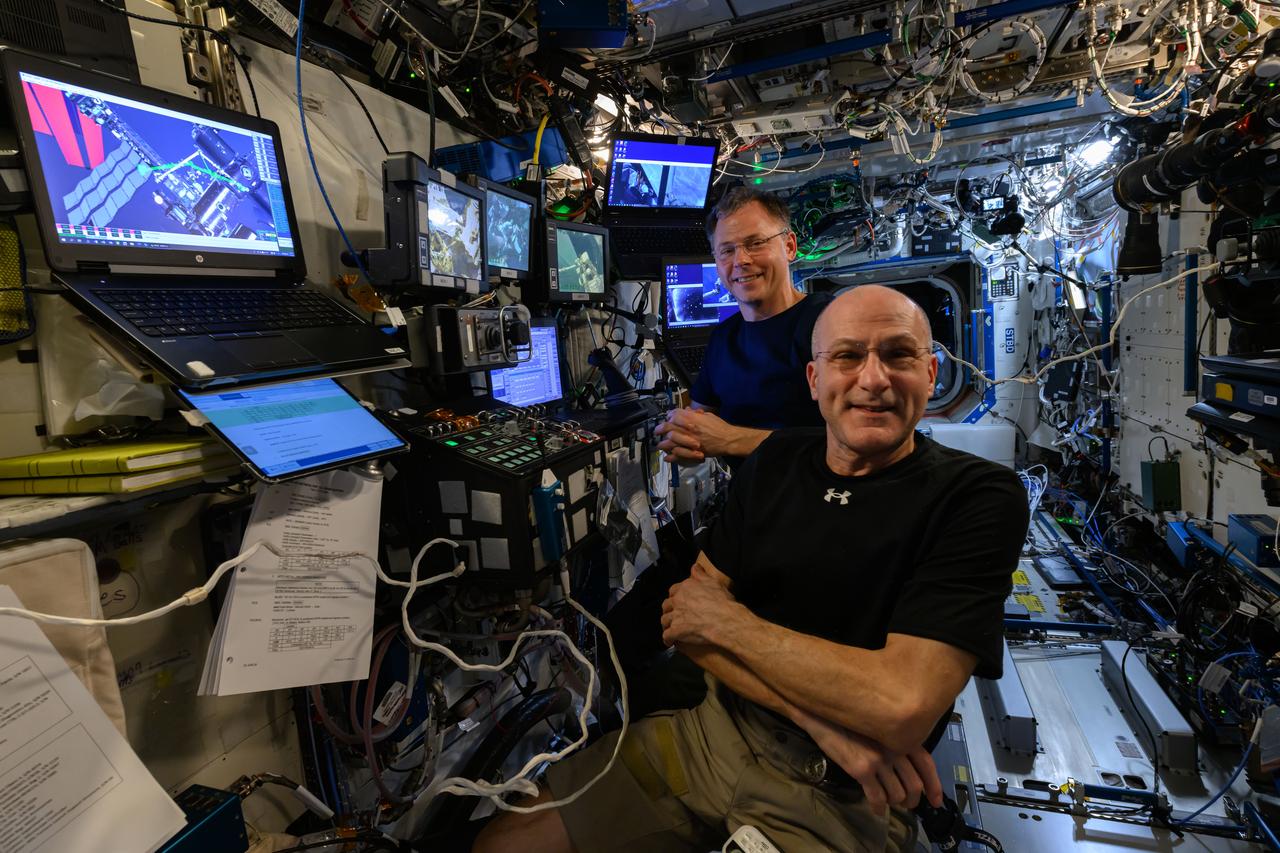
iss072e576545 (Jan. 30, 2025) --- NASA astronauts Don Pettit (foreground) and Nick Hague, both Expedition 72 flight engineers, are at the controls of the robotics workstation preparing to assist and monitor spacewalkers Suni Williams and Butch Wilmore (not pictured). Williams and Wilmore worked outside the International Space Station during a five-hour and 26-minute spacewalk on Jan. 30, 2025, to remove radio communications hardware and swab external surfaces searching for potential microorganisms.
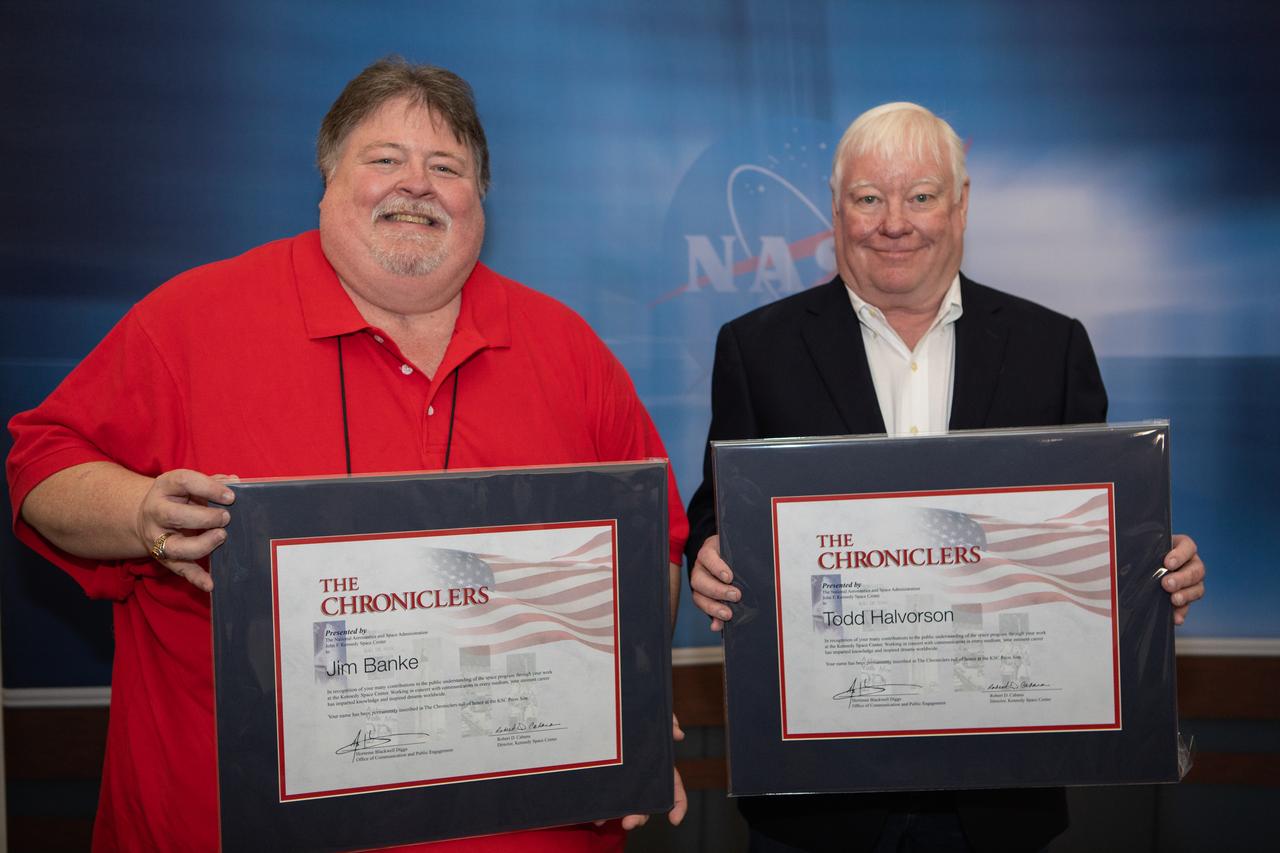
Jim Banke, left, and Todd Halvorson were honored as Chroniclers during a ceremony May 3, 2019, at Kennedy Space Center’s NASA News Center. The duo covered the space program together for Florida Today for 12 years. Also inducted as members were radio broadcaster Vic Ratner and photojournalist Peter Cosgrove. They were selected by a committee of their peers on March 25. The Chroniclers recognizes retirees of the news and communications business who have helped spread the news of American space exploration from Kennedy for 10 years or more.
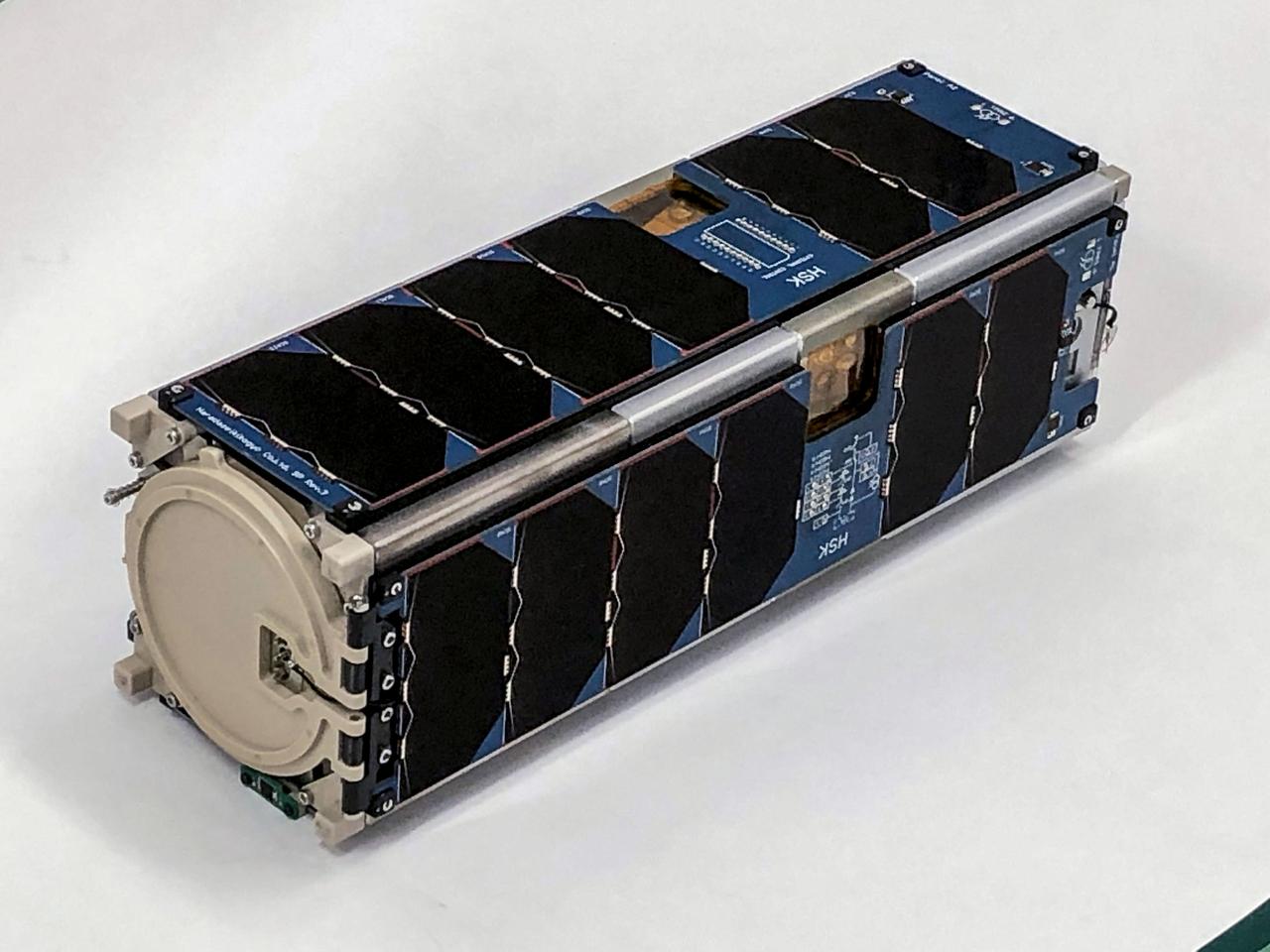
jsc2022e064081 (6/21/2022) --- A preflight view of theHSKSAT Flight Model. HSKSAT is a 3.9 kg, 3-Unit (3U) CubeSat developed by the Harada Seiki Company. HSKSAT's mission is to demonstrate attitude-controlled Earth observation, and provide high-speed imagery downlink utilizing S-band radio communications. Image Credit: Harada Seiki Corporation.
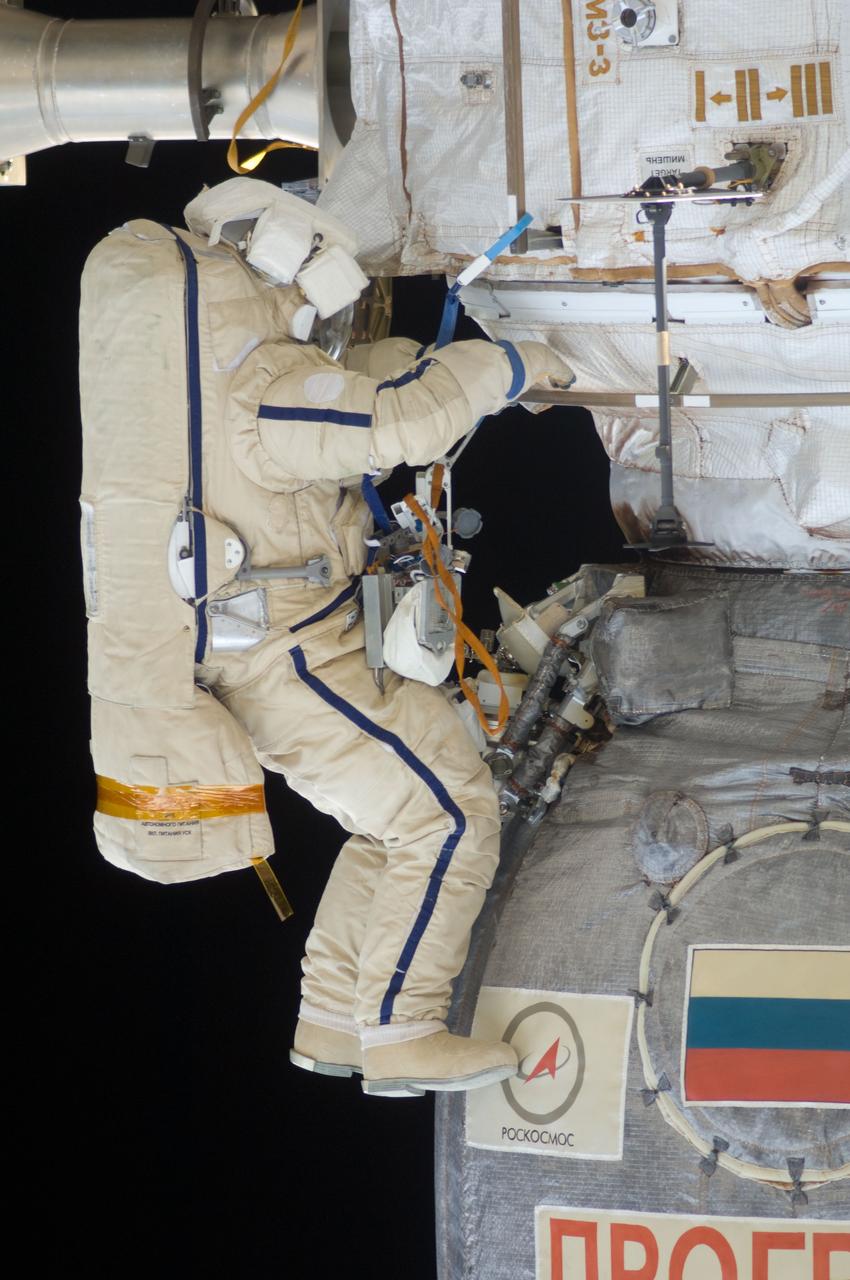
ISS028-E-020931 (3 Aug. 2011) --- Russian cosmonauts Sergei Volkov and Alexander Samokutyaev (out of frame), both Expedition 28 flight engineers, attired in Russian Orlan spacesuits, participate in a session of extravehicular activity (EVA) on the Russian segment of the International Space Station. During the six-hour, 23-minute spacewalk, Volkov and Samokutyaev moved a cargo boom from one airlock to another, installed a prototype laser communications system and deployed an amateur radio micro-satellite.
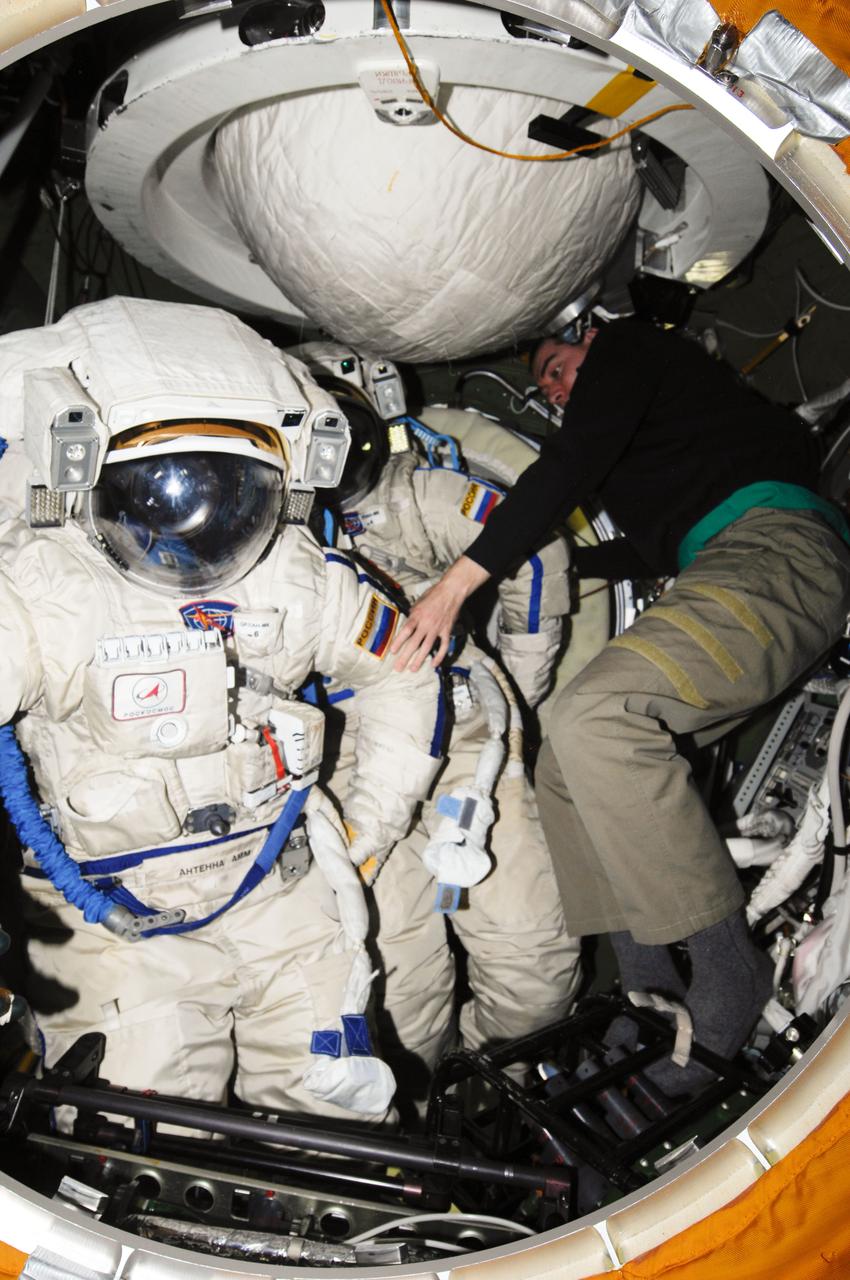
ISS028-E-019440 (29 July 2011) --- Russian cosmonaut Sergei Volkov, Expedition 28 flight engineer, works with Russian Orlan-MK spacesuits in the Pirs Docking Compartment of the International Space Station in preparation for a spacewalk scheduled for Aug. 3, 2011. During the six-hour excursion Volkov and Russian cosmonaut Alexander Samokutyaev (out of frame), flight engineer, will move a cargo boom from one airlock to another, install a prototype laser communications system and deploy an amateur radio micro-satellite.
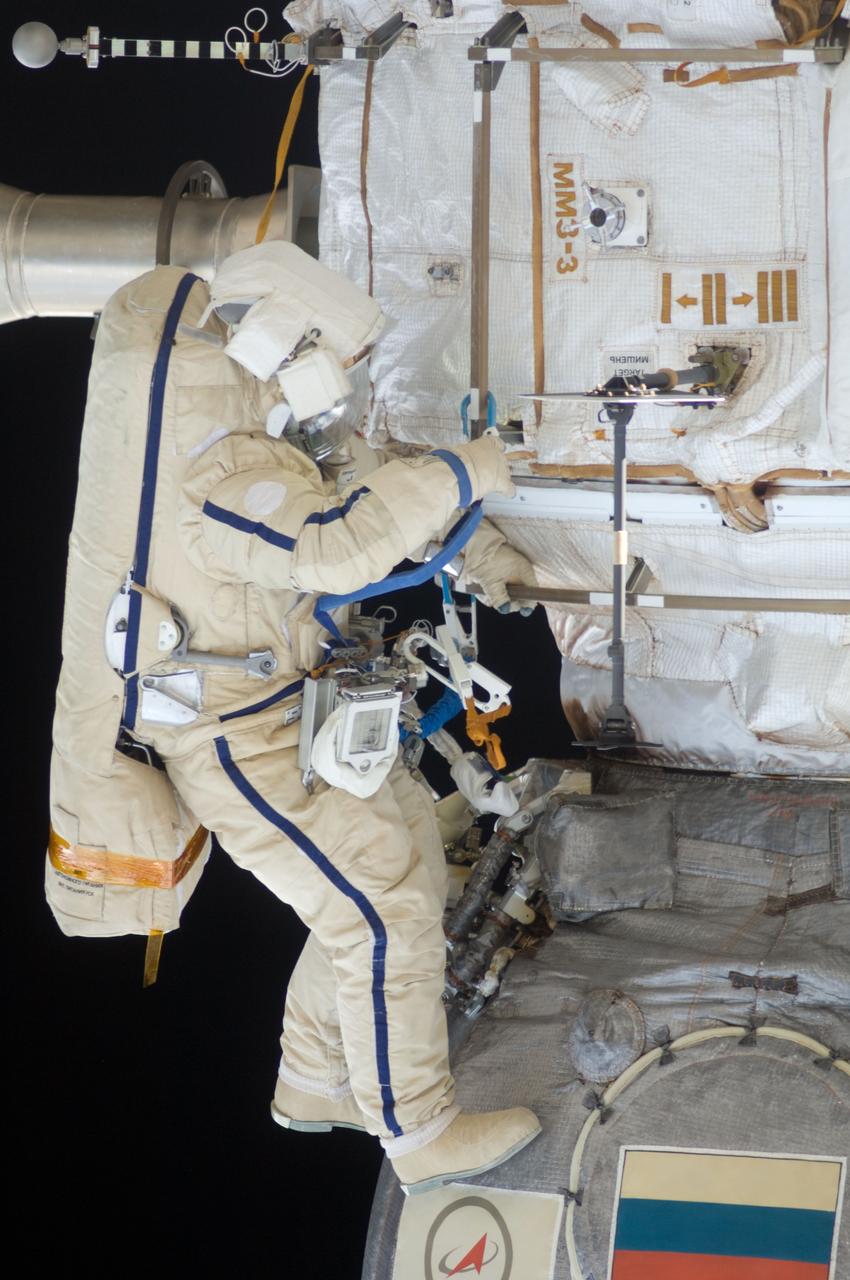
ISS028-E-020930 (3 Aug. 2011) --- Russian cosmonauts Sergei Volkov and Alexander Samokutyaev (out of frame), both Expedition 28 flight engineers, attired in Russian Orlan spacesuits, participate in a session of extravehicular activity (EVA) on the Russian segment of the International Space Station. During the six-hour, 23-minute spacewalk, Volkov and Samokutyaev moved a cargo boom from one airlock to another, installed a prototype laser communications system and deployed an amateur radio micro-satellite.
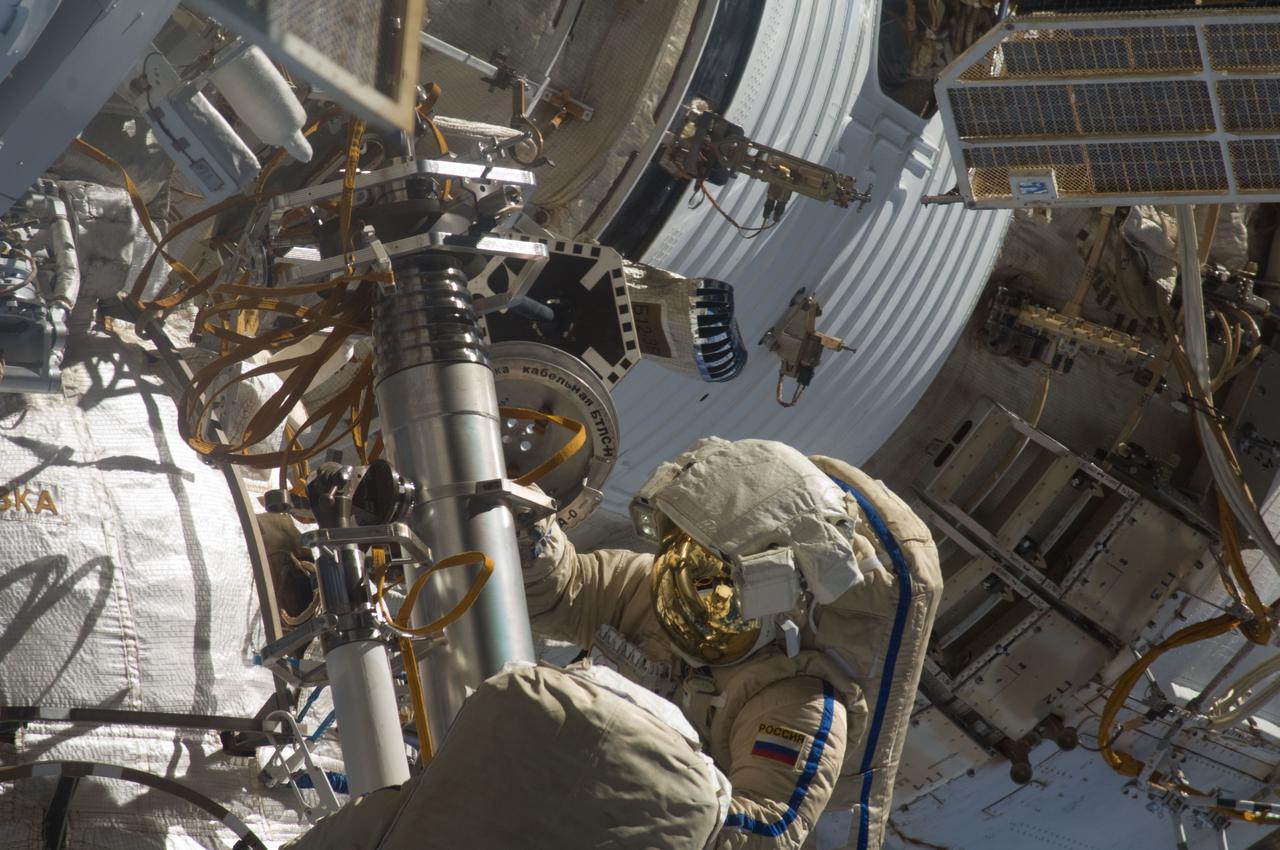
ISS028-E-020919 (3 Aug. 2011) --- Russian cosmonauts Sergei Volkov and Alexander Samokutyaev (out of frame), both Expedition 28 flight engineers, attired in Russian Orlan spacesuits, participate in a session of extravehicular activity (EVA) on the Russian segment of the International Space Station. During the six-hour, 23-minute spacewalk, Volkov and Samokutyaev moved a cargo boom from one airlock to another, installed a prototype laser communications system and deployed an amateur radio micro-satellite.
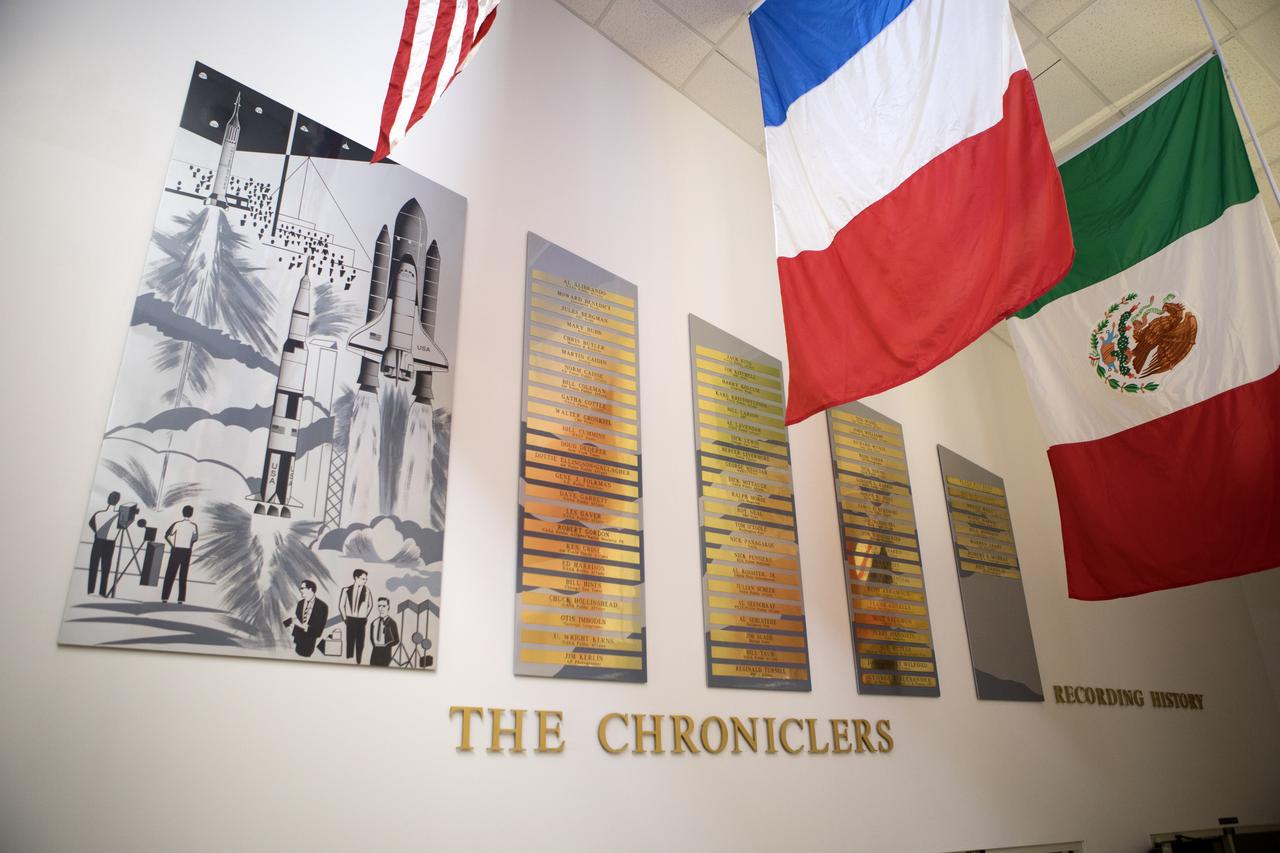
Brass plaques engraved with the names of "The Chroniclers" create a roll of honor on the wall at the NASA News Center at Kennedy Space Center in Florida. In this facility reporters from television, radio, print and online media outlets have monitored countless launches, landings and other space events in order to deliver the news to the world. The Chroniclers program recognizes retirees of the news and communications business who helped spread news of American space exploration from Kennedy Space Center for ten years or more.
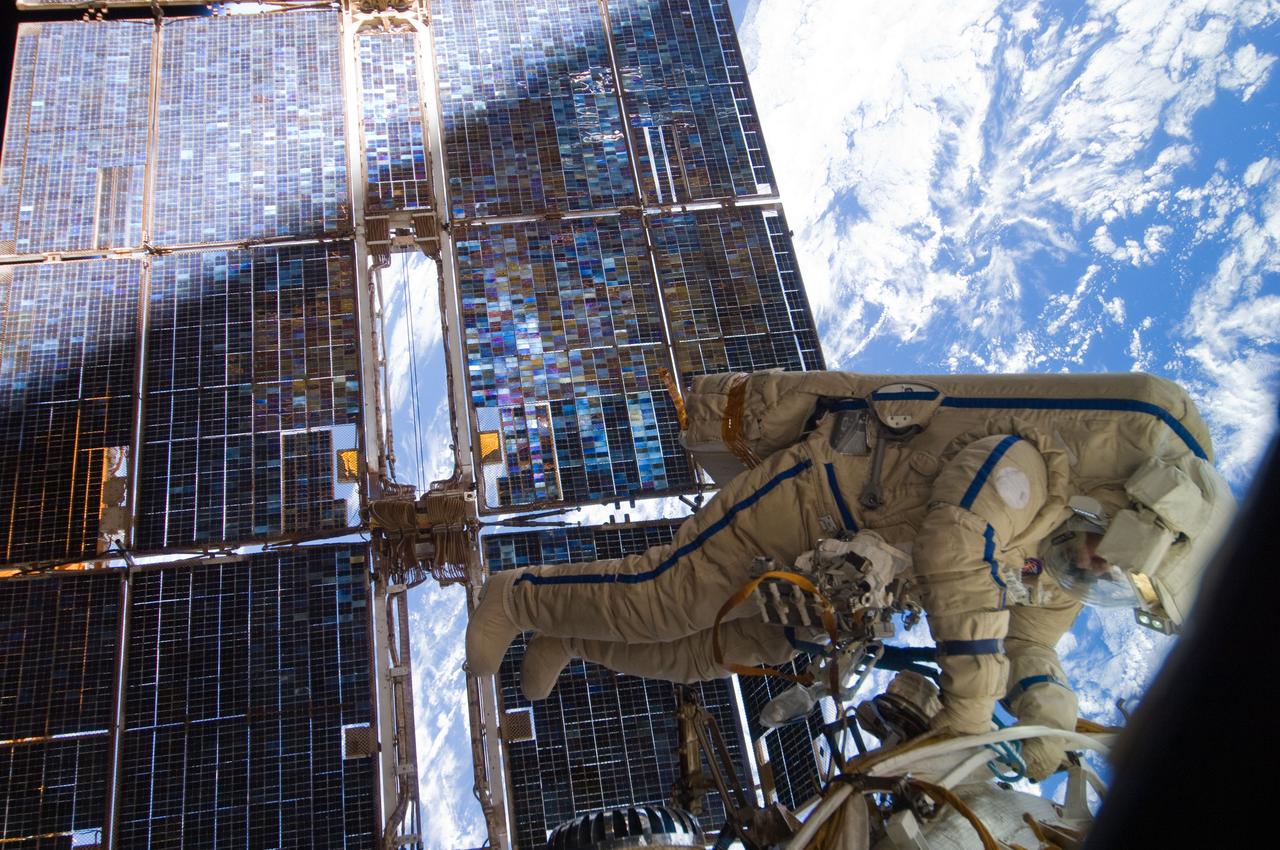
ISS028-E-020718 (3 Aug. 2011) --- Russian cosmonauts Sergei Volkov and Alexander Samokutyaev (out of frame), both Expedition 28 flight engineers, attired in Russian Orlan spacesuits, participate in a session of extravehicular activity (EVA) on the Russian segment of the International Space Station. During the six-hour, 23-minute spacewalk, Volkov and Samokutyaev moved a cargo boom from one airlock to another, installed a prototype laser communications system and deployed an amateur radio micro-satellite.
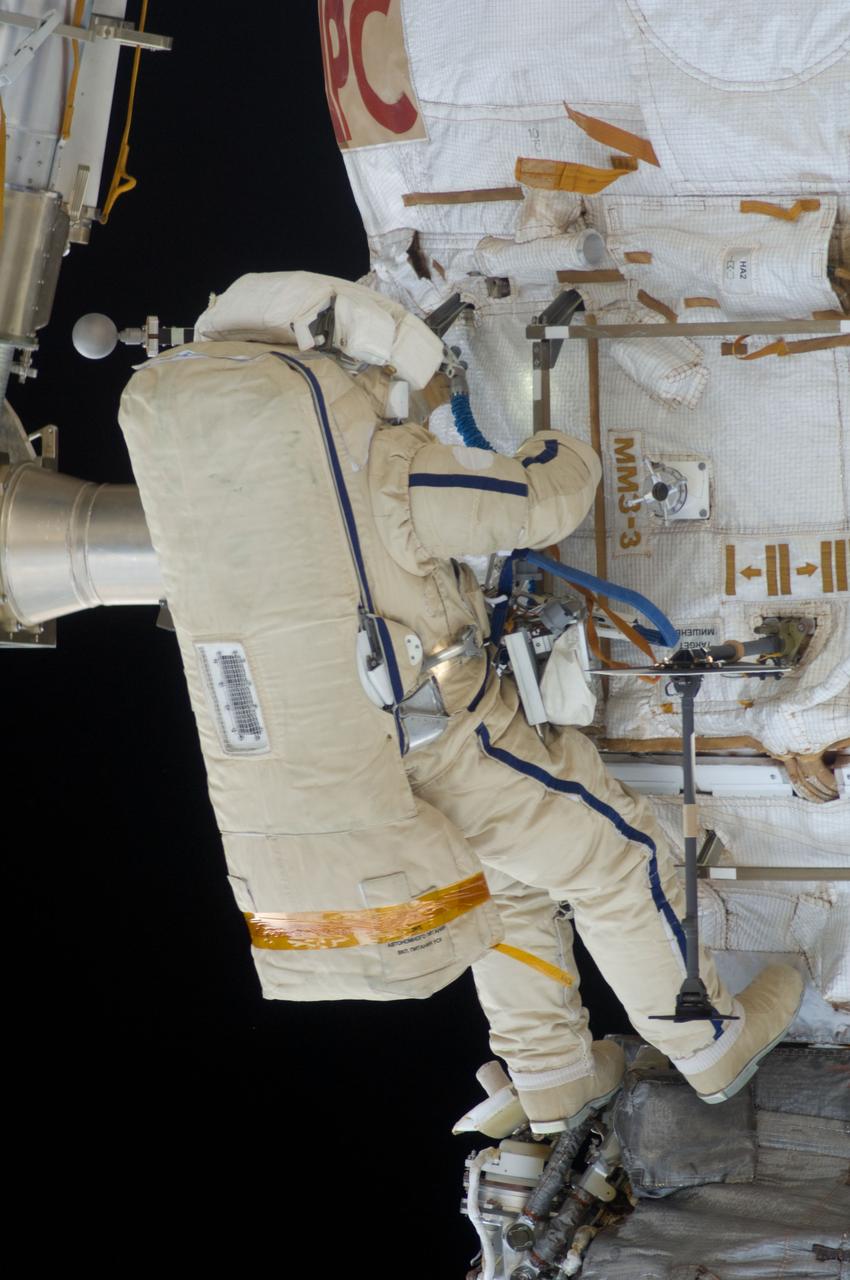
ISS028-E-020929 (3 Aug. 2011) --- Russian cosmonauts Sergei Volkov and Alexander Samokutyaev (out of frame), both Expedition 28 flight engineers, attired in Russian Orlan spacesuits, participate in a session of extravehicular activity (EVA) on the Russian segment of the International Space Station. During the six-hour, 23-minute spacewalk, Volkov and Samokutyaev moved a cargo boom from one airlock to another, installed a prototype laser communications system and deployed an amateur radio micro-satellite.
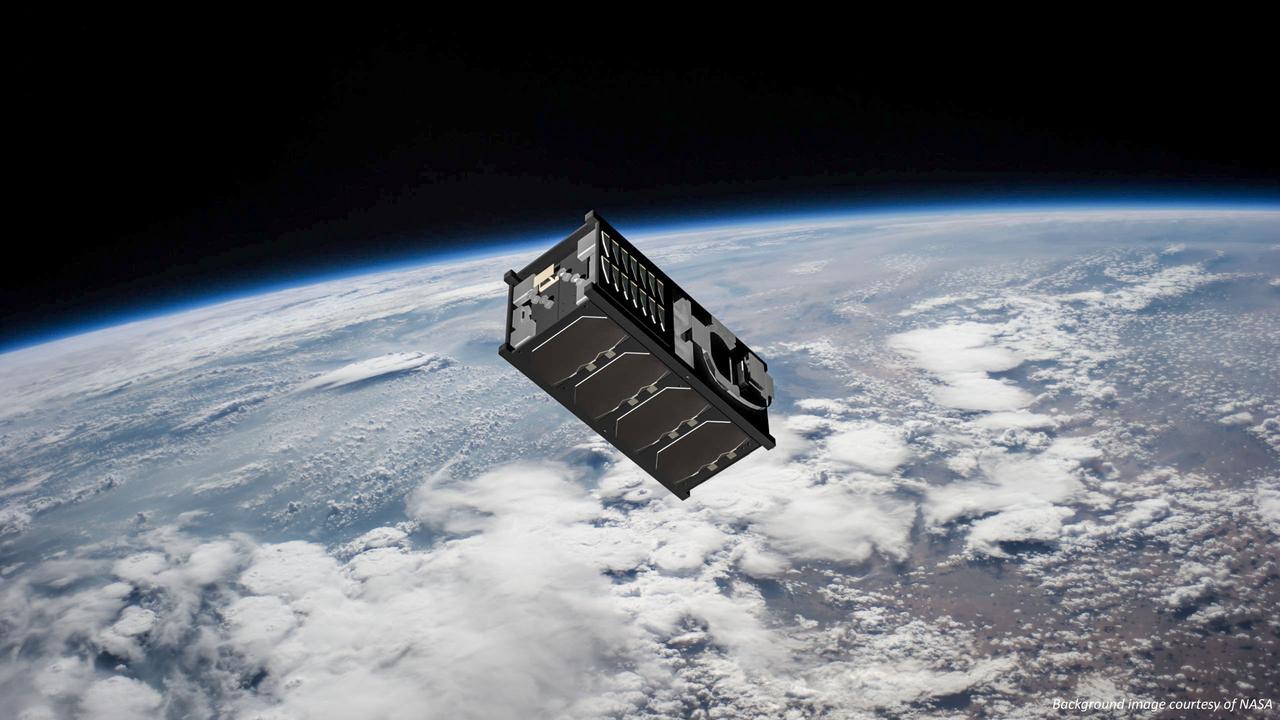
jsc2020e049616 (11/25/2020) --- A CAD model of the OPUSAT-II before deploying the deployment mechanism. The Osaka Prefecture University Satellite-II (OPUSAT-II) has two main missions, the transmission of High-speed data in an amateur radio band and the deployment of a two-dimensional deployable plate for high communications efficiency and high storage performance to demonstrate for use in the next generation of satellites. Image Credit:Osaka Prefecture University
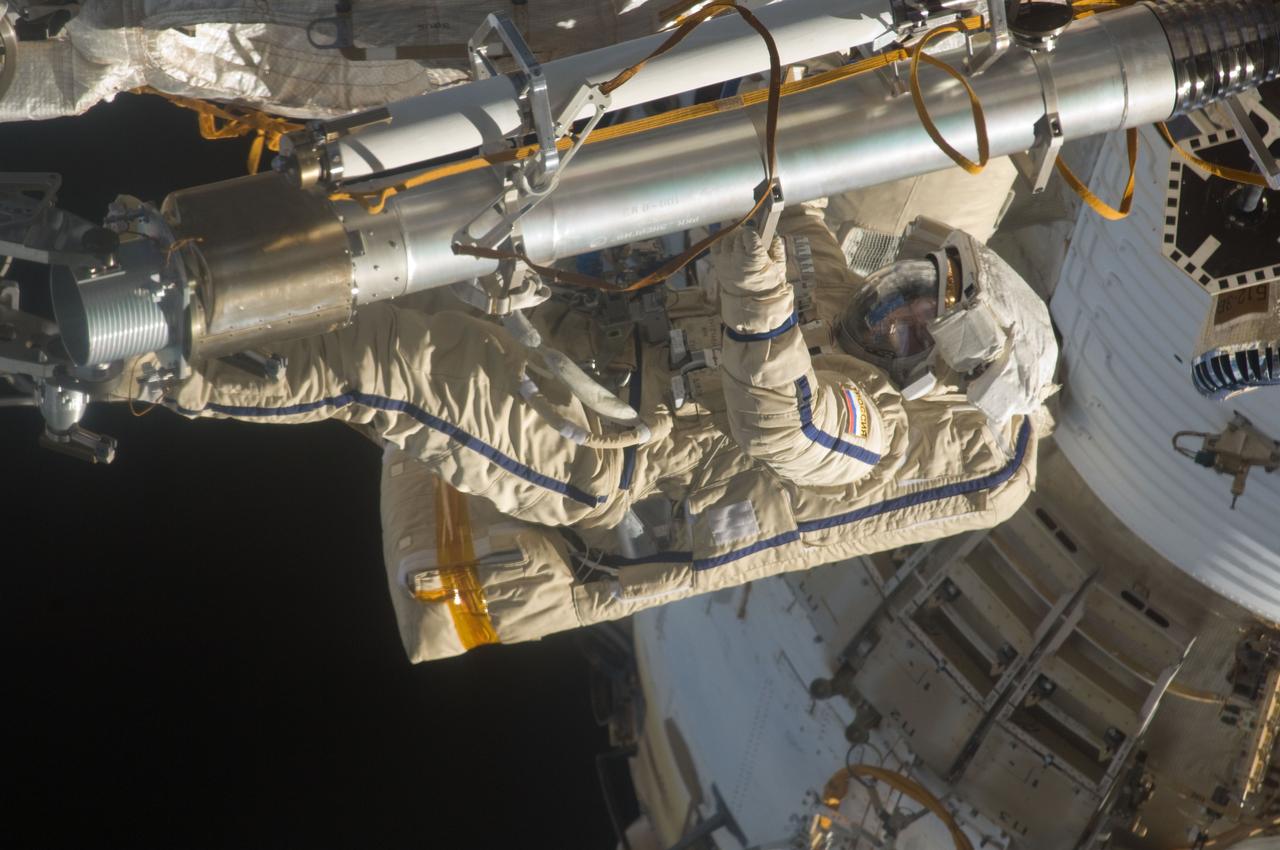
ISS028-E-020911 (3 Aug. 2011) --- Russian cosmonauts Sergei Volkov and Alexander Samokutyaev (out of frame), both Expedition 28 flight engineers, attired in Russian Orlan spacesuits, participate in a session of extravehicular activity (EVA) on the Russian segment of the International Space Station. During the six-hour, 23-minute spacewalk, Volkov and Samokutyaev moved a cargo boom from one airlock to another, installed a prototype laser communications system and deployed an amateur radio micro-satellite.
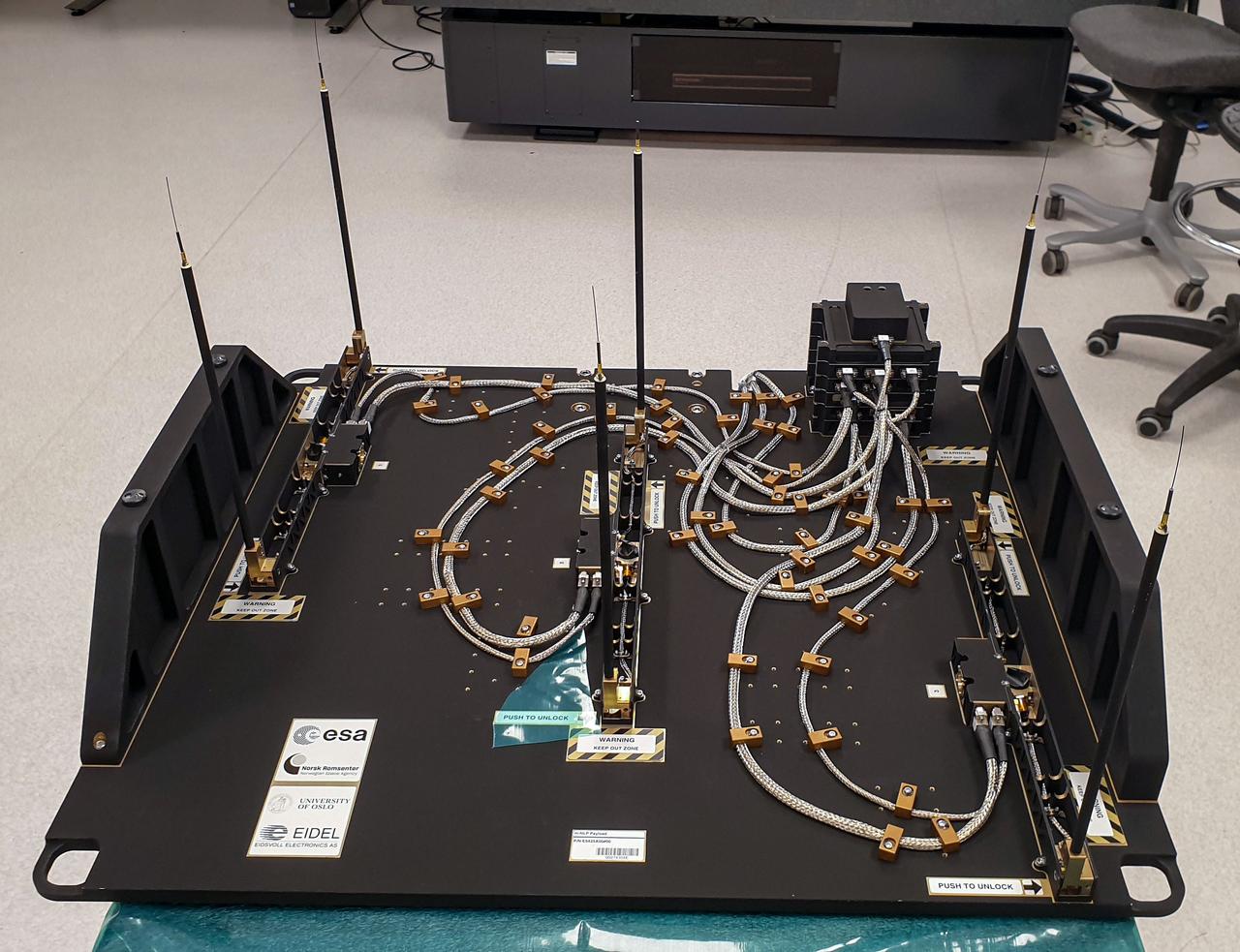
jsc2023e046372 (9/30/2022) --- The Multi-Needle Langmuir Probe (m-NLP) is shown from the ram facing side with booms in deployed position. The m-NLP measures plasma density in the ionosphere, where Earth's atmosphere meets the beginning of space. Researchers aim to study electrically charged particles and increase their understanding of how particle phenomena affect radio communications and global navigation satellite system (GNSS) signals. Image courtesy of the University of Oslo, Espen Trondsen.
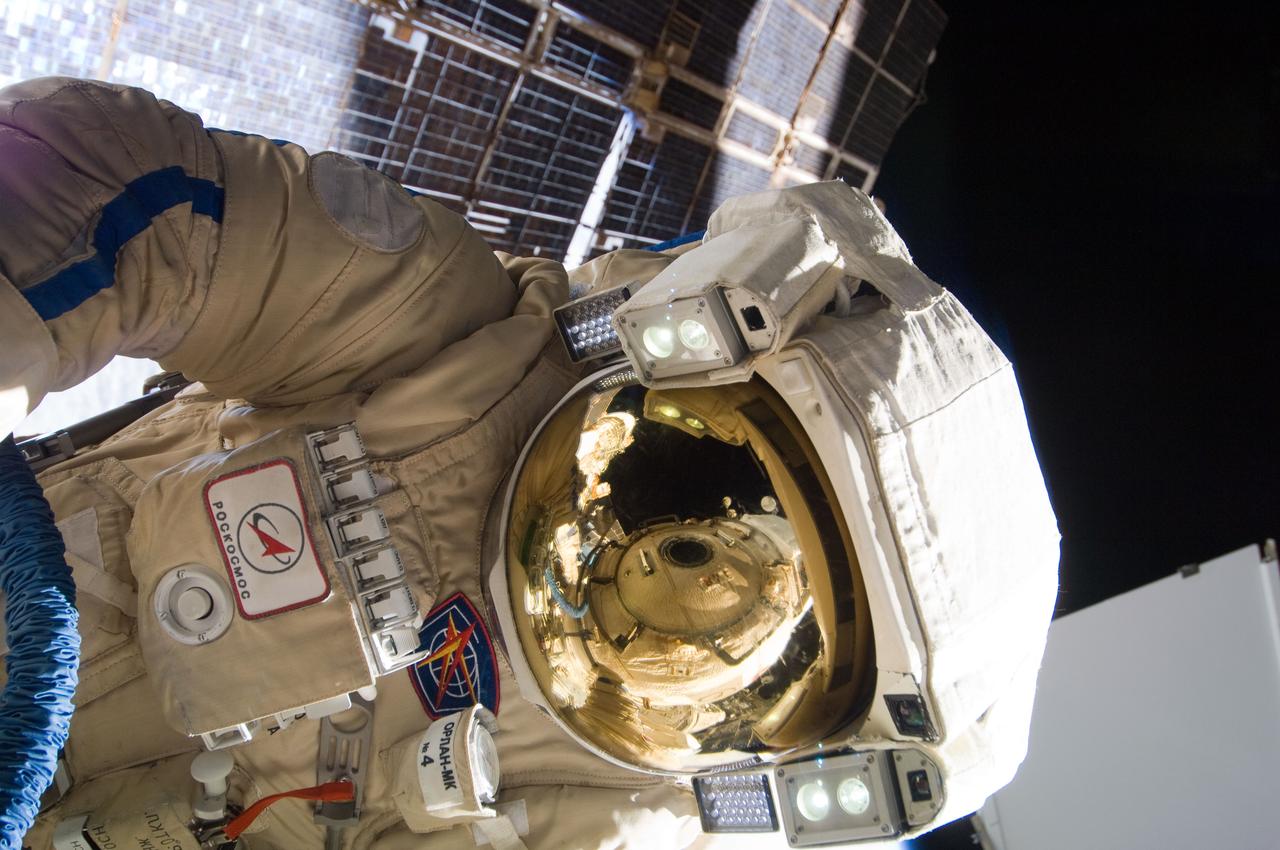
ISS028-E-020805 (3 Aug. 2011) --- Russian cosmonauts Sergei Volkov and Alexander Samokutyaev (out of frame), both Expedition 28 flight engineers, attired in Russian Orlan spacesuits, participate in a session of extravehicular activity (EVA) on the Russian segment of the International Space Station. During the six-hour, 23-minute spacewalk, Volkov and Samokutyaev moved a cargo boom from one airlock to another, installed a prototype laser communications system and deployed an amateur radio micro-satellite.

S75-32053 (July 1975) --- An overall view of activity in the press working area of the ASTP News Center during the joint U.S.-USSR Apollo-Soyuz Test Project docking mission in Earth orbit. The JSC Public Affairs Office maintains a news center for each mission. The NASA spaceflights are covered by U.S. and foreign reporters representing TV networks, wire services, television and radio stations, newspapers, magazines, scientific and educational publications, etc. (Photo courtesy Communications Satellite Corporation)
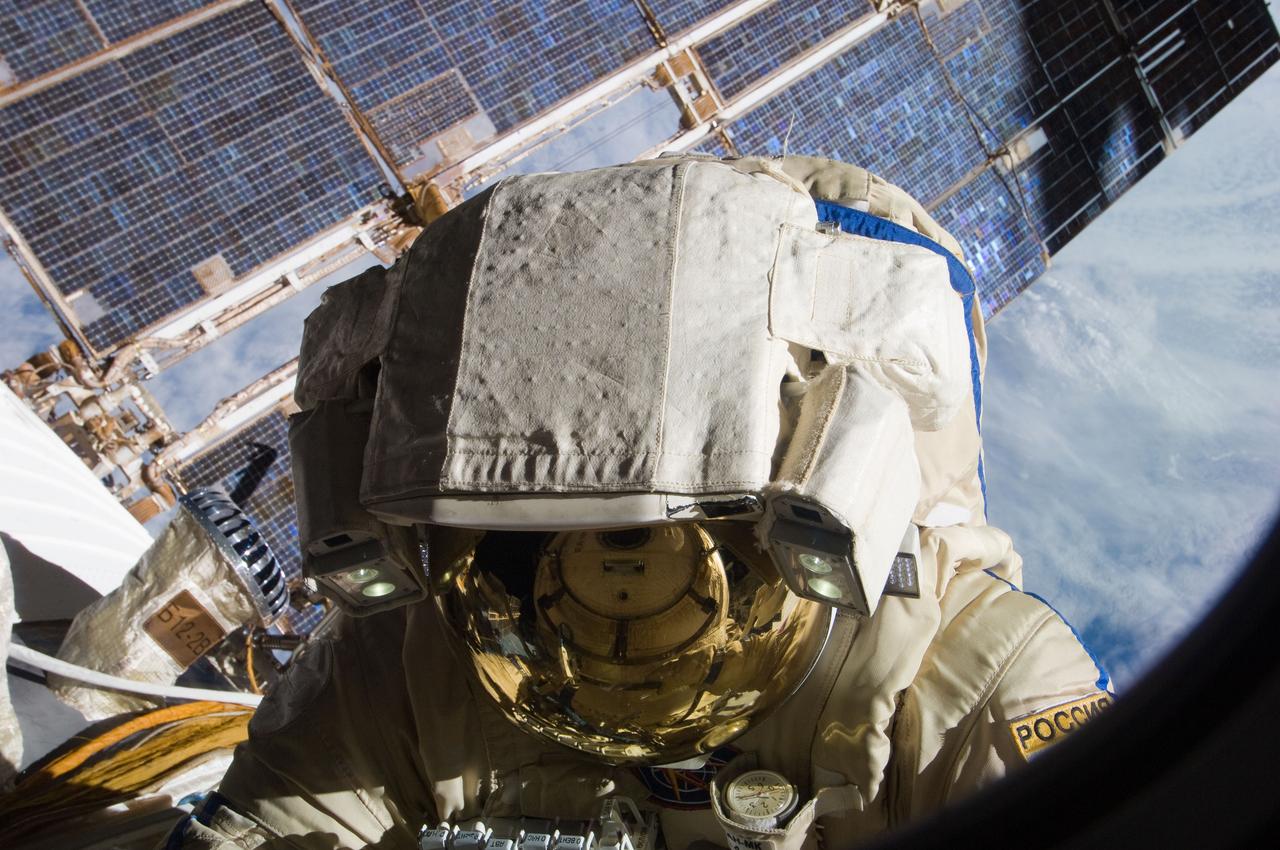
ISS028-E-020782 (3 Aug. 2011) --- Russian cosmonauts Sergei Volkov and Alexander Samokutyaev (out of frame), both Expedition 28 flight engineers, attired in Russian Orlan spacesuits, participate in a session of extravehicular activity (EVA) on the Russian segment of the International Space Station. During the six-hour, 23-minute spacewalk, Volkov and Samokutyaev moved a cargo boom from one airlock to another, installed a prototype laser communications system and deployed an amateur radio micro-satellite.
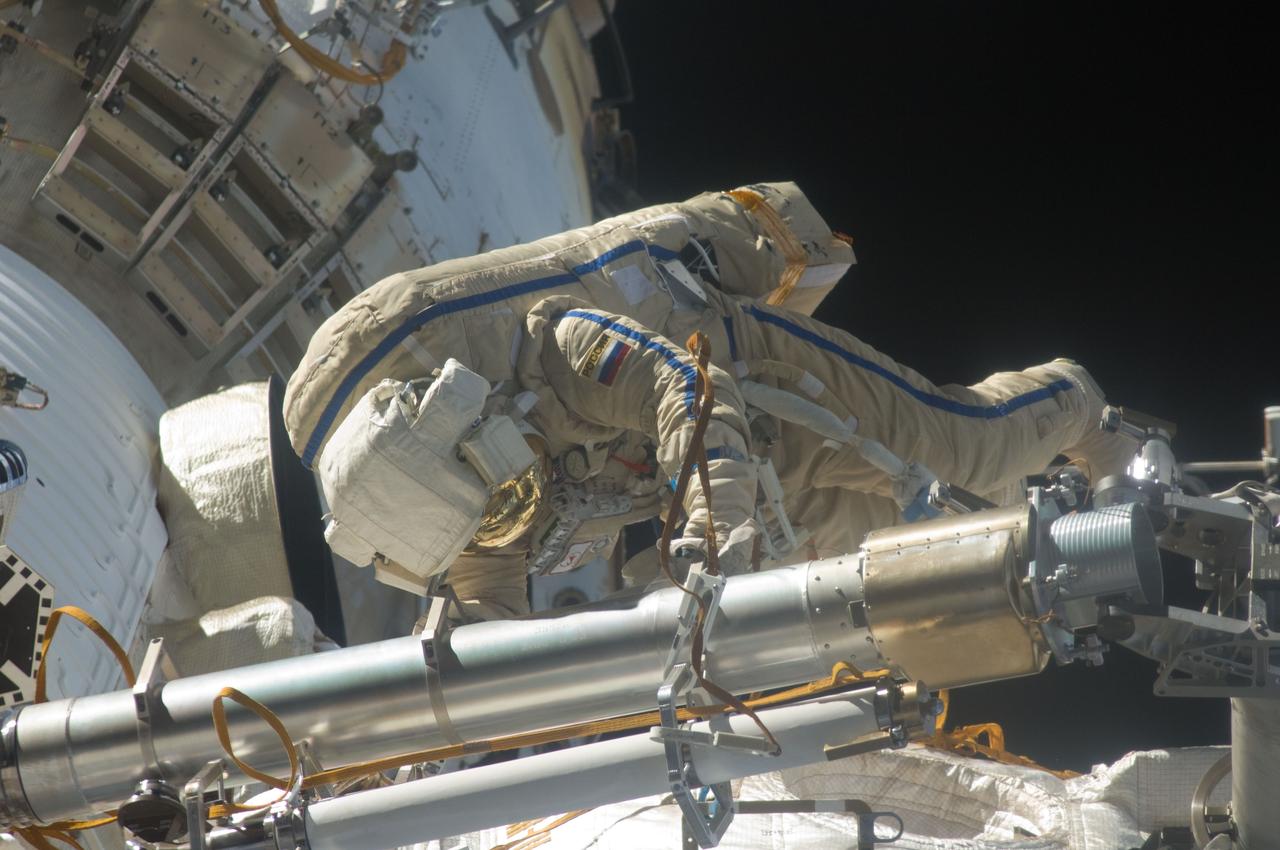
ISS028-E-020924 (3 Aug. 2011) --- Russian cosmonauts Sergei Volkov and Alexander Samokutyaev (out of frame), both Expedition 28 flight engineers, attired in Russian Orlan spacesuits, participate in a session of extravehicular activity (EVA) on the Russian segment of the International Space Station. During the six-hour, 23-minute spacewalk, Volkov and Samokutyaev moved a cargo boom from one airlock to another, installed a prototype laser communications system and deployed an amateur radio micro-satellite.
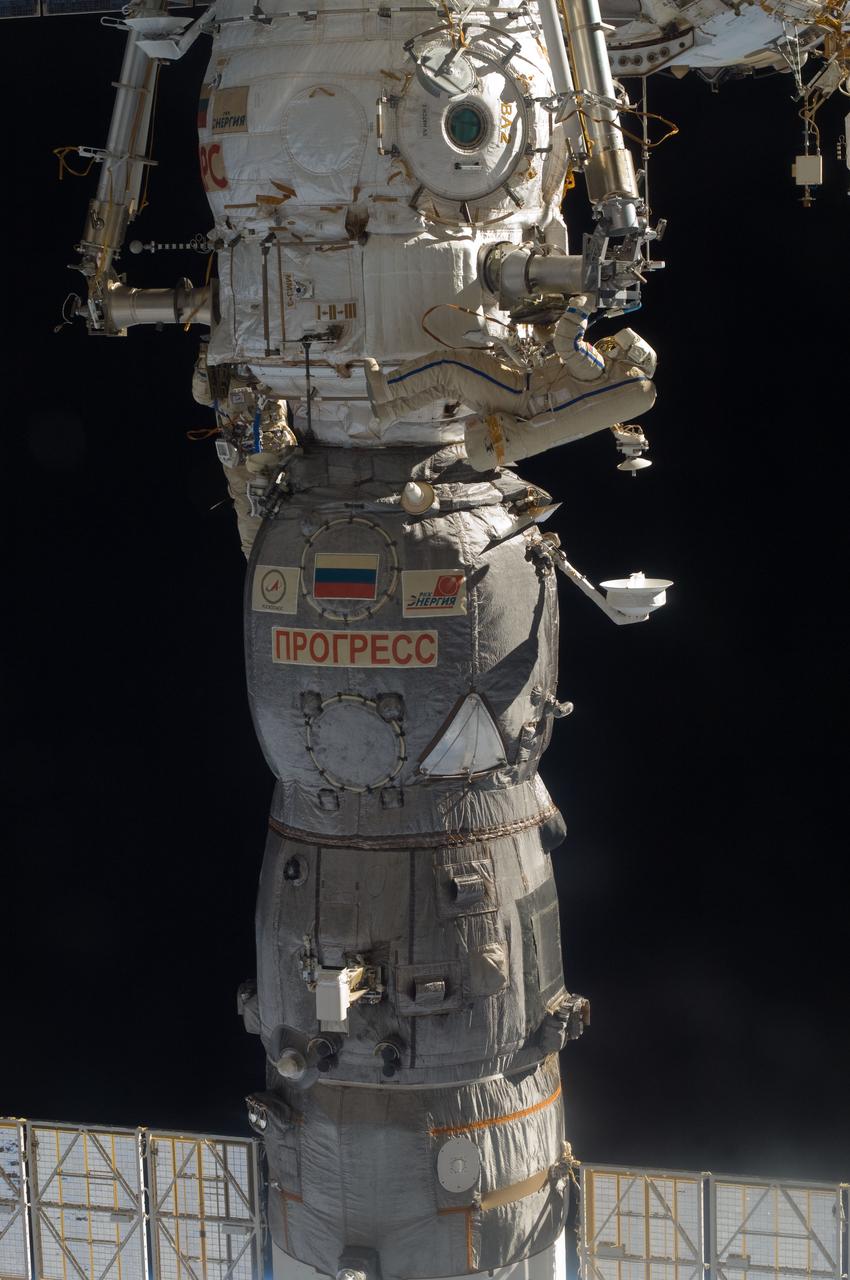
ISS028-E-020965 (3 Aug. 2011) --- Russian cosmonauts Sergei Volkov and Alexander Samokutyaev (out of frame), both Expedition 28 flight engineers, attired in Russian Orlan spacesuits, participate in a session of extravehicular activity (EVA) on the Russian segment of the International Space Station. During the six-hour, 23-minute spacewalk, Volkov and Samokutyaev moved a cargo boom from one airlock to another, installed a prototype laser communications system and deployed an amateur radio micro-satellite.
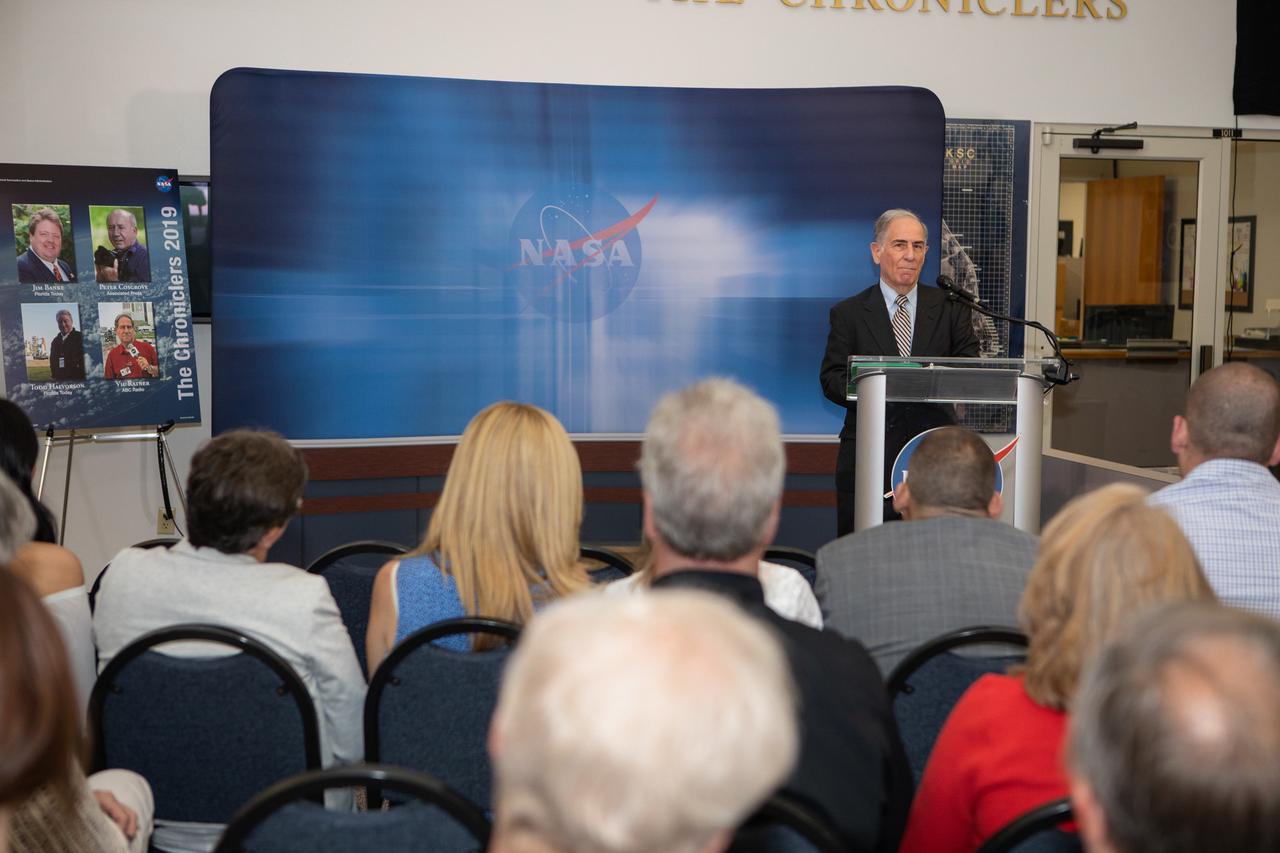
Vic Ratner, former radio broadcaster for ABC Radio, addresses a crowd of family and friends, current and former NASA officials, and space journalists after he is inducted as a 2019 Chronicler during a ceremony at Kennedy Space Center’s NASA News Center in Florida on May 3, 2019. Also honored as Chroniclers were journalists Jim Banke and Todd Halvorson, and photographer Peter Cosgrove. The Chroniclers recognizes retirees of the news and communications business who have helped spread news of American space exploration from Kennedy for 10 years or more. The group of four was selected by a committee of their peers on March 25. Their names were engraved on brass strips and added to The Chroniclers wall display in the news center and were unveiled during the ceremony.
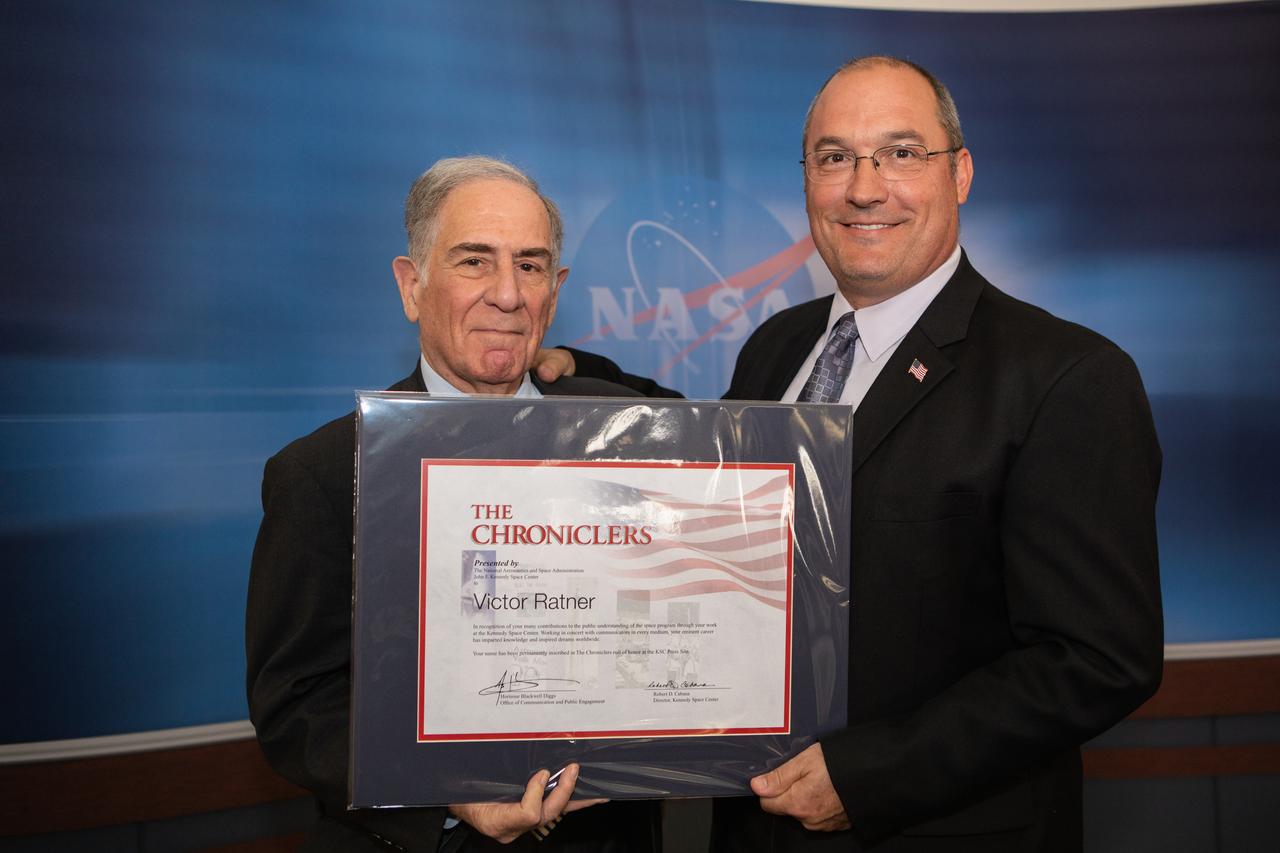
NASA Public Affairs Officer Greg Harland, right, poses for a photograph with newly inducted Chronicler Vic Ratner during a ceremony at Kennedy Space Center’s NASA News Center in Florida on May 3, 2019. Ratner covered the space program for ABC Radio and was the only radio correspondent on the air live during the Space Shuttle Challenger accident, providing on-the-scene information for more than five hours that day after the tragedy. Also inducted as members were journalists Jim Banke and Todd Halvorson, and photographer Peter Cosgrove. They were selected by a committee of their peers on March 25. The Chroniclers recognizes retirees of the news and communications business who have helped spread news of American space exploration from Kennedy for 10 years or more.