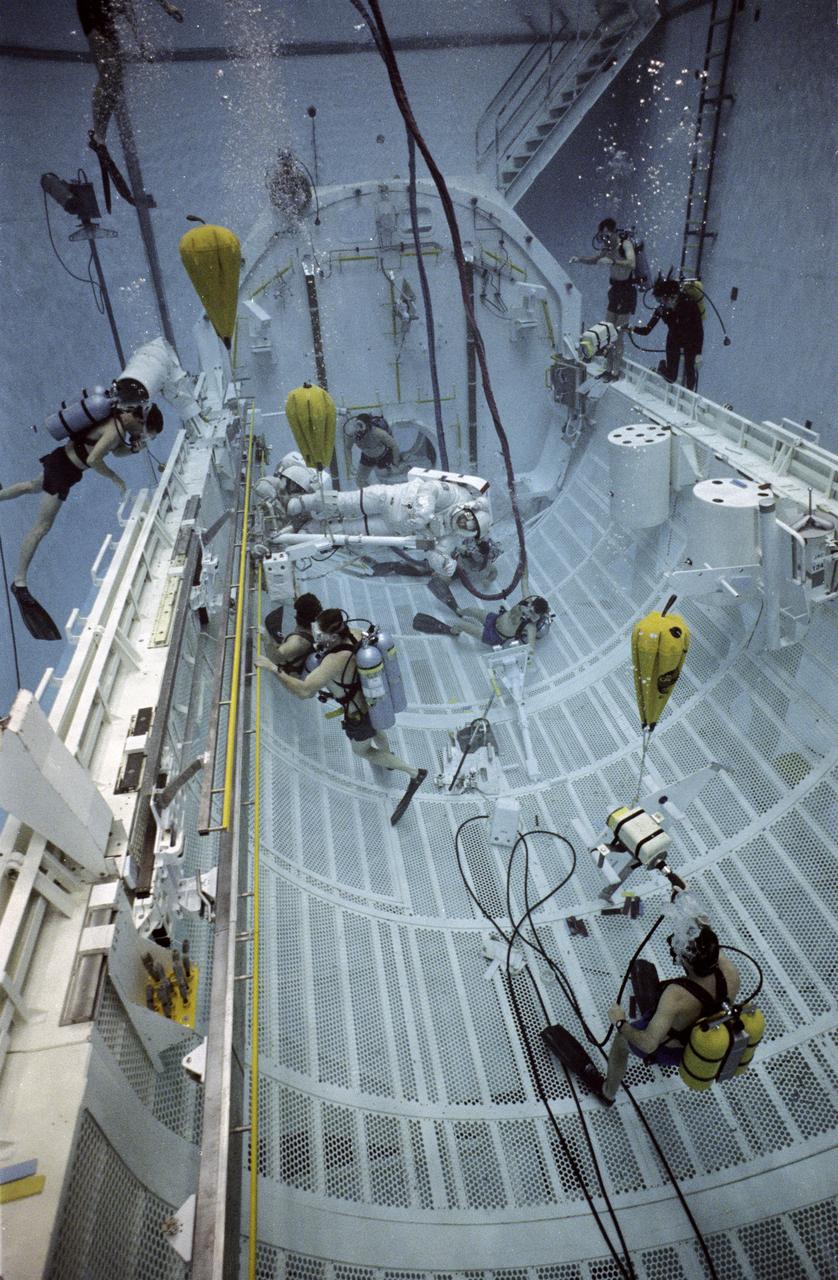
STS-37 Atlantis, Orbiter Vehicle (OV) 104, Mission Specialist (MS) Jerry L. Ross generates electrical power using hand pedals to move crew and equipment translation aid (CETA) cart along a rail during underwater session in JSC's Weightless Environment Training Facility (WETF) Bldg 29. Wearing an extravehicular mobility unit (EMU), Ross operates CETA electrical cart as MS Jerome Apt holds onto the back of the cart. The two crewmembers are practicing a extravehicular activity (EVA) spacewalk they will perform in OV-104's payload bay during STS-37. CETA is a type of railroad hand cart planned as a spacewalker's transportation system along the truss of Space Station Freedom (SSF). SCUBA divers monitor astronauts' underwater activity.
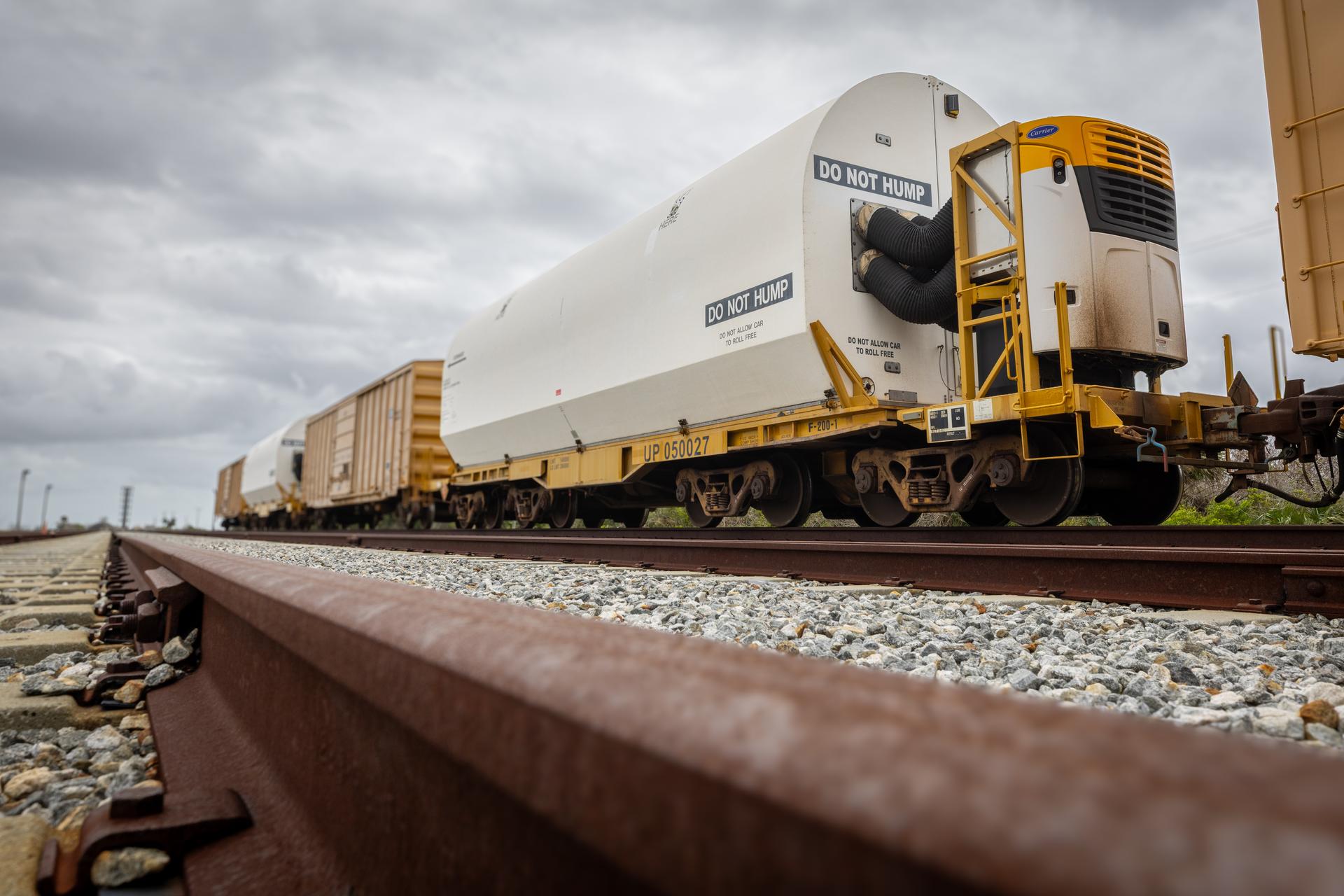
The solid rocket booster aft skirt segments for NASA’s Artemis III SLS (Space Launch System) rocket arrive at a rail yard near the agency’s Kennedy Space Center in Florida on Wednesday, April 8, 2026. Comprising the bottom of the rocket’s twin, five-segment solid rocket boosters, the aft skirt segments traveled by train in specialized transporters to the Florida spaceport and will be transferred from the rail yard to NASA Kennedy’s Rotation, Processing and Surge Facility for processing. The Artemis III mission will launch crew in the Orion spacecraft on top of the SLS rocket to test rendezvous and docking capabilities between Orion and commercial spacecraft needed to land astronauts on the Moon.
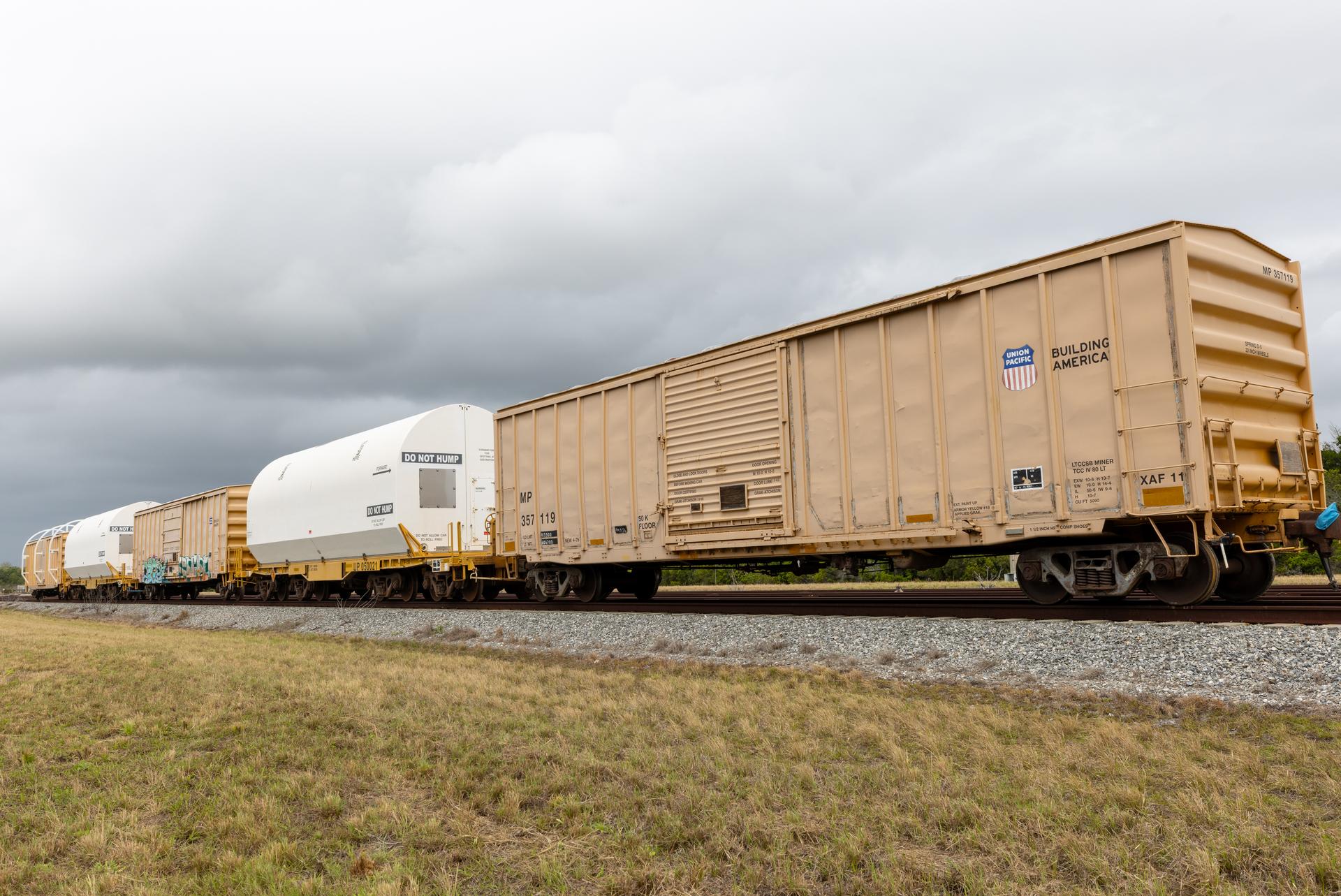
The solid rocket booster aft skirt segments for NASA’s Artemis III SLS (Space Launch System) rocket arrive at a rail yard near the agency’s Kennedy Space Center in Florida on Wednesday, April 8, 2026. Comprising the bottom of the rocket’s twin, five-segment solid rocket boosters, the aft skirt segments traveled by train in specialized transporters to the Florida spaceport and will be transferred from the rail yard to NASA Kennedy’s Rotation, Processing and Surge Facility for processing. The Artemis III mission will launch crew in the Orion spacecraft on top of the SLS rocket to test rendezvous and docking capabilities between Orion and commercial spacecraft needed to land astronauts on the Moon.
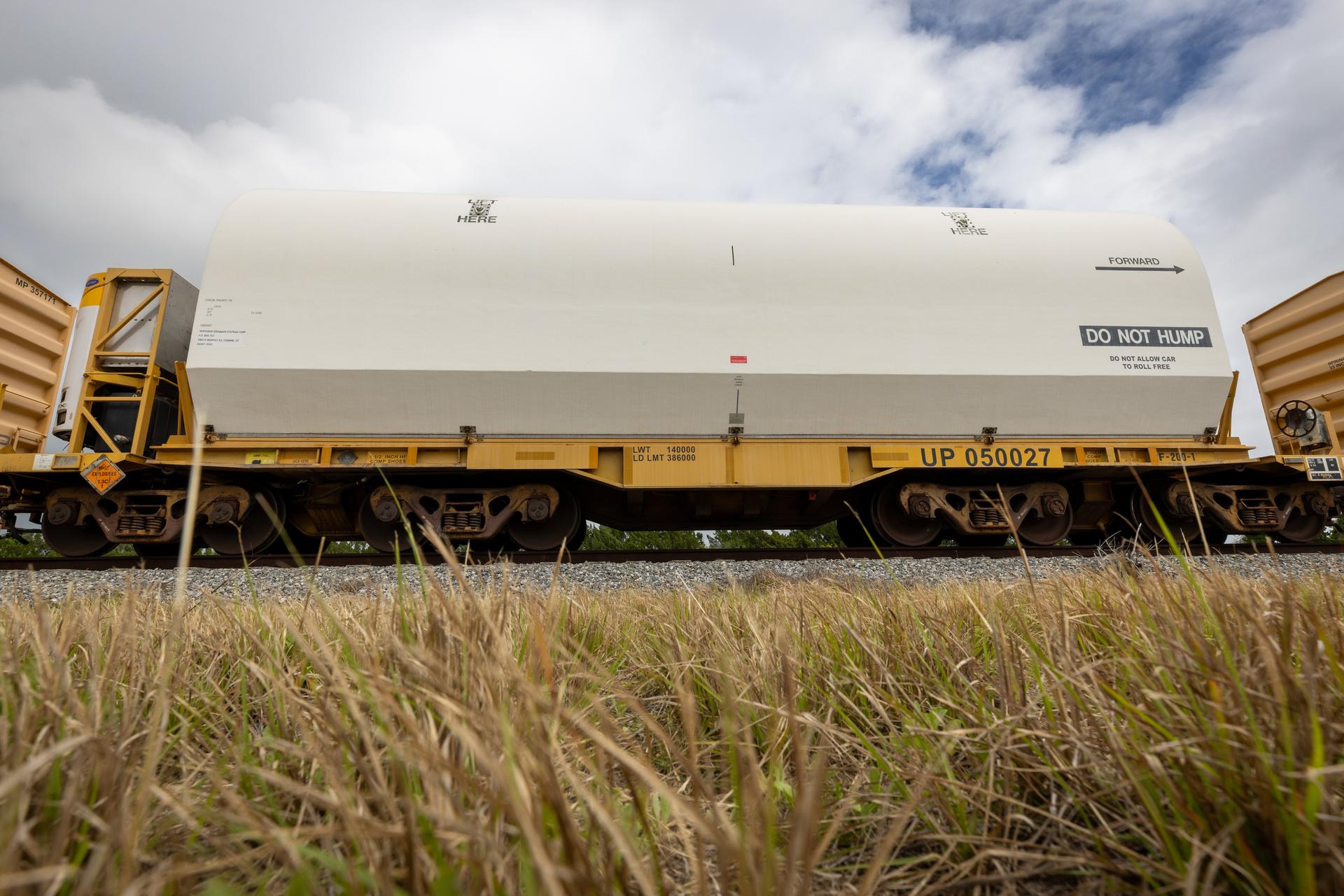
The solid rocket booster aft skirt segments for NASA’s Artemis III SLS (Space Launch System) rocket arrive at a rail yard near the agency’s Kennedy Space Center in Florida on Wednesday, April 8, 2026. Comprising the bottom of the rocket’s twin, five-segment solid rocket boosters, the aft skirt segments traveled by train in specialized transporters to the Florida spaceport and will be transferred from the rail yard to NASA Kennedy’s Rotation, Processing and Surge Facility for processing. The Artemis III mission will launch crew in the Orion spacecraft on top of the SLS rocket to test rendezvous and docking capabilities between Orion and commercial spacecraft needed to land astronauts on the Moon.
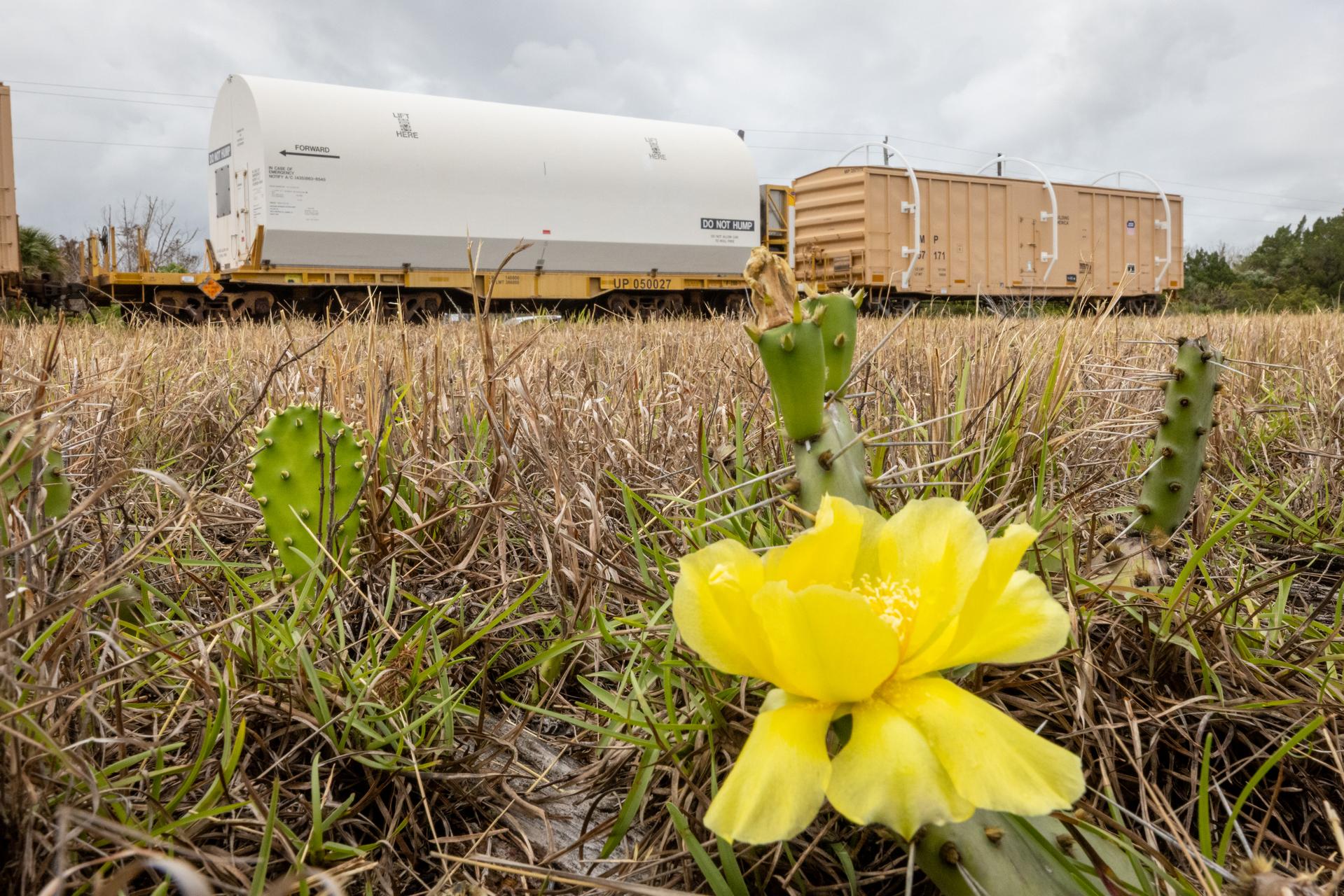
The solid rocket booster aft skirt segments for NASA’s Artemis III SLS (Space Launch System) rocket arrive at a rail yard near the agency’s Kennedy Space Center in Florida on Wednesday, April 8, 2026. Comprising the bottom of the rocket’s twin, five-segment solid rocket boosters, the aft skirt segments traveled by train in specialized transporters to the Florida spaceport and will be transferred from the rail yard to NASA Kennedy’s Rotation, Processing and Surge Facility for processing. The Artemis III mission will launch crew in the Orion spacecraft on top of the SLS rocket to test rendezvous and docking capabilities between Orion and commercial spacecraft needed to land astronauts on the Moon.
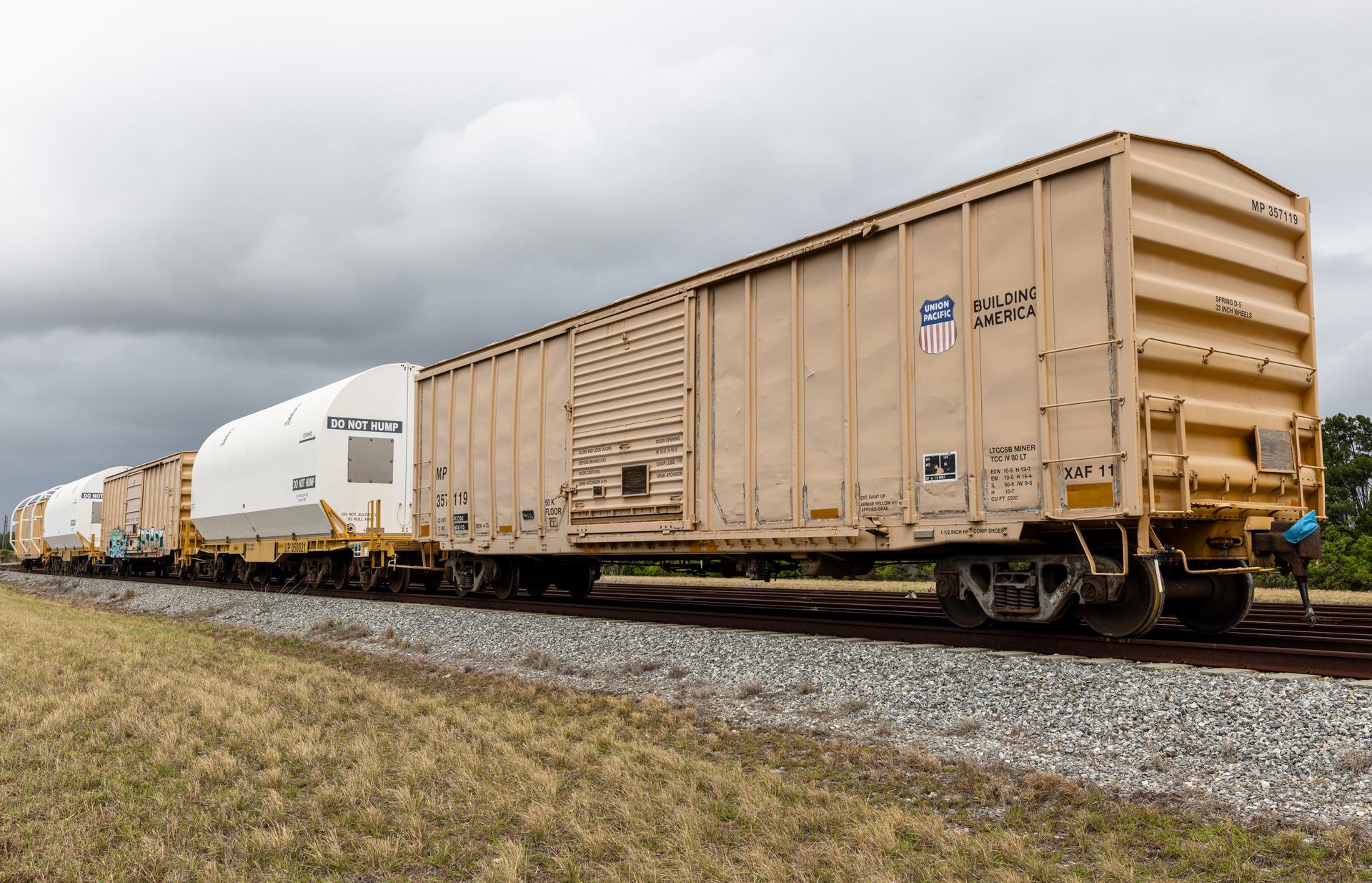
The solid rocket booster aft skirt segments for NASA’s Artemis III SLS (Space Launch System) rocket arrive at a rail yard near the agency’s Kennedy Space Center in Florida on Wednesday, April 8, 2026. Comprising the bottom of the rocket’s twin, five-segment solid rocket boosters, the aft skirt segments traveled by train in specialized transporters to the Florida spaceport and will be transferred from the rail yard to NASA Kennedy’s Rotation, Processing and Surge Facility for processing. The Artemis III mission will launch crew in the Orion spacecraft on top of the SLS rocket to test rendezvous and docking capabilities between Orion and commercial spacecraft needed to land astronauts on the Moon.
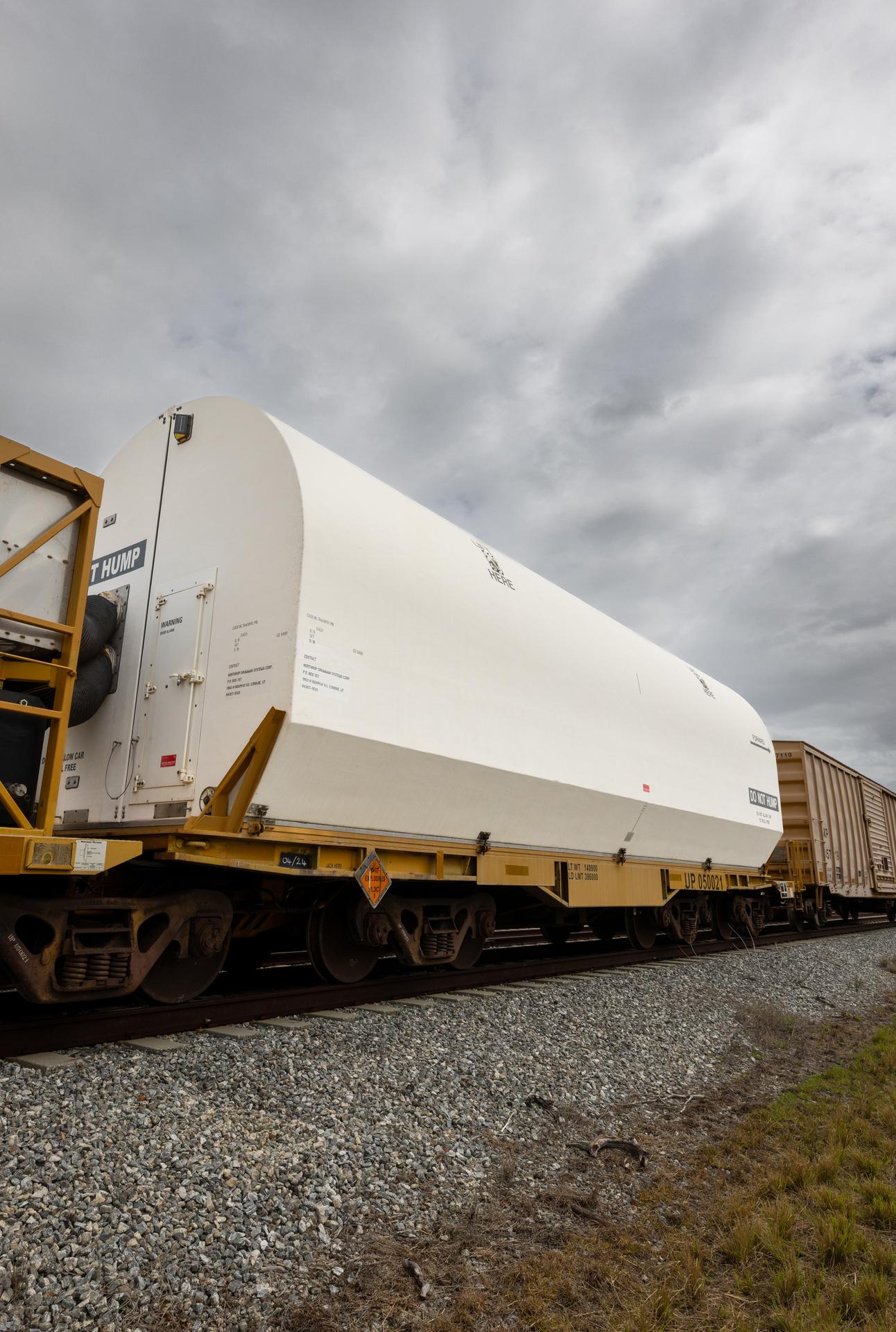
The solid rocket booster aft skirt segments for NASA’s Artemis III SLS (Space Launch System) rocket arrive at a rail yard near the agency’s Kennedy Space Center in Florida on Wednesday, April 8, 2026. Comprising the bottom of the rocket’s twin, five-segment solid rocket boosters, the aft skirt segments traveled by train in specialized transporters to the Florida spaceport and will be transferred from the rail yard to NASA Kennedy’s Rotation, Processing and Surge Facility for processing. The Artemis III mission will launch crew in the Orion spacecraft on top of the SLS rocket to test rendezvous and docking capabilities between Orion and commercial spacecraft needed to land astronauts on the Moon.
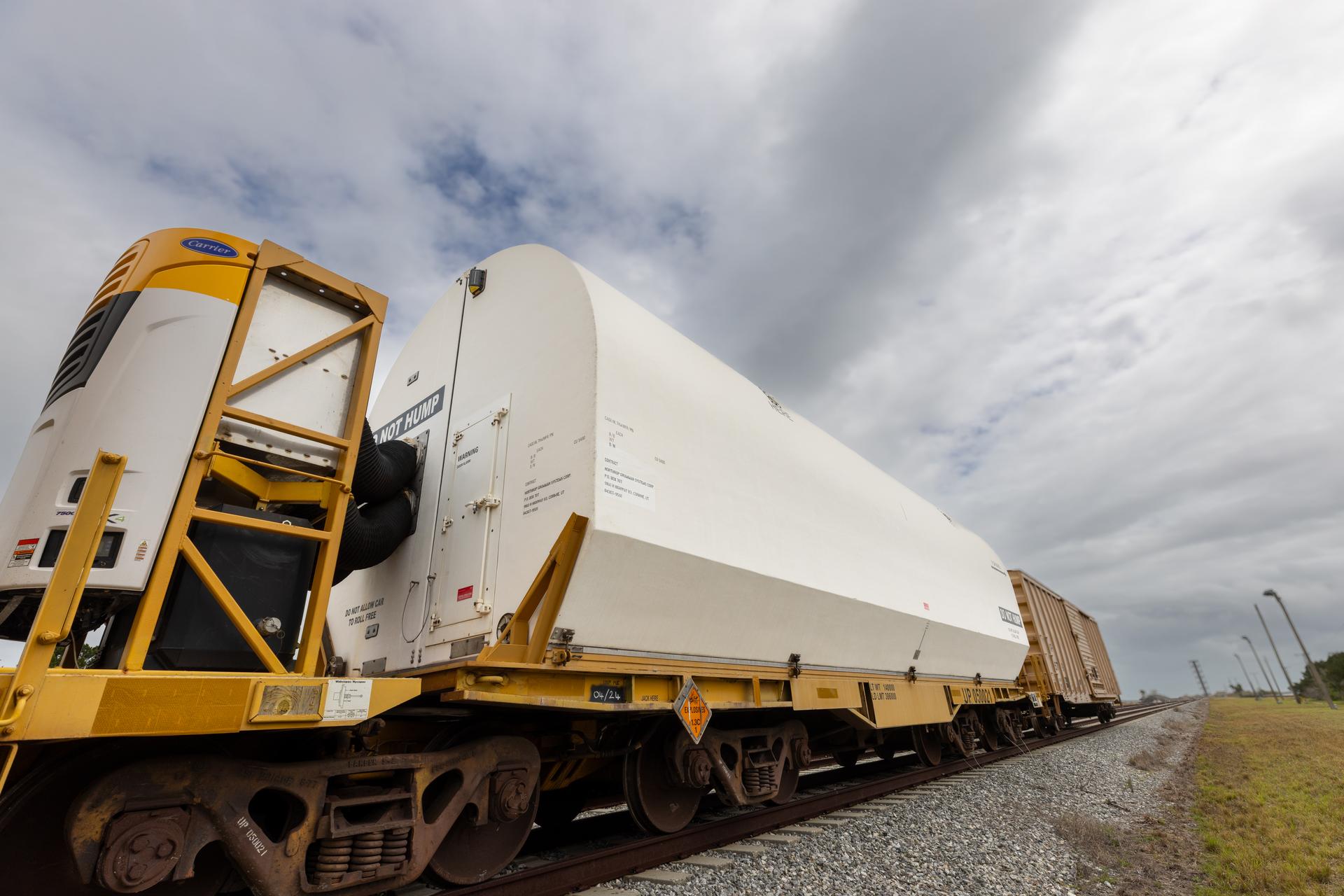
The solid rocket booster aft skirt segments for NASA’s Artemis III SLS (Space Launch System) rocket arrive at a rail yard near the agency’s Kennedy Space Center in Florida on Wednesday, April 8, 2026. Comprising the bottom of the rocket’s twin, five-segment solid rocket boosters, the aft skirt segments traveled by train in specialized transporters to the Florida spaceport and will be transferred from the rail yard to NASA Kennedy’s Rotation, Processing and Surge Facility for processing. The Artemis III mission will launch crew in the Orion spacecraft on top of the SLS rocket to test rendezvous and docking capabilities between Orion and commercial spacecraft needed to land astronauts on the Moon.
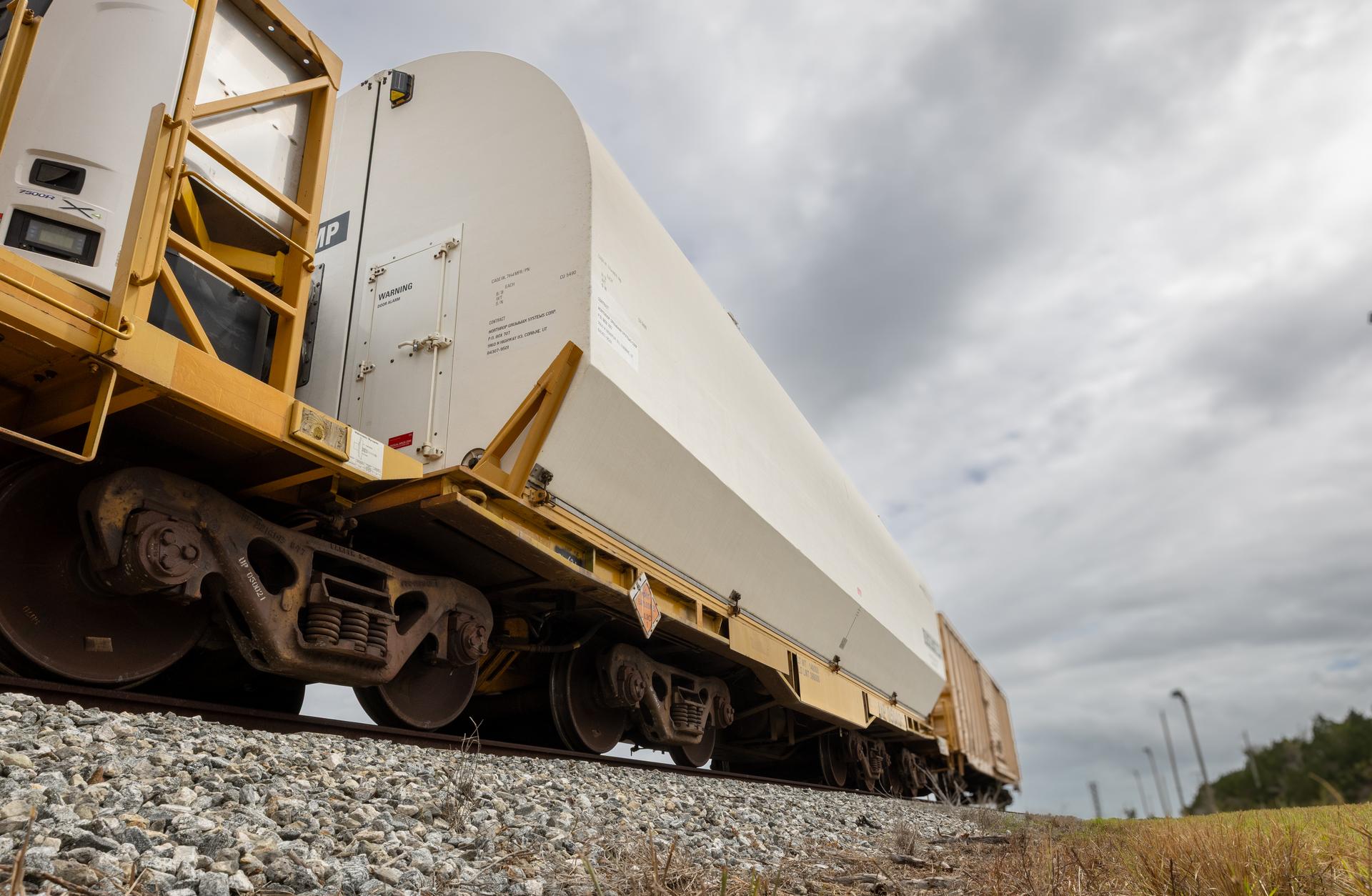
The solid rocket booster aft skirt segments for NASA’s Artemis III SLS (Space Launch System) rocket arrive at a rail yard near the agency’s Kennedy Space Center in Florida on Wednesday, April 8, 2026. Comprising the bottom of the rocket’s twin, five-segment solid rocket boosters, the aft skirt segments traveled by train in specialized transporters to the Florida spaceport and will be transferred from the rail yard to NASA Kennedy’s Rotation, Processing and Surge Facility for processing. The Artemis III mission will launch crew in the Orion spacecraft on top of the SLS rocket to test rendezvous and docking capabilities between Orion and commercial spacecraft needed to land astronauts on the Moon.
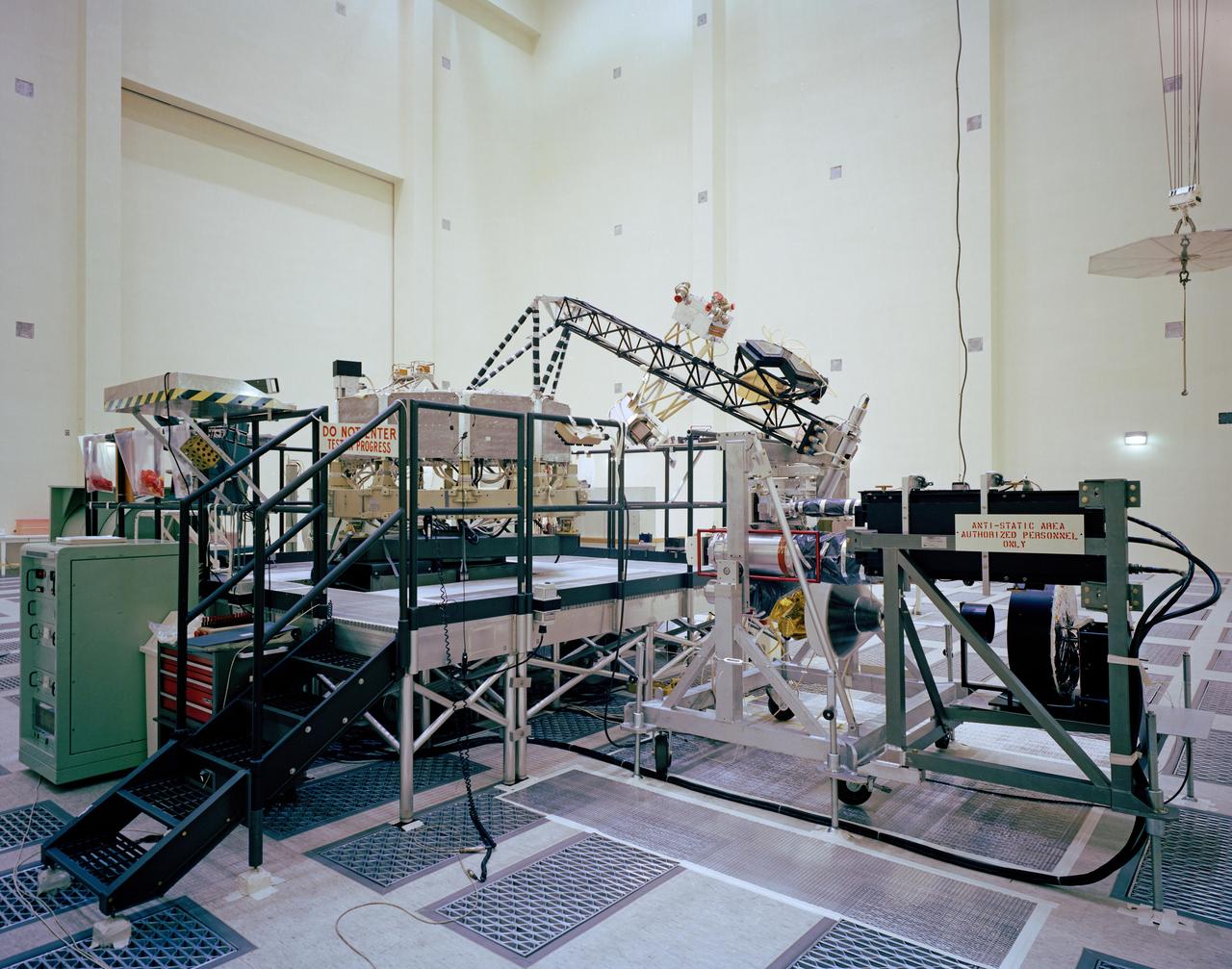
This archival photo shows the system test configuration for Voyager on October 1, 1976. The spacecraft's 10-sided bus is visible behind the catwalk railing in the foreground. The boom that holds several of the spacecraft's science instruments arches above the railing. https://photojournal.jpl.nasa.gov/catalog/PIA21729
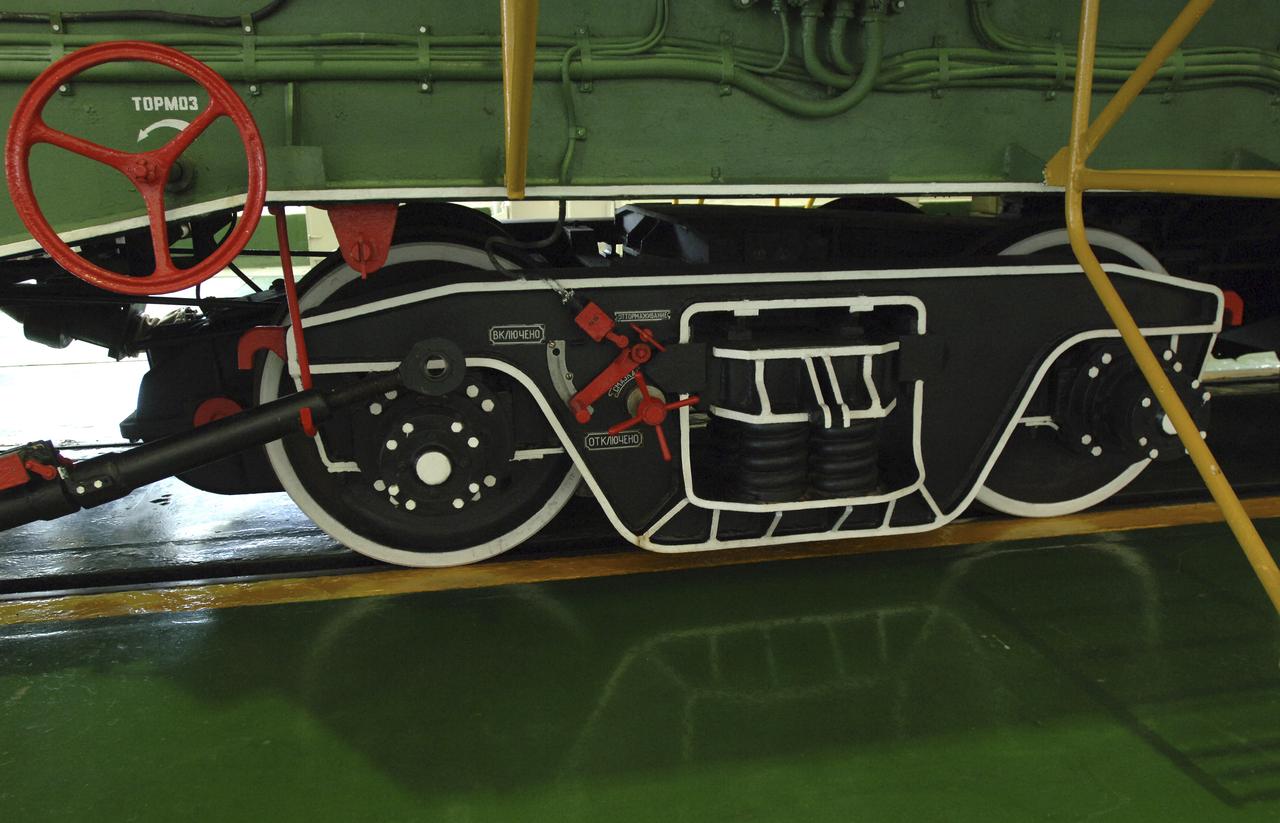
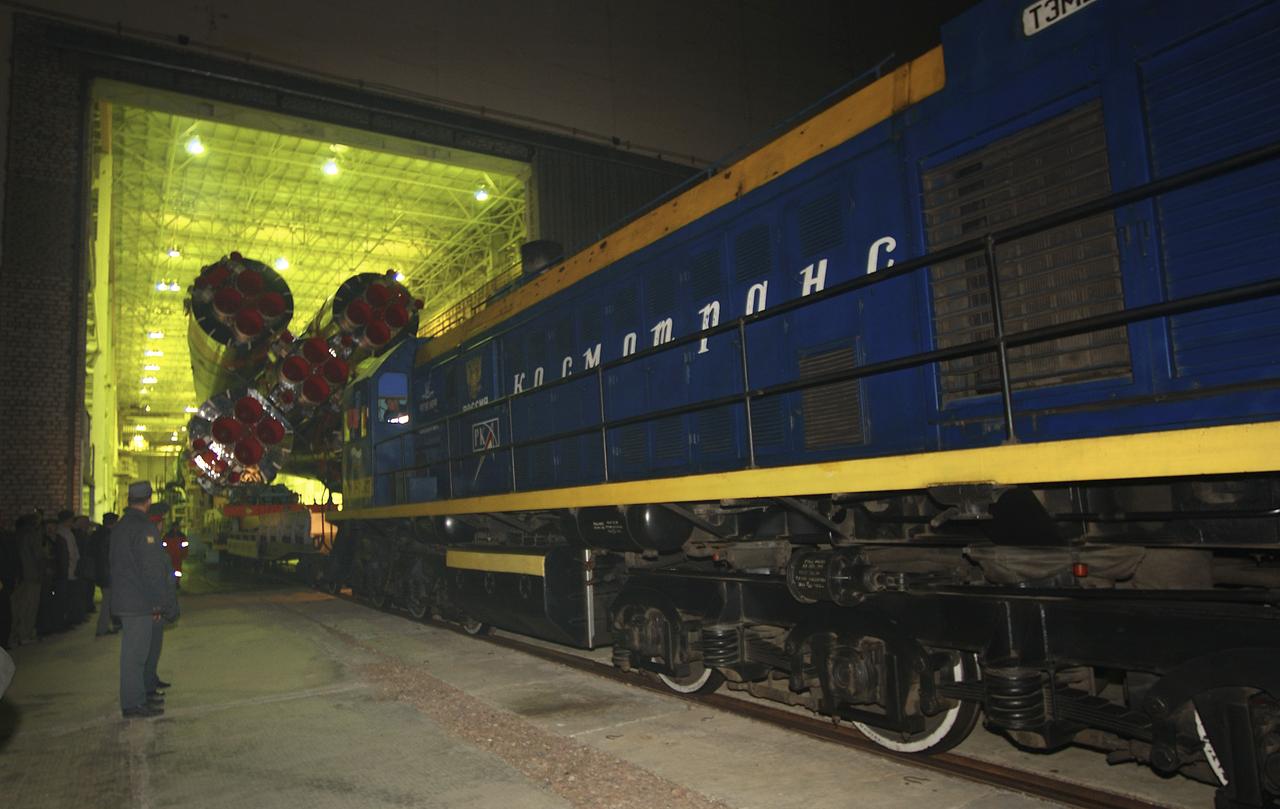
A detail of rail car wheels is seen, Tuesday, April 12, 2005, prior to transportation of the Soyuz TMA-6 spacecraft inside the integration facility at the Baikonur Cosmodrome in Kazakhstan as preparations continued for the April 15 launch of Expedition 11 with Commander Sergei Krikalev, Flight Engineer John Phillips and European Space Agency Astronaut Roberto Vittori, of Italy, to the International Space Station. The rocket mating operation occurred on the 44th anniversary of the launch of Yuri Gagarin from the same complex to become the first human in space. Photo Credit: (NASA/Bill Ingalls)

The Channel Tunnel is a 50.5 km-long rail tunnel beneath the English Channel at the Straits of Dover. It connects Dover, Kent in England with Calais, northern France. This image was acquired by NASA Terra spacecraft.
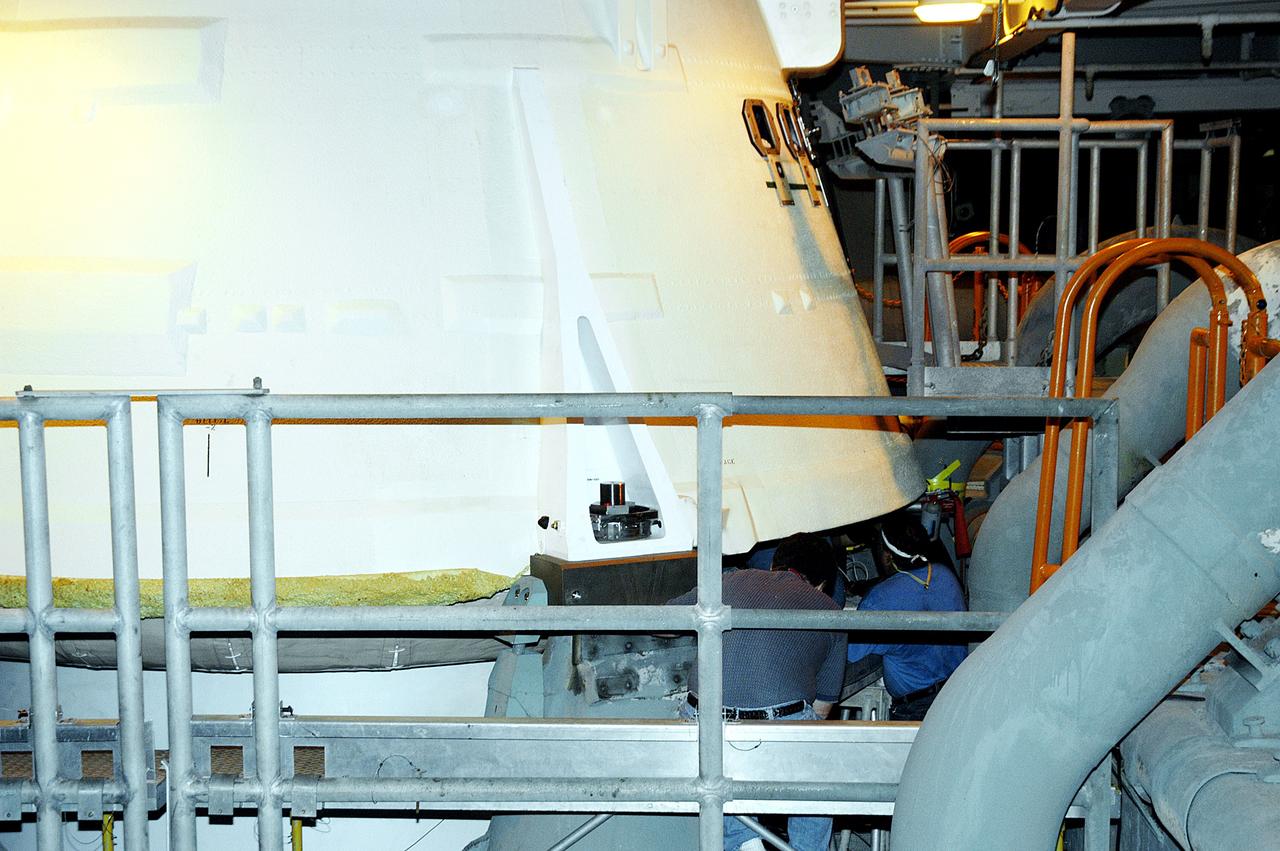
KENNEDY SPACE CENTER, FLA. - The camera installed on the aft skirt of a solid rocket booster is seen here, framed by the railing. The installation is in preparation for a vibration test of the Mobile Launcher Platform with SRBs and external tank mounted. The MLP will roll from one bay to another in the Vehicle Assembly Building.

STS-131 payload; Ames Space Bio-Sciences Lab, Dr Eduardo Almeida P. I.; complete cell bioreactor prior to connecting to rail
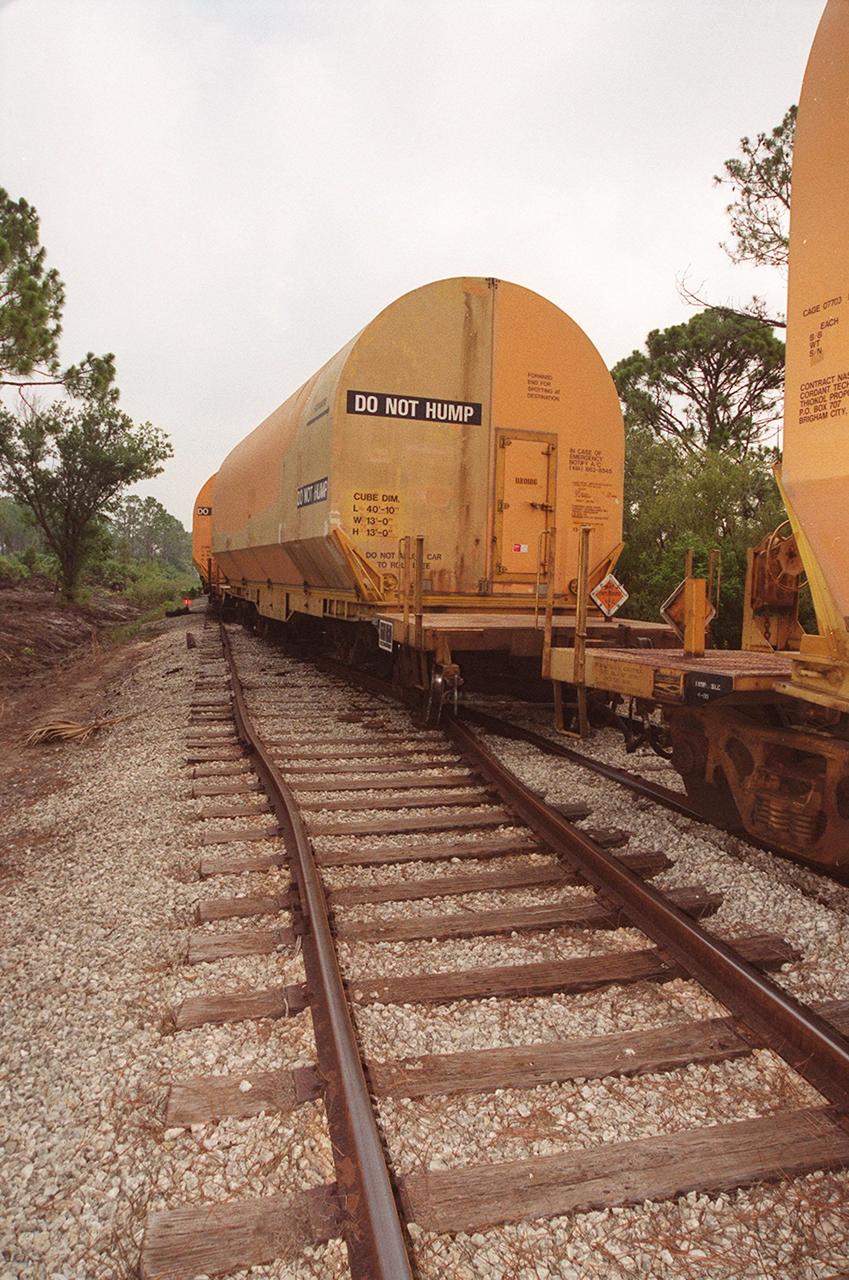
After being involved in a minor derailment incident during a routine movement on the tracks, rail cars carrying solid rocket booster segments sit idle. The rail cars were being moved as part of a standard operation to “order” the cars, placing them into a proper sequence for upcoming segment processing activities. The rear wheels of one car and the front wheels of the car behind it slid off the tracks while passing through a railway switch onto a siding. They were traveling approximately 3 miles per hour at the time, about normal walking speed. No damage occurred to the SRB segments, or to the devices that secure the segments to the rail cars. The incident occurred on KSC property, just north of the NASA Causeway in the KSC Industrial Area
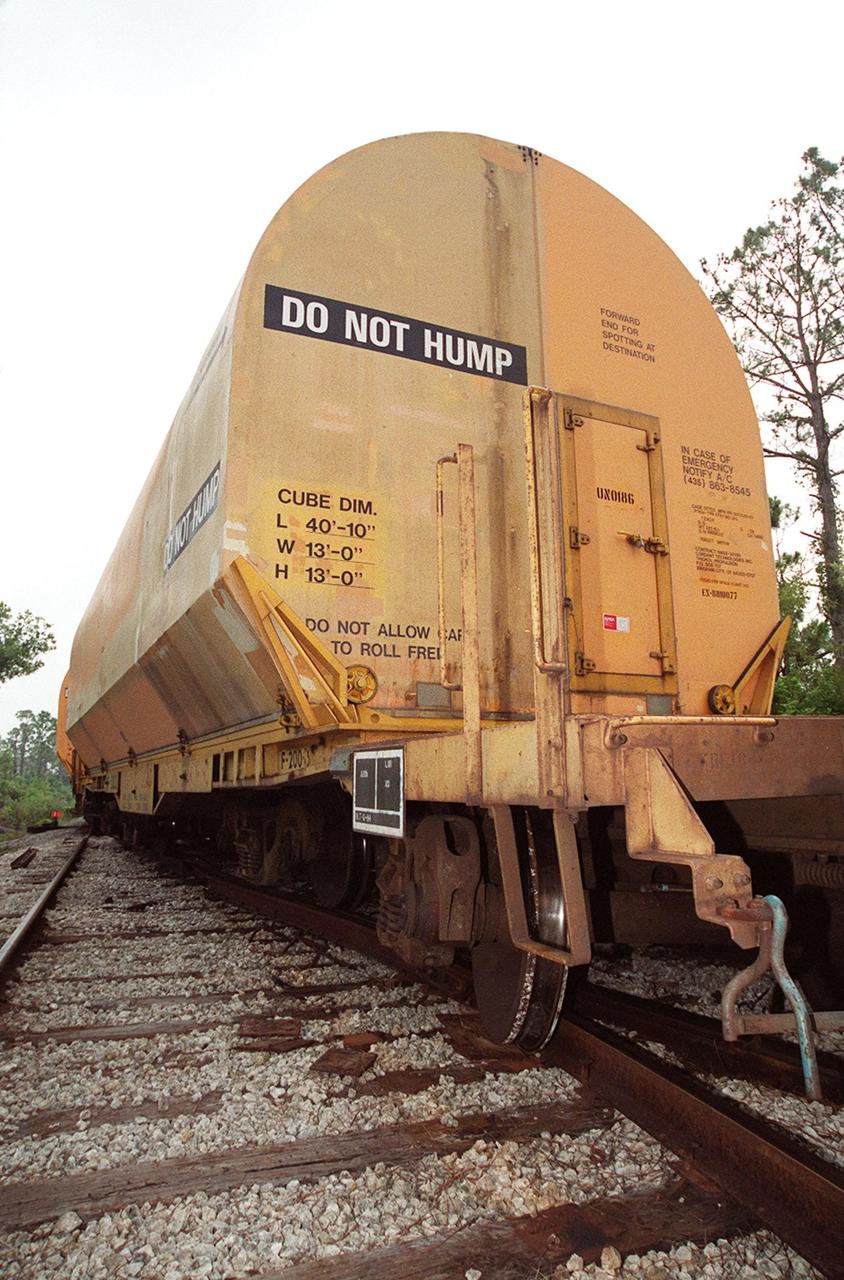
One of two solid rocket booster rail cars is off the track after being involved in a minor derailment incident during a routine movement on the tracks. The rail cars were being moved as part of a standard operation to “order” the cars, placing them into a proper sequence for upcoming segment processing activities. The rear wheels of one car and the front wheels of the car behind it slid off the tracks while passing through a railway switch onto a siding. They were traveling approximately 3 miles per hour at the time, about normal walking speed. No damage occurred to the SRB segments, or to the devices that secure the segments to the rail cars. The incident occurred on KSC property, just north of the NASA Causeway in the KSC Industrial Area
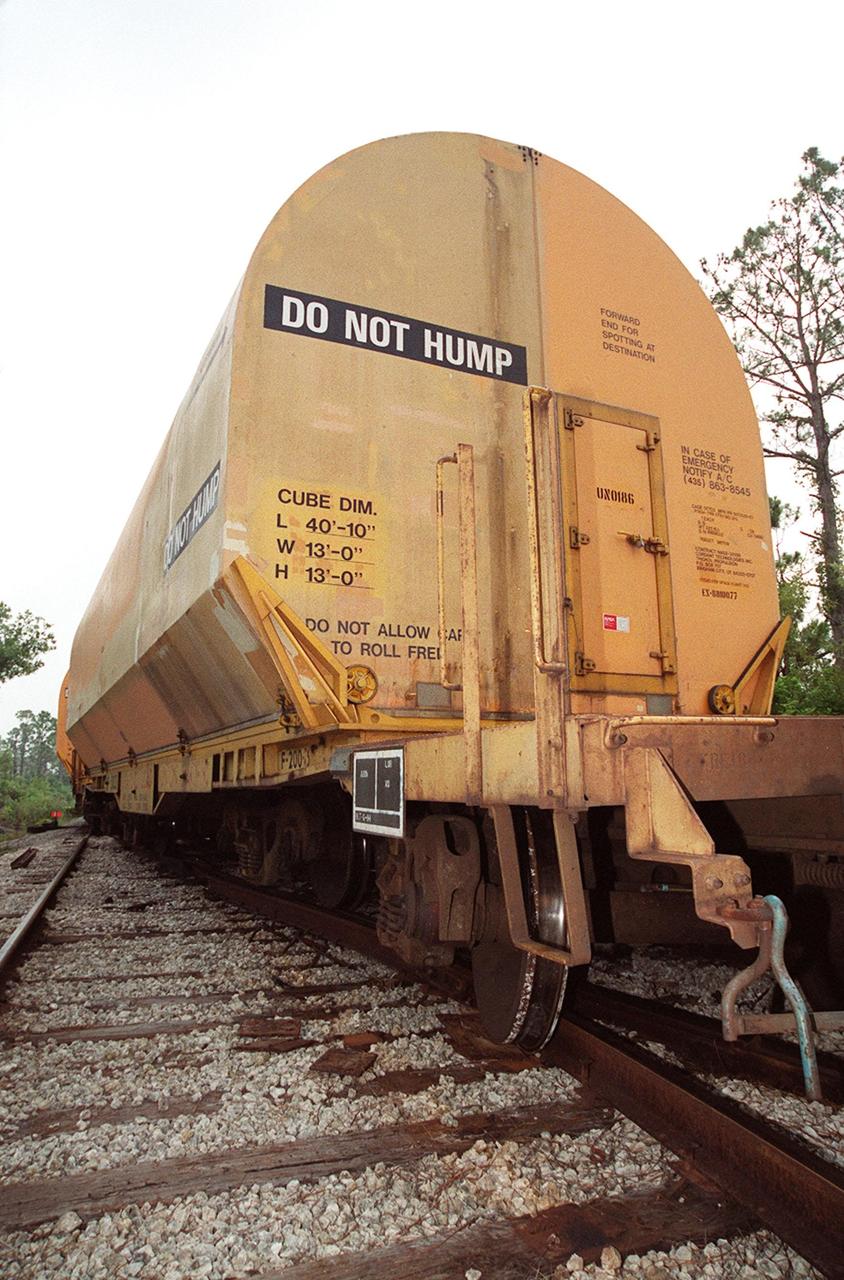
One of two solid rocket booster rail cars is off the track after being involved in a minor derailment incident during a routine movement on the tracks. The rail cars were being moved as part of a standard operation to “order” the cars, placing them into a proper sequence for upcoming segment processing activities. The rear wheels of one car and the front wheels of the car behind it slid off the tracks while passing through a railway switch onto a siding. They were traveling approximately 3 miles per hour at the time, about normal walking speed. No damage occurred to the SRB segments, or to the devices that secure the segments to the rail cars. The incident occurred on KSC property, just north of the NASA Causeway in the KSC Industrial Area

After being involved in a minor derailment incident during a routine movement on the tracks, rail cars carrying solid rocket booster segments sit idle. The rail cars were being moved as part of a standard operation to “order” the cars, placing them into a proper sequence for upcoming segment processing activities. The rear wheels of one car and the front wheels of the car behind it slid off the tracks while passing through a railway switch onto a siding. They were traveling approximately 3 miles per hour at the time, about normal walking speed. No damage occurred to the SRB segments, or to the devices that secure the segments to the rail cars. The incident occurred on KSC property, just north of the NASA Causeway in the KSC Industrial Area
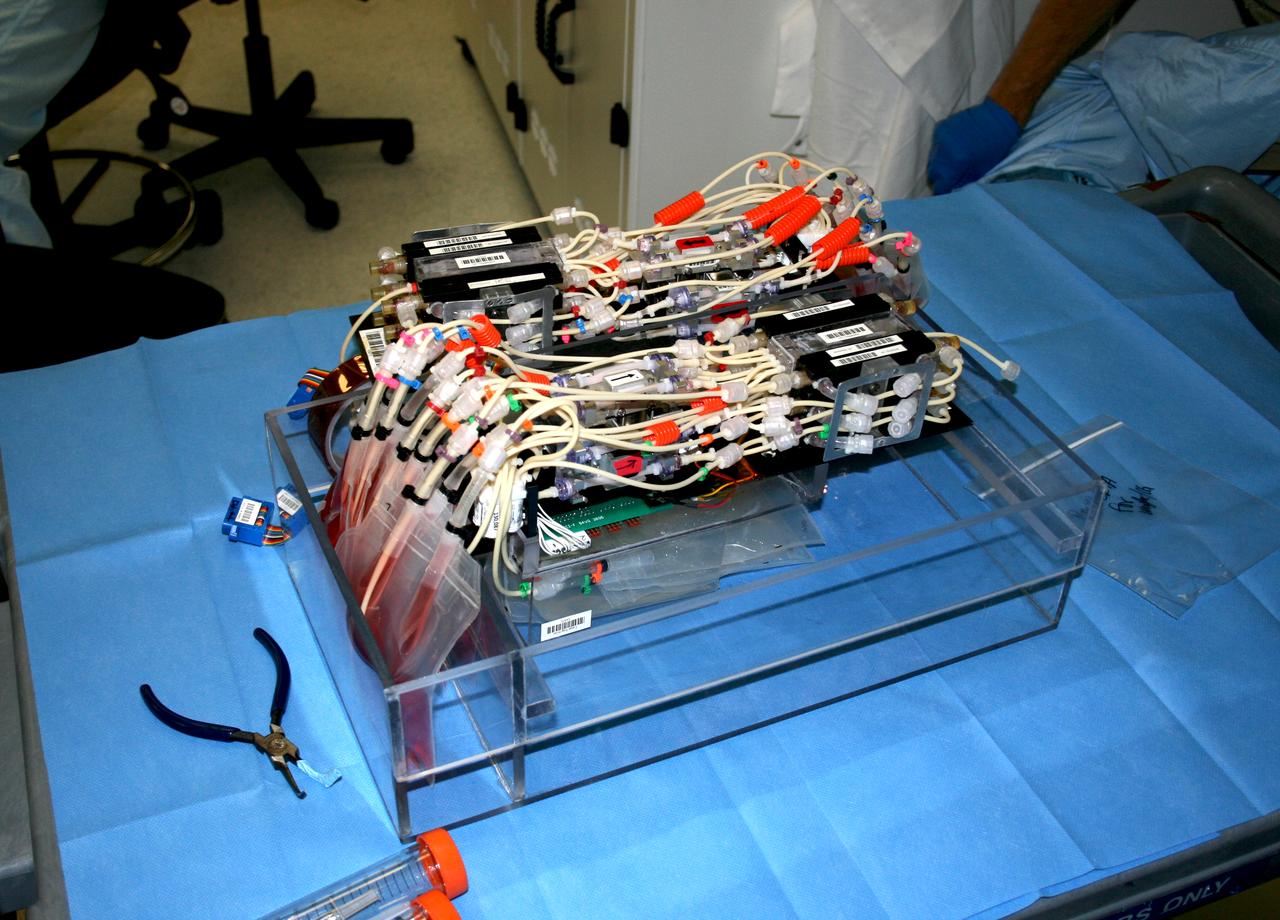
STS-131 payload; Ames Space Bio-Sciences Lab, Dr Eduardo Almeida P. I.; 3 of 4 rail assemblies prior to insertion into Space Tussue Loss container
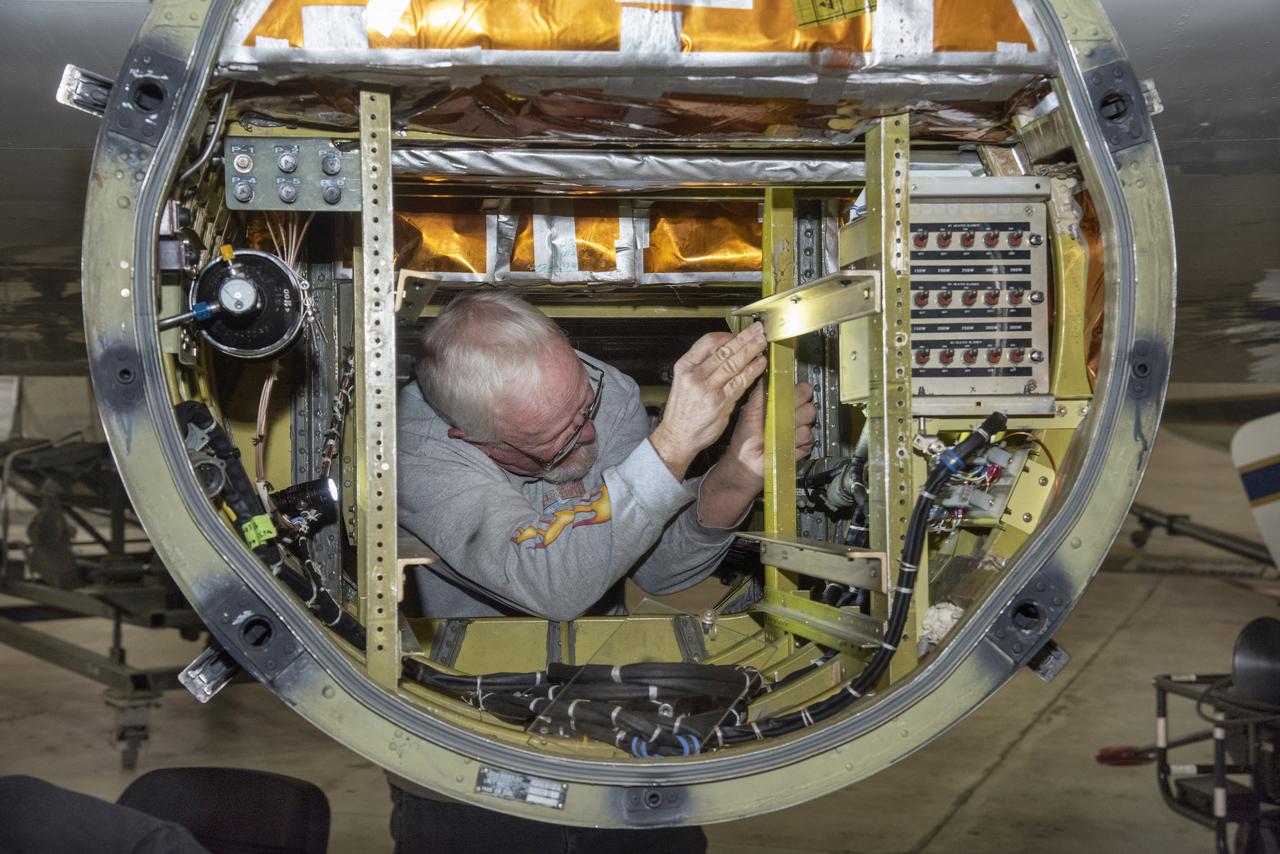
Ground crewman at NASA’s Armstrong Flight Research Center in Palmdale, CA install a rail to support the Autonomous, Robotic Telescope Mount Instrument Subsystem, which is part of air-LUSI and has a camera that scans the sky to find the Moon.
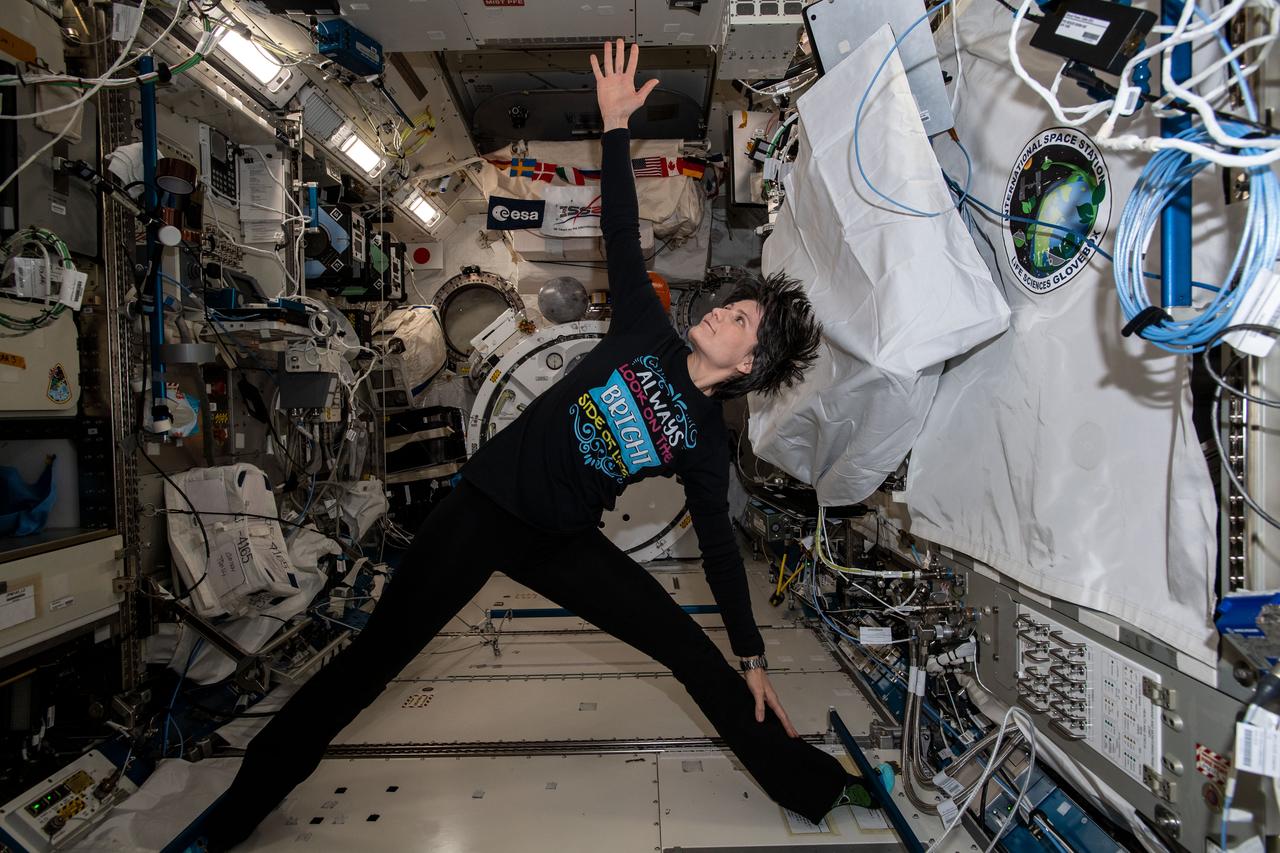
iss067e147098 (June 21, 2022) --- ESA (European Space Agency) astronaut and Expedition 67 Flight Engineer Samantha Cristoforetti exercises and practices yoga maneuvers while attached to hand and foot rails inside the Kibo laboratory module.
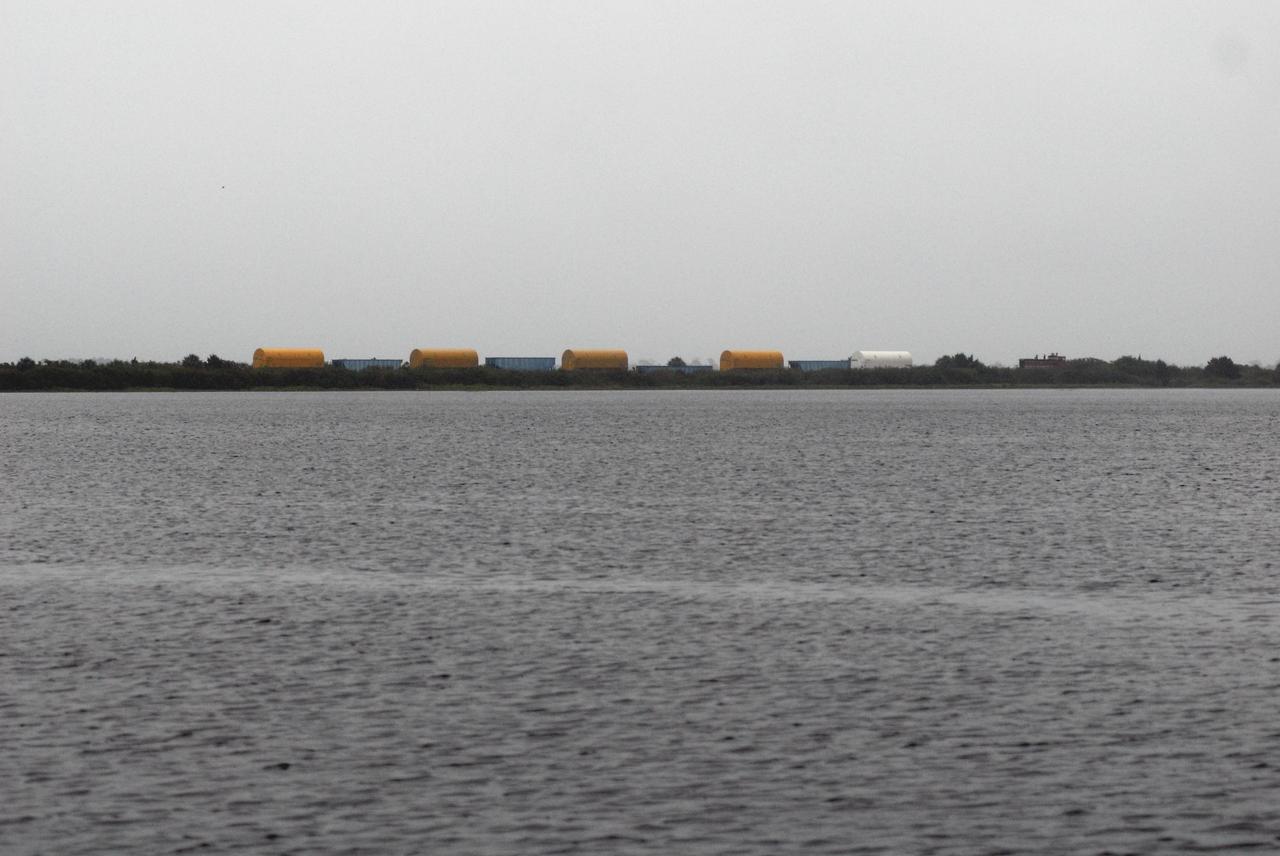
KENNEDY SPACE CENTER, FLA. -- Solid rocket motor segments and two aft exit cone segments arrive by rail at NASA's Kennedy Space Center. While enroute, solid rocket motor segments were involved in a derailment in Alabama. The rail cars carrying these segments remained upright and were undamaged. An inspection determined these segment cars could continue on to Florida. The segments themselves will undergo further evaluation at Kennedy before they are cleared for flight. Other segments involved in the derailment will be returned to a plant in Utah for further evaluation. Photo credit: NASA/Kim Shiflett
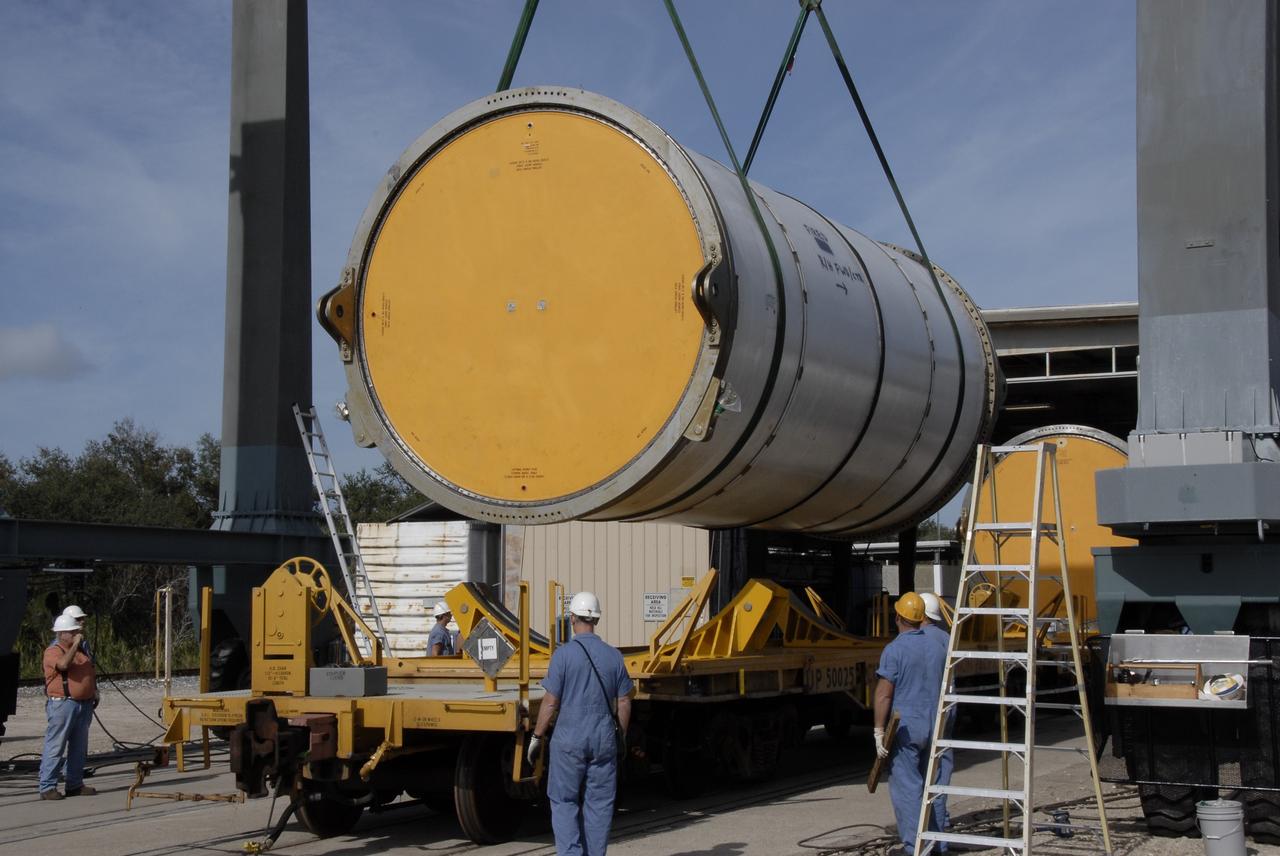
CAPE CANAVERAL, Fla. -- A solid rocket booster, or SRB, segment from the STS-126 launch is lowered onto a rail car at the NASA Railroad yard at NASA's Kennedy Space Center. The segment will be taken to Utah. After a mission, the spent boosters are recovered, cleaned, disassembled, refurbished and reused for another launch. After the segments are hydrolased inside, they are placed on flatbed trucks and transferred to the NASA Railroad yard. The NASA Railroad locomotive backs up the rail cars and the segments are lowered onto the car. After being covered for the trip, the segments will be moved to Titusville for interchange with Florida East Coast Railway to begin the trip back to Utah. Photo credit: NASA/Kim Shiflett
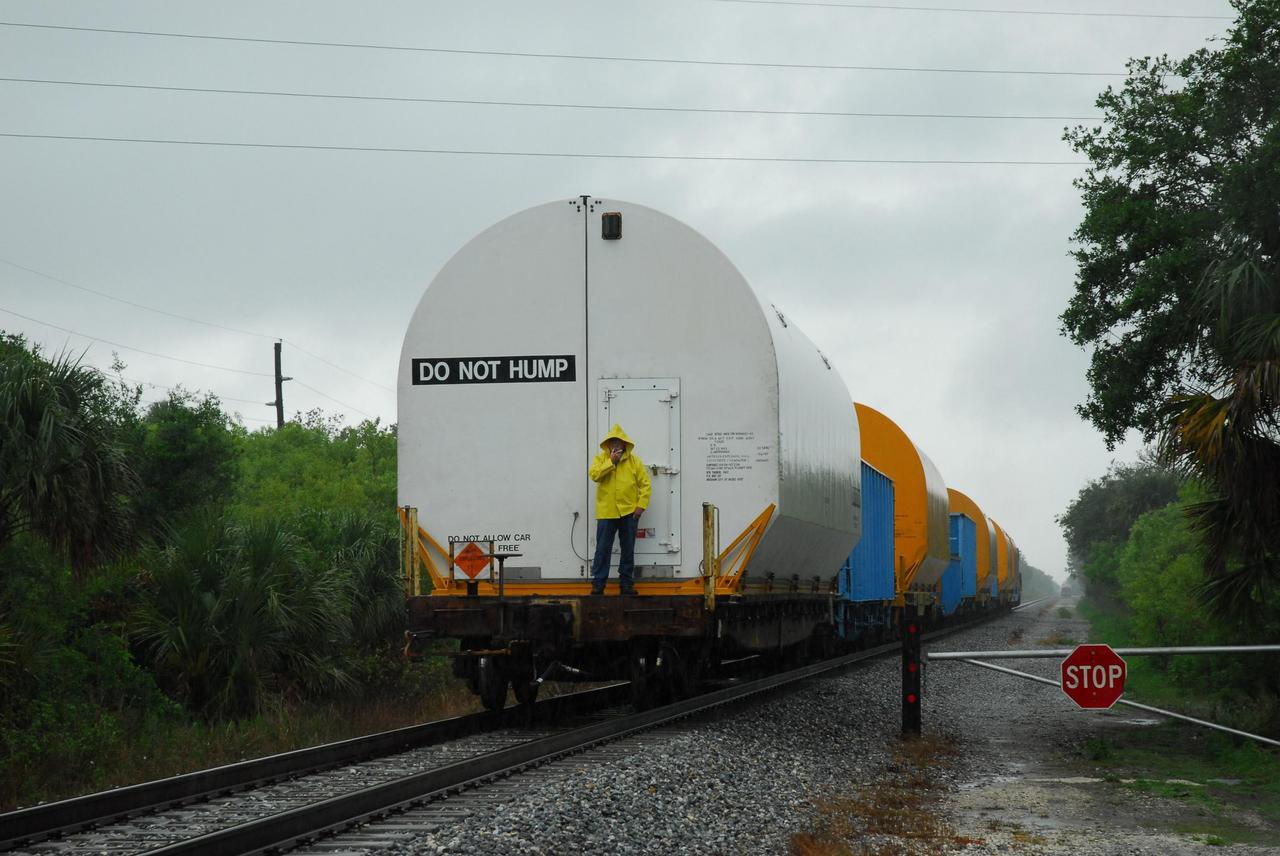
KENNEDY SPACE CENTER, FLA. -- Solid rocket motor segments and two aft exit cone segments arrive by rail at NASA's Kennedy Space Center. While enroute, solid rocket motor segments were involved in a derailment in Alabama. The rail cars carrying these segments remained upright and were undamaged. An inspection determined these segment cars could continue on to Florida. The segments themselves will undergo further evaluation at Kennedy before they are cleared for flight. Other segments involved in the derailment will be returned to a plant in Utah for further evaluation. Photo credit: NASA/George Shelton

Eight of the 10 solid rocket booster motor segments for NASA’s Artemis III SLS (Space Launch System) rocket arrive at a rail yard near the agency’s Kennedy Space Center in Florida on Monday, June 8, 2026. The solid rocket boosters traveled by train in specialized transporters to the Florida spaceport and will be transferred from the rail yard to NASA Kennedy’s Rotation, Processing and Surge Facility for processing. The Artemis III mission will launch crew in the Orion spacecraft on top of the SLS rocket to test rendezvous and docking capabilities between Orion and commercial spacecraft needed to land astronauts on the Moon.
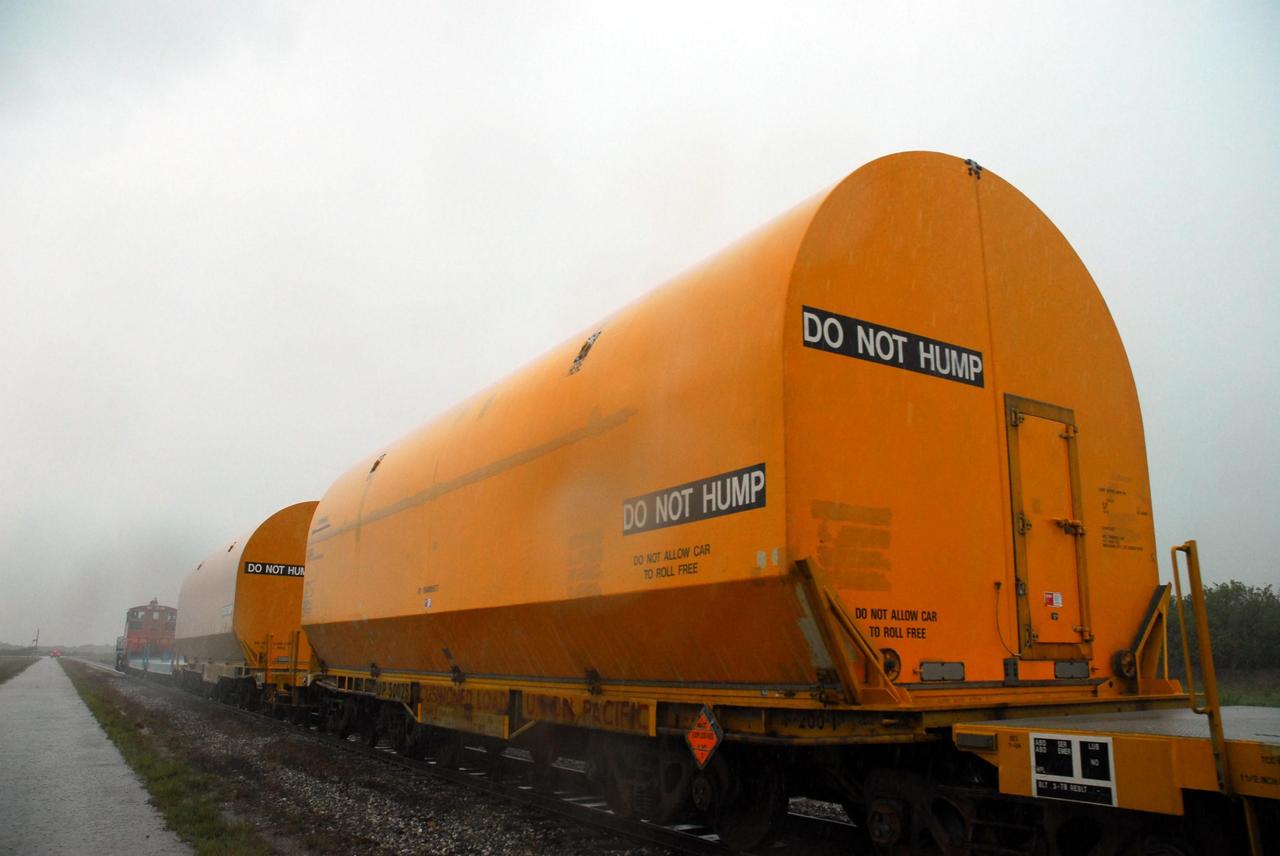
KENNEDY SPACE CENTER, FLA. -- The locomotive and rail cars carrying solid rocket booster motor segments and two aft exit cone segments cross a road on Kennedy Space Center. These cars are headed for the SRB Assembly and Refurbishment Facility. While enroute, solid rocket motor segments were involved in a derailment in Alabama. The rail cars carrying these segments remained upright and were undamaged. An inspection determined these segment cars could continue on to Florida. The segments themselves will undergo further evaluation at Kennedy before they are cleared for flight. Other segments involved in the derailment will be returned to a plant in Utah for further evaluation. Photo credit: NASA/George Shelton

Eight of the 10 solid rocket booster motor segments for NASA’s Artemis III SLS (Space Launch System) rocket arrive at a rail yard near the agency’s Kennedy Space Center in Florida on Monday, June 8, 2026. The solid rocket boosters traveled by train in specialized transporters to the Florida spaceport and will be transferred from the rail yard to NASA Kennedy’s Rotation, Processing and Surge Facility for processing. The Artemis III mission will launch crew in the Orion spacecraft on top of the SLS rocket to test rendezvous and docking capabilities between Orion and commercial spacecraft needed to land astronauts on the Moon.

Eight of the 10 solid rocket booster motor segments for NASA’s Artemis III SLS (Space Launch System) rocket arrive at a rail yard near the agency’s Kennedy Space Center in Florida on Monday, June 8, 2026. The solid rocket boosters traveled by train in specialized transporters to the Florida spaceport and will be transferred from the rail yard to NASA Kennedy’s Rotation, Processing and Surge Facility for processing. The Artemis III mission will launch crew in the Orion spacecraft on top of the SLS rocket to test rendezvous and docking capabilities between Orion and commercial spacecraft needed to land astronauts on the Moon.
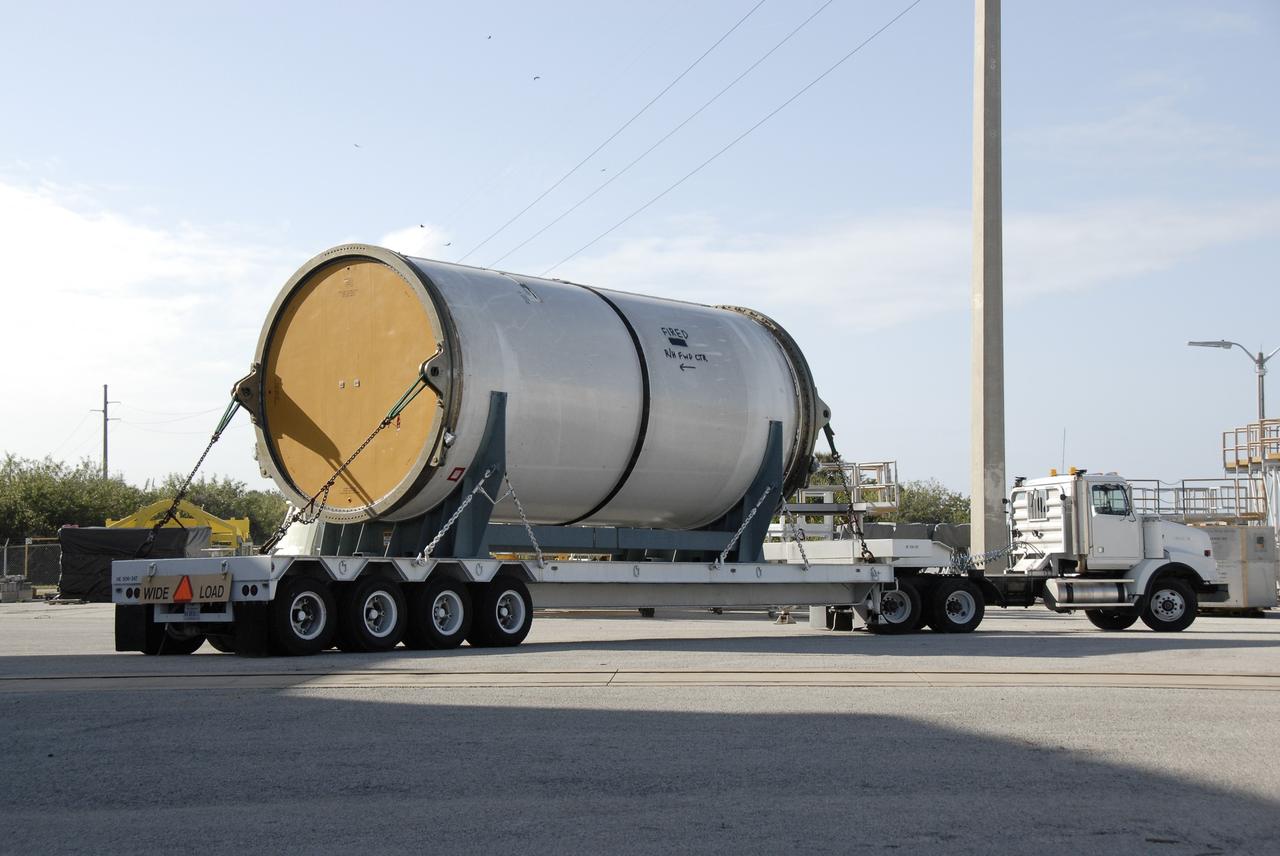
CAPE CANAVERAL, Fla. -- Solid rocket booster, or SRB, segments from the STS-126 launch are being taken to the NASA Railroad yard at NASA's Kennedy Space Center. There they will be transferred to a rail car and taken to Utah. After a mission, the spent boosters are recovered, cleaned, disassembled, refurbished and reused for another launch. After the segments are hydrolased inside, they are placed on flatbed trucks and transferred to the NASA Railroad yard. The NASA Railroad locomotive backs up the rail cars and the segments are lowered onto the car. After being covered for the trip, the segments will be moved to Titusville for interchange with Florida East Coast Railway to begin the trip back to Utah. Photo credit: NASA/Kim Shiflett
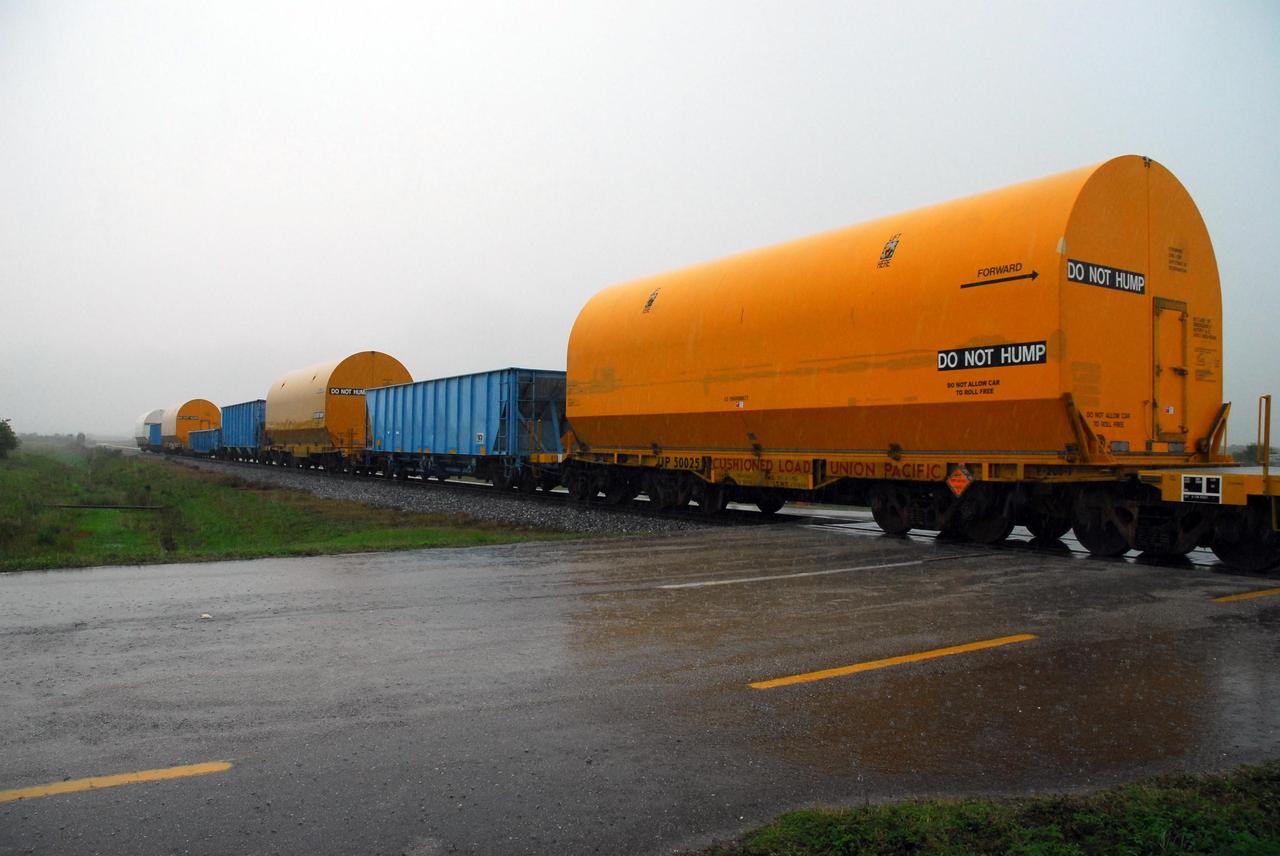
KENNEDY SPACE CENTER, FLA. -- Solid rocket motor segments and two aft exit cone segments arrive by rail at NASA's Kennedy Space Center. While enroute, solid rocket motor segments were involved in a derailment in Alabama. The rail cars carrying these segments remained upright and were undamaged. An inspection determined these segment cars could continue on to Florida. The segments themselves will undergo further evaluation at Kennedy before they are cleared for flight. Other segments involved in the derailment will be returned to a plant in Utah for further evaluation. Photo credit: NASA/George Shelton
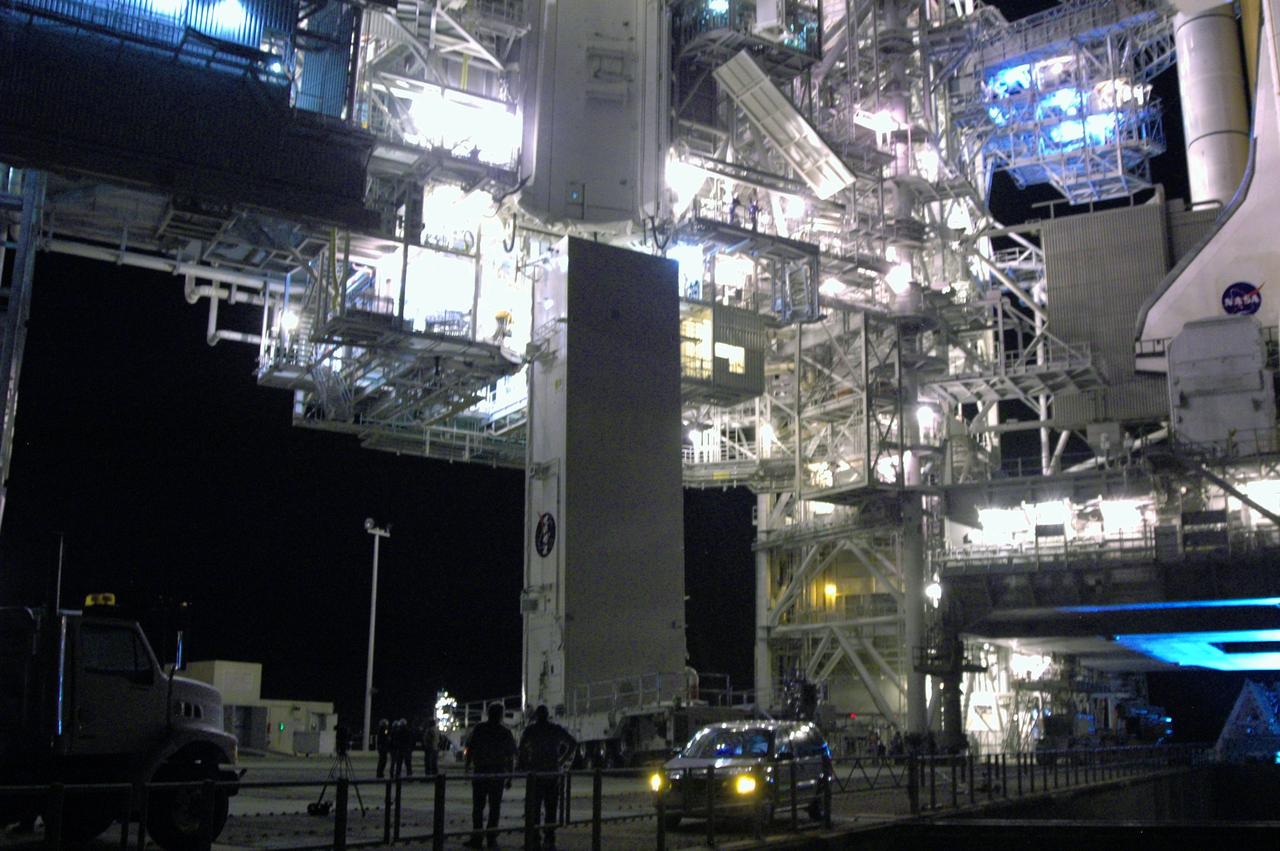
CAPE CANAVERAL, Fla. - On Launch Pad 39A at NASA's Kennedy Space Center, the payload canister is ready for another attempt to be lifted to the payload changeout room. The first attempt encountered problems when Teflon pads on “shoes” attached to the outside of the canister that go onto guide rails to help the canister into the room didn’t fit properly. The two shoes were removed, slightly shaved down so that they would fit into the rails and put back on the canister. The changeout room is the enclosed, environmentally controlled portion of the rotating service structure that supports cargo delivery to the pad and subsequent vertical installation into the shuttle’s payload bay. Launch of Atlantis is targeted for Oct. 10. Photo credit: NASA/Jim Grossmann
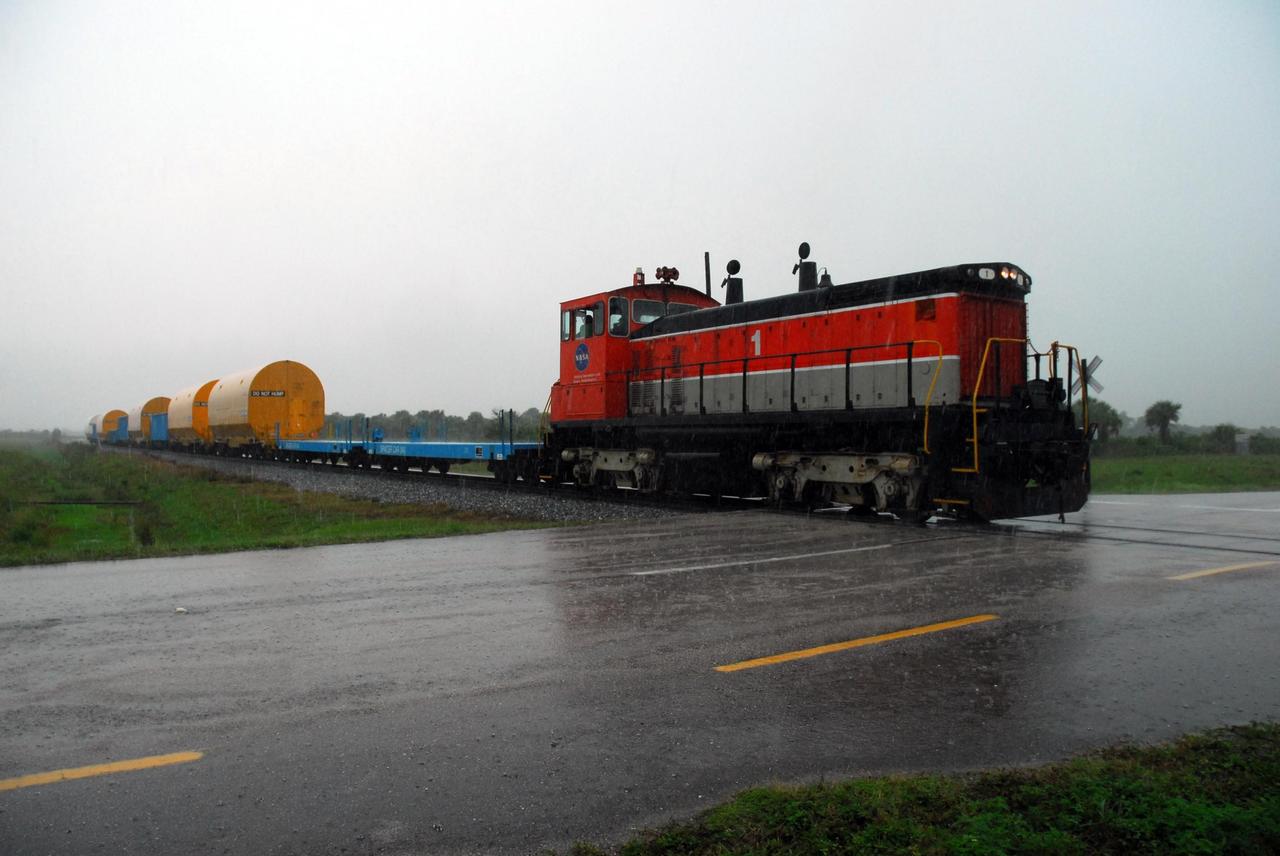
KENNEDY SPACE CENTER, FLA. -- The locomotive and rail cars carrying solid rocket booster motor segments and two aft exit cone segments cross a road on Kennedy Space Center. These cars are headed for the SRB Assembly and Refurbishment Facility. While enroute, solid rocket motor segments were involved in a derailment in Alabama. The rail cars carrying these segments remained upright and were undamaged. An inspection determined these segment cars could continue on to Florida. The segments themselves will undergo further evaluation at Kennedy before they are cleared for flight. Other segments involved in the derailment will be returned to a plant in Utah for further evaluation. Photo credit: NASA/George Shelton

Eight of the 10 solid rocket booster motor segments for NASA’s Artemis III SLS (Space Launch System) rocket arrive at a rail yard near the agency’s Kennedy Space Center in Florida on Monday, June 8, 2026. The solid rocket boosters traveled by train in specialized transporters to the Florida spaceport and will be transferred from the rail yard to NASA Kennedy’s Rotation, Processing and Surge Facility for processing. The Artemis III mission will launch crew in the Orion spacecraft on top of the SLS rocket to test rendezvous and docking capabilities between Orion and commercial spacecraft needed to land astronauts on the Moon.
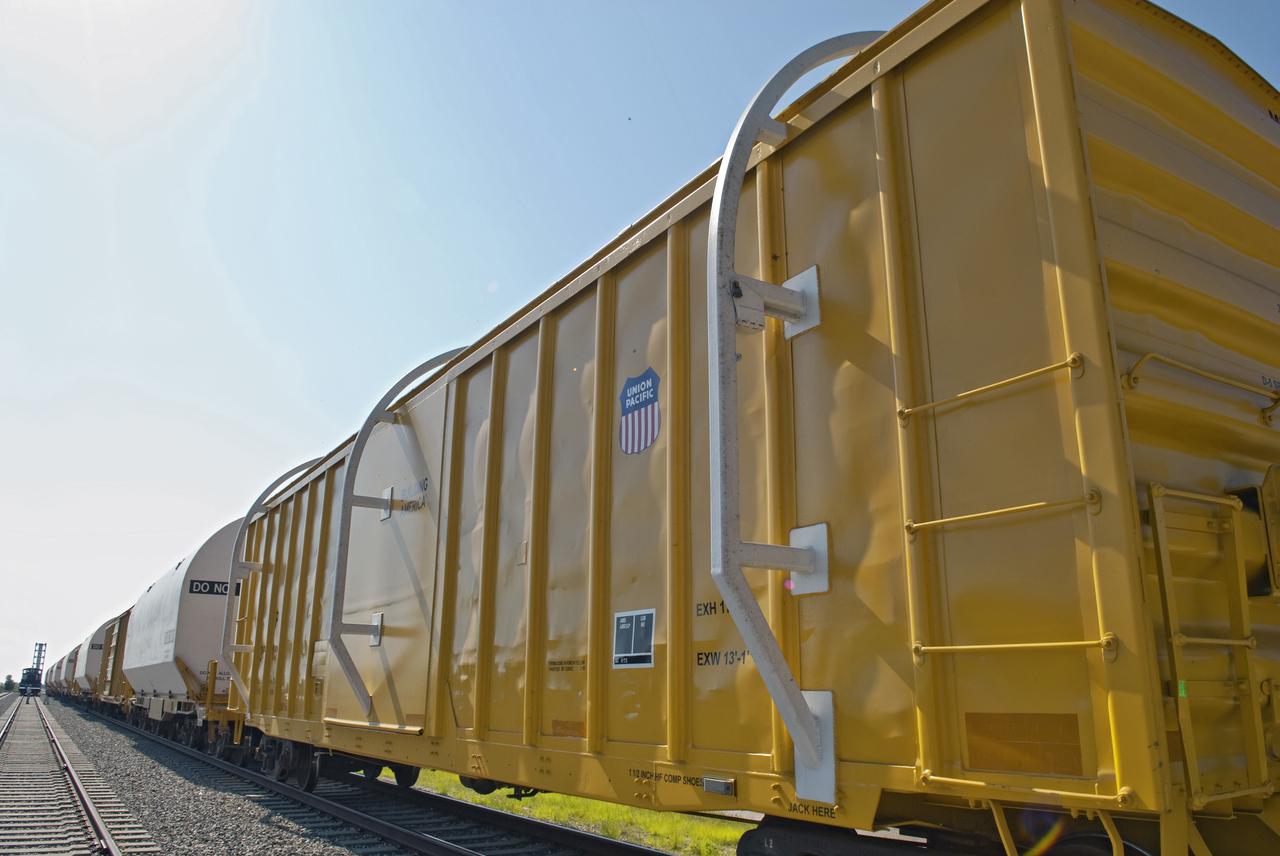
CAPE CANAVERAL, Fla. - At the Jay Jay Rail Yard in Titusville, Fla., the NASA Railroad train is ready to carry the last space shuttle solid rocket booster segments into NASA's Kennedy Space Center. The white railings on the orange spacer cars ensure clearance on their journey. Six cars transported the segments along the Florida East Coast Railway, which began at the ATK solid rocket booster plant in Promontory, Utah. The booster segments will be used for shuttle Atlantis on what currently is planned as the 'launch on need,' or potential rescue mission for the final shuttle flight, Endeavour's STS-134 mission. For information, visit www.nasa.gov_shuttle. Photo credit: NASA_Jim Grossmann
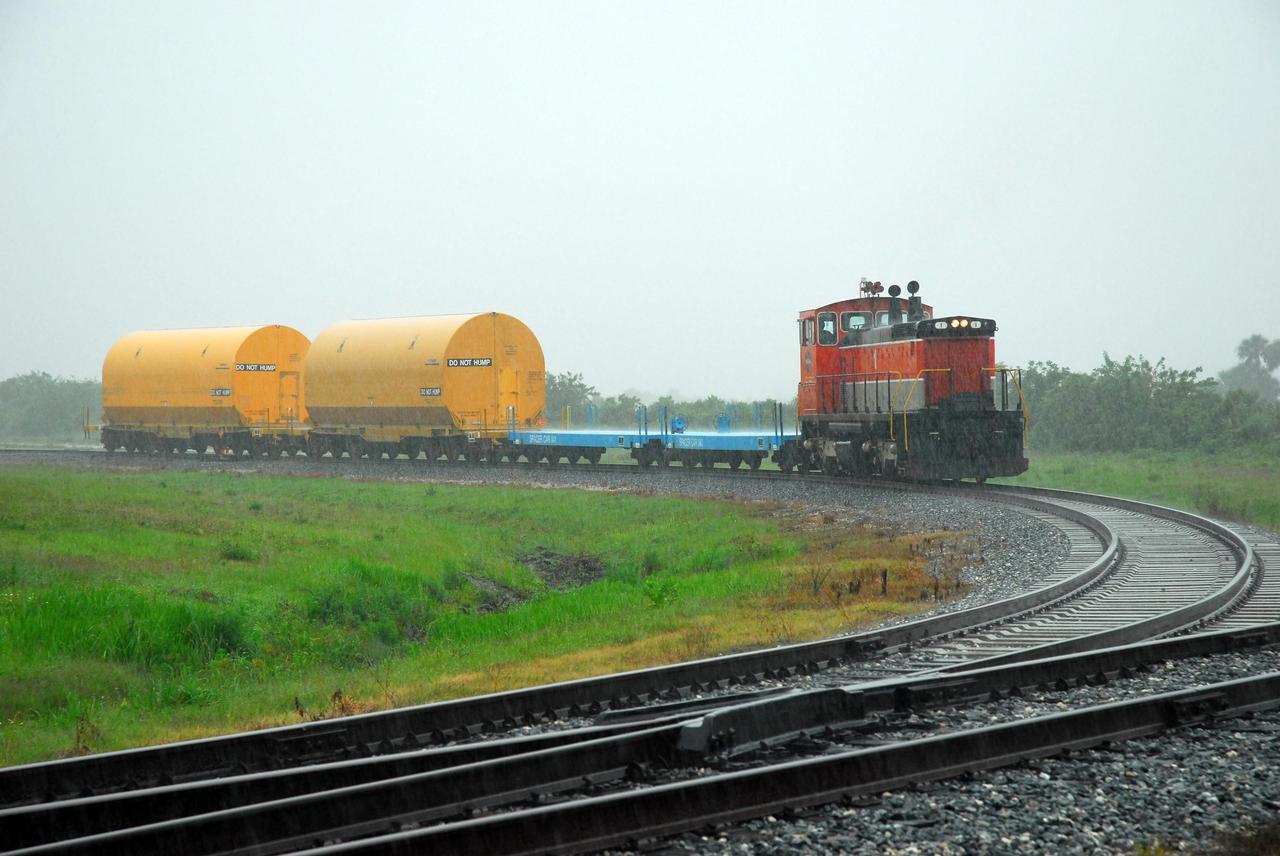
KENNEDY SPACE CENTER, FLA. -- The locomotive and rail cars carrying solid rocket booster motor segments and two aft exit cone segments cross a road on Kennedy Space Center. These cars are headed for the SRB Assembly and Refurbishment Facility. While enroute, solid rocket motor segments were involved in a derailment in Alabama. The rail cars carrying these segments remained upright and were undamaged. An inspection determined these segment cars could continue on to Florida. The segments themselves will undergo further evaluation at Kennedy before they are cleared for flight. Other segments involved in the derailment will be returned to a plant in Utah for further evaluation. Photo credit: NASA/George Shelton
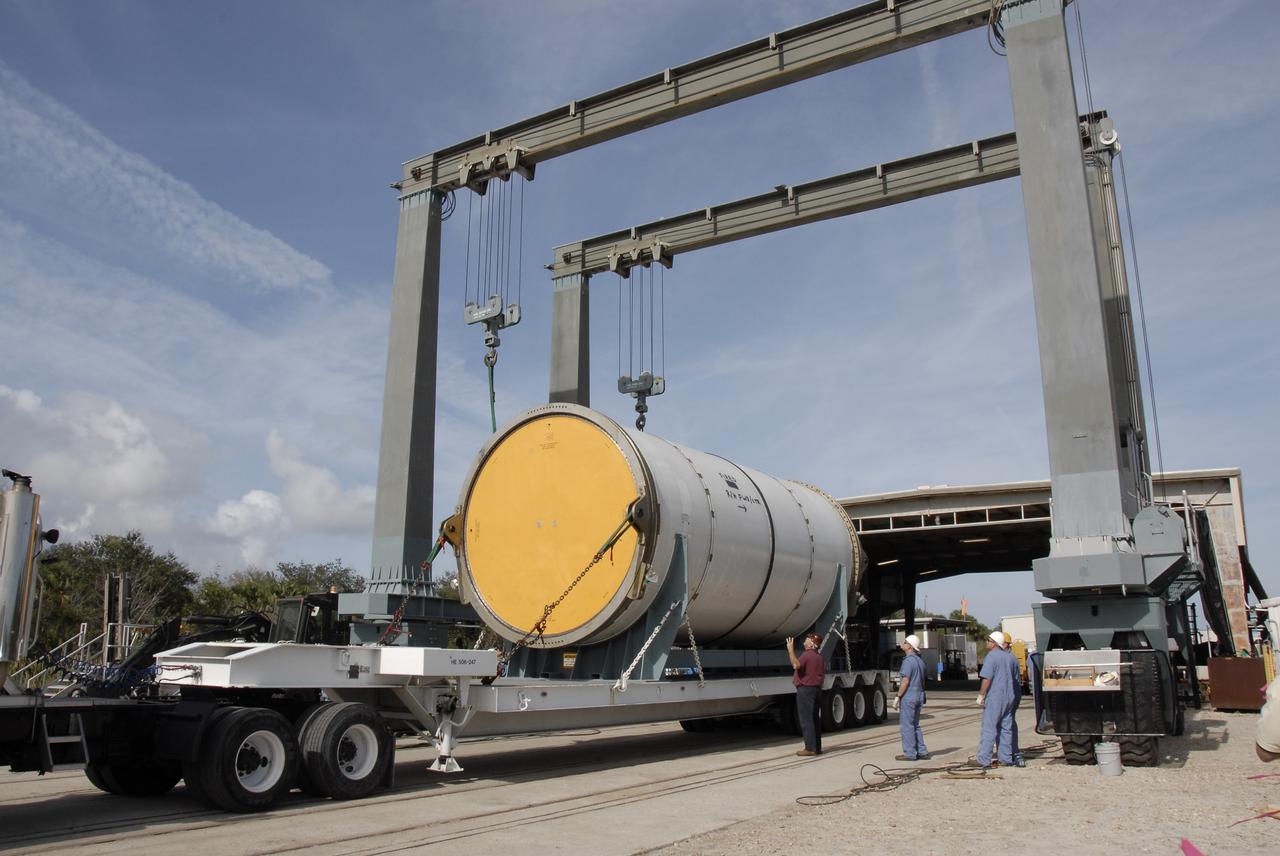
CAPE CANAVERAL, Fla. -- A solid rocket booster, or SRB, segment from the STS-126 launch is being lifted from a transporter to transfer it to a rail car at the NASA Railroad yard at NASA's Kennedy Space Center. The segment will be taken to Utah. After a mission, the spent boosters are recovered, cleaned, disassembled, refurbished and reused for another launch. After the segments are hydrolased inside, they are placed on flatbed trucks and transferred to the NASA Railroad yard. The NASA Railroad locomotive backs up the rail cars and the segments are lowered onto the car. After being covered for the trip, the segments will be moved to Titusville for interchange with Florida East Coast Railway to begin the trip back to Utah. Photo credit: NASA/Kim Shiflett
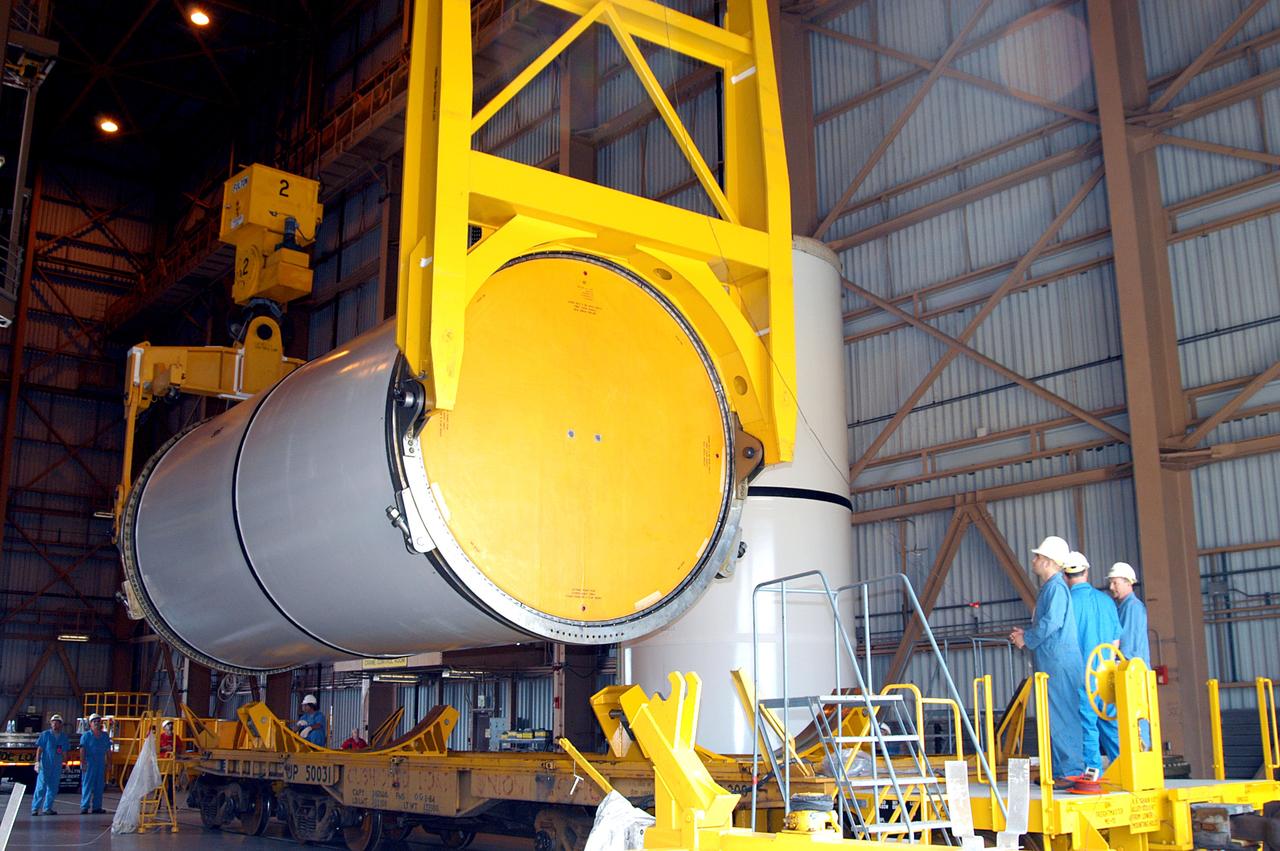
KENNEDY SPACE CENTER, FLA. - In the Rotation Processing and Surge Facility, an SRB solid segment is lowered onto a rail car for shipment to Utah where it will be tested. The segment was part of the STS-114 stack. It is the first time actual flight segments that had been stacked for flight in the VAB are being returned to Utah for testing. It will undergo firing, which will enable inspectors to check the viability of the solid and verify the life expectancy for stacked segments.
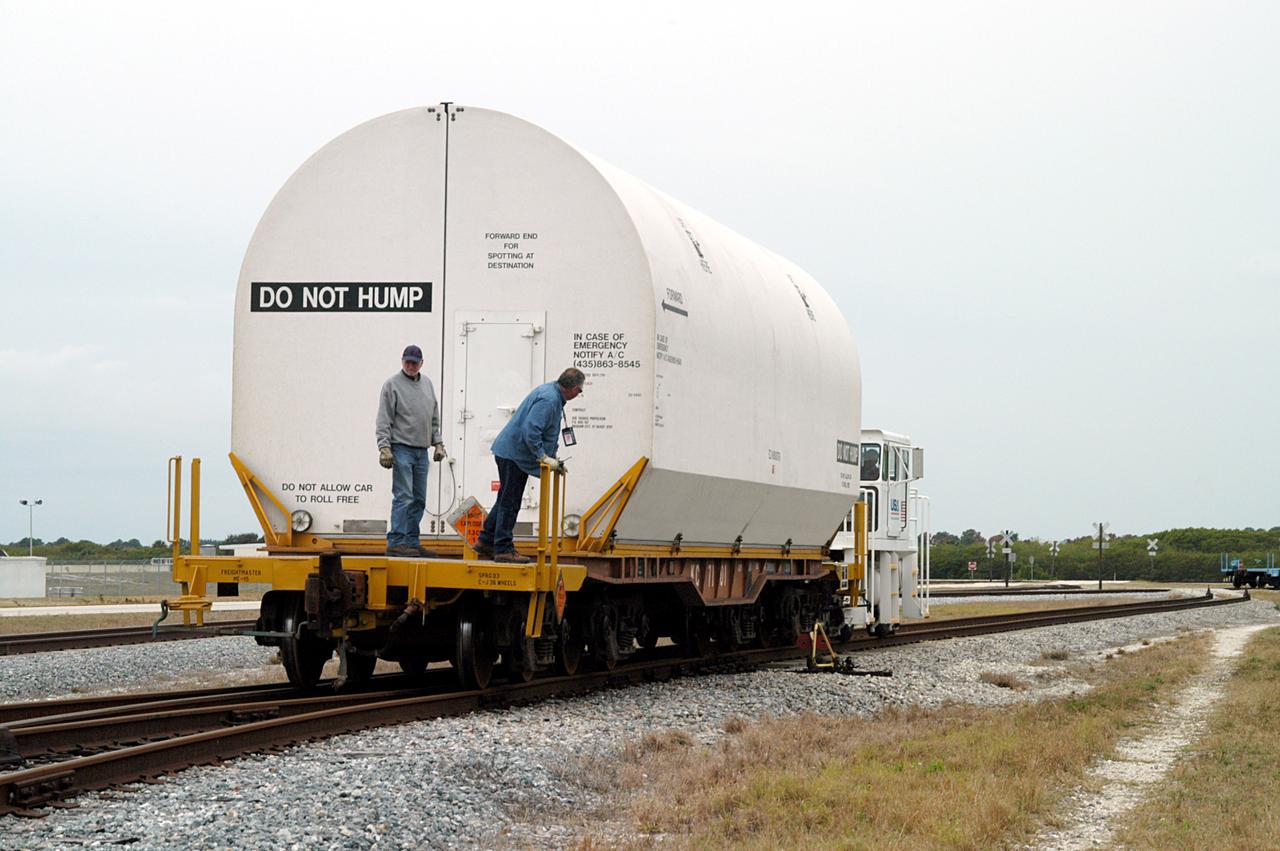
KENNEDY SPACE CENTER, FLA. - Workers ride the rails along with a container enclosing a segment of a solid rocket booster being moved to the main track. Several segments are being returned to Utah for testing. The segments were part of the STS-114 stack. It is the first time actual flight segments that had been stacked for flight in the VAB are being returned for testing. They will undergo firing, which will enable inspectors to check the viability of the solid and verify the life expectancy for stacked segments.
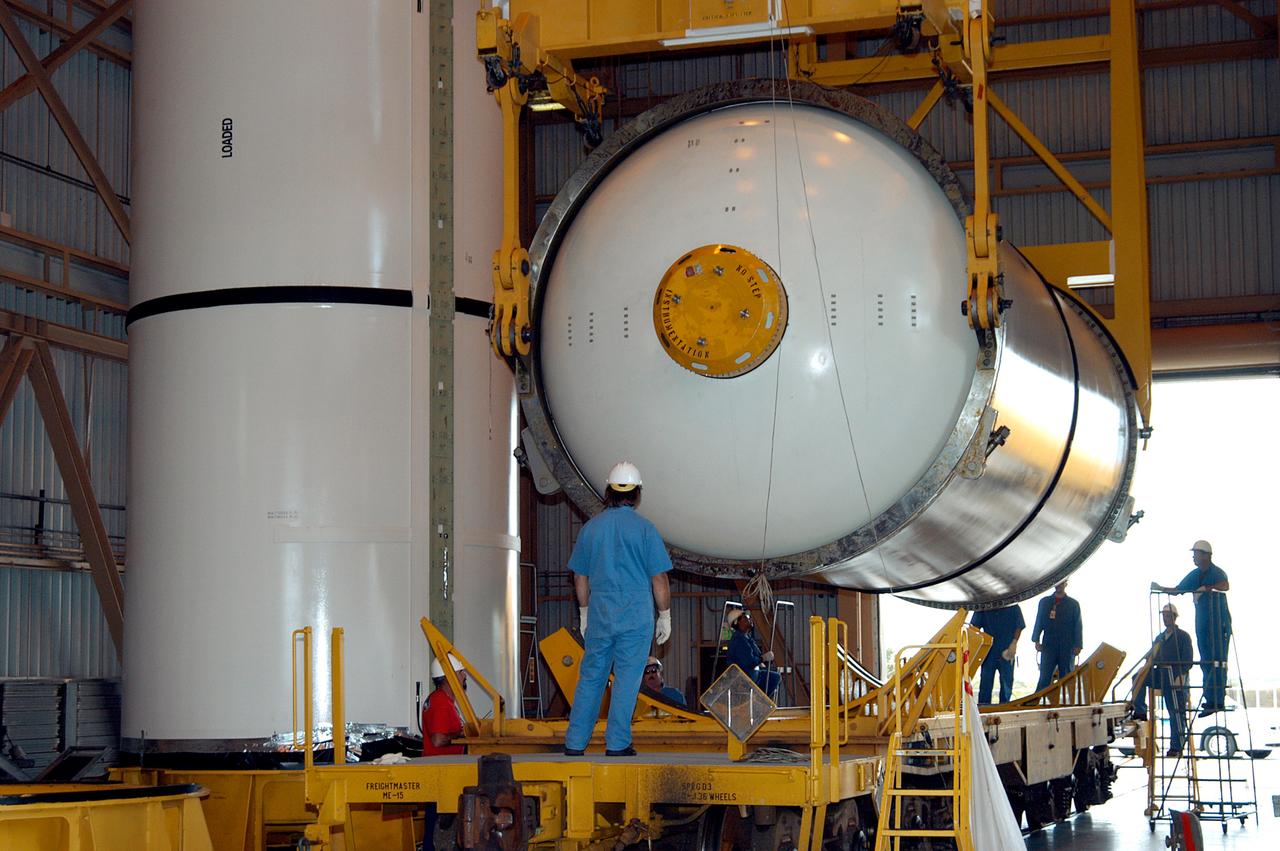
KENNEDY SPACE CENTER, FLA. - In the Rotation Processing and Surge Facility, an SRB solid segment is lowered onto a rail car for shipment to Utah where it will be tested. The segment was part of the STS-114 stack. It is the first time actual flight segments that had been stacked for flight in the VAB are being returned to Utah for testing. It will undergo firing, which will enable inspectors to check the viability of the solid and verify the life expectancy for stacked segments.
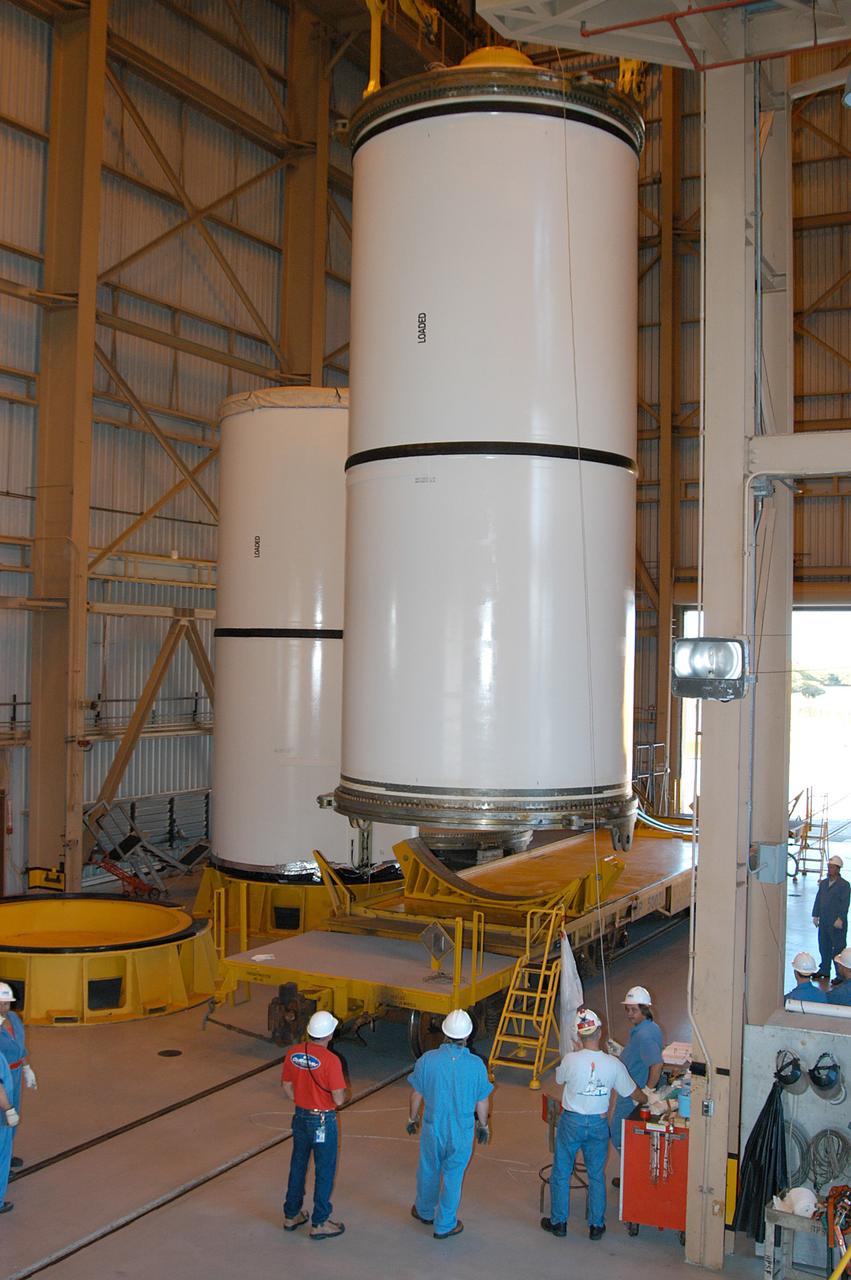
KENNEDY SPACE CENTER, FLA. - In the Rotation Processing and Surge Facility, an SRB solid segment is being moved to a rail car for shipment to Utah for testing. The segment was part of the STS-114 stack. It is the first time actual flight segments that had been stacked for flight in the VAB are being returned to Utah for testing. It will undergo firing, which will enable inspectors to check the viability of the solid and verify the life expectancy for stacked segments.
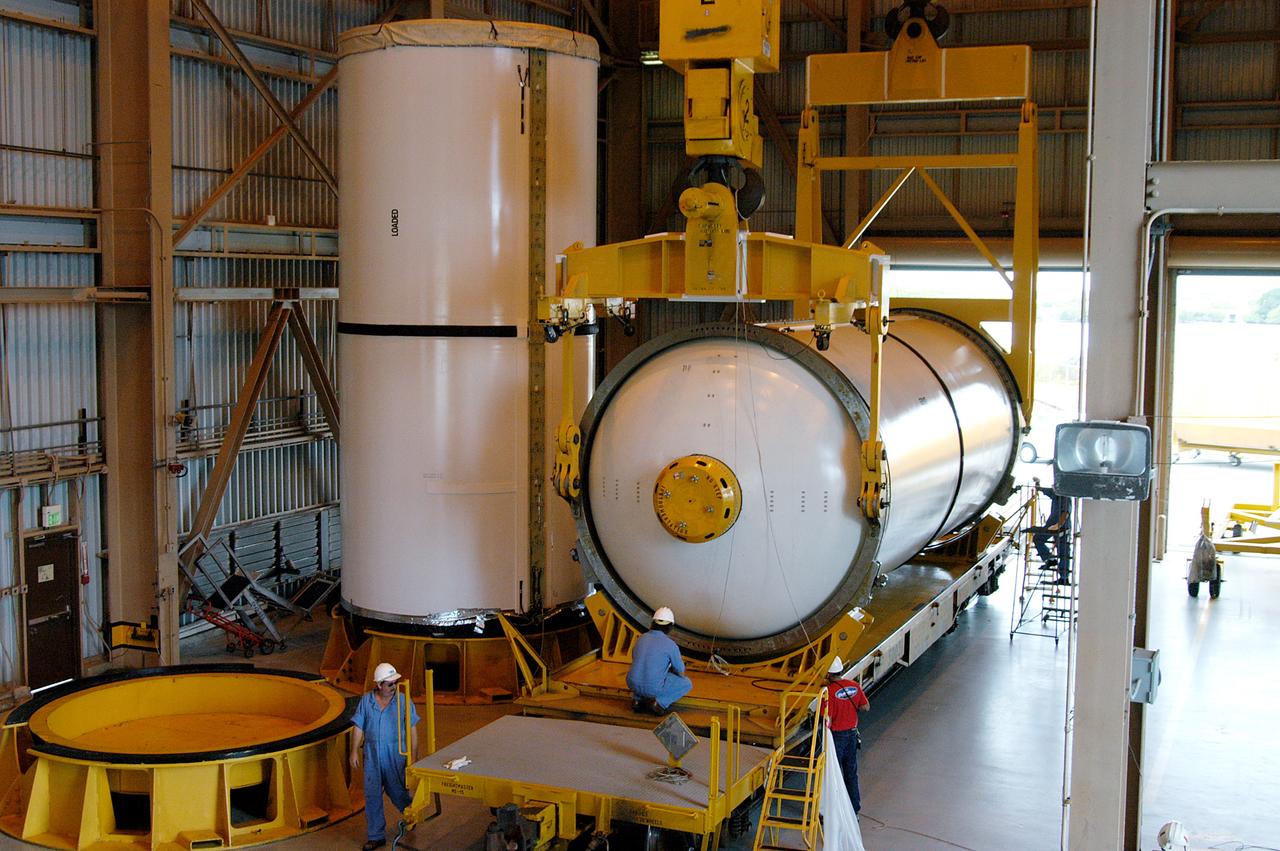
KENNEDY SPACE CENTER, FLA. - In the Rotation Processing and Surge Facility, an SRB solid segment is lowered onto a rail car for shipment to Utah where it will be tested. The segment was part of the STS-114 stack. It is the first time actual flight segments that had been stacked for flight in the VAB are being returned to Utah for testing. It will undergo firing, which will enable inspectors to check the viability of the solid and verify the life expectancy for stacked segments.
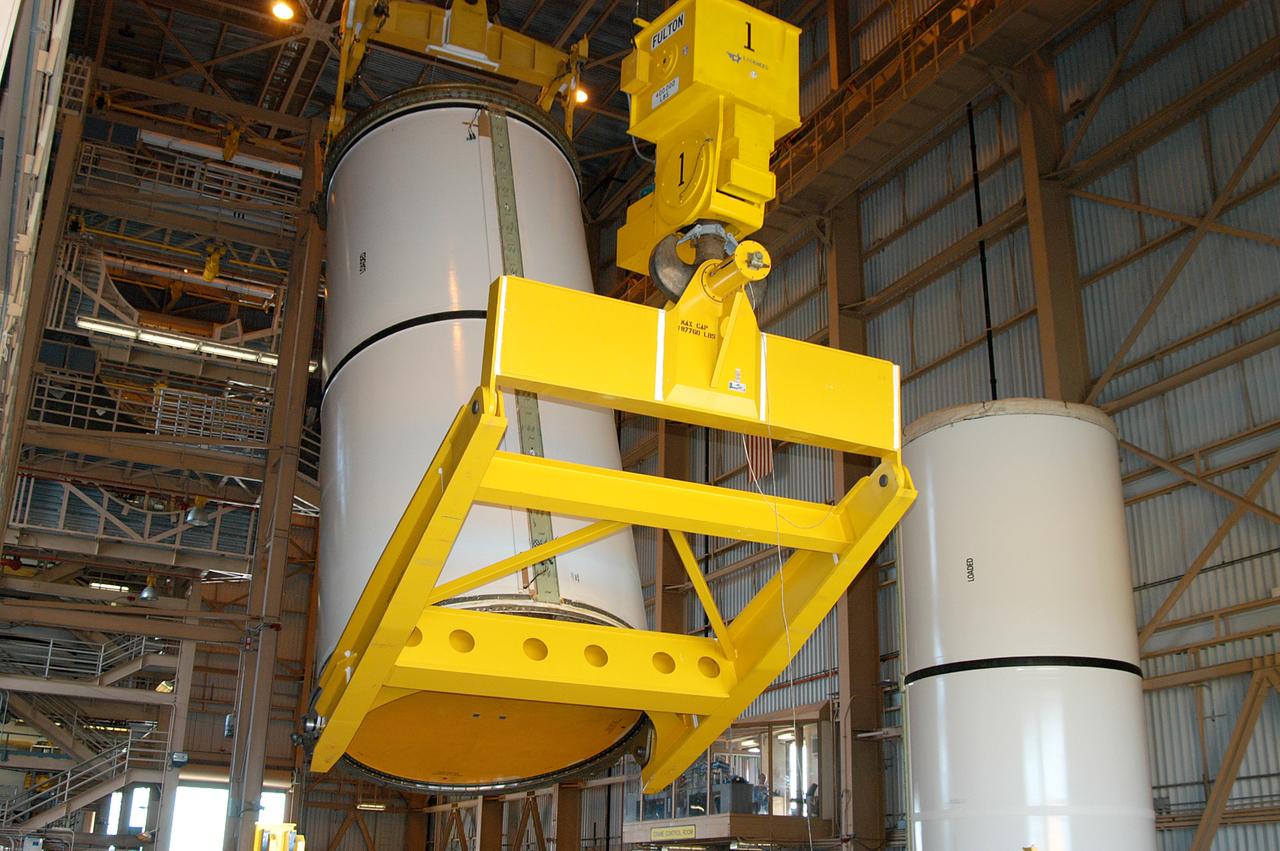
KENNEDY SPACE CENTER, FLA. - In the Rotation Processing and Surge Facility, an SRB solid segment is being lifted and moved to a rail car for shipment to Utah for testing. The segment was part of the STS-114 stack. It is the first time actual flight segments that had been stacked for flight in the VAB are being returned to Utah for testing. It will undergo firing, which will enable inspectors to check the viability of the solid and verify the life expectancy for stacked segments.
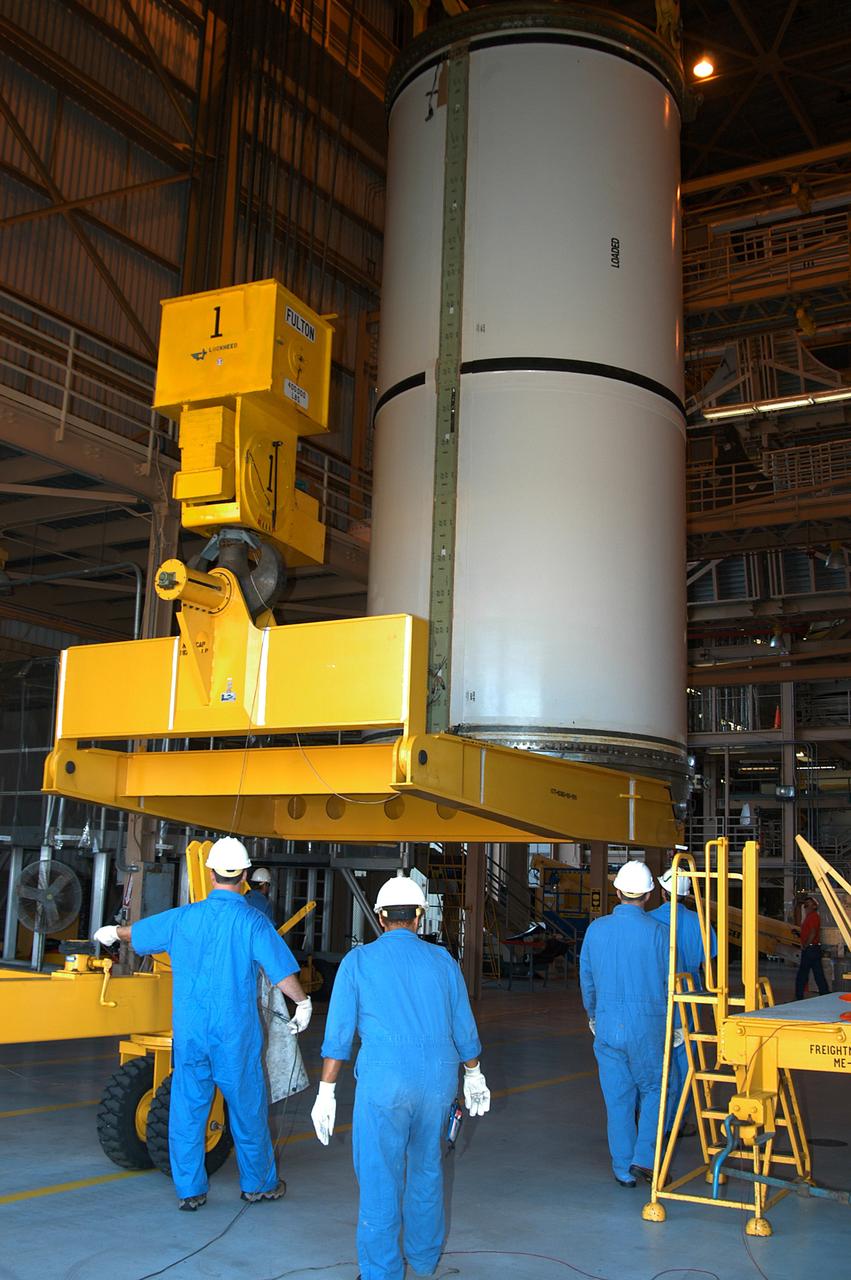
KENNEDY SPACE CENTER, FLA. - In the Rotation Processing and Surge Facility, an SRB solid segment is being lifted and moved to a rail car for shipment to Utah for testing. The segment was part of the STS-114 stack. It is the first time actual flight segments that had been stacked for flight in the VAB are being returned to Utah for testing. It will undergo firing, which will enable inspectors to check the viability of the solid and verify the life expectancy for stacked segments.
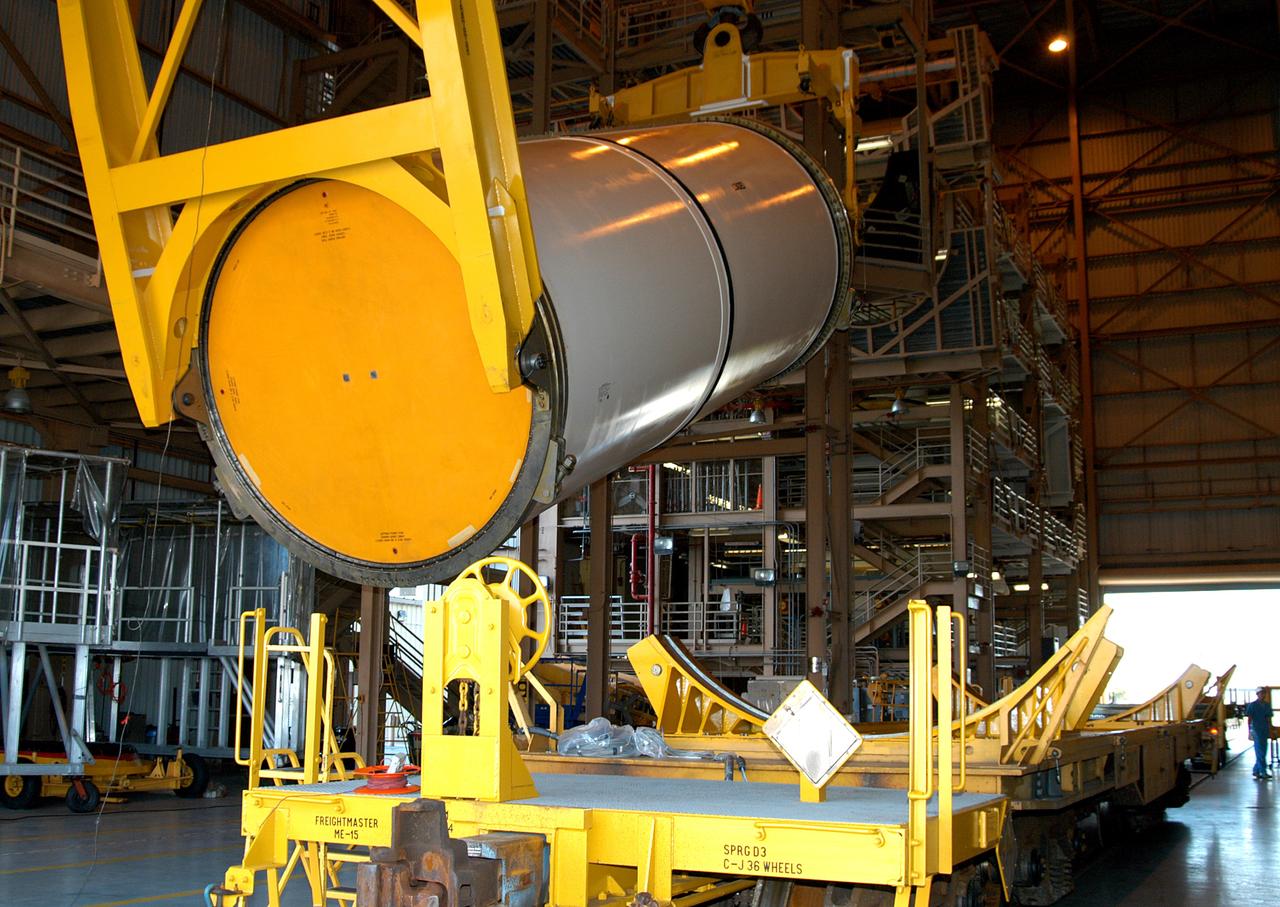
KENNEDY SPACE CENTER, FLA. - In the Rotation Processing and Surge Facility, an SRB solid segment is being rotated to horizontal for placement on a rail car. The segment is being shipped to Utah for testing. The segment was part of the STS-114 stack. It is the first time actual flight segments that had been stacked for flight in the VAB are being returned to Utah for testing. It will undergo firing, which will enable inspectors to check the viability of the solid and verify the life expectancy for stacked segments.
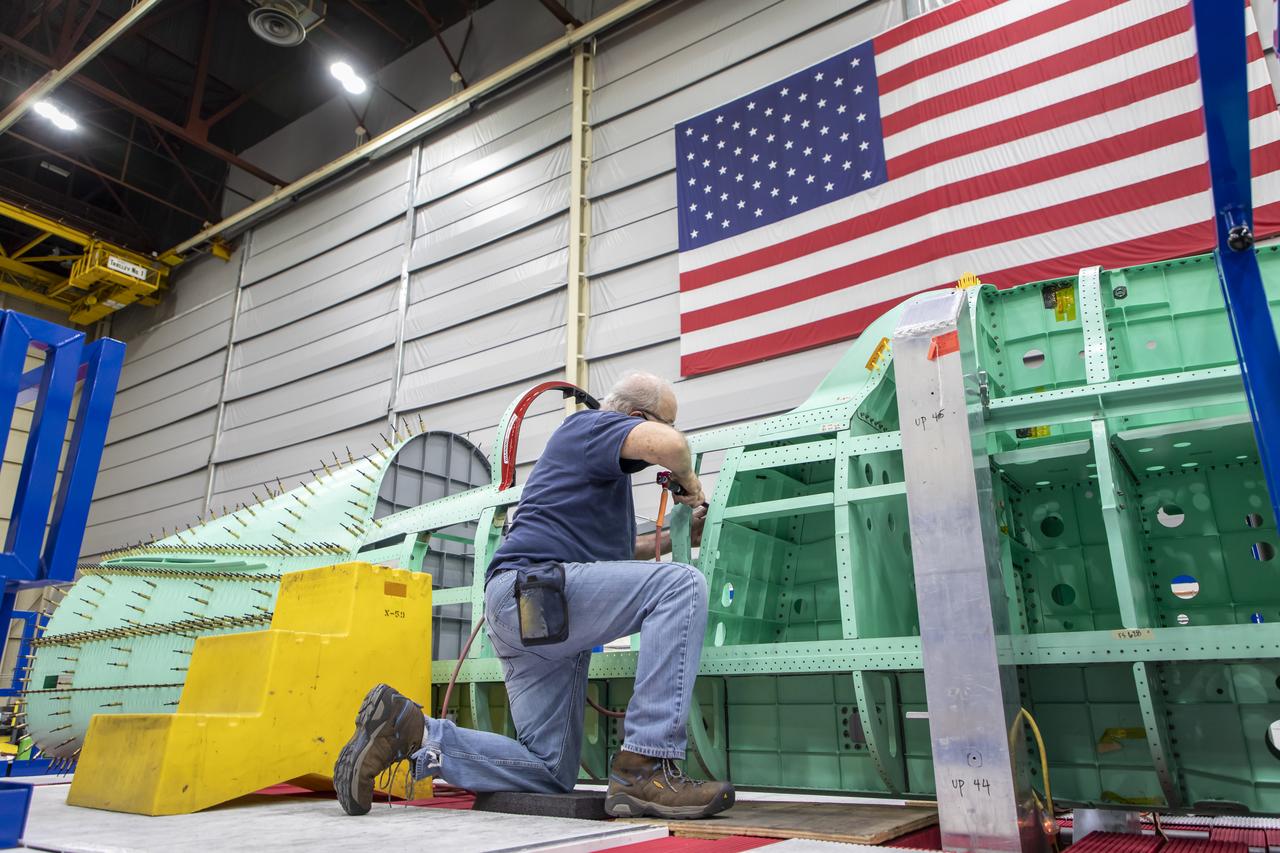
Event: SEG 210 Forebody A Lockheed Martin technician works on the ejection seat support structure and once complete, the ejection seat rails will be installed on the X-59 airplane. The aircraft, under construction at Lockheed Martin Skunk Works in Palmdale, California, will demonstrate the ability to fly supersonic while reducing the loud sonic boom to a quiet sonic thump.
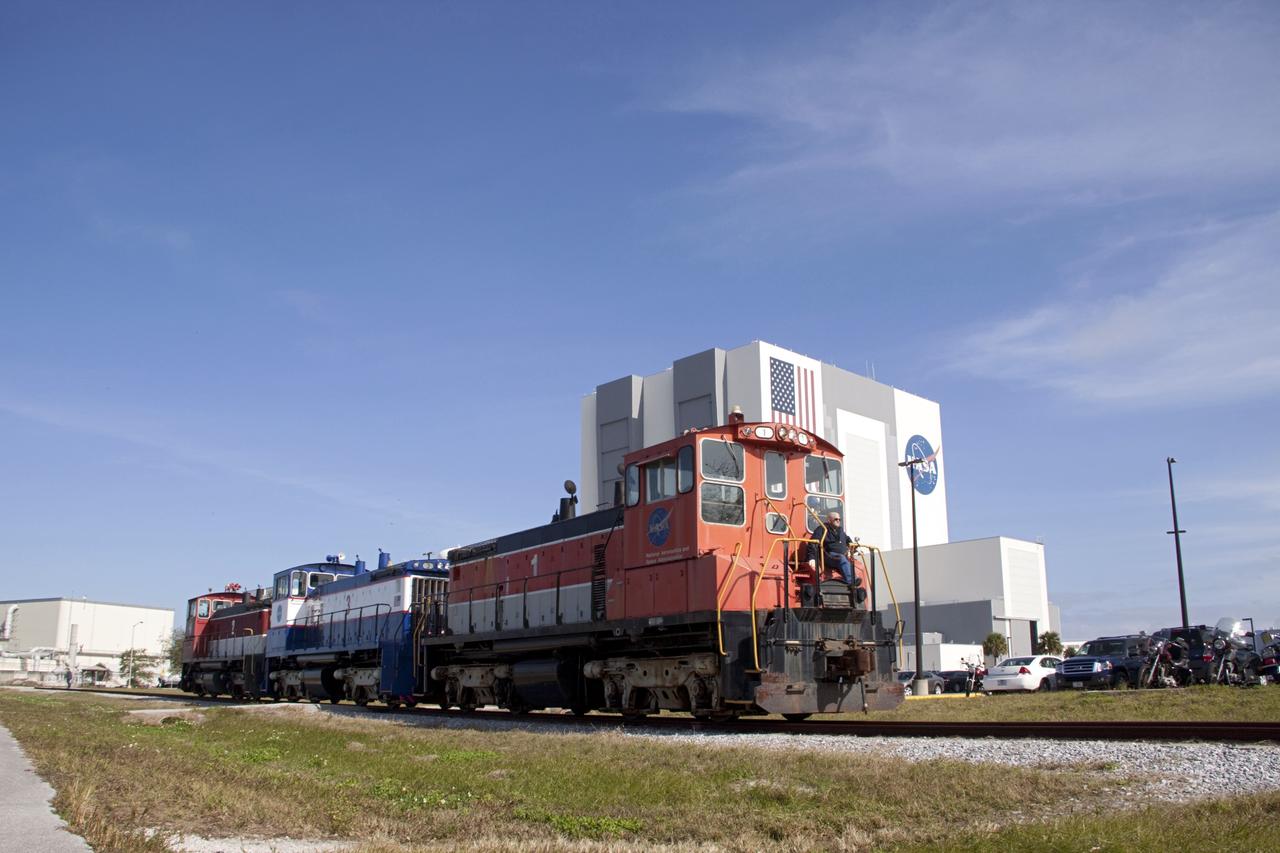
KSC-2012-6359 – CAPE CANAVERAL, Fla. – At Kennedy Space Center in Florida, NASA railroad locomotive No. 1 returns locomotives 2 and 3 to Launch Complex 39 area's rail yard after wheel and axle assemblies were swapped between locomotives 2 and 3. The RPSF was built to support work on the solid rocket used motors during the space shuttle era. The facility had never previously been used for another purpose, but is now free to serve other customers. With rails running into the building's high bay and a pair of heavy-lift cranes positioned overhead, the facility's capabilities were a perfect fit for the NASA Railroad's needs. Railroad managers wanted to trade the wheel and axle assemblies, or trucks, of locomotives No. 2 and No. 3. Locomotive No. 3 was painstakingly restored in recent years by the NASA Railroad team, and handles much of the rail work required at the center in the post-shuttle era. But the trucks on locomotive No. 2 are in better shape and are more environmentally friendly. For more information, visit: http://www.nasa.gov/exploration/systems/ground/rpsf_locomotives.html Photo credit: NASA/Jim Grossmann
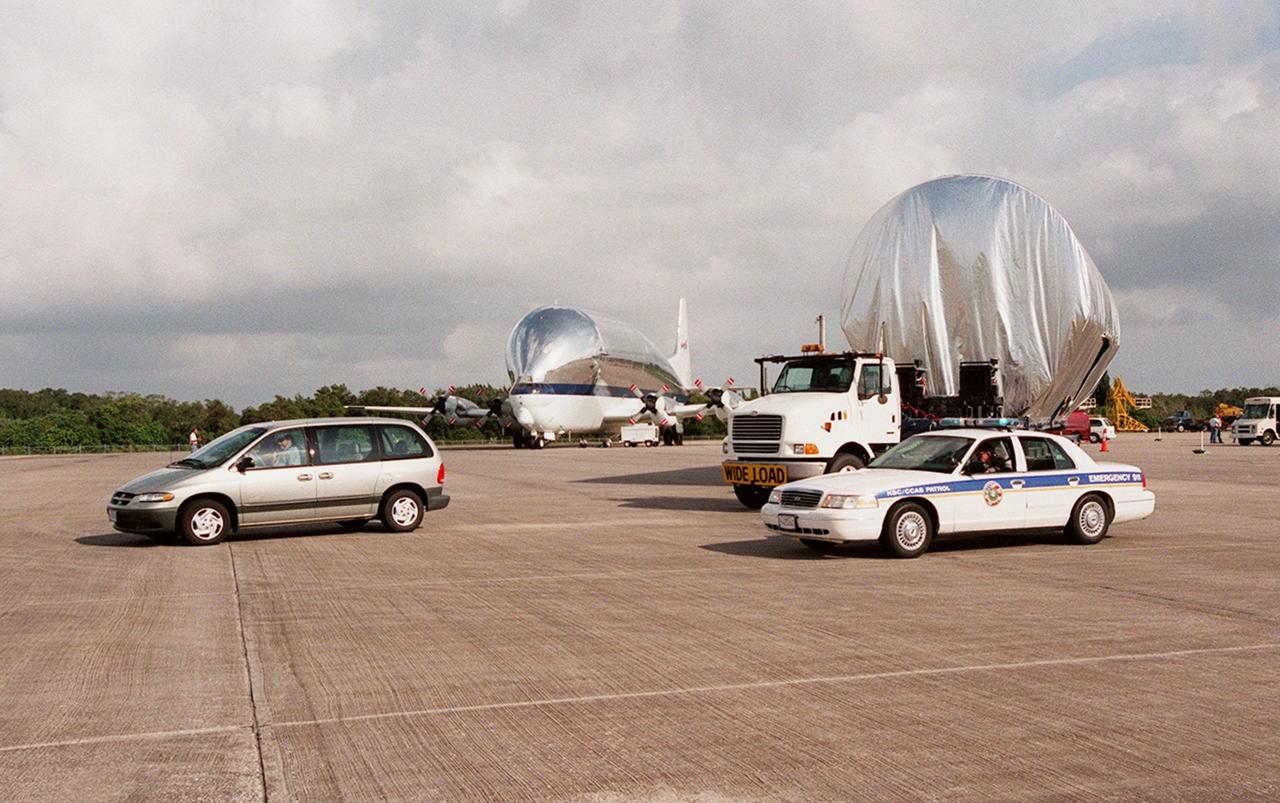
KENNEDY SPACE CENTER, FLA. -- Escort vehicles prepare to leave the Shuttle Landing Facility with the S1 truss (at right) on its trek to the Operations and Checkout Building. Manufactured by the Boeing Co. in Huntington Beach, Calif., this component of the ISS is the first starboard (right-side) truss segment, whose main job is providing structural support for the orbiting research facility's radiator panels that cool the Space Station's complex power system. The S1 truss segment also will house communications systems, external experiment positions and other subsystems. Primarily constructed of aluminum, the truss segment is 45 feet long, 15 feet wide and 6 feet tall. When fully outfitted, it will weigh 31,137 pounds. The truss is slated for flight in 2001. The truss arrived at KSC aboard NASA's Super Guppy, seen in the background. The aircraft is uniquely built with a 25-foot diameter fuselage designed to handle oversized loads and a "fold-away" nose that opens 110 degrees for cargo loading. A system of rails in the cargo compartment, used with either Guppy pallets or fixtures designed for specific cargo, makes cargo loading simple and efficient. Rollers mounted in the rails allow pallets or fixtures to be moved by an electric winch mounted beneath the cargo floor. Automatic hydraulic lock pins in each rail secure the pallet for flight
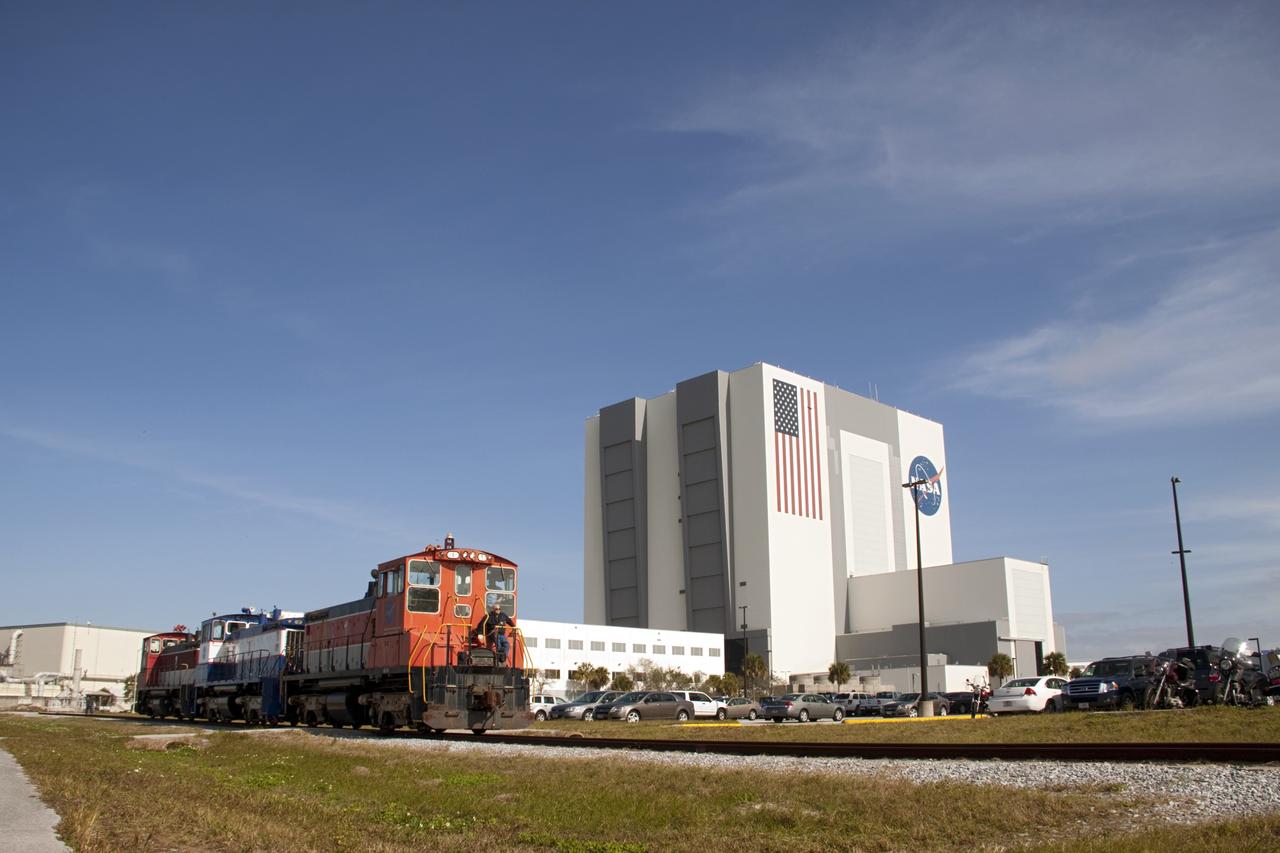
CAPE CANAVERAL, Fla. – At Kennedy Space Center in Florida, NASA railroad locomotive No. 1 returns locomotives 2 and 3 to Launch Complex 39 area's rail yard after wheel and axle assemblies were swapped between locomotives 2 and 3. The RPSF was built to support work on the solid rocket used motors during the space shuttle era. The facility had never previously been used for another purpose, but is now free to serve other customers. With rails running into the building's high bay and a pair of heavy-lift cranes positioned overhead, the facility's capabilities were a perfect fit for the NASA Railroad's needs. Railroad managers wanted to trade the wheel and axle assemblies, or trucks, of locomotives No. 2 and No. 3. Locomotive No. 3 was painstakingly restored in recent years by the NASA Railroad team, and handles much of the rail work required at the center in the post-shuttle era. But the trucks on locomotive No. 2 are in better shape and are more environmentally friendly. For more information, visit: http://www.nasa.gov/exploration/systems/ground/rpsf_locomotives.html Photo credit: NASA/Jim Grossmann
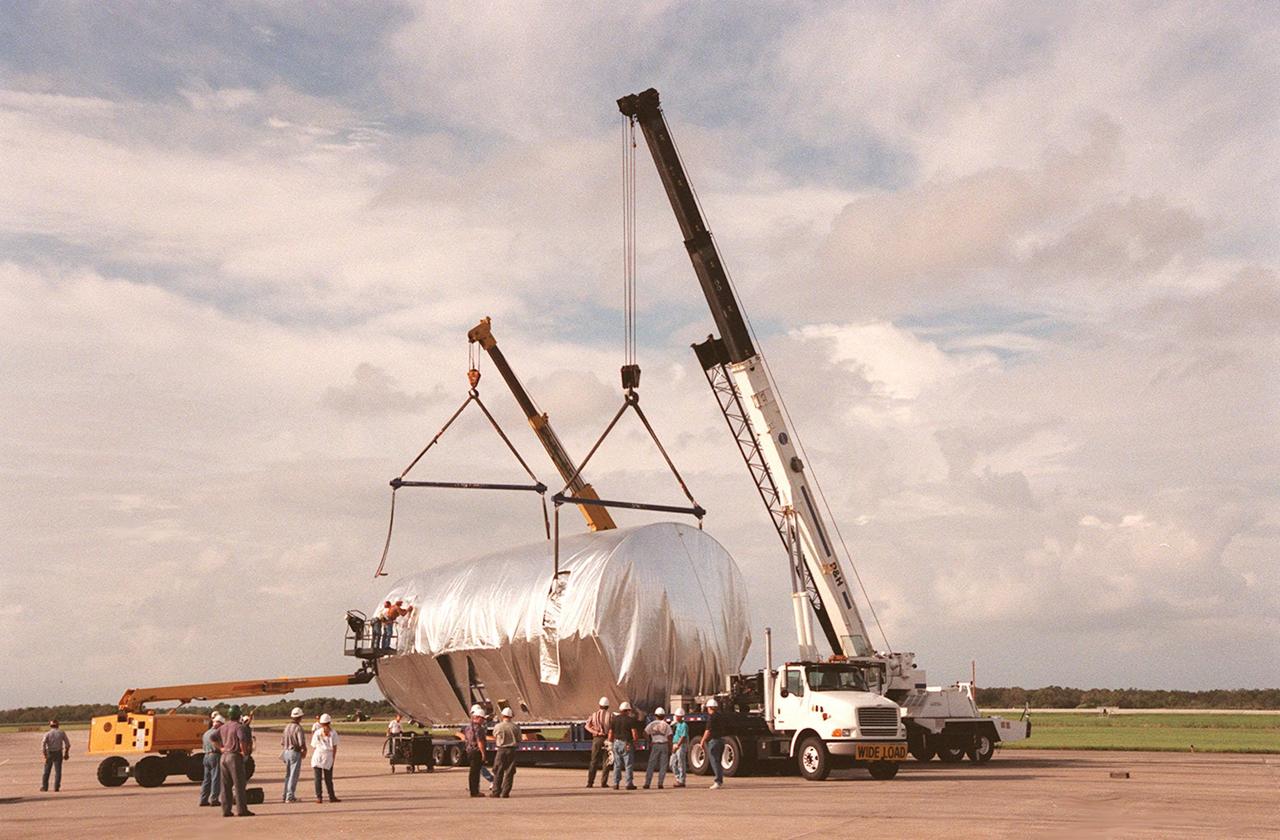
KENNEDY SPACE CENTER, FLA. -- At the Shuttle Landing Facility, workers attach cranes to the S1 truss, a segment of the International Space Station, to lift the truss to a payload transporter for its transfer to the Operations and Checkout Building. Manufactured by the Boeing Co. in Huntington Beach, Calif., this component of the ISS is the first starboard (right-side) truss segment, whose main job is providing structural support for the orbiting research facility's radiator panels that cool the Space Station's complex power system. The S1 truss segment also will house communications systems, external experiment positions and other subsystems. Primarily constructed of aluminum, the truss segment is 45 feet long, 15 feet wide and 6 feet tall. When fully outfitted, it will weigh 31,137 pounds. The truss is slated for flight in 2001. The truss arrived at KSC aboard NASA's Super Guppy, with a 25-foot diameter fuselage designed to handle oversized loads. Loading the Guppy is easy because of the unique "fold-away" nose of the aircraft that opens 110 degrees for cargo loading. A system of rails in the cargo compartment, used with either Guppy pallets or fixtures designed for specific cargo, makes cargo loading simple and efficient. Rollers mounted in the rails allow pallets or fixtures to be moved by an electric winch mounted beneath the cargo floor. Automatic hydraulic lock pins in each rail secure the pallet for flight
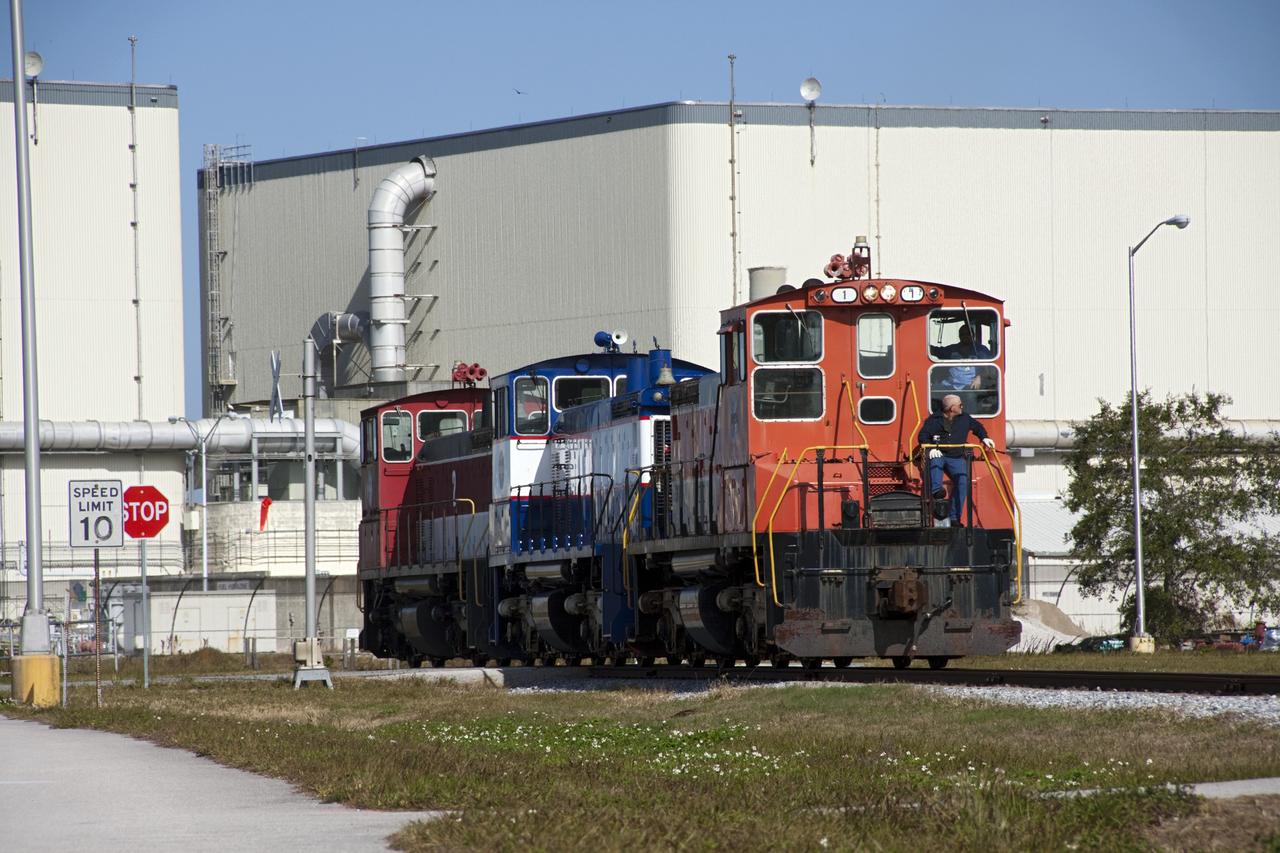
CAPE CANAVERAL, Fla. – At Kennedy Space Center in Florida, NASA railroad locomotive No. 1 returns locomotives 2 and 3 to Launch Complex 39 area's rail yard after wheel and axle assemblies were swapped between locomotives 2 and 3. The RPSF was built to support work on the solid rocket used motors during the space shuttle era. The facility had never previously been used for another purpose, but is now free to serve other customers. With rails running into the building's high bay and a pair of heavy-lift cranes positioned overhead, the facility's capabilities were a perfect fit for the NASA Railroad's needs. Railroad managers wanted to trade the wheel and axle assemblies, or trucks, of locomotives No. 2 and No. 3. Locomotive No. 3 was painstakingly restored in recent years by the NASA Railroad team, and handles much of the rail work required at the center in the post-shuttle era. But the trucks on locomotive No. 2 are in better shape and are more environmentally friendly. For more information, visit: http://www.nasa.gov/exploration/systems/ground/rpsf_locomotives.html Photo credit: NASA/Jim Grossmann
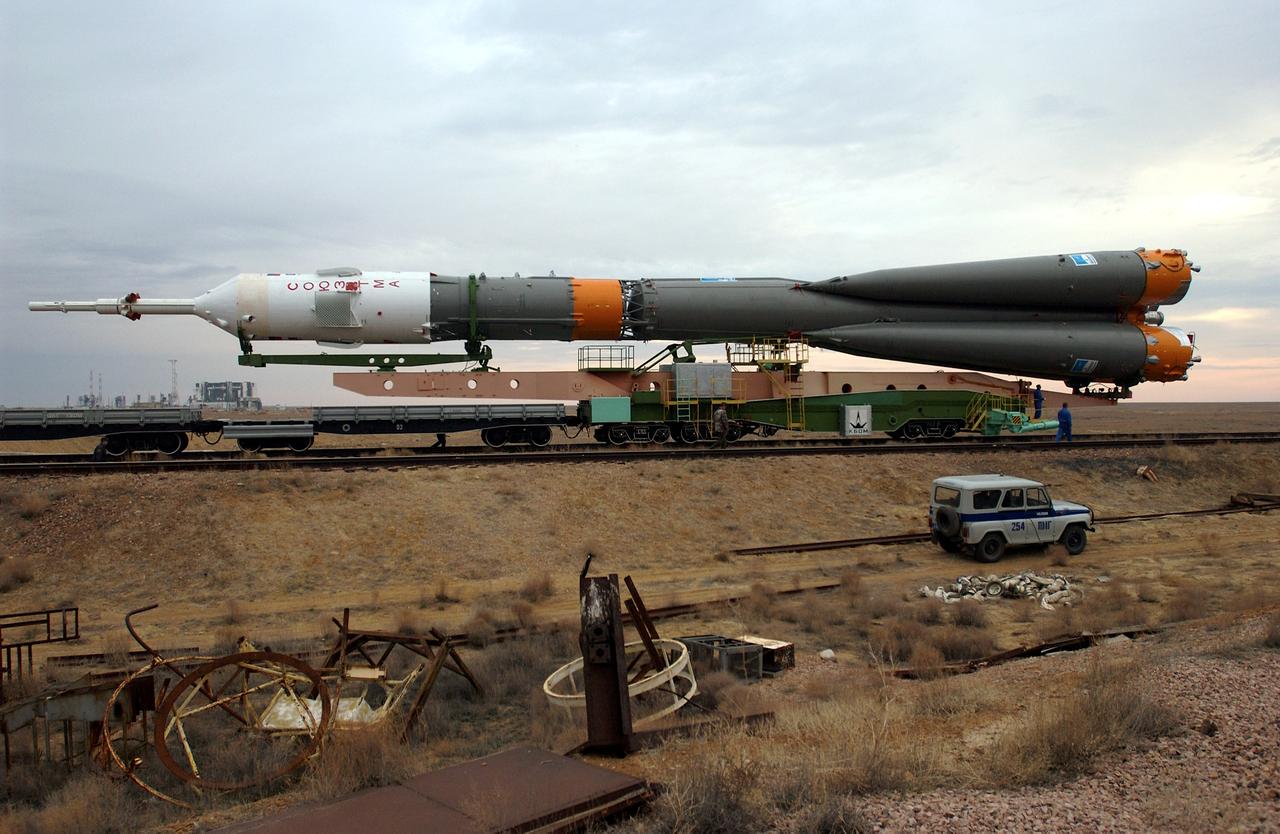
JSC2003-E-31959 (24 April 2003) --- A Soyuz rocket is rolled out of the assembly building and travels via rail to the launch pad at the Baikonur Cosmodrome, Kazakhstan. Expedition Seven is scheduled to launch onboard the Soyuz on Saturday April 26, 2003. Photo credit: NASA/Scott Andrews.
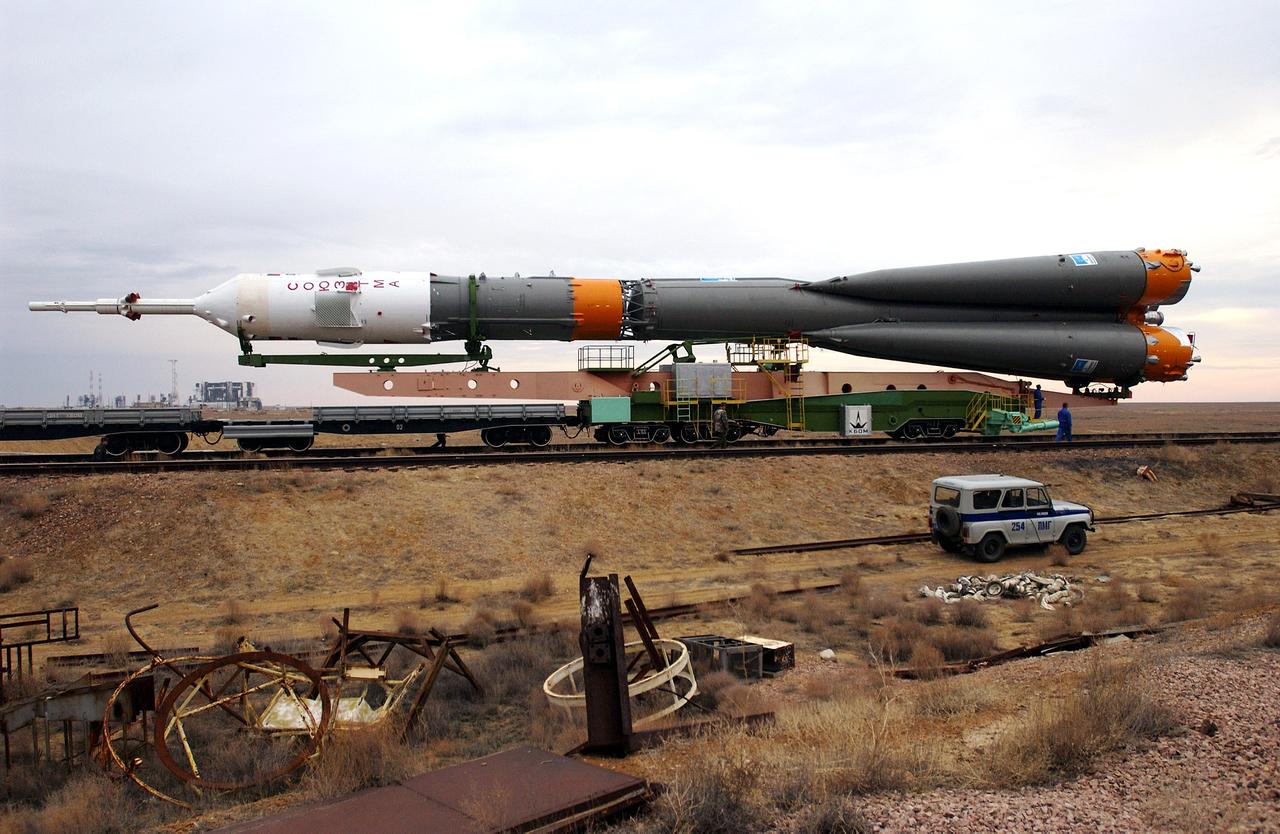
A Soyuz TMA-3 spacecraft and its booster rocket is seen, Thursday, Oct. 16, 2003, on a rail car to be transported to the launch pad and raised to its vertical launch position at the Baikonur Cosmodrome, Kazakhstan in preparation for liftoff Oct. 18, 2003. Photo Credit (NASA/Bill Ingalls)
April 24, 2003, Baikonur Cosmodrome, Kazakhstan. The Soyuz rocket is rolled out of the assembly building and travels via rail to the launch pad. Expedition Seven is scheduled to launch onboard the Soyuz this Saturday April 26, 2003. Photo Credit: "NASA/Scott Andrews"
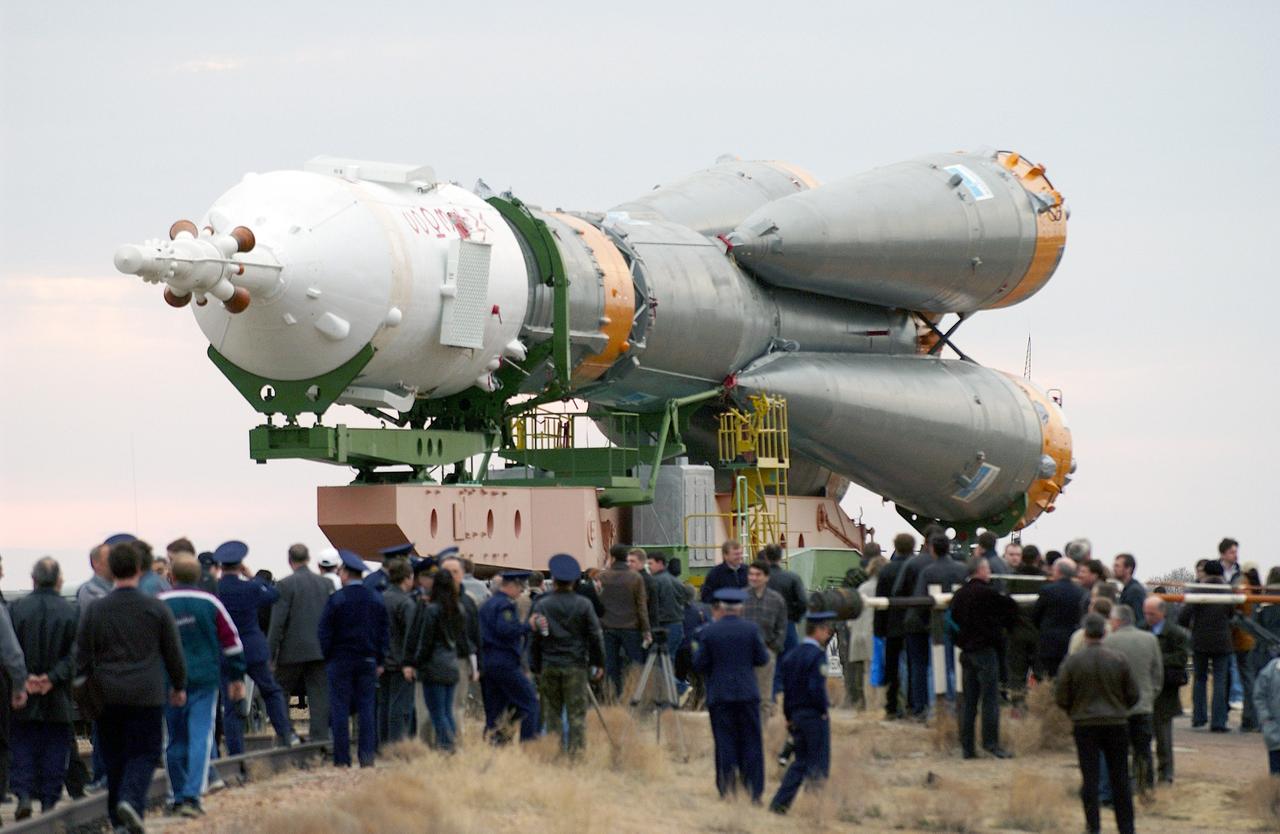
April 24, 2003, Baikonur Cosmodrome, Kazakhstan. The Soyuz rocket is rolled out of the assembly building and travels via rail to the launch pad. Expedition Seven is scheduled to launch onboard the Soyuz this Saturday April 26, 2003. Photo Credit: "NASA/Scott Andrews"
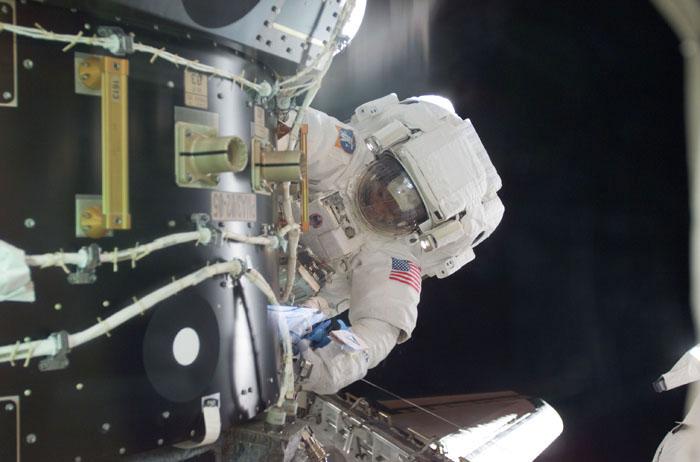
STS98-E-5189 (12 February 2001) --- Astronaut Robert L. Curbeam, STS-98 mission specialist, holds onto a hand rail on Pressurized Mating Adapter (PMA-3) during the second of three scheduled space walks on 5a. The scene was recorded with a digital still camera.
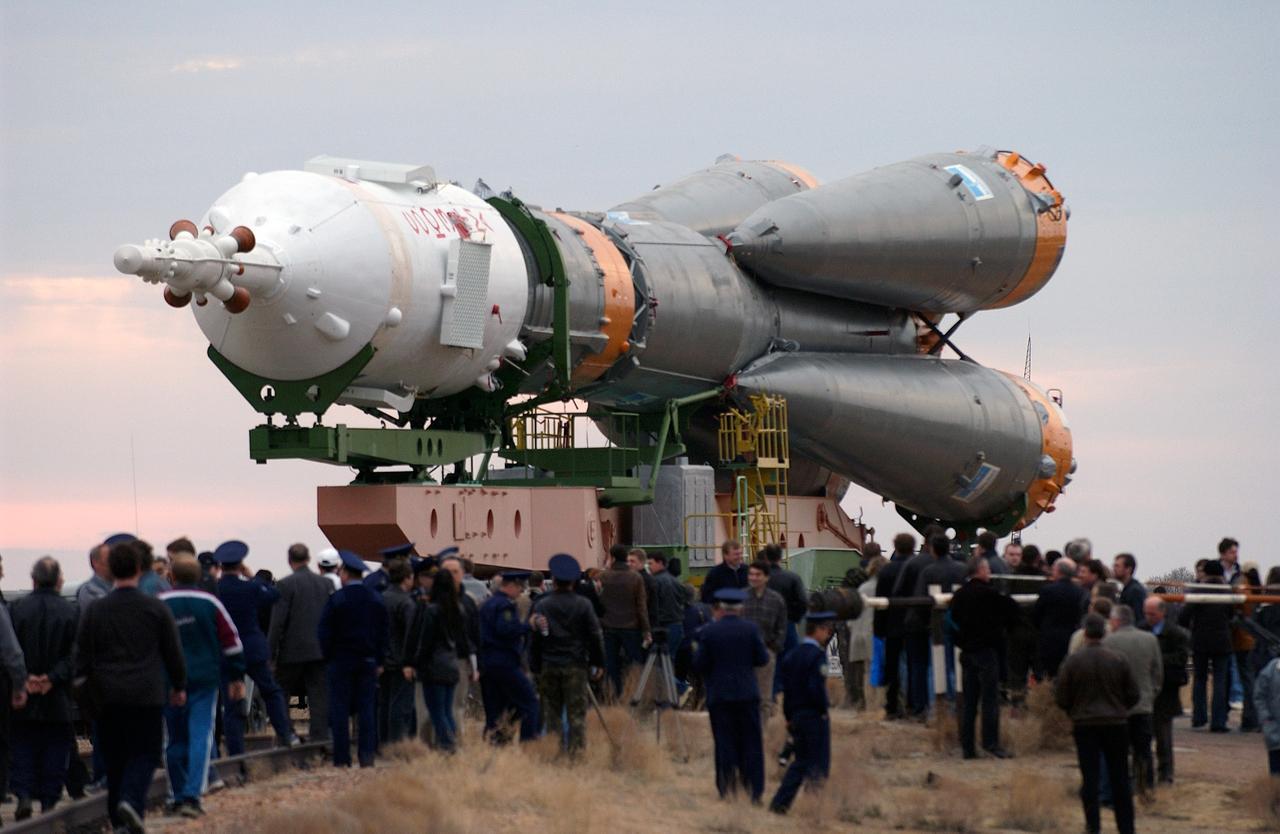
JSC2003-E-31960 (24 April 2003) --- A Soyuz rocket is rolled out of the assembly building and travels via rail to the launch pad at the Baikonur Cosmodrome, Kazakhstan. Expedition Seven is scheduled to launch onboard the Soyuz on Saturday April 26, 2003. Photo credit: NASA/Scott Andrews.
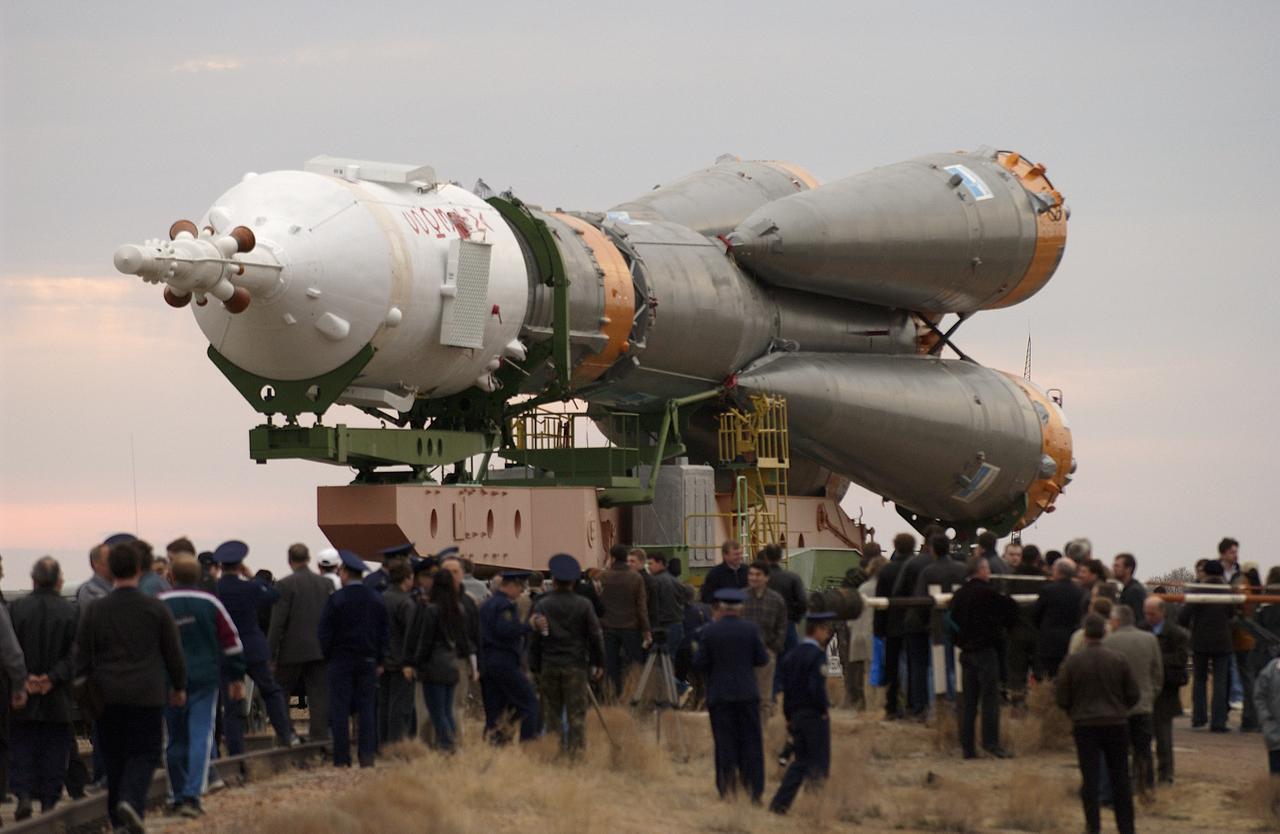
A Soyuz rocket is rolled out of the assembly building and travels via rail to the launch pad at the Baikonur Cosmodrome in Baikonur, Kazakhstan, Thursday, April 24, 2003. Expedition 7 is scheduled to launch onboard the Soyuz on Saturday April 26, 2003. Photo credit: (NASA/Scott Andrews)
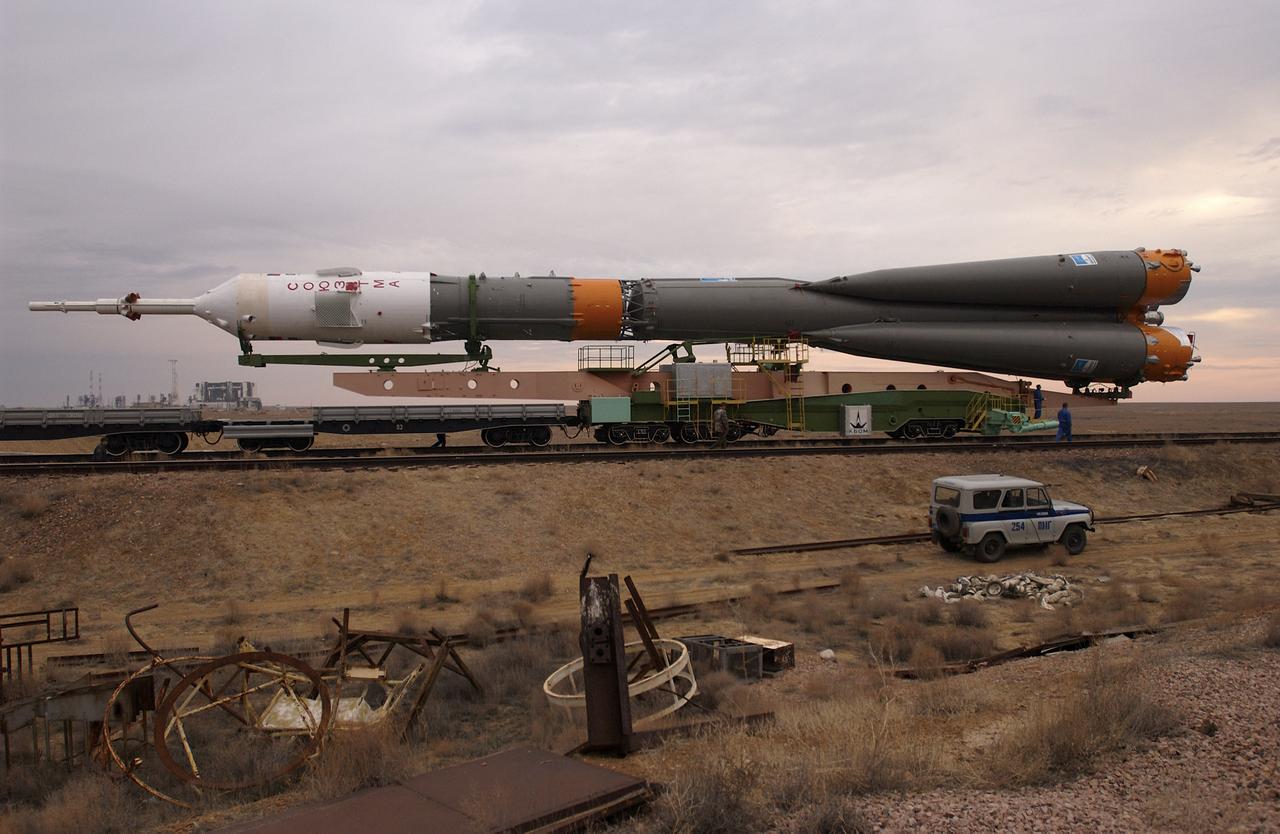
A Soyuz rocket is rolled out of the assembly building and travels via rail to the launch pad at the Baikonur Cosmodrome in Baikonur, Kazakhstan, Thursday, April 24, 2003. Expedition 7 is scheduled to launch onboard the Soyuz on Saturday, April 26, 2003. Photo credit: (NASA/Scott Andrews)
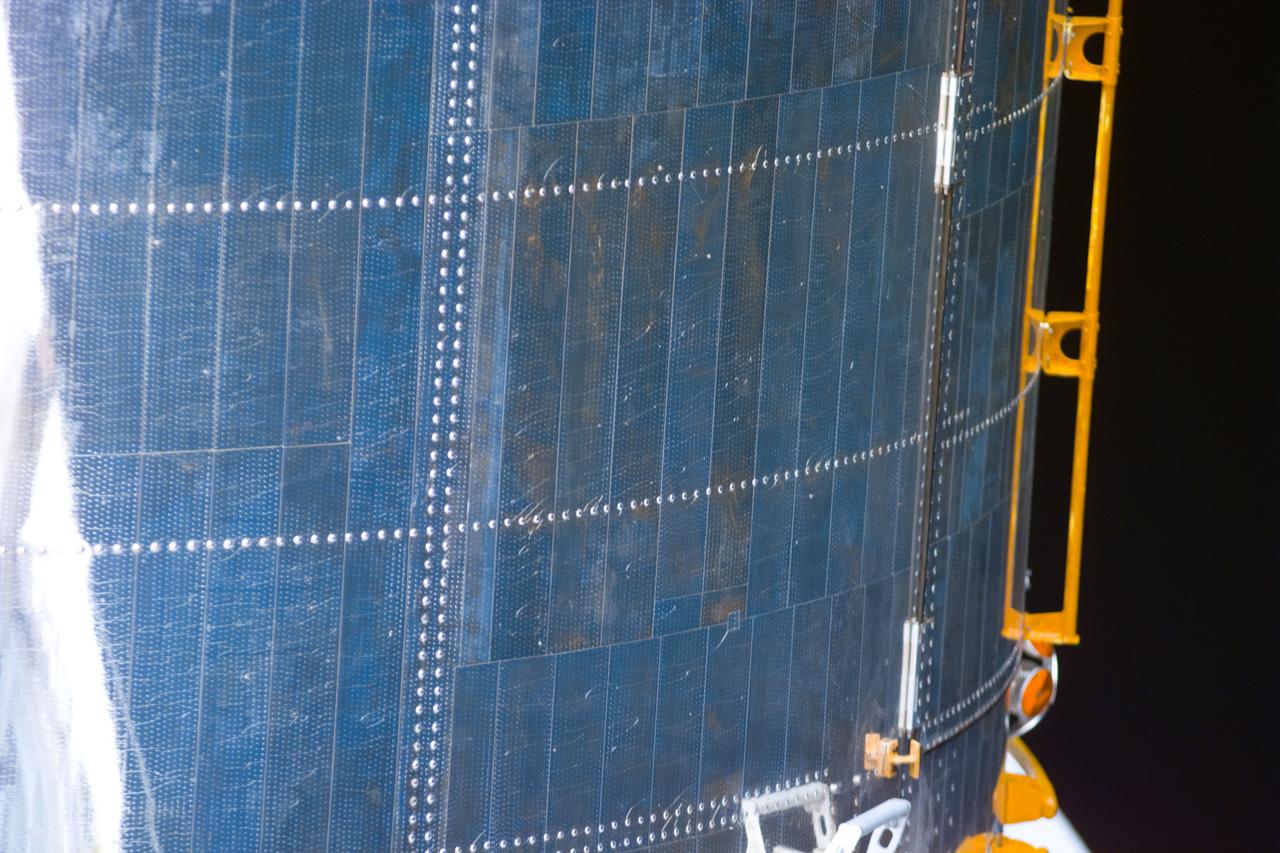
S82-E-5471 (15 Feb. 1997) --- Close-up view showing a small section of Hubble Space Telescope's (HST) protective covering and hand rail used to support Extravehicular Activity (EVA). This view was taken with an Electronic Still Camera (ESC).

S65-59990 (16 Dec. 1965) --- Crewmen of the aircraft carrier USS Wasp gather on deck to watch the recovery of the Gemini-6 spacecraft and astronauts. Note the signs hanging from the railings which say "Seasons Greetings from WASP" and "Spirit of 76". Photo credit: NASA or National Aeronautics and Space Administration
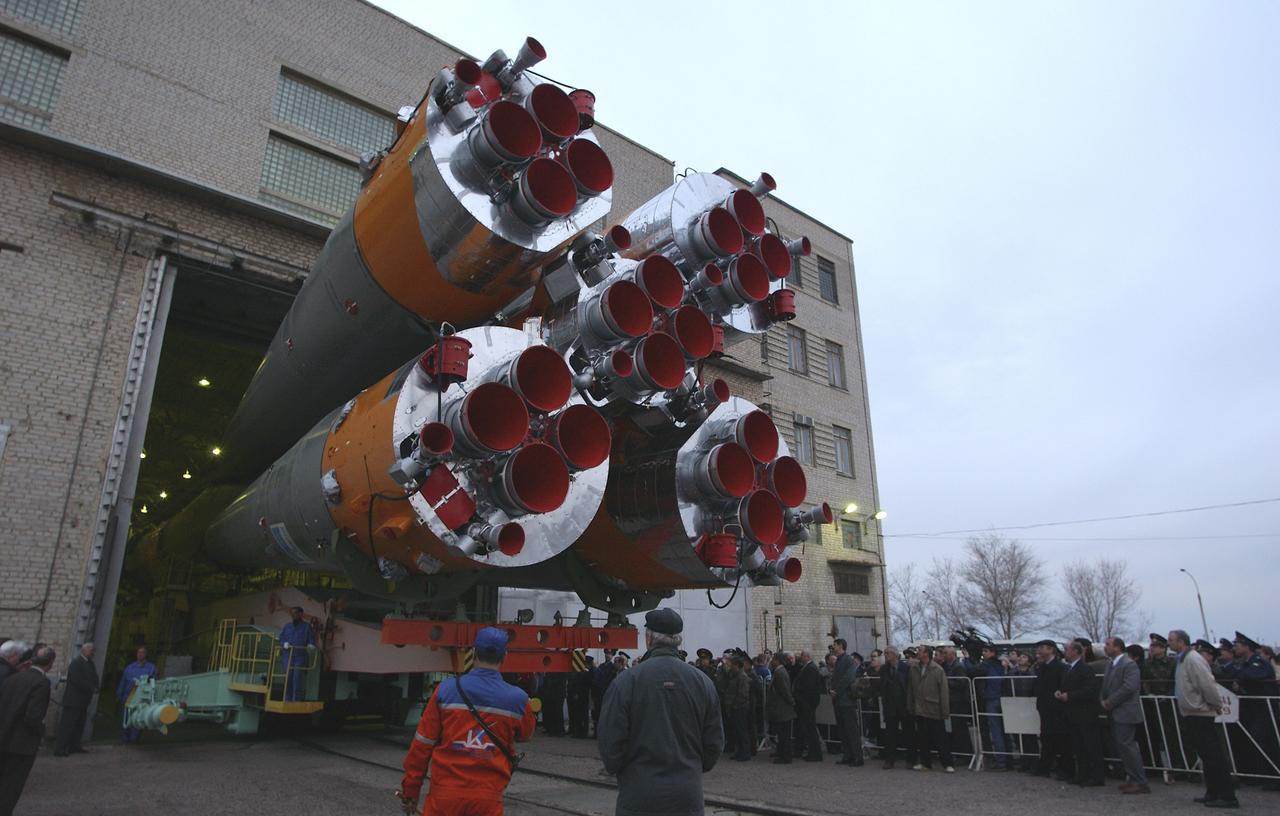
A Soyuz rocket is rolled out of the assembly building and travels via rail to the launch pad at the Baikonur Cosmodrome in Baikonur, Kazakhstan. Expedition 7 is scheduled to launch onboard the Soyuz on Saturday April 26, 2003. Photo credit: (NASA/Bill Ingalls)
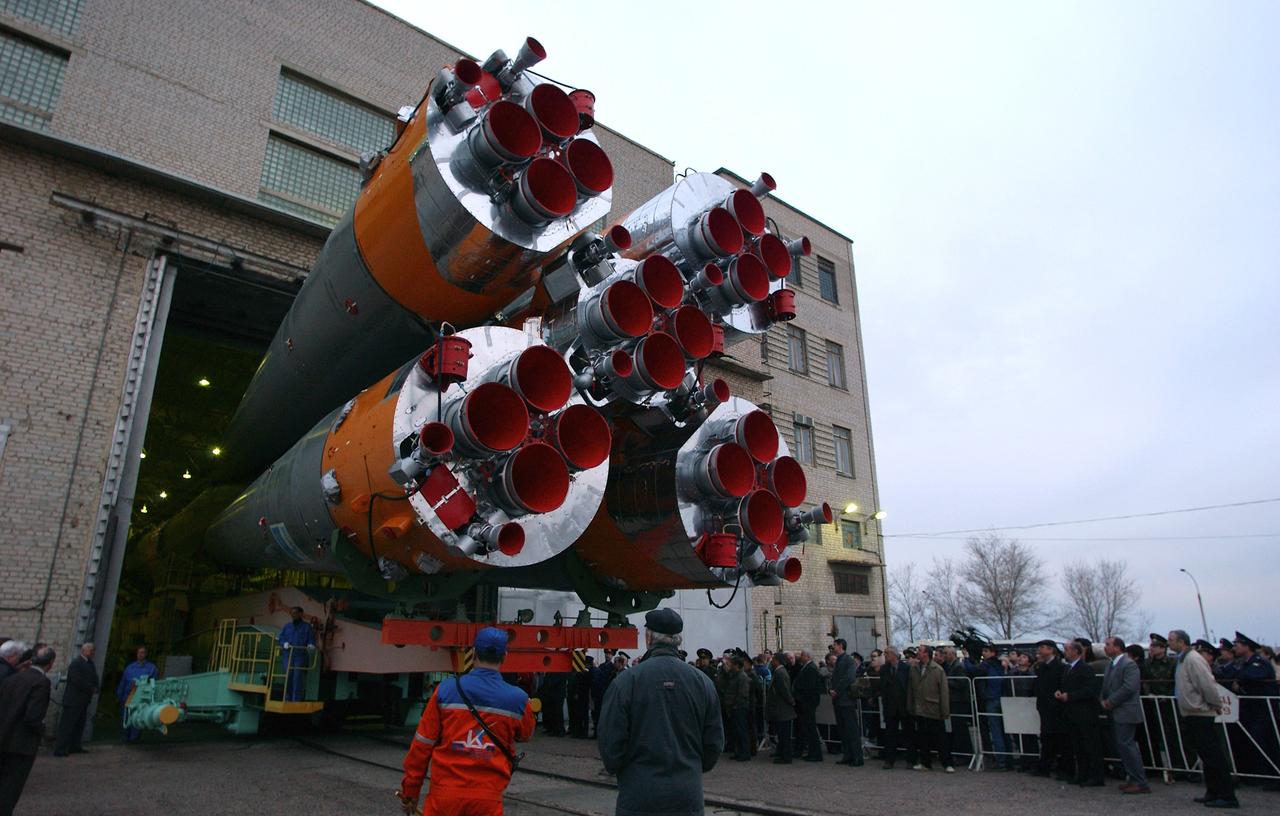
JSC2003-E-31958 (24 April 2003) --- A Soyuz rocket is rolled out of the assembly building and travels via rail to the launch pad at the Baikonur Cosmodrome, Kazakhstan. Expedition Seven is scheduled to launch onboard the Soyuz on Saturday April 26, 2003. Photo credit: NASA/Bill Ingalls.
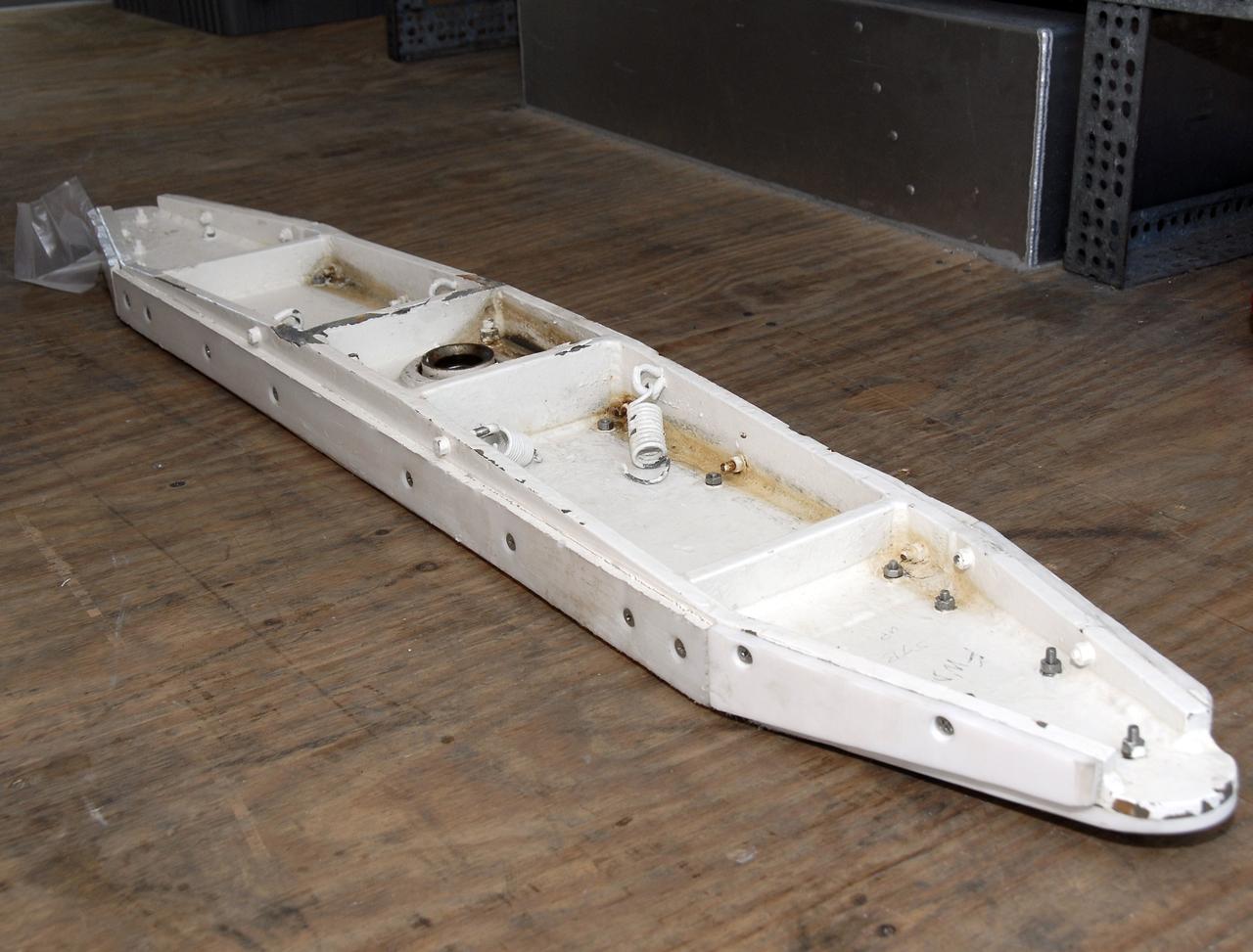
CAPE CANAVERAL, Fla. - Technicians removed a “shoe” on the Hubble payload canister at Launch pad 39A at NASA’s Kennedy Space Center in Florida. The canister arrived at the pad on Saturday evening; however, early Sunday morning technicians were unable to place the canister into the pad’s payload changeout room for space shuttle Atlantis’ STS-125 mission. Teflon pads on the “shoes” attached to the outside of the payload canister that help the canister move along the guide rails didn’t fit properly. The shoes were removed and several options were considered, including slightly shaving down the pads so the shoes will fit onto the rails. STS-125 is the fifth and final shuttle Hubble Space Telescope servicing mission. Atlantis’ launch is targeted for Oct. 10. Photo credit: NASA/Kim Shiflett.
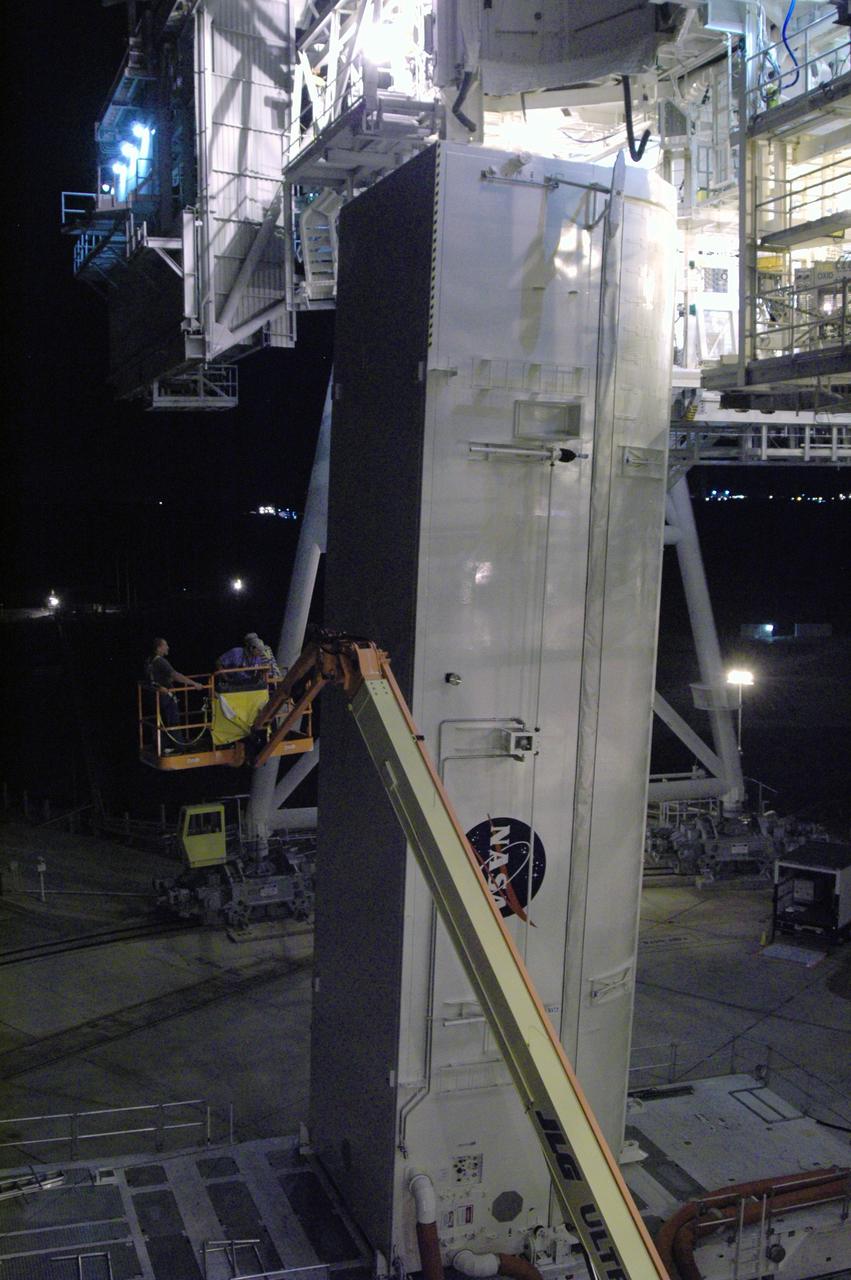
CAPE CANAVERAL, Fla. - On Launch Pad 39A at NASA's Kennedy Space Center, workers on a crane have completed attaching adjusted guide shoes onto the outside of the payload canister for attempt at a second lift into the payload changeout room. The first attempt encountered problems when Teflon pads on “shoes” attached to the outside of the canister that go onto guide rails to help the canister into the room didn’t fit properly. The two shoes were removed, slightly shaved down so that they would fit into the rails and put back on the canister. The changeout room is the enclosed, environmentally controlled portion of the rotating service structure that supports cargo delivery to the pad and subsequent vertical installation into the shuttle’s payload bay. Launch of Atlantis is targeted for Oct. 10. Photo credit: NASA/Jim Grossmann
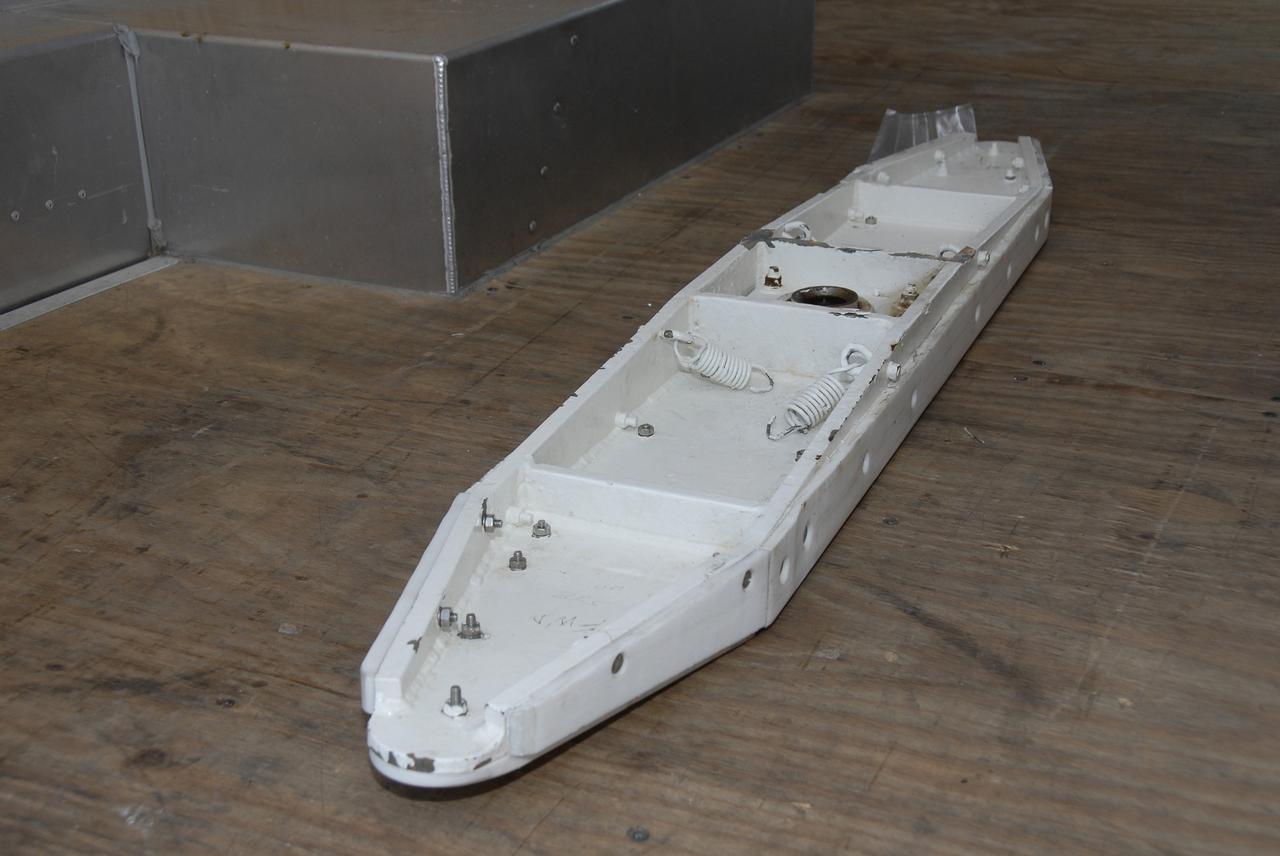
CAPE CANAVERAL, Fla. - Technicians removed a “shoe” on the Hubble payload canister at Launch pad 39A at NASA’s Kennedy Space Center in Florida. The canister arrived at the pad on Saturday evening; however, early Sunday morning technicians were unable to place the canister into the pad’s payload changeout room for space shuttle Atlantis’ STS-125 mission. Teflon pads on the “shoes” attached to the outside of the payload canister that help the canister move along the guide rails didn’t fit properly. The shoes were removed and several options were considered, including slightly shaving down the pads so the shoes will fit onto the rails. STS-125 is the fifth and final shuttle Hubble Space Telescope servicing mission. Atlantis’ launch is targeted for Oct. 10. Photo credit: NASA/Kim Shiflett.

CAPE CANAVERAL, Fla. - A view of the adjusted guide shoe attached to the outside of the payload canister on Launch Pad 39A at NASA's Kennedy Space Center. A second attempt will be made to lift the canister to the payload changeout room above. The first attempt encountered problems when Teflon pads on “shoes” attached to the outside of the canister that go onto guide rails to help the canister into the room didn’t fit properly. The two shoes were removed, slightly shaved down so that they would fit into the rails and put back on the canister. The changeout room is the enclosed, environmentally controlled portion of the rotating service structure that supports cargo delivery to the pad and subsequent vertical installation into the shuttle’s payload bay. Launch of Atlantis is targeted for Oct. 10. Photo credit: NASA/Jim Grossmann
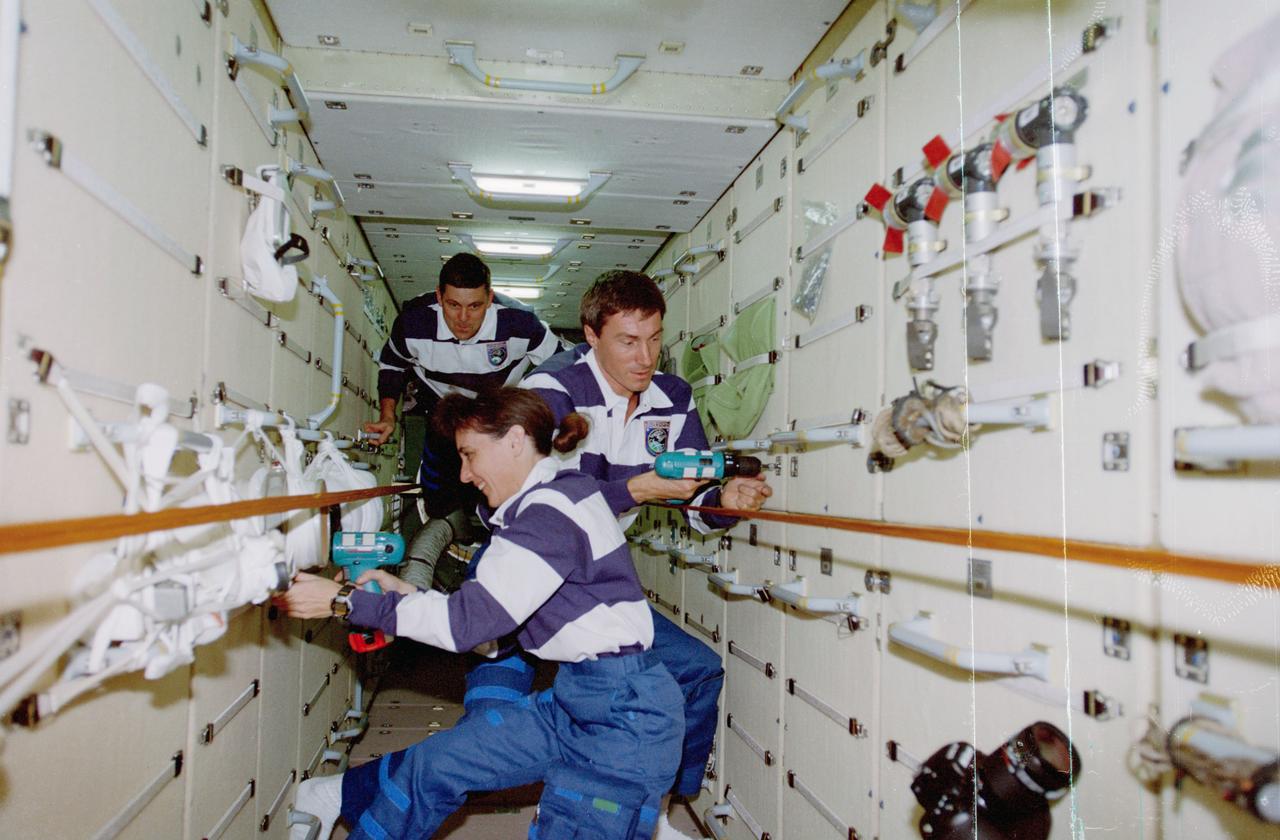
STS088-359-037 (4-15 Dec. 1998) --- Astronaut Nancy J. Currie and cosmonaut Sergei K. Krikalev, both mission specialists, use rechargeable power tools to manipulate nuts and bolts on the Russian-built Zarya module. Astronaut Robert D. Cabana, mission commander, translates along the rail network in the background. The six STS-88 crew members had earlier entered the module through the U.S.-built Unity connecting module. Rails, straps and tools indicate the crewmembers had been working awhile when this photo was taken. Krikalev, representing the Russian Space Agency (RSA), has been assigned as a member of the three-man initial International Space Station (ISS) crew.
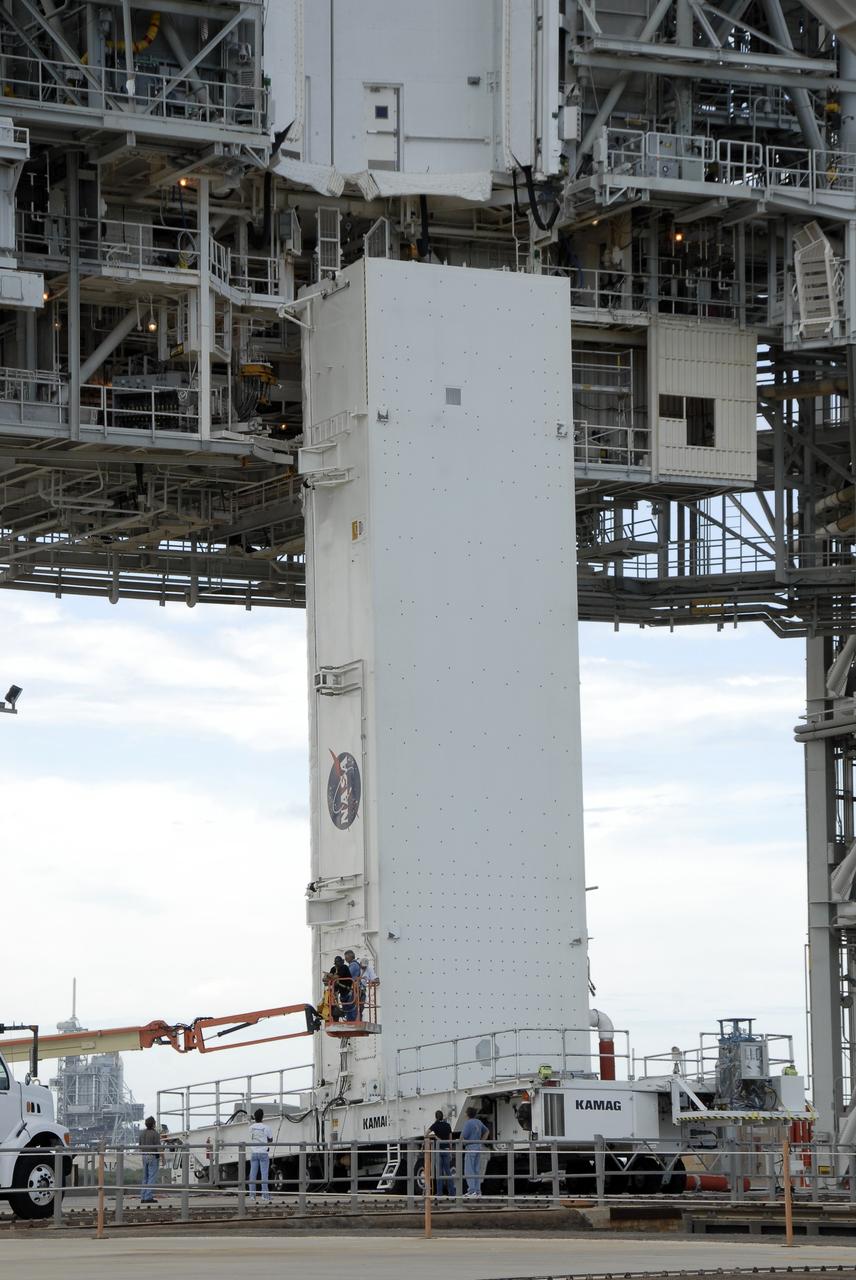
CAPE CANAVERAL, Fla. - At Launch Pad 39A at NASA’s Kennedy Space Center in Florida, technicians work to move the Hubble payload canister into the payload changeout room for space shuttle Atlantis’ STS-125 mission. The canister arrived at the pad on Saturday evening, however, early Sunday morning technicians were unable to place the canister into the pad’s payload changeout room. Teflon pads on “shoes” attached to the outside of the payload canister that help the canister move along guide rails didn’t fit properly. The shoes were removed and several options were considered, including slightly shaving down the pads so the shoes will fit onto the rails. STS-125 is the fifth and final shuttle Hubble Space Telescope servicing mission. Atlantis’ launch is targeted for Oct. 10. Photo credit: NASA/Kim Shiflett.
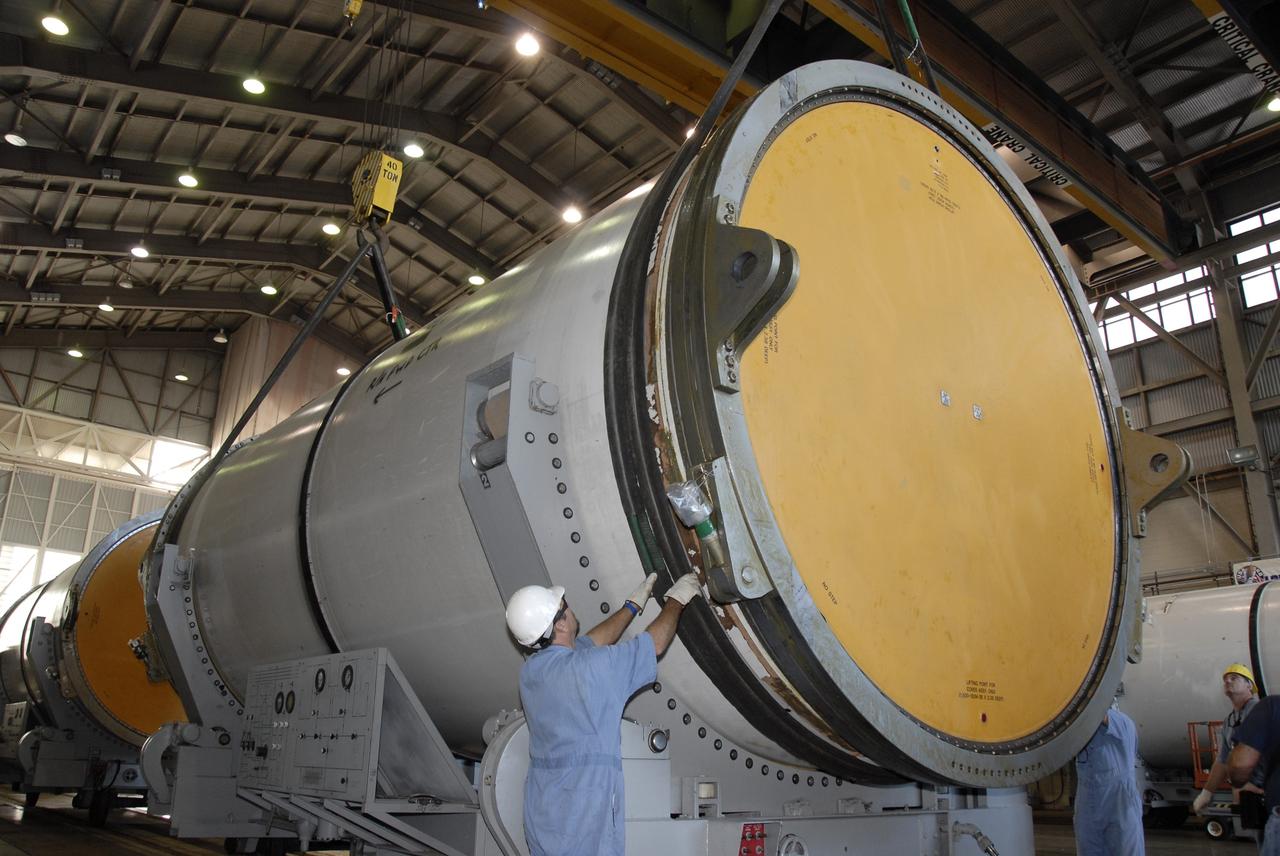
CAPE CANAVERAL, Fla. -- Solid rocket booster, or SRB, segments from the STS-126 launch are being loaded onto transporters to take to the NASA Railroad yard at NASA's Kennedy Space Center for transfer to a rail car. The segments will be taken to Utah. After a mission, the spent boosters are recovered, cleaned, disassembled, refurbished and reused for another launch. After the segments are hydrolased inside, they are placed on flatbed trucks and transferred to the NASA Railroad yard. The NASA Railroad locomotive backs up the rail cars and the segments will be lowered onto the car. After being covered for the trip, the segments will be moved to Titusville for interchange with Florida East Coast Railway to begin the trip back to Utah. Photo credit: NASA/Kim Shiflett
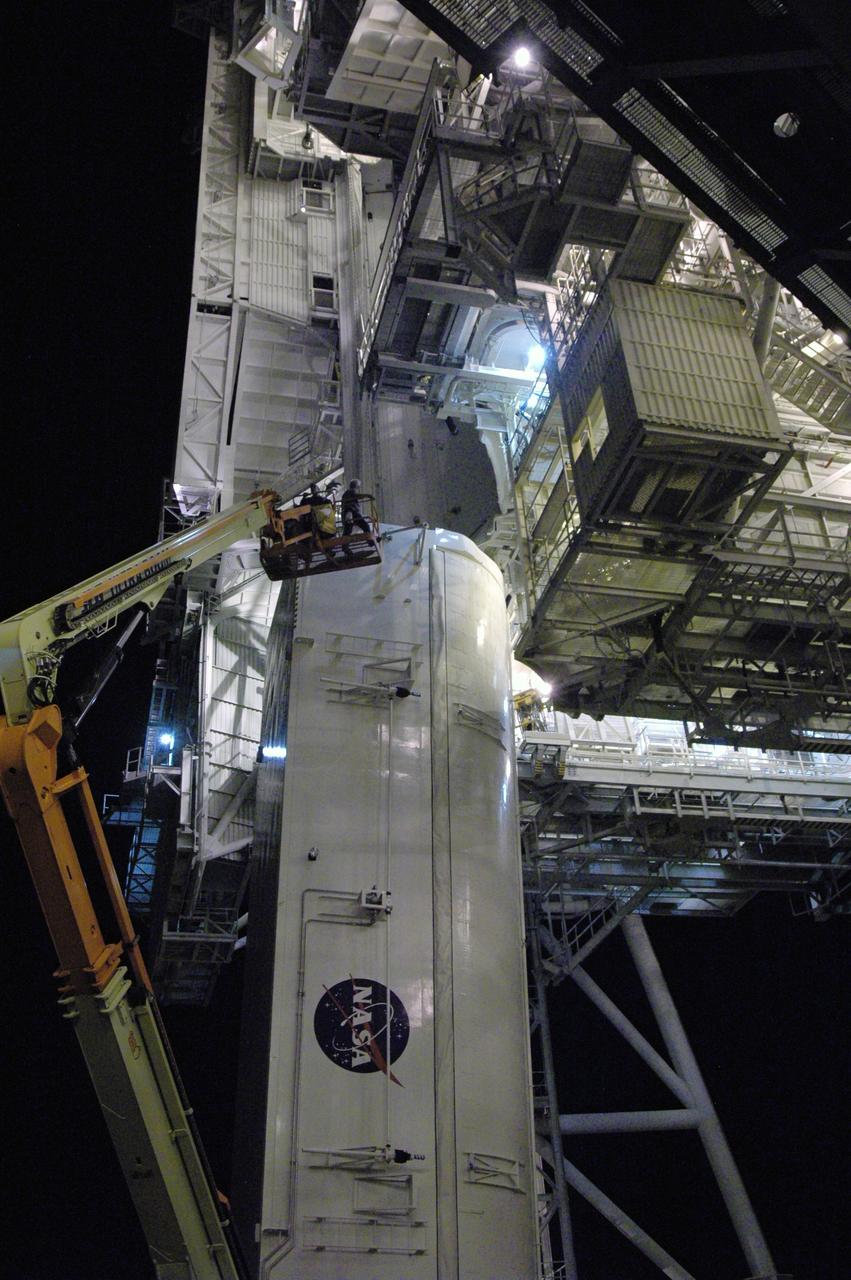
CAPE CANAVERAL, Fla. - At Launch Pad 39A at NASA’s Kennedy Space Center in Florida, technicians work to move the Hubble payload canister into the payload changeout room for space shuttle Atlantis’ STS-125 mission. The canister arrived at the pad on Saturday evening, however, early Sunday morning technicians were unable to place the canister into the pad’s payload changeout room. Teflon pads on “shoes” attached to the outside of the payload canister that help the canister move along guide rails didn’t fit properly. The shoes, one seen here, were removed and several options were considered, including slightly shaving down the pads so the shoes will fit onto the rails. STS-125 is the fifth and final shuttle Hubble Space Telescope servicing mission. Atlantis’ launch is targeted for Oct. 10. Photo credit: NASA/Kim Shiflett.
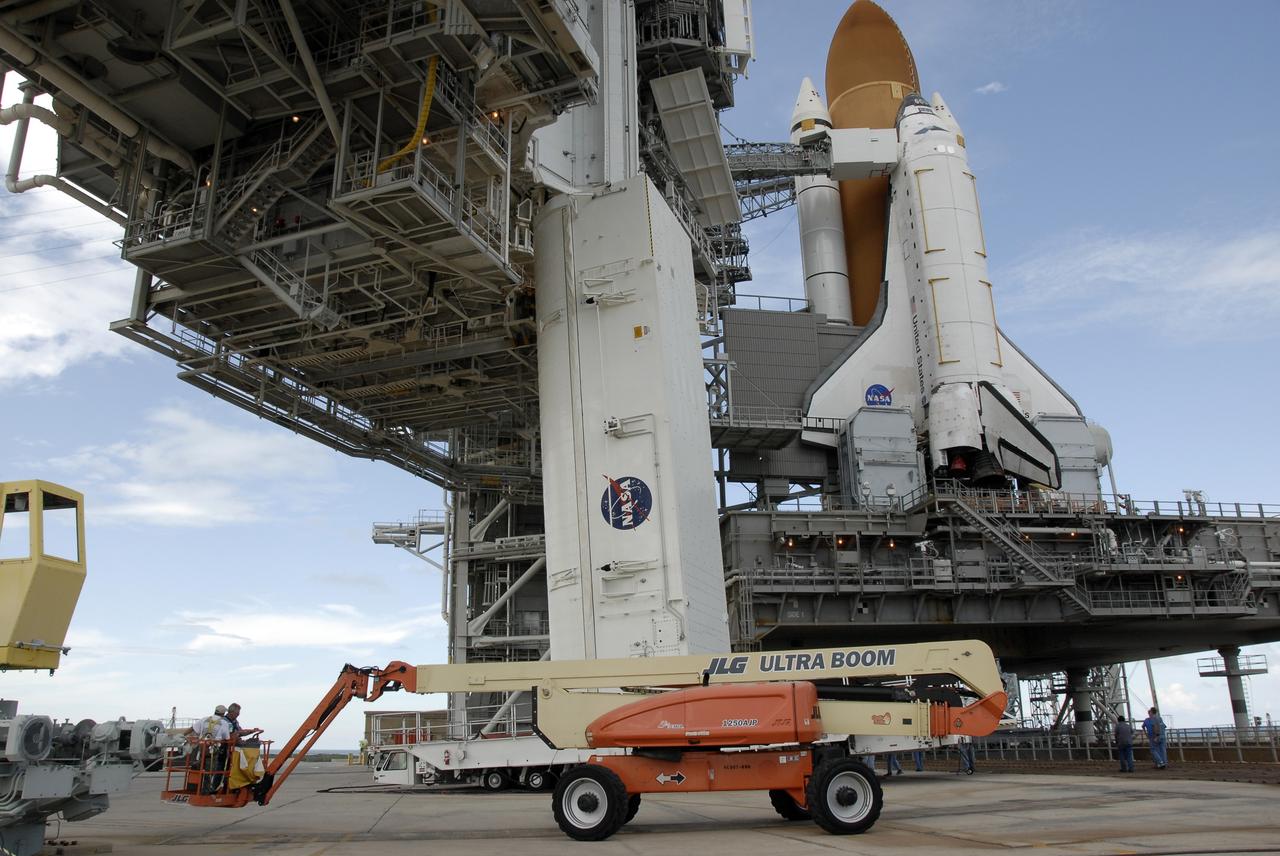
CAPE CANAVERAL, Fla. - On Launch Pad 39A at NASA's Kennedy Space Center, workers on the crane prepare to attach adjusted guide shoes onto the outside of the payload canister for a second lift to the payload changeout room. The first attempt encountered problems when Teflon pads on “shoes” attached to the outside of the canister that go onto guide rails to help the canister into the room didn’t fit properly. The two shoes were removed, slightly shaved down so that they would fit into the rails and put back on the canister. The changeout room is the enclosed, environmentally controlled portion of the rotating service structure that supports cargo delivery to the pad and subsequent vertical installation into the shuttle’s payload bay. Launch of Atlantis is targeted for Oct. 10. Photo credit: NASA/Jim Grossmann
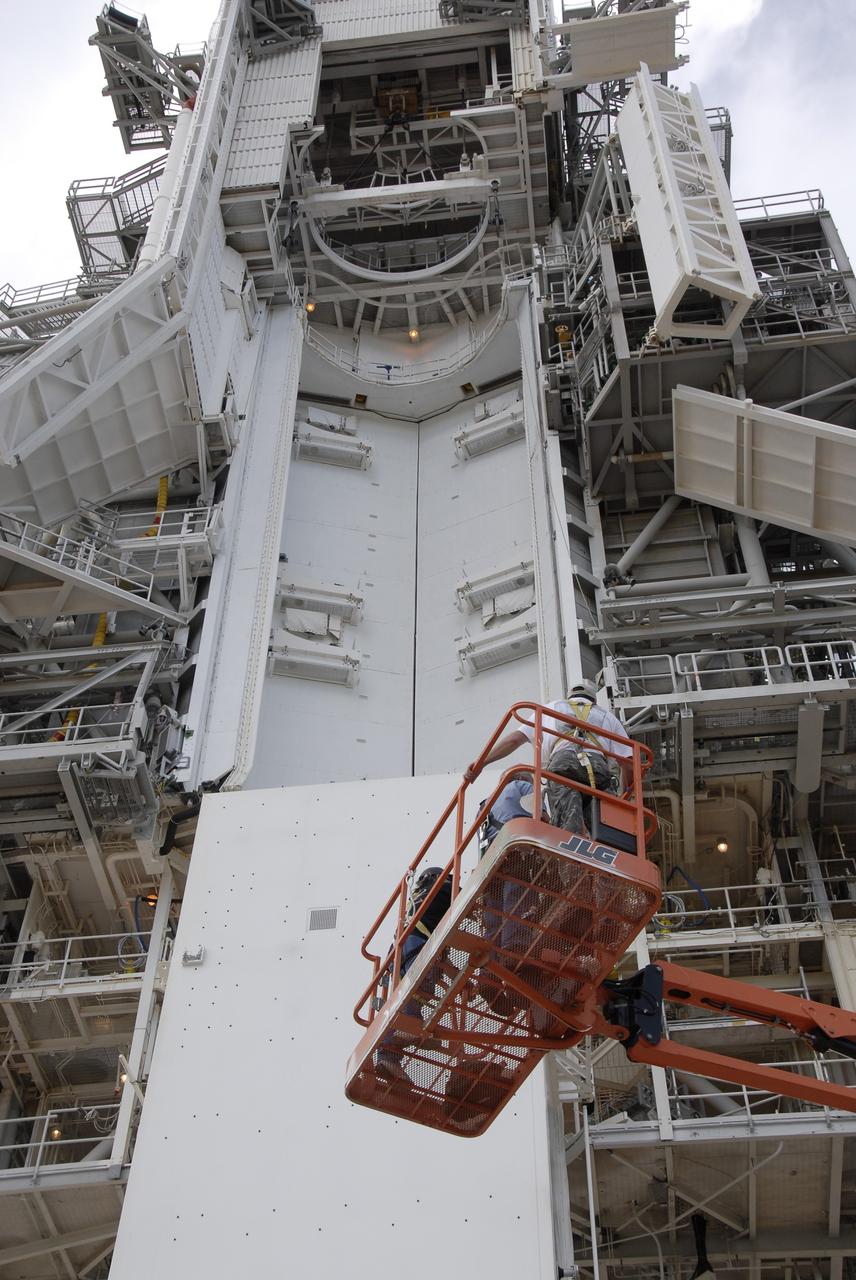
CAPE CANAVERAL, Fla. - At Launch Pad 39A at NASA’s Kennedy Space Center in Florida, technicians work to move the Hubble payload canister into the payload changeout room for space shuttle Atlantis’ STS-125 mission. The canister arrived at the pad on Saturday evening; however, early Sunday morning technicians were unable to place the canister into the pad’s payload changeout room. Teflon pads on “shoes” attached to the outside of the payload canister that help the canister move along the guide rails didn’t fit properly. The shoes were removed and several options were considered, including slightly shaving down the pads so the shoes will fit onto the rails. STS-125 is the fifth and final shuttle Hubble Space Telescope servicing mission. Atlantis’ launch is targeted for Oct. 10. Photo credit: NASA/Kim Shiflett.
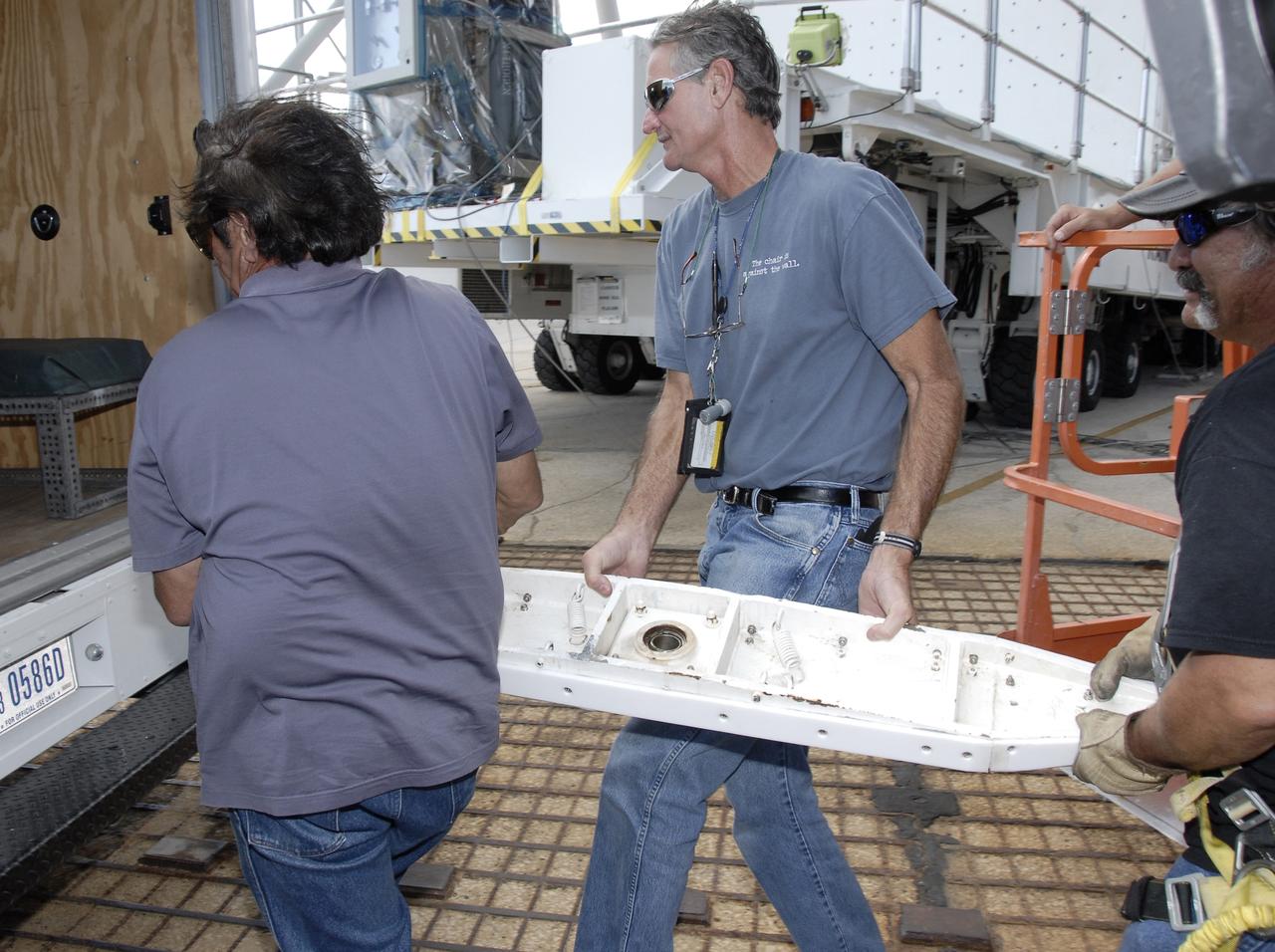
CAPE CANAVERAL, Fla. - Technicians carry a “shoe” that was removed from the Hubble payload canister at Launch Pad 39A at NASA’s Kennedy Space Center in Florida. The canister arrived at the pad on Saturday evening, however, early Sunday morning technicians were unable to place the canister into the pad’s payload changeout room for space shuttle Atlantis’ STS-125 mission. Teflon pads on “shoes” attached to the outside of the payload canister that help the canister move along the guide rails didn’t fit properly. The shoes were removed and several options were considered, including slightly shaving down the pads so the shoes will fit onto the rails. STS-125 is the fifth and final shuttle Hubble Space Telescope servicing mission. Atlantis’ launch is targeted for Oct. 10. Photo credit: NASA/Kim Shiflett.
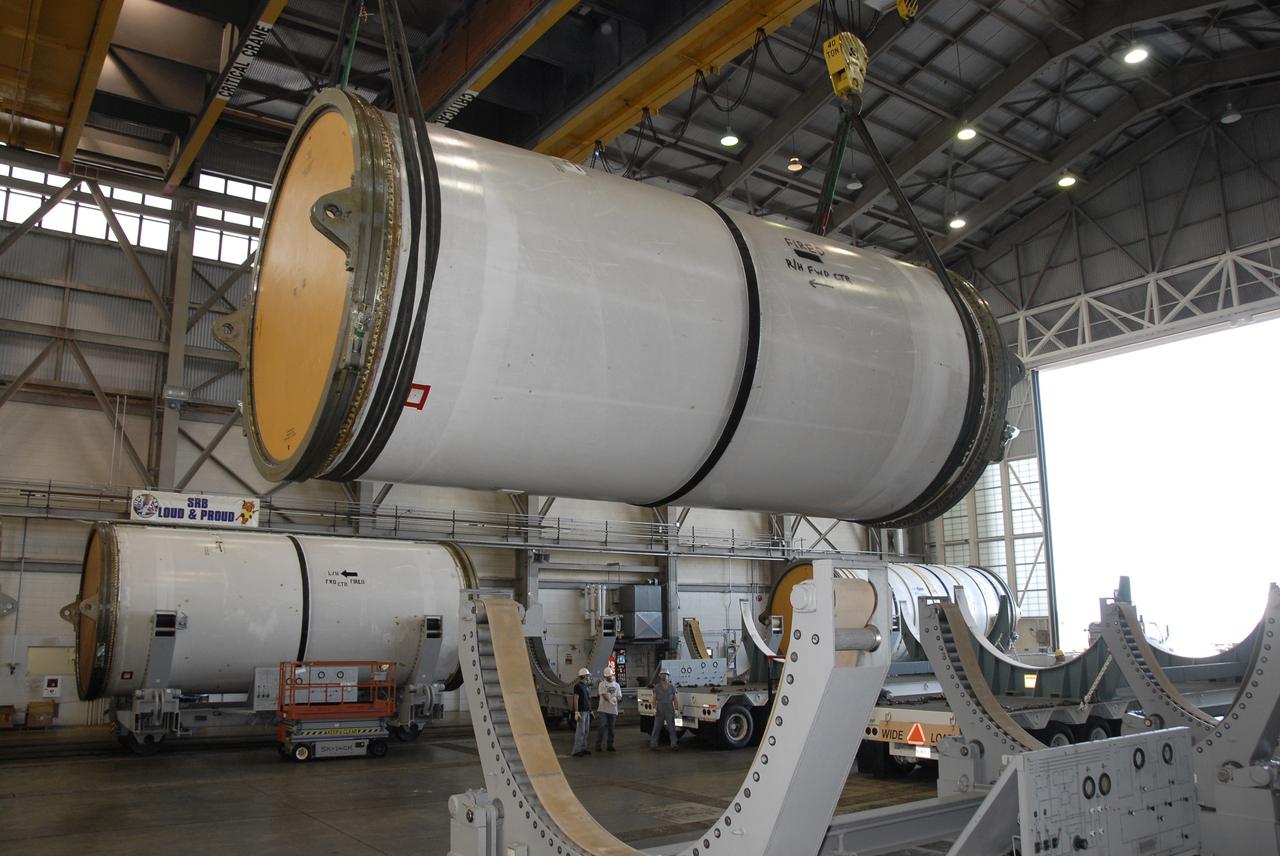
CAPE CANAVERAL, Fla. --Solid rocket booster, or SRB, segments from the STS-126 launch are being loaded onto transporters to take to the NASA Railroad yard at NASA's Kennedy Space Center for transfer to a rail car. The segments will be taken to Utah. After a mission, the spent boosters are recovered, cleaned, disassembled, refurbished and reused for another launch. After the segments are hydrolased inside, they are placed on flatbed trucks and transferred to the NASA Railroad yard. The NASA Railroad locomotive backs up the rail cars and the segments will be lowered onto the car. After being covered for the trip, the segments will be moved to Titusville for interchange with Florida East Coast Railway to begin the trip back to Utah. Photo credit: NASA/Kim Shiflett
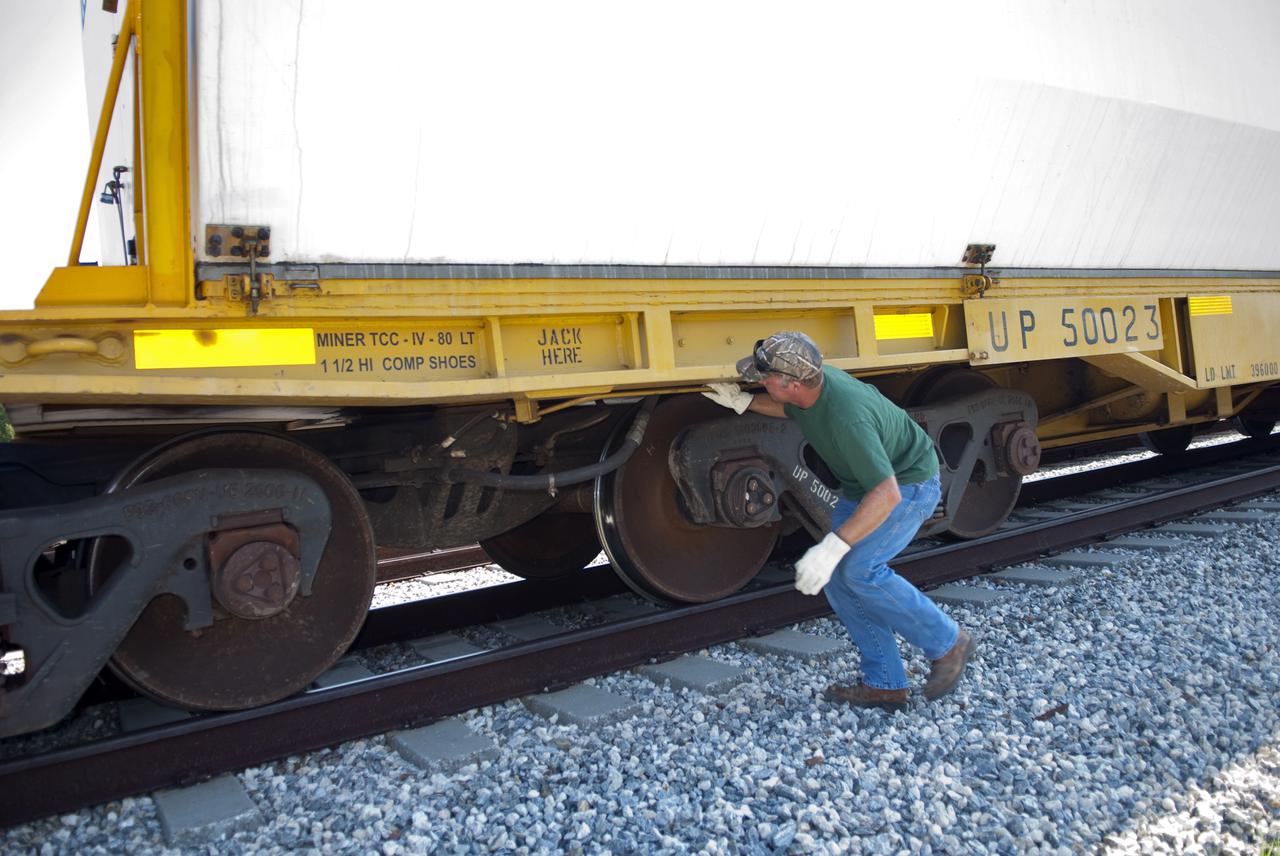
CAPE CANAVERAL, Fla. - At the Jay Jay Rail Yard in Titusville, Fla., a NASA Railroad mechanic checks out the brakes on a Union Pacific rail car carrying one of the last space shuttle solid rocket booster segments. The NASA train will transport the segments on the last leg of their journey into NASA's Kennedy Space Center. Six cars transported the segments along the Florida East Coast Railway, which began at the ATK solid rocket booster plant in Promontory, Utah. The booster segments will be used for shuttle Atlantis on what currently is planned as the 'launch on need,' or potential rescue mission for the final shuttle flight, Endeavour's STS-134 mission. For information, visit www.nasa.gov_shuttle. Photo credit: NASA_Jim Grossman
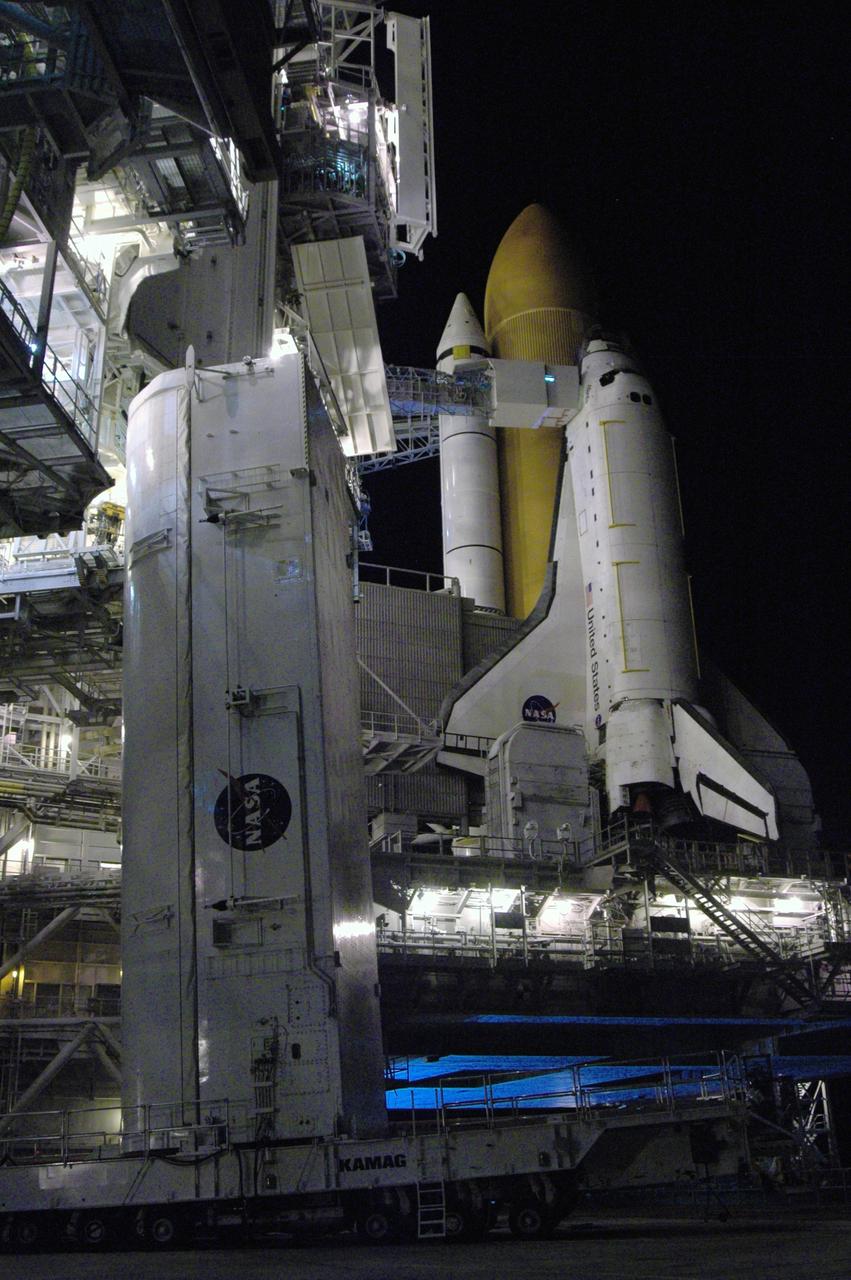
CAPE CANAVERAL, Fla. - On Launch Pad 39A at NASA's Kennedy Space Center, the payload canister waits for adjusted guide shoes to be attached before being lifted to the payload changeout room for the second time. The first attempt encountered problems when Teflon pads on “shoes” attached to the outside of the canister that go onto guide rails to help the canister into the room didn’t fit properly. The two shoes were removed, slightly shaved down so that they would fit into the rails and put back on the canister. The changeout room is the enclosed, environmentally controlled portion of the rotating service structure that supports cargo delivery to the pad and subsequent vertical installation into the shuttle’s payload bay. Launch of Atlantis is targeted for Oct. 10. Photo credit: NASA/Jim Grossmann
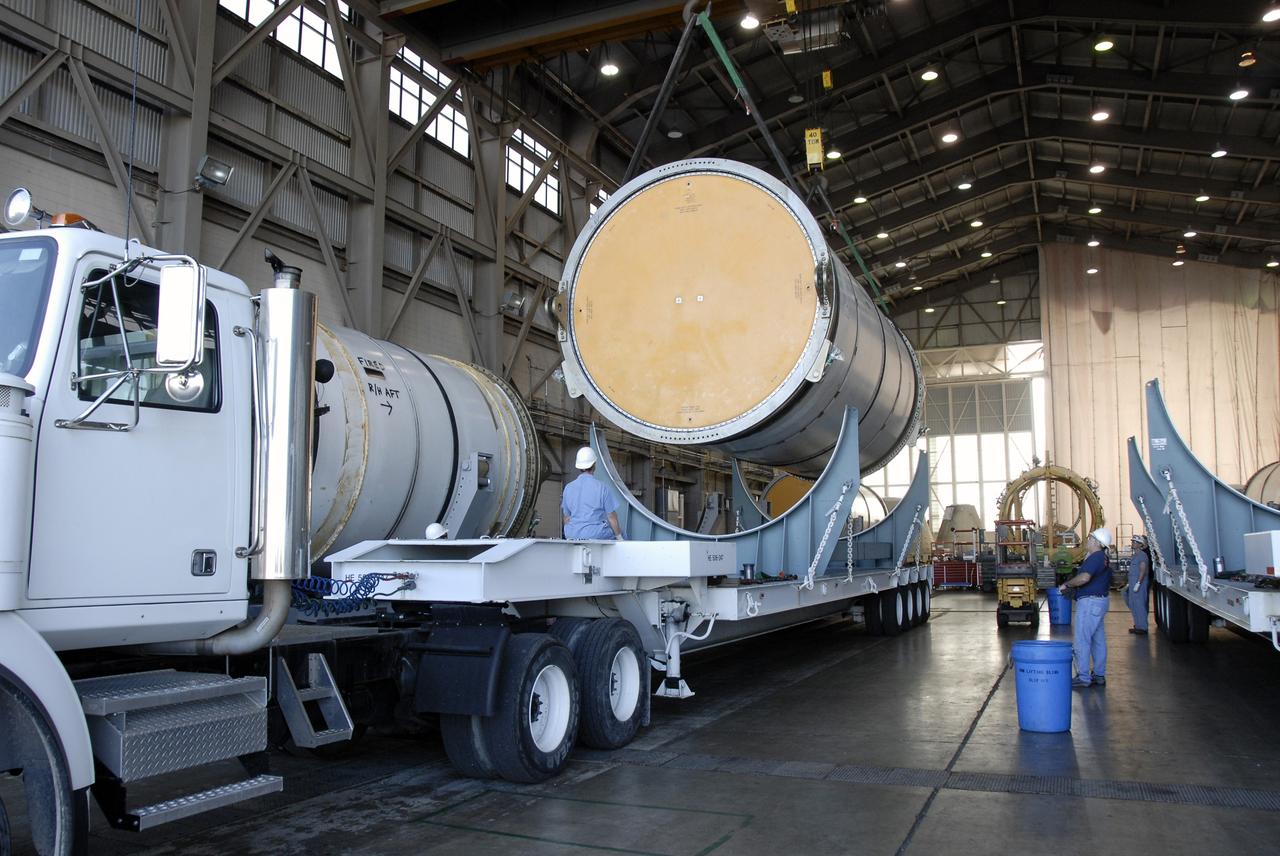
CAPE CANAVERAL, Fla. -- Solid rocket booster, or SRB, segments from the STS-126 launch are being loaded onto transporters to take to the NASA Railroad yard at NASA's Kennedy Space Center for transfer to a rail car. The segments will be taken to Utah. After a mission, the spent boosters are recovered, cleaned, disassembled, refurbished and reused for another launch. After the segments are hydrolased inside, they are placed on flatbed trucks and transferred to the NASA Railroad yard. The NASA Railroad locomotive backs up the rail cars and the segments are lowered onto the car. After being covered for the trip, the segments will be moved to Titusville for interchange with Florida East Coast Railway to begin the trip back to Utah. Photo credit: NASA/Kim Shiflett

CAPE CANAVERAL, Fla. - A close up view of one of the “shoes” removed from the Hubble payload canister at Launch Pad 39A at NASA’s Kennedy Space Center in Florida. The canister arrived at the pad on Saturday evening; however, early Sunday morning technicians were unable to place the canister into the pad’s payload changeout room for space shuttle Atlantis’ STS-125 mission. Teflon pads on “shoes” attached to the outside of the payload canister that help the canister move along the guide rails didn’t fit properly. The shoes were removed and several options were considered, including slightly shaving down the pads so the shoes will fit onto the rails. STS-125 is the fifth and final shuttle Hubble Space Telescope servicing mission. Atlantis’ launch is targeted for Oct. 10. Photo credit: NASA/Kim Shiflett.
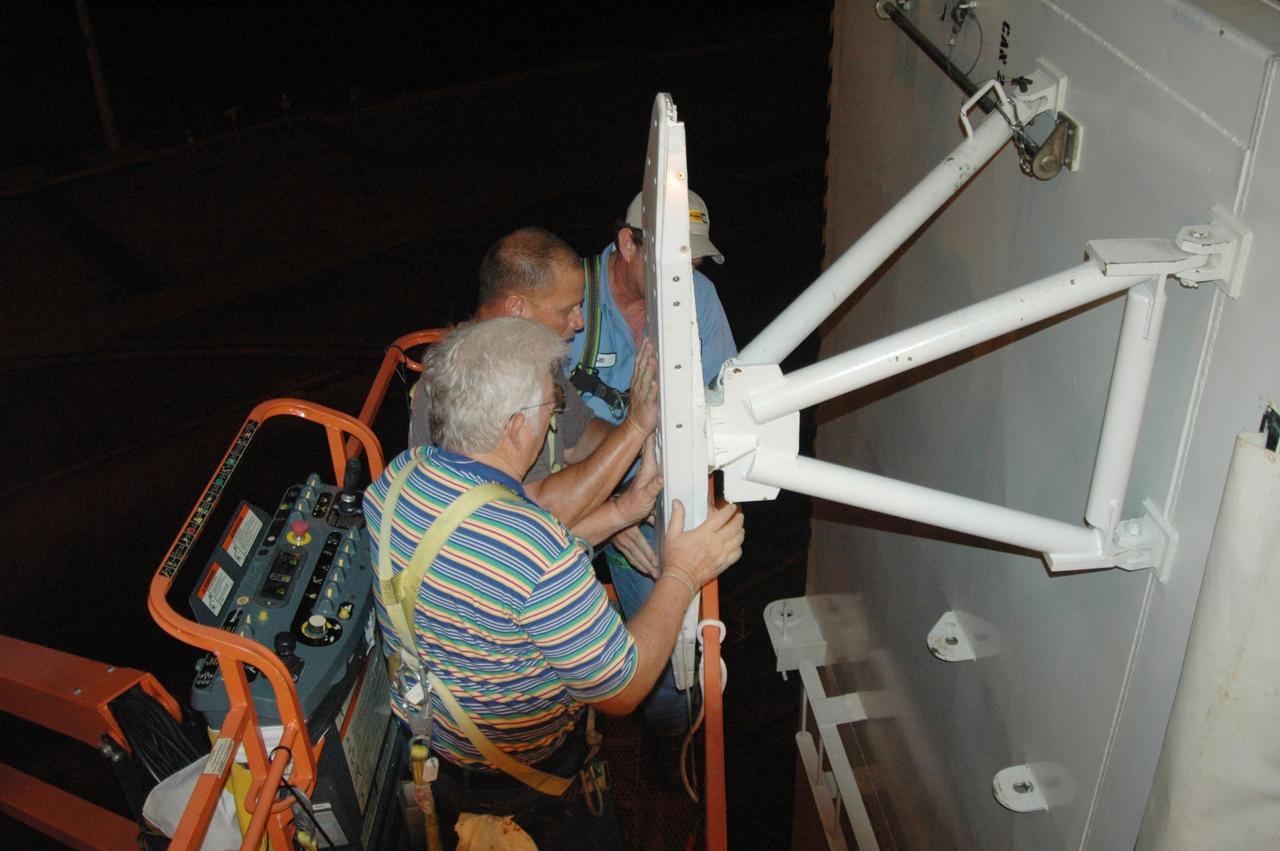
CAPE CANAVERAL, Fla. - On Launch Pad 39A at NASA's Kennedy Space Center, workers on a crane attach adjusted guide shoes onto the outside of the payload canister for attempt at a second lift to the payload changeout room. The first attempt encountered problems when Teflon pads on “shoes” attached to the outside of the canister that go onto guide rails to help the canister into the room didn’t fit properly. The two shoes were removed, slightly shaved down so that they would fit into the rails and put back on the canister. The changeout room is the enclosed, environmentally controlled portion of the rotating service structure that supports cargo delivery to the pad and subsequent vertical installation into the shuttle’s payload bay. Launch of Atlantis is targeted for Oct. 10. Photo credit: NASA/Jim Grossmann
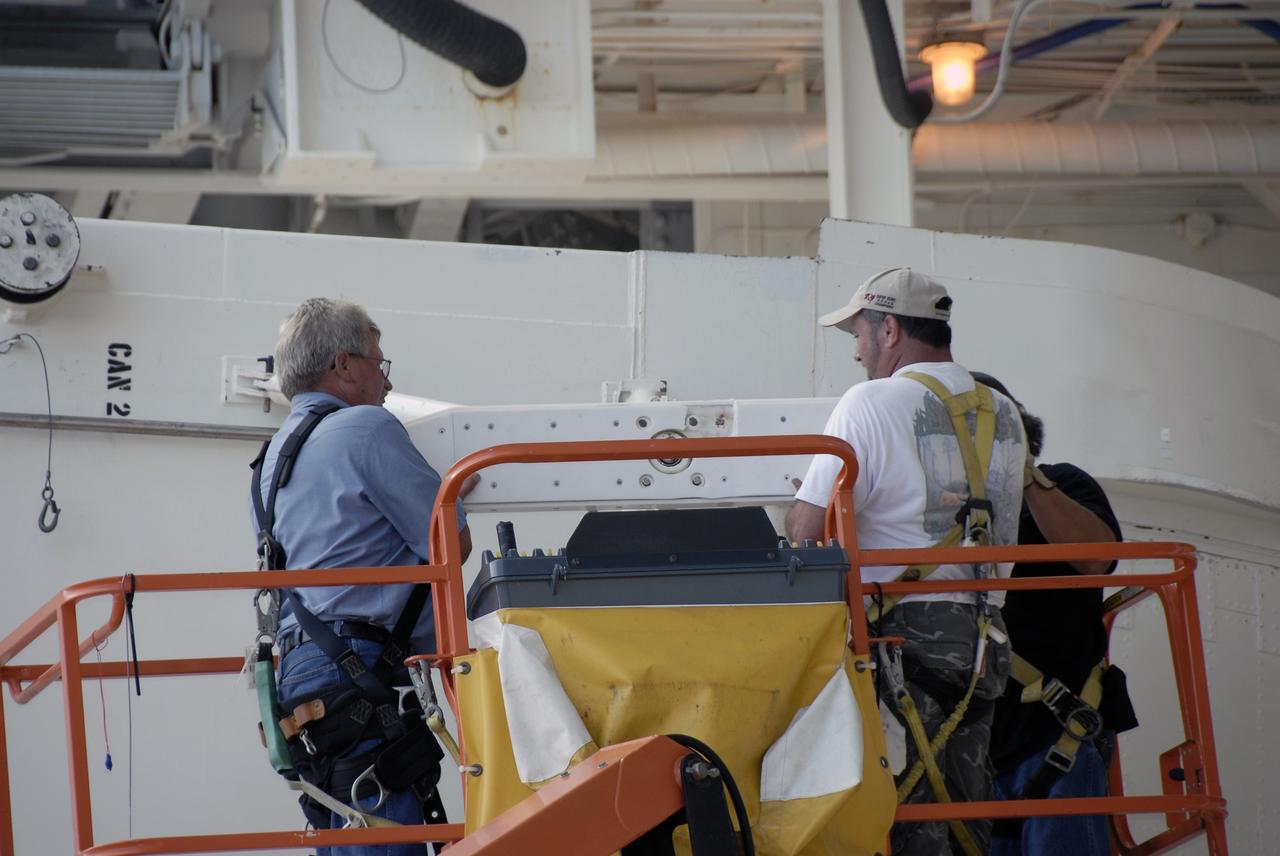
CAPE CANAVERAL, Fla. - At Launch Pad 39A at NASA’s Kennedy Space Center in Florida, technicians work to move the Hubble payload canister into the payload changeout room for space shuttle Atlantis’ STS-125 mission. The canister arrived at the pad on Saturday evening; however, early Sunday morning technicians were unable to place the canister into the pad’s payload changeout room. Teflon pads on “shoes” attached to the outside of the payload canister that help the canister move along the guide rails didn’t fit properly. The shoes were removed and several options were considered, including slightly shaving down the pads so the shoes will fit onto the rails. STS-125 is the fifth and final shuttle Hubble Space Telescope servicing mission. Atlantis’ launch is targeted for Oct. 10. Photo credit: NASA/Kim Shiflett.
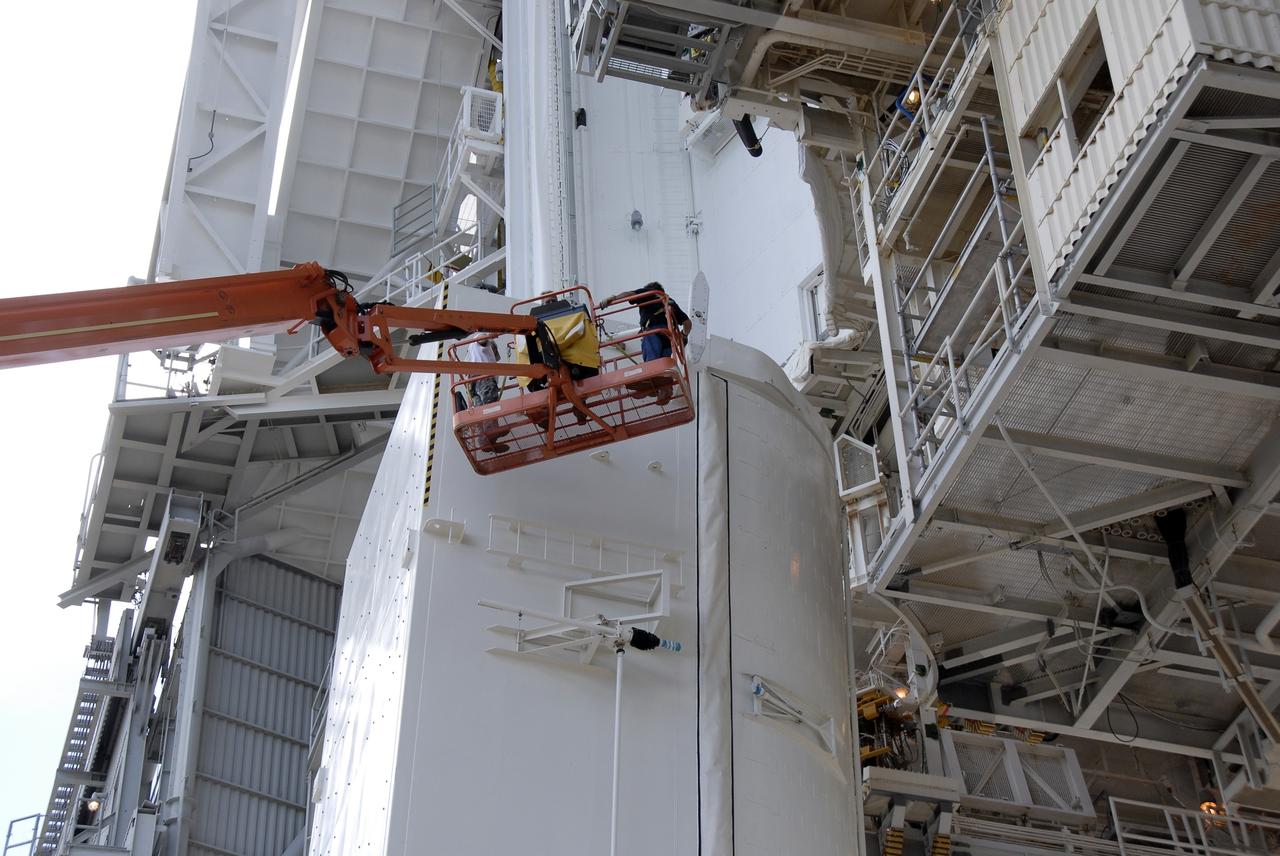
CAPE CANAVERAL, Fla. - At Launch Pad 39A at NASA’s Kennedy Space Center in Florida, technicians work to move the Hubble payload canister into the payload changeout room for space shuttle Atlantis’ STS-125 mission. The canister arrived at the pad on Saturday evening; however, early Sunday morning technicians were unable to place the canister into the pad’s payload changeout room. Teflon pads on “shoes” attached to the outside of the payload canister that help the canister move along the guide rails didn’t fit properly. The shoes were removed and several options were considered, including slightly shaving down the pads so the shoes will fit onto the rails. STS-125 is the fifth and final shuttle Hubble Space Telescope servicing mission. Atlantis’ launch is targeted for Oct. 10. Photo credit: NASA/Kim Shiflett.

CAPE CANAVERAL, Fla. - On Launch Pad 39A at NASA's Kennedy Space Center, workers on a crane attach adjusted guide shoes onto the outside of the payload canister for attempt at a second lift to the payload changeout room. The first attempt encountered problems when Teflon pads on “shoes” attached to the outside of the canister that go onto guide rails to help the canister into the room didn’t fit properly. The two shoes were removed, slightly shaved down so that they would fit into the rails and put back on the canister. The changeout room is the enclosed, environmentally controlled portion of the rotating service structure that supports cargo delivery to the pad and subsequent vertical installation into the shuttle’s payload bay. Launch of Atlantis is targeted for Oct. 10. Photo credit: NASA/Jim Grossmann
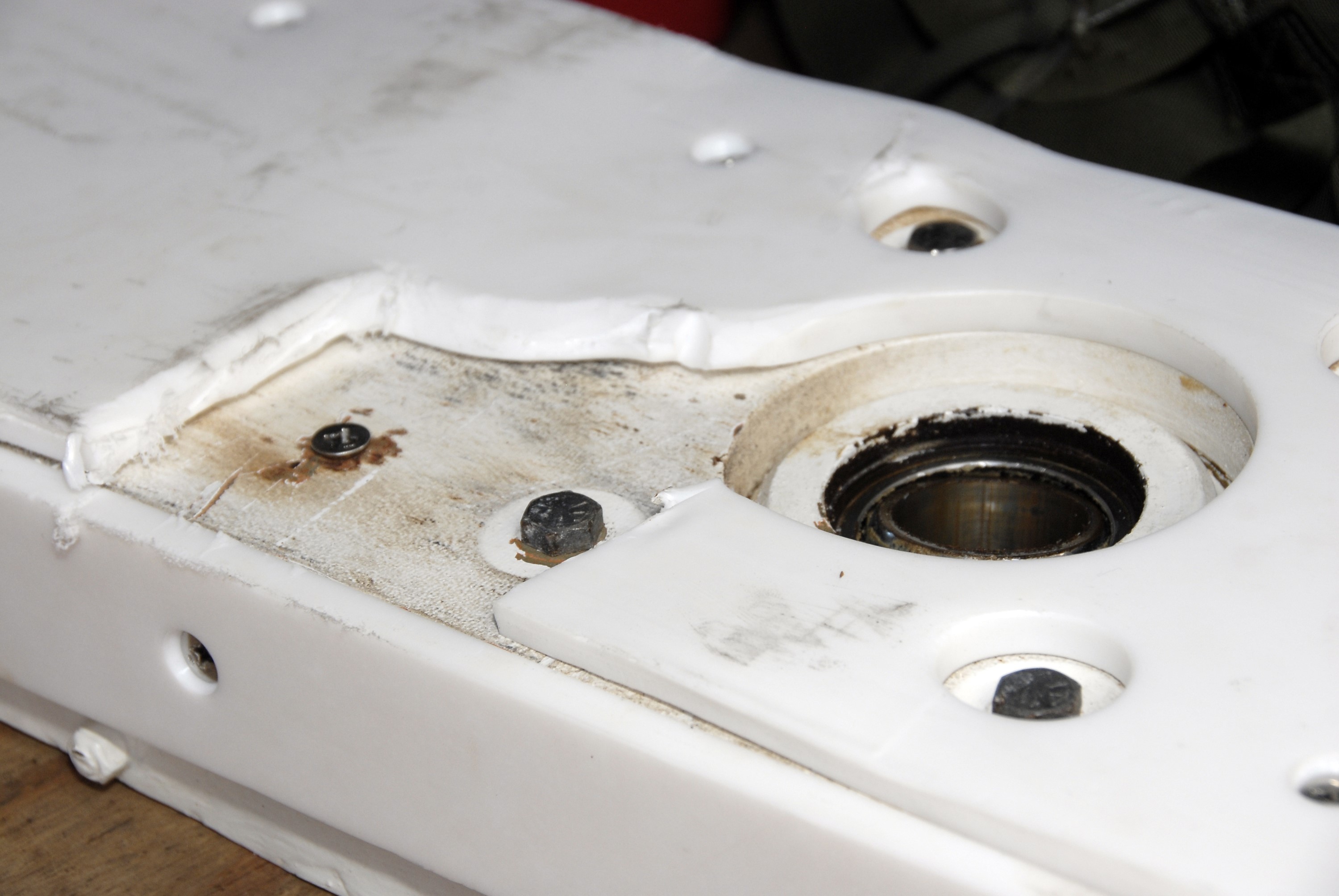
CAPE CANAVERAL, Fla. - A close up view of one of the “shoes” removed from the Hubble payload canister at Launch Pad 39A at NASA’s Kennedy Space Center in Florida. The canister arrived at the pad on Saturday evening; however, early Sunday morning technicians were unable to place the canister into the pad’s payload changeout room for space shuttle Atlantis’ STS-125 mission. Teflon pads on “shoes” attached to the outside of the payload canister that help the canister move along the guide rails didn’t fit properly. The shoes were removed and several options were considered, including slightly shaving down the pads so the shoes will fit onto the rails. STS-125 is the fifth and final shuttle Hubble Space Telescope servicing mission. Atlantis’ launch is targeted for Oct. 10. Photo credit: NASA/Kim Shiflett.
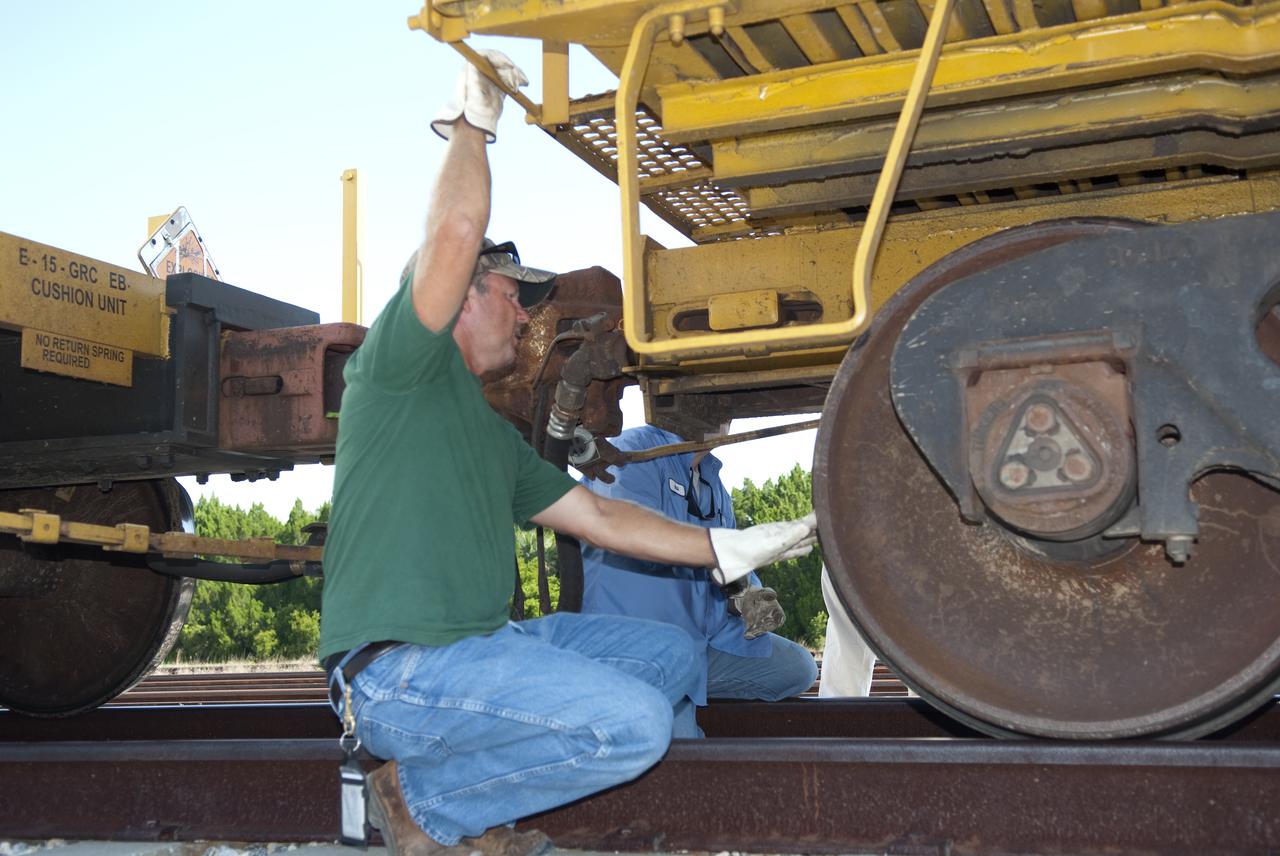
CAPE CANAVERAL, Fla. - At the Jay Jay Rail Yard in Titusville, Fla., a NASA Railroad mechanic checks out the brakes on a Union Pacific rail car carrying one of the last space shuttle solid rocket booster segments. The NASA train will transport the segments on the last leg of their journey into NASA's Kennedy Space Center. Six cars transported the segments along the Florida East Coast Railway, which began at the ATK solid rocket booster plant in Promontory, Utah. The booster segments will be used for shuttle Atlantis on what currently is planned as the 'launch on need,' or potential rescue mission for the final shuttle flight, Endeavour's STS-134 mission. For information, visit www.nasa.gov_shuttle. Photo credit: NASA_Jim Grossmann
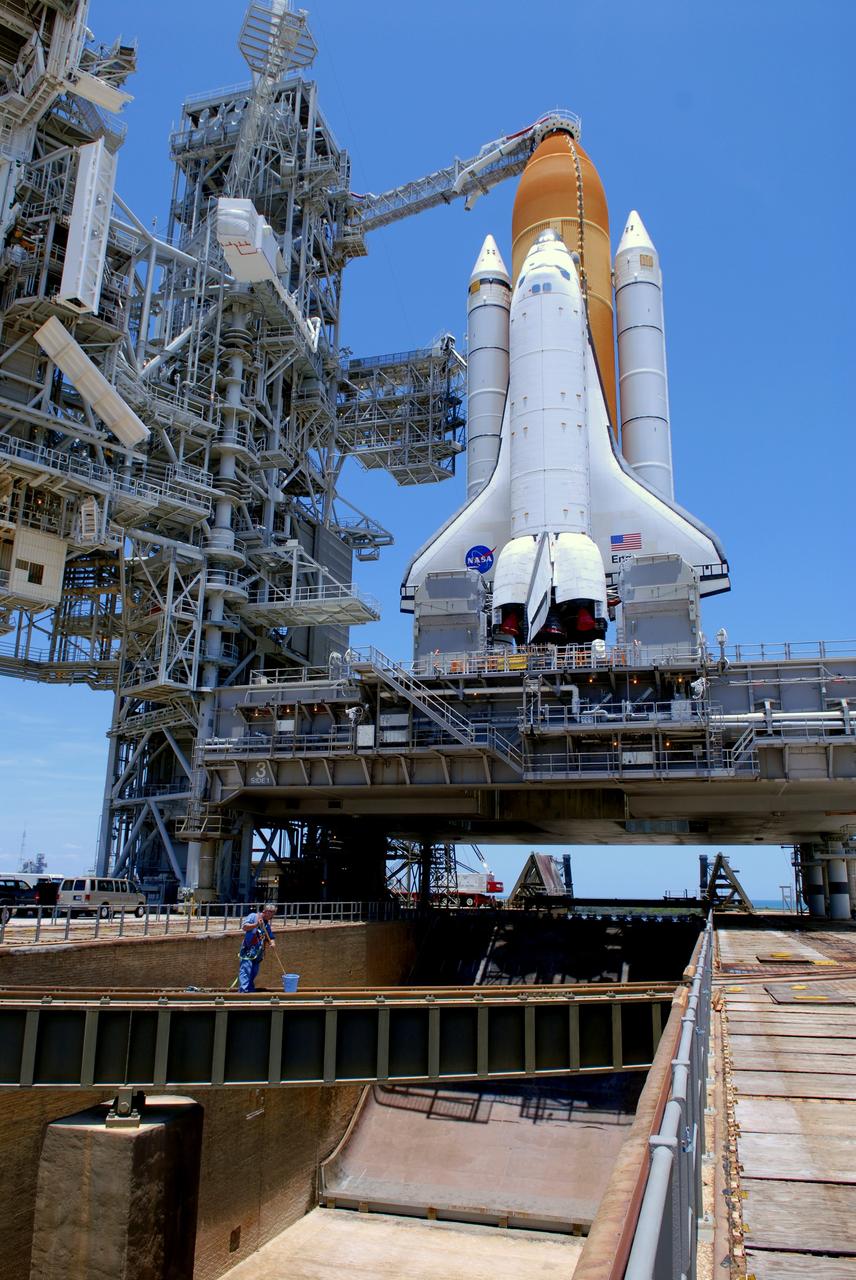
CAPE CANAVERAL, Fla. – On Launch Pad 39A at NASA's Kennedy Space Center in Florida, a worker prepares the rail for the closing of the rotating service structure around space shuttle Endeavour. The RSS provides protected access to the shuttle for changeout and servicing of payloads at the pad. The structure is supported by a rotating bridge that pivots about a vertical axis on the west side of the pad's flame trench. The RSS rotates through 120 degrees (one-third of a circle) on a radius of 160 feet. Support for the outer end of the bridge is provided by two eight-wheel, motor-driven trucks that move along circular twin rails installed flush with the pad surface. The track crosses the flame trench on a permanent bridge. Endeavour is targeted to launch June 13 on its STS-127 mission to the International Space Station. Photo credit: NASA/Tim Jacobs
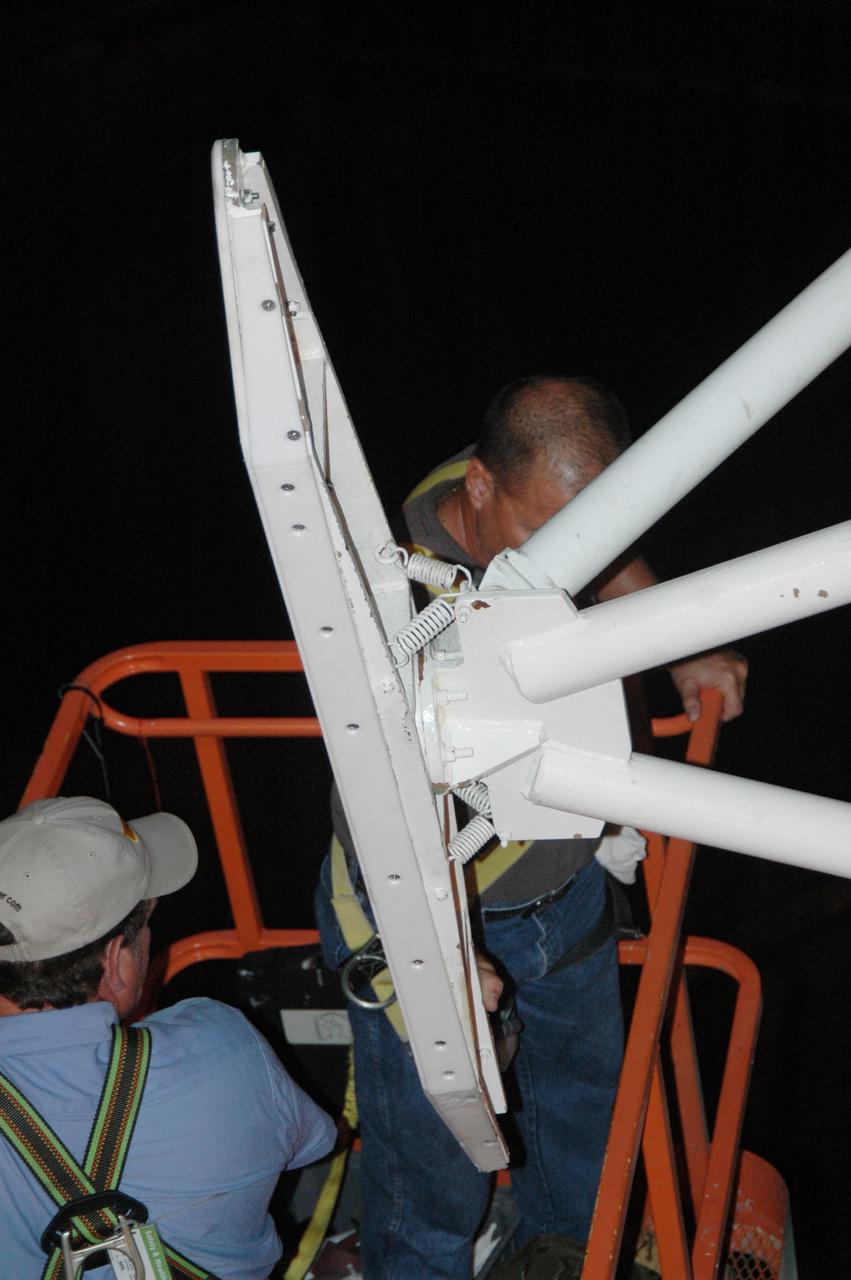
CAPE CANAVERAL, Fla. - On Launch Pad 39A at NASA's Kennedy Space Center, workers on a crane attach adjusted guide shoes onto the outside of the payload canister for attempt at a second lift into the payload changeout room. The first attempt encountered problems when Teflon pads on “shoes” attached to the outside of the canister that go onto guide rails to help the canister into the room didn’t fit properly. The two shoes were removed, slightly shaved down so that they would fit into the rails and put back on the canister. The changeout room is the enclosed, environmentally controlled portion of the rotating service structure that supports cargo delivery to the pad and subsequent vertical installation into the shuttle’s payload bay. Launch of Atlantis is targeted for Oct. 10. Photo credit: NASA/Jim Grossmann
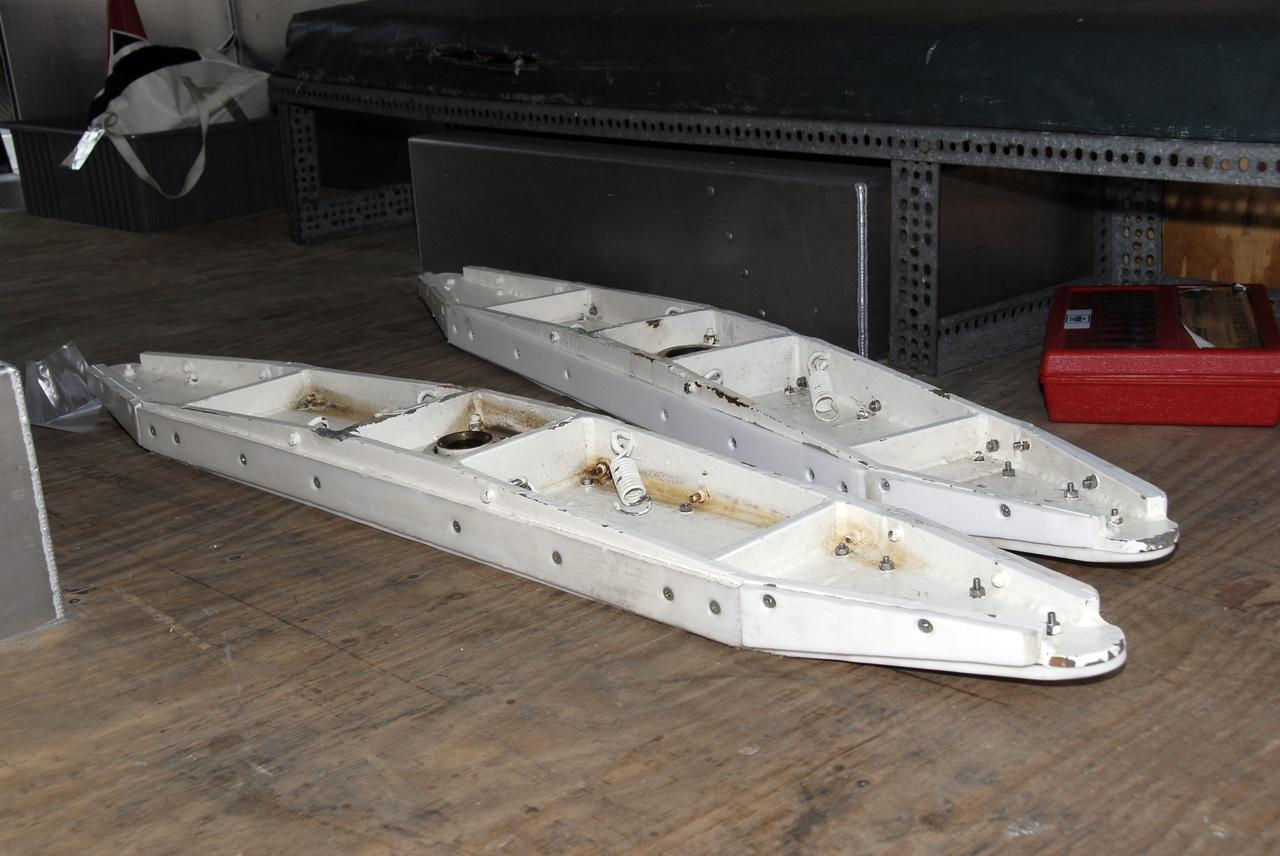
CAPE CANAVERAL, Fla. - Technicians removed two “shoes” from the Hubble payload canister at Launch Pad 39A at NASA’s Kennedy Space Center in Florida. The canister arrived at the pad on Saturday evening; however, early Sunday morning technicians were unable to place the canister into the pad’s payload changeout room for space shuttle Atlantis’ STS-125 mission. Teflon pads on “shoes” attached to the outside of the payload canister that help the canister move along the guide rails didn’t fit properly. The shoes were removed and several options were considered, including slightly shaving down the pads so the shoes will fit onto the rails. STS-125 is the fifth and final shuttle Hubble Space Telescope servicing mission. Atlantis’ launch is targeted for Oct. 10. Photo credit: NASA/Kim Shiflett.

CAPE CANAVERAL, Fla. - At Launch Pad 39A at NASA’s Kennedy Space Center in Florida, technicians work to move the Hubble payload canister into the payload changeout room for space shuttle Atlantis’ STS-125 mission. The canister arrived at the pad on Saturday evening, however, early Sunday morning technicians were unable to place the canister into the pad’s payload changeout room. Teflon pads on “shoes” attached to the outside of the payload canister that help the canister move along guide rails didn’t fit properly. The shoes were removed and several options were considered, including slightly shaving down the pads so the shoes will fit onto the rails. STS-125 is the fifth and final shuttle Hubble Space Telescope servicing mission. Atlantis’ launch is targeted for Oct. 10. Photo credit: NASA/Kim Shiflett.
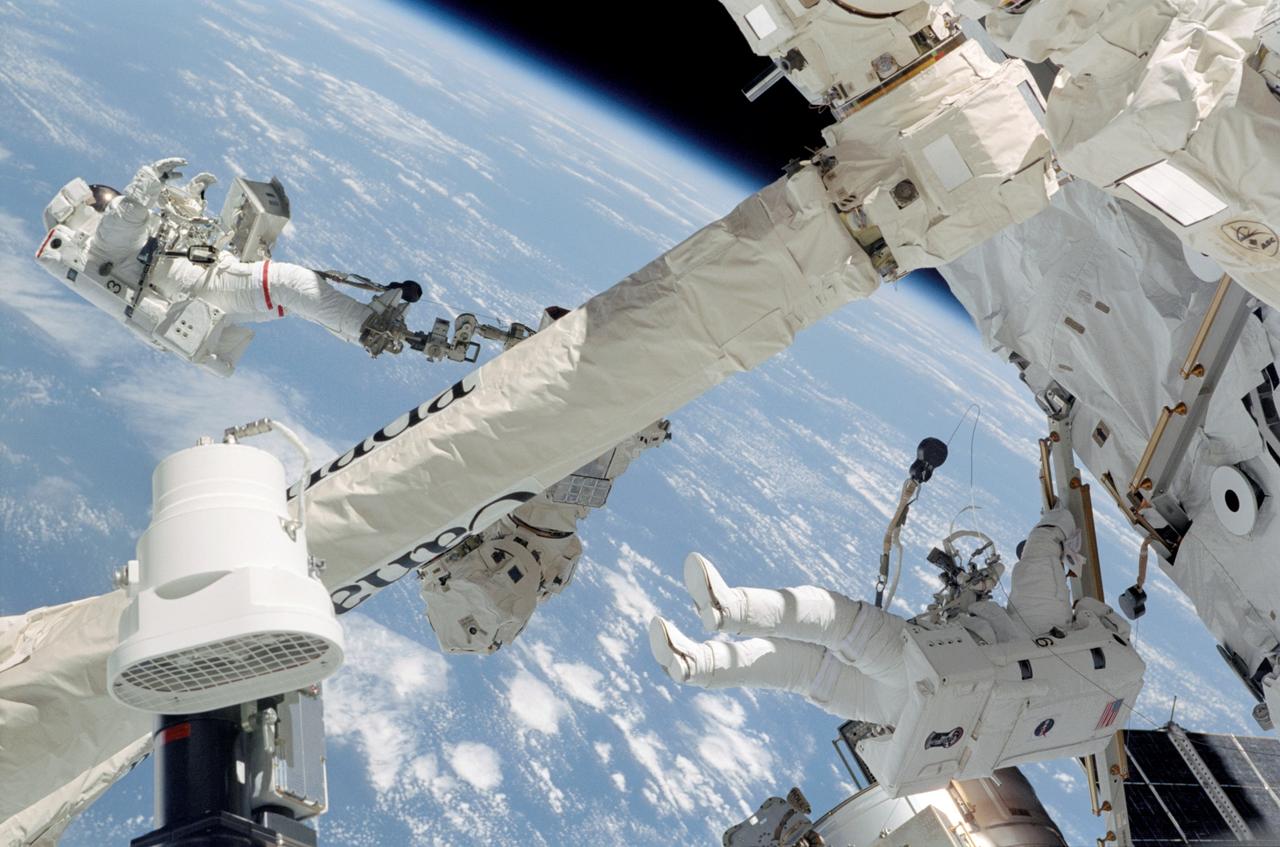
STS112-326-033 (12 October 2002) --- Astronauts David A. Wolf (left) and Piers J. Sellers, both STS-112 mission specialists, participate in the mission’s second session of extravehicular activity (EVA). Wolf is anchored to a foot restraint on the International Space Station’s (ISS) Canadarm2 while Sellers traverses along the airlock spur, a route used by spacewalkers to get from the Quest airlock on the station to the outpost's truss.
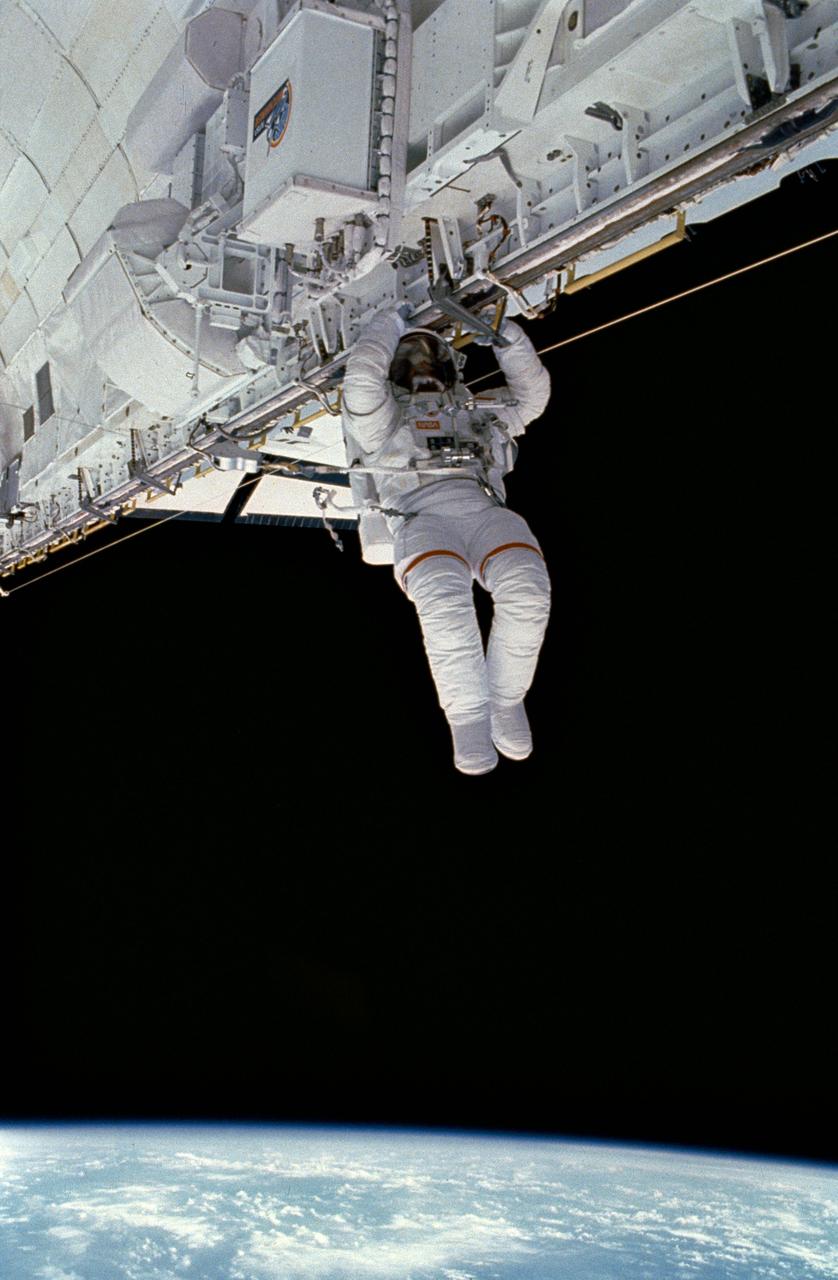
STS054-05-008 (17 Jan 1993) --- Astronaut Gregory J. Harbaugh translates along the starboard longeron of Endeavour's cargo bay. Astronauts Harbaugh and Mario Runco Jr., mission specialists, spent four-plus hours on the extravehicular activity (EVA) on January 17, 1993. Also onboard NASA's newest Shuttle for the six-day mission were astronauts John H. Casper, mission commander; and Donald R. McMonagle, pilot; and Susan J. Helms, mission specialist. The photograph was taken with a 35mm camera.
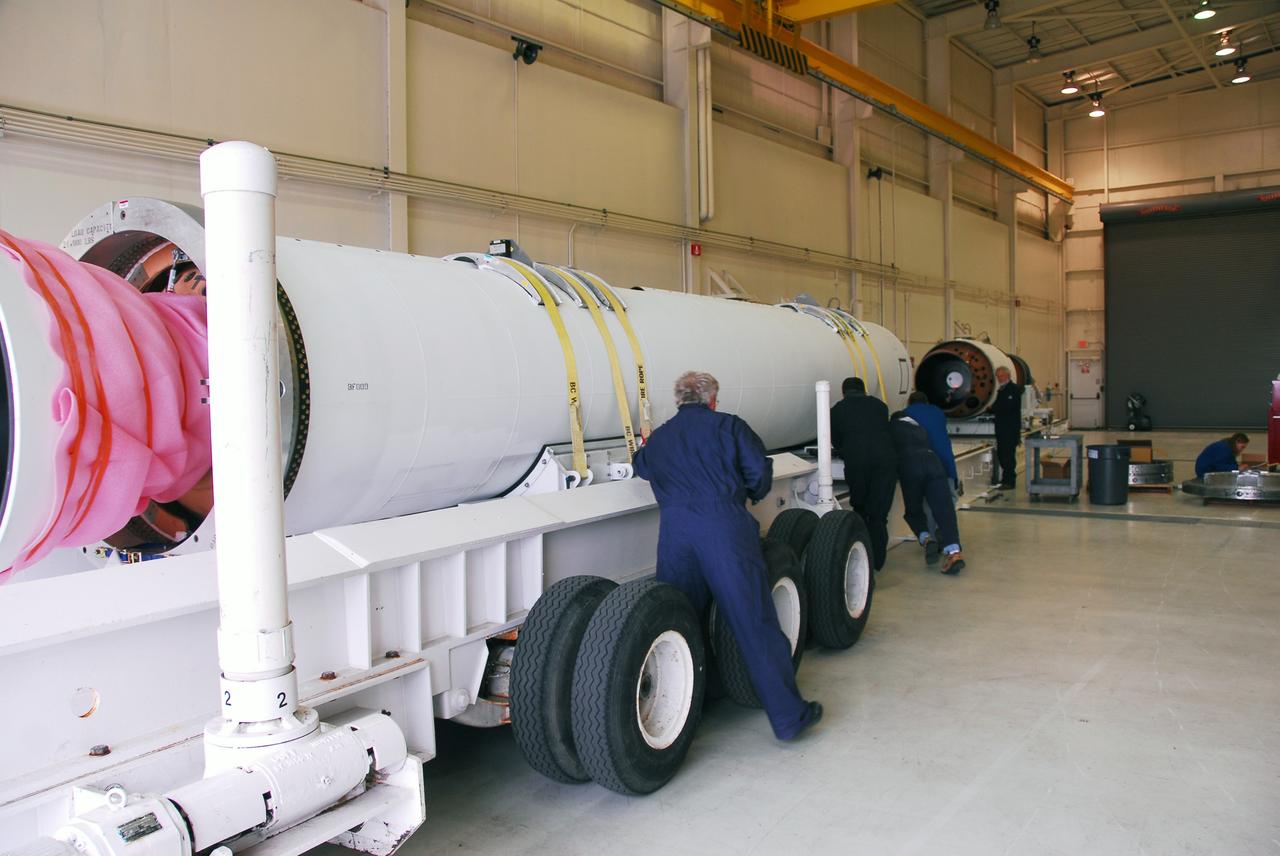
VANDENBERG AIR FORCE BASE, Calif. -- At Vandenberg AFB, the first stage of the Taurus rocket is being moved onto the stationary rails in Building 1555's west bay. The Taurus will launch the Orbiting Carbon Observatory, or OCO, in 2009. The OCO is a new Earth-orbiting mission sponsored by NASA's Earth System Science Pathfinder Program. Photo credit: NASA/Randy Beaudoin

jsc2025e047417 (5/27/2025) --- The High school Students United with NASA to Create Hardware (HUNCH) has designed a device to replace Bogen arms aboard the International Space Station. The HUNCH Utility Bracket (HUB) can be attached to frames and rails and can hold cameras, iPads, and other equipment. The HUB has a jointed design that allows ample range of movement and flexibility. This device aims to aid crew members with tasks such as recording videos and holding iPads to increase efficiency of operations aboard space station. (Image courtesy of HUNCH)
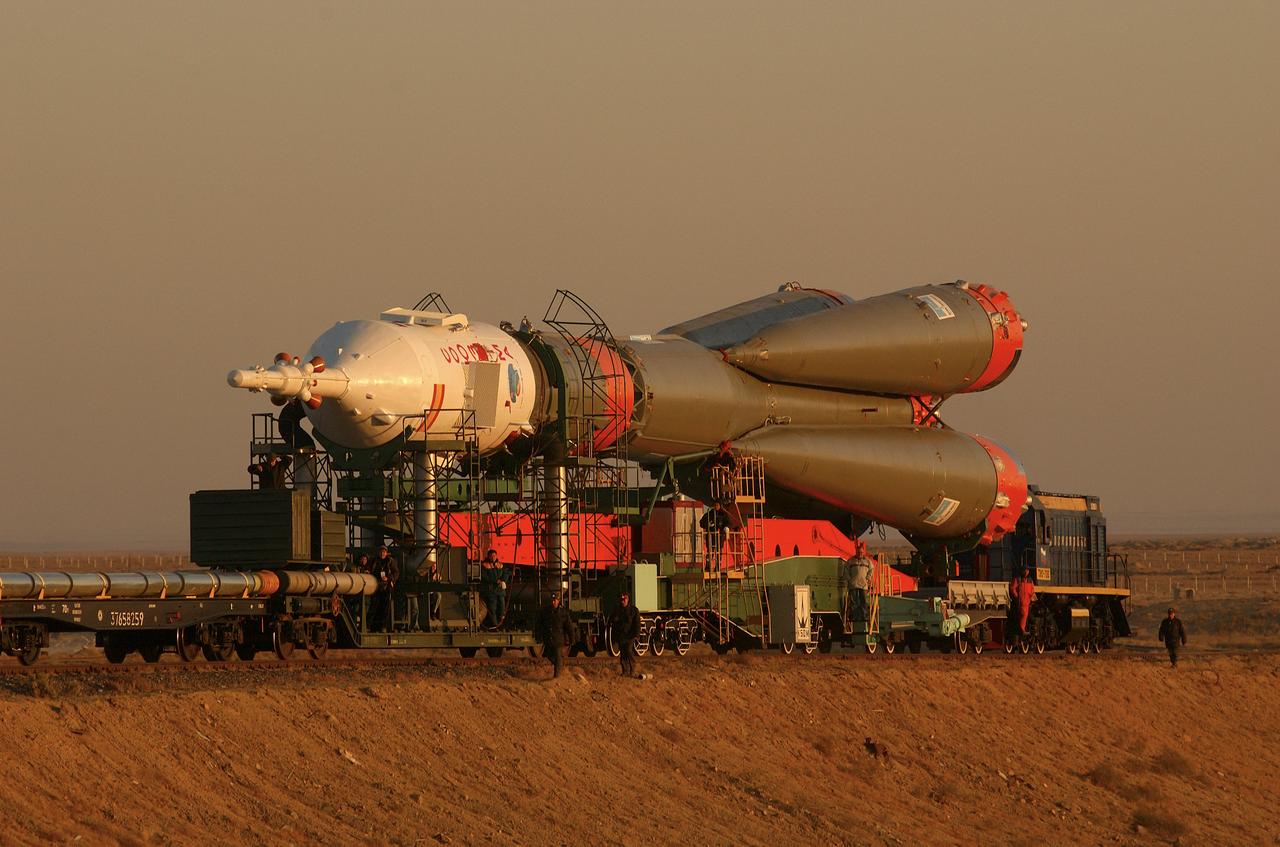
A Soyuz TMA-3 spacecraft and its booster rocket is transported on a rail car to the launch pad at the Baikonur Cosmodrome, Kazakhstan on Thursday, Oct. 16, 2003 in preparation for liftoff Oct. 18 to carry Expedition 8 Commander and NASA Science Officer Michael Foale, Expedition 8 Soyuz Commander Alexander Kaleri and European Space Agency astronaut Pedro Duque of Spain to the International Space Station. Photo Credit (NASA/Bill Ingalls)
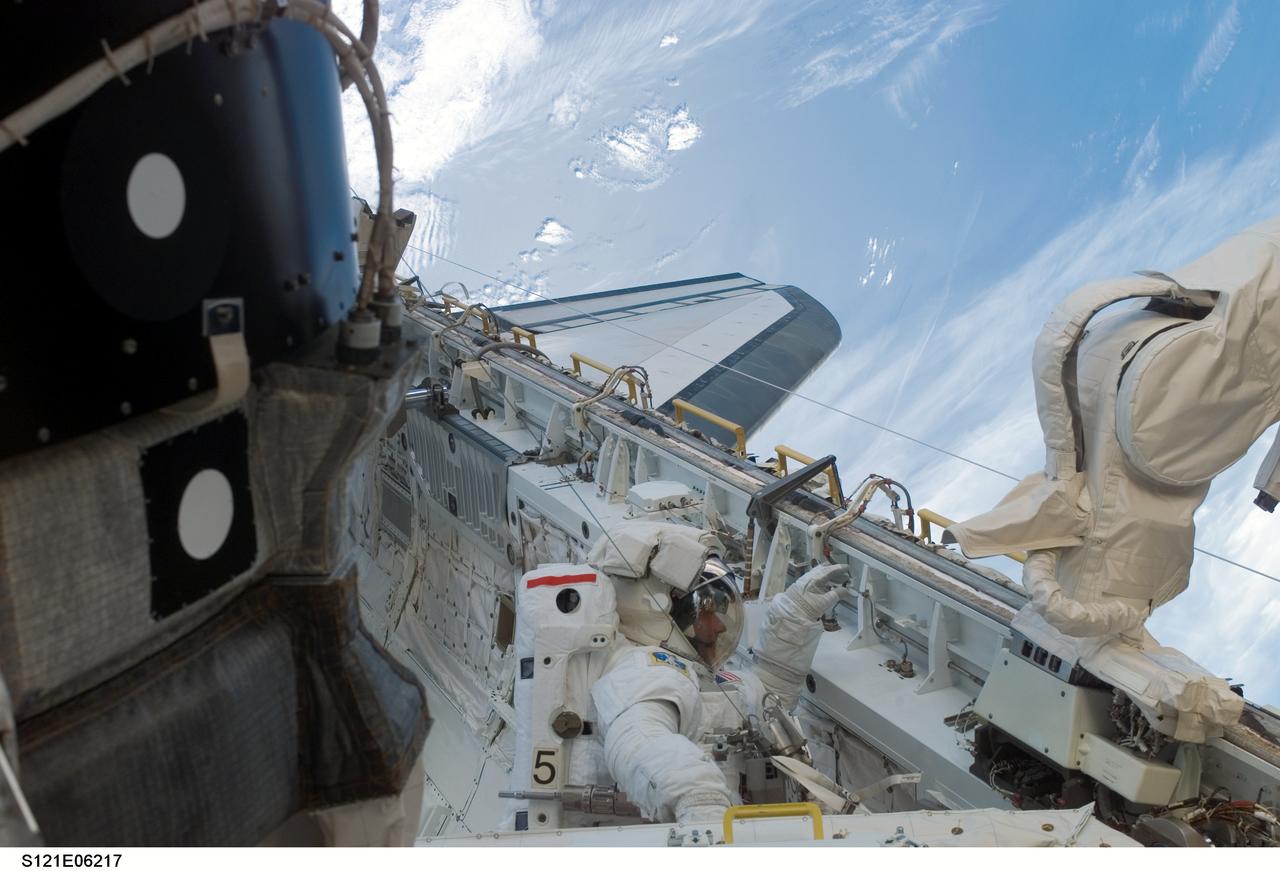
S121-E-06217 (10 July 2006) --- Astronaut Piers J. Sellers, STS-121 mission specialist, works in the Space Shuttle Discovery's cargo bay during the mission's second session of extravehicular activity (EVA). During today's six-hour 47-minute spacewalk, Sellers and astronaut Michael E. Fossum (out of frame), mission specialist, restored the International Space Station's Mobile Transporter rail car to full operation and delivered a spare pump module for the station's cooling system.
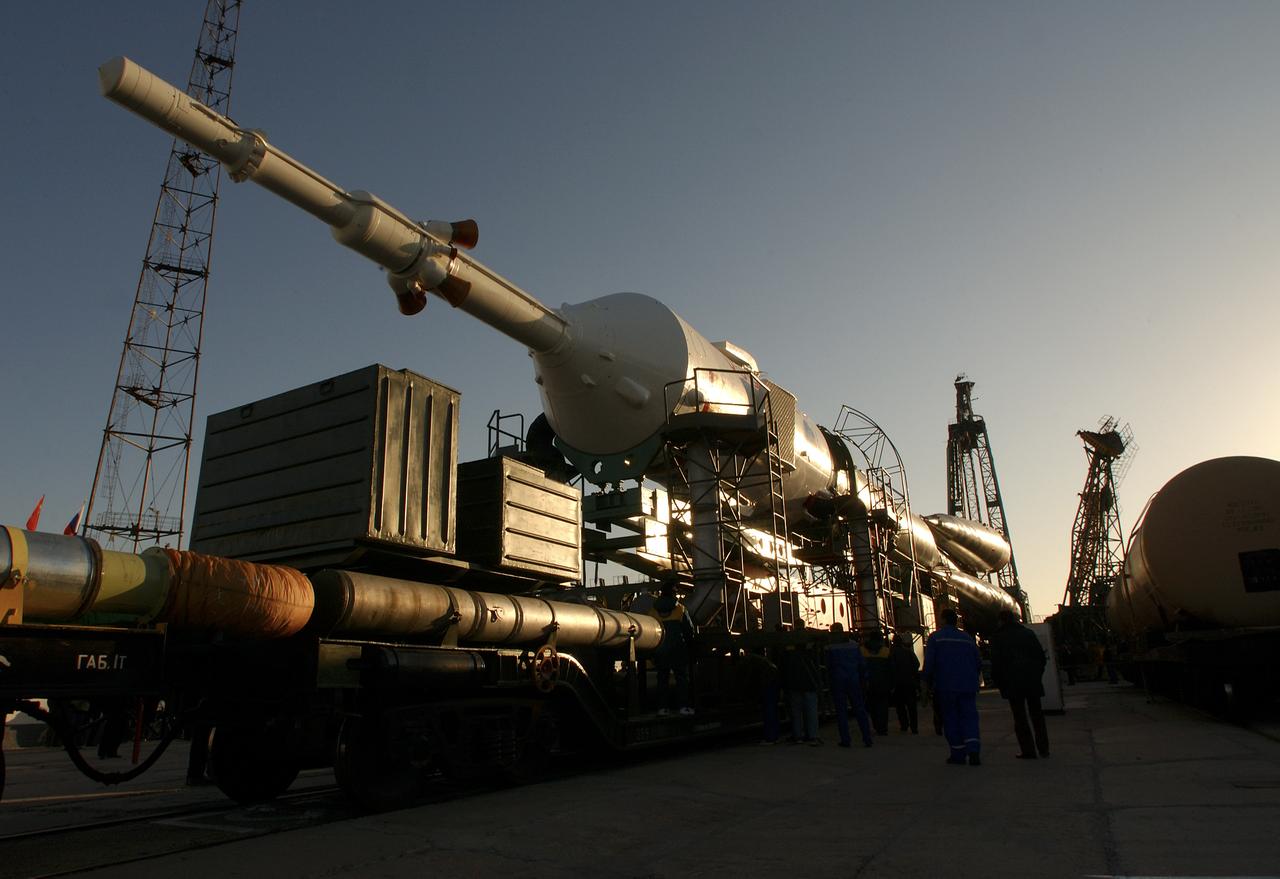
A Soyuz TMA-3 spacecraft and its booster rocket is seen, Thursday, Oct. 16, 2003, on a rail car near the launch pad at the Baikonur Cosmodrome, Kazakhstan during preparations for liftoff Oct. 18 to carry Expedition 8 Commander and NASA Science Officer Michael Foale, Expedition 8 Soyuz Commander Alexander Kaleri and European Space Agency astronaut Pedro Duque of Spain to the International Space Station. Photo Credit (NASA/Bill Ingalls)
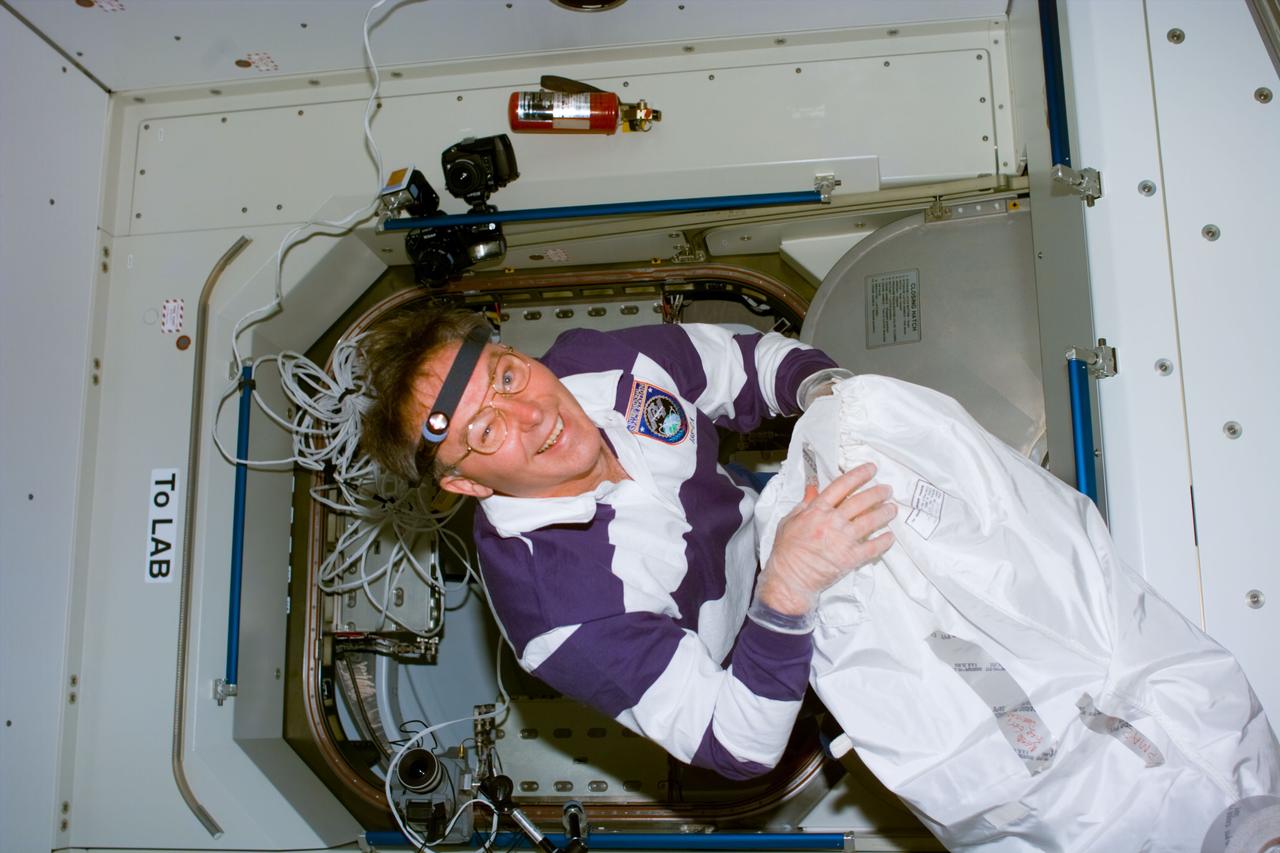
S88-E-5112 (12-10-98)) --- Astronaut Jerry L. Ross, mission specialist, packs a bag of tools and equipment in the hatchway of the Unity connecting module. Ross and his crewmates were installing hand rails and other equipment and performing various tasks to ready the Unity and Zarya for their ISS roles. The photo was taken with an electronic still camera at 20:26:02 GMT, Dec. 10.
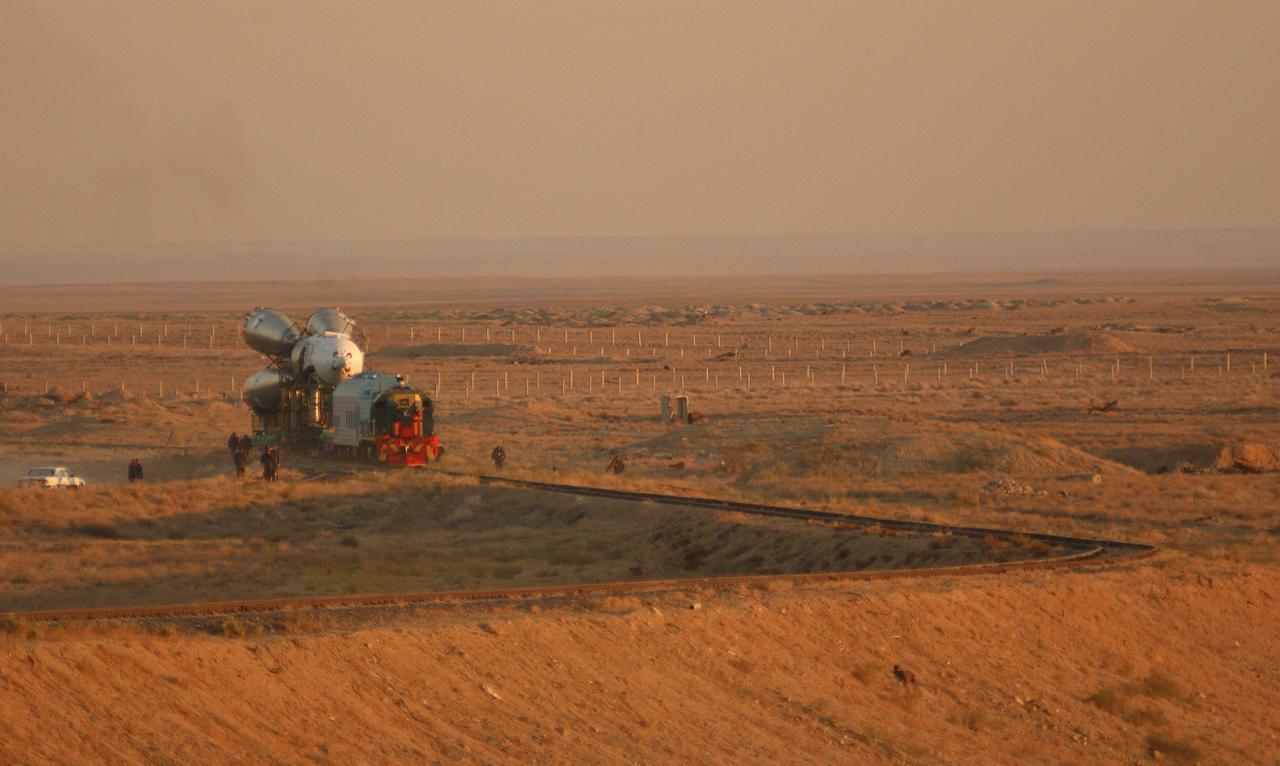
A Soyuz TMA-3 spacecraft and its booster rocket is transported on a rail car to the launch pad at the Baikonur Cosmodrome, Kazakhstan on Thursday, Oct. 16, 2003 in preparation for liftoff Oct. 18 to carry Expedition 8 Commander and NASA Science Officer Michael Foale, Expedition 8 Soyuz Commander Alexander Kaleri and European Space Agency astronaut Pedro Duque of Spain to the International Space Station. Photo Credit (NASA/Bill Ingalls)
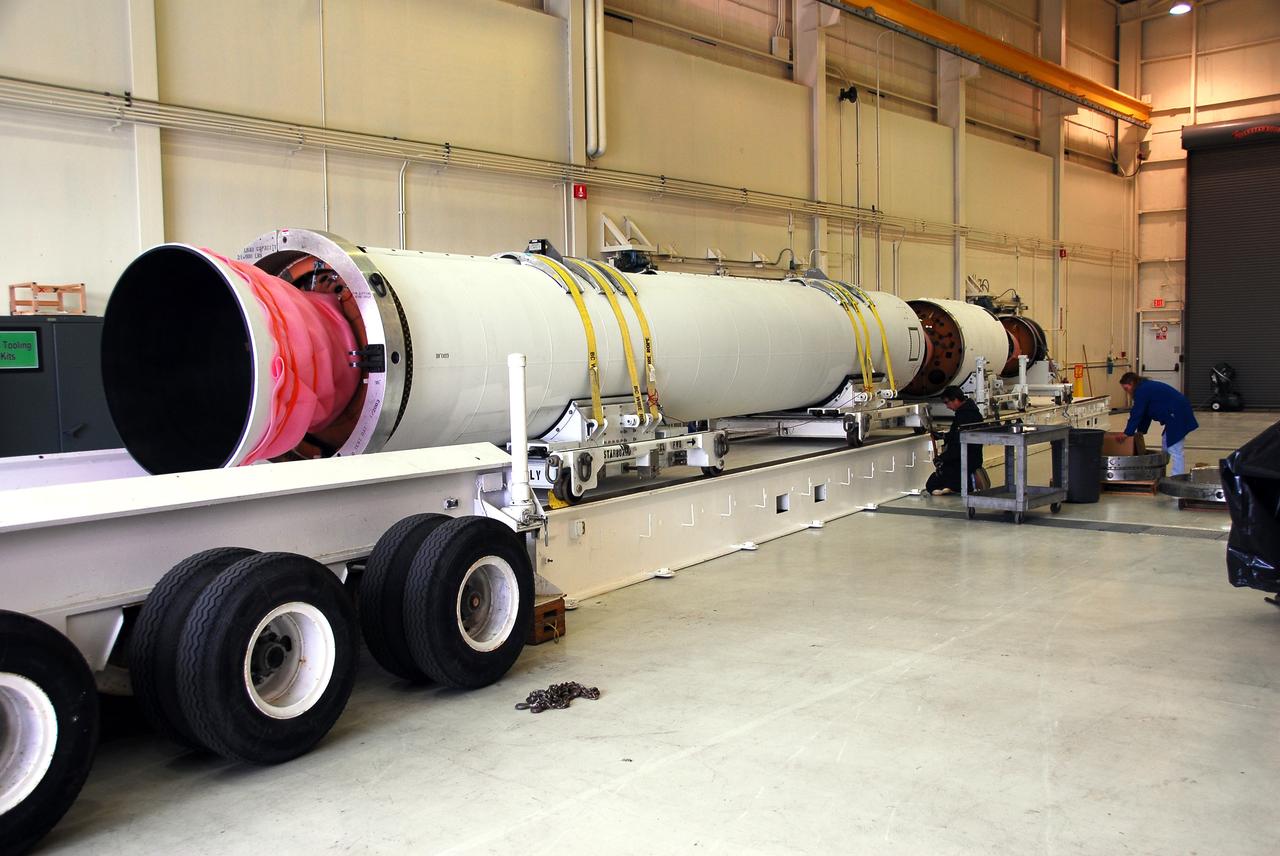
VANDENBERG AIR FORCE BASE, Calif. -- At Vandenberg AFB, the first stage of the Taurus rocket is being moved onto the stationary rails in Building 1555's west bay. The Taurus will launch the Orbiting Carbon Observatory, or OCO, in 2009. The OCO is a new Earth-orbiting mission sponsored by NASA's Earth System Science Pathfinder Program. Photo credit: NASA/Randy Beaudoin
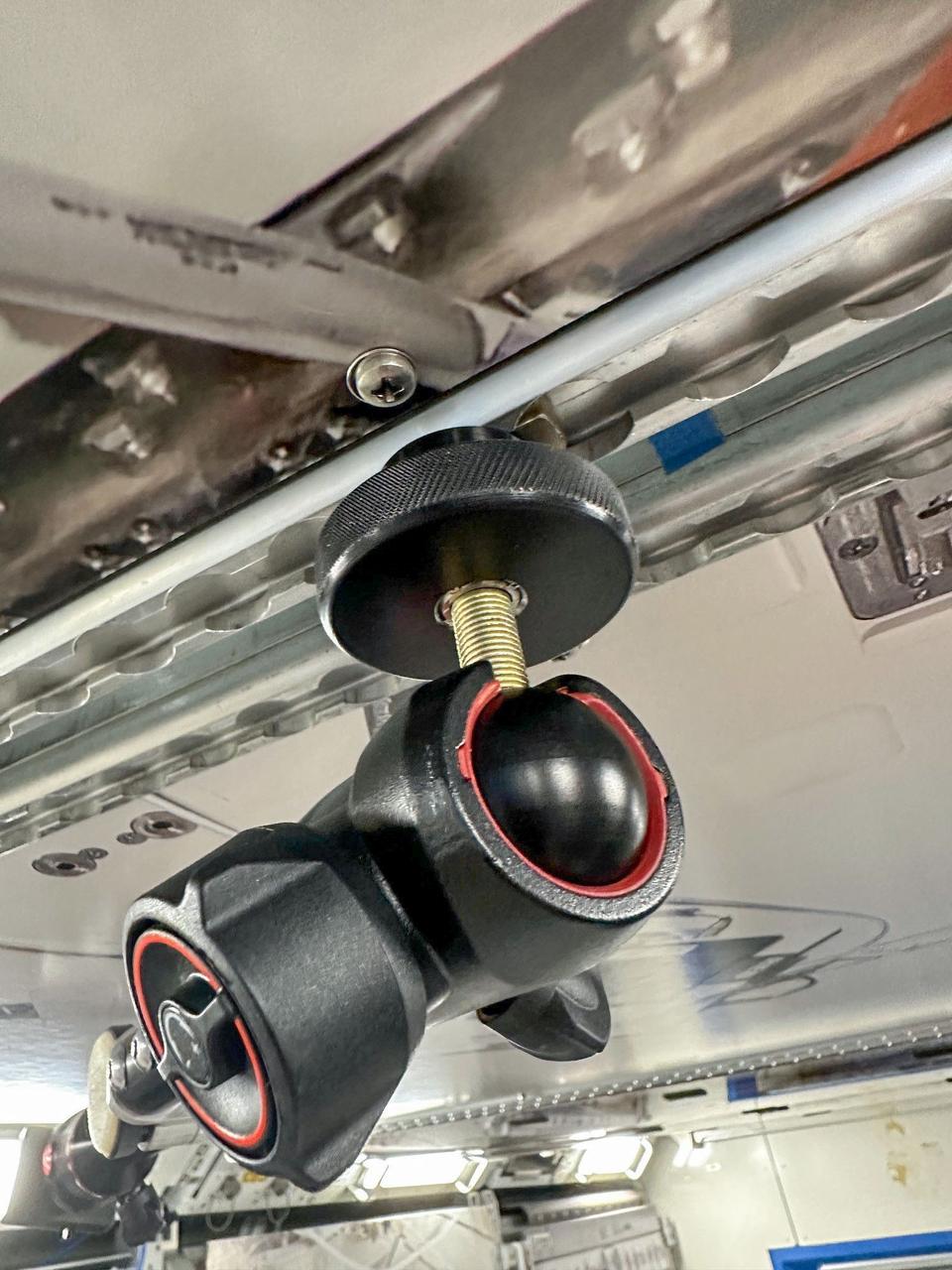
jsc2025e047411 (5/27/2025) --- The High school Students United with NASA to Create Hardware (HUNCH) has designed a device to replace Bogen arms aboard the International Space Station. The HUNCH Utility Bracket (HUB) can be attached to frames and rails and can hold cameras, iPads, and other equipment. The HUB has a jointed design that allows ample range of movement and flexibility. This device aims to aid crew members with tasks such as recording videos and holding iPads to increase efficiency of operations aboard space station. (Image courtesy of HUNCH)
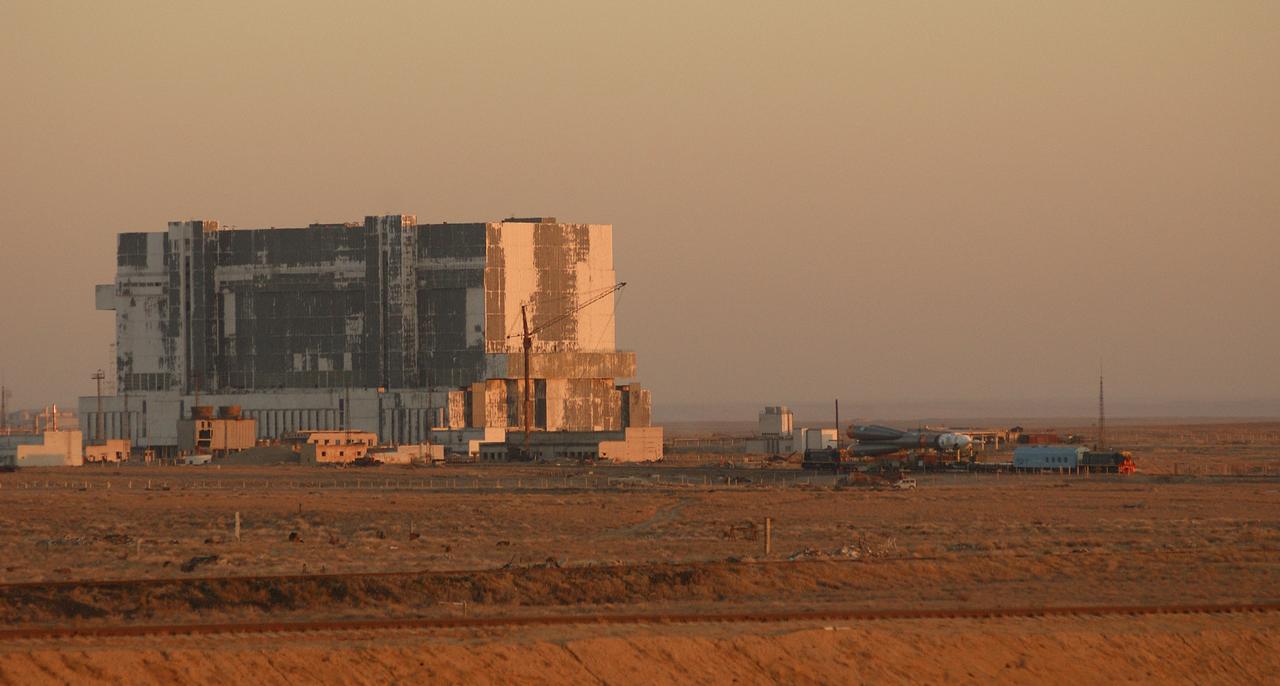
A Soyuz TMA-3 spacecraft and its booster rocket is transported on a rail car to the launch pad at the Baikonur Cosmodrome, Kazakhstan on Thursday, Oct. 16, 2003 in preparation for liftoff Oct. 18 to carry Expedition 8 Commander and NASA Science Officer Michael Foale, Expedition 8 Soyuz Commander Alexander Kaleri and European Space Agency astronaut Pedro Duque of Spain to the International Space Station. Photo Credit (NASA/Bill Ingalls)