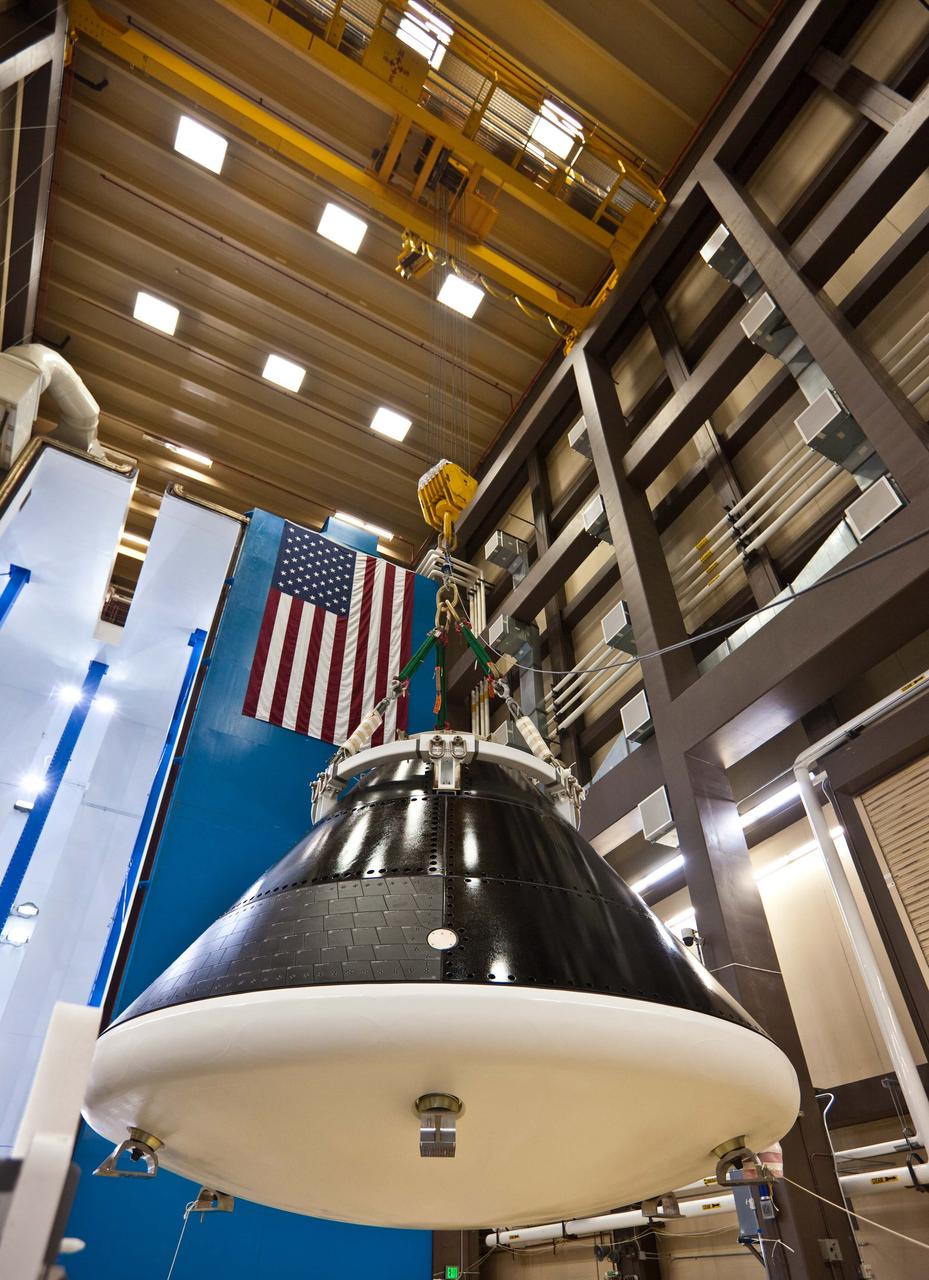
The Orion crew module test article is lifted from the transport fixture to the test stand in the Reverberant Acoustics Laboratory (RAL) at the Lockheed Martin facility in Waterton, Colorado for acoustic testing on June 28, 2011. The testing of approximately 150dB simulated sound pressure levels that the vehicle will encounter during launch, ascent, and if required, abort. Part of Batch image transfer from Flickr.
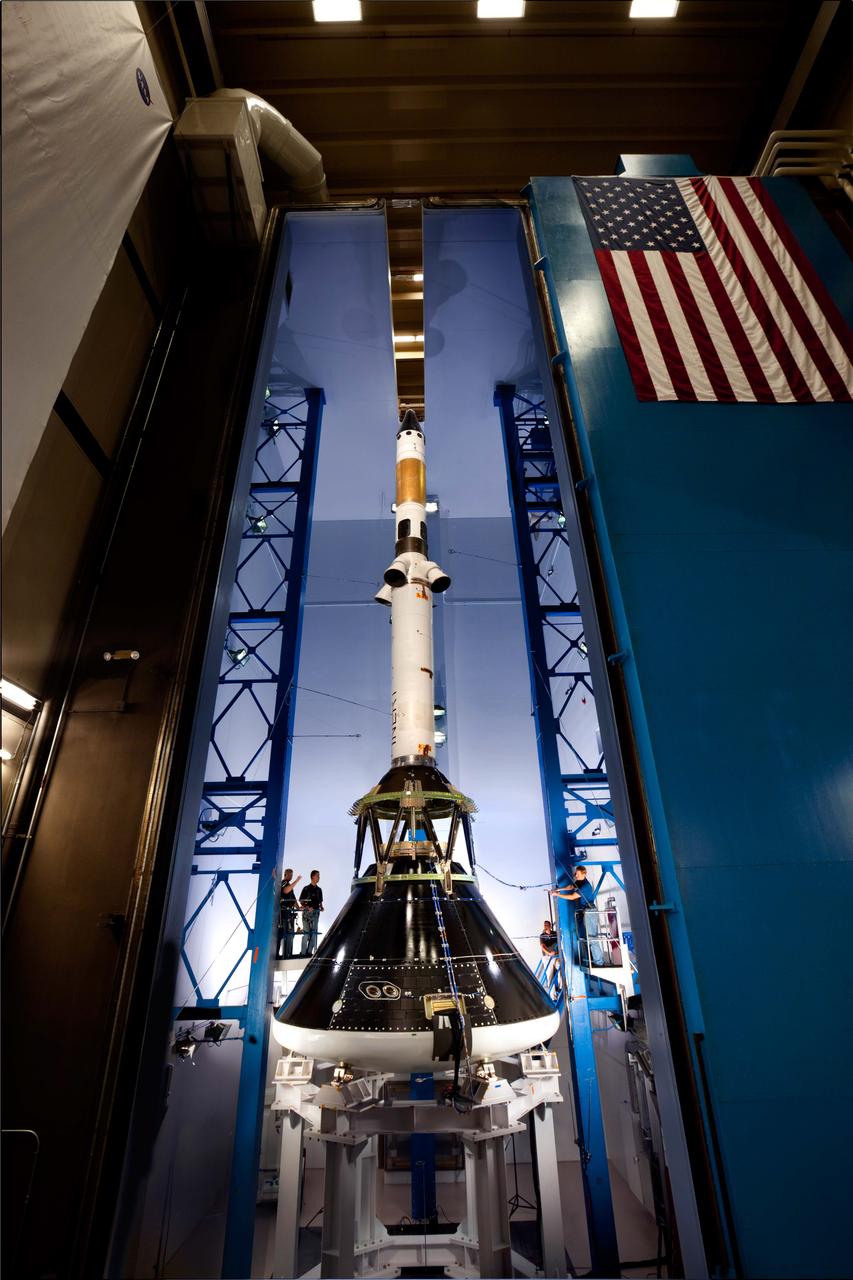
Technicians position microphones around the Orion launch abort system and crew module test articles in preparation for the second round of testing in the acoustic chamber at Lockheed Martin’s facilities near Denver on Aug. 16, 2011. The vehicle was bombarded by acoustic levels of 150 decibels to simulate conditions during launch and abort if necessary. Part of Batch image transfer from Flickr.
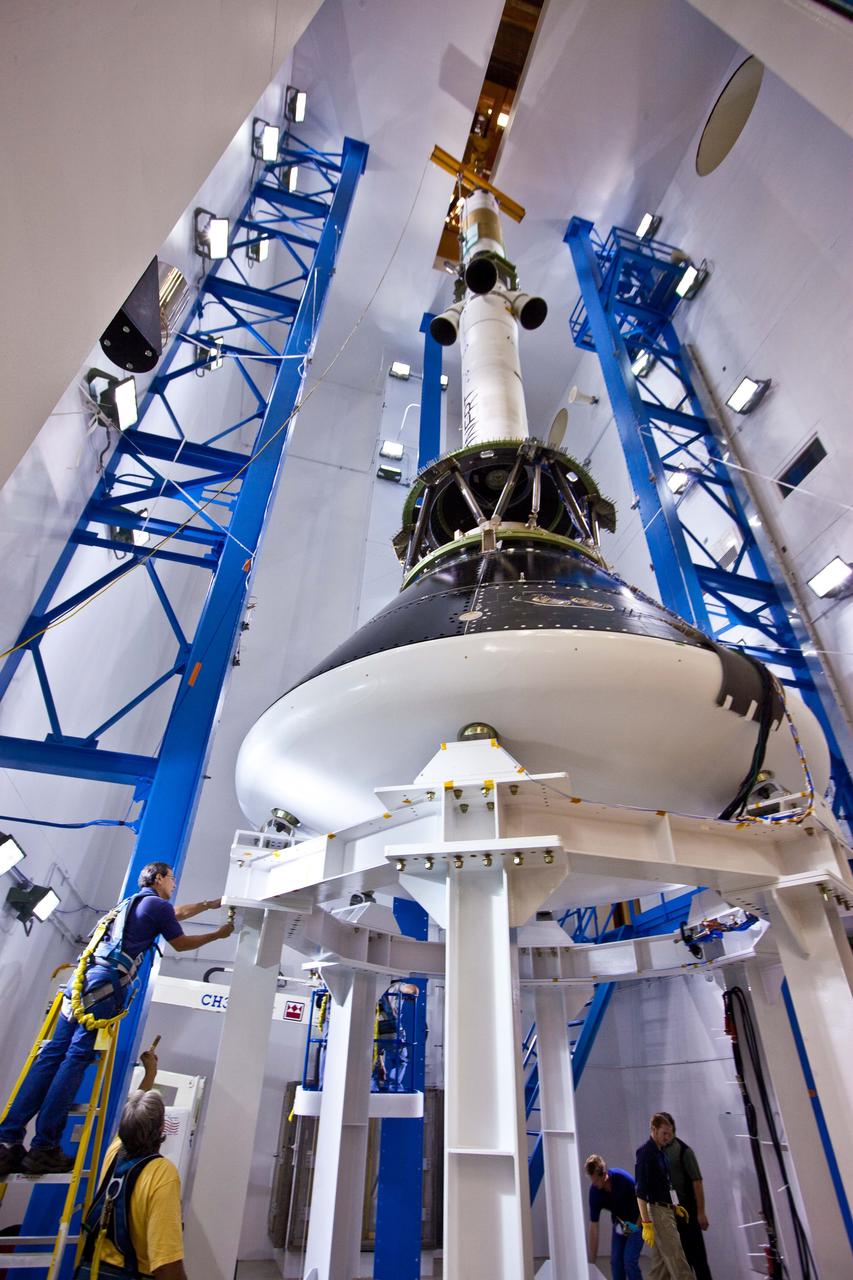
The Orion launch abort system and crew module test articles undergo stacking at Lockheed Martin’s facilities near Denver in preparation for acoustic testing on Aug. 9, 2011. To emulate the sound pressure levels experienced at launch, the tests exposed Orion and its launch abort system to acoustic levels exceeding 150 decibels, while hundreds of instruments record the vehicle’s response. Part of Batch image transfer from Flickr.
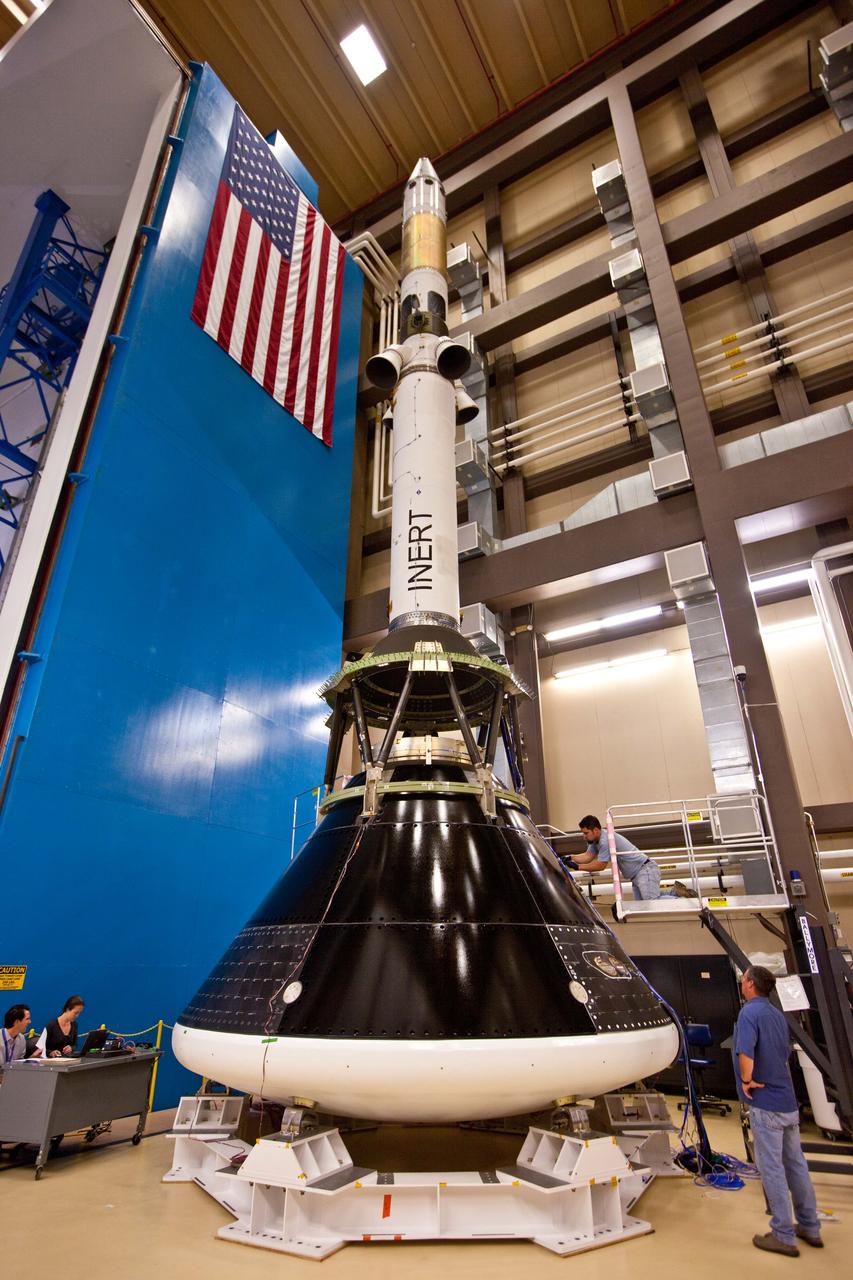
The Orion launch abort system and crew module test articles undergo stacking at Lockheed Martin’s facilities near Denver in preparation for acoustic testing on Aug. 15, 2011. To emulate the sound pressure levels experienced at launch, the tests exposed Orion and its launch abort system to acoustic levels exceeding 150 decibels, while hundreds of instruments record the vehicle’s response. Part of Batch image transfer from Flickr.
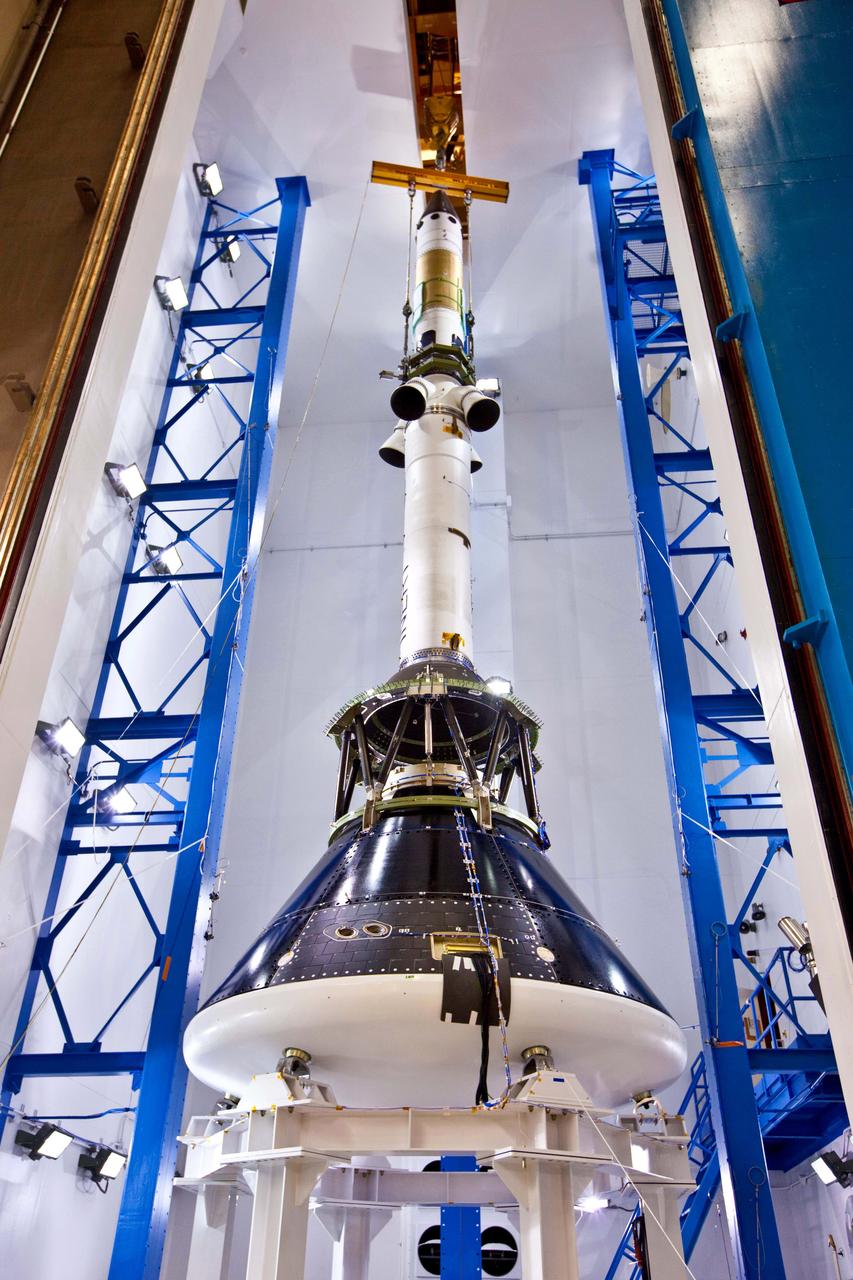
The Orion launch abort system and crew module test articles undergo stacking at Lockheed Martin’s facilities near Denver in preparation for acoustic testing on Aug. 15, 2011. To emulate the sound pressure levels experienced at launch, the tests exposed Orion and its launch abort system to acoustic levels exceeding 150 decibels, while hundreds of instruments record the vehicle’s response. Part of Batch image transfer from Flickr.

The Orion launch abort system and crew module test articles undergo stacking at Lockheed Martin’s facilities near Denver in preparation for acoustic testing on Aug. 9, 2011. To emulate the sound pressure levels experienced at launch, the tests exposed Orion and its launch abort system to acoustic levels exceeding 150 decibels, while hundreds of instruments record the vehicle’s response. Part of Batch image transfer from Flickr.

The Orion launch abort system and crew module test articles undergo stacking at Lockheed Martin’s facilities near Denver in preparation for acoustic testing on Aug. 9, 2011. To emulate the sound pressure levels experienced at launch, the tests exposed Orion and its launch abort system to acoustic levels exceeding 150 decibels, while hundreds of instruments record the vehicle’s response. Part of Batch image transfer from Flickr.

The Orion launch abort system and crew module test articles undergo stacking at Lockheed Martin’s facilities near Denver in preparation for acoustic testing on Aug. 9, 2011. To emulate the sound pressure levels experienced at launch, the tests exposed Orion and its launch abort system to acoustic levels exceeding 150 decibels, while hundreds of instruments record the vehicle’s response. Part of Batch image transfer from Flickr.
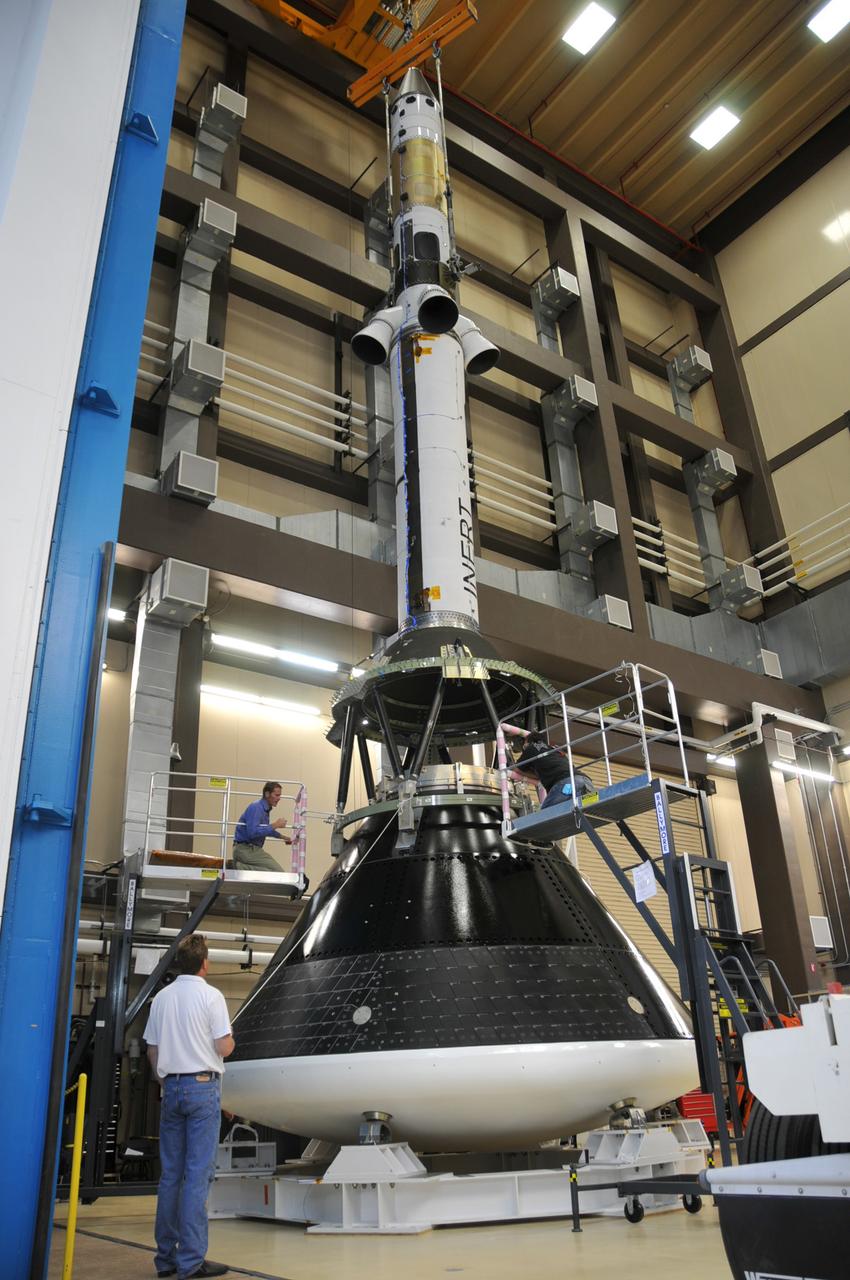
The Orion launch abort system and crew module test articles undergo stacking at Lockheed Martin’s facilities near Denver in preparation for acoustic testing on Aug. 9, 2011. To emulate the sound pressure levels experienced at launch, the tests exposed Orion and its launch abort system to acoustic levels exceeding 150 decibels, while hundreds of instruments record the vehicle’s response. Part of Batch image transfer from Flickr.
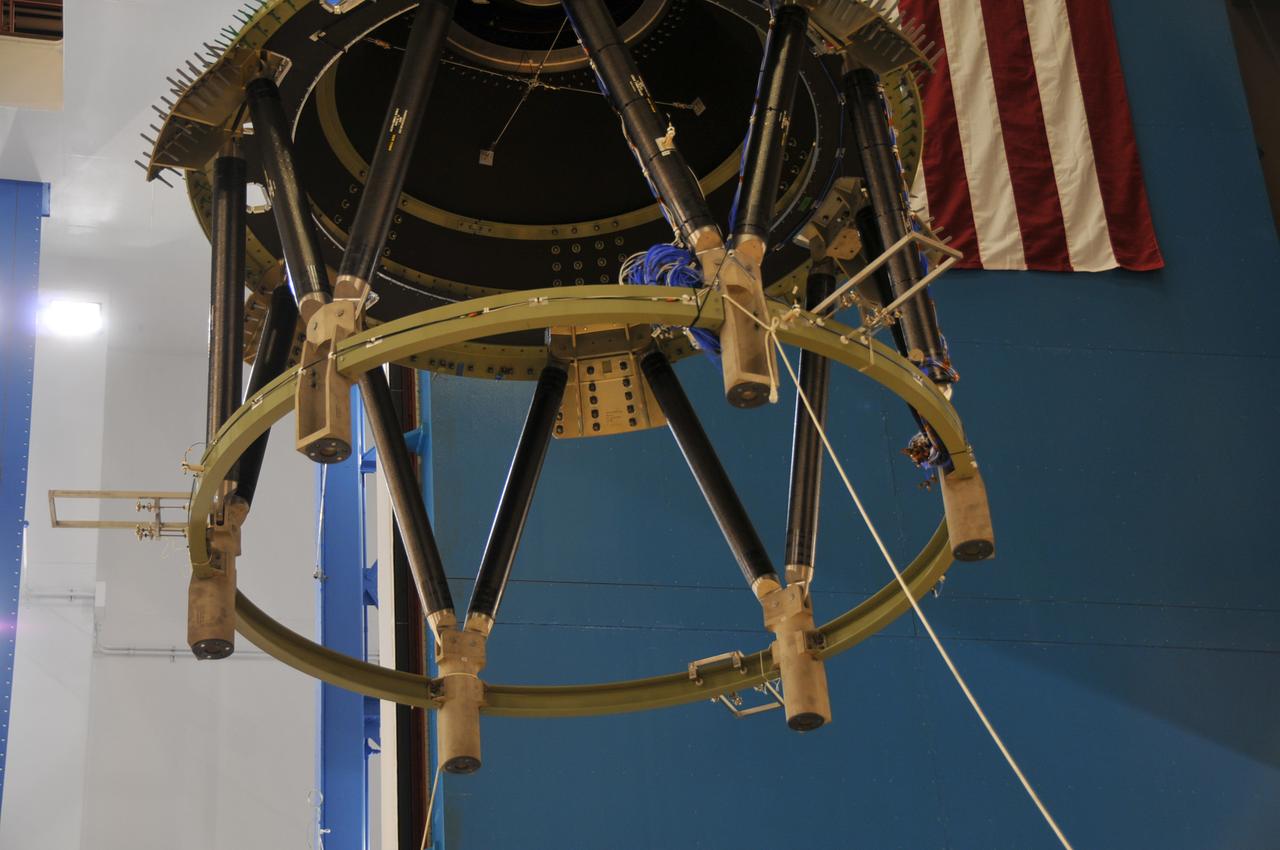
The Orion launch abort system and crew module test articles undergo stacking at Lockheed Martin’s facilities near Denver in preparation for acoustic testing on Aug. 9, 2011. To emulate the sound pressure levels experienced at launch, the tests exposed Orion and its launch abort system to acoustic levels exceeding 150 decibels, while hundreds of instruments record the vehicle’s response. Part of Batch image transfer from Flickr.
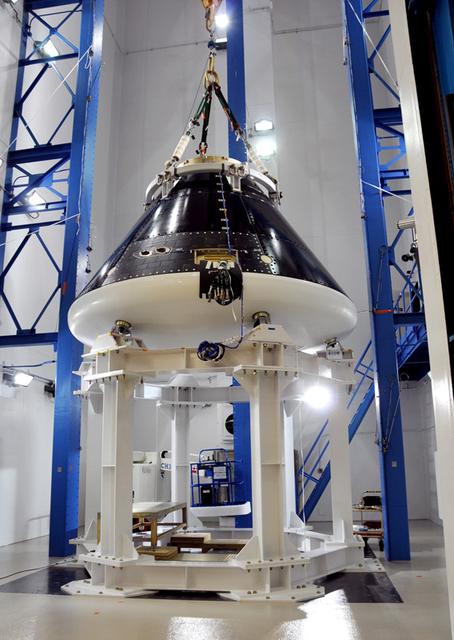
The Orion crew module test article begins acoustical testing in the Reverberant Acoustics Laboratory (RAL) at the Lockheed Martin facility in Waterton, Colorado on July 7, 2011. The testing of approximately 150dB simulated sound pressure levels that the vehicle will encounter during launch, ascent, and if required, abort. The facility’s high ceilings also accommodate the launch abort system test article, which was attached to the crew module for subsequent acoustic tests. Part of Batch image transfer from Flickr.

The Orion launch abort system (foreground) and the crew module (background) test articles are prepared for integration in the Reverberant Acoustics Laboratory (RAL) at the Lockheed Martin facility in Waterton, Colorado on July 27, 2011, before undergoing acoustical testing. The Orion stack was exposed to a series of acoustic tests of increasing decibels that simulate the sound pressure levels that the vehicle will encounter during launch, which can exceed 160 decibels. Part of Batch image transfer from Flickr.

Direct Field Acoustic (DFA) Testing was successfully completed on the Exploration Flight Test-1 (EFT-1) crew module at the Lockheed Martin Waterton Reverberant Acoustic Lab (RAL) on March 1, 2016. DFA Testing is an alternative method for spacecraft module acoustic qualification and acceptance verification that is being investigated for use in the Orion program. Its portability would allow testing at KSC and eliminate the transportation risks and associated cost and schedule of performing this verification activity off-site. Two configurations were tested; one representing the future reverberant acoustic comparison test and one representing the future configuration for the Artemis I crew module. A mock-up of the service module without the fairings will also be tested to gather volumetric data to decide viability of performing DFA Testing on the Static Test Article (STA) SM in the 2016 Fall. Data will be used to develop predictive algorithms for future tests.
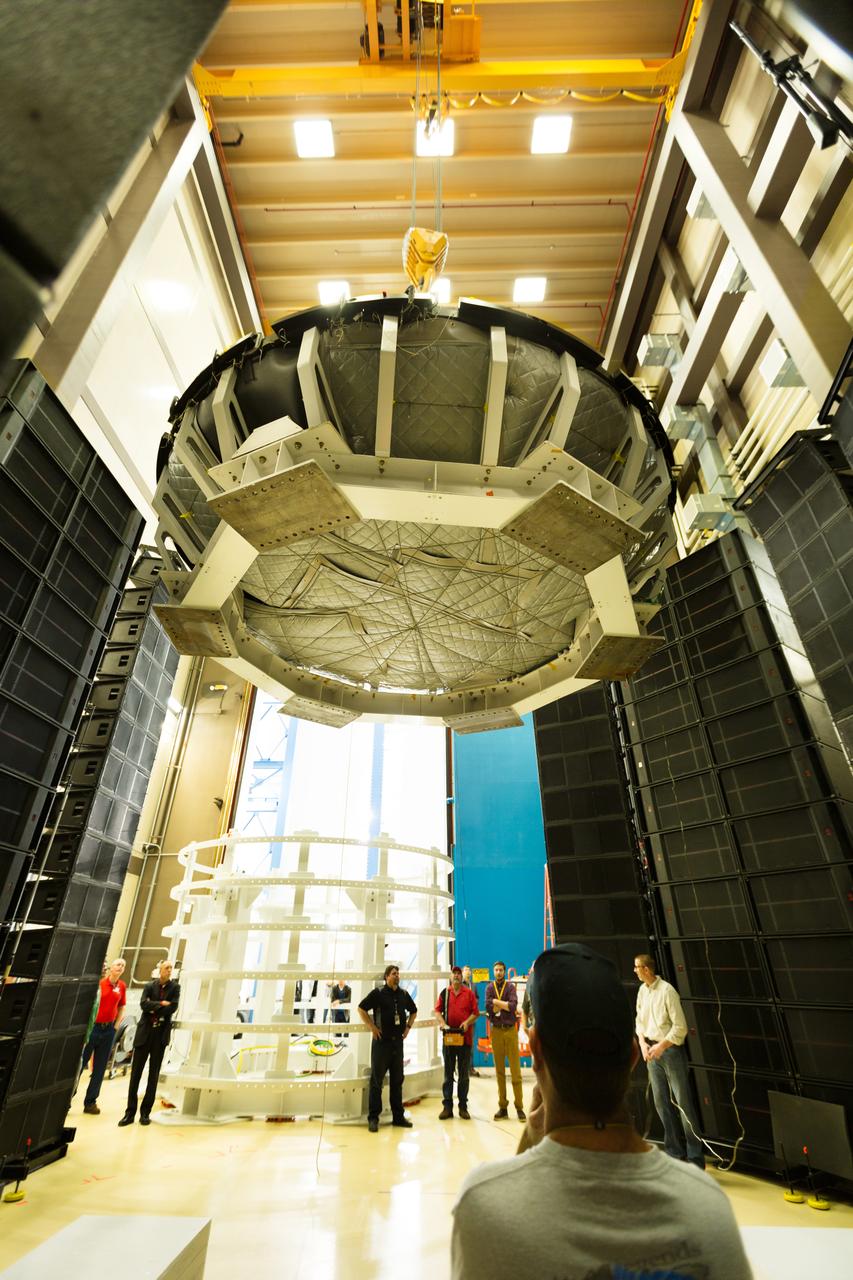
Direct Field Acoustic (DFA) Testing was successfully completed on the Exploration Flight Test-1 (EFT-1) crew module at the Lockheed Martin Waterton Reverberant Acoustic Lab (RAL) on March 1, 2016. DFA Testing is an alternative method for spacecraft module acoustic qualification and acceptance verification that is being investigated for use in the Orion program. Its portability would allow testing at KSC and eliminate the transportation risks and associated cost and schedule of performing this verification activity off-site. Two configurations were tested; one representing the future reverberant acoustic comparison test and one representing the future configuration for the Artemis I crew module. A mock-up of the service module without the fairings will also be tested to gather volumetric data to decide viability of performing DFA Testing on the Static Test Article (STA) SM in the 2016 Fall. Data will be used to develop predictive algorithms for future tests.
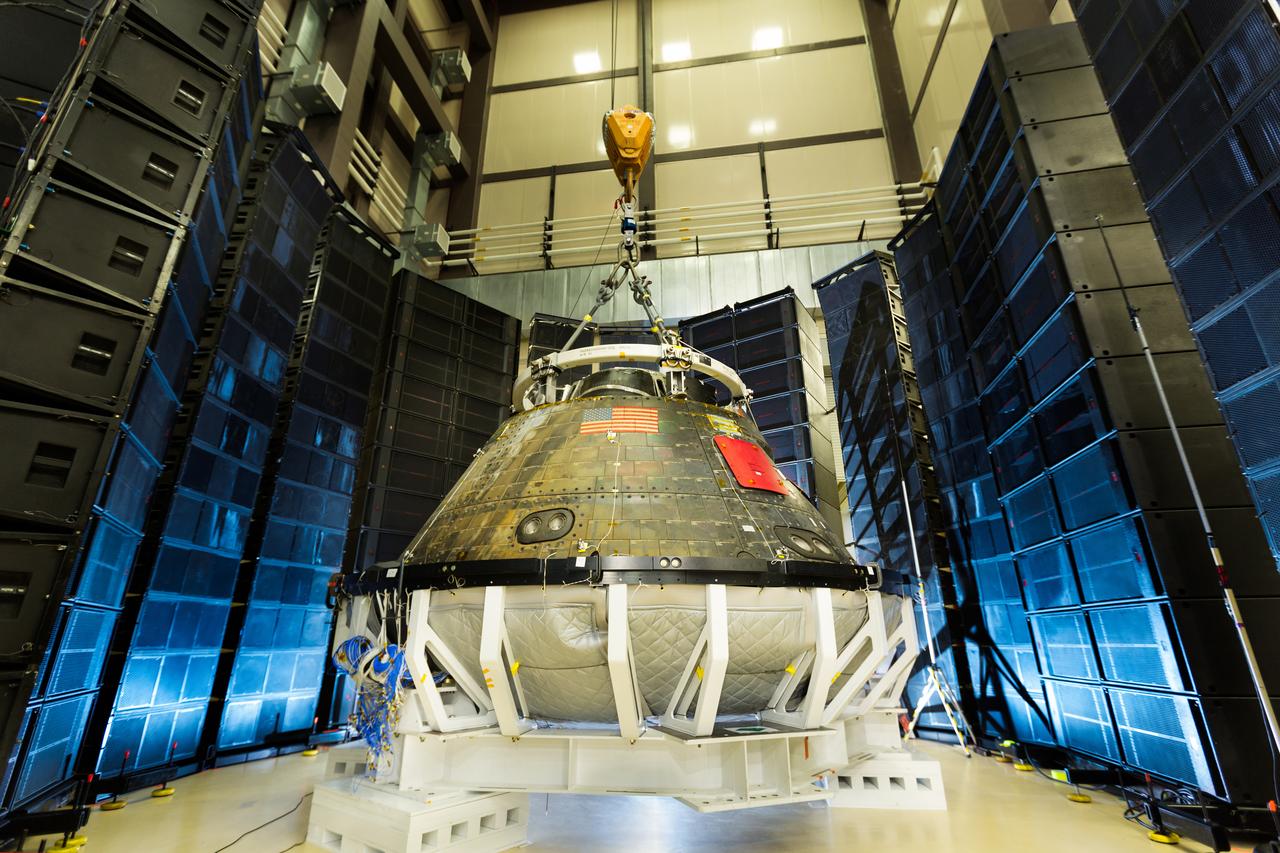
Direct Field Acoustic (DFA) Testing was successfully completed on the Exploration Flight Test-1 (EFT-1) crew module at the Lockheed Martin Waterton Reverberant Acoustic Lab (RAL) on March 1, 2016. DFA Testing is an alternative method for spacecraft module acoustic qualification and acceptance verification that is being investigated for use in the Orion program. Its portability would allow testing at KSC and eliminate the transportation risks and associated cost and schedule of performing this verification activity off-site. Two configurations were tested; one representing the future reverberant acoustic comparison test and one representing the future configuration for the Artemis I crew module. A mock-up of the service module without the fairings will also be tested to gather volumetric data to decide viability of performing DFA Testing on the Static Test Article (STA) SM in the 2016 Fall. Data will be used to develop predictive algorithms for future tests.
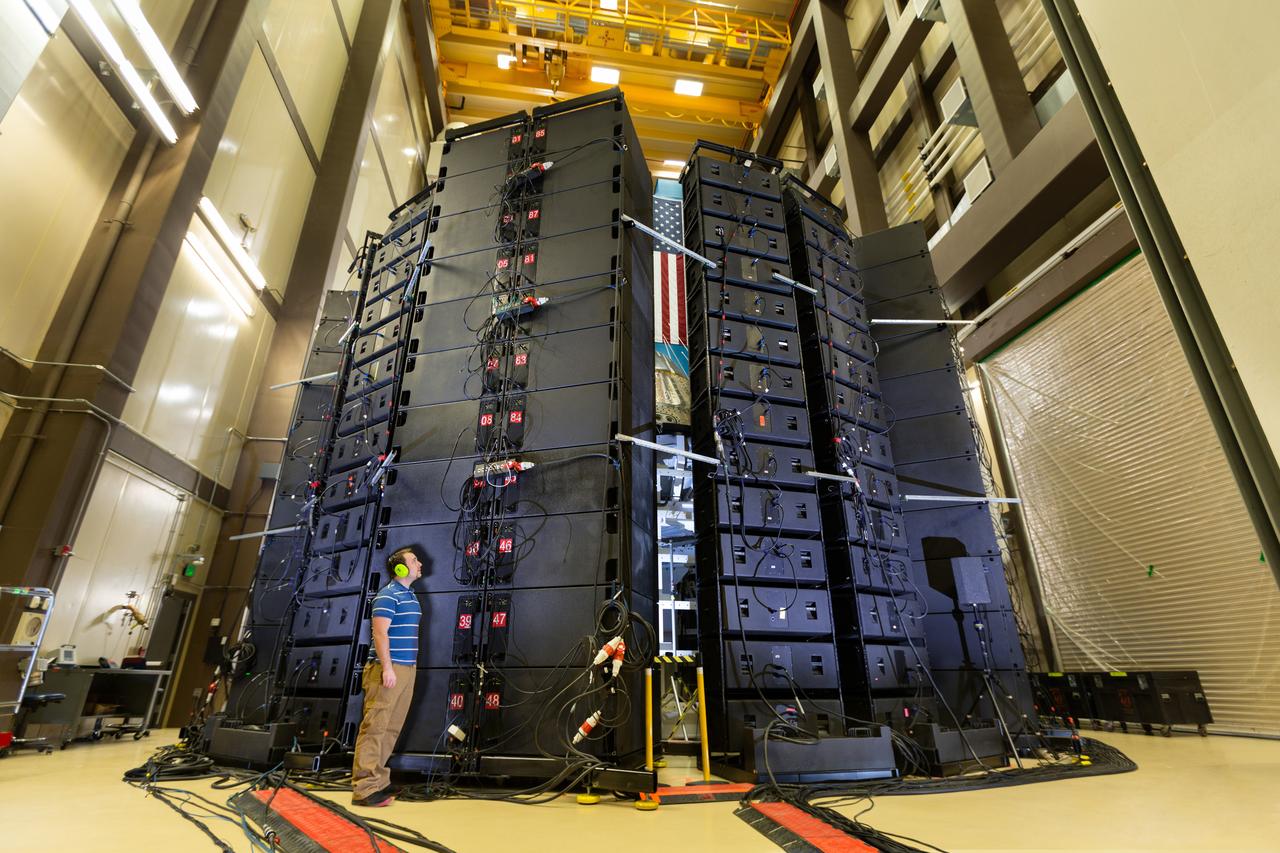
Direct Field Acoustic (DFA) Testing was successfully completed on the Exploration Flight Test-1 (EFT-1) crew module at the Lockheed Martin Waterton Reverberant Acoustic Lab (RAL) on March 1, 2016. DFA Testing is an alternative method for spacecraft module acoustic qualification and acceptance verification that is being investigated for use in the Orion program. Its portability would allow testing at KSC and eliminate the transportation risks and associated cost and schedule of performing this verification activity off-site. Two configurations were tested; one representing the future reverberant acoustic comparison test and one representing the future configuration for the Artemis I crew module. A mock-up of the service module without the fairings will also be tested to gather volumetric data to decide viability of performing DFA Testing on the Static Test Article (STA) SM in the 2016 Fall. Data will be used to develop predictive algorithms for future tests.

Direct Field Acoustic (DFA) Testing was successfully completed on the Exploration Flight Test-1 (EFT-1) crew module at the Lockheed Martin Waterton Reverberant Acoustic Lab (RAL) on March 1, 2016. DFA Testing is an alternative method for spacecraft module acoustic qualification and acceptance verification that is being investigated for use in the Orion program. Its portability would allow testing at KSC and eliminate the transportation risks and associated cost and schedule of performing this verification activity off-site. Two configurations were tested; one representing the future reverberant acoustic comparison test and one representing the future configuration for the Artemis I crew module. A mock-up of the service module without the fairings will also be tested to gather volumetric data to decide viability of performing DFA Testing on the Static Test Article (STA) SM in the 2016 Fall. Data will be used to develop predictive algorithms for future tests.
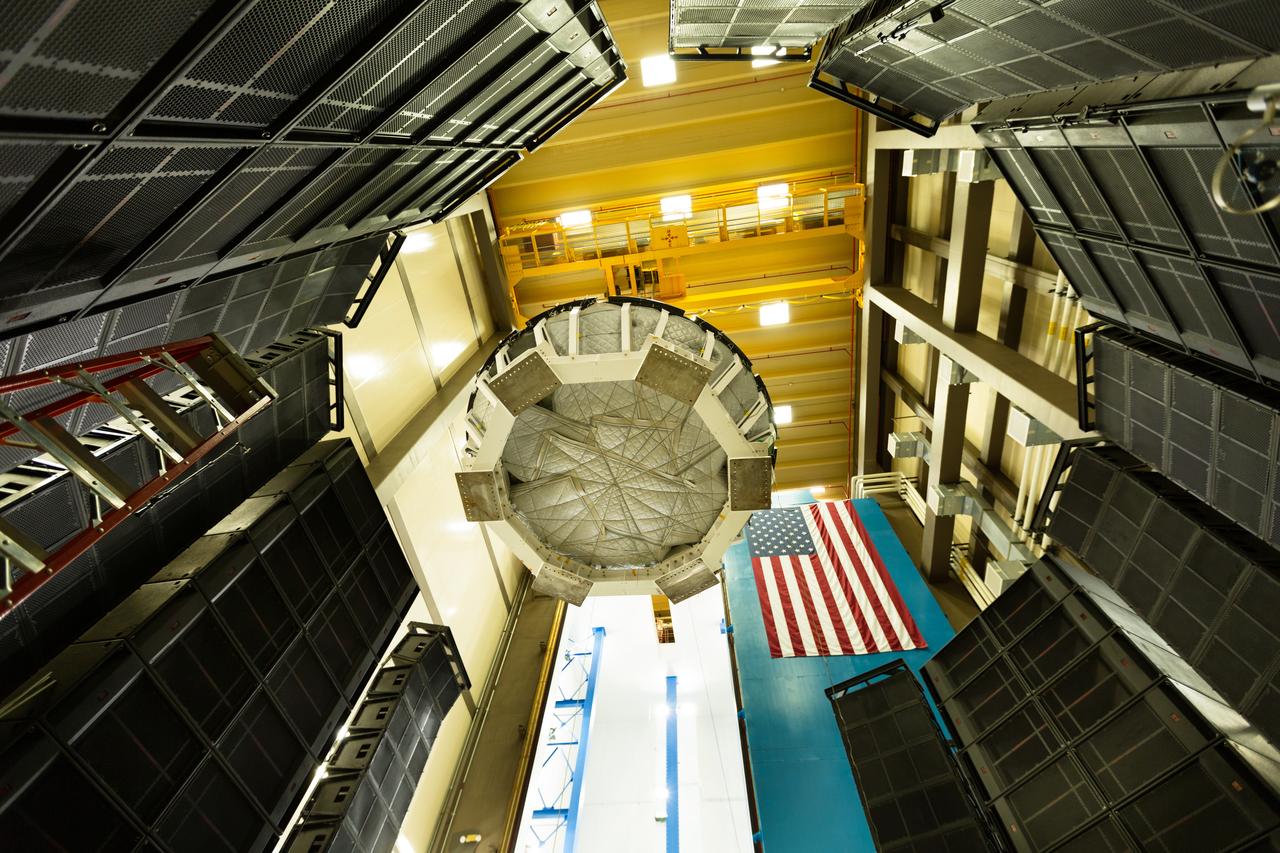
Direct Field Acoustic (DFA) Testing was successfully completed on the Exploration Flight Test-1 (EFT-1) crew module at the Lockheed Martin Waterton Reverberant Acoustic Lab (RAL) on March 1, 2016. DFA Testing is an alternative method for spacecraft module acoustic qualification and acceptance verification that is being investigated for use in the Orion program. Its portability would allow testing at KSC and eliminate the transportation risks and associated cost and schedule of performing this verification activity off-site. Two configurations were tested; one representing the future reverberant acoustic comparison test and one representing the future configuration for the Artemis I crew module. A mock-up of the service module without the fairings will also be tested to gather volumetric data to decide viability of performing DFA Testing on the Static Test Article (STA) SM in the 2016 Fall. Data will be used to develop predictive algorithms for future tests.
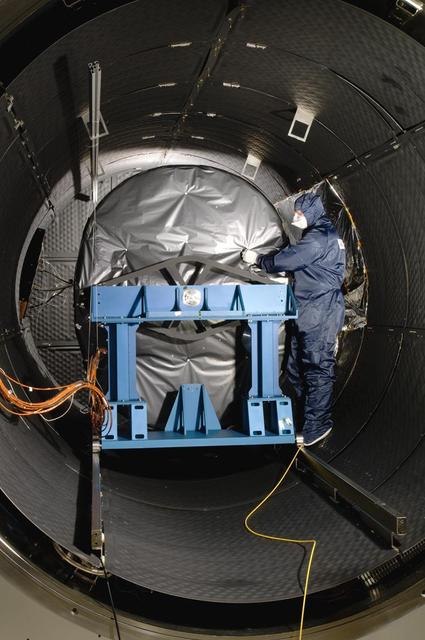
The Mid-Infrared Instrument, a component of NASA James Webb Space Telescope, underwent testing inside the thermal space test chamber at the Science and Technology Facilities Council Rutherford Appleton Laboratory Space in Oxfordshire, England.
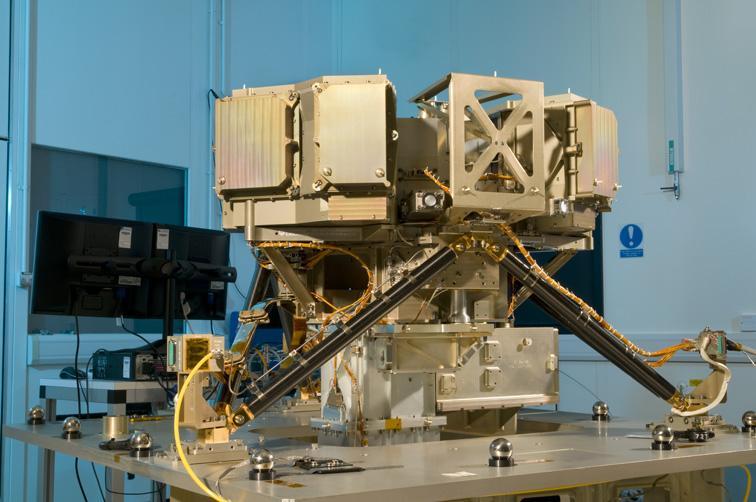
The Mid-Infrared Instrument, a component of NASA James Webb Space Telescope, underwent alignment testing at the Science and Technology Facilities Council Rutherford Appleton Laboratory Space in Oxfordshire, England.