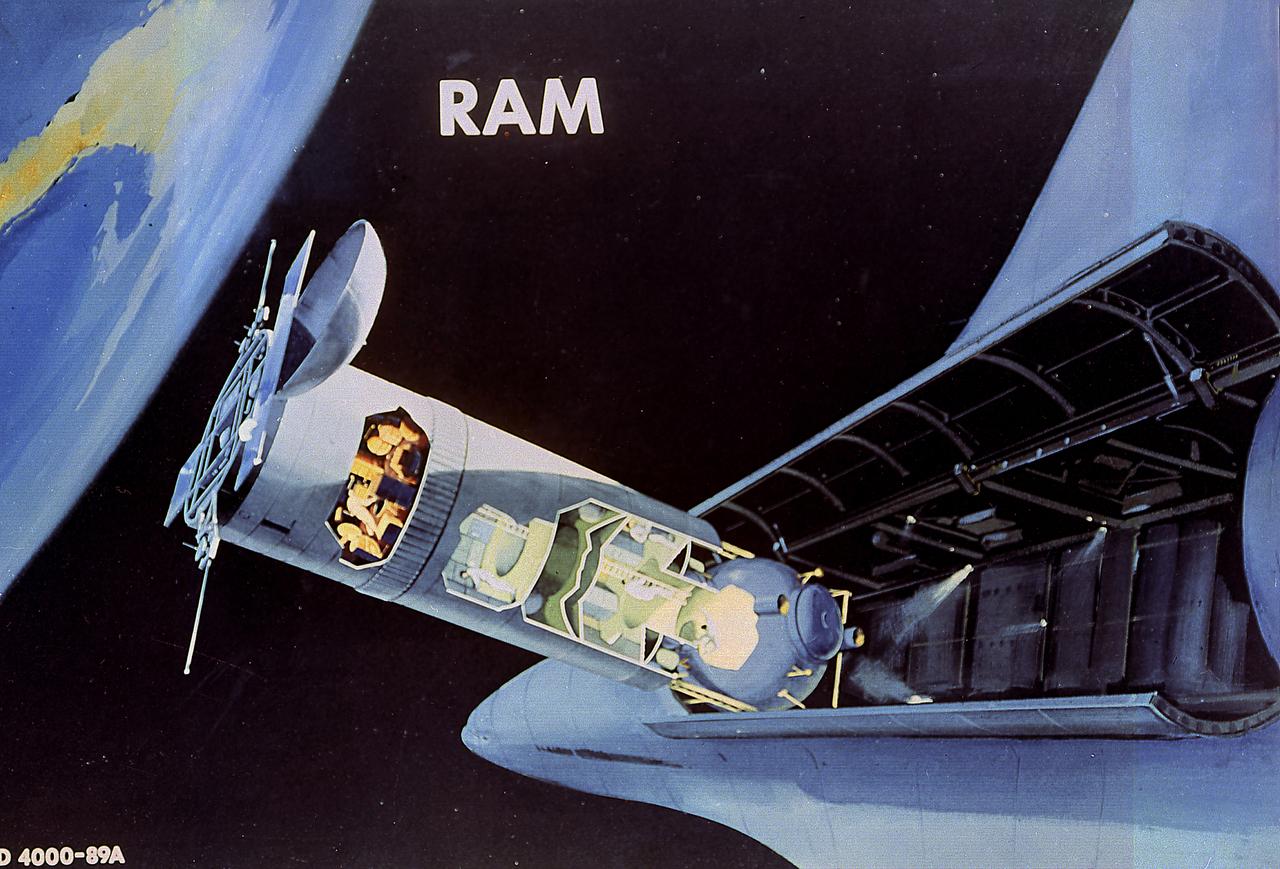
This is an artist's concept of the Research and Applications Modules (RAM). Evolutionary growth was an important consideration in space station plarning, and another project was undertaken in 1971 to facilitate such growth. The RAM study, conducted through a Marshall Space Flight Center contract with General Dynamics Convair Aerospace, resulted in the conceptualization of a series of RAM payload carrier-sortie laboratories, pallets, free-flyers, and payload and support modules. The study considered two basic manned systems. The first would use RAM hardware for sortie mission, where laboratories were carried into space and remained attached to the Shuttle for operational periods up to 7 days. The second envisioned a modular space station capability that could be evolved by mating RAM modules to the space station core configuration. The RAM hardware was to be built by Europeans, thus fostering international participation in the space program.
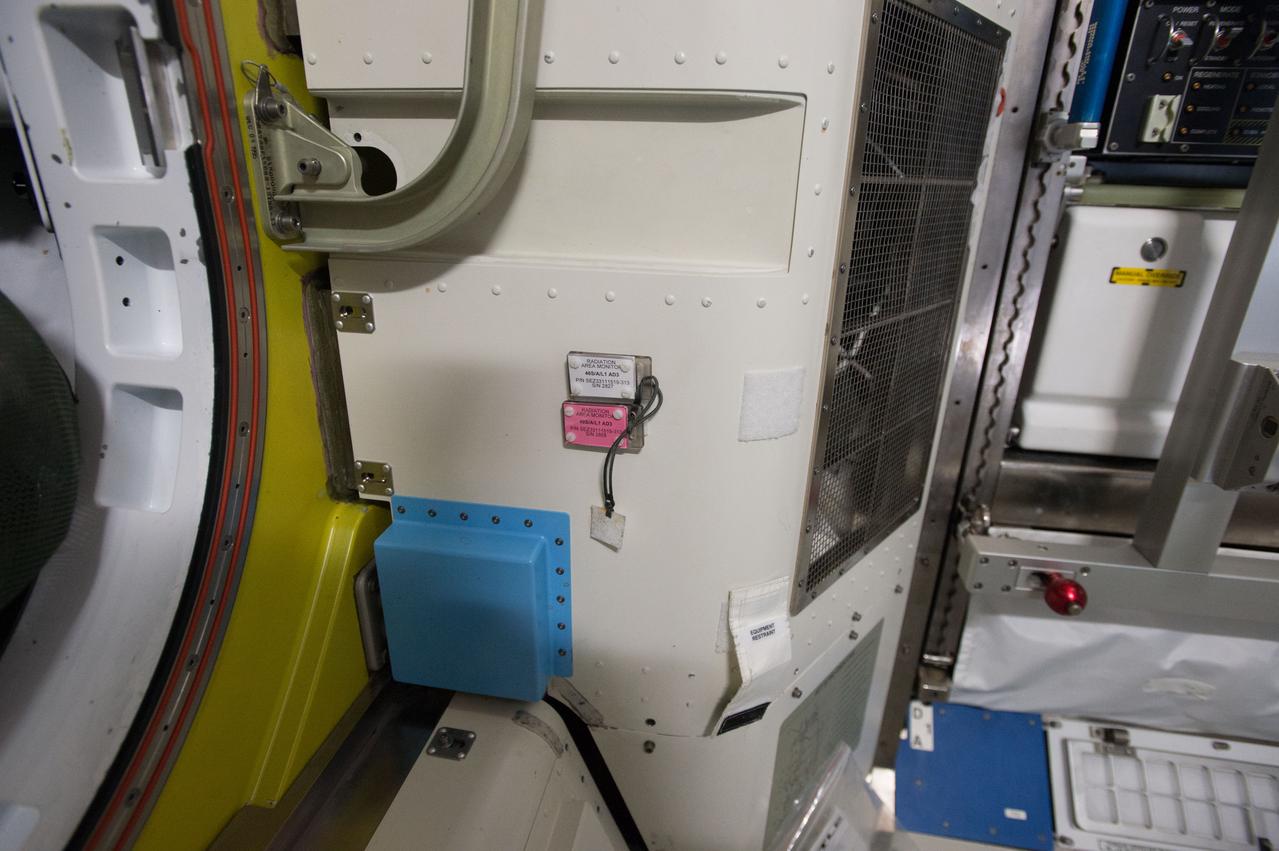
iss049e045458 (10/24/2016) --- Photographic documentation of Radiation Area Monitor (RAM) deployed in the Quest Airlock of the International Space Station (ISS). The Radiation Area Monitor (RAM) is a small set of thermoluminescent detectors encased in Lexan plastic that respond to radiation; the amount of radiation they absorb can be revealed by applying heat and measuring the amount of visible light released. The RAM is used to monitor dose and dose equivalent within the habitable volume of the International space Station (ISS) as a function of location, due to its predicted low sensitivity to high-Linear Energy Transfer radiation (neutrons and alpha particles).
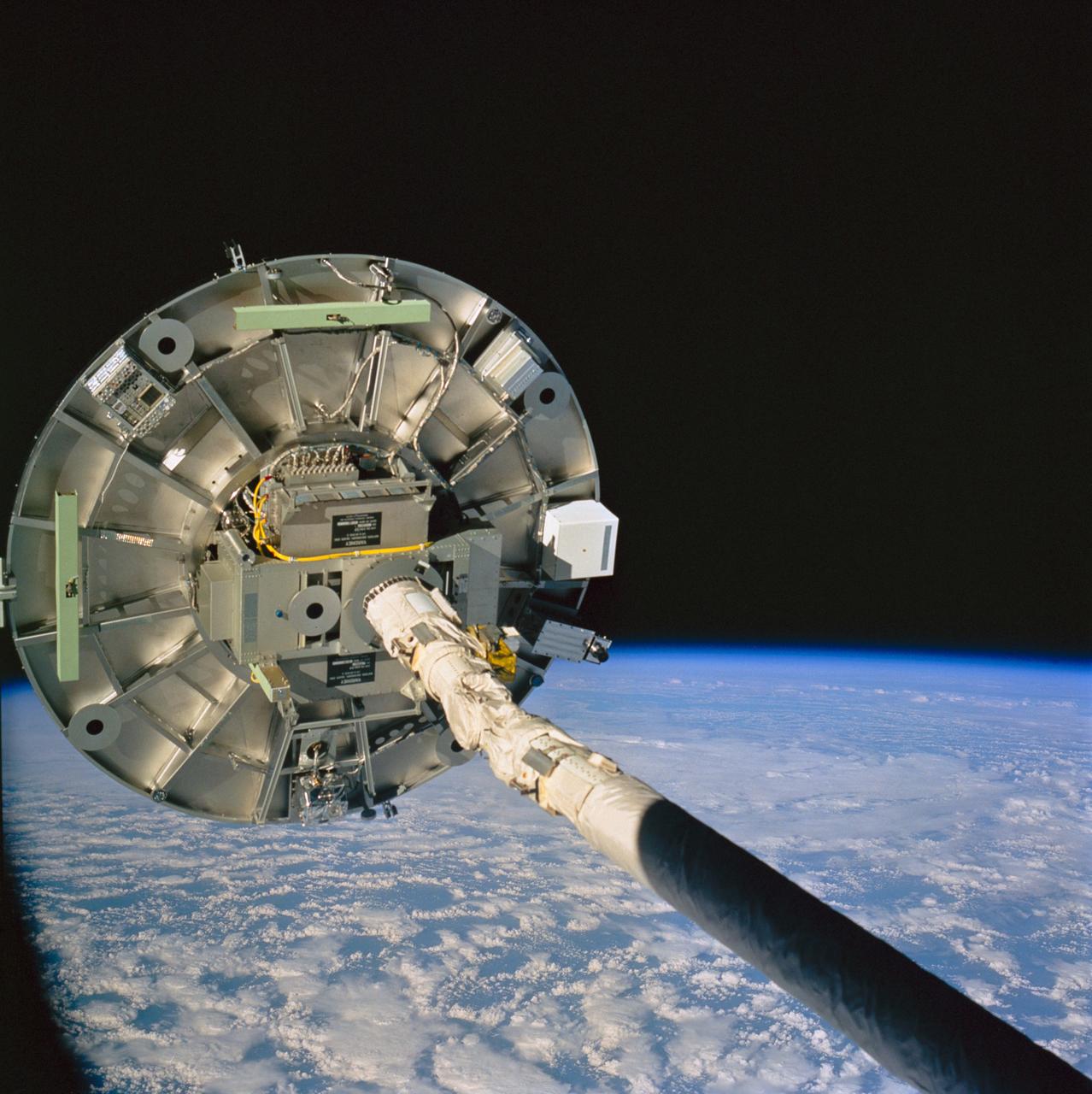
STS060-76-095 (3-11 Feb 1994) --- The ram side of the Wake Shield Facility (WSF) in the grasp of the Space Shuttle Discovery's Remote Manipulator System (RMS) arm is featured in this 70mm frame. Clouds over the Atlantic Ocean and the blackness of space share the backdrop for the picture. Five NASA astronauts and a Russian cosmonaut spent eight days in Earth orbit in support of the STS-60 mission.
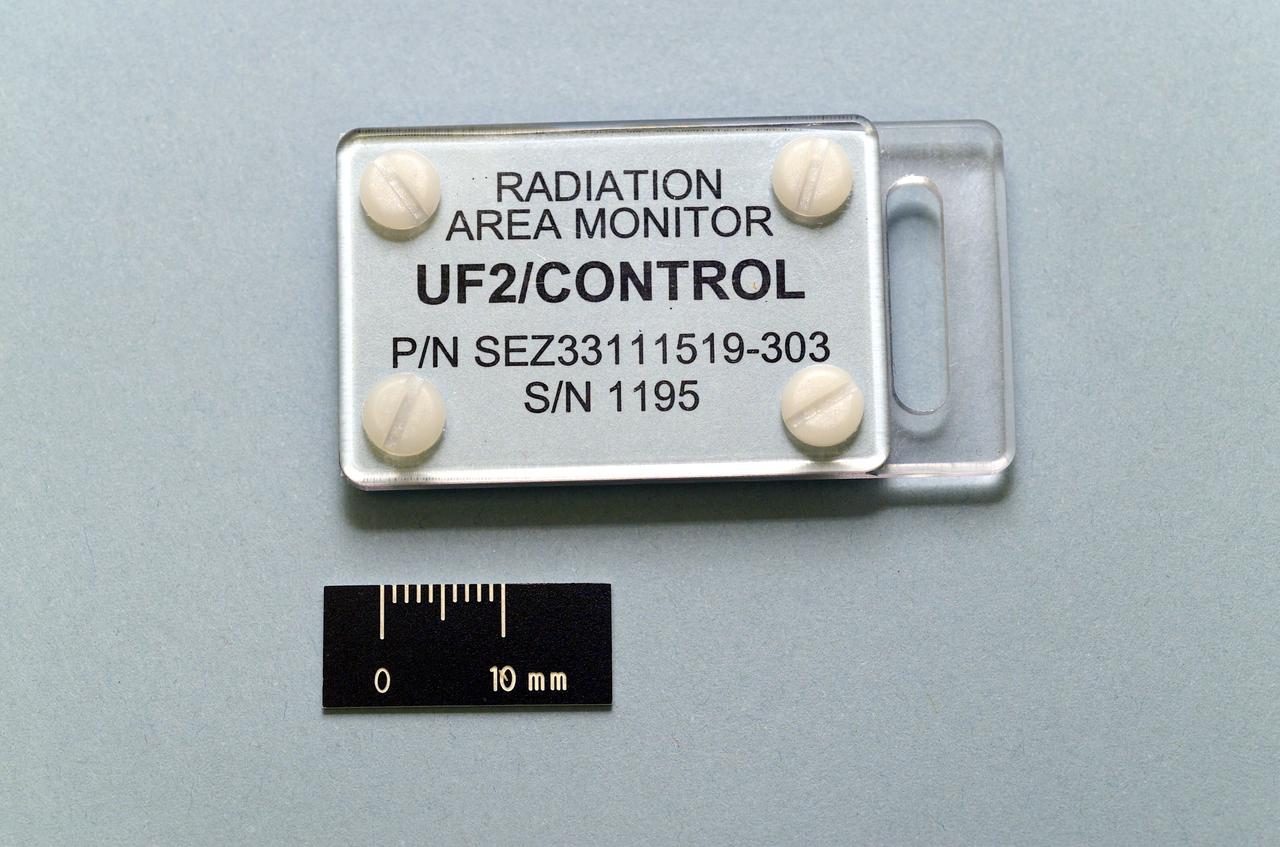
jsc2002e20491 (7/10/2015) --- View of Label side, front, on a Radiation Area Monitor (RAM) Control Dosimeter as part of the Radiation Area Subpack Assemblies for the Passive Dosimetry System. The Radiation Area Monitor (RAM) is a small set of thermoluminescent detectors encased in Lexan plastic that respond to radiation; the amount of radiation they absorb can be revealed by applying heat and measuring the amount of visible light released. The RAM is used to monitor dose and dose equivalent within the habitable volume of the International space Station (ISS) as a function of location, due to its predicted low sensitivity to high-Linear Energy Transfer radiation (neutrons and alpha particles).
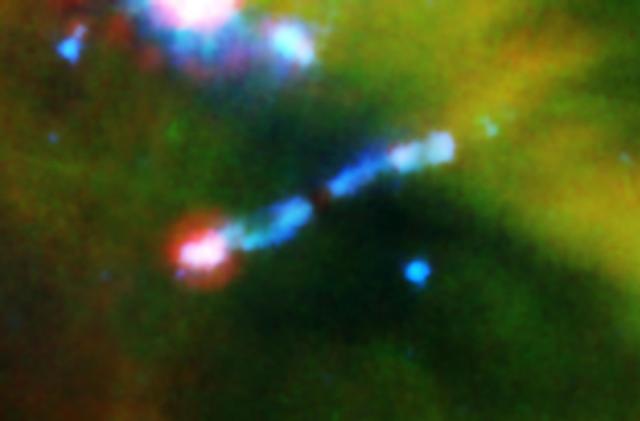
A jet of gas firing out of a very young star can be seen ramming into a wall of material in this infrared image from NASA Spitzer Space Telescope.

For Inspiration and Recognition of Science and Technology; FIRST Robotics Competition 2010 Silicon Valley Regional held at San Jose State University, San Jose, California Rams, Willow Glen H.S. CA Team 256
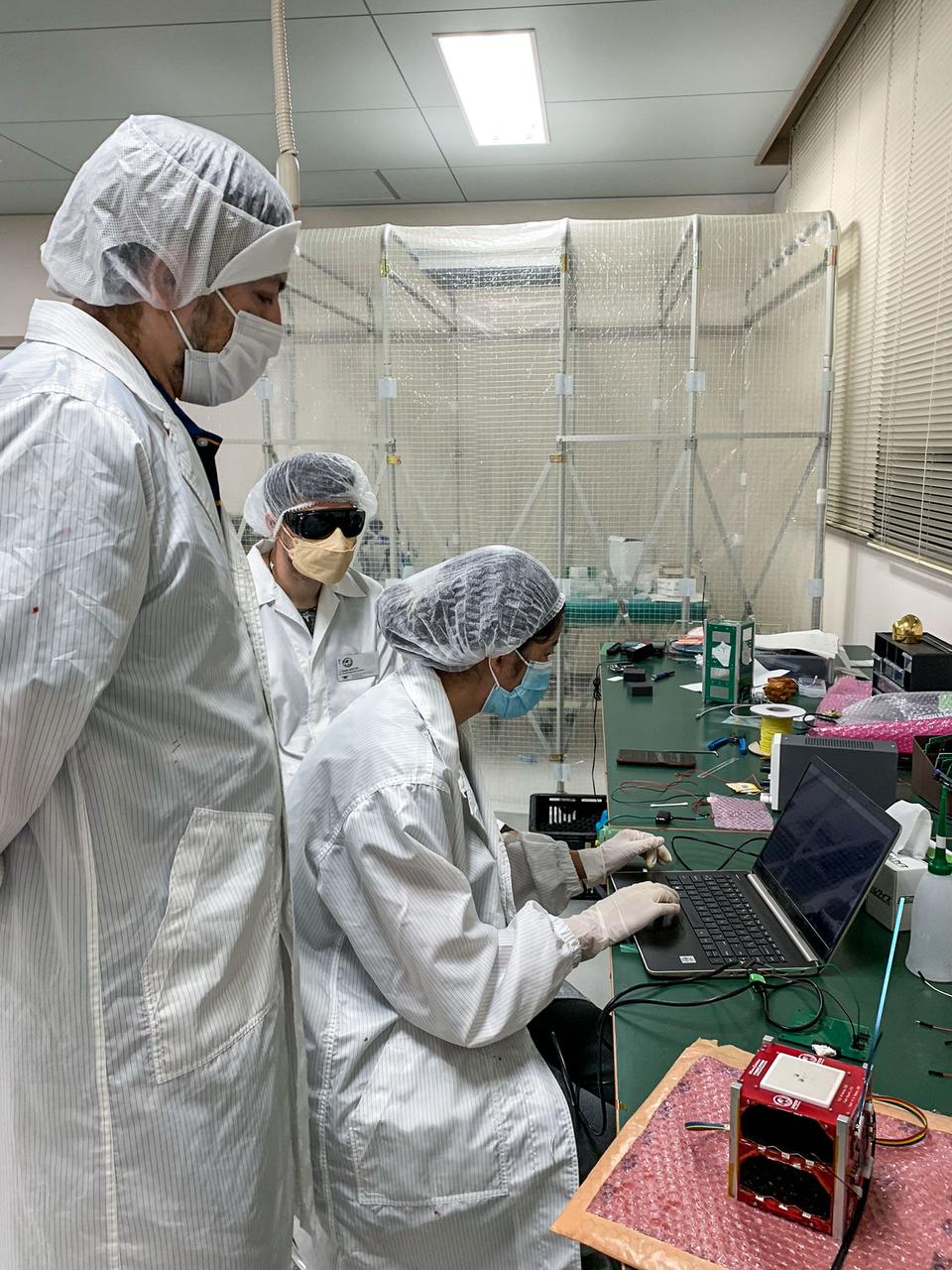
jsc2024e006086 (9/9/2024) --- Some MicroOrbiter-1 team members were analyzing the results from exposing the satellite solar panels to the sun simulator to confirm their generation of power.From left to right : SHRESTHA Hari Ram, MATTEI Giulio, ZANGMO Pema...Image Credit: MOUMNI Fahd.
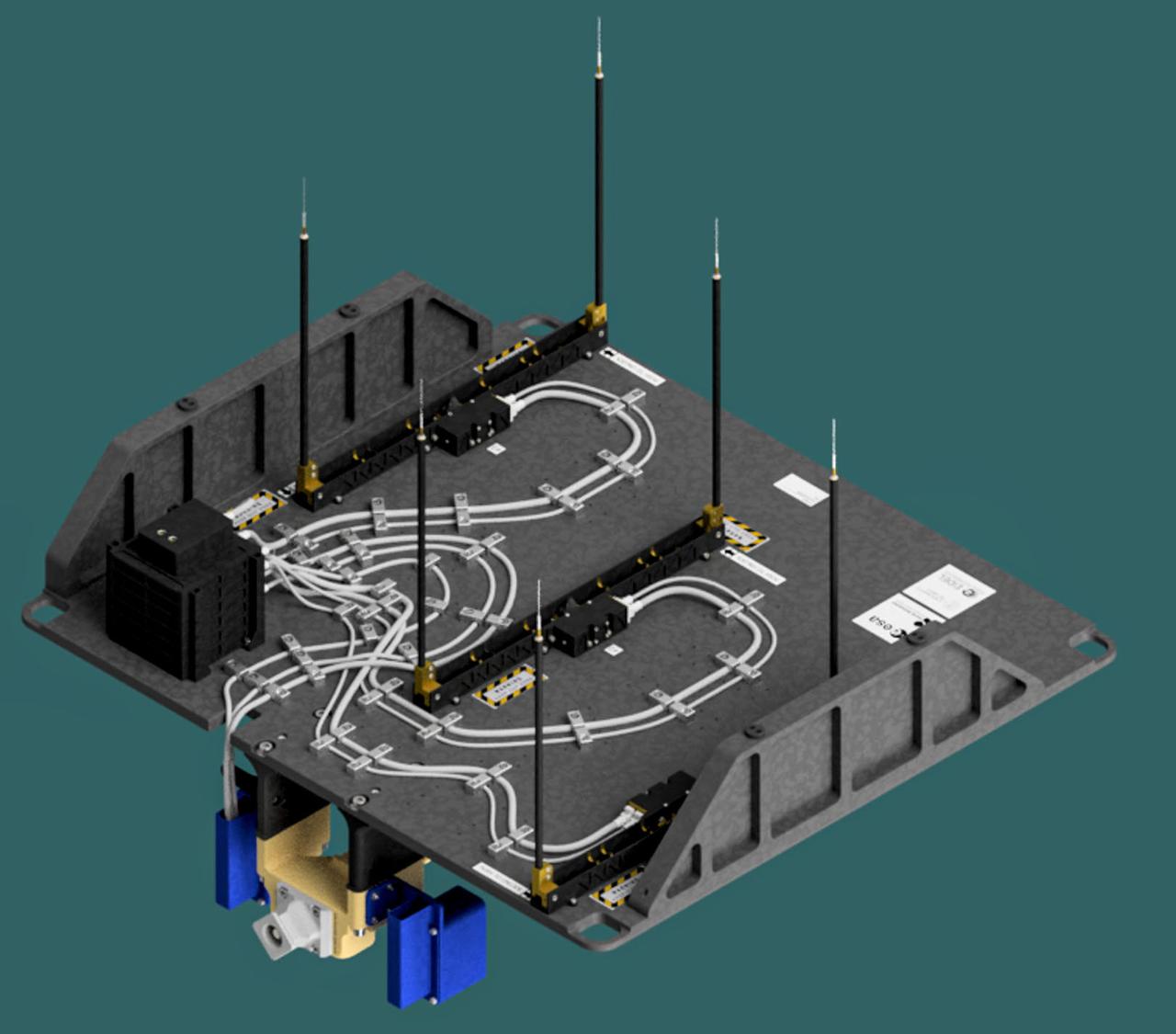
jsc2023e046373 (7/25/2023) --- Artistic rendering of the ram facing side of the Multi-Needle Langmuir Probe (m-NLP). The m-NLP will provide measurements of plasma density variation at spatial scales below one meter. Image courtesy of the University of Oslo, Maren C. Lithun
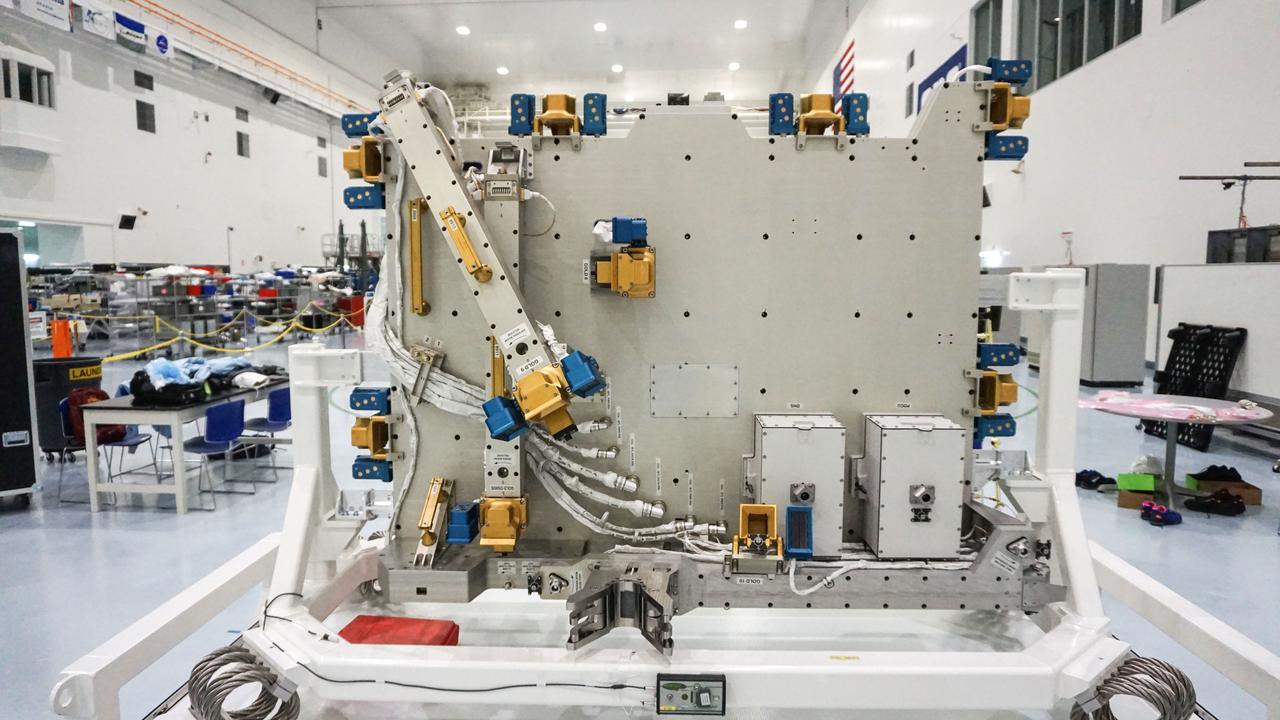
jsc2020e009556 (2/4/2020) --- A preflight view of the nadir side of Bartolomeo at the Kennedy Space Center (KSC). The European external platform Bartolomeo is an enhancement of the International Space Station (ISS) European Columbus Module and its infrastructure. Designed to meet user requirements from the commercial and institutional sector, Bartolomeo is a new external payload hosting facility on the ram side of Columbus.
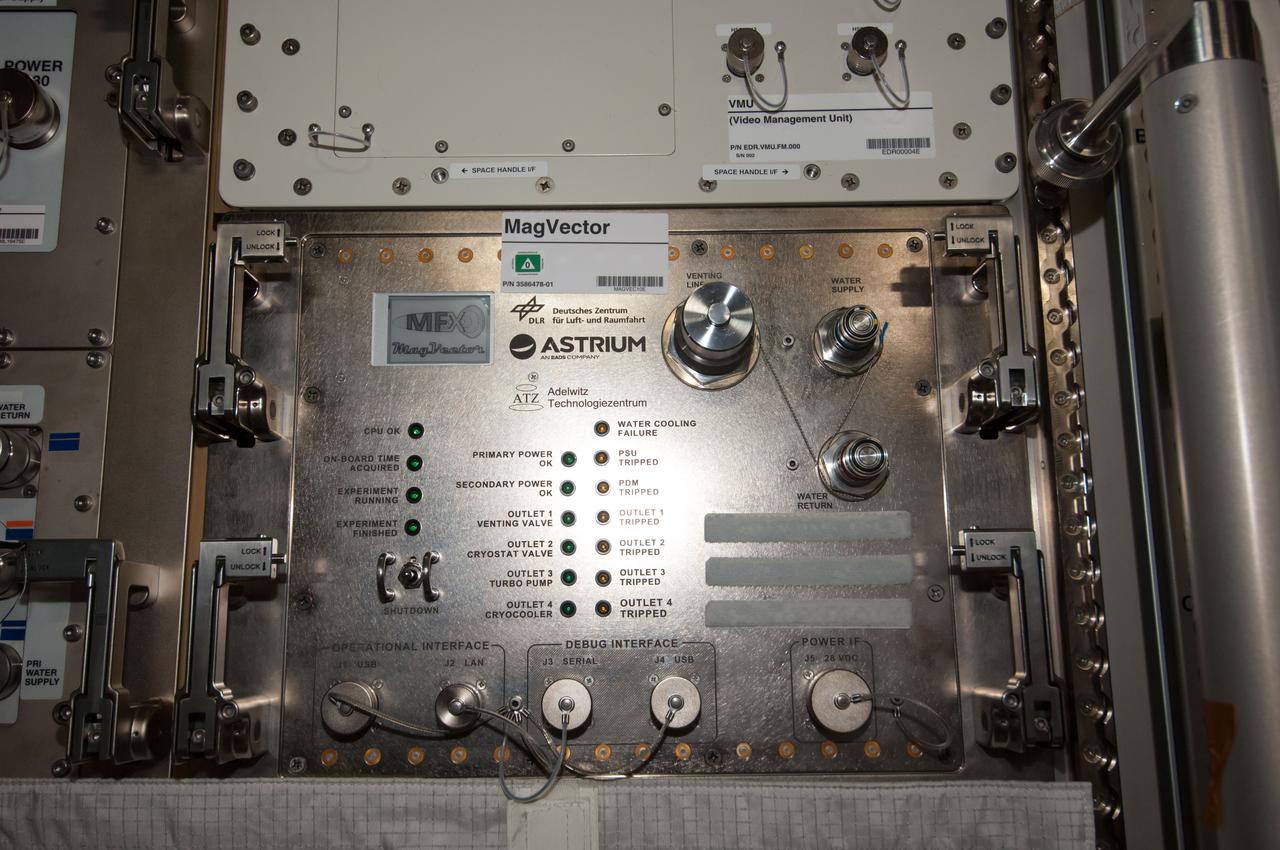
iss040e108291 (8/26/2014) --- Photographic documentation of final installation of MAGVECTOR hardware in the Columbus module aboard the International Space Station (ISS). MAGVECTOR qualitatively investigates the interaction between a moving magnetic field and an electrical conductor. The set up will provide initial insights regarding the principal feasibility on board the ISS,future improvements and phenomenological trends and dependencies. The expected changes in the magnetic field structure on the Ram and Wake side of the electrical conductor are of interest for technical applications as well as for astrophysical research.
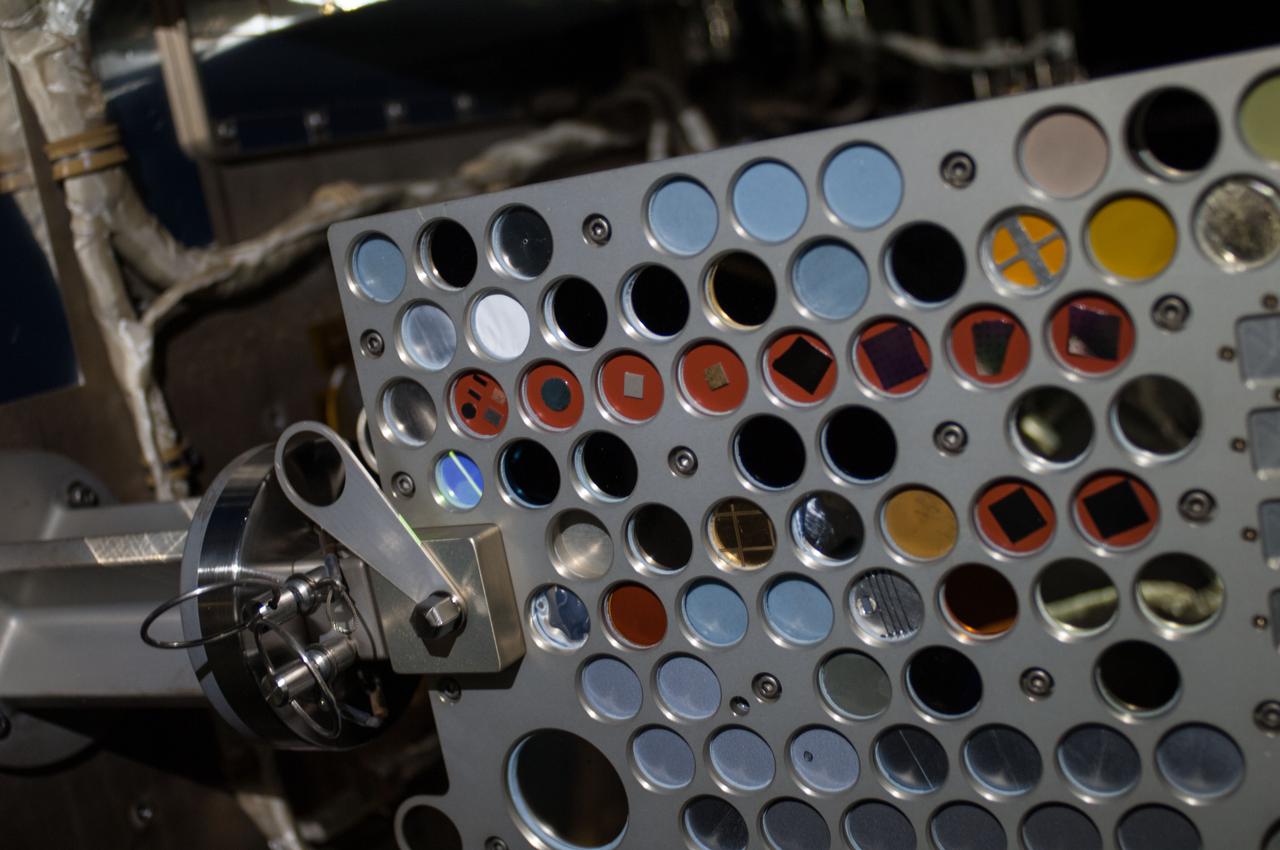
iss036e016736 (7/9/2013) --- Close-up view of the Optical Reflector Materials Experiment III Ram/Wake (ORMatE-III R/W) which is part of the Materials on International Space Station Experiment - 8 (MISSE-8) installed on the starboard truss. View was taken during a session of extravehicular activity (EVA) 22 as work continues on the International Space Station.
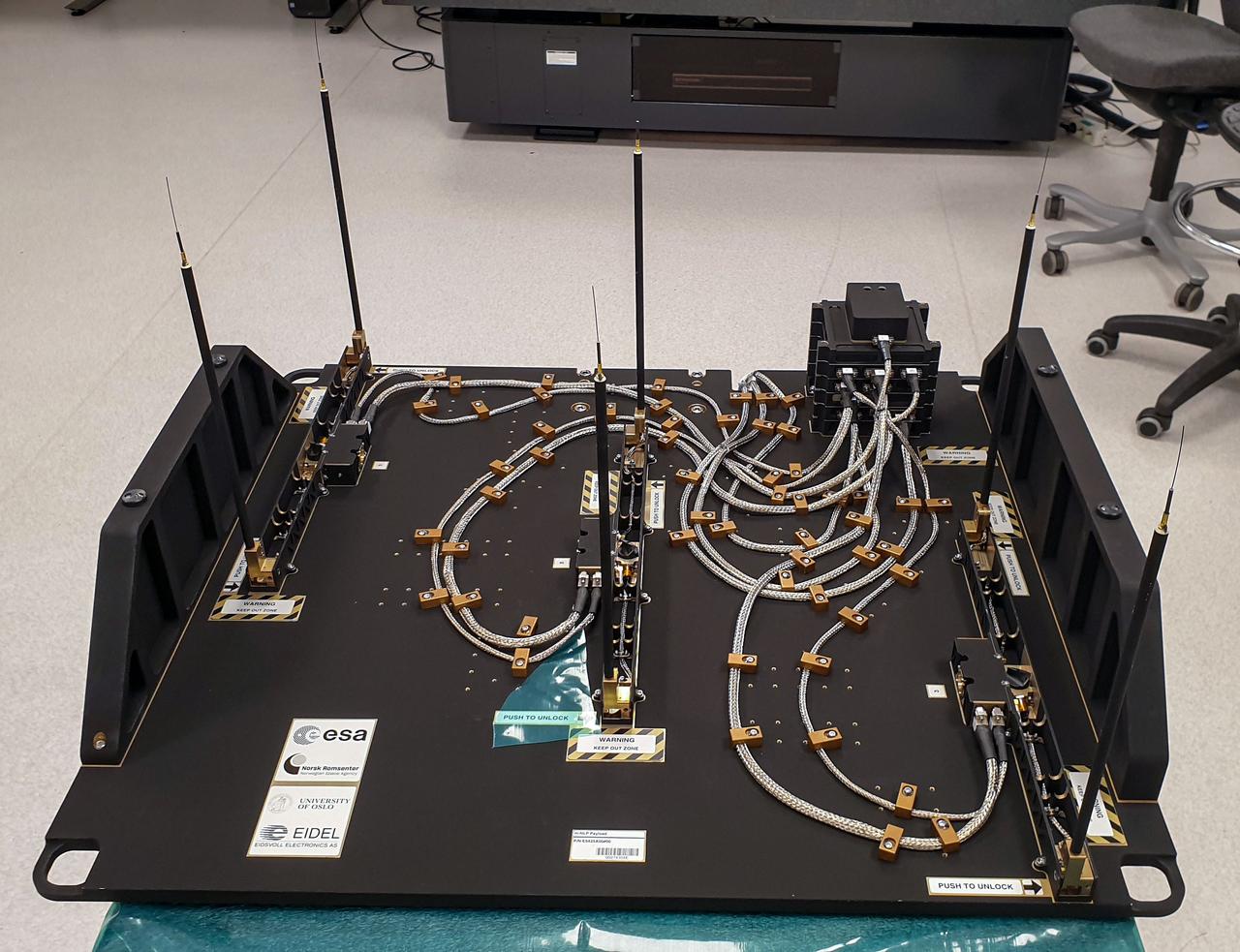
jsc2023e046372 (9/30/2022) --- The Multi-Needle Langmuir Probe (m-NLP) is shown from the ram facing side with booms in deployed position. The m-NLP measures plasma density in the ionosphere, where Earth's atmosphere meets the beginning of space. Researchers aim to study electrically charged particles and increase their understanding of how particle phenomena affect radio communications and global navigation satellite system (GNSS) signals. Image courtesy of the University of Oslo, Espen Trondsen.
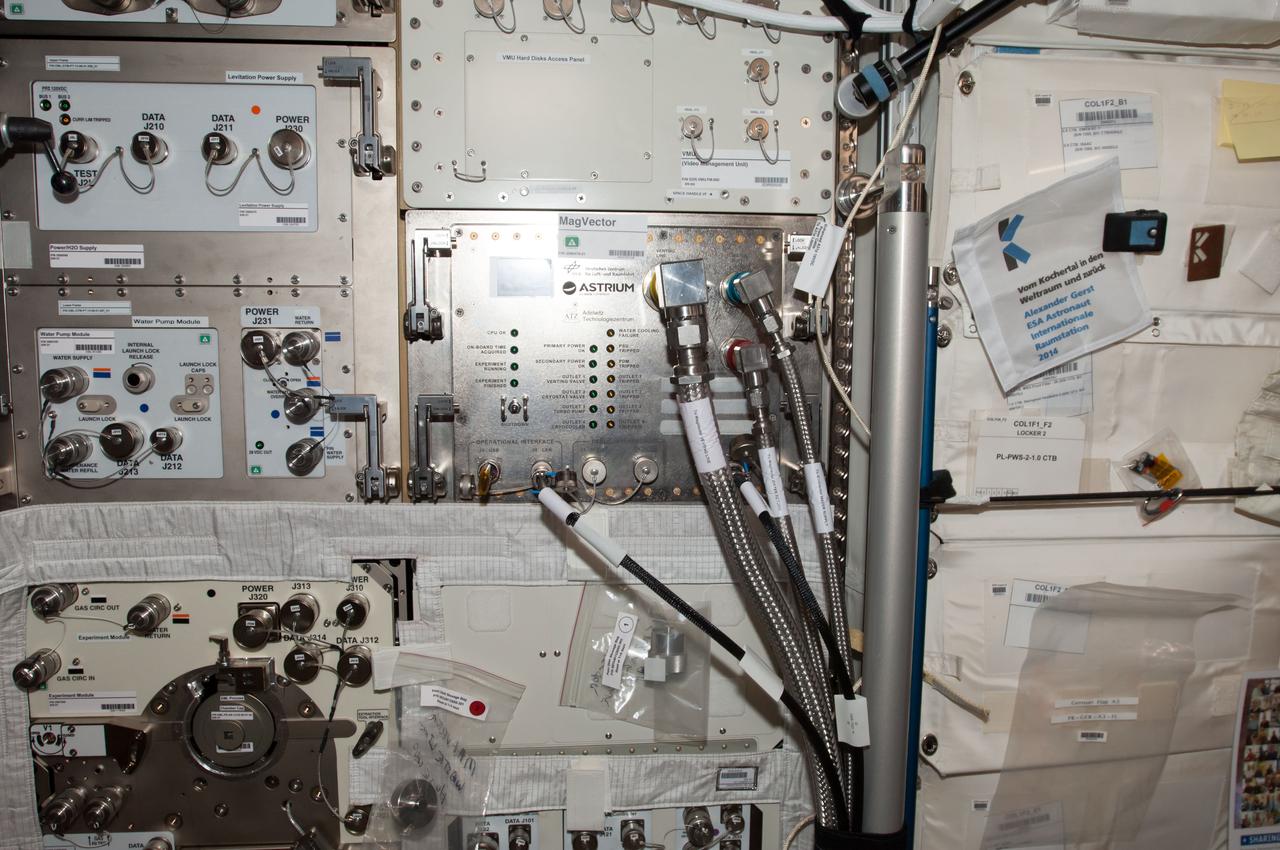
iss040e123621 (9/4/2014) --- Photographic documentation of final installation of MAGVECTOR hardware in the Columbus module aboard the International Space Station (ISS). MAGVECTOR qualitatively investigates the interaction between a moving magnetic field and an electrical conductor. The set up will provide initial insights regarding the principal feasibility on board the ISS,future improvements and phenomenological trends and dependencies. The expected changes in the magnetic field structure on the Ram and Wake side of the electrical conductor are of interest for technical applications as well as for astrophysical research.
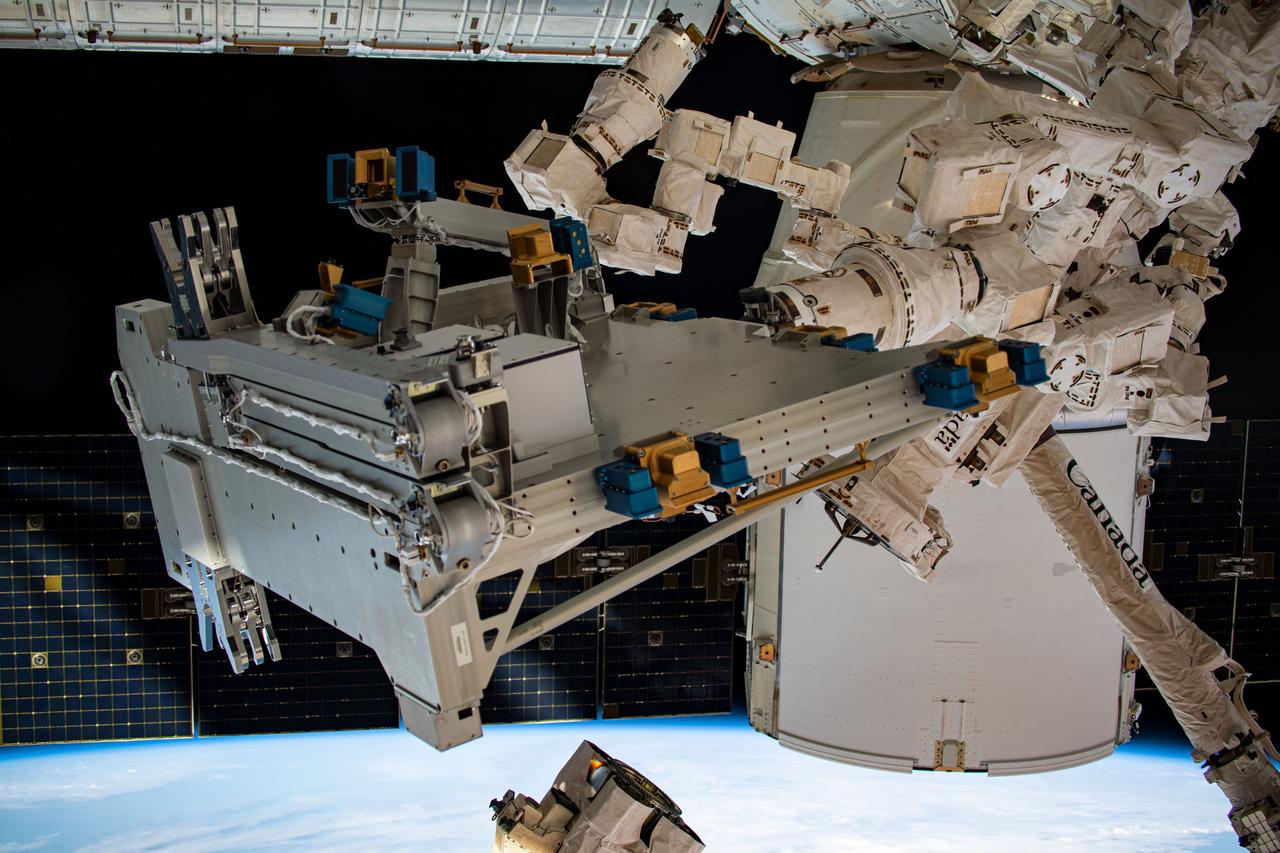
iss062e115840 (3/27/2020) --- Bartolomeo in the parking position below the Destiny module on the International Space Station (ISS). The European external platform Bartolomeo is an enhancement of the International Space Station (ISS) European Columbus Module and its infrastructure. Designed to meet user requirements from the commercial and institutional sector, Bartolomeo is a new external payload hosting facility on the ram side of Columbus.
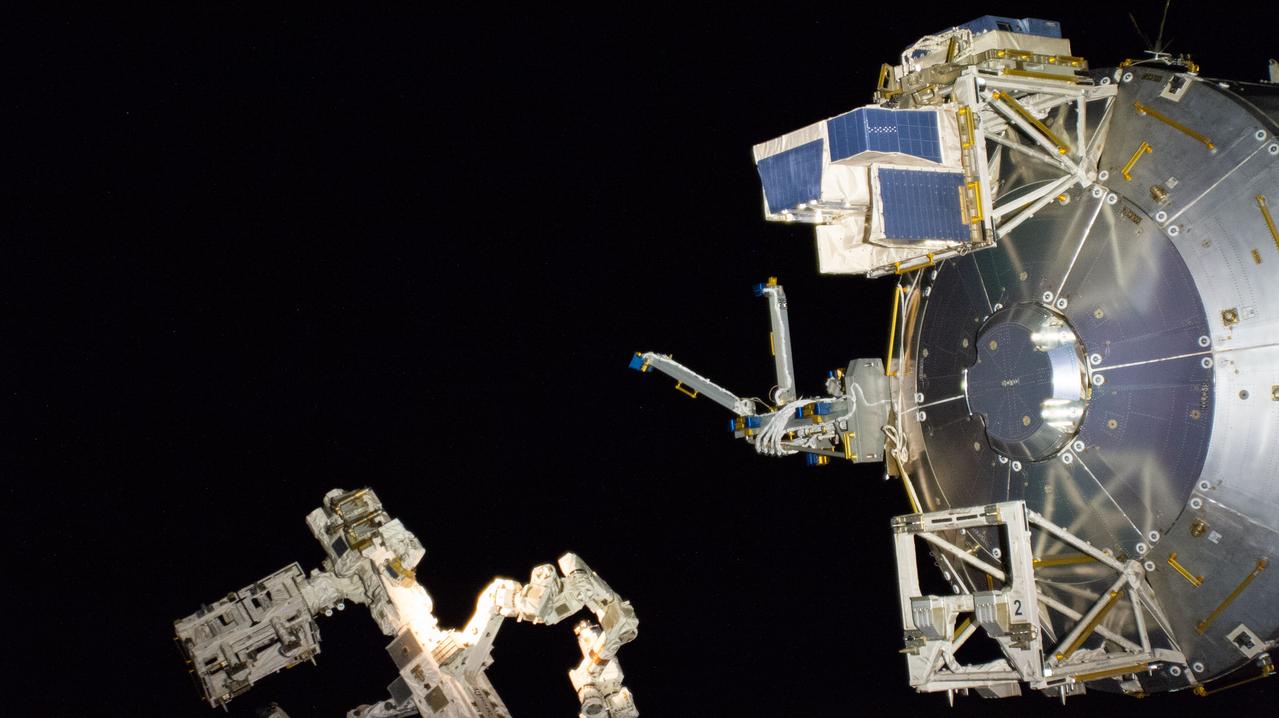
ss062e118892 4/2/2020) --- A view of Bartolomeo in its final position on the Columbus module of the International Space Station (ISS). The European external platform Bartolomeo is an enhancement of the International Space Station (ISS) European Columbus Module and its infrastructure. Designed to meet user requirements from the commercial and institutional sector, Bartolomeo is a new external payload hosting facility on the ram side of Columbus.
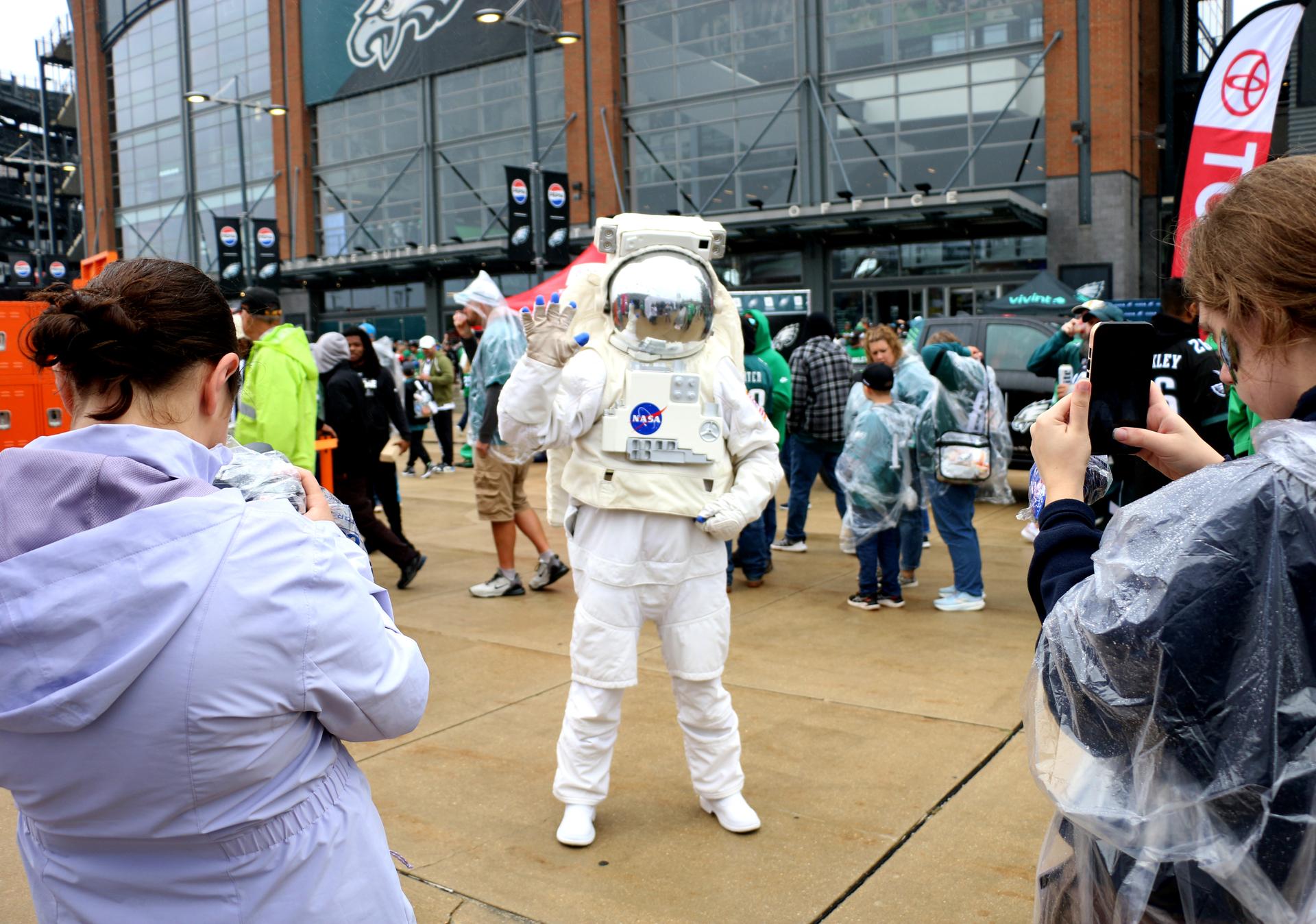
Fans take photos of the astronaut at the NASA activation at the NFL game between the Philadelphia Eagles and the Los Angeles Rams at Lincoln Financial Field on Sunday, Oct. 4, 2026, in Philadelphia. NASA’s engagement at NFL games is part of the agency's Inspiration Tour, aimed at strengthening connections between NASA and its partners and showcasing innovation in air and space in the lead up to the MAX POWER aerospace technology expo and airshow at the agency's Kennedy Space Center in early November. Photo Credit: (NASA/Thalia Patrinos)
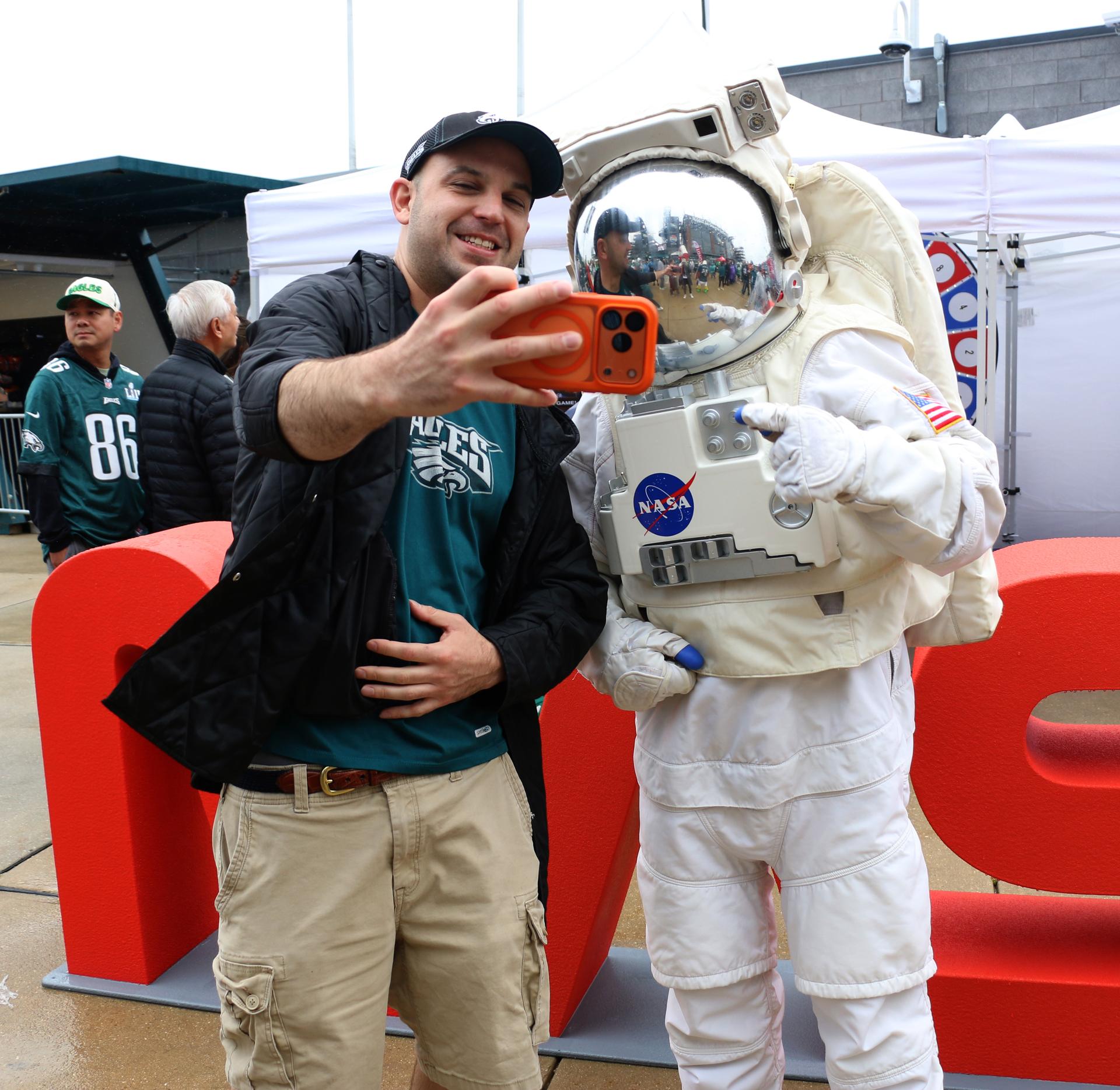
A fan takes a selfie with the astronaut at the NASA activation at the NFL game between the Philadelphia Eagles and the Los Angeles Rams at Lincoln Financial Field on Sunday, Oct. 4, 2026, in Philadelphia. NASA’s engagement at NFL games is part of the agency's Inspiration Tour, aimed at strengthening connections between NASA and its partners and showcasing innovation in air and space in the lead up to the MAX POWER aerospace technology expo and airshow at the agency's Kennedy Space Center in early November. Photo Credit: (NASA/Thalia Patrinos)
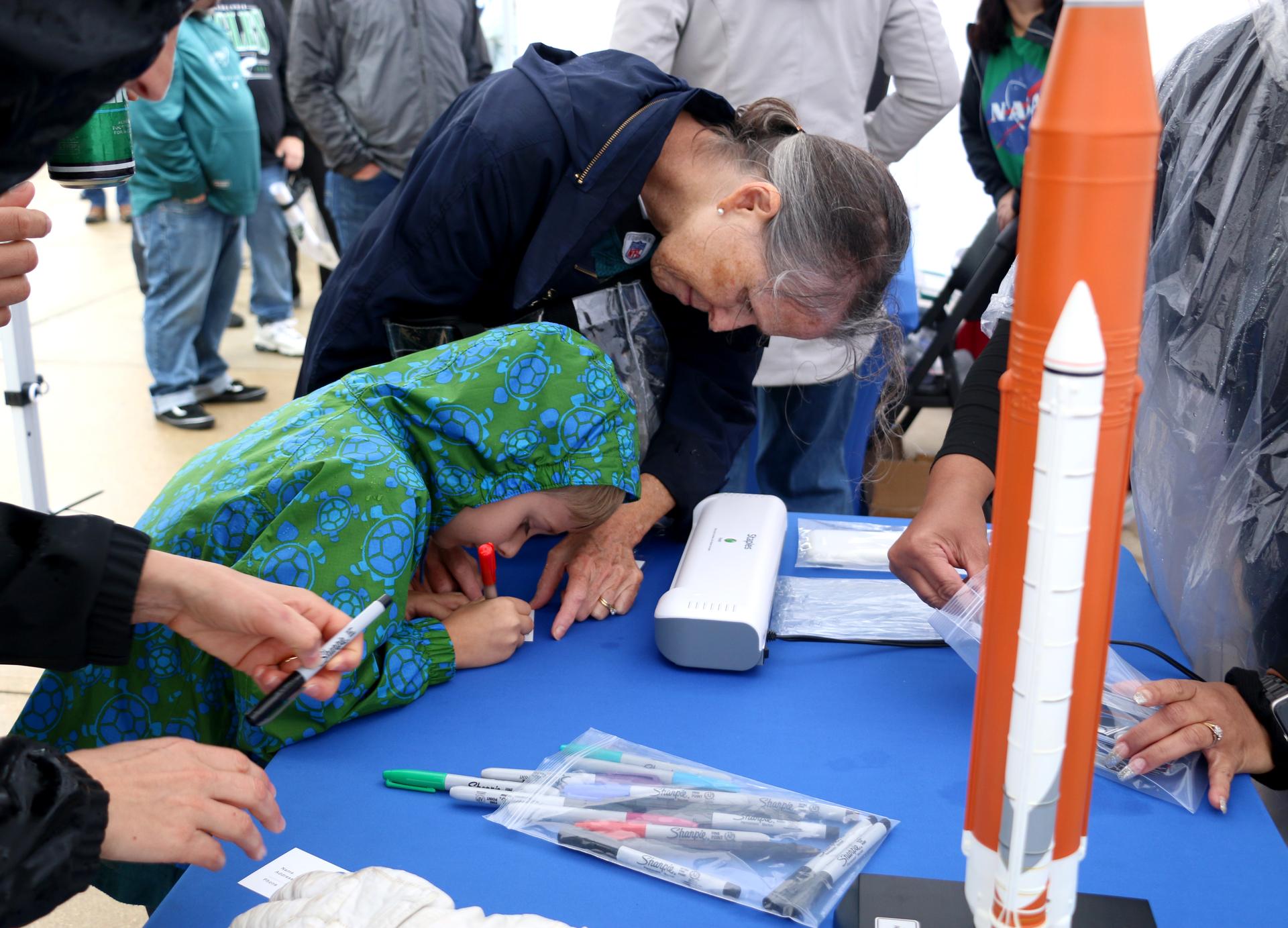
Two fans label their new luggage tag at the NASA activation at the NFL game between the Philadelphia Eagles and the Los Angeles Rams at Lincoln Financial Field on Sunday, Oct. 4, 2026, in Philadelphia. NASA’s engagement at NFL games is part of the agency's Inspiration Tour, aimed at strengthening connections between NASA and its partners and showcasing innovation in air and space in the lead up to the MAX POWER aerospace technology expo and airshow at the agency's Kennedy Space Center in early November. Photo Credit: (NASA/Thalia Patrinos)
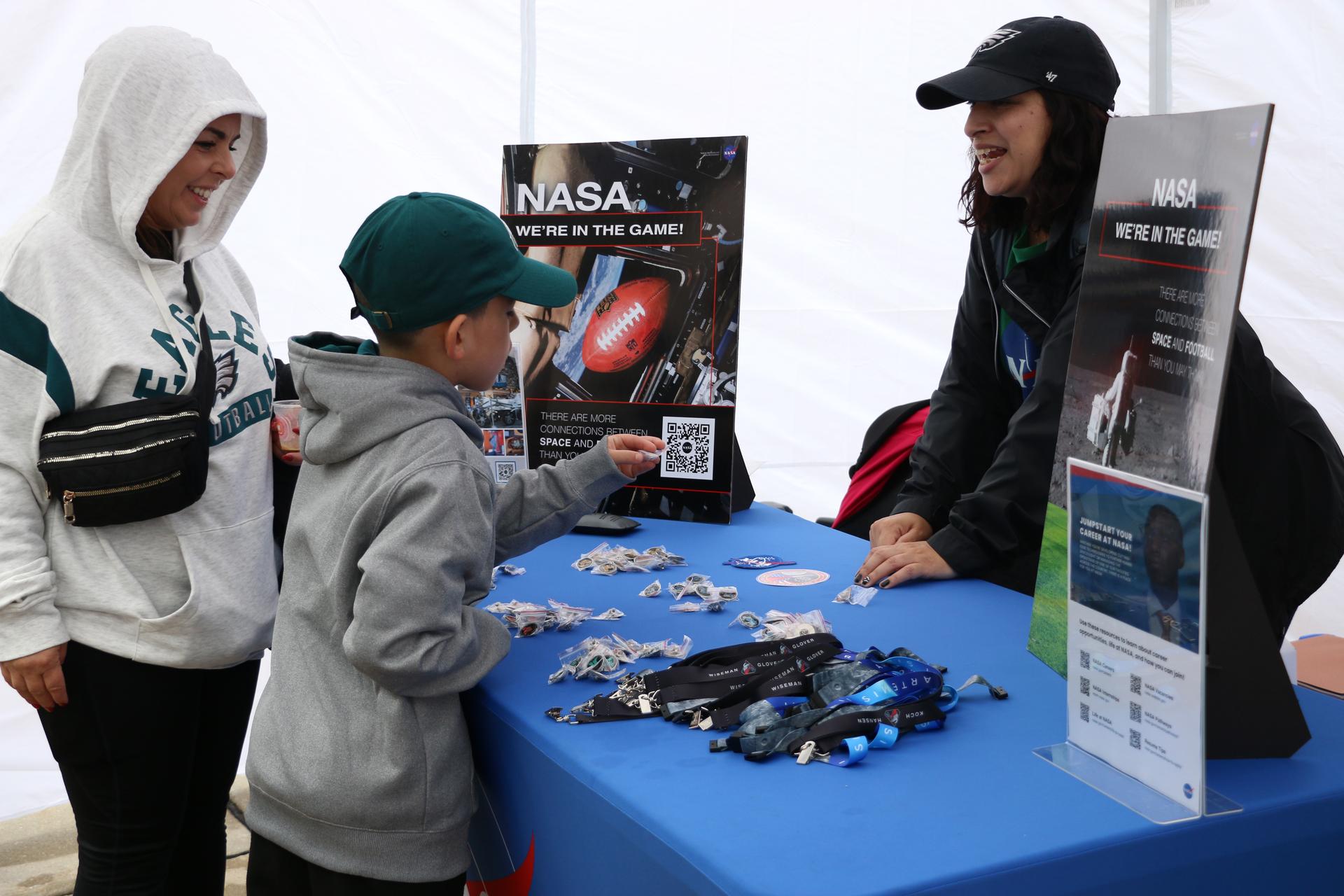
Astrophysicist Knicole Colón greets a young fan at the NASA activation as the NFL game between the Philadelphia Eagles and the Los Angeles Rams at Lincoln Financial Field on Sunday, Oct. 4, 2026, in Philadelphia. NASA’s engagement at NFL games is part of the agency's Inspiration Tour, aimed at strengthening connections between NASA and its partners and showcasing innovation in air and space in the lead up to the MAX POWER aerospace technology expo and airshow at the agency's Kennedy Space Center in early November. Photo Credit: (NASA/Thalia Patrinos)
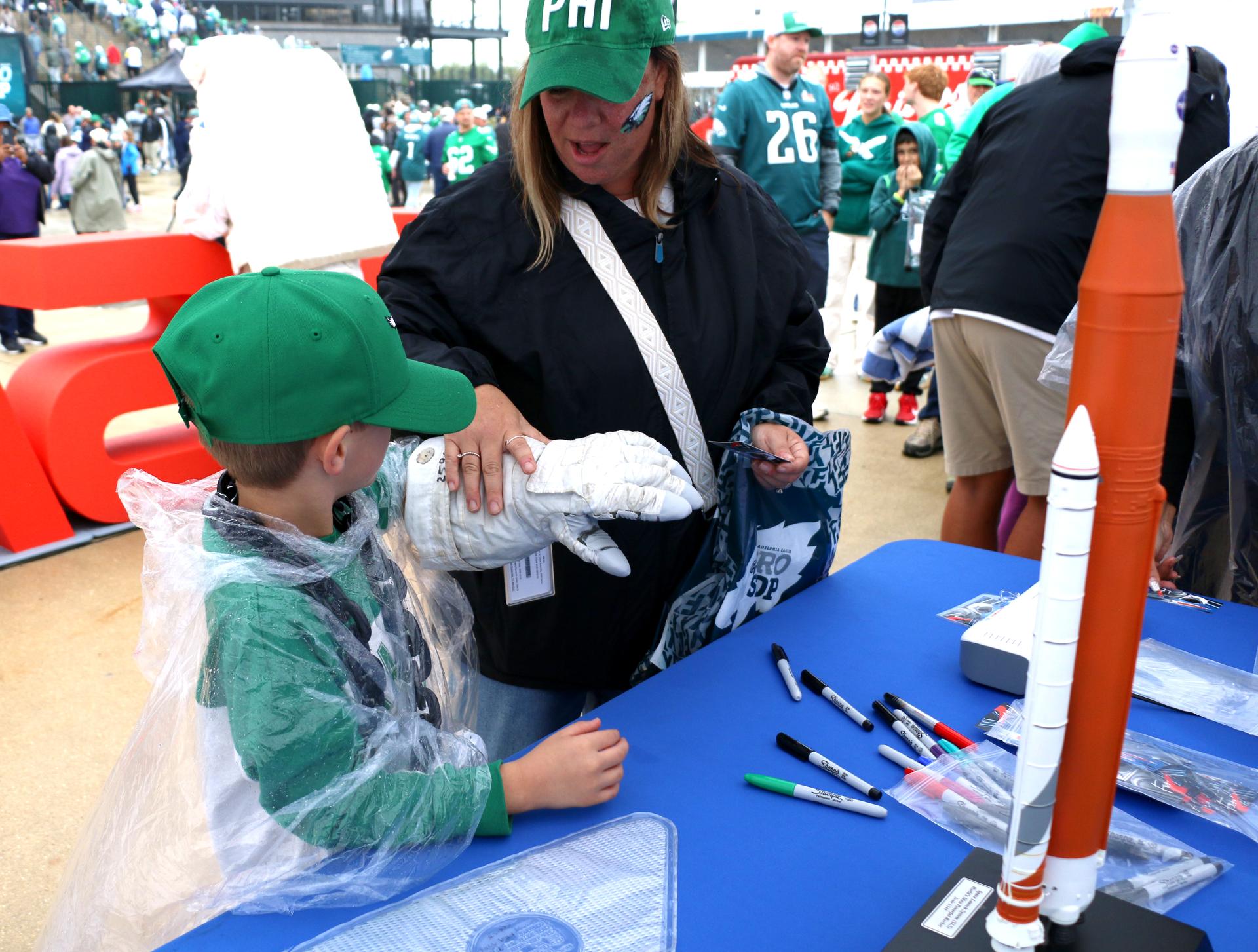
Two fans try on an astronaut glove at the NASA activation at the NFL game between the Philadelphia Eagles and the Los Angeles Rams at Lincoln Financial Field on Sunday, Oct. 4, 2026, in Philadelphia. NASA’s engagement at NFL games is part of the agency's Inspiration Tour, aimed at strengthening connections between NASA and its partners and showcasing innovation in air and space in the lead up to the MAX POWER aerospace technology expo and airshow at the agency's Kennedy Space Center in early November. Photo Credit: (NASA/Thalia Patrinos)
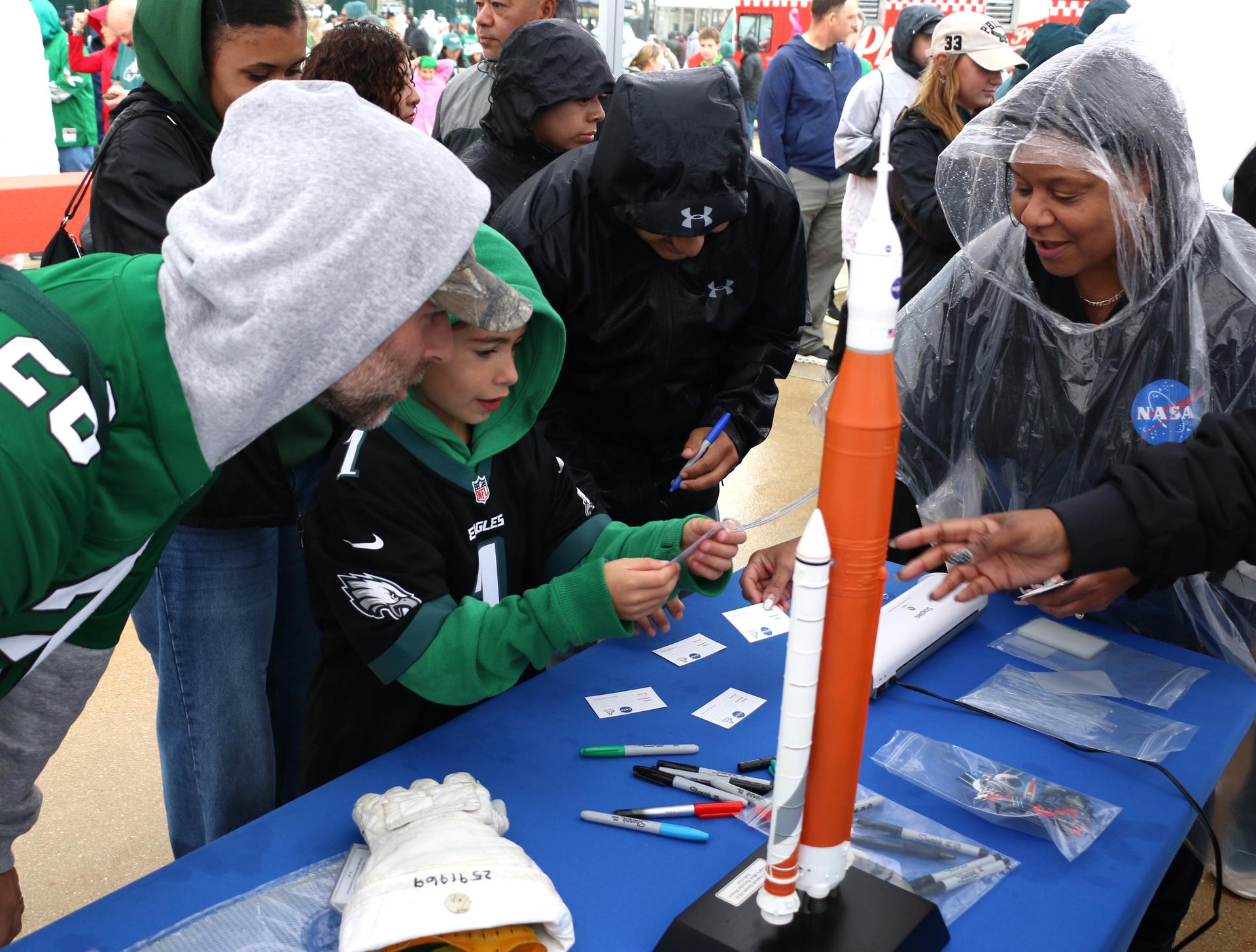
Fans participate at the NASA activation at the NFL game between the Philadelphia Eagles and the Los Angeles Rams at Lincoln Financial Field on Sunday, Oct. 4, 2026, in Philadelphia. NASA’s engagement at NFL games is part of the agency's Inspiration Tour, aimed at strengthening connections between NASA and its partners and showcasing innovation in air and space in the lead up to the MAX POWER aerospace technology expo and airshow at the agency's Kennedy Space Center in early November. Photo Credit: (NASA/Thalia Patrinos)
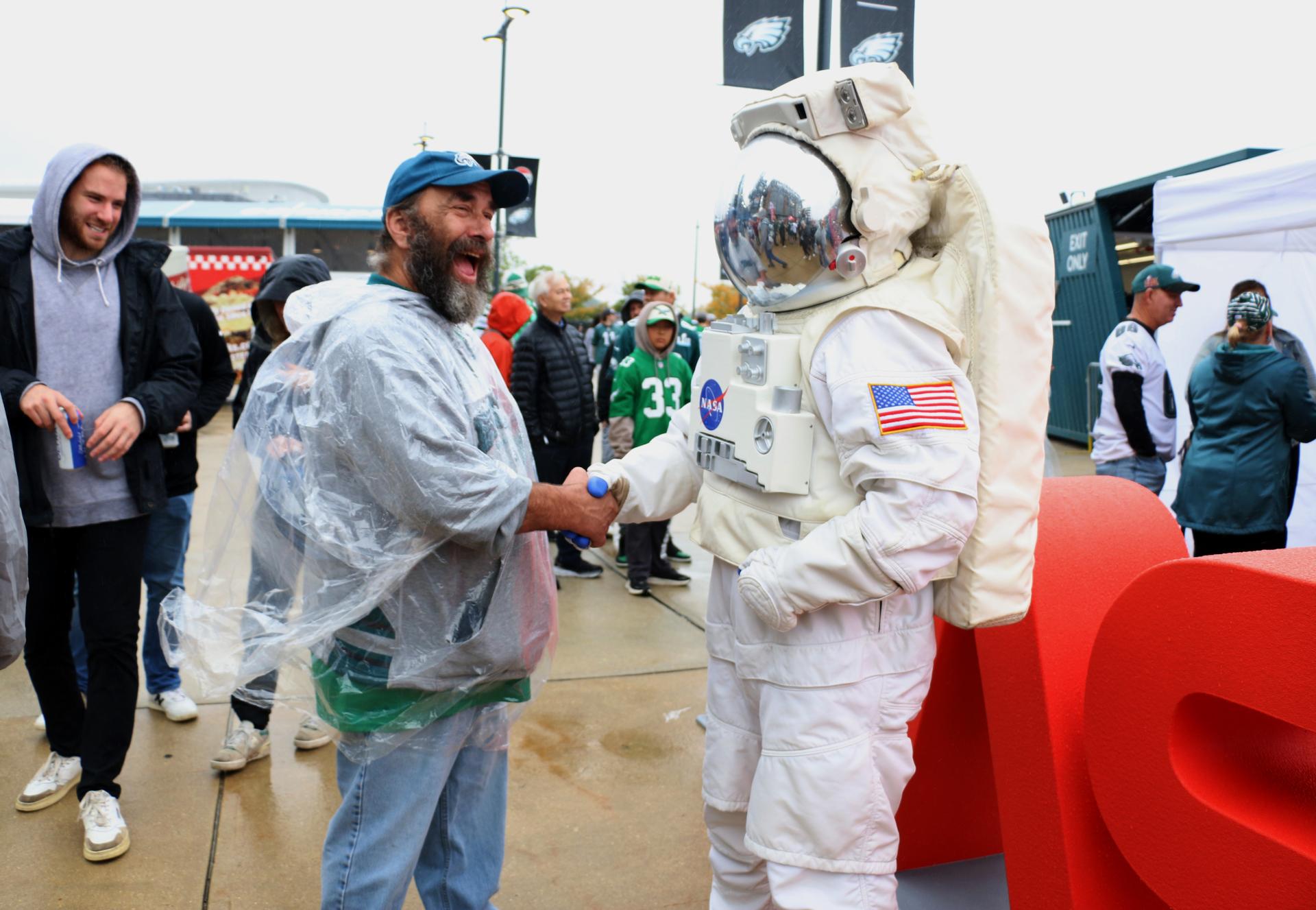
A fan greets the astronaut at the NASA activation at the NFL game between the Philadelphia Eagles and the Los Angeles Rams at Lincoln Financial Field on Sunday, Oct. 4, 2026, in Philadelphia. NASA’s engagement at NFL games is part of the agency's Inspiration Tour, aimed at strengthening connections between NASA and its partners and showcasing innovation in air and space in the lead up to the MAX POWER aerospace technology expo and airshow at the agency's Kennedy Space Center in early November. Photo Credit: (NASA/Thalia Patrinos)
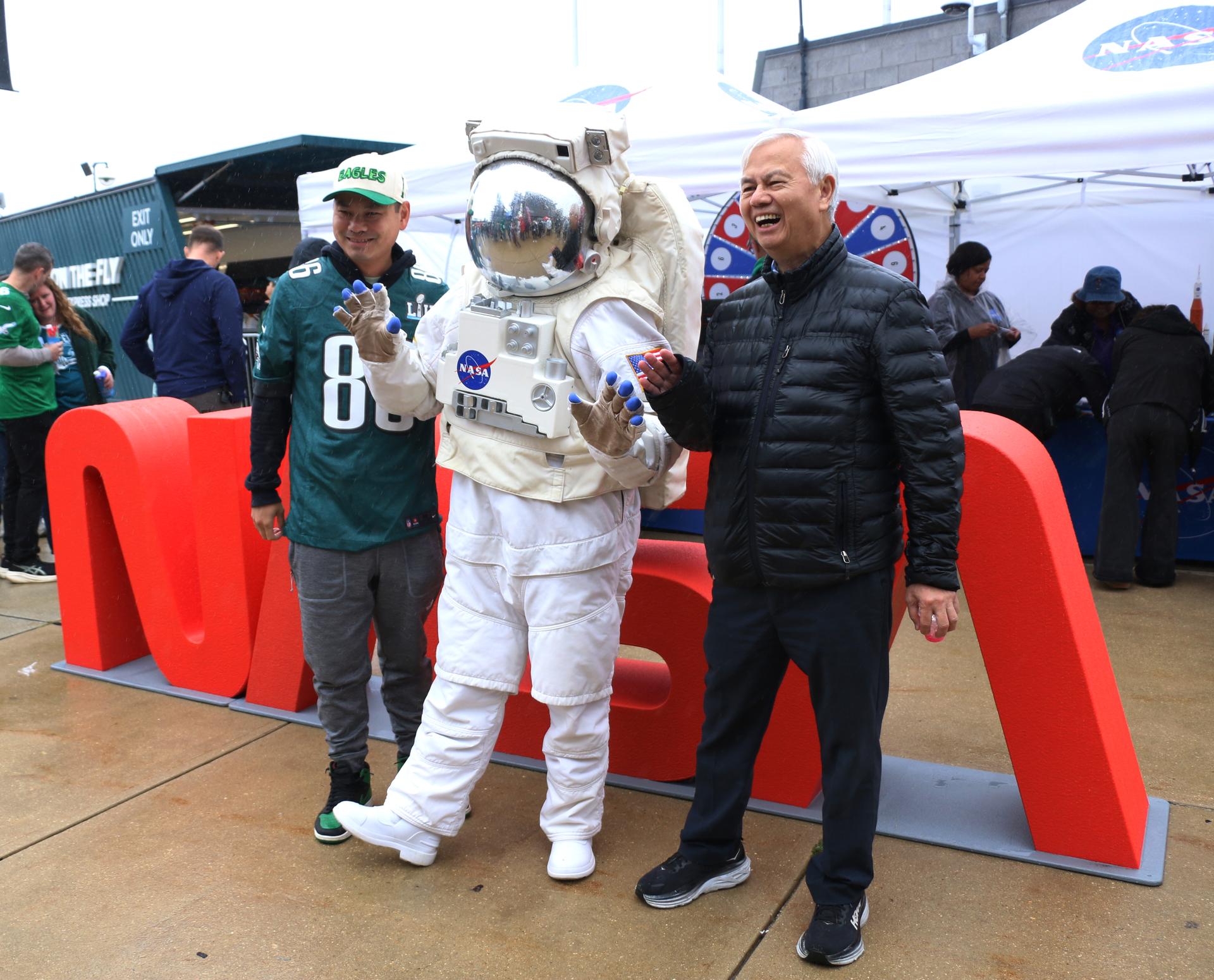
Fans pose with the astronaut at the NASA activation at the NFL game between the Philadelphia Eagles and the Los Angeles Rams at Lincoln Financial Field on Sunday, Oct. 4, 2026, in Philadelphia. NASA’s engagement at NFL games is part of the agency's Inspiration Tour, aimed at strengthening connections between NASA and its partners and showcasing innovation in air and space in the lead up to the MAX POWER aerospace technology expo and airshow at the agency's Kennedy Space Center in early November. Photo Credit: (NASA/Thalia Patrinos)
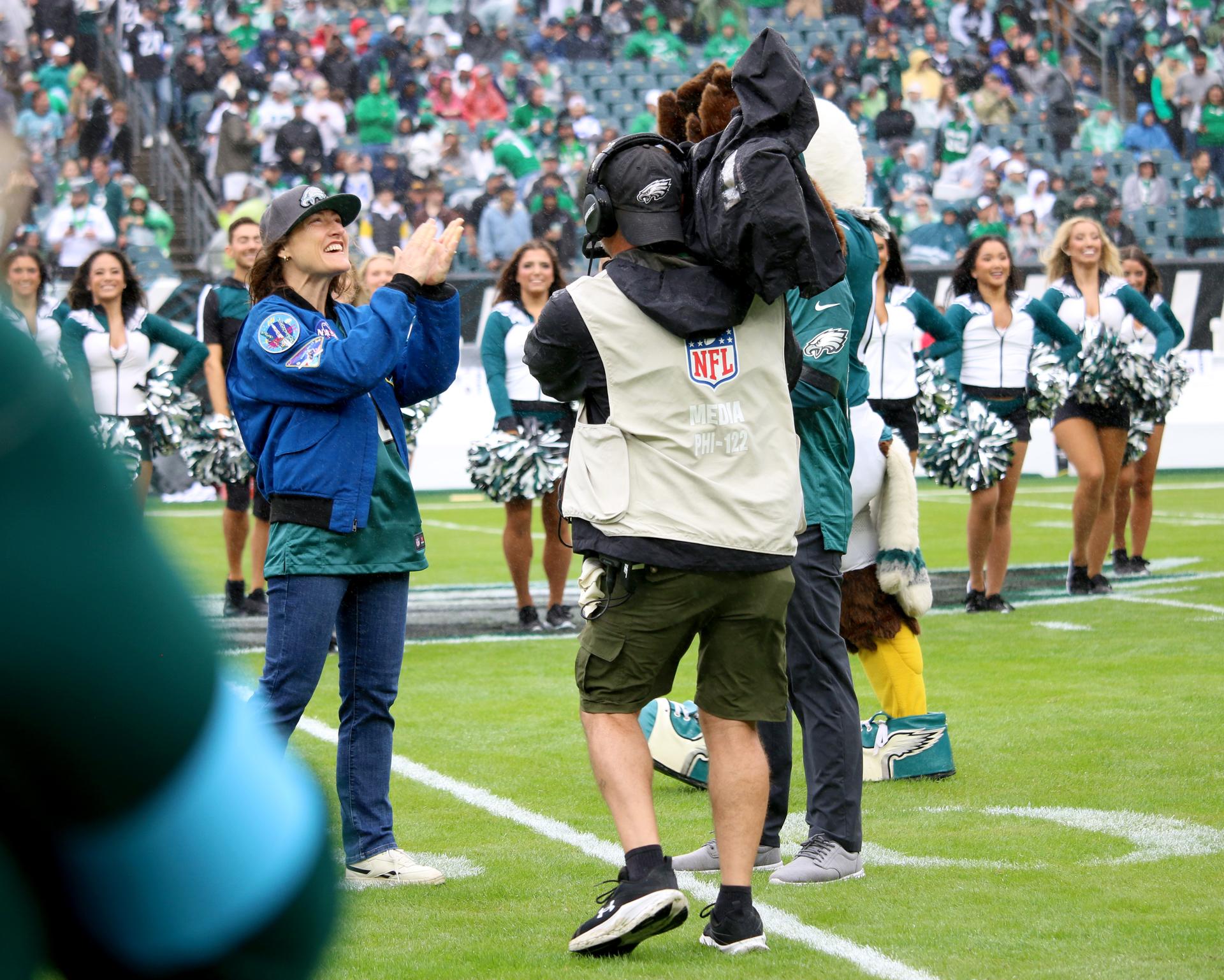
NASA astronaut and mission specialist of the agency's Artemis II mission, Christina Koch, lead the fans in singing the Eagles Fight Song from the field at an NFL game between the Philadelphia Eagles and the Los Angeles Rams at Lincoln Financial Field on Sunday, Oct. 4, 2026, in Philadelphia. NASA’s engagement at NFL games is part of the agency's Inspiration Tour, aimed at strengthening connections between NASA and its partners and showcasing innovation in air and space in the lead up to the MAX POWER aerospace technology expo and airshow at the agency's Kennedy Space Center in early November. Photo Credit: (NASA/Thalia Patrinos)
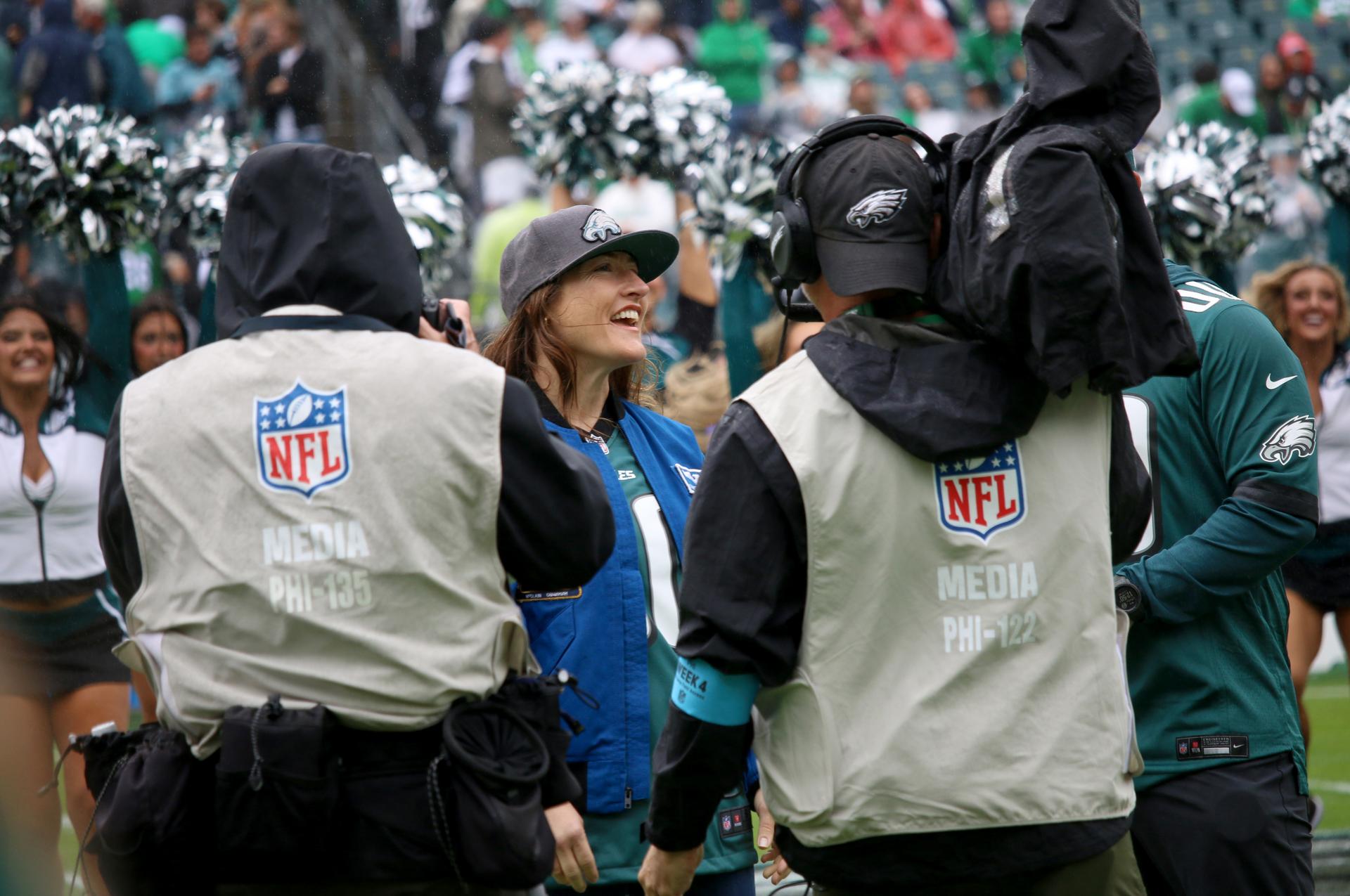
NASA astronaut and mission specialist of the agency's Artemis II mission, Christina Koch, lead the fans in singing the Eagles Fight Song from the field at an NFL game between the Philadelphia Eagles and the Los Angeles Rams at Lincoln Financial Field on Sunday, Oct. 4, 2026, in Philadelphia. NASA’s engagement at NFL games is part of the agency's Inspiration Tour, aimed at strengthening connections between NASA and its partners and showcasing innovation in air and space in the lead up to the MAX POWER aerospace technology expo and airshow at the agency's Kennedy Space Center in early November. Photo Credit: (NASA/Thalia Patrinos)
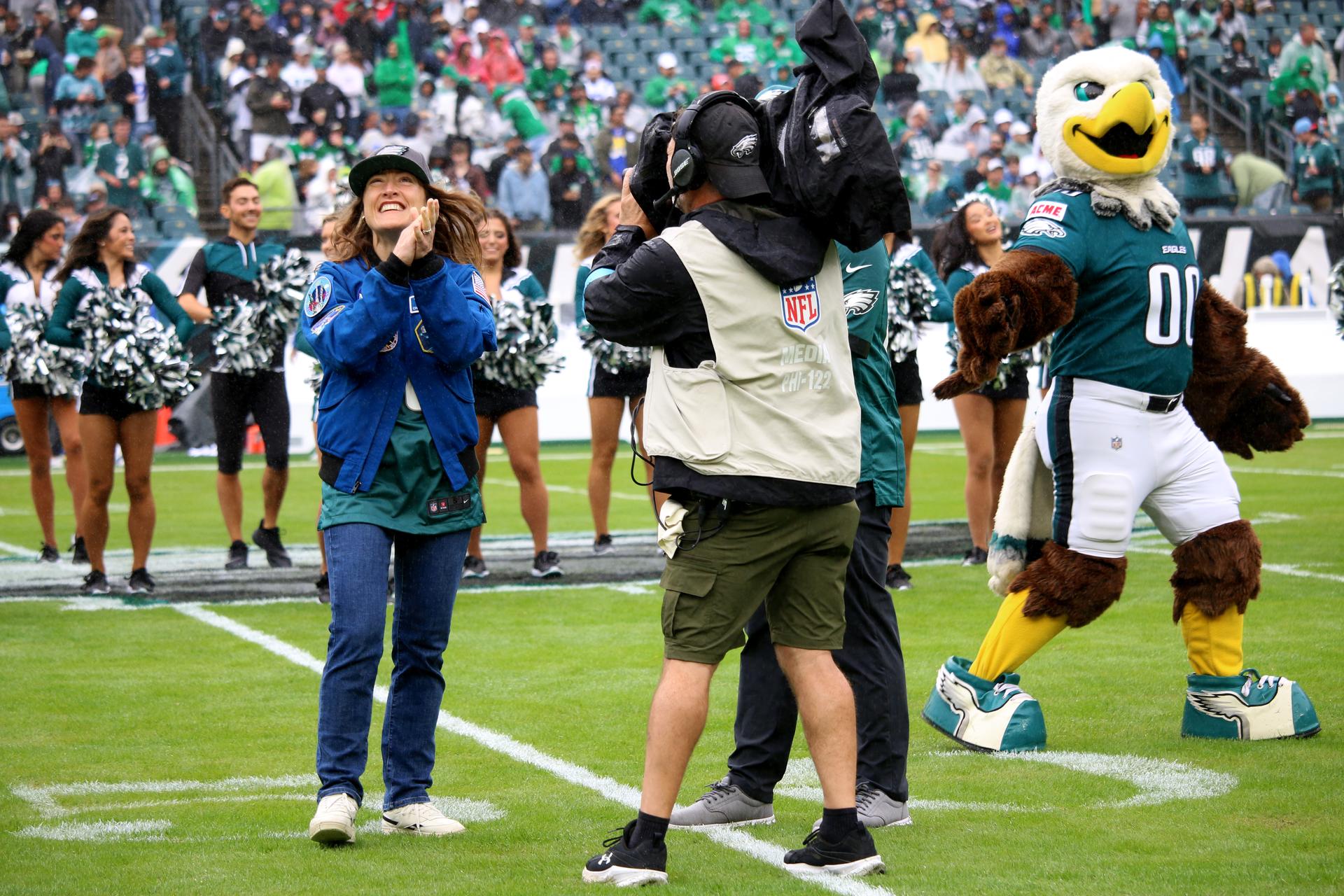
NASA astronaut and mission specialist of the agency's Artemis II mission, Christina Koch, lead the fans in singing the Eagles Fight Song from the field at an NFL game between the Philadelphia Eagles and the Los Angeles Rams at Lincoln Financial Field on Sunday, Oct. 4, 2026, in Philadelphia. NASA’s engagement at NFL games is part of the agency's Inspiration Tour, aimed at strengthening connections between NASA and its partners and showcasing innovation in air and space in the lead up to the MAX POWER aerospace technology expo and airshow at the agency's Kennedy Space Center in early November. Photo Credit: (NASA/Thalia Patrinos)
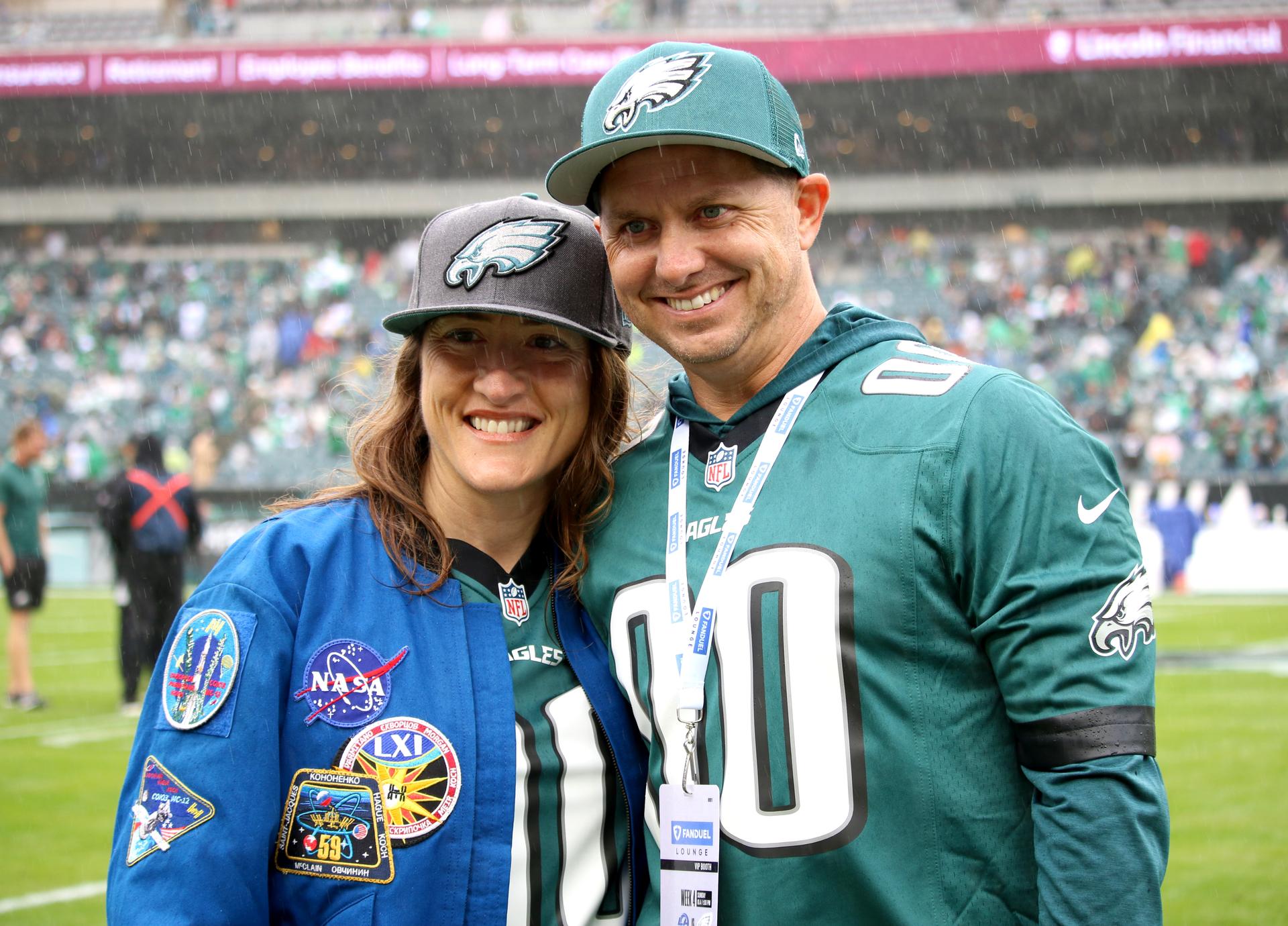
NASA astronaut and mission specialist of the agency's Artemis II mission, Christina Koch, and her husband, Robert Koch, pose at an NFL game between the Philadelphia Eagles and the Los Angeles Rams at Lincoln Financial Field on Sunday, Oct. 4, 2026, in Philadelphia. NASA’s engagement at NFL games is part of the agency's Inspiration Tour, aimed at strengthening connections between NASA and its partners and showcasing innovation in air and space in the lead up to the MAX POWER aerospace technology expo and airshow at the agency's Kennedy Space Center in early November. Photo Credit: (NASA/Thalia Patrinos)
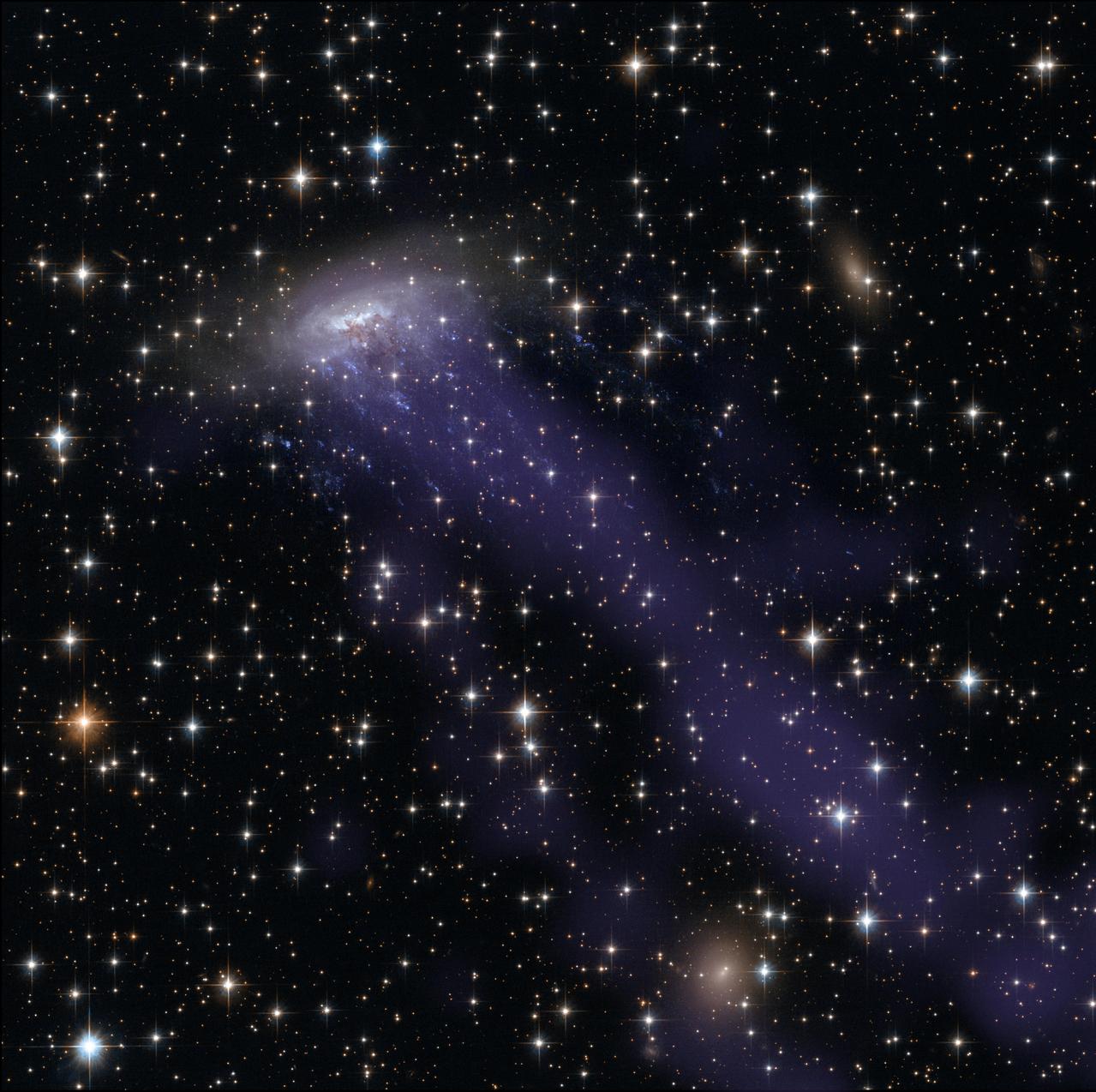
This image combines NASA/ESA Hubble Space Telescope observations with data from the Chandra X-ray Observatory. As well as the electric blue ram pressure stripping streaks seen emanating from ESO 137-001, a giant gas stream can be seen extending towards the bottom of the frame, only visible in the X-ray part of the spectrum. Credit: NASA, ESA, CXC The spiral galaxy ESO 137-001 looks like a dandelion caught in a breeze in this new Hubble Space Telescope image. The galaxy is zooming toward the upper right of this image, in between other galaxies in the Norma cluster located over 200 million light-years away. The road is harsh: intergalactic gas in the Norma cluster is sparse, but so hot at 180 million degrees Fahrenheit that it glows in X-rays. The spiral plows through the seething intra-cluster gas so rapidly – at nearly 4.5 million miles per hour — that much of its own gas is caught and torn away. Astronomers call this "ram pressure stripping." The galaxy’s stars remain intact due to the binding force of their gravity. Tattered threads of gas, the blue jellyfish-tendrils trailing ESO 137-001 in the image, illustrate the process. Ram pressure has strung this gas away from its home in the spiral galaxy and out over intergalactic space. Once there, these strips of gas have erupted with young, massive stars, which are pumping out light in vivid blues and ultraviolet. The brown, smoky region near the center of the spiral is being pushed in a similar manner, although in this case it is small dust particles, and not gas, that are being dragged backwards by the intra-cluster medium. Read more here: <a href="http://1.usa.gov/P0HSFh" rel="nofollow">1.usa.gov/P0HSFh</a> <b><a href="http://www.nasa.gov/audience/formedia/features/MP_Photo_Guidelines.html" rel="nofollow">NASA image use policy.</a></b> <b><a href="http://www.nasa.gov/centers/goddard/home/index.html" rel="nofollow">NASA Goddard Space Flight Center</a></b> enables NASA’s mission through four scientific endeavors: Earth Science, Heliophysics, Solar System Exploration, and Astrophysics. Goddard plays a leading role in NASA’s accomplishments by contributing compelling scientific knowledge to advance the Agency’s mission. <b>Follow us on <a href="http://twitter.com/NASAGoddardPix" rel="nofollow">Twitter</a></b> <b>Like us on <a href="http://www.facebook.com/pages/Greenbelt-MD/NASA-Goddard/395013845897?ref=tsd" rel="nofollow">Facebook</a></b> <b>Find us on <a href="http://instagram.com/nasagoddard?vm=grid" rel="nofollow">Instagram</a></b>
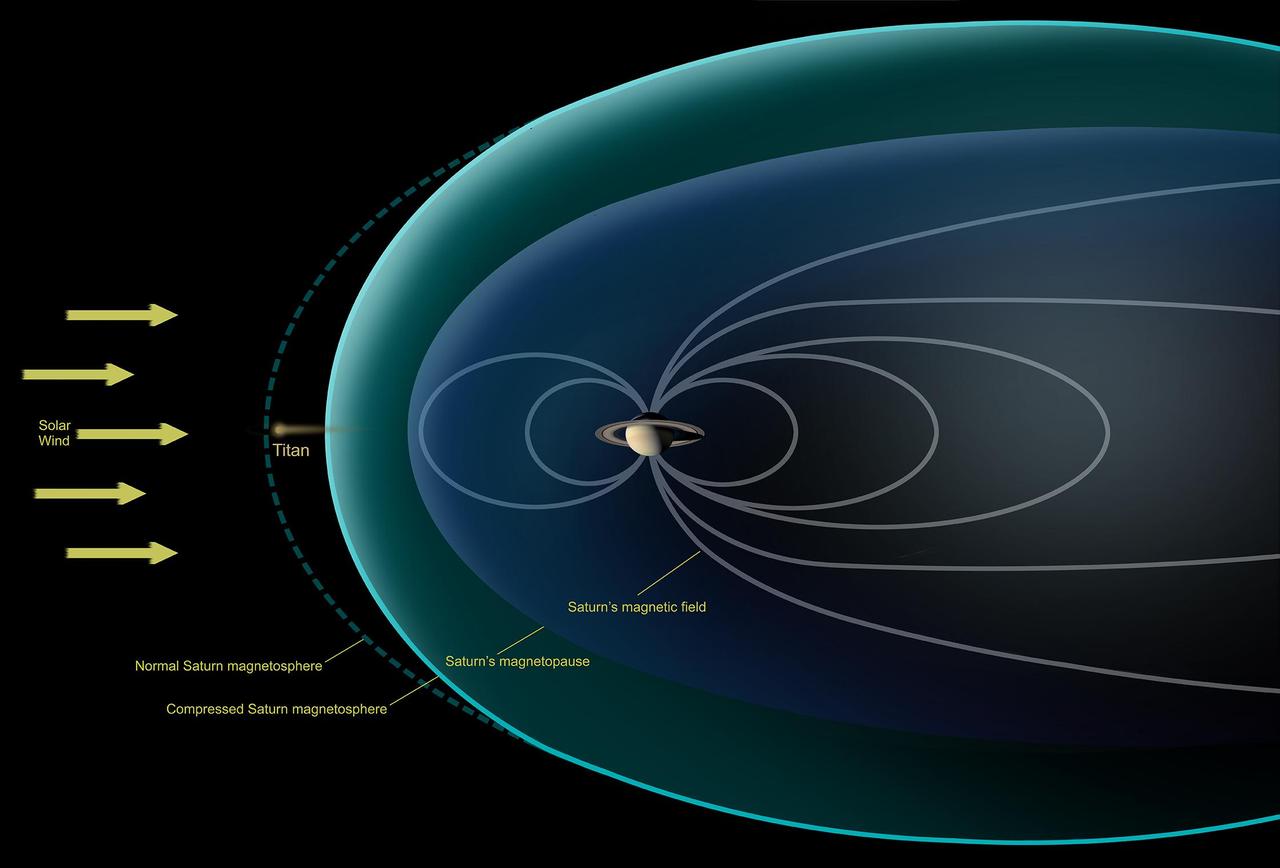
This diagram depicts conditions observed by NASA's Cassini spacecraft during a flyby in Dec. 2013, when Saturn's magnetosphere was highly compressed, exposing Titan to the full force of the solar wind. In analyzing data from the encounter, scientists with Cassini's magnetometer team observed that the giant moon interacted with the solar wind much like the planets Mars and Venus, or a comet -- none of which possess their own internal magnetic field. Specifically, they saw that the solar wind draped itself around Titan, creating a shockwave that formed around Titan where the full-force solar wind rammed into the moon's atmosphere. Previously, researchers had thought Titan would have a different sort of interaction with the solar wind because of the moon's complex atmospheric chemistry. http://photojournal.jpl.nasa.gov/catalog/PIA19055

Flight engineer and photographer William Wynne (pictured) worked with photographer Arthur Laufman to execute a photo concept devised by Laufman. Wynne printed two copies of the F-61 aircraft in flight. The prints were made to the correct size that allowed them to be cut out and taped to the lenses of his goggles to simulate a reflection. The photo of Wynne was then taken with an out of focus background to simulate clouds.
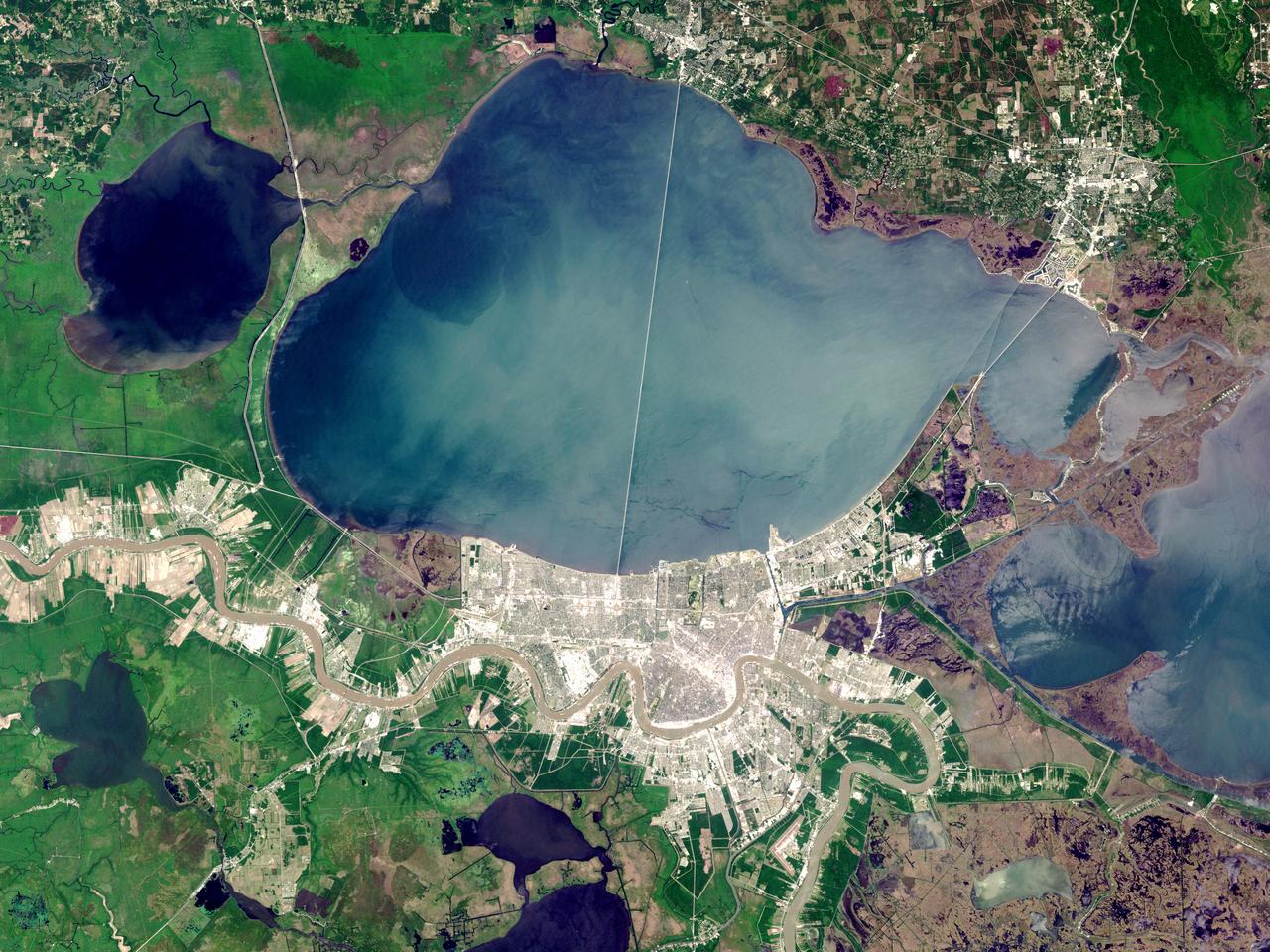
On Sunday, February 3, roughly 800 million eyes from all over the world focused on the Louisiana Superdome in New Orleans as the New England Patriots battled the St. Louis Rams for the NFL Championship in Super Bowl XXXVI. This true color image of New Orleans was acquired on April 26, 2000, by the Enhanced Thematic Mapper plus (ETM+), flying aboard the Landsat 7 satellite. Lake Pontchartrain borders the city to the north. The big river winding its way east to west through the image is the Mississippi. The Louisiana Superdome, built in 1975, sits just inside the rightmost portion of the big river bend that cradles downtown New Orleans. The city, however, may not be around to hold a Super Bowl in 2102. New Orleans is slowly sinking into the Gulf of Mexico. The construction of flood walls and dams north of New Orleans over the past century have prevented sediments carried by the Mississippi River from reaching New Orleans and the Mississippi River Delta. Before the dams were built, river sediments would empty out onto the delta adding layer upon layer of new soil each year. The additional soil prevented the Gulf from subsuming the delta. Unless drastic measures are taken, the city and the delta could be awash in seawater by the end of this century. Image by Robert Simmon, based on data provided by the Landsat 7 Science Team Credit: NASA/GSFC/Landsat <b><a href="http://www.nasa.gov/centers/goddard/home/index.html" rel="nofollow">NASA Goddard Space Flight Center</a></b> enables NASA’s mission through four scientific endeavors: Earth Science, Heliophysics, Solar System Exploration, and Astrophysics. Goddard plays a leading role in NASA’s accomplishments by contributing compelling scientific knowledge to advance the Agency’s mission. <b>Follow us on <a href="http://twitter.com/NASA_GoddardPix" rel="nofollow">Twitter</a></b> <b>Join us on <a href="http://www.facebook.com/pages/Greenbelt-MD/NASA-Goddard/395013845897?ref=tsd" rel="nofollow">Facebook</a></b>

An artist's rendering of the air-breathing, hypersonic X-43B, the third and largest of NASA's Hyper-X series flight demonstrators, which could fly later this decade. Revolutionizing the way we gain access to space is NASA's primary goal for the Hypersonic Investment Area, managed for NASA by the Advanced Space Transportation Program at the Marshall Space Flight Center in Huntsville, Alabama. The Hypersonic Investment area, which includes leading-edge partners in industry and academia, will support future generation reusable vehicles and improved access to space. These technology demonstrators, intended for flight testing by decade's end, are expected to yield a new generation of vehicles that routinely fly about 100,000 feet above Earth's surface and reach sustained speeds in excess of Mach 5 (3,750 mph), the point at which "supersonic" flight becomes "hypersonic" flight. The flight demonstrators, the Hyper-X series, will be powered by air-breathing rocket or turbine-based engines, and ram/scramjets. Air-breathing engines, known as combined-cycle systems, achieve their efficiency gains over rocket systems by getting their oxygen for combustion from the atmosphere, as opposed to a rocket that must carry its oxygen. Once a hypersonic vehicle has accelerated to more than twice the speed of sound, the turbine or rockets are turned off, and the engine relies solely on oxygen in the atmosphere to burn fuel. When the vehicle has accelerated to more than 10 to 15 times the speed of sound, the engine converts to a conventional rocket-powered system to propel the craft into orbit or sustain it to suborbital flight speed. NASA's series of hypersonic flight demonstrators includes three air-breathing vehicles: the X-43A, X-43B and X-43C.
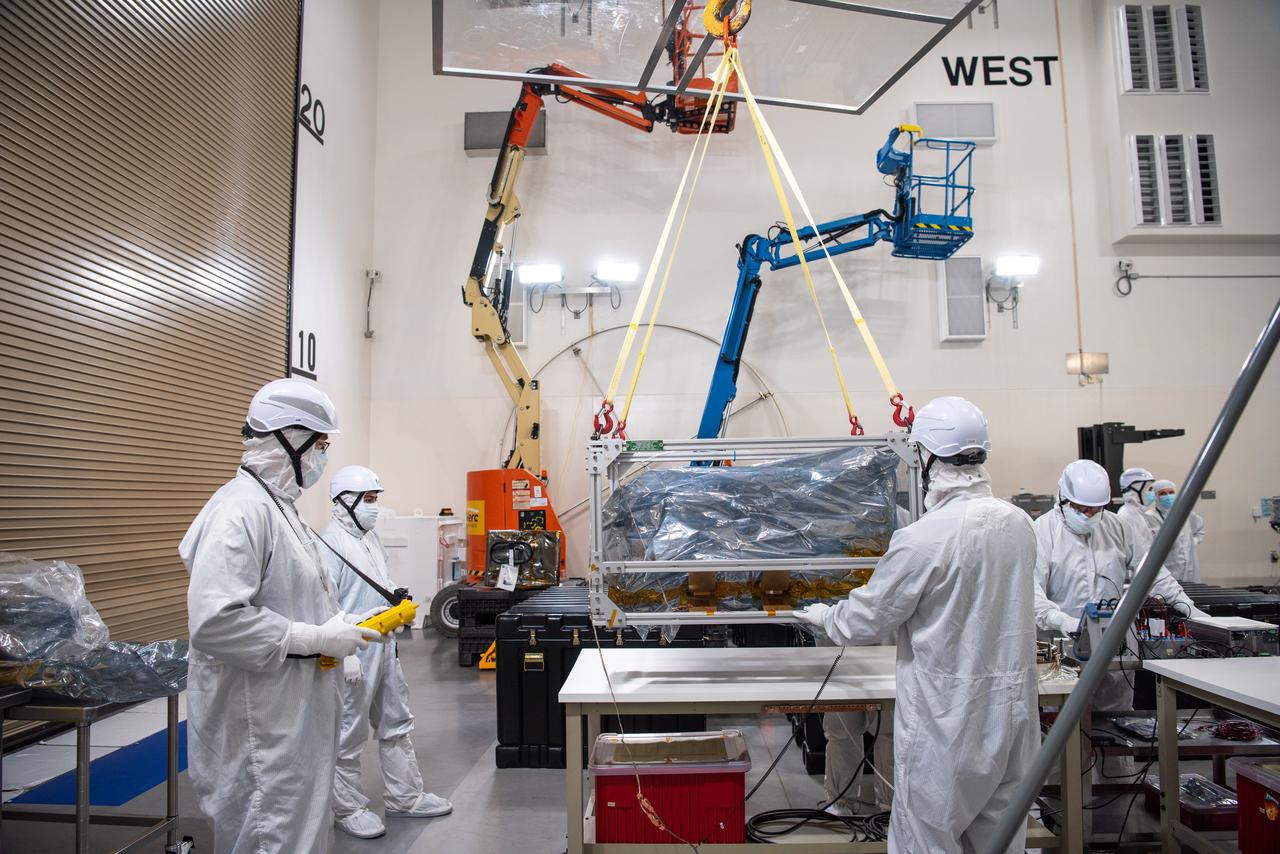
Technicians use an overheard crane to lift NASA’s PUNCH (Polarimeter to Unify the Corona and Heliosphere) spacecraft onto a work stand for testing operations at the Astrotech Processing Facility on Vandenberg Space Force Base in California on Sunday, Jan. 19, 2025. PUNCH, consisting of four satellites, will produce continuous 3D images of the solar wind and solar storms as it travels from the Sun to Earth to better understand how material in the corona accelerates to become the solar wind that fills the solar system. PUNCH will launch aboard a SpaceX Falcon 9 rocket in late February 2025.
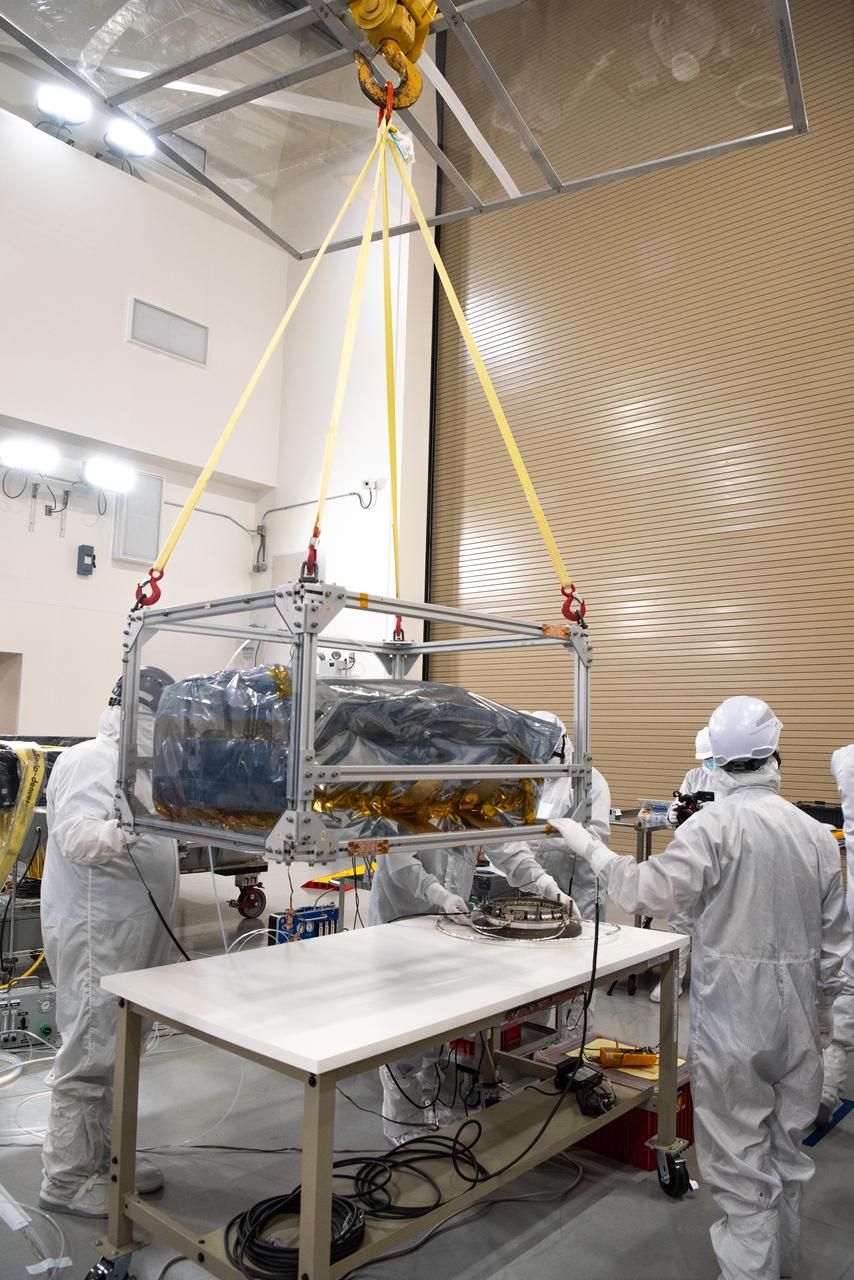
Technicians use an overheard crane to lift NASA’s PUNCH (Polarimeter to Unify the Corona and Heliosphere) spacecraft onto a work stand for testing operations at the Astrotech Processing Facility on Vandenberg Space Force Base in California on Sunday, Jan. 19, 2025. PUNCH, consisting of four satellites, will produce continuous 3D images of the solar wind and solar storms as it travels from the Sun to Earth to better understand how material in the corona accelerates to become the solar wind that fills the solar system. PUNCH will launch aboard a SpaceX Falcon 9 rocket in late February 2025.
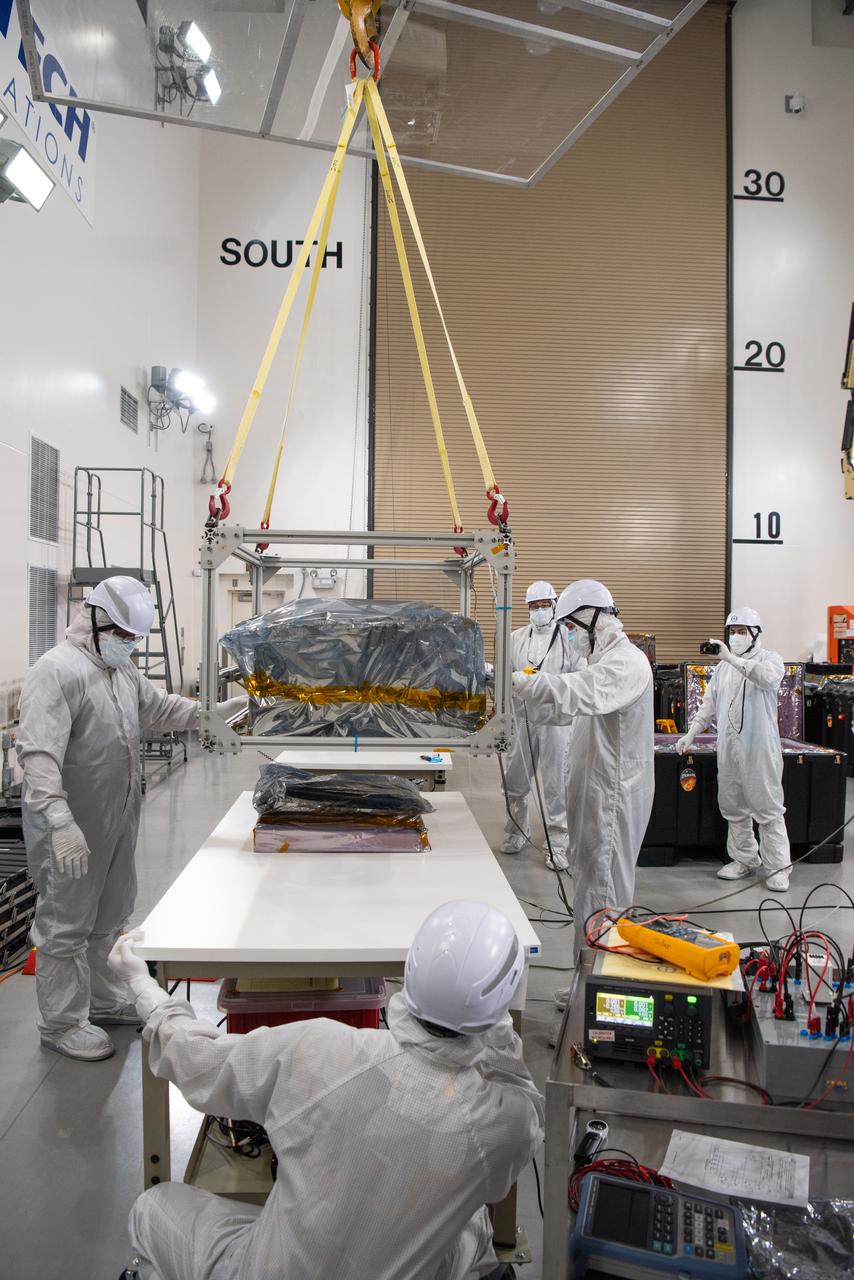
Technicians use an overheard crane to lift NASA’s PUNCH (Polarimeter to Unify the Corona and Heliosphere) spacecraft onto a work stand for testing operations at the Astrotech Processing Facility on Vandenberg Space Force Base in California on Sunday, Jan. 19, 2025. PUNCH, consisting of four satellites, will produce continuous 3D images of the solar wind and solar storms as it travels from the Sun to Earth to better understand how material in the corona accelerates to become the solar wind that fills the solar system. PUNCH will launch aboard a SpaceX Falcon 9 rocket in late February 2025.
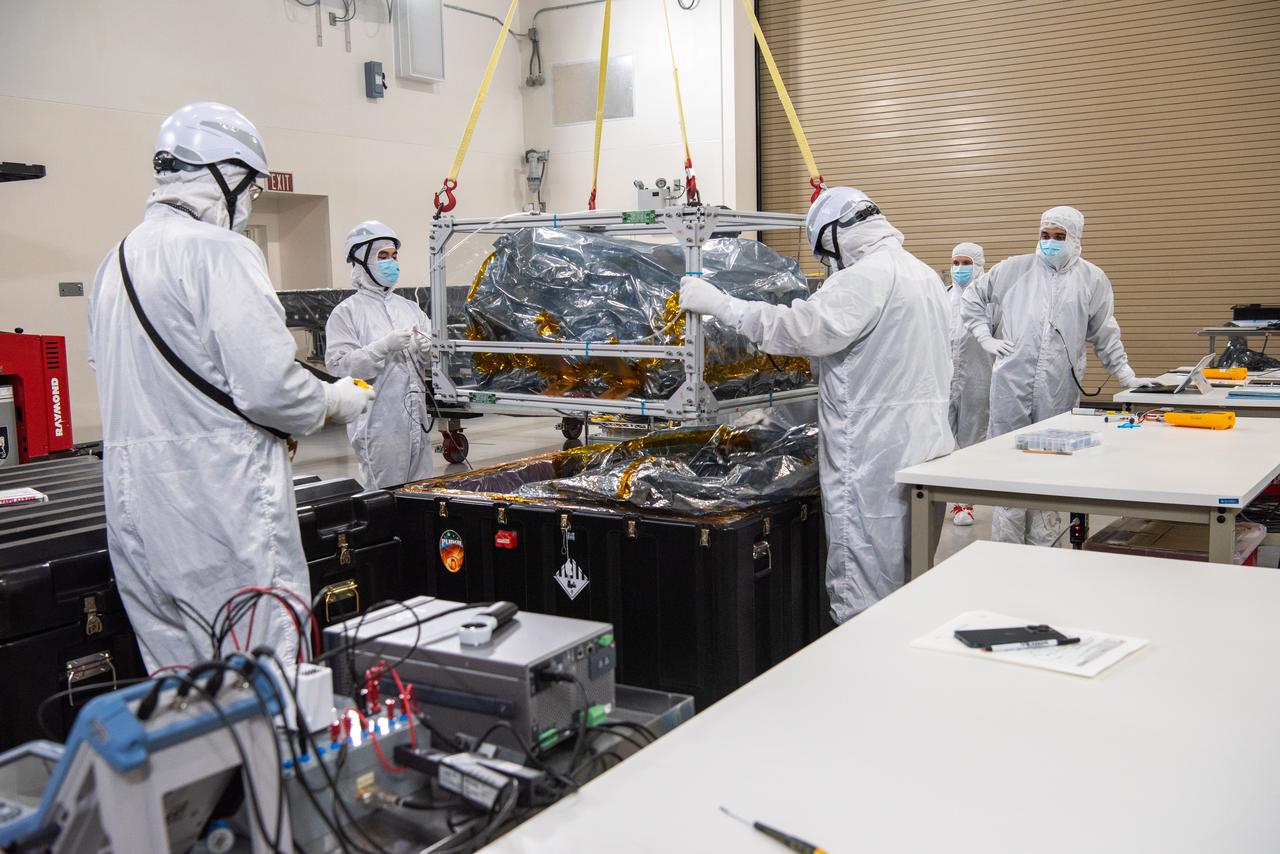
Technicians use an overheard crane to lift NASA’s PUNCH (Polarimeter to Unify the Corona and Heliosphere) spacecraft onto a work stand for testing operations at the Astrotech Processing Facility on Vandenberg Space Force Base in California on Sunday, Jan. 19, 2025. PUNCH, consisting of four satellites, will produce continuous 3D images of the solar wind and solar storms as it travels from the Sun to Earth to better understand how material in the corona accelerates to become the solar wind that fills the solar system. PUNCH will launch aboard a SpaceX Falcon 9 rocket in late February 2025.
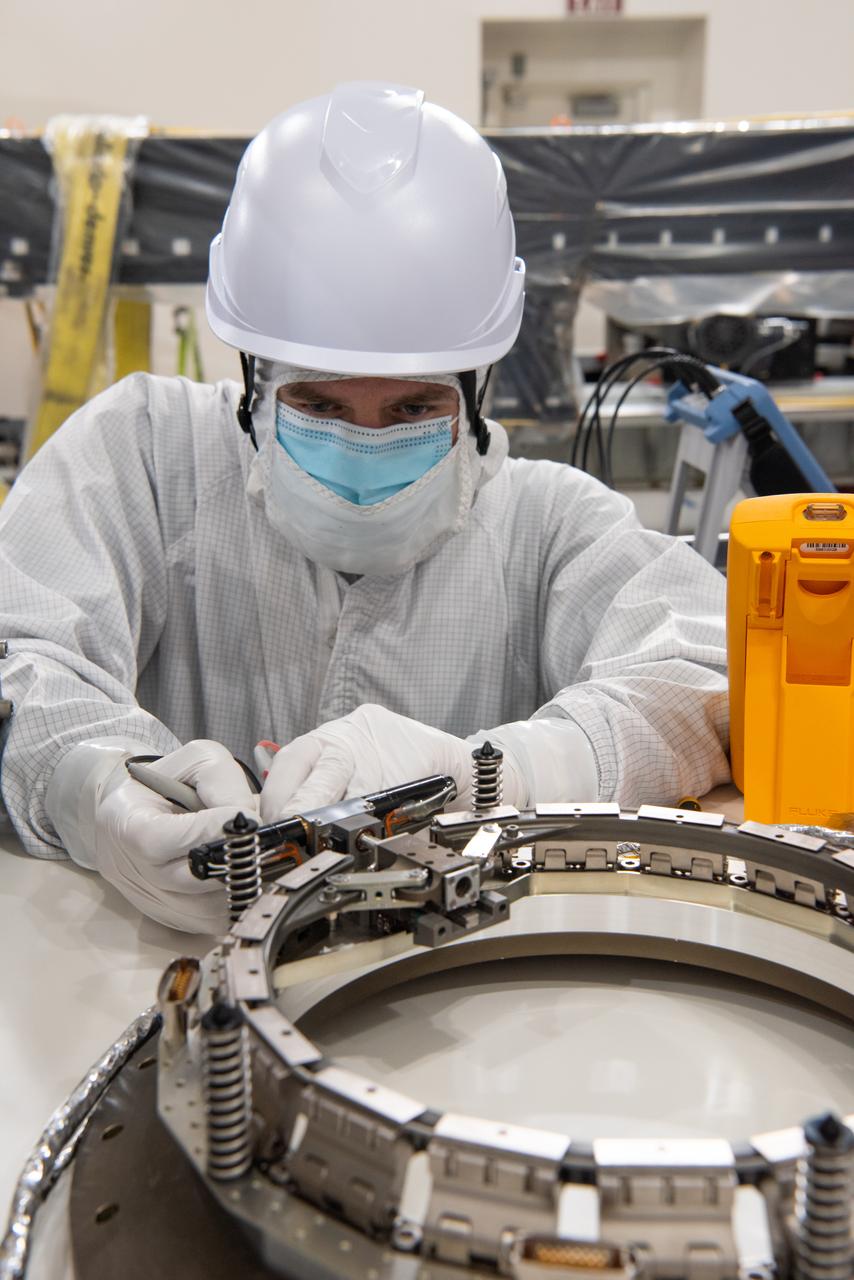
Technicians conduct testing operations on NASA’s PUNCH (Polarimeter to Unify the Corona and Heliosphere) spacecraft onto a work stand for testing operations at the Astrotech Processing Facility on Vandenberg Space Force Base in California on Sunday, Jan. 19, 2025. PUNCH, consisting of four satellites, will produce continuous 3D images of the solar wind and solar storms as it travels from the Sun to Earth to better understand how material in the corona accelerates to become the solar wind that fills the solar system. PUNCH will launch aboard a SpaceX Falcon 9 rocket in late February 2025.
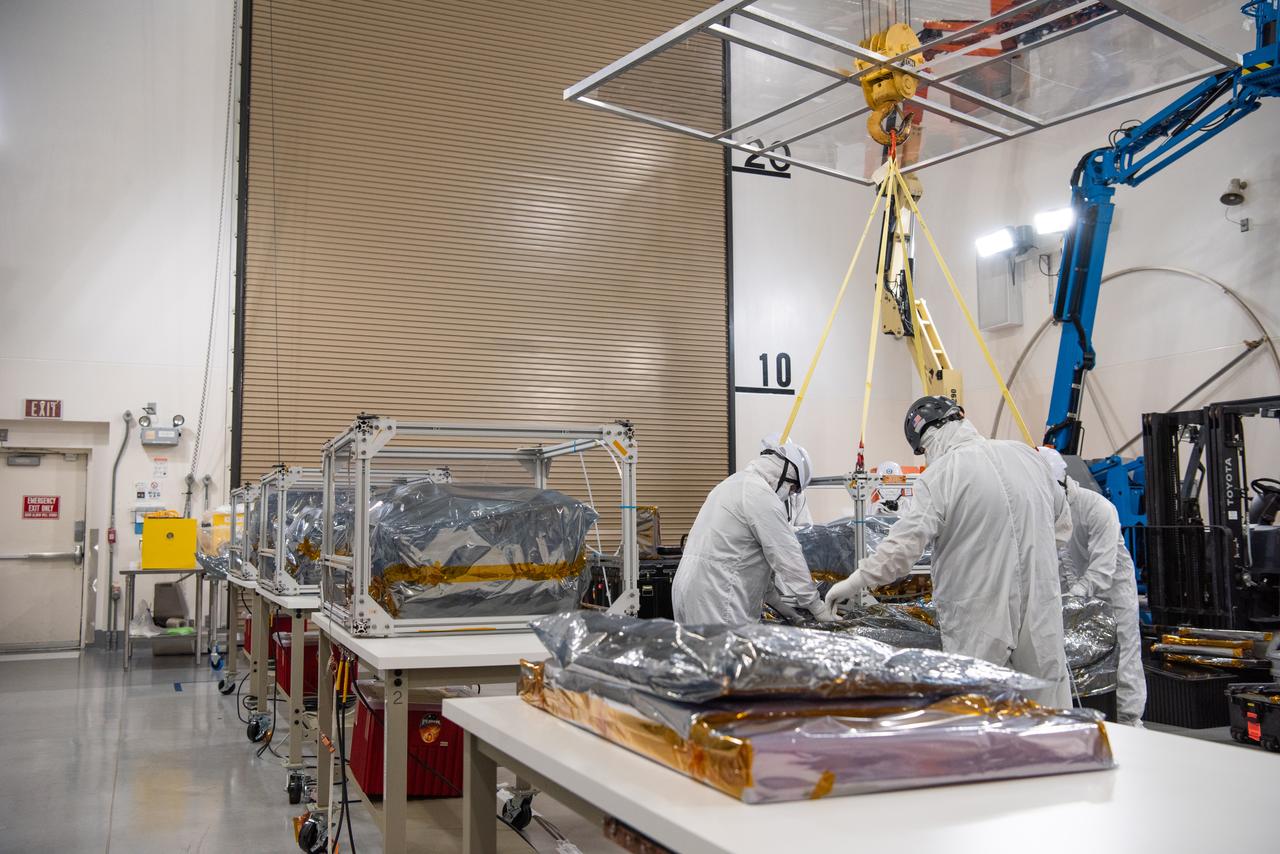
Technicians use an overheard crane to lift NASA’s PUNCH (Polarimeter to Unify the Corona and Heliosphere) spacecraft onto a work stand for testing operations at the Astrotech Processing Facility on Vandenberg Space Force Base in California on Sunday, Jan. 19, 2025. PUNCH, consisting of four satellites, will produce continuous 3D images of the solar wind and solar storms as it travels from the Sun to Earth to better understand how material in the corona accelerates to become the solar wind that fills the solar system. PUNCH will launch aboard a SpaceX Falcon 9 rocket in late February 2025.
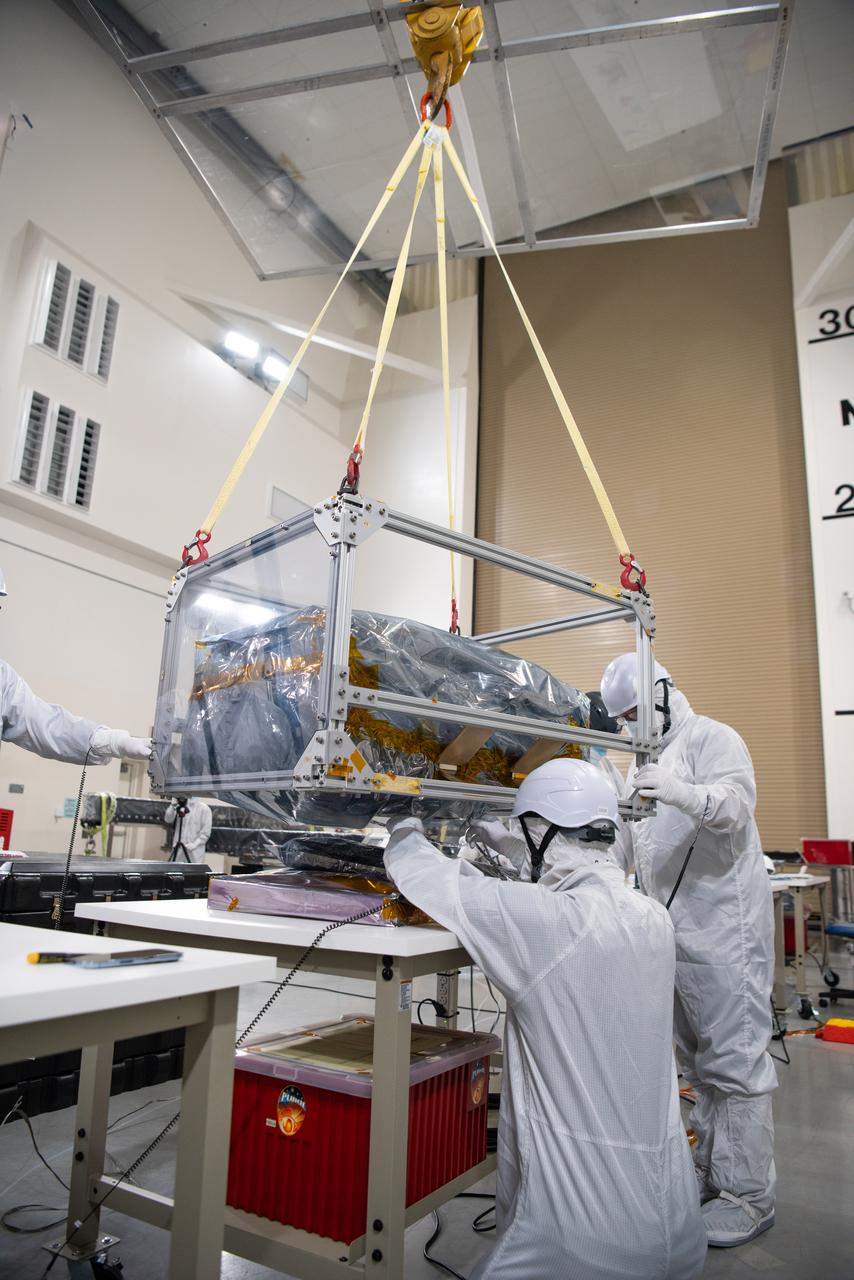
Technicians use an overheard crane to lift NASA’s PUNCH (Polarimeter to Unify the Corona and Heliosphere) spacecraft onto a work stand for testing operations at the Astrotech Processing Facility on Vandenberg Space Force Base in California on Sunday, Jan. 19, 2025. PUNCH, consisting of four satellites, will produce continuous 3D images of the solar wind and solar storms as it travels from the Sun to Earth to better understand how material in the corona accelerates to become the solar wind that fills the solar system. PUNCH will launch aboard a SpaceX Falcon 9 rocket in late February 2025.
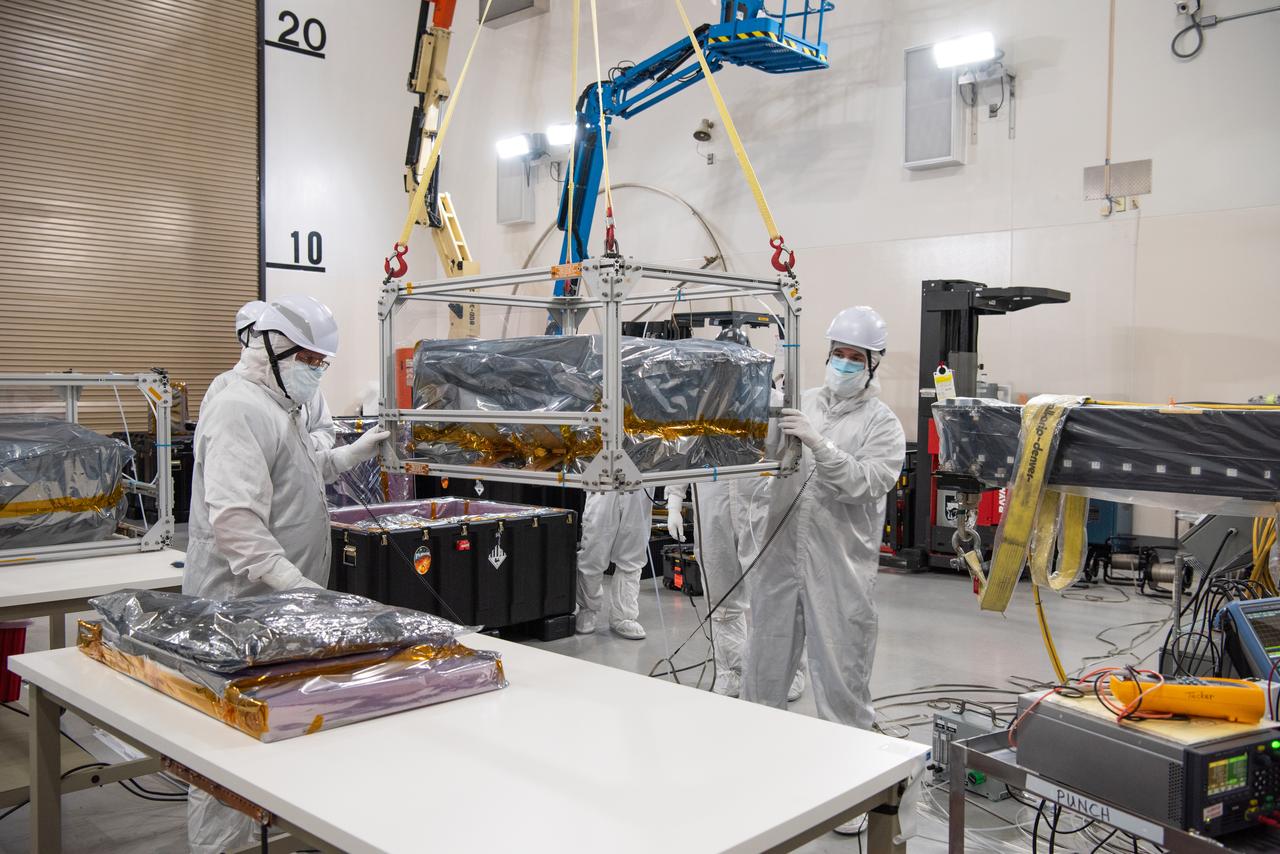
Technicians use an overheard crane to lift NASA’s PUNCH (Polarimeter to Unify the Corona and Heliosphere) spacecraft onto a work stand for testing operations at the Astrotech Processing Facility on Vandenberg Space Force Base in California on Sunday, Jan. 19, 2025. PUNCH, consisting of four satellites, will produce continuous 3D images of the solar wind and solar storms as it travels from the Sun to Earth to better understand how material in the corona accelerates to become the solar wind that fills the solar system. PUNCH will launch aboard a SpaceX Falcon 9 rocket in late February 2025.
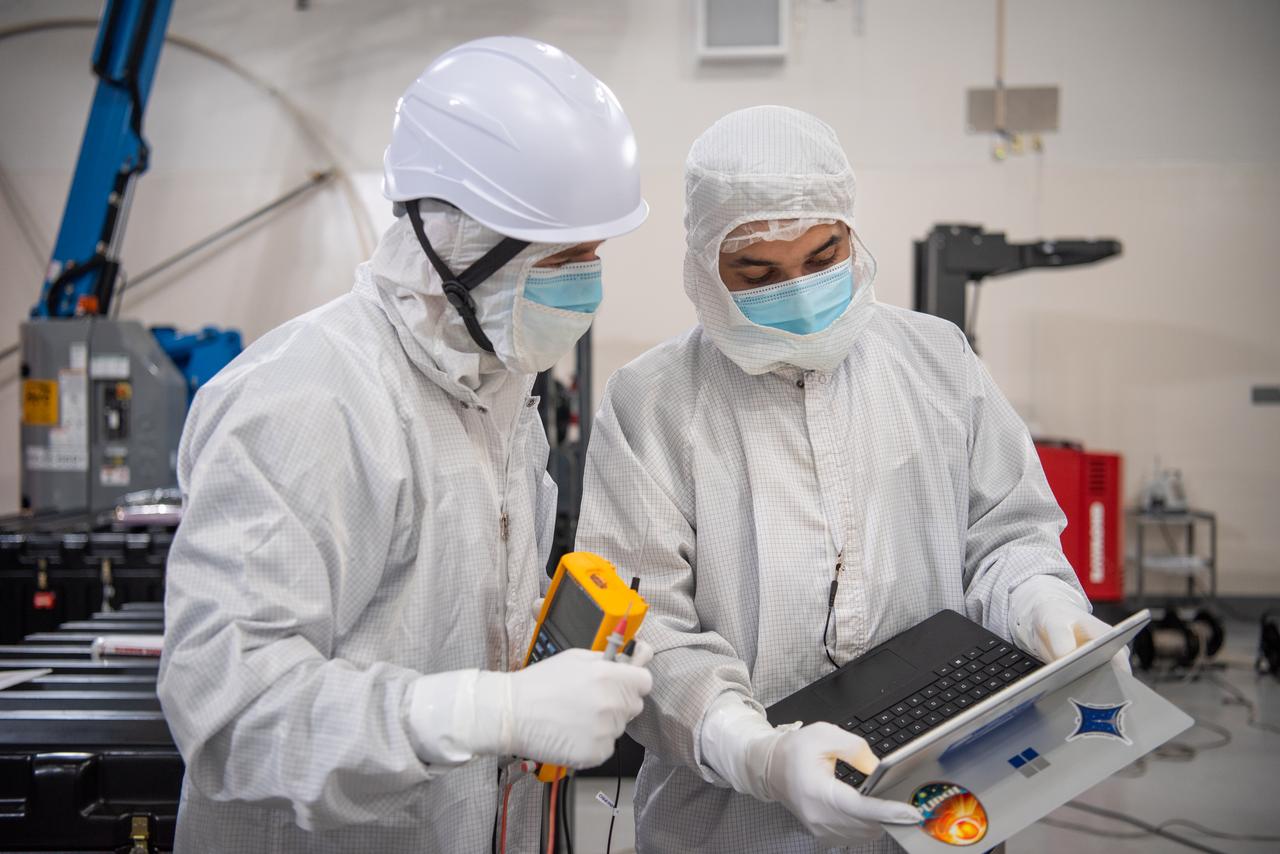
Technicians conduct testing operations on NASA’s PUNCH (Polarimeter to Unify the Corona and Heliosphere) spacecraft onto a work stand for testing operations at the Astrotech Processing Facility on Vandenberg Space Force Base in California on Sunday, Jan. 19, 2025. PUNCH, consisting of four satellites, will produce continuous 3D images of the solar wind and solar storms as it travels from the Sun to Earth to better understand how material in the corona accelerates to become the solar wind that fills the solar system. PUNCH will launch aboard a SpaceX Falcon 9 rocket in late February 2025.
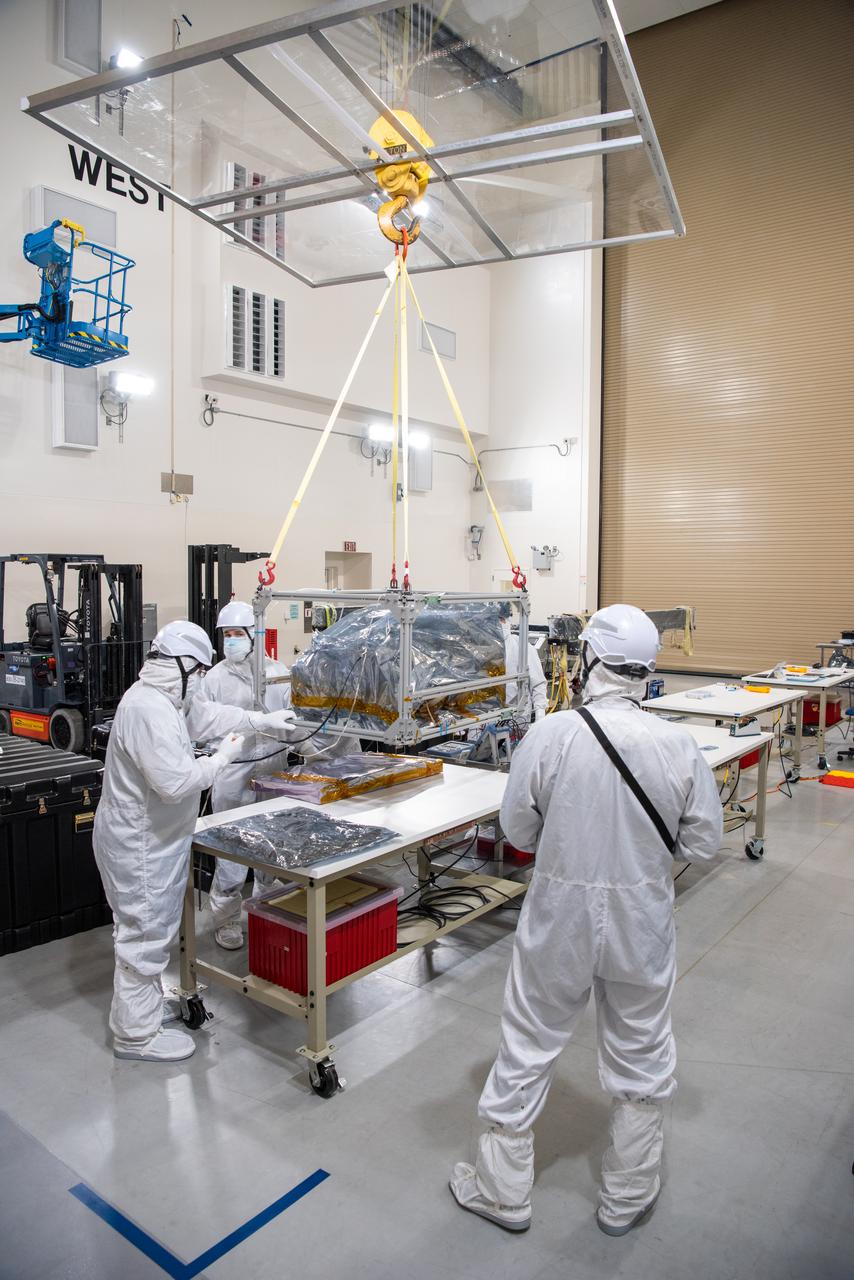
Technicians use an overheard crane to lift NASA’s PUNCH (Polarimeter to Unify the Corona and Heliosphere) spacecraft onto a work stand for testing operations at the Astrotech Processing Facility on Vandenberg Space Force Base in California on Sunday, Jan. 19, 2025. PUNCH, consisting of four satellites, will produce continuous 3D images of the solar wind and solar storms as it travels from the Sun to Earth to better understand how material in the corona accelerates to become the solar wind that fills the solar system. PUNCH will launch aboard a SpaceX Falcon 9 rocket in late February 2025.
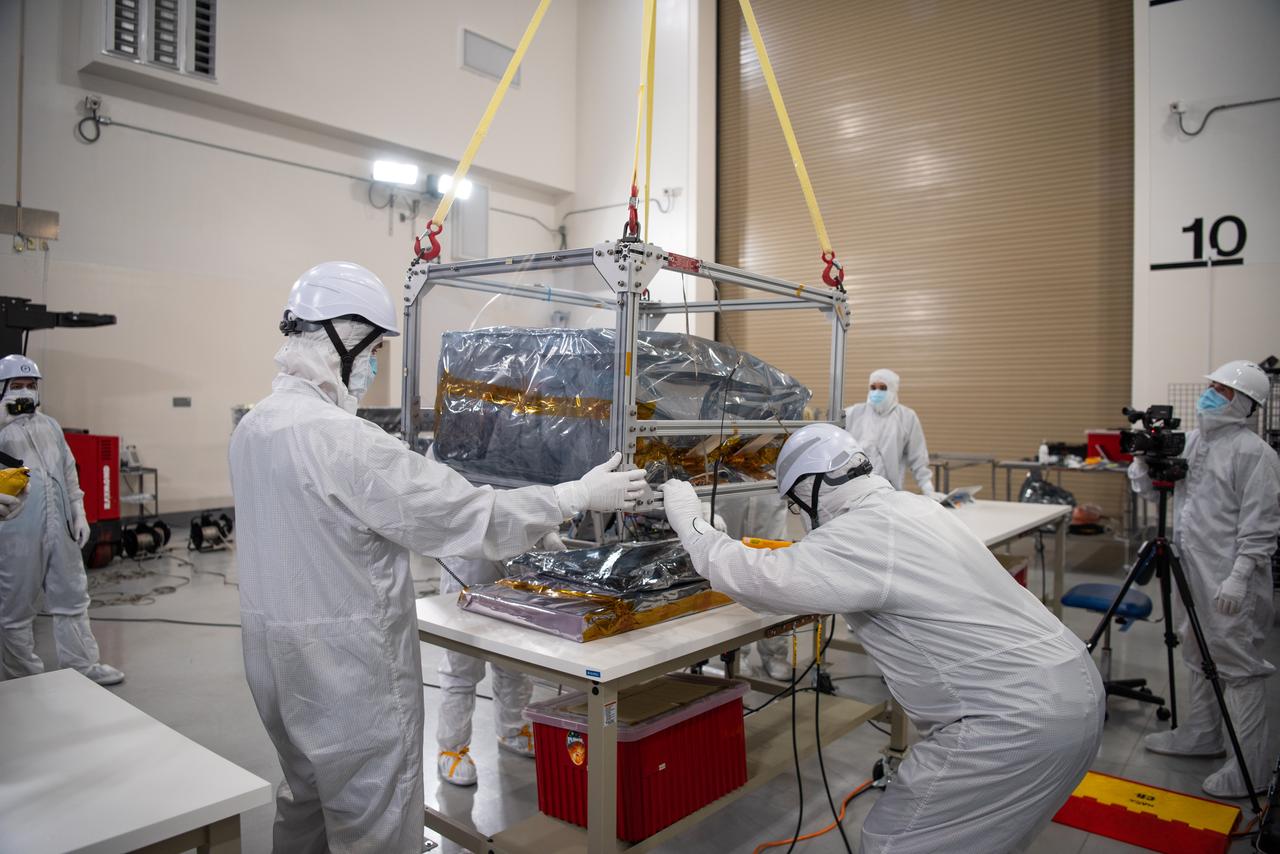
Technicians use an overheard crane to lift NASA’s PUNCH (Polarimeter to Unify the Corona and Heliosphere) spacecraft onto a work stand for testing operations at the Astrotech Processing Facility on Vandenberg Space Force Base in California on Sunday, Jan. 19, 2025. PUNCH, consisting of four satellites, will produce continuous 3D images of the solar wind and solar storms as it travels from the Sun to Earth to better understand how material in the corona accelerates to become the solar wind that fills the solar system. PUNCH will launch aboard a SpaceX Falcon 9 rocket in late February 2025.
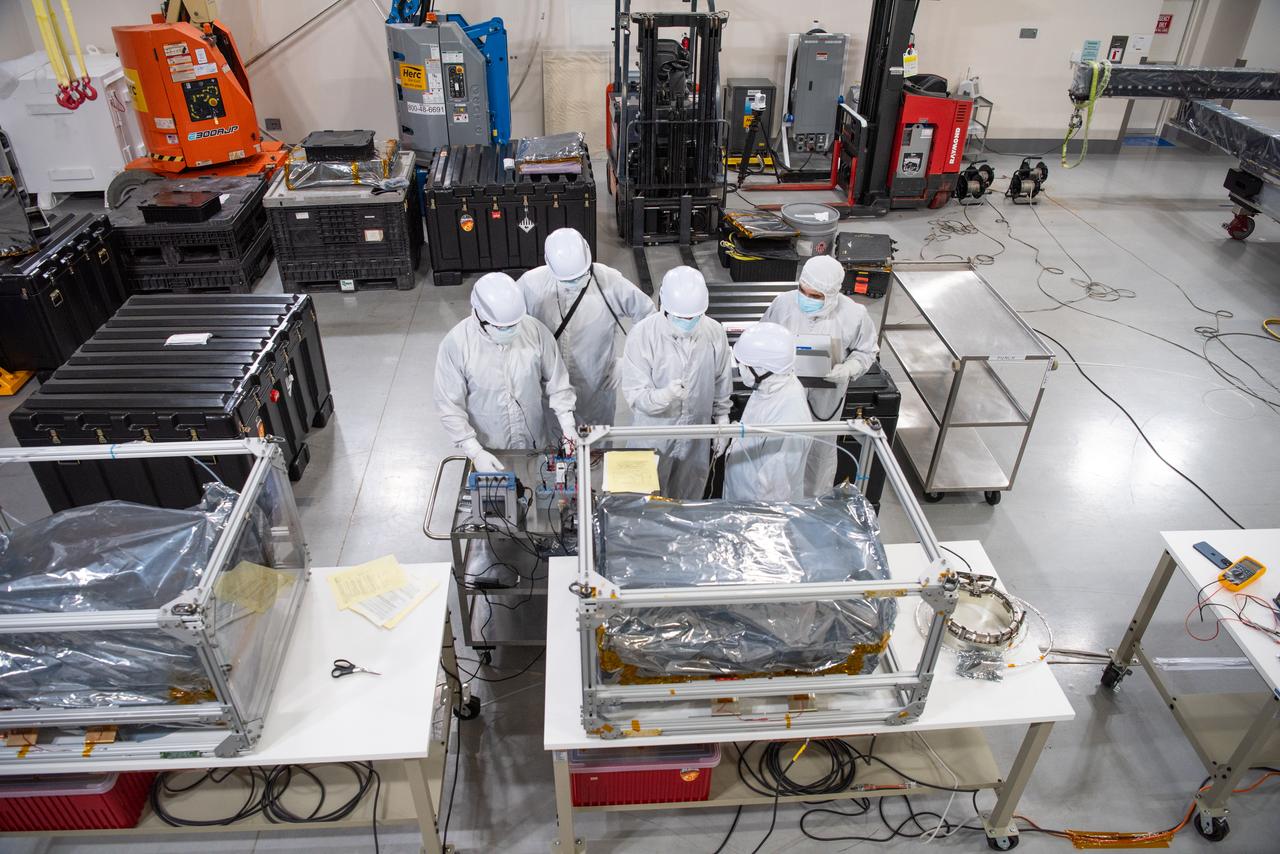
Technicians conduct testing operations on NASA’s PUNCH (Polarimeter to Unify the Corona and Heliosphere) spacecraft onto a work stand for testing operations at the Astrotech Processing Facility on Vandenberg Space Force Base in California on Sunday, Jan. 19, 2025. PUNCH, consisting of four satellites, will produce continuous 3D images of the solar wind and solar storms as it travels from the Sun to Earth to better understand how material in the corona accelerates to become the solar wind that fills the solar system. PUNCH will launch aboard a SpaceX Falcon 9 rocket in late February 2025.
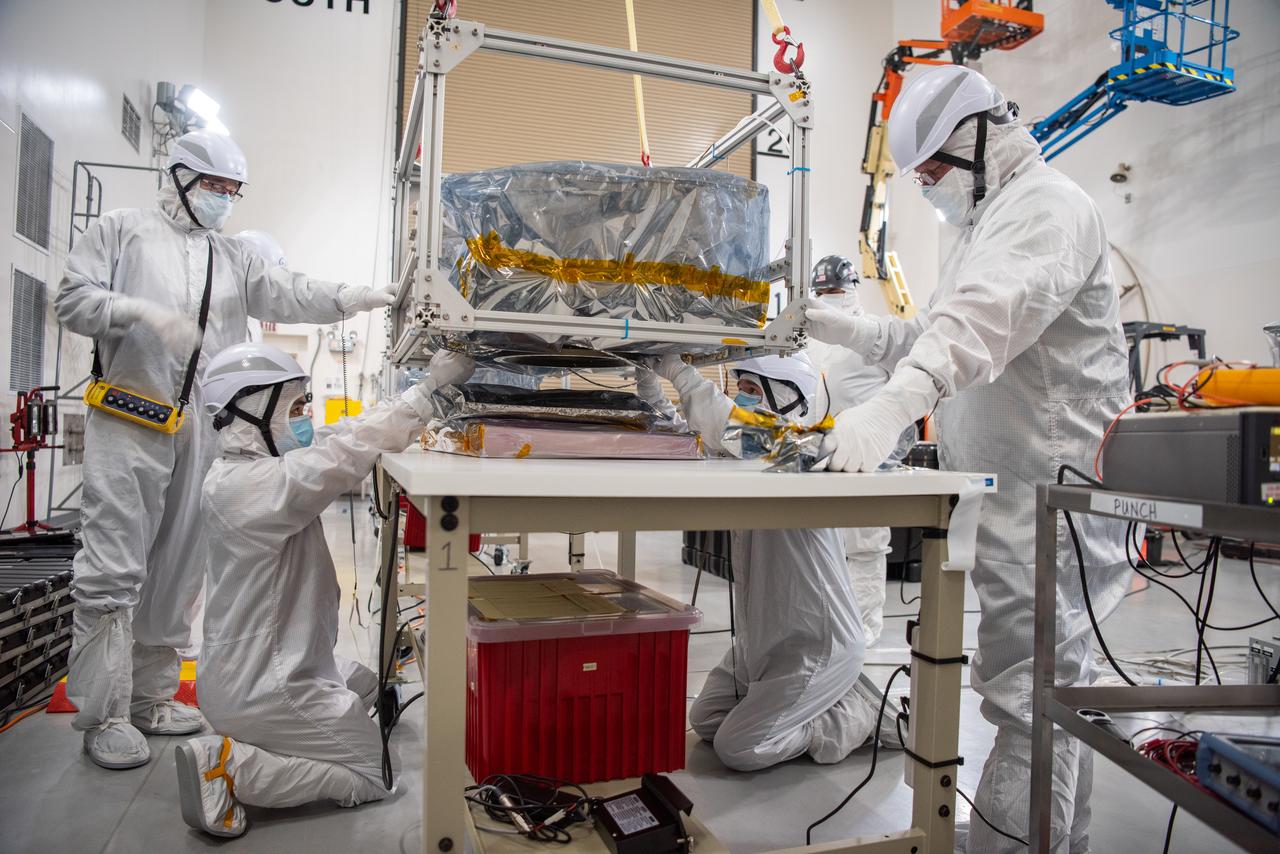
Technicians use an overheard crane to lift NASA’s PUNCH (Polarimeter to Unify the Corona and Heliosphere) spacecraft onto a work stand for testing operations at the Astrotech Processing Facility on Vandenberg Space Force Base in California on Sunday, Jan. 19, 2025. PUNCH, consisting of four satellites, will produce continuous 3D images of the solar wind and solar storms as it travels from the Sun to Earth to better understand how material in the corona accelerates to become the solar wind that fills the solar system. PUNCH will launch aboard a SpaceX Falcon 9 rocket in late February 2025.
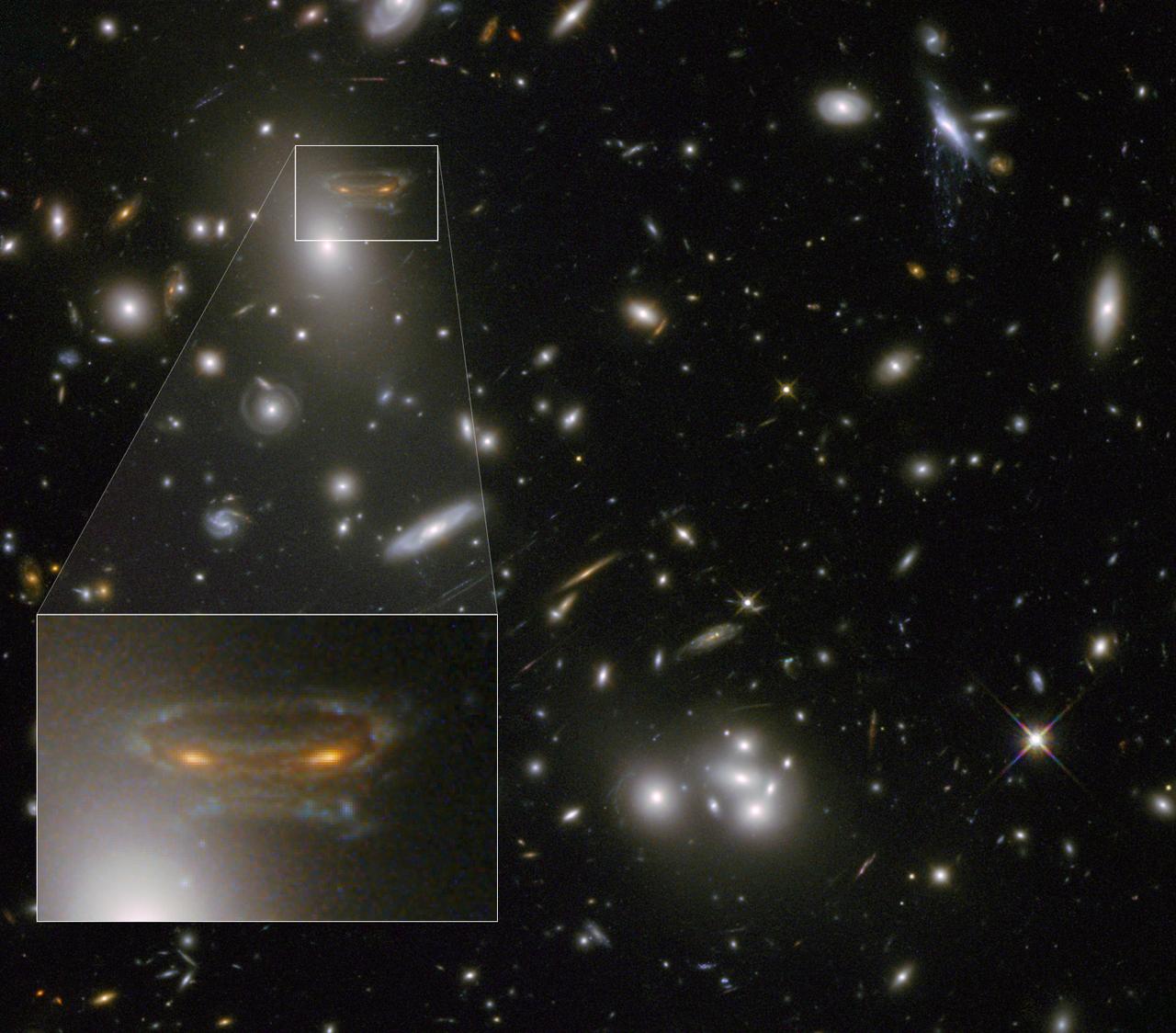
The gravitational field surrounding this massive cluster of galaxies, Abell 68, acts as a natural lens in space to brighten and magnify the light coming from very distant background galaxies. Like a fun house mirror, lensing creates a fantasy landscape of arc-like images and mirror images of background galaxies. The foreground cluster is 2 billion light-years away, and the lensed images come from galaxies far behind it. In this photo, the image of a spiral galaxy at upper left has been stretched and mirrored into a shape similar to that of a simulated alien from the classic 1970s computer game "Space Invaders!" A second, less distorted image of the same galaxy appears to the left of the large, bright elliptical galaxy. In the upper right of the photo is another striking feature of the image that is unrelated to gravitational lensing. What appears to be purple liquid dripping from a galaxy is a phenomenon called ram-pressure stripping. The gas clouds within the galaxy are being stripped out and heated up as the galaxy passes through a region of denser intergalactic gas. This image was taken in infrared light by Hubble’s Wide Field Camera 3, and combined with near-infrared observations from Hubble’s Advanced Camera for Surveys. The image is based in part on data spotted by Nick Rose in the Hubble’s Hidden Treasures image processing competition. The Hubble Space Telescope is a project of international cooperation between NASA and the European Space Agency. NASA's Goddard Space Flight Center in Greenbelt, Md., manages the telescope. The Space Telescope Science Institute (STScI) in Baltimore, Md., conducts Hubble science operations. STScI is operated by the Association of Universities for Research in Astronomy, Inc., in Washington. To read more go to: <a href="http://1.usa.gov/Z6uDUp" rel="nofollow">1.usa.gov/Z6uDUp</a> Credit: NASA and ESA Acknowledgement: N. Rose For image files and more information about Abell 68, visit: <a href="http://hubblesite.org/news/2013/09" rel="nofollow">hubblesite.org/news/2013/09</a> <a href="http://www.spacetelescope.org/news/heic04" rel="nofollow">www.spacetelescope.org/news/heic04</a> <a href="http://heritage.stsci.edu/2013/09" rel="nofollow">heritage.stsci.edu/2013/09</a> <a href="http://www.spacetelescope.org/projects/hiddentreasures/" rel="nofollow">www.spacetelescope.org/projects/hiddentreasures/</a> <b><a href="http://www.nasa.gov/audience/formedia/features/MP_Photo_Guidelines.html" rel="nofollow">NASA image use policy.</a></b> <b><a href="http://www.nasa.gov/centers/goddard/home/index.html" rel="nofollow">NASA Goddard Space Flight Center</a></b> enables NASA’s mission through four scientific endeavors: Earth Science, Heliophysics, Solar System Exploration, and Astrophysics. Goddard plays a leading role in NASA’s accomplishments by contributing compelling scientific knowledge to advance the Agency’s mission. <b>Follow us on <a href="http://twitter.com/NASA_GoddardPix" rel="nofollow">Twitter</a></b> <b>Like us on <a href="http://www.facebook.com/pages/Greenbelt-MD/NASA-Goddard/395013845897?ref=tsd" rel="nofollow">Facebook</a></b> <b>Find us on <a href="http://instagram.com/nasagoddard?vm=grid" rel="nofollow">Instagram</a></b>
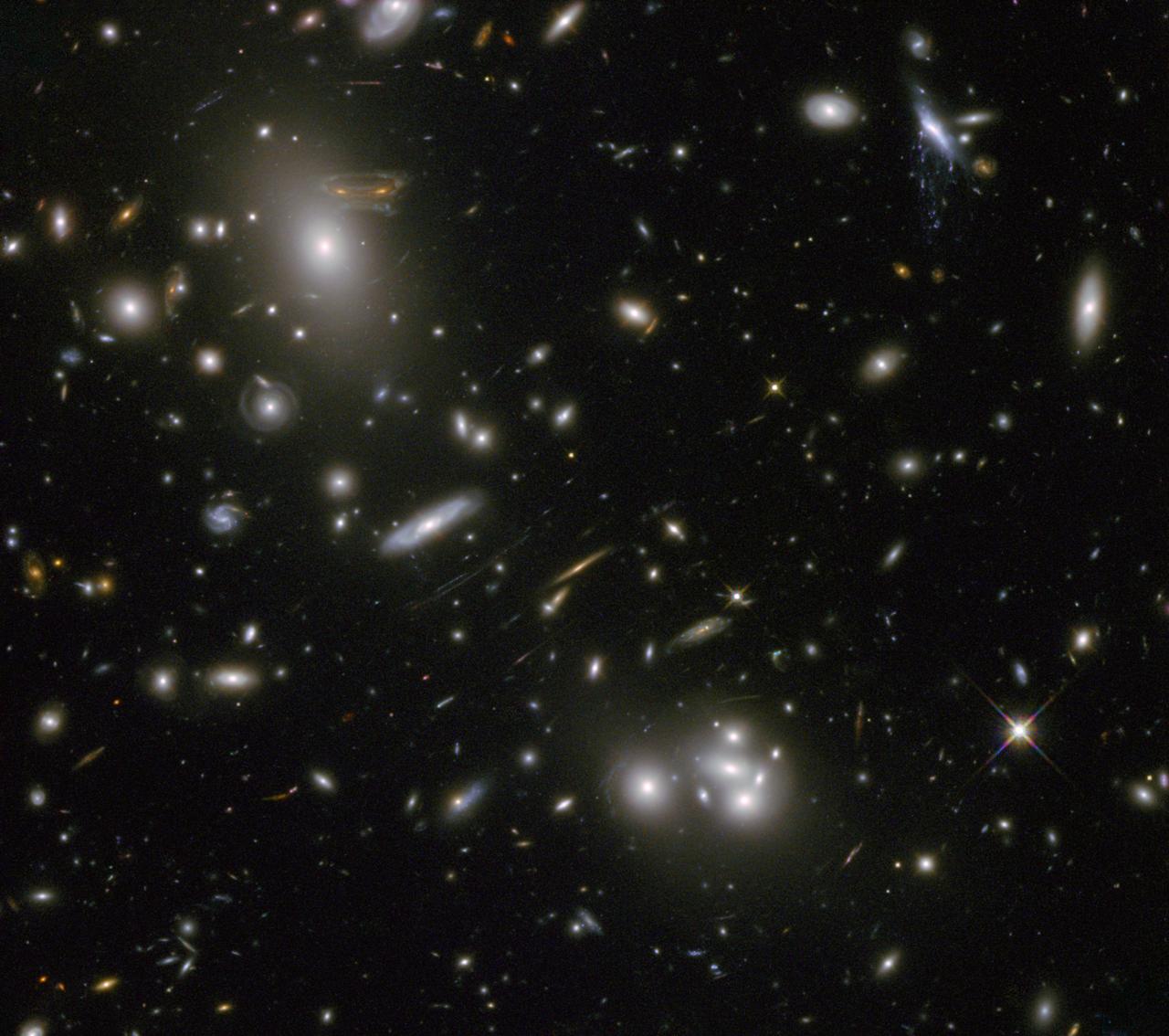
The gravitational field surrounding this massive cluster of galaxies, Abell 68, acts as a natural lens in space to brighten and magnify the light coming from very distant background galaxies. Like a fun house mirror, lensing creates a fantasy landscape of arc-like images and mirror images of background galaxies. The foreground cluster is 2 billion light-years away, and the lensed images come from galaxies far behind it. In this photo, the image of a spiral galaxy at upper left has been stretched and mirrored into a shape similar to that of a simulated alien from the classic 1970s computer game "Space Invaders!" A second, less distorted image of the same galaxy appears to the left of the large, bright elliptical galaxy. In the upper right of the photo is another striking feature of the image that is unrelated to gravitational lensing. What appears to be purple liquid dripping from a galaxy is a phenomenon called ram-pressure stripping. The gas clouds within the galaxy are being stripped out and heated up as the galaxy passes through a region of denser intergalactic gas. This image was taken in infrared light by Hubble’s Wide Field Camera 3, and combined with near-infrared observations from Hubble’s Advanced Camera for Surveys. The image is based in part on data spotted by Nick Rose in the Hubble’s Hidden Treasures image processing competition. The Hubble Space Telescope is a project of international cooperation between NASA and the European Space Agency. NASA's Goddard Space Flight Center in Greenbelt, Md., manages the telescope. The Space Telescope Science Institute (STScI) in Baltimore, Md., conducts Hubble science operations. STScI is operated by the Association of Universities for Research in Astronomy, Inc., in Washington. Credit: NASA and ESA Acknowledgement: N. Rose For image files and more information about Abell 68, visit: <a href="http://hubblesite.org/news/2013/09" rel="nofollow">hubblesite.org/news/2013/09</a> <a href="http://www.spacetelescope.org/news/heic04" rel="nofollow">www.spacetelescope.org/news/heic04</a> <a href="http://heritage.stsci.edu/2013/09" rel="nofollow">heritage.stsci.edu/2013/09</a> <a href="http://www.spacetelescope.org/projects/hiddentreasures/" rel="nofollow">www.spacetelescope.org/projects/hiddentreasures/</a> <b><a href="http://www.nasa.gov/audience/formedia/features/MP_Photo_Guidelines.html" rel="nofollow">NASA image use policy.</a></b> <b><a href="http://www.nasa.gov/centers/goddard/home/index.html" rel="nofollow">NASA Goddard Space Flight Center</a></b> enables NASA’s mission through four scientific endeavors: Earth Science, Heliophysics, Solar System Exploration, and Astrophysics. Goddard plays a leading role in NASA’s accomplishments by contributing compelling scientific knowledge to advance the Agency’s mission. <b>Follow us on <a href="http://twitter.com/NASA_GoddardPix" rel="nofollow">Twitter</a></b> <b>Like us on <a href="http://www.facebook.com/pages/Greenbelt-MD/NASA-Goddard/395013845897?ref=tsd" rel="nofollow">Facebook</a></b> <b>Find us on <a href="http://instagram.com/nasagoddard?vm=grid" rel="nofollow">Instagram</a></b>